CULT CLASSIC: THE DEADBEATS-ON TAR BEACH.
Cult Classic: The Deadbeats-On Tar Beach.
There aren’t many teenagers who dream of leaving the Florida sunshine to head to London, and form a band. That’s what Suzie May did in 1979.
She left her home in the Florida suburbs, and arrived in Camden Town, London. Already Suzie May was halfway towards fulfilling her dream. That was to form a band whose music was a combination of sixtes girl groups like The Ronettes, Motown and Merseybeat sound Just over a year later, she achieved her dream.
The story began after Suzie May placed an advert in Melody Maker saying singer “seeking musician with quiffs.” This was the first chapter in The Deadbeats story which began after Suzie May arrived in London, and quickly settled in to Camden Town’s thriving music scene. She quickly made friends with local musicians and got a job as a waitress in Dingwalls, one of Camden’s many music venues. After work, Suzie May headed home to the squat she was living in where she wrote songs on a guitar she had bought in a charity shop. All the time, she was determined to form a band and before long, her dream would become a reality.
Two exiled Nottingham musicians, bassist Kevin Green and guitarist Tony Berrington saw the advert in Melody Maker. They couldn’t miss an advert that only said singer “seeking musician with quiffs.” Intrigued, the two former members of the GTs answered the advert.
Unlike Suzie May, Kevin Green and Tony Berrington were both experienced musicians and the GTs had contributed two tracks to the punk album Raw Deal and after this, they were asked to join The Favourites, which consisted of former members of Plummet Airlines. Then in December 1980, the pair answered Suzie’s advert.
When Suzie May met Kevin Green and Tony Berrington it was a meeting of minds. They had similar musical tastes, including The Beatles, Phil Spector’s Wall of Sound, Brill Building pop and Gene Vincent. Given they shared the same musical tastes, the trio decided to form a band. All they needed was a drummer.
This was where Parker Semmons came in. Previously, he had been a drummer in rockabilly bands. Suzie, Kevin and Tony approached Parker and he agreed to come along to a rehearsal. After just one rehearsal, Parker realised this was a band going places. He agreed to join the band which became The Deadbeats.
Before long, The Deadbeats were playing around London. During this period, The Deadbeats started writing their own material. Suzy was the main songwriter and used the music of her childhood as a basis for her songs. Suzie drew inspiration from an an eclectic range of sources including everything from sixties girl groups, The Beatles, adverts and jingles. What they each had in common was they were melodic. That was key for Suzie and the rest of The Deadbeats, who were part of London’s burgeoning rockabilly scene.
Although Suzie was the principal songwriter, the rest of The Deadbeats helped shape a new song. They moulded it into shape. Gradually, during practise sessions and concerts, The Deadbeats were honing their sound. They had firm ideas about how their music should sound. That meant when The Deadbeats recorded a demo, they knew what they were trying achieve.
Recording of The Deadbeats’ demo took place at EMI’s Manchester studios. Taking charge of the sessions was former Babe Ruth guitarist Alan Shatlock. For a while, there was talk that The Deadbeats were about to sign for EMI. However, sudden “budget cuts” resulted no contract being forthcoming. It was after this, that drummer Parker Semmons left. Not long after this, The Deadbeats’ luck changed.
Peter Jenner and Blackhill Enterprises approached The Deadbeats about managing the band. As an added incentive, they offered The Deadbeats the chance to record at Workhouse Studios. Tenpole Tudor drummer Gary Long would play drums. The result was The Deadbeats’ first single.
Crazy Hound Dog, Crazy When I Hear That Girl and New Girl were recorded at Workhouse Studios in 1982. Producing the sessions was Laurie Latham. He came up with the idea of giving Crazy Hound Dog a Spector-esque makeover. He was preaching to the converted as The Deadbeats were huge Phil Spector fans and were excited that New Girls would be their homage to their idol.
Unfortunately, New Girls wasn’t released a single, and instead, Crazy Hound Dog was. On the B-side was Crazy When I Hear That Girl. Releasing their debut single should’ve been one of the most exciting periods of The Deadbeats’ career. However, it was and it wasn’t.
For any band, the release of their debut single is a cause for celebration. This was the case for The Deadbeats. The release of Crazy Hound Dog in 1982, was landmark in The Deadbeats’ career. Unfortunately, not long after the release of Crazy Hound Dog, Blackhill Enterprises became insolvent and went into receivership. It was one step forward and two steps back for The Deadbeats.
Things improved in early 1982. The Deadbeats found the drummer they’d been looking for. This was ex-Meteors drummer Mark Robertson. His addition to The Deadbeats’ lineup proved to be a blessing in disguise.
Not only was he a talented drummer, but a Francophile who could see beyond the White Cliffs of Dover. The country he loved most was France and he spoke fluent French. This came in useful when The Deadbeats met Jiri Smetena, who owned a club in Paris, Le Gibus. He helped organise a lengthy tour of France for The Deadbeats and even better, helped arrange a record deal with Frech record label, New Rose Records.
Now signed to New Rose Records, The Deadbeats headed to Jackson’s Studio, in Rickmansworth, where they would record ten songs. Nine of the songs were penned by Suzie May. The other was a version of Tchaikovsky’s Swan Lake. It was arranged by The Deadbeats. Producing what became On Tar Beach was Vic Maile, who previously, had produced The Animals’ single We’ve Got To Get Out of This Place and Motorhead’s 1980 classic album Ace Of Spades. Vic had also worked with Led Zeppelin, The Kinks, Jimi Hendrix, The Small Faces and Eric Clapton. So having Vic produce On Tar Beach, was something of a coup for The Deadbeats.
Especially since Vic’s mixer at Jackson’s Studio was a vintage, all-valve desk. This fitted in with The Deadbeats’ policy of only using vintage instruments. The Deadbeats believed this helped them to recreate an authentic early sixties sound. However, this came at a price. Bassist Kevin Green and guitarist Tony Berrington only played vintage Harmony and Gretsch guitars and basses. Similarly, drummer Mark Robertson used a 1963 Gretsch drum kit. Instruments like those used by The Deadbeats were expensive, particularly instruments in good condition. However, The Deadbeats believed this was important to creating an authentic sixties sound to their as yet, unnamed album.
Having recorded their debut album, the only thing it lacked was a name. Then a friend of Suzy’s, Scurvy D. Bastard just happened to mention that when he grew up in New York in the early sixties, people escaped the oppressive heat by sleeping on the roof. This Scurvy said was spending time “on tar beach.” Straight away, everyone realised this was the perfect title for The Deadbeats’ unnamed album.
On Tar Beach was released in 1985. Originally, On Tar Beach was meant to be released only in France. Then Andy Hurt, a reviewer for Sounds wrote a review. He gave the album five stars. This was the highest accolade any album could receive. However, On Tar Beach wasn’t really promoted in Britain. The only promotion On Tar Beach received was a short promotional film.
Despite this, The Deadbeats ended up supporting The Pogues on a tour of the North of England. Sadly, On Tar Beach wasn’t a commercial success in Britain. Things were very different in Mark Robertson’s beloved France.
Over in France, The Deadbeats were a hugely popular band. Night after night, The Deadbeats played to sold out crowds. This included some of France’s premier venues, including Chez Paulette in Roul, The Rex in Paris and Heartbreak Hotel in Sete. Throughout that 1985 tour, The Deadbeats were winning friends and influencing people coast-to-coast. This translated into record sales and On Tar Beach was New Rose Records’ second biggest selling album. Only The Cramps outsold The Deadbeats. On Tar Beach was a huge success.
Fall In Love Tonite opens On Tar Beach. Suzie hollers, as the rhythm section provide a sixties-inspired heartbeat. She literally swaggers her way through the lyrics. Surf style guitars reverberate into the distance, as harmonies answer Suzie’s feisty vocal. When all this is combined, the result is a strutting slice of rocky, raunchy music with a vintage sound.
As Crazy When I Hear That Beat unfolds, there are similarities to Dick Dale and the original Batman theme. There’s even a nod to Gene Vincent. Soon, the arrangement is akin to a wall of sound. Key to this wall of sound are the surf guitars. Suzie’s vocal sounds not unlike Debbie Harry. She combines a similar mixture of sass and confidence. Good as Suzie’s vocal is, Tony Berrington’s glorious guitar solo proves show stealer. He sounds as if he was weaned on surf music, as he unleashes a blistering solo and adds the finish touch to this hidden gem.
Straight away, it’s hard to believe the wistful New Girl wasn’t recorded in 1963.. That’s down to the rhythm section, Tony Berrington’s Shadow-esque guitar and Suzie’s vocals which is full of heartache and hurt. Meanwhile, the bass helps drive the arrangement along. A strummed acoustic guitar is panned left, drums pound and chimes add to the Spector-esque wall of sound. Suzie adds the final touch to this homage to Phil Spector and his early sixties girl groups with her heartbroken vocal.
Bobby shimmers, before the arrangement gallops along. When Suzie’s vocal enters, it’s dramatic, and full of sadness and regret. Gradually, the story unfolds. Drums are at the heart of the galloping arrangement. They’re joined by harmonies, a Hammond organ, surf guitars and chimes. They add a Spector-esque twist to a song that’s full of pain and pathos. It sounds as if it should’ve been recorded by The Shangri-Las or The Ronettes.
Suzie’s vocal is full of drama on Delilah. No wonder. She’s about to confront her cheating man. The arrangement is jazz-tinged and understated. That’s before it reveals its secrets. Soon, Suzie is accompanied by standup bass, hissing hi-hats and piano. The bass also helps power the arrangement along and later, so does Tony’s searing, chiming crystalline guitar. As usual, it plays an important roll in The Deadbeats’ sound. So do the bass and pounding drums. Together, The Deadbeats join forces to create an atmospheric, dramatic and cinematic backdrop to Suzie’s feisty vocal.
Don’t Tell Joe sees The Deadbeats kick out the jams. Scorching, blistering guitars are responsible for a rockier sound. Suzie’s vocal is edgier. She mixes power, with fear and frustration. Meanwhile, the rhythm section provide the heartbeat. Later, Tony unleashes another guitar masterclass. His scorching solo is spellbinding. The same can be said of Suzie’s vocal. She delivers the lyrics as if she’s lived them. As she does this, a breathy, whispery vocal is panned left and finger clicks are panned right. They’re finishing touches to this rocky kitchen sink drama.
A quivering guitar sets the scene for Suzie’s dramatic vocal on Sexy Sadie. Soon, The Deadbeats kick loose. The rhythm section lock into a tight groove. A punchy bass is a perfect foil for Tony’s shimmering, surf guitar. He unleashes some blistering licks. Suzie swaggers her way through the track. Sassy harmonies, handclaps and another guitar masterclass provide the perfect accompaniment to Suzie’s vocal.
Stabs of drums and guitar are joined by an organ that provides an authentic sixties sound on When You Dance. Suzie mixes confidence and sass, as the track swings. Again, The Deadbeats sound as if they recorded this track back in the sixties. It’s not just the style of music, but their use of vintage equipment. All this plays its part in a rollicking slice of sixties inspired, hook-laden music.
Never before will you have heard Swan Lake like this. The Deadbeats take what’s a seminal piece of music and give it a rousing makeover. Expect whoops, hollers, twangy, jangling, surf guitars and pounding rhythm section. What follows is a musical roller coaster that you won’t want to get off.
Closing On Tar Beach is Johnny Reb. Here, Suzie sounds not unlike Chrissie Hynde of The Pretenders. Jangling guitars join the rhythm section in providing the backdrop for Suzie’s vocal. It’s a mixture of drama, emotion and sadness. Her vocal, like the arrangement, grows in power. Then as if to reinforce the drama and pathos, the tempo slows, before increasing. Later, the arrangement marches along, as it becomes a homage to The Shangri La’s Leader Of The Pack. Drama, emotion and pathos are combined to create a poignant track to close On Tar Beach.
Released in 1985 to critical acclaim, On Tar Beach could’ve been the start of the rise and rise of The Deadbeats. It wasn’t. Instead, 1985s On Tar Beach proved to the only album The Deadbeats recorded. It’s a hidden gem of an album that is a reminder of another era.
On Tar Beach is akin to a love story to the music that inspired The Deadbeats. This was what Suzie May had hoped when she flew from Florida to London. She fuses not just sixtes girl groups like The Ronettes and The Shangri Las with Motown and Merseybeat, but surf music, perfect pop, rockabilly and rock. There’s even a nod towards psychedelia, Blondie, The Stray Cats and The Pretenders. On Tar Beach is a glorious melange of musical influences and genres by one of music’s best kept and most melodic secrets, The Deadbeats.
Cult Classic: The Deadbeats-On Tar Beach.


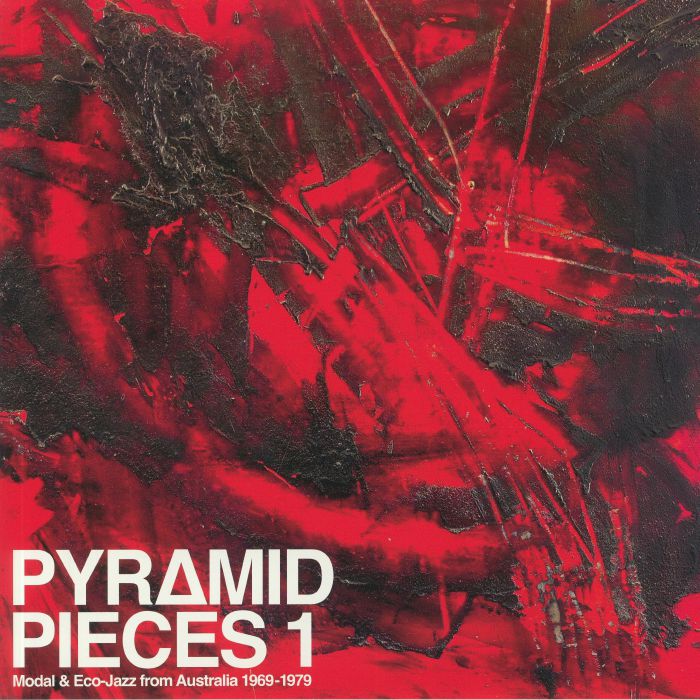
PYRAMID PIECES 1:MODAL AND ECO JAZZ FROM AUSTRALIA 1969-1979.
Pyramid Pieces 1: Modal and Eco Jazz From Australia 1969-1979.
Label: Roundtable.
Over the last few years, independent and major record labels have released compilations of American, British, European and Japanese jazz. They’ve focused on everything from bebop and hard bop to modal and modern right through to avant-garde, free and spiritual jazz. It’s been a veritable feast for jazz lovers. However, despite the release of all these lovingly curated compilations there was still, until very recently, one omission…Australian jazz.
For some reason compilers overlooked one of the most important periods in Australian jazz, when the scene was vibrant and thriving, This was between the late-sixties and late-seventies. During this period modern jazz in Australia was flourishing.
Across the country, many talented and innovative musicians and groups were releasing ambitious albums of modern jazz that was as good, if not better than anything their American, British, European and Japanese counterparts were releasing. These albums should’ve found a wider audience.
Sadly, the albums failed to find the audience they so richly deserved. There were several reasons for this. Sometimes the bigger record labels didn’t know how to market jazz artists, and other times they failed to support the artist they had signed. Sometimes it was as simple as the record label failing to promote an album properly, and when it was released it sunk without trace. It was a case of what might have been.
That was why some artists thought that there had to be another way? An alternative was to found small, independent labels which specialised in releasing jazz. During the time that modern jazz was flourishing, independent record labels such as Jazznote and Horst Liepolt’s 44 Records were founded. They became part of what was a new, underground movement when modern jazz was thriving between the late-sixties and late-seventies.
The only problem with releasing albums on small, independent record labels was that they often lacked the expertise, budget and marketing muscle. Often the albums they release were discovered by a small discerning group of jazz connoisseurs. Other times, the album failed the audience it deserved. It was a familiar story.
Sadly, many of the musicians and groups that were around during this golden era for Australian modern jazz are almost unknown in their own country. The albums they released failed to find an audience and commercial success and critical acclaim eluded them.
Ironically, some of these musicians and groups went on to enjoy successful career in Britain and America. Despite that, they’re largely unknown in Australia. It’s another case of talent not guaranteeing commercial success. Sadly, it only gets an artist so far and often hugely talented artists can release groundbreaking albums that are overlooked for forty or fifty years.
Sometimes, though, the inclusion of a track on a compilation can relaunch or rejuvenate an artist’s career, or has introduced their music to a new audience. Hopefully, that will be the case with the six artists and groups on a new compilation that has just been released by the Australian label Roundtable. It’s entitled Pyramid Pieces 1: Modal and Eco Jazz From Australia 1969-1979, and takes its title from an infamous Australian jazz composition by the Jazz Co-Op.
Side One.
Opening side one of Pyramid Pieces 1: Modal and Eco Jazz From Australia 1969-1979 is Jazz Co-Op’s A La Coltrane which is from the group’s 1974 eponymous debut album. It was written by pianist Roger Frampton who had played alongside Don Rendell and Joe Harriott in Britain, before emigrating to Australia. By the time Jazz Co-Op was recorded he was head of jazz studies at Sydney Conservatorium of Music where saxophonist also Howie Smith worked. They were part of what was an important albeit short-lived collective of composers and improvisers which also included a rhythm section of drummer Phil Treloar and bassist Jack Thorncraft. They all play their part in the success of an eight minute modal jazz opus that is a fitting homage a to a giant of jazz, John Coltrane.
Nowadays, Alan Lee is regarded as Australia’s greatest ever jazz vibes’ player. His career began in the sixties, and he was heavily influenced by Milt Jackson. By 1973, he had led several bands and had founded The Alan Lee Quartet who released their eponymous debut album on the Jazznote label. It features a summery sounding cover of Freddie Hubbard’s spiritual jazz standard Sunflower which showcases the considerable talents of the Quartet and especially its leader Alan Lee.
During his career, John Sangster had a reputation as a musician who was will to embrace the new and experiment musically. During his career, the bandleader also worked as a session musician. A talented and versatile musician he recorded everything from psychedelia and soundtracks to Musique Concrete. He was also a pioneer of the Australian Eco-Jazz movement, which was influenced by the natural environment and a feature of the recordings is the unusual instrumentation. An example of this is Exploration Of The Sun an unreleased track by The John Sangster Quartet from the 1969 soundtrack Once Around The Sun.
Side Two.
Galapagos Duck were formed in 1969 and named after a Spike Milligan sketch. They were for a time the house band at The Basement, the famous Sydney jazz club. Although they released a number of albums, their finest recording was their 1974 sophomore album The Removalists, which was the soundtrack to the adaptation of playwright David Williamson’s urban crime melodrama. One of its highlights of the soundtrack was the mesmeric Kate Did, which was written by pianist Dave Levy and is played in 6/8 time.
Just like John Sangster, Brian Brown is regarded as a modernist and one of the most progressive Australian jazz musicians of his generations. After recording a cover of Miles Davis’ modal classic Milestones for an EP in 1958, he decided he would only record his own music in the future. That was the case, and in the seventies, Brian Brown was one of he pioneers of Eco-Jazz and one of the first Australian musicians to use synths in jazz music. However, his contribution to this compilation is one own composition Wildflowers which was recorded by The Brian Brown Quintet for their 1979 album Bells Make Me Sing.
Closing Pyramid Pieces 1: Modal and Eco Jazz From Australia 1969-1979 is People Make The World Go Round which was covered by Peter Gaudion’s Blues Express on their 1979 eponymous album. Philly Soul classic. However, this jazzy remake is full of emotion and beauty and brings something new to what’s a familiar and much Philly Soul classic made famous by The Stylistics in 1971.
Pyramid Pieces 1: Modal and Eco Jazz From Australia 1969-1979 is a tantalising taste of the various sub-genres of modern jazz that were part of what was a new, exciting and vibrant scene. This included everything from deep spiritual jazz to ‘Eco Jazz, modal and avant-jazz film soundtracks that were popular during this period.
These sub-genres were part of a scene that was populated by future icons of Australian jazz including John Sangster and Alan Lee, through to the sadly oft-overlooked Jazz Co-op and The Brian Brown Quintet. Their music should’ve been discovered by a much wider audience but sadly, that wasn’t the case. Maybe their inclusion on Pyramid Pieces 1: Modal and Eco Jazz From Australia 1969-1979 will introduce their music to the wider audience and there will be a resurgence of interest in the one of Australian music’s best kept secrets, modernist jazz.
Pyramid Pieces 1: Modal and Eco Jazz From Australia 1969-1979.
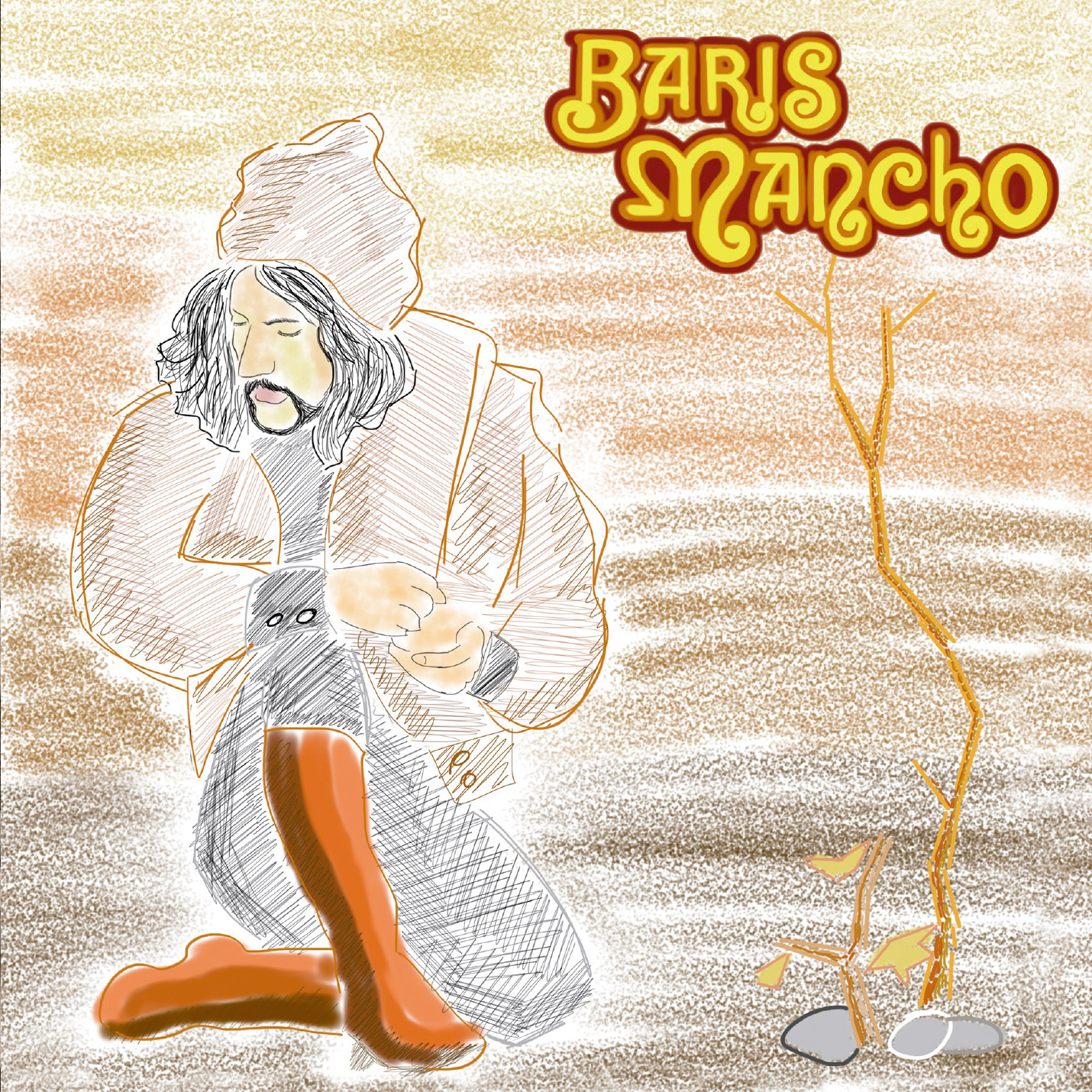
CULT CLASSIC: BARIS MANCO-NICK THE CHOPPER
Cult Classic: Barış Manço-Nick The Chopper.
Some twenty-one years after his sudden and tragic death, Barış Manço is still remembered as one of the pioneers of modern Turkish music. His career began in 1958, and continued right up until his death in 1999.
During his career, Barış Manço was one of the founding fathers of Anatolian rock. He helped popularise this hybrid of Turkish folk and rock. Soon, other artists were following in his footsteps and Anatolian rock’s popularity was growing.
It helped that at the vanguard of this new musical movement was a musician that was a pioneer and was capable of creating ambitious and innovative music. That was the case throughout Barış Manço’s long and illustrious recording career.
Throughout his career, Barış Manço was a truly prolific artist. That was the case since the early days, when he recorded and collaborated with wide variety of groups and artists including Harmoniler, Jacques Denjean Orchestra, Les Mistigris and Kaygısızlar, Moğollar and Kurtalan Ekspres. However, this was just part of the Barış Manço story.
Barış Manço was also a solo artist, and by 1977 was still to make a commercial breakthrough. When he came to record his sophomore album Nick The Chopper, he thought that this was the last roll of dice for him and the most important album of the thirty-four year old’s career.
Barış Manço was born in Üsküdar, Istanbul, Turkey on the ‘2nd’ of January 1943, into a musical family. His mother Rikkat Uyanık has been a successful singer, and as she watched her son grow-up, little did she realise that her son would later, follow in her footsteps.
By the time Barış Manço was a pupil at Galatasaray High School, he founded his first band, Kafadarlar. They mainly played to the students at nearby schools,but this was enough to give Barış Manço a taste of life as a professional music.
When Barış Manço was nineteen, he formed a new band Harmoniler. They accompanied Barış Manço when he recorded his debut single, Twistin USA, which was released in 1962, with Do The Twist following later that year. The third and final single Barış Manço released with Harmoniler was Cit Cit Twist in 1963. These three singles were among the first Anatolian rock releases. Barış Manço was part of a new musical movement. Despite this, after graduating from high school, he decided to spend some time travelling across Europe.
Initially, Barış Manço headed to France, and spent some time in Paris. This was where he recorded a single with the Jacques Denjean Orchestra, Baby Sitter. It was released in 1964, but soon, Barış Manço was on the move again.
He then moved to Liege in Belgium, where enrolled and studied at the Royal Academy of Fine Arts in Liège, Belgium. This was where Barış Manço encountered the other members of Les Mistigris.
Les Mistigris.
Before long, Barış Manço joined the band, and they released three singles while Barış Manço was a member. The first was Il Arrivera in 1966, with Bien Fait Pour Toi following later that year. A third single Bizim Gibi was released in 1967, and by then, Les Mistigris’ popularity was spreading, and the band were playing much further afield.
Les Mistigris were playing not just in Belgium, but France, Germany and Turkey. However, Barış Manço time with Les Mistigris came to an end in 1967.
Later in 1967, Barış Manço was badly hurt in a car crash. It was then that he decided to grow a moustache to hide a scar. This would eventually become one of his trademarks, and a familiar sight to music fans when commercial success and critical acclaim came his way. Before that, Barış Manço would form a new a new band, Kaygısızlar later in 1967.
Kaygısızlar.
Unlike the last couple of bands Barış Manço had been a member of Kaygısızlar featured just Turkish musicians. During his travels, Barış Manço had worked with musicians from different countries. This hadn’t been easy, given the language barrier. This time, Barış Manço was joined in Kaygısızlar by Mazhar Alanson and Fuat Güner and they spent the next two years together.
Kaygısızlar’s debut single Kol Düğmeleri was released later in 1967, and was followed in 1968 by Kızılcıklar, Bebek, Karanlıklar İçinde and Bogaziçi. By the end of the 1968, Kaygısızlar’s popularity had grown. They had graduated from playing in venues in Turkey to touring internationally. Barış Manço’s new band had come a long way in a short space of time.
As 1969 dawned, Kaygısızlar released Runaway, and followed this with Aglama Değmez Hayat and Kağızma, which proved to be Kaygısızlar’s swan-song. The story came to an end later in 1969 when Mazhar Alanson and Fuat Güner told Barış Manço that they didn’t want to move, and live abroad. After eight singles, Kaygısızlar were no more. However, as the sixties gave way to the seventies, Barış Manço founded a new band, Barış Manço Ve.
Barış Manço Ve.
The newly founded Barış Manço Ve headed into the studio to record their debut single during early 1970. This multinational group’s debut single was Dağlar Dağlar (Mountains, Mountains!), and when it was released later in 1970, the single sold in excess of 700,000 copies.
Buoyed by the success of their debut single, Barış Manço Ve released their debut album in 1971 Dünden Bugüne…Alas, which was the only album the band released. Despite the success of Barış Manço Ve, its founder was ready to move on.
Moğollar.
Next stop for Barış Manço was Moğollar, who were one of the pioneers of Anatolian rock. They had been formed in 1967, and were still growing strong when Barış Manço joined in 1971. He features on their 1971 single Bin Boğanın Kızı, but after this, Barış Manço decided to reform Kaygısızlar.
Kaygısızlar.
After reforming, Kaygısızlar only released one more single, Fil ile Kurbağa. It was released in 1972 and after this, the members of Kaygısızlar moved on to new projects. Mazhar Alanson and Fuat Güner went on to form MFÖ. Meanwhile, Barış Manço formed another new band, Kurtalan Ekspres.
Kurtalan Ekspres.
Barış Manço’s latest band wasted no time beginning work on their debut single Ölüm Allah’ın Emri, which was was released in 1972. Little did anyone know that this fusion of Anatolian rock and psychedelia marked the debut single by one of the most innovative and influential Turkish bands of the early seventies. They pioneered Anatolian rock, and took the genre in new directions.
Initially, had Kurtalan Ekspres combined Anatolian rock and psychedelia. By 1973, Anatolian rock was evolving as Kurtalan Ekspres moved the genre towards progressive rock. This became apparent when they released their first single of 1973, Lambaya Püf De. It was followed by Gönül Dağı later that year. Kurtalan Ekspres were musical chameleons, whose music continued to be innovative and influential.
This continued as Kurtalan Ekspres released two new singles released during 1974. The first was Nazar Eyle, which showcased a folk-tinged sound,wiyh the followup Bir Bahar Akşamı showcasing a psychedelic sound. Each single was different from its predecessor as Kurtalan Ekspres’ music evoked and they ensured that their music stayed relevant. Despite this, commercial success continued to elude Kurtalan Ekspres as 1974 gave way to 1975.
The last two years had been frustrating for Barış Manço, who had just spent two years in the Turkish military. There was no getting round this as national service was mandatory.
At least Barış Manço’s college education meant that he entered as an officer, which made the two years that bit more bearable. During that period, he was regularly pictured in the Turkish teen magazines in his uniform with his head shorn of his long hair. However, eventually the two years were over and Barış Manço returned home, to continue his musical career.
By then, Barış Manço was thinking about where his career was going? He had experienced commercial success with Barış Manço Ve, and knew that Kurtalan Ekspres was a talented group, but time was beginning to run out for them. Barış Manço was forty-two in 1975. So he was hoping commercial success was just around the corner.
Alas, when Kurtalan Ekspres released Ben Bilirim as a single in 1975, the single failed to find an audience. Barış Manço however, had a plan and was ready for one last throw of the dice.
Later in 1975, Kurtalan Ekspres were about to release their debut album. It was a genre-melting concept album where songs rubbed shoulders with instrumentals. This became 2023, which was released in 1975. 2023 with its groundbreaking and futuristic music that was meant to transform the fortunes of Kurtalan Ekspres. Sadly, the only countries where 2023 sold well, were Romania and Morocco with album topping the charts in both countries. Elsewhere, 2023 failed to find the audience it deserved, and for everyone involved it was a frustrating time.
Especially when Kurtalan Ekspres’ 1976 single Çay Elinden Öteye Rezil Dede failed commercially.By then, Barış Manço’s career was officially at a crossroads.
Barış Manço’s career received a boost when he starred in the movie Baba Bizi Eversene. Buoyed by the success of the movie, he decided to travel to Belgium where he hoped to find a label that would transform his fortunes.
By then, Barış Manço knew that CBS in Belgium had a successful track record and had recently released a string of singles and albums. The man behind the success of CBS in Belgium was Jean Huysmans, who had been involved in music for two decades. He had joined Les Cousins in 1961 and played an important part in the band’s success. That was Jean Huysmans’ past, and by 1976 he was running CBS in Belgium when he met Barış Manço.
Jean Huysmans already knew Barış Manço who was a member of Moğollar when they were signed to CBS in the early seventies. The head of CBS in Belgium also knew that Barış Manço was a hugely talented, versatile and innovative musician. Soon, Jean Huysmans had drawn up a three-year contract which Barış Manço was more than happy to sign. After that, work began on Barış Manço’s sophomore album Nick The Chopper.
Nick The Chopper.
Barış Manço and Jean Huysmans wasted no time, and soon had hired twenty-nine musicians to record Nick The Chopper. This included three drummers, two bassists, two guitarists, two string quartets, two pianos, a nine piece horn section, backing singers Heart Of Soul and Turkish musicians Ohannes Kener and former roadie turned percussionist Cetal Guven. The band recorded the ten songs that became Nick The Chopper in two Brussels’ studios.
This included Studio Katy and Morgan Studios, Brussels where Jean Huysmans took charge of production on Barış Manço’s sophomore album Nick The Chopper.Barış Manço wrote Little Darlin’ (We’ll Be Kissing), Nick The Chopper and Ride On Miranda. He penned six other songs with various songwriting partners including Jonathan Glemser, who wrote album closer Old Paulin’.
When Barış Manço’s sophomore album was released by CBS in 1976, the title was Barış Manço.It was released as part of series that included Kansas, Phoebe Snow and even Johnny Mathis.Sadly,Barış Manço was the album that failed to find an audience in Belgium.
Record buyers who didn’t speak Turkish found the lyrics unwieldy. At least exiled Turks were familiar with the melodies. The only problem was that the exiled Turks either wanted heavier sounding songs or folk-tinged songs. Barış Manço had taken as a starting point Anatolian rock, which is a hybrid of Turkish folk and rock and added elements of blues, electronica, folk, funk, progressive rock and psychedelia. The result was a genre-melting album that oozes quality,
From the opening bars of Little Darlin’ (We’ll Be Kissing), through Lonely Man and Old Paulin’ the versatile, charismatic and talented Barış Manço leads his twenty-nine piece band on Lucky Road, Emerald Garden and Nick The Chopper, which tells the story of a homeless woodcutter. On each of these songs Barış Manço puts three decades of experience to good use. That is the case on Tell Me Old Man, which gives way to Blue Morning Angel and Lady Of The Seventh Sky which are highlights of the album. It closes with the memorable Ride On Miranda.
Sadly, Nick The Chopper was released commercial success eluded Barış Manço’s sophomore album. It was a huge disappointment for everyone involved in the project.
Undeterred, Barış Manço headed home to Turkey where he embarked upon a forty-five date to promote his sophomore album which was retitled Nick The Chopper. The tour was a success until they played in Balikesir, where Kurtalan Ekspres were attacked by right-wing protesters and two band members were hospitalised. Despite this, the tour continued.
In December 1977, Barış Manço played a concert in London, and afterwards was hospitalised. He was diagnosed with a liver infection and had to have a tumour removed. It was a worrying end to a year that had promised much.
Especially after the release of his genre-melting sophomore album Nick The Chopper which should’ve transformed his career. Sadly, that wasn’t to be and it was case of what might have been. However, forty-four years later and the cult classic Nick The Chopper is a a truly irresistible and heady musical brew, and one of the hidden gems in Barış Manço’s back-catalogue.
Cult Classic: Barış Manço-Nick The Chopper.
THE LADIES OF TOO SLOW TO DISCO VOLUME 2.
The Ladies Of Too Slow To Disco Volume 2.
Label: How Do You Are?
Ever since the birth of rock ’n’ roll, musical genres have fallen in-and-out of fashion, and what’s popular today can be consigned to the dustbin of musical history tomorrow as tastes change. That happened to everything from psychedelia and progressive rock to disco which suddenly sucked, to the West Coast sound. However, many of these genres made a comeback, just like flares, fishtail parkas and in some places, double denim and desert boots.
Over the last few years, there’s been a resurgence in interest in the West Coast sound which fell from grace in the late seventies. Before that, the West Coast sound had won over the hearts and minds of record buyers, and provided the soundtrack to much of the seventies. This wasn’t surprising.
The West Coast sound was slick and full of hooks. Trademarks of the West Coast were clever chord progressions and lush harmonies. This proved to be irresistible combination, and was why across America, radio station playlists were dominated by the West Coast sound. However, like all good things, the success story that was the West Coast sound had to come to an end.
Then around 2014, there was a resurgence in interest in the West Coast sound, and several compilations were released. However, the West Coast sound had been rebranded and was being referred to as Yacht Rock or Vanilla Funk. Nothing it seems is sacred. At least compilers were rediscovering the West Coast sound. This included DJ Supermarkt and the good people at the How Do You Are? label.
They released a new compilation in May 2014, Too Slow To Disco. It was so successful that Too Slow To Disco Volume 2 followed in June 2014. Then there was a new addition to the series when The Ladies Of Too Slow To Disco followed in April 2016. The new addition was a welcome addition to the Too Slow To Disco family, and it was hoped that a followup would soon be released.
Four years later and somewhat belatedly, The Ladies Of Too Slow To Disco Volume 2 has just been released by How Do You Are. It features sixteen tracks from the likes of Terea, Diane Tell, Karla Bonoff, Martee Lebous, Kristle Murden, Janis Siegel, Ullanda McCullough, Nicolette Larson, Elkie Brooks and Holly Near. These tracks tell a much more political story as the latest Ladies Of Too Slow To Disco make their way in a music industry what was still predominantly a man’s world.
Despite that, many talented singer-songwriters emerged during late-sixties and seventies, and some enjoyed commercial success and critical acclaim. Some of the artists on The Ladies Of Too Slow To Disco Volume 2 were signed to majors, while others were signed to smaller indie labels. Meanwhile, Holly Near and Linda Tillery setup their own labels to release their albums. Just like all the artists on The Ladies Of Too Slow To Disco Volume 2 they were part of the Women’s Music movement and were determined to make their way in what was still a man’s worlds. They played their part in bringing about change and four decades later their music is celebrated and features on The Ladies Of Too Slow To Disco Volume 2.
Opening The Ladies Of Too Slow To Disco Volume 2 is Terea, who will be familiar face for fans of Leonard Cohen, Sharon Robinson. She had two spells as one of his backing singers and also cowrote, arranged and produced the legendary Canadian singer-songwriter. However, in 1977 Terea released her eponymous debut album Pretty Bird on the Baby Grand label. It was different to most labels.
The albums that labels like Baby Grand released weren’t meant to make a profit. Instead they allowed wealthy investors who set up the company to realise a tax credit in excess of their initial investment. That was as long as the album didn’t make a profit. One way to ensure that didn’t happen was only to press a few copies of the album.
That was why when Terea was released the album sank without trace, and record buyers failed to hear songs of the quality of Pretty Bird. It was written by Sharon Robinson and was produced by Dennis Dreith and John Seiter. Their jazz-tinged arrangement provides the perfect backdrop for Terea’s impassioned vocal as encourages the “Pretty Bird fly to your freedom now.” It’s a beautiful song and sets the bar high for the rest of the album.
Marti Caine was a British light entertainer who was popular during the seventies and eighties. Away from acting and comedy, she released five albums. This included Point of View, which was released in 1981 on BBC Records and failed to find an audience. Part of the problem was an ineffective promotional campaign. That was a great shame as the album featured the sensuous groover meant that music fans Love The Way You Love Me.
Award-winning singer-songwriter Diane Tell’s career began in the-seventies, and in 1982 she released her Chimères on Polydor. It’s an album of the smoothest AOR and features Mon Amie-E, where the chanteuse from Quebec City delivers a heartfelt and emotive vocal.
In 1977, twenty-five year old Karla Bonoff released her eponymous debut album on Columbia. By then, she had been a songwriter since she was fifteen, and wrote eight of the ten songs on her debut including the ruminative ballad Isn’t It Always Love. When Linda Ronstadt heard the album, she decided to cover three of the songs. This was a huge boost forKarla Bonoff’s career and she went on to write songs for some of the biggest names in music and has enjoyed a successful career.
Another successful songwriter is Chicago-born Frannie Goldie, who contributes Here I Go Fallin‘ In Love Again to the compilation. It’s taken from the album Frannie which was released on the Portrait label in 1979. From the opening bars of this soulful and funk track Frannie delivers a sultry vocal as she sings of the inevitability of falling in love again. She’s accompanied by a carefully crafted arrangement where tender harmonies, sweeping strings and a stunning saxophone solo play their part in the sound and success of what’s the best track on the compilation.
In 1974, Lonette McKee released her debut album Lonette on Sussex Records. It features The Way I Want To Touch You, which was written by Toni Tennille. The album was produced by Dennis Coffey and Mike Theodore. They’re responsible for a carefully crafted and slick arrangement that is dancefloor friendly, funky and jazz-tinged. This is the perfect backdrop a Lonette McKee’s lovestruck vocal which is the perfect introduction to a truly talented vocalist whose music deserves to be heard by a much wider audience.
Ullanda McCullough’s career began when she was thirteen, and by the early seventies she was singing on jingles. She graduated to signing backing vocals for everyone from Ashford and Simpson, Carly Simon, Chic, Diana Ross and Luther Vandross. Still, Ullanda McCullough found time to record three solo albums including her 1981 eponymous album. It features I’ll Just Die where pop, funk and soul combine with disco strings to create a hidden gem of a dance track.
Nicolette Larson’s contribution to the compilation is a plucky and feisty country soul cover of Marvin Gaye’s Baby, Don’t You Do It. It’s taken from her 1978 album Nicolette, which was her finest hour and also features her best known song Lotta Love.
By 1978, disco was at the peak of its popularity, former Vinegar Joe vocalist Elkie Brooks was signed to A&M Records. A decision was made that she should record an album of disco and soul and she was recorded Live and Learn with an all-star band at the Record Plant, in Los Angeles. One of the highlights of the album was The Rising Cost Of Love where for one night only, Elkie Brooks transformed into a strutting disco diva.
Closing The Ladies Of Too Slow To Disco Volume 2 is Holly Near’s Back Off. This is one of her own compositions from her 1982 album Speed Of Light. Above a slow, smouldering groove where elements of funk, jazz and rock combine, sits a vocal which veers between tender and sassy. It ensures that the compilation ends on a high.
That was only part of the story of The Ladies Of Too Slow To Disco Although I’ve only mentioned eleven of the nineteen track I could’ve picked any of them. That’s how good The Ladies Of Too Slow To Disco Volume 2 is. It’s all killer and no filler thanks to compiler DJ Supermark’s crate-digging skills. He has dug deep to find the music on The Ladies Of Too Slow To Disco Volume 2 is.
Singles, album tracks hidden gems and rarities sit side-by-side on The Ladies Of Too Slow To Disco Volume 2. There’s contributions from familiar faces, old friends and new names on this lovingly curated compilation.
Instead, many are album tracks. This makes a pleasant change. Usually, compilers look no further than singles. However, that isn’t DJ Supermarkt’s modus operandi. Instead, he eschews the obvious for long forgotten album tracks which most people nether know nor remember. They’ll only be remembered by diehard fans. However, that is about to change as a a new generation of music lovers discover the delights of these tracks. The same can be said of the West Coast sound.
The Ladies Of Too Slow To Disco Volume 2 is the latest addition to the series, and the perfect introduction to the West Coast sound. Hopefully The Ladies Of Too Slow To Disco Volume 2 will the start of a voyage of discovery, where newcomers will discovers the delights of the West Coast sound, with its clever chord progressions, lush harmonies and slick, hook-laden sound.
The Ladies Of Too Slow To Disco Volume 2.

CULT CLASSIC: SEA LEVEL-BALL ROOM.
Cult Classic: Sea Level-Ball Room.
In 1980, Southern rockers Sea Level released their fifth album Ball Room, which was a new start for the band. They had been signed to Capricorn Records since the release of their eponymous debut album in 1976. After recording four albums for Capricorn Records, Sea Level signed to Clive Davis’ Arista label. This band leader Chuck Leavell hoped was the start of a new and exciting chapter in Sea Level’s career. Much had happened since the band was founded in 1975.
By August 1975, all wasn’t well within The Allman Brothers. It hadn’t been for the last couple of years despite being at the peak of their popularity. Their last three albums had sold over a million copies and were certified platinum. Meanwhile, they were one of the most successful live bands. They regularly earned over $100,000 a show during their 1974 tour. This allowed The Allman Brothers to hire Led Zeppelin’s private jet Starship, and fly coast-to-coast in style. However, the constant touring was part of the problem,
Several of The Allman Brothers’ had developed serious drug problems. Now that the band had more money than ever, their drug problems began to spiral out of control. This wasn’t the only problem though.
Some members of The Allman Brothers were no longer as close as they once had been. It seemed the friendship had gone from the band. Gregg Allman and Dickie Betts had both released successful solo albums during 1974. The following year, three other members of The Allman Brothers decided to form a new band as a side project.
The the band was named We Three by its founding members. They were Jai Johanny Johanson a.k.a. Jaimoe, bassist Lamar Williams and keyboardist, pianist and vocalist Chuck Leavell. When the new band was formed they were keen to stress that We Three would work round The Allman Brothers’ schedule. They were going to be busy between August 1975 and May 1976.
In August 1975, The Allman Brothers release their sixth album Win, Lose Or Draw in August 1975. When it was released, it didn’t receive the same critical acclaim as previous albums. However, it still reached number five in the US Billboard 200 and was certified gold. By then, the Allman Brothers had headed out on the road and were playing forty-one arena shows. Some nights, the shows were disjointed and lacklustre. It was as if the Allman Brothers were merely going through the motions. This was very different to the band that some nights opened for The Allman Brothers, We Three.
Occasionally, the nascent We Three took to the stage. Those that saw the band play, were impressed by We Three. They were the complete opposite of the Allman Brothers, who some nights, looked as if they were on their last legs.That proved to be the case.
For the Allman Brother, their 1975-1976 tour wasn’t their finest hour. Some nights, they didn’t even bother with a soundcheck. They just headed out on stage and seemed to be going through the motions. The band didn’t play well, and were a shadow of their former selves. What didn’t help was the excessive drug use, bad feeling between the band and death threats.
The bad feeling and death threats stemmed from Gregg Allman’s decision to testify in the trial of security man Scooter Herring. This didn’t go down well with the rest of The Allman Brothers. They saw Gregg Allman as a snitch. Following the trial, the rest of the band stopped communicating with Gregg Allman. Meanwhile, he started to receive death threats. For Gregg Allman and the rest of the band, this only made a bad situation worse.
In May 1976, the Allman Brothers returned from their forty-one date tour. By then, the writing was already on the wall. The Allman Brothers split-up. Gregg Allman formed the Gregg Allman Band; Dickie Betts formed Great Southern while Jaimoe, Lamar Williams and Chuck Leavell decided to continue as Sea Level.
No longer were the three friends playing together as We Three. They had decided to changed the band’s name to Sea Level. This was a result of some wordplay surrounding Chuck Leavell’s name. His family always pronounced their surname as level. Chuck took the first initial from his christian name, and Sea Level were born. The newly named band began honing their sound.
By then, three had become four. Guitarist Jimmy Nails joined Sea Level as the band headed out on tour. Over the next few weeks and months, dedicated themselves to honing and tightening their sound. Some nights, Sea Level experimented, by heading in different directions musicians. Mostly, though, they concentrated on refining, tightening and honing their sound. This paid off, and eventually, they were ready to record an album.
By then, several record companies were chasing Sea Level’s signature. Eventually, the band settled on Capricorn Records, which had been home to the Allman Brothers. Once the contracts were signed, Sea Level began work on their eponymous debut album.
Sea Level.
For Sea Level’s debut album, Chuck Leavell became the band’s songwriter-in-chief. He wrote five of the eight songs. The other three tracks were covers of Edward Hoerner’s Shake A Leg, Neil Larsen’s Grand Larceny and the traditional song Scarborough Fair. These songs were recorded with one of the most successful producers of the seventies, Stewart Levine.
Recording took place at Capricorn Sound Studios, in Macon, Georgia. This was familiar territory for the three members of Sea Level, as The Allman Brothers had recorded at Capricorn Sound Studios. To augment Sea Level, guitarist Jimmy Nails and a horn section were brought onboard. Meanwhile, Sam Whiteside engineered the sessions. They progressed smoothy, with Sea Level combining Southern Rock and jazz funk. Once Sea Level was complete, it was ready for release on Capricorn Records later in 1976.
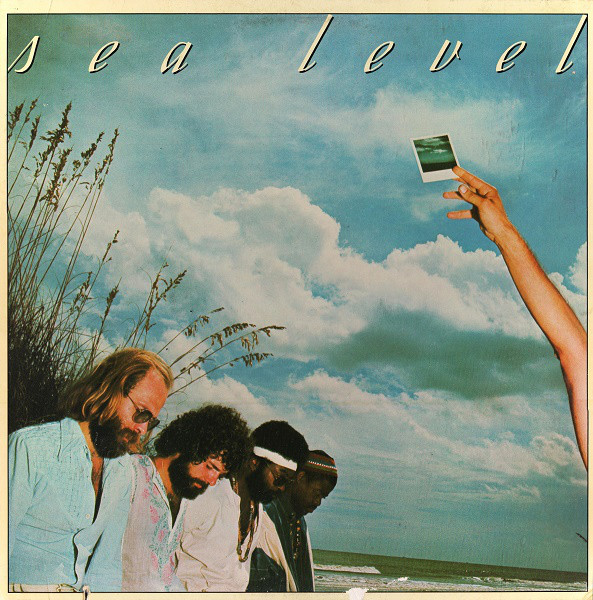
Before that, critics had their say on Sea Level’s eponymous debut album. Sea Level was well received by critics, who complimented the nascent band on their debut album. Despite the reviews, Sea Level failed to make an impression on the charts. Despite this, Sea Level decided to expand for their sophomore album, Cats On The Coast.
Cats On The Coast.
Shortly after the release of Sea Level became a sextet when drummer and percussionist George Weaver joined, which allowed Jaimoe to switch to congas. The other two newcomers were guitarist Davis Causey and keyboardist, saxophonist and vocalist Randall Bramblett. This newly expanded lineup began working on their sophomore album, Cats On The Coast.
This time round, Chuck Leavell wrote just two of eights songs, Storm Warning and Song For Amy. Davis Causey wrote Cats On The Coast and cowrote That’s Your Secret with Randall Bramblett. He penned Every Little Thing and also cowrote Had To Fall with Jimmy Nalls and Lamar Williams. The other two songs were cover versions, including Neil Larson’s Midnight Pass and Hurts to Want It So Bad which Charles Feldman, Tim Smith and Steve Smith penned. Just like their debut album, Sea Level returned to Capricorn Sound Studios.
At Capricorn Sound Studios, producer Stewart Levine and engineer Sam Whiteside began work with the newly expanded Sea Level. Other sessions took place in Los Angeles, at Hollywood Sound Recorders. Gradually, Cats On The Coast began to take shape and eventually was completed.
Cats On The Coast was scheduled for released later in 1977. Before that, critics had their say on Sea Level’s sophomore album. It found Sea Level switching between Southern Rock and fusion. While the album found favour with critics, Cats On The Coast passed record buyers by.While the album failed to chart, the lead single That’s Your Secret reached fifty in the US Billboard 100. It was a small crumb of comfort for Sea Level.
They had released two albums, but neither had come close to troubling the charts. It was frustrating for Sea Level. They knew that there was nothing wrong with the music. Instead, it was a case of the wrong albums at the wrong time. Southern Rock was no longer as popular as it had once been. Many Southern Rock bands weren’t enjoy the success they once had. For a new band like Sea Level, trying to make a breakthrough was doubly difficult. So much so, that two members of Sea Level decided to leave the band just before work began on their third album, On The Edge.
On The Edge.
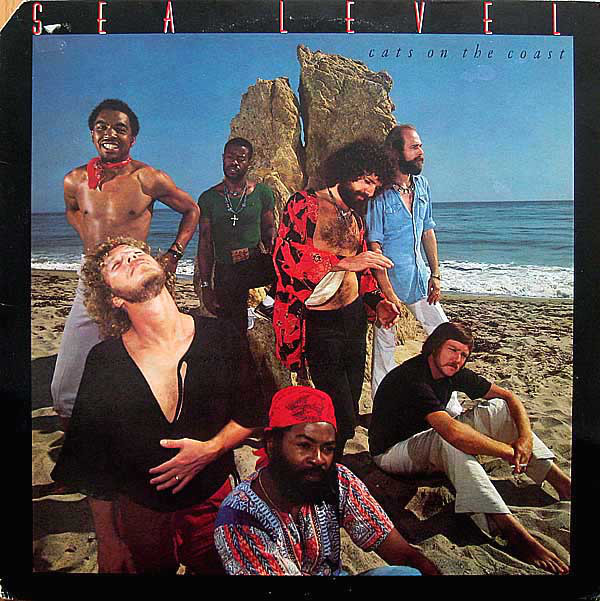
Exiting stage left were Jaimoe and George Weaver. This left Sea Level without a drummer. However, George Weaver was recruited and Sea Level continued as a sextet.
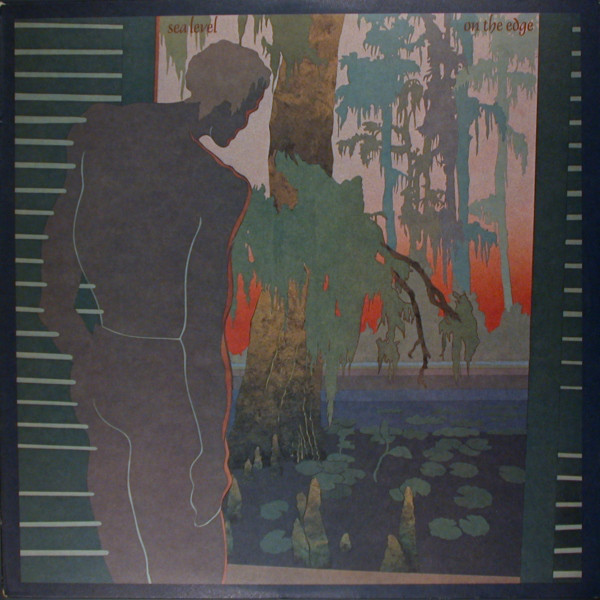
Just like Cats On The Coast, several members of Sea Level contributed songs to On The Edge. Chuck Leavell wrote A Lotta Colada and Uptown Downtown, and penned On The Wing with Lamar Williams. Jimmy Nails wrote Fifty-Four while Randall Bramblett contributed This Could Be The Worst and Electron Cold. He wrote King Grand with Davis Causey. The two men also wrote Living In A Dream with Arch Pearson. These eights songs would become On The Edge.
Just like their two previous albums, On The Edge was recorded at Capricorn Sound Studios, with producer Stewart Levine and engineer Sam Whiteside. This was the third lineup of Sea Level they had worked with. However, they were all experienced musicians, and the recording sessions went to plan. Some additional sessions took place at The Hit Factory, in New York. After that, On The Edge was ready for release later in 1978.
Prior to the release, critics received their advance copies of On The Edge. They discovered an album where Sea Level switched between and combined elements of Southern Rock, fusion and jazz-funk. It was a slick, accomplished and well produced band that featured a tight and talented band. Praise and plaudits preceded the release of On The Edge, but despite this, the album failed commercially and didn’t come close to troubling the charts. For Sea Level, it was yet another disappointment.
Long Walk On A Short Pier.
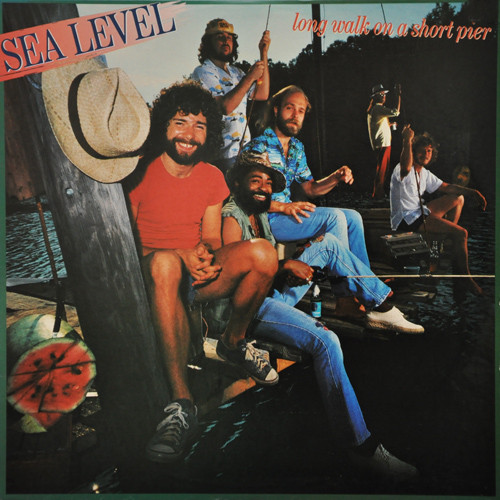
Despite the commercial failure of On The Edge, Sea Level weren’t about to give up. They began work on their fourth album Long Walk On A Short Pier.
Chuck Leavell wrote two new songs for Long Walk On A Short Pier, Tear Down This Wall and Just A Touch. Lamar Williams penned Just A Touch, while Jimmy Nails wrote Twenty Miles From Nowhere and penned A Two ’n’ Two with Davis Causey. He contributed Canine Man and Thirsty, and then wrote Morning Light with Randall Bramblett. The other song was a cover of the Weaver-Walker composition Too Many Broken Hearts. With the material for Long Walk On A Short Pier complete, Sea Level made the journey to Macon, Georgia. They were joined by a new band member percussionist and conga player David Earle Johnson.
When Sea Level arrived at Capricorn Sound Studios, nothing seemed to have changed. The studio looked the same as ever. However, this time, Sea Level were going to co-produce Long Walk On A Short Pier with engineer turned producer Sam Whiteside. He had engineered Sea Level’s three previous albums, so knew how the band worked. Sam Whiteside had served his apprenticeship and was ready to step out of Stewart Levine’s shadow.
Despite his promotion to co-producer, Sam Whiteside still engineered Long Walk On A Short Pier. He brought David Pinkston onboard, to assist him with his engineering duties. They watched on as Sea Level switched between Southern Rock and fusion on Long Walk On A Short Pier. The music seemed to flow through Sea Level and gradually, Long Walk On A Short Pier began to take shape and the album was almost complete.
All that recorded was for a horn section to be overdubbed at Sea Saint Studio, in New Orleans. Then Long Walk On A Short Pier would be ready for release by Capricorn Records.
Little did Sea Level know that all wasn’t well at Capricorn Records. The label was teetering on the verge of insolvency as promotional copies of Long Walk On A Short Pier were sent out. Sea Level were totally unaware of this.
When reviews of Long Walk On A Short Pier were published, critics were impressed by Sea Level’s fourth album. Just like their previous album, Sea Level flitted between Southern Rock and fusion on Long Walk On A Short Pier. It was another accomplished album from Sea Level. Maybe it would’ve been the album that transformed their fortunes?
It wasn’t to be. Just as Long Walk On A Short Pier was released, Capricorn Records went out of business. They were insolvent and had no option but to file for bankruptcy. For Sea Level, this was a disaster. Their fourth album was dead in the water.
Copies of Long Walk On A Short Pier made it as far as distributors. That was as far as they got. Later, it became apparent that a few copies of Long Walk On A Short Pier made it into circulation. However, it wasn’t until 1998 that Long Walk On A Short Pier was heard by the wider record buying public.
After Capricorn Records filed for bankruptcy, the future looked bleak for Sea Level. They had recorded an album that was never released properly. That cost the band time and money. They could’ve been touring, as Sea Level were still a popular draw on the live circuit. All the time, expense and effort that went into recording Long Walk On A Short Pier had been for nothing. Now they were left with no recording contract. Despite this, Sea Level decided to record a new album with producer Sam Whiteside, Ball Room.
Ball Room.
Having made the decision to continue, there was a change in Sea Level’s lineup. Percussionist and conga player David Earle Johnson left the band. He was replaced by percussionist Matt Greeley, who was about to make his recording debut.
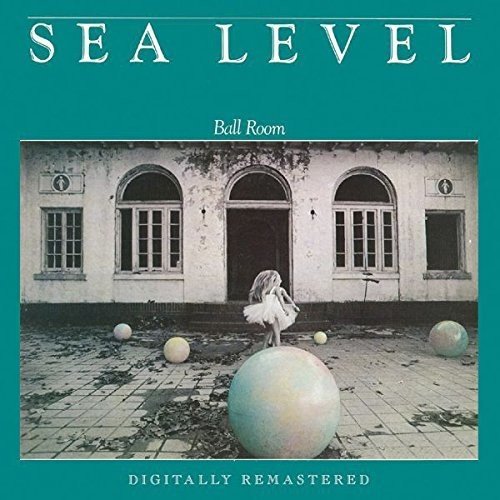
Before that, the members of Sea Level began work on writing their fifth album. Chuck Leavell wrote Anxiously Awaiting and Don’t Want To Be Wrong, while Lamar Williams contributed Struttin’. Randall Bramblett penned Wild Side, School Teacher, Comfort Range and Brandstand. He also wrote We Will Wait and You Mean So Much To Me with Davis Causey. These nine songs would become Ball Room, which was recorded at two studios.
For the first time since Sea Level were founded, they weren’t heading to Capricorn Recording Studios to record an album. Instead, Ball Room was recorded at Axis Sound Studio and Web IV Studios. Engineer Sam Whiteside co-produced Ball Room with Sea Level. They put their considerable talents were put to good use on Ball Room. Onlookers witnessed Sea Level in full flight, with Chuck Leavell and Randall Bramblett sharing lead vocals. Once Ball Room was complete, Sea Level started shopping the album to record labels.
Eventually, it was Clive Davis’ Arista Recorsd that expressed an interest in signing Sea Level. Clive Davis was the man with the Midas touch. He had transformed the career of countless artists and groups. Sea Level were hoping he could do the same for them. So they signed on the dotted line, and hoped that Clive Davis would work his magic.
Later in 1980, Ball Room was scheduled for release by Arista. After five albums, they were at last, signed to a label with the financial muscle and expertise to get behind Sea Level’s fifth album Ball Room. Arista Records go to work on promoting Ball Room.
Critics who were sent copies of Ball Room found Sea Level at the top of their game. The Southern Rock of Wild Side opened Ball Room, and set the bar high. Sea Level then kick loose on the anthemic bar room rock of School Teacher. Then there’s a drop in tempo on Comfort Range. It’s a mid-tempo, cinematic rocker that features one of Randall Bramblett’s best vocals as he brings the lyrics to life, so much so that it’s possible to imagine the song’s protagonist as they live life on the edge. Anxiously Awaiting shows another side of Sea Level, as they drop the tempo on this rocky, ruminative and timeless ballad. After that, it’s all change.
Struttin’ is an instrumental, where Sea Level enjoy the opportunity to stretch their legs and showcase their talent and versatility as they fuse rock, jazz and funk. The tempo drops on We Will Wait, a quite beautiful, dreamy and atmospheric song. It features Sea Level at their best and most inventive, as they combine elements of rock and jazz. You Mean So Much To Me is a heartfelt pean, with a languid groove. There’s a nod to Hall and Oates, as pop, rock and jazz combine seamlessly. Don’t Want To Be Wrong is an uptempo and rocky love song where Chuck Leavell takes charge of the lead vocal, while Randall Bramblett adds alto saxophone. This proves a potent partnership. Then one of Sea Level’s finest ballads Bandstand, closes Ball Room. It was, without, doubt, one of the best albums of Sea Level’s five album career.
When Ball Room was released, it followed in the footsteps of their previous albums, and failed to chart. For Sea Level this was a disaster. Things got worse when the lead single School Teacher never came close to troubling the charts. Sea Level were at a crossroads.
As 1981 dawned, Sea Level realised that after five years and five albums, they were no further on. Sea Level had nothing to show for fives years of recording and touring. All that hard work had been for nothing. Part of the problem was Sea Level released their albums at the wrong time.
If Sea Level’s five albums had been released earlier in the seventies, when Southern Rock was at the peak of its popularity then things would’ve been very different. Realising that music was changing, Sea Level tried to move away from their Southern Rock roots.
While Southern Rock featured on each of their albums, Sea Level’s first four albums headed in the direction of fusion, jazz-funk and even blues and rock. Then on Ball Room, Sea Level flit between Southern Rock to jazz, funk, pop and rock. They’re even transformed into a bar room band on School Teacher. It’s part of what was one of Sea Level’s most eclectic and best albums. Sadly, commercial success eluded Ball Room, which nowadays is an oft-overlooked hidden gem. Ball Room was Sea Level’s swan-song. They decided to call time on the band. There was only one problem.
Over the last five years, Sea Level had run up some debts. They were in the red and the time came to settle their debuts. Sea Level had to embark on one more tour. When the venues were finalised, it was apparent that Sea Level were going to be playing mostly dive bars. Many of them were situated in low rent shopping centres. Realising this, Sea Level decided to call the tour the Shopping Centre Tour. That was the last laugh Sea Level enjoyed.
The Shopping Centre Tour was a soul-destroying experience for Sea Level. They played dive bars and slept in the cheapest motels they could find. It was a miserable experience. Especially as Sea Level were only receiving expenses. Eventually, the tour was over and the band were free of their debts. That was the last time Sea Level played together as a band.
They had been together seven eventful years, and released five albums that showcase a truly talented band. Sadly, the five albums Sea Level released failed to find an audience. It’s only now that Sea Level’s albums are starting to find a wider audience. One of their finest albums was Ball Room, which is an oft-overlooked hidden gem that features Sea Level in full flight and their inventive best.
Cult Classic: Sea Level-Ball Room.
THE BLUE NILE-HIGH
The Blue Nile-High.
Label: Confetti Records.
Format: 2 CD Set.
Release Date: ‘5th’ June 2020.
Enigmatic, reluctant and contrarian are words that best of describe The Blue Nile. They’re the complete opposite of most bands. The Blue Nile have been described as publicity shy. That’ is an understatement. Ever since Paul Buchanan, Robert Bell and Paul Joseph Moore formed The Blue Nile, they’ve been one of the most low-profile bands in musical history. It seems that when they were formed thirty-nine years ago, The Blue Nile ticked the “no publicity” box. This has proved a double-edged sword, and resulted in The Blue Nile becoming one of the most enigmatic groups ever. Their story began thirty-nine years ago.
The Blue Nile were formed in 1981, when two friends Paul Buchanan and Robert Bell, met Paul Joseph Moore, all of whom met at Glasgow University. Before forming The Blue Nile, Buchanan and Bell were previously members of a band called Night By Night. Try as they may, a recording contract eluded them. Night By Night’s music wasn’t deemed commercial enough. So Paul, Robert and P.J. decided to form a new band, The Blue Nile.
Once The Blue Nile were formed, they set up their own record label Peppermint Records. It was on Peppermint Records that they released their debut single, I Love This Life. This single was then picked up and rereleased on the RSO label. Unfortunately for the Blue Nile, RSO became part of the Polygram label and I Love This Life disappeared without trace. Despite this setback, The Blue Nile persisted.
Still, The Blue Nile kept writing and recording material after the merger of RSO with Polygram. Some of that material would later be found on A Walk Across the Rooftops. That was in the future.
Recording of The Blue Nile’s demos took place at Castlesound studio near Edinburgh. That’s home to the man whose often referred to as the fourth member of The Blue Nile, recording engineer Calum Malcolm. He was listening to recently recorded demos through the studio’s Linn Electronics system. It had recently had a new set of speakers fitted. So the company founder, Ivor Tiefenbrun, decided to visit Calum Malcolm to hear his thoughts on the speakers. That’s when Ivor Tiefenbrun first heard The Blue Nile.
Calum Malcolm played Ivor Tiefenbrun a demo of Tinseltown In The Rain. Straight away, the founder of Linn was hooked. He decided to offer The Blue Nile a record contract to the label he was in the process of founding. Most bands would’ve jumped at the opportunity. Not The Blue Nile.
It took The Blue Nile nine months before they replied to Ivor Tiefenbrun’s offer. When they did, the answer was yes. The Blue Nile’s debut album A Walk Across The Rooftops would be released on Ivor Tiefenbrun’s new label Linn Reords.
A Walk Across the Rooftops.
Linn Records and The Blue Nile seemed a marriage made in musical heaven. Linn Records weren’t like a major label, pressurising The Blue Nile into making a decision and delivering an album within a certain timeframe. Instead, Linn Records allowed The Blue Nile to do what they did best, make music. From the outside, this looked as if it was working, and working well.
Years later, Paul Buchanan commented that during Linn Records didn’t operate like a record label. Mind you, he conceded that, during this period, The Blue Nile didn’t operate as a band. However, eventually, in May 1984 The Blue Nile’s debut album was released on Linn Records.
On the release of A Walk Across the Rooftops, it was released to critical acclaim. Critics described the album as a minor classic. A Walk Across the Rooftops was described as atmospheric, ethereal, evocative, soulful and soul-baring. It also featured the vocals of troubled troubadour Paul Buchanan. Despite the critical acclaim A Walk Across the Rooftops enjoyed, it wasn’t a huge commercial success, reaching just number eighty in the UK. However, since the A Walk Across the Rooftops has been recognised as a classic album. So has the followup Hats.

Hats.
Unlike most bands, The Blue Nile weren’t in any rush to release their sophomore album Hats. There was a five year gap between A Walk Across the Rooftops and Hats. It was worth the wait. The Blue Nile had done it again. Hats was a classic.
Featuring seven tracks, written by Paul Buchanan, Glasgow’s answer to Frank Sinatra He’s a tortured troubadour, whose voice sounds as if he’s lived a thousand lives. Producing Hats was a group effort, with Paul, Robert and P.J. taking charge of production duties. Guiding them, was Callum Malcolm. On the release of Hats, British and American audiences proved more discerning and appreciative of The Blue Nile’s sophomore album Hats.
On the release of Hats in the UK in 1989, it was critically acclaimed and commercial success, reaching number twelve in the UK. Then when it was released in America in 1990, audiences seemed to “get” Hats. Not only did it reach number 108 in the US Billboard 200 Charts, but The Downtown Lights reached number ten in the US Modern Rock Tracks charts. It seemed that The Blue Nile were more popular in America, than in Britain. Gradually, The Blue Nile’s music was beginning to find a wider and more appreciative album. Especially when they decided to embark upon their debut tour later in 1989.

Although The Blue Nile were formed in 1981, and Hats was The Blue Nile’s sophomore album, the band had never toured. Partly, The Blue Nile seemed worried about replicating the sound of their first two albums. They needn’t have worried, with The Blue Nile seamlessly replicating the sonic perfection of A Walk Across The Rooftops and Hats on the sold out tour. The Blue Nile’s star was in the ascendancy.
Their first ever tour had been a huge success. The Blue Nile had conquered Britain. However, The Blue Nile had also made a breakthrough in America. Hats had sold well, and their American tour had been successful. Most bands would’ve been keen to build on this and released another album before long. Not The Blue Nile.
Seven long years passed, where Blue Nile fans wondered what had become of Glasgow’s most enigmatic trio. However, they’d been busy. After Hats found its way onto American radio stations, The Blue Nile, who previously, had been one of music’s best kept secrets, were heard by a number of prestigious musicians. Among them were Robbie Robertson and Annie Lennox, Michael McDonald. After a decade struggling to get their music heard, The Blue Nile were big news. During this period, America would become like a second home to The Blue Nile, especially Paul.
Paul took to life in America, and in 1991, decided to make it his home. This just so happened to coincide with Paul’s relationship with actress Rosanna Arquette between 1991 and 1993. Hollywood starlets and Sunset Boulevard was a long way from Glasgow’s West End. In the midst of Paul’s relationship, disaster struck for The Blue Nile, they were dropped by their label.
Linn Records and Virgin decided to drop The Blue Nile. For some groups this would’ve been a disaster. Not for The Blue Nile.
They signed a million Dollar deal with Warner Bros. While this sounded like the ideal solution for The Blue Nile, Paul made the deal without telling P.J and Robert. He later explained that “none of the others were in town at the time.” With a new contract signed, The Blue Nile began thinking about their third album, Peace At Last.
Peace At Last.
So the band started looking for the perfect location to record their third album. They travelled across Europe looking for the right location. This location had to be private and suit their portable recording studio. Cities were suggested, considered and rejected. Among them, were Amsterdam, Copenhagen and Venice. Being The Blue Nile, things were never simple. Eventually, after much contemplation The Blue Nile ended up recording what became Peace At Last in three locations, Paris, Dublin and Los Angeles. For the first time, The Blue Nile recorded an album outside of their native Scotland.
For their first album for a major label, things began to change for The Blue Nile. They brought onboard drummer Nigel Thomas, a string section and a gospel choir. Peace At Last was going to be a quite different album to A Walk Across The Rooftops and Hats. However, one things stayed the same, The Blue Nile continued to work with Calum Malcolm. With his help, Peace At Last was ready for release in June 1996. Before that, critics had their say.
Critics remarked upon the change of sound on Peace At Last. It had a much more understated, restrained sound. Acoustic guitars and piano play important parts. Still, The Blue Nile’s beloved synths remain. Occasionally, The Blue Nile add strings. There’s even a gospel choir on Happiness. Gone was the sound of A Walk Across the Rooftops and Hats. Peace At Last showed a different side to The Blue Nile and their music, one that divided the opinion of critics and fans. Paul, Robert and P.J. were back, but it was a different sound. One constant was Paul’s worldweary vocal. Glasgow’s very own Frank Sinatra, Paul Buchanan plays the role of the troubled troubadour, to a tee on songs about love, love lost, betrayal, heartbreak, growing up and growling old. Paul was still the tortured soul, who wore his heart on his sleeve on Peace At Last.
On the release of Peace At Last, in June 1996, it reached just number thirteen and sold poorly. For The Blue Nile this was disappointing, given it was their major label debut. Worse was to come when the lead single Happiness failed to chart. The Blue Nile’s major label debut hadn’t gone to plan. Alas, Peace At Last was the only album The Blue Nile released on a major label.

High.
Following Peace At Last, it was eight years before The Blue Nile released another album. High was released in 2004. During the last eight years, the three members of The Blue Nile had been leading separate lives. P.J. and Robert were content with their lives in the West End of Glasgow, while Paul had been spending his time between Glasgow and Hollywood. Now they were back and ready to record their fourth album, High.
Once High was recorded, all that was left was for The Blue Nile to find a label to release the album. The Blue Nile had been dropped by Warner Bros. So with the completed album, The Blue Nile shopped High to various labels. Eventually, they settled on Sanctuary, which would release High in August 2004. However, before that, critics welcomed back The Blue Nille.
Eight years after the release of Peace At Last, critics remarked that High was a much more grownup album. Songs of family life and heartbreak sat side-by-side. Paul who had been suffering with illness and fatigue, seemed to have found a new lease of life. His lyrics are emotional, observational, cinematic and rich in imagery. They’re also poignant, and full hope, hurt and anguish. Meanwhile, Paul’s vocals were worldweary and knowing, while the music is emotive, ethereal and evocative. Critics love High. So did music lovers.
When High in August 2004, the album reached number ten in the UK. High proved to be The Blue Nile most successful album. This proved to be fitting.
Disc One.
Opening High is The Days Of Our Lives. Stabs of hypnotic, melancholy keyboards are repeated throughout the track. They provide the backdrop to Paul’s worldweary vocal. Soon, washes of synths, swathes of string and the occasional bursts of funky bass can be heard. Later, drums crack, adding to the drama, while Paul’s vocal is wistful and full of pathos. Just like he’s done so often, he makes the lyrics come alive, as he looks backwards at the past. This proves fitting, as High was their swan-song.
I Would Never was the first released from High. It has an understated, lush arrangement. That comes courtesy of washes of crystalline synths, acoustic guitar and pulsating bass. Then there’s Paul’s vocal. Glasgow’s troubled troubadour delivers a heartfelt vocal as he assures his partner “I Would Never turn my back on.” Quite simply, this is a beautiful ballad from a grown up Blue Nile.
Broken Loves opens with Paul’s half-spoken vocal accompanied by stabs of urgent keyboards. Frustration and emotion fill his voice as it grows in power and despair. The despair is caused by a relationship that’s all but over. This results in some soul searching from Paul. He paints pictures, reminiscing about their pasts. Memories from childhood seem to trigger an outpouring of emotion. His vocal becomes needy, and he’s determined they don’t give up on their relationship. Dramatic, emotive and heartbreaking, it’s an evocative description of a relationship gone wrong.
Just a lone acoustic guitar opens Because Of Toledo, as Paul delivers a worldweary vocal. Heartbroken and despondent, his life’s lost meaning and direction, because his relationship has ended. Again, Paul makes the lyrics come to life. They take on a cinematic quality. Soon, pictures unfold before your eyes, a heartbroken Paul sitting despondent, in the motel he sings about during this heartbreakingly beautiful breakup song.
Ethereal describes the introduction of She Saw The World. That’s before the tempo and drama increases. Driven along by drums, keyboards and washes of synths Paul delivers an urgent emotive vocal. Memories come flooding back as he reminisces about two people who drifted apart. Sadness fills his voice as he sings: “ She Saw The World and wanted it all.” Paul he remembers what he once had and lost. Oozing emotion, Paul’s lived-in, weary vocal and one of the best arrangements on High, result in one of the album’s many highlights.
Washes of synths shimmer, while a lone piano provides a contrast as High unfolds. Paul’s vocal is tender, but with a sense of resignation at the relationship that’s gone wrong. A drum machine provides the heartbeat as Paul’s vocal becomes a cathartic outpouring of emotion. Mixing power, passion and drama Paul lays bare his weary soul for all to hear.
As Soul Boy unfolds, drums crack and are matched by a pulsating bass and meandering guitar. Paul’s vocal is tender and needy. He delivers the some of the best lyrics on High. This includes: “let me be the one, there’s been no other one, trusted and true, for so long…I just want to be loved by you.” With an arrangement that’s reminiscent of vintage Blue Nile and Paul’s needy, seductive, vocal this is The Blue Nile back to their best.
Everybody Else is quite different from the previous track. It shows The Blue Nile are determined their music stays relevant. It’s an uptempo track that’s the nearest thing to a dance track The Blue Nile produced. Paul’s vocal is accompanied by swathes of sweeping strings, pounding bass and hypnotic drums. He’s plays the role troubled troubadour to perfection, as The Blue Nile demonstrate another side to their music, on a track that’s not short of poppy hooks.
Stay Close closes High and sadly, the recording career of The Blue Nile. The tempo is dropped, a drum machine, crystalline guitar and washes of synths providing a melancholy backdrop for Paul’s vocal. He’s saved the best to last. It’s as if he knew this was farewell. Digging deep, he unleashes a soul-baring Magnus Opus. His vocal is needy as he pleads, “Stay Close to me.” However, he knows though, “you’ll go your own way.” You’re drawn into this scenario, feel and share Paul’s pain and heartache. He’s not giving up though, and delivers a heartachingly beautiful vocal on this heartbreaking paean. What a way for The Blue Nile to call time on their recording career?
Side Two.
While High marked the end of The Blue Nile story, there was still unreleased tracks in the vaults. This included remixes, live tracks, alternate takes and even some unrleased songs. Most bands would’ve been making the most of this musical treasure chest and releasing the usual ‘Best Of’, a live album and box set. However, The Blue Nile are not most bands.
Sadly, there’s been no box set nor live album. Even a best of would’ve been welcomed during this latest musical drought. And it’s taken twenty-four years to reissue High, which completes the set. The reissue of High is sure to quench the thirst of fans of Scotland’s finest group of the past forty years.
Those who settled on the recently reissued CD version of High would be pleased to see a second disc with six bonus tracks. It opens with the cinematic ballad Wasted, which stylistically draws inspiration from The Blue Nile’s first three albums.
This is followed by remixes of including The Days Of Our Lives and the one of High’s highlights She Saw The World. It finds Paul Buchanan laying bare his soul as he delivers a cathartic confessional on this tale of love and love lost.
He’s in troubled troubadour mode on I, which is a hidden gem from The Blue Nile’s vaults and is a welcome addition to the reissue. The tempo rises on Big Twin where Paul Buchanan vamps his way through the lyrics.
It’s a case of saving the best until last with Here Come The Bluebirds. An acoustic guitar is strummed as Paul Buchanan tenderly sings: It’s you and I, against the world” before strings sweep as he paints pictures with the lyrics. Later, a church bell rings and harmonies soar during this heartachingly beautiful ballad that is the perfect way for The Blue Nile to say goodbye.
Although The Blue Nile only recorded four albums in a twenty year period, it’s the quality of music that matters. These four albums were almost flawless. Certainly A Walk Across The Rooftop and Hats are classics, while Peace At Last is probably the most underrated album in The Blue Nile’s back-catalogue. That brings us to High.
Having not released an album for eight years. During that period, The Blue Nile had been living separate lives. P.J. and Robert were living in the West End of Glasgow, while Paul lived a nomadic existence, flitting between Hollywood, Europe and Glasgow. He’d been involved in some high profile relationships, and by 2004, just when everyone thought The Blue Nile were no more, they rose like a phoenix from the ashes. They didn’t even have a record deal, so agreed a deal with Sanctuary Records to release High. It proved to be the most successful album of their career.
During the time they’d been away, The Blue Nile had matured as a band. Some people said they’d grownup. What had happened was life. Having been outside the bubble that was Blue Nile, P.J. and Robert had to get on with life. The Blue Nile was on a hiatus, maybe a permanent one. As for Paul, he was leading a very different life. This gave him the material for High.
On the nine songs that comprise High, you’re drawn into the album’s lush, atmospheric sound. Having captured your attention, The Blue Nile don’t let go. Before long, the listener has fallen in love. They fall in love with music that’s hauntingly beautiful, emotive, dramatic and pensive. Much of this is thanks to peerless vocal performances of Glasgow’s very own Frank Sinatra, Paul Buchanan. He plays the role of the troubled troubadour, to a tee. His worldweary, emotive, heartfelt and impassioned vocal sounds as if it’s lived the lyrics he’s singing about. Lived them not just once, but several times over. Paul’s vocal adds soulfulness to an album that references Brian Eno, Kraftwerk, Tim Buckley, classic soul and seventies funk. The result is a compelling, innovative album, High.
After High, people thought that The Blue Nile would return, possibly after another lengthy break. Sadly, that wasn’t to be. The Blue Nile were no more.
At least they did things their way. Right up until the release of High, The Blue Nile were enigmatic, almost reclusive and publicity shy. The Blue Nile weren’t exactly your normal band. Not for them the rock “n” roll lifestyle favoured by other bands. In many ways, musical fashions and fads didn’t affect them. Their attitude was almost contrarian. Albums were recorded slowly and methodically as The Blue Nile strived for musical perfection. This wasn’t a group willing to jump onto a musical bandwagon in pursuit of fame, fortune or starlets. Quite the opposite. It seemed to be their way or no way in the pursuit of musical perfection. The Blue Nile achieved that perfection four times, and ended their career on a High.
The Blue Nile-High.
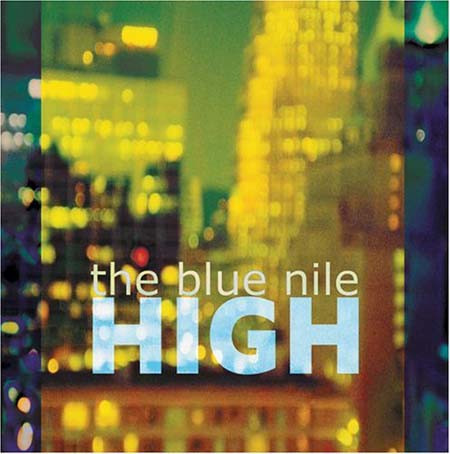
JOHN LEE HOOKER-DOCUMENTING THE SENSATION RECORDINGS 1948-52.
John Lee Hooker-Documenting The Sensation Recordings 1948-52.
Label: Ace Records.
In 1946, Detroit-based Bernard Besman joined forces with accountant John Kaplan and bought Pan American Record Distributing. Later that year, they also founded Sensation Records which they named after a local nightclub, the Sensation Lounge. The next step was to sign some of the best local musicians.
This was Bernard Besman responsibility as he in charge of A&R, while his business partner looked after the finances. Soon, the nascent label had signed Milt Jackson, Russell Jacquet, The Harmonicats, TJ Fowler and Todd Rhodes, and had recorded sessions by singers Connie Allen and LaVern Baker. By then, Sensation Records had signed a distribution deal with King Records. This was just the start.
Towards the end of 1948, Bernard Besman heard a demo by a local blues musician John Lee Hooker, and realising his potential ranged what was his first recording session. He was sent into the recording studio with engineer Joe Siracuse to record a solo version of Boogie Chillen’.
The only problem was the studio they used was very basic, and when they ran through the track Bernard Besman and Joe Siracuse realised that they John Lee Hooker had to produce a stronger sound. They had no amplifier so had to improvise. This involved putting a microphone onto the guitar, and then putting a speaker in a toilet bowl with a microphone underneath it. The theory was that the sound would bounce off the water, and create the echo effect Bernard Besman wanted. When John Lee Hooker played, the sound went back into the speaker where it was picked up along with the vocal. Meanwhile, they had played a board under the bluesman’s foot and placed a microphone under it to capture the sound of him tapping his foot. It was a case of make do and mend, but Boogie Chillen’ was successful.
After the recording session in September 1948, Bernard Besman realised that Boogie Chillen’ had potential and decided to lease the song to a bigger label. He chose Modern Records to release and distribute Boogie Chillen’ This proved profitable for Sensation Records and Bernard Besman as received a cowriter’s credit for all the singles he released on the label.
All of these singles feature on a new three CD set released by Ace Records, Documenting The Sensation Recordings 1948-52. The singles are only part of the story, as there’s alternate takes and extended versions. In total, there’s seventy-one tracks on the three discs. This includes five alternate takes and the original version of Boogie Chillen’, plus an alternate take of the B-Side Sally Mae. They’re part of the definitive overview of John Lee Hooker’s Sensation Records’ years.
When Boogie Chillen’ was released in November 1948, Sally Mae was on the B-Side. Listeners on hearing the single were struck by its primitive sound, the driving guitar that inspired so many musicians and a dark, ponderous sounding vocal from John Lee Hooker who is in a reflective mood on what was his debut single. It struck a never with record buyers, selling over a million copies and launching John Lee Hooker’s career.
For the followup, Hobo Blues was chosen, and an alternate track is included in this compilation. So is the B-Side Hoogie Boogie. When the single was released in 1949, it reached number five in the US R&B charts and gave John Lee Hooker his second hit single.
Two became three later in 1949, when he released Crawling King Snake as a single, with Drifting From Door Oo Door on the B-Side. It reached number six in the US R&B charts. This John Lee Hooker classic and the flip-side both feature on the compilation.
Burnin’ Hell was also released in 1949 with Miss Sadie Mae on the B-Side. However, it was the one that got away for John Lee Hooker. Despite that both sides feature in the box set and just like Weeping Willow the B-Side of Whistlin’ and Moanin’ Blues from 1949, are a reminder of one of the great blues men as he embarks upon his recording career.
As the fifties dawned, John Lee Hooker was about to enter a prolific period. One of the tracks he recorded in 1950 was Wednesday Evening which is a welcome addition to the box set. He also released a number of singles on Modern Records and Sensation Records during what was a roller caster of a year.
The single Howlin’ Wolf was released on Modern Records in 1950, but failed to trouble the charts. However, it features in the box set. So does Roll N’ Roll which wasn’t a commercial success. It featured Give Me Your Phone Number on the B-Side, and an alternate take is included on the compilation. For John Lee Hooker the lack of commercial success of the singles he released on Modern Records was disappointing
Other John Lee Hooker singles released during 1950 were released on Sensation Records.This included Let Your Daddy Ride with Goin’ On Highway #51 on the flip-side. Both feature on the box set along with the singles My Baby’s Got Somethin’ and five alternate takes of Boogie Chillen’ #2. John Lee Hooker would record various versions of Boogie Chillen’ over the next few years. It was an attempt to replicate the success of the original.
Later in 1950, Sensation Records released Huckle Up Baby as a single with Canal Street Blues on the B-Side. However, the single stalled at fifteen on the US R&B charts. Both tracks featured on the three CD set and this single marked the end of era. It was the last John Lee Hooker released on Sensation Records who closed their doors in late 1950. Despite that, Bernard Besman continued to record John Lee Hooker.
The pair struck gold when John Lee Hooker released I’m In The Mood in 1951, with How Can You Do It on the B-Side. The single reached thirty in the US Billboard 100 and topped the US R&B charts. The original version of In The Mood is joined by four alternate takes including one where a harmonica was overdubbed. They show different sides to this familiar blues, while the flip-side How Can You Do It is a hidden gem that features a vocal full of disbelief and despair. John Lee Hooker had the ability to breath meaning and emotion into a song, and was well on his way to becoming one of the most successful blues players.
He was a prolific artist and for the next couple of years, spent a lot of time recording with Bernard Besman. In 1951, they recorded Women in My Life, Tease Me Baby and Turn Over A New Leaf which featured on the 1962 compilation John Lee Hooker Sings The Blues. Then in 1952, they recorded Bluebird Blues, That’s All Right and It’s Time for Lovin’ To Be Done. Other tracks recorded in 1952 would feature on a compilation released in 1962. However, that was all in the future.
When Ride ‘Til I Die was released on Modern Records in May 1953 It’s Stormin’ and Rainin’ was on the B-Side. Despite the quality of the single once again, commercial success eluded John Lee Hooker.
In 1963, The Great John Lee Hooker was released and would introduce many aspiring musicians to one of the great bluesmen. The album featured It Hurts Me So, Key to the Highway and I Got Eyes for You. There’s also an alternate take on Documenting The Sensation Recordings 1948-52. It lay unreleased until 2001, the year that John Lee Hooker passed away. Blues music had lost one of its greats.
By the seventies, blues music was no longer as popular as it once was. It had been overtaken in the popularity stakes by soul, rock and pop. That was despite many rock musicians championing the blues and trying to introduce the music to a wider audience. However, many critics felt the music was no longer as relevant as it had once been. Given all this, it was no surprise that many bluesmen were struggling to make a living. John Lee Hooker continued to tour and released albums. This included a new compilation in 1970.
When Alone was released in 1970, its featured Alberta, Graveyard Blues, Momma Poppa Boogie, Sailing Blues and Black Cat Blues. They were joined by Rollin’ Blues, Three Long Years Today, Do My Baby Think of Me, Walkin’ This Highway and I Need Lovin’. For many record buyers this Speciality Records’ compilation introduced them to John Lee Hooker’s music.
The following year, 1971, Speciality Records released another compilation, Goin’ Down Highway 51. It featured tracks of the quality of Henry’s Swing Club, Sail on Little Girl, Alberta Part 2, Queen Bee and Grinder Man. They helped to introduce the veteran bluesman’s music to a new audience. That’s that is the case with the Documenting The Sensation Recordings 1948-52 box set.
With access to the Sensation Records master tapes the compilers were able to choose from singles, B-Sides, album tracks, alternate takes and unreleased tracks which feature on the three discs.
On disc one there’s an alternate take of War Is Over (Goodbye California) and two extended versions. There’s also three alternate takes of Alberta and Build Myself a Cave. These tracks show the songs evolving and gradually taking shape.
Then on disc two there’s another trio of unreleased tracks. This includes an extended version of Strike Blues and alternate takes of The Story of a Married Woman and Moon Is Rising. The sound quality is remarkably good given they were recorded between 1948 and 1952 on quite primitive equipment.
The third disc features four more unreleased tracks. This includes the opening track John L’s House Rent Boogie and an alternative incomplete take. There’s also an alternate take of It Hurts Me So and an under dub of That’s All Right Boogie. These are interesting additions and part of the most comprehensive overview of John Lee Hooker’s Sensation Record years.
For fans for the late John Lee Hooker, Documenting The Sensation Recordings 1948-52 is an opportunity to hear some of his earliest recordings including a numbers of singles. His hits and misses rub shoulders with B-Sides, album tracks, alternate takes and fourteen unreleased tracks. They’re welcome additions to this lovingly curated box set which is a cut above many similar releases. The big difference with Documenting The Sensation Recordings 1948-52 is the sound quality and liner notes which are part of what’’s a fitting homage to one of the giants of the blues, John Lee Hooker.
John Lee Hooker-Documenting The Sensation Recordings 1948-52.
SOUL VOICES-60S BIG BALLADS.
Soul Voices-60s Big Ballads.
Label: Kent Soul.
For many soul afficianados, the sixties was a golden age with labels like Stax, Atco, Goldwax and Motown releasing some of their best and most successful singles. Five decades later, and some of these singles are now regarded as classics and are favourites of radio DJs.
Sadly, many other singles failed to find the audience they deserved, and passed record buyers by. It was a case of what might have been as they were consigned to the bargain bin or lay unloved in warehouses for many a year.
It was only much later that some of these tracks belatedly found an audience. That was the case when Northern Soul DJs crossed the Atlantic on crate-digging trips and when they returned home with boxes of rarities and hidden gems which they added them to their sets.
Some of these tracks were also discovered by compilers looking for new material for compilations. They made the same journey as the Northern Soul DJs searching out dancers, floaters stompers and ballads like those on a new compilation from Kent Soul, Soul Voices-60s Big Ballads.
There’s twenty-four tracks on Soul Voices-60s Big Ballads, including eight previously unreleased tracks. Just like the rest of the tracks on the compilation they showcase the considerable talents of some top male soul balladeers. This includes Ben E King, Clyde McPhatter, Garnet Mimms, James Carr, Lou Johnson, Roy Hamilton, Tommy Hunt, Tony Mason and Walter Jackson. Each of these vocalists deliver a soul-baring vocal against a subtle arrangement. Strings, horns and harmonies provided to the backdrop to these three-minute kitchen sink dramas.
Opening Soul Voices-60s Big Ballads is Walter Jackson’s Forget The Girl, which was recorded in 1968, during what was his last session for the Okeh label. The track lay unreleased until 2007, when it featured on Kent Soul’s Walter Jackson compilation Speak Her Name: The OKeh Recordings, Volume 3. It finds him laying bare his soul as he delivers a vocal full of hurt and heartbreak.
Heartache (Hurry On By) was released by Roy Hamilton on RCA in 1965, and his vocal bristles with emotion and is filled with regret at the thought of the one he loves in the arms of another man.
After leaving The Drifters, Clyde McPhatter embarked upon a solo career that initially was successful. However, by the time he released Lonely People Can’t Afford To Cry on Amy in 1967, the hits had dried up. Despite that, Clyde McPhatter was able to breath meaning and emotion into this mid-tempo ballad that later, was popular on the UK Northern Soul scene.
Gloomy Day was written by Jimmy Bishop and Kenny Gamble and recorded by Herb Johnson. He released the single on Arctic in 1965, which showcases wistful vocal full of hurt and despair. It’s delivered against an orchestrated arrangement complete with pizzicato strings and is a tantalising taste of the music that would soon emerge from Philly.
Just Outside Of Lonely was recorded by Clarence Pinckney in 1973, and was meant to be the B-Side of Climax’s Life and Breath. However, the single was never released and Just Outside Of Lonely makes a welcome debut on Soul Voices-60s Big Ballads. Given Clarence Pinckney’s impassioned delivers the lyrics it’s as if he’s experienced losing someone he loved, and the loneliness that followed.
In 1962, Dionne Warwick released a cover of Bacharach and David’s Don’t Make Me Over as her debut single. The following year, 1963, Tommy Hunt covered the song for the Scepter label, who never released it. It lay unreleased until 1986 when Kent released the Tommy Hunt compilation Your Man. He delivers a needy vocal against as orchestrated arrangement where backing vocals answer his call which is akin to an impassioned plea.
Another Bacharach and David song is Reach Out For Me with was covered by Lou Johnson. It was produced by the legendary Burt Bacharach and released on the Big Top label in 1963 and reached thirty-three on the US R&B charts. The song benefits from a symphonic arrangement and backing vocalists who accompany Lou Johnson’s tender, heartfelt vocal. It’s a beautiful version of this classic. However, a year later, in 1964, Dionne Warwick recorded what’s now regarded as the definitive version of Reach Out For Me.
Van McCoy wrote I Can’t Stand To See You Cry, which was recorded by Chuck Jackson for Wand in 1965. Sadly, the song lay unreleased until 1987 when it made its debut on the Kent Records’ compilation A Powerful Soul. It returns for a well deserved encore on Soul Voices-60s Big Ballads and is a mixture confusion, drama, emotion, regret and sadness.
There’s a frustration and despair in Gene Burk’s vocal on Can’t Stand Your Fooling Around which was released on Arock, in 1963. This cathartic confessional has a Southern Soul influence and is one of just three singles the New York born singer released between 1963 and 1967.
When Southern Soul great James Carr released Lover’s Competition on Goldwax in 1965, producers Quinton Claunch and Rudolph Russell combined Latin rhythms with pop and soul. When it was combined with a needy, hopeful vocal full of emotion the result is a timeless ballad and one of the compilation’s highlights.
You Are A Lucky So And So was produced by Kenny Gamble composition which he produced with Jerry Ross and Joe Renzetti for Sammy Sevens. The single was released on Swan in 1963 and features an impassioned and emotive vocal. This was one of two singles that were credited to Sammy Sevens. At the time, it was rumoured that the singles had actually been recorded by Chubby Checker. However, that was highly unlikely as he was enjoying one of the most successful periods of his career and had just had several hit singles on a rival label.
Closing Soul Voices-60s Big Ballads is Junior Lewis’ I Love You So Much. It was recorded for the Arock label in 1962, but has lain unreleased since then. That is a great shame given it features a tender, heartfelt vocal delivered against an understated arrangement that allows Junior Lewis’ paean to take centrestage.
For anyone who has even a passing interest in soul music, Kent Soul’s Soul Voices-60s Big Ballads features twenty-four tracks on including eight that have never been released before and make their debut on the compilation. These tracks, like the rest on the compilation showcase the considerable talents of some top male soul balladeers.
They deliver heartfelt, impassioned, needy and soul-baring vocals against a subtle and sometimes symphonic arrangements. Strings, horns and harmonies provide the backdrop to these ballads from soul greats, familiar faces and what will be new names for many people.
They breath life, meaning and emotion into these songs about love and love lost, and tales of hurt and heartbreak. It’s as if they experienced the lyrics on Soul Voices-60s Big Ballads and lived to tell the tale on these three-minute kitchen sink dramas about the fragility and importance of relationships.
Soul Voices-60s Big Ballads.
BOB STANLEY AND PETE WIGGS PRESENT OCCASIONAL RAIN.
Bob Stanley and Pete Wiggs Present Occasional Rain.
Label: Ace Records.
As the sixties gave way to the seventies, psychedelia prepared to kiss the sky and say goodbye as it exited stage left. However, all wasn’t well despite all the groundbreaking music released during the last few years.
After Woodstock and the Altamont Free Concert the press wrote about acid casualties, bad drugs, chaotic festivals and the death of some the genre’s leading lights. It was a sad end to what had been an exciting musical era. There was no encore, although many mourned psychedelia’s passing.
Instead, music was in a state of flux as record buyers awaited the “next big thing.” When it arrived it was progressive rock. There was a new kid in town and the times they were a changing in Britain.
During the post-psychedelic and pre-progressive era the music being released is best described as eclectic as musical genres melted into one as musicians created new types of music. That was the case during the period that the music on Bob Stanley and Pete Wiggs Present Occasional Rain covers. It was recently released by Ace Records and features Traffic, Cressida, Keith West, Clouds, The Moody Blues, Yes, Argent, Michael Chapman, Andrew Leigh and Catherine Howe. They combined elements of disparate genres, including folk and jazz as the sixties gave way to the seventies.
Meanwhile record buyers in Britain awaited the white smoke which was the signal that The Beatles had split-up. Now the blame game could begin.
This wasn’t the only change taking place in Britain. After six years, Harold Wilson’s labour government was defeated at the polls by the Conservatives. It was a new start for the country which had changed over the last few years.
Especially town and city centres which had been redeveloped and were now unrecognisable. Brutalist buildings scarred the skyline and even the newly built homes were starting to crumble across the country. For many it was a worrying time.
That was why many musicians were writing about what was happening around them in Britain. They watched on and wrote about crumbling towns and cities, poverty, people struggling to find a direction in how and how bad the weather was. All this is documented on Bob Stanley and Pete Wiggs Present Occasional Rain.
Opening the compilation is Hidden Treasure from Traffic’s 1971 album The Low Spark Of High Heeled Boys. It was released on Island Records and produced by Steve Winwood and Hidden Treasure is an evocative tale of the beauty and benefits of country living, something the band dealt with earlier in their career and decided to return to.
Progressive rockers Cressida signed to the Vertigo label and released two albums between 1970 and 1971. Home and Where I Long To Be is one of the highlights from their 1970 eponymous debut album, which finds the London-based band fusing and flitting between classical, folk and jazz on what’s a vastly underrated album.
By 1967, the Scottish trio 1-2-3 had moved to London and were a popular draw at venues like the Marquee. Despite that, the band changed their name to Clouds and released three albums. However, Once Upon A Time didn’t feature on any of the progressive rockers albums and made a belated and welcome debut on a 2010 compilation Up Above Our Heads (Clouds 1966-71).
In 1969, The Moody Blues who are regarded as the inventors of the progressive suite of songs released their fifth album To Our Children’s Children. It was their first album on Threshold label and the version on the compilation is the single version. It’s atmospheric, beautiful, cinematic and one of the highlights of an excellent album.
Although Shape Of The Rain were formed in Sheffield in 1964, they only released two singles and one album. Wasting My Time was on the B-Side of their single Woman when it was released in 1971. The same year it featured on their debut album Riley, Riley, Wood and Waggett when it was released on RCA’s short-lived imprint Neon. This hidden gem combines elements of the West Coast sound with a quintessential Englishness and is part of an underrated album that deserved to find a wider audience.
When Yes released their eponymous debut album in 1969, it was very different to much of the music being released at the time, and as new, exciting and innovative. One of the album’s highlights is Sweetness. It features a tender Beatlesesque vocal which combines with a dreamy, ethereal arrangement on this beautiful melodic track that played its part in the success of this classic album
Freefall is a track from Argent’s 1969 eponymous album. It was released on CBS and is marked a new chapter in the career of keyboardist Rod Argent. The group rose like a phoenix from the ashes of Three Dog Night and released six albums between 1969 and 1974. One of Argent’s finest moments on their debut is Freefall a jazz-tinged and melodic rock track.
After training as an art and photography teacher, Michael Chapman taught at Bolton College, in Lancashire and spent his spare time playing the folk circuits. That was where he first encountered John Martyn and Roy Harper. By 1969, Michael Chapman had signed to Harvest Records and turned his back on teaching. Later that year, he released Rainmaker with Fully Qualified Survivor following in 1970 and reaching forty-five in the UK charts. It featured Postcards Of Scarborough which is a tantalising taste of this truly talented and maverick the singer-songwriter and guitarist who is still going strong and releasing music fifty years later in 2020.
Very few people will have heard of ‘Igginbottom, a short-lived band that was the first to feature guitarist Allan Holdsworth. They only released one album ‘Igginbottom’s Wrench, which released on Deram in 1969. It was a mixture of fusion and progressive rock and has been described as variously bizarre, complex, eclectic and understated. It’s also underrated and innovative as The Castle which opened this oft-overlooked hidden gem of album proves.
Closing Bob Stanley and Pete Wiggs Present Occasional Rain is Innocence Of Child from Catherine Howe’s 1971 album What A Beautiful Place. It’s a highly personal album where the Halifax-born singer-songwriter lays bare her soul. One of the most beautiful tracks is the understated and jazz-tinged Innocence Of Child which is the perfect way to close the compilation.
Of all the compilations Bob Stanley and Pete Wiggs have curated, this is the best by far. They’ve managed to combined tracks from familiar faces with hidden gems from new names and real rarities like ‘Igginbottom’s The Castle and Catherine Howe’s Innocence Of Child. They’re part of what’s a captivating and lovingly curated overview of the late-sixties and early seventies during the post-psychedelic and pre-progressive era.
During this period, the music was eclectic and insprired by a variety of genres, especially folk and jazz. Musicians created genre-melting music that was new, exciting and innovative. The songs are variously beautiful, dreamy, ethereal, haunting and ruminative. Other tracks on Bob Stanley and Pete Wiggs Present Occasional Rain are cinematic and paint pictures and take the listener back to a time and place, when both music and Britain was changing, and not always for the best.
Of all the compilations released during the first half of 2020, Bob Stanley and Pete Wiggs Present Occasional Rain is one of the best. Hopefully, this isn’t a one-off compilation and that there will be a followup to Bob Stanley and Pete Wiggs Present Occasional Rain where once again, we’re reacquainted with old friends and meet new friends and discover more rarities and hidden gems from the the post-psychedelic and pre-progressive era.
Bob Stanley and Pete Wiggs Present Occasional Rain.
DON’T BLOW YOUR COOL! MORE 60S GIRLS FROM UK DECCA.
Don’t Blow Your Cool! More 60s Girls From UK Decca.
Label: Ace Records.
For the British music industry, the success of The Beatles was a gamechanger. The only problem was that the pop boom caught some record labels unaware and they weren’t prepared. They came to the party late, and it didn’t hep that some record label executives thought that pop music was a passing fad, and were reluctant to commit scarce resources to it. This had disastrous consequences.
By the time, these labels eventually arrived at the party, their competitors had signed the most talented artists. One of the labels who had arrived at the party early were Decca.
During the sixties, Decca had an enviable network of A&R executives and talent scouts the length and breadth of Britain. Their finger was on the pulse of the local music scene and night after night, these talent scouts headed out to local pubs and clubs, where they listened to new bands and singers. Promising artists were signed to contracts, before other labels even had a chance to hear them. This included Steve Kimble, Dana Gillespie, Lulu, Marianne Faithfull, Barry St John, Vashti, Billie Davis, Twinkle, Clare Torry and Kathy Kirby They all artists feature on Don’t Blow Your Cool! More 60s Girls From UK Decca which was recently released by Ace Records and is the followup to the critically acclaimed Love Hit Me!-Decca Beat Girls 1962-1970.
Opening Don’t Blow Your Cool! More 60s Girls From UK Decca is All The Time In The World by Stevie Kimble, which was released in 1966. It was written and produced by John Macleod and Tony Macauly who produced the singles with Bill Farley. They’re responsible for a big, bold arrangement while Stevie Kimble seems to have been influenced by Sandie Shaw as she delivers an impassioned vocal.
During a career that has spanned five decades Dana Gillespie has released around seventy albums and over twenty singles. Her career began at Pye Records and in 1968 she signed to Decca and released a cover of Donovan’s You Just Gotta Know My Mind. On the B-Side was one of Dana Gillespie’s compositions He Loves Me, He Loves Me Not. It features an arrangement that could only have been recorded in the sixties, and lyrics that are akin to a stream of consciousness as she wonders aloud whether her partner loves her? The other contribution from Dana Gillespie is Tu N’as Vraiment Pas Change which is a French language cover of Donovan’s You Just Gotta Know My Mind which nowadays, is a rarity.
In 1964, seventeen year old Marianne Faithfull signed to Decca and enjoyed a hit single with As Tears Go By. Two years later, in 1966, she recorded With You In Mind which featured on her fourth British album Love In A Mist. It features a heartfelt and emotive vocal from Marianne Faithfull. Meanwhile Decca released two EPs in France and this included À Bientôt Nous Deux which featured a beautiful version of Nuit D’été (Summer Night).
Kathe Green was born in Beverley Hills into a musical family. Her father was the Oscar-winning composer and conductor Johnny Greene, and initially didn’t follow in his footsteps when she made her acting debut aged fourteen. Later, she landed a part in the Peter Sellers’ film The Party and moved to London. That was where her musical career began when she signed to Deram and released the single Primrose Hill which featured on her 1966 album Run The Length Of Your Wildness. It’s a cinematic song where sweeping, swirling strings accompany Kathe Green’s vocal with veers between tender and emotive to powerful. Her other contribution is Promise Of Something New which also featured on Run The Length Of Your Wildness and showcases a talented and versatile vocalist who can breath life, meaning and emotion into lyrics.
Having travelled to New York aged eighteen, and discovered the music of Bob Dylan, Vashti Bunyan decided that she wanted to make a career out of music. Two years later, she was discovered Andrew Loog Oldham, and in June 1965, recorded the Jagger and Richards composition a peerless cover pf Some Things Just Stick In Your Mind. When Vashti’s debut single was released it failed to find an audience. That was the case when the followup single Train Song in 1966, and her 1970 debut album Just Another Diamond Day which was credited to Vashti Bunyan. She was so disappointed by the failure of her debut album that she turned her back on the music industry.
Thirty years later, Vashti Bunyan made a comeback after her music was discovered by a new generation of musicians and record buyers. She went on to release two critically acclaimed albums, 2005s Lookaftering and her 2014 swansong Heartleap which is the perfect introduction to Vashti Bunyan.
Heartache Hurry On By was released by American born Joy Marshall in 1965. By then, she was a versatile singer who was best known as a jazz singer, but also sang soul. She delivers a hurt filled vocal powerhouse on what’s one of her finest recordings.
Before embarking upon a solo career, Margaret Burns was the lead singer of Margo and The Varvettes, the group she formed in County Down, Northern Ireland. By 1969, she was signed to Deram and was billed as Margo when she released the soulful sounding The Spark That Lights The Flame which is one of the compilation’s highlights.
Beverley Kutner was born in Coventry, and was studying drama when she started busking with her friend Des Partridge who was an aspiring folk singer. He managed to convince his friend to take to the stage at the Jack Hammer club. This was just the start, and by 1966, Beverley as she was now billed, was signed to Deram and released her own composition Picking Up The Sunshine. After this, the up-and-coming folk singer began work on her debut album and returned in 1967 with a cover of Donovan’s Museum. When the single failed commercially the album was scrapped, and in 1968 Beverley signed a deal with Joe Boyd and married fellow folk singer John Martyn. The pair went on to release two albums in 1970, Stormbringer and The Road To Ruin which are essential for anyone interested in Beverly or John Martyn’s music.
Mention Clare Torry and most music fans remember the singer for her wordless vocals on Pink Floyd’s The Great Gig In The Sky from Dark Side Of The Moon. By then, she had been working as s singer since the late-sixties and released several singles. This includes Love For Living in 1969, which is a reminder if any was needed, of a truly talented vocalist who enjoyed a long and illustrious career and worked with the great and good of music.
Closing Don’t Blow Your Cool! More 60s Girls From UK Decca is Kathy Kirby’s The Adam Adamant Theme. It was released in 1966, and sounds as if it’s a distant relation to the Goldfinger theme.
That is the story of Ace Records’ new compilation Don’t Blow Your Cool! More 60s Girls From UK Decca. It’s another lovingly curated compilation that features familiar faces and new names. Among the familiar faces are Marianne Faithfull and Lulu and were already enjoying successful careers.
Other artists, including Vashti and Beverley were relative newcomers and their careers were in their infancy. Just like other artists and groups on the compilation they hoped that they would enjoy successful careers. Sadly, that often wasn’t the case and they didn’t enjoy same longevity or success. That was despite the quality of the music that they were releasing. These singles and album tracks were the ones the got away and make a welcome return on Don’t Blow Your Cool! More 60s Girls From UK Decca.
Sometimes, it’s hard to believe that commercial success passed these artists by and it’s no wonder that some of them turned their back on music. Often, reality kicked in, and artists realised that three or four years of struggling was enough. It was time to try something else. Other after releasing a several singles that failed to find an audience, they realised their future lay elsewhere. There was no point kidding themselves. Others, however, refused to give up on the dream.
They reasoned that the difference between success and failure was slim. Maybe, just maybe, their next single would result in that elusive hit single? However, often, there was no justice, as perfectly good songs failed to find an audience. Eventually, artists realised that it was the end of the road. If they didn’t, someone else would take that decision for them.
As a result, some of the artists who had been ‘discovered’ by Decca’s talent scouts, returned to the drudgery of the 9-5 lifestyle. For them, the dream was over.
For others, the journey had just begun and commercial success and critical acclaim came their way, and they’ve enjoyed long and successful careers, and the tracks on Don’t Blow Your Cool! More 60s Girls From UK Decca are from the early part of their career, when anything seemed possible, and the dream was still alive for all of the Decca girls.
Don’t Blow Your Cool! More 60s Girls From UK Decca. 
BOPPIN’ BY THE BAYOU-FEEL SO GOOD.
Boppin’ By The Bayou-Feel So Good.
Label: Ace Records.
When Ace Records released Boppin’ By The Bayou in 2012, little did anyone at the label realise that they had just released the first instalment in what would become their longest running and most successful compilation series. However, it was so successful that another instalment in the series was commissioned and compiled by Ian Saddler.
Boppin By The Bayou More Dynamite followed in 2013, and enjoyed the same commercial success as its predecessor. The nascent By The Bayou compilation series looked like it could be Ace Records’ latest success story.
And so it proved to be. Seven years later, and Boppin’ By The Bayou-Feel So Good has just been released by Ace Records and is the twenty-second instalment in this long-running and commercially successful compilation series. It features twenty-eight tracks including twelve that have never been released before. A number of familiar faces make a welcome return and some new names feature on Boppin’ By The Bayou-Feel So Good which in the space of a few bars transports the listener to steamy Louisiana.
Opening Boppin’ By The Bayou-Feel So Good is Carol which was recorded by Jim Miller, from Port Arthur in Texas when he was just seventeen. This meant his parents had to sign the contract with Spindletop who released this memorable rocker in 1962.
Rockabilly singer Al Ferrier is a veteran of the By The Bayou compilation series and has previously featured on six volumes and contributes four tracks to this volume. His first contribution is the driving and irresistibly catchy You’re Humbuggin’ Me which was the B-Side to Be Boppin’ Baby, when it was released by Showtime in 1976. It’s joined by three unreleased tracks including the hidden gem I Got A Good Woman. The other two tracks show different sides of Al Ferrier. I’m The Man features a boastful vocal full of machismo, while his vocal is full insecurity on What Is That Thing Called Love which was recorded by Al Ferrier and His Bopping Billies. These four tracks feature a talented and versatile singer who could bring lyrics to life.
Frankie Lowery originally trained as an opera singer but ended up singing rock ’n’ roll. He enjoyed a successful career and has also featured on six volumes of the By The Bayou series. His contribution is the unreleased track Jealous Woman which is a soul-baring ballad.
Im A One Woman Man was released on the Dixie label on 1957 by Thumper Jones. He was a versatile singer who was equally comfortable singer hillbilly and rockers. This is one of his rockers which isn’t as well known as his covers Blue Suede Shoes or Heartbreak Hotel.
Erwin Babin recorded several rockabilly songs including Black Cat Boogie, which was produced by JD Miller. It originally featured on the 1980 Flyright Records’ compilation Boppin’ It. Forty years later it makes a welcome return and is a reminder of a talented singer who never enjoyed the commercial success his talented deserved.
Linda Brannon only enjoyed one hit single, Just Another Lie during a career than began in the late-fifties and was over by the early sixties. During that time, she recorded several rockers. Two of her best were released on RAM Records. This includes Woe Is Me the B-Side to her 1957 single Don’t Bother Me, and Baby, I Can’t Let You Go, the flip side to the 1959 release Any Way You Do.
Just like Margaret Lewis and Linda Brannon, Charlotte Hunter was also signed to RAM Records. She recorded Love Me Baby which was never released and makes a welcome and belated debut Boppin’ By The Bayou-Feel So Good.
Walkin’ Out was released by Dwight James and The Rockin’ Knights on the Spindletop label in 1961. Sadly, it was the only single that the group from Port Arthur, Texas released.
During his career, DJ turned singer Johnny Jano, recorded everything from cajun and rockabilly to swamp pop. In 1962, he released the joyous sounding That Beat Keeps Going On on Jador. It’s one of the highlights of the compilation and will brighten up even the darkest day.
Closing Boppin’ By The Bayou-Feel So Good is Johnnie Allan’s Let’s Do It, which was released on Jin in 1964. It’s an explosive track that bursts into life as the rhythm section and piano drive the arrangement. Meanwhile, Johnnie Allan vamps, yelps and shrieks while horns punctuate the arrangement which by now is swinging and ensures that the compilation ends on a high. Ian Saddler has saved the best until last.
The recently released Boppin’ By The Bayou-Feel So Good is the twenty-second instalment in Ace Records’ long-running and successful compilation series. Just like the previous instalments in the series it was compiled by Ian Saddler. Hecontinues to dig deep for new material and on Boppin’ By The Bayou-Feel So Good he’s chosen singles, B-Sides, alternate tracks, album tracks and twelve unreleased tracks. The result is another lovingly curated compilation with hidden gems aplenty. There’s also tracks from old friends, familiar faces and veterans of the critically acclaimed By The Bayou compilations series, which looks like it’s going to run and run.
Boppin’ By The Bayou-Feel So Good.
CULT CLASSIC: ALAN HAWKSHAW AND BRIAN BENNETT-SYNTHESIS.
Cult Classic: Alan Hawkshaw and Brian Bennett-Synthesis.
Nowadays, the seventies are regarded as a golden age for library music, and two of its leading lights during this era were Alan Hawkshaw and Brian Bennett. They were responsible for some of the best library music that KPM Records released during its golden era. This included the library music classic Synthesis, which was released in 1974, the same year as another of their finest hours, Synthesizer and Percussion.
Back in 1974 they were among the many library music albums that were released by KPM Records that year. They were recorded by talented and usually anonymous musicians who often went on to greater things. Others preferred the low profile and steady income that library music offered.
Nowadays, Alan Hawkshaw and Brian Bennett are among the doyens of library music, and original copies of Synthesis as well as Synthesizer and Percussion are now highly collectable. That’s the case with many other KPM Records’ releases.
Everyone from sample-hungry hip hop producers and crate-digging DJs to film producers collect library music. They remember hearing library music in cartoons, documentaries and quizzes as they growing up in the seventies and eighties. So will many other people who listen to a KPM Records’ releases including Synthesis which was released in 1974, nearly two hundred years after the company was formed.
The Rise and Rise Of KPM
Robert Keith founded a comp[any in 1780, to make of musical instruments, and fifty years later, in 1830, entered into a partnership with William Prowse, a music publisher. The newly formed partnership was named Keith Prowse Music (KPM), and over the next hundred years, the company grew and expanded into other areas,
By the early twentieth century, Keith Prowse Music was selling sheet music and concert tickets, but it was the invention of the gramophone that proved to be a game-changer.
Demand for sheet music and concert tickets grew, and in 1955, Keith Prowse Music was decided to diversify, into one of the most profitable areas of music, music publishing.
One of the reasons behind the decision to diversify into music publishing, was to feed the demand for soundtracks for radio, television and film. Previously, music libraries supplied classical music, which was what was required. By the mid-fifties, and the birth of television, the world and music were changing, and changing fast.
Four years later, in 1959, Associated Rediffusion bought another music publisher Peter Maurice and merged it with Keith Prowse Music. The newly merged company became Keith Prowse Maurice, which became known as KPM Music.
The newly named KPM Music was a much bigger player in the world music publishing. However, in the mid-sixties, a new name took the helm at KPM Music, and transformed the company into one of the biggest names in library music.
When Robin Phillips joined KPM Music in the mid-sixties, he proved to be an astute and visionary businessman. Two decisions Robin Phillips made demonstrate why. His first decision was that KPM Music should switch from the old 78 records to the LP, which made sense, as LPs were what people were buying. They were less prone to breakage, which meant less returns and more profit. LPs could contain more music, and could be released in limited editions of 1,000. The other decision he made was to hire the best young British composers and arrangers.
Among the composers Robin Phillips hired were Keith Mansfield and Johnny Pearson, whose talent and potential as composers he recognised. Robin Phillips managed to hired them before they’ had established a reputation, although they were known within music publishing circles.
Later, Robin Phillips managed to hire some of jazz musicians of the calibre of John Cameron, Syd Clark, Alan Hawkshaw and Alan Parker. Their remit was to provide him with new music, which was referred to as production music. Many of their remits was to write music which matched themes or moods, which initially, wasn’t isn’t easy, but soon, the composers were able to do so. Almost seamlessly, the composers created themes for many well known television shows and films.
For the composers and musicians involved in writing and recording library music, they were part of what was one of the most lucrative areas of music. When EMI realised that KPM Music had one of the best and most profitable music libraries and decided to buy the company. Executives at EMI had spotted the profitability of library music and the consistency, quality and depth of KPM Music’s back catalogue. However, not everyone within the music industry approved of library music.
Other songwriters looked down on writers of library music, and the British Musician’s Union wasn’t fan of library music. They banned their members from working on recording sessions of library music. Somewhat shortsightedly, the Musician’s Union thought that eventually, there would come a time when there was no need for any further recordings. Their fear was that the sheer quantity of back-catalogue would mean no new recordings would be made, and their members would be without work. Fortunately, KPM Records thought of a way to subvert the ban.
KPM Records would fly out composers, arrangers and musicians to Holland and Belgium, where local musicians would join them for recording sessions. This meant that often, the same musicians would play on tracks that were penned by several composers. For the musicians involved, this proved lucrative and some were reluctant to turn their back on session work for companies like KPM Records.
Still the Musician’s Union’s draconian ban continued, and it wasn’t until the late seventies that they lifted their ban on new recordings of library music. By then, the Musician’s Union realised that they were fighting a losing battle and had no option but to concede defeat.
Meanwhile, the music that was being recorded in Europe and once the ban was lifted in Britain, found its way onto albums of library music released by KPM Music. Again, KPM Music were innovators, and released limited editions of library music. Sometimes, only 1,000 albums were released, and they were sent out to film studios, television and radio stations and advertising agencies. However, by then, interest in library music had grown.
Although the albums of library music were never meant to be commercially available, a coterie of musical connoisseurs had discovered KPM Music’s albums of library music and were determined to add each release to their collection. They weren’t alone.
Later, DJs and sample hungry hip hop and house producers discovered the world of library music. This was a boon for many of these producers who were musically illiterate, and could neither read music nor play an instrument. However, with some lots of practise the musically challenged “producers” were eventually able to sample albums of library music for their latest “production” and very occasionally, this resulted in a hit single for the musical pirates. However, most of the credit should’ve gone to those who made the music that had been sampled.
This included pianist and Hammond organist Alan Hawkshaw and former Shadows drummer Brian Bennett. When Brian Hawkshaw and Brian Bennett teamed up they laid down some of the slickest and funkiest library music was ever recorded in the UK. Especially the music they recorded for KPM which ‘inspired’ several generations of musicians.
Brian Hawkshaw and Brian Bennett’s KPM recordings have been sampled by artists like Dilla, Nas, Kanye West and Drake. That is no surprise as Brian Hawkshaw and Brian Bennett’s beat driven tracks are among the best library music tracks recorded during the seventies. This includes the tracks on Synthesis which was released in 1974.
When Synthesis was released back in 1974, Alan Hawkshaw and Brian Bennett’s latest collaboration was described as: “vivid contemporary sounds for a fresh visual image.” The album featured twelve tracks composed by the pair, which were part of what could at the time have been described as synth concept album. Little did anyone know at the tine that Synthesis would become one of most important and innovative library music albums KPM Music released during the seventies.
Nowadays, Synthesis is a library music classic, remembered for its uber funky sound on an accessible album of what was described as “weird electronic music.” Part of the success Synthesis was the ARP Odyssey synth, which plays a leading role in the album’s sound and success.
Opening Synthesis is Collision Course, which soon reveals an urgent sound, while The Executive which sounds as if it belongs on the soundtrack to a UK television show circa 1974 or 1975. Hovercraft continues the funky sound, while, Big Black Cadillac is urgent sounding and features a flawless fleet fingered synth solo. Deadline with its dramatic, cinematic sound soon bursts into life as synths play a leading role on this tough, funky sounding track. It later featured in several video game soundtrack. Hit Me, Hit Me finds the library music masters at work on the track that closes side one of Synthesis.
Alan Hawkshaw and Brian Bennett continue with their trademark funky sound on the dramatic Forum, while Where The Action is one of Synthesis’ highlights with its tough fast and funky sound. It gives way to Hit Me, Hit Me and Where The Action Is, Getting It Together and Helter Skelter as the funk factor is still in the ascendancy.
It’s all change on the icy laid back Alto Glide with its funky sound. It has Alan Hawkshaw and Brian Bennett’s names written all over it. Closing Synthesis is Mermaid, which floats and glides along as piano, percussion and synths combine perfectly. This chilled out soundscape is the perfect way to close Synthesis, and leaves the listener with happy memories of a library music classic.
Forty-six years after its release in 1974, Synthesis is quite rightly regarded as a library music classic. It’s also a reminder of Alan Hawkshaw and Brian Bennett, two giants of British library music at the peak of their creative powers in 1974.
It was a good year for Alan Hawkshaw and Brian Bennett who also released their Synthesizer and Percussion album, which is another musical tour de force. However, the prolific pair’s finest hour was Synthesis, which nowadays is regarded as one of the ,most important and innovative library music albums ever released by KPM Records and a genre classic which features the two titans of library as they create their uber funky concept album.
Cult Classic: Alan Hawkshaw and Brian Bennett-Synthesis.
CULT CLASSIC: BERT MYRICK-LIVE ’N WELL.
Cult Classic: Bert Myrick-Live ’N Well.
Many record collectors have an album that has continued to elude them for many years. So much so, that it is the equivalent to finding the holy grail. They’ve searched for years, and never come close to finding that elusive and rare album. It gets that they can’t pass a record store, junk shop or thrift store without looking for their musical holy grail.
When they enter the shop, there’s always the hope that this, time they’ll come out clutching the album that has eluded them for so long. It’s the one album that they’ve dreamt about finding, preferably a mint copy in the Dollar bin. This is something that all record collectors dream about. There’s always one particular record that for too long, has eluded them.
For some jazz fans, it’s the six albums the short-lived Detroit-based Strata Records’ released between 1973 and 1975. This includes Bert Myrick’s 1974 album Live ’N Well eluded them which is one of the rarest jazz albums ever released. The story behind this album began Motor City in 1930.
Bert Myrick it seems, was always destined to be a drummer. He was born in Detroit in 1930, and growing up pounded away at pots and pans. They were the drums that Bert Myrick never had, but always wanted. With money tight, drums were a luxury. However, Bert Myrick wasn’t going to give up on his dream of becoming a drummer.
Helping him on his way was his friend Elvin Jones, who was three years older than Bert Myrick. While Bert Myrick was born in Detroit, Elvin Jones was born and brought up in Pontiac, Michigan. Their paths crossed on the local music scene, and Elvin Jones took Bert Myrick under his wing. He became his mentor, and his Elvin Jones playing style would rub off on Bert Myrick. Elvin Jones would go on to play on many classic albums, including John Coltrane’s A Love Supreme, and never forgot his friend Bert Myrick.
When Elvin Jones returned to Detroit to play with a band, he would always ensure that Bert Myrick and his friends got in to see the gig. Even if it meant leaving a window open, which Bert Myrick and his friends would scramble through. Bert Myrick would sit and watch, and dram that one day, he would be sitting where Elvin Jones was.
That dream eventually came true. After his discharge from the US Military in the early fifties, Bert Myrick started studying and playing alongside pianist Barry Harris, who was one of the leading light’s of Detroit’s bebop scene. Soon, Barry Harris had become Bert Myrick’s mentor, and helped him find his feet in Detroit’s vibrant jazz scene.
Before long, Bert Myrick was the go-to-guy for any jazz musicians who arrived in Detroit without a drummer. He played alongside Joe Henderson, Sonny Stitt, Terry Pollard and Yusef Lateef. For Bert Myrick, this was the equivalent of his musical apprenticeship.
In April 1964, Bert Myrick was a member of drummer Bill Hyde’s quintet that played at Odum’s Cave. That was how Bert Myrick and trombonist George Bohanon first met. The pair became friends, and later in Bert Myrick was asked to join a quintet led by trombonist George Bohanon and tenor saxophonist Ronnie Fields. Sadly, the Bohanon-Fields Quintet was relatively short-lived, and once the job ended, the members of the quintet started founding their own bands.
This is how the band that played on Live ’N Well came about. It was formed in 1964, and it took a while to settle on a rhythm section. The problem area was the bass, and various players tried out. They never quite clicked with the rest of the rhythm section. That was until Will Austin, who arrived back in Motorcity after playing alongside Etta James and the great and good of jazz, including Helen Hume, Jackie McLean, Joe Williams, Kenny Dorham, Philly Joe Jones, Wes Montgomery. Will Austin auditioned, and proved to be the missing link in the quintet’s rhythm section.
At last the quintet’s lineup was complete. The rhythm section featured drummer Bert Myrick, bassist Will Austin and pianist Kenny Cox. They were joined by trombonist George Bohanon and Ronnie Field on tenor saxophone. It seemed that Bert Myrick was following in the footsteps of the Jazz Crusaders, who had popularised the tenor and trombone frontline. This would prove popular and soon, the quintet were making waves around Detroit.
The quintet was soon one of the top band’s on Detroit’s thriving jazz scene. There was more to Detroit than soul, and many talented jazz bands were playing in the city’s clubs. However, Bert Myrick’s band was a cut above the competition, and when they took to the stage, were capable of creating musical magic. That was the case on the ‘4th’ of April 1965.
Bert Myrick’s band were booked to play at the University Of Michigan Student Union on the ‘4th’ of April 1965. Pianist Kenny Cox decided to record the concert. Whether he was thinking of trying to interest a record company in the concert is unknown. However, as Bert Myrick’s band took to the stage, thankfully, someone pressed record.
That night, drummer Bert Myrick lead his talented quintet that featured bassist Will Austin, pianist Kenny Cox, trombonist George Bohanon and Ronnie Field on tenor saxophone. They worked their way through a four song set that opened with Sevenths which gave way to Scorpio’s Child, Paramour and closed with The Latin Bit. As the quintet left the stage after a masterful performance, they received standing ovation. Despite this, the recording that became Live ’N Well lay unreleased for nine years.
Following the recording of what would later become Live ’N Well, Bert Myrick’s quintet continued to play live, and proved a popular draw. Mostly, they played in Detroit, but sometimes, ventured further afield. However, gig goers realised that when Bert Myrick’s quintet took to the stage, they were capable of producing fireworks. That was the case right up until the quintet split-up around 1967.
Only Bert Myrick and bassist Will Austin remained in Detroit. They were never short of work, and spent much of their time playing alongside pianist Terry Pollard. However, the rest of the quintet, Kenny Cox, George Bohanon and Ronnie Field left Detroit’s jazz scene behind, and headed for pastures new.
Trombonist George Bohanon went on to forge a long and successful career. He had also been a regular member of Motown’s studio band The Funk Brothers, and his work with various jazz bands would stand him in good stead for the future. George Bohanon played on over 470 recordings as a session musician, ranging from jazz, funk, rock and soul. Meanwhile, Kenny Cox had plans for the future.
Pianist Kenny Cox and The Contemporary Jazz Quintet had joined forces, and in 1968, released their debut album Introducing Kenny Cox And The Contemporary Jazz Quintet on Blue Note Records. It was followed up a year later by Multidirection, which was released on Blue Note Records in 1969. However, when The Contemporary Jazz Quintet returned with a third album in 1973, it would be on a different label.
By 1973, much had changed for Kenny Cox and The Contemporary Jazz Quintet. They had Blue Note Records behind, and were now billed as The Contemporary Jazz Quintet. Kenny Cox was still The Contemporary Jazz Quintet pianist, and had founded his own record company, Strata Records. He had founded Strata Records in Detroit, and for the nascent label’s first release, chose The Contemporary Jazz Quintet’s third album Location.
After the release of Location, Kenny Cox started thinking about what Strata Records’ second release should be. That was when he remembered the recording of the Bert Myrick quintet at the University Of Michigan Student Union, on the ‘4th’ of April 1965. It featured a masterful performance from Bert Myrick’s quintet, who had been a popular drawn around Detroit and further afield. This was the perfect addition to Strata Records’ discography.
When Kenny Cox approached Bert Myrick about releasing the recording of the concert at University Of Michigan Student Union, he agreed. The concert became Live ’N Well, which was released on Strata Records baring the catalogue number SRI-102-74. For Bert Myrick, Live ’N Well was his long-awaited debut album.
Just like The Contemporary Jazz Quintet’s album Location, Bert Myrick’s Live ’N Well didn’t sell in vast quantities. However, it found favour with a small, but discerning coterie of jazz lovers. While the sales were disappointing, forty-four year old Bert Myrick had belatedly released his debut album Live ’N Well. It was something to celebrate.
Opening Live ’N Well is Sevenths, where from the get-go, the quintet play with urgency Bert Myrick’s drums and Will Austin’s bass propel the arrangement along. They’re join by the rasping, braying horns, that are played with power and speed. By contrast, pianist Kenny Cox playing is slower but confident, as he chooses each note with the utmost care. Up until then, Kenny Cox and the horns are stealing the show. That is until Bert Myrick unleashes a masterful solo. Soon, he’s making good use of his full kit. He powers his way around the kit, rapid-fire drums fills and rolls join hissing hi-hats during what can only be described as a drumming masterclass. It quite rightly receives a standing ovation.
Scorpio’s Child is the centre-piece of Live ’N Well, and at first, pianist Kenny Cox’s plays hesitantly, gradually finding his way as the horn brays and cymbals hiss. Soon, Bert Myrick’s drums are adding the elusive percussive element, as the piano meanders and flows along when the horns drop out. Meanwhile, Bert Myrick’s drums provide the heartbeat, and with Will Austin’s bass helps propel the arrangement along. However, the piano plays a starring role and is played with power, passion and confidence. This encourages Bert Myrick to raise his game, and the two together until Will Austin delivers his solo. Then the band reunite and the piano and horns play a leading roles. However, Bert Myrick never misses a beat. This is apparent when he takes centre-stage. His playing is crisp, clean and concise as Kenny Cox provides the perfect foil. With his help, Bert Myrick reaches new heights on this fourteen minute, progressive hard bop epic.
Paramour is a fifteen minute musical adventure. Initially, it’s just the piano the played confidently before Bert Myrick caresses the hi-hats. Sultry horns join the frae, as the arrangement meanders along. Bert Myrick’s playing veers between measured and understated to powerful and dramatic. As Will Austin’s walking bass helps propel the slinky arrangement along, Bert’s playing remains understated. This allows the horns and piano to take centre-stage. Soon, though the rest of the band make their presence felt, but don’t overpower the piano and horns. When the horns drop out, the rest of the rhythm section accompany Kenny Cox’s drums, and form an effective trio, which shows a different side to the band. Later, Bert plays with power and precision, which signals the return of the horns and the band reunite. Soon, the horns drop out and the arrangement becomes spartan as it dissipates, leaving just a memory of this beautiful, hopeful and dreamy opus.
The Latin Bit bursts into life, and soon, it becomes apparent that Bert Myrick is determined to close Live ’N Well on a high. It’s the piano and horns that play leading roles, leaving Bert and bassist Will Austin to power the arrangement along. Bert switches between drums and cymbals, as braying horns join the jaunty piano. Kenny Cox plays with care and confidence, sometimes pounding the piano, before the horns take centre-stage and sweep high above the arrangement, where they’re played with power. When they drop out, the baton passes to the piano which is played with speed and precision. Meanwhile, Bert powers his way round his kit. Latterly, stabs of horns interject as the piano plays and Bert ensures that The Latin Bit and Live ’N Well ends on a memorable and melodic high.
Live ’N Well is one of jazz music’s long lost hidden gems. It’s an that should’ve reached a much wider audience. Sadly, the album passed most record buyers by when it was released in 1974. Sadly, that was a taste of what the future held for Kenny Cox’s Strata Records.
Detroit jazz collective Sphere’s debut album Inside Ourselves was released later in 1974. It was a familiar story for Kenny Cox’s Strata Records. They had released a groundbreaking album, but one that failed to find the audience it deserved. History repeated itself when Maulawi released their eponymous debut album later in 1974. Although it was early days, Kenny Cox’s Strata Records wasn’t exactly a resounding success.
As 1975 dawned, Strata Records made plans for their next release. The album they chose was The Lyman Woodard Organization’s debut album Saturday Night Special. Funky and soulful, it was an album that should’ve found a much wider audience. Sadly, it wasn’t to be, and time was running out for Strata Records. When Larry Nozero’s Time which featured Dennis Tini was released later in 1975, it was another ambitious album that veered between jazz-funk to soul-jazz to jazz. However, when it failed commercially, it was the end of the road for Strata Records.
Strata Records closed their doors for the last time in 1975, and now, forty-five years later there’s been a resurgence of interest in the six albums the label between 1973 and 1975. This includes Bert Myrick’s hidden jazz gem Live ’N Well which is a reminder of a truly talented drummer as his one only album and cult classic shows.
Cult Classic: Bert Myrick-Live ’N Well.
JIMI HENDRIX-BAND OF GYPSYS 50TH ANNIVERSARY EDITION.
Jimi Hendrix-Band Of Gypsys 50th Anniversary Edition.
Label: Sony.
When the Jimi Hendrix Experience took to the stage at the Denver Pop Festival in June 1969, bassist Noel Redding knew it was his swansong with the group. He had been told by a journalist before the show that he was going to be replaced by Billy Cox. It was the end of an era for the bassist.
Ironically, the Jimi Hendrix Experience gave a majestic performance during what was an eventful farewell for Noel Redding. Events turned ugly offstage and the free concert descended into a near riot. This marred what had been one of The Jimi Hendrix Experience’s finest performances of 1969. Amidst chaotic scenes the band were spirited from Denver Pop Festival in the back of a van and it was an ignominious end to The Jimi Hendrix Experience’s career.
The next day, Noel Redding headed home to London, and that was when he announced that he had left The Jimi Hendrix Experience. Noel Redding said he wanted to pursues a solo career, but blamed Jimi Hendrix’s plans to expand the Experience without consulting him.
Meanwhile, Jimi Hendrix had moved into the eight-bedroom Ashokan House, in Boiceville near Woodstock. The times they were a changing.
That was where Jimi Hendrix spent much of mid-1969. He had downed tools, much to the chagrin of his manager Michael Jeffery. He tried to convince his client to begin work on a new album, but it was to no avail. However, he agreed to appear on two talk shows.
The first was The Dick Cavett Show, where Jimi Hendrix was backed by the studio orchestra. When it came for him to appear on The Tonight Show, he was accompanied by bassist Billy Cox and session drummer Ed Shaughnessy. However, by August 1969, Jim Hendrix’s new band had been born.
When The Jimi Hendrix Experience split-up, its leader was the highest paid musician in the world. Promoters were desperate to add Jimi Hendrix to festival bills and the promoter of The Woodstock Music and Art Fair was no different.
The Woodstock Music and Art Fair
It was another three-day festival that was scheduled for took place between the ’15th’ and ‘17th’ of August 1969 on a dairy farm in the Catskill Mountains of southern New York State. Jimi Hendrix accepted the invitation and would close the Woodstock Music and Art Fair.
By the time Jimi Hendrix arrived at the three-day Woodstock Music and Art Fair, which had been eventful and sometimes chaotic, he was keen to showcase the new lineup of his band. It featured drummer Mitch Mitchell, replacement bassist Billy Cox and recent additions rhythm guitarist Larry Lee and conga players Juma Sultan and Jerry Velez. As the band took the stage it was 9am on the ‘17th’ of August 1969 ‘only’ 200,000 people watched on as MC Chip Monk introduced the group as the Jimi Hendrix Experience, but the bandleader was quick to clarify: “we decided to change the whole thing around and call it Gypsy Sun and Rainbows. For short, it’s nothin’ but a Band Of Gypsys.”
That night, Jimi Hendrix unleashed what was a spellbinding performance that made musical history. After the Introduction, he led his band through a set that included Message To Love, Izabella, Fire, Voodoo Child (Slight Return). Then the former paratrooper unleashed a breathtaking performance of The Star-Spangled Banner, and incorporated a myriad of feedback, distortion, and sustain to replicate the sounds made by rockets and bombs exploding during this incredible and spellbinding rendition of the American national anthem. Having set the bar high, Jimi Hendrix launched into the Purple Haze which gave way to Woodstock Improvisation, Villanova Junction and closed a blistering and breathtaking set with Hey Joe. Once again, Jimi Hendrix was able to make his guitar do things other guitarists could only dream about as he closed his set at 11:10 am having made musical history. The big question was, when would the Band Of Gypsys record an album?
Soon, there were plans in place to record a new Band Of Gypsys album. It would feature entirely new material from Jimi Hendrix. The distribution rights to this new album would be granted to producer Ed Chalpin, who spent two years locked in litigation with Jimi Hendrix.
This stemmed from a record contract Jimi Hendrix had signed in 1965. A year later, a legal dispute began into the record contract. Little did he realise he would spend two years trying to resolve this situation.
Eventually, and after two years, the two parties arrived at a resolution. The agreement was that Jimi Hendrix should release an album of entirely new material, which Ed Chalpin would be granted the distribution rights to. That album would become Band Of Gypsys.
Jimi Hendrix and the rest of Band Of Gypsys planned to record four concerts at the Fillmore East. The first two took place on the ‘31st’ December 1969 and the other two on the ‘1st’ January 1970. Eight tracks from these concerts would eventually make their way onto the classic album Band Of Gypsys.
After the Band Of Gypsys barnstorming performance at Woodstock, they experimented with the expanded lineup. Larry Lee was second guitarist, while Juma Sultan and Gerardo “Jerry” Velez added percussion. This expanded lineup lasted only until September the ‘8th’ 1969, when the Band Of Gypsys played on The Dick Cavett Show. That night, the Band Of Gypsys was reduced to its core trio. The expanded lineup was no more.
Now that the Band Of Gypsys was reduced to a trio, it began to hone new songs, and record some demos. By then, the Band Of Gypsys booked to record four shows at the Fillmore East. Jimi Hendrix’s manager Michael Jeffery saw the potential to record a live album and approached Jimi Hendrix with the idea. He then began discussing recording a new live album with Buddy Miles and Billy Cox.
They agreed to do the idea, and straight away, the Band Of Gypsys began three months of rehearsals. Suddenly, the old Jimi Hendrix was back. He was more disciplined and had discovered his famed work ethic. Day after day, he drilled the Band Of Gypsys, who weren’t just preparing for the Fillmore East concerts, but a new album. This meant familiarising themselves with not just new songs.
Already Jimi Hendrix had penned Power Of Soul and Message To Love, which had started life as Power To Love. Jimi had also been stockpiling songs from his days with The Jimi Hendrix Experience. Like a magician pulling a rabbit from his hat, he produced songs like Lover Man, Here My Train A Comin’, Izabella, Machine Gun, Bleeding Heart and Stepping Stone. Meanwhile, Buddy Miles had written Changes and We Gotta Live. These songs the Band Of Gypsys would spend hour after hour playing and honing. They even added the Jerry Ragovoy and Mort Shuman penned R&B song Stop, to their repertoire. It had given Howard Tate a hit in 1968, and was transformed by the Band Of Gypsys. They combined disparate musical genres during their rehearsals.
Initially, the rehearsals took place at Juggy Sound Studios in New York. Jimi Hendrix, Buddy Miles and Billy Cox launched into lengthy, genre-melting jams. During these jams, the Band Of Gypsys fused elements of blues, funk, jazz, R&B and rock. There were even diversions via fusion, psychedelia and soul. No musical genre was off limits, as they switched between and combined a myriad of genres and influences. Gradually, new songs took shape, and old ones were reinvented. Onlookers felt that new rhythm section had the ability and discipline to anchor the arrangements, allowing Jimi free rein to experiment. The Band Of Gypsys rhythm section had a tightness that was lacking in The Jimi Hendrix Experience. With the start of this new chapter in Jimi Hendrix’s career, the Band Of Gypsys moved to the Record Plant recording studios in New York.
At the Record Plant, demos recorded by the Band Of Gypsys. The days, weeks and months of rehearsals had paid off. They were a tight and talented band, who had a great future in front of them. However, a shadow hung over the Band Of Gypsys.
Earlier that year, on the ‘3rd’ of May 1969, Jimi Hendrix was travelling to Toronto, Canada, to play a concert. As he passed through customs at Toronto International Airport, a decision was made to search him and customs officials found what they believed to be small amounts of hashish and heroin in his luggage. The drugs were sent to be analysed, and after a four hour wait, the results came back positive. Jimi Hendrix was charged with drug possession, and released on $10,000 bail until the ‘5th’ of May 1969.
Just over a month later, Jimi Hendrix returned to Toronto for a preliminary hearing on ‘8th’ of June 1969. That day, a trial date was set for December ‘8th’ of 1969, when he would be tried on two charges of illegal possession of narcotics. If found guilty, the maximum penalty was twenty years imprisonment. It was no wonder there was a shadow hanging over Jimi Hendrix.
To prove Jimi Hendrix guilty of illegal possession of narcotics, the crown had to prove that he knew the drugs were in his possession. This the crown were unable to do, and this resulted in a not guilty verdict being reached on the ‘10th’ of December 1969. Jimi Hendrix left Toronto a free man. He flew to New York, and continued preparing with the rest of the Band Of Gypsys at the Record Plant.
For the next three weeks, the Band Of Gypsys concentrated on honing their sound. They were already an exciting, inventive and innovative trio, who onlookers felt were about to take the rock world by storm. What better place to start than Bill Graham’s Fillmore East as the sixties gave way to the seventies.
Meanwhile, promoter Bill Graham was promoting the four concerts as Jimi Hendrix: A Band Of Gypsys. Concert goers who were fortunate to get a ticket, wondered what direction Jimi’s new band would head in? Many thought that Jimi would pickup where he left off with The Jimi Hendrix Experience. All would become clear.
Eventually, after three months of rehearsals, the Band Of Gypsys found themselves at the Fillmore East on 31st of December 1969. That night they were due to play two shows, then two shows the next night. Over the four shows, the Band Of Gypsys would play forty-seven songs which were recorded by Wally Helder who owned a recording studio and was an experienced and talented recordist.
That night, Jimi’s new band, the Band Of Gypsys took his music in a totally new direction. For the Band Of Gypsys this must have been a nerves racking experience, as they had no idea how the audience would react. What if they didn’t like this new genre-melting style, where experimentation and improvisation were key?
31st Decemember 1969.
As the Band Of Gypsys took to the stage, they hadn’t prepared a setlist. It was a journey into the unknown, with Jimi Hendrix calling out the songs. That night, neither Buddy Miles nor Billy Cox knew what songs Jimi Hendrix would call out. Over the course of the set, he chose eleven new songs. The original version was only a starting point, as the Band Of Gypsys improvised and toyed with a song. Even a familiar song like Stop, would be taken in new and unexpected directions. That was still to come.
The first song Jimi Hendrix called out was Power Of Soul. As the Band Of Gypsys began playing, there were some problems with the microphones. They recurred during Lover Man. To add to the problems, Jimi Hendrix was experiencing some problems with his guitar, which kept going out of tune. This was caused by his heavy use of his Stratocaster’s vibrato arm. Despite this, the Band Of Gypsys continued determinedly. Sometimes, he nodded to signal a change in tempo and time and seamlessly, the music would slow down or speed up, or the Band Of Gypsys would switch from 4/4. All the time, the Band Of Gypsys switched between and combined disparate musical genres.
Everything from blues, funk, jazz, psychedelia, R&B, rock and soul were combined by the Band Of Gypsys. They even pioneered funk rock, and took diversions into fusion, as the Band Of Gypsys showcased their versatility and talent. Especially, now the microphone problems were solved. The Band Of Gypsys worked their way through Hear My Train A Comin’, before the Buddy Miles penned Changes and Izabella. With the rhythm section providing a tight backdrop for Jimi, he unleashing a virtuoso performance and during the show.
His finest moment came mid-set, on Machine Gun. The crowd watched spellbound as Jimi’s guitar unleashed a myriad of sounds. It was akin to being caught in a battlefield, as bullets flew overhead and bombs exploded. From there, the Band Of Gypsys returned to Stop, with Buddy Miles on lead vocal. This familiar song was reinvented and gave way to Ezy Ryder and a cover of Elmore James Bleeding Heart. By now the audience awaited and revelled in each twist and turn in this masterful performance.
After nine songs, the audience had been won over by the Band Of Gypsys. There was no room for complacency as a six minute version of Earth Blues, gave way to a near ten minute epic version of Burning Desire. That closed what was the first in four shows at the Fillmore East, where the Band Of Gypsys showcased their new sound.
What was the first in the four shows at the Fillmore East, is now regarded by some as a warmup show. That was despite the Band Of Gypsys played as if their very lives depended upon it and overcoming adversity and technical problems to deliver a breathtaking performance. It was discarded in favour of the third and fourth show.
‘1st’ of January 1979-Band Of Gypsys.
On the second night, the Band Of Gypsys once again performed a mixture of new and old songs. During the first set, they open with a near ten minute version of Who Knows which later opened Band Of Gypsys. This was followed my a blistering and breathtaking version of Machine Guns where the song is transformed into a thirteen minute epic. The other seven songs recorded during the first set on New Year’s Day 1970 didn’t make the cut.
During the second show that night, the Band Of Gypsys work their way through thirteen songs and four made it onto the album. This included the third song they played that night Changes, which opened the second side. Just like the rest of the second side, including Power To Love and Message To Love it was a song with a message. Especially We Gotta Live Together which saw the Band Of Gypsys bid farewell to the audience. Many in the audience wondered when they would return?
Just eleven days later, on January the ’12th’ 1970, just Jimi Hendrix and recording engineer Eddie Kramer met at Juggy Sound Studios in New York and began choosing which songs would feature on the album. Any song with that had problems with the recording and any Jimi Hendrix wished to complete as studio recordings weren’t added to the list. Eventually by the ‘21st’ of January 1970 they had a longlist and began preparing the mixes of the multitrack recordings.
Although Jimi Hendrix had agreed to mix the album, it was as if he felt under pressure to do so. As he listened to the recordings he asked Eddie Kramer if Buddy Miles’ jamming and vamping could be edited. Eventually, songs like Changes and We Gotta Live Together, which was edited from fifteen to just over five minutes long were completed. Only then was Bob Ludwig brought in to master the album which was completed on February the ’19th’ 1970.
By the time Band Of Gypsys was released, Jimi Hendrix’s new group was no more. They had already split-up and would never take to the stage again. This was a disaster for a group with a new album coming out.
When critics heard Band Of Gypsys, most were won over by the genre melting album. Some felt the that the album wasn’t up to the standard of the three albums The Jimi Hendrix Experience had released. However, most critics realised that Band Of Gypsys was another important, ambitious and innovative album. Machine Gun, they felt, was the best track on Band Of Gypsys. It was the album’s centrepiece, and showed what Jimi Hendrix, musical maverick was capable of, even without the Experience. That was the past, and Band Of Gypsys was the next chapter in the Jimi Hendrix story and should’ve been the perfect vehicle for him.
Band Of Gypsys was released in Britain on the ‘25th’ March 1970, it reached number six. Nearly three months later, on June 12th 1970, Band Of Gypsys was released in America, reaching number five in the US Billboard 200. This resulted in Band Of Gypsys being certified double platinum. Jimi Hendrix it seemed could do no wrong. Everyone waited with bated breath to see what direction his career headed.
Six months after the release of Band Of Gypsys, music was in mourning. On the ‘18th’ of September 1970, it was announced that Jimi Hendrix was dead. He had been found around 11a.m. on the ‘18th’ September 1970, unresponsive at an apartment in the Samarkand Hotel, in Notting Hill, London and was rushed to the St. Mary’s Abbot’s Hospital, but pronounced dead at 12.45p.m. Jimi Hendrix was just twenty-seven. However, music had lost one of the most influential and innovative guitarists of his generation.
Band Of Gypsys was Jimi Hendrix’s swansong and is a reminder of one of the giants of music at the peak of his powers. With the rest of the Band Of Gypsys, Jimi Hendrix combines flair and flamboyance, with urgency, invention and imagination throughout, as he delivers a virtuoso performance that is breathtaking in its brilliance and makes this classic album an essential part of any record collection.
Jimi Hendrix-Band Of Gypsys 50th Anniversary Edition.
KING CRIMSON-LARK’S TONGUES IN ASPIC.
King Crimson-Lark’s Tongues In Aspic.
Lable: Panegyric.
Release Date: ‘12th’ June 2020.
In October 1969, King Crimson announced their arrival when they released their critically acclaimed debut album, In The Court Of The Crimson King. This future progressive rock classic reached number five in the UK, and was certified gold in America, when it reached number twenty-eight. Following the success of In The Court Of The Crimson King in America, King Crimson headed out on what was their first ever American tour.
On their return home from their American tour, disaster struck when Ian McDonald and Michael Giles left King Crimson. This was the first of numerous lineup changes in the history of King Crimson.
The next member of the band to exit stage left was Greg Lake. He was approached by Keith Emerson to join what became Emerson, Lake and Palmer. Having lost three members of the band, Robert Fripp was left as the only remaining original member of King Crimson. This presented a problem, King Crimson had an album to record.
Fortunately, former members of the band Peter and Michael Giles returned to play bass and drums, while Keith Tippett played piano. Robert Fripp played keyboards and guitars, while session musicians augmented the band’s lineup. Without a lead singer, an unknown singer Elton John was in the running to become King Crimson’s lead singer. However, instead, Robert Fripp sang the lead vocals and this proved to be a winning formula.
On its release in May 1970, In The Wake Of Poseidon reached number four in the UK and number thirty-one in America. It proved to be King Crimson’s most successful album during a five year period where they were well on their way to becoming one of the most successful progressive rock bands in the world.
From In The Court Of Crimson right through to Panegyric, King Crimson were one of the most successful progressive rock bands and it seemed could do no wrong. This five year period was a golden period in King Crimson’s long and illustrious career. During this period, King Crimson were also prolific band.
Following the success of In The Wake Of Poseidon, King Crimson returned just seven moths later with their third album, Lizard. It was released on the ‘3rd’ of December 1971, and again, King Crimson’s lineup seemed to be constantly evolving.
Jazz pianist Keith Trippett and flautist and saxophonist Mel Collins had returned for the recording of Lizard. They were joined by drummer Andy McCulloch; Yes’ frontman Jon Anderson; plus Robert Fripp and Peter Sinfield who took charge of production at Command Studios, London.
Lizard was a much more jazz oriented album. and despite its undoubtable quality, it stalled at twenty-six in the UK and number 113 in the US Billboard 200. Equally disappointing was that this lineup of King Crimson never got the opportunity to tour. Having released two albums in seven months, it was another year before King Crimson released their fourth album, Islands.
Islands marked the end of era for several reason. The first was that Islands was the last album to feature Peter Sinfield’s lyrics. It was also the last album to feature what was King Crimson’s trademark fusion of progressive and symphonic rock. There were changes in the band’s lineup with drummer and percussionist Ian Wallace and bassist and lead vocalist Boz Burrell making their debut. However, when Island was released it was an album divided opinion.
Some critics felt that Islands didn’t match the quality of King Crimson’s three previous albums. Despite this, Islands, which was released in December 1971, reached number thirty in the UK and number seventy-six in the US Billboard 200. Then there was the controversy surrounding Ladies Of The Road. King Crimson found themselves in the midst of a controversy where they were accused of misogyny. For King Crimson this wasn’t the best way to end an era.
Larks’ Tongues In Aspic.
For their fifth album, Larks’ Tongues In Aspic, the album marked the debut of the third lineup of King Crimson. Joining Robert Fripp were bassist John Wetton, ex-Yes drummer Bill Bruford, percussionist Jamie Muir and David Cross, who played violin, viola, Mellotron, electric piano and flute. This new lineup saw the band head in a new direction.
King Crimson decided to incorporate different instruments into their music on their new album. This included percussion and African mbira as they moved away from their jazz sound to a fusion of progressive rock and experimental music on what eventually became Larks’ Tongues In Aspic. It was the start of a new chapter in the King Crimson story.
Larks’ Tongues in Aspic featured just six tracks. King Crimson’s founder member Robert Frip, wrote Larks’ Tongues in Aspic, Part Two and cowrote the other five tracks. This included Larks’ Tongues in Aspic, Part One and Talking Drum which he wrote with the best of the band. Robert Fripp, John Wetton and Richard Palmer James wrote Book Of Saturday and Easy Money. The trio also collaborated with David Cross on Exiles. These six tracks became Larks’ Tongues In Aspic, which was recorded at Command Studio, London.
At Command Studio, the five members of King Crimson began recording and producing Larks’ Tongues In Aspic in January 1973. King Crimson spent January and February 1973 recording the six tracks that became Larks’ Tongues in Aspic. Once Larks’ Tongues In Aspic was completed, it was released it was scheduled for release in the spring of 1973.
On the release of Larks’ Tongues In Aspic, on 23rd March 1973, King Crimson’s progressive rock opus received the same critical acclaim as previous albums. Critics called Larks’ Tongues In Aspic innovative, inventive and full of contrasts. The music was experimental and jazz tinged. Comparisons were made to Yes’ Close To The Edge. However, Larks’ Tongues In Aspic stole the show with some critics referring to Larks’ Tongues In Aspic as the most important progressive rock album of 1973. Given the opposition, this was quite an accolade.
Despite the critical acclaim and accolades that surrounded the release of Larks’ Tongues in Aspic, it only reached number twenty in Britain. While this was an improvement on 1970s Lizards and 1971s Island, Larks’ Tongues In Aspic failed to scale the heights of 1969s In the Court of the Crimson King or 1970s In the Wake of Poseidon. This was also the case in America. In America, Larks’ Tongues In Aspic reached just number sixty-one in the US Billboard 200. However, since its release in 1973, Larks’ Tongues In Aspic has been regarded as a progressive rock classic.
Larks’ Tongues in Aspic opens with the centre-piece of the album, Larks’ Tongues in Aspic, Part One. It’s a fourteen minute instrumental epic. Jamie Muir contributes a lengthy, understated percussive introduction. Everything from chimes, bells, a thumb piano, mbiras, a musical saw, shakers and rattles feature. Gradually, though, the arrangement changes. Soon, urgent, sweeping, strings take centre-stage. Then the percussion is soon joined by a taste of a blistering, guitar driven driven section. It then explodes into life and Robert Fripp’s searing, scorching guitar is at the heart of everything that’s good about the arrangement. Not to be outdone, Bill Bruford powers around his drum kit and John Wetton unleashes a funky bass. By then, King Crimson are in full flight and it’s a joy to behold. Later, the arrangement does a volte face, becoming wistful and minimalist. Just a lone violin plays, its melancholy sound taking centre-stage, until later, it’s joined by a distant, cinematic backdrop. That’s the signal for King Crimson to unite, as this epic track reaches a captivating crescendo.
Book of Saturday is very different from the previous track. The arrangement is much more understated and spacious. Just a crystalline guitar and probing bass joins John’s pensive vocal, as memories come flooding back. Soon, wistful strings sweep in, adding to the sense of melancholy as John scats. Later, heartfelt harmonies add to the ethereal beauty of Book Of Saturday.
Disturbing, droning, eerie, futuristic, sci-fi sounds assail you as Exiles unfolds. Soon, the arrangement bubbles and drama builds. it’s not unlike a journey to a lost planet. Just like Larks’ Tongues in Aspic, Part One, there’s a nod to Pink Floyd. That becomes more apparent as the arrangement becomes melodic, and the myriad of disparate sounds dissipate. A wistful violin and a probing bass joining John’s pensive vocal. Before long, melodic becomes dramatic. From there, the two unite. Melancholy strings, chiming guitars and the rhythm section join with John’s heartfelt, pensive vocal. He delivers the lyrics with emotion, bringing meaning to the lyrics, on what would become a a staple of many a King Crimson concert.
Slow, dramatic and moody, describes the arrangement to Easy Money as it marches along to the beat of Bill’s drums. It’s augmented by soaring harmonies, gongs and then, when the arrangement is stripped bare, a chiming guitar. However, it’s John’s vocal that sits amidst the dramatic, broody arrangement. It pulsates and creeps along. Stabs of keyboards, cinematic strings, sound effects unite with Robert’s scorching, rocky guitar masterclass. It’s one of Robert’s finest solos. Add to that, John’s vocal and cerebral lyrics, and it’s one of Larks’ Tongues in Aspic’s highlights.
The Talking Drum is another instrumental with an understated, atmospheric and somewhat eerie sounding arrangement. Its minimalist sound toys with you. Then slowly, it builds. Drums play in the distance, then a bass is plucked adding to the atmospheric backdrop. Soon, a fuzzy guitar and violins join. Still, the arrangement is understated. Gradually, it grows in power and eventually, King Crimson kick loose. By then, elements of jazz, rock and world music are uniting and King Crimson combine disparate instruments and influences as they create an innovative, genre-straddling track.
Larks’ Tongues In Aspic, Part Two closes Larks’ Tongues In Aspic. Straight away, the track has a heavier sound. It’s as if King Crimson’s driving rhythm section and searing guitars are heading in the direction of heavy metal. That’s until the track takes on a classical sound. Later, the two combine. Whistles sound, drums pound and Robert Fripp’s scorching, riffing guitar plays a leading role. King Crimson it seems, are determined to close Larks’ Tongues In Aspic on a high, and succeed in doing so, with another instrumental epic.
When King Crimson released Larks’ Tongues In Aspic in 1973, they were in the midst of a five year period where King Crimson could do no wrong. Between In The Court Of Crimson right through to Panegyric, King Crimson were one of the most successful progressive rock bands. They released seven albums and during that period, commercial success and critical acclaim were constant companions of King Crimson. As a result, King Crimson became part of progressive rock royalty.
For five years, King Crimson could do no wrong. Larks’ Tongues In Aspic was the fifth album King Crimson had released since 1969. That was quite an achievement considering King Crimson’s ever changing lineup. This didn’t affect the quality of music.
There’s a reason for this. Robert Fripp had the uncanny knack of bringing in the right musicians at the right time and they always seemed to compliment the other members of King Crimson. This was the case on Larks’ Tongues In Aspic, King Crimson’s fifth album.
Larks’ Tongues In Aspic marked the debut of the third lineup of King Crimson. Joining Robert Fripp were bassist John Wetton, ex-Yes drummer Bill Bruford, percussionist Jamie Muir and David Cross, who played violin, viola, Mellotron, electric piano and flute. This new lineup took King Crimson in a new direction.
On Larks’ Tongues In Aspic, King Crimson incorporated different instruments, including percussion and African mbira. They moved away from their jazz sound, to a fusion of progressive rock and experimental music. There was even a nod to heavy metal on a couple of tracks. This made Larks’ Tongues In Aspic another captivating and critically acclaimed album, from one of prog-rock’s leading lights.
Indeed, Larks’ Tongues In Aspic is a genre classic. It’s one of the finest progressive rock albums released during the seventies. Seamlessly, the new lineup of picked up where the previous lineup of King Crimson left off on Islands. In doing so, the new lineup of King Crimson were responsible for one of the group’s finest hours.
Of the seven albums King Crimson release during their golden period, Larks’ Tongues In Aspic was a stonewall classic. Starting with the fourteen minute, instrumental epic Larks’ Tongues In Aspic, Part One and continuing through favourites like Book of Saturday, Exiles and Easy Money, King Crimson bring their A-Game to Larks’ Tongues In Aspic. Not once do they disappoint. The two other instrumentals, The Talking Drum and Larks’ Tongues In Aspic, Part Two allow King Crimson to showcase their considerable talents. It’s a joy to behold as what’s akin to a supergroup stretch their legs, taking the listener in unexpected directions. However, Larks’ Tongues In Aspic is a compelling and breathtaking journey, with King Crimson at the top of their game during their golden period.
Following Larks’ Tongues In Aspic, King Crimson released just two more albums during this golden period. The first was 1973s Starless and Bible Black and then 1974s Red. Sadly, neither of these albums replicated the critical acclaim and commercial success of Larks’ Tongues In Aspic. It was the end of an era for King Crimson.
Their fifth album Larks’ Tongues In Aspic was a landmark album, and and one of the finest albums the musical pioneers released during their five year golden period. It was one of their finest hours during what’s been a long and illustrious career.
Nowadays, Larks’ Tongues In Aspic is a regarded as a progressive rock classic, and a Magnus Opus from one of the genre’s finest exponents who were at their creative zenith when they released an album that few groups could or would better.
King Crimson-Lark’s Tongues In Aspic.
HANK MOBLEY-POPPIN’.
Hank Mobley-Poppin’.
Label: Blue Note Records.
Musically, Hank Mobley was a late starter, and first picked up a saxophone was when he was sixteen, and suffering from an illness that meant he had to stay at home for several months. By then, he was living in Elizabeth, New Jersey, and was finding that the days were long and he needed something to pass the time. That was why his grandmother decided to buy her grandson a saxophone. It passed the time as Hank Mobley recuperated, transformed his life.
Eleven years after first picking up the saxophone, and Hank Mobley had worked with the great and good of jazz including everyone from Dizzy Gillespie and Max Roach to Art Blakey, Doug Watkins, Horace Silver and Kenny Dorham. He was also member of the Jazz Messengers until they split-up in 1956. By then, Hank Mobley had already signed to jazz’s premier label, Blue Note Records.
Hank Mobley had signed to Blue Note Records in 1955, and by the time he journeyed to Van Gelder Studio, in Hackensack, New Jersey on the ‘20th’ of October 1957 he had already released seven albums for the label. He had also recorded two other albums which were still be released and Poppin’ the album he was about to record, made it three. This was the way that producer Alfred Lion who cofounded Blue Note Records in 1939 liked to work.
He liked to have a stockpile of albums that he could release in the future. This included albums that were recorded and their release postponed or projects that were shelved. Sometimes, albums lay unreleased for over twenty years and it was only when they were reappraised that they were belatedly released. That was what happened to the album that Hank Mobley to record that October day in 1957.
By then, Hank Mobley was regarded by critics, his peers and Alfred Lion as one of the finest exponents of hard bop, which stylistically, was quite different from bebop. Hard bop had been heavily influenced by elements of blues and gospel, and wasn’t as cerebral as bebop. However, hard bop was seen as the future of jazz, especially when played by Hank Mobley.
He was a talented composer and had written three new compositions for the Poppin’ sessions. This included Poppin’, Gettin’ Into Something and East Of Brooklyn. They were joined by Jimmy Van Heusen and Eddie DeLange’s Darn That Dream and Miles Davis’ Tune-Up. These five tracks were recorded by Hank Mobley’s sextet at the Van Gelder Studio.
The sextet included a rhythm section of drummer Philly Joe Jones, bassist Paul Chambers and pianist Sonny Clark. They were joined by a front line of trumpeter Art Farmer, baritone saxophonist Pepper Adams and Hank Mobley on tenor saxophone. Rudy Van Gelder was the recording engineer and taking charge of production was Alfred Lion. He always enjoyed working with Hank Mobley and admired the tenor saxophonist’s talent, versatility, inventiveness and ability to swing.
Just like so many of the Blue Note sessions, Poppin’ was recorded in just one day. When Hank Mobley returned home he wondered when the album he had just recorded would be released? He had recorded two other album Hank Mobley and Curtain Call which were still to be released. It was a case of wait and see.
Eight months later, in June 1958, and Hank Mobley was released by Blue Note Records. This left just Curtain Call and Poppin’ to be released.
Alfred Lion seemed to be in no rush to release either album, but Hank Mobley was back in the Van Gelder studio recording more music. He wasn’t alone.
Grant Green, Jimmy Smith, Stanley Turrentine were other artists who Alfred Lion always enjoyed working with, and he recorded more music than he needed. This resulted in projects being postponed or shelved.
This is what happened to Poppin’, which Hank Mobley recorded on October the ‘20th’ 1957. No explanation was ever given why the album was shelved and sadly, this stellar sextet recording lay unreleased in the Blue Note Records’ vaults for twenty-three years, and belatedly, was released in 1980.
By then, Hank Mobley had already retired from music a few years earlier. He was diagnosed with lung problems in the mid-seventies which forced him to retire from music. It was a bitter blow for one of the greatest tenor saxophonists of his generation. Hank Mobley great lost album Poppin’ was released in 1980, and was a reminder of a truly talented bandleader, composer and tenor saxophonist.
When Poppin’ was eventually released in 1980, it was to widespread critical acclaim. Puzzled critics and cultural commentators wondered why an album as good as Poppin’ had lain unreleased for so long?
Opening Poppin’ is the title-track, which is the first of three Hank Mobley compositions on the album. The horns unite and play the main theme as the rhythm section create a vivacious, swinging groove. Soon, the solos arrive and the band enjoy the opportunity to shine. Especially pianist Sonny Clark who is first up. His right hand dances up and down the keyboard before Art Pepper’s baritone saxophone takes centrestage and then trumpeter Art Farmer enters and his playing is effortless, fluid and bright. When bandleader Hank Mobley plays it doesn’t take long to realise why he was regarded as one of the great tenor saxophonists. Speed, power and control his playing is flawless and so is drummer Philly Joe Jones’ solo. Then the horns are reunited as they revisit the opening theme which takes a series of twists and turns on a track that sets the bar high for the rest of Poppin’.
Unlike many jazz musicians, Hank Mobley didn’t cover many standards on the albums he released on Blue Note Records. However, he covered Darn That Dream where Sonny Clark’s piano takes the lead before Hank Mobley’s wistful tenor saxophone plays. As it combines with the piano and drums played with brushes and then Art Farmer’s muted trumpet. All the time, the rhythm section provide an understated backdrop. The music is laidback with a late-night sound, and is perfect to reflect and ruminate. It’s a beautiful cover of much-loved standard that gets even better when Hank Mobley playing unaccompanied delivers a breathtaking solo that is his finest on the album.
The tempo rises on Gettin’ Into Something where the rhythm section propel the arrangement along and pianist Sonny Clark’s playing is bluesy. Soon, the horns enter braying, rasping and growling ensuring the arrangement swings. Then Hank Mobley unleashes a solo that bobs and weaves and inspires Art Farmer to improvise. His playing is effortless and inspired as the solo takes twists and turns his raspy trumpet soaring. It’s then the turn of Pepper Adams and Sonny Clark who plays a fleet fingered solo before the horns play the opening theme for the final time. In doing so, they showcase their considerable skills during a track that is also a reminder of Hank Mobley’s compositional skills.
There’s no drop in tempo during Tune-Up, which was written by Miles Davis and featured on his 1956 Blue Haze. This light and airy sounding track is driven along by Philly Joe Jones’ drums which fizz and hiss and combine with Paul Chambers bass. It’s not a walking bass. Instead, it’s more of a power walking or yomping bass as he helps power the arrangement along as the horns play the song’s main melody. When the solos arrive Art Farmer and Pepper Adams are first up, before pianist Sonny Clark’s fingers glide across the keyboard effortlessly at a perilous pace his playing proves to be flawless as he gives breathtaking performance. Not to be outdone, Paul Chambers bows his bass which adds a contrast and a moderne sound before Hank Mobley steps forward and plays with speed, power and control. Philly Joe Jones then powers and his way around his kit delivering a thunderous solo before the band play as one and revisit the head theme during what’s this near eleven minute epic.
Closing Poppin’ is East Of Brooklyn where the horns play the main theme while the rhythm section lay down the groove that starts of with a percussive sound, then Latin-style syncopations and a much more traditional swing style. Then when the solos arrive Hank Mobley takes centrestage first before the other members of the front line enjoy the opportunity to shine. Art Farmer and then Pepper Adams step forward before the baton passes to pianist Sonny Clark who yet again plays a starring role. Last to showcase his considerable skills is Paul Chamber on this swinging slice of hard bop.
Poppin’ was belatedly discovered in 1980 by producer Michael Cuscuna in the Blue Note Records’ archives and it was released in Japan on vinyl.
Forty years later, Hank Mobley’s long-lost hidden gem has been reissued by Blue Note Records as part of their Tone Poet audiophile vinyl reissue series. Poppin’ is a welcome addition to the series and is a reminder of one of the greatest tenor saxophonists of his generation, Hank Mobley.
He was described by critic Leonard Feather as the: “middleweight champion of the tenor saxophone.” What he meant was that Hank Mobley’s tone wasn’t as aggressive and thick as John Coltrane or Sonny Rollins, and it wasn’t as soft and cool as Lester Young or Stan Getz. Instead, it was somewhere in between.
Hank Mobley was a versatile tenor saxophonist, and one of Alfred Lion’s favourite musicians to record. That was why he recorded so many sessions with him. Sadly, some of these sessions were shelved and were only released much later. That was the case with Poppin’ which was belatedly released in 1980. Why it wasn’t released sooner seems strange, given the quality of the album?
It must have been frustrating for Hank Mobley who had been forced to retire from music by then. At least he saw Poppin’ released in 1980, and then four years later in 1984, Curtain Call was released. The following year Hank Mobley made a comeback.
On the ’22nd’ and ’23rd’ of November 1985, he took to the stage at the Angry Squire in New York. Then on January the ’11th’ 1986, Hank Mobley was played in a quartet with Duke Jordan that featured vocalist Lodi Carr. Sadly, that was his swansong and on May the ‘30th ‘ 1986 Hank Mobley passed away in Philly aged just fifty-five. That day, jazz music was in mourning after losing the “middleweight champion of the tenor saxophone,” and one of the finest purveyors of hard bop, who could swing and then some, as his long-lost hidden gem Poppin’ proves.
Hank Mobley-Poppin’.

LEE MORGAN-THE RUMPROLLER.
Lee Morgan-The Rumproller.
Label: Blue Note Records.
In 1964, twenty-six year old hard bop trumpeter Lee Morgan’s career was transformed when he enjoyed a crossover hit with The Sidewinder. Instantly recognisable and incredibly catchy, it became a jazz standard and nowadays, is regarded as Lee Morgan’s best known composition.
Buoyed by the success of the single, Blue Note Records released The Sidewinder album in July 1964. It became the label’s biggest selling album and reached number twenty-five in the US Billboard 200. In doing so, it transformed the career of the prodigiously talented Lee Morgan.
It should’ve been a time for celebration for the trumpeter who had just celebrated his twenty-sixth birthday, and had broken sales records at Blue Note Records. However, Lee Morgan wasn’t happy. He had discovered that Chrysler was using The Sidewinder as background music on a commercial that was being shown during the Word Series. There was a problem thpugh. The car giant hadn’t asked his permission, and it was only after he threatened to sue the company that they agreed not to show the advert again. It was a moral victory for Lee Morgan.
Little did he know that he had just enjoyed the biggest single and the most successful album of his career. Buoyed by the success of The Sidewinder, Lee Morgan and many other artists were encouraged to try to replicate the track’s boogaloo sound. They were essentially trying find a formula for a hit single, and took this further firstly with Lee Morgan’s future albums.
Given The Sidewinder was the most successful album Blue Note Records had ever released, executives at the label wanted Lee Morgan to follow a similar formula for future albums. They decided that his future albums would open with a lengthy, funky blues and he would follow this with a number of hard bop compositions. This became the formula for other artists.
While labels like Motown were known to record and release formulaic music, this was a first for artists signed to Blue Note Records.
By then, Lee Morgan had already recorded his Tom Cat album at Van Gelder Studio, on August the ‘11th’ 1964. However, Alfred Lion shelved both Tom Cat and Search For The New Land which was recorded on February the ‘15th’ 1964. Alfred Lion wanted to build on the success of The Sidewinder and encouraged Lee Morgan to Morgan to record a new funky theme, which was dubbed as: “the Sidewinder lineage.” The resulted was The Rumproller the title-track from the album that Alfred Lion hoped would replicate the success of The Sidewinder.
The Rumproller.
With Blue Note Records wanting Lee Morgan to come up with another hit single, he began writing material for his new album which eventually became The Rumproller. However, he wrote just two of the five tracks, Desert Moonlight and Eclipso. The other compositions were Andrew Hill’s The Rumproller, Wayne Shorter’s Edda and Rudy Stevenson’s The Lady. Just like The Sidewinder and previous albums, it was recorded at a familiar studio.
This was the Van Gelder Studio, at 445 Sylvan Avenue, Englewood Cliffs, New Jersey. The first of two sessions took place on the ‘9th’ of April 1965. Joining trumpeter Lee Morgan were drummer Billy Higgins, bassist Victor Sproles, pianist Ronnie Mathews and tenor saxophonist Joe Henderson. While Alfred Lion produced the session he was ably assisted by recording engineer Rudy Van Gelder. They had worked together for many years, and many albums were recorded in a day. However, that wasn’t the case with The Rumproller.
Twelve days later, on the ‘21st’ of April 1965, the same personnel reconvened at the Van Gelder Studio to complete the album. This they managed to do and Alfred Lion had the album he hoped would replicate the success of The Sidewinder.
Sadly, that wasn’t the case. When The Rumproller was released as a single in 1966 it wasn’t a commercial success and failed to chart. This didn’t augur well for the release of the album.
The Rumproller was well received by many critics, but it wasn’t hailed as a classic like The Sidewinder. It was a career defining album and the most successful album of Lee Morgan’s career. This was a lot to live up to, and when The Rumproller was released in mid-January 1966 it wasn’t the commercial success that Lee Morgan, his band and Alfred Lion had hoped. It was the album that got away for Lee Morgan.
Now fifty-four years after the release of The Rumproller, it has recently been reissued by Blue Note Records as part of the label’s eightieth anniversary celebrations. It’s a welcome reminder of the much-missed and prodigiously talented trumpeter.
Opening The Rumproller is the title-track, which Alfred Lion hoped would replicated the commercial success of his boogaloo hit The Sidewinder. It doesn’t take long to realise that The Rumproller has been inspired by The Sidewinder. The two tracks have much in common and are from the same lineage. Lee Morgan’s trumpet and Ronnie Mathews’ piano play starring roles, and later, so does tenor saxophonist Joe Henderson. He blows hard, playing with power and passion before Ronnie Mathews’ piano takes centrestage before the band are reunited as this ten minute epic draws to a close. It’s one of the highlights of the album and an oft-overlooked track.
Straight away, Desert Moonlight has a cinematic sound and transports the listener to a faraway land. Meanwhile, Lee Morgan and his band create a joyous sounding track. Horns are to the fore as the rhythm section ensure the track swings and Ronnie Mathews’ fingers dance across the keyboard. Later, Lee Morgan plays his trumpet with speed, power and accuracy before being replaced by Joe Henderson’s braying, growling and rasping tenor saxophone. He’s accompanied by Ronnie Matthews who plays a flawless solo, his fingers flying across the keyboard before the horns unite and the band play as one. They showcase their considerable skills during a quite beautiful, memorable and melodic musical journey
Initially, the introduction to Eclipso is understated before Lee Morgan leads his quintet from the front. Bursts and stabs of horns blaze and rasp as the Ronnie Matthews stabs and jabs at his piano and the rhythm section provide the heartbeat. Soon, drummer Billy Higgins adds a degree of drama and Victor Sproles firmly and confidently plucks his bass. Still the horns play a starring role. They’re played with speed, power and control as Ronnie Matthews jabs, stabs and pounds his piano before it’s all change and he plays a subtle and melodic solo. He’s accompanied by Billy Higgins who powers his way around the kit playing with a swagger as the horns unite before the track reaches a memorable crescendo.
Ronnie Matthews’ piano leads the way on Edda before the rest of the quintet enter. The horns play a starring role soaring above the arrangement quivering, shivering, rasping and braying as the rhythm section propel the joyous arrangement which almost dances along. By then, the quintet is in full flight and Lee Morgan is unleashing one of his finest solos. It’s flawless as he plays with speed, fluidity and an enviable inventiveness. He seems to lift the rest of the quintet to new heights on what’s without doubt another of the album’s highlights.
Closing The Rumproller is The Lady, a ruminative sounding track that invites reflection. It sounds like a track about love, love lost and The Lady who got away. Maybe she was the one as well? One can imagine Lee Morgan and his band in a smokey jazz club, late at night playing The Lady as those who have loved and lost think about what might have been and how different their lives could’ve been?
It was a similar case with The Rumproller. Sadly, when it was released in the middle of January 1966, The Rumproller failed to replicate the commercial success and critical acclaim of The Sidewinder. That was never going to be easy given the success of The Sidewinder.
The title-track gave Lee Morgan his biggest hit single of his career, and The Sidewinder was his most successful album. It was also the biggest selling album in Blue Note Records’ history. That was why Alfred Lion wanted Lee Morgan attempted to replicate the single’s boogaloo sound and use The Sidewinder as a formula for future albums.
Lee Morgan was placed in an impossible position after the success of The Sidewinder. Producer and Blue Note Records cofounder Alfred Lion had shelved two albums, Search For The New Land and Tom Cat, so that Lee Morgan could record and release Rumproller. It was a huge risk and one that sadly, backfired.
When The Rumproller was released as a single, stylistically it had much in common with The Sidewinder. However, it wasn’t a commercial success when released as a single and neither was the album. Maybe the problem was that Lee Morgan’s fans were looking for something new from him? Instead, they received an album that in many ways had been heavily inspired by The Sidewinder.
Despite that, The Rumproller is one of the oft-overlooked hidden gems in Lee Morgan’s discography. It’s recently been reissued by Blue Note Records and this is the perfect opportunity to revisit an underrated album where the boogaloo of The Rumproller rubs shoulders with hard bop and the beautiful ballad The Lady.
Sadly, The Rumproller failed to build upon the success of Lee Morgan’s career defining classic The Sidewinder. While he enjoyed further success with the title-track from his 1967 Cornbread album and Yes I Can, No You Can’t from 1968s The Gigolo, The Rumproller was a case of what might have been and was the one that got away for the prodigiously talented trumpeter Lee Morgan.
Lee Morgan-The Rumproller.

AKSAK MABOUL-FIGURES.
Aksak Maboul-Figures.
Label: Crammed Discs.
Nowadays, there aren’t many bands that are still together and releasing new albums after five decades. The same can be said of record labels founded in the seventies. Sadly, bands and record labels aren’t enjoying the same longevity in the modern music business.
All too often, bands release a couple of moderately successful albums that find favour with critics who forecast a bright future for the group and the label that released the album. Then, within a couple of years, the band and the label are no more. They’re a mere footnote in musical history, and remembered fondly by a coterie of tastemakers and musical connoisseurs who mourn their passing. Longevity in the modern music business is it seems a thing of the past. Or is it?
Some bands and labels that were founded in the late-seventies are still going strong. They tend to be releasing ambitious, influential and innovative music. That is the case with the Belgian label Crammed Discs, which was formed by Marc Hollander who also cofounded the group Aksak Maboul with Vincent Kenis. They’re back with Figures, the new album from Aksak Maboul and the latest chapter in a story that began in 1977.
That was when Marc Hollander and Vincent Kenis founded Belgian avant-garde rock band Aksak Maboul. Marc played keyboards, reeds and percussion, while Vincent played guitar, bass guitar and keyboards. Later, keyboardist Marc Moulin joined Aksak Maboul. So did percussionist and keyboardist Chris Joris. This was the lineup that recorded Aksak Maboul’s debut album Onze Danses Pour Combattre la Migraine.
Onze Danses Pour Combattre La Migraine.
The recording of Onze Danses Pour Combattre La Migraine began in April 1977. Although Aksak Maboul worked quickly, it still took them two months to finish their debut album.
Mostly, this genre-defying album was the work of Marc Hollander. That was why Onze Danses Pour Combattre La Migraine was credited to Marc Hollander and Aksak Maboul when it was released in 1977, on the Belgian label Kamikaze.
Upon its release, Onze Danses Pour Combattre La Migraine was well received by critics. It was an ambitious, adventurous and groundbreaking album where genres literally melted into one. This included avant-garde, classical music, electronica free jazz, progressive rock, rock and world music. There was more than a nod to Frank Zappa, minimalism and Captain Beefheart on an album that would eventually, become a cult classic.
Sadly, like so many groundbreaking albums Onze Danses Pour Combattre la Migraine didn’t find the audience it deserves upon its release. It was only later after it was reappraised and rediscovered by everyone from critics and cultural commentators to fans of progressive rock. They delved deep into Onze Danses Pour Combattre la Migraine and somewhat belatedly discovered its eclectic delights. Little did Aksak Maboul realise the effect their debut album would eventually have. Back in 1977, all Aksak Maboul were interested in doing was recording their sophomore album, Un Peu de l’Ame des Bandits.
Un Peu de l’Ame des Bandits.
Towards the end of 1977, Aksak Maboul decided to start playing live.This marked the start of a new chapter in the Aksak Maboul story. However, not long after this, the band’s line up changed.
Marc Moulin and Chris Joris both decided to leave Aksak Maboul. They were replaced by percussionist and keyboardist Frank Wuyts who was the first of a number of new addition’s to the band’s lineup.
Not long after this, cellist Denis van Hecke joined Aksak Maboul. The next addition was Michel Berckmans, who played oboe and bassoon. He had left Belgian progressive band Univers Zéro. This wasn’t the end of the changes in Aksak Maboul’s lineup.
At the start of 1979, Henry Cow had just split-up and Chris Cutler and Fred Frith were asked to join Aksak Maboul. They agreed to do so, and Aksak Maboul started work on their sophomore album, Un Peu de l’Ame des Bandits.
This involved a trip to Switzerland where recording of Un Peu de l’Ame des Bandits took place at Sunrise Studio, Kirchberg, St. Gallen. It was here that Aksak Maboul pushed musical boundaries even further than they had before.
The music Un Peu de l’Ame des Bandits took on a new intensity and complexity. It veered towards avant-garde and experimental. Again, musical genres melted into one on Un Peu de l’Ame des Bandits. Everything from ambient and chamber rock to punk, tangos and Turkish music. It was a very different album from Aksak Maboul. That wasn’t the end of the differences.
Forever determined to innovate, Aksak Maboul used sampling for the first time on Un Peu de l’Ame des Bandits. However, there was a problem. Samplers were relatively new. They were still prohibitively expensive, and way outside the budget of most groups. That wouldn’t stop Aksak Maboul making use of sampling.
Instead, Aksak Maboul had to improvise which was all part of Aksak Maboul’s determination to make music that was ambitious, innovative and unique. They wanted to be trailblazers, rather than following in other group’s wakes. That proved to the case on Un Peu de l’Ame des Bandits.
When Un Peu de l’Ame des Bandits was released in 1980, it was on a different label, Crammed Discs. It had been founded by Marc Hollander and one of the nascent label’s first releases was Un Peu de l’Ame des Bandits. The album received favourable reviews and was an underground album. Those who heard the album marvelled at a complex, compelling, eclectic and innovative genre-melting album.
With such a wide variety of musical genres, influences and ideas sitting side-by-side on Un Peu de l’Ame des Bandits, it was an album that could just as easily not have worked. However, it did. With every listen some new subtitles or nuances would shine through. It was a compelling and beguiling album. Critics, cultural commentators and music lovers awaited Aksak Maboul’s next step. They were in for a surprise.
The Honeymoon Killers-Les Tueurs De La Lune De Miel.
The Honeymoon Killers-Les Tueurs De La Lune De Miel.
In early 1980, Marc Hollander and Vincent Kenis, the two founding members of Aksak Maboul left the band. They decided to join forces with Yvon Vromman, JF Jones Jacob, and Gérald Fenerberg of Les Tueurs de la Lune de Miel in a new band. The new band they called The Honeymoon Killers. The only thing missing was a lead singer.
This is where Véronique Vincent came in. She became the final piece in the musical jigsaw when joined The Honeymoon Killers.
They headed out on tour in 1980 and 1981. Witth two bands and a vocalist becoming one they had to hone their sound. Just Aksak Maboul The Honeymoon Killers were pioneers.
They were one the first to use pre-recorded drum machine loops which they played on cassette. This was just the starting point. Layers of bass, drums, guitar, percussion and tinny organ sounds provided a backdrop for the vocals. The music was experimental and some of their songs lasted nearly twenty minutes. It seemed that The Honeymoon Killerswere determined to do things their way.
This extended to The Honeymoon Killers’ setlist. They switched seamlessly between from free jazz and French chanson, to punk and rockabilly. Each musical genre was interpreted by The Honeymoon Killers in their own unique way. During these concerts, The Honeymoon Killers found their sound. Now the new lineup of The Honeymoon Killers were ready to release some new music.
Later in 1981, the new lineup of The Honeymoon Killers released cover of Charles Trenet Route Nationale 7 as a single. It was a hit in France and Belgium. So The Honeymoon Killers headed into the studio, to release what was their sophomore album, Les Tueurs de la Lune de Miel.
Having recorded Les Tueurs de la Lune de Miel at various studios across Europe, the album was released on Crammed Records in 1982. Reviews ranged from positive to critically acclaimed as The Honeymoon Killers’ unique and quirky brand of genre hopping music, was winning friends and influencing people.
This proved to be the case. In Belgium, France, Germany and Britain, Les Tueurs de la Lune de Miel sold relatively well. It became something of a cult album. Considering this was the first album by the new lineup of The Honeymoon Killers, it looked like they were going places. Sadly, that wasn’t to be.
Never again, would The Honeymoon Killers release another album and their only singles was 1982s Décollage. However, their legacy was Les Tueurs de la Lune de Miel, which is hailed as the best Belgian rock album ever. However, eventually, The Honeymoon Killers would return.
Ex-Futur Album.
Although Marc Hollander and Vincent Kenis, the two original members of Aksak Maboul left the band, the Aksak Maboul story wasn’t over. The band began working on their their third album in 1980, and over the next three, years recorded ten tracks. This wasn’t just an Aksak Maboul album though. It was a collaboration between the great and good of Belgian progressive music.
Vocalist Veronique Vincent and The Honeymoon Killers joined Aksak Maboul in the studio. Right up until 1983, this all-star cast of Belgian musicians were working on album that sadly, was never completed. The project ground to a halt in 1983 and it looked like the album would never be released.
That album lay in the Crammed Discs vaults until 2014 when it was rediscovered. It featured ten tracks, including nine penned by Marc Hollander and Veronique Vincent. The other track was a cover My Kind Of Doll. These tracks became the Ex-Futur Album.
When the Ex-Futur Album was released in 2014, it was hailed as an ambitious and innovative album where musical boundaries were pushed to their limits and sometimes, it seemed way beyond. Even in its unfinished form, it was a reminder of what Veronique Vincent and Aksak Maboul with The Honeymoon Killers were capable of in their early eighties glory days.
Veronique Vincent and Aksak Maboul, 16 Visions Of Ex-Futur.
Two years later, in 2016, Crammed Discs released Veronique Vincent and Aksak Maboul, 16 Visions Of Ex-Futur. It was a celebration of the music on the Ex-Futur Album which was reimagined and reinvented by the likes of Jaakko Eino, Forever Pavot, Marc Collin, Laetitia Sadder, Lena Willikens, Bullion, Flavien Berg, Aquaserge, Capitol K, Hello Skinny and Burnt Friedman.
They were responsible for captivating and innovative reworks, remixes and covers of an avant pop classic which won over critics. For their fans the album was a welcome addition to the Aksak Maboul discography.
Before And After Bandits (Documents 1977-1980, 2015).
So was Before And After Bandits (Documents 1977-1980, 2015) a limited edition album of rarities released on Crammed Discs in 2018. It featured demos, lo-fi live recordings and music that was described “strange, wild & often shambolic.” These tracks were from the first five phases of the Aksak Maboul story. Many of the band’s fans wondered if there would be a phase six?
Figures.
Some were doubtful and thought it more likely that Lord Lucan would ride Shergar to victory in the Derby in 2020. Most of their fans thought that it was highly unlikely that Aksak Maboul would ever return with a new album.
They were wrong and recently, Aksak Maboul released Figures on Crammed Discs. Belgium’s legendary experimental pop band are back with their first album in forty years.
The Figures project was conceived by Marc Hollander one of the cofounders of Aksak Maboul and the founder of the Crammed Discs label. Over the last couple of years, he wrote, played all the instruments on the album which he produced with Véronique Vincent, the former singer with The Honeymoon Killers.
On Figures, which has been released as CD or a two LP set, Aksak Maboul draw inspiration from a myriad of musical genres which have always inspired the band. This includes avant-garde, chamber pop, contemporary classical, delta blues, electronica and experimental music, jazz, minimalism, pop, psychedelia and ye-ye. There’s also elements of Turkish and Polynesian on this genre melting album. It’s an absorbing and thought-provoking album where Aksak Maboul explore gender dynamics over twenty-two tracks.
These tracks were recorded over a couple of years and find Aksak Maboul combining acoustic and electronic instruments as they program beats and songs. They also deploy found objects and improvise and create sound collages on an imaginative album that features secret passages and interconnections. The result isn’t an album for those with a short attention span. Instant gratification it’s not.
Instead, Figures is a two-part album of cerebral music that lasts seventy-five minutes. The music is melodic, multilayered, full of detail, subtleties, nuances and social comment.
Figures looks at a world where sadly, the misogyny of the sixties lives on and unfortunately has managed to find new places to hide and rear their its ugly head. The conflict between Véronique Vincent’s lyrics and Marc Hollander’s lyric reflects the album’s gender battles.
Throughout Figures, there’s fragments and found sounds. There’s sometimes a restlessness to Marc Hollander’s arrangements which feature everything from an electric guitar and electronic beats to jazz piano, programmed beats and woodwinds. However, for much of the album the arrangements are much smoother than on Aksak Maboul’s early albums. As a result, they’re the perfect backdrop for chanteuse Véronique Vincent, as she delivers heartfelt and impassioned vocals that are full of emotion as she breathes life and meaning into lyrics the lyrics on Figures which marks the return of Aksak Maboul.
They’re still going strong forty-three years after releasing their debut album Onze Danses Pour Combattre La Migraine. The latest chapter in the Aksak Maboul story is Figures, which was released by Crammed Discs. It’s another ambitious and innovative album of absorbing, cerebral and thought-provoking music. The music is also engaging and melodic as musical genres seamlessly melt into one on what’s akin to a carefully crafted musical tapestry. It was woven by Marc Hollander and chanteuse and lyricist Véronique Vincent with a little from their friends and finds Aksak Maboul continuing to innovate and push musical boundaries to their limits. This is something they’ve been doing throughout their career and continue to do on Figures, where Aksak Maboul make a welcome return with the most important album of their career as they explore gender dynamics over twenty-two tracks.
Aksak Maboul-Figures.
CULT CLASSIC: LEON THOMAS-BLUES AND THE SOULFUL TRUTH.
Cult Classic: Leon Thomas-Blues and The Soulful Truth.
Some labels prove to be the perfect fit for an artist. This was the case when Leon Thomas signed to Bob Thiele’s Flying Dutchman Productions.
By the late sixties, Leon Thomas had embraced free jazz fully. He turned his back on the blues and his vocal style was totally transformed. His vocal encompassed Afrobeat, blues, jazz R&B and soul as he scatted and yodeled. Leon Thomas’ vocal style was truly unique. Many people within the music industry didn’t understand what he was doing but Bob Thiele at Flying Dutchman Productions did.
During his career, Bob Thiele had worked with some of the most innovative and creative musicians in the history of jazz. He realised that often, large record companies aren’t the best environment for innovative and creative musicians. Often, these musical mavericks didn’t thrive within such an orthodox environment. Their creativity is restricted, meaning they’re unable to experiment and innovate like they’d like.
Having left Impulse following the musical equivalent of a musical coup d’tat, Bob Thiele founded Flying Dutchman Productions. His new label would be the perfect environment for musical mavericks to thrive. He signed some of the most innovative jazz musicians of the late-sixties and early seventies. Among them weer Ornette Coleman, Gil Scott Heron, Eddie “Cleanhead” Vinson, Louis Armstrong and Lonnie Liston Smith and His Cosmic Echoes. Another artist signed to Flying was Leon Thomas.
Leon Thomas released a quartet of albums between 1969 and 1973. His Flying Dutchman debut was 1969s Spirits Known And Unknown. The following year, he released his sophomore album The Leon Thomas Album in 1970. Flying Dutchman was the perfect label for Leon Thomas. It was as if having found a label that understood him, Leon Thomas was allowed to unleash his creativity. With each album, he pushed musical boundaries even further, and that was the case on his third album, 1972s Blues And The Soulful Truth. He had come a long way since he first heard Miles Davis back in St. Louis.
Leon Thomas was born in East St. Louis, Illinois, in October 1937. From an early age, his life revolved around music. His parents were avid music lovers and his hometown had a thriving musical scene. Inspired by a blues’ shouters like Big Joe Turner, was a familiar face on the local music circuit. Then when Miles Davis came to town, Leon had a musical awakening
The night Miles Davis played St. Louis, Miles’ band featured John Coltrane. That night, they embraced improvisation and pushed musical boundaries to their extremes. For Leon Thomas, this showed him what was possible musically. Here was musical that was inventive, innovative and influential. So much so, that it inspired Leon Thomas to study musical at Tennessee State University.
Having left Tennessee State University, Leon Thomas became a familiar face on the jazz circuit. Having signed to RCA in 1958, Leon recorded what should’ve been his debut album. It wasn’t released. After that, When Leon was the vocalist with Count Basie’s band in the early-sixties right through until the mid-sixties. During that time, his style is best described as traditional blues. However, his style changed when he headed to Los Angeles.
It was is Los Angeles that Leon Thomas embraced free jazz. Already an admirer of improvisation within jazz, free jazz took things further. Even better, Leon Thomas met musicians who not only shared similar musical philosophies, but political and social values. This included saxophonist Arthur Blythe, drummer Leroy Brooks and pianist Horace Tapscott. Together, they were the Underground Musicians and Artists Associations. Meeting these three musicians, resulted in Leon finding his real voice. With their help, Leon’s voice became like an instrument. He fused musical influences, with blues, jazz and Afro-beat combining with soul, as Leon Thomas’ vocal veered between a scat and yodel. This was unique, avant garde and groundbreaking. Leon Thomas was a pioneer, as he headed to New York, looking for fellow travellers.
By 1967, Leon Thomas had met saxophonist Pharoah Sanders. This was a perfect match for Leon. Here were two groundbreaking musicians. In Pharoah Sanders’ hands, the saxophone was transformed. He’d been a member of John Coltrane’s band, until his death in 1967.
After that, he formed his own band comprising Leon Thomas, pianist Lonnie Liston Smith and Pharoah Sanders. Thisband of musical pioneers recorded Pharoah Sanders 1969 album Karma, which was released on Impulse. It featured The Creator Has A Master Plan, which showcased Leon Thomas’ unique vocal style. A compelling, spiritual track where he yodels and scats his way through the track, it was truly groundbreaking. One man who realised Leon Thomas’ potential was Bob Thiele, founder of Flying Dutchman Productions.Having heard Leon Thomas feature on Pharoah Sanders’ Karma album, Bob Thiele signed Leon Thomas to Flying Dutchman Records.
His Flying Dutchman Records’ debut was 1969s Spirits Known and Unknown. It was an ambitious and groundbreaking album that showcased Leon Thomas’ unique vocal style. Plaudits and critical acclaim accompanied the release of Spirits Known and Unknown. Sadly, Spirits Known and Unknown wasn’t a commercial success. However, Spirits Known and Unknown was only Leon Thomas’ debut album.
A year later, he returned with The Leon Thomas Album. Released in 1970, as the new decade dawned, The Leon Thomas Album was hailed as innovative and ambitious. Critics realised that Leon was an artist who was determined to move jazz in a new direction. Standing still wasn’t an option for Leon. This was admirable. However, it wasn’t profitable. Sadly, The Leon Thomas Album didn’t sell well. The problem was, that Leon Thomas was way ahead of the musical curve. Would his third album Blues And The Soulful Truth, which was released in 1972.
For his third album, Blues And The Soulful Truth Leon wrote L-O-V-E and Love Each Other. He also arranged the traditional song C.C. Rider. Leon cowrote Shape Your Mind To Die with Neal Creque and Let’s Go Down To Lucy’s with Alfred Ellis. Alfred and Leon cowrote China Doll with Jesse Kilpatrick. Other tracks included covers of Gabor Szabo and George David Weiss’ Gypsy Queen and John Lee Hooker’s Boom-Boom-Boom. These eight tracks became Blues And The Soulful Truth.
When recording of Blues And The Soulful Truth began, Pee Wee Ellis had been drafted in to arrange and conduct the band. Pee Wee also played piano and tenor saxophone. Different lineups played on different tracks. So the rhythm section included variously drummers Bernard Purdie, Jesse Kilpatrick and Airto Moreira, bassists Stanley Clarke, Donald Pate and Gordon Edwards, plus guitarists Cornell Dupree and Larry Cornell They were joined by pianist Neal Creque, percussionist Baba Feme and Gene Golden on congas. Horns came courtesy of trumpeter Dick Griffin, trombonist John Eckert and bariton saxophonist Cecil Payne. Leon Thomas sang the vocals and played percussion on Blues And The Soulful Truth, which was released in 1972.
Blues And The Soulful Truth was released in 1972. It marked a change in direction from Leon. Critics referred to Blues And The Soulful Truth as the most accessible album Leon had released. The addition of Pee Wee Ellis had played an important part in this. He realised the importance of choosing the right tracks for the album. The eight tracks allowed Leon’s vocal to shine. They also allowed what’s a hugely talented band to showcase their considerable talents and sometimes, stretch their legs musically. The result was one of the most exciting and exhilarating vocal jazz albums of the early seventies. Despite this, Blues And The Soulful Truth passed record buyers by. Thankfully, since then, a new generation of music lovers have discovered Blues And The Soulful Truth.
Let’s Go Down To Lucy’s opens Blues And The Soulful Truth. From the get-go you’re hooked. Chiming guitars, growling horns and a funky rhythm section join forces with meandering keyboard. Leon unleashes a powerful, sassy, lived-in vocal. The rhythm section provide the funky, pulsating heartbeat. Meanwhile, bursts of blazing horns punctuate the arrangement as Leon Thomas vamps his way through the lyrics. He vamps and jive-talks his way through the track combining jazz and soul with power, sass and humour.
Finger clicks, percussion and a meandering piano create the groove to L-O-V-E. Soon, the bass, hissing hi-hats and soaring, soulful harmonies sweep in. That’s Leon’s signal to kick loose. Crystalline guitar licks, grizzled free jazz horns and a hypnotic bass combine. By now, Leon is singing call response with the backing vocalists. He seems to be drawing inspiration from Isaac Hayes on this gloriously soulful, funky track.
Straight away, Gypsy Queen sees Leon return to the more familiar sound of his two previous albums. Keyboards flit across the arrangement, while the arrangement create a shuffling, spacious beat. Leon scats tenderly. Then as rasping horns enter, Leon unleashes his vocal. He sounds not unlike Terry Callier. Heartfelt and growing in power and passion describes his vocal. The arrangement grows in power. Elements of jazz, funk and soul are combined. Leon scats and yodels. This is very different from the previous tracks. Especially when he unleashes a free jazz powerhouse. Gypsy Queen is transformed. It becomes something very different to the song Santana popularised on Abraxas. In Leon’s hands, he reinvents the song, transforming it into something that writers Gabor Szabo and George David Weiss never envisaged.
Love Each Other has a funky, jazz-tinged and soulful sound. The rhythm section, electric piano and harmonies accompany Leon Thomas’ impassioned, joyous. Horns rasp and growl, punctuating the arrangement. The rhythm section lock into a groove and with the electric piano create the perfect backdrop for his heartfelt, impassioned and soulful vocal tour de force.
Shape Your Mind To Die has an Eastern sound. That comes courtesy of the horns. They’re joined by percussion and the rhythm section. Just like the previous track the bass line is at the heart of the arrangement. Leon Thomas’ vocal is deliberate and dramatic. The lyrics are cerebral and full of social comment. Midway through the track, he unleashes a haunting laugh. That’s the signal for the band to stretch their legs. They don’t need to be asked twice, combining everything from funk, jazz, psychedelia and rock. When Leon Thomas returns, his vocal breathes life and meaning into the lyrics on a tracks which is spiritual jazz at its finest.
Most people will know John Lee Hooker’s Boom-Boom-Boom. It’s a familiar blue track. However, Leon Thomas transforms the track. In his hands, the song swings. Driven along by the piano rhythm section and crystalline, rocky guitar he combines jazz, blues and rock. A scratchy fiddle and Hammond organ are added. By now, a tired old blues track has been transformed. Leon Thomas grabs the song and makes it swing.
China Doll marks another change of direction from Leon Thomas. Flourishes of piano join percussion, cymbals and finger clicks. He adds a scatted vocal and gradually, the arrangement shows its hidden secrets. A wistful piano, meandering bass and myriad of percussion combine. They create the backdrop to Leon’s needy, sassy vocal. Harmonies coo while the piano meanders and percussion is sprinkled across the understated arrangement. When all this is combined, the result is a track that’s soulful, sassy and jazz-tinged. It also showcases Leon Thomas’ versatility and talent as a storyteller who can bring lyrics to life.
The familiar sound of C.C. Rider closes Blues and The Soulful Truth. Growling horns, jazzy piano and the rhythm section combine blues, funk and jazz. They’re joined by a glistening guitar and scratchy fiddle. Together, they set the scene for Leon’s heartbroken vocal. He mixes power, frustration and despair. Then when his vocal drops out, his band take centre-stage. They enjoy the opportunity to kick loose. A glorious rocky guitar solo steals the show. Then an atmospheric Hammond organ picks up the baton. It unleashes flourishes of jazzy-tinged, funky and dramatic music. Stabs of piano, rocky guitar and scratchy fiddle compete for your attention. Leon Thomas seems content to let his all-star band to grandstand. However, with a minute to go, he returns delivering a heartbroken, dramatic and impassioned vocal powerhouse. This proves a fitting finale to Blues and The Soulful Truth.
Blues and The Soulful Truth was Leon Thomas’ third album for Flying Dutchman Productions. His two previous albums hadn’t sold well. So, something had to change. What changed was Leon’s musical direction. Gone was Leon’s unique and inimitable free jazz style.
Whereas Leon Thomas scatted and yodelled on his two previous albums, Blues and The Soulful Truth had a much more traditional sound. Granted he returned to his trademark sound on Gypsy Queen. Apart from that, Leon Thomas eschews scatting and yodelling and instead sticks to a much more traditional vocal jazz style. Leon Thomas had moved towards the jazz mainstream. Maybe it was a case of needs must?
No record label can continue to release albums that don’t sell. That would be folly and a recipe for insolvency. It was why Leon Thomas recorded his most accessible and mainstream album, Blues and The Soulful Truth. It was a revelation and Blues and The Soulful Truth should’ve been a huge commercial success. It showcased a versatile and multi-talented vocalist. He could sing blues, jazz, R&B, rock or soul. Leon Thomas’ band were equally versatile as they strut their way through eight tracks flitting between, and sometimes, fusing blues, free jazz, funk, jazz, psychedelia, R&B, rock and soul. Not once do they miss a beat. Mind you, what do you expect from what was a band comprising some of America’s top musicians? Sadly, despite their best efforts, Blues and The Soulful Truth wasn’t a commercial success.
Leon Thomas it seemed, wasn’t going to enjoy the commercial success his music deserved. He’d even changed direction, releasing the most accessible and mainstream album of his career, Blues and The Soulful Truth which is the album that should’ve transformed Leon Thomas’ career and fortunes. Sadly, that wasn’t to be and Blues and The Soulful Truth proved to a lost classic.
That wasn’t the end of Blues and The Soulful Truth. No. For too long, his music was largely forgotten. As time went by, a new generation of music lovers discovered Leon Thomas’ music. They realised that Leon Thomas was one of music’s best kept secrets. Here was an artist whose groundbreaking, genre-melting albums should’ve enjoyed commercial success and critical acclaim aplenty. Sadly, as many artists have discovered talent alone doesn’t result in commercial success. If it did, then Leon Thomas would’ve been one of the most successful jazz singers of the early seventies. Sadly, that wasn’t the case. However, Leon Thomas will always be remembered as one of jazz music’s true pioneers.
Proof of that is the quartet of albums Leon Thomas released for Flying Dutchman Productions. His third album for Flying Dutchman Productions was the cult classic Blues and The Soulful Truth, which was the most accessible and mainstream album of Leon Thomas career, and a reminder of a pioneering jazz vocalist who had his own unique and inimitable vocal style.
Cult Classic: Leon Thomas-Blues and The Soulful Truth.
CULT CLASSIC: LEON THOMAS-FULL CIRCLE.
Cult Classic: Leon Thomas-Full Circle.
For Leon Thomas, Full Circle represented the end of an era. It was the last album Leon Thomas released on Flying Dutchman Productions, and marked the end of his “classic period.” It had started four years earlier in 1969, when Leon Thomas released his debut album Spirits Known and Unknown. Since then, Leon Thomas’ star had been in the ascendancy. Full Circle which was recently rereleased by BGP, an imprint of Ace Records, Leon Thomas’ fourth solo album and the last great album he released. His story began in 1937.
Leon Thomas was born in East St. Louis, Illinois, in October 1937. From an early age, Leon’s life revolved around music. His parents were avid music lovers and his hometown had a thriving musical scene. Inspired by blues’ shouters like Big Joe Turner, Leon was a familiar face on the local music circuit. Then when Miles Davis came to town, Leon had a musical awakening.
The night Miles Davis played St. Louis, Miles’ band featured John Coltrane. That night, they embraced improvisation and pushed musical boundaries to their extremes. For Leon Thomas, this showed him what was possible musically. Here was musical that was inventive, innovative and influential. So much so, that it inspired Leon to study musical at Tennessee State University.
Having left Tennessee State University, Leon became a familiar face on the jazz circuit. Having signed to RCA in 1958, Leon recorded what should’ve been his debut album. It wasn’t released. After that, When Leon was the vocalist with Count Basie’s band in the early-sixties right through until the mid-sixties. During that time, Leon’s style is best described as traditional blues. However, his style changed when he headed to Los Angeles.
It was is Los Angeles that Leon Thomas embraced free jazz. Already an admirer of improvisation within jazz, free jazz took things further. Even better, Leon met musicians who not only shared similar musical philosophies, but political and social values. This included saxophonist Arthur Blythe, drummer Leroy Brooks and pianist Horace Tapscott. Together, they were the Underground Musicians and Artists Associations. Meeting these three musicians, resulted in Leon finding his real voice. With their help, Leon’s voice became like an instrument. He fused musical influences, with blues, jazz and Afro-beat combining with soul, as Leon’s vocal veered between a scat and yodel. This was unique, avant garde and groundbreaking. Leon Thomas was a pioneer, as he headed to New York, looking for fellow travelers.
By 1967, Leon Thomas had met saxophonist Pharoah Sanders. This was a perfect match for Leon. Here were two groundbreaking musicians. In Pharoah Sanders’ hands, the saxophone was transformed. He’d been a member of John Coltrane’s band, until his death in 1967. After that, he formed his own band. Comprising Leon, pianist Lonnie Liston Smith and Pharoah, this was a band of musical pioneers recorded Pharoah Sanders 1969 album Karma, which was released on Impulse. It featured The Creator Has A Master Plan, which showcased Leon’s unique vocal style. A compelling, spiritual track where Leon yodels and scats his way through the track, it was truly groundbreaking. One man who realized Leon Thomas’ potential was Bob Thiele, founder of Flying Dutchman Records.
Having heard Leon Thomas feature on Pharoah Sanders’ Karma album, Bob Thiele signed Leon to Flying Dutchman Records. Leon’s Flying Dutchman Productions’ debut was 1969s Spirits Known and Unknown. Released to critical acclaim, Spirits Known and Unknown featured a version of The Creator Has A Master Plan, which Leon and Pharoah cowrote. There was also a cover of Horace Silver’s Song For My Father. Hailed not just as innovative and groundbreaking, but soulful, spiritual and full of social comment, Spirits Known and Unknown launched the career of Leon Thomas. Following up such a critically acclaimed and innovative album wasn’t going to be easy.
A year later, Leon returned with The Leon Thomas Album. Released in 1970, as the new decade dawned, The Leon Thomas Album was hailed as innovative and ambitious. Critics realised that Leon was an artist who was determined to move jazz in a new direction. Standing still wasn’t an option for Leon. This was admirable. However, it wasn’t profitable. Sadly, The Leon Thomas Album didn’t sell well. The problem was, that Leon was way ahead of the musical curve. Although he was admired and lauded by the critics, he wasn’t selling enough records. Both Bob Thiele and Leon Thomas had bills to pay. Somehow, Leon had to rescue his career. Would his third album Blues And The Soulful Truth, do so?
Blues And The Soulful Truth was released in 1972. It marked a change in direction from Leon. Critics referred to Blues And The Soulful Truth as the most accessible album Leon had released. The addition of Pee Wee Ellis had played an important part in this. He realised the importance of choosing the right tracks for the album. The eight tracks allowed Leon’s vocal to shine. They also allowed what’s a hugely talented band to showcase their considerable talents and sometimes, stretch their legs musically. The result was one of the most exciting and exhilarating vocal jazz albums of the early seventies. Despite this, Blues And The Soulful Truth passed record buyers by. For Leon Thomas and Bob Thiele this was a worrying time.
Despite his career having stalled, Leon Thomas got to work on his fourth album, which would become Full Circle.
For Full Circle, nine tracks were chosen. Leon Thomas only wroteWhat Are Gonna Do? and with Neil Creque cowrote Balance Of Life (Peace Of Mind). Neil Creque also wrote It’s My Life I’m Fighting For. These tracks were augmented by some familiar songs.
This included Never Let Me Go, which came from the pen of a pioneer of rock ’n’ roll, Joe Scott. There were also covers of B.B. King and Jules Bihari’s Sweet Little Angel; Arthur Ross and Leon Ware’s I Wanna Be Where You Are; Stevie Wonder’s You Are The Sunshine Of My Life and a cover of Elliot Willensky’s Got To Be There. A cover of Santana’s Just In Time To See The Sun was a fitting addition.
Carlos Santana, Greg Rolle and Michael Shrieve had penned Just In Time To See The Sun for their 1972 album Caravanserai. By then, Carlos Santana had ‘discovered’ Leon Thomas, and wanted him to join Santana. Leon added vocals on their 1973 album Welcome. He would then join their touring band. So the inclusion of Just In Time To See The Sun seemed fitting. Just like the rest of the tracks on Full Circle, they had been carefully chosen.
They had to be. Leon Thomas’ last two albums had flopped. So Leon and Bob Thiele must have considered carefully what tracks should feature on Full Circle. If they chose some familiar songs, maybe this would widen Leon Thomas’ commercial appeal? This had worked for Esther Phillips at CTi.
Her career was rejuvenated after years in the doldrums. This resulted in Esther Phillips’ album From A Whisper To A Scream being nominated for a Grammy Award. Bob Thiele was hoping to do the same with Leon Thomas. After all, the status quo wasn’t an option.
An artist who wasn’t selling albums was a liability to a record company. It didn’t matter how innovative their music is. What counted was the bottom line. Bob Thiele couldn’t continue to release albums that didn’t sell. With reality hitting home, Bob Thiele decided to target the soul market. With this in mind, Leon Thomas entered the studio.
When recording of Full Circle began, Bob Thiele had rung the changes. It was a very different band that arrived at the studio. Although there were a few familiar faces, new names gathered to record Full Circle. Again, Bob Thiele would produce the album. However, he had brought onboard a new arranger and conductor. Glen Osser replaced Pee Wee Ellis. He still featured on Full Circle, albeit in a much reduced capacity, playing tenor saxophone on Never Let Me Go and soprano saxophone on Just In Time To See The Sun. Pee Wee Ellis’ replacement Glen Osser, played piano, electric piano. This wasn’t the end of the changes.
There was a big change in the band’s lineup. While there were a few familiar faces, it seemed that it was out with the old and in with the new. The rhythm section featured drummers Bernard “Pretty” Purdie and Herbie Lovelle; bassist Richard Davis; and guitarists Joe Beck and Lloyd Davis. Jimmy Owens played trumpet and flugelhorn; Richard Landrum played bata and percussion; and Sonny Morgan played berimbau and percussion. The final piece of the jigsaw was Leon Thomas, who added vocals and maracas. Once Full Circle was complete, the album was scheduled for release in 1973.
On the release of Full Circle in 1973, critics welcomed the move towards a much more commercial sound. Leon Thomas had set out to record an album that appealed to soul fans. He had succeeded. Full Circle was his most commercial offering. Some of his fans, thought that Leon Thomas had ‘sold out.’
It wasn’t a ‘sell out.’ Instead, it more a case of reality biting. He couldn’t continue to release albums that weren’t selling. The fans that cried ‘sell out,’ were wrong though. Occasionally, Full Circle offered Leon Thomas the opportunity to innovate. The best example was on Stevie Wonder’s You Are The Sunshine Of My Life. Mostly though, Full Circle was a soul album where Leon Thomas tried to attract a wider audience. That was the theory.
Before the release of Full Circle, Just In Time To See The Sun was released as a single, but failed to chart. Then when Full Circle was released in 1973, the album reached fifty-four in the US R&B charts. This was hardly going to make Leon Thomas and Bob Thiele rich men, but proved a point. However, that was as good as it got for Leon Thomas. His time at Flying Dutchman Production was at an end. Full Circle was his swan-song.
A cover of B.B. King’s Sweet Little Angel opens Full Circle. Strings sweep as a hypnotic standup bass, drums and flourishes of piano combine with a chiming guitar. Stylistically it pays homage to B.B. King. Then when the strings drop out, Leon’s vocal enters. It’s slow, bluesy, needy and full of sass. His band of top New York session players stay true to the original. Even the strings sound sound as if they were recorded in another era, back when B.B. King first recorded Sweet Little Angel. Leon doesn’t try and reinvent the song. Instead, he stays true to the original as he rediscovers his bluesy roots.
Just In Time To See The Sun must have come as a shock to those who had bought Leon Thomas’ previous albums. It’s a funky, Latin-tinged cover of a Santana song. Literally, the song bursts into life, propelled along by the rhythm section, guitars and percussion. Leon delivers an impassioned plea, before a trumpet and flugelhorn are unleashed. They both enjoy their moment in the spotlight, as the reinvention of Leon Thomas begins in earnest. Playing an important part are the band. Seamlessly, the combine elements of funk, fusion, jazz and Latin. Meanwhile, Leon delivers a vocal that’s a mixture of power and soulfulness. Sometimes, he reminds me of Terry Callier. Sadly, neither men enjoyed the commercial success their talent deserved.
A Fender Rhodes opens It’s My Life I’m Fighting For. It’s a ten minute epic, where a funky rhythm section join percussion and the Fender Rhodes. Quickly, Leon is combining power and emotion. He sounds as if he’s lived the lyrics, and experienced what he singing about. Meanwhile, a subtle flugelhorn floats across the arrangement. So does a trumpet. That’s the signal for Leon to unleash one of his trademark yodels. However, it’s cut short, as the horns take centre-stage. Along with an uber funky rhythm section and percussion, they stretch their legs. Then when Leon returns he showcases his versatility, yodelling, as his voice is transformed into an instrument. He doesn’t overdo this. It’s as if Bob and Leon were scared that this would impinge upon the album’s commerciality. The song doesn’t suffer for this. Far from it. Leon and his band seem to feed off each other, one encouraging the other to even greater heights.
By the time Leon covered Joe Scott’s Never Let Me Go, it was almost a standard. A lone rasping tenor saxophone is panned left before lush strings, stabs of piano and an understated rhythm section combine. By then, Leon’s band have recreated the sound of a mid-fifties’ hop. When Leon’s vocal enters, he tenderly, croons his way though the lyrics. Meanwhile, a piano plays, a horn rasps and the rhythm section create the heartbeat. Adding the finishing touch to this beautiful ballad are the lushest of strings.
Arthur Ross and Leon Ware penned I Wanna Be Where You Are. It’s interpreted by Leon. Accompanying him are swathes of slow strings, a lone horn and the rhythm section. It’s augmented by percussion, before Leon delivers another tender heartfelt vocal. His vocal is tinged with regret, before becoming needy, hopeful and powerful. Then when it drops out a trumpet solo takes charge. Just below, Richard Davis’ bass underpins the arrangement. Not for the first time, he plays a starring role, as this crack band of New York musicians continue the reinvention of Leon Thomas.
Elliot Willensky wasn’t a prolific songwriter. However, he hit the jackpot when he penned Got To Be There. After Michael Jackson enjoyed a hit with the single, suddenly, everyone from Black Ivory, The Ramsey Lewis Trio, Grant Green, Smokey Robinson and The Miracles, Julius Brockington, Peter Nero, Sonny Stitt and The Jackson 5 had covered Got To Be There between 1972 and 1973. Despite this, Leon Thomas decided he would cover Got To Be There for Full Circle.
Rather than reinvent Got To Be There, Leon stays true to the original. Slow, wistful string, a chiming guitar and thoughtful rhythm section combine before harmonies sing “Got To Be There.” They’re reminiscent of Michael Jackson’s version. Then when Leon’s vocal enters it’s much more powerful and full of emotion. Soon, it grows in power as the strings sweep and percussion is panned right. Again, Richard Davis’ prowling bass underpins the arrangement. Later, a trumpet adds a wistful hue, setting the scene for Leon’s hopeful, heartfelt vocal. It’s one of his finest on Full Circle.
A myriad of percussion opens Balance Of Life (Peace Of Mind). For just over forty seconds they’re scene setters. Then some of the percussion exits stage left. This frees up space for the rhythm section and Leon’s slow, deliberate and powerful vocal. When Leon yodels, he again cuts this short. This is different from previous albums where he transformed his vocal into another instrument. However, maybe Leon and Bob Thiele thought that many newcomers to Leon’s music wouldn’t ‘understand’ or ‘get’ this. At the break, it just congas panned left and percussion panned right. Then the arrangement rebuilds and Leon Thomas shows why in 1973, he was one of the finest practitioners of vocal jazz.
Anyone covering Stevie Wonder’s You Are The Sunshine Of My Life is in a no-win situation. It’s regard as the definitive version. All covers of the are compared against the original. So Leon tries to reinvent the songs. He slows the song down and vintage arranger Glenn Osser drenches the arrangement in the lushest of strings. The rhythm section play subtly, while Leon delivers a heartfelt vocal. By then, this paean is taking on new life and meaning. Later, a wistful horn and chiming guitar join percussion and strings replace Leon’s vocal. When he returns, the reinvention of You Are The Sunshine Of My Life is complete. It becomes a beautiful jazz-tinged, soulful ballad.
What Are We Gonna Do? closes Full Circle. A piano plays, and with occasional flamboyant flourishes setting the scene for Leon’s impassioned plea. With just the piano for company, he delivers a soul-searching, emotive vocal. Then when Leon’s vocal drops out, the piano adds occasional dramatic flourishes. When Leon returns, the same passion, sincerity and belief is present. This impassioned plea seems a fitting way to end Leon’s time at Flying Dutchman Productions.
Leon Thomas’ time at Flying Dutchman Productions ended on a high. Full Circle became his most successful album. That’s despite only reaching fifty-four in the US R&B charts. Bob Thiele, the veteran music man had been vindicated.
After Leon Thomas’ last two albums had failed commercially, something had to change. So Bob Thiele decided to try and steer Leon Thomas towards the lucrative soul market. Bob Thiele got the idea from Creed Taylor. He had successfully transformed Esther Phillips’ career at CTi Records by turning her into a soul singer. Her album From A Whisper To A Scream was then nominated for a Grammy Award. Bob Thiele had hoped that by encouraging Leon Thomas to change direction, success would come his way.
That proved to be the case. Full Circle, which was recently released by BGP, an imprint of Ace Records, was the most successful album of Leon Thomas’ career. Together, Leon and Bob Thiele had cultivated a very accessible album. Mostly, it featured Leon Thomas singing soul. However, there were occasional diversions via blues and jazz. Meanwhile, Leon’s band seamlessly shifted between blues, funk, jazz, Latin and soul. This crack band of New York session players ensured that Leon’s final album for Flying Dutchman Productions was a memorable one.
Full Circle was also the album that introduced Leon Thomas to a much wider audience. It was seen as a much more accessible album. Given the relative success of Full Circle, many thought that this was Leon Thomas would go on to greater things at Flying Dutchman Productions. Sadly, that wasn’t to be.
By then, Carlos Santana had ‘discovered’ Leon Thomas, and wanted him to join Santana. Leon added vocals on their 1973 album Welcome, and then joined their touring band. So there was no followup to Full Circle. Leon Thomas’ time at Flying Dutchman Productions was over. Maybe, Bob Thiele had had a lucky escape?
When Leon Thomas returned from a one year tour with Santana, his career stalled. There were rumours of drug usage. Leon Thomas then became a stranger to recording studios. He never recorded another album until Piece Of Cake in 1980. However, by then, his best days were behind him.
Leon Thomas’ “classic period” was at Flying Dutchman Productions. It began with his 1969 debut album Spirits Known and Unknown and included The Leon Thomas Album and Blues and Soulful Truth. This “classic period” ended with Full Circle. By then, Leon Thomas had come Full Circle. His career began at Flying Dutchman Productions began as a free jazz pioneer, before encompassing blues and soul. By then, the versatile and talented Leon Thomas’ career had come Full Circle.
Cult Classic: Leon Thomas-Full Circle.
 dereksmusicblog
