MASAHIKO SATO-KAYOBI NO ONNA.
Masahiko Sato-Kayobi No Onna.
Label: Mitsuko and Svetlana Records.
By 1969, Tokyo-born composer and pianist Masahiko Sato about to turn twenty-nine, and had been a professional musician since he was seventeen. He had started out accompanying magicians, singers and strippers in a cabaret in Ginza, a district of Tokyo. Now eleven years later he had just written the score to the “suspense drama” Kayobi No Onna which was to to be shown on Japanese televisions during 1969 and 1970.
After Kayobi No Onna was aired, a decisions was made to release the music from the soundtrack as released as a Masahiko Sato solo album. Kayobi No Onna was released by Toho Records in 1970, and fifty years later, this cult classic has just been released by the Swiss label Mitsuko and Svetlana Records. It was the latest chapter in Masahiko Sato’s career.
Masahiko Sato was born in Tokyo on the ‘5th’ of October 1941. His mother Setsu, and father Yoshiaki, owned various small businesses. In 1944, the Sato family moved into a new home and in the house was a piano.
Just two years later, aged just five years old Masahiko Sato starting playing the piano. Little did his parents realise that this was how their son would make a living.
When Masahiko Sato was seventeen, he became a professional musician and started out accompanying magicians, singers and strippers in a cabaret in Ginza. This was akin to a musical apprenticeship for the young pianist.
In 1959, Masahiko Sato joined Georgie Kawaguchi’s band. He found himself playing alongside tenor saxophonist Akira Miyazaw and Sadao Watanabe who would become one of the great Japanese saxophonists of his generation.
Meanwhile, Masahiko Sato was combining his musical career with his studies at Keio University in in Minato, Tokyo. However, when he graduated that wasn’t the end of his studies.
When he was twenty-six moved to America and enrolled at Berklee College Of Music, in Boston. For the next two years, he studied composition and arranging. To make ends meet, Masahiko Sato worked in a food shop and also played the piano in a local hotel. However, he was also writing new compositions during his time at Berklee College Of Music.
In 1968, Masahiko Sato travelled to New York where a series of compositions he had written were going to be combined with music. That night, in the Big Apple he conducted his new compositions when they were being performed.
After two years at Berklee College Of Music, Masahiko Sato returned home to Tokyo, and soon, began work on a new album. This was the Masahiko Sato Trio’s album Palladium which was released in 1969.The same year, Masahiko Sato began work on the soundtrack to a television “suspense drama.”
Eventually, Masahiko Sato had composed nine new pieces which he also arranged. He played piano and led the sextet during the recordings for the soundtrack to Kayobi No Onna. The lineup included drummer Akira Ishikawa; bassists Kunimitsu Inaba and Yasuo Arakawa; guitarist Kiyoshi Sugimoto and jazz vocalist Yoshiko Goto. They recorded the nine tracks for the soundtrack to Kayobi No Onna which aired later in 1969.
The “suspense drama” Kayobi No Onna was first so shown on Japanese television during 1969 and continued into 1970. After the series was finished, a decision was made to release the soundtrack to Kayobi No Onna as a Masahiko Sato solo album.
When Kayobi No Onna was released by Toho Records in 1970, the music was mixture of jazz-folk, fusion, jazz, modern classical and soul-jazz. Masahiko Sato’s sextet were responsible for music that was variously atmospheric, beautiful, haunting, melancholy cinematic and melodic soundtrack to Kayobi No Onna.
Side One.
It’s no surprise that some of the music on Kayobi No Onna has a quintessential 1960s sound. This includes the opening track Yoko Ai To Kako (Mimikazari) where there’s a nod to French films from the sixties.
Noriko Ai To Omei (Utsukushiki Emono) is a beautiful emotive and dramatic track that has been inspired by modern classical musical. Jazz and lounge music combine on Chie Ai To Shinjitsu (Ame No Hi No Wana) where Yoshiko Goto scats and adds a melancholy sound. There’s an understated and ruminative sound to the jazz-tinged Miyako Ai To Tsuiseki (Koi No Wana). Then he rest of the band create an element of drama on Nobuko Ai To Tobo (Shi To Sora To) before Yoshiko Goto scats on one of the album’s highlights.
Side Two.
Atmospheric, dramatic and cinematic is the best way to describe Miyako Ai To Gisei (Aoi Kemonotachi) is a cinematic. Then Misako Ai To Kibo (Tobosha) which features a tender, heartfelt scat from Yoshiko Goto heads in the direction of folk jazz. Sakiko Ai To Uragiri (Hitokui) is another track with a Gallic influence. It’s also filmic and becomes dramatic as the tempo rises. Closing Kayobi No Onna is Sanae Ai To Kyofu (Konoha No Fune) a stunning example of late-sixties fusion where guitarist Kiyoshi Sugimoto steals the show.
Fifty years have passed since the release of Kayobi No Onna in 1970. Since then, it’s become something of a cult classic and is regarded as one of the hidden gems in Masahiko Sato’s discography. He’s released over eighty albums during a long and distinguished career. His music is highly regarded by aficionados of J-Jazz.
While Masahiko Sato and his play straight ahead jazz on Kayobi No Onna, there’s much more to the album than that. There’s elements of easy listening, folk jazz, fusion, lounge, modern classical and soul-jazz on this oft-overlooked soundtrack. It’s atmospheric, beautiful, melancholy and melodic as Masahiko Sato and band paint pictures on this cinematic sounding and genre-melting album Kayobi No Onna. It’s the perfect introduction to a truly talented composer, arranger, bandleader and pianist Masahiko Sato.
Masahiko Sato-Kayobi No Onna.
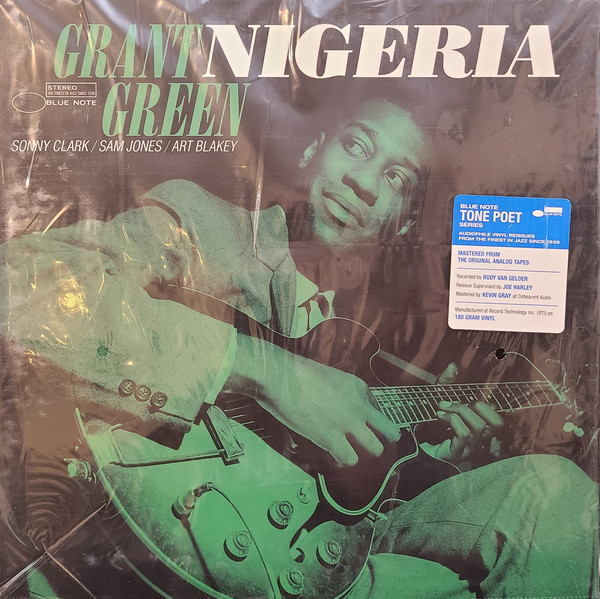
GRANT GREEN-NIGERIA.
Grant Green-Nigeria.
Label: Blue Note Records.
On January the ’13th’ 1962 Grant Green journeyed to New Jersey, and what were by now the familiar environs of the Van Gelder Studio. He was twenty-five and had already recorded eight albums for Blue Note Records since he signed for the label in 1960. Grant Green had his friend Lou Donaldson to thank for that.
He thought back to that day in 1959 when alto saxophonist Lou Donaldson discovered him playing in a bar in St. Louis. He was so impressed that he hired Grant Green for his touring band. This was just the start for Grant Green.
Having moved to New York, Lou Donaldson introduced Grant Green to Alfred Lion the cofounder of Blue Note Records. When he heard Grant Green play his guitar he was so impressed that he arranged for him to record an album as bandleader rather than sideman. This was almost of unheard of, but Grant Green was a special talent who thought and played like a horn player. He had a different mindset and this was apparent throughout his career.
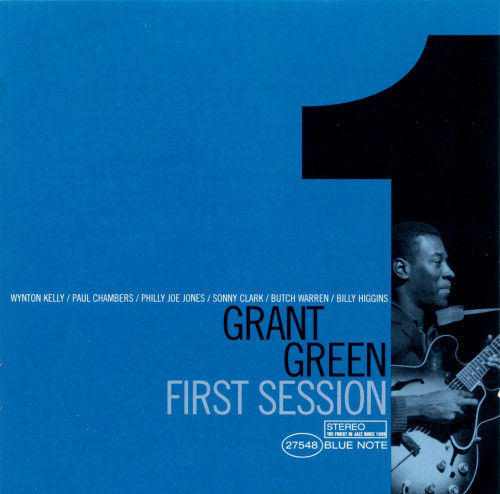
First Session.
Grant Green like so many musicians who had just signed to Blue Note Records travelled to the Van Gelder Studio on November ’16th’ 1960, where he led a quartet that recorded five tracks. However, when Alfred Lion heard the recordings he shelved the project, and decided to record another session which would become his debut album.
Sadly, what became First Session wasn’t released until 2001, and by then, Grant Green had been dead for twenty-two years. The album featured seven tracks including two takes of Woody ‘N You recorded on October the ’27th’ 1961.
Critics were won over by First Session and felt that the album featured an album who had already matured and was blossoming when surrounded by an all-star band.There was a simplicity to Grant Green’s playing as well as a warmth and urgency on the album. First Session more than hinted at what was to come from Grant Green who would become one of the great jazz guitarists of the sixtes and seventies.
Grant’s First Stand.
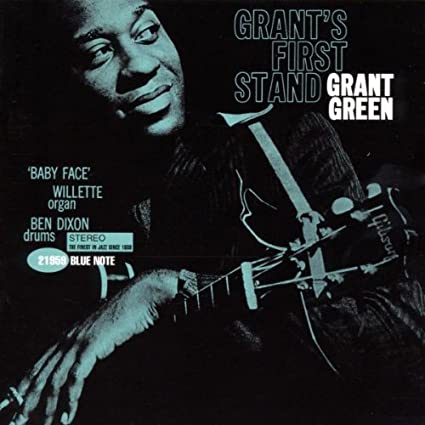
After his first recording was shelved, Grant Green returned to the Van Gelder Studio on January the ‘28th’ 1961. This time he was accompanied by drummer Ben Dixon and organist Baby Face Willette. The trio recorded six tracks including three by Grant Green. Alfred Lion who was producing must have felt vindicated as he watched on.
Grant’s First Stand was a stunning album of hard swinging soul-jazz. The album was released to widespread critical acclaim in May 1961, and later, was regarded as the purest album of soul-jazz Grant Green ever recorded. He had set the bar high early on in his career.
Sunday Mornin’.
Alfred Lion wasted no time getting Grant Green back into the Van Gelder Studio, and on June the ‘4th’ 1961 he led a quartet that recorded Sunday Mornin’. Drummer Ben Dixon returned and was joined by bassist Ben Tucker and pianist Kenny Drew. They recorded an album that combined new compositions and cover versions
Eighteen months passed before Blue Note Records released Sunday Mornin’ in November 1962. It was Grant Green’s fourth album and was well received by critics. Some felt it was his finest album and a flawless set with a distinctive sound. Already Grant Green had established his own sound.

Grandstand.
There was no rest for Grant Green between his session work and recording his solo albums. He returned to the Van Gelder Studio, and on August the ‘1st’ 1961 and with an all-star that featured drummer Al Harewood, bassist Ben Tucker, organist Brother Jack McDuff and Yuseef Lateef who played flute and tenor saxophone. With Alfred Lion producing the quintet recorded a smoking album of soul-jazz.
When Grandstand was released in April 1962, the album was hailed as another stunning and swinging album of soul-jazz. The new band clicked and were responsible for what’s new regarded as another of Grant Green’s finest soul-jazz albums.
Remembering.
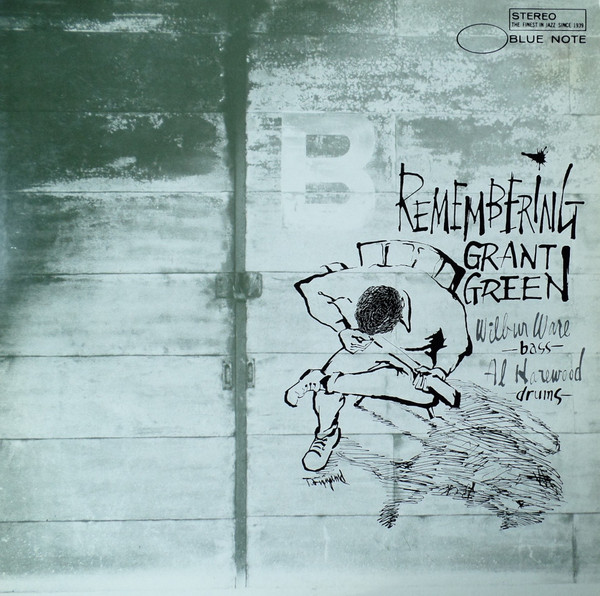
Four weeks after he recorded Grandstand, Grant Green returned to the Van Gelder Studio on the ‘29th’ August 1961 for another session. This time, it was a trio recording with drummer Al Harewood and bassist Wilbur Hare accompanying Grant Green. The new band recorded an album of standards which later became Remembering.
Just like Grant Green’s debut album First Session, the tracks that became Remembering weren’t released by Blue Note Records Japan until 1980.
By then, Grant Green was dead and jazz critics and fans were Remembering one of its great guitarists. Critics were won over by Remembering and praised Grant Green’s playing. They realized that they were hearing him at the peak of his powers on this pared back trio recording. It was a welcome addition to Grant Green’s discography.
Gooden’s Corner.
Two days before Christmas 1961, Grant Green made his way to the Van Gelder Studio to record what became Gooden’s Corner. He was joined by a different lineup to the one that featured on Remembering.
Drummer Louis Hayes, bassist Sam Jones and pianist Sonny Clark accompanied Grant Green. They recorded six tracks that ranged from standards to a cover of Shadrack which gave Brook Benton hit single and two Grant Green compositions Gooden’s Corner and Two For One.
Just like Remembering, Gooden’s Corner wasn’t released until 1980. This was ironic as it was released to critical acclaim with the interplay between Grant Green’s guitar and Sonny Clark’s piano playing starring roles in the sound and success of what’s a sometimes overlooked album.

Nigeria.
It was a case of deja vu as Grant Green travelled to the Van Gelder Studio at 445 Sylvan Avenue, Englewood Cliffs, New Jersey on on the ‘13th’ of January 1962. Grant Green had recorded a solo album just three weeks previously and here he was again making the same journey again. It was the perfect environment to record an album, and he felt at home in Rudy Van Gelder’s custom built recording studio with its high ceilings. The studio had opened in 1959 which was the year Grant Green was discovered by Lou Donaldson. Now he was about to record one of the most important albums of his career Nigeria, which has just been reissued by Blue Note Records as part of their Tone Poet series.
Grant Green had come a long way in a relatively short space of time. He was twenty-six and had come a long way since his days playing in bars in St Louis. That was where his friend Lou Donaldson had discovered him. Now Grant Green was about to record another album with some of the best jazz musicians America had to offer.
For the Nigeria sessions drummer Art Blakey, bassist Sam Jones and pianist Sonny Clark accompanied Grant Green. They were about to record five tracks with producer Alfred Lion. This included Sonny Rollins’ Airegin and the standards It Ain’t Necessarily So, I Concentrate On You, The Things We Did Last Summer and The Song Is You. These tracks Grant Green must have hoped would be his next album.
Sadly, history repeated itself and just like Remembering and Gooden’s Corner, Nigeria wasn’t posthumously released until 1980. For eighteen years jazz fans missed out on hearing Nigeria, which ironically was one of Grant Green’s finest albums.
Opening Nigeria was the Sonny Rollins’ composition Airegin, which is Nigeria spelt backwards. Sonny Rollins said that: “It was an attempt to introduce some kind of black pride into the conversation of the time.” Airegin was originally recorded on the album Miles Davis With Sonny Rollins and later on Cookin’ With The Miles Davis Quintet which featured John Coltrane. On Nigeria, Art Blakey’s thunderous drums power the arrangement along while Grant Green’s playing is clear, clean and melodic and then when he improvises he comes into his own during what’s a breathtaking performance. Pianist Sonny Clark also enjoys the opportunity to shine during the solos and so does Art Blakey. The quartet set the bar high and whet the listener’s appetite for the rest of the album.
The tempo drops on George and Ira Gershwin’s It Ain’t Necessarily So. Art Blakey plays his trademark shuffle and Sam Jones is responsible for a walking bass line. Having locked into a groove, pianist Sonny Clark and Grant Green improvise and seem to feed off other as the all-star band drive each other to even greater heights. As they do, this much-love standard is transformed into a ten minute opus. It takes on a late-night bluesy sound and seductive and sensual sounding.
In Grant Green and his quartet’s hands Cole Porter’s I Concentrate On You takes on new life. Their uptempo take on this standard glides along the arrangement spacious and propelled by the rhythm section who ensure that arrangement swings. Art Blakey adds fills while Sonny Clark’s piano accompanies Grant Green and provides the perfect foil to the guitarist and bandleader. His playing seems effortless as he plays an elegance and fluidity and a sound that is instantly recognisable as Grant Green. Later he leaves space for a Sonny Clark solo and lets him shine as he plays a supporting role in the sound and success of this timeless take on a standard.
Sammy Cahn wrote The Things We Did Last Summer which Grant Green and his ensemble rework. It’s best described as laid-back, understated, melodic and mellifluous with Grant Green deciding taking a less is more approach. Sometimes, there’s a wistful, melancholy sound to Grant Green’s guitar. As the tempo increases his fingers fly across the fretboard and his playing is flawless. The same can be said of pianist Sonny Clark. They form a potent partnership and not for the first time play starring roles on Nigeria.
Closing Nigeria is Oscar Hammerstein and Jerome Kern’s The Song Is You. The tempo rises and the quartet unleash a brisk swinging arrangement. Grant Green seems to have saved his best performance until last playing with speed, fluidity and a dexterity. Sonny Clark who has been Grant Green’s muse throughout the album plays a supporting role and then steps out of the shadows when he plays one of his finest solos. They seem to bring out the best in each other. Then bassist Sam Jones and drummer Art Blakey both showcase their considerable skills during the solos before Grant Green picks up where left off, before he and the rest of quartet take a well deserved bow.
Sadly, after the recording of Nigeria, Alfred Lion decided to shelf the album. It’s thought that he didn’t want to confuse Grant Green’s fans who had grown to love his soul-jazz sound, by issuing what was essentially an album of hard bop flavoured standards. However, many other artists signed to Blue Note Records released albums that were different stylistically.
For Grant Green the shelving of Nigeria must have have been huge disappointment. He had recorded seven albums and First Session, Remembering, Gooden’s Corner and Nigerian had all been had all been shelved and Grant Green never saw them released.
Grant Green was a solo artist between 1961 and 1970, yet still found time to work as a sideman, However, between
August 1971 and April 1978 he only recorded eight albums.
After that, his health deteriorated in 1978, and Grant Green was forced to spend much of that year in hospital. During this period, Grant Green wasn’t earning money, and before long the guitarist’s finances were in a perilous state.
Against doctor’s advice, Grant Green headed back out on the road to try to make some much-needed money. His final gig was at his fiend George Benson’s Breezin’ Lounge in New York, but sadly, Grant Green collapsed in his car of a heart attack and died on January the ’31st’ 1979 aged just forty-three. That day, jazz music lost a truly talented and versatile guitarist, bandleader and composer who left behind a rich musical legacy. This includes Nigeria, which was released posthumously in 1980 and is a reminder of Grant Green at the peak of his powers as he leads an all-star quartet on what’s now regarded a classic album.
Grant Green-Nigeria.
LEE MORGAN-THE COOKER.
Lee Morgan-The Cooker.
Label: Blue Note Records.
’1st’ May 2020.
When eighteen year old trumpeter Lee Morgan signed to Blue Note Records as a solo artist in 1956, he was already a prodigious talent and had the potential to become one of the greatest trumpeters of his generation. That talent was soon apparent.
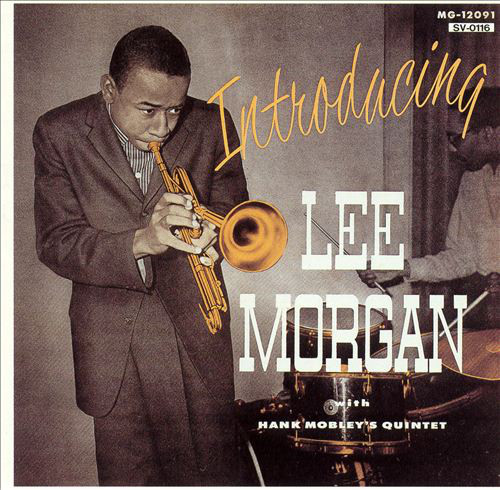
Introducing Lee Morgan.
On November the ‘4th’ 1956, Lee Morgan made his way to the Van Gelder Studio, in Hackensack, New Jersey, to record his debut album. This became Introducing Lee Morgan, which was released in early 1957, and hinted at what was to come from the prodigiously talented Philly born hard bop trumpeter.
Lee Morgan Sextet.
Just under month after recording his debut album, Lee Morgan returned to the Van Gelder Studio on the ‘2nd’ of December 1956 to record another album. The album became Lee Morgan Sextet, which included pianist Horace Silver and tenor saxophonist Hank Mobley. Both were vastly experienced and hugely talented musicians but recognised that there was something special about the young bandleader and trumpeter. When Lee Morgan Sextet was released in May 1957, this latest album of hard bop was well received by critics. They realised that Lee Morgan was a special talent with a bright future ahead of him.

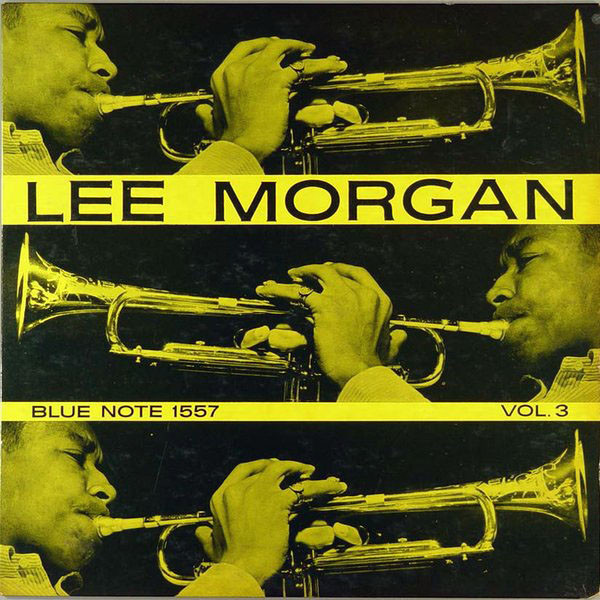
Lee Morgan Volume 3.
By the time Lee Morgan returned to Van Gelder Studio to record what became Lee Morgan Volume 3 on March ’24th’ 1957 his debut album just been released. Just like his sophomore album, Lee Morgan Volume 3 was another sextet recording that featured tenor saxophonist Benny Golson and pianist Wynton Kelly. Just like so many Blue Note Records’ albums, it only took the one session to record Lee Morgan Volume 3.
When Lee Morgan Volume 3 was released later in 1957, the album was hailed as the finest of the nineteen year old trumpeter’s career. He was one of rising stars of the jazz, and critics forecast that here was a young man whose star would shine brightly for a long time.
City Lights.
Just over five months later, Lee Morgan returned to Gelder Studio on August the ‘25th’ 1957 to record his fourth album, City Lights. For the session, drummer Art Taylor was recruited and joined what was a talented and experienced sextet.
Playing alongside such experienced musicians didn’t phase Lee Morgan who had no problem holding his own. He seemed to thrive in their company and City Lights was called his finest album when it was released later in 1957. It seemed that Lee Morgan was improving with every album.

The Cooker.
That was definitely the case, and his fifth album The Cooker, was Lee Morgan’s first classic album. The Cooker will be reissued by Blue Note Records on the ‘1st’ May 2020 as part of their Tone Poet series. It’s a welcome addition to the series and is a reminder of the prodigiously talented Lee Morgan when was just nineteen.
Lee Morgan had turned nineteen on July the ‘10th’ 1957, and just over two months later, he was making the now familiar journey to New Jersey and the familiar environs of the Van Gelder Studio. He planned to record two of his own compositions Heavy Dipper and New-Ma, and augment them with three standards. This included Dizzy Gillespie’s A Night In Tunisia, Cole Porter’s Just One Of Those Things and Jimmy Davis, Roger Ramirez and James Sherman’s Lover Man (Oh, Where Can You Be)? These five tracks Lee Morgan would record with his quintet.
For the recording of The Cooker, trumpeter Lee Morgan was joined by drummer Philly Joe Jones, bassist Paul Chambers, pianist Bobby Timmons and baritone saxophonist Art Pepper. Rudy Van Gelder was the recordist and engineer while Alfred Lion took charge of production on The Cooker. Once the album was recorded, the release was scheduled for March 1958.
By the time The Cooker was released, Lee Morgan was still nineteen and was maturing with every album. He had already played in Dizzy Gillespie’s band and had just played on John Coltrane’s first great album Blue Train. More recently, Hank Mobley and Lee Morgan had collaborated on the album Peckin’ Time which they had recorded on February the ‘9th’ 1958. However, just like his friend John Coltrane, Lee Morgan was about to release his first classic album, The Cooker.
When Lee Morgan recorded with Blue Train with John Coltrane, he had to produce a series of disciplined performances as he read the carefully drafted arrangements on what wasn’t just an album, it was an artistic concept. The Cooker sessions were very different and much more relaxed as the young bandleader decided to let his quintet off the leash. He decided that they were going to have a blowout, and play hard and fast and with flair, freedom and spontaneity. Lee Morgan wanted things to be informal which he hoped would bring out the best in the multitalented band.
In the engine room were drummer Philly Joe Jone and bassist Paul Chambers were part of Miles Davis quintet, Lee Morgan had recruited Philly born pianist Bobby Timmons. However, Art Pepper’s baritone saxophone added a different sound, which was much darker, especially when it combined with Lee Morgan’s trumpets.
The Cooker opened with a reworking of the classic A Night In Tunisia. Philly Joe Jones thunderous toms open the mid tempo track before the rhythm section and create an understated percussive groove. Pepper Adams blows his baritone sax and meandering solo before Lee Morgan plays the instantly recognisable Eastern-tinged melody. After that, it’s time for the solos and despite being in the company of much more experienced musicians, it’s Lee Morgan’s star that shines the brightest as he fuses scampering chromatic runs with palpitating tremolos. Not to be outdone, Art Pepper unleashes a flowing, explosive solo and his playing is innovative and melodic. Meanwhile Bobby Timmons showcases his considerable skills but it is Lee Morgan who plays a starring role on this nine minute epic rework of a standard.
Heavy Dipper is the first of two Lee Morgan compositions. It finds the quintet swinging as they play with power and intensity. Then when the solos come round, it’s not just Lee Morgan that shines, it’s other band members, including briefly drummer Philly Joe Jones. However, when the quintet play together they deliver tight and cohesive performances. Despite his relative youth, Lee Morgan proves to be a talented composer, bandleader and as a musician was maturing with every performance.
The cover of Just One Of Those Things can only be described as a turbocharged performance. That is the case from the moment Art Pepper unleashes a baritone saxophone solo. Meanwhile, it’s more like a yomping bass line that Paul Chambers plays. Lee Morgan is content to let others shine for the first three minutes and then steps forward and plays his solo. Within just a few bars it’s apparent that the nineteen year old is a special talent who was destined for greatness.
Lee Morgan and his quintet decide to drop the tempo on Lover Man (Oh, Where Can You Be)? This romantic ballad that was written for Billie Holliday, and initially it’s just Lee Morgan’s trumpet and Paul Chambers’ bass that combine before the rest of band enter. When the solos arrive it is Art Pepper’s rasping, croaky baritone saxophone is played with a fluidity and expressiveness that breathes new life into this much-loved standard.
Closing The Cooker is New-Ma, the second Lee Morgan composition on the album. The quintet relaxes into a mid tempo groove with drummer Philly Joe Joes and combining with Paul Chambers’ walking bass. His playing is almost laid back as he feeds off Bobby Timmons’ piano playing. He enjoys the chance to shine, and just like Lee Morgan this is a hint of what’s to come from him.
After releasing five albums for Blue Note Records, Lee Morgan had released his first classic album The Cooker. The four albums he had released had been leading up to this moment, for the prodigiously talented and gifted trumpeter, composer and bandleader.
Lee Morgan would go on to release other classic albums like The Sidewinder and Cornbread. However, his first classic was The Cooker, a breathtaking and spellbinding album that showcases a prodigiously talented musician. His star shines bright throughout The Cooker which was his first classic album, and a reminder of one the greatest trumpeters of his generation Lee Morgan.
Lee Morgan-The Cooker.

JETHRO TULL- STORM WATCH.
Jethro Tull-Storm Watch.
Label: Chrysalis.
By September 1979, Jethro Tull was still one of the most successful British bands of their generation, and were about to release the twelfth album of their career, Stormwatch, It was the final album in a trilogy of folk rock albums and Jethro Tull hoped that Stormwatch would build on the success of which had been released in April 1978 and was certified old in America and Canada as well as silver in Britain. Storm Watch which was the final instalment in Jethro Tull’s folk rock trilogy, which was a new chapter in their career which began seventeen years earlier.
The origins of Jethro Tull can be traced to Blackpool, Lancashire, in 1962, where Ian Anderson formed his first group Blades, which was originally a four piece, featuring Ian Anderson on vocals and harmonica. A year later in 1963, Blades was a quintet and in 1964 the group was a sextet who played blue-eyed soul. However, by 1967 blades decided to spread their wings and head to London.
Having moved to London, the band split-up within a short time, and only Ian Anderson and bassist Glen McCornick were left. This proved a blessing in disguise as they were soon joined by blues guitarist Mick Abrahams and drummer Clive Bunker. This was the lineup that featured of Jethro Tull that featured on their debut album This Was. That was still to co
Before that, the nascent band had to settle on a name, and various names were tried, only to be rejected. Then someone at a booking agent christened the band Jethro Tull, after the eighteenth century agriculturist. Little did anyone realise that the newly named Jethro Tull would become one of the biggest bands in the world over the next decade.
Not long after becoming Jethro Tull, Ian Anderson acquired his first flute. Up until then, he had played harmonica and was trying to learn to play the guitar. Soon, , Ian Anderson realised that wasn’t a great guitarist, and having realised that the world had enough mediocre guitarists, decided to expand his musical horizons and bought a flute. Little did he realise this would be one of Jethro Tull’s trademarks.
After a couple of weeks, Ian Anderson had already picked up the basics of the flute. He was learning as he played. While this wasn’t ideal, it was the only way that possible. Especially with things happening so quickly for Jethro Tull who would soon release their debut single.
Sunshine Day was penned by Mick Abrahams, with Derek Lawrence taking charge of production. However, when their debut single was pressed, Jethro Tull realised that an error meant the single was credited to Jethro Toe. To make matters worse, Sunshine Day wasn’t a commercial success and failed to trouble the charts. Despite this disappointment, thing got better when Jethro Tull released their debut album This Was.
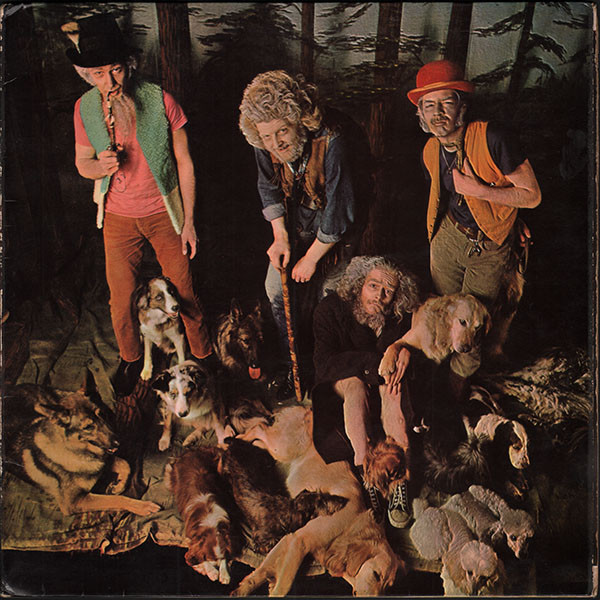
This Was.
Recording of This Was took place at Sound Techniques in London, with the sessions beginning on the ‘13th’ of June 1968, and finishing on the ‘23rd’ of August 1968. By then, Jethro Tull had only £1,200 was spent recording their debut album This Was. This money would soon be recouped when This Was released.
Prior to the release of Jethro Tull’s debut album This Was critics had their say on the album. The majority of the critics were impressed by This Was which was a fusion of blues rock, R&B and jazz. This pleased Jethro Tull and their management, who decided to launch This Was at the Marquee Club, in London.
Jethro Tull was only the third band to launch their debut album at the Marquee Club, and would follow in the footsteps of the Rolling Stones and The Who. Both bands were amongst the biggest bands in the world by 1968, and so would Jethro Tull.
On the ‘25th’ October 1968 Jethro Tull released This Was, which reached number ten in the UK. Three months later, Jethro Tull released This Was in America on the ‘3rd’ of February 1969 and it reached sixty-two in the US Billboard 200. This was seen as a success by Island Records in Britain and Reprise in America. Jethro Tull had made inroads into the most lucrative music market in the world. It was a successful start to Jethro Tull’s career, which was about to enter a period where critical acclaim and commercial success were almost ever-present. However, there was a twist in the tale.
By then, Mick Abrahams left the band after he and Ian Anderson disagreed over the future direction of Jethro Tull. The sticking point was that Mick Abraham wanted Jethro Tull to stick with blues rock, while Ian Anderson realised there was no real future in blues rock. He wanted to take Jethro Tull to explore a variety of musical genres. As a result, Mick Abrahams left Jethro Tull and was replaced by Michael Barre. Little did either Mick Abraham nor Michael Barre realize that Stand Up marked the start of a period where Jethro Tull would sell over sixty-million albums.
Stand Up.
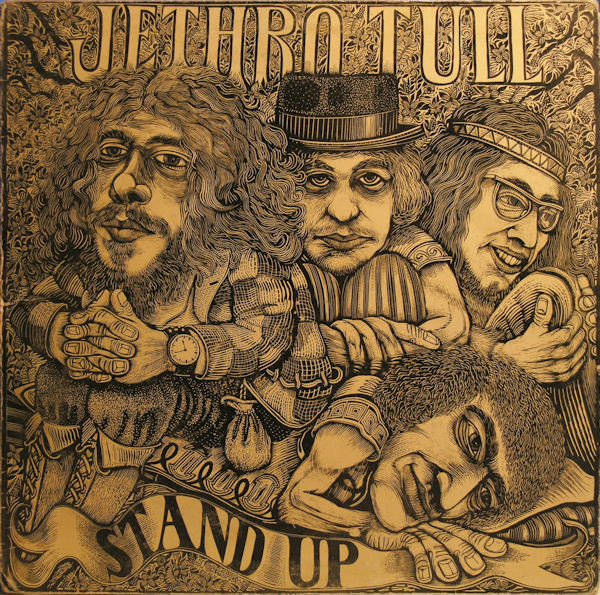
With new guitarist Michael Barre onboard, work began on Jethro Tull’s sophomore album Stand Up, which was a much more eclectic album to This Was. Ian Anderson who was now Jethro Tull’s primary songwriter, penned nine of the ten tracks and drew inspiration from everything from blues rock, Celtic, classical, folk and rock. These ten tracks became Stand Up, which was recorded over three months in 1969.
Recording of Stand Up took place at Morgan Studios and Olympic Studios. The sessions began on the ‘17th’ of April 1969, and continued through to the ‘21st’ of May 1969. Three months later, and Stand Up was released.
Before the release of Stand Up in September 1969, the reviews of Jethro Tull’s sophomore album were positive, with the musicianship and production receiving praise from critics. They also noted that the Jethro Tull’s music was starting to evolve, although Stand Up still featured blues rock sound. Elsewhere on Stand Up, Jethro Tull had started to expand their musical palette and this struck a nerve with critics and record buyers.
On Stand Up’s release in the UK on the ‘1st’ of August 1969 Jethro Tull’s sophomore album. topped the charts. When Stand Up was released on the ‘29th’ of September 1969 it reached number twenty in the US Billboard 200 Charts and was certified gold. This was the start of a golden period in Jethro Tull’s career.
Benefit.
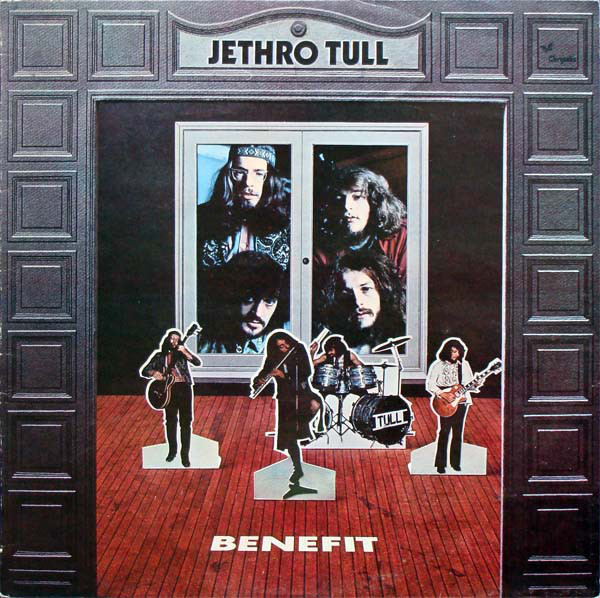
Following the commercial success of Stand Up, Jethro Tull returned to Morgan Studios, in London, on the ‘3rd’ of September 1969 and spent the next five months recording ten new tracks which were penned and produced by Ian Anderson. By the ‘25th’ of February 1970 Jethro Tull had completed Benefit, which was much more experimental and darker album and the first album of the progressive rock years.
Before the release of Benefit, the critics had their say on Jethro Tull’s third album, which they noted had a much more experimental sound as the band flitted between progressive rock and folk rock. Ian Anderson had allowed Jethro Tull more freedom to express themselves as he also wanted Benefit to have a live sound. This shawn through, as does Benefit’s darker sound which Ian Anderson claimed was because of the pressure of a forthcoming American tour, and his disillusionment with the business side of the music industry. However, the new sound didn’t affect sales.
Jethro Tull released Benefit on the ‘20th’ of April 1970, and it reached number three in the UK, and eleven in the US Billboard 200 Charts. Just like Stand Up, Benefit was much more popular stateside than in the UK. It seemed American record buyers “got” Jethro Tull more than their British counterparts. This would the case when Jethro Tull released their first classic album, Aqualung.
Aqualung.
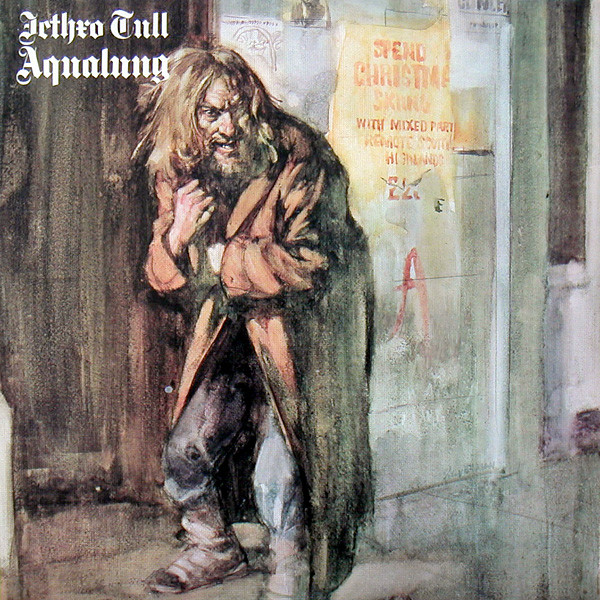
By December 1970, Jethro Tull had just returned from a gruelling American tour, and were about to head into the studio to record their fourth album Aqualung. This wasn’t ideal, and already, Ian Anderson wasn’t enjoying the months away from home. He missed his friends and family which was one of the downsides of being a member of one of the most successful rock bands in the world. To make matters worse, while his friends and family were readying themselves for the forthcoming festive season, Ian Anderson and the rest of Jethro Tull were about to begin recording their fourth album, and their second progressive rock album, Aqualung.
Despite Jethro Tull’s gruelling touring schedule, Ian Anderson’s creativity hadn’t been stifled, and he returned with the lyrics to the band’s most ambitious and cerebral album, Aqualung. It was a concept album that examined ”the distinction between religion and God.” This seemed an unlikely subject for an album, even a seventies concept album. However, Aqualung, which feature two new band members was a game-changer of an album.
Joining Jethro Tull arrived at Island Studios in December 1970, where Ian Anderson and Terry Ellis took charge of production were new recruits, keyboardist John Evans and bassist Jeffrey Hammond. Both were looking forward to recording their first album with their new band, which was another album of progressive rock that featured elements of folk rock. Aqualung took until February 1970 to complete, but was worth the wait as it was Jethro Tull’s most cerebral and philosophical album and also their most successful album.
Once Aqualung was completed, neither Chrysalis in Britain, nor Reprise in America wasted time in releasing Jethro Tull’s fourth album. Given the subject matter, there must have been a degree of trepidation amongst the executives at both record companies as concept albums were controversial. However, a concept album that examined ”the distinction between religion and God” could prove hugely controversial and there could be a huge backlash against the album given its subject matter.
As copies of Aqualung were sent out to critics, executives at Chrysalis and Reprise awaited their reviews with bated breath. They need not have worried as most of the reviews were positive, with critics remarking upon the quality of the music, the standard of the musicianship and Ian Anderson’s thought-provoking and cerebral lyrics. Many critics hailed Aqualung as Jethro Tull’s finest album and a progressive rock classic. Record buyers agreed.
On the release of Aqualung on the ‘19th’ of March 1971, it reached number four in the UK. Meanwhile, Aqualung reached seven in the US Billboard 20 and was certified triple platinum in America. Elsewhere, Aqualung reached number five in Germany, and was certified gold and Jethro Tull’s fourth album sold seven million copies worldwide. This transformed Jethro Tull’s fortunes, who now one of the biggest rock bands in the world.
For the two new members of Jethro Tull, this must have been hard to take in. Suddenly, they were part of a band who had just sold over seven million albums which must have seemed surreal for the newcomers. Meanwhile, another member of Jethro Tull decided to call it a day after the success of Aqualung.
Drummer Clive Bunker had been a member of Jethro Tull since the early days and it wasn’t going to be easy to replace him. He had decided to bow out after Jethro Tull’s most successful album, and must have known that following up Aqualung wasn’t going to be easy.
Thick As A Brick.
After the commercial success and critical acclaim of Aqualung, critics, record company executives and the record buying public wondered what Ian Anderson had in-store for the fifth Jethro Tull album?As always, it was a case of expect the unexpected.
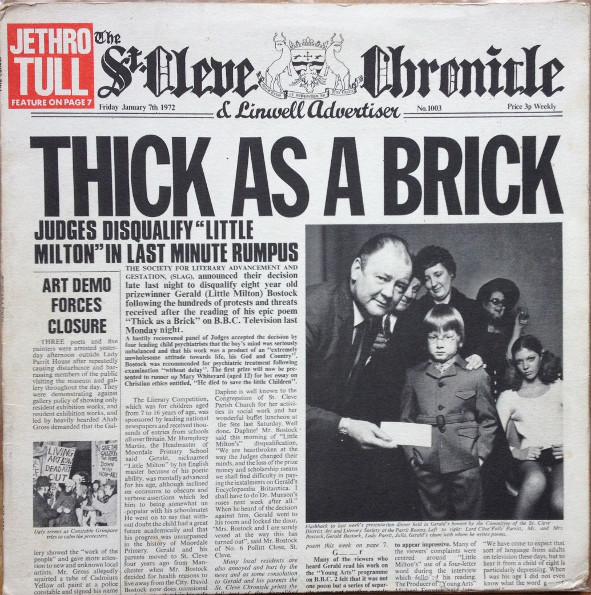
What nobody expected, was that Ian Anderson would pen one lengthy track that took up both sides of Thick Of A Brick. Side one of the original album featured Thick as a Brick Part I, while side two featured Thick as a Brick Part II. This song of two parts comprised Jethro Tull’s latest concept album which was recorded at Morgan Studios, in London during December 1971 and was the first to feature new drummer, Barriemore Barlow.
Following critics conclusion that Aqualung was a “concept album,” Ian Anderson decided to have some fun at the critic’s expense. He decided to “come up with something that really is the mother of all concept albums.” Among his influences were Monty Python and the movie Airplane. Just like Airplane poked fun at the cinema goers, filmmakers and critics, Thick Of A Brick saw Jethro Tull poke fun at their audience and music critics. However, Jethro Tull weren’t laughing at their audience, they were laughing with them and maybe, were laughing at other groups.
Later, Ian Anderson would say Thick As A Brick was a reaction against the concept albums being released by groups like Yes and Emerson, Lake and Palmer. That would explain why Ian Anderson produced an album that he later described as “bombastic” and “over the top.”
Thick As A Brick was recorded in a day. It was meant to be an adaptation of an epic poem written by a fictional eight year old prodigy, Gerald Bostock. Ian Anderson even went as far as giving the fictional Gerald Bostock a co-credit. The poem was meant to be pseudo Homeric, but with a bombastic, humorous style. The album came wrapped in a cover that replicates a comedic newspaper and features the poem penned by the child prodigy. Although Thick As A Brick’s album cover and the album had spoof written all over it, many people didn’t get Jethro Tull, or more specifically, Ian Anderson’s unique style of humour. It was way too subtle.
With Thick As A Brick complete, and the fictional Gerald Bostock’s epic poem brought to life, copies of the album were sent out to critics. They hailed the album one of Jethro Tull’s finest. The music on Thick As A Brick was groundbreaking, innovative, slick and sophisticated. Most critics were won over by music that was complicated, but tinged with subtle humour. Incredibly, some critics failed to find the funny side of Thick As A Brick, and bought it hook, line and sinker. They failed to see that Jethro Tull were poking fun at the concept album, and laughing along with their audience at what Ian Anderson perceived as its pomposity. However, what very few critics overlooked was Jethro Tull’s first true progressive rock offering.
Thick As A Brick marked the completion of Jethro Tull’s move towards progressive rock which they had toyed with on their two previous albums. On Thick As A Brick they embraced progressive rock fully, on album which featured numerous musical themes, changes in time signature and tempo shifts. This proved popular with their legion of fans.
When Thick As A Brick was released on the ‘10th’ of March 1972 it reached number one in Australia, Canada and the US Billboard 200 charts. Back home in Britain, Thick As A Brick reached number thirteen which wasn’t unlucky for Jethro Tull. Thick As A Brick proved to be Jethro Tull’s most popular album in Britain and was certified silver. Meanwhile Thick As A Brick was certified gold in America and Ian Anderson’s parodic concept album saw Jethro Tull triumph again, as they became progressive rock pioneers.
A Passion Play.
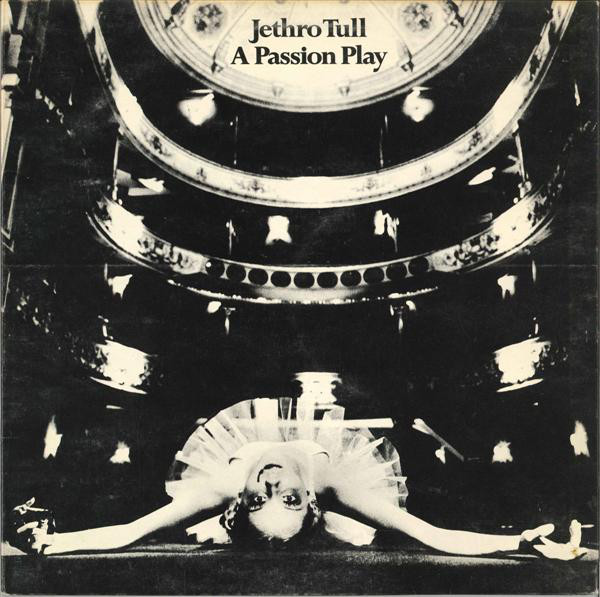
In March 1973, Jethro Tull returned to Morgan Studios, where they began work on their sixth album A Passion Play. It was another concept album where individual songs were arranged into a single continuous piece of music that followed the progress of the spiritual journey of Ronnie Pilgrim in the afterlife. Just like Aqualung, it was an ambitious and innovative album that was cerebral and through-provoking.
By the time work began on A Passion Play, the members of Jethro Tull were contemplating moving to France to escape the punitive tax rates that were imposed on high earners like rock stars. Jethro Tull had even identified the Château d’Hérouville as a potential venue to record A Passion Play which was meant to be a double album.
Eventually, Jethro Tull had only enough material for three sides of the double album, and they decided that A Passion Play should be a single album. One of the tracks, The Story of the Hare Who Lost His Spectacles seems to have been inspired by Prokofiev’s Peter and The Wolf, while other parts of A Passion Play are reminiscent of to T.S. Eliot’s The Waste Land and John Milton’s A Passion Play, as Jethro Tull decided to head further down the road marked progressive rock. However, they also incorporated elements of traditional English folk music and played an array of disparate instruments on A Passion Play which was scheduled for release in July 1973.
Prior to the release of A Passion Play, critics had their say on Jethro Tull’s sixth album, but the majority of reviews were highly critical of the album. Although none of the critics were won over by A Passion Play, but record buyers were.
Despite the poor reviews, A Passion Play still reached thirteen in the UK on its release on the ‘13th’ of July 1973 and was certified silver. Ten days later, A Passion Play was released in North America on the ‘23rd’ of July 1973 and reached number one in Canada and the US Billboard 200 and was certified gold. Jethro Tull had triumphed over adversity for Jethro Tull, and had now old in excess of five million albums in America alone.
War Child.
Following the criticism of A Passion Play, it looked as like the end of the road for Jethro Tull, and it was rumoured that Ian Anderson was going to disband the group. However, eventually, Jethro Tull returned in October 1974 with a new album War Child.
Some of the tracks that hadn’t been used on Aqualung and A Passion Play resurfaced on War Child, which had been recorded in Morgan Studios, London, and in the Château d’Hérouville. Despite the poor reviews of A Passion Play, it was a much more relaxed Jethro Tull that recorded the new tracks at Château d’Hérouville that would feature on War Child.
It was meant to be a double album that accompanied a film project The War Child, which was described as a metaphysical black comedy based on a teenage girl in the afterlife, who meeting characters based on God, St. Peter and Lucifer who were portrayed as shrewd businessmen. However, the film was abandoned after failing to find a major movie studio willing to finance it. This left just War Child.
When War Child was finished, it followed in the footsteps of A Passion Play, and was another album of orchestrated album of progressive rock that sometimes, headed in the direction of a more traditional rock sound. However, just like A Passion Play, critics disliked War Child, and wrote scathing reviews of the album. No longer were Jethro Tull the darlings of the critics.
Despite that, War Child was released on the ’14th’ of October 1974, and reached fourteen in the UK and two on the US Billboard 200. This was enough for another gold disc for Jethro Tull, who knew that they needed to change tack for their next album.

Minstrel In The Gallery.
By the time Jethro Tull began work on their eighth album Minstrel In The Gallery, they were one of the biggest selling groups of the seventies. However, this came at a cost to songwriter-in-chief and lead vocalist, and the constant cycle recording an album and then touring it, had cost him his marriage. Commercial success and critical acclaim had come at cost, by April 1975, Ian Anderson’s marriage to Jennie Franks had ended in divorce. It wasn’t a good time for the Jethro Tull frontman.
When Ian Anderson began work on what became Minstrel In The Gallery, it proved a cathartic experience, he wrote about his divorce, and the pressures of having to constantly, write, record and tour. These songs were recorded between the ‘5th’ of May 1975 and the ‘7th’ of June 1975 at Maison Rouge Mobile Studio, in Monaco. Ian Anderson had brought onboard a string quartet, to replace the orchestra that featured on the two previous albums. This he hoped would help transform Jethro Tull’s fortunes. Once Minstrel In The Gallery was completed, it was scheduled for release in September 1975. Before that, the critics had their say.
The reviews of Minstrel In The Gallery were hardly glowing and some critics slated the album. Rolling Stone’s unnamed critic didn’t hold back. Their review called Minstrel In The Gallery “instantly forgettable.” However, Rolling Stone weren’t alone, and only a few reviews were favourable and the majority of the reviews were mixed. No longer was Jethro Tull’s fusion of progressive rock, folk rock and hard rock as popular amongst the critics. It was a different case with the record buying public, who had the final say.
On its release in Britain on the ‘5th’ of September 1975, Minstrel In The Gallery reached number twenty and was certified sliver. Three days later, Minstrel In The Gallery was released on the ‘8th’ of September 1975 and reached number two in the US Billboard 200, and was certified gold. Meanwhile, in Austria, Germany, Norway and Sweden, Minstrel In The Gallery sold well and Jethro Tull were still one of the biggest bands of the seventies, thanks to Minstrel In The Gallery.

Too Old To Rock ‘n’ Roll: Too Young To Die!
After the gruelling Minstrels In The Gallery tour, bassist Jeffrey Hammond was exhausted. Life with Jethro Tull seemed to be a schedule of record an album, then tour the album. It was non-stop and Jeffrey Hammond wanted to slow down, so, after the Minstrels In The Gallery tour, he announced he was leaving to become an artist. For Jethro Tull, this presented a problem, as they were about to record their ninth album Too Old to Rock ‘n’ Roll: Too Young to Die!
Fortunately, John Glascock was recruited and joined Jethro Tull just in time to record their latest concept album Too Old To Rock ‘n’ Roll: Too Young To Die! at Radio Monte Carlo, using the Maison Rouge Mobile Studio. This wasn’t the same studio that Jethro Tull had used to record Minstrels In The Gallery. However, Too Old to Rock ‘n’ Roll: Too Young to Die! which was recorded between the ’19th’ of November 1975 and the ’27th’ of January 1976 was a very different album to its predecessor.
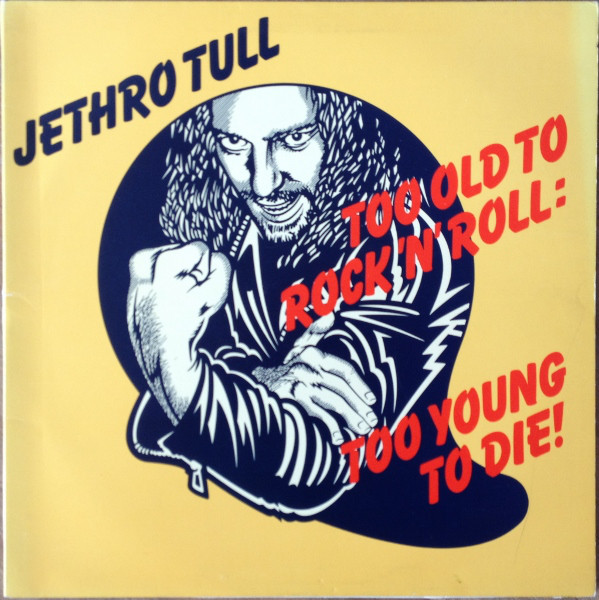
Too Old To Rock ‘n’ Roll: Too Young To Die! told the story of Ray Lomas, an ageing rock star, who had retired from music, when the music he played fell out of fashion. Still, Ray Lomas was a greaser who wasn’t going to have a makeover. Not even when he went onto the “Quizz” show and won the jackpot. Even money however, didn’t bring Ray Lomas happiness.
After winning the money, Ray Lomas tries to commit suicide, and like the Sleeping Beauty, he falls into a deep sleep. When Ray Lomas wakes up, the greaser fashion is back in style, and he makes a comeback. Never did he lose faith that his style would come back into fashion. This was the story that Too Old To Rock ’N’ Roll: To Young To Die was attempting to tell and which featured on cartoon printed on the album cover. However, not everyone was impressed by Jethro Tull’s latest concept album.
Critics on hearing Too Old To Rock ’N’ Roll: To Young To Die weren’t impressed with the album, and felt that the plot lacked clarity and Ian Anderson may have been a gifted lyricist, but wasn’t a storyteller. The reviews of Too Old To Rock ’N’ Roll: To Young To Die ranged from poor to mixed, but not all of these reviews were an honest reflection on the music on the album.
The rise of punk, which was the antithesis to progressive rock, resulted in groups like Jethro Tull being labelled musical dinosaurs by a new breed of gunslinger critics. They perceived Jethro Tull as remnants of the music’s past and slated their albums. This affected sales of Too Old To Rock ’N’ Roll: To Young To Die.
When Too Old To Rock ’N’ Roll: To Young To Die was released on the ’23rd’ of April 1976, it stalled at fifteen in the UK. Three weeks later, on the ’17th’ of May 1976 Too Old To Rock ’N’ Roll: To Young To Die reached number fourteen in the US Billboard 200, and this time there was no gold disc for Jethro Tull. By then, Jethro Tull realised that they had to change direction and soon, the folk rock years would begin.
Songs From The Wood.
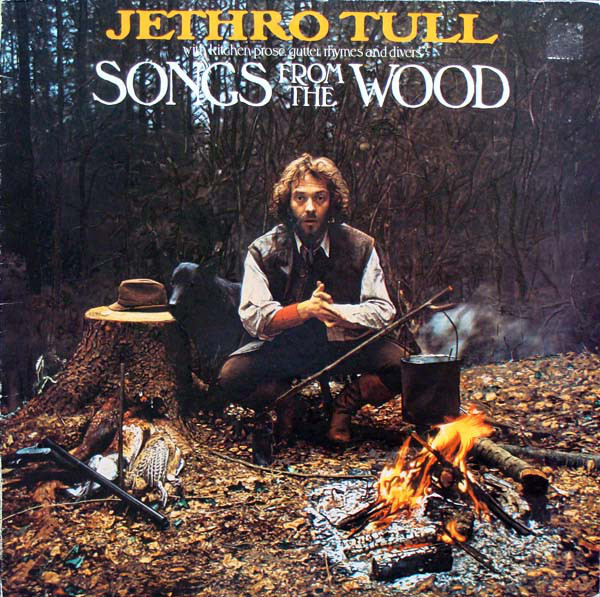
Following the disappointment of Too Old To Rock N’ Roll: Too Young To Die, Jethro Tull decided to reinvent their music and move in the direction of folk rock. This new era began at Morgan Studios, in London where between September and November 1976 Jethro Tull recorded the nine songs that became Songs From The Wood.
It’s an album that is rich in imagery from medieval Britain, while Folklore, Myths and Legends of Britain seems to have inspired Ian Anderson as he wrote Songs From The Wood. Songs Jack-In-The Green, Cup Of Wonder and Ring Out Solstice Bells are full of medieval imagery and transport the listener back in time to another time and another place. Meanwhile, Velvet Green and Fire At Midnight showcase what’s best described as an ornamental folk arrangements while Pibroch (Cap in Hand) has a much more experimental sound. However, despite the strong folk influence on Songs From The Wood, Ian Anderson was quick to dismiss this description as irrelevant, and instead saw the album as Jethro Tull reaffirming their British identity.
With Songs From The Wood complete, critics had their say on Jethro Tull’s first folk rock album. The majority of the albums were positive, and this made a change from recent Jethro Tull albums which had been slated by critics. It looked as if their luck was changing.
When Songs From The Wood was released on ’4th’ of February 1977, it reached number twenty in the UK and eight in the US Billboard 200. This was enough for gold discs on both sides of the Atlantic, as Jethro Tull announced their return with Songs From The Wood which marked the start of the folk rock years.
Heavy Horses.
Buoyed by the success of Songs From The Wood, Jethro Tull began work on their second folk rock album, Heavy Horses. Although Ian Anderson was still Jethro Tull’s songwriter-in-chief Martin Barre and David Palmer who both contributed to Heavy Horses. Mostly, though, Heavy Horses was an album written by Ian Anderson and which featured telluric, imaginative and esoteric themes than those that feature on Songs From The Wood.
Journey Man saw Ian Anderson writing about how humans have to conform each and every day of their life. On a lighter note, Rover was dedicated to Ian Anderson’s dog and …And the Mouse Police Never Sleeps for his cat and No Lullaby was written for his young son, James. However, other songs found Ian Anderson contemplating the ever-changing and disappearing world which prove poignant and powerful. Meanwhile, Acres Wild and Weathercock find Ian Anderson hoping and pleading that better days are ahead for planet earth. Then there’s Heavy Horse, which is the second of two complicated suites that is comparable to the music on Aqualung, as it progresses from a piano led ballad to the galloping arrangement which Ian Anderson knew that the older and more experienced lineup of Jethro Tull would cope with admirably as they began recording their eleventh album in May 1977.
This time, Maison Rouge Studio, in Fulham, London, was where Jethro Tull recorded their much-anticipated eleventh album Heavy Horses between May 1977 and January 1978. By then, Jethro Tull’s rhythm section featured drummer and percussionist Barriemore Barlow, bassist John Glascock and guitarist Martin Barre. John Evan played piano and organ while David Palmer played pipe organ, keyboards and took charge of the orchestral arrangements. Ian Anderson played flute, mandolin, acoustic and occasionally electric guitar. Augmenting Jethro Tull was Curved Air violinist Darryl Way who featured on Acres Wild and Heavy Horses. He played his part on what was another carefully crafted, cerebral and thought-provoking album.
On Songs From The Wood, Jethro Tull decided to reinvent their music again, by eschewing the folk lyrical content that featured on their previous album, Songs From The Wood. It was replaced by a much more realistic outlook at a wold that was changing, and changing fast. Despite that, Heavy Horses was dedicated by Ian Anderson and Jethro Tull to the: “indigenous working ponies and horses of Great Britain.”
With Heavy Horses completed, critics were keen to hear the followup to Songs From The Wood, and were pleasantly surprised to hear Jethro Tull at their tightest for many years rocking hard on an album of folk rock that sometimes headed in the direction of progressive rock. It seemed that progressive rock wasn’t in Jethro Tull’s past despite their recent reinvention as a folk rock band. However, Jethro Tull unlike many of their contemporaries weren’t willing to embrace punk and post punk in an attempt to win back listeners.
Instead, Jethro Tull stuck to their guns, and recorded Heavy Horses which was the folk rock album they had always intended to record. Granted, it was a harder rocking album and much more progressive album than Songs From The Wood, and won that found favour with critics.
Just like Songs From The Wood, critics lavished praise and critical acclaim on Heavy Horses and especially the instrumental arrangements, esoteric, cerebral and thought-provoking lyrics and when Jethro Tull decided to kick loose and rock hard. However, winning over critics was only half the battle, and Jethro Tull had still to win over record buyers with Heavy Horses.
They need not have worried, because when Heavy Horses was released on the ’10th’ of April 1978, it reached twenty in the and nineteen in the US Billboard 200. This was enough for a silver disc in the UK and a gold disc in America. However, that wasn’t the end of the story of Heavy Horses which was also certified gold in Canada. Record buyers just like critics in Britain and North America had been won over by Jethro Tull’s latest folk rock album.
Heavy Horses which was the second of Jethro Tull’s folk rock trilogy, continues where Songs From The Wood left off, and finds Ian Anderson continuing their return to form. They were once again enjoying commercial success and critical success and had now sold in excess of seven million albums in America alone. Jethro Tull had come a long way since their early days as a blues rock band, and were still one of the most successful British bands of the seventies.
Ironically, Jethro Tull was still more popular in America than in Britain, where record buyers never seemed to ‘get’ their music. That was the case during their progressive rock years, and also when they reinvented themselves as a folk rock group. This began with Songs From The Wood and continued on on their eleventh album Heavy Horses. The chameleon like Jethro Tull had returned with another carefully crafted, cerebral, progressive and thought-provoking folk rock album which features them at their hard rocking best on Heavy Horses.
It continues where Songs From The Wood left off, and finds Ian Anderson and Co. continuing their return to form. They were once again enjoying commercial success and critical acclaim and had now sold in excess of seven million albums in America alone. Jethro Tull had come a long way since their early days as a blues rock band, and were still one of the most successful British bands of the seventies. They hoped that the success would continue on the last of their folk rock trilogy Storm Watch.

Storm Watch.
Just four months after Jethro Tull had released their critically acclaimed and commercially successful eleventh album Heavy Horses in April 1978, Ian Anderson and the rest of the band were already preparing to record the followup Storm Watch.
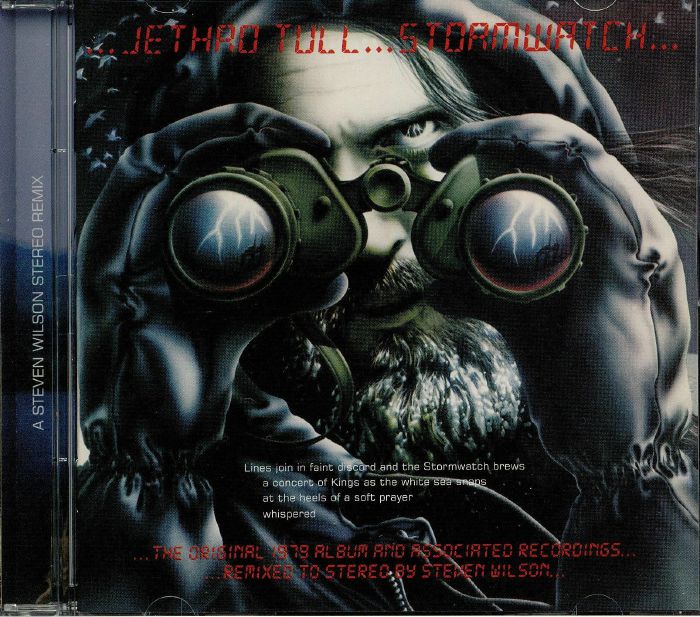
Storm Watch was the third instalment in Jethro Tull’s folk rock trilogy, and has just been reissued on CD by Chrysalis. Just like previous Jethro Tull reissues, Storm Watch has been remixed by Steven Wilson. As an added bonus, there’s also eight associated tracks which will be of interest to all fans of Jethro Tull. By the time they began work on Storm Watch, they were already one of the most successful British bands of their generation.
For Storm Watch, Jethro Tull’s songwriter-in-chief Ian Anderson penned nine out of the ten songs on the album. David Palmer contributed the instrumental Elegy which closed Storm Watch, which was recorded in two studios.
Recording took place in Maison Rouge Studios and Townhouse Studios, in London. By the time recording began, tragedy had struck for Jethro Tull. Their bassist John Glascock was suffering from a congenital heart valve defect and was only able to play on three tracks Onion, Flying Dutchman and Elegy. This was a huge loss as John Glascock was one of the finest bassists of the seventies.
Replacing John Glascock during the rest of the Storm Watch sessions was Ian Anderson who played bass, acoustic guitar, flute and added vocals. He was joined in the rhythm section by drummer and percussionist Barriemore Barlow. Martin Barre switched between electric and classical guitar as well as mandolin; John Evan played piano and organ and Dee Palmer played synths, portable organ and took charge of the orchestral arrangements. However, Storm Watch which was produced by Ian Anderson and Robin Black took a while to record.
Although the first session took place during August 1978, after that there was a break until February 1979. Then Jethro Tull recorded right through until July 1979. After seven months Storm Watch was completed and was released later in 1979.
Before that, critics had their say on Storm Watch which was the final album in Jethro Tull’s folk rock trilogy. However, while the album was well received by some critics who were won over by Storm Watch, while other reviews were mixed. Some critics felt it wasn’t as strong as Jethro Tull’s previous albums and the band was starting to run out of ideas. There was no consensus amongst critics. However, some of the critics had an agenda.
Many of the younger critics weren’t fans of progressive rock and saw bands like Jethro Tull as the musical establishment. They were nothing more than cheerleaders for their punk and post punk heroes, and there was no way Storm Watch was going to get a fair hearing from them.
Despite that, Storm Watch reached twenty-two in the US Billboard 200 and was certified gold. Across the border in Canada, Storm Watch was certified gold and in Britain the album reached twenty-seven. Just like previous albums, Storm Watch was more popular in America than their native Britain.
Storm Watch was much more than an album of folk rock, and features elements of progressive rock and hard rock on Storm Watch. The album opener North Sea Oil shows that Ian Anderson was still capable of writing cerebral, thought-provoking songs full of social comment as he sings of environmental problems. It gives way to another of the trio of high profile tracks Orion which refers to the constellation located on the celestial equator. The third is the rocking epic Dark Ages where Ian Anderson draws inspiration from history. Another hard rocking track is Something’s On The Move.
Quite different is the ballad Home with its classical influence and the folk-tinged instrumental Warm Sporran. Dun Ringill is regarded as one of Jethro Tull’s most memorable acoustic tracks, while Old Ghosts one of their most underrated. After this hidden gem, Jethro Tull paint pictures as they tell the story of the mythical and elusive ship the Flying Dutchman. Closing the album is the soothing and ruminative instrumental Elegy. It’s one of the album’s highlights of Storm Watch which was the end of on era for more than one reason.
Storm Watch was the final album in Jethro Tull’s folk rock trilogy. It was also the last album to feature what’s regarded as the classic lineup of Jethro Tull.
After the release of Storm Watch, Jethro Tull embarked upon a tour to promote the album. During the tour John Glascock passed away on the ‘17th’ November 1979, aged just twenty-eight. He had been suffering from a congenital heart valve defect, and it was exacerbated by an abscessed tooth. Jethro Tull and music were in mourning after John Glascock’s death.
When Jethro Tull returned from the Storm Watch tour resulting in Barriemore Barlow, David Palmer and John Evan all left the band. Since then, different reasons have been given for the departures of three members of what was one of the most successful rock bands of their generation.
Storm Watch marked the end of an era for Jethro Tull. It was the final album in their progressive folk trilogy and the swansong from the classic lineup of the band. By then, Storm Watch had been certified gold in America and Canada and their success continued.
The departing members of the classic lineup of Jethro Tull were able to leave with their heads held high. They had released several classic albums including Aqualung, Benefit and Minstrel In The Gallery and consistently released ambitious and innovative music. Sadly, it was only later that some of the more ambitious and innovative albums received the recognition and critical acclaim that they deserved.
That was the case with albums like Thick As A Brick and Too Old To Rock ’N’ Roll…Too Young To Die and to some extent, their twelfth album Storm Watch
Some critics weren’t sure about Storm Watch when it was released in 1979, and felt that it wasn’t Jethro Tull’s most cohesive album. Maybe, Jethro Tull in their current form were running out of things to say? Maybe after reading the criticism that was why Ian Anderson decided to press the reset button and start all over again with a new lineup of Jethro Tull?
Forty-one years later and Storm Watch has been reissued by Chrysalis, and remixed by Steven Wilson. Just like the previous Jethro Tull albums he’s remixed, he does a sterling job and there’s a newfound clarity to the mix. It seems to take on new life, as suddenly, new sounds emerge from the mix and so do a myriad of subtleties and nuances. It’s a wider mix with much more depth and for anyone yet to hear Storm Watch, this is the version to buy. There’s also eight associated tracks recorded at the same time as Storm Watch. These will be of interest to all fans of Jethro Tull.
Storm Watch was the final instalment in Jethro Tull’s folk rock trilogy, and was the last album to feature the classic lineup of one the greatest British rock bands of their generation. It’s one of the most underrated albums Jethro Tull released during the seventies heyday and features a talented and versatile band who were capable of rocking hard as they switched between folk rock and progressive rock during Storm Watch which marked the end of era when they consistently released ambitious, groundbreaking and timeless music.
Jethro Tull-Storm Watch.
SUN RA-CELESTIAL LOVE.
Sun Ra-Celestial Love.
Label: Modern Harmonic.
Nowadays, maybe music journalists are guilty of using the words innovator and musical pioneer all too freely, but that is the perfect description of the inimitable Sun Ra. He’s quite rightly regarded as one of the true pioneers of free jazz and a truly innovative and influential musician who pushed musical boundaries to their limit, and sometimes, way beyond.
Sun Ra was also a prolific artists who released around 125 albums during a career that spanned six decades. This includes Celestial Love, which has just been reissued on CD by Modern Harmonic. It was the final studio album to be released by El Saturn Records. These albums are all part of Sun Ra’s fascinating life story.
Before dawning the moniker Sun Ra, Herman Poole Blount was born on the ‘22nd’ of May 1914, in Birmingham, Alabama, but very little is known about his early life. So much so, that for many years, nobody knew what age he was. However, at an early age Herman immersed himself in music.
He learnt to play the piano at an early age and soon, was a talented pianist. By the age of eleven, Herman was to able read and write music. However, it wasn’t just playing music that Herman enjoyed. When the leading musicians of the day swung through Birmingham, Herman want to see them play and saw everyone from Duke Ellington to Fats Waller live. Seeing the great and good of music play live only made Herman all the more determined to one day become a professional musician.
By his mid teens, Herman was a high school student, but even by then, music was his first love. His music teacher John T. “Fess” Whatley realised this, and helped Herman Poole Blount’s nascent musical career.
John T. “Fess” Whatley was a strict disciplinarian, and this rubbed off on Herman who would layer acquire a reputation as a relentless taskmaster when he formed his Arkestra. The future Sun Ra was determined that the musicians in his Arkestra to reach his high and exacting standards and fulfil the potential that he saw in them. At rehearsals, musicians were pushed to their limits, but this paid off when they took to the stage. Led by Sun Ra, the Arkestra in full flow were peerless. However, that was way in the future. Before that, Herman’s career began to take shape.
In his spare time, Herman was playing semi-professionally in various jazz and R&B groups, and other times, he worked as a solo artist. Before long, Herman was a popular draw. This was helped by his ability to memorise popular songs and play them on demand. Strangely, away from music, the young Herman was very different.
He’s remembered as studious, kindly and something of a loner and a deeply religious young man despite not being a member of a particular church. One organisation that Herman joined was the Black Masonic Lodge which allowed him access to one of the largest collection of books in Birmingham. For a studious young man like Herman this allowed him to broaden his knowledge of various subjects. However, still music was Herman Poole Blount,’s first love.
In 1934, twenty-year-old Herman was asked to join a band that was led by Ethel Harper. She was no stranger to Herman Poole Blount, and just a few years earlier, had been his high school biology teacher. Just a few years later, and he was accepting Ethel Harper’s invitation to join her band.
Before he could head out on tour with Ethel Harper’s band, Herman joined the local Musicians’s Union. After that, he embarked on a tour of the Southeast and Mid-West and this was the start of Herman’s life as a professional musician. However, when Ethel Harper left her band to join The Ginger Snaps, Herman took over the band.
With Ethel Harper gone, the band was renamed The Sonny Blount Orchestra, and it headed out on the road and toured for several months. Sadly, The Sonny Blount Orchestra wasn’t making money, and eventually, the band split up. However, other musicians and music lovers were impressed by The Sonny Blount Orchestra.
This resulted in Herman always being in demand as a session musician. He was highly regarded within the Birmingham musical community, so much so, that he was awarded a music scholarship to Alabama Agricultural and Mechanical University in 1937. Sadly, he dropped out after a year when his life changed forever.
In 1937, Herman experienced what was a life-changing experience, and it was a story that he told many times throughout his life. He describes a bright light appearing around him and his body changing. “I could see through myself. And I went up … I wasn’t in human form … I landed on a planet that I identified as Saturn. They teleported me. I was down on a stage with them. They wanted to talk with me. They had one little antenna on each ear. A little antenna over each eye. They talked to me. They told me to stop attending college because there was going to be great trouble in schools … the world was going into complete chaos … I would speak through music, and the world would listen. That’s what they told me.” For a deeply religious young man, this was disturbing and exciting. It certainly inspired the young Herman Poole Blount.
After his: “trip to Saturn,” Herman Poole Blount decided to devote all his time and energy to music. So much so, that he hardly found time to sleep. Day in, day out, Herman spent his time practising and composing new songs in his first floor home which he had transformed into a musical workshop. That was where also where he rehearsed with the musicians in his band. Away from music, Herman took to discussing religious matters. However, mostly, though, music dominated his life.
It was no surprise to when Herman announced that he had decided to form a new band. However, his new band was essentially a new lineup of The Sonny Blount Orchestra. It showcased the new Herman Poole Blount, who was a dedicated bandleader, and like his mentor John T. “Fess” Whatley, a strict disciplinarian. Herman was determined his band would be the best in Birmingham. This proved to be the case as seamlessly, The Sonny Blount Orchestra were able to change direction, as they played an eclectic selection of music. Before long, The Sonny Blount Orchestra were one of most in-demand bands in Birmingham, and things were looking good for Herman. Then in 1942, The Sonny Blount Orchestra were no more when Herman was drafted.
On receiving his draft papers, Herman declared himself a conscientious objector. He cited not just religious objections to war and killing, but that he had to financially support his great-aunt Ida. Herman even cited the chronic hernia that had blighted his life as a reason he shouldn’t be drafted. Despite his objections the draft board rejected his appeal, and things got worse for Herman.
His family was embarrassed by his refusal to fight and some turned their back on him. Eventually, Herman was offered the opportunity to do Civilian Public Service but failed to appear at the camp in Pennsylvania on the December ‘8th’ 1942.
This resulted in Herman being arrested, and when he was brought before the court, Herman Poole Blount debated points of law and the meaning of excerpts from the Bible. When this didn’t convince the judge Herman Poole Blount said he would use a military weapon to kill the first high-ranking military officer possible. This resulted in Herman being jailed and led to one of the most disturbing periods in his life.
Herman’s experience in military prison were so terrifying and disturbing that he felt he no option but to write to the US Marshals Service in January 1943. By then, Herman felt he was on the verge of a nervous breakdown. He was suffering from stress and feeling suicidal. There was also the constant fear that he would be attacked by others within the military prison. Fortunately, the US Marshals Service looked favourably on his letter.
By February 1943, Herman was allowed out during the day to work in the forests around Pennsylvania, and at nights, he was able to play the piano. A month later, Herman was reclassified and released from military prison which brought to an end what had been a harrowing period of his life.
Having left prison, Herman formed a new band that played around the Birmingham area for the next two years. Then in 1945, when his Aunt Ida died, Herman left Birmingham, and headed to the Windy City of Chicago.
Phase One-Chicago.
Now based in Chicago, Herman quickly found work within the city’s vibrant music scene. This included working with Wynonie Harris and playing on his two 1946 singles, Dig This Boogie and My Baby’s Barrelhouse. After that, Herman Poole Blount worked with Lil Green in some of Chicago’s strip clubs. Then in August 1946, Herman Poole Blount started working with Fletcher Henderson but by then, the bandleader’s fortunes were fading.
By then, Fletcher Henderson’s band was full of mediocre musicians, and to make matters worse, the bandleader was often missed gigs. This couldn’t be helped as Fletcher Henderson, was still recovering after a car accident. What Fletcher Henderson needed was someone to transform his band’s failing fortunes and this was where Herman came in. His role was arranger and pianist, but realising the band needed to change direction, he decided to infuse Fletcher Henderson’s trademark sound with bebop. However, the band were resistant to change and in 1948, Herman left Fletcher Henderson’s employ.
Following his departure from Fletcher Henderson’s band, Herman formed a trio with saxophonist Coleman Hawkins and violinist Stuff Smith. Alas, the trio was somewhat short-lived and didn’t release any recordings.
Not long after this, Herman made his final appearance as a sideman on violinist’s Billy Bang’s Tribute to Stuff Smith. After this, Herman Poole Blount became Sun Ra.
By then, Chicago was changing, and was home to a number of African-American political activists. Soon, a number of fringe movements sprung up who were seeking political and religious change. When Herman became involved he was already immersing himself in history, especially, Egyptology. He was also fascinated with Chicago’s many ancient Egyptian-styled buildings and monuments. This resulted in Herman Poole Blount discovering George GM James’ book The Stolen Legacy which turned out to be a life-changing experience.
In The Stolen Legacy, George GM James argues that classical Greek philosophy actually has its roots in Ancient Egypt. This resulted in Herman concluding that the history and accomplishments of Africans had been deliberately denied and suppressed by various European cultures. It was as if Herman’s eyes had been opened and was just the start of a number of changes in his life.
As 1952 dawned, Herman had formed a new band, The Space Trio. It featured saxophonist Pat Patrick and Tommy Hunter. At the time, they were two of the most talented musicians Herman knew. This allowed him to write even more complicated and complex compositions. However, in October 1952 the author of these tracks was no longer Herman Poole Blount was Sun Ra had just been born.
Just like Malcolm X and Muhammad Ali, adopting the name Sun Ra was perceived by some as Herman choosing to dispense with his slave name. This was a kind of spiritual rebirth for Sun Ra, and was certainly was a musical rebirth.
After Pat Patrick got married, and moved to Florida, this left The Space Trio with a vacancy for a saxophonist. Tenor saxophonist, John Gilmore was hired and filled the void. He would become an important part of Sun Ra’s band in the future.
So would the next new recruit alto saxophonist Marshall Allen. They were then joined by saxophonist James Spaulding, trombonist Julian Priester and briefly, tenor saxophonist Von Freeman. Another newcomer was Alton Abraham, who would become Sun Ra’s manager. He made up for Sun Ra’s shortcomings when it came to business matters.
While he was a hugely talented bandleader, who demanded the highest standards, Sun Ra, like many other musicians, was no businessman. With Alton Abraham onboard, Sun Ra could concentrate on music while his new manager took care of business. This included setting up El Saturn Records, an independent record label, which would release many of Sun Ra’s records. However, El Saturn Records didn’t released Sun Ra and His Arkestra’s debut album, Jazz By Sun Ra.
Instead, Jazz By Sun Ra was released in 1956, on the short-lived Transition Records. However, Sun Ra and His Arkestra’s sophomore album Super Sonic Jazz was released in March 1956, on El Saturn Records. Sound Of Joy was released on Delmark in November 1956. However, it was El Saturn Records that would release the majority of Sun Ra and His Arkestra’s albums.
In 1961, Sun Ra deeded to leave Chicago and move to New York where he would begin a new chapter in his career. Much had happened to Sun Ra since he first arrived in Chicago 1945 as the World War II drew to a close. Back then, he was still called Herman Poole Blount and was trying to forge a career as a musician. By the time he left Chicago he was a pioneer of free jazz
Phase Two-New York.
Sun Ra and His Arkestra journeyed to New York in the autumn of 1961, where they lived communally. This allowed Sun Ra to call rehearsals at short notice, and during the rehearsals, he was a relentless taskmaster who was seeking perfection. However, this paid off and Sun Ra and His Arkestra recorded a string of groundbreaking albums. This included Secrets of the Sun in 1962 which was the most accessible recording from their solar period. However, Sun Ra and his music continued to evolve in the Big Apple
The Heliocentric Worlds of Sun Ra Volume 1 was released by Sun Ra and his Solar Arkestra in 1965. Sun Ra had dispensed was the idea of harmony and melody, and also decided there should be no continuous beat. Instead, the music revolved around improvisation and incorporated programmatic effects. This was the case The Heliocentric Worlds of Sun Ra Volume 2 which was released later in 1965.
As Sun Ra and His Arkestra came to the end of their time in New York, their music was often described as “avant-garde jazz” or “free jazz.” However, Sun Ra started to reject the free jazz label that was attached to his music. He pointed out that his music had been influenced by different types of ethnic music and he often used percussion, synths and in one case strings.
A case in point was Strange Strings which was released in 1967 and found Sun Ra and His Arkestra playing an array of stringed instruments while he adds vast quantities of reverb. Strange Strings was just the latest innovative album Sun Ra released during his New York period, which came to an end in 1968. By then, the cost of living was proving prohibitive and Sun Ra decided to move his band again.
Phase Three-Philadelphia.
Sun Ra wasn’t moving his Arkestra far, just to Philadelphia where it was much cheaper to live. Again, Sun Ra and His Arkestra lived communally in Philadelphia which was their “third period.”
During this period, Sun Ra’s music became much more conventional and often incorporated swing standards when they played live. However, still Sun Ra’s concerts featured performances where his sets were eclectic and the music full of energy as they veered between standards and always at least, one lengthy, semi-improvised percussive jam.
In the studio, Sun Ra and His Arkestra continued to innovate, releasing albums of the quality of 1970s My Brother The Wind Volume 1, The Night Of The Purple Moon and 1972s Astro Place. However, Sun Ra in 1973 released two classic albums like Space Is The Place and Discipline 27-II. Sun Ra was at the peak of his powers and seemed to have been reinvigorated creatively after moving to Philly.
The Next Phase.
Buoyed by the critical acclaim and commercial success of Space Is The Place and Discipline 27-II had enjoyed during 1973, Sun Ra knew that 1974 was going to be yet another busy year. He was used to this, as Sun Ra and His Arkestra had been working non stop since 1972. They embarked upon lengthy tours and recorded several albums in Chicago, California and Philly. It was more of the same in 1974, with Sun Ra and His Arkestra embarking upon yet another lengthy and gruelling tour of America. Still, Sun Ra found time to prepare a couple of live albums for his label El Saturn Records including 1975s Pathways To Unknown Worlds; 1976s What’s New and Live At Montreux, and 1977s Somewhere Over The Rainbow and Taking A Chance On Chances and Some Blues But Not The Kind That’s Blue. However, in 1978 Sun Ra and His Arkestra began work on another new album, The Other Side Of The Sun which was released in 1979 but was an oft-overlooked and vastly underrated album.
As the seventies gave way to the eighties, Sun Ra continued to record new albums including Celestial Love in 1982.
Celestial Love.
When Sun Ra began work on Celestial Love he was sixty-eight and had been a professional musician since he was twenty. With forty-eight years of experience behind him he was a vastly experienced and highly respected bandleader, composer and musician who in 1957, had cofounded his own label El Saturn Records.
For the previous twenty-five years the label had released many albums by Sun Ra and the Arkestra. Sun Ra planned to release Celestial Love on El Saturn Records. That was all in the future as the album still had to be recorded.
For Celestial Love, Sun Ra decided to record a total of nine tracks. This included five of his own compositions: Celestial Love, Interstellarism, Blue Intensity, Nameless One No. 2 and Nameless One No. 3. They were joined by four cover version of familiar songs including Sometimes I’m Happy and Smile. The other two tracks were cowritten by Duke Ellington. During his long and illustrious career he had penned Sophisticated Lady with Irving Mills and Mitchell Parish, and Drop Me Off In Harlem with Nick Kenny. The inclusion of these tracks should’ve hinted to onlookers that the Celestial Love sessions had the potential to produce one of Sun Ra’s most.
Recording of Celestial Love took place in the familiar surroundings of Variety Recording Studio which had been owned and run by Warren Allen Smith and Fred Vargas since 1961. It had been Sun Ra’s studio of choice in New York since the sixties and he had recorded some of his best and most innovative albums in Variety Recording Studio. He liked the familiar surroundings and was joined by many familiar faces.
Joining Sun Ra who played piano, organ and synths and produced the Celestial Love sessions was his Arkestra. It included a rhythm section of drummer Samarai Celestial aka Eric Walker and bassists Hayes Burnett and John Ore. They were augmented by percussionist Atakatune aka Stanley Morgan and James Jacson who played infinity drum and bassoon. The horn section included alto saxophonist and flautist Marshall Allen; baritone saxophonists and flautist Danny Ray Thompson; tenor saxophonist John Gilmore; trombonist Tyrone Hill; trumpeter Walter Miller and Vincent Chancey on French horn. June Tyson the Queen of Afrofuturism added vocals on Sometimes I’m Happy and Smile during the sessions in 1982.
After the Celestial Love sessions, only eight of the nine tracks recorded made their way onto the album. The cover of Drop Me Off In Harlem was omitted from the original album. However, it has been included as a bonus track on Modern Harmonic’s recent reissue of Celestial Love.
It wasn’t until 1984 that Celestial Love was released on vinyl by El Saturn Records and was the last Sun Ra studio album to be released by the label. Although the label continued to release live albums by Sun Ra, Celestial Love marked the end of an era for El Saturn Records.
Meanwhile, in Europe much of Celestial Love featured on the full-length Nuclear War record which was issued in by the post punk label Y Records. That was ironic given how different the apocalyptic sounding Nuclear War single was to the music on Celestial Love.
When Celestial Love was released in 1984 it was one of Sun Ra’s most accessible albums, and whether by design or accident, was the perfect introduction to his music. For newcomers to Sun Ra, and those who struggled with his music, Celestial Love was the perfect primer to one of the pioneers of jazz.
On Celestial Love, Sun Ra and his Arkestra combines jazz and swing standards with his own compositions. This includes the album opener Celestial Love, where Sun Ra plays an organ which sounds as if it belongs in a church and is at the heart of the arrangement. It combines with drums and wistful, braying horns as Sun Ra and the Arkestra fuse elements of blues, gospel, jazz, soul-jazz and swing during a quite beautiful track that’s a roller coaster of emotions. June Tyson’s croons her way through Sometimes I’m Happy and plays a starring role in this joyous, swinging track.
When Sun Ra recorded Interstellarism in 1959, John Gilmore and Marshall Allen played on the recording. Twenty-five years later when Celestial Love was released they feature on this slow, swaying and sometimes spacious remake. The tempo increases on Blue Intensitywhere Sun Ra’s organ and saxophone play leading role as the track swings and then some. Then as Sophisticated Lady unfolds its slow and bluesy before the tempo gradually increases and Sun Ra and the Arkestra unleash the first of his homages to one of his heroes.
There’s two version of Nameless One on Celestial Love. The first is Nameless One No Two which starts off briskly, with the blazing horns playing a leading role as a walking bass propels the arrangement along as Sun Ra plays keyboards. They’re part of another swinging arrangement. It’s a similar case on Nameless One No Three where rasping, braying and sultry horns play a leading role and Sun Ra plays synths. Together, they play their part in a truly memorable and swinging track.
Very different is the cover of Smile, which sounds as if it were recorded during a different era. Sun Ra and the Arkestra show their versatility while June Tyson’s vocal is tender and hopeful. Closing the reissue of Celestial Love is a joyous, upbeat cover of Duke Ellington’s Drop Me Off In Harlem.
Celestial Love is one of Sun Ra’s most accessible of the 125 albums the great bandleader, composer and musician released during what was a long and illustrious career. It finds Sun Ea combining jazz’s past and present with sometimes the music of the future as he and the Arkestra innovate and combine free jazz, avant-garde, blues, soul-jazz and swing. In doing so, Sun Ra creates Celestial Joy, which is an uplifting and joyous genre-melting album bristling with optimism and positivity.
Sun Ra-Celestial Love.
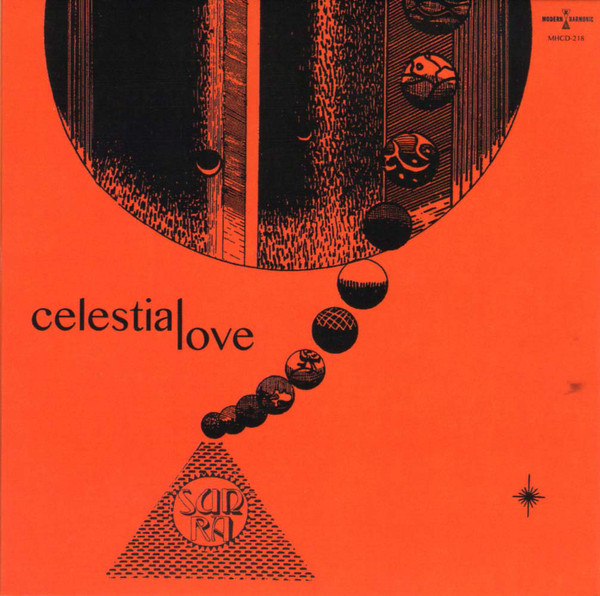
CULT CLASSIC: BOB FRANK-BOB FRANK.
Cult Classic: Bob Frank-Bob Frank.
In 2007, Jim Dickinson described Bob Frank as: “the best songwriter you never heard.” By then, he had known Bob Frank for forty-five years.
Jim Dickinson first met Bob Frank way back in the summer of 1963. Back then, he was part of a group of singers and songwriters hanging out in an old butcher’s shop in Crosstown Farmer’s Market. Bob was different from the rest of the group though. Aged just nineteen, the Memphis born singer had graduated in 1962 and was already writing his own songs. They were different from much of the music around in ’63.
Bob Frank drew inspiration from American history with heroes, anti-heroes and tragedies peppering his songs. His worldweary, lived-in voice brought the lyrics to life. He was a cross between a wizened sage and troubled troubadour. Given his undoubted talent, the future looked bright for Bob Frank. Sadly, it wasn’t. Nine years passed before he released his eponymous debut album Bob Frank. That was in the future.
When Jim Dickinson and Bob Frank first met, it was in a Memphis coffee shop, and they were both part of Memphis folk scene. He was nineteen year old native of Memphis who was born in 1944, and had graduated high school in 1962. Now he was devoting his life to music, folk music in particular.
Having met Jim Dickinson, Bob Frank came to regard him as a friend. He looked up to the talented multi-instrumentalist, who back in 1963, was like a one-man band. Jim Dickinson was also a natural and talented guitarist, who drew inspiration from the old blues players. The pair played together in coffee shops and house parties. Bob Frank would also write songs and this was how he made his living for a couple of years.
Over the next few years, Bob Frank and Jim Dickinson’s fortunes varied. During the sixties Bob Frank worked at Chips Moman American Studios. Meanwhile, Jim Dickinson recorded what has been described as the last great single released by Sun Records, Cadillac Man.
Then by the late sixties, Bob Frank was a member of the Memphis’ based band The Dixie Flyers. They went on to work with some of the biggest names in music, and in the early seventies, was Atlantic Records’ house band. While Jim’ Dickinson’s career was going from strength to strength, Bob’s career had stalled.
While his old friend’s career was progressing nicely, Bob Frank had headed to Vanderbilt University in Nashville. During his time in Nashville, Bob made ends meet by writing songs. Essentially, he was a hired gun, tasked with writing commercially successfully popular country music. However, disaster struck when in his second year, he was kicked out of University for playing his guitar in his dormitory. The University authorities had given him an ultimatum, either stop playing guitar or leave. So Bob Frank picked up his guitar and left, heading home to Memphis in 1964. Then second time lucky, he graduated.
Having returned home, Bob Frank got a job for a couple of years. His luck changed, and he got into Southwestern University. After two years, he graduated in early 1966 and later that year met an old friend.
That old friend was Jim Dickinson. Bob Frank was still playing in clubs. That was where he met his old friend The pair caught up and Jim Dickinson asked Bob Frank to play a couple of songs. Having heard them, Jim Dickinson told Bob Frank he was going to record him. Sadly, he lucked out. He was drafted in the summer of 1966. It would be another five years before he entered a recording studio.
Having been drafted in the summer of ’66 Bob Frank spent the next couple of years in Vietnam. He left the army in 1968. His luck hadn’t changed though. He returned to university in Memphis through the G.I. Bill. After a year Bob dropped out and headed to Nashville. Through an old friend Jerry Thompson, a journalist, Bob Frank got a job at Tree Publishing. History was repeating itself.
Yet again, Bob Frank was a hired gun. He was a songwriter for hire, and by day wrote throwaway country tracks. Having fought in Vietnam, now Bob Frank was a contract songwriter in Nashville. Jim Dickinson joked: “he didn’t know which was worse.” There’s more than a grain of truth in that. And irony. After six months, Bob Frank hitchhiked to California.
Having followed the sun to California, Bob Frank spent six months there. He hung out with other musicians. They wrote songs, sang and played live. In some ways, this was a reaction to Bob’s structured life. He’d been at University, fought in Vietnam and worked in Nashville. Now he was being himself and finding himself. He also found his future wife Deirdre.
The trips to California became a regular occurrence. Bob spent six months in California and six months in Nashville. During one of these trips, he met Deirdre. They lived together, had children and got married. Over forty years later, they’re still together. This pattern of spending time in California and Nashville was interrupted in 1971.
Although Bob Frank was still a songwriter for hire, none of the songs he’d written were being picked up by record companies. This must have made his job something of a thankless task so he quit. Then he caught a break. Vanguard Records, who’d been a big company in the late-fifties and sixties, wanted to sign him.
Bob Frank’s songs were pitched to Atlanta based Lowery Publishing by Cletus Haegart. Gary Walker who worked for Lowery Publishing liked what he heard. So a deal was struck with Vanguard Records for an album. Twelve songs were chosen for what became Bob Frank. All of the songs were written by Bob Frank and he co-produced his eponymous debut album with Cletus Haegart. Recording took place in two studios.
The first recording sessions took place at Woodland Studios, Nashville in late 1971. Bob Frank played guitar, Charlie McCoy harmonica and Buddie Spicher fiddle. The next sessions took place at Vanguard Studios in New York. Russell George’s bass and Eric Weissberg’s guitar were over-dubbed. Both were veteran of Vanguard sessions, so knew what was necessary. Once the over-dubbed parts were laid down, Bob Frank was ready for release.
There was a problem though. Bob Frank wasn’t happy about a photograph on the album and a guitar double on one of the songs. The photograph on the album wasn’t even him and instead featured someone who’d just walked out one of the houses on the cover. Rather than the photo, Bob Frank wanted Vanguard Records to use a picture a friend of his had drawn. The other problem was he didn’t like Eric’s double on Judas Iscariot. Vanguard said they wouldn’t release Bob Frank unless was he approved the album. He didn’t. Despite this, Vanguard went back on their word. Bob Frank was released.
At Bob Frank’s release party, he wasn’t happy. Rather than play songs from his album, he played a bunch of new songs. They reflected his new lifestyle. He was living an alternative lifestyle. His home was in the woods, where he lived with his wife, family and newly born baby. That Bob wasn’t playing his new songs, didn’t please the Vanguard people. When Maynard Solomon asked Bob to play songs from his new album, Bob suggested that they: ” buy the f***ing album.” That was the last Bob heard from Vanguard.
On its release Bob Frank wasn’t a commercial success. It sunk without trace. Despite this, a small group of people realised that Bob Frank was a very special album. The problem was, it was released at the wrong time. Bob Frank was the wrong album at the wrong time. Despite this, it’s gained cult status. Original copies of Bob Frank now change hands for huge sums of money. No wonder.
Opening Bob Frank is Wino, where Bob’s worldweary, languid vocal is accompanied by his trusty guitar. Bob tells the story about a down and out, who lives of cheap wine he buys with quarters he’s bummed of working men. As Bob delivers his lyrics, they come to life. You imagine the scenes. The poverty, squalor and hopelessness of the situation seems very real. Wino lives in he bottle he’s crawled into, but can’t crawl back out of.
She Pawned Her Diamond For Some Gold is the story of a woman who pawned her wedding ring for some dope. Bob’s vocal is a mixture of admiration, bravado and guilt. Accompanying him is an arrangement straight out of Nashville. Just fiddles, acoustic guitar and bass accompany Bob. There’s a twist in the tale though, as Bob sings: “just as my stash was running low.”
Waitsburg sees Bob draw inspiration from the music Ian Tyson and a true story. The song sounds as if it was recorded in the fifties. Especially, when you listen to the America Bob describes. It’s fifties America, not seventies America. Bob seems out of step with the times. As the lyrics unfold, they’re like a tragicomedy, as he tells the story of a “relationship” that ends up going badly wrong.
Cold Canadian Pines is one of the most poignant songs on Bob Frank. His heartfelt vocal quivers, as the song takes on a country sound. He sings about a young man dodging the draft. You can picture him as his father: “puts a bible in my hand, and told me not to kill.” Despite that, his father can’t understand why his son doesn’t want to go to war. With just a wistful fiddle, guitars and harmonica, this a truly beautiful, poignant song.
Judas Iscariot was probably the most controversial song on Bob Frank. Think about it, here’s a song about a soldier making a $30 bet with a guy called Judas that Jesus Christ is invincible. The song ends with Jesus hanging dead from a cross and Judas laying dead in a tree. In some Southern states, this would be enough to get the album banned. Having said that, Bob’s lyrics are cerebral and evocative. Whether by design or accident, he sounds like Bob Dylan on what’s another of the album’s highlights.
Before The Trash Truck Comes is a throwaway track. Bob remembers that when he write this song, he was just “clowning around.” That’s apparent. His lyrics are tinged with a dark humour, as sings about man dying on the ground looking for a quarter or two. That’s all he needs for his last meal.
Way Down In Mississippi sees Bob change direction. He plays this track like a blues. It’s maybe his homage to the blues greats he met in Memphis coffee shops. His lyrics are almost surreal, and tinged with humour. Especially, when he describes teaching a woman to swim. He sings: “I took her down to the river, she sank all the way to bottom, I never saw that girl again.” After that, he proceeds to seduce her sister. Bob’s vocal is accompanied by a wailing blues harmonica, which is the perfect foil for Bob’s vocal.
Jones And Me is a song about two old friends meeting and talking about their hopes and dreams, then how life really turned out. Bob and his old friend and talk about things that you both wanted to do but never did. It’s a tale of broken dream, regrets and two friends who grew apart. Listen carefully to the melody, and it’s Loch Lomond.
Return to Skid Row Joe is a song Bob wrote after a heavy night. It’s based upon what happened. When he woke up the next day, he sat down and wrote the lyrics about a poet, songwriter and down-and-out. Bob’s lyrics are vivid and evocative. The character comes to life. His life unfolds and we hear what’s caused him to fall so far. This is a woman and a bottle. Then comes the sting in the tale. Skid Row sells some pills which must be taken with alcohol. The person he’s pouring his heart out to, reluctantly agrees and when they went home passed out. It’s only then the listener realises Skid Row isn’t really a victim of circumstances. The result is a poignant track with a twist.
The Deer Hunter is a song about looking for love. It’s not a straightforward love song as Bob Frank doesn’t do songs like that. This is much more grownup. Full of symbolism, Bob’s voice is full of longing, as he yearns for love which has eluded him so far.
Memphis Jail closes Bob Frank. It’s the type of song everyone from early blues singers to Johnny Cash have written and sung. It’s all about getting drunk, stealing a car and ending up in a Memphis Jail. Weeping guitars and harmonica accompany Bob’s vocal, which is rueful and full of regret at his newfound plight.
Looking back at Bob Frank with the benefit of hindsight, there’s several reasons why the album wasn’t a commercial success. The main reason was it’s the wrong album at the wrong time. By 1972, singers like Bob Frank had been usurped by men in matching suits singing about Backstabbers. Bob however, was a real artist though. Here was an artist who had everything. He was a singer, songwriter and musician who wrote the twelve songs on Bob Frank. Not only that, but Bob produced his debut album Bob Franks. The only problem was, that Bob Franks was an album that was released too late. Folk, country and blues music wasn’t as popular in ’72. That’s what Bob Frank contains. Then there was the fact that neither Bob nor Vanguard promoted the album.
This all stems to the launch party. At Bob Frank’s release party, Bob wasn’t happy. Rather than play songs from his album, he played a bunch of new songs. They reflected his new lifestyle. That Bob wasn’t playing his new songs, didn’t please the executives from Vanguard. When Maynard Solomon asked Bob Frank to play songs from his new album, he suggested that they: ” buy the f***ing album.” That was the last Bob Frank heard from Vanguard and after that, the album sank without trace.
Since then, it’s become a cult classic and original copies of Bob Frank, now change hands for huge sums of money. It’s very much a collector’s piece where one of music’s best kept secrets made his musical debut. As Jim Dickinson described Bob Frank he’s: “the best songwriter you never heard” and that’s definitely the case.
Cult Classic: Bob Frank-Bob Frank.
CULT CLASSIC: PYRAMID-PYRAMID.
Cult Classic: Pyramid-Pyramid.
Although Winston Churchill’s said: “it is a riddle, wrapped in a mystery, inside an enigma” in the context of Russia, what’s become one of his most famous quotations can just as easily be applied to Robin Page’s Pyramid Records which has been the source of heated debate for over twenty years. This debate continues to the present day, with the two sides firmly entrenched in their believes about what has become one of the most controversial record labels in the history of modern music. Adding fuel to the fire was Pyramid’s eponymous debut album, another album that is shrouded in mystery.
That is something of an understatement, as nothing whatsoever is known about the group Pyramid, even their lineup when they recorded their debut album Pyramid. Speculation even surrounds when Pyramid recorded the thirty-three minute epic that features on their eponymous debut album. It’s claimed that Pyramid was recorded by Tony Robinson in Cologne, around 1975 and 1976. However, even that is disputed by those who despite the Pyramid Records’ story, and claim that the music was recorded at a later date and is part of some elaborate musical hoax.
This might seem far-fetched, but each Pyramid Records release is forensically examined in an attempt to prove or disprove the story of Robin Page’s Cologne-based label. No doubt this will the case with Pyramid, with musical armchair sleuths poring over the album and its sleeve-notes for clues in an attempt to unravel the mystery of Pyramid Records.
The Mystery Of Pyramid Records.
Pyramid Records was founded by British expat Robin Page, in 1972 who was forty and one of the leading lights in the burgeoning Fluxus arts movement. He had moved from London, England to Cologne, in West Germany in 1969, which had been his home ever since. However, Robin Page wasn’t the only expat who was living in Cologne during that period.
Cologne was also home to Tony Robinson, a South African, who had travelled from his home in Cape Town, to West Germany to work with the legendary Karlheinz Stockhausen, the Godfather of modern German electronic music at the WDR Studio. This was akin to serving an engineering apprenticeship, and would serve Tony Robinson well in the future. When he left Karlheinz Stockhausen’s employ, Tony Robinson went to work at Dierks Studio in Cologne, which was where the future Mad Twiddler met Robin Page.
By then, Robin Page was a successful and established artist whose work within the Fluxus movement was regarded as groundbreaking, daring and ambitious. One of the trademarks of Robin Page’s work was humour, which he used to challenge what was regarded as good taste within the art establishment. Before long, Robin Page’s paintings found an audience, and became particularly sought after. This was what Robin Page had dreamt of, and worked towards ever since ‘he had left’ art college in Vancouver. His new-found success and financial security allowed Robin Page to work towards fulfilling another of his dreams, making music.
Robin Page was so serious about making music, that he had invested some of his newfound fortune in building a recording studio. This wasn’t a luxurious state-of-the-art recording studio that was situated within a fashionable part of Cologne. Instead, the studio was in the basement of what looked like a derelict building. It was an unlikely place for Cologne’s newest recording studio, and where the nascent Pyramid Records first album was recorded.
It was then pressed by a Turkish entrepreneur, who just happened to keep his cutting lathe within the same building. Although the lathe was often to used to produce bootlegs, it was able to cut what became PYR 001, Pyramid Records’ first ever release. Robin Page then commissioned a local student to design the album cover to PYR 001, which was released later in 1972. Robin Page had just made with the release of Pyramid Records’ first album.
Just like many private presses released in 1972, Robin Page had only a small number of copies of PYR 001 pressed. He decided to press between 50 and 100 albums, which became the norm for Pyramid Records’ releases. Some of the albums were sold in Cologne’s art galleries and clubs, while Robin Page gave some of his closest friends copies of PYR 001. This included one of his one newest friends, Toby Robinson, the future Mad Twiddler.
Robin Page also managed to persuade Toby Robinson to provide the material for Pyramid Records’ second release. Toby Robinson’s recordings featured sounds that were bounced from one reel-to-reel tape recorder to another. After he had an album’s worth of material, a master was cut, and between 50-100 copies of PYR 002 were either given away to Robin Page’s friends, or sold in Cologne’s art galleries and clubs. However, there was a problem with the label’s first two releases.
Over the next few years, the master tapes and the last remaining copies of PYR 001 and PYR 002 were mislaid, and it was as if the two albums had never existed. This was something that those who were keen to disprove the existence of Pyramid Records seized upon at a later date.
During 1973, Pyramid Records released PYR 003 and PYR 004, but incredibly the master tapes and remaining copies of both album were lost in the mists of time. Forty-five years later, it’s as if Pyramid Records first four releases never existed. This would later provide more ammunition to those trying to disprove the very existence of Pyramid Records.
The first Pyramid Records release to survive is believed to be PYR 005, which is the Cozmic Corridors’ eponymous debut album. It’s one of just eleven recordings that remain in the Pyramid Records’ vaults. These recordings were made between 1974 and 1976 and include Pyramid’s eponymous debut album Pyramid.
The Further Mystery Of Pyramid.
Very little is known about Pyramid’s eponymous debut album, which like so much of the music recorded and released by Robin Page’s Pyramid Records, is shrouded in mystery. All that is known is known about Pyramid, is that they recorded their one and only album in Cologne around 1975 or 1976. Just like the majority of albums recorded for Pyramid Records, the recordist was Tony Robinson.
Joining Tony Robinson for the recording of what later became Pyramid, was a group of musicians whose identity is now unknown. Some of them were thought to be familiar faces, who had played on previous recordings for Pyramid Records. There’s also been speculation that some of the musicians who played on the various Pyramid Records’ recordings were members of well known Krautrock bands and had to dawn a cloak of anonymity. Sadly, nobody will ever know for sure the identity of the musicians who played on the various Pyramid Records’ recordings including Pyramid.
The musicians that recorded Pyramid were attempting to follow in the footsteps of The Cosmic Jokers, who had recently released two albums. These albums were the result of lengthy jam sessions which were recorded by Rolf-Ulrich Kaiser of the Ohr label. However, the Pyramid jam sessions were recorded by Tony Robinson.
He joined the musicians that would later become known as Pyramid at Robin Page’s Cologne studio, as the group embarked upon their first recording session. Setup in the studio were drums, bass and electric guitar for Pyramid’s rhythm section, which were augmented by a Hammond organ, mellotron, Mini-Moog, Fender Rhodes and Tibetan bells. The members of Pyramid put this impressive musical arsenal to good use during the recording of what became the first part of the lengthy genre-melting jam Dawn Defender. It took at least one further recording session to complete Dawn Defender, which lasted thirty-three minutes.
During Dawn Defender, the music is lysergic and spacious as Pyramid take the listener on a mind-blowing, magical mystery tour. All the time, the music ebbs and flows as Pyramid throw curveballs and spring surprises. To do that, they put their impressive musical arsenal to good use, and deploy a myriad of effects that adds to the trippy, otherworldly and spacious sound that gradually unfolds during thirty-three magical and mesmeric minutes. What follows is a captivating fusion of avant-garde, electronica, Krautrock, psychedelia and space rock, while Pyramid draw inspiration from everyone from Agitation Free, Amon Düül II, Ash Ra Tempel, to Hawkwind, Pink Floyd and unsurprisingly The Cosmic Jokers. The result was a truly ambitious, innovative and imaginative multilayered soundscape that is akin to a musical tapestry that was woven by Pyramid during just a few short sessions. It’s full of bubbling, dark, dramatic, dubby, eerie, futuristic, hypnotic, lysergic, otherworldly, rocky and sci-fi sounds that became part of what’s one of the most ambitious tracks that was recorded for Pyramid Records.
Despite having recorded what was an ambitious, genre-melting album, Pyramid was never released by Robin Page’s Pyramid Records. It became the latest album that was shelved, and never saw the light of day for twenty years. For Robin Page and everyone involved with the recording of Pyramid, this was a missed opportunity, as nobody got to hear the innovative thirty-three minutes Magus Opus, Dawn Defender. Sadly, later in 1976 Pyramid Records closed its doors for the final time.
Robin Page had founded Pyramid Records in 1972 with his newfound wealth, and set about fulfilling his dream of making music, and before long, he had decided to take this even further by releasing other people’s music. This he had been doing on a small-scale for the best part of four years. However, Robin Page didn’t see music as a way to make money, and instead, his actions could be construed as a mixture of benevolence and small-scale philanthropy. Maybe Robin Page wanted to highlight and champion new and exciting music, including music that other labels wouldn’t release. This he continued to do until he decided to emigrate, and start a new life in Canada.
With him, Robin Page took Pyramid Records’ master tapes and the remaining albums that he hadn’t sold or given away to his friends. Robin Page left almost nothing of Pyramid Records behind in Germany, and before long, it was as if the label had never existed.
That was until twenty years later, when Tony Robinson approached Virgin Records with some of Pyramid Records’ master tapes. This resulted in the release of Unknown Deutschland-The Krautrock Archive Volume 1 in 1996. Later that year, two further volumes followed, and Pyramid’s eponymous debut album was released for the first time in 1996. Collectors of Krautrock were keen to add the album to their collection and the album soon sold old. Since then, it’s been out of print and almost impossible to find.
Pyramid is one of the many cult classics that were recorded during the Krautrock era. Sadly, this hidden gem which it is thought was recorded in 1975 or 1976, and was belatedly released in 1996 never found the audience it deserved. Since then, Pyramid has become something of a cult classic. However, like the other albums released or recorded by Pyramid Records its authenticity is the source of heated debate by the earnest aficionados and self-appointed and often pompous experts of all things Krautrock.
Despite the debate, Pyramid features a truly talented group of musicians whose identity is sadly unknown, as they showcase their considerable skills on the genre-melting thirty-three minute lysergic Magnus Opus Dawn Defender.
Cult Classic: Pyramid-Pyramid.
HERBIE HANCOCK-THE PRISONER.
Herbie Hancock-The Prisoner.
Label: Blue Note Records.
In the summer of 1968 Herbie Hancock left Miles Davis Quintet to form his own group. This was a risky move, but one he felt he had to make to develop as a composer, bandleader and pianist.
During the summer of 1968 Herbie Hancock also released his sixth album for Blue Note Records, Speak Like A Child. It was one of the most ambitious albums of his career,
Speak Like A Child was an album that featured Herbie Hancock’s own philosophy which had been inspired by his childhood. The only problem was he knew his music didn’t reflect what was going on in modern day America. When he turned on his television there were reports about the economy which had taken a downturn, the riots in cities across America which was still blighted by racism.
Instead, Herbie Hancock wanted to offer “a forward look into what could be a bright future “ on Speak Like A Child. He wanted to rediscover some of the qualities of childhood: “we lose and wish we could have back — purity, spontaneity. When they do return to us, we’re at our best.” With all this in mind, Speak Like a Child where the listener can: “think and feel in terms of hope, and the possibilities of making our future less impure.”
Speak Like A Child featured Herbie Hancock’s sextet, and was recorded at Van Gelder Studio, Englewood Cliffs, on the ‘6th’ and ‘9th’ of March 1968. Joining pianist Herbie Hancock was drummer Mickey Roker, bassist Ron Carter and an unusual horn section that featured alto flautist Jerry Dodgion, bass trombonist Peter Phillip and Thad Jones on flugelhorn. Taking charge of production was Duke Pearson on a swinging album of hard bop that to some extent, was an extension of Maiden Voyage.
When Speak Like A Child was released it was well received by critics. However, just like so many ambitious and innovative albums critics and record buyers didn’t quite “get” Speak Like A Child. Despite that, Herbie Hancock was determined to continue to create music that pushed musical boundaries and took jazz in a new direction for his next albumThe Prisoner, which has just been reissued by Blue Note Records as part of their Tone Poet series.

The Prisoner.
By the time Herbie Hancock was ready to begin work on The Prisoner, executives at Blue Note Records knew it was his swansong for the label that had been his home since he released his debut Takin’ Off in 1962. Seven years had passed and now he was preparing to record his seventh album before signing a lucrative contract with Warner Bros. Records. However, Herbie Hancock was determined to go out on a high with the most ambitious album of his career The Prisoner.
Herbie Hancock said that The Prisoner was dedicated to the memory of Dr Martin Luther King, and was a “social statement written in music.” The Prisoner is now regarded as one of Herbie Hancock’s most ambitious albums and his greatest and grandest album since My Point of View. It finds Herbie Hancock who had just turned twenty-nine, leading an eleven piece band that featured some of the best and most inventive and imaginative jazz musicians.
Just like Speak Like A Child, Duke Pearson produced The Prisoner which was recorded at Van Gelder Studio,Englewood Cliffs, New Jersey. Joining Herbie Hancock who switches between acoustic and electric piano are drummer Tootie Heath, bassist Buster Williams. They were joined by flautist Herbert Laws, trombonist Garnett Brown, bass trombonists Tony Studd and Jack Jeffers, Johnny Coles on flugelhorn,bass clarinetist Romeo Penque and Jerome Richardson who also played flute. Joe Henderson switched between tenor saxophone and alto flute on the five tracks that became The Prisoner.
Herbie Hancock wrote I Have a Dream, The Prisoner, He Who Lives in Fear and Promise of the Sun. The other track was Firewater a Buster Williams composition. These tracks were recorded on the ‘18th,’ ‘21st’ and ’23rd’ of April 1969 with Duke Pearson, and once the album was completed it was scheduled for release later that year.
Not only was The Prisoner Herbie Hancock’s swansong for Blue Note Records, it was also his most ambitious album. The concept behind The Prisoner was a tribute to Dr. Martin Luther King who had been assassinated on April the ‘4th’ 1968 aged just thirty-nine. Herbie Hancock wants the music to evoke his spirit and dreams through what spacious, experimental post bop. For much of the album, the music doesn’t follow conventional patterns, and at times can be challenging. However, the music is still melodic and Herbie Hancock remembered to leave space in his compositions and arrangements during what’s still an accessible album with a story behind each composition.
Dr. Martin Luther King’s famous phrase I Have a Dream, lent its name to the album opener. It’s an ambitious eleven minute epic, and was followed by the title-track. Its composer, Herbie Hancock, explained that The Prisoner is about: “how black people have been imprisoned for a long time.” Firewater was meant to sympbolise the duality of the oppressor and the oppressed. Fire was meant to symbolise the heat in violence as well as the abuse of power, while the feeling of water recalls Dr. Martin Luther King. He Who Lives In Fear refers to Dr King as he “had to live in an atmosphere charged with intimidation.” Herbie Hancock explained how Promise Of The Sun which closes the album symbolises: “how the sun promises life and freedom to all living things, and yet blacks are not yet free.”
During The Prisoner, Herbie Hancock, Johnny Coles on flugelhorn and Joe Henderson on tenor saxophone and alto flute exchange a series of breathtaking solos and drive each other to greater heights. Joe Henderson plays a starring role and was picked out for praise by calling him one of the finest flautists classical or jazz music. That was high praise but it’s soon apparent why.
It’s a case of expect the unexpected during the solos which take twists and turns veering between alluring and provocative, to emotive, haunting, and soul-baring. There’s a starkness to the melodies which became sombre, and ruminative and invites reflection. No longer is there anything to celebrate and the joyous is gone after Dr. Martin Luther King was ruthlessly and heartlessly gunned down. As a result, the music makes the listener contemplate and wonder what might have been? It’s a powerful and poignant album from Herbie Hancock who was leaving Blue Note Records on a high.
When critics heard The Prisoner, the majority wrote positive reviews praising an ambitious, innovative and cerebral concept album. However, just like Speak Like A Child some critics didn’t seem to understand the album or the concept behind it. Ironically both Speak Like A Child and The Prisoner are regarded as classics.
When The Prisoner was released later in 1969, Herbie Hancock was a happy man and said: “Generally speaking, I’ve been able to get closer to the real me with this album than on any other previous one.”
Just like Speak Like A Child, he had also succeed in making an album that was accessible. “I want my music to evolve toward a point where it can contain that part of me that is relatively most musical to people–but in a jazz climate that can communicate to the general public. I am trying to write hummable tunes with a kind of rhythmic element people can be infected with, and one key to the rhythmic thing is the duple meter. People can identify more with duple meter, so the drummer does play a meter but does not, however, play rock per se, so you hear the drummer playing jazz.”
He went on to say: “Harmony is the element that offers even more flexibility. The differentiated positioning of chords in my Maiden Voyage is an example, and Speak like A Child is somewhat like a pop ballad. It’s an extension of the concept of simple melody and rhythm related to a more advanced harmony. It’s like a huge door with a lot of little doors to the outside public and I’m trying different doors.”
Herbie Hancock’s decision to try “different doors” meant he was able to compose and record music that was modern, exciting, experimental, innovative and different to everything that had gone before. He was ensuring jazz evolved and to do this, he expanded his band and added different instruments including the bass trombone and bass clarinet which other bands didn’t use.
What also helped he explained was that: “All my soloists, play a different style, but some part of each is related to each other, and I do some of all of their thing.” This he does throughout The Prisoner.
Different accents, clusters, splashes and sounds are used throughout The Prisoner by Herbie Hancock’s and his band combine musical genres to paint pictures and create music that is melodic, rich in imagery and full of emotion on what’s a powerful and poignant concept album that remembered Dr. Martin Luther King on what’s a now considered a jazz classic.
Herbie Hancock-The Prisoner.
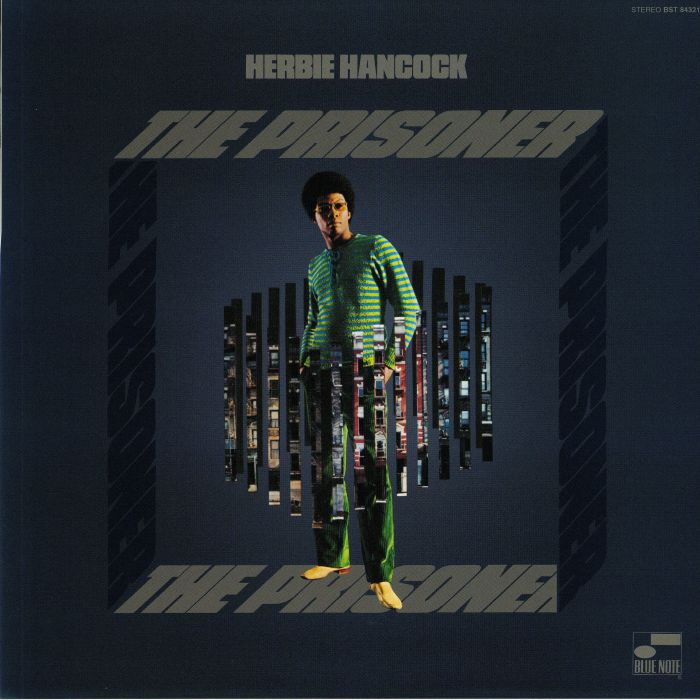
DANIEL HAAKSMAN-BLACK ATLANTICA EDITS.
Daniel Haaksman-Black Atlantica Edits.
Label: BBE Music.
Release Date: ’24th’ of April 2020.
Over the last few years, Berlin-based DJ, producer and record label owner Daniel Haaksman has been reworking tracks by everyone from CK Mann + Carousel 7 and Soul Brothers to Francis Bebey, Bonde Do Rôlé and Kaba Blon and these edits have become favourites of many top tastemaker DJs including Gilles Peterson and Mr Scruff. Now ten of these edits feature on Black Atlantica Edits, which will be released by BBE Music on the ’24th’ of April 2020. It’s the latest compilation from the globetrotting DJ and producer.
Daniel Haaksman has enjoyed a career that has already spanned three decades, and much of that time has been spent crisscrossing the globe DJ-ing. The rest of the time he’s spent working as a producer, running his own label Man Recordings and compiling and curating compilations.
This began in 1999 when he compiled Dub Infusions 1989–1999, with More Dub Infusions following in 2001. However, three years later came the most important compilation of Daniel Haaksman’s career so far.
This was Rio Baile Funk Favela Booty Beats which was released in 2004, and for the first time ever, music fans around the globe were able to hear the music of Rio de Janeiro’s favelas. Daniel Haaksman had just releaseda critically acclaimed compilation which put put Brazilian baile funk on the map
The following year, 2005, Daniel Haaksman founded his own label Man Recordings which would release the sound of Rio De Janeiro. Although three years passed before the nascent released any music, it went on to release a number of important and innovative releases by Daniel Haaksman, Diplo, Schlachthofbronx, Crookers and Bert On Beats, as well as top Brazilian artists like Deize Tigrona, Edu K, João Brasil, Lovefoxxx and Marina Gasolina from 2008 onwards.
Before that, More Rio Baile Funk Favela Booty Beats was released in 2008. It continued to introduce the music that Daniel Haaksman was passionate about to a wider audience.
In 2009, Daniel Haaksman compiled Bossa Do Morro for Universal Germany. However, the other compilation he curated in 2009 with DJ Sandrinho and DJ Beware was Rio Baile Funk Breaks which he released on Man Recordings.
Then in 2011 Daniel Haaksman released his debut solo studio album Rambazamba. By then, he was an experienced producer and globetrotting DJ who knew how to fill a dancefloor.
Daniel Haaksman was travelling the world and playing to huge audiences. This ranged from clubs and festivals to Hollywood wedding parties where he rubbed shoulders with stars of screen, stage and music. Other times, Daniel Haaksman was playing ghetto jams and during his eclectic sets he played everything from baile funk to house, kuduro and trap. Meanwhile, gunmen patrolled the parties, but still Daniel Haaksman’s mixes were still smooth and seamless as he crowds filled the dancefloor and partied into the small hours.
Away from DJ-ing in clubs and at festivals, between 2013 and 2016 Daniel Haaksman hosted the weekly radio mix show Luso FM on German public radio, WDR Funkhaus Europa. Still he managed to find time to work as a music journalist and wrote for various daily and weekly publications in his native Germany. Despite such a busy schedule Daniel Haaksman was still making music during this three year period.
Five years after the release of his debut album, Daniel Haaksman returned in 2016 with African Fabrics the much-anticipated followup to Rambazamba. It featured a whole host of guest artists including Colombian guitarist Bulldozer with Tony Amado, Dama Do Bling, Tshila and Throes + The Shine adding vocals. The album was released to plaudits and praise and Daniel Haaksman’s star continued to rise.
Over the next few years Daniel Haaksman continued to DJ and work as a producer. His DJ-ing career saw him continue to crisscross the globe, but he found time to write, record and release his third album With Love, From Berlin in 2019 which received positive reviews. Meanwhile, Daniel Haaksman was working on another project.
This was the album of dancefloor friendly reworks that later became the album Black Atlantica Edits. It’s an album that explores the Afro-Latin diaspora and features ten artists from different parts of the globe. There’s edits of tracks by Bonde Do Rôlé, CK Mann + Carousel 7, DJ Havaiana, Francis Bebey, Kaba Blon, Master Chivero, Pinduca, Soul Brothers, Super Mama Djombo and Super Mama Djombo on Black Atlantica Edits whose title was inspired by Paul Gilroy’s 1993 book The Black Atlantic : Modernity and Double Consciousness.
In his book Gilroy investigates how the Black diasporic history of the Atlantic has challenged art and knowledge to find new forms. This is especially true with music. Daniel Haaksman looked at Gilroy ́s theory that the Black Atlantic is a transnational cultural realm when he began the process of deconstructing and reworking the ten tracks that eventually became Black Atlantica Edits.
The only difference between Gilroy ́s book and the forthcoming album of edits is that Daniel Haaksman has added an “a” the “Atlantic” in the title. There’s a good reason for this, and this is to highlight the non-English speaking Portuguese, Spanish or French cultures that are considered to be part of the wider “Black Atlantic space.” This includes countries like Brazil and Angola, as well Cameroon, Mali and Peru. Each and every one of these countries have been affected by the transcontinental dialogues and the resulting fusion of cultures. Musicians from each of these countries contribute tracks to Black Atlantica Edits.
Victoria Santa Cruz is from Peru and opens Black Atlantica Edits is with Me Gritaron Negra. It’s a powerful song full of social comment as it deals with racism, prejudice and intolerance within the Latino community especially against Afro Latinos.
Sunny Crypt is by Francis Bebey from Cameroon and has an understated and even wistful sound as a flute, percussion and birdsong combine. Together they create a cerebral and later joyous song that makes us think of the things around us that we sometimes take for granted like nature and the changing of the seasons and the arrival of spring and summer.
From Cameroon Daniel Haaksman takes the listener to Brazil with his edit of Vamos Farrear by Pinduca. It’s a joyous, celebratory edit that’s akin to a call to dance. This is sure to become a favourite of dancers and DJs.
Black September by Master Chivero is a song from the Zimbabwean War of Liberation and was sung in the guerrilla camps. A mbira, thumb piano, drums and gourds accompany Master Chivero on this edit of Black September, which is powerful protest song.
Super Mama Djombo are from Guinea Bissau and the edit of Dissan Na M´bera (Suur Di No Pubis) was reworked in such a way by Daniel Haaksman that it was more “mix friendly.” He’s succeeded in dong so, and this is a quite beautiful and welcome addition to the compilation.
By 1971, CK Mann from Ghana was known as the King Of Highlife. The music he made was a unique fusion of African, European and Latin American music and Asafo Beesuon his best known song is proof of this. It’s a collaboration by CK Mann and Carousel 7 that originally was thirteen minutes long. However, Daniel Haaksman edited it to just over six minutes of prime Afro-funk that’s one of the highlights of Black Atlantica Edits.
During their career, South African based Soul Brothers have released over thirty albums. A tantalising taste of the Kings of their trademark take on mbaquanga music is Akabongi. It’s joyous, uplifting, timeless and dancefloor friendly.
Pinduca from Brazil contributed Vamos Farrea which is an urgent, driving genre-melting track. It’s a fusion of Afro-carimbo, funk, jazz and soul that results is a truly memorable track designed to brighten up any day.
Another genre-melting track comes courtesy of the Brazilian trio Bonde Do Rolê. They successfully fuse Afrobeat, calypso and North Eastern Brazilian surf music on Dança Molengo.
Closing Black Atlantica Edits is Moribiyassa from Malian balun group Kaba Blon. They combine hip hop with traditional music including samples. It’s a captivating combination, especially the rap which is delivered at breakneck speed in a call and response style and accompanied by percussion. Daniel Haaksman has kept the best until last and there’s no doubt about that.
For someone who has spent so much of his career highlighting what modern Brazilian music has to offer, Black Atlantica Edits is something of a departure for Daniel Haaksman. While he returns to Brazil for two of the ten tracks, he heads further afield as he takes the listener on a journey to through nine countries in South America and Africa.
During this journey he celebrates the music made by some truly talented musicians in Brail, Cameroon, Ghana, Guinea Bissau, Mali, Peru, South Africa and Zimbabwe. Sadly, most people won’t have heard of most the artists and groups who contribute songs that are beautiful, celebratory, joyous and uplifting while other wistful sounding, cerebral and thought-provoking. There’s songs about war and protest songs, while the most powerful is Victoria Santa Cruz’s Me Gritaron Negra highlights racism, prejudice and intolerance. Such a powerful song is the perfect way to open Black Atlantica Edits, which is a captivating celebration of black creativity from musicians in nine countries.
These songs were chosen and edited by Berlin-based tastemaker DJ, producer and record label owner Daniel Haaksman. While Black Atlantica Edits showcases his impeccable musical taste and editing skills, the compilation acts as a perfect primer that offers a tantalising taste to artists and the musical genres that sadly, many people never encounter but thanks to Daniel Haaksman do on Black Atlantica Edits
Daniel Haaksman-Black Atlantica Edits.

DR JOHN THE NIGHT TRIPPER-THE SUN, MOON AND HERBS.
Dr John The Night Tripper-The Sun, Moon and Herbs.
Label: Speaker’s Corner.
By July 1970, twenty-nine year old Dr John was about to begin recording his fourth album for Atco which eventually became The Sun, Moon and Herbs which has just been reissued on vinyl by Speaker’s Corner. Dr John had written six new track and cowrote Familiar Reality (Opening) with Jesse Hill. These tracks he planned to record with what was an all-star band in London, Miami and Los Angeles. He hoped that his musical friends would play their part in an album that transformed his fortunes.
Dr John had already released three ambitious genre-melting albums for Atco, that had failed to find the audience they deserved. He knew deep in his heart he knew that if his next album didn’t chart he could be looking for a new label. The problem was critics, record buyers and even the founder of Atlantic Records didn’t understand his music which was ahead its time. That was the case with his debut album Gris Gris, which was released in 1968 and marked the start of Dr John’s Atco Records’ years.
Gris Gris.
When a copy of Dr John’s debut album Gris Gris was sent to Atlantic Records’ founder Ahmet Ertegun he disliked the album so much, that he was reluctant to even release the album and said: “how can we market this boogaloo crap?” This wasn’t the response that Dr John had been hoping when he recorded Gris Gris which was a combination of psychedelia, blues, free jazz, R&B, soul, funk, jazz. Add to this psychedelic stew the authentic music of the melting pot that is New Orleans and the voodoo image that Dr John had carefully cultivated and Gris Gris was like no other album that Atlantic Records had released. That presented the label with a huge problem.
Atlantic Records’ PR department had idea to promote an album like Gris Gris, as they had no cultural reference points, nothing to compare the album to. Despite the best efforts of Atlantic Records PR department, when Gris Gris was released on January the ’22nd’ 1968 and introduced the world to Dr John The Night Tripper, it failed to trouble the charts and neither critics nor record buyers understood Dr John’s groundbreaking debut album. However, like so many albums that fail to find an album on their release, Gris Gris was later reappraised and belatedly, was recognised as a seminal album that was the start of a rich vein of form from Dr John.
This was the start of a six-year period when Dr John could no wrong, and released seven innovative albums that are among the his finest work. These albums are the perfect introduction to Dr John, who followed up Gris Gris with Babylon.
Babylon.
Babylon which was recorded in late 1969, which was a turbulent time for Dr John, who was experiencing problems in his personal life. “I was being pursued by various kinds of heat across LA” and this influenced the album he was about to make. So would the assassinations of Bobby Kennedy and Martin Luther King Jr and the Vietnam War which is referenced in The Patriotic Flag-Waiver. The title-track Babylon was recorded in 3/4 and 10/4 time, and featured Dr John thoughts on the state of world in late 1968. It was a part of a powerful album that was released in early 1969.
Babylon was released on January the ’17th’ 1969 was a powerful, cerebral and innovative genre-melting album which socially had much in common with Dr John’s debut album Gris Gris. However, critics didn’t ‘get’ Babylon and the album which failed commercially. However, just like Gris Gris, Babylon was later reappraised by critics and nowadays is regarded as one of his finest albums and a minor classic.
Remedies.
Following the commercial failure of Babylon, things went from bad to worse for Dr John, before he could begin work on his third album Remedies. This started when a deal went south, and he was arrested by the police and ended up in jail. It was a worrying time for Dr John who was parole, and if he ended up with a parole violation, he knew he might end up in the infamous Angola jail. That didn’t bare thinking about, and already Dr John was desperate to get out of the local jail. However, he needed someone to post bail, so contacted his managers who he remembers: “were very bad people.” This proved to be an understatement.
Not long after this, Dr John’s managers had him committed to a psychiatric ward, where he spent some time. By then, it was obvious to Dr John that his managers were no longer playing by the rules. All he wanted to do was make music, and everything that had happened recently were nothing to do with music. Instead, it was all connected to Dr John’s increasingly chaotic lifestyle, which made it all the more frustrating for those that realised just how talented the Gris Gris Man was.
Eventually, having managed to put his problems behind him, Dr John wrote the six tracks that became Remedies using his real name Mac Rebennack. Among the tracks Dr John had written was What Goes Around Comes Around which later became a favourite during his live shows and Mardi Gras Day which paints pictures of New Orleans when it comes out to play. Very different was Angola Anthem which was inspired by a friend of Dr John’s who had just been released from Angola, the Louisiana State Penitentiary after forty years. Dr John paid tribute to his friend with an eighteen minute epic that took up all of side two of Remedies. It was produced by one of the most successful producers of the day.
Although Harold Battiste had produced Gris Gris and Babylon, he was replaced by Tom Dowd and Charles Greene who were tasked with transforming Dr John’s career. However, although Tom Dowd was enjoying the most successful period of his career, he had never worked with anyone like Dr John.
When the recording of Remedies began, Dr John was joined by a small band that featured Cold Grits who played drums, bass and guitar and backing vocalists Shirley Goodman, Tami Lynn and Jessie Hill who also played percussion. Dr John played piano, added his unmistakable vocals and despite losing part of a finger during a shooting a few years previously, he played guitar on Remedies which was released in the spring of 1970.
Just like his two previous albums, critics didn’t seem to understand Remedies, which was credited to Dr John The Night Tripper. Remedies was another ambitious album of genre-melting, voodoo-influenced album where Dr John The Night Tripper through everything from psychedelia, blues, R&B, soul, funk and jazz into the musical melting pot and gave it a stir to create an album where the music was mysterious, otherworldly and haunting.
That was the case from the album opener Loop Garoo while there’s a darkness and defiance to the lyrics to the hook-laden What Comes Around (Goes Around) which showed another side to Dr John. His recent problems and experiences had influenced Wash, Mama, Wash where soaring backing vocals and horns accompany Dr John on a track that is tinged with humour. The horns return and play their part in the success of Chippy Chippy, before the darkness describes and music becomes moody and broody as chants, moans and cries emerge from this lysergic voodoo stew of Mardi Gras Day which gives way to the otherworldly eighteen minute epic Angola. It brought Remedies to a close, which was a potent and heady brew from Dr John The Night Tripper.
By the time Remedies was released on April ‘9th’ 1970, some FM radio stations had picked up on the album, and were playing it on their late shows. Despite the radio play Remedies had received, the album never troubled the charts, and it was only much later that record buyers realised that they had missed out on another important and innovative album from Dr John The Night Tripper.
The Sun, Moon and Herbs.
Despite Dr John The Night Tripper’s first three albums failing to find an audience, many of his fellow musicians were fans of his music, and were only too happy to feature on his fourth album The Sun, Moon and Herbs. This included Eric Clapton, Mick Jagger, Bobby Whitlock, Graham Bond, Carl Radle, Jim Gordon and Doris Troy. They were joined by The Memphis Horns as Dr John and Charles Greene took charge of production as they recorded the album at Trident Studios in London, Dimension Recorders in Hollywood, Los Angeles and Criteria Sound in Miami. When the album was finished it was the most important of Dr John The Night Tripper’s career.
He and his all-star band were responsible for a dark and swampy sounding album that is rich in imagery and paints pictures of New Orleans on a hot, sticky night as thunder crackles and rumbles in the distance like the drums on The Sun, Moon and Herbs. When it was released on August the ’31st’ 1971, still critics struggled to understand Dr John’s music. However, this time, The Sun, Moon and Herbs which featured an all-star cast, spent five weeks in the US Billboard 200 and peaked at 184. At last, Dr John’s music was starting to find a wider audience. However, given the quality of the music this cult classic should’ve been much more successful.
Side One.
The Sun, The Moon Herbs opens with Black John The Conqueror where Dr John plays a dramatic, jangly piano solo before his lived-in, worldweary vocal enters. He’s accompanied by drums, a pulsating bass and soaring, soulful female backing vocalists. They provide the perfect contrast to Dr John’s vocal, By then, the horns have entered and the arrangement has grown as elements of soul, New Orleans funk and jazz are combined by Dr John and his all-star band and backing vocalists. They play a starring role in a track that’s dramatic, atmospheric, funky , soulful and features some of the best lyrics on the album.
Stabs of grizzled horns open Where Ya At Mule before Dr John’s piano ushers in the backing vocalists and guitar. They accompany Dr John whose voice veers between joyous and hesitant as if not sure what to expect when he arrives home. Meanwhile, braying horns, a bluesy guitar and backing vocalists combine elements of jazz, New Orleans funk, swampy soul and gospel-tinged harmonies. Later, a searing guitar cuts through the arrangement, a trumpet plays and swaying harmonies accompany Dr John. His vocal grows in power and becomes joyous and emotive as the drama builds as the soulful backing vocals, growling horns and searing rocky guitar combine as the arrangement to one of the album’s highlights sways and swings.
Craney Crow has a slow, hesitant start, with the arrangement atmospheric and almost eery. A pulsating bass, rumbling drums, haunting guitar, mournful, braying horns, chanted vocals and sweeping harmonies are combined with a sample of child’s voice. Eventually, Dr John’s growling vocal enters, accompanied by soulful backing vocals. They’re a contrast to Dr John’s raspy, menacing growl. Behind him, drums are spacious, atmospheric, while guitars and bass play occasionally. Mostly, it’s call and response between Dr John and the backing vocalists. When Dr John sings, the lyrics are atmospheric, telling of the colourful side of New Orleans. Meanwhile, a slide guitar, prowling bass, drums, percussion and brief bursts of Hammond organ play their part in this dark, atmospheric and moody sounding song with a soulful side thanks to the backing vocalists
Side Two.
The tempo rises on Familiar Reality-Opening as the rhythm and horn section combine before Dr John’s vocal enters. It’s loud and strong as he plays piano. Meanwhile, horns soar above the arrangement and is accompanied by a weeping and later searing, scorching guitar. Add to this percussion and a pulsating bass and Dr John’s jangling piano. Later, his vocal becomes a soliloquy as horns bray, percussion plays and the bass prowls. By then, Dr John and his band are in the groove and are fusing jazz, funk, blues and R&B during one of the album’s highlights which features a standout performance from his all-star band.
Understated and melodic describes the shuffling introduction to Pots On Fiyo (File Gumbo/Who I Got To Fall On (If the Pot Gets Heavy)). After the meandering, melodic opening, Dr John whispers the vocal as he plays his piano. Quickly his vocal get stronger as backing vocalists accompany him, their voices high. Congas play, accompanying the piano as the arrangement starts to fill out, the tempo rising. Drums, percussion, rasping saxophone and soulful backing vocalists join in. Their voices grow in power as they repeat the same line while guitars, rhythm and the horn section play. They’re part of a genre-melting arrangement briefly that latterly, becomes discordant and adds to the atmospheric and eerie ending.
A tuba plays slowly opening Zu Zu Mamou before the rhythm section guitar, percussion and then Dr John’s whispery vocal enters. It’s joined backing vocalists who add to atmospheric, sinister and moody meandering arrangement. Behind Dr John’s vocal, a bass prowls menacingly, drums rumble, as backing singers coo and percussion adds to the almost pedestrian paced arrangement. Occasionally a piano or guitar plays, but everything just enters and disappears, and at one point it’s just Dr John and a backing vocalists whispering the lyrics eerily. Once the arrangement rebuilds, it’s just Dr John, backing vocalists, rumbling drums, a meandering guitar and wailing trumpet. By the end, one can only marvel at what’s been eight of the eeriest and most atmospheric minutes of music brought to you courtesy of Dr John.
The Sun, The Moon and Herbs, ends with Familiar Reality-(Reprise), a short track, which begins with a tuba playing, and Dr John’s whispery vocal, almost rapping, against a backdrop of slow, spacious drums. Then suddenly, out of nowhere, the track burst joyously into life. Backing vocalists sing as if giving thanks and a guitar piano and drums fill out the arrangement as they combine to bring the track to a close. Sadly, this only lasts for under two minute and although short and sweet is ensures the album closes on a high.
Dr John The Night Tripper was joined on The Sun, Moon and Herbs by an all-star band who recorded an album of genre-melting, voodoo-influenced, swampy sounding music that was rich in imagery and paints pictures of the New Orleans and sometimes of the Big Easy’s dark underbelly.
To do that, Dr John The Night Tripper and his all-star band combine elements of blues, funk, gospel, jazz, Louisiana R&B, rock and soul. This coproducers Dr John and Charles Greene throw into the musical melting pot and give it a stir to create an album where the music was dark, moody, mysterious, otherworldly, eerie, haunting and swampy. It’s the sound of hot, steamy night in New Orleans as thunder claps and crackles and forks of lightning light up the night sky. This is the pictures that Dr John The Night Tripper, his all-star band and backing singers create on The Sun, Moon and Herbs which became his first album to chart.
Sadly, The Sun, Moon and Herbs stalled at just 184 in the US Billboard 200 and dropped out of the chart after just five weeks. However, it was a start and gave Dr John as he became known as something to build on. He released three more albums on Atco Records Dr John’s Gumbo, In the Right Place and Desitively Bonnaroo which came out in 1974. The seven albums that Dr John released on Atco Records snow different sides to his music which continued to evolve over a six-year period.
Between 1968 and 1974 Dr John released what was some of the finest music of a long and illustrious career. Sadly, for much of his Atco Records’ years critics, record buyers and some of the people who ran and staffed the record label didn’t “get” Dr John. He was a musical visionary who was way ahead of his time and it was only later that albums that critics and record buyers understood and appreciated albums like Babylon and The Sun and Moon and Herbs which have been released on 180 gram by the Speaker’s Corner label. Unlike so many rereleases on vinyl The Sun and Moon and Herbs is an all analogue reissue which allows newcomers to hear the album the way the Dr John The Night Tripper intended.
It’s a case of sit back and enjoy what’s without doubt one of Dr John The Night Tripper’s finest albums The Sun and Moon and Herbs. It’s a reminder of what’s now regarded as a golden era for Dr John who for six years could do no wrong. He enjoyed a career that spanned six decades and sadly, Dr John passed away nearly a year ago on the ‘6th’ of July 2019. That day when a true musical legend was taken from us aged just seventy-seven, and sadly, there will never be anyone quite like Dr John, a charismatic showman, musical visionary who supremely-talented singer, songwriter and piano player par excellence as The Sun, Moon and Herbs shows.
Dr John The Night Tripper-The Sun, Moon and Herbs.
ELVIND AAARSET I JAN BANG-SNOW CATCHES ON HER EYELASHES.
Eivind Aarset I Jan Bang-Snow Catches On Her Eyelashes.
Label: Jazzland Recordings.
Although Eivind Aarset and Jan Bang have been collaborating since the early nineties, the pair have never recorded an album as a duo. That was until they recorded Snow Catches On Her Eyelashes, which was recently released by Jazzland Recordings. It features ten new soundscapes and is based upon the live concept that emerged following the release of Eivind Aarset’s 2012 album for ECM, «Dream Logic», which was produced by Jan Bang. That is just part of of the story.
While «Dream Logic» was part of the inspiration for Snow Catches On Her Eyelashes, so were Jan Bang’s two solo albums on Samadhisound and Jazzland. These albums would inspire the pair to produce Snow Catches On Her Eyelashes which like the previous projects they’ve worked on, is ambitious, innovative and features music that is both modern and has a timeless sound.
To create this sound, Eivind Aarset and Jan Bang combine elements of disparate mutual genres including contemporary classical, dub, pop and Norwegian folk music. This they do with a little help from their friends
Previously, the pair that have collaborated with everyone from Sly and Robbie to Jon Hassell, Bugge Wesseltoft and Nils Petter Molvær. However, they wanted to record Snow Catches On Her Eyelashes as duo. Despite this, Eivind Aarset and Jan Bang invited various guest musicians including Anders Engen, Audun Erlien, Erik Honoré, Hilde Norbakken, Nils Petter Molvær and Sidsel Endresen to augment them when they recorded the ten new soundscapes that became Snow Catches On Her Eyelashes. To do that, they combined traditional instruments and technology.
Recording of Snow Catches On Her Eyelashes took place at Punkt Studio, Kristiansand. Other recordings took place at Amper Tone Studio and Eivind Aarset’s home. A total of ten soundscapes were recorded with Eivind Aarset playing guitar, bass and adding electronics, while, Jan Bang took charge of programming, sampling and editing. The pair have worked together for the best part of three decades and have formed a successful partnership but even their talents needed augmented.
They were joined by bassist Audun Erlien, pianist Hilde Norbakken, trumpeter Nils Petter Molvær and Erik Honoré on synths. Sidsel Endresen contributed a vocal sample for the album opener Purplebright. Anders Engen played cymbals on The Witness and was responsible for additional sampling on the track. These tracks became Snow Catches On Her Eyelashes which was produced by Eivind Aarset and Jan Bang.
Once the album was recorded, Two Days In June and Nightspell were mixed Eivind Aarset who joined forces with Jan Bang to mix Asphalt Lake. The rest of the album was mixed by Ingo Krauss. However, when it came to mastering the album, it was passed to Helge Sten who is one of Norway’s top mastering engineers. After the mastering was completed the album was ready to release.
Eivind Aarset and Jan Bang recently released Snow Catches On Her Eyelashes and what’s their first collaboration as a duo leaves a lasting impression. That’s the case from the album opener Purplebright, a carefully crafted electronic soundscape where a guitar notes combine with samples and synths and become part of an arrangement that ebbs, flows, sweep and swirls and is a tantalising taste of what’s to come. Quite different is Asphalt Lake which features an industrial influence as the arrangement pulsates. Despite this, there’s still a melodic side to the track that showcases Eivind Aarset and Jan Bang ability to create ambitious and innovative music. Pianist Hilde Norbakken’s contribution on Before the Wedding can’t be underestimated. Here contrasts abound as the piano adds a melodic sound to the electronic soundscape. It’s also inventive and shows that the duo are prepared to think outside the box and takes chances.
Many artists have combined contrasting sounds and genres in the past and this has resulted in disastrous consequences. Not here though, as Eivind Aarset and Jan Bang find ways to combine contrasting sounds and make them work. They are best described as sonic adventurers who make what seems impossible possible.
Similarly, how many artists can combine elements of contemporary classical music, dub reggae, electronic music, jazz, Norwegian folk music and pop? Eivind Aarset and Jan Bang can, and do so successfully on Snow Catches On Her Eyelashes. They combine a wistful piano with elements of Norwegian folk on the beautiful Two Days In June. One wonders at the story behind the track?
Outer Sphere is a shorter and much more experimental sounding track, while The Witness has a cinematic sound as the duo paint pictures with their music. Inner Sphere is a dramatic, eerie and experimental soundscape that lasts just two magnificent minutes. Serenade meanders along genres melting into one as this understated soundscape invites reflection. Very different is Monochrome, a dark filmic sounding track. Closing Snow Catches On Her Eyelashes is Nightspell where elements of electronic, experimental and jazz combine to create a track that will cast a spell during the day or night.
After the best part of three decades collaborating, Eivind Aarset and Jan Bang were more than ready to collaborate on an album. Eventually, they made time and the result was Snow Catches On Her Eyelashes which is an album that showcases their respective and combined talents. Along with some of their musical friends they combined disparate genres to create music that was ambitious, innovative, modern and timeless.
They take chances by combining sounds and genres that under normal circumstances shouldn’t work but does. The ten soundscapes on Snow Catches On Her Eyelashes fits together seamlessly like a jigsaw and the music is variously beautiful, cinematic, dramatic, eerie, melancholy, ruminative and invites reflection. Snow Catches On Her Eyelashes akin to intricate musical tapestry woven by Eivind Aarset and Jan Bang, two musical adventures with maverick tendencies who continue push musical boundaries to their limits and dare to be different.
Eivind Aarset I Jan Bang-Snow Catches On Her Eyelashes.
SPIRITUAL JAZZ VOLUME 11: STEEPLECHASE.
Spiritual Jazz Volume 11: SteepleChase.
Label: Jazzman.
In 1959, Anders Dyrup founded Jazzhus Montmartre, which was situated in Dahlerupsgade, in the Danish capital Copenhagen. On the opening night, American clarinetist George Lewis had been booked to play and performed there for a fortnight. He was the first of many great jazz musicians who played at the Cafe Montmartre as the venue was sometimes known.
Two years later, in 1961, the Cafe Montmartre moved to Store Regnegade which was its home until 1976.
Just a year later in 1962, Nils Winther arrived at first the Cafe Montmartre for the first time to see Bud Powell. By then, it was the venue to see jazz and that remained the case over the next five years when the great and good of American jazz. He saw Dexter Gordon, Frank Foster, Hank Mobley, Horace Silver and Sonny Rollins who were all booked to play three weeks at a time. The Cafe Montmartre was thriving.
Sadly, nothing lasts for ever and by the late sixties the venue was struggling and was the Cafe Montmartre had financial problems. It may have folded if it wasn’t for a group of jazz fans offering to help. This included Nils Winther.
He was part of the group who booked musicians and bands to play at the Cafe Montmartre. This included Danish jazz bands who they were unable to pay because of the venue’s financial predicament. However, it looked good having played at such a prestigious venue as the Cafe Montmartre.
During the sixties, it had been used by Danish radio for broadcasts. The Cafe Montmartre was also a favourite venue for American jazz musicians touring Europe.They made their way to what was still regarded as Copenhagen’s top jazz venue. It was certainly a favourite of Dexter Gordon and Kenny Drew who were living in Copenhagen, which was how Nils Winther became friends with them.
Through his friendship with Dexter Gordon and Kenny Drew, Nils Winther was able to record sets by visiting soloists. This included alto saxophonist Jackie McLean who in 1972, asked Nils Winther if he would release an album of live recordings from August 1972?
At the time, Nils Winther was still a student at Copenhagen University, but decided to found a new record label, which he called SteepleChase Records. It would go on to release nearly 1,000 including seven albums by Jackie McLean. The first was Live At Montmartre, which was released later in 1972 and was the first album that the nascent SteepleChase Records’ released.
This was followed by by Duo, a collaboration between Kenny Drew and Niels-Henning Ørsted Pedersen which was released by SteepleChase Records in 1973. Nils Winther’s label would release albums by Joe Albany, Johnny Griffin plus Paul Bley and Niels-Henning Ørsted Pedersen during 1973.
During 1974, SteepleChase Records released eighteen albums by American and European jazz musicians. By then, Nils Winther was actively looking for new artists to sign to his label.
He travelled to America and stayed with Jackie McLean while he started looking for artists to sign and record for SteepleChase Records. He recorded Jackie McLean, Andrew Hill and Billy Gault which were among the albums released during 1974 and 1975. By then, the label was expanding and growing in popularity across Europe.
Over the next few years, Nils Winther worked with Andrew Hill, Dexter Gordon, Duke Jordan, Horace Parlan, Jackie McLean, Kenny Drew, Lee Konitz and Stan Getz. These giants of jazz had released groundbreaking albums for some of jazz’s premier labels including Atlantic, Blue Note Records, Pacific Jazz and Impulse! Many of these albums by the time they recorded for SteepleChase Records were now regarded as classics. Nils Winther had signed some of the greatest musicians of the last thirty years and continued to do so.
Nils Winther was always looking to add SteepleChase Records’ burgeoning roster, and between 1974 and 1984 added a mixture of familiar faces and new names. This included Mary Lou Williams Trio, Billy Gault, Sam Jones Quintet, Jim McNeely Quintet, Ken McIntyre Sextet and Michael Carvin. They’re among the ten tracks that feature on Spiritual Jazz Volume 11: SteepleChase. It’s the latest instalment in Jazzman’s long-running, commercially successful and critically acclaimed Spiritual Jazz compilation series.
Opening Spiritual Jazz Volume 11: SteepleChase is Ode To Saint Cecile, which was recorded by the Mary Lou Williams Trio during a session at CI Recording on July the ‘8th’ 1975. This lowkey but funky blues didn’t feature when the album Free Spirits was released in 1976. It wasn’t until the album that this hidden gem made its overdue debut. Ode To Saint Cecile returns for well deserved encore and is a potent reminder of the Mary Lou Williams Trio’s only recording for SteepleChase Records.
Billy Gault’s one and only album as bandleader was When Destiny Calls, which was released by SteepleChase Records in 1975. One of the highlights of the album was the impassioned and spiritual sounding The Time Of This World Is At Hand, which like the rest of the album has been inspired by his faith.
During his career, bassist Sam Jones was one of leading lights of hard bop and played on hundreds of sessions as a sideman. By 1978, the fifty-three year old was about to record his ninth album as bandleader with the Sam Jones Quintet. Their Visitation album was released later in 1978 and included Jean Marie a modal composition by pianist Ronnie Matthews. His piano plays its part in the sound and success as it breezes, sweeps and surges along before becoming mellow as Sam Jones takes centrestage on what’s one of the compilation’s highlights.
By the time René McLean released his debut album Watch Out in 1975, he was already twenty-eight and a talented, versatile and experienced multi-instrumentalist. He had been taught by his father Jackie and Sonny Rollins and could play alto, tenor and soprano saxophones as well as flute, ney and shakuhachi. René McLean also wrote four of the tracks on the album including Aida which he wrote for his wife. It’s a beautiful, romantic sounding track that meanders along tugging at the heartstrings.
Jim McNeely Quintet recorded what became their Rain’s Dance album between the ‘4th’ and ‘6th’ of October 1976. One of the tracks the Chicago born bandleader and pianist decided to record was Tipe Tizwe, which was inspired by an African folksong. His piano and later, the congas play a supporting role to Sam Jacobs’ Mbira as the band play with an urgency and offer a tantalising taste of Zimbabwean music. Nearly two years passed before the album was released in 1978 and sadly , Jim McNeely Quintet’s debut album was also their only release.
When Johnny Dyani with John Tchicai and Dudu Pukwana released Witchdoctor’s Son in 1978, it featured a cover of the traditional African song Magwaza. It’s not so much a cover as a reinvention of the original which is transformed into a thirteen minute genre-melting opus thanks to Johnny Dyani bass, Afredo Do Nascimento’s peerless guitar playing, African influences and a myriad of percussion.
Drummer Michael Carvin features four times on Spiritual Jazz Volume 11: SteepleChase. This comes as no surprise as he played on many sessions for SteepleChase Records. He also recorded the album Antiquity with his friend Jackie McLean who played alto saxophone, percussion and added chants and invocations while Michael Carvin’s drums power and propel De I Comahlee Ah along. It’s ambitious and innovative track from an album that was inspired by history and is full of concepts. In an interview, Jackie McLean called it: “one of my favourite albums.” That’s quite a recommendation and makes it an album worth seeking out.
After not entering a studio for eleven years, Ken McIntyre returned in 1977 with Hindsight which was released by SteepleChase Records. The same year, 1977, the Ken McIntyre Sextet released Introducing The Vibrations which included the percussive sounding Miss Priss. It features a breathtaking trumpet solo from Terumaso Hino who comes close to stealing the show from the returning bandleader.
By 1984, Khan Jamal was an experienced musician whose career spanned three decades and had just signed to . He part of the Philly underground scene in the late-sixties and had even collaborated with members of Sun Ra’s Arkestra and the Sounds Of Liberation. Then he led his own Creative Arts Ensemble and recorded the now famous Drum Dance To The Motherland. When the Khan Jamal Quartet released their Dark Warrior album in 1984, it was a new chapter in his career. The highlight of the album was the driving title-track where contrasts abound as vibes man and bandleader Khan Jamal isn’t afraid to let his band showcase their considerable talents on a captivating and timeless sounding offering.
Closing Spiritual Jazz Volume 11: SteepleChase is Michael Carvin’s cover of John Coltrane’s Naima. It featured on the drummers debut album The Camel which was recorded the same day and at the same studio as the Mary Lou Williams Trio’s album Free Spirits. Michael Carvin and his band are responsible for what’s a truly beautiful and almost understated homage to ‘Trane that invites reflection and is the perfect way to close the compilation.
Usually, when a compilation series gets to volume eleven the quality starts to suffer. That isn’t the case with the latest instalment in Jazzman’s Spiritual Jazz compilation series. It’s still going strong after Spiritual Jazz Volume 11: SteepleChase, which is a welcome addition to this long-running and commercially successful series.
In fact, there’s plenty more to musical treasure and hidden gems to unearth in the SteepleChase Records’ vaults. Maybe Jazzman should make a return visit for another volume in the series? It’s a label that is for too long has been overlooked by compilers.
That is why many jazz fans may not have heard of the SteepleChase Records. The perfect place to start is with Spiritual Jazz Volume 11: SteepleChase. However, it’s worth noting that the CD version only has ten of the twelve tracks on the 2 LP set. Regardless of which format you choose, Spiritual Jazz Volume 11: SteepleChase is the perfect introduction to Nils Winther’s label which is still going strong, and has released nearly 1,000 albums. Newcomers to the label have a lot of catching up to do, and the first step on this musical journey is Spiritual Jazz Volume 11: SteepleChase.
Spiritual Jazz Volume 11: SteepleChase.

JOHN MARTYN-THE LIFE AND TIMES OF A MUSICAL MAVERICK.
John Martyn-The Life and Times Of A Musical Maverick.
It’s no exaggeration to say that the late, great John Martyn’s life revolved around music. His career began in 1967, when he was just seventeen. Back then, John Martyn was a folk singer. However, over the next forty-two years, John Martyn continually reinvented his music flitting between folk and folk rock to blues, psychedelia, reggae, rock and trip hop during the five decades John spent making music. He released twenty studio albums during his lifetime, including classics like Bless The Weather, Solid Air and One World. They’re part of the rich musical legacy that John Martyn left behind in 2009. His story started back in 1948.
John Martyn was born Iain David McGeachy, in 1948 in New Malden, Surrey, England. Both his parents were opera singers, so from an early age John Martyn was exposed to music. When John was five, his parents divorced and much of his childhood was spent at his grandmother’s in Glasgow.
His musical career began aged seventeen, playing a mixture of blues and folk music. Legendary folk singer Hamish Imlach was to prove to be an early influence, even a mentor, to John. Quickly, he became a leading figure on the London folk circuit. Thereafter, things started to move quickly for John Martyn.
Aged nineteen, John signed to Chris Blackwell’s Island Records in 1967. In October 1967, his debut album London Conversation was released. Just over a year later, his second album The Tumbler was released in December 1968. On The Tumbler album, the style of music was to change, to a much more jazz influenced sound. This would be the start of the evolution of John Martyn’s music.
By the time John Martyn released his third album Stormbringer in February 1970, he had met and and married Beverley Martin and Stormbringer was their first collaboration.
Previously, Beverley had been a solo artist, Beverley Kutner. She had worked with Jimmy Page and Nick Drake. On their debut album, Stormbringer John’s sound changed again. John played his acoustic guitar through a fuzzbox, phase shifter and Echoplex. This would become part of John’s trademark sound, when he returned to his solo career. Before that, he released one further album with Beverley.
John and Beverley Martyn released one further album together. This was the The Road To Ruin, like Stormbringer released in November 1970. By then, Island Records wanted to market John Martyn as a solo artist. Beverley Martyn did make an appearance on further albums, singing backing vocals. Mostly though, Beverley returned to her career as a solo artist. So did John.
With Island Records now marketing John as a solo artist, he released six studio albums and one live album, 1975s Live At Leeds between 1971 and 1977. the first of these albums was Bless The Weather.
November 1971 saw the release of Bless The Weather which upon its release was hailed as the finest album of John’s solo career. Mostly, it features acoustic music. The exception is Glistening Glynebourne, which showcased John’s echoplex. It would become part of John’s trademark sound. This was a hint of what was to come from John Martyn.
By far, the best album of the seventies was his seminal album Solid Air. Released in February 1973, Solid Air is seen as one of the best albums of the 1970s. The title track was a tribute to Nick Drake, a close friend of Martyn’s who died tragically of an overdose. During the recording of Solid Air, Martyn was to meet bassist, Danny Thompson. The pair collaborated right up until John’s death in 2009. John’s vocal style changed during the recording of Solid Air. At that time, he started to develop a new slurred vocal style. The timbre of this new vocal style resembled a tenor saxophone. Just like the echoplex, this new singing style became a feature of John’s future albums.
His next album Inside Out, was released in October 1973. It featured a much more experimental style of music. There was much more emphasis on improvisation. John’s sound and style it seemed, was constantly evolving.
For his eight album, Sunday’s Child which was released in January 1975, John reigned in his experimental sound. However, Sunday’s Child was a much more eclectic album, with John flitting between country, folk and rock. The result was an eclectic and critically acclaimed album. However, controversy wasn’t far away for John.
In 1975 Island Records refused to release Martyn’s live album, Live At Leeds. So, John resorted to selling signed copies by mail from his home. After the release of Live At Leeds in 1977, John headed to Jamaica on holiday.
What started out as a holiday, ended up with John collaborating with reggae producer Lee “Scratch” Perry. One World, John Martyn’s second classic album, now is seen by some people as the first ever trip hop album. As a result, John Martyn is perceived as the godfather of trip hop and One World a John Martyn classic. After One World, John didn’t release an album for three years.
The eighties were a turbulent time for John Marten, both personally and professionally. By the end of the seventies, John’s marriage had broken down. This led to John pressing “the self destruct button” as he described it. John became addicted to alcohol and drugs. He later said this was a very dark period in his life. Grace and Danger, which was released in October 1980, was the album that came out of this period.
Grace and Danger was autobiographical, describing what he was going through at that time. Chris Blackwell, realising just how personal an album Grace and Danger was, held the album’s release back a year. Partly, this was because of his friendship with both John and Beverley Martyn. Following Grace and Danger, which is one of John’s most underrated and powerful albums, he left Island Records.
After leaving Island Records in 1981, John Martyn joined two albums for WEA. They thought they could transform John’s career, and turn him into a commercially successful artist. The way to do this, they thought, was to move away from John’s traditional sound, to a more mainstream sound. This didn’t appeal to John. So he only stayed at WEA for two albums.
Glorious Fool was released in September 1981, with and Well Kept Secret following in August 1982. This more mainstream sound didn’t prove successful. So John returned to Island Records.
Back at Island Records, John Martyn only released two studio albums. Sapphire released in November 1984, had a poppy sheen. It was quite unlike John Martyn. So was Piece By Piece, which was released in February 1986. Neither album proved particularly successful. So Island Records released a live album
Foundations in 1987. This was much more representative of John Martyn. Sadly, still commercial success eluded John and Island Records dropped Martyn in 1988. This brought to an end a twenty year association with Island Records.
Two years later, John Martyn returned with a new album, The Apprentice. It was released on Permanent Records, and was hailed as a return to form from John Martyn. This would prove ironic and embarrassing for Island Records.
It’s thought that one of the reasons for John Martyn’s departure from Island Records, was that they didn’t like the demos what would became The Apprentice. So when John left Island Records, he set about proving them wrong.
Rather than sign to another record company, John paid for the recording of The Apprentice. He returned “home” to Glasgow, and with his band, recorded The Apprentice at the city’s Cava Studios. This seemed to inspire John, and when the album was complete, John went in search of a record company to release The Apprentice.
Given his track record, there would be no shortage of record companies willing to release a John Martyn album. However, it was Permanent Records that got the honour of releasing what became John’s best album of recent years. Sadly, John never came close to matching the quality of The Apprentice.
The closest he came was Cooltide, which was recorded at Cava Studios, Glasgow. Cooltide was released in November 1990, and featured a jazz sheen. This was well received by critics. They were won over by Cooltide, which critics felt, came close to the quality of The Apprentice. It seemed John’s career was enjoying an Indian Summer.
Despite this, it was another seven years before John returned with an other studio album. His only release was Live, a double album released by Permanent Records in 1994. This showcased what John Martyn live sounded like by the nineties. Nearly two decades after the release of Live At Leeds, and John was still a stalwart of the live circuit. Wherever he went, he still a popular draw. On tour, John embraced the rock ’n’ roll lifestyle.
John Martyn loved life. However, he loved life in the fast lane. During some part of his career, drink and drugs became part of John’s daily diet. This lead to addiction. Eventually, this caught up with John in 1996, when his pancreas literally exploded. For most musicians this would’ve marked the end of their career, and a much more sedate lifestyle. Not John.
He returned in 1997 with a new album And, which featured his old friend, and sometime collaborator, Phil Collins. And marked another stylistic change from John Martyn. There was a noticeable trip hop influence on And. That’s not surprising, as John is regarded as inventing the genre on One World. Reviews of And were mixed. The standout track was Sun Shines Better, which was remixed for the hidden track on the album. With its trip hop sound, the remix would become a favourite of DJs playing chill-out sets. Despite approaching his fiftieth birthday, John Martyn was still relevant.
After not releasing an album for seven years, John returned with his second album in just under two years. The Church With One Bell was a covers albums, where John and small band recorded ten tracks during one week at CaVa Sound Studios. John had covered songs by Bobby Charles, Ben Harper, Elmore James, Rev. Gary Davis, Lightnin’ Hopkins and Portishead. This eclectic selection of songs was released 1998.
The Church With One Bell, like many of John’s later albums, divided opinion amongst critics and fans. While some loved the albums, others weren’t so sure. It was a disappointing way for John to celebrate his fiftieth birthday.
Many people found it hard to believe John Martyn was just fifty. He seemed, had been around forever.. His career had began thirty-three years earlier. Since then, he had released eighteen studio albums. As the new millennia dawned, eighteen became nineteen.
Glasgow Walker was John’s first album of the new millennia. It was also the first album John wrote on a keyboard. Usually, John sat down with a guitar to write songs. Not this time. At Phil Collins’ suggestion, John wrote Glasgow Walker at a keyboard. The result was a genre-hopping album.
Seamlessly, John flitted between blues rock, folk-rock, jazz, psychedelia, rock and trip hop on Glasgow Walker, which was released in 2000. For his oder fans, Cool In This Life, a trip hop track came as a surprise. However, it showed that John Martyn was still determined to take his music in a new direction. The result was a much more eclectic sounding album, which won over critics. They felt Glasgow Walker was better than And and matched the quality of Cooltide. John Martyn’s first album of the new millennia one of the his best album of the post-Island Years. As a result, critics and fans eagerly awaited John Martyn’s next album.
Sadly, On The Cobbles proved to be the final album released during John’s life. It had been recorded in studios in Britain, Ireland and America. By then, John was suffering from health problems.
This had been the case for some time. For some time, John seemed to be jinxed. It started when had injured his head on a rock whilst swimming underwater. Then he stumbled as he took to the stage, and broke a toe. Next there was the time John dislocated his shoulder. One night when John driving home after a “celebration,” he had forgotten to put the car lights on. The car crashed and John broke his neck. Somehow, John survived to tell the tale. However, despite this close escape, John chose to ignore shooting pains in his right knee.
When John eventually sought medical advice, the pain was misdiagnosed as deep vein thrombosis. Eventually, John sought a second opinion. It turned out that John had a cyst on his knee. Poison had been pumping around his body for months. Soon, John was being operated on. Three operations later, and John’s right lower leg was amputated from the knee down. John’s fear of doctors had const him dearly. Despite the loss of part of his right leg, John’s career continued.
He recorded On The Cobbles from a wheelchair at various studios. A familiar face returned for the On The Cobbles, bassist Danny Thompson. The pair had been playing together for over thirty years. However, they hadn’t recorded an album together for nearly twenty years. It was fitting that they reunited on On The Cobbles.
When On The Cobbles was released in April 2004, it was John’s twentieth studio album. He was joined by Mavis Staples, Andy Sheppard and Paul Weller. They played their part on an album that was well received by critics. Sadly, On The Cobbles proved to be John Martyn’s swan-song.
Nearly five years later, on 29th January 2009, John Martyn passed away, aged just sixty. He had spent five decades making music, and released twenty studio albums. These albums were the soundtrack to many people’s lives. Especially classics like Bless The Weather, Solid Air and One World. Then there were hidden gems like the jazz-tinged Inside Out, the eclecticism of Sunday’s Child and the breakup album Grace and Danger. When it comes to live albums, Live At Leeds, which John sold from his house, is his best live outing. Each of these albums, are from the Island Years. For many, these were the best years of John Martyn’s recording career.
Especially the period between 1967 and 1980. When John returned to Island Records, he never reached the same heights as first time round. The glossy pop sheen of Sapphire and Piece By Piece seemed far removed from John’s classic albums. After that, John released six albums for various record companies.
Some of these albums divided the opinion of critics. However, The Apprentice and Cooltide marked a return to form of one of music’s true mavericks.
John Martyn never seemed willing to “play the game.” Just like Neil Young and Van Morrison, John Martyn preferred to do things his way. He was too much of a maverick, and wasn’t suited to life as part of the major label machine. Instead, he was happy to divide his time between the road, and the recording studio.
In the recording studio, John Martyn never stood still. Instead, he combined disparate musical genres, often on the one album. This was all part of John’s determination to innovate and push musical boundaries. He flitted between folk and folk rock to blues, psychedelia, reggae, rock and trip hop on the twenty studio album released during during his lifetime. Despite innovating, and creating several classic albums, commercial success eluded John Martyn. Maybe that’s why for much of his career, John spent large parts of the year on the road?
For much of his career, John Martyn’s natural habitat was the road. He was a free spirit, who enjoyed touring, and was happy to spend large parts of the year on the road. Especially, if Danny Thompson was by his side. Hi-jinks, hilarity and hell-raising often ensued. Sometimes, this meant getting out of Dodge in a hurry. However, they lived to tell the tale and laughed about it afterwards. Sadly, all the hell-raising and carousing caught up with John.
During large parts of his career, John was addicted to drink and drugs. This resulted in his pancreas exploding in 1996, and the car crash where he broke his neck. By the late nineties, John’s luck seemed to be running out.
Then when a cyst was misdiagnosed, this eventually resulted in part John’s right leg being amputated. John didn’t even let this get him down. Determination kicked in, and John overcame the loss of his lower right leg. With the aid of a prosthetic leg, John Martyn’s career continued.
In 2007, John and his keyboard player Spenser Cozens cowrote and recorded the score for Strangebrew. Then a newly reinvigorated John returned to the studio for what would’ve been his twenty-first album, Heaven and Earth. Sadly, before the album was complete, John Martyn died on on 29th January 2009. That day, music had lost one of its most talented sons.
Since then, many of John Martyn’s albums have been reissued. There’s also been box sets and best offs released. These reissues have introduced a new generation of music lover’s to John Martyn’s music. No longer is he one of music’s best kept secrets. Instead, John Martyn’s music is belatedly reaching a much wider audience, who are discovering an innovative and influential artist, who even today, continues to influence another generation of artists, eleven years after his death.
John Martyn-The Life and Times Of A Musical Maverick ,

CULT CLASSIC: THE DAMNED-MACHINE GUN ETIQUETTE.
Cult Classic: The Damned-Machine Gun Etiquette.
Nowadays, there aren’t many bands that are still going strong after forty-four years. Especially punk bands. They were mostly short-lived affairs, who released one or two singles, before calling it a day. However, one band is still going strong after forty-four year years, The Damned. Their third album Machine Gun Etiquette was released in 1979, three years after the story of The Damned began.
The Damned were formed in London in 1976, when members of two existing groups decided to form a new band. This included Dave Lett, Raymond Burns and Chris Millar, who previously, had been members of Masters Of The Backside. They were joined by final Brian Robertson, who had been a member of the London SS. They became The Dammed.
In The Damned, the four musicians sported new musical identities. Vocalist David Lett was known as Dave Vanian; drummer Chris Millar became Rat Scabies; bassist and future guitarist Raymond Burns sported the moniker Captain Sensible. Guitarist Brian Robertson became known as Brian James. Together as The Damned, they soon began making their presence felt in London’s nascent punk scene.
On the 6th of July 1976, The Damned made their live debut, when they supported the Sex Pistols at 100 Club. This was the start of a rivalry between the two groups, which saw one writing their name into musical history.
Having made their live debut, The Damned’s thoughts eventually turned to releasing a debut single. None of the punk groups had released a single yet. Somebody had to be first, so why not The Damned?
They headed to Pathway Studios, London, with producer Nick Lowe. That was where The Damned recorded their new single, the Brian James’ composition New Rose. On the B-Side, was a cover The Beatles’ Help, which was given a punk makeover. Once the single was recorded, it was released on October 22nd 1976, and made history.
New Rose was released by Stiff Records, and reached eighty-one in the UK single charts. It became the first single to be released by a British punk rock group. The Damned had beaten the Sex Pistols’ Anarchy In The UK to the title by five weeks. This wouldn’t the only time The Damned made musical history.
Damned, Damned, Damned.
After the success of New Rose, The Damned headed out on tour with the Sex Pistols, The Clash and The Heartbreakers. The plan was to tour Britain, taking punk to the provinces. However, by then, the Sex Pistols had released Anarchy In The UK as a single. This resulted in many venues cancelling the concerts, in case anarchy in the provinces broke out. After a shorter tour than The Damned had expected, they returned to London, and completed the recording of their debut album.
Recording of Damned, Damned, Damned took place during three sessions at Pathway Studios, London. The first was in September 1976, with the album being completed in December 1976 and January 1977. In total, it had taken just ten days to record Damned, Damned, Damned. This left just the album to be mixed. It was completed on 15th January 1977, and just a month later, Damned, Damned, Damned was released.
Before that, critics had their say on The Damned’s debut album Damned, Damned, Damned. The reviews were mostly positive, and praised the energy and humour of the songs. Most were penned by Brian James, with Tony James cowriting Fish, and Rat Scabies contributing Stab Yor Back. Closing the album was a cover of The Stooges’ I Feel Alright. It was one of the tracks where critics remarked upon drive and energy of the rhythm section. Rat Scabies’ drums and Brian James’ bass were crucial to the album’s sound and indeed, success.
When Stiff Records released The Damned’s debut album Damned, Damned, Damned, on 18th February 1977, it reached number thirty-one in the UK album charts. Making the success even sweeter, was the thought that The Damned had become the first punk band to release an album. Again, The Damned had beaten their old nemesis’ the Sex Pistols again, and in doing so, had written their way into musical history. This was becoming a habit.
Alas, The Damned’s run of breaking records came to an abrupt end on 18th February 1977. The same day as Damned, Damned, Damned was released, Neat, Neat, Neat was released as a single. It failed to even trouble the charts. There was small crumb of comfort. Neat, Neat, Neat featured a truly memorable bass line from Captain Sensible. So much so, that in 2006 Stylus magazine called Captain Sensible’s one of the thirty-third best bass line of all time. However, back in 1977, The Damned hardly had time to worry about the commercial failure of Neat, Neat, Neat.
Straight after the release of Damned, Damned, Damned, The Damned headed out on tour, to promote their debut album. Then in March 1977, The Damned got the opportunity to open for T-Rex in March 1977. Things were happening quickly for The Damned, and as
Spring turned to summer, they then embarked upon an American tour. The Damned became the first British punk band to tour America. Again, they had beaten the Sex Pistols to the punch. However, by August 1977, changes were afoot.
In August 1977, The Damned brought onboard Lu Edmonds as a second guitarist. Around this time, there was also an ill-conceived and ill-fated attempt to bring Syd Barrett onboard to produce their sophomore album. Sadly, by then the founder of Pink Floyd was living a reclusive lifestyle and had serious health problems. However, his onetime colleague Nick Mason agreed to produce what became Music For Pleasure.

Music For Pleasure.
Now a five piece, The Damned began work on their sophomore album, Music For Pleasure. Again, Brian James wrote much of the album. He penned six songs of the ten songs; cowrote Problem Child and Stretcher Case with Rat Scabie and joined with Dave Varian to write Your Eyes. The remaining song, Idiot Box, came from the pen of Dave Varian and Rat Scabies. However, to onlookers, Brian James was playing a major part when it came to writing The Damned’s first two albums. Without him, where would they be?
When it came to recording Music For Pleasure, The Damned had come up in the world. They headed to Britannia Row Studios, which Pink Floyd had built after recording Wish You Were Here in 1975. It was a cutting edge facility, and very different to most studios that punk bands frequented. WithNick Mason taking care of production, The Damned recorded the ten tracks that became Music For Pleasure. Once it was recorded, Stiff Records scheduled the release for late 1977.
Eventually, Music For Pleasure was scheduled for released on the 18th November 1977. Before that, critics had their say on the album. Critics were far from impressed. Part of the problem was the quality of songs. They failed to match the quality on Damned, Damned, Damned. This isn’t unusual, as often, a band have spent months, even years writing their debut album. So when asked to write an album in a short space of time, this is often a step too far. Among the few highlights were Politics, Alone, Your Eyes and Creep (You Can’t Fool Me). They just about stood up to scrutiny, in an album that some critics felt, lacked focus and musical direction. Even new addition Lu Edmonds came in for criticism, with critics doubting that he brought anything to the table. Did The Damned really need two guitarists? That some critics felt was debatable. However, Lu Edmonds almost got away lightly. Other critics went further, calling the album a disaster and a musical misjudgement. This didn’t augur well for the released of Music For Pleasure.
Especially when Stretcher Case Baby had been released as the lead single, on 3rd July 1977, but never came close to troubling the charts. This must have worried members of The Damned and everyone at Stiff Records. Things got worse when Problem Child was released on the 28th September 1977, and failed to chart. Surely things couldn’t get any worse for The Damned?
By then, they must have been fearing the worst, and preparing for what was to come. However, even The Damned couldn’t have foreseen what would happen. When Music For Pleasure was released on the 18th November 1977, the album failed to chart. Neither did final single released from Music For Pleasure.
When Don’t Cry Wolf which was released in December 1977, it failed to chart. It became The Damned’s fourth consecutive single that failed to chart. Only their debut single New Rose charted, and even then, reached a lowly eighty-one in the UK single charts. These were worrying times for The Damned.
Little did The Damned know that two members of the band were planning to quit. Don’t Cry Wolf would prove to be two members of The Damned’s swan-song. That was in the future. Before that, The Damned were hit by two huge blows.
The first was when Stiff Records dropped The Damned. Suddenly, the band who were at the vanguard of the punk movement were without a label. To make matters worse, one of their most talented musicians walked away from the band.
Rat Scabies was so disappointed with Music For Pleasure, that he quit The Damned. Given the importance of Rat Scabies’ drums in The Damned’s sound, it was a blow the band wouldn’t recover from.
That is despite bringing future Culture Club drummer Jon Moss onboard. He couldn’t replicate the sound of Rat Scabies, and in February 1978, The Damned split-up for the first time.
For the next year, the members of The Damned worked on a variety of projects. However, in late 1978, Rat Scabies had formed a new band, Les Punks for a one off gig. Its lineup featured vocalist Dave Vanian, Captain Sensible and a rhythm section of drummer Rat Scabies and Motorhead’s Lemmy on bass. So successful was the Les Punks’ gig, that they reunited in early 1979.
When Les Punks reunited, they decided to change their name to The Doomed. This as close as they dare to using The Damned name. If they had performed as The Damned, there was the likelihood that they would encounter problems with the use of the band’s trademark. By then, Captain Sensible had switched to guitar and keyboards. This left the band without a bassist. While Lemmy filled in when recording demos and playing a few live dates, he had other commitments.
This left The Doomed searching for a replacement bassist. They thought they had found it in Henry Badowski. He spent part of 1978 playing with The Doomed. Then Henry Badowsk was eventually replaced by The Saints’ former bassist Algy Ward. The Doomed’s problematic bass position had been solved. At last, The Doomed had a settled lineup. The only blip came in December 1978, during The Doomed Scottish tour. Gary Holton had to briefly fill in for Dave Vanian. Apart from that, things were looking up for The Doomed.
By April 1979, The Doomed were now The Damned. The group was now, officially able to play and record as The Damned. It was a big relief to the band, whose career had been on hold. Now The Damned could begin to play live and sign a new record deal.
The Damned made their ‘second’ debut in April 1979. By then, Dave Vanian’s vocal style had changed, and he was no longer just singing in his former high baritone style, but crooning. It came as a shock to those who remembered The Damned’s early days as punk pioneers. Another difference was The Damned had adopted a much more melodic style. It was a mixture of speed and volume, and driven along by Captain Sensible’s keyboards. The times they were a changing.
Later in 1979, The Damned’s good luck continued, when they signed a record deal with Chiswick Records. Not long after signing their new recording contract, The Damned headed to Wessex Studios to record what became Machine Gun Etiquette.
Machine Gun Etiquette.
Before heading to Wessex Studios, The Damned had written ten new tracks and cowrote I Just Can’t Be Happy Today with Giovanni Dadomo. Gone were the days when The Damned were reliant upon one songwriter to write most of an album. Belatedly, The Damned were a democracy as far songwriting went. Machine Gun Etiquette was a much more collaborative album. It was also album where they paid homage to one of their musical heroes, MC5.
On their debut album Damned, Damned, Damned, The Damned covered The Stooges I Feel Alright. This time around, The Damned covered MC5s Looking at You. This was fitting given the new direction The Damned’s music was about to head in on Machine Gun Etiquette.
The Damned would combine elements of sixties garage rock, pop, punk and psychedelic rock. There was also a more experimental sound Machine Gun Etiquette. It seemed as if The Damned were in the process of finding themselves musically. Helping them to do so, was producer Roger Armstrong.
When The Damned arrived at Wessex Studios, London, they immediately encountered another of the punk pioneers, The Clash. They were in the process of recording their classic album, London Calling. The new lineup of The Damned must have been hoping that their comeback album would enjoy some of the success that previous Clash albums had enjoyed. They were now one of the biggest British bands, while the third lineup of The Damned were starting over.
This new lineup of The Damned featured vocalist Dave Vanian; drummer Rat Scabies; bassist Algy Ward and Captain Sensible who was switching between guitar and keyboards. It took two lots of sessions to record Machine Gun Etiquette. The first began in March, and finished in May 1979. After a month which The Damned spent playing live, they returned to the studio in July. They spent the next two months completing their third album Machine Gun Etiquette. By August 1979, The Damned were ready to begin their comeback.
For The Damned’s comeback single, the album opener Love Song was chosen. No wonder; it was undoubtably one of the highlights of Machine Gun Etiquette. It’s memorable and catchy, as The Damned fuse elements of punk with swaggering garage rock and a memorable hook. Playing leading roles, were Rat Scabies’ drums and Captain Sensible’s blistering, searing guitar licks. Atop the arrangement, sits Dave Vernon’s punk infused vocal. This was a potent combination, which when in it was released in April 1979, caught the imagination of the record buying public. Love Song reached number twenty in the UK, and was then released in France, Germany and Holland. The Damned had just enjoyed the biggest hit of their career so far. Soon, The Damned were on a role.
Having enjoyed a hit single with Love Song, The Damned were keen to repeat the experience. The song that was chosen for their second single, was Smash It Up. It’s a song of two parts, where the melodic first half giving way to riotous fusion of pop and punk. It was critique of hippie culture, and a call for political revolution. This the BBC took offence at, fearing it would lead to anarchy in the UK. However, this was the best thing that could happen to the song.
Smash It Up was released on the 28th September 1979, with ironically Burglar on the B-Side. Burglar saw Rat Scabies take charge of the lead vocal. Suddenly, curiosity got the best of record buyers, who bought the single to see what the fuss was about. When this was combined with The Damned fans who bought Smash It Up, it reached thirty-six in the UK. The Damned’s call for political revolution, had been a successful and profitable exercise.
Having released two hit singles from Machine Gun Etiquette, things were looking good for The Damned as November 1979 release date approached. There was only one hurdle left to overcome, the critics. All The Damned had to do, was avoid the slings and arrows of over critical critics.
Unlike their sophomore album Music For Pleasure, Machine Gun Etiquette was hailed a resounding success by critics. Some went as far as to use the c-word, and called Machine Gun Etiquette a classic. This some critics said, was The Damned’s second classic. However, whether Damned, Damned, Damned was a classic is debatable. Machine Gun Etiquette certainly was
Critics enjoyed, embarked and welcome The Damned’s exploration through sixties garage rock, pop, punk and psychedelic rock. They hadn’t turned their back on their punk roots, but The Damned knew that their music had to evolve. What hadn’t changed was The Damned’s ability to create music that is witty and sometimes, full of social comment. That humour was evident in the album opener Love Song, where The Damned combine their trademark pun sound with wit and cliches. It’s a similarly story on Noise, Noise, Noise and Liar. This is what people had come to expect from The Damned.
Elsewhere, The Damned swagger their way through Machine Gun Etiquette, as they created riotous, rocky and memorable music. It’s akin to an adrenaline rush as The Damned rock, and rock hard. They kick out the jams, on Machine Gun Etiquette and on Anti Pope, which is a song of two parts. Then on the MC5s Looking At You, The Damned pay homage to Detroit’s finest with a blistering, driving fusion of garage rock and punk. However, one of the highlights is
I Just Can’t Be Happy Today which stylistically and sonically, is reminiscent of the Electric Prunes. Hooks aren’t in short supply on this fusion of pop and rock. However, on other songs, another side to The Damned shines through.
These Hands features one of Dave Vanian’s best vocals, on a tale of supposed merry mayhem. This gives way to Plan 9 Channel 7, a five minute epic, about the life and times of James Dean. However, after Liar, this leaves just Smash It Up Part 1 and 2. The Damned many critics felt, had kept the best until last on their third album.
When Machine Gun Etiquette was released in November 1979, it was to critical acclaim. Ever since their comeback, The Damned’s luck had changed. However, Machine Gun Etiquette stalled at thirty-one in the UK album charts. Eventually, though after various reissues that album was eventually certified silver. The Damned had released the most successful and finest album of their career, Machine Gun Etiquette.
Forty-one years after the release of Machine Gun Etiquette, The Damned’s third album is regarded as a cult classic album. The Damned come of age on Machine Gun Etiquette which should’ve been a much bigger success than it was. It was a case of what might have been for a band who were changing.
No longer were they the punk band that made their debut on Damned, Damned, Damned. While The Damned hadn’t turned their back on their punk roots, they had moved towards a much more rocky sound.
The Damned incorporate elements of sixties garage rock, pop and psychedelia to their punk roots on Machine Gun Etiquette. This resulted in a much more accessible album than their first two albums. Machine Gun Etiquette had a much wider appeal than Damned, Damned, Damned and Music For Pleasure. Partly, this was to do with the new lineup.
With Captain Sensible switching to keyboards and guitar, this left a void. A new bassist was needed, and Algy Ward fitted the bill. He slotted into the rhythm section alongside drummer Rat Scabies, and they formed a formidable partnership. Meanwhile, Captain Sensible proved a talented keyboardist and guitarist. This game of musical chairs had worked. So had the other change since The Damned had reformed.
This final change was that no longer were The Damned reliant upon one songwriter. Suddenly, the band was a democracy as far as songwriting was concerned. Their lyrics were clever, controversial, witty and sometimes, full of social comment and Machine Gun Etiquette was one of the finest albums of a career that has spanned five decades.
Cult Classic: The Damned-Machine Gun Etiquette.
CULT CLASSIC: LEE HAZLEWOOD-COWBOY IN SWEDEN.
Cult Classic: Lee Hazlewood-Cowboy In Sweden.
By 1969, Lee Hazlewood’s career was no longer going to plan. The man who had been around since the birth of rock ‘n’ roll was suddenly regarded as yesterday’s man. Suddenly, he was no longer in demand as a producer. Especially by a new generation of up-and-coming musicians. A few that had worked with Lee Hazlewood, including Gram Parsons, but weren’t willing to repeat the experience. This made matters worse for Lee Hazlewood’s ailing record company LHI Records.
Five years had passed since LHI Records last enjoyed a hit single. Since then, commercial success eluded LHI Records, which couldn’t buy a hit single. To make matters worse, Lee Hazlewood had alienated the president of Bell Records, who used to distribute LHR Records’ releases. Lee Hazlewood was fast running out of friends in the music industry.
To make matters worse, Lee Hazlewood’s successful partnership with Nancy Sinatra ended in 1968. Lee Hazlewood tried to replicate his formula with Anne-Margaret. However, Lee but to no avail. This left Lee Hazlewood looking to forge new musical partnerships.
Some musical partners had only a short and unhappy experience with Lee Hazlewood. This included Gram Parsons, when he was a member of The International Submarine Band. Other up-and-coming musicians were put off working with Lee Hazlewood because of his jealousy, temper and possessiveness. Especically when it came to his partner Suzi Jane Hokom.
In 1968, Suzi Jane Hokom received an invitation to meet The Beatles while they were in New York. Lee Hazlewood was extremely possessive and controlling when it came to Suzi Jane Hokom. He decided to accompany her to the meeting with The Beatles, whose music he disliked. This didn’t stop Lee Hazlewood asking The Beatles to producing artists for their Apple label. When the answer was a firm no, Lee Hazlewood stormed out of the meeting.
A year later, music’s one-time golden boy was running out of friends in the American music industry. Lee Hazlewood’s record company was on its last legs. It seemed that Lee Hazlewood’s career had stalled in America. However, he still had a few friends overseas.
Although Lee Hazlewood’s star no longer shawn as bright in America, he was still a regarded as a celebrity elsewhere. This included in Russia, where Nancy Sinatra’s These Boots Are Made for Walkin’ had proved popular. So much so, that later in 1969, a Russian official contacted Lee Hazlewood to tell him that they wanted to present him with a wood cabin in honour of These Boots Are Made for Walkin’. Lee Hazlewood decided to head behind the Iron Curtain to receive his honour.
Meanwhile, Swedish film director Torbjörn Axelman contacted Lee Hazlewood about a possible project. This meant that en route to Russia, he would have to take a detour via Sweden.
Lee Hazlewood had been invited to appear as a guest on In Town Tonight. It was filmed in the Swedish capital Stockholm. That was where Lee Hazlewood met Torbjörn Axelman. The two men were introduced by Gunilla Nilars, who worked with Torbjörn Axelman. When the two men began talking, it soon became apparent that they had much in common. This was the start of a long friendship and working relationship.
One of the projects that Lee Hazlewood and Torbjörn Axelman worked on, was Cowboy In Sweden. Lee Hazlewood would provide the soundtrack for Cowboy In Sweden, which marked the start of a new chapter in Lee Hazlewood. He decided to move to Sweden with Suzi Jane Hokom.
Moving to Sweden suited Lee Hazlewood for a number of reasons. His record company, LHI Records, was on its last legs, and would fold in 1970, after 305 releases. Lee Hazlewood also had unresolved tax problems. The other reason was his son who was a teenager, was almost old enough to be drafted to fight in the Vietnam War. For Lee Hazlewood this brought back memories. He had fought in the Korean War, and was keen that his son wouldn’t have to follow in his footsteps. Moving to Sweden ensured that his son avoided being drafted. This made the move to Sweden all the more appealing. So the Hazelwood family headed to Sweden.
Once his family had settled in Sweden, Lee Hazlewood began work on the film Cowboy In Sweden. He would costar with Swedish actress, Nina Lizell in what proved to a somewhat surreal film.
Just so the viewer doesn’t forget that he is the Cowboy In Sweden, Lee Hazlewood sports a black stetson and cowboy boots. He wanders through a series of dreamscape. They’re akin to a series of individual videos rather than part of a cohesive film. However, this adds to the surreal, lysergic nature of the film. So do the absurdist skits, and the sight of Lee Hazlewood sitting discussing both Swedish culture and weather between songs. Critics wondered if this was an ill-fated attempt at comedy? They also wondered why the music seemed to bear no relation to the scenes in Cowboy In Sweden?
Cowboy In Sweden.
There was a reason for this. Unlike most soundtracks, Lee Hazlewood didn’t record the music especially for Cowboy In Sweden. Instead, Lee Hazlewood chose ten tracks he had recorded the music over the past couple of years. During this period, Lee Hazlewood had travelled extensively and recorded songs in different European European and American cities.
Paris.
Lee Hazlewood’s musical adventure began in Paris, France in 1968. This was one of the country’s where Lee Hazlewood’s star still shawn bright. It was also where he recorded the hurt-filled ballad Forget Marie, at CBS Studios. Later in 1968, Forget Marie made its debut on Lee Hazlewood’s 1968 album Love and Other Crimes. Alas, when the album was released on LHI Records, commercial success eluded the album.
Two years later, in 1970, Lee Hazlewood decided to include Forget Marie on the soundtrack to Cowboy In Sweden. It joined songs that he had recorded in London in 1969.
London.
The following year, 1969, Lee Hazlewood travelled to London to work with American producer Mel Talmy. Both men shared the same lawyer and musically, had much in common. They both wrote and produced. Recently though, Mel Talmy was way ahead in the success stakes. He had produced hits for The Kinks and The Who. However, by 1969, was turning his attention to the new wave of British folk music.
Recently, Mel Talmy had been working with many of the British folk groups and artists, including Pentangle and Bert Jansch. However, despite concentrating on folk music, Mel Talmy was keen to produce an album with Lee Hazlewood.
The two men album began work on a new album for Lee Hazlewood’s LHI Records. Ten tracks were recorded, and became Forty, an album of pop, rock and balladry. It was released on LHI Records later in 1969, but failed commercially. Two of Forty’s highlights were the ballads, The Night Before and the string-drenched What’s More I Don’t Need Her. They would find their way onto Cowboy In Sweden. So would a number of songs recorded in Los Angeles.
Los Angeles.
Despite commercial success continuing to elude LHI Records’ releases, Lee Hazlewood was still in demand as a producer. He was hired to produce Waylon Jenning’s Singer Of Sad Songs and then Eddy Arnold’s Standing Alone. It was arranged by Clark Gassman, who would collaborate with Lee Hazlewood on his next round of recordings.
The songs that Lee Hazlewood recorded with Clark Gassman were Pray Them Bars Away, Cold Hard Times and Easy and Me. Although this trio of songs didn’t bring commercial success to Lee Hazlewood’s door, their inimitable wistful, orchestrated country sound would prove perfect for the soundtrack to Cowboy In Sweden.
So would two tracks Lee Hazlewood had recorded with two of the female singers he had worked with. This included Ann Margaret. Lee Hazlewood and Ann Margaret had recorded an album together, The Cowboy and The Lady. It was released on LHI Records in 1969, but failed to commercially. The other song Lee Hazlewood decided to include on Cowboy In Sweden, was by his partner Suzi Jane Hokom, For A Day Like Today. This proved to be the last song Lee Hazlewood and Suzi Jane Hokom recorded together. It was released as a single June 1970 and featured on Cowboy In Sweden. By then, Suzi Jane Hokom and Lee Hazlewood’s relationship was over.
She had agreed to star in Cowboy In Sweden. However, rather than travel to Sweden, it was decided that Suzi Jane Hokom should shoot her part in California. She dawned a long white dress as her part was filmed during a gloomy, smoggy day in San Bernardino. This was apt. Suzi Jane Hokom and Lee Hazlewood’s relationship was almost over. They had been through so much personally and professionally.
Whilst together, the pair had founded and run LHI Records. Suzi Jane Hokom and Lee Hazlewood both enjoyed solo careers and recorded together. Then in 1969, they both featured in Cowboy In Sweden. By the time it was released, their relationship was at an end. Before that, Lee Hazlewood had to complete the soundtrack to Cowboy In Sweden.
Stockholm.
Having chosen much of the soundtrack for Cowboy In Sweden, Lee Hazlewood for Cowboy In Sweden still required three tracks. He wrote and recorded these songs during his stay n Stockholm.
The first of these songs was the anti war protest song, No Train To Stockholm. During the same session, Lee Hazlewood recorded Hey Cowboy, with his costar Nina Lizell. The final song, was the traditional song Vem Kan Segla (I Can Sail Without The Wind). Lee Hazlewood wrote English lyrics to the song that would close Cowboy In Sweden. For songwriter Joe Cannon this was a disappointment,
Joe Cannon had written Me and The Wine and The City Lights. Lee Hazlewood had covered the song during a session at T.T.G. Studios, L.A. on the 16th of April 1970. It’s another ballad, which is produced by Lee Hazlewood and Larry Marks. It has a much more contemporary cinematic sound that shows a very different side to Lee Hazlewood. Alas, the song missed the cut and for Lee Hazlewood it was an opportunity lost. Thankfully, Me and The Wine and The City Lights features on Light In The Attic’s reissue of Cowboy In Sweden. So do alternate versions of Easy and Me and Pray Them Bars Away. However, back in 1970 the film and soundtrack to Cowboy In Sweden were about to be released.
Upon the release of Cowboy In Sweden, the film flopped. It found a small audience in Sweden, thanks to the popularity of Lee Hazlewood. The few reviews of Cowboy In Sweden that were published weren’t exactly complimentary. Words like surreal and trippy were used. Critics accused Cowboy In Sweden of lacking cohesion and narrative. Lee Hazlewood’s latest venture into film hadn’t been a success. Nor was the soundtrack to Cowboy In Sweden.
When Cowboy In Sweden was released in 1970, it was through Lee Hazlewood’s ailing LHI Records. The company was dying a death, and would fold later in 1970. Lacking the budget to promote Cowboy In Sweden properly, the album never stood a chance. Just like the film, the soundtrack to Cowboy In Sweden flopped. However, that wasn’t the end of the story.
Much later, there was a resurgence in popularity in Lee Hazlewood’s music. This included the soundtrack to Cowboy In Sweden. The only problem was that the album was something of a rarity. Copies of the original album were extremely difficult to find. If they became available, the prices were usually prohibitive to most record buyers. That was a great shame.
Cowboy In Sweden, which is essentially a compilation of Lee Hazlewood’s solo material and collaboration showcases a talented singer, songwriter and producer. Especially on the ballads, where Lee Hazlewood comes into his own. His voice is perfect for singing country, especially the melancholy string-drenched What’s More I Don’t Need Her and the hurt-filled Forget Marie. They part of what’s a truly underrated, hidden gem of an album. Sadly, it failed to find the audience it deserved.
By then, Lee Hazlewood’s career had stalled, and he was viewed by many as yesterday’s man. Many thought that his best years were behind him. He certainly didn’t replicate the success of the early part of his career. Music was changing, and changing fast. The problem was, Lee Hazlewood had kept up with the changes.
Many of the new generation of musicians wanted to write and produce their own music. The ones that musicians who wanted to work with a producer, chose not to work with Lee Hazlewood. They had heard the stories, about how he wasn’t the easiest person to work with. Sometimes, his temper of jealousy got the better of him. Especially when working with the new generation of up-and-coming artists. That was a great shame, as Lee Hazlewood had so much musical experience, and could’ve mentored these artists.
Later, though, the next generation of artists found inspiration in Lee Hazlewood’s music. By then, there had been a resurgence in popularity of his music. Lee Hazlewood’s music was starting to find a new audience. They appreciated the music that he wrote, recorded and produced during a forty-eight year career. This includes the music on Cowboy In Sweden.
The music on Cowboy In Sweden was recorded in four countries on two continents during a two year period. They’re a reminder of, and introduction to, Lee Hazlewood a truly talented singer, songwriter and producer who for a year, was a Cowboy In Sweden.
Cult Classic: Lee Hazlewood-Cowboy In Sweden.


CULT CLASSIC: THE INCREDIBLE STRNG BAND-CHANGING HORSES.
Cult Classic: The Incredible String Band-Changing Horses.
When The Incredible String Band released their fifth album, Changing Horses in November 1969, much had changed within the group that had formed in Edinburgh, Scotland, six years earlier in 1963. The Incredible String Band was one of the biggest, and most successful folk bands in the world, and regularly played at some of the biggest and most prestigious venues in Britain and America. This included London’s Royal Albert Hall, the Filmore East in New York and the Filmore West in San Francisco. More recently, The Incredible String Band had played a starring role at the Woodstock Music and Art Fair on Saturday the ‘15th’ of August 1969. Buoyed by this success, The Incredible String Band returned home for the release of Changing Horses which marked the start of a new era.
By the time Changing Horses was released, Robin Williamson and Mike Heron had some announcements to make. This included that The Incredible String Band was now a quartet, with Christina ‘Licorice’ McKechnie and Rose Simpson joining The Incredible String Band as full-time members. Both had worked with the band live and in the studio for some time. Christina ‘Licorice’ McKechnie first featured on The 5000 Spirits Or the Layers Of The Onion, which was released in July 1967, while Rose Simpson played on Wee Tam and The Big Huge which was released in November 1968. However, this wasn’t the only announcement that The Incredible String Band were about to make.
They explained that they had decided to no longer take drugs, which had been part of their life for the last few years. The other announcement was that The Incredible String Band had joined the secretive and cult-like Church of Scientology came as a shock to critics and fans. Things seemed to be changing within The Incredible String Band, and this would include the music on Changing Horses, which was very different to the music they made in the early days of the band.
Only six years had passed since Robin Williamson and Clive Palmer first played together at the Crown Bar, Edinburgh, in 1963. That was where Archie Fisher hosted a weekly folk night, and where two years later, in 1965, Joe Boyd, who was then working as an A&R man for Elektra Records first saw the Incredible String Band. Joe Boyd would later play an important part in the Incredible String Band story. Before that, two became three.
Later in 1965, Robin Williamson and Clive Palmer decided that The Incredible String Band should become a trio. They decided that they needed someone to fill out their sound, and started looking for a rhythm guitarist. Before long, Robin Williamson and Clive Palmer were joined by Mike Heron, and the as unnamed band donned the moniker The Incredible String Band. This was the final piece of the jigsaw, and was the lineup of The Incredible String Band that Joe Boyd saw when he reentered the band’s world a year later.
By 1966, The Incredible String Band were the house band at Clive’s Incredible Folk Club, which was based on the fourth floor of a building on Sauchiehall Street, in Glasgow, Scotland’s musical capital. One night, Joe Boyd made his way to Clive’s Incredible Folk Club. He was a man with a mission and was determined to sign The Incredible String Band.
Elektra Records had heard about The Incredible String Band, and wanted to sign them. They were, after all, predominately, a folk label and it made sense to sign The Incredible String Band to their roster. There was only one problem though, another label was interested in the Incredible String Band, Transatlantic Records. However, Joe Boyd managed to sign the Incredible String Band and took them into the studio in May 1966.
The Incredible String Band.
To record their eponymous debut album, Joe Boyd took the Incredible String Band into the Sound Techniques’ studio in London. Joe Boyd would produce The Incredible String Band which featured a total of sixteen songs. They were a mixture of original and traditional songs. On these songs, the Incredible String Band deployed an eclectic selection of instruments. Guitars, fiddles, a mandolin, kazoo, violin and tin whistle featured on The Incredible String Band, which was completed in June 1966.
On its release, on ‘20th’ July 1966, The Incredible String Band was well received by critics. It featured a much more traditional sound than later Incredible String Band albums. There was no sign of the psychedelic sound that featured on later albums. That was still to come. In 1966, the Incredible String Band were still a traditional folk group and a popular one at that.
The Incredible String Band reached number thirty-four in the UK charts, where it spent three weeks. Considering it was The Incredible String Band’s debut album for Elektra Records this was seen as a success, and something to build on. However, just when things seemed to be going to plan for The Incredible String Band, sadly, things went awry.
After recording The Incredible String Band, the band split-up. Clive Palmer decided to head off on the hippie trail to Afghanistan and India. Robin Williamson and his girlfriend also caught the travel bug and headed to Morocco. Only Mike Heron remained in Edinburgh, where he hooked up with Rock Bottom and The Deadbeats. With the Incredible String Band looking like history, it looked as if Mike Heron’s future lay with Rock Bottom and The Deadbeats. However, that wasn’t the case, when The Incredible String Band decided to reform.
Robin Williamson returned from Morocco after running out of money. However, he brought back an eclectic selection of musical Moroccan instruments which would feature on later Incredible String Band albums.
Clive Palmer and Robin Williamson decided that The Incredible String Band should reform, but only as a duo. This was essentially The Incredible String Band Mk II.
They made their debut on a tour in November 1966, where The Incredible String Band, who were now a duo, supported Judy Collins and Tom Paxton. After the tour, The Incredible String Band had an award to collect.
Their debut album The Incredible String Band won the Folk Album Of The Year in Melody Maker’s 1966 annual poll. By then, The Incredible String Band was well-regarded among their musical peers. Bob Dylan referred to October Song as one of his favourite songs of the mid-sixties in an interview in Sing Out magazine. With the Incredible String Band reforming, this was spurred them on to greater heights.
The 5000 Spirits Or The Layers Of The Onion.
Buoyed by winning the Folk Album Of The Year Award, and the praise of Bob Dylan ringing in their ears, the Incredible String Band set about writing and recording their sophomore album. Unlike many bands, the Incredible String Band didn’t write together. When they were apart, this was when they wrote their new songs. This was the case with their sophomore album The 5000 Spirits Or The Layers Of The Onion. Clive Palmer and Robin Williamson contributed seven songs each and they became The 5000 Spirits Or The Layers Of The Onion.
Reduced to a duo, The Incredible String Band brought onboard a number of guest musicians. This included Pentangle double bassist Danny Thompson, pianist Jon Hopkins and Soma, who played sitar and tamboura. Licorice McKechnie, who was Robin William’s girlfriend, made her Incredible String Band debut contributing percussion and adding vocals. Just like on The Incredible String Band, Joe Boyd took charge of production on The 5000 Spirits Or The Layers Of The Onion, which was completed early in 1967. When it was released, it marked a change in The Incredible String Band’s sound.
The 5000 Spirits Or The Layers Of The Onion marked the start of The Incredible String Band’s psychedelic folk era. However, mostly, The 5000 Spirits or the Layers of the Onion drew upon traditional British folk music. What was apparent was that Robin Williamson and Mike Heron had honed The Incredible String Band’s sound and matured and evolved as musicians. They were now talented multi-instrumentalists who could seamlessly switch between traditional and exotic instruments that played their part in the sound and success of The 5000 Spirits Or The Layers Of The Onion.
Critics on hearing The Incredible String Band’s sophomore album, realised that Robin Williamson and Mike Heron were both talented songwriters. Their songs were cerebral and full of imagery and mystery. There was also a psychedelic hue to The 5000 Spirits Or The Layers Of The Onion. This fusion of the traditional and psychedelic, found favour amongst critics and music lovers.
When The 5000 Spirits Or The Layers Of The Onion was released in July 1967, it seemed to typify the underlying counter-culture. It struck a nerve with critics and music lovers. Critics hailed The 5000 Spirits or the Layers of the Onion as an eclectic and innovative album that found The Incredible String Band picking up where the left with their eponymous debut album.
With its eclectic, genre-melting style The 5000 Spirits or the Layers of the Onion appealed to a wide range of record buyers, and soon, the album was climbing the UK charts. Eventually, it reached number twenty-five in the UK charts, where it spent five weeks. Gradually, the Incredible String Band’s popularity was growing, and it seemed as if the band was on the verge of greatness.
The Hangman’s Beautiful Daughter
That proved to be the case. 1968 was the to be the biggest year of The Incredible String Band’s nascent career. They released two albums, including The Hangman’s Beautiful Daughter, which was their first album of 1968.
For The Hangman’s Beautiful Daughter, Robin Williamson wrote seven songs while Mike Heron penned just three songs. The Incredible String Band had decided that The Hangman’s Beautiful Daughter wasn’t going to be sprawling album. Their two previous albums featured sixteen and fourteen songs. This time, only ten songs featured, and with Robin Williamson and Mike Heron concentrating on quality, this marked a coming of age for The Incredible String Band.
With Joe Boyd producing The Hangman’s Beautiful Daughter, the Incredible String Band entered the studio in December 1967. This time round, Robin Williamson and Mike Heron played most of the instruments on The Hangman’s Beautiful Daughter. They were joined by Licorice McKechnie, who was with the Incredible String Band until 1972. Other musicians were drafted in on an ad hoc basis. This included Fairport Convention’s Judy Dyble and Richard Thompson, who played piano on The Minotaur’s Song. During the recording sessions, The Incredible String Band made use of the new multi-track tape recorders, which meant they were able to layer instruments on top of each other. For the Incredible String Band, this was a departure from their “usual sound.” It worked though, and played its part in what was the Incredible String Band’s Magnus Opus.
Released in March 1968, The Hangman’s Beautiful Daughter represented, promoted and epitomised the hippie ideal. This included Eastern mysticism, communal living and rational pantheism. The Hangman’s Beautiful Daughter was a cerebral and beautiful album which featured songs that were dreamy, ethereal, cerebral and surreal. Especially The Minotaur’s Song, which is essentially a parodic song that is sung from the Minotaur’s perspective, and has been influenced by the British musical hall. Very different is A Very Cellular Song, which is a thirteen minute epic that is a reflective and thoughtful song that poses a series of big questions on life, love, and amoebas. Just like the rest of The Hangman’s Beautiful Daughter, The Incredible String Band fuse disparate musical genres. Mostly though, their unique brand of progressive, psychedelic folk shines through. This found an audience on both sides of the Atlantic.
Released to widespread critical acclaim, The Hangman’s Beautiful Daughter reached number five in the UK, where it spent twenty-one weeks in the charts. This was The Incredible String Band’s most successful UK album. The Hangman’s Beautiful Daughter became the Incredible String Band’s first album to chart in the US. It reached number 161 in the US Billboard 200. Having spent nine weeks in the US Billboard 200, The Hangman’s Beautiful Daughter the Incredible String Band was nominated for a Grammy Award. It seemed the Incredible String Band was going places.
Wee Tam and The Big Huge.
Having just released the most successful album of their career, The Incredible String Band were one of the most successful British groups of the late-sixties. They were capable of filling the biggest venues in Britain, and were just as popular across the Atlantic in America. The Incredible String Band was capable of selling out both the Filmore East in New York and the Filmore West in San Francisco. This was something only a small number of British bands could do. However, The Incredible String Band’s star was in the ascendancy and they were a popular draw after the released of their third album The Hangman’s Beautiful Daughter. It was a game-changer, and broke The Incredible String Band in America. Later, in 1968, they tried to do the same with Wee Tam and The Big Huge.
Wee Tam and The Big Huge was without doubt, the most ambitious album of The Incredible String Band’s career. It was released as a double-album in the UK and as two individual albums, Wee Tam and The Big Huge, in America. This meant that Robin Williamson and Mike Heron had been busy.
On their return from the latest gruelling tour, members of The Incredible String Band and their entourages lived together in Newport, in eight cottages that cottages that had been joined together. This communal living was typical of the time, and was where the eighteen tracks that became Wee Tam and The Big Huge were written. Robin Williamson penned ten songs and Mike Heron the other eight tracks. When Wee Tam and The Big Huge was recorded at Sound Techniques studio, in Chelsea it would be with their usual eclectic selection of instruments and their two girlfriends Licorice McKechnie and Rose Simpson.
Joe Boyd, who had produced the Incredible String Band’s three previous albums would produce Wee Tam and The Big Huge. This time, Joe Body decided that The Incredible String Band should be recorded as a group, rather than overdubbing parts later. Given time was short, for The Incredible String Band this seemed a risky decision as recording of Wee Tam and The Big Huge began in April 1968. It could’ve backfired, but Joe Boyd wanted to capture the essence of the Incredible String Band live.
Given the variety of instruments Robin Williamson and Mike Heron played on Wee Tam and The Big Huge, some overdubbing was necessary. Unlike previous albums, no guest artists featured on Wee Tam and The Big Huge. Instead, only Licorice McKechnie and Rose Simpson, Robin Williamson and Mike Hero’s respective girlfriends featured on Wee Tam and The Big Huge. Rose Simpson’s voice was used to balance out the role of Licorice McKechnie, ion an album that saw The Incredible String Band combine elements of British and American influences. By August 1968, The Incredible String Band had completed recording of Wee Tam and The Big Huge, such was released later in 1968.
November 1968 saw the release of Wee Tam and The Big Huge which was the much-anticipated followup to The Hangman’s Beautiful Daughter. However, The Incredible String Band knew that The Hangman’s Beautiful Daughter was a hard act to follow. It was the greatest album of their career, so rather record The Hangman’s Beautiful Daughter Mk. II, Wee Tam and The Big Huge was a very different album.
Eclectic describes Wee Tam and The Big Huge which is an album of disparate influences. Similarly, a verity of different instruments were used, and even the arrangements differ from previous albums. By then, Robin Williamson and Mike Heron were influencing the arrangements to each other’s songs. This was a new development, but by then, the internal politics of the group and its dynamics had changed. Despite this, Wee Tam and The Big Huge was another ambitious and cerebral album from The Incredible String Band. The themes included mythology, religion, awareness and identity, on what was the first album from The Incredible String Band as a four piece band.
Critics appreciated this change of direction from the new lineup of The Incredible String Band, and recognised that Wee Tam and The Big Huge was another ambitious release. The addition of Rose Simpson had given The Incredible String Band a much more balanced sound on Wee Tam and The Big Huge. It was an album that The Incredible String Band should be able to replicate live critics noted. However, the only problem was that Wee Tam and The Big Huge didn’t fare well commercially.
Wee Tam and The Big Huge was released as a double album in Britain in November 1968, but incredibly failed to chart. This was a huge surprise for The Incredible String Band, producer Joe Boyd and executives at Elektra Records. They could only hope that Wee Tam and The Big Huge would fare better upon their released in America.
Four months later, Wee Tam and The Big Huge were released as separate albums in March 1969. Wee Tam reached number 174 in the US Billboard 200 and The Big Huge stalled at just number 180 in the US Billboard 200. After spending just three weeks in the charts, both albums disappeared. This was yet another disappointment for the members of The Incredible String Band, producer Joe Boyd and executives at Elektra Records.
Despite its lack of commercial success, Wee Tam and The Big Huge is nowadays regarded as one of the best albums that The Incredible String Band released. However, for The Incredible String Band Wee Tam and The Big Huge was regarded as the album that got away. It should’ve been a commercial success, but slipped under the musical radar. This was a disappointment for The Incredible String Band who wouldn’t release another album until November 1969.
In 1969, the Incredible String Band hit the road, and embarked upon what was a gruelling touring schedule. During this period, the Incredible String Band continued to live communally in a farmhouse in Newport, Pembrokeshire. It was also during this time, that The Incredible String Band became interested in mixed media, which was something that would later influence their music. However, in 1969, touring was what kept them busy.
The Woodstock Music and Art Fair.
The Incredible String Band’s most high-profile performance took place at the Woodstock Music and Art Fair which took place between the ‘15th’ and ‘17th’ of August 1969. By then, The Incredible String Band were one of the biggest and most successful folk bands in the world. That’s why they were booked to play at Woodstock in 1969.
Rain delayed the Incredible String Band’s performance at Woodstock. They were due to play at 10.50pm on Friday ‘15th’ August 1969. This was when all the other folk acts were due to play. The Incredible String Band were due to follow Ravi Shankar, However, as Ravi Shankar played, the heavens opened. This presented a problem for The Incredible String Band, who refused to take to the stage. Realising that The Incredible String Band were one of the biggest folk bands of the day, their performance was rescheduled. Melanie was called in as a last-minute replacement for The Incredible String Band and they took to the stage the following day.
Between 6.00-6.30pm on Saturday the ‘15th’ August 1969, the Incredible String Band took to the stage, following Keef Hartley. From the moment that The Incredible String Band took to the stage, they played a starring role in the Woodstock Festival. They had the audience in the palm of their hands. Following their appearance at the Woodstock Festival, The Incredible String Band kept on touring.
Two weeks after playing a starring role at the Woodstock Festival, The Incredible String Band found themselves in Texas for the Labor Day Weekend. That was when the Texas International Pop Festival was held at the Dallas International Motor Speedway. The Incredible String Band played on Sunday the ‘30th’ August 1969. However, their performance didn’t match their appearance at the Woodstock Festival which disappointed the members of The Incredible String Band. However, they had to put this behind them, as they an album to release in three months time, Changing Horses.
Changing Horses.
In November 1969, The Incredible String Band were preparing to release their fifth album Changing Horses. By then, much had changed over the last few months for The Incredible String Band and especially Robin Williamson and Mike Heron.
Robin Williamson and Mike Heron had split from their respective girlfriends and moved from Newport to Innerleithen, in Peeblesshire, Scotland. This became the new headquarters for The Incredible String Band.
While The Incredible String Band had performed as a quartet on Wee Tam and The Big Huge, the only two full-time members of the band were Robin Williamson and Mike Heron. However, despite the breakup of their relationships, Robin Williamson and Mike Heron confirmed that Licorice McKechnie and Rose Simpson were now full-time members of The Incredible String Band. This wasn’t the only change that occurred.
Recently, The Incredible String Band had fully embraced the controversial cult-like Church Of Scientology. They had been “believers” since the autumn of 1968, when they dined with producer Joe Boyd after a sellout show in New York. That night, Joe Boyd happened to mention that the manager of the restaurant they were dining in had turned his life around since he last seen him. This transformation the manager claimed was down to his recent conversion to the Church Of Scientology. Having told the story, Joe Boyd finished his meal and then left the restaurant to head off on a business trip to California. Little did Joe Boyd realise the consequences of his story.
In Joe Boyd’s absence, The Incredible String Band approached the band’s US agent wanting the payments that they were owed for the mini tour of the East Coast. When the US agent phoned Joe Boyd before paying the money to The Incredible String Band, he decided to find out what the band wanted the money for?
Joe Boyd struggled to contact any of the members of The Incredible String Band, who had checked out of the Chelsea Hotel. By then, Joe Boyd was wondering why The Incredible String Band needed any money as he had given the band an allowance before leaving for California. Eventually, though, Joe Boyd got through to Licorice McKechnie, who explained they needed the money to pay for some “courses” with the Church Of Scientology. This was just a day after Joe Boyd had mentioned the Church Of Scientology. Had they working quickly on their latest potential converts, who just so happened to be high-profile and relatively wealthy musicians?
When Joe Boyd returned the next day, he was met by the four members of The Incredible String Band who were determined that he should write them a cheque for the “courses.” After questioning the group, it turned out that after Joe Boyd left the restaurant, the manager began his pitch on how the Church Of Scientology had transformed his life. The next day, the same restaurant manager invited the four members of The Incredible String Band to its New York “celebrity centre.” By the end of the evening, Robin Williamson and Licorice McKechnie had been converted.
Joe Boyd was reluctant to write the cheques there and then, and managed to convince Mike Heron and Rose Simpson to think things over. They agreed and headed home to Britain, but before long they too had been caught in the Church Of Scientology’s thrall.
Mike Heron’s account differs slightly, and claims that his conversion to the Church Of Scientology came after reading a book on self-improvement. After reading the book, he decided to embrace the Church Of Scientology “philosophies.”
After embracing the controversial and secretive Church Of Scientology, The Incredible String Band’s concerts began to change. It’s claimed that the concerts took on a much more communal and friendlier than before their “conversion.” That wasn’t the only change.
The other thing that changed was The Incredible String Band’s attitude to money. After joining the Church Of Scientology the band began to have weekly meetings to discuss their finances. Despite their newfound spirituality. money began to play an increasingly important role in The Incredible String Band’s lives. Already the members of The Incredible String Band were changing due to their dalliance with the Church Of Scientology, and this would affect their music and lifestyle.
After Robin Williamson and Mike Heron’s conversion to the Church Of Scientology the pair gave up drugs, which previously had been part of their lives. Mike Heron alludes to their decision in White Bird, which was one of two tracks he contributed to Changing Horses. The other was Sleepers Awake!, while Mike Heron and Robin Williamson wrote Dust Be Diamonds. Robin Williamson’s contributions to Changing Horses were Big Ted, Mr. and Mrs and Creation. These six tracks would become Changing Horses, The Incredible String Band’s fifth album.
Recording of Changing Horses had to fit round The Incredible String Band’s touring schedule, but much of recording took place over the summer of 1969, at Sound Techniques studio in London, and at Elektra Records studio in New York. By then, the members of The Incredible String Band were different people from. They now spent time studying spirituality and philosophy, and self-analysing as part of their conversion to conversion to the Church Of Scientology. Their newfound religious belief meant that drugs were a thing of the past for The Incredible String Band during the recording of Changing Horses which marked a series of changes.
The first was that The Incredible String Band started to move from psychedelic folk to a new British folk rock sound and even a hint of the progressive rock influences. Joe Boyd started to be more flexible when it came to the band’s creative process, and very rarely chose to intervene. This allowed The Incredible String Band to develop new ideas. By then Licorice McKechnie and Rose Simpson were playing a more active roles in the band. Licorice McKechnie played the guitar and organ on some tracks, while Rose Simpson’s Simpson’s bass featured on each track on Changing Horses. Just like on previous albums, Robin Williamson and Mike Heron played their usual mixture of traditional and exotic instruments and shared lead vocals. They were no longer as close as they once were, and there was a friction between them. However, by the end of the summer of 1969, the recording of Changing Horses was completed. However, two songs dominated the album, with White Bird and Creation taking up thirty of the fifty minutes on Changing Horses. This was a first for The Incredible String Band.
In October 1969, The Incredible String Band released an edited version of Big Ted as a single. However, it failed to chart, which was disappointment for The Incredible String Band. They had never been a singles band, and were known for the four albums they had released. Soon, four would become five. Before that, the critics had their say on Changing Horses.
Critics on hearing Changing Horses were surprised that The Incredible String Band had moved away from their trademark psychedelic folk sound. It was another eclectic album that marked the start of a new chapter in The Incredible String Band’s career.
Opening was Big Ted, a tongue-in-cheek lament to a pig where The Incredible String Band become a jug band as they combine elements of country, doo wop, ragtime and vaudeville. White Bird is a fifteen minute epic that deals with the changing beliefs of The Incredible String Band. It’s full of subtleties and nuances as this cerebral songs unfolds. Dust Be Diamonds is a quirky song penned by Robin Williamson and Mike Heron where The Incredible String Band combine riddles, religious ideology, excerpts of nursery rhymes, as they play everything from electric guitars to kazoos.
The Incredible String Band roll back the years on Sleepers, Awake! as they sing unaccompanied. It’s a reminder to the early years of their career as they sung in Scottish folk clubs. Mr. and Mrs deals with the ups-and-downs and quirks of family life, and finds The Incredible String Band plugging-in and changing direction. They deploy electric guitars and an organ that accompanies Robin Williamson’s ironic, and sometimes mocking vocal. Closing Changing Horses is Creation, a sixteen minute epic which combined an Eastern raga motif with a soliloquy during this melodic and memorable retelling of the seven days of creation. It’s without doubt one of the highlights of Changing Horses, and ensures the album closes on a high.
On the release of Changing Horses in November 1969, it reached number thirty in the UK. However, after a week, Changing Horses disappeared from the charts. Over the Atlantic, Changing Horses stalled at just 166 in the US Billboard 200. Three weeks later, it disappeared from the charts. This was a disappointment for The Incredible String Band who had starred at the Woodstock Festival just three months earlier.
Having triumphed at Woodstock, The Incredible String Band must have been hoping that Changing Horses would see the band build on their two critically acclaimed albums. However, record buyers didn’t seem to “get” Changing Horses which was an album that saw The Incredible String Band in a reflective mood as they mused on their newfound spirituality, retell the story of Creation and deal with subjects like family life on Mr. and Mrs. Other times, the music was quirky and comedic as The Incredible String Band experimented and changed direction on what was a genre-melting album full of different musical textures.
They came courtesy of The Incredible String Band’s fusion of traditional, Moroccan and Eastern instruments, which were augmented by electric guitars and a Hammond organ on Changing Horses. It found The Incredible String Band move from their former psychedelic folk sound to their new British folk rock sound that hints at progressive rock. There’s also elements of country, doo wop, ragtime and vaudeville on Big Ted, while Creation is full of Eastern sounds. They’re part of what was an eclectic album from The Incredible String Band, which marked the end of their golden period.
It was also the end of The Incredible String Band as a duo, as Licorice McKechnie and Rose Simpson were now full-time members of the band. They would continue to record and play live as band rather than a duo. No longer was it just two friends playing the music that they loved. Instead, The Incredible String Band would spend the rest of their career trying to reach recreate the music they released between their 1966 eponymous debut album and Changing Horses in 1969.
Sadly, never again would The Incredible String Band reach the same heights of creativity again. It was the end of an era, and never again would their star shine as brightly as it had between The Incredible String Band and Changing Horses which nowadays, is regarded somewhat ironically as a cult classic.
Cult Classic: The Incredible String Band-Changing Horses.

DEXTER GORDON-A SWINGIN’ AFFAIR.
Dexter Gordon-A Swingin’ Affair.
Label: Blue Note Records.
Tenor saxophonist Dexter Gordon was only seventeen when he joined Lionel Hampton’s band in 1940, and for the next three years, played alongside Illinois Jacquet and Marshal Royal. However, by 1944 he was a member of the Fletcher Henderson band before featuring in Louis Armstrong and Billy Eckstine bands. Already Dexter Gordon was regarded one of jazz’s rising stars.
In 1945, he featured on recordings by Dizzy Gillespie, and then went on to record under his own name for the Savoy label. This was the start of Dexter Gordon’s long and illustrious recording career.
In late 1946, Dexter Gordon returned home to Los Angeles, the city where he was born on February the ’27th’ 1923 and grew up loving jazz music. He started playing the clarinet when he was thirteen and then switched to the alto saxophone. Then when he was fifteen he began playing the tenor saxophone which he had already made his name playing and would continue to do so.
The following year, 1947, he began recording for Ross Russell’s Dial label, and embarked upon saxophone duels with his friend and fellow tenor saxophonist Wardell Gray. They would become a popular attraction when the pair played live between 1947 and 1952. By then, Dexter Gordon was regarded as one of rising stars of bebop and indeed jazz.
Sadly, Dexter Gordon’s life seemed to spiral out of control during the fifties as heroin addiction took its toll. No longer was he spending as much time in the recording studio nor playing live. Then in 1953, he was sentenced to two years in prison for drugs offences, and when he was released in 1955 Dexter Gordon played on the Stan Levey album, This Time the Drum’s on Me. It was hoped that this was a new start for the thirty-two year old.
One problem Dexter Gordon faced upon his release was that he was unable to obtain a cabaret card in New York because of his criminal record. This meant he was unable to play in any of the city’s nightclubs. For Dexter Gordon this was hugely disappointing.
This was the least of his worries though. Over the next four years while Dexter Gordon tried to resume his career, he was in and out of prison. However, when he left Folsom Prison in 1959 it was for the last time.
As the sixties dawned, Dexter Gordon was back living in LA and was determined to get his career back on track. He had beaten his addiction to heroin, but was still on parole from Chino State Penitentiary. That was when time Julian “Cannonball” Adderley reconnected with Dexter Gordon who was appearing in a production of The Connection, a play about the victims of heroin addiction.
The Resurgence Of Dexter Gordon.
Julian “Cannonball” Adderley wanted to try to persuade Dexter Gordon to return to the studio. After some persuasion a session was booked at United Recording Studios, Los Angeles, on the ‘13th’ of October 1960.
That was where The Resurgence Of Dexter Gordon was recorded with Julian “Cannonball” Adderley producing the session. Six complex compositions were recorded that allowed Dexter Gordon to showcase his ability to improvise as he unleashed a series of breathtaking performances that were a reminder of what he was capable of.
When The Resurgence Of Dexter Gordon was released in late 1960 by Jazzland, critics heaped praise on the album from the fallen idol who who was on the comeback trail. It could be regarded as the album that saved Dexter Gordon’s career as he was at the crossroads and could’ve taken a wrong turning. Thankfully he didn’t and in 1961 Dexter Gordon was signed by jazz’s premier label Blue Note Records. Over the next two years he recorded some of the best albums of his career.
Doin’ Alright.
On the ‘6th’ of May 1961, Dexter Gordon recorded what would become his debut album for Blue Note Records, Doin’ Alright. Five tracks were recorded at the Van Gelder Studio, in Englewood Cliffs, New Jersey, where all his Blue Note Records’ sessions were recorded with producer Alfred Lion. The band featured twenty-two year old trumpeter Freddie Hubbard who like Dexter Gordon nearly two decades earlier, was regarded as one of jazz’s rising stars. He was part of an all-star band.
They played their part in the sound and success of Doin’ Alright which was released to critical acclaim two months later in August 1961. Dexter Gordon wasn’t just Doin’ Alright his comeback continued apace at jazz’s premier label.
Dexter Calling…
Just three days after recording Doin’ Alright, the comeback king was back in the studio recording Dexter Calling…on the ‘9th’ of May 1961. This time, Dexter Gordon led a quartet which featured none of the musicians that played on his last album. Despite that, this new band played their part in what was one of the finest albums of Dexter Gordon’s career.
Dexter Calling…was released in late January 1962, and featured Soul Sister, I Want More and Ernie’s Tune which were written for the Los Angeles production of Jack Gelber’s 1960 play The Connection. It was vintage Dexter Gordon with the thirty-eight year old tenor saxophonist back to his best on that not only swung, but was full of subtleties and surprises. Dexter Calling…was called an essential album from Dexter Gordon who was making up for lost time.
He recorded seven albums between 1961 and 1964. This included Landslide which was recorded during 1961 and 1962, but wasn’t released until 1980. However, the next two albums Dexter Gordon recorded were classics, Go! and A Swinging Affair.
Go!
When Go! was recorded on August the ’27th’ 1962, it was another quartet recording featuring drummer Billy Higgins, bassist Butch Warren and pianist Sonny Clark. They made their way to the Van Gelder Studio, and Rudy Van Gelder recorded the album in what was later described as an informal setting.
This brought out the best in this latest quartet, and from the opening bars of Cheese Cake it was apparent that they had brought their A-game to the studio as the quartet combined hard bop and modal jazz. However, it was Dexter Gordon who plays a starring role as he continues his comeback. He plays with confidence and giving a series of emotive, impassioned and energetic performances. The rest of the band raises their game and when Go! was released in December 1962 it was hailed as his finest album and nowadays, is regarded as a jazz classic. So is the album Dexter Gordon recorded two days later, A Swingin’ Affair which has just been reissued by Blue Note Records.
A Swingin’ Affair.
There was no rest for Dexter Gordon who two days after recording Go!, made the return journey to the Van Gelder Studio, where he and the same quartet were greeted by Rudy Van Gelder and producer Alfred Lion.
This time around, Dexter Gordon was going to record two of his own compositions Soy Califa and McSplivens. Bassist Butch Warren had written The Backbone while the rest of the album were cover versions. They were Billie Holiday and Arthur Herzog Jr’s Don’t Explain, Nacio Herb Brown and Gus Kahn’s You Stepped Out Of A Dream and Until The Real Thing Comes Along. These tracks were recorded by the same quartet that recorded Go!
The quartet featured drummer Billy Higgins, bassist Butch Warren and pianist Sonny Clark and recorded the six tracks during a one day session. Little did they know that they had recorded two classic albums in the space of two days.
Not long after the recording of A Swingin’ Affair, Dexter Gordon left New York and moved to Paris, which was his home for the next fourteen years. He was happier in Paris, which was a much more tolerant company. There wasn’t the same racism that Dexter Gordon had experienced in New York, and he liked that the French people valued jazz musicians.
Despite the success of Go!, Blue Note Records seemed in no hurry to release A Swingin’ Affair. They album lay unreleased for over two years and during that period Dexter Gordon recorded more albums.
This included Our Man In Paris, an album of classics which was released in December 1963 and now is regarded as another classic album from Dexter Gordon. The other album he recorded was One Flight Up on June the ‘2nd’ 1964. It wasn’t released until September 1965, and by then, A Swingin’ Affair had been released.
When A Swingin’ Affair was released in October 1964, it was to widespread critical acclaim. Dexter Gordon was on a roll and critics called the album one of his finest offerings. Nowadays, A Swingin’ Affair is regarded as a classic and a reminder of one of the great tenor saxophonists at the peak of his powers.
A Swingin’ Affair opens with the Afro Cuban tinged Soy Califa, where pianist Sonny Clark and Dexter Gordon play starring roles when the solos come round. In Dexter Gordon’s case he eschew the opportunity to improvise and stays true to the melody as the track swings and then some. Don’t Explain is the first of the three standards on the album. Here, Sonny Clark’s playing is slow and understated, and Dexter Gordon also plays slowly and within himself. What follows is a beautiful and romantic cover of a much-loved standard for lovers, and those who have loved and lost. You Stepped Out Of A Dream is an oft-covered standard which Dexter Gordon’s quartet reinvent. To do this, they invert the melody in the bridge and add Latin rhythms throughout this swinging and memorable cover where Dexter Gordon and pianist Sonny Clark play starring roles.
For many critics, Butch Warren composition The Backbone was the highlight of the album. It’s tailor made for the band and is hard bop albeit with a Bossa nova influence. Not for the first time pianist Sonny Clark is at the heart of everything that is good. Despite that, Dexter Gordon just manages to outdo him with a solo where he plays with restraint, fluidity and an inventiveness. It Will Have To Do Until The Real Thing Comes Along is a beautiful wistful remake of this standard. Again, the Dexter Gordon and Sonny Clark play starring roles in what’s a heartachingly beautiful cover. McSplivens is bright and breezes along as Dexter Gordon and his quartet ensure that the album closes with what’s definitely a A Swingin’ Affair.
When A Swingin’ Affair was released in October 1964, Dexter Gordon’s comeback was complete and he was enjoying one of the most successful periods of what was a long and successful career. It seemed he could do no wrong during the Blue Note Records’ years and released a string of classic albums. This included the two albums he recorded in two days, Go! and A Swingin’ Affair. On both albums, Dexter Gordon leads a quartet that compliment him perfectly and play their part in the sound and success of two albums that are now regarded as jazz classics. Go! and A Swingin’ Affair are the perfect way to discover Dexter Gordon, one of the greatest tenor saxophonist in the history of jazz, and the comeback king who came back from the brink.
Dexter Gordon-A Swingin’ Affair.
GARD NILSSEN’S SUPERSONIC ORCHESTRA-IF YOU LISTEN CAREFULLY THE MUSIC IS YOURS.
Gard Nilssen’s Supersonic Orchestra-If You Listen Carefully The Music Is Yours.
Label: Odin Records.
To say that bandleader, composer, drummer and percussionist Gard Nilssen is a prolific musician is something of an understatement. Since 2007, he has played on over seventy albums by all types of groups. Mostly, it’s been with small groups including the trios Acoustic Unity, Amgala Temple and Bushman’s Revenge. However, Gard Nilssen has also played with two big bands Zanussi Thirteen and the critically acclaimed Trondheim Jazz Orchestra. They showcase a versatile, inventive and innovative drummer who can seamlessly switch between and fuse disparate styles as if at the flick of a switch. Gard Nilssen is one of Norway’s top jazz drummers and is still just thirty-six.
Recently, he returned with anther new album If You Listen Carefully The Music Is Yours which marks the debut of Gard Nilssen’s Supersonic Orchestra. It was released on Odin Records, and was recorded live at the Molde International Jazz Festival in 2019, where Gard Nilssen was the Artist In Residence and led his new big band.
This is not just any big band. Gard Nilssen’s Supersonic Orchestra is very different to the rest and features a unique lineup. There’s three drummers and a trio of double bassists as well as ten horn players, mostly saxophonists. It was an ambitious project, but if anyone could make it work it was Gard Nilssen.
He as born in Skien, Telemark, Norway on the ‘24th’ of June 1983, and has been playing the drums since an early age. “I began drumming when I was two…My father, grandfather, uncle and two cousins played drums. There were drums everywhere. It was a jazz-loving family and I grew up listening to the classic big-band format with Count Basie. I’ve always loved the sound of a big band.”
Even today, Gard Nilssen says that Jo Jones, the drummer with the Count Basie Orchestra between 1934–1948, is still one of his favourite musicians. He would influence the music he went on to make.
Before that, Gard Nilssen grew up in the seaport of Skien, which was where he played in his first band with his friend Thomas Johansson who later, became a member of Gard Nilssen’s Supersonic Orchestra: “When I was eight, I started playing in a marching band in my hometown along with my best friend, the trumpeter Thomas Johansson. Later, when we were teenagers, we also played in a couple of big bands, one at high school and another in town.”
For Gard Nilssen, the attraction of a big band is how many instrumental combinations are offered by the extended lineups. He explains: You can get so many different sounds and textures and constellations inside a big band, it’s practically infinite…And if the musicians are as fantastic as those in Supersonic, your arrangements can be dynamic rather than rigid-the music can be wilder and more spontaneous than is standard in big bands. In Supersonic there is plenty of room for the musicians to improvise and be free in the music. That is what we’re best at after all.”
Joining Supersonic was all in the future for Gard Nilssen in 2003, which was when he enrolled in the Jazz program at the Trondheim Musikkonservatorium in 2003. It’s a prestigious course and has produced many of Norway’s top musicians.
Having graduated from the Trondheim Musikkonservatorium, Gard Nilssen embarked upon a career as a professional musician. Over the next few years, he cofounded Puma, Bushman’s Revenge, Astro Sonic and Spacemonkey and founded Gard Nilssen’s Acoustic Unity, and was also a member of Lord Kelvin and Cortex. The rest of his time was spent working with other artists and groups. This included Susanne Sundfør, Zanussi Five, Mathias Eick, Trondheim Jazz Orchestra, Jens Carelius and Morten Myklebust. Gard Nilssen was one of the hardest working Norwegian musicians.
Despite that, in 2019 he accepted the invitation to become Artist In Residence at the Molde International Jazz Festival. It’s always been regarded as a showcase for audacious, adventurous, ambitious, experimental and innovative music. This described the music that Gard Nilssen’s Supersonic Orchestra were making. They were perfect for the Molde International Jazz Festival.
It was decided that when Gard Nilssen’s Supersonic Orchestra took to the stage at the Molde International Jazz Festival, that the tapes would be running and their performance recorded.
That night, the all-star band worked their way through six tracks which were written and arranged by Gard Nilssen and Acoustic Unity’s saxophonist,André Roligheten, who the bandleader speaks highly of. “André is a genius. He took this project to another level. Making music with him is always pure pleasure.”
And so is listening to the six tracks that they’ve written over the years and arranged for If You Listen Carefully The Music Is Yours. This includes Bøtteknott Elastic Circle and Jack which they wrote for Acoustic Unity. They’re part of
a six track high octane workout where Gard Nilssen’s Supersonic Orchestra rethink the relationship between pre-composition and improvisation in orchestral jazz. Sometimes, they dare to flout musical convention as they push musical boundaries to their limits and sometimes beyond during the six tracks that last sixty-six minutes.
The basis for If You Listen Carefully The Music Is Yours album is free improvisation and American European and Scandinavian avant-garde jazz as well as Afrobeat experimental jazz, free jazz, fusion and rock. Add to the musical equation three bassists and three drummers. This has its advantages.
And it’s not merely about sheer volume or traction. Gard Nilssen explains that: “Having three drummers gives each one of us more space to play around the beat.“We can go in and out of it, be more creative and add colours to the music. It means Håkon [Johansen], Hans [Hulbækmo] and I don’t have to be timekeepers all the time, which we never wanted to be in the first place. You don’t really need much timekeeping with this band anyway. You just press play and go.”
Gard Nilssen’s Supersonic Orchestra isn’t the first to deploy three bassists on an album. This is something that The Art Ensemble Of Chicago did on their 2019 album We Are On The Edge which was the fiftieth anniversary celebration of the free jazz pioneers. They’re one of number of iconic groups and artists from jazz’s past that have influenced Gard Nilssen’s Supersonic Orchestra on If You Listen Carefully The Music Is Yours.
Others influences are apparent from the opening bars of the album opener Premium Processing Fee.This includes Sun Ra’s Arkestra untamed blazing, squealing, soaring space horns as the expanded rhythm section propel the arrangement along. Later, as the arrangement swings, a saxophone solo seems to pay homage to Eric Dolphy as it is played with speed, power and control. The sound of the Orchestra in full flight is an impressive one. Then with two minutes left it’s all change and the tempo drops and improvisation is the order of the day, as a myriad of naturalistic, eerie and otherworldly sounds are added to what’s now become an experimental soundscape and shows that it’s a case of expect the unexpected on If You Listen Carefully The Music Is Yours.
Welcome additions to the album are the orchestral interpretations of two of Acoustic Unity’s tracks. The first is Bøtteknott Elastic Circle where the Orchestra tease the listener playing slowly before bursting melodically into life. Now that they’ve been let off the leash there’s no stopping them and they play with speed, power and inventiveness as horns rasp, bray, growl and intertwine. The playing is tight and swings as the tempo increases and a lone saxophone is played with power, control, fluidity and feel before gradually other members of the freewheeling Orchestra enter the fray and play with freedom as the music becomes joyous, melodic and truly memorable. However, with two minutes left the tempo drops and the arrangement becomes understated and ruminative as is another twist in the tale.
Initially, Teppen Dance is understated with just the basses playing. They snap as they’re played firmly and with confidence. It’s as if they’re trying to grab the listener’s attention as they hint at what’s to come. Then at 4:41 as a beautiful sultry saxophone enters and brings to mind another musical era and jazz’s golden age. Meanwhile, waves of beautiful, emotive and filmic music unfold and paint pictures as the listener enjoys eleven stunning and magical minutes of moving music.
Drums rumble and combine with percussion and crashing cymbals as The City Of Roses begins to reveal its secrets. Mournful horns play, drums add drama and cymbals crash before a lone bass scrabbles and plays almost hesitantly and gives way to a clarinet. It squeaks, screeches and soars melodically before briefly the horns sweep in and soon intertwine, quiver, shiver and shimmer before reaching a crescendo and dissipating.
Jack is the other Acoustic Unity tracks that is reinvented on If You Listen Carefully The Music Is Yours. For just over two-and-a-half minutes the basses and percussion combine to create an understated fusion of avant-garde and experimental music before the horns and rhythm section enter and head in a direction marked jazz. Suddenly, the track is transformed. Especially during a saxophone solo which is played with speed, fluidity, power and precision, then briefly heads in the direction of free jazz. Later, machine gun free horns punctuate the arrangement which goes on to incorporate hip swaying Latin percussion as the track heads towards a high kicking crescendo.
Closing If You Listen Carefully The Music Is Yours is the barnstormingAfrobeat-tinged Bytta Bort Kua Fikk Fela Igjen. It’s a fourteen minute epic and Fela Kuti’s influence can be heard during parts of the track that closes what’s an adventurous, ambitious and innovative album of genre-melting music.
Fela Kuti is just the latest artist who has influenced Gard Nilssen’s Supersonic Orchestra on Gard Nilssen’s Supersonic Orchestra. Others included The Art Ensemble Of Chicago, Sun Ra’s Arkestra, Eric Dolphy and the mid-sized lineups Charles Mingus Jazz Workshop. Then the influence of The John Coltrane Quartet’s 1961 album Africa/Brass can be heard drying the album. Closer to home, the sound of Trondheim Jazz Orchestra permeates parts of the album. So does Japanese avant-garde jazz pianist, composer and big band leader Satoko Fujii.
All these disparate influences play their part in the sound and success of Gard Nilssen’s Supersonic Orchestra’s audacious, adventurous and ambitious debut album If You Listen Carefully The Music Is Yours, which is a captivating and often high octane musical adventure full of twists and turns and surprises aplenty.
Gard Nilssen’s Supersonic Orchestra-If You Listen Carefully The Music Is Yours.
MIKE WESTBROOK-LOVE AND UNDERSTANDING: CITADEL/ROOM 315 SWEDEN 74.
Mike Westbrook-Love and Understanding: Citadel/Room 315 Sweden 74.
Label: My Only Desire Records.
By 1974, composer and pianist Mike Westbrook was thirty-eight and one of the leading lights of the British jazz scene. He had come a long way since he formed his first band in 1958 when he was an art student studying painting. That was how he came to meet Lou Gare, Keith Rowe and John Surman.
Four years later, in 1962, Mike Westbrook moved to London, and was soon leading bands big and small. He played numbers venues including Ronnie Scott’s original jazz club The Old Place as well as the Little Theatre Club at Garrick Yard, St Martin’s Lane. Along with Chris McGregor’s Brotherhood of Breath, Mike Westbrook shared the role of the house band at Ronnie Scott’s Jazz Club. All this was part of Mike Westbrook’s apprenticeship and stood him in good stead.
Throughout the sixties, he played an important part in the development of jazz in Britain, and led The Mike Westbrook Concert Band between 1967 and 1969. It featured anywhere between ten and twenty-six musicians and included some of the top British jazz musicians, including his friend John Surman.
In 1967, The Mike Westbrook Concert Band was signed to the Deram label and released the first of five albums they released between 1967 and 1970. This included 1967s Celebration and in 1968, which was the year they appeared at the Montreux Jazz Festival, The Mike Westbrook Concert Band released their much-anticipated sophomore album Release. The following year 1969, two albums Marching Song Volumes 1 and 2 were released and featured one of the best British jazz bands at the peak of their powers. Sadly, their swan-song was 1970s Mike Westbrook’s Love Songs and by then, Mike Westbrook was embracing fusion which was growing in popularity.
As the seventies dawned, Mike Westbrook embarked upon several new projects. Adrian Mitchell asked him to work on his musical Tyger, which was a celebration of William Blake which was staged by the Royal National Theatre in 1971.The same year Tyger was released by RCA in 1971.
Another project that was released in 1971 was Metropolis, which was based on Mike Westbrook’s initial impressions of visiting London. This was a project that Mike Westbrook had been working on for a couple of years and at last it bore fruit.
The BBC broadcasted The Mike Westbrook Concert Band playing Metropolis live from Ronnie Scott’s Jazz Club on Tuesday the ’25th’ November 1969. Just a couple of months later, on the ‘9th’ of January 1970, an enlarged lineup of The Mike Westbrook Concert Band recorded Metropolis for BBC Radio 3. When Metropolis as released in 1971, this was just the latest ambitious release from Mike Westbrook.
During 1972 and 1973, Mike Westbrook was busy with his jazz-rock band Solid Gold Cadillac. It featured vocalist and trumpeter Phil Minton, who would lend his voice to many of Mike Westbrook’s later projects. However, the following year 1974, Mike Westbrook was reunited with another of his friends for a new project.
In 1974, Mike Westbrook was commissioned by Sveriges (Swedish) Radio to write what became Citadel/Room 315, which was a one hour-long, eleven track suite, which featured John Surman as the lead soloist.
Having completed Citadel/Room 315, Mike Westbrook travelled to Sweden perform and conduct it for the first time, live in concert. Joining his was John Surman who would play baritone and soprano saxophone, as well as bass clarinet. They would be accompanied by an all-star band that featured some of Sweden’s finest and most experienced musicians.
This was The Swedish Radio Jazz Group, a sixteen piece group that was led by saxophonist and clarinetist Arne Domnérus and Argentinian trumpeter Americo Bellotto. Members of this multi-talented group had accompanied everyone from Stan Getz and George Russell to Monica Zetterlund and Jan Johansson.
Their number included drummer Egil Johansen, drummer, percussionist and vibraphonist Jan Bandel, bassist Stefan Brolun, guitarist Rune Gustafsson and pianist Bengt Hallberg. The horn section included trombonist Lars Olofsson, bass trombonist and tubaist Sven Larsson, trumpeter and alto horn player Jan Allan, tenor saxophone and flautist Claes Rosendahl and trumpeter Bertil Lövgren who also played flugelhorn. Many musicians were multi-instrumentalists flautist Lennart Åberg who played tenor and soprano saxophone, while Lennart Åberg could play tenor and soprano saxophone as well as flute. Erik Nilsson would switch between baritone saxophone, bass clarinet and flute, and trumpeter Håkan Nyquist played flugelhorn and French horn.
While Mike Westbrook was going to conduct The Swedish Radio Jazz Group, he would play electric piano on Citadel/Room 315. His friend John Surman would switch between baritone and soprano saxophone and bass clarinet during the eleven track suite that lasted one hour.
During Citadel/Room 315, Michael Westbrook his star soloist John Surman and The Swedish Radio Jazz Group flit between disparate musical genres during this eclectic suite. There’s everything from fusion and funk to avant-garde, ballads, big band and orchestral themes.
Michael Westbrook understands the importance of making an impression and the opening track Overture certainly does that. A lone piano is joined by blazing horns and soon, the arrangement is swinging as this multitalented band kick loose and set the bar high for the rest of Citadel/Room 315. Then on Construction, elements of fusion, funk and library music can be heard before the track threatens to head in the direction of free jazz during this eight minute epic jam.
Pistache is something of an emotional roller coaster and initially is dark and dramatic before becoming understated and thoughtful sounding and later becomes takes on a melancholy sound. As Love and Understanding gradually unfolds and the tension builds during a truly beautiful and ruminative sounding cinematic track.
Quite different is Love and Understanding which is best described as funky big band music with John Surman playing a starring role. One of the most beautiful sounding tracks is the ballad Tender Love, where the band play within themselves on one of the album’s highlights. It’s all change on Bebop de Rigueur where the band go up through the gears and then kick loose and swing during this all action workout.
The piano led Pastarole lasts 14:40 and initially, is pensive sounding and invites reflection but eventually, Bertil Lövegren‘s trumpet solo takes centre-stage. Soon, the tempo increases as horns intertwine and are played with speed and power during what’s one of the most ambitious pieces on Citadel/Room 315. So is Sleepwalker Awaking In Sunlight where John Surman’s solo takes centrestage before guitarist Rune Gustafsson enjoys his moment in the sun during this truly memorable freewheeling track.
Initially, there’s a sense of melancholia as Outgoing Song unfolds and it’s always there even when the horns soar high above the arrangement before it dissipates. Then Finale sees Mike Westbrook, John Surman and The Swedish Radio Jazz Group close the album on a high. It’s no wonder that they receive a standing ovation from an appreciative audience. That is no surprise.
When Mike Westbrook travelled to record Citadel/Room 315 for Sveriges (Swedish) Radio he was one of the leading lights of British jazz. He composed, conducted and played electric piano during the performance of Citadel/Room 315 and was joined by lead soloist John Surman a multitalented band. They played with a freedom, energy and sometimes there was a rawness in their playing. The result was a very different album to the polished studio album, Citadel/Room 315 that was released in 1975.
Sadly, the recording of Citadel/Room 315 from 1974 has lain in the vaults of Sveriges (Swedish) Radio for forty-six years. It looked as if this hugely important concert would never be heard by jazz fans. That was until now.
The concert has just been released as Love and Understanding: Citadel/Room 315 Sweden 74, by the London-based label My Only Desire Records. It’s a welcome release that stars Mike Westbrook and John Surman who are two titans of British jazz at the peak of their considerable creative powers. They both play starring roles in the sound and success of Love and Understanding: Citadel/Room 315 Sweden 74, which is a must-have for anyone who is interested in jazz, and especially British jazz. Quite simply, Love and Understanding: Citadel/Room 315 Sweden 74 is an album that belongs in their collection.
Mike Westbrook-Love and Understanding: Citadel/Room 315 Sweden 74.
LARRY ROSE BAND-THE JUPITER EFFECT.
Larry Rose Band–The Jupiter Effect.
Label: BBE Music.
Release Date: ‘17th’ April 2020.
Usually, at this time of the year, dedicated crate-digging DJs and discerning record collectors spend much of their spare time searching for oft-overlooked albums and long lost hidden gems in back-street record shops, thrift stores and dusty warehouses. This is the natural habitat of the real life vinyl detective. It’s where what’s akin to a treasure hunt takes place as they scour the bargain bins for rarities hoping to strike vinyl gold. Sadly, with so many other vinyl detectives pounding the same beat, striking gold gets more difficult with each passing week.
As the vinyl detective returns home, they log onto to their computers and spend evenings continuing their search for vinyl gold. Some are specialists who spent their time searching for free jazz, psychedelia or seventies progressive rock. However, others are just looking for anything that looks unusual, esoteric or interesting, and will even take a chance on an album cover. Each vinyl detective has their own approach to online crate-digging. Sometimes this pays off and they strike vinyl gold and discover a hidden gem that failed to find an audience when it was first released.
For a record collector or DJ, it’s a huge thrill to unearth a long-lost hidden gem and the next stage is to share their latest discovery. Many DJs will include a track in their DJ sets or play it on their radio shows. They may even write about it social media or blogs. However, some DJs want a wider audience to be able to hear the album that they’ve discovered.
That was the case when record collector, compiler, DJ and music historian DJ Amir, unearthed The Larry Rose Band’s 1978 rare jazz fusion album The Jupiter Effect. He brought it to the attention of BBE Music who will reissue The Jupiter Effect on the ‘17th’ April 2020. Forty-two years after it was released The Larry Rose Band’s debut album will be available once again. It was recorded in Amsterdam by American multi-instrumentalist Larry Rose.
He was born in Indiana, but his parents moved to the Windy City of Chicago, and he was brought up in Waukegan. However, when the Rose family moved to Oakland, in California Larry discovered and embraced music.
Soon, Larry Rose was listening to an eclectic selection of music which included everything from The Beach Boys to John Coltrane. However, when he heard Mose Allison’s piano playing that was a game-changer. Suddenly, Larry Rose wasn’t content to listen to music and wanted to be able to play the piano.
By the time Larry Rose began taking music lessons he was in his early teens. He started off learning to play the piano but when he was in junior high school, like many teenagers, he decided to switch to guitar. Not longer after this, he had joined his first band, The Cheques.
While the nascent band played mostly cover versions of songs from the late-sixties, already the members of The Cheques were already writing their own songs. These they played during their sets. However, for Larry Rose being a member of The Cheques was a only a stepping stone.
When he left the Cheques he joined The Liquid Blues Band, which featured two up-and-coming musicians, bassist Lex Silva who would later join John Lee Hooker’s band, while Hammond organist Clay Cotton would play in Charlie Musslewhite’s group. That was all in the future.
With such a talented lineup, it was no surprise that The Liquid Blues Band were soon regarded as rising stars locally. They were soon familiar faces on the local live scene, and after serving their musical apprenticeship, played at The Fillmore West, in San Francisco. Alas, this was as good as it got for the band who never released an album. However, Larry Rose’s next band would.
Music was now the most important thing in Larry Rose’s life. More so than his college course. After graduating high school, Larry Rose had enrolled at UC Berkeley, and was studying psychology. He was in his senior year when he decided to drop out, and go travelling.
When his parents heard Larry Rose’s plans they were hugely disappointed, as their son was so close to graduating from one of America’s most prestigious universities. Instead, he had bought a oneway ticket to Europe, and was planning to travel and explore the continent and maybe even, play some music along the way.
With his oneway ticket Larry Rose left America and travelled to Europe, where his money and luck ran out in the Dutch capital, Amsterdam.
He wasn’t the first American musician this happened to. The same thing happened to singer-songwriter Mike Tingley in 1968, and he had recorded and released his cult classic in Amsterdam. Maybe history would repeat itself a decade later?
Down on his luck, Larry Rose moved into one of the many condemned houses in Amsterdam. They were known as cracked houses, and in the mid-seventies, if a Dutch citizen was living in one, they were obliged to provide electricity and water. This became home for Larry Rose who studied the Dutch language and gave guitar lessons to pay the rent. It must have seemed like a long way from UC Berkeley.
Not long after arriving in Amsterdam, Larry Rose was in a club in Zaandam where he met fellow countryman Chuck Pyle. He soon became friends with the singer-songwriter and Zen Cowboy. Soon, Larry Rose had convinced his friend to let him join him when he played live, and he played the piano and sang backing vocals.
This was the start of an adventure for the pair who toured Holland. Larry Rose also played keyboards, organ and piano on Chuck Pyle’s eponymous debut album. It was released later in 1976on Bubble a Dutch record label, but unfortunately the track listing was wrong. Despite that, it was the start of a long and successful career for Chuck Pyle, and marked the recording debut of Larry Rose.
By then, a new chapter had begun for Larry Rose. In late 1975, he met American songwriter and bassist Stanley Davis and the pair decided to form a band together. It became The Larry Rose Band, and the earliest lineup featured drummer Theo Wanders and guitarist and vocalist Look Schrivers. The new band initially toured Holland and Germany playing rock ’n’ roll covers. However, this was just another stepping stone for Larry Rose.
In 1977, Larry Rose and Stanley Davis decided to create a breakaway group, and they were joined by drummer and percussionist Toon Janssen and saxophonist Theo van Halen. This was the new lineup of The Larry Rose Band who wanted to make a very different type of music.
Larry Rose said: “We wanted to go in a much more jazz, funk and world-beat direction.” This was a far cry from playing covers of old rock ’n’ roll songs with the first lineup of The Larry Rose Band. It was the start of a new chapter.
So was the arrival of vocalist Paul Pinto, a friend of Larry Rose’s from Oakland. He had originally traveled to Amsterdam to visit his friend, but was then invited to join The Larry Rose Band in the studio when they recorded their debut album, The Jupiter Effect.
It featured eight tracks, including the Larry Rose composition Lucina, and Who Conned The Lady which he wrote with Stanley Davis. He also contributed Papa, Blues Are Dyin’, Looking, Oregon and The Sand. New vocalist Paul Pinto penned Nana, and these tracks were recorded in March 1978.
Joining The Larry Rose Band who had decided to produce their debut album at at Crossroads Studios was engineer Wim Pulles, and were four of their musical friends. This included trombonist Rinie Plant, trumpeter Victor Bonkent, tenor saxophonist Guus Tongelder and accordionist Ellen Boeren who augmented the band on The Jupiter Effect. This they hoped would help them achieve sound they envisaged and wanted on The Jupiter Effect. Sadly, this wasn’t the case.
Larry Rose wasn’t happy with the album and phoned British producer Robin Freeman who was a friend. They decide to book studio time at Relight Studios and rerecorded some of the vocal tracks and remixed the album. This time, Larry Rose was happy with The Jupiter Effect which was released later in 1978.
Opening The Jupiter Effect is Papa, which starts off as a soulful slice of jazz before heading in the direction of fusion as the tempo rises and The Larry Rose Band showcase their versatility and skill. It’s all change on The Blues Are Dyin’, which is a wistful bluesy ballad that features a soul-baring vocal from Paul Pinto. Then Nana features a heartachingly beautiful saxophone solo that’s sure to tug at the heartstrings. Looking is closes side one and like Papa, the lyrics tell a story. A bluesy guitar and percussion combine on this folk-tinged song where Paul Pinto delivers an emotive vocal and sounds as if he’s been inspired by James Taylor.
Who Conned The Lady opened side two and is an uptempo track. Paul Pinto’s vocal plays an important role before the rest of The Larry Rose Band enjoy the opportunity to stretch their legs and combine jazz-funk, fusion and Latin. Playing a starring role is Paul Pinto’s guitar before the horns before drummer and percussionist Toon Janssen unleashes a stunning solo as The Larry Rose Band showcases their considerable talents. A chiming guitar and jangling piano usher in an impassioned vocal, which is accompanied by soaring harmonies another beautiful ballad. A lone jazzy piano plays and pounds before being joined by cymbals as Lucina unfolds and melancholy horns are added. Sadly, all too soon this memorable instrumental is over leaving just a memory of two ruminative minutes. The Larry Rose Band save one of the best until last on The Jupiter Effect. Sand is a beautiful sultry sounding song that meanders melodically along and leaving the listener wanting to hear more from The Larry Rose Band.
The Jupiter Effect was the only album that The Larry Rose Band released during the four years that they were together. The band spilt-up in 1979 after four years together, and by then, they had played in venues all over Holland. There was no acrimony, it was a case of needs must.
Larry Rose’s parents were getting older and he was an only child, and headed home to be nearer them. He had enjoyed his European adventure and made music along the way and led The Larry Rose Band when they recorded The Jupiter Effect which showcases a talented, versatile and youthful group as they switch between and fuse disparate musical genres on this long-lost hidden gem of an album that is a prized possession amongst discerning record collectors and DJs.
Nowadays, original copies of The Jupiter Effect are almost impossible to find. It’s an album that that’s on many a crate digger’s wants list and is likely to remain there unless they’re incredibly lucky and find a copy in the bargain bin of a second hand record shop or in a box of old vinyl in the corner of thrift store. That would be like striking vinyl gold, and is every crate-digger’s dream.
Sadly, that is unlikely nowadays as record shops and thrift stores check the prices of albums before putting them out on the racks. If they see a rarity they tend to price accordingly. A copy of The Jupiter Effect would likely to be priced between £120 to £175 and will be beyond the budget of all but a few record collectors.
Thankfully, not any more as BBE Music will reissue The Jupiter Effect on CD, LP and digital on the ‘17th’ April 2020. This is the first time that the album has been reissued since it was released in 1978, and is a welcome reissue. It allows a new generation to discover the delights of The Larry Rose Band’s debut album The Jupiter Effect, which features a group at the peak of their powers as they seamlessly switch between uptempo tracks and beautiful ballads.
Larry Rose Band–The Jupiter Effect.
 dereksmusicblog
 dereksmusicblog