NEW YORK SOUL 1967-RECORD STORE DAY EDITION.
New York Soul 1967-Record Store Day Edition.
Label: History Of Soul.
For many British record buyers, the third Saturday in April 2018 was one of the highlights of the year, as it was Record Store Day, when independent and major record labels release a myriad of limited edition releases, including many out of print releases. This resulted in the unusual sight of lengthy queues outside of record stores the length and breadth of Britain. Some people were so keen to secure the releases on their wish lists that they were willing to queue overnight. Many were fortunate and found what they were looking for, while others weren’t as lucky and arrived home empty-handed. This included some record buyers looking for New York Soul 1967 which was released by History Of Soul as a limited edition of 500.
There was always the chance that this might happen, as not every record store is guaranteed to receive every release that they ordered. Some record shops received just a fraction of what they ordered which was hugely disappointing for the proprietor and the customer.
Especially if they’ve queued up overnight in the hope that they’ll be able to buy a release that they’ve been looking forward to since the Record Store Day list was announced. However, at the last moment, they had the rug pulled out from under their feet, and they return home cold, hungry and frustrated, thinking that the day can’t get any worse. Sadly, it can and it does.
On their return home, the disappointed record buyer checks online to see if anyone is selling a copy of the elusive album. This is unlikely as only a few hundred copies were pressed, and most record buyers will be desperate to add the album to their collection. Alas that isn’t the case, with scalpers and flippers listing copies at inflated prices. To rub salt into the wound, some scalpers have several copies of the album. Surely this isn’t allowed?
Usually, record shops only allow record buyers to buy one copy of each album on Record Store Day, but there’s nothing to stop the same record buyer doing the rounds of local record shops and buying several copies of the same album. This may not be possible with some of the more popular releases which sold out within an hour or two. However, on Record Store Day releases make their way onto the secondary market in a circuitous route.
This year, many people will have noticed albums were listed several days before Record Store Day 2018, usually at vastly inflated prices. The big question was where did these releases come from? There was speculation that this was “insiders” in record shops getting first choice on the Record Store Day 2018 releases, and listing them for sale to make some extra money? However, this year, others were listing the albums on the secondary market.
It could’ve been small-time flippers who were hoping to buy the same releases and sell them at a profit. The only problem is this is drop shipping, and is illegal on most online sites. These sellers also run the risk of being unable to secure these releases and then having to deal with an unhappy customer. Sadly, this year, it wasn’t just small-time flippers that were profiting from Record Store Day way before the day dawned.
One vendor list hundreds of releases online three days before Record Store Day 2018 at vastly inflated prices. These releases were available to buy before Record Store Day 2018, but would only be posted after the event. Over the next forty-eight hours, over a thousand albums were listed and despite the vastly inflated prices, were hoovered up by record buyer. This begs several questions that the organisers of Record Store Day should address?
Where did this vendor get such vast quantities of stock while many record shops struggled to get what that wanted? Why was this vendor allowed to sell his stock prior to Record Store Day 2018, and why was the vendor allowed to sell the releases at vastly inflated prices? Sadly this type of situation is almost impossible to police and doubtless the same thing will happen next year.
It’s no surprise that some people have fallen out of love with Record Store Day, and no longer bother to participate in what was and still, is a hugely popular event. They’ve turned their back on queuing outside their local record shop with their wish-list of limited releases that they wanted to add to their collection. That is a great shame as record labels big and small spend a huge amount of time and effort on their releases for Record Store Day 2018, including History Of Soul who released the lovingly curated New York Soul 1967 which takes the listener back in time.
Back in 1967, the American music industry was thriving, and this included the various soul labels that had been founded during the last twenty years in towns and cities across America. Some of these labels were now hugely successful companies and were providing the soundtrack to life in America during the sixties.
This included three of the biggest and most successful soul labels, Atlantic, Stax in Memphis and Motown in Detroit. Other successful soul labels included Goldwax and Hi whose were also based in Memphis, Iowa-based Brunswick and Chicago’s Chess Records. Meanwhile, many new and established record labels were recording and releasing soul music in cities across America, including in New Orleans, Texas and New York, which was still where many artists came to record soul music.
That was no surprise, as New York was still home to many record companies and recording studios, and was also home to some of the top songwriters, session musicians, arrangers and producers. As a result, many soul, R&B, funk and jazz musicians headed to the Big Apple to record their least single or album, as they knew that they would have access to the best facilities and personnel.
This was why the New York studios were constantly busy, and by 1967, it was sometimes difficult to book time to record a single. Despite that, the sixteen artists on New York Soul 1967 all made the journey to one of the Big Apple’s many studios to record the single that they hoped might transform their fortunes. Among them were Little Charles, Donald Height, Don Covay and The Goodtimers, JJ Jackson, Shirley Wahls, Joe Beck, Freddie Scott, Jesse Gee, Jimmy Tate, Ben E King and Hoagy Lands. They all feature on New York Soul 1967 which features contributions from new names and familiar faces.
Side One.
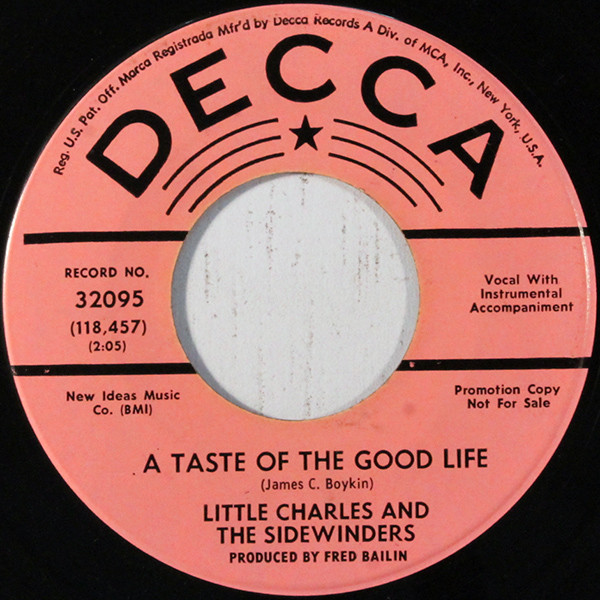
Little Charles and The Sidewinders open Soul Of New York 1967 with A Taste Of The Good Life. It was the B-Side to their single Talkin’ About You, Baby which was released on Decca in 1967. It’s James C. Boykin composition that was produced by Fred Bailin. He adds blazing horns and a stomping beat as Charles Walker delivers a powerful and uber soulful vocal. Sadly, despite their undoubted talent Little Charles and the Sidewinders’ music never found an audience nationally, but they were popular in the New York area.
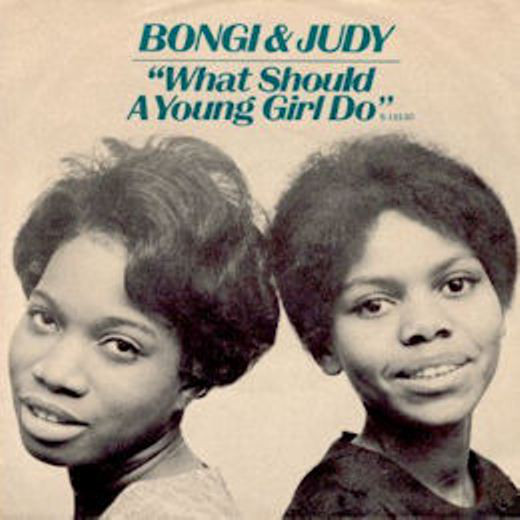
When Bongi and Judy released a cover of Ashford and Simpson’s Running Out on Buddah Records in October 1967, very few record buyers realised that this was a collaboration between the daughters of two successful singers. Bongi Makeba was the daughter of South African Grammy Award winning singer-songwriter Miriam Makeba, while Judy White was the daughter of singer, songwriter, guitarist and civil rights activist Josh White. Just like their mothers, Bongi and Judy were both talented singers, and deliver heartfelt and emotive vocals on Running Out which is produced by Bob Schwaid and is regarded by connoisseurs of New York soul as a cult classic.
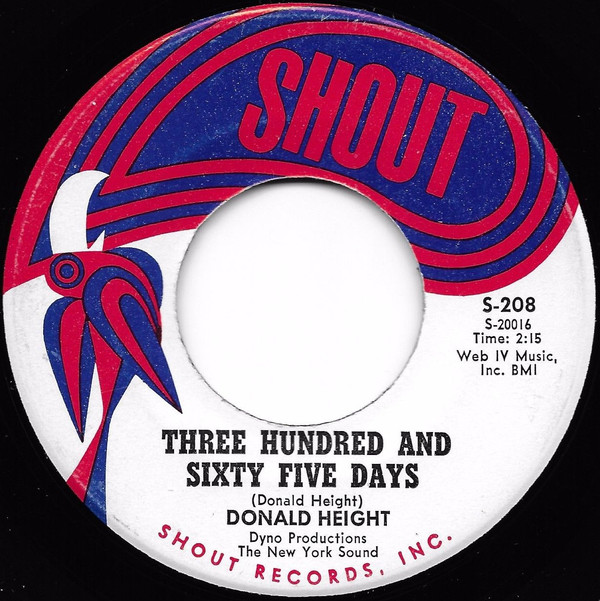
Donald Height’s recording career began in 1962, and by 1967 he had already released singles on Jubilee, Old Town Records, Roulette and Shout Records which had been his home since 1966. In January 1967 Donald Height released his composition Three Hundred And Sixty-Five Day which was produced by Dyno Productions. Despite a testifying vocal from Donald Height, commercial success eluded Three Hundred And Sixty-Five Day this irresistibly catchy single which today would be popular on the UK Northern Soul scene.
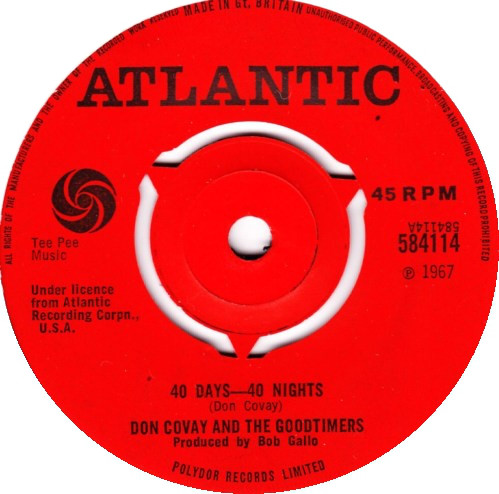
Many record buyers of a certain vintage will remember Don Covay’s 1964 album Mercy! which was released by Atlantic Records. Three years later, in May 1967, Don Covay and The Goodtimers released 40 Days-40 Nights as a single on Atlantic Records. This Don Covay composition which was produced Bob Gallo, bursts into life and is guaranteed to test the stamina of even best dancer.
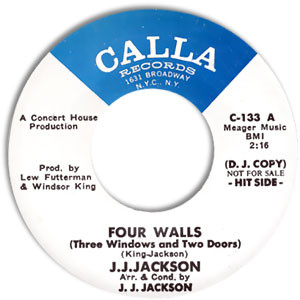
Fifteen months after JJ Jackson released his best known single But It’s Alright on Calla Records in March 1966, the New York based singer, songwriter and arranger returned in June 1967 with a new single Four Walls (Three Windows And Two Doors). It was writer by JJ Jackson and Windsor King who co-produced the single with Lew Futterman. When Four Walls (Three Windows And Two Doors) this impassioned and soul-baring ballad reached seventeen on the US R&B charts.
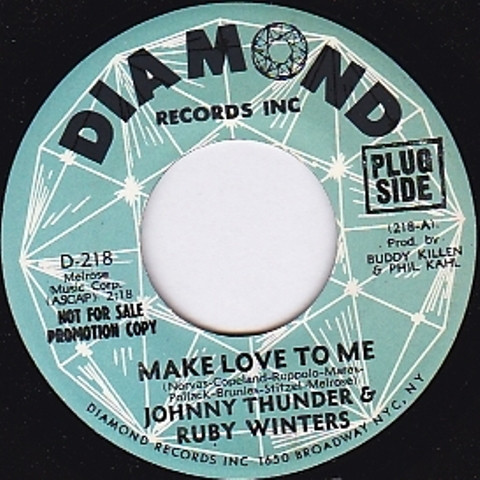
In February 1967, Johnny Thunder and Ruby Winters released the single Make Love To Me on Diamond Records. Buddy Killen and Phil Kahl had produced Make Love To Me, which is a sensual and soulful duet with Johnny Thunder proving to be the perfect foil to Ruby Winters. Despite the quality of the single, Make Love To Me, stalled at just ninety-six in the US Billboard 100 and was the one that got away for Johnny Thunder and Ruby Winters.
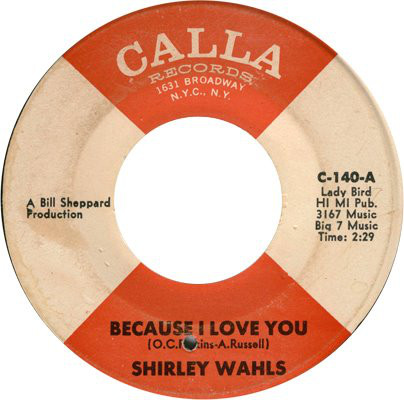
Like many soul singers, Shirley Wahls started out singing gospel, and before crossing over, was a member of The Argo Singers, the Ward Singers and the Dorothy Norwood Singers. However, by 1967 Shirley Wahls had crossed over and released her debut single Why Am I Crying on King in February 1967. Eight months later, she released her sophomore single Because I Love You, which was produced by Bill Shephard and released on the Calla label. It features vocal from Shirley Wahls that is a mixture of power, emotion and soulfulness, which is delivered against a Motown-inspired arrangement. Sadly, the single failed commercially and Shirley Wahls’ only released four singles between 1967 and 1969.
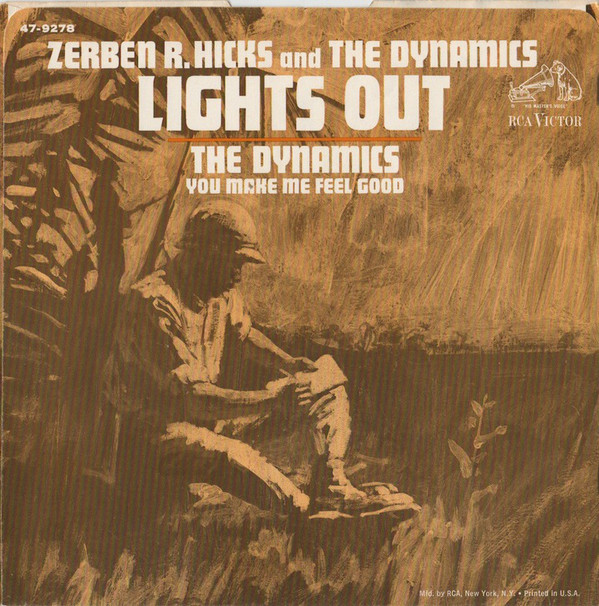
Although Zerben R. Hicks was born in Detroit, which was home to Motown, he recorded his one and only single Lights Out in New York. Joining Zerben R. Hicks in the studio was his group The Dynamics. When Lights Out was released on RCA Victor, Zerben R. Hicks And The Dynamics’ only single failed commercially. That is a great shame as it’s a beautiful, string drenched ballad that features a needy vocal full of hurt. Indeed, Lights Out is one of the highlights of New York Soul, and the perfect way to close side one.
Side Two.
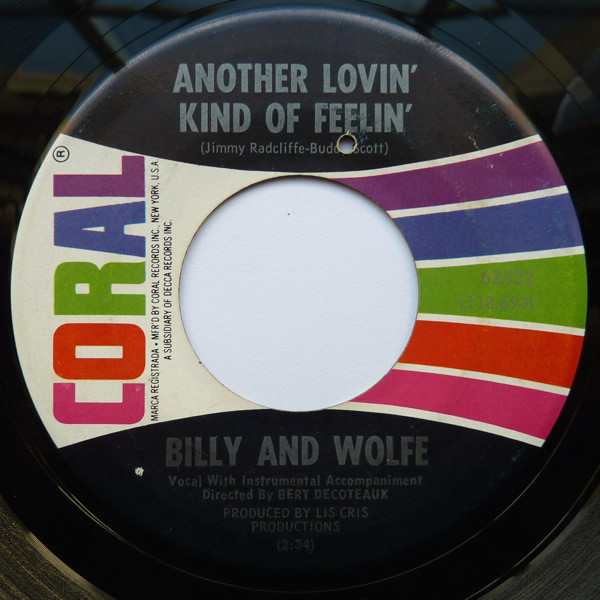
Billy and Wolfe who open side two of New York Soul, only released the one single Another Lovin’ Kind Of Feelin’ on the Coral label in 1967. It was written by Jimmy Radcliff and Buddy Scott and was produced by Lis Cris Productions. They added rasping horns to the arrangement which provide the perfect accompaniment to Billy and Wolfe on this beautiful ballad which is a welcome addition to the compilation.
Joe “Daddy Cool” Beck released five singles for Charles label between 1966 and 1967. This included Blow My Cool which was one of his own compositions and was released as a single in 1967. It’s a bluesy slice of sassy soul from Joe “Daddy Cool” Beck.
Singer, songwriter and producer Freddie Scott was thirty-four when he released Cry To Me as a single on the Shout label in March 1967. Tucked away on the B-Side was No One Could Ever Love You which was arranged by Gary Sherman and produced by Bert Berns. It’s a heart-wrenching ballad with a rueful vocal where harmonies provide the perfect foil for Freddie Scott on this stunning hidden gem.
In September 1967, Jesse Gee released her debut single Don’t Mess With My Money on the Barry! label. Don’t Mess With My Money was penned by Jesse Gould and Kelly Owen and although the single wasn’t a hit, many people will recognised the song which was used two films Self Service Girls in 1976, and Man Up in 2015. That is no surprise as it’s catchy and memorable slice of funky soul.
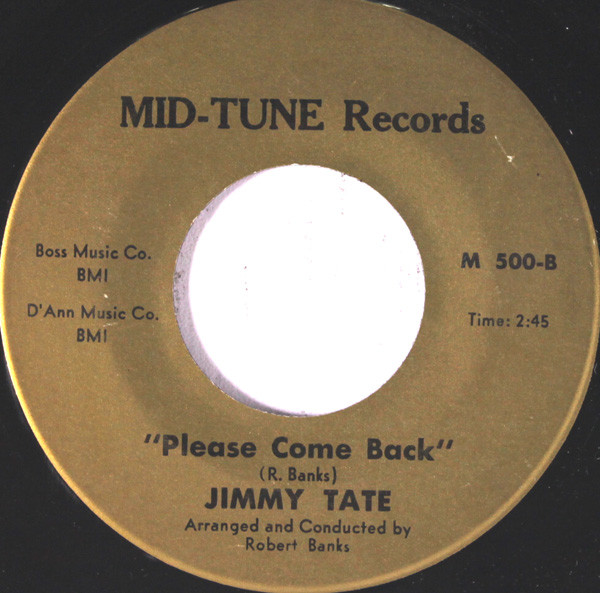
Jimmy Tate is another artist who only released the one single, Get Some Dues on Mid-Tune Records in 1967. Tucked away on the B-Side was Please Come Back, which was another song penned by Robert who arranged and conducted both sides. The stronger of the two sides is the string-drenched ballad Please Come Back, where Jimmy Tate’s vocal is full of hurt and despair, but also needy. It’s another welcome addition to New York Soul 1967.
By 1967, Ben E. King had already enjoyed a string of hit single including the soul classic Stand By My. In March 1967, Ben E. King released the Fred Parris’ penned ballad Tears, Tears, Tears as a single on Atco Records. It features a heartfelt and emotive vocal where Ben E. King lays bare his soul. Despite oozing quality, Tears, Tears, Tears stalled at ninety-three in the US Billboard 100 and thirty-four in the US R&B charts. For Ben E. King it was a case of what might have been. Sadly, soul music was no longer as popular by 1967 with pop, psychedelia and rock singles selling in huge quantities.
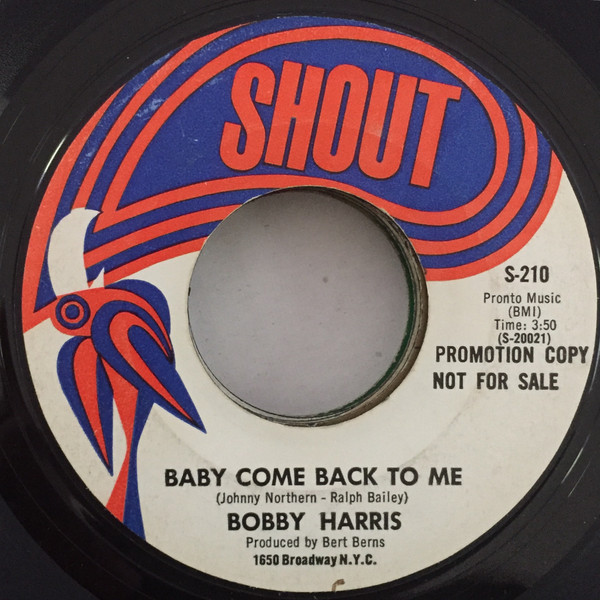
During his career, many people likened soul man Bobby Harris to the late Sam Cooke. That is apparent on the hurt filled ballad Baby Come Back To Me which was the B-Side The Love Of My Women which was released on Shout Records in March 1967. Baby Come Back To Me is another hidden gem and from one of soul music’s best kept secrets, Bobby Harris.
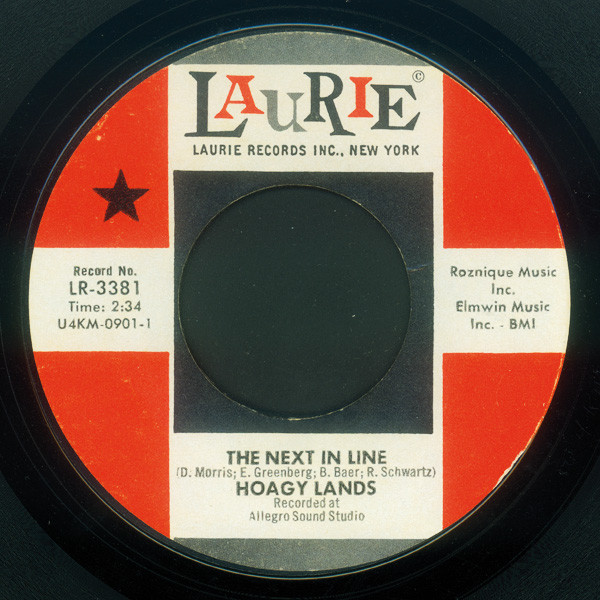
Hoagy Lands’ The Next In Line closes New York Soul 1967. It was released on Laurie Records in March 1967 and featured The Chiffons on backing vocals. They’re the perfect accompaniment to Hoagy Lands on this joyous dance track that fifty-one years later will still fill a dancefloor at a soul night. The compilers have kept The Next In Line up their sleeve, and ensure that New York Soul 1967 ends on a high.
For anyone with even a passing interest in soul music, then New York Soul 1967, which was one of the compilations the History Of Soul label released for Record Store Day 2018, is a must-have release. Sadly, only 500 copies of New York Soul 1967 were pressed and finding a copy of the compilation will be easier said than done. However, there are still copies in the racks of record shops up and down Britain.
Sadly, some copies of New York Soul 1967 are being sold online by scalpers and flippers for inflated prices. This seems to be the case every Record Store Day. However, the majority of people who have bought New York Soul 1967 are fans of soul music and want to own this lovingly curated compilation.
New York Soul 1967 features a total sixteen songs, from familiar faces and new names. While many record buyers will know artists like JJ Jackson, Freddie Scott and Ben E. King, they won’t have heard of many of the artists on New York Soul 1967. However, they should treat New York Soul 1967 as a voyage of discovery and a learning experience as they’re introduced oft-overlooked singles and B-Sides which are known by only the keenest crate diggers. They were first to discover the musical gold and hidden gems that can be found on New York Soul 1967. This includes beautiful, soul-baring ballads and the irresistible dancefloor fillers which sunk without trace in 1967, and now fifty-one years later return for a welcome and well deserved encore on New York Soul 1967.
New York Soul 1967.

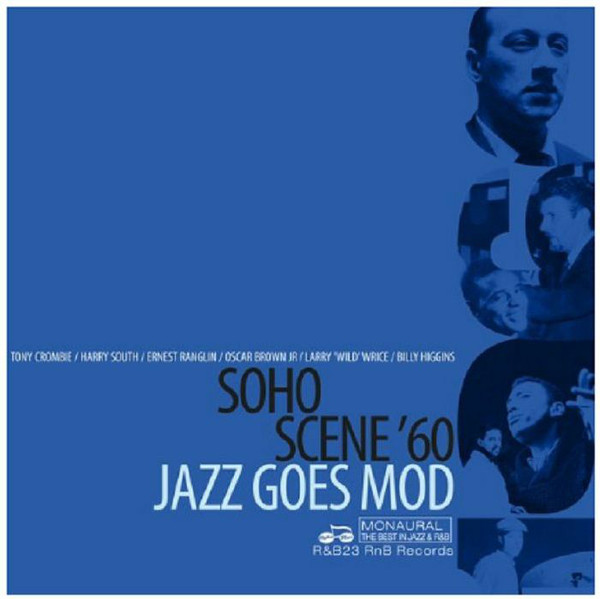
SOHO SCENE ’60-JAZZ GOES MOD (RECORD STORE DAY EDITION).
Soho Scene ’60 Jazz Goes Mod.
Label: Rhythm & Blues Records.
Ever since the birth of rock ’n’ roll, youth cults have come and gone,with some proving to be nothing more than passing fads, that nowadays, are mere footnotes in cultural history.There are some youth cults that have endured, and played an important part in British culture. However, none of the youth cults of the past sixty years have enjoyed the same longevity as the modernists.
The modernists came to prominence in the late fifties, and their name came about because of their love of modern jazz which was celebrated on Soho Scene ’60 Jazz Goes Mod which was released by Rhythm & Blues Records on Record Store Day 2018. It features twelve tracks from The Harry South Big Band, Ernest Ranglin Trio, The New Jazzmakers, Oscar Brown Jr, Larry “Wild” Wrice, Rune Overman Trio, Billy Higgins and Lionel Hampton. These tracks are a reminder of one of the most enduring youth cults, the modernists, who were soon to become the mods. However, music was only part of the story for the mods.
Image was everything for the mods who carefully tried to cultivate an air of coolness, and saw themselves as men about town. The mods often wore tailor-made suits which were sometimes made out of cashmere which usually featured narrow lapels. They also sported button-down collar shirts, thin ties and wool or cashmere jumpers. All this was part of the image for the mod around town. So too, were fishtail parkas, desert boots, Chelsea boots and bowling shoes which was part of the uniform for the self-respecting mod, who unlike members of most youth cults, even had their own mode of transport.
This was the scooter, and especially the Lambretta or Vespa scooters which quickly became the mods favoured mode of transport. This transported them around town as they visited their favourite haunts, which were dance-halls, coffee bars and cinemas. At cinemas, mods took to watching French and Italian films which was all part of a sense of continental coolness they were attempting to cultivate. Image was everything to the mod, and so was music, with the two going hand-in-hand.
By the 1960, music was starting to change in Britain was changing, but still modern jazz was hugely popular. That had been the case for much of the fifties. However, by the late-fifties, American bebop had started to influence many British jazz musicians, and this led to British jazz splitting in two.
On one side were the musicians who eschewed the changes in British jazz, and continued to play traditional jazz (trad jazz). They resisted and in some cases resented modern jazz, but before long, trad jazz would cease to be relevant and was no longer popular. It was seen as yesterday’s sound, unlike modern jazz.
By 1960, many more British jazz musicians were embracing modern jazz, and turning their back on trad jazz. They had been influenced by bebop and realised that modern jazz was the future. British jazz was thriving, with Harry South, Tubby Hayes, Ian Carr, Tony Crombie and Hank Shaw all familiar faces on the British jazz scene alongside Jamaican born jazzers Joe Harriott.
Modern jazz was also the music of choice for the discerning mod, and provided the soundtrack to their evenings and weekends. Those that lived in London, would often head to Soho, which was home to many jazz clubs, while others headed to The Flamingo in Wardour Street, Ronnie Scott’s in Gerrard Street or The Marquee in Oxford Street. Some mods were lucky enough to see Miles Davis who played ten concerts in Britain during 1960. Others were left looking for his latest album which they were keen to add to their burgeoning collection of modern jazz.
Many mods made weekly pilgrimages to their local record shops where they searched for the latest modern jazz releases by the top American and British musicians. This includes the twelve tracks that feature on Soho Scene ’60 Jazz Goes Mod.
Side One.
Opening Soho Scene ’60 Jazz Goes Mod is The Harry South Big Band’s Southern Horizons, which bursts into life and is the perfect track to open the compilation. London born bandleader, composer and pianist Harry South may not be the biggest name on the compilation, but he enjoyed a long career and later in his career, wrote music for film, theatre and many television series. This includes his iconic theme to The Sweeney. However, that was still to come, and in 1960 Harry South was leading his Big Band who get Soho Scene ’60 Jazz Goes Mod off to an explosive, joyous and memorable start.
By 1960, thirty-five year old bandleader, composer, drummer and occasional pianist and vibraphonist Tony Crombie was a familiar face on the British jazz scene, and often worked with many top jazz musicians. He had returned to jazz after a brief dalliance with rock ’n’ roll between 1956 and 1958, when he founded The Rockets which featured future Shadow Jet Harris. In 1958, The Rockets became a jazz group which featured pianist Stan Tracey, and in 1959 Tony Crombie formed Jazz Inc. A year later, Tony Crombie cowrote the soundtrack to the British horror film The Tell-Tale Heart in 1960, and led the Tony Crombie Orchestra when they recorded Samba De Janeiro which epitomises everything that was good about British jazz in 1960. That is no surprise as Tony Crombie became a stalwart of British jazz and enjoyed career that spanned six decades.
Guitarist and composer Ernest Raglin’s career began in the fifties, when he played on various calypso and mento releases which were recorded for the tourist market. This lead to him joining Cluett Johnson’s studio band Clue J and then the Blues Blasters, and later, recording several tracks for Coxsone Dodd at his Federal Studios. However, the first time many British mods heard Ernest Raglin was when they One For Picka which was released by the Ernest Raglin Trio in 1960, which showcases a truly talented jazz guitarist who plays with speed, fluidity and accuracy. Four years later, One For Picka featured on Ernest Raglin’s 1964 sophomore album Reflections which was released by Island Records.
Jazz pianist and composer Dill Jones was born in Newcastle Emlyn, Carmarthenshire, Wales, in 1923 and was already an experienced musicians by the time he formed The Dill Jones Trio.They had already released two EPs and two singles by the time the recorded and released Threesome in 1960. It’s a brisk piano led track, with bandleader Dill Jones taking centre-stage on this oft-overlooked hidden gem that was recorded live.
Cinematic describes The New Jazzmakers’ I’m Going which sounds as if it’s been recorded as part of a soundtrack. It’s also a melodic, ruminative and beautiful track that is a reminder of another musical era.
John Dankworth studied at the Royal College of Music, and when he was twenty-two played alongside Charlie Parker at the Paris career 1949. A year later, he formed the Dankworth Seven in 1950, which was the first of numerous bands he led. By 1960, John Dankworth he was a familiar face on the British jazz scene and was leading The John Dankworth Orchestra. They released the EP Soundtrack Music From ‘The Criminal’ on Columbia which featured the explosive and sometimes cinematic Treasure Drive which is tucked away on the B-Side and features Dudley Moore on piano.
Side Two.
In 1960, vocalist Oscar Brown Jr released his debut album Sina and Soul on Columbia, and it was the original album of two sides. The two sides to this album of soul-jazz are themed, with side one entitled Sin, and side two entitled soul. One of the tracks from Sin is But I Was Cool, which is a reminder of a charismatic and inimitable singer.
Another musicians releasing his debut album in 1960 was drummer Larry “Wild” Wrice, who released Wild!-The Big Big Sound Of Larry “Wild” Wrice on Pacific Jazz Records which specialised in cool jazz and West Coast jazz. Wild!-The Big Big Sound Of Larry “Wild” Wrice featured Husky, which was penned by Bob Bryant and released as a single in 1960. Sadly, neither Husky nor Wild!-The Big Big Sound Of Larry “Wild” Wrice found the audience it deserved, and Larry “Wild” Wrice never released another single or album. However, Husky is a welcome addition to Soho Scene ’60 Jazz Goes Mod, and is a reminder of an underrated drummer and bandleader who never enjoyed the success his talented deserved.
Swedish jazz pianist and bandleader Rune Overman wrote Funky Festival, which he recorded with the Rune Overman Trio. When it was released on Pacific Jazz Records, Rune Overman was twenty-eight and already an experienced musician. Sadly, the irresistible Funky Festival was the only single that the Rune Overman Trio released. However, Rune Overman led number of other bands, and became a familiar face on the Swedish jazz scene.
Although Go To Hell is credited to Mr. Billy Paul, it’s actually a recording by future Philly Soul star Billy Paul. He recorded Go To Hell for the B-Side of the single Ebony Woman which was released on the New Dawn label. Mr. Billy Paul delivers a defiant, jazzy vocal on Go To Hell which is a tantalising taste of what was to come from the man who would go on to become one of greatest soul singers of his generation.
Latin jazz percussionist Armando Peraza was born in Havana, Cuba, in 1924, and by the fifties was an international star. That was why he was asked to contribute a track to the album More Drums On Fire which was released on Pacific Jazz in 1960. The track he contributed was Triste, which finds George Shearing’s piano and Armando Peraza’s percussion playing leading roles in this timeless Latin jazz track.
Jazz drummer Billy Higgins was only twenty-four when he recorded Me and My Lover, which is an oft-overlooked soul-jazz hidden gem. It’s a welcome addition to Soho Scene ’60 Jazz Goes Mod and is a reminder of a drummer who played with the great and good of jazz during his career.
Closing Soho Scene ’60 Jazz Goes Mod and by 1960 is Wailin’ which was the B-Side to Lionel Hampton and His Orchestra single, Wild Bill. It was released on the Glad label in June 1960, and features a vibes masterclass from Lionel Hampton. He plays with speed, fluidity and accuracy on a track that deserved to fare better than a B-Side. It’s one of the highlights of Soho Scene ’60 Jazz Goes Mod.
For the original mods, the music on Soho Scene ’60 Jazz Goes Mod is sure to bring back memories of modern jazz that they listened to during their glory days. These tracks were part of the soundtrack to the lives of the original mods, and were then rediscovered during the mod revival in the seventies.
By then, the music on Soho Scene ’60 Jazz Goes Mod was just part of a larger musical soundtrack during the first mod revival. As the sixties progressed, mods embraced everything from soul, R&B, reggae and ska, which beams part of the soundtrack to their lives. This was the case during the first mod revival in the seventies and subsequent mod revivals. However, for the original mods, modern jazz and the music on Soho Scene ’60 Jazz Goes Mod is something they hold dear, and which brings back memories.
For the original mods, the music on Soho Scene ’60 Jazz Goes Mod is sure to bring back memories of wearing mohair suits, button down shirts, fishtail parkas and riding a Vespa to the coast on Bank Holiday weekends. During these long, hot holiday weekend in 1960, the mods enjoyed a soundtrack of the modern jazz, but never imagined that they were part of what would become one of the most important youth cults in British cultural history.
The modernist or mod movement has enjoyed an unrivalled longevity, and outlasted the majority of youth cults. Although there was only one mod revival in Britain in the late-seventies, and one in America in the late-eighties, parts of mod culture have endured since then. Especially some of the clothes, and of course the music, with compilations of mod or modernist music being regularly released. This includes Soho Scene ’60 Jazz Goes Mod which is one of two compilations of modern jazz that were released by Rhythm & Blues Records for Records Store Day 2018, and sure to bring back musical memories for former mods.
Soho Scene ’60 Jazz Goes Mod.
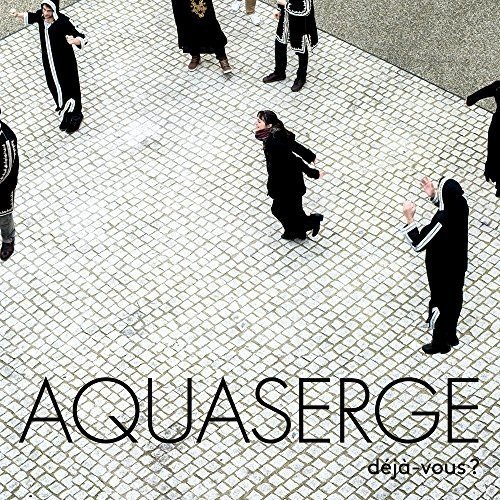
AQUASERGE-DEJA VOUS?
Aquaserge-Deja-Vous?
Label: Crammed Discs.
Release Date: ‘27th’ April 2018.
One of the hardest things for a new band is coming up with a name, and often, it takes long and fruitless debates before someone plucks a name out of the ether. After this eureka moment, the band is belatedly christened and they can get on with the important thing…making music. However, when five musicians from Toulouse, in France founded a new experimental pop band, they had already decided that it would be called Aquaserge, which was a play on words, which meant “aquatic Serge” and “what am I for?” This was the start of a musical adventure that began over a decade ago, and since then, Aquaserge have toured the world and released five albums. Soon, five will become six when Aquaserge released their first live album Deja-Vous? on the Belgian label Crammed Discs, on the ‘27th’ of April 2018. It’s the latest chapter in the Aquaserge story.
The Aquaserge story began in Toulouse, France when, drummer Barbagallo Julien, bassist Ginestet Audrey and guitarist Glibert Benjamin joined forces with clarinetist Glibert Manon and keyboardist, guitarist and vocalist Gasc Julien to form a new band. Its raison d’être was to explore what they saw as unknown and oft-overlooked areas of rock.
This included Krautrock, and especially the music of Neu! and Faust which had influenced the members of Aquaserge. So had the music of Soft Machine who emerged out of the Canterbury Scene in the late-sixties, and the freeform improvisation and sound experiments of Frank Zappa. These were just a few of the bands and musicians that influenced Aquaserge as they made their first tentative steps onto the local live scene.
By June 2008, Aquaserge had already made their live debut, opening for Bertrand Burgalat and April March. Little did the members of Aquaserge know that this was the start of ten years of touring, which would see them play all over the world and rub shoulders with the great and good of music.
Before that, Aquaserge’s recording career began when hey released their debut EP Tahiti Coco in September 2008. It featured a mixture Krautrock-influenced experiments and the progressive funk of La Femme De Tahiti. Tahiti Coco showcased an innovative band, and record buyers wanted to hear more from Aquaserge.
They didn’t have long to wait, with Aquaserge releasing their much-anticipated sophomore Un and Deux in January 2009. It was an ambitious, innovative and experimental album which featured an array influences and genres. They played their part in the sound and success of Un and Deux, which won over critics and music fans.
Fifteen months later, in April 2010, Aquaserge returned with their sophomore album Ce Très Cher Serge, which built on Un and Deux and showed the different sides to Aquaserge’s music. Especially the Frank Zappa inspired Un Soir De Tempête and the beautiful, understated and mellow sounding Le Néant, which musically, are polar opposites. However, both tracks showcased Aquaserge’s versatility, and their ability to create innovative and imaginative music.
Over three years passed before Aquaserge returned with a new album. This time it wasn’t a solo album, and instead, was a collaboration with American singer and songwriter April March who Aquaserge had opened for in June 2008. This was the start of five-year association, and in May 2013, April March and Aquaserge was released to plaudits and praise.
Ten months later, and Aquaserge released a new EP Tout Arrive in March 2014, which featured a trio of tracks from their forthcoming album À L’Amitié. Arrive was a tantalising taste of Aquaserge at their innovative best.
When À L’Amitié was released to critical acclaim in May 2014, was also hailed as Aquaserge’s finest hour and also their most eclectic album. À L’Amitié featured elements of art rock, experimental music, jazz, progressive rock, psych and even long-forgotten film noir soundtracks. Five years after Aquaserge had released their debut album À L’Amitié, they had recorded a career-defining album.
By then, Aquaserge had spent part of the last six years playing live, and had already played at the Klangbad Festival and at the Siestes Electroniques in Toulouse which also featured Kawabata Makoto and Keiji Haino. Aquaserge had also appeared alongside Gong and Art Bears when they took to the stage at the third Rock in Opposition event in September 2010. However, when their schedule allowed, the members of Aquaserge also collaborated with other musicians.
This has included Makoto Kawabata and Acid Mothers Temple, Kinski, Monade, Moodoïd and April March. Members of Aquaserge have taken to the stage alongside Laetitia Sadier, Stereolab, Tahiti80, Tame Impala, Melody’s Echo Chamber, Jef Barbara, Dorian Pimpernel and former Can frontman Damo Susuki. Still, much of Aquaserge’s year is spent playing live or recording.
On ‘16th’ November 2015, Aquaserge recorded the final track for their third EP, Guerre. It built on the music that had featured on their previous album À L’Amitié, and was another genre-melting release from Aquaserge. When Guerre was released in September 2016, it was their first release on Crammed Discs.
Just five months later, in Aquaserge returned with their fourth solo album Laisse Ça Être which was released on Crammed Discs in February 2017. It was one of Aquaserge’s most ambitious and eclectic albums, and finds them drawing inspiration from alt-progressive rock, art rock, avant-garde, experimental and psychedelia. The result was another innovative album, and a fitting followup to À L’Amitié.
Deja-Vous?
After the release of Laisse Ça Être, Aquaserge returned to the live circuit, where they were they were augmented by a three-piece horn section. The horn section had been part of Aquaserge’s live show since January 2016, when they started taping concerts for their first live album, Deja-Vous? This Aquaserge continued to do right through to November 2017. By then, Aquaserge had toured ten countries and had plenty of recordings that would provide them with material for their first live album Deja-Vous?
Eventually, after listening back to the recordings of the various live shows, the members of Aquaserge settled on two concerts which they decided would provide the basis for their first live album Deja-Vous? It features a total of eight tracks, including four tracks from the 2017 album Laisse Ça Être. This includes the album opener Virage Sud, L’ire Est Au Rendez-Vous, C’est Pas Tout Mais and an extract from Tintin On Est Bien Mon Loulou. They’re joined by the intro to La Ligue Anti Jazz-Rock, Travelling and Je Viens from the 2014 album À L’Amitié. The only cover version that Aquaserge have included on Deja-Vous? is Rogers and Hart’s My Funny Valentine. It’s reinvented by Aquaserge, who are regarded by critics and concert goers as one of the most exciting live bands.
Proof of that is Deja-Vous?, which not only shows another side to Aquaserge, but their music. They’ve reimagined and rearranged the eight tracks on Deja-Vous?, and take the three tracks from À L’Amitié and four from Laisse Ça Être in a new direction. In doing so, they show another side to what are familiar tracks for fans of Aquaserge, who hear another dimension to the genre-melting music on Deja-Vous?
Helping take Aquaserge’s music in a new direction is the three-piece horn section, who augmented the band during the tour in 2016 and 2017. The horn section sometimes join Aquaserge when they take to the stage. They certainly made their presence felt on Deja-Vous?
As Virage Sud unfolds, just Ginestet Audrey’s bass takes centre-stage, before horns announce their arrival and join with the Hammond organ as the rhythm section power the arrangement along, and soon, Aquaserge is full flight. By then, the music is rocky, progressive and jazz-tinged, before washes of swirling Hammond organ, flourishes of flute and psychedelic guitar are added. So is a searing guitar, as drums pound and the tempo ebbs and flows. Later, the music veers between experimental, progressive and rocky before Aquaserge seem to draw inspiration from early seventies fusion, playing with a fluidity and then freedom. All the time, they showcase their talent and versatility, and set the bar high for the rest of the set.
Guitars and the rhythm section open L’ire Est Au Rendez-Vous before braying horns, set the scene for the vocals. Already, there’s an element of drama and darkness, although a jazz-tinged guitar adds a contrast. Then when the vocal drops out, Aquaserge’s rhythm section and guitars take centre-stage, and soon, are joined by the clarinet during a genre-melting jam that includes the horn section. They’re a welcome addition as elements of rock, jazz, funk and fusion are combined as Aquaserge play with speed, fluidity and freedom seamlessly switching between and combining genres. Later, when the vocal returns the music becomes dramatic, rocky, cinematic and progressive as a flute and blistering guitar are added, Soon, the arrangement becomes urgent as the guitar, drums and flute play leading roles as Aquaserge embark upon another jam while scatting melodically before reaching a crescendo.
My Funny Valentine is then given a makeover by Aquaserge who slow this standard down, as the drums provide the heartbeat, and are joined by the bass while washes of feedback soar above the arrangement. Soon, washes of weeping guitar and horns enter and play leading roles. So too does vocalist Gasc Julien who delivers a tender, heartfelt vocal, against a backdrop of shimmering guitars. Along with the horns, they play starring roles as Aquaserge reinvent a classic song.
When C’est Pas Tout Mais unfolds, the rasping, blazing horns and rhythm section that take centre-stage and set the scene for the harmonies and then Gasc Julien’s soliloquy. It drifts in and out, as Blaxploitation horns soar above the arrangement which is driven along by the rhythm section and features bursts of sci-fi sounds. Soon, the arrangement becomes cinematic and dramatic, Especially as a searing guitar cuts through an arrangement that features soaring harmonies. The result is a melodic and memorable live track that is also cinematic and dramatic.
Aquaserge then play the introduction to La Ligue Anti Jazz-Rock, where the clarinet, keyboards and horns combine and create a mesmeric backdrop. Eventually, the rhythm section join the frae and Aquaserge start to stretch their legs. A shimmering post rock guitars provides a contrast to robotic clarinets, before braying horns are later joined a rocky guitar. They all play their in a captivating and carefully crafted anti fusion track.
Straight away, Aquaserge move through the gears on Travelling, with the rhythm section powering the arrangement along, as bursts of guitar are unleashed. So too are futuristic and sci-fi sounds, before the horns enter and help drive the urgent genre-melting arrangement along, and sometimes seem to head in the direction of free jazz. Later, the arrangement almost grinds to a halt, before it rebuilds with the rhythm section powering it along, as free jazz horns and futuristic sounds play a part of this glorious wall of sound. Soon, it grinds to a halt and Aquaserge throw a curveball, and fuse elements of avant-garde, experimental, free jazz and rock to create what’s akin to a post rock soundscape.
An extract of Tintin On Est Bien Mon Loulou finds Aquaserge at their hard rocking best. The rhythm section and searing guitars burst into life, as a trail wailing free jazz horns combine with the urgent, punchy vocals. When they drop out, Aquaserge embark upon a freeform jam where the horns and woodwind combine with the rhythm section and scorching guitar. What follows is Aquaserge at their innovative best during a track that sounds as if it’s been inspired by Frank Zappa who has always influenced the band.
It’s Je Viens that Aquaserge close Deja-Vous? with. Just a lone keyboard plays, before bass, horns and Gasc Julien’s vocal enter. It’s tender and sensual with harmonies playing their part in accompanying the understated arrangement. By then, Gasc Julien is delivering one of his finest vocals during a sensual sounding song that seems to have as if it’s been inspired Serge Gainsbourg. It seems that Aquaserge have saved one of the best until last.
For anyone who saw Aquaserge during their 2016 and 2017 tour, their forthcoming album Deja-Vous? will be the perfect reminder of this groundbreaking group at the peak of the powers. Deja-Vous? which will be released by Crammed Discs on ‘27th’ April 2018, is Aquaserge’s sixth album, and their first live album. It features eight tracks, and finds Aquaserge concentrating on songs from their two previous genre-melting albums 2014s À L’Amitié and 2017s Laisse Ça Être which are the finest of their career.
Just like on À L’Amitié and Laisse Ça Être, Aquaserge seamlessly switch between and sometimes combine disparate musical genres on Deja-Vous? In doing so, Aquaserge showcase their talent and versatility, during Deja-Vous? as they reinvent songs. This they do with the help of three-piece horn section who joined Aquaserge during their 2016 and 2017 and added a new dimension to their music and help them to reimagine and reinvent songs. Especially Rogers and Hart’s My Funny Valentine, which is the only cover version on Deja-Vous?, and takes on new meaning in the hands of Aquaserge.
They’ve come a long way since making their live debut in June 2008, and nearly ten years later, and regarded as one of the most exciting live bands. Proof of that is their first ever live album Deja-Vous? which features Aquaserge at their innovative best and at the peak of the powers during an eight song set of captivating kaleidoscopic music.
Aquaserge-Deja-Vous?
KIRAN AHLUWALIA-7 BILLION.
Kiran Ahluwalia 7 Billion.
Label: Six Degrees Records.
Release Date: ‘5th’ May 2018.
Nowadays, cultural diversity is a feature of many modern countries, with people from all over the world travelling to Britain, Europe and North America to begin a new life and forge a better future for their family. In many cities and towns, those that have just arrived, are welcomed with open arms and become part of a culturally diverse twenty-first century society. Sadly, though, not everyone welcomes cultural diversity.
Even in 2018, intolerance is still rife in many countries around the world, and sometimes this intolerance can result in discrimination, persecution and can even lead to violence. It’s a sad state of affairs, especially considering the seven billon people that inhabit planet earth are united in their difference and uniqueness. Kiran Ahluwalia realised this when she was writing the title-track to her seventh album Seven Billion, which will be released on the ‘5th’ May 2018, by the Six Degrees label. This is the latest chapter in Kiran Ahluwalia’s musical journey.
It’s a journey that began in India, which was where Kiran Ahluwalia was born and first embraced music at an early age. “When I was growing up in India there were concerts that people from all over would crowd into. These concerts featured a repertoire, language and content that was both demanding and beyond the experience of a child. I was, however, entranced by the sound and feel of the music, even from an early age. My father would play tapes of Indian music for me and we would also listen to Bollywood on the radio. So when a song came on that I wanted to learn, my mother would quickly write down the lyrics for me and I would sing along to learn the melody.”
By the time Kiran Ahluwalia was seven, she was already immersing herself in Indian music, which she heard each and every day. Already music played an important part in Kiran Ahluwalia’s life, and this continued when her facility emigrated to Canada, where they embarked upon a new life.
In Canada, Kiran Ahluwalia began a new life, but one thing remained the same, her love of music. She continued to study music, which she fitted around her regular schooling. After leaving high school, Kiran Ahluwalia enrolled at the University of Toronto where her education continued.
Having graduated from the University of Toronto, Kiran Ahluwalia returned to India, where she spent several years studying traditional music. However, when her musical studies were completed, Kiran Ahluwalia returned to Canada in the late-nineties and began an MBA in Finance. After she had completed the MBA, Kiran Ahluwalia began a new career as a trader. However, deep down she knew this wasn’t what she wanted to do.
Kiran Ahluwalia’s biggest fear was that one day she would regret not following her dreams of a making a career out of music. By then, she had a successful career as a trader, which was a lot to give up. However, eventually, after much thought Kiran Ahluwalia decided to follow her dreams, and try to make a living out of music.
This was a huge gamble, even for someone who had previously worked as a city trader and obviously wasn’t risk averse. However, the music industry had been transformed in the past few years with the advent of the internet and downloads. Suddenly, albums were no longer as profitable as they once were and even major labels were having to rethink their business plans. It was against this background that Kiran Ahluwalia released her debut album.
Kashish-Attraction.
Kiran Ahluwalia released Kashish-Attraction in late-1999, which was an album of ghazals and Punjabi folk songs from India. These songs explored all the aspects of love, especially the ghazals that feature on Kashish-Attraction. Ghazal is an Arabic word that means “to talk to women,”and during the ghazals on Kashish-Attraction, Kiran Ahluwalia who is a modern and independent woman talks to women about love. In doing so, Kiran Ahluwalia brought out the beauty, power and emotion in the music on Kashish-Attraction which launched her nascent career.

Beyond Boundaries.
Four years later in 2003, and Kiran Ahluwalia returned with her sophomore album Beyond Boundaries. It was an innovative album that was hailed as “Beyond Traditions, Beyond Trends, Beyond Boundaries” and featured ghazals and Punjabi folk songs from India, Pakistan and Canada. Once again, Kiran Ahluwalia brought the lyrics to life as she breathed meaning and emotion into the lyrics on an album that introduced her music to a wider audience and in 2004 won Canada’s prestigious Juno award for the Best World Music Album Of the Year. This was a huge boost to Kiran Ahluwalia’s career.

Kiran Ahluwalia.
Less than two years later Kiran Ahluwalia released her eponymous third album in May 2005, Kiran Ahluwalia. Just like her two previous albums, Kiran Ahluwalia was a mixture of ghazals and Punjabi folk songs. Among the songs that featured on Kiran Ahluwalia were old favourites like Koka, Vo Kuch and Yeh Nahin. They were joined by two new tracks that featured Celtic fiddler Natalie MacMaster, as Kiran Ahluwalia continued to make ambitious, genre-melting music that moved Beyond Boundaries.

Wanderlust.
By the time Kiran Ahluwalia released her fourth album Wanderlust in August 2007, she was living in New York with her husband and bandleader and musical collaborator, Rez Abbasi. This time around, ghazals were joined by Portuguese fado music which Kiran Ahluwalia had discovered and become fascinated with. Fado translates as fate, and although fado music is impassioned it’s full of sadness, melancholy, hurt and heartbreak. The addition of the three fado songs which were played by a trio of Fado masters were part of Kiran Ahluwalia’s most eclectic album, Wanderlust.
There were elements of everything from African and blues to Brazilian Bossa Nova and Indian classical music. Some of the vocals seemed to have been influenced by vintage soundtracks as Kiran Ahluwalia reinvents herself with one of her finest, and definitely her, most eclectic album.

Aam Zameen: Common Ground.
Three-and-a-half years later, and Kiran Ahluwalia returned with her fifth album Aam Zameen: Common Ground in January 2011, which was another album of contemporary Urdu and Punjabi poetry. Just like Kiran Ahluwalia’s two previous albums, there were several collaborations on Aam Zameen: Common Ground. This includes ritti player Juldah Camara plus Malian desert bands Tinariwen and Terakaft, who provide the Tuareg grooves as Kiran Ahluwalia delivers heartfelt and powerful vocals as she sings ghazals and Punjabi folk songs. The result was another captivating cross-cultural collaboration from Kiran Ahluwalia, which in 2012, won Canada’s prestigious Juno award for the Best World Music Album Of the Year for the second time.

Sanata : Stillness.
It wasn’t until October 2014 that Kiran Ahluwalia returned with her sixth album Sanata : Stillness. This was the long-awaited followup to her award-winning album Aam Zameen: Common Ground.
Sanata : Stillness was another fusion of disparate musical genres with ghazals and Punjabi folk songs combining with Saharan tuareg music, Indian classical and elements of jazz music. The result was a beautiful, mesmeric and mellow album which was one of Kiran Ahluwalia’s finest albums.

7 Billion.
Now three-and-half-years later, and Kiran Ahluwalia is back with her seventh album 7 Billion, which is full of powerful and thought-provoking music. This is something that Kiran Ahluwalia has specialised in during a career that has spanned nearly two decades and six albums. However, six becomes seven when 7 Billion is released on the ‘5th’ of May 2018.
7 Billion which features six songs, including five penned by Kiran Ahluwalia, is another genre-melting album, which feathers a variety of musical influences. This includes the Punjabi folk and Indian classical music that has been a feature of Kiran Ahluwalia’s previous albums. So too has Malian influences, with Tuareg music featuring on Aam Zameen: Common Ground and Sanata : Stillness. That is the case on 7 Billion, which also features other musical genres that have featured on Kiran Ahluwalia’s previous albums, including blues and jazz. However, for the first time, Southern Soul provides the heartbeat to a couple of songs on 7 Billion. Kiran Ahluwalia explains: “I’ve taken aesthetics I love such as blues, Malian styles, and of course Indian forms and mashed them together in my own way.” The result is a carefully created and captivating genre-melting.
Recording of 7 Billion took place at Canterbury Music Company, in Toronto, with guitarist Rez Abbasi taking charge of the arrangements and production. He was joined in the rhythm section by drummer Davide Direnzo and bassist Rich Brown. They were augmented by organist, accordionist and synth player Louis Simao, percussionist and djembe player Mark Duggen and Nittin Mitta on tabla. This small but talented band recorded 7 Billion, which is Kiran Ahluwalia’s seventh album.
7 Billion opens with Khafa, which is a heartfelt plea from Kiran Ahluwalia to set aside and forget about the religious strictures and orthodoxies that mean people are unable or unwilling to see one another’s humanity. Kiran Ahluwalia was inspired to by West African music, and “I came up with the melodic idea and would hum it around the house. Rez said, ‘Hey, that sounds great.’ I had all these phrases all over the place, then I decided to develop it more to find meaning for the melody, which lent itself very well to talking about anger against the man-made rules of religion.” The result is a powerful and thought-provoking song that will strike a chord with many people.
Equally thought-provoking and powerful is Saat (Seven) where Kiran Ahluwalia deals with intolerance and violence that continues to blight society worldwide in 2018. This is something Kiran Ahluwalia believes that has to be addressed and countered, as people are spending too much time focusing on divisions and difference. Instead, they should realise that it’s the differences and uniqueness which unites the 7 Billion people on planet earth. Kiran Ahluwalia explains: “There are seven billion of us now on Earth and every person has their own unique perspective and set of experiences. We each have our own way of dealing with things, of hearing things, of moving through life.”
From the opening bars of Kuch Aur (Something Else), it’s apparent something special is unfolding. The arrangement is bluesy with the Hammond organ adding a Southern Soul influence, while Kiran Ahluwalia delivers one of her most soulful and emotive vocals as she examines regret and sorrow. While some of the lyrics were written in English, they were later translated into Urdu and seem to flow as Kiran Ahluwalia delivers a soul-baring vocal on a song that combines elements of blues, Southern Soul, Southern rock and Indian music.
Very different to the previous track is Raina (Night), which features an understated arrangement where an acoustic guitar, percussion and Indian percussion accompanies Kiran Ahluwalia. Her tender vocal takes centre-stage during this beautiful, melodic ballad, and showcases one finest Indian vocalists of her generation.
Despite her career as a singer-songwriter spanning nearly two decades, Kiran Ahluwalia had never been asked to write a song for a movie. That was until recently, when she was asked to write a song that will provide the accompaniment to a scene where a shy lover is seduced. The song she wrote was Jhoomo (Sway), a sensuous and seductive sounding song, which is Kiran Ahluwalia’s first venture into the world of film.
Closing 7 Billion is We Sinful Women a song which was commissioned The Kathak Ensemble dance company. Although Kiran Ahluwalia wrote the music, the lyrics were inspired by a poem that was written by the Pakistani feminist poet Kishwar Naheed. They provide the basis for an urgency, catchy and melodic genre-melting song where Kiran Ahluwalia delivers a defiant, powerful vocal and combines with her band to create a genre-melting song. It features everything from funk, Indian, jazz and Southern Soul and Tuareg music, and is potent and heady brew that closes 7 Billion on a high.
After a three-and-half-year absence, Kiran Ahluwalia returns with her long-awaited and much-anticipated seventh album 7 Billion. It will be released by Six Degrees Records on ‘5th’ May 2018, and is another carefully crafted, genre-melting album from one of the greatest Indian singers of her generation.
7 Billion finds Kiran Ahluwalia combining elements of Indian, African, and Malian music with blues, funk, jazz, R&B, Southern rock and Southern Soul. The result is an album of music that veers between beautiful, cinematic and melodic to sensuous and seductive, to poignant, powerful and thought-provoking as she addresses some of the problems facing the world in 2018. This Kiran Ahluwalia manages to do during an album that features just six songs that last thirty-one minutes. 7 Billion is an old school album where the emphasis is on quality rather than quantity as singer, songwriter and world citizen Kiran Ahluwalia makes a welcome return with one of her finest albums of her career.
Kiran Ahluwalia 7 Billion.



TOO SLOW TO DISCO BRASIL COMPILED BY ED MOTTA (RECORD STORE DAY EDITION).
Too Slow To Disco Brazil Compiled By Ed Motta (Record Store Day Edition).
Label: How Do You Are.
It was back in 2014 when the German label How Do You Are released the first instalment in the Too Slow To Disco compilation series, which was one of the first compilation series to revisit West Coast sound, which provided the soundtrack to much of the decade. That was no surprise as the West Coast sound was slick and full of hooks. Trademarks of the West Coast were clever chord progressions and lush harmonies. This proved to be a truly irresistible combination, and why across America, radio station playlists were dominated by the West Coast sound. Sadly, like all good things, the success story that was the West Coast sound had to come to an end. However, since 2014, the West Coast sound has been on the comeback trail.
A number of record companies have released compilations of the West Coast sound, which all of a sudden is back in fashion. That is partly thanks to the How Do You Are label, who have released three volumes of the Too Slow To Disco and The Ladies Of Too Slow To Disco compilation since 2014. These compilations have featured songs from familiar faces and new names, plus a number of hidden gems, and are among the best and most successful compilations of the West Coast sound released in recent years. Despite that, the How Do You Are label have decided to change things around for this year’s instalment in the Too Slow To Disco series.
The West Coast has been left behind, and this year, the How Do You Are label are releasing Too Slow To Disco Brazil Compiled By Ed Motta. It made its debut as a limited edition on Record Store Day 2018 when it was released as a two LP set on 180 gram heavyweight purple vinyl. After that, everyone will need to wait to wait to the ‘4th’ of May 2018 to buy Too Slow To Disco Brazil Compiled By Ed Motta on CD or as a two LP set. However, it will be worth the wait thanks to compiler Ed Motta, who has dug deep and chosen some oft-overlooked Brazilian soul, funk and AOR.
It was a bit a of coup for How Do You Are when Ed Motta agreed to compile the new instalment in the Too Slow To Disco series. Ed Motta who is the nephew of the late, great Tim Maia, first came to prominence in the late-eighties as a member of the band Conexão Japeri, who were a popular draw on the Carioca show circuit. This was just the start of the rise and rise of Conexão Japeri.
In 1988, Conexão Japeri released their debut Ed Motta and Conexão Japeri, which showcased a talented band and featured several hit singles. These singles featured elements of soul, jazz and funk, and soon became favourites within Brazil’s pop-rock scene. However, this was the start for Ed Motta.
Thirty years later, and Ed Motta has released fifteen albums and is a versatile musician who is equally comfortable playing Latin, jazz, funk, soul and AOR. Ed Motta has also worked with many top musicians, including Roy Ayers, Patrice Rushen, Greg Phillinganes, Ryuichi Sakamoto and Seu Jorge, and also 4Hero and Incognito. However, Ed Motta has also a wide knowledge of Brazilian music, so when Too Slow To Disco’s usual compiler was looking for someone to compile a compilation of Brazilian funk, soul and AOR, he seemed the perfect person.
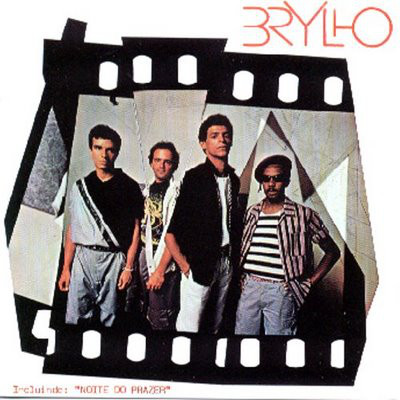
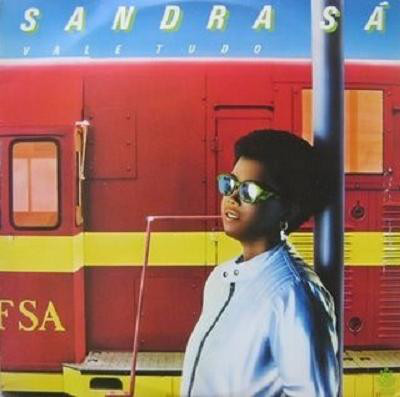
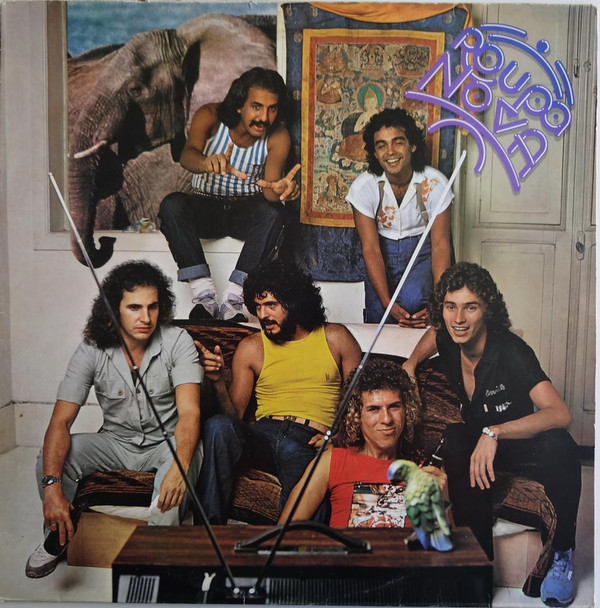
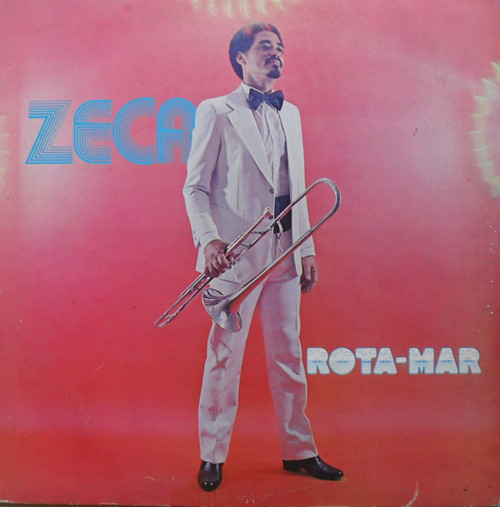
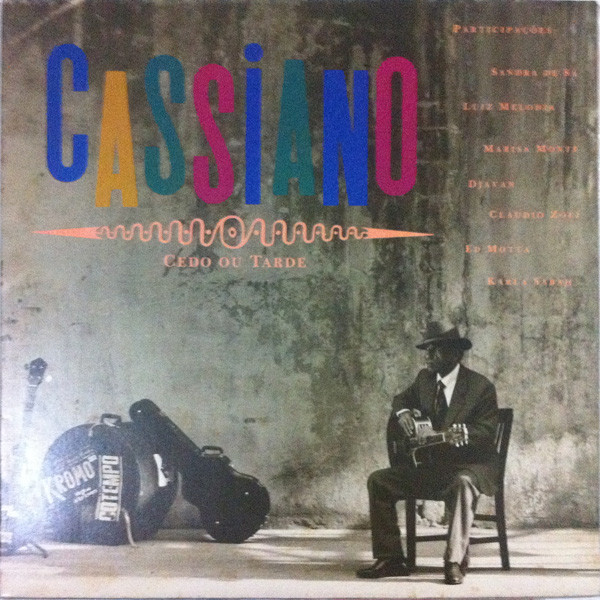
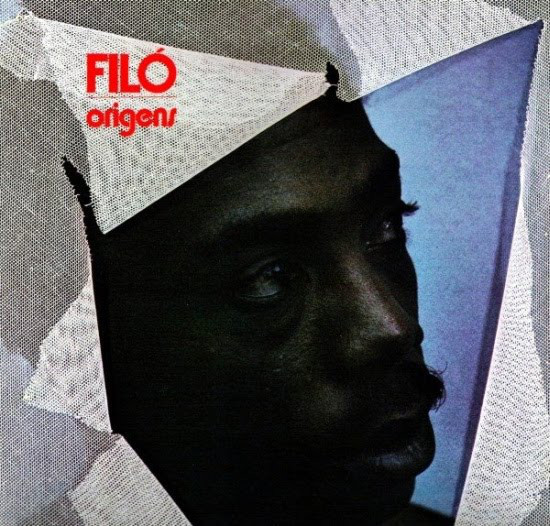
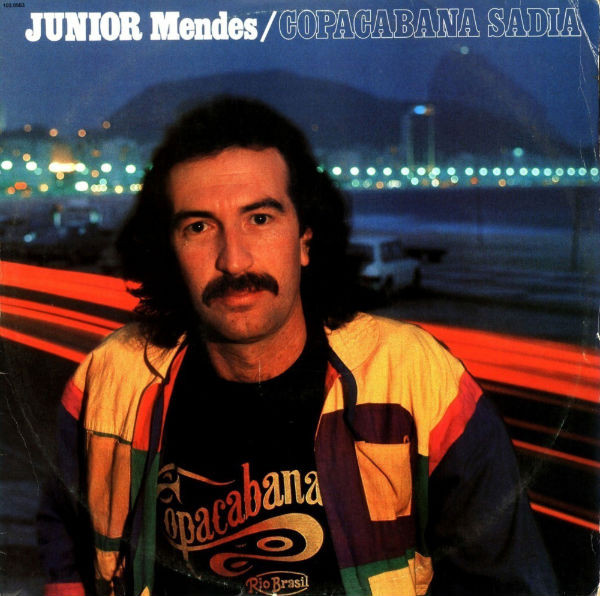
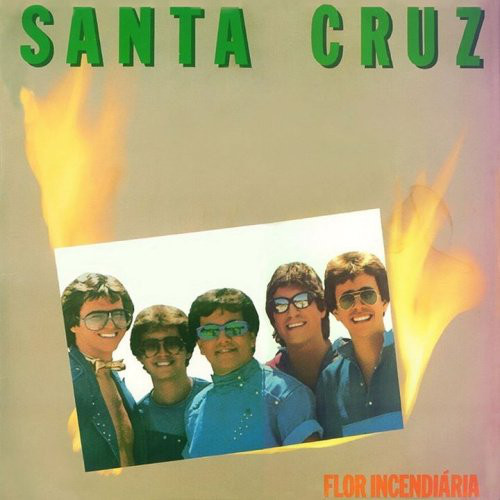
All it took was a brief phone call, and Ed Motta had agreed to compile the Too Slow To Disco Brazil Compiled By Ed Motta. It features nineteen tracks, including contributions from Filó MacHado, Sandra De Sá, Junior Mendes, Don Beto, Lucinha Turnbull, Carlos Bivar, Santa Cruz, Cassiano, Zeca Do Trombone, Roupa Nova and Brylho. They’re just some of the artists and bands that feature on Too Slow To Disco Brazil Compiled By Ed Motta.
Opening Too Slow To Disco Brazil Compiled By Ed Motta is Filó MacHado’s Quero Pouco, Quero Muito which is taken from the 1983 album Origens, which was released on the Pointer label. It’s a funky and soulful track with an impassioned vocal, and is very much typical of the type of music that has featured on the Too Slow To Disco series over the past four years.
Sandra Sá recorded the Ton Saga composition Guarde Minha Voz for her 1983 album Vale Tudo which was released on the São Paulo based RGE. This was Sandra Sá’s third album, and Guarde Minha Voz was one of the highlight’s. It features a soulful vocal from Sandra Sá that is delivered against a carefully crafted arrangement where elements of funk and boogie are combined by talented band. They’re responsible for a melodic and memorable track.
In 1982, Junior Mendes released his debut album Copacabana Sadie on RCA Victor. It opens with the irresistible and hook-laden title-track Copacabana Sadie that was penned by Castão Lamounier, Luiz Mendes Jr and Paulo Imperial. Horns and strings play their part in Lincoln Olivetti’s arrangement as Junior Mendes delivers a tender and heartfelt vocal. Sadly, there was no followup to Copacabana Sadie, which wasn’t a commercial success and nowadays original copies of this hidden gem of an album changed hands for £300.
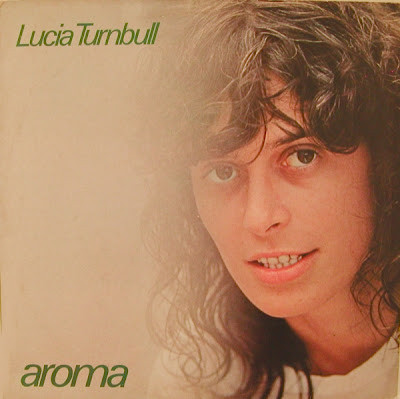
Lúcia Turnbull was born in São Paulo in 1953, and is the daughter of a Scottish father and Brazilian mother. When she was sixteen she moved to London, and joined the folk group Solid British Hat Band. Having returned to Brazil in 1972, Lúcia Turnbull formed the duo As Cilibrinas do Éden with Rita Lee, and later that year the pair joined the Tutti Frutti band. Three years later Lúcia Turnbull formed her own group Bandolim 1976, and in 1979 released her debut solo album Aroma on EMI. One of the highlights of Aroma is the beautiful MPB ballad Toda Manhã Brilha O Sol which features Lúcia Turnbull at her very best.
When Santa Cruz released their debut album Flor Incendiária on the Barclay label in 1984, it featured Mais Uma Chance. It epitomises the eighties sound as Santa Cruz combine elements of jazz, Latin and pop on this carefully crafted ballad. Sadly, there was no followup to Flor Incendiária and Santa Cruz like several artists and bands on Too Slow To Disco Brazil Compiled By Ed Motta released just one album.
Jane Duboc’s recording career began in the seventies, and has spanned five decades. Nowadays, she’s one of the most successful Brazilian female vocalists. However, in 1982, Jane Duboc had just released her sophomore album Jane Duboc on the Som Da Gente label. It features the Se Eu Te Pego De Jeito where Jane Duboc delivers a vocal that is jazz-tinged and soulful. Meanwhile her band combine elements of funk, jazz and MPB on what’s one of the highlights of Too Slow To Disco Brazil Compiled By Ed Motta.
In 1991 composer, singer and guitar player Cassiano released his fourth album Cedo Ou Tarde on Columbia. It was the first album Cassiano has released since 1976s Cuban Soul-18 Kilates. Sadly, Cedo Ou Tarde wasn’t the success that Cassiano had hoped, despite songs of the quality of songs like Rio Best-Seller. There’s hooks aplenty during this memorable and catchy fusion of funk, soul and MPB.
By 1983, Zeca Do Trombone was an experienced musician who had spent over a decade working as session musician and had played on albums by Tim Maia, Ivan Lins, Taxi and Joyce. Zeca Do Trombone had also collaborated with Roberto Sax on the album Zé Do Trombone E Roberto Sax which was released in 1976. Seven years later, and Zeca Do Trombone was back in the studio recording his debut album Rota-Mar which was released on the Timbre label in 1983. It opens with the MPB ballad Rota-Mar where horns accompany and later replace Zeca Do Trombone’s vocal on this beautiful hidden gem.
Comparisons have often been drawn between the Brazilian pop band Roupa Nova, and their American counterparts Toto. Both groups were also hugely successful with Roupa Nova selling eight million singles and albums, and enjoying twenty-five hit singles, including ten which topped the Brazilian charts. Roupa Nova’s career began in 1981, when they released their eponymous debut album. A year later, in 1982 they released their sophomore album Roupa Nova which featured Clearer which is a slick and irresistible fusion of pop rock and MPB.
Brylho is another band that only released the one album during their career. This was Brylho which was released on Elektra-WEA in 1983 and features the hook-laden Jóia Rara that is smooth, soulful and funky.
Closing Too Slow To Disco Brazil Compiled By Ed Motta is Rita Lee and Roberto’s Atlântida, which is taken from their 1981 debut album Saúde, which was released on the Som Livre label. Atlântida is very much of its time, with early eighties pop-rock, synth pop and MPB combining to create a track that is very different from the West Coast sound a decade earlier that feature on previous instalments of the Too Close To Disco series. However, Rita Lee’s breathy vocal plays a starring role in Atlântida which closes Too Slow To Disco Brazil Compiled By Ed Motta.
After four volumes of Too Slow To Disco that featured the West Coast sound, it’s all change as the series heads to Brazil where Ed Motta compiles a compilation that features nineteen slices of oft-overlooked Brazilian soul, funk and AOR. Many of the artists and bands on Too Slow To Disco Brazil Compiled By Ed Motta will be new to many record buyers, while veteran of other compilations of Brazilian music may be familiar with some of the names. However, Too Slow To Disco Brazil Compiled By Ed Motta is a musical voyage of discovery and the perfect way to discover new music.
While some of the artists and bands on Too Slow To Disco Brazil Compiled By Ed Motta enjoyed long and successful careers, others only released the one album which failed to find an audience. Many of these albums are now extremely rare and change hands for large sums of money, and the only way for most people to hear the music on these albums is on compilations like Too Slow To Disco Brazil Compiled By Ed Motta. It’s a welcome addition to Too Slow To Disco series, and especially the limited edition version of Too Slow To Disco Brazil Compiled By Ed Motta which was released on a two LP set on 180 gram heavyweight purple vinyl for Record Store Day 2018, which will be a prized item amongst record collectors and fans of Brazilian music.
Too Slow To Disco Brazil Compiled By Ed Motta.

STEVE YOUNG-TO SATISFY YOU.
Steve Young-To Satisfy You.
Label: Ace Records.
During his life and a musical career that lasted five decades, singer, songwriter and guitarist Steve Young always lived life on his own terms. Sadly, Steve Young like Gram Parsons, who played on his 1969 debut album Rock Salt and Nails, didn’t enjoy the recognition and critical acclaim that his music deserved. That was despite being a pioneer of country rock, Americana, alt country and the outlaw movement. Instead, Steve Young is better known as a songwriter, whose songs have been covered by the great and good of music.
During his career, Steve Young penned Lonesome, On’ry and Mean which was covered by Waylon Jennings, and Montgomery In The Rain which was recorded by Hank Williams, Jr. However, Steve Young’s best known song is Seven Bridges Road which was covered by The Eagles, Joan Baez, Dolly Parton, Iain Matthews and Rita Coolidge. The royalties that Steve Young received from these cover versions allowed him to live life on his own terms and make the music he wanted. This included his 1981 album To Satisfy You, which saw Steve Young move away from country music, towards a rockier sound. To Satisfy You which has just been reissued by Ace Records was Steve Young’s sixth album, and the latest chapter in the story of this musical maverick.
Steve Young was born in Newnan, Georgia on the ‘12th’ of July 1942, into a family of sharecroppers. His father who was a Native Indian, had been a sharecropper since the age of thirteen. Life as a sharecropper was tough, and money was alway tight. To make matters worse, Steve Young’s father was often getting into trouble, which resulted in the family having to pack up their belongings and move on. Eventually, the Young family settled in Gadsden, Alabama, and by then, Steve Young knew how he wanted to make a living.
Ever since he had been a young boy, Steve Young had listened to music, which made his life that bit more bearable. He could see the beauty in music, especially, Southern music, which Steve Young preferred listening to. However, from an early age, Steve Young wasn’t content to listen to music, and when people asked him what he wanted to do, he told them he wanted to be a singer, songwriter and musicians. To most people that was a pipe dream.
Things changed when Steve Young’s grandfather took him to a swap meet, where he saw a warp necked Silvertone guitar. It was love at first sight, and Steve Young tried to talk his grandfather into getting him the guitar. However, the answer was no, and that day it was a disappointed Steve Young that returned home.
Still, he was determined to get a guitar of his own, and when he was fourteen, his mother relented and agreed to buy Steve Young his very first guitar. She bought him a Gibson ES 125 thin body electric guitar, which Steve Young knew was enough to make his dreams come true, and follow in the footsteps of Carl Perkins and Elvis Presley at Sun Records.
By the time Steve had mastered his guitar, the folk boom had hit Birmingham, Alabama. Despite his love of Southern music, Steve started playing folk music and by his early twenties, was a regular face on Birmingham music scene. Soon, Steve Young was regarded as one of the rising stars of the Birmingham folk scene.
During gigs Steve Young played a mixture of his own songs and covers of some of his favourite Bob Dylan songs. Sometimes, he took to the mic and started voicing his support for the nascent civil rights movement. While this was admirable, this was dangerous in Birmingham, Alabama, which was Klan country.
Some folks around Birmingham, Alabama didn’t take kindly to folk singers talking about equality and civil rights. Especially, ones like Steve Young, who after gigs, headed out on the town and enjoyed carousing in clubs. Sometimes, this lead to trouble, but Steve Young didn’t seem to care. He was determined to live life on his own terms and this included voicing his support for the civil rights movement. Fortunately, Steve Young never came to any harm, and in 1963, left Birmingham, Alabama.
This came about not long after Steve Young met Richard Lockmiller and Jim Miller, who were both folk musicians. They had signed to Capitol Records as a folk duo Richard and Jim, and were heading to Los Angeles to record their debut album. Steve Young joined the pair on their road trip, and in LA, played on Richard and Jim’s 1963 debut album Folk Songs and Other Songs.
Steve Young’s guitar playing on Folk Songs and Other Songs, and when Richard and Jim played live, brought him to the attention of other musicians and record buyers. One of the first musicians to discover Steve Young was Van Dyke Parks.
From the first time Van Dyke Parks saw Steve play live, he realised that he was a cut above most musicians. Here was a versatile and talented singer and guitarist who seamlessly could switch between disparate musical genres. His live act saw Steve Young playing folk, blues and even a hint of Celtic music and the audience were enthralled by his vocals and virtuoso performance on guitar. Despite this, Steve Young spent time busking on Sunset Strip. However, this was only temporary.
Soon, Steve Young was about to go up in the world when he joined the ranks of LA’s session musicians. He also became the lead guitarist for the Steve Battin’ Band. After shows, Steve Young partied with some of the biggest names in the LA scene, including Mama Cass, Tim Hardin and Van Dyke Parks. At these parties, Steve Young partied hard, drinking and taking drugs in ever-increasing greater qualities. Still, though, Steve Young always turned up for sessions the next day and even formed a new band with two well known names.
The Gas Company included Van Dyke Parks and a young Stephen Stills, who played rhythm guitar. However, The Gas Company was just a stepping stone for Stephen Stills en route to greater things. Meanwhile, Steve Young’s life was professional and personal life was changing.
He met and married Terry Newkirk, who with Roger Tillison performed as The Gypsy Trips. Now a married man, Steve Young decided to take a job as a postman to make ends meet. However, he hadn’t given up on his dream of making a living as a professional musician.
It was only a matter of time before Steve Young caught a break, and this happened when he was approached by Stone Country’s manager. They were looking for a guitarist, and Steve Young fitted the bill. He played on their debut album. Not long after this, Steve Young dream came true when he was signed by A&M.
Rock, Salt and Nails.
This was the break he had been waiting for, and twenty-six year old Steve Young year old began work with producer Tommy LiPuma. Backed by a band that featured some top LA session players as well as Gram Parsons and Gene Clark, gradually, Rock, Salt and Nails started to take shape. Sadly, when Rock, Salt and Nails was released by A&M in 1969 the album passed an indifferent record buying public by. Record buyers had missed out on what’s now regarded as one of the hidden gems of the late-sixties, and the commercial failure of Rock, Salt and Nails was a huge blow for Steve Young.
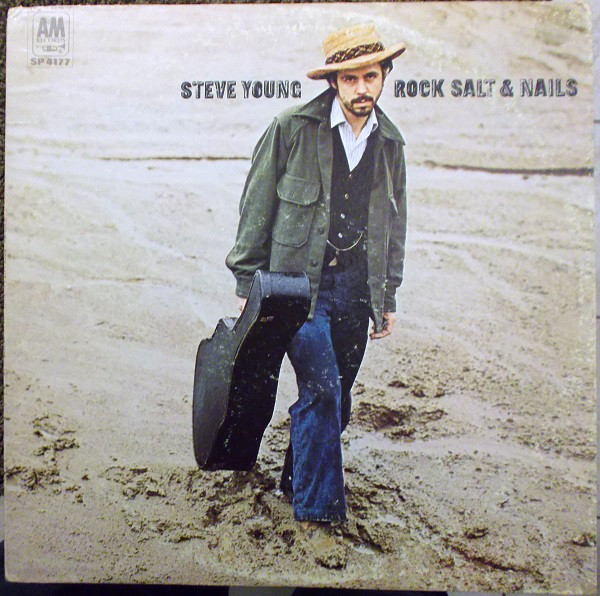
After the commercial failure of Rock, Salt and Nails, Steve Young did a lot of soul-searching, and with a heavy heart announced that he was turning his back on music. This was something that he had never envisaged would happen. However, there was only so long anyone could struggle to make ends meet, with the hope that one day, he might make a breakthrough. Steve Young decided to make a fresh start and he and his wife left LA, and headed to San Francisco, where they settled in the Bay Area.
This was a new start for Steve Young, and was the first day of his life after music. However, by then, all that Steve Young knew was music, so he and Terry Newkirk setup a guitar shop in San Anselmo in 1970. It was the new start Steve Young had been looking for. That was until Andy Wickham of Reprise Records came calling.
Although Steve Young had turned his back on music, he was still under contract to A&M. Andy Wickham who had followed Steve Young’s career approached A&M to ask if they would be willing to release him from the contract. They agreed, and now all Andy Wickham had to do was persuade Steve Young to sign on the dotted line.
Given Steve Young was disillusioned with life as a professional musician, this was going to be easier said than done. Especially with the new guitar shop up and running. However, for Andy Wickham it was a case of nothing ventured, nothing gained. He approached Steve Young about signing to Reprise, and eventually, the singer, songwriter and guitarist agreed to make a comeback.
Having signed to Reprise, Steve Young was paired with Ry Cooder, who would produce his first single for the label. The song that was chosen was Bob Dylan’s Down In The Flood, which was retitled as Crash On the Levee. Producer Ry Cooder made a guest appearance on Crash On the Levee, which was released later in 1970 as Steve Young’s debut single for Reprise. Sadly, the single failed to chart, and Steve Young realised that history was repeating itself.
After the failure of Crash On the Levee, a decision was made to pair Steve Young with a new producer. The Steve Young and Ry Cooder partnership was over after just one single. Replacing Ry Cooder as producer was Nashville based Paul Tannen, which to many industry insiders seemed a strange decision.
Nashville in 1970 was, and to some extent, still is, a conservative town and Steve Young with his liberal politics, wasn’t going to be well received when he travelled there to record his sophomore album. Sadly, that proved to be the case.
Seven Bridges Road,
Steve Young journeyed to Nashville, to meet his new producer and record his sophomore album. By then, he was aware that Paul Tannen had penned twenty songs and had around forty production credits to his name. This experience Steve Young hoped would be put to good use when he recorded his sophomore album. However, Steve was in for a surprise.
When Steve met Paul Tannen, he quickly came to the conclusion that his new producer was more of interested in music publishing than songwriting. This didn’t bode well for the future. However, Nashville had some of the best session musicians in America, and Steve Young hoped that some of them would join him in the studio.
Before recording got underway, Steve Young was joined by Paul Tannen and some top session players. When they ran through the songs, some of the musicians took umbrage to the lyrics. To make matters worse, Steve Young’s liberal politics and outlook on life didn’t go down well with some members of the band.
As the session got underway, it soon became apparent that the band weren’t all on the same page. Some of the musicians couldn’t understand how to play the songs as this wasn’t the type of music they were used to playing. By then, the choice of Paul Tannen as producer wasn’t looking like the right one and later, Steve Young claimed that he ended up producing what became Seven Bridges Road himself. However, it wasn’t an easy album to record.
For parts of the session, there was an undercurrent and a degree of tension. Partly, this was because the band were unsure how to play their parts, but also because the musicians and Steve Young were polar opposites. Steve Young was a sixties child with liberal politics and views, while the band were older, and much more conservative views. With his long hair, and liberal views, some of the band most likely saw Steve Young as a hippy from California. He saw some of the band as rednecks, and the type of people that up until then, he had spent his life avoiding. It was a case of never the two shall meet. However, in Nashville session musicians were professionals, and the album was eventually recorded and Steve Young then hotfooted it home to San Francisco.
When Steve Young arrived home, he brought with him the tapes to what would eventually become the album Seven Bridges Road. A few days later, Steve Young took the tapes to Andy Wickham at Reprise and he listened to the twelve songs. As everyone in the room listened to the album, they realised that despite the difficulties Steve Young had experienced recording Seven Bridges Road, it was a very special album of country music.
While everyone at Reprise Records realised that they had heard a very special album, they had no idea how to market the album. Seven Bridges Road was very different from the country music that was being released at that time. Reprise Records were faced with the same problems as A&M when realising Steve Young’s debut album, what to do with it? The problem was, that Seven Bridges Road was way ahead of its time.
Steve Young was a musical visionary who was the architect of a new Southern country sound, which was a forerunner of the outlaw sound, which Waylon Jennings and Willie Nelson later went on to pioneer. Sadly, very few record buyers would know of the part Steve Young played in musical history.
On its release in 1972, Seven Bridges Road failed to find an audience, and before long the album couldn’t be found record shop shelves. Steve Young watched his dream destroyed for the second time, and for the second time, turned his back on music.
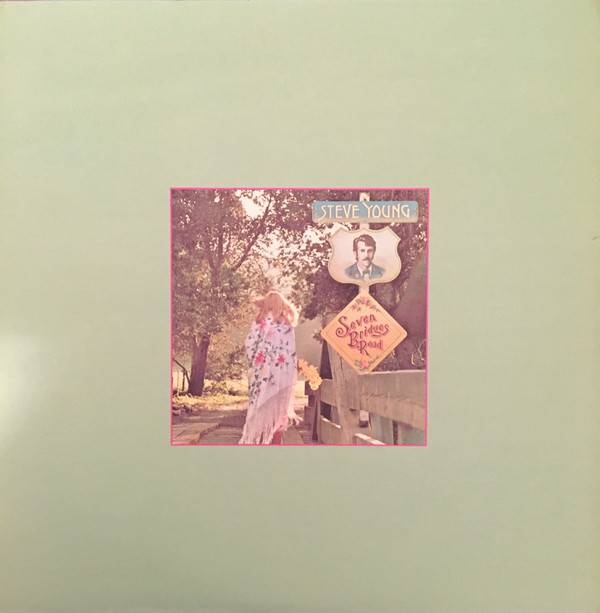
He and Terry Newkirk sold their guitar shop and bought some land in Nashville, where they built a log cabin and raised their son Jubal. The couple went on what Steve later called: “your basic vegetarian-mystical trip. This lasted for a while, until Steve Young started drinking heavily. That was when Terry Newkirk packed her bags and left. Quickly, Steve Young’s life was unravelling, until Jim Terr entered the picture.
Jim Terr owned Blue Canyon Records, and thought that Seven Bridges Road was the best record ever committed to vinyl. When Steve told him the album wasn’t even in circulation, the pair started hatching a plan.
Seven Bridges Road 1975.
The first part of the plan was to get Steve Young playing live again. Initially, Steve Young started playing around Albuquerque and then rerecorded The White Trash Song with The Last Mile Ramblers. After that, Jim Terr discussed with Steve Young buying the master to Seven Bridges Road from Warners, with a view to reissuing the album. Jim Terr hit Warners with a lowball offer, and they accepted.
Before reissuing Seven Bridges Road, two changes to the track-listing were made, with the newly rerecorded version of The White Trash Song replacing the Nashville version. A cover of Merle Haggard’s I Can’t Hold Myself In Line replaced One Car Funeral Procession. With a new track listing Seven Bridges Road, was ready to be reissued.
Although Blue Canyon Records was a small company, and didn’t have a distribution network like Warners, the reissue of Seven Bridges Road in 1975 was relatively successful. The reissue of Seven Bridges Road outsold the original, and introduced Steve Young and his music to a new audience. Despite the relative success of Blue Canyon Records’ reissue of Seven Bridges Road, sadly, Steve Young remained one of music’s best kept secrets.
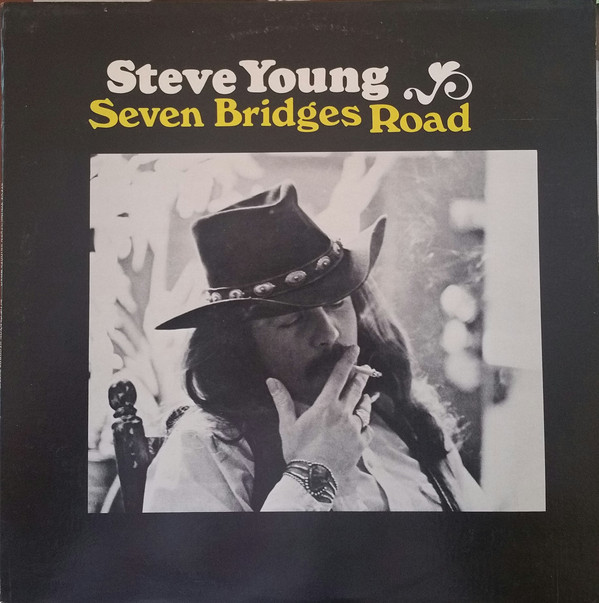
Honky-Tonk Man.
Later in 1975, Steve Young returned with his third album Honky-Tonk Man, which was released on Mountain Railroad Records. It showed a different side to Steve Young, who was showcasing a much more traditional country sound on Honky-Tonk Man. Sadly, despite its quality, again, Honky-Tonk Man failed to find the wider audience it deserved, and still commercial success eluded Steve Young.
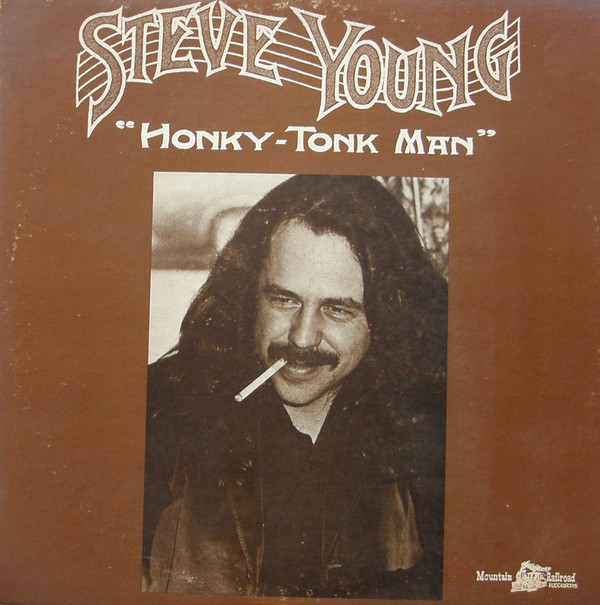
Renegade Picker.
Despite commercial success eluding thirty-four year old singer, songwriter and musician, RCA Victor who had an enviable roster of country artists, decided to take a chance on Steve Young. This was the break Steve Young had been waiting for.
He entered the studio with some top session musicians and producer Roy Dea in early 1976 and recorded Renegade Picker, which was a mixture of cover versions and Steve Young compositions including Lonesome, On’ry and Mean which later, gave Waylon Jennings a hit single. However, Renegade Picker also saw Steve Young’s music change, as he pioneered the outlaw sound. This marked a new chapter in Steve Young’s career.
When Renegade Picker was released in June 1976, it was to critical acclaim and Steve Young watched the album reach forty-eight in the US Country charts. While Renegade Picker had charted, this innovative album didn’t enjoy the success that it deserved.
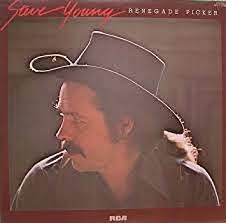
No Place To Fall.
While the commercial failure of Renegade Picker disappointed Steve Young, by early 1978 his songs were being covered by some of the biggest names in music. Writing songs was proving more profitable than recording albums for Steve Young.
He had written three new songs he had written Renegade Picker, including Montgomery In The Rain, which later was later recorded Hank Williams, Jr. It made its debut on No Place To Fall, which was another album of cover version and Steve Young compositions that was produced by Roy Dea.
When No Place To Fall was released in September 1978, it featured more of an outlaw sound than Renegade Picker. While the album was well received by critics, No Place To Fall passed record buyers by. They missed out on an album that featured the Steve Young compositions Montgomery In The Rain, Seven Bridges Road, Dreamer and Always Loving You, plus covers of Drift Away, Bob Dylan’s Don’t Think Twice, It’s All Right and JJ Cale’s I Got The Same Old Blues. These songs are part of one of Steve Young’s most underrated albums, and his swan-song for RCA Victor.
With no improvement in his record sales, RCA Victor and Steve Young parted company after two vastly underrated albums. By then, thirty-six year old Steve Young’s music was enjoyed by a small coterie of discerning record buyers, and he remained one of music’s best kept secrets.

After parting company with RCA Victor, Steve Young’s life spiralled out of control, and he seemed hellbent on destruction, nearly drinking himself to death. Eventually, he entered a clinic for homeless alcoholics in Nashville, and it was during his stay in the clinic, that Steve Young realised that his lifestyle had come close to destroying him. He made the decision to embrace his Native Indian heritage and became a Buddhist. His new holistic approach to life worked, and Steve Young started to rebuild his life, and although it took time, it eventually paid off.
Seven Bridges Road III.
In 1981, Steve Young returned after a three-year absence with not one, but two new albums. This included a remixed version of Seven Bridges Road, which featured a different track-listing. There’s a remixed version Seven Bridges Road plus new songs like Down in the Flood, Ballad of William Sycamore, My Oklahoma, Wild Goose and Days Of 49 on what was the third version of Seven Bridges Road.
The reissue of Seven Bridges Road was released by Rounder Records in early 1981, and sold reasonably well. It seemed that a new generation of record buyers were keen to discover Steve Young’s finest album which by 1981 was regarded as a cult classic. However, the original version of Seven Bridges Road released in 1972, and the 1975 version were both out of print. Rounder Records’ newly remixed version of Seven Bridges Road introduced a new generation to Steve Young, and in the process, helped transform his fortunes.

To Satisfy You.
After the success of Seven Bridges Road, Rounder Records offered Steve Young a recording contract. This came just a few months after The Eagles had covered Steve Young’s Seven Bridges Road on Eagles Live which was released on November the ‘7th’ 1980. Steve Young wanted as Eagles Live was certified gold in Canada and Britain, and after selling seven million copies in America, was certified platinum seven times over. This guaranteed Steve Young the biggest windfall of his three decade career, but still he wanted to record his sixth album To Satisfy You.
This time around, Steve Young only contributed one song to his sixth album, The River And The Swan. The remainder of the album was cover versions including Jerry Allison, Buddy Holly and Norman Petty’s Think It Over, Waylon Jennings’ To Satisfy You, Walter Vinson’s Top If The World, Mick Jagger and Keith Richards’ No Expectations and David Olney’s The Contender. They were joined by the traditional song Corinna Corinna, Jesse Winchester’s All Your Stories, Cat Stevens’ Wild World and William T. Davidson’s They Call It Love. These songs were recorded by Steve Young with a small, tight band.
During the sessions which were produced by Jerry Shook, Mac Gayden and Steve Young, three different version of the rhythm sections were used. This included drummers Buster Phillips, Mark Edwards and Tony Newman, who were joined by bassists Dave Pomeroy, Mike Leech and Paul Uhrig, plus rhythm guitarists Jerry Shook and Mac Gayden who also laid down some of the lead guitar parts. However, some of the other lead guitar parts were recorded by Dale Sellers, while Steve Young played acoustic guitar and added vocals on a very different album from its predecessors.
For much of To Satisfy You, Steve Young eschews his trademark country sound for a much rockier, and sometimes bluesy sound. Especially on Buddy Holly’s Forecast which chugs along from the get-go, rocking and rolling, bobbing and weaving before Steve Young delivers a lived-in bluesy vocal. It’s followed by To Satisfy You where Steve Young unleashes a vocal powerhouse as slide guitars play their part in this reinvention of this Waylon Jennings song which becomes an anthem-in-waiting. The oft-covered Top Of The World is also reinvented taking on a bluesy sound, before Steve Young revisits the outlaw sound on a heart-wrenching cover No Expectations. Closing the first side of To Satisfy You was David Olney’s The Contender, which becomes a six-minute epic that references everyone from The Band to The Killer, Jerry Lee Lewis.
The traditional song Corinna Corinna takes on a laid-back country sound, with Steve Young’s vocal sometimes hinting at Bob Dylan as he revisits the outlaw sound he pioneered. On the ballad All Your Stories weeping guitars accompany Steve Young as he delivers a soul-baring vocal. Very different is the anthemic Wild World which is delivered a in a Bruce Springsteen style, and is one of the album’s highlights. Steve Young then delivers a vocal full of despair, hurt and heartbreak on the oft-covered ballad They Call It Love. Closing To Satisfy You is the only song on the album penned by Steve Young, The River And The Swan. It’s an epic ballad full of metaphors that ebbs and flows over the course of six magical minutes, as Steve Young tells the story of a love affair and closes the album on a high with this beautiful paean. Steve Young had definitely saved the best until last on To Satisfy You.
After three years away, Steve Young had returned with the most eclectic album of his three decade career, To Satisfy You. It featured blues, country and rock on album which featured anthems and beautiful ballads and should’ve introduced his music to a much wider audience. However, the only problem was that Rounder Records were unsure how to market the album. Steve Young had been here before when he released his debut album Rock, Salt and Nails in 1969, and Seven Bridges Road in 1972. Nine years later, and history was repeating itself, which was another disappointment.
Despite Rounder Records being unsure how to market To Satisfy You won over critics, who hailed the album one of Steve Young’s best albums. Sadly, when To Satisfy You was released by Rounder Records that album never came close to troubling the US Country charts and within a matter of months had disappeared without trace. It was as if this vastly underrated hidden gem of an album had never existed.
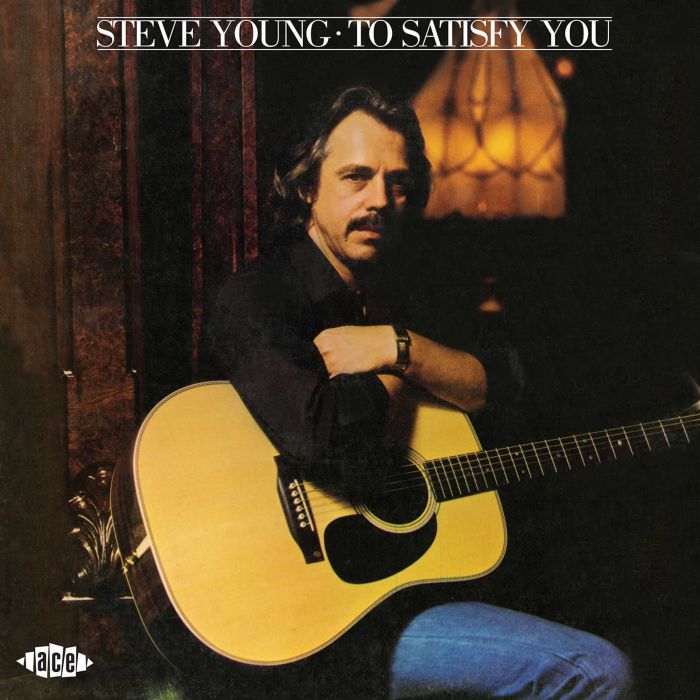
Another five years passed before Steve Young returned with a much more experimental album, while Look Homeward Angel in 1986 which showcased a much more contemporary sound. Sadly, that was the last album Steve Young released during the eighties.
He returned in 1990 with Long Time Rider, with Switchblades Of Love following three years later in 1993. Still, interest in Steve Young’s music and his cult classic Seven Bridges Road continued to grow. Despite that, Steve didn’t release another album until Primal Young in 1999. By then, Steve Young was sixty but Primal Young was hailed as his best album in recent years. Sadly, after that albums continued to be sporadic.
It wasn’t until 2005 that Steve released Songlines Revisited Volume One, where he revisited many of his best known songs including The White Trash Song, Montgomery In The Rain, Rock Salt and Nails and of course Seven Bridges Road which were all rerecorded. Steve Young sold the album at his gigs when he played live. Two years later in 2007, Steve Young released the live album Stories Round The Horseshoe Bend, which sadly, was also his swan-song.
Although Steve Young continued to play until 2010, he never released another album. That was despite having around a 100 songs that he had yet to record. Sadly they never saw the light of day, because on the ‘17th’ March 2016, Steve Young passed away aged just seventy-three. That day, music lost one of its most talented sons.
While Steve Young’s greatest album is undoubtably the cult classic Seven Bridges Road which was released in 1972, it’s just one of the many albums that this truly talented singer, songwriter and musician released over five decades. This also includes his 1969 debut album Rock, Salt and Nails, 1976s Renegade Picker and 1981s To Satisfy You which was recently released by Ace Records.
Sadly, when To Satisfy You was released in 1981 Rounder Records were unsure how to market such an eclectic album, and despite being released to critical acclaim, the album disappeared without trace. Since then, interest in Steve Young’s music has continued to grow, and like his old friend Gram Parson, Steve Young’s music has a cult following. Sadly, many of his album are almost impossible to find, and have been out of print for many years. That is the case with Steve Young’s oft-overlooked hidden gem To Satisfy You, which slipped under the radar in 1981, and nowadays, is one of hidden gems in his back-catalogue. To Satisfy You is the perfect introduction to a truly talented singer, songwriter and musician, Steve Young, whose solo career spanned five decades and saw him pioneer the country rock, Americana, alt country and the outlaw movements.
Steve Young-To Satisfy You.


MILES DAVIS AND JOHN COLTRANE-THE FINAL TOUR: THE BOOTLEG SERIES VOLUME 6.
Miles Davis and John Coltrane-The Final Tour: The Bootleg Series Volume 6.
Label: Sony Music.
After Miles Davis released his seminal album Kind Of Blue on August the ’17th’ 1959, the sextet embarked upon a lengthy tour, which allowed jazz fans to witness one of the legendary bands at the peak of their powers. Sadly, nothing lasts forever, and within a year all wasn’t well within Miles Davis’ band.
Tenor saxophonist John Coltrane who had played an important role in the sound and success of Kind Of Blue, had released his fifth and Atlantic Records’ debut Giant Steps on January the ’27th’ 1960. It was a game-changer for John Coltrane, who had written all the tracks on Giant Steps which was his breakthrough album as bandleader. With John Coltrane’s star was in the ascendancy after releasing his first classic album, he was reluctant to continue in his role as sideman to Miles Davis. Deep down, John Coltrane knew that the time had come to leave Miles Davis’ band and concentrate on leading his own band?
Even Miles Davis realised that it wouldn’t be long before John Coltrane left the sextet to form his own band. However, jazz impresario Norman Granz had a booked Miles Davies to play a three-week European tour, with sold out shows in Paris, Stockholm and Copenhagen which are featured on The Final Tour: The Bootleg Series Volume 6 which was recently released by Sony Music and where Miles Davis and John Coltrane receive equal billing. However, back in 1960, Miles Davis band was receiving star billing.
This was the first tour that Miles Davis would play with his own band, and he wanted and needed John Coltrane in his quintet. A reluctant John Coltrane agreed, and travelled with Miles Davis’ band to Europe in the spring of 1960. By then, Miles Davis and John Coltrane were two giants of jazz, albeit with very different styles. Proof of that were their most recent classic albums.
Kind Of Blue which was recorded by Miles Davis’ sextet in the spring of 1959, and nowadays is regarded as the greatest modal jazz album ever recorded. The music is much more restrained, subtle and melodically innovative. Its architect Miles Davis later called Kind Of Blue: “a return to melody.” This was very different to the album that was released six months later.
This was John Coltrane’s first classic album Giant Steps, which features his exemplary melodic phrasing which later, became known as “sheets of sound,” and also his third-related chord movements that nowadays are known as “Coltrane changes.” Giant Steps which was a genre-defying opus, and just two months after its release, a reluctant John Coltrane travelled to Europe with Miles Davis’ band.
Joining Miles Davis on his European tour that took place in March 1969, was a rhythm section of drummer Jimmy Cobb, bassist Paul Chambers and pianist Wynton Kelly, who had all played on Kind Of Blue. However, Wynton Kelly who at the time was the pianist in Miles Davis band, only featured on one track with Bill Evans returning and playing on four of the five tracks. However, neither Bill Evans nor Julian Cannonball Adderley made the trip to Europe. Instead, Miles Davis lead a septet.
Having arrived in Europe, Miles Davis’ European tour was due to begin in Paris, France on the ‘21st’ of March, and would last three weeks, ending on the ‘10th’ of April 1960. Given the success of Kind Of Blue, it was no surprise that many of the concerts on the European tour had already sold out when the band arrived in Europe. However, concerts in Paris, Stockholm and Copenhagen were being recorded and would be broadcast on the national radio stations, and this had the potential to introduce Miles Davis’ music to a huge audience. Straight away, though, there was a problem.
From the moment that the band arrived in Europe, there was tension between Miles Davis and John Coltrane, who had reluctantly agreed to make the trip. By then, he knew he had outgrown his role as Miles Davis’ sideman and was ready to lead his own band. The tension between the two men can even be heard on Miles Davis and John Coltrane-The Final Tour: The Bootleg Series Volume 6.
Five concerts are featured on The Final Tour: The Bootleg Series Volume 6, including the first two concerts on the tour, which took place at the Olympia, in Paris on the ‘21st’ of March 1960. After that, Miles Davis and his band travelled to Stockholm, Sweden, and played two concerts at the Konserthuset on the ‘22nd’ of March 1960. The fifth concert was in at the Tivolis Koncertsal, Copenhagen, in Denmark, on the ‘24th’ of March 1960. During these five concerts where are documented on the four discs on The Final Tour: The Bootleg Series Volume 6, there’s an air of tension between Miles Davis and John Coltrane.
Meanwhile, Miles Davis was at a musical crossroads by the time he took to the stage at the Olympia, in Paris on the ‘21st’ of March 1960 and received rapturous reception. He wanted to continue to further explore the modal jazz of Kind Of Blue, but knew that this wouldn’t please everyone. Many who would come to see him during his European tour wanted to hear tracks from his 1957 hard bop classic ‘Round About Midnight. Miles Davis knew was going to be all things to all men and women over the next three weeks.
Disc One.
After the applause died down, Miles Davis’ trumpet takes centre-stage on the ballad All Of You from ‘Round About Midnight, which gives way to the modal jazz of So What. Soon, John Coltrane is straining at the leash, as if no longer willing to play second fiddle to Miles Davies. He plays with speed, freedom, fluidity and an inventiveness during this thirteen minute epic. Closing the first Paris concert is On Green Dolphin Street where the tension between the two giants of jazz continues to simmer, and in a way, brings the best out in the men. The band receives a standing ovation from an audience blissfully unaware of the tension between Miles Davis and John Coltrane.
The second Paris concert opens with the hard bop of Walkin’ which was the title-track to the 1957 album by the Miles Davis All Stars. Sometimes, John Coltrane over-blows, which was something many free jazz musicians were doing by 1960. This was something John Coltrane embraced as music evolved and he embraced a much freer sound.
Disc Two.
After opening the second Paris concert with Walkin’, Miles Davis revisits Bye Bye Blackbird, and initially stays true to the original. Soon, John Coltrane starts to stretch his legs and plays with fluidity, freedom, power and invention adding flamboyant flourishes as this standard is stretched to fourteen majestic minutes. Miles Davis’ trumpet takes centre-stage on ‘Round Midnight, where a truce seems to have been declared as the two titans of jazz compliment each other on what was one of the highlights of the two Paris concerts. The truce continues on the hard bop of Oleo which featured on Relaxin’ With The Miles Davis Quintet in 1958, where both men play with a fluidity. However, it’s John Coltrane that steals the show, before the baton passes to Miles Davis on The Theme from his 1958 album Workin’ With The Miles Davis Quintet. Although it lasts less than a minute, it’s a tantalising taste of a jazz legend at the peak of his powers.
The remainder of disc two features the concert was at the Tivolis Koncertsal, Copenhagen, in Denmark, on the ‘24th’ of March 1960. After Norman Granz introduces the band, they launch into a set that was similar to the one they played in Paris three nights earlier. It opens with So What where John Coltrane quickly takes centre-stage and plays a starring role. Occasionally he over-blows and produces a dissonant, primal sound that provides a contrast to Miles Davis’ more restrained style. Still, though, there’s a degree of tension which disappears On Dolphin Street, as the band raise their game becoming one. Then on All Blues from Miles Davis’ from Kind Of Blue, is at his innovative best John Coltrane constantly overblowing his saxophone, which veers between dissonant and melodic as he embraces the freer style of playing. Later, pianist Wynton Kelly delivers a flawless solo, and plays his part in the successful modal reinvention of All Blues which becomes a sixteen minute opus. After that, The Theme closes the show and once again, Miles Davis and his band receive a standing ovation.
Disc Three.
After playing Paris, Miles Davis and his band had travelled to Stockholm, Sweden, where they played two concerts at the Konserthuset on the ‘22nd’ of March 1960. Again, Norman Granz introduces the band, before they once again open the show with So What and play at double time during what’s a breathtaking performance. The tempo drops on Fran Dance where Wynton Kelly’s piano proves the perfect foil and later, replacement for Miles Davis’ trumpet. It takes centre-stage as Walkin’ unfolds, before John Coltrane mostly eschews his free jazz stylings while piano leaves space for the horns to play a starring role. This they do during what’s arguably the best version of Walkin’. After that, the familiar strains of The Theme close the show.
Disc Four.
Most of disc four features the second show at the Konserthuset in Stockholm, Sweden, on the ‘22nd’ of March 1960, the band launch into a spellbinding and sprawling version of So What, where John Coltrane and Wynton Kelly play starring roles, as they deliver breathtaking solos. Flourishes of Wynton Kelly’s piano open On Green Dolphin Street, before each and every member of the band showcase their skills as the arrangement ebbs and flows as it reveals its secrets, subtleties and surprises. However, it’s the horns, and especially John Coltrane’s tenor saxophone, and later the piano that play leading roles and are reminder of a band at the peak of their powers. It’s a similar case All Blues, where the piano sets the scene for Miles Davis and then John Coltrane who plays as if his very life depended on it. He plays with speed, fluidity and control, and also power and passion, and even when he over-blows the music is still melodic. Later the baton passes to Wynton Kelly and Miles Davis who both play their part in this modal jazz opus. After that, The Theme closes the show, and Miles Davis and his band take a bow for the fourth time.
Following the second Stockholm concert is a six-minute interview with John Coltrane that took place during the Spring 1960 Jazz At The Philharmonic Tour. However, the interview is a strange inclusion, and seems out-of-place on this landmark live album.
Not long after tour ended on the ‘10th’ of April 1960, John Coltrane parted company with Miles Davis and founded his first great quartet. As a parting gift, Miles Davis gave John Coltrane the soprano saxophone that he would use when he later embraced spiritual jazz. That was all in the future.
The Final Tour: The Bootleg Series Volume 6 which was recently released by Sony Music documents what was the end of an era for Miles Davis and John Coltrane. He had been a member of Miles Davis’ band for several years, but after John Coltrane recorded his classic album Giant Steps, he realised that he had outgrown his employer. By then, the two musicians were moving in different directions musically, with Miles Davis continuing to explore modal jazz while John Coltrane embraced free jazz. This is apparent on The Final Tour: The Bootleg Series Volume 6 where John Coltrane’s free jazz stylings can be heard throughout the five concerts.
Elsewhere on The Final Tour: The Bootleg Series Volume 6 Miles Davis and his band switch between modal jazz and the hard bop he pioneered a few years earlier on albums like Kind Of Blue and ‘Round About Midnight. However, that was the past for Miles Davis, although he played tracks from both albums as he knew that was what many members of the audience wanted to hear. Sometimes, he stayed true to the original, other times they were reinvented and taken in a new direction by a truly talented band. Ironically, the 1960 spring European tour was the first tour that Miles Davis would play with his own band. Sadly, when he returned to Europe later in 1960 there was no sign of John Coltrane, who had made the move from sideman to bandleader. However, the four discs on The Final Tour: The Bootleg Series Volume 6 feature a tantalising taste of this remarkable band at the peak of their powers, despite the tension between Miles Davis and John Coltrane which sometimes, seemed to drive the septet to even greater heights.
Miles Davis and John Coltrane-The Final Tour: The Bootleg Series Volume 6.
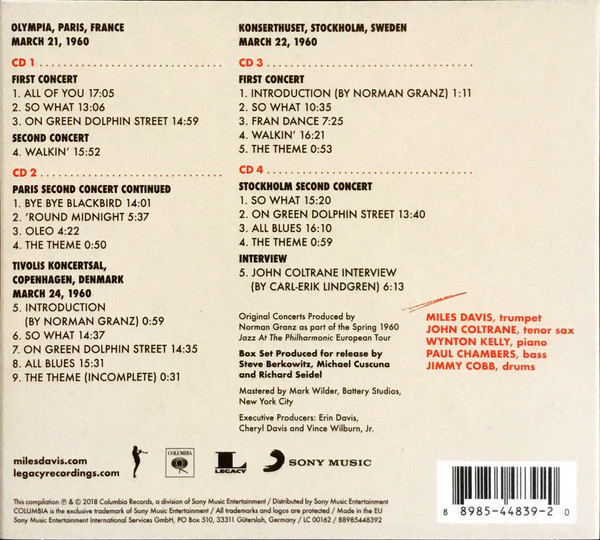
BROWN ACID: THE SIXTH TRIP.
Brown Acid: The Sixth Trip.
Label: Riding Easy Records.
In 2013, Easy Rider Records was formed in the small, sleepy town of Hermosa Beach, Los Angeles, and over the next year the nascent label released thirty-one releases on a variety of different formats. These releases proved popular, and by December 2014, everything was going well for this young, up-and-coming label until they opened their mail a week before Christmas 2014. That was when the owners of Easy Rider Records discovered that they had been served with a cease and desist letter from lawyers acting on behalf of Easyriders Magazine. This was a huge blow, and ruined the festive season for the staff of Easy Rider Records who wondered what the future held for the label?
Gold who were formed in San Francisco’s Mission district in 1969, open Brown Acid: The Sixth Trip with No Parking, which was the title-track to their debut album. It was released later in 1969, but wasn’t a commercial success, and nowadays, original copies of No Parking are almost impossible to find. Fortunately, No Parking was rereleased in 1996, and a new audience discovered the album. One of the highlights of the album is the title-track No Parking, which is a dark, dramatic and vampish hard rocking proto-metal track. There’s even a nod to The Who as Gold combine elements of music and theatre during a track that features blistering guitar licks that are played at breakneck speed.
By 1968 Canadian rockers Heat Exchange had been locked away in the studio recording tracks for their debut album for the best part of a year. As a result, Heat Exchange hadn’t played live for over a year, and were needing to raise their profile before releasing their debut album which was going to be called Reminiscence. Heat Exchange decided to choose the most commercial sounding song, which they would release as a single. Eventually, they settled on Can You Tell Me which they hoped would prove popular on FM radio and give the band a hit single. While the song attracted an audience in several Canadian cities, it wasn’t a hit single and Reminiscence wasn’t released until 2017. Maybe things would’ve been different if Heat Exchange had they chosen the B-Side Inferno which is one of the band’s finest hours, and sounds as if it’s been influenced by Cream and the Jimi Hendrix Experience?
Just like Heat Exchange, Travis only released the one single Livin’ In The USA on the Starshine Productions label in 1970. Ironically, the B-Side Lovin’ You was the stronger of the two tracks and is a melodic and memorable slice of anthemic rock that showcases this talented band from Ohio. Sadly, the original Travis never got the opportunity to fulfilled their potential unlike the “other” Travis.
The opening notes of Enoch Smoky’s It’s Cruel sound not unlike The Clash’s London Calling. That is the only similarity between the two bands. Enoch Smoky who were formed in Iowa City in the late sixties were a hard rocking psychedelic rock band, who only released the one single It’s Cruel on their own Pumpkin Seed Records. Sadly, there was no followup to It’s Cruel which is just the latest hidden gem that has been unearthed by the compilers of the Brown Acid series.
The Backwood Memory story began in Kansas City when Curtis Franklin, Gary Silvey, Joe Clyne and Pete Trecazzi decided to form a band together. On September the ’29th’ 1970 Backwood Memory released their debut single Give Me Time on their own label Memory. It features a vocal powerhouse from Curtis Franklin as classic rock and psych collide head on to create a truly irresistible single that is a welcome addition to Brown Acid: The Sixth Trip.
Many people on hearing Flight’s hard rocking single Fighting The Flight will think that it was recorded and released in the early seventies which was a golden period for rock music. They would wrong, as Fighting The Flight was actually released during the decade that taste forget, the eighties. Fighting The Flight was released on Nebula label in 1986, and was the only singles that Flight released, and is proof that good rock music never goes out of fashion.
Truth and Janey were formed in Cedar Rapids, Iowa, in 1969, and three years later in 1972 released their debut single Midnight Horseman which featured a cover of the Rolling Stones’ Under My Thumb on the flip-side. Midnight Horseman was penned by Billy Janey and produced by Phil Richardson and Rick Hamilton and showcases a talented hard rocking band who went on to release a triumvirate of albums.
Another hard rocking band was West Minist’r who released a trio of singles between 1969 and 1975. Their sophomore single was Mr. Fingers which featured the Kirk Kaufman composition My Life on the B-Side. It was released in 1972 and is three minutes of memorable hard rocking music that deserved to fare better than a B—Side.
Purgatory was formed in Dayton, Ohio, in 1970 and the five piece heavy rock band were heavily influenced by The Doors, Iron Butterfly and Steppenwolf. That is apparent on their one and only single Polar Expedition, which Purgatory self-released in May 1970. Nearly forty-eight years later and this hard rocking, bluesy, hidden gem makes a welcome return on Brown Acid: The Sixth Trip, and a new generation of music fans can discover this talented and little-known band.
Four years after Johnny Barnes released his debut single Angel Of Inspiration in 1976, he returned in 1980 with his debut album The Johnny Barnes Story. It was released on Johnny Barnes’ own Nightcrawler label and featured the hook-laden and irresistible hard rocking Steel Rail Blues.
Closing Brown Acid: The Sixth Trip is Zendik’s 1970 single Is There No Peace, which was released on their own Pslhrtz label, and was produced by Bob Ambos and Mike Lima. They play their part in a slice of hard rocking and defiant psych that closes the compilation on a high.
Very few compilation series release six volumes, and those that get that far, are often starting to run out of quality music. That certainly isn’t the case with the Brown Acid series, which is going from strength-to-strength as the compilers continue to unearth long-lost and oft-overlooked heavy psych, proto-metal and stoner rock singles and album tracks from the sixties, seventies and eighties. Many of these singles and albums were released in small quantities as private presses, or by small regional labels. Often, these labels nether had budget nor expertise to promote their releases, and they failed to find the wider audience that they deserved.
In some cases, it’s only much later when crate diggers, record dealers and specialist DJs unearth these singles and albums that they start to find an audience. That was the case with bands like Gold whose debut album No Parking was reissued in 1996, while Heat Exchange’s debut album was belatedly released in 2017. Since then, both albums have been discovered by a new and wider audience. Hopefully, that will be the case with the little-known and vastly underrated singles, B-Sides and albums tracks that feature on Brown Acid: The Sixth Trip, which is crammed full of hidden gems and is one of the best instalments in Riding Easy Records’ Brown Acid series.
Brown Acid: The Sixth Trip.
BABY I’VE GOT IT! MORE MOTOWN GIRLS.
Baby I’ve Got It! More Motown Girls.
Label: Ace Records.
As 1959 dawned, Detroit based songwriter, producer and musical impresario Berry Gordy Jr had already discovered The Miracles and started to build a successful portfolio of recording artists. There was only one problem, what would Berry Gordy Jr do with these talented artists and groups? It was Smokey Robinson the leader of The Miracles that came up with the answer, when he suggested that Berry Gordy Jr found his own record label.
This made sense to Berry Gordy Jr, who borrowed $800 from his family to form his own R&B label.Originally, Berry Gordy Jr planned to call his new label Tammy Records, after a song that had been recorded and released by Debbie Reynolds. However, there was only one problem, someone had beaten Berry Gordy Jr to the punch, and he had to think of a new name for his nascent label. Eventually, Tamla Records was incorporated on January the ‘12th’ 1959, in Detroit, Michigan.
Nine days later, Tamla Records began trading on January the ‘21st’ 1959, and not long after that, Marv Johnson’s single Come to Me was the label’s first release. Tamla Records second release was another single by Marv Johnson, You Got What It Takes, which was released later in 1959 and reached number two in the US R&B charts. This was a huge boost to Tamla Records.
Already Berry Gordy Jr was making plans to expand and had formed the Rayber label which released Wade Jones’ single Insane. However, the ballad failed commercially and is nowadays, one of the rarest singles released by one of Berry Gordy Jr’s labels.
Later in 1959, Berry Gordy Jr’s next label, Motown Records released The Miracles’ single Bad Girl, which was released nationally by Chess Records. Little did Berry Gordy Jr realise that his new label Motown Records would become one of the most successful and iconic soul labels.
In the spring of 1960 Berry Gordy Jr decided to merge his two small labels, and on April the ’14th’ 1960 Tamla Records and Motown Records were merged into one label new company, Motown Record Corporation. Six months later, The Miracles released their single Shop Around nationally on the ‘15th’ of October 1960, which topped the US R&B charts late in the year, and reached number two in the US Billboard 100 in early 1961. By then, Shop Around had become Tamla Records’ first million-selling hit single.
After the success of Shop Around, Berry Gordy Jr started looking for new signings for his labels, and discovered the then unknown Mary Wells, who would go on to enjoy hits with the Smokey Robinson compositions You Beat Me To The Punch and My Guy. Mary Wells became one of many successful female singers and girl groups who blossomed at Motown Records. They’re celebrated on Baby I’ve Got It! More Motown Girls, which was recently released by Ace Records.
Baby I’ve Got It! More Motown Girls features twenty-four tracks, and is the long-awaited followup to Love and Affection-More Motown Girls which was released in late-2015. It was an album of rarities, and so is Baby I’ve Got It! More Motown Girls. Fourteen of the songs on Baby I’ve Got It! More Motown Girls have never been released before. The other ten tracks were first made available as Motown Unreleased downloads between 2014 and 2017. However, these tracks have never been released on CD, and make their debut on Baby I’ve Got It! More Motown Girls.
The best way to describe Baby I’ve Got It! More Motown Girls is a carefully curated compilation of mostly uptempo tracks that were recorded between 1961 and 1969, and features some of Motown’s leading ladies. This includes Mary Wells, Gladys Knight and The Pips, The Marvelettes, Brenda Holloway, Martha and The Vandellas, Rita Wright and Kim Weston. They’re joined by some of the lesser known names that recorded for Motown Records, including Liz Lands, LaBrenda Ben, Thelma Brown, Little Lisa and Yvonne Fair. They all play a part in the Motown Records’ story, which is celebrated on Baby I’ve Got It! More Motown Girls.
Not all of the artists on Baby I’ve Got It! More Motown Girls wanted to sign to Berry Gordy Jr’s label. Gladys Knight was reluctant to sign to Motown, fearing the group would end up as part of its musical “production line.” Ironically, The Pips who were just backing singers outvoted Gladys Knight and she signed on the dotted line in 1965.
On the ‘19th’ of April 1966 Gladys Knight and The Pips recorded their first song for Motown Records, In My Heart I Know It’s Right, which opens Baby I’ve Got It! More Motown Girls. It’s a melodic horn driven stomper that was produced by Johnny Bristol and Harvey Fuqua, who bring out the best in Gladys Knight as she brings the lyrics to this irresistible stomping dancer to life. Just over a year later, on the ‘11th’ of May 1967, Gladys Knight and The Pips recorded Is This Why (I Gave My Love To You) in Los Angeles with producer Dennis Lussier who penned the song with Debbie Dean. Gladys Knight delivers a hurt filled vocal on this mid tempo hidden gem that never saw the light of day until 2017.
Prolific is the best word to describe the three years Brenda Holloway spent at Motown Records. She recorded 150 songs, albeit some were demos, and many others have never been release. This includes the original mix of Brenda Holloway’s Without Love You Lose A Good Feelin’ which was recorded during May and June of 1966 and produced by William Weatherspoon. He plays his part in a hook-laden dancer that maybe was the one that got away for Brenda Holloway? Her other contribution is Baby I’ve Got It which was recorded on the ‘22nd’ of June 1966 and goes from 0-60 within a few seconds, and is sure to find favour within the Northern Soul scene.
Ashford and Simpson penned and produced It’s Been A Long Time Happenin’ which was the recorded by the Motown house band The Funk Brothers on the ‘29th’ of September 1967. All that remained was for Tammi Terrell to record her vocal. Sadly, on October the ’14th 1967, she collapsed onstage and when she returned home to Virginia was diagnosed with a brain tumour. This was a devastating blow for Tammi Terrell and everyone at Motown Records. With Tammi Terrell unable to record It’s Been A Long Time Happenin’ which was reassigned to Rita Wright. She laid down a heartfelt but urgent vocal on the ‘16th’ of February 1968 which sometimes sounds similar to Diana Ross. However, Rita Wright’s version of It’s Been A Long Time Happenin’ was never released and fifty years later, is heard for the first time on Baby I’ve Got It! More Motown Girls.
Between 1963 and 1964 Liz Lands recorded over a 100 songs for Motown Records, including a cover of Frank Wilson’s It’s Crazy Baby. It was produced by Hal Davis and Marc Gordon, and was completed on the ‘25th’ of October 1964. Despite a radio friendly commercial sound, It’s Crazy Baby was never released and is another song that makes its debut Baby I’ve Got It! More Motown Girls.
Ann Bogan was discovered by singer, songwriter and producer Harvey Fuqua singing in a Detroit church, and signed her along with two friends who became Challengers III. They released three singles on the Tri-Phi label, and Ann Bogan also duetted with Harvey Fuqua on the What Can You Do. However, when Harvey Fuqua joined Motown, so did Ann Bogan. She recorded several songs including There Are Things which was written by Gwen Gordy and Harvey Fuqua who took charge of production. Sadly, There Are Things was never released and Ann Bogan’s vocal powerhouse has lain unreleased since it was recorded on the ‘4th’ of April 1963. Maybe it’s the one that got away for Ann Bogan who was obviously a talented singer?
Martha and The Vandellas also feature twice on Baby I’ve Got It! More Motown Girls. Their first contribution is I’m Willing To Pay The Price which was penned and produced by Holland-Dozier-Holland on the 3rd’ of April 1963. It’s melodic and catchy with horns replacing the trademark stomping beat on a track that should’ve been released as a single. Very different is Martha and The Vandellas’ other contribution Mr Misery (Let Me Be). This ballad was recorded in 1962 and was produced by Holland-Dozier-Holland. They deploy percussion during the arrangement that sashays along, as Martha and The Vandellas showcase their vocal prowess.
Berry Gordy wrote and produced When Someone’s Good To You for Oma Page. It was recorded on the ‘7th’ of July 1964 with Oma Page delivering a tender, heartfelt vocal while handclaps, harmonies and horns accompany her. However, one can only wonder what the song would’ve sound like with out the handclaps that are omnipresent?
Robert Hamilton wrote and produce I Up And Think Of You for Kim Weston, which they recorded in 1963. It features a sensual and soulful vocal from one of Motown Records’ most talented female vocalists, who sadly, didn’t enjoy the success her talent deserved.
Mary Wells was the first female vocalist to sign for Motown Records, and enjoyed a string of hit singles. However, very little is known about the Berry Gordy penned She Don’t Love You. Neither the date of recoding, nor where it was recorded is known. All that is known is that it was recorded outside Hitsville USA. That was where the slick arrangement with dancing strings and harmonies that accompany Mary Wells on this long-lost hidden gem.
A jazz-tinged piano opens The Marvelettes’ Playboy which is another track where details of the recording are unknown. Just the piano accompanies The Marvelettes who showcase their vocal prowess against an understated arrangement. It’s a similar case on The Marvelettes’ other contribution Sweet Talkin’ Guy, which was recorded during two days in early June 1966. By then, The Chiffons version of Sweet Talkin’ Guy was still in the charts when The Marvelettes recorded this memorable and melodic cover.
Strings sweep and swirl as Barbara McNair’s You’ve Got Possibilities unfolds. It was produced by producer Frank Wilson with Barbara McNair adding a sassy vocal on the ‘24th’ of May 1966. When combined with The Funk Brothers’ backing track the result is one of the highlights of Baby I’ve Got It! More Motown Girls, and song that is unlike much of the music coming out of Hitsville USA at that time.
Closing Baby I’ve Got It! More Motown Girls is So Long which was recorded in Chicago by Kim Weston on the ‘15th’ of January 1964 and finds producer William Stevenson reinventing her as a torch singer. It’s a powerful and poignant song, and very different to the type of music Kim Weston was recording in 1964.
For soul fans or even anyone with even a passing interest in Motown Records, then Baby I’ve Got It! More Motown Girls which was recently released by Ace Records is sure to be of interest to them. It features fourteen previously unreleased songs and ten tracks that were first made available as Motown Unreleased as downloads between 2014 and 2017. However, these tracks have never been released on CD, and make their debut on Baby I’ve Got It! More Motown Girls.
It features some of the most successful female singers and girls groups who were signed to Motown Records between 1961 and 1969 when the twenty-four tracks on Baby I’ve Got It! More Motown Girls were released. There’s also contributions from artists who didn’t enjoy the same success, and only play a small or walk on part in the Motown story. However, many of these artists had plenty of talent, but didn’t get the break that could’ve transformed their career.
Now over fifty years later, and many of these artists can be heard on Baby I’ve Got It! More Motown Girls, which is the long-awaited followup to Love and Affection-More Motown Girls which was released in late-2015. Two-and-half years later and Baby I’ve Got It! More Motown Girls is the latest instalment in Ace Records occasional series and is full of hidden gems from familiar faces and new names which for far too long, have languished in the vaults of Berry Gordy Jr’s iconic soul label.
Baby I’ve Got It! More Motown Girls.


JUAN PABLO DIAZ-FASE DOS.
Juan Pablo Diaz-Fase Dos.
Label: Self-Released.
It’s safe to say that the last few years have been something of a roller coaster for Puerto Rican based salsa singer and songwriter Juan Pablo Diaz. The roller coaster ride began when he was offered a recording contract, that he had worked so hard towards. It was dangled in front of him like a carrot, only to be snatched away at the last-minute. This was a devastating blow, and one that many singers might not have recovered from.
Fortunately, Juan Pablo Diaz was made of stronger stuff, and in 2013 he returned with his debut album Diaz. When Las calles de mi ciudad was chosen as the lead single, it reached number two on the various radio station charts in Puerto Rico. This was a huge boost to Juan Pablo Diaz’s confidence.
Things got even better in late 2013, when Diaz featured on the National Popular Culture Foundation of Puerto Rico’s list of the twenty best albums released during 2013. This went some way towards making up for the recording contract that never was.
Despite enjoying a successful single and album, many within Puerto Rico still thought of Juan Pablo Diaz as an actor, which was what he started off as. Especially, comedy which was his speciality and lead to him enjoying a parallel career as a comedian. However, eventually, he followed in the footsteps of his father who was a musician.
Both of Juan Pablo Diaz’s parents were involved in show business, with his father working as a musician and as a television host, while his mother was a dancer. Whenever she had some free time, she would head to the salsa club to dance. However, despite his mother’s love of salsa and his father working as a musician, Juan Pablo Diaz ended up working as an actor.
Juan Pablo Diaz never ever, thought that one day he would become a salsa singer and songwriter. “I was into classic rock and funk and soul when I started writing songs in my early teens. I was into salsa but more as a fan, not as a performer.” Instead, he idolised Lenny Kravitz, and dreamt of becoming the Puerto Rican of the American rocker.
Things didn’t work out that way, and initially, Juan Pablo Diaz’s interest was the theatre. He was one of the founders of the top Puerto Rican comedy theatre group, Teatro Breve. Looking back, Juan Pablo Diaz realises that his work in the theatre helped hone his stagecraft. “Comedy helps me project myself, to connect with the public…My music has a really serious message, but comedy is a really useful tool in crafting a convincing performance to get that message across.”
It was a theatre production that featured salsa that ended up transforming Juan Pablo Diaz’s career. This resulted in him reinventing himself as a singer, although he’s been known to make the occasional guest appearance with Teatro Breve. Mostly, though Juan Pablo Diaz concentrates on his musical career nowadays.
Back when Juan Pablo Diaz decided to embark upon a musical career, little did he know that this was the start of a lengthy musical apprenticeship. During that period, he honed his skills as a salsa singer, and after weeks, months and years became a popular draw in Puerto Rica’s clubs. Eventually, Juan Pablo Diaz was offered a recording contract, which sadly, fell through at the last-minute. Despite this huge blow, the singer-songwriter continued his career and was determined that one day he would release his debut album.
Juan Pablo Diaz even kept the unfinished painting that was meant to adorn the cover of the album that never was. It would motivate him, and drive him on, as he worked towards releasing his debut album.
Diaz.
Eventually, six years after starting out as a singer, Juan Pablo Diaz had completed his debut album Diaz, which was released in 2013. Diaz was released to critical acclaim in his native Puerto Rica, after winning over the local critics. Back then, Juan Pablo Diaz knew that salsa albums by up-and-coming artists never sold well. “Salsa by young people is in a really tough spot. The genre is not as popular as it was and those who follow the genre are my age and older. I like to say that salsa is the only genre that competes with its own past, with the golden age of the 60s and early 80s Fania. That’s always going to be the reference point. Fans aren’t always that adventurous and would rather listen to what they know. But it’s not impossible to earn fans’ trust.”
That proved to the case, as Diaz found an audience amongst fans of Puerto Rican salsa fans. Juan Pablo Diaz watched as his debut album climbed the Puerto Rican charts, before topping the charts. Against all the odds, Juan Pablo Diaz who was still a relatively unknown name had triumphed with his debut album Diaz.
Fase Dos.
In some ways, that to some extent was the easy part, and now Juan Pablo Diaz had to do it all again. Eventually, he began work on his sophomore album which would later become Fase Dos. Juan Pablo Diaz wrote eight new songs which were augmented by five cover versions on Fase Dos. These thirteen songs were part of an album that Juan Pablo Diaz wanted Fase Dos to capture the Puerto Rican experience, which he hoped would resonate with the wider world. “I’m trying to interpret what I can make out of this world, especially out of my country… I have a message that has local roots but appeals to a universal point of view, to the greed, frustrations, the madness that we’re living in. Puerto Rico has been a tough spot for a long time, way before Maria. That’s a very local point of view but it’s also very relatable.”
Eventually, the recording of Fase Dos was complete, and Juan Pablo Diaz hoped that we would have an album that would resonate with people far from his native Puerto Rico. Now his thoughts turned to the album cover, and he decided to use the unfinished painting that should’ve adorned his debut album before the deal fell through. It’s a something that Juan Pablo Diaz will never forget: “The week after everything fell apart, the artist I had asked to create a cover showed me his work and said, ‘This is where I am right now.’ I had an epiphany, that that unfinished work is a symbol of what I’m doing. The philosophy on the album: Your work is never finished. You’re never done and retired. There’s some dark beauty in that honest truth.”
Featuring the poignant, unfinished painting Fase Dos was self-released by Juan Pablo Diaz in Puerto Rico during the second half of 2016. Just like his debut album Diaz, his sophomore album Fase Dos was released to critical acclaim in Puerto Rico. That was no surprise given the quality of Fase Dos which is a carefully crafted album that showcases a truly talented singer and songwriter. It’s also an album where strings and horns feature in many of the arrangements.
This includes the irresistible album opener Canten where harmonies, horns, percussion and dancing strings accompany Juan Pablo Diaz on this joyous sounding track. The tempo drops on De Las Mala Compañías, but the horns, harmonies and percussion return as Juan Pablo Diaz delivers an impassioned vocal, before El Poderoso Caballero is full of social comment. Aquí o allá finds Juan Pablo Diaz breathing meaning and emotion into the lyrics about migration, against the carefully crafted arrangement. It’s a similar case on A tu lado where strings and horns accompany this rueful sounding old-school bolero. There’s also a melancholy sound to the cinematic strings on Preludio, before the tempo rises on País Gris which deals with Puerto Rico’s struggling economy. He then turns his attention to the ballads No Fue Suficiente and De Efectos Y Causas, which seem to bring out the best in him. After this, Juan Pablo Diaz heads for the dance-floor on Un Vez Yo Te Quisí, before he gives Argentine rocker Gustavo Cerati’s Puente a salsa makeover. Closing Fase Dos is Requiem Para Lita, a beautiful string-drenched song about love lost.
Three years after releasing his debut album Diaz, Juan Pablo Diaz had returned with his critically sophomore album Fase Dos and his career seemed to be going from strength-to-strength. Especially when he received his first Latin Grammy nomination in 2017 for Fase Dos. Sadly, Juan Pablo Diaz wasn’t aware of this at the time.
At the tome, Puerto Rico had been devastated by hurricanes, and left islanders without electricity. It was only several weeks after the shortlist for the Latin Grammy nominations were announced that Juan Pablo Diaz realised he had been nominated. This was a proud day for him, but one that was tinged with sadness when he saw the extent of the damage caused by the hurricanes.
His sophomore album Fase Dos spoke for his generation who still live in Puerto Rico. It’s also a reminder of the unfinished business that his generation has, and Juan Pablo Diaz became their spokesman as he talks with honesty and passion on Fase Dos of the poverty, greed and migration that has affected Puerto Rico. Many have left their homeland, and in some cases, abandoned it entirely having built a new life far from where their journey started. This is just one of the things that frustrates Juan Pablo Diaz and deals with on Aquí o allá. “Many people who stay don’t do anything for the country, and a lot who leave are trying to contribute to the country from afar. We’ve discussed that a lot over the past decade. This is a manifesto of sorts, that says you have to work for Puerto Rico wherever you are. It’s one of the more optimistic songs on the album.”
Nearly two years after Juan Pablo Diaz released Fase Dos in his native Puerto Rico, he’s hoping that the album will find a much wider audience outside of the island nation he still calls home. With its mixture of joyous uptempo tracks and beautiful ballads, Fase Dos is the finest album of Juan Pablo Diaz’s career. It’s also a very personal album, and one that is full of social comment as Juan Pablo Diaz contemplates the future for Puerto Rico. This is still his home and a place that he believes in and holds dearly. This is apparent from the music on his carefully crafted and career-defining sophomore album Fase Dos, which Puerto Rico’s new Prince of Salsa, Juan Pablo Diaz hopes will introduce his music to the wider audience it so richly deserves, and also remind them of his homeland.
Juan Pablo Diaz-Fase Dos.

SKYDIVE TRIO-SUN SPARKLE.
Skydive Trio-Sun Sparkle.
Label: Hubro Music
Release Date: ‘27th’ April 2018.
Three years after the Scandinavian supergroup Skydive Trio released their critically acclaimed debut album Sun Moee, this multitalented and versatile power trio return with their much-anticipated and eagerly awaited sophomore Sun Sparkle, which will be released by Hubro Music on the ‘27th’ April 2018. Sun Sparkle showcases the different sides to Skydive Trio, who unlike many bands don’t have a “trademark sound,” and instead, they seamlessly switch between and sometimes combine disparate musical genres on Sun Sparkle. As a result, each track on Sun Sparkle is very different stylistically, and also in terms of mood tempo and texture. This is no surprise given the three members of the Skydive Trio’s reputation for making ambitious and innovative music.
That has been the case throughout the long and illustrious careers of the members of the Skydive Trio who, for many years have among the leading lights of Scandinavian music scene. It features the combined talents of Finnish drummer Olavi Louhivuori and Norwegian bassist Mats Eilertsen and guitarist Thomas T. Dahl, who have all enjoyed successful careers as bandleaders, co-leaders and sidemen.
Mats Eilertsen
The most experienced member of the Skydive Trio is bassist Mats Eilertsen was born in 1975, in Trondheim, Norway. That was where Mats Eilertsen first discovered music, and specially jazz music which soon, became his passion. However, Mats Eilertsen wasn’t content to just to listen to music, and was soon learning to play the bass, which eventually resulted in him enrolling on the prestigious Jazz Program at the Trondheim Musikkonservatorium.
That was where he met future Skydive Trio guitarist Thomas T. Dahl in 1995, when the both joined a new band the Dingobats. Over the next couple of years, Mats Eilertsen juggled his studies and played with the Dingobats. However, after graduating from the Trondheim Musikkonservatorium, Mats Eilertsen embarked upon a career as a professional musician.
In 1997, Mats Eilertsen made his debut as a sideman when he played on Jacob Young’s sophomore album Pieces Of Time. This was the first of over 130 credits that Mats Eilertsen has amassed over the next three decades. During that time, he’s worked alongside Sverre GjørvadTord Gustavsen, the Hakon Kornstad Trio and Solveig Slettahjell’s Slow Motion Orchestra. Mats Eilertsen has also worked with many international stars including Joshua Redman, Pat Metheny and Kenny Wheeler. However, this is only part of the story.
Forty-three year old Mats Eilertsen is a veteran of many bands including the Alexi Tuomarila Trio, Groups Of Friends, Helge Iberg’s Jazz-Kammer, the Mark Solborg Trio, Nils Økland Band, Nymark Collective, Tord Gustavsen Quartet and Trondheim Jazz Orchestra. Mats Eilertsen was a member of Dingobats and the hugely influential band Food, and played on their first five albums between 1999 and 2007. By then, Mats Eilertsen had embarked upon a solo career which he was juggling with his other projects and work as a sideman.
Mats Eilertsen had released his debut album Turanga in 2004, with Flux following in 2006 and Short Stories in 2007. This was followed in 2009, with the critically acclaimed Radio Yonder on Hubro Music. Over the next seven years, Mats Eilertsen was busy with other projects, collaborations and working as a sideman, so his fifth album Rubicon wasn’t released until the summer of 2016. It was well worth the wait, and was a reminder of one Norwegian music’s most talented sons, who in 2017 played an important role in the sound and success of the Nils Økland’s critically acclaimed album Lysning.
Thomas T. Dahl.
Another of Norwegian music’s most talented sons is guitarist Thomas T. Dahl who was born in 1973, and enrolled on the Jazz Programme at the University of Trondheim in 1993. The same year, Thomas mad his musical breakthrough, with Krøyt.
Two years later, Thomas T. Dahl joined another band, Dingobats which featured future Skydive Trio bassist Mats Eilertsen. Now a member of two bands, Thomas T. Dahl had to juggle his studies and his musical commitments.
In 1998, Thomas T. Dahl had just graduated from the University of Trondheim, and Krøyt’s debut album, The New Dingobats Generation was well received by critics. However, when Krøyt returned in 2000 with their sophomore album Low. Not only was Low released to critical acclaim, but won a Spellemannprisen, the Norwegian equivalent of a Grammy Award.
This wasn’t the end of the celebrations. In 2000, Thomas T. Dahl won the Edvardprisen Prize for his composition Silent. It seemed that Thomas could do no wrong. However, he wasn’t for resting on his laurels.
Meanwhile, Thomas T. Dahl continued to play various bands over the next few years, including Dingobats, Bergen Big Band and BMX. H also found time to produce HighasaKites, the Eivind Austad Trio, Knut Kristiansen and Bergen Big Band. However, nowadays, much of Thomas T. Dahl’s time is spent working in education, and specially the Greig Academy in Bergen, where he’s an associate professor in music.
Olavi Louhivuori.
Drummer and percussionist Olavi Louhivuori is the youngest member of Skydive Trio, and was born into a musical family in Jyväskylä, in Central-Finland, in 1981. So it was no surprise when Olavi Louhivuori decided to study drums and composition at the prestigious Sibelius Academy.
This was an important part of Olavi’s musical education, which he put into practise with the Joon Toivanen Trio, the Ilmilekki Quartet and the Sun Trio. Each of these bands won the accolade Young Nordic Jazz Group, and since then, Olavi Louhivuori’s career has flourished.
Olavi Louhivuori has toured and recorded with the legendary Polish trumpet player Tomasz Stanko, and has also played with Anthony Braxton, Marilyn Crispell, Susanne Abbuehl and Kenny Wheeler. That is not all. There also Olavi Louhivuori’s recording career to consider.
He’s released solo albums, collaborations and released albums with a variety of different bands. This included the Finnish experimental Jazz ensemble Oddarrang who have released a quartet of albums between 2006 and 2016. Their debut album Music Illustrated won the Emma Prize in 2007, which is the Finish equivalent of a Grammy Award.
Since then, Olavi Louhivuori has been a member of the Ilmiliekki Quartet, Joona Toivanen Trio, Sun Trio and Tomasz Stańko Quintet and has also found time to lead the Olavi Trio who have released two albums 2011s Triologia and 2015s Oh, La Vie! By 2015, the thirty-four year old drummer was one of the leading lights of the Scandinavian music scene and had joined Scandinavian supergroup. Skydive Trio.
That is the case on Launch, a dramatic, driving slice of post rock where the rhythm section are responsible for a repetitive motif provides a backdrop to the searing, scorching and shimmering guitar that soars above the arrangement. They set the standard high on Sun Sparkle, as Skydive Trio make a welcome return
Straight away, there’s an element of drama to Convoy, despite Skydive Trio playing within themselves and eschewing power. Instead, cymbals shimmer and rinse while the bass is plucked and the guitar glisten and glimmer. By then, it sounds as if Skydive Trio are paying homage to Pink Floyd, before the rhythm section create a hypnotic and dramatic backdrop while the guitar weaves in and out adding layers of beautiful, pensive, poignant and filmic music. Although the guitar takes centre-stage, and plays a leading role, it can’t exist without the rhythm section during this carefully crafted cinematic soundscape which is full of beauty and drama, but also has a poignant ruminative sound.
Again, the drums on Apollo add degree of drama as the tempo rises, but don’t overpower the rest of Skydive Trio. Instead, the rhythm section become one, and add a dark, dramatic backdrop. This is very different to the glistening, shimmering guitar that takes centre-stage as guitarist Thomas T. Dahl casts his spell. Later, he fires off brisk, urgent licks as the guitar is played with speed, fluidity and accuracy unleashing searing, blistering rocky licks. By then, the trio is playing as one, before washes of lysergic guitar and provide a contrast to the dramatic rhythm section. Together, they continue to create a widescreen, filmic sound that producers of Nordic noir should embrace.
Just Thomas T. Dahl’s wistful guitar glistens is played slowly on Engine Rest. Soon, it’s joined by Mats Eilertsen’s standup bass which played deliberately, and provides the perfect counterpart to the guitar. Effects are used as it shimmers and glistens and with the bass creates a beautiful, understated and melancholy track where Skydive Trio once again prove that sometimes less is more.
Again, it’s just a chiming guitar that opens Descending before the bass enters and soon is joined by cymbals and drums. The rhythm section again eschew power, playing within themselves and in a straight line. Soon, Skydive Trio take a diversion it’s all change. There’s a more thoughtful, and slightly darker sound as a fleet fingered guitar solo is part of this multilayered and rocky arrangement where Skydive Trio open the throttle and enjoy the opportunity to play with speed, freedom and fluidity. In doing so, they showcase their skill and versatility whilst showing another side to their music.
Slow, spacious describes Surface Stride as the guitar shimmers and reverberates as the rhythm section play slowly and deliberately. They literally creep across the arrangement, as short drum rolls, hissing hi-hats and a deliberate bass leave room for the guitar. Effects are added to runs and solos as washes of glistening and shimmering guitar are sprayed across the arrangement. This is effective and adds to this dramatic, atmospheric and cinematic soundscape. It’s sure to send the listener’s imagination racing.
As Spruce unfolds, Thomas T. Dahl’s subtle, chirping and spacious guitar takes centre-stage as it adds the chordal refrain, while Mats Eilertsen uses a bow to play the melody on his double bass and Olavi Louhivuori’s drums mark time. Together, they play their part in what’s the most beautiful tracks on Sun Sparkle, and what’s probably the finest moment of Skydive Trio’s career.
Very different is Ascending where Thomas T. Dahl’s guitar distorts and he tames the tiger. Meanwhile, the drums are louder as they combine with the electric bass which has a heavier sound on this genre-melting track. Elements of heavy rock, psych, improv and folk combine as Skydive Trio lock into a groove and create a fist pumping anthem-in-waiting.
Skydive Trio then drop the tempo on Sun Sparkle where Thomas T. Dahl gives one of his finest performances. His playing is retrained as his guitar chirps and chimes as he crafts his finest hour on Sun Sparkle. Beauty is omnipresent on this meditative track where Thomas T. Dahl’s playing is restrained as he channels the spirit of Jimi Hendrix and draws inspiration from Carlos Santana, John Martyn and Bill Frisell. Meanwhile the rest of Skydive Trio play their part in the sound and success of the track, by playing within themselves and eschewing power during a breathtakingly beautiful six-minute epic.
Wish I Was Who? (Camera Off) closes Sun Sparkle and finds Mats Eilertsen switch to standup bass as drummer Olavi Louhivuori gives an another restrained performance as the arrangement shuffles along and Thomas T. Dahl’s guitar shimmers and twangs. In doing so, it plays its part in ruminative and melancholy sounding track that has partly been inspired by folk music, and is also beautiful and memorable.
After a three-year wait, Skydive Trio will return on the ‘27th’ April 2018 with Sun Sparkle, which will be released by Hubro Music. Sun Sparkle is Skydive Trio’s much-anticipated and eagerly awaited sophomore album, and the followup to their critically acclaimed debut album Sun Moee which was released in 2015. Now Skydive Trio make a triumphant return with Sun Sparkle.
The multitalented and versatile power trio Skydive Trio showcase the different sides to their music on Sun Sparkle. Unlike many bands, Skydive Trio, don’t have a “trademark sound,” and instead, they seamlessly switch between and sometimes combine disparate musical genres including avant-garde, folk, improv, Nordic Wave, post rock, psychedelia and rock on Sun Sparkle. As a result, each track on Sun Sparkle is very different stylistically, and also in terms of mood tempo and texture.
Many of the tracks on Sun Sparkle are best described as multilayered, and this is a result of overdubbing. Sometimes, layers of guitars and percussion were added to the ten tracks recorded by Skydive Trio. Sometimes, what was recording during the overdubbing sessions was very subtle and will only reveal itself after several listens. This is all part of Skydive Trio’s latest musical tapestry, which is veers between anthemic, atmospheric and beautiful to dramatic, melancholy, poignant and ruminative.
Much of the music on Sun Sparkle has a widescreen cinematic sound that sounds. It’s as if Skydive Trio were recording the soundtrack to the latest Nordic Noir blockbuster, when they recorded Sun Sparkle, which is guaranteed to set the listener’s imagination racing. However, Skydive Trio’s cinematic opus Sun Sparkle is also full of beauty and drama, and is the fitting followup to Sun Moee, as this talented and innovative Scandinavian triumvirate make a welcome and triumphant return.
Skydive Trio-Sun Sparkle.
KEITH JARRETT, GARY PEACOCK AND JACK DEJOHNETTE-AFTER THE FALL.
Keith Jarrett, Gary Peacock and Jack DeJohnette-After The Fall.
Label: ECM Records.
Imagine that one day, you’re struck down by a mystery illness, and go from being healthy to constantly exhausted, with your head, muscles and joints constantly aching. All you want to do is sleep, sleep and sleep some more. Even then, you don’t feel refreshed and getting through daily life is impossible. So much so, that you’re a shadow of your former self. To make matters worse, the doctors have absolutely no idea what is wrong with you.
They draw blood, send you for a brain scan and lumbar puncture, and check for every imaginable illness, including some that you’ve never heard of heard of. Still the so-called medical professionals have no idea what is wrong with you. Meanwhile, you’re living a nightmare and no longer able to make a living, and watch as your life falls apart.
Eventually, after being passed from pillar to post, eventually, a doctor realises exactly what is wrong with you, and diagnoses that you have Chronic Fatigue Syndrome. This was disease that very nearly destroyed the career of one of the greatest jazz pianists of his generation Keith Jarrett in the late-nineties.
It was around 1996 that fifty-one year old Keith Jarrett became ill, and was diagnosed by doctors as having Chronic Fatigue Syndrome. This was a huge blow for Keith Jarrett who was enjoying a successful career, and was one of the greatest and most versatile jazz musicians of his generation.
Keith Jarrett’s career began in the mid-sixties when he was hired by Art Blakey to play in The Jazz Messengers, and made his recording debut on their 1966 hard bop album Buttercorn Lady. However, Keith Jarrett wasn’t a Messenger for long, and soon, joined Charles Lloyd’s band.
Joining forces with Charles Lloyd who was signed to Atlantic Records was good experience for Keith Jarrett who was a prodigious talent. He played on Charles Lloyd’s 1967 albumForest Flower, and Love-In, Journey Within and En Concierto which were all released by The Charles Lloyd Quartet the same years. All this was good experience for Keith Jarrett who had just been signed by Atlantic Records.
On May the ‘4th’ 1967 Keith Jarrett made his way to Atlantic Recording Studios, in New York, where just four days before he turned twenty-two, he recorded his debut album, Life Between The Exit Signs. It was a trio recording that featured Charlie Haden and Paul Motian. Life Between The Exit Signs an album of post bop was released to critical acclaim on the ‘1st’ of April 1968 and launched Keith Jarrett’s career.
Despite having released his debut album, Keith Jarrett continued to work with Charles Lloyd right up until 1970. Then he joined Miles Davis band, and featured on 1970s Miles Davis At Fillmore and 1971s Live Evil. These were two very different albums with Miles Davis At Fillmore being a much more experimental album where the band veered between and combined elements of free jazz, fusion and experimental music. By comparison, Live Evil was a fusion album, which featured an all-star band. Keith Jarrett who had already shown he was a prodigious talent, belonged in such illustrious company, and by the end of 1971, had already released nine albums as leader or co-leader.
Twenty-five years later, and Keith Jarrett had been a truly prolific recording artist and a highly respected bandleader who was known for recording albums of ambitious and innovative jazz. He had already released fifty-seven albums as leader or co-leader by 1996. Many of these albums were released to widespread critical acclaim and showcase a versatile pianist who was comfortable playing everything from free jazz and fusion to classical music and variety of other sub-genre of jazz. It was a similar case when Keith Jarrett worked as sideman, and had played over 125 albums. Sadly, when Keith Jarrett was diagnosed with Chronic Fatigue Syndrome he had no idea when he would back in a recording studio or on the tour bus that sometimes seemed like a second home.
Little did Keith Jarrett know that it would take the best part of two years before he was able to return to the concert hall. During that period, he suffered from what’s a truly debilitating illness that ravaged his body and left him weak and frustrated. He had no idea how long Chronic Fatigue Syndrome would last, and neither did the doctors. Some people had it for two, three five, ten or more years and watched as their life was destroyed never to be the same.
Fortunately, after nearly two years Keith Jarrett’s body gradually started to heal and with each passing day, he became stronger and more like he had before Chronic Fatigue Syndrome turned his life upside down. Eventually, his thoughts started to making a comeback in 1998.
The Melody At Night, With You.
This was a really low-key comeback which began in December 1997, when Keith Jarrett wanted to test his Hamburg Steinway piano which had just been overhauled, and when he woke up and was having a: “half-decent day, I would turn on the tape recorder and play for a few minutes. I was too fatigued to do more.” The tape that Keith Jarrett made he gave to his then wife Rose Anne as a Christmas present. Little did either of them realise at the time that this was the start of Keith Jarrett’s comeback and the followup to Multitude Of Angels which was recorded just before he became ill.
When Keith Jarrett eventually entered his Cavelight Studio, which is next to his New Jersey home in 1998, he still hadn’t made a complete recovery, but was ready to make some tentative steps. By then, Keith Jarrett decided that he wouldn’t work with a band, and instead, The Melody At Night, With You would be a solo recording.
During the session, he played seven standards, including I Loves You Porgy, I Got It Bad and That Ain’t Good, Don’t Ever Leave Me and Someone To Watch Over Me. These standards were joined by two traditional songs My Wild Irish Rose and Shenandoah, which were arranged by Keith Jarrett. He also composed Meditation which was part of the two-part suite Blame It On My Youth/Meditation. These tracks were produced by Keith Jarrett and Manfred Eicher, the founder of ECM Records which had been home to the pianist for much of his career.
When The Melody At Night, With You was complete, Manfred Eicher scheduled the release for October the ’14th’ 1999. Critics welcomed back Keith Jarrett and The Melody At Night, With You was released to plaudits and praise. By then, Keith Jarrett, Gary Peacock and Jack DeJohnette had already record the live album After The Fall.
After The Fall.
To record the live album that completed his comeback, Keith Jarrett decided that he would use his standards trio which featured double bassist Gary Peacock and drummer Jack DeJohnette. They were like the three musical musketeers, who had worked together on many occasions during their long and illustrious careers. The three musicians had an almost telepathic understanding and formed an enviable partnership. Despite that, there was an added edge to recording his comeback concert at the New Jersey Performing Arts Centre, on November the ‘14th’ 1998, as Keith Jarrett every note and chord he played would be pored over, as critics and the jazz cognoscenti wondered whether he still had what it took to play at the highest level?
Keith Jarrett was sure he had, but he like anyone who had suffered from the illness knew that Chronic Fatigue Syndrome was a debilitating illness that saps not just energy, but can affect concentration. Fortunately, Keith Jarrett’s trio planned to play tracks that they knew intimately. This included Allie Wrubel and Herb Magidson’s The Masquerade Is Over, Charles Parker’s Scrapple From The Apple, Dedette Lee Hill and Willard Robison’s Old Folks, Jacques Prevert, John Mercer and Joseph Kosma’s Autumn Leaves. They would be joined by Bud Powell and Walter Fuller’s Bouncin’ With Bud, Sonny Rollins’ Doxy, Noel Coward’s I’ll See You Again, Paul Desmond’s Late Lament, Pete La Roca’s One For Majid, Santa Claus Is Coming To Town, John Coltrane’s Moment’s Notice and Edward Heyman and Victor Young’s When I Fall In Love. However, despite having played the songs countless times, the trio honed them in readiness for Keith Jarrett’s long-awaited and much-anticipated comeback.
Fortunately, the New Jersey Performing Arts Centre was a well equipped venue and there was a DAT player that was used to record Keith Jarrett, Gary Peacock and Jack DeJohnette’s performance. The trio had a setlist that featured twelve tracks, which would last 100 minutes. Many of Keith Jarrett’s friends, fellow musicians and doctors who were aware of his health problem weren’t sure that the comeback concert was such a good idea, and were scared that it would hamper his recovery. Especially when they heard that Keith Jarrett, Gary Peacock and Jack DeJohnette were planning to play a bebop set.
Disc One.
Keith Jarrett opens the set with the post-bop of The Masquerade Is Over, where he plays slowly as his fingers caress the keys, before Gary Peacock and Jack DeJohnette enter and start to open the throttle. However, it’s a slightly restrained but almost flawless performance as the trio play within themselves during a sixteen minute epic before the audience welcome the return of Keith Jarrett. There’s no stopping him as he opens Scrapple From The Apple plays with freedom and fluidity, the rest of the trio matching him every step of the way. By the time he gets to Old Folks he’s riding the crest of a wave, feeding off the audience who will him on. Autumn Leaves is one of the tracks where Keith Jarrett gives a more restrained performance as he stretches this standard to thirteen minute mark and just beyond. Still his fingers dance across the keyboard, and like his rhythm section, gives an impressive and performance. However, in the case of Keith Jarrett, it’s hard to believe he’s been unable to play for the best part of two years after such a breathtaking performance as he reaches the halfway point on After The Fall.
Disc Two.
Keith Jarrett then plays a starring role as he gives a fleet-fingered performance on the lively Bouncin’ With Bud, which gives way to Doxy where Gary Peacock’s walking bass is yin to the piano’s yang. The tempo drops on a beautiful wistful interpretations of I’ll See You Again and Late Lament. However, it’s all change on One For Majid as the tempo rises and Keith Jarrett’s fingers fly across the keyboard, while Gary Peacock and Jack DeJohnette add some flamboyant flourishes, before the trio get into the festive season early with a rendition of Santa Claus Is Coming To Town. It’s followed by John Coltrane’s Moments Notice where Keith Jarrett fingers scamper across the keyboard as the trio become one on this bebop favourite. They then close the set with a melancholy version of When I Fall In Love where beauty is omnipresent, and Keith Jarrett gives one of his finest performance as he completes his comeback.
After Keith Jarrett’s comeback concert at the New Jersey Performing Arts Centre, many of his fans and critics thought that ECM Records would released the performance in 1999. However, that wasn’t the case, and the DAT lay unreleased in Keith Jarrett’s vaults for nearly twenty years. Eventually, Manfred Eicher’s ECM Records agreed to release Keith Jarrett’s comeback concert at the New Jersey Performing Arts Centre, on November the ‘14th’ 1998.
The recording was entitled After The Fall was recently released by ECM Records, and is a captivating and compelling live album where comeback King Keith Jarrett and his fellow musical musketeers Gary Peacock and Jack DeJohnette revisit everything from songs from the Great American Songbook to bebop and tracks by ‘Trane and Bird. During what must have been exhausting performance for someone recovering from Chronic Fatigue Syndrome, Keith Jarrett’s concentration never wavers as regardless of whether he’s playing bebop or wistful ballads during what was a cathartic concert. As a relieved Keith Jarrett left the stage on November the ‘14th’ 1998 and reflected on his performance, he knew that was capable of reaching the same heights that he previously had.
While Keith Jarrett may have lost two years of his career to Chronic Fatigue Syndrome, he managed to rebuild his career starting with the concert that became After The Fall, and over the next twenty years, became one of the greatest and most versatile pianists not just of his generation, but in the history of jazz. Keith Jarrett belongs alongside the legendary jazz pianists including Thelonius Monk, Bill Evans, McCoy Tyner, Herbie Hancock, Bud Powell, Art Tatum and Oscar Peterson. That is despite losing two years of his career to Chronic Fatigue Syndrome, and having to rebuild his career starting with his captivating album of bebop and wistful ballads, After The Fall, which features the comeback of Keith Jarrett, with a little help from his friends Gary Peacock and Jack DeJohnette.
Keith Jarrett, Gary Peacock and Jack DeJohnette-After The Fall.
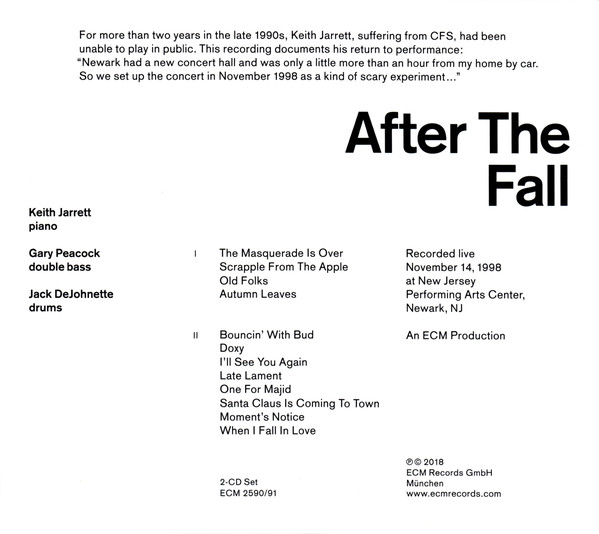
FRA LIPPO LIPPI-RARUM 80-95.
Fra Lippo Lippi-Rarum 80-95.
Label: Rune Grammofon.
It is safe to say that when the name Fra Lippo Lippi comes up in conversation, it means different things to different people. Some people automatically think of the ‘15th’ Century Italian Renaissance painter, who inspired Robert Browning to write his what was one of his most sophisticated and dramatic monologues which discusses the purpose of art, the responsibility of the artist, the limits of subjectivity, the inadequacy of moral shapes and strictures. Fra Lippo Lippi is also regarded as a triumph of dramatic voice, which has inspired and influenced many people, and not just aspiring poets.
This also includes drummer Morten Sjøberg, bassist Rune Kristoffersen and keyboardist Bjørn Sorknes who had formed the band Genetic Control in their home town of Nesodden in 1978, and since then, had spent the best part of two years rehearsing. By 1980, the trio were ready to try something new, and decided to form a new band which they name Fra Lippo Lippi after Robert Browning’s epic poem.
Little did the three members of Fra Lippo Lippi know that thus was the start of an adventure that would last three decades and see the band release seven studio albums between 1981 and 2002. However, Fra Lippo Lippi also recently released a new compilation Rarum 80-95, on the Norwegian label Rune Grammofon. The fourteen rarities on Rarum 80-95 are sure to be of interest to all fans of Fra Lippo Lippi. Their story begins in 1980.
Having founded Fra Lippo Lippi in 1980, the band soon began work on their debut single Tap Dance For Scientists, which they self-released. Only 1,000 copies of this electropop single were pressed and nowadays, it’s something of a rarity. However, for those unwilling or unable to spend $30-$40 it features on the recently released compilation Rarum 80-95. Fra Lippo Lippi show two sides to their music on Tap Dance For Scientists which featured four instrumentals. The three instrumentals on the A-Side Tap Dance For Scientists, Do The Modern Pose and Dolls On Parade were quirky electropop full of humour, while Backdrops had a darker side and sound. Fra Lippo Lippi had succeeded in their attempt to show the two sides to their music.
By 1981, Fra Lippo Lippi’s star was in the ascendancy and they had signed to the Norwegian independent label Uniton Records who released the single Now and Forever. The same year, Fra Lippo Lippi’s dark, dramatic electropop track Fabric Wardrobe featured on the German label Ata Tak’s compilation Fix Planet! This helped introduce Fra Lippo Lippi’s music to a wider audience as they wrote their debut album.
Just as everything seemed to be going well for Fra Lippo Lippi, Bjørn Sorknes left the band, and would soon join the experimental rock group Holy Troy. This was a disaster for Fra Lippo Lippi, but drummer Morten Sjøberg and bassist Rune Kristoffersen decided to continue as a duo and complete their debut album In Silence.
1982 was a big year for Fra Lippo Lippi, who released the single Now and Forever, and also their debut album In Silence. When In Silence was released in 1982, critics noted that its gothic post punk sound seemed to have been heavily influenced by The Cure and Joy Division. While some were won over by In Silence, others remained to be convinced by Fra Lippo Lippi and wanted to hear more from the band.
The lineup of Fra Lippo Lippi changed in 1983, when two became three when singer Per Øystein Sørensen, who was also from Nesodden joined the band. By then, Morten Sjøberg and Rune Kristoffersen were maturing as songwriters and this showed on their sophomore album Small Mercies. It showcased a much more pop-oriented sound and found favour with critics who embraced Fra Lippo Lippi’s new sound.
Fra Lippo Lippi’s other release during 1983 was The Treasure 12” which was released on Uniton Records and featured the tracks. This included the live versions of A Moment Like This and Time Transfixed which were recorded at the Club 7, in Oslo. They make a welcome return on Rarum 80-95 and show a much tighter band on A Moment Like This, while Time Transfixed is slow, dramatic and emotive and a hidden gem from Fra Lippo Lippi’s back catalogue.
After one of the most important years of their career, Fra Lippo Lippi made the journey to Silence Studio, in Stockholm, Sweden where an expanded lineup of the band recorded two new songs. Joining the band for the recording of Say Something and Out To Sea which also feature on the Rarum 80-95 compilation, were Bjørn Sorknes who plays bass and new member, Øyvind Kvalnes. The results of the session was the Say Something single, which was released by Union Records in 1984 and showcase Fra Lippo Lippi’s synth pop sound. However, it also marked the end of the Uniton Records years,
When Fra Lippo Lippi returned with their third album Songs in 1985, it was released on their own label Easter Productions. Reviews of Songs were favourable, and despite not having the means to promote the album, it sold in excess of 5,000 copies in Norway alone. Virgin Records who had been monitoring Fra Lippo Lippi’s progress offered the band a worldwide recording contract later in 1985. That contract was signed in 1985, just five years after Genetic Control became Fra Lippo Lippi.
In 1986, Fra Lippo Lippi’s Virgin Records’ years began with the release of Shouldn’t Have To Be Like That which reached number four in their native Norway, but only troubled the lower reaches of the UK charts. Later, in 1986, a new version of Songs was released internationally, and with the aid of Virgin Records’ PR machine record buyers across Europe, North America and Asia were introduced to Fra Lippo Lippi. However, back in Norway, Songs sold another 20,000 copies and Fra Lippo Lippi star was again in the ascendancy.
Fra Lippo Lippi second single of 1986, was the hook-laden synth pop of Come Summer, which was remixed for the 12” single. This extended remix of Come Summer features on the Rarum 80-95 compilation, where it’s joined by tracks from Fra Lippo Lippi third single of 1986.
This was Everytime I See You which was completely reworked and featured The Heather On The Hills on the B-Side. However, it’s the rarer 12” mixes that feature on Rarum 80-95, which were released in late 1986 as Fra Lippo Lippi’s popularity continued to grow.
Meanwhile, music industry insiders believed that Fra Lippo Lippi had a big future ahead of them. Especially as the expanded four piece band played a successful tour of Norway during 1986, and night after night the sold out signs were up. By the time the Norwegian tour was over, the sales of Songs were good enough for Virgin Records to start making plans for Fra Lippo Lippi to tour America and record their fourth album.
Straight away, Virgin Records started looking for the right producer for Fra Lippo Lippi’s next album, and Walter Becker from Steely Dan was approached. Ironically, he had just turned down the opportunity to work with Crowded House who had just released their critically acclaimed and commercially successful eponymous debut album in July 1986. However, Walter Becker agreed to produce Fra Lippo Lippi’s fourth album Light and Shade.
Given the type of bands Walter Becker usually worked with, many industry insiders were surprised by his decision to produce Fra Lippo Lippi who were known as a new wave and synth pop band. However, Walter Becker had previously produced British synth rock group China Crisis. However, the main reason that Walter Becker had been brought onboard to produce Light And Shade was because Virgin Records wanted Fra Lippo Lippi partnership to crack the large and lucrative American market. Suddenly, the Walter Becker and Fra Lippo Lippi made sense.
Between February and April 1987, Fra Lippo Lippi, producer Walter Becker and Steely Dan’s longtime and trusted engineer Roger Nichols worked on Light And Shade. During the sessions, some of the LA’s top session musicians were even drafted in, and eventually, after three months, Light And Shade was completed.
When Light And Shade was released, the album was well received by critics, who noticed a much slicker, polished sound that headed in the direction of pop rock. This was meant to help Fra Lippo Lippi crack the American market. Sadly, when Angel was released as a single in America, it was only in LA where the song received some airplay. This wasn’t enough for Virgin Records, and neither were the sales of Light And Shade after its release in the autumn of 1987. Later in 1987, Virgin Records dropped Fra Lippo Lippi from its American roster.
This was a huge blow for Fra Lippo Lippi, and producer Walter Becker who had turned down Crowded House who were well on their way to becoming one of the most successful up-and-coming bands. Meanwhile Fra Lippo Lippi were growing frustrated with Virgin Records, and in 1988, parted company with the label.
Despite the disappointment with leaving Virgin Records, Fra Lippo Lippi discovered that they were hugely popular in the Philippines and were invited to play a series of concerts. This included six sellout concerts over the course of two weekends at the Folk Arts Theatre in Manila, which had a capacity of 11,000 This was boosted Fra Lippo Lippi’s confidence and later in 1988, they signed a new recording deal.
Fra Lippo Lippi had already began writing new tracks for their fifth album, when they signed to the Swedish label The Record Station which had been founded in 1986 by Marie Ledin. However, by the late eighties, the label was owned by BMG Ariola. This meant that The Record Station had the marketing expertise and financial clout when Fra Lippo Lippi released their fifth album.
During February and March of 1989, Fra Lippo Lippi completed the recording of The Colour Album at the Rainbow Studio in Oslo. This time, Johan Ekelund took charge of production, and once the album was completed, it was released later in 1989.
The reviews of The Colour Album were favourable when it was released in 1989, but the album didn’t sell in the same quantities of Songs. This was disappointing, but things were to get worse for Fra Lippo Lippi.
They had been preparing to release the live album Crash Of Light later in 1989. It was due to be released by the Easter Productions’ label, and Crash Of Light was literally ready to be released. Sadly, that never happened after the distributor collapsed, and legal problems meant the only country that Crash Of Light was released was in the Philippines. 1989 had been a roller coaster year for Fra Lippo Lippi.
Following the release of The Colour Album, Fra Lippo Lippi split with The Record Station, and once again they were left without a label. This time it was different, and Morten Sjøberg and Rune Kristoffersen seriously considered calling time on Fra Lippo Lippi. However, after much thought, they decided to continue and write some more new songs.
Meanwhile, Mother’s Little Soldier was released as a single on The Record Station label in 1990. On the 12” single was an extended remix of Mother’s Little Soldier by Bernard Löör and Johan Ekelund that features on Rarum 80-95. It heads in the direction of pop rock and is one of the highlights of the compilation.
In 1991, Fra Lippo Lippi started recording their sixth album in Rune Kristoffersen. The album became Dreams, which was released on the Norwegian label Sonet Grammofon in 1992. It was quite different from previous albums, and Fra Lippo Lippi veered between synth pop to a much more downtempo sound on Dreams. The chameleon-like Fra Lippo Lippi seemed determined to reinvent themselves musically but sadly, were no longer enjoying the success the once had.
By 1993, Rune Kristoffersen releases his first solo album as solo album as Elephant Song. It featured trumpeter Nils Petter Molvaer on trumpet and guitarist Tore Elgarøy who played their part in Elephant Song which was released to critical acclaim. However, where did this leave Fra Lippo Lippi?
Morten Sjøberg and Rune Kristoffersen weren’t sure, and were considering calling time on the band, but decided to release a best of album as their swan-song. The only problem was that that they were unable to do so because of contractual obligations. There was a way round this, but this meant that Fra Lippo Lippi would have to rerecord the tracks the wanted to release from Songs, Light And Shade and The Colour Album.
Rerecording the songs suited Fra Lippo Lippi, who were also to keen to rerecord the songs for artistic reasons. They wanted them to sound the way they had originally envisaged and this was an opportunity to do so. As an added incentive for their fans to buy the best of, Morten Sjøberg and Rune Kristoffersen both contributed a new song. These new songs were Everybody Everywhere and If You Were In My Shoes were then mixed by Kaj Erixon in his Stockholm studio. Two years after the project began, The Best Of Fra Lippo Lippi 85-95 was completed.
The Best Of Fra Lippo Lippi 85-95 was then licensed to CNR Arcade in Norway and Polystar in Japan, and released later in 1995. To promote the compilation, CNR Arcade released the Everybody Everywhere Maxi-Single Promo which featured the Monolight Space Mix. This was a remix by Rune Kristoffersen who had recently dawned the Monolight moniker and in 1995 would release his eponymous debut album. His Monolight Space Mix of Everybody Everywhere is an atmospheric, moody and cinematic track even that sounds as good today as it did in 1995. So much so, that the Monolight Space Mix of Everybody Everywhere is another of the highlights of Rarum 80-95, which was recently released by Rune Grammofon.
Three years after the release of The Best Of Fra Lippo Lippi 85-95 Rune Kristoffersen embarked upon a new venture, when he founded his own record label Rune Grammofon. Twenty-three years later, and Rune Grammofon has gone from strength to strength, and has a reputation for releasing cutting edge, groundbreaking and innovative music. It’s just a pity that there wasn’t a label like Rune Grammofon around between 1980 and 1995 which the Rarum 80-95 compilation covers.
Between 1980 and 1995, Fra Lippo Lippi were at the peak of their powers, and releasing some of the most ambitious and innovative music of their career. Constantly, Fra Lippo Lippi sought to reinvent their music during this period, and released everything from electropop to gothic post pop, new wave, synth pop and pop rock. Morten Sjøberg and Rune Kristoffersen who founded Fra Lippo Lippi and were omnipresent during the fifteen year period that the Rarum 80-95 compilation were musical chameleons who were determined never to make the same album twice and constantly sought to innovate. This Fra Lippo Lippi managed to do throughout their three decade career, and proof of this is Rarum 80-95 which is a welcome addition to this pioneering duo’s extensive discography.
Fra Lippo Lippi-Rarum 80-95.


DYLAN IN JAZZ-A JAZZ TRIBUTE TO BOB DYLAN.
Dylan In Jazz-A Jazz Tribute To Bob Dylan.
Label: Wagram France.
Record companies big and small are always looking for new ideas for a compilation, and over the past twenty years tried all sorts of new concepts with varying degrees of success. This has included genre specific albums, ranging from funk and fusion to jazz, Krautrock, Latin, progressive rock, psychedelia and soul jazz to yacht rock and zydeco. Some of these compilations feature familiar and tried and tested songs while other find tastemaker curators and DJs digging deep for oft-overlooked hidden gems. However, genre specific compilations are just the tip of the compilation iceberg.
Other compilations focus on a specific decade, with the sixties, seventies and eighties favourites of compilers and record companies, as music fans always seem want to relive their youth. Then there’s compilations that focus on some of the great labels, including Blue Note, Brain, Chess Records, CTi, Fame, Prestige, Stax, Trax and Trojan. Some other record companies, especially reissue labels, dig deep into the vaults of the smaller, short-lived labels and unearth tracks that failed to find an audience first time round. These compilations often focus of funk, jazz, rock and soul, and have proven popular. So too, has another type of compilation.
This is the tribute album, which first came to prominence around a decade ago, and since then has become popular. So much so, that in the past month or so, there’s been several tribute albums. Alas, the quality of these albums vary, and can be described as the good, the bad and the ugly. However, Wagram France has just released Dylan In Jazz-A Jazz Tribute To Bob Dylan which is one of the best tribute albums money can buy.
There’s an eclectic selection of jazz artists on Dylan In Jazz-A Jazz Tribute To Bob Dylan, ranging from Ben Sidran and Abbey Lincoln to The Neville Brothers, The Keith Jarrett Trio, Eric Bibb, Stanley Turrentine, Howard Tate, Bill Frisell, and Louisa Bey. In total, there’s fifteen artist on Dylan In Jazz-A Jazz Tribute To Bob Dylan who take familiar songs in a new direction.
Opening Dylan In Jazz-A Jazz Tribute To Bob Dylan is Ben Sidran’s cover of Knockin’ On Heaven’s Door, which featured on his 2009 album Dylan Different which was released by the Italian label Microcoscmo Dischi. Ben Sidran slows the song that originally featured on Pat Garrett & Billy The Kid in 1973 way down, and drums, Hammond organ and harmonies accompanying him reinvents a classic song. Gotta Serve Somebody which made its debut on Bob Dylan’s 1979 album Slow Train Coming was also covered by Ben Sidran on Dylan Different. Here, horns and harmonies accompany Ben Sidran who channels the spirit of Leonard Cohen, Tom Waits and of course Bob Dylan during this wonderful, jazz-tinged cover.
In 1997, Abbey Lincoln released her album Who Used To Dance on Verve Records, and it featured a various cover versions including Mr Tambourine Man which featured on Bob Dylan’s 1965 album Bringing It All Back Home. Abbey Lincoln’s version of the song takes the song in a new direction and with the help of the piano and rhythm section, Mr Tambourine Man is soon swinging.
When American jazz saxophonist Joshua Redman released his album Timeless Tales (For Changing Times) on Warner Bros in 1998, it featured covers of songs from the Great American Songbook and by The Beatles and Bob Dylan. This including The Times They Are A Changin’ which breezes along, swinging as Joshua Redman’s saxophone takes centre-stage and transforms this hopeful anthem.
Nowadays, The Neville Brothers are the legends of the New Orleans scene, but in 1989 they had just released their fifth album Yellow Moon on A&M Records. It featured a cover of The Ballad Of Hollis Brown which originally featured on Bob Dylan’s 1964 album The Times They Are A-Changin’. While The Ballad Of Hollis Brown isn’t the best known song on The Times They Are A-Changin’, The Neville Brothers deliver a poignant and powerful version of this thought-provoking song.
My Back Pages was a track from Bob Dylan’s 1964 album Another Side Of Bob Dylan. It’s a track that the Keith Jarrett Trio recorded in 1968, and a year later, it featured on their 1969 live album Somewhere Before which was released by Vortex Records. It’s a captivating album, with a series of inventive performances, especially on the album opener My Back Pages.
Another of Bob Dylan’s classic albums was The Freewheelin’ Bob Dylan, which was released in 1963 and featured Masters Of War. It was covered Eric Bibb on his 2017 album Migration Blues which was released in America on Stony Plain Records. Eric Bibb’s powerful reading has an added poignancy given the state of the world in 2018, and is a reminder of a truly talented and oft-overlooked artist
During the sixties, soul-jazz saxophonist Stanley Turrentine who released a series of critically acclaimed albums on Blue Note Records including Hustlin’, The Spoiler and Easy Walker. In 1968, Stanley Turrentine released Common Touch on Blue Note Records which featured one of the top Hammond organists Shirley Scott. One of the songs the quartet recorded was Blowin’ In The Wind which made its debut on Bob Dylan’s 1963 album The Freewheelin’ Bob Dylan. It’s given a soul-jazz makeover by some of its finest practitioners, who make Blowin’ In The Wind swing.
When Howard Tate released 8 Days On The Road as a single on Atlantic Records in 1972, tucked away on the B-Side was a cover of Girl From The North Country, another track from The Freewheelin’ Bob Dylan. Howard Tate’s cover of Girl From The North Country is heartfelt and soulful, and can’t really be described as jazz. However, it’s welcome addition to Dylan In Jazz-A Jazz Tribute To Bob Dylan.
In 2017, Jack Dejohnette, John Medeski and John Scofield dawned the moniker Hudson and the new group released their eponymous debut album Hudson. One of the album’s highlights was the Bob Dylan classic Lay Lady Lay which featured on the 1969 album Nashville Skyline. However, Hudson’s version stylistically is very different to the original, but instantly recognisable as they pay homage to a classic song.
Bill Frisell is nowadays, regarded as one of the greatest and most innovative jazz guitarists of his generation. Much of his career was spent signed to Elektra Nonesuch, where he released Have A Little Faith in 1993. It’s been slowed way down, and Bill Frisell’s shimmering Shadowesque guitar transforms this familiar track from the classic album Blonde On Blonde which was released in 1966.
Bob Dylan released some of the finest music of his career during the sixties, including Highway 61 Revisited in 1965, which opens with Like A Rolling Stone. It was covered by Danish jazz singer Caecilie Norby on her 2013 album Silent Ways, which was released by the ACT label. Like A Rolling Stone has been slowed down by Caecilie Norby who delivers a deliberate, dramatic and emotive vocal. It’s a reminder of why’s she currently regarded as one of the top European jazz singers of her generation.
In 2000, American jazz guitarist Jef Lee Johnson released The Zimmerman Shadow on the Hope Street label, which was an album of Bob Dylan covers. It featured Ballad Of A Thin Man where he was joined by Yohannes Tona and Charlie Patierno. Together they give the Ballad Of A Thin Man from Highway 61 Revisited a moody and rocky makeover.
When Bob Dylan released his sophomore album The Freewheelin’ Bob Dylan in 1963, it marked his coming of age as a songwriter. It included songs like Blowin’ In The Wind, Girl From The North Country, A Hard Rain’s A-Gonna Fall and Don’t Think Twice, It’s All Right which features on Olivier Hutman Meets Alice Ricciardi’s album Is It Real? It was released by Cristal Records in 2016 and is a collaboration between French pianist Olivier Hutman and Italian jazz vocalist Alice Ricciardi. They’re responsible for a breathtakingly beautiful cover of Don’t Think Twice.
There’s an urgency to Louisa Bey’s vocal on her cover of Bob Dylan’s Everything Is Broken. It featured on Bob Dylan’s 1989 album Oh Mercy, and twenty years later Louisa Bey covered Everything Is Broken on her 2009 sophomore album Turning Me Jazz. This the perfect introduction to Louisa Bey, a talented jazz singer who closes Dylan In Jazz-A Jazz Tribute To Bob Dylan on a high.
Although there’s been several tributes to Bob Dylan over the years, there’s never been a jazz tribute to one of the greatest singer-songwriters in the history modern music. That was until Wagram Music released Dylan In Jazz-A Jazz Tribute To Bob Dylan, which features an eclectic selection of talented artists. Each of these have their own way of paying tribute to Bob Dylan.
Some stay true to the original song, while others reinvent it. This some do by slowing the song way down, and others increase the tempo slightly and ensure that the song swings, and then some. Regardless of the approach that is taken, each of the songs is a heartfelt homage o Bob Dylan, that oozes quality. However, there is a but.
Not all of the songs on Dylan In Jazz-A Jazz Tribute To Bob Dylan can be described as jazz. Especially Howard Tate’s soulful hidden gem Girl From The North Country, and Jef Lee Johnson’s moody, rocky version of Ballad Of A Thin Man. Despite that, Dylan In Jazz-A Jazz Tribute To Bob Dylan is one of the best Bob Dylan tribute album that money can buy, and will be welcomed by both his longterm fans and anyone who loves the esoteric genre that is jazz.
Dylan In Jazz-A Jazz Tribute To Bob Dylan.

PRAISE POEMS 6: A JOURNEY INTO DEEP SOULFUL JAZZ AND FUNK FROM THE 1970s.
Praise Poems 6: A Journey Into Deep Soulful Jazz and Funk From The 1970s.
Label: Tramp Records.
When a record labels releases the first instalment in a new compilation series, the hope is that this will be the start of a long-running and successful series that will prove profitable and give the label a much-needed injection of cash on a yearly basis. There’s several examples where this has happened, and has transformed a record company’s fortunes, and indeed, balance sheet.
Some of these record labels have even used some of the profits made from a successful compilation series to subsidise loss-making but worthy releases, which under normal circumstances they wouldn’t have been able to release. Sadly, nothing lasts for ever, and even the most successful compilation series comes to an end. However, by then, they’ve been the lucky ones.
Every week dozens of compilations are released, and many are one-offs, that have been a labour of love for the compiler, but fail to attract the attention of record buyers. Sometimes, two instalments in a compilation series will be squeezed out, the second often more in hope than in expectation. After that, the dream is over and the compiler and sometimes, the record company are forced to admit defeat.
Over the last twenty years, the majority of compilations series have been relatively short-lived, with only two, three or four or volumes being released before the series vanishes from the record shops forevermore. That has been the case with some high profile and previously successful compilation series which were released to critical acclaim. Many of these compilation series were once guaranteed to boost the coffers of the record company releasing them. Sadly, that is no longer the case.
That is why many within the music industry have jumped to the conclusion that nowadays, there are very few long-running and successful compilation series. However, these naysayers are overlooking a number of successful compilation series that have slipped under the radar of many record buyers. This includes the Praise Poems’ compilation series which the German label Tramp Records launched three years ago in 2015.
Three years later, and the Praise Poems’ series is now one of Tramp Records longest running and most successful compilation series. Proof of that is Praise Poems 6: A Journey Into Deep Soulful Jazz and Funk From The 1970s, which features sixteen tracks, including contributions from Verses, Monopoly, Tony St Thomas, Federico Cervantes, Fusion, Lola Falana, Robert Cote, Michael Kiser, Waves, Daybreak, Elrige Anselmi and Flood.
Opening Praise Poems 6: A Journey Into Deep Soulful Jazz and Funk From The 1970s is Cherokee which is a slow, soulful and jazz-tinged hidden gem from Verses. It features lyrics that deal with racial discrimination of the Cherokees, and they’re delivered by a vocal that full of emotion, frustration and longing. Especially as he sings: “you know they want to be free.” The vocal is framed by a genre-melting arrangement that meander along complimenting this a poignant and powerful hidden gem.
The quality continues with Monopoly’s Things I Could Be which is a welcome addition to the compilation. It’s sad that it’s taken forty years for this wistful and timeless sounding Latin-jazz cut to find the wider audience it so richly deserves.
Ever since Buffalo Springfield release the Stephen Stills’ compassion For What It’s Worth in 1966, many artists and groups have covered this classic song with varying degrees of success. Sadly, when Cesar’s Children from Ontario, Canada, covered For What It’s Worth their beautiful, soulful, hopeful and joyous cover passed record buyers. Nowadays, though, Cesar’s Children For What It’s Worth is a highly sought after single, and after one listen you’ll realise why.
Tony St Thomas was born in the US Virgin Islands, and during his globetrotting musical career worked a singer, songwriter, arranger and producer. By 1979, Tony St Thomas was a veteran of several thousand shows, and owned and ran his own restaurant with his wife Sabina. At night, Tony St Thomas would take to the restaurant’s small stage and entertain the patrons, which proved popular. Afterwards, many patrons would head home clutching a copy of Tony St Thomas’ latest recording a single which featured Love Is Forever. His vocal an impassioned and soulful plea as he vamps and reminds the listener that: “Love Is Forever.”
Tragedy struck for Frederico Cervantes when he lost his sight in a car accident as a teenager. This wasn’t going to stop this talented multi-instrumentalist forging a career as a musician, and in the early fifties, Chico Hamilton discovered Frederico Cervantes and took the young jazz pianist to Los Angeles. However, by 1965 he had reinvented himself as a jazz trumpeter and a new chapter began for this self-taught musician. By the seventies when he recorded Betcha Never Knew, Frederico Cervantes is back playing the piano and delivering a defiant and emotive vocal that is a reminder of a man who Chico Hamilton regarded as a musical genius.
Another multi-instrumentalist is Rama Dyushambee whose career began when he joined a doo wop group in high school in the late-fifties. However, after receiving his call up papers in 1961 his career was put on hold. Upon leaving the US Navy, Rama Dyushambee spent three years studying music with a private tutor completing his musical education. Only then did Rama Dyushambee head out on the college and club circuit with the Bill Colwell Band, who opened for John Lee Hooker when he played in Boston in the early seventies. By the late-seventies, Rama Dyushambee recorded several singles, including For All The Good Times which is a timeless slice of feelgood jazz.
During the seventies, fusion was still popular, and many new groups were formed in America. This included Fusion who released Going Crazy as a private press. Fusion play with an urgency, fluency and freedom as they showcase their skills and versatility during this progressive fusion track. There’s even hints of psych and soul in an equally urgent vocal during Going Crazy. It’s one of the highlights of Praise Poems 6: A Journey Into Deep Soulful Jazz and Funk From The 1970s.
Lola Falana was born in New Jersey in 1942, and was working in Harlem as a dancer when Sammy Davis Jr discovered her, and cast her as the lead dancer in the Broadway musical The Golden Boy. This was just the start for Lola Falana who released her debut single in 1966. After this, she made her film debut in A Man Called Adam, and went on to feature on various television shows. By the seventies, Lola Falana was known as the Queen of Las Vegas, and also recorded It’s A Good Feeling which is a cinematic and dramatic mixture of soul and jazz that showcases a talented singer. Sadly, Lola Falana was diagnosed with MS but was able to continue working for two more until 1989, when she retired from the entertainment industry and devoted her life to charity.
When Orange Lake Drive recorded their single Move On, the band hadn’t a suitable song to record for the B-Side. Fortunately, Robert Cote had written Rare Thing a few years earlier, and when he played the song to Orange Lake Drive they agreed it was perfect for the B-Side of Move On. Rare Thing which is billed as Robert Cote with Orange Lake Drive is a beautiful, hopeful and optimistic paean that breezes along. The addition of a lengthy flute solo was a masterstroke and was final piece of the jigsaw on one of the highlights of Praise Poems 6: A Journey Into Deep Soulful Jazz and Funk From The 1970s.
Michael Kiser was born in Houston, Texas and started writing songs in the sixties, but didn’t make his performing debut until the early seventies. Soon, Michael Kiser was making up for lost time, and Melting The Ice in August 1981. It was well received by Billboard magazine, and Melting The Ice gave Michael Kiser a regional with this jazz-tinged and soulful single.
Alan Burton was just six years old when he played a guitar at a school talent show, and little did anyone in the audience realise that sixteen years later he would decide to cut a single in 1973. This was the lysergic sunshine pop of Sunshine You’ll Love It which is a real find and welcome addition to the compilation.
Another purveyor of quality sunshine pop were the Buffalo based band Waves. They rose like a Phoenix from the ashes of another local group, The Road in 1972. The story began when couple of members of The Road headed to Nashville with some other local musicians. This left the three remaining members of The Road, Ken Kaufman, Phil Hudson and Ron Lombardo without a rhythm section and spelt the end of the band. However, as one door closed, another opened and the remaining members of The Road recruited drummer Glen Bowen and bassist John Burgio and Waves was born. This new five piece band recorded and released the single Feelin’ The Sunshine in 1973. It’s a jazz-tinged and progressive sunshine pop hidden gem that oozes quality and is guaranteed to brighten your life. Sadly, that was Waves’ only released. Although they began work on album a fter the release of Feelin’ The Sunshine, it was never completed before the band split-up.
During the sixties, when the Ohio based band Daybreakk! played live one of the songs in their set was Richie Havens’ Freedom. The strummed guitar instrumental always caught the attention of the crowd, and was one of the most popular songs in their set. It was no surprise that when Daybreakk! decided to record a single that they chose to record Freedom at the Courier Recording Studio. The newly recorded single was released on the RLB label and when it was played on the radio was mistaken for The Who.
From the opening bars of Ted Ritchie And Friends’ melodic ballad Soda Creek Ferry, it’s cinematic and rich in imagery. Ted Ritchie, who was born and grew up in British Columbia, in Canada, and later worked as a cowboy in the Rocky Mountains paints pictures of a trip on Soda Creek Ferry which a cable ferry that used to cross the Fraser River. After taking a trip on the Soda Creek Ferry, Ted Ritchie wrote the song sitting round a campfire. Over forty years later, this beautiful ballad is being discovered by a new audience who sadly, will never get the chance to take a trip on the Soda Creek Ferry.
In the mid-sixties, Elrige Anselmi was suffering from rheumatic fever, and decided to swap his boat for an acoustic guitar. Within a few years, he was playing in his high school band, and later playing saxophone in a cover’s band. By 1970, Elrige Anselmi and his thirteen year old brother Pookie who was a drummer formed the band Apollo, and in 1973, a new band Boone’s Farmers was born. They recorded four tracks at a studio in Thibodaux, Louisiana, including Laughing In The Sun. That day, Elrige Anselmi delivered a vocal that is heartfelt and full of emotion as harmonies accompany him on another beautiful ballad.
Closing Praise Poems 6: A Journey Into Deep Soulful Jazz and Funk From The 1970s is Flood’s White Bird. Flood was signed to Michael Thevis’ Atlanta based GRC label, and recorded the soundtrack to the film Blood Of The Dragon. Flood’s soundtrack was released to critical acclaim, and the band were about to fly to Jamaica for a record session when Michael Thevis was arrested for murder. Sadly, the recording session and Flood who were rising stars, never got the chance to fulfil their potential. However, by then they had recorded their six-minute psychedelic epic White Bird, which closes the album on a high.
Many compilation series have run steam by the time they get to the sixth volume, but that isn’t the case with Tramp Records’ Praise Poems. Just like previous instalments in the series, Praise Poems 6: A Journey Into Deep Soulful Jazz and Funk From The 1970s oozes quality on album that is crammed full of hidden gems. They were recorded by truly talented artists and bands who sadly, never reached the heights that their talent warranted. Now some forty years after many of the tracks on Praise Poems 6: A Journey Into Deep Soulful Jazz and Funk From The 1970s were released, they make a welcome return on this wonderfully esoteric and eclectic collection of music.
There’s everything from soul, funk and fusion to jazz, sunshine pop and psychedelia on Praise Poems 6: A Journey Into Deep Soulful Jazz and Funk From The 1970s which will introduce the listener to Verses, Monopoly, Cesar’s Children, Federico Cervantes, Fusion, Lola Falana, Robert Cote, Michael Kiser, Waves, Daybreak, Elrige Anselmi and Flood. They’re just a few of the sixteen artists on Praise Poems 6: A Journey Into Deep Soulful Jazz and Funk From The 1970s which is one of the most eclectic instalments in this long running and successful series that hopefully will run and run, and continue to uncover hidden gems by some of music’s unsung heroes.
Praise Poems 6: A Journey Into Deep Soulful Jazz and Funk From The 1970s.
RADKA TONEFF AND STEVE DOBROGOSZ-FAIRYTALES LP.
Radka Toneff and Steve Dobrogosz-Fairytales LP.
Label:Odin Records.
Record Of The Week.
One of the most overused word in the English language is classic, with critics often hailing the latest book, play or album a “classic.” More often than not, this is hyperbole, and it’s only much later, that the same critics realise that they were rather fulsome in their praise and too quick to call the album a classic. However, when Norwegian singer Radka Toneff and American Steve Dobrogosz released Fairytales in the autumn of 1982, it was to critical acclaim with the album quite rightly being called a future classiske.
Straight away, this future classic was a hugely popular album, with Fairytales winning the hearts and minds of Norwegian music lovers. Sadly, just two weeks after the release of Fairytales, tragedy struck when thirty-year old Radka Toneff was found dead in the woods of Bygdøy after taking an overdose of sleeping pills. Norwegian music lovers were in mourning as they had lost one of their greatest jazz singers, just five years after winning a Spellemannprisen in 1977 for her debut album Winter Poem.
Twenty-nine years after Radka Toneff’s tragic death, Norwegian musicians were asked to vote for Norway’s best album of all time in 2011. By then, Fairytales was Norway’s best selling jazz album. Once the votes were counted, Radka Toneff and Steve Dobrogosz’s 1982 album Fairytales was crowed Norway’s best album of all time. That was no surprise, as it’s a classic album, and one that has inspired and influenced two generations of musicians.
Seven years after being crowned Norway’s best album of all time, Radka Toneff and Steve Dobrogosz’s classic album Fairytales has been remastered and reissued by Odin Records as a SACD and as on 180 gram audiophile LP pressing which was cut by Bernie Grundman at Bernie Grundman Mastering, in Los Angeles. It’s the perfect way to discover the delights of Radka Toneff and Steve Dobrogosz’s classic album Fairytales. This was just the latest chapter in Radka Toneff’s career.
Radka Toneff.
Ellen Radka Toneff was born in Oslo on the ‘25th’ of June 1952, to a Norwegian mother and Bulgarian father who was a pilot and radio technician. The Toneff family lived first in Lambertseter and then Kolbotn, and by then Radka Toneff had already discovered music. This came as no surprise, as her mother had been a folk singer. Over the next few years, it soon became apparent that Radka Toneff hadn’t just inherited her mother’s love of music, but also her talent.
In 1971, Radka Toneff enrolled in a music course at the Oslo Musikkonservatorium, where she began a four-year course. During this period, Radka Toneff was also a member of the fusion band Unis throughout her time at the Oslo Musikkonservatorium. By 1975, Radka Toneff graduated and decided to form her own band.
Winter Poem.
This was the Radka Toneff Quintet which was she founded in 1975, and featured on her debut album Winter Poem. When Winter Poem was released by Zarepta Records in 1977, it was to widespread critical acclaim. Critics realised that Winter Poem marked the debut a truly talented vocalist who had the ability to breath emotion, life and meaning into lyrics which she lived rather than delivered. Sometimes, there was an intensity to the twenty-three old’s vocals and she seem older than her years. Some critics believed that Radka Toneff was destined for greatness.
This proved prescient when later in 1977, Radka Toneff won what should’ve been the first of many Spellemannprisen Awards when she won the best vocal for her album Winter Poem. Already, Radka Toneff had come a long way in a short space of time.
It Don’t Come Easy.
Just under years later, the Radka Toneff Quintet arrived at the Talent Studio, in Oslo in January 1979. Only drummer bassist Arild Andersen, guitarist Jon Eberson and keyboardist Lars Jansson had played on Winter Poem. Despite the changes to the Quintet’s lineup, this multitalented band was the perfect foil for Radka Toneff on It Don’t Come Easy which was released later in 1979.
When critics heard It Don’t Come Easy, they agreed that Radka Toneff had matured and grown as a vocalist, and her sophomore album was released to the same critical acclaim as Winter Poem in 1979. However, soon, Radka Toneff was about to meet the musician who would become her musical muse.
Steve Dobrogosz.
This was Steve Dobrogosz a twenty-three year old composer and pianist, who was born on the ’28th’ of January 1956 in Bellefonte, Pennsylvania. However, his parents moved Raleigh, North Carolina, where he went to school and discovered his love of music. This led to Steve Dobrogosz heading to the Berklee College of Music, after he had graduated from high school. After he graduated, he decide to move to Stockholm, Sweden in 1978.
Having arrived in Stockholm, Steve Dobrogosz began playing live and recording. This was all good experience Steve Dobrogosz, who a year later, met Radka Toneff in 1979 and a new chapter in his career began.
Radka Toneff and Steve Dobrogosz.
Although Radka Toneff was still leading the Radka Toneff Quintet by 1979, she had also formed the Radka Toneff Quartet. However, by then, the Quartet was looking for a new pianist, and Steve Dobrogosz who was still living in Stockholm heard about the vacancy and applied. Not long after this, Radka Toneff met Steve Dobrogosz, and she knew that she had found the new pianist for the Radka Toneff Quintet. Little did Radka Toneff realise that was the start of a three-year working relationship.
A year after Steve Dobrogosz joined the Radka Toneff Quintet, it was the end of the road for the Radka Toneff Quintet. It had been together since 1975, and although the lineup was fluid, the Radka Toneff Quintet stayed together. After that, Radka Toneff decided to concentrate her efforts on the Quartet.
By then, the Radka Toneff Quintet’s lineup featured Danish drummer Alex Riel, bassist Arild Andersen, pianist Steve Dobrogosz and Radka Toneff. Some nights when the Quartet played live, the drums and bass would drop out leaving just Radka Toneff and Steve Dobrogosz, and the pair would play a couple of songs together. This proved popular they worked well together, with the Radka Toneff’s voice and Steve Dobrogosz’s piano in perfect harmony. This lead to the pair recording a duet for Norwegian Broadcasting Corporation.
This was an improvised version My Funny Valentine, which was produced by Erling Wicklund at the end of a radio recording session for the Norwegian Broadcasting Corporation, in November of 1979. That recording sowed the seeds for Fairytales, and featured on the album when it was recorded in February 1982.
Fairytales.
Just over two years had passed since Radka Toneff had released her sophomore album It Don’t Come Easy in 1979 and she was wondering about recording an orchestral album for the followup? Radka Toneff wasn’t sure that this was the way forward her. Neither did Steve Dobrogosz, who suggested the he and Radka Toneff should record an album together as a duo. Straight away, Radka Toneff liked the idea of recording an album featuring just Steve Dobrogosz’s piano accompanying her vocal. However, there was a problem though, Zarepta Records who had released Radka Toneff’s first two albums had been dissolved, and she had no label backing her.
In a way, this was a fresh start, as this new chapter in Radka Toneff and Steve Dobrogosz’s careers began.The pair started trying to interest Norwegian and Swedish labels in the project, but nobody was interested in the album. Then Radka Toneff and Steve Dobrogosz caught a break.
Fortunately, the Norwegian Jazz Federation which was headed by Rolf Grundesen, had just launched their own record label, Odin. When Rolf Grundesen heard about the project, he was hugely supportive and even suggested that Radka Toneff and Steve Dobrogosz record the album at the Grieg Hall in Bergen. It was featured some of the earliest digital recording equipment and also a good quality grand piano which Steve Dobrogosz would play as he accompanied Radka Toneff.
Having secured the backing of the Odin label, Radka Toneff and Steve Dobrogosz chose the songs that would join their cover of Rogers and Hart’s My Funny Valentine on Fairytales. It had been recorded in late 1979, and that meant only nine songs would be recorded.
This included covers of Jimmy Webb’s The Moon Is A Harsh Mistress; Bernie Taupin and Elton John’s Come Down In Time; Kurt Weil and Maxwell Anderson’s Lost In The Stars; Eden Ahbez’s Nature Boy; Blossom Dearie and Dave Frishberg’s Long Daddy Green; Fran Landesman and Dudley Moore’s Before Love Went Out Of Style. The other three tracks saw Radka Toneff and Steve Dobrogosz put poetry to music.
Both Radka Toneff and Steve Dobrogosz shared a love of Fran Landesman’s poetry, and they decided to set two poems to music. Steve Dobrogosz wrote music to Mystery Man, while Radka Toneff penned the music to Wasted. The other poem that was set to music by Steve Dobrogosz was Emily Dickinson’s I Read My Sentence. It would eventually close Fairytales, which was recorded at Bergen Digital Studios.
Nine songs were recorded between the ‘15th’ and ‘17th’ of February 1982. Steve Dobrogosz played a top quality grand piano, and Radka Toneff delivered some of the best vocals of her career. This included Jimmy Webb’s The Moon Is A Harsh Mistress which features a tender rueful vocal from Radka Toneff where beauty is omnipresent as Steve Dobrogosz is yin to her yang. His piano sets then sets scene on Come Down In Time as Radka Toneff paints pictures with a vocal that is tender and full of emotion as she breaths life, meaning and emotion into the familiar lyrics. It’s a similar case on Lost In The Stars where Radka Toneff’s vocal is ethereal and sometimes wistful as it grows in power. Always, though she’s in control as she delivers a soul-baring vocal. Straight away, there’s a sense of sadness and frustration in Radka Toneff’s voice during Mystery Man. Meanwhile Steve Dobrogosz’s piano compliments her tender wistful vocal during this beautiful, poignant ballad. Side one closes with a beautiful, hopeful, poignant and sometimes needy cover of My Funny Valentine, where Radka Toneff with the help of Steve Dobrogosz reinvents this standard.
The piano provides a wistful backdrop before Radka Toneff delivers a heartfelt, hopeful and sometimes ruminative interpretation of Nature Boy where sometimes, there’s an intensity to her vocal. Later, Steve Dobrogosz’s piano takes centre-stage, before returns to complete this powerful and poignant cover. Radka Toneff then follows in Blossom Dearie’s footsteps on Long Daddy Green, on this breathtaking cover where she seems to have lived and survived the lyrics. Ethereal, emotive and full of regret describes Radka Toneff’s vocal on Wasted as the piano adds to the drama and emotion on one of Fairytales’ highlights. There’s then a mixture of joy and sadness in Radka Toneff’s vocal on Before Love Went Out Of Style, as she remembers what she once had, but lost. Slowly and deliberately Radka Toneff ponders her fate on this deeply moving rendition of Emily Dickinson’s poem I Read My Sentence set to music. It closes Fairytales, which was produced by Arild Andersen who had worked closely with Radka Toneff After just three days, this future classiske album was completed.
Odin Records scheduled the release of Fairytales for the autumn on 1982, but before that, the critics had their say on Radka Toneff and Steve Dobrogosz’s first collaboration. Critics on receiving the album saw Fairytales’ distinctive album cover, which had been drawn and designed by Anne Toneff. This was the perfect accompaniment to the music within the magical world of Fairytales. Critics were won over by Fairytales and hailed the album masterpiece and an instant classic.
Record buyers agreed, and for the two weeks after the release of Fairytales, the album was hugely popular and won the hearts and minds not just of jazz fans, but music lovers. They sought out Fairytales, which was selling well proving that Rolf Grundesen the head of the Norwegian Jazz Federation was right to back the pair. With a critically acclaimed and commercially successful album on their hands, this should’ve been a time to celebrate.
Sadly, two weeks after the release of Fairytales, tragedy struck when Radka Toneff’s body was found on the ‘21st’ of October 1982. The thirty year old had died after taking an overdose of sleeping pills. Norwegian music lovers were in mourning as they knew that they had lost one of their greatest ever jazz singers.
After Radka Toneff’s death, pianist Steve Dobrogosz rejected any suggestions that she sounded lonely or depressed on Fairytales. Instead, Steve Dobrogosz believes that Fairytales features Radka Toneff: “at her best” as she interprets the ten songs on Fairytales which is the best selling Norwegian jazz album of all time.
That is definitely the case throughout Fairytales, where Radka Toneff is like an actress as she plays a different character on each of the songs. No two songs are the same, and Radka Toneff experiences array of emotions, ranging from hope and happiness to melancholy and sadness. Other times, she’s in a reflective mood thinking about the good times, and also about what she had and lost. Always there’s a sensitivity in Radka Toneff voice throughout Fairytales, where she breaths life, meaning and emotion into each every song, living them and trying to make them her own.
Despite being a hugely talented singer, who brought songs to life and often reinvented them on Fairytales, Radka Toneff didn’t write any of the songs on the album. The closest she came was writing the music that accompanied Emily Dickinson’s poem I Read My Sentence. Maybe if Radka Toneff had written some of the songs on Fairytales, it would’ve given some insight into how she was feeling she recorded the album? However, like all singers, Radka Toneff was in character and wearing her musical mask as she recorded her future classic album. As a result, it’s almost impossible to separate Radka Toneff from the characters she was playing. Instead, it’s better to enjoy, embrace and appreciate the last part of Radka Toneff’s musical legacy, Fairytales.
After Radka Toneff’s death in October 1982, her pianist and musical muse Steve Dobrogosz was determined that nobody would forget one of the greatest Norwegian jazz singers. Steve Dobrogosz who was yin to Radka Toneff’s yang on Fairytales, has spent the last thirty-six years ensuring that Fairytales wouldn’t be forgotten by future generations of musicians. “It’s not just the sound itself, but it’s also about how Radka sings, about the sensitivity in her voice.”
It’s a voice that went on to influence and inspire two generations of Norwegian singers, ranging from Sidsel Endresen to singers embarking upon musical careers. However, it’s not just Norwegian singers that have been influenced and inspired by Radka Toneff but artists all over the world. Radka Toneff’s music won the hearts and minds of music lovers worldwide, who will ensure that her music will never be forgotten, including award-winning debut album Winter Poem and the followup It Don’t Come Easy. However, Radka Toneff’s finest hour was her collaboration with Steve Dobrogosz on their timeless classiske Fairytales, which was released just two before her death and became the swan-song of one Norway’s greatest jazz singers.
Radka Toneff and Steve Dobrogosz-Fairytales LP.
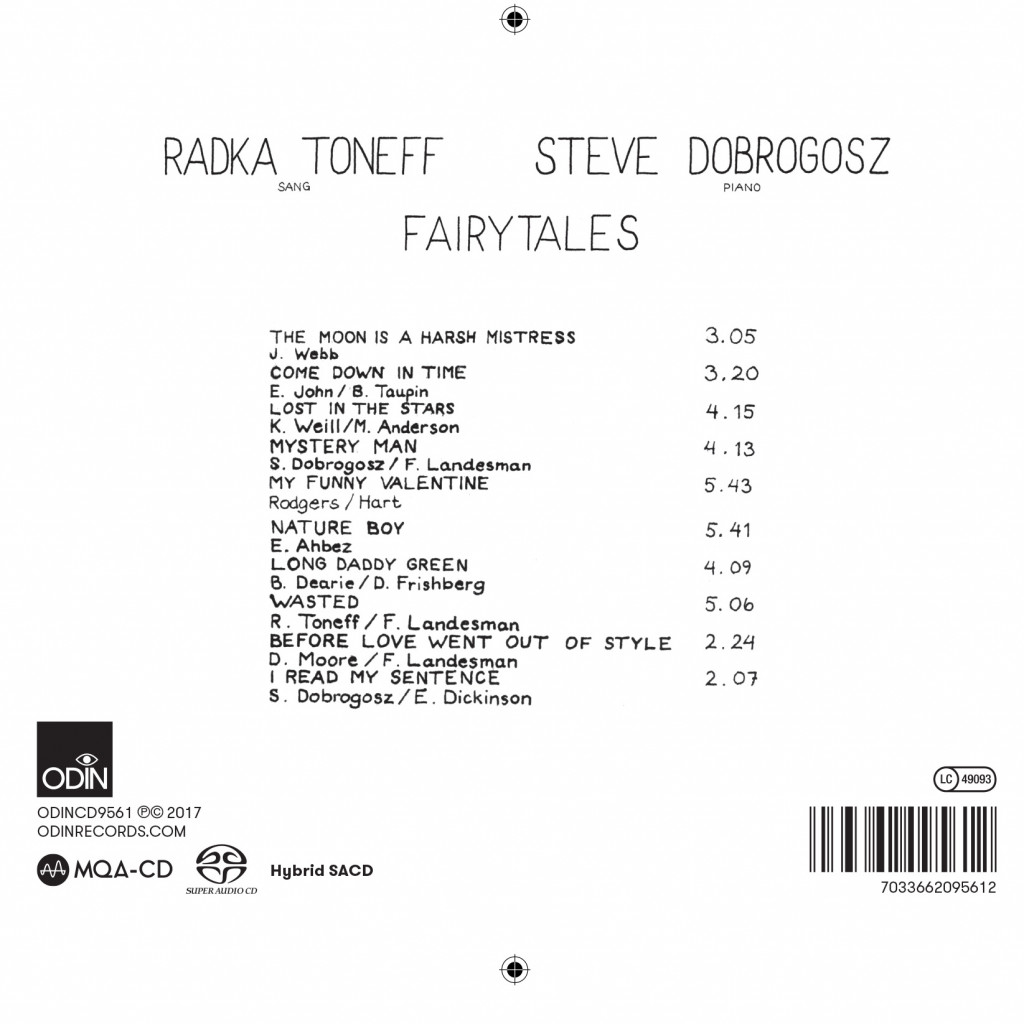
GORDON LIGHTFOOT-EAST OF MIDNIGHT, WAITING FOR YOU AND A PAINTER PASSING THROUGH.
Gordon Lightfoot-East Of Midnight, Waiting For You and A Painter Passing Through.
Label: BGO Records.
By July 1986, Gordon Lightfoot was one of the most successful Canadian musicians of his generation, and was preparing to release his seventeenth album East Of Midnight, which was his first album in three years. Gordon Lightfoot was hoping that East Of Midnight would prove more successful than his previous album Salute, which was released in July 1983, and stalled at 175 in the US Billboard 200 and fifty-nine in the Canadian RPM. Salute was Gordon Lightfoot’s least successful album since he released The Way I Feel in 1968.
Since then, Gordon Lightfoot had become one of Canada’s most successful musical exports, and in America, his 1970 album Sit Down Young Stranger and 1978s Endless Wire were certified gold, while 1974s Sundown and 1976s Summertime Dream both sold over a million copies and were certified platinum. The seventies were the most successful period of Gordon Lightfoot’s three decade career in America. It was a similar case across the border in his homeland.
In Canada, Gordon Lightfoot was one of the country’s most successful singer-songwriters during the seventies. Four of his albums topped the Canadian RPM chart, and his 1976 album Summertime Dream was certified platinum. There was also the small matter of sixteen Juno Awards, which were Canadian music’s most prestigious awards. Gordon Lightfoot was one of the legends of Canadian music, and was hoping that East Of Midnight which was reissued alongside Waiting For You and A Painter Passing Through as a two CD set by BGO Records, would transform his fortunes, and get his glittering career back on track.
East Of Midnight.
After the disappointing sales of his previous albums Salute, Gordon Lightfoot began writing the songs that became East Of Midnight in 1984. After writing nine new songs, he joined forces with keyboardist and producer David Foster and penned Anything for Love. It became part of East Of Midnight which was recorded during 1985 and 1986.
Recording of East Of Midnight took place during January, June and December 1985 and during March 1986 at Eastern Sound, Toronto, Lionshare Recorders and Lighthouse Recorders, in Los Angeles. Over this four-month period, more than a dozen musicians played their part in the recording of East Of Midnight, including some familiar faces including keyboardist David Foster, guitarist Michael Landau, percussionist Lenny Castro and Vesta Williams and Richard Marx who both added harmonies. Meanwhile, Gordon Lightfoot played guitar, added vocals and took charge of production, apart from Anything for Love which was co-produced by David Foster who cowrote the song. It would later play an important part in the success of East Of Midnight.
Once Gordon Lightfoot had finished recording East Of Midnight in March 1986, Warner Bros Records scheduled the release of the album for July 1986. Before that, critics had their say on what was the first album that Gordon Lightfoot had recorded in four years. This was the longest he had been away from the studio, and critics were keen to hear his comeback album East Of Midnight.
Troubadour Gordon Lightfoot made a welcome return on East Of Midnight, and makes an impression straight away on the album opener the ballad Stay Loose. Morning Glory and the album closer I’ll Tag Along are both ballads, but feature understated arrangements that hark back to Gordon Lightfoot’s albums from the seventies. Ballads seem to be what he does best on East Of Midnight, and proof of that are East Of Midnight, A Lesson In Love and the Anything In Love which are carefully crafted songs with polished arrangement.
Just like many albums recorded during the second half of the eighties, Gordon Lightfoot makes good use of the new technology. Synths are used on many songs, and effectively on the ballads Let It Ride and A Passing Ship. Meanwhile, the drums on Ecstasy Made Easy and You Just Gotta Be have an unmistakable eighties sound, as Gordon Lightfoot’s vocals play a starring role on his comeback album East Of Midnight.
After receiving favourable reviews from critics, Anything for Love was released as the lead single and reached thirteen on the Adult Contemporary chart and seventy-one on US Country charts. When East Of Midnight was released in July 1986, it stalled at 166 in the US Billboard 200 and in the Canadian RPM reached thirty-seven. However, this was enough for a gold disc in Canada, and Gordon Lightfoot was back or was he?
East Of Midnight was very nearly Gordon Lightfoot’s swan-song, and he went as far as to say that he wouldn’t record another album. It looked like the end of a long and successful career. However, by 1992, Gordon Lightfoot had had a change of heart and began work on Waiting For You.
Waiting For You.
Just like East Of Midnight, Gordon Lightfoot wrote nine of the ten songs on his Waiting For You. The other song was a cover of Bob Dylan’s Ring Them Bells. These song became Gordon Lightfoot’s eighteenth album Waiting For You.
In March 1992, Gordon Lightfoot and his small, but talented band headed to Eastern Sound, in Toronto. The band featured a rhythm section of drummer and percussionist Barry Keane and bassist Rick Haynes who were augmented by lead guitarist Terry Clements and keyboardist Mike Heffernan. Gordon Lightfoot played guitar and took charge of vocals and production, and by the end of March 1992, Waiting For You was complete.
Waiting For You was also a return to form from Gordon Lightfoot who was free from his addictions, and recorded his finest album since the seventies. Gordon Lightfoot was rolling back the years on an album where he revisited his old folk pop and folk rock sound on a very different album. Synths are used sparingly in contrast to Gordon Lightfoot’s last couple of albums. Gordon Lightfoot’s small, tight and talented band become yin to Gordon Lightfoot’s yang on Waiting For You.
That was the case on the album opener Restless which features a captivating vocal on the string drenched ballad that is rich in imagery. This gives way to a powerful cover of Bob Dylan’s Ring Them Bells before the brisk and memorable folk rock of Fading Away. Only Love Would Know which features a soul-baring vocal, before the tempo increases on the beautiful ballads Welcome To Try and I’ll Prove My Love which features Gordon Lightfoot at his best. Wild Strawberries harks back to the music on Gordon Lightfoot’s early seventies albums while the hooks hadn’t been spared on I’d Rather Press On which had single written all over it. Ironic describes the album closer Drink Yer Glasses Empty, because by 1992 Gordon Lightfoot had beaten his demons and finally had gotten himself sober after years of carousing drinking his glass empty. However, the song closes Gordon Lightfoot’s finest album since the late-seventies.
Critics agreed, and there were high hopes for Gordon Lightfoot’s eighteenth album Waiting For You. Sadly, the album failed to trouble the US Billboard 200, but reached twenty-four in the Canadian RPM chart. For Gordon Lightfoot the commercial failure of Waiting For You was a huge blow, and he wouldn’t return with another album until A Painter Passing Through in 1998.
A Painter Passing Through.
Three years after the release of Waiting For You, Gordon Lightfoot decided that it was time to return to the studio and record his nineteenth album, which became A Painter Passing Through. By then, Gordon Lightfoot had written eight new songs and had decided to cover Steve McEown’s I Used To Be A Country Singer and Ian Tyson’s Red Velvet. These songs became part of A Painter Passing Through which was recorded during 1996 and 1997 at Grant Avenue Studio, Hamilton, Canada.
Before Gordon Lightfoot entered the studio, he had made his mind up that A Painter Passing Through would be a live studio album. He was trying to replicate one of his live shows, with a new album of material. This was a first for Gordon Lightfoot, but he was joined by his a rhythm section of drummer and percussionist Barry Keane and bassist Rick Haynes who were augmented by lead guitarist Terry Clements and keyboardist Mike Heffernan. They were joined over the next two years by a variety of musicians.
This included guitarists Bill Dillon, Wendell Ferguson and John Lewis while Doug Johnson played dobro, pedal steel and steel guitar. Meanwhile, Pee Wee Charles played pedal and steel guitar while Willie P. Bennett harmonica and Daniel Lanois laid down some guitar and mando-guitar parts. Despite his track record as a producer, Daniel Lanois left Bob Doidge and Gordon Lightfoot to co-produce Painter Passing Through, which was completed in 1997.
The following year, 1998, Reprise Records were preparing to release A Painter Passing Through, which was another return to form from Gordon Lightfoot as he switched between folk and country during this ten song set. It opens with the mid-tempo and melodic country-tinged song Drifters, which gives way to the ballads My Little Love and Ringneck Loon. Very different is the cinematic country rock of I Used To Be A Country Singer, where Gordon Lightfoot sings of life on road, and just like Boathouse it’s rich in imagery. One of the album’s highlights is the beautiful ballad Much To My Surprise, before Gordon Lightfoot paints pictures on A Painter Passing Through and On Yonge Street. It’s followed by the cantering country ballad Red Velvet, before the ballad Uncle Toad Said closes A Painter Passing Through, which was released forty years after Gordon Lightfoot made his musical debut in 1998.
Sadly Gordon Lightfoot wasn’t celebrating when A Painter Passing Through failed to trouble the US Billboard 200 and stalled at ninety-two in the Canadian RPM. This was hugely disappointing for Gordon Lightfoot, and was a far cry from the seventies when he was one of the most successful Canadian recording artists. It was changed days indeed.
After the release of A Painter Passing Through in 1998, it was six years before Gordon Lightfoot returned with his twentieth studio album Harmony in May 2004. It reached thirteen on the Canadian RPM and became his most successful album since Dream Street Rose in 1980. Sadly, Gordon Lightfoot hasn’t returned with a followup to Harmony, and his only release since then was All Live in April 2012, which reached sixteen on the Canadian RPM.
Six years later, and seventy-nine year old Gordon Lightfoot is still remembered as one of the greatest singer-songwriters that Canada has produced. Gordon Lightfoot is remembered for songs of the quality of If You Could Read My Mind, Sundown, Carefree Highway, Rainy Day People and The Wreck of The Edmund Fitzgerald. However, there’s much more to Gordon Lightfoot than that.
This includes the twenty studio albums he released between 1966 and 2006, including East Of Midnight, Waiting For You and A Painter Passing Through which was recently remastered and reissued as a two CD set by BGO Records. Although these albums weren’t the most successful of Gordon Lightfoot’s long and illustrious career, they’re underrated albums that are well worth discovering.
This starts with 1986s East Of Midnight which was certified gold in Canada, is a slick, polished album that has eighties production values where Gordon Lightfoot at his best on the ballads. The followup Waiting For You was released seven years later in 1993 and was Gordon Lightfoot’s finest album since the late seventies. The final album in the trilogy is A Painter Passing Through where Gordon Lightfoot seamlessly switches between and combines elements of country and folk. These three oft-overlooked albums East Of Midnight, Waiting For You and A Painter, are a reminder of one of Canadian music’s great singer-songwriters and most successful musical exports.
Gordon Lightfoot-East Of Midnight, Waiting For You and A Painter Passing Through.
NORTHAUNT- ISTID III.
Northaunt- Istid III.
Label: Glacial Movements.
Twelve years ago in 1996, Norwegian ambient composer Hærleif Langås embarked upon a new and exciting chapter in his career when he began to explore and experiment with drones, field recordings, samples and minimalistic melodic elements which he used to create soundscapes that had been inspired and influenced by norse nature and landscapes. Little did Hærleif Langås realise that this initial project was the start of a twenty-two year journey, which would transform his career and see him create atmospheric, ethereal, melancholy and minimalistic music which was cinematic and rich in imagery. This music Hærleif Langås released as The Human Voice, Therradaemon and Northaunt, which has been his most successful project.
Recently, Northaunt returned with a new album Istid III which was released by Glacial Movements, and is the third album in the series. It’s the latest album in a long line of carefully crafted albums from Northaunt whose career began twenty years ago.
After embarking upon this new chapter in his career, Northaunt began work in his home studio where he explored and experimented musically, seeing what worked and what didn’t work. He used ambient, nature sounds, keyboards and an acoustic guitar to create the recordings that eventually became Når landet ligger øde. It wasn’t released commercially or used as a demo. Instead, Northaunt had some CDRs made and created the cover himself and handed out a few copies of Når landet ligger øde to friends in 1998.This was the start of Northaunt’s career.
A year later, in 1999, Northaunt had recorded The Ominous Silence which was professionally produced promo. It featured six of the eight songs that would eventually feature on Northaunt’s debut album.
Just under two years later, and The Ominous Silence album was released by Fluttering Dragon Records in January 2001. It was a tantalising taste of what Northaunt was capable of.
Northaunt returned in April 2004 with his much-anticipated sophomore album Barren Land. It had been recorded between 2001 and April 2003 and was released on Fluttering Dragon Records. By then, Northaunt’s sound was starting to evolve.
When Northaunt released his third album Horizons on the Cyclic Law Records in 2006, it was hailed as his finest moment. It had been recorded between 2003 and 2005 and was a carefully crafted album where drones and field recordings were used to create dark and desolate soundscapes that would become Northaunt’s trademark sound.
Following the release of Horizons, nothing was heard of Northaunt for seven years. During that period, Hærleif Langås was working on different projects and released albums as Non Ethos, The Human Voice and Therradaemon. Then in 2013, Northaunt and Svartsinn released the split album The Borrowed World, which featured his twenty-two minute epic If Only My Heart Were Stone. Northaunt was back.
The comeback was complete in January 2015 when Northaunt returned with in January 2015 with his first solo album in nearly eight years, Istid I-II, which was released on Cyclic Law Records. It featured a collection of minimalistic soundscapes that were atmospheric, ethereal, haunting and melancholy music that was cinematic and rich in imagery. Northaunt takes the listener to the barren landscapes with his soundscapes that ranged from a dark and almost desolate, to a much brighter hopeful ambient sound. Istid I-II was the finest album of Northaunt’s career, and the soundscapes showed the two sides to sides to his music.
In 2017, Northaunt was back with his latest album Night Paths, which was an album of dark ambient music. This was similar to some of the music on Istid I-II, and also reinforced that Northaunt was one of the finest purveyors of ambient music in Europe.
Meanwhile, Northaunt had a dilemma when he got the chance to release an album on the Glacial Movements label. He had always wanted to release an album on the label that specialised in releasing arctic themed ambient music. This wasn’t the only reason. Glacial Movements was also a label whose progress Northaunt had followed with interest since he featured on one of their early samplers. So when the chance came to release an album on Glacial Movements, Northaunt decided to revive the Istid series.
This was something that Northaunt hadn’t planned to do. Instead, Northaunt thought that Istid was part of his musical past. That was ironic given Istid I-II was Northaunt’s finest album, and looked like it was the start of something, rather than the end of it. Thankfully, Northaunt had a change of heart after getting the chance to release an album on Glacial Movements. That album became Istid III.
Northaunt was inspired to write Istid III as a reaction to modern life, and how the world can sometimes seem confusing, stressful and noisy. This is very different to the books that Northaunt had been reading about the earth’s history, and especially the Ice Age. He read how about the forces that formed and gave birth to the modern world.
Back then, when the modern world was in its infancy and before man walked upon the earth there was silence. However, this all changed when man first inhabited the earth. Northaunt decided to imagine man setting out on a lonely journey where he’s trying to make sense of the world around him, as he begins a searches for meaning in the world before there was even the merest hint of modern life.
During the making of Istid I-II, Northaunt had to ask himself what was the world like during this time? While the earth was most likely a dark and desolate place, Northaunt views the desolation as something that is “pleasant” in his mind, and believes the world wasn’t as “dark” many people believe despite being almost devoid of people. This is reflected in the music on Istid III.
Istid III opens with Istid III, Pt. I which meander along showcasing a dreamy, ruminative sound that allows the listener to reflect on what the world was like in the early days. Straight away, it has Northaunt’s name written allow over this minimalist soundscape where drones, field recordings, samples and minimalistic melodic elements are carefully combines to create the atmospheric and cinematic music. It’s rich in imagery as gusts of northern winds blow and snow hissing are amongst the myriad of disparate sounds flit in and out, constantly painting pictures in the mind’s eye.
Meanwhile, waves of beautiful, ethereal music ebb and flow hypnotically, washing over the listener during Istid III, Pt. II which is a fusion of ambient, drone music and modern classical. Beauty is omnipresent throughout this enchanting track which perfectly depicts the barren and spartan Nordic landscape.It’s possible to imagine making his first tentative steps across tundra and just like the listener to Istid III, Pt II, being smitten by its breathtaking beauty.
Gradually, Istid III Pt II reveals its secrets and this understated soundscape features Northaunt at his most melodic and cinematic. He uses an array of field recordings and samples while playing a haunting and melancholy melody on a keyboard. Although there’s a sadness and even sense of melancholy to the music, there’s also a beauty as Northaunt’s use of samples and field recordings results in a soundscape that sets the imagination racing.
Istid III, Pt IV is a ten minute epic which features Northaunt at his cinematic best, as snail-like synths sweep and paint atmospheric pictures of the beautiful barren Nordic landscape just after the Ice Age. Meanwhile, the wind gusts and blow eddies of snow which swirl as water drips and gurgles before. Then Northaunt bowls a curveball as the sound of man discovering this new, beautiful and barren landscape can be heard as the track draws to close.
It’s as if everything has been building towards Istid III, Pt V, as the drama and tension builds, on a track that is once again atmospheric and cinematic as it meanders along revealing its secrets and subtleties. Gusts of wind blow, while keyboards contribute a melody and reverberate, as Northaunt continues to paint pictures during this hauntingly beautiful soundscape which brings the journey that is Istid III to an end.
The best way to describe Istid III, which was recently released by Glacial Movements is a cerebral and thought-provoking album that features atmospheric and cinematic music that is rich in imagery. So much so, that Northaunt takes the listener on a journey that seems very real, and they walk shoulder to shoulder with the first men who set foot on this beautiful, barren Nordic landscape just after The Ice Age. Not many albums have been able to paint pictures as vivid as this, but Northaunt does on Istid III the latest instalment in the Istid series.
Istid III is a captivating and enchanting album that is beautiful, dreamy and ethereal but also sometimes haunting, and tinged with sadness and melancholy. Sometimes, there’s a mesmeric quality to the music on Istid III as it washes over the listener and makes the world seem a better place as Northaunt combines elements of ambient, avant-garde, drone music, modern classical and musique concrete. In doing so, Northaunt makes the album that everyone knew he was capable of making after Istid I-II.
Three years later, and Northaunt returns with a cerebral and thought-provoking genre classic, Istid III, which is a poignant and powerful career-defining album that is atmospheric, cinematic and rich in imagery, which is what critics and record buyers have come to expect from of one finest purveyors of ambient music.
Northaunt- Istid III.

SOUTHERN GROOVE: HOTATLANTA, AWARE AND CLINTONE FUNK AND SOUL.
Southern Groove: Hotlanta, Aware and Clintone Funk and Soul.
Label: BGP.
Throughout musical history, colourful and controversial characters have always been attracted to the music industry in the hope of earning fast and easy money. While that night have been part of the attraction why Michael Thevis founded the Hotlanta, Aware and Clintone labels, it wasn’t his main reason. Instead, Michael Thevis was looking for a legitimate way to get his substantial fortune into the financial system. By then, Michael Thevis was heavily involved in pornography, and later admitted to a Louisville jury that he was: “the General Motors of pornography.” However, when Michael Thevis began building his musical empire nobody questioned his motive never mind the source of finances.
Eventually, Michael Thevis’ musical empire in Birmingham, Alabama included the Hotlanta, Aware and Clintone labels, which were releasing some of the finest Southern Soul and funk of the seventies. This includes the twenty-two tracks on a new compilation released by BGP, Southern Groove: Hotlanta, Aware and Clintone Funk and Soul which is the first in a new series that examines the convergence of southern soul and funk during the seventies. Before that, Michael Thevis set about building his musical empire.
In the early seventies, Michael Thevis had a major problem when he discovered that he was under investigation from the FBI. This was hugely inconvenient to someone involved in his line of work…pornography. Not wanting to follow in the footsteps of Al Capone and Dutch Schultz, who were both brought down by federal investigations, Michael Thevis began looking for legitimate enterprises to launder his fortune.
After looking for a legitimate business, Michael Thevis decided to form not one, but three record labels which he would use a laundromat to wash his fortune. These labels he named GRC (General Recording Corporation), Aware and Hotlanta Records which became part of Michael Thevis’ nascent musical empire.
Soon, there was a new addition to Michael Thevis’ musical empire, the Sound Pit Studio in Atlanta which boasted some of the best equipment money could buy. Building the studio made financial sense as it saved hiring other studios, and meant artists signed to GRC, Aware and Hotlanta Records could record at the impressive Sound Pit Studio. When the studio wasn’t in use by Michael Thevis’ artists, it could be hired out, and bring in much-needed income. However, as all this empire building continued, tongues began wagging, including Michael Thevis.
Over the next few months, veterans of the Atlanta music scene watched, as the state-of-the-art recording took shape. No expense was spared to create the most advanced studio in Atlanta. It was a similar case as Michael Thevis expanded his musical empire which already included his record labels and the Act One publishing company. Soon, the Jason Management booking agency and a film company became part of Michael Thevis’ musical empire. This was something he was proud of, and wasn’t shy about telling people about it.
Rather than keep a low profile, Michael Thevis ran his musical empire from a lavish suite of offices in a skyscraper looking over Atlanta. They were featured in Billboard in May 1974, when the magazine ran a feature on the Atlanta music industry. A bullish Michael Thevis told Billboard of his latest takeover, and his expansion plans.
Michael Thevis’ most recently acquisition was the Moonsong publishing company, which he had purchased from Bill Brandon. This became part of the GRC’s publishing division, alongside Michael Thevis’ own publishing company Act One. To run the newly expanded publishing division, Bill Brandon joined GRC, and became the publishing manager of the R&B division. However, the acquisition of Moonsong was just part of Michael Thevis’ grand plan.
Michael Thevis told Billboard of his plans to build a brand new twenty-eight story skyscraper in Atlanta which was where he would run his musical empire from. It would also have outposts in Nashville, Houston, Los Angles, New York and London. Nobody questioned Michael Thevis about his plans, and to make his story seem all the more convincing, he even booked eight pages of advertising in Billboard’s Atlanta special.
By then, most people thought that Michael Thevis was a legitimate businessman who had big plans for the future, and for Atlanta. By then, everyone seemed to buy into Michael Thevis’ grand plan. He was the local boy who had made good and was living the American Dream.
Incredibly, nobody seemed to be paying close attention to the balance sheets of Michael Thevis’ record companies. If they had, they would’ve realised they weren’t particularly successful. None of the labels were consistently releasing hit singles or successful albums, which begged the question where was all the income coming from? Was it the publishing company, recording studio, booking company or film company? Nobody it seemed, was in a hurry to find out, and given Michael Thevis past and his reputation for violence, maybe that wasn’t surprising? However, if someone had cared to look there were plenty of clues where the money was coming from.
Originally, Michael Thevis’ film company had financed legitimate films, including Zhui Ming Qiang in 1973 and in 1974 Seizure which was one of Oliver Stone’s earliest films. By 1975, Michael Thevis had gone up in the world when he released Poor Pretty Eddy.Just like previous films, it proved profitable and brought greater riches Michael Thevis’ way. However, although Michael Thevis was trying to build a legitimate business empire, he had reverted to type.
The film company he had acquired began producing pornographic films, and if a journalist had looked into the activities of Michael Thevis’ empire, it could’ve come tumbling down. This looked highly unlikely in early 1975.
Country singer Sammy Johns had been signed to GRC for a couple of years. In early 1973, Sammy Johns released Chevvy Van as a single which was reported to have sold over three million copies. Given that a GRC artist had just enjoyed such a successful single, surely the label’s finances would be on a sound footing as 1975 progressed?
While most people would’ve thought so, the truth was that many of GRC, Aware and Hotlanta Records’ releases weren’t particularly successful, and none of their releases having sold in vast quantities. That was despite the labels having impressive roster an impressive roster of artists that included Dorothy Norwood, John Edwards, Floyd Smith, Sam Dees and Loleatta Holloway. The roster was like a Who’s Who of Southern Soul, and Michael Thevis’ labels should’ve been among the most successful labels in the South. Instead, the record company’s losses were mounting up. However, the record companies had their uses though.
Running regional record companies offered Michael Thevis an opportunity and facility to launder dirty money. He could’ve used dirty money to buy his own companies’ releases. However, these phantom record sales would only exist on paper and would have the effect of laundering the dirty money through the company’s accounts. Once the money was in the record company’s accounts, tax could be paid on the profit that had been made. This would further legitimise any dirty money the company was making. Especially, as the FBI were still watching Michael Thevis.
GRC and the rest of Michael Thevis’ musical empire all came crashing down in late 1975. Michael Thevis’ attempt to build a legitimate business empire had failed. Soon, it emerged that Michael Thevis’ musical empire was always doomed to failure as the FBI had been investigating his business activities for three years.
This began when Roger Dean Underhill was involved in a routine traffic stop, and an eagle-eyed traffic officer noticed a small cache of stolen guns under the passenger seat. This resulted in Roger Dean Underhill being arrested. Rather than face the consequences, Roger Dean Underhill decided to inform upon his business partner, Michael Thevis.
This lead to the start of a three-year investigation that resulted, in the arrest and subsequent conviction of Michael Thevis. For all the artists signed to GRC, Aware and Hotlanta Records, this was the beginning of the end.
All the artists signed to GRC, Aware and Hotlanta Records were left high and dry. It was disaster for all the artists affected by the collapse. They were left without a label and some of the artists were also owed royalties, which in some cases, was a significant sum of money. For the artists signed to GRC, Aware and Hotlanta Records they had no idea what the future held for them. This included a number of the artists on Southern Groove: Hotlanta, Aware and Clintone Funk and Soul.
Opening Southern Groove: Hotlanta, Aware and Clintone Funk and Soul is Dave Camon’s Keep On Your Doin’ Your Funky Thing which is one of the unreleased tracks on the compilation. It perfectly demonstrates how funk and soul were starting to converge during the seventies on a track that is über funky, dancefloor friendly and soulful.
During her time signed to Aware, Loleatta Holloway released just six singles and two albums. One of the tracks from her debut album Loleatta, which was produced by her husband Floyd Smith, was the funky and soulful Only A Fool which features a sassy and defiant vocal. Two years later, in 1975, Only A Fool featured on the B-Side to the single Casanova. By then, Loleatta Holloway’s sophomore album Cry To Me had been released and featured Frederick Knight’s The World Don’t Owe You Nothin’. It features a soulful vocal powerhouse full of emotion and defiance, while a funky rhythm section and keyboards create a backdrop for Loleatta Holloway. Sadly, the album Cry To Me was released not long before the demise of Michael Thevis’ musical empire and the album failed to find the audience it deserved.
The funk band Maggabrain was founded in Atlanta, Georgia in 1974, and before long, were part of Michael Thevis’ musical empire. They had soon recorded tracks of the quality of the funky, dancefloor filler Down At The Disco, and the slick, melodic and irresistible Spacewalking where Maggabrain seamlessly combine elements of smooth soul, funk and disco. Sadly, neither track was released and make their debut on Southern Groove: Hotlanta, Aware and Clintone Funk and Soul. However, by the eighties Maggabrain was a successful band who were touring the world after enjoying several hits including New Wavin’.
In 1974, Floyd Smith released his sophomore single The Bump, which was his debut for the Aware label. Floyd had produced The Bump which he had written with William Johnson and Aware had high hopes for the single. It was slow, sensuous, soulful and funky and should’ve resulted in a hit for the talented singer, songwriter and producer. Sadly, commercial success eluded the single, and Floyd Smith released just a handful of singles, and enjoyed more success as a producer.
After moving from Michigan to Atlanta, funk band Ripple added guitarist Barry Lee and keyboardist Victor Burks to the band. The new lineup of Ripple was signed to GRC, and soon, had written their debut single I Don’t Know What It Is, But It Sure Is Funky which was produced by Dave Ferguson. When I Don’t Know What It Is, But It Sure Is Funky was released in August 1973, it reached sixty-seven in the US Billboard 100 and eleven in the US R&B charts and was the biggest single of Ripple’s career. This was no surprise as I Don’t Know What It Is, But It Sure Is Funky was an anthemic and irresistible song where funk and soul combine to create a memorable and truly timeless single.
Although Archie Russell was better known as a producer by 1972, he entered the studio and cut Help Me (Pt. 1) and Help Me (Pt. 2). On both tracks, it sounds as Archie Russell has been inspired by the self-styled Godfather of Funk, James Brown as he delivers a vampish, powerful vocal. However, Archie Russell’s vocal is also soulful as his backing band keep things funky. The resulting tracks are favourites amongst breaks collectors and sample hungry producers. Help Me (Pt. 1) and Help Me (Pt. 2) also reinforce how by the early seventies soul and funk were converging as music continued to change.
By the time Jimmy Lewis signed to the Hotlanta label he had already passed through a number of labels, never staying anywhere long. That was the case at Hotlanta, although Jimmy Lewis released three singles and the album Totally Involved during 1974. One of the tracks that was recorded for Totally Involved was When I Build My World, which didn’t make it onto the album. It was a funky, slice of hopeful soul from gravelly voice soul man, which was maybe the one that got away for Jimmy Lewis? It’s a welcome addition to Southern Groove: Hotlanta, Aware and Clintone Funk and Soul.
During their time signed to Michael Thevis’ musical empire, Deep Velvet recorded Complain To The Clouds (But You Can’t Change The Weather) which despite its quality, was never released. Just like Jimmy Lewis’ When I Build My World, Complain To The Clouds (But You Can’t Change The Weather) was the one that got away for Deep Velvet. This quality fusion of funk and soul lay unreleased in the vaults until it featured on the Kent Soul compilation Come Back Strong-Hotlanta Soul 4. Just under two years later, Complain To The Clouds (But You Can’t Change The Weather) returns for an encore on Southern Groove: Hotlanta, Aware and Clintone Funk and Soul and is a reminder of how soul and funk were converging during the first half of the seventies.
East LA Car Pool only single for GRC was Like They Say In LA which was released in 1975. By then, Michael Thevis’ musical empire was about to come tumbling down an as a result, East LA Car Pool never returned with a followup. This meant that Seeds Of Life never saw the light of day for thirty-seven years. Seeds Of Life features a deeply soulful and impassioned vocal while the arrangement is funk and urgent. Sadly, the song wasn’t released until 2002 when it featured on Living In The Streets 3-Busting Out Of The Ghetto. However, songs as good as Seeds Of Life deserve to return for encore, and sixteen years later, take a bow.
Ripple’s second contribution to Southern Groove: Hotlanta, Aware and Clintone Funk and Soul is Instrumental #2. It’s another unreleased track and finds Ripple fusing a funky rhythm section, brassy horns, and searing rocky guitar to create a hidden gem that sound as if it’s been influenced of Booker T and The MGs and Santana.
The Counts were formed in Detroit, Michigan, in 1964 and signed to Aware in 1973. Over the next two years The Counts released four singles and two albums. This included the Mose Davis’ composition Funk Pump which was released as a single in 1974. Later in 1974, The Counts released their third album Funk Pump, and one of the highlights was the soulful, sassy and vampish funk of the innuendo laden title-track.
Soul singer John Edwards was another on the big names signed to Aware, and between 1973 and 1974 he released five singles and an album. However, one of the songs that was never released was Time. It features lush strings, a funky rhythm section and backing singers as John Edwards delivers an emotive and impassioned vocal on this hidden gem.
Tucked away on the B-Side of Joe Hinton’s 1974 single Hanna’s Love which was released on Hotlanta, was Shouldn’t I Be Given the Right to Be Wrong? It’s a hugely underrated funky slice of soul which was co-produced by Marlin McNichols and Joe Hinton that deserved to fare better than a B-Side.
Closing Southern Groove: Hotlanta, Aware and Clintone Funk and Soul is Checkmate the track that closed The Ebony Godfather’s 1974 album for GRC Moog Fluting. It finds The Ebony Godfather a.k.a. Joe Thomas using a Moog modulated flute on a track that although funky is quite different to the previous tracks. Mostly, that is because of the use of the Moog modulated flute which is something of a masterstroke from Joe Gordon and an innovative departure from him.
During the period that Southern Groove: Hotlanta, Aware and Clintone Funk and Soul covers, the twenty-two tracks show just soul music was converging with funk and the what had previously been two musical genres were becoming one. Even on the tracks by Loleatta Holloway, Jimmy Lewis and John Edwards who had made their names as soul singers they moved towards the new hybrid sound on Southern Groove: Hotlanta, Aware and Clintone Funk and Soul. However, this new hybrid of soul and funk showed that it wasn’t just the times they were a changing, but so was music.
As a result, the new hybrid of soul and funk meant that much of the music on Southern Groove: Hotlanta, Aware and Clintone Funk and Soul was soulful and funky while some tracks were dancefloor friendly. Meanwhile, some of the tracks ranged from tough and funky to a much slicker, soulful and funky tracks. Occasionally tracks hinted at disco which would usurp soul and funk later in the seventies. Ironically, some of the artists on Southern Groove: Hotlanta, Aware and Clintone Funk and Soul including Loleatta Holloway, later reinvented herself as a disco diva and enjoyed the most successful period of her career.
That was just as well, because some of the artists on Southern Groove: Hotlanta, Aware and Clintone Funk and Soul were owed money after the collapse of Michael Thevis’ musical empire. His three years of hard work came to nothing, and just like the artists on Hotlanta, Aware and Clintone, Michael Thevis had no idea what the future help from him.
With his grand plans in tatters, Michael Thevis it looked like the end of road for his musical empire. Fortunately, his wife Veld and son Michael Jr, took over the running of GRC and for a while, it was business as usual. That was until Michael Thevis’ world was turned upside down.
Michael Thevis was convicted of conspiracy to commit arson, and distribution of obscene materials. The man who sparked the three-year investigation into Michael Thevis, Roger Dean Underhill even took to the stand, and testified in court. At the time, he thought he was doing the right thing, but it was a decision that the FBI’s informant would live to regret
In 1978, Michael Thevis managed to escape from prison, and straight away, was placed on the FBI’s top ten most wanted list. By then, Michael Thevis and some of his ‘associates’ had placed an open contract on Roger Dean Underhill. When the hit came, the shooter was none other than Michael Thevis. He shot and killed Roger Dean Underhill and one of his associates. Not long after the murders, Michael Thevis was arrested and taken to a high security facility and the Scarface of Porn was later convicted of the two murders. Over thirty years later, and Michael Thevis is still serving his sentence, and parole looks unlikely for the man who founded the GRC, Aware and Hotlanta Records.
Ironically, as Southern Groove: Hotlanta, Aware and Clintone Funk and Soul has just been released by BGP, an imprint of Ace Records, Michael Thevis the man who founded the three labels and financed the building of the Sound Pit Studio where the music was recorded is still languishing in prison and it looks like he really is serving a life sentence. The sad thing is, that if Michael Thevis had set his mind to it and played by the rules, maybe he could’ve built a real musical empire that rivalled the leading independent soul labels of the seventies?
Sadly, that wasn’t to be, and Hotlanta, Aware and Clintone were castles in the sand that folded after just three years. By then, had recorded and released some remarkable music including the music on Southern Groove: Hotlanta, Aware and Clintone Funk and Soul, where soul and funk converges and a new hybrid genre emerges as music continues to evolve.
Southern Groove: Hotlanta, Aware and Clintone Funk and Soul.



JETHRO TULL-HEAVY HORSES (NEW SHOES EDITION).
Jethro Tull-Heavy Horses-(New Shoes Edition).
Label: PLG UK Catalog.
As April 1978 dawned, Jethro Tull was still one of the most successful British bands of their generation, and were about to release their eleventh album Heavy Horses, which was the second album in a trilogy of folk rock albums. Jethro Tull hoped that Heavy Horses, which was recently reissued by PLG UK Catalog as a five CD box set entitled the New Shoes Edition, would build on the success of Songs From The Wood which had been released in February 1977. It was the first instalment in Jethro Tull’s folk rock trilogy, which was a new chapter in their career.
The origins of Jethro Tull can be traced to Blackpool, Lancashire, in 1962, where Ian Anderson formed his first group Blades, which was originally a four piece, featuring Ian Anderson on vocals and harmonica. A year later in 1963, Blades was a quintet and in 1964 the group was a sextet who played blue-eyed soul. However, by 1967 blades decided to spread their wings and head to London.
Having moved to London, the band split-up within a short time, and only Ian Anderson and bassist Glen McCornick were left. This proved a blessing in disguise as they were soon joined by blues guitarist Mick Abrahams and drummer Clive Bunker. This was the lineup that featured of Jethro Tull that featured on their debut album This Was. That was still to co
Before that, the nascent band had to settle on a name, and various names were tried, only to be rejected. Then someone at a booking agent christened the band Jethro Tull, after the eighteenth century agriculturist. Little did anyone realise that the newly named Jethro Tull would become one of the biggest bands in the world over the next decade.
Not long after becoming Jethro Tull, Ian Anderson acquired his first flute. Up until then, he had played harmonica and was trying to learn to play the guitar. Soon, , Ian Anderson realised that wasn’t a great guitarist, and having realised that the world had enough mediocre guitarists, decided to expand his musical horizons and bought a flute. Little did he realise this would be one of Jethro Tull’s trademarks.
After a couple of weeks, Ian Anderson had already picked up the basics of the flute. He was learning as he played. While this wasn’t ideal, it was the only way that possible. Especially with things happening so quickly for Jethro Tull who would soon release their debut single.
Sunshine Day was penned by Mick Abrahams, with Derek Lawrence taking charge of production. However, when their debut single was pressed, Jethro Tull realised that an error meant the single was credited to Jethro Toe. To make matters worse, Sunshine Day wasn’t a commercial success and failed to trouble the charts. Despite this disappointment, thing got better when Jethro Tull released their debut album This Was.
This Was.
Recording of This Was took place at Sound Techniques in London, with the sessions beginning on the ‘13th’ of June 1968, and finishing on the ‘23rd’ of August 1968. By then, Jethro Tull had only £1,200 was spent recording their debut album This Was. This money would soon be recouped when This Was released.
Prior to the release of Jethro Tull’s debut album This Was critics had their say on the album. The majority of the critics were impressed by This Was which was a fusion of blues rock, R&B and jazz. This pleased Jethro Tull and their management, who decided to launch This Was at the Marquee Club, in London.
Jethro Tull was only the third band to launch their debut album at the Marquee Club, and would follow in the footsteps of the Rolling Stones and The Who. Both bands were amongst the biggest bands in the world by 1968, and so would Jethro Tull.
On the ‘25th’ October 1968 Jethro Tull released This Was, which reached number ten in the UK. Three months later, Jethro Tull released This Was in America on the ‘3rd’ of February 1969 and it reached sixty-two in the US Billboard 200. This was seen as a success by Island Records in Britain and Reprise in America. Jethro Tull had made inroads into the most lucrative music market in the world. It was a successful start to Jethro Tull’s career, which was about to enter a period where critical acclaim and commercial success were almost ever-present. However, there was a twist in the tale.
By then, Mick Abrahams left the band after he and Ian Anderson disagreed over the future direction of Jethro Tull. The sticking point was that Mick Abraham wanted Jethro Tull to stick with blues rock, while Ian Anderson realised there was no real future in blues rock. He wanted to take Jethro Tull to explore a variety of musical genres. As a result, Mick Abrahams left Jethro Tull and was replaced by Michael Barre. Little did either Mick Abraham nor Michael Barre realize that Stand Up marked the start of a period where Jethro Tull would sell over sixty-million albums.
Stand Up.
With new guitarist Michael Barre onboard, work began on Jethro Tull’s sophomore album Stand Up, which was a much more eclectic album to This Was. Ian Anderson who was now Jethro Tull’s primary songwriter, penned nine of the ten tracks and drew inspiration from everything from blues rock, Celtic, classical, folk and rock. These ten tracks became Stand Up, which was recorded over three months in 1969.
Recording of Stand Up took place at Morgan Studios and Olympic Studios. The sessions began on the ‘17th’ of April 1969, and continued through to the ‘21st’ of May 1969. Three months later, and Stand Up was released.
Before the release of Stand Up in September 1969, the reviews of Jethro Tull’s sophomore album were positive, with the musicianship and production receiving praise from critics. They also noted that the Jethro Tull’s music was starting to evolve, although Stand Up still featured blues rock sound. Elsewhere on Stand Up, Jethro Tull had started to expand their musical palette and this struck a nerve with critics and record buyers.
On Stand Up’s release in the UK on the ‘1st’ of August 1969 Jethro Tull’s sophomore album. topped the charts. When Stand Up was released on the ‘29th’ of September 1969 it reached number twenty in the US Billboard 200 Charts and was certified gold. This was the start of a golden period in Jethro Tull’s career.
Benefit.
Following the commercial success of Stand Up, Jethro Tull returned to Morgan Studios, in London, on the ‘3rd’ of September 1969 and spent the next five months recording ten new tracks which were penned and produced by Ian Anderson. By the ‘25th’ of February 1970 Jethro Tull had completed Benefit, which was much more experimental and darker album and the first album of the progressive rock years.
Before the release of Benefit, the critics had their say on Jethro Tull’s third album, which they noted had a much more experimental sound as the band flitted between progressive rock and folk rock. Ian Anderson had allowed Jethro Tull more freedom to express themselves as he also wanted Benefit to have a live sound. This shawn through, as does Benefit’s darker sound which Ian Anderson claimed was because of the pressure of a forthcoming American tour, and his disillusionment with the business side of the music industry. However, the new sound didn’t affect sales.
Jethro Tull released Benefit on the ‘20th’ of April 1970, and it reached number three in the UK, and eleven in the US Billboard 200 Charts. Just like Stand Up, Benefit was much more popular stateside than in the UK. It seemed American record buyers “got” Jethro Tull more than their British counterparts. This would the case when Jethro Tull released their first classic album, Aqualung.
Aqualung.
By December 1970, Jethro Tull had just returned from a gruelling American tour, and were about to head into the studio to record their fourth album Aqualung. This wasn’t ideal, and already, Ian Anderson wasn’t enjoying the months away from home. He missed his friends and family which was one of the downsides of being a member of one of the most successful rock bands in the world. To make matters worse, while his friends and family were readying themselves for the forthcoming festive season, Ian Anderson and the rest of Jethro Tull were about to begin recording their fourth album, and their second progressive rock album, Aqualung.
Despite Jethro Tull’s gruelling touring schedule, Ian Anderson’s creativity hadn’t been stifled, and he returned with the lyrics to the band’s most ambitious and cerebral album, Aqualung. It was a concept album that examined ”the distinction between religion and God.” This seemed an unlikely subject for an album, even a seventies concept album. However, Aqualung, which feature two new band members was a game-changer of an album.
Joining Jethro Tull arrived at Island Studios in December 1970, where Ian Anderson and Terry Ellis took charge of production were new recruits, keyboardist John Evans and bassist Jeffrey Hammond. Both were looking forward to recording their first album with their new band, which was another album of progressive rock that featured elements of folk rock. Aqualung took until February 1970 to complete, but was worth the wait as it was Jethro Tull’s most cerebral and philosophical album and also their most successful album.
Once Aqualung was completed, neither Chrysalis in Britain, nor Reprise in America wasted time in releasing Jethro Tull’s fourth album. Given the subject matter, there must have been a degree of trepidation amongst the executives at both record companies as concept albums were controversial. However, a concept album that examined ”the distinction between religion and God” could prove hugely controversial and there could be a huge backlash against the album given its subject matter.
As copies of Aqualung were sent out to critics, executives at Chrysalis and Reprise awaited their reviews with bated breath. They need not have worried as most of the reviews were positive, with critics remarking upon the quality of the music, the standard of the musicianship and Ian Anderson’s thought-provoking and cerebral lyrics. Many critics hailed Aqualung as Jethro Tull’s finest album and a progressive rock classic. Record buyers agreed.
On the release of Aqualung on the ‘19th’ of March 1971, it reached number four in the UK. Meanwhile, Aqualung reached seven in the US Billboard 20 and was certified triple platinum in America. Elsewhere, Aqualung reached number five in Germany, and was certified gold and Jethro Tull’s fourth album sold seven million copies worldwide. This transformed Jethro Tull’s fortunes, who now one of the biggest rock bands in the world.
For the two new members of Jethro Tull, this must have been hard to take in. Suddenly, they were part of a band who had just sold over seven million albums which must have seemed surreal for the newcomers. Meanwhile, another member of Jethro Tull decided to call it a day after the success of Aqualung.
Drummer Clive Bunker had been a member of Jethro Tull since the early days and it wasn’t going to be easy to replace him. He had decided to bow out after Jethro Tull’s most successful album, and must have known that following up Aqualung wasn’t going to be easy.
Thick As A Brick.
After the commercial success and critical acclaim of Aqualung, critics, record company executives and the record buying public wondered what Ian Anderson had in-store for the fifth Jethro Tull album?As always, it was a case of expect the unexpected.
What nobody expected, was that Ian Anderson would pen one lengthy track that took up both sides of Thick Of A Brick. Side one of the original album featured Thick as a Brick Part I, while side two featured Thick as a Brick Part II. This song of two parts comprised Jethro Tull’s latest concept album which was recorded at Morgan Studios, in London during December 1971 and was the first to feature new drummer, Barriemore Barlow.
Following critics conclusion that Aqualung was a “concept album,” Ian Anderson decided to have some fun at the critic’s expense. He decided to “come up with something that really is the mother of all concept albums.” Among his influences were Monty Python and the movie Airplane. Just like Airplane poked fun at the cinema goers, filmmakers and critics, Thick Of A Brick saw Jethro Tull poke fun at their audience and music critics. However, Jethro Tull weren’t laughing at their audience, they were laughing with them and maybe, were laughing at other groups.
Later, Ian Anderson would say Thick As A Brick was a reaction against the concept albums being released by groups like Yes and Emerson, Lake and Palmer. That would explain why Ian Anderson produced an album that he later described as “bombastic” and “over the top.”
Thick As A Brick was recorded in a day. It was meant to be an adaptation of an epic poem written by a fictional eight year old prodigy, Gerald Bostock. Ian Anderson even went as far as giving the fictional Gerald Bostock a co-credit. The poem was meant to be pseudo Homeric, but with a bombastic, humorous style. The album came wrapped in a cover that replicates a comedic newspaper and features the poem penned by the child prodigy. Although Thick As A Brick’s album cover and the album had spoof written all over it, many people didn’t get Jethro Tull, or more specifically, Ian Anderson’s unique style of humour. It was way too subtle.
With Thick As A Brick complete, and the fictional Gerald Bostock’s epic poem brought to life, copies of the album were sent out to critics. They hailed the album one of Jethro Tull’s finest. The music on Thick As A Brick was groundbreaking, innovative, slick and sophisticated. Most critics were won over by music that was complicated, but tinged with subtle humour. Incredibly, some critics failed to find the funny side of Thick As A Brick, and bought it hook, line and sinker. They failed to see that Jethro Tull were poking fun at the concept album, and laughing along with their audience at what Ian Anderson perceived as its pomposity. However, what very few critics overlooked was Jethro Tull’s first true progressive rock offering.
Thick As A Brick marked the completion of Jethro Tull’s move towards progressive rock which they had toyed with on their two previous albums. On Thick As A Brick they embraced progressive rock fully, on album which featured numerous musical themes, changes in time signature and tempo shifts. This proved popular with their legion of fans.
When Thick As A Brick was released on the ‘10th’ of March 1972 it reached number one in Australia, Canada and the US Billboard 200 charts. Back home in Britain, Thick As A Brick reached number thirteen which wasn’t unlucky for Jethro Tull. Thick As A Brick proved to be Jethro Tull’s most popular album in Britain and was certified silver. Meanwhile Thick As A Brick was certified gold in America and Ian Anderson’s parodic concept album saw Jethro Tull triumph again, as they became progressive rock pioneers.
A Passion Play.
In March 1973, Jethro Tull returned to Morgan Studios, where they began work on their sixth album A Passion Play. It was another concept album where individual songs were arranged into a single continuous piece of music that followed the progress of the spiritual journey of Ronnie Pilgrim in the afterlife. Just like Aqualung, it was an ambitious and innovative album that was cerebral and through-provoking.
By the time work began on A Passion Play, the members of Jethro Tull were contemplating moving to France to escape the punitive tax rates that were imposed on high earners like rock stars. Jethro Tull had even identified the Château d’Hérouville as a potential venue to record A Passion Play which was meant to be a double album.
Eventually, Jethro Tull had only enough material for three sides of the double album, and they decided that A Passion Play should be a single album. One of the tracks, The Story of the Hare Who Lost His Spectacles seems to have been inspired by Prokofiev’s Peter and The Wolf, while other parts of A Passion Play are reminiscent of to T.S. Eliot’s The Waste Land and John Milton’s A Passion Play, as Jethro Tull decided to head further down the road marked progressive rock. However, they also incorporated elements of traditional English folk music and played an array of disparate instruments on A Passion Play which was scheduled for release in July 1973.
Prior to the release of A Passion Play, critics had their say on Jethro Tull’s sixth album, but the majority of reviews were highly critical of the album. Although none of the critics were won over by A Passion Play, but record buyers were.
Despite the poor reviews, A Passion Play still reached thirteen in the UK on its release on the ‘13th’ of July 1973 and was certified silver. Ten days later, A Passion Play was released in North America on the ‘23rd’ of July 1973 and reached number one in Canada and the US Billboard 200 and was certified gold. Jethro Tull had triumphed over adversity for Jethro Tull, and had now old in excess of five million albums in America alone.
War Child.
Following the criticism of A Passion Play, it looked as like the end of the road for Jethro Tull, and it was rumoured that Ian Anderson was going to disband the group. However, eventually, Jethro Tull returned in October 1974 with a new album War Child.
Some of the tracks that hadn’t been used on Aqualung and A Passion Play resurfaced on War Child, which had been recorded in Morgan Studios, London, and in the Château d’Hérouville. Despite the poor reviews of A Passion Play, it was a much more relaxed Jethro Tull that recorded the new tracks at Château d’Hérouville that would feature on War Child.
It was meant to be a double album that accompanied a film project The War Child, which was described as a metaphysical black comedy based on a teenage girl in the afterlife, who meeting characters based on God, St. Peter and Lucifer who were portrayed as shrewd businessmen. However, the film was abandoned after failing to find a major movie studio willing to finance it. This left just War Child.
When War Child was finished, it followed in the footsteps of A Passion Play, and was another album of orchestrated album of progressive rock that sometimes, headed in the direction of a more traditional rock sound. However, just like A Passion Play, critics disliked War Child, and wrote scathing reviews of the album. No longer were Jethro Tull the darlings of the critics.
Despite that, War Child was released on the ’14th’ of October 1974, and reached fourteen in the UK and two on the US Billboard 200. This was enough for another gold disc for Jethro Tull, who knew that they needed to change tack for their next album.

Minstrel In The Gallery.
By the time Jethro Tull began work on their eighth album Minstrel In The Gallery, they were one of the biggest selling groups of the seventies. However, this came at a cost to songwriter-in-chief and lead vocalist, and the constant cycle recording an album and then touring it, had cost him his marriage. Commercial success and critical acclaim had come at cost, by April 1975, Ian Anderson’s marriage to Jennie Franks had ended in divorce. It wasn’t a good time for the Jethro Tull frontman.
When Ian Anderson began work on what became Minstrel In The Gallery, it proved a cathartic experience, he wrote about his divorce, and the pressures of having to constantly, write, record and tour. These songs were recorded between the ‘5th’ of May 1975 and the ‘7th’ of June 1975 at Maison Rouge Mobile Studio, in Monaco. Ian Anderson had brought onboard a string quartet, to replace the orchestra that featured on the two previous albums. This he hoped would help transform Jethro Tull’s fortunes. Once Minstrel In The Gallery was completed, it was scheduled for release in September 1975. Before that, the critics had their say.
The reviews of Minstrel In The Gallery were hardly glowing and some critics slated the album. Rolling Stone’s unnamed critic didn’t hold back. Their review called Minstrel In The Gallery “instantly forgettable.” However, Rolling Stone weren’t alone, and only a few reviews were favourable and the majority of the reviews were mixed. No longer was Jethro Tull’s fusion of progressive rock, folk rock and hard rock as popular amongst the critics. It was a different case with the record buying public, who had the final say.
On its release in Britain on the ‘5th’ of September 1975, Minstrel In The Gallery reached number twenty and was certified sliver. Three days later, Minstrel In The Gallery was released on the ‘8th’ of September 1975 and reached number two in the US Billboard 200, and was certified gold. Meanwhile, in Austria, Germany, Norway and Sweden, Minstrel In The Gallery sold well and Jethro Tull were still one of the biggest bands of the seventies, thanks to Minstrel In The Gallery.

Too Old To Rock ‘n’ Roll: Too Young To Die!
After the gruelling Minstrels In The Gallery tour, bassist Jeffrey Hammond was exhausted. Life with Jethro Tull seemed to be a schedule of record an album, then tour the album. It was non-stop and Jeffrey Hammond wanted to slow down, so, after the Minstrels In The Gallery tour, he announced he was leaving to become an artist. For Jethro Tull, this presented a problem, as they were about to record their ninth album Too Old to Rock ‘n’ Roll: Too Young to Die!
Fortunately, John Glascock was recruited and joined Jethro Tull just in time to record their latest concept album Too Old To Rock ‘n’ Roll: Too Young To Die! at Radio Monte Carlo, using the Maison Rouge Mobile Studio. This wasn’t the same studio that Jethro Tull had used to record Minstrels In The Gallery. However, Too Old to Rock ‘n’ Roll: Too Young to Die! which was recorded between the ’19th’ of November 1975 and the ’27th’ of January 1976 was a very different album to its predecessor.
Too Old To Rock ‘n’ Roll: Too Young To Die! told the story of Ray Lomas, an ageing rock star, who had retired from music, when the music he played fell out of fashion. Still, Ray Lomas was a greaser who wasn’t going to have a makeover. Not even when he went onto the “Quizz” show and won the jackpot. Even money however, didn’t bring Ray Lomas happiness.
After winning the money, Ray Lomas tries to commit suicide, and like the Sleeping Beauty, he falls into a deep sleep. When Ray Lomas wakes up, the greaser fashion is back in style, and he makes a comeback. Never did he lose faith that his style would come back into fashion. This was the story that Too Old To Rock ’N’ Roll: To Young To Die was attempting to tell and which featured on cartoon printed on the album cover. However, not everyone was impressed by Jethro Tull’s latest concept album.
Critics on hearing Too Old To Rock ’N’ Roll: To Young To Die weren’t impressed with the album, and felt that the plot lacked clarity and Ian Anderson may have been a gifted lyricist, but wasn’t a storyteller. The reviews of Too Old To Rock ’N’ Roll: To Young To Die ranged from poor to mixed, but not all of these reviews were an honest reflection on the music on the album.
The rise of punk, which was the antithesis to progressive rock, resulted in groups like Jethro Tull being labelled musical dinosaurs by a new breed of gunslinger critics. They perceived Jethro Tull as remnants of the music’s past and slated their albums. This affected sales of Too Old To Rock ’N’ Roll: To Young To Die.
When Too Old To Rock ’N’ Roll: To Young To Die was released on the ’23rd’ of April 1976, it stalled at fifteen in the UK. Three weeks later, on the ’17th’ of May 1976 Too Old To Rock ’N’ Roll: To Young To Die reached number fourteen in the US Billboard 200, and this time there was no gold disc for Jethro Tull. By then, Jethro Tull realised that they had to change direction and soon, the folk rock years would begin.
Songs From The Wood.
Following the disappointment of Too Old To Rock N’ Roll: Too Young To Die, Jethro Tull decided to reinvent their music and move in the direction of folk rock. This new era began at Morgan Studios, in London where between September and November 1976 Jethro Tull recorded the nine songs that became Songs From The Wood.
It’s an album that is rich in imagery from medieval Britain, while Folklore, Myths and Legends of Britain seems to have inspired Ian Anderson as he wrote Songs From The Wood. Songs Jack-In-The Green, Cup Of Wonder and Ring Out Solstice Bells are full of medieval imagery and transport the listener back in time to another time and another place. Meanwhile, Velvet Green and Fire At Midnight showcase what’s best described as an ornamental folk arrangements while Pibroch (Cap in Hand) has a much more experimental sound. However, despite the strong folk influence on Songs From The Wood, Ian Anderson was quick to dismiss this description as irrelevant, and instead saw the album as Jethro Tull reaffirming their British identity.
With Songs From The Wood complete, critics had their say on Jethro Tull’s first folk rock album. The majority of the albums were positive, and this made a change from recent Jethro Tull albums which had been slated by critics. It looked as if their luck was changing.
When Songs From The Wood was released on ’4th’ of February 1977, it reached number twenty in the UK and eight in the US Billboard 200. This was enough for gold discs on both sides of the Atlantic, as Jethro Tull announced their return with Songs From The Wood which marked the start of the folk rock years.
Heavy Horses.
Buoyed by the success of Songs From The Wood, Jethro Tull began work on their second folk rock album, Heavy Horses. Although Ian Anderson was still Jethro Tull’s songwriter-in-chief Martin Barre and David Palmer who both contributed to Heavy Horses. Mostly, though, Heavy Horses was an album written by Ian Anderson and which featured telluric, imaginative and esoteric themes than those that feature on Songs From The Wood.
Journey Man saw Ian Anderson writing about how humans have to conform each and every day of their life. On a lighter note, Rover was dedicated to Ian Anderson’s dog and …And the Mouse Police Never Sleeps for his cat and No Lullaby was written for his young son, James. However, other songs found Ian Anderson contemplating the ever-changing and disappearing world which prove poignant and powerful. Meanwhile, Acres Wild and Weathercock find Ian Anderson hoping and pleading that better days are ahead for planet earth. Then there’s Heavy Horse, which is the second of two complicated suites that is comparable to the music on Aqualung, as it progresses from a piano led ballad to the galloping arrangement which Ian Anderson knew that the older and more experienced lineup of Jethro Tull would cope with admirably as they began recording their eleventh album in May 1977.
This time, Maison Rouge Studio, in Fulham, London, was where Jethro Tull recorded their much-anticipated eleventh album Heavy Horses between May 1977 and January 1978. By then, Jethro Tull’s rhythm section featured drummer and percussionist Barriemore Barlow, bassist John Glascock and guitarist Martin Barre. John Evan played piano and organ while David Palmer played pipe organ, keyboards and took charge of the orchestral arrangements. Ian Anderson played flute, mandolin, acoustic and occasionally electric guitar. Augmenting Jethro Tull was Curved Air violinist Darryl Way who featured on Acres Wild and Heavy Horses. He played his part on what was another carefully crafted, cerebral and thought-provoking album.
On Songs From The Wood, Jethro Tull decided to reinvent their music again, by eschewing the folk lyrical content that featured on their previous album, Songs From The Wood. It was replaced by a much more realistic outlook at a wold that was changing, and changing fast. Despite that, Heavy Horses was dedicated by Ian Anderson and Jethro Tull to the: “indigenous working ponies and horses of Great Britain.”
With Heavy Horses completed, critics were keen to hear the followup to Songs From The Wood, and were pleasantly surprised to hear Jethro Tull at their tightest for many years rocking hard on an album of folk rock that sometimes headed in the direction of progressive rock. It seemed that progressive rock wasn’t in Jethro Tull’s past despite their recent reinvention as a folk rock band. However, Jethro Tull unlike many of their contemporaries weren’t willing to embrace punk and post punk in an attempt to win back listeners.
Instead, Jethro Tull stuck to their guns, and recorded Heavy Horses which was the folk rock album they had always intended to record. Granted, it was a harder rocking album and much more progressive album than Songs From The Wood, and won that found favour with critics.
Just like Songs From The Wood, critics lavished praise and critical acclaim on Heavy Horses and especially the instrumental arrangements, esoteric, cerebral and thought-provoking lyrics and when Jethro Tull decided to kick loose and rock hard. However, winning over critics was only half the battle, and Jethro Tull had still to win over record buyers with Heavy Horses.
They need not have worried, because when Heavy Horses was released on the ’10th’ of April 1978, it reached twenty in the and nineteen in the US Billboard 200. This was enough for a silver disc in the UK and a gold disc in America. However, that wasn’t the end of the story of Heavy Horses which was also certified gold in Canada. Record buyers just like critics in Britain and North America had been won over by Jethro Tull’s latest folk rock album.

That album, Heavy Horses, has just celebrated the fortieth anniversary of its release with the release of a lavish and lovingly curated five disc set which comes complete with ninety-six page booklet where Ian Anderson documents the recordings on the five diss within the 40th Anniversary New Shoes Deluxe Edition.
On disc one of 40th Anniversary New Shoes Deluxe Edition Steven Wilson stereo remix of Heavy Horses, and nine previously unreleased tracks. This includes two takes of Living In These Hard Times and Botanic Man plus versions of Everything In Our Lives, Quatrain and Beltane which are welcome additions. The second and third disc features the Jakko Jakszyk stereo mix of Live in Concert: Berne, Switzerland, May 1978, where Jethro Tull roll back the years, putting all their years of experience to good use as they showcase their talent and versatility.
Then on DVD 1, there’s the Steven Wilson 5.1 surround and stereo mixes plus the flat transfer of the original stereo and quadraphonic mixes of Heavy Horses and a selection of associated recordings. This is a welcome addition to any fan of Jethro Tull’s collection. So too, will be the contents of DVD 2, which were recorded live to a twenty-four track recorder at The Festhalle, in Berne, Switzerland by The Maison Rouge Mobile, which was then mixed to 5.1 DTS and DD surround sound and 48/24 LPCM stereo. For audiophiles who just so happen to be Jethro Tull fans, this is the icing and cherry on the cake. Incredibly, this five disc Heavy Horses costs less than one of many reissued LPs and is worth every penny as it features Jethro Tull at the peak of their powers d
Heavy Horses which was the second of Jethro Tull’s folk rock trilogy, continues where Songs From The Wood left off, and finds Ian Anderson continuing their return to form. They were once again enjoying commercial success and critical success and had now sold in excess of seven million albums in America along. Jethro Tull had come a long way since their early days as a blues rock band, and were still one of the most successful British bands of the seventies.
Ironically, Jethro Tull was still more popular in America than in Britain, where record buyers never seemed to ‘get’ their music. That was the case during their progressive rock years, and also when they reinvented themselves as a folk rock group. This began with Songs From The Wood which was reissued as a five disc box set in 2017, and the much-anticipated followup Heavy Horses, which documents the next chapter in Jethro Tull’s years. Heavy Horses is another carefully crafted, cerebral and thought-provoking folk rock album which is also progressive and features Jethro Tull at their hard rocking best.
Jethro Tull-Heavy Horses-(New Shoes Edition).
 dereksmusicblog
