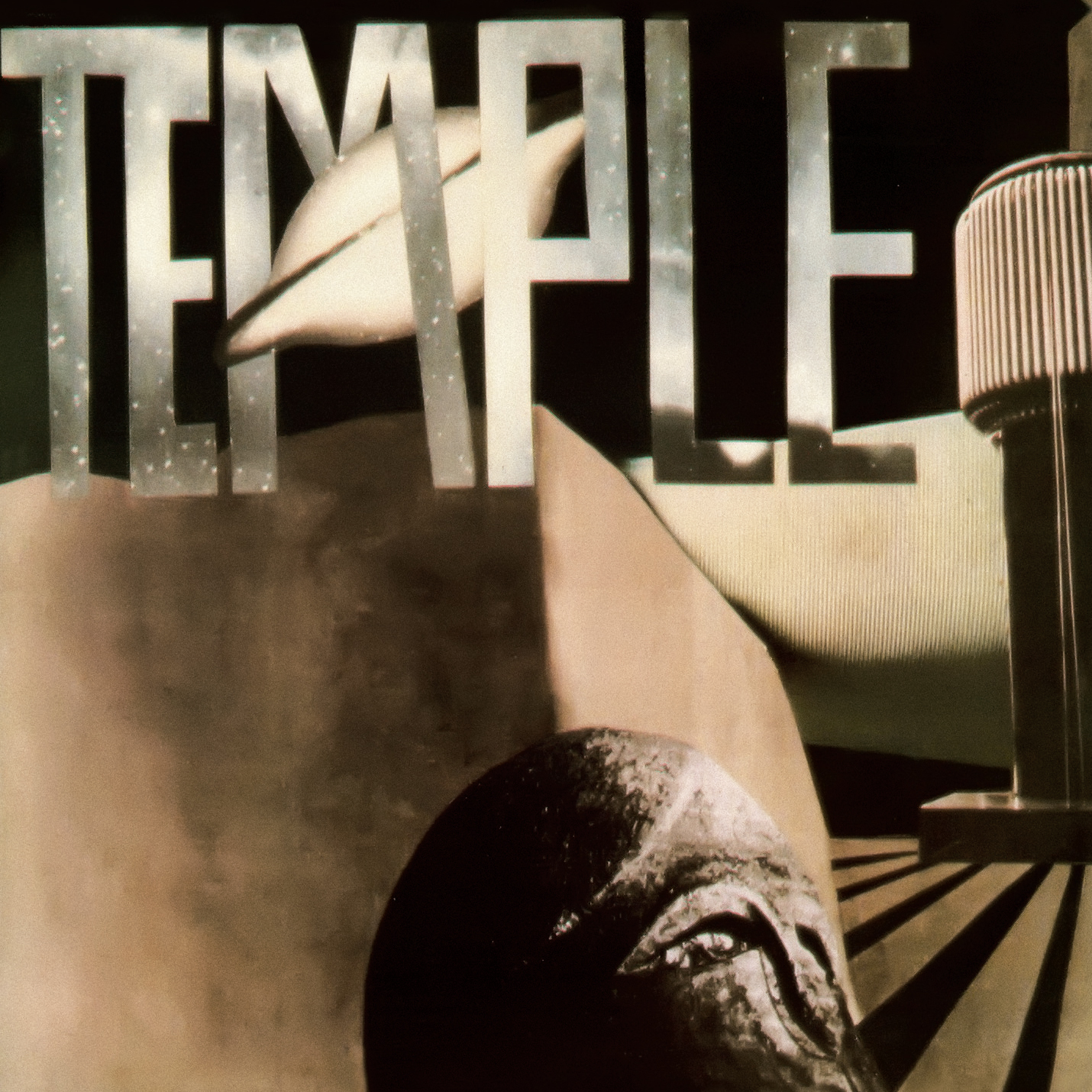
TEMPLE-TEMPLE.
Temple-Temple.
Label: Mental Experience.
Ever since the birth of rock ’n’ roll, there’s been many short-lived record labels, including small, obscure local labels founded to release privately pressed albums, to regional labels that released just a handful of singles before closing their doors for the last time. Other labels lasted slightly longer, but were hardly prolific, including Robin Page’s controversial Cologne-based label Pyramid Records which recorded just eleven albums between 1972 and 1976.
This included Temple’s eponymous debut album Temple which has just been reissued by Mental Experience, an imprint of Guerssen Records. However, just like any Pyramid Records’ reissue, the rerelease of Temple is sure to provoke debate and speculation, with the doubters wondering whether the album really recorded in the seventies, or at a later date?
Building The Pyramid.
The Pyramid Records’ story began in Cologne in 1972, when the label was founded by forty-year old British expat Robin Page, who was one of the leading lights in the burgeoning Fluxus arts movement. He had moved from London, England to Cologne, in West Germany in 1969, which had been his home ever since. However, it turned out that Robin Page wasn’t the only expat who was living in Cologne during that period.
Cologne was also home to Tony Robinson, a South African, who had travelled from his home in Cape Town, to West Germany to work with the legendary Karlheinz Stockhausen, the Godfather of modern German electronic music at the WDR Studio. This was where akin to a musical apprenticeship for Tony Robinson, and served him well in the future. After he left Karlheinz Stockhausen’s employ, Tony Robinson started working at Dierks Studio, near Cologne, and it was around this time that he met Robin Page.
By then, Robin Page was a successful and established artist whose work within the Fluxus movement was regarded as ambitious, daring and groundbreaking. One of the trademarks of Robin Page’s work was humour, which he used to challenge what was regarded as good taste within the art establishment. Before long, Robin Page’s paintings started to find an audience, and became particularly sought after, which was what Robin Page had dreamt of, and worked towards ever since ‘he had left’ art college in Vancouver. His new-found success and financial security allowed Robin Page to work towards fulfilling another of his dreams, making music.
Robin Page was so serious about making music, that he decided to invest some of his newfound fortune in building a recording studio. This wasn’t a luxurious state-of-the-art recording studio that was situated within a fashionable area of Cologne. Instead, the studio was situated in the basement of what looked like a derelict building. It was an unlikely place for Cologne’s newest recording studio, and where the nascent Pyramid Records first album was recorded.
It was then pressed by a Turkish entrepreneur, who just happened to keep his cutting lathe within the same building as the studio was situated. The lathe which it’s been alleged was used to produced bootleg albums, was used to cut what became PYR 001, Pyramid Records’ first ever release. Robin Page then commissioned a local student to design the album cover to PYR 001, which was released later in 1972. Robin Page had just made with the release of Pyramid Records’ first album.
Just like many private presses released in 1972, Robin Page had only a small number of copies of PYR 001 pressed. He decided to press between 50 and 100 albums, which became the norm for future Pyramid Records’ releases. It’s claimed that some of the albums were sold in Cologne’s art galleries and clubs, while Robin Page gave some of his closest friends copies of PYR 001. This included one of his one newest friends, Toby Robinson.
Robin Page had first encountered Tony Robinson in Cologne, in 1972. It turned out that the engineer shared the same circle of friends as Robin Page, which included a number of local artists and musicians. Some of these musicians would join Tony Robinson at Dierks Studio for after hours’ jam sessions, which would allow the engineer to experiment with effects as he sculpted sonic soundscapes. It’s claimed that some of these musicians would later feature on Pyramid Records’ recordings. That was all in the future.
Not long after Robin Page met Toby Robinson, the artists managed to persuade his new friend to provide the material for Pyramid Records’ second release. Toby Robinson’s recordings featured sounds that were bounced from one reel-to-reel tape recorder to another. After he had an album’s worth of material, a master was cut, and between 50-100 copies of PYR 002 were either given away to Robin Page’s friends, or sold in Cologne’s art galleries and clubs. However, there was a problem with the label’s first two releases.
Over the next few years, the master tapes and the last remaining copies of PYR 001 and PYR 002 were mislaid, and it was as if the two albums had never existed. This was something that those who were keen to disprove the existence of Pyramid Records seized upon at a later date. So would what happened next.
During 1973, Robin Page’s Pyramid Records released two further albums, PYR 003 and PYR 004, with between 50 and 100 copies of each album being pressed. Again, some albums were sold in Cologne’s art galleries and clubs, while Robin Page gave copies to some of his closest friends. However, over the next couple of years, incredibly the master tapes and remaining copies of PYR 003 and PYR 004, were mislaid.
History had repeated itself, again, it was as if PYR 003 and PYR 004 had never existed. The master tapes seemed to have vanished into thin air, and forty-five years later, it’s as if Pyramid Records first four releases never existed. This would later provide more ammunition to those trying to disprove the very existence of Pyramid Records.
The first Pyramid Records release to survive is believed to be PYR 005, which is the Cozmic Corridors’ eponymous debut album. It’s one of just eleven recordings that remain in the Pyramid Records’ vaults. These recordings were made between 1974 and 1976 and include Temple’s eponymous debut album Temple.
Temple.
Just like Pyramid’s eponymous debut album, there’s a degree of confusion surrounding the recording of Temple. The exact date of the recording sessions are unknown, and the best guess is that Temple was recorded during 1975 or 1976 at Dierks Studio.
It’s thought that Temple was the result of a number of late night, after hours recording sessions where musicians joined Tony Robinson in the studio. Some of these musicians are thought to have been recording at Dierks Studio before joining the Temple Sessions. A couple of the musicians, including lyricist and vocalist Pauline Fund is thought to have featured on Cozmic Corridors, another Pyramid Records’ release. Other musicians that featured on Temple are though to be well known names, and include Zeus B. Held who was a member of Birth Control between 1973 and 1978. However, speculation sounds the identity of those who played on Temple as pseudonyms were used and there’s discrepancies between the original album cover and the 1997 reissue.
The lineup of Temple feature a rhythm section of drummer Otto Bretnacher, bassist Joachim Weiss and guitarists Heinz Kramer and Rolf Foeller. They were joined by Zeus B. Held on Hammond organ, Mini Moog and Mellotron, while vocalist included Poseidon and Pauline Fund plays Tambourine. Interestingly, Tony Robinson’s name is written large all over Temple, and he wrote parts of Temple with Rolf Foeller and Pauline Fund. However, Tony Robinson is also credited as “performer/multi-instrumentalist” under his Mad Twiddler moniker and the recordist F.B. Nosnibor looks like another of his many pseudonyms. He’s part of the group that is thought to have recorded Temple during 1975 and 1976.
Temple must have been one of the last albums that Pyramid Records released, as Robin Page’s label closed its door for the final time in 1976, when he decided to emigrate to Canada. He took with him the master tapes to the Pyramid Records’ releases and the albums that he hadn’t sold or given away to friends. This is why after Robin Page emigrated to Canada, it looked like Pyramid Records had never existed.
Twenty years later, and Tony Robinson approached Virgin Records with some of Pyramid Records’ master tapes. This resulted in the release of Unknown Deutschland-The Krautrock Archive Volume 1 in 1996. Later that year, two further volumes followed, and Temple’s eponymous debut album was reissued for the first time in 1997. Given its rarity, collectors of Krautrock were keen to add a copy Temple album to their collection, and the album soon sold out. Listeners were in for a surprise.
Having listened to Temple, many listeners realised that it sounded as if two different bands had played on the album. This added to the rumour and speculation that was already rife about the mysterious Pyramid Records, and has continued to build up ever since.
Twenty-one years later, and Mental Experience’s reissue of Temple will result is bound to result in further speculation about Temple. While it sounds as if two bands played on Temple, that comes as no surprise as the lineup of Temple was fluid, with different musicians playing on the sessions. This included multi-instrumentalist Tony Robinson. However, one thing that caused much of the speculation was the use of two different vocalists on Temple.
Three of the tracks sounded as if they had been recorded by a hard rocking, heavy psychedelic rock band that was led by a vocalist that sounded as if he had been inspired by The Damned’s Dave Vanian. This includes the album opener Heathen, Ship On Fire and Crazy Hat/Kingdom Of Gabriel which closes Temple. However, the identity of the vocalist that features on these three tracks, and dawned the moniker of Poseidon as he sung the lyrics in English is unknown? Could this have been Tony Robinson who played such an important part in the record of album? His influence can be heard on these three tracks as he unleashes a myriad of effects throughput this genre-melting album where Temple unleashed a fusion of hard rocking, heavy psychedelic rock with Krautrock, and space rock. Then it’s all change.
The remainder of the songs on Temple, including Leaves Are Falling/Black Light, Age Of Ages, sounded as if they had been recorded by an otherworldly gothic folk band fronted by French female vocalist Pauline Fund. Her vocal veers between dramatic, dubby, eerie, ethereal and mysterious as the music becomes dreamy, lysergic and theatrical. Especially as Pauline Fund delivers a soliloquy on Age Of Age. These two tracks show a very different side to Tempe and features elements of art rock, avant-garde, dub, folk-rock and a proto-gothic sound. That is as long as Temple was recorded before the gothic style of music became popular.
Ever since Tony Robinson approached Virgin Records with some of Pyramid Records’ master tapes, which resulted in the release of Unknown Deutschland-The Krautrock Archive Volume 1 in 1996, rumour and speculation has surrounded Robin Page’s short-lived label. The doubters have tried to disprove the very existence of Pyramid Records, and some believe that it’s nothing more than a musical hoax, akin a to modern-day great rock ’n’ roll swindle. To prove their case, the doubters have left no stone unturned.
One of the main thrusts of the doubters arguments is if Robin Page took the master tapes and remaining copies of the Pyramid Records’ albums to Canada, where did the master tapes Tony Robinson took to Virgin Records’ come from? It may be that these tapes were duplicates that were only discovered at a later date?
Some of the doubters believe that at least some of the albums, especially the unreleased ones may have been recorded at a later date, either in the eighties or nineties. Despite examining everything from the recording techniques and instruments used, they’ve been unable to prove beyond all reasonable doubt these albums were recorded post 1976. This hasn’t stopped the doubters saying that some of the albums sound as if they were recorded at a later date.
Sadly, all the debate and speculation surrounding Pyramid Records gets in the way of what are important and exciting reissues of albums by groundbreaking groups like Temple. This short-lived studio band that features mostly anonymous musicians sounds as if it was inspired by Amon Düül II, Ash Ra Tempel, Birth Control, Hawkwind and Popol Vuh as they recorded what was their one and only album Temple. Just like so many of Pyramid Records’ releases, Temple features music that is ambitious, innovative and way ahead of its time, and would never have been recorded and released if it wasn’t for Robin Page and his short-lived label which championed esoteric music including Temple’s.
Temple-Temple.
MELVIN SPARKS-TEXAS TWISTER-RECORD STORE DAY EDITION.
Melvin Sparks-Texas Twister-Record Store Day Edition.
Label: Tidal Waves Music.
Although American jazz and blues guitarist Melvin Sparks enjoyed a career that spanned five decades, the most fruitful period of his career was the seventies, when he released five albums between 1970 and 1975. Melvin Sparks’ career began at Prestige Records, where he released a triumvirate of albums between 1970 and 1972. However, after leaving Prestige, Melvin Sparks signed to Armen Boladian’s Eastbound Records in Detroit.
In 1973, Melvin Sparks entered the studio with producer Bob Porter, and an all-star band and recorded his fourth album Texas Twister, which was released later that year. Since then, Texas Twister, which is one of Melvin Sparks’ rarest albums, has never been reissued on vinyl. That was until Tidal Waves Music released Texas Twister for Record Store Day 2018 as a limited edition of 1,500. It’s a welcome reissue of this oft-overlooked album which is a reminder of the late, great jazz guitarist Melvin Sparks, who sadly passed away in on March the ’15th’ 2011, just before his sixty-fifth birthday.
Melvin Sparks was born in Houston, Texas, on March the ‘22nd’ 1946, into what was a musical family. His two brothers both played guitar, and his mother ran a cafe which was a favourite hangout for local musicians. This included Don Wilkerson, Stix Hooper and Cal Green, who would prove supportive of Melvin Sparks and influenced him later in his career.
At the age of eleven, Melvin Sparks received his first ever guitar, and by the time he was in high school, was playing in his first band alongside organist Leon Spencer. Within a few years, seventeen year old Melvin Sparks had left school and embarked upon a career as a processional musician.
Initially, Melvin Sparks went out on the road with The Upsetters, who had been Little Richard’s backing band, and then went on to back some of the biggest names in R&B. For the next three years, Melvin Sparks served what was akin to a musical apprenticeship with The Upsetters, as they crisscrossed America. In 1966, The Upsetters arrived in New York which was where Melvin Sparks met the man who would transform his career.
In New York, Melvin Sparks met bandleader and jazz organist Brother Jack McDuff, who just happened to be looking for a guitarist. Melvin Sparks fitted the bill and in 1966, he joined Brother Jack McDuff’s band. Over the next few years, Melvin Sparks played on several albums that featured Brother Jack McDuff. This included his 1967 album Do It Now, and the same year, Melvin Sparks played on Do It Now, Jimmy Witherspoon with Jack McDuff’s The Blues Is Now. The following year, Melvin Sparks played on Brother Jack McDuff and David Newman’s 1968 collaboration Double Barrelled Soul. That was just part of the story.
Soon, Melvin Sparks was the go-to-guitarist for anyone who was looking for a jazz guitarist, and played alongside Lonnie Smith on his 1967 album Finger Lickin’ Good. After that, Melvin Sparks played alongside several top boogaloo artists signed to Blue Note between 1968 and 1970, including Lou Donaldson, Reuben Wilson and Lonnie Smith. However, in 1970 Melvin Sparks made the transition from sideman to solo artist.
By 1970, Melvin Sparks signed to Prestige, where he was reunited with his old friend and former high school bandmate Leon Spencer Jr, who was also signed to the label. The pair would play on each other’s albums over the next couple of years.
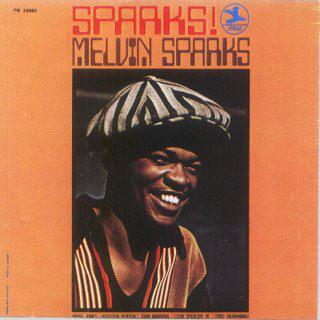
Sparks!
Having signed to Prestige Records, twenty-seven year old Melvin Sparks soon, began work on his much-anticipated debut album, Sparks! He was paired with producer Bob Porter who by 1970, had already established the Prestige soul-jazz sound. Now they had to choose the songs that suited this sound.
Just like many albums of soul jazz, cover versions were often the order of the day. That was the case with Melvin Sparks’ first album of Prestige soul-jazz, which featured Sly Stone’s Thank You For Being Myself, Rogers and Hart’s I Didn’t Know What Time It Was and Leiber and Stoller’s Charlie Brown. However, Melvin Sparks had decided to record The Stinker which was written by his old friend and now label mate Leon Spencer Jr, who was also part of all-star band that recorded Sparks!
When recording of Melvin Sparks debut album Sparks! began, Bob Porter took charge of production and Rudy Van Gelder was the recordist. Backing guitarist Melvin Sparks was a tight and talented band that featured drummer Idris Muhammad, organist Leon Spencer Jr, trumpeter Virgil Jones and tenor saxophonists Houston Person and John Manning. Once the album was recorded, Sparks! was scheduled for release later in 1970.
Before the release of Sparks!, critics had their say on Melvin Sparks debut album, which was an album of soul-jazz that headed in the direction of pop. Sparks! was well received by critics, and when it was released in later 1970, it was hoped that it would launch Melvin Sparks’ solo career. However, despite the favourable reviews, Sparks! failed to find a wider audience which was a disappointing start to Melvin Sparks’ career at Prestige.
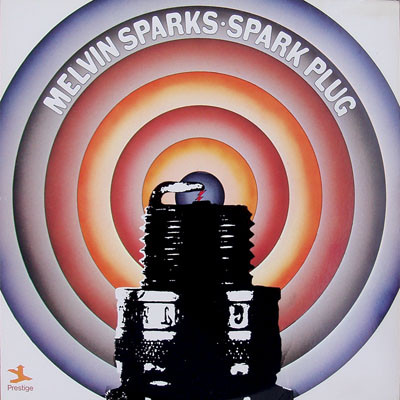
Spark Plug.
After the commercial failure of his debut album Sparks!, Melvin Sparks went away and wrote Spark Plug, Conjunction Mars and Dig Dis which would featured on his sophomore album Spark Plug. These three tracks were joined by covers of Gene Redd’s Who’s Gonna Take The Weight? and Schwartz and Dietz’s Alone Together. The songs that became Spark Plug were recorded by many of the musicians that featured on Sparks!
Drummer Idris Muhammad, organists Leon Spencer Jr and Reggie Roberts, trumpeter Virgil Jones and tenor saxophonists Grover Washington Jr join guitarist Melvin Sparks. Taking charge of production on Spark Plug was Bob Porter, as a much more laid back, but funky album of soul-jazz took shape. This was similar to the Prestige “sound” that had evolved over the last few years under Bob Porter. Melvin Sparks was the latest purveyor of the Prestige sound.
Just like his debut album Sparks!, Sparks Plug, was well received by critics, and many thought that Melvin Sparks was one of Prestige’s rising stars. However, when Melvin Sparks released Sparks Plug later in 1971, the album wasn’t the commercial success that Prestige nor Melvin Sparks had hoped. For both parties, this was hugely disappointing.
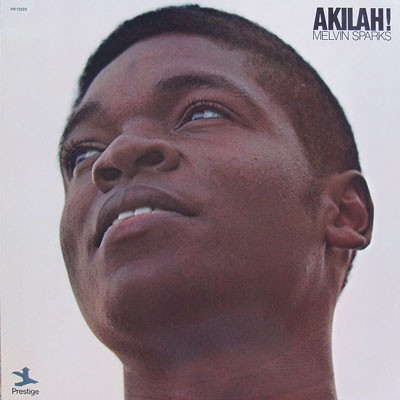
Akilah!
With neither Sparks! nor Spark Plug proving particularly popular, Melvin Sparks was well aware that his third album Akilah!, was make or break for him at Prestige. Melvin Sparks was still regarded as one of Prestige’s rising stars, but he had still to make a breakthrough. It was a case of now or never as Melvin Sparks began work on Akilah!
For his third album, Melvin Sparks had written four new tracks, On The Up, All Wrapped Up, Akilah and Blues For JB. They were joined by Leon Spencer Jr’s The Image Of Love and Gene Redd and Kool and The Gang’s Love The Life You Live.
By the time Melvin Sparks recording his third album, producer Bob Porter had left Prestige, and this time, he was joined in the studio by Ozzie Cadena who supervised the recording of Akilah! This wasn’t the only change, as a very different band accompanied Melvin Sparks during the Akilah! sessions.
Familiar faces included Idris Muhammad, organist and pianist Leon Spencer Jr and trumpeter Virgil Jones. They were joined by some new names including alto saxophonists George Coleman and Sonny Fortune, flautist Hubert Laws, percussionist Buddy Caldwell, trumpeter Ernie Royal and tenor saxophonists Frank Wess and Dave Hubbard who also played flute on Akilah! It built on Melvin Sparks’ two previous albums, Sparks! and Sparks Plug, and was the most important album of his solo career.
With Akilah! completed, Melvin Sparks’ third album was scheduled for release later in 1972, and again, just like his two previous well received by critics upon its release. However, history repeated itself, and Akilah! failed to find the audience that it deserved. This was a huge blow for Melvin Sparks, who left Prestige later in 1972.
Fortunately, by the time Akilah! was released, Bob Porter who had left Prestige Records, had joined Armen Boladian’s Detroit-based label Eastbound Records. With Melvin Sparks without a label, Bob Porter recommended that Eastbound Records sign his old friend and protégé. This was the start of a new era for Melvin Sparks.
Texas Twister.
After signing to Eastbound Records, began work on his fourth album Texas Twister with his old mentor and producer Bob Porter. Melvin Sparks hoped that renewing his partnership with Bob Porter might kickstart his career.
For Texas Twister, Melvin Sparks wrote four new compositions Whip! Whop!, Judy’s Groove, Texas Twister and Star In The Crescent. They were joined by Bobby Graham’s Gathering Together, Billy Eckstine’s Want To Talk About You and Brian Potter and Denise Lambert’s Ain’t No Woman (Like The One I Got). These seven tracks became Melvin Sparks’ Eastbound Records’ debut Texas Twister.
No expense was spared for the recording of Texas Twister which was produced by Bob Porter and was recorded by band that featured some top musicians. The rhythm section of drummer Idris Muhammad, bassist Wilbur Bascomb and guitarists Ron Miller. They were joined by organist Caesar Frazier, Sonny Phillips on Fender Rhodes and Buddy Caldwell on bongos. A horn section that featured baritone saxophonist Ed Xiques, tenor saxophonist Ron Bridgewater and trumpeters Cecil Bridgewater and Jon Faddis was the final piece of the jigsaw. Melvin Sparks played his trusty Guild guitar on Texas Twister which was meant to be the start of a new era for him.
Texas Twister was released to plaudits and praise, and hailed as Melvin Sparks’ finest album. Although it was a much funkier album than his previous offerings, Melvin Sparks hadn’t turned his back on soul jazz as he led three different lineups of his band on Texas Twister. Sometimes, Melvin Sparks’ all-star band are reduced to a trio, while other times he leads an impressive ten piece combo on Texas Twister. One of Melvin Sparks’ secret weapons on Texas Twister were the bongos which added a Latin sound as he flitted between funk and soul-jazz on his comeback album.
Side One.
Whip! Whop! which opens Texas Twister is a much funkier track, and it’s as if Melvin Sparks with the help of producer Bob Porter, was in the process of reinventing himself, as funk was growing in popularity by 1973. Gathering Together features a guitar masterclass from Melvin Sparks who plays with speed and fluidity and is accompanied by tight, rasping horns as the rhythm section drive the arrangement along. Judy’s Groove is a slice of swinging soul jazz where drummer Idris Muhammad is responsible for the ambling beat as Melvin Sparks and his band showcase their skills and versatility.
Side Two.
Melvin Sparks unleashes a breathtaking and fluid solo on Texas Twister, before blazing horns and the Hammond organ enjoy their moment in the sun, and play their part in the sound and success of the title-track. The tempo drops on Ain’t No Woman (Like The One I Got), and the horns take centre-stage and are augmented by a subtle Fender Rhodes before Melvin Sparks delivers another spellbinding solo. It takes centre-stage, and sometimes, he’s joined by the horns who provide the perfect accompaniment on the track that was released as a single. I Want To Talk About You continues with the soul-jazz sound, albeit with a Latin twist, while the album closer Star In The Crescent marks a return to the bop-driven sixties soul-jazz style. It ensures Texas Twister ends on a memorable high.
Despite being well received by critics, who thought Texas Twister Melvin Sparks’ finest album, it failed to find an audience when it was released later in 1973. History had repeated itself again, and Melvin Sparks who had just released his fourth album Texas Twister was still looking to make a commercial breakthrough.

Melvin Sparks ’75.
After the release of Texas Twister, Melvin Sparks’ friend and ally Bob Porter left Eastbound Records, and just when it looked as if things couldn’t get any worse, they did. Armen Boladian decided to close Eastbound Records, and Melvin Sparks became part of Westbound Records’ roster, which included Funkadelic and Parliament. Both were enjoying the most successful periods of their career, while jazz was in the doldrums.
By 1975, jazz albums were becoming a hard sell, but Melvin Sparks entered the studio with his band and vocalist Jimmy Scott who featured on two tracks on Melvin Sparks ’75. It was co-produced by Melvin Sparks and Bernie Mendelson and when it was completed, scheduled for release in later in 1975.
When Melvin Sparks ’75 was released by Westbound Records in 1975, interest in jazz was at an all-time low. Despite that, critics were impressed by an album that featured some of Melvin Sparks’ finest performances and two deeply soulful vocals from Jimmy Scott. Sadly, when Melvin Sparks ’75 was released, just like Texas Twister the album failed commercially. The big question was what did the future hold for Melvin Sparks?
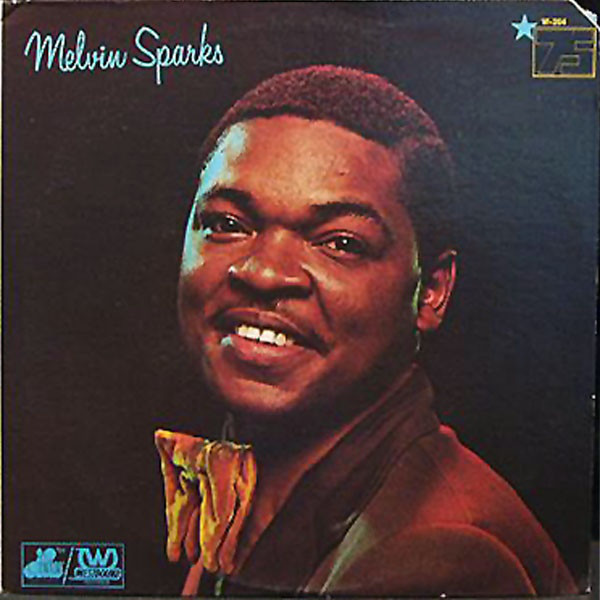
Westbound Records allowed Melvin Sparks to record what would’ve been his sixth album I’m Funky Now, which should’ve been released later in 1976. However, Westbound Records decided not to release the album, and this spelt the end of Melvin Sparks’ career Westbound Records.
After recording six albums in six years, Melvin Sparks was left without a recording contract. Westbound Records had decided to cut their loses, as Melvin Sparks had still to make a commercial breakthrough.
That was despite being a talented and versatile composer and musician, who had released five albums which were well received by critics. This included Texas Twister, which was released by Eastbound Records in 1973 and nowadays, is regarded as Melvin Sparks’ finest hour. Sadly, this Latin-tinged album of funky soul-jazz wasn’t a commercial success and nowadays, copies of Texas Twister are extremely rare. Fortunately, Tidal Waves Music recently released Texas Twister for Record Store Day 2018 as a limited edition of 1,500. This is a welcome reissue of Texas Twister, which is an oft-overlooked hidden, and is a reminder of the late, great jazz guitarist Melvin Sparks at the peak of his powers, as he leads a crack band of that features the great and good of seventies jazz.
Melvin Sparks-Texas Twister-Record Store Day Edition.
BLACK MOON CIRCLE-PSYCHEDELIC SPACELORD.
Black Moon Circle-Psychedelic Spacelord.
Label: Crispin Glover Records.
New Album Of The Week.
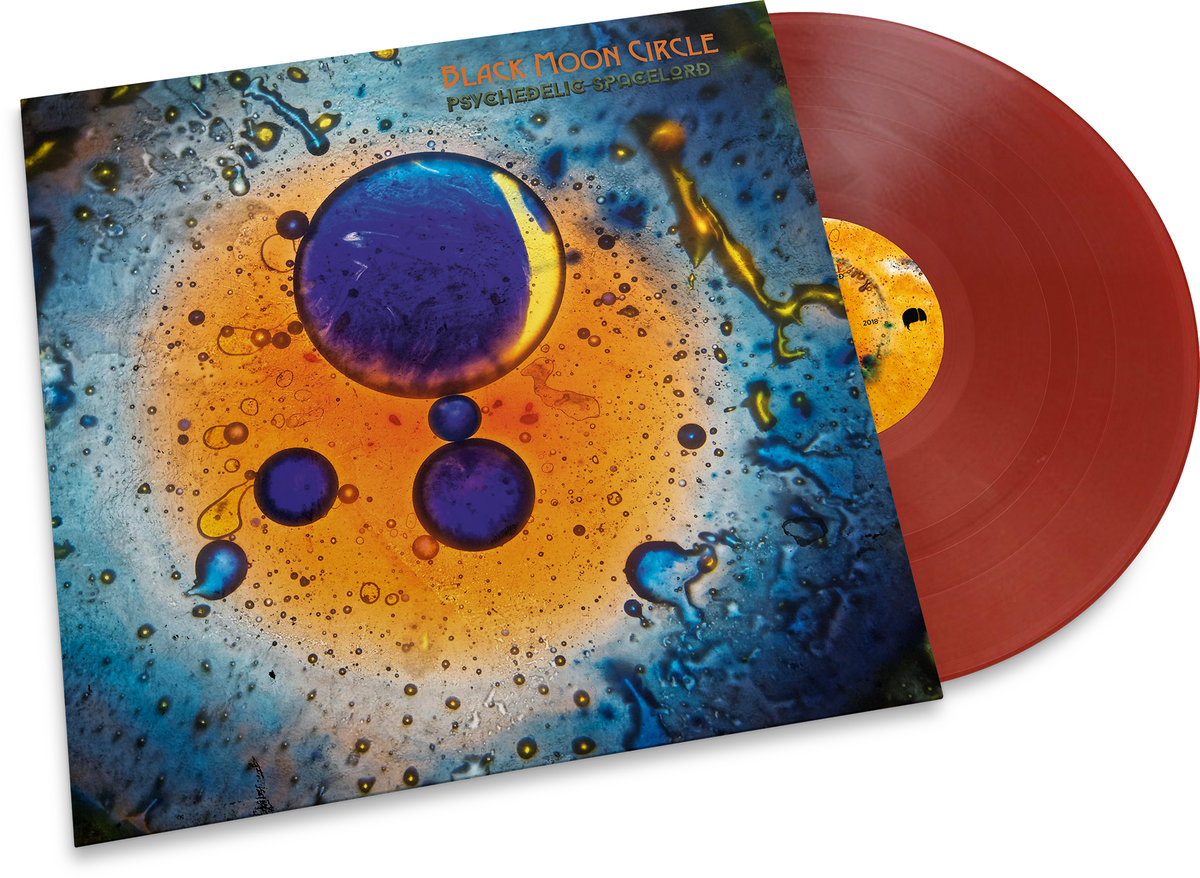
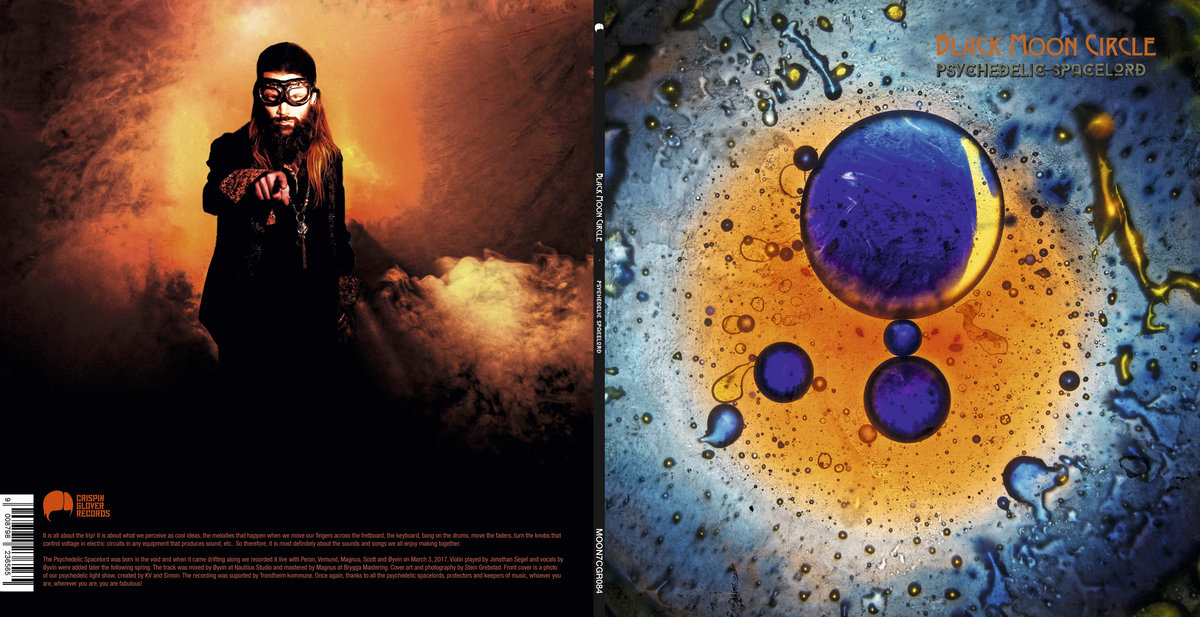
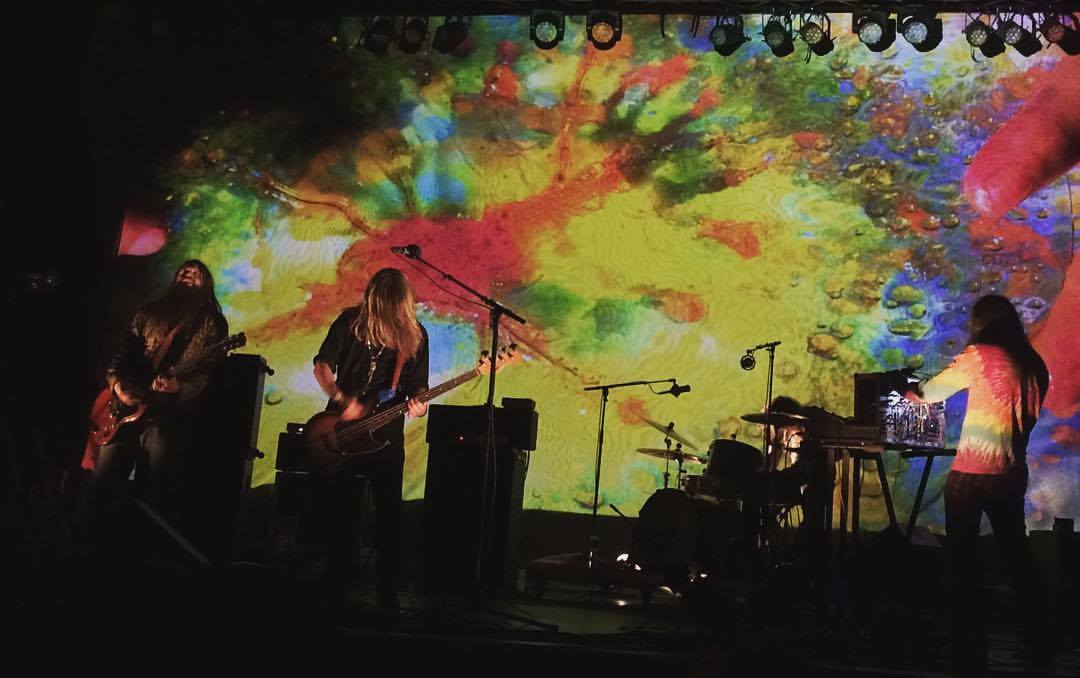
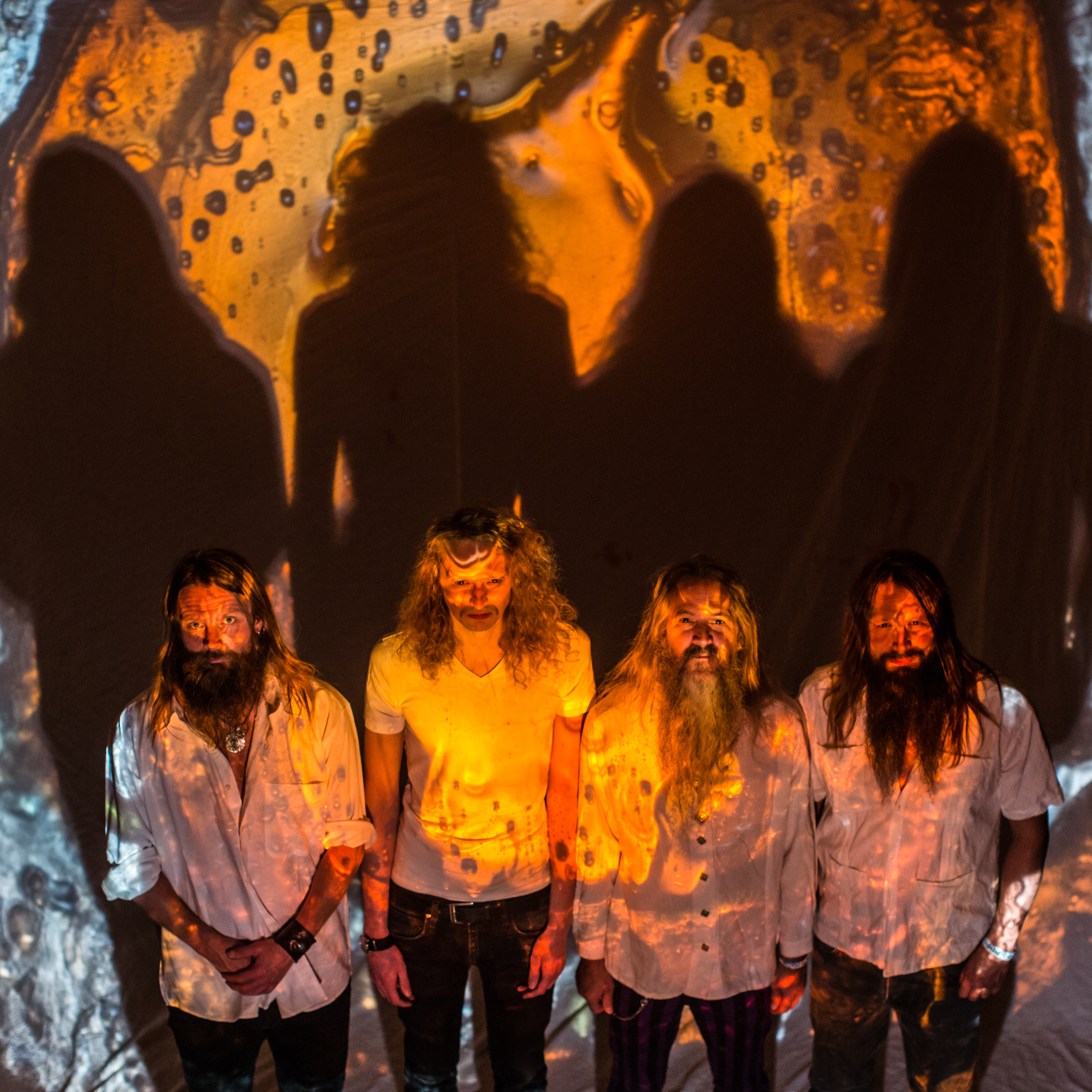
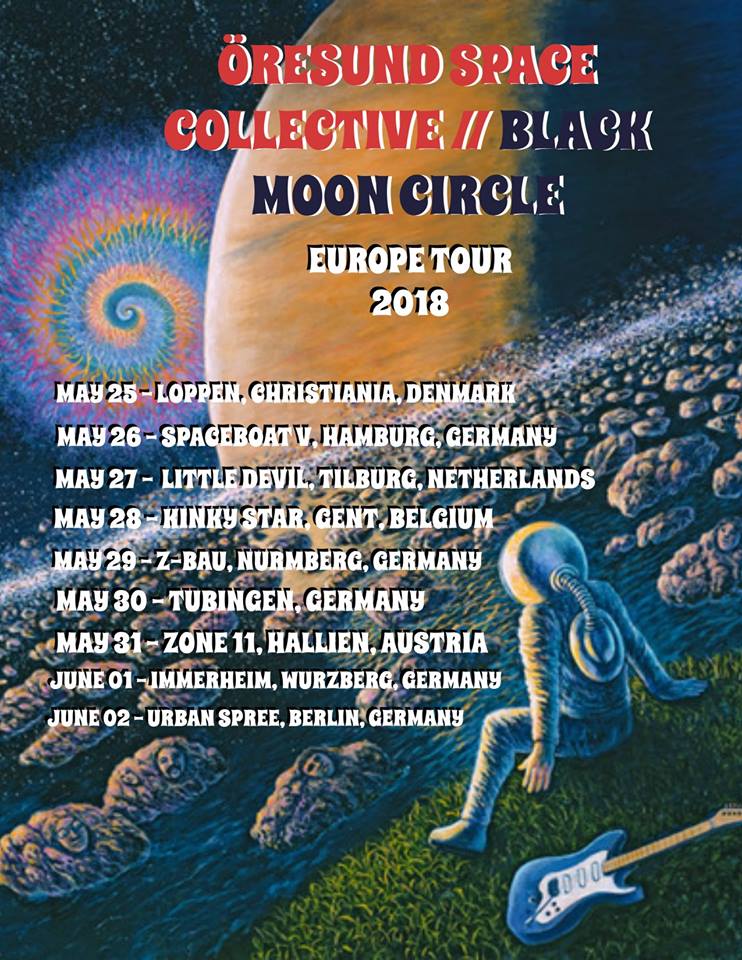
Six years ago, brothers Øyvin and Vemund Engan founded the psychedelic space rock band Black Moon Circle, and since then, this talented band from Trondheim, in Norway, have released five albums. Soon, five will become six when the newly expanded lineup of Black Moon Circle return with Psychedelic Spacelord, which will be released on vinyl complete with CD by Crispin Glover Records on the ‘25th’ of May 2018. Psychedelic Spacelord marks the start of a new chapter for Black Moon Circle, who are also about to embark upon a ten date European tour.
The Black Moon Circle story began in the city of Trondheim, in Norway, in 2012, when brothers Øyvin and Vemund Engan decided to form their own band. It was a case of needs must, after the demise of their previous band, the Trondheim-based punk rock group The Reilly Express, where the Engan brothers served their musical apprenticeship. With The Reilly Express now consigned to musical history, the Engan brothers decided to form a new band, which would allow them to head in a new direction musically.
In The Beginning.
Having made the decision to form a new group, which the Engan brothers named it Black Moon Circle, which was going to play psychedelic space rock. Øyvin would play bass, guitar and take charge of vocals, while his brother Vemund would also play guitar. All that the nascent Black Moon Circle needed was a drummer, and this would be the start of a new and exciting chapter in the Engan brothers musical career.
Before long, Black Moon Circle’s lineup was complete when drummer Per Andreas Gulbrandsen joined the band. He was the final piece of the musical jigsaw, and now Black Moon Circle could begin to hone their sound.
After spending time honing their sound, gradually, Black Moon Circle’s trademark sound started to evolve. Initially, it was a combination of lengthy jams, searing guitar riffs and a myriad of effects added to the bass and guitar. This was Black Moon Circle’s now unique brand of described as psychedelic space rock, which soon found an appreciative audience.
Now that they had honed and tightened their sound, Black Moon Circle made their first tentative steps onto the local live scene. While they were the newest addition to Norway’s thriving and vibrant and thriving psychedelic space rock scene, their music soon started to find a receptive and appreciative audience. That came as no surprise.
It wasn’t just that that Black Moon Circle was a talented band whose popularity was growing, but by then, space rock’s popularity was growing all over Europe. Flying the flag for Norwegian space rock was Black Moon Circle, whose music was about to find a wider audience in 2013.
Black Moon Circle.
Although Black Moon Circle had been together less than a year, they had already decided to record a mini album at Nautilus Studios. Black Moon Circle recorded three tracks Plains, American Eagle and Enigmatic Superbandit, which would mark the debut of the Trondheim-based psychedelic space rockers.
The mini album Black Moon Circle was released as a limited edition of 300 in February 2014 by Space Rock Productions, the label run by the Øresund Space Collective from Copenhagen, Denmark. Black Moon Circle introduced the band’s music to a new and wider audience, and launched their career.
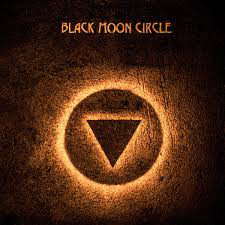
After the release of their mini-album, Black Moon Circle were already making plans for the future, and this included recording their much-anticipated debut album. Black Moon Circle weren’t the type of band to let the grass grow under their feet, and the recording began in the spring of 2014.
Andromeda.
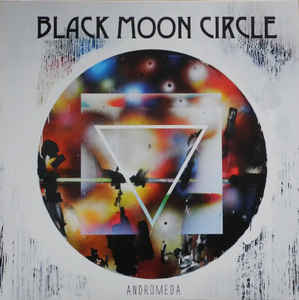
When Psychedelic space rockers Black Moon Circle returned to the studio in April 2014, they had been together the best part of two years, and were already a tight band who were capable of seamlessly creating genre-melting music. Black Moon Circle worked quickly and efficiently, recording the five songs on Andromeda in just one day. Six months later, and Andromeda was ready to be released.
Black Moon Circle’s debut album, Andromeda which showcased their psychedelic space rock sound was released to plaudits and praise by Crispin Clover Records in October 2014. Critics forecast a great future for the Trondheim-based trio, who were already hatching a plan that sounded like something from the seventies, the golden age of rock.
The Studio Jams Volume I: Yellow Nebula in the Sky.
Black Moon Circle had decided to release a trilogy of albums featuring studio jams, which was something that harked back to the seventies, when rock was King. It seemed that this was Black Moon Circle’s way of paying homage to the golden age of rock which had influenced their music. In mid-2015, Black Circle announced their intention to release a trilogy of studio jams, which was by far, the most ambitious project of their career.
The first of the trilogy was The Studio Jams Volume I: Yellow Nebula in the Sky, where Black Moon Circle were joined in the studio by Scott Heller a.k.a. Dr. Space who played synths on the album. It was released in August 2015, and was the start of a new era for Black Moon Circle.
Critics hailed The Studio Jams Volume I: Yellow Nebula in the Sky as Black Moon Circle’s as finest hour as they fused psychedelic space rock with elements of electronica, experimental music and free jazz. Seamlessly, these disparate musical genres and influences merge into something new and innovative that was cinematic, dramatic, futuristic, moody, rocky and as Øyvin Engan says: “intense.” However, for their third album, Sea Of Clouds, Black Moon Circle added two new ingredients to their successful musical formula.
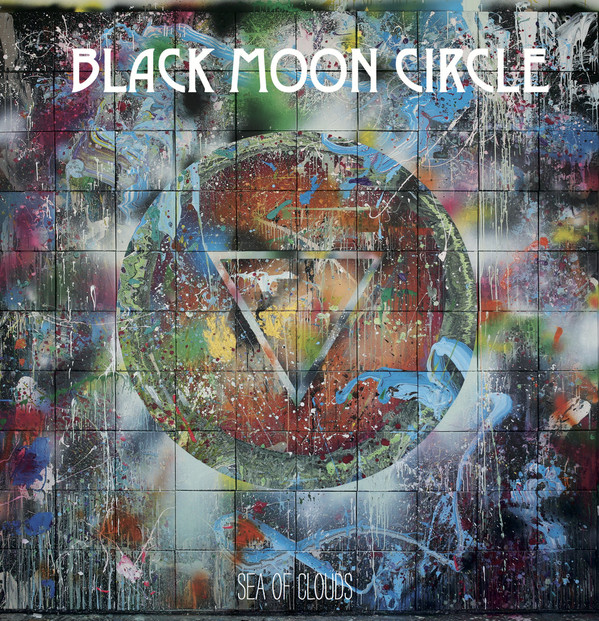
Sea Of Clouds.
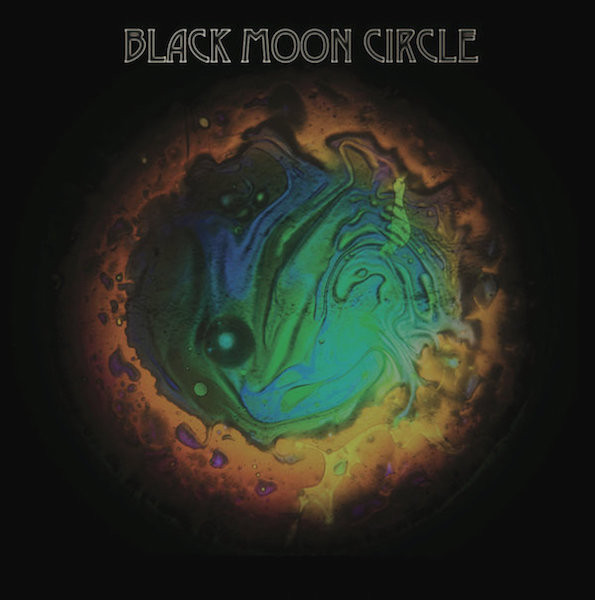
With The Studio Jams Volume I: Yellow Nebula In The Sky recorded, but not yet released, Black Moon Circle’s thoughts turned to their next album, which wasn’t going to be another instalment in the Studio Jams’ series. Instead, Black Moon Circle changed direction slightly on Sea Of Clouds.
When Black Moon Circle recorded Sea Of Clouds in June 2015, they were again joined by Scott Heller who played synths, while new guest artist Magnus Kofoed played keyboards. During the course of just one day, Black Moon Circle recorded the four lengthy jams that became Sea Of Clouds.
When Sea Of Clouds was released, critics were won over by another album of hard rocking, psychedelic space rock that was futuristic, moody, otherworldly and featured Black Moon Circle’s trademark intensity. Sea Of Clouds was a carefully crafted fusion of avant-garde, free jazz, heavy metal, Krautrock and post rock which had been inspired by Black Sabbath, Can, Deep Purple, Emerson, Lake and Palmer, Hawkwind, Iron Maiden, Led Zeppelin, Hawkwind, Moster, Motorpsycho, Radiohead and Yes. All these bands had influenced Sea Of Clouds, which was another ambitious and innovative offering from the expanded lineup of Black Moon Circle, who were about to record the most accessible album of their career.
The Studio Jams Volume 2.
Seven months after the release of Sea Of Clouds, Black Moon Circle returned with their eagerly awaited fourth album, The Studio Jams Volume 2. It had been recorded in June 2015 by Black Moon Circle who were joined by Scott Heller a.k.a. Dr. Space on synths
Just like previous albums, critical acclaim accompanied the release of The Studio Jams Volume 2, which found Black Moon Circle fusing the classic rock of the sixties and seventies with psychedelia and space rock. To this, Black Moon Circle add elements of avant-garde, electronica, experimental music, free jazz, Krautrock and post rock. Seamlessly, these disparate musical genres and influences merge into one on another album of ambitious, exciting and innovative music. It’s also cinematic, dramatic, futuristic, moody, rocky and features Black Moon Circle’s trademark intensity. However, The Studio Jams Volume 2 was also Black Moon Circle’s most accessible album, and was the perfect introduction to the Trondheim based musical pioneers, who were about to square the circle.
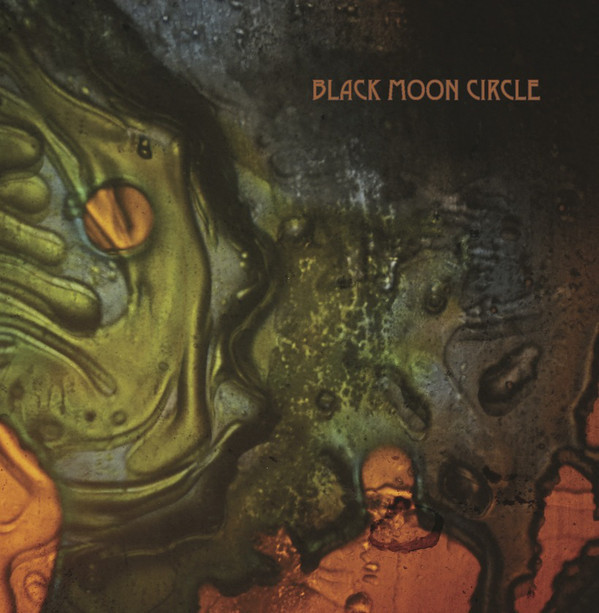
The Studio Jams Volume III: Flowing Into The 3rd Dimension.
This came when the four members of Black Moon Circle entered the studio early in 2017, to record the last instalment in their trilogy of Studio Jams, which featured two epic jams. When the time came to record the album closer Waves, Black Moon Circle were joined by Hans Magnus Ryan a.k.a Motorpsycho’s guitarist Snah.
With Snah onboard, the expanded lineup of Black Moon Circle ensured that the Studio Jams’ trilogy ended on a high with a genre-melting opus. Black Moon Circle took psychedelic space rock as a starting point, and added elements of avant-garde, Berlin School, blues rock, classic rock, electronica and experimental music, improv, Krautrock, post rock and progressive rock to the two epic jams on The Studio Jams Volume III: Flowing Into The 3rd Dimension. Black Moon Circle had saved the best until last instalment until last on their Studio Jams’ trilogy
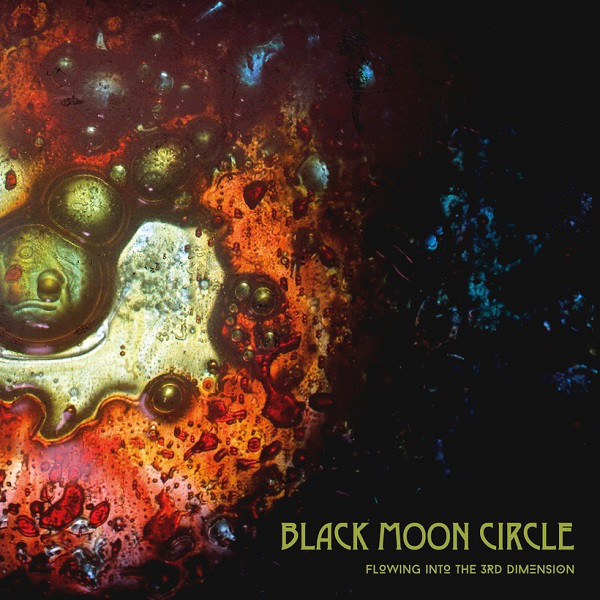
Psychedelic Spacelord.
By the time Black Moon Circle released The Studio Jams Volume III: Flowing Into The 3rd Dimension, the band had already recorded their next album Psychedelic Spacelord. It had been recorded during what Øyvin Engan described as “a spaced out session in March 2017” by an expanded lineup of Black Moon Circle.
Joining the core lineup of Black Moon Circle was keyboardist Magnus Kofoed, who had previously featured on Sea Of Clouds. Magnus Kofoed returned and played Fender Rhodes, Mellotron, Hammond organ on Psychedelic Spacelord. Øresund Space Collective violinist Jonathan Segel was the other guest artist who joined Black Moon Circle when they were recording their sixth full-length album. Later, vocals were overdubbed onto Psychedelic Spacelord, and added what was finishing touch to this much-anticipated album.
Psychedelic Spacelord is a much-anticipated album, with critics and record buyers wondering what the future holds for Black Moon Circle in the post Studio Jams era? However, what nobody expected was for Black Moon Circle to return with an album that features one epic track that lasts forty-six magical minutes, and is spread over two sides of vinyl and the CD that accompanies the LP. Quite simply, Psychedelic Spacelord is the most ambitious album of Black Moon Circle’s career and is the perfect way to begin the post Studio Jams era.
Futuristic, minimalist and otherworldly describes the introduction to Psychedelic Spacelord, where a haunting violin plays as a rueful guitar plays and squeal as gradually Black Moon Circle awaken from their slumbers. A blistering, searing guitar cuts through the arrangement which features just Fender Rhodes and violin play. However, the hard rocking psychedelic space rockers are pacing themselves as they’re about to embark upon an epic journey.
Sci-fi synths sound are unleashed and accompany the violin guitar and Øyvin’s vocal which is a mixture of confusion and despair. Around him, a wall of futuristic rocky and lysergic music takes shape which soon, becomes anthemic as Black Moon Circle don’t spare the hooks. As usual, guitars play a leading role and they soar above the arrangement as thunderous drums pound as the violin adds a new dimension to Black Moon Circle who move through the gears and soon are in full flight. This is a joy to behold, as a freewheeling Black Moon Circle play with speed, power and fluidity while futuristic synths provide the perfect foil for the guitars as this trippy, futuristic and über rocky epic track reveals its secrets.
This includes the vocal from Psychedelic Spacelord, Øyvin Engan, which just like the violin, adds a new dimension, as what sounds like part of a psychedelic rock opera takes shape. That changes when the vocal drops out, and Black Moon Circle to embark upon another lengthy jam where blistering guitars take centre-stage while keyboards and synths play a supporting role as the rhythm section power the rocky arrangement along. Black Moon Circle have never sounded as good. At the midway point the track fades out, and it’s as if the Psychedelic Spacelord is exiting planet earth.
Soon the arrangement to Psychedelic Spacelord rebuilds and Black Moon Circle are playing with speed, power, ferocity and an accuracy as they continue to unleash their trademark “heavy riffage.” By then, Black Moon Circle has never sounded as heavy as the guitars and bass play a leading role as they pay homage to the Unholy Trinity of Hard Rock and the new wave of British Heavy Metal during this flawless performance.
Later, the tempo drops and guitars and synths combine as the Psychedelic Spacelord adds a lysergic vocal as the arrangement starts to rebuild as Black Moon Circle continue to showcase their unique brand of psychedelic space rock. Meanwhile, the rhythm section, keyboards and synths combine with the vocal as Black Moon Circle continue to rock harder than they’ve ever rocked before, before the tempo increases and they end this forty-six minute epic on a dramatic high.
Psychedelic Spacelord which will be released on vinyl complete with CD by Crispin Glover Records on the ‘25th’ of May 2018, is Black Moon Circle’s much-anticipated first album of the post Studio Jams era. It finds the expanded lineup of Black Moon Circle sounding better than they’ve ever sound, and rocking harder than ever on Psychedelic Spacelord which is a very different album to everything that has gone before.
There’s only one track on Psychedelic Spacelord, albeit last forty-six incredible minutes where psychedelic space rockers take the listeners on a magical mystery tour as this genre-melting track reveals its secrets. Although psychedelic space rock is the basis for Black Moon Circle’s music, they also combine elements of avant-garde, blues rock, classic rock, electronica, experimental music, heavy metal, improv, Krautrock and post rock on Psychedelic Spacelord, which is a musical roller coaster.
During the forty-six minutes the music veers between dark and dramatic, to atmospheric, cinematic and futuristic as sci-fi sounds assail the listener before the music becomes anthemic and uplifting and other times, lysergic, trippy and for much of the time hard rocking. Indeed, Psychedelic Spacelord features Black Moon Circle at their hard rocking best .
So much so, that Psychedelic Spacelord is a reminder of the golden age of rock, when hard rocking groups like Black Sabbath, Deep Purple and Led Zeppelin were among the most successful bands in the world. They’ve obviously influenced Black Moon Circle, as have Krautrock giants Can, space rockers Hawkwind and fellow countryman Motorpsycho who are still one of most successful Norwegian bands of the last twenty years. Iron Maiden and Judas Priest who were part of the new wave of British heavy metal movement, have also influenced Black Moon Circle on Psychedelic Spacelord, especially when the guitars are played with speed and power. These guitars play an important part in the sound and success of Psychedelic Spacelord where Black Moon Circle reach new heights.
Psychedelic Spacelord is Black Moon Circle’s finest hour and is a career defining Magnus Opus from the Trondheim based psychedelic rock pioneers who unleash their trademark “heavy riffage” on this career-defining album that is the first of the post Studio Jams era.
Black Moon Circle-Psychedelic Spacelord.




THREE SIX NINE! THE BEST OF SHIRLEY ELLIS.
Three Six Nine! The Best Of Shirley Ellis.
Label: Ace Records.
The ‘16th’ of June 1954 was a proud day for twenty-five year old singer-songwriter Shirley Ellis, when she registered her first songwriting copyrights with Library Of Congress. This she hoped would be the start of a successful songwriting career that would transform her fortunes and help her escape from the abject poverty of life in the Bronx.
Although Shirley Ellis had embarked upon a career as a songwriter, she hadn’t given up hope of making a career as a singer, and every weekend left her home in the Bronx, and sang with the jazz and calypso band The Metronomes. Sometimes, Shirley Ellis entered talent contests, and in 1954 followed in the footsteps of Billie Holliday and Ella Fitzgerald when she won the Amateur Night at the Harlem Apollo. This gave Shirley Ellis’ career a huge boost.
By late-1955, Shirley Ellis had already written songs for some of high-profile groups and artists, including The Sh-Booms, The Chords, Heartbreakers and Scott and Oakes. Just a year after registering her first song, Shirley Ellis’ star was already in the ascendancy, and she had just met and married her husband.
This was Alphonso Elliston, who was the lead singer of The Chords, who enjoyed a hit with Sh-Boom in April 1954. Eighteen months later, and The Chords were still trying to replicate the success of Sh-Boom. They released Could It Be in October 1955 which featured the Shirley Ellis composition Really Wild on the B-Side. By September 1957, the search for a second hit single continued when The Chords released I Don’t Want To Set The World On Fire which featured Shirley Ellis’ composition Lu Lu on the B-Side. However, commercial success eluded The Chords, and that was the case right up until 1959.
That was when Alphonso Elliston’s cousin Alicia Carolyn Evelyn introduced Shirley Ellis to Lincoln Chase, who would become her songwriting partner and producer. However, it was another two years before Shirley Ellis released her debut single.
The song choses was A Beautiful Love, which was penned and produced by Lincoln Chase, and released on the Shell label in August 1961. Although it was a regional hit in New Jersey and Pennsylvania, A Beautiful Love failed to trouble the national charts. This was a disappointment for Shirley Ellis.
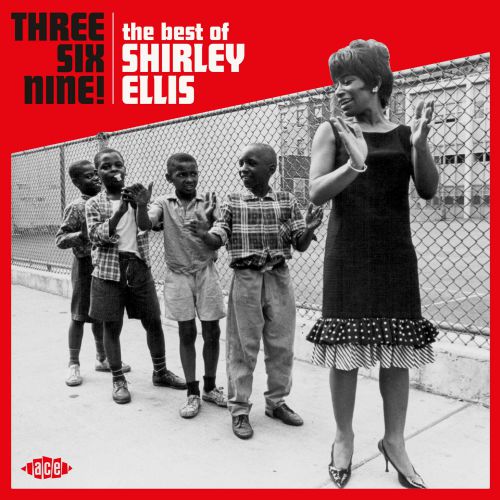
Just over two years later, and Shirley Ellis signed with deal with musical publisher Al Gallico, who secured her a recording contract with Kapp Records’ imprint Congress. Shirley Ellis’ time at Congress and Columbia is documented on Three Six Nine! The Best Of Shirley Ellis, which was recently released by Ace Records and covers the period between 1963 and 1967.
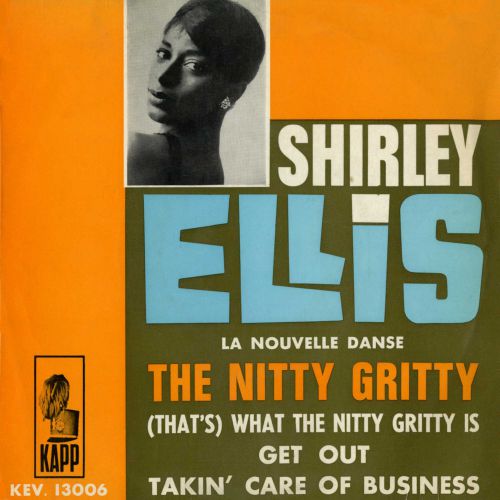
Having signed to Congress, Shirley Ellis was paired with producer Hutch Davie and entered the studio on the ‘13th’ of September 1963 to record a novelty song penned by Lincoln Chase, The Real Nitty Gritty. By the time the single was released, The Real Nitty Gritty had been shortened to The Nitty Gritty.
When The Nitty Gritty was released by Congress in October 1963, Shirley Ellis’ sophomore single started climbing the charts and buoyed by an appearance on American Bandstand eventually reached number eight on the US Billboard 100 and four on the US R&B charts. Buoyed by the success of The Nitty Gritty, Lincoln Chase went away and penned the followup single.
This was (That’s) What The Nitty Gritty Is, which was another novelty single that produced by Hutch Davie. Tucked away on the B-Side was the Lincoln Chase composition Get Out, which is an underrated song that features a defiant, soulful vocal that is delivered against an arrangement that swings. However, when (That’s) What The Nitty Gritty Is was released in February 1964, it stalled at seventy-two in the US Billboard 100 and fourteen in the US R&B charts. While (That’s) What The Nitty Gritty hadn’t replicated the success of The Nitty Gritty, it gave Shirley Ellis another hit single.
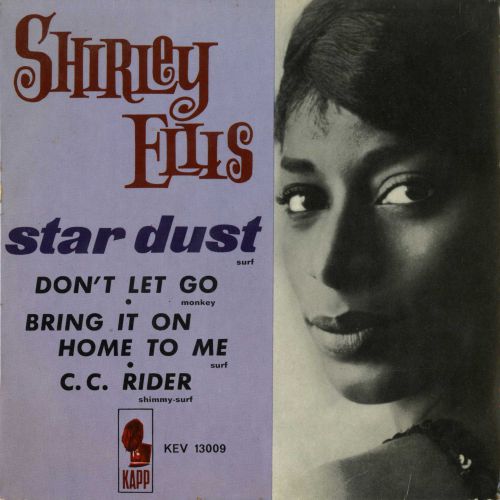
Buoyed by the success of two hit singles, Shirley Ellis entered the studio on the ‘25th’ February 1964 to record her debut album In Action. It featured The Nitty Gritty, (That’s) What The Nitty Gritty Is its B-Side Get Out and the song that became Shirley Ellis’ third single Shy One. They were joined by Jesse Stone’s Don’t Let Go, the oft-covered CC Rider and Leiber and Stoller’s Kansas which were the perfect showcase for Shirley Ellis’ vocal skills and welcome additions to Three Six Nine! The Best Of Shirley Ellis..
In April 1964, Shirley Ellis returned with her third single Shy One which stalled at forty-three in the US R&B charts. Although Shy One doesn’t feature on Three Six Nine! The Best Of Shirley Ellis, the B-Side Takin’ Care Of Business is a welcome addition. Again, it’s a Lincoln Chase composition that was produced by Hutch Davie. Shirley Ellis delivers an assured, soulful and urgent performance on this oft-overlooked hidden gem.
Two months later, in June 1964, Shirley Ellis released an impassioned cover of Sam Cooke’s Bring It On Home To Me as a single. It was arranged by Stan Green and produced by Hutch Davie. So was the B-Side Such A Night which was penned by Lincoln Chase, which features Shirley Ellis at her most soulful. However, just like Shy One, Bring It On Home To Me failed to find an audience and never came close to troubling the charts. This was a worrying time for Shirley Ellis.
Fortunately, Shirley Ellis luck was about to change, as she had just written the novelty song The Name Game with her manager and songwriting partner Lincoln Chase. It was recorded on the ‘12th’ of November 1964 with Charles Calello who had replaced Hutch Davie. Charles Calello’s arranged and produced The Name Game which was released later in November 1964 and reached number three in the US Billboard 100 and four in the US R&B charts. The Name Game was the biggest single of Shirley Ellis’ career, but it was also her third novelty single.
Novelty singles were fast becoming Shirley Ellis’ stock-in-trade, which meant that some critics failed to take her seriously as a singer and songwriter. That was a great shame as she was a talented and versatile vocalist who could breathe life and meaning into the lyrics. However, after the success of her latest novelty single, Shirley Ellis and Lincoln Chase began writing the followup Lincoln Chase.
The result was The Clapping Song (Clap Pat Clap Slap) which was released four months later, in March 1965. Just like The Name Game, The Clapping Song (Clap Pat Clap Slap) was another novelty song, which was arranged and produced by Charles Calello. When it was released, it reached number eight in the US Billboard 100 and six in the US R&B charts, and sold over a million copies. This resulted in Shirley Ellis receiving her first ever gold disc.
On the ‘29th’ of April 1965, Shirley Ellis returned to the recording studio to record two new Lincoln Chase compositions with arranger and producer Charles Calello. The single was another novelty song The Puzzle Song (A Puzzle in Song), while the melodic and memorable I See It, I Like It, I Want It was relegated to the B-Side. That was a great shame, as it was the strongest of the two songs. When The Puzzle Song (A Puzzle in Song) was released in May 1965, the single stalled at a lowly seventy-eight on the US Billboard 100. After two consecutive top ten singles this was a disappointment for Shirley Ellis.
Especially as she was just about to release her sophomore album The Name Game. It was arranged and produced by Charles Calello, and released in the summer of 1965. By then, Shirley Ellis was a familiar face on American television and regularly appeared on American Bandstand, Hullabaloo, The Mike Stone Show and Shindig. Shirley Ellis profile had never been higher, and she had come a long way since signing to Congress in 1963.
In July 1965, Shirley Ellis released Lincoln Chase’s ballad Told You So as a single. It was billed by Congress as: “Shirley Ellis as you have never heard her before.” It sounded as Congress with the help of arranger and producer Charles Calello were keen to reinvent the thirty-six year old singer. Sadly, Told You So doesn’t feature on Three Six Nine! The Best Of Shirley Ellis, but the explosive and energetic B-Side I Never Will Forget is included and also shows another side to Shirley Ellis. Sadly, Told You So failed to chart, and wasn’t the success that Shirley Ellis, her manager Lincoln Chase and executives at Congress had hoped.
For the followup to Told You So, Shirley Ellis recorded another Lincoln Chase composition, You Better Be Good, World which is a cerebral song full of social comment. It was co-produced by Neil Galligan, Hutch Davie and Lincoln Chase and is dramatic and moody song that shows another side to Shirley Ellis. Hidden away on B-Side was another Lincoln Chase composition One Sour Note, which is a memorable uptempo dance track. However, when You Better Be Good, World was released in October 1965, the single failed to find the audience it deserved. This meant that Shirley Ellis’ last three singles had failed to chart.
In January 1966, Shirley Ellis returned to the world of novelty singles which had served her so well in the past, and released Ever See A Diver Kiss His Wife While The Bubbles Bounce About Above The Water? This was a song she had penned with her songwriting partner Lincoln Chase, who co-produced it with Neil Galligan and Hutch Davis. However, when the single was released, it failed commercially and Shirley Ellis search for a hit single continued.
Despite commercial success eluding Shirley Ellis she was signed by Columbia Records, on the advice of Charlie Calello, was the company’s A&R Department producer. Columbia Records would become Shirley Ellis’ new home for the next two years.
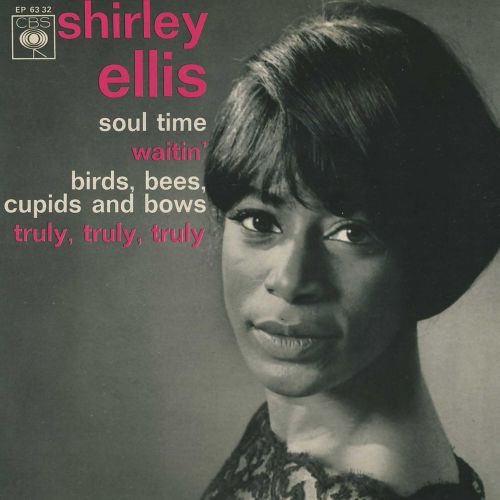
The first single Shirley Ellis recorded with Charlie Calello at Columbia was the Lincoln Chase composition Birds, Bees, Cupids and Bows. Charlie Calello was responsible for an urgent, driving arrangement, where horns and harmonies accompany Shirley Ellis. However, when Birds, Bees, Cupids and Bows was released as a single in October 1966, commercial success eluded Shirley Ellis’ Columbia Records’ debut. This meant that Shirley Ellis’ last five singles had failed to chart, and many music industry insiders wondered if her recording career was at a crossroads?
For her next single, Shirley wrote two new songs Soul Time and Waitin’, which she recorded with Charlie Calello who arranged and produced them. Soul Time which was long on hooks and soulful was chosen as the single, which was released in January 1967 and reached sixty-seven in the US Billboard 100 and thirty-one in the US R&B charts. Given the quality of Soul Time, the single deserved to fare better. Hidden away on the B-Side was the soulful dancer Waitin’ which was too good to languish on the B-Side.
For the followup to Soul Time, Shirley Ellis recorded Sugar Let’s Shing-A-Ling, which she wrote in 1954. Thirteen years later, and it was produced by Charlie Calello and released by Columbia Records in May 1967. However, commercial success eluded Shirley Ellis’ latest single which also lent its name to her third album.
Sugar, Let’s Shing-A-Ling/Soul Time With Shirley Ellis was recorded with arranger and producer Charlie Calello and released by Columbia Records during 1967. Among the highlights of the album were covers of Back Track and Barbara Mason’s Yes I’m Ready which closes Three Six Nine! The Best Of Shirley Ellis.
Having released Charlie Calello Sugar, Let’s Shing-A-Ling/Soul Time With Shirley Ellis, thirty-eight year old Shirley Ellis left Columbia Records. She had spent less than two years with the label, and released three singles and one album. Apart from enjoying a minor hit with Soul Time, Shirley Ellis’ time at Columbia Records was largely unsuccessful and she failed to replicate the success she enjoyed at Congress.
Between 1963 and mid-1966, Shirley Ellis was signed to Congress, where she enjoyed the most successful period of her career. During that three-year period, she recorded The Nitty Gritty, The Name Song and The Clapping Song, which were the triumvirate of novelty songs that made her famous. However, the success of these singles resulted in Shirley Ellis being asked to record further novelty singles. As a result, Shirley Ellis is remembered by many critics and record buyers as a singer who specialised in novelty singles. However, that is only part of the story, which is documented on Ace Records’ new compilation Three Six Nine! The Best Of Shirley Ellis.
It shows not just the novelty singles that Shirley Ellis released, but also singles and album tracks that show a very different side to this talented and versatile singer and songwriter. Sadly, though it’s the novelty singles that Shirley Ellis was always remembered for after she called time on her career in 1969. That is still the case nearly fifty years later, but the release of Three Six Nine! The Best Of Shirley Ellis goes a long way to dispelling the myth that Shirley Ellis only released novelty songs.
Three Six Nine! The Best Of Shirley Ellis.
IDRIS ACKAMOOR AND THE PYRAMIDS- AN ANGEL FELL.
Idris Ackamoor and The Pyramids-An Angel Fell.
Label: Strut.
Bruce Baker in was born in 1951, and grew up in Chicago, before moving to Ohio, where he studied at Antioch College, which was where he first encountered jazz pianist Cecil Taylor and became part of his Black Music Ensemble. Cecil Taylor also mentored Idris Ackamoor, and watched as his young prodigy dawned the moniker Idris Ackamoor in the early seventies, and embarked upon a pan-African adventure as the leader of the Idris Ackamoor and The Pyramids.
The newly christened Idris Ackamoor was a flamboyant musical showman who with The Pyramids who combined music and theatre, and each night, dawned a pharaonic headdress before he took to the stage. What followed was a groundbreaking and genre-melting mixture of music from the cosmic jazz pioneers who played with a freedom and invention as they pushed musical boundaries to their limits.
Lalibela.
In 1973, Idris Ackamoor and The Pyramids released their debut album Lalibela, on their own label Pyramid Records. By then, the members of Idris Ackamoor and The Pyramids were still students at Antioch College when they wrote and recorded Lalibela, which was an ambitious and innovative concept album that documented Idris Ackamoor, Margaux Simmons, and Kimathi Asante’s nine-month African adventure. Lalibela was an innovative fusion of Afrobeat, free jazz, funk and soul which ebbed and flowed as it revealed its many secrets.
Lalibela included driving rhythms, ritualistic chants, energetic modal jams, meditative tone pieces and improvisations played using traditional African instruments which were augmented by woodwind and horns on an album that was way ahead of its time. Sadly, Lalibela passed critics and record buyers by and it was only much later that critics and record buyer realised the importance of the album.

King Of Kings.
Despite the commercial failure of their debut album Lalibela, Idris Ackamoor and The Pyramids returned with their sophomore album King Of Kings in 1974. Just like its predecessor, it was an ambitious album and had been inspired by Idris Ackamoor and The Pyramids’ love affair with Africa and African history. There’s also a spiritual quality to the music on King Of Kings, where chants are delivered in a call and response style and hypnotic horns join with traditional African instruments, woodwind and piano to create another groundbreaking album.
During King Of Kings, Iris Ackamoor and The Pyramids fuse Afrobeat, free jazz, funk, jazz-funk and soul as they push musical boundaries and create an ambitious and spiritual album. Sadly, history repeated itself and King Of Kings failed to find the audience it deserved.
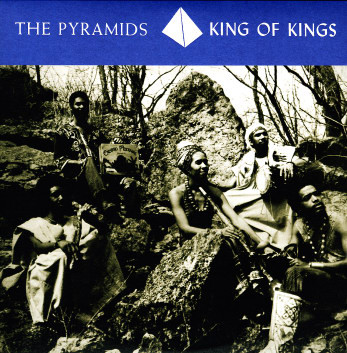
While this must have been a disappointment for Idris Ackamoor and The Pyramids, their label Pyramid Records neither had budget nor the PR expertise to promote the band’s albums and get them into shops. Instead, Idris Ackamoor and The Pyramids relied on playing live to spread the word about their music, and introduce it to a new audience. As a result, Idris Ackamoor and The Pyramids continued to tour widely in the mid-seventies, and by then, they had already toured Africa. However, by then, things were changing for Idris Ackamoor and The Pyramids.
By the mid-seventies, Idris Ackamoor and The Pyramids’ lineup was fluid, and new musicians were often recruited by the band. The other change was the instruments that Idris Ackamoor and The Pyramids played. They had played African instruments on their first two albums, but by November 1975 when Idris Ackamoor and The Pyramids began recording Birth/Speed/Merging, they were playing instruments from all over the world.
Birth/Speed/Merging.
Two years passed before Idris Ackamoor and The Pyramids returned in 1976 with their third album Birth/Speed/Merging. It was recorded in November 1975, and side one featured the three-part, twenty-minute Birth/Speed/Merging suite, which was one of the most ambitious pieces of music from Idris Ackamoor and The Pyramids had recorded.
On Birth/Speed/Merging there’s a celebratory, carnival sound as Idris Ackamoor and The Pyramids combined the cosmic sounds and free jazz of Sun Ra with Afrobeat, funk, psychedelia and a much more progressive sound. Birth/Speed/Merging was an ambitious, innovative and genre-melting album where Idris Ackamoor and The Pyramids played with freedom, fluidity and invention on a carefully crafted album. Sadly, when Birth/Speed/Merging was released the album failed to find the audience it so richly deserved.

In 1977, Idris Ackamoor and The Pyramids split-up after releasing a trio of underrated and innovative albums that had passed critics and record buyers by. Idris Ackamoor and The Pyramids were one of music’s best kept secrets and it looked as if it would stay that way.
Just like many other artists and groups before them, it took a while before the record buying public somewhat belatedly discovered Idris Ackamoor and The Pyramids’ music. It took twenty years before a small but appreciative audience discovered the three albums that Idris Ackamoor and The Pyramids had released between 1973 and 1976. Soon, Idris Ackamoor and The Pyramids had a cult following, and there was a resurgence on interest in their music.
By then, Idris Ackamoor had released two solo albums 1998s Portrait and 2000s Centurian. This was followed in 2004 by Homage To Cuba in 2004, which was the debut album from the Idris Ackamoor Ensemble. However, the big question was would Idris Ackamoor and The Pyramids reunite?
They would, but not until 2010, and soon, Idris Ackamoor and The Pyramids were making up for lost time. By then, the group’s popularity was growing after the reissue of Lalibela, King Of Kings and Birth/Speed/Merging in 2009. With a new audience discovering Idris Ackamoor and The Pyramids’ music, embarked upon their comeback tour.
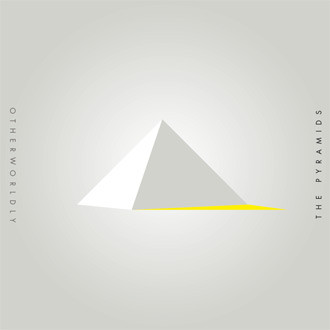
Little did Idris Ackamoor and The Pyramids realise that they would be spending much of the next couple of years on the road, as their popularity grew. With interest in Idris Ackamoor and The Pyramids in growing, it was no surprise when they released their comeback album Otherworldly in 2012.
Otherworldly.
Otherworldly was released by Cultural Odyssey as part of the Living Legacy Project, and just like the triumvirate of albums Idris Ackamoor and The Pyramids had released between 1973 and 1976 was a pioneering and experimental album. Elements of avant-garde, free jazz and space-age featured on Otherworldly which was released to plaudits and praise and was Idris Ackamoor and The Pyramids’ first album in thirty-six years.
We Be All Africans.
Despite releasing their comeback album and continuing to tour, Idris Ackamoor and The Pyramids didn’t release another album for four long years. However, Idris Ackamoor was still recording and releasing albums with two new musical projects. In 2014, the Idris Ackamoor Paris Quartet’s released their debut album The Periphery Of The Periphery and The Collective released Idrissa’s Dream. However, two years later, Idris Ackamoor and The Pyramids were back with a new album.
This was We Be All Africans which was Idris Ackamoor and The Pyramids’ fifth album, and their first album for Strut. We Be All Africans was released in May 2016 and was a quite different album from Otherworldly. It was a fusion of Afrobeat, free jazz and jazz-funk from the spiritual cosmic jazz pioneers, which was released to critical acclaim and set the bar high for the followup.

An Angel Fell.
Two years later, in May 2018 Idris Ackamoor and The Pyramids returned with their much-anticipated sixth album An Angel Fell on Strut. The eight tracks on An Angel Fell were penned by bandleader Idris Ackamoor and were produced by Malcolm Catto of The Heliocentrics. However, it was a very different lineup of The Pyramids that accompanied Idris Ackamoor during the recording of An Angel Fell at Quatermass studios in London.
Just one member of The Pyramids returned for the recording o An Angel Fell, violinist Sandra Poindexter, who made her debut on We Be All Africans. Sandra Poindexter who joined by a new lineup The Pyramids. This includes a rhythm section that features drummer Johann Polzer, double bassist Bradie Speller and congas plus guitarist David Molina. The new lineup of The Pyramids provide the perfect foil for Idris Ackamoor on An Angel Fell which is a thought-provoking album.
Idris Ackamoor explains: “I wanted to use folklore, fantasy and drama as a warning bell…“The songs explore global themes that are important to me and to us all: the rise of catastrophic climate change and our lack of concern for our planet, loss of innocence and separation…but positive themes too, the healing power of music, collective action and the simple beauty of nature.” These songs are part of what’s one of the most eclectic albums of Idris Ackamoor and The Pyramids’ long career.
Just like Idris Ackamoor and The Pyramids’ previous albums, free jazz is at the heart of An Angel Fell. Especially the free jazz of two of its founding father’s Pharaoh Sanders and Sun Ra which seems to have influenced Idris Ackamoor as a saxophonist and bandleader. There’s also elements of Afro-Cuban, dub reggae, hip hop, psychedelia and rock on An Angel Fell, which ebbs and flows revealing everything from beautiful ballads to intrepid free jazz workouts.
Tinoge opens An Angel Fell and is an urgent seven minute free jazz workout where Idris Ackamoor’s scorching saxophone takes centre-stage as he plays with speed, power and freedom, while percussion and the rhythm section drive the arrangement along providing the perfect accompaniment. There’s a poignancy and sadness to An Angel Fell which features Idris Ackamoor and The Pyramids at their most inventive and innovative as they tell the story of a fallen angel in purgatory. Very different is Land Of Ra which becomes dubby and spacious, but later, is a showcase for Idris Ackamoor’s saxophone which is played with power as he takes the track in the direction of free jazz.
Papyrus is a much more understated and melodic track that allows time to reflect and ruminate. So does the instrumental Soliloquy For Michael Brown where words aren’t needed to tell this tragic story. Instead, Idris Ackamoor’s soul-baring saxophone and Sandra Poindexter’s violin play leading roles in this powerful, moving and thought-provoking instrumental. Equally thought-provoking are the lyrics to Message to My People where the rhythm section, including a rocky guitar, join with the congas in providing the backdrop to the soulful vocals. Warrior Dance is an eleven minute epic that heads in the direction of psychedelic rock, while the album closes with Sunset a beautiful, spiritual song with some of the most soulful vocals on Angel Fell.
Two years after Idris Ackamoor and The Pyramids released We Be All Africans, they recently returned with their sixth album An Angel Fell, which was released by Strut. An Angel Fell is Idris Ackamoor and The Pyramids’ finest album since they made a comeback in 2010, and finds the latest lineup of the band rolling back the years on their most eclectic album.
Idris Ackamoor and The Pyramids play with freedom, fluidity, power and speed, but sometimes drop the tempo as they showcase much more understated and melodic sounding songs as they flit between and fuse elements of Afrobeat, Afro-Cuban, dub, free jazz, hip hop, improv, psychedelia, rock and spiritual jazz on An Angel Fell which features everything from beautiful, ruminative ballads to energetic free jazz workouts.
Incredibly, Idris Ackamoor and The Pyramids spent only a week recording An Angel Fell with producer Malcolm Catto of The Heliocentrics. He plays an important part in the sound and success of An Angel Fell where this latest lineup of The Pyramids provide the perfect foil for saxophonist Idris Ackamoor as he showcases his skill, versatility and ability to innovate.
Innovating is something that Idris Ackamoor and The Pyramids have been doing since they released their debut album Lalibela in 1973. Forty-five years later, and Idris Ackamoor and The Pyramids are still innovating as they continue to push musical boundaries on their sixth album An Angel Fell, which is an ambitious album of eclectic, energetic, genre-melting, poignant and thought-provoking music.
Idris Ackamoor and The Pyramids-An Angel Fell.

MOUVEMENTS-MOUVEMENTS.
Mouvements-Mouvements.
Label: Mental Experience.
In the late-sixties, self-taught guitarist and jazz aficionado Christian Oestreicher, who was later described as: “a savage in the era of twist and free jazz,” met artist and painter Richard Reimann who was famous for his optical art, at the renowned Aurora art gallery in Geneva, Switzerland. This was the start of a friendship that saw the pair become familiar faces in Geneva’s underground scene which was populated by artists, musicians, painters, poets and writers. Christian Oestreicher and Richard Reimann felt at home within the burgeoning underground scene and were both inspired by the outpouring of creativity that was around them.
Over the next couple of years, the two friends continued their respective careers, until Christian Oestreicher founded a new band Mouvements, having recorded the music the band’s eponymous debut album during 1972, enlisted his friend Richard Reimann to create the artwork.
In 1973, Mouvements was released as a hand-numbered, deluxe box set which featured series of Richard Reimann’s lithographies and inserts. However, only 150 box sets were available and Mouvements’ debut album soon sold out. Since then, it’s been a prized possessions amongst record collectors who cherish their copy of this groundbreaking and genre-melting album.
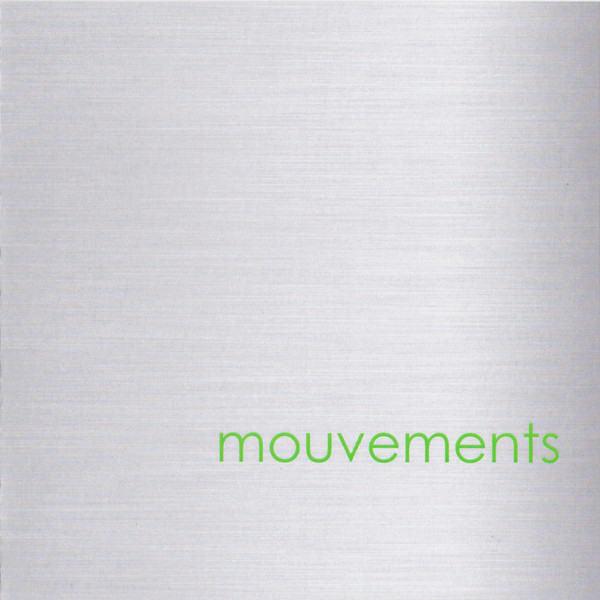
Now forty-five years later, and Mental Experience, an imprint of Guerssen Records have just reissued Mouvements, which comes complete with new artwork. It’s the perfect opportunity to discover this ambitious album that was recorded by Christian Oestreicher and his musical friends during 1972.
Christian Oestreicher.
By 1972, Christian Oestreicher was a twenty-two year old aspiring musician who still lived in Geneva, where he was born in 1950. He had been introduced to music at an early age by his father, who loved jazz music and used to play everything from Charlie Parker, Duke Ellington, Eric Dolphy, Ornette Coleman and Thelonious Monk. Meanwhile, Christian Oestreicher’s cousin who was eight years his senior, introduced him to R&B, and especially the music of Chuck Berry and Ray Charles. This was all part of his musical education, and part of a voyage of discovery for Christian Oestreicher.
Having discovered and embraced an eclectic selection of disparate music, including jazz, R&B and French twist, it was almost inevitable that Christian Oestreicher would want to make the move from listener to musician. When he did, it was as the drummer in bands playing several bands who played New Orleans jazz and rock ’n’ roll between 1962 and 1964. However, in 1964 Christian Oestreicher’s father gave him a Gibson ES-330 TD guitar and he began to reinvent himself as a guitarist.
Unlike many young guitarists, Christian Oestreicher eschewed lessons, and initially, taught himself to play his newly acquired guitar. By then, he was listening to free jazz and would often play along to the records in his collection. Eventually, Christian Oestreicher realised that he could only go so far without lessons, and for two years was taught by French guitarist Bob Aubert.
By the mid-sixties, Christian Oestreicher’s musical education was at an end, and by then, his interest in free jazz had blossomed and he also became interested in the burgeoning American civil rights movement. This marked the start of a new chapter for the teenage guitarist.
Another new chapter began for Christian Oestreicher when he was eighteen, and started writing his own music. He wanted to write and bring to life the music that he was hearing. To transcribe the music, Christian Oestreicher sat with a paper, pencil and eraser which allowed him to write new compositions. This continued until tragedy struck for Christian Oestreicher.
When he was twenty, he crashed his moped into a pole, which resulted in Christian Oestreicher fracturing his skull and having to spend six months in hospital. For a while, he was in a coma and suffered epileptic seizures, but gradually, his health started to improve.
So much so, that he was able to read Ernest Ansermet’s 1961 book Les fondements de la musique dans la conscience human, which made a big impression on Christian Oestreicher. He was fascinated by a book that explained the theory of music by math and physics. Christian Oestreicher was so inspired by the book that he spent six years studying the subject, and became especially interested in Pierre Schaeffer’s work. This was all in the future.
Before that, Christian Oestreicher met painter Richard Reimann who was famous for his optical art, at the Aurora art gallery in Geneva, Switzerland in the late-sixties. Soon, the pair became friends and familiar faces in Geneva’s underground scene which was populated by artists, musicians, painters, poets and writers. By then, Christian Oestreicher was starting to forge a musical career, and began work on his first musical project Mouvements.
Initially, Mouvements was a double quartet that featured two drummers and bassists which also featured violinist Blaise Catala who later featured on the Mouvements’ album. This genre-melting album was recorded in 1972, at a mansion in Geneva, where Christian Oestreicher led a group of pioneering and maverick musicians.
When recording began at the Swiss mansion began in 1972, guitarist Christian Oestreicher setup three reel-to-reel tape recorders which would capture the music he made with drummer Jerry Chardonnens, pianist Jean-François Boillat and violinist Blaise Catala. The four musicians stood in a circle as they recorded the eight tracks that eventually become Mouvements. It finds the four members of Mouvements fusing and flitting between disparate musical genres that made for unlikely musical bedfellows.
This included free-jazz which was still one of Christian Oestreicher’s first musical loves, and rubbed shoulders with everything from avant-garde, classical, folk, funk, improv, Krautrock, Musique concrète and psychedelic rock. They were combined with Gallic influences and tape effects during the eight tracks that became Mouvements, which was an ambitious, exciting and innovative album.
Side One.
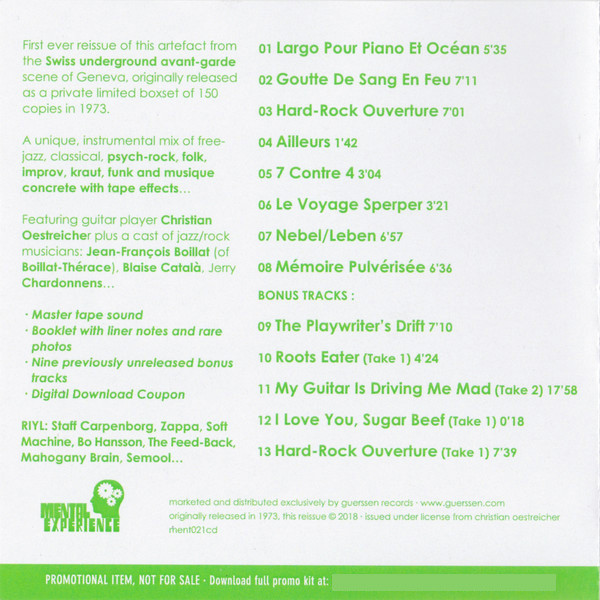
That was apparent from the opening bars of the atmospheric and cinematic Largo Pour Piano et Océan, where a piano accompanies the sound of waves crashing on an empty beach. Initially the piano is played slowly and gingerly, but later block chords with power and frustration which adds an element of drama to this cinematic track. Goutte de Sang En Feu is a captivating fusion of avant-garde, Gallic folk, free jazz and tape experiments where Mouvements play with freedom and fluidity during a track that is innovative and is full of surprises. Despite being called, Hard-Rock Ouverture, elements of avant-garde, free jazz and funk are combined during this seven minute experimental rock epic. Ailleurs is a showcase for Christian Oestreicher’s guitar, which is played with speed and fluidity, as he unleashes washes of music that is rocky, lysergic and bluesy. Alas, this musical masterclass lasts less than two minutes.
7 Contre 4 has an understated ruminative sound, as Christian Oestreicher’s effects-laden guitar plays a leading role. Later, as the tempo increases and his playing becomes choppy and funky. It’s all change on Le Voyage Sperper where tape experiments and Musique concrète are part of the stop-start track, which also includes improv, jazz and rock as keyboardist Jean-François Boillat play a starring role. There’s a hesitant start to Nebel/Leben with drum rolls and washes of wailing feedback becoming part of this genre-melting soundscape. It features elements of psych-rock, free jazz, avant-garde, blues and tape experiments which play their part in an ambitious cinematic track. Closing Mouvements is Mémoire Pulvérisée where a Gallic violin is played with urgency, before tape experiments interject. After that, the arrangement heads in the direction of classical music albeit with a hint of avant-garde, ensuring this groundbreaking album ends on a high.
Once Christian Oestreicher had recorded Mouvements in 1972, he enlisted his friend Richard Reimann to create the artworks to the album. In 1973, Mouvements was released as a hand-numbered, deluxe box set which featured series of Richard Reimann’s lithographies and inserts. However, only 150 box sets were available and Mouvements’ debut album soon sold out. Since then, it’s been a prized possessions amongst record collectors who cherish their copy of this groundbreaking and genre-melting album.
Now forty-five years later, and Mouvements has been and Mental Experience, an imprint of Guerssen Records have just been reissued Mouvements, and it comes complete with new artwork. It’s the perfect opportunity to discover this ambitious album that was recorded by Christian Oestreicher and his musical friends during 1972.
They combined everything from avant-garde, blues, classical, folk, free jazz, funk, improv, Krautrock, Musique concrète, psychedelic rock and tape experiments during Mouvements. What’s incredible about Mouvements, is that the group was no longer a double quartet, and had been scaled back to just drums, piano, violin and guitar which were augmented by the tapes which added another dimension to the music on Mouvements. Sometimes, the tapes add the final piece of the jigsaw like on Largo Pour Piano et Océan, and on Goutte De Sang En Feu they spring a surprise that ensures the listener is always on guard, awaiting the next in a series of surprises and unlikely interjections during their eponymous debut album Mouvements.
Sadly, Mouvements was the band’s only album, and they never returned with a followup. Maybe that was just as well, as they had set the bar high with Mouvements, which is a captivating cult classic that features groundbreaking and genre-melting music that is cerebral, imaginative, thought-provoking and sometimes, is full of surprises as Mouvements showcase their considerable talent during eight tracks lasting forty-two minutes.
Mouvements-Mouvements
NICKODEMUS-A LONG ENGAGEMENT.
Nickodemus-A Long Engagement.
Label: Wonderwheel Recordings.
Brooklyn-based producer Brian J Nickodemus Nickodemus was only fourteen when he made his DJ-ing debut behind the wheels of steel, and just like many before him, he was hooked. Soon, he was playing out on a regular basis and throwing his parties where he played everything from hip hop and house to reggae, soul, funk and jazz. Already, Nickodemus knew that he wanted to make a career out of music.
By the early years of the new millennium, Nickodemus DJ career was going from strength-to-strength, as had been hosting the now legendary Turntables On The Hudson parties in the Big Apple since 1998. He was also compiling Nickodemus Presents Turntables On The Hudson which started in 1999, and became a long-running and successful compilation series. However, in the early noughties, Nickodemus had no idea the effect the music he played Turntables On The Hudson parties would have on his future career.
Although Nickodemus was happy working as a DJ and compiling compilations, he had decided to embark upon a new career as a producer. This was a natural progression for many DJs who were already editing and remixing tracks. Nickodemus was no different, and had been remixing tracks for several years when he made he decision to embark upon a career as a producer.
Nickodemus began work on his debut album Endangered Species which was released in October 2005. Thirteen years later, and Nickodemus is a successful producer who has just released his fifth album A Long Engagement, on his own label Wonderwheel Recordings. However, back in 2005 Nickodemus was about to release his debut album Endangered Species.
Endangered Species.
When Nickodemus released his debut album Endangered Species in October 2005, it featured a vast cast of guest artists who played their part in what was a truly eclectic, genre-melting album that took the listener on musical journey around the world in thirteen carefully crafted tracks. They were funky, soulful and guaranteed to swing as dancefloor friendly tracks rubbed shoulders with hip hop on an album that features a myriad of Balkan, Eastern, Latin and tropical sounds. Endangered Species was an ambitious album, and one that Nickodemus hoped would launch his career as a producer.
When Nickodemus released his debut album Endangered Species in October 2005, it was to plaudits and praise. Here was an album that stood head and shoulders above the mediocre music that was being released in 2005. An album of this quality was an Endangered Species, which was remixed by some top remixers and released as Endangered Species Remixed.
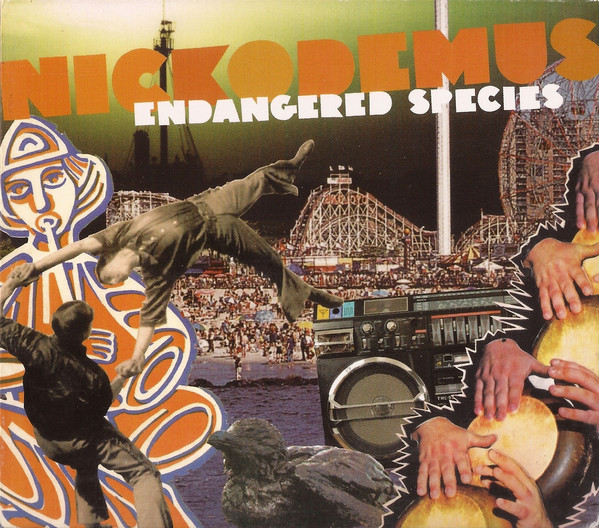
Endangered Species Remixed.
For Endangered Species Remixed, the thirteen tracks on Nickodemus’ debut album were remixed by some of the top remixers. This included Raeo, Fort Knox Five, Carol C, Jay Rodriguez, Thievery Corporation and Marco Polo who took the original track in a new direction, which resulted in a very different album, Endangered Species Remixed.
Sun People.
Buoyed by the success of Endangered Species, Nickodemus returned with his sophomore album Sun People in June 2009. Just like Endangered Species, Sun People featured a number of guest artists, and was another eclectic album. To some extent, Sun People reflected the music that Nickodemus played during his DJ sets with funk, Latin and reggae rubbing shoulders with hip hop and house on album that was inspired by music from all over the globe. This Nickodemus was a winning formula.
When Sun People was released, it was to almost overwhelming critical acclaim. It was another carefully crafted and eclectic album that showcased Nickodemus’ skills as a producer, and managed to surpass the quality of Endangered Species.
Sun People Remixed.
In December 2009, Sun People Remixed was released, and found some of the top remixers reinventing the twelve tracks on Sun People. This included Earthrise Soundsystem, Spy From Cairo, Red Astaire, J. Boogie, Hird, Pablo Sanchez and Sabo. The remixers transformed the tracks which were just as eclectic as those on Sun People.
Over the next three years, Nickodemus continued to work as a DJ and remixer, and compiled further volumes in the Nickodemus Presents Turntables On The Hudson compilation series. Nickodemus’ career was continued to go from strength-to-strength. Still he found time to record his third album, Moon People.
Moon People.
Just like his two previous albums, Moon People featured a number of guest artists, which included a mixture of familiar faces and new names. They recorded another eclectic album of uplifting dance music that included the African dub-electro of the album opener Under The Volcano, the Bollywood hip-hop of Moon People, the roots-breaks of Alkebulan and the funkified Peaceful Island Life. Latin-tinged described The Nuyorican Express and Conmigo, while Under The Volcano has a Middle Eastern sound and Los Tarantos fuses Spanish guitar and Moorish influences, before the sound of the Balkans shawn through on the album closer Vino People.
When Moon People was released in June 2012, it was to the same critical acclaim as Sun People and Endangered Species. It seemed that Nickodemus could do no wrong.

Wonderworld: 10 Years Of Painting Outside The Lines.
Three years later, and Nickodemus released the compilation Wonderworld: 10 Years Of Painting Outside The Lines to celebrate the ten years of making music. It featured tracks from his first three albums and collaborations with a variety of artists including Taraf de Haïdouks, Jay Rodriguez, The Real Live Show and Afrika Bambaataa. Wonderworld: 10 Years Of Painting Outside The Lines was a welcome addition to Nickodemus’ back-catalogue, but his fans were already wondering when would he release his next studio album?
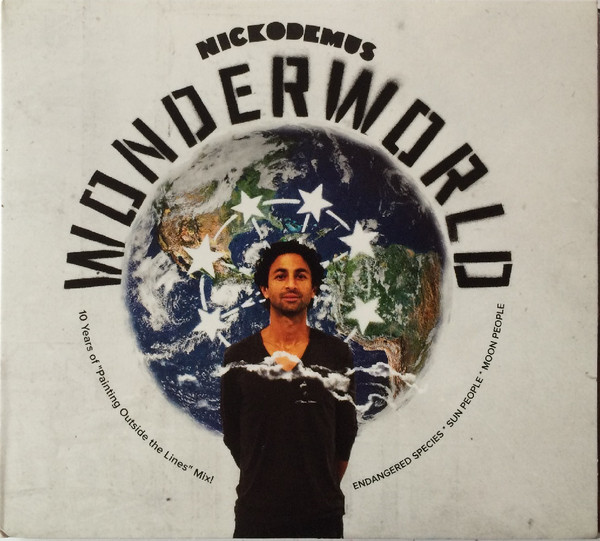
A Long Engagement.
After nearly six years, Nickodemus recently returned with his long-awaited and much-anticipated fourth studio album, A Long Engagement. In true Nickodemus style, A Long Engagement features what seems like a cast of thousands who play their part in the making of another eclectic, genre-melting album.
Joining Nickodemus on A Long Engagement are a mixture of old friends and new names who collaborated on the thirteen tracks. This includes vocalist Carol C who many music fans will remember for her performances on cult classics like Cleopatra In New York and Mariposa. There’s also guest appearances from New York MC’s The Real Live Show, The Pimps of Joytime, Brooklyn-based Afrobeat band Antibalas and keyboardist Victor Axelrod. There’s also Fémina a rising star from Argentina, and one of the country’s superstars La Yegros. The final pieces of this musical jigsaw are hear Grammy nominated singer Innov Gnawa and soul man Grey Reverend. They’re part of a dizzy array of talent who play their part in a truly eclectic album.
A Long Engagement opens with the irresistible, mesmeric title-track where a sample of a train gives way to jazzy horns and crisp beats and a scatted vocal as this eclectic and exotic fusion of musical genres is sure to whet the appetite. It gives way to Will You Still Be Here where MC’s The Real Live Show trade verses with The Pimps of Joytime on a soulful, jazz-tinged slice of hip hop NYC style. After that, Nickodemus rings the changes.
Grammy nominated reggae singer Jahdan Blakkamore takes charge of the urgent and emotive vocal on the uplifting Livin’ Your Dream. Innov Gnawa has also been nominated for a Grammy, and feature on this Moroccan influenced makeover of Mystic Molay where pounding drums provide the backdrop to the impassioned vocal.
From Argentina’s Patagonia region is vocalist Fémina whose joined by The Spy From Cairo on Inmortales (Body Move), where soul meets hip hop on this irresistible dancefloor filler. La Yegros is an Argentinian superstar and plays her part in genre-melting fusion of traditional and modern music that is long on hooks.
Carol C plays a starring role as she delivers a sultry, needy vocal on Do You Do You? Providing the perfect accompaniment is The Spy From Cairo, who provide a moody backdrop to this Lebanese funk song from the eighties. Alsarah’s vocal on The Crow is one of the finest on A Long Engagement, and sounds as if it’s been inspired by seventies disco. After that gypsy violins combine with squelchy synths and beats to drive the 4/4 arrangement to the earworm Invisible Cities along. Grey Reverend then adds a soulful vocal to Music Man.
Very different is the cinematic sounding Sugarella where pizzicato strings and a haunting, ethereal vocals join with synths and beats, to show another side to Nickodemus. It’s another of the highlights of A Long Engagement. Night Blooming Jasmines is an uptempo anthem-in-waiting, while All Over The Place (Outro) is a joyous and uplifting genre-melting track that closes the album on a high.
Although six years is a long time to wait for Nickodemus’ fourth studio album A Long Engagement, which was recently released by Wonderwheel Recordings, is another carefully crafted and accomplished album of eclectic and genre-melting music. Countless musical genres are combined over thirteen tracks by what seems like a cast of thousands, who came from all over the world to play their part A Long Engagement. It’s akin to a musical tapestry which was woven by producer Nickodemus, and became A Long Engagement which marks the welcome return of the Brooklyn-based producer, DJ and remixer with what’s the finest album of his career.
Nickodemus-A Long Engagement.
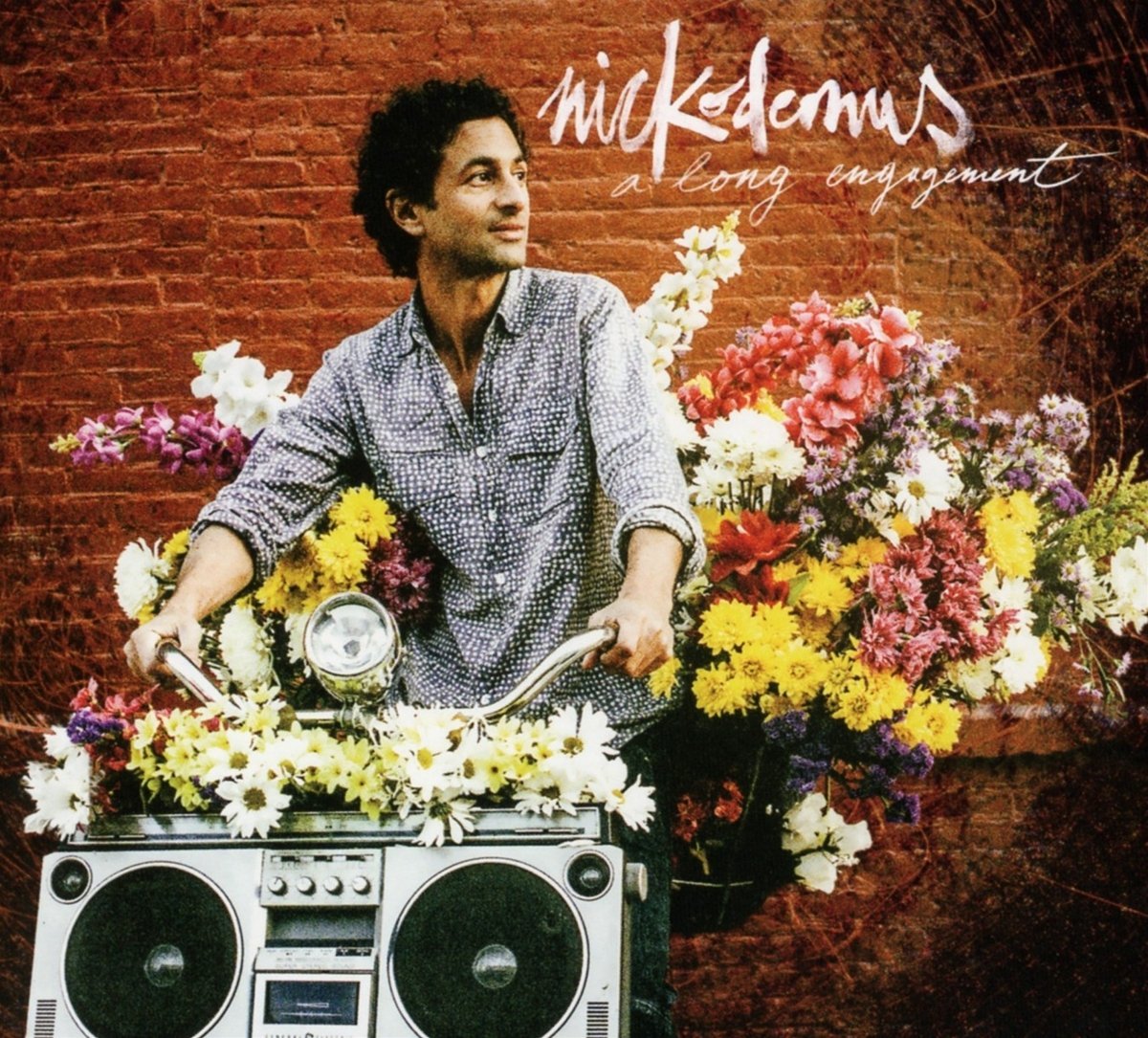
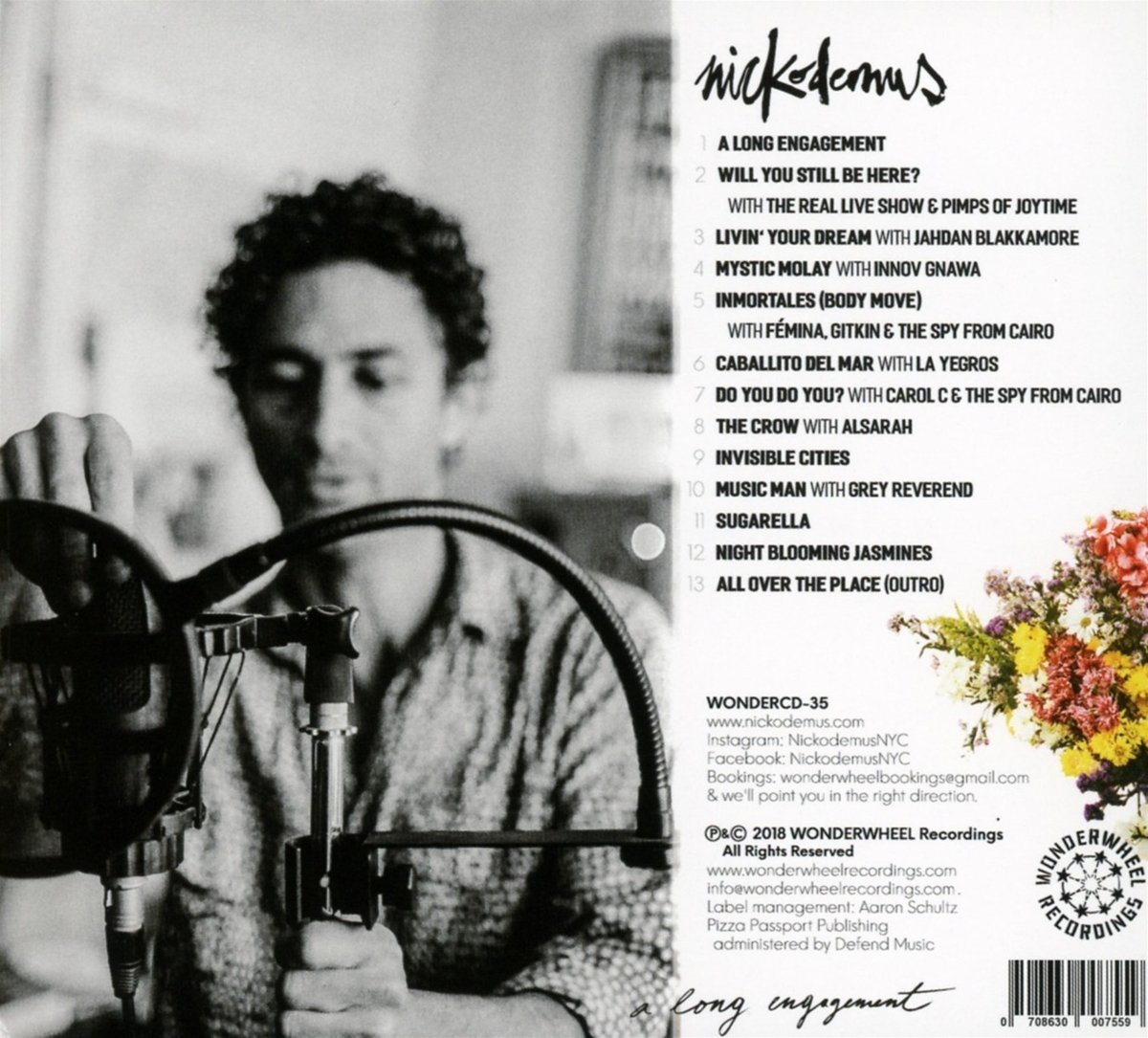
NIK BARTSCH’S RONIN-AWASE.
Nik Bärtsch’s Ronin-Awase.
Label: ECM Records.
Pianist and composer Nik Bärtsch was born in Zurich on the ‘3rd’ of August 1971, and by the age of ten was already studying piano and clarinet and later, went the Zurich Musikhochschule. At the University Of Zurich Nik Bärtsch majored in musicology, linguistics and philosophy and also discovered avant-garde music.
Soon, Nik Bärtsch was exploring and embracing the music of John Cage, Steve Reich and Morton Feldman as he embarked upon what was a musical voyage of discovery. The music that Nik Bärtsch discovered, would later influence his musical career.
Ritual Groove Music.
This began when Nik Bärtsch founded his first band Nik Bärtsch’s Mobile in 1997, with drummer Kaspar Rast, bassist Mats Eser and Sha who played bass, contrabass and clarinet. Nik Bärtsch’s Mobile spent four years honing their sound, before releasing their genre-melting debut album Ritual Groove Music in 2001. It was a captivating and groundbreaking fusion of elements of funk, Japanese ritual music jazz and modern classical music. Ritual Groove Music also laid the foundations for Nik Bärtsch’s inimitable brand of zen funk.
Later in 2001, Nik Bärtsch’s Mobile changed their name to Nik Bärtsch’s Ronin, which saw a reshuffle of the group’s lineup. Bassist Björn Meyer replaced Mats Eser and percussionist Andi Pupato joined Nik Bärtsch’s Ronin as a new chapter began for the group’s founder. His newly named quartet would pioneer zen funk over two decades.
Randori.
This began in 2002, when Nik Bärtsch’s Ronin released their debut album Randori, which was an ambitious and experimental album that showcased the zen funk that new band was pioneering. This would gradually take shape and find an audience over the next few years.
Hishiryo: Piano Solo.
Before that, Nik Bärtsch released his first solo album Hishiryo: Piano Solo later in 2002. It was a set of rituals which had been prepared piano and percussion, and this found favour with critics who hailed the album as an ambitious debut from Nik Bärtsch.
Live.
In 2003, Nik Bärtsch’s Ronin returned with a new album Live, which had been recorded between the ‘10th’ and ’12th’ of December 2002. During these three nights, Nik Bärtsch’s Ronin played with a freedom and invention as they improvised and showed another side to their music. Live was well received by critics and was a welcome addition to Nik Bärtsch’s Ronin’s burgeoning discography.

Aer.
2004 saw the return of Nik Bärtsch’s Mobile who released their sophomore album Aer, which was their first album in three years. On Aer, repetition and ritual played an important part in the to the music as Nik Bärtsch’s Mobile developed their music. It seemed they were less concerned with the groove, although this didn’t keen that the music was unvarying. Instead, Nik Bärtsch’s Mobile added and removed elements of the music as it continued to evolve on what was a welcome form from the group.
Rea.
Meanwhile, Nik Bärtsch’s Ronin returned with their new studio album Rea, which featured a trio of guest artists. This included former Mobile reedman Sha who played baas clarinet on two tracks. He was joined on Modul 33 by tenor saxophonist Thomy Geiger and trumpeter Michael Gassmann. They added new dimension to track and what was tight band that played groove based music that was complex, cyclical, minimalist and beautiful. Rea was regarded as Nik Bärtsch’s Ronin’s finest hour.
Given the quality of on their previous album Aer, and the music that Nik Bärtsch’s Ronin had been releasing since 2002, it was no surprise when they were signed to Manfred Eicher’s ECM Records. It’s one of the most prestigious jazz labels and was known for consistently releasing ambitious, challenging and groundbreaking music.
Stoa.
In 2006, Nik Bärtsch’s Ronin released Stoa, which was their fourth album and first for ECM Records. Stoa saw Nik Bärtsch’s Ronin starting as they meant to go on with what was a captivating and complex, but curious and sometimes frustrating album of ambitious and provocative music that featured little in the way of harmony and melody. Stoa won over critics, and was a fitting followup to Aer, as the zen funk pioneers continued to push musical boundaries to their limits and sometimes, it seemed way beyond.

Holon.
Two years after the release of Stoa, Nik Bärtsch’s Ronin returned in 2008 with their fifth album Holon, which featured the return of reedman extraordinaire Sha. He was now a full-time member of Nik Bärtsch’s Ronin and his clarinets and alto saxophone added a new dimension as Nik Bärtsch’s Ronin’s brand of zen funk contemned to evolve on Holon.
Holon was an album of ever-changing musical moods where complicated interlocking motifs continually develop during what can only be described as a series of masterful performances where Nik Bärtsch’s Ronin showcased their rhythmic and percussive skills. It seemed that Nik Bärtsch’s Ronin were going from strength-to-strength at ECM Records.
Llyrìa.
After another two years, Nik Bärtsch’s Ronin released their much-anticipated fifth album Llyrìa in 2010. Although it had a minimalist sound it was a quite different album from previous outings. The music although rhythmic and motivic seems to have been influenced by both funk and soul, as a much more organic and emotive sound starts to take shape. Llyrìa was released to critical acclaim and Nik Bärtsch’s Ronin continued in their mission to reinvent their music.
Nik Bärtsch’s Ronin Live.
For their next album for ECM Records Nik Bärtsch’s Ronin decided to release a live album that featured tracks that had been recorded between 2009 and 2011. This was Nik Bärtsch’s Ronin Live which was released in 2012 and featured the first appearance of bassist Thomy Jordi who replaced Bjorn Meyer in 2011. Even this latest change in the lineup didn’t effect the quality of music on Nik Bärtsch’s Ronin Live.
Quite the opposite, as Nik Bärtsch’s Ronin continued to give performances where the music was ambitious, exciting, inventive, innovative and full of nuances and subtleties as it ebbed and flowed and was full of musical peaks and troughs. Nik Bärtsch’s Ronin Live was a tantalising taste of the zen funk pioneers in concert and showed how far they had come since their first Live album.

Continuum.
Nearly four years passed before Nik Bärtsch’s Ronin released their next album, Continuum in April 2006. It featured a very different lineup of the band. Only Nik Bärtsch, reedman Sha and drummer Kaspar Rast remained and were joined by drummer Nicolas Stocker and a string quartet. This had the potential to take Nik Bärtsch’s zen funk which many people were calling ritual groove music in a new direction.
It certainly did, on what was an eclectic and intimate album of polished, ethereal, glacial and serene zen funk which features a series of disciplined and unhurried performances by the latest lineup of Nik Bärtsch’s Ronin, who still find time and room to improvise on Continuum, which unsurprisingly, was released to widespread critical acclaim. Continuum which sounded as if it had been influenced by Phillip Glass and American soundtrack composer Thomas Newman was another groundbreaking release by zen funk pioneers Nik Bärtsch’s Ronin. However, the big question was what did the future hold for Nik Bärtsch’s Ronin?

Awase.
Eighteen months after the release of Continuum, the latest lineup of Nik Bärtsch’s Ronin arrived at Studios La Buissonne, in Pernes-les-Fontaines in October 2017 to record a new album that eventually became, Awase.
Pianist and bandleader Nik Bärtsch penned five of the six compositions on Awase, including Modul 60, Modul 58, Modul 38, Modul 34 and Modul 5 were penned by Nik Bärtsch, while Sha contributed the enigmatically titled A. These tracks were recorded by the latest lineup of Nik Bärtsch’s Ronin
By October 2017, the lineup of Nik Bärtsch’s Ronin now featured pianist Nik Bärtsch, drummer Kaspar Rast, bassist Thomy Jordi and Sha on bass clarinet and alto saxophone. They recorded six new compositions which were produced by ECM Records’ founder Manfred Eicher. When Awase was completed, ECM Records scheduled the release of Nik Bärtsch’s Ronin ninth album for early summer 2018.
As soon as ECM Records announced the release of Nik Bärtsch’s Ronin’s new album Awase, critics wondered what direction the zen funk or ritual groove music pioneer’s music would head? One thing was certain, there was no chance that Nik Bärtsch’s Ronin would stand still. That was for lesser groups.
Opening Awase was the ruminative and serene Modul 60 which allows the listener five minutes to reflect, before Nik Bärtsch’s Ronin changes things around. They play with speed, power and an insistence on Modul 58 repeating they same motif during this breathtaking and fluid performance where the music is hypnotic and melodic. Thankfully, Nik Bärtsch’s Ronin allow the listener to draw breath before the music becomes urgent and dramatic. Later, Sha’s playing adds a new dimension while the band jam and take this eighteen minute Magnus Opus to new heights. Very different is the dark, dramatic and mesmeric A which languorously reveals its secrets as Sha’s alto saxophone plays a starring role.
Minimalist describes the early part of Modul 36 which seems hesitant to reveal its secrets, but soon, Nik Bärtsch’s Ronin are stretching their legs and playing with speed as the music becomes hypnotic, before the zen funk pioneers improvise before returning to a tighter and much more fluid groove based sound as Modul 36 eventually reveals its secrets.
Eerie, dark, dramatic and cinematic describes Modul 34 as Nik Bärtsch’s Ronin take the listener on a captivating musical journey unfolds. At one point, the music pauses, and rebuilds becoming urgent and still cinematic. What follows is nine magical minutes where rock meets jazz, and is reminiscent of mid-seventies fusion at its best. Closing Awase is Modul 59 which bookends the album beautifully. and is a minimalist soundscape that flows and meanders and again, allows the listener to ruminative and reflect on what’s one of Nik Bärtsch’s Ronin finest albums, Awase.
Twenty-one years after Nik Bärtsch’s career began when he founded Mobile in 1997, the forty-seven year old is quite rightly regarded as a true musical pioneer who consistently released albums of ambitious, and innovative music where he pushes musical boundaries to their limits, and sometimes way beyond. That was the case with Nik Bärtsch’s Mobile, and then with his groundbreaking group Nik Bärtsch’s Ronin who pioneered zen funk, which is sometimes known as ritual groove music. Incredibly, this is something that Nik Bärtsch’s Ronin have been doing for the best part of two decades. However, Nik Bärtsch’s Ronin seemed to come of age when they signed to ECM Records.
That is where Nik Bärtsch’s Ronin released some of their best and most ambitious, exciting and innovative music. However, one thing that hasn’t changed since signing to ECM Records is that Nik Bärtsch’s Ronin are continually challenging themselves to reinvent their music, and each album is different from the previous one. So much so, that Nik Bärtsch’s Ronin’s albums are similar to Forest Gump’s box of chocolates as: “you never know what you’re gonna get.” The only thing that is similar is each of Nik Bärtsch’s Ronin’s albums is that they’re always innovative and ooze quality.
Nik Bärtsch’s Ronin’s ninth album Awase is without doubt one of their finest albums, and is the perfect introduction to their music. It veers between beautiful, ethereal, serene and understated to dark, dramatic and eerie to hypnotic and mesmeric, but is also melodic and other times Nik Bärtsch’s Ronin allow time to reflect and ruminate as they showcase their carefully honed trademark zen funk sound on Awase, which is a near flawless album from this groundbreaking group.
Nik Bärtsch’s Ronin-Awase.
THE CONTEMPORARY JAZZ QUINTET-LOCATION.
The Contemporary Jazz Quintet-Location.
Label: BBE Records.
Many record buyers have a wish-list of albums that are their holy grail, and which they spend a lifetime searching for, in the hope that they can add these elusive albums to their lovingly curated collection that they’ve built up over several decades. For many fans of jazz music, their holy grail are the six albums released by the short-lived Detroit-based Strata Records which was founded in 1969 by jazz pianist and composer Kenny Cox who led The Contemporary Jazz Quintet.
Four years after founding Strata Records, Kenny Cox’s nascent label released its first release which was The Contemporary Jazz Quintet’s third album Location 1973, which has just been reissued by BBE Records. This is just the latest release from Strata Records back-catalogue and follows in the footsteps of Bert Myrick’s Live ’N’ Well and Lyman Woodard’s cult classic Saturday Night Special. Just like these two albums, Location is a welcome reissue, and marked a new chapter in the story of The Contemporary Jazz Quintet. Its roots can be traced back to the late-sixties.
That was when Detroit-based DJ Jack Springer told jazz pianist and producer Duke Pearson about Kenny Cox and The Contemporary Jazz Quintet, who had been together less than a year, but were already a popular draw in Motor City where they were regarded as one of the top up-and-coming jazz bands. Not long after this, Duke Pearson was heading to Detroit where he was about to record Kenny Cox and The Contemporary Jazz Quintet. He was determined to steal a march on the competition, and be the first person to record Kenny Cox and The Contemporary Jazz Quintet.
When Duke Pearson arrived in Detroit, he discovered that Kenny Cox and The Contemporary Jazz Quintet had never recorded a session before. This didn’t worry Duke Pearson who realised that Kenny Cox and The Contemporary Jazz Quintet were talented and potentially, had a bright future.
They were led by pianist Kenny Cox, a graduate of the Detroit Conservatory Of Music who was joined in the rhythm section by drummer Danny Spencer and bassist Ron Brooks. Completing the lineup was trumpeter Charles Moore and tenor saxophonist Leon Henderson, who was the brother of Joe Henderson. However, soon, Duke Pearson discovered that the Quintet weren’t just talented musicians.
Duke Pearson discovered that some of the material they were about to record had been written by Kenny Cox and The Contemporary Jazz Quintet. Much of the material Duke Pearson recorded would eventually feature on Kenny Cox and The Contemporary Jazz Quintet’s debut album.
Introducing Kenny Cox and The Contemporary Jazz Quintet.
Having discovered Kenny Cox and The Contemporary Jazz Quintet, they signed to Blue Note Records in 1968, which was one of jazz’s leading labels and home to the most talented musicians and bands. Talent certainly was something that Kenny Cox and The Contemporary Jazz Quintet weren’t lacking as they arrived to record their debut album with producer Duke Pearson and recordist Rudy Van Gender on the ‘12th’ of July 1968.
Just five months later, Introducing Kenny Cox and The Contemporary Jazz Quintet was released on December the ‘9th 1968. It was a carefully crafted album of muscular urban post bop that seemed to have been inspired by Miles Davis Quintet of the late to mid-sixties. Many within Blue Note Records had high hopes for Introducing Kenny Cox and The Contemporary Jazz Quintet, including Leonard Feather who wrote the sleeve-notes. He said: “I predict a bright and momentous future for this latest in a long line of Blue Note discoveries.”
Sadly, Introducing Kenny Cox and The Contemporary Jazz Quintet, wasn’t the success that Blue Note Records had hoped. Despite that, Kenny Cox and The Contemporary Jazz Quintet headed into the studio in 1969 to record their sophomore album, Multidirection.

Multidirection.
This time, Francis Wolff the cofounder of Blue Note Records took charge of production at GM Recording Studios-East, in Detroit, on November the ’26th 1969 as Kenny Cox and The Contemporary Jazz Quintet recorded six new compositions. By then, Kenny Cox and Charles Moore had emerged as the Quintet’s songwriters-in-chief and each contributed three compositions. They became Multidirection, which was released in 1970.
While Kenny Cox and The Contemporary Jazz Quintet’s sophomore album Multidirection was released, it was another album of post bop, and was well received by the critics that reviewed the album. However, by 1970 jazz was changing and fusion was now the flavour of the month amongst the jazz cognoscenti. Some critics saw post bop as yesterday’s sound. Sadly, so it seemed did record buyers, and Multidirection failed to find the audience that it deserved. For Kenny Cox and The Contemporary Jazz Quintet this was a huge disappointment.
Especially when Kenny Cox and The Contemporary Jazz Quintet realised that Multidirection was the last album that they would release for Blue Note Records. Their contract was up, and wasn’t renewed, which left the Quintet without a record label. Or did it?

Strata Records.
Fortunately, Kenny Cox had already founded his own record label Strata Records a year earlier in 1969. Strata Records was based in Detroit, which was home to Kenny Cox and the rest of The Contemporary Jazz Quintet. Detroit was also where Kenny Cox planned to build Strata Records’ new recording studio.
He had earmarked 46 Selden in Detroit as the site of Strata Sound Studios, which would also be the headquarters of Strata Records and would also be used to host concerts. This new facility Kenny Cox hoped would be used by the local community, but was also where the artists who signed to new label Strata Records would record their albums.
With his new label up-and-running, Kenny Cox was keen to sign some artists to Strata Records’ roster. This included The Contemporary Jazz Quintet, as they were now billed. Gone were the days when they were known as Kenny Cox and The Contemporary Jazz Quintet. The Strata Records’ years would be a new start for The Contemporary Jazz Quintet.
Location.
Having signed to a new label and became The Contemporary Jazz Quintet, work began on the followup to Multidirection. Eventually, five new compositions had been written, including the first by the members of The Contemporary Jazz Quintet, Bang! It was joined by Kenny Cox’s Tao, Dan Spencer’s Inner Beckoning and Noh Word and Nguzo Saba (Struggle) which were written by Charles Moore. These tracks were recorded in Detroit by The Contemporary Jazz Quintet.
Unfortunately, Kenny Cox’s Strata Sound Studios wasn’t up and running by the time The Contemporary Jazz Quintet began recording Location. It was recorded by a slightly different lineup of The Contemporary Jazz Quintet.
For the recording of Location, The Contemporary Jazz Quintet used two drummers and percussionists including Dan Spencer who had played on the first two albums, and producer Bud Spangler. They were joined in the rhythm section by bassist Rob Brooks, guitarist Ron English and pianist Kenny Cox who like Charles Eubanks also played Fender Rhodes. Leon Henderson switched between tenor and soprano saxophone, while trumpeter Charles Moore also played flugelhorn and percussion. In total, it took nine musicians to record The Contemporary Jazz Quintet’s third album Location.
Once Location was complete, The Contemporary Jazz Quintet’s third album became the first release on Kenny Cox’s Strata Records. Alas, when Location was released in 1973, it failed to find the audience this underrated and oft-overlooked album deserved. Sadly, it was a familiar story with small independent labels, with Strata lacking the financial muscle and expertise to promote Location. This was a huge disappointment for The Contemporary Jazz Quintet.
No wonder, as Location is an album that if it had been released on a bigger label, could’ve transformed the fortunes of the new lineup of The Contemporary Jazz Quintet. Location opens with Bang! which is very different to Introducing Kenny Cox and The Contemporary Jazz Quintet. Gone are the similarities with Miles Davis Quintet from mid to late-sixties as The Contemporary Jazz Quintet play with a newfound freedom and inventiveness as they embrace free jazz which they fuse with elements of post bop in during this explosive album opener.
The tempo drops on Tao, where a lone horn plays, and takes centre-stage before this eleven minute epic gradually reveals its secrets. Space is left within the arrangement while Ron English’s guitar adds to the mesmeric sound as The Contemporary Jazz Quintet continue to play with freedom and inventiveness as their music heads in a new direction. All the time, sounds assail the listener as the music becomes dramatic, hypnotic, but melodic and uplifting as The Contemporary Jazz Quintet shake off the shackles of their musical past and enjoy their playing with their newfound freedom during this musical awakening.
Slow, spacious and thoughtful and almost dreamy describes Noh Word, which meanders along as The Contemporary Jazz Quintet continue to reinvent themselves during this beautiful track.
Horns and Fender Rhodes unite and play with speed and urgency on Nguzo Saba (Struggle) before the drums enter. They’re pounded and played with the same urgency before just the Fender Rhodes remains, and takes centre-stage. Soon, the cymbals and drums are being pounded, but don’t overpower the Fender Rhodes, before a horn is played with speed, power, passion and control. Before long, the rest of the Quintet is playing their part during this impressive and innovative genre-meting jam.
Inner Beckoning which closes Location is a thirteen minute epic, which initially has a ruminative and reflective sound, but later, there’s a restlessness which was the case in Detroit in 1973 when Location was released. By then, Motown had headed to LA, inflation was high, interest rates rising and unemployment was starting to rise as the recession hit the motor industry. Later, restlessness gives way urgency as if The Contemporary Jazz Quintet realise that things have to change not just in Detroit, but across America
After the release of Location in 1973, the album disappeared with trace and the only people who discovered the delights of this underrated and oft-overlooked hidden jazz gem were record buyers who found a copy in the racks of second-hand record stores. However, that wasn’t the end of Kenny Cox’s Strata Records.
In 1974, Bert Myrick’s album Live ’N Well was released on Strata Records, and despite the quality of music, failed to find an audience. This was what had happened to The Contemporary Jazz Quintet’s album Location a year earlier. Lightning had struck twice for Kenny Cox’s Strata Records.
Despite what he hoped were teething problems for Strata Records, Kenny Cox’s label continued to release ambitious, exciting and groundbreaking albums. Detroit jazz collective Sphere’s debut album Inside Ourselves was released later in 1974, but sales very few copies of this innovative album were sold. It was a similar case when Maulawi released their eponymous debut album in late 1974. Although it was only Strata Records fourth release, none of the albums had been a commercial success.
As 1975 dawned, Strata Records made plans for their next release, which was The Lyman Woodard Organisations’ debut album Saturday Night Special. Funky and soulful, it was an album that should’ve found a much wider audience. Sadly, it wasn’t to be, and after five albums time was already running out for Strata Records.
When Larry Nozero’s Time which featured Dennis Tini was released later in 1975, it was another ambitious album that veered between jazz-funk to soul-jazz and contemporary jazz. However, when Time failed commercially, it was the end of the road for Strata Records, and Kenny Cox’s label closed its doors for the last time in 1975.
Ironically, as the years passed by, there was a resurgence of interest in the six albums released by Strata Records between 1973 and 1975. By then, the albums were incredibly rare, and for those that tried to collect the six albums, this was almost impossible. That is why it makes sense for BBE Records to reissue Strata Records’ back-catalogue.
At last, jazz fans old and new are able to discover the delights of the six albums released by Strata Records between. BBE Records have already reissued Bert Myrick’s Live ’N’ Well and Lyman Woodard’s cult classic Saturday Night Special. The latest addition is The Contemporary Jazz Quintet’s Location third album Location, which is an oft-overlooked and underrated album that Kenny Cox’s Strata Records released in 1973.
Forty-five years later, and Location has been reissued for the first time, and is a reminder of the album that marked the reinvention of The Contemporary Jazz Quintet. They switch between and fuse elements of free jazz, hard bop and post bop on Location which was an ambitious and innovative album which should’ve found a wider audience. Sadly, commercial success eluded Location, which was the final album from The Contemporary Jazz Quintet who nowadays, are regarded as one of American jazz’s best kept secrets.
The Contemporary Jazz Quintet-Location.

PYRAMID-PYRAMID.
Pyramid-Pyramid.
Label: Mental Experience.
Although Winston Churchill’s said: “it is a riddle, wrapped in a mystery, inside an enigma” in the context of Russia, what’s become one of his most famous quotations can just as easily be applied to Robin Page’s Pyramid Records which has been the source of heated debate for over twenty years. This debate continues to the present day, with the two sides firmly entrenched in their believes about what has become one of the most controversial record labels in the history of modern music. Adding fuel to the fire was the recent release of Pyramid’s eponymous debut album which was released by Mental Experience, an imprint of Guerssen Records. Pyramid is another album that is shrouded in mystery.
That is something of an understatement, as nothing whatsoever is known about the group Pyramid, even their lineup when they recorded their debut album Pyramid. Speculation even surrounds when Pyramid recorded the thirty-three minute epic that features on their eponymous debut album. It’s claimed that Pyramid was recorded by Tony Robinson in Cologne, around 1975 and 1976. However, even that is disputed by those who despite the Pyramid Records’ story, and claim that the music was recorded at a later date and is part of some elaborate musical hoax.
This might seem far-fetched, but each Pyramid Records release is forensically examined in an attempt to prove or disprove the story of Robin Page’s Cologne-based label. No doubt this will the case with Pyramid, with musical armchair sleuths poring over the album and its sleeve-notes for clues in an attempt to unravel the mystery of Pyramid Records.
The Mystery Of Pyramid Records.
Pyramid Records was founded by British expat Robin Page, in 1972 who was forty and one of the leading lights in the burgeoning Fluxus arts movement. He had moved from London, England to Cologne, in West Germany in 1969, which had been his home ever since. However, Robin Page wasn’t the only expat who was living in Cologne during that period.
Cologne was also home to Tony Robinson, a South African, who had travelled from his home in Cape Town, to West Germany to work with the legendary Karlheinz Stockhausen, the Godfather of modern German electronic music at the WDR Studio. This was akin to serving an engineering apprenticeship, and would serve Tony Robinson well in the future. When he left Karlheinz Stockhausen’s employ, Tony Robinson went to work at Dierks Studio in Cologne, which was where the future Mad Twiddler met Robin Page.
By then, Robin Page was a successful and established artist whose work within the Fluxus movement was regarded as groundbreaking, daring and ambitious. One of the trademarks of Robin Page’s work was humour, which he used to challenge what was regarded as good taste within the art establishment. Before long, Robin Page’s paintings found an audience, and became particularly sought after. This was what Robin Page had dreamt of, and worked towards ever since ‘he had left’ art college in Vancouver. His new-found success and financial security allowed Robin Page to work towards fulfilling another of his dreams, making music.
Robin Page was so serious about making music, that he had invested some of his newfound fortune in building a recording studio. This wasn’t a luxurious state-of-the-art recording studio that was situated within a fashionable part of Cologne. Instead, the studio was in the basement of what looked like a derelict building. It was an unlikely place for Cologne’s newest recording studio, and where the nascent Pyramid Records first album was recorded.
It was then pressed by a Turkish entrepreneur, who just happened to keep his cutting lathe within the same building. Although the lathe was often to used to produce bootlegs, it was able to cut what became PYR 001, Pyramid Records’ first ever release. Robin Page then commissioned a local student to design the album cover to PYR 001, which was released later in 1972. Robin Page had just made with the release of Pyramid Records’ first album.
Just like many private presses released in 1972, Robin Page had only a small number of copies of PYR 001 pressed. He decided to press between 50 and 100 albums, which became the norm for Pyramid Records’ releases. Some of the albums were sold in Cologne’s art galleries and clubs, while Robin Page gave some of his closest friends copies of PYR 001. This included one of his one newest friends, Toby Robinson, the future Mad Twiddler.
Robin Page also managed to persuade Toby Robinson to provide the material for Pyramid Records’ second release. Toby Robinson’s recordings featured sounds that were bounced from one reel-to-reel tape recorder to another. After he had an album’s worth of material, a master was cut, and between 50-100 copies of PYR 002 were either given away to Robin Page’s friends, or sold in Cologne’s art galleries and clubs. However, there was a problem with the label’s first two releases.
Over the next few years, the master tapes and the last remaining copies of PYR 001 and PYR 002 were mislaid, and it was as if the two albums had never existed. This was something that those who were keen to disprove the existence of Pyramid Records seized upon at a later date.
During 1973, Pyramid Records released PYR 003 and PYR 004, but incredibly the master tapes and remaining copies of both album were lost in the mists of time. Forty-five years later, it’s as if Pyramid Records first four releases never existed. This would later provide more ammunition to those trying to disprove the very existence of Pyramid Records.
The first Pyramid Records release to survive is believed to be PYR 005, which is the Cozmic Corridors’ eponymous debut album. It’s one of just eleven recordings that remain in the Pyramid Records’ vaults. These recordings were made between 1974 and 1976 and include Pyramid’s eponymous debut album Pyramid.
The Further Mystery Of Pyramid.
Very little is known about Pyramid’s eponymous debut album, which like so much of the music recorded and released by Robin Page’s Pyramid Records, is shrouded in mystery. All that is known is known about Pyramid, is that they recorded their one and only album in Cologne around 1975 or 1976. Just like the majority of albums recorded for Pyramid Records, the recordist was Tony Robinson.
Joining Tony Robinson for the recording of what later became Pyramid, was a group of musicians whose identity is now unknown. Some of them were thought to be familiar faces, who had played on previous recordings for Pyramid Records. There’s also been speculation that some of the musicians who played on the various Pyramid Records’ recordings were members of well known Krautrock bands and had to dawn a cloak of anonymity. Sadly, nobody will ever know for sure the identity of the musicians who played on the various Pyramid Records’ recordings including Pyramid.
The musicians that recorded Pyramid were attempting to follow in the footsteps of The Cosmic Jokers, who had recently released two albums. These albums were the result of lengthy jam sessions which were recorded by Rolf-Ulrich Kaiser of the Ohr label. However, the Pyramid jam sessions were recorded by Tony Robinson.
He joined the musicians that would later become known as Pyramid at Robin Page’s Cologne studio, as the group embarked upon their first recording session. Setup in the studio were drums, bass and electric guitar for Pyramid’s rhythm section, which were augmented by a Hammond organ, mellotron, Mini-Moog, Fender Rhodes and Tibetan bells. The members of Pyramid put this impressive musical arsenal to good use during the recording of what became the first part of the lengthy genre-melting jam Dawn Defender. It took at least one further recording session to complete Dawn Defender, which lasted thirty-three minutes.
During Dawn Defender, the music is lysergic and spacious as Pyramid take the listener on a mind-blowing, magical mystery tour. All the time, the music ebbs and flows as Pyramid throw curveballs and spring surprises. To do that, they put their impressive musical arsenal to good use, and deploy a myriad of effects that adds to the trippy, otherworldly and spacious sound that gradually unfolds during thirty-three magical and mesmeric minutes. What follows is a captivating fusion of avant-garde, electronica, Krautrock, psychedelia and space rock, while Pyramid draw inspiration from everyone from Agitation Free, Amon Düül II, Ash Ra Tempel, to Hawkwind, Pink Floyd and unsurprisingly The Cosmic Jokers. The result was a truly ambitious, innovative and imaginative multilayered soundscape that is akin to a musical tapestry that was woven by Pyramid during just a few short sessions. It’s full of bubbling, dark, dramatic, dubby, eerie, futuristic, hypnotic, lysergic, otherworldly, rocky and sci-fi sounds that became part of what’s one of the most ambitious tracks that was recorded for Pyramid Records.
Despite having recorded what was an ambitious, genre-melting album, Pyramid was never released by Robin Page’s Pyramid Records. It became the latest album that was shelved, and never saw the light of day for twenty years. For Robin Page and everyone involved with the recording of Pyramid, this was a missed opportunity, as nobody got to hear the innovative thirty-three minutes Magus Opus, Dawn Defender. Sadly, later in 1976 Pyramid Records closed its doors for the final time.
Robin Page had founded Pyramid Records in 1972 with his newfound wealth, and set about fulfilling his dream of making music, and before long, he had decided to take this even further by releasing other people’s music. This he had been doing on a small-scale for the best part of four years. However, Robin Page didn’t see music as a way to make money, and instead, his actions could be construed as a mixture of benevolence and small-scale philanthropy. Maybe Robin Page wanted to highlight and champion new and exciting music, including music that other labels wouldn’t release. This he continued to do until he decided to emigrate, and start a new life in Canada.
With him, Robin Page took Pyramid Records’ master tapes and the remaining albums that he hadn’t sold or given away to his friends. Robin Page left almost nothing of Pyramid Records behind in Germany, and before long, it was as if the label had never existed.
That was until twenty years later, when Tony Robinson approached Virgin Records with some of Pyramid Records’ master tapes. This resulted in the release of Unknown Deutschland-The Krautrock Archive Volume 1 in 1996. Later that year, two further volumes followed, and Pyramid’s eponymous debut album was released for the first time in 1996. Collectors of Krautrock were keen to add the album to their collection and the album soon sold old. Since then, it’s been out of print and almost impossible to find.
Now twenty-two years later, and Mental Experience, an imprint of Guerssen Records, has remastered and reissued Pyramid’s eponymous debut album on CD and LP. The reissue of Pyramid which is a welcome one, and allows a new generation of music lovers to rediscover the delights of this oft-overlooked Krautrock album for the first time. Pyramid which was recorded in 1975 or 1976 is one of the hidden gems from the Pyramid Records’ vaults, and features a truly talented group of musicians whose identity is sadly unknown, as they showcase their considerable skills on the genre-melting thirty-three minute lysergic Magnus Opus Dawn Defender,
Pyramid-Pyramid.
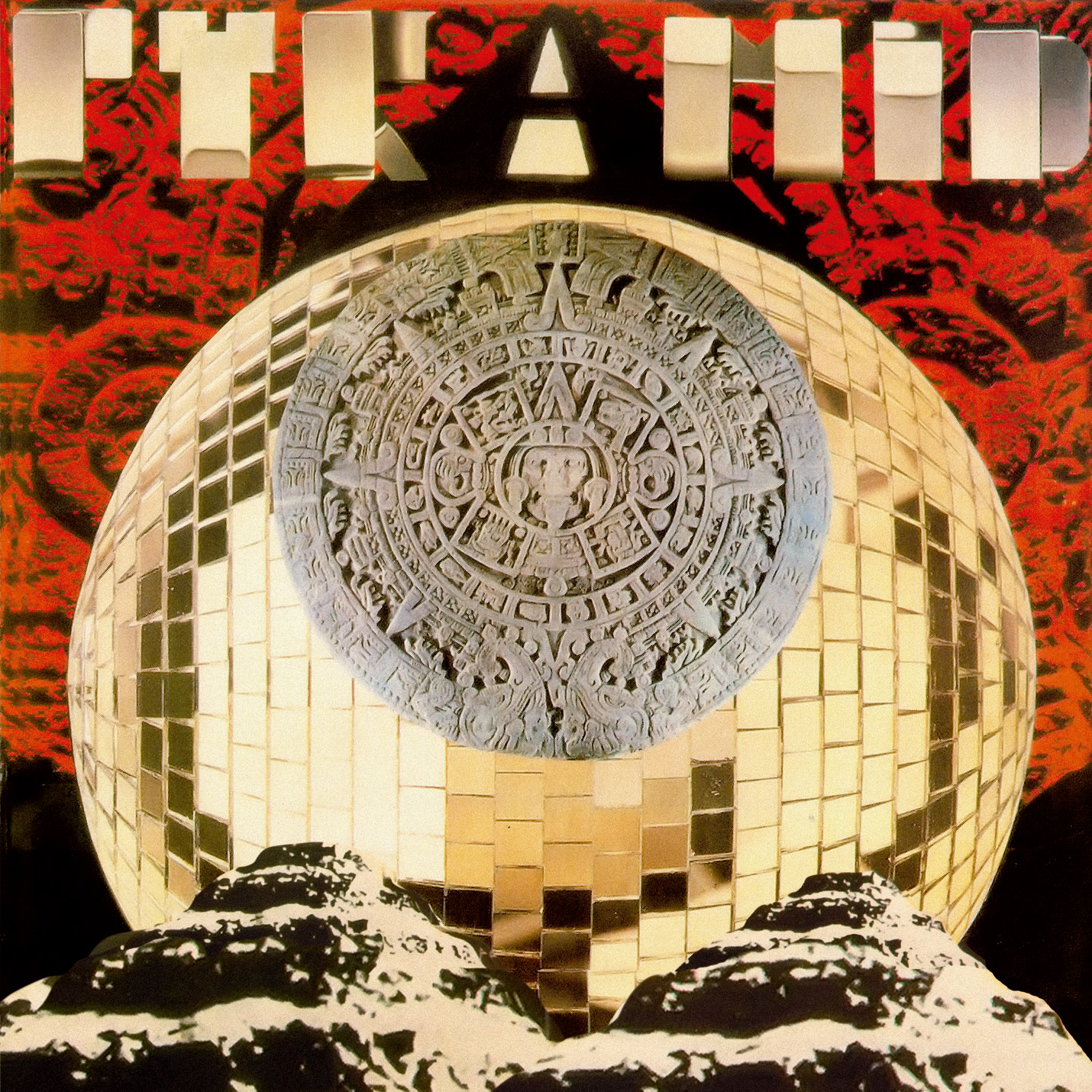
ESPEN ERIKSEN TRIO WITH ANDY SHEPPARD-PERFECTLY UNHAPPY.
Espen Eriksen Trio With Andy Sheppard-Perfectly Unhappy.
Label: Rune Grammofon.
Since the Espen Eriksen Trio was formed in 2007, they’ve toured Europe and headed as far afield as the Far East where they’ve introduced audiences to the music on their first three critically acclaimed albums. Recently, though, three albums became four with the release Perfectly Unhappy, on Rune Grammofon, which features the Espen Eriksen Trio With Andy Sheppard.
The addition of the veteran tenor saxophonist Andy Sheppard adds a new dimension to the Espen Eriksen Trio’s music on their much-anticipated fourth album Perfectly Unhappy. However, this isn’t the first time that Andy Sheppard has worked with the Espen Eriksen Trio. They invited Andy Sheppard to make a guest appearance when they played a concert in London in 2016. Since then, the Espen Eriksen Trio and Andy Sheppard have toured Korea and Norway, and recorded the eight tracks that became Perfectly Unhappy. It’s the latest chapter in the story of the Espen Eriksen Trio who have been making music together for eleven years.
It was back in 2007, when pianist Espen Eriksen, drummer Andreas Bye and double bassist Lars Tormod Jenset formed the Espen Eriksen Trio. Initially, the nascent Espen Eriksen Trio concentrated on honing their sound, before making their first tentative steps onto the vibrant local live scene.
Before long, the Espen Eriksen Trio were a popular draw, and had established a loyal following with their unique brand of melodic and understated jazz. This was the sound that the Espen Eriksen Trio would eventually showcase on their debut album.
You Had Me At Goodbye.
Nearly three years after the Espen Eriksen Trio was founded, they had signed to Rune Grammofon, and were preparing to release their eagerly awaited debut album. This was You Had Me At Goodbye, which was released to plaudits and praise on the ‘5th’ of April 2010. You Had Me At Goodbye was an album of understated, melodic and memorable music where beauty was omnipresent from the opening bars of Anthem to the closing notes of To Whom It May Concern. The success of You Had Me At Goodbye launched the Espen Eriksen Trio’s career, and critics and record buyers awaited their sophomore album with interest.
What Took You So Long.
Two years later, the Espen Eriksen Trio returned on the ‘13th’ of April 2012, with their sophomore album What Took You So Long. It was released to critical acclaim, with critics praising what was another melodic album of minimalist and sometimes, mournful but beautiful music. Just like You Had Me At Goodbye, the Espen Eriksen Trio continue with their less is more approach on What Took You So Long and eschew the sonic trickery and sleight of hand that many bands relied on. This wasn’t the way the Espen Eriksen Trio made music. Instead, the What Took You So Long featured this talented triumvirate at the peak of the powers.
After releasing What Took You So Long, the Espen Eriksen Trio continued to tour their native Norway, but began to play in other parts of Europe. What Took You So Long had introduced the Espen Eriksen Trio’s music to a wider audience and their popularity was starting to grow.
Never Ending January.
Three-and-a-half years later, and the Espen Eriksen Trio returned with their third album Never Ending January, which was released on the ‘9th’ of October 2015 to critical acclaim. Just like on their two previous albums, The Espen Eriksen Trio continued to plough their own furrow on Never Ending January, as they made music their own way. This meant the less is more approach to making music that had served them so well. That was the case on Never Ending January, where the music was spartan and understated, but also beautiful, melodic and sometimes ruminative. Never Ending January marked the triumphant return of the Espen Eriksen Trio, whose star was in the ascendancy.
With three critically acclaimed albums to their name, it was no surprise that the Espen Eriksen Trio embarked upon one of the busiest periods of their career at home and abroad. During this period, they continued to tour their native Norway, playing clubs and jazz festivals including the Jazz Festival, in Oslo, Jazzfestival, Maijazz and Vossajazz. The Espen Eriksen Trio also played all over Europe, including Germany, Switzerland and Russia, where they were invited to play at the Jazz Province Festival. There was also an invite to the Penang Jazz Festival, which was one of several concerts that that the Espen Eriksen Trio played in Malaysia. However, it was a concert in London that resulted in the Espen Eriksen Trio’s fourth album Perfectly Unhappy.
The members of the Espen Eriksen Trio all admired the work of tenor saxophonist Andy Sheppard, who has enjoyed a successful career that has spanned four decades. During that period, he’s worked with everyone from George Russell and Gil Evans and Carla Bley, and has also released a string of commercially successful and critically acclaimed albums. Andy Sheppard was also an artist that the Espen Eriksen Trio wanted to worked with.
The chance arose in 2016, when the Espen Eriksen Trio were booked to play a concert in London, and invited Andy Sheppard to join them on-stage. Two years later, and Andy Sheppard remembers the first time he took to the stage with the Espen Eriksen Trio: “I knew from the first time I heard the trio play that I would fit right in. I loved the melodic sense and vibe and was thrilled when I was invited to guest with the trio in London in 2016.”
The concert in London in 2016, was the first of several collaborations between the Espen Eriksen Trio and Andy Sheppard. They embarked upon a tour of Norway and after that, toured Korea which. This was the latest successful collaboration between the Espen Eriksen Trio and Andy Sheppard, whose tenor saxophone was adding a new dimension to the Trio’s music.
Perfectly Unhappy.
So much so, that when Espen Eriksen began to write new material for the Trio’s fourth album Perfectly Unhappy, he wrote parts for Andy Sheppard’s tenor saxophone. Eventually, Espen Eriksen had written eight new compositions which were recorded in the Norwegian capital Oslo, and became Perfectly Unhappy.
Opening Perfectly Unhappy is the cinematic sounding Above The Horizon, where a dreamy, crystalline piano is augmented by an understated double bass. Soon, Andy Sheppard’s rasping saxophone soars above the arrangement, but doesn’t overpower the Espen Eriksen Trio. By then, the drums have joined the double bass and continue with their less is more approach. So does Andy Sheppard’s sultry saxophone which is the perfect foil to Espen Eriksen’s piano, as the two become yin and yang. They briefly play with power adding a degree of drama, before playing with subtlety. Still, the arrangement to this beautiful, melodic and dreamy track floats along, soaring high Above The Horizon. As it does, it showcases the combined talents of the Espen Eriksen Trio With Andy Sheppard.
Straight away, there’s a melancholy sound to 1974 as the piano takes centre-stage and is accompanied by the rhythm section who provide an understated backdrop. Equally understated and melancholy is Andy Sheppard’s saxophone as he plays his part in the slow and ruminative arrangement. When the saxophone drops out, Espen Eriksen’s piano takes centre-stage and he’s accompanied by the rest of the Trio who add to the beauty and sense of melancholia. Later, Andy Sheppard’s soul-baring saxophone adds the finishing touch to this heart-wrenching composition where beauty is omnipresent.
The piano led introduction to Perfectly Unhappy sounds as if it’s taken from the soundtrack to a French movie from the sixties or early seventies. There’s a sense sadness from the get-go during this filmic track that is rich in imagery. Especially when the rasping saxophone is added and joins forces with the understated piano. They play leading roles as the arrangement meanders along, revealing a rueful and ruminative sound. That is still the case when the saxophone drops out and the piano takes centre-stage. Later, the saxophone returns and adds to the cinematic sound and the sense of sadness in this beautiful, poignant track.
The Espen Eriksen Trio plays as one on the hopeful sounding Indian Summer, where the piano takes centre-stage. Soon, it’s joined by the saxophone which is the perfect addition and adds to the sense of hope as this melodic track meanders along revealing its secrets and beauty which is omnipresent. Again, Espen Eriksen’s piano and Andy Sheppard’s sultry saxophone play starring roles in Indian Summer’s romantic late-night sound and is one of the highlights of Perfectly Unhappy.
Espen Eriksen plays big, bold block chords on the piano as Suburban Folk Song unfolds while the rhythm section provide an understated accompaniment. Soon, the saxophone enters and provides a contrast to the piano. Andy Sheppard eschews power as his rasping saxophone soars above the arrangement. Later, it’s replaced by the piano which is played with newfound freedom as flows along and the rhythm section accompany Espen Eriksen. He briefly stabs at the piano adding deliberate chords before playing with a freedom. Latterly the music becomes understated, slow, spacious and thoughtful after five enchanting minutes.
From the opening bars of Naked Trees, there’s a filmic sound, which sounds as if it belongs on the soundtrack to a movie from the sixties or early seventies. There’s also melancholy sound as the piano is takes centre-stage and is augmented by the rhythm section. Soon, Andy Sheppard’s saxophone is added and the arrangement ebbs and flows gradually revealing its secrets. What follows is a filmic track which is a mixture of melancholy, hope and beauty that is rich in imagery.
As the piano opens Revisited, it’s accompanied by the rhythm section before the saxophone enters. Just like so many of the tracks that feature on Perfectly Unhappy, the saxophone provides the perfect accompaniment to the Espen Eriksen Trio. The saxophone is played with the subtlety that one expects to find on an Espen Eriksen Trio album. However, sometimes, Andy Sheppard opens the throttle and his rasping braying saxophone soars above Espen Eriksen’s piano which is played with freedom and fluidity, while the rhythm section provide the heartbeat to this joyous and uplifting track.
Home closes Perfectly Unhappy and finds Espen Eriksen’s piano and Andy Sheppard’s saxophone combining with the understated rhythm section to create a ruminative, filmic sound. Midway through the track, the saxophone drops out, and Espen Eriksen’s piano is accompanied by the bass, and together they’re responsible for a rueful, melancholy, emotive and cinematic sounding track that is closes the album on a resounding high.
Just a year after Espen Eriksen Trio first took to the stage with Andy Sheppard in London 2016, they headed into the studio to record an album together. That album was Perfectly Unhappy which was recently released by Rune Grammofon, and is musical marriage made marriage in heaven.
Perfectly Unhappy features the Espen Eriksen Trio’s trademark understated sound where less is always more. At the heart of this sound is Espen Eriksen’s piano, which played a leading role on their three previous albums. It’s a similar case on Perfectly Unhappy where Andy Sheppard’s saxophone costars with Espen Eriksen’s piano and is the final piece of this musical jigsaw.
Indeed, Andy Sheppard’s saxophone is yin to Espen Eriksen Trio’s yang on Perfectly Unhappy which is a near flawless album of contemporary jazz that veers between cinematic and filmic to melancholy, rueful and ruminative to emotive, joyous and uplifting that is also smooth and soulful. The addition of Andy Sheppard adds a new dimension to the Espen Eriksen Trio’s music on Perfectly Unhappy which is a career-defining album.
Espen Eriksen Trio With Andy Sheppard-Perfectly Unhappy.
THEMES ABOUT THE HOUSE-FROM THE DE WOLFE MUSIC LIBRARY-RECORD STORE DAY EDITION.
Themes About The House-From The De Wolfe Music Library-Record Store Day Edition.
Label: Chichester Hospital Broadcasting Association.
Usually, Record Store Day is one of the highlights of the musical calendar, and for many record buyers it’s like Christmas Day all over again. Sadly, this year, not everyone got caught up in the excitement of Record Store Day 2018, and was willing to queue overnight to secure a pile of limited edition releases to add to their collection. It seemed that this year more than any other, Record Store Day had its fair share of critics who all wanted to have their say on what’s one of the biggest day in the musical calendar.
This year, several independent record companies decided not to participate in Record Store Day 2018, and rather than keep their counsel, were highly critical of the event for a variety of reasons. One record company called the event was a “charade” while others said that Record Store Day was now a nothing more than a money-making exercise. Sadly, they weren’t alone in turning their back on Record Store Day 2018.
Many record buyers decided to forego the delights of Record Store Day 2018, citing the price of the forthcoming new releases and the recent poor quality of vinyl pressings. However, the main reason many record buyers gave for eschewing the embarrassment of riches that awaited record buyers on the ‘21st’ of April 2018 was that Record Store Day 2018 had descended into a money-making exercise.
Those that turned their back on Record Store Day 2018 missed out on the 500 copies of Themes About The House-From The De Wolfe Music Library which was released by Chichester Hospital Broadcasting Association which was raising money for a good cause. All the profits from Themes About The House-From The De Wolfe Music Library go towards the running costs for Chichester Hospital Radio, which provides a daily service to patients at St. Richard’s Hospital, Chichester, West Sussex. This is something that the Chichester Hospital Broadcasting Association have been doing for several years in an attempt to raise much-needed funds.
The latest release is Themes About The House-From The De Wolfe Music Library which was lovingly compiled by Steven Willis, who was able to dig deep into the vaults of the De Wolfe Music Library for twelve tracks that are part of a nostalgic musical journey. The twelve tracks on Themes About The House-From The De Wolfe Music Library are instantly recognisable examples of library music.
Nowadays, De Wolfe Music is the longest running independent film and television music library in the world. The story of De Wolfe Music began at the turn of the ‘20th Century when Meyer de Wolfe a graduate of the Dutch Royal Conservatoire of Music, left his home in the Netherlands, and moved to London to work as a musical director, composer, musician, arranger and conductor with the Provincial Cinematograph Theatres Limited. However, in 1909, Meyer de Wolfe decided to found his own company.
This was De Wolfe Music which was founded in 1909, and initially, was responsible for selecting the music that accompanied the films showing within the late-Edwardian Cinemas. The music was printed as sheet music, and played by musicians who provided the accompaniment to the action on the silver screen. However, all this would eventually change.
In 1927, the advent of “talkies” saw De Wolfe Music found its library of recorded music, which now includes 80,000 recordings. Initially, De Wolfe Music started recording with the sound-on-disc technique and then the sound-on-film, with the resulting recording becoming part of the nascent music library.
By the thirties, De Wolfe Music began recording music that would be suitable when newsreels were shown in cinemas across Britain and Europe. This would be the case right through to the sixties.
Just after the outbreak of World War II, Meyer de Wolfe’s son James de Wolfe, joined the family company in 1940. Two years later, he was called up by the RAF and served between 1942 and 1947. On his return home, James de Wolfe helped to build De Wolfe Music and helped the company expand into North America. De Wolfe Music joined forces with two film editors from Paramount Pictures called Corelli and Jacobs. This was the start of a new era for the company.
For De Wolfe Music and the other British library music companies, the birth of television in the mid-fifties was a game-changer. No longer was classical music which had long been a staple of their business as popular amongst their clients. This resulted in De Wolfe Music deciding to diversify into library music publishing after there was a huge demand for music to provide the soundtrack to radio, television and film.
Originally, library music was meant to be used by film studios or television and radio stations, and was never meant to be commercially available. The music was recorded on spec by music libraries who hired often young unknown composers, musicians and producers. This ranged from musicians who were known within publishing circles, to up-and-coming musicians who later, went onto greater things, and look back fondly at their time writing, recording and producing library music. This they now regard as part of their musical apprenticeship.
For the musicians hired to record library music, their remit was to provide companies like De Wolfe Music with a steady stream of new music, which was originality referred to as production music. During some sessions, the musicians’ remit was write and record music to match themes or moods. This wasn’t easy, but after a while they were able to this seamlessly. Soon, the musicians were able to enter the audio and write and record a piece of music that matched a theme or mood for a film or television show.
Once the library music was recorded, record libraries like De Wolfe Music sent out demonstration copies of their music to production companies. If the production companies liked what they heard, they would license a track or several tracks from the music libraries. That was how it was meant to work.
Often, the music recorded on spec by library companies was never licensed. Since then, many of the tracks have lain unheard in the vaults of music libraries like De Wolfe Music. That was no surprise, because during the sixties and seventies, which was the golden age for library music, and indeed De Wolfe Music, when a vast quantity of music was recorded in the hope that it would be licensed and used in films, television or radio.
Sometimes that proved to be the case; especially during the sixties and seventies, when the music created by these groups of largely anonymous composers, musicians and producers provided the soundtrack to some of the biggest television programmes on British television, to cartoons, current affairs to quiz shows. Many of these themes became part of the soundtrack to British life and are fondly remembered by a generation of adults. However, not everyone in Britain was a fan of library music. This includes the ten tracks that feature on Themes About The House-From The De Wolfe Music Library.
These ten tracks on Themes About The House-From The De Wolfe Music Library which is pressed on 10” vinyl transport the listener back the seventies, which was a golden age for not just for music, but television and indeed library music. Proof of that is the music on Themes About The House-From The De Wolfe Music Library
Side One.
Side one of Themes About The House-From The De Wolfe Music Library opens with The International Studio Orchestra’s recording of Eye Level which was penned by Jack Trombey which was the moniker of Dutch composer Jan Stoeckart. Eye Level became the theme to the Dutch detective series Van Der Valk when it made its debut in 1972 and was a surprise hit single in 1973.
Alas that wasn’t the case with Peter Reno’s The Greatest Show On Earth which was recorded by the Tilsley Orchestral and featured on their 1969 album Tilsley Orchestral No. 4. The Greatest Show On Earth went on to become the theme to Queenie’s Castle between 1970 and 1972.
The International Studio Orchestra’s recordings were popular among program makers, and their recording of Simon Haseley’s Little Big John, which became the theme to Hobby Horse. Peter Reno and Simon Haseley wrote Distant Hills which was recorded by The International Studio Orchestra and became the theme to the lunchtime courtroom drama Crown Court.
Another stalwart of library music was composer Jan Stoeckart who used a variety of monikers including Peter Milray who wrote Rollin’ Easy which was recorded by The London Studio Group. It featured on The London Studio Group’s album Bumper Bundle which was released in 1971 and became the theme to Alcock and Gander which appeared on British television screens in 1972, which featured Beryl Reid and Richard O’Sullivan. Alas, the program was short-lived and lasted just one series.
Side Two.
The London Studio Group open side two of Themes About The House-From The De Wolfe Music Library with another Jack Trombey composition Living Brass. It featured on The London Studio Group’s album Payola which was released in 1969. Living Brass is sure to bring back memories for British school children who remember the track as ITV Schools Interval Music.
Barbara Moore recorded the album Vocal Shades And Tones for Music De Wolfe in 1972, and on the album was one of her own composition Shades-Tones. It became the theme to Living and Growing which was another program for schoolchildren in Britain.
Peter Moore adopted the name Lee Mason when he wrote Cult and Colour which was recorded by Superstrings Plus and became the title-track to their 1971 album. Later, Cult and Colour became the BBC Schools Interval Music, and is remembered by a generation of British schoolchildren.
In 1969, The Reg Wale Quintet released the album Quintet Of Modern Jazz, which featured the Reg Wale composition Fruity Flute. It became the theme to Farmhouse Kitchen between 1971 and 1990, which introduced the nation to the delights of rural cuisine.
Closing Themes About The House-From The De Wolfe Music Library is Up To Date which was recorded by The Hawksworth Big Band and Strings and featured on the 1969 album The Best Of Johnny Hawksworth. Four years later, in 1973, Up To Date became the theme to Man About The House which starred Sally Thomsett, Richard O’Sullivan and Paula Wilcox and ran for six successful series.
Themes About The House-From The De Wolfe Music Library is a nostalgic trip down memory lane and will bring back memories of life in the seventies. There’s library music from dramas, detective programs, school’s television and sitcoms and were part of the soundtrack to the seventies. However, a generation later, a new generation discovered the delights of library music.
This included a small coterie of record collectors, plus sample hungry hip hop producers, DJs and compilers. Suddenly, library records were in demand, and some were changing hands for large sums of money. That was no surprise, as the library records recorded by companies like De Wolfe Music featured a myriad of hidden gems and musical treasure.
Suddenly, this little known and unfashionable genre of music was fashionable and independent record companies were releasing compilations of library music. Many of these compilations feature tracks that were recorded by unknown or up-and-coming musicians and have lain in the vaults of library music companies for many years. That isn’t the case with Themes About The House-From The De Wolfe Music Library which was released by Chichester Hospital Broadcasting Association and is a nostalgic romp through the seventies that is guaranteed to bring memories flooding back of courtroom dramas, cop shows, cookery programs, sitcoms and even school’s television.
Themes About The House-From The De Wolfe Music Library-Record Store Day Edition.

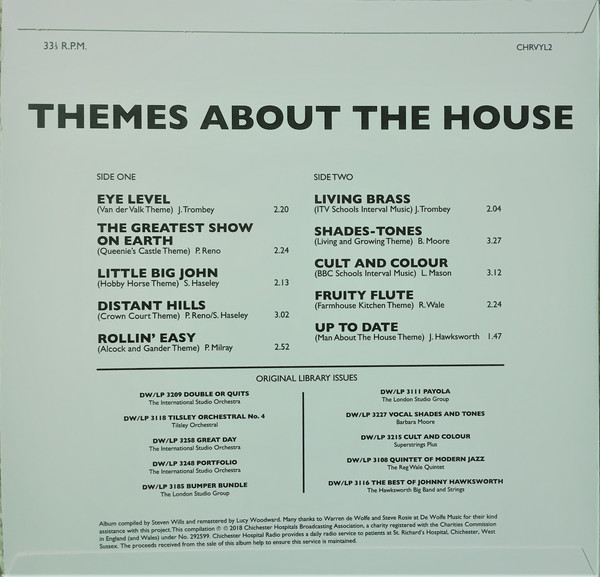

BELGIAN NUGGETS 90s-00S VOLUME 2.
Belgian Nuggets 90s-00s Volume 2.
Label: Mayway Records.
Release Date: “25th’ May 2018.
Just six months after Mayway Records released Belgian Nuggets 90s-00s Volume 1 to widespread critical acclaim, Tony Vandenbogaerde’s label returns with the much-anticipated followup Belgian Nuggets 90s-00s Volume 2 which will be released on the ‘25th’ of 2018. Belgian Nuggets 90s-00s Volume 2 is another lovingly curated compilation, and just like the first instalment in the series, there’s hidden gems galore awaiting discovery on a compilation that features a tantalising taste of the Belgian music scene during the nineties and noughties. That comes as no surprise, as Belgian Nuggets 90s-00s Volume 2, was also compiled by Tony Vandenbogaerde, who nine years ago, bought a collection of CDs that eventually led to him founding his own record label and starting a compilation series.
The story began in 2009, when Tony Vandenbogaerde heard an announcement that VRT, the Belgian public service broadcaster, was selling off a large quantity of CDs from its record library. These were the CDs that record labels and hopeful artists had sent to VRT each and every day, in the hope that they would find their way onto the radio station’s playlist. However, only a few found their way onto the playlist, while the remainder languished unloved in VRT’s record library until the day they would be rescued by a local record collector.
That day came not long after Tony Vandenbogaerde, the future founder of Mayway Records and compiler of the Belgian Nuggets compilation series saw VRT’s advert and decided to investigate. He was a lifelong music fan, and was interested in securing what was a huge and comprehensive collection of CDs. Unfortunately, Tony Vandenbogaerde wasn’t the only person interested in this enviable and impressive collection of CDs, and a number of other buyers were waiting to pounce.
Fortunately, Tony Vandenbogaerde triumphed and secured this vast collection of CDs, which they soon discovered gave him a comprehensive overview of Belgian music during the nineties and noughties. Now that Tony Vandenbogaerde had secured this comprehensive collection of CDs, the next step for his was to work out what to do with them? This wasn’t the type of collection that would fit in a few Ikea cabinets.
After some thought, Tony Vandenbogaerde decided to make a career out the collection of music he had just bought. “I decided to make a living of it and began to sell them on eBay and Discogs. That was my full-time job for like 5-6 years. But whilst doing that, I discovered a lot of great Belgian music and the idea to do something with that, became to form in my head. In the beginning of this year I decided to do it and start a record label, and thus began the compilation series Belgian Nuggets 90s-00s.”
The label that Tony Vandenbogaerde founded was Mayway Records, which released Belgian Nuggets 90s-00s Volume 1 on the ‘17th’ of November 2017. It featured twenty tracks, ranging from long-forgotten singles to B-Sides, album tracks and even the occasional demo. When Belgian Nuggets 90s-00s Volume 1 was released, it was to widespread critical acclaim with critics singing the praise of this lovingly curated compilation, and hoping that Volume 2 would follow.
Tony Vandenbogaerde isn’t the type of man to let the grass grow under his feet, and was soon compiling Belgian Nuggets 90s-00s Volume 2 with the assistance of Geert Huys and Vincent Matten. The trio dug deep into the music that Tony Vandenbogaerde had bought back in 2009, looking for oft-overlooked singles, tracks from EPs and albums released during the nineties and noughties. Eventually, the trio settled on twenty tracks including contributions from Barbie Bangkok, Simi Nah, Dead Man Ray, The Germans, Confuse The Cat, Black Shark, Sugar Kane, Paper Fox, Red Elmo, Party At Vanzetti’s, The Basics and Mauro Pawlowski and The Grooms. They’re just a few of the delights on Belgian Nuggets 90s-00s Volume 2, but what are the highlights?
Belgian Nuggets 90s-00s Volume 2 opens with Barbie Bangkok’s New Friend which is a track from their EP Oh My God which was released on the Kinky Star label. It’s a hard rocking and blistering fusion of alt-rock, electronic and psych rock with a nod to post rockers Radiohead. Hooks certainly haven’t been spared on a track that sets the bar high for the rest of the compilation.
Simi Nah was born in Nice, in the south of France, but moved to Paris to follow her dream of becoming a fashion designer. Paris was also where Simi Nah’s musical career began. After that, she moved to Holland and Belgium, and in 2004 embarked upon a solo career. By then, she had already been a member of The Chicks, Coma and Praga Khan. Later in 2004, Simi Nah released her debut album Cherchez La Femme on the Mostiko label and one of the highlights of the albums Je Joue Le Jeu In Génu which is an irresistible electro pop gem.
In 2011, Piano Club released their Ain’t No Mountain High EP on the JauneOrange label. The standout track on the EP was Across The Street, which features a vocal from Catherine De Biasio, who delivers an ethereal vocal that seems to have been inspired by Liz Fraser of the Cocteau Twins. Catherine De Biasio’s plays a starring role in this dreamy, melodic and memorable slice of synth pop which is one of the highlights of Belgian Nuggets 90s-00s Volume 2.
Initially, Bones which is taken from The Germans’ 2008 album Elf Shot Lane Witch album, sounds as it’s been influenced and inspired by Radiohead’s post rock classic OK Computer, and especially Karma Police. Soon, this changes and a quite beautiful and sometimes progressive and futuristic indie ballad unfolds.
The Deepest Blue is a track from Confuse The Cat’s 2008 album We Can Do It, which was released in 2008 on Zealrecords. It’s also a fist-pumping post punk anthem in waiting that is another welcome addition to Belgian Nuggets 90s-00s Volume 2.
Garage rockers Black Shark turn the amp up to eleven and kick loose on the Brighter Than Glass, which is the title-track to their 2007 EP. It’s an explosive track with blistering guitars to the fore on Brighter Than Glass, which is a reminder of what garage rock used to sound like during the genre’s glory days.
Perfect pop describes Sugar Kane’s Birdsong which is taken from then Birdsongs EP which was released in 1999. Birdsong with its wistful, rueful vocal, capricious guitars and samples of birdsong is another beautiful ballad and a truly underrated song.
When Delavega recorded their eponymous EP which was released on the Draaischijf label in 2004, it featured the carefully crafted soundscape Nostalgia, which was described as the soundtrack to an imaginary movie. That comes as no surprise, as Nostalgia is atmospheric and has a cinematic sound that is rich in imagery. It sounds as the inspiration for the track has come from Moby and to some extent Air and 4Hero.
De Legende was a collaboration between Elvis Peeters and Geert Corbeels whose raison d’être was to produce cerebral and theatrical pop music. In 1993, De Legende released the mini album Ten Dans which was released by Donor Publishing. One of the highlights was Ten Dans which is a fusion of art rock, new wave and synth pop and gave De Legende a surprise hit single.
Red Elmo first came to the attention of Belgian music fans in the late-nineties, and by 2006 they had released the album Eyrie. It featured And In Your Head, which is a carefully crafted multilayered track which features a reaping saxophone, wistful piano and a rueful vocal from Charlotte Nuytens who steals the show and plays a leading role in the song’s success.
A year after becoming the first band to release a singe on the Kinky Star label, De Bossen’s track G-Shirt featured on the Girl Collection compilation. It’s an über edgy and jittery slice of garage rock that will be appreciated by connoisseurs of the genre.
I Wanna Lay My Head featured on garage blues band Party At Vanzetti’s Extended Play EP which was released on Bone Marrow Records in 1991. From the get-go, it sounds as if vocalist Bart Vanneste is channeling the spirit of Iggy Pop as he struts and swaggers his way through this fusion of alt-rock, punk and garage blues. Sadly, Party At Vanzetti’s only released one more single and a mini album before Bart Vanneste decided to concentrate on his career as alternative comedian. That was a great shame as Party At Vanzetti’s were a talented band, and proof of that is I Wanna Lay My Head.
The Basics released Psychosomatic Heartcrush as a single on Boom! Records in 1998. It’s a real find from the band who combine two bass guitars, a cello and snarling vocal as they combine surf, punk and rock ’n’ roll during a song that brings to mind The Cramps.
Closing Belgian Nuggets 90s-00s Volume 2 is The Unreachable which is a track from Mauro Pawlowski and The Grooms’ Black Europa album which was released on 2004. It’s a seven minute epic where elements of indie rock, improv and post rock melt into one. Sadly, the Black Europa album wasn’t a commercial success and nowadays, is long forgotten, that is apart from a small coterie of appreciative record buyers. However, this underrated and oft-overlooked epic is a great way to end Belgian Nuggets 90s-00s Volume 2.
Sometimes, it’s hard to surpass the first volume of a critically acclaimed compilation, but Tony Vandenbogaerde has managed to do this on Belgian Nuggets 90s-00s Volume 2 which will be which released on the ‘25th’ of 2018 by Mayway Records. Belgian Nuggets 90s-00s Volume 2 which features singles, B-Sides and tracks from albums and EPs looks back at what’s now regarded as a golden period for Belgian music.
During the nineties and noughties, Belgium had such a diverse and vibrant music scene which is documented on Belgian Nuggets 90s-00s Volume 2. It features artists and bands from towns and cities across Belgium who were creating an eclectic selection of music. This includes alt-rock, electronica, electro, garage rock, indie rock, post punk and synth pop. There were also bands recording post rock, rock ’n’ roll and surf music during the period that Belgian Nuggets 90s-00s Volume 2 covers. These genres are all represented on Belgian Nuggets 90s-00s Volume 2 which is a lovingly curated compilation.
Rather than choosing the familiar songs that feature on other compilations, the compilers have dug deep and have struck musical gold several times, discovering oft-overlooked anthems, hook-laden perfect pop and hidden gems galore awaiting discovery on the lovingly curated Belgian Nuggets 90s-00s Volume 2, which is a compilation that belongs in any self-respecting record collection.
Belgian Nuggets 90s-00s Volume 2.



PLANET MOD-BRIT SOUL, R&B AND FREAKBEAT FROM THE SHEL TALMY VAULTS.
Planet Mod-Brit Soul, R&B and Freakbeat From The Shel Talmy Vaults.
Label: Big Beat Records.
The name Shel Talmy, means different things to different people, and many record buyers all automatically remember the Chicago-born producer’s work in Britain with legendary rock bands The Who and The Kinks. Others will remember Shel Talmy as the producer of the short-lived British garage rockers The Creation. However, how many people remember his production work with American blues men John Lee Hooker, Screamin’ Jay Hawkins and Ray Gates or with British R&B groups like The Soul Brothers, The Groundhogs and The Untamed? Shel Talmy worked with each of these artists and groups that feature on Planet Mod-Brit Soul, R&B and Freakbeat From The Shel Talmy Vaults which was recently released by Ace Records’ Big Beat Records imprint. It’s a fitting tribute to the American musical impresario and producer who only got involved with music after his dreams were dashed.
This happened when sixteen year old Shel Talmy attended a routine check-up at his ophthalmologist, only to discover that he had retinitis pigmentosa, which was an inherited degenerative eye disease meant he would eventually loose his sight. For Shel Talmy this was a crushing blow.
Realising that his dream of becoming a film director was now in tatters, sixteen year old Shel Talmy was forced to rethink his plans for the future. After much thought, he decided that when the time came, he would embark upon a career as a record producer. While many believed that this was a pipe dream, Shel Talmy was determined that one day, his dream would become a reality.
By 1961, twenty-four year old Shel Talmy was ready to embark upon a career as a record producer. Rather than knocking on the doors of LA’s recording studios, Shel Talmy headed to one of Los Angeles’ many music business hang outs to network with music industry insiders.
At Martoni’s, Chicago-born Shel Talmy met Phil Yeend, a British expat who owned Conway’s Recorders. The two men talked and soon, Phil Yeend, offered twenty-four year old Shel Talmy a job as an engineer. By then, Phil Yeend had already assured his newest employee that he would train him as an engineer.
Shel Talmy began work at Conway’s Recorders in early 1961. During his first three days at Conway’s Recorders, Shel Talmy was shown the basics, including how to work the board. After that, he was thrown in at the deep end.
Over the next few months, Shel Talmy spent much of his time working with members of the legendary studio band the Wrecking Crew. They were by then, seasoned veterans who had a wealth of experience, and Shel Talmy was able to tap into their experience. Shel Talmy also found himself working with the Beach Boys and Lou Rawls during his first year as an engineer and producer. For Shel Talmy, his first year at Conway’s Recorders was a whirlwind.
Shel Talmy also found himself working with Gary Paxton, who having started out as one half of Skip and Flip, was well on his way to becoming a successful producer. Meanwhile, Shel Talmy’s friend Nic Venet was the A&R man at Capitol Records and allowed him to sit in on recording sessions with Bobby Darin. Through watching these sessions Shel Talmy learnt how to run a session which was all part of his musical apprenticeship.
Back at Conway Recorders, when Phil Yeend and Shel Talmy weren’t working with clients, they spent time experimenting with new recording techniques. Especially working out the best way to record guitars and drums. The pair was interested in the advantages of isolating instruments during the recording sessions. This was unheard of, but eventually, would become the norm. Shel Talmy was already innovating, and would continue do so throughout his career.
When there was some downtime at Conway Recorders, Phil Yeend allowed Shel Talmy to try out new recording techniques. This was all part of a steep learning curve and this crash course in engineering and production would stand Shel Talmy in good stead for the future.
Especially when Shel Talmy decided to spend a few months working in Britain. This visit wasn’t planned, and instead, it was a case of curiosity getting the better of Shel Talmy. During his time working with Phil Yeend, the Englishman had told him about life in Britain and how great a country it was. Eventually, Shel Talmy decided he would like to spend some time working in Britain.
Fortunately, a friend of Shel Talmy’s who worked at Liberty Records setup a meeting with Dick Rowe at Decca Records. When Shel Talmy went into the meeting, he wasn’t lacking in confidence and went as far as playing Dick Rowe acetates of some of the records that he had worked on. British record company executives in the early sixties weren’t used to such confident interviewees, but Dick Rowe, who was a huge fan of all things American, liked Shel Talmy and hired him on the spot.
Just over a year later, Shel Talmy and Dick James founded a new label, Planet Records. This join venture was the start of a new chapter in Shel Talmy’s career.
By then, he was well on his way to enjoying the most successful chapter in his musical career. This lasted seventeen years and saw Shel Talmy become one of the most successful producers working in Britain. During this period, Shel Talmy had the Midas touch.
He discovered The Kinks when their manager Robert Wace took a demo into one of music publishers on Denmark Street. When Robert Wace asked if anyone wanted to hear the demo, Shel Talmy was the only person who answered in the affirmative. He listened to the demo, and not only liked The Kinks’ music, but realised the group’s potential and took the group to the Pye record label who signed the group.
Having signed to Pye, Shel Talmy produced The Kinks’ first five albums, and during this period, they became one of the most successful British bands. Especially within the ranks of Britain’s mods, who claimed The Kinks as their own.
It was a similar case with The Who and The Creation who were both produced by Shel Talmy, and became popular known as “mod groups.” Meanwhile, Shel Talmy was known as the man who distilled and brought the mod rock sound to vinyl. However, Shel Talmy also recorded many other groups who would become part of the eclectic soundtrack to life as a mod. This included The Thoughts, A Wild Uncertainty and The Tribe who Shel Talmy recorded for his short-lived Planet label, while The Trackers and Pros and Cons and others were independent productions which he farmed out to major labels. They join bluesmen John Lee Hooker, Ray Gates and Screaming Jay Hawkins and British R&B groups like The Soul Brothers, Groundhogs and The Untamed on Planet Mod-Brit Soul, R&B and Freakbeat From The Shel Talmy Vaults.
The Untamed from Worthing, in East Sussex, England, released five singles between 1964 and 1966. This includes Daddy Longlegs which was released on Shel Talmy’s Planet label in 1966. However, it’s an alternate version of Daddy Longlegs that is included and sadly, was the swan-song from mod heroes The Untamed who open Planet Mod-Brit Soul, R&B and Freakbeat From The Shel Talmy Vaults.
In 1966, American bluesman John Lee Hooker entered the studio in London with The Groundhogs accompanying him and recorded an album’s worth of material. It’s also thought that British bluesman John Mayall played on the sessions. Before the album was released, Mai Lee which was released as a single on Shel Talmy’s Planet label in 1966. Later in 1966, the album John Lee Hooker With John Mayall With The Groundhogs was released by Verve Folkways. One of the highlights of the album was Mai Lee a collaboration between American and British bluesmen.
Another favourite of British mods were The Thoughts who released a string of singles during the mid-sixties. This includes their oft-overlooked cover Ray Davies Call Me Girl which was released as a single on Planet 1966. There’s a nod to The Who on a song that would later became a mod and freakbeat favourite.
John Lee’s Groundhogs were another band signed to Shel Talmy’s Planet label. They released the stomping R&B single I’ll Never Fall in Love Again in January 1966. The single was produced by Freeway Music, which was a partnership between Bill Wyman and Mike Vernon. They produced Over You Baby the heartfelt Brit soul ballad which is tucked away on the B-Side. Blazing horns and snappy drums provide a backdrop for this soul-baring ballad that is a welcome addition to the compilation.
During 1966, Shel Talmy worked with a number of American bluesman, including Ray Gates who recorded It’s Such A Shame for Decca. It was produced by Shel Talmy and released in October 1966 and was Ray Gates only single. Hidden away on the B-Side was the soulful and bluesy hidden gem Have You Ever Had The Blues?
In December 1966, The Corduroys released Tick Tock as a single on the Planet label. It was penned by the two members of The Corduroys, Tony Wilson and Norman Oliver who Shel Talmy hoped would become Planet’s house songwriting team. The pair also wrote the B-Side Too Much Of A Woman which is a memorable slice of British R&B that was released in American and Canada in 1967, but sadly failed to find an audience. However, Norman Oliver went on to strike gold after changing his name Oliver Norman and co-writing You Sexy Thing for the British group Hot Chocolate.
Goldie and The Gingerbreads were an all-girl group who were signed to Atlantic Records after being spotted by Ahmet Ertegün playing at party in 1964. Over the next five years, Goldie and The Gingerbreads rubbed shoulders with the great and good of music, opening for The Kinks, the Rolling Stones, The Yarbirds and The Animals. In Britain, Goldie and The Gingerbreads released four singles on Decca between 1965 and 1969. This included their sophomore single That’s Why I Love You. It was released on Decca April 1965 and was produced by Shel Talmy. On the B-Side was The Skip which many people regard as the stronger of the two songs. It’s an dancefloor friendly instrumental where a Hammond organ plays a leading role in this underrated track that even today is a mod favourite.
Charismatic bluesman Screamin’ Jay Hawkins’ recording career began in 1955 when he released You’re All Of Life To Me as a single. By 1969, Shel Talmy had signed Screamin’ Jay Hawkins but farmed him out to Phillips who released I’m Lonely in April 1969. It was penned by Screamin’ Jay Hawkins and produced by Abe “Voco” Kesh and Milan Melvin. They produced the B-Side Stone Crazy which was another Screamin’ Jay Hawkins composition which explodes into life combining R&B and rock ’n’ roll. It’s a tantalising reminder of the inimitable showman Screamin’ Jay Hawkins.
Tony Christie and The Trackers one and only single was a cover of Barbara Ruskin’s Life’s Too Good to Waste, which was released on CBS in 1966. It was produced by Shel Talmy who was responsible for the Fuzz Mod pop sound on the single which marked the debut of Tony Christie who would find fame with Las Vegas, (Is This The Way To) Amarillo and Avenues and Alleyways.
When The Tribe recorded their debut single for Shel Talmy’s Planet label, the song that was chosen was Joe Mangiggli’s The Gamma Goochie. It was released as a single on Planet in February 1966, with John D. Sullivan taking charge of production. The result is a mod friendly stomping fusion of R&B and rock.
Another group that was signed to Shel Talmy’s Planet label who only released one single was A Wild Uncertainty. They released A Man With Money in Britain in October 1966 which was arranged by Arthur Greenslade and produced by Glyn Johns. Sadly, commercial success eluded the single, which featured the Tony Savva composition Broken Truth on the B-Side. It’s another vastly underrated mod rock track, and is another song that sounds as if A Wild Uncertainty and producer Glyn John were influenced by The Who. Despite that, Broken Truth epitomises everything that is good about the mod rock sound.
The Untamed recorded I’m Going Out Tonight for Shel Talmy’s Planet label, but sadly, the song wasn’t released as a single. This was a missed opportunity from the group from Worthing as I’m Going Out Tonight oozes quality and is reminiscent of The Who. Indeed, the vocal is reminiscent of Roger Daltrey on this mod friendly hidden gem.
Closing Planet Mod-Brit Soul, R&B and Freakbeat From The Shel Talmy Vault is the second contribution from The Soul Brothers, Goodbye So Long. It’s quite different from Searching, a mod friendly uptempo song long in hooks. Goodbye So Long is a beautiful, soulful ballad which shows another side to The Soul Brothers which featured Tony Wilson who would later join Hot Chocolate. It seems that compiler Alex Palao has kept one of the best until last.
Planet Mod-Brit Soul, R&B and Freakbeat From The Shel Talmy which was recently released by Big Beat Records, is a lovingly curated compilation and is a perfect companion to Making Time: A Shel Talmy Production which was released by Ace Records. It’s a fitting tribute to Shel Talmy and is the perfect introduction to a groundbreaking producer.
Whilst other producers stuck to tried and tested production methods, Shel Talmy had been experimenting and innovating ever since he started work at Conway’s Recorders in early 1961. Since then, Shel Talmy was a blue sky thinker when it came to production, and in many ways, was similar to George Martin, when he worked with The Beatles.
Back in the sixties, producers had to be able to think outside the box, as they were hamstrung by what is now regarded as basic equipment. By being able to innovate, some producers were able to make groundbreaking recordings with what is now regarded as basic equipment. This included George Martin, Phil Spector, Joe Meek, Jimmy Miller and Jack Nitzsche. To that list the name Shel Talmy can be added, as he belongs in such illustrious company.
After all, Shel Talmy wasn’t just a producer, he was also a songwriter and talent spotter. However, first and foremost Shel Talmy is remembered as a pioneering producer who worked with some of the biggest names in British music. His innovative approach to production transformed many groups, and made stars of The Kinks and The Who, who went on to become two of the biggest names in British musical history. They’re just two of the hundreds of bands and artists who were produced by Shel Talmy during the most successful chapter in his musical career.
This period lasted an incredible seventeen years and saw Shel Talmy become one of the most successful producers working in Britain. During this period, Shel Talmy had the Midas touch and could transform the fortunes of bands. Sadly, not all the bands he worked with reaches the same heights of The Kinks and The Who, and some of the artists Planet Mod-Brit Soul, R&B and Freakbeat From The Shel Talmy Vaults didn’t enjoy the success that their talented deserved.
Now just over fifty years later, and the twenty-four tracks on Planet Mod-Brit Soul, R&B and Freakbeat From The Shel Talmy Vaults return for a welcome encore. There’s singles, B-Sides, demos and alternate tracks that range from uptempo R&B dancers to beautiful ballads and songs that epitomise the mod sound. One of the architects of the mod sound was pioneering producer Shel Talmy whose career is celebrated on Planet Mod-Brit Soul, R&B and Freakbeat From The Shel Talmy Vaults, which is the perfect companion to Making Time: A Shel Talmy Production.
Planet Mod-Brit Soul, R&B and Freakbeat From The Shel Talmy Vaults.





ELINA DUNI-PARTIR.
Elina Duni-Partir.
Label: ECM Records.
Elina Duni was born into an artistic family in Tirana, the capital of Albania, in March 1981, and by the age of five, was already singing on national radio and television. Those that heard Elina Duni sing, realised that she was already prodigiously talented, and had a great future ahead of her.
After the demise of the tyrannical communist regime in 1992, the democratic party led a coalition and set about implementing liberalisation policies, which resulted in social unrest and the collapse of the economy. Fortunately, Elina Duni and her mother had decided to leave Albania and move to Geneva, in Switzerland, where she started to study classical piano, and later, discovered jazz which became one of her musical passions.
Having discovered jazz, Elina Duni later enrolled at the jazz programme at the prestigious Hochschule der Künste in Bern, in Switzerland. That was where she founded the Elina Duni Quartet which featured drummer Norbert Pfammatter, double bassist Patrice Moret and pianist Colin Vallon. The nascent Elina Duni Quartet allowed its leader to return to her musical roots as she combined Balkan folk songs and jazz. This was the start of Elina Duni musical career, which would soon blossom.
In 2007, Elina Duni won the Friedl Wald Prize, which was the first of several prestigious musical awards she won in her adopted home of Switzerland. Elina Duni would win another prize in 2008, which was the most important year of career.
Having signed to Meta Records, twenty-seven years old Elina Duni released her much-anticipated debut album Baresha. It lived up to the expectations, and later in 2008, Elina Duni won the Coup de Coeur and the HKB Prize, which were both presented to her in Bern, in Switzerland. This rounded off 2008 for Elina Duni, which was the most successful year of her career.
When Elina Duni returned in 2010, it was with the Elina Duni Quartet’s debut album Lume Lume, which was released on Meta Records and featured a mixture of jazz and Balkan folk music. Lume Lume was released to plaudits and praise and later in 2010, won the Pro Helvetia award. By then, Elina Duni was already regarded as one of jazz’s rising stars although she had only released two albums.
Given that Elina Duni’s star was in the ascendancy, it was no surprise when she signed a recording contract with one of Europe’s leading jazz labels, ECM Records. In September 2012, the Elina Duni Quartet released their sophomore album Matanë Malit (Beyond The Mountain) which explored Albanian folklore to critical acclaim on ECM Records. Later in 2012, Elina Duni travelled to Essen, in Germany, where she won the prestigious Jazz Pott Prize. The following year, 2013, Elina Duni returned to Tirana, in Albania, to pickup the Kult Award for Matanë Malit which was the most successful album of her career.
In 2014, Elina Duni embarked upon a new project, which was very to different to everything that had gone before. This was Muza e Zezë (The Black Muse), which marked the debut of Elina Duni as a singer-songwriter. Elina Duni self-released Muza e Zezë which was released in Albania and Kosovo, and marked the start of a new chapter in her career.
Following the release of Muza e Zezë, Elina Duni decided to turn her attention to the Elina Duni Quartet, who released their third album Dallëndyshe (Swallow) in April 2015. It was another album that focused on Albanian folklore, which once again, found favour with critics who lavished praise on Dallëndyshe. Later in 2015, Elina Duni traveled to the Kosovo Embassy in Switzerland, where she was presented with the Diaspora Award. This was another honour for the thirty-four year old singer, songwriter and musician.
As 2017 dawned, Elina Duni knew that it was going to be an important year in her career. She planned to start three new projects over the next twelve months. Elina Duni formed a new duo with London-based guitarist Rob Luft, and embarked upon her Tribute to Billie Holiday with pianist Jean-Paul Brodbeck. The third new project was the quintet Aksham which included pianist Marc Perrenoud and trumpeter player David Enhco. These three new and exciting projects were part of what was another successful year for Elina Duni who also won the Swiss Music Prize. By then, Elina Duni had already recorded her next solo album Partir.
Before Elina Duni recorded Partir, she chose the twelve songs that she planned to record. This included one of her own compositions, Let Us Dive In. It was joined by Domenico Modugno and Enrica Bonaccorti’s Amara Terra Mia, Alain Oulman, Jose Carlos Ary dos Santos’ Meu Amor, Muhammad Abd al Rahim al Masloub’s Lamma Bada Yatathanna, Itzik Manger and Philip Laskowsky’s Oyfn Veg and Jacques Brel’s Je Ne Sais Pas. They were joined by five traditional songs from different parts of Europe. From Kosovo was Vishnja and Kanga E Kurbetit, which joined the Armenian song Lusnak Gisher, the Macedonian song Ani Kaj Lulije, the Albanian traditional song Vaj Si Kenka and the Swiss song Schönster Abestärn. These twelve songs would eventually become Partir.
Recording of Partir took place at Studios La Buissonne in Pernes-les-Fontaines, in France during July 2017. Elina Duni played piano, percussion, acoustic guitar and added vocals while Manfred Eicher took charge of production. When Partir was completed, the release was scheduled for the spring of 2018 when the album was released by ECM Records.
When Elina Duni released her third solo album Partir, which opens with Amara Terra Mia it which gives way to her own composition Let Us Dive In and Lamma Bada Yatathanna. By then, it’s already apparent that this is Elina Duni’s most intimate offering, and a recoding that is very different to her two previous solo albums and three albums by her Quartet.
The Tirana-born vocalist accompanies herself on piano, acoustic guitar and frame drum, whilst interpreting and reimagining a disparate section of songs. This ranges from folk songs including Vishnja from Kosovo, which is followed by Lusnak Gisher from Armenia. Seamlessly, Elina Duni continues switch between languages and delivers the lyrics with a tenderness and emotion as breathes new meaning into songs like Oyfn Veg and Kanga E Kurbetit another traditional song from Kosovo. Sometimes, there’s a sense of sadness and longing in Elina Duni’s voice. Soon, though, Elina Duni continues on her journey around Eastern Europe, as she covers the Macedonian folk song Ani Kaj Lulije and then the Albanian song Vaj Si Kenka. After that, it’s all change.
Very different is Elina Duni’s cover of Jacques Brel’s Je Ne Sais Pas which is breathtaking in its beauty. After that, she closes Partir with a heartfelt and beautiful cover of the traditional Swiss folk song Schönster Abestärn. This seems fitting as Elina Duni has called Switzerland home since 1992.
Elina Duni has come a long way since arriving in Geneva twenty-six years later, and nowadays, is regarded as one of Europe’s top jazz and folk musicians. Proof of that is Partir, where the multitalented and multilingual Elina Duni delivers twelve songs in nine different languages. Seamlessly she switches between Albanian, German, French, English, Italian, Portuguese, Armenian, Yiddish and Arabic during Partir, where the thread that runs through this powerful and moving album is a sense of longing and loneliness. This is apparent as Elina Duni delivers emotive and expressive vocal delivers lyrics against understated arrangements.
They provide the perfect backdrop for this talented singer, songwriter and multilingual musician, as thirty-six year old Elina Duni embarks upon yet another chapter in her career on Partir, which was recently released by ECM Records, and is the perfect introduction to a prodigiously talented artist who was always destined for greatness.
Elina Duni-Partir.

SEUN KUTI AND EGYPT 80-BLACK TIMES.
Seun Kuti and Egypt 80-Egypt Times.
Label: Strut Records.
Nowadays, one of the most overused word in the English language is legend, which is bandied about all too freely, with faux punks, third rate Britpop bands and Beatles impersonators being labelled legends by fawning music journalists who hang on their every word. These bands aren’t worthy of being called legends, and in truth, very few bands or artists can truly be referred to as legends. However, one artist who deserves to be called a legend is the late, great Afrobeat pioneer and human rights and political activist Fela Kuti, who passed away in Lagos, Nigeria, on the ‘2nd’ of August 1997, aged just forty-eight. That day, African music lost one of its greats.
By his death in 1977, Fela Kuti was a truly prolific artist, who had recorded over forty albums,and they were part of the rich musical legacy that he left behind. This included many albums of groundbreaking and timeless music, that nowadays, are regarded as Afrobeat classics. Some of these albums were recorded with his band Egypt 80, and after Fela Kuti’s death, many people wondered what would happen to this talented band?
They never expected Fela Kuti’s youngest son, fourteen year old Seun Kuti to takeover from his father, and lead Egypt 80. For some, this was a totally unexpected development, while others had watched Seun Kuti learn from his father over the past five years.
Seun Kuti was born Oluseun Anikulapo Kuti in Lagos, Nigeria, on the ’11th’ of January 1983, and by the age of nine, told his father Fela Kuti that he wanted to sing with his band. For Fela Kuti, this was the latest member of his family who was about to follow in his footsteps, and embark upon a musical career in 1992.
By then, Femi Kuti who was the eldest child, was thirty, and already was a successful musician. Seun Kuti knew he had a long way to go before he would enjoy the same success as his brother. That was all in the future, and Seun Kuti was happy to serve his musical apprenticeship singing with Fela Kuti and Egypt 80.
Over the next few years, Seun Kuti went to school during the day, and in the evenings and weekends played live with Fela Kuti and Egypt 80. Seun Kuti soon became a valuable member of Egypt 80, but music wasn’t the only thing that he was good at. He was also a talented schoolboy footballer who many thought had the potential and talent to eventually become a professional player. This meant that Seun Kuti had to choose between football and music. However, there was only one winner, and Seun Kuti decided to continue his musical apprentice and learn from his father who by 1997 was regarded as one of the greatest ever African musicians.
Sadly, Fela Kuti passed away on the ‘2nd’ of August 1997, when
Seun Kuti was just fourteen. His death came as a huge shock to his family, and left a massive void including in his band Egypt 80. The big question was it too big a void to fill?
Many thought that nobody could replace Fela Kuti, but not long after his death, his youngest son Seun Kuti decided to become the lead singer of Egypt 80. The fourteen year old was now leading a band full of seasoned musicians who were among the best in Nigeria.
Initially, Seun Kuti and Egypt 80 started playing covers of his father’s music, including songs from his many albums. This was welcomed by the audience, as Fela Kuti had never played songs from his albums live, and when Seun Kuti and Egypt 80 played like Shuffering and Shmiling, Colonial Mentality and Army Arrangement live this was a first. Fela Kuti’s old fans and Seun Kuti’s new fans welcomed the opportunity to hear classic songs and old favourites. Gradually, though, Seun Kuti and Egypt 80 started to introduce new songs into their sets, and over the next two years, the young bandleader honed his songs with a view to recording his debut album.
In 2007, Seun Kuti and Africa released the 12” single Think Africa which marked the debut of the twenty-four year old bandleader. A year later, Seun Kuti and Africa returned with their debut album Many Things in 2008, which was produced by Martin Meissonnier, who had previously produced two albums for Fela Kuti. Many Things was released to plaudits and praise and marked the start of a new chapter in the story of the Kuti musical dynasty.
Nearly three years later, Seun Kuti and Africa returned with their sophomore album From Africa With Fury in April 2011. This time, it was recorded in London with Brian Eno, John Reynolds and Seun Kuti. From Africa With Fury was a powerful and politically charged album from Seun Kuti and Africa, it was released to critical acclaim.
Nine months after the release of From Africa With Fury, Seun Kuti became involved with the Occupy Nigeria protest in his native Nigeria in January 2012. Just like his father, Seun Kuti was already heavily involved and interested in politics and human rights, and protested against the fuel subsidy renewal protest by the Nigerian President Goodluck Jonathan. Seun Kuti was following in his father’s footsteps not just musically, but with his political activism.
Three years ager the release of From Africa With Fury, Seun Kuti and Africa returned with their much anticipated third album A Long Way To The Beginning. Just like their previous album From Africa With Fury, A Long Way To The Beginning found favour with critics who hailed the album another ambitious and powerful album.
Following A Long Way To The Beginning, Seun Kuti and Africa spent much of the next couple of years touring, but found time to record the Struggle Sounds EP which was released in 2016.
Apart from the Struggle EP, nothing more was heard from Seun Kuti and Africa until recently, when they returned with their fourth album Egypt Times, which was released on Strut Records and is their first album in four long years.
Egypt Times was well worth the wait and is undoubtably the most powerful album that Seun Kuti and Egypt 80 have released. The eight tracks were penned by Seun Kuti and find the thirty-five year turn his attention to the problems facing his native Nigeria. Just like his father Fela Kuti, Seun Kuti is determined to provide a voice for the millions of Nigerians who have none. His way of doing this is through the music on Black Times. This includes the seven songs he penned and Kuku Kee Me which he wrote with Rilwan Fagbemi. These eights songs were recorded by Seun Kuti and Egypt 80.
Joining alto saxophonist, keyboardist and vocalist Seun Kuti are Egypt 80. Their rhythm section included drummer Shinan Abiodun, bassist Kunle Justice and rhythm guitarist Alade Oluwagbemiga. They were joined by lead guitarist David Obanyedo, percussionist Wale Toriola, Kola Onasanya on congas and Okon Iyamba on shakers. The horn section features baritone saxophonist Adebowale Osunnibu, tenor saxophonist Samuel Ojo David and trumpeter Oladimeji Akinyele, while Iyabo Adeniran and Joy Opara added backing vocals as the album was recorded at Jet Studio, in Brussels, during April 2017. However, it wasn’t until the spring of 2018 that Black Times was released.
Although it’s nearly four years since Seun Kuti and Egypt 80’s previous album, Black Times was well worth the wait. It’s a powerful and politically charged album that features Seun Kuti and Egypt 80 are in full flight.
Black Times explodes into life with Last Revolutionary, with drums crack and horns power the arrangement along while soulful harmonies make a brief appearance before chirping guitars circle, awaiting Seun Kuti’s vocal. He’s speaking to and speaking for the downtrodden people of Nigeria and those that don’t have a voice and is: “the walking, talking struggle of my people.” All the time, backing vocalists accompany Seun Kuti as Egypt 80 provide an urgent backdrop on this powerful and politically charged song.
Carlos Santana features on Black Times and his guitar weaves in and out of the arrangement as a backing vocalists accompany Seun Kuti and they sing soulfully. When they drop out blazing horns join with the rhythm section and percussion as Carlos Santana unleashes a guitar masterclass. It veers between funky and rocky, as it soars above the arrangement before Seun Kuti delivers a tender, soulful and later powerful vocal as he sings of learning from history, and trying to achieve physical and spiritual of freedom. He’s joined by backing vocalist who add a soulfulness to this ten minute genre-melting epic that is thought-provoking and cerebral.
Horns open Corporate Public Control Department (C.P.C.D.),
as keyboards and funky guitar join hissing hi-hats, shakers. Soon, and soon, blazing horns that join with the rhythm section and power the funky arrangement along and features a bubbling bass.When Seun Kuti’s vocal enters, it’s emotive and sometimes full of anger and frustration as he castigates politicians of all colours and sings: “promise to give me peace and you give me war, you promise me justice and then you jail the poor, you promise jobs and you close the factory.” Later, backing vocalists accompany Seun Kuti, answering his call on this soulful, funky slice of Afrobeat with a social conscience.
The tempo briefly drops on Kuku Kee Me as the rhythm and horn section combine with a chirping guitar, and soon the tempo rises and Seun Kuti and Egypt 80 are in full flight. It’s a glorious sound as this talented and experienced showcase their skills and stretch their legs. Before Seun Kuti’s vocal enters, the horns take centre-stage, after that, they reply to his call as the bass and guitar repeat the same motif. Later, backing vocalists reply to Seun Kuti’s urgent vocal, matching him every step of the way as the horns continue to play their part in what’s funky, soulful Afrobeat.
Punchy horns soar above the keyboards on Bad Man Lighter (B.M.L.), before the arrangement is almost stripped bare and the bass takes centre-stage. Soon, Seun Kuti and Egypt 80 are in full flight, before gradually they seems to be leaving room for the vocal. However, Egypt 80 toy with the listener and still there’s no sign as the vocal and they continue to combine elements of Afrobeat and funk before Seun Kuti enters and delivers a tough, swaggering vocal, singing call and response with the backing vocalists. They add a soulfulness as braying horns punctuate the arrangement which still features keyboards. They’re all part of this heady and tantalising musical brew.
A big bold bass and guitar combine with shakers as gradually, African Dreams reveals its secrets. Soon, a chirping guitar is added to the dramatic arrangement before braying horns are added. Eventually, a frustrated, angry and despairing Seun Kuti rages against his countrymen who end up chasing the American dream, and often this affects their welfare and causes them to lose sight of their own heritage. Seun Kuti is at his most soulful as he delivers a heartfelt and emotive vocal on another poignant, powerful and thought-provoking song.
Stabs of rasping horns are matched by drums that create a 4/4
on Struggle Sounds while Seun Kuti vamps his way through the song, seemingly drawing inspiration from James Brown as his backing vocalist match him every step of the way. Soon, his vocal drops out and Afrobeat and funk are combined by Egypt 80 who put all their years of experience to good use. Later, Seun Kuti returns and unleashes another vampish vocal as he sings: “I make that struggle music as the voice of the people, struggle sound like the weapon of the future.” Just like his late father, Seun Kuti’s music is politically charged, and speaks to and for the people of Nigeria, who he wants justice and better life for.
Closing Black Times is the explosive Theory Of Goat And Yam which literally bursts into life, blazing horns to the fore as the rhythm section and powers the arrangement along. It also features percussion, rapid fire drums and chiming guitars. Soon, Seun Kuti is delivering an equally urgent vocal and unleashes the lyrics
which were inspired by the former Nigerian President Goodluck Jonathan. Somehow, he managed to justify embezzling public money by comparing it to goats gulping down yams which were left too close to them. There’s almost disgust in Seun Kuti’s angry, urgent vocal, while the backing vocals again provide the perfect foil to his vocal. Together with Egypt 80 in full flight they play their part in this powerful tale of greed, corruption by a self-serving politician.
After a four year wait, Seun Kuti and Egypt 80 returned recently with their fourth album Black Times, which was released by Strut Records. Black Times finds Seun Kuti and Egypt combining Afrobeat, funk, soul and sometimes blues, jazz and rock on eight new songs. These are songs that Seun Kuti’s father Fela Kuti would be proud of, as his son speaks to and for his fellow countryman in his native Nigeria.
Thirty-five year old Seun Kuti whose spent the last twenty-one playing live and recording with Egypt 80 reaches news heights ob Black Times, which is a career-defining album from the Last Revolutionary, Seun Kuti and Egypt 80 who provide the accompaniment on this poignant, powerful and politically charged album of cerebral and thought-provoking protest music.
Seun Kuti and Egypt 80-Egypt Times.
Seun Kuti-His Father’s Son Making His Own Way In Music.
Nowadays, one of the most overused word in the English language is legend, which is bandied about all too freely, with faux punks, third-rate Britpop bands and Beatles impersonators being labelled legends by fawning music journalists who hang on their every word. These bands aren’t worthy of being called legends, and in truth, very few bands or artists can truly be referred to as legends. However, one artist who deserves to be called a legend is the late, great Afrobeat pioneer and human rights and political activist Fela Kuti, who passed away in Lagos, Nigeria, on the ‘2nd’ of August 1997, aged just forty-eight. That day, African music lost one of its greats.
By his death in 1977, Fela Kuti was a truly prolific artist, who had recorded over forty albums,and they were part of the rich musical legacy that he left behind. This included many albums of groundbreaking and timeless music, that nowadays, are regarded as Afrobeat classics. Some of these albums were recorded with his band Egypt 80, and after Fela Kuti’s death, many people wondered what would happen to this talented band?
They never expected Fela Kuti’s youngest son, fourteen year old Seun Kuti to takeover from his father, and lead Egypt 80. For some, this was a totally unexpected development, while others had watched Seun Kuti learn from his father over the past five years.
Seun Kuti was born Oluseun Anikulapo Kuti in Lagos, Nigeria, on the ’11th’ of January 1983, and by the age of nine, told his father Fela Kuti, that he wanted to sing with his band. For Fela Kuti, this was the latest member of his family who was about to follow in his footsteps, and embark upon a musical career in 1992.
By then, Femi Kuti who was the eldest child, was thirty, and already was a successful musician. Seun Kuti knew he had a long way to go before he would enjoy the same success as his brother. That was all in the future, and Seun Kuti was happy to serve his musical apprenticeship singing with Fela Kuti and Egypt 80.
Over the next few years, Seun Kuti went to school during the day, and in the evenings and weekends played live with Fela Kuti and Egypt 80. Seun Kuti soon became a valuable member of Egypt 80, but music wasn’t the only thing that he was good at. He was also a talented schoolboy footballer who many thought had the potential and talent to eventually become a professional player. This meant that Seun Kuti had to choose between football and music. However, there was only one winner, and Seun Kuti decided to continue his musical apprentice and learn from his father who by 1997 was regarded as one of the greatest ever African musicians.
Sadly, Fela Kuti passed away on the ‘2nd’ of August 1997, when Seun Kuti was just fourteen. His death came as a huge shock to his family, and left a massive void including in his band Egypt 80. The big question was it too big a void to fill?
Many thought that nobody could replace Fela Kuti, but not long after his death, his youngest son Seun Kuti decided to become the lead singer of Egypt 80. The fourteen year old was now leading a band full of seasoned musicians who were among the best in Nigeria.
Initially, Seun Kuti and Egypt 80 started playing covers of his father’s music, including songs from his many albums. This was welcomed by the audience, as Fela Kuti had never played songs from his albums live, and when Seun Kuti and Egypt 80 played like Shuffering and Shmiling, Colonial Mentality and Army Arrangement live this was a first. Fela Kuti’s old fans and Seun Kuti’s new fans welcomed the opportunity to hear classic songs and old favourites. Gradually, though, Seun Kuti and Egypt 80 started to introduce new songs into their sets, and over the next two years, the young bandleader honed his songs with a view to recording his debut album.
In 2007, Seun Kuti and Africa released the 12” single Think Africa which marked the debut of the twenty-four year old bandleader. A year later, Seun Kuti and Africa returned with their debut album Many Things in 2008, which was produced by Martin Meissonnier, who had previously produced two albums for Fela Kuti. Many Things was released to plaudits and praise and marked the start of a new chapter in the story of the Kuti musical dynasty.
Nearly three years later, Seun Kuti and Africa returned with their sophomore album From Africa With Fury in April 2011. This time, it was recorded in London with Brian Eno, John Reynolds and Seun Kuti. From Africa With Fury was a powerful and politically charged album from Seun Kuti and Africa, it was released to critical acclaim.
Nine months after the release of From Africa With Fury, Seun Kuti became involved with the Occupy Nigeria protest in his native Nigeria in January 2012. Just like his father, Seun Kuti was already heavily involved and interested in politics and human rights, and protested against the fuel subsidy renewal protest by the Nigerian President Goodluck Jonathan. Seun Kuti was following in his father’s footsteps not just musically, but with his political activism.
Three years ager the release of From Africa With Fury, Seun Kuti and Africa returned with their much-anticipated third album A Long Way To The Beginning. Just like their previous album From Africa With Fury, A Long Way To The Beginning found favour with critics who hailed the album another ambitious and powerful album.
Following A Long Way To The Beginning, Seun Kuti and Africa spent much of the next couple of years touring, but found time to record the Struggle Sounds EP which was released in 2016.
Apart from the Struggle EP, nothing more was heard from Seun Kuti and Africa until 2018 when they returned with their fourth album Egypt Times. It was well worth the wait and is undoubtably the most powerful album that Seun Kuti and Egypt 80 have released. The eight tracks were penned by Seun Kuti and find the thirty-five year turn his attention to the problems facing his native Nigeria. Just like his father Fela Kuti, Seun Kuti is determined to provide a voice for the millions of Nigerians who have none. His way of doing this is through the music on Black Times.
Although it’s nearly four years since Seun Kuti and Egypt 80’s previous album, Black Times was well worth the wait. It’s a powerful and politically charged album that features Seun Kuti and Egypt 80 are in full flight combining Afrobeat, funk, soul and sometimes blues, jazz and rock on eight new songs. These are songs that Seun Kuti’s father Fela Kuti would be proud of, as his son speaks to and for his fellow countryman in his native Nigeria
Thirty-six year old Seun Kuti whose spent the last twenty-two years playing live and recording with Egypt 80, and is following in his father’s footsteps by recording and releasing powerful, politically charged cerebral and thought-provoking that provides a voice for those who are disadvantaged and disenfranchised.
Seun Kuti-His Father’s Son Making His Own Way In Music.


NEW ORLEANS SOUL 1967-RECORD STORE DAY EDITION
New Orleans Soul 1967-Record Store Day Edition.
Label: History Of Soul.
By early 1967, New Orleans’ vibrant music industry was thriving, and one of the one the Crescent City’s smallest labels Parlo Records, was celebrating the success of Aaron Neville’s million selling soul ballad Tell It Like It Is. It was released on November the ‘9th’ 1966, and by early 1967 had topped the US R&B charts and reached number two in the US Billboard 100. What made the success of Tell It Like It Is all the more satisfying was that the single had been distributed by a local company Dover, which had been founded and was run by one of the leading lights of the New Orleans’ music industry Cosimo Matassa.
His company distributed most of the music that was released in New Orleans during 1967, including the sixteen songs on New Orleans Soul 1967 which was recently released for Record Store Day on the History Of Soul label. However, Dover’s owner Cosimo Matassa was more than the owner of the Big Easy’s leading record distributor, he’s regarded by many as the architect of the New Orleans sound.
Originally, though, Cosimo Matassa had no intention of embarking upon a career in the music industry, and had enrolled at Tulane University in 1944 where he started studying towards a degree in chemistry. However, after five semesters eighteen year old Cosimo Matassa decided left university in 1945, and opened the J&M Recording Studio at the back of his family’s shop, which was situated on Rampart Street, in the French Quarter of New Orleans.
For the next ten years, Cosimo Matassa learnt his craft and established a reputation as an engineer at the J&M Recording Studio. However, by 1955 he had outgrown his first studio, and moved to the Cosimo Recording Studio on Gov. Nichols Street, which was still situated within the French Quarter. This was the start of a new chapter for Cosimo Matassa.
Soon, some hugely important and influential records were being recorded at the Cosimo Recording Studio, including Fats Domino’s The Fat Man which is regarded as one of the first rock ’n’ roll records, and Little Richard’s million selling number one Tutti Frutti. Over the next few years, Ray Charles, Lee Dorsey, Smiley Lewis, Bobby Mitchell, Tommy Ridgley, The Spiders and Dr John all made their way to the Cosimo Recording Studio where engineer Cosimo Matassa worked with a number of the city’s leading producers, including Dave Bartholomew and Allen Toussaint. They formed a successful partnership, although it’s Cosimo Matassa that is credited as the architect of the New Orleans sound.
At the Cosimo Recording Studio, Cosimo Matassa’s preferred sound took shake and it featured strong drums with the guitar, bass band piano having heavy sound while the horns played a lighter, less prominent role in the arrangement. When it came to the vocal, Cosimo Matassa’s preference was for a strong, prominent vocal. Gradually, Cosimo Matassa honed and perfected what became known as the New Orleans sound during the fifties and sixties.
Meanwhile, Cosimo Matassa wasn’t content to own his own recording studio and work as an engineer, he was keen to expand his musical empire and in the late-fifties and sixties managed one of the Big Easy’s most successful rock ’n’ roll singers, Jimmy Clanton. Cosimo Matassa also founded and ran the distributor Dover, which by 1967 distributed most of the music being released in New Orleans. This was an accident waiting to happen. However, with the Crescent City basking in the glow of Aaron Neville’s million selling single Tell It Like It Is everything in the garden was rosy…for the time being.
During 1967, Southern Soul’s star was in the ascendancy, and was growing in popularity across America. Still, formulaic hits were still being churned out in the Motown studios in Detroit, which was still being billed as The Sound of Young America. However, in New Orleans where the music scene was vibrant, artists released a refreshingly eclectic selection of music. This included jazz, R&B, blues, Caribbean music and the soul music that features on New Orleans Soul 1967.
There’s a total of sixteen songs on New Orleans Soul 1967, which featured contributions from familiar faces and what will be new names to many people. There’s contributions from Carlies Allen, Aaron Neville, Al Reed, Charles Mann, Johnny Adams, Guitar Ray, Tammy McKnight, The Barons and Curtis Johnson. The sixteen tracks are snapshot of the soulful sounds being released in New Orleans during 1967.
Side One.
Opening New Orleans Soul 1967 is Carlies Allen You Better Know What You’re Doing, which was the B-Side of Tears Won’t Bring Your Love Back which was released on the New Orleans’ based Trend label. This hugging slice of funky soul is a real rarity and is further proof that Trend only released quality music.
Bassist George Davis and saxophonist Red Tyler released the irresistible uptempo dancefloor friendly instrumental Hold On, Help Is On The Way as a single on the Parlo label in January 1967. It’s the type of track that would find favour in on UK Northern Soul scene.
Sammy King wrote Ain’t That Satisfaction which was the third and final single that he released on the short-lived New Orleans based Marathon label. It’s an uptempo song that is tantalising reminder of the Big Easy’s oft-overlooked and underrated soul men.
When Aaron Neville released Hard Nut To Crack as a single in 1967, he was still trying to replicate his million selling single Tell It Like It Is. Hard Nut To Crack was penned by George Davis, Lee Diamond, and was an uptempo, melodic and soulful dancer where the hooks hadn’t been spared. Despite that, Hard Nut To Crack failed to trouble the charts and was a missed opportunity for the man known as The Voice in New Orleans.
By 1967, Al Reed who was a veteran of the Crescent City’s music scene, and had founded his own record label Axe which would release his singles. This included released 99.44% Pure Love which was penned by Al Reed is a swaggering slice of melodic funk.
Many people remember Charles Mann for his 1973 album Say You Love Me Too, which was released on ABC Records. Before that, Charles Mann was signed to the Lanor label, where his career began in 1966. The fourth single Charles Mann released for Lanor was I’m Too Far Gone which was released in December 1967. I’m Too Far Gone was recorded by Bobby Bland, and two years later Charles Mann decided to cover the song. His version features a soul-baring vocal and is a beautiful version of this familiar song.
In 1967, Beverly Brown released Don’t Make Me Wait as a single on another of New Orleans’ independent record labels, ABS. Tucked away on the B-Side of this Camille Incardona production You Got Me Helpless. It’s an uptempo dancefloor filler and features the New Orleans sound.
Tony Owens released I Got Soul as single on the Soul Sound label in April 1967. It was written, arranged and produced by Isaac Bolden and features a heartfelt, emotive vocal from Tony Owens on this stunning ballad. It’s the perfect way to close side one of New Orleans Soul 1967.
Side Two.
Johnny Adams was a familiar face in New Orleans music scene when he released Got To Get Back To You on the Watch label in 1967. He had released his debut single eight years earlier in 1959, but still had only one minor hit single to his name. Got To Get Back To You followed in footsteps of previous singles, and failed to find an audience. Those who flipped over to the B-Side discovered the Time and Time Again which features a vocal masterclass from Johnny Adams as he lays bare his soul.
Senator Jones who was born in New Orleans, started off as a soul singer, and was a songwriter, arranger, producer who went on to own several record label. In 1967, he released Let Your Self Go as a single on the short-lived Whurley Burley label. On the B-Side was Call The Sheriff, which although is something of a novelty track was popular on the Northern Soul scene.
Charles Brimmer was born in New Orleans, and grew up in the lower ninth ward. Initially, he started off singing gospel, but like many young, aspiring singers crossed over and started singing R&B with The Ravens. Later, he embarked upon a solo career and released two singles on the ABS label, including The Glide which was produced by Wardell Quezergue. Although it wasn’t a hit single, it’s still a popular song that is played at soul nights in the Big Easy.
In 1967, Booney Taylor released his composition I’m Lucky as a single on the Dynamic label which was based in Mississippi. On the B-Side of the single was another Booney Taylor song If You’re Gonna Love Me. This uptempo dancer was the stronger of the two tracks, and maybe if it had been released as a single might have given Booney Taylor a regional hit?
Raymond Washington a.k.a. Guitar Ray released eight singles for various New Orleans’ labels between 1959 and 1968. This included Funky Pete which was one of his own compositions. It’s a funky, soulful and vampish track that sounds as if it’s been inspired by the self-styled Godfather of Funk James Brown.
Tammy McKnight only released a trio of singles between 1963 and 1967. Her swan-song was the Leon D. Bonds composition Don’t Rub It In which was released on the Tune-Kel label in June 1967. Tucked away on the B-Side was Stop These Teardrops which was written by Leon D. Bonds and produced by Lynn’s Productions. It features an outpouring of emotion from Tammy McKnight on this hidden gem.
When New Orleans’ based vocal group The Barons released Clap Your Little Hands as a single on the Etah label in 1967, I’ve Got A Feeling featured on the B-Side. This soulful stomper would later become a favourite on the UK Northern Soul scene, and has fifty-one years later, has stood the test of time.
Curtis Johnson closes New Orleans Soul 1967 with I’ve Got To Get Away From You. It was the B-Side to If You Need Love which was released as a single in 1967. Hidden away on the B-Side was I’ve Got To Get Away From You a deep slice of Southern Soul where Curtis Johnson delivers a vocal full of sadness, hurt and heartbreak. It’s a powerful and poignant way to end New Orleans Soul 1967.
The sixteen songs on New Orleans Soul 1967 are a tantalising taste of the soulful sounds being recorded and released in the Crescent City during ’67. That was the year of the Summer OF Love, when thousands of young people flocked to San Francisco to join the new counter-culture and listened to psychedelic music which was growing in popularity.
Despite the popularity of psychedelic music, and some soul groups like The Temptations embracing and experimenting with psychedelic soul, the artists on New Orleans Soul 1967 eschewed this new sound. By then, Southern Soul’s star was in the ascendancy and was growing in popularity, and its influence can be heard on several tracks on this lovingly curated compilation.
New Orleans Soul 1967 features singles and B-Sides and ballads and uptempo dance tracks, which are a reminder of the quality of music being recorded in the Big Easy. At the end of 1967, the New Orleans music industry was vibrant and thriving, with many small labels releasing singles by new and old artists. Some feature on New Orleans Soul 1967, and the owners of these labels had high hopes for their new labels and hoped that they would go from strength-to-strength. Sadly, that wasn’t the case and many label owners and artists were in for a rude awakening in 1968.
What they hadn’t realised was that Cosimo Matassa’s distribution company Dover was teetering on the brink of insolvency. The success of Aaron Neville’s million selling single Tell It Like It Is was the lifeline that Dover needed, and the company limped on into 1968. However, in 1968 Dover was experiencing cash-flow problems the company became insolvent and closed its doors for the last time. The financial problems meant that Cosimo Matassa had no option to close the doors of Cosimo Recording Studio on Gov. Nichols Street. This was decimated the New Orleans’ music industry.
Dover had distributed the majority of labels in New Orleans, and its insolvency resulted in many other local labels being forced to close their doors. The closure of Cosimo Recording Studio meant that the Big Easy no longer had a professional recording studio. It was a disaster for New Orleans, and the effects of the downfall of Cosimo Matassa’s musical empire were felt for several years.
In 1969, Cosimo Matassa was declared bankrupt, and the architect of the New Orleans sound downfall was complete. By then, the New Orleans music industry was a shadow of its former self after losing its major distributor and only professional recording studio. this was a huge body blow to New Orleans which was one of America’s musical capitals.
After a few years, the New Orleans music industry was rebuilt and started to recover. The last few years had been tough for the musicians, songwriters, arrangers and producers in the Crescent City after the demise of Cosimo Matassa’s musical empire. In many ways, 1967 was then end of an era for the New Orleans music industry which was thriving and vibrant and releasing quality soulful sounds. This landmark year is documented and celebrated on New Orleans Soul 1967 which was released for Record Store Day by the History Of Soul label as a limited edition of 500 and is a reminder of the glory days of Crescent City soul.
New Orleans Soul 1967-Record Store Day Edition.


TOM WAITS-THE HEART OF SATURDAY NIGHT.
Tom Waits-The Heart Of Saturday Night.
Label: Anti.
As 1973 drew to a close, Tom Waits had just turned twenty-four and was taking stock of what had been the most important year of his career so far. He had released his debut album Closing Time in March 1973, and then embarked upon a three-month tour between April and June in the hope that album sales would improve. While this was a huge disappointment for Tom Waits, Closing Time sold well in the UK, and in 2012 was eventually certified gold after selling over 100,000 copies. However, in June 1973 although it was a dejected and disappointed Tom Waits returned from touring Closing Time, he was keen to start work on his sophomore album The Heart Of Saturday Night which was recently reissued by the Anti label.
After three months on the road with his small band, there was no rest for Tom Waits, who started writing new songs for The Heart Of Saturday Night in June 1972. Unlike many songwriters, Tom Waits didn’t struggle writing his sophomore album which is often known as the “difficult second album.” However, songs seem to come easy to Tom Waits, who was writing an album of songs that were perfect for late night listening.
Meanwhile, Tom Waits career received a welcome boost when he featured on the front cover of the free music magazine Music World. This was welcome publicity for the LA based troubadour as he continued to hone songs that were sentimental, sometimes full of self-pity and often tinged with humour. One of the songs Tom Waits penned, and which would later open the album was the title-track The Heart Of Saturday Night was inspired by Jack Kerouac. As the album started to take shape, Tom Waits decided to road test the songs.
Rather than play them live at one of the many venues in Los Angeles, Tom Waits decided to showcase some of his new material at the Venice Poetry Workshop, in LA. This would allow him to see if the songs needed work, or he was ready to record.
After his successful appearance at the Venice Poetry Workshop, Tom Waits was keen to enter the studio and record the eleven tracks he had written for The Heart Of Saturday Night. He had road-tested them in front of a live audience and now he wanted to enter the studio in late 1973. However, his manager Herb Cohen had a proposition for Tom Waits.
Frank Zappa’s The Mothers of Invention had embarked upon an American tour in early November 1973, were now looking for someone to open for him on a tour that would finish in December 1973. This begged the question what happened to the original opening act?
Kathy Dalton who had started the tour as opening act pulled out of the tour due to the hostility of Frank Zappa’s The Mothers Of Invention’s fans, who jeered her and pelted her with fruit. Although opening for Frank Zappa’s The Mothers Of Invention seemed like a poisoned chalice, somehow Herb Cohen managed to convince Tom Waits to join the tour in Ontario.
It was a decision that Tom Waits would live to regret. Unlike the three-month tour to promote Closing Time, it was just Tom Waits on piano, acoustic guitar and vocals and double bassist Bob Webb. Having joined the tour in Ontario, Canada, Tom Waits received the same treatment from a hostile audience. They jeered Tom Waits and he was also pelted with fruit. To make matters worse, Tom Waits found Frank Zappa an intimidating presence, although he got on well with the members of The Mothers of Invention. Despite that, the tour with Frank Zappa’s The Mothers Of Invention was one that Tom Waits regretted accepting and was glad when it was over.
When Ton Waits returned home from the tour with Frank Zappa’s The Mothers Of Invention, he decided to move from Sliver Lake to Echo Park, and would spend much of his time in downtown LA. For someone who observed and commentated on the dark underbelly of American life, this was the perfect location for Tom Waits and somewhere that would provide inspiration for new material.
Despite wanting to record his sophomore album The Heart Of Saturday Night, Tom Waits spend the first three months touring the West Coast of America, playing songs from Closing Time and honing the material on Heart Of Saturday Night. After three months playing live, Tom Waits returned home to LA and would prepare to record his sophomore album The Heart Of Saturday Night in April 1974.
Despite there being many well-equipped studios in LA, Tom Waits journeyed to San Francisco where he would record The Heart Of Saturday Night in Studio C at Wally Heider Studios. Tom Waits was in good company with Gram Parsons, Grace Slick, Hot Tuna, Jefferson Airplane, The Doobie Brothers and Tim Buckley all recording albums at Wally Heider Studios during 1974.
Joining Tom Waits at Studio C at Wally Heider Studios was producer Bones Howe, who replaced Jerry Yester who produced Closing Time. Neither Tom Waits nor Bones Howe knew that this was the start of a partnership that lasted five albums and resulted in some of the best music of the LA-based troubadour’s career.
Accompanying Tom Waits who played piano, guitar and added vocals on The Heart Of Saturday Night was a small band that featured some seasoned session musicians. This included a rhythm section that featured drummer Jim Gordon and double bassist Jim Hughart, who were augmented by clarinettist Tom Scott and tenor saxophonist Pete Christlieb. Bob Alcivar was responsible for the arrangements on The Heart Of Saturday Night which was recorded by Geoff Howe. The sessions began in April 1974 and continued until May 1974. After just two months, Tom Waits’ sophomore album The Heart Of Saturday Night was completed.
When Tom Waits delivered The Heart Of Saturday Night to Asylum Records, A&R executives discovered an album that had similarities to Closing Time, but was also a quite different album. Just like Closing Time, The Heart Of Saturday Night featured jazz, blues and folk. However, there was a much more prominent jazz-tinged sound on The Heart Of Saturday Night as Tom Waits delivers an album of love songs set in nocturnal world of dive bars and neon signs. This isn’t a romantic world, and the songs on The Heart Of Saturday Night veer between sentimental, to sometimes full of self-pity and are often tinged with humour as Tom Waits reinvents himself.
Whereas Tom Waits sung the lyrics on Closing Time, he recites the lyrics on The Heart Of Saturday Night like an early seventies beat poet against arrangements that are built around drums and standup bass. However, throughout much of The Heart Of Saturday Night, Tom Waits piano provides the perfect accompaniment to his lived-in, bourbon soaked vocal that sounds as if it’s lived a thousand lives, and survived to tell the tale on this album of blues, folk and jazz.
Jazz-tinged describes the album opener New Coat Of Paint, where Tom Waits’ piano and worldweary vocal takes centre-stage as he sets the bar high for the rest of The Heart Of Saturday Night. On the sentimental sounding San Diego Serenade San Diego Serenade and melancholy, late-night jazzy sound of Semi Suite, Tom Waits’ piano and vocal play leading roles, before giving way to the cinematic Shiver Me Timbers. Strings provide a backdrop to lyrics that are rich in imagery as Tom Waits paints pictures. It’s a similar case on Diamonds On My Windshield where Tom Waits recites the lyrics against a brisk but spartan backdrop of standup bass and drums. Closing side one was (Looking For) The Heart of Saturday Night where Tom Waits delivers a rueful, worldweary vocal as he sings of the dark underbelly of life in downtown LA, and sings of pool halls, dive bars and neon signs against an understated and sometimes atmospheric arrangement.
Side two opens with the cinematic Fumblin’ With The Blues where Tom Waits continues to explore the dark underbelly of city life, before he delivers the first of three jazz ballads. The first is Please Call Me, where Tom Waits delivers a needy, hopeful vocal against an orchestrated arrangement. It gives way to late-night sound of Depot, Depot and Drunk On The Moon which feature lived-in vocals from Tom Waits whose perfectly suited to singing jazz. Closing the album is The Ghosts Of Saturday Night (After Hours At Napoleone’s Pizza House) where Tom Waits recites the cinematic lyrics and plays the piano, while painting pictures of life in the restaurant he once worked at.
The Heart of Saturday Night built on Closing Time, and once again showcased a talented and versatile singer, songwriter and storyteller who had the potential to become one of the biggest names of the seventies. Tom Waits had embraced jazz on The Heart of Saturday Night, but there were still elements of blues and folk on the album, which was scheduled for release on October the ’15th 1974 by executives at Asylum Records. They had high hopes for Tom Waits’ sophomore album, and spent the next weeks and months promoting The Heart of Saturday Night.
When copies of The Heart of Saturday Night were sent out to critics, it featured an album cover by Lyn Lascaro. Her illustration featured a tired looking Tom Waits leaving cocktail lounge late at night, as a blonde prostitute watches him. The album cover was in keeping with Tom Waits’ observations on the dark underbelly of city life late at night in 1974.
Critical opinion of The Heart of Saturday Night was divided before its release in the autumn of 1974. Some critics were critical of the lyrics believing they were “vague” while some of Tom Waits’ jokes were described as “ill-advised.” Even the mood of the album was criticised as being “too limited.” What some critics seemed to overlook was that The Heart of Saturday Night was an album that had to be listened to late at night when the melancholy, mournful music that was sentimental and sometimes full of self-pity could be appreciated. It was only much later, in retrospective reviews that critics changed their mind about The Heart of Saturday Night and realised that the album was one of Tom Waits’ finest albums. Even Rolling Stone magazine changed their mind about The Heart of Saturday Night and it’s now a regular feature in their list of the 500 greatest albums of all time.
Upon the release of The Heart Of Saturday Night on October the ’15th 1974, the album stalled at 201 in the US Billboard 200. Tom Waits sophomore album came so close to charting in America. Meanwhile, in the UK where Tom Waits had a cult following, The Heart Of Saturday Night sold well and eventually sold in excess of 100,000 copies and was certified gold. However, in America Tom Waits’ music was still to be discovered by a wider audience.
Just like his debut album Closing Time, The Heart Of Saturday Night with its late-night jazz-tinged sound is a hugely underrated album and one of the finest albums of Tom Waits’ career. Looking back, it’s hard to believe that he was just twenty-four when he recorded The Heart Of Saturday Night, which sounds as if it was written and recorded by an older, worldweary singer, songwriter and storyteller. Tom Waits had an old head on old shoulders.
He was also perfectly suited to singing jazz, and is at his best on the jazzy tracks on The Heart Of Saturday Night. Especially the ballads which bring out the best in Tom Waits’ worldweary, lived-in vocal. However, there’s also blues and folk on the album, which was the first that was produced by Bones Howe.
Bones How was by Tom Waits’ side right up until the Heartattack and Vine which was released in 1980. During that six-year period, Tom Waits was in a rich vein of form, releasing albums of the quality of 1976s Small Change, 1977s Foreign Affairs, 1978s and 1980s Heartattack and Vine. However, the album that started what was one of the most fruitful periods of Tom Waits’ five decade career.
The Heart Of Saturday Night also marked the start of a new chapter in the career of the LA-based troubadour Tom Waits as he embraced jazz on an album of late night music that is perfect to listen to after Closing Time.
Tom Waits-The Heart Of Saturday Night.
ALEX ATTIAS PRESENTS LILLYGOOD PARTY.
Alex Attias Presents LillyGood Party.
Label: BBE Music.
Release Date ‘11th’ May 2018.
It was thirty years ago in 1988, when Alex Attias decided to embark upon a career as a DJ in his home city of Lausanne, Switzerland, and began playing an eclectic selection of dancefloor friendly music. Alex Attias friends weren’t surprised by his decision to become a DJ, as has always been interested in music, and spent much of his time crate digging and searching for oft-overlooked hidden gems to add to his impressive and enviable collection of vinyl. These hidden gems became part of Alex Attias’ DJ sets, which featured everything from funk, house and jazz which proved popular with dancers. However, this was the first chapter in the Alex Attias’ story.
Having spent several years establishing himself as one of Europe’s leading DJs, the next logical step for Alex Attias was to start producing his own music. In 1996, Alex Attias and Seb Kohler released Magik which was the first of several singles the pair released as the Bel-Air Project.
After this, Alex Attias collaborated with Paul Martin, and their new musical vehicle Beatless released its debut single To Expand in 1997. This was the start of a successful collaboration between the pair that lasted several years.
By 1997, Alex Attias had left his home in Lausanne, and was now living in London, where he had just founded a new record label, Visions. Little did he know that he and the nascent label would be at the heart of the emerging West London Broken Beat scene which emerged around his studio at Goya.
In 1999, Alex Attias had dawned the moniker Catalyst and released the single Silly Games [Part 1]. It became a dancefloor favourite, and Alex Attias was now a successful DJ, producer and record label owner. However, he was keen to add another string to his bow.
This came about when Alex Attias was asked to compile a compilation of jazz by the Italian record label Irma. Alex Attias put his crate-digging skills to good use and the result was Presents Quiet Moments which was released in 2000. This was the first of several compilations Alex Attias would go on to compile.
After the dawn of the millennia, Alex Attias’ career as a DJ and producer continued to blossom, and he continued to release edits and remixes of everyone from Art Blakey, Sun Ra and Ennio Morricone to Incognito, 4Hero and Roni Size. Still, Alex Attias continued to release new music and sometimes, dawned the monikers Freedom Soundz, Xela Saitta and Mustang to do so. Alex Attias continued to collaborate with other artists, and has released collaborations as River Plate, Plutonia, Idema + Co, The Age Of Selfishness and Attias. Soon, Alex Attias would embark upon new projects where it all began for him… Lausanne.
This new chapter of Alex Attias’ career began when he started the ‘LillyGood Party!’ in his native Lausanne. Alex Attias had no idea just how successful the ‘LillyGood Party!’ would eventually become. Since then, it’s evolved into a radio show and record label, and now a compilation when BBE Music release Alex Attias Presents LillyGood Party on the ‘4th’ of May 2018. It features the type of music Alex Attias plays at a LillyGood Party.
Alex Attias Presents LillyGood Party features thirteen tracks that include contraptions from Kathy Kosins and Paul Randolph, Cotonete, Freeez, Root Soul, Kip Hanrahan, Nicole Willis, Sunaga T Experience and Paul Johnson. These artists are just a few of the names on Alex Attias Presents LillyGood Party which is a lovingly curated compilation that features funk, disco, deep house and boogie to broken beat and spiritual jazz.
Opening Alex Attias Presents LillyGood Party is Theo’s Translation of Kathy Kosins and Paul Randolph’s Could You Be Me? It was written and recorded by Kathy Kosins and Paul Randolph who produced the track which was then remixed by Theo Parrish. He reinvents this soulful and jazz-tinged track that features a soulful vocal from Kathy Kosins.
Another track from 2016 is Tatham Mensah Lord and Ranks Cascade which was released on the 2000 Black label. It’s a Dennis McFarlane production and is what Alex Attias describes as: ”a boogie jazz funk disco number, London style,” and is guaranteed to fill any dancefloor”
In July 2017, Cotonete released the 12” single Earth Overshoot Day on the Heavenly Sweetness label. One of the tracks was the Hugo LX Remix, where he reimagines Earth Overshoot Day and transforms this original jazz-funk track into a dancefloor filler.
When Japanese band Cro-Magnon released their album Joints on the Lastrum label in December 2010, one of the highlights was Midnight Magic which features the legendary vibes man and vocalist Roy Ayers. The seventy year old plays a starring role on vibes and vocal on this irresistible track that is melodic and memorable.
In 1980, British jazz-funk group Freeez released Stay on the Pink Rythm label. It’s a soulful slice of jazz-funk and a tantalising taste of what was to come from a group who went on to release a string of successful singles including IOU and Southern Freeze.
DJ and producer from Grooveman Spot, from Tokyo, in Japan, released the Runnin’ Pizza EP 1 in 2011. On the B-Side was Do The Dance a moody, mesmeric and futuristic broken beat track were a myriad of beeps and squeaks hint at Acid House.
When Root Soul was recording his debut album, Album Sampler he was joined by various guest artists, including Leon King who added the vocals on My Dreams Came True. It’s funky and soulful and was one of the highlights of Album Sampler which was released on Geneon Universal, in Universal 2009. Nearly nine years later, and My Dreams Came True makes a welcome return on Alex Attias Presents LillyGood Party.
Another welcome addition is Kip Hanrahan’s Her Boyfriend Assesses His Value and Pleads His Case which featured on his 1983 sophomore album Desire Develops An Edge. It was released on Kip Hanrahan’s American Clavé label and is the perfect introduction to this groundbreaking musician. He uses Afro-Cuban percussion which provides a backdrop to his soul-baring vocal on this hidden gem that is the perfect introduction to Kip Hanrahan.
Nicole Willis career as a singer-songwriter began in New York in 1984, when she was a member of Blue Period and The Hello Strangers. This was the start of a four decade career that has seen her work with The The, Curtis Mayfield and Repercussions. However, in 2001, Nicole Willis added the vocals on the house 12” single Curiosity which was released on the Finnish label Puu. It featured the Zanzibar Remix which is deep and sometimes techy as Nicole Willis becomes and embraces her newfound role as house diva.
By 1977, disco at the peak of its popularity on both sides of the Atlantic, and many soul and funk artists were jumping onboard the disco bandwagon. Andre Williams recorded several disco tracks in Chicago with the band Williamsput. Rather than release the tracks under their own names, they called the collaboration Velvet Hammer, who released Party Hardy on the short-lived Chicago-based label Soozi Records. Velvet Hammer’s finest hour was Party Hardy which is a delicious fusion of soul, funk and disco that has been edited by Alex Attias for the compilation.
One of the most unlikely collaborations of 1981 was between Material and futuristic disco funk diva Nona Hendryx. They recorded Over and Over which was released on the Celluloid label, and billed as Material With Nona Hendryx. It’s a genre-melting single where everything from boogie, electro, funk, rock and soul are combined to create unlikely dancefloor filler.
Sunaga T Experience released the 12’ singe It’s You on the Japanese label Afters Or Records in 2000. It featured the slow burning Disco Alert Mix which is another track that is often found in Alex Attias’ DJ box. Gradually, it reveals its secrets and reaches a crescent after six magical minutes.
Closing Alex Attias Presents LillyGood Party is the feel-good sound of Paul Johnson’s 2014 soulful house single Better Than This. It was released on the Expansion label and features the Soul Talk Remix, which ensures that Alex Attias Presents LillyGood Party closes on a soulful high.
For anyone whose yet to attend one of Alex Attias’ LillyGood Party in Lausanne, Switzerland or hear his radio show of the same name, then his forthcoming compilation Alex Attias Presents LillyGood Party is the next best thing. This carefully curated thirteen track compilation is akin to one of Alex Attias’ DJ sets and features an eclectic selection of tracks including funk, disco, boogie, broken beat and spiritual jazz. There’s singles, B-Sides, album cuts, remixes, rarities, edits and hidden gens on Alex Attias Presents LillyGood Party which will be released on BBE Music, on the ’11th’ May 2018 and is guaranteed to get any party started.
Alex Attias Presents LillyGood Party.
TEXAS SOUL 1967-RECORD STORE DAY EDITION.
Texas Soul 1967-Record Store Day Edition.
Label: History Of Soul.
Every Record Store Day, record companies big and small release a myriad of limited edition releases, often in coloured vinyl or picture discs which are welcomed by record buyers young and old. Usually, the older record buyer is wanting to add theses release to a large and lovingly curated collection that has been built up over several decades. For many of these older record buyers, their record collection is their pride and joy and something that has bought them lots of pleasure. This is very different to a new breed of record buyer.
For many of the new breed of hipster record buyers, vinyl is no more than a fashion accessory and is the latest must-have item. They make a beeline for coloured vinyl and picture discs in record shops, and online have a preference for limited editions. Some of the hipsters record buyers don’t even open the albums they’ve bought, just in case they devalue the “vinyl.” This type of hipster just loves Record Store Day.
It’s the one day of the year when they can buy lots of limited edition coloured vinyl and picture discs which they add to their burgeoning vinyl portfolio. This type of record buyer takes a scattergun approach, hoovering up releases by any artist that they recognise, and this year, and tend to gravitate towards David Bowie, Pink Floyd, Led Zeppelin, Bruce Springsteen, Fleetwood Mac and The Doors, which they believe will be the most collectable and valuable in the future.
That is until someone points out that there’s 10,000 copies of the available of the limited edition that the hipster record buyer has bought. This burst their bubble, and suddenly, it’s highly unlikely that this Gordon Ghekko of vinyl will be able to live a long and happy retirement by selling his limited edition Record Store Day releases. However, this begs an important question, above what amount does a Record Store Day release cease to be a limited edition?
Certainly 5,000 or 10,000 can no longer be regarded as a limited edition. It’s even debatable if 2,000 albums fails within the definition of a limited edition, and given who litigious society has become, it’s a surprise that nobody has challenged the claims of 10,000 albums being a limited edition? Maybe they will in the near future and that will clear up the confusion that currently exists?
The problem that exists is originally, the definition of limited edition related to works of art, including prints and books, which were usually “printed in very small numbers.” The only problem with this definition in terms of a limited edition LP, is it wouldn’t be commercially viable to produce a very small number of albums like artists do with prints. As a result, some leeway must be given when defining what a limited edition is when it comes to vinyl.
For Record Store Store Day 2018, a couple of the smaller labels decided to release limited editions of 500 just albums. This is what many record buyers and interested observers, including the fabled: “man on the Clapham omnibus” would define as a limited edition release. One of the record companies that released these limited editions of 500 was the History Of Soul label who released a triumvirate of releases, including New Orleans Soul 1967, New York Soul 1967 and Texas Soul 1967. In releasing true limited editions it seems that the History Of Soul label is sticking to original ethos of Record Store Day, as well as releasing some quality compilations, including Texas Soul 1967.
It features sixteen soulful songs from the Lone Star State which were released during 1967. By then, Texas had a thriving and eclectic music scene, and was home to a number of record labels and recording studios which were staffed by many talented session musicians, arrangers and producers. They worked with many of the local bands and singers who were forging a musical career in 1967. This includes the sixteen artists who feature on Texas Soul 1967.
This includes The Van Dykes, Bobby Adeno, Bobby Paterson, O.V. Wright, Clarence Green, Lee Watson, Buddy Ace, Jean Knight, Joe Medwick, Barbara Favorite and Bobby Williams. They’re just some of the names on Texas Soul 1967, which features contributions from some well known and what will be new names to many people. They contribute ballads and dancefloor fillers which are a mixture of singles and B-Sides. However, all the songs on Texas Soul 1967 have two thing in common, their quality and their soulfulness.
Side One.
Opening Texas Soul 1967 is The Van Dykes’ Save My Love For A Rainy Day which was penned by Norman Whitfield and produced by Charles Stewart. It was released on the Mala label in December 1967, but failed to find an audience. That is despite The Van Dykes’ cover of ave My Love For A Rainy Day being an irresistible, stomping dancefloor filler.
Bobby Adeno only released four singles during his career, including I’ll Give Up The World, which was released on Back Beat in 1967. Tucked away on the B-Side was the sensual and soulful Treat You Like A Queen where rasping horns accompany Bobby Adeno on what’s one of his finest recordings and a favourite on the UK Northern Soul scene.
Singer, songwriter, multi-instrumentalist and producer Bobby Patterson was only twenty-two when he released Long Ago as a single on Jetstar Records in February 1967. On the B-Side was one of Bobby Patterson’s own compositions Till You Give In. It had first featured on the B-Side You Just Got To Understand which was released by Abnak Records in May 1966. Till You Give In which is an uptempo dancer returned for a well deserved encore on the B-Side of Long Ago, and takes a bow one more time on Texas Soul 1967.
One of soul music’s best kept secrets is O.V. Wright, who recorded and released the best music of his career whilst signed to Hi Records. Producer Willie Mitchell seemed to bring out the best in the man from Leno, Tennessee, who is remembered as one of the finest Southern Soul singers of his generation. However, way before O.V. Wright signed to Hi Records, he spent several years signed to the Back Beat label, which was based in Houston, Texas. In November 1967, O.V. Wright released the Don Bryant composition What About You as a single. On the B-Side was What Did You Tell This Girl Of Mine, where O.V. Wright delivers a hurt-filled vocal full of frustration and anger. It’s a tantalising taste of what was to come from O.V. Wright.
In April 1967, Lee Mitchell released his debut single Where Does Love Go on the Sure-Shot label. Sadly, nothing came of the single, which was Lee Mitchell’s only release for Sure-Shot. However, hidden away on the B-Side was the beautiful ballad You’re Gonna Miss Me where Lee Mitchell lives the lyrics which are akin to a mini soap opera.
Clarence Green and The Rhythmaires released a trio of singles for the Duke label between 1966 and 1968. This included I’m Wondering which was penned by Charles Green and released as a single in February 1968. It features a soul-baring, hurt-filled vocal from Clarence Green while The Rhythmaires add a dramatic and soulful backdrop during this outpouring of emotion.
Kim Tolliver was born in Lebanon, near Nashville, but grew up in Cleveland and started her career at Don Robey’s Sure-Shot label in Houston, Texas. However, Kim Tolliver only released one single on Sure-Shot, In Return For Your Love which was released in April 1967. On the B-Side was the dancer Get A Little Soul which is now a favourite on the UK Northern Soul scene.
In 1967, Les Watson and The Panthers released Occasionally I Cry which was the first of two singles they released on Pompeii Records, which was a Dallas based R&B label. Sadly, when Occasionally I Cry was released, it failed to find the audience it deserved as Les Watson and The Panthers were a talented group. Proof of this is the B-Side Teardrops On Your Letter, which is another tale of heartbreak that closes side one of Texas Soul 1967.
Side Two.
Buddy Ace’s Hold On (To This Old Fool) opens side two of Texas Soul 1967. By the time it was released as a single on the Duke label in January 1967, Buddy Ace was an experienced artist who had been releasing singles since 1957. Hold On (To This Old Fool) is a bluesy, soulful and hook-laden tale of betrayal where Buddy Ace is accompanied by a band that features some top Texan session musicians.
Singer, songwriter and producer Al “TNT” Braggs was twenty-nine when he released That’s All A Part Of Loving You in August 1967. On the B-Side of the single was Home In That Rock where horns and harmonies accompany Al “TNT” Braggs who vocal is veers between tender and powerful and between hopeful to needy. It’s a reminder that it’s aways worth checking out the B-Side of a single as there may be a hidden gem awaiting discovery.
Way before Jean Knight enjoyed a hit single with Mr Big Stuff on Stax in 1970, she had recorded for Tribe Records and Jetstream. An oft-overlooked song from Jean Knight’s pre-Stax back-catalogue is Don’t Want You No More which features a defiant vocal from the New Orleans born singer.
Many people won’t have heard R.L. Griffin who was a regular on the Dallas club scene during the sixties, and released Believe In Me as a single on a small, independent label R&P in 1967. Sadly, copies of the single are almost impossible to find nowadays and the only way to hear this bluesy, soulful song is on Texas Soul 1967.
Joe Medwick was born in Houston, Texas, which was where he embarked upon a career as a singer-songwriter using a variety of aliases. This included Joe Veasey which was the name he used where he wrote Just Be Yourself with Huey P. Meaux who produced the single. It was released on Boogaloo Records and features a heartfelt vocal from Joe Medwick who was a vastly underrated singer-songwriter.
By the time Ernie K. Doe released Dancin’ Man as a single on Duke in February 1967, he was a vastly experienced artist. He had released his debut single Do, Baby Do under his own name Ernest Kador on Speciality in November 1955. Since then, the New Orleans born singer had released another twenty singles. This includes the funky, soulful and dancefloor friendly Dancin’ Man was one of his finest hours and has stood the test of time.
Barbara Favorite only released the one single, Then I’ll Be True on Back Beat in 1967. It features a vocal that veers between tender and powerful, but is full of emotion and sincerity against a carefully crafted arrangement. Sadly, Then I’ll Be True failed to find the audience it deserved and Barbara Favorite never recorded another single.
Closing Texas Soul 1967 is Bobby Williams’ I’ll Hate Myself Tomorrow which was released on the Sure-Shot label in February 1967. It’s an uptempo dancer that features a vocal from Bobby Williams that is a mixture of guilt, regret and despair. Sadly, this hidden gem wasn’t a commercial success when it was released, but makes welcome return on Texas Soul 1967.
By 1967, the Texan soul scene was certainly thriving, and there were many talented local artists local and embarking upon a musical career. This includes some of the artists that feature on Texas Soul 1967, which was released as a limited edition of 500 by the History Of Soul label for Record Store Day 2018.
Other artists that feature on Texas Soul 1967 came from outside of the Lone Star State, and had travelled to Texas in the hope of embarking upon a successful career. Some were looking for a new start, and were hoping that they could kick-start their career. Sadly, many of the singles that feature on Texas Soul 1967 weren’t the commercial success that the artists, producers and record companies had hoped. However, this wasn’t a reflection on the music on Texas Soul 1967.
Many of the labels that released the music on Texas Soul 1967, were small independent labels, and neither had the budget nor marketing expertise to promote a single and turn it into a nationwide hit. Instead, many of the artists, producers and record companies were hoping that the single would be a regional hit, and might be picked up by a major label. Sadly, that didn’t happen often, and many of these singles disappeared without trace.
In some cases, the record company had chosen the wrong side. and the B-Side was stronger than the single. That is the case with the B-Sides that feature on Texas Soul 1967, which are oft-overlooked hidden gems that are welcome additions what’s one of the best soul compilations released for Record Store Day 2018. That is not all.
Texas Soul 1967 is the perfect primer to mid-sixties Texan soul, which is often overlooked in favour of the soul music that was being released in Chicago, Detroit, Memphis, New Orleans and New York. That is a great shame as there were many talented singers recording in Texas during 1967. Sadly, not all of them enjoyed the success that their talent deserved, which is a familiar and oft-repeated story. It was a similar case with some of the artists who featured on New York Soul 1967, which was also released by History Of Soul as a limited edition of 500.
Just like New Orleans Soul 1967, which is the third of the trio of compilations released by History Of Soul for Record Store Day 2018 they document the state of soul in 1967, during one of the most important years in the history of modern music. However, these three limited compilations, show that soul music was still in rude health, and that there were still many talented soul singers everywhere from New Orleans to New York and the Lone State of Texas, which is celebrated on Texas Soul 1967 which like New York Soul 1967 is a worthy addition to any record collection, even a hipster who might even be tempted to pop open the shrink-wrap and play this wonderful compilation of ballads and dancers.
Texas Soul 1967-Record Store Day Edition.


 dereksmusicblog
