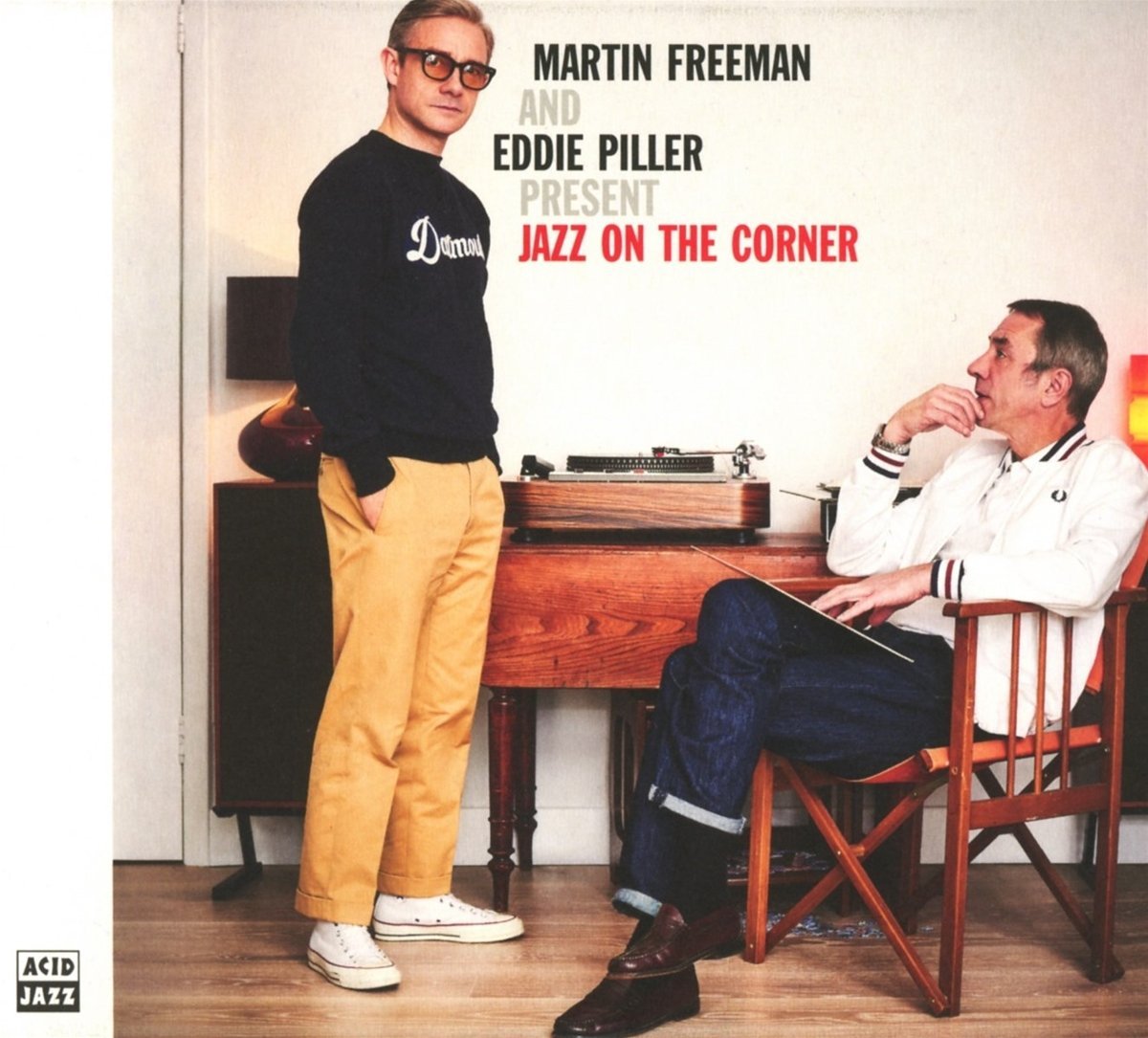
MARTIN FREEMAN AND EDDIE PILLER PRESENT JAZZ ON THE CORNER.
Martin Freeman and Eddie Piller Present Jazz On The Corner.
Label: Acid Jazz.
Eddie Piller has been a stalwart of the Acid Jazz scene for the best part of thirty years, and during that time, the fifty-four year old has been a DJ, promoter and founded the Acid Jazz record label in 1987. This was the start of new chapter in Eddie Piller’s career.
Over the next few years, the Acid Jazz scene blossomed, and Eddie Piller found himself writing, remixing and playing flute on Mother Earth’s 1992 album Stoned Woman which he also produced. By then, Eddie Piller was an experienced producer and his career continued apace.
So would Eddie Piller’s career as a compiler, which began in 1989 when he and Giles Peterson compiled Totally Wired (A Collection From Acid Jazz Records). Since then, Eddie Piller has compiled numerous compilations for a variety of labels, including critically acclaimed compilations for Blue Note, BGP Records and Acid Jazz. Nearly thirty years later, and Eddie Piller is still compiling new compilations.
By 2016, Eddie Piller was about to add a new role to his impressive CV, when he asked his friend and fellow musical aficionado Martin Freeman to join him in hosting a jazz radio show. Little did they know how popular that show would when they started playing some of their favourite jazz cuts. It was a case of anything goes during On The Corner, with the hard bop of Lee Morgan and Art Blakey, following hard on the heels of soul-jazz, jazz-funk and the original acid jazz to the post modern spiritual jazz of Kasami Washington. The new radio show proved hugely popular, and week after week, the pair were inundated with emails and tweets. That was when they knew that they couldn’t leave things there, and began thinking of where they went next?
Eventually, the dynamic duo decided to release a compilation with each of them choosing eleven cuts each on Martin Freeman and Eddie Piller Present Jazz On The Corner which was recently released by Acid Jazz. This lovingly curated compilation features Art Blakey’s Jazz Messengers, Eddie Harris, Lee Morgan, Jimmy Smith, Blossom Dearie, Leon Thomas, Marlena Shaw, Les McCann, Blue Mitchell and Eugene McDaniels. Always, the emphasis is on quality on this latest complication of quality jazz, Martin Freeman and Eddie Piller Present Jazz On The Corner.
Disc 1-Martin’s Side.
Mose Allison’s If You’re Going To The City opens disc one which is Martin’s side of Martin Freeman and Eddie Piller Present Jazz On The Corner. If You’re Going To The City is a track from Mose Allison’s 1962 album Swingin’ Machine which was released on Atlantic Records. By then, Atlantic Records were still persisting in promoting Mose Allison as a blues singer. This was closer to the truth than Prestige, who had previously tried to promotive Mose Allison as a pop singer. However, If You’re Going To The City shows that Mose Allison’s music was an irresistible mixture of blues and jazz that is timeless.
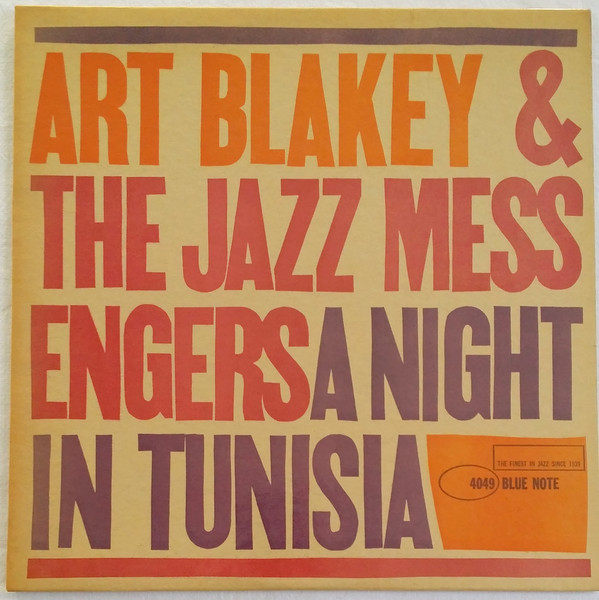
When Art Blakey’s Jazz Messengers released their 1961 classic album A Night In Tunisia, on Blue Note Records, one of the album’s highlights was Kozo’s Waltz. It features bandleader and drummer Art Blakey and his Messengers at the peak of their powers. Everyone from bassist Jymie Merritt, pianist Bobby Timmons, trumpeter and tenor saxophonist Wayne Shorter play their part in the sound and success of this hard bop classic.
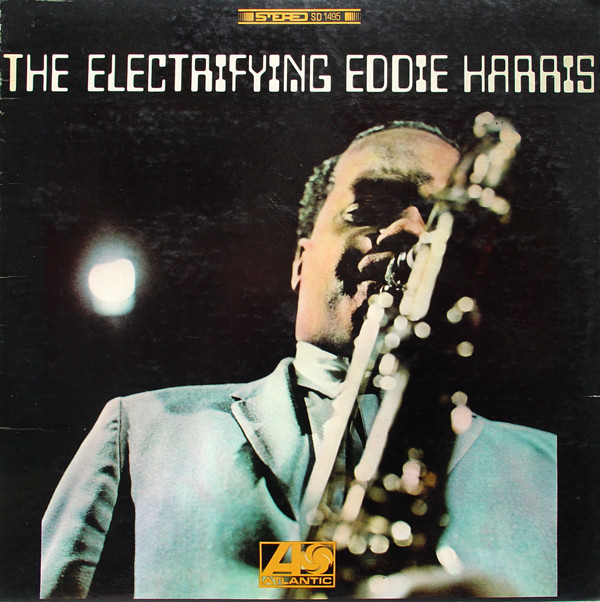
In 1967, tenor saxophonist Eddie Harris released The Electrifying Eddie Harris on Atlantic Records and it became one of his most famous and important albums. Eddie Harris’ playing was innovative throughout an album where he used electronic varitone on his tenor saxophone. One of Eddie Harris’ finest moments on the album was his composition Listen Here. It finds Joe Wohletz and Ray Barretto adding Latin percussion to this slow-burning, hip-swaying slice of soul-jazz.
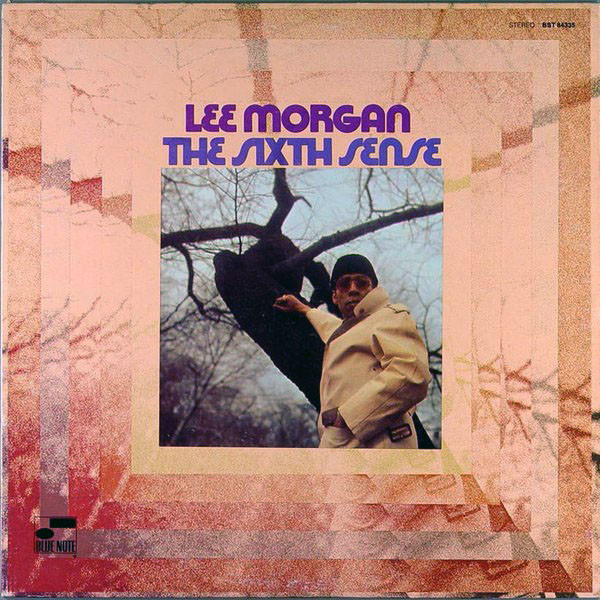
Lee Morgan led a multitalented and versatile sextet when he recorded his solo album The Sixth Sense in November 1967. However, it wasn’t until 1969 that Blue Note Records eventually released The Sixth Sense, which featured four Lee Morgan compositions. This included Psychedelic which is without doubt, one of the album’s highlights. Pianist Cedar Walton and saxophonist Jackie McLean join with bandleader and trumpeter to play leading roles on the sound and success of Psychedelic which is a memorable and melodic example of hard bop.
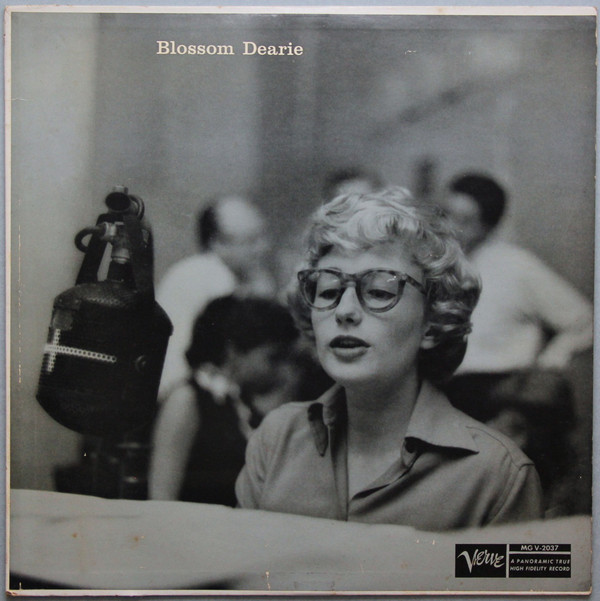
After spells with Prestige, Mercury and Barclay, thirty-four year old Blossom Dearie signed to Verve Records where she would record some of her finest music over the next five years. This began with the release of the album Blossom Dearie in 1957, which featured the beautiful, wistful ballad Now At Last. It’s a reminder of one of the greats of vocal jazz, at the peak of her powers.
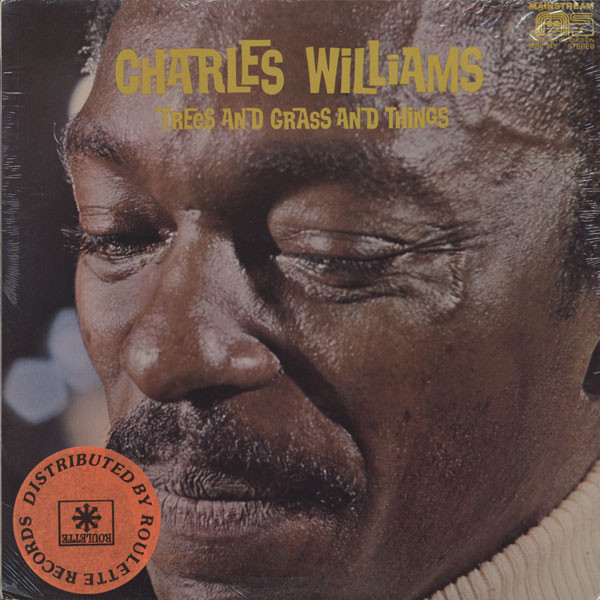
After saxophonist Charles Williams signed to Bob Shad’s Mainstream Records, he released his debut solo album Trees and Grass and Things in 1971. It was produced by Bob Shad and opens with Don Pullen composition Trees And Grass And Things. It’s a truly irresistible as percussion, saxophones and a Hammond organ play starring roles as jazz-funk and soul-jazz are combined to create a truly irresistible dancefloor filler.
Disc 2-Eddie’s Side
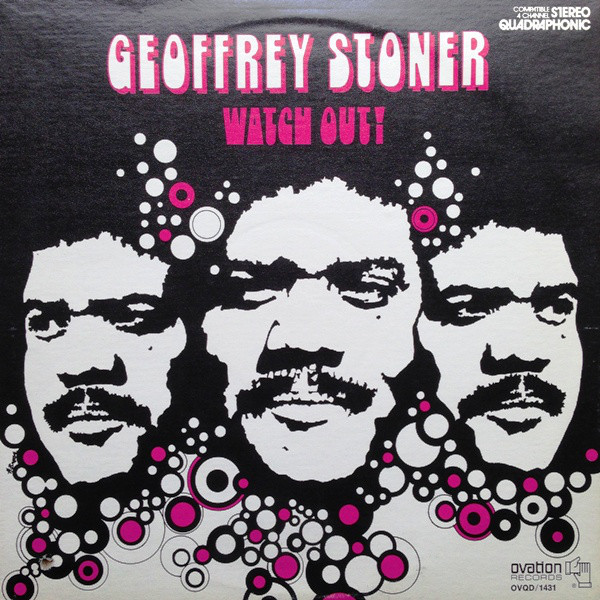
Opening disc two, which is Eddie’s side of Martin Freeman and Eddie Piller Present Jazz On The Corner is Geoffrey Stoner’s Bend Your Head Down Low. It’s the track that closed his 1973 album Watch Out which was released on Dick Schory’s Ovation Records but wasn’t the commercial success that Geoffrey Stoner had hoped. One of Watch Out’s finest moments was Bend Your Head Down Low where Geoffrey Stoner delivers an impassioned and soulful vocal against an arrangement that is jazz-tinged and funky. When all this combined the result is a beautiful, powerful and poignant ballad.
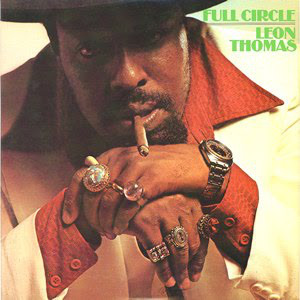
During the time he spent signed to Bob Theil’s Flying Dutchman Productions, Leon Thomas released some of the best music of his career. This included his 1973 album Full Circle which he recorded with an all-star band. One of the highlights of the album was Just In Time To See The Sun, which is a glorious and joyous fusion of jazz, funk and soul.
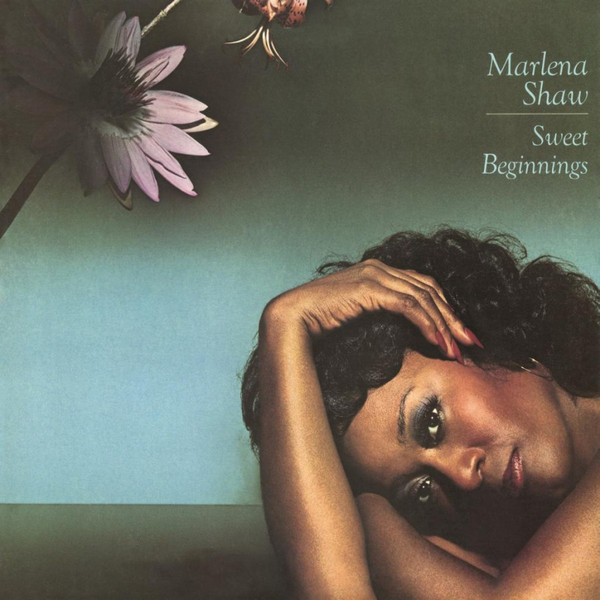
By 1977, Marlena Shaw was signed to Columbia and released Sweet Beginnings which was produced by Bert DeCoteaux and featured Look At Me, Look At You. It features lush strings and backing vocals while Marlena Shaw delivers one of her most soulful vocals on Sweet Beginnings.
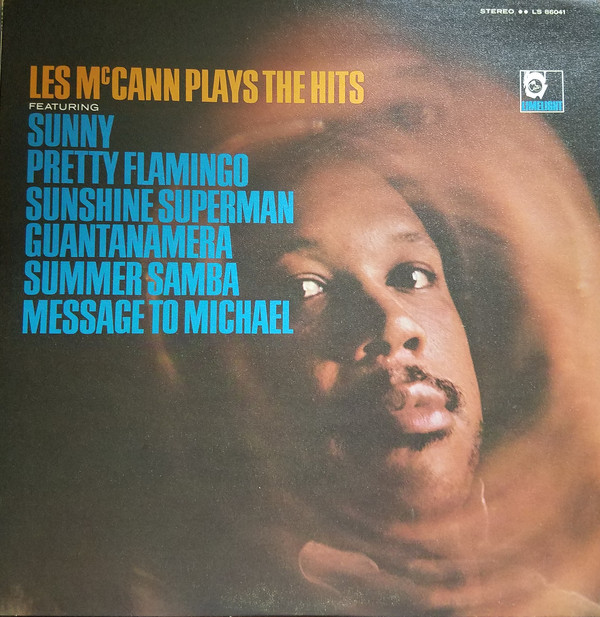
In 1966, pianist, songwriter and vocalist Les McCann released his album Les McCann Plays The Hits on the Limelight label. It featured Sad Little Girl which featured a hurt filled and emotive vocal that is one of the finest on this hugely underrated soul-jazz album.
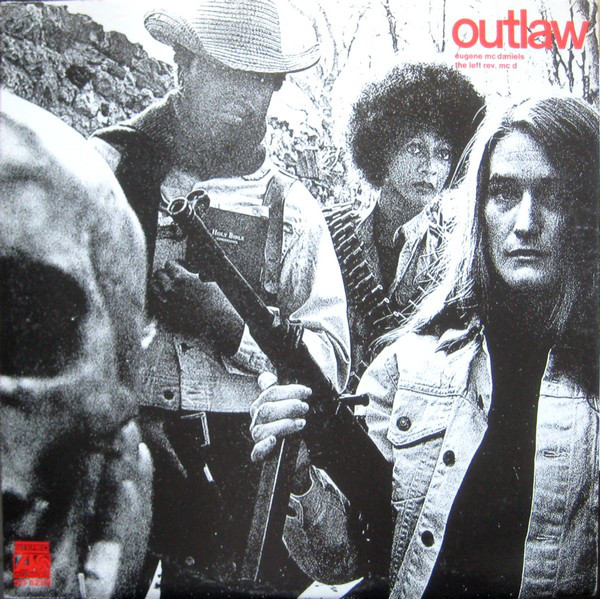
When Eugene McDaniels released his album Outlaw on Atlantic Records, in 1970, he was already a vastly experienced and highly respected musician. Outlaw was a powerful album, with many of the tracks featuring lyrics that were full of social comment. These tracks were played by some top New York session players, and they accompany Eugene McDaniels on Cherrystones where he delivers a defiant vocal on this genre-melting track that features elements of soul, funk, psychedelia and rock. It’s one of the highlights of Outlaw which is one of the hidden gems in Eugene McDaniels’ back-catalogue.
Closing disc two and Martin Freeman and Eddie Piller Present Jazz On The Corner is Ulf Sandberg’s Bolivia, which is taken from their 1993 album Ulf Sandberg Quartet which was released on the Acid Jazz label. Although Bolivia was released in 1993, it sounds as if it was recorded a generation previously as then Ulf Sandberg Quartet create a track that is a mesmeric, melodic and memorable fusion of post bop and hard bop that closes the album on a high.
For all the listeners who have tuned in and enjoyed Martin Freeman and Eddie Piller Present Jazz On The Corner over the past couple of years, will enjoy the compilations that they recently released on the Acid Jazz label. It’s entitled Martin Freeman and Eddie Piller Present Jazz On The Corner and features music from twenty-two artists, including familiar faces and new names.
There’s contributions from giants of jazz and soul including Art Blakey’s Jazz Messengers, Eddie Harris, Lee Morgan, Jimmy Smith, Blossom Dearie, Leon Thomas, Marlena Shaw, Les McCann, Blue Mitchell and Eugene McDaniels. Sadly, many people won’t have heard of Joe Gordon, Charles Williams, the Ulf Sandberg Quartet or the wonderfully named Geoffrey Stoner until they’ve heard Martin Freeman and Eddie Piller Present Jazz On The Corner, which is sure to further their musical education.
That is the beauty of compilations like Martin Freeman and Eddie Piller Present Jazz On The Corner, as there’s always a new track that waiting to be discovered. Especially on lovingly curated compilations like Martin Freeman and Eddie Piller Present Jazz On The Corner where the compilers dig deep and combine deep cuts and hidden gems with tracks from classic album to create what’s undoubtably one of the best jazz compilations of recent months.
Martin Freeman and Eddie Piller Present Jazz On The Corner.

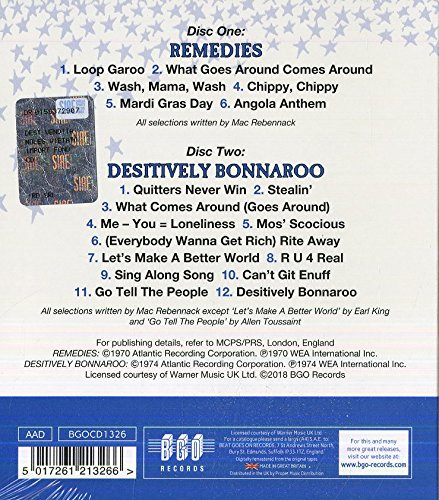
DR JOHN-REMEDIES AND DESITIVELY BONAROO.
Dr John-Remedies and Desitively Bonnaroo.
Label: BGO Records.
When a copy of Dr John’s debut album Gris Gris was sent to Atlantic Records’ founder Ahmet Ertegun he disliked the album so much, that he was reluctant to even release the album and said: “how can we market this boogaloo crap?” This wasn’t the response that Dr John had been hoping when he recorded Gris Gris which was a combination of psychedelia, blues, free jazz, R&B, soul, funk, jazz. Add to this psychedelic stew the authentic music of the melting pot that is New Orleans and the voodoo image that Dr John had carefully cultivated and Gris Gris was like no other album that Atlantic Records had released. That presented the label with a huge problem.
Atlantic Records’ PR department had idea to promote an album like Gris Gris, as they had no cultural reference points, nothing to compare the album to. Despite the best efforts of Atlantic Records PR department, when Gris Gris was released on January the ’22nd’ 1968 and introduced the world to Dr John The Night Tripper, it failed to trouble the charts and neither critics nor record buyers understood Dr John’s groundbreaking debut album. However, like so many albums that fail to find an album on their release, Gris Gris was later reappraised and belatedly, was recognised as a seminal album that was the start of a rich vein of form from Dr John.
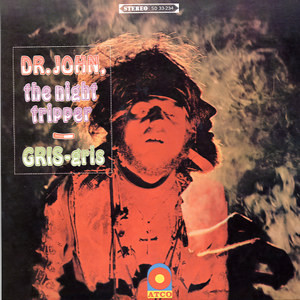
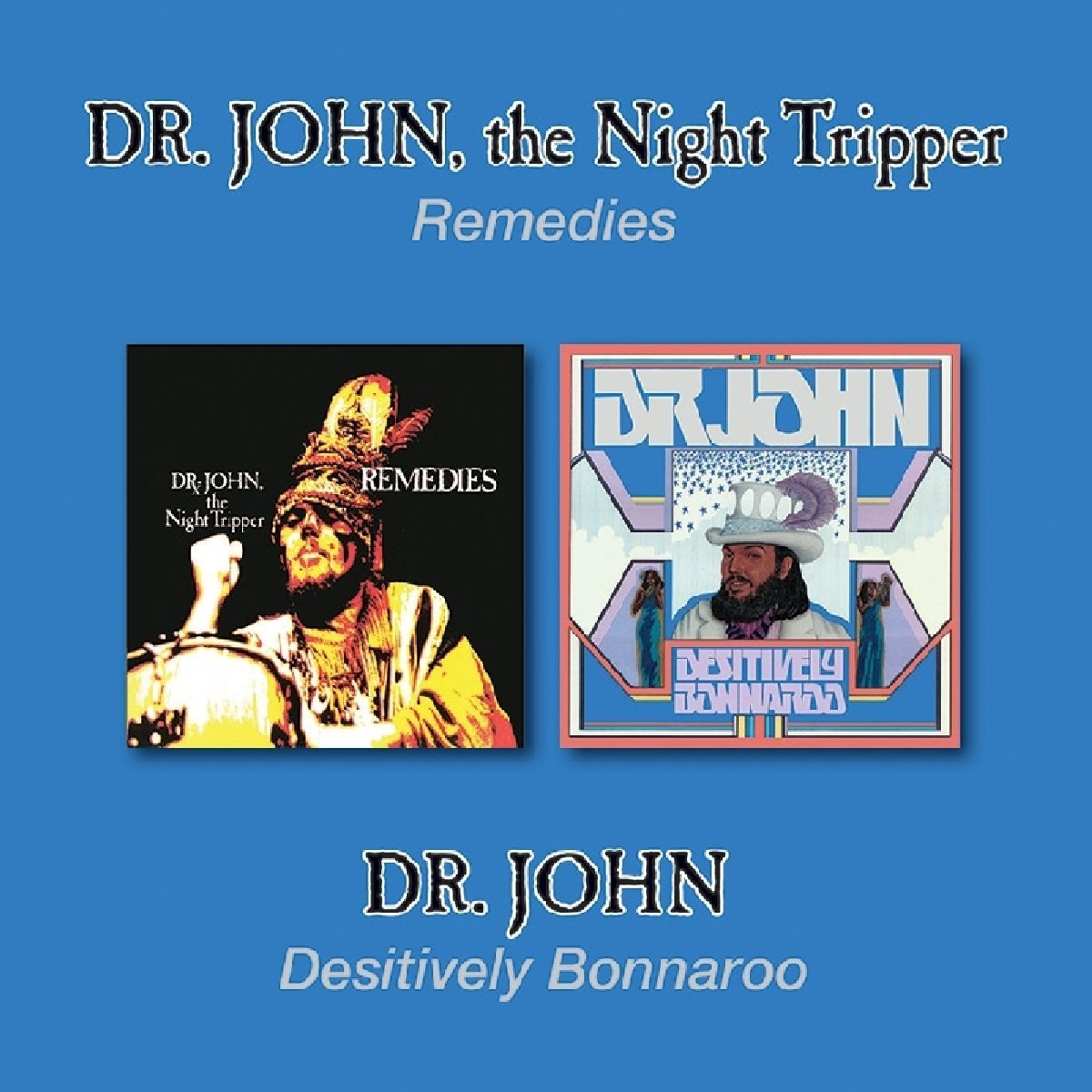
This was the start of a six-year period when Dr John could no wrong, and released seven innovative albums that are among the his finest work. These albums are the perfect introduction to Dr John, including his third and seventh albums, Remedies and Desitively Bonnaroo which were recently rereleased by BGO Records as a twofer. However, these albums were still to come, and before that, Dr John released another classic album.
Babylon.
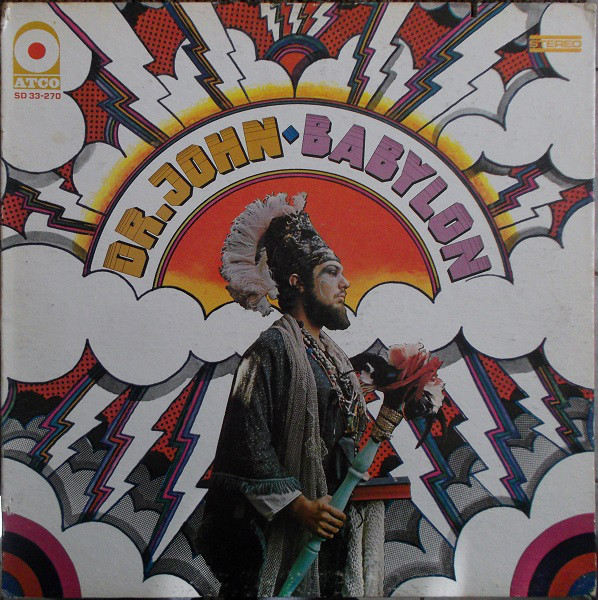
This was Babylon which was recorded in late 1969, which was a turbulent time for Dr John, who was experiencing problems in his personal life. “I was being pursued by various kinds of heat across LA” and this influenced the album he was about to make. So would the assassinations of Bobby Kennedy and Martin Luther King Jr and the Vietnam War which is referenced in The Patriotic Flag-Waiver. The title-track Babylon was recorded in 3/4 and 10/4 time, and featured Dr John thoughts on the state of world in late 1968. It was a part of a powerful album that was released in early 1969.
Babylon was released on January the ’17th’ 1969 was a powerful, cerebral and innovative genre-melting album which socially had much in common with Dr John’s debut album Gris Gris. However, critics didn’t ‘get’ Babylon and the album which failed commercially. However, just like Gris Gris, Babylon was later reappraised by critics and nowadays is regarded as one of his finest albums and a minor classic.
Remedies.
Following the commercial failure of Babylon, things went from bad to worse for Dr John, before he could begin work on his third album Remedies. This started when a deal went south, and he was arrested by the police and ended up in jail. It was a worrying time for Dr John who was parole, and if he ended up with a parole violation, he knew he might end up in the infamous Angola jail. That didn’t bare thinking about, and already Dr John was desperate to get out of the local jail. However, he needed someone to post bail, so contacted his managers who he remembers: “were very bad people.” This proved to be an understatement.
Not long after this, Dr John’s managers had him committed to a psychiatric ward, where he spent some time. By then, it was obvious to Dr John that his managers were no longer playing by the rules. All he wanted to do was make music, and everything that had happened recently were nothing to do with music. Instead, it was all connected to Dr John’s increasingly chaotic lifestyle, which made it all the more frustrating for those that realised just how talented the Gris Gris Man was.
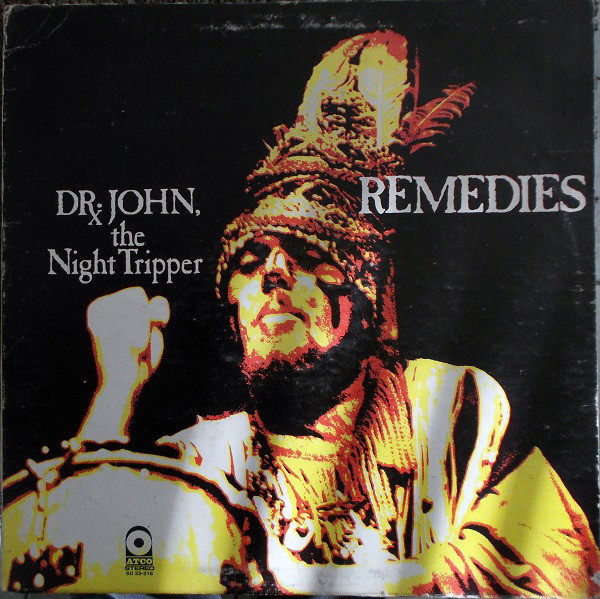
Eventually, having managed to put his problems behind him, Dr John wrote the six tracks that became Remedies using his real name Mac Rebennack. Among the tracks Dr John had written was What Goes Around Comes Around which later became a favourite during his live shows and Mardi Gras Day which paints pictures of New Orleans when it comes out to play. Very different was Angola Anthem which was inspired by a friend of Dr John’s who had just been released from Angola, the Louisiana State Penitentiary after forty years. Dr John paid tribute to his friend with an eighteen minute epic that took up all of side two of Remedies. It was produced by one of the most successful producers of the day.
Although Harold Battiste had produced Gris Gris and Babylon, he was replaced by Tom Dowd and Charles Greene who were tasked with transforming Dr John’s career. However, although Tom Dowd was enjoying the most successful period of his career, he had never worked with anyone like Dr John.
When the recording of Remedies began, Dr John was joined by a small band that featured Cold Grits who played drums, bass and guitar and backing vocalists Shirley Goodman, Tami Lynn and Jessie Hill who also played percussion. Dr John played piano, added his unmistakable vocals and despite losing part of a finger during a shooting a few years previously, he played guitar on Remedies which was released in the spring of 1970.
Just like his two previous albums, critics didn’t seem to understand Remedies, which was credited to Dr John The Night Tripper. Remedies was another ambitious album of genre-melting, voodoo-influenced album where Dr John The Night Tripper through everything from psychedelia, blues, R&B, soul, funk and jazz into the musical melting pot and gave it a stir to create an album where the music was mysterious, otherworldly and haunting.
That was the case from the album opener Loop Garoo while there’s a darkness and defiance to the lyrics to the hook-laden What Comes Around (Goes Around) which showed another side to Dr John. His recent problems and experiences had influenced Wash, Mama, Wash where soaring backing vocals and horns accompany Dr John on a track that is tinged with humour. The horns return and play their part in the success of Chippy Chippy, before the darkness describes and music becomes moody and broody as chants, moans and cries emerge from this lysergic voodoo stew of Mardi Gras Day which gives way to the otherworldly eighteen minute epic Angola. It brought Remedies to a close, which was a potent and heady brew from Dr John The Night Tripper.
By the time Remedies was released on April ‘9th’ 1970, some FM radio stations had picked up on the album, and were playing it on their late shows. Despite the radio play Remedies had received, the album never troubled the charts, and it was only much later that record buyers realised that they had missed out on another important and innovative album from Dr John.
The Sun, Moon and Herbs.
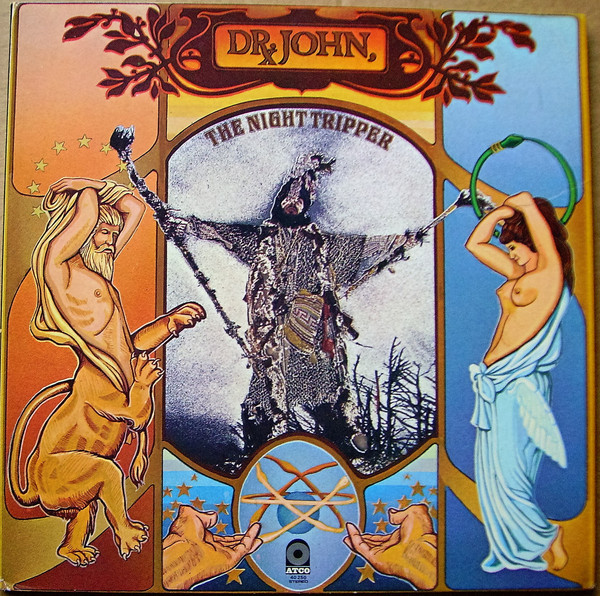
Despite Dr John’s first three albums failing to find an audience, many of his fellow musicians were fans of his music, and were only too happy to feature on his fourth album The Sun, Moon and Herbs. This included Eric Clapton, Mick Jagger, Bobby Whitlock, Graham Bond, Carl Radle, Jim Gordon and Doris Troy. They were joined by The Memphis Horns as Dr John and Charles Greene took charge of production.
They were responsible for a dark and swampy sounding album that is rich in imagery and paints of New Orleans on a hot, sticky night as thunder crackles and rumbles in the distance like the drums on The Sun, Moon and Herbs. When it was released on August the ’31st’ 1971, still critics struggled to understand Dr John’s music, but this time, The Sun, Moon and Herbs which featured an all-star cast, spent five weeks in US Billboard 200 and peaked at 184. At last, Dr John’s music was starting to find a wider audience.
Dr. John’s Gumbo.
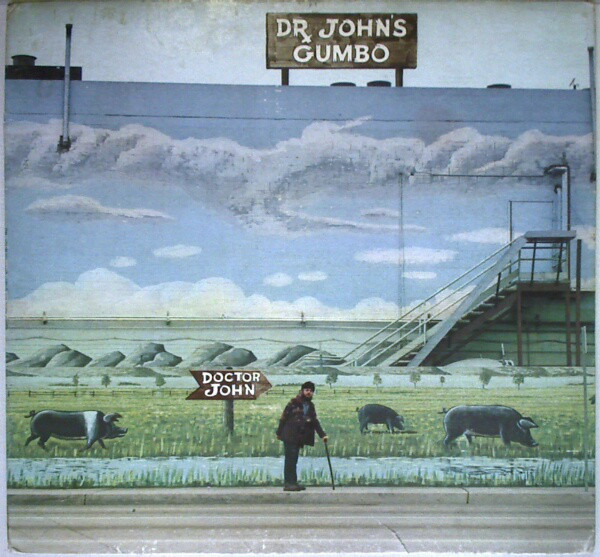
Buoyed by the success of The Sun, Moon and Herbs, Dr John decided to record an album of cover versions of New Orleans’ classics for his fifth album Dr. John’s Gumbo. It was produced by Harold Battiste and Jerry Wexler and ironically given Dr. John’s Gumbo featured tracks by legends some of the New Orleans’ musical legends including Professor Longhair, Huey “Piano” Smith, James “Sugar Boy” Crawford and Dr John the album was recorded in LA. However, Dr. John’s Gumbo was The Night Tripper’s most successful album.
Unlike previous albums, Dr. John’s Gumbo was a much more straightforward album of R&B, and it found favour with critics. After Dr. John’s Gumbo was released to critical acclaim, it reached entered the US Billboard 200 where it spent eleven weeks, peaking at 112. Dr John was on his way.
In The Right Place.
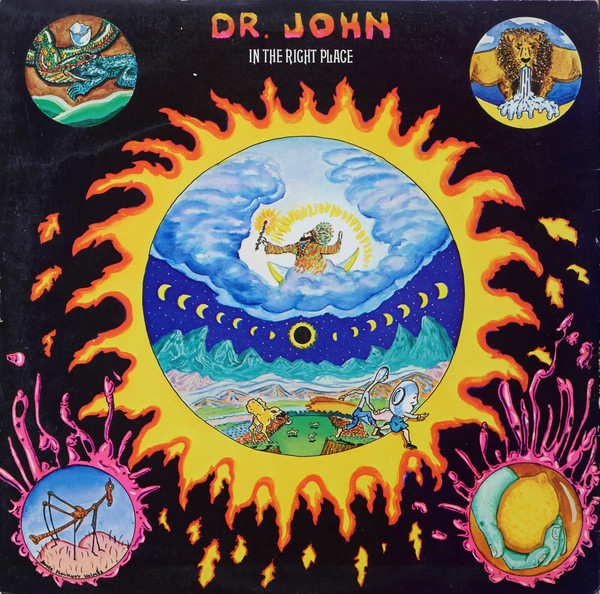
Following the success of Dr. John’s Gumbo, Dr John headed to Criteria Studios, in Miami, where he recorded In The Right Place with songwriter, musician, arranger and producer Allen Toussaint. He was one of the most influential figures in the New Orleans’ music scene, and was able to bring out the best in Dr John as he laid down songs of the quality of Right Place, Wrong Time, Same Old Same Old, Peace Brother Peace and Such A Night. Once In The Right Place was completed, the two men returned to the Big Easy and watched as Dr John’s popularity soared.
Critics on hearing In The Right Place which was a fusion of funk, blues and New Orleans R&B hailed the album was one of his finest. Record buyers agreed when In The Right Place was released on February the ’25th’ 1973 thirty-three weeks in the US Billboard 200 and peaked at twenty-four. What Ahmet Ertegun had foolishly described as: “boogaloo crap” just a few years earlier, was now proving profitable for his company. Dr John was having the last laugh.
Desitively Bonnaroo.
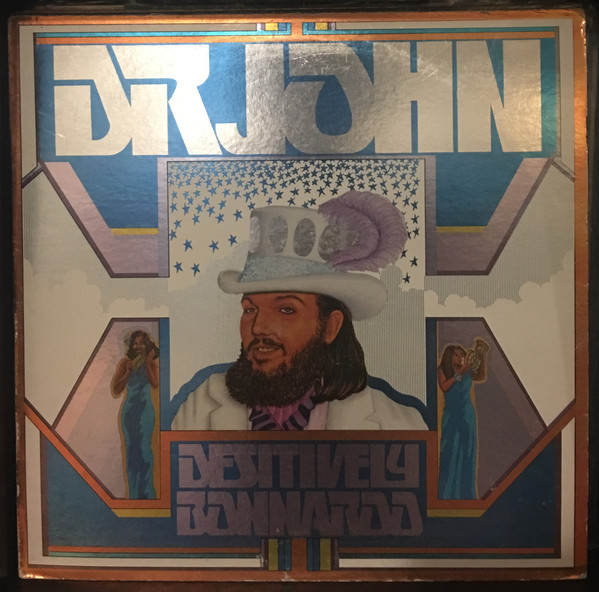
The success of In The Right Place was a game-changer for Dr John, whose popularity soared. After six albums, he was enjoying the commercial success and critical acclaim his music deserved. However, Dr John knew that he would have to think about his seventh album, and began writing what became Desitively Bonnaroo.
Of the eleven tracks on Desitively Bonnaroo, Dr John wrote nine and penned Desitively Bonnaroo with Jessie Jill. These tracks were joined by covers of Earl King’s Let’s Make a Better World and Allen Toussaint’s Go Tell the People. These tracks were recorded at Sea-Saint Recording in New Orleans and Criteria Studios in Miami.
Just like In The Right Place, Allen Toussaint produced Desitively Bonnaroo, played piano, keyboards and added percussion and backing vocals. Accompanying Dr John was The Meters, one of New Orleans’ hottest funk band plus a horn section and backing vocalists. They played their part in an album that followed in the footsteps of In The Right Place.
When critics heard Desitively Bonnaroo they were once again won over by another carefully crafted album of funk and New Orleans R&B from Dr John. It oozed quality from the opening bars of Quitters Never Win and included another version of What Come Around (Goes Around) plus the irresistible Mos’ Scocious and songs full of social comment like Everybody Wanna Get Rich) Rite Away and Let’s Make a Better World. They were joined by the soulful and funky Sing Along Song and Can’t Git Enuff which is one of the funkiest cuts on the album. However, one of the most beautiful and poignant was the ballad Go Tell The People, which gives way to the uber funky album closer Desitively Bonnaroo. It closed Dr John’s seventh album on a high.
On the release of Desitively Bonnaroo on April the ‘8th’ 1974, it charted in the US Billboard 200 where it spent eight weeks and reached number 105. Despite the quality of Desitively Bonnaroo it had failed to replicate the commercial success of In The Right Place, which must have been a huge disappointment for Dr John.
Sadly, Desitively Bonnaroo was the last album that Dr John released on the Atlantic Records imprint Atco, and was the end of a golden period for Dr John. From Gris Gris which was released on January the ’22nd’ 1968, right through to Desitively Bonnaroo which hit the shops on April the ‘8th’ 1974, musical chameleon and pioneer Dr John had been on the hottest streak of his career, releasing a string of groundbreaking albums, including several classic albums.
These albums showed different sides to Dr John’s music, as his music continued to evolve over a six-year period. By the time he released the funky New Orleans R&B of Desitively Bonnaroo in 1974, this was a long way from his classic debut album Gris Gris. It was an album the majority of critics and record buyers failed to understand.Sadly, that was the also case with Remedies which was released in 1970. It saw Dr John The Night Tripper throw psychedelia, blues, R&B, soul, funk and jazz into the musical melting pot and gave it a stir to create an album where the music was mysterious, otherworldly and haunting. However, this vastly underrated album passed record buyers, and it was only much later that record buyers appreciated and embraced this innovative album.
Nowadays, original copies of Dr John’s aren’t easy to find, but recently, Remedies and Desitively Bonnaroo were remastered and reissued by BGO Records as a twofer, and this is the perfect way to discover two very different sides to Dr John’s music. Between 1970s Remedies and 1974s Desitively Bonnaroo this musical pioneer had reinvented his music and was enjoying the commercial success and critical acclaim he so richly deserved. Sadly, Desitively Bonnaroo brought to an end what was a period where Dr John could do no wrong, as this musical legend released some of the best music of his long and illustrious career.
Dr John-Remedies and Desitively Bonnaroo.
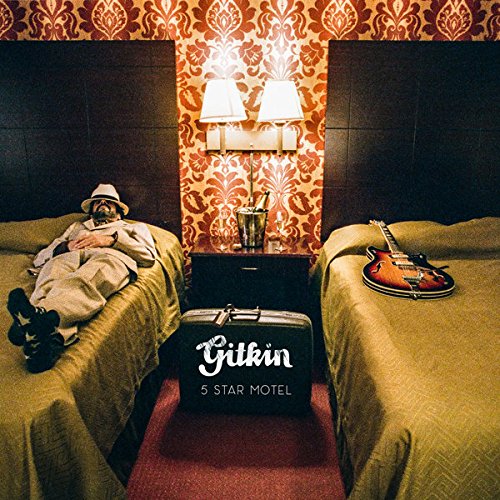
GITKIN-5 STAR MOTEL.
Gitkin-5 Star Motel.
Label: Wonderwheel Recordings.
Release Date: ‘6th’ April 2018.
A lifetime ago, a mysterious man known only as Gitkin, once dreamt of forging a career as a musician, but when his dreams were shattered, he bought a consignment of knock-off Gibson guitars which he sold, as he travelled the length and breadth of the land of the free. After a while, it was the only thing that Gitkin knew, and he was content to hustle his way through life, living on his wits and sailing close precariously close to the wind.
Usually he booked into a low rent hotel on the wrong side of town, and that night, would seek out his marks in a local dive bar who might be in the market for a cheap guitar. It was a slick, clever and practised pitch, with Gitkin shooting the breeze with a newcomer or stranger in town, and after putting them at ease, he made his pitch. Most times, he had chosen his mark well, and soon would be closing the sale.
The pair would step outside away from prying eyes and any off-duty law enforcement officer, where Gitkin would take a guitar from the trunk of his car and show it to the mark under the moonlight. That was when Gitkin’s guitars looked their best. However, they always sounded their best when Gitkin unleashed some of his trademark licks which he had honed and perfected over the years he spent on the road. This was always enough to close the sale, and after that, Gitkin moved on to the next dive bar knowing that his guitar licks had made a difference.
Over the years, Gitkin had watched and learned from some seasoned guitarists down on their luck, tried and bought his guitars. After that, Gitkin returned to his hotel room where he practised the licks he had witnessed into he early hours, then and continued to dream.
Like many other guitarists, Gitkin had always dreamt that one day he would become a professional musician, but that never panned out, and instead, he had fallen into the life of a hustler, who made a living selling third-rate, rebadged guitars in dive bars which were akin to fool’s gold. In Gitkin’s world, all that glittered wasn’t gold.
Sometimes, though, away from the hustle, Gitkin chanced on late night jam sessions in backstreet bars, and would sit in as with local musicians and play until the early hours. These were the nights that Gitkin remembered and enjoyed, when there was no hustle and he could spend a few hours doing what he loved, making music.
Other times, after Gitkin arrived in town and had made some and connections, they would head to someones apartment or a hotel room, and everyday objects became makeshift instruments. Gitkin and his newfound friends would play and shoot the breeze until the early hours or until someone complained, and the party came to an abrupt end. Even then, Gitkin remembered these nights fondly as he arrived in another town, where he risked life and limb on another hustle.
Always though, Gitkin managed to survive, even if it was by the skin of his teeth, and burning rubber as he shot a red to escape an unhappy mark. Later, and long after Gitkin had called time on his career hustling, he started to recall the years he spent living on his wits and the days of daring do and close calls when he sailed perilously close to the wind. Not many members of Gitkin’s family wanted to hear his stories as they were hard-working respectable people. They didn’t want to hear his Gitkin’s secrets. That only came much later.
Long after Gitkin had passed away, and gone to sell knock-off guitars in the next world, his nephew Brian J Gitkin heard about his uncle and his past which the family were reluctant to talk about. However, Brian J Gitkin who was by then an up-and-coming musician, had never met the mysterious guitar salesman, and eventually managed to persuade some of his relatives to tell him about the man and his colourful past.
This he knew wasn’t going to be easy as Gitkin’s huckster lifestyle was off-limits at family gatherings. However, some of the older members of the family could be encouraged to reminisce about Gitkin and his colourful lifestyle. Eventually, after spending many a late night listening to steady stream anecdotes about Gitkin, his nephew was almost able to piece together the life and times of the old guitar salesman. However, the final piece of the jigsaw fell into place when Brian J Gitkin found an old cassette which featured some of his uncle’s songs. This was a game-changer for Brian J Gitkin.
Having borrowed a tape recorder, he sat down and started to listen to the music on the cassette which he collected to his ho-fi and pressed play. Although the music was decidedly lo-fi and scratchy, Brian J Gitkin was captivated by the music’s otherworldly quality and listened as his late uncle as he seamlessly switched between musical genres, playing everything from Tuareg funk to Peruvian chicha and even Turkish psych. Despite having a relatively educated musical palette, Brian J Gitkin sometimes struggled to discerner between the musical genres. This didn’t matter as he was transfixed as he listened to uncle he never knew, who was obviously a talented and versatile musician, who never had the opportunity to fulfil his potential, and instead, had embraced the hustler lifestyle. As the cassette finished, and Brian J Gitkin realised this, a sense of sadness came over him.
After some thought, Brian J Gitkin decided to record his own homage to the uncle he never knew, which became 5 Star Motel which fittingly is credited to Gitkin, and will be released by Wonderwheel Recordings on the ‘6th’ April 2018. On 5 Star Motel the Gitkin Jr expands upon his late uncle’s musical philosophy that featured on the cassette that he found.
It’s no surprise that the guitar is the common thread that runs through 5 Star Motel. This was the instrument Gitkin played as he hustled his way across America, and is the instrument that his nephew plays throughout 5 Star Motel’s twelve songs. The guitar gave birth to myriad of musical ideas, which Gitkin Jr develops with the help of an array of folkloric stringed instruments on an album that embraces disparate musical cultures. Still, it’s the guitar that takes centre-stage on 5 Star Motel, and brings everything together on this carefully crafted album that embraces an array of different cultures. They shine through on 5 Star Motel, which although is an album about travel and America, looks at the world outside the land of the free.
Essentially, 5 Star Motel with its array of musical influences is a snapshot of just America in 2018, when people come from all over the world, looking to make a new life and attempt to live the American Dream. They bring with them their own music, which becomes part of the soundtrack to modern America in 2018. This music Gitkin has used to continue what his uncle began when he recorded the music onto a cassette tape. In doing so, Gitkin squares the circle on 5 Star Motel his nephew discovered and began
5 Star Motel opens with Tail Chaser, which canters along as a shimmering surf guitar takes centre-stage, and is a reminder of the music Gitkin’s uncle must have heard as he hustled his way across America. Gradually, the track becomes lysergic, dreamy and melodic as this captivating cinematic surf track continues to reveal its secrets. Later, it canters along, as if hinting at the Westerns that were part of the American way of life, before the track reaches a crescendo. In doing so, it sets the bar high for what follows.
This includes Canción Del Rey which picks up where Tail Chaser left off, and is a showcase for Gitkin’s fleet-fingered fuzzy guitar, while the rhythm section anchor the track, but ensure that it still swings. Meanwhile, the sound of sound of Peruvian chicha can be heard as Gitkin’s enchanting musical adventure continues to captivate.
There’s no stopping Gitkin, and on the genre-melting Plaid Suit, where combines elements of dub, psychedelia and soul-jazz to create a lysergic and dreamy track. Pinto by comparison is a musical roller coaster that is initially sounds psychedelic before it’s combined with a surf instrumental. Later, it’s all change and Pinto sounds as it was recorded in San Francisco at the time of the Merry Pranksters as the music floats along becoming distant, dreamy and otherworldly, before Gitkin returns to the other “side” of Pinto which has much in common with Plaid Suit.
Yama is another captivating and mesmeric instrumental where Middle Eastern influences are omnipresent. Meanwhile the driving rhythm section and dusty Hammond organ play add an element of funk as the music becomes dramatic and thanks to the Middle Eastern influences, irresistible and dancefloor friendly. Very different is Siskayou Trail, which is slow, moody mesmeric and rich in imagery, as it paints pictures of a bleak but beautiful barren landscape.
Grand Street Feast is another genre-melting track, where he combined foggy funk with psychedelic Afrobeat as Gitkin adds to the musical melting pot, an array of sounds from far-flung paces. However, Gitkin isn’t finishes and uses filters to transform the track where a guitar and folkloric stringed instruments play starring roles during this genre-melting musical feast. It’s a similar case on Zone Jumper where an array of exotic sounds and musical genres assail the listener, teasing, taunting and tantalising them as disparate cultures collide. That is the case on Whiskey Road, which features everything from Thai to dub and electronica and even a hint of Irish music as this memorable track heads into singalong territory.
Equally memorable is El Millonario where Gitkin is encouraged with handclaps during this cinematic track. It gives way to Fang Dubbard where not for the first time, Gitkin makes good use of tape delay and spring reverb. They add a warmth to the music as it shimmer and glistens, and sometimes, takes on a dubby, lysergic sound. These effects play an important part in the track’s sound and success of what’s one of the album’s highlights. Closing 5 Star Motel is Ohm Rider (When you Die You’ll Meet God), which veers between dubby, lysergic and ethereal sound before the music becomes melodic, jazz-tinged, intense and elegiac. In doing so, Gitkin closed his debut album on a high and finishes a story his late uncle, the mysterious guitar salesman and hustler recorded onto a cassette tape.
That was where it lay unloved, with nobody having bothered to listen to what was a veritable musical feast. This was enough to inspire Gitkin to record a homage to the uncle he never met, which became 5 Star Motel, which will be released by Wonderwheel Recordings on the ‘6th’ April 2018.
Fittingly, 5 Star Motel is an album about travel and America, which brings the story back to Gitkin’s uncle who week after week, months after month and year after year, hustled his way across America, spending each night trying to persuade marks to buy a knock-off guitar outside dive bars. These guitars looked good after several bottles of Budweiser, and may have sounded good as Gitkin’s uncle unleashed some flashy licks, but the next morning as the mark sobered up, reality struck and they realised they had been had. By then, the guitar salesman and frustrated musician was long gone, and he continued to crisscross the land of the free with a seemingly never-ending supply of knock-off guitars. Maybe if things had been different, maybe Gitkin’s uncle would’ve made a living out of music, as he had the talent, which shawn through on the cassette tape which was his musical legacy?
That cassette tape later inspired the nephew he never met to record 5 Star Motel, which was written and produced by Gitkin whose a multitalented multi-instrumentalist who played nearly every instrument on this carefully crafted homage to the uncle he never knew. It finds Gitkin combining disparate musical genres, and an array of exotic sounds from far-flung places that are now part of multicultural America in 2018. The final piece of this musical jigsaw ware the tape delay and spring reverb which Gitkin puts to good use throughout 5 Star Motel. These effects aren’t overused, and play their part in the sound and success of 5 Star Motel, which marks the debut of a truly talented musician…Gitkin.
His carefully crafted and much-anticipated genre-melting debut album, 5 Star Motel, finds the New York based musician paying homage to the uncle he never knew during the twelve tracks on 5 Star Motel. It’s a cinematic album that is rich in imagery as Gitkin follows in his uncle’s footsteps, and he takes the listener on a musical road trip where they travel the length and breath of the land of the free with 5 Star Motel providing the soundtrack, never once reset to selling a hooky guitar outside a dive bar.
Gitkin-5 Star Motel.
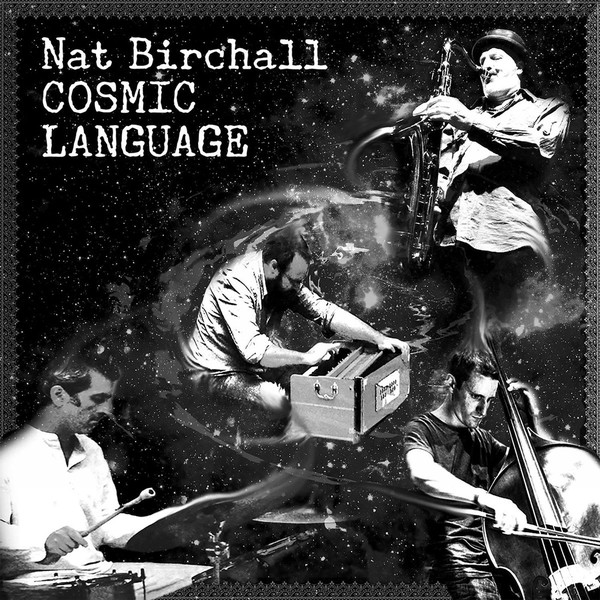
NAT BIRCHALL-COSMIC LANGUAGE.
Nat Birchall-Cosmic Language.
Label: Jazzman Records.
Manchester-based jazz saxophonist Nat Birchall has come a long way since releasing his debut album The Sixth Sense in January 1999, and nowadays, is regarded as one of the leading lights of the vibrant British jazz scene. Nat Birchall is also one of the most talented and inventive British jazz saxophonists of his generation, whose playing is always soulful and spiritual. That has been the case on the nine albums that he’s released over the past three decades. This includes Nat Birchall’s most recent album Cosmic Language which was released by Jazzman Records. It’s the next chapter in the Nat Birchall story.
The Nat Birchall story began in 1957 when he was born in a secluded rural idyll high in the hills above North-West England. This was where he was first heard music playing on his parents radio. By 1971, fourteen year old Nat Birchall bought his first single, which was Isaac Hayes’ Shaft. This wasn’t the start of a lifelong love affair with soul, and instead, Nat Birchall embraced reggae, especially roots and dub. Gradually, he amassed an enviable record collection, which although it mostly featured reggae, also included one jazz album.
This was John Cotrane’s 1957 album Blue Train, which Nat Birchall rediscovered in a corner of his collection one day in 1979, and which inspired him to learn to play the saxophone. Fortunately, a record shop that Nat Birchall that was a regular visitor to, had an alto saxophone for sale, and he managed to persuade the shop owner to sell it for £20. Little did Nat Birchall that it was the best £20 he would ever spend.
Although Nat Birchall was a late starter when it came to the saxophone, the twenty-two year old started taking lessons with local saxophonist Harold Salisbury who also had a passion for modern jazz. After each lesson, Harold Salisbury would hand his pupil a pile of albums and he would listen to in between practise sessions. After just a dozen lessons, Nat Birchall could already play the saxophone by ear and didn’t bother with another lesson until 1994.
By the mid-eighties he was already a member of various fusion, jazz-funk and Turkish fusion bands. This was the equivalent to a musical apprenticeship for Nat Birchall, who by 1992, was ready to form his own band.
This was Corner Crew, an innovative group who were formed in 1992 and incorporated a rapper and sampling as they played their own unique style of jazz-tinged hip hop. The new band proved popular and their live shows were well received. However, but after two years with Corner Crew Nat Birchall was ready to complete his musical education.
In 1994, Nat Birchall enrolled onto a Higher National Diploma course in jazz studies, which allowed him to learn musical theory. Nat Birchall knew that he could only go so far in jazz playing by ear, so knuckled down and completed his musical education. This would prove important when Nat Birchall embarked upon the next chapter in his career.
After six years leading Corner Crew, Nat Birchall was ready to try something different. He had taken Corner Crew as far as he could, and in 1998 the band split-up and later that year, Nat Birchall formed a new band whose roots were the hard bop…Sixth Sense.
Later in 1998, the nascent Sixth Sense began recording a demo, and when Nat Birchall and those around him listened to the demo, they realised that it was good enough to release as an album. Rather than try to interest a record company in the album that became Sixth Sense, Nat Birchall decided to self-release his debut album.
Only a small amount of Sixth Sense were pressed and released on Nat Birchall’s new label Sixth Sense on January the ‘9th’ 1999. However, Sixth Sense was released to critical acclaim and was one Jazzwise Magazine’s albums of 1999. By then, looked as if Nat Birchall had a bright future in front of him.
Sadly, Nat Birchall’s band Sixth Sense only lasted a few years, and before long, he found himself looking for likeminded musicians. There was a problem though, the type of musicians Nat Birchall was looking for tended to gravitate towards London. Meanwhile, Nat Birchall was still living high in the hills of rural North West England which was, and still is, his spiritual home. Nat Birchall had not intention of leaving his home, so decided to wait until he connected with the right musicians.
Eventually, Nat Birchall’s patience was rewarded when he met Matthew Halsall in early 2007. Here was the likeminded musician he had been looking for, and who would produce Nat Birchall’s 2009 sophomore Akhenaten which was released to plaudits and praise on Gondwana Records.
A year later, and Nat Birchall returned in 2010 with his much-anticipated third album Guiding Spirit which was produced by Matthew Halsall and released by Gondwana Records. Just like his first two albums, Guiding Spirit was released to widespread critical acclaim. Nat Birchall’s star was in the ascendancy and he was regarded as one of British jazz’s rising stars.
On the ‘22nd’ and ‘23rd’ of January 2011, Nat Birchall returned to the studio with his band and over a two-day period recorded his fourth studio album Sacred Dimension. Later, in 2011, Sacred Dimension was released by Gondwana Records and enjoyed the same critical acclaim as previous albums. By then, Nat Birchall’s music was already starting to find an international audience who embraced and enjoyed the saxophonist’s soulful, spiritual sound.
Eighteen month later, Nat Birchall and Nat Birchall and a talented band of likeminded musicians headed to Peel Hall, in Salford on the ‘3rd’ and ‘4th’ of July 2012 where they recorded the seven tracks that became their first live album World Without Form. It was released on Nat Birchall’s Sound Soul and Spirit Records, and was a tantalising taste of Nat Birchall live.
Ten months after the release of his first solo live album, the Nat Birchall Quintet headed to Larissa, in Greece, where they recorded their debut album Live In Larissa on the ‘11th’ and ’12th’ of May 2013. The following year, Live In Larissa was released as a two LP set by Sound Soul and Spirit Records and showcased the Nat Birchall Quintet in full flight.
In October 2015, Nat Birchall returned with his fifth studio album Invocations, which was his sixth overall. Invocations which was an album of spiritual modal jazz, was the first album that Nat Birchall released on Jazzman Records. Critics hailed Invocations as one of Nat Birchall’s finest albums and noted the influence of jazz greats, John Coltrane, Pharoah Sanders and Albert Ayler. They had definitely influenced and inspired Nat Birchall as a new chapter in his career began.
Just nine months later, Nat Birchall released his seventh solo album Creation on the ‘22nd’ July 2016. Creation was Nat Birchall’s second album for Jazzman Records and featured a much freer, but still soulful and spiritual sound. This found favour with critics who continued to lavish praise on the Manchester based jazz man, Nat Birchall.
After the release of Creation, Nat Birchall continued to play live and was invited to play a concert at the Maharishi Golden Dome in Skelmersdale, which was a Transcendental Meditation centre in his native Lancashire. This was very different to the usual venues that Nat Birchall played.
Nat Birchall realised this, and decided that when he played at the Maharishi Golden Dome he would need to take a band that was sympathetic to such a quiet-minded setting. That was when Nat Birchall remembered the harmonium that he had owned for many years. The small pump organ would be a perfect replacement for the piano when played at the Maharishi Golden Dome.
That night, at the Maharishi Golden Dome, Nat Birchall and his usual band took a cross-cultural approach combining elements of jazz with Indian ragas. In doing so, he was following in the footsteps of two jazz greats Alice Coltrane and Yusef Lateef. The wistful harmonium was the perfect foil for the soulful, spiritual sound of Nat Birchall’s saxophone during a memorable performance and one that inspired Nat Birchall’s next album, Cosmic Language.
On the ‘16th’ of December 2016, Nat Birchall and his band headed to Limefield Studio, in Manchester, where they would record the four tracks that became Cosmic Language. That day, the rhythm section of drummer and percussionist Andy Day and bassist Michael Bardon were joined by Adam Fairhall who played harmonium while Nat Birchall played tenor saxophone and percussion on spiritually cleansing album.
Cosmic Language opens with Man From Varanasi where Nat Birchall pays homage to one of his favourite Indian musicians, Bismillah Khan. He hails from then Northern Indian city that is named in the opening track which is an eleven minute epic that has been inspired by the Indian raga tradition. This was also a basis for much of Bismillah Khan’s music. Here, Nat Birchall’s slow, sultry and soulful sounding saxophone soars above the understated and initially percussive arrangement and soon, it veers between melodic, memorable and spiritual to a much freer sound as the tempo increases. Meanwhile, just a melancholy, droning harmonium, shimmering cymbals, standup bass and drums augment the saxophone. Later, when the saxophone drops out, the rest of the band take centre-stage as this clearly defined musical journey continues. Then when Nat Birchall’s saxophone returns, his playing is still soulful and has the spiritual sound that has been omnipresent throughout this beautiful meditative track.
Initially, Nat Birchall and his band plays slowly and within himself as Humility gradually unfolds. What follows is akin to a spiritual experience as waves and washes of soul-baring music unfold. At one point when the saxophone drops out, the arrangement is almost stripped bare, allowing time to ruminate and reflect on humility. When Nat Birchall returns, his playing is even more soulful and spiritual as if he’s in the midst experienced some sort of spiritual awakening.
This spiritual quality continues on A Prayer For which is a captivating combination of Indian ragas and jazz which is a step further along the road to musical enlightenment.
Cosmic Language closes with Dervish where a wheezing harmonium, percussion and rhythm section provide the backdrop for Nat Birchall’s tenor saxophone. Soon, he’s variously playing with speed, power, passion, fluidity and freedom as if he’s reached musical enlightenment on this spiritual during this epic album.
Although Nat Birchall never released his debut album The Sixth Sense until he was forty-two, he’s come a long way since then. Nowadays, Nat Birchall is one of Britain’s top jazz musicians, whose album have received critical acclaim in different parts of the world. However, Cosmic Language which was recently released by Jazzman Records, and is Nat Birchall’s eighth solo album is the best of his career.
Cosmic Language features Nat Birchall at his most soulful and spiritual as this inventive and innovative musician embarks upon a spiritual voyage of discovery. The starting point for this was the concert at the Maharishi Golden Dome which is a Transcendental Meditation centre in his native Lancashire. That was where this spiritual journey began, and lead to Cosmic Language which was akin to spiritual awakening for Nat Birchall.
Over four tracks lasting thirty-six minutes Nat Birchall combines Indian ragas and jazz on cross-cultural, genre-melting album. Nat Birchall gives something of himself on each of the four tracks on Cosmic Language which is his most personal album yet. It’s as if he was seeking enlightenment as he delivers soul-baring and heartfelt performances where Nat Birchall seamlessly combines Indian ragas and jazz on album that features Nat Birchall at his most soulful and spiritual. However, that is only part of the story of Cosmic Language.
Unlike many musicians, Nat Birchall is a quiet and unassuming man, who shies away from the limelight and prefers to let his music take centre-stage. That is the case on Cosmic Language as he journeys towards spiritual communion. This is something relatively few musicians ever achieve, but Nat Birchall follows in the footsteps of Alice and John Coltrane, Pharaoh Sanders and Yusef Lateef on Cosmic Language. It features beautiful, powerful, poignant, meditative and ruminative music that allows and encourages the listener to reflect during Cosmic Language, as Nat Birchall takes the listener on a soulful and spiritual journey on during this career-defining opus.
Nat Birchall-Cosmic Language.
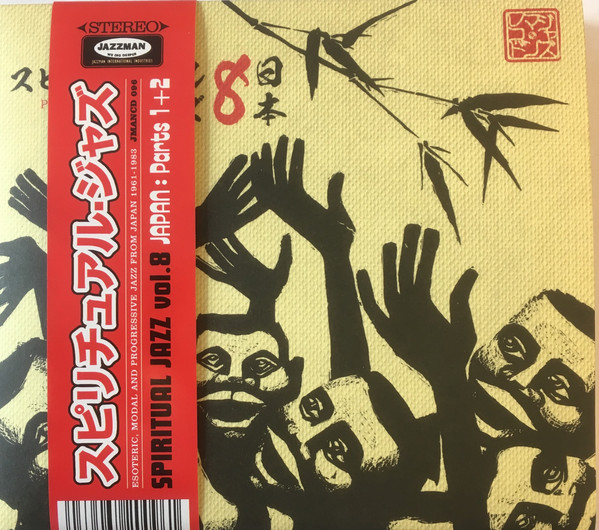
SPIRITUAL JAZZ VOLUME 8 JAPAN: PARTS 1 AND 2.
Spiritual Jazz Volume 8 Japan: Parts I and II.
Label: Jazzman Records.
In 1998, Jazzman Gerald was one of a number of people who noticed that the demand for old jazz, funk and soul albums and singles was outstripping the supply, which meant that many record buyers were being priced out of the market. That was unless they were willing to purchase a bootleg copy of the album. However, many record buyers weren’t willing to buy bootlegs as the artist didn’t receive any royalties, and often the sound quality was extremely poor. Jazzman Gerald realising all this, knew that there had to be another way, and one day, decided to found his own record label, Jazzman Records.
Jazzman Gerald’s plan was to reissue his favourite rarities legally on vinyl and whenever possible, involve the artist in the reissue, by having them tell their story of the album. Over the next ten years, Jazzman Records released many lovingly curated releases which allowed a new audience to discover jazz, funk and soul rarities. This continued in 2008 as Jazzman Records prepared to release the first instalment in a new compilation series Spiritual Jazz.
This was Spiritual Jazz-Esoteric, Modal And Deep Jazz From The Underground 1968-77 which was released to critical acclaim in 2008. Little did anyone realise, and maybe not even Jazzman Gerald that this was the start of successful series that would still be going strong a decade later.
Four years after the first instalment in the series, Spiritual Jazz Volume II-Europe and Spiritual Jazz 3-Europe were released to plaudits and praise. Spiritual Jazz Volume 4-Americans In Europe followed in 2013 and Spiritual Jazz 5-Esoteric, Modal And Deep Jazz From Around The World 1961-79 in 2014. Gerald Short a.k.a. Jazzman Gerald seemed to dig deeper than other compilers, and with every compilation continued to unearth hidden gems. That other was the case on 2015s Spiritual Jazz Volume 6-Vocals and especially 2017s Spiritual Jazz Volume 7-Islam which were both welcome additions to this wonderful series. What everyone wondered was where next for Jazzman Gerald on his musical odyssey?
Recently, that question was answered when Jazzman Records released Spiritual Jazz Volume 8 Japan: Parts I and II as a two CD set. Parts One and Two are also available separately on vinyl as two LP sets. This is the perfect way to discover the music of Mitsuaki Kanno, Tadao Hayashi, Takeo Moriyama, Koichi Matsukaze, New Direction For The Arts, Four Units, Keitaro Miho, Kiyoshi Sugimoto and Yoshio Ikeda who all feature on Spiritual Jazz Volume 8 Japan: Parts I and II. They’re just a few of the artists on this latest instalment in the Soir
Disc One.
Opening disc one of Spiritual Jazz Volume 8 Japan: Parts I and II is Kumo No Ito, which is a track from Mitsuaki Kanno and Group’s 1973 debut album Shisendo No Aki which was released on RCA. Fittingly, the pianist, bandleader and composer opens this beautiful spiritual sounding, and later takes on a freer sound as this talented octet showcase their considerable skills.
In 1977, the Tadao Hayashi Harp Trio released their debut album The Impossible Dream, on the Tokyo based Fontec label. One of the highlights of the album was a cover of My Favorite Things which opens side two of the album. The Tadao Hayashi Harp Trio reinvents the track with subtle drums allowing the harp to take centre-stage as the arrangement flows along. Sometimes, the tempo rises and falls, and occasionally the drums enjoy their moment in the sun, as the Tadao Hayashi Harp Trio take this familiar song in a new direction.
Shakuhachi player Minoru Muraoka was forty-six when he released Bamboo for United Artists Records in 1970. By then, he was an experienced musician who had been releasing albums since the mid-sixties. Bamboo featured cover versions of a number of familiar tracks including Take Five, And I Love Her and Do You Know The Way To San Jose. However, one of the highlights of Bamboo was The Positive And The Negative which veered between dreamy and elegiac to joyful.
Thirty-eight year old jazz drummer Takeo Moriyama released his third album East Plants on the Vap label in November 1983. It opened with the slow burning East Plants, which has a ruminative sound before the track reveals its secrets. Gradually, an uplifting and celebratory sounding experimental track that is rhythmic and melodic unfolds, which is the highlight of Takeo Moriyama’s East Plants album.
Saxophonist and flautist Koichi Matsukaze recorded what was his only solo album during three days in May 1981. This was Good Nature which was released on Trio Records later in 1981 an oft-overlooked album of free jazz and avant-garde jazz. It featured six Koichi Matsukaze compositions which are played by a talented quartet. Their finest moment is on Under Construction, where Koichi Matsukaze’s saxophone takes centre-stage as he plays with speed, power, fluidity and invention on this memorable and melodic track.
A year after saxophonists Sadao Watanebe and Charlie Mariano released their eponymous debut album on Victor, they decided to reunite and record their sophomore We Got A New Bag which was released on the Takt Jazz label in 1968. It opens with Ragam Sinthubariravi where Eastern sounds and percussion accompany the saxophone on this atmospheric, dramatic and spiritual sounding track.
Shungo Sawada started to play the guitar as a twelve-year-old, and by the time he was in his early twenties, he had founded his own band, Double Beats. This was the first of a number of groups he led over the next four decades. These groups released a number of albums between the mid-sixties and mid-eighties which sadly passed record buyers by. That is a great shame considering the quality of the saxophone led ballad Footprint which brings ensures that disc one of Spiritual Jazz Volume 8 Japan: Parts I and II closes on a high.
Disc Two.
Disc two of Spiritual Jazz Volume 8 Japan: Parts I and II opens with New Direction For The Arts’ Sun In The East which is taken from their 1972 album Free Form Suite. It was released on Takeshi Fujii’s independent jazz label Three Blind Mice and nowadays is a real rarity that changes hands for $200. No wonder, given the quality of Sun In The East which epitomises everything that is good about Japanese free jazz.
Many artists have covered Scarborough Fair especially during the sixties folk boom, and in 1969 Four Units covered the song on their eponymous album for Union Records. Initially, Four Units stay true to the original song, before stretching it and transforming it as they improvise and innovate taking it in a new direction. In doing so, what was once a musical ugly duckling is transformed into a swan, thanks to Four Units who reimagine and reinvent this familiar track.
One of the rarest albums in the history of Japanese jazz is Tachibana Volume 1 which was released by the Tohru Aizawa Quartet in 1975. It was a private press released which was funded by hotelier Jiro Tachibana, who spared no expenses during the recording of the album. Tachibana Volume 1 was recorded at a hall owned by Jiro Tachibana, who had paid for the best equipment, top musicians and a top recording engineer to record the album. They recorded five tracks, including Sacrament which is an intense, powerful and sometimes fluid example of spiritual jazz. It’s one of the highlights of Tachibana Volume 1 which after its release in 1975, Jiro Tachibana used the album his business card.
Takashi Miho and Jazz Eleven released the album Kokezaru Kumikyoku on MCA Records in 1971. It featured Kikazaru Takashi where Miho and Jazz Eleven seamlessly combine elements of funk, fusion and avant-garde to create a truly groundbreaking and memorable track. It’s best described as scorching, über funky and “groovy” track that ebbs and flows allowing room for a vocal that veers between ethereal and haunting and is one of the highlights of Spiritual Jazz Volume 8 Japan: Parts I and II.
In 1977, Japanese fusion septet Tee and Company released their third album Spanish Flower on the Three Blind Mice label. It featured just two lengthy tracks including Spanish Flower a nineteen minute epic where Tee and Company stretch their legs and showcase their talent and versatility. Sadly, original copies of Spanish Flower which was Tee and Company’s finest hour are an incredibly rare and can cost up to $100.
Although jazz drummer Takeo Moriyama’s made his recording debut as a sideman in the late-sixties, it wasn’t until 1981 that the thirty-six year old released his debut album Smile on the Denon label. It featured Watarase, which is seven minutes joyous modal jazz that is sure to make the listener Smile.
Babylonia Wind which was released on Columbia in 1972 was the debut album by the Kiyoshi Sugimoto Quintet album. Sadly, it was another album that passed the majority of record buyers by, and they missed out on music of the quality of the title-track Babylonia Wind which opens the albums. What follows is eleven minutes of spellbinding music where bandleader Kiyoshi Sugimoto delivers a flawless fleet fingered guitar solo.
Japanese-American jazz pianist, composer, arranger and bandleader Toshiko Akiyoshi was born in 1929, and released her debut album Toshiko’s Piano in 1954. This was the start of a long and successful recording career for Toshiko Akiyoshi, who was nominated for fourteen Grammy Awards. Nowadays, Toshiko Akiyoshi is one of the famous and influential Japanese jazz musicians. That is why it’s so fitting that Kisarazu Zinku has been included on the compilation and hopefully, will introduce a new generation of to a legend of Japanese jazz Toshiko Akiyoshi.
Spiritual Jazz Volume 8 Japan: Parts I and II closes with Yoshio Ikeda Whispering Weeds which opened his 1978 album Sketch Of My Life which was released on the Seven Seas label. Initially, it’s a melancholy and rueful sounding track before becoming cinematic as the tempo rises and the Suetoshi Shimizu unleashes a tenor saxophone solo that takes centre-stage. Bandleader and bassist Yoshio Ikeda is part of the rhythm section and helps drive the arrangement along as the compilation closes on a resounding high.
It’s not often a compilation series is still going strong after eight volumes, but that is the case with the Spiritual Jazz series. Spiritual Jazz Volume 8 Japan: Parts I and II features fifteen tracks which are described as: “Esoteric, Modal And Progressive Jazz From Japan: 1961-1983.” They’re also of the highest quality, just like previous instalments in the series. There’s a reason for that, and that is Jazzman Gerald continues to dig deeper than other compilers of jazz compilations. In doing so, he’s unearthed a myriad of hidden gems which will be new to many jazz fans.
Sadly, many of the hidden gems on Spiritual Jazz Volume 8 Japan: Parts I and II are taken from albums that failed to find an audience when they were originally released. It was only later these albums came to the attention of collectors, and with demand outstripping supply, the prices of J-Jazz shot up like Bitcoin. As a result, many of albums these tracks are taken from are impossible to find, and when they do change hands it’s for ever-increasing sums of money. Fortunately, Jazzman Gerald has chosen fifteen examples of: “Esoteric, Modal And Progressive Jazz From Japan: 1961-1983” and they feature on Spiritual Jazz Volume 8 Japan: Parts I and II, which was recently released by Jazzman Records.
Spiritual Jazz Volume 8 Japan: Parts I and II is the latest instalment in the long-running and successful Spiritual Jazz series, and is the perfect introduction to Japanese jazz. Indeed, Spiritual Jazz Volume 8 Japan: Parts I and II is the perfect companion to BBE Music’s J Jazz: Deep Modern Jazz From Japan 1969-1984, and these two albums will give newcomers to a tantalising taste of all that is good about Japanese jazz, including the esoteric, modal, modern and progressive.
Spiritual Jazz Volume 8 Japan: Parts I and II.


JIMI HENDRIX-BOTH SIDES OF THE SKY.
Jimi Hendrix-Both Sides Of The Sky.
Label: Sony Music.
From the moment that Jimi Hendrix saw T-Bone Walker playing his guitar with his teeth he took it as a challenge, and was determined that one day, he would be able to replicate what he had just witnessed the veteran bluesman do.
In years to come, this became part of Jimi Hendrix’s routine as he took the stage with The Jim Hendrix Experience and later with The Band Of Gypsy’s and played his guitar as if his life depended upon it. Although Jimi Hendrix was a technically brilliant guitarist he was also a showman, and some nights, Jimi played his guitar behind his back, other times played it with his teeth and even set on one occasion even set his guitar on fire. It was as if Jimi Hendrix was trying to exercise some inner demons through the medium of music during a career that spanned just four years.
Between 1967-1970, Jimi Hendrix released just three studio albums and one live album before his career was cut tragically short. Music was robbed of one of its most talented sons when Jimi Hendrix passed away on September the ’18th’ 1970 aged just twenty-seven. However, he left behind a rich musical legacy, which included the musical holy trinity of Are You Experienced, Axis: Bold As Love and Electric Ladyland plus The Band Of Gypsy’s eponymous live debut album. These albums however, only tell part of the story.
Since Jimi Hendrix’s death, there’s been a number of posthumous releases, including twenty-two live albums and twelve studio albums. That number just rose to thirteen with the release of Both Sides Of The Sky by Sony Music. It’s the third instalment in a trilogy of compilations of posthumously released archival recordings that were meant to feature on the followup to Electric Lady. This began with 2010s Valleys Of Neptune and continued with 2013s People, Hell and Angels. Now Both Sides Of The Sky is the final instalment and transports the listener back to the late-sixties when Jimi Hendrix was at the peak of his powers and it looked as if he was about to enjoy a long and illustrious career. This began in 1967, when the charismatic musical maverick released his debut album, which was a gamechanger.
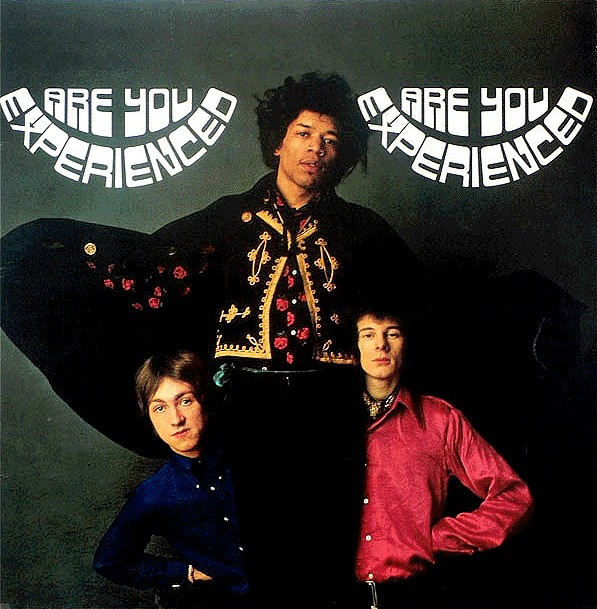
Are You Experienced.
That was apparent from the moment critics heard The Jimi Hendrix Experience’s 1967 explosive debut album Are You Experienced. It showcased the considerable talents and chemistry of the now legendary power trio, which featured a rhythm section of drummer Mitch Mitchell, bassist Noel Redding and guitarist Jimi Hendrix. They had recorded eleven tracks penned by Jimi Hendrix which fused rock and psychedelia.
These eleven tracks became Are You Experienced, which was recorded between October and April 1966 at three of London’s top studios. Joining The Jimi Hendrix Experience in De Lane Lea At Studios, CBS, and Olympic Studios, in London was Chas Chandler who took charge of production. The former Animals’ bassist had a wealth of experience and guided The Jimi Hendrix Experience through the recording of Are You Experienced. Once it was completed, Are You Experienced was released in Britain in May 1967.
Prior to the release of Are You Experienced, critics hailed the album as one of the greatest debut rock albums ever recorded. This was no exaggeration as Are You Experienced was a groundbreaking fusion of rock and psychedelia that was way ahead of the musical curve. It featured future Jimi Hendrix classics like Foxy Lady, Third Stone from the Sun and Are You Experienced. At the heart of the album’s sound was the freewheeling sound of Jimi Hendrix’s guitar. He could do things other guitarists could only dream of, and unleashed a series of breathtaking performances on Are You Experienced? Add to the equation Jimi Hendrix’s languid, charismatic vocal and it’s no surprise that Are You Experienced was such a huge commercial success.
When Are You Experienced was released in Britain, on the ‘12th’ of May 1967, it reached number two, and this resulted in a gold disc for The Jimi Hendrix Experience. However, soon, things would get even better for The Jimi Hendrix Experience.
Three months later, in August 1967, Are You Experienced was released in America and it reached number five on the US Billboard 200, and went on to sell over five million copies. This resulted in Are You Experienced certified platinum five times, and was the start of a three-year period where Jimi Hendrix could do no wrong.
Axis: Bold As Love.
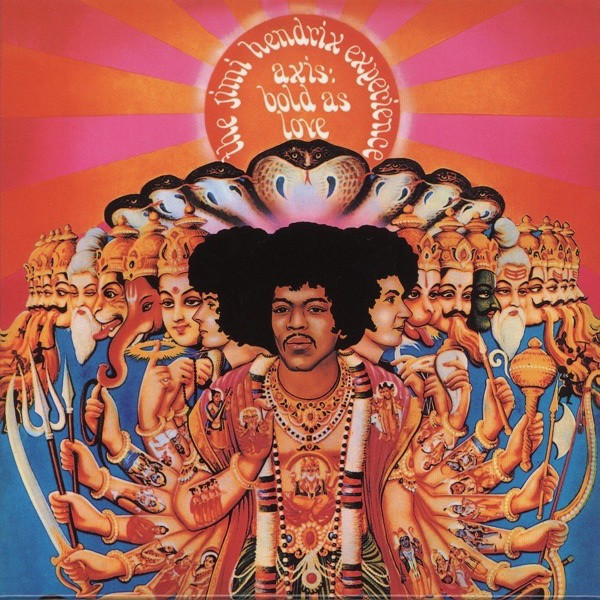
Seven months later, on the ‘1st’ of December 1967, The Jimi Hendrix Experience returned with their sophomore album Axis: Bold As Love in the UK. It featured thirteen tracks, including twelve penned by Jimi Hendrix. These tracks showed that Jimi Hendrix was already maturing and evolving as a songwriter. He may have just been twenty-five, but he was a talented songwriter. Proof of this were tracks like Spanish Castle Magic, Wait Until Tomorrow, Castles Made of Sand and Bold As Love. They featured Jimi Hendrix coming of age as a songwriter, and were recorded at one of London’s top studios.
Recording of Axis: Bold As Love took place at Olympic Studios, London and began in May 1967 and continued into June. However, when the album wasn’t completed, The Jimi Hendrix Experience returned to the studio in October to complete the recording of Axis: Bold As Love, which was scheduled for release later in 1967.
The contract that the Jimi Hendrix Experience had signed stipulated that the band had to release two albums during 1967. They had completed the album just in time for Track Records to release the album at the start of December 1967. However, before that, disaster struck for Jimi Hendrix.
One night, Jimi Hendrix took the master tapes to side one of Axis: Bold As Love to listen to at home. Unfortunately, he left them in a taxi, and despite a frantic search for the master tapes they were never found. This resulted in side one having to be mixed again, which was a delay that everyone could do without. Fortunately, this didn’t delay the release of Axis: Bold As Love.
Axis: Bold As Love, was released in Britain, on the ‘1st’ of December 1967, and was released to the same critical acclaim as Are You Experienced. Critics ran out of superlatives in an attempt to describe Axis: Bold As Love where The Jimi Hendrix Experience flitted between and sometimes combined blues rock, psychedelia and rock. It was a heady and irresistible brew that once tasted was unforgettable. In the reviews, Jimi Hendrix was described as some sort of musical messiah, who had music’s future in his hands. Record buyers agreed with the critics description of Axis: Bold As Love when they heard the album.
When Axis: Bold As Love was released in Britain, it reached number five and was certified silver. This must have been slightly disappointing as Axis: Bold As Love hadn’t replicated the success of Are You Experienced. However, The Jimi Hendrix Experience knew that Axis: Bold As Love was still to be released in America, where their debut had sold five million copies.
A decision was made not to release Axis: Bold As Love during 1967, in case it affected sales of Are You Experienced. It wasn’t until January the ‘15th’ 1968, that Axis: Bold As Love was released in America and reached number three in the US Billboard 200 and was certified platinum. Just like in Britain, Axis: Bold As Love had failed to replicate the success of Are You Experienced, which was disappointing. However, by then, Jimi Hendrix was riding the crest of a musical wave.
Electric Ladyland.
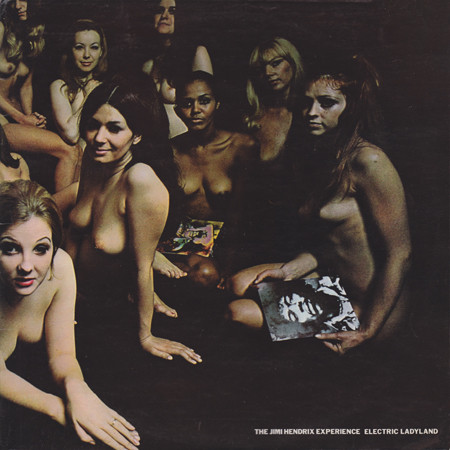
By October 1968, when The Jimi Hendrix Experience were preparing to release their third album Electric Ladyland, Jimi Hendrix was one of the most successful musicians in the world. His albums sold by the million, and when The Jimi Hendrix Experience played live, they were one of the hottest live acts. Proof of that was Electric Ladyland which was the most ambitious album of the Jimi Hendrix Experience.
Unlike The Jimi Hendrix Experience’s two previous albums, Electric Ladyland was a double album that featured sixteen songs. Thirteen of these songs were penned by Jimi Hendrix while Noel Redding contributed Little Miss Strange. The other tracks were covers of Bob Dylan’s All Around The Watchtower and Earl King’s Come On (Let the Good Times Roll. These tracks, and the rest of Electric Ladyland were recorded at three recording studios.
Recording sessions for Electric Ladyland took place at Olympic Studios in London and the Record Plant Studios and Mayfair Studios, in New York and began in July 1967 and continued right through until December 1967. After the festive season, The Jimi Hendrix Experience reconvened in January 1968 and spent four months completing their third album Electric Ladyland. It was completed in April 1968, and the release of Electric Ladyland was scheduled for release in October 1968.
As soon as critics heard Electric Ladyland, they realised that this was The Jimi Hendrix Experience’s finest hour as they flitted between and sometimes combined blues rock, hard rock, psychedelia and rock on an album that oozed quality. Proof of that were tracks of the quality of Crosstown Traffic, Voodoo Chile, Voodoo Child (Slight Return), All Along the Watchtower and Gypsy. Electric Ladyland which featured future classics was hailed as the greatest album of The Jimi Hendrix Experience’s career and a future classic. Record buyers agreed.
When Electric Ladyland was released in Britain, on the ‘16th’ of October 1968, it reached number six and was certified gold. Electric Ladyland had outsold Axis: Bold As Love and replicated the success of The Jimi Hendrix Experience’s debut album Are You Experienced.
Nine days, later, on the ‘25th’ of October 1968 Electric Ladyland was released in America, and reached number one on the US Billboard 200. Having sold two million copies, Electric Ladyland was certified double platinum and the rise and rise of The Jimi Hendrix Experience continued.
Just like their previous two albums, Electric Ladyland would later become a classic album. Electric Ladyland was the album that the Jimi Hendrix Experience were always capable of making and they had now fulfilled the potential that on an album that marked the coming of age for The Jimi Hendrix Experience. However, having just released the finest album of their three album career there was a twist in the tale for the Jimi Hendrix Experience.
Electric Ladyland would be the Jimi Hendrix Experience’s final album and a fitting swan-song from a legendary power trio. Sadly, the Jimi Hendrix Experience would only ever take to the stage on two more occasions.
Eight months after the release of Electric Ladyland, the Jimi Hendrix Experience played their last concert on June the ‘29th’ 1969 at Barry Fey’s Denver Pop Festival which was a three-day event held at Mile High Stadium. Little did anyone in the audience realised that they had witnessed last performance by the original lineup of the Jimi Hendrix Experience.
While the Jimi Hendrix Experience played one further concert in 1970, to allow Jimi Hendrix to spread his message of universal love, it was without Noel Redding who had quite the band, and embarked upon a solo career. As far as he was concerned, it was the end of the road for The Jimi Hendrix Experience.
Woodstock
By the time of the demise of The Jimi Hendrix Experience, its leader was the highest paid musician in the world. Promoters were desperate to add Jimi Hendrix to festival bills and the promoter of The Woodstock Music and Art Fair was no different. It was another three-day festival that was scheduled for took place between the ’15th’ and ‘17th’ of August 1969 on a dairy farm in the Catskill Mountains of southern New York State. Jimi Hendrix invited the invitation and would close the Woodstock Music and Art Fair.
By the time Jimi Hendrix arrived at the three-day Woodstock Music and Art Fair, which had been eventful and sometimes chaotic, he was keen to showcase the new lineup of his band. It featured drummer Mitch Mitchell, replacement bassist Billy Cox and recent additions rhythm guitarist Larry Lee and conga players Juma Sultan and Jerry Velez. As the band took the stage it was 9am on the ‘17th’ of August 1969 ‘only’ 200,000 people watched on as MC Chip Monk introduced the group as the Jimi Hendrix Experience, but the bandleader was quick to clarify: “we decided to change the whole thing around and call it Gypsy Sun and Rainbows. For short, it’s nothin’ but a Band of Gypsys.
With that, Jimi Hendrix unleashed what was a spellbinding performance that made musical history. At one point, the former paratrooper unleashed a breathtaking performance of The Star-Spangled Banner, and incorporated a myriad of feedback, distortion, and sustain to replicate the sounds made by rockets and bombs exploding during this incredible and spellbinding rendition of the American national anthem. Once again, Jimi Hendrix was able to make his guitar do things other guitars could only dream about as closed his set at 11:10 am having made musical history.
Band of Gypsys.
After his triumphant appearance at Woodstock, Jimi Hendrix was keen to embark upon the next chapter of his career. By then, he knew that the Jimi Hendrix Experience were now part of musical history, and the time had come for him to form a new band.
Those that attended Woodstock had heard Jimi Hendrix christen his new band the Band Of Gypsys. Just like the Jimi Hendrix Experience, the Band Of Gypsys was a trio, but Jimi Hendrix had firmed up the lineup which featured drummer Buddy Miles, bassist Billy Cox and Jimi Hendrix on guitar. The Band of Gypsys were already planning to record their debut live album on the ‘1st’ of January 1970.
When the Band Of Gypsys took to the stage at Filmore East, in New York, on the ‘1st’ of January 1970, they had been busy rehearsing and writing six new songs. Jimi Hendrix had penned four tracks, including Who Knows and the funky, anti-Vietnam War song Machine Gun which featured on side one of Band Of Gypsys, He also wrote Power To Love and Message Of Love. Meanwhile, jazz drummer Buddy Miles, had written Changes and We Gotta Live Together. These six tracks found the Band Of Gypsys moving in a different direction from The Jimi Hendrix Experience.
Elements of funk, R&B and soul shine through on Band Of Gypsys which wasn’t surprising, given Jimi Hendrix’s bandmates’ past. However, Jimi Hendrix’s trademark fusion rock and psychedelia is still present on Band Of Gypsys. What’s obvious, is that Band Of Gypsys was keen to take his music in new and different musical directions. He wasn’t going to be tied to the one musical genre, and instead, he was willing to experiment musically. Band Of Gypsys was just the start.
When critics heard Band Of Gypsys, they were won over by this captivating genre melting album. They realised that Band Of Gypsys was an ambitious album and believed that Machine Gun was the album’s highlight and centrepiece. It showed what musical maverick and pioneer Jimi Hendrix was capable of, even without The Jimi Hendrix Experience. Even after one album, it was obvious that like just the Jimi Hendrix Experience, the Band Of Gypsys was the perfect musical vehicle for Jimi Hendrix.
Band Of Gypsys was released in Britain on the ‘25th’ of March 1970 and reached number six. Nearly three months later, on June the ‘12th’ 1970, Band Of Gypsys was released in America, and reached number five in the US Billboard 200. This resulted in Band Of Gypsys being certified double platinum after selling two million copies. Still it seemed that Jimi Hendrix could do no wrong, and critics and record buyers waited with bated breath to see what direction his career headed.

After the release of Band Of Gypsys, Jimi Hendrix returned the studio, where he began work on his next album. Jimi Hendrix was a prolific artist, and recorded many tracks over a relatively short space of time. So much so, that by the time Jimi Hendrix headed to the second Atlanta Pop Festival on the ‘4th’ of July 1970, there were many tracks in various states of completion. This was more than enough for several album’s worth of material. Some of the new songs would be showcased by the newly reformed lineup of The Jimi Hendrix Experience at the Atlanta Pop Festival, which sadly would prove to be Jimi Hendrix’s swan-song.
Atlanta Pop Festival.
Lesser musicians than Jimi Hendrix would’ve been nervous about playing at the Atlanta Pop Festival, which took place in the heart of the Deep South. Not Jimi Hendrix, who relished the challenge of uniting a region divided. He planned to do this with the help of the newly reformed lineup of The Jimi Hendrix Experience.
Sadly, bassist Noel Redding wasn’t going to take to the stage at Atlanta Pop Festival and Of Gypsys bassist Billy Cox would take his place. At least Noel Redding The Jimi Hendrix Experience’s original drummer was by Jimi’s side as they took to the stage. What had been a legendary power trio were about to try to unite a region divided.
That’s what The Jimi Hendrix Experience went on to do. In the process, they wrote their place into music history by playing a starring role in what’s now remembered as the “last great rock festival.” Jimi Hendrix had united a region that had been divided. His message of unity, universal love and Freedom had him friends on both sides of the racial divide. Now Jimi Hendrix could concentrate on completing his next album. However, that never sadly happened.
On the ‘18th’ of September 1970, music was in mourning. Jimi Hendrix, it was announced, was dead. The reports started that he had been found unresponsive around 11a.m. on the ‘18th’ of September 1970, at an apartment in the Samarkand Hotel, in Notting Hill, London. He was rushed to the St. Mary’s Abbot’s Hospital, but pronounced dead at 12.45p.m. Jimi Hendrix was just twenty-seven. However, music had lost one of the most influential and innovative guitarists of his generation.
That was despite Jimi Hendrix’s career beginning just four years earlier. Since then, Jimi Hendrix had released a trio of studio album and one live album, and taken music by storm. By the time of his death, Jimi Hendrix was the highest paid musician and was vying for the title of rock’s greatest guitarist. Jimi Hendrix the flamboyant showman who had initially modelled himself on T-Bone Walker, had written his name into the musical history and would inspirer several generations of guitarists.
That is still the case today, as a new generation discover Jimi Hendrix’s music. It’s not just the music that the Jimi Hendrix Experience and the Band Of Gypsys that this new generation are discovering. Just like Jimi Hendrix’s old fans, they’ve embraced the myriad of posthumous releases that have been released since The Cry Of Love was released on March the ‘5th’ 1971 and featured material that was meant to feature on Jimi Hendrix’s fourth studio albums. Since then, twenty-two live albums and twelve studio albums have been released, including Both Sides Of The Sky which was recently released by Sony Music
Both Sides Of The Sky.
Both Sides Of The Sky is the third instalment in a trilogy of compilations of posthumously released archival recordings that were meant to feature on the followup to Electric Lady. This began with 2010s Valleys Of Neptune and continued with 2013s People, Hell and Angels. Now Both Sides Of The Sky is the final instalment and transports the listener back to the late-sixties when Jimi Hendrix was at the peak of his powers.
There’s thirteen tracks on Both Sides Of The Sky, including nine penned by Jimi Hendrix. They join covers of Muddy Waters’ Mannish Boy, Stephen Stills’ $20 Fine, Guitar Slim’s Things That I Used To Do and Joni Mitchell’s Woodstock. Fittingly, Jimi Hendrix recorded these tracks with members of the Jimi Hendrix Experience and the Band Of Gypsys.
For the recordings, the Jimi Hendrix Experience’s lineup featured the classic drummer Mitch Mitchell, bassist Noel Redding and Jimi Hendrix on guitar and vocals. On the tracks that feature the Band Of Gypsys, drummer Buddy Miles and bassist Billy Cox join Jimi Hendrix on guitar and vocals. They’re joined by Stephen Stills who plays keyboards and adds vocals on $20 Fine and Woodstock, while guitarist Johnny Winters features on Things That I Used To Do. Saxophonist and vocalist Lonnie Youngblood features on Georgia Blues. Mostly, though, it’s just Jimi Hendrix joined by the two bands he made his name with… the Jimi Hendrix Experience and the Band Of Gypsys.
Opening Both Sides Of The Sky is a genre-melting cover Muddy Waters where funk, rock and blues are combined to reinvent this blues classic. It gives way to Lover Man which bursts into life and Jimi Hendrix unleashes a fleet-fingered solo that is a reminder of why he was regarded as one of the greatest guitarists of his generation. The addition of this alternate take of Hear My Train A Comin’ is a welcome one, as Jimi Hendrix slows the track down and deploys effects and in doing so, shows another side to one of his finest hours. There’s an urgency to Stepping Stone where Jimi Hendrix plays with speed, fluidity and invention as he unleashes a powerful vocal.
Stephen Stills plays keyboards which fills out the sound on $20 Fine, and delivers a soulful vocal. Later, Jimi Hendrix unleashes another blistering guitar solo and plays his part in the success of this hidden gem. There’s no stopping Jimi Hendrix now. He veers between blues, funk and rock on the first part of Power Of Soul which is a showcase for his guitar masterclass. After that, he adds a vocal that is a mixture soulfulness and emotion, as backing vocalists accompany him on what’s one of the album’s highlights.
The tempo drops on the understated, spacious and ruminative instrumental, Jungle, where Jimi Hendrix seamlessly switches between funk and blues. The bluesy sound continues on Things I Used To Do, which features guitarist Johnny Winters. It’s proof if any was needed that two guitarists are always better than one. Slow, moody and bluesy describes Georgia Blues as washes of swirling Hammond organ accompany Jimi Hendrix’s searing guitar. Meanwhile, Lonnie Youngblood adds gravelly vocal and later adds blistering saxophone solo that adds the finishing touch.
Straight away, Sweet Angel which was recorded in 1968 sounds like an instrumental version of another song Jimi Hendrix wrote, Angel. Here, he plays rhythm and lead guitar, and also plays vibes as he shows his versatility. Stephen Stills returns and adds a vocal and plays Hammond organ on an anthemic version of Woodstock. Send My Love To Linda was recorded with the Band Of Gypsys in January 1970 and finds Jimi Hendrix’s guitar and vocal taking centre-stage. Later, he unleashes another flawless blistering guitar solo that is one of the best on Both Sides Of The Sky. It closes with the atmospheric and cinematic instrumental Cherokee Mist where Jimi Hendrix’s replicates an array of sounds that is reminiscent of his version of The Star-Spangled Banner. This is a real find and the perfect way to close Both Sides Of The Sky and the trilogy.
Both Sides Of The Sky is just the latest lovingly curated release from the Jimi Hendrix archives, and is a tantalising taste of a true musical legend at what was the peak of his powers. Between 1967 and 1970, Jimi Hendrix could do no wrong, whether it was with the Jimi Hendrix Experience or the Band Of Gypsys.
Sadly, the Jimi Hendrix Experience only released three studio albums between 1967 and 1969 and the Band Of Gypsys one live album in 1970. However, each of these albums are regarded as classics and featured one of the greatest guitarists at the peak of his powers. These albums only document part of the story of Jimi Hendrix’s career in the studio.
Jimi Hendrix was a truly prolific artist and at the time of his death, he had been working on the followup to Electric Ladyland. While many musicians struggle to record an album, there was nearly enough for four studio album. Then there was all the other songs that Jimi Hendrix recorded between 1967 and 1970 which has been released on twelve previous studio albums. Both Sides Of The Sky is the thirteenth album featuring unreleased tracks, and still the material is of the highest quality. Indeed Both Sides Of The Sky is a veritable treasure trove which features the different sides to Jimi Hendrix as he flits between and combines blues rock, funk, psychedelia and rock with the help of the Jimi Hendrix Experience and the Band Of Gypsys. They’re joined by a few friends on an album that is a poignant reminder of one of the true musical greats.
During his short but successful career the Jimi Hendrix Experience and the Band Of Gypsys were the perfect showcase for Jimi Hendrix who always played his guitar as if his life depended upon it. Especially when they played live and Jimi Hendrix became a flamboyant whose raison d’être was to entertain. This technically brilliant guitarist was a true showman, playing his guitar behind his back, other times with his teeth and was known to set his guitar on fire. It was as if Jimi Hendrix was trying to exercise some inner demons through the medium of music during a career that spanned the four-year period between 1967 and his death in 1970.
Sadly, on September the ’18th’ 2018 it will be forty-eighth anniversary of Jimi Hendrix’s death. This year, if he had lived, Jimi Hendrix would’ve been celebrating his seventy-fifth birthday. This makes the release of Both Sides Of The Sky all the more poignant as one can’t help wonder what heights he would’ve reached had he lived? Would Jimi Hendrix gone on to enjoy the long and illustrious career as many people be believed he would? Maybe he would’ve become a musical chameleon constantly reinventing his music in an attempt to stay relevant. There’s always the possibility that Jimi Hendrix best years were behind him and that this otherworldly musical visionary had expounded all his creativity by the time of his death. That is highly unlikely, Jimi Hendrix was a truly prolific, versatile and talented artist who recorded more music in four years than many artists record in a lifetime. This includes the thirteen recordings on Both Sides Of The Sky, which are part of Jimi Hendrix’s musical legacy, and a reminder of the boy who dared dream after seeing T-Bone Walker playing the guitar with his teeth.
Jimi Hendrix-Both Sides Of The Sky.
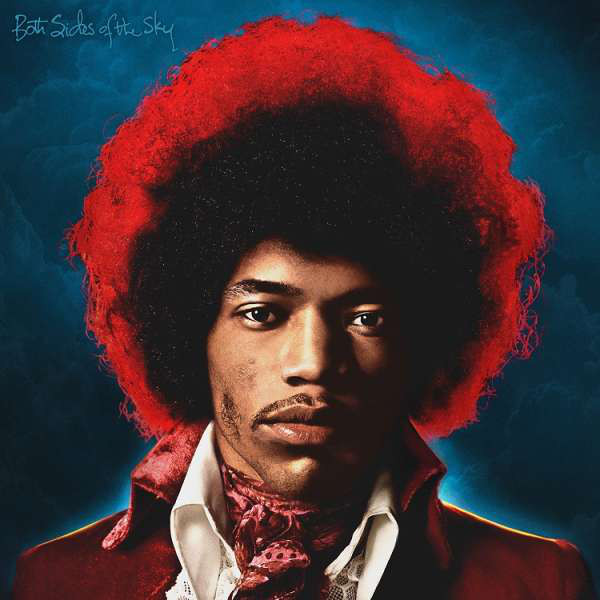
DEUTSCHE ELEKTRONISCHE MUSIK: EXPERIMENTAL GERMAN ROCK AND ELECTRONIC MUSIC 1972-1983.
Deutsche Elektronische Musik: Experimental German Rock and Electronic Music 1972-83.
Label: Soul Jazz Records.
Nowadays, the period between 1968 and the early eighties is regarded as a golden period for German music, and is remembered as period when groundbreaking artists and groups like Amon Düül II, Can, Cluster, Deuter, Faust, Harmonia, Neu!, Popul Vuh and Tangerine Dream released innovative albums that would influence and inspire future generations of musicians. This music ranged from Krautrock to the Berlin and Düsseldorf Schools of Electronic Music, and nowadays, are regarded as the holy trinity of modern German music.
Despite the importance of Krautrock and the Berlin and Düsseldorf Schools of Electronic Music, many of the leading lights of these scenes didn’t enjoy the critical acclaim and commercial success that their innovative music deserved. It was only much later, that a new generation of musicians and record buyers discovered the wealth of groundbreaking music that had been recorded between 1968 and the early eighties, and realised its importance. Here were albums that were innovative and way ahead of the musical curve, but sadly, in many cases had failed to find an audience. However, this was about to change.
Belatedly, a new generation of musicians, record collectors and journalists, began to fly the flag for Krautrock and also the Berlin and Düsseldorf Schools of Electronic Music. Suddenly, the music started to influence a new generation of musicians and was growing in popularity. Before long, the music was receiving the recognition it deserved and eventually few record companies released compilations of music from Germany’s golden era.
This included Soul Jazz Records who released Deutsche Elektronische Musik: Experimental German Rock and Electronic Music 1972-83 in April 2010. It was the first of a trio two CD sets released by Soul Jazz Records, and was so popular that it’s almost impossible to find a copy of Deutsche Elektronische Musik: Experimental German Rock and Electronic Music 1972-83. Even Soul Jazz Records didn’t have any copies of this classic compilation which has been out of print for many years. That was a great shame, as they continued to receive emails from people wanting to buy a copy of the compilation. Sadly, they were out of luck.
Eventually, Soul Jazz Records relented and released the 2018 edition of Deutsche Elektronische Musik: Experimental German Rock and Electronic Music 1972-83, which has been remastered and features all the original artwork and tracks. It’s a veritable musical feast, and a reminder one the most important periods in German music.
As 1968 dawned, a musical revolution taking place on both sides of the Atlantic, and many young West Germans wished that something similar was happening in their home country as they couldn’t relate to the music that provided the soundtrack to their daily life. Especially the Schlager music that their parents listened to and which could be heard on television and radio. It had no relevance to them, but this was about to change in 1968, when fifty years ago, the German rock and experimental electronic music scene was born.
Its roots can be traced to the counter-cultural revolution that was taking place in cities across the world during 1968. West German youths watched as s students and workers in Mexico, Paris and Prague demonstrated against everything from mainstream society and the war in Vietnam, to imperialism and supposed bourgeois values. Meanwhile, drug experimentation and social change had transformed music since the birth of the counter-cultural revolution. Soon, West Germany would also witness its very own cultural revolution.
West Germany’s cultural revolution was fuelled by the protests that had swept the world, and saw students and workers form an unlikely alliance as they stood shoulder-to-shoulder in an effort tried to bring about change. However, this wasn’t the only reason the latest generations of West Germans wanted to bring about change.
They also wanted to rid themselves of the guilt of war, despite being born in the post war years. Many of this new generation had grownup all too aware of the recent Nazi atrocities, and saw the guilt etched into their parent’s generation faces. Mostly this guilt wasn’t because of what they had done, but what they hadn’t tried to stop from happening. The new generation also felt frustrated that many perpetrators of the atrocities had been allowed to reintegrate back into German society, and many now held powerful positions. All this knowledge became guilt, which weighed heavy on their young shoulders.
That was why when many of the young musicians who created the new music that was free from the past, said that it was borne out of the sense of cultural nothingness they felt. This was about to change as many German youth turned their back on mainstream society.
Many headed to collectives, cooperatives and communes that opened across West Germany. Many young Germans discovered new and alternative values and lifestyle outside of mainstream society in the collectives, cooperatives and communes. This includes those that founded Amon Düül in Kommune 1 in Munich,
In Kommune 1 there was a liberal attitude to artistic freedom, and enthusiasm was valued more than artistic ability. As a result, Amon Düül’s lineup was fluid, with anyone who lived in the commune able to join could be part of the group. Meanwhile, in other parts of West Germany groups like Can and Faust were formed and went on to become leading lights of this new musical movement.
The music was influenced and inspired over the next few years by everything from electronic music pioneer Karlheinz Stockhausen to electronic and experimental music, free jazz, psychedelia, progressive rock, tape music and the Canterbury Scene. This new music would take shape over between 1968 right through to the early eighties, and would evolve during this period. By 1979, Krautrock was in the past, but the Berlin and Düsseldorf Schools of Electronic Music continued to blossom.
Deutsche Elektronische Musik: Experimental German Rock and Electronic Music 1972-83 which has just been reissued by Soul Jazz Records is comprehensive overview of what was an important period and indeed, golden era that has influenced and inspired several generations of musicians. They feature on Deutsche Elektronische Musik: Experimental German Rock and Electronic Music 1972-83 which is a two CD set that features music from familiar faces and what will be new names for many people.
Disc One.
Opening Deutsche Elektronische Musik: Experimental German Rock and Electronic Music 1972-83 is A Spectacle by Can, who were one of the giants of Krautrock. They enjoyed a career that spanned three decades but split-up for the first time in 1978 after releasing one of their weakest albums Can. By then, bassist Holger Czukay was no longer part of the group, and had been replaced Rosko Gee. He and Rebop Kwaku Baah had both been members of Traffic, and had joined Can, in time to record Saw Delight which was released in 1977. Sadly, the three albums to feature the former members of Traffic were Can’s weakest, and A Spectacle was one of the highlights of Can. It’s best described as funky, futuristic, bluesy, cinematic and dancefloor friendly Krautrock.
Harmonia was one of the first German supergroups and featured Hans-Joachim Roedelius and Dieter Moebius of Cluster and Michael Rother of Neu! In 1974, Harmonia released their debut album Musik Von Harmonia which is regarded as a Krautrock classic. It featured Dino where Michael Rother adds funky guitar licks to as drums drive this mesmeric and lysergic slice of Krautrock along.
Kollectiv were a Krautrock fusion band who only released the one album during their career. This was Kollectiv which was released by Brain in 1973 and featured Rambo Zambo. It’s a much jazzier example of Krautrock and showcases a talented and versatile band whose playing is always inventive. Sadly, original copies of Kollectiv can cost £650, but there’s a reissue available of this hidden gem of an album.
In 1975, Popol Vuh released Aguirre which was the soundtrack to the Werner Herzog movie Aguirre, Der Zorn Gottes on the PDU label. One of the highlights of the soundtrack was Morgengruss where Popol Vuh combine elements of ambient, Krautrock and progressive rock to create an atmospheric and cinematic track that is rich in imagery.
Conrad Schnitzler was another of West Germany’s musical pioneers and in 1980 released the 12” single Auf Dem Schwarzen Kanal on RCA Victor. Sometimes, it sounds as if Kraftwerk have influenced Conrad Schnitzler on Auf Dem Schwarzen Kanal which is an experimental fusion of electronic and industrial music. The result is a futuristic and otherworldly sounding track that is dark and dramatic.
When Faust released their sophomore album So Far on Polydor in 1972, it featured It’s A Rainy Day, Sunshine Girl. It’s a groundbreaking and melodic combination of electronica, industrial music and Krautrock from a pioneering group who were one of the giants of German music between 1968 and the early eighties,
Disc Two.
After leaving Kraftwerk having played on their 1971 album Kraftwerk 1, guitarist Michael Rother and drummer Klaus Dinger formed a new group Neu! When they released their eponymous debut album it opened with Hallogallo a ten minute epic where Klaus Dinger’s drums and Michael Rother’s guitar are like yin and yang. They play their part in what’s one Neu!’s finest moments and a future Krautrock classic.
Hans-Joachim Roedelius composed Heiße Lippen which featured on Cluster’s third album Zuckerzeit, which was released on Brain Records in 1974. Zuckerzeit was Cluster’s third and album, and like its two predecessors, is nowadays regarded as Krautrock classic. One of Zuckerzeit’s highlights is the hypnotic and contemporary sounding Heiße Lippen which is a fusion of Krautrock and electronica.
Amon Düül begat Amon Düül II who released their seventh studio album Vive La Trance on United Artists Records in 1973. It featured Fly United, where jangling guitars are part of this rocky slice psychedelic Krautrock. Fly United is part of underrated album from Amon Düül II, which is often overlooked in favour of Phallus Dei, Yeti, Wolf City and Tanz Der Lemminge.
In 1973, Ash Ra Tempel released their fourth album Starring Rosi on Rolf-Ulrich Kaiser and Gille Lettmann’s Kosmische Musik. It was the first album to feature vocalist and harpist Rosi Müller. She plays a starring role on Daydream, adding a soliloquy on this haunting, dreamy and understated track where Ash Ra Tempel effectively combine psychedelia and space rock.
When Can released their 1976 album Flow Motion on Harvest-EMI Electrola, it opened with I Want More, which featured vocals from Pink Floyd’s Peter Gilmour and René Tinner. They’re combined with a choppy, funky and dancefloor friendly arrangement that is very different to the music on Can’s earlier albums. I Want More is a melodic and memorable anthem that could still fill a dancefloor.
Closing disc two of Deutsche Elektronische Musik: Experimental German Rock and Electronic Music 1972-83 is Soham a track from Dueter’s sophomore album Aum. It was released on the Kuckuck label in 1972 and nowadays is regarded as a classic. That is no surprise given the quality of Soham, where Deuter combines elements of ambient, avant-garde and the Berlin School of electronic music to create a soundscape that is atmospheric, cinematic and spiritual. Soham is also the perfect introduction to Deuter, a true musical pioneer who is still making music forty-six years later.
For anyone yet to discover the golden era of German music between 1968 and the early eighties, Deutsche Elektronische Musik: Experimental German Rock and Electronic Music 1972-83, which was recently reissued by Soul Jazz Records, and was the first in a trio of compilations is the perfect starting place. This carefully curated compilation features familiar faces and what for many people will be new names from the golden age of German modern music. However, they all played their part in writing a new chapter in the history of modern German music,
This includes Amon Düül II, Ash Ra Tempel, Can, Cluster, Conrad Schnitzler, Deuter, Faust, Harmonia, Kollectiv, Neu! and Popul Vuh and Roedelius who are all musical pioneers and released ambitious and innovative music. Some of these artists and band enjoyed long and illustrious careers, while others only released the one album. That was the case with Kollectiv, whose eponymous debut album was a hidden gem that is well worth discovering. They’re not alone, and the same can be said of each and every artist that features on Deutsche Elektronische Musik: Experimental German Rock and Electronic Music 1972-83.
Little did Soul Jazz Records realise when they originally released Deutsche Elektronische Musik: Experimental German Rock and Electronic Music 1972-83 in 2010, that the compilation would become a classic, and there would be two further instalments in the series. Hopefully, there will be further instalments in the Deutsche Elektronische Musik series, as there’s plenty of quality music for a many more compilations.
Meanwhile, Deutsche Elektronische Musik: Experimental German Rock and Electronic Music 1972-83 which is a classic compilation is a veritable musical feast that offers a tantalising taste of the ambitious and innovative music that these musical pioneers released during their careers, and which even today continues influence and inspire a new generations of musicians.
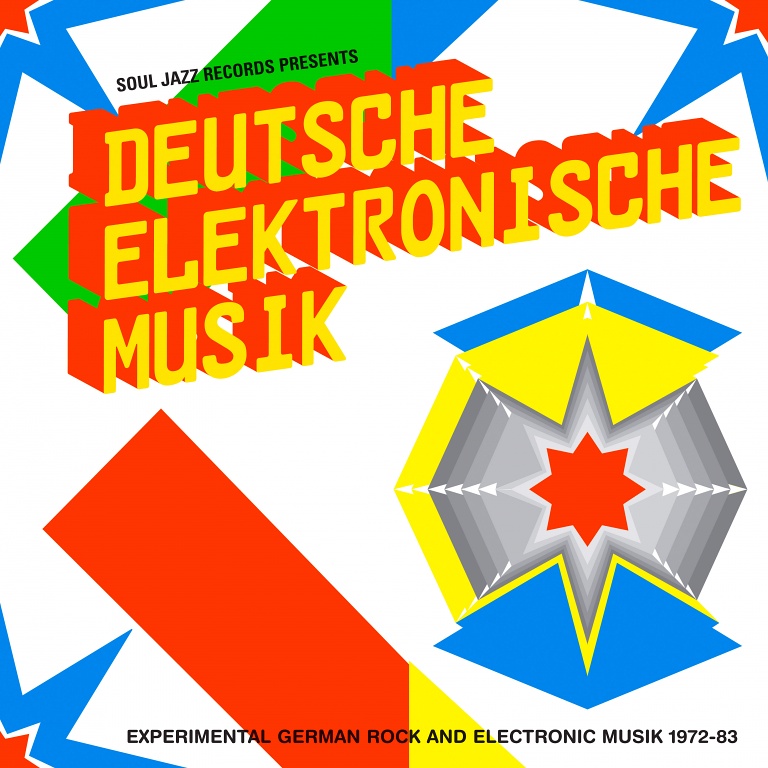

TOM WAITS -CLOSING TIME.
Tom Waits-Closing Time.
Label: Anti.
It was in the summer of 1971, when Herb Cohen first saw and heard Tom Waits at the Troubadour in Los Angeles, which was one of the city’s top clubs in the city’s music scene and where many an up-and-coming singers and bands had started out before going on to greater things. Even some of the more experienced artists and bands still enjoyed playing at what was by then a legendary venue. Tom Waits who was just a twenty-two year old aspiring singer-songwriter, when he played at the Troubadour, and had already come a long way in a short space of time.
Just three years previously Tom Waits was a rebellious high school student who loved R&B, country music, Bob Dylan, the Beat Generation, The Twilight Zone and The Alfred Hitchcock Hour. However, in 1968, Tom Waits dropped out of high school, and got a job Napoleon’s pizza restaurant in National City, California.
During his shifts in the pizzeria, Tom Waits listened to the patrons and often scribbled down phrases and interesting pieces of dialogue which he later used in his songs. However, when Tom Waits wasn’t working in Napoleon’s, he was part of the city’s folk scene and could often be found playing in local coffee shops. Before long, Tom Waits was playing in San Diego, and as word spread about the up-and-coming local singer he was being asked to support Tim Buckley, Sonny Terry, Brownie McGhee and even one of his friends Jack Tempchin. By then, Tom Waits had come to the conclusion that he could go no further in San Diego, and would have to travel to the Troubadour Los Angeles to progress his career.
That was how Tom Waits was ‘discovered’ by Herb Cohen who at the time, was managing several artists including Frank Zappa, and was a record company executive and music publisher. Despite his track record, Herb Cohen didn’t off Tom Waits the all-important recording contract, and instead, signed him to a publishing contract. Herb Cohen it seemed saw Tom Waits as a songwriter rather than a singer.
Having signed a publishing contract, Tom Waits his job at Napoleon’s and moved to LA where wanted to concentrate on his songwriting career. However, in 1971 Herb Cohen had Tom Waits record the first of two demos in late summer of 1971 with producer Robert Duffey. Nothing came of these demos by the time 1971 gave way to 1972.
By early 1972, Tom Waits had found and moved into a flat in Sliver Springs, which was a working class ares that was home to the Hispanic community and a number of LA’s bohemians. The area would provide Tom Waits with a wealth of material over the next weeks and months.
Despite supposedly concentrating on his songwriting career, Tom Waits continued to play live and was a regular at the Troubadour which was where he first met David Geffen who had already cofounded Asylum Records. When David Geffen heard Tom Waits sing Grapefruit Moon he was “floored” and was so impressed with Tom Waits that, that night he offered the singer-songwriter a recording contract.
After Tom Waits had signed with Asylum Records, David Geffen paired his latest signing with Jerry Yester, who had formerly been a member of the Lovin’ Spoonful until the group split-up in 1968. After that, Jerry Yester had embarked upon a career as a producer and would produce Tom Waits’ debut album at Sunset Sound Recorders. That album would eventually become Closing Time, which was recently remastered and reissued by the Anti-label.
With the ink barely dry on the recording contract, work began on Closing Time, with Tom Waits recording a pre-production tape at Jerry Yester’s home. The pair discussed the arrangements and what instruments should be used on the album. Already, Tom Waits had an idea of the type of album he wanted to record, and made it clear that he wanted a standup bass on Closing Time. This fitted with Tom Waits’ vision of recording a jazz-tinged album for his debut.
When the recording of Closing Time began in the spring of 1972, there was only one problem, and that was that Tom Waits and Jerry Yester weren’t going to be able to record late at night and into the early hours of the morning. The only time the studio at Sunset Sound Recorders was free was between 10am to 5pm. While this wasn’t exactly ideal, the pair knew that they had no option but to record during the daytime shift.
By the time work began at Sunset Sound Recorders, twenty-three year old Tom Waits had already written the twelve tracks that became his debut album Closing Time. Just like many singer-songwriters he had amassed a number of songs, and some would feature on Closing Time. However, songwriting wasn’t Tom Waits’ only talent.
Tom Waits who was already a talented multi-instrumentalist who played celeste, guitar, harmonium, harpsichord and piano on Closing Time. He also added his inimitable lived-in, gravelly vocal to eleven of the twelve tracks. Already, it sound as if Tom Waits, the new troubadour in town survived on a daily diet of Jack Daniels and Marlboro. It was a voice that sounded as if it had already lived several lives, and which was accompanied by some seasoned LA musicians.
This included a rhythm section that featured drummer John Seiter, double bassist Bill Plummer and guitarists Shep Cook who added backing vocals and Peter Klimes who played pedal steel on Rosie. They were joined by trumpeter Delbert Bennett Meanwhile, Jerry Yester took charge of production and guided the debutant singer through the maze that is recording a debut album.
For the first couple of days of the session at Sunset Sound Recorders, Tom Waits spent time finding his way around the studio, but after that, his nerves disappeared. So much so, that he was confident enough to voice his concerns at the direction of his debut album.
Producer Jerry Yester was intent on making Closing Time a folk based album, which wasn’t what Tom Waits wanted. He envisaged Closing Time as a jazz-tinged, which was what he wanted to make. Despite this difference of opinion, Tom Waits and Jerry Yester worked well together, and the singer soon grew in confidence and was directing his band. So much so, that when Ol’ 55 was recorded, drummer John Seiter was directed to add backing vocals and added a perfect harmony line before the chorus kicked in. It looked as if the recording going to plan.
Alas, at the end of the first recording session, nine songs had been recorded, but Tom Waits was disappointed with several songs, and Jerry Yester booked another session. This time, it took place at Western Union Recorders in Hollywood.
Joining Tom Waits bands the following Sunday was a trio of guest artists that included bassist Arni Egilsson and trumpeter Tony Terran who featured on the instrumental version of Closing Time, while cellist Jesse Ehrlich played on Martha. That day, only one song was rerecorded, Closing Time, while trumpets and strings were overdubbed. After ten days Tom Waits had recorded his debut album Closing Time.
With Closing Time completed, the album was mixed and mastered at Wally Heider Studios, in San Francisco. Now Tom Waits was ready to release his debut album.
Given David Geffen was keen to send Tom Waits into the studio to record Closing Time in the spring of 1972, the troubadour must have thought that the release of his debut album was imminent. Sadly, that wasn’t the case and it was nearly a year before Closing Time was released by Asylum Records.
Eventually, the release of Closing Time was scheduled for March the ‘6th’ 1972, which was almost a year after the album had been completed. It had been a long wait, and Tom Waits hoped that the critics and then record buyers would enjoy and embrace his debut album Closing Time.
Critics on hearing Closing Time discovered what was an eclectic album, that featured a variety of musical genres. There was everything from jazz, folk and blues to country-rock which was embraced by Rolling Stone magazine and the self-styled dean of rock critics Robert Christgau. Some critics even drew comparisons with Randy Newman which was high praise indeed. However, it was richly deserved.
Closing Time opens with Ol’ 55, a classic-in-waiting about escapism where a jangling piano sets the scene for Tom Waits’ lived-in vocal. His delivery of the cinematic lyrics is emotive on this anthemic track. There’s a wistfulness to I Hope That I Don’t Fall In Love With You which features a contrarian Tom Waits, while Virginia Avenue which is the first of the jazz-tinged tracks. Old Shoes (and Picture Postcards) has a much more understated arrangement with guitar and backing vocals accompanying Tom Waits on this singalong song. It gives way to the jazzy Midnight Lullaby, has a smoky late-night sound, while a piano and strings accompany a vulnerable Tom Waits on the beautiful ballad Martha.
A weeping pedal steel and backing vocals accompany Tom Waits on Rosie, as he delivers a soul-baring vocal on this country-tinged piano led song. Lonely featured a melancholy, emotive vocal before the tempo rises on Ice Cream Man. It’s very different from the rest of album and this uptempo track shows another side of troubadour Tom Waits. The bluesy, jazz-tinged Little Trip To Heaven (On The Wings Of Your Love) is much more representative of Closing Time as a trumpet accompanies Tom Waits and his piano on another beautiful song. It gives way to the jazz-tinged Grapefruit Moon, before the melancholy and evocative instrumental version of Closing Time is rich in imagery and closes this impressive debut album on a high.
Despite the quality of Closing Time, the album failed to trouble the US Billboard 200, but was certified gold in Britain and reached twenty-nine in the Republic of Ireland. However, later, record buyers rediscovered Closing Time, and for many years it’s had a cult following. They’ve been won over by a Tom Waits jazz-tinged, bluesy debut album that occasionally heads in the direction of folk music as LA’s newest troubadour announces his arrival.
Closing Time was a remarkably mature album, as Tom Waits was only twenty-two when he recorded the album with Jerry Yester. However, with his lived-in, worldweary voice he sounds much older, and is if he’s lived several lives, and the lyrics on Closing Time. Despite displaying maturity beyond his years on this carefully crafted album, there’s also a sense of loneliness, melancholy and vulnerability as the lovelorn Tom Waits wears his heart on his sleeve on Closing Time.
It’s also an album that is sardonic and fully of irony as a drawling Tom Waits sometimes resorts to sneering, which comes across a defence mechanism. Other times, Closing Time has a late-night smoky sound. Especially on the jazz-tinged tracks on Closing Time, which are among the album’s highlights. Closing Time is also a melodic album full of emotion and sometimes beauty, as Tom Waits plays a variety of characters and brings their story to life. This he would do throughout his long and illustrious career, but one of the finest albums of Tom Waits’ career was his debut album Closing Time, which is the perfect way to discover this truly talented troubadour.
Tom Waits-Closing Time.
LED ZEPPELIN-HOW THE WEST WAS WON.
Led Zeppelin-How The West Was Won.
Label: Atlantic.
By the time Led Zeppelin embarked upon their 1972 North American Tour, it was official, they were the biggest and some said the baddest rock ’n’ roll band in the world. Their first four albums were well on their way to selling forty-nine million albums, and Led Zeppelin’s career could only be described as glittering, as they received an array of gold, platinum and diamond discs. It seemed that Jimmy Page, Robert Plant, John Bonham and John Paul Jones could do wrong, and were invincible musically as these ‘20th’ Century musical gladiators prepared to do battle in arenas across the land of the free.
Across America, music fans eagerly awaited the arrival of Led Zeppelin, who were at the peak of their artistic powers. They had warmed up with two concerts in Europe, playing at the Oude Rai in Amsterdam, Holland on the May the ‘27th’ and the Forest National in Brussels, Belgium on May the ‘28th’ 1972. This allowed Led Zeppelin to hone their setlist, which would feature songs from their first four albums and Over The Hills and Far Away, Dancing Days, and The Ocean from their fifth album Houses Of The Holy which would be released on the ’28th’ of March 1973, which was a long way away. Before that, there was the small matter of twenty sellout concerts in America.
Led Zeppelin flew into Detroit on their own private jet, where they would start their North American tour at the city’s Cobo Center on the ‘6th’ of June 1972. This should’ve been the start of the highest profile tour for Led Zeppelin, who were the world’s most successful rock ’n’ roll band. Incredibly, that wasn’t the case.
Another British band, the Rolling Stones were also touring North America, and would steal the headlines. That was despite Led Zeppelin being a much more successful band since they released their debut album in 1968. Since then, both bands had released four albums, with the Rolling Stones sold just over six million copies in America, while Led Zeppelin’s first four albums would sell in excess of forty-nine million copies. Led Zeppelin was also capable of out rocking the Rolling Stones, who were still the media darlings. This must have been frustrating for Led Zeppelin, and their manager Peter Grant. So much so, that he had already decided to bring onboard a PR company to promote future tours. However, despite the Rolling Stones grabbing the publicity Peter Grant, was negotiating deals that other bands could only dream of.
Peter Grant was by 1972 the shrewdest and most ruthless manager in music, who always set out to get the best deal for Led Zeppelin. He knew exactly what Led Zeppelin were worth, and when it came to negotiating with the American promoters, he had no qualms about playing hardball to get the deal he wanted. If the promoters wouldn’t pay what Peter Grant wanted and knew Led Zeppelin were worth, and if he didn’t get it, he would head to the next city. Most promoters were desperate to bring Led Zeppelin to their city, and were willing operate on what were wafer thin margins. By 1972, it’s thought that Led Zeppelin were receiving ninety percent of the ticket price. No other band were receiving this, but no other band had Peter Grant to guard over them as they embarked upon their North American tour.
Having opened their North American tour in Detroit, Led Zeppelin headed crossed border to Canada, and played the Toronto Forum on the ‘7th’ of June 1972. After that, Led Zeppelin at their hard rocking best played Boston, Charlotte, Buffalo and Baltimore on consecutive nights, stopping for a break on the ‘12th’ of June 1972. By then, Led Zeppelin had played six of the twenty shows, and audiences were in agreement that they were witnessing a band who were at the peak of their power. Led Zeppelin usually hit the ground running, opening a seventeen song set with
Immigrant Song which gave way to Heartbreaker. After that, Led Zeppelin’s set usually included Over the Hills and Far Away, Since I’ve Been Loving You, Stairway To Heaven, Going To California, Bron-Y-Aur Stomp, Dazed and Confused, Moby Dick and Whole Lotta Love which closed the set on a high.
The tour restarted on the ‘13th’ of June 1972, when Led Zeppelin played The Spectrum on Philly, before playing the next two nights at the Nassau Coliseum in New York. After two sellout shows in the Big Apple, it was onwards to Worcester, Portland and then two nights in Seattle on ‘18th’ and 19th’ of June 1972. Having played six nights in a row, Led Zeppelin decided to take a break before heading to Denver.
When the tour restarted at the Denver Coliseum on the ‘21st’ of June 1972, this was thirteenth of twenty shows that Led Zeppelin would play within a month. It was a gruelling schedule, but Led Zeppelin were about to hit the West Coast which meant they were into the home straight.
On the ‘22nd’ of June 1972, Led Zeppelin played at the Swing Auditorium, San Bernardino, before playing in San Diego on the ‘23rd’ and Berkeley on the ‘24th.’ Each of these shows featured Led Zeppelin reach heights they would never scale again. That had been the case throughout this legendary tour. Fortunately, two nights of the tour were about to be recorded for posterity on the triple album How The West Was Won, which was recently remastered and reissued by Atlantic.
When Led Zeppelin arrived in Inglewood, South West California, they had already played sixteen of the twenty concerts on their sellout North American tour. Despite only taking two nights out, Led Zeppelin were raring to go as the concert at The Forum on the ‘25th’ of June 1972 was one of two concerts that were being recorded, so that a live album could be released at a later date. However, it wasn’t just the one night that would be recorded, so would the concert in Long Beach two nights later.
It made sense to record the concert at the Long Beach Arena on the ‘27th’ of June 1972, just in case there were any technical problems in Inglewood. However, recording two concerts allowed the best performances to be cherry picked to ensure that How The West Was Won really featured Led Zeppelin at the peak of their powers.
Unfortunately, some bootleggers had also managed to record some of the concerts on Led Zeppelin’s 1972 North American tour and it wouldn’t be long before these recordings were circulating amongst fans. Incredibly, this included at least two soundboard recordings, which had taken place under the noses of Led Zeppelin’s road crew. This wouldn’t please Peter Grant, who was no fan of bootleggers, and was known to take a hardline attitude to the ones who were caught. In his eyes, they were essentially stealing from the band he managed. Little did Peter Grant know that on the ‘25th’ of June 1972 the Swinging Pig bootleg label were also recording their Burn Like A Candle release which was released later in 1972.
Following the gig at the Long Beach Arena, Led Zeppelin had just two shows left to play on their 1972 North American Tour. The eighteen shows had been their best on American soil, and Led Zeppelin could honestly say that they had conquered America. Ironically, the Rolling Stones continued to overshadow Led Zeppelin who would continue to win friends and influence people right up to the end of the tour.
An almost demob happy Led Zeppelin arrived in Tucson, Arizona on the ‘28th’ of June 1972 and took to the stage at the Tucson, Community Center. That night, Led Zeppelin switched between blues rock, hard rock and folk rock and sometimes combined elements of two of these genres. That night, Led Zeppelin worked their way through a set that featured a mixture of favourites and future classics before taking their bow and heading to the last show on their 1972 North American tour.
The twentieth and final concert took place at the Veterans Memorial Coliseum on the ‘29th’ of June 1972. Led Zeppelin were about to play their twentieth show in twenty-four days and were riding a wave as they took the stage and unleashed a spellbinding performance. Just like the previous dates on the tour, nobody who saw Led Zeppelin at the Veterans Memorial Coliseum would forget such a memorable show.
Following Led Zeppelin’s 1972 North American Tour, many of the band’s fans thought that it was only a matter of time before the band released the live album that had been recorded at the LA Forum on the ’25th’ of June and at the Long Beach Arena two nights later on the ‘27th’ of June 1972. However, that wasn’t the case.
After Led Zeppelin returned from their 1972 North American Tour, there was no mention of the group releasing a live album. The tapes of the two concerts remained in Led Zeppelin’s vaults, while at least two bootleg recordings were released and the bootleggers profited with inferior sounding releases. This no doubt frustrated and angered Peter Grant who was already planning the release of Led Zeppelin’s next album.
By the time Houses Of The Holy was released on the ’28th’ of March 1973, there was still no sign of the live album that would eventually become How The West Was Won. Meanwhile, Houses Of The Holy was well on the way to selling eleven million copies in America alone, and became Led Zeppelin’s second album to certified diamond.
Over the next few years, the bootleg recordings of Led Zeppelin’s 1972 North American Tour grew in popularity and were regarded as a reminder of the group at the peak of their powers live. Meanwhile, Led Zeppelin continued to be a hugely successful band outselling their rivals.
When Led Zeppelin released the double album Physical Graffiti was in February 1975, it was to widespread critical acclaim before the album sold sixteen million copies and was certified diamond. Just over year later in March 1976, Led Zeppelin released their seventh album Presence which topped the British and American charts. Despite its chart success, Presence ‘ only’ sold three million copies in America and although it was certified triple platinum, it was Led Zeppelin’s least successful album. However, the good news was the Led Zeppelin were at last going to release a live album.
This was the live soundtrack album The Song Remains The Same which was released in October 1976, and again, topped the British charts. However, in America The Song Remains The Same stalled at number two in the US Billboard 200 and was certified platinum four times over having sold four million copies. Led Zeppelin’s first live album, which wasn’t the album many fans had hoped for, had brought more success the band’s way.
So would In Through the Out Door, which was Led Zeppelin’s eighth studio album and sadly, would prove to be the last album the band released during their career. Just like Led Zeppelin’s last studio album Physical Graffiti, it topped the charts on both sides of the album after its release in November 1978. Eventually, In Through the Out Door sold six million copies and was certified platinum six times over. However, soon, chart placings, albums sales and platinum discs would mean nothing to three members of Led Zeppelin.
When there was no sign of John Bonham by 1.45pm on the ’18th’ of October 1980, his friend John Paul Jones and Led Zeppelin’s new tour manager went to check on the charismatic and larger than life drummer. Sadly, when they discovered John Bonham, he was dead aged just thirty-two.
After the death of the John Bonham, the other three members of Led Zeppelin briefly thought of continuing with a new drummer. Names like that Cozy Powell, Carmine Appice, Barriemore Barlow, Simon Kirke and Bev Bevan were considered, but John Bonham’s brothers in arms knew that Led Zeppelin wouldn’t be the same group without him. That was why on the ‘4th’ of December 1980 Led Zeppelin decided to call time on their career after eight successful albums that would eventually sell over ninety-one million copies on America alone.
Despite Led Zeppelin calling time on their career, they still had one album to deliver, so in November 1982 released Coda which was a collection of unreleased tracks. Sadly, Led Zeppelin’s final studio album sold just over a million copies and was certified platinum. This marked the end of end era, that began fourteen years earlier in January 1968 with the release of Led Zeppelin. It had been a roller coaster ride for Led Zeppelin.
Following the release of Coda, Led Zeppelin never released another studio album, but over the next three decades released compilations, box sets and in November 1997 the BBC Sessions which featured studio sessions and a live concert recorded for the BBC by Led Zeppelin. This was another welcome release, but still many of Led Zeppelin’s fans clamoured for another live album the recording of the 1972 North American Tour.
How The West Was Won.
Eventually, nearly thirty-one years after Led Zeppelin recorded the songs that featured on How The West Was Won it as announced that the album would be belatedly released by Atlantic on the ’27th’ of May 2003. For many Led Zeppelin fans and critics, this was a day they had dreamed about.
While many Led Zeppelin fans and critics had heard the bootleg Burn Like A Candle, which was also recorded at the LA Forum on the ‘25th’ June 1972, they wondered what How The West Was Won sounded like? They knew it was quite different to Burn Like A Candle, as it was three CD set that featured eighteen tracks which were recorded at two venues. The first recording took place at the LA Forum on the ’25th’ of June, and two nights later on the ‘27th’ of June 1972, the tapes were running at Long Beach Arena. However, Jimmy Page who produced How The West Was Won, was determined that this landmark release would live up to the expectation of fans and critics.
To get How The West Was Won to the standard that Jimmy Page required took time and effort. At Sam West Studios in London, Jimmy Page listened to the tapes and realised the songs required extensive editing. Jimmy Page could’ve easily brought someone onboard to carry out the editing, but he spent days and weeks editing How The West Was Won which when it was eventually completed, was released as three CD set.
Straight away, critics young and old wondered if the album would be as good as they had hoped it would be? It was. In fact, How The West Was Won was even better than many critics had hoped and as it was released on the ’27th’ of May 2003 critics almost exhausted their supply of superlatives. No wonder, as How The West Was Won features Led Zeppelin in their prime as a live band.
When How The West Was Won was released, it topped the US Billboard 200 and Canada, but only reached number five in Britain which was where it started for Led Zeppelin. Elsewhere How The West Was Won reached the top ten in Belgium, Italy, Ireland, Japan and Norway. How The West Was Won was also certified gold in Brazil and Britain, but was certified platinum in Canada and America. The release of How The West Was Won was regarded as a success and belatedly the album that Led Zeppelin fans had waited thirty-one years for was released.
Disc One.
Opening How The West Was Won was LA Drone which lasts just fifteen-seconds before Led Zeppelin in their hard rocking prime show the different sides to their music over an eighteen song set. It features their trademark hard rocking sound and also blues rock and folk rock. However, a trio of old favourites, Immigrant Song, Heartbreaker and Black Dog open the set proper before Led Zeppelin play Over The Hills and Far Away from their fifth album Houses Of The Holy. It receives an enthusiastic reception before Led Zeppelin return to Led Zeppelin III for Since I’ve Been Loving which was recorded at Long Beach. This is followed by the Led Zeppelin classic from 1971 Stairway To Heaven which is extended to nearly ten minutes. However, it’s two tracks from Led Zeppelin III that close disc one Going To California, That’s The Way and Bron-Y-Aur Stomp. That is only part of the story.
Disc Two.
A twenty-five minute medley recorded at the LA Forum opens with the folk rock of Dazed and Confused give way to the underrated Walter’s Walk from Coda and The Crunge from Houses Of The Holy. It gives way to What Is and What Should Never Be from Led Zeppelin II and Dancing Days from Houses Of The Holy which like the other songs from their forthcoming album was well received in 1972. However, a near twenty-minute version of the instrumental Moby Dick and closes disc two features a spellbinding performance from Led Zeppelin.
Disc Three.
They open disc three with an epic version of the anthemic Whole Lotta Love which gives way to Rock ’N’ Roll from Led Zeppelin IV. By then, there’s no stopping Led Zeppelin who it’s obvious are at the peak of their powers as a live band. They showcase The Ocean from Houses Of The Holy before closing this barnstorming set with Bring It On Home which closes this legendary live album.
Following the release of How The West Was Won, it was described as one of the greatest live albums and in 2003 reissue of the year and album of the year. How The West Was Won is certainly an album that belongs in the collection of every Led Zeppelin fan, as it featured the band in 1972, when they were the biggest and some said the baddest rock ’n’ roll band in the world.
While Led Zeppelin would go on to enjoy further success after their 1972 North American tour, and would eventually sell in excess of ninety-two million albums by the time they released Coda, they never again reached the same heights as a live band. Even Jimmy Page felt that Led Zeppelin’s 1972 North American tour was their finest hour as a live band, and fortunately, two nights of that tour were reorder and belatedly released as How The West Was Won in 2003 which is a classic live album.
Led Zeppelin-How The West Was Won.

BILLY COBHAM MAGIC AND ALIVEMUTHERFORYA.
Billy Cobham-Magic and Alivemutherforya.
Label: BGO Records.
By 1977, Panamanian-American jazz and fusion drummer Billy Cobham had only been a solo artist since 1973, but he already accumulated a wealth of experience since his discharge from the US Army in 1968. Soon, Billy Cobham had joined Horace Silver’s Quintet, then became the house drummer at Atlantic Records and a session musician at CTi Records and Kudu Records. All this was good experience for Billy Cobham.
Especially when he cofounded the fusion group Dreams John Abercrombie and the Brecker brothers Michael and Randy. They only released two albums Dreams in 1970 and Imagine My Surprise in 1971. After that, Billy Cobham’s interest in fusion grew when he joined Miles Davis’ band and played on the 1970 classic Bitches Brew and A Tribute to Jack Johnson in 1971. After that, Billy Cobham and guitarist John McLaughlin left Miles Davis employ and cofounded one of the legendary fusion bands, the Mahavishnu Orchestra.
The first incarnation of the Mahavishnu Orchestra was relatively short-lived and was together for just three years. However, Billy Cobham was only a member until 1973 only played on their first two studio albums 1971s The Inner Mountain Flame, 1973 Birds Of Flame and the live album Between Nothingness and Eternity which was released in November 1973. By then, Billy Cobham had signed to Atlantic Records and embarked upon a career as a solo artist.
When Billy Cobham released his self-produced debut album Spectrum on October the ‘1st’ 1973, it was to widespread critical acclaim. Critics noticed the influence of Miles Davis and the Mahavishnu Orchestra on this genre classic that set a new standard for fusion. Spectrum topped the US Jazz charts and reached number twenty-six in the US Billboard 200. This was the perfect start to Billy Cobham’s solo career.
Following the success of Spectrum, Billy Cobham returned in 1974 with his sophomore album Crosswinds enjoyed the same critical acclaim, but didn’t replicate the success as his debut. However, Total Eclipse came close later in 1974 when it reached thirty-eight in the US Billboard 200 and twelve in the US R&B charts. By then, Billy Cobham was one of the leading lights of the fusion scene and one of its most successful practitioners.
In 1975, Billy Cobham returned with two more albums including his first live album Shabazz which was recorded in Europe. Later, in 1975 Billy Cobham returned with A Funky Thide Of Sings where his music moved from fusion to jazz funk. However, when Billy Cobham returned with 1976s Life and Times, he had returned to his first love fusion. This would continue as a new chapter began in the life of Billy Cobham.
After releasing six albums for Atlantic, Billy Cobham’s recording contract had come to an end, and to complicate matters, The Billy Cobham/George Duke Band a quartet which also featured Alphonso Johnson and was no more. The Billy Cobham/George Duke Band was a relatively short-lived band that released just one the album Live” On Tour In Europe, in 1976. However, after its release, Billy Cobham decided to sever all ties with the band and its members. In doing so, this left him free to concentrate on his solo career.
By then, Billy Cobham had been offered a recording contract by CBS who had a stellar and enviable roster of jazz and fusion artists. Given Billy Cobham’s track record, especially during the early days of his career at Atlantic Records, CBS were keen to add him to their roster. Billy Cobham realised that this was the perfect opportunity to rebuild career which had stalled in recent years signed to CBS, and soon, began work on his new album Magic which was reissued alongside the followup Alivemutherforya by BGO Records. They document the start of Billy Cobham’s career at CBS.
Magic.
Having signed to CBS, Billy Cobham was determined to make the most of what was a new start. He needed to kickstart his career after a couple of albums that failed to replicate the commercial success of his earlier albums. Billy Cobham also knew that the executives at CBS were looking for successful albums, when he began work on an Magic, which he hoped would reach the heights of Spectrum and Total Eclipse. If not, he knew his time at CBS could be short-lived that, and that didn’t bare thinking about.
Magic which was Billy Cobham’s seventh album overall, saw the drummer and percussionist write On A Magic Carpet Ride, AC/DC, Leaward Winds, Puffnstuff, “Anteres” The Star and the three cart suite Magic. These tracks were written by Billy Cobham and would be recorded with a band that featured some of the top musicians of the day.
Electric Lady Studios, New York had been booked for the recording of Magic, and Billy Cobham had decided to produce his CBS debut. He was no stranger to production having co-produced Shabazz and A Funky Thide Of Sings. However, this time around, he was taking charge of production on Magic. It was recorded by a core band featured a rhythm section of drummer and percussionist Billy Cobham, bassist Randy Jackson and guitarist Peter Maunu. They were augmented by clarinetist Alvin Batiste, conga player Sheila Escovedo and her brother Pete Escovedo who played timbales and added vocals on Magic alongside Kathleen Kaan. Meanwhile, Joachim Kühn played piano, Fender Rhodes and synths while Mark Soskin switched between piano, keyboards and synths. When it came to recording the vocals on Puffnstuff, Billy Cobham left his drum kit and stepped up to the microphone. By then, Magic which was being produced by Billy Cobham, was starting to shape and it wasn’t long before the album was ready to be mixed and mastered.
After Magic had been mixed and mastered, CBS scheduled the album’s release for later in 1977. This allowed CBS’ PR department plenty of time to promote Billy Cobham’s new album Magic.
Executives at CBS had been impressed by Magic from the first time they heard the album. It was slick, polished album where all the rough edges had been smoothed away by Billy Cobham who produced the album. This was the fashion circa 1977, as Billy Cobham and his all-star band unleash a series of spellbinding performances as they combine fusion, funk and jazz on Magic.
Magic opens with On A Magic Carpet Ride which features a fleet fingered and sometimes skink piano solo by Billy Cobham that takes centre-stage. He switches to drums and powers this fusion jam along as guitarist Peter Maunu comes close to stealing the shows with lengthy blistering guitar solo. In doing so, he plays his part in a track sets the bar high for the rest of the album.
Billy Cobham rises to the challenge on AC/DC which is built around a tight Latin rock groove as the rhythm section showcase their considerable skills. Especially guitarist Peter Maunu who again takes centre-stage with a scorching guitar solo. Meanwhile Billy Cobham unleashes his secret weapons…his Octoban drums as the Escovedos add a percussive backdrop while synths and even a clarinet are added to the mix as it continues to build, and Billy Cobham’s comeback continues,
The summery and melodic sounding Leaward Winds breezes along with Peter Maunu’s guitar and slinky keyboards playing starring roles during a track veers between jazz and fusion.
Puffnstuff is one of the most complex tracks on Magic, but Billy Cobham’s band cope admirably during this six-minute workout and seamlessly cope with the changes in tempo and as they switch between fusion, funk and jazz. Later, Billy Cobham almost raps his anti drug message before guitarist Peter Maunu steps in and unleashes another blistering solo. He’s without doubt one of the stars not just of Puffnstuff, but of Magic.
“Anteres” The Star is another track built around a Latin rock groove which comes courtesy of the rhythm section and the Escovedos’ percussive skills. Meanwhile, the clarinet, Fender Rhodes and Peter Maunu’s guitar all play leading roles during this irresistible track.
Magic was an ambitious three-part suite that lasted just over thirteen minutes, and literally explodes into life with rhythm section driving it along. This allows Peter Maunu’s guitar to enjoy its moment in the sun, while later, Billy Cobham’s thunderous drums match him every step of the way. This gives way to the finger clicking swing section which is followed by (Reflections In The Clouds) where Kathleen Kaan and Pete Escovedo share the lead vocal. They’re accompanied by a piano which later, moves centre-stage before (Magic-Recapitulation) closes the suite and indeed the album.
When Magic was released, the album was well received, especially by the jazz critics who had documented Billy Cobham’s solo career since his 1973 debut Spectrum. Magic which was his seventh album, should’ve been the album that rejuvenated Billy Cobham’s career. Sadly, Magic wasn’t the success that Billy Cobham and CBS had hoped. However, it was hoped that Billy Cobham’s tour would stimulate interest in the vastly underrated and overlooked album Magic.
As Billy Cobham embarked upon the tour, he was hoping that it would result in unsure in sales of his CBS debut Magic. Sadly, the tour wasn’t the success that Billy Cobham and CBS had hoped, and some of the concerts weren’t well received by critics. So much so, that when Billy Cobham reached Minnesota, a decision was made to cut the tour short. This meant that there would be no West Coast leg, and to make matters worse, the live album that Billy Cobham was meant to record in Minneapolis fell through. By then, Billy Cobham must have felt that the world was against him, as nothing seemed to be going to plan. However, Billy Cobham’s luck was about to change.
Alivemutherforya.
Towards the end of the ill-fated 1977 tour, Billy Cobham was told that he would be recording a live album at Columbia’s ‘30th’ Street Studios in New York. This was one of the most prestigious studios in the city, but seemed a strange place to record the live album that became Alivemutherforya.
Despite having put together a band that played on Magic, it was a different lineup that featured on Alivemutherforya. Joining drummer and percussionist Billy Cobham in the rhythm section was bassist and synth player Alphonso Johnson and Steve Khan who switched between electric and acoustic guitar. Tom Scott who played saxophone, percussion and lyricon which was an electronic wind instrument was the final new addition. Mark Soskin was the only musician who had played on Magic and returned to play Fender Rhodes, piano, clavinet, Mini-Moog and an ARP String Ensemble. This new band would join Columbia’s ‘30th’ Street Studios where Alivemutherforya was recorded and was co-produced by Billy Cobham, Steve Khan, Alphonso Johnson, Tom Scott.
That night, in late autumn 1977, the all-star fusion band were now billed as Billy Cobham, Steve Khan, Alphonso Johnson, Tom Scott prepared to play in front of specially invited audience. Given the size of the studio, this meant that it wasn’t the biggest audience the band had played in front of. Despite that, they unleashed an explosive and electrifying performance as they ran through five tracks, keeping the music funky and deploying an array of electronic instruments.
This began with a reinvention of Billy Cobham’s “Anteres”-The Star that featured a lyricon solo from Tom Scott while keyboardist Mark Soskin and guitarist Steve Khan played starring roles. After that, the band unleashes a genre-melting take of Alphonso Johnson’s which heads in the direction reggae and funk, and then the Tom Scott composition Shadows sounds like a forerunner of smooth jazz. Very different is the uber funky Some Punk Funk and the second Tom Scott composition Spindrift. It takes on samba groove before later, Billy Cobham adds a jazz-tinged, swinging backdrop as Tom Scott adds a soprano saxophone solo. Both men play their part in the track’s success as the tempo increases On A Magic Carpet Ride which is reinvented and ensures the album ends on a high.
After the recording of Alivemutherforya, the engineers realised that there was a lack of applause on the album, which was no surprise given only a small audience could fit into Columbia’s ‘30th’ Street Studios. However, the engineers soon worked out a solution and added applause from live albums by Chicago and Laura Nyro. With a little creative mixing, it sounded as if Billy Cobham, Steve Khan, Alphonso Johnson, Tom Scott were playing at a much larger venue in front a huge, appreciative audience. This solved the problem, and Alivemutherforya was scheduled for release in 1978.
It must have been a disappointment to Billy Cobham that Alivemutherforya wasn’t billed as his eighth solo album and instead, Steve Khan, Alphonso Johnson, Tom Scott received equal billing. This CBS hoped would lead to an increase in album sales with four “stars” on the one album.
It didn’t quite work out like that, despite Alivemutherforya being well received by critics. However, although Alivemutherforya sold reasonably well, it didn’t sell in the vast quantities that CBS had hoped. As a result, Alivemutherforya was only a partial success and Billy Cobham would only release one more album for CBS, BC in 1979. That was still to come.

By 1978, Billy Cobham had released his seventh solo album Magic, which is one of the hidden gems of his back-catalogue. It’s an oft-overlooked album, partly because the polished production style which divided the opinion of many record buyers. However, forty-one years later, and Magic has stood the test of time and showcases the combined and considerable talents of Billy Cobham’s all-star band. This includes guitarist Peter Maunu and keyboardist Mark Soskin who play leading roles on Magic, as Billy Cobham’s band seamlessly switch between and combine musical genres during the eight tracks on the album. Sadly, Peter Maunu who played such an important role on Magic, doesn’t feature on Alivemutherforya.
Instead, Alivemutherforya Billy Cobham was joined by Steve Khan, Alphonso Johnson and Tom Scott who were among the star names on CBS’ jazz roster. This fusion supergroup unleashed an electrifying performances on Alivemutherforya which is an oft-overlooked live album that showcases four jazz heavyweights, and Mark Soskin who in 1978 was one of the rising stars of music. They played their part in an album that like Billy Cobham’s seventh solo album Magic failed to find the audience it deserved. For Billy Cobham, Alivemutherforya marked the midway point of his CBS years.
Sadly, Billy Cobham only released three albums during the two years he was signed to CBS. However, Magic and Alivemutherforya which were recently remastered and rereleased as a twofer by BGO Records are oft-overlooked albums from Billy Cobham’s CBS years.
Billy Cobham-Magic and Alivemutherforya.
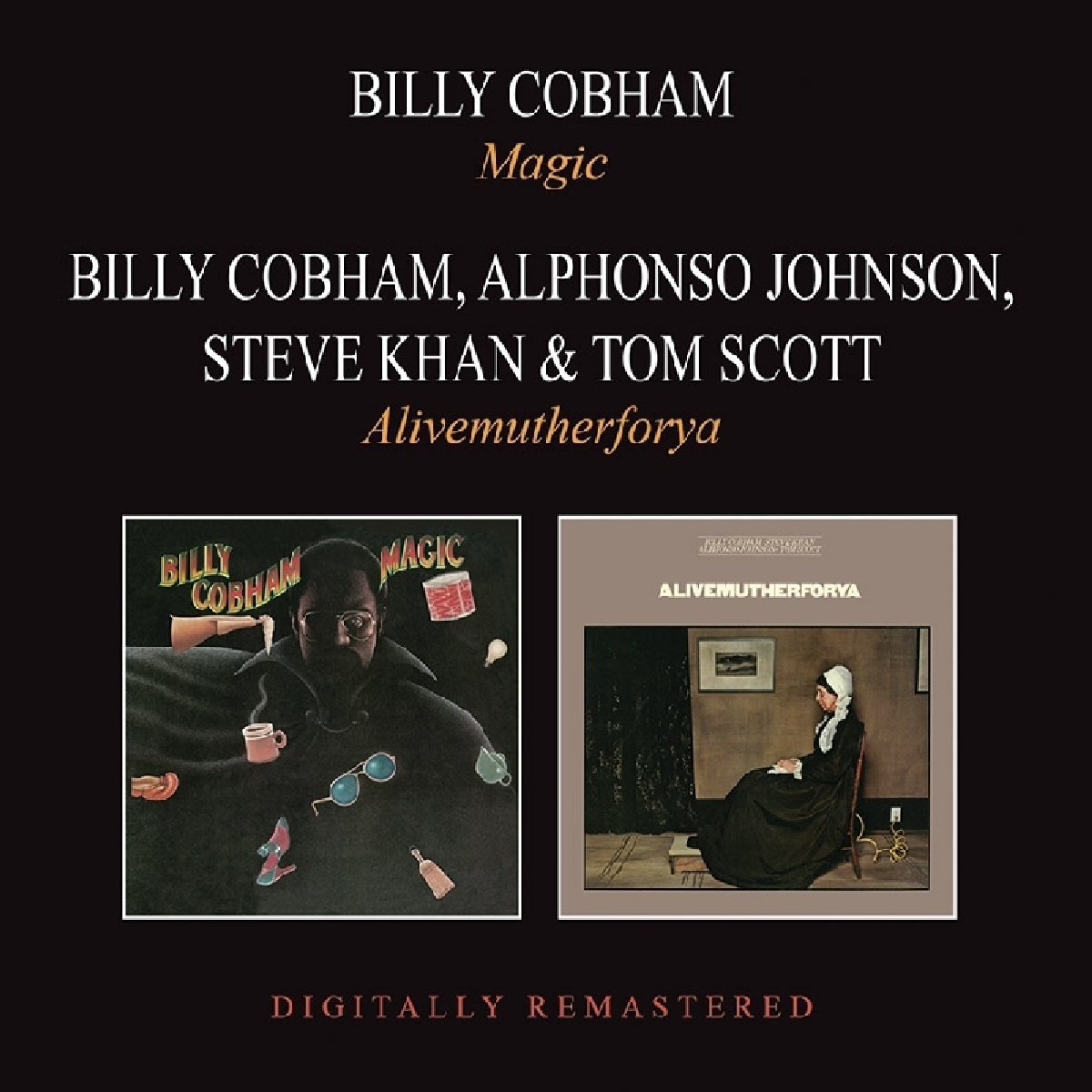
DIE WILDE JAGD-UHRWALD ORANGE.
Die Wilde Jagd-Uhrwald Orange.
Label: Bureau B.
Release Date: ‘6th’ April 2018.
Ever since the late sixties, Düsseldorf has always had a vibrant music and art scene, and that was the still the case in 2006 when Berlin born DJ Sebastian Lee Philipp first met Ralf Beck a local musician and producer in Salon des Amateurs, which had long been a favourite meeting place for artists and experimental musicians. Sebastian Lee Philipp had just arrived in Düsseldorf from London, where he had spent the last five years DJ-ing and running his own club night Caligula.That was in the past, and Sebastian Lee Philip was looking to the future when he first met Ralf Beck in Salon des Amateurs.
It turned out that Sebastian Lee Philip had much in common with Ralph Beck, who was born in Düsseldorf and was now a familiar face in the city’s thriving music scene. Ralph Beck was a musician, songwriter and producer who also collected vintage synths and effect pedals. By 2006, Ralph Beck had nearly twenty years of experience and been working in studios in Düsseldorf since he released his debut album Jahr Für Jahr in 1987. Since then, he had been involved in various projects including Acapulco Highway Hi-Fi, Fortunato and Montresor, Push The Music, Sha-Ly, Yellow Cab, X-Tra Voice, Unit 4 and Nalin and Kane. This was a very different background to Sebastian Lee Philip.
When Sebastian Lee Philip arrived in Düsseldorf, he was already an experienced DJ, but lacked the experience that Ralph Beck had. However, Sebastian Lee Philip was keen to learn and forge a musical career in Düsseldorf. Ralph Beck agreed to help him and this was the start of not just a new friendship, but later, a musical partnership.
Just two years after Ralph Beck and Sebastian Lee Philip first met in Salon des Amateurs, they had already formed their first musical vehicle Der Räuber Und Der Prinz who released their debut 12” single Der Elektrische Reiter in 2008. Two years later, and Der Räuber Und Der Prinz returned with their sophomore 12” single Jagd Auf Den Hirsch in 2010. This was the final release from Ralph Beck and Sebastian Lee Philip as Der Räuber Und Der Prinz.
Five years later, and Ralph Beck and Sebastian Lee Philip were back with a new project, Die Wilde Jagd who released their eponymous debut album to critical acclaim in January 2015. This many critics thought would be the first of many albums from the pair.
Not long after the release of the critically acclaimed Die Wilde Jagd, Ralph Beck decided to excuse himself from: “daily business,” which must have come as a surprise to Sebastian Lee Philip, and been a huge blow. However, it turned out that although Ralph Beck was no longer going to be a full-time member of Die Wilde Jagd, he would co-produce and mix Die Wilde Jagd’s sophomore album Uhrwald Orange, which will be released on Bureau B on the ‘6th’ April 2018. However, Uhrwald Orange is no ordinary album.
The Uhrwald which translates as Clockwood in English, is a place of dreams and sounds that has its own sense of time. It’s also a place that Sebastian Lee Philipp has spent much time thinking about, and some might even say obsessing about. More recently, The Uhrwald became part of the Die Wilde Jagd story when the time came for the band to record their much-anticipated sophomore album Uhrwald Orange.
It was the most ambitious album of Sebastian Lee Philipp’s career, and on that had been inspired by art and music. This included Flemish artist Frans Snyder’s painting Animals Of The Night which influenced Uhrwald Orange, which is rich in imagery. Another influence was the ‘14th’ Century collection of songs Llibre Vermell de Montserrat which also influences and inspired as he began work on Uhrwald Orange.
Recording took place at Ralf Beck’s recording studio which was where the musician and producer kept his impressive array of vintage analogue synths and effects including compressors, pre-amps and the EMT Plate reverb. All this, Sebastian Lee Philipp would put to good use as he attempted to recreate the images and music he had been imagining over the last few weeks and months.
When work began on Uhrwald Orange, Sebastian Lee Philipp was determined decided to transfer his sonic interpretations of his world of images onto tape. This he knew would take time and night after night, week after week, Sebastian Lee Philipp embarked upon a nocturnal voyage into the subconscious as descended into a strange and surreal world past the boughs and branches into the symbolic forest, to Fremde Welt where the ghostly creatures reside. This includes the Acid horses, bat boys, 2000 elephants on Säuregäule, Flederboy and 2000 Elefanten respectively. To bring all this to life, Sebastian Lee Philipp made good use of the equipment within Ralf Beck’s recording studio.
“I want to make the equipment in the studio sing, build a world of sound in which every tone, every effect has its own voice. Iron bells become galloping hooves, synthesizers call like crows, plate reverbs rumble like thunder. Every element can be found amongst the dwellers and natural forces of the Clockwood Orange.”
This also includes an array of repetitive electronic sequences that included everything from fuzzy psychedelic guitars and basses to Georgian choirs, Mediterranean mandolins and rattling North African krakebs. They play their part what’s a magical musical mystery tour that incorporates elements of medieval church music which is combined with European folklore, improvised jams, the sound of dark Nordic woods and the Eastern dawn. During the course of just eight captivating tracks written and recorded by Sebastian Lee Philipp, Die Wilde Jagd journey from the Orient to Occident.
Eventually, with the five instrumentals on Uhrwald Orange were complete and Sebastian Lee Philipp having added lyrics to the other three tracks Die Wilde Jagd’s much-anticipated sophomore album was complete. It was the first album since Ralf Beck ceased to become a full-time member of the band. However, he had played a part in the making of Uhrwald Orange.
Although Sebastian Lee Philipp had written and recorded and Uhrwald Orange, he had co-produced and mixed the album with Ralf Beck. When it came to the final mix-down process Australian producer Kris Baha was brought onboard and soon, Uhrwald Orange was ready for release.
After just over three long years, Die Wilde Jagd which is now a vehicle for Sebastian Lee Philipp is back with their most ambitious album Uhrwald Orange. It features eight carefully crafted, cinematic tracks that are rich in imagery, as Die Wilde Jagd take the listener on a musical journey on Uhrwald Orange which features an eclectic selection of soundscapes.
During the cinematic soundscapes on Uhrwald Orange, the listener’s imagination runs riot and they think of barren poppy fields and gorse valleys as itinerant, nomadic people roam from place to place seeking meaning in their empty lives. Other times, Die Wilde Jagd’s music is liturgical and spiritual as the music paints vibrant pictures of subjects as diverse as the rapture and reincarnation. Still, though, Die Wilde Jagd aren’t finished and pay homage to womanhood as they continue to create multilayered cinematic music that veers between dramatic to romantic to wistful, rueful and melancholy to ecstatic and ecstatic on Uhrwald Orange.
Flederboy which opens Uhrwald Orange with a myriad of beeps that tap out a code becomes eerie, otherworldly and mesmeric as Die Wilde Jagd toy with the listener. The same motif is repeated and soon becomes part of irresistible mid-tempo instrumental earworm that is an anthem-in-waiting.
Eerie and haunting describes the introduction to 2000 Elefanten which is a realistic portrayal of a nocturnal voyage into Sebastian Lee Philipp’s subconscious as he descends into a strange and surreal world that is populated by ghostly creatures. Soon, an array of instruments, samples and field recordings are combined with the vocal as effects are deployed in this journey to an Eastern land. Sometimes, it’s something as simple as a filter or reverb which adds a lysergic sound to this melodic genre-melting soundscape. It’s rich in imagery and constantly changes, veering between melodic to dark, dramatic and otherworldly as spring Die Wilde Jagd surprises aplenty.
There’s a degree of urgency and darkness to Stangentanz as the soundscape swirls and sometimes becomes hypnotic and dubby. All the time, sounds appear, reappear and disappear ranging from those that come courtesy of the vintage synths and drum machine. They’re honed and become part of a multilayered soundscape which gradually reveals its secrets. Again, effects are deployed and put to good use, but not overused. The result is a memorable and uplifting seven-minute epic that Sebastian Lee Philipp managed to transfer from his imagination to tape,
Straight away, Fremde Welt sounds dark, dramatic and eerie as Die Wilde Jagd take the listener somewhere they may be reluctant to go. No wonder, as the music is moody, broody and full of drama and tension. Suddenly the listener is thinking of places and things that once frightened them as a bass synth pounds and grinding, whining sounds emerge from the soundscape. By then, their heart will beat that bit quicker. Later, sci-fi synths lighten the atmosphere, but still Fremde Welt is a place where nobody would dare to visit. However, Fremde Welt cinematic music at its best, and the perfect soundtrack to the listener’s worst nightmare.
Kreuzgang is nearly seventeen minutes long and Die Wilde Jagd deploy an array of instruments, samples and effects including reverb and filters as the soundscape ebbs and flows with changes in tempo, style and mood as surprises are sprung. Initially, guitars jangle before sci-fi synths, crisp beats and later a scampering and broody bass enters. Meanwhile, reverb is added to the soundscape, as instruments and samples appear and disappear. Soon, the soundscape slows and become moody as the tension and drama builds as a synth buzzes, drums crack and is joined by a mesmeric bass. Midway through the soundscape, it’s stripped bare before elements of medieval and ethnic music are combined during this captivating epic cinematic track.
The sound of footsteps can be heard as Ginsterblut unfold and adds to this dark, dramatic soundscape where tension is omnipresent. Especially as a drum beats, while drones, a jangling guitar, ghostly harmonies and later a meandering bass, tinkling piano and percussion. They provide a backdrop for Sebastian Lee Philip’s slow, deliberate vocal which adds to the sense of melancholia. Later, when the vocal drops out a searing rocky guitar makes an appearance on this atmospheric, moody and otherworldly soundscape.
Understated describes Säuregäule before an urgent, pulsating bass synth soars above the arrangement and is joined by an array of hypnotic sci-fi sounds and vocoder vocal. Together they play their part in a hypnotic and futuristic sounding track that is rich in imagery.
As Der Uhrwald which closes Uhrwald Orange opens, the various sounds set the listener’s imagination racing. Soon, though, it’s all change as synths that draw inspiration from the Düsseldorf and Berlin Schools take centre-stage. Sometimes, they’re reminiscent of classic Kraftwerk, as the music becomes mesmeric. Later, it’s all change and a plucked bass is joined by a haunting soliloquy before the rippling synths return. Latterly, drums are added and crack as reverb is added to the arrangement which is soon stripped bare and Die Wilde Jagd’s sophomore album ends on a resounding high.
After over three years away, Die Wilde Jagd will return on the ‘6th’ April 2018 with their much-anticipated sophomore album Uhrwald Orange which will be released by Bureau B. Uhrwald Orange is the most important album of Die Wilde Jagd’s career as it’s the first album to feature the new lineup of the band.
No longer is Die Wilde Jagd a duo featuring the experienced musician, songwriter and producer Ralf Beck and Sebastian Lee Philipp. Instead, Die Wilde Jagd features just Sebastian Lee Philipp the former DJ who is now a stalwart of German music scene, who wrote, recorded and co-produced Uhrwald Orange with Ralf Beck. Mostly, though, Uhrwald Orange is the work of Sebastian Lee Philipp who combines Neo-Krautrock with synth pop and elements of avant-garde, electronica, experimental, psychedelia and rock to create a captivating and carefully crafted album.
For many bands losing a musician with the talent and experience that Ralf Beck has could’ve spelt the end of Die Wilde Jagd. Thankfully that wasn’t the case and former DJ Sebastian Lee Philipp stepped up to the plate and created a truly ambitious and innovative genre-melting album Uhrwald Orange which marks the start of a new chapter in the Die Wilde Jagd story. Uhrwald Orange which was masterminded by Sebastian Lee Philipp who comes of age on Die Wilde Jagd, is an album that is atmospheric, dramatic, romantic, melancholy, spine-tingling and uplifting, and is also cinematic and rich in imagery.
Die Wilde Jagd-Uhrwald Orange

BILL FRISELL-MUSIC IS.
Bill Frisell-Music Is.
LABEL: Okeh-Sony Music.
Sixty-seven year old American jazz guitarist, composer and arranger Bill Frisell was born in Baltimore, but grew up in Denver, Colorado, where his love of music blossomed. Bill Frisell’s love of music is just as strong today, as it’s ever been, and proof of this is his new solo album Music Is which has just been released by Okeh-Sony Music. Music Is showcases one of the most innovative guitarists of his generation,and is very different to his recent albums. This time round, Bill Frisell recorded the album over a five-day period in August 2017, and played everything from acoustic and electric guitar to bass and ukelele while deploying an array of loops and effects. The result was yet another groundbreaking album from a true musical pioneer, who didn’t start out playing the guitar.
Initially, the young Bill Frisell studied clarinet with Richard Joiner of the prestigious Denver Symphony Orchestra, and later by Johnny Smith. By then, Bill Frisell had graduated from Denver East High School and enrolled at the University of Northern Colorado where he studied music.
By then, Bill Frisell had started to play the guitar, and was lucky enough to be taught first by Dale Bruning, and after he graduated from University of Northern Colorado cool jazz guitarist Johnny Smith. However, soon, Bill Frisell was heading to the Berklee College of Music where he was taught by Jim Hall and Jon Damian. All these years of studying paid off, and Bill Frisell eventually embarked upon a long and successful musical career.
Ironically, it was by sheer chance that Bill Frisell got his first break when fellow guitarist Pat Metheny was unable to make the recording session for Paul Motian’s album Psalm. Bill Frisell made his way to the studio and played on the Psalm sessions, and proved to be more than an adequate replacement for Pat Metheny. So much so, that he was offered the job as ECM Records’ in-house guitarist, and when Psalm was released in 1982, this was the start of Bill Frisell’s lengthy association with ECM Records.
Soon, Bill Frisell was playing on a number of high profile albums that were released on ECM Records, including Jan Garbarek’s 1981 album Paths, Prints. However, Bill Frisell didn’t want to remain a sideman all his life.,
Two years later, in 1983, Bill Frisell went from sideman to solo artist when he released his debut album In Line, which featured solo recordings and duets with Norwegian bassist Arild Andersen. This was followed by his much-anticipate sophomore album Rambler which was released on ECM Records in 1984 and was the last solo album Bill Frisell released in three years.
In December 1984, Bill Frisell and fellow guitarist collaborated on an album of avant-garde jazz, Smash and Scatteration which was released on Minor Music in 1985. However, for his third solo album, Bill Frisell returned home.
Bill Frisell’s third solo Lookout For Hope which was released to critical acclaim by ECM Records in 1987. By then, Bill Frisell was living in New York and part of a quartet that featured drummer Joey Baron, bassist Kermit Driscoll on bass, Joey Baron on drums, and cellist Hank Roberts. However, after the departure of Hank Roberts, the quartet became a trio and continued to play together.
Meanwhile, Bill Frisell who was living in n Hoboken, New Jersey had formed a partnership with John Zorn and was part of the quick-change band Naked City. Still, Bill Frisell still found time to work with many other artists and at one point, was part of the Paul Motian Trio which also featured saxophonist Joe Lovano. However, with the rents rising in the Big Apple, Bill Frisell decided to move to Seattle in 1988
A year after moving to Seattle, Bill Frisell released Before We Were Born, which was the first twenty-one albums for the Elektra Nonesuch label which became his musical home. Before We Were Born, was a showcase for Bill Frisell’s versatility and over the next few years, he went from strength to strength.
This included on Have A Little Faith which was released in 1992, and was the fourth album that Bill Frisell had recorded for the Elektra Nonesuch label. It’s regarded as one of his most inventive recordings and was another tantalising taste of what Bill Frisell was capable of.
Have A Little Faith was the start of a period when Bill Frisell released a string of critically acclaimed albums including 1994s This Land, 1995s The High Sign/One Week: Music For The Films Of Buster Keaton, the 1997 country album Nashville and 1998s Gone, Just Like A Train which was Bill Frisell’s tenth album for the Elektra Nonesuch label.
By then, Bill Frisell had disbanded his trio and was working with a number of different musicians, including some up-and-coming musicians. Other times, Bill Frisell the great and good of music onboard, including drummer and percussionist Jim Keltner, guitarist Ry Cooder for the recording of his eleventh album for Elektra Nonesuch Good Dog, Happy Man. Bill Frisell and his band jammed, combining and switching between Americana, country, folk and jazz on album that was released to critical acclaim in 1999. This was the perfect way to end the millennia.
As the new millennia dawned, Bill Frisell’s track Under A Golden Sky featured on the soundtrack to the film drama Finding Forrester, which was released in 2000. This was Bill Frisell’s latest dalliance with the world of cinema.
In 2003, Bill Frisell embarked upon a new adventure, when he became the musical director of Century of Song which was a series of concerts at the German Ruhrtriennale arts festival. Over the next three years, Bill Frisell invited everyone from Rickie Lee Jones and Suzanne Vega to Loudon Wainwright III, Van Dyke Parks, Arto Lindsay, Chip Taylor and Elvis Costello. Each of these artists performed their favourite songs at the festivals between 2003 and 2005.
Meanwhile, back home in America, Bill Frisell’s critically acclaimed 2003 album The Intercontinentals was nominated for a Grammy Award later that year. Sadly, it was a case of so near yet so far. However, two years later in 2005, Bill Frisell’s 2004 album Unspeakable won the Grammy Award for Best Contemporary Jazz Album. This was one of the highlights of his three decade career.
Ironically, Bill Frisell’s 2005 album Richter 858 which was an innovative combination of downtown music and improv, was hailed as one of his finest albums since the dawn of the millennia but failed to win any awards. However, four years later, and Bill Frisell’s 2008 album History, Mystery which was the twentieth album he had released for Elektra Nonesuch, was nominated for a 2009 Grammy award for the Best Jazz Instrumental Album, Individual or Group. Alas, it was once again a case of so near, yet so far.
Just a year later, in 2010 and Bill Frisell ended his long and successful association with Elektra Nonesuch, and released the trio album Beautiful Dreamers on the Savoy label. The Lee Townsend produced album was an expansive and diverse album where the trio’s music was ethereal, emotive, spartan and melodic as they play with a restraint. This latest album from Bill Frisell’s trio was released to critical acclaim and was the perfect start to a new chapter in his career.
The following year, 2011, Bill Frisell released two further albums for Savoy, the critically acclaimed Sign Of Life: Music For 858 Quartet and All We Are Saying. However, after three albums for Savoy, Bill Frisell was on the move again.
He released Silent Comedy in February 2013, which was album of solo guitar improvisations that was produced by his old friend John Zorn. It was hailed as a groundbreaking released when it was released on John Zorn’s Tzadik Records. Alas, it was his only released for the label.
Next stop for Bill Frisell was the Okeh label, who released Big Sur in June 2013. It featured music that was inspired by the land, sky, sea, and wildlife of the Big Sur which is situated on California’s Central Coast. Big Sur was released to plaudits and praise as was the followup Guitar In The Space Age! which saw Bill Frisell revisit instrumentals from the eighties on his second album for Okeh which was released in October 2014.
Fifteen months later, and Bill Frisell returned with When You Wish Upon A Star, which was an album of family motion picture themes that featured vocalist Petra Haden. She was accompanied by a talented quartet while Lee Townsend When You Wish Upon A Star, which was released in January 2016. Bill Frisell’s first album to feature a vocalist was a resounding success, and many critics wondered what was next for the veteran guitarist?
Just over a year later, and Bill Frisell made a welcome return to where it all began for him, ECM Records. They released his live album Small Town which had been recorded at the Village Vanguard, in Greenwich Village, in New York in 2016. That night, Bill Frisell and bassist Thomas Morgan are like a musical yin and yang on Small Town where original compositions and familiar tracks sit side-by-side. Bill Frisell’s return to ECM Records Small Town, was released to critical acclaim. It seemed that Bill Frisell could do no wrong.
Music Is.
Buoyed by the success of Small Town, Bill Frisell entered Flora Recording and Playback in Portland, Oregon, on the ‘23rd’ of August 2017. This time, he was about to become a one man band. Bill Frisell setup his acoustic and electric guitars plus his bass, a ukelele and some of his music boxes and an array of pedals. The final piece of the jigsaw were the loops that would augment him on his fifteen compositions that he planned to record. Over the next five days, Bill Frisell recorded fifteen tracks and the alternate take of Rambler. By the ‘27th’ of August 2017 Bill Frisell had recorded Music Is, which was produced by Lee Townsend and was recorded and mixed by Tucker Martine.
All that remained was for Greg Calbi at Sterling Sound, in New York to master Music Is. Then Bill Frisell who was one of the most prolific and innovative jazz guitarists could release Music Is, which showed another side to his music.
Music Is offers a different approach to a solo guitar album, which Bill Frisell has previous experience of. This included 2000s Ghost Town and 2013s Silent Comedy. However, Music Is finds Bill Frisell heading in a new and different direction which is what critics and music fans have come to expect of this musical pioneer.
Just like on Ghost Town, Bill Frisell deploys an array of guitars, plus his bass and his ukelele and makes good use of looping and also layering, while effects prove to be his secret weapon. Whether it is compression, delay or reverse-attack, they’re all deployed by Bill Frisell over the course of fifteen tracks and transform the dry sound as he becomes a one man band.
Music Is opens with Pretty Stars where Bill Frisell reaches for his electric guitar which produces crystalline notes that are looped and become part of a carefully crafted multilayered soundscape. Winslow Homer is then reinvented by Bill Frisell, but in many ways stays true to the version that featured on Beautiful Dreamers in 2010. It gives way to Change In The Air where Bill Frisell plays slowly before washes of shimmering guitar resonate and produce a beautiful, dreamy and sometimes haunting soundscape. Wistful, melancholy and ethereal describes the poignant What Do You Want? It’s followed Thankful which is an emotive roller coaster that veers between rueful to hopeful and joyous as this beautiful multilayered cinematic sound unfolds.
Although Ron Carter which featured on Blues Dream is slow and broody, there’s a beauty that is omnipresent as musical master craftsman Bill Frisell deliberately introduces and sometimes spontaneously adds parts at the perfect moment, and in doing reinvents this familiar track. Very different is Think About It which is a rocky sounding track that shows another side to musical chameleon Bill Frisell. By comparison, In Line has a much more experimental sound as he deploys effects and tames the tiger that is howling feedback.
Bill Frisell included two versions of Rambler on Music Is, allowing for the listener to compare and contrast. The first version features some masterful guitar playing and beeps and squeaks punctuate the arrangement and add the finishing touch as Bill Frisell channels the spirit of Wes Montgomery. By comparison, the alternate version of Rambler which is a bonus track, features a much more understated sound.
There’s a poignancy to The Pioneers which sounds as if it’s been influenced and inspired by traditional folk music. This poignant sound returns in Monica Jane, where there’s also a sense of melancholy. Meanwhile, Bill Frisell uses his array of effects and panning is used effectively and reverb ensures that the guitar shimmers. Miss You is a cinematic sounding track that is full of sadness and regret. Very different is the carefree and bluesy sounding Go Happy Lucky which gives way to the rocky Kentucky Derby Bill Frisell showcases his considerable skills as guitarist. Music Is closes with Made To Shine a slow, understated track where fittingly Bill Frisell’s guitar is allowed to shine before he takes his bow.
After sixteen tracks including the alternate version of Rambler, which is a bonus track, Music Is draws to a close. Stylistically, Music Is which features just Bill Frisell, follows in the footsteps of 2000s Ghost Town and 2013s Silent Comedy. However, the sixty-seven year old guitarist, composer and arranger latest album Music Is surpasses the quality of both these albums. It’s a remarkable reminder of what one multitalented musician is capable of.
Bill Frisell whose recorded over forty solo albums, countless collaborations and worked as sideman on numerous occasions is a musical chameleon who continues to reinvent not just his music, but familiar tracks. That was the case on 2014s Guitar In The Space Age! and 2015s When You Wish Upon A Star. Now two becomes three with Music Is where Bill Frisell dips into his back-catalogue and reinvents fifteen of his own compositions. Often he stays true to the original framework, but other times, takes the tracks in a new direction.
Remarkably, Bill Frisell took only five days to record Music Is where the veteran jazz man incorporates elements of America, avant-garde, blues, folk, improv, post rock and rock into the sixteen tracks. Some of these tracks feature complex, multilayered arrangements while others are spartan and underrated. However, all of the tracks on Music Is of the highest quality and showcase a virtuoso guitarist whose one of the most innovative guitarists of his generation.
Bill Frisell Music Is.

GABRIELE POSO-AWAKENING-VINYL EDITION.
Gabriele Poso-Awakening-Vinyl Edition.
Label: BBE Music.
Release Date: ‘30th’ of March 2018.
Italian multi-instrumentalist and master percussion Gabriele Poso’s lifelong love affair with music began after he discovered his family’s record collection as child. This was a cultural awakening for Gabriele Poso who was soon discovering the delights of jazz, soul and Afro-Latin music. Before long, Gabriele Poso wasn’t content just to listen to music, and wanted to learn how to play an instrument. Over the next few years, Gabriele Poso learnt to play a number of musical instruments, but one of his favourites was the guitar, which even today, plays an important part in his life as a professional musician. It’s often the guitar that brings life and meaning to some of his finest compositions. However, later in life when Gabriele Poso discovered percussion this was a life-changing experience and something that gave him: “a real reason to live.”
It turned out that Gabriele Poso was a natural percussionist who was blessed with flair and talent. Over the next few years, he spent time studying with master percussionists in Italy, Puerto Rico and Cuba where he completed his musical education.
Having learnt from the best, Gabriele Poso embarked upon a successful musical career, and has already released a trio of albums and the critically acclaimed compilation Gabriele Poso Presents The Languages Of Tambores (A Spiritual Journey Through The Cultural Heritage Of Drums) on BBE Music in 2017. Just over a year later, and Gabriele Poso will return on ‘30th’ of March 2018 with his much-anticipated fourth album Awakening which will be released on vinyl as a two LP set. However, Awakening is the latest chapter story in the Gabriele Poso story.
Gabriele Poso was born on the ‘22nd’ of October 1978 in Sardinia, which is the second largest island in the Mediterranean Sea. However, the Poso family moved to Lecce, where Gabriele Poso grew up and his love of music began.
This came after Gabriele Poso discovered his family’s record collection, which was akin to cultural awakening for him. Soon, he was discovering the delights of Afro-Latin music, jazz and soul which would influence him when he embarked upon a career as a professional music. That was a long way down the line.
Having discovered and immersed himself in the family record collection, Gabriele Poso decided that he wasn’t content just to listen to music, he wanted to play music. Over the next few years, he learnt to play a variety of musical instruments, including the guitar, which even today, plays an important part in his life as a professional musician. It’s often the guitar that brings life and meaning to some of his finest compositions, and which he uses when he’s writing new material. This was all still to come.
Later, Gabriele Poso discovered the world of percussion, which was a life-changing experience, and gave him what he describes as: “a real reason to live.” Soon, he was enjoying and understanding percussion, and music was becoming a way of life for Gabriele Poso. He was a natural percussionist, who was blessed with flair and talent. Despite this, Gabriele Poso wanted to learn from the best percussionists in the world.
In 1998, twenty year old Gabriele Poso enrolled at the Timba school of music in Rome, where he studied percussion under Roberto Evangelista. Once he had completed his studies in Rome, Gabriele journeyed to San Juan, in Puerto Rico in 2001, where he studied at the prestigious Universitad Interamericana De Puerto Rico. After completing his studies in Puerto Rico, Gabriele headed to Cuba, where he spent time studying at the world-renowned Escuela National De Arte, in Havana. This was where Gabriele Poso completed his musical education.
By the time Gabriele Poso returned from Havana, having completed his musical education, he had only featured on the one recording, DJ Jazzy Jeff’s 2002 single Rock Wit U. This only came about when DJ Jazzy Jeff was struggling to find a conga player, and someone suggested they try Gabriele Poso. He was drafted in at short notice, and this proved to be the break that Gabriele Poso had been looking for. Over the next few years, he would work with a number of artists.
This included the American producer Osunlade, who Gabriele Poso first met when he was studying in Puerto Rico. Soon, the pair became friends and decided to collaborate together. Having worked together, the next natural step was for Gabriele Poso was to record his debut album.
Gabriele Poso returned in 2008, with his debut album From The Genuine World, which was released on Osunlade’s Yoruba Records. It was well received by critics and launched Gabriele Poso’s career.
Over the next few years, much of Gabriele Poso’s time was spent playing live. Sometimes, he worked alongside some of the highest profile producers, including Louie Vega, Boddhi Satva and Osunlade. On a couple of occasions he cowrote songs, but most of the time, Gabriele Poso put his considerable skills as a percussionist and multi-instrumentalist to good use. However, after spending three years working with other people, the time came for Gabriele Poso to record his sophomore album.
Gabriele Poso returned in June 2012 with his much-anticipated sophomore album Roots Of Soul which he had written, recorded, produced and mixed. In the studio, Gabriel Poso became a one man band, switching seamlessly between instruments. Joining him, were a trio of guest vocalists, Osunlade, Nailah Porter and Tanya Michelle who played their in the sound and success of Roots Of Soul. When it was released to critical acclaim on ‘12th’ June 2012, it was hailed by critics as Gabriele Poso’s finest hour.
Later in 2012, Gabriele Poso released Roots Of Soul Remix. This remix album showed another side to Gabriele Poso’s music, and introduced it to a new audience.
Nearly two-year later, and Gabriele Poso returned with his eagerly awaited third album, Invocation in April 2014. It had been recorded in Berlin between August and December 2012. Not only was Gabriele a one man band, who arranged, recorded, produced and mixed Invocation, he also decided to record all the vocals. This made sense as Invocation was a very personal album, and one which Gabriele Poso explained: “represents my feelings, all my emotions and all my fears.” This personal and powerful album won the approval of critics, and was showered with praise and plaudits upon its release.
Just over a year later, and Gabriele Poso returned with the second remix album if his career, Electric Invocation. When it was released in May 2015, Electric Invocation continued to introduce a new audience to Gabriele Poso’s music.
Since then, Gabriele Poso has spent much of his time touring Invocation. Each night, he puts on a spectacular and memorable stage show which received praise and plaudits from critics. However, when he found some free time, the alt-jazz star compiled Gabriele Poso Presents The Languages Of Tambores (A Spiritual Journey Through The Cultural Heritage Of Drums) for BBE Music. This captivating and eclectic compilation was released to widespread critical acclaim in January 2017, and was the latest chapter in the Gabriele Poso story.
Three years after the release of Invocation, Gabriele Poso is preparing for the release of his much-anticipated fifth album Awakening, which will be released on the ‘30th’ of March 2018. The Italian multi-instrumentalist and master percussionist has written, eleven new songs and decided to cover Roy Ayer’s classic Everybody Loves The Sunshine. The twelve songs were arranged, recorded and produced by Gabriele Poso and became Awakening.
Awakening is probably the most rounded release of Gabriele Poso’s two decade career, and features a talented and versatile multi-instrumentalist and master percussionist at the peak of his powers. However, when Gabriele Poso began work on Awakening he was at a crossroads, and wondering about his future career as a musician after a life-changing event?
“The birth of my eldest son Viktor caused me to question my career in music and explore other, more ‘secure’ options, but thanks to my wife I quickly realised that to be different from your neighbor doesn’t make you wrong. After all, in this life, does anyone really have any security? So actually Viktor and my family have become my super power: they teach me to believe in myself more than I ever did before. This album is all about that realization; that Awakening.”
Spurred on by his wife and the birth of his son Viktor, Gabriele Poso began work on Awakening which is an ambitious genre-melting album where elements of Afro-Latin, jazz, soul and dance music are combined by Gabriele Poso and the various guest artists. However, the glue that holds each of the arrangements together is Gabriele Poso’s unique and inimitable layered live percussion sounds. They play their part in Gabriele Poso’s musical Awakening.
Opening Awakening is Playa 80 where a myriad of percussion and handclaps are joined by thunderous 4/4 dance beats. Soon, hi-hats hiss, metal pans rattle and provide a contrast to the pounding 4/4 beats. They’re augmented by the percussion and together, create an irresistible and uplifting call to dance.
A lone piano opens Awakening before a flute enters and flutters high above the arrangement, adding to the ruminative sound. Meanwhile, flourishes of piano accompany the flute, before a spiritual sounding vocal is added. Soon, percussion is added before the piano plays and the tempo rises and a dancefloor friendly paean is unfolding. It features a shimmering Fender Rhodes, flute, percussion which accompany the heartfelt vocal. Later, lush strings are added and sweep and swirl. However, when the vocal returns it becomes a soliloquy as Gabriele Poso delivers the lines: “I’m a warrior fighting for love, fighting for the heart without love.” Latterly, as his vocal soars high above the arrangement, instruments are dropped in at just the right time, playing their in a carefully crafted seven minute epic paean.
As Cumbachero opens, percussion and drums sets the scene before a guitar and funky bass are added. Soon, Gabriele Poso adds a chanted vocal before a piano and blazing horns enter. They’re joined by otherworldly sounds before the horns return and then are replaced by harmonies as an alto saxophone. Before long, the rest of the horn section return and join the Fender Rhodes. It remains when the arrangement is stripped bare and just the percussion and harmonies remain. However, soon, this irresistible, joyous and hook-laden floor filler rebuilds, before reaching a crescendo.
The tempo drops on Adorando as percussion plays before the prowling bass makes its impression felt, and the braying horn is joined by keyboards. Gradually, this genre-melting, cinematic track begins to reveal its secrets. Braying, wailing horns are added as the rhythm section add the heartbeat as jazz and funk are combined with Gabriele Poso’s trademark percussive sound. The result is a beautiful, cinematic track that is rich in imagery.
Back in 1976, Roy Ayers released the original version of Everybody Loves The Sunshine, which is regarded as the definitive version this classic song. Covering such a well known and much-loved song is never easy, so rather than stay true to the original, Gabriele Poso reinvents it and takes it in an entirely new generation. He stretches the melody, and sometimes, it heads in an entirely new and unexpected direction. Later, though, this cover stays true to the original version as crisp beats provide a backdrop for the backing vocalists whose contributions veer between soulful and jazz-tinged. Meanwhile, Gabriele Poso plays everything from keyboards, vibes, percussion and a bass synth during this summer anthem in-waiting.
After percussion opens Words Never Work, Gabriele Poso’s heartfelt, soulful vocal is accompanied by keyboards, stabs of blazing horns, drums, a bass synth and later, a flute. Later, washes of swirling Hammond organ are joined by a fleet fingered guitar solo that veers between jazz and rock as Gabriele Poso continues to deliver a soulful vocal. Everything seems to falls perfectly into place during this latest genre-melting hook-laden, anthemic paean with a summery sound.
Gabriele Poso successfully replicates the sound nightfall on The Night Falls before a myriad of percussion is added. Later, thunderous drums power the mesmeric sounding arrangement that is rich in imagery.
A spiritual sounding vocal sings call and response on Mi Amigo as percussion and a xylophone play. They’re soon joined by drums and a funky bass enter. They accompany an impassioned soliloquy while handclaps are added. Later, the spiritual sounding vocal returns and sings call and response against an understated backdrop. In doing so, they show another side to Gabriele Poso.
The sound of waves breaking on a deserts beach opens Repulse Bay which is one of the shortest tracks on Awakening and lasts just 1.47. Soon, keyboards, an accordion and flute unite to create a beautiful, jazz-tinged soundscape that once again, is rich in imagery.
Percussion and a scatted vocal opens Sotto Il Campanile before pounding drums, a bass and guitar enter before horns soar above the arrangement as strings sweep. Still, though, Gabriele Poso’s galloping percussion is at the heart of the arrangement. It’s joined by harmonies, a plucked guitar, the bass and a lone horn. Everything falls perfectly into place and another beautiful, dreamy and summery track takes shapes.
A probing bass and handclaps combine on Otro Barrio before cymbals crash, and percussion joins with a shimmering Fender Rhodes and flute. They provide the backdrop for an effects treated vocal as Gabriele Poso seems to draws inspiration from Herbie Hancock and Santana, as musical influences and genres melt into one. Elements of funk, jazz, jazz-funk, Latin and even electronica play their part in this explosive and irresistible floor filler that is full of twists and turns.
6 In 4 scurries along with drums, percussion and bass at the heart of the arrangement which initially, is stop-start. Soon, though the arrangement is flowing along, and master percussionist enjoys the opportunity to showcase his considerable skills. Midway through the track, there’s a brief pause before normal service is resumed and this exquisite and irresistible percussive arrangement continues apace.
This leaves just the extended mix of Words Never Work to close Awakening. It’s a near nine minute floor filling epic which closes Gabriele Poso’s eagerly awaited fourth album Awakening on a high.
Just over a year after the release of Gabriele Poso Presents The Languages Of Tambores (A Spiritual Journey Through The Cultural Heritage Of Drums) the Italian multi-instrumentalist and master percussion returns with his fourth studio album Awakening. It will be released as a two LP set on BBE Music on the ‘30th’ of March 2018 and is finest album of Gabriele Poso’s two decade career. The vinyl is of the highest quality and so is the sound quality, which is what record buyers have come to expect of a record company that really cares about sound quality.
Awakening features elements of Afro-Latin, jazz, funk, soul and dance music which are combined by Gabriele Poso and the various guest artists that feature on the album. It finds the multi-instrumentalist playing an array of instruments, as well as the layers of live percussion that is the glue that holds each of the arrangements on Awakening together.
The percussion plays a leading role on many of the tracks, and on other tracks plays a supporting role. On these tracks, Gabriele Poso deploys everything from 4/4 dance beats to blazing horns, lush strings, a shimmering Fender Rhodes and washes of swirling Hammond organ. They play their part in the sound and success of the slick, carefully crafted productions on Awakening where Gabriele Poso comes of age as an arranger and producer. However, that is just part of the story of Awakening.
Gabriele Poso is also a talented singer and songwriter who puts his considerable talents to good use on Awakening. It’s fourth and finest album of Gabriele Poso’s career and features cinematic tracks, paeans, hook-laden anthems and floor fillers that showcase a talented and versatile multi-instrumentalist and master percussion at the peak of his powers during this musical Awakening.
Gabriele Poso-Awakening-Vinyl Edition.
MOPO-MOPOCALYPSE.
Mopo-Mopocalypse.
Label: We Jazz Records.
When a fight breaks out in a bar some people head for the door, as others look for a pool cue and join the fray, while some watch the action from sidelines hoping that nobody will spill their drink. However, not many people having just witnessed a bar brawl decide to form a new band. That was what happened when drummer Eeti Nieminen, bassist Eero Tikkanen and saxophonist Linda Fredriksson witnessed a bar brawl in the autumn on 2009 in their native Finland. This lead to a brainstorming session, which resulted in the trio forming the Finnish punk-jazz collective Mopo who recently released their fourth album Mopocalypse on We Jazz Records. It’s the latest chapter in a remarkable story that began back in 2009.
Back in 2009, drummer Eeti Nieminen who was born in 1987, was regarded as one of the rising stars of the Finnish jazz scene and had just embarked upon a musical career. Nearly nine years, and the onetime rising star is now thirty-one year old and a talented and versatile musician who has played alongside Väärä Raha and Yona and Orkesteri Liikkuvat Pilvet. However, nowadays, much of his time is spent with the Finnish punk-jazz trio Mopo.
Just like Eeti Nieminen, his partner in Mopo’s rhythm section, bassist Eero Tikkanen was born in 1987, and is also a familiar face in Finnish jazz scene. The thirty-one year old is a veteran of many groups including Fredator, Medium, Mikko Innanen 10+ Orkesteri Liikkuvat Pilvet, The Mystic Revelation Of Teppo Repo and of course Mopo. Nowadays, Eero Tikkanen is a versatile and talented bassist who can seamlessly switch between disparate musical genres, which means he’s constantly in demand when it comes to session work. This he fits around his work with Mopo.
The third member of Mopo is saxophonist Linda Fredriksson who was born in 1985 and attended the Pop and Jazz Conservatory in 2007. After that, the thirty-three year old studied music education at the Sibelius Academy. By then, Linda Fredriksson was another of Finnish music’s rising stars and had played with various bands, including Echosystem, Medium Ricky-Tick Big Band and The Northern Governors. However, for the last nine years she’s been a member of Mopo who have been winning friends and influencing people.
In the wake of the bar brawl that resulted in Eeti Nieminen, Eero Tikkanen and Linda Fredriksson deciding to form a jazz collective together, they started thinking of a name for the nascent band. That was when some suggested Mopo, which is Finnish for a moped. This would prove ironic as Mopo, unlike its namesake, can go from zero to flat out in the space of a few bars.
That was the case from the moment Mopo made their first tentative steps onto the Finnish jazz scene. However, Mopo weren’t like many of the bands they encountered as the youthful trio played with a swagger as they incorporated punk and jazz into their genre-melting sound. This would soon prove popular and it wasn’t long before Mopo’s star was in the ascendancy.
In May 2011, Mopo entered and won the Finnish heat for the Young Nordic Jazz Comets which was one of the most prestigious events in the music calendar. It provides a showcase for young, emerging jazz bands in the Nordic countries. Later in 2011, Mopo headed to the Swedish capital Stockholm, where they were up against the creme de la creme of Nordic jazz. Although Mopo didn’t win the competition, it generated a huge amount of interest and attention in the band.
Jee!
Between the ‘23rd’ and ‘26th’ of October 2011, Linda Fredriksson, Eero Tikkanen and Eeti Nieminen recorded the ten tracks at the Kallio-Kuninkala studio to record their eagerly awaited debut album Jee! When it was completed, it was scheduled for release the following year.
When Jee! was released in 2012, it showcased Mopo’s unique and inimitable sound which was an intriguing combination of punk-jazz and improv. This was the sound that made them a popular draw on Finland’s live circuit. The critics were also won over by Mopo an album of energetic hard jazz from one of the rising stars of Finnish music. Jee! was released to critical acclaim and launched Mopo’s career.
Beibe.
Two years later, and Mopo were back in February 2014 with their much-anticipated sophomore album Beibe. It was another eclectic release where Mopo with the help of Stina Koistinen combined fusion, improv, punk, jazz and rock to create another impressive album of genre-melting music. This time, Beibe featured a much more experimental which was different to Mopo’s debut album. The big question was how would critics react to the stylistic departure on Beibe?
When Beibe was released in February 2014, it was to the same critical acclaim as their debut album Jee! Critics embraced Mopo’s new sound and were forecasting a bright future for Mopo.
Laivalla.
Another two years passed before Mopo returned with another album Laivalla, which was a collaboration with singer Ville Leinonen. This was a very different album to Beibe and Jee! Laivalla had fused everything from folk, jazz and pop to psychedelic rock, but in doing so, had created what was an accessible, cerebral and thought-provoking genre-melting album. When Laivalla was released in 2016, it was to plaudits and praise which pleased Mopo and Ville Leinonen.
Mopocalypse.
After the release of Laivalla, work began almost immediately on Mopocalypse, and saxophonist Linda Fredriksson dawned the roll of songwriter in chief. She penned four of the eight tracks including Riisto, Ruusu, Mustafa and Sinut muistan ainiaan. The three members of Mopo joined forces with Felix Zenger to write Tökkö, while drummer Eeti Nieminen wrote Panama. Bassist Eero Tikkanen and Otto Eskelinen wrote Noita, while Niin aikaisin is a traditional song that Mopo arranged. These eight songs were recorded during a series of sessions.
Recording began on the ‘8th’ of September 2016 at Ambience Studio, and restarted in March 2017 at Magnusborg Studio with Mopo and Matti Nives taking charge of production. Once the album was recorded, six of the tracks were edited and mixed by Joonas Saikkonen, while Abdissa ”Mamba” Assefa was responsible for Niin aikaisin and Sinut muistan ainiaan. This left just Pauli Saastamoinen to master the album at Finnvox, which Mopo decided to dip into the Urbandictionary and call the album Mopocalypse, which is typical of the band’s humour.
Mopocalypse is a glorious album of swaggering, high energy hard jazz which features Mopo at their tightest on an album that isn’t as experimental as Beibe. Instead, Mopocalypse has more in common with their debut alum Jee! However, there’s no way that Mopo would make the same album twice and use Jee! and parts of Beibe as building blocks for Mopocalypse. In doing so, Mopo combine elements of punk-jazz and improv with their hard rocking brand of jazz. Sometimes, Mopo showcase a funky jazz and vintage jazz sounds, but mostly they concentrate on their trademark sound and hit the ground running on Mopocalypse.
Straight away, it’s as if Mopo are determined to reach new heights on the album opener Tökkö, which is one of two tracks where Eero Tikkanen switches to an older electric bass and joins forces with drummer Eeti Nieminen to anchor the arrangement. Meanwhile, bursts and stabs of Linda Fredriksson’s rasping saxophone punctuate the arrangement as Mopo become Finnish jazz’s equivalent to The Clash.
There’s no let-up as Riisto bursts into life and Linda Fredriksson’s growling saxophone carries the melody before machine bursts signal the entrance of bassist Eero Tikkanen. After enjoying his moment in the sun, Linda Fredriksson’s saxophone is played with speed and power before becoming sultry and melodic. Soon, she’s playing with the same speed and power as the track reaches a crescendo.
A droning saxophone marches to the beat of the drum on Ruusu, before a scampering bass becomes the advance party for the heart-wrenching, rueful sound of Linda Fredriksson’s saxophone. She drops out, leaving the coast clear for Eero Tikkanen’s bass solo on this understated sound that harks back to vintage jazz. Soon, the rest of Mopo is marching to the beat of the drum on a track that shows another side to the punk-jazz pioneers.
Lolling drums and a meandering bass provide an a spartan atmospheric backdrop for Linda Fredriksson’s beautiful sultry saxophone on Mustafa. She plays a starring role, and later plays with power, control and a fluidity while the rest of Mopo continue to provide an understated backdrop for one of Linda Fredriksson’s finest hours as a member of Mopo.
The understated backdrop is present on Niin aikaisin where saxophonist Linda Fredriksson eschews power and plays within herself for much of this beautiful track. Later, she plays with power and emotion and her saxophone soars high above the arrangement, before cymbals crash as one of the highlights of Mopocalypse draws to a close.
From the opening bars of Sinut muistan ainiaan (You, I’ll Remember Always) beauty is omnipresent, as Linda Fredriksson’s rasping saxophone is accompanied by an understated rhythm section. Later, as the saxophone drops out, the double bass in played with a bow, and sometimes, this adds a more experimental sound. Mostly, it’s vintage jazz especially as the saxophone returns and another soul-baring solo tugs on this wistful track at the heartstrings.
Initially, Noita (Witch) is quite different to what’s gone before as a muted bass gives way to squirts of insistent Farfisa organ before the saxophone enters and is played briskly. It’s accompanied by eerie, otherworldly sounds as the arrangement becomes eerie, cinematic and urgent thanks to the saxophone. Sometimes, as it rasps and growls it’s as if Linda Fredriksson is following in the free jazz pioneers and overblowing her saxophone to add a new dimension to the track. This works as earlier cinematic sound becomes an innovative free jazz workout where Mopo push musical boundaries.
Panama closes Mopocalypse and finds the rhythm section locking into a tight groove before Linda Fredriksson’s wistful saxophone ebbs and flows across the arrangement. Later it becomes sultry and mesmeric as the talented rhythm section never miss a beat. Meanwhile, the saxophone rises and falls before fluttering and quiver as Linda Fredriksson showcases her considerable skill one last time, as Mopo at their tightest close the album on high.
On Mopocalypse which was recently released by We Jazz Records, Mopo reach new heights on their fourth album, which is a career defining album. Everything has been building up to Mopocalypse since the band was formed nearly nine years ago. Four albums later, and Mopo have gone from rising stars of the Finnish jazz scene to the finished article.
Mopo also showcase their versatility on Mopocalypse, which is another eclectic album from the talented trio. Mopocalypse also features the different sides of Mopo. Their trademark jazz-punk sound is present as improv and sometimes, the music becomes raunchy and hard rocking brand of jazz. Other times, Mopo’s jazzy sound becomes funky, while other times it’s as if they’re travelling back in time as they play a vintage jazz sound. However, occasionally Mopo throws a curveball and vintage jazz gives way to free jazz as genres melt into one. Not every band is capable of doing this, but Mopo aren’t just any band.
Instead, Mopo which features three truly talented musicians are one of the leading lights of the Finnish jazz scene, and with every album their genre-melting music reaches a wider audience. Mopo who have been winning friends and influencing Finnish music fans for nearly nine years, have introduced a new and younger audience to jazz with their memorable live shows and their four albums. This includes Mopo’s latest and greatest album Mopocalypse, which is career-defining opus where the talented Finnish trio reach new heights and set the bar high for future albums.
Mopo-Mopocalypse.
THE HERBALISER-BRING OUT THE SOUND-VINYL EDITION
The Herbaliser-Bring Out The Sound-Vinyl Edition.
Label: BBE Music.
As October 2012 dawned, Jake Wherry and Ollie Teeba had been making music as The Herbaliser since 1995, and were now regarded as UK hip hop’s most exciting live band. The two members of The Herbaliser were also preparing to release their seventh studio album There Were Seven on the ‘8th’ of October 2012. This was the first album that The Herbaliser had released since Same As It Never Was in June 2008. That was four years ago, and The Herbaliser knew that music had changed since then. Would their still be an audience for their music and would it still be relevant?
The Herbaliser needn’t have worried, because when There Were Seven was released it was to widespread critical acclaim. After nearly four years away, Jake Wherry and Ollie Teeba were the comeback Kings who had returned with yet another groundbreaking album which was being hailed as one of the finest of The Herbaliser’s three decade career.
Just twenty months later, The Herbaliser returned in June 2014 with There Were Seven Remixes where two generations of remixers reworked and reinvented tracks from There Were Seven. In doing so, they whetted the appetite for The Herbaliser’s much-anticipated eighth studio album.
Seven years and five months after The Herbaliser released There Were Seven, Jake Wherry and Ollie Teeba make a welcome return with Bring Out The Sound which was recently released two LP set l by BBE Music. Bring Out The Sound features guest artists Just Jack, Rodney P, Mark Keds and Stac. They play their part on Bring Out The Sound which is the eighth album from The Herbaliser were formed in 1993.
Jake Wherry and Ollie Teeba who first met in the early nineties bonded over their shared love of music, and in 1993, decided to form a new hip hop group, The Herbaliser. Little did they realise that they would still be together twenty-five years later, and be regarded as one of the important and influential UK hip hop groups who are famous for their exciting live shows.
Two years, after founding The Herbaliser, Jake Wherry and Ollie Teeba signed to the UK label Ninja Tunes, who released their groundbreaking debut album Remedies in 1995. Jake Wherry and Ollie Teeba put samples to good effect during this carefully woven musical tapestry. It found favour with critics who were won over by The Herbaliser’s music.
By the time The Herbaliser released Blow Your Headphones in March 1997, they had decided to introduce live musicians which would augment the samples used on the album. Joining The Herbaliser on Blow Your Headphones were Fabian and Ted and What? What? They played their part in a carefully crafted hip hop album that is sometimes jazz-tinged.
Just over two years later, and The Herbaliser returned with their third studio album Very Mercenary in April 1999. It featured a number of guest artists including Roots Manuva, Blade, Dream Warrior, Philly-based Bahamadia and What? What? They play their part in the sound and success of Very Mercenary where The Herbaliser fuse hip hop and jazz. In doing so, they ensure that The Herbaliser’s sound continues to develop
A year later in 2000, The Herbaliser returned with Session One, which was the first in the occasional Session series. It proved to be a turning point for The Herbaliser as it was their first album that was recorded entirely by live musicians. They helped Jake Wherry and Ollie Teeba reinvent tracks from their first three albums and the result was a genre-melting album where The Herbaliser Band combined funk, jazz, hip hop and a big band sound. Although this was a stylistic departure from previous albums, it showed that Jake Wherry and Ollie Teeba were unwilling to stand still musically. Instead, The Herbaliser continued to innovate and reinvent their music and move forward musically on Session One and beyond.
In March 2002, The Herbaliser returned with their fourth studio album Something Wicked This Way Comes which was a quote from Macbeth. Joining The Herbaliser were a number of guest artists including Seaming To, Rakaa Taylor, Blade, Wildflower, Phi Life Cypher and MF Doom. They played their part in a groundbreaking fusion of hip hop and nu jazz where The Herbaliser’s music continues to evolve.
Following the success of Something Wicked This Way Comes, The Herbaliser began work on the followup Take London. They were joined in the studio by a whole host of guest artists, including Trap Clappa, Cheech Marina, Daddy Mills, A.K, Take, Private E1, Jean Grae, Katerine and Roots Manuva. This all-star cast played their part in the recording of The Herbaliser’s latest jazz-tinged album of hip hop, Take London.
When Take London was eventually released in May 2005, The Herbaliser’s latest jazz-tinged album of hip hop was well received by critics who called the music ambitious and innovative. Record buyers agreed and Something Wicked This Way Comes reached seventy-one in the UK Album charts. Even though The Herbaliser hadn’t released an album for three years, their music was still relevant.
In 2006, The Herbaliser released their instalment in the Fabric Live series, which had featured mixes from the great of hip hop and electronic music. The Herbaliser’s mix was instantly hailed as one of the finest in the series. That is still the case today, with The Herbaliser’s contribution to the Fabric Live series regarded as one of the finest.
Two years later, The Herbaliser returned with Same As It Never Was in 2008. It featured Jessica Darling, Jean Grae and Essa who play their part in another genre-melting album where The Herbaliser fuse funk, hip hop, jazz and soul. Upon the release of Same as It Never Was, it was well received by critics and music lovers.
Just a year later, in 2009, The Herbaliser released Session Two where with the help of a few friends they reinvented songs from their previous albums. However, after releasing two albums in two years, would be three years before The Herbaliser released their seventh studio album.
When The Herbaliser released their seventh studio album There Were Seven in October 2012, it was to widespread critical acclaim. There Were Seven was a return to form from The Herbaliser which was hailed as one of the finest albums of The Herbaliser’s career. There Were Seven was a return to form from the hip hop veterans.
Twenty months later, The Herbaliser returned in June 2014 with There Were Seven Remixes where two generations of remixers reworked and reinvented tracks from There Were Seven. In doing so, they whetted the appetite for The Herbaliser’s much-anticipated eighth studio album.
Now the long wait is over with the release of The Herbaliser’s much anticipated eighth studio album Bring Out The Sound. Just like on previous albums, Jake Wherry and Ollie Teeba are joined by a number of guest artists. This includes Just Jack, Rodney P, Like Shaft and Mark Keds who all play their part in The Herbaliser’s long-awaited comeback album Bring Out The Sound.
Opening Bring Out The Sound is the cinematic sounding Breach, where a myriad an alarm sound before the announcement of: “a security beach on level twenty,” Meanwhile, a dark bass, crisp beats and scratch are joined by blazing horns. Together, they play their part in a cinematic arrangement before the tough, swaggering rap enters. It’s joined by scratches as the arrangement briefly veers between cinematic to dubby. Then as the vocal drops out, the cinematic sound increases as the arrangement builds. It draws inspiration from seventies Blaxploitation movies to library music. Later, The Herbaliser continues to combine funk with elements of soul jazz and hip hop to create genre-melting cinematic epic.
Very different is Seize The Day which initially features an understated which allows Just Jack’s heartfelt, emotive vocal to take centre-stage. Again there’s a cinematic sound as the arrangement combines pop, soul and hip hop before rueful horns and lush sweeping horns enter. They’re the perfect foil and later replacement for Just Jack’s vocal as the arrangement builds and another carefully crafted epic takes shape.
Like Shaft features the London Posse’s Rodney P who is joined by 28Luchi. However, it’s Rodney P who unleashes a fiery, rap that is a mixture of emotion, frustration and defiance. Nothing it seems fazes Rodney P as a funky bass joins reggae-tinged beats. They provide the backdrop as two of the leading lights of the UK hip hop scene unleash raps that are full of emotion, defiance and machismo.
Glistening guitars play before Out There gradually reveals its secrets. Soon, blazing horns soar above the arrangement before dropping out, and just a shimmering Fender Rhodes and crisp beats remain. Soon, the horns return and usher in the vocal. It sits in the midst of this latest slick, carefully crafted, genre-melting production where The Herbaliser seamlessly combine hip hop, funk and electronica.
Submarine is best described as eerie and atmospheric as The Herbaliser showcase their cinematic brand of hip hop. Soon, rocky guitars, braying horns and a scratch is added to the arrangement. Later, shimmering keyboard, drums and synths are added as The Herbaliser continue to create another dramatic and cinematic sounding track. Maybe cinematic and soundtrack work is the future for The Herbaliser, who showcase their talent and versatility on Submarine.
There’s a degree of drama before Stac adds a tender, ethereal and breathy vocal on Over and Over. Even after a few bars it’s obvious that she is a very talented singer who can breathe meaning and emotion into lyrics. Meanwhile, drums crack and guitars shimmer but don’t overpower Stac’s vocal. Later, she adds tight, soulful harmonies which provide the perfect accompaniment to her vocal on what’s without doubt the highlight of Bring Out The Sound.
The introduction to Cyclops is dark and dramatic with sci-fi sounds ushering in crisp beats, a bass synth and stabs of blazing horns. When The Herbaliser throw in some scratches, a genre-melting dramatic track unfolds. It fuses hip hop with funk, seventies Blaxploitation, library music and electronica. Seamlessly, these musical genres melt into one and make perfect musical sense.
A drum pounds before a keyboards plays and sci-fi sounds join with a bass and chirping guitar on Some Things. It marks the return of Rodney P, whose joined by Tiece whose dreamy, soulful vocal proves the perfect foil to his machismo fuelled rap. Meanwhile, the atmospheric arrangement fuses elements of hip and dub, as Rodney P and Tiece act out this kitchen sink drama that tells of the story of a relationship that has literally gone to “pot.”
A sultry saxophone opens Tripwire and adds an atmospheric backdrop before horns, percussion, crisp beats and bass are added before the arrangement meanders along. Meanwhile, the occasional scratch is added as the arrangement veers between jazz-tinged, funky and sometimes dubby as The Herbaliser showcase this much more grownup sound on Bring Out The Sound. It’s very different from the rest of Bring Out The Sound, and is another of the album’s highlights.
Scratches and an eerie vocal combine as Hearts Of Men unfolds, and initially, as the arrangement meanders along, it sounds as if The Herbaliser are trying to create a hip hop tinged spaghetti western soundtrack. A rueful horn drifts in and out, while the arrangement marches to the beat of the drum. Meanwhile, instruments flit in and out, and play their part in this captivating track that features The Herbaliser pushing musical boundaries to their limits.
Twenty Years features Mark Keds who previously, was a member of Senseless Things and has also collaborated with The Libertines. He delivers an intense and incredibly intimate vocal that is akin to a soul-baring confession. Meanwhile, pizzicato strings and sci-fi sounds are part of a dramatic arrangement that provides the perfect backdrop for Mark Keds’s impassioned and powerful performance.
The Herbaliser toy with the listener as EMT unfolds, during an understated but dramatic and cinematic arrangement. Soon, drums crack and a mesmeric siren sounds as the arrangement reveals its secrets. Soon, a myriad of instruments and sounds are flitting in and out during a moody, mesmeric and eerie cinematic arrange which incorporates everything from funk, hip hop, surf music and library music. They play their part in the sound and success of this latest cinematic track from The Herbaliser
From the opening bars of Takedown, it sounds as if it’s a long-lost track from The Incredible Bongo Band. If it was, it would provide a plentiful supply of samples from a new generation of hip hop producers. They’re sure to enjoy Takedown, an uplifting and B-Boy anthem in waiting where elements of funk and soul jazz are combined by The Herbaliser, and close Bring Out The Sound on a high.
After a wait of seven years and five months after The Herbaliser recently released Bring Out The Sound on BBE Music. Bring Out The Sound is the much-anticipated and long-awaited followup to There Were Seven. However, Bring Out The Sound surpasses There Were Seven, and is one of the finest albums The Herbaliser have released during a recording career that began in 1995.
With the help of Just Jack, Rodney P, 28Luchi, Mark Keds, Tiece and the truly talented Stac, The Herbaliser recorded another inventive and innovative album where they combine hip hop with elements of electronica, funk, jazz, rock, soul, soul jazz and surf rock. The influence of seventies Blaxploitation movies and library music can be heard on Bring Out The Sound. This genre-melting sound is a far cry the music that featured on The Herbaliser’s early albums, and is why they’re one of UK hip hop’s most exciting live bands.
The Herbaliser have also honed their own sound on Bring Out The Sound. For much of the time, it’s best described as cinematic and it sounds as if The Herbaliser are creating the soundtrack to a movie. Maybe that is what the future holds for Jake Wherry and Ollie Teeba? They’re certainly capable of creating music that in rich in imagery and cinematic.
Despite that, it’s Stac’s performance on Over and Over which is the highlight of The Herbaliser’s eighth album. Stac is a truly talented singer who has the potential to enjoy a long and successful career. Just like the rest of the guest artists, Stac played her part in the sound and success of Bring Out The Sound which was recently released as a two LP set by BBE Music. The vinyl is of the highest quality and so is the sound quality, which is what record buyers have come to expect of a record company that really cares about sound quality.
Bring Out The Sound marks the welcome return of Jake Wherry and Ollie Teeba, who founded The Herbaliser twenty-five years ago in 1993. Since 1995, The Herbaliser’s have released eight studio albums, a remix album, an instalment in Fabric Live and two volumes of Session where they reinvented songs from their previous albums. However, one of The Herbaliser’s finest albums is their latest album Bring Out The Sound, which features Jake Wherry and Ollie Teeba’s unique and inimitable branch of cinematic hip hop and songs of the quality of Over and Over which showcase one of the stars of the album Stac.
The Herbaliser-Bring Out The Sound-Vinyl Edition.
BIOSPHERE-THE HILVARENBEEK RECORDINGS.
Biosphere-The Hilvarenbeek Recordings.
Label: Biophon Records.
Back in 2013, Geir Jenssen a.k.a. Biosphere, was invited by the organisers of the Incubate Festival in Tilburg to spend a week doing field recordings at the organic farm in Boerderij ‘t Schop in Hilvarenbeek. This was an invitation Biosphere accepted and made the journey to Hilvarenbeek, in Holland.
Once the field recordings were complete, the organisers of the Incubate Festival explained to Biosphere that they planned to release Hilvarenbeek as a limited edition single-sided vinyl EP, with the 100 copies being distributed to the media, and the remainder to his family. Sadly, the organisers of the Incubate Festival never managed to release Biosphere’s single which was a huge disappointment for Biosphere. All his hard work had been for nothing. However, that wasn’t the end of the story.
In 2016, it’s alleged that the Dutch label New York Haunted released Hilvarenbeek without Biosphere’s permission. He was stunned, as the had neither sought his permission, nor consulted him about things like the artwork and the quality of vinyl used. This just added to the earlier disappointment.
Later in 2016, Biophon Records, which is Biosphere’s own label, released Hilvarenbeek as a digital release which marked the official release of tracks like ‘t Schop, Bats, Audax and Strigiformes. This righted a wrong, and also allowed Biosphere’s fans to hear some the recordings he had made after returning from Hilvarenbeek. However, there was still one more chapter to the Hilvarenbeek story that began three years earlier.
Now two years later, and Biosphere is back with his new album The Hilvarenbeek Recordings, which was released on Biophon Records and features eight tracks which complete Hilvarenbeek the story. However, it’s just the latest chapter in the story of one of the leading lights of Nordic music.
In The Beginning.
Geir Jenssen was born on the ‘30h’ of May 1962, in Tromsø, a city within the Arctic Circle in the most northerly part of Norway. Growing up, Geir Jenssen discovered electronic music, including Brian Eno, New Order and Depeche Mode who would later inspire him.
Discovering electronic music was a life-changing experience, and opened up new world for Geir Jenssen. Initially, Geir Jenssen was content to discover the different types of electronic music, and embarked upon a voyage of musical discovery. Eventually Geir Jenssen realised that he wanted to go from listening to, to making electronic music.
In 1983, Geir Jenssen purchased his first synth, and before long, had composed his first piece of music. It was influenced by his archaeological studies, and specifically his studies of the Ice Age and Stone Age. This would continue to influence Geir Jenssen’s music throughout his career.
Just a year after buying his first synth, Geir Jenssen was preparing to release his debut album. By then, he had dawned the E-man moniker and was preparing to release his album Likvider on cassette. Little did Geir Jenssen realise that this was the start of a recording career that would span thirty-five years.
Bel Canto.
By 1985, Geir Jenssen was a member of Norwegian synth trio Bel Canto, which featured Anneli Drecker and Nils Johansen. Bel Canto was signed by the Belgian label Crammed Discs, the group relocated to Brussels. However, before long, Geir Jenssen returned home, where he divided his time between his solo career and his work with Bel Canto.
With the members of Bel Canto based in two different locations, this could’ve spelt disaster for the band. It wasn’t. Instead, this was the start of a long distance collaboration between Geir Jenssen and the rest of Bel Canto. In those pre-internet days, the collaboration took place via post, with Geir Jenssen and the rest of Bel Canto exchanging ideas for songs via letter.
This long-distance collaboration proved fruitful, and in 1987 Bel Canto released their debut album White-Out Conditions. It was followed in 1989 by Birds of Passage which is regarded by many as Bel Canto’s finest album. However, a year later in 1990 Geir Jenssen left Bel Canto and changed direction musically, using a sampler for the first time.
Bleep.
During the late-eighties, Geir Jenssen had adopted the alias Bleep, when he released several 12” singles of ambient techno. However, it wasn’t until 1990 that Bleep released his debut album The North Pole by Submarine. It was the only album that Bleep released.
By then, Geir Jenssen had decided to change direction, and move towards ambient music. To do this, Geir Jenssen adopted a new moniker, Biosphere and initially, some of his early compositions were released by compilations released by Norwegian labels.
Biosphere.
It wasn’t until 1991 that Biosphere’s debut album Microgravity was released by Origo Sound. Microgravity was an album of ambient house and proved popular within clubs. This was ironic, as SSR an imprint of Nettwerk who had previously released Geir Jenssen’s music, had rejected Microgravity calling it “unmarketable.” However, Geir Jenssen had the last laugh as his career blossomed.
In 1993, Biosphere returned with the first soundtrack of his career, Eternal Stars. This was the first of several soundtracks that Biosphere would compose over the next three decades.
Four years after the release of Microgravity, Biosphere returned with his sophomore album Patashnik in 1994. It found Biosphere continue to explore the ambient house sound that featured on Microgravity. One of the highlights of Patashnik was the uptempo track Novelty Waves which was spotted by marketing executives at Levi Strauss & Co. in 1995. They used Novelty Waves as part of their marketing campaign, which introduced Biosphere’s music to a new audience. This resulted in Novelty Waves being released as a single and giving Biosphere a hit single in several countries. For Biosphere this was the break that he had been waiting for.
When Biosphere returned in 1997 with Substrata, which was released on All Saints Records, it showcased a very different sound. Substrata was Biosphere’s first ever ambient album, and nowadays is regarded as a genre classic. It’s a cinematic and sometimes chilling album that paints pictures of an Arctic landscape that is punctuated by mountains and glaciers. Biosphere adds the sound of running water and the howling winds as he portrays life in the Arctic Circle during the winter months on Substrata. It marked the coming of age of Biosphere as a musician.
Later in 1997, the Norwegian film Insomnia was released, and came complete with an ambient soundtrack by Biosphere. This was his second venture into the world of soundtracks and showcased his new ambient sound. However, although the much of the music was ambient, sometimes, a darkness descended which complemented the film. Biosphere’s soundtrack to Insomnia found favour amongst critics.
Three years passed before Biosphere returned with his fourth studio album Cirque, in 2000. It veered between the ambient sound on Substrata, and the ambient house that featured on Microgravity and Patashnik. Cirque was released to critical acclaim and was regarded as a fitting followup to Substrata.
In 2001, Biosphere released his ambient soundtrack to Dziga Vertov’s 1929 film Man With A Movie Camera. It had been commissioned by the Tromsø International Film Festival in 1996, and recorded later that year. However, five years passed before Biosphere’s ambient soundtrack to Man With A Movie Camera was released. By then, Biosphere’s popularity was at all-time high and he had matured as a musician.
It was as if everything was leading up to Biosphere’s ambient concept album Shenzhou. When Shenzhou was released on the ‘3rd’ of June 2002, it was hailed as Biosphere’s Magnus Opus, and an album that managed to surpass the quality of Substrata. Shenzhou was also something of a stylistic departure for Biosphere and nowadays is considered one of his classic albums.
Buoyed by the success of Shenzhou, Biosphere returned in May 2004 with Autour de la Lune which was another stylistic departure. Unlike previous albums, Biosphere eschewed percussion on Autour de la Lune which featured minimalist soundscapes that consisted of white noise and the sounds of the Mir space station. The result was an innovative fusion of ambient and drone music from musical pioneer Biosphere.
Nearly two years later, he returned with the jazz-tinged, ambient album Dropsonde which was released in January 2008. Biosphere continued on his mission to reinvent his music on Dropsonde.
In 2009, Biosphere released Wireless: Live At The Arnolfini, Bristol, which was his first live album. It was recorded on the ’27th’ of October 2007, and featured tracks from Biosphere’s previous albums. Biosphere’s first live album was his latest success and his career continued to from strength-to-strength.
When Biosphere returned in June 2011, it was with N-Plants, which was an ambitious album that was inspired by the Japanese post-war economic miracle. When researching the album, Biosphere found an old photo of the Mihama Nuclear Power Plant which lead to further research. This resulted in Biosphere naming each of the tracks after a Japanese nuclear power plant. The result was one of the most thought-provoking and best ambient albums Biosphere had released.
Biosphere was by 2012 one of the leading lights of the Nordic music scene, and also one the pioneers of ambient music. However, when L’Incoronazione Di Poppea was released in 2012, it was fusion of ambient and modern classical music. This was just the latest example of Biosphere’s determination never to make the same album twice. He wasn’t the an artist who would rest on his laurels.
After the success of his first live album, Biosphere returned in 2013 with the ambient album Live At Vega, Copenhagen 9.11.1996. This time, it was a digital release and featured a selection of tracks from Biosphere’s burgeoning back-catalogue.
It was a similar case with the next two digital releases that Biosphere released in 2014 and 2015. Patashnik 2 which was released in 2014, featured tracks recorded between 1992 and 1994. This was followed by Sound Installations 2000-2009, which was released in 2015, and looked back at Biosphere’s career between 2000 and 2009.
In 2016, Biosphere released his first studio album in four years, Departed Glories. Although it featured his usual ambient sound, there was also an experimental sound to this latest critically acclaimed album from Biosphere. This came fifteen years after Geir Jenssen first dawned the Biosphere moniker.
Biosphere’s next release was the mini album The Petrified Forest, which was released in 2017. The Petrified Forest featured six carefully crafted soundscapes which were written and produced by Biosphere. He had come a long way since he bought his first bought his synth and started making music.
The Hilvarenbeek Recordings.
Proof of that is The Hilvarenbeek Recordings which was recently released by Biophon Records and brings a sense of closure to Biosphere. The Hilvarenbeek Recordings’ roots can be traced to 2013 when Biosphere, was invited by the organisers of the Incubate Festival in Tilburg to spend a week doing field recordings at the organic farm in Boerderij ‘t Schop in Hilvarenbeek. This was an invitation that Biosphere was happy to accept, and later, he made the journey to Hilvarenbeek.
Having completed the field recordings, the organisers of the Incubate Festival explained how they planned to release Hilvarenbeek as a limited edition single-sided vinyl EP by Biosphere. However, only 100 copies would be pressed and they would be distributed to the media, and the remainder to Biosphere’s family. Sadly, the organisers of the Incubate Festival never managed to release the single which was a disappointment for Biosphere.
Things went from bad to worse when the Dutch label New York Haunted released Hilvarenbeek without Biosphere’s permission. He was stunned, as the had neither sought his permission, nor consulted him about things like the artwork and the quality of vinyl used. This just added to the earlier disappointment.
Later in 2016, Biophon Records, which is Biosphere’s own label, released Hilvarenbeek as a digital release which marked the official release of tracks like ‘t Schop, Bats, Audax and Strigiformes. This righted a wrong, and also allowed Biosphere’s fans to hear some the recordings he had made after returning from Hilvarenbeek.
Two years later, and Biosphere brings closure to the Hilvarenbeek project by releasing The Hilvarenbeek Recordings on his own label Biophon Records. It features three of the four tracks that featured on Hilvarenbeek, ‘t Schop, Audax and Strigiformes. They’re joined by Pipistrellus, Rovertse Heide, De Doornboom and Icoon on The Hilvarenbeek Recordings which marks the welcome return of Biosphere.
As soon as t’Schop opens The Hilvarenbeek Recordings an array of subtle sounds assail the listener and transport them back to their childhood. Especially those who grew up in the countryside. They’ll relate to what sounds like empty fields on a long, hot summer day. Meanwhile, sounds flit in and out including a distant train and plane as water meanders and later, the sound a farmer bringing his cattle in as ethereal vocals enter. Suddenly, the sound of cow interjects before angels sing adding their ethereal voices to this carefully crafted soundscape. where Biosphere fuses ambient, avant-garde and modern classical.
Sounds scamper across the minimalist arrangement to Pipistrellus. It features a bucolic sound as Biosphere eavesdrops on an average day in the countryside. This eavesdropping continues on the minimalist sounding Audax where ethereal synths are combined with field recordings. Suddenly, the sound of hammering can be heard before and later, which is later replaced by a tractor Biosphere continues his realistic portrayal of country life
A minimalist backdrop portrays the countryside at night, before an owl interjects, and enters into a conversation with another night-owl. Latterly, washes of lush synths take centre-stage before giving way to the bucolic sounding Rovertse Heide which becomes ethereal, mesmeric and even liturgical. It’s another beautiful, cinematic track that showcases Biosphere’s skills as a recording and producer.
The sound of chatter gives way to hammering and the hypnotic sound of a machine working can be heard on De Doornboom, and has a musical quality of its own. It’s just the latest chapter of life in the country which continues on Hilsondis. This is akin to a mesmeric and minimalist spiritual chant that reverberates as if ebbs and flows revealing its otherworldly beauty. It gives way to the Icoon which isn’t just ethereal and spiritual, but has a beauty that is omnipresent. Biosphere has kept the best until last on The Hilvarenbeek Recordings.
The recent release of The Hilvarenbeek Recordings allows this musical innovator will be able to enjoy closure the ill-fated Hilvarenbeek single which must have been hugely frustrating time for Biosphere. When the Hilvarenbeek single wasn’t released it looked as if all Biosphere’s work had been for nothing. However, that was far from the case and five years after Biosphere journeyed to Hilvarenbeek to record filed recordings, he brings this chapter of his life to a close with yet another critically acclaimed album that his legion of fans will enjoy and embrace.
For anyone whose yet to discover Biosphere’s music, The Hilvarenbeek Recordings is the perfect starting place as he combines ambient, avant-garde, electronica, experimental and modern classical music to create what’s one of the finest albums of his long and illustrious career. The Hilvarenbeek Recordings finds Biosphere eavesdropping on life in the countryside on this carefully crafted cinematic album that is rich in imagery.
Biosphere-The Hilvarenbeek Recordings.
SUN RA-“OF ABSTRACT DREAMS.”
Sun Ra-“Of Abstract Dreams.”
Label: Strut.
Nowadays, the inimitable Sun Ra is regarded as one of the true pioneers of free jazz and a truly innovative and influential musician who pushed musical boundaries to their limit, and sometimes, way beyond. Sun Ra was also a prolific artists who released around 125 albums during a career that spanned six decades. However, since Sun Ra’s death nearly twenty-five years ago on May the ‘30th’ 1993, that number has risen with many more albums and compilations being released. This includes “Of Abstract Dreams” which is the latest exclusive release by Strut and Art Yard which features unreleased radio sessions recorded in Philadelphia in 1974-1975. These recordings are a reminder of the cosmic jazz pioneer Sun Ra at the peak of his powers. His story is a fascinating one.
Before dawning the moniker Sun Ra, Herman Poole Blount was born on the ‘22nd’ of May 1914, in Birmingham, Alabama, but very little is known about his early life. So much so, that for many years, nobody knew what age he was. However, at an early age Herman immersed himself in music.
He learnt to play the piano at an early age and soon, was a talented pianist. By the age of eleven, Herman was to able read and write music. However, it wasn’t just playing music that Herman enjoyed. When the leading musicians of the day swung through Birmingham, Herman want to see them play and saw everyone from Duke Ellington to Fats Waller live. Seeing the great and good of music play live only made Herman all the more determined to one day become a professional musician.
By his mid teens, Herman was a high school student, but even by then, music was his first love. His music teacher John T. “Fess” Whatley realised this, and helped Herman Poole Blount’s nascent musical career.
John T. “Fess” Whatley was a strict disciplinarian, and this rubbed off on Herman who would layer acquire a reputation as a relentless taskmaster when he formed his Arkestra. The future Sun Ra was determined that the musicians in his Arkestra to reach his high and exacting standards and fulfil the potential that he saw in them. At rehearsals, musicians were pushed to their limits, but this paid off when they took to the stage. Led by Sun Ra, the Arkestra in full flow were peerless. However, that was way in the future. Before that, Herman’s career began to take shape.
In his spare time, Herman was playing semi-professionally in various jazz and R&B groups, and other times, he worked as a solo artist. Before long, Herman was a popular draw. This was helped by his ability to memorise popular songs and play them on demand. Strangely, away from music, the young Herman was very different.
He’s remembered as studious, kindly and something of a loner and a deeply religious young man despite not being a member of a particular church. One organisation that Herman joined was the Black Masonic Lodge which allowed him access to one of the largest collection of books in Birmingham. For a studious young man like Herman this allowed him to broaden his knowledge of various subjects. However, still music was Herman Poole Blount,’s first love.
In 1934, twenty-year-old Herman was asked to join a band that was led by Ethel Harper. She was no stranger to Herman Poole Blount, and just a few years earlier, had been his high school biology teacher. Just a few years later, and he was accepting Ethel Harper’s invitation to join her band.
Before he could head out on tour with Ethel Harper’s band, Herman joined the local Musicians’s Union. After that, he embarked on a tour of the Southeast and Mid-West and this was the start of Herman’s life as a professional musician. However, when Ethel Harper left her band to join The Ginger Snaps, Herman took over the band.
With Ethel Harper gone, the band was renamed The Sonny Blount Orchestra, and it headed out on the road and toured for several months. Sadly, The Sonny Blount Orchestra wasn’t making money, and eventually, the band split up. However, other musicians and music lovers were impressed by The Sonny Blount Orchestra.
This resulted in Herman always being in demand as a session musician. He was highly regarded within the Birmingham musical community, so much so, that he was awarded a music scholarship to Alabama Agricultural and Mechanical University in 1937. Sadly, he dropped out after a year when his life changed forever.
In 1937, Herman experienced what was a life-changing experience, and it was a story that he told many times throughout his life. He describes a bright light appearing around him and his body changing. “I could see through myself. And I went up … I wasn’t in human form … I landed on a planet that I identified as Saturn. They teleported me. I was down on a stage with them. They wanted to talk with me. They had one little antenna on each ear. A little antenna over each eye. They talked to me. They told me to stop attending college because there was going to be great trouble in schools … the world was going into complete chaos … I would speak through music, and the world would listen. That’s what they told me.” For a deeply religious young man, this was disturbing and exciting. It certainly inspired the young Herman Poole Blount.
After his: “trip to Saturn,” Herman Poole Blount decided to devote all his time and energy to music. So much so, that he hardly found time to sleep. Day in, day out, Herman spent his time practising and composing new songs in his first floor home which he had transformed into a musical workshop. That was where also where he rehearsed with the musicians in his band. Away from music, Herman took to discussing religious matters. However, mostly, though, music dominated his life.
It was no surprise to when Herman announced that he had decided to form a new band. However, his new band was essentially a new lineup of The Sonny Blount Orchestra. It showcased the new Herman Poole Blount, who was a dedicated bandleader, and like his mentor John T. “Fess” Whatley, a strict disciplinarian. Herman was determined his band would be the best in Birmingham. This proved to be the case as seamlessly, The Sonny Blount Orchestra were able to change direction, as they played an eclectic selection of music. Before long, The Sonny Blount Orchestra were one of most in-demand bands in Birmingham, and things were looking good for Herman. Then in 1942, The Sonny Blount Orchestra were no more when Herman was drafted.
On receiving his draft papers, Herman declared himself a conscientious objector. He cited not just religious objections to war and killing, but that he had to financially support his great-aunt Ida. Herman even cited the chronic hernia that had blighted his life as a reason he shouldn’t be drafted. Despite his objections the draft board rejected his appeal, and things got worse for Herman.
His family was embarrassed by his refusal to fight and some turned their back on him. Eventually, Herman was offered the opportunity to do Civilian Public Service but failed to appear at the camp in Pennsylvania on the December ‘8th’ 1942.
This resulted in Herman being arrested, and when he was brought before the court, Herman Poole Blount debated points of law and the meaning of excerpts from the Bible. When this didn’t convince the judge Herman Poole Blount said he would use a military weapon to kill the first high-ranking military officer possible. This resulted in Herman being jailed and led to one of the most disturbing periods in his life.
Herman’s experience in military prison were so terrifying and disturbing that he felt he no option but to write to the US Marshals Service in January 1943. By then, Herman felt he was on the verge of a nervous breakdown. He was suffering from stress and feeling suicidal. There was also the constant fear that he would be attacked by others within the military prison. Fortunately, the US Marshals Service looked favourably on his letter.
By February 1943, Herman was allowed out during the day to work in the forests around Pennsylvania, and at nights, he was able to play the piano. A month later, Herman was reclassified and released from military prison which brought to an end what had been a harrowing period of his life.
Having left prison, Herman formed a new band that played around the Birmingham area for the next two years. Then in 1945, when his Aunt Ida died, Herman left Birmingham, and headed to the Windy City of Chicago.
Phase One-Chicago.
Now based in Chicago, Herman quickly found work within the city’s vibrant music scene. This included working with Wynonie Harris and playing on his two 1946 singles, Dig This Boogie and My Baby’s Barrelhouse. After that, Herman Poole Blount worked with Lil Green in some of Chicago’s strip clubs. Then in August 1946, Herman Poole Blount started working with Fletcher Henderson but by then, the bandleader’s fortunes were fading.
By then, Fletcher Henderson’s band was full of mediocre musicians, and to make matters worse, the bandleader was often missed gigs. This couldn’t be helped as Fletcher Henderson, was still recovering after a car accident. What Fletcher Henderson needed was someone to transform his band’s failing fortunes and this was where Herman came in. His role was arranger and pianist, but realising the band needed to change direction, he decided to infuse Fletcher Henderson’s trademark sound with bebop. However, the band were resistant to change and in 1948, Herman left Fletcher Henderson’s employ.
Following his departure from Fletcher Henderson’s band, Herman formed a trio with saxophonist Coleman Hawkins and violinist Stuff Smith. Alas, the trio was somewhat short-lived and didn’t release any recordings.
Not long after this, Herman made his final appearance as a sideman on violinist’s Billy Bang’s Tribute to Stuff Smith. After this, Herman Poole Blount became Sun Ra.
By then, Chicago was changing, and was home to a number of African-American political activists. Soon, a number of fringe movements sprung up who were seeking political and religious change. When Herman became involved he was already immersing himself in history, especially, Egyptology. He was also fascinated with Chicago’s many ancient Egyptian-styled buildings and monuments. This resulted in Herman Poole Blount discovering George GM James’ book The Stolen Legacy which turned out to be a life-changing experience.
In The Stolen Legacy, George GM James argues that classical Greek philosophy actually has its roots in Ancient Egypt. This resulted in Herman concluding that the history and accomplishments of Africans had been deliberately denied and suppressed by various European cultures. It was as if Herman’s eyes had been opened and was just the start of a number of changes in his life.
As 1952 dawned, Herman had formed a new band, The Space Trio. It featured saxophonist Pat Patrick and Tommy Hunter. At the time, they were two of the most talented musicians Herman knew. This allowed him to write even more complicated and complex compositions. However, in October 1952 the author of these tracks was no longer Herman Poole Blount was Sun Ra had just been born.
Just like Malcolm X and Muhammad Ali, adopting the name Sun Ra was perceived by some as Herman choosing to dispense with his slave name. This was a kind of spiritual rebirth for Sun Ra, and was certainly was a musical rebirth.
After Pat Patrick got married, and moved to Florida, this left The Space Trio with a vacancy for a saxophonist. Tenor saxophonist, John Gilmore was hired and filled the void. He would become an important part of Sun Ra’s band in the future.
So would the next new recruit alto saxophonist Marshall Allen. They were then joined by saxophonist James Spaulding, trombonist Julian Priester and briefly, tenor saxophonist Von Freeman. Another newcomer was Alton Abraham, who would become Sun Ra’s manager. He made up for Sun Ra’s shortcomings when it came to business matters.
While he was a hugely talented bandleader, who demanded the highest standards, Sun Ra, like many other musicians, was no businessman. With Alton Abraham onboard, Sun Ra could concentrate on music while his new manager took care of business. This included setting up El Saturn Records, an independent record label, which would release many of Sun Ra’s records. However, El Saturn Records didn’t released Sun Ra and His Arkestra’s debut album, Jazz By Sun Ra.
Instead, Jazz By Sun Ra was released in 1956, on the short-lived Transition Records. However, Sun Ra and His Arkestra’s sophomore album Super Sonic Jazz was released in March 1956, on El Saturn Records. Sound Of Joy was released on Delmark in November 1956. However, it was El Saturn Records that would release the majority of Sun Ra and His Arkestra’s albums.
In 1961, Sun Ra deeded to leave Chicago and move to New York where he would begin a new chapter in his career. Much had happened to Sun Ra since he first arrived in Chicago 1945 as the World War II drew to a close. Back then, he was still called Herman Poole Blount and was trying to forge a career as a musician. By the time he left Chicago he was a pioneer of free jazz
Phase Two-New York.
Sun Ra and His Arkestra journeyed to New York in the autumn of 1961, where they lived communally. This allowed Sun Ra to call rehearsals at short notice, and during the rehearsals, he was a relentless taskmaster who was seeking perfection. However, this paid off and Sun Ra and His Arkestra recorded a string of groundbreaking albums. This included Secrets of the Sun in 1962 which was the most accessible recording from their solar period. However, Sun Ra and his music continued to evolve in the Big Apple
The Heliocentric Worlds of Sun Ra Volume 1 was released by Sun Ra and his Solar Arkestra in 1965. Sun Ra had dispensed was the idea of harmony and melody, and also decided there should be no continuous beat. Instead, the music revolved around improvisation and incorporated programmatic effects. This was the case The Heliocentric Worlds of Sun Ra Volume 2 which was released later in 1965.
As Sun Ra and His Arkestra came to the end of their time in New York, their music was often described as “avant-garde jazz” or “free jazz.” However, Sun Ra started to reject the free jazz label that was attached to his music. He pointed out that his music had been influenced by different types of ethnic music and he often used percussion, synths and in one case strings.
A case in point was Strange Strings which was released in 1967 and found Sun Ra and His Arkestra playing an array of stringed instruments while he adds vast quantities of reverb. Strange Strings was just the latest innovative album Sun Ra released during his New York period, which came to an end in 1968. By then, the cost of living was proving prohibitive and Sun Ra decided to move his band again.
Phase Three-Philadelphia.
Sun Ra wasn’t moving his Arkestra far, just to Philadelphia where it was much cheaper to live. Again, Sun Ra and His Arkestra lived communally in Philadelphia which was their “third period.”
During this period, Sun Ra’s music became much more conventional and often incorporated swing standards when they played live. However, still Sun Ra’s concerts featured performances where his sets were eclectic and the music full of energy as they veered between standards and always at least, one lengthy, semi-improvised percussive jam.
In the studio, Sun Ra and His Arkestra continued to innovate, releasing albums of the quality of 1970s My Brother The Wind Volume 1, The Night Of The Purple Moon and 1972s Astro Place. However, Sun Ra in 1973 released two classic albums like Space Is The Place and Discipline 27-II. Sun Ra was at the peak of his powers and seemed to have been reinvigorated creatively after moving to Philly.
“Of Abstract Dreams.”
Buoyed by the critical acclaim and commercial success of Space Is The Place and Discipline 27-II had enjoyed during 1973, Sun Ra knew that 1974 was going to be yet another busy year. He was used to this, as Sun Ra and His Arkestra had been working non stop since 1972. They embarked upon lengthy tours and recorded several albums in Chicago, California and Philly. It was more of the same in 1974, with Sun Ra and His Arkestra embarking upon yet another lengthy and gruelling tour of America. Still, Sun Ra found time to prepare a couple of live albums for his El Saturn label, and record a session for the Philly based radio station WXPN FM.
From 1974 to 1980, Sun Ra was a regular visitor to the WXPN FM radio studios which were situated on the campus of the University Of Pennsylvania. That was where he first encountered station manager Jules Epstein and music director Russ Woessner who played their part in introducing Sun and His Arkestra to a new and wider audience. Ir was also at the WXPN FM radio studios where the material for The Antique Blacks album was recorded. However, while some of the material recorded during the WXPN FM sessions were released by Sun Ra, some has lain in the Sun Ra vaults for over forty years. Remarkably, this includes the four tracks on “Of Abstract Dreams.”
The exact dates of the recordings on “Of Abstract Dreams” is unknown, and all that can be said for sure is the they were recorded during 1974 and 1975. During that two year period, it’s thought that Sun Ra and His Arkestra made several visits to the studios of WXPN FM, where Sun Ra’s compositions Islands In The Sun, New Dawn and I’ll Wait For You were recorded. So too was the Lacy Gibson and Alton Abraham composition I’m Gonna Unmask The Batman. These four tracks were recorded by Sun Ra and His Arkestra and although the core band is the same on each track, there’s the occasional change in the lineup. This allows Sun Ra and His Arkestra to create another set whee the music is innovative and groundbreaking.
That is the case from the jangling piano that opens this new and previously unheard of version of Island In The Sun that opens “Of Abstract Dreams.” With no bass player present, Sun Ra’s left hand beats out a rhythmic bass pattern on the piano as the fluttering flute soars high above the arrangement as extra layers of percussion are added and thicken the sound. Later, a chant adds to the spiritual quality of this new and previous unheard version of Island In The Sun.
It gives way New Dawn a ten minute epic where a rueful fluid saxophone joins a dark deliberate piano as the arrangement meanders. Soon, the saxophone veers between fluid to a much more freer and inventive sound. Especially when the arrangement builds and other members of the Arkestra play their part. Wailing horns, drum rolls and percussion play their part in what’s one of the finest moments on “Of Abstract Dreams.”
I’m Gonna Unmask The Batman finds Sun Ra and His Arkestra fusing the music of the past and present to make the music of the future. It features a rhythmic, melodic sound that is tinged with h swings as a gravelly vocal and harmonies play their part in this raucous version of I’m Gonna Unmask The Batman.
Closing “Of Abstract Dreams” is the first studio recording of I’ll Wait For You which featured on Strange Celestial Road. Here it has a much more understated sound with Sun Ra’s piano taking centre-stage and sometimes, even hinting at boogie woogie. Soon, John Gilmore’s tenor saxophone veers between a much more traditional swinging sound to a freer, more avant-garde sound. At one point, cosmic pioneer Sun Ra can be heard unleashing a stream of conscious that includes: “many light years in space,” as the arrangement continues to build. Later, it becomes an inventive free jam before becoming understated, as it draws to a memorable close.
For anyone with even a passing interest in Sun Ra’s music, “Of Abstract Dreams” is another reminder of this musical pioneer at the peak of his powers. With the classic lineup of his Arkestra, he recorded the four tracks between 1974 and 1975 at the WXPN FM radio studios which were situated on the campus of the University Of Pennsylvania. Nobody knew these tracks even existed until the tape was discovered in Sun Ra’s vaults. Despite it being nearly twenty-five years since the great man’s death, still hidden treasures are being unearthed and that includes “Of Abstract Dreams” which was recently released by Strut. It’s a welcome reminder of a pioneer of free jazz and a truly innovative and influential musician
For nearly forty years, Sun Ra pushed musical boundaries to their limits, and sometimes, way beyond. He was a pioneer and innovator, but also a perfectionist and relentless taskmaster. With some of most talented, inventive and adventurous musicians of their generation, Sun Ra set about honing his Arkestra’s sound. This paid off with music of the standard of the four tracks on “Of Abstract Dreams.” It’s played by Sun Ra’s Arkestra who like their leader were innovators and musical adventurers.
Sun Ra was never content to stand still musically, throughout his career was always trying to reinvent his music. Similarly, he was always looking to reinvent familiar tracks and the original version was merely the starting point. What it became, was anyone’s guess? Sun Ra was forever determined to innovate, and when he reinvented a track.
That was the case on “Of Abstract Dreams” where what are now familiar tracks head in a new and different direction. To do that, he combined Egyptian history and space-age cosmic philosophy with free jazz, avant-garde, improv and sometimes a much more traditional jazzy sound that had become part of his music since the end of time in New York. However, still Sun Ra’s music on “Of Abstract Dreams” is unique, inimitable and innovative and is a reminder of a musical legend and cosmic traveller, who sadly, left this planet nearly twenty-five years ago, but left behind a rich musical legacy.
Sun Ra-“Of Abstract Dreams.”
TIM MAIA-DISCO CLUB.
Tim Maia-Disco Club.
Label: Mr. Bongo Records.
By 1978, Tim Maia had released nine albums since his 1970 eponymous debut, and although some of these album had been released to critical acclaim and were a commercial success, the charismatic Brazilian singer found himself financially embarrassed. Things had been going from bad to worse over the last few years and Tim Maia now found himself being chased by bailiffs and debt collectors on a daily basis. Tim Maia hoped that his tenth album Disco Club, which was recently reissued by Mr. Bongo Records, would sell well enough to solve all his financial problems, given disco’s popularity in Brazil. Disco Club needed to sell well as all the money that Tim Maia had earned since 1970 was long gone, spent on cars, musical instruments and the rock ’n’ roll lifestyle which Tim Maia had embraced almost defiantly. However, it hadn’t always been like this.
Tim Maia, who was born in Rio De Janeiro on September the ‘28th’ 1942.Tim Maia was the eighteenth of nineteen children. Aged just six, Tim Maia earned a living delivering homemade food which his mother cooked. This Tim Maia hoped would be the nearest he ever got to an ordinary job. After that, Tim Maia decided to devote himself to music which offered him an escape from the grinding poverty that was around him.
It turned out that Tim Maia was a prodigiously talented child, who wrote his first song as an eight year old. By the time he was fourteen, Tim Maia had learnt to play the drums and formed his first group Os Tijucanos do Ritmo. They were only together for a year, but during that period, Tim Maia took guitar lessons and was soon a proficient guitarist. This would stand him in good stead in the future.
In 1957, Tim Maia domed vocal harmony group, The Sputniks who made a television appearance on Carlos Eduardo Imperial’s Clube do Rock. However, the group was a short-lived, and Tim Maia embarked upon a solo career. This lasted until 1959, when seventeen year old Tim Maia made the decision to emigrate.
Tim Maia decided to head to America, which he believed he was the land of opportunity and headed to New York with just twelve dollars in his pocket. On his arrival, Tim Maia who was unable to speak English, managed to bluff his way through customs, telling the officials that he was a student called Jimmy. Incredibly, the customs officer believed him and Tim Maia made his way to Tarrytown, New York, where he lived with extended family and started making plans for the future. By then, Tim Maia had decided he would never return to Brazil.
During his time in New York, Tim Maia held down a variety of casual jobs and it has been alleged that he even augmented his meagre earnings by committing petty crimes. However, Tim Maia also learnt to speak and sing in English, which lead to him forming a vocal group The Ideals.
During his time with The Ideals, they decided to record a demo which included New Love which featured lyrics by Tim Maia. When The Ideals entered the studio, percussionist Milton Banana made a guest appearance. Sadly, nothing came of the demo, although Tim Maia later resurrected New Love for his album Tim Maia 1973. Before that, things went awry for Tim Maia and he was eventually deported.
Confusion surrounds why and when Tim Maia was deported from America, and there’s two possible explanations. The first, and more rock ’n’ roll version is that Tim Maia was arrested on possession of cannabis in 1963, and deported shortly thereafter. That seems unlikely given how punitive penalties for possession of even a small quantity of cannabis were in the sixties. Indeed, it’s highly unlikely that Tim Maia would’ve deported, without having to serve a jail sentence first. This lends credence to the allegation that Tim Maia was caught in a stolen car in Daytona, Florida, and after serving six months in prison, he was deported back to Brazil in 1964.
Now back home in Brazil, Tim Maia’s life seemed to be going nowhere fast. He was fired from several jobs, and was also arrested several times. It was no surprise when Tim Maia decided to move to São Paulo, where he hoped that he could get his career back on track.
Having moved to São Paulo, Tim Maia, hoped he would be reunited with Roberto Carlos who had been a member of The Sputniks. Ironically, it was Roberto Carlos who Tim Maia had insulted before he left The Sputniks. Despite leaving several messages, Roberto Carlos never returned Tim Maia’s calls and he had no option but to try to make his own way in the São Paulo music scene.
Tim Maia’s persistence paid off, and soon, he had featured on Wilson Simonal’s radio show, and then appeared alongside Os Mutantes on local television. Despite making inroads into the São Paulo music scene, Tim Maia was determined to contact Roberto Carlos and sent him a homemade demo. Eventually, Tim Maia’s persistence paid off.
When Roberto Carlos heard the demo, he recommended Tim Maia to CBS who offered him a recording deal for a single, and an appearance on the Jovem Guarda television program. However, when Tim Maia’s released his debut single Meu País in 1968, it failed to find an audience.
Tim Maia tried a new approach with his sophomore single and recorded These Are the Songs, in English. It was released later in 1968, but again, commercial success eluded Tim Maia. Things weren’t looking good for the twenty-six year old singer.
Fortunately, Tim Maia’s luck changed when he wrote These Are the Songs for Roberto Carlos, which gave his old friend a hit single. At last, things were looking up for Tim Maia.
Things continued to improve when Elis Regina became captivated by Tim Maia’s song These Are the Songs. This led to Elis Regina asking Tim Maia to duet with her on the song. Tim Maia agreed and they recorded the song in English and Portuguese, which the song featured on Elis Regina’s 1970 album Em Pieno Veroa. Recording with such a famous Brazilian singer gave Tim Maia’s career a huge boost, and soon, he was offered a recording contract by Polydor.
Having signed to Polydor in 1970, and somewhat belatedly recorded his debut album Tim Maia 1970. Although it showcased a talented, versatile and charismatic singer, who married soul and funk with samba and Baião. This groundbreaking album spent twenty-four weeks in the upper reaches of the Brazilian charts and launched Tim Maia’s career.
The following year, Tim Maia returned with his sophomore album Tim Maia 1971, where elements of soul and funk were combined with samba and Baião There were even hints of jazz, psychedelia and rock, during what was an ambitious and innovative album of genre-melting music which was released to critical acclaim and commercial success. Tim Maia 1971 also featured two hits singles Não Quero Dinheiro (Só Quero Amar) and Preciso Aprender a Ser Só. Tim Maia’s star was in the ascendancy, and it looked as if he was well on his way to becoming one of the biggest stars in Brazilian music.
After the success of his sophomore album, Tim Maia headed to London to celebrate after years of struggling to make a breakthrough. For the first time in his career he was making a good living out of music, and Tim Maia was determined to celebrate and enjoy the fruits of his label. However, it was during this trip to London, that he first discovered his love of the rock ’n’ roll lifestyle.
Realising that he was only here for a visit, Tim Maia embraced the rock ‘n’ roll lifestyle and almost defiantly, lived each day as if it was his last. He hungrily devoured copious amounts of drugs and alcohol which became part of Tim Maia’s daily diet. Fortunately, his new-found lifestyle didn’t seem to affect Tim Maia’s ability to make music. That was until Tim Maia discovered a new drug that would prove to be his undoing.
In London, Tim Maia discovered LSD He became an advocate of its supposed mind opening qualities. He took 200 tabs of LSD home to Brazil, giving it to friend and people at his record label. Little did Tim Maia know, but this was like pressing the self destruct button.
Over the next two years, he released two further albums, Tim Maia 1972 and Tim Maia 1973 which were released to critical acclaim and commercial success in Brazil. The only problem was that after the success of Tim Maia 1973, Tim Maia became unhappy at the royalty rate he was receiving from his publisher. This lead to him founding his own publishing company Seroma, which coincided with Tim Maia signing to RCA Victor
They had offered Tim Maia the opportunity to record a double album for his fifth album. He was excited by this opportunity and, agreed to sign to RCA Victor, and soon, began work on his fifth album. Somehow, Tim Maia was still seemed able to function normally on his daily diet of drink and drugs. Before long, he had already recorded the instrumental parts, and all that was left was for Tim to write the lyrics.
Seeking inspiration for the lyrics, Tim Maia decided to visit one of his former songwriting partners Tibério Gaspar. That was where Tim main found the book that would change his life, but sadly, not for the better. The book was Universo em Desencanto (Universe in Disenchantment), which revolved around the cult of Rational Culture who didn’t believe in eating red meat or using drugs. Given Tim Maia’s voracious appetite for drink and drugs, he seemed an unlikely candidate to join the cult. However, sadly, he did.
Straight away, the cult’s beliefs affected Tim Maia and his music. Ever since he joined the cult of Rational Energy, he beam fixated on UFOs, Tim was now clean-shaved, dressed in white and no longer drank, ate red meat, smoked or took drugs. Always in his hand was a mysterious book. Tim Maia was a changed man, and even his music changed.
The lyrics for his fifth album, and RCA Victor debut, were supposedly about his newly acquired knowledge that came courtesy of Universo em Desencanto. With the ‘lyrics’ complete, Tim Maia’s vocals were overdubbed onto what became Racional Volumes 1 and 2. With the album completed, Tim took it to RCA Victor who promptly rejected the album.
RCA Victor’s reason for rejecting the album was that it wasn’t of a commercial standard. To make matters worse, the lyrics made absolutely no sense. There was only one small crumb of comfort, and that was that Tim Maia’s voice was improving. That hardly mattered for RCA Victor, who weren’t going to release the album. For RCA Victor, Racional Volumes 1 and 2 was huge disappointment.
That was until Tim Maia offered to buy the master tapes from RCA Victor, so that he could release the album independently. RCA Victor accepted his offer, which allowed them to recoup some of their money. Having bought the master tapes, Tim Maia set about releasing Racional Volume 1 in 1975. Sadly, it didn’t enjoy the same critical acclaim and commercial success of Tim Maia’s four previous albums. Suddenly, many of Tim Maia’s fans thought he was no longer the artist he once was.
After releasing Racional Volume 1 in 1975, Tim Maia returned in 1976 with his sixth album Racional Volume 2. Lightning struck twice when Racional Volume 2 failed to impress the critics and was a commercial failure. Nowadays, Racional Volumes 1 and 2 are cult classics, whereas in 1976 they tarnished Tim Maia’s reputation. Maybe this was the wakeup call he needed?
In 1976, Tim quit the cult after the release of Racional Volume 2. By then, he had fallen out with its leader and felt as if he had been duped. So much so, that Tim Maia wanted the master tapes to Racional, Volumes 1 and 2 destroyed. The two albums were part of his past, and now Tim Maia was ready and wanted to move forward.
Tim Maia’s music changed after Tim Maia Racional, Volumes 1 and 2 as he entered what was the most prolific period of his career. This began with the release of Tim Maia in 1976, which saw the thirty-four year old combine soul, funk and MPB (música popular brasileira). However, although Tim Maia proved reasonably popular upon its release, it didn’t match the success of his first four albums.
After the disappointment of his previous album, Tim Maia returned in 1977 with eighth album which he once again, decided to call Tim Maia. It found Tim Maia combining soul, funk and Latin influences on what’s an underrated album. Sadly, Tim Maia failed commercially and thirty-five year old Tim Maia was a worried man.
Ever since he had been signed by Polydor and received his first advance, Tim Maia had lavished large sums of money on everything from cars and musical instruments to his continued love of the rock ’n’ roll lifestyle. The rest of Tim Maia’s money was used to pay various fines he ran up, and to pay lawyers bills that had accumulated over the last few years. This came at a price, and by 1977, Tim Maia realised that he was insolvent. Almost every day, Tim Maia was forced to play a cat and mouse game as he left his flat as bailiffs and debt collectors who were constantly chasing him for unpaid bills. It was a worrying time for Tim Maia. However, Tim Maia knew that if he could record another successful album then all his financial problems would be solved.
Fortunately, there was still a small sum of money left from the advance Tim Maia had received from Polydor, and he decided to use this to record his ninth album. Unlike previous albums, he decided to record the album in English, which was something Tim Maia had always dreamt of. Using the last of his advance, he put a band together and recorded Tim Maia en Ingles. When the album was released in early 1978, Tim Maia en Ingles sold less than 10,000 which was nothing compared to what his other albums had sold. This was another financial disaster for Tim Maia whose finances went from bad to worse.
With no money, and his popularity at an all-time low, the future wasn’t looking good for Tim Maia who watched as Brazil was won over by disco. The film Saturday Night Fever had just been released in Brazil, and records by Chic, Gloria Gaynor, KC and The Sunshine Band and Kool and The Gang were filling dancefloors in clubs across the country. Little did Tim Maia that two of the leading lights of Brazilian music were hatching a plan for him to record a disco album.
Lincoln Olivetti was one of the top arrangers in Brazil, while Guti Carvalho one of the country’s leading producers and they were keen to record a disco album with Tim Maia. They were both aware that the maverick singer was one of Brazil’s most talented singers, but were also aware of the reputation of being unpredictable. Their job was to harness Tim Maia’s talent and help him record an album where he reached the heights of his first four albums. However, to do that, required the backing of a record company.
Guti Carvalho approached Warner Bros in the hope that they would be interested in signing the flawed genius Tim Maia. However, they were well aware of his past and knew what had happened when he signed to RCA Victor. However, eventually, they decided to take a chance on Tim Maia, and he signed a recording contract with Warner Bros. His debut would be Disco Club, which was arranged by Lincoln Olivetti and produced by Guti Carvalho.
Now that he had signed to Warner Bros, Tim Maia was keen to begin work on Disco Club which he hoped would transform his career and finances. He wrote Acenda O Farol, Sossego, Vitória Régia Estou Contigo E Não Abro, All I Want, Se Me Lembro Faz Doer, Juras and Johnny. Tim Maia also joined forces with Hyldon to write the album opener A Fim De Voltar. It was joined by Cassiano’s Murmúrio while Arnaud Rodrigues and Piau penned Pais E Filhos. These ten tracks became Disco Club, which was recorded in two studios in Rio de Janeiro, Estudios Level and Estúdio Transamérica.
When the recording of Disco Club began, arranger and keyboardist Lincoln Olivetti and Guti Carvalho who co-produced the album with Tim Maia were joined by Argentinian conductor and arranger Miguel Cidrás. He was brought onboard to write the string arrangements to five of the tracks on Disco Club. No expense was spared and some of the top Brazilian musicians made their way to the studio to record an album that was soulful, funky and was also influenced by Tim Maia’s love of American disco. Lush strings, rasping horns and soulful backing vocalists joined percussion, keyboards and the rhythm section who added the Disco Club’s heartbeat. Gradually, a disco classic started to take shape on Tim Maia’s tenth album Disco Club. However, during the recording there was a problem.
When Tim Maia went to listen to the playback of Pais E Filhos he wasn’t impressed by what he heard, so producer Guti Carvalho opened the microphone to ask Miguel Cidrás to listen to the playback. Not knowing the microphone was open, Tim Maia explained that he felt his voice was being overpowered by the strings, and would rather have one of his friend arranging the strings. Miguel Cidrás heard every world and raced into the studio and grabbed Tim Maia by his tie and through him to the ground and it’s alleged started choking him. It took Guti Carvalho and Piau to get Miguel Cidrás off of Tim Maia.
As Tim Maia gasped for breath, he made it clear that he wanted Miguel Cidrás to play no further part in the session. He was gone for good as far as Tim Maia was concerned. Meanwhile, Miguel Cidrás was furious at this act of disrespect, but Warner Bros realised that the session couldn’t continue with him and at great expense paid the Argentinean arranger off. Things only lightened up when Tim Maia’s friend Mauricio do Valle arrived at the session and produced a large bag of cocaine. Suddenly, things started to return to normal.
After that, Tim Maia’s tenth album Disco Club began to take shape, and over the next few days and weeks, the musical maverick recorded what was one of his finest albums.
Opening Disco Club is the hook-laden, soulful disco of A Fim De Voltar where strings sweep and swirl as horns punctuate the arrangement and soulful harmonies accompany Tim Maia who announces his return. There’s no stopping him as the horns and strings combine while the rhythm section provide the heartbeat to Acenda O Farol which features a heartfelt and soulful vocal.
The tempo drops on Sossego where the arrangement is initially tough and funky as a clavinet joins with the rhythm section as horns blaze and strings sweep. When Tim Maia’s vocal enters, the band take their lead from the soul man and locks into a groove on another irresistible track. It gives way to Vitória Régia Estou Contigo E Não Abro which is a funky instrumental workout complete with stabs of blazing horns where Tim Maia allows his band to take centre-stage.
Tim Maia’s at his most soulful, as he delivers a hopeful soliloquy on All I Want where he’s augmented by backing vocalists. Later, though, things get funky while disco strings dance on this carefully crafted, genre-melting track. Murmúrio has a dreamy, jazz-tinged sound as the arrangement floats along before Tim Maia deliver a tender, soulful vocal. He’s accompanied by a Fender Rhodes, lush strings and gentle harmonies that play their part in this beautiful song. It’s followed by the beautiful ballad Pais E Filhos where strings sweep and join keyboards, harmonies, stabs of horns as the rhythm section provide the heartbeat. When Tim Maia enters, he delivers one of his most soulful as scatted harmonies accompany him and reaches new heights. This continues on the string drenched ballad Se Me Lembro Faz Doer where Tim Maia delivers a soul-baring vocal.
When Juras begins to reveal its secrets, Tim Maia’s soulful vocal is accompanied by harmonies and lush sweeping disco strings. They play their part in a soulful and funky dancefloor filler. It gives way to Jhony which closes Disco Club, where Tim Maia delivers an impassioned vocal as the arrangement combines elements of funk, disco and a rocky guitar solo. This ensures that Disco Club which marked the return of Tim Maia, ends on a high.
After several years where Tim Maia had struggled to reach the heights of his first four albums, he was back with what proved to one of the finest albums of his career, Disco Club. It combines disco with funk, soul, MPB and occasionally jazz and rock. Disco Club’s slick, polished and hook-laden sound found an audience across Brazil when it was released later in 1978. Tim Maia’s Disco Club became one of the most successful albums of his career.
The Brazilian soul man was back with what’s one of the finest album that Tim Maia released during a career that spanned three decades and thirty-four albums. Disco Club marked the return of the maverick soul man whose career had been a roller coaster since making a commercial breakthrough with Tim Maia 1970.
Since then, he had embraced become one of the most successful Brazilian singers of the early seventies, defiantly embraced the rock ’n’ roll lifestyle, joined a cult and spent all the money that had earned. That was why Tim Maia found himself playing a game of cat and mouse with bailiffs and debt collectors before releasing Disco Club. However, apart from joining the cult, Tim Maia enjoyed every minute of the past eight years Tim Maia knew he was only here for a visit and set out to live life to the full.
That was just as well as Tim Maia passed away on March the ‘15th’ 1998, aged just fifty-five. Sadly, by then, Tim’ Mai’s shows and behaviour had become predictable, and that had been the case since his 1976 post-Racional comeback. Tim Maia was never the same man or musician after his dalliance with the cult of rational behaviour. However, Disco Club was one of the finest albums Tim Maia released after his post-Racional comeback. So much so, that Disco Club is as good as Tim Maia’s first four albums, when his star shone the brightest. These albums are a poignant reminder of one of Brazilian music’s most talented sons at the peak of his power.
Since his death in 1998, Tim Maia’s music has been a well-kept secret outside of his native Brazil, and even within Brazil, many people still aren’t aware of Tim Maia’s music. However, older record buyers still talk about the maverick singer-songwriter in hushed tones and remember the flawed genius that was Tim Maia who could’ve, and should’ve, been a huge star outside of his native Brazil. Sadly, something held him back, and stopped Tim Maia from enjoying the widespread commercial success and critical acclaim that his music richly deserved. That is despite Tim Maia being a hugely talented singer, songwriter, musician and producer who was capable of producing several classic albums, including Disco Club, which was one of the highlights of his long and eventful career.
Tim Maia-Disco Club.
THE FUGITIVES-THE PROMISE OF STRANGERS.
The Fugitives-The Promise Of Strangers.
Label: Borealis Records.
A lot has happened to the Canadian indie folk collective The Fugitives since they were founded eleven years ago in 2007, and began what has been a roller coaster musical adventure. They’ve been nominated for several Canadian Folk Music Awards and a Western Canadian Music Award, headlined many top Americana festivals, toured Britain, Western Europe and constantly toured their native Canada where they’re one of the leading lights of the music scene. Still, The Fugitives have found time to release four albums, including The Promise Of Strangers which was recently released by Borealis Records. This is just the latest chapter in The Fugitives story.
The Fugitives roots can be traced to the day when songwriter Brendan McLeod joined forces with three of his poet friends who just happened to play an instrument. Initially, Brendan McLeod remembers how: “we pretended to be a band” and “the music side was secondary.” However, after a while things started to change.
Especially when Adrian Glynn joined the nascent band, and Brendan McLeod discovered that he had much in common with the newcomer. Both were from a performance, theatre and acting background, which meant they were able to see things from a different perspective. This proved useful when they began writing songs together.
Straight away, Adrian Glynn and Brendan McLeod seemed to click as songwriters, and this was the start of a successful and fruitful partnership. That was no surprise to Adrian Glynn as: “we have similar ideas and politics.” The only problem was that Brendan McLeod was living in Vancouver and Adrian Glynn called Toronto home. Despite the distance between the two songwriters they collaborated on songs and soon, decided to road test them by playing live.
Little did Adrian Glynn and Brendan McLeod realise as they embarked on that first round of gigs that over the next decade they would spend much of their time in cars, vans and planes as they toured Canada, and later Western Europe and Britain. During these tours, the two core members of The Fugitives were augmented by other musicians, including banjo player and vocalist Mark Berube, ‘beatbox’ and vocalist CR Avery and accordionist and vocalist Barbara Adler. They played their part in The Fugitives success story. However, the early gigs allowed The Fugitives to hone and tighten their sound which also introduced the band’s music to a new audience. This would soon prove important,
The Fugitives having clicked as songwriters and musicians decided to released Face Of Impurity in 2007 which spent a month in the Canadian folk charts. This was the start of The Fugitives’ recording career.
Later in 2007, The Fugitives returned with their debut album In Streetlight Communion which the band released. In Streetlight Communion was a showcase for the songwriting and musical skills of Adrian Glynn and Brendan McLeod as The Fugitives won over music fans with their unique indie folk sound. Already people were taking notice of The Fugitives whose career was well underway.
Over the next couple of years, The Fugitives continued to tour their native Canada, and spent much of their time in cars and vans travelling between venues. The rest of the time Adrian Glynn and Brendan McLeod spent on the other arts projects that they were involved with. However, in 2009, The Fugitives returned with their Find Me EP, which whetted music fans appetite for the band’s sophomore album.
A year later, The Fugitives returned in 2010 with their eagerly awaited sophomore album Eccentrically We Love. Although this was The Fugitives’s first album in three years, Eccentrically We Love showed a band that was maturing with every release. While the music was ostensibly indie folk, other genres including folk hop and slam folk could also be heard on Eccentrically We Love, which marked the return of The Fugitives.
It was another three years, before The Fugitives returned with a new album, and between 2010 and 2013 they continued what was a gruelling touring schedule. They were no familiar faces on the Canadian live scene and had already started to spread their wings, as they began to play further afield. However, in 2013 The Fugitives released their Bigger than Luck EP and their third album Everything Will Happen, which was hailed as the finest album of their career. Everything Will Happen spent ten weeks in the top ten of the Canadian folk charts, and was The Fugitives’ most successful album.
After the success of Everything Will Happen, The Fugitives were invited to support Buffy Sainte-Marie during her tour of Western Canada and to appear at the prestigious Glastonbury Festival, in England. The Fugitives’ star was definitely in the ascendancy.
Over the next four years, The Fugitives have continued to tour extensively playing at the major Canadian folk festivals, playing headlining slots in Americana festivals in different parts of the world and touring Britain and Western Europe. During this period, The Fugitives have continued to be nominated for a variety of prestigious awards in their native Canada. So far, this included several Canadian Folk Music Awards and a Western Canadian Music Award. This is no surprise to anyone whose been to The Fugitives show or heard their albums as The Fugitives are without doubt, one of Canada’s top musical efforts.
Now after nearly five years away, The Fugitives recently returned with their much-anticipated fourth album The Promise Of Strangers. It features eleven new songs, including ten from the Adrian Glynn and Brendan McLeod songwriting partnership. They also wrote Till It Feels Like Home with drummer and percussionist John Ramsay, whose one of the guest artists who joined The Fugitives when The Promise Of Strangers was recorded.
When The Fugitives began recording The Promise Of Strangers, the core band still featured Adrian Glynn and Brendan McLeod. This talented duo was able to play many of the instruments on the album themselves. Especially Adrian Glynn who is a multi-instrumentalist who played bass, guitars, mandolin, organ, piano, percussion, synths and added vocals. Brendan McLeod played guitars and added vocals on The Promise Of Strangers. However, The Fugitives still needed the help of some of their musical friends.
As a result, Adrian Glynn and Brendan McLeod only brought musicians onboard as and when they needed them. This has served The Fugitives well on previous albums, and worked well during the recording of The Promise Of Strangers.
The Fugitives drafted in a rhythm section that variously included drummer and percussionist John Ramsay, drummer Leon Power and bassists James Scholl and Marcus Ambramzik. Meanwhile, Steve Charles switched between banjo and bass and also added vocals, while Cory Sweet played baritone and tenor saxophone. Other musicians who made their way to the studio to augment The Fugitives were organist Ben Elliot, Cayne MacKenzie on synths, trumpeter Vince Mai, violinists Carly Frey and Ali Romanov who also added vocals. When it came to record No Words The Awesome Gospel Choir joined The Fugitives, and then The Awesome Friends Gang featured Come Back Down and the album closer Lights Out.
When The Promise Of Strangers was completed, it was scheduled for release in early 2018 and marks the welcome return of the musical yin and yang Adrian Glynn and Brendan McLeod. They showcase their considerable skills on The Promise Of Strangers which is the fourth album they’ve recorded as The Fugitives.
Just like previous albums and their live shows, The Promise Of Strangers combine complex harmonies with top class musicianship on cerebral songs that are full of social comment. Other songs are incredibly poignant and personal to The Fugitives. This includes songs that are dedicated to friends and family of the band. However, other songs are purely figments of The Fugitives’ fertile imagination. All of these songs are based around arrangements that are built around an acoustic guitar, piano, banjo, and violin, which is similar to previous albums. However, Promise Of Strangers is the most ambitious album from Adrian Glynn and Brendan McLeod and features some of the finest songs they’ve written during a career that spans four album and eleven years.
Opening The Promise Of Strangers is No Words, a beautiful, poignant homage to Leonard Cohen written the day after his death. It features a heartfelt vocal and slow-burning arrangement on a song that sets the bar high for the rest of the album. The tempo rises on See This Winter Out which deals with a young friend The Fugitives who is undergoing cancer treatment. They’ve written a deeply moving and poignant country-tinged song that tugs at the heartstrings.
Till It Feels Like Home is a piano led ballad that was written for the protagonist of the hit Canadian show Orphan Black. Again, the arrangement is a slow-burner which provides the backdrop to a soaring, soul-baring vocal. Another emotive vocals follows on Northern Lights where indie folk meets country as another carefully crafted arrangement takes shape. The Fugitives’ trademark harmonies opens the ballad For Everyone Else before a vocal bristling with emotion breathes life and meaning into the lyrics. It’s a similar case on My Mother Sang where the two members of The Fugitives pay an emotional and impassioned tribute to their mothers who both single-handedly brought up three children.
The Fugitives indulge in some time travel on London In The Sixties, which features lyrics that are rich in imagery as they sing of the possible regrets of emigrating to start a new life overseas. As a result, the lyrics are delivered with power and passion as a rasping baritone saxophone solo soars above the arrangement adding the finishing touch to this thought-provoking song.
On Orlando, which is dedicated to the victims and survivors of Pulse nightclub massacre in 2016, The Fugitives deploy synths and drums that have been treated with effects to provide a poignant backdrop to a vocal that is emotive and full of disbelief.
From the harsh reality of real life, The Fugitives turn their attention to another fictional character in The Wind One. The Fugitives wrote this ballad for the adolescent lead in director in Randall Okita’s critically acclaimed debut feature film debut The Lockpicker. It gives way to Come Back Down where tubular bells join The Awesome Friends Gang’s backing vocals and play their part in the sound and success of this anthemic track. Closing The Promise Of Strangers is the rueful ballad Lights Out which The Fugitives dedicated to Adam Capay who has been held in solitary confinement in a Thunder Bay jail for four years with the lights on. It’s a thought-provoking way for The Fugitives to close their comeback album.
After nearly five years away, The Fugitives recently returned with their eagerly awaited and much-anticipated fourth album The Promise Of Strangers. It features uptempo songs, anthems and beautiful ballads on a carefully crafted album which features cerebral and thought-provoking lyrics. They were written by The Fugitives who have come of age on The Promise Of Strangers, which is the finest album of their eleven year career. So much so, that The Promise Of Strangers is best described as a career-defining album from The Fugitives, who reach new heights on and set the bar high for future albums.
The Fugitives-The Promise Of Strangers.
GENE PAGE-HOT CITY AND LOVELOCK.
Gene Page-Hot City and Lovelock.
BGO Records.
By 1974, Gene Page was thirty-five, and a successful arranger, composer, conductor and producer, who already had over 350 credits to his name. Many of these singles and albums had been certified gold or platinum, and there was no shortage of artists wanting to work with Gene Page who seemed to have the Midas touch. He had come a long way since Jimmy Bowen had hired him as a staff arranger for Frank Sinatra’s new label Reprise in 1962.
Since then, he had worked with the great and good of music, including Marvin Gaye, The Four Tops, Merry Clayton, Barbra Streisand, The Fifth Dimension, Love Unlimited, Frankie Valli and The Four Seasons, Redbone, Diana Ross, Smokey Robinson, Andy Williams and Barry White. Despite working on so many successful singles and albums, there was still one thing missing from Gene Page’s CV…his solo album.
Over the last twelve years, Gene Page had been so busy working with other people, that he just hadn’t gotten round to writing, recording and releasing his debut album. This changed in 1974, when Gene Page released Hot City, which was produced by his old friend Barry White. He was well on his way to becoming a soul superstar after his debut album I’ve Got So Much To Give and the followup Stone Gon’ which both featured arrangements by Gene Page, had topped the US R&B charts in 1973 and been certified gold. This was just the latest successful project Gene Page had been involved in. Hot City which was recently released alongside his sophomore album Lovelock by BGO Records, marked the start of a new chapter in the Gene Page story.
Gene Page was born in Los Angeles on September the ‘13th’ 1939, but grew up in a musical family in New York. His father was a composer and his singer, and both enjoyed listening to music in the evenings. As a young boy, Gene Page’s father taught him to play the piano and growing up, he hoped that one day he would become a professional classical pianist
After graduating from high school, Gene Page enrolled at the Brooklyn Observatory in New York on a four-year course. He was one step nearer fulfilling his dream of becoming a concert pianist. However, Gene Page’s dream never became reality and he left the Brooklyn Observatory before graduating.
After that, Gene Page headed to the West Coast, where he enrolled at college in an attempt to revive his musical dream. Having left college, Gene Page joined up with his elder brother Billy who was a professional songwriter.
Soon, Gene Page was also writing songs for Billy Page and for American Music Group. Then when his brother Billy needed demos of these songs recorded, Gene Page arranged the songs which were recorded by two young, up-and-coming singers Glen Campbell and Johnny Rivers. All this was good practise for Gene Page, would made a breakthrough in 1962.
This was the year that Frank Sinatra planned to open his own record company Reprise, where Jimmy Bowen was the in-house producer. He spotted the potential in Gene Page, and offered him a job as a staff arranger, where he worked with Frank Sinatra and Dean Martin. However, after a couple of years at Reprise, Gene Page was ready to spread his wings.
Having made the decision to freelancer in 1963, Gene Page was hired to work with Debby Worth and The Olympics. Later in 1963, Gene Page was asked to arrange Harlem Shuffle for soul duo Bob and Earl, which was the first successful single he had worked on. It was also during this session that Gene Page met Barry White, and a lifelong friendship began.
The following year, Phil Spector brought Gene Page onboard to arrange The Righteous Brothers’ You’ve Lost That Loving Feeling when Jack Nitzsche was unavailable. Following the success of You’ve Lost That Loving Feeling, Gene Page’s star was in the ascendancy.
By 1965, Gene Page was worked with some of the biggest names in American music, including Bobby Darin, The Drifters and The Fifth Dimension. He also arranged The In Crowd for Dobie Gray which was penned by Billy Page. However, the most successful single Gene Page worked on was Solomon Burke’s Got To Get You Off My Mind which topped the US R&B charts. After another successful year, Gene Page was approached by Berry Gordy of Motown.
Berry Gordy wanted Gene Page to move to Detroit, and become part of the Motown success story. Despite enjoying freelancing, Gene Page agreed, and became a member of the Motown studio band the Funk Brothers.
During the remainder of the sixties, Gene Page continued to freelance, and was also a member of the Funk Brothers who accompanied all the artists on the Motown roster. The hours were long, with one session finishing, and another beginning. Often the sessions lasted into the early hours of the next morning, as the Funk Brothers accompanied everyone from Marvin Gaye and The Supremes to the label’s latest signing. However, during this period, it was Motown’s policy not to credit individual musicians, so there’s no accurate record of how many sessions musicians like Gene Page played on between 1966 and 1969.
As 1970 dawned, Gene Page was busier than ever, and continued to work on arrangements for singles and albums by soul and funk artists. By then, Gene Page was also working with a with a number of pop artists, inducing the Everly Brothers and Barbra Streisand. However, in 1970, another opportunity arose for Gene Page when he was asked to score the soundtrack to the movie Brewster McCloud, which eventually featured five pieces by the Gene Page Orchestra. Two years later, and Gene Page would be back with another soundtrack.
Over the next two years, Gene Page continued to work almost non stop as an arranger and producer. He worked with The Jackson 5, Marvin Gaye, Diana Ross, Solomon Burke, Frankie Vali and also with The Four Seasons and with Barbra Streisand, Robert John, Gary Puckett and Love Unlimited who were Barry White’s backing group. The future soul superstar was Love Unlimited, but just like his own career, commercial success was eluding them.
After releasing his debut single in 1964, Barry White had struggled to make a breakthrough for the best part of a decade. By 1972, Barry White was ready to record his debut album, and Gene Page was brought onboard to take charge of the arrangements. When Barry White released his I’ve Got So Much To Give in March 1973 it reached sixteen in the US Billboard 200, number one in the US R&B charts and was certified gold. At last, Barry White was enjoying the success his talent deserved.
Four months later, in July 1973, Love Unlimited released their sophomore album Under The Influence Of… Love Unlimited which was produced by Barry White and featured arrangements by Gene Page. It reached number three in the US Billboard 200 and US R&B charts and was certified gold. Meanwhile in Canada, Under The Influence Of…Love Unlimited topped the album charts. For the production and arrangement team of Barry White and Gene Page this was their second success of 1973. Soon, two became three.
Three months later, in October 1973, Barry White released his sophomore album Stone Gon’ which reached twenty in the US Billboard 200, topped the US R&B charts and was certified gold. Barry White knew this wouldn’t have been possible without the help and support of his friend Gene Page and was keen to help him launch his solo career.
Hot City.
That was why Barry White suggested to Gene Page that it was time to record another album. This time though, it wasn’t going to be another Barry White solo album, as he had just completed work on his third album Can’t Get Enough, which again, featured arrangements by Gene Page. Instead, Barry White wanted to produce an orchestral album with no singers that would become Gene Page’s debut album Hot City.
When Billy Page heard of Barry White’s plan to produce his brother Gene’s debut album, he too, was in favour of the plan. However, Billy Page like Barry White knew that they couldn’t take the plan any further without a record company backing them. Recording an album which featured orchestral arrangements and top session players came at a price, and this was a price only a record company could afford.
Fortunately, when Atlantic Records heard of Barry White’s plan to produce Gene Page’s debut album they were won over and offer him a two album contract. With the contract signed, work began on Hot City.
For Hot City, Gene Page wrote All Our Dreams Are Coming True and with his brother Billy Page penned Jungle Eyes and She’s My Main Squeeze. Gene Page and wrote Cream Corner and To The Bone with Barry White who contributed Gene’s Theme, Don’t Play That Song and Satin Soul. The other track on the album was I Am Living In A World of Gloom which was written by Barry White, Carnell Harrell, Elbert Denny. These tracks were recorded at Whitney Studio, in Glendale, California.
At Whitney Studio, some of the top session players joined Gene Page who arranged, conducted and played keyboards on Hot City. Barry White also played keyboards but was main role was producing Gene Page’s debut album. It featured a rhythm section of drummer Ed Greene, bassist Wilton Felder and guitarists David T. Walker, Dean Parks, Melvin “Wah-Wah” Watson and Ray Parker Jr. They were joined by keyboardist Clarence McDonald, conga players Joe Clayton and Gary Coleman plus Ernie Watts who played flute and saxophone. Later, strings were added which gave the Hot City the symphonic sound Barry White was looking for. When Hot City complete the release date was scheduled for later in 1974.
Before that, critics had their say on Gene Page’s much-anticipated debut album. Critics on hearing Hot City was compared favourably to Barry White’s first two solo albums. This was no surprise as both albums had been produced by Barry White and featured arrangements by Gene Page. However, Gene Page wrote much of Hot City and plays keyboards on album that allows the creme de la creme of LA’s session musicians to play to their strengths.
That is the case from the album opener All Our Dreams Are Coming True where Ed Greene’s drums drive the arrangement to this early disco track along as strings sweep and swirl adding a symphonic sound. The strings are omnipresent and feature on Jungle Eyes with its baroque harpsichord and French horns, the mid-tempo She’s My Main Squeeze, the uplifting symphonic soul of I Am Living In A World of Gloom, the dramatic Don’t Play that Song, right up to the closing notes of To The Bone which showcases the skills of guitarist Wah Wah Watson as he unleashes a spellbinding effects laden performance. This ensures that Hot City closes on a high.
Hot City is a slick, carefully crafted and melodic album where strings sweeten the nine tracks on Hot City, adding the finishing touch to an album where elements of baroque, disco, funk, jazz and soul are combined by the cream of LA session players. In many ways, Hot City is similar to the music that the disco orchestras would record between 1975 and 1979. The only difference was the lack of vocals on Hot City. However, Gene Page’s arrangements and Barry White’s arrangements speak for themselves on Hot City.
Buoyed by the reviews of Hot City, the album was released by Atlantic Records, but stalled at 156 in the US Billboard and forty-one in the US R&B charts. When All Our Dreams Are Coming True was released as a single it reached number nine in the US Dance. The followup Satin Soul then reached number four in the US Dance charts and thirty-seven in the US Adult Contemporary charts. While Hot City hadn’t come close to replicating the success of Barry White’s first two albums, Gene Page’s solo career was well underway, and he would return in 1976 with the followup Lovelock.
Lovelock.
Although Gene Page spent most of 1975 in the studio with a number of artists, he still found time to record Lovelock which was the followup to Hot City. By then, Gene Page had parted company with Barry White.
Gene Page’s arrangements had featured on Barry White’s first four albums which all topped the US R&B charts and were certified gold. Ironically, despite their successful working relationship, the two men who were musical opposites. Barry White was unable to read or write music while Gene Page was a classically trained musician. In the studio, it was Gene Page’s job to translate the music in Barry White’s head and help him bring it to life. This had worked well for four albums, but with their schedules no longer coinciding, they had no option but to go their separate ways.
Fortunately, Billy Page was able to fill part of the void left by the loss of Barry White when Gene Page began work on his sophomore album Lovelock. Gene Page penned Into My Thing and Escape To Disco and then wrote Organ Grinder, Higher My Love and Fantasy Woman with Billy Page who contributed Straw in the Mind. The Page brothers wrote two other songs with different songwriting partners. Gene Page wrote Together-Forever with Louis Johnson, Melvin Ragin, Rasputin Bantte, while Billy Page and Ray Parker Jr wrote Wild Cherry. These eight tracks became Lovelock which was produced by Gene and Billy Page.
Recording of Lovelock took place at the Sound Factory, in Hollywood during 1975, and many of the same musicians that played on Hot Love returned. The rhythm section of drummer Ed Greene, bassists Wilton Felder and Henry Davis and guitarists David T. Walker, Dean Parks, Melvin “Wah-Wah” Watson, Ray Parker Jr and Le Ritenour. They were joined by keyboardist Joe Sample, Tom Hensley, Reginald “Sonny” Burke and Michael Rubini while conga player Bobbye Hall was joined by percussionist Gary Coleman. Ernie Watts who played flute and saxophone was part of an expanded horn section Marry Clayton, Jim Gilstrap, Augie Johnson, John Lehman, Gregory Matta, Louis Patton, Carolyn Willis and Edna Wright added backing vocals. Meanwhile, keyboardist Gene Page took charge of arrangements and produced Lovelock with his brother Billy. When it was complete, Lovelock was scheduled for release in 1976
Two years after the release of Hot Love, Gene Page returned with Lovelock where string drenched arrangements were once again the order of the day. The main difference was the addition of backing vocals that added a soulfulness to the uplifting album opener Wild Cherry. It gives way to the disco funk of Organ Grinder and then the beautiful mid tempo ballad Higher My Love. Things get über funky on the hook laden Together-Whatever which features a circular chord pattern. The funk continues on the slow burner Fantasy Woman where stabs of horns punctuate the arrangement. Into My Thing was an anthem-in-waiting, while the jazz-tinged Straw In The Mind has a much looser sound, while Escape To Disco which closes the album is a mid tempo funk track. It brings to an end Gene Page’s sophomore album.
Just like Hot City, Lovelock was a slick, polished album which featured Gene Page’s trademark string drenched arrangements and intricate horn charts. Hooks hadn’t been spared in an album where Gene Page and his band switched between funk, soul, disco and jazz. The addition of the horn section and backing vocalists was a masterstroke and resulted in what’s a hugely underrated album.
Sadly, when Lovelock was released in February 1976 it failed to chart in the US Billboard 200, and reached just forty-five in the US R&B charts. Then when Close Encounters Of The Third Kind was released, it stalled at thirty in the US R&B charts. This wasn’t good enough for Atlantic Records, and Gene Page left the label shortly afterwards.
The two albums that Gene Page released for Atlantic Records, Hot City and Lovelock which have just been remastered and reissued by BGO Records, and are the first chapter in his short recording career. Gene Page who was at the peak of his powers was a hugely talented arranger, conductor, keyboardist, producer and songwriter, but only released four albums. Close Encounters followed in 1978 with Love Starts After Dark following in 1980. Sadly, it was Gene Page’s swan-song and he never released another album.
Still, though Gene Page continued to work was an arranger, conductor, producer and songwriter right up until the mid-eighties. By then, he was most prolific arrangers, conductors and producers and had worked on over 200 albums that were either certified gold or platinum. This was a remarkable achievement as Gene Page’s career began in 1962, and by all intents and purposes was over by the mid-eighties.
By then, the only the thing that had eluded Gene Page was a successful solo album. However, Hot City and Lovelock are both slick, polished and carefully crafted melodic albums where Gene Page hasn’t spared the hooks. Both Hot City and Lovelock have stood the test of time and showcase the Gene Page’s skills as an arranger, musician, producer and songwriter. Sadly, Gene Page passed away on August the ’24th’ 1998, aged just fifty-eight and that day, music lost one of its most talented sons. A reminder of that talent can be heard on Gene Page’s debut album Hot City and the followup Lovelock.
Gene Page-Hot City and Lovelock.
 dereksmusicblog
 dereksmusicblog