GUMBA FIRE: BUBBLEGUM SOUL AND SYNTH BOOGIE IN 1980S SOUTH AFRICA.
Gumba Fire: Bubblegum Soul and Synth-Boogie In 1980s South Africa.
Label: Soundway Records.
When 1980 dawned, little did the people of the Republic South Africa realise that this was the start of one of the most turbulent decades in the history of this proud and once great country. Over the next decade, there was political turmoil in South Africa which lead to repression, an increase in violence, poverty and unemployment in parts of the country. Things got so bad by July 1985 that it looked as if South Africa was tearing itself apart from within.
On the ‘21st’ of July 1985, the South African government declared a partial State of Emergency in thirty-six magisterial districts in the Eastern Cape and Pretoria-Witwatersrand-Vereeniging area. This was the first State of Emergency since 1960, and was a sad day for South Africans, whose political leaders were meant to be working towards a peaceful transition of power and equality. For the people of South Africa, this looked like a pipe dream, and they watched as their country descent further into chaos.
Following the partial State of Emergency, resistance grew throughout the country and eventually in 1986 the South African government declared a State of Emergency nationwide. The government tried to micromanage media coverage and imposed curfew times and movement for individuals, group and organisational was restricted. Soon, the government imposed a complete clamp-down of citizen’s rights which resulted in the house arrests of many influential anti-apartheid leaders. In total, 2,346 people were detained under the Internal Security Act in an attempt to end resistance to the government’s control. However, this was failing and causing further problems within an already divided country.
While, the government had succeeded in disrupting the anti-apartheid movement, they continued to protest. In townships, fierce resistance and violent protests continued, and some parts of South Africa became increasingly difficult to govern. Meanwhile, tension was increasing and there was paranoia and distrust across the racial divide.
South Africa in the eighties was what was later described in the nineties as a “rainbow nation,” but was tearing itself apart. There was paranoia and distrust between the white South Africans and black and Indian South Africans which meant that the instability increased. However, there was one industry within the rainbow in this divided nation where everyone worked happily side-by-side making music. Some of that music features on Gumba Fire: Bubblegum Soul and Synth-Boogie In 1980s South Africa which was recently released by Soundway Records.
Gumba Fire: Bubblegum Soul and Synth-Boogie In 1980s South Africa features fifteen tracks from The Survivals, Hot Soul Singers, Zoom, Ashiko, Monwa and Sun, Black Five, Starlight, Zasha, Peter Maringa and Ozila. They provided the soundtrack to life in South Africa during this troubled decade and regularly featured on the South African Broadcasting Company’s network of regional stations where listeners heard the message of tolerance, unity and understanding.
Opening Gumba Fire: Bubblegum Soul and Synth-Boogie In 1980s South Africa is The Survivals’ My Brother, which is taken from their 1989 debut album The Big Mechanics which was released on the short-lived Anneko label. My Brother is a fusion of bubblegum soul and boogie, where gospel-tinged harmonies accompany the impassioned vocal on this powerful track. It sets the bar high for the rest of the compilation.
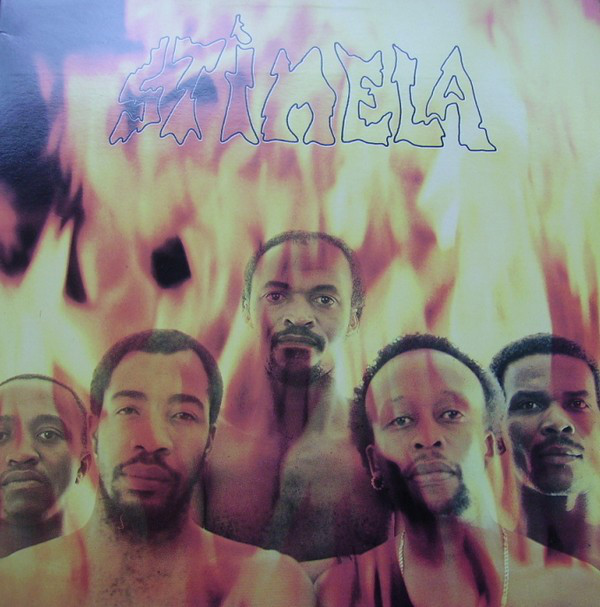
Stimela which is the Zulu word for locomotive, rose like a phoenix from the ashes of guitarist Ray Phiri’s previous band The Cannibals, in 1981. Three years later, in 1984, Stimela released their debut album Fire, Passion, Ecstasy on Gallo Records. It features the soulful boogie of Mind Games which opened the album and thirty-four years later is a timeless dance track. Nowadays, Stimela has become a musical institution who are revered in South Africa.
The Tembisa Happy Queens were formed in 1975, and four years later changed their name to the Hot Soul Singers in 1979. Having released their debut Together in 1981, the Hot Soul Singers released the mini album Give Me My Love Back in 1986. The following year 1987, they self-released their sophomore album Desire. One of the highlights of Desire was Hlala Nami which features the Hot Soul Singers at their most soulful.
When Zoom released their debut mini album on Priority Records in 1987, it closed with Wayawaya. It’s a smooth and soulful slice of boogie that is truly irresistible and has stood the test of time.
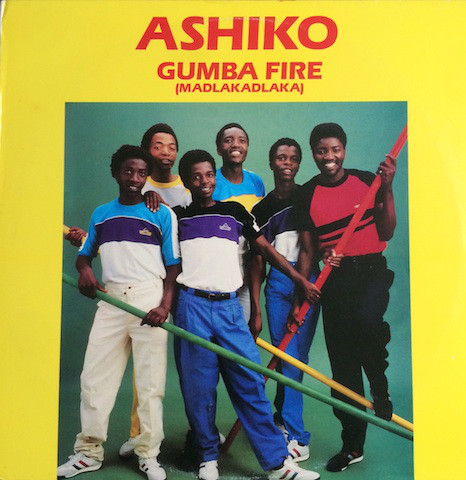
Ashiko released five albums during the eighties, including their album Gumba Fire (Madlakadlaka) on Teal Records in 1986. One of the highlights of the album is Gumba Fire (Madlakadlaka where this six piece band combine elements of Afrobeat with soul, funk and boogie. The result is a potent and heady brew that is irresistible.
Monwa and Sun collaborated on the album Tigers Don’t Cry which was released on the Cool Spot label in 1989, and featured Heartbeat. Straight away, there’s a bubblegum soul sound before the track incorporates elements of boogie and funk. It’s produced by Mally Watson who owned the Cool Spot label and is responsible for a melodic and catchy dance track.
During the eighties, Ntombi Ndaba was one of the most successful South African female singers. Ntombi Ndaba released her eponymous debut album on the Anneko label in 1988. It features Ntombi Ndaba’s backing band Survival and the backing vocalist The Angels. They play their part in the sound and success of Do You Trust Amajita which features a powerful, sassy vocal on this carefully crafted example of quality bubblegum soul.
Black Five only released the one album during their career, Pula Ea Na which was released on Third World Music in 1983. The standout track on Pula Ea Na was Selallane, a boogie dancefloor filler which is funky, soulful and hook-laden.
In 1983, Starlight released their eponymous debut album which was released on the Heads label. It featured Picnicing which from get-go heads in the direction of boogie. Synths are to the fore on this instrumental which was penned by producers Emil Zoghby and John Galanakis, and play their part in this contemporary sounding track that was way ahead of the musical curve. So much so, that it still sound fresh thirty-five years later.
Only one group features twice on the compilation, and that is the Afro pop group Zasha. Their first contribution is Hayi Ngodlame which is the title-track to their third album, which was released on the Super Kurl label in July 1989. Zasha delivers their bubblegum soul vocal against an arrangement that sounds as if it’s been inspired by Hall and Oates’ eighties albums. Arrow Dub is Zasha’s second contribution and is taken from their debut album Love Target which was released on Teal Records in 1986. It’s a fusion of funk, soul, jazz and Afrobeat which is given a dubby makeover.
When Sabela self-released their debut mini album Sikiza in 1988, it featured Africa which is full of social comment. This catchy genre-melting track fuses elements of funk, soul Afrobeat and jazz, and is one of the highlights of the compilation.
By 1987, Condry Ziqubu was thirty-six and had previously been a member of The Anchors, Flaming Souls, and Flaming Ghettoes and was about to release his debut album Shut Your Mouth on The CCP Record Company. One of the highlights of Shut Your Mouth was the soulful boogie that is She’s Impossible.
The tempo drops on Peter Maringa’s Listen To Me where washes of a dusty swirling Hammond organ are accompanied by handclaps as a guitar weaves in and out of the arrangement. They set the scene for Peter Maringa’s bubblegum soul vocal while backing vocalists add the finishing touch to a beautiful track released in the late eighties.
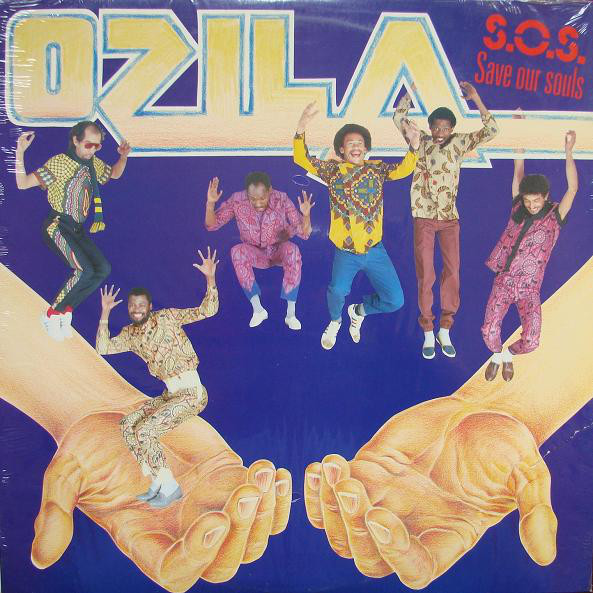
Ozila close Gumba Fire: Bubblegum Soul and Synth-Boogie In 1980s South Africa with Wola Wola featured on their 1987 album S.O.S. Save Our Souls which was released on Teal Records. Three tracks from the albums were released as a 12” maxi single in 1987, including the bubblegum soul of Wola Wola. This quality cut bookends this carefully curated compilation.
Very few music fans will be aware of South Africa’s bubblegum soul and boogie scene in the eighties, which was a troubled time for this proud country. Sadly, there was political turmoil, repression, violence, unemployment and poverty in a divided country. Meanwhile, tension was increasing and there was paranoia and distrust across the racial divide. That was apart from in South Africa’s music industry, where skin colour didn’t matter and musician worked alongside each other creating the bubblegum soul and boogie Gumba Fire: Bubblegum Soul and Synth-Boogie In 1980s South Africa.
These singers, songwriters, musicians, backing vocalists, arrangers and producers were part of a mini rainbow nation, who were only interested in making music, which was what they were passionate about. That music has stood the test of time, and features on the Soundway Records latest lovingly curated compilation Gumba Fire: Bubblegum Soul and Synth-Boogie In 1980s South Africa. It features fifteen bubblegum soul and boogie cuts that are funky, soulful and dancefloor friendly. Other tracks incorporate elements of Afrobeat, jazz, pop and social comment and are a reminder of time when the South African music was thriving despite the problems facing this troubled country. However, the rainbow nation with the South African musical industry trumped in the face of adversity and created the music on Gumba Fire: Bubblegum Soul and Synth-Boogie In 1980s South Africa which is the perfect introduction to this oft-overlooked period in the South African musical history.
Gumba Fire: Bubblegum Soul and Synth-Boogie In 1980s South Africa.



FRENCH DISCO BOOGIE SOUNDS VOLUME 3: 1977-1987.
French Disco Boogie Sounds Volume 3: 1977-1987.
Label: Favourite France.
Over the last few months, there seems to have been a resurgence of interest in disco and boogie, with major and independent record labels in Britain and America releasing countless compilations that look back to the glory days of both genres. Despite this, these compilations of disco and boogie have varied in quality, and can be described as the good, the bad and the ugly. There’s a reason for this, and that is the different approaches each compiler takes.
Some of the disco and boogie compilations have combined a mixture of familiar tracks with rarities and hidden gems, meaning that there’s something for everyone in a quality compilation. Often these lovingly curated compilations are released on small, independent labels by people with a genuine love for the music. However, that isn’t always the case in other parts of the music industry.
On a regular basis, especially around the holiday period, major labels release budget compilations or box sets where the lazy compiler takes no chances and chooses the same tired and predictable tracks that have previously featured on countless compilations. It was a similar case with the DJ and remixer who recently released a compilation of overblown, bloated and rambling remixes of disco and boogie tracks that were guaranteed to empty a packed dancefloor. This supposed legend seems to have lost his Midas Touch, and a new breed of DJs are snapping at his heels and compiling compilations that ooze quality.
This new breed of compilers are thinking outside the box and digging deeper than some of the older compilers. By digging deep, there’s been disco and boogie compilations that have focused on a particular period, while others have focused on certain labels and others have focused on private presses and others on tracks released within one country. However, the recent instalment in Charles Maurice’s Disco Boogie Sounds’ series takes a different approach entirely.
Ever since 2015, Charles Maurice has been documenting the French disco boogie sound, on a compilation series released by the Favourite France label. The last instalment is French Disco Boogie Sounds Volume 3: 1977-1987, which is distinctively Gallic, but American-sounding. This has been the case since this compilation series began, and Charles Maurice introduced many newcomers to the American-sounding world of French disco-boogie.
It was on the ’21st’ of April 2015, that French Disco Boogie Sounds 1975-1984: Selected By Charles Maurice was released, and found favour with critics who were won over by this lovingly curated compilation. Many critics and record buyers hoped that there would be further instalments in the series.
Eighteen months later, French Disco Boogie Sounds 1978-1985: Selected By Charles Maurice was released on the ’14th’ of October 2016 by Favourite France. Just like the first instalment in the series, it was a lovingly curated compilation of disco boogie where the emphasis was definitely on quality. So much so, it surpassed the quality of French Disco Boogie Sounds Volume 3: 1977-1987. DJ and compiler Charles Maurice was on a roll.
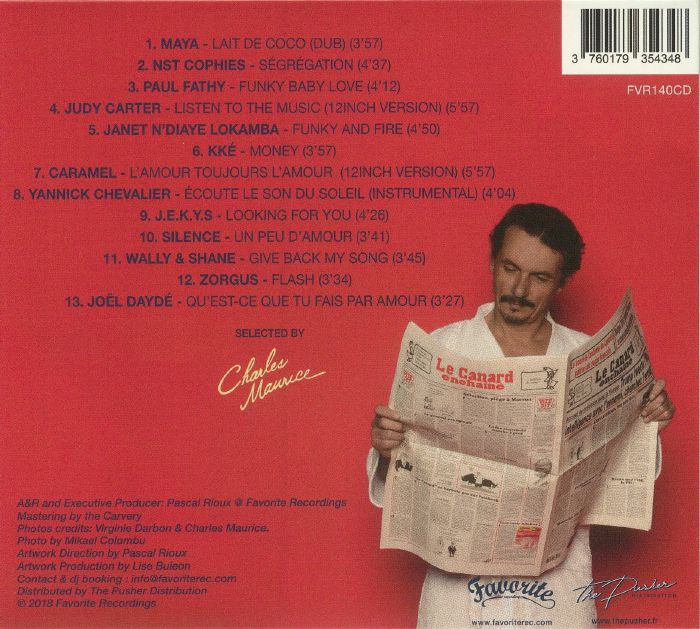
Now fourteen months later, he returned with French Disco Boogie Sounds Volume 3: 1977-1987 which features thirteen tracks from familiar faces and new names. This includes Maya, Paul Fathy, Judy Carter, KKE, Caramel, Yannick Chevalier, Silence, Zorgus and Joël Daydé. They’re just a few of the names on the much-anticipated French Disco Boogie Sounds Volume 3: 1977-1987.
Opening French Disco Boogie Sounds Volume 3: 1977-1987 is the dub version of Maya’s Lait De Coco, which was on the B-Side of the 1987 single for Marina Media. It was penned by Christophe Laurent and Olivier Andres and features an arrangement that is funky, jazz-tinged and thanks to the soulful vocal which drifts in and out. Add to the mix lush disco strings and a Latin influence and it’s a quite beautiful way to open the compilation.
During his musical career, Ernest Koffie used a variety of monikers including N.S.T Cophie’s who self-released his fourth album Segregation in the Ivory Coast in 1985. The highlight of the album is title-track Segregation, which is a soulful and full of social comment.
Sadly, Paul Fathy’s recording career amounted to just one single, Je N’Speak Que L’Amour which was released on Vague Music in 1985. Hidden away on the B-Side was Funky Baby Love which is a slick, soulful, and funky slice of boogie with a disco influence. As synths strings dance, eighties drums crack and later, a saxophone interjects. In doing so, dance music’s past and present combined in 1985 to create a track that has stood the test of time.
Judy Carter only ever released the one single, Listen To The Music on the Paco Rabanne Design label which was active from the early eighties up until the ‘23rd’ of October 1987. Two versions of Listen To The Music were released, and it’s the 12” version that features on the compilation. It featured a soulful vocal from Judy Carter while strings sweep and horns interject as the arrangement combines elements of jazz-funk and funk during this carefully crafted and irresistible dancefloor filler.
By 1980, much had changed in dance music after disco’s fall from grace in July 1979. Suddenly, disco sucked in America and record companies dropped disco artists, while DJs and dancers embraced the new boogie sound which filled dancefloors. Meanwhile, Janet N’Diaye Lokamba released her debut album Aimey on the record company that she lent her name to. One of the highlight of Aimey was Funky and Fire which was produced by Ebeny Donald Wesley. It finds Janet N’Diaye Lokamba delivering a soulful vocal during a track that showcases the French disco boogie sound
KKÉ only released one album during their career, and that was Pas Tout, which was released on MM Records in 1982. Frank Faas produced Pas Tout, including the standout track Money. It’s initially funky and soulful, before Afrobeat, and jazz are added to this melodic disco boogie anthem.
Caramel’s 1979 single L’Amour Toujours L’Amour was released on the Barclay label, and also featured in the soundtrack to the comedy Bête Mais Discipliné. This was a film was never going to win an Oscar, and L’Amour Toujours L’Amour may have been the best thing about the film. Realising that, compiler Charles Maurice has chosen the 12” version of this disco boogie track that lasts six funky and soulful minutes and features stabs of piano that are reminiscent of Leroy Burgess, while the overall production has been influenced by Patrick Adams disco releases.
When Yannick Chevalier released Ecoute Le Son Du Soleil as a single on the Point 12 label in 1984, the instrumental version featured on the B-Side. Alas, the single passed most people by upon its release despite being an innovative and melodic example of disco boogie where Yannick Chevalier made good use of the available technology. In doing so, it sounds as if he’s been inspired by American boogie, but takes it in a different direction to create something new and innovative. Nowadays, Ecoute Le Son Du Soleil is real rarity which changes hands for £125 or $175 and the instrumental version is a favourite of DJs.
Jekys only single was Fire, which was released on Polydor in 1982. Tucked away on the B-Side is the oft-overlooked disco boogie hidden gem Looking For You which has a slick, polished production by Henry Gassin. Thirty-six years later, and Looking For You and this timeless track would still tempt dancers onto the dancefloor.
Silence is another group who only released the single during their career. This was Un Peu D’amour, which they produced and self-released in 1987. It’s funky, slick and soulful song that deserved to fare better than it did. Sadly, like may groups who release private presses, Silence probably had neither the budget nor the expertise to promote the track, and that is why Un Peu D’amour is the one that got away.
Wally Badarou and Sher Komisar wrote Give Back My Song which they released on BBZ Productions in 1977 as Wally and Shane. This was the height of the disco era, and strings dance before the vocal enters and this funky, soulful and sensual hidden gem starts to reveal its secrets. It’s without doubt one of the highlights of French Disco Boogie Sounds Volume 3: 1977-1987. Sadly, despite the quality of Give Back My Song the single failed commercially, and Wally and Shane never released a followup.
After recording Flash at Studio Marcadet, in Paris, the members of Zorgus decided to release the single themselves. This wasn’t unusual, as many artists and bands had released private presses. Most of them had a few hundred, or at most a thousand copies of their single or album pressed. Usually, bands erred on the side of caution, as releasing a single was expensive. Especially, when it failed to sell, which was what happened to Flash a funky, soulful and dancefloor friendly track where the hooks haven’t been spared.
Closing French Disco Boogie Sounds Volume 3: 1977-1987 is Qu’est Ce Que Tu Fais Par Amour which was released on the B-Side of Joel Dayde’s single Les Petits Robert which was released in 1981. This was a decade after Joel Dayde made her debut. Since then, she had released four albums and twenty-seven singles and EPs. However, music was changing, and changing fast, so Joel Dayde decided to change direction on Qu’est Ce Que Tu Fais Par Amour which is a melodic and memorable disco track that shows another side to the French blues and soul singer.
For the past three years, DJ and compiler Charles Maurice has been documenting the French disco boogie sound, on a compilation series released by the Favourite France label. The last instalment is French Disco Boogie Sounds Volume 3: 1977-1987, which is distinctively Gallic, but American-sounding.
That has been the case throughout this lovingly curated series which began in 2015. However, for latecomers to the series, French Disco Boogie Sounds Volume 3: 1977-1987 is the perfect place to start. It features an array of hidden gems from new names, including a number of artists who only released one single. That singe, or even its B-Side features on French Disco Boogie Sounds Volume 3: 1977-1987.
Others artists were familiar faces who enjoyed lengthy recording careers, while others enjoyed a career that lasted a decade. After that, their career was over, and they left behind a musical legacy that includes their contribution to French Disco Boogie Sounds Volume 3: 1977-1987.
Unlike some musical genres, it was impossible to describe what a typical French disco boogie track sounded like. Some of the tracks on French Disco Boogie Sounds Volume 3: 1977-1987 are jazz-tinged, while others are funky or soulful. Sometimes, Afrobeat and jazz-funk influenced the disco boogie sound on French Disco Boogie Sounds Volume 3: 1977-1987. Some of these carefully crafted tracks feature slick polished arrangements have been influenced by American disco, while other have been influenced by some of the pioneers of boogie including Leroy Burgess and Patrick Adams. Despite these differences, all of these tracks can be described as French disco boogie umbrella, which many people won’t be aware of…until now.
For anyone who likes dance music that is funky, soulful and sometimes jazz-tinged, then French Disco Boogie Sounds Volume 3: 1977-1987 is the perfect introduction to the uniquely Gallic, but American-influenced French disco boogie sound that provided the soundtrack to life in France during much of the seventies and eighties.
French Disco Boogie Sounds Volume 3: 1977-1987 .

BLACK MOTOR-BRANCHES.
Black Motor-Branches.
Label: We Jazz Finland.
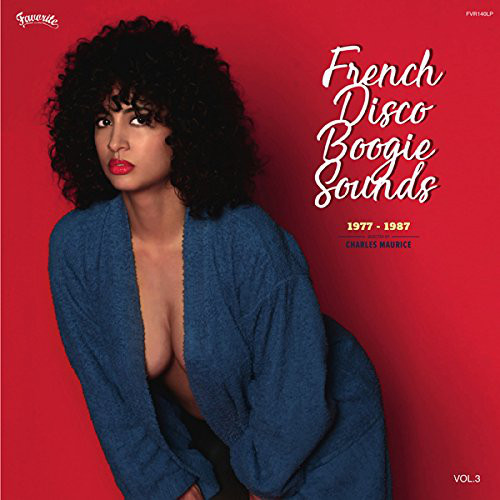
Although Finish free jazz trio Black Motor were formed just over thirteen years ago, in January 2005, this exiting and innovative band is still one music’s best kept secrets. That is despite releasing nine albums, including Branches which was recently released by We Jazz Finland. It marks the debut of saxophonist Tane Kannisto who previously was a member of Sound and Fury, and joins the established rhythm section of bassist Ville Rauhala and drummer Simo Laihonen. This new lineup of Black Motor is responsible for Branches melodic and innovative album of free jazz full of energy. It’s the latest chapter in the Black Motor story.
It was back in January 2005 that saxophonist Sami Sipple, bassist Ville Rauhala and drummer Simo Laiho founded the Black Motor. By then, they were all experienced musicians who were familiar faces on the Finnish jazz scene. They also shared the same taste in music, especially the soulful free jazz of Albert Ayler and John Coltrane, the Finnish avant-garde drummer Edward Vesala and German saxophonist and clarinetist Peter Brötzmann. These musicians influenced and inspired the members of Black Motor, who soon, made its first tentative steps on the vibrant Finnish jazz scene.
Soon, though, people were sitting up and taking notice of Black Motor, as they hit the ground running in a series of unforgettable shows. It didn’t take long for critics to start taking notice of Black Motor.
By 2007, Black Motor had released already their eponymous debut album, and later that year returned with their much-anticipated sophomore album On Duty. Both albums featured a group that sour as if they had been together much longer than two years, and were a tantalising taste of Black Motor’s potential.
When Black Motor released Club El Toro and Vaarat Vastukset in 2008, they had matured they were starting to fulfil the potential that critics had spotted on their first two albums. However, it wasn’t just the critics that were won over by Black Motor’s two new albums.
Already Finnish music fans were flocking to Black Motor’s live shows, and they were becoming a popular live draw. Soon, when Black Motor played live they were joined onstage by various guest artists. This included guitarist Jukka Orma and woodwind virtuoso Jorma Tapio. By then, Black Motor was no longer an underground band and as their popularity grew, and their music began to find a wider audience.
One way that Black Motor did this, was when they toured Finland, they decided to arrange workshops and regularly played in front of a younger audience. This ranged from schoolchildren at elementary grade schools to students attending music colleges. For many of those who saw Black Motor play, their music was very different to what they heard at home or on the radio.
The music Black Motor played was also very different to the hard bop and soul jazz that many bands within the Finnish jazz scene used as a foundation for the sound. Instead, Black Motor continued to play their unique, innovative and energetic brand of melodic free jazz as their popularity continued to grow.
By 2010, Black Motor had just released their fifth album Never Out Of Fashion-Live in Amsterdam and the band was no longer just gigging in their native Finland. Instead, they were playing abroad where their music was growing in popularity.
Following Never Out Of Fashion-Live in Amsterdam, Black Motor’s star was in the ascendancy and their music was regarded as a breath of fresh air. By then, many people were tiring of the hard bop and soul jazz that dominated the Finnish jazz scene at that time. Black Motor’s music was different and the band even looked different. They didn’t look like jazz musicians and instead, the intrepid trio looked and acted more like a grunge band. Some critics even thought that Black Motor had a similar attitude to grunge bands. Meanwhile, Black Motor who were rising stars of the Scandinavian improv scene, continued to attract a new audience to their concerts, including many people who had never attended a jazz concert before.
As 2010 gave way to 2011, Black Motor released their sixth album Hoojaa. which featured seven of Kusti Vuorinen’s compositions. Hoojaa which was a much more focused album, was released to widespread critical acclaim, and it was no surprise when the album was shortlisted for the annual Jazz-Emma, which is the Finnish equivalent of the Jazz Grammy. This was showed just how far Black Motor had come since the band was formed in January 2005.
In 2012, Black Motor released their seventh Jumehniemi, which was quite different to Hoojaa, which was a more focused album. Instead, Black Motor’s playing on Jumehniemi was looser on what was a meandering album where the trio enjoyed another opportunity to improvise and innovate. Jumehniemi won over critics and before long, Black Motor was releasing another album.
Just a few months after the release in Jumehniemi early 2012, Finnish trumpeter Verneri Pohjola and Black Motor released the album they had been collaborating on Rubidium. It was a very different album to Hoojaa and was a more concentrated set that was released praise and plaudits. By then, Black Motor was a favourite of Finnish critics who continued to fly the flag for the trio.
Having released two albums in early 2012, Black Motor spent much of the summer touring, and were sometimes joined on the stage by guest artists. This included pianist and harpist Iro Haarla, guitarist Raoul Björkenheim and saxophonist and clarinettist Jone Takamäki. However, at one concert in Club Telakka in Black Motor’s hometown of Tampere, they were joined onstage by one of their heroes, and someone who had influenced and inspired the trio, Peter Brötzmann. This was a huge thrill, and was without doubt one of the highlights of the summer of 2012 for Black Motor.
Later in 2012, Black Motor were joined by two celebrated saxophonists Juhani Aaltonen and later, Mikko Innanen when they played live. Then in November 2012 Black Motor starred at the Tampere Jazz Happening in November 2012, and as the year drew to a close Black Motor they were invited to play at the prestigious London Jazz Festival.
By May 2013, Black Motor returned with their eighth album, Yöstä Aamun Kynnykselle which was meditative, ruminative and poignant album of beautiful ballads. This showed a very different side to Black Motor who headed out to tour their latest album. It was a triumphant tour, with Black Motor receiving standing ovations nights after night, including when they played at the annual Winter Jazz event in New York City in January 2014.
When Black Motor returned home, they soon were soon collaborating again with Verneri Pohjola. This time, they recorded an album of Edward Vesala’s compositions which has yet to be released. However, in the spring of 2014, Black Motor’s sixth album Jumehniemi which was released in 2012, was belatedly released on CD. To celebrate Black Motor played a series of shows where they were joined by a number of guest artists. This included jazz pianist Seppo Kantonen and progressive rock guitarist Pekka Rechardt of Wigwam. They helped Black Motor celebrate one of their finest album Jumehniemi.
Towards the end of 2014, the members of Black Motor began to think about how they should celebrate their tenth anniversary. When these plans began, bassist Ville Rauhala and drummer Simo Laiho had no idea know that saxophonist Sami Sippola was about to drop a bombshell. In late 2014, Sami Sippola announced that he was Black Motor for personal reasons. After nine years together, the original lineup of Black Motor was no more.
Soon, the search for Sami Sippola’s replacement began. However, it didn’t take long for Ville Rauhala and Simo Laiho to choose forty-one year old Tane Kannisto who played saxophone and flute. He joined Black Motor in time to help the trio celebrate their tenth anniversary.
Having helped Black Motor celebrate their tenth anniversary, the time came for Tane Kannisto to make his recording debut with his new band. They would record two albums in a relatively short space of time. The first was a spilt album that featured another band from Tampere, Rakka.
Rakka featured on the first side of the album, while the new lineup of Black Motor featured on the second side. Black Motor’s rhythm section of bassist Ville Rauhala and drummer Simo Laiho was joined by saxophonist Tane Kannisto. The eponymous split album was released on the ’15th’ of April 2017 and marked the debut of saxophonist Tane Kannisto. However, just six weeks later, Black Motor returned with Branches which was their ninth album, and the first in nearly five years.
Branches.
On the ‘2nd’ of June 2017, Black Motor released Branches in their native Finland on vinyl and cassette. It wasn’t until the spring of 2018, when Black Motor released Branches on CD and the album was available to buy across Europe.
Branches features seven tracks, including five penned by Black Motor bassist Ville Rauhala. He wrote But Not Willingly, At The Red End Of The World, Decision Jump, Tulee Päivä and Longer The Distance, Sweeter The Sound. The new lineup of Black Motor wrote Branches (Citizen Music), and cover Fred Rose’s Blue Eyes Cryin’ In The Rain. These seven tracks would eventually become Branches.
Recording of Branches took place at Studio JJ in Tampere, 2016 at Studio JJ in Tampere. Black Motor’s rhythm section of bassist Ville Rauhala and drummer and percussionist Simo Laiho was joined by Tane Kannisto who played alto, baritone and tenor saxophone and also a nagaswarm which is the world’s loudest non-brass acoustic instruments. Joining Black Motor who produced Branches, was recordist Juuso Nordlund. By the end of 2016, Black Motor had recorded their comeback album which was then mastered by Jukka Sarapää. Now Branches was ready to be released.
When Branches was released, the new lineup of Black Motor were hailed as the comeback kings as they released their first full-length album in nearly five years. That was apparent from the opening bars of But Not Willingly which gives way to At The Red End Of The World, Decision Jump and Blue Eyes Cryin’ In The Rain. At the halfway point it’s apparent that Branches is another powerful and innovative album of melodic and free jazz from Black Motor.
The comeback Kings continue to create music that is vibrant and full of energy as the new lineup showcased their considerable skills on Branches (Citizen Music) and Tulee Päivä which was inspired by Edith Södergran’s poem Animalisk Hymn. By then, everything seems to fall into place and there’s a sense of unity throughout Branches.
This continues to be the case, including on Longer the Distance, Sweeter the Sound. That is despite saxophonist Tane Kannisto only making his Black Motor debut on Branches. However, he’s an experienced musician and just like Black Motor’s rhythm section, his playing veers between tight and fluid and sometimes, becomes inventive as he plays with freedom and power. Always, though, Black Motor’s playing is of the highest quality right up to Letting Go (Was Part of the Plan) which has a poignant sound as Tane Kannisto’s saxophone takes centre stage. His playing is slow and deliberate before the tempo gradually starts to rise on this beautiful track that ensures that Branches closes on a high.
Fittingly, it was saxophonist Tane Kannisto who plays a starring role on the album closer Letting Go (Was Part of the Plan). He replaced founder member Sami Sippola who announced his departure in late 2014. This could’ve spelt the end of Black Motor, but by recruiting another talented saxophonist, this talented and innovative free jazz trio go from strength-to-strength.
So much so, that Branches which was recently released by We Jazz Finland, is one of the finest albums of Black Motor’s career. It’s the first album that Black Motor have released in nearly five years. They’ve not lost their Midas Touch, and the addition of Tane Kannisto more than makes up for the loss of saxophonist Sami Sippola. He played his part in the rise and rise of Black Motor over the first nine years of their career. Since then, his replacement Tane Kannisto has played a part in the continued success of Finland’s top free jazz trio Black Motor, whose ninth album Branches is innovative, vibrant, melodic and full of energy and emotion.
Black Motor-Branches.
BARRENCE WHITFIELD AND THE SAVAGES-DIG EVERYTHING! THE EARLY ROUNDER ALBUMS.
Barrence Whitfield and The Savages-Dig Everything! The Early Rounder Albums.
Label: Ace Records.
Barry White, who later found fame as the frontman for Barrence Whitfield and The Savages was born on June the ‘13th’ 1955, in Jacksonville, Florida, but his family moved to East Orange, in New Jersey when he was a child. That was where the Barry White sang in a gospel choir, and where he attended West Side High School where he sang and played drums in various rock and funk bands. This came as no surprise to Barry White’s friends and family who had watched his love of music blossom.
Initially, Barry White discovered Little Richard, Sam Cooke, James Brown and Otis Redding, before later, embracing Jimi Hendrix and Funkadelic’s music. All these musicians and bands had inspired and influenced Barry White when he played the various high school bands. However, after he graduated from West Side High School, it looked like Barry White had turned his back on a musical career.
Instead, Barry White enrolled at Boston University, where he planned to spend the next four years studying for a degree in journalism. However, Barry White soon discovered that a student loan didn’t go far, and decided to look for a part-time job after the university. Fortunately, a local used record shop was looking for someone to work part-time in the early evenings, and after Barry White spoke to the owner he was given the job.
For Barry White who had loved music ever since he was a child, working in the record shop was a dream job. He didn’t even mind people joking about his name, as he was doing something he loved and meeting and mixing with people who shared his passion for music. This included Peter Greenberg the former guitarist with the Boston-based punk group DMZ, who had also played the with legendary local band The Lyres. When he entered the used record store one evening in 1977, he happened to hear Barry White singing, and straight away, realised that Barry White had potential.
Little did Peter Greenberg realise that twenty-two year old Barry White had been in a number of bands while he was in high school ands he had been in back home in New Jersey. Soon, the pair got talking and before long, Peter Greenberg had invited Barry White to his house later that evening.
Having spent the evening listening to records, Peter Greenberg and Barry White had come up with an idea of forming a new group, and had worked out what they wanted to do and who they wanted to bring onboard. This included The Lyres’ former rhythm section of drummer Howard Ferguson, bassist Phil Lenker and guitarist Peter Greenberg who would be joined by local saxophonist Steve LaGreca. The final member of the band was Barry White who was going to be the new band’s vocalist. Initially, the pair planned to call the band Barry White and The Savages, but the worry was people would confuse the journalism student and used record story employee with the soul superstar having. That was why Phil Greenberg and Barry White decided to call their new band Barrence Whitfield and The Savages.
Before long, the nascent Barrence Whitfield and The Savages were playing live and soon, had established a reputation for their high-octane live performances where they played a mixture of new songs and obscurities from the fifties and sixties that Barrence Whitfield had discovered during his days working in the used record shop. These songs Barrence Whitfield and The Savages learnt and incorporated into their stage show.
Over the next few years, Barrence Whitfield and The Savages who were now a six piece band after the addition of pianist and organist Bill Mooney-McCoy, hit the stage running and unleashed sets where the music was raw, raucous, rough and tough and struck a nerve with many fans of fifties and sixties R&B. Meanwhile, Barrence Whitfield seemed to be channeling the spirit of the old soul screamers including his hero Little Richard and Don Covay, Solomon Burke and Wilson Pickett. Barrence Whitfield and The Savages were a force to be reckoned with, whose star was in the ascendancy as they became one of the top acts on the Boston music scene.
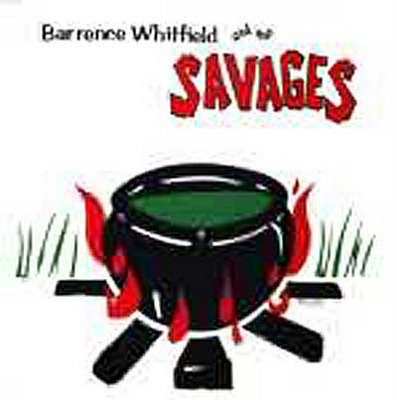
Many within the Boston music scene thought that it was only a matter of time before a record company came calling and Barrence Whitfield and The Savages signed on the dotted line. However, when this didn’t happen, Barrence Whitfield and The Savages decided to take matters into their own hands and finance and produce their eponymous debut album.
Barrence Whitfield and The Savages.
Having made the decision to record their debut album Barrence Whitfield and The Savages, chose a mixture of cover versions and original songs penned by the band. This included Walking With Barrence, Mama Get The Hammer, Go Ahead And Burn, Savage Sax, Walk Out, Miss Shake It, Whiskey Wagon and King Kong. They joined covers of Don Covay’s Bip Bop Bip, Ronnie Molleen’s Fat Mama, Bill Ballard’s Cotton Pickin’, Jimmy McCracklin’s Georgia Slop and The Customs’ The Ship Sailed At Six. These tracks were recorded at Perfect Crime Studios, Watertown, Massachusetts.
That was where the rhythm section of drummer Howard Ferguson, bassist Phil Lenker and guitarist Peter Greenberg who would be joined by local saxophonist Steve LaGreca and pianist and organist Bill Mooney-McCoy. Barrence Whitfield continued in his role of soul screamer, while Peter Greenberg took charge of production. With the band financing the recording, the band worked quickly and Barrence Whitfield and The Savages, was ready for release later in 1984.
Despite the band financing Barrence Whitfield and The Savages, which they released on their own short-lived label Mamou Records, critics were won over by an album that managed to replicate the band’s live sound. There was a raw, raucous sound to Barrence Whitfield and The Savages’ unique brand of high-octane R&B and rock ’n’ roll.
After the release of Barrence Whitfield and The Savages in 1984, mostly, the album was sold at the band’s gigs or through various independent distributors.
Meanwhile, Barrence Whitfield and The Savages continued with what was a gruelling live schedule and by late 1984 were omnipresent on the Boston music scene. Whenever any of the bigger local bands played in Boston, including De Fuegos, they wanted Barrence Whitfield and The Savages to open for them. Barrence Whitfield and The Savages worked the audience into a frenzy before passing the baton to the headliner.
Across the Atlantic, copies of Barrence Whitfield and The Savages had become prized items among music lovers. This included David Woodhead, who was a member Billy Bragg’s touring band. He had discovered the album whilst touring America, and on his return home, leant his copy to Radio One DJ Andy Kershaw.
When he heard Barrence Whitfield and The Savages, went into bat for the band. Soon, he was playing the album on his radio show. Before long, Andy Kershaw headed stateside where saw Barrence Whitfield and The Savages in Boston when they opened for Del Fuegos. The next time he saw Barrence Whitfield and The Savages, was in London, where they once again, were opening for Del Fuegos. This lead to an appearance on the legendary BBC television programme The Old Grey Whistle Test, where Barrence Whitfield and The Savages were following in the footsteps of many musical legends. After their first appearance on The Old Grey Whistle Test, promoters were scrambling to book Barrence Whitfield and The Savages on their first British tour.
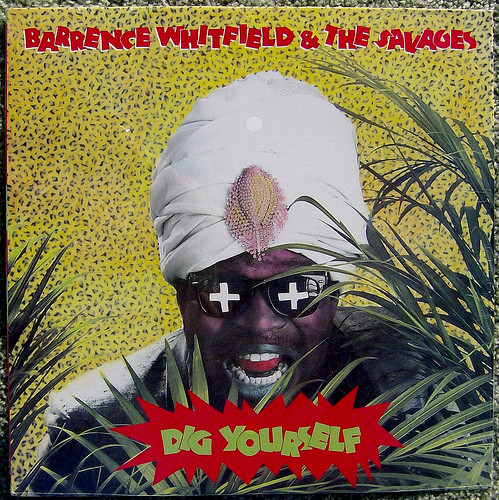
Dig Yourself.
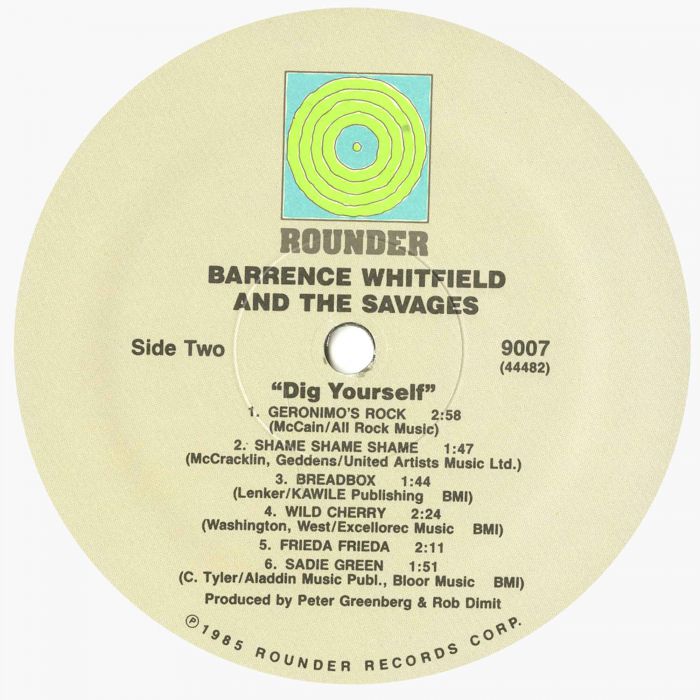
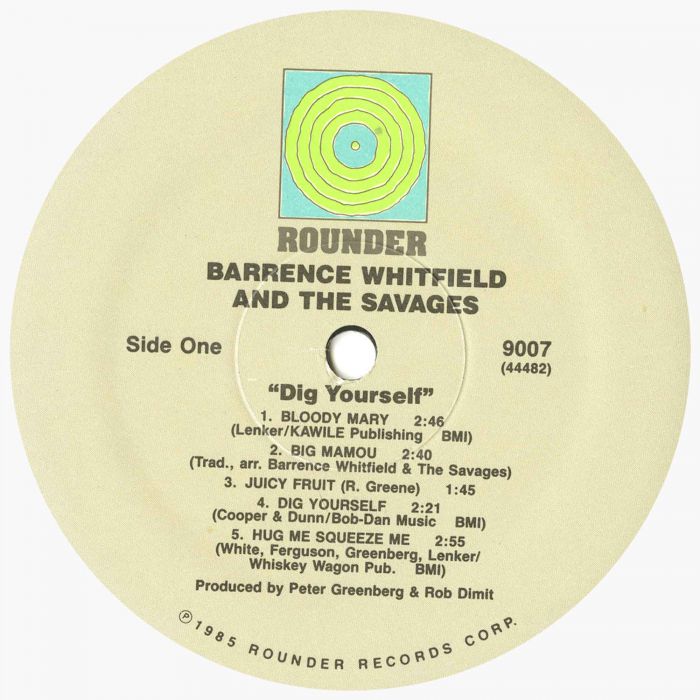
When Barrence Whitfield and The Savages returned to Britain for the tour, things had changed for the band. Rounder Records had swooped and signed Barrence Whitfield and The Savages, and sent the band into Blue Jay Studios, in Carlisle, Massachusetts where they recorded the twelve songs that became Dig Yourself which featured on Dig Everything! The Early Rounder Albums, which was recently released by Ace Records.
For Dig Yourself, Barrence Whitfield and The Savages chose eleven tracks that became their sophomore album. Unlike their eponymous debut album, Barrence Whitfield and The Savages didn’t write any of the songs on the album. However, Phil Lenker penned Bloody Mary and Bread Box and wrote Hug Me Squeeze Me with Barrence Whitfield, Howard Ferguson and Peter Greenberg. The members of Barrence Whitfield and The Savages also arranged the traditional song Big Mamou. It was joined by covers of Rudy Green’s Juicy Fruit, Bobby Dunn and Lee Cropper’s Dig Yourself, Jerry McCain’s Geronimo’s Rock, Bob Geddins and Jimmy McCracklin’s Shame Shame Shame, Jerry West and Leroy Washington’s Wild Cherry, Billy Jones’ Frieda Frieda and Chris Tyler’s Sadie Green. These tracks were recorded by the latest lineup of Barrence Whitfield and The Savages.
When Barrence Whitfield and The Savages arrived at Blue Jay Studios, in Carlisle, Massachusetts, there had been one change in the band’s lineup since they recorded their eponymous debut album. Pianist and organist Bill Mooney-McCoy had left the group and they returned to being a five piece band. This meant that the lineup featured a rhythm section of drummer Howard Ferguson, bassist Phil Lenker and guitarist Peter Greenberg who would be joined by local saxophonist Steve LaGreca and soul screamer Barrence Whitfield. They were joined Rob Dimit who engineered and produced Dig Yourself which was released later in 1985.
Critics on hearing Dig Yourself were won over by what was a relatively short, but explosive album of high-octane music that flitted between and fused elements of R&B, rock ’n’ roll, blues, funk and soul. Still, the music had a rawness, energy and vibrancy from the explosive opening bars of Bloody Mary where the saxophone accompanies primal soul screamer Barrence Whitfield as he whoops and hollers. Meanwhile, The Savages turn the calendar back to 1955 as they work their way standout tracks like Juicy Fruit which is dripping with innuendo, while Hug Me Squeeze Me is raw and ribald.
The stomping Geronimo Rock opened the second side of Dig Yourself, as the music became visceral, gritty and explosive as Barrence Whitfield and The Savages strut and swagger their way Bread Box, Wild Cherry, Frieda Frieda and Sadie Green, which closes the album on a high.
When Barrence Whitfield and The Savages’ sophomore album Dig Yourself was released in 1985, it proved popular on both sides of the Atlantic. Especially in Britain were record buyers played the album non stop, then told their friends who did the same thing. Mostly, through word of mouth, Dig Yourself sold well in Britain, and back in home in America, especially in Boston and across Massachusetts.
Eight years after Barry White met Peter Greenberg, and first spoke about forming a new band together, Barrence Whitfield and The Savages were enjoying more success in Britain than in America. This was frustrating for the members of Barrence Whitfield and The Savages.
While Barrence Whitfield and The Savages enjoyed their trips to Britain, where their records sold well, but not well enough to chart, they were a popular live band. That was the case in their home city of Boston. However, still Barrence Whitfield and The Savages’ albums weren’t selling well, and after eight years of playing live almost nonstop, this frustration boiled over, when The Savages quit. The last man standing was Barrence Whitfield, who decided to put a new lineup of the band together.
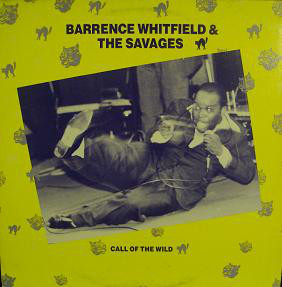
Call Of The Wild.
Eventually, Barrence Whitfield drafted in six new members and lineup of Barrence Whitfield and The Savages was almost unrecognisable. Barrence Whitfield was the only familiar face and he was joined by a rhythm section of drummer Lorne Entress, bassist Richie Robertson and guitarist and vocalist Milton Reder. He was joined by pianist and organist Bruce Katz and saxophonist David Sholl. Given this was essentially a new band, it took time for the latest lineup of Barrence Whitfield and The Savages to hone their sound.
It took longer than Barrence Whitfield had envisaged to get the new lineup road ready, but eventually, he took the latest lineup of the band he cofounded in 1977 on the road. This allowed Barrence Whitfield and The Savages to reconnect with their fans, before heading into the studio to record their third album Call Of The Wild.
Two years had passed since Barrence Whitfield and The Savages released Dig Everything in 1985, and the band’s fans were clamouring for a new album. When Barrence Whitfield and The Savages recorded just six new tracks in studios in Boston and New York. This included Madhouse and Girl From Outer Space which was penned by Milton Reder who wrote Livin’ Proof with Jon and Sally Tiven. They were joined by on Call Of The Wild by David Sholl’s Stop Twisting My Arm, Ben Vaughn’s The Apology Line and Sid Prosen’s Rockin’ The Mule In Kansas. These tracks were produced by Mike Costello and Milton Reder, and scheduled for release in 1987.
With Call Of The Wild only featuring six tracks it was referred to as a mini album. Despite this, Call Of The Wild was released in Europe in 1987, and later in 1987 four other tracks were added and became Ow! Ow! Ow! which was released in America as a full length album. By then, Call Of The Wild was selling reasonably well, but not enough to trouble the charts.
Call Of The Wild opened with Stop Twisting My Arm and straight away, the band’s trademark raw rocking sound can be still heard, although the almost manic energy of Dig Yourself has been reigned in somewhat. The tempo drops on the bluesy Madhouse where David Sholl’s saxophone accompanies the vocal. However, one of the highlights of Call Of The Wild Livin’ Proof which features a much more contemporary sound as rock and R&B melt into one. Soul Screamer Barrence Whitfield unleashes a vocal powerhouse on the bluesy Girl From Outer Space, before he delivers a heartfelt vocal on the ballad The Apology Line. Rockin’ The Mule Back In Kansas which showcases the sound that featured on Dig Yourself closes the album on a high, and leaves the listener wanting more the new lineup of Barrence Whitfield and The Savages.
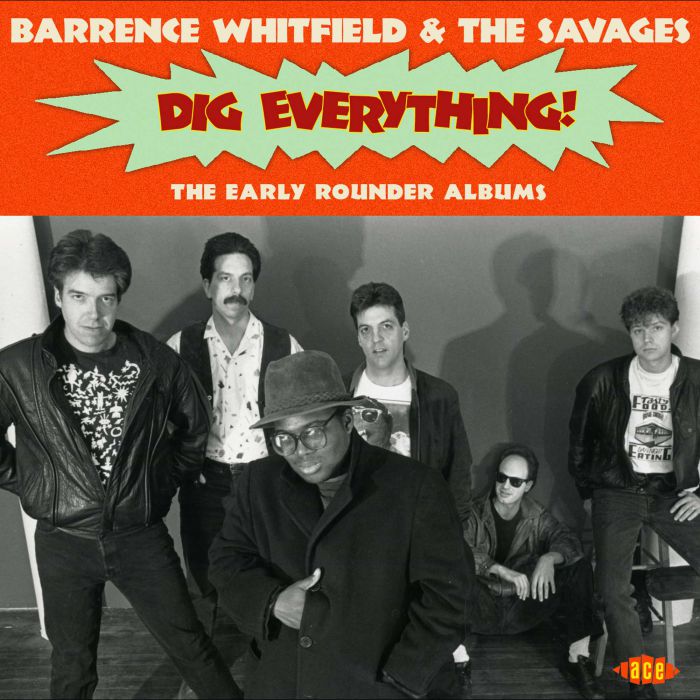
Despite only featuring six tracks and being called a mini album, Call Of The Wild was actually a longer album than Barrence Whitfield and The Savages’ sophomore album Dig Yourself. Both albums feature on Barrence Whitfield and The Savages-Dig Everything! The Early Rounder Albums which was recently released by Ace Records. It documents the end of the first chapter in the Barrence Whitfield and The Savages’ story, and the start of the second chapter.
The first chapter closes with the release of Dig Yourself in 1985, which was high-octane album where Barrence Whitfield and The Savages flitted between and fused elements of R&B, rock ’n’ roll, blues, funk and soul, as they swaggered and strutted their way through twelve tracks that were visceral, gritty and explosive. This proved more popular in Britain than in America which was frustrating for Barrence Whitfield and The Savages and hastened the demise of the original lineup of The Savages.
Two years later, the second chapter in the Barrence Whitfield and The Savages’ story began with the release of the mini album Call Of The Wild. It features blues, R&B and rock as Barrence Whitfield and The Savages on an album that features raw and explosive tracks as well as a ballad, where Barrence Whitfield soul screamer becomes the soul balladeer on The Apology Line. This shows another side to Barrence Whitfield and The Savages, who celebrated their tenth anniversary in 1987.
Little did anyone realise that thirty years later, and Barrence Whitfield and The Savages would still be making music. They’ve been together since 1977, and although the lineup has changed several times, their music is still raw, energetic and explosive. That was the case on their 1985 sophomore album Dig Yourself and Call Of The Wild, which featured on this latest Barrence Whitfield and The Savages’ release Dig Everything! The Early Rounder Albums.
Barrence Whitfield and The Savages-Dig Everything! The Early Rounder Albums.

NILS FRAHM-ALL MELODY.
Nils Frahm-All Melody.
Label: Erased Tapes Records.
Over the last two years, much of Nils Frahm’s time was spent building a new studio in his adopted home city of Berlin where he recorded his seventh studio album All Melody which was recently released by Erased Tapes Records. With All Melody released, Nils Frahm headed out on what was his first world tour since January 2015. This was the latest chapter in the career of thirty-five year old Nils Frahm
Nils Frahm was born in Hamburg, Germany, on the ’20th’ September 1982, and was introduced to music at an early age by his father Klaus a photographer who also designed covers for ECM Records. Soon, Nils Frahm was immersing himself in the music classical pianists from the past as well as embracing the music of the contemporary composers. This insured Nils Frahm to embark upon his own career as a composer.
Before that, the young Nils Frahm visited a recording studio owned by a family friend, which was a life changing experience. From that day on, Nils Frahm dreamt of building his own recording studio.
This dream would eventually become reality and Nils Frahm is now the proud owner of Saal 3, which is housed within the historical 1950s East German Funkhaus building on the banks of the River Spree. However, in the early days of his career, Nils Frahm became a familiar face in Hamburg’s recording studios, and especially the Hammer Versteck Studios.
Streichelfisch.
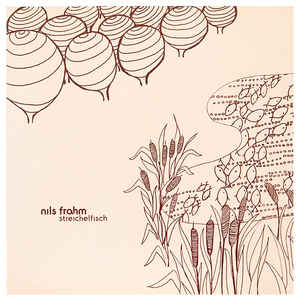
That was where Nils Frahm spent the winter months in late-2004 and early 2005 recording the nine tracks that became his debut album Streichelfisch. He was joined on two tracks, Anfangtastisch and Morning Bliss, by guitarist Martyn Heyne. When Streichelfisch was released in December on the AtelierMusik label as a limited edition vinyl LP it was a captivating, ambitious and innovative album that features elements of abstract, avant-garde, future jazz and glitch. Streichelfisch showcased a talented composer, musician and producer who a promising future in front of him.
Electric Piano.
Three years later, Nils Frahm released My First EP and the digital album Electric Piano on the AtelierMusik label. Both releases found Nils Frahm’s music evolving, and on Electric Piano he fuses improv and modern classical

The Bells.
By 2009, Nils Frahm had returned with The Bells which was recorded during a two-day period in the Grunewald Church, in Berlin where there was space for Nils Frahm’s piano to breath. The Bells was initially released on Swedish Kning Disk label, and was an enchanting and beautiful album. That was despite the music being slow, solemn, deliberate and sometimes intense despite the sheer simplicity of the music. There was no doubt that The Bells was Nils Frahm’s finest hour, and it was no surprise when Erased Tapes Records released the album across Europe which introduced it to a new and wider audience.
The Bells was Nils Frahm’s debut for Erased Tapes, and has been his musical home for the past nine years. Later in 2009, Nils Frahm returned with the EP new album Wintermusik which was released by Erased Tapes.
7fingers.
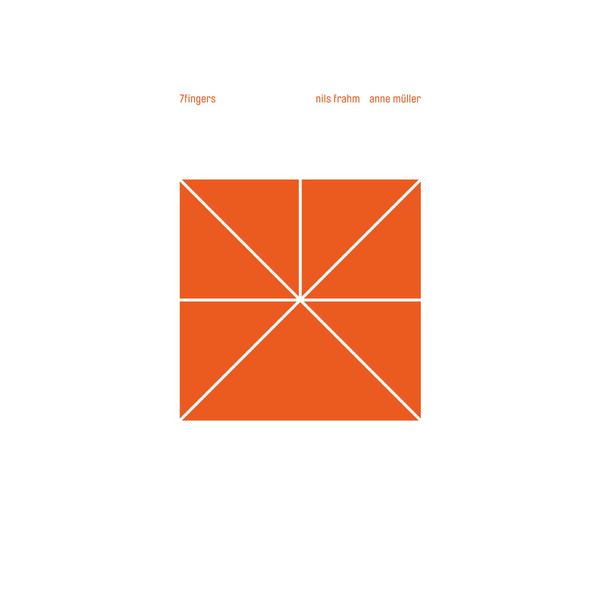
Nils Frahm collaborated with German cellist Anne Müller on the album 7fingers, which was self-released in 2010. However, a year later in 2011, Erased Tapes released 7fingers and a wider audience was able to hear this minimalist album. By then, Nils Frahm had released another innovative solo album.
Felt.
When Nils Frahm was working on the followup to The Bells, he was often working late at night in his flat and was worried about disturbing his neighbours. That was when Nils Frahm hit on the idea of placing felt on the strings of his piano which would dampen the sound and allow him to play late at night, and even into the early hours of the morning. However, when Nils Frahm heard the sound the piano produced with felt on the strings
he liked it, and wondered about using this sound when recording his new album? However, this was a big risk, so Nils Frahm decided to test the water by releasing the EP Unter/Über which featured the new sound.
After the success of the EP Unter/Über which showcased Nils Frahm’s new sound, Nils Frahm’s began work on the new album at his Durton Studio. Before the recording began, he placed felt over the strings of the piano, and then decided to place the microphones deep into the piano, which he knew would produce a much more intimate sound. This proved to be the case, and this latest masterstroke would play a part in the success of Nils Frahm’s new album.
When Nils Frahm had finished recording the album, there was only one possible title…Felt. It features music that is beautiful, ethereal, understated and intimate album as Nils Frahm combined elements of avant-garde and neo-classical on one what was the finest album of his career. Felt was released to critical acclaim by Erased Tapes in October 2011 and set the bar high for future albums.

Screws.
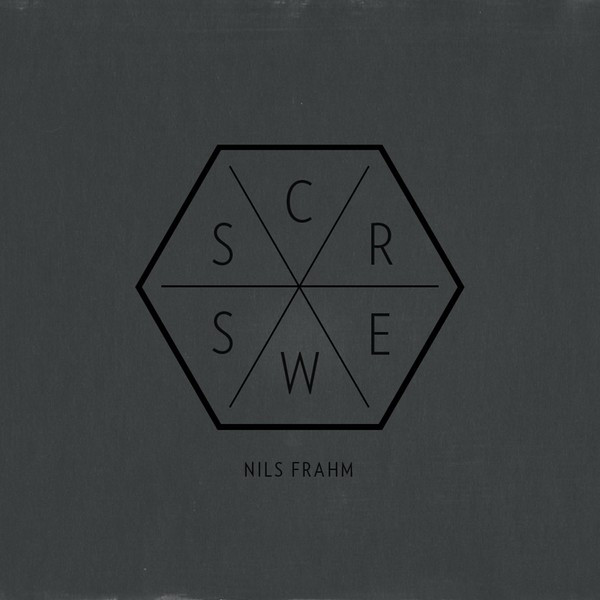
Fourteen months later, and Nils Frahm returned with his much-anticipated followup to Felt, Screws which had been recorded in remarkable circumstances. Nils Frahm had injured one of his thumbs so badly, that he was forced to record Screws using just nine fingers. This was a challenge, but one that Nils Frahm rose to and Screws contemporary classical sound won the approval of critics. The Nils Frahm success story continued.
After the release of Screws, Nils Frahm continued to work on a more experimental album, Spaces which was recorded during live performances over a two-year period. Nils Frahm used different methods to capture the recordings, with some tracks being recorded on reel-to-reel, and others on the humble cassette tape.
Spaces which Nils Frahm described as a: “collage of field recordings” was released in November 2013. Stylistically, Spaces had much in common with Screws with the contemporary classical sound proving the foundation for an album that also incorporated elements of avant-garde and improv. The result was an absorbing, beautiful, mesmeric and captured the essence of Nils Frahm’s live performances. Screws just like its predecessor Spaces, was released to widespread critical acclaim and hailed as another of Nils Frahm’s finest albums.
Solo.
On the ’13th’ of April 2015, Nils Frahm launched the first ever National Piano Day, which was an official global body he and a group of his closest friends had founded. To celebrate the piano, a series of innovative, piano related projects were launched worldwide including building the world’s tallest piano, the Klavins 450. However, it was on a somewhat smaller version of this impressive piano built by David Klavins, Nils Frahm recorded eight improvised piano motifs during one session at his Durton Studio. These pieces became Nils Frahm’s new Solo album which as lunched on National Piano Day, and for many people, including his legion of loyal fans, was the highlight of the day.

Following the release of Solo, work began on Saal 3, which was the name of his new studio that Nils Frahm planned to build within the historical East German Funkhaus building in Berlin. It was built in the 1950s and is situated on the banks of the River Spree which became a familiar sight to Nils Frahm as he arrived in the mornings and began what was slow and laborious work.
Nils Frahm set about deconstructing what one day would be his new studio, before reconstructing. Before that, new cables were installed and electricity installed. Having finished the basics, Nils Frahm set about building and a pipe organ and with the help of some of his friends, built a mixing desk from scratch. This was akin to building a giant, interactive 3-D jigsaw puzzle for the group of friends. Eventually, the mixing desk was complete, and Nils Frahm was putting the finishing touches to Saal 3, which had been a labour of love that took the best part of two years to complete. The first person to use Saal 3 was Nils Frahm who recorded his seventh album All Melody in his new studio.
All Melody.
Unlike previous albums, which featured just Nils Frahm and his trusty piano, he was joined by many of his musical friends as work began on All Melody. This included the Shards’ choir, cellist Anne Müller, violist Richard Koch, drummer and percussionist Tatu Rönkkö, trumpeter Richard Koch and Sven Kacirek who plays bass marimba. Multi-instrumentalist Sytze Pruiksma switches between timpani, gongs bass drum and percussion, while, Erik Skodvin added processed guitar sounds and added various “sounds” including some that are inaudible to humans. Meanwhile, Nils Frahm who took charge of production on All Melody, played piano, celesta, harmonium, mellotron, pipe organ, synths, percussion programmed the drum machine and added effects. Once the album was recorded, All Melody was mixed by Nils Frahm. All that remained was for Berlin based Zino Mikorey to master All Melody, and his seventh album would be ready for release.
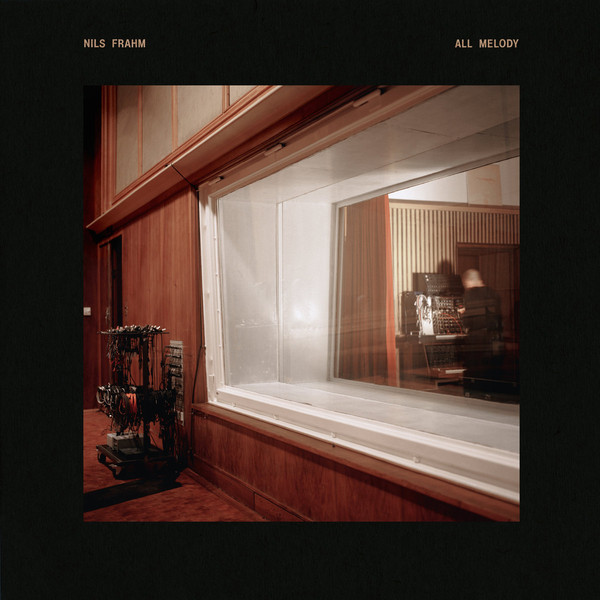
When All Melody was recently released by Erased Tapes, it was the most ambitious album of Nils Frahm’s thirteen year recording career. He’s joined by the Shards choir, woodwind and horn players and puts to good use an array of vintage synths, effects processors, his handmade pipe organ and the reverb chambers that are also a feature of Saal 3. They played their part in what Nils Frahm knew was going to be the most ambitious and experimental album of his career.
Ironically, although All Melody didn’t quite turn out as Nils Frahm had originally envisaged, it turned out to be a much better album and is regarded as a career-defining opus. All Melody is also the equivalent of a veritable twelve course musical feast where only the finest and richest fare is on offer, and this is sure to please even those with the fussiest appetites.
As the title suggests, All Melody is an extremely melodic album where Nils Frahm and friends play their part in what’s a captivating, multilayered album that veers between intimate and amiable, to sombre and symphonic, to playful and dancefloor friendly. All Melody opens with the jazz-tinged The Whole Universe Wants To Be Touched where Nils Frahm’s rounded piano chords set the scene before the Shards choir add their unique atmospheric, wordless vocals to this amuse bouche before this delicious musical feast reveals the rest of its delights.
Sunson is a showcase for Sven Kacirek’s bass marimba which takes centre-stage, and is augmented by Nils Frahm’s vintage synths that later, combine with pan pipes. They create a rueful, atmospheric track. Very different is A Place where drums and shimmering keyboards are joined by scatted vocals that add a familiar motif before stings are added a melancholy sound to this beautifully repetitive, melodic and dubby seven minute epic.
Many of the soundscapes on All Melody are slow with a wistful and ruminative sound, that invites reflection. Indeed, this sense of wistfulness is almost present throughout All Melody, but there’s a beauty to it that worms its way into one’s psyche. That is the case on My Friend The Forest, the short, melodic Forever Changeless and Fundamental Values where Nils Frahm’s piano takes centre-stage.
Elsewhere, Nils Frahm enjoys the opportunity to experiment with a much more expansive sound on tracks like Human Range where a trumpet squeals as various understated instruments, sounds and choral passages are added. Then on All Melodic and #2, which are among the longer tracks, Nils Frahm deploys drum machines and vintage synths as he enjoys the opportunity to experiment with this much more expansive, multilayered tracks. Familiar motifs appear, disappear and reappear and this repetitiveness is part of the charm and success of these two mesmeric and melodic tracks.
Momentum has a moody, cinematic sound despite the addition of choral passages as elements of ambient and electronics combine. It’s all change on Kaleidoscope which cascades along an array of disparate sounds escaping from the arrangement and playing their part in a quite beautiful, captivating track. Closing All Melody is Harm Hymn ruminative soundscape where there’s time for relocation during this liturgical track. It’s one of the highlights of All Melody.
After twelve sumptuous and carefully crafted courses served up by composer, pianist and producer Nils Frahm, his latest veritable musical feast All Melody is over. During this veritable musical feast he serves up an array of mouth-watering and tasty treats that will appeal to his old fans and newcomers to his music. Both will enjoy the amuse bouche that is The Whole Universe Wants To Be Touched, while his old fans will be immediately drawn to My Friend The Forest, Forever Changeless, Fundamental Values and Harm Hymn which feature Nils Frahm’s old sound. Doubtless, those who have followed Nils Frahm’s since his debut album in 2005 will welcome this musical adventurer’s latest adventure into sound.
Newcomers to Nils Frahm’s music will enjoy and embrace the more expansive sound on All Melody. This may appeal more than some of his previous albums, which featured a much more understated, minimalist and starker sound. Many people fail to ‘get’ this type of music and aren’t won over by its beauty. Instead, they’ll prefer the more expansive sounding tracks on All Melody which are deeply melodic and an aural feast as strings, choral passages and an array of disparate instruments augment and accompany Nils Frahm’s piano and various keyboard instruments. They play their part in the sound and success of All Melody, which is the latest chapter in the career Nils Frahm.
He reinvented his music on All Melody, and embraced a much more expansive sound with the help of some of his musical friends. Other tracks on All Melody feature a much more wistful and ruminative sound, that invites reflection and contemplation. This is much more like Nils Frahm’s old sound. In a way, All Melody shows two sides to Nils Frahm on this carefully crafted, critically acclaimed, career-defining album that is a veritable musical feast.
Nils Frahm-All Melody.
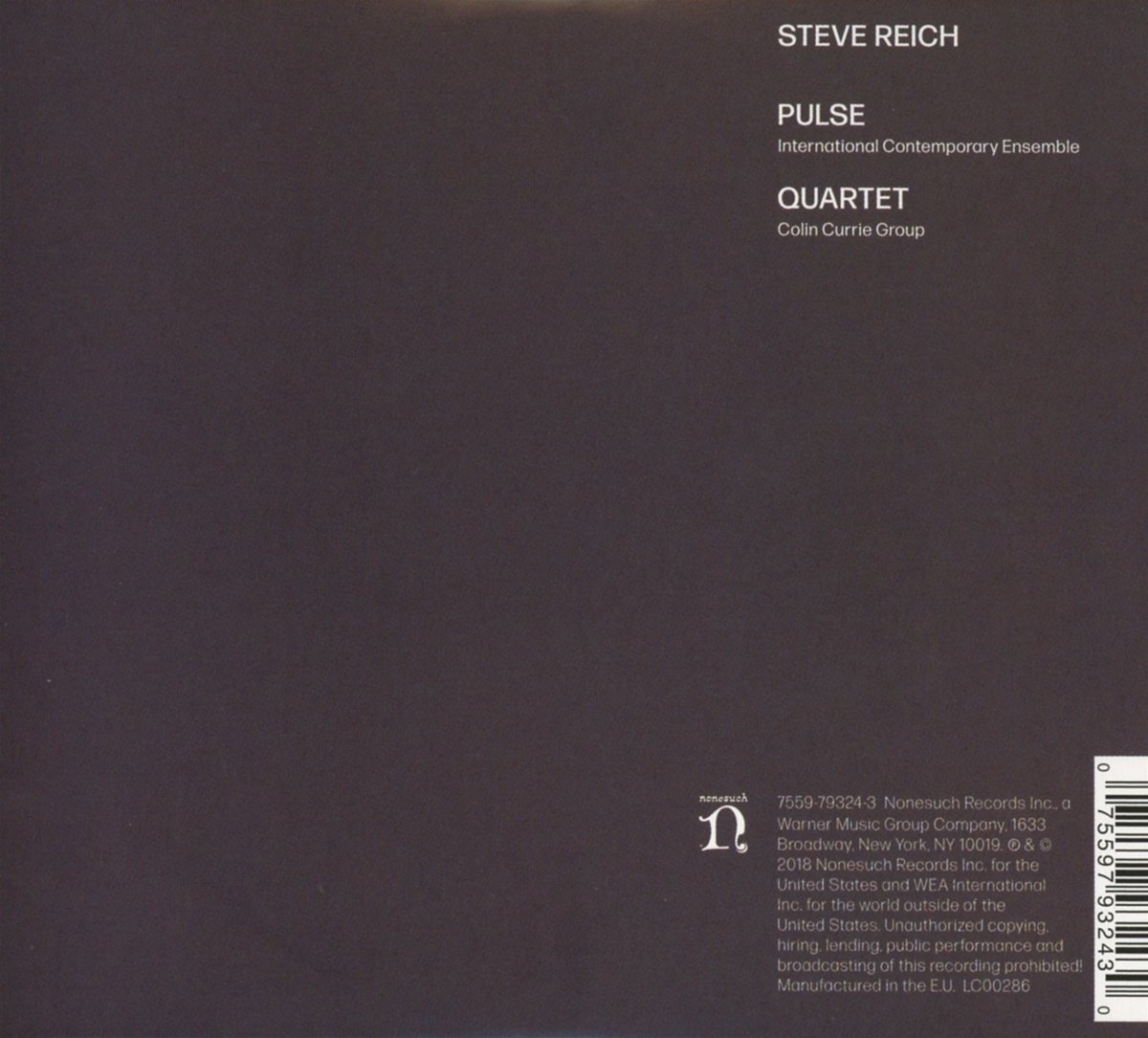
STEVE REICH-PULSE/QUARTET.
Steve Reich-Pulse/Quartet.
Label: Nonesuch.
Nowadays, the word innovative is often overused in journalism, especially by those who make a living writing about music. However, eighty-one year American composer Steve Reich, who was one of the pioneers of minimalist music in the late-sixties, has spent a lifetime creating ambitious, groundbreaking and innovative music that has influenced and inspired several generations of musicians. This includes the music on Pulse/Quartet which was recently reissued by Nonesuch and is a reminder of a true pioneer of minimalist music. Steve Reich along with Phillip Glass, Terry Riley and La Monte Young pioneered minimalist music in the late-sixties and has spent lifetime writing, recording and performing innovative music.
Since then, many musicians have embraced some of Steve Reich’s many musical innovations over the past six decades. One of his earliest innovations was using tape loops to create phasing patterns in his minimalist composition It’s Gonna Rain in 1965 and Come Out which was released a year later, in 1966. Many musicians who heard It’s Gonna Rain and Come Out, would also go on to use tape loops to create phasing patterns, and later, would incorporate some of Steve Reich’s other ideas into their music.
This included Steve Reich’s use of simple, audible processes which he used to explore a variety of musical concepts. A case in point was Pendulum Music which was composed August 1968 and was revised in May 1973, and was example of process music. The origins of Pendulum Music can be traced to the day that Steve Reich swung a microphone like a cowboy’s lasso and realised that this produced a feedback. Having made this discovery, he set out to compose for an: “orchestra” of microphones.
That was how Steve Reich found himself in a studio in May 1973 where microphones and speakers were suspended from the roof to create phasing feedback tones during Pendulum Music. Steve Reich pulled the microphones back and let them swing and then switched them on, watching as gravity caused them to with at swing various speeds and create different levels of squealing feedback. During Pendulum Music, the microphones became the stars of this innovative example of process music, which twenty-six years later, was replicated by Sonic Youth on their album SYR4: Goodbye ‘20th’ Century which was released in November 1999. By then, Sonic Youth were just the latest band to be influenced by Steve Reich.
Nearly nineteen years after Sonic Youth paid homage to Steve Reich, artists and bands are still inspired by pieces like Pendulum Music and Four Organs which was composed in January 1970. Both compositions feature the use of repetitive figures, slow harmonic rhythm and canons, which influenced contemporary music. So much so, that nowadays, Steve Reich is regarded as one of the most important contemporary composers who was written string of innovative compositions.
Among his most important and innovative pieces is Drumming, a ninety minute piece that was inspired after spending five weeks in Ghana where he studied under Ghanaian master drummer Gideon Alorwoyie. Having written Drumming on his return to America, it was performed by Steve Reich and Musicians who were making their debut, and over the next few years, would interpret many of his pieces.
Having performed Drumming, Steve Reich moved on from his “phase shifting” technique, and investigated a verity of other techniques. This included augmentation where the phrases fragments of melody are lengthened. It was during this time that Steve Reich wrote two important compositions Music For Mallet Instruments, Voices and Organ and Six Pianos in 1973. However, a year later, Steve Reich returned with omen of his seminal pieces.
This was Music For 18 Musicians which Steve Reich wrote in 1974, and is based on a cycle of eleven chords. It was Steve Reich’s first attempt to write for a large ensemble and saw an increase in psycho-acoustic effects. However, Music For 18 Musician also featured another important factor-the use of human breath, with clarinets and the voice which help add structure and provide a pulse to what became the groundbreaking album Music For 18 Musician which marked Steve Reich’s debut on ECM Records on 1975. Eighteen years later in Confessions Of A Vinyl Junkie David Bowie called Music For 18 Musicians his favourite album. That was no surprise, as it’s one the finest albums of Steve Reich’s long and illustrious career.
By 1978, Steve Reich’s music contained much more harmonic detail and this was something he explored on Music For A Large Ensemble and Steve Reich continued to Reich experiment with: “the human breath as the measure of musical duration…the chords played by the trumpets are written to take one comfortable breath to perform.” Steve Reich continued in his mission to innovate.
When Octet and Steve Reich’s orchestral debut Variations For Winds, Strings and Keyboards were both released in 1979, the influence of biblical bantillation which he had studied in Israel shines through on both albums. This wasn’t the last time that his Jewish heritage influenced Steve Reich.
As the eighties dawned, Steve Reich had established a reputation for writing, recording and performing ambitious, cerebral, innovative and thought-provoking music. That was the case during the eighties, when Steve Reich introduced historical themes to his music, and was heavily inspired by his Jewish heritage. This was apparent on his 1981 composition Tehillim (Psalms), which was very different to anything that Steve Reich had written before. Tehillim was written in a formal structure, makes melody a substantive element and makes use of both formal counterpoint and functional harmony. This was very different to Steve Reich’s previous loosely structured minimalist recordings and saw his music continue to evolve.
That was the case when Steve Reich wrote the three movement Different Trains which was recorded and released by the Kronos Quartet in 1989, and features a string quartet, tape recorders and recorded speech. It provides a melodic, rather than rhythmic function during a thought-provoking album that is full of imagery. In writing the piece, Steve Reich had drawn inspiration to the time he spent between 1939 and 1941 as a teenager riding on trains in California and New York. However, he compares and contrasts his experiences to the children in Europe being transported to their death by Nazi regime. The Kronos Quartet’s album Different Trains won the Grammy Award for Best Classical Contemporary Composition for what was powerful, poignant and thought-provoking album, that was written by fifty-two year old Steve Reich.
During 1993, Steve Reich and his wife Beryl Korot collaborated on the opera The Cave, which explored the roots of Christianity, Judaism and Islam through the words of Americans, Israelis and Palestinians. Their words were interpreted by Steve Reich’s ensemble who brought his latest work to life.
Following The Cave, Steve Reich and Beryl Korot collaborated on the video opera Three Tales. It explored the Hindenburg disaster, the testing of nuclear weapons on Bikini Atoll and subjects like cloning which brought Three Tales up to date. Steve Reich also used sampling during Three Tales and on City Life which was released in 1994. However, after that, Steve Reich made a conscious decision to return to composing for the concert hall, writing Triple Quartet in 1998 for the Kronos Quartet.
When the new millennia dawned, Steve Reich continued to write instrumental pieces for the concert hall, starting with 2002s Dance Patterns and then the three-piece Cello Counterpoint in 2003. You Are (Variations) followed in 2004 with Variations For Vibes, Pianos, and Strings in 2005. With his seventieth birthday fast approaching, there was no sign of Steve Reich slowing down.
In 2007, Steve Reich was commissioned by American contemporary music sextet Eighth Blackbird to write Double Sextet. This was just the latest in the long line of innovative compositions by Steve Reich who two years later in 2009 won the Pulitzer Prize for Music.
By then, Steve Reich was regarded as one of only a small number of living composers who could claim that they had changed the direction of musical history. Despite doing so, the man who American composer and critic Kyle Gann called: “America’s greatest living composer” remained a modest man who has as a new decade dawned continued to compose and record ambitious, cerebral, innovative and thought-provoking music.
This included WTC 9/11 which was written by Steve Reich and was played by the Kronos Quartet at the premiere at Duke University in North Carolina. Steve Reich hadn’t lost his ability to write innovate, engaging, cerebral and thought-provoking music.
Two years later, on the ‘5th’ of March 2013 the London Sinfonietta, conducted by Brad Lubman premiered Radio Rewrite which was inspired by Radiohead’s music and written for an eleven piece ensemble. The same night, the audience heard Double Sextet and Clapping Music, which Steve Reich wrote for “two people and four hands.” That night, Steve Reich and percussionist Colin Currie provided the “four hands” on what was a captivating evening’s music that celebrated a musical pioneer.
Pulse/Quartet.
Later in 2013, Steve Reich wrote Quartet a near nineteen minute composition that was co-commissioned and was premiered by the Colin Currie Group at the Queen Elizabeth Hall, at the Southbank Centre in London on October ’12th’ 2014. It would be nearly three years before the Colin Currie Group recorded Quartet.
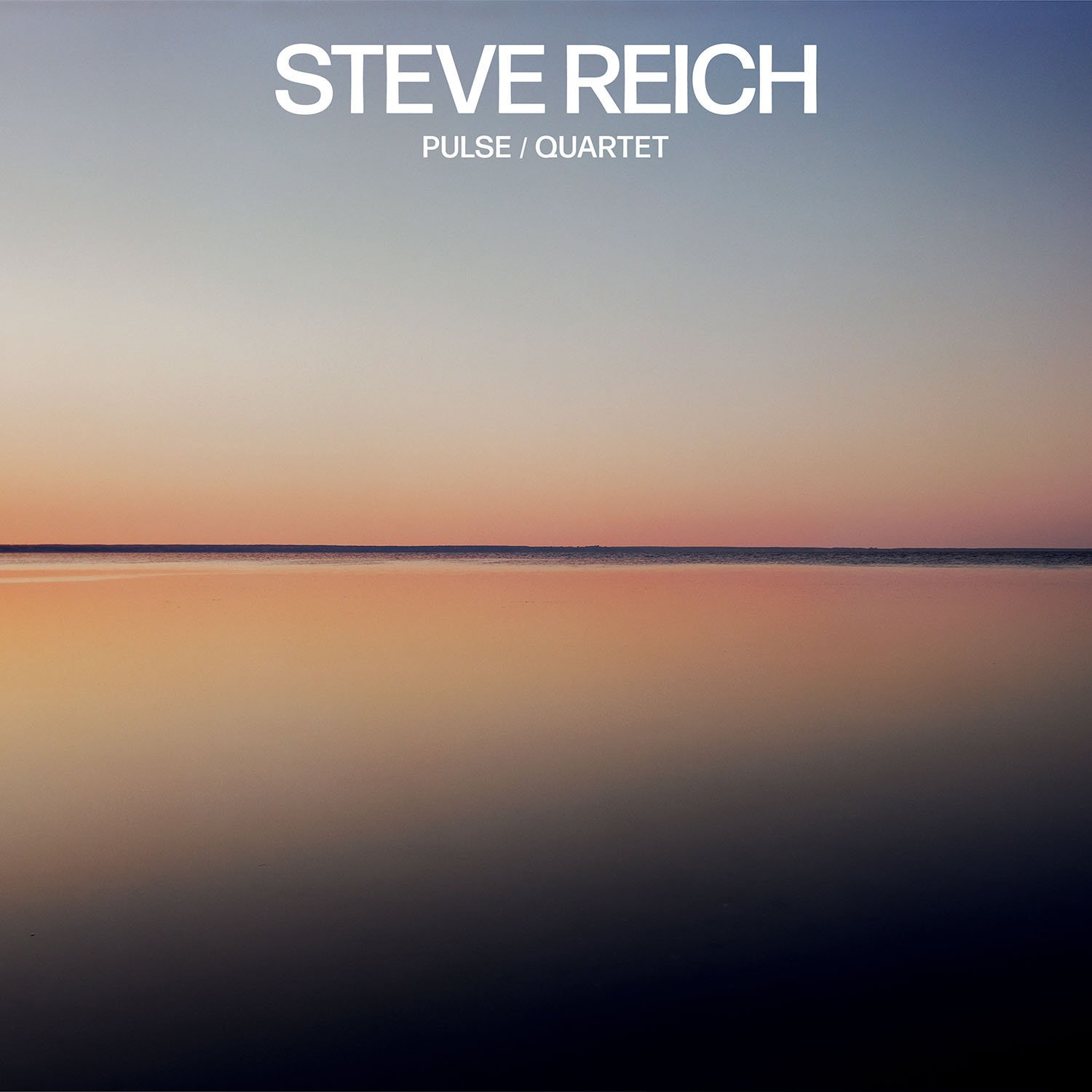
Two years later, and Steve Reich had been commissioned to write Pulse, which was a fourteen minute piece that was premiered by the International Contemporary Ensemble in the Carnegie Hall in New York on the ‘1st’ of November 2016. The following year it was recorded by the International Contemporary Ensemble and opened Pulse/Quartet.
Pulse is a fourteen minute epic from the pen of Steve Reich that consists of just one lengthy movement where the International Contemporary Ensemble showcase their considerable skills. It opens with what’s best described as a lush melodic phrase as the piano and bass provide a rhythmic pulse to the piece. As is the case with Steve Reich’s compositions, the rhythmic beat repeats and provides a mesmeric backdrop that proves omnipresent as the drama builds and the imagery is rich and vivid. Later, Pulse becomes ruminative and leaving room to reflect and takes on a meditative sound that has been a trademark of Steve Reich’s compositions.
Quartet is a three-part piece consisting of Fast Slow and Fast that Steve Reich regards as one of the most complex pieces he’s ever written. It’s played by the Colin Currie Group whose lineup features vibes players Colin Currie and Phillip Walton plus pianists Phillip Moore and Simon Crawford-Phillips. They play with speed, accuracy and urgency during the two Fast pieces that bookend Quartet. They’re a hive of activity, while a calm descends during Slow and again, this allows time for reflection before the tempo quickens and Fast closes Pulse/Quartet.
For anyone yet to discover Steve Reich’s music, then Pulse/Quartet which was recently issued by Nonesuch, is a perfect introduction to a true musical pioneer, who has spent a lifetime writing, recording and performing innovative music. On Pulse/Quartet, the International Contemporary Ensemble interpret Pulse and then the Colin Currie Group reinterpret Quartet. While the two tracks on Pulse/Quartet last just over thirty-one minutes, this is enough to discover a true innovator and one of the greatest living composers.
Pulse/Quartet is an accessible introduction to Steve Reich that is sure to be the first step on a captivating voyage of discovery through his extensive back-catalogue. This is a journey well worth embarking upon, as it will allow a newcomer to Steve Reich’s music to discover the different periods of his long and illustrious career including Pulse/Quartet.
Steve Reich-Pulse/Quartet.
FIREFALL-UNDERTOW, CLOUDS ACROSS THE SUN AND BREAK OF DAWN.
Firefall-Undertow, Clouds Across The Sun and Break Of Dawn.
Label: BGO Records.
By September 1979, Firefall had released three successful studio albums which had sold nearly two million copies in America alone. However, this had come at a cost and the years of constant touring and recording, had caught up on the band from Boulder, Colorado. Firefall were almost burnt out, after years of constantly recording and touring. Despite this, Atlantic Records were expecting Firefall to begin work on their fourth album, Undertow which was recently reissued by BGO Records alongside Clouds Across The Sun and Break Of Dawn.
That was despite Firefall having just returned from a fraught and eventful tour of Japan. During the tour, drummer Michael Clarke had been drinking excessively and sometimes, this resulted in him missing shows. Other times, was ‘unfit’ to play and got that Firefall placed German drummer Dan Holsten was on standby, and he was ready to replace Michael Clarke at a moment’s notice. However, before long, Firefall realised there was another problem.
Having released three successful album the members of Firefall believed that they had a nice nest egg awaiting them when they called time on their career with the band. The way things were going, this could be sooner rather than later. This made Firefall’s discovery all the more worrying.
Firefall finances the band discovered weren’t in the best shape. While the cupboard wasn’t quite bare, it wasn’t far of it. That came as no surprise to many who had watched the Firefall story unfold over the years.
The Firefall story began in Boulder, Colorado where Rick Roberts returned to, after the death of his friend Gram Parsons on September the ‘19th’ 1973. The death of God Own Singer came as a shock to Rick Roberts who had been playing alongside Gram Parsons for three years.
Gram Parsons had been one of the founding members of The Flying Burrito Brothers in 1968, who Rick Roberts had joined in 1970. The men quickly became friends and when Gram Parsons embarked upon a solo career, Rick Roberts left The Flying Burrito Brothers and became a member of The Fallen Angels, Gram Parsons’ backing band. That was until that fateful night in September 1973.
Having returned home to Boulder to come to terms with Gram Parson death, eventually, Rick Roberts began to think of the future. By then, Rick Roberts was back home in Colorado and so was Jock Bartley, who had replaced Tommy Bolin in Zephyr. They had first met when Gram Parsons and The Fallen Angels were playing two nights in the same venue in New York. Since then, they had kept in touch.
A few days later, Rick Roberts decided to look his old friend up, and that day, his timing was perfect as Jock Bartley was playing his guitar. Rick Roberts watched as Jock Bartley unleashed a virtuoso performance. This lead to Rick Roberts suggesting they practise together.
Soon, Rick Roberts and Jock Bartley were practising together regularly, and before long, were thinking about forming a band together. They started thinking about possible additions to the band, and the first name on their list was Mark Andes, a bassist and vocalist.
Mark Andes had previously been a member of Spirit and Jo Jo Gunne, until he decided to retire, albeit temporarily, and went to live in the rocky mountains outside of Boulder, Colorado. Rick Roberts and Jock Bartley were hoping to tempt Mark Andes out of retirement an succeeded in doing so. With Mark Andes now a member of the nascent band, now there were only three names on Rick Roberts and Jock Bartley’s shortlist.
The first was Larry Burnett, a singer, songwriter and guitarist, who Rick Roberts had met on his travels. Larry Burnett fitted the bill and Rick Roberts was keen to add him to the lineup of the new band.
It was a similar case with keyboardist and guitarist Mark Hallman, who knew Mark Andes from the band Navarro. However, when Mark Hallman was asked to join Firefall, he rejected the opportunity, and eventually joined Carole King’s backing band.
Meanwhile, the search for a drummer for the band continued, with various local drummers auditioning, but failing to make the grade. Eventually, Rick Roberts decided to phone his old friend Chris Hillman who had previously been a member of The Byrds and The Flying Burrito Brothers. That was where he met Rick Roberts. However, since leaving The Flying Burrito Brothers, Chris Hillman had lived first in Hawaii and latterly in Washington. WhenRick Roberts phoned Chris Hillman, he agreed to head to Colorado and joined Firefall.
For their first year together, Firefall played in the clubs around Colorado. Quickly, Firefall became a popular draw in Boulder and Aspen, where the nascent band honed and tightened their sound. After just over a year of playing live, Firefall decided to record a demo.
Firefall recorded a three song demo which was produced by Chris Hillman, and shopped to the major labels. Alas, the demo failed to find a taker, and things weren’t looking good for Firefall.
So much so, that in 1975, Rick Roberts, Jock Bartley and Mark Andes were drafted in to Chris Hillman’s band for several performances. This included a gig at The Other End in New York, during June 1975. Not long after the band arrived in New York, Chris Hillman became ill, and couldn’t continue the tour and Larry Burnett and The Byrds’ drummer was drafted in to play at The Other End and finish the tour.
In the audience that night at The Other End, was an Atlantic Records’ A&R executive. He had listened to Firefall’s demo tape, and was keen to hear the new band, so made his way to the front of the stage. After Firefall’s set, the Atlantic Records’ A&R executive headed backstage and signed Firefall on a multi-album contract. At last, Firefall had signed to a major label.
The only problem was that Rick Roberts had agreed to head out on tour with Stephen Stills during the summer of 1975. This meant the recording of Firefall’s eponymous debut album had to be postponed until Rick Roberts’ return and it wasn’t until late 1975 that work on Firefall could begin.
Firefall.
After Rick Roberts returned from touring with Stephen Stills, a decision was made that David Muse should also join Firefall in the studio. He was a talented multi-instrumentalist, who could seamlessly switch between saxophone, flute, keyboards and harmonica. David Muse would add a new dimension to Firefall’s sound. So would Jim Mason, who had been chosen to produce Firefall’s debut album.
For Firefall’s eponymous debut album, Rick Roberts penned the album opener It Doesn’t Matter with Stephen Stills and Chris Hillman. He was no longer a member of Firefall, and had been replaced by Michael Clark. Rick Roberts the cofounder was also Firefall’s songwriter-in-chief and wrote Livin’ Ain’t Livin’, Dolphin’s Lullaby,You Are The Woman and Mexico. Larry Burnett wrote Love Isn’t All, No Way Out, Cinderella, Sad Ol’ Love Song and Do What You Want. These songs featured on Firefall which was recorded at Criteria Recording Studios, in Miami.
When Firefall arrived at Criteria Recording Studios, the lineup featured a rhythm section of drummer Michael Clark, bassist Mark Andes, and Larry Burnett on electric and acoustic rhythm guitar. Jock Bartley added lead, slide and pedal guitar, while Rick Roberts added acoustic guitar. New recruit David Muse played piano, clavinet, synths, flute, tenor sax and harmonica. Guest artist Joe Lala was drafted in to add a myriad of percussion to Firefall, which was produced by Jim Mason. Once the album was recorded, mixed and mastered, Firefall was scheduled for release May 1976.
Before that, critics had their say on Firefall. They were won over by a polished and accomplished album where soft rock rub shoulders with folk rock, country and Americana. This genre-melting album showcased a tight, talented and versatile band who put all their years of experience to good use on Firefall. It was released to critical acclaim in May 1976.
When Firefall was released May 1976, it reached number twenty-eight on the US Billboard 200, and sold in excess of 500,000 copies and was certified gold. By then, Firefall were already being compared to The Eagles and Poco, which was a lot for the band to live up to. However, more success had come Firefall’s way after enjoying their first hit single.
You Are The Woman had been released as the lead single, and reached number nine on the US Billboard 100 and number six on the US Billboard Adult Contemporary Charts. Livin’ Ain’t Livin’ then reached forty-two in the US Billboard 100, while Cinderella reached just thirty-four in the US Billboard 100. This was despite many radio stations refusing to play the single because of its controversial lyrics. Still, Cinderella gave Firefall another minor hit single as they were hailed as one of American music’s rising stars.
That was no surprise, as Firefall had already three hit singles to their name and their eponymous debut album had just been certified gold by the RIAA. Buoyed by this success, Firefall embarked upon what was their first lengthy tour.
Over the next two years, Firefall were constantly touring and shared the bill with everyone from Leon Russell to The Doobie Brothers and Tom Waits to Lynyrd Skynyrd, Roy Buchanan, the Electric Light Orchestra and The Band. In the midst of this gruelling schedule, Firefall had to fit in the recording of their sophomore album Luna Sea.
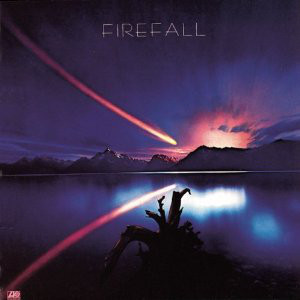
Luna Sea
Originally, the working title for Firefall’s much-anticipated sophomore album was Tropical Nights, and it was scheduled to be recorded at Criteria Recording Studios, in Miami. That was where David Muse would make his debut as a full-time member of Firefall. However, percussionist Joe Lala, who returned for the recording of Luna Sea, was still a guest artist.
Joe Lala was one of several guest artists who joined Firefall when they began recording their sophomore album Criteria Recording Studios. The Memphis Horns, Poco’s Timothy B. Schmidt and a trio of female backing vocals joined percussionist Joe Lala, and the newly expanded lineup of Firefall. After the success of Firefall, Jim Mason had been drafted in to produce the album. Everything seemed to go to plan, and within a month, Firefall had recorded their sophomore album. However, there was a problem.
Once the album was completed, it was sent to Atlantic Records who decided after hearing the final mix, that the album would have to be recorded. This was a huge blow for Firefall and an added expense the band could’ve done without.
For the recording, Fireball headed to Los Angeles, where some of the songs on Luna Sea were rerecorded. Other songs were discarded, and replaced by new songs. By the time Luna Sea was complete, it featured four songs penned by Rick Roberts So Long, Just Remember I Love You, Someday Soon and Only a Fool. Rick Roberts wrote Even Steven with Larry Burnett who Sold On You, Getaway and Head on Home. Just Think and Piece Of Paper were credited to Firefall, which was the first time the band had written songs together. Both songs made their way onto Luna Sea, which was released in 1977.
Prior to the release of Luna Sea, critics received advance copies of an album that had much in common with Firefall. Luna Sea was a slick, polished and accomplished album that attracted critical acclaim from critics as soft rock rubbed shoulders with folk rock, country and Americana. Luna Sea showcased a talented and versatile band who were maturing with every album.
When Luna Sea was released in 1977, it reached twenty-seven in the US Billboard 200. The lead single, Just Remember I Love You reached number eleven in the US Billboard 100, and number one in the US Billboard Adult Contemporary Charts. However, the followup So Long, stalled at just forty-eight in the US Billboard 100. Despite this, Luna Sea had built on the success of Firefall and the future it seemed looked bright for Firefall.
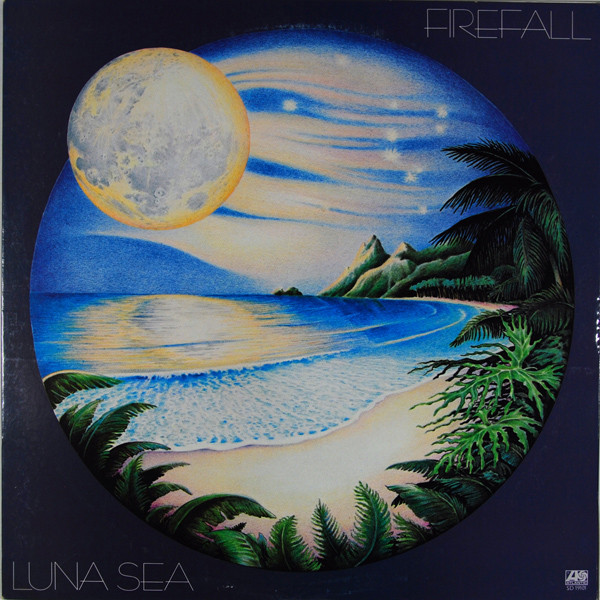
Elan.
Behind the scenes, it was a different story and all wasn’t well within Firefall. The band had spent nearly two years touring almost nonstop. That had been the case since the release of Firefall in May 1976, right through to 1978 when the band’s thoughts turned to recording their third album Elan.
By 1978, Firefall had toured the world with the great and good of music and had recently opened for Fleetwood Mac on their Rumours’ tour. This Firefall hoped would introduce their music to a wider audience, but instead, it almost tore the band apart.
During the two years of nonstop touring, some of the members of Firefall had acquired expensive habits. Rick Roberts, Larry Burnett and Michael Clarke all began to drink heavily and began to experiment with drugs. Soon, things had escalated, and drink and drugs became a problem within Firefall, as Rick Roberts, Larry Burnett and Michael Clarke all became heavy drug users. This started to affect the group dynamics. To further complicate matters, Firefall were having problems with their management. For a group who were at the peak of their popularity about to record their third album, this didn’t bode well.
For their third album Elan, Firefall decided to bring a new producer onboard. This was a huge risk, as Jim Mason had played an important part in the rise and rise of Firefall. They seemed to have underestimated the importance of Jim Mason, and sadly, he was cast aside for a producer with a bigger name…Tom Dowd.
By 1978, Tom Dowd had an enviable track record as a producer, and had been working in the music industry since 1947. Over the last thirty-one years he had produced everyone from Charlie Mingus and Cream to Dusty Springfield and Eric Clapton, to Aretha Franklin, Otis Redding, The Allman Brothers, Chicago and Lynyrd Skynyrd. Now Tom Dowd was about to work with Firefall, and set about uniting a band divided.
Despite the problems within the Firefall, they had written ten new songs, with songwriter-in-chief Rick Roberts contributing Strange Way, Count Your Blessing, Goodbye, I Love You, Sweet Ann and Winds of Change. Rick Roberts also teamed up with Jock Bartley to pen Sweet and Sour. Larry Burnett contributed Wrong Side of Town, Get You Back and Baby and also joined forces with Mark Andes to write Anymore. This time, there were neither songs penned by Rick Roberts and Larry Burnett nor Firefall. The times they were a changing as Firefall made the journey to the familiar surroundings of Criteria Sound with Tom Dowd.
When recording began at Criteria Recording Studios, Miami, Firefall were joined by drummer Jim Keltner, vocalist Laura Taylor and percussionist Steve Forman who would augment Firefall as they recorded ten new tracks. However, the Firefall and Tom Dowd partnership proved not to be the dream team everyone had hoped.
While the members of Firefall got on well with Tom Dowd, the problem was he had a different ‘vision’ for the band. They were content to stick with the formula that had served them well for two albums. Rather than trying to sort out their differences with Tom Dowd, Firefall continued to record Elan. Eventually, and somewhat belatedly, Firefall’s new management company decided to intervene and try to resolve the situation. By then, Elan was recorded, and a large amount of money had been spent. This was money wasted, in light of what happen next.
Firefall’s management company approached Mick Fleetwood, who the band had recently befriended when they opened for Fleetwood Mac during their recent Rumours’ tour. Mick Fleetwood was a member of one of the most successful bands in the world, and listened as Firefall told him that they weren’t happy with their third album. Eventually, he agreed to speak to executives at Atlantic Records, in the hope that they would allow Firefall to rerecord Elan.
When Mick Fleetwood got in touch with Atlantic Records, they agreed to let Firefall rerecord Elan. There was a catch though, Firefall would have pay for the rerecording of their third album. There was a problem though, this would put Firefall would put Firefall into debt with Atlantic Records. Whether the members of Firefall were fully aware of the implications of recording Elan was unclear?
For the rerecording of Firefall’s third album Elan, Atlantic Records brought onboard Howard and Ron Albert to coproduce the album. The sessions took place at Firefall’s favoured studios Criteria Sound in Miami, with other sessions taking place at the Record Plant in Los Angeles. By the time the sessions were complete, Elan was transformed and was a very different album. Firefall’s decision to rerecord Elan had paid off.
Before the release of Elan, critics had their say on Firefall’s third album. They called the album Firefall’s finest hour which wasn’t surprising given the quality of songs on Elan.
When Elan was released in 1978, it reached number twenty-seven in the US Billboard 200, and was certified platinum. The lead single Strange Way reached number eleven in the US Billboard 100, while Goodbye, I Love You stalled at number forty-three. Despite this, Firefall had just enjoyed the most successful album of their career. It should’ve been a time to celebrate.
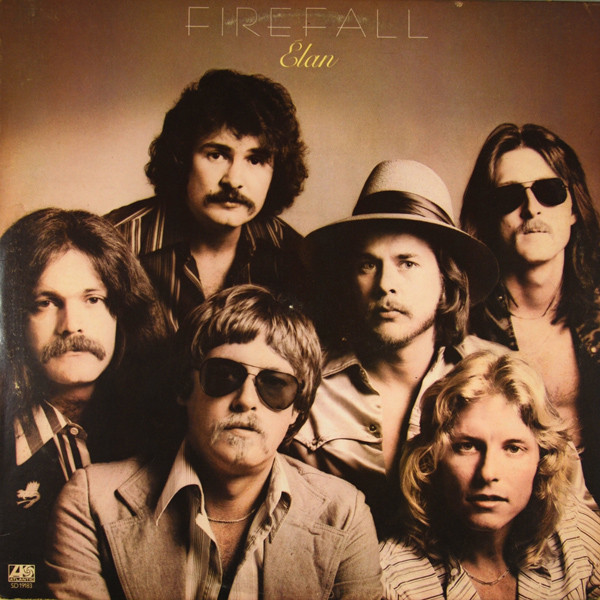
Sadly, all wasn’t well within Firefall. The years they had spent constantly touring and recording, had caught up with the band and Firefall were almost burnt out. There was still tension within Firefall who had been divided when they began work on their last album, which they ended up recording twice. Although it was a time to celebrate, it was worrying and expensive time for Firefall.
This wasn’t helped by Firefall’s love of the rock ’n’ roll lifestyle, which although pleasurable and pleasing was proving expensive and eventful. The Japanese tour that took place during August 1979 was a case in point.
Firefall had spent most of August 1979, touring Japan, and during the tour Michael Clarke had been drinking heavily, and sometimes, even missed shows. Other times, he was ‘unfit’ to play, and it got that German drummer Dan Holsten had to be on standby, and ready to replace Michael Clarke at a moment’s notice. This was the chance of a lifetime for Dan Holsten who Jock Bartley and Larry Burnett saw play in a bar in Colorado Springs. Now he was playing with Firefall on their Japanese tour. It had been a dream come true for Dan Holsten, as he flew home with the rest of Firefall. They had much to think about.
Having returned from a fraught and eventful Japanese tour, Firefall’s thoughts in September 1979 turned to their fourth album for Atlantic Records Undertow.
Undertow.
Just like previous albums, Rick Roberts continued in his role as songwriter-in-chief when work began on Undertow. He wrote Love That Got Away. Headed For A Fall, Stardust, If You Only Knew and Undertow. Rick Roberts and Mark Andes renewed their songwriting partnership when they wrote Laugh Or Cry. Larry Burnett penned Only Time Will Tell and Business Is Business while Jock Bartley contributed Leave It Alone. These songs were recorded in the familiar surroundings of Criteria Recording Studios.
A Criteria Recording Studios, the rhythm section of drummer Michael Clarke, bassist Mark Andes and Larry Burnett on electric, acoustic and rhythm guitar. Meanwhile, Jock Bartley played guitars and added lead vocals, while Rick Roberts added acoustic and electric guitar plus backing vocals. Multi-instrumentalist David Muse played flute saxophone, harmonica, acoustic and electric guitar. The members of Firefall were augmented by various guest artists who often only played on or two tracks. This included percussionist Joe Lala; organist Bill Payne, drummer Andy Newark, Paul Harris on electric piano and Christopher Dennis on tambourine and cowbell. Adding backing vocals were Rhodes, Chalmers and Rhodes who featured on numerous Hi Records’ recordings and Tom Kelly who featured on Laugh Or Cry. These guest artists played their part on Firefall’s eagerly awaited fourth album Undertow, which was released in 1981.
Despite the infighting and tension with Firefall, who continued to embrace the rock ’n’ roll lifestyle, Undertow found favour with critics who were won over with their fourth carefully crafted album. It showcased the different sides to Firefall on what was the band’s most eclectic and intense album. This intensity came as no surprise given the in-fighting within Firefall at that time. However, this wasn’t the only change as Firefall embraced an eighties sound and production styles as they flit between soft rock, country rock, pop rock and power pop on Undertow where beautiful ballads and rocky tracks rub shoulder.
Undertow opens with the rueful rocker The One That Got Away. It gives way to the wistful rocky ballad Headed For A Fall where Larry Burnett delivers an emotionally charged vocal. He reaches new heights on the beautiful understated ballad Only Time Will Tell. Very different is the anthemic Laugh Or Cry, before Firefall drop the tempo on Stardust which another is beautiful ballad where harmonies augment Larry Burnett AOR and country rock combine. Firefall change things around on If You Only Knew, which is a freewheeling rocker. It’s followed by the pop rock of Some Things Never Change, the acoustic ballad Business Is Business and the power pop of Leave It Alone. Closing the album is Undertow another rocky track from Firefall, which closed a chapter in their career.
Despite the critically acclaimed reviews, Undertow failed to even trouble the lower reaches of the charts. The singles fared slightly better with Love That Got Away reaching fifty in the US Billboard 100 and nine in the Adult Contemporary charts. The followup Only Time Will Tell the reached forty-six in the Adult Contemporary charts. This was a disaster for Firefall who two years earlier, had sold a million copies of their third album Elan.
Not long after the release of Undertow, drummer Michael Clarke and Mark Andes both announced that they had left Firefall. They were soon replaced by Kenny Loggins’ rhythm section of drummer Tris Imboden and bassist George Hawkins. The new additions made their debut on Firefall’s fifth album Clouds Across The Sun.
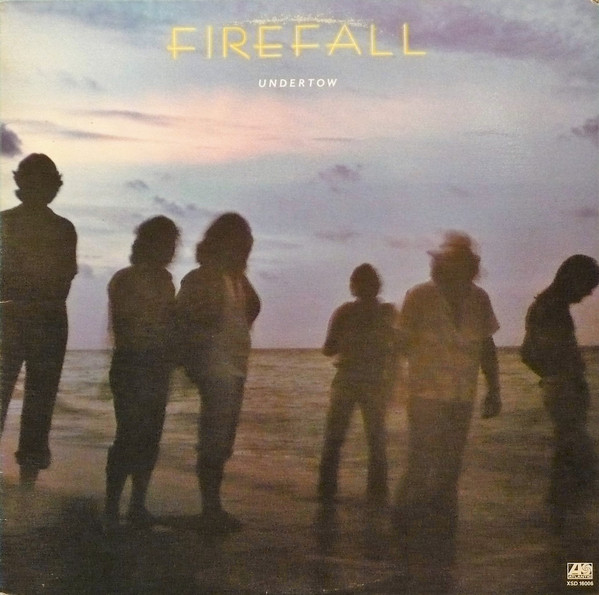
Clouds Across The Sun.
When work began on Clouds Across The Sun, it soon became apparent that things were changing within Firefall. This time around, songwriter-in-chief Rick Roberts only wrote three songs Clouds Across The Sun, I Don’t Want To Hear It and Don’t It Feel Empty. Jock Bartley penned Be In Love Tonight and Quite Like You while Larry Burnett wrote No Class. David Muse joined with George Hawkins who made his Firefall songwriting debut on Dreamers. These songs were joined by covers of Jimmy Webb’s Old Wing Mouth, Robin Miller’s Love Ain’t What It Seems and John Lewis Parker and Tom Snow’s Staying With It, and became Clouds Across The Sun.
This time around, the new lineup of Firefall didn’t head to Criteria Recording Studios in Miami, and instead, sessions took place at four different studios. Over the next few weeks and months, the rhythm section of drummer Tris Imboden, bassist George Hawkins and Larry Burnett on electric guitar. Meanwhile, Jock Bartley played guitars and added lead vocals, while Rick Roberts added acoustic and electric guitar plus backing vocals. Multi-instrumentalist David Muse played flute, saxophone, synths, keyboards and vocoder at Northstar Studios, in Boulder, Lee Hazen’s Studio By The Pond, in Hendersonville, Tennessee, GroundStar Studios, Nashville and at Mountain Ears Studio, Boulder. Gradually, Clouds Across The Sun which was produced by Kyle Lehring took shape and was released in December 1980.
Critics on hearing Clouds Across The Sun noticed that Jock Bartley had emerging more as singer and vocalist as Firefall moved in the direction of a harder, new wave sound. This was very different to Firefall’s sound on their first three albums. However, like previous albums, Clouds Across The Sun still incorporated elements of pop rock and country rock.
Clouds Across The Sun opens with the rocky Be In Love Tonight, where blistering guitars provide a counterpoint to the harmonies as Firefall move in a new direction. Staying With It is an anthemic and melodic rocker which gives way the melancholy ballad Old wing Mouth. After that, Firefall revisit the rockier sound on No Class, Clouds Across The Sun which is one of the album’s highlights and then Quite Like You, However, things change on the ballad Love Ain’t What It before Dreamers features an urgent anthemic sound complete with harmonies and sultry saxophone. Closing Clouds Across The Sun is the power ballad How It Seems, which ends the album on a high.
When Clouds Across The Sun was released in December 1980, history repeated itself when the album failed to chart. This was yet another disappointment for Firefall, who desperately needed the album to chart as their contract with Atlantic Records was almost at end.
Things got for worse for Firefall when bassist George Hawkins resigned from Firefall and joined Mick Fleetwood’s new side project Zoo who were recording in Africa. This left Firefall in the lurch.
As 1991, dawned, Staying With It was released as a single and reached thirty-seven in the US Billboard 100 and forty-six in the Adult Contemporary charts. This resulted in Firefall being invited onto American Bandstand.
The only problem was the band didn’t have a bassist. Fortunately, former bassist Mark Andes agreed to return to help his old band when they played on American Bandstand in February 1981.
On April the ‘19th’ Firefall were one of several bands on the bill at Miami Baseball Stadium, where they were due to play in front of a huge audience. However, this time it was Larry Burnett who left Firefall in the lurch when he disappeared, and was eventually found in his hometown of Washington DC. Surely, things couldn’t get any better for Firefall?
Later in 1981, Atlantic Records dropped Firefall from its roster after six years and five albums. In late 1981, Atlantic Records released the ubiquitous Greatest Hits album which brought Firefall’s time at the label to an end. With no recording contract Firefall was at a crossroads.

Break Of Dawn.
In the spring of 1982, Jock Bartlett who was still unhappy with how things had ended for Firefall, decided to put together a new lineup of the band. At the suggestion of producer Ron Howard, Jock Bartlett got in contact with two Miami based musicians including guitarist, keyboardist and vocalist Johnne Sambataro. Having secured his services, Jock Bartlett brought onboard singer, keyboardist and guitarist Chuck Kirkpatrick. The three men became the latest lineup of Firefall.
With ten new songs written, the new lineup of Firefall headed to Criteria Recording Studios in Miami, where guitarist and lead vocalist Jock Bartlett, Johnne Sambataro and Chuck Kirkpatrick were joined by producers Howard and Ron Albert. Helping the trio new lineup record Break Of Dawn were drummer Joe Galdo, bassists Arnold Paseiro, Richie Goldman and Kim Stone. They were joined by percussionist Joe Lala and Alain Salvatia who played synth, synthesised strings, piano and flutes. The other musicians made their way to Criteria Recording Studios included some familiar faces.
This included Stephen Stills who played guitar, piano and added backing vocals. He was joined by alto saxophonist David Sanborn and two former members of Firefall. David Muse played flute, harmonica, synths and vocoder, while Rick Roberts added backing vocals. Alas, he was only a guest artist on the group he had cofounded all these years ago. It must have been a sad day for Rick Roberts who once lead Firefall during their glory days.
That must have seemed like a long time ago, but in reality was just four years since Firefall had released their million selling third album Elan. Four years and two albums later, the new lineup of Firefall was looking for a record company to release Break Of Dawn.
Eventually, Firefall found a label willing to take a chance on Break Of Dawn…their former label Atlantic Records. They scheduled the release Break Of Dawn for September 1982.
Prior to the release of Break Of Dawn, it received mixed reviews from critics. Break Of Dawn with its synth, synths strings and Roland drums had an eighties sound as Firefall continued to combine AOR, country rock and pop rock.
That was the case on album opener Break Of Dawn and Body On Soul where Firefall combine eighties technology with tight harmonies. This is the case on Falling In Love where a needy vocal is delivered against an urgent arrangement. The ballad Always is without doubt one of Break Of Dawn’s highlights. In The Dead Of The Night features a West Coast sound and a strong Eagles influence. Again, there’s an urgency to the melodic It’s Too Late which gives way to Take Me Back which features a heartfelt and hopeful vocal. Fall For You has a rockier sound before Firefall drop the tempo on Suddenly. Don’t Tell Me Why is almost anthemic song that closed Break Of Dawn and Jock Bartlett hoped would bring about a change in fortune for Firefall.
Sadly, that wasn’t to be and Break Of Dawn failed to trouble the charts. When the single Always reached fifty-nine in the US Billboard 100 and twenty-four in the US Adult Contemporary charts. This was a far cry from the days when Firefall were being compared to The Eagles and their third album Elan sold a million copies.
That must have seemed like a lifetime ago for Jock Bartlett who by the time Break Of Dawn was released in 1982, owned the name to Firefall. Break Of Dawn was just the latest chapter in the Firefall story which began seven years ago in 1982 when two friends started making music together.
Seven years later, and the various lineups of Firefall had released six albums, which included Undertow, Clouds Across The Sun and Break Of Dawn which were recently digitally remastered and reissued by BGO Records as a two CD set. While these three albums failed to replicate the commercial success of Firefall, Luna Sea and Elan, they feature some of the most underrated music of Firefall’s career.
Especially Undertow and Clouds Across The Sun which should’ve followed in the footsteps of Firefall’s first three albums. Sadly, that wasn’t to be, and commercial success eluded Undertow and Clouds Across The Sun.
Even when Firefall reinvented their sound on Break Of Dawn, it failed to find the audience that it was aimed at, and the latest lineup of Firefall were left scratching their heads. This was disappointment for Firefall, whose first three albums sold around two million copies.
After the release of Break Of Dawn in 1982, Firefall’s roller coaster career continued, and continues to this day. Sadly, they’ve never again reached the heights of Firefall, Luna Sea and Elan which feature a group at the peak of their powers. They hoped to reach these heights on Undertow, Clouds Across The Sun and Break Of Dawn where the talented and versatile Firefall, continue their search for commercial success with their unique and inimitable brand of genre-melting music.
Firefall Undertow, Clouds Across The Sun and Break Of Dawn.
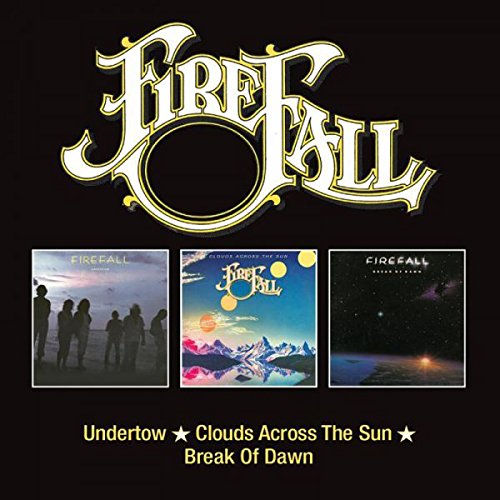
MILLIE JACKSON-CAUGHT UP.
Millie Jackson-Caught Up.
Label: Southbound Records.
It didn’t look like life was going to be easy for Millie Jackson who was born in the city of Thomson, in Georgia, on July the ’15th’ 1944. Her father was a sharecropper and worked long hours for little reward. Life was tough for the Jackson family, and got tougher when Millie Jackson’s mother became ill and passed away while her daughter was still a child. The family was devastated and Millie Jackson and her father decided to move to Newark, New Jersey, where they lived with an aunt. This was a new chapter for the Jackson family.
By the time Millie Jackson was in her mid teens, she had moved to Brooklyn, and was working as a model for Jive and Sepia magazine. Millie Jackson’s luck was starting to change.
One night in 1964, a friend dared Millie Jackson to enter the talent contest at Small Paradise nightclub in Harlem. Millie Jackson who was just sixteen decided to enter the talent contest which she won. Little did Millie Jackson know that this was the start of long career as a singer.
Five years later, in April 1969, Millie Jackson released her debut single A Little Bit Of Something on MGM Records. After the single failed to trouble the charts, Millie Jackson signed to Spring Records in 1970 and began a long association with the label.
At Spring Records, Millie Jackson was paired with the label’s in-house producer, Raeford Gerald who produced her 1971 single A Child of God (It’s Hard to Believe). On its release, it reached twenty-two in the US R&B charts and became Millie Jackson’s first single to chart.
The following year, 1972, Millie Jackson released Ask Me What You Want which reached twenty-seven in the US Billboard 100. Soon, two became three, when My Man, A Sweet Man reached forty-two in the US Billboard 100 and seven in the US R&B charts. Both these songs featured on Millie Jackson’s eponymous debut album.
When Millie Jackson was released later in 1972, it featured a collection of songs which seemed to have been influenced by the Motown sound. However, this proved popular and Millie Jackson reached 166 in the US Billboard 200. Millie Jackson’s career was underway.
In 1973, Millie Jackson returned with her sophomore album It Hurts So Good which this time, was produced by Raeford Gerald and Brad Shapiro. The pair was responsible for an album where Millie Jackson’s sound started to evolve, and move away from her Motown influenced debut album. However, It Hurts So Good stalled at 175 in the US Billboard 200, but reached thirteen in the US R&B charts. This was an improvement on her debut album Millie Jackson.
Just when Millie Jackson’s career seemed to be going places, her third album Got To Try It One Time which was released in early 1973 failed to even trouble the lower reaches of the charts. For Millie Jackson this was a disaster for the twenty-nine year old, who began to wonder when she would release a successful album? Her first two albums had stalled at the lower reaches of the US Billboard 200, and now Got To Try It One Time had failed commercially. However, Millie Jackson’s luck was about to change.
For her fourth album, Caught Up, which was recently reissued on vinyl by Southbound Records, an imprint of Ace Records, Millie Jackson decided to record one of the first soul concept albums. Caught Up documents the story of a woman having an affair with a married man. On the first side Millie Jackson sings from the mistress’ point of view and on the second side the story is told from the wife’s point of view. Essentially, Caught Up was the musical equivalent of a mini soap opera, where Millie Jackson plays both roles.
For Millie Jackson’s concept album Caught Up, nine tracks were chosen including Homer Banks, Carl Hampton and Raymond Jackson classic (If Loving You Is Wrong) I Don’t Want to Be Right which opened the album and was added later as a reprise. Millie Jackson penned The Rap and wrote All I Want Is A Fighting Chance and t’s All Over but the Shouting. These tracks were joined by Bobby Womack’s I’m Through Trying to Prove My Love to You, Bobby Goldsboro’s Summer (The First Time) and Phillip Mitchell’s So Easy Going, So Hard Coming Back. He also teamed up with Billy Clements to write I’m So Tired Of Hiding. These tracks were recorded by some of the top musicians of the day, the Muscle Shoals Swampers.
It was a masterstroke bringing the Muscle Shoals Swampers onboard for the recording of Caught Up which began in 1973. They had played on numerous hit singles for the great and good of music and brought with them a wealth of experience to Muscle Shoals Sound Studio and the Criteria Studios in Miami.
Millie Jackson was hoping that the rhythm section of drummer Roger Hawkins, bassist David Hood, guitarist Jimmy Johnson and keyboardist Barry Beckett would work their magic one more time. Adding percussion was Tom Roady and Brad Shapiro who co-produced Caught Up with Millie Jackson. Sweetening the arrangements with strings were Brad Shapiro and Mike Lewis. As the sessions began, Millie Jackson embraced the two roles singing the first side from the mistress’ point of view and the second side from the wife’s point of view. Over the next few weeks and months Millie Jackson lived both roles brilliantly, breathing life, meaning and emotion into the lyrics which she delivered and passionately. The Muscle Shoals Swampers watched on as this musical equivalent of a mini soap opera unfolded before their eyes. Little did they know when Caught Up was completed in 1974, that they had witnessed history being made.
When critics had their say on Caught Up, it received critical acclaim from the majority of critics who realised that this was an important and innovative soul album. There were very few soul concept albums, and Millie Jackson who was still a relative unknown as a pioneer. However, she wasn’t going to be an unknown for much longer.
Upon the release of Caught Up in late 1974, the album reached twenty-one in the US Billboard 200 and number four in the US R&B Charts. This resulted in Millie Jackson receiving her first ever gold disc after Caught Up sold over 500,000 copies. Caught Up also The album spawned the hit singles, If (Loving You Is Wrong) I Don’t Want To Be Right which reached forty-two in the US Billboard 100 and was nominated for two Grammy Awards. However, neither The Rap nor I’m Through Trying To Prove I Love You charted which was a disappointment for Millie Jackson. However, she was well on her way to securing superstar status after her performance on Caught Up.
Side One.
The first side of Caught Up which opens with If (Loving You Is Wrong) I Don’t Want To Be Right, finds Millie Jackson singing from the other women’s point of view. Before that, the understated arrangement builds and drums, sweeping strings and braying horns builds combine and reach a crescendo. This is the cue for Millie Jackson to deliver a vocal tinged with sadness. Later, her vocal grows in power and she unleashes a vocal that is a mixture of sadness, anger, frustration, disappointment and emotion. In doing so, she delivers one of the finest covers of this song and one worthy of two Grammy Award nominations.
The Rap featured a stylistic departure from Millie Jackson who raps the lyrics about the frustration and problems about having an affair with a married man as the arrangement meanders along. Later it builds, and continued to grows in power as does Millie Jackson’s vocal. By then, it’s a mixture of power, frustration and drama as she brings to life what it’s really like to be the “other woman.”
This gives way a brief Reprise of If (Loving You Is Wrong) I Don’t Want To Be Right, which quickly builds as guitars scream, horns blaze, a Hammond organ swirls and strings sweep and swirl. Meanwhile, Millie Jackson unleashes another emotive vocal where she lays bare her soul.
All I Want Is A Fighting Chance features a powerful driving arrangement as Millie Jackson confronts her love rival, telling her all she wants is a fighting chance to win and wow him. Behind her, the tempo quickens as braying horns sweeping strings and the rhythm section join they searing guitar. They combine elements of soul, funk and even rock, and somehow, manage to match Millie Jackson’s anger, frustration and passion.
Closing side one of Caught Up is I’m Tired of Hiding, where Millie Jackson talks to her lover, telling him that she’s tired of sneaking around, hiding and longing for him, when he’s not around. Her delivery is full with emotion, but this time, she’s tired, fed up and unsure of their future. Her voice lacks the power and strength, but makes up for it with her heartfelt delivery of the lyrics as the arrangement veers between subtle and understated to dramatic and tinged with sadness. By then, Millie Jackson seems resigned that the affair might be over, and risks everything with the ultimatum, it’s her or me. After that, she becomes subdued, emotional as she’s overcome sadness and regret on one of the most powerful and moving tracks on Caught Up.
Side Two.
On side two of Caught Up, Millie Jackson plays the wife and “wronged woman,” whose husband has been cheating on her. Bad news awaits Millie on It’s All Over But the Shouting, with her husband cheating on her, and her marriage all but over. This is played out against a driving arrangement where the rhythm section, rasping horns, percussion and chiming guitars provide a backdrop for Millie Jackson. He vocal os full of anger and frustration as she tells her cheating husband their marriage is over, and she won’t be staying with him for the sake of the kids. Not when: “he’s been practicing baby-making” with someone else. Her powerful, angry vocal is supplemented by soulful backing vocals and a fast, furious and hugely stirring, hook laden arrangement which opens the second part of this soul soap opera.
So Easy Going, So Hard Coming Back sees dialogue between Millie Jackson and her husband whose trying to win her back. This isn’t going to be easy as she’s determined to keep her pride in tact. Meanwhile, the arrangement is slow, atmospheric and understated as Millie Jackson’s vocal which is full of sadness and regret, as she realises that she’s deceived herself, having turned a blind eye at his unfaithfulness. Millie Jackson brings to life the drama, sadness and mistrust of the situation, as she delivers an emotive and impassioned vocal during this heart-wrenching song which she makes her own.
Having realised that their marriage is over, I’m Through Trying To Prove My Love To You finds Millie Jackson moving on, having met someone else, someone better, more reliable. During the song, she sings about how she had to move on, how she had to end the marriage, because she’s through with his cheating and deceiving, and unwilling to keep proving she loves him. Ultimately, she wants them to remember the good times, and move on with life as she delivers her vocal against a quite beautiful understated arrangement.
Caught Up closes with Summer The First Time which starts off understated before becoming dramatic and soulful. Setting the scene is the Muscle Shoals Swampers who provide a full and dramatic arrangement as Millie Jackson enters, and sings of a young woman of seventeen being seduced by an older man of thirty-one, and being transformed into a woman. Meanwhile, backing vocalists add a contrast to Millie Jackson’s voice as she recreates the drama, passion and emotion of If (Loving You Is Wrong) I Don’t Want To Be Right, and transforming the song into something very different and full of drama, emotion and soul. It’s the perfect way to end Caught Up, Millie Jackson’s concept album and soap opera.
Caught Up is a captivating mini soul soap opera that sees Millie Jackson transformed from the “other woman” on side one, to wronged woman of side two. The album traces the two relationships and the various stages they go through. From the opening bars of If (Loving You Is Wrong) I Don’t Want To Be Right, to the final notes of Summer The First Time, she recreates a range of emotions, ranging from the defiance, frustration and passion of side one, to the anger, betrayal and forgiveness of side two. Regardless of the emotion, Millie Jackson recreates it brilliantly, making each song her own, transforming the lyrics and bringing the song to life. In doing so, Millie Jackson the slickest of soul concept albums, Caught Up, where one song segues seamlessly into another, as the next chapter in this drama about to play out in front of you.
Millie Jackson along with co-producer Brad Shapiro were responsible for an album that record buyers in 1974 were unable to tear themselves away from, just in case they missed the next twist in this tale of love, love lost and betrayal. Over 500, 000 people bought a copy of and tuned into Millie Jackson’s mini soul soap opera Caught Up which has just been released on vinyl by Southbound Record, an imprint of Ace Records. This is a welcome reissue of Caught Up, which one of the greatest soul concept albums ever released, and the album that launched the career of Millie Jackson when it was relaxed in 1974.
Millie Jackson-Caught Up.


WHEN THE DAY IS DONE: THE ORCHESTRATIONS OF ROBERT KIRKBY
When The Day Is Done: The Orchestrations Of Robert Kirby.
Label: Ace Records.
Compilation Of The Week.
During the golden age of vinyl, buying a new album was often part of a wider musical education and could lead the record buyer on a long and fascinating musical journey. That was the case for the small group of people who bought Nick Drake’s debut album Five Leaves Left on the ‘3rd’ of July 1969 and the followup Bryter Later on the ‘3rd’ of March 1971. Bryter Later opened with the orchestrated Introduction where swathes of beautiful, haunting strings accompanied Nick Drake’s plucked guitar. Suddenly, record buyers were reaching out and looking for Bryter Later’s album cover to see who orchestrated Introduction? On discovering the name Robert Kirby, many record buyers went in search of other albums featuring his orchestral arrangements.
By the time Bryter Later was released, Robert Kirby had only worked on around seventeen albums, which featured his trademark string arrangements. This included albums by Vashti Bunyan, Gillian McPherson, Ralph McTell, Audience, Andy Roberts, John Kongos, Keith Christmas and Spirogyra. These artists feature on When The Day Is Done: The Orchestrations Of Robert Kirby, which was recently released by Ace Records. Later, Robert Kirby went on to work with John Cale, Ian Matthews, Sandy Denny and Richard and Linda Thompson who also When The Day Is Done: The Orchestrations Of Robert Kirby, which is a lovingly curated homage to one of the oft-overlooked arranger.
Robert Kirby was born on the ’16th’ of April 1948 in Bishop’s Stortford, in Hertfordshire into a lower middle class family. His father was a factory foreman, but he had high hopes for his son when the young Robert Kirby won a scholarship to become a day pupil at Gresham College.
By then, Robert Kirby had discovered rock ’n’ roll and was listening to Elvis Presley, Fats Domino and even Connie Francis. However, Robert Kirby’s love of music also included singing in the choirs in the local church and at Gresham College where he won a choral scholarship to study at Gonville and Caius College, Cambridge.
On his arrival at Gonville and Caius College in 1966, Robert Kirby realised that he was about to study at one of the top Oxbridge colleges. Gonville and Caius College had a reputation for producing many leading academics and it had already produced five Nobel Prize winners. However, Robert Kirby hoped that his time at Gonville and Caius College would lead to a teaching career.
That wasn’t how it turned out. During his time at Gonville and Caius College met Nick Drake, when the pair auditioned for the Footlights. Neither was successful, but having met Nick Drake, Robert Kirby he was an aspiring songwriter. When Robert Kirby heard Nick Drake’s lyrics, he fell in love them. Soon, though, Robert Kirby had fallen in love for the second time.
This came after Robert Kirby discovered The Beatles’ song She’s Leaving Home. This resulted in Robert Kirby realising that he would rather eventually work as an arranger than a teacher. However, Robert Kirby hadn’t envisaged his career as an arranger beginning until he left Gonville and Caius College.
Not long after that, Nick Drake started playing live and needed string arrangements for his shows. The man he turned to, was Robert Kirby, and this was the start of a successful musical partnership.
In 1969, Nick Drake signed to Joe Boyd’s Witchseason Productions, who would record his debut album Five Leaves Left. It was an album that required string arrangements, and Joe Boyd decided to that Richard Hewson take charge of the arrangements. Nick Drake rejected Richard Hewson’s arrangements and suggested using his old friend from Cambridge Robert Kirby.
When Robert Kirby was asked to take charge of the arrangements for Five Leaves Left before recording began at Sound Techniques, the well known studio in Chelsea, London. Robert Kirby began work on the arrangements, and Joe Boyd was so impressed with his work that he asked him to work on another album being produced by Witchseason Productions.
This was Vashti Bunyan’s Just Another Diamond Day which was recorded at Sound Techniques and released in 1970. When people heard Robert Kirby’s work on Nick Drake’s Five Leaves Left and Vashti Bunyan’s Just Another Diamond Day the offers of work started to pour in. His service as an arranger were much in demand.
During one of the Joe Boyd sessions at Sound Techniques, Robert Kirby met producer and manager Sandy Robertson who owned September Productions. He was also looking for an arranger, and Robert Kirby became Sandy Robertson’s arranger of choice.
Despite working for Sandy Robertson, Robert Kirby still worked for Joe Boyd, and when the time came for Nick Drake to record his sophomore album Bryter Later in 1970. It was released on ‘3rd’ of March 1971 and was last Nick Drake album that Robert Kirby worked on. Bryter Later also features the song that opens When The Day Is Done: The Orchestrations Of Robert Kirby.
This is the orchestrated Introduction which opens Bryter Later which was released by Island Records on the ‘3rd’ of March 1971. On Introduction, Nick Drake’s plucked guitar opens the track and soon, swathes of beautiful, haunting strings accompanied Nick Drake’s plucked guitars. It’s one of the finest songs that Nick Drake would record during his tragically short career.
In 1971, singer-songwriter Keith Christmas released his third album Pigmy on B&C Records. It features the beautiful folk rock ballad Forest and The Shore which was written by Keith Christmas and produced by Sandy Robertson. Robert Kirby’s strings add the finishing touches with a carefully crafted dark mellotron choral arrangement. It transforms the track and shows how far Robert Kirby had come as an arranger by 1971.
By 1975, Robert Kirby had worked on John Cale’s album Helen Of Troy, which was released on Island Records. It was a controversial album, and one that John Cale didn’t want to release as he believed the album featured demos. However, when he returned from an Italian tour in November 1975, he discovered that Helen Of Troy has been released against his wishes. One of the highlights of the album was I Keep A Close Watch a dark, brooding ballad which featured a stunning string arrangement by Robert Kirby. They dance above John Cale’s vocal and add a contrast and help bring out the beauty in the song.
Rainbow River was a song from Vashti Bunyan’s debut album Just Another, which was released by Phillips in 1970. By then, Vashti Bunyan had been around for a few years, but had yet to make a commercial breakthrough. Sadly, Just Another failed commercially and Vashti Bunyan turned her back on music for over thirty years. The understated and ethereal Rainbow River which features beautiful arrangement by Robert Kirby and is a reminder of what music lost during the years Vashti Bunyan was away from music.
Andy Roberts was a British folk rock artist who released his third album Nina And The Dream Tree on the B & C Records sub-label Pegasus in 1971. One of the highlights of Nina And The Dream Tree was I’ve Seen The Movie which featured an impassioned, needy vocal from Andy Roberts as he delivered lyrics that were sometimes lysergic and always rich in imagery. However, the song wouldn’t have been as successful without Robert Kirby’s string drenched arrangement that sometimes added to the emotion and drama.
By 1977, Robert Kirby was a successful arranger who had worked on many different projects, and with many folk rock artists. This included on Spriguns 1977 album Time Will Pass which was released on Decca and featured White Witch. This Mandy Morton composition benefits from a string arrangement as Spriguns successful fuse elements of a folk rock, psychedelia and progressive rock on this enchanting ballad.
Belfast born Gillian McPherson had served her musical apprenticeship on the club scene before signing to RCA and releasing her debut album Poets And Painters And Performers Of Blues in 1971. It was produced by Danny Thompson who brought Robert Kirby onboard to add strings to a couple of tracks. This included the sweeping strings that feature on the ballad It’s My Own Way where Gillian McPherson delivers a tender, ethereal vocal. Sadly for Gillian McPherson and music lovers Poets And Painters And Performers Of Blues was the only album this truly talented chanteuse.
Apart from being a member of The Strawbs, Fairport Convention and Fotheringay, Sandy Denny enjoyed a successful solo career. The final album released before her death in 1978 was Rendezvous, which was released by Island Records in 1977. It featured the heart-wrenching ballad Silver Threads And Golden Needles which features a silver arrangement by Robert Kirby.
Spirogyra was formed in Bolton, Lancashire in 1967 by Martin Cockerham and Mark Francis and in 1971 they released their debut album St. Radigunds on B&C Records and featured vocalist Barbara Gaskin. St. Radigunds was arranged and produced by Robert Kirby, and featured the Martin Cockerham composition Love Is A Funny Thing. Barbara Gaskin delivers a tender, ethereal vocal that hints at vulnerability. Coupled with Robert Kirby’s arrangement and crystalline production this was a winning formula, and one of the highlights of St. Radigunds which today is a cult classic.
In 1975, Australian singer-songwriter Gary Shearston released his seventh album The Greatest Stone On Earth And Other Two-Bob Wonders on the Charisma label. It was arranged and produced by Gary Shearston and Robert Kirby, and featured Friend To Me which is one of the album’s highlights. A cascading piano plays its part in the arrangement to this Gary Shearston composition, while his vocal had obviously been influenced by American folk and French chanson. Although unlikely bedfellows they work well on Friend To Me which is a reminder of Gary Shearston who later, turned his back on music to become an Anglican minister.
After their ill-judged decision to turn their back on music to establish a Sufi community in Suffolk, Richard and Linda Thompson hit the comeback trail in with the release of First Light on Chrysalis in 1978. The Thompson’s brought Robert Kirby onboard to add strings to First Light, which was produced by Jon Wood and Richard Thompson. He also wrote the title-track First Light, where Robert Kirby’s strings augment the harmonies that accompany Linda Thompson’s vocal on this spiritual sounding ballad.
When art rockers Audience recorded their third album The House On The Hill for Charisma, Gus Dudgeon produced the album and Robert Kirby arranged and conducted the strings. This included the Howard Werth composition Ravioléo. It showcased Robert Kirby’s string arrangement while a Nick Drake inspired guitar plays and later, a scatted vocal is added. The result was an intriguing and enchanting track from The House On The Hill which was released on Charisma in 1971.
The progressive folk band Illusion who were formed by the four remaining members of Renaissance, and added guitarist John Knightsbridge and drummer Eddie McNeil to their lineup. Illusion released their debut Out Of The Mist for island Records in 1977. A year later, Illusion released their eponymous debut album for island Records in 1978. By then, progressive music was no longer flavour of month amongst the critics. Instead, the new breed of cynical critics slated anything progressive and flew the flag for New Wave music. In doing so, the critics missed out on a hugely underrated album which featured Madonna Blue which like the rest of Illusion was produced by Paul Samwell-Smith and featured a string arrangement by Robert Kirby. They provide the finishing touch to this progressive folk pop opus penned by Jim McCarty.
Ralph McTell penned the folk rock ballad Pick Up A Gun closes When The Day Is Done: The Orchestrations Of Robert Kirby. It’s one of his own compositions and featured on his 1971 album You Well-Meaning Brought Me Here. It was produced by Gus Dudgeon with Robert Kirby’s taking charge of a brass arrangement while his strings sweetened a poignant song full of social comment.
When The Day Is Done: The Orchestrations Of Robert Kirby is the perfect introduction to one of the greatest British arrangers of his generation whose career spanned five decades. Robert Kirby sometimes produced artists and groups, and there are several of his productions on When The Day Is Done: The Orchestrations Of Robert Kirby which was recently released by Ace Records. Robert Kirby was much more than an arranger, and was a talented producer who was The Strawbs keyboardist between 1975 and 1978. During that period there was still plenty of work for Robert Kirby. However, after 1978 the work dried up for Robert Kirby
Over the next two decades, Robert Kirby was no longer as busy and only arranged four albums during the eighties and three during the nineties. Most of Robert Kirby’s time was spent working for the market research company RSL. For a man of Robert Kirby’s this must have been a disappointment, considering his musical CV. Despite that, Robert Kirby continued to play his beloved piano and in the evenings listened to classical music. This was Robert Kirby’s routine until the late nineties.
As the new millennia dawned, a new generation of artists had discovered Robert Kirby’s arrangements. May had heard his arrangements on Nick Drake’s debut album Five Leaves Left and the followup Bryter Later. Artists like Paul Weller and Teddy Thompson and old friends like The Strawbs and Vashti Bunyan brought arranger Robert Kirby onboard and he was back doing what he loved. Sadly, after a short illness which required emergency heart surgery Robert Kirby passed away in a West London hospital on the ‘3rd’ of October 2009.
That day, British music lost one of the greatest arrangers of his generation, Robert Kirby. He left behind a rich musical legacy, including the twenty tracks he arranged and produced during the seventies which feature on When The Day Is Done: The Orchestrations Of Robert Kirby. The lovingly curated When The Day Is Done: The Orchestrations Of Robert Kirby is a near flawless compilation of tracks and essential listening for anyone who appreciates and loves music from this golden age of British music.
When The Day Is Done: The Orchestrations Of Robert Kirby.


Z.Z. HILL-THAT’S IT! THE COMPLETE KENT RECORDINGS 1964-1968.
Z.Z, Hill-That’s It! The Complete Kent Recordings 1964-1968.
Label: Kent Soul.
Sadly, the Z.Z. Hill story is a familiar one, with Texan born soul and blues man never really enjoying the commercial success his considerable talent deserved. Z.Z. Hill moved to Los Angeles in 1963, and in 1964 had a minor hit with You Were Wrong, which reached 100 in the US Billboard 100. However, this was enough for the Bihari brothers to sign Z.Z. Hill to Kent-Modern Records where he spent the next four years. This period is documented on That’s It! The Complete Kent Recordings 1964-1968 which was recently released by Kent Soul, an imprint of Ace Records. That’s It! The Complete Kent Recordings 1964-1968 is two CD set that is a reminder of what was a golden period for Z.Z. Hill, who was regarded as one of soul’s rising stars.
Arzell J. Hill was born in Naples, East Texas, on September the ’30th’ 1935, and began his singing career in the late fifties, when he joined the gospel group the Spiritual Five. They who toured Texas, which was akin to a musical apprenticeship for the young Arzell J. Hill . However, like many gospel singers before him, Arzell J. Hill would eventually crossover,
By then, Arzell J. Hill had discovered the music of Sam Cooke, BB King, and Bobby “Blue” Bland, who influenced him when he began singing in club in and around Dallas. Around this time, Arzell J Hill became the vocalist in bands led by Bo Thomas and Frank Shelton. It was around this time that Arzell J. Hill became Z.Z. Hill, a homage to his musical hero BB King.
In the late fifties, Z.Z. Hill’s elder brother Matt Hill who was a producer decided to move to California. Once he was settled, he invited Z.Z. Hill to join him in the California sunshine.
As the fifties gave way to the sixties, Matt Hill booked some studio time for Z.Z. Hill who recorded six songs. When Matt Hill sold the six songs to Chess Records, it looked as i Z.Z. Hill was about to make a breakthrough. However, Chess Records decided not to release the songs, which frustrated the Hill brothers.
Not long after Chess Records decided not to release Z.Z. Hill’s songs, Matt Hill founded two record labels Mesa and MH Records in late 1963. The new labels’ first signing was one Z.Z. Hill who released his debut single Five Will Get You Ten on Mesa. The single sold well locally, and Matt Hill released You Were Wrong as Z.Z. Hill’s sophomore single.This was a song that Z.Z. Hill had recorded in 1960 as You Was Wrong. However, when Z.Z. Hill released You Were Wrong in 1964, the sold well enough to reach number 100 in the US Billboard 100 where it spent just one week. However, for Z.Z. Hill this was the break he had been looking for.
The Bihari brothers who owned Kent-Modern Records had been following Z.Z. Hill’s career, and after the success of You Were Wrong, offered him a recording contract. Z.Z. Hill accepted and signed for Kent Records which would be his home for the next four years.
Having signed for Kent-Modern Records, Z.Z. Hill entered the studio to record his debut for his new label on ’15th’ September 1964. That day, Z.Z. Hill recorded two of his own compositions the bluesy, soulful single You Don’t Love Me and the rueful ballad If I Could Do It All Over which featured on the B-Side. However, when You Don’t Love Me was released on Kent Records in 1964, it failed to trouble the charts. This was a huge disappointment for Z.Z. Hill considering the quality of You Don’t Love Me.
It wasn’t until November 1964 that Z.Z. Hill returned to the studio, and cut four new sides. This included the two Z.Z. Hill compositions, including the soul-baring ballad Someone To Love Me which was released on Kent Records in 1965. Tucked away on the B-Side was the racy twelve-bar Have Mercy where Z.Z. Hill delivers a needy, pleading vocal. History repeated itself when Someone To Love Me failed commercially on its release.
Later in 1965, Z.Z. Hill returned with his third single for Kent Records, which featured another two of his compositions. This included Hey Little Girl which featured Oh Darlin’ on the B-Side. Both songs featured horns which added to the tougher sound that Z.Z. Hill was showcasing. However, it failed to find an audience and Z.Z. Hill’s third single for Kent Records sunk without trace.
By then, Kent Records had exhausted their supply of material by Z.Z. Hill, so once again sent him into the Western studio with arranger Maxwell Davis. That day, they cut four songs penned by Z.Z. Hill, including the uptempo dancer What More which featured the blues-tinged stomper That’s It on the B-Side. It’s a hidden gem and was too good to be consigned to a flip side. Maybe it would’ve fared better than What More which didn’t even trouble the lower reaches of the charts upon its release.
For his final release of 1965, two Z.Z. Hill songs were chosen for his fifth single for Kent Records. The beautiful string drenched ballad Happiness Is All I Need where horns and punctuate the arrangement was chosen as the single. On the B-Side was Everybody Has To Cry another quality song which features an impassioned and emotive vocal could’ve been released as a single. However, Happiness Is All I Need got the nod, and was released as a single. Z.Z. Hill flew to Dallas to appear on the television show The !!! Beat, but even this publicity didn’t help sales Happiness Is All I Need. Just like previous singles, it failed to find and audience and Z.Z. Hill was zero from five.
As 1966 dawned, Z.Z. Hill had released five singles for Kent Records, and was no nearer making a breakthrough than the day he signed to the label. For his next single, Jules Bihari and Roscoe Gordon’s No More Doggin’ was chosen. It features a Motown inspired dance track whose ‘contemporary’ sound it was hoped would appeal to record buyers. Hidden away on the B-Side the Z.Z. Hill penned The Kind Of Love I Was which was a bluesier sounding track. Z.Z. Hill’s sixth single for Kent Records showcased the two sides of the Texan singer. Alas, ZZ Hill’s cover of No More Doggin’ was no more successful than his previous singles, and failed to chart.
Just a few weeks after No More Doggin’ failed to chart, Z.Z. Hill was back with his seventh single for Kent Records, I Found Love. It was penned by Z.Z. Hill and was one of his finest releases. He’s accompanied by backing vocals as he gives thanks for the love he’s found. On the B-Side was the shorter version of Aaron Collins’ uptempo Set Your Sights Higher. Backing vocals and horns accompany Z.Z. Hill on another of the hidden gems from his time at Kent Records. However, when I Found Love was released in 1966, it too failed commercially and things were getting serious for Z.Z. Hill.
By then, Z.Z. Hill had released seven singles for Kent Records and none of these singles had troubled the charts. However, the Bihari brothers thought that their new producer, Richard Parker who had penned and produced a number of successful singers. The Bihari brothers believed that he could turn round Z.Z. Hill’s career.
Richard Parker took Z.Z. Hill into the studio where they recorded the Fred Hughes and Freeman King ballad You Can’t Hide A Heartache was recorded. For the B-Side Aaron Collins’ twelve bar stomper Gimme Gimme was chosen. When You Can’t Hide A Heartache was released on Kent Records in 1966, Z.Z. Hill, his producer and the label owners the Bihari brothers hoped that it would provide the Texan soul man with a hit single. Alas, it wasn’t to be and the search for a Z.Z. Hill’s first hit single for Kent Records continued.
After eight singles which failed to chart, the Bihari brothers might have been forgiven for reigning in the spending on Z.Z. Hill. After all, he wasn’t making Kent Records any money. Quite the opposite, with eight singles failing to even trouble the lower reaches of the charts. Despite that, the Bihari brothers decided to release Z.Z. Hill’s debut album.
Rather than send Z.Z. Hill into the studio to record fresh material, six of his first seven singles became The Soul Stirring Z.Z. Hill. Only No More Doggin’ and The Kind Of Love I Want were omitted from The Soul Stirring Z.Z. Hill when it was released in 1966. Sadly, it was a familiar story with The Soul Stirring Z.Z. Hill failed to find an audience. Following the commercial failure of The Soul Stirring Z.Z. Hill, it was a year before the Texan soul man returned to the studio.
In January 1967, Z.Z. Hill headed to Custom Studios, in Culver City, where he met Mike Akopoff who was tasked with rescuing his career. By then, Z.Z. Hill desperately needed a hit single, and the song that was chosen was Allen Toussaint’s ballad Greatest Love. Z.Z. Hill sounds not unlike Ray Charles as he delivers a heartfelt, hopeful and needy vocal that is full of emotion. When it was released by Kent Records, Greatest Love started to sell well, and it looked like it was about to give ZZ Hill his first hit single in three years. However, distribution problems hampered the sales of Greatest Love and Z.Z. Hill’s search for a hit single continued.
Just two months later, on the ‘16th’ of March 1967, Z.Z. Hill was back in Custom Studios with Mike Akopoff, where he recorded two new tracks. The first was Jimmy Holiday, Jimmy Lewis and Cliff Chamber’s horn driven dancer Where She Att which would be his tenth single. On the B-Side was Z.Z. Hill’s Baby I’m Sorry where horns and harmonies play an important part in this irresistible dancer which could’ve been released as a single in April 1967. It stood a good chance of doing better than Where She Att which never came close to troubling the charts. Z.Z. Hill was zero for ten after three years at Kent-Modern Records.
When it came time for Z.Z. Hill to record his eleventh single, Jimmy Holiday, Jimmy Lewis and Cliff Chamber’s Everybody Needs Somebody was chosen. Singer-songwriter Jimmy Lewis even supplied a demo which Z.Z. Hill copied when he came to record his heart-wrenching cover of Everybody Needs Somebody. On the B-Side was Arthur Adams’ You Just Cheat And Lie which was a slick and hook-laden uptempo dancer. Later in 1967, Everybody Needs Somebody was released as a single, but this quality cut followed in the footsteps of its ten predecessors and failed to chart.
Despite his lack of success, the Bihari brothers hadn’t given up on Z.Z. Hill. They decided to book a week’s studio time in June 1967 where he recorded his sophomore album A Whole Of Soul. It was an album that featured cover versions of familiar songs, including many soul classics. This included David Porter and Isaac Hayes’ When Something Is Wrong With My Baby which joined Jimmy Hughes’ Steal Away, Toussaint McCall’s Nothing Takes The Place Of You, Deadric Malone’s You Gonna Make Me Cry, Wilson Pickett’s Midnight Hour, Bettye Swann’s Make Me Yours, Allen Toussaint’s Greatest Love and Sam Cooke’s You Send Me and Nothing Can Change The Love I Have For You. They were Eddie Floyd and Steve Cropper’s Knock On Wood; Andrew Wright and Calvin Lewis’ When A Man Loves A Woman and Art Harris and Fred Jay’s What Am I Living For? These songs became A Whole Of Soul which was produced by Mike Akopoff. Could the album transform Z.Z. Hill’s fortunes?
Sadly, it wasn’t to be and A Whole Of Soul which is a hugely underrated album by Z.Z. Hill slipped under the musical radar when it was released by Kent Records later in 1967. Z.Z. Hill’s career was now at a crossroads.
After the release of A Whole Of Soul, Kent Records released What Am I Living For as Z.Z. Hill’s twelfth single in December 1967. It found Z.Z. Hill laying bare his soul as backing vocalists accompany him every step of the way. Tucked away on the B-Side was a powerful and poignant cover of Nothing Can Change This Love (I Have For You). Despite the quality of both songs, What Am I Living For failed to trouble the charts.
Just a month later, in January 1968, Z.Z. Hill released the ballad Nothing Can Change The Love I Have For You which featured another ballad Steal Away on the B-Side. Both songs featured Z.Z. Hill at his most soulful and he breathed meaning and emotion into the lyrics. However, Nothing Can Change The Love I Have For You passed record buyers by and it was a case unlucky thirteen for Z.Z. Hill.
Nothing more was heard of Z.Z. Hill until he released a cover of Arthur Adams and Larry Perrault’s You Got What I Need on Kent Records in September 1968. It was produced by Freddy DeMann was an uptempo track where strings and backing vocalists accompanied Z.Z. Hill’s needy vocal as his search for a hit continued. Sadly, the slick and contemporary sounding You Got What I Need failed commercially, and it was nearly the end of the road for Z.Z. Hill.
Three months later in December 1968, Z.Z. Hill was back with a cover of Tim Hardin’s Don’t Make Promises (You Can’t Keep). This was Z.Z. Hill’s fifteenth single for Kent Records which was once again, produced by Freddy DeMann. He again uses strings and backing vocalists who accompany Z.Z. Hill on his catchy single that should’ve charted. Alas, Don’t Make Promises (You Can’t Keep was the one that got away for Z.Z. Hill. Sadly, it was also Z.Z. Hill’s swan-song for Kent Records.
After the release of Don’t Make Promises (You Can’t Keep, Z.Z. Hill left Kent Records after releasing fifteen singles, twelve B-Sides, two albums and ten bonus tracks on disc two. All this features on That’s It! The Complete Kent Recordings 1964-1968 which was recently released by Kent Soul, an imprint of Ace Records. That’s It! The Complete Kent Recordings 1964-1968 is the most comprehensive overview of Z.Z. Hill’s time at Kent Records.
Disc one features the fifteen singles Z.Z. Hill released on Kent Records and twelve singles. This includes the twelve tracks from his first seven singles which that became Z.Z. Hill’s debut album The Soul Stirring Z.Z. Hill. However, this is only half the story of Z.Z. Hill’s time at Kent Records.
Then on disc two there’s Z.Z. Hill’s sophomore album A Whole Of Soul and ten bonus tracks. This includes two tracks from 1984 the ballad Please Take Me Back and I’m Gonna Love You made their debut on the Kent compilation Final Appearance. Eight years later, the ballad You Won’t Hurt No More which featured on The Down Home Soul Of Z.Z. Hill which was released by Kent Records in 1992. In 2000, You’ve Got Me Chained To Your Love and My Girl Has Gone Away featured on Southern Soul Brothers a Kent Soul complication that featured Clay Hammond and Z.Z. Hill. The other tracks on disc two are alternate versions of I Need Someone (To Love Me) and You Don’t Love Me which were released 1971, while If I Could Do It All Over, You Won’t Hurt No More and Nothing Can Change The Love I Have For You were released in 1972. All these tracks have been sweetened by adding strings to the original recording. In doing so, they transform these tracks which are a reminder of what was a golden era for Z.Z. Hill.
Despite consistently recording soul music of the highest quality, neither Z.Z. Hill’s fifteen singles, nor the two albums he released for Kent Records were a commercial success. This was ironic as the music Z.Z. Hill recorded at Kent Records was some of the finest of his career. During the seventies, thirteen of Z.Z. Hill’s singles charted in the US R&B charts and two in the US Billboard 100.
This included Don’t Make Me Pay for His Mistakes which reached sixty-two in the US Billboard 100 and seventeen in the US R&B charts. However, when Kent Records decided to release I Need Someone (To Love Me), it reached eighty-six in the US Billboard 100 and thirty in the US R&B charts. After this, Z.Z. Hill’s singles charted in the US R&B charts, but most were minor hits, apart from Love Is So Good When You’re Stealing which reached fifteen in 1977. Sadly, Z.Z. Hill would only enjoy two more hit singles during his lifetime.
In 1982, Cheating in the Next Room reached nineteen in the US R&B charts, while Get A Little, Give A Little stalled at eighty-five in 1984. Sadly, on April the ’27th’ 1984 Z.Z. Hill passed away aged just forty-eight in Dallas, Texas. That day, soul and blues music lost a truly talented singer-songwriter who never enjoyed the commercial success and critical acclaim that his considerable talent deserved. That was despite Z.Z. Hill’s career spanning four decades. However, Z.Z. Hill released some of the best music of his career at Kent Records, during the golden period which is documented and celebrated on That’s It!The Complete Kent Recordings 1964-1968.
Z.Z. Hill-That’s It! The Complete Kent Recordings 1964-1968.

ELEANOR DUBINSKY SOFT SPOT OF MY HEART
Eleanor Dubinsky-Soft Spot Of My Heart.
Label: Self Released
Release Date: ‘30th’ of March 2018.
After years spent travelling and exploring different corners of the globe, jazz singer, songwriter and multi-instrumentalist Eleanor Dubinsky found herself living in New York where she had been part of the Big Apple’s contemporary dance scene for the past ten years. Dance and was something that Eleanor Dubinsky was passionate about, but music was her other love, and she spent much of her time writing songs.
Songwriting allowed Eleanor Dubinsky to put her linguistic skills to good use as the multilingual songwriter wrote rhythmic songs in English, French and Spanish that were designed to engage with the listener. This was something that Eleanor Dubinsky enjoyed doing and she hoped resonated with people. That was certainly the case for Eleanor Dubinsky when she heard Lisbon-based singer-songwriter Sara Tavares sing in 2012.
That day, Eleanor Dubinsky’s life was changed forever. Even today, she remembers the effect hearing Sara Tavares sing had: “It felt like listening to my own blood and bones…It makes you want to dance, and I love the melodies, the message. I’ve learned over time how intentional Sara is about her excellence. It’s not an accident, it’s not magic. She composes, rehearses and performs with a focus that I also admire and have learned from.”
Having heard Sara Tavares sing Eleanor Dubinsky wanted to know about this singer-songwriter who had had such an effect upon her. Soon, Eleanor Dubinsky discovered that Sara Tavares’ family originally came from Cape Verde, and that was how she gravitated towards Lisbon’s vibrant Cape Verdean and Angolan music scene. This was something that Eleanor Dubinsky wanted to know more about, especially the Cape Verdean music scene.
By using her connections within the artistic community, Eleanor Dubinsky was able to discover more about the Cape Verdean music scene. Soon, she was making the first of a number trips to Cape Verde, where after a while she got to know some of the musicians.
This eventually included some of Cape Verde’s tope musicians, and later, some of the musicians that Sara Tavares regularly works with. Before long, Eleanor Dubinsky was collaborating with Rolando Semedo, Miroca Paris and Ivo Costa would eventually feature on her album Soft Spot Of My Heart. That was still some way down the road.
After several years spent time collaborating, rehearsing, and recording in New York and Lisbon with Cape Verdean and American musicians who all feature on Soft Spot Of My Heart which Eleanor Dubinsky will release on the ‘30th’ of March 2018. Soft Spot Of My Heart is the latest chapter in a story that began in St. Louis.
In The Beginning.
Eleanor Dubinsky grew up in St. Louis, Missouri, where she started to study classical cello at the age of three. By the time she was in high school, Eleanor Dubinsky was the vocalist in her high school jazz band and heavily involved in musical theatre and contemporary dance. However, it wasn’t just the arts that interested Eleanor Dubinsky.
Apart from music, it soon became apparent when Eleanor Dubinsky was growing up that she was a talented linguist, who was fluent in French. She put her linguistic skills to good use during cultural exchanges and academic programs. However, like many people born and raised in St. Louis, Eleanor Dubinsky was also interested in civil rights and developed a sense of social justice. Just like music and language, this has been a constant during Eleanor Dubinsky life.
Travels
Having graduated high school, later, Eleanor Dubinsky travelled to the Czech Republic where she spent time studying and learning the Czech language. This was the just the first of several spells spent living abroad. Eleanor Dubinsky explains: “I’ve always been able to absorb languages easily and to feel at home in the warmth of ‘foreign’ environments”.
Having lived in the Czech Republic, Eleanor Dubinsky’s wanderlust continued as she spent time in Argentina and Mexico. After that, Eleanor Dubinsky made the journey to Cuba, where she learnt to speak Spanish, whilst studying dance and percussion. It was after that, that Eleanor Dubinsky made the decision to head home.
The Homecoming.
On her return home, Eleanor Dubinsky didn’t return to her home city of St. Louis, and instead headed to New York, where she became part of the Big Apple’s contemporary dance. This played an important part in Eleanor Dubinsky’s life for the next ten years, as did music.
During this period, Eleanor Dubinsky continued to hone her skills as a songwriter and was use her linguistic skills as she wrote rhythmic songs in English, French and Spanish which featured social comment and were designed to engage with listener. Some of these songs featured on Eleanor Dubinsky’s 2011 debut album Touch The Sky and her sophomore album Listen To The Music in 2012. However, it wasn’t just Eleanor Dubinsky’s songs that captivated the listener.
One day in 2012, Eleanor Dubinsky heard Lisbon-based singer-songwriter Sara Tavares sing, which changed her life forevermore in 2012. This was a life-changing moment, and Eleanor Dubinsky decided she needed to know more about Sara Tavares and Lisbon’s vibrant and eclectic music scene. Especially the Cape Verdean and Angolan music that was happening within Lisbon.
Wanderlust Returns.
Little did Eleanor Dubinsky know that this was the start of a five-year journey, where she spent time in Lisbon and Cape Verde researching and exploring the local music scenes. The rest of the time was spent touring and learning to speak Portuguese. It’s a time that Eleanor Dubinsky remembers well: “Living in Lisbon, you can’t help but hear semba, funana, coladeira, mourna, samba, bossa nova, It’s in the air, at least with the musicians I became close with.”
Eleanor Dubinsky used her many contacts within the artistic community to discover more about the Cape Verdean music scene and soon, she was making the first of a number trips to Lisbon and Cape Verde. Gradually, she got to know some of the local musicians. This eventually included some of Cape Verde’s top musicians, and later, some of the musicians that Sara Tavares regularly works with in Lisbon.
Before long, Eleanor Dubinsky was collaborating with Lisbon-based Rolando Semedo, Miroca Paris, and Ivo Costa who eventually featured on her album Soft Spot Of My Heart. This album was several years in the making, and was recorded in two continents.
Over the next few of years, Eleanor Dubinsky spent time collaborating, rehearsing, and recording in New York and Lisbon with Cape Verdean and American musicians. They would all play their part in Eleanor Dubinsky’s third album Soft Spot Of My Heart.
On Soft Spot Of My Heart, Eleanor Dubinsky addresses both the vulnerabilities and delicate moments that people face in relationships, and examines affection and attachment in her own way. She was a pupil of Tibetan Buddhist teacher Pema Chodron and has benefited from his: “awakened heart” approach. This allowed Eleanor Dubinsky to look at things from a different perspective.
Eleanor Dubinsky explains that: “The soft spot is about holding with deep compassion all the stuff we run away from. This helps us love others better. If this process feels painful, I have found I need to grow my brain to contain more, more of others’ perspectives and stories and needs. I try to carry this understanding into my songwriting. You have to continuously expand your understanding of what a human being can do, of what they can be.”
With her newfound philosophy and graceful, elegant melodies and the Lus-African sway that come courtesy of multitalented band that features musicians from New York, Lisbon and Cape Verde, Eleanor Dubinsky’s third album Soft Spot In My Heart features music that is cerebral, though-provoking, enchanting and has the capacity to captivate.
That is the with the enchanting piano lead album opener Turn It Around which showcases Eleanor Dubinsky’s impassioned, jazz-tinged vocal as gospel-tinged harmonies and horns play an important part in a song that sets the bar high for the rest of Soft Spot Of My Heart.
The title-track Soft Spot In My Heart features an understated arrangement and allows Eleanor Dubinsky’s vocal to take centre-stage. It’s akin to a confessional as she lays bare her soul on this beautiful ballad. Wind Won’t Knock It Down is another ballad which features an emotive vocal as the band provide the perfect backdrop and showcase their considerable skills. Initially, the arrangement to Wait For You arrangement is minimalist and allows Eleanor Dubinsky’s heartfelt and emotive vocal to take centre-stage. However, there’s also a sense of vulnerability and sadness as she sings: “my clock is ticking…I’ll wait for you, into the night” on this beautiful ballad.
Free Again is another piano led song, where Eleanor Dubinsky’s vocal is filled with frustration and sadness as she sings of a relationship that is teetering on the brink. They no longer talk and are ready to go their separate ways. Having realised this, here’s almost a sense of relief as she sings: “got to be Free Again, guess I have no choice to walk away…I wanna be free again.” This jazz-tinged song is an emotional roller coaster that is rich in imagery and like a short play set to music.
El Sabor de la Vida allows Eleanor Dubinsky to showcase her skills as a linguist as she delivers a vocals that is a mixture power, passion and emotion while percussion and washes of Hammond organ accompany her.
Melodic and memorable describes Morning Song which is a bright, joyous and uplifting. Eleanor Dubinsky sounds like Rumer did on her debut album, and the song even hints at Bacharach and David.
Very different is I Let Go, where the melancholy introduction sets the scene for a song where Eleanor Dubinsky’s vocal is a mixture of emotion and sadness but sometimes hopeful and needy. However, she realises that the only way “to grow” is to “let go.” Meanwhile, the carefully crafted contemporary arrangement provides the perfect backdrop for Eleanor Dubinsky’s latest soul-searching vocal.
Cuando Voy a Mi Trabajo is a multilingual track where Eleanor Dubinsky draws on her own experience and the people she’s met during her life. She remembers in the song working beside migrants in service jobs who were homesick having left loved ones behind in their own country. This is the sacrifice they felt they had to make, which would allow them return home and build a better life for their loved ones. It’s a poignant and thought-provoking song.
Closing Soft Spot Of My Heart is You Are Special You Are Beautiful which Eleanor Dubinsky wrote for those in America who have been left felling intimidated and marginalised since the election of the latest incumbent in the White House. This is a beautiful, and thought-provoking way to end the album.
For anyone yet to discover Eleanor Dubinsky’s music, then Soft Spot Of My Heart which she will self-release on the ‘30th’ of March 2018 is the perfect introduction to this truly talented jazz singer, songwriter and multi-instrumentalist. She’s spent a lifetime honing her skills and comes of age on Soft Spot Of My Heart.
Quite simply, Soft Spot Of My Heart is a cerebral, though-provoking and enchanting album that has the capacity to captivate. It is full of melodic and memorable music which Eleanor Dubinsky delivers against a series of carefully crafted and polished arrangements. They’ve been honed to suit each song, including the beautiful ballads, which is Eleanor Dubinsky’s speciality on Soft Spot Of My Heart. Elsewhere, the hooks haven’t been spared on the uptempo Morning Song which has a radio friendly songs. Other tracks like Cuando Voy a Mi Trabajo and the album closer You Are Special You Are Beautiful are poignant, powerful and thought-provoking.
Soft Spot Of My Heart is a genre-melting album from Eleanor Dubinsky who with the help of her talented band add a Lus-African sway. Meanwhile, Eleanor Dubinsky combines jazz and pop sensibilities with elements of Brazilian and Latin music. It’s a potent and heady brew as singer and storyteller extraordinaire Eleanor Dubinsky puts her sultry, soulful and jazz-tinged vocals to good use on her career-defining album Soft Spot Of My Heart.
Eleanor Dubinsky-Soft Spot Of My Heart.




ERIC ANDERSEN-BE TRUE TO YOU AND SWEET SURPRISE.
Eric Andersen-Be True To You and Sweet Surprise.
Label: BGO Records.
In 1975, thirty-two year old folk singer and songwriter Eric Andersen moved to Greenwich Village, New York, where it had all started for him in the early sixties. Back then, Eric Andersen was part of the folk scene, and as a twenty-one years in 1964, had auditioned for Vanguard Records at Gerdes Folk City, a well known music venue in the East Village. The audition was successful, and Eric Andersen was signed to Vanguard Records.
The following year, 1965, Eric Andersen released his debut album Today Is The Highway on Vanguard Records. It was well received by critics, and launched Eric Andersen’s nascent career.
1966 was one of the most important years of Eric Andersen’s career. He made his debut at the Newport Folk Festival, and released his sophomore album ‘Bout Changes ‘N’ Things. Songs like Violets Of Dawn, Thirsty Boots,I Shall Go Unbounded and Close The Door Lightly When You Go showcased a hugely talented songwriter who many critics believed had a big future ahead of him. Just like his debut album, ‘Bout Changes ‘N’ Things was released to plaudits and praise, and Eric Andersen was seen as one of the rising stars of the vibrant folk movement.
When Eric Andersen released ‘Bout Changes ‘N’ Things 2 in 1967, it had much in common with ‘Bout Changes ‘N’ Things. The same songs featured on the album, but they had been rerecorded and Eric Andersen had used different instruments. The songs were resequenced, and When ‘Bout Changes ‘N’ Things 2 was released, it showed another side to these familiar songs as Eric Andersen’s music evolved and moved towards folk rock.
The reinvention of Eric Andersen’s music continued on his fourth album More Hits From Tin Can Alley, which was released in 1968. It was the most eclectic album of Eric Andersen’s career.
When it came time for Eric Andersen to record his fifth album for Vanguard Records, A Country Dream, he was following in the footsteps of many folk singers who had also made the journey to Nashville. Joining Eric Andersen was a band that featured top session players. They played their part in Eric Andersen’s first album of country rock which featured a cover of Otis Redding’s Sittin’ On The Dock Of The Bay. It was given a makeover and was one of the talking points of A Country Dream when it was released in 1969. Despite being well received, A Country Dream was Eric Andersen’s swan-song for Vanguard Records. He was about to go up in the musical world.
After releasing five albums for Vanguard Records, Eric Andersen signed to Warner Bros. Records. Later in 1969, Eric Andersen released Avalanche where he flits between country-rock and his now familiar folk rock sound. Some of the songs are cerebral, while others feature a reflective, introspective Eric Andersen as he sings of roller coaster romances. However, on It’s Comin’ and It Won’t Be Long, Eric Andersen sounds like Bob Dylan right down to his phrasing. Other songs are understated and allow Eric Andersen’s emotive vocal to centre-stage as this new chapter to his career began.
This new chapter continued with the release of Eric Andersen in 1970. It was Eric Andersen’s second album for Warner Bros. Records, and saw him continue to mature as a singer and songwriter. He had written then entire album which saw Eric Andersen continue to combine country rock and folk rock and on occasions move towards a pop rock sound. Despite being one of his finest albums of recent years, Eric Andersen failed commercially. For Eric Andersen this was the end of his time at Warner Bros.
Later in 1970, Eric Andersen joined Janis Joplin, the Grateful Dead and country rockers The Speckled Hen on the Festival Express Tour. It wound its way across Canada and introduced Eric Andersen’s music to a new audience. However, it would be two years before Eric Andersen returned with a new album.
By 1972, Eric Andersen had signed to Columbia and began work on Blue River which was produced Norbert Putnam and features The Jordanaires and Joni Mitchell on backing vocals on the title-track. When Blue River was released later in 1972, it was to overwhelming critical acclaim. Record buyers were also won over by an album the featured elements of AOR, country rock, folk rock, pop and rock, and Blue River reached 169 in the Us Billboard 200. This meant that Blue River was Eric Andersen’s most successful album. It had taken seven years and eight albums, but somewhat belatedly, Eric Andersen had made a commercial breakthrough.
Buoyed by the success of Blue River, Eric Andersen returned to the studio and began work on the followup, which was going to be called Stages. Eric Andersen completed the album, but before it could be released, the master tapes disappeared. This was almost unheard of, and despite searching high and low for the master tapes, there was no sign of it. For Eric Andersen this was a devastating blow, as he had just made a commercial breakthrough.
The loss of the Stages’ master tapes affected Eric Andersen badly, and he decided to take a break from recording. Little did anyone realise that this break would last two long years.
It wasn’t until 1974 that Eric Andersen decided that he was ready to return to the recording studio. This was perfect timing as Clive Davis, who signed Eric Andersen to Columbia, had founded a new label Arista earlier in 1974 and was looking to add artists to the roster. One of the artists he wanted to sign was Eric Andersen, who signed to Arista in 1974, and began work on Be True To You. It’s the first two albums that Eric Andersen released for Arista, and these albums Be True To You and Sweet Surprise were recently remastered and reissued by BGO Records. The first of these albums Be True To You, features Eric Andersen as he hits the comeback trail.
Be True To You.
Having signed to Arista, Eric Andersen began writing the ten songs that eventually became Be True To You. This was the much-anticipated followup to the album that was regarded as his masterpiece, Blue River. Be True To You was an album Eric Andersen’s fans had waited patiently for. They had heard about the loss of the master tapes to Stages, and Eric Andersen’s two year absence from the recording studio.
Some of the songs on Be True To You had originally featured on Stages, while others were new songs that Eric Andersen had just written. There was also one cover version Ol 55 on Be True To You. These songs became part of an album that focused on the subject of love and various events that happened during life. However, there was more to Be True To You than that. The album also dealt with how love had affected other people. Be True To You featured two themed sides, with side one entitled I’m Weary Of These Petty Wars while and side two Lovers They Make Promises, But Lovers They Tell Lies.
Recording of Be True To You began at Eric Andersen’s comeback album began at Wally Heider’s in August ’74, when Keep Fallin’ Like the Rain was recorded with producer Tom Sellers who was joined in the control room by John Florez. The pair co-produced the song with Eric Andersen before moving to another of LA’s top studios.
Four months later, in November 1974, Eric Andersen arrived at The Sound Labs, where he once again joined by a band that featured some of city’s top musicians. Some of the musicians were part of the core band, while others were drafted in to play on one or two tracks on Be True To You. The rhythm section alone included drummers Dennis St John, John Guerin, and Russ Kunkell; bassists Emory Gordy, Scott Edwards and Mark Sporer and guitarists Dean Parks and Chris Bond. They were joined by pianist Allen Lindgren, flautist Ernie Watts, cellist Jesse Ehrlich, tenor saxophonist Tom Scott and Richard Bennett who played acoustic guitar and steel guitar. Among the backing vocalists were Maxine and Julia Waters, Jackson Browne, Hern Pedersen and Maria Muldaur. Meanwhile, Tom Sellers took charge of production, except on Ol 55 Tom Sellers which was co-produced by John Florez. By December 1974, Be True To You was completed and ready for release in 1975.
Before the release of Be True To You in 1975, critics had their say on what was the belated followup to Blue River and essentiality, Eric Andersen’s comeback album after three years away. Just like Blue River, critics dissevered that Be True To You was a carefully crafted album where featured folk rock, country rock and pop rock. Critics hailed Be True To You a fitting followup to Blue River, and welcomed the return of Eric Andersen. His partnership with producer Tom Sellers was success.
Tom Sellers was responsible for a slick, polished production with woodwind and strings sweetening the country rock ballad Moonchild Riversong which open the album. It gives way to the beautiful heartfelt ballad Be True To You where again strings sweetens the sound and harmonies add the finishing touch. Very different is Wild Crow Blues where the tempo increases and Eric Andersen showcases a tougher country rock sound. The tempo drops on Ol 55, an anthemic country rock ballad where a weeping steel guitar provides the perfect foil to Eric Andersen’s vocal. Time Run Like A Freight Train features an understated arrangement and a tender, soul-baring vocal from Eric Andersen who sometimes sounds like James Taylor. This beautiful ballad closes side one, which was entitled I’m Weary Of These Petty Wars.
Side two was entitled Lovers They Make Promises, But Lovers They Tell Lies and opened with the hurt-filled folk rock ballad Liza, Light The Candle. It’s followed by Woman, She Was Gentle where backing vocals accompany Eric Andersen’s vocal which is akin to a confessional. Can’t Get You Out Of My Life features another emotive, hurt-filled vocal which is delivered against a jaunty arrangement where harmonies and a sultry saxophone play starring roles. It’s all change on The Blues Keep Fallin’ Like The Rain, where blues and jazz combine as Eric Andersen accompanied by drums played with brushes, subtle harmonies, a Wurlitzer and saxophone delivers a vocal full of sadness and despair. Closing the album is Love Is Just A Game, another beautiful ballad where a piano, lush strings and backing vocals accompany a rueful vocal full of hurt. It closes Be True To You on a high, and is one of many highlights on the album.
Just before the release of Be True To You, Eric Andersen and Arlen Roth played at the opening show of Bob Dylan’s Rolling Thunder Revue. This was a huge coup, and great publicity for his forthcoming album Be True To You.
Sadly, when Eric Andersen released Be True To You in 1975, his Arista debut failed to trouble the charts. This was a huge disappointment for Eric Andersen, who maybe, had been away too long? Three years had passed since Blue River, and many record buyers had short memories and may have forgotten about Eric Andersen. Music was also changing by 1975, and record buyers had moved on to different genres. However, despite the commercial failure of Be True To You, Eric Andersen decided to begin work on the followup Sweet Surprise.
Sweet Surprise.
For Sweet Surprise, Eric Andersen wrote eight new songs whist living in one room high in the mountains of Montana. This backdrop provided the inspiration for Eric Andersen to write Sweet Surprise, where he would renew his partnership with producer Tom Sellers.
Just like on Be True To You, Tom Sellers took charge of production on Sweet Surprise. This time, it was a much smaller band who joined Eric Andersen when recording of Sweet Surprise and they used a different selection of instruments to those that featured on Be True To You.
This time around, Eric Andersen’s band included a rhythm section of drummer Chris Parker, bassist Tony Brown and guitarists Sister Joon Millington who also played acoustic guitar and Arlen Roth who played lead acoustic guitar. They were augmented by David Mansfield who played steel guitar and fiddle, percussionist Antonio Ramos, keyboardist Tom Sellers and Richard Bell who keyboards and ARP synth. Additional musicians included Jennifer Condos acoustic guitarist Paul Horan, Happy Traun on concertina and mandolin, cellist Wacky Jacky Robbins, steel guitarist Ben Keith and saxophonist Tom Scott. They provided the backdrop for Eric Andersen on Sweet Surprise which was released in 1976.
Just like Be True To You, Sweet Surprise was a slick, polished album that veered between country rock, folk rock and even pop rock. That was the case on the album opener Lost In A Song, where country rock and pop rock melt into one in this beautiful ballad. How It Goes is country rock all the way as a weeping guitar accompanies Eric Andersen’s vocal which sounds like Bob Dylan. Eric Andersen showcases his “own” vocal on the understated ballad Dreams Of Mexico which gives way to San Diego Serenade. It features saxophonist Tom Scott and a weeping guitar on this jazz-tinged, country rock ballad that closes side one.
Sweet Surprise opens side two and is another country rock ballad where Eric Andersen delivers a heartfelt vocal. The balladry continues on the ballad Down At The Cantina which features a hopeful vocal from Eric Andersen. It’s a similar case on Crazy River which features a country rock arrangement. Closing Sweet Surprise is another beautiful ballad where Eric Andersen delivers a tender vocal against an understated but effective carefully crafted arrangement. This ensures that Sweet Surprise closes on a high.
Sweet Surprise was scheduled for release later in 1976. Before that, the critics sat in judgment, before having their say on the followup to Be True To You. The majority of critics were impressed by Sweet Surprise, which should’ve found an audience within the country music community.
When Sweet Surprise was released in 1976, the album failed to even trouble the charts. This was another disappointment for Eric Andersen, who wound’t release another album for Arista.
Eric Andersen’s Arista years lasted two just two years, when he released Be True To You and Sweet Surprise which were recently remastered and reissued by BGO Records. It was the end of another chapter in a story that began in 1964 when Eric Andersen auditioned for Vanguard Records at Gerdes Folk City.
Twelve years later, and Eric Andersen’s time at Arista had come to a close after releasing just two albums in two-year. During his short stay at Arista, Eric Andersen released two carefully crafted albums, Be True To You and Sweet Surprise, which are best described as hidden gems in his back-catalogue. Especially Be True To You which was the followup to his 1972 album Blue River. Be True To You is a fitting followup to Blue River, and showcases a truly talented singer, songwriter and guitarist. Sadly, Be True To You didn’t find the audience it deserved and slipped under the musical radar. It was a similar case with Sweet Surprise where Eric Andersen embraces country rock on his second set for Arista. When Sweet Surprise failed commercially this was the last album that Eric Andersen released in America for eighteen years.
By the late seventies, Eric Andersen found himself without a record company, and for nearly two decades he fell into obscurity. During that period, Eric Andersen moved to Europe, and released 1980s Midnight Son, 1984s Tight Is The Night and Istanbul in 1985. Things changed in 1988 when Eric Andersen released Ghosts Upon The Road which sold well and caught the attention of critics in Europe. Still though, Eric Andersen was a forgotten man in America, despite producing albums of the quality of Blue River the two carefully crafted hidden gems he released on Arista Be True To You and Sweet Surprise.
Eric Andersen-Be True To You and Sweet Surprise.


GABRIELE POSO-AWAKENING.
Gabriele Poso-Awakening.
Label: BBE Music.
Release Date: ‘30th’ of March 2018.
New Release Of The Week.
Italian multi-instrumentalist and master percussion Gabriele Poso’s lifelong love affair with music began after he discovered his family’s record collection as child. This was a cultural awakening for Gabriele Poso who was soon discovering the delights of jazz, soul and Afro-Latin music. Before long, Gabriele Poso wasn’t content just to listen to music, and wanted to learn how to play an instrument. Over the next few years, Gabriele Poso learnt to play a number of musical instruments, but one of his favourites was the guitar, which even today, plays an important part in his life as a professional musician. It’s often the guitar that brings life and meaning to some of his finest compositions. However, later in life when Gabriele Poso discovered percussion this was a life-changing experience and something that gave him: “a real reason to live.”
It turned out that Gabriele Poso was a natural percussionist who was blessed with flair and talent. Over the next few years, he spent time studying with master percussionists in Italy, Puerto Rico and Cuba where he completed his musical education.
Having learnt from the best, Gabriele Poso embarked upon a successful musical career, and has already released a trio of albums and the critically acclaimed compilation Gabriele Poso Presents The Languages Of Tambores (A Spiritual Journey Through The Cultural Heritage Of Drums) on BBE Music in 2017. Just over a year later, and Gabriele Poso will return on ‘30th’ of March 2018 with his much-anticipated fourth album Awakening. It’s the latest story in the Gabriele Poso story.
Gabriele Poso was born on the ‘22nd’ of October 1978 in Sardinia, which is the second largest island in the Mediterranean Sea. However, the Poso family moved to Lecce, where Gabriele Poso grew up and his love of music began.
This came after Gabriele Poso discovered his family’s record collection, which was akin to cultural awakening for him. Soon, he was discovering the delights of Afro-Latin music, jazz and soul which would influence him when he embarked upon a career as a professional music. That was a long way down the line.
Having discovered and immersed himself in the family record collection, Gabriele Poso decided that he wasn’t content just to listen to music, he wanted to play music. Over the next few years, he learnt to play a variety of musical instruments, including the guitar, which even today, plays an important part in his life as a professional musician. It’s often the guitar that brings life and meaning to some of his finest compositions, and which he uses when he’s writing new material. This was all still to come.
Later, Gabriele Poso discovered the world of percussion, which was a life-changing experience, and gave him what he describes as: “a real reason to live.” Soon, he was enjoying and understanding percussion, and music was becoming a way of life for Gabriele Poso. He was a natural percussionist, who was blessed with flair and talent. Despite this, Gabriele Poso wanted to learn from the best percussionists in the world.
In 1998, twenty year old Gabriele Poso enrolled at the Timba school of music in Rome, where he studied percussion under Roberto Evangelista. Once he had completed his studies in Rome, Gabriele journeyed to San Juan, in Puerto Rico in 2001, where he studied at the prestigious Universitad Interamericana De Puerto Rico. After completing his studies in Puerto Rico, Gabriele headed to Cuba, where he spent time studying at the world-renowned Escuela National De Arte, in Havana. This was where Gabriele Poso completed his musical education.
By the time Gabriele Poso returned from Havana, having completed his musical education, he had only featured on the one recording, DJ Jazzy Jeff’s 2002 single Rock Wit U. This only came about when DJ Jazzy Jeff was struggling to find a conga player, and someone suggested they try Gabriele Poso. He was drafted in at short notice, and this proved to be the break that Gabriele Poso had been looking for. Over the next few years, he would work with a number of artists.
This included the American producer Osunlade, who Gabriele Poso first met when he was studying in Puerto Rico. Soon, the pair became friends and decided to collaborate together. Having worked together, the next natural step was for Gabriele Poso was to record his debut album.
Gabriele Poso returned in 2008, with his debut album From The Genuine World, which was released on Osunlade’s Yoruba Records. It was well received by critics and launched Gabriele Poso’s career.
Over the next few years, much of Gabriele Poso’s time was spent playing live. Sometimes, he worked alongside some of the highest profile producers, including Louie Vega, Boddhi Satva and Osunlade. On a couple of occasions he cowrote songs, but most of the time, Gabriele Poso put his considerable skills as a percussionist and multi-instrumentalist to good use. However, after spending three years working with other people, the time came for Gabriele Poso to record his sophomore album.
Gabriele Poso returned in June 2012 with his much-anticipated sophomore album Roots Of Soul which he had written, recorded, produced and mixed. In the studio, Gabriel Poso became a one man band, switching seamlessly between instruments. Joining him, were a trio of guest vocalists, Osunlade, Nailah Porter and Tanya Michelle who played their in the sound and success of Roots Of Soul. When it was released to critical acclaim on ‘12th’ June 2012, it was hailed by critics as Gabriele Poso’s finest hour.
Later in 2012, Gabriele Poso released Roots Of Soul Remix. This remix album showed another side to Gabriele Poso’s music, and introduced it to a new audience.
Nearly two-year later, and Gabriele Poso returned with his eagerly awaited third album, Invocation in April 2014. It had been recorded in Berlin between August and December 2012. Not only was Gabriele a one man band, who arranged, recorded, produced and mixed Invocation, he also decided to record all the vocals. This made sense as Invocation was a very personal album, and one which Gabriele Poso explained: “represents my feelings, all my emotions and all my fears.” This personal and powerful album won the approval of critics, and was showered with praise and plaudits upon its release.
Just over a year later, and Gabriele Poso returned with the second remix album if his career, Electric Invocation. When it was released in May 2015, Electric Invocation continued to introduce a new audience to Gabriele Poso’s music.
Since then, Gabriele Poso has spent much of his time touring Invocation. Each night, he puts on a spectacular and memorable stage show which received praise and plaudits from critics. However, when he found some free time, the alt-jazz star compiled Gabriele Poso Presents The Languages Of Tambores (A Spiritual Journey Through The Cultural Heritage Of Drums) for BBE Music. This captivating and eclectic compilation was released to widespread critical acclaim in January 2017, and was the latest chapter in the Gabriele Poso story.
Three years after the release of Invocation, Gabriele Poso is preparing for the release of his much-anticipated fifth album Awakening, which will be released on the ‘30th’ of March 2018. The Italian multi-instrumentalist and master percussionist has written, eleven new songs and decided to cover Roy Ayer’s classic Everybody Loves The Sunshine. The twelve songs were arranged, recorded and produced by Gabriele Poso and became Awakening.
Awakening is probably the most rounded release of Gabriele Poso’s two decade career, and features a talented and versatile multi-instrumentalist and master percussionist at the peak of his powers. However, when Gabriele Poso began work on Awakening he was at a crossroads, and wondering about his future career as a musician after a life-changing event?
“The birth of my eldest son Viktor caused me to question my career in music and explore other, more ‘secure’ options, but thanks to my wife I quickly realised that to be different from your neighbor doesn’t make you wrong. After all, in this life, does anyone really have any security? So actually Viktor and my family have become my super power: they teach me to believe in myself more than I ever did before. This album is all about that realization; that Awakening.”
Spurred on by his wife and the birth of his son Viktor, Gabriele Poso began work on Awakening which is an ambitious genre-melting album where elements of Afro-Latin, jazz, soul and dance music are combined by Gabriele Poso and the various guest artists. However, the glue that holds each of the arrangements together is Gabriele Poso’s unique and inimitable layered live percussion sounds. They play their part in Gabriele Poso’s musical Awakening.
Opening Awakening is Playa 80 where a myriad of percussion and handclaps are joined by thunderous 4/4 dance beats. Soon, hi-hats hiss, metal pans rattle and provide a contrast to the pounding 4/4 beats. They’re augmented by the percussion and together, create an irresistible and uplifting call to dance.
A lone piano opens Awakening before a flute enters and flutters high above the arrangement, adding to the ruminative sound. Meanwhile, flourishes of piano accompany the flute, before a spiritual sounding vocal is added. Soon, percussion is added before the piano plays and the tempo rises and a dancefloor friendly paean is unfolding. It features a shimmering Fender Rhodes, flute, percussion which accompany the heartfelt vocal. Later, lush strings are added and sweep and swirl. However, when the vocal returns it becomes a soliloquy as Gabriele Poso delivers the lines: “I’m a warrior fighting for love, fighting for the heart without love.” Latterly, as his vocal soars high above the arrangement, instruments are dropped in at just the right time, playing their in a carefully crafted seven minute epic paean.
As Cumbachero opens, percussion and drums sets the scene before a guitar and funky bass are added. Soon, Gabriele Poso adds a chanted vocal before a piano and blazing horns enter. They’re joined by otherworldly sounds before the horns return and then are replaced by harmonies as an alto saxophone. Before long, the rest of the horn section return and join the Fender Rhodes. It remains when the arrangement is stripped bare and just the percussion and harmonies remain. However, soon, this irresistible, joyous and hook-laden floor filler rebuilds, before reaching a crescendo.
The tempo drops on Adorando as percussion plays before the prowling bass makes its impression felt, and the braying horn is joined by keyboards. Gradually, this genre-melting, cinematic track begins to reveal its secrets. Braying, wailing horns are added as the rhythm section add the heartbeat as jazz and funk are combined with Gabriele Poso’s trademark percussive sound. The result is a beautiful, cinematic track that is rich in imagery.
Back in 1976, Roy Ayers released the original version of Everybody Loves The Sunshine, which is regarded as the definitive version this classic song. Covering such a well known and much-loved song is never easy, so rather than stay true to the original, Gabriele Poso reinvents it and takes it in an entirely new generation. He stretches the melody, and sometimes, it heads in an entirely new and unexpected direction. Later, though, this cover stays true to the original version as crisp beats provide a backdrop for the backing vocalists whose contributions veer between soulful and jazz-tinged. Meanwhile, Gabriele Poso plays everything from keyboards, vibes, percussion and a bass synth during this summer anthem in-waiting.
After percussion opens Words Never Work, Gabriele Poso’s heartfelt, soulful vocal is accompanied by keyboards, stabs of blazing horns, drums, a bass synth and later, a flute. Later, washes of swirling Hammond organ are joined by a fleet fingered guitar solo that veers between jazz and rock as Gabriele Poso continues to deliver a soulful vocal. Everything seems to falls perfectly into place during this latest genre-melting hook-laden, anthemic paean with a summery sound.
Gabriele Poso successfully replicates the sound nightfall on The Night Falls before a myriad of percussion is added. Later, thunderous drums power the mesmeric sounding arrangement that is rich in imagery.
A spiritual sounding vocal sings call and response on Mi Amigo as percussion and a xylophone play. They’re soon joined by drums and a funky bass enter. They accompany an impassioned soliloquy while handclaps are added. Later, the spiritual sounding vocal returns and sings call and response against an understated backdrop. In doing so, they show another side to Gabriele Poso.
The sound of waves breaking on a deserts beach opens Repulse Bay which is one of the shortest tracks on Awakening and lasts just 1.47. Soon, keyboards, an accordion and flute unite to create a beautiful, jazz-tinged soundscape that once again, is rich in imagery.
Percussion and a scatted vocal opens Sotto Il Campanile before pounding drums, a bass and guitar enter before horns soar above the arrangement as strings sweep. Still, though, Gabriele Poso’s galloping percussion is at the heart of the arrangement. It’s joined by harmonies, a plucked guitar, the bass and a lone horn. Everything falls perfectly into place and another beautiful, dreamy and summery track takes shapes.
A probing bass and handclaps combine on Otro Barrio before cymbals crash, and percussion joins with a shimmering Fender Rhodes and flute. They provide the backdrop for an effects treated vocal as Gabriele Poso seems to draws inspiration from Herbie Hancock and Santana, as musical influences and genres melt into one. Elements of funk, jazz, jazz-funk, Latin and even electronica play their part in this explosive and irresistible floor filler that is full of twists and turns.
6 In 4 scurries along with drums, percussion and bass at the heart of the arrangement which initially, is stop-start. Soon, though the arrangement is flowing along, and master percussionist enjoys the opportunity to showcase his considerable skills. Midway through the track, there’s a brief pause before normal service is resumed and this exquisite and irresistible percussive arrangement continues apace.
This leaves just the extended mix of Words Never Work to close Awakening. It’s a near nine minute floor filling epic which closes Gabriele Poso’s eagerly awaited fourth album Awakening on a high.
Just over a year after the release of Gabriele Poso Presents The Languages Of Tambores (A Spiritual Journey Through The Cultural Heritage Of Drums) the Italian multi-instrumentalist and master percussion returns with his fourth studio album Awakening. It will be released on BBE Music on the ‘30th’ of March 2018 and is finest album of Gabriele Poso’s two decade career.
Awakening features elements of Afro-Latin, jazz, funk, soul and dance music which are combined by Gabriele Poso and the various guest artists that feature on the album. It finds the multi-instrumentalist playing an array of instruments, as well as the layers of live percussion that is the glue that holds each of the arrangements on Awakening together.
The percussion plays a leading role on many of the tracks, and on other tracks plays a supporting role. On these tracks, Gabriele Poso deploys everything from 4/4 dance beats to blazing horns, lush strings, a shimmering Fender Rhodes and washes of swirling Hammond organ. They play their part in the sound and success of the slick, carefully crafted productions on Awakening where Gabriele Poso comes of age as an arranger and producer. However, that is just part of the story of Awakening.
Gabriele Poso is also a talented singer and songwriter who puts his considerable talents to good use on Awakening. It’s fourth and finest album of Gabriele Poso’s career and features cinematic tracks, paeans, hook-laden anthems and floor fillers that showcase a talented and versatile multi-instrumentalist and master percussion at the peak of his powers during this musical Awakening.
Gabriele Poso-Awakening.
THE HERBALISER-BRING OUT THE SOUND.
The Herbaliser-Bring Out The Sound.
Label: BBE Music.
As October 2012 dawned, Jake Wherry and Ollie Teeba had been making music as The Herbaliser since 1995, and were now regarded as UK hip hop’s most exciting live band. The two members of The Herbaliser were also preparing to release their seventh studio album There Were Seven on the ‘8th’ of October 2012. This was the first album that The Herbaliser had released since Same As It Never Was in June 2008. That was four years ago, and The Herbaliser knew that music had changed since then. Would their still be an audience for their music and would it still be relevant?
The Herbaliser needn’t have worried, because when There Were Seven was released it was to widespread critical acclaim. After nearly four years away, Jake Wherry and Ollie Teeba were the comeback Kings who had returned with yet another groundbreaking album which was being hailed as one of the finest of The Herbaliser’s three decade career.
Just twenty months later, The Herbaliser returned in June 2014 with There Were Seven Remixes where two generations of remixers reworked and reinvented tracks from There Were Seven. In doing so, they whetted the appetite for The Herbaliser’s much-anticipated eighth studio album.
Seven years and five months after The Herbaliser released There Were Seven, Jake Wherry and Ollie Teeba make a welcome return with Bring Out The Sound which was recently released by BBE Music. Bring Out The Sound features guest artists Just Jack, Rodney P, Mark Keds and Stac. They play their part on Bring Out The Sound which is the eighth album from The Herbaliser were formed in 1993.
Jake Wherry and Ollie Teeba who first met in the early nineties bonded over their shared love of music, and in 1993, decided to form a new hip hop group, The Herbaliser. Little did they realise that they would still be together twenty-five years later, and be regarded as one of the important and influential UK hip hop groups who are famous for their exciting live shows.
Two years, after founding The Herbaliser, Jake Wherry and Ollie Teeba signed to the UK label Ninja Tunes, who released their groundbreaking debut album Remedies in 1995. Jake Wherry and Ollie Teeba put samples to good effect during this carefully woven musical tapestry. It found favour with critics who were won over by The Herbaliser’s music.
By the time The Herbaliser released Blow Your Headphones in March 1997, they had decided to introduce live musicians which would augment the samples used on the album. Joining The Herbaliser on Blow Your Headphones were Fabian and Ted and What? What? They played their part in a carefully crafted hip hop album that is sometimes jazz-tinged.
Just over two years later, and The Herbaliser returned with their third studio album Very Mercenary in April 1999. It featured a number of guest artists including Roots Manuva, Blade, Dream Warrior, Philly-based Bahamadia and What? What? They play their part in the sound and success of Very Mercenary where The Herbaliser fuse hip hop and jazz. In doing so, they ensure that The Herbaliser’s sound continues to develop
A year later in 2000, The Herbaliser returned with Session One, which was the first in the occasional Session series. It proved to be a turning point for The Herbaliser as it was their first album that was recorded entirely by live musicians. They helped Jake Wherry and Ollie Teeba reinvent tracks from their first three albums and the result was a genre-melting album where The Herbaliser Band combined funk, jazz, hip hop and a big band sound. Although this was a stylistic departure from previous albums, it showed that Jake Wherry and Ollie Teeba were unwilling to stand still musically. Instead, The Herbaliser continued to innovate and reinvent their music and move forward musically on Session One and beyond.
In March 2002, The Herbaliser returned with their fourth studio album Something Wicked This Way Comes which was a quote from Macbeth. Joining The Herbaliser were a number of guest artists including Seaming To, Rakaa Taylor, Blade, Wildflower, Phi Life Cypher and MF Doom. They played their part in a groundbreaking fusion of hip hop and nu jazz where The Herbaliser’s music continues to evolve.
Following the success of Something Wicked This Way Comes, The Herbaliser began work on the followup Take London. They were joined in the studio by a whole host of guest artists, including Trap Clappa, Cheech Marina, Daddy Mills, A.K, MacGuyver, Private E1, Jean Grae, Katerine and Roots Manuva. This all-star cast played their part in the recording of The Herbaliser’s latest jazz-tinged album of hip hop, Take London.
When Take London was eventually released in May 2005, The Herbaliser’s latest jazz-tinged album of hip hop was well received by critics who called the music ambitious and innovative. Record buyers agreed and Something Wicked This Way Comes reached seventy-one in the UK Album charts. Even though The Herbaliser hadn’t released an album for three years, their music was still relevant.
In 2006, The Herbaliser released their instalment in the Fabric Live series, which had featured mixes from the great of hip hop and electronic music. The Herbaliser’s mix was instantly hailed as one of the finest in the series. That is still the case today, with The Herbaliser’s contribution to the Fabric Live series regarded as one of the finest.
Two years later, The Herbaliser returned with Same As It Never Was in 2008. It featured Jessica Darling, Jean Grae and Essa who play their part in another genre-melting album where The Herbaliser fuse funk, hip hop, jazz and soul. Upon the release of Same as It Never Was, it was well received by critics and music lovers.
Just a year later, in 2009, The Herbaliser released Session Two where with the help of a few friends they reinvented songs from their previous albums. However, after releasing two albums in two years, would be three years before The Herbaliser released their seventh studio album.
When The Herbaliser released their seventh studio album There Were Seven in October 2012, it was to widespread critical acclaim. There Were Seven was a return to form from The Herbaliser which was hailed as one of the finest albums of The Herbaliser’s career. There Were Seven was a return to form from the hip hop veterans.
Twenty months later, The Herbaliser returned in June 2014 with There Were Seven Remixes where two generations of remixers reworked and reinvented tracks from There Were Seven. In doing so, they whetted the appetite for The Herbaliser’s much-anticipated eighth studio album.
Now the long wait is over with the release of The Herbaliser’s much anticipated eighth studio album Bring Out The Sound. Just like on previous albums, Jake Wherry and Ollie Teeba are joined by a number of guest artists. This includes Just Jack, Rodney P, Like Shaft and Mark Keds who all play their part in The Herbaliser’s long-awaited comeback album Bring Out The Sound.
Opening Bring Out The Sound is the cinematic sounding Breach, where a myriad an alarm sound before the announcement of: “a security beach on level twenty,” Meanwhile, a dark bass, crisp beats and scratch are joined by blazing horns. Together, they play their part in a cinematic arrangement before the tough, swaggering rap enters. It’s joined by scratches as the arrangement briefly veers between cinematic to dubby. Then as the vocal drops out, the cinematic sound increases as the arrangement builds. It draws inspiration from seventies Blaxploitation movies to library music. Later, The Herbaliser continues to combine funk with elements of soul jazz and hip hop to create genre-melting cinematic epic.
Very different is Seize The Day which initially features an understated which allows Just Jack’s heartfelt, emotive vocal to take centre-stage. Again there’s a cinematic sound as the arrangement combines pop, soul and hip hop before rueful horns and lush sweeping horns enter. They’re the perfect foil and later replacement for Just Jack’s vocal as the arrangement builds and another carefully crafted epic takes shape.
Like Shaft features the London Posse’s Rodney P who is joined by 28Luchi. However, it’s Rodney P who unleashes a fiery, rap that is a mixture of emotion, frustration and defiance. Nothing it seems fazes Rodney P as a funky bass joins reggae-tinged beats. They provide the backdrop as two of the leading lights of the UK hip hop scene unleash raps that are full of emotion, defiance and machismo.
Glistening guitars play before Out There gradually reveals its secrets. Soon, blazing horns soar above the arrangement before dropping out, and just a shimmering Fender Rhodes and crisp beats remain. Soon, the horns return and usher in the vocal. It sits in the midst of this latest slick, carefully crafted, genre-melting production where The Herbaliser seamlessly combine hip hop, funk and electronica.
Submarine is best described as eerie and atmospheric as The Herbaliser showcase their cinematic brand of hip hop. Soon, rocky guitars, braying horns and a scratch is added to the arrangement. Later, shimmering keyboard, drums and synths are added as The Herbaliser continue to create another dramatic and cinematic sounding track. Maybe cinematic and soundtrack work is the future for The Herbaliser, who showcase their talent and versatility on Submarine.
There’s a degree of drama before Stac adds a tender, ethereal and breathy vocal on Over and Over. Even after a few bars it’s obvious that she is a very talented singer who can breathe meaning and emotion into lyrics. Meanwhile, drums crack and guitars shimmer but don’t overpower Stac’s vocal. Later, she adds tight, soulful harmonies which provide the perfect accompaniment to her vocal on what’s without doubt the highlight of Bring Out The Sound.
The introduction to Cyclops is dark and dramatic with sci-fi sounds ushering in crisp beats, a bass synth and stabs of blazing horns. When The Herbaliser throw in some scratches, a genre-melting dramatic track unfolds. It fuses hip hop with funk, seventies Blaxploitation, library music and electronica. Seamlessly, these musical genres melt into one and make perfect musical sense.
A drum pounds before a keyboards plays and sci-fi sounds join with a bass and chirping guitar on Some Things. It marks the return of Rodney P, whose joined by Tiece whose dreamy, soulful vocal proves the perfect foil to his machismo fuelled rap. Meanwhile, the atmospheric arrangement fuses elements of hip and dub, as Rodney P and Tiece act out this kitchen sink drama that tells of the story of a relationship that has literally gone to “pot.”
A sultry saxophone opens Tripwire and adds an atmospheric backdrop before horns, percussion, crisp beats and bass are added before the arrangement meanders along. Meanwhile, the occasional scratch is added as the arrangement veers between jazz-tinged, funky and sometimes dubby as The Herbaliser showcase this much more grownup sound on Bring Out The Sound. It’s very different from the rest of Bring Out The Sound, and is another of the album’s highlights.
Scratches and an eerie vocal combine as Hearts Of Men unfolds, and initially, as the arrangement meanders along, it sounds as if The Herbaliser are trying to create a hip hop tinged spaghetti western soundtrack. A rueful horn drifts in and out, while the arrangement marches to the beat of the drum. Meanwhile, instruments flit in and out, and play their part in this captivating track that features The Herbaliser pushing musical boundaries to their limits.
Twenty Years features Mark Keds who previously, was a member of Senseless Things and has also collaborated with The Libertines. He delivers an intense and incredibly intimate vocal that is akin to a soul-baring confession. Meanwhile, pizzicato strings and sci-fi sounds are part of a dramatic arrangement that provides the perfect backdrop for Mark Keds’s impassioned and powerful performance.
The Herbaliser toy with the listener as EMT unfolds, during an understated but dramatic and cinematic arrangement. Soon, drums crack and a mesmeric siren sounds as the arrangement reveals its secrets. Soon, a myriad of instruments and sounds are flitting in and out during a moody, mesmeric and eerie cinematic arrange which incorporates everything from funk, hip hop, surf music and library music. They play their part in the sound and success of this latest cinematic track from The Herbaliser
From the opening bars of Takedown, it sounds as if it’s a long-lost track from The Incredible Bongo Band. If it was, it would provide a plentiful supply of samples from a new generation of hip hop producers. They’re sure to enjoy Takedown, an uplifting and B-Boy anthem in waiting where elements of funk and soul jazz are combined by The Herbaliser, and close Bring Out The Sound on a high.
After a wait of seven years and five months after The Herbaliser recently released Bring Out The Sound on BBE Music. Bring Out The Sound is the much-anticipated and long-awaited followup to There Were Seven. However, Bring Out The Sound surpasses There Were Seven, and is one of the finest albums The Herbaliser have released during a recording career that began in 1995.
With the help of Just Jack, Rodney P, 28Luchi, Mark Keds, Tiece and the truly talented Stac, The Herbaliser recorded another inventive and innovative album where they combine hip hop with elements of electronica, funk, jazz, rock, soul, soul jazz and surf rock. The influence of seventies Blaxploitation movies and library music can be heard on Bring Out The Sound. This genre-melting sound is a far cry the music that featured on The Herbaliser’s early albums, and is why they’re one of UK hip hop’s most exciting live bands.
The Herbaliser have also honed their own sound on Bring Out The Sound. For much of the time, it’s best described as cinematic and it sounds as if The Herbaliser are creating the soundtrack to a movie. Maybe that is what the future holds for Jake Wherry and Ollie Teeba? They’re certainly capable of creating music that in rich in imagery and cinematic.
Despite that, it’s Stac’s performance on Over and Over which is the highlight of The Herbaliser’s eighth album. Stac is a truly talented singer who has the potential to enjoy a long and successful career. Just like the rest of the guest artists, Stac played her part in the sound and success of Bring Out The Sound.
Bring Out The Sound marks the welcome return of Jake Wherry and Ollie Teeba, who founded The Herbaliser twenty-five years ago in 1993. Since 1995, The Herbaliser’s have released eight studio albums, a remix album, an instalment in Fabric Live and two volumes of Session where they reinvented songs from their previous albums. However, one of The Herbaliser’s finest albums is their latest album Bring Out The Sound, which features Jake Wherry and Ollie Teeba’s unique and inimitable branch of cinematic hip hop and songs of the quality of Over and Over which showcase one of the stars of the album Stac.
The Herbaliser-Bring Out The Sound.
COLIN CURTIS PRESENTS JAZZ DANCE FUSION.
Colin Curtis Presents Jazz Dance Fusion.
Label: Z Records.
During the late-seventies and early eighties, one of most popular DJs on the UK jazz-dance scene was Colin Curtis, who was born Colin Dimond, in Madeley, Staffordshire 1952. That was where the his lifelong love of music began when he started to listen to offshore pirate radio stations like Radio Caroline. Not long after that a friend of Colin Curtis’ sister showed him her collection of Tamla Motown singles, and this was the state of a lifelong love of black American music.
Soon, Colin Curtis was collecting record soul and R&B, and in the late-sixties, started attending Northern Soul all-nighters at the Twisted Wheel in Manchester, and later, at the Golden Torch in Tunstall, Staffordshire. However, Colin Curtis wasn’t content just to dance at the all-nighters, what he really wanted to do was DJ.
He got his opportunity in the late-sixties, while still a teenager, and before long was part of the DJ line-up at the Golden Torch all-nighters. However, it was in 1973 that Colin Curtis got his big break, when he began a weekly residency at the soul nights at the Highland Rooms at the Blackpool Mecca. Soon, Colin Curtis was joined by fellow DJ and record collector Ian Levine, and this was the start of a five-year partnership which that lasted until 1978. However, during this period, there was a split in the Northern Soul scene.
Up until then, the Northern Soul scene was primarily a revivalist scene, with the majority of DJs looking for obscure soul singles from the sixties and seventies. This was too restrictive for Colin Curtis and Ian Levine whose music tastes were much more eclectic. The pair who pioneered mixing in the UK, began adding disco, funk and jazz to their sets which was a controversial move. So much so, that the Northern Soul scene was split in two and the modern soul movement emerged out of the Highland Rooms.
The demise of the Colin Curtis and Ian Levine DJ-ing partnership took place in September 1978, after five years at the Highland Rooms. However, Colin Curtis left to take up a residency at Rafters nightclub in Manchester, which marked a turning point in his DJ-ing career.
Although Colin Curtis still played soul and disco in his sets, they started to move towards jazz funk and fusion. This was the sound that Colin Curtis played at all-nighters up and down the country, including venues like the Blackpool Mecca and Manchester Ritz. These nights were hugely popular, with Colin Curtis regularly playing in front of crowds that ranged from 1,500 right up to 3,000. Colin Curtis’ new sound was proving as popular as the Northern Soul nights he had played at a decade earlier.
Buoyed by the success of his new sound, Colin Curtis started playing at venues around the UK, and by the early eighties, was even playing in mainland Europe. By then, Colin Curtis was regarded as a pioneer of the UK jazz-dance scene which would explode over the next few years. However, if it wasn’t for DJs like Colin Curtis, the UK jazz-dance scene may not have been the success it was.
Now over thirty years later, and Colin Curtis is still passionate about the music he played on the UK jazz-dance scene. So much so, that he has just released a new two CD set Colin Curtis Presents Jazz Dance Fusion which was released by Z Records and documents the glory days of the UK jazz-dance scene.
On Colin Curtis Presents Jazz Dance Fusion the twenty tracks on the two CDs he eschews the predictable and familiar, and instead digs deep into his collection for deep cuts, rarities and hidden gems. However, there’s still plenty of floor filling favourites, Latin jazz and top quality workouts that will test the stamina of even the fittest dancers. As a result, it’s not going to be easy to choose the highlights of a compilation of the quality of Colin Curtis Presents Jazz Dance Fusion.
Disc One.
Michele Hendricks’ cover of What’s Going On which was the title-track to Marvin Gaye’s 1971 classic album opens Colin Curtis Presents Jazz Dance Fusion. It’s a track from Michele Hendricks sophomore album Keepin’ Me Satisfied which was produced by David Leonhardt of The 77s and released on Muse Records in 1988. This beautiful, jazz-tinged cover of What’s Going On sets the bar high for the rest of compilation.
Harold’s House Of Jazz is a track from Richie Cole’s 1979 album Keeper Of The Flame, which was also released on Muse Records. It’s an explosive and swinging example of post bop where Eddie Jefferson adds an urgent scat that most dancers will struggle to keep up with.
In 1972, Emanuel K Rahim and The Kahliqs released the album Total Submission on the Cobblestone label. One of the highlights was Spirit Of Truth where modal jazz and Latin jazz combine to create a truly irresistible dancefloor filler. Eight years later, and Total Submission was reissued by Muse Record which is how many on the jazz-dance scene first heard Spirit Of Truth.
Although Dave Pike is best known for his 1966 album Jazz For The Jet Set, that was only a small part of a long and successful career. The vibes and marimba player released around seventeen albums, including Let The Minstrels Play On in 1980. It was recorded on March the ’22nd’ and ’23rd’ 1978 at Sage and Sound Studio, in Hollywood. One of the album’s highlights was Spirit’s Samba where Carol Eschete, who adds a tender scatted vocal and Dave Pike adds a spellbinding solo before guitarist Ron Eschete plays his part in this irresistible fusion of Latin jazz and jazz funk.
When guitarist and vocalist Walt Barr released his sophomore album East Winds on Music Records in 1979, it featured Zamba. It epitomises everything that was good about fusion, and even incorporates a hint of Latin music during four magical minutes.
In 1980, Eric Kloss released Celebration on Muse Records, which featured The Samba Express. It’s a high-octane track where Latin jazz and fusion are combined seamlessly by Eric Kloss and his tight, talented band
Closing disc one of Colin Curtis Presents Jazz Dance Fusion is Charlie Earland’s Murilley, which is taken from his 1981 album Pleasant Afternoon which was released on Muse Records. It was the first album Hammond organ player had released since switching from Charles to Charlie Earland. By then, he was one of the greatest Hammond organ player of his generation. Proof of this is Murilley where elements of soul jazz and jazz funk are combined by Charlie Earland on this swinging track that was a favourite of dancers at Dingwalls in the late-eighties.
Disc Two.
Richie Cole’s New York Afternoon opens disc two of Colin Curtis Presents Jazz Dance Fusion. It’s a track from Richie Cole’s 1977 album New York Afternoon (Alto Madness) which was released on Muse Records. New York Afternoon was one of the album’s highlights, and finds Richie Cole unleashing one of his finest performances, as he plays speed and fluidity on this soul jazz deep cut.
In 1974, Dom Um Romao released his eponymous album on Muse Records, which was his third solo album. His career began a decade earlier, but still Dom Um Romao was still struggling to make a break thought. That was ironic as he was a talented drummer and percussionist. He and his band showcase their considerable skills on Ponteio, which is a rare Latin jazz track that os one of the highlights of Dom Um Romao.
Jazz saxophonist David Schnitter was thirty-four when he released his third album Thundering on Muse Records in 1979. It failed commercially which was a disappointment for someone who had once been a member of Art Blakey and The Jazz Messengers. However, one of the hidden gems on Thundering was Flying Colors which features blistering solo from David Schnitter who plays with power, fluidity and speed which many dancers would struggle to keep up with as when Colin Curtis played it at venues across the UK.
When the Dave Matthews’ Big Band released Night Flight on Muse Records in 1977, it marked the debut of this innovative band. They were one of the few big bands were incorporating jazz funk into their music. This was a radical departure and one that would upset purists. One of Night Flight’s finest moments was Vera Cruz where the big band sound was combined with jazz funk and even a hint of fusion. It was a heady brew and one which reinvented the big band sound. Sadly, Night Flight despite its quality failed to attract an audience and slipped under the radar.
Eric Kloss makes a return on disc two with Morning Song which is a track from his 1978 album Now, was released on Muse Records. From the get-go, Eric Kloss’ saxophone is playing a starring role on another high-octane track. He plays with speed, accuracy and fluidity, especially during a spellbinding solo were dancers would surely be forced to just retire defeated and revel in what was one of Eric Kloss’ finest moments on Now.
American saxophonist and flautist Harold Ousley was forty-eight when he released his fourth album The People’s Groove on Muse Records in 1978. One of the highlights of the album was the genre-melting El Exi-Hente where Harold Ousley and his band combine elements of Latin jazz, soul jazz and even fusion to create a dancefloor filler.
Bill Hardman who made his name as a jazz musical playing trumpet and flugelhorn closes Colin Curtis Presents Jazz Dance Fusion with Samba Do Brilho. It’s a track from Bill Hardman’s 1978 album Home which was released on Muse Records. On Samba Do Brilho Bill Hardman’s trumpet plays a leading role Samba Do Brilho on what’s another irresistible track that closes the compilation on a high.
For veterans of the UK jazz dance scene Colin Curtis Presents Jazz Dance Fusion is the perfect opportunity to relive the nights spent dancing to jazz funk, fusion and Latin jazz. The twenty tracks on Colin Curtis Presents Jazz Dance Fusion which is a two CD set, which has just been released by Z Records were part of this hugely popular scene, which was very different to what had gone before, including Northern Soul, disco and boogie.
Never before had DJs played sets that featured jazz funk, Latin jazz and fusion. This many onlookers thought was unheard of, but the roots of the UK jazz dance scene could be traced to the Highland Rooms in Blackpool, when Colin Curtis and Ian Levine started playing funk and disco in their Northern Soul sets. Over the next few years, Colin Curtis’ sets evolved and eventually, he was a pioneer of the UK jazz dance scene.
While other followed in his footsteps, Colin Curtis will always be remembered as one of the pioneers of the UK jazz dance scene who played eclectic sets where anything was possible. Soon, Colin Curtis’ sets featured jazz funk, fusion and Latin jazz, where he eschewed the predictable and familiar, for deep cuts, hidden gems and rarities. That is the case on Colin Curtis Presents Jazz Dance Fusion which is full of floor filling favourites, including swinging jazz funk, fiery fusion and irresistible Latin jazz that are a remainder of the glory days of the UK jazz dance scene .
Colin Curtis Presents Jazz Dance Fusion.






NORMA WINSTONE-DESCANSADO: SONGS FOR FILMS.
Norma Winstone-Descansado: Songs For Films.
Label: ECM Records.
There aren’t many British jazz singers who have enjoyed the longevity, commercial success and critical acclaim that Norma Winstone MBE has enjoyed over a career that has lasted over fifty years. Despite all the commercial success, critical acclaim and awards, the seventy-six year old shows no signs of slowing down, and recently released a new album on ECM, Descansado: Songs For Films. It features twelve songs, including six where Norma Winstone wrote lyrics to the instrumental melodies. This is a reminder that Norma Winstone isn’t just a talented singer, but also a gifted lyricist. Many people will find this ironic, as Norma Winstone is best known for her wordless improvisations. However, Descansado: Songs For Films shows another side to Norma Winstone, whose story began in the midst of World War II.
Norma Winstone was born on the ’23rd’ of September 1941, in Bow, in East London, which was devastated by a German bombers during World War II. However, as normality returned to London in the post war years, the young Norma Winstone started to play the piano. This would stand her in good stead later in life
By the early sixties, Norma Winstone started singing in bands in the clubs around Dagenham in Essex. Over the next few years, Norma Winstone served what was akin to a musical apprenticeship, as she became a familiar face on the London club scene. That was where Norma Winstone learned to control her vocal which wasn’t just pure but at times powerful. This she had honed on the club scene, and by the time she met pianist and composer Michael Garrick in 1968, was ready to move on.
Michael Garrick had spotted Norma Winstone’s potential the first time he first heard her sing that night in 1968. After she came of the stage, Michael Garrick introduced himself to Norma Winstone and asked her to sit in with his band at a forthcoming gig. When she agreed, he wrote out a list of songs that she had to learn.
On the night of the concert, Norma Winstone took to the stage with Michael Garrick’s band, and began singing the songs she had been asked to learn. Michael Garrick was so impressed after hearing her sing, that he asked her to sing a few more songs and take over from the saxophonist who had recently left the band. The only problem was that when Norma Winstone looked at the parts, there were no lyrics. Instead, there were some written melodies, and on occasions the saxophonist had riffed on a lone chord. Many singers would’ve been put off by the lack of lyrics. Not Norma Winstone who started to improvise, using the vowel based wordless improvisation that she would become famous for. Those in the audience had witnessed musical history being made.
A year after joining forces with Michael Garrick in 1968, Norma Winstone made her recording debut on the Joe Harriott and Amancio D’Silva Quartet’s 1969 album Hum Dono. This was the first of over 150 appearances Norma Winstone would make over the next fifty years.
In 1970, The Michael Garrick Sextet With Norma Winstone released the British jazz classic The Heart Is A Lotus. A year later, Norma Winstone was voted the top vocalist in the Melody Maker jazz poll. Having sung on two important British jazz albums, Norma Winstone was now an award-winning vocalist.
The following year, 1972, Norma Winstone released her much-anticipated debut solo album Edge Of Time. It featured the great and good of British jazz, on what’s regarded as one of Norma Winstone’s finest solo albums. However, it would be a while before Norma Winstone released the followup.
After releasing Edge Of Time, Norma Winstone was a member of Ian Carr’s Nucleus when he recorded the jazz rock concept album Labyrinth, which was based on the Greek myth about the Minotaur. When Labyrinth was released in 1973, the album became a cult classic and introduced Norma Winstone to a new audience. So did the years she spent with a new band Azimuth.
By 1977, Norma Winstone was a member of the British jazz trio Azimuth, which featured pianist John Taylor and trumpeter Kenny Wheeler. Azimuth released their debut eponymous debut album to widespread critical acclaim in March 1977 and it was hailed a British improv classic.
Azimuth returned with the atmospheric improv of The Touchstone in 1978. The group’s third album was Départ which was a collaboration with American guitarist Ralph Towner, which was released in 1980. It would be another five years before Azimuth returned with a new album.
Over the next five years, Norma Winstone worked on a number of projects, but still found time to record Azimuth’s fourth album. This was Azimuth ’85, which was released in March 1985. Nothing more was heard of Azimuth until 1995 when they released How It Was Then… Never Again which was the band’s swan-song.
Two years later, Norma Winstone returned with her long-awaited sophomore album Somewhere Called Home in 1987. It was released to the same critical acclaim as Edge Of Time fifteen years earlier in 1972.
Norma Winstone seemed in no rush to release her third solo album, and over the next eight years, recorded albums with Vocal Summit and the Norwegian jazz band Fairplay. She also recorded Freedom Jazz Dance with Mona Larsen which was credited to NormaMona, when it was released in July 1995. However, later in 1995, Norma Winstone released her third solo album Well Kept Secret in 1995. It had been well worth the wait, and featured Norma Winstone at her very best.
Just three years later, in 1998, Norma Winstone returned with her fourth solo album Manhattan In The Rain which was released to critical acclaimed. So was Norma Winstone’s collaboration with pianist John Taylor .. Like Song, Like Weather when it was released a year later in 1999. As the new millennia approached, Norma Winstone was one of the top female jazz singers not just in Britain, but Europe.
As new millennia sawed, this was the start of one of the busiest periods of Norma Winstone’s career. She worked on other artists and groups albums, and collaborated on several projects. This included Songs and Lullabies which was a collaborations between Fred Hersch and Norma Winstone which was released in 2003. The same year, Norma Winstone, Glauco Venier and Klaus Gesing released the album Chamber Music. It was just the latest project that featured Norma Winstone’s vocals.
While she was kept busy over the next three-year, Norma Winstone was joined by The NDR Big Band on her 2006 album It’s Later Than You Think. The same year, Norma Winstone renewed her acquaintance with the man who gave her big break, Michael Garrick. Norma Winstone became the featured vocalist on the Michael Garrick Jazz Britannia Orchestra’s 2006 album Children Of Time. It was like old times for the two old friends and colleagues.
On the ‘23rd’ of February 2006 and then on the ‘14th’ of December 2006, Norma Winstone joined forces with the Stan Tracey Trio and Bobby Wellins to record twenty tracks that later became the double album Amoroso…Only More So. The album featured what was essentially a British jazz supergroup, who sadly, released only album in 2007. The same year, Norma Winstone was awarded an MBE for her services to music.
In 2008, Norma Winstone returned with her fifth solo album Distances, which marked her return to ECM Records. Just like previous albums, Distances was released to plaudits and praise.
It was a similar case when the Michael Garrick Jazz Orchestra which featured Norma Winstone released Yet Another Spring in July 2009. This was forty years after Norma Winstone first sat in with Michael Garrick’s band in 1969. A lot had happened since then, and Norma Winstone was regarded as one of the legends of British jazz.
Two years later in 2011, Here’s A Song For You was released by Mike Gibbs with The NDR Big Band featuring Norma Winstone. By then, Norman Winstone had featured on around 150 albums, and had just celebrated her seventieth birthday. However, she wasn’t ready to retire.
The following year, Kenny Wheeler, another of Norma Winstone’s old friends invited her to part in a new project he was working on with the London Vocal Project. That was how Norma Winstone found herself at the Red Gables Studio, London between the ‘4th’ and ‘8th’ of June 2012. During that four-day period, Kenny Wheeler, Norma Winstone and London Vocal Project recorded the album Mirrors, which was released in 2013. However, the next project Norma Winstone would work on, was a solo album.
Dance Without Answer was released on ECM Records in 2014, and found favour with critics who lauded the album. Despite the quality of the music on Dance Without Answer, it would be the best part of four years before Norma Winstone released Descansado: Songs For Films on ECM Records.
Originally, six of the twelve tracks on Descansado: Songs For Films were instrumentals that had featured on films of Federico Fellini, Jean-Luc Godard, Martin Scorcese and Wim Wenders. Norma Winstone who is known as a talented lyricist set about writing lyrics to the instrumental melodies. Once she had written the lyrics, Norma Winstone headed into the studio to record what became Descansado: Songs For Films.
Joining Norma Winstone when the recording of Descansado: Songs For Films began was pianist Glauco Venier, percussionist Helge Andreas Norbakken, Mario Brunelli on violoncello and Klaus Gesing on soprano saxophonist and bass clarinet. Producing Descansado: Songs For Films was Manfred Eicher the founder of ECM Records. They recently released Descansado: Songs For Films, which is the first album from Norma Winstone in nearly four years.
Opening Descansado: Songs For Films is His Eyes, Her Eyes, which is the theme to The Thomas Crown Affair and features lyrics penned by Marilyn and Alan Bergman. The minimalist arrangement features just a lone piano, as Norma Winstone delivers a halting and emotionally charged vocal before the soprano saxophone adds the finishing touches to a beautiful cover of a familiar song.
What Is A Youth? is the love theme to Romeo And Juliet which was directed by Franco Zeffirelli and released fifty years ago in 1968. Initially, just the piano, ushers in Norma Winston’s tender, deliberate vocal, before the cello, percussion and clarinet, provide a backdrop which later, is rich in imagery as it skips along. In doing so, it provides the perfect and realistic accompaniment as Norma Winstone delivers a ruminative and haunting vocal.
Norma Winstone penned the lyrics to Armando Trovajoli’s Descansado (Yesterday, Today, Tomorrow) and delivers a rueful, emotive vocal as a piano, percussion, clarinet and cello accompany her. It’s a song that may not work as well for a younger singer. However, it’s perfectly suited to Norma Winstone uses all her musical and life experience to good use, as she breaths meaning and emotion into the lyrics.
Vivre sa vie was the title-track to Jon-Luc Goddard’s 1962 film, which was written by Michael Legrand. The arrangement is understated with the piano and saxophone creating a wistful backdrop for Norma Winstone’s occasional trademark tender wordless vocals. They flit in and out of this beautiful, haunting and poignant cinematic track as where Norma Winstone combines jazz and pop.
Madredeus’ wrote Lisbon Story, which was the title-track to Wim Wenders’ 1994 film. Once again, Norma Winstone adds ethereal wordless vocals which combine with the piano, soprano saxophone and percussion which latterly add an element of dram as this familiar theme is reinvented.
When the film Malena was released in 2000, it featured a score by the legendary composer Ennio Morricone. Against a backdrop that features piano, percussion, cello and later a clarinet, Norma Winstone is delivers one of her finest vocals on Descansado: Songs For Films. It’s wistful and full of sadness as she lives the lyrics.
Norma Winstone wrote the lyrics to Il Postino which was the title-track to Michael Radford’s 1984 film. Against an arrangement which features subtle piano and occasional interjections from the clarinet, Norma Winstone delivers another emotive vocal where her lyrics deals with everything from tragedy to pleasure, regret, loneliness and a sense of hopeless that is impossible to shift. It’s a powerful and poignant song that is truly memorable.
One of the great European directors of his generation was Federico Fellini, who directed Amarcord which was released in 1973. Norma Winstone wrote beautiful lyrics to Amarcord (I Remember) where she showcases her talent as a singer and lyricist.
Meryton Townhall featured in the 2005 adaptation of Pride and Prejudice, where the violincello, deliberate piano and galloping percussion join the saxophone set the scene for Norma Winstone’s ethereal wordless vocal. It soars above the arrangement, before skipping along, as it becomes part of what could be realistic cinematic backdrop that paints pictures in the mind’s eye
Henry V was directed by Laurence Olivier, and released in 1944. Norma Winstone adds lyrics to William Walton’s music, and the song becomes Touch Her Soft Lips And Part. Its lyrics are full of sadness, but also feature beauty which is omnipresent while the arrangement features wistful strings and a thoughtful piano. Together, they provide the perfect backdrop to one of the most beautiful songs on Descansado: Songs For Films.
Theme (So Close To Me Blues) featured in Martin Scorcese’s 1976 classic film Taxi Driver, and was written by Bernard Herrmann. Norma Winstone wrote the lyrics which she delivers against an arrangement that is moody, broody and dramatic. Sometimes, though, it’s almost understated which allows Norma Winstone’s vocal to centre-stage as she documents the grim reality and dangers of city life, where it seems everyone is out to outdo everyone else make a quick buck. It’s a poignant song which still rings true forty-two years later.
Closing Descansado: Songs For Films is the piano version of Vivre sa vie. Although it lasts just a minute, its melancholy beauty leaves a lasting impression, and closes the album on a high.
Over fifty years after seventy-six year old Norma Winstone’s singing career began, the veteran singer and lyricist recently returned with Descansado: Songs For Films which was released by ECM Records. It features twelve tracks, with Norma Winstone reinventing familiar songs, and adding her trademark wordless vocals to other tracks. However, on six tracks Norma Winstone puts her songwriting skills to good use, when she writes lyrics to the instrumental melodies. They’re a reminder if any was needed that Norma Winstone is much more than just a talented singer, and is also a gifted lyricist. Many people will find this ironic, as Norma Winstone is best known for her wordless improvisations. That has been the case for nearly fifty years, but Descansado: Songs For Films shows the different sides to Norma Winstone.
The different sides of Norma Winstone play their part in the sound and success of Descansado: Songs For Films, which features music that is beautiful, emotive, ethereal, haunting, hopeful, melancholy, poignant powerful, rueful, ruminative, thought-provoking and wistful. Other times, the songs are full of hurt, regret and sadness as Descansado: Songs For Films becomes an emotional roller coaster.
That is because of Norma Winstone’s ability to breath life, meaning and emotion into the songs on Descansado: Songs For Films. However, her small, but tight and versatile band do their part, and provide the perfect backdrop on each the twelve songs. They’re part of Descansado: Songs For Films which is a cinematic opus from one of the greatest British jazz vocalists of her generation, Norma Winstone.
Norma Winstone-Descansado: Songs For Films.
LARAAJI: VISION SONGS VOLUME 1.
Laraaji: Vision Songs Volume 1.
Label: Numero Group.
During a career that has spanned five decades, American multi-instrumentalist Laraaji has released around thirty albums and countless collaborations. Many of these albums were self released by Laraaji on cassettes, and feature his unique and inimitable genre-melting sound. This best described as a fusion of ambient, avant-garde, experimental and psychedelia which is hypnotic, mesmeric and meditative which features the zither, Mbira and piano. However, Laraaji is best known as a zither player, and as the man who transformed and reinvented this traditional instrument.
Having bought a zither in a local pawn shop in the early seventies, Laraaji set about converting it into an electronic instrument. This he succeeded in doing, to the bemusement of traditionalists who saw the zither as an acoustic instrument. Soon, that was no longer the case, as Laraaji began experimenting and playing his newly adapted zither like a piano. Nobody had ever seen this before, not even Brian Eno.
He and Bill Laswell were walking through Washington Square Park, when they came across Laraaji sitting cross-legged on top of a blanket with his eyes closed, played his zither using the open tunings he favoured. Brian Eno watched for a while and realising he was watching a talented musician wrote a message, which he left for Laraaji.
The next day, Brian Eno and Laraaji met and discussed ambient music and electronics. Three weeks later, Laraaji, recorded Ambient 3 (Day Of Radiance) at Apple Studios, in Green Street, New York. Once the album was recorded, Ambient 3 (Day Of Radiance) was released later in 1980. This album it was hoped would launch Laraaji’s career, and transform the busker’s fortunes.
While Ambient 3 (Day Of Radiance) was released to critical acclaim, and is nowadays, considered a cult classic, it didn’t change Laraaji’s life. Three years after Brian Eno ‘discovered’ Laraaji, the zither player back self-releasing albums, including Vision Songs Volume 1, which was recently released by Numero Group. It was just the latest chapter in the Laraaji story, which began in 1943.
Laraaji was born Edward Larry Gordon in Philadelphia in 1943, and at early age, moved with his family to New Jersey. That was where Larry studied violin, piano, trombone and took singing lessons. At high school, Larry played in the school band and orchestra. Music was part of his life, and he was exposed to an eclectic range of music.
His family attended the local Baptist church, where Larry heard choral and gospel music, as well as negro spirituals. At home though, he heard very different music.
Larry sat and absorbed everything from jazz to R&B and rock ’n’ roll. However, it was the great piano players that especially inspired Edward Larry Gordon, including Oscar Peterson, Fats Domino and Ahmad Jamal. Over the next months and years, Laraaji spent much of his time listening to music. Still, though, he continued to play the violin, piano, trombone and sang. Music was Larry’s passion and it was no surprise that having graduated from high school this talented multi-instrumentalist decided to study music.
Having won a scholarship to study piano and composition, Larry headed to one of the most prestigious universities in America, Howard University, in Washington DC. During the next few years, Larry totally immersed in music, and where he first discovered marijuana in his second year and also psychedelic drugs. They would play a part in opening Larry’s consciousness during his spiritual awakening, while he would later use marijuana as an aide to the creative process. Before that, his friend and family were sure that Larry was destined to pursue a career in music. However, that wasn’t the case.
After graduating from Howard University, Larry decided not to pursue a career in music, which was a huge surprise to his friends, including this he had studied alongside. Instead, Larry decided to pursue a career as a standup comic. His love of comedy began in college, and when he left University, Larry and his comedy partner decided to head to New York to audition at the Bitter End, who regularly held talent shows.
This was where Bill Cosby’s comedy career began. For an aspiring comedian, the Bitter End seemed the perfect place to launch their new career. However, the night Larry and his comedy partner were meant to make their debut, his partner never turned up. Having been left in the lurch, Larry had not option to make his debut as a solo artist. He was well received, and this was the start of Larry’s new comedy career. Soon he became a regular on New York’s thriving comedy circuit. However, comedy wasn’t the only career Larry had.
Through his exploits as a comedian, Larry came to the attention of Ernestine McClendon, who was a respected theatrical agent. She took Larry under her wing and guided his nascent career. Soon, she was sending Larry to auditions, and before long, he found himself appearing on television commercials, theatre and even films.
One of these films that Larry appeared in was Putney Swope, which was a comedy directed by Robert Downey which examined the of role race and advertising in America. Putney Swope was very different to anything Larry appeared in before, as much of the film was improvised. This which was new to Larry, but something he coped with admirably in the film.
In Putney Swope, the chairman of an advertising company dies, and the firm’s executive board must elect someone to fill the vacant position. However, each member, is unable to vote for himself, and Swope who was the token African-American on the board is unexpectedly elected chairman. He decides to do things his way, and fires all the staff, apart from a lone white employee. Swope then renames the company Truth and Soul, Inc. and decides that he will no longer accept represents companies selling tobacco, alcohol and war toys. The film must have made a big impression on Larry, because when Putney Swope was released it inspired him to look at the role of the mass media. Looking for answers, Larry read books and learnt to meditate.
To help him, he turned to teachers who taught Larry how to meditate properly He soon was practising meditation and calisthenics. Larry was also using piano exercises as an outlet which was how he discovered spontaneous music. Everything was improvised, off-the-cuff and experimental. Straight away, Larry realised the possibilities were endless. However, meditation was key to this. Soon, Larry was starting to realise just what he could do with music and art now that he had discovered meditation. Discovering meditation was akin to the first part of Larry’s spiritual awakening. Before long, the next part of Larry’s Meditation spiritual awakening took place.
Around 1974 or 1975, Larry found himself was living not far from JFK airport, and decided to go out for a walk in the evening. On his return home, he started hearing what he describes as: “the music of the spheres.” This was akin to a cosmic symphony where the music was joyous and celebratory. Larry became part of the music and was at one with the music. The whole experience had a lasting effect and was his spiritual and cosmic awakening.
Suddenly, he understood things that had previously puzzled him. Things now started to make sense after what Larry refers to as: “a trigger for a cosmic memory.” It was as if Larry had been enlightened. However, he wanted to know more about what had happened, and decided to embarked on a course of study.
To further understand what had happened to him, Larry embarked upon a study of Vedic teachings. Part of the Vedic teachings is that the yogis hear music in layers. When Larry heard this, he realised this what he had experienced and was why he was able to describe the music so vividly. His teachers told him that he had reached such a high level of consciousness that he was now able to see things differently from most people. It seemed his spiritual and cosmic awakening was almost complete. Now he decided that he wanted to recreate the music that he heard that night near JFK Airport.
At last, Larry was able to put his musical education to good use. He had always played music, even when he was working as a comedian and actor. Latterly, he’d been playing the Fender Rhodes, but was fed up having to transport such a heavy instrument. One night as he was preparing to go onstage, he told his “cosmic ear” that he would: “like a lighter instrument to share his musical consciousness with the world.”
A few days later, Larry found himself in a pawn shop where he was ready to pawn his guitar when suddenly, out of nowhere, a voice told Larry to swap his guitar for a stringed instrument in the shop window. This he realised was an autoharp, which he was unable to play. However, Larry decided to swap his guitar for the autoharp, and he after that, he headed home, where he was determined to master this new instrument.
When Larry took the instrument home, he tuned it to his favourite piano chords and open guitar tunings. The effect this had, was to return it to what was essentially a zither, whose roots can be traced back the ancient, traditional instrument the kithara. Gradually, through a process of experimentation, Larry discovered what the autoharp was capable of. Then when he added an electric pickup, this was a game-changer, and he discovered that the possibilities were endless. He was able to begin creating the music that he had heard that fateful night, albeit with a little help from a friend.
Not long after Larry begin playing the autoharp, he was strumming and plucking it like a guitar which seemed to him the way to play the autoharp. That was until he met Dorothy Carter who was a hammered dulcimer artist and encouraged Larry to play his autoharp with hammers. The other thing Dorothy did, was invite Larry to the Boston Globe Music Fest where he met another innovator.
At the Boston Globe Music Fest, Larry met Steven Halpern who is one of the pioneers of New Age music. Meeting Steven exposed him to music that he never knew existed, and changed Larry’s way of thinking. He realised that music didn’t need to follow the structures that he had been taught as a child and at university. Music didn’t need to have a beginning, end or even a melody. Instead, it could be a freeform stream of consciousness. Larry also learnt that there was always room for experimentation and improvisation within music. For Larry this changed his approach to music. Inspired and confident in his ability to play the autoharp, Larry was ready to make his debut.
The old saying that the world is a stage proved to be the case for Larry, who made his debut as a busker on the streets of New York in 1978. He had released his first album Celestial Vibration in 1978, which he hoped would introduce his music to a wider audience.
A year later, Larry was still busking and had self-released his sophomore album Lotus-Collage in 1979. However, he was busking abet in a different location. This proved fortuitous, while other said it was fate.
Larry was now busking in Washington Square Park and on that fateful day, he sat on top of a blanket, cross-legged and with his eyes closed, played his zither using the open tunings he favoured. As a result, he never saw Brian Eno standing watching him play. The man who many called The Godfather of ambient music was transfixed as he watched Larry play. Little did Brian Eno realise when he walked through the park with Bill Laswell that he would come across a fellow innovator. Recognising the potential that Larry had, Brian Eno wrote a message on a piece of paper which Laraaji as he was now calling himself found later.
The next day Brian Eno met with Laraaji and the two men spoke about ambient music and electronics. Straight away, they got on and three weeks Laraaji, was heading to Apple Studios, in Green Street, New York where he recorded Ambient 3 (Day Of Radiance).
When Laraaji arrived at Apple Studios, he brought with him his zither and dulcimer, and five tracks that he had composed. With Brian Eno taking charge of production the five tracks that became Ambient 3 (Day Of Radiance) were recorded, which was the latest instalment in this groundbreaking series.
Later in 1980, Laraaji was preparing to release Ambient 3 (Day Of Radiance), which it was hoped would launch his career and transform him from an underground artist to a successful experimental musicians. The only worry was in the post punk days, the snarling angry young gunslingers in the music press weren’t exactly accommodating to music that didn’t fit their particular agenda. However, some critics gave Ambient 3 (Day Of Radiance) a chance, and realised that this was a groundbreaking album where elements of ambient, avant-garde, dub, electronica, experimental, folk, New Age and world music were combined by Laraaji on this future cult classic.
Despite the critically acclaimed reviews of Ambient 3 (Day Of Radiance), the album wasn’t a huge success and didn’t transform Laraaji’s career. It was disappointing for Laraaji who over the next few years, continued to record new music, often late at night in his flat not far from Columbus University which was where a young man called Barrack Obama was studying.
In 1981 Laraaji returned with his new album, I Am Ocean which was released on the Celestial Vibration label, and was the much-anticipated followup to Ambient 3 (Day Of Radiance). However, it failed to make much of an impression upon its release. Later in 1981, Laraaji was back to self-releasing his next album Unicorns in Paradise. This was something he would do regularly throughout his five decade career.
A year later, when Laraaji released Rhythm N’ Bliss in 1982, it was on the Third Ear label. This was the start of a period when Laraaji was a prolific artist, who often self-released his own music on cassettes which are now sought after.
1984 was one of the most prolific years of Laraaji’s career. He released a triumvirate of albums including Om Namah Shivaya on the Celestial Vibration label and self-released Sun Zither. However, one of the most important albums he released at this period was his epic album Vision Songs Volume 1.
Unlike previous albums, which featured freeform songs where Laraaji enjoyed the opportunity to improvise, Vision Songs Volume 1 featured eighteen gospel inspired songs where he wrote and sang the vocals. This was a stylistic departure from Laraaji, who had released his debut album Celestial Vibration six years previously in 1978. By 1984, Laraaji who was a talented and versatile multi-instrumentalist who wasn’t afraid to innovate.
Laraaji who already had an array of instruments including a zither, dulcimer and Mbira, was keen to try out the new musical technology including a Casio MT-70 synth which was meant to replicate the sound of a Hammond organ. It also came with equipped with a drum machine which Laraaji knew he could put to good use Vision Songs Volume 1.
Just like previous albums, Laraaji played all of the instruments on Vision Songs Volume 1, and was recordist and producer. Although it was just five years since he had recorded Ambient 3 (Day Of Radiance) with Brian Eno. By then he was used to recording on his own, and often transformed his flat into a makeshift studio. That was where he setup his zither, dulcimer, Mbira and the latest addition to his musical arsenal the Casio MT-70 synth. These instruments he recorded onto a multitrack recorder. When it came time to record the vocals, Laraaji laid them down without using a vocal booth that were a feature of all the studios in New York. Eventually, the eighteen tracks on Vision Songs Volume 1 were complete.
Now Laraaji set about having cassette tapes of Vision Songs Volume 1 produced, which came complete with the track listing. Laraaji had even included details of how to contact him at PO Box 227 Cathedral Station New York, NY 10025. The forty-one year old musician was also trying to promote his career and what was later hailed as his Magnus Opus, Vision Songs Volume 1.
Laraaji had surpassed himself with Vision Songs Volume 1, which what was an album of otherworldly devotional synth pop that had been recorded spontaneously. Just like previous albums, everything was off-the-cuff and Laraaji did’t record countless takes in a search for sonic perfection. That wasn’t his way as he sought inspiration during endless late-night recording sessions that sometimes lasted into the following morning.
During these sessions, Laraaji deployed his zither which were use to create the melodies. Other times, he used drum machine on Casio MT-70 synth, which click, clips and cracks. However, there was a limit to the drums patterns available within the Casio MT-70 synth, so when Laraaji found the right one, he decided to stick to it. The drums are part of an arrangement which feature Laraaji’s zither, hammered dulcimer and the Casio MT-70 synth which was meant to replicate a Hammond organ. It comes close on the beautiful, cerebral and spiritual sounding I Can Only Bliss Out (F’Days) which showcased Laraaji’s skills as a lyricist.
That is the case from the mystical mantra Hare Jaya Jaya Rama I which opens Vision Songs Volume 1 where Laraaji sings about awareness and enlightenment on what was his first ever gospel inspired lyrical album. That Laraaji decided to record such an album was no surprise after spiritual awakening a few years earlier. Unlike many musicians, he wasn’t about to hide his spiritual side, and it features throughout the album.
Vision Songs Volume 1 was the first Laraaji album that didn’t feature lengthy instrumentals, and it turned out that Laraaji was a talented lyricist who was capable of writing cerebral, spiritual and thought-provoking lyrics. These songs were properly structured which was to be expected from someone who had graduated with a degree in music. The lyrics were delivered by Laraaji’s secret weapon…his voice.
It was a surprise to many people that Laraaji was also a talented vocalist, as they hadn’t heard him sing until Vision Songs Volume 1. He had the ability to breath life, meaning, emotion and a spiritual quality to the songs on Vision Songs Volume 1, as his vocals veered between emotive, heartfelt, hopeful, impassioned and soulful. There was a spiritual quality to songs like Hare Jaya Jaya Rama II, We Shall Be Lifted, Allah. It’s a similar case with Om Namah Shivaya which is uplifting and rousing, while the addition of the Casio MT-70 synth on Today Is This Magic Quality manages to replicate the sound of a church organ on another spiritual sounding song. Often, Laraaji’s vocals were spirited, impassioned and sung with a clarity and lucidity that would’ve been the envy of many more experienced vocalists. So were some of the catchy songs on Vision Songs Volume 1 which weren’t short of a hook. Laraaji seemed to be a natural when it came to songwriting.
He was also a natural singer and storyteller whose performances were captivating. Sometimes, there’s a tender to his vocals, while other times there’s a warmth and hope in his voice on All Of A Sudden, which is an eight-minute epic about the birth of what he Laraaji believed to be a new era of awareness. However, Laraaji the future laughter meditation guru reveals not just a playfulness, but his sense of humour earlier in his career he used to great effect. This humour is apparent on Cosmic Joe, and later, on the final part of a trilogy Is This Clear? III which closes Vision Songs Volume 1.
Having released Vision Songs Volume 1, Laraaji in 1984, Laraaji was back selling cassettes of the album wherever he played live. Those who bought Vision Songs Volume 1 had no idea of the importance of this groundbreaking gospel inspired lyrical album. Vision Songs Volume 1 marked the debut of Laraaji as a lyricist and vocalist, and showed a new side to this talented and versatile multi-instrumentalist.
On Vision Songs Volume 1, Laraaji combines avant-garde, gospel, synth pop and new age plus elements of ambient, experimental and even occasional hints of dub, psychedelia and rock. Laraaji had eschewed lengthy freeform instrumentals for a much more focused album which featured traditional songs, albeit songs that featured a degree of spontaneity. This was one of Laraaji’s trademarks during the early years of his long career which seemed to have stalled.
Sadly, due to Laraaji’s decision to self-release Vision Songs Volume 1, it was another album that slipped under the musical radar. The majority of record buyers never got the opportunity to discover an album that was variously beautiful, cerebral, dreamy, ethereal, hypnotic, meditative, melancholy, mesmeric, mystical, soulful, spiritual, thought-provoking and uplifting. However, only a lucky few who bought Laraaji’s tapes of Vision Songs Volume 1 discovered the album that is now considered his Magnus Opus.
Thirty-four years later, and sadly, Laraaji is still one of music’s best kept secrets. However, over the last few years, Laraaji’s music has started to find a wider audience thanks to reissues of his albums. This includes Vision Songs Volume 1, which was recently released by Numero Group, which is the opportunity to discover what is regarded by many as Laraaji’s Magnus Opus, which will make music fans wonder why he’s still one of music’s best kept secrets?
Laraaji: Vision Songs Volume 1.
KLAUS SCHULZE-CRIME OF SUSPENSE.
Klaus Schulze-Crime Of Suspense.
Label: MIG Music.
By 1998, fifty-one year old Berlin School pioneer Klaus Schulze had been making music for twenty-nine years, and had achieved more than most during a career that already spanned four decades. His career began in 1969 when he was the drummer in Psy Free, and met Edgar Froese in the Zodiac Club in Berlin, West Germany and was invited to join Tangerine Dream. Just a few months later in October 1969, Klaus Schulze was a member of Tangerine Dream when they recorded their debut album Electronic Meditation. The future Berlin School classic was released by Ohr Records in June 1970, but failed to find an audience. This was a huge disappointment for Tangerine Dream, whose career continued, but without Klaus Schulze.
He left Tangerine Dream to cofound Ash Ra Temple with Hartmut Enke and Manuel Göttsching, and the new group recorded their debut album on the ‘11th’ of March 1971.Three months later, and Ash Ra Temple, a future Krautrock classic was released by Ohr Records in June 1971. However, when it failed commercially this resulted in Klaus Schulze embarking upon a solo career.
Just over a year later in August 1972, Klaus Schulze released his debut album Irrlicht. Although it was a groundbreaking album, Irrlicht which is a now a Berlin School classic failed to find the audience it deserved.
History repeated itself when Klaus Schulze released his sophomore album Cyborg in October 1973. Just like Irrlicht, Cyborg was an innovative album, that was so far ahead of its time that critics and record buyers failed to recognise the importance of both albums. It was only somewhat belatedly that critics released that Irrlicht and Cyborg were both Berlin School classics
Following the release of Cyborg in October 1973, Klaus Schulze went on to work with the great and good of the Berlin School and Krautrock. Klaus Schulze also became one of the most prolific German artists of his generation and by 1998 he had released thirty-three solo albums, three box sets, six volumes of Dark Side Of The Moog and seven albums using his Richard Wahnfried moniker. Klaus Schulze was a prolific musician with an impressive and burgeoning discography, who was regarded as one of the most inventive and innovative musicians in the history of modern German music. He had also inspired and influenced two generations of musicians, who like his legion of fans, held Klaus Schulze in the highest regard. They wondered what Klaus Schulze’s next project would be?
Often, Klaus Schulze worked on several projects simultaneously and still found time to work with other musicians. However, the project that Klaus Schulze was about to begin work on yet another ambitious project where he planned to record ten new albums over the next two years. These ten albums would become Contemporary Works I, which was housed in a wooden box and released by Rainhorse Records in 2000 as a limited edition of 1,000.
When Contemporary Works I was released on the ‘30th’ of October 2000, the 1,000 box sets which were one of the most expensive box sets to be released at that time, soon sold out. Many Klaus Schulze who wanted a copy were unable to secure a copy of this latest limited edition box set, and were left disappointed. It was a similar case for many of Klaus Schulze’s longstanding fans who were unable to afford Contemporary Works I and were left disappointed, and some even disillusioned. This was the fourth expensive limited edition box set Klaus Schulze had released since 1993, including The Ultimate Edition a fifty disc box set released on the ‘1st’ of January 2000. That had also been the budget of many of Klaus Schulze’s fans. The best they could hope that some of the new albums would be reissued at a later date?
In the reviews of Contemporary Works I albums like Ballet and Crime Of Suspense were hailed as among the highlights of Contemporary Works I, and featured Klaus Schulze at his best. Many of his fans hoped that in the not too distant future, these albums would be reissued?
It took six long years before the Ballet 1, Ballet 2 and Crime Of Suspense were reissued in 2006, and belatedly, Klaus Schulze’s fans were able to discover what they had missed out on six years earlier. They agreed with critics who had lavished praise on Ballet 1, Ballet 2 and Crime Of Suspense. The three albums were among the best that Klaus Schulze had released over the past decade. He was still to doyen of the Berlin School of Electronic Music.
Fast forward eleven years to 2017, and Klaus Schulze was about to celebrate his seventieth birthday on the ‘4th’ of August 2017. He was about to release his forty-fourth album Eternal: The ‘70th’ Birthday Edition on the ‘25th’ of August 2017. This was just the latest addition to a discography that also featured twelve volumes of Dark Side Of The Moog, six box sets and seven albums using his Richard Wahnfried alias. Then there were countless collaborations over the last five decades. As Klaus Schulze approached what was a landmark birthday, he was one of the most prolific and innovative musicians in modern German music. Meanwhile, MIG Music were in the middle of extensive reissue program of his back-catalogue. Among the albums that were reissued during 2017 were Ballet 1 and 2 and Ballet 3 and 4. What about Crime Of Suspense came the cry from his legion of fans?
As 2017, gave way to 2018 there was still no sign of a reissue of Crime Of Suspense by MIG Music. This was disappointing for many of Klaus Schulze’s fans who wanted to rediscover or discover the delights of Crime Of Suspense. Fortunately, they were in for a pleasant surprise when MIG Music recently released Crime Of Suspense, complete with bonus tracks.
Klaus Schulze began recording the ten albums that featured in the Contemporary Works I box set in 1998, and after the best part of two years, Klaus Schulze was almost finished what had been another ambitious project. He had set out to record ten albums within the space of two years, and by early 2000 had almost achieved that goal. He had still to record Crime Of Suspense, where Klaus Schulze was joined by two familiar faces.
This included violinist, flautist and vocalist Thomas Kagelmann who was formerly a member of the folk-rock bands Fiedel Michel and Falckenstein in the seventies. More recently, Thomas Kagelmann, who was a versatile musician had worked with Klaus Schulze on a number of projects including the Ballet quartet. The other familiar face was Australian singer Julia Messenger, who Klaus Schulze had met via Cologne based DJ collective Solar Moon System. Julia Messenger had been their vocalist, and would go on to collaborate with on Vox’n’Harmony a track from Adds and Edits. They began work with Klaus Schulze, who put his banks of synths to good use on Crime Of Suspense.
Together, the three musicians entered the studio and recorded three lengthy soundscapes that became Crime Of Suspense. The trio’s musical pasts influence what’s a genre-melting album.
Crime Of Suspense opens with Good Old 4 On The Floor a twenty-four minute opus which incorporated elements of the Berlin School, electronica with modern dance music, and in particular house and techno. Julia Messenger plays her part as her vocal veers between an ethereal, jazzy scat to needy and sensuous. Meanwhile the pulsating, mesmeric arrangement provides a moderne backdrop and shows that Klaus Schulze’s music is just as relevant as it had ever been.
Straight away, there’s an Arabian sound to J.E.M. as a flute plays, and soon, Klaus Schulze deploys drums and a pulsating bass synth. Initially, the soundscape os understated with just drums pushed back in the mix. This allows the flute to take centre-stage before a pulsating bass synth is joined by drums, which sound as if they belong on a drum ’n’ bass album. Later when the drops out, the synths and drums take centre-stage before the flute returns and adds the Arabian influence to a track that not only seamlessly fuses musical genres, but combines musical cultures.
Closing Crime Of Suspense was Overchill, which is an ambitious thirty minute soundscape. Drums crack and combine with sci-fi synths, before washes of cinematic synths are added. They’re joined by Julia Messenger’s ethereal vocal, while sometimes, the drums have been inspired by drum ’n’ bass. What follows is a quite beautiful, dreamy and ethereal downtempo track. It’s Klaus Schulze’s finest moment on Crime Of Suspense.
As an added bonus, MIG Music’s reissue of Crime Of Suspense also features two bonus tracks Ruins and Castles. They’re a welcome addition to the reissue and will be of interest to those who have followed Klaus Schulze’s career since the early days, when he released debut album Irrlicht in 1972 and the followup Cyborg in 1973. Both albums were Berlin School classics, and showcased a groundbreaking musician who would go on to become one of legends and leading lights of modern German music.
Forty-five years later, and much of Klaus Schulze’s music has a timeless quality. This includes albums like Irrlicht, Cyborg, Blackdance, Picture Music, Timewind, Mirage, and later, the Ballet quartet and Crime Of Suspense. It was an ambitious genre-melting album which was recorded and released in 2000 by Klaus Schulze who was a still a musical pioneer who pushed musical boundaries to their limits he combined disparate musical genres.
That was the case on Crime Of Suspense where Klaus Schulze with the help of Thomas Kagelmann and Julia Messenger combined elements of his musical past with contemporary dance music. Klaus Schulze combined elements of the Berlin School, with ambient drum ’n’ bass, electronica, house, Krautrock and techno. The result was an album that showed that although it was recorded in 2000, has a polished, timeless and innovative sounding and is still relevant today.
That is no surprise, as Klaus Schulze is a musical pioneer who at the age of seventy is preparing to release a new album. It’s sure to be a welcome addition to his impressive and eclectic back-catalogue. It documents the career of Klaus Schulze the musical chameleon who throughout a long and illustrious career, continued to reinvent his music to ensure it remains relevant. That was the case on Crime Of Suspense which was recorded and released as part of the Contemporary Works I box set. Along with the Ballet quartet, Crime Of Suspense was one of the highlights of the Contemporary Works I box set, which is a reminder of a musical pioneer as he entered the fifth decade of a career, and continued to influence and inspire a new generation of musicians who even today cite Klaus Schulze as a major influence.
Klaus Schulze-Crime Of Suspense.
BÄTTRE LYSS-TILL DEN STRANG SOM BRAST AN ATT ALDRIG SPANNA EN BAGE.
Bättre Lyss-Till Den Sträng Som Brast Än Att Aldrig Spänna En Båge.
Label: Sommor.
Release Date: ‘16th’ March 2018.
When the Swedish band Bättre Lyss released their debut album Till Den Sträng Som Brast Än Att Aldrig Spänna En Båge as a private pressing on the Musiklaget label in 1975, they had no idea that five decades later this psychedelic hard rock and progressive album would be a cult classic that regularly changes hands for $150. This meant that that Till Den Sträng Som Brast Än Att Aldrig Spänna En Båge is beyond the budget of most record buyers, who want to discover Bättre Lyss’ groundbreaking debut album. Not any more, as the Sommor Records label, which is an imprint of Guerssen Records, will reissue Till Den Sträng Som Brast Än Att Aldrig Spänna En Båge on LP and CD on the ‘16th’ of March 2018. It’s a welcome reissue of an album whose roots can be traced to 1973.
That was when two friends decided to write some songs together. Rolf Hammarlund was a bassist and vocalist, while Christer Palmquist was also a singer who played acoustic guitar and piano. Initially, the pair began writing songs in English, but after a while, they decided to change the lyrics to Swedish. When the pair looked back was a crucial decision.
Before long, the pair had already written Göta Lejon together, while Rolf Hammarlund had penned Sagan Om Viggen, Tredje Rike and Chaú Gaí. Meanwhile, Christer Palmquist had written Drömflickan, Vapnet and Ansvaret. These songs weren’t the throwaway pop songs that featured in the charts across Europe. Instead, the songs were cerebral and thought-provoking, dealing with subjects like the Vietnam War, the Chilean coup d’état, poverty, homelessness and alcohol addiction. By then, two had become three.
Not long after starting to write in Swedish, Rolf Hammarlund and Christer Palmquist were joined by another mutual friend, songwriter and drummer Rolf Johansson who wrote Emma and K-E Andersson. By 1974, the trio had nearly written enough material to record an album together. That was when the three friends started thinking about recording their debut album. To do that, would require the help of some of the trio’s talented friends.
This included guitarist and pianist Anders Nordh who had previously been a member of Life, and released two albums with the band. Since the demise of Life, Anders Nordh had embarked upon a solo career, but was keen to join the nascent band. He was joined by another two guitarists Knutte Knutsson and Bo Klackenberg. The plan that had already been put in place was for the new group to feature a triumvirate of guitarists. They were joined by organist Bo Wieslander and flautist, clarinetist and soprano saxophonist Ulf Nordin. Adding backing vocals were Gunilla Ericson, Kerstin Backman and Kristina Näsström. The lineup of the band that eventually became Bättre Lyss was in place.
Now Bättre Lyss started honing their sound and practising the nine new songs. Soon, nine became eleven when Rolf Hammarlund, Christer Palmquist and Anders Nordh completed Vidsel-Sthlm, Enke. Rolf Hammarlund and Christer Palmquist also wrote Anna with backing vocalist Kerstin Backman. With the addition of the two new songs Bättre Lyss definitely had enough material for their debut album.
When recording of Till Den Sträng Som Brast Än Att Aldrig Spänna En Båge began, drummer Rolf Johansson joined bassist Rolf Hammarlund in the rhythm section. Meanwhile, Christer Palmquist played acoustic guitar and piano, and also took charge of lead vocals. He was joined by the triumvirate of guitarists Anders Nordh, Knutte Knutsson and Bo Klackenberg. They were augmented by organist Bo Wieslander and flautist, clarinetist and soprano saxophonist Ulf Nordin while Gunilla Ericson, Kerstin Backman and Kristina Näsström added vocals. Soon, Till Den Sträng Som Brast Än Att Aldrig Spänna En Båge took shape and before long, the album was completed.
Now that Bättre Lyss had completed Till Den Sträng Som Brast Än Att Aldrig Spänna En Båge, they decided to release the album as a private pressing. In 1975, the Musiklaget label released Till Den Sträng Som Brast Än Att Aldrig Spänna En Båge which marked the debut of Bättre Lyss which featured psychedelic hard rock and was a progressive album that sometimes headed in the direction of blues rock and folk rock. Sadly, being a private pressing, Till Den Sträng Som Brast Än Att Aldrig Spänna En Båge didn’t reach the wider audience that the music deserved.
Bättre Lyss make an impression as the progressive psychedelic hard rock of Göta Lejon opens Till Den Sträng Som Brast Än Att Aldrig Spänna En Båge. Thunderous drums and washes of swirling Hammond organ are joined by scorching, blistering guitars as Christer Palmquist unleashes a powerful vocal. By then, it sounds as if Bättre Lyss have been influenced and inspired by Deep Purple, Led Zeppelin, and sixties psychedelia. Midway through the song, it’s all change and it becomes a tender piano led ballad. Later, Bättre Lyss pay homage to Jethro Tull when a flute replaces the vocal and the band play within themselves. Later, a scorching guitars takes centre-stage and crunch guitars and the rhythm section drive the arrangement along and in doing so, sets the bar high for the rest of the album.
As Christer Palmquist’s vocal is counted in on ballad Emma, he plays the acoustic guitar and the song heads in the direction of folk. Soon, a piano and weeping guitar enter, adding a country rock influence. However, before long a scorching guitar and the rhythm section combine with the piano and Christer Palmquist’s vocal. He and the rest of Bättre Lyss showcase their versatility on another carefully crafted song that shows another side to this truly talented band.
Straight away, there’s a element of urgency as the piano is soon joined by a blistering guitar and the rhythm section. This urgency is reflected in Christer Palmquist’s vocal while crunch guitars add a degree of urgency, and soon, what sounds like a siren can be heard. Meanwhile, the piano continues to play a leading role, before the guitars explode, and are panned left and right while adding to the drama of a this progressive sounding track as it builds. Meanwhile, the vocal veers between tender and powerful as rocky guitars accompany it, before reaching a crescendo.
Anna is a piano led ballad where the rhythm section provide the heartbeat while Christer Palmquist adds a tender, heartfelt vocal. Later, guitars interject, before a searing guitar solo replaces the vocal at 1.35. It takes centre-stage and is the perfect replacement for the vocal, which returns at 2.10. With just the piano and rhythm section for company, Christer Palmquist breaths life and meaning into the lyrics in this beautiful ballad.
Sagan Om Viggen opens with dual rocky guitars ringing out before the rhythm section make their presence felt. Meanwhile, Christer Palmquist’s vocal is a mixture of power and urgency. When it drops out, scorching guitars fill the void. When he briefly returns, his vocal is impassioned before the guitars replace him. They’re much more understated, but still play a leading role as the rhythm section power the arrangement along. Eventually, the guitars grow in power and cut through the arrangement before soaring high. They remain when the vocal returns in and help drive this rocky arrangement along before it briefly takes on a melancholy sound. Soon, though, this roller coaster of a track becomes rocky, dramatic, progressive, psychedelic and anthemic.
Rueful describes Drömflickan as guitars chime and almost weep before Christer Palmquist’s tender, wistful and sometimes lysergic vocal enters on this short track. It lasts just 1.31 but is beautiful, melodic and memorable.
Very different is Vapnet, which has a dark, dramatic and hard rocking sound. Bättre Lyss’ rhythm section and blistering guitars unite to create a rocky backdrop. However, when the piano enters and ushers in Christer Palmquist’s vocal it’s all change. Briefly, there’s a nod to Queen, before the arrangement builds. Scorching guitars and a bass cut through the arrangement, and when the vocal drops out, it becomes progressive as it skips along. Then when Christer Palmquist’s vocal returns, he adds to the earlier theatre as elements of Led Zeppelin, Deep Purple, Queen and early seventies progressive rock combine to create a heady musical brew. Later, guitars and saxophone enjoy their moment in the sun as Bättre Lyss continue to showcase their skills during one of the most ambitious and progressive tracks on the album.
Tredje Riket is another piano led track where Christer Palmquist delivers a tender, emotive vocal before the rhythm section and scorching guitar are added and the arrangement builds. Later when the vocal drops out, the rhythm section anchor the arrangement and continue to provide the heartbeat as the piano and guitar enjoy their moment in the sun. As Rolf Johansson pounds his drums, this is the signal for the impassioned vocal to return. It’s joined by harmonies while a guitar cuts under the arrangement to this ballad becomes anthemic. Bättre Lyss haven’t spared the hooks on what’s one of their finest moments.
Just an acoustic guitar opens on the ballad Ansvaret before the rhythm section are joined by a blistering guitar solo which is replaced by Christer Palmquist’s vocal. It’s full of emotion as backing vocalists accompany him. Later, when his vocal drops out it’s replaced briefly by a guitar before the vocal is panned hard left, and soon the backing vocals are panned hard right. Gradually, they move back to where they started as the rest of Bättre Lyss play their part in the sound and success of the song.
Blistering rocky guitars sit above the rhythm section and piano on Chaú Gaí, but drop out at 0.22. They’re replaced by acoustic guitar and Christer Palmquist’s vocal while the piano plays a more prominent role in this progressive track. Soon, harmonies accompany the vocal before searing guitars return. They accompany the vocal and add a contrast as this carefully crafted track continues to unfold and reveal its secrets. Meanwhile, Bättre Lyss showcase their talent and versatility, as seamlessly switch between and combine musical genres during another the album’s highlights.
Closing Till Den Sträng Som Brast Än Att Aldrig Spänna En Båge is K-E Andersson where an acoustic guitar ushers in a confident vocal. After the briefest of pauses, a scorching guitar and the rhythm section enter and accompany Christer Palmquist’s vocal. Later, a clarinet enters and although it’s not usually an instrument that features on rock albums it plays a part in this catchy and memorable track where elements of folk, rock pop and rock combine seamlessly. In doing so, they ensure the album ends on hook-laden high.
After eleven tracks., lasting just over thirty-six minutes, Bättre Lyss’s groundbreaking and genre-melting magical mystery tour Till Den Sträng Som Brast Än Att Aldrig Spänna En Båge is over. This talented and versatile Swedish band switched between and combined elements of hard rock, psychedelia and progressive rock and also added elements of blues rock, country rock, folk rock and pop during Till Den Sträng Som Brast Än Att Aldrig Spänna En Båge. The result was a carefully crafted album that stands head and shoulders above many of the other rock albums released as private presses in Europe during the first half of the seventies.
Sadly, by releasing Till Den Sträng Som Brast Än Att Aldrig Spänna En Båge as a private pressing this meant that only a small number of Swedish record buyers were able to hear what was Bättre Lyss’ one and only album. Maybe if Bättre Lyss had tried to interest a major label in the album, the band would’ve gone to greater things? Bättre Lyss were fortunate to have a trio of talented songwriters Rolf Hammarlund, Christer Palmquist and Rolf Johansson who wrote most of the songs on Till Den Sträng Som Brast Än Att Aldrig Spänna En Båge. These songs were brought to life by this talented and versatile band who should’ve gone on to greater things.
Alas, that wasn’t the case and Till Den Sträng Som Brast Än Att Aldrig Spänna En Båge was the only album that Bättre Lyss released during their short career. Five decades later, and Till Den Sträng Som Brast Än Att Aldrig Spänna En Båge and is a cult classic which changes hands for anything up to $150, which meant the album was beyond the budget of most music fans. Thankfully, Sommor an imprint of Guerssen Records, will reissue Till Den Sträng Som Brast Än Att Aldrig Spänna En Båge on LP and CD on the ‘16th’ of March 2018. This is the perfect opportunity to discover the delights of Bättre Lyss’ genre-melting debut album which is a heady and tantalising music brew from one of Sweden’s great lost groups.
Bättre Lyss-Till Den Sträng Som Brast Än Att Aldrig Spänna En Båge.
EVA SALINA AND PETER STAN-SUDBINA: A PORTRAIT OF VIDA PAVLOVIC.
Eva Salina and Peter Stan-Sudbina: A Portrait Of Vida Pavlović.
Label: Vogiton Records.
Release Date: ‘30th’ March 2018.
When Serbian Roma singer Vida Pavlović took to the stage in dark, smokey, and noisy backstreet clubs, there was a respectful silence among the patrons in respect of the woman they called their Queen. Alas, it hadn’t always been that way for Vida Pavlović.
In the early days of her career, when Vida Pavlović made her way to the stage of a new venue, the audience was often full of tough, hard-living men who thought nothing of settling scores outside on the pavements. Vida Pavlović saw them smirking at her, and heard their lewd comments as she took to the stage. This changed when Vida Pavlović started to sing, and their was a respectful silence as these rough diamonds became putty in her hands. After each song, rapturous applause rung out from the audience who were almost spellbound each time Vida Pavlović sang. Sometimes, these hard-living grown men were reduced to tears by Vida Pavlović’s tender, heartfelt, haunting and emotive performances that were always powerful and poignant. A new star was born in the former Yugoslavia.
Before long, the men in the clubs in Yugoslavia, which later became Serbia referred to Vida Pavlović as their Queen. Now their was a respectful silence as she took to the stage and sang in front of her people who held her in the highest regard. Despite being a hero to many in Yugoslavia and then Serbia, sadly, Vida Pavlović wasn’t destined for international stardom.
Despite her considerable talent, and popularity Vida Pavlović wasn’t offered a lucrative recording deal by one of Europe’s major labels, and didn’t grace the stages of some of the world’s top venues. Sadly, Vida Pavlović never enjoyed a tantalising taste of commercial success and critical acclaim. Instead, Vida Pavlović had faded quietly into a dignified obscurity by 2005, and was living quietly far from the limelight she had once enjoyed. Still though, many people remembered Vida Pavlović who had won the love and respect of the Serbian people. They were shocked, when they heard of the tragic death of Vida Pavlović just before her sixtieth birthday. The Serbian people mourned the death of their former Queen who one of the legends of Balkan music who had influenced a generation of musicians.
This includes Balkan singer Eva Salina, who has been heavily influenced and inspired by many Balkan singers, and especially Vida Pavlović: “I am always hungry for new songs, especially from the incredible Roma women singers of 30-plus years ago, and hearing Vida’s grounded, total musicality simply blew my mind… I had never encountered songs that commented so plainly on women’s lives or a Roma singer who so naturally balanced masculine and feminine energies. The word ‘vida’ means ‘vision’ in Serbian, a perfectly chosen name for a singer who brought so much empathy and intuition to her songs.” This resonated with Eva Salina.
After discovering Vida Pavlović’s music, Eva Salina realised that she could identify with the music which spoke to, and for her, and many other Balkan women. “In the context of current movements toward women’s equality and agency, as I continue to dig deeper into this repertoire, I realize over and over how it’s all way more relevant than I could have anticipated. You can fill these songs to the brim with sadness, anger, frustration, and hope, and yet they are never saturated. There’s always room for more: more life, more desire, more understanding, more fire. Songs like these bring tenderness to the day-to-day reality of an unpredictable world and help temper the hardships in our own lives, and hopefully the lives of others.”
It was only later, when Eva Salina had embarked upon a career as a singer, that she began to think about recording an album of Vida Pavlović’s songs. However, this wasn’t as easy as she first thought, and resulted in Eva Salina spending many an hour on the internet trying to track down performances of songs by Vida Pavlović and other Balkan singers of her generation. Often, these searches proved fruitless and frustrating as her best efforts came to naught. Still, Eva Salina persisted, and continued to look for new songs to add to her burgeoning repertoire. Meanwhile, she continued to return to Vida Pavlović’s poignant and haunting songs which struck a nerve and resonated deeply with her. They continued to tug at her heartstrings and eventually, she decided to record an album of Vida Pavlović’s with the help of one of accordionist Peter Stan
It was six years ago when Eva Salina was still a young, up-and-coming singer first met accordionist Peter Stan in a green room. As the young singer and accordionist sat and traded songs, Eva Salina was struck by Peter Stan ability to improvise, and noticed how he could seamlessly switch between songs and styles. Soon, the pair began discussing the music that they loved, and the subject turned to Roma songs which they both were passionate about. This commonality was the start of a musical partnership that has lasted six years. During that period, Peter Stan’s accordion had provided the perfect backdrop to Eva Salina inimitable vocal style, which is equal parts singer and storyteller.
Eva Salina speaks highly and warmly about her costar on Sudbina: A Portrait Of Vida Pavlović. “Peter overflows with unpredictable moments, intense and quirky, but always deeply musical… Peter will never play a phrase the same way twice and often won’t remember what he played three minutes before. He’ll take a tour around multiple traditions in a single solo, but never loses himself. Accordion is his first and most fluent language.” When Eva Salina entered the studio Peter Stan would play with a fluency on Sudbina: A Portrait Of Vida Pavlović.
When Eva Salina and Peter Stan entered the studio, they planned to record eight of Vida Pavlović’s songs which became the album Sudbina: A Portrait Of Vida Pavlović. It will be released by Vogiton Records on the ‘30th’ of March 2018, and fittingly, the music on Sudbina: A Portrait Of Vida Pavlović is powerful and poignant and a fitting homage to the late Vida Pavlović.
By the time Eva Salina and Peter Stan began work on Sudbina: A Portrait Of Vida Pavlović, many still remembered Vida Pavlović’s tender, poignant and powerful performances with a fondness. It wasn’t just the men who saw Vida Pavlović sing in the clubs, but women who remembered and admired Vida Pavlović.
For many women, she was a talismanic figure, and one who they admired and were inspired and influenced by. They remembered Vida Pavlović as a strong independent women who as a singer-songwriter provided a voice for those who had none. She spoke up for the disenfranchised and downtrodden and wasn’t afraid to tackle subjects that many singer-songwriters shied away. Not Vida Pavlović who wrote in Romanés and Serbian, about domestic abuse, marginalisation, migration and poverty. Vida Pavlović’s unflinching and impassioned accounts of these subjects were powerful, poignant and often heartbreaking. Despite documenting the dark side of life, Vida Pavlović remained a dignified figure, but someone who throughout her career was passionate about her music which she hoped would make a difference to other people’s lives. Sadly, music didn’t make much difference to Vida Pavlović’s life.
During her career, Vida Pavlović’s own life wasn’t far removed to the audiences who flocked to see her sing in clubs in towns and cities. Music didn’t make Vida Pavlović rich, and she lived alongside those who came to her concerts. Sadly, after her career came to an end Vida Pavlović’s life was described by those who remember her as bleak, sad and tragic. Despite this, she still carried herself with the same dignity that she had throughout her career. That was the case right up until her sudden death in 2005.
Thirteen years later, and Eva Salina and Peter Stan will release Sudbina: A Portrait Of Vida Pavlović, which shines the spotlight once again on the Queen of Serbia’s music. Eva Salina enthuses about Vida Pavlović’s music, and its continued relevance today. “In the context of current movements toward women’s equality and agency, as I continue to dig deeper into this repertoire, I realize over and over how it’s all way more relevant than I could have anticipated. You can fill these songs to the brim with sadness, anger, frustration, and hope, and yet they are never saturated. There’s always room for more: more life, more desire, more understanding, more fire. Songs like these bring tenderness to the day-to-day reality of an unpredictable world and help temper the hardships in our own lives, and hopefully the lives of others.”
That is just part of Eva Salina’s story and her musical journey. “My entire musical education centered on Balkan vocal traditions, and I always particularly loved Bulgarian table songs, historical narratives recounted with precise, articulate melisma…While these songs provided tremendous technical challenge and beautiful melodies, Vida’s songs demand a different level of personal investment and interpretation. These are songs to grow into over a lifetime. The question I ask myself is this: How do I take this song beyond a show of skill and make it a vehicle to say something deep and honest? A great deal of who I am, what I have lived, and who I may be in the future is present in my singing on this album, and the same is true for Peter’s contributions. We’ve given ourselves nothing to hide behind-no production tricks, no distractions. It’s a pretty old-school record.”
Sudbina: A Portrait Of Vida Pavlović is also a powerful and poignant homage to Vida Pavlović where Eva Salina with the help of Peter Stan reimagine and reinvent the eight songs. There’s also an honesty to music on Sudbina: A Portrait Of Vida Pavlović, where Eva Salina is accompanied by understated and sometimes spartan arrangements that allow the vocal to take centre-stage.
That is the case on the impassioned and poignant album opener Pusti me da živim where a Parisian sounding accordion accompanies a tender vocal from torch singer Eva Salina. Equally powerful is E laute bašalen taj rove where Eva Salina delivers a beautiful, soul-baring vocal. It’s a similar case on Ostala je pesma moja, where the accordion sets the scene for Eva Salina’s vocal. It veers between tender to emotive and hopeful during a poignant song that Vida Pavlović hoped would live on in the future. Eva Salina ensures that that is the case
Peter Stan’s accordion gives way to Eva Salina’s vocal on Ćerma Devla čirikli as she reaches new heights combining power and passion and breathing life and meaning to the lyrics. The tempo drops on Namarma dileja as the accordion provides a rueful, wistful backdrop as Eva Salina lays bare her soul. On Aven, aven Romalen Peter Stan’s fleet fingered accordion solo again sets the scene and later fills the gaps left by Eva Salina’s heartfelt vocal. Soon, it soars powerfully above the understated arrangement as Eva Salina and Peter Stan become a musical yin and yang.
There’s an honesty to E dadeći čajori (Dema miro) where Eva Salina’s performance has been influenced and inspired by Vida Pavlović’s original version. Eva Salina tells the story behind the song: “Vida’s performances have very clear arcs, she was completely in control of the stories she told. ‘Dema miro’ is the song to sing when people are ready to feel it all, when you’re ready to help everyone let it out. The song says ‘Give me peace, because you are devouring my heart,’ and then goes on to talk about the continued realization of one’s own poverty over a lifetime. The pain in that song is elemental–no nostalgia, nothing extraneous. The lyrics say so much without many words; the emotion lies in the melody and what it unleashes in people.” It’s also a song that features a poignant and powerful performance from Eva Salina who reaches new heights.
Closing Sudbina is Ostala which features trumpeter Demiran Ćerimović, who combines with Peter Stan and together they create a ruminative sounding track allows time to reflect and remember Vida Pavlović, who was once the Queen of Serbian music.
Sadly, Vida Pavlović didn’t enjoy the commercial success and critical acclaim that Cesaria Evora, Chavela Vargas and Totó La Momposin went on to enjoy internationally. However, Vida Pavlović left behind a rich musical legacy which is treasured by her fans old and new, plus a new generation of Balkan singers. This includes Eva Salina who has been a lifelong fan of Vida Pavlović, and is determined to introduce her music to a new and wider audience internationally. To do this, Eva Salina and Peter Stan recorded their new album Sudbina: A Portrait Of Vida Pavlović, which will be released by Vogiton Records on the ‘30th’ of March 2018.
Sudbina: A Portrait Of Vida Pavlović is the perfect introduction to one of the greatest Balkan singer of her generation, Vida Pavlović. Sadly, the trials and tribulations of her personal life resulted in the death of Vida Pavlović before she was sixty. This remarkable woman who provided a voice for the downtrodden and disenfranchised died way too young.
Sadly, since then, Vida Pavlović’s songs have been overlooked by many singers. That is starting to change, with the release of Sudbina: A Portrait Of Vida Pavlović by Eva Salina and Peter Stan which is powerful and poignant homage to the former Queen of Serbian music.
Eva Salina and Peter-Sudbina: A Portrait Of Vida Pavlović.

 dereksmusicblog
 dereksmusicblog