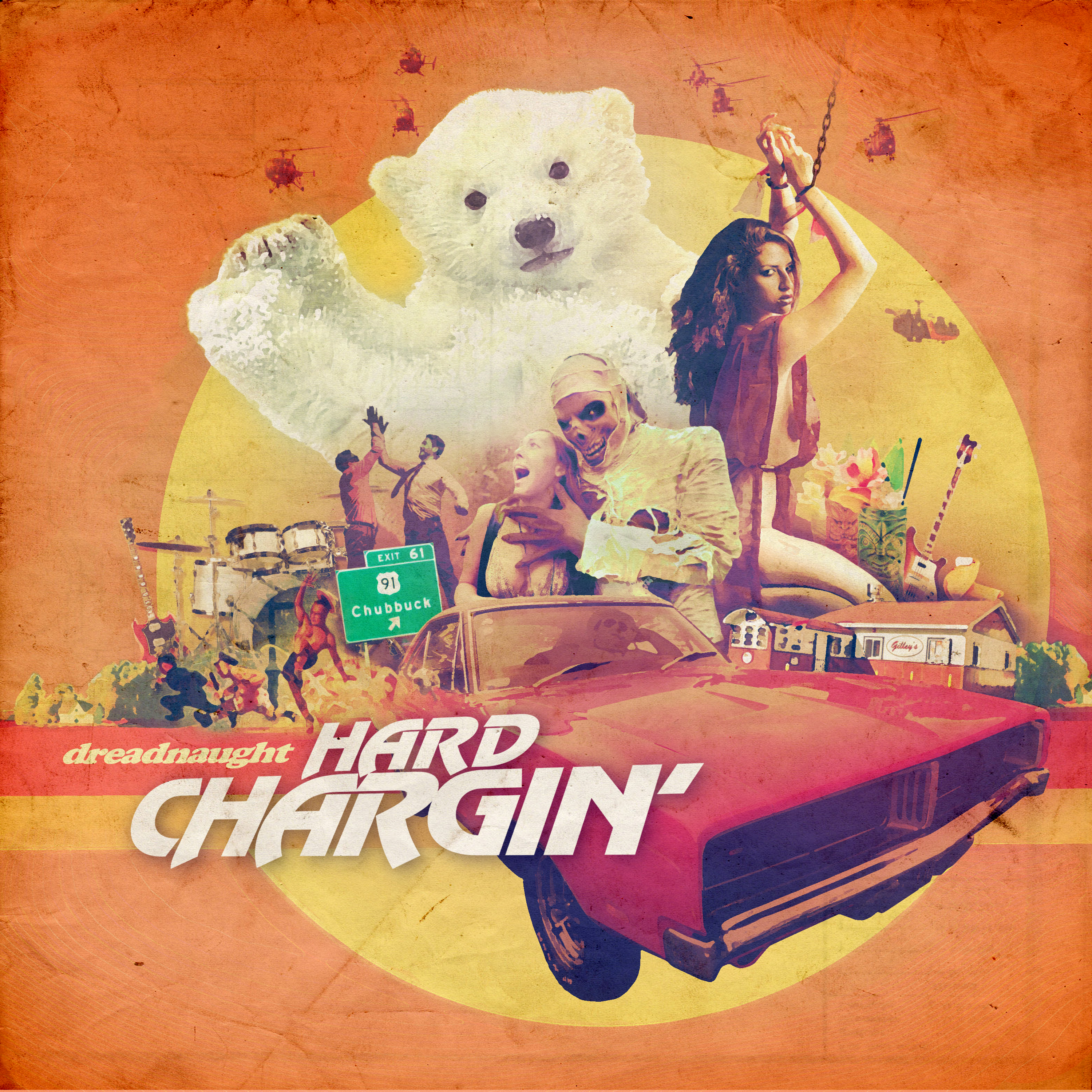
DREADNAUGHT-HARD CHARGIN’.
Dreadnaught-Hard Chargin’.
Label: Red Fez Records.
For over twenty years, high-energy power trio Dreadnaught have spent much of their time touring America, and have played in more than half of the states of the union. Audiences in each state have been fortunate enough to hear Dreadnaught play songs from the various critically acclaimed and award-winning albums that they’ve released since 1998. Each and every one of these albums has been different from the one the preceded it. That comes as no surprise.
Ever since Dreadnaught were founded in 1996, they’ve always been determined to experiment, and push musical boundaries to their limits and way beyond. The result has been album after album of ambitious and innovative music from this truly versatile band. Dreadnaught is, and have always been, a versatile band, who are capable of switching seamlessly between musical genres. They have to be.
What very few people know, is that Dreadnaught also own a company that records and releases contemporary orchestral and chamber music, and haves composed and produced music for international television commercials, radio programmes and independent films. They’ve also collaborated with some of music’s heavy hitters, including Pete Townsend, John Entwistle, Tony Levin, and NRBQ. As a result, Dreadnaught need to be versatile, and capable of playing different types of music.
That has been no problem for drummer Rick Habib, bassist Bob Lord and guitarist Justin Walton who founded Dreadnaught over twenty years ago. Since then, much has happened to this power trio who seem to take pride that they defy categorisation. Dreadnaught’s music doesn’t fit neatly into one genre. Instead, an album usually straddles several disparate genres. Then the followup will be totally different.
It seems that every EP and album is a step into the unknown for Dreadnaught. That is no exaggeration, as even after two decades making music Dreadnaught continue to break new ground. Proof of this is their recently released album Hard Chargin’ which was released on Red Fez Records. Hard Chargin’ is an epic experimental album of Prog-Americana from Dreadnaught. Their career began back in 1996.
The members of Dreadnaught met whilst they were studying at the University of New Hampshire in 1996. Within two years, the band released their eponymous debut album Dreadnaught, in 1998. Two years later, in 2000, and Dreadnaught returned with their sophomore album Una Vez Mas. This was followed by Dreadnaught’s most ambitious album.
By 2001, Dreadnaught’s music had moved in the direction of avant-rock. They were an avant-rock powerhouse who released their critically acclaimed and award-winning album The American Standard in 2001. This made people sit-up and take notice.
That was no surprise. On one track on The American Standard, the members of Dreadnaught decided to overdub flamenco-style clapping onto a track that features drum loops, nylon-string guitar and bass. Soon, the recording studio became a musical laboratory, where Dreadnaught could experiment,
Over the next few years, Dreadnaught spent much of their time in their musical laboratory. It was time well spent. Each album was different, and Dreadnaught were becoming a talented and versatile band. They relished their time in the studio, experimenting and pushing musical boundaries to their limits, and sometimes, it seemed, way beyond.
Three years after the release of their critically acclaimed, award-winning album The American Standard, Dreadnaught returned with their much-anticipated fourth album. The electronic-inspired Musica en Flagrante was released in 2004, with the explosive double album Live At Mojo following in 2005. This was important date in the history of Dreadnaught.
In 2005, Dreadnaught became the house band for The Music Hall/New Hampshire Public Radio series Writers On A New England Stage. Over the next few years, they wrote and arranged music for a variety of different authors, artists and philosophers. This ranged from Dan Brown who joined the band on piano for a cover The Beatles’ Birthday to legendary singer-songwriter Patti Smith, to authors John Updike, Stephen King, Salman Rushdie and politician Madeleine Albright. These are just a few of the many well-known names that Dreadnaught provided a musical accompaniment to on a programme that is heard by hundreds of thousands of listeners across New England. All these listeners have come to appreciate and enjoy Dreadnaught’s musical accompaniment. However, that is just part of the story.
Dreadnaught has crisscrossed America, and played in over half of the states of the union. They’ve also shared the stage and collaborated with some of the biggest names in music, including Pete Townsend, John Entwistle, Tony Levin, and NRBQ. However, when Dreadnaught aren’t playing live, they’re recording new music.
This includes their 2007 album High Heat and Chin Music. This was followed by two EPs, 2013s Have A Drink With Dreadnaught and 2015s Gettin’ Tight With Dreadnaught. These albums and EPs have been released to critical acclaim and won the band a number of awards. The most recent addition to Dreadnaught’s discography is Hard Chargin’, which was recently released. It marks the welcome return of a truly talented band.
Drummer Rick Habib explains a bit about the making of Hard Chargin’. “As a group, we’re not writing songs in the traditional sense, not trying to get the world to sing along…We like to make people want to dial in and pay attention, to make them laugh.”
Bob Lord agrees, and says the purpose of Dreadnaught is: “pure enjoyment and amusement for fans of oddball, far out, intellectually acute music.” Making this music is an escape from the music that the members of Dreadnaught make between 9 to 5. Dreadnaught is: “definitely apart from our day jobs even if they are in the music business.” Hard Chargin’ is also a reminder of growing up in the seventies, and the music the members Dreadnaught listened to and the television programmes they watched. All this has influenced their new and ambitious genre-melting album Hard Chargin’. So have Rush, Fugazi, Frank Zappa, Steely Dan and even George Jones and Willie Nelson. They play their part in the album that marks the welcome return of that inimitable high-energy, power trio Dreadnaught.
Have A Drink With Dreadnaught explodes into life and opens Hard Chargin’ in style. Choppy, blistering guitars join washes of organ while the rhythm section powers the genre-defying, multilayered arrangement along. Atop the arrangement sits Rick’s powerful vocal, which is sometimes augmented by harmonies. Meanwhile, a piano, organ, percussion and some particularly impressive machine gun guitar riffs are added to the stomping, progressive anthem. Suddenly, it’s the seventies all over again. Later, the arrangement becomes understated before rebuilding and becoming melodic. By then, elements of seventies progressive rock combine with Americana and classic rock as this impressive musical potpourri reaches a memorable crescendo.
Lysergic, dubby and cinematic describes the introduction to the instrumental Gaudy Baubles, as it shimmers and meanders along. Soon, it starts to reveal its secrets, and in the process, this instrumental showcase Dreadnaught’s versatility. In doing so, Dreadnaught creates another flawless multilayered arrangement. It features a fusion of disparate music genres that are combined seamlessly and become a vibrant musical tapestry. To create it, Dreadnaught play with speed, power and fluidity switching between time signatures and styles as they fuse elements of progressive rock, psychedelia, classic rock, folk and jazz during three minutes. This os long enough for Dreadnaught to create an ambitious and innovative genre-defying opus.
That’s The Way That You Do It (My Way) is only 1.41 long, but that is long enough to for Dreadnaught to innovate. A chant of: “that is the way that you do it” gives way to thunderous, dramatic a rocky backdrop. Soon, it’s all change and searing mid-Atlantic guitar glides and soars above the arrangement. By then, Dreadnaught have seamlessly combined theatre and drama with music that is melodic, progressive and rocky.
There’s an Eastern, cinematic sound to Takin’ A Ride With The Fat Man (Fatta Fatta Puck Puck). It’s as if it’s a track from a long-forgotten soundtrack to a low-budget movie. Soon, it’s all change as the drums power the arrangement along and the tempo rises. A searing guitar ushers in an organ and close harmonies, that bring to mind seventies Southern Rock. Dreadnaught march to the beat of the drum, while blistering guitars are unleashed. So too are brief soliloquies before the tempo drops. After this, they revisit the earlier freewheeling Southern Rock and augment this with the influence of 10CC and later, Queen. Seamlessly, Dreadnaught switch between genres and as the tempo ebbs and flows and the time signature changes. Still, though, it all makes sense, including the lengthy drum solo that brings back memories of the seventies, when this was de rigueur. From there, this genre-melting track rebuilds, and melodic Southern Rock gives way to choppy, urgent driving rock as the track reveals the rest of its secrets. It’s been an epic journey, with Dreadnaught fusing psychedelia, Southern Rock and progressive rock with avant-rock, classic rock and free jazz to create a tantalising and heady musical brew.
Express Delight is another lengthy track, and opens with an effects’ laden Hendrix inspired guitar solo. It’s joined by the rhythm section and saxophones, before it’s all change. The arrangement becomes an experimental soundscape, where elements of avant-garde, experimental and post rock combine. This shows another side to Dreadnaught. At the heart of the action is the effects’ laden guitar, and lush, cinematic strings. This is a clue that things are about to change. They do, when a jazzy saxophone joins the piano and rhythm section. The saxophone takes centre-stage until the blistering guitar returns.Dreadnaught become a high-energy power trio, as the arrangement ebbs and flows, and they switch between fusion and rock. Later, Dreadnaught harmonise before a flute, keyboards and blistering guitar enjoy their moment in the sun. However, it’s the guitar that plays a starting role in this eight mine genre-melting epic.
As That’s The Way That You Do It (Your Way) unfolds, country-tinged describes the song. That is until it takes on a much more experimental sound, that is reminiscent of the soundscape that featured during Express Delight. Later, there’s a return to the country-tinged sound, as Dreadnaught with their tongue in cheek, pay homage to country music.
Gets The Grease is another short song, but allows Dreadnaught to showcase their versatility during this piano lead song. Soon, a jazzy saxophone soars above the arrangement. Meanwhile, the hypnotic piano plays. Later, the track heads in the direction of free jazz, with Justin Walton playing a leading role in the sound and success of this musical amuse-bouce.
The multilayered, genre-melting arrangement to Slave Girls meanders along, slowly revealing its secrets and subtleties. At first, there’s a cinematic sound, before heading in the direction of rock. While the rhythm section provide the heartbeat, a blistering guitar accompanies the vocal. Soon, the guitar is multi-tracked, before the lead guitar and drums playing leading roles as seamlessly Dreadnaught switch between musical genres. This they do without missing a beat. That is a result of twenty-one years playing together. Seamlessly, the cope with changes in tempo, signature and style as the music veers between rocky to ethereal, and reminiscent of ELO in their seventies pomp. By then, Dreadnaught has switched between classic, progressive and avant-rock with diversions via folk and jazz. Latterly, Dreadnaught’s music ranges from ethereal and melodic to progressive and inventive. It’s been an impressive journey.
Just hi-hats and drums combine on Mummies Of The Cobbosseecontee and accompany bubbling, braying sounds before it’s all change and keyboards play. Meanwhile, the drums sound as if they’re from a drum ’n’ bass track. They’re joined by sci-fi synths and a guitar that veers between funky to fusion and soon, rocky as Dreadnaught throw a curveball and combine elements of heavy and progressive rock. Later, Dreadnaught add handclaps and machine gun and scorching guitars to their powerhouse of a rhythm section. Seamlessly, they cope with changes in tempo, style and measures. Midway through the track they even strip the track bare, with only the drums and then guitars remaining. Gradually, it rebuilds and Dreadnaught showcase their considerable talent and versatility during the remainder of this near eleven minute epic, that allows plenty of room for invention and experimentation.
Closing Hard Chargin’ is the third version of That’s The Way That We Do It (Our Way). It’s a bright, breezy and memorable fusion of pop rock and avant-jazz that is over way too soon. However, it closes Dreadnaught’s comeback album Hard Chargin’ on a high.
Hard Chargin’ marks the welcome return of Dreadnaught after two years away from the recording studio. The comeback Kings return with a bang, with Hard Chargin’ a genre-melting opus that defines categorisation.
There’s elements of Americana, avant-garde and avant-jazz, plus country, free jazz, and pop rock on Hard Chargin’. That is just part of the story all. There’s also elements of avant, classic and progressive rock plus folk, funk jazz and psychedelia. To that, adds hints of electronic and experimental music in this musical tapestry that Dreadnaught wove in their recording studio. The result is the most ambitious and innovative album of their twenty-one year career.
Dreadnaught reach new heights on Hard Chargin’, as they switch seamlessly between different musical genres and spring a series of surprises. Indeed, there’s many a surprise hidden within Hard Chargin’s multilayered arrangements. They continue to reveals their secrets with every listen to this captivating album, where Dreadnaught showcase their talent and versatility on Hard Chargin’. This Dreadnaught have been doing for twenty-one years. However, it’s two years since the release of the Gettin’ Tight With Dreadnaught EP in 2015. Hard Chargin’ marks the welcome return of the comeback Kings Dreadnaught, with a genre-defying opus, that features the high-energy power trio at the peak of their progressive powers.
Dreadnaught-Hard Chargin’.
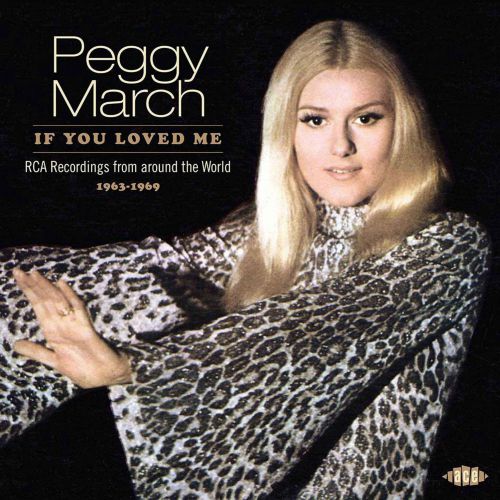
PEGGY MARCH-IF YOU LOVED ME-RCA RECORDINGS FROM AROUND THE WORLD 1963-1969.
Peggy March-If You Loved Me-RCA Recordings From Around The World 1963-1969.
Ace Records.
The future Peggy March was born Margaret Annemarie Battavio in Lansdale, Pennsylvania on March ‘8th’ 1948. By the time she was two, Margaret was singing along to commercials on the radio. She just loved to sing, and three years later made already her live debut.
This came at the woman’s auxiliary meeting that Margaret’s mother attended. The women liked what they heard, and soon, Margaret was singing at their parties. For, this was a stepping stone, and she was soon attending auditions, and singing at talent shows and recitals in the Philly area. All of this was good experience for Margaret.
By the age of eight, Margaret embarked upon a national tour with a local country and western band The Tunedusters. The only downside for Margaret was that she wasn’t being paid. However, it was good experience. So was singing at various family events, including birthdays and weddings. Singing at one of these weddings would change young Margaret’s life.
When Margaret was thirteen, she was asked to sing at one of her cousin’s wedding. This she was happy to do, and enjoyed doing. She took to the stage and sang several songs, which went down will with everyone at the reception. This included a guest who was involved in the music industry.
Having heard Margaret sing, the guest approached her father and offered to become her business’ manager. At first, Margaret’s father wasn’t in favour of his daughter embarking upon a career as a singer, as he thought she was too young. When Margaret pointed out that she might never get another chance to follow her dream, he relented. Margaret was about to embark upon a career as a professional singer.
Margaret recorded a demo in Philly, which secured lead to an audition with the production duo Hugo and Luigi. They were, at that time, RCA’s top songwriting and production team, and had worked with Elvis Presley, Perry Como and Sam Cooke.
Hugo and Luigi were based in New York, which was where Margaret travelled to meet the production duo. When they were introduced to Margaret, they thought that she was an orphan, as her manager was also introduced as her manager and legal guardian. This was wrong, and would’ve important ramifications at a later date.
When Margaret first met Hugo and Luigi, any minor under the age of twenty-one, earning any type of income, had to be represented by a legal guardian. Usually, this would have been a parent or relation of the minor. In Margaret’s case, this would’ve been one of her parents. However, Margaret’s manager it has been alleged, misrepresented himself to be her legal guardian. As her legal guardian, Margaret’s manager had control of Margaret’s income. This was something she would later live to regret.
At the audition with Hugo and Luigi, the pianist that was meant to accompany Margaret failed to turn up. This resulted in Margaret having to sing unaccompanied, which turned out to be a blessing in disguise. By the end of the song, Hugo and Luigi were spellbound and offered Margaret a contract on the spot. Margaret was now a professional singer.
There was one thought problem Margaret’s name. Hugo and Luigi thought that Margaret Annemarie Battavio was too long, and suggested she adopt the stage name Little Peggy March. While Margaret liked the name Peggy March, she wasn’t so keen on the Little part of the name. She was just four-foot ten, and didn’t want to be reminded her diminutive height on a daily basis. However, Hugo and Luigi thought that the name Little Peggy March would work, and she reluctantly accepted their advice.
In November 1962, fourteen year old Little Peggy March released the Hugo and Luigi production Little Me as her debut single. However, the single failed to chart and it was a case of back to the drawing board for Little Peggy March and Hugo and Luigi.
For the followup to Little Me, some time was spent looking for the right song and eventually, I Will Follow Him was chosen. Hugo and Luigi decided to record I Will Follow at RCA’s studios in 23rd Street in Manhattan. With a full orchestra accompanying Little Peggy March, she recorded the song that would shortly become synonymous with her.
When I Will Follow was released in March 1963, Little Peggy March had just turned fifteen. She would soon have something to celebrate when by mid-April 1963, I Will Follow reached number one on the US Billboard and US R&B charts. I Will Follow would go on to become the sixth biggest selling single of 1963. That was just part of the story. I Will Follow also reached number one in Australia, Canada, Hong Kong, Israel, New Zealand, South Africa and Uruguay. Elsewhere, I Will Follow reached the top ten in Chile, Germany, Japan, Peru, Philippines and Sweden. I Will Follow had launched Little Peggy March’s nascent recording career.
I Will Follow is also one of twenty-six songs on If You Loved Me-RCA Recordings From Around The World 1963-1969 which was recently released Ace Records. These songs were released by that Little Peggy March everywhere from America, Canada, France, Germany, Holland, Italy and Japan. Indeed, the version of I Will Follow that features on If You Loved Me-RCA Recordings From Around The World 1963-1969 is the Japanese version Wasurenaiwa, which reached number eight. Little Peggy March’s third single had a lot to live up to.
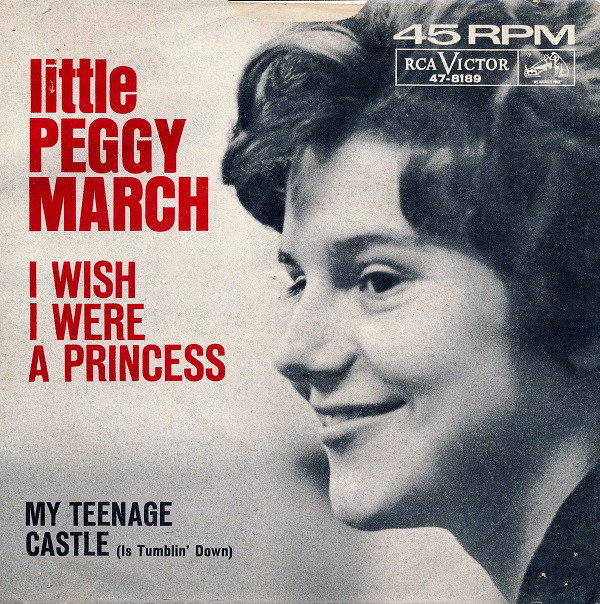
The song that was chosen was I Wish I Were a Princess, which was released in May 1963. However, the song stalled at thirty-two on the Billboard 100. This was disappointing for Little Peggy March.
When it came time for Little Peggy March to record her fourth single, the Hugo, Luigi and George David Weiss composition Hello Heartache, Goodbye Love was chosen. It was produced by Hugo and Luigi, and released in August 1963. Hello Heartache, Goodbye Love reached twenty-six in the Billboard 100 and twenty-nine in the UK. This was an improvement on I Wish I Were a Princess. However, it was a far cry from the success of I Will Follow Him. It was another disappointment for Little Peggy March.
It wasn’t her only worry though. By then, Little Peggy March had realised that fame was a double-edged sword. No longer was she being asked out on dates or to parties. However, she was enjoying travelling to across Europe and to Japan where her music was proving popular.
This included in France, where Little Peggy March released two EPs in during 1963. The first was I Will Follow Him, which was followed by Hello Heartache, Goodbye Love. It featured Johnny Cool, which features on You Loved Me-RCA Recordings From Around The World 1963-1969. Little Peggy March’s success overseas made-up for her lack of success at home.
Just a year after she had released her debut single, Little Peggy March released The Impossible Happened as her fifth single. It stalled at a lowly fifty-seven in the US Billboard 100. For Little Peggy March, disappointing way to end 1963.
When Little Peggy March released (I’m Watching) Every Little Move You Make in January 1964, the single reached a lowly eighty-four in the US Billboard 100. Little did Little Peggy March know that this was her last single that would chart in America.
Two months later, Little Peggy March released (I’m Watching) Every Little Move You Make in Germany, which features on If You Loved Me-RCA Recordings From Around The World 1963-1969. Germany would be one of the many countries where Little Peggy March enjoyed widespread success.
Apart from Germany, Little Peggy March enjoyed success in a number of European countries, including France, Holland and Italy. Little Peggy March was also enjoying success in Australia, New Zealand and Japan. After the release of (I’m Watching) Every Little Move You Make Little Peggy March was more popular abroad, than at home.
When Little Peggy March turned sixteen in March 1964, she became Peggy March in America. In Europe, she was still Little Peggy March until 1966. By then, she was enjoying widespread popularity.
In Canada, Peggy March released Takin’ The Long Way Home in May 1964. On the B-Side was Let Me Down Hard an emotive ballad, with a dramatic, string-drenched arrangement. It features on If You Loved Me-RCA Recordings From Around The World 1963-1969 and shows how far Peggy March had come in a short time.
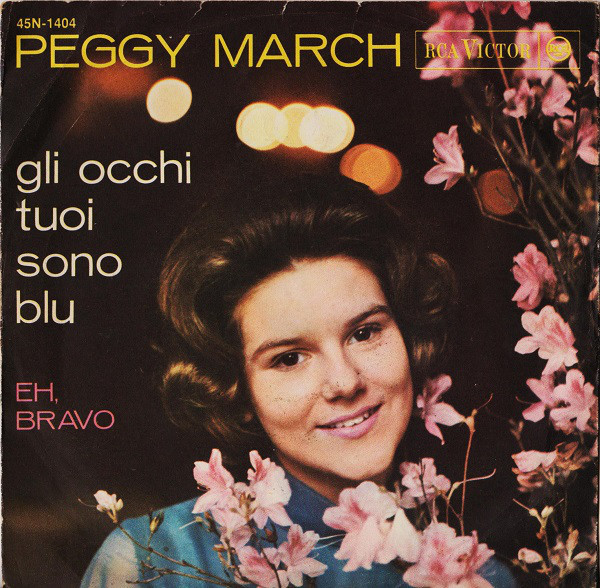
Little Peggy March’s popularity had spread to Italy and Turkey, were she released Gli Occhi Tuoi Sono Blu as a single. On the B-Side was Eh, Bravo which features on If You Loved Me-RCA Recordings From Around The World 1963-1969. Eh, Bravo was one of the last Hugo and Luigi productions that Little Peggy March released.
By the time that Peggy March released Oh My What A Guy in Canada, in August 1964, she had parted company with producers Hugo and Luigi. Over the next few months, she worked with a variety of producers, including the Smith and Duke production team. They produced Oh My What A Guy, and its B-Side Only You Could Do That To My Heart. It’s a hidden gem, and makes a welcome appearance on If You Loved Me-RCA Recordings From Around The World 1963-1969.
Two month later, in October 1964, Peggy March released Watch What You Do With My Baby as a single in America. Tucked away on the B-Side was the Leon Huff composition Can’t Stop Thinkin’ About Him. Despite the quality of these two sides which feature on If You Loved Me-RCA Recordings From Around The World 1963-1969, they failed to chart. It was another disappointment for Peggy Mach at home.
Meanwhile, Peggy March’s career was going from strength-to-strength abroad. Just like the ye-ye singers, she recorded songs in various languages. This included Passo Su Passo in Italy, in 1964, and in 1965, Germany.
Peggy March enjoyed three top thirsty singles in Germany during 1965. Er schoss mir eine Rose was released in May 1965, and reached twenty-three. The followup Mit 17 hat man noch Träum was released in July 1965 and reached number two. Then when Die schönen Stunden gehen schnell vorbei was released in November 1965, it reached number twenty-five.
For her next American single, Peggy March chose the heartfelt, string-drenched ballad Losin’ My Touch. It was released by RCA in March 1965, but failed to chart. History repeated itself with He Couldn’t Care Less. Both these tracks feature on If You Loved Me-RCA Recordings From Around The World 1963-1969. For Peggy March and her manager, the lack of success at home was a worry.
Given the commercial failure of Peggy March’s recent singles, her manager Bennie Thomas came up with the idea that she should form a duet with Bennie Thomas. Peggy March rejected the idea, but agreed to record an album with him. That was despite Bennie Thomas being way down her list of musical partners.
By then, Peggy March had already released two solo albums 1963s I Will Follow Him and Little Peggy March in 1964. Later in 1965, she would release Teen Idol Of The World in Japan and Tagebuch Einer 17-jährigen. Before that, In Our Fashion, which was a mixture of songs by Peggy March and Bennie Thomas and four duets was released. One of the duets between Peggy March and Bennie Thomas Catchin’ On Fast, which features on If You Loved Me-RCA Recordings From Around The World 1963-1969. Catchin’ On Fast was the best duet on In Our Fashion, which was the only album that Peggy March and Bernie Thomas released.
Meanwhile, Peggy March’s popularity was growing in Europe, and she released the Ne Joue Pas Les Enfants EP in France. Let Her Go helped build on the success that Peggy March was enjoying in Europe. It would continue in 1966.
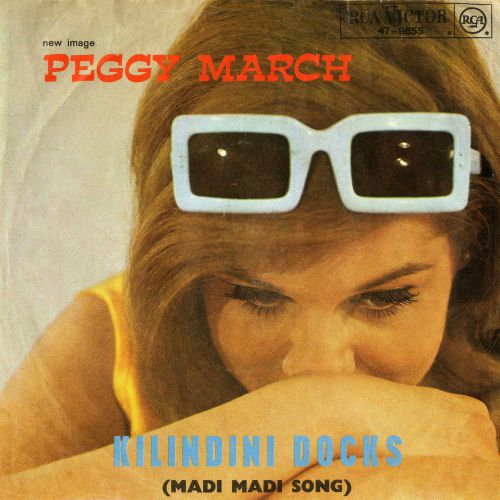
In May 1966, Peggy March released Kilindini Docks (Madi-Madi Song) with Too Long Away on the B-Side in Germany and Holland. The Peggy March success story continued. However, it was a very different story in America.
Peggy March released the Danny Davis production He’s Back Again as a single in America in July 1966. However, it was a familiar story for Peggy March when the single but failed to chart. Five months later, in December 1966, Peggy March released Fool, Fool, Fool (Look In The Mirror) as a single. On the B-Side was the tender, heartfelt ballad Try To See It My Way. It’s another of the hidden gems on If You Loved Me-RCA Recordings From Around The World 1963-1969 which features these six tracks from 1966. By then, two years had passed since Peggy March enjoyed a hit single in America. Elsewhere, she was enjoying a successful career.
When Peggy March graduated high school in 1966, she gained access to the royalties that had accrued since 1963. Having enjoyed number one singles America, Europe, Japan, Australia and New Zealand, Peggy March must have been expecting a considerable sum of money. She was shocked to discover that all that remained for $500. The rest had been ‘borrowed’, but wasn’t repaid by her manager. Instead, he had squandered the money that he had ‘borrowed’. For eighteen year old Peggy March, this was a huge blow. With hardly any money left, it was a case of starting all over again for Peggy March.
She released Itsuwari No Koi (He Couldn’t Care Less) in Japan, in January 1967. This built on Peggy March’s popularity in Japan. It was a similar case when Peggy March released Memories Of Heidelberg in Germany, in March 1967. The single reached number five, and featured Male Nicht Den Teufel An Die Wan on the B-Side. Just like Itsuwari No Koi (He Couldn’t Care Less), Male Nicht Den Teufel An Die Wan on If You Loved Me-RCA Recordings From Around The World 1963-1969. So does the defiant sounding single This Heart Wasn’t Made To Kick Around, which was released in America in August 1967 and Let Me Down Hard which was released in October. Sadly, for Peggy March, it was the same old story, and neither single failed to find the audience it deserved.
Despite no longer enjoying hit singles in America, Peggy March was still hugely popular in other parts of the world. Especially in Europe, and in particular, Germany, where Peggy March released Romeo und Julia in September 1967. It gave Peggy March her first number one in Germany. This was something to celebrate for Peggy March.
Her success continued in Germany when Telegramm aus Tennessee was released in January 1968, and reached number fifteen. The followup Canale Grande Number One was released in March, and reached number eighteen. Four months later, in July 1968, Peggy March released Das ist Musik für mi, which reached twenty-one. Peggy March’s fourth top thirty single of 1968 was Mississippi Shuffle Boat, which was released in September and reached number thirty. Over the next three decades, Peggy March enjoyed twenty-six hit singles in Germany between 1965 and 1980.
In May 1968, Peggy March released If You Loved Me (Soul Coaxing Ame Caline) as a single in New Zealand. On the B-Side was Thinking Through My Tears. By then, twenty year old Peggy March was maturing as vocalist and the ability to breath meaning and emotion into songs. Both of these sides feature on Peggy March-If You Loved Me-RCA Recordings From Around The World 1963-1969. So does Aren’t You Glad, which was the B-Side to I’ve Been Here Before which was released in America in September 1968. While I’ve Been Here Before failed to find an audience, Peggy March’s star was still in the ascendancy.
As 1969 dawned, Peggy March released soul-baring Wasurenaiwa (I’ll Never Forget You) as a single in Japan. It was powerful reading of the song, and one that showcased Peggy March’s talents as a singer. She delivers the lyrics as if she’s lived and survived them. Given the quality of Wasurenaiwa (I’ll Never Forget You), it was no surprise that Peggy March was such a popular singer by 1969.
Ironically, by then, Philly born Peggy March was more popular abroad, than she was in America. That had been the case for the majority of her career. That was apart from her number one single I Will Follow Him in 1963, and a couple of minor hit singles. Apart from that, the majority of the success Peggy March was in Europe, Australasia, Japan and South America.
What helped was that like many of the European ye-ye singers, Peggy March was able to sing in a variety of languages. She released singles in French, German, Italian and Japanese. This endeared her to record buyers in these countries, and brought commercial success Peggy March’s way.
Between 1963 and 1969, which Ace Records’ twenty-six track compilation If You Loved Me-RCA Recordings From Around The World 1963-1969 covers, Peggy March had already enjoyed number one singles in America, Australia, Canada, Germany, Hong Kong, Israel, New Zealand, South Africa and Uruguay. Having enjoyed number singles ones in nine different counties, Peggy March should’ve been well on her to becoming a wealthy young woman by 1969.
Sadly, like many singers and bands, Peggy March never received the money she had earn. It was alleged that her manager had ‘borrowed’ money, but never repaid it. This meant that when Peggy March graduated from high school in 1966, the cupboard was almost bare. All that was left was $500, which meant all her hard work and the sacrifices she had made was for nothing.
At least Peggy March continued to enjoy commercial success after 1966 outside of America. This included a number one in Germany in 1967. However, the money that Peggy March had earned during the most successful period of her recording career was long gone, allegedly squandered by her ex-manager. This didn’t put Peggy March off music, and her career continues to his day.
Nowadays, sixty-nine year old Peggy March is still singing and can be found in Las Vegas. She’s a musical veteran, whose professional career began fifty-six years ago. The early years of her career is documented on If You Loved Me-RCA Recordings From Around The World 1963-1969 which features singles, B-Sides and tracks from albums and EPs. The songs on If You Loved Me-RCA Recordings From Around The World 1963-1969 showcase the truly talented Peggy March, who already had the ability to breath life, meaning and emotion into lyrics. Over that next six years she matured and blossomed as a singer, during what was the most successful period of her recording career. During the period that If You Loved Me-RCA Recordings From Around The World 1963-1969 documents, Peggy March enjoyed number one singles in nine different countries and enjoyed hit singles in Asia, Australasia, Europe, North America and South America. By 1969, the former Little Peggy March had come a long way in the space of just six years.
Peggy March-If You Loved Me-RCA Recordings From Around The World 1963-1969.


FREDDIE NORTH-THE A-BET YEARS.
Freddie North-The A-Bet Years.
Nine years after making his recording debut with The Rookies, Freddie North signed to Nashboro’s newly formed A-Bet imprint in 1967. This would be home to Freddie North for the next nine years, and where he would enjoy the most successful period of his career. However, his story began in the country music capital, Nashville.
Fredrick Carpenter was born in Nashville on ’28th’ May 1939 into a musical family. His father Fredrick was a successful and well-respected gospel singer, so it was no surprise that growing up, Freddie decided to embark upon a musical career.
In Freddie’s case it wasn’t gospel he started singing. Instead, Freddie who had grownup listening to doo-wop, R&B and rock ’n’ roll formed a Freddie and some high school friends, The Rookies. They were soon signed to a local label, Athens and recorded Money Money Money and Take Me Back. When the single was released, the group were billed as Freddie North and The Rookies and sold well. So much so, that Atlantic Records picked the single up. It looked as if Freddie North and The Rookies had a bright future ahead of them.
When the single was released on Atlantic Records’ East West imprint, it was credited to Freddie. This must can’t have pleased The Rookies, and the band split-up not long after this.
Despite the disappointment surrounding The Rookies, Freddie’s career continued in 1960 when he recorded Okay, So What? with Charles “Buddy” Killen, who would go on to found the Dial label. That was a few months down the line, so Charles “Buddy” Killen took Okay, So What? to the University label. Everyone had high hopes for the release, but even with an appearance on American Bandstand the single failed to sell. For Freddie this was another disappointment in his nascent career.
Not long after this, Freddie decided to enrol at college and studied speech and drama. However, when he completed his course, Freddie ended up working for a cinema chain. This was one of several dead-end jobs Freddie endured, including a spell as a singing waiter at the Executive Club. Still, Freddie hadn’t given up on his dream of making a career as singer.
Whilst working at the Executive Club, Freddie recorded Just To Please You as a single for Capitol Records. Meanwhile, Freddie was constantly in demand as a demo singer, and was a familiar face at many of Nashville’s recording studios. While this was good experience, it meant that Freddie’s career wasn’t progressing. When Freddie released It’s No Good For Me on the R.I.C. label, the single sunk without trace. Freddie’s career seemed to have stalled. These were worrying times for the twenty-five year old.
When it looked like Freddie wasn’t going to make it as a singer, with a heavy heart he made the decision to take a job at Nashboro which was Nashville’s biggest record company. This gave Freddie the safety net of a regular income. Freddie started off as a stockroom clerk, but soon, was climbing the corporate ladder and was the head of the press and promotion division. Still, though, Freddie continued to sing in Nashville’s clubs, in the hope that one day, he could resume his singing career.
When the opportunity arose, it was closer to home than Freddie expected. Nashboro decided to setup a soul imprint A-Bet in 1966. The nascent label was primarily a label to showcase the work of arranger, producer songwriter, Bobby Holmes. Soon, A-Bet began recruiting artists to join their roster. One of the artists they approached to join A-Bet’s roster in January 1967 was their head of press and promotion Freddie North. He was the fourth artist to join A-Bet’s roster.
Soon, Freddie North entered the studio to record his A-Bet debut single. Two Bob Holmes compositions were chosen, including the uptempo (I’ve Got To) Hold Back which was chosen as the single. Tucked away on the B-Side was a soul-baring ballad Don’t Make Me Look So Bad. When the single was released in February 1967, disaster struck for Freddie North when (I’ve Got To) Hold Back failed to trouble the charts. Freddie North had been here before.
A-Bet were in no hurry to release a followup. Fourteen months passed before A-Bet released I Have A Dream which was penned by Jerry Keller and Dave Blume. When I Have A Dream had been inspired by Martin Luther King’s speech was released, it also failed to find an audience. For Freddie North this was another disappointment.
After the failure of I Have A Dream, sixteen months passed before Freddie North released his third single for A-Bet, Oh Lord, What Are You Doing To Me. This was a much covered Ballad penned by Luther Dixon and Bert Keyes, and was arranged and produced by Bob Holmes. It features a vocal full of despair and showcases Freddie North’s vocal ability to breath meaning and emotion into the lyrics. So does the B-Side, Long Hard Road which is a ballad written by Bob Holmes. It’s one of his most underrated A-Bet sides. Sadly, very few people heard Oh Lord, What Are You Doing To Me and Long Hard Road, as the single failed to sell. This was becoming a familiar pattern, and something had to change.
For Freddie North’s first three singles for A-Bet, he had worked with producer by Bob Holmes. While the quality of music was indisputable, it hadn’t proven to be a successful partnership. It was decide later in 1969, that from thereon in, Freddie could produce his own sessions.
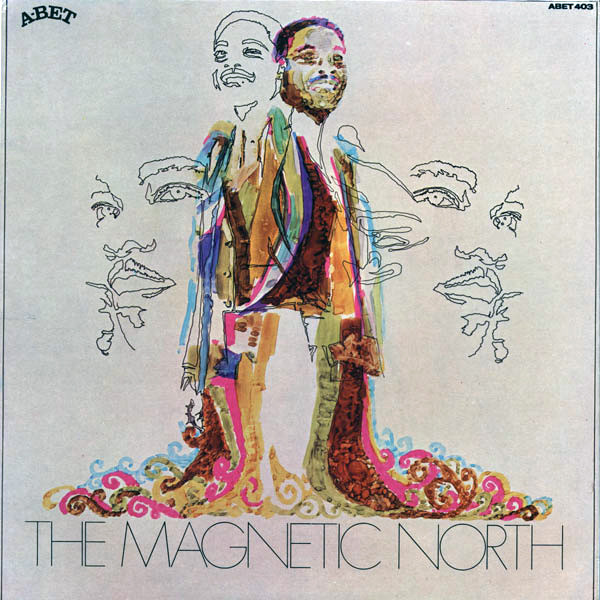
The first sessions that Freddie North took charge of, saw him record six songs, Got To See If I Can Get Mommy, Love To Hate, a poignant cover of Rainy Night In Georgia and Thank That Woman. This was almost enough for Freddie North’s debut album. To complete the album, Freddie included two of his first three singles, I Loved Another Woman nd From The Blind Side, The Sun Comes Up and included his two previous singles, Oh Lord What Are You Doing To Me and I Have A Dream. These eight songs became Freddie North’s debut album The Magnetic North, which was released on A-Bet in March 1970. Alas, The Magnetic North failed to find the audience it deserved, and Freddie North was no nearer making a breakthrough.
Not long after the release of The Magnetic North, Freddie North returned with his fourth single for A-Bet, which was another soul-baring ballad, Thank That Woman. Hidden away on the B-Side was Love To Hate, a carefully crafted, orchestrated song which was produced by Freddie North. Sadly, Thank That Woman passed record buyers by and Freddie North found himself n last chance saloon.
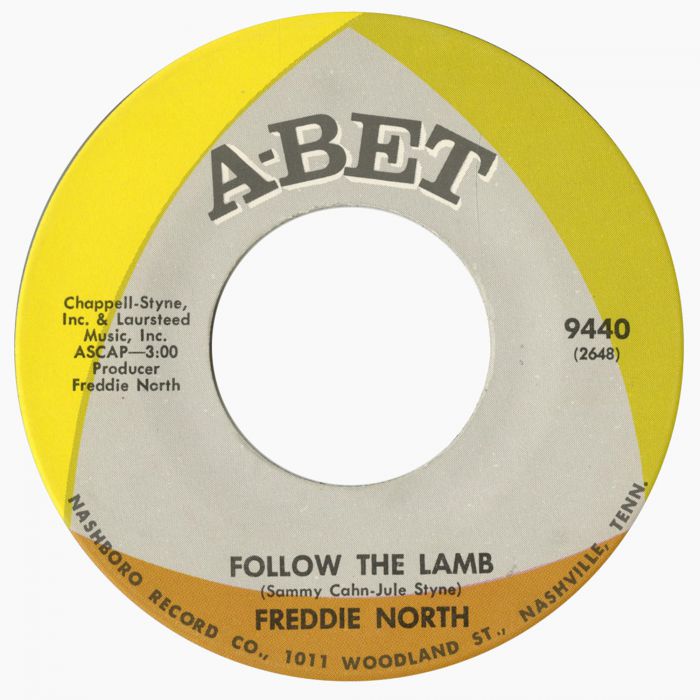
For his fifth single for A-Bet, Freddie North covered Sammy Cahn and Jule Styne’s Follow The Lamb which featured in their musical Look At The Lillies. The gospel-tinged Follow The Lamb was a strange choice for single for Freddie North, who was desperate to make a commercial breakthrough. Especially with the cover of Dave Hall’s wistful From The Blind Side tucked away on the B-Side. It was a much stronger track, and when Follow The Lamb was released in October 1970, it failed to make any impact on the charts. For Freddie North this marked the end of an era.
Follow The Lamb was the last single that Freddie North released on A-Bet. He had released five singles and an album on A-Bet, but hadn’t come close to enjoying commercial success. Things were so bad, that Freddie North was seriously considering turning his back on music.
That was until Nashboro decided to found a new imprint in 1971, Mankind, which would replace A-Bet. It was no longer an active label, and for the time being, artists signed to A-Bet would join Mankind. Helping to run the nascent label, was Jerry Williams Jr a.k.a. Swamp Dogg.
He had just recorded albums with Irma Thomas, Sandra Phillips and Doris Duke for the Wally Roker’s Canyon group of labels in Muscle Shoals. Nashboro president Bud Howells suggested that Freddie North move to Muscle Shoals and work with Jerry Williams Jr. This it was hoped, might result in a change of fortune for Freddie North.
Bud Howells’ suggestion that Freddie North move to Muscle Shoals, soon paid off. For Freddie North’s Mankind debut, Jerry Williams Jr had a song lined up. The song he suggested was the Garry US Bonds’ song She’s All I Got as a single, with the Jerry Williams Jr composition Ain’t Nothing In The News (But The Blues) on the B-Side. However, when She’s All I Got was released on Mankind in July 1971, it charted and reached number ten on the US R&B charts and thirty-nine US Billboard 100. Eleven years after releasing his debut single, Freddie North had a hit single on his hands.
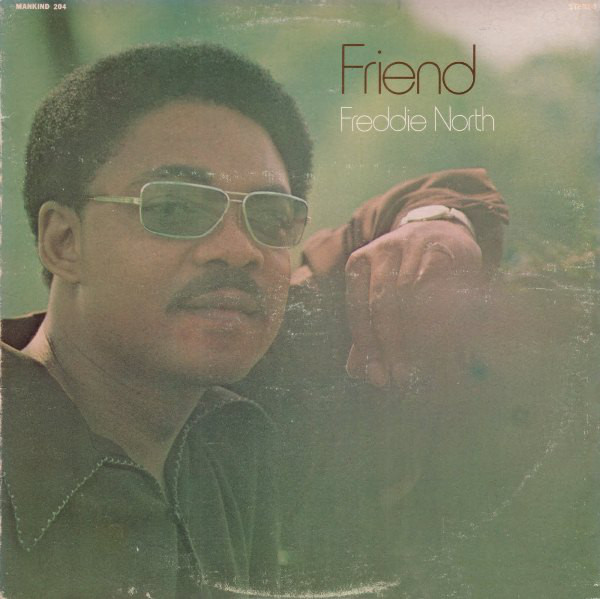
Mankind were keen to build on the success of Ain’t Nothing In The News (But The Blues), and Freddie North released his sophomore album Friends. It featured Freddie’s next hit single.
For the followup to She’s All I Got, Freddie North recorded You And Me Together Forever, which featured Did I Come Back Too Soon (or Stay Away Too Long) on the B-Side. However, when Freddie North’s second Mankind single You And Me Together Forever was released in January 1972 stalled at twenty-six in the US R&B charts. Compared to Freddie’s A-Bet released, You And Me Together Forever was regarded as a success by those at Nashboro headquarters in Nashville. Now, Freddie North had to build on the success of his two hit singles.
Two months later in March 1972, Mankind released a promo of Freddie North’s recording of Did I Come Back Too Soon (Or Stay Away Too Long). However, the song never got made beyond the promo stage, and wasn’t released as a single.
In May 1972, Freddie North released the first of three singles in quick succession. Sweeter Than Sweetness was released in May 1972, but failed to trouble the charts. It was a similar case with Roll Over (Play Like Our Love Ain’t Dead) in June 1972 and Song # 29 (I’m Your Man) in September 1972. These three singles marked the end of the Jerry Williams Jr era.
By late 1972, Jerry Williams Jr had fallen out with Nashboro, and headed off in search of the next chapter in his chequered career. Jerry Williams Jr who was a talented singer, songwriter musician and producer never seemed to stay anywhere long, and never came close to fulfilling his potential. Meanwhile, Freddie North was desperate to return to the heights he had enjoyed early on in his career with Mankind.
Freddie North returned with a cover of the Frank Johnson and Carl Lumbus composition You’re Killing Me Slowly But Surely. It had been recorded at the Quinvy Studios where the Mankind sessions had taken place. Taking charge of production was
David Johnson who had engineered the previous Mankind sessions. He was regarded as the natural heir to Jerry Williams Jr and produced You’re Killing Me Slowly But Surely which features a vocal that’s hurt-filled and full of despair. Despite its quality, the single failed to commercially when it was released in June 1973.
Two months later, Freddie North released a cover of Hugh King’s Lovin’ On Back Streets. It was the first Mankind single to produced by Freddie North. On the B-Side, was Love To Hate, which previously was the flip-side to the A-Bet single Thank That Woman in 1970. However, when Lovin’ On Back Streets was released in August 1973, it too, failed to find an audience. By then, two years had passed since You And Me Together Forever gave Freddie a hit single. He could really do with a hit single.
Later in 1973, Freddie North returned to producing his own singles. He produced the ballad Taking Her Love Ain’t Gonna Be Easy, which was arranged by Bergen White. While was one of the best singles that Freddie North had released since the early days of his career at Mankind, commercial success eluded Taking Her Love Ain’t Gonna Be Easy. For Freddie this must have been a frustrating time.
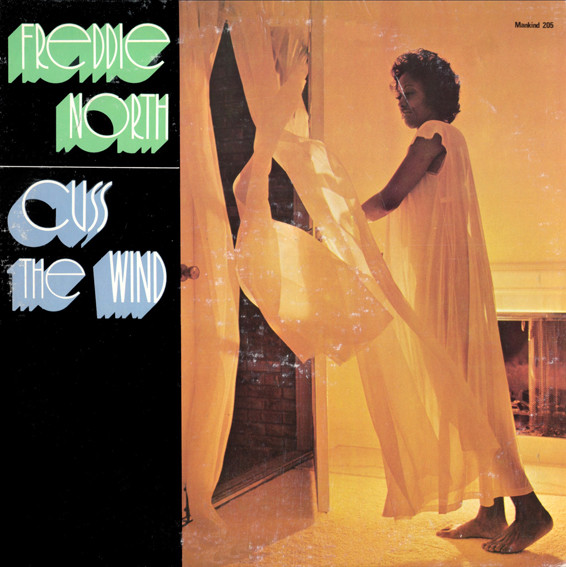
After nearly three years without a hit to his name, Mankind released Cuss The Wind as a single with Love To Hate again featuring on the B-Side. Cuss The Wind was one of the Jerry Williams Jr productions that had lain unreleased for the best part of a two years. It’s a poignant ballad, where strings and horns frame Freddie’s vocal. Mankind had high hopes for the single, and an album entitled Cuss The Wind was compiled.
Cuss The Wind featured eight tracks, including some songs that Freddie had already released on A-Bet. There were several new songs, including Cuss The Wind band the soul-searching Southern Soul ballad My Whole World Ended. Songs of this quality it was hoped would bring commercial success Freddie North’s way.
Despite the quality of the single, it was a familiar story when Cuss The Wind failed to trouble the charts. When Mankind released Freddie North’s album in 1975, it took failed to find an audience. This was Freddie North’s second album of Southern Soul that passed unnoticed. For Freddie North, it was almost the end of the road at Mankind.
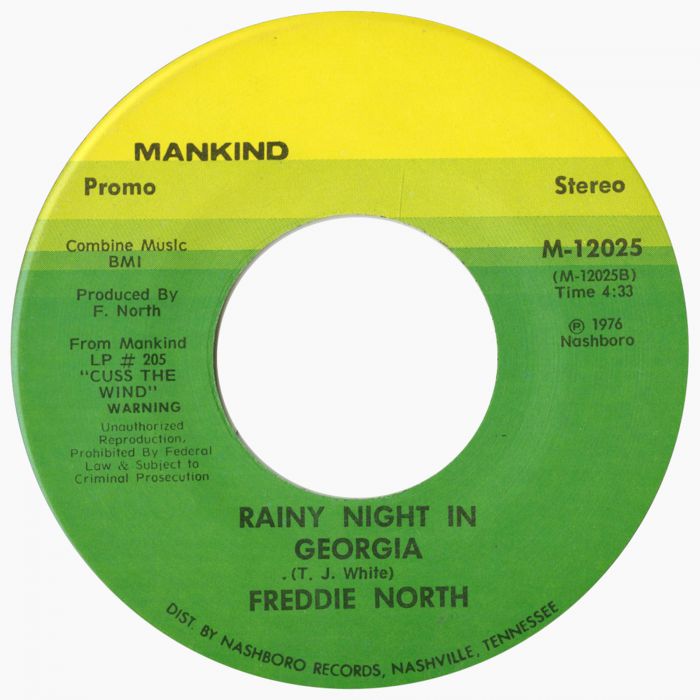
One further Freddie North single was released on Mankind in 1976, Rainy Night In Georgia. It was taken from Cuss The Wind, and featured Freddie North’s Loved Another Woman on the B-Side. Both were produced by Freddie North and showcased his skills as a singer and producer. However, when the single failed commercially, that was the end of the line for Freddie North and indeed Mankind.
Mankind closed its doors shortly after the release of Freddie North’s cover of Rainy Night In Georgia. A year later in 1977, A-Bet also closed its doors for the second time. This time though, it was for good. Freddie North also left Nashoro in 1977, after eleven years service. He had decided to turn his back on music for good.
Freddie North was no more. Instead, Freddie North reverted to his real name, Frederick Carpenter and started a ministry. While Pastor Frederick Carpenter occasionally sung in church, there would be no comebacks. The man once known Freddie North would never return to secular music.
Although Freddie North was lost to secular music, he left behind a rich musical legacy, including the music he recorded at A-Bet. I was the most productive and successful period of Freddie North’s career.
Sadly, Freddie North’s singles and three albums didn’t reach they audience that they deserved. Freddie North enjoyed just two hit singles during the nine years he spent at A-Bet and Mankind. Sadly, Freddie North, who is one of the most talented soul men of his generation never reach enjoyed the success his talent deserves, and he remains one of soul’s best kept secrets.
Freddie North-The A-Bet Years.
RED HOT BOPPERS-HMV VINYL EXCLUSIVE.
Red Hot Boppers-HMV Vinyl Exclusive.
Label: Sun.
Over the last few years, the resurgence of interest in vinyl has taken many within the music industry by surprise. Some went as far as say that the resurgence of interest in vinyl would be short-lived and was no more than a passing fad. How wrong they were.
Especially one particular label manager who back in late-2014 was particularly scathing about vinyl’s newfound popularity. He believed that the vinyl bubble was about to burst, and there was no way ‘his’ company he managed would ever release their vinyl. This musical Nostradamus’ other forecast was that within a couple of years, nobody would be buying CDs. They were going the way of the dinosaurs, Nostradamus believed. The future was about streaming and downloads he proudly announced, which was his business model and was how his company were going to make their fortune. Alas, this was flawed thinking.
Today, music’s very own Nostradamus is no longer in the position he once was. In footballing terms, he has been relegated from music’s top division. He’s no longer the mover and shaker he once was. Not after his company suffered huge losses. Someone else was brought in to rescue the situation, and Nostradamus was reduced to a bit part player.
The company he once ran now releases all of their albums on vinyl and CD. Indeed, they’ve even released several vinyl only releases, including double albums and box sets. It’s a similar case with CDs, with box sets and double albums hitting the shelves of record stores. Downloads are still available, but the label’s core customer base are people who buy physical products.
While they’re first and foremast music lovers, they’re also collectors of music on various formats and are willing to pay for the privilege. The new person running the company understood the company’s customer base and has set about to releasing the music they want to buy. This includes music on vinyl, which he hopes will help return this once proud company to profitability.
Many other companies have realised there’s currently an insatiable appetite for vinyl. This includes HMV, who last year, released their Exclusive Vinyl series. It was a huge success, and they decided to repeat the exercise. One of this year’s releases was Red Hot Boppers, which was recently released as a limited edition of 1,000. Red Hot Boppers features ten tracks that have featured on the Sun Rockabilly Legends’ Series.
Billy Lee Riley’s career began in May 1956, when the twenty-two year old released Trouble Bound on Sun. After that, eight months passed before Billy Riley returned. This time, it was with Billy Riley and His Little Green Me, who released Flyin’ Saucers Rock and Roll in January 1956. Eight months later, Billy Lee Riley returned with his sophomore solo single Red Hot in September. It featured on Sun Rockabilly Legends Series Volume Four-Red Hot and also provides an explosive start to the Red Hot Boppers compilation.
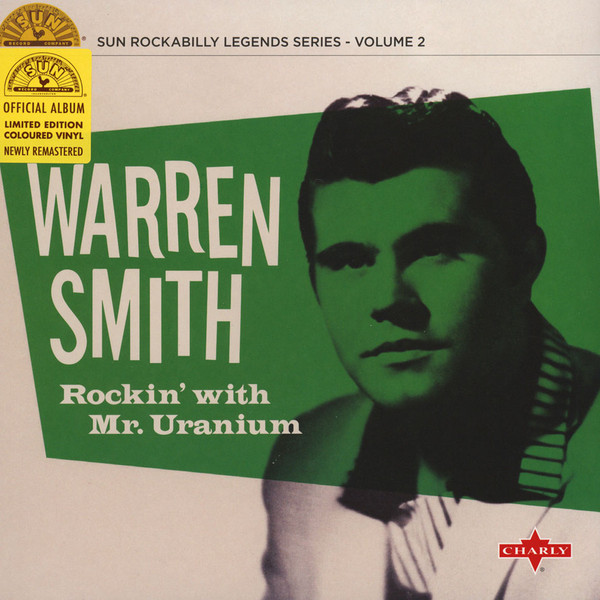
When it came to compiling Sun Rockabilly Legends Series Volume Two-Rockin’ With Mr Uranium, which was dedicated to Warren Smith, one of the songs chosen was Red Cadillac And A Black Mustache. This was a song that Warren Smith recorded in 1957, but never saw the light of day until 1973. Three years later, in 1976, Red Cadillac And A Black Mustache was released as a single by the British label Charly Records. Forty-one years later, it makes a this hidden rockabilly gem makes a welcome return on the Red Hot Boppers compilation.
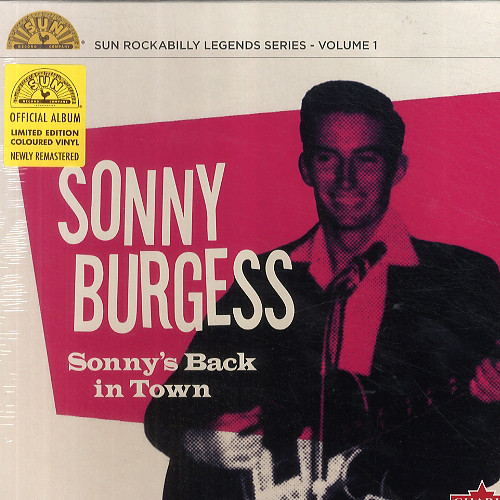
When Sonny Burgess released his debut single Red Headed Woman in August 1956, tucked away on the B-Side was the piano driven We Wanna Boogie. It features one of the wildest rockers ever to record for the legendary Sun label in Memphis. Sonny Burgess and his band The Pacers were from Newport, Arkansas, and had forged a hard-rocking style that unlike most rockabilly singers, owed almost nothing to country music. Proof of this is We Wanna Boogie, which featured on Sun Rockabilly Legends’ Series Volume One Sonny’s Back In Town in 2016.
In early April 1958, Ray Smith released So Young as a single on Sun. Hidden away on the B-Side was an explosive cover of the Charlie Rich composition Right Behind You, on Sun. It’s one of the highlights of the Red Hot Boppers’ compilation, and Sun Rockabilly Legends’ Series Volume 3 Shake Around which was released in 2106.
When Carl Perkins released Boppin’ The Blues on Sun, in May 1956, it should’ve been the fifth single of his career. However, the release of Sure To Fall had been postponed in March 1956. This made Boppin’ The Blues the followup to Blue Suede Shoes, which had been released in January 1956 and reached number one on the US Country charts and two on the US Billboard 100. This was the biggest hit of Carl Perkins’ career. Boppin’ The Blues had a lot live up to. Alas, it was a case of so near, yet so far, when Boppin’ The Blues reached number seven US Country charts and seventy on the US Billboard 100. Despite that, Boppin’ The Blues is an irresistible rockabilly single that also featured on the 2016 compilation Sun Rockabilly Legends Series Volume Five-Put Your Cat Clothes.
Sixty years ago, in March 1957, Jerry Lee Lewis released Whole Lot Of Shakin’ Going On. Not only did it reach number three on the US Billboard 200, but topped the US Country and US R&B charts. Across the Atlantic, Whole Lot Of Shakin’ Going On reached number eight. Since then, Whole Lot Of Shakin’ Going On has been has been hailed a rock ’n’ roll classic, while Charles L. Ponce de Leon called it: “perhaps the quintessential rockabilly anthem.” As a result, it’s only fitting that it featured Sun Rockabilly Legends Series Volume Six-Down The Road With Jerry Lee in 2016 and in 2017, the Red Hot Boppers’ compilation.
Barbara Pittman was one of the artists that featured on Sun Rockabilly Legends Series Volume Eight-Those Rockin’ Girls in 2016. A year later, her 1956 debut single I Need A Man features on Red Hot Boppers. When I Need A Man was released on Sun, in late-September 1956, Barbara Pittman it found unleashing a powerful, sassy and needy vocal on this future rockabilly classic.
When Gene Simmons came to record his debut single, the song chosen was one of his own compositions Drinkin’ Wine. It was released on Sun in April 1958, and Drinkin’ Wine went on to become a rockabilly classic. Drinkin’ Wine launched Gene Simmons’ long and illustrious career. His career was celebrated on Sun Rockabilly Legends Series Volume Ten-I Done Told You in 2016. The highlight of the compilation is Drinkin’ Wine, which is another rockabilly classic.
Malcolm Yelvington was fifty-six when his cover of Yakety Yak featured on the Sun Rockabillys Volume 3-Rockin’ and Boppin’ compilation. However, his career began at Sun in 1954, when Malcolm Yelvington and Star Rhythm Boys released on Sun. Since then, Malcolm Yelvington had continued to record and play live. Indeed, his final album here’s A Little Life Left In This Old Boy Yet was released in 1997, when Malcolm Yelvington was seventy-nine. Sadly, four years later he passed aged eighty-three. His life and music is celebrated in 2016 on Sun Rockabilly Legends Series Volume Seven-Still Rockin’ Along. It features Malcolm Yelvington’s cover of Yakety Yak which returns for an encore on Red Hot Boppers.
The Earl Bostic composition Ubangi Stomp is an oft-covered track. Many artists and bands have covered it, including Warren Smith and Carl Mann. His copper of Ubangi Stomp featured on Sun Rockabilly Legends Series Volume Nine-Rockin’ Mann, closes Red Hot Boppers. It was released as a single by the British label Charly Records in 1976, and is something a hidden gem. It’s far superior to many of the covers of Ubangi Stomp, and is the perfect way to close Red Hot Boppers.
For any vinyl enthusiast looking for an introduction to rockabilly, then Red Hot Boppers is the perfect starting place. Red Hot Boppers, which was pressed 10” red vinyl, and released by Sun, as part of HMV’s Exclusive Vinyl series, is the perfect rockabilly primer. It features some of the giants of rockabilly, and several stonewall genre classics. These tracks feature on the ten volumes of the Sun Rockabilly Legends Series which was released in 2016. A year later, and Red Hot Boppers is a reminder, if any was needed, of the Sun Rockabilly Legends Series. However, anyone wanting a copy of Red Hot Boppers will need to be quick, as it’s a limited edition of 1,000.
Already copies of Red Hot Boppers are becoming hard to find, and many rockabilly fans are struggling to find a copy. That is often the case with limited edition releases. However, what hasn’t helped was that many copies of Red Hot Boppers were purchased by the parasitic flippers who bought several copies to resell at a profit. That became obvious from the day that the titles on HMV’s 2017 Exclusive Vinyl series went on sale.
By lunchtime, certain sellers on a well-known market place had several copies of HMV’s 2017 Exclusive Vinyl series for sale. That was despite buyers only being able to purchase one copy of each title. Doubtless, some of the parasitic flippers got fiends to buy further copies. It was Record Store Day 2017 all over again, with the parasitic flippers having copies of HMV’s 2017 Exclusive Vinyl series for sale at twice the original price. In some cases, the mark-up was between 150% and 200%. This meant that many lifelong fans were unable to afford copies of albums by The Creation, Iggy Pop, Status Quo, Cream, Eric Clapton and Stephen Wilson.
While many flippers are still holding out for unrealistic and vastly inflated prices, some flippers seem to be experiencing cash-flow problems. This is a repeat of Record Store Day 2017. They’re so desperate to get rid off the albums that they planned to flip that they’re cutting prices. Some of the albums are for sale at cost price, while others are inviting offers. Hopefully, they’ll be hit with a series of lowball offers, and the flippers will be taught an expensive lesson.
Ideally, nobody would buy from the parasitic flippers, and the market would work in a much more efficient way. However, when it comes to music, and especially limited edition releases, many record buyers let their heart rule their head. If that is the case, then the flippers will always will always make a killing.
Maybe the answer is to make things tougher for the flipper? Record shops and large retailers selling limited edition releases where buyers are only allowed to purchase one copy should enforce the rule much more strictly. The large chains of record shops and large retailers selling limited edition releases should keep track of what their staff are buying. This would help ensure there were no cases of ‘insider trading,’ where staff members buying several copies of limited edition albums.
‘Regulating’ the smaller, independent record shops is much harder when it comes to limited edition releases. Year after year, there have been allegations of staff at smaller record shops having first pick of stock on Record Store Day, and when they receive limited edition releases. As a result, when the doors open on Record Store Day, often some of the best stock is gone. To rub salt into the wound, it has been alleged that staff members at those smaller record shops often, promptly flip the stock at inflated prices. When challenged about this in the past, they’ve claim that it is a perk of the job. Sadly, the only way to stop this from happening, is to vote with your feet, and find another purveyor of vinyl.
Nowadays, many shops have started selling vinyl, including some of the biggest supermarkets. However, HMV have been flying the flag for vinyl for longer than most, and continue to do with their Exclusive Vinyl series. It’s a welcome initiative and always features some top titles, including Red Hot Boppers, which is a perfect rockabilly primer for newcomers to the genre.
Red Hot Boppers-HMV Vinyl Exclusive.





SOUL OF A NATION (AFRO-CENTRIC VISIONS IN THE AGE OF BLACK POWER: UNDERGROUND JAZZ, STREET FUNK AND THE ROOTS OF RAP 1968-1979).
Soul Of A Nation-(Afro-Centric Visions In The Age of Black Power: Underground Jazz, Street Funk and The Roots Of Rap 1968-79).
Label: Soul Jazz Records.
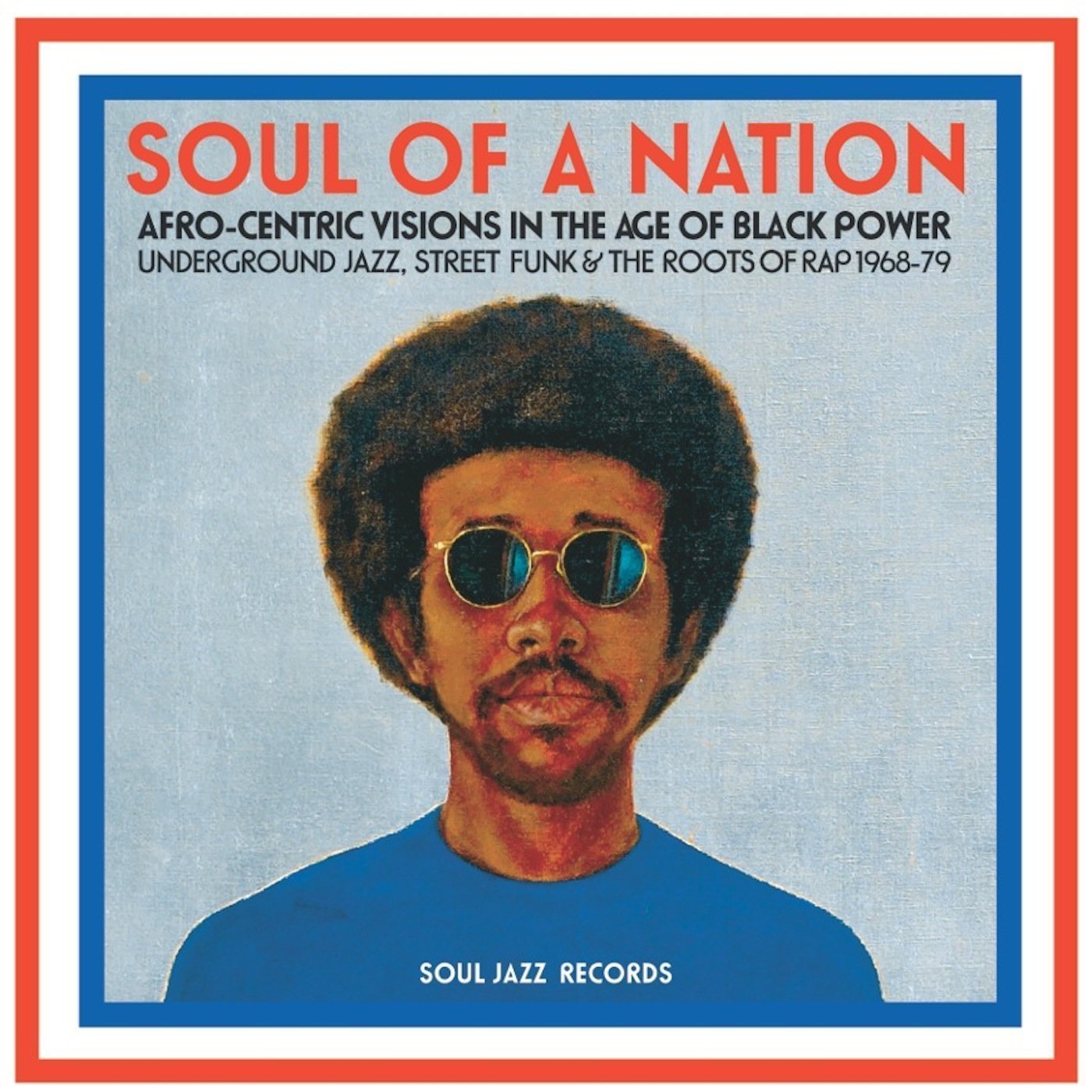
On the ‘4th’ of August 2017, Soul Jazz Records will released their eagerly awaited new compilation, Soul Of A Nation (Afro-Centric Visions In The Age of Black Power: Underground Jazz, Street Funk and The Roots Of Rap 1968-79). Its release coincides with the new Soul Of A Nation-Art In The Age Of Black Power exhibition, which opened at the Tate Modern on the ’12th’ of July and runs to the ’22nd’ October 2017. The exhibition covers the period between 1963 and 1983, and the thirteen tracks on Soul Of A Nation-(Afro-Centric Visions In The Age of Black Power: Underground Jazz, Street Funk and The Roots Of Rap 1968-79) are the perfect soundtrack to what was a hugely important period in American history.
1963 proved to be the height of the Civil Rights movement in America. Many African-Americans had devoted themselves to the Civil Rights movement and had been working towards the day when America would be fully integrated. That was the day that they had long dreamt about. Sometimes, it seemed tantalizingly close, other times, it looked as if their dream of integration and equality was out of reach. However, the members of the Civil Rights movement were never going to give up on that dream. Their American Dream was integration and equality.
Things started to change after The Civil Rights Act 1964 was enacted. It banned discrimination based on race, colour, religion, sex, or national origin in employment practices. The Civil Rights Act 1964 also ended unequal application of voter registration requirements, and prohibited racial segregation in schools, the workplace and in public accommodation. This was a huge step forward towards for the African-Americans population.
So was the implementation of The Voting Rights Act of 1965, which restored and protected voting rights for minorities. This was a hugely important piece of legislation. Another important piece of legislation was The Immigration and Nationality Act of 1965 which removed racial and national barriers to immigration, and expanded opportunities for immigrants from regions other than Europe. The third piece of important piece if legislation was The Fair Housing Act 1968, which banned discrimination in the sale or rental of housing. It looked as if progress was being made in America.
Especially as many African-Americans made a conscious decision to re-enter politics, even in the deep South. Other young African-Americans became involved in the Civil Rights’ movement. It looked as if this was a new beginning in America.
While America was changing, there was widespread rioting in many of America’s inner cities. This began in the African-American communities in 1964, and lasted right through to 1970. By then, the nascent Black Power movement’s influence was growing.
The Black Power movement’s roots can be traced back to the mid-sixties. By 1966, different groups within the Civil Rights movement had embraced the slogan Black Power. This included SNCC and CORE during the nineteen day March Against Fear in June 1966. Both organisations embraced the slogan Black Power, using it as way to describe trends towards militancy and self-reliance. Elsewhere, the Black Power movement started to gain and promote more of a sense in black pride and identity as well.
Among the most public faces of the Black Power movement were the Black Panther Party, which had been founded by Huey P. Newton and Bobby Seale in 1966. They adopted their own dress code, created a ten point plan, openly displayed firearms, used the clenched fist as a symbol of solidarity and used the slogan: “power to the people.” However, the Black Panther Party adopted the ideology of Malcolm X, the former member of the Nation of Islam, and used a: “by-any-means necessary” approach to stop inequality.
By 1968, the militant calls for Black Power were growing louder. It was a frustrating and worrying time for all African-Americans, not just those involved in the Civil Rights’ Movement.
The Civil Rights Act of 1968 had been filibustered as the year dawned. This had happened several times before, and most likely, would’ve happened again. However, when The National Advisory Commission On Civil Disorders in 1967 published its report on the ‘1st’ March 1968, it recommended that: “a comprehensive and enforceable federal open housing law” was a possible remedy to the civil disturbances. It looked as if there was a solution to what had been a long running problem.
Ironically, as The Senate debated The Civil Rights Act of 1968 Martin Luther King Jr was assassinated. This lead to the worst ever wave of civil unrest. Suddenly, filibustering was a thing of the past. The House passed The Civil Rights Act of 1968 on April ’10th’ and President Johnson signed it a day later on the ‘11th’. Although this was an important day for African-Americans, the death of Martin Luther King Jr, who had been an inspirational figure for many within the Civil Rights’ Movement.
Despite the death of Martin Luther King Jr, the Black Power movement was still a rallying cry for African-American pride, autonomy and solidarity. They drew inspiration from many of the newly independent African nations, who were embarking on a new and exciting period in their history.
Meanwhile, many African-Americans’ lives had been blighted by poverty, poor housing, unemployment and drug addiction. They were also still victims of racism and inequality. It was no surprise that so many African-Americans were becoming part of the Civil Rights’ movement, and were becoming involved in the Black Power movement. Many African-Americans became politicised for the first time. Others embraced the more revolutionary politics, and came to the conclusion that the lack Power movement’s: “by-any-means necessary” approach was the only way ahead during what was an intensely political period in African-American history.
As the sixties gave way to the seventies, many within the Civil Rights and Black Power movements started counting the cost of their struggle. They had lost Malcolm X and Martin Luther King Jr, who both fell victim to the assassin’s bullet. Still, the struggle would continue until the they achieved the American Dream of integration and equality.
Meanwhile, the Civil Rights and Black Power movement continued to influence artists, authors, poets and musicians. This includes music that feature on Soul Of A Nation-(Afro-Centric Visions In The Age of Black Power: Underground Jazz, Street Funk and The Roots Of Rap 1968-79). The thirteen tracks are a reminder of the ideals of the civil rights movement, black power and black nationalism. This influenced the evolvement of radical African-American music in America during what was an intensely political and revolutionary period.
During this period, artists like Gil Scott-Heron, Roy Ayers Ubiquity, Philip Cohran and The Artistic Heritage Ensemble, Phil Ranelin, Horace Tapscott With The Pan Afrikan Peoples Arkestra, David McKnight, Joe Henderson, African Rhythms, Doug Carn and Carlos Garnett emerged, and became part of this new musical movement. They all created groundbreaking music that had been influenced and inspired by tenets of the Civil Rights movement, Black Power and black nationalism. The music ranged from avant-garde, free jazz, funk, fusion, proto-rap, soul, soul jazz and spiritual jazz. This new music was very different from what many African-Americans listened to.
Especially the music Ray Charles was releasing and the music that was being churned out of the Detroit’s Motown soul factory. The artists on Soul Of A Nation were part of a brave new musical world, and created ambitious and innovative music that was representative of the African-American people during a crucial period in their history.
Soul Of A Nation-(Afro-Centric Visions In The Age of Black Power: Underground Jazz, Street Funk and The Roots Of Rap 1968-79) opens with Gil Scott-Heron’s The Revolution Will Not Be Televised, which made its debut on his 1970 debut Small Talk At ‘125th’ And Lenox, which was released on Bob Thiele’s Flying Dutchman Productions. A year later, the definitive version of The Revolution Will Not Be Televised feature on Gil Scott-Heron’s 1971 sophomore album Free Will. It’s an anthemic track that full of social comment that would become synonymous with the legendary singer, songwriter, musician, author, poet and political activist.
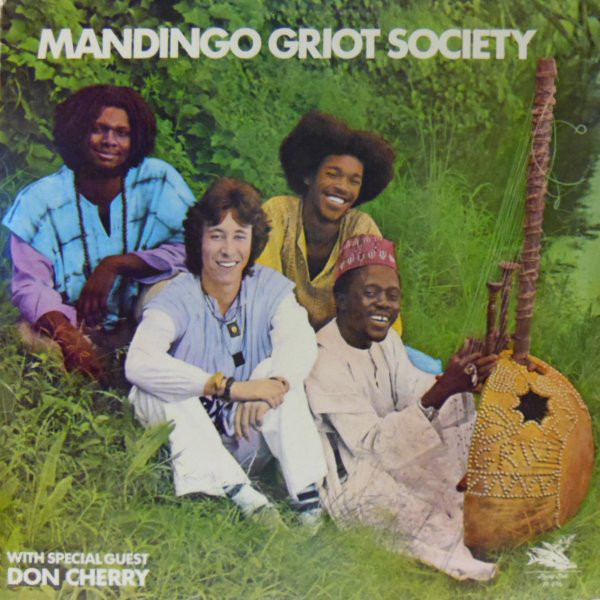
In 1978, Mandingo Griot Society released their eponymous debut album on the Chicago-based Flying Fish label. Mandingo Griot Society was a collaboration with forty-two year old trumpeter Don Cherry, who was one of the pioneers of free jazz. One of the highlights of the album was Sounds From The Bush which is a potent fusion of Afrobeat, African Roots and avant-jazz. It’s also the perfect introduction to Mandingo Griot Society, and free jazz legend Don Cherry.
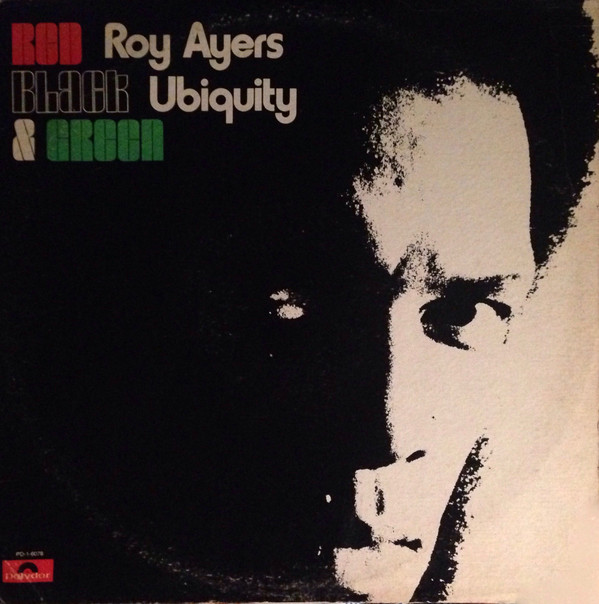
Just like Gil Scott-Heron’s The Revolution Will Not Be Televised, Roy Ayers Ubiquity’s Red, Black and Green is an anthemic track that is synonymous with this important period in African-American history. Red, Black And Green was the title-track to Roy Ayers Ubiquity’s 1973 album for Polydor. Vibes’ man Roy Ayers, leads features an all-star band on what was one of the finest albums of his career so far. One of its highlights was Red, Black And Green, a hopeful and joyous slice of jazz-funk.
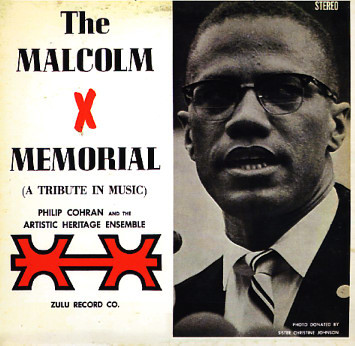
Three years after the death of Malcolm X, Philip Cohran And The Artistic Heritage Ensemble released The Malcolm X Memorial (A Tribute In Music) on Zulu Records. Nowadays, this four track album is regarded as a cult classic. It featured Malcolm X a mesmeric, dramatic and impassioned fusion of soul-jazz and Afrobeat.
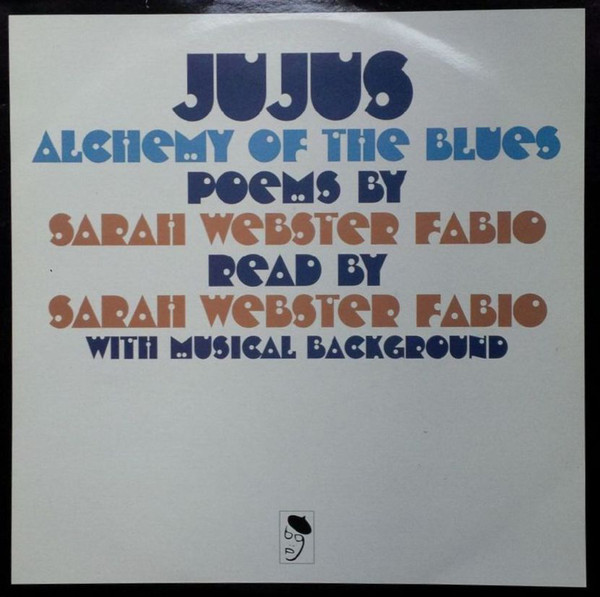
In 1976, poet Sarah Webster Fabio released her third album on Folkways Records, Jujus-Alchemy Of The Blues Poems By Sarah Webster Fabio Read By Sarah Webster Fabio. Providing the musical backdrop to Sarah Webster Fabio’s vocal which veered between soulful to proto-rap, was Don’t Fight The Feeling. They provide a funky, jazz-tinged backdrop on Sweet Songs which is a reminder of this hidden gem of an album.
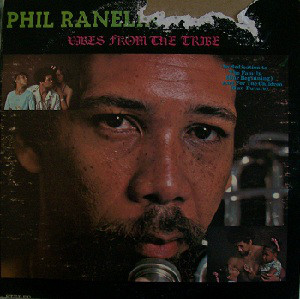
American jazz trombonist, composer, arranger, producer and bandleader Phil Ranelin released his sophomore solo album Vibes From The Tribes on the Detroit’s Tribe Records in 1976. Tribe Records was no ordinary label though. It was a political, social, and aesthetic collective of local musicians, whose leading lights of the collective were Wendell Harrison and Phil Ranelin. When Phil Ranelin came to record Vibes From The Tribes he was joined by other members of the collective, including Wendell Harrison Marcus Belgrave and Harold McKinney. One of their finest movements was the title-track, which opens the album. It’s a genre-melting fusion of funk, modal and soul jazz that showcases the truly talented Phil Ranelin at the peak of his creative powers, on this extremely rare album that nowadays, changes hands for upwards of £500.
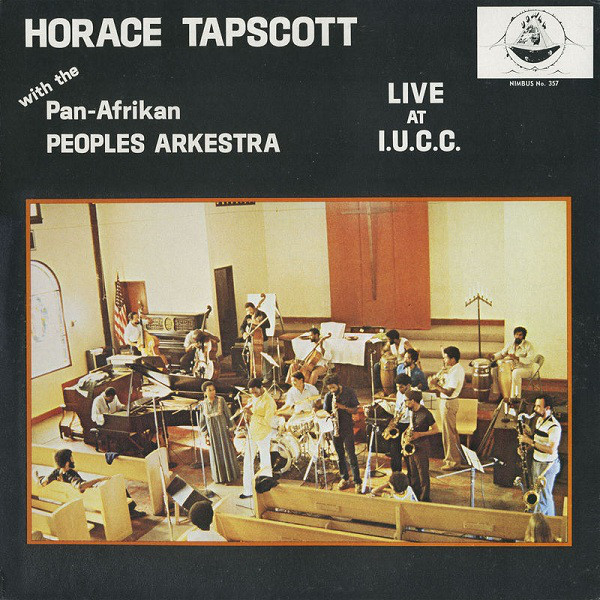
Live At I.U.C.C. was the album recorded by Horace Tapscott With The Pan Afrikan Peoples Arkestra Desert Fairy Princess between February and June 1979. It was released later in 1979 on Tom Albach’s newly founded Nimbus West Records label. He had founded the label after listening to some tapes that he bought from Horace Tapscott. These tapes became Live At I.U.C.C, which features Desert Fairy Princess. It’s one of the highlights of Live At I.U.C.C, which is an oft-overlooked album of spiritual jazz from Los Angeles.
David McKnight delivers an impassioned proto-rap vocal on Strong Men, against an understated backdrop. He’s accompanied by a spartan selection of African percussion and backing vocalists. Together, they provides the perfect backdrop on this potent mixture of music, poetry and social comment.
Joe Henderson’s career began in 1963, with the release of his debut album Page One on Blue Note Records. Thirteen years later, and Joe Henderson was about to release his sixteenth solo album Black Narcissus on Milestone Records. Black Narcissus featured a crack band of jazz musicians, with Joe Henderson playing tenor saxophone and synths, and co-producing the album. One of its highlights is the title-track which drifts along melodically, with Joe Henderson’s tenor saxophone playing a leading role.
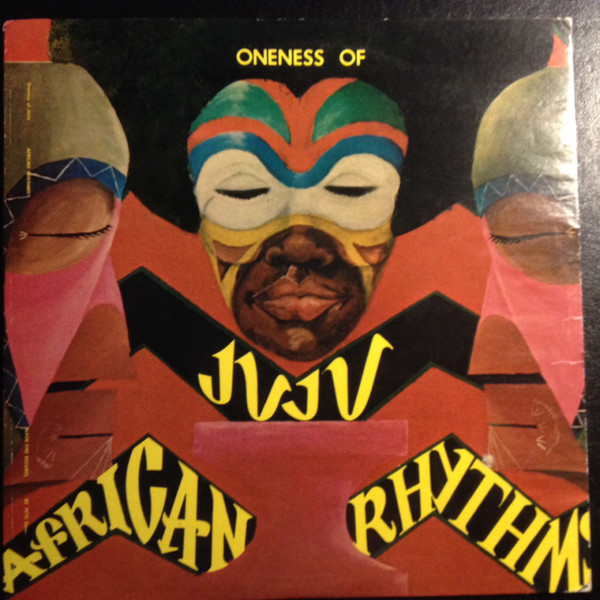
Oneness Of Juju released their debut album African Rhythms on the Black Fire label in 1975. The title-track African Rhythms has long been a favourite of DJs, dancers and compilers. No wonder, as it’s a delicious fusion of soul, funk, jazz and Afrobeat.
Pianist, songwriter and producer Doug Carn’s career began at Black Jazz Records in 1971, with the release of Infant Eyes. He released a quartet of albums on Black Jazz Records between 1971 and 1974. By 2001, Black Jazz Records was back and Doug Carn released his sixth album New Incentive “Firm Roots”. One songs that didn’t feature on the album was Suratal Ihklas. It was released as a single by the Heavenly Sweetness in 2008 and marked the welcome return and reinvention of Doug Carn.
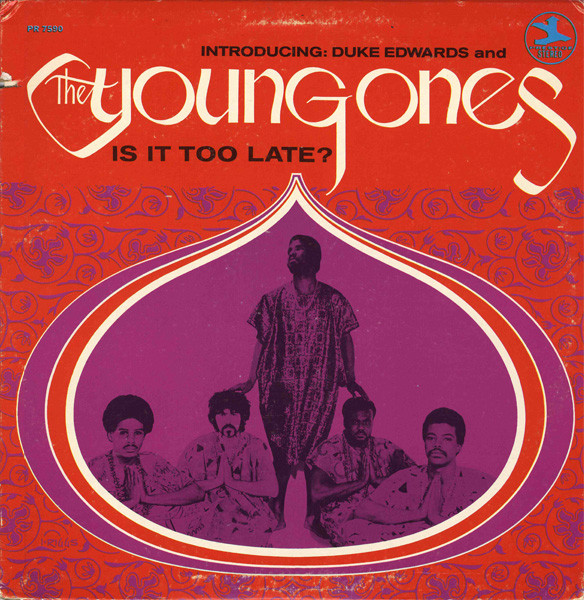
Duke Edwards and The Young Ones collaborated on Is It Too Late? which was released on Prestige in 1968. It featured Is It Too Late? which on the original album was a near fourteen minute epic. However, on Soul Of A Nation, it has been edited down to ten minutes. It features Duke Edwards’ impassioned soliloquy, which is combined elements of gospel, soul and free jazz. The result is a powerful genre-melting opus where Duke Edwards lays bare his soul.
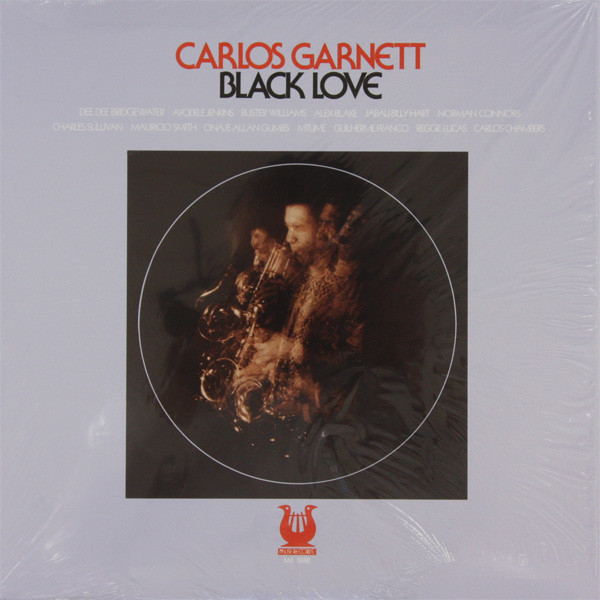
When Carlos Garnett released his sophomore album Black Love on Muse Records, in 1974, he brought vocalists Ayodele Jenkins and Dee Dee Bridgewater onboard. They were part of the all-star cast that recorded Black Love. One of its’ finest moments was Mother Of The Future, where Ayodele Jenkins and Dee Dee Bridgewater play leading roles on a track that marries avant-garde, free jazz, post bop and soul. Carlos Garnett even yodels, turning his vocal into another instrument on this ambitious track that is full of twists and turns. It’s a case of expect the unexpected but enjoy the journey on the tracks that closes Soul Of A Nation-(Afro-Centric Visions In The Age of Black Power: Underground Jazz, Street Funk and The Roots Of Rap 1968-79).
Just like previous Soul Jazz Records’ compilations, Soul Of A Nation-(Afro-Centric Visions In The Age of Black Power: Underground Jazz, Street Funk and The Roots Of Rap 1968-79) is lovingly compiled and curated compilation. The compilers have combined some familiar tracks with a few leftfield choices and hidden gems. They’re a reminder of what was hugely important and in some cases, frustrating and turbulent period in African-American history.
America was still blighted by racism, poverty and inequality. Some of those that had devoted themselves to the Civil Rights movement, and had been working towards the day when America would be fully integrated, must have felt that was never going to happen. Not after six years of riots in the inner cities between 1964 and 1970, and certainly not after the assassination of Malcolm X in 1965, and then Martin Luther King Jr in 1968. That lead to the worst civil unrest American had seen. However, it led to the passing of The Civil Rights Act of 1968. This was one step towards integration and equality.
Despite being was one step nearer reaching their goal, it was still a long way until the Civil Rights movement and Black Power Movement reached their destination. Providing the soundtrack to that journey were the thirteen artists on Soul Of A Nation-(Afro-Centric Visions In The Age of Black Power: Underground Jazz, Street Funk and The Roots Of Rap 1968-79). They were just a few of the musicians, artists, authors and poets that had been inspired by the tenets of the Civil Rights movement, Black Power and black nationalism. These musicians provided the soundtrack to the journey towards equality and equality.
Eventually, they reached their destination, and their fight for equality and equality was now a reality. No longer were African-Americans persecuted and discriminated in their own country. Instead, they were treated as equals, which was what Malcolm X and Martin Luther King Jr had dreamt of and worked towards. The members of the Civil Rights and Black Power movements never gave up on that dream, and eventually, they achieved their American Dream, which was integration and equality. Documenting that long and eventful journey were the artists on Soul Of A Nation-(Afro-Centric Visions In The Age of Black Power: Underground Jazz, Street Funk and The Roots Of Rap 1968-79).
Soul Of A Nation (Afro-Centric Visions In The Age of Black Power: Underground Jazz, Street Funk and The Roots Of Rap 1968-79).


GIL SCOTT-HERON-THE REVOLUTION WILL NOT BE TELEVISED…PLUS.
Gil Scott-Heron-The Revolution Will Not Be Televised…Plus.
Label: BGP.
After releasing a trio of studio albums on Bob Thiele’s Flying Dutchman Productions between 1970 and 1972, Gil Scott-Heron signed to Charles Tolliver and Stanley Cowell’s Strata-East Records. By then, Gil Scott-Heron was well on his way to becoming America’s conscience.
Gil Scott-Heron was a poet, musician, and author who highlighted the social and political problems affecting and blighting American society. He was, to all intents and purposes, America’s conscience, highlighting the problems of racism, poverty, corruption, inequality and drug addiction. These subjects had already featured in the lyrics to the songs on Gil Scott-Heron’s first three albums, 1970s Small Talk At ‘125th’ and Lenox, 1971s Pieces of a Man and 1972s Free Will. The lyrics were cerebral, witty, scathing and most importantly, honest as Gil Scott-Heron speaks up for the downtrodden and disenfranchised. Fearlessly, Gil Scott-Heron highlighted the social and political problems that blighted America. This he would continue to do at Strata-East Records.
Having signed to Strata-East Records, Gil Scott-Heron began work on his fourth studio album Winter In America with Brian Jackson who co-produced the album at D&B Sound, in Silver Spring, Maryland. The sessions began on the ‘4th’ and ‘5th’ September and were completed on the ‘15th’ of October of 1973. By then, Gil Scott-Heron had recorded the nine tracks that became Winter In America.
Seven months later, on the ‘5th’ of October 1975, Winter In America was released to widespread critical acclaim. Some critics believed it that Winter In America was finest album. Some critics wondered if this was going to be Gil Scott-Heron’s breakthrough album?
At first, this was looking doubtful. Initially, copies of Winter In America were in short supply, as a result of Strata-East Records independent distribution policy. This meant that many record shops struggled to secure the copies of Winter In America that they needed. Eventually, this problem was resolved and on June ’29th’ 1974, Winter In America entered the US Top Jazz Albums charts.
Little did Gil Scott-Heron realise that this as the start of a forty week run in the US Top Jazz Albums charts, which saw Winter In America eventually reach number six. This was helped by the success of only single released from Winter In America, The Bottle. Helped by an underground following, The Bottle gave Gil Scott-Heron the biggest hit of his career, when it reached number fifteen in the US R&B charts. The success of The Bottle resulted in Winter In America selling 300,000 copies. Incredibly, this wasn’t enough to even reach the lower reaches of the US Billboard 200.
It was enough for Arista’s Clive Davis to come calling, and after just one album, Gil Scott-Heron left Strata-East Records. It had been a short but successful and profitable partnership.
Sadly, the three albums that Gil Scott-Heron had released for Bob Thiele’s Flying Dutchman Production hadn’t been as successful. While they had sold reasonably well, they didn’t come close to replicating the sales of Winter and America and The Bottle. Bob Thiele must have been frustrated as he had wanted to record more albums with Gil Scott-Heron. However, he was still considering returning to academia, and had moved back to Washington with the rest of his band. Gil Scott-Heron was the one that got away.
Since then, Bob Thiele had signed a new deal with RCA. Part of the deal was that Flying Dutchman Productions released a compilation of tracks from Gil Scott-Heron’s first three albums, 1970s Small Talk At ‘125th’ and Lenox, 1971s Pieces of a Man and 1972s Free Will. This was perfect timing, as Gil Scott-Heron was now officially one of music’s rising stars.
For the Gil Scott-Heron compilation, Bob Thiele spent time choosing eleven tracks from 1970s Small Talk At ‘125th’ and Lenox, 1971s Pieces of a Man and 1972s Free Will, that would eventually become The Revolution Will Not Be Televised. There was no way that Bob Thiele was going to be accused of throwing together a compilation that cashed-in on Gil Scott-Heron’s newfound popularity. Instead, The Revolution Will Not Be Televised was a lovingly curated compilation that was compiled by the man who discovered him…Bob Thiele. When he had finalised the track-listing, The Revolution Will Not Be Televised was released in late 1974, and was the perfect introduction to Gil Scott-Heron’s Flying Dutchman Productions’ years.
Now forty-three years later, Ace Records have recently reissued The Revolution Will Not Be Televised. However, the compilation that was the perfect primer to Gil Scott-Heron’s Flying Dutchman Productions’ years has been given a makeover. The original album has been replicated with a further nine tracks from Gil Scott-Heron’s Flying Dutchman Productions’ years added. These twenty tracks become The Revolution Will Not Be Televised…Plus, which document the early years of Gil Scott-Heron’s five decade career.
While losing Gil Scott-Heron had been frustrating for Bob Thiele, he was grateful that he had discovered the twenty-one year old poet, musician, and author in 1970. This came about after Bob Thiele discovered Small Talk At ‘125th’ and Lenox a book of poetry which had been released by World Publishing.
Not long after the release of Small Talk At ‘125th’ and Lenox, Gil Scott-Heron heard what Bob Thiele was doing at Flying Dutchman Productions, and decided to arrange a meeting where he could introduce himself properly. Gil Scott-Heron wondered if some of the artists signed to Flying Dutchman Productions might be able to use some of his poetry? So when the meeting took place, Gil Scott-Heron took along a copy of Small Talk At ‘125th’ and Lenox, and told Bob Thiele about his life so far.
Gil Scott-Heron recounted how he was born on April Fool’s Day in 1949, which later, he joked become an important day in Chicago’s musical history. That will always be the remembered as the day poet, author, musician and political activist Gil Scott-Heron was born.
His mother Bobbie Scott-Heron, was an opera singer, who sang with New York’s Oratorio Society. Gil Scott-Heron’s father was Gil Heron, a Jamaican footballer, who at one time, played for Glasgow Celtic Football Club. Sadly, though, Bobbie and Gil’s marriage ended when Gil Scott-Heron was young.
After this, Gil Scott-Heron was sent to live with his maternal grandmother, Lillie Scott, who lived in Jackson, Tennessee. Then when Gil Scott-Heron was just twelve, Lillie Scott died.
Gil Scott-Heron returned to New York to live with his mother, who was now living in the Bronx. Originally, Gil Scott-Heron enrolled at the DeWitt Clinton High School, but later, moved to the Fieldston High School.
This came after impressing the head of the English department read one of Gil Scott-Heron’s essays, and recommended that he received a full scholarship. This proved a poisoned chalice. While the education he was receiving was far superior, Gil Scott-Heron was one of only five black students. He felt alienated and alone. That wasn’t the only problem. There was also a socioeconomic gap, with the other students coming from a much more affluent background. Gil Scott-Heron by comparison, was the son of a single mother and was from a very different background. It was during this time that Gil Scott-Heron became socially and politically aware. His eyes were opened to inequality, injustice and racism. This would shape his music in later years. Before that, Gil Scott-Heron headed to Lincoln University,
When Gil Scott-Heron was considering which university to enrol at, Langston Hughes recommended Lincoln University, which where he was staying. Gil Scott-Heron took his friend’s advice, and enrolled at Lincoln University. This was where Gil Scott-Heron’s musical career began.
At Lincoln University, Gil Scott-Heron formed his first band, the Black and Blues. Joining Gil Scott-Heron in the band was Langston Hughes. Little did Gil Scott-Heron know that this was the start of a long and illustrious career. However, after two years at Lincoln University, Gil Scott-Heron decided to take time out Lincoln University to write a novel.
During this period, Gil Scott-Heron wrote two novels. His first novel was a thriller entitled The Vulture, which was published in 1970. Whilst writing The Vulture, Gil Scott-Heron saw The Last Poets in Lincoln in 1969. This had a huge effect on him.
After watching The Last Poets, Gil Scott-Heron approached the band and asked: “can I form a band like you guys?” The seed had already been sown. Maybe, making music rather than writing books was the direction that Gil Scott-Heron’s career headed?
Having been impressed and inspired by The Last Poets and now considering a career in music, Gil Scott-Heron had a lot on his mind as he headed back to New York, where he found a new home in Chelsea, Manhattan. This concluded with the publication of Gil Scott-Heron’s book of poetry, Small Talk At ‘125th’ and Lenox by World Publishing. Now Gil Scott-Heron could add poet to his burgeoning CV. Soon, he hoped to add singer and songwriter.
Once he’d settled in to his new apartment in Manhattan, Gil Scott-Heron decided to make his dream a reality and started looking for a record company. Gil Scott-Heron just so happened to approach a label tailor-made for his music, Flying Dutchman Productions.
Following his departure from ABC/Impulse Bob Thiele had decided to found his own label. He was perfectly qualified to do so, having worked with some of the most innovative and creative musicians in the history of jazz over the last few years. During that period, Bob came to the conclusion that often, large record companies aren’t the best environment for innovative and creative musicians. Often, these musical mavericks didn’t thrive within such an orthodox environment. Instead, their creativity is restricted, and they’re unable to experiment and innovate. For many a musical maverick who had signed to a large record label, the experienced had proved frustrating and unsatisfactory. So when Bob Thiele parted company with Impulse, who he had transformed into one of jazz’s pioneering labels, he founded Flying Dutchman Productions. This was the label that Gil Scott-Heron approached. There was a problem though.
While Bob wanted to sign Gil Scott-Heron, there was a problem,… funding. The funding that Phillips, the Dutch record label had given Bob Thiele wasn’t going as far as he had hoped. Despite this, when he met Gil Scott-Heron he was impressed by the poet, musician, and author. So much so, that Bob Thiele decided to fund an album that was a fusion of poetry accompanied by understated, percussive arrangements.
Small Talk At 125 and Lenox.
This was Small Talk At 125 and Lenox, which featured fourteen songs from the pen of Gil Scott-Heron. Initially, it was claimed that Gil Scott-Heron and two percussionists, David Barnes, Eddie Knowles and Charlie Saunders, recorded the album live at a night club on the corner of 125 and Lenox. That wasn’t strictly true.
Forty-two years later, one of the best kept secrets in music was no more. It transpired that Small Talk At 125 and Lenox was recorded live in the studio in front of a few invited guests. Taking charge of production was Bob Thiele, who was an experienced producer.
With Bob Thiele at the controls, Gil Scott-Heron recorded an accomplished album that is a mixture of jazz, proto-rap, spoken word poetry and soul. It was released later in 1970, and immediately, comparisons were drawn with the group who had inspired Gil Scott-Heron, The Last Poets. This was a fair comment to some extent.
When one listen to tracks like the original version The Revolution Will Not Be Televised, plus Brother, Whitey On The Moon, Paint It Black and Who’ll Pay Reparations On My Soul? critics realised that Gil Scott-Heron had taken what The Last Poets had been doing to the next level. This he managed to do with just a trop percussionists accompanying him, on Small Talk At 125th and Lenox, which was a potent and explosive mix of scathing political and social comment.
Although Small Talk At ‘125th’ and Lenox was a groundbreaking and powerful debut album, it didn’t sell in vast quantities. Instead, it sold steadily, and shouldn’t have lost Flying Dutchman Productions money, as they had managed to keep their overheads low. However, Small Talk At ‘125th’ and Lenox slipped under the musical radar, and many record buyers only discovered the album when Gil Scott-Heron released Winter In America and The Bottle in 1975. By then, Gil Scott-Heron had released a trio of albums for Bob Thiele’s Flying Dutchman Productions.
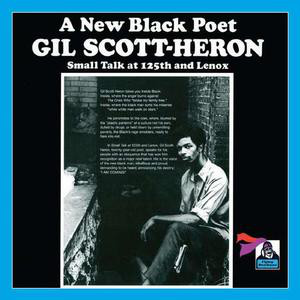
Pieces Of A Man.
The second of the Flying Dutchman Productions’ trio was Pieces Of A Man, which featured eleven songs, including four written by Gil Scott-Heron. This included The Revolution Will Not Be Televised, which made its debut on Small Talk at ‘125th. and Lenox. The other seven songs were penned by Gil Scott-Heron and Brian Jackson, who would forge a successful songwriting partnership.
Recording of Pieces Of A Man took place on the ‘19th’ and ‘20th’ April 1971, RCA Studios, in New York. This time, Gil Scott-Heron was accompanied by a full band which featured a few well-known names.
When Bob Thiele asked Gil who he’d like to accompany him, jokingly, Gil Scott-Heron said flautist and saxophonist Hubert Laws and bassist Ron Carter. Bob Thiele who know everyone who was everyone in jazz, got them onboard for the recording of Pieces Of A Man. This was Bob Thiele’s way of making Gil Scott-Heron feel at home. Bob Thiele knew that putting together a top class bands was the way to get the best performance possible from an artist.
With a crack band in tow, Gil Scott Heron set about recording his sophomore album Pieces Of A Man. The crack band included a rhythm section of drummer Bernard “Pretty” Purdie and guitarist Burt Jones. Brian Jackson played piano and Gil Scott Heron played guitar, piano and sang lead vocals. Producing Pieces Of A Man was Bob Thiele. After a recording season that lasted just two days, Pieces Of A Man was completed. Now it was ready for release.
When Pieces Of A Man was released in 1971, only Rolling Stone magazine realised the cultural importance of the album. Pieces Of A Man passed the rest of the music press by. This is a sad indictment on music journalism at what was one of the most important periods in musical, social and political history.
By 1971, America was struggling with a variety of social problems, ranging from the Vietnam War, poverty and racism. Gil Scott Heron was using his music to speak for the poor, downtrodden and disenfranchised. Pieces Of A Man was an important album, and one that had the potential to make Americans think about the status quo, and consider change. Sadly, just like Pieces Of A Man passed the mainstream music by, it was a similar case with record buyers. Pieces Of A Man failed to find the audience it deserved.
Apart from spending six weeks in the US Jazz Charts, where it peaked at a lowly number twenty-five, commercial success passed Pieces Of A Man by. That was as good as it got for Pieces Of A Man. This was somewhat ironic, given the later reappraisal of the album.
When critics reappraised Pieces Of A Man at a later date, they hailed it a classic album. The music was intense, politically charged, innovative and influential. That comes as no surprise, as Pieces Of A Man features some of the best and most powerful songs Gil Scott-Heron wrote during his time at Flying Dutchman Productions. This included The Revolution Will Not Be Televised, Save the Children, Lady Day and John Coltrane, Home Is Where The Hatred Is, When You Are Who You Are, I Think I’ll Call It Morning, Pieces Of A Man and Or Down You Fall. They’re part of what was the first classic album of Gil Scott-Heron’s career. Alas, the critics has still to rewrite musical history. was
Gil Scott-Heron had released two innovative and influential albums, Small Talk At ‘125th’ and Lenox and Pieces Of A Man, they had passed music lovers by. This was disappointing for Gil Scott-Heron, who would only release one more album for Bob Thiele’s Flying Dutchman Productions, Free Will. However, would it be a case of third time lucky?
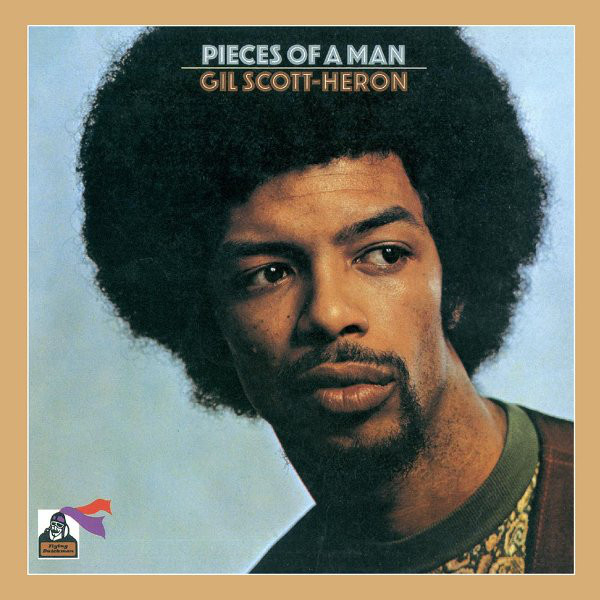
Free Will.
For the followup to Pieces Of A Man, Free Will, Gil Scott-Heron had written seven new songs. The other five songs, Free Will, The Middle Of Your Day, The Get Out Of The Ghetto Blues, Speed Kills and Did You Hear What They Said? were collaborations between Gil Scott-Heron and Brian Jackson. He played a huge part in the rise and rise of Gil Scott-Heron over the next few years.
Brian Jackson and Gil Scott-Heron had already formed a successful songwriting partnership. However, Brian Jackson was more than a songwriter. He was also a talented multi-instrumentalist who played piano, keyboards flute and bells on Free Will.
The Free Will sessions took place at RCA Studios, in New York, between the ‘2nd’ and ‘3rd’ March 1972. Just like on Pieces Of A Man, an all-star lineup accompanied Gil Scott-Heron. The rhythm section included drummer Bernard ‘Pretty’ Purdie, bassist Jerry Jemmott, drummer Pretty Purdie and guitarist David Spinozza. Flautist and saxophonist Hubert Laws, who’d played on Pieces Of A Man, returned, while Brian Jackson played electric piano, flute and bells. Gil Scott-Heron took charge of the lead vocals on Free Will. Arranging and conducting Free Will was Horace Ott, while Bob Thiele took charge of production. After just two days of lengthy recording sessions, Free Will was completed. It was released later in 1972.
On Free Will’s release later in 1972, it was well received by critics. Rolling Stone flew the flag for Free Will and Gil Scott-Heron. Despite this, Free Will failed to chart in the US Billboard 200 and US R&B charts However, Free Will sold between 20,000 to 30,000 copies, and reached the US Jazz charts. Despite this, this was a huge disappointment Gil Scott-Heron.
With keyboardist Brian Jackson at his side, Gil Scott-Heron had fused elements of jazz, blues, funk, proto-rap and soul on Free Will. Fearlessly, he continued to highlight the social and political problems of the early seventies, and tackle controversial subjects and scenarios head on. Gil Scott-Heron delivered the lyrics with his unique and inimitable proto-rap style on Free Will. Among its highlights were Free Will, The Middle Of Your Day, The Get Out Of The Ghetto Blues, Speed Kills and Did You Hear What They Said? That took care of side one, which was one of the most cohesive sides of Gil Scott-Heron’s nascent career. It was almost flawless. Then on side, Gil Scott-Heron picks up where he left off on two No Knock and Sex Education: Ghetto Style. It was the third album from musical pioneer Gil Scott-Heron, who would become one of the most important artists of his generation.
Sadly, Free will was his final album for Bob Thiele’s Flying Dutchman Productions. Not long after the release of Free Will, Gil Scott-Heron left Flying Dutchman Productions.

By then, Gil Scott-Heron’s thoughts were said to have turned to academia, and his unfinished degree. Gil Scott-Heron and his band returned to Washington D.C. which became their home. However, Gil Scott-Heron never came close to enrolling at his former alma mater Lincoln University.
Not when Charles Tolliver and Stanley Cowell of Strata-East Records offered Gil Scott-Heron a new recording contract. This lead to the release of Winter In America in May 1975, which sold over 300,000 copies and featured Gil Scott-Heron’s biggest hit single The Bottle. However, Winter In America was the only album Gil Scott-Heron released for Strata-East Records.
Clive Davis of Arista came calling, and offered Gil Scott-Heron the opportunity to sign to a major label. This was the start of a relationship that produced nine albums and lasted until 1985. Gil Scott-Heron’s debut for Arista was The First Minute Of A New Day, which was the most successful of his career so far. Not only did it reach number five in the US Top Jazz Albums charts and number eight in the US R&B charts, The First Minute Of A New Day also reached number thirty in the US Billboard 200. Gil Scott-Heron’s music had crossed over and reached the wider audience that Bob Thiele knew it always would.
The First Minute Of A New Day proved to the most successful album of Gil Scott-Heron’s forty-one year recording career. While many of his albums charted, they never reached the same heights as The First Minute Of A New Day. It was one of the finest albums of Gil Scott-Heron’s career at Arista.
Gil Scott-Heron recorded some of the best music of his career long before he signed to Arista. This was at Bob Thiele’s Flying Dutchman Productions where he released three studio albums, 1970s Small Talk At ‘125th’ and Lenox, 1971s Pieces of a Man and 1972s Free Will. This trio of albums includes some of the best music of Gil Scott-Heron’s long career. It showcases one of the most talented singer and songwriters of his generation as he blossoms and flourishes. Bob Thiele had given Gil Scott-Heron a platform, and the freedom to record and release music that he believed in.
Soon, was well on his way to becoming America’s social conscience, as he provided a voice for those who had none. Gil Scott-Heron was their voice on 1970s Small Talk At ‘125th’ and Lenox, 1971s Pieces of a Man and 1972s Free Will, which feature lyrics that cerebral, witty, scathing and most importantly, honest as Gil Scott-Heron spoke up for the poor, downtrodden and disenfranchised. Fearlessly, Gil Scott-Heron highlighted the social and political problems that blighted America in the early seventies using his unique and imitable proto-rap style that would influence and inspire further generations and musicians.
Many of these musicians, and indeed record buyers, first encountered Gil Scott-Heron when they came across the compilations The Revolution Will Not Be Televised, which Bob Thiele’s Flying Dutchman Productions had released in 1974 as part of their new agreement with RCA. The Revolution Will Not Be Televised proved to be the perfect primer for newcomers to Gil Scott-Heron, as it featured some of the greatest songs he had released for Flying Dutchman Productions. However, when Bob Thiele was compiling this lovingly curated compilation he could only fit eleven tracks onto a LP. This meant that some songs didn’t make The Revolution Will Not Be Televised which was recently reissued by BGP, an imprint of Ace Records. That wasn’t all.
There was also a CD version of The Revolution Will Not Be Televised that features nine bonus tracks. This twenty track Magnus Opus was also released by BGP, and is entitled The Revolution Will Not Be Televised…Plus. For newcomers to Gil Scott-Heron’s music, The Revolution Will Not Be Televised…Plus is the perfect starting place. No wonder, The Revolution Will Not Be Televised…Plus features of the twenty of the finest tracks from 1970s Small Talk At ‘125th’ and Lenox, 1971s Pieces of a Man and 1972s Free Will. This trio of albums feature some of the greatest music from the man who would become known as America’s musical conscience, Gil Scott-Heron, whose career at Bob Thiele’s Flying Dutchman Productions is celebrated on The Revolution Will Not Be Televised…Plus
Gil Scott-Heron-The Revolution Will Not Be Televised…Plus.
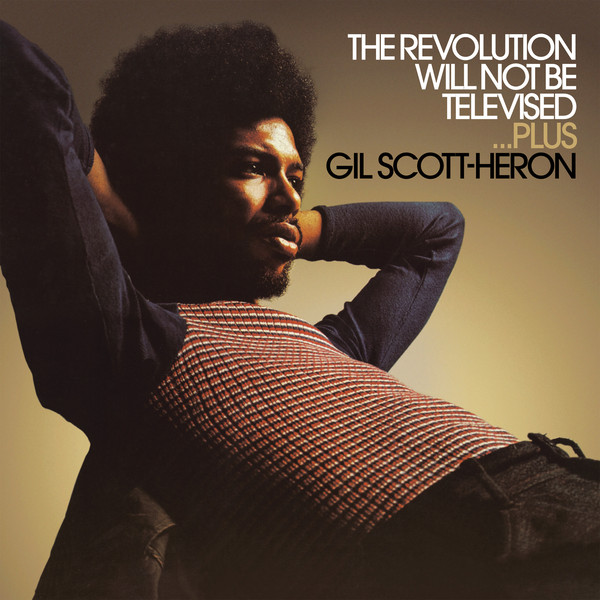
JOHN JAMES-MORNING BRINGS THE LIGHT, JOHN JAMES, SKY IN MY PIE AND HEAD IN THE CLOUDS.
John James-Morning Brings The Light, John James, Sky In My Pie and Head In The Clouds.
Label: BGO Records.
When twenty-one year John James first started playing in folk clubs across Britain, many musicians and music fans were struck by just how versatile a guitarist he was. Many started referred to the Welsh singer-songwriter as a virtuoso as he showcased his fingerstyle guitar technique. Seamlessly, he could switch between blues to jazz and even ragtime. Musically, John James was a man for all seasons. However, what many musicians and music fans didn’t know, was that John James was a recent convert to the guitar.
John James who was born in Lampeter, Wales in 1967, learnt the basics of music on the piano, but at the age of twelve, decided to switch to the guitar. This was a decision he certainly wouldn’t regret.
Having mastered the guitar, John James would later, start playing in various pop and R&B bands on the local live circuit. For John James, this akin ti serving a musical apprenticeship and where he learnt his trade.
After a while, John James turned his back on the local pop and R&B bands, and decided to concentrate on acoustic folk. This was no surprise, given the American folk boom of the early sixties. Across the Atlantic, many an aspiring folk musician made their way to Greenwich Village, in New York, where Bob Dylan, Phil Ochs, Tom Paxton, Fred Neil, Tom Rush and Gordon Lightfoot had embarked upon successful careers. Many young, musicians also became part of the British folk boom, including John James.
He was twenty-one when he made his debut on the British folk scene, where John James joined Pentangle, Gerry Rafferty, Gordon Giltrap, Ralph McTell and Al Stewart. For the next two years, John James crisscrossed Britain, playing in various folk clubs. Each night, John James’ set was a mixture of his own songs, and a selection of old ragtime piano songs which were rearranged for on the guitar. This proved a winning combination on the folk scene, as John James served what was the final part of his musical apprenticeship. It would stand him in good stead for the future, as the sixties gave way to the seventies.
In 1970, twenty-three John James was approached by Transatlantic Records, with the offer of a recording contract. The A&R people at Transatlantic Records had heard John James playing live, and realised that the music on his setlist would prove popular with record buyers. It didn’t take long for John James to accept Transatlantic Records offer, before he signed on the dotted line. This was the start of a five-year spell at Transatlantic Records, where John James released four albums between 1970 and 1975. These albums, Morning Brings The Light, John James, Sky In My Pie and Head In The Clouds were recently released by BGO Records.
Morning Brings The Light.
Now that John James had signed to Transatlantic Records, they were keen for John James to begin work on what became his debut album, Morning Brings The Light. It would feature a mixture of John James and cover versions.
For Morning Brings The Light, John James chose a selection of songs that reflected one of his live sets. This included eight of his own compositions including If Only I, One Long Happy Night, Once I Lived By The Sea, Picture Rag, A Little Blues, So Long Since I Was Home, Lampeter and Morning Brings The Light. They were augmented by Pickles and Peppers which was arranged John James, plus Stan Kelly’s Liverpool Lullaby, Hogan’s Alley (Black Eyed Blues) and the Original Dixieland Jazz Band’s Ostrich Walk. These twelve songs were produced by Chris Golbey.
Transatlantic Records contracted out the recording of John James’ debut album, which was recorded by a production company. Chris Golbey was credited as producer and Len Black executive producer. They oversaw John James as sang and played his trusty guitar on the twelve tracks became Morning Brings The Light.
Morning Brings The Light was well received by critics and amongst the folk community. Critics were won over John James, as he switched between folk, blues and ragtime. John James was at his best on the beautiful emotive folk ballads on Morning Brings The Light. Especially, If Only I, One Long Happy Night, Once I Lived By The Sea, A Little Blues, So Long Since I Was Home and Morning Brings The Light which feature a talented troubadour. Pickles And Peppers proves the perfect showcase for John James fingerstyle guitar technique, which provides an effective accompaniment throughout Morning Brings The Light. It looked as if
When Morning Brings The Light was released, John James’ debut album found favour within the folk community. Transatlantic Records who knew their market, it sold reasonably well. However, not well enough to reach the British charts. Despite that, John James had sold well for a folk album, and the future looked bright for the Welsh troubadour.

John James.
Two years before John James returned with his eponymous sophomore album. During that period, John James concentrated on the playing live. This was much more profitable for many folk singers, who were reluctant to give up lucrative live work. However, for any artist, an album was like a calling card, and had the potential to introduce their music to a much wider audience.
For his eponymous sophomore album, John James wrote seven of the eleven tracks, including To Meet You I Hurry Down, Evening Comes Quickly, Three Through The Lanes, Tim E Whay, Song Around A Square, Rolling On Down and Daughter Of The Wind. They were joined by four cover versions including Pete Berry’s Jazzbo’s Holiday. The other three tracks Original Rags, Stoptime and Listening To That Old Rag and Ragtime Dance were Scott Joplin compositions
John James had been given piano rolls featuring some Scott Joplin’s music by Reg Turner. He suggested that John James transpose some of the Scott Joplin compositions for the guitar, as he had the necessary talent. This wasn’t going to be easy, but if anyone could, it was John James.
He managed to transpose the songs for guitar, and when he came to record John James, they were among the eleven songs he recorded with producer John Whitehead at Sound Techniques and Livingston Studios, in London. The only other person present while the recording was taking place was Jo James, who was then married to John James. Soon, the album started to take shape and before long, was completed.
After nearly two years away, the Welsh troubadour returned with his sophomore album John James. Just like Morning Brings The Light, John James received praise and plaudits upon its release. It was another album of acoustic folk, blues and ragtime. John James decision to transpose the trio of Scott Joplin songs proved to be a masterstroke, and they took on new life when played on the guitar. However, John James came into his own on ballads like To Meet You I Hurry Down, Evening Comes Quickly, Song Around A Square and Rolling On Down. Three Through The Lanes and Daughter Of The Wind both proved to be the perfect showcase for John James’ for fingerstyle guitar technique. By then, he was one of finest purveyors of the fingerstyle guitar technique on the British folk scene, and one of its rising stars.
Later in 1972, Transatlantic Records released John James, which although it didn’t sell in huge quantities, proved popular within the folk community. Sadly, John James didn’t find an audience within the wider musical community. By 1972, music was changing, with progressive rock, hard rock and glam rock growing in popularity. Albums of acoustic folk and ragtime weren’t going to reach the British charts. As a result, John James was one of music’s best kept secrets as far as the wider record buying public were concerned.
Sky In My Pie.
That was a great shame, given how talented John James was. He was one of the finest guitarists on the British folk scene. So was Pete Berryman, who was another familiar face on the British folk scene. The two virtuoso guitarists, who had been attempting to popularise the ragtime guitar style, and the music found a small, appreciative audience. However, it was still to be heard by the wider record buying public. John James and Pete Berryman wanted to change this, and hit on the idea of collaborating on an album together, which became Sky In My Pie.
For Sky In My Pie, fifteen songs were chosen, with John James writing And Sam Came Too, Kicking Up The Dust and Be Mine Or Run. John James also wrote Sailor’s Farewell, Easy Street and Blap Bam Boom with Pete Berryman, who contributed Sky In My Pie, Conquistador, Quiet Days and Turn Your Face. Other songs included Mammy O’Mine and the traditional song Out On The Rolling Sea which Pete Berryman arranged. They were joined by Alec Templeton’s Bach Goes To Town, Felix Arndt’s Nola and Scot Joplin’s Weeping Willow. These fifteen tracks became John James’ third album Sky In My Pie.
Recording of Sky In My Pie took place at Sound Techniques, London, with Stefan Grossman taking charge of production. He was a friend of John James, and the two men had much in much in common.
Stefan Grossman was a Brooklyn born, acoustic fingerstyle guitarist and singer, who had moved from New York to London in 1967. This was the same time that John James had arrived in London. Not long after this, the two men met and became friends. By 1972, Stefan Grossman had already released eight albums, and had embarked upon a career as a producer. Sky In My Pie was his latest production, and he proved the perfect person to record an album featuring two guitarists.
Sky In My Pie was released later in 1972 and received praise and plaudits within the folk community. The album featured a masterclass from two of the finest exponents acoustic fingerstyle guitar playing. They showcase their considerable skills from the opening bars of And Sam Came Too, and proceed to work their way through fifteen songs where they flit between folk, blues and ragtime. On new songs and cover versions, the two guitarists encourage each other to new heights right until the closing notes of Turn Your Face. By then, it’s apparent that Sky In My Pie is one of the hidden gems in the history of British acoustic folk.
Sadly, it was a familiar story when Sky In My Pie was released. While Sky In My Pie was popular within the folk community, it failed to find an audience further afield. This was disappointing as John James, Pete Berryman and producer Stefan Grossman had hoped that it would introduce the music to the wider record buying public. Alas, it wasn’t to be as Sky In My Pie slipped under the musical radar.
Head In The Clouds.
Nearly three years passed before John James began work on his fourth album for Transatlantic Records, Head In The Clouds, in 1975. Just like his previous album Sky In My Pie, John James was joined on Head In The Clouds by a very special guest artist, John Renbourn.
By 1975, John Renbourn was one of the leading lights of the British folk scene, John Renbourn. He was another English fingerstyle guitarist, singer and songwriter, and had been a member of Pentangle. However, John Renbourn had just left Pentangle and moved to Devon to form a new band. That was where John James and John Renbourn met, when they became neighbours. When John James’ thoughts turned his fourth album, Head In The Clouds, John Renbourn agreed to collaborate on the album.
Before recording began John James penned Georgemas Junction, Head In The Clouds, Stranger In The World, Secrets In The Sky and Stretching Of A Young Girl’s Heart. They were joined by covers of George Botsford’s Black And White Rag, Rev. Gary Davis’ Slow Drag, John Renbourn’s Wormwood Tangle, Charlie Byrd’s Blues For Felix, Scott Joplin’s Heliotrope Bouquet and the Griffiths’ composition Rags To Riches. These eleven tracks which became Head In The Clouds, were recorded at two studios.
This included Sound Techniques, in London, which was where John James first met Ritchie Gold who had just embarked upon a career as a producer. Neither John James nor John Renbourn had ever met Ritchie Gold, which made him a strange choice for producer. However, he produced the sessions for Head In The Clouds at Sound Techniques, and at Chipping Norton Recording Studios, in Chipping Norton, Oxfordshire.
That was where one of British acoustic folk’s finest fingerstyle guitarists recorded made his return on Head In The Clouds. As an added bonus, John James was joined by guitarist John Renbourn on Georgemas Junction, Wormwood Tangle and Stranger In The World. These three tracks on Head In The Clouds marked a meeting of great musical minds. When Head In The Clouds was complete, it was scheduled for release later in 1975.
After nearly three years away, John James returned with Head In The Clouds. Just like his previous albums, critics within the folk community lavished praise on Head In The Clouds. Other critics were won over by Head In The Clouds, and realised that they had heard a musical masterclass where John James switched between folk, ragtime and blues.
Among the highlights were the album opener Georgemas Junction, where John James and John Renbourn set the bar high for the rest of Head In The Clouds. Black And White Rag, Head In The Clouds and Slow Drag continue to showcase one of British acoustic folk’s finest fingerstyle guitarists. He’s joined on Wormwood Tangle and Stranger In The World, where it’s a case of two guitars are better than one. The covers of Rags To Riches, Blues For Felix and Stretching Of A Young Girl’s Heart feature John James at his best, as this a versatile guitarist who had kept his best until last.
For John James, Head In The Clouds was a familiar story. The album found a niche within the folk community, but never found a wider audience. It was particularly disappointing, as Head In The Clouds was his best solo album.
Head In The Clouds was the last album John James released for Transatlantic Records. When he returned with Descriptive Guitar Instrumentals in 1976, John James had signed to Kicking Mule Records, which Stefan Grossman cofounded. This was a new chapter in John James’ career, which began at Transatlantic Records.
Between 1970 and 1975, John James had released a quartet of albums, Morning Brings The Light, John James, Sky In My Pie and Head In The Clouds were recently released by BGO Records as a two CD set. They’re the perfect introduction to the first two chapters in the John James story.
He started out as a singer-singer songwriter on Morning Brings The Light and John James, before he decided to concentrate on his guitar playing on Sky In My Pie and Head In The Clouds. However, each of this quartet of albums feature John James, who between 1970 and 1975, was without doubt, one of British acoustic folk’s finest fingerstyle guitarists. However, talent does’t necessary equate to commercial success.
While John James’ quartet of albums proved popular within folk circles, they never found the wider audience they deserved. That only came much later. It wasn’t until the internet age when a new generation of music fans discovered John James’ music. By then, he was one of the elder statesmen of British folk. However, the four albums that started off his long and illustrious career, Morning Brings The Light, John James, Sky In My Pie and Head In The Clouds are a reminder of one of British acoustic folk’s finest fingerstyle guitarists at the peak of his powers.
John James-Morning Brings The Light, John James, Sky In My Pie and Head In The Clouds.
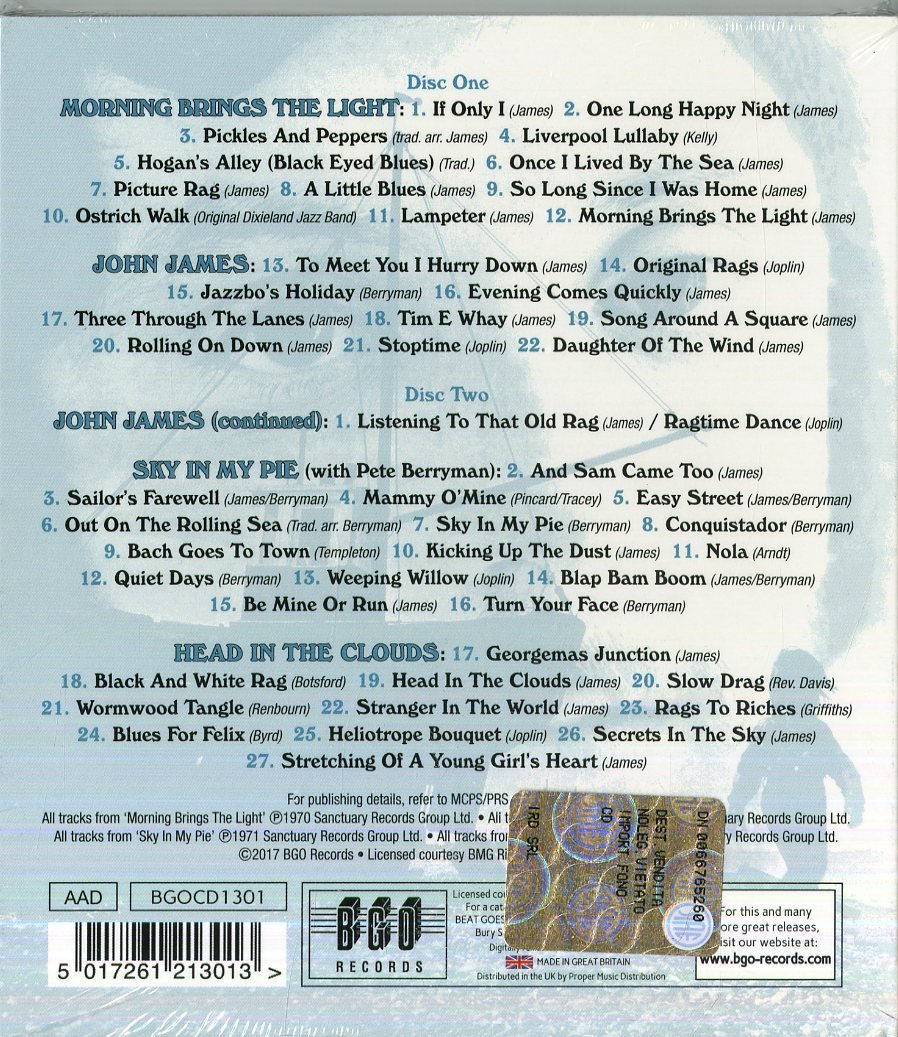
GRINGA-LETTERS FROM A.BROAD.
Gringa-Letters From A.Broad.
Label: gringamusic.com
One of the most exciting, up-and-coming new bands in San Francisco’s live scene is Gringa, a five-piece female band who recently, have been winning friends and influencing people with their unique, genre-melting sound. The basis for Gringa’s irresistible, hook-laden sound are the rhythms from the music of Brazil and the Americas. This includes Brazilian forro, maracatu and samba, which is combined with elements of funk, hip hop, jazz, Latin, pop, reggae and rock. Add to this scorching saxophone solos, tight harmonies and carefully, crafted arrangements, and the result is a potent and heady musical brew that once tasted, is never forgotten.
No wonder; once Gringa get the party started, their genre-melting sound transports the audience to somewhere warm, tropical and exotic, as Gringa as they work their way through the set-list. It features a mixture of their own compositions which are interspersed with a few cover versions. Mostly, though, Gringa stick to their own songs, which are delivered in both English and Portuguese and with a certain panache.
Gringa’s compositions range from thought-provoking to uplifting and inspirational. Other songs are playful, funny and sometimes sassy. Some songs touch on subjects like love and loss right through to social justice. This is something that is important to Gringa, who believe in internationalism and inclusiveness. They want their music to connect with people and unite them. Proof of this Gringa’s debut album Letters From A.Broad which was recently released by gringamusic.com. It’s an album that Gringa hope songs will dissolve cultural barriers and transcend the status quo. However, the release of Letters From A.Broad marks the next chapter in a story that began when Maya Finlay, Gringa’s founder and front-woman first fell in love with Brazil and its music.
Maya Finlay can still remember that time: “I grew up in the US but I fell in love with Brazil. I write songs and hear Brazilian elements in them, but I don’t want to bastardise the source inspirations…You can play with something, but you’ve got to start with the roots. What’s the rhythm? I try to study it and know the traditional ways to play, but after that, you have a lot of influences. You weave them in.” This would eventually become part of the rich and vibrant musical tapestry that is Gringa’s debut album Letters From A.Broad.
Before that, Maya Finlay embarked upon a career in the music industry, which was still very much male-dominated. However, over the next few years, Maya Finlay who is a singer, guitarist and cavaco player, had to overcome gender stereotyping.
Through her love of hip hop, Maya Finlay became interested in production and engineering. Nowadays, she is a professional sound engineer, who spends much of her time working in live sound. This has allowed Maya Finlay to challenge gender expectations. “I’m used to challenging people’s expectations, and I enjoy it. As a sound engineer, I’m often asked, ‘Where’s the sound guy? I love saying: ‘I’m the sound guy.’” However, Maya Finlay is much more than a sound engineer.
Her love of Brazilian music, meant that it was almost inevitable that Maya Finlay became part of the Bay Area’s vibrant and thriving Brazilian music scene. Maya Finlay quickly discovered that men far outnumber women, and most of the female instrumentalists tend not to be Brazilian. Maya Finlay confirms this: “I haven’t met many Brazilian female musicians playing out in the Bay Area, but I do know many women who aren’t from Brazil who’ve fallen for the music. Female instrumentalists aren’t as common to begin with, but there are a lot of gringas like me who’ve studied the language and gotten into it. We’re often playing alongside guys from Brazil, and getting encouragement from them.”
One night, Maya Finlay was playing in Bay Area when she met Kate Pittard, a saxophonist, percussionist and songwriter. The two Brazilian music aficionados bonded over their shared love of music, and soon, became friends. Little did they know, that would eventually be part of the same band. That was never part of Maya Finlay’s plan.
That was until Maya Finlay and Kate Pittard were at a local carnival, and they watched as a rhythm section took to the stage. Maya Findlay still remembers that day: “my songs needed a bigger sound, and when the bass and drums came on, it clicked.” Providing that sound were drummer Luna Fuentes-Vaccaro, bassist Jenelle Roccaforte and percussionists Diana Di Battista and Megha Makam. By the time the rhythm section left the stage, Maya Findlay had found the missing link that would fill out her sound.
Eventually, the lineup featured Maya Finlay, Kate Pittard, Luna Fuentes-Vaccaro, Jenelle Roccaforte and Diana Di Battista. It was one of the first all-female bands in the Bay Area’s Brazilian scene. “The gender makeup of the band had to be intentional. Although sometimes guys play with us, and we would never reject someone we loved playing with based on their gender identification, I’d still like to maintain a matriarchy within the group…Many female musicians are drawn to the band by a desire to create music outside of the male-dominated spaces they often find themselves in. I’m hoping we can break down the stigma of the ‘girl band,’ and show people that the music stands on its own.”
When Maya Finlay came to name her nascent band, she decided to reclaim a word that many non-Brazilian women in the Bay Area’s Brazilian music scene will have heard way too often…gringa. This is a Brazilian-Portuguese term for non-Brazilian women. It’s a word that may have annoyed many women, and indeed men, over the years. Many women don’t regard gringa as a term of endearment. Instead, they believe it’s an offensive and disparaging term that belittles women. That includes some of the non-Brazilian women in the Bay Area’s Brazilian music scene. They must have been grateful when Maya Finlay decided to reclaim the word gringa, and inject some positivity into the word.
Suddenly, the word Gringa brought to mind five hugely talented female musicians who wrote and played uplifting, inspirational and thought-provoking music. Gringa also enjoyed experimenting with various Brazilian rhythms and disparate instruments. These instruments are used to play the songs that chronicled the life and times of the five members of Gringa when they play live. Now as Maya Findlay looks out at the sea of faces in the audience; “I often look in the audience at our gigs and see that it’s mostly guys dancing, while around me on stage are all women. It’s awesome.”
These are changed days for Gringa, who are well on their way to becoming one of the leading lights of the San Francisco scene. What better time for Gringa to release their debut album Letters From A.Broad, which features five new songs where Gringa showcase their irresistible and hook-laden genre-melting sound?
Opening Letters from A. Broad, is I’ma Build A Home, which is based on a love letter from a previous boyfriend. The song makes an impression from the get-go, as horns sweep in, while the rhythm section provide the heartbeat and are augmented by chirping guitars and Brazilian percussion. They set the scene for Maya’s heartfelt vocal which is accompanied by close, soulful harmonies. They’re the perfect accompaniment to her vocal. After 0.30, Gringa bowl the first curveball, as the arrangement becomes understated, before rebuilding and sashaying along, and revealing its irresistible, hook-laden sound. Then at 1.38 it’s all change, as an acoustic guitar gives way to Gringa painting pictures of “Friday at the beach.” Gradually, the song rebuilds with the rhythm section, horns and harmonies accompanying Maya’s emotive vocal. Later her vocal drops out, and the horns enjoy their moment in the sun until Maya returns, and this beautiful, joyous and radio-friendly paean draws to a close.
All About Cheating is described as a skankin’ account of a wayward woman. It literally bursts into life, with the rhythm section powering the arrangement along. They’re joined by percussion and rasping horns while, Kate’s soulful vocal is a mixture of confusion, disbelief and joy. Harmonies accompany Kate, and they’re like yin and yang, perfectly complimenting each other. When the vocal drops, out the rhythm and horn section are joined by percussion and showcase their considerable skills during what’s a musical masterclass. Gringa play with power, passion and precision. Later, when Kate returns, her vocal becomes a soulful confession before this irresistible skankin’ song reaches a crescendo.
A chirping guitar opens For Foreigners before percussion, thunderous drums and a buzzing bass synth accompany Maya. Her love of hip hop shines though, as she veers between a rap and a sassy vocal. Meanwhile, the bass synth, chirping guitar, percussion, sultry saxophone and close, cooing and soulful harmonies provide the perfect foil for Maya. Later, the arrangement is stripped bare, with just drums accompanying Gringa. Reverb is added to the vocal and harmonies, before the arrangement rebuilds. The growling bass synth and scorching saxophone work well together, as the songs continues to reveal its secrets. They play their part in hook-laden song that is melodic and memorable.
Cancao De Junho is the first of two songs that are sung in Portuguese. As the arrangement unfolds, a synth whines, drones and oscillates and is panned, as a guitar, percussion, sultry saxophone and bass enter. They set the scene for Kate, who lays bare her soul as she sings of love’s difficulties. Tender, heartfelt harmonies accompany Kate and compliment her vocal. Still, synths bubble and squeak while a guitar shimmers and is joined by a buzzing bass synth. They’re joined by a myriad of percussion and acoustic guitar. Meanwhile, the rhythm section never miss a beat during this genre-melting arrangement flows along. By then, the alto-saxophone and tender, soulful harmonies are playing leading roles is this beautiful, genre-melting ballad.
A Bicicleta closes Letters From A.Broad and finds Maya taking charge of the lead vocal on a track that is the musical equivalent of a magical mystery tour. This genre-melting track heads in the direction of baião and then maracatu and rock, during a playful song about over thinking things. A chirping, shimmering guitars and buzzing bass synth join with percussion and the arrangement sashays along, showcasing its feel-good sound. Maya’s soulful vocal soars above the arrangement, and is accompanied by equally soulful close harmonies. The final piece of the jigsaw are a rap and stabs of trumpet, as Gringa ensure that their debut album ends on a memorable high.
After five songs, Gringa’s debut album Letters From A.Broad is over. It showcases what Gringa are capable of musically, and is a tantalising taste of Gringa’s hook-laden, genre-melting sound. Gringa take as a starting point Brazilian forro, maracatu and samba, which is then combined with elements of funk, hip hop, jazz, Latin, pop, reggae and rock. To this, scorching saxophone solos, tight, tender and soulful harmonies and carefully, crafted arrangements are added. The result is a potent and heady musical brew that once tasted, is never forgotten. So much so, that the listener will keep coming back for more.
That is no surprise, as Gringa’s music is beautiful, joyous, uplifting and inspirational. Other times, it’s cerebral and thought-provoking. For much of the time, the music on Letters From A.Broad is irresistible and akin to a call to dance. It’s no surprise that Gringa have been winning friends and influencing people on San Francisco’s live scene. However, Gringa’s music deserves to find an audience way beyond San Francisco. Hopefully, the recent release of Letters From A.Broad on gringamusic.com will introduce Gringa’s irresistible, hook-laden, genre-melting sound to a much wider audience.
Gringa-Letters From A.Broad.




THE LIFE AND MUSIC OF MICHAEL ROTHER.
The Life and Music Of Michael Rother.
During the early seventies, the German music scene was thriving, and was one of the most vibrant in Europe. Some of the most influential and innovative music was being accorded released by German bands. This included the holy trinity of Can, Kraftwerk and Neu!. Along with Amon Düül II, Ashra, Cluster, Popol Vuh and Tangerine Dream, these groups were at the forefront of a new musical movement.
In Germany, this new musical movement was called Kosmische musik. Its roots can be traced to the late-sixties, and in a way, were a reaction against the rigidity and rules of traditional music. No longer were musicians willing to be constrained by the rules of modern music. They wanted to free themselves from the shackles of rules and rigidity, and in the process, create new and groundbreaking music.
To do this, musicians fused a disparate and eclectic selection of musical genres, including everything from avant-garde, electronica, experimental rock, free jazz and progressive rock. All this influenced and inspired Kosmische musik. This included the holy trinity of Can, Kraftwerk and Neu!.
They went on to create music that at the time, was ambitious, groundbreaking and innovative. Musical boundaries were pushed to their limits, and musical norms challenged. The holy trinity are remembered as bands that featured fearless visionaries. This includes Michael Rother, who was a member of three of the biggest bands in German musical history Kraftwerk, Neu! and Harmonia, whose career spans over fifty years.
Michael Rother was born on 2nd September 1950 in Hamburg. That was home for the early years of his life. Then the Rother family moved from Hamburg to Wilmslow in Cheshire “because my father was a pilot. This was just the first in a series of moves.”
“Next we moved to Karachi, in Pakistan, where I was: captivated by the street musicians. The sounds, scales, rhythm and constant repetition mesmerised me. They would later influence as a musician.” That wasn’t Michael’s first musical influence.
“Originally, my earliest musical influence, was classical music. I remember my mother, who was a pianist, playing Chopin’s concertos. Then it was rock ’n’ roll. My brother who was ten years older than me, had rock ’n’ parties. Little Richard was my favourite, I loved the energy. Later, after the British explosion, The Beatles, Rolling Stones and The Kinks were the groups I listened to. Much later, the guitarists Eric Clapton, Jeff Beck and Jimi Hendrix when he descended down, were my influences.” However, the mention of Jimi Hendrix’s name and almost in an instant, Michael Rother is a teenager again.
“I was lucky, I once saw Jimi Hendrix live, it was an incredible experience.” As Michael speaks, he’s almost awe-struck. Then he reflects on the subject of influences: “later, when I became a musician, I came to regard those that I worked with, and collaborated with, as my influences and inspirations.” It’s then that Michael turns to the clock back to 1965, when his career began.
Spirits Of Sounds.
“My career began in 1965, when I joined a covers band at school. I had watched them play, so went away and spent the next year practising my guitar. Once I was ready, I asked if I could join and I became a member of Spirits Of Sounds. They said yes and this was the start” This cover’s band featured two other musicians who would enjoy successful processional careers.
Wolfgang Flür went on to form Kraftwerk and Wolfgang Riechman formed Wunderbar. Spirit Of Sounds must have been the only cover’s band to feature three musicians who would later transform German music. That was still to come.
“Spirits Of Sound played just covers, including songs by The Beatles, Rolling Stones and The Who.” For Michael Rother, this was his akin to a musical apprenticeship. Playing with Spirits Of Sound allowed him to learn his trade and hone his sound. All the time, he was listening to music which changed throughout the sixties.
“Later guitarists like Eric Clapton, Jeff Beck and Jimi Hendrix that were influencing me.” By then, Michael Rother was happy being part of a band, and seeing what life in a group was like. He was also well on his way to refining his guitar playing. However, then in 1969, Michael Rother got the call all young people must have dreaded.
Back in 1969, every German citizen had to spend six months in the army. Those who refused, or suffered from ill-health, could spend six months as a civilian volunteer. That’s how in 1969, Michael Rother found himself working at St. Alexius hospital, Neuss. He had no option.
By the time his six month as a civilian volunteer was over, Michael Rother “was beginning to become frustrated with playing in a cover’s band. It had its limitations, and wanted to move away from traditional music.” Fortunately, Michael Rother got the opportunity to jam with a new band in late 1969…Kraftwerk .
Kraftwerk.
At first, Michael was just jamming with Kraftwerk. He enjoyed the freedom that their approach to music had. “When I began playing with Kraftwerk, they improvised, playing melodies without the blue notes.” For Michael this opened his eyes to the possibilities that were in the process of unfolding. Kosmische musik had just been born, and Kraftwerk were one of its pioneers. “After I had jammed with Kraftwerk, Florian Schneider and I exchanged phone numbers.”
After his session with Kraftwerk, Michael returned to Spirits Of Sound. Musically, his eyes had been opened. A new musical movement had been born in West Germany. However, for the time being, Michael was back in his covers band.
Then in 1971, Michael received a call from Florian Schneider. “Ralf Hütter had quit Kraftwerk unexpectedly, and returned to university to complete a course.” Meanwhile “the first Kraftwerk album had been a hit, and they wanted to build on the momentum.” Florian wanted Michael to join Kraftwerk on a permanent basis.
It didn’t take Michael long to agree. After six years with Spirits Of Sound, a new chapter in Michael Rother’s career was about to begin. He was going to be part of Kraftwerk, who were now a trio.
When joined Kraftwerk, the group’s lineup was very different to the one that had recorded their 1970 eponymous debut album. Just Florian Schneider and Klaus Dinger remained. The edition of Michael Rother on guitar filled out the sound. However, very quickly, Michael discovered that all wasn’t well within Kraftwerk.
Michael’s role in Kraftwerk was twofold. “I would play live and play on what was to be their second album.” Straight away, Michael discovered that life with Kraftwerk was eventful. “It was exciting, never boring. When we played live, it could become chaotic, fights broke out between Klaus and Florian. They were both spiky characters.” That was only half the story.
“Sometimes, the audience didn’t understand what they heard. They came to hear what they heard on Kraftwerk. That was just a starting point. We took things from there. For members of an audience who expected to hear Kraftwerk replicated live, this what frustrating. Other members of the audience were excited by the possibilities. It was an exciting time for everyone” However, it was also a frustrating one.
After the success of Kraftwerk, Florian and Klaus were keen to record their sophomore album with producer Conny Plank. Tension was in the air. The recording sessions were fraught with difficulties. Although songs were recorded, the album was never completed. “Eventually, we hit a dead-end and the recordings have never been released. It was then that Klaus and I decided to form a new band, Neu!”
The Birth Of Neu!
By then, Michael and Klaus realised that: “we had a similar musical vision.”The nascent band were formed later in 1971, and was based in Düsseldorf. After the disagreements and frustration of Kraftwerk towards the end, the new band was a breath of fresh air. It was sure to revitalise the two musicians. The only thing they couldn’t agree on, was the band’s name
Michael though the band should have an organic name. Klaus however, had hit on the name Neu! This made sense, as they were a new band, who were part of the new musical Kosmische musik movement.
So, the new band became Neu! To go with the new name, a pop art logo was designed and copyrighted. This new logo was seen as a comment and protest against the modern consumer society. Just like contemporaries Can, Neu weren’t afraid to combine social comment and art. Having settled on a name, Neu!’s thoughts turned to recording their debut album. There was a problem though.
Neu!
Michael explains “we were poor musicians,’ All we could afford were four nights at Windrose-Dumont-Time Studios in December 1971. The reason we chose to record at nights, is it was cheaper. However; “it was a close shave, I get the shivers thinking about it. However, with the help of the genius Conny Plank, we got our message across.”
Over the four days, Neu! recorded a total of six tracks. They were written by Michael and Klaus. The two members of Neu! laid down all the parts onto an eight-track recorder. Michael played guitars and bass, while Klaus played drums and a Koto. “At first the recording was slow, then we found the positive energy to move forward. The songs were stripped down to the bare essentials, they had to be we only had eight tracks to record onto.” Five of the six songs Neu! recorded were lengthy tracks. This included Hallogallo and Negativland.
Both feature Klaus’ innovative and mesmeric Motorik beat. He played a 4/4 constantly, with only an occasional interruptions. Its hypnotic sound would soon become famous.
As Klaus and Michael listened to the playback of Hallogallo and Negativland, they had no idea that this drumbeat would become synonymous with Kosmische musik. Even once Conny Plank had mixed Neu! at Star Musik Studio, in Hamburg, the two members of Neu! had no idea how influential the album would become.
“Once the album was mixed, Conny Plank gave me a copy of the cassette to listen to. I was proud, and played it to my girlfriend, family and friends. I’d no idea the effect the album would have. I was just pleased to have recorded my album. It had been a close shave.” Michael had no inclination that he had recorded a classic album.
Neu! was scheduled for release in early 1972. At the time, critic’s opinions were divided. Some critics realised Neu! was a truly groundbreaking album, and appreciated what was a genre-melting album. Elements of ambient, electronica, experimental, free jazz, industrial, music concrete and rock can be heard. These critics identified the album as a Kosmische classic. Other critics didn’t seem to understated Neu!, or Kosmische musik, which by then, had been renamed.
In London, a critic at Melody Maker had coined the term Krautrock. This came after Amon Düül released their 1969 album Psychedelic Underground. It featured a track titled Mama Düül und Ihre Sauerkrautband Spielt Auf, which in English, translates as Mama Düül and her Sauerkrautband Strike Up. At first, many people were reticent about using the name of this new genre.
By the time Neu! was released in 1972, that was no longer the case. Other critics and record buyers were using Krautrock rather than Kosmische musik. This was how they described the music of Can and Kraftwerk, and then Neu!, who had just released their eponymous debut album.
When Neu! was released on Brain in 1972, the album sold 30,000 copies in Germany. For an underground album, that was seen as a success. However, outside of Germany, Neu! didn’t sell in vast quantities. Despite only selling well in Germany, Neu! began work on their sophomore album, Neu! 2.

Neu! 2.
In January 1973, Neu! found themselves back in the studio with producer Conny Plank. “We weren’t signed to a record label, so Klaus, Conny and I had saved our money, and when we went to the studio, handed over enough to record for ten days.”
With Conny Plank producing what became Neu! 2, Michael and Klaus began work. “This time, we had sixteen tracks to work with, so could layer instruments. I played my guitar, it was played backwards, the tempo was sped up and effects were added.” Neu! it seemed, had taken experimenting to a new level, and were pushing musical boundaries to their limits, and sometimes way beyond. Everything seemed to be going so well. Then a problem arose.
“By then we had spent a week exploring, adding layers. I stacked five six guitars, added effects like distortion. This had taken a week, and we only had half an album recorded. We panicked. Then we thought of a solution. We had released recently Neuschnee and Super as a single. For some reason, the record company hadn’t promoted it. They seemed not to value singles. So we began to experiment.”
This Michael explains was: “a result of desperation. Side two of Neu! 2 is made different versions of Neuschnee and Super. We did all sorts of things. I played the single on a turntable, and Klaus kicked it as it played. We than played the songs in a cassette player, slowing and speeding up the sound, and mangling the sound in the process.” Just like their debut album, Neu! 2 was completed just in time. It was another: “close shave.”
With Neu! 2 complete, it was scheduled for release later in 1973. When the album was released, critics heard than Neu! had refined their trademark sound, and taken it even further. “Für immer an eleven minute epic was the best example.” It features Klaus and Michael becoming one. As Klaus’ drums propel the arrangement along, Michael delivers a virtuoso performance. Critics were won over by “Für immer, which was regarded as the highlight of Neu! 2. However, side two proved controversial.
Many critics weren’t impressed by side two of Neu! 2. They saw the music as gimmicky, and accused Neu! trying to fool and rip off record buyers. As indignant critics took the moral high-ground, again, it was a case that they didn’t understated music.
“What we had done, was take ready-made music and deconstruct it. Then we could either reconstruct or manipulate the deconstructed music.” Critics either couldn’t or didn’t want to understand this. Neither did record buyers.
Just like critics, those who bought Neu! 2 were won over by side one. Für immer was Neu! 2 masterpiece, and most people realised this. However, when record buyers turned over to side two, they quickly became alienated. “They felt that we were trying to rip them off. That was not the case. Side two was Neu! at their most experimental, deconstructing only to reconstruct or manipulate. People didn’t understand this. It’s only recently that the music on side two has began to find favour with people. That wasn’t the case in 1973.”
On its release, Neu! 2 didn’t sell well. Even in Germany, Neu! 2 failed commercially. Brian who released Neu! 2, had expected the band to tour the album. However, there was very little interest in Neu!
Klaus Dinger and his brother Thomas even headed to London, to see if he could organise a Neu! tour of Britain. There, he met DJ John Peel, and Karen Townsend, the wife of The Who’s guitarist Pete. Although John Peel played tracks from Neu! 2 on his radio show, and tried to champion the band, there was no appetite for a Neu! tour of Britain. When Klaus returned home, he and Michael put Neu! on hold.
Both Klaus and Michael were keen to make it clear that this wasn’t the end of Neu! They merely, wanted to take some time out, to pursue other interests and projects. Klaus’ new project was La Düsseldorf. Meanwhile, Michael decided to embark on a journey to the Forst Commune.
The Birth Of Harmonia.
That was where he would meet Dieter Moebius and Hans-Joachim Roedelius of Cluster. Michael had heard Im Süden, a track from Cluster’s sophomore album Cluster II. The track struck a nerve with Michael, who wondered if Dieter Moebius and Hans-Joachim Roedelius would be interested in joining an extended lineup of Neu!? Then Michael began to consider a German supergroup consisting of Neu! and Cluster.
That proved to be the case. At the Forst Commune, Michael jammed with Dieter Moebius and Hans-Joachim Roedelius. That initial jam later became Ohrwurm, a track from Harmonia’s 1974 debut album Musik von Harmonia. Following their initial jam session, Michael stayed at the Forst Commune to prepare for the recording of Harmonia’s debut album.
Meanwhile, Klaus and Thomas Dinger had returned from London. They came, they thought, baring gifts. One of the gifts was studio engineer Hans Lampe, who for much of 1972, had been Conny Plank’s engineer. The other was Klaus’ brother Thomas. They Klaus proposed, would join an extended lineup of Neu! In preparation, they played a series of concerts as La Düsseldorf. Michael however, was busy with Harmonia. Not only were they planning to record their debut album, but build a recording studio.
Building a recording can be fraught with difficulties. However, for Michael, Dieter Moebius and Hans-Joachim Roedelius the building of their studio in Forst went smoothly. This new studio would play a hugely important part in Michael Rother’s future career. Not only would it be where Harmon recorded their debut album, but where Michael worked on future projects with Neu! and later, recorded his solo albums. That was still to come. Before that, Harmonia began to record their debut album Musik von Harmonia.
Musik Von Harmonia.
Having built their new studio, Michael Rother, Dieter Moebius and Hans-Joachim Roedelius started recording what became Musik von Harmonia in June 1973. Over the next five months, Harmonia recorded eight songs. The two members of Cluster were receptive to Michael Rother’s way of working. Hans-Joachim Roedelius explained recently: “there were no problems, we wanted to learn. Previously, we improvised, which made playing live problematic. A song was merely the starting point, it could go anywhere. Michael however, taught us about structure. We influenced him. It was a two-way thing.”
That’s definitely the case. Michael Rother believes: “that working with Dieter Moebius and Hans-Joachim Roedelius made him a more complete musician.” Over his time working with the two members of Cluster; “I learnt so much.”
This became apparent when Musik von Harmonia was completed in November 1973. Harmonia’s 1974 debut album, Musik von Harmonia, was a move towards ambient rock. Both Michael Rother and the two members of Cluster’s influences can be heard on the nascent supergroup’s debut album. It was released in January 1974.
When Musik Von Harmonia was released, many critics realised the importance of what’s a groundbreaking classic. It saw this nascent supergroup seamlessly embrace and incorporate disparate musical genres. In the process, Harmonia set the bar high for future ambient rock albums. Despite the critical acclaim that accompanied Musik von Harmonia, the album wasn’t a commercial success.
Michael Rother remember ruefully: “the seventies weren’t a good time for Harmonia. Our music was ignored, it was tough to survive during this period. So towards the end of 1974, Michael and Klaus reunited for Neu!’s third album.

The Return Of Neu!-Neu! ’75.
For Neu!! ’75, Michael Rother and Klaus Dinger reunited in December 1974 at Conny Plank’s studio. By then, Conny’s Studio was the go-to recording studio for German groups. They wanted: “the genius” to sprinkle his magic on their albums. This would be the case for Neu! ’75.
The two members of Neu! had changed. Klaus was heavily into rock music, while Michael’s interest in ambient music was growing. As Michael explains: “After two years apart, we were different people. To complicate matters, Klaus wanted to move from behind the drum kit. He felt he was hidden away. I can understand this. But it was what Klaus did so well. However, he wanted to become an entertainer, playing the guitar and singing. He wanted to bring in two new musicians to replace him.” This included Klaus’ brother Thomas and Conny Plank’s former engineer Hans Lampe. These new musicians would allow Neu! to make a very different album.
Michael realised this was problematic. “By then Klaus could be difficult to work with. I realised we had to compromise, so ended making an album with two very different sides. Side one was old Neu! and side two was new Neu!” On side two Klaus come out from behind his drum kit and played guitar and sang. He became the entertainer on what proved to be an album of two sides. It was completed in January 1975, and released later that year.
When critics were sent copies of Neu! ’75, they were struck by side one’s subtle, ambient, melodic sound. Michael remembers: “we used keyboards and phasing a lot on both sides. While Michael Rother’s name was written large all over side one; side two was very different, and quite unconventional. Reviews were mixed, partly because of side two. Some critics felt that if Neu! ’75 had the same sound throughout, it would’ve been hailed a classic. However, later Neu! ’75 and Neu!’s earlier albums would be reevaluated. Before that Neu! ’75 was released.
Just like Neu! 2, Neu! ’75 didn’t sell well. The problem was, many people didn’t understand what was essentially parts of two disparate albums joined together. The proto-punk of side two was so different from the ambient sound of side one. Record buyers were confused, and didn’t understand what Neu! stood for? It seemed that Neu! were just the latest groundbreaking group whose music was misunderstood and overlooked.
Michael looking back at Neu! ’75 reflects: “It was a time. Klaus wasn’t the easiest person to work with. He was involved with different people, and being pulled in different ways. We were also very different musically. Then there were the new drummers on side two. They weren’t particularly good. Certainly neither were as good as Klaus,” a rueful Michael remembers. “It was a difficult project. By then Klaus was different to the man I’d met a few years earlier.” Michael wouldn’t work with Klaus for another decade. By then, Neu!’s music had inspired a new musical movement, punk.
Things started to change in 1976. Michael explains: “many punks claim that Neu! ’75 inspired them. Especially, side two.” That wasn’t the only Neu! album that inspired the punk ideal. Side two of Neu! 2 was a favourite of punks. It was: “a result of desperation,” which struck a nerve with the nascent punk movement, and its D.I.Y. approach. That’s when the revaluation of Neu! began. However, “it was a long time before our music was accepted and recognised, and began to sell in the quantities it does now”. That is also the case with Harmonia, who began recording their sophomore album in June 1975.

The Return Of Harmonia-Deluxe.
In June 1975, the three members of Harmonia returned to their studio in Forst for the recording of their sophomore album, Deluxe. Joining them, was a new face, Conny Plank, who was co-producing Deluxe. Conny Plank and Michael were good friends, and had worked together on four projects. This included Kraftwerk’s aborted album and Neu!’s two albums. The addition of the man who Michael Rother calls: “the genius,” just happened to coincide with Harmonia changing direction musically.
Deluxe saw a move towards Kominische musik. Partly, this was down to the addition of Guru-Guru drummer Mani Neumeier. He played on some tracks, and added a Kominische influence. Another change was that Michael Rother’s guitar played a more prominent role. That wasn’t Michael’s only influence.
The music on Deluxe was more song oriented. This was Michael Rother’s influence. He had taught the two members of Cluster the importance of structure. However, still Harmonia were experimenting, pushing musical boundaries. This was Cluster’s influence. Other parts of Deluxe had been influenced by Michael Rother. Hans-Joachim Roedelius agrees. “Michael Rother’s influence can be heard on Deluxe, more so than on Musik Von Harmonia.” What was also noticeable, was that Deluxe had a more commercial sound.
“This wasn’t a conscious decision. The music morphed and evolved, and the result was Deluxe,” Hans-Joachim Roedelius reflects.
Michael Rother agrees. “Every album I’ve made I set out for it to be commercial. Sometimes, though, it doesn’t work out that way.” Sadly, that proved to be the case.
When Deluxe was released in 1975, to the same critical acclaim as Musik von Harmonia. The noticeable shift to what was a more commercial sound, surely would lead to a change in Harmonia’s fortunes?
That wasn’t to be. Deluxe was released on 20th August 1975, and sales of the album were slow. They never picked up, and history it seemed, was repeating itself. Michael reflects: “Still our music was being ignored. It was a difficult time for us. So much so, that Michael decided to record his debut solo album.
Michael Rother-The Solo Years-Part One.
With Harmonia having just about run its course, Michael Rother embarked upon his solo career. That would take up the majority of his time. Michael’s first solo album was “Flammende Herzen which I recorded at Conny’s Studio.” Michael had entrusted his solo career to the man he refers to as “the genius.”
Flammende Herzen.
Recording of Flammende Herzen began at Conny’s Studio in June 1976. Michael had penned five tracks, and planned to play most of the instruments himself. The only instrument he couldn’t play were the drums, so Jaki Liebezeit of Can came onboard, and this was the start of a long-lasting collaboration. That was the case with Conny Plank, who co-produced Michael’s debut solo album.
At Conny’s Studio, five instrumentals which were based around Michael’s guitar were recorded. These tracks became Flammende Herzen, which was completed in September 1976. Michael’s debut album scheduled for release in March 1977.
Before the release of Flammende Herzen, critics had their say on Michael Rother’s solo album. Most of the reviews were positive, and it seemed that Michael’s fortunes were about to change.
When Flammende Herzen was released in March 1977, the album wasn’t a commercial success. Despite releasing album after album of innovative and influential music, they failed to sell. It seemed that the music Michael Rother was too innovative and record buyers didn’t understand the music. The only small crumb of comfort for Michael, was that: “Flammende Herzen, which, was released as a single, was later used in the soundtrack to Flaming Hearts.”
Nowadays, Flammende Herzen is regarded as one of Michael’s finest solo albums. It’s as if this was the album he had been longing to make. Sadly, in 1977, as punk was making its presence felt, Flammende Herzen passed record buyers by. By then, Michael had been back in the studio with Harmonia, and a special guest, Brian Eno.
The Return Of Harmonia With Brian Eno-Tracks and Traces.
After the release of Musik von Harmonia, Brian Eno had called Harmonia was: “the world’s most important rock band” at the time. It was no surprise that when Harmonia reunited to record their third album, it was a collaboration with Brian Eno. However, it was also the end of an era.
Little did the three members of Harmonia realise, that Deluxe was the last album they would release for thirty-two years. For what was their swan-song, Harmonia were joined by another legend, Brian Eno.
Michael remembers the sessions well. “Brian Eno was a very intelligent man. He seemed to know what music was on the way up. By then, he was making ambient music and was working as a producer. He was about to produce David Bowie’s Heroes’ album.” However, for the next eleven days, Brian Eno joined the band he had been championing since their debut album.
At the studio in Forst, Hans-Joachim Roedelius, Dieter Moebius, Michael Rother and Brian Eno spent eleven summer days recording what was meant to be their third album. The working title was Harmonia ’76. However, by then, Hans-Joachim Roedelius remembers “Michael Rother was wanting to concentrate on his solo career. Once the album was completed, it became apparent Harmonia had run its course. It was evolution.”
This wasn’t surprising. Harmonia weren’t selling many records. Michael Rother remembers: “it was a tough time for us. Our music seemed to be ignored.” Neu! also seemed to have run its course. “Neu ‘75 hadn’t sold well. Klaus wasn’t an easy person to work with. So, I decided to return to my solo career after the release of Harmonia ’76.” That never happened.
Incredibly, the master-tapes for Harmonia ’76 went missing. “We feared they were lost forever. Then twenty years later, they were found.” What was meant to be Harmonia ’76 was released Tracks and Traces in 1997.” That wasn’t the end of the Harmonia story. However, before the next chapter in the Harmonia story unfolded, Michael Rother’s solo career continued apace.

Michael Rother’s Solo Career-Part Two-Sterntaler.
After the drama and disappointment of the loss of the master tapes for Harmonia ’76, the three members of Harmonia went their separate ways. By September 1977, Michael was ready to record his sophomore album Sterntaler.
It was recorded between September and November 1977 at two studios. This included Conny’s Studio, and Michael’s studio in Forst. By then, Michael was a true multi-instrumentalist, and was playing guitar, bass guitar, piano, synths, electronic percussion Hawaiian slide guitar and synth strings. Augmented by Jaki Liebezeit’s drums, Sterntaler took shape.
Unlike his debut album, the synths were playing an important part in Sterntaler’s sound, and were responsible for the melody. Then on the ambient sounding Blauer Regen, Jaki Liebezeit’s weren’t needed. This was another signal that Michael’s music was changing. Michael and co-producer Conny Plank finished work on Sterntaler in November 1977. Maybe the stylistic shift would result in a change in Michael’s fortunes?
Sadly, it was a familiar story. The reviews of Sterntaler were generally positive, and Michael was regarded as one of the most innovative musicians of his generation. However, when Sterntaler was released, the album didn’t sell well . Michael remembers; “my music seemed to be out of fashion.” However, he continued to make music, music that continued to evolve.
Katzenmusik.
Recording of Michael Rother’s third album Katzenmusik took place between March and July 1979. Just like his previous album, the album was recorded in Forst and Conny’s Studio. Michael used mainly electronic instruments. They were augmented by guitars and Jaki Liebezeit’s drums.
It seemed that if Michael Rother was a painter, he was reducing his pallet. That would be the case for most musicians. However, Michael Rother wasn’t most musicians. Along with his co-producer Conny Plank, they recorded two suite of songs which featured twelve tracks. Essentially, they were variations layered around four different five-note melodies. They then recur in a variety of ways. Although stylistically, the music was similar to his two previous albums, the instruments used had changed. However, this didn’t stop Michael Rother recording another album of groundbreaking music. It was released later in 1979.
On Katzenmusik’s release, some critics hailed the album Michael Rother’s finest hour. He had come of age as a solo artist. This should’ve been a cause for celebration. However, it was, and it wasn’t.
Katzenmusik was the last album Michael recorded with Conny Plank. “It was no reflection on Conny. The man was a genius. However, I wanted to go my own way, and explore other options.” Sadly, Michael Rother and Conny Plank’s swan-song wasn’t a commercial success. It would be another three years before Michael released a new album.
Fernwärme.
It was 1981 when Michael Rother began work on his fourth album. The recording took place at Michael’s own Flammende Herzen Studio in Forst. It was just Michael and drummer Jaki Liebezeit. Unlike his first three albums, Conny Plank was absent. “We remained friends, and I owe Conny a lot, but it was the time to move on.”
This couldn’t have been easy. The pair had worked on nearly every project Michael had been involved with. Fernwärme was a first. It was just Michael, Jaki and the latest electronic instruments. They were used extensively on Fernwärme. This included drum machines. For Jaki Liebezeit the writing was on wall. Fernwärme was his swan-song with Michael Rother.
Michael explains: “Fernwärme was the last project Jaki worked on. Again, it was nothing personal. It was similar to the situation with Conny Plank. I wanted to move in a different direction, and already had began to use drum machines. Jaki was a fantastic drummer. The man is a machine, and will be drumming the rest of his life. However, Fernwärme was the last time we worked together.”
As Michael Rother prepared for the release of Fernwärme in 1982, it must have been with a degree of trepidation. It was the first album he had produced himself. However, he needn’t have worried, as Fernwärme was well received upon its release. Michael’s first album in three years, and the first he had produced himself was hailed a success. Sadly, the wider record buying public still hadn’t discovered Michael Rother’s music. “It was a really frustrating time for me.”
Lust.
After the release of Fernwärme in 1982, Michael didn’t return to his Sterntaler Studio, Forst until 1983. When he did, he was on his own. “Lust was the first album I wrote, recorded and produced on my own. Because I had my own studio, I found myself spending more time thinking things over. Sometimes, when I went to bed, all I could think of was what I had been working on. That is the downside of having a home studio. However, the advantages outweigh disadvantages. I had also bought a Fairlight, and was just getting use to it. Its sounds divides people. Some people like it, others love it. Lust was the first album where I used the Fairlight.” That was another reason Michael spent as long as he wanted perfecting Lust. Only then, was he ready to release the album.
Lust was released in 1983, and was Michael Rother’s fifth album. It was all his own work. No other musician had played a part in recording the album, which showcased a new sound. At the heart of the sound was the Fairlight. Although the Fairlight divided people’s opinion, the majority of critics gave Lust positive reviews. The latest reinvention of Michael had been a critical success. However, when Lust wasn’t the commercial success many critics forecast, it was another two years before Michael returned with his sixth solo album.
Süßherz und Tiefenschärfe.
November 1984 saw Michael Rother return to his Katzenmusik Studio, in Forst to record what would become Süßherz und Tiefenschärfe. Just like his previous album Lust, he wrote, recorded and produced Süßherz und Tiefenschärfe. It was just Michael Rother, his trusty guitar and the electronic instruments that he now favoured. For three months he honed what became his sixth solo album. It was completed in February 1985, and became Süßherz und Tiefenschärfe.
Later in 1985, Polydor released Süßherz und Tiefenschärfe. Before that, critics had their say on Michael Rother’s sixth solo album. Again the reviews were positive. Some critics went as far as to say that üßherz und Tiefenschärfe was one of the best albums Michael had recorded. It was released later in 1985. By then, Michael Rother and Klaus Dinger had been reunited.
Neu! Reunite Again.
Little did Michael Rother realise what he was letting himself in for. When Michael met Klaus; “I realised that Klaus wasn’t in a good place. He had surrounded himself with people who were pulling him in all directions. Klaus was also needing money, and recording a new Neu! album offered him the opportunity to make some money. So we entered a small studio in Düsseldorf. It wasn’t like the professional studio we had worked in before. Instead, it was more like a semi-professional studio.” That was where recording of Neu!’s most controversial album began.
Recording began in October 1985. The members of Neu! then moved between Grundfunk Studio and Dinerland-Lilienthal Studio. The sessions were problematic. A decade had passed since the pair had worked together. Michael remembers: “Klaus seemed different. He was argumentative, and there was no longer the same chemistry between us. It wasn’t an easy time. Despite that, we managed to record tracks which I took to my own studio in Forst.”
The group’s sound was very different. Synths were added to Neu!’s old sound. It was Neu! with a new wave twist. However, this didn’t work. By then, Klaus and Michael were very different as musicians. Michael had moved towards the electronics and technology. Klaus it seemed, hadn’t moved at the same pace.
By April 1986, work on the album stopped, and the project was cancelled. “Klaus and I met in Düsseldorf and agreed to abandon the project. We even went as far as sealing the tapes. This seal wasn’t to be broken without the other’s permission. The album was certainly not going to be released. That was why we sealed the master tapes. I never thought the would be released. Certainly not in the way that was released in late 1995.” By then, Michael Rother was concentrating on his solo career.
Michael Rother The Solo Years Part 3-Traumreisen.
After the abandoned Neu! project, Michael Rother didn’t return to the studio until January 1987. He spent the next six months in his home studio. “That was the benefit of having your own studio. I could record when I wanted. Sometimes, it a lonely life, and I felt as if I was going slightly mad.” Eventually, though, Traumreisen was completed in July 1987.
Just like his previous album, Traumreisen featured just guitars and Michael Rother’s various electronic instruments. Critics were won over by Traumreisen, which was released later in 1987. It was a case of deja vu, when Traumreisen failed to reach the wider audience it deserved. After seven solo albums, he was still to make a commercial breakthrough. Michael Rother’s music it seemed, was only appreciated by connoisseurs of Kosmische musik. This lack of commercial success resulted in Michael Rother: “beginning to lose interest in recording albums.” It would be another nine years before he released another album. By then, Michael had founded his own record company.
Random Records was founded in 1993. This coincided with Michael managing to secure the rights to his back catalogue. However, the new label’s first release was a compilation, Radio-Musik Von Michael Rother-Singles 1977-93. It was released in 1993, with reissues of Michael’s solo albums being released over the next few years. Each album was remastered and released with bonus tracks on Michael’s Random Records. Michael was in control of his musical destiny. At least for his solo career. Neu! was a completely different matter.
Neu! 4.
By the time Michael founded Random Records, Neu!’s first three albums had been released on CD by Germanofon Records, a Luxembourg based label. However, there was a problem.
Michael explains: “the deal to release Neu!’s first three albums was entered into, without his permission. These bootlegs were available in every record shop I entered into.” There’s frustration and anger in his voice. It’s not about money though. Instead; “I was frustrated that people were buying an inferior product. It wasn’t of the quality I expected.” If Michael was frustrated about the release of Neu!’s first three albums, he was in for a shock on the morning of 17th October 1995.
“That day, I was sitting at home, when I received a fax from Klaus congratulating on the release of Neu! 4. I was shocked, as I hadn’t given my permission or consent to release the album. Soon, the picture became clear.
“By then, Klaus was really frustrated and angry about the bootleg releases of our first three albums. They were selling well, and neither of us were making anything from them. To make matters worse, Klaus was short of money, and desperate, so entered into a deal with the Japanese label Captain Trip Records. The owner was a huge fan of Neu! and was impressed by Klaus. He gave Klaus cash which he was meant to share with me. In the sleeve-notes to what was billed as Neu! 4, Klaus railed against the bootleggers.” Ironically, this was something that both Michael Rother and Klaus agreed about. However, the release of Neu! 4 drove a wedge between the two old friends.
With the benefit of hindsight, Michael reflects: “looking back, I wish I’d jumped on the train to Düsseldorf and punched Klaus on the nose. I’m not that kind of person though. But I might have felt better. Then we could’ve moved on. However, we never did.”
After the release of Neu! 4, Klaus and Michael were continually at loggerheads. This was ironic. “By then, Neu! were at last, a popular band. People wanted to buy our albums. All that was available were the bootlegs, and Neu! 4 which to me, wasn’t a legally released or genuine album.”
Eventually, though, Michael and Klaus reached an agreement in 2000, and Astralwerks in America and Grönland Records in Europe released Neu!’s first three albums. They also recalled copies of Neu! 4, which has been out of print ever since. Michael however, stresses: “I’ve no problem people buying a second-hand copy of Neu! 4, I just don’t want the album rereleased. After the problems with Neu! 4, Michael released his eighth solo album in 1996.

Esperanza.
Unlike his last couple of albums, Michael Rother didn’t work alone on Esperanza. This time, he was joined by Jens Harke, who wrote the lyrics and added vocals to Weil Schnee und Eis. This was a first. Apart from the occasional vocal sample, Michael’s album had been vocal free zones. That wasn’t the only change.
The other contributor to Esperanza was Joachim Rudolph. He took charge of Pro Tools programming. Things had changed since Michael’s last album. It was the digital age, and now, DAWs had found their way into recording studios. As befitting the digital age; “I used only electronic instruments on Esperanza. There were no guitars on the album. This wasn’t a first. I’d already gone on a tour of America without a guitar. I was tired of the guitar and wanted to experiment.” That is what Michael Rother did between January 1995 and January 1996 at three studios. Once the album was completed, it was released two months later.
Esperanza was released on the 11th March 1996, on Michael Rother’s Random Records. Most of the reviews of Esperanza were positive. Michael Rother, was continuing to innovate and push musical boundaries. However, when Esperanza wasn’t a commercial success, “I began to lose interest in recording, and decided to concentrate on playing live.” As a result, it was a new millennia when Michael released his next album.
Remember (The Great Adventure).
April the 25th 2004 proved to be a significant date in Michael Rother’s career. It was the day he released his most recent solo album, Remember (The Great Adventure). It had been recorded over a period of seven years and was a collaboration with various electronic musicians. This includes Thomas Beckmann, Andi Toma and Jake Mandell, who all programmed beats for the rhythm tracks. Sophie Williams and Herbert Grönemeyer added vocals on Remember (The Great Adventure). This was only Michael’s second album to feature vocalists. Ironically, it proved to be his last.
Michael Rother’s collaboration with a new generation of musicians was well received by critics. Just like his previous albums, Michael didn’t shy away from innovating. Instead, he embraced new ideas and was determined to look forwards, rather than backwards. That had been the case throughout his solo career.
Following Remember (The Great Adventure), Michael Rother “decided to concentrate on playing live. It’s allowed me to travel the world and play all over Europe, America and in 2014, in China. My albums were not selling well, and after a while, I lost interest in recording music.” However, it wasn’t just Michael that was playing live. One of his old groups reunited and took to the stage one more time, Harmonia.
Harmonia Reunited and Live.
The reunion was for the release of Harmonia’s Live 1974 album. It featured a recording of Harmonia’s concert on the 23rd March 1974, at Penny Station Club in Griessem, Germany. To celebrate the release of Live 1974, Harmonia played live for the first time since 1976. This landmark concert took place at the Haus der Kulturen der Welt in Berlin, on November 27th 2007. Sadly, it would be the last time the three members of Harmonia played live. Belatedly, they had found the critical acclaim and commercial success they so richly deserved. It had taken thirty years, but Harmonia were regarded as one of the most innovative and influential groups in Kosmische musik. So were Neu!
Neu! The Comeback-Neu! ’86.
As the years passed by, Neu! 4 was still a sore point for Michael Rother. It had driven a wedge between Michael and Klaus. “Sadly, Klaus died in 2008. I was deeply saddened. We had been great friends once.” Kosmische musik had lost one of its pioneers.
Two years later, Michael got the opportunity to right a wrong. He explains: “in early 2010, I came to an agreement with Klaus’ widow. It allowed me work on what had been Neu! 4. Using the master tapes, I remixed the whole album.” That wasn’t the only change.
The running order changed. Some of the tracks were given new names. Only twelve of the fourteen tracks on Neu! 86 found their way onto Neu! 86. A new song, “Drive (Grundfunken) was added to what became Neu! 86 which was released as part of the Neu! box set on May 10th 2010. Then on August 16th 2010, a CD version of Neu! 86 was released.
Mostly, reviews of Neu! 86 were positive. The only criticism was that the album was overproduced. Michael disagrees but agree: “it’s all matter of taste and opinion. I feel I did the best I could with what I had. Now Neu! 86 is much nearer to the album we had tried to make in 1985.” A quarter of a century later, and Michael Rother was happy at with release of Neu! 86 in 2010. That wouldn’t be the last project from the past that Michael would undertake.


Harmonia-Complete Works,
In October 2105, a project that Michael Rother has been working on for some time came to fruition, the Harmonia-Complete Works box set. Michael Rother had overseen the remastering of Harmonia-Complete Works which included Musik Von Harmonia, Deluxe, Tracks and Traces, Live ’74 and an album of unreleased material. One of the unreleased tracks was nearly lost forevermore.
Michael Rother explains what happened. “Harmonia recorded all our shows and rehearsals. However, we were a poor band, and had to reuse each tape. Luckily, one night, a friend asked if we could record a rehearsal? Hans-Joachim Rodelius recorded the show, and at the end of the night, handed him the tape. That tape features what I consider to be the ultimate version of Tiki. Having given the tape away, I feared we would never see it again. Fortunately, our friend has kept that tape and the version of Tiki features on the fifth album of Complete Works.” However, for Michael Rother the release of Complete Works is tinged with sadness.
After a brave and lengthy battle against cancer, Dieter Moebius died on 20th July 2015. Michael Rother was saddened by the passing of his old friend. Along with Hans-Joachim Roedelius and Michael Rother, Dieter Moebius was part of one of the most innovative groups in the history of Kosmische musik. They’re now regarded as one of the finest purveyors of Kosmische musik. Harmonia deserve to sit alongside the holy trinity at Kosmische musik’s top table. At the head of the table is Michael Rother.
There’s a reason for this. Michael Rother has been part of three of the biggest bands in the history of Kosmische musik; Kraftwerk, Neu! and Harmonia. He then released nine solo albums and more recently, two soundtrack albums. “That was a new experience. However, now I concentrate my time on performing live.” Michael explains.
“I’ve been fortunate it’s taken me all over the work. One of the highlights was playing in China in 2014.” This is just one of the many countries that Michael Rother has played over the last few years. He’s now sixty-seven and busier than ever. Michael Rother and his band have even been playing at some of the biggest festivals on the circuit. Just like Neu! and Harmonia, Michael Rother’s popularity has never been higher.
What does the future hold for Michael Rother? He’s unsure what it holds. “Maybe, I’ll go back into the studio? I don’t know. That’s the future.”
Michael Rother continues to tour, and his music still continues to find a new audience. This includes his solo albums and the albums the three pioneering groups Michael Rother was a member of, Kraftwerk, Neu! and Harmonia.
Michael Rother, the one-time Kraftwerk guitarist went on to cofound Neu! and then later, Harmonia. Both of the groups that Michael Rother cofounded, went on to play an important part in the history of Kosmische musik, and even today, continues to influence and inspire a new generations of musicians.
The Life and Music Of Michael Rother.

LINK WRAY-FROM RUMBLE TO THE 3-TRACK SHACK: 1958-1973.
Link Wray-From Rumble To The 3-Track Shack: 1958-1973.
It’s no exaggeration to say that Link Wray was one of the most important, innovative and influential guitarist in the history of modern music. Link Wray influenced Jimmy Page, Neil Young, Iggy Pop, Phil Everly, Bob Dylan, The Beatles, The Kinks, The Who and the Rolling Stones, while his 1958 instrumental hit Rumble, popularised the power chord. As a result, several generations of guitarists owe a debt of gratitude to Link Wray. Despite his contribution to music and his considerable talent, sadly, Link Wray never received the recognition he deserved, and died in Copenhagen, Denmark, on November’5th’ 2005. That day, music lost a true legend. His story began on May 2nd 1929.
That’s when Link Wray was born in Dunn, North Carolina, to Fred Lincoln Wray, Sr. and his wife, Lillian M. Wray. Link Wray’s mother was a Shawnee Indian, and later, Link Wray was proud of his heritage. This caused problems for Link Wray when he was growing up.
North Carolina in the thirties was Klu Klux Klan country. Life was tough for the Wray family. At nights, the Klan came calling, wearing their white capes and carrying burning crosses. In the local community, African-Americans like Link Wray’s mother feared for their life. They had no option but to hide under their bed, until the Klan left. It was a tough upbringing for Link Wray. To make matters worse, the family were dirt poor.
Link Wray’s father had been pensioned out the US Army. His disability cheque allowed the family to survive the depression…just. The house had dirt floors, and didn’t even have electricity. Somehow, though. Link Wray’s mother and father found the money to buy his elder brother Vernon an acoustic guitar.
When Vernon showed little interest in his guitar, fourteen year old Link Wray picked up the guitar. Link tried to teach himself, and used to sit in the porch strumming and picking his guitar. Then one day, a member of a passing circus saw Link Wray playing his guitar.
Realising the young man was struggling, the stranger, who called himself Hambone, showed him how to tune and then play the blues guitar. He showed Link Wray open chords, and how to play the guitar with his fingers and even a knife. Link Wray watched what was the equivalent of a musical masterclass from Hambone, who was just as comfortable playing drums and horns. Having showed Link Wray how it was meant to be played, Hambone left him playing his guitar. However, every time the circus passed through town, Hambone stopped by, to see how his pupil was progressing.
By the time Link Wray was sixteen, he was more than proficient guitarist. He spent a lot of his spare time listening to the blues. Some of the Wray’s neighbours enjoyed the blues, and when they threw open their windows, the music spilled out. As Link sat there, he listened and learnt. For Link, it was part of his musical education, which was going pretty well. He had mastered the guitar, which was just as well, as Link was about to leave school.
After a teacher threatened to whip Link Wray, there was a fracas, and the outcome was that he had to leave school. Initially, he got a job delivering groceries and picking cotton and tobacco. This brought some much-needed money into the household. Then in 1947, when Link Wray was eighteen, the his family were on the move.
Their destination was Portsmouth, Virginia, where Link Wray’s father and elder brother Vernon got job as pipe fitters at a dockyard. Things were looking up for the Wray family. Especially when long after this, Link got a job as a messenger in the same dockyard.
After two years working at the dockyard, and scrimping and saving, Link Wray had enough money to buy his first electric guitar in 1949. He chose a Vega electric guitar, which he purchased from a Sears and Roebuck catalogue. From the moment he bought the guitar, Link Wray practised non-stop. He was determined to improve his technique and playing. However, by 1950, things were looking up for the Wray family.
Vernon Wray, Link’s elder brother, had founded his own taxi firm in 1950. He employed his two brothers, Link and Fred as drivers. Not long after he started work as a taxi driver, Link Wray began playing bass in country bands. This made him some extra income until in 1951, he was called up by Uncle Sam.
In 1951, Link Wray was called up to serve in the US Army during the Korean War. This almost wrecked Link Wray’s career. Whilst serving in the US Army, Link Wray contracted T.B. Somehow, nobody realised this and it didn’t become apparent until well after Link Wray left the US Army.
On leaving the US Army in 1953, Link Wray’s thoughts turned to music. He was even more determined to make a career out of music, and on his return home, Link Wray bought a new Les Paul guitar and amplifier. It was then his brother Vernon, suggested they form their own band, The Lazy Pine Wranglers.
The nascent group featured Vernon on vocals and rhythm guitar, Link on lead guitar, steel guitarist Dixie Neal and Brantley “Shorty” Horton on stand-up bass. Soon, what was Link Wray’s first group, was a popular draw in the nearby city of Norfolk.
While The Lazy Pine Wranglers were the Wray brothers first group, it wasn’t their last. Link’s brother Doug got a job playing drums and guitar for the Phelps Brothers. They had been really successful on the country circuit, and featured in westerns alongside Roy Rogers. The Phelps Brothers also owned the nearby Palomino Dude Ranch. Somehow, Doug managed to swing a regular gig for the Wray brothers there. As Link Wray and The Palomino Ranch Gang, they provided a country tinged soundtrack at the Phelp Brothers’ ranch. This gave the Wray’s career a boost.
Soon, they were backing Tex Ritter, Lash La Rue, Sunset Carson and Wild Bill Elliot. Link Wray and The Palomino Ranch Gang even found their way onto WCMS’ radio’s Hillbilly Concert Hall. This lead to a spot on WMAL-TV’s late night country program Town and Country. With WMAL-TV based in Washington, the Wray brothers moved their permanently, hoping that this would further their career.
It did, and in 1956, Link Wray released his debut single. By then, he was billed as Lucky Wray, and released It’s Music She Says on the Texan independent label Saturday. The followup was Whatcha Say Honey. Both singles showcased a talented singer. However, just as it looked liked Link Wray’s star seemed to be in the ascendancy, tragedy struck.
Link Wray became ill. Initially, the doctors diagnosed pneumonia, and he spent a year in hospital. During this period, Link Wray had to have a lung removed. The doctors that treated him thought that Link Wray would never sing again. A determined Link Wray proved them wrong.
Early on in 1957, Lucky Wray released another single, Teenage Cutie, which was the last single Link released as Lucky. His next release marked the debut of Link Wray.
This came on an E.P. featuring Bob Dean and Cindy With The Kountry Kings. Both acts featured two tracks. Link Wray supplied two of the four tracks on an E.P., I Sez Baby and Johnny Bom Bonny. They saw Link combine country and rockabilly. There’s more than a nod to early Elvis Presley recordings on the songs that launched Link Wray’s solo career.
By then, two the Wray brothers were trying to forge a career as singers. Vernon was signed to Cameo, and released a couple of unsuccessful singles. During one of Vernon’s recording sessions, Link was watching proceedings and when the session finished early, Bernie Lowe allowed Link to record two tracks he had written, Oddball and Swag. When Link heard the playback of Oddball, he knew in his heart, that the song was special. He smiled inwardly, knowing that the session at Broad and Locust, in Philly, cost just $75. For that, Bernie Lowe worked as tape-op.
Little did anyone know how much of a bargain it had been. However, Link struggled to get anyone interested in the song. He played it on Milt Jackson’s show. Wanting to help his friend, Milt even took a copy to Archie Blayer at the Cadence label.
Archie Blayer didn’t like the raucous sounding track, so gave his copy to his teenage step-daughter Jackie Ertel. She however, loved Oddball, and encouraged her father to release the track. The only thing that Jackie didn’t like, was the name. She suggested that Oddball be renamed as Rumble. History was about to be made.
In April 1958, Link Wray and His Ray Men released what would become Link Wray’s most successful single, the classic instrumental Rumble. It saw Link Wray deploy distortion and feedback. This was a first, in more ways than one. Link Wray also became one of the first guitarists to use the power chord on Rumble. He wouldn’t be the last, and since then, it’s been part and parcel of many a guitarists arsenal.
When Rumble was released as a single, immediately it was banned by the authorities. Link Wray had just made history, as Rumble became one of the first instrumentals to be banned. The problem was the title. Rumble was the slang term for a gang fight, and the authorities feared that the single would lead to disorder. Ironically, banning Rumble made the song even more popular.
Some nights, Link Wray and His Ray Men played several encores of Rumble. Rumble was popular on both sides of the Atlantic. It reached number sixteen in the US Billboard 100 charts. Across the Atlantic, future members of The Kinks and The Who heard this classic instrumental. Other musicians were won over by it. From Bob Dylan to Phil Everly, Rumble was a favourite of musicians everywhere. After the success of Rumble, many thought that Link Wray would become one of the biggest stars of the late-fifties and sixties.
That proved not to be the case. Things looked good at first. Archie Blayer sent Link Wray and His Ray Men to record the followup. He suggested a track called Dixie Doodle, which was Duane Eddy-esque. However, Link preferred the other track they cut Raw Hide.
Link Wray released Raw-Hide as a single in January 1959. It reached number twenty-four in the US Billboard 100 charts. After that, Comanche a song Link Wray named after his North American Indian roots’ failed to chart. Neither did Slinky nor Vendetta. The rest of 1959 was a right-off. Sadly, so was 1960.
Neither Trail of the Lonesome Pine, nor the Jimmy Reed penned Ain’t That Lovin’ You, Baby charted. Things weren’t looking good for Link Wray. To make matters worse, he was about to release released his debut album Link Wray and The Wraymen later in 1960. When it was released, it too, failed commercially. Link Wray’s career had stalled. Luckily, Vernon Wray realised the importance of looking after his brother’s finances.
Having secured funding from Milt Jackson, the Wray brothers setup a two room studio opposite WTTG, where Milt’s show was broadcast. From that studio, Vernon looked after Milt’s publishing and composing rights. The company that took care of the publishing, was Vernon’s Florentine Music. This proved a shrewd move. When the hits dried up for Link Wray, he had a nest egg to fall back on. However, in the summer of 1961, it looked as if things were starting to improve for Link Wray.
In July 1961, Link Wray released Jack The Ripper as a single, and it reached number sixty-four in the US Billboard 100 charts. This just a minor hit single, and was a long way from 1958, when Link Wray launched his career with Rumble.
Over the next few years, Link Wray continued to release singles and a few albums. Link Wray released his sophomore album Great Guitar Hits by Link Wray, in 1962 and then Jack The Ripper in 1963. By then, Link Wray was struggling. Money was tight, and he was living in a small flat in Washington. He paid for this out of the small wage his brother paid him. Meanwhile, Vernon was making plans.
Vernon bought a house situated in five acres of Land in Livingston Road, Accoceek. After this, he started to buy good quality recording equipment that was being sold cheaply. The equipment took pride of place in the recording studio in Vernon’s basement. This was where Ronnie Dove recorded all his hits. Soon, the word was out that Vernon Wray’s studio was the best studio in town It was also where the Wray family gravitated, and in few years, this included Link, whose career was about to stall.
Link’s final album of the sixties was Link Wray Sings and Plays Guitar, which was released in 1964, just as the British Invasion hit America. Suddenly, Link Wray fell out of fashion.
After that, Link Wray sporadically released singles right up until 1966. However, still he continued to tour. Mostly, though, the tours took Link Wray into the North Eastern states. During this period, Link Wray and His Wraymen’s lineup is best described as fluid. Despite the changes in the lineup Link Wray and His Wraymen were still a reasonably popular draw. However, Link Wray was no longer selling records.
Eventually, though, Link Wray tired of touring. All the months and years he spent touring had taken its toll on Link Wray, and in 1970, the forty-one year old decided to stop touring.
Having stopped touring, Link Wray made his way to Vernon’s farm, which became his home. However, Link hadn’t stopped making music. He played in local bars, and practised at home. That was until his wife Evelyn tired of the music coming from the basement. Link Wray decided to move his recording studio from the basement to 3-Track Shack, where his next three albums were recorded.
Link Wray.
Initially, Link Wray believed that the first of in this trio of albums, Link Wray, was going to be released on The Beatles’ Apple label. Certainly, Apple’s New York representative sent someone down to Vernon’s farm to meet Link Wray. They told Link Wray that The Beatles it seemed were big fans of his music. With the Fab Four on his side, things were looking good for Link Wray.
As the talks commenced, it quickly became apparent that if Link Wray was released on Apple, it was going to be a lucrative deal. For Link Wray, who had found the past few years difficult financially, his looked like being a godsend. Buoyed by this news,Link Wray got to work.
A total of eleven tracks were chosen for what became Link Wray. His drummer Steve Verroca wrote five of the track, while another five came from the pen of Link Wray. The track that closed Link Wray, was a cover of Willie Dixon’s Tail Dragger. These eleven tracks were recorded by Link and his band in the old chicken shack.
The band featured drummers and percussionists Steve Verroca and Doug Wray. Pianist Bill Hodges also played organ, while Bobby Howard switched between piano and mandolin. Along with the rest of the band, Gene Johnson added backing vocals. Link Wray sung lead vocals and played bass, guitars and dobro. As the recordings took shape, all Link Wray could think about was that he was about to sign to The Beatles’ label.
That didn’t happen. After a meeting in New York, Vernon Wray came back with bad news. Link Wray was going to be released on Polydor. This was a huge disappointment for Link Wray. However, at least, he had a recording contract, which was the main thing.
Before the release of Link Wray in June 1971, the critics had their say. Many used to his earlier work, weren’t impressed by Link Wray’s new sound. It was a mixture of Americana, blues, country rock and folk rock. However, what impressed many critics, were the songs Link had written. They were autobiographical, and had an honesty. Since then, Link Wray has been reappraised by critics, who appreciate the lo-fi, honesty of this genre-hopping albums. However, Link’s fans didn’t.
On the release of Link Wray, his fans weren’t impressed by the album. They were shocked by the change of style. Link Wray remarked at this: “in a way I couldn’t care less if the album didn’t sell a single copy. We’re happy with it and we’ve done it our way.” His fans seemed not to noticed music had changed since Rumble, Raw-Hide and Jack The Ripper. As a result, Link Wray stalled at number 186 in US Billboard 200. Although this was disappointing Link was back, back at the Shack recording his next album, Mordicai Jones.
Mordicai Jones.
Just like Link Wray, Link and Steve Verroca wrote most of the album. This time however, they cowrote seven of the tracks. They also cowrote The Coca Cola Sign Blinds My Eye and On the Run with Bobby Howard, who used the alias Mordicai Jones.The other track was a cover Roy Acuff, The King of Country Music’s Precious Jewel. These tracks were recorded at the 3-Track Shack.
This time around, Steve Verroca took charge of production. The lineup of the band was similar to the one that recorded Link Wray. Drummers and percussionist Steve Verroca joined bassist Norman Sue and joined rhythm guitarists Doug Wray and John Grummere in the rhythm section. They were joined by organist and pianist Bill Hodges. Pianist and mandril player Bobby However, adopted the alias Mordicai Jones and a lead vocals. Ned Levitt added backing vocals, hand-claps and foot-stomps. Meanwhile, Link played bass, guitars and dobro on Mordicai Jones. It was released later in 1971.
Stylistically, critics noted, that Mordicai Jones was similar to Link Wray. It comprised the same musical elements. Mordicai Jones was a mixture of Americana, blues, country rock and folk rock. The music has a laid back, pastoral vibe. Other times, there’s a tougher edge. However, critics felt what made a difference were the vocals.
TB had long ago ravaged Link Wray’s voice and given it the rough, tough, some would say guttural sound. Unlike the mysterious Mordicai Jones. Bobby Howard’s vocals were heartfelt and impassioned. He sung about “going back to the land,” and what many people see as a simpler way of life. One critic went as far as to describe the music on Mordicai Jones as sounding as if it were made “by folks who actually worked the farm they lived on.” Critics still hadn’t forgiven Link Wray for changing direction musically. Comments like that didn’t do Mordicai Jones album justice. They certainly didn’t help sales of Mordicai Jones.
On the release of Mordicai Jones, the album failed to chart. After the commercial failure of Mordicai Jones, Link Wray was in for a shock.
In 1972, Link’s brother Vernon decided to move to Tucson. He packed up his belongings, and took the back wall of the 3-Track Shack for good luck. As the three brothers said their farewells, Doug asked for his share of the money. Vernon explained there was no money. All the money had been put into the studio. This was the end of Wray brothers partnership. The three brothers never worked again.
Later, when Link Wray decided to ask Vernon about the money, Vernon replied that he received all the glory. There was an uneasy silence. By then, Vernon had a new eight-track studio up and running in Tucson, Doug opened a barbershop and Link Wray recorded Beans and Fatback.
Beans and Fatback.
Beans and Fatback was the last album in the 3-Track Shack trilogy. Just like the two previous albums, Link Wray and Steve Verroca wrote most of the tracks. They cowrote eight of the eleven tracks. The other three tracks, Georgia Pines, In The Pines and Take My Hand, Precious Lord were traditional songs. In The Pines was reworked, courtesy of a new arrangement by Link Wray and Steve, who produced Beans and Fatback.
The band had recorded Beans and Fatback in the 3-Track Shack in 1971. Back then, the rhythm section featured drummer and percussionist Steve Verroca, rhythm guitarist Doug Wray and Link Wray played bass, acoustic, electric, steel and 12-string guitar. Link Wray also played dobro and took charge of the vocals. Pianist Bill Hodges played organ while pianist and mandolin player Bobby Howard revived his alter ego Mordicai Jones. Together, they played harder and faster than on the first two albums on the 3-Track Shack trilogy.
Once Beans and Fatback was complete, the search began for a record company who were willing to release the album. Eventually, Virgin Records agreed to release Beans and Fatback. By then, producer Steve Verroca was working for Virgin Records, and was producing Kevin Coyne’s album Marjory Razorblade. Steve it seemed, had championed Link Wray’s cause. He knew what the album sounded like, having played and produced the album in 1971. Unlike anyone else he knew that Link Wray had changed direction again.
As copies of Beans and Fatback landed on the desks of critics, they were in for a surprise. The album had a tougher, rougher edge. A hard rocking, sometimes almost raucous, rowdy band worked their way through the eleven tracks combining rock ’n’ roll, Americana, blues and country rock. There was more than a nod to the instrumentals that launched Link Wray’s career. Link Wray was back, and better than ever. Sadly, nobody realised this.
When Beans and Fatback was released in 1973, the album failed to chart. The last instalment in the 3-Track Shack had failed to find the audience it so richly deserved. It would only be later that the 3-Track Shack trilogy found an audience.
As the years passed by, there was an upsurge in interest in Link Wray’s music. Especially, the trio of albums recorded by Link Wray at the 3-Track Shack. Link Wray, Mordicai Jones and Beans and Fatback were hidden gems in Link Wray’s discography, and thankfully, the three albums have been reappraised, and have being championed by a new generation of musicians. Just like The Beatles, The Kinks, The Who and Rolling Stones, this new generation of musicians are flying the flag for Link Wray and the 3-Track Shack trilogy. These albums show two sides of Link Wray.
The first two albums, Link Wray and Mordicai Jones, have a much more laid-back sound, and showcase a fusion of Americana, blues, country rock and folk rock.By contrast, Beans and Fatback, the final instalment in the 3-Track Shack trilogy, has partly been inspired by Rumble. It finds Link Wray and his band kick loose, and unleash a much more rowdy, raucous, rock ’n’ roll sound. There’s still diversions via blues and country rock, but mostly, the old Link Wray shines through. While this should’ve pleased his fans, they turned their back on Beans and Fatback when it was released in 1973. They didn’t realise what they were missing.
While Link Wray’s music is starting to find a wider audience, it’s also starting to receive the recognition it deserves. Somewhat belatedly, Link Wray is receiving the recognition as a musical pioneer, and one of the most influential guitarists in the history of popular music. He popularised the power chord, and inspired everyone from Jimmy Page, Neil Young and Iggy Pop to Bob Dylan, The Beatles, The Kinks, The Who and Rolling Stones to Phil Everly. They were all influenced by Link Wray whose career spanned six decades.
Sadly, Link Wray passed away in Copenhagen, Denmark, on November 5th 2005 aged seventy-six. By then, his music was starting to find a wider audience and receiving the recognition it so richly deserves. Especially the music that Link Wray recorded and released between 1958 and 1973. This was one of the most important period in Link Wray’s long and illustrious career. It started with the biggest hit single of his career, Rumble, and ended with the release of the trilogy Link Wray recorded at 3-Track Shack trilogy. These three albums recorded at the 3-Track Shack feature some of the best music of Link Wray and are a reminder of one of the most important and influential guitarists in the history of popular music.
Link Wray-From Rumble To The 3-Track Shack: 1958-1973.
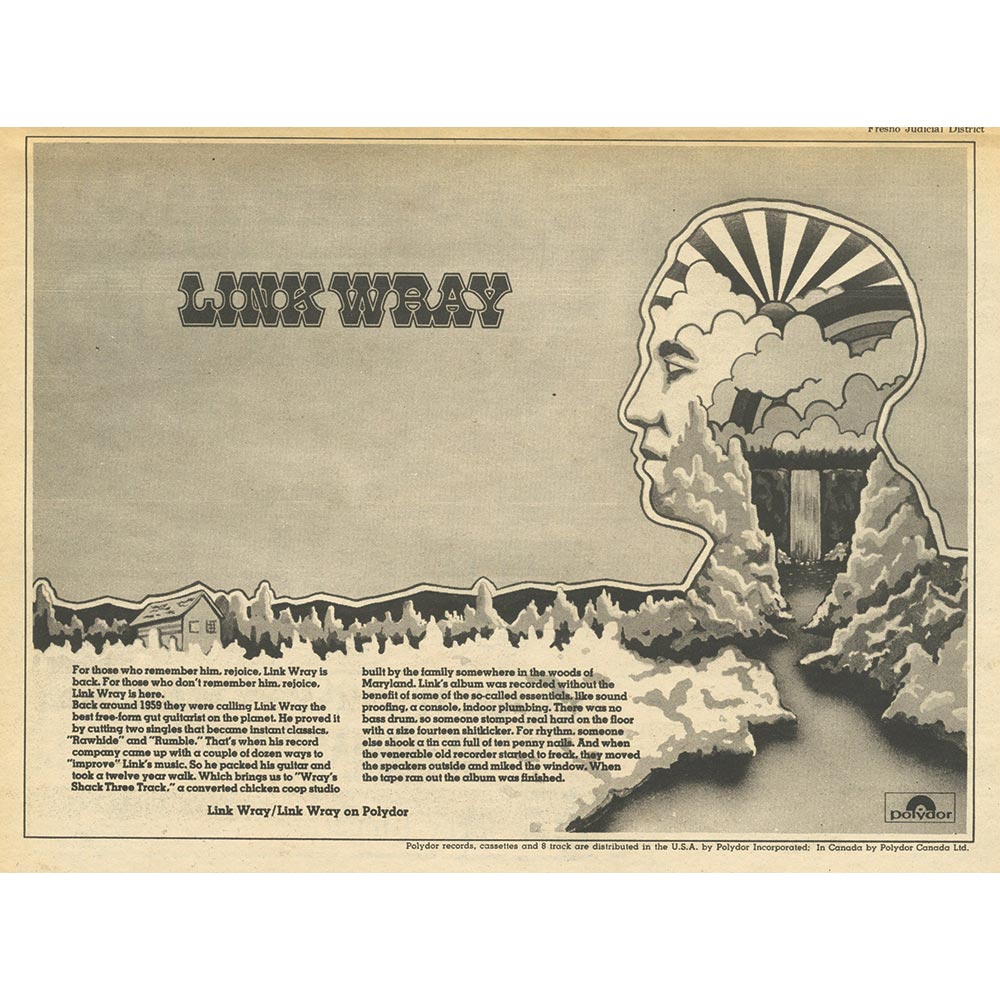
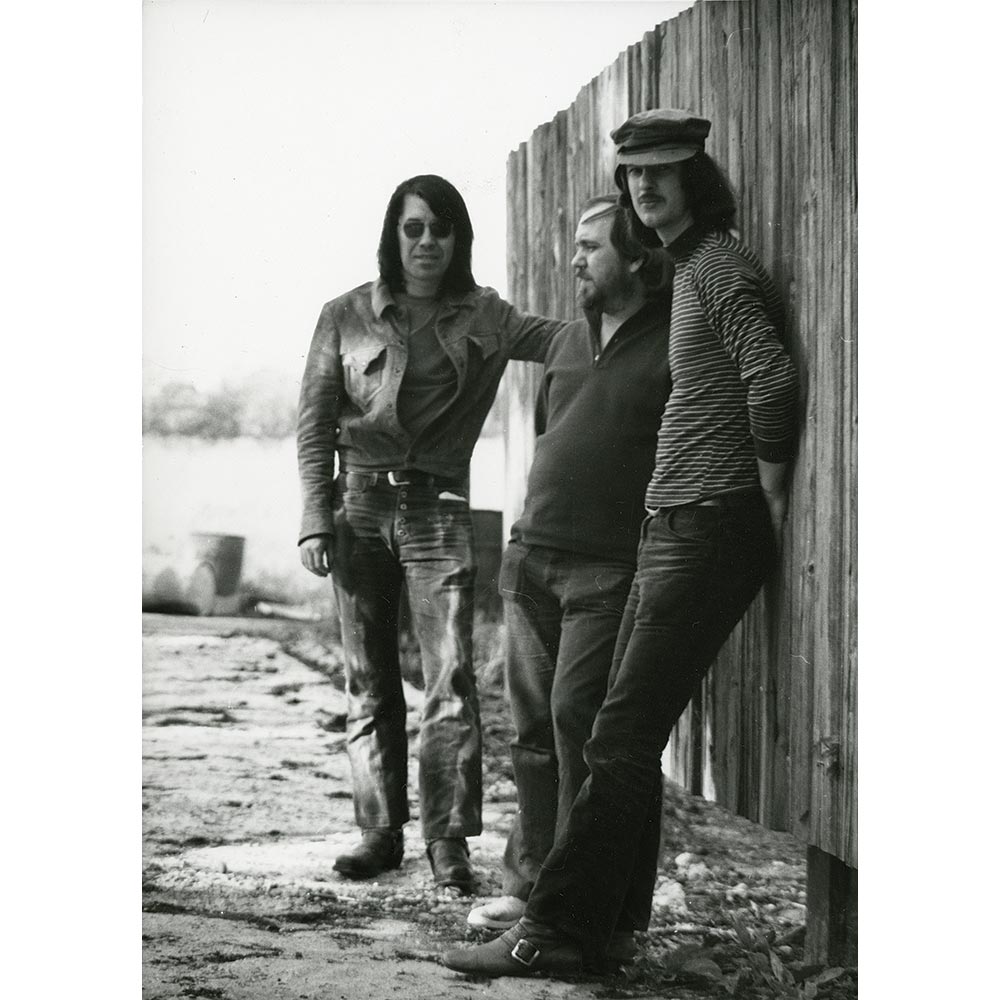
GOTTA GET UP: THE SONGS OF HARRY NILSSON 1965-1972.
Gotta Get Up: The Songs Of Harry Nilsson 1965-1972.
Label: Ace Records.
Enigmatic describes Harry Nilsson who was, without doubt, one of the most talented singer-songwriters of his generation. He released sixteen studio albums and e four soundtracks albums between 1966 and 1980. Sadly, most of these albums failed to find the audience they so richly deserved. That was apart from a brief spell.
This started with the release of the critically acclaimed Nilsson Schmilsson in November 1971, which featured a cover of Pete Ham and Tom Evans’ Without You. It would play its part in the success of Nilsson Schmilsson when it was released as a single. Without You gave Harry Nilsson his first number one. Buoyed by its success of Without You, Nilsson Schmilsson reached number three in the US Billboard 200 charts and was certified gold. Things got even better for Harry Nilsson when the nominations for the 1973 Grammy Awards were announced, and was nominated in four categories. On the night, Harry Nilsson won the Grammy Award for Best Male Pop Vocal Performance. Since then, Without You has been synonymous with Harry Nilsson, which is somewhat ironic, as Harry Nilsson wrote most of his own songs.
That was the case on the followup to Nilsson Schmilsson, Son Of Schmilsson which was released in July 1972. It was released to the same critical acclaim, and reached number twelve in the US Billboard 200. Within five months, Nilsson Schmilsson had sold over 500,000 copies and was certified gold. Many thought that having made his breakthrough, that this was the start of a period when commercial success and critical acclaim would be familiar friends for Harry Nilsson. Sadly, that wasn’t the case.
Never again did Harry Nilsson enjoy the same commercial success that Nilsson Schmilsson and Son Of Schmilsson enjoyed. At first, Harry Nilsson’s albums failed to reach the top thirty, and before long, the top 100. His last album Flash Harry which was released by Mercury in 1980 failed to chart. Gone were the days of number one singles, gold discs and Grammy Awards. This wasn’t helped by Harry Nilsson’s refusal to play live or tour the albums he released.
Part of the problem was that the enigmatic Harry Nilsson was living his life on his own terms. He was one of the hardest living musicians of the early seventies, and often spent time drinking with John Lennon during his trial separation from Yoko Ono. Some critics believe that these bouts of heavy drinking adversely affected Harry Nilsson’s voice. However, he was still one of the most talented singer-songwriters of the seventies.
Alas, commercial success continued to elude Harry Nilsson. He was a maverick who it seemed had a contrarian side. Despite having enjoyed the two most successful albums of his career, Harry Nilsson decided he wasn’t willing to write, record release commercial music. Instead, what mattered to Harry Nilsson from 1973 to 1979 was artistic satisfaction. Industry insiders, critics and cultural insiders saw this is further proof that Harry Nilsson was a musical enigma who was determined to live life on his terms. It didn’t seem to matter that each album seemed to sell in even smaller quantities. However, after 1980 this changed.
The assassination of his close friend John Lennon in 1980 was a turning point for Harry Nilsson. This resulted in Harry Nilsson taking a break from recording, and campaigning for greater gun control. After that, Harry Nilsson recorded only sporadically and never released another album. Flash Harry had been Harry Nilsson’s swan-song.
On February ’14th’ 1993, Harry Nilsson suffered from a massive heart attack. This was a warning sign for Harry Nilsson. Sadly, less than a year later, Harry Nilsson died on January ’15th’ 1994 Harry Nilsson died of heart failure. That day, music lost one of its most talented sons, and a singer-singer who should’ve reached greater heights.
While commercial success eluded much of Harry Nilsson’s of work, critics, cultural commentators and his contemporaries realised that he was one of the most talented singer-songwriters of his generation. Harry Nilsson’s skills as a songwriter are held in the highest regard by his contemporaries and peers. So much so, that many artists and bands covered songs penned by Harry Nilsson. This includes the twenty-four artists and bands that feature on Gotta Get Up: The Songs Of Harry Nilsson 1965-1972 which is the next instalment of Ace Records’ Songwriter Series.
Among the twenty-four artists on Gotta Get Up: The Songs Of Harry Nilsson 1965-1972 are Annie Nilsson, The Monkees, Al Kooper, The Family Tree, The Yarbirds, Harpers Bizarre, The 5th Dimension, The Shangri-Las, Sandie Shaw, Blood, Sweat and Tears and Andy Williams. These are just a few of the artists on Gotta Get Up: The Songs Of Harry Nilsson 1965-1972.
Fittingly, it opens with Annie Nilsson’s cover of Gotta Get Up. Annie Nilsson is one of Harry Nilsson’s seven children, and has obviously inherited her father’s talent. Sonically and stylistically she sounds similar to Suzanne Vega, when she covered Gotta Get Up for
This Is The Town, A Tribute To Nilsson: Volume 1 which was released on The Royal Potato Family label. Another tribute to the great man is Gotta Get Up: The Songs Of Harry Nilsson 1965-1972, which fittingly, his talented daughter Annie Nilsson gets the honour of opening,
Al Kooper covered Mournin’ Glory Story for his 1969 album You Never Know Who Your Friends Are, which was released by CBS. His cover is understated, with a piano and ethereal close harmonies playing their part in this wistful and ruminative reading of Mournin’ Glory Story.
Tom Northcott’s career began in 1962, when he was a member of the Vancouver Playboys. By 1967, he was a solo artist and had signed to Warner Bros Records. In 1968, the Canadian folk-rock singer released a cover of 1941 as a single on Warner Bros. It’s an impassioned and emotive reading where Tom Northcott brings Harry Nilsson’s powerful lyrics to life.
The Family Tree’s recording career was somewhat short-lived. It began in 1967, and ended in 1968. By then, they had released three singles and their 1968 album Miss Butters on RCA Victor. One of the songs on the album Miss Butters was Butters Lament. It’s a reminder of what’s a hidden gem of an album that features cerebral, carefully crafted and pop songs. They’re part of a concept album about an elderly spinster. Each song, including Butters Lament is part of a different chapter in her life. Just like the other songs on the album, Butters Lament’s arrangement is imaginative and well produced. String and horns play an important part in this cinematic song’s arrangement.
Good Times originally featured on Harry Nilsson’s 1966 debut album Spotlight On Nilsson. Five years later in 1971, British actor Alan Lake covered Good Times which was produced by Mike Berry. It was released in Germany on Ember and in Spain on the Discophon label. Despite Alan Lake’s joyous and irresistible cover of Good Times, the single failed to find an audience and there was no followup.
When The Yarbirds released Ten Little Indians as a single on Epic in Britain in 1967, they had just become a quartet. Their music was changing, and becoming much more experimental, with The Yarbirds improvising and playing longer songs during concerts. This didn’t suit Epic, who brought Mickie Most onboard to produce Little Indians. Alas, the single failed to chart. Things improved for The Yarbirds when they released their fourth album Little Games, which featured Ten Little Indians. It was released in 1967, and reached eighty on the US Billboard 200. Little Games proved to be The Yarbirds’ swan-song, with Jimmy Page going on to form Led Zeppelin. However, Ten Little Indians is a reminder The Yarbirds who were one of the most important and influential British bands of the sixties
Harpers Bizarre were formed in Santa Cruz, California in 1963, and by 1970 had already released four albums. One of the songs they released as a single was a cover of Harry Nilsson’s Poly High. It was produced by Lenny Waroneker and Harry Nilsson and released on Warner Bros in 1970. Poly High is a dreamy, lysergic ballad which is one of the hidden gems in Harpers Bizarre’s back-catalogue.
For The 5th Dimension’s eighth studio album Living Together, Growing Together which was released on Bell Records in 1973, they chose to cover Harry Nilsson’s Open Your Window. In The 5th Dimension’s hands it becomes a beautiful, jazz-tinged ballad that is one of the highlights of the compilation.
By 1968, Puerto Rican guitar, singer and composer José Feliciano was twenty-three, and had already released seven albums on RCA Victor since 1965. Seven became eight with the release of Souled later in 1968. One of the cover versions was Harry Nilsson’s Sleep Late, My Lady Friend. It’s a beautiful, heartfelt ballad with where José Feliciano shows maturity that belies his relative youth.
Tucked away on the B-Side of The Shangri-Las’ single Past, Present And Future was Paradise. It was released on Red Bird, in May 1966 and was a Shadow Morton production. He was The Shangri-Las’ producer, and was picking up where Phil Spector left off. Sonically, there are similarities to Phil Spector’s production style, during Paradise which is a reminder of The Shangri-Las’ glory days, when they were one of the most successful of the American ‘girl’ groups.
When Blood, Sweat and Tears released their 1968 debut album Child Is Father To The Man on Columbia, one of the songs the covered was Harry Nilsson’s Without Here. This impassioned jazz-tinged ballad helped Child Is Father To The Man to forty-seven in the US Billboard 200 and the first of three gold discs for Blood, Sweat and Tears.
Closing Gotta Get Up: The Songs Of Harry Nilsson 1965-1972 is Andy Williams with his cover of Remember. It featured on his 1973 Columbia album Solitaire. By then, Andy Williams was still one of the most popular easy listening artists. Solitaire was his fourteenth album to be certified gold. Then there was the small matter of three platinum discs since his debut album in 1956. Andy Williams delivers a rueful, thoughtful vocal and brings the lyrics to Remember to life. This is poignant, and beautiful ballad ensures that Gotta Get Up: The Songs Of Harry Nilsson 1965-1972 ends on a high.
These twelve tracks are just part of the story of Gotta Get Up: The Songs Of Harry Nilsson 1965-1972, which is the latest instalment in Ace Records’ long-running and successful Songwriters Series. Gotta Get Up: The Songs Of Harry Nilsson 1965-1972 features twenty-four songs from some of the giants of music, who are joined by familiar faces and new names. They all recognised the quality of Harry Nilsson’s songs, and decided to cover them between 1965 and 1973. Some artists stay true to the original, while others reinterpret the song and give it their own unique twist. Often, the cover is very different to the original, and new life has been breathed into Harry Nilsson’s original. In several cases, a whole new audience were introduced to Harry Nilsson’s music. Hopefully, that will be case with Gotta Get Up: The Songs Of Harry Nilsson 1965-1972.
It covers a period when Harry Nilsson wrote some of his most accessible music. After 1973, Harry Nilsson’s music became less commercial. Instead, he was aiming for artistic satisfaction, rather commercial success. Still Harry Nilsson continued to be one of the greatest singer-songwriters of his generation. However, his albums failed to sell in the same quantities as Nilsson Schmilsson and Son Of Schmilsson. They were the most successful albums of Harry Nilsson’s career. After that, Harry Nilsson never again reached the same heights. Gone were the days of number one singles, gold discs and Grammy Awards.
For a newcomer to Harry Nilsson, the songs on Ace Records’ recent compilation Gotta Get Up: The Songs Of Harry Nilsson 1965-1972 showcase his skills as a songwriter during what was the most accessible and successful period of his career. This is the place for a newcomer to start. Especially with what were his two most successful albums Nilsson Schmilsson and Son Of Schmilsson. After that, it’s a case of working one’s way through Harry Nilsson’s back-catalogue. It features one of the most talented and gifted singer-songwriters of the sixties and seventies. Harry Nilsson won the respect of critics, cultural commentators and his contemporaries. They’re not alone.
Now Ace Records pay tribute to Harry Nilsson by inducting him in their Songwriter Series, where he joins some of the greatest songwriters and songwriting partnerships of the past sixty years. Proof of that are the twenty-four songs on Gotta Get Up: The Songs Of Harry Nilsson 1965-1972, which features a tantalising taste of the songwriting skills of the mercurial and enigmatic Harry Nilsson at the peak of his powers.
Gotta Get Up: The Songs Of Harry Nilsson 1965-1972.


ESMARK-MARA I AND MARA II.
Esmark-Māra I and Māra II.
Label: Bureau B.
On the ‘27th’ of July 2017, Esmark, the collaboration between sound architect Nikolai von Sallwitz and experimental artist Alsen Rau will join what is one of the most exclusive clubs in music. Its members include musical luminaries like Frank Zappa, Tom Waits, Guns N’ Roses, Bruce Springsteen and Bright Eyes, who have all released two albums on the same day. However, Esmark’s membership is still on the pending pile until ‘27th’ of July 2017. That day they become fully fledged members of this extremely exclusive club, when they release their two new studio albums Māra I and Māra II, on the Hamburg based record label Bureau B. This is some way for Esmark to announce their arrival on the musical stage.
Esmark is the latest musical vehicle of sound architect Nikolai von Sallwitz and experimental artist Alsen Rau. They’ve worked together on a variety of experimental and performative projects since 2001. Their latest project was recorded in late 2016, in Scandinavia, where they beautiful surroundings and solitude inspired them to record enough music for two albums. Rather than save some of the music for a followup album, a decision was made to release two albums simultaneously.
Having made that decision, Nikolai von Sallwitz and Alsen Rau started thinking on a new moniker for their latest musical vehicle. This was the start a new chapter for the pair, and required a new name. When they started casting around for a new name for the project, they came up with Esmark, which is a majestic glacier at Spitzbergen, in Northern Norway that borders the Arctic Ocean, Greenland Sea and Norwegian Sea. Now that they had settled on the name Esmark for new project, Nikolai von Sallwitz and Alsen Rau made plans to release the album. This was something that both men have plenty of experience with.
Both Nikolai von Sallwitz and Alsen Rau are experienced musicians, who have enjoyed lengthy and successful careers. They’ve both previously worked together, and have also worked with a variety of different artists in a variety of roles.
In the case of sound architect Nikolai von Sallwitz he was mastered Scheich In China first two albums and has written for the Karachi Files’ 2016 debut eponymous album and Scheich In China. However, Nikolai von Sallwitz is best known as known as Taprikk Sweezee, which is the moniker he has been using since 2006.
Since then, Taprikk Sweezee has worked in a variety of capacities, ranging from singer and songwriter, to recordist remixer and producer. His career as Taprikk Sweezee started in 2006 as a vocalist and since then, he has served what is akin to a musical apprentice. That is only part of the Taprikk Sweezee story.
Taprikk Sweezee has written music and has been involved with sound design for film, theatre and a variety of art and pop projects. Somehow, Taprikk Sweezee has found time to collaborate with a number of visual artists, including Chris Hoffmann, Andreas Nicholas Fischer and Robert Seidel. There are it seems, many strings to Taprikk Sweezee’s bow.
In 2010, Taprikk Sweezee released his debut EP Conversea. A year later, and Taprikk Sweezee returned with his sophomore EP Poly. Taprikk Sweezee also finds time to work on projects with his friend Alsen Rau, including on the Barabass, Scheich in China and their most recent project Esmark.
Just like Nikolai von Sallwitz, Alsen Rau has a wealth of musical experience. Over the years, he has been a member of various groups including Barabass, who released an EP in 2006. On + Brr followed in 2010, who released their debut album Peace and Love in 2010. This was followed by a quartet of singles. Alsen Rau’s next project was Scheich in China, who have released five albums between 2014 and 2016. However, this is just part of the story of Alsen Rau.
He’s also one of the founders and curators of Kraniche, a Hamburg-based club, that is renowned for exhibitions of experimental art. They’ve received praise and plaudits from critics and cultural commentators. There’s also been performances of experimental music at Kraniche, which has gained a reputation as a place that is unafraid to showcase ambitious and inventive music. Away from Kraniche, Alsen Rau has also curated a number of exhibitions, performances and readings, and is heavily involved with city’s art scene. However, much of Alsen Rau’s time is spent making music.
This includes Esmark’s albums Māra I and Māra II. To make what eventually became Māra I and Māra II, Nikolai von Sallwitz and Alsen Rau decided to head to Scandinavia in late 2016. Rather than head to one of the major cities in Sweden, Norway or Finland, where they would find some of the top studios in Europe,
Nikolai von Sallwitz and Alsen Rau decided to head to rural Scandinavia. They wanted to be free from distractions, and hope to enjoy some solitude that would spark a creative spree.
Nikolai von Sallwitz and Alsen Rau took to their Scandinavian retreat, mostly, an array of analog equipment, including various synths and drum machines. They were joined by a myriad of effects, which would play an important part in the proceedings once work began.
Locked away in their Scandinavian retreat, the recording sessions got underway, and Nikolai von Sallwitz and Alsen Rau started to carefully craft a series of soundscapes using the various synths and drum machines. The final piece in the jigsaw were a variety of special effects and filter units, which transformed the dry signal and resulted in a myriad of otherworldly sounds making their way onto the tape. Sometimes, the recordings on the tape were then fed back into the compositions. Nikolai von Sallwitz and Alsen Rau weren’t afraid to experiment and push musical boundaries to their limits during what proved to be productive recording
The solitude of their Scandinavian retreat had proven inspirational for Nikolai von Sallwitz and Alsen Rau. So much so, that when it came to naming soundscapes, that Nikolai von Sallwitz and Alsen Rau named them after the biogeography and cartography of where the recordings took place. They were determined to never forget where Esmark’s first took place.
By the time the recording sessions were over, and Nikolai von Sallwitz and Alsen Rau returned home, they realised that they had more than enough material for one album. This left them with two options. They could cherry pick the best soundscapes for Esmark’s debut album, and keep the remainder for the followup album. However, given the quality of the music Esmark had recorded, they decided to follow in the footsteps of Frank Zappa, Tom Waits, Guns N’ Roses, Bruce Springsteen and Bright Eyes.
This meant releasing two albums simultaneously on the one day. These two albums became Māra I and Māra II, which were Esmark’s debut and sophomore albums. Esmark were about to join a very exclusive club, and do so in some style with Māra I and Māra II.
Māra I.
Māra I features six soundscapes lasting forty minutes, and they showcase the combined and considerable talents of Nikolai von Sallwitz and Alsen Rau. That is the case between the opening bars of Esmark, and the journey through Sirens, Skern Å, Mon, Krav and right up until the closing notes of Keicke. The music is understated, haunting, ethereal and cinematic, as if Esmark were writing the score to a sci-fi movie. Sometimes, the minimalist sound is futuristic and otherworldly as it meanders, pulsates, growls and drones. Always there’s an air of drama, and an air of expectancy as the genre-melting soundscapes takes a series of twists and turns.
As they do, Nikolai von Sallwitz and Alsen Rau combine elements of ambient and avant-garde with the Berlin School, electronica and experimental music. There’s also Krautrock and musique concrète influence as Nikolai von Sallwitz and Alsen Rau paint vivid pictures during this album of compelling and carefully crafted cinematic soundscapes. However, Māra I is only part of the Esmark story.
Māra II
Māra II picks up where Māra I left off, and as Husby-Klit Bk. unfolds, appears to follows in its footsteps. The music is ambitious, inventive and just like on Māra I, is minimalistic, has an elements of drama as it reveals its futuristic, cinematic sound as meanders menacingly. The futuristic, otherworldly and cinematic sound reappears on Lianen, before Ringen reveals a much slower, spartan sound. Drums provide the heartbeat, and again, add an element of drama. It’s a similar case on Årgab, which has an otherworldly and experimental sound. On Vrig, drums crack as a synth pulsates almost menacingly on another cinematic soundscape. Futuristic and otherworldly describes Pluvialis Apr. which feature a myriad of sci-fi sounds. Gradually, Objekt P62410 reveals a dramatic, cinematic sound, and it’s a similar case with Tæller 3.981, which closes Māra II. It sounds as if belongs on the soundtrack to a movie about intergalactic warfare, and is one of the highlights of Māra II.
As is often the case, Nikolai von Sallwitz and Alsen Rau have the best until last on Māra II. Just like Māra I, it’s an album where Nikolai von Sallwitz and Alsen Rau combine disparate musical genres to create the bigger musical picture. Again, this ranges from ambient, avant-garde and the Berlin School, to electronica, experimental. There’s also a Krautrock and musique concrète influences on Māra I, which follows in the footsteps of Māra II and reaches the same heights.
Esmark’s two albums Māra I and Māra II, both showcase the considerable talents of Nikolai von Sallwitz and Alsen Rau. The day they formed Esmark was the start of a formidable musical partnership. Māra I and Māra II which will be released by Bureau B on the ‘27th’ July 2017, is a tantalising taste of the type of music that Esmark are capable of producing.
The music on Māra I and Māra II follows in the footsteps of some of the legends of German music, especially Adelbert Von Deyen, Ashra, Conrad Schnitzler, Cluster and Klaus Schulze. Just like these musical luminaries, Esmark are capable of creating inventive, innovative music. It’s much more than that though.
Often, there’s an element of drama, as the soundscapes becomes dark, eerie, haunting, moody, ominous and otherworldly. Sometimes, they’re understated and minimalistic, while other times, they take on a mesmeric or hypnotic quality. Occasionally, the soundscapes become ethereal, wistful and ruminative, and as a result, invites reflection. Always, though, Esmark continue to captivate and compel with their carefully crafted cinematic soundscapes on Māra I and Māra II which marks the dawn of a new and exciting era for Nikolai von Sallwitz and Alsen Rau.
Esmark-Māra I and Māra II.


EBERHARD KRANEMANN AND HAROLD GROSSKOPF-KRAUTWERK.
Eberhard Kranemann and Harald Grosskopf.
Label: Bureau B.
Ever since The Beatles released Love Me Do in 1962, many musical luminaries have talked about collaborating on an album. Sadly, that is often as far as it got. Egos got in the way of the project, and what could’ve been a historical collaboration was shelved.
Other projects got as far as the studio, when egos clashed. By then, the musical luminaries had started writing songs, and shad even recorded a few songs. That was when oversized egos and pride got in the way of what could’ve been a groundbreaking album. What was an opportunity to make musical history was lost.
Some artists got into the studio, and got as far as recording and releasing an album. Unfortunately, it was an album that should never have seen the light of day. When it was released, these collaborations between musical giants proved to be a wholly unsatisfactory and showed that the artists’ better days were behind them.
Not all collaborations between high-profile musicians are doomed to failure. Many collaborations lead to landmark and classic. Especially within jazz music, where collaborations were once commonplace, and lead to many a groundbreaking album. It was a similar case when jazz begat fusion. Collaborations lead to some of the greatest albums in fusion’s history. However, collaborations were also commonplace with country and rock and nowadays, are commonplace with hip hop. There was also many a collaboration between some of the biggest names in Krautrock and the Berlin and Düsseldorf Schools of Electronic Music.
These collaborations led to countless groundbreaking classic albums. One of the highest profile collaborations was Harmonia, which featured Hans-Joachim Roedelius and Dieter Moebius of Cluster and Michael Rother of Neu! They released Musik von Harmonia in 1973 and Deluxe in 1974. Harmonia also collaborated with Brian Eno on their third album, Tracks and Traces which was belatedly released in 1997. By then, countless collaborations had been released which featured the great and good of German music.
This includes many albums which featured either Eberhard Kranemann and Harald Grosskopf. Both men have enviable CVs, and have played with of Germany’s leading bands. They’ve featured on many albums, including countless classic albums. However, up until recently, Harald Grosskopf and Eberhard Kranemannt have never recorded an album together. The two men live in different parts of Germany. Harald Grosskopf lives in Berlin, while Eberhard Kranemann is a resident of Düsseldorf. However, they decided to collaborate on an album, and the result was Krautwerk which was recently released by the Hamburg based record label Bureau B. Krautwerk is a meeting of two musical minds, who have certainly made their mark on Germany’s music scene.
Harald Grosskopf has been one of the leading lights of the Berlin music scene for over forty years, and during that time, has played on albums by some of the biggest and most influential groups in the history of Krautrock and the Berlin School of Electronic Music. His story began in 1972.
That was when Harald Grosskopf played on two debut albums, Wallenstein’s Blitzkrieg and also Witthüser and Westrupp’s Bauer Plath. A year later, in 1973, Harald Grosskopf played on albums by Ash Ra Tempel, The Cosmic Jokers, Wallenstein and Walter Wegmüller. This was just the start of a long and illustrious career.
As the seventies progressed, when some of the biggest names in German music were looking for a drummer, Harald Grosskopf got the call. Soon, he found himself playing alongside Klaus Schulz and Ashra. This included on Ashra’s 1979 classic albums Correlations. However, a year later, Harald Grosskopf embarked upon a solo career.
In 1980, Harald Grosskopf began his solo career as he meant to go on, by releasing a landmark album Synthesist. After a six-year wait, Harald Grosskopf returned with his sophomore album Oceanheart in 1986. Just like his debut album Synthesist, Oceanheart was hailed as another genre classic. Oceanheart had been well worth the six-year wait.
There was another gap of six years before Harald Grosskopf released World of Quetzal following in 1992. However, the gaps started getting longer, and ten years passed before Harald Grosskopf released Digital Nomad in 2002. There was a reason for the lengthy gaps between solo albums.
Harald Grosskopf was still the go-to drummer for some of the biggest names in German music. That had been the case since 1971, and continued when Harald Grosskopf embarked upon a solo career in 1980. He was constantly in demand, and it got that the studio became a second home for Harald Grosskopf, and since 1980, had worked on albums by Ashra, Bernd Kistenmacher, Bernd Witthüser, Joachim Witt, Lilli Berlin, Steve Baltes, Sunya Beat and 17 Hippies. It was no surprise that often there were long gaps between Harald Grosskopf’s solo albums.
Just two years after the release of Digital Nomad in 2002, Harald Grosskopf released Yeti Society in 2004. There was then a six-year gap until he returned with Synthesist 2010, where he reworked his classic debut album. The following year, 2011, Synthesist was remixed and became Re-Synthesist. This introduced Harald Grosskopf’s classic album Synthesist and his back-catalogue to a new and younger audience. They embraced his most recent solo album Naherholung, which was released in 2016. That was also when Harald Grosskopf started working with Eberhard Kraneman on Krautwerk.
Eberhard Kraneman was born in 1945, and studied classical double bass at the Dortmund Conservatory, where he played Bach, Mozart and Telemann orchestral music. In the evenings, Eberhard Kraneman started playing with local jazz bands. However, a move to Düsseldorf to study painting at the Arts Academy, transformed Eberhard Kraneman musical outlook.
At the Arts Academy, Eberhard Kraneman experimented with colours and painted abstract pictures. This lead to him embarking on musical experiments. These sonic experiments started on a cello and clarinet, before Eberhard Kraneman started experimenting with a variety of different instruments. Gradually, he introduced a tenors saxophone, electric guitar, Hawaiian guitar and later, various electronic instruments. This lead to Eberhard Kraneman and other art students he founded the experimental music group Pissoff in 1967.
Not long after this, Florian Schneider heard the band, and decided to joined. This was the start of a four-year collaboration, where Eberhard Kraneman was a member of the nascent Kraftwerk between 1970 and 1971. That was when Eberhard Kraneman left Kraftwerk, and started collaborating with Michael Rother and Klaus Dinger who had already formed Neu!
Eberhard Kraneman time with Neu! came to nothing, and Neu! became a duo, featuring Michael Rother and Klaus Dinger. They went on to release a trio of classic albums. Meanwhile, Eberhard Kraneman reinvented himself.
Eberhard Kraneman decided to reinvent himself as Fritz Müller, who had many strings to his bow. Having dawned his new persona, Fritz Müller became a recording artist and worked on television and radio. Initially, though, Fritz Müller spent much of his time working at Conny Plank’s studio in Wolpera. That was where Fritz Müller recorded his 1977 debut album Fritz Müller Rock. By then, he had also founded the Fritz Müller Band, who would embark upon regular tours. However, as a solo artists, Fritz Müller released eight solo albums between 1977 and 2010. He even found time to collaborate with Larsen and Nurse With Wound on the 2010 album A Selection Of Errors. This was just part of the story of Eberhard Kranemann.
In 2003, Eberhard Kranemann decided to release an album under his own name. Klangfarben was the first of six solo albums Eberhard Kranemann released between 2003 and 2010. He also found time to release six collaborations between 2011 and 2015. Krautwerk, Eberhard Kranemann’s recently released collaboration with Harald Grosskopf takes that total to seven.
When it came to record their first collaboration, Krautwerk, Eberhard Kranemann and Harald Grosskopf headed to Kunsthaus Boltenberg, in Wuppertal, Germany. That was where the two veterans of German music wrote, recorded, edited and mixed the six tracks that eventually became Krautwerk.
To record Krautwerk, Eberhard Kranemann and Harald Grosskopf used a combination of traditional instruments and technology. Harald Grosskopf added electronics, electronic drums and percussion. Eberhard Kranemann was responsible for the cello, electric guitar, electronics, Hawaiian guitar and vocals. Once the four tracks were recorded, editing began and gradually, Krautwerk started to take shape. All Eberhard Kranemann and Harald Grosskopf had to do was mix Krautwerk, before the album was mastered by Andreas Kolinski. Now Krautwerk was ready for release.
As Midnight In Düsseldorf Berlin opens Krautwerk a gnarled, bubbling bass synth joins with effects-laden guitars and crisp electronic drums that provide the hypnotic heartbeat. The arrangement meanders menacingly, all the time growing in power. Searing guitars are unleashed, adding to the lysergic, cinematic sound. So does Harold’s whispery soliloquy as it drifts in and out. Meanwhile, blistering guitars and synths combine. Especially bubbling synths that help create a dramatic backdrop, and later, an ethereal synth soars above the arrangement adding a contrast. It’s replaced by a wall of scorching, effects-laden, rocky guitars as synths bubble, beep and squeak. Later Harold’s soliloquy briefly returns, before a pulsating synth and myriad of electronics are added. They add the finishing touch to this captivating, cinematic, dramatic and sometimes psychedelic soundscape.
The bass synth and vocoder that open Ou Tchi Gah are reminiscent of Kraftwerk in their prime. Soon, the drums shuffle as bass synth pulsates and is joined by a squawking vocal. It drifts in and out, as the soundscape becomes the man machine. For the listener, it’s like heading off on journey, first on an express train then a plane as it soars into Berlin’s night sky. As it lands in Düsseldorf, an express train awaits. Meanwhile, a sinister and squawking are part of a five-minute moody, moderne and thought-provoking soundscape that features Eberhard Kranemann and Harald Grosskopf at their most inventive.
Back in 1984, Wim Wenders directed Paris Texas, which featured a soundtrack by Ry Cooder. Both are cult classics, and Eberhard Kranemann and Harald Grosskopf seem to pay homage to them on Texas Paris. A searing, effect-laden guitar is unleashed, and panned left and right. Soon, it’s joined by a thunderous and menacing bass synth. Later, washes of whooshing, grinding and ethereal synths are added and when combined with the blistering guitar, pay a fitting homage to one of Ry Cooder’s finest soundtracks.
Ethereal, shimmering synths glide slowly across the arrangement to Happy Blue creating a feel-good sound. It’s ambient and draws inspiration from the Berlin School. That is still the case when crisp and dubby drums are added. A vocal is transformed into an extra instrument, before it almost heads in the direction of hip hop. By then, the drums are thunderous, as synths grind and squawk. Suddenly, it’s a quite different track, as the changes are rung. Now the arrangement is jaunty and uplifting, and then slow, ethereal and dreamy. Soon, the tempo rises and the track is anthemic and dance-floor friendly. Still, the changes are rung, on this musical merry-go-round. A buzzing bass synths, drums and synths play leading roles on what’s now an uplifting, hands-in-the-air anthem that later, becomes ethereal and understated before it dissipates, leaving just a memory of Eberhard Kranemann and Harald Grosskopf showcasing their considerable skill on this genre-melting opus.
A drone soars above the arrangement to Buddhatal, as grinding and percussive sounds provide the backdrop for an improvised vocal. Sometimes it has a spiritual quality, other times it heads in the direction of free jazz. Occasionally it’s akin to Primal Scream Therapy. However, it plays its part in this ambitious soundscape where drones, layers of synths percussion and searing effects-laden guitar are combined. They’re all part of Eberhard Kranemann and Harald Grosskopf’s musical palette, which is put to good use, as they carefully create a truly ambitious thirteen minute epic soundscape. It takes a series of twists and turns, as it reveals subtleties and surprises where Eberhard Kranemann and Harald Grosskopf create tomorrow’s music today.
After six carefully crafted soundscapes lasting forty-three minutes, Krautwerk is over. It’s the first collaboration from two of the elder statesmen of German music. They’re perfectly suited to collaborating, and seem to bring out the best in each other. So much so, that they’re like yin and yang. The result is ambitious album of innovative and genre-melting music.
During Krautwerk, Eberhard Kranemann and Harald Grosskopf combine elements of ambient, avant-garde, Berlin School, dub, electronica, experimental, Krautrock, psychedelia, rock and techno. Elements of all these disparate genres are combined to create music that is variously anthemic, joyous uplifting, to dark, moody and broody, and other times dramatic, futuristic and mesmeric. Krautwerk is also psychedelic, cinematic and always captivates.
Eberhard Kranemann and Harald Grosskopf aren’t afraid to through a few curveballs, or springs some surprises during Krautwerk. This keeps the listener on their toes during this captivating musical journey. They never know quite where Krautwerk is heading, but going by what’s gone before they know that these are interesting times.
And so it proves to be, as Eberhard Kranemann and Harald Grosskopf climb aboard the man machine during the rest of this the magical mystery tour that is Krautwerk. The Fab Two have created an ambitious and captivating album of contemporary and futuristic music. Sometimes, Eberhard Kranemann and Harald Grosskopf make the music of tomorrow, today on Krautwerk, which is a groundbreaking and genre-melting album from two of the leading lights of the German music. They’re responsible for the six cinematic and psychedelic soundscapes on Krautwerk, that are also dramatic, thought-provoking and at times, joyous and uplifting.
Eberhard Kranemann and Harald Grosskopf-Krautwerk.
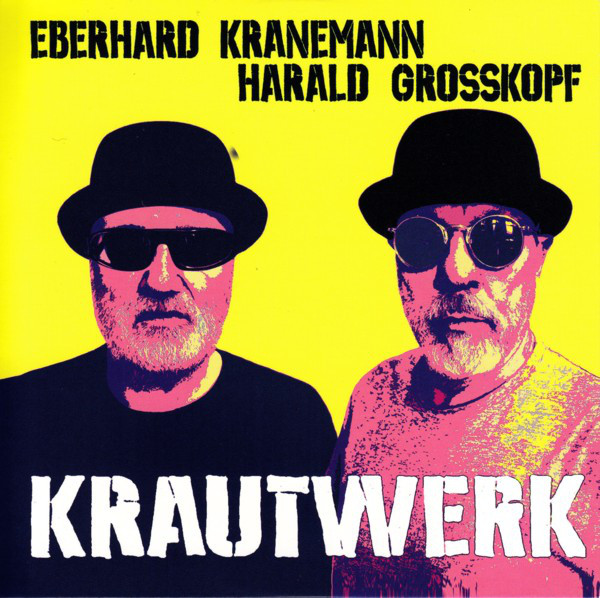
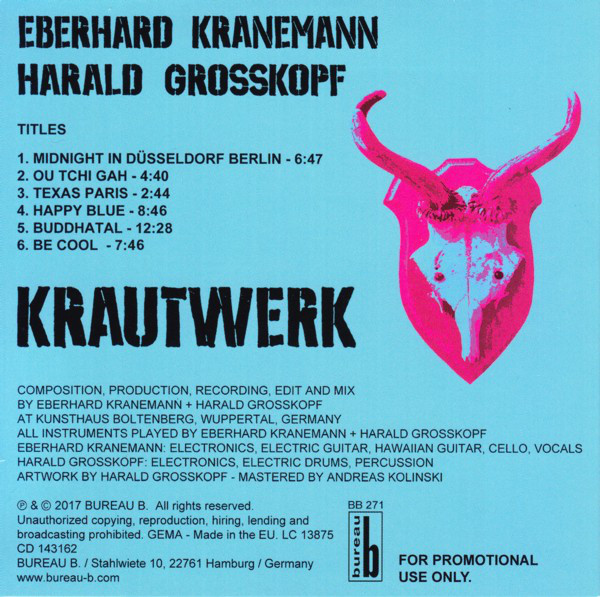


BERT MYRICK-LIVE ’N WELL.
Bert Myrick-Live ’N Well.
Label: BBE.
Every record collector has an album that has continued to elude them for many years. Finding it is the equivalent of finding the holy grail. They’ve searched for years, and never come close to finding that elusive and rare album. It gets that they can’t pass a record store, junk shop or thrift store without looking for their musical holy grail. When they enter the shop, there’s always the hope, that this, time they’ll come out clutching that elusive album. They’ve dreamt about this, and hoped that one day, they would find their holy grail in the bargain bins of a backstreet record shop. Preferably in the Dollar bins. Each and every record collector worldwide has dreamt of finding a copy of one particular record that for too long, has eluded them.
For one jazz fan, their dream was to find original copies of the six albums the short-lived Detroit-based Strata Records’ released between 1973 and 1975. Eventually, they had secure copies of five of the six albums. Only Bert Myrick’s 1974 album Live ’N Well eluded them. Its details were imprinted in their memory. They remembered that Live ’N Well was recorded nine years earlier on the ‘4th’ of April 1965, at the University Of Michigan Student Union, and featured the catalogue number SRI-102-74. It was their personal holy grail. Sadly, they knew that copies of Live ’N Well are almost impossible to find, and that it was one of the rarest jazz albums ever released. Not any more.
Recently, Live ’N Well was rescued from near obscurity by DJ Amir’s 180 Proof Records, and was recently released by BBE. At last, jazz lovers everywhere will be able to discover the delights of Bert Myrick’s long lost hidden gem, Live ’N Well.
Bert Myrick it seems, was always destined to be a drummer. He was born in Detroit in 1930, and growing up pounded away at pots and pans. They were the drums that Bert Myrick never had, but always wanted. With money tight, drums were a luxury. However, Bert Myrick wasn’t going to give up on his dream of becoming a drummer.
Helping him on his way was his friend Elvin Jones, who was three years older than Bert Myrick. While Bert Myrick was born in Detroit, Elvin Jones was born and brought up in Pontiac, Michigan. Their paths crossed on the local music scene, and Elvin Jones took Bert Myrick under his wing. He became his mentor, and his Elvin Jones playing style would rub off on Bert Myrick. Elvin Jones would go on to play on many classic albums, including John Coltrane’s A Love Supreme, never forgot his friend Bert Myrick.
When Elvin Jones returned to Detroit to play with a band, he would always ensure that Bert Myrick and his friends got in to see the gig. Even if it meant leaving a window open, which Bert Myrick and his friends would scramble through. Bert Myrick would sit and watch, and dram that one day, he would be sitting where Elvin Jones was.
That dream eventually came true. After his discharge from the US Military in the early fifties, Bert Myrick started studying and playing alongside pianist Barry Harris, who was one of the leading light’s of Detroit’s bebop scene. Soon, Barry Harris had become Bert Myrick’s mentor, and helped him find his feet in Detroit’s vibrant jazz scene.
Before long, Bert Myrick was the go-to-guy for any jazz musicians who arrived in Detroit without a drummer. He played alongside Joe Henderson, Sonny Stitt, Terry Pollard and Yusef Lateef. For Bert Myrick, this was the equivalent of his musical apprenticeship.
In April 1964, Bert Myrick was a member of drummer Bill Hyde’s quintet that played at Odum’s Cave. That was how Bert Myrick and trombonist George Bohanon first met. The pair became friends, and later in Bert Myrick was asked to join a quintet led by trombonist George Bohanon and tenor saxophonist Ronnie Fields. Sadly, the Bohanon-Fields Quintet was relatively short-lived, and once the job ended, the members of the quintet started founding their own bands.
This is how the band that played on Live ’N Well came about. It was formed in 1964, and it took a while to settle on a rhythm section. The problem area was the bass, and various players tried out. They never quite clicked with the rest of the rhythm section. That was until Will Austin, who arrived back in Motorcity after playing alongside Etta James and the great and good of jazz, including Helen Hume, Jackie McLean, Joe Williams, Kenny Dorham, Philly Joe Jones, Wes Montgomery. Will Austin auditioned, and proved to be the missing link in the quintet’s rhythm section.
At last the quintet’s lineup was complete. The rhythm section featured drummer Bert Myrick, bassist Will Austin and pianist Kenny Cox. They were joined by trombonist George Bohanon and Ronnie Field on tenor saxophone. It seemed that Bert Myrick was following in the footsteps of the Jazz Crusaders, who had popularised the tenor and trombone frontline. This would prove popular and soon, the quintet were making waves around Detroit.
The quintet was soon one of the top band’s on Detroit’s thriving jazz scene. There was more to Detroit than soul, and many talented jazz bands were playing in the city’s clubs. However, Bert Myrick’s band was a cut above the competition, and when they took to the stage, were capable of creating musical magic. That was the case on the ‘4th’ of April 1965.
Bert Myrick’s band were booked to play at the University Of Michigan Student Union on the ‘4th’ of April 1965. Pianist Kenny Cox decided to record the concert. Whether he was thinking of trying to interest a record company in the concert is unknown. However, as Bert Myrick’s band took to the stage, thankfully, someone pressed record.
That night, drummer Bert Myrick lead his talented quintet that featured bassist Will Austin, pianist Kenny Cox, trombonist George Bohanon and Ronnie Field on tenor saxophone. They worked their way through a four song set that opened with Sevenths which gave way to Scorpio’s Child, Paramour and closed with The Latin Bit. As the quintet left the stage after a masterful performance, they received standing ovation. Despite this, the recording that became Live ’N Well lay unreleased for nine years.
Following the recording of what would later become Live ’N Well, Bert Myrick’s quintet continued to play live, and proved a popular draw. Mostly, they played in Detroit, but sometimes, ventured further afield. However, gig goers realised that when Bert Myrick’s quintet took to the stage, they were capable of producing fireworks. That was the case right up until the quintet split-up around 1967.
Only Bert Myrick and bassist Will Austin remained in Detroit. They were never short of work, and spent much of their time playing alongside pianist Terry Pollard. However, the rest of the quintet, Kenny Cox, George Bohanon and Ronnie Field left Detroit’s jazz scene behind, and headed for pastures new.
Trombonist George Bohanon went on to forge a long and successful career. He had also been a regular member of Motown’s studio band The Funk Brothers, and his work with various jazz bands would stand him in good stead for the future. George Bohanon played on over 470 recordings as a session musician, ranging from jazz, funk, rock and soul. Meanwhile, Kenny Cox had plans for the future.
Pianist Kenny Cox and The Contemporary Jazz Quintet had joined forces, and in 1968, released their debut album Introducing Kenny Cox And The Contemporary Jazz Quintet on Blue Note Records. It was followed up a year later by Multidirection, which was released on Blue Note Records in 1969. However, when The Contemporary Jazz Quintet returned with a third album in 1973, it would be on a different label.
By 1973, much had changed for Kenny Cox and The Contemporary Jazz Quintet. They had Blue Note Records behind, and were now billed as The Contemporary Jazz Quintet. Kenny Cox was still The Contemporary Jazz Quintet pianist, and had founded his own record company, Strata Records. He had founded Strata Records in Detroit, and for the nascent label’s first release, chose The Contemporary Jazz Quintet’s third album Location.
After the release of Location, Kenny Cox started thinking about what Strata Records’ second release should be. That was when he remembered the recording of the Bert Myrick quintet at the University Of Michigan Student Union, on the ‘4th’ of April 1965. It featured a masterful performance from Bert Myrick’s quintet, who had been a popular drawn around Detroit and further afield. This was the perfect addition to Strata Records’ discography.
When Kenny Cox approached Bert Myrick about releasing the recording of the concert at University Of Michigan Student Union, he agreed. The concert became Live ’N Well, which was released on Strata Records baring the catalogue number SRI-102-74. For Bert Myrick, Live ’N Well was his long-awaited debut album.
Just like The Contemporary Jazz Quintet’s album Location, Bert Myrick’s Live ’N Well didn’t sell in vast quantities. However, it found favour with a small, but discerning coterie of jazz lovers. While the sales were disappointing, forty-four year old Bert Myrick had belatedly released his debut album Live ’N Well. It was something to celebrate.
Opening Live ’N Well is Sevenths, where from the get-go, the quintet play with urgency Bert Myrick’s drums and Will Austin’s bass propel the arrangement along. They’re join by the rasping, braying horns, that are played with power and speed. By contrast, pianist Kenny Cox playing is slower but confident, as he chooses each note with the utmost care. Up until then, Kenny Cox and the horns are stealing the show. That is until Bert Myrick unleashes a masterful solo. Soon, he’s making good use of his full kit. He powers his way around the kit, rapid-fire drums fills and rolls join hissing hi-hats during what can only be described as a drumming masterclass. It quite rightly receives a standing ovation.
Scorpio’s Child is the centre-piece of Live ’N Well, and at first, pianist Kenny Cox’s plays hesitantly, gradually finding his way as the horn brays and cymbals hiss. Soon, Bert Myrick’s drums are adding the elusive percussive element, as the piano meanders and flows along when the horns drop out. Meanwhile, Bert Myrick’s drums provide the heartbeat, and with Will Austin’s bass helps propel the arrangement along. However, the piano plays a starring role and is played with power, passion and confidence. This encourages Bert Myrick to raise his game, and the two together until Will Austin delivers his solo. Then the band reunite and the piano and horns play a leading roles. However, Bert Myrick never misses a beat. This is apparent when he takes centre-stage. His playing is crisp, clean and concise as Kenny Cox provides the perfect foil. With his help, Bert Myrick reaches new heights on this fourteen minute, progressive hard bop epic.
Paramour is a fifteen minute musical adventure. Initially, it’s just the piano the played confidently before Bert Myrick caresses the hi-hats. Sultry horns join the frae, as the arrangement meanders along. Bert Myrick’s playing veers between measured and understated to powerful and dramatic. As Will Austin’s walking bass helps propel the slinky arrangement along, Bert’s playing remains understated. This allows the horns and piano to take centre-stage. Soon, though the rest of the band make their presence felt, but don’t overpower the piano and horns. When the horns drop out, the rest of the rhythm section accompany Kenny Cox’s drums, and form an effective trio, which shows a different side to the band. Later, Bert plays with power and precision, which signals the return of the horns and the band reunite. Soon, the horns drop out and the arrangement becomes spartan as it dissipates, leaving just a memory of this beautiful, hopeful and dreamy opus.
The Latin Bit bursts into life, and soon, it becomes apparent that Bert Myrick is determined to close Live ’N Well on a high. It’s the piano and horns that play leading roles, leaving Bert and bassist Will Austin to power the arrangement along. Bert switches between drums and cymbals, as braying horns join the jaunty piano. Kenny Cox plays with care and confidence, sometimes pounding the piano, before the horns take centre-stage and sweep high above the arrangement, where they’re played with power. When they drop out, the baton passes to the piano which is played with speed and precision. Meanwhile, Bert powers his way round his kit. Latterly, stabs of horns interject as the piano plays and Bert ensures that The Latin Bit and Live ’N Well ends on a memorable and melodic high.
Live ’N Well is one of jazz music’s long lost hidden gems. It’s an that should’ve reached a much wider audience. Sadly, the album passed most record buyers by when it was released in 1974. Sadly, that was a taste of what the future held for Kenny Cox’s Strata Records.
Detroit jazz collective Sphere’s debut album Inside Ourselves was released later in 1974. It was a familiar story for Kenny Cox’s Strata Records. They had released a groundbreaking album, but one that failed to find the audience it deserved. History repeated itself when Maulawi released their eponymous debut album later in 1974. Although it was early days, Kenny Cox’s Strata Records wasn’t exactly a resounding success.
As 1975 dawned, Strata Records made plans for their next release. The album they chose was The Lyman Woodard Organization’s debut album Saturday Night Special. Funky and soulful, it was an album that should’ve found a much wider audience. Sadly, it wasn’t to be, and time was running out for Strata Records. When Larry Nozero’s Time which featured Dennis Tini was released later in 1975, it was another ambitious album that veered between jazz-funk to soul-jazz to jazz. However, when it failed commercially, it was the end of the road for Strata Records.
Strata Records closed their doors for the last time in 1975. Ironically, as the years passed by, there was a resurgence of interest in the six albums released by Strata Records between 1973 and 1975. By then, the albums were incredibly rare, and for those that tried to collect the six albums, this was almost impossible.
Especially for one particular record collector who having found five of the six albums, spent over twenty years looking for a copy of Bert Myrick’s Live ’N Well. Their search started in the pre-internet days, and saw them trudge round record shops, backstreet junk shops and thrift stores. Wherever they went, they looked for that elusive copy of Live ’N Well. As the years passed by, it looked like their luck was out. That was until February 2012.
That was when they came across an original copy of Live ’N Well for sale online. Although the copy was more than they would usually have paid, they were determined to complete the set. Live ’N Well was their holy grail, and by now, they were willing to spend what it took to secure the album. Having paid for the album, they waited for the album to wind its way across the Atlantic.
Eventually, the album that they had spent over twenty years looking for arrived, and carefully they opened the packaging. At last, they had found their musical holy grail, and now they were about to discover its delights. As they went to put their original copy of Live ’N Well on the turntable, they looked twice at the album, and imagine their horror when the album was warped. Not just a slight warp, but so badly warped that it was unplayable. Suddenly, the dream became a nightmare. Fortunately, two years later there was a happy ending.
In May 2014, the search for the holy grail continued, but it was looking increasingly unlikely that they would secure that elusive album. That was until a second copy of Live ’N Well came up for sale, at what was apparently, a bargain price. This one wasn’t warped, and when it arrived, looked and sounded like it had never been played before. At last, one record collector had found their own personal holy grail. Since then, they’ve been telling anyone who will listen, about this long-lost hidden jazz gem that belongs in every self-respecting record collection. Sadly, that wasn’t possible until recently, when BBE reissued Bert Myrick’s Live ’N Well on CD and LP. Now record collectors everywhere have the opportunity to add a copy of Bert Myrick’s Live ’N Well to their record collection, and discover the delights of this hidden jazz gem.
Bert Myrick-Live ’N Well.
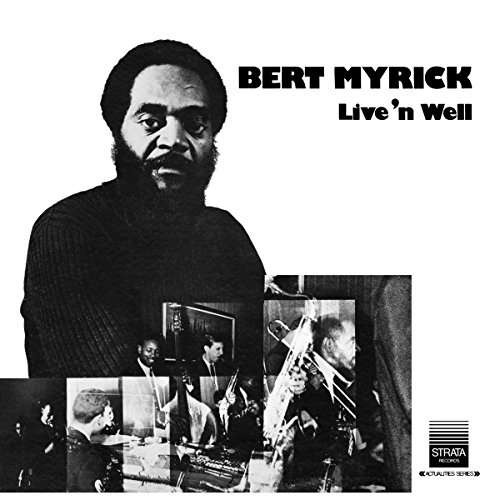
JOHN ARMSTRONG PRESENTS AFROBEAT BRASIL.
John Armstrong Presents Afrobeat Brasil.
Label: BBE.
Not many independent labels are still going strong after twenty-one years. Especially considering how different the musical landscape is. The music industry has been transformed during the last twenty-one years. As a result, there have been a few casualties along the way, and some familiar faces are no more. However, the labels that have adapted to how music is delivered and consumed have survived and thrived.
These labels have realise that streaming and downloads are two new ways that people listen to music. However, they also realise that people still want to buy physical product, including CDs and LPs. Especially LPs, since the start of the vinyl boom. Labels that recognise the different ways that music is consumed, and deliver a quality product are sure to survive and prosper.
That has certainly been the case with the British independent label BBE. They’re still going strong after nearly twenty-one years, and continue to release innovative new music, reissue albums that are long-lost hidden gems and release critically acclaimed compilations. BBE’s most recent compilation is John Armstrong Presents Afrobeat Brasil which is available on CD and as a two LP set. It’s the most recent compilation from one of the hardest working men in music.
John Armstrong has been an integral part of the London music scene since the mid-seventies. The story starts when John Armstrong traveled to the New Orleans Jazz and Heritage Festivals. During his visit, he managed to secure interviews with some of the stars of the New Orleans Jazz and Heritage Festival. He interviewed everyone from producer, singer and songwriter Allen Toussaint to Betty Carter. This was journalistic gold.
When John Armstrong returned home clutching these exclusive interviews, many of them were published in the Jazz and Blues Review which sadly, is now defunct. This was the break that John Armstrong had been looking for. Now his career started to take shape.
By the late-seventies, John Armstrong was ready to make his debut behind the wheels of steel. Soon, he was a familiar face DJ-ing in London’s clubs and pubs. However, DJ-ing was just one of many strings to John Armstrong’s bow.
Another was compiling compilations. It’s nearly thirty years since John Armstrong first dipped his toe into the world of compilations. Having compiled his first compilation, John Armstrong had no idea that this was the first of 200 compilation that he would go on to compile. They’ve ranged from Afrobeat, Cajun, flamenco and Latin, to rockabilly, rock ’n’ roll and zydeco. His most recent compilation is John Armstrong Presents Afrobeat Brasil, which was a labour of love.
John Armstrong has long been a fan of Latin music, and in 2008, devised and wrote Viva Latino, a fourteen part radio series for BBC Radio 2. This was the first music show dedicated to Latin music, and it proved a huge success. The worldwide listening figures reached nine million at one point. For John Armstrong, the success of Viva Latino added yet another string to his bow.
Over the last thirty years, he’s divided his time between journalism, DJ-ing, writing liner notes and compiling 20o compilations for various record labels. This included John Armstrong Presents Afrobeat Brasil,for BBE. It features fourteen scorching tracks released between 2011 and 2017. Although these tracks sound as if they’ve been recorded in various African countries, including Ethiopia, Mali and Nigeria that isn’t the case. All of the tracks were recorded in Brazil.
What the tracks on John Armstrong Presents Afrobeat Brasil reinforce is how importance the African beat has been to Brazilian music. That was the case in the past, and is still case today. Nowadays, musicians, singers and rappers continue to draw inspiration from the great and great of African music, to create samba swing, bossa tempo and nordestino nous. This new music is showcased on John Armstrong Presents Afrobeat Brasil.
Never before has an Afrobeat inspired compilation been released outside of Brazil. John Armstrong and BBE are breaking new ground with the release of John Armstrong Presents Afrobeat Brasil. It features musicians from Rio De Janeiro, São Paulo, Salvador, Porto Alegre and even an expat Brazilian musician residing in Paris, France. These musicians draw inspiration from various types of African music, and use it as a building block to take Brazilian music in new and exciting directions. That becomes apparent on John Armstrong Presents Afrobeat Brasil.
The best way to describe André Abujamra is multitalented. He’s a singer, songwriter, guitarist and is an award-winning film score composer. André Abujamra is also an actor and comedian. He was born in Sao Paulo in 1965, but some of his family are from the Lebanon. His background shines through in his music, including Origem which opens John Armstrong Presents Afrobeat Brasil. It’s a genre-melting track where Afrobeat horns and percussion combine with elements of Brazilian carnival batucada music and even elements of Irish and Middle Eastern music. This result is irresistible and joyous, and is sure to stop the listener in their tracks.
One of the pioneers and leading lights of the Brazilian hip hop scene during the nineties was BNegão. Over the next few years, he collaborated with a variety of artists. In February 2004, BNegão and Os Seletores De Frequência released their first album Enxugando Gelo. Nine years passed before the followup Sintoniza Lá was released to plaudits and praise in 2013. One of the highlights is Os Seletores De Frequência where BNegão and Os Seletores De Frequência seamlessly fuse elements of Afrobeat, dub, funk, hardcore and rap with social comment to create a truly memorable and uplifting track.
Although Camarão Orkestra is based in Paris, France, and comprises French musicians they’re still able to faithfully replicate Brazilian music in an Afrobeat style. Proof of this is Afoxe, which is a Homeric musical Odyssey where Camarão Orkestra flit seamlessly between, and combine, disparate musical genres. Initially, the Camarão Orkestra replicate the Filhos de Gandhi marching beat that can be heard during the Carnival in Salvador da Bahia. This gives way to a Nigerian dance beat that is a feature of seventies Afrobeat albums. To this, Camarão Orkestra add elements of jazz funk which plays its part in ambitious, eight minute Joycean epic.
Straight away, one can hear the influence of Fela Kuti during Bixiga 70’s 5 Esquinas. This is a track from sophomore album Ocupai, which was released in 2013. One of the album’s highlights is 5 Esquinas, which is played in 6/8 time. It finds the São Paulo based ten piece band at their most inventive and innovative, as they fuse Afrobeat and Brazilian music with funk and jazz. In doing so, this tight and talented band take Afrobeat to places it has never been before.
Straight away, one can hear the influence of Fela Kuti during Bixiga 70’s 5 Esquinas. This is a track from sophomore album Ocupai, which was released in 2013. One of the album’s highlights is 5 Esquinas, which is played in 6/8 time. It finds the São Paulo based ten piece band at their most inventive and innovative, as they fuse Afrobeat and Brazilian music with funk and jazz. In doing so, this tight and talented band take Afrobeat to places it has never been before.
Arranger, composer and saxophonist Thiago França was born in Belo Horizonte, in 1980. He’s already released a trio of albums between 2009 and 2014. These albums showcase a truly talented composer and saxophonist. Alas, these albums are becoming quite rare. However, Etiópia doesn’t feature on any of Thiago França’s three albums, and is the perfect introduction to one of Brazil’s top saxophonists of his generation. Stylistically and sonically, Thiago França seems to have been influenced by the late, great John Coltrane. His playing is inventive and powerful as he unleashes a scorching, sinewy solo. By the end of Etiópia, it’s apparent that Thiago França is a musician that we’ll be hearing much more about.
Twenty-four year old Tássia Reis is one of the rising stars of Brazilian hip hop. The São Paulo born rapper came to the attention of music fans in 2013, when she contributed Meu Rapp Jazz to a women only hip hop mixtape. Since then, Tássia Reis’ star has been in the ascendancy. Her contribution to John Armstrong Presents Afrobeat Brasil is Desapegada, which finds Tássia Reis’ delivering an impassioned rap and soulful vocal against a quite beautiful jazz-tinged backdrop. Tássia Reis is another artist with a big future ahead of her.
From the opening bars of Wababa finds singer, songwriter and guitarist André Sampaiao and fellow guitarist Os Afromandinga Wababa transport the listener to Mali. They’ve almost managed to replicate the music of Malian guitarist and master musicians Djelimady Tounkara to Brazil. He’s one of the top African guitarists of his generation. However, André Sampaiao whose a member of reggae band Ponto De Equilibrio is no slouch. Neither is Os Afromandinga Wababa. Together, they create an authentic and evocative homage to Djelimady Tounkara.
Trabalhos Espaciais Manuais is a ten piece band that is based in Porto Alegre. They first came to prominence in 2013, and since then have been playing in bars, concert halls and at festivals. Their music is a fusion of Afrobeat, jazz, rock, maracatu and samba. It’s heady, patent and irresistible brew as Farofa De Banana proves.
Lucas Santtana is singer, composer and producer who was born in Salvador, Brazil in 1970. He’s released five studio albums between 1999 and 2014, plus a remix album and collaboration with Seleção Natural. Músico featured on his 2012 album O Deus Que Devasta Mas Também Cura. It’s a genre-melting track where strings and electronics combine with indie pop and Música Popular Brasileira to create a four-minute post modernist mini masterpiece.
Several artists and bands from the Salvador region feature on John Armstrong Presents Afrobeat Brasil. This includes Ifá, who are named after the religion and belief system of the Yoruba people. Their roots can be traced back to the ‘16th’ century, in what was then Benin Republic. Nowadays, Ifá is a nine piece band whose music is a blistering fusion of Afrobeat and funk. Ifá’s contribution is Salva Dor, six minutes of magical music. Key to its sound and success are braying, blazing horns, searing, scorching guitars and electronics, including a vocoder. They play their part in whats without doubt, one of the highlights of the compilation.
When São Paulo based Otto Nasca released his debut album Supersimetria in 2016, it was a musical journey through disparate musical genres. Otto Nasca had fused elements of Afrobeat, funk, jazz, maracatu and samba on Supersimetria. It was an irresistible musical brew. Proof of this is Democracia, which is a heartfelt ballad, where Otto Nasca draws attention to the political problems that are causing chaos within Brazil.
A remix of Ellen Oléria’s Afrofuturo closes John Armstrong Presents Afrobeat Brasil. Ellen Oléria is another rising stars of the Brazilian music scene, and released her 2013 eponymous debut on Universal Music. Three years later, and Ellen Oléria released her sophomore album Afrofuturista, which opens with Afrofuturo. It’s remixed and heads in the direction of dubwise, and in the process, introduces Ellen Oléria’s music to a new audience.
That is the story of John Armstrong Presents Afrobeat Brasil, which was recently released by BBE. It’s the first ever compilation of Afrobeat inspired Brazilian music to be released outside of Brazil. John Armstrong and BBE are breaking new ground with the release of John Armstrong Presents Afrobeat Brasil.
On John Armstrong Presents Afrobeat Brasil, musicians from Rio De Janeiro, São Paulo, Salvador, Porto Alegre and Paris, drawing inspiration from various types of African music, and use it as a building block to take Brazilian music in new and unheralded directions. The result is ambitious and inventive music. Some of the music on John Armstrong Presents Afrobeat Brasil is genre-melting, and is the result of disparate musical genres being fused to create new and innovative music. It seems that across Brazil, a new generation of musicians across Brazil are determined to use the music from Africa and Brazil’s past to create the music of the future. They succeed in doing so, and John Armstrong Presents Afrobeat Brasil.
For anyone with even a passing interest in Afrobeat or Brazilian music, then John Armstrong Presents Afrobeat Brasil will definitely be of interest to them. It will also be of interest to anyone who enjoys and appreciates good music, as John Armstrong Presents Afrobeat Brasil is one of the best compilations of recent months. It’s a case of all killer, and no filler. John Armstrong Presents Afrobeat Brasil features some old friends who rub shoulders with musical veterans, new names and several hidden gens. The result is a tantalising taste of Afrobeat inspired Brazilian music. Hopefully, there will be further volumes in the series. After all, compilations like John Armstrong Presents Afrobeat Brasil provide the perfect showcase for a new generation of talented Brazilian musicians, and introduce their music to a much wider audience.
John Armstrong Presents Afrobeat Brasil.


SEAFARING STRANGERS: PRIVATE ROCK.
Seafaring Strangers: Private Rock.
Label: Numero.
As the sixties drew to a close, the Rolling Stones were one of the most successful bands of the decade. They were preparing to release their Let It Bleed, on the ‘5th’ of December 1969. It was the Rolling Stones eighth album in Britain, but their tenth album in America. That was where the Rolling Stones were most popular, and where they were enjoying a glittering career.
Already, the Rolling Stones had sold in excess of six million albums in America since 1964. Six of the Rolling Stones’ albums were certified gold and three platinum, including their previous album Beggars Banquet. Let It Bleed was the followup, and was released to critical acclaim on the ‘5th’ of December 1969. The following day, the Rolling Stones had agreed to put on a free concert at Altamont Speedway, in Northern California
The concert at Altamont Speedway on the ‘6th’ of December 1969, was meant to feature an all-star cast, including some of the great and good of psychedelia. Jefferson Airplane, The Grateful Dead and Santana were joined by The Rolling Stones, The Flying Burrito Brothers and Crosby, Stills, Nash and Young. They were all booked o play in what was meant to be a landmark event in psychedelic’s musics history, and a hopefully, a good news story. Alas, it wasn’t.
As the Rolling Stones took to the stage, accompanied by Hells Angels who were providing security, the concert descended into chaos. Some of the Hell’s Angels fought with the audience, and Meredith Hunter, a black teenager, was allegedly stabbed by a member of the Hells’s Angels. This resulted in the cancellation of Altamont. One of the headliners, The Grateful Dead, never even took to the stage. Altamont was an unmitigated disaster.
There were three accidental deaths, many were injured, property was destroyed and cars stolen and destroyed. As the sixties drew to a close, the events at Altamont played its part in the decline of psychedelia and a backlash against the hippie movement.
It was no wonder that when the clock struck midnight on the ’31st’ of December 1969, many within the music industry breathed a sigh of relief. While the sixties had been the most important and influential decade in musical history, it ended with chaos and controversy, and a barrage of negative publicity. The dawn of a new decade, was also a new start for music.
With psychedelia no longer as popular, critics and cultural commentators, wondered where was heading? There were several possibilities. The heavy rock pioneered by Led Zeppelin was already popular, and so was the nascent progressive rock movement. Then there was soul and fusion? Critics and cultural commentators all speculated at what the future held for music.
As the seventies took shape, many musical movements proved popular. This included heavy rock, progressive, fusion, Philly Soul and later, disco and punk. There was also soft rock which later became known West Coast sound.
Back in the seventies, the West Coast sound was the perfect soundtrack to the lives of the Baby Boomers, who had grownup and were now parents. They were enjoying the West Coast sound, which incorporated elements of pop, rock, jazz, funk and soul. The music had a slick sound and was full of hooks. This came courtesy of clever chord progressions, lush harmonies and often, swathes of strings. They played their part in the sound and success of the West Coast sound, which forty years later, is enjoying a resurgence in popularity. Nowadays, though, the West Coast sound is known as Vanilla Funk or Yacht Rock.
Recently, several compilations of Yacht Rock have been released. The most recent was Seafaring Strangers: Private Rock, which was released by the Numero label on the ‘7th’ of July 2017. It features twenty tracks from artists like Jim Spencer, Ned Doheny, Jeff Harrington, Paul Skyland, Calvin Johnson, Salty Miller, Canyon, Gary Marks, Country Comfort, Chuck Senrick and Rudy Norman. Many of these tracks fall into the category of hidden gems. They’ve been taken from privately pressed albums which were released on small labels.
Often, these albums were self-released by the artist, who had a 1,000 albums pressed and sold them at concerts or through a network of local record shops. Nowadays, many of these albums have a cult following, and are extremely rare. Sadly, some of these albums slipped under the radar, and it was only much later that they were discovered by intrepid crate-diggers. Tracks from these albums, make a welcome appearance on Seafaring Strangers: Private Rock.
Opening Seafaring Strangers: Private Rock is Jim Spencer’s Wrap Myself Up in Your Love which was released on Armada Records in 1979. By then, Jim Spencer was thirty-five and had already released two solo folk albums, 1973s Landscapes and 1974s 2nd Look. Five years later, and Jim Spencer was ready to reinvent himself. He had written Wrap Myself Up in Your Love with Ed Tossing, and they produced the single with Andy Watermann. It saw Jim Spencer embrace disco, on a track that seamlessly fuses elements of funk, proto-boogie, jazz and soul. The result is a beautiful, slow devotional that sets the bar high for the rest of the compilation.
In 1980, Chicago-based singer, songwriter and multi-instrumentalist Michael Miglio released Everytime It Rains as a single on Michael Records. Hidden away on the B-Side was Never Gonna Let You Go, which was the stronger of the two tracks. It’s a beautiful, heartfelt paean that meanders along, all the time winning friends and influencing people. If it had been chosen as the single, maybe things would’ve been very different for Michael Miglio? Instead, his recording career amounts to just one single, which features the hidden gem Never Gonna Let You Go on the B-Side.
Ned Doheny’s career began at David Geffen’s nascent Asylum Records in 1973, when he released his eponymous debut album. By then, Ned Doheny was as familiar face on the Californian music scene, and was a contemporary of Jackson Browne, The Eagles and Joni Mitchell. However, Ned Doheny didn’t enjoy the same commercial success, and by 1991 was signed to the Japanese label Polystar. He released a trio of albums on Polystar, including Love Like Ours in 1991. It featured Before I Thrill Again, where a funky bass and backing vocalists accompany Ned Doheny’s hurt-filled vocal on a song that epitomises everything that is good about Yacht Rock. It’s also a reminder of a truly talented singer, songwriter and musician whose music should’ve found a wider audience.
When Carter Minor returned to Chapel Hill, in North Carolina, he formed Steps, a five piece band with four new graduated of the local University. Soon, Steps began playing on the local live scene, and in 1982 released their debut EP Sugar on Dolphin Records. It was produced by Steve Gronback and Tim Hildebrandt, featured the Carter Minor composition Your Burning Love. Steps had saved the best until last. It was the last song on the B-Side, and found five members of Steps came into their own. While Carter Minor takes charge of the lead vocal, the rest of Steps add cascading vocals on this dance-floor friendly track that draws inspiration from the blue-eyed soul of The Doobie Brothers and Earth, Wind and Fire. Sadly, there was no followup to the Sugar EP, and Steps had split-up within a year. Your Burning Love is reminder of Steps, who could’ve gone on to reach greater heights.
Paul Skyland’s Give Me Your Love is one of the real finds on Seafaring Strangers: Private Rock. It’s a track from Paul Skyland’s self-released 1982 album Songchild. It was recorded at Suma Recorders in Cleveland, where Paul Skyland spent time carefully crafting his debut album. He believed that Give Me Your Love was his strongest song, and hoped that it would generate interest from record companies. Sadly, that wasn’t the case and Paul Skyland’s debut album remains one of music’s best kept secrets. A tantalising taste of Songchild, is Give Me Your Love a beautiful and carefully crafted song from one of music’s master craftsmen.
From the opening bar’s of Salty Miller One More Time, it’s obvious that this is a very special song. That proves to be case as this beautiful ballad from Salty Miller’s debut album Album #1 takes shape. It’s atmospheric and cinematic, with the sound of waves breaking on a deserted beach as birds fly overhead. Fittingly, Album #1 was released on Beach Music Records Of The Carolinas in 1982. So was the single One More Time, which is a beautiful, tender, heartfelt ballad that showcases the considerable talents of Salty Miller.
Canyon Country were a bar band in Fargo, North Dakota, when Overland Stage’s drummer Dave Hanson asked the band to record his new composition, Lovin’. This was Canyon Country’s shot at the title. They rose to the challenge, and recorded an understated and mellow ballad, that is melodic and memorable. It’s a welcome addition to Seafaring Strangers: Private Yacht.
Having put together his band, Gary Marks headed to Vitra Sonic Recording Studios in New York. where he recorded his 1974 debut album Gathering. It was the first of five albums that Gary Marks released on his own label Arewea. The album that started it all off was Gathering, which features an understated, dreamy and ruminative ballad that captivates.
Madness rose from the ashes of Brass Unlimited in 1974. The now defunct band’s rhythm section became Madness. Three years later, they were joined by singer-songwriter Tommy Bruner. His addition saw Madness release their debut single Let’s Hear It For The Man in 1979. In late 1979, Tommy Bruner wrote Madam Operator which became part of the band’s setlist. That was how it came to feature on the K101 radio station’s sampler of music by local bands First Annual Iowa Album in 1980. By then, the answering machine message had been rewritten, to include “Iowa“. This was perfect for an album showcasing Iowa’s up-and-coming bands, of which Madness were one. Sadly, they never made a commercial breakthrough, and their recording career amounts to one single and Madam Operator, which featured on First Annual Iowa Album.
Chuck Senrick’s love of music began as a child, when he was growing up in Minnesota. He learnt to play the piano as a child, and by the time he was fifteen, had joined John Zimmer and The CR4. The band played cover versions on the local live scene. By the time Chuck Senrick graduated from high school, he was already a talented composer and had written the songs that would feature on his 1976 album Dreamin’. Opening the album was the title-track, an understated and impassioned ballad where keyboards and drums are part of a spartan arrangement and allow Chuck Senrick’s impassioned vocal to take centre-stage. It’s a tantalising taste of a truly talented singer, songwriter and multi-instrumentalist, Chuck Senrick.
Closing Seafaring Strangers: Private Yacht is Rudy Norman’s Back To The Streets. It was the B-Side to Rudy Norman’s 1980 single Harmony. This cover a cover of Elton John Song, and marked the return of Rudy Norman, who after falling out of love with music, had called time on his musical career. By 1980 Rudy Norman was ready to make a comeback and recorded Harmony as a single. On the B-Side was Back To The Streets, a mid-tempo tale of the allure of life in the fast lane. Initially, 500 copies of the single were pressed, and released on New Day Records later in 1980. Sadly, that was the only single Rudy Norman released. However, Back To The Streets was the perfect way to celebrate the comeback of Rudy Norman.
He’s one of twenty artists that feature on Seafaring Strangers: Private Yacht, which was recently released by Numero. It’s the latest compilation of what’s now called Vanilla Funk or Yacht Rock. Previously, it was known as AOR, Soft Rock or the West Coast Sound. That was before the genre underwent a makeover or rebranding.
Now Yacht Rock is growing in popularity, and no longer is the type of music that is found on compilations like Too Slow To Disco Volume 3 and Seafaring Strangers: Private Yacht a guilty pleasure. Instead, Yacht Rock has been growing in popularity over the three years. With Yacht Rock bang on trend, there will be more and more Yacht Rock compilations released over the next few months.
Already, two Yacht Rock compilations have been released over the last couple of weeks. However, Seafaring Strangers: Private Yacht is the best Yacht Rock compilation of 2017. The twenty songs have been taken from privately pressed singles and albums that were either self-released, or released in small quantities by regional labels. Sometimes, as little as 500 copies of a single or album were pressed, and many of these albums are incredibly rare. So much so, that finding an original copy is almost impossible. That is a great shame, as many of the songs on Seafaring Strangers: Private Yacht will whet the listener’s appetite, and they’ll want to hear more from twenty talented artists and groups.
None of the artists and groups on Seafaring Strangers: Private Yacht were lacking in talent, but for whatever reason, never enjoyed the commercial success that their music deserved. That the case with two of the best known artists on Seafaring Strangers: Private Yacht, Ned Doheny and Gary Marks, who released a string of albums. Sadly, these album never found the audience they deserved. They weren’t alone.
Many of the artists on Seafaring Strangers: Private Yacht only released one single or album, and never returned to the recording studio. When their albums failed to find an audience, some became disheartened, and a few turned their back on music, deciding to return to the tedium of the 9 to 5 grind. Other artists didn’t return to the recording studio, but continued to play live, which was much more profitable. In the case of a group like Steps, they split-up up, and never got the chance to fulfil their potential. Sadly, that is a familiar story with some of the artists on Seafaring Strangers: Private Yacht.
For many of the artists on Seafaring Strangers: Private Yacht, it’s often a case of unfulfilled potential and what might have been? They were able to write slick sounding songs full of hooks. These songs featured clever chord progressions, lush harmonies and often, swathes of the lushest strings. It’s an irresistible combination, and one that should’ve brought many of the artists on Seafaring Strangers: Private Yacht to the wider record buying public.
These private presses should’ve acted as a calling card to the artists and bands on Seafaring Strangers: Private Yacht, and should’ve opened the doors to major record labels. They had the expertise and financial muscle to promote the artists on Seafaring Strangers: Private Yacht, and ensure their music found the audience it so richly deserved. Sadly, that wasn’t the case and instead, some of the albums ended up in Dollar bins and thrift stores.
That was where they remained, until relatively recently, when intrepid crate diggers took a chance on these albums. Somewhat belatedly, some of music released by the artists on Seafaring Strangers: Private Yacht started to find an audience. This has been helped by the resurgence in interest in private presses and indeed Yacht Rock. However, hopefully, the recent release of Seafaring Strangers: Private Yacht, which is a flawless compilation of Yacht Rock, will lead to a resurgence in interest in all the artists that feature on the compilation, and somewhat belatedly, their music will find the wider audience that it deserves.
Seafaring Strangers: Private Rock.
THE LIFE AND TIME OF MICK CLARK, BLUESMAN EXTRAORDINAIRE.
The Life and Time Of Mick Clarke, Bluesman Extraordinaire.
Mick Clarke can remember the day that his life was changed was forevermore. He was fifteen years old, and living in London, England. That was when he heard Eric Clapton for the first time. It was a life changing experience for Mick Clarke. Since that day, he has dedicated himself to the blues, and nowadays, Mick Clarke is, without doubt, one of Britain’s top blues guitarists. His career began back in the late sixties.
Killing Floor.
That was when Mick Clarke first came to prominence as part of the British blues explosion. Mick Clarke was a member of the blues rock band, Killing Floor, who were formed in 1968. Before long, the band were a familiar face on the London music scene.
So much so, that by 1969, Killing Floor had released their eponymous debut album. It was well received by the music press. By then, Killing Floor were rubbing shoulders with some of the great and good of the blues.
This included blues guitarists Freddie King, Howlin’ Wolf and piano player Otis Spann. Although they were no longer as popular as they had once been in their home country, they were still popular draws in Britain. So opening for these artists was a prized booking. Killing Floor were chosen to open for Freddie King, Howlin’ Wolf and Otis Spann when they toured Britain. This boosted their profile as the British blues explosion continued.
In 1970, Killing Floor returned with their sophomore album Out Of Uranus. It proved to the last album Killing Floor released for thirty-four years. The band split-up in the early seventies.
2004 marked the return of Killing Floor with a new album Zero Tolerance. Then in 2012, the four original members of the band get back together and released a new album Rock’n’Roll Gone Mad. Killing Floor also returned to playing live when they played at the Sweden Rock Festival 2012. However, much had happened to Mick Clarke in the intervening years.
Salt.
By the mid-seventies, Mick Clarke had cofounded a new band, Salt. Just like Killing Floor, Salt was an impressive and powerful blues rock band. They quickly became popular on the London music scene. Soon, Salt were familiar faces at some of the city’s top venues. This included the Marquee, where some of the biggest bands of seventies took to stage. Salt looked like they were one of the rising stars of the London music scene.
Especially when Salt played at the Reading Festival. They also opened for Muddy Waters when the veteran bluesman played at two major London concerts. Sadly, Salt never got round to recording an album, and by the late-seventies went their separate ways.
Since then, Salt there’s been several reunions, with the band heading out on tour. To celebrate their reunion in 2011, Salt released The Cobra’s Melody And Other Refrains as a limited edition CD. Sadly, that was the only album Salt released. However, it wasn’t long until the Mick Clark Band was born.
Mick Clarke Band.
His career continued apace in the early eighties, when Mick Clark decided to form a new band. This time, he was would lend his name to the band that he would lead, the Mick Clarke Band. It featured Mick Clarke, Ian Ellis and Ron Berg. Soon, the blues rockers were ready to release their debut album.
This was Looking For Trouble, which was released in 1984. It was well received by critics and marked the start of a new chapter in Mick Clarke’s career.
A year later, the Mick Clarke Band returned with their sophomore album Rock Me in 1985. Mick Clarke seemed to be enjoying the new trio. They were a popular live draw and transferred their live sound onto their first two albums. This continued with All These Blues in 1987, a blistering album of electric blues that received praise and plaudits. It seemed that the Mick Clarke Band could do no wrong. The Mick Clarke Band were on a roll.
This continued with the release of Steel And Fire in 1989. Twenty years after Mick Clarke made recording debut on Killing Floor’s eponymous debut album, he was one of the elder statesman of the British blues. He was still playing the music that changed his life as a nine-year old. That would never change. It was Mick Clarke’s raison d’être.
Two years later, the Mick Clarke Band returned with their fifth album Tell The Truth in 1991. Connoisseurs of British blues considered Tell The Truth one of the Mick Clarke Band’s finest hours. The band was maturing like a fine wine.
Another two years passed and the Mick Clarke Band returned with No Compromise in 1993. By now, the Mick Clarke Band were regarded as one of the finest purveyors of blues rock. The Mick Clarke Band’s albums sold well and they were still a popular draw on the live circuit. Life was good for the members of The Mick Clarke Band.
In 1997, the Mick Clarke Band returned with their seventh album Roll Again. Despite winning over critics and music fans, the Mick Clarke Band didn’t Roll Again. The album proved to be their swan-song.
Mick Clarke and Lou Martin.
Later in 1997, Mick Clarke and Lou Martin released an album they had been collaborating on, Happy Home. The two musicians were lifelong friends, and first played together in Killing Floor. After the demise of Killing Floor, Lou Martin hooked up with legendary Irish guitarist Rory Gallagher.
Through the seventies, eighties and into the early nineties, Lou Martin was part of Rory Gallagher’s band. He played on some of Rory Gallagher’s greatest album including Tattoo, Blue Print and Calling Card. However, when the Mick Clarke Band were looking for a pianist, Lou Martin was the go-to-guy. If his schedule permitted, he joined his old friend in the studio. Lou Martin played on Looking For Trouble, Rock Me, Tell The Truth and Roll Again. However, the two friends had never recorded an album as a duo.
That was until Mick Clarke and Lou Martin recorded Happy Hours. It was released in 1997 and saw the two friends showcase their considerable skills on twelve tracks. Alas, it was a one-off collaboration. However, the two men would later be reunited when Killing Floor returned to the studio in 2004.
Killing Floor released a new album Zero Tolerance in 2004. Then in 2012, the four original members of the band got back together and released a new album Rock’n’Roll Gone Mad. Sadly, Lou Martin passed away on 17th of August 2012 in Bournemouth, England. Mick Clarke had known Lou Martin over forty years. He lost an old and dear friend, while music lost a truly talented musician.
Mick Clarke-The Solo Years.
By the time of Lou Martin’s death in 2012, Mick Clarke was also enjoying a solo career. He had recorded Solid Ground at The Moat, in London during 2007. During the sessions, Mick Clarke lead a tight, talented quartet as they recorded an album of blistering blues rock. It was released later in 2007 as Solid Ground. Six years later, Mick Clarke returned with Ramdango.
Ramdango.
Unlike Solid Ground, Mick Clarke wasn’t accompanied by a band on Ramdango. Having written the thirteen songs on Ramdango, Mick Clarke headed into his Fabulous Rockford Studio, deep in the leafy Surrey countryside.
As he walked through the door to the Fabulous Rockford Studio, Mick Clarke was transformed. It was akin to Clark Kent becoming Superman. In the studio, Mick Clarke revealed his hidden talents. He wasn’t just one of Britain’s top blues’ guitarists. Instead, Mick Clarke was a talented multi-instrumentalist, who was about to engineer and produce Ramdango.
Mick Clark was determined to use real instruments. He wasn’t going to resort to programming drum parts. Nor was he willing to use pre-recorded sounds. Instead, Mick Clarke became a one man rhythm section, playing bass and drums, plus guitars, keyboards and percussion. Gradually, the album began to take shape. Eventually, had succeeded in his mission to record Ramdango using real instruments. Only very occasionally did Mick Clarke have to trigger a snare drum or cymbal crash. It was a remarkable achievement.
Mind you, Mick Clarke was a vastly experienced musician. He made his recording debut in 1969, so had forty-four years experience behind him. This critics said he had put to good use on Ramdango, which is a Scottish word for a party. Mick Clarke’s soundtrack to Ramdango was released to critical acclaim.
Mick Clarke set the bar high on Ramdango with the hard rocking instrumental Baked Potatoes. What followed was an album where blues rock, boogie and rock rubbed shoulders. There were highlights aplenty on the album. This included Who’s Educating Who, which was a favourite of XM Satellite Radio. However, there’s much more on Ramdango. Especially, the bluesy sounding Helping Hand, Curry Night, Behave Christine Behave, False Information, The Snarl, Talk and the wistful What I, which closes Ramdango. It found Mick Clarke rolling back the years on an album one critics called: “the album of the year.”
Crazy Blues.
A year later, and Mick Clarke was back with the followup to Ramdango, Crazy Blues. Just like his previous album, it was all his own work. Mick Clarke had written ten of the twelve tracks, and recorded Crazy Blues at his Fabulous Rockfold Studio, in Surrey, England.
Carrying his newly purchased Epiphone 335 guitar, Mick Clarke returned to his Fabulous Rockfold Studio. That was where the twelve tracks that became Crazy Blues were recorded. Despite the credits showing the album as being recorded by Mick Clarke and the Rockfold Rhythm Section, that isn’t the case. Again, Mick Clarke plays all the instruments on the album. The only other musician who played on Crazy Blues was Linda Cooper, who played maracas. Apart from that, Crazy Blues was the work of just Mick Clarke.
Again, critical acclaim accompanied the release of Crazy Blues. It was another album of blues rock where Mick Clarke makes presence felt from the get-go on what’s a memorable album of blues rock. Just like on Ramdango, one Britain’s greatest bluesman Mick Clarke, he continues to roll back the years.
Crazy Blues was the second critically acclaimed album Mick Clarke had released in two years. Both won over critics and blues aficionados. However, for the third album in this trilogy of Mick Clarke’s recent self-produced solo albums, he decides to stray from the road marked blues rock.
Shake It Up!
Just like his two previous albums, Mick Clarke wrote the thirteen songs on Shake It Up! He would take charge of engineering and production when he returned to his Fabulous Rockfold Studio.
Multi-instrumentalist Mick Clarke played all the instruments on Shake It Up! Essentially, the album picked up where left off on Crazy Blues. However, Mick Clarke decided to change direction on a couple of tracks, and even paid homage to two veteran American bluesmen. Shake It Up! was Mick Clarke’s most eclectic album.
That was apparent throughout Shake It Up! When it was released in 2015, critics hailed the album as one of the best albums Mick Clarke had recorded in recent years. It was also critics agreed, Mick’s most eclectic album. He heads in the direction of funk rock and draws inspiration from Robert Cray and Albert King as he seeks to reinvent his music. However, for much of Shake It Up! it’s akin to listening to a musical master craftsman at work. Mick Clarke, whose one of the best British blues guitarist of his generation, puts all of his years of experience to good use on Shake It Up! In doing so, he creates his own inimitable brand of blues rock which Mick Clarke has spent a lifetime perfecting.

After six decades, Mick Clarke was the musical equivalent of a master craftsman. He had dedicated himself to the blues. This had paid off, and by the time Shake It Up! was released in 2015, Mick Clarke was without doubt, one of the greatest blues guitarists of his generation. He’s also a talented multi-instrumentalist, who engineered and produced Ramdango, Crazy Blues and Shake It Up! This trilogy of albums is the perfect introduction to Mick Clarke’s solo years, and showcases one of the most talented British bluesmen of his generation. However, Mick Clarke is also one of the most underrated British bluesmen.
Sadly, Mick Clarke has never enjoyed the high-profile that many of his contemporaries. He and his music have gone under the radar of many music fans. Just like JJ Cale was, Mick Clarke is a musician’s musician. That is why may high-profile artists, including Doris Troy, Jeff Beck, Deep Purple’s Jon Lord and Jon Entwistle have brought Mick Clarke onboard to work on projects. However, it’s not just musicians who appreciate Mick Clarke’s music.
Mick Clarke has also a loyal fan-base in Britain, Europe and America. His albums sell well and he’s a popular live draw wherever he’s played. Recently, Mick Clarke had played live in India and Bosnia where a new audience discovered the British bluesman’s music.
Still, though, there many people who haven’t discovered Mick Clarke’s music. He’s still one of British blues’ best kept secret but maybe for not longer if he continues to release albums of the quality Ramdango, Crazy Blues, Shake It Up! and his latest album Diggin’ Down.
The Life and Time Of Mick Clarke, Bluesman Extraordinaire.

MARYLEBONE BEAT GIRLS 1964-1967.
Marylebone Beat Girls 1964-1967.
Label: Ace Records.
During the sixties, many singers and groups made the journey to EMI House, in Marylebone, in the heart of London’s West End. The meeting that they were about to have, they know, had the potential to transform their lives. At stake, was that all-important recording contract.
While it was tantalizingly close for some, securing a recording contract was as likely as finding gold at the end of the rainbow. They didn’t have the necessary star quality. As a result, the dream was over. All their hard work had been vain. The weeks, months and years they had spent travelling the country, and singing and in pubs and clubs had been for nothing. With their dream in tatters, reality was about to hit home, and they were faced with finding a job outside of music. The tedium of the 9 to 5 grind beckoned. They were the unlucky ones.
The lucky ones travelled in hope to EMI House, and carried themselves with an air of expectancy. They realised that this was their time, and that they knew were going to leave EMI House having secured that all-important recording contract. These singers and groups were the lucky ones. This includes those that feature on Marylebone Beat Girls 1964-1967, which was recently released by Ace Records.
Marylebone Beat Girls 1964-1967 is the third in Ace Records Beat Girl series. The series began in March 2016, when Love Hit Me! Decca Beat Girls 1962-1970 was released. Just a month later, Scratch My Back! Pye Beat Girls 1963-1968 was released in April 2016. Now fifteen months later, Marylebone Beat Girls 1964-1967 has been released on CD and LP. The LP features twelve tracks and the CD twenty-five tracks. These tracks were released on the Parlophone, Columbia and HMV labels, whose headquarters were in Marylebone, in London’s West End. Each of the artists that feature on Marylebone Beat Girls 1964-1967 made the journey to EMI House.
Many of the artists and groups that journeyed to EMI House were young, and just embarking upon a musical career. Most of them, were just teenagers, and had never been near a recording studio. Some of them, had never been to Swinging London, which between 1964 and 1967 was very different to the provincial towns many of the artists came from. This must have been a shock to their system.
Other artists on Marylebone Beat Girls 1964-1967 took everything in their stride. This included watching as the British Invasion bands arrived in America, and transformed music stateside. They also watched as flower power and the psychedelic revolution arrived in London. Suddenly, happenings were the order of the day, where groups like Pink Floyd provided the psychedelic soundtrack. By then, some of the artists on Marylebone Beat Girls 1964-1967, including Julie Driscoll, Alma Coogan, Cilla Black and Barbara Ruskin’s careers were well underway. They had already released a couple singles, and enjoyed a degree of success. Some of these artists, would go on to enjoy long and successful careers. However, others weren’t so successful, and there was no gold at the end of the musical rainbow.
For the twenty-three artists and groups that provide the twenty-five songs on Marylebone Beat Girls 1964-1967, their fortunes varied. Some became familiar faces, and even became household names between 1964 and 1967. Others didn’t enjoy the same success, and only recorded a couple of singles. These will be new names to many people, and join some familiar faces on Marylebone Beat Girls 1964-1967. It features twenty-five tracks from Alma Coogan, Helen Shapiro, Julie Driscoll, Barbara Ruskin and Cilla Black. They’re joined by Andee Silver, Beryl Marsden. Cindy Cole, Judi Johnson, Toni Daly and Valerie Avon, plus groups like The Chantelles, The McKinleys, The Three Bells, The Three Quarters. These are just a few of the artists on Marylebone Beat Girls 1964-1967, which transports the listener back to the sixties.
Liza Strike was a Lond based session singer before she recorded Dancing Yet with Liza and The Jet Set. This Windsor King composition opens Marylebone Beat Girls 1964-1967 in style. It sounds as if it would be a floor filler in the smartest discotheque’s in London’s West End. After the release of Dancing Yet, Liza and The Jet Set became The Soulmates. However, Lisa Strike’s best known as one of the backing vocalists on Pink Floyd’s Magnus Opus Dark Side Of tHe Moon.
Having served their apprenticeship singing in working men’s clubs, the Edinburgh-based duo The McKinleys signed to Parlophone in 1964. One of a trio of singles they released during 1964 was a cover of Sweet and Tender Romance. It features a young Jimmy Page on guitar, during his days a session musician. He unleashes a blistering solo between 1.12 and 1.27, that’s the cherry on the top of this delicious musical cake.
Julie Driscoll is one of two singers that feature twice on the compilation. Her first contribution is Don’t Do It No More, which as released as a single on Parlophone. It features a vocal, that is a mixture of emotion and insecurity at the thought of the almost inevitable betrayal The second contribution from Julie Driscoll is I Know You Love Me Not, which was penned by Brian Godding of the Blossom Toes, and released as a single in 1967. Giorgio Gomelsky’s dramatic production style is the perfect accompaniment to Julie Driscoll’s soul-baring vocal.
Helen Shapiro’s recording career began when she release hits with Don’t Treat Me Like a Child in February 1961. She then enjoyed number one singles with You Don’t Know and Walking Back To Happiness. By the time Helen Shapiro released Forget About The Bad Things, he had eleven hit singles to her name. However, that was the past. Two years had passed since her last single, and she would never enjoy another hit single. That was despite the quality of Forget About The Bad Things, which features an impassioned, powerhouse of a vocal. A year later, Helen Shapiro released She Needs Company, which also failed to find an audience. However, hidden away on the B-Side was Stop And You Will Become Aware, which is something of a hidden gem, and sounds as if it would go down well on the Northern Soul scene.
Marie Antoinette Daly was only fourteen when she released Jenny Let Him Go as Antoinette. This was the first of six singles that Antoinette released. By 1966, Marie Antoinette Daly was sixteen and had reinvented herself as Toni Daly. Her debut single as Toni Daly was The Big Man Said in 1966. It was released on Columbia, and features a powerful and expressive vocal that delivers the eddy lyrics against a dramatic arrangement. Sadly, the single failed commercially and Toni Daly never released a followup. Incredibly, her recording career was over by the time she was sixteen.
The Liverpool-based trio The Three Bells’ recording career began in 1960 at Pye, where they released two singles. By 1964, The Three Bells had signed to Columbia in 1964, and they set about promoting the trio. They made appearances on various British television shows, promoting the two singles they released on Columbia. This included He Doesn’t Want You, an incredibly catchy and memorable single that brings back memories of early sixties British pop.
She Trinity were a girl-group from South Shields in the North East of England. They covered Sonny Curtis’ I Fought The Law which became He Fought The Law which was produced by Micky Most. His production is very different to other covers, and the song takes on a much more melodic sound thanks to She Trinity’s vocals. It’s the polar opposite to The Clash’s snarling cover, which was inspired by She Trinity’s version.
For her third single, Katherine Farthing a.k.a. Peanut covered The Beach Boys’ I’m Waiting For The Day which featured on their career defining album Pet Sounds. I’m Waiting For The Day was arranged and produced by Mark Wirtz, and released on Columbia in 1966. Peanut’s vocal is full of emotion and understanding, during this beautiful cover of I’m Waiting For The Day.
In the summer of 1966, Cindy Cole released her sophomore single Lonely City Blue Boy. It was released on the Parlophone label, but never made any impression on the charts. That is a great shame, as it’s a memorable and melodic slice of sixties pop.
Two years after releasing her debut single, Barbara Ruskin released Euston Station as a single. It was written by Barbara Ruskin and produced by Doug Watson. The cinematic Euston Station was released on Parlophone in 1967, and features a rueful vocal from Barbara Ruskin.
In 1967, singer, songwriter and producer Valerie Avon covered the Goffin and King composition He Knows I Love Him Too Much as a single. By then, Valerie Avon had been in the music business for the best part of a decade. She was one of The Avon Sisters, whose one and only singer Jerri-Lee (I Love Him So) was certified gold in 1958. Nine years later, and He Knows I Love Him Too Much became Valerie Avon’s only single. It features an impassioned, expressive vocal on this beautiful, angst-ridden ballad.
Talents shows are nothing new, and were around way back in the sixties. Judi Johnson was one of the finalists on Search For A Star, in September 1964 and won her a recording contract with HMV. Judi Johnson’s debut single was My Baby’s Face, which featured Make The Most Of It on the B-Side. It features a hurt-filled vocal, that is tinged with sadness and regret. This poignant and thoughtful reading of Make The Most Of It closes Marylebone Beat Girls 1964-1967.
It’s a reminder of the quality of music that was being recorded at EMI House between 1964 and 1967. EMI’s various imprints had an enviable roster of artists, which included some of the top British female pop singers. This included Alma Coogan, Barbara Ruskin and Cilla Black and Helen Shapiro. A year earlier, it would’ve included Helen Shapiro, who between 1961 and 1963, could do no wrong. She had enjoyed eleven hit singles during that period. However, that success was in the past. Never again would she enjoy another hit single. Commercial success can prove illusory, even for some of the most talented singles signed to EMI.
Talented female singers certainly weren’t in short supply at EMI. Andee Silver, Beryl Marsden. Cindy Cole, Judi Johnson, Toni Daly and Valerie Avon, plus groups like The Chantelles, The McKinleys, The Three Bells, The Three Quarters were all signed to the Parlophone, Columbia, HMV labels which were based in EMI House, in Marylebone, in London’s West End. Sadly, not all these artists and groups enjoyed the commercial success their talent deserved.
While a lucky few artists enjoyed a successful career, commercial success was fleeting for other singers and groups. Other times, commercial success eluded artists. This led to many a career that was all too brief, and promise that went unfulfilled. Some artists and groups only released one or two singles, before calling time on a career that promised much. It was a case of what might have been. A reminder of this is Marylebone Beat Girls 1964-1967, which is the latest instalment in Ace Records’ Beat Girls’ series.
Marylebone Beat Girls 1964-1967 is a mixture of hits, hidden gems, near misses and B-Sides. Each of these songs have one thing in common…quality. Even Judi Johnson’s B-Side Make The Most Of It showcases a talented singer. The remainder of the hits, hidden gems and near misses on Marylebone Beat Girls 1964-1967 literally ooze quality, and are a reminder of what was a golden era for British pop, when the Beat Girls ruled the airwaves.
Marylebone Beat Girls 1964-1967.





MODERNISTS: MODERNISM’S SHARPEST CUTS.
Modernists: Modernism’s Sharpest Cuts.
Label: Kent Dance.
Ever since the birth of rock ’n’ roll, youth cults have come and gone. Some have proven to be nothing more than passing fads, and nowadays, are mere footnotes in cultural history. Some youth cults have endured, and played an important part in British culture. However, none of the youth cults of the past sixty years have enjoyed the same longevity as the modernists.
The modernists came to prominence in the late fifties, and their name came about because of their love of modern jazz. However, by the early sixties, things were starting to change and the modernists had become the mods.
Musically, mods had eclectic taste in music and embraced American R&B and soul music. Especially singles that were released on Stax, Atlantic Records and Tamla Motown.This lead to the mods investigating some of the smaller American labels during their frequent trips to local record shops.That was where the mods ordered imports, and discovered new musical genres.
This soon included ska and reggae, which they discovered whilst looking through the racks of new arrivals and imports. While the mods enjoyed soul, R&B, reggae and ska, they didn’t turn their back on British music. The mods also enjoyed pop and rock music, and especially groups like The Rolling Stones, The Who, Small Faces and The Kinks, who were perceived as “mod” groups. That is still the case even today. However, music was only part of the mod movement.
Image was everything for the mods. They carefully tried to cultivate an air of coolness. The suits they wore were often tailor-made. Sometimes, their suits were made out of cashmere, with narrow lapels. They also sported button-down collar shirts, thin ties and wool or cashmere jumpers. All this was de rigueur for a mod around town. So too, were fishtail parkas, desert boots, Chelsea boots and bowling shoes. A few mods even took to wearing makeup. In sixties Britain, this didn’t go unnoticed. However, the mods were unlike no other youth subculture, and even had their own mode of transport.
The Lambretta or Vespa scooters were the mods’ choice of transport. They drove them around town, where they visited dance-halls, coffee bars, and cinemas. At cinemas, mods took to watching French and Italian films. This was all part of a sense of continental coolness they were attempting to cultivate. After all, image was everything to the mod. So was music and the two go hand-in-hand.
Every time there has been a mod revival in the last fifty years, at the heart of the revival has been the music. Whether it was in the late-seventies or mid-nineties, music and fashion was at the heart of these mod revivals. The music being made during the mod revivals during the late-seventies and mid-nineties, was inspired by the music of the sixties. For mods of all vintage, this was a golden era for music. It still is.
That is why Kent’s two mod compilations have proven to be so successful. The first was Modernists-A Decade Of Rhythm and Soul which was released on CD in February 2015. Fifteen months later, and Kent Dance released Modernism on CD in May 2016. Now just over a year later, and Kent Dance have released Modernists: Modernism’s Sharpest Cuts on vinyl. It features fourteen of the finest tracks from Modernists: A Decade Of Rhythm and Soul and Modernism plus a some songs from the Mod Jazz series. For mods of all ages, Modernists: Modernism’s Sharpest Cuts is sure to bring back many happy memories of their younger days.
Side One.
The Merced Blue Notes who open Modernists: Modernism’s Sharpest Cuts with Sundown,were formed in high school in Merced, California, in January 1957. This was the start of a career that spanned the best part of fifteen years. Despite enjoying a degree of longevity,The Merced Blue Notes didn’t enjoy a prolific recording career. Their back-catalogue amounts to a handful of singles and one album, Music With A Beat That Won’t Stop. It was released in 1984, and featured fourteen previously unreleased songs recorded between 1960 and 1963. These songs were from the private collection of The Merced Blue Notes’ manager George Coolures. He had the album pressed as a limited edition on blue vinyl. It’s an incredibly rare album that features Sundown, which was written George Coolures and Ken Craig. When Sundown was played by DJs in the early sixties, this hidden R&B gem was guaranteed to fill a dance-floor. Even after one play, you’ll realise why.
Troy Dodds’ recording career began at the California-based Penthouse label in 1962, when he released Rise Up And Walk. Four years later, and Troy Dodds was still looking for her first hit single. She signed to the El Camino label in 1966, and recorded a song she had written with Richard Appling, The Real Thing. When it was released later in 1966,commercial success eluded The Real Thing despite its soulful and dance-floor friendly sound. Nowadays, original copies of the single are incredibly rare, and the B-Side Try My Love is a firm favourite on the Northern Soul scene.
Saxophonist Chuck Higgins is best known for his 1952 hit single Pachuko Hop. This was the start of a long musical career, for Chuck Higgins. By 1968, he was signed to Money, and covered Titus Turner’s All Around The World. However, the song wasn’t released until forty years later. Somewhat belatedly, All Around The World made its debut on Further Adventures Of Mod Jazz in 2008. It makes a welcome return on Modernists: Modernism’s Sharpest Cuts, and is a reminder of one of Frank Zappa’s finest saxophonists in his prime.
Leroy Harris only ever released the one single, Crow Baby Crow. It was released on the Swan label in 1966. Hidden away on the B-Side was I’m Gonna Get You. It was written by Leroy Harris and Ellis Taylor, who produced the two sides. They feature Leroy Harris and his band The Teardrop Review. They’re the perfect foil for Leroy Harris’ vocal, and create a jaunty, dance-floor friendly arrangement that sounds as if it’s been inspired by an o James Brown track. The result is a real hidden gem. Alas, this was Leroy Harris’ only single. He returned to Kansas, where he was a regular fixture on the club circuit.
In January 1964, Bessie Banks’ made her debut as a solo artist when she released Go Now, which later gave The Moody Blues a number one single. Nine months later, in October 1964, Bessie Banks released Do It Now on the Spokane label. Tucked away on the B-Side was (You Should Have Been A) Doctor which was penned and produced by Larry Banks and Tony May. It’s an irresistible slice of club soul that has filled many a dance-floor.
Bob and Earl released (Send For Me) I’ll Be There a single on Crestview Records, in 1969. Hidden away on the B-Side was the Charlotte Cronander composition Dancing Everywhere, which also featured on the album Bob and Earl. It was arranged by Gene Page and produced by Fred Smith They help to bring out the best in Bob and Earl on Dancing Everywhere, who roll back the years on this timeless soulful dancer.
During his career, Chet Ivey released around twenty singles. This includes Chet “Poison” Ivey and His Fabulous Avengers’ 1969 single The Poo Poo Man. It was released on Al Sears’ Bee and Cee label, but failed to find an audience. How different things might have been if the B-Side Soul Is My Game had been released as a single? This Chet Ivey composition is stomping slice of dance-floor friendly boogaloo.
Side Two
Little Johnny Hamilton and The Creators only released a trio of singles during the mid-sixties. This includes Oh How I Love You, which was meant to be released on Dore in the summer of 1965 with Burn on the B-Side. However, the Watts’ race riots in August 1965 put paid to this. The single was withdrawn, and reissued in 1966. By then, Burn had been renamed as Go. Alas, the single didn’t sell well, and commercial success eluded Little Johnny Hamilton and The Creators. Since then, Go has become a favourite amongst mods, while Oh How I Love You has become popular on the Northern Soul scene.
In 1969, Teddy Reynolds’ released his composition Ain’t That Soul as a single on Speciality Records in. By then Teddy Reynolds’ career had spanned two decades. It began in 1950, and for the next twenty years he continues to release singles. This included Ain’t That Soul in 1969. However, the version on Modernists: Modernism’s Sharpest Cuts was recorded at an earlier date. Despite that, it’s funky, soulful and guaranteed to get the mods on the dance-floor.
After signing to Al Sears’ Arock Records, The Corvairs went in search of a hit singles. One of the songs they covered in 1965, was Ron Miller and Lee Porter’s A Feeling Deep Inside. However, after the recording session, the song was never released. That was until 2002, when it made its debut on Kent Soul’s The Arock and Sylvia Records Story. Back then, this hidden gem something of a mystery. The original artist was unknown, and the song was billed as Deep Down Inside. This has been rectified and The Corvairs are receiving the recognition they deserve for A Feeling Deep Inside.
The soulful delights of Floyd White’s Another Child Lost opens Mod Jazz and Then Some! in 2014. It’s a Floyd White composition that was recorded in 1964. However, the song was never released, and lay in Invader’s vaults until 2014. That was when the made its debut on Mod Jazz and Then Some! It returns for a well deserved encore Modernists: Modernism’s Sharpest Cuts.
Clarence Daniels and Obie Jessie penned Hard Working Girl, which was released as a single on Affiliated in 1966. It’s a mellow, laid back slice of jazz. Since 2014, it lay unloved in Affiliated’s vaults. That was when it made a welcome return on Kent Dance’s Mod Jazz, and Then Some! Three years later, and Hard Working Girl also returns for an encore on Modernists: Modernism’s Sharpest Cuts.
Closing Modernists: Modernism’s Sharpest Cuts is Hank Jacobs’ instrumental East Side. It was written and arranged by Arthur Wright, and was released as a single on Call Me Records, in June 1967. East Side is lovely laid-back, slice of funky, mod jazz, that is sure to have been the last song in many a club. This is the perfect way to close Modernists: Modernism’s Sharpest Cuts.
For many an ageing mod, the music on Modernists: Modernism’s Sharpest Cuts is sure to bring back many a happy memory. Some of the original mods will be well into their seventies. It’s a long time since they were a mod about town in the early sixties. Back then, they would dawn their cashmere suits, complete with narrow lapels. Completing the look were button-down collar shirts, thin ties and a wool or cashmere jumpers and Chelsea boots. This was all part of their carefully cultivated image that they wore about town.
To get into town, the original mods would head out to their Vespa or Lambretta. Many of the most fastidious of mods would even dawn a fishtail park. This wasn’t so much a fashion statement, as a means of protecting their precious tailor-made suit. The mods would head climb abroad their Vespa or Lambretta and head into town. Usually, many mods would travel together, their reasoning being, safety in numbers. Often, there would be clashes with their arch enemies, the rockers. Mostly though, the mod about town would arrive at their local coffee bar, pub and club. That was when the music would start to play.
This was just like the fourteen tracks on Modernists: Modernism’s Sharpest Cuts. For the original mods, the music on Modernists: Modernism’s Sharpest Cuts is sure to bring back memories of their glory days. It’s a similar case for those who were part of the mod revival in the seventies. Many of them are over fifty, but remember the days of the mod revival. So do those that were part of the second mod revival in the nineties. What they remember is the fashion and of course, the music.
Much of that music is timeless. Proof of that is Modernists: Modernism’s Sharpest Cuts, which features tracks from Modernists: A Decade Of Rhythm and Soul, Modernism and the critically acclaimed Mod Jazz series. They make their debut on vinyl on Modernists: Modernism’s Sharpest Cuts which was recently released by Kent Dance, an imprint of Ace Records. It’s a tantalising reminder of a time when mohair suits, button down shirts, fishtail parkas and a Vespa was de rigueur for the mod about town.
Modernists: Modernism’s Sharpest Cuts is also a reminder of one of the most important British youth cults, who have enjoyed an unrivalled longevity. Nearly sixty years since the birth of modernism, the music is just as popular as ever. Who knows, maybe compilations like Modernists: A Decade Of Rhythm and Soul, Modernism the Mod Jazz series and Modernists: Modernism’s Sharpest Cuts will spark a third mod revival. Let’s hope so, and once again, mohair suits and fishtail parkas will be de rigueur again?
Modernists: Modernism’s Sharpest Cuts.
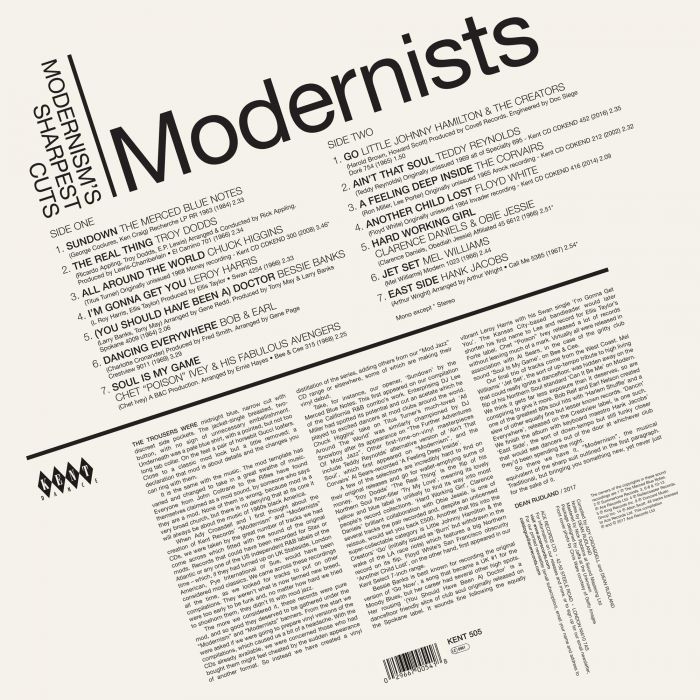
SCHNEIDER KACIREK-RADIUS WALK.
Schneider Kacirek-Radius Walk.
Label: Bureau B.
As 2015 dawned, a new musical partnership prepared to release their debut album. This new partnership featured two experienced, talented and pioneering musicians, who were, and still are, among the leading lights of Germany’s thriving music scene.
Stefan Schneider was based in Düsseldorf, while Sven Kacirek called Hamburg home. While both of these cities have vibrant music scenes, the inspiration for their debut album came after Stefan Schneider and Sven Kacirek made several journeys to Kenya. After they returned home for the final time, the pair started discussing collaborating on a new musical project that drew on their experiences in Kenya. That day, the Schneider Kacirek partnership was born.
Drawing on their experiences in Kenya, Schneider Kacirek decided to record an album were they interpreted Kenyan music using just drums, percussion and analogue synths. The pair agreed that no samples would be used during the project. With the ground rules in place, Schneider Kacirek began work on what was ambitious, but fascinating project.
Eventually, after a lot of hard work, Schneider Kacirek had completed what became their debut album, Shadow Documents. It was released to widespread critical acclaim by Bureau B on the ‘1st’ of January 2015. Shadow Documents was hailed as an evocative, emotive and authentic interpretation of Kenyan music. All of the Schneider Kacirek partnership’s hard work had paid off. Especially after the album found favour with critics and music lovers. They wondered when Schneider Kacirek would return with a followup? However, they’ve had to be patient.
Since the release of Shadow Documents in January 2015, Stefan Schneider and Sven Kacirek have been involved in a variety of projects. One of them came to fruition on November 2015. This was Sven Kacirek’s solo album, Songs From Okinawa, which received plaudits and praise upon its release. Meanwhile, Stefan Schneider was involved with a variety of projects, including running his own label, TAL. It had already released seven albums, including Stefan’s collaboration with pioneering visual artist Katharina Grosse. Their eponymous debut album, Katharina Grosse and Stefan Schneider was released to critical acclaim earlier in 2017. By then, the Schneider Kacirek partnership had been reunited.
Stefan Schneider and Sven Kacirek hadn’t reunited to record an album though. That was still to come. Before that, Stefan Schneider and Sven Kacirek headed out on tour, and played live with a variety of different musicians. This included John McEntire of Tortoise and The Sea and Cake. For Stefan Schneider and Sven Kacirek the chance to play live was part of what is a never-ending learning process for most musicians. By playing together live, this shaped and influenced how Stefan Schneider and Sven Kacirek interacted as musicians. This was something that would shape their sophomore album Radius Walk, which will be released by the Hamburg-based Bureau B label on the ‘7th’ of May 2017.
Recording of Radius Walk took place at Sven Kacirek’s studio in Hamburg. Stefan played vibes and took charge of the all important electronics. Meanwhile, Sven played shakers, marimba and drums, which would play an important part on Radius Walk.
So much so, that Sven’s studio was setup in such a way that it captured the energy of the drums as they combine with a variety of traditional instruments and vintage analogue synths. They feature on all the tracks. However, award-winning Swedish singer Sofia Jernberg features on just three tracks, Dust, i Atlanten and Smiling.
The addition of Sofia Jernberg is something of a coup, as her vocal talents are much in demand. She’s an experimental singer who studied at the Gotland School of Music Composition. By 2007, Sofia Jernberg was leading then chamber jazz group Paavo with pianist Cecilia Persson. Paavo released their eponymous debut album in 2007, and a year later, in 2008, Sonia received the Royal Swedish Academy of Music award. Sofia Jernberg’s star was already on the ascendancy.
Since then, Sonia’s worked as a vocalist and composer on a variety of projects ranging from the contemporary classical music scene to jazz and experimental music. Sonia collaborated on the album Crochet with Lene Grenage in 2009, and has featured on the Fire! Orchestra’s albums Exit in 2013 and Enter in 2014. However, one of Sonia’s most recent projects is Radius Walk, which marks the welcome return of Schneider Kacirek after two-and-a-half years.
As Dust opens Radius Walk is Dust, Sofia’s ethereal, cooing vocal sits atop the arrangement. At first it’s understated, before growing in power, drama and intensity. Hypnotic drums crack, while synths scamper, beep and squeak, combining with shakers as Sofia delivers a tender, breathy vocal. Sometimes she improvises, and her voice becomes an additional instrument. Meanwhile, a myriad of otherworldly, sci-fi and futuristic sounds flit in and out, playing an important part in the soundscape, Later, mesmeric drums still crack and pound, while shakers provide a contrast. So does Sonia’s tender and emotive vocal. It’s part of a captivating, multilayered soundscape that gradually reveals a mixture of drama, beauty and intensity.
A squelchy, pulsating bass synths opens Duett while drums, pans and electronics are added. Soon, the pans reverberate, as crackling sounds join the pulsating bass synth that dominates the soundscape. Gradually, it decides to reveals its secrets, as a melodic, lo-fi, retro synth solo winds its way across the soundscape as hi-hats hiss. By then, the soundscape has taken on a robotic sound and there’s a Kraftwerk influence. Later, the new additions join the pulsating, growling bass synth, and latterly, shimmering vibes. This proves a potent and heady brew that is truly memorable. This is a result of Schneider Kacirek combining elements of music’s past and present, to create the music of the future.
i Atlanten has an understated sound as washes of synths ebb and flow, like waves breaking on a deserved beach. Meanwhile, a mesmeric sound provides the soundscape’s heartbeat. As it pulsates, hi-hats hiss, Sonia add another tender, thoughtful vocal. When her vocal drops out, the gap is filled by Schneider Kacirek who add a myriad of disparate sounds. This ranges from cracks and crackling electronic sounds to drones, drums and strings being plucked. This alternative orchestra provides the perfect accompaniment to Sonia when she returns. Her vocal is emotive, and sometimes, she follows in Schneider Kacirek’s footsteps by improvising. In doing so, she plays her part in a beautiful, mesmeric and innovative genre-melting soundscape, that combines elements of avant-garde, Berlin School, electronica, experimental, folk and improv.
Traditional and technology are combined effectively on Arbeit 16. A synth briefly oscillates, as a marimba and vibes combine. Soon, synths interject and drone, before adding sci-fi sounds. This provides a contrast to the marimba and vibes. They’re joined by a pulsating bass synth and a drone, as the man machine makes his presence felt. This is a synths that in what sounds as if it’s speaking in an otherworldly language. It’s replicated by the vibes, while the ominous sound of the drone and bass synth prowl across the soundscape. Meanwhile, a myriad of sounds, including beeps, speaks and cracks join strings that are plucked. Still the dark, moody sound of the drone and bass synth remain, while shimmering vibes and drums adds a contrast. They play their part in a hypnotic, haunting, cinematic soundscape that is one of Schneider Kacirek finest moments on Radius Walk.
There’s also a cinematic sound on Back, as what sounds like a small aircraft soar high into the sky. This is the start of a cinematic journey, as this minimalist and mesmeric soundscape starts to reveals it secrets. It features layers of synths, that drone, crackle and pulsate. They’re joined by drums, cymbals, shakers and plucked strings. These are all parts of Schneider Kacirek’s musical pallet. They use it wisely to create an epic cinematic musical journey that gradually reveals its secrets. Back veers between minimalist and mesmeric, to blissful, dramatic and futuristic as it continually captivates and thought-provoking.
Lumpur has an understated sound before it reveals its secrets. Crackling, bristling and futuristic sounds join beeps and squeaks, before drums and vibes join this alternative orchestra creates. By then, elements of avant-garde, electronica, experimental and post rock are being combined by Schneider Kacirek. Soon, drums rolls joined the eerie vibes and otherworldly sound that flit in and out. Later, drums crack and add a degree of urgency, before the arrangement ebbs and flows before dissipating. All that remains is the memory of another innovative soundscape from the musical pioneers, Schneider Kacirek.
Given the title Drums Drums, most people would expect drums play an important part in the soundscape. They do, to some extent. However, so do a variety of synths. This ranges from sci-fi synth that weave across the soundscape to shrill synth strings. They’re soon joined by a snarling bass synth that joins with the synth strings. Meanwhile, drums crack, while layers of synths wind their way across the soundscape. Some oscillate, while others rise and fall and with the drums create a futuristic soundscape that features Schneider Kacirek at their innovative best.
Smiling closes Radius Walk, and features the return of vocalist Sonia Jernberg. Before that, washes of droning and probing synths join with drums in providing a backdrop for Sonia’s improvised vocal. There’s an element of drama and theatre, as his her vocal weaves in and out, as she instructs Schneider Kacirek. When her vocal drops out, just drums and oscillating synths sit atop the drone. Then when Sonia returns, he vocal is much higher, as it become a de facto instrument. Meanwhile, a myriad of futuristic sound and drums that crack accompany Sonia. All too soon, Sonia’s vocal drops out, and another inventive and captivating soundscape dissipates. This brings to an end Radius Walk.
After a two-and-a-half year wait, Schneider Kacirek make a very welcome return with their sophomore album Radius Walk. It’s another album of groundbreaking and genre-melting soundscapes from two of the leading lights of the German music scene.
To create Radius Walk, they entered Sven Kacirek’s Hamburg studio, and combined elements of ambient, avant-garde, electronica, experimental, folk, improv, Krautrock and post rock. The influence of both the Berlin and Düsseldorf Schools of Electronic music can also be heard throughout Radius Walk. It’s an ambitious and innovative album, which finds Schneider Kacirek pushing musical boundaries to their limits, and sometimes, way beyond on Radius Walk, which is a fitting followup to their 2015 debut album Shadow Documents.
The two musical pioneers were joined by Sonia Jernberg on three of the eight soundscapes on Shadow Documents. Sonia Jernberg’s addition was something of a masterstroke, as she’s a truly talented singer who has honed her own inimitable style. It’s showcased on a trio of soundscapes on Radius Walk. Sometimes her vocals are tender, ethereal and heartfelt, while other times, Sonia improvises, and her vocal is transformed into a de facto instrument as it weaves in and out of the soundscape. It plays its part on the sound and success of Radius Walk, along with Schneider Kacirek’s fusion of traditional instruments and technology. They’re all part of Schneider Kacirek’s extensive musical palette that painted the eight soundscapes that became Radius Walk, which will be released by Bureau B on ‘7th’ July 2017.
Radius Walk is no ordinary album, and features inventive and captivating soundscapes. They veer between cerebral, thoughtful, thought-provoking and ruminative soundscapes to dark and dramatic, to minimalist and understated, right through to beautiful and blissful, to haunting, hypnotic and mesmeric. Other times, they’re understated and subtle, with Schneider Kacirek taking a less is more approach. So does when the soundscapes feature a myriad of futuristic, sci-fi and otherworldly sounds. They’re part of Radius Walk’s captivating and compelling cinematic sound, that is guaranteed to set the imagination racing during what’s akin to musical voyage of discovery, which is full of twists and turns, and subtleties and surprises aplenty.
Schneider Kacirek-Radius Walk.

 dereksmusicblog
 dereksmusicblog