PLAYBACK RECORDS-THE STORY SO FAR.
Playback Records-The Story So Far.
Many record buyers dream of leaving the 9 to 5 grind behind, and founding their own record company. In their dream, their new record company would reissue some of their favourite hard to find albums. These hidden gems are the albums that slipped under the radar first time around, and failed to find an audience. However, as the years has passed by, interest in these albums is growing. Despite this, no record company has decided to reissue the album. This is where the newly founded record company comes in.
In other cases, the new record company would concentrate on releasing compilations. This would allow them to put to good use the knowledge they’ve accumulated about soul, psychedelia or space rock. After all, they’ve spent a lifetime immersed themselves in this music, which has been their passion. This is the speech they’ve rehearsed to themselves prior to discussing the matter with their better half. Sadly, this speech never takes place.
Usually, reality strikes and the future musical impresario starts to think of what’s at stake. Usually this is the security of a job that in reality, they hate. However, it comes with a pension at 67 and six weeks annual paid leave. That is enough for them to give up on their dream, and continue with the soul-destroying 9 to 5 grind.
Thankfully, not everyone gives up on their dream of founding their own record company, and is willing to take the plunge. This includes Nathan, who a couple of years ago, founded Playback Records in Geelong, Victoria in Australia. Since 2016, Playback Records have been busy, and has already released seven reissues. This seemed the perfect time to discuss with Nathan his experience of founding a new record company. For anyone currently thinking of forming their own record company, Nathan shares his experiences about founding and running a record label.
The most obvious question was what inspired Nathan to found Playback Records? Was it purely to release music that wasn’t being released by other labels? “For the most part, yes. There are lots of great artists and recordings out there that deserve to be reissued, to be discovered by a new audience, to just be available to buy (for people who are already aware of them). And for whatever reason, they aren’t being released by other labels. I thought we could fill the gap, so to speak.”
Originally, though, Nathan had planned to set up more than one label. He explains: “Originally, I had hoped to have two or three imprints, with each imprint’s releases geared more to a genre or area….it didn’t end up panning out that way. It would be the ideal way to operate, but it’s difficult enough to establish some kind of profile for one label, let alone two or three, and we’re not releasing a prolific enough quantity of titles to warrant multiple imprints.”
Having realised that he would only be founding and running the one label, Nathan started thinking of a name for his nascent label. “I can’t really recall the origins of the name to be honest….There were a couple of other names that were considered, but Playback Records just fitted the best.”
Now that Nathan had come up with the name Playback Records for his nascent record company, soon, there was a problem. Another company was using the same name. Nathan explains what happened. “There are two other similarly named labels that I know of; one being a Nashville label, which appears to have been inactive for a few years before our label started.The other is the name an American outfit (purporting to be from Poland). It’s releasing bootleg soul compilations and reissues. They started using the name well after we were already active, so I can only assume they knew about us (a quick Google search on the name would have told them). They clearly don’t care about the artists and songwriters whose work they are illegally making money from, so it doesn’t surprise me that they would have no qualms about stealing a name.” For Nathan, this was just one of the problems he encountered as he got his label up and running.
With the label up and running, it hasn’t been plain sailing. Nathan confirms this: “being a new label, you also inevitably end up on the bottom of everyone’s priority list, even if paying the same amount of money for things as larger/established labels do. Being a new label also makes it much harder to get reviews or coverage in the media; even though many of these indifferent outlets would be salivating to review the exact same titles if they’d been released by Ace or a Cherry Red label. It’s like anything else, really, you just need to persevere, and keep taking steps to move closer toward where you need to be.”
In a way, founding and running a new label is learning process. Unfortunately, sometimes it’s a case of learning from one’s mistakes. Most people who have founded a record company would do certain things differently. Nathan is no different, and would do: “quite a few things differently, including cementing a distribution deal in writing prior to our first release, so it didn’t fall through after a change in personnel at the distributor. Smarter negotiating with a nonagenarian label owner who wanted a goldmine in return for reissuing recordings that had been sitting in his shed for over fifty years. Deciding not to deal with a Melbourne Record store who was provided with thousands of dollars worth of stock to sell on consignment, and is refusing to provide sales figures or to pay anything, and who I’ll be pursuing legal action against.” All this has all been part of the learning process for Nathan.
With Playback Records up and running, Nathan’s thoughts turned to the nascent label’s first release. This is one of the most important releases in a label’s history. If the wrong release is chosen, it can affect the longterm future of the label. However, Nathan knew exactly what he wanted to release.
Playback Records’ first release, which featured the catalogue number PBCD-001, was the compilation I Want, I Need Love You! Garage-Beat Nuggets From The Festival Vaults. “It was an album that I personally really wanted to do, combined with (I thought), a healthy resurgence in interest our local music history. Warner’s Downunder Nuggets compilation had done quite well locally. I could see that no one was ever going to release a CD compiling all the recordings from these fantastic artists, that unfortunately, only got to release a couple of singles each, and saw a gap that I thought we could fill.” This gap was filled by I Want, Need, Love You:Garage Beat Nuggets from the Festival Vaults, which was released to critical acclaim in. The Playback Records story was well underway.
It was fitting that Nathan had dipped into the Festival vaults for Playback Records’ first release. After all, Festival Records is one of Australia’s greatest record labels. It’s a musical treasure trove, and I Want, Need, Love You:Garage Beat Nuggets from the Festival Vaults was a tantalising taste of its delights. Would there be further releases from the Festival vaults? Nathan was hopeful: “I certainly hope so! It’s in Warner’s hands” who are the current owners of the Festival back-catalogue. It’s a case of watch this space. However, Nathan acknowledges that: “there was so much great material released on Festival, you could spend years just working on deserving Festival-related titles.” That is certainly the case, and hopefully, in the future Nathan will be digging deep into Festival’s vaults.
Nathan has certainly been busy digging in various record company vaults over the past couple of years and has released seven albums. When asked which release he was most proud of, he said: “I’m genuinely proud of every title we’ve released so far, I can’t really pick a favourite.” That comes as no surprise, as the Playback Records releases are lovingly curated, quality products.
The Playback Records releases are also helping to introduce music to a new, and wider audience. This is something that Nathan agrees with. “I think, in some ways, all our titles could be seen as an attempt to introduce the music to a wider audience-though getting to the level of high-profile labels (such as Ace or Bear Family) that do have loyal fan-bases eager to be introduced to new music is a long way off!”
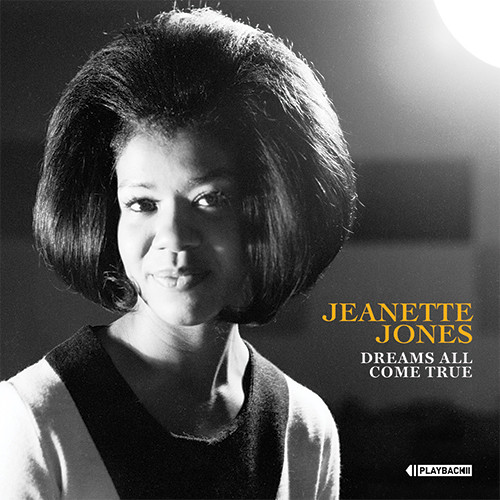
One artist that Playback Records have been trying to introduce to a wider audience is Jeanette Jones. This is an artist that this blog has championed for some time. Nathan is also a fan of her music. “I was a fan of Jeanette after coming across some of her tracks on compilations, and thought there must have been enough recordings for her own CD. I’d actually enquired with Ace (who own the masters) about this prior to them releasing their vinyl LP compilation, but a second enquiry – after Ace had already issued the vinyl, and it was clear there would be no CD counterpart-we applied for licensing and had it approved.” The resulting CD Dreams All Come True is the definitive Jeanette Jones compilation, and is the perfect introduction to one of the greatest soul singers you’ve never heard.
Jeanette Jones’ Dreams All Come True is without doubt, one of Playback Records’ best releases. While they don’t release as many releases as other record companies, the emphasis is on quality. Nathan explains that Playback Records release: “as many as possible, without compromising on quality. (both in terms of presentation and the quality of the musical content-I don’t want to be releasing something that’s not worthwhile just for the sake of releasing a title). It’s just a very long process. Repertoire owners generally don’t like to have too many requests pending or approved-but-not-yet-released titles sitting with you at the one time. Producing a CD after getting the licensing cleared can take a long time if you want to do it properly; and these two factors work together to make it difficult to release titles with the frequency we’d like.” For anyone looking to found a new record label, they should follow Playback Records’ lead and go for quality rather than quantity.
Another good tip from Nathan is about the type of music a new label should release. While he admits that: “the initial selection of titles is more reflective of my own taste, which is quite eclectic.” However; “ being a fledgling label, I thought it was probably wise to try releases in a few different genres, and see which areas worked the best commercially, so we’d know what direction to steer the label in for the future.”
Talking of the future, the recent vinyl boom is something that has divided the opinion of many record companies. Some have embraced the resurgence in interest in vinyl, and have started releasing their releases on vinyl. Other labels seem to regard vinyl as a passing fad and a bubble that will soon burst. Nathan disagrees: “I don’t think it’s a bubble that will burst anytime soon. I think when it drops off it will happen gradually rather than suddenly – but I don’t believe it will be anytime soon. Lots of younger fans of older music are buying vinyl, which I think will keep the demand steady for a while.”
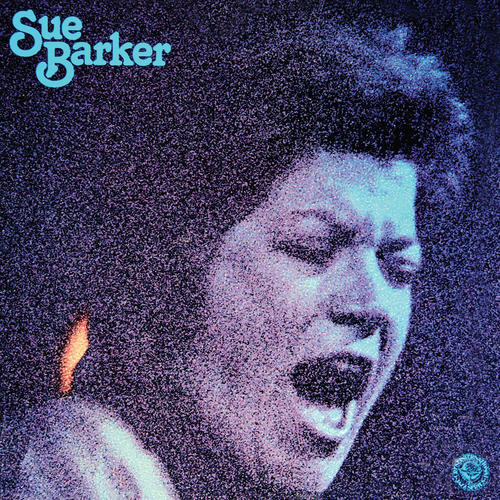
Despite that, Playback Records have“no fixed plans as yet to release vinyl versions of albums, but never say never. Of the titles we’ve released already, the best bets for vinyl release would be the Festival Nuggets LP (which would need to be a double LP, and therefore extremely expensive to produce) or Sue Barker (which the guys from Hot Casa in France have already reissued on vinyl earlier this year).”
Nathan also thinks that: “there’s always going to be a market for music in a physical form, it’s just happened to shrink significantly over the past few years (and isn’t as good a source of income for record labels as it once was). Although vinyl’s not my preferred format, I’m happy that people who do purchase it are opting for physical product rather than download.”
Another thing that has been a subject of debate within record companies worldwide, is streaming. Just now, it seems the cards are stacked in favour of the streaming companies. It’s a similar case with You Tube. As a result, the way that artists and labels are remunerated by streaming companies and You Tube has to be rethought. Artists and record companies realise this. Nathan has certainly spent time thinking about this. “I can see why labels are concerned, though-using streaming services has become the “normal” way for people to consume music (instead of purchasing on CD, or even buying an MP3 file). This isn’t great news for the record companies, due to the very low financial return. I’m not really sure what the answer is for them. I don’t have a problem with certain tracks being up on You Tube etc, as I think it’s a great way to discover new music. However, I have to say I’m not as pleased with sites offering downloads featuring the complete contents of still-in-print CDs.” It seems that those illegally downloading the music think that it’s a victimless crime. It’s not, and there’s no such thing. What the illegal down-loaders fail to realise is that many artists are struggling to make ends meet. No longer is profitable as it once was for artists. Music has been changing over the last twenty years, and continues to change.
Another controversial change in music is how albums are mastered. Sadly, the Loudness Wars continue, and still, many albums are the victim of brick wall mastering. However, there are still many labels, especially reissue labels, that take care with mastering. Nathan confirms that: “good mastering is essential-it doesn’t make sense to take time and spending money producing a reissue, and having it sound lousy. So far, we’ve selected mastering engineers whose “styles” matched the titles we’ve had them work on – including Gil Matthews (Aztec Records), Nick Robbins (Ace Records) and Warren Barnett (Raven Records)- and I think they’ve turned out pretty well.”
It’s people who buy new releases that experience brick wall mastering. Nathan agrees: “I think the “brick wall” mastering mentality is much more prevalent with new releases, because the record companies want the songs loud to immediately hit you when you hear them… and to keep up with the other loud, overly compressed music filling the airwaves… without realising it doesn’t make for a good listen over the course of an full-length album.” Sadly, many an album has been ruined by brick wall mastering. It’s very different in the world of reissues.
Nathan confirms this: ” I think reissue fans are much more discerning, and the labels are aware and generally order their mastering accordingly – though of course there is the occasional overly compressed reissue that comes out. We had to get new tape transfers from Sony for Skeeter Davis’s Let Me Get Close To You reissue, because the digital transfers they had on hand were taken from an earlier Japan-only reissue, which had, in my opinion, sucked the life out of the songs with too much compression.” The new tape transfers from Sony were worth every cent, and resulted in a lovingly curated reissue that is the perfect way to discover or rediscover Skeeter Davis’ Let Me Get Close To You.
There will be many more reissue following in the footsteps of releases by Jeanette Jones, Skeeter Davis, Steve and The Board, Sue Barker, Judy Jacques plus I Want, Need, Love You:Garage Beat Nuggets from the Festival Vaults and On Broadway: The Songs of Barry Mann and Cynthia Weill. Understandably, Nathan is unable to discuss these releases as contractual negotiations are underway. However, it’s safe to say that he’s working hard on a variety of possible releases from Playback Records, who are very much part of the reissue market it Australia.
Unlike in Britain and Europe, where there’s a huge appetite for compilations and reissues each month, the reissue market is very different. Nathan confirms this: in Australia, the market for reissues is definitely smaller, but still present despite being largely ignored by our limited music press.” That is a great shame given some of the reissues being released by Australian labels.
It seems that in Australia that the music press aren’t as supportive of the reissue labels as in Britain. Nathan confirms this: “sadly our press prefer to cover uninspiring overhyped American indie and alternative artists that no-one here actually likes or cares about….apparently regurgitating opinions from American hipster music blogs on the latest fad bands makes these outlets cutting-edge. Unfortunately this has a flow-on effect of making labels and distributors think that the entirety of the market here is interested in these kinds of artists.” This kind of flawed thinking means that the music consumer don’t get the music that they deserve.
Especially when it comes to reissues. Nathan says: “very few reissues are released by the majors. The local branch or Warner Music also releases a couple of reissues or archival compilations each year under the old Festival logo. Strangely enough, most various artist sets that seem to be geared more to a European market than an Australian one. Sony has released a very successful series of decade-specific various artist two CD sets featuring rare Australian hits, and has done a couple of single-artist “The Essential…” sets by Australian acts, styled like the international Sony Essential releases.” However, that is about all the majors release each year in Australia.
Given the majors are only releasing a few releases annually, one would think that independent reissue labels would pick up the slack. However, there aren’t many Australian reissue labels left. Nathan says there’s: “just a few most of which are no longer around. Raven Records were active for many years, and put out some great CDs (featuring both Australian and International artists) but are apparently winding down now.” That is a great shame, given the quality of albums they consistently released. Sadly, other Australian reissue labels seem to be struggling. Nathan reels off what happened to the various reissue labels: “Sandman Records came and went pretty quickly, unfortunately. Canteoad records, who reissued a lot of Australian Recordings, has been inactive for a couple of years now. The Ascension label, which released some no-frills reissues from Festival and New Zealand’s Zodiac label; have morphed into “Blank Records” who are concentrating on the Vinyl market now.” There is some good news. “There’s Votary Disk/The Roundtable/Dual Planet Records, who more focussed on vinyl The Omni Recording Corporation are pretty active, and mostly focus on US Country Music. Aztec Records is run by Gil Matthews, who is probably best known for his tenure in Billy Thorpe and The Aztecs.” Gil has also mastered a couple of title for Playback Records, and has sterling done work. Hopefully, there will be plenty more of this in the future.
The future is something that looms large in the thoughts of many record companies. Nathan has certainly spent time thinking about what the future holds for Playback Records. “It’s really hard to predict; but we’re working toward growing and strengthening our distribution; and connecting with more media (including music review sites like Dereksmusicblog!)… which, long term, will hopefully allow us to survive and stay active. Ultimately, I’d like to be at a stage where we’re able to release whatever we want, as frequently as we want, and not have to worry about and scrutinise each title’s sales potential.” Hopefully, that day will arrive sooner, rather than later, and that Playback Records will enjoy the freedom to release music it’s passionate about and believes in. That must be the ultimate endgame.
Nathan is unsure whether Playback Records will follow in the footsteps of other reissue labels, and release new albums. “At this point in time, I couldn’t see it being on the cards, but never say never. We’d need to be a lot bigger and have some kind of profile in the press, as breaking a new artist or promoting a brand new release by an established artist is very different from releasing archival recordings.” That is certainly the case, and with Playback Records already well on their way to establishing a niche within the Australian reissue market, it makes sense to stick to what they know.
That is releasing lovingly curated reissues. Playback Records has been doing that for the last couple of years. Like most record label owners, Nathan has his own wish list of albums he would like to reissue. The five albums that he would like to release if it was possible were:
1) “I’d love to release a compilation of recordings by Australian pop singer Lynne Randell. (“Ciao Baby” was her big hit here, but Brits probably know her – if at all – from the song’s flip, the Northern Soul “hit” Stranger In My Arms). Her very early records did have a bit of the “recorded in a tin can” sound, but her sessions with the noted Australian composer Sven Libaek and her later US Recordings are great.” That is the certainly case, and her later, American recordings features Lynne Randell at the peak of her powers.
2)”Maxine Brown’s We’ll Cry Together LP is definitely deserving of a reissue. If only anyone knew who the current owner of the label/masters was!” Sadly, this isn’t the only album where tracing the owner of the label and masters has proved problematic. It’s a problem many record companies have struggled with, and as a result, many projects have had to be shelved.
3)”A collection of solo recordings by the various members of The Sweet Inspirations would be a licensing nightmare, but would make for a wonderful listen.” It certainly would, as there’s no better sound than The Sweet Inspirations in full flow.
4) “A Debbie Taylor collection would be fantastic, she’s one of those singers you hear and can’t work out why they didn’t become big (other than perhaps a big, obvious smash single to establish a profile – a la Linda Jones’ Hypnotized”. Maybe one day Nathan will be able to release a Debbie Taylor compilation, and introduced music lovers to a singer who sadly, is still one of music’s best kept secrets.
5)”Although it’s from a much, much more recent vintage than our other titles, I would dearly love to be able to issue the unreleased first album by Australian Neo-Soul singer Daniel Merriweather (who I’m sure UK fans will know from his solo hit “Red” and his being the featured vocalist on Mark Ronson’s version of “Stop Me”). The two released singles and the buzz tracks were great, and word was that the album was going to change the Australian music scene – but it sadly never came out. To be able to give the album a belated release would be a fan dream come true!” It certainly would, as Daniel Merriweather is one of the leading lights of the Nu Soul scene.
6) Nathan gave an “honourable mention to the Australian band Country Radio (Festival Records again!). The late Greg Quill had requested that Aztec Records reissue the bands recordings, and I know Gil has plans to do it at some point… otherwise, I’d be all over this one! (despite it not being my usual genre).” Regardless of who eventually reissues the recordings, it’ll be a reissue to watch out for.
So will the future reissues from Playback Records. Although Playback Records have only released seven releases so far, the future looks bright for Playback Records. They’re definitely one of the rising stars of the Australian reissue market. Nathan the founder of Playback Records has obviously done his homework, and has learnt from other reissue labels. One of the most important thing he’s learnt is to concentrate on quality, rather than quantity.
Quality is extremely important in the fiercely competitive reissue market. However, that is something that many reissue labels never realise. Instead, they churn out countless third-rate reissues each month. It’s no wonder many of these labels eventually fall by the wayside. They could do with taking a leaf out of Playback Records’ book, and instead release just a few lovingly curated, quality releases. From these small acorns, Playback Records has the potential to grow and become one of the leading lights of the Australian reissue market. However, that is just the start for Playback Records.
Like many labels, Playback Records have started to release their albums in Britain and Europe. While the reissue market is fiercely competitive, it can also be extremely profitable. After all, there are still many music fans who want to buy CDs and vinyl, and are willing to play a premium for quality releases. This means well mastered releases, with detailed and informative sleeve-notes. Playback Records’ releases tick all the boxes, and are sure to find a wider audience as the weeks and months pass by amongst discerning music lovers. This includes reissues by Jeanette Jones, Skeeter Davis, Sue Barker, Judy Jacques and Steve and The Board, plus the compilations I Want, Need, Love You: Garage Beat Nuggets from the Festival Vaults and On Broadway: The Songs of Barry Mann and Cynthia Weill. These are just the first seven releases from Playback Records, but many more will follow in their footsteps and are sure to be carefully curated, quality releases.
Playback Records-The Story So Far.





OTE MALOYA-THE BIRTH OF ELECTRIC MALOYA ON REUNION ISLAND 1975-1985.
Oté Maloya-The Birth Of Electric Maloya On Reunion Island 1975-1985.
Label: Strut.
Nothing ever stays the same. That is certainly the case in music. It has been since the birth of rock ’n’ roll just over sixty years ago. Since then, every musical genre has continued to evolve and reinvent itself, in an attempt to stay relevant. No musical genre has been exempt from change. This includes traditional maloya music in the Réunion Island. However, even traditional maloya music succumbed to change.
Things started to change in the Reunion Island in 1975, when traditional maloya music was transformed by the introduction of Western instrumentation. They were combined with the Malagasy, African and Indian acoustic instruments that up until then, had been making traditional maloya music. This was a game changer musically.
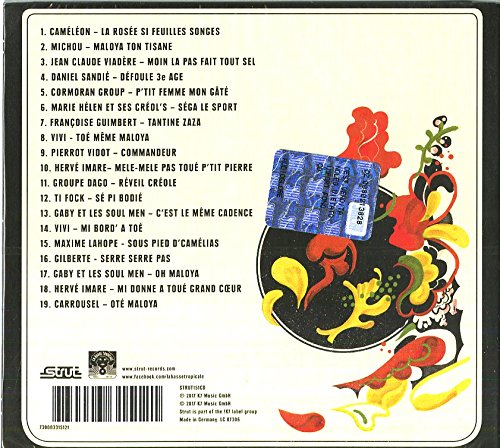
Having combined traditional instruments with Western instruments like the bass, drums, guitar and synths with traditional instruments, local musicians in the Reunion Islands decided to take this one step further. They started to fuse traditional maloya music with an eclectic selection of disparate musical genres. Suddenly, the local musicians were fusing elements of the blues, jazz, funk, fusion, pop, progressive rock, psychedelia, reggae and rock. This sparked a new era of creativity, and over the next ten years, maloya music in the Réunion Island was totally transformed. This period was recently documented by Strut on Oté Maloya-The Birth Of Electric Maloya On Reunion Island 1975-1985. It’s the much-anticipated followup to Soul Sok Séga-Sega Sounds From Mauritius 1973-1979 which was released in 2016. Both compilations were released by DJ duo La Basse Tropicale, who are based in the Reunion Island. They’re perfect placed to document a hugely important period in the Reunion Island’s history.
The Reunion Island were totally deserted until four hundred years ago. That was when the first wave of settlers arrived. Some came of their own accord, looking for a new start. Others were forced to leave countries in Africa, China, Europe, India and Madagascar. Thrown together in an island in the Indian Ocean, the first wave of settlers started to build their home within their part of the wider, shared space. Gradually, a new society started to take shape.
Before long, the first wave of settlers had their own language and cuisine. However, many of early the settlers retained their own belief systems, rites and influences. Soon, though, the Reunion Island soon, had its own unique cuisine and culture. Playing an important part the culture was dance, music and songs. This includes séga music, songs, music and dances of the slaves.
Some of the early settlers that arrived in the Reunion Island were from Malagasy and Africa. They brought with them their own belief system and rites. This was an important part of their culture. So were the ceremonies where they paid tribute to their ancestors during ceremonies which featured songs, music and dance. Often these ceremonies were clandestine affairs and took place at night.
There was no other option. Some of the settlers in the ‘17th’ Century found themselves forced into slavery, and were even forced to adopt the name of the plantation owner. They forced the slaves to work long hours, and watched their every move. It was only late at night, when they could celebrate the life of their ancestors.
This is part of servis kabaré or servis Malagasy, which is a ritual mediation between the living and the dead. Playing an important part in this ritual is music, which was played by the slaves using a variety of traditional instruments. This included piker, kayamb and bobre. At the heart of the music was a large rouler drum, which was made by stretching an animal skin over a barrel.
The rouler drum provides a three-part rhythm, a soloist and choir take part in a type of musical dialogue. This is essentially, the equivalent call and response. Meanwhile, the assembled crowd form encircle around the musicians and dancers and this is known as rond maloya. Within the rond maloya, animals are sacrificed and gifts are offered to their ancestors on the altar. Its decorated with representations of the deceased. Sometimes, alcohol was sprinkled on the ground and onto the bare feet of the dancers. They twisted and turned until they were in a trance. Later, resin was burnt before the sun rises, and this marked the end of this clandestine celebration…until the next time.
On May ‘18th’ 1819, Pierre Bernard Milius, the governor of the Reunion Island, decided to ban the Bal des Noirs, which was referred to as the occult ritual of black peoples’ dance. Up until then, the ritual had been tolerated, and some of the plantation owners had even provided meat and wine. This wasn’t an act of benevolence though. Instead, it was a type of social control, and resulted in what was regarded by slave owners as the “docile slave”. They were unlikely to rise up, and rebel.
As a result, the slaves remained chattels of the slave owner, and very occasionally enjoyed a tantalising taste of freedom. Charles-Hubert Lavollée witnessed an example of this freedom in 1843, when he witnessed the bamboula. While the bamboula is a drum, it’s also the dances and music of African slaves. After witnessing the bamboula, Charles-Hubert Lavollée called this: “the orgy of freedom, the only hours that do not belong to slavery.” However, five years later, freedom beckoned for the slaves.
Slavery was abolished in the Reunion Island in 1848. Despite the abolition of slavery, music, dancing and song remained an important part of the Reunion Island’s culture. The séga maloya was an important reminder of the Reunion Island’s past. It was also something that visitors witnessed, and responded to differently over the next century.
From the 1930s onwards, cultural commentators, critics and writers started to visit the Reunion Island, and wrote about its culture. A few of the articles were contemptuous and even borderline racist. However, most commentators and critics embraced the Reunion Island’s cultural past are were keen to tell their readers and listeners about the music, song and dance.
In 1938, the Parisian literary newspaper Marianne, reviewed a show at the Théâtre des Tropiques. It praised the: “melodious songs, its quadrille dance from Bourbon, and its séga maloya. Réunion shows us all the Créole charm marked by the profound influence of ‘18th’ Century France.” Later that year, Radio Paris played a séga from the Reunion Island, during one of its evening shows which featured music from all around the world. This introduced the séga to a new and wider audience.
That was the case right through to the early sixties, when various articles were published about the Reunion Island’s cultural heritage. It was described as variously the: “dance of the Cafre people… the erotic dance of black African workers.” The Reunion Island’s cultural heritage was viewed in a much more positive light. However, little did these commentators realise that within a decade, the Reunion Island’s music about to change. That was still to come.
The Réunion Island’s musical heritage cane be traced back to the ‘17th’ Century. Back then, the séga was a dance, similar to the fandango. However, the slaves first sang, played and danced the séga original or séga primitive at the Bal des Noirs. The séga is a predecessor of the contemporary maloya. However, in the early days in the Réunion Island plantations, many cultures influenced the early music.
This includes the songs, music, dances and trances of the Malagasy and African slaves; the rituals of the people of South India and influences of the plantation owners who arrived from Europe. All these influences were thrown into the melting pot and given a stir. The result was the séga, which through time, took on a different meaning. By the ‘18th’ Century, séga no longer referred to a dance. Instead, séga referred to a singing, music and dance ensemble. That is how the word is used today.
As music started to change, the word Séga was replaced by the word maloya. Historians are unclear about its genealogy, and when the word was first used. It’s estimated that maloya was used around the start of the ‘19th’ Century. It was used in 1834 by diarist Jean-Baptiste Reyonal de Lescouble, who writes of “singing maloya verses as usual.” However, how long the word had been in usage prior to 1834 is unknown.
Nowadays, maloya is described by UNESCO’s Intangible Cultural Heritage of Humanity as a type of: “world music.” It’s still sung in the Réunion Inland, with some verses sung in French, including in the traditional maloya Valet, Valet made popular by the legendary maloyeur Firmin Viry. Some parts of songs are sung in English, including by Ti Fock. Maloya has a fascinating and rich history that stretches back over 300 years.
Even today, the séga and maloya coexist today in the Réunion Island. The music which is based around music and ancestral traditions, continues to maintain maintained closed links as the music thrives. Previously, albums of séga have been released which can be adapted to maloya, depending on the type of audience the music is being played to. This is fitting, given the maloya is a direct descendant of the original séga.
Nowadays, the three elements of song, music and dance traditionally practised at the sacred Bal des Noirs on Réunion Island can be split over time into two parts. There’s the family and intimate branch of the sacred maloya and the public branch of the profane maloya. During both parts of these ritual ceremonies, the maloya is about paying tribute to ancestors via song, music and dance. Even today, it’s still regarded as an important part of life in the Réunion Island. However, for a time the song, music and dance trio was used for a different purpose.
During the sixties and eighties, the song, music and dance trio was hijacked and used as a culture of resistance, protest and identity. Among the leading lights of this movement were the so-called cultural maloya or the maloya combat. This included Firmin Viry, the Resistance Troupe, the Rene Viry Troupe, the Gaston Hoareau Troupe, Ziskakan, Danyel Waro, Ti Fock, Ravan and Lansor. They were later followed by Baster, Ousanousava and Nathalie Natiembe. Maloya and the Reunion Island were changing.
Following this political and social awakening, a number of important groups, including Caméléon, Carrousel and Kabar were formed and took part in a two-part cultural explosion. It began in the seventies, and then continued in the nineties. Gone was the maloya’s militant stance of the sixties, and eighties. The depoliticising of the maloya had been hugely important. If it remained a political weapon, it would’ve lost its cultural meaning or even became irrelevant. The cultural magazine Bardzour No. 2 had warned this in 1976. By then, it was the era of the electric maloya which is documented on Oté Maloya-The Birth Of Electric Maloya On Reunion Islands 1975-1985.
Many of the maloya bands had plugged in and started to fuse Western instrumentation with the traditional Malagasy, African and Indian acoustic instruments. As a result, bass, drums, guitar and synths were combined with, the piker, kayamb, bobre and rouler drum. This was a game-changer for Caméléon, Cormoran Group, Daniel Sandié, Gaby Et Les Soul Men, Ti Fock, Vivi and Carrousel, who all feature on Oté Maloya-The Birth Of Electric Maloya On Réunion Islands 1975-1985. Suddenly, maloya music was transformed.
The new musical movement was variously referred to as electric maloya, maloya fusion or just maloya. It became a symbol of a newfound freedom that the people of the Réunion Island were enjoying and experiencing.
A symbol of the newfound freedom was Caméléon’s 1977 single La Rosée Si Feuilles Songes, which was released on the Diffusion Royale label and opens Oté Maloya-The Birth Of Electric Maloya On Réunion Islands 1975-1985. This is a cover of an Alan Peters song, and is a landmark maloya recording. It’s an understated recording where Caméléon denounce individuality and celebrate sharing and solidarity.
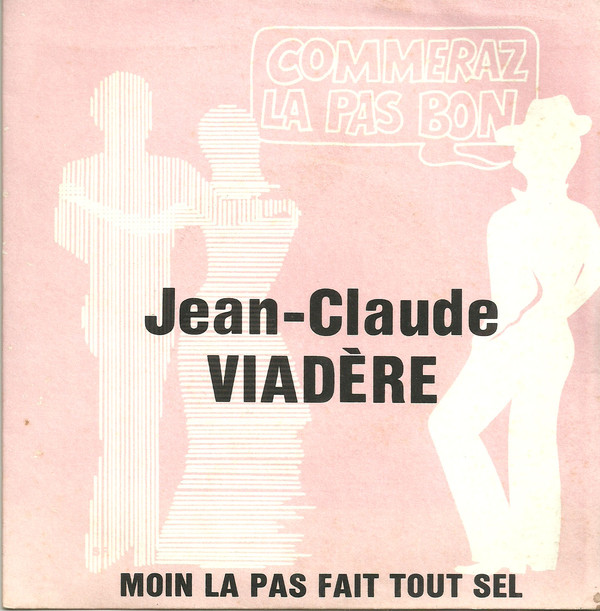
Jean-Claude Viadère was one of the leading lights in the avant-garde scene, and became one of the pioneers of electric maloya movement. He wrote the ballad Moin La Pas Fait Tout Sel, and when he came to record the song, was accompanied by Carrousel in Studio Issa. The song is built around the rhythm section, piano and tablas, and has a message that: “gossip is toxic,” Moin La Pas Fait Tout Sel was released on the Disques Issa label in 1978, and showcases a truly talented singer and songwriter.
When the Cormoran Group released as Oté as a single on Piros label, tucked away on the B-Side was a hidden gem, P’Tit Femme Mon Gâté. It deals with subjects like loneliness, homesickness and being separated from loved ones. This is something that many Reunion Island exiles could relate to. They could also relate to the moderne sound, with its proto-boogie synths. This showed just much music in the Reunion Island had changed since 1975.
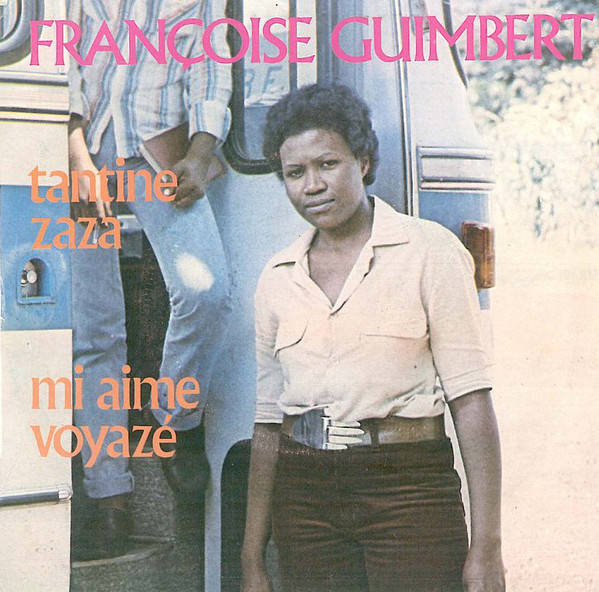
Françoise Guimbert means different things to different people in the Reunion Island. To some, she’s a theatre actress, while others remember her as a singer and songwriter. In 1978, Françoise Guimbert released her single Tantine Zaza on the Disques Royal label. It’s a slow, nostalgic maloya that is tinged with melancholia that is built around a keyboard chart. The song meanders along until backing vocalists enthusiastically interject, and call out to dancers: “Sa mèm! Allez! Oté!.” Meanwhile, Françoise Guimbert reaches new heights on this quite beautiful, emotive song.
Vivi is one of two artists who feature twice on the compilation. Both of the songs are B-Sides, which were released between 1977 and 1978. Mi Bord’ A Toé was the B-Side of single Jamais, which was released by Disques Issa in 1977. It’s a song that paints a bleak and miserable picture of life for women in postcolonial Créole society. That is no surprise as it was a very judgemental society, with women subjected to uncompromising moral standards, which were very different to those men were subjected to. Despite this, Mi Bord’ A Toé epitomises everything that is good about the new electric maloya style, as Western instrumentation and traditional instruments are fused to create one of the highlights of the compilation.
Hervé Imare also feature twice on the compilation. Their first contribution is Mele-Mele Pas Toué P’Tit Pierre, which was the B-Side to their 1977 single on Diffusion Royale. Mele-Mele Pas Toué P’Tit Pierre tells the story of little Pierre who gets involved in things that don’t concern him. This he does against a backdrop of a blistering electric guitar that weaves its way across the arrangement to this electric maloya hidden gem.
Groupe Dago released Réveil Créole as a single on Disques Royal in 1978. The song was penned by Dera Rakotomavo, and is brought to life by Groupe Dago. They create a genre-melting opus that is a mixture of maloya, fusion, psychedelia and pop. With its lysergic, hook-laden lyrics, this edgy, mesmeric and cinematic epic gradually unfolds and reveals its secrets.
Ti Fock was one of the pioneers of the maloya-fusion scene. He was also a musician who wasn’t afraid to take risks and was willing to push musical boundaries to their limits, and sometimes, way beyond. This included fusing African tribal rhythms with a variety of electric instruments. The music was ambitious and innovative, including Sé Pi Bodié a track from his 1986 album Aniel which was released on the Celluloïd label. It features Ti Fock at his most ambitious and inventive.
The other contribution from Vivi is Toé Même Maloya which featured on the B-Side of her 1978 single for Disques Issa, Vraiment L’amour Existe. It’s a beautiful wistful ballad where Vivi makes good use of her expressive vocal. Meanwhile, she’s accompanied by sinuous, sensuous rhythms that come courtesy of Les Soul Men. Together they prove to be a potent and irresistible combination.
When Maxime Lahope recorded Célia as a single for Disques Jackman, she was accompanied by one of the Reunion Island’s finest orchestras, the Claude Vinh San Et Son Orchestre. They also joined Maxime Lahope on the B-Side, Sous Pied D’Camélias. Although it’s a much slower, traditional sounding maloya, this beautiful, heartfelt ballad still swings and incorporates elements of both the calypso and the new electric maloya sound.
In 1978, Hervé Imare released Mi Donne A Toué Grand Coeur as a single on the Diffusion Royale label. Against a pulsating backdrop, Hervé Imare delivers a tender vocal as he sings of generosity, solidarity and sharing on this beautiful ballad.
Closing Oté Maloya-The Birth Of Electric Malaya On Réunion Islands 1975-1985 is Oté Maloya, a song from Carrousel’s 1982 album La Vie Est Un Mystère. The compilers have kept one of the best until last. It’s a Jean-Claude Viadère composition and became a maloya-fusion anthem. This song also epitomises everything that was good about the maloya-fusion genre, which had come of age by 1982.
Just over a year after releasing Soul Sok Séga-Sega Sounds From Mauritius 1973-1979 on Strut, DJ duo La Basse Tropicale return with Oté Maloya-The Birth Of Electric Malaya On Réunion Island 1975-1985. It’s a nineteen track compilation which celebrates the Réunion Island’s maloya-fusion scene between 1975 and 1985. This scene transformed the Réunion Island music scene, and was part of a cultural revolution.
Much of the music recorded and released during this cultural revolution features lyrics full social comment. They document what life had been like in the Reunion Island, and how it still was. Sometimes, it’s a bleak picture is painted. Other times, the talk of generosity, solidarity and sharing seems idealistic, and even somewhat native. However, those songs were written during what was a period of change, and people were looking towards the future and a new beginning.
Part of this new beginning was electric maloya or maloya-fusion. It was a radical departure from the Reunion Island’s musical past, and was the start of a brave new world. This lasted until 1992.
The electric maloya era was over by 1992, when a new sound started to dominate the Reunion Island’s musical landscape… malogué, or maloggae. It had been inspired by Mauritian seggae, and this marked the start of a new chapter in the Reunion Island’s musical history.
Nowadays, the Reunion Island’s music scene has changed once again. It seems that the Reunion Island’s music scene is revisiting its past. The maloya scene has moved more towards the traditional maloya sound. Meanwhile, séga remains the most popular festive style on the Reunion Island. Especially within the areas populated by the working class. In these areas, séga is much more popular than hip hop and ragga dancehall music. The people of the Reunion Island remain proud of their musical heritage, and this includes the electric maloya that features on Oté Maloya-The Birth Of Electric Malaya On Réunion Island 1975-1985, which provided the soundtrack to a cultural revolution.
Oté Maloya-The Birth Of Electric Maloya On Reunion Islands 1975-1985.




THE LIFE AND TIMES OF SEA LEVEL.
The Life and Times Of Sea Level.
By August 1975, all wasn’t well within The Allman Brothers. It hadn’t been for the last couple of years. That was despite The Allman Brothers being at the peak of their popularity. Their last three albums had sold over a million copies and were certified platinum. Meanwhile, The Allman Brothers were one of the most successful live band. They regularly earned over $100,000 a show during their 1974 tour. This allowed The Allman Brothers to hire Led Zeppelin’s private jet Starship, and fly coast to coast in style. However, the constant touring was part of the problem,
Several of The Allman Brothers’ had developed serious drug problems. Now that the band had more money than ever, their drug problems began to spiral out of control. This wasn’t the only problem though.
Some members of The Allman Brothers were no longer as close as they once had been. It seemed the friendship had gone from the band. Gregg Allman and Dickie Betts had both released successful solo albums during 1974. The following year, three other members of The Allman Brothers decided to form a new band as a side project.
The the band was named We Three by its founding members. They were Jai Johanny Johanson a.k.a. Jaimoe, bassist Lamar Williams and keyboardist, pianist and vocalist Chuck Leavell. When the new band was formed they were keen to stress that We Three would work round The Allman Brothers’ schedule. They were going to be busy between August 1975 and May 1976.
In August 1975, The Allman Brothers release their sixth album Win, Lose Or Draw in August 1975. When it was released, it didn’t receive the same critical acclaim as previous albums. Still, though, Win, Lose Or Draw reached number five in the US Billboard 200 and was certified gold. By then, the Allman Brothers had headed out on the road and were playing forty-one arena shows. Some nights, the shows were disjointed and lacklustre. It was as if The Allman Brothers were merely going through the motions. This was very different to the band that some nights opened for The Allman Brothers, We Three.
Occasionally, the nascent We Three took to the stage. Those that saw the band play, were impressed by We Three. They were the complete opposite of the Allman Brothers, who some nights, looked as if they were on their last legs.That proved to be the case.
For the Allman Brother, their 1975-1976 tour wasn’t their finest hour. Some nights, they didn’t even bother with a soundcheck. They just headed out on stage and seemed to be going through the motions. The band didn’t play well, and were a shadow of their former selves. What didn’t help was the excessive drug use, bad feeling between the band and death threats.
The bad feeling and death threats stemmed from Gregg Allman’s decision to testify in the trial of security man Scooter Herring. This didn’t go down well with the rest of The Allman Brothers. They saw Gregg Allman as a snitch. Following the trial, the rest of the band stopped communicating with Gregg Allman. Meanwhile, he started to receive death threats. For Gregg Allman and the rest of the band, this only made a bad situation worse.
In May 1976, the Allman Brothers returned from their forty-one date tour. By then, the writing was already on the wall. The Allman Brothers split-up. Gregg Allman formed the Gregg Allman Band; Dickie Betts formed Great Southern while Jaimoe, Lamar Williams and Chuck Leavell decided to continue as Sea Level.
No longer were the three friends playing together as We Three. They had decided to changed the band’s name to Sea Level. This was a result of some wordplay surrounding Chuck Leavell’s name. His family always pronounced their surname as level. Chuck took the first initial from his christian name, and Sea Level were born. The newly named band began honing their sound.
By then, three had become four. Guitarist Jimmy Nail joined Sea Level as the band headed out on tour. Over the next few weeks and months, dedicated themselves to honing and tightening their sound. Some nights, Sea Level experimented, by heading in different directions musicians. Mostly, though, they concentrated on refining, tightening and honing their sound. This paid off, and eventually, Sea Level were ready to record an album.
By then, several record companies were chasing Sea Level’s signature. Eventually, the band settled on Capricorn Records, which had been home to the Allman Brothers. Once the contacts were signed, Sea Level began work on their eponymous debut album.
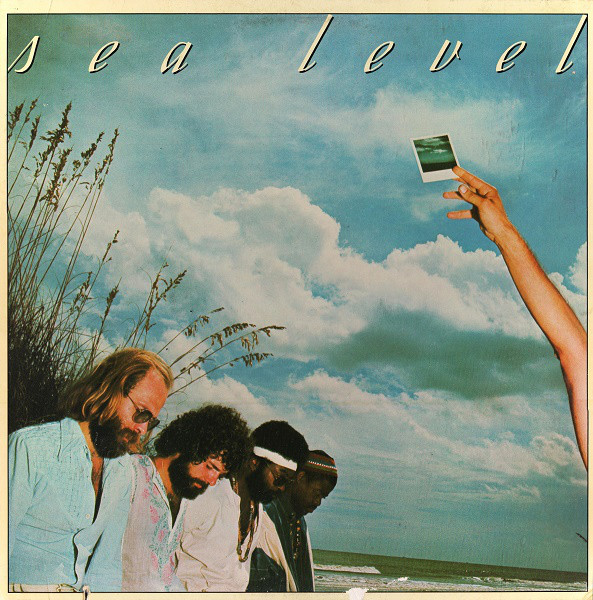
Sea Level.
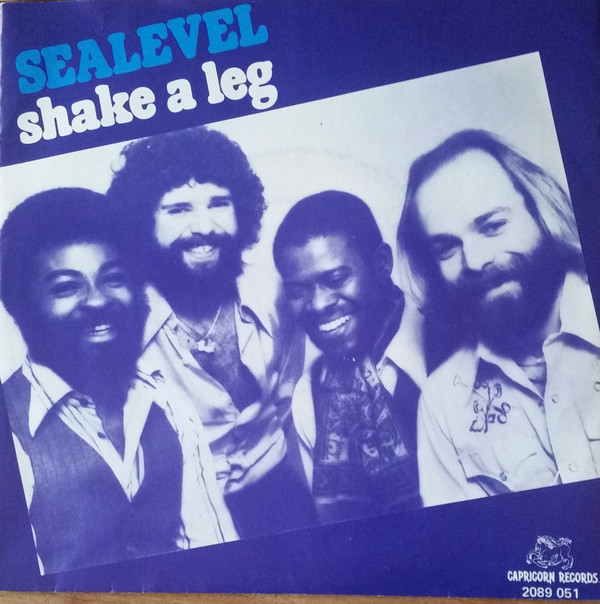
For Sea Level’s debut album, Chuck Leavell became the band’s songwriter-in-chief. He wrote five of the eight songs. The other three tracks were covers of Edward Hoerner’s Shake A Leg, Neil Larsen’s Grand Larceny and the traditional song Scarborough Fair. These songs were recorded with one of the most successful producers of the seventies, Stewart Levine.
Recording took place at Capricorn Sound Studios, in Macon, Georgia. This was familiar territory for the three members of Sea Level, as the Allman Brothers had recorded at Capricorn Sound Studios. To augment Sea Level, guitarist Jimmy Nails and a horn section were brought onboard. Meanwhile, Sam Whiteside engineered the sessions. They progressed smoothly, with Sea Level combining Southern Rock and jazz-funk. Once Sea Level was complete, it was ready for release on Capricorn Records later in 1976.
Before that, critics had their say on Sea Level’s eponymous debut album. Sea Level was well received by critics, who complimented the nascent band on their debut album. Despite the reviews, Sea Level failed to make an impression on the charts. Despite this, Sea Level decided to expand for their sophomore album, Cats On The Coast.
Cats On The Coast.
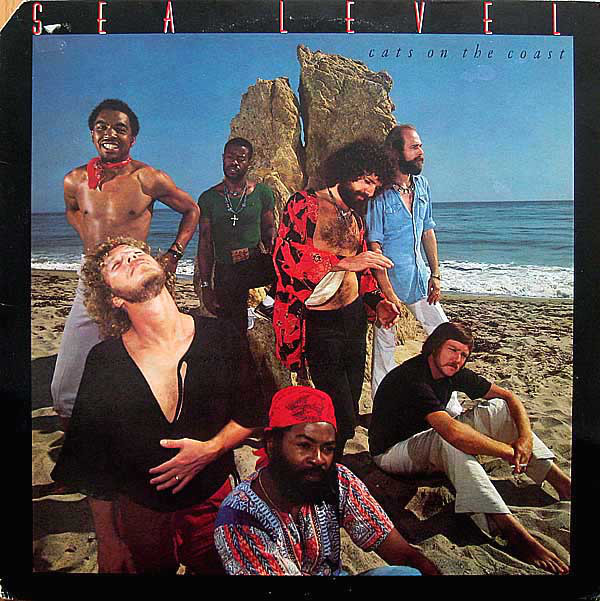
Shortly after the release of Sea Level became a sextet. Drummer and percussionist George Weaver joined, which allowed Jaimoe to switch to congas. The other two newcomers were guitarist Davis Causey and keyboardist, saxophonist and vocalist Randall Bramblett joined Sea Level. The newly expanded band began working on their sophomore album, Cats On The Coast.
This time round, Chuck Leavell wrote just two of eights songs, Storm Warning and Song For Amy. Davis Causey wrote Cats On The Coast and cowrote That’s Your Secret with Randall Bramblett. He penned Every Little Thing and also cowrote Had To Fall with Jimmy Nalls and Lamar Williams. The other two songs were cover versions, including Neil Larson’s Midnight Pass and Hurts to Want It So Bad which Charles Feldman, Tim Smith and Steve Smith penned. Just like their debut album, Sea Level returned to Capricorn Sound Studios.
At Capricorn Sound Studios, producer Stewart Levine and engineer Sam Whiteside began work with the newly expanded Sea Level. Other sessions took place in Los Angeles, at Hollywood Sound Recorders. Gradually, Cats On The Coast began to take shape and eventually was completed.
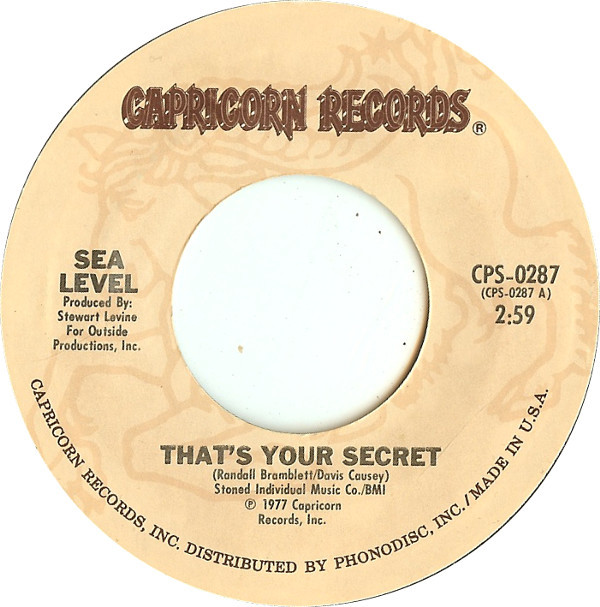
Cats On The Coast was scheduled for released later in 1977. Before that, critics had their say on Sea Level’s sophomore album. It found Sea Level switching between Southern Rock and fusion. While the album found favour with critics, Cats On The Coast passed record buyers by.While the album failed to chart, the lead single That’s Your Secret reached fifty in the US Billboard 100. It was a small crumb of comfort for Sea Level.
They had released two albums, but neither had come close to troubling the charts. It was frustrating for Sea Level. They knew that there was nothing wrong with the music. Instead, it was a case of the wrong albums at the wrong time. Southern Rock was no longer as popular as it had once been. Many Southern Rock bands weren’t enjoy the success they once had. For a new band like Sea Level, trying to make a breakthrough was doubly difficult. So much so, that two members of Sea Level decided to leave the band just before work began on their third album, On The Edge.
On The Edge.
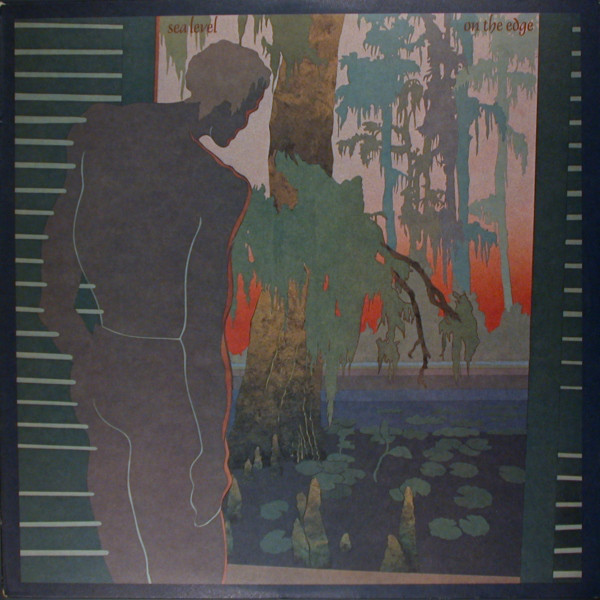
Exiting stage left were Jaimoe and George Weaver. This left Sea Level without a drummer. However, drummer Joe English was recruited and Sea Level continued as a sextet.
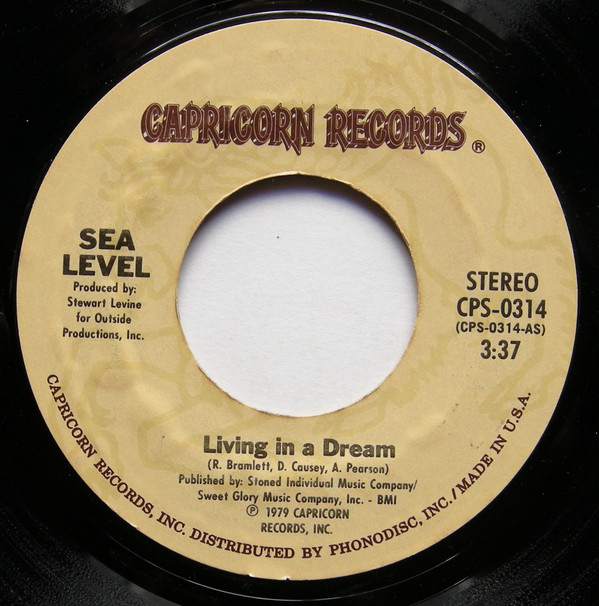
Just like Cats On The Coast, several members of Sea Level contributed songs to On The Edge. Chuck Leavell wrote A Lotta Colada and Uptown Downtown, and penned On The Wing with Lamar Williams. Jimmy Nails wrote Fifty-Four while Randall Bramblett contributed This Could Be The Worst and Electron Cold. He wrote King Grand with Davis Causey. The two men also wrote Living In A Dream with Arch Pearson. These eights songs would become On The Edge.
Just like their two previous albums, On The Edge was recorded at Capricorn Sound Studios, with producer Stewart Levine and engineer Sam Whiteside. This was the third lineup of Sea Level they had worked with. However, they were all experienced musicians, and the recording sessions went to plan. Some additional sessions took place at The Hit Factory, in New York. After that, On The Edge was ready for release later in 1978.
Prior to the release, critics received their advance copies of On The Edge. They discovered an album where Sea Level switched between and combined elements of Southern Rock, fusion and jazz-funk. It was a slick, accomplished and well produced band that featured a tight and talented band. Praise and plaudits preceded the release of On The Edge. Despite this, the album failed commercially and didn’t come close to troubling the charts. For Sea Level, it was yet another disappointment.
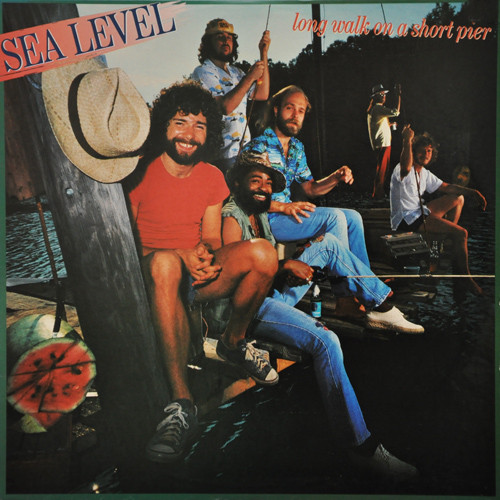
Long Walk On A Short Pier.
Despite the commercial failure of On The Edge, Sea Level weren’t about to give up. They began work on their fourth album Long Walk On A Short Pier.
Chuck Leavell wrote two new songs for Long Walk On A Short Pier, Tear Down This Wall and Just A Touch. Lamar Williams penned Just A Touch, while Jimmy Nails wrote Twenty Miles From Nowhere and penned A Two ’n’ Two with Davis Causey. He contributed Canine Man and Thirsty, and then wrote Morning Light with Randall Bramblett. The other song was a cover of the Weaver-Walker composition Too Many Broken Hearts. With the material for Long Walk On A Short Pier complete, Sea Level made the journey to Macon, Georgia. They were joined by a new band member percussionist and conga player David Earle Johnson.
When Sea Level arrived at Capricorn Sound Studios, nothing seemed to have changed. The studio looked the same as ever. However, this time, Sea Level were going to co-produce Long Walk On A Short Pier with engineer turned producer Sam Whiteside. He had engineered Sea Level’s three previous albums, so knew how the band worked. Sam Whiteside had served his apprenticeship and was ready to step out of Stewart Levine’s shadow.
Despite his promotion to co-producer, Sam Whiteside still engineered Long Walk On A Short Pier. He brought David Pinkston onboard, to assist him with his engineering duties. They watched on as Sea Level switched between Southern Rock and fusion on Long Walk On A Short Pier. The music seemed to flow through Sea Level. Gradually, Long Walk On A Short Pier began to take shape and the album almost complete.
All that recorded was for a horn section to be overdubbed at Sea Saint Studio, in New Orleans. Then Long Walk On A Short Pier would be ready for release by Capricorn Records.
Little did Sea Level know that all wasn’t well at Capricorn Records. The label was teetering on the verge of insolvency as promotional copies of Long Walk On A Short Pier were sent out. Sea Level were totally unaware of this.
When reviews of Long Walk On A Short Pier were published, critics were impressed by Sea Level’s fourth album. Just like their previous album, Sea Level flitted between Southern Rock and fusion on Long Walk On A Short Pier. It was another accomplished album from Sea Level. Maybe it would’ve been the album that transformed their fortunes?
It wasn’t to be. Just as Long Walk On A Short Pier was released, Capricorn Records went out of business. They were insolvent and had no option but to file for bankruptcy. For Sea Level, this was a disaster. Their fourth album was dead in the water.
Copies of Long Walk On A Short Pier made it as far as distributors. That was as far as they got. Later, it became apparent that a few copies of Long Walk On A Short Pier made it into circulation. However, it wasn’t until 1998 that Long Walk On A Short Pier was heard by the wider record buying public.
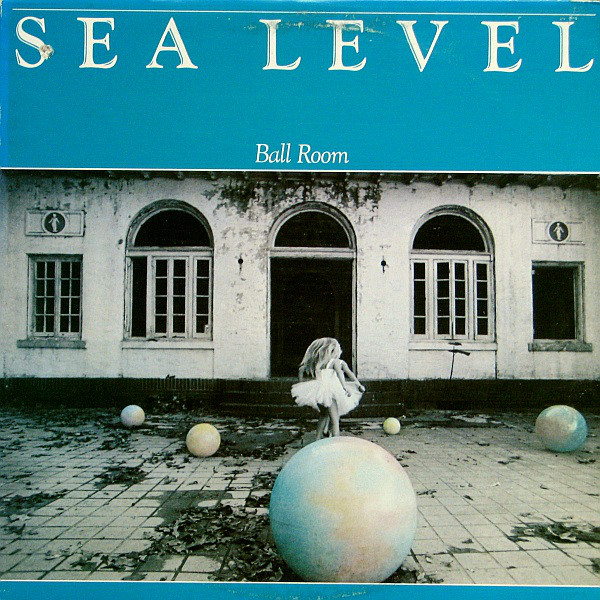
After Capricorn Records filed for bankruptcy, the future looked bleak for Sea Level. They had recorded an album that was never released properly. That cost the band time and money. They could’ve been touring, as Sea Level were still a popular draw on the live circuit. All the time, expense and effort that went into recording Long Walk On A Short Pier had been for nothing. Now they were left with no recording contract. Despite this, Sea Level decided to record a new album with producer Sam Whiteside, Ball Room.
Ball Room.
Having made the decision to continue, there was a change in Sea Level’s lineup. Percussionist and conga player David Earle Johnson left the band. He was replaced by percussionist Matt Greeley, who was about to make his recording debut.
Before that, the members of Sea Level began work on writing their fifth album. Chuck Leavell wrote Anxiously Awaiting and Don’t Want To Be Wrong, while Lamar Williams contributed Struttin’. Randall Bramblett penned Wild Side, School Teacher, Comfort Range and Brandstand. He also wrote We Will Wait and You Mean So Much To Me with Davis Causey. These nine songs would become Ball Room, which was recorded at two studios.
For the first time since Sea Level were founded, they weren’t heading to Capricorn Recording Studios to record an album. Instead, Ball Room was recorded at Axis Sound Studio and Web IV Studios. Engineer Sam Whiteside co-produced Ball Room with Sea Level. They put their considerable talents were put to good use on Ball Room. Onlookers witnessed Sea Level in full flight, with Chuck Leavell and Randall Bramblett sharing lead vocals. Once Ball Room was complete, Sea Level started shopping the album to record labels.
Eventually, it was Clive Davis’ Arista Records that expressed an interest in signing Sea Level. Clive Davis was the man with the Midas touch. He had transformed the career of countless artists and groups. Sea Level were hoping he could do the same for them. So they signed on the dotted line, and hoped that Clive Davis would work his magic.
Later in 1980, Ball Room was scheduled for release by Arista. After five albums, they were at last, signed to a label with the financial muscle and expertise to get behind Sea Level’s fifth album Ball Room. Arista Records go to work on promoting Ball Room.
Critics who were sent copies of Ball Room found Sea Level at the top of their game on album that featured bar room rock, jazz, funk, pop and Southern Rock. It featured beautiful ballad, mid tempo tracks and uptempo tracks where Sea Level kick loose. Ball Room was, without, doubt, one of the best albums of Sea Level’s five album career.
When Ball Room was released in 1980, it followed in the footsteps of their previous albums, and failed to chart. For Sea Level this was a disaster. Things got worse when the lead single School Teacher never came close to troubling the charts. Sea Level were at a crossroads.
As 1981 dawned, Sea Level realised that after five years and five albums, they were no further on. Sea Level had nothing to show for fives years of recording and touring. All that hard work had been for nothing. Part of the problem was Sea Level released their albums at the wrong time.
If Sea Level’s five albums had been released earlier in the seventies, when Southern Rock was at the peak of its popularity then things would’ve been very different. Realising that music was changing, Sea Level tried to move away from their Southern Rock roots.
While Southern Rock featured on each of their albums, Sea Level’s first four albums headed in the direction of fusion, jazz-funk and even blues and rock. Then on Ball Room, Sea Level flit between Southern Rock to jazz, funk, pop and rock. They’re even transformed into a bar room band on School Teacher on Ball Room. It was part of what was one of Sea Level’s most eclectic and underrated albums. Sadly, commercial success continued to elude Sea Level on Ball Room, which nowadays is an oft-overlooked hidden gem. Ball Room was Sea Level’s swan-song. They decided to call time on the band. There was only one problem.
Over the last five years, Sea Level had run up some debts. They were in the red and the time came to settle their debuts. Sea Level had to embark on one more tour. When the venues were finalised, it was apparent that Sea Level were going to be playing mostly dive bars. Many of them were situated in low rent shopping centres. Realising this, Sea Level decided to call the tour the Shopping Centre Tour. That was the last laugh Sea Level enjoyed.
The Shopping Centre Tour was a soul-destroying experience for Sea Level. They played dive bars and slept in the cheapest motels they could find. It was a miserable experience. Especially as Sea Level were only receiving expenses. Eventually, the tour was over and the band were free of their debts. That was the last time Sea Level played together as a band.
They had been together seven eventful years, and released five albums that showcase a truly talented band. Sadly, the five albums that Sea Level released between 1977 and 1980 failed to find an audience. Since then, Sea Level’s music has been one of music’s best kept secrets, and has been enjoyed by a small, but discerning audience. This is starting to change and somewhat belatedly, Sea Level’s quintet of albums are starting to find the wider audience that it so richly deserves.
The Life and Times Of Sea Level.
THE STORY OF SEATRAIN-FIVE DRUMMERS, FIVE GUITARISTS AND FOUR ALBUMS.
The Story Of Seatrain-Five Drummers, Five Guitarists and Four Albums.
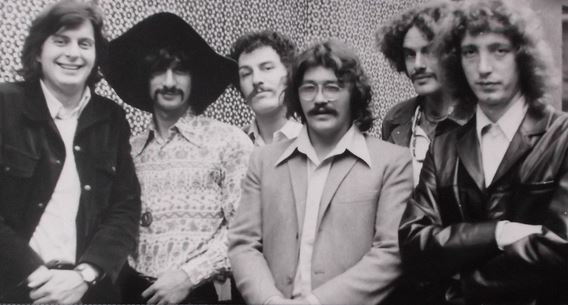
Although Seatrain were only together for four years and released four albums, there were five separate lineups of the band. Drummers and guitarists proved to be Seatrain’s Achille’s Heel. Seatrain featured five different drummers and guitarists between the release of their 1969 debut album Sea Train, and their 1973 swan-song. By then, Seatrain was a very different band to the one that started out in 1969.
Andy Kulberg was the only original member of Seatrain in the band. He had cofounded the band in 1968, and played on every album that Seatrain released. This included their 1973 swan-song Watch. However, by the time Watch was released by Capitol in 1973, the band’s lineup changed beyond recognition. It was the fifth and final change in Seatrain’s lineup since they were founded in August 1968.
Two of the founding members of Seatrain were drummer Roy Blumenfeld and bassist and flautist Andy Kulberg, who previously, had been members of the Blues Project. They had spilt-in after they played a starring role at the Monterey International Pop Festival in June 1967. The Blues Project went out on a high.
By then, the Blues Project was no longer the band it once had been. Some of the members of the band had left the band before the Monterey International Pop Festival, and it was only a matter of time before the remaining members of the band went their separate ways. After the Monterey International Pop Festival decided the time had come to call time on Blues Project.
With Blues Project consigned to musical history, the members of the band embarked upon new projects. However, it wasn’t until the summer of 1968 that Roy Blumenfeld and Andy Kulberg form a new band, Sea Train.
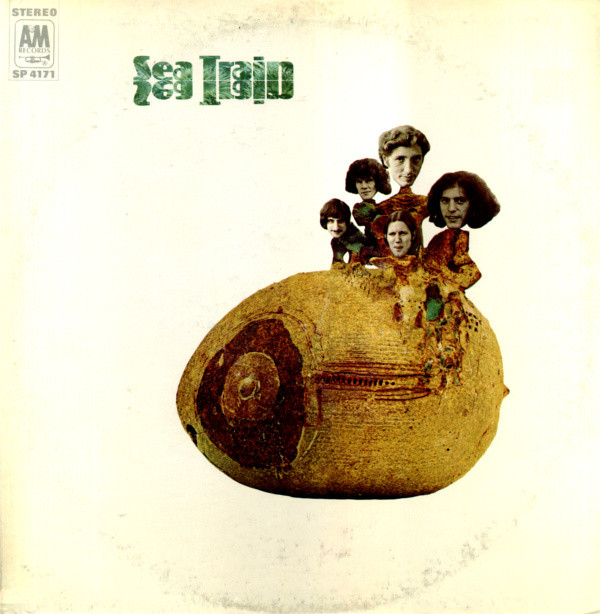
Having formed Sea Train, Roy Blumenfeld and Andy Kulberg moved to Marin County, California in August 1968. That was where they met the other members of the band. This included former Mystery Trend guitarist John Gregory, ex-Jim Kweskin Jug Band violinist Richard Greene, saxophonist Don Kretmar and lyricist and backing vocalist Jim Roberts. He was the final piece in the jigsaw of what was the newest American roots fusion band, Sea Train.
With the new band’s lineup in place, Sea Train were keen to record their debut album. There was a problem though. Blues Project still owed their former label an album. Planned Obsolescence which was meant to be Sea Train’s debut album, was released on Verve Forecast as a Blues Project album. Once Planned Obsolescence was released in 1968, Blues Project had discharged their contractual obligations to Verve Forecast. Now Seatrain could begin work on their debut album Sea Train.
Sea Train.
By the time Sea Train began work on their eponymous debut album, the band had signed a recording contract. Not long after this, Sea Train got to work on their 1969 eponymous debut album.
For Sea Train’s eponymous debut album, Andy Kulberg and Jim Roberts formed a successful songwriting partnership, penning Sea Train, As I Lay Losing and Out Where The Hills. Meanwhile, Jim Roberts and John Gregory wrote Let the Duchess No, Portrait Of The Lady As A Young Artist and Rondo.Andy Kulberg contributed Pudding Street and Sweet’s Creek’s Suite. These songs would become Sea Train which would showcase the band’s unique brand of American roots fusion.
To create this sound, Sea Train would combine blues, bluegrass, folk and rock in the studio. They were joined by engineer and producer Henry Lewy, whose career was about to blossom. However, Sea Train decided to arrange and produce their eponymous debut album, while Henry Lewy and Robert Di Sousa took charge of engineering duties. That was no surprise, as Sea Train featured some experienced musicians.
Two members of Sea Train’s rhythm section, drummer and percussionist Roy Blumenfeld and bassist and flautist Andy Kulberg were members of Blues Project, while guitarist and vocalist John Gregory had been a member of Mystery Trend.
Violinist Richard Greene was a member of the Jim Kweskin Jug Band. The other two members of Sea Train included, saxophonist Don Kretmar and backing vocalist Jim Roberts. They recorded the eight tracks that would become Sea Train.
Once Sea Train was completed, Columbia began working towards the release of the album later in 1969. Little did they know that all wasn’t well within Sea Train. This would soon become clear.
Before that, Sea Train was released later in 1969. By then, critics had their say on Sea Train, which showcased their own unique take on American roots fusion. This was essentially a combination of blues, bluegrass, country, folk, jazz and rock. Sea Train was well received by critics, who almost inevitably, drew comparisons with The Band and the Grateful Dead. However, when Sea Train was released, the album failed to find an audience. For Sea Train that was the last straw.
Not long after the release of Sea Train, the band split-up. They had been together less than a year, and had only released the one album. It looked like the end of the road for Sea Train.
Sea Train Mk II.
Not long after the Sea Train split-up in 1969, Andy Kulberg and Richard Greene decided to reform the group. They began the search for the second lineup of Sea Train. Soon, drummer Bobby Moses, guitarist Teddy Irwin and vocalist Red Shepherd were added to the lineup. Soon, so was saxophonist and bassist Don Kretmar. This became Sea Train Mk II…for the time being.
This lineup of Sea Train wasn’t together long. Before long, Sea Train were looking for a drummer and guitarist.
Sea Train Mk III.
Later in 1969, the search began for a Sea Train’s new drummer and guitarist. Various musicians were auditioned, and soon, the remaining members of Sea Train settled on new additions.
Replacing drummer Bobby Moses was Billy Williams, while Elliot Randall became Sea Train’s new guitarist. Sea Train Mk III was complete.
Before long, Billy Williams and Elliot Randall left Sea Train. So did saxophonist and bassist Don Kretmar. Now Sea Train began the search all over again for new members.
Sea Train Mk IV.
One of the earliest recruits was guitarist Peter Rowan, who had cofounded Earth Opera in 1967. The next recruits were drummer Larry Atamanuik, and keyboardist and vocalist Lloyd Baskin. A decision was made that Jim Roberts would return to the fold, and continue to contribute lyrics. While this completed the lineup, there was still one more change to be made.
No longer was the group known as Sea Train. Instead, they were known as Seatrain, which was also the title of the group’s next album for Capitol.
Seatrain.
With a new lineup and new name, Seatrain began work on what was their eponymous sophomore album. Just like on Sea Train, the Andy Kulberg and Jim Roberts played an important part in the songwriting process. They penned four of the eight songs, including Song Of Job, Broken Morning, Out Where the Hills and 13 Question. New guitarist and vocalist Peter Rowan chipped in with two songs, Home To You and Waiting for Elijah. Bookending the album was Lowell George’s I’m Willin’ and Ervin Rouse’s Orange Blossom Special which featured Oh My Love, Sally Goodin and Creepin’ Midnight. These songs would eventually become Seatrain.
Before that, the band had to cross the Atlantic, and work with the one of the most successful producers in the history of popular music,..George Music. Home for the man who produced The Beatles, was the prestigious Air Studios. This was where Seatrain was recorded by the second lineup of the band. It featured a rhythm section of drummer Larry Atamanuik; bassist and flautist Andy Kulberg and guitarist and lead vocalist Peter Rowan. He shared the lead vocals duties with Lloyd Baskin, while Richard Greene played violin, viola and keyboards. Meanwhile, George Martin took charge of production, in played his part in what was a quite different album from their debut. Seatrain saw the group’s sound begin to evolve.
Once Seatrain was complete, critics were sent copies of the George Martin produced album. They were won over by a carefully crafted album of East Coast rock and country soul. This was a much more commercial sounding album.
And so it proved to be. When 13 Questions was released as a single in 1970, it reached forty-nine in the US Billboard 100. Despite the success of the single, Seatrain failed to trouble the charts upon its release later in 1970. This was a disappointment, given Seatrain was the best, and most accomplished album of the group’s career.
The Marblehead Messenger.
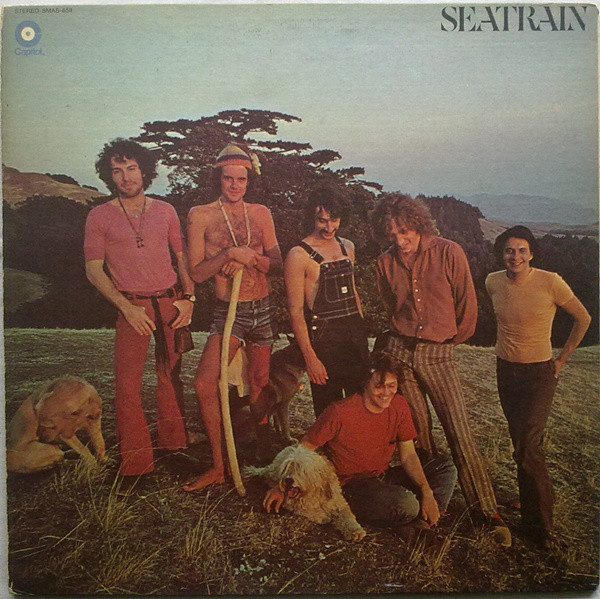
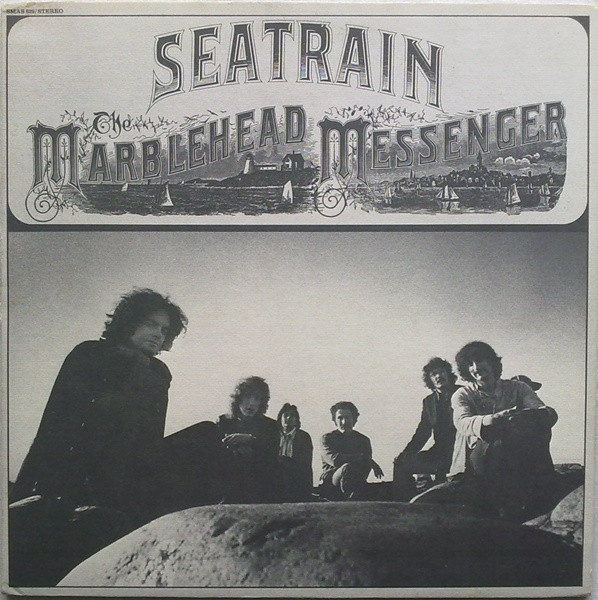
Despite the commercial failure of Seatrain, Capitol never lost faith in the band. Capitol even hired George Martin to produce Seatrain’s third album, The Marblehead Messenger. It featured ten songs penned by members of Seatrain.
Just like on the two previous albums, the Andy Kulberg and Jim Roberts songwriting partnership wrote many of the songs on the album. This time around, they contributed six songs, Gramercy, The State of Georgia’s Mind, Marblehead Messenger, London Song, Losing All The Years and Despair Tire. Peter Rowan contributed a trio of songs, Protestant Preacher, How Sweet Thy Song and Mississippi Moon. Keyboardist Lloyd Baskin made his songwriting debut with Lonely’s Not the Only Way to Go. These songs were recorded with producer George Martin.
This time around, George Martin joined Seatrain at Seaweed Studios, in Marblehead, Massachusetts. By then, Seatrain were enjoying a settled lineup. They hoped changes in the lineup were a thing of the past, and that from now on in, the same band would feature on albums. This included a rhythm section of drummer Larry Atamanuik; bassist and flautist Andy Kulberg and guitarist and lead vocalist Peter Rowan. He shared the lead vocals duties with Lloyd Baskin, and Richard Greene switched between violin, viola and keyboards. Meanwhile, George Martin took charge of production on what proved to be a career-defining album.
Once The Marblehead Messenger was complete, critics had their say on Seatrain’s third album. It was another carefully crafted and cohesive album where Seatrain came of age musically. They were maturing as musicians, singers and songwriters. Meanwhile, the music on The Marblehead Messenger was melodic and featured poetic lyrics. Critics were in agreement that The Marblehead Messenger was Seatrain’s finest hour.
Buoyed by reviews, executives at Capitol thought that The Marblehead Messenger was the album that would introduce Seatrain to the wider record buying public. They were still one of music’s best kept secrets. Sadly, Seatrain remained one of music’s best kept secrets, and nowadays, The Marblehead Messenger is regarded as a hidden gem of an album.
Despite the commercial failure of The Marblehead Messenger, Seatrain embarked upon their first British Tour. Some of the dates on their British tour found Seatrain supporting Traffic. While Seatrain were well received by British audiences, it would be the first and last time Seatrain toured Britain. The following year, 1972, there would be two departures from Seatrain
Seatrain Mk V.
In 1972, Seatrain founding member Richard Greene and Peter Rowan left join Muleskinner. For Seatrain, this was a huge loss. Richard Greene was a talented multi-instrumentalist and Andy Kulberg’s songwriting partner. Peter Rowan was Seatrain’s guitarist and lead vocalist, and had produced some of his best performances on The Marblehead Messenger. This was another huge loss. So was the loss of drummer Larry Atamanuik, who decided to leave Seatrain after two albums. Suddenly, Seatrain were looking for three new members.
The search began, and various musicians were auditioned. Eventually, Seatrain settled on drummer Julio Coronado, keyboardist Bill Elliott and guitarist and vocalist Peter Walsh. This completed what was the fifth lineup of Seatrain. They would make their recording debut on Watch, which was Seatrain’s fourth album, but their debut for Warner Bros.
Watch.
Watch marked the start of a new chapter for Seatrain, and especially Andy Kulberg. He was the last of remaining founding members of Seatrain, and had been ever-present throughout the band’s career.
Jim Roberts was another founding member of Seatrain, but hadn’t contributed to their third album The Marblehead Messenger. The last time Jim Roberts cowrote songs with Andy Kulberg was on Seatrain. However, with Richard Greene having left Seatrain, Jim Roberts and Andy Kulberg decided to renew their songwriting partnership.
The Jim Roberts and Andy Kulberg songwriting partnership contributed a trio of songs to Watch, including Pack of Fools, Freedom Is The Reason and North Coast. Andy Kulberg penned Scratch, and had written Abbeville Fair with Richard Greene, prior to his departure from Seatrain. Lloyd Baskin contributed Bloodshot Eyes and We Are Your Children Too. They were joined by covers of Bob Dylan’s Watching The River Flow and Al Kooper’s Flute Thing, and became Watch which was produced by Buell Neidlinger.
For Seatrain Mk V, Watch was the first time the band had recorded together. The rhythm section featured drummer and percussionist Julio Coronado; bassist and flautist Andy Kulberg and guitarist and vocalist Peter Walsh. They were joined by keyboardists Lloyd Baskin and Bill Elliot. Augmenting Seatrain were a number of session musicians.
This included a guitarist Paul Prestopino; banjo player Bill Keith; flautist Jill Shires; oboist Allan Vogel; tuba player Bob Stuart and a string section. They were joined by vocalists Wayne Daley, Sandra Lee and Sha Na Na. Producer Buell Neidlinger also played bass on Watch, which gradually took shape. It was a quite different album from The Marblehead Messenger.
Given how different an album Seatrain was, it was an album that surprised the critics, but still found favour with them. They excepted Seatrain to continue further down the road that began on Seatrain, and continued on The Marblehead Messenger. That wasn’t the case. The new lineup of Seatrain set about reinventing their music on Watch.
While critics were impressed with Watch, it failed find an audience amongst record buyers. Just like their three previous albums, Seatrain commercial success eluded Seatrain. It was a familiar story, and one that founding member Andy Kulberg had heard before. He knew that Watch was the end of the line for Seatrain.
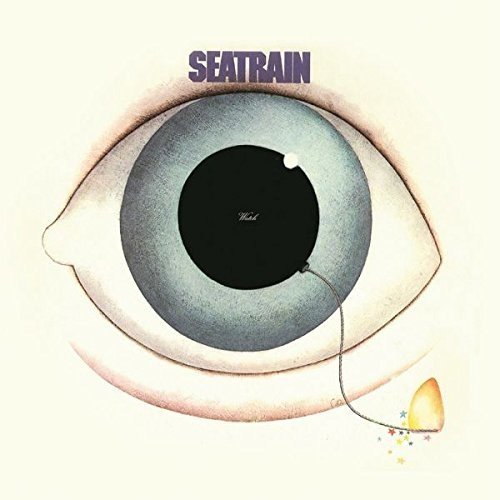
Not long after the release of Watch, Seatrain split-up, this time for good. There was no comeback this time. Instead, Andy Kulberg rejoined the Blues Project who had reformed in 1971. After four albums and five lineups, the Seatrain were no more.
Sadly, Seatrain were the latest in a long line of bands who could’ve and should’ve reached greater heights. Despite their talent, commercial success eluded then. However, what didn’t help was that Seatrain went through five different lineups. With a settled lineup, who knows what heights Seatrain lead by Andy Kulberg might have reached?
Instead, Seatrain remained a cult band, whose music was enjoyed and cherished by a small group of discerning record buyers. They remember the quartet of albums that Seatrain released between 1969 and 1973. Each of these albums were quite different.
This ranged from the American roots fusion of Sea Train in 1969; to the two carefully crafted albums that George Martin produced, Seatrain in 1970 and 1971s The Marblehead Messenger. Two years later, in 1973, Seatrain returned with Watch, which was their most eclectic album. It was a fusion of Americana, blues, country, folk, gospel, pop, progressive rock, rock and soul, where Seatrain sought inspiration from American’s musical past and present. Despite the eclecticism of Watch, which was recently remastered and reissued by BGO Records, this couldn’t transform Seatrain’s fortune. Watch which is an underrated and oft-overlooked album, proved to be the swan-song, from one of America’s great lost bands,..Seatrain.
The Story Of Seatrain-Five Drummers, Five Guitarists and Four Albums.
TOO SLOW TO DISCO VOLUME 3.
Too Slow To Disco Volume 3.
Label: How Do You Are?
During the last few years, there has been a resurgence in interest in the West Coast sound which sadly, fell from grace in the late seventies. Before that, the West Coast sound had won over the hearts and minds of record buyers, and provided the soundtrack to much of the seventies. This wasn’t surprising.
The West Coast sound was slick and full of hooks. Trademarks of the West Coast were clever chord progressions and lush harmonies. This proved to be a truly irresistible combination, and why across America, radio station playlists were dominated by the West Coast sound. Sadly, like all good things, the success story that was the West Coast sound had to come to an end. However, over the last couple of years, the West Coast sound has been on the comeback trail.
The comeback began about three years ago, in 2014 when several compilations of the West Coast sound were released. By then, the West Coast sound, like so many things had been rebranded. Now it was being referred to as Yacht Rock or Vanilla Funk. Nothing it seems is sacred. At least though, compilers were rediscovering the West Coast sound. This included the DJ Supermarkt and the good people at the How Do You Are label who have just released Too Slow To Disco Volume 3. This however, is the fourth instalment in Yacht Rock series.
How I can hear you ask? Last year the Too Slow To Disco series took a break, and the first volume of The Ladies Of Too Slow To Disco was released. It was a welcome addition to what’s becoming an annual event. This year, normal service has been resumed and Too Slow To Disco Volume 3 has been released. It features eighteen songs from the likes of Lee Ritenour, Bob Welch, David Gates, Weldon Irvine, Vapour Trails, The Fifth Avenue Band, Dwight Druick, Rob Mehl and Billy Mernit. They’re just a few of the names that board the yacht on the West Coast and take the listener on a journey back in time on Too Slow To Disco Volume 3.
Opening Too Slow To Disco Volume 3 is Lee Ritenour’s 1981 single Is It You, which was released on Elektra in 1981. Is It You also featured on Lee Ritenour’s eighth album Rit, which was released in 1981. Rit was the second album the Los Angeles born guitarist and composer had released on Elektra. Is It You is smooth and soulful and showcases the contemporary jazz sound that Lee Ritenour specialised at that time. This proved successful and resulted in over thirty contemporary jazz hits for the man known as Rit.
Guitarist Bob Welch’s career began in 1964 when he joined The Seven Souls as a nineteen year old. After a spell with Head West, Bob Welch joined Fleetwood Mac in 1971. He was with Fleetwood Mac for three years, and departed in December 1974. After forming the trio Paris, who released two albums, Bob Welch embarked upon a solo career. His debut album French Kiss was released in 1977, and two years later in 1979, Bob Welch released his third album The Other One. Don’t Let Me Fall was released as a single, and almost epitomises the West Coast sound. That is apart from a rogue synth. However, this doesn’t spoil a quite beautiful song, that is a reminder of Bob Welch’ solo years.
Pratt and McClain released their eponymous debut album on Reprise Records in 1974. Two years later, the pair returned with their sophomore album Pratt and McClain Featuring “Happy Days” in 1976. By then, Pratt and McClain were well-known on both sides of the Atlantic for singing the theme to the television show Happy Days. However, Whachersign which was released as a single in 1976, is much more representative of the music that Pratt and McClain were capable of creating. It’s combines elements of jazz, pop and disco on a song that epitomises the type of music that features on the Too Slow To Disco Volume series.
The Cornelius Bumpus Quartet only ever released the one album, Beacon, which was released on cassette by Broadbeach Records in 1983. The highlight of Beacon is Inside You, which was penned by Robert Rosenstein. It’s an understated and soulful slice of jazz funk that is the perfect showcase for this tight and talented band.
In 1980, David Gates released fourth solo album, Falling In Love Again on Elektra. David Gates had written, arranged and produced all the songs on Falling In Love Again. This includes Silky, which was one of the highlights of the album. It’s a slick, carefully crafted track where elements of jazz and funk are combined to create a track defines where the West Coast sound was circa 1980.
By 1976, Weldon Irvine had released five solo albums. However, five became six when the Virginia born singer, songwriter, arranger and producer released Sinbad on RCA. It features the single I Love You, which was penned by Don Blackman and released in 1976. It’s a beautiful, heartfelt ballad, and is a reminder a truly talented artist whose music is sometimes overlooked.
Two years after releasing their eponymous debut album, The Markley Band returned with On The Mark! It was released on the Accord label in 1982, and featured Fallin’ In Love. Sheila Lowe takes change of the lead vocal and delivers a soulful, vocal powerhouse. She’s accompanied by gospel-tinged harmonies as the rest of The Markley Band combine with jazz, jazz-funk and with the soul supplied by Sheila Lowe on this stepper.
Some groups only released the one album, and that includes the Vapour Trails. Warner Bros had high hopes for the Vapour Trails when they released their eponymous debut album in 1979. It was produced by Larry Carlton and featured the genre-melting singe Do The Bossa Nova. It’s a catchy, mid-tempo track where the Vapour Trails combine elements of jazz, funk, pop and soul. Alas, nothing was heard of the Vapour Trails after their eponymous debut album. However, Do The Bossa Nova is something of a favourite among DJs on the Yacht Rock and Vanilla Funk scene.
The earliest track on Too Slow To Disco Volume 3, comes courtesy of The Fifth Avenue Band, who released their eponymous debut album on Reprise Records, in 1969. It features One Way Or The Other which was the B-Side to The Fifth Avenue Band 1969 single Nice Folks. However, One Way Or The Other is a beautiful ballad that shows the West Coast Sound taking shape. Sadly, despite the quality of sings like One Way Or Another, it was another eleven years before they returned with their Really in 1980.
Mark Capanni released I Believe In Miracles as a single on Capitol Records, in 1974. It was the first of two singles just two singles released. That is a great shame as Mark Capanni was a talented singer and songwriter. This is apparent from I Believe In Miracles, a string-drenched ballad that is a long-lost Yacht Rock hidden gem that features the talents of Mark Capanni.
Very few people would think to include The Greatful Dead on a compilation of Yacht Rock or Vanilla Funk. However, Shakedown Street, the title-track to The Greatful Dead’s 1978 album for Arista has been added, and works well. Against a funky arrangement, the harmonies accompanies the vocal and play their part in The Greatful Dead’s adventure into Vanilla Funk.
Canadian singer, songwriter and musician Dwight Druick, is another artist who only released one album. This was Tanger, which was released on WEA in 1980. It featured the jazz-funk of Quand Tu Te Laisse Aller which showcases the talents of Dwight Druick and his band.
Archie James Cavanaugh released his one and only album Black And White Raven, in 1980. Nowadays, original copies of this soulful private press are incredibly rare. However, it’s been reissued several times, including for Record Store Day 2107. One of the highlights of the album is Take It Easy, a joyous and uplifting track with a real feel good sound.
When Rob Mehl released his debut album Taste and See in 1980, it was on the Ministry Resource Center label. Nowadays, original copies of this genre-melting album change hands for upwards of $300. Elements of jazz, funk, gospel, pop rock and soul combine on the album. That is apparent on the title-track, which is one of the highlights of this little-known Yacht Rock album.
Five years after releasing his sophomore album, Larry Carlton returned with his eponymous album in 1978. Larry Carlton’s third album was the first he released for Warner Bros Records. It featured Where Did You Come From, which is a smooth slice of soulful and dreamy jazz. It’s very much atypical of the Yacht Rock genre and is a welcome addition to Too Slow To Disco Volume 3.
Prior to forming The Jeremy Spencer Band, its founder Jeremy Spencer had been a member of several groups, including Fleetwood Mac. However, in 1979, The Jeremy Spencer Band released their debut album Flee, on Atlantic Records, in 1976. When it came to released the debut single, Cool Breeze was chosen. It sounds as if it’s been influenced by Fleetwood Mac, and is a memorable and melodic song that brings back memories of the heyday of the West Coast Sound.
Stars ’N’ Bars were a short-lived band that released just two singles between 1981 and 1982. Their debut was Stars and Bars which was released in 1981 on the Moonshine label. It’s a fusion of jazz-funk and proto-boogie and pop that obviously was made with the dance-floor in mind.
Closing Too Slow To Disco Volume 3 is Billy Mernit’s Special Delivery. This was the title-track to Billy Mernit’s 1973 album on Elektra Special Delivery was also released the lead single from the album. It’s a quite beautiful, heartfelt ballad that showcased a talented singer, songwriter and musician and is a reminder of the West Coast Sound in its prime. What better way to close Too Slow To Disco Volume 3.
After a two-year absence, the Too Slow To Disco series makes a welcome return with Too Slow To Disco Volume 3. It features old friends, new names and a few surprises from music’s past. Classics rub shoulders with hidden gems and rarities sit on what’s without doubt the most eclectic compilation in the Too Slow To Disco series.
While all the tracks showcase the West Coast Sound, the ingredients in each track is different. The eighteen songs contain elements of disparate musical ranging from contemporary to jazz to funk, jazz and jazz-funk through to disco, pop, proto-boogie and rock. However, when they’re combined, they create tracks that transport the listener back to the heyday of the West Coast Sound.
As has often been the case with previous instalments in the Too Slow To Disco series, compiler DJ Supermarkt often eschews the familiar. While there’s a number of singles on Too Slow To Disco Volume 3, there’s also B-Sides and long forgotten album tracks. Sadly, not many people will remember many of these tracks. Instead, they’re remembered by connoisseurs of the West Coast Sound, or as it’s now known Yacht Rock or Vanilla Funk.
It seems that nothing is safe from a rebranding exercise nowadays. While many purists will find this unpalatable, the main thing is that at last, the West Coast Sound is back on the comeback trail. There’s a huge body of music awaiting discovery, and compilations like Too Slow To Disco Volume 3 are the perfect introduction to that music.
For a newcomer, the three volumes in the Too Slow To Disco series, plus The Ladies Of Too Slow To Disco is a perfect starting place. Songs on these compilations are the start of a voyage of discovery through the music of the late-sixties through to the early eighties. That is the case on Too Slow To Disco Volume 3.
On Too Slow To Disco Volume 3 DJ Supermarkt dig deeper than other compiler in the search for rarities and hidden gems. He strikes musical gold on a number of occasions, and they join tracks from familiar faces and new names. These tracks slick, full of clever hooks, melodic and memorable. In a way, it’s no surprise that nearly forty years after the heyday of the West Coast sound, the music is just as popular as ever. It’s just a shame that it’s taken so long for all this wonderful music to fall back into fashion.
No longer is Yacht Rock a guilty pleasure enjoyed by discerning record buyers. Instead, record buyers everywhere are jumping onboard the yacht and enjoying the party. However, the music on Too Slow To Disco Volume 3 aren’t dance tracks. They’re Too Slow To Disco, and are best described as mood music. It’s what the beautiful people listened to in the seventies. That comes as no surprise, as much of the music oozes quality. It’s mellow and laid back with the lush harmonies, swathes of strings and clever chord progressions part of well written and carefully crafted songs. They play their part in the West Coast sound’s slick, hook-laden and timeless sound. A reminder of this can be found on Too Slow To Disco Volume 3, which like previous instalments in the series, epitomises everything that’s good about the Yacht Rock.
Too Slow To Disco Volume 3.
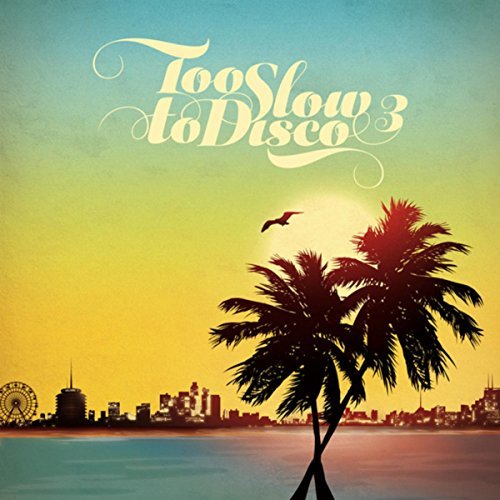
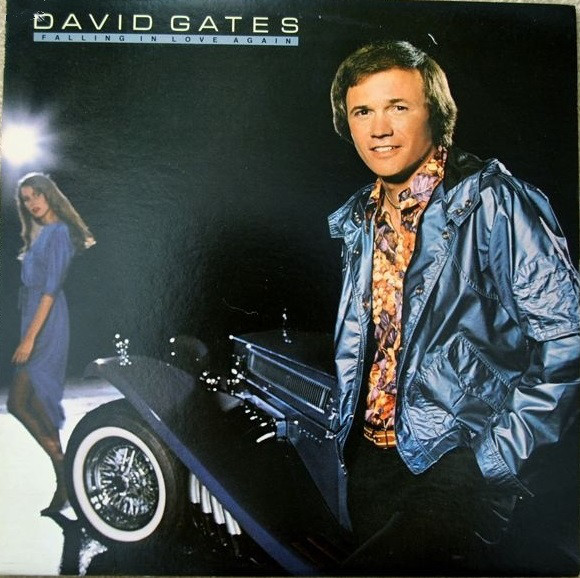
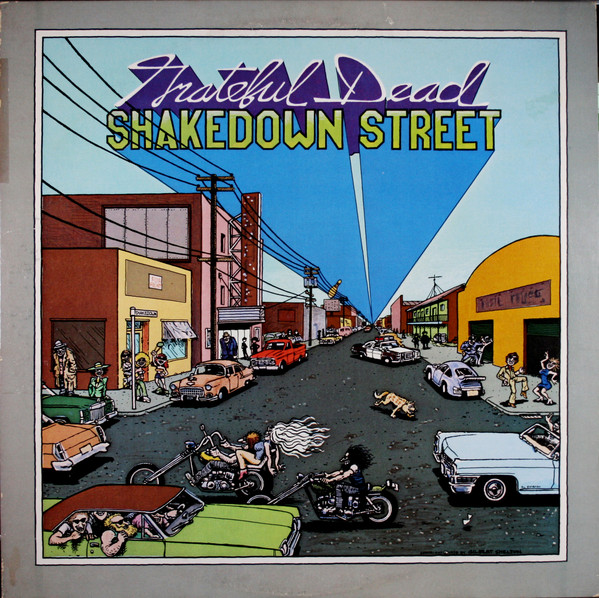

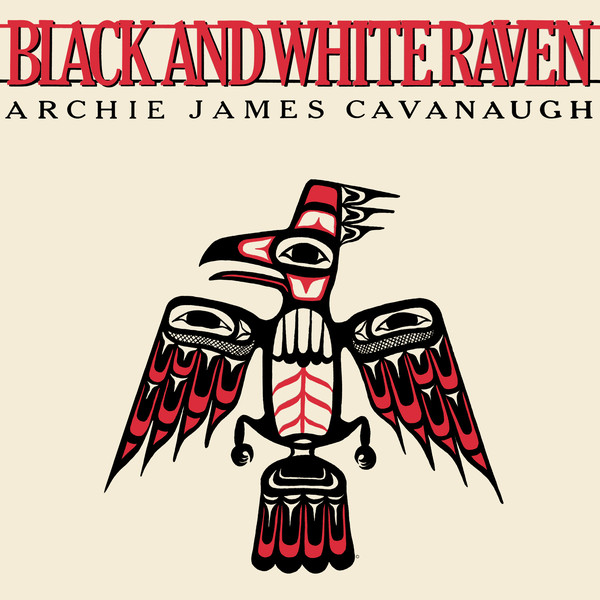
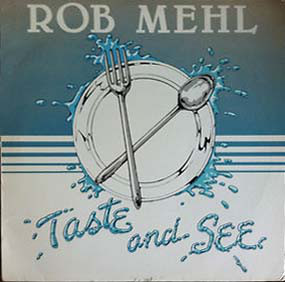
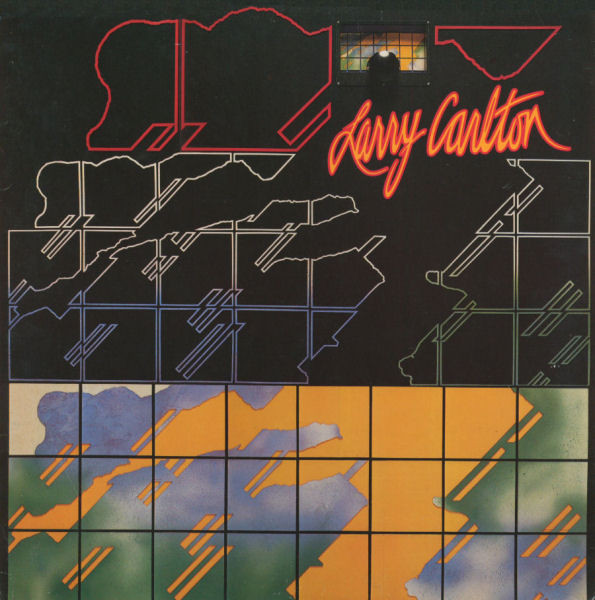
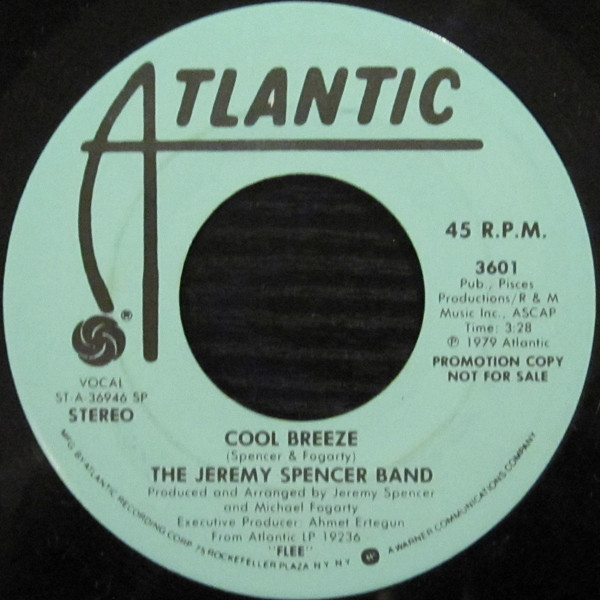
SPACE, ENERGY AND LIGHT-EXPERIMENTAL ELECTRONIC AND ACOUSTIC SOUNDSCAPES 1961-88.
Space, Energy and Light-Experimental Electronic and Acoustic Soundscapes 1961-88.
Label: Soul Jazz Records
One of the most eagerly awaited compilations of recent months is a collection of soundscapes from Soul Jazz Records entitled Space, Energy and Light-Experimental Electronic and Acoustic Soundscapes 1961-88. These fourteen soundscapes were all created by musical pioneers.
The story starts in the early sixties, when a new breed of musicians started creating some of the earliest electronic music. During this period, synths were being used to create music for the first time. These synths were very different to those used today, and were complex and unwieldly machines that often, were extremely difficult to use. However, in the right hands, synths were a game-changer that could create incredible, and groundbreaking music. This became evident as the sixties gave way to the seventies.
Electronic music seemed to come of age in the seventies, while synths became much more affordable. Suddenly, synths were within the budget of musicians in America, Britain and Europe, who started to investigate what they were capable of. Proof of this came in 1973, when Mother Mallard’s Portable Masterpiece Company became the first synth ensemble, when it was created in collaboration with Robert Moog. What had once seemed the stuff of science fiction was now reality. and musicians started to think differently.
Musicians realised that with a selection if synths, sequencers, keyboards, drum machines and a four-track recorder they could record an album. Many musician did just that, including many in Germany who became part of the Berlin and Düsseldorf Schools of Electronic music. Elsewhere, many different types of music were recorded with the new electronic instruments.
During the early seventies, some of the earliest New Age albums were being released. This was nothing new, as Tony Scott had released Music For Zen Meditation in 1961. Mostly, it was popular in California, but as the years passed by, and fashion changed, Music For Zen Meditation found an audience further afield. By then, German musician Deuter had become one of the first artists to incorporate acoustic and electronic sounds on his albums. This included his 1971 debut album D, and the followup album Aum in 1972. Nowadays, both albums are regarded as Krautrock classics and among the earliest New Age albums.
Later, in the seventies, more artists started to create proto New Age music. Among them, were Steven Halpern and Iaxos. Their music was meant to be meditative and have healing properties. As a result, their albums weren’t sold in record shops. Instead, they were found instead in holistic medical centres and health food shops. Already, New Age was starting to find an audience.
By the eighties, the New Age movement was in full flight, and labels like Windham Hill Records were hugely profitable enterprises. It had come a long way since it was founded with $300 seed capital. Many of the New Age artists were using synths and other electronic instruments to create the music that was proving hugely popular. So was a very different type of music.
As the eighties dawned, a new type of artist had emerged. They were also electronic artists but didn’t have their albums pressed on vinyl or CD. Instead, their releases were much more basic, and were a throwback to the age of punk. This new breed of electronic artists D-I-Y approach saw them release their albums on cassette. Despite the basic nature of these releases, the music that Germany’s Stratis and Britain’s Carl Matthews were producing was far from basic. Instead, these artists embraced the latest advancements in music technology, as they created new, ambitious and exciting music. However, this wasn’t new.
Instead, the willingness to embrace the latest advancements in music technology is a thread that runs through Space, Energy and Light-Experimental Electronic and Acoustic Soundscapes 1961-88. Each of the artists on the compilation pioneered and were early adopters of new equipment and technology. They were determined not to be left behind in this brave new musical world.
With this new equipment and technology, artists were able to explore space and look at what the future held. Some took the opportunity to look deep within themselves and at their very soul. They went on to create music that was in harmony with the natural world. It was an exciting time, and for those involved it was a brave new world, where anything was possible.
A reminder of this are the fourteen tracks on Space, Energy and Light-Experimental Electronic and Acoustic Soundscapes 1961-88. It includes a mixture of new names and familiar faces, ranging from J.B. Banfi, Michael Garrison, Iasos, Carl Matthews and Tim Blake to Laurie Spiegel, Michael Stearns, Richard Pinhas, Kevin Braheny and Steven Halpern. They’re just some of the artists that feature on Space, Energy and Light-Experimental Electronic and Acoustic Soundscapes 1961-88.
Opening Space, Energy and Light-Experimental Electronic and Acoustic Soundscapes is J.B. Banfi’s Gang (For the Rock Industry). This is a track from his 1978 debut album Galaxy My Dear, which was released on the Red Record label. For J.B. Banfi this was a new chapter in his career. He had been the keyboardist and synth player with the Italian progressive rock band Biglietto Per L’Inferno until 1975. After that, he embarked upon a solo career, and three years later, released Galaxy My Dear in 1978. It was a fusion of elements of ambient, the Berlin School and experimental music. The highlight of the album was Gang (For the Rock Industry), which is a futuristic and cinematic musical journey.
To The Other Side Of The Sky is the track that opens Michael Garrison’s 1979 debut album, In The Regions Of Sunreturn. It was released on Michael Garrison’s own label, Windspell Records. This was the label that he released all of his albums. They showcase a musical pioneer, who sadly, is still one of electronic music’s best kept secrets. That was despite create thought-provoking and cinematic soundscapes like To The Other Side Of The Sky, which are guaranteed to set the listener’s imagination racing.
When Iasos released Inter-Dimensional Music on Unity Records, in 1975, it marked the debut album of one of the pioneers of New Age music. Inter-Dimensional Music features Lueena Coast a beautiful and blissful ambient soundscape that not only soothes and calms, but has a meditative effect.
Carl Matthews’ As Above, So Below made its debut on the Flowmotion compilation in 1982. It was originally released as a cassette of ambient, minimalist and industrial music by Flowmotion in 1982. Later that year, the Flowmotion compilation was released on vinyl by ICR. The closing track was Carl Matthews’ As Above, So Below, which featured a broody, dramatic sound that meanders along ominously showcasing an otherworldly sound.
Tim Blake started off as a sound engineer with Hawkwind, before joining Gong. However, by 1977 Tim Blake had embarked upon a solo career, and released his debut album Crystal Machine on the Egg label. Opening Crystal Machine was the multilayered soundscape Midnight. The deepest layers have an ambient sound, while atop the soundscape, it sounds as if intergalactic warfare is taking place. As a result, Midnight sounds like part of the soundtrack to a sci-fi movie.
In 1984, Stratis was one of the new breed of artists who were releasing albums on cassette. While this was a cheap way for artists to release their music, the sound quality and reliability of tapes left a lot to be desired. As a result, very few copies of Stratis’ 1984 album Film Musik are still available. It was released on the Creative Tapes label, and is now something of a rarity that changes hands for up to £80. By Water which is a fusion of ambient, Berlin School and even a hint of synth pop, is a reminder of this long-lost album, and one of a new breed of artists who came to the fore during the eighties…Stratis.
Chicago-born Laurie Spiegel grew-up, playing guitar, banjo, and mandolin, and on leaving high school, studied social science. After graduating, Laurie Spiegel headed to London and studied classic guitar and composition with John W. Duarte, and then baroque and renaissance lute at Julliard. This made Laurie Spiegel an unlikely convert to making music with synths. However, she had worked with synths since 1969, and released the captivating and otherworldly Improvisation On a ‘Concerto Generator was released in 1977. It’s a truly timeless soundscape that later, featured on the 2001 album Obsolete Systems which is a mixture of abstract, ambient and avant-garde music.
Mother Mallard’s Portable Masterpiece Company was a synth ensemble formed in 1968 by David Borden, Steve Drews and Linda Fisher in Ithaca, New York, with the help of Robert Moog. Five years later, in 1973, they released their eponymous debut album on their own label, Earthquack Recordings. It featured Ceres Motion a seven minute minimalist soundscape that ebbs and flows, and meanders along as it constantly captivates.
Nowadays, Michael Sterns is regarded as one of the pioneers of Space Music, which was a sub-genre of New Age music. His debut was Ancient Leaves, which was released in 1977. Four years later, in 1981, and Michael Stern released his fourth album Planetary Unfolding on the Continuum Montage label. It opens with In the Beginning an eight minute ambient epic that showcases a true musical pioneer.
Philly born Beverly Glenn-Copeland’s sophomore album Keyboard Fantasies was released on the GRT label in 1986, sixteen years after she released her eponymous debut album in 1970. Keyboard Fantasies is a little-known album, but one that is something of a hidden gem. It opens with the minimalist sound of Ever New where Beverly Glenn-Copeland a talented multi-instrumentalist plays all the instruments and adds the vocal. The result is a quite beautiful track that is very different to most of the track on the compilation.
French guitarist and synth player Richard Pinhas founded the progressive rock band Heldon in 1974, and by 1979, they had released nine albums. Still, Richard Pinhas found time to work as a solo artist, and by 1978, he had just released his sophomore album Chronolyse on the Cobra label. Chronolyse featured Variations VII: Sur Le Thème Des Bene Gesserit, a mesmeric sounding track which incorporated elements of ambient, Berlin School, electronica and Krautrock. This track is the perfect introduction to Richard Pinhas, who is a prolific and pioneering musician.
Tod Dockstader was twenty-nine when he self-released his debut album Eight Electronic Pieces in 1961. It was a groundbreaking and experimental album of Musique concrète. So much so, that Folkways Records reissued the album later in 1961. Fifty-six years later, and Eight Electronic Pieces is still a hugely important and innovative album, that was way ahead of its time. Proof of that, if any is needed, is the album opener, Piece #1.
In 1988, Kevin Braheny released Galaxies (Original Soundtrack Music) on the Hearts Of Space label. It featured Ancient Stars, a beautiful, ethereal, ambient soundscape that is one of the highlights of the compilation.
Picking up where the previous track left off is Steven Halpern’s Starborn Suite (Part 1). This was the opening track to the 1978 album Starborn Suite, which was released as a cassette on the Spectrum Research Institute label. Later in 1978, Starborn Suite was reissued on Steven Halpern’s Halpern Sounds’ label. Starborn Suite (Part 1) is another beautiful, dreamy and ethereal soundscape, and it seems like the compilers have kept one of the best until last on Space, Energy and Light-Experimental Electronic and Acoustic Soundscapes 1961-88.
For anyone yet to discover type of music on Soul Jazz Records’ new compilation Space, Energy and Light-Experimental Electronic and Acoustic Soundscapes 1961-88, then is the start of a musical voyage of discovery. The compilation is the perfect introduction to fourteen musical pioneers, who each played their part in rewriting musical history.
Having heard a tantalising taste of J.B. Banfi, Michael Garrison, Iasos, Carl Matthews, Laurie Spiegel, Michael Stearns, Richard Pinhas, Kevin Braheny and Steven Halpern’s music, the next step is to look back at the music they released during their careers. Some of their albums have been released on CD, and are quite easy to find. Others are more difficult to discover, especially if they were released on cassette. However, some of the albums that were only released on vinyl are relatively easy to find. This includes original copies of albums which can be found in excellent condition for modest sums of money. This can be the start of a long and enjoyable musical journey.
Having discovered one artist, soon, record buyers will be looking for artists who released similar types of music. Some may even work backwards to Tony Scott and his 1961 album Music For Zen Meditation, which is regarded as the first ever New Age album. They’ll investigate similar albums released during the sixties that slipped under the radar.
Other record buys will take as a starting point for this adventure Deuter’s 1971 debut albums D, and the followup Aum. Both are both important New Age albums and Krautrock classics. There’s also many other Krautrock albums which have the same qualities as Dueter’s music, including some by Tangerine Dream, Cluster, Harmonia and Popol Vuh.
There’s also whole labels that specialised in New Age music to investigate. This included Windham Hill, whose releases are easy to find and modestly priced. The same cane be said of all the album Michael Garrison released on his label Windspell Records. This however, is just the tip of what is a huge musical iceberg.
Quite simply, there are countless artists who made music like the fourteen tracks on Space, Energy and Light-Experimental Electronic and Acoustic Soundscapes 1961-88 during the sixties, seventies and eighties. Many of these albums feature groundbreaking music that was way ahead of its time. Sadly, some of that music was too far ahead of its time, and a record buying public weaned pop music failed to grasp its importance. It’s only much later that this music is being discovered, and is starting to find the audience it deserves. Especially when record companies like Soul Jazz Records released compilations like Space, Energy and Light-Experimental Electronic and Acoustic Soundscapes 1961-88 that showcase a tantalising taste of this groundbreaking music from true musical pioneers.
Space, Energy and Light-Experimental Electronic and Acoustic Soundscapes 1961-88.




STEVE AND THE BOARD-THE COMPLETE STEVE AND THE BOARD.
Steve and The Board-The Complete Steve and The Board.
Label: Playback Records.
Although Steve and The Board were formed in Brisbane, Australia, in 1965, the story began 9,000 miles away in 1950. That was when Steve Kipner the founder of Steve and The Board was born in Cincinnati, Ohio. However, Steve Kipner didn’t spend much of his young life in Cincinnati.
His father Nat Kipner, who was a songwriter and producer, who wanted a better life for his family, and started looking for a future beyond Ohio. Eventually, Nat Kipner decided that his family would move to Brisbane, in the state of Queensland. It was situated on Australia’s gold coast, which seemed the perfect place to start a new life, and bring up a young family.
Fifteen years later, in 1965, Steve Kipner found himself studying at Brisbane Art and Technical College. By then, Steve Kipner had caught the music bug from his father who was now a songwriter, producer and promoter. Steve Kipner’s love of music began at an early age, and he had already penned She Used To Be Mine which featured on Normie Rowe’s debut album So Much Love From Normie Rowe. Already it looked as if Steve Kipner had a big future ahead of him after he left Brisbane Art and Technical College. However, it was at that venerable institution that Steve Kipner met two of his future band mates.
This was drummer Colin Petersen and guitarist Carl Groszman. They were both students at Brisbane Art and Technical College and it was purely by chance that the three aspiring musicians met. Soon, the three students had formed a friendship and Carl Groszman was introducing Steve Kipner to new music, including bluesmen like Lightnin’ Hoplkins and Muddy Waters and the R&B of Ike and Tina Turner. All this was new to Steve Kipner, and he enjoyed discovering the new music. The third member of the trio Colin Petersen, had taken to picking Steve Kipner up in Mini Cooper and they would work out the harmonies to Beatles’ songs on the journey to and from college. On one of these journeys, they Steve Kipner and Colin Petersen came up with the idea of forming a band. That band would become Steve and The Board, whose entire career has been documented on The Complete Steve and The Board. It will be released by Playback Records on ‘21st’ July 2017 and is a reminder of one Australia’s best garage rock bands of the sixties.
Having made the decision to form a band, the three members of what later became Steve and The Board, began the search for a bassist. That was how they met Dennis Neville, who previously, had been the drummer for The Tempests. However, since leaving The Tempests, Dennis Neville had started to learn the guitar. When the three members of Steve and The Board met they Dennis Neville they managed to persuade him to learn to play the bass.
Using a borrowed bass and amplifier, Dennis Neville taught himself to play the bass, and before long had mastered it. Dennis Neville became Steve and The Board’s bassist, and when they started to play live, drove the band’s van.
Despite the band lineup still evolving, the nascent began playing the live scene around Brisbane. At first, they drew inspiration from The Beatles and British Invasion groups like The Hollies. Harmonies played an important part in the band’s nascent sound. That was until they met two musicians from Sydney.
Terry Hanagan and Chris Grey, who had previously, been a member of the Missing Links had just arrived in Brisbane from Sydney when they first met Steve and The Board. The two Sydney-based musicians started telling the members of the band about City Blues, which was the urban take on R&B that the Rolling Stones had made their name playing. Having heard about City Blues, the band changed direction musically and even adopted a new name.
By then, the band had still to adopt the name Steve and The Board. However, they weren’t far away, and renamed the band Board Of City Blues. Their set lists featured a mixture of R&B and songs by The Animals, The Yarbirds, the Rolling Stones, Them and The Pretty Things. Sometimes, they dipped into The Kinks, The Who and The Beatles’ back-catalogue during their sets. Board Of City Blues also started to include some of the songs that two members of the band had written.
Despite Steve Kipner’s track record, he wasn’t one of the two songwriters in Board Of City Blues. That would come later. Instead, Colin Petersen and Carl Groszman, who had adopted the stage name Carl Keats, had started writing songs. Some of these songs would feature in Board Of City Blues’ set lists. This included the gigs the Board Of City Blues in a Nat Kipner’s club.
Board Of City Blues were in the fortunate position that Steve Kipner’s father Nat owned a small club. He allowed the band to practise there, and to play live. This was perfect for the group to hone their sound.
Having honed their sound, the Board Of City Blues were ready to make their tentative steps on the Brisbane live scene for the second time. However, this time they were a different band not just in name, but musically. One of the first gigs that the Board Of City Blues played was at a club called the Prim in the Piccadilly Arcade. After that, it looked as if the future was bright for the Board Of City Blues. That was until Nat Kipner sprung a surprise.
He announced that the Kipner family were moving to Sydney, where he felt there were better business opportunities for him. A reluctant Steve Kipner made the move.
With Steve Kipner moving to Sydney, it looked as if this spelt the end for the Board Of City Blues. That was until bassist Dennis Neville received a phone call from Steve Kipner asking him to bring the band to Sydney. Steve Kipner’s father had managed to get the Board Of City Blues some gigs, and there was even talk of a recording contract. This was too good an opportunity to turn down.
The first to arrive in Sydney was Dennis Neville, who had resigned from his job the Monday. Given what he had sacrificed, Steve Kipner’s parents allowed Dennis Neville to move into the family home. Over the next two months, the rest of the Board Of City Blues arrived in Sydney. Carl Keats was last to arrived, and in the interim, a local guitarist had deputized for him. By the time the rest of Board Of City Blues had arrived in Sydney, they began the search for a lead guitarist.
Auditions were held, and several guitarists tried out. This included ‘Long’ Tom Cowburn mentioned his friend Alex Hill. He had arrived with his family from Croatia, and as a child, studied classical violin. Eventually, he turned his back on classical music and the violin, and learnt to play the guitar. That was how Alex Hill found himself auditioning for the Board Of City Blues. It didn’t take long for the rest of the Board Of City Blues to realise that they had found their lead guitarist.
At last, the Board Of City Blues’ lineup was complete, and they went in search of their first gig. The new lineup of the Board Of City Blues took place at a surf club in Wollongong. That night, the Board Of City Blues were well received by the audience, and this proved to be the start of something for the Board Of City Blues.
Suddenly, the Board Of City Blues were playing nearly every night. Soon, the Board Of City Blues had more gigs that they could cope with. They were a hugely popular draw on the local scene. So much so, that some night, the Board Of City Blues played three gigs a night and sometimes, more. The move to Sydney had paid off for the Board Of City Blues.
Especially when Nat Kipner secured the Board Of City Blues an audition with Everybody’s, a Sydney-based record company. Although Nat Kipner had secured the audition, it wasn’t a done deal. Instead,
the Board Of City Blues had to audition with Maggie Makeig, the pop music editor at Everybody’s. Everything went well, but the record label weren’t sure of the band’s name. It was then that the Board Of City Blues became Steve and The Board.
This was a much more acceptable and marketable name for the record label, and having signed on the dotted line, Everybody’s, sent Steve and The Board into the studio to record their debut single. The song that Steve and The Board had chosen, was a cover of The Pretty Things’ Rosalyn, with The Giggle-Eyed Goo! on the B-Side. This was a song that Nat Kipner had already written. However, Carl Keats made a few changes to the lyrics and wrote the music. Little did Steve and The Board know when they recorded The Giggle-Eyed Goo! in mid-1965 that it would launch their career.
Steve and The Board released their debut single Rosalyn in October 1965. It found Steve and The Board stay true to The Pretty Things’ original version. Steve and The Board’s reading of Rosalyn showcased a talented young band. However, it wasn’t Rosalyn that caught the attention of the record buying public, and their children.
Nat Kipner was able to secure Steve and The Board priceless publicity. He was involved with the children’s television show Saturday Date, and ran a competition that had children send in a drawing of what The Giggle-Eyed Goo! looked like. This was invaluable promotion, and propelled The Giggle-Eyed Goo! to number four in the Melbourne charts and thirty-four in the Brisbane charts. While the song gave Steve and The Board their first hit single, it proved to be a double-edged sword.
While Steve and The Board received a lot of publicity due to the success of The Giggle-Eyed Goo!, it was regarded as a novelty song. The problem with novelty songs, was that very few people take them seriously. There was always the risk that promoters and other bands might not take Steve and The Board seriously. However, when Steve and The Board played live in Adelaide, it was like Beatlemania all over again. Having played two songs, Steve and The Board were mobbed by young girls. Nat Kipner’s novelty song had transformed Steve and The Board’s career.
Soon, they were sharing the stage with some of the biggest names in Australian music. They also shared top billing with Herman’s Hermits. By them, Steve and The Board even had their own fan club. They had come a long way in a short time.
Despite the success, Steve and The Board weren’t making any money. This wasn’t helped by a number of disreputable promoters refusing to pay Steve and The Board. As a result, they were left living a hand to mouth existence. Suddenly, the music business wasn’t such a glamorous way to make a living.
By March 1966, plans were in place for Steve and The Board to release their sophomore single Margot, which featured I’ve Just Realised on the B-Side. While the single was given a catalogue number, it was never released.
This changed when Steve and The Board released The Giggle-Eyed Goo! EP, which featured four tracks. They were The Giggle-Eyed Goo!, Rosalyn, Margot and Rosemarie, which were all produced by Nat Kipner. When The Giggle-Eyed Goo! EP was released in 1965, Steve and The Board had been promoted to the main Spin label. With plenty of hype, The Giggle-Eyed Goo! EP was released on the record buying public. However, it never replicated the success of their debut single.
Later, The Giggle-Eyed Goo! EP would featured on Steve and The Board’s debut album The Giggle-Eyed Goo! However, by then, the writing was on the wall for the band. That was still to come.
A month after the aborted release of Margot, Steve and The Board decided to leave Sydney, as things were starting to cool down for the band. They packed their bags and headed to Melbourne, and soon, had secured a residency at the 10th Avenue Discotheque. It was run by Eddie Floyd, who soon, became the band’s manager.
While Eddie Floyd ensured the band didn’t go hungry and secured them plenty of gigs, still Steve and The Board weren’t making much money. Each week, Steve and The Board played over forty-five hours, but only made £16 each. To make matters worse, Melbourne was notorious for promoters failing to pay bands, and Steve and The Board fell victim to this several times. It was a frustrating experience.
Steve and The Board had some good times in Melbourne, and featured on ATV’s music show Go!! several times. This was invaluable publicity for the band. So was appearing on Kommotion, another popular music program that was presented by Ken Sparkes. Appearing on these shows would stand Steve and The Board in good stead when they released their next single.
This was I Call My Woman Hinges (Cause She’s Something To Adore). On the B-Side was I Want. When the singles was released, it reached the top five in the Australian charts. It was a hook-laden, R&B stomper that caught the imagination of the record buying public. On the single, Steve and The Board sound like the Rolling Stones, and the hook sounds as if it has been inspired by It’s All Over Now. I Call My Woman Hinges (Cause She’s Something To Adore) was very different to The Giggle-Eyed Goo!, and showed Steve and The Board in their true colours.
Not long after the release of I Call My Woman Hinges (Cause She’s Something To Adore), Steve and The Board released their sophomore EP in 1966. It was entitled I Call My Woman Hinges (Cause She’s Something To Adore), and also featured Farmer John, Little Miss Rhythm And Blues and Love’s Made A Fool Of You. Producing the new tracks was Nat Kipner, who had produced all of Steve and The Board’s releases. This would soon include their debut album.
By the time executives at Spin started talking about Steve and The Board releasing their debut album, the band had nearly enough material for an album. They were sent into the studio to record three more tracks, including I’m To Blame, Love’s Made A Fool Of You and Lonely Winter which Carl Groszman had written. When these three new songs were added to songs from their two EPs and singles, Steve and The Board had more than enough for their debut album.
Originally, Steve and The Board had considered the Board Meeting for album title. That would’ve been the perfect title for the album, given Steve and The Board were trying to establish a reputation as a serious R&B band. However, instead of common sense prevailing, it was decided to call the album The Giggle-Eyed Goo! It seemed that what had originally been a novelty song for a B-Side was going to haunt the band.
Worse was to come though. After Steve and The Board completed The Giggle-Eyed Goo!, drummer Colin Petersen announced that he was leaving the band. This was a huge blow for the band, as Colin Petersen had been a member from day one and was a talented drummer. Replacing him wasn’t going to be easy.
The loss of Colin Petersen couldn’t have come at a worse time, with Steve and The Board about to release their debut album The Giggle-Eyed Goo! It features on the first twelve tracks on The Complete Steve and The Board, and is a reminder of a talented and versatile band.
Side One.
Opening The Giggle-Eyed Goo! is the title-track, and ironically given its novelty nature, is the song that is synonymous with Steve and The Board. Songs like I’m To Blame, I’ve Just Realised and Rosemarie are reminiscent of The Beatles pre-1966 and British Invasion groups like The Hollies. Rosalyn is a sneering slice of R&B, where Steve and The Board draw inspiration from the Rolling Stones. Margot has a much more rocky, stomping sound, but is still melodic and brings to mind The Who.
Side Two.
I Want is hook-laden, R&B stomper where Steve and The Board sound like the Rolling Stones, while the hook sounds as if it has been inspired by It’s All Over Now. Another hook-laden R&B stomper is I Call My Woman Hinges (Cause She’s Something To Adore). In a similar vane is Little Miss Rhythm And Blues. Farmer John is one of the rockiest tracks on the album. It’s built round a blistering guitar riff and mesmeric drums, while Steve unleashes one of his best vocals. Love’s Made A Fool Of You is a cover of song penned by Buddy Holly, and sounds as if it’s been inspired by Bo Diddley. The album closer, Lonely Winter, sounds like an homage to Carole King’s It Might As Well Rain Until September.
By the time Steve and The Board’s debut album The Giggle-Eyed Goo! was released, the band had a new drummer, Geoff Bridgeford. He gave up a job with an advertising agency to join Steve and The Board. This was a decision he might later rue.
Once Geoff Bridgeford settled into the role of Steve and The Board’s drummer, the band continued their gruelling touring schedule. This found Steve and The Board crisscrossing Australia, as they played in towns and cities. Some nights, the band played four, even five gigs. This was a relentless schedule, and one the band continued day after day, week after week. Somehow, Steve and The Board found some time to record some new songs.
Steve and The Board went into the studio and recorded So Why Pretend, Now I’m Older and Sally Was A Good Old Girl. After recording the new songs, it was back to the live circuit.
Despite the constant touring, Steve and The Board managed to squeeze in a couple of appearances on television. Somehow the members of Steve and The Board were managing to cope with a schedule that even older, more experienced bands would’ve struggled with. By then, Steve and The Board’s popularity was at all-time high. They were mobbed after gigs, and literally, had run to their cars. Sometimes, they were accosted by jealous boyfriends. It got to the stage that Steve and The Board had a police officer living with the group, who were experiencing Beatlemania. The members of Steve and The Board should be wealthy young men.
As Steve and The Board returned to Sydney, the group realised that their finances needed some attention. New recruit Geoff Bridgeford was given the job of looking their finances. For a group who had literally lived on the road, playing four and five gigs each night, Geoff Bridgeford worked out that all Steve and The Board were owed was just $600. This must have come as a huge blow. To make matters worse, collecting what they were owed was easier said than done.
During September 1966, Steve and The Board released their next single, Now I’m Older which featured So Why Pretend on the B-Side. Later that month, Steve and The Board were one of the bands booked to support PJ Proby at Melbourne’s Festival Hall.
On the ‘30th’ September 1966, Steve and The Board took to the stage at the Festival Hall. For a group that had played hundreds of gigs, this was the one that went wrong. They weren’t alone though.
It was a disastrous gig for everyone involved, with technical problems sabotaging Steve and The Board’s performance. Despite this, the press turned on Steve and The Board. Just like many other bands, the press had built them up to knock them down.
Steve and The Board headed out on another tour, which was billed as The Steve and The Board Spectacular. It began on the ‘5th’ October 1966, and concluded six days later on the ‘11th’ October. Despite its brevity, it had been another gruelling tour. There was no rest for the band though.
They had to film a promotion film for their next single, which was the Alex Hill composition Good For Nothing Sue. It’s one of the four bonus tracks on The Complete Steve and The Board. So is the B-Side Sally Was A Good Old Girl. After the film was complete, Steve and The Board headed out on the first of two tours. Then on ‘1st’ December 1966 featured on the Go!! television show for what would be the last time.
In January 1967 Good For Nothing Sue was released by Spin. By then, music was starting to change, and the psychedelic era was in full swing. Steve and The Board was just one of many bands who suddenly were no longer as popular.
By the spring of 1967, gigs were starting to dry up for Steve and The Board. They were only playing two, maybe three nights a week. Steve and The Board continued for a couple of months, and on ‘17th’ May 1967 the band split up. After two years, the dream was over.
Despite all their hard work, and the gruelling tours, Steve and The Board didn’t end up rich men. Just like many other groups before them, much of the money ended up in other people’s pockets. Sadly, that still happens today. For Steve and The Board, there was no gold at the end of the rainbow.
Later, Colin Petersen enjoyed a brief spell as the Bee Gees’ drummer. Later Colin Petersen joined the band Humpy Bong who released the single Don’t You Be Too Long in 1970. However, another former member of Steve and The Board went on to enjoy fame and fortune.
After a brief solo career, Steve Kipner became an award-winning songwriter and producer. He penned songs for everyone from America, Diana Ross, George Benson and Olivia Newton John, to Heart, Joe Cocker, Neil Diamond and Rod Stewart. The songs that Steve Kipner have written have solid by the million, and he has a string of gold and platinum discs to his name. Steve Kipner has also won the prestige Ivor Novello Award. For Steve Kipner, there was life after Steve and The Board, who are still remembered some city years after they split-up.
Although they were only together for two years, they were a whirlwind for the members of Steve and The Board. During that period, they toured relentlessly and recorded only sixteen songs. They feature on The Complete Steve and The Board, which will be released by Playback Records on ‘21st’ July 2017. It’s an opportunity to discover one of Australia’s greatest garage bands.
Sadly, outside of Australia, Steve and The Board are largely unknown. That is a great shame, given they were a talented and versatile band. Within Australia, Steve and The Board are remembered by many people, who remember that two-year period when they enjoyed their own version of Beatlemania. Ironically, many people remember Steve and The Board for their first hit single The Giggle-Eyed Goo! However, the followup single I Call My Woman Hinges (Cause She’s Something To Adore) is much more representative of Steve and The Board’s music which is documented on The Complete Steve and The Board. It’s a lovingly curated compilation that is the most comprehensive overview of Steve and The Board’s two year career.
Steve and The Board-The Complete Steve and The Board.

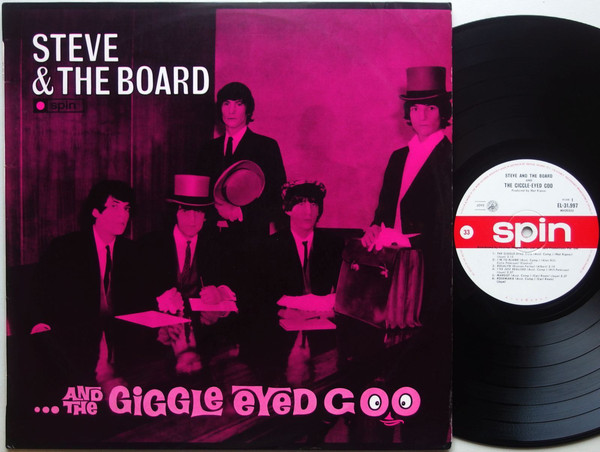

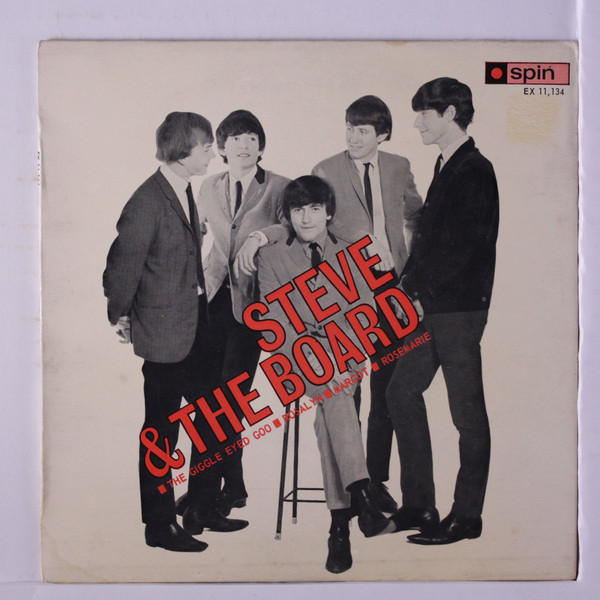
CHARLEY PRIDE-YOU’RE MY JAMAICA, ROLL ON MISSISSIPPI, EVERYBODY’S CHOICE AND CHARLY PRIDE LIVE.
Charley Pride-You’re My Jamaica Roll On Mississippi, Everybody’s Choice and Charley Pride Live.
Label: BGO Records.
By the time Charley Pride was preparing to release his new album You’re My Jamaica in 1979, he was one of the most successful country singers. He had already enjoyed twenty-one number one singles and eleven number one albums on the US Country charts, while eleven of Charley Pride’s albums had been certified gold. It was a remarkable transformation for the onetime ball player from Sledge, Mississippi, had come a long way since he released his debut album Country in 1966.
In the space of just thirteen years, Charley Pride had become one of RCA Victor’s biggest selling artist. The only artist who outsold Charley Pride was Elvis Presley, who had died two years ago. With Charley Pride now RCA Victor’s biggest selling living artist, the company were relying on him to continue to release successful albums and hit singles. However, there had been a worrying trend over the last three years.
Nearly six years had passed since Charley Pride had enjoyed a number one album with Amazing Love in October 1973. Since then, six of the seven album Charley Pride released had made the top ten in the US Country charts. However, during the same period, Charley Pride had enjoyed eight number one singles in the US Country charts. Charley Pride still had the Midas Touch, and it was only a matter of time until one of his albums returned to the top of the US Country charts. His next album was You’re My Jamaica which is one of four albums on a two CD set released by BGO Records. You’re My Jamaica is joined by Roll On Mississippi, Everybody’s Choice and Charley Pride Live, and covers the period between 1979 and 1982. Charley Pride was hoping he would enjoy his elusive twelfth number one album during this period.
You’re My Jamaica.
For what would be his last album of the seventies, Charley Pride decided to record an album that would find an audience way beyond the country music fans. He had been one of a small number of country artists whose music crossover appeal. Some fans of popular music had been won over by Charley Pride’s music over the past thirteen years. This time around, Charley Pride decided that his latest album should have widespread popular appeal.
For what became You’re My Jamaica, Charley Pride chose ten songs to cover. These songs had one thing in common, they would appeal to fans of country music, and would also have crossover appeal. This included Bob Mc Dill’s What’re We Doing, Doing This Again. Charley Pride decided to cover a trio of songs penned by Kent Robbins, You’re My Jamaica, One More Time and I Want You. They were joined by the Kye Fleming and Dennis Morgan composition Missin’ You. It was a song that Charley Pride had high hopes as he headed into the studio.
Just like previous albums, Charley Pride and Jerry Bradley co-produced You’re My Jamaica. They were joined at Music City Music Hall Studio in Nashville, by some of the city’s top session players, and The Jordanaires. Nine of the ten songs on You’re My Jamaica were recorded in Nashville, The exception was You’re My Jamaica, which was recorded Audio International in London. Now the album was complete, and ready for release.
Critics on hearing You’re My Jamaica, remarked upon an album that should appeal not just to country music fans, but fans of popular music. This hadn’t been easy. Charley Pride was trying to appeal to two different audiences. In doing so, Charley Pride took care not to alienate his loyal fans. They had supported him since he released his debut album Country in 1966. However, on You’re My Jamaica included songs that appealed to both fans of country music and popular music.
There were a number of country ballads on You’re My Jamaica, which was something that Charley Pride excelled at. This included No Relief In Sight, Heartbreak Mountain, To Have And To Hold, Let Me Have A Chance To Love You (One More Time) and I Want You. There were other ballads on the album, including the string-drenched What’re We Doing, Doing This Again and the soul-baring Missin’ You. Both had crossover appeal, and had the potential to introduce Charley Pride to a much wider audience. So had You’re My Jamaica, which was very different to the rest of the album. However, it featured the all important hook. This would prove important when it was released as a single.
You’re My Jamaica was chosen as the lead single, and released later in 1979. Not only did it reach number one in the US Country charts, but the Canadian Country charts. This augured well for the release of the album. When You’re My Jamaica was released, it reached number eleven in the US Country charts and number six Canadian Country charts. While You’re My Jamaica had missed out on the top ten in the US Country charts, which was disappointing, further success wasn’t far away. Missin’ You was then released as a single, and reached number two in the US Country and Canadian Country charts. What proved to be Charley Pride’s last album of the seventies, was seen as a success.

There’s A Little Bit Of Hank In Me.
As a new decade dawned, Charley Pride returned with his first album of the eighties, There’s a Little Bit of Hank In Me. It was released in January 1980, but had been recorded during the second half of 1979.
There’s A Little Bit Of Hank In Me was recorded at Castle Studio, Nashville with producer Fred Rose. Charley Pride was accompanied by some of Nashville’s finest sessions players as Charley Pride paid tribute to country music legend Hank Williams. Charley Pride covered twelve of Hank Williams best known songs. He breathed life, meaning and emotion into songs like Mind Your Own Business, Honky Tonk Blues, I’m So Lonesome I Could Cry, Why Don’t You Love Me and You Win Again. These songs became There’s A Little Bit Of Hank In Me.
When There’s A Little Bit Of Hank In Me was released in January 1980, it was to widespread critical acclaim. The album reached number one in the US Country charts and was certified gold in Canada. Honky Tonk Blues was released as the lead single and reached number one in the US and Canadian Country charts. You Win Again gave Charley Pride another number one single in the US Country charts, but reached just number two in the Canadian Country charts. Charley Pride had started the eighties as he meant to go on.
Roll On Mississippi.
Despite the success of There’s A Little Bit Of Hank In Me, Charley Pride wasn’t in any hurry to release a new album. The rest of 1980 passed without a letter home from Charley Pride. However, in the spring of 1981, Charley Pride returned with his new album Roll On Mississippi.
For his new album, Charley Pride chose another Kye Fleming and Dennis Morgan composition Roll On Mississippi. He hoped that it would follow in the footsteps of Missin’ You. Charley Pride also covered You Almost Slipped My Mind which was penned by Don Goodman and Troy Seals. They joined another eight songs which Charley Pride and producer Jerry Bradley hoped would have crossover appeal.
Just like You’re My Jamaica, Charley Pride and Jerry Bradley co-produced You’re My Jamaica at Music City Music Hall Studio in Nashville. They were joined by some of Nashville’s top session players, while The Jordanaires again, added vocal accompaniment and were joined by The Nashville Edition. Sweetening the sound was The Shelly Kurland Strings. Once the album was complete, RCA Victor scheduled the release for the spring of 1981.
Critics on hearing Roll On Mississippi, were won over by another album that had crossover appeal. This included the ballad Roll On Mississippi, which not only tugged at the heartstrings, but had single written all over. Just like You’re My Jamaica, Roll On Mississippi featured a number of beautiful, emotive and heart wrenching ballads. Among them were I Used To Be That Way, Taking The Easy Way Out, plus She’s As Good As Gone, He Can Be An Angel, Fall Back On Me which were sweetened by lush strings. Make It Special Again was an uptempo song with crossover appeal, while the tempo drops on the hurt-filled country ballad You Beat ‘Em All. Ghost-Written Love Letters has made in Nashville written all over it. Bookending the album was a carefully crafted, ballad You Almost Slipped My Mind, where Charley Pride sounds as if he’s experienced the hurt and loss. Roll On Mississippi was well worth the fourteen month wait.
Before the release of Roll On Mississippi, the title-track was released as a single, reaching number seven in the US Country charts and two in the Canadian Country charts. When Roll On Mississippi was released in March 1981, it stalled at seventeen on the US Country charts. This was Charley Pride’s lowest chart placing since The Pride of Country Music in June 1967. For Charley Pride this was a disappointing, especially considering the quality of the album. However, when You Almost Slipped My Mind was released as a single, it reached number four in the US Country charts and five in the Canadian Country charts. This was another top five hit for Charley Pride. He could only hope that his next album would prove more successful.
Greatest Hits.
Later in 1981, Charley Pride returned with the fifth Greatest Hits album of his career so far. Not all the songs on the album were Greatest Hits. Charley Pride’s cover of Wayland Holyfield and Norro Wilson’s Never Been So Loved (In All My Life) hadn’t been released yet. This would soon change.
In June 1981, Never Been So Loved (In All My Life) was released as a single and reached number one on the US and Canadian Country charts. This helped Charley Pride’s latest Greatest Hits album reached number 185 in the US Billboard 200 and number eight in the US Country charts. It looked like Charley Pride’s luck was changing.
Charley Sings Everybody’s Choice.
For Charley Pride, 1982 was another busy year, that saw him release another two albums. The first of these albums was Charley Sings Everybody’s Choice. It saw Charley Pride dig deep into the songbooks of some of country music’s best songwriters.
This included Kent Robbins who had provided Charley Pride with several hit singles. Charley Pride hoped that I Don’t Think She’s In Love Anymore would give him another hit single. Charley Pride had covered many of Ben Peters’ songs, and this time around, chose two of his songs You’re So Good When You’re Bad and Cup Of Love. They joined John Schweers’ Love Is A Shadow and Harold Dorman’s Mountain Of Love. These were just five of the songs that Charley Pride recorded for Charley Sings Everybody’s Choice.
When recording began, there was no sign of Jerry Bradley, who had produced so many of Charley Pride’s album. Instead, Charley Pride would co-produce Charley Sings Everybody’s Choice with Norro Wilson. With a crack band of Nashville session players, recording got underway in the familiar surroundings of Music City Music Hall Studio. This time, there was no sign of The Jordanaires, although strings were used to sweeten four of the songs. It was the start of a new era for Charley Pride.
Critics had heard that Charley Pride had been working with new producer Norro Wilson, and awaited the results of their first album together. The album opener I Don’t Think She’s In Love Anymore showcased a much more contemporary sound. However, it had hit written all over it. It gives way to the rueful ballad I See The Devil In Your Deep Blue Eyes. You’re So Good When You’re Bad is another song that showcases the new, contemporary sound. It’s also got crossover appeal, and has a much more commercial sound. This commercial sound continues on When She Dances and Mountain Of Love which are both carefully crafted ballads. Oh What A Beautiful Love Song is the perfect description of this string drenched ballad.
By contrast, I Haven’t Loved This Way In Years has a minimalist arrangement that allows Charley Pride’s vocal to take centre-stage. The balladry continues with a cover of Ben Peters’ Cup Of Love and Love Is A Shadow. Closing the album was I Hope (You Never Cry Again), which was one that Charley Pride’s longterm fans would embrace and enjoy. It brought to an end Charley Sings Everybody’s Choice, which oozed quality.
Prior to the release of Charley Sings Everybody’s Choice, I Don’t Think She’s In Love Anymore was released as a single and reached number two in the US Country charts and number one in the Canadian country charts. This augured well for the release of Charley Sings Everybody’s Choice. When it was released, it reached number ten on the US Country charts. For Charley Pride this was an improvement on Roll On Mississippi. Especially when Mountain Of Love reached number one on the US and Canadian Country charts. Then You’re So Good When You’re Bad gave Charley Pride his twenty-seventh US Country number one and reached number two in the Canadian Country charts. Charley Pride’s first album with Norro Wilson had resulted in two more number one singles in America and Canada, and top ten album. Things were looking good for Charley Pride.
Charley Pride Live.
Given the success of Charley Sings Everybody’s Choice, many artists would’ve returned to the studio and recorded another album. Not Charley Pride, who sometimes, seemed almost contrarian. An example was waiting fourteen months to release the followup to You’re My Jamaica. Some critics thought that was a strange decision at the time. However, Charley Pride was his own man, and later in 1982, decided to release his second live album Charley Pride Live.
Charley Pride had released his first live album Charley Pride In Person, thirteen years earlier in 1969. It reached number two, sixty-two in the US Billboard 200 and was certified gold. Charley Pride Live had a lot to live up to.
Charley Pride Live was recorded at the Grand Ole Opry, and featured fifteen songs. Fittingly, he opened the set with A Whole Lotta Things To Sing About, before covering the ballads Kiss An Angel Good Mornin’ and Just To Be With You, before Charley embarks on a cover of My Love Is Deep, My Love Is Wide and then an emotive reading of Is Anybody Goin’ To San Antone. After that, Charley Pride revisited songs like Since You Came Into My Life, Why Baby Why, Tennessee Girl and his 1981 hit single You’re My Jamaica. It gave to a heartfelt renditions of It’s So Good To Be Together and I Discovered You. When he delivers Let Me Live, Charley Pride’s vocal oozes emotion. However, there’s still one more song left When I Stop Leaving (I’ll Be Gone). After that, Charley Pride takes his leave.
When Charley Pride Live was released later in 1982, the album was received by the critics. Alas, Charley Pride Live stalled at a lowly sixty-two in the US Country charts. However, when Why Oh Why was released as a single, it reached number one in the US Country charts and number four in the Canadian Country charts. By now, Charley Pride had amassed twenty-eight number one singles in the US Country charts. While country music was changing, Charley Pride was still one of its biggest names.

That had been the case since 1966, when Charley Pride released his debut album Country. Since then, he had enjoyed sixteen years of uninterrupted commercial success. He had enjoyed twenty-eight number one singles and twelve number one country albums in America by the time he released Charley Pride Live in 1982. This made Charley Pride one of country music’s biggest names. During this period, Charley Pride was in his prime musically.
A reminder of Charley Pride in his prime can be found on BGO Records’ recently released two CD which features You’re My Jamaica, Roll On Mississippi, Everybody’s Choice and Charley Pride Live. These four albums were released between 1979 and 1982, and although they didn’t sell in the same quantities as the albums Charley Pride released between 1966 and 1973, feature a giant of country music at the peak of his powers.
Eleven year after releasing Charley Pride Live in 1982, which was recorded at the Grand Ole Opry, Charley Pride accepted that venerable institution’s longstanding invitation and joined the Grand Ole Opry. He had come a long way since he made his debut as a guest artist at the Grand Ole Opry in 1967. Back then, he was the first African-American to play at the Grand Ole Opry. Fifty years later, and only Charley Pride and Darius Rucker are the only two African-American members of the Grand Ole Opry. That is one of the biggest honours for a country music.
Nowadays, Charley Pride is seventy-nine years old, and is regarded as a legend of country music. He’s sold over seventy-million albums, and is still, RCA Victor’s second biggest selling artist of all time. Only The King, Elvis Presley outsold Charley Pride. Ironically, Charley Pride never dreamt of making a career out of music, and instead, had hoped make a living as a baseball player. While that dream never came true for Charley Pride, the man form Sledge, Mississippi is the living embodiment of the American Dream.
Charley Pride-You’re My Jamaica Roll On Mississippi, Everybody’s Choice and Charley Pride Live.
VOIGT/465-SLIGHTS UNSPOKEN.
Voigt/465-Slights Unspoken.
Label: Mental Experience.
The story of Voigt/465 is a case of what might have been. They were formed in Sydney, Australia in 1976, and spent the next three years trying to make a breakthrough. By May 1979, things were looking up for Voigt/465 and they looked on the verge of a breakthrough. Their single State was being played on radio in London and Sydney. Not long after this, Voigt/465 secured a residency in Sydney, and even embarked upon a short tour of Melbourne. Voigt/465 were playing better than ever before, and had built up a loyal following. Surely, nothing could go wrong?
Unfortunately it did. What started off as a discussions about the future direction of Voigt/465 resulted in bassist Lindsay O’Meara leaving the band. Given how important a part he was in Voigt/465’s sound, the rest of the band knew that they couldn’t continue without out him. Voigt/465 called time on their career, after being tantalizingly close to making a breakthrough.
Although it looked like had been consigned to musical history, discussions were taking place between the band members to reunite one last time. They wanted to document the life and times of Voigt/465. After much cajoling, the five band members agreed to record what became an album at Axtent Studios, in suburban Kogarah. That album was Slights Unspoken which was released on the Unanimous Weld Enunciations in 1979. Thirty-eight years later, and Slights Unspoken was recently reissued by Mental Experience, an imprint of Guerssen Records. Sadly, Slights Unspoken marked the end of the road for Voigt/465.
Things had looked very different, three years earlier in 1976, the year that punk arrived in Australia, and across the country new bands were being formed. Many were short-lived, and never came close to playing live, never mind recording a single. A few, including Voigt/465 went on to make their on the Australian music scene.
Voigt/465 was formed by a group of friends in Sydney in 1976. The original lineup of the band included bassist Lindsay O’Meara, guitarist Rod Pobestek, keyboardist and vocalist Phil Turnbull plus vocalist Rae Bryom. They had been inspired by the music of Can, Faust, Henry Cow, Pere Ubu, Slapp Happy, Syd Barrett, The Stooges and early Roxy Music five friends decided to form a band. These influences would play their part in one of the first wave of post-punk bands in Australia.
The newly formed Voigt/465 set about honing their sound, and over the next few weeks and months, gradually the nascent’s band started to emerge. It a raw, abrasive and genre-melting sound that over the next couple of years, would incorporate elements of art rock, avant-garage, DIY, electronica, improv,industrial, Krautrock, noise, post-punk and psychedelia. This new sound would gradually find favour with Sydney’s post-punk scene.
By 1978, Voigt/465 were one of the leading light of Sydney’s thriving and vibrant post-punk scene. They had spent the last two years creating their own scene. In the early days when Voigt/465 couldn’t find somewhere to play live, they found makeshift venues. This included a free open air gig at Bigge Park, in Liverpool, a suburb of Western Sydney. Later they graduated to playing pubs and clubs on the local circuit. This was akin to their musical apprenticeship, and allowed the band’s sound to evolve. The next step was to record their debut single.
Unlike many post-punk bands, Voigt/465 hadn’t rushed into recording their debut single. Instead, they waited until the group had matured, and its sound had evolved. By then, Voigt/465 had also matured as songwriters. They had penned State, which they planned to record as their debut single, with A Secret West on the B-Side. Voigt/465 booked a local studio to record their debut single.
This was Axent Studios, which was based in Kogarah, a suburb of Sydney. Joining Voigt/465 was a local musician Ross McGregor, who would co-produce State and A Secret West. State was raw and rocky, but was melodic and showcased a truly talented post punk band. The B-Side, A Secret West, was a much more experimental sounding track, that showed the pop psych side of Voigt/465. These two tracks were recorded during one session, and would showcase the different sides Voigt/465.
When State was pressed, it was as a limited edition of just 547. As a result, copies of State are now incredibly rare, and have changed hands for Aus$325. When State was released, it was on a local label Unanimous Weld Enunciations. Singles were sold locally and at gigs. A few were sent to DJs, and would later spread the word about Voigt/465.
Buoyed by having released their debut single State, Voigt/465 were full of energy and enthusiasm. They played several gigs and in August 1978, managed to convince the owners of French’s Wine Bar to allow them to play live. For the show, Voigt/465 took along a slide projector, which would show a lysergic light show. This was all very Pink Floyd circa 1967, and something that Voigt/465 thought would appeal to the patrons.
As Voigt/465 took to the stage the venue was just about full. When started to play, it looked like they had won over the audience. Then came the lysergic light show, which proved to be their undoing. Suddenly, the audience turned on Voigt/465 and someone through a glass tankard at the band. Ross Turnbull remembers the shouts of: “you bunch of hippies.” For a group with impeccable post punk credentials that one hurt. Especially when Voigt/465 realised that the hecklers were fans of Voigt/465. The only small crumb of comfort was that the band got paid. However, the fallout continued the next day.
To make matters worse, the events at French’s Wine Bar resulted in drummer Bruce Saddler leaving Voigt/465 the next day. What should’ve been a successful show had cost the band their second drummer. Now the search began for a replacement.
Eventually, Voigt/465 settled on Mark Boswell, who was chosen as Bruce Stadler’s replacement. He soon had settled into life as Voigt/465’s drummer, and was ready to make his debut.
Mark Boswell made his Voigt/465 debut at Garibaldi’s, an Italian community centre in East Sydney that had seen better days. That didn’t matter to Voigt/465, who were one of the bands supporting The Thought Criminals. When Voigt/465 started to play, they soon, had won over the audience. So much so, by the time that Voigt/465 left the stage, it was a to a standing ovation. That night, Voigt/465’s music was discovered by a whole new audience.
That came as no surprise. After the events at French’s Wine Bar, Voigt/465 went in search of like-minded people. Suddenly, they were preaching to the converted and playing in front of audiences who were part of Sydney’s post-punk scene. This made a huge difference, and soon, Voigt/465’s star in the ascendancy.
Suddenly, things started to fall into place for Voigt/465. The group moved into a new rehearsal room in October 1978 in Darlinghurst. At last, they could practise anytime they wanted. This was very different to the two previous years, where they were constantly hunting for places to practice and work on new songs. Not any more, now that Voigt/465 had their own practise area. They also hoped to interest a record company in their music.
Although there were a number of record companies in Sydney, Voigt/465’s bassist Lindsay O’Meara was about to embark upon a journey overseas, where he hoped to interest record companies in their single State b/w A Secret West. The five members of Voigt/465 had high hopes for the single, and hoped that when Lindsay O’Meara returned, it would be with several offers of recording deals.
Before Lindsay O’Meara headed off on his journey, Voigt/465 decided to play one more gig. Just like many of gigs that Voigt/465 had played, it would be financed by the band. The venue they choses wasn’t in one of Sydney’s many pubs or clubs. Instead, in the spirit of ’76, it was at the Western Distributor construction site in Pyrmont.
This was somewhere that was off-limits for the public. That was no surprise, given huge electricity pylons crisscrossed the makeshift venue. However, someone managed to secure entry into the site, and the band started setting up their equipment. Soon, Voigt/465 were ready to play. That was when things started to go awry.
As the band took to makeshift stage, most of the band weren’t feeling well. They had caught a flu bug from Ross Turnbull, but didn’t want to disappoint their fans by cancelling. The show had to go on. To make matters worse, the band were experiencing problems with their PA. After a lengthy delay, eventually, Voigt/465 took to the makeshift stage, and when they looked down, the crowd numbered no more than fifteen, including a couple of curious kids. Not long after Voigt/465 started to play, site security turned up the gig was over before it began. However, Voigt/465 managed to squeeze in I Wanna Be Your Dog as an encore. For Voigt/465 it had been a night to forger. Especially when they realised that they had lost Aus$64.
While the Pyrmont gig was a disappointment, soon, Lindsay O’Meara returned from his travels, and had some good news. Although he hadn’t received any offers of recording contracts, it turned out that John Peel had been playing State on BBC Radio one show, and the song was being on the Australian radio station 2JJ. Buoyed by this news Voigt/465 decided to concentrate their efforts, and see if they could make a breakthrough. It certainly seemed tantalizingly close.
Over the next month, things started to fall into place for Voigt/465. They secured a residency at the Sussex Hotel in May 1979, and proved a popular draw. Those who paid the Aus$1 entry fee, saw Voigt/465 at the peak of their powers. The band had never played as well. It was as if everything had been leading to this. Later, in May 1979, Voigt/465 embarked upon a short, but successful tour of Melbourne. Just like their performances at the Sussex Hotel, the gigs they played in Melbourne are regarded as some of the band’s finest performances. It seemed that Voigt/465 were on the verge of a breakthrough.
Sadly, that wasn’t the case. After having enjoyed a hugely successful time during May 1979, Voigt/465 started discussing their future musical direction. There had already been disagreements about the band’s future direction. Some of Voigt/465 wanted to play rock, while others in the band wanted to focus solely on improv. This was something that Voigt/465 had already explored and incorporated as part of their genre-melting sound. However, what had started off as a discussions about the future direction of Voigt/465 resulted in bassist Lindsay O’Meara leaving the band.
Given how important a part Lindsay O’Meara played in Voigt/465’s sound, the rest of the band knew that they couldn’t continue without out him. Voigt/465 called time on their career, despite being tantalizingly close to making a breakthrough.
After making the decision to split-up, the band started to regret that they had never documented the life and times of Voigt/465. Now it was too late. Or was it?
Eventually, the five members of Voigt/465 started to talk about reuniting for the sole purpose of documenting their musical lives together. It took much cajoling and convincing, but the members of Voigt/465 agreed to put their differences to once side to record an album together.
To record the album, Voigt/465 returned to Axtent Studios, in suburban Kogarah. That was where the session for the album Slights Unspoken was recorded. The album was recorded quickly, with Voigt/465 drawing inspiration from a variety of bands, whilst fusing elements of art rock, avant-rock, electronica, improv, industrial, Krautrock, noise, post-punk, psychedelia and punk. Over the course of the session, an emboldened Voigt/465 strut their way through the ten songs that would eventually become Slights Unspoken.
Voigt/465 play with power and intensity, and sometimes with freedom and fluidity. Other times, their playing is inventive and innovative as they throw curveballs and take the music is a very different direction. Sometimes, they experiment and improvise as they take the listener on a voyage of discovery. For what was their swan-song, up the ante and play as if their very lives depended upon it during that final session at Axtent Studios, where they documented three years of making music.
They play with power and intensity on the album opener Voices A Drama, where post punk meets art rock in this anthem-in-waiting. This gives way to the genre-melting Red Lock On See Steal, which features Voigt/465 at their most inventive and innovative, as they seamlessly fuse elements of Krautrock, industrial, electronica and psychedelia. In doing so, they reveal the other side of Voigt/465. A Welcome Mystery is reminiscent of Voices A Drama, with art rock and post-punk playing their part in another anthemic track. Imprint is a jittery fusion of post punk and punk, that brings memories of ’76. Many Risk bursts into life, and finds the two sides of Voigt/465 becoming one. It’s not just rocky, melodic, memorable and mesmeric, but showcases the much more experimental side of Voigt/465. Elements of Krautrock, industrial, art-rock and post-punk combined and close side one.
Voigt/465 play with power, intensity and inventiveness on Is New Is, as they use punk and post punk as the building blocks for the track. To this they head briefly in the direction of improv, before lysergic washes of Hendrix-inspired feedback transform the track. Briefly, 4 Hours meanders, before this choppy and punchy post punk gradually begins to reveal it secrets. It’s one of the highlights of the album. At just a minute long, P is the musical equivalent of an amuse-bouche. P’s hypnotic and strangely melodic sound is sure to tantalize. F1 finds Voigt/465 experiment and improvise as they take the listener on a voyage of discovery during this seven minute epic. Closing the album was Winchsoul, where the two sides of Voigt/465 unite. Elements of improv and rock are combined with post punk as Voigt/465 close Slights Unspoken on a high.
These ten songs that were recorded at Axtent Studios would eventually become Slights Unspoken which was Voigt/465’s debut album. Slights Unspoken was released in September 1979, and was released by Unanimous Weld Enunciations. Two different pressings of the album were released. The first features a white picture sleeve cover, while the second version has an orange coloured album cover with different artwork. Nowadays, both are incredibly rare and highly collectible. So much so, that original copies of Slights Unspoken are beyond the budget of most record buyers.
Thankfully, Mental Experience, an imprint of Guerssen Records has recently released Slights Unspoken. It’s available on CD, vinyl and as a digital download. The newly released CD and version of Slights Unspoken on features the ten tracks on the album, plus Voigt/465’s debut single State and the B-Side A Secret West. So does the LP version of Slights Unspoken. However, the LP includes a free digital download coupon, that is akin to a ticket to a magic kingdom.
The download code give the proud owner access to five bonus tracks. Some were recorded live, while others were recorded in the studio. However, three bonus tracks stand head and shoulders above the rest. They’re not just bonus track, but barnstorming cover versions recorded between 1978-1978, which feature Voigt/465 in full flight. These cover versions includes Remake/Remodel, which is a track from Roxy Music’s 1972 eponymous debut album. A Rainy Day Sunshine is a track from Krautrock pioneers Faust’s 1972 sophomore album So Far. The other cover version is Connection, which featured on Can’s album Unlimited Edition. These three tracks are an irresistible reminder of Voigt/465 and their genre-melting sound, and are a reminder of one of the greatest bands to emerge out of Sydney’s post-punk scene.
Despite that, Voigt/465 went their separate ways after the release of Slights Unspoken. There were no last-gasp attempts to rescue the group. By then, the damage had been done, and some members of Voigt/465 had moved on. It was the end of era, for the five members of Voigt/465, who if things had been different, could’ve gone on to greater things. Alas, it wasn’t to be.
Instead, Voigt/465’s musical legacy was Slights Unspoken, which features a band at the peak of their powers. It features Voigt/465 the day they reunited to record what wasn’t just their debut album, but was also their swan-song, Slights Unspoken, which album that documents their place in Sydney’s musical history.
Voigt/465-Slights Unspoken.

INNERPEACE-RARE SPIRITUAL FUNK AND JAZZ GEMS: THE SUPREME SOUND OF PRODUCER BOB SHAD.
Innerpeace-Rare and Spiritual Funk and Jazz Gems: The Supreme Sound Of Producer Bob Shad.
Label: Wewantsounds.
During his long and successful career, Bob Shad always managed to see the big picture musically, and as a result, was always step ahead of the competition. In doing so, this allowed him to survive and thrive for forty years within the fiercely competitive music industry. This included the years he spent running Mainstream Records.
Bob Shad founded Mainstream Records as a jazz label in 1964. By 1965, Bob Shad realised that music was changing, and decided to that Mainstream Records should release a much wider and eclectic selection of music. This would include rock music. For the next five years, Mainstream Records’ new roster proved popular and profitable. That changed in 1970. When the label went into the red, Bob Shad decided to relaunch Mainstream Records.
The newly relaunched Mainstream Records would feature a newly designed label and would release just jazz albums, and even the occasional single. Bob Shad had devised a criteria for the albums he was willing to release. They had to be traditional jazz albums. Bob Shad wasn’t willing to release albums that featured synths and electronics. Soon, he realised this was unrealistic as fusion’s popularity was on the rise. The new policy didn’t last long. Another change was that Mainstream Records began to release soul and jazz.
That came as no surprise. By then,there had been a blurring of the lines between what was soul and jazz. Even critics and record buyers were confused. This blurring of the lines resulted in Mainstream Records’ musical policy changing, and the label releasing a much wider selection of music including the eleven tracks on Innerpeace-Rare and Spiritual Funk and Jazz Gems: The Supreme Sound Of Producer Bob Shad, which was recently released by Wewantsounds. It’s the followup to Feeling Good-Funk Soul and Deep Jazz Gems: The Supreme Sound Of Producer Bob Shad. These two compilations are a reminder of the ambitious, inventive and eclectic music that Bob Shad’s newly relaunched Mainstream Records released post 1971. However, when Bob Shad’s career began, music was very different.
Bob Shad’s career began as a session musician in the forties. For Bob Shad this was just the start of his career. He didn’t plan on spending his life as a session player. He knew that he was destined for greater things. Although he was just a session musicians, Bob Shad made it his business to know everyone within the New York music scene. Soon, he knew everyone that mattered. Whether it was Dizzy Gillespie, Charlie Parker or Coleman Hawkins, Bob Shad knew them. There was a reason for this. Bob Shad was looking to the future.
Bob Shad didn’t want to remain a session player. The role of musical hired gun wasn’t for Bob. He had ambition and saw the bigger picture. Soon, Bob Shad was working as a producer in post-war New York. Mostly, Bob was producing R&B. This was just the next step in Bob’s game-plan.
In 1948, Bob founded his first label Sittin’ In With. He was inspired to do this because of his love of jazz. This resulted in Bob discovering the blues. With his portable tape recorder, Bob Shad headed to the South and taped some of the greatest names in blues music including Lightnin’ Hopkins, Memphis Slim, Big Bill Broonzy and Smokey Hogg. Having recorded one blues player, they would tell Bob about another. He continued to crisscross the South taping some of the legendary blues players. When he had eventually returned to the Big Apple, Bob Shad started to release these singles on his own labels.
Somehow, Bob Shad still found time to freelance. Some of the artists he discovered were released on other labels. This includes Eddie “Cleanhead” Vinson and Savannah Churchill. While these records sold in vast volumes, Bob didn’t make much money. It taught him an important lesson. That was only to release music on his own labels.
Despite founding a series of labels during the early fifties, Bob Shad agreed to work full-time for Mercury Records. Still, Bob Shad founded a series of labels. This included the Castle, Harlem, Jackson, Jade, Jax and Spirituals’ labels. He realised the importance of having separate labels for separate genres of music. Bob Shad realised that when record buyers saw a label, they had to know what type of music it would release. This was the case throughout his career.
By 1958 had tired of being a company man, and decided to focus entirely on his own labels. Bob Shad founded further labels, including Shad, Time and Warner. Then in 1959, Bob founded Brent Records which for eight years, was Bob Shad’s soul label. Between April 1959 and October 1967, Brent released seventy-five singles. However, midway through this, in 1964, Bob Shad released a new label Mainstream Records.
When Bob founded Mainstream Records in 1964, it was originally a jazz label, which mainly released albums and a few singles. However, by 1965, rock was King and Bob Shad decided that Mainstream Records should release a wider range of music. This included rock.
For the next five years, Mainstream Records’ new roster proved popular and profitable. That was until 1970, when Mainstream Records started to lose money. Bob Shad knew he had to take action, and soon, he had hatched a plan to relaunch Mainstream Records.
The newly relaunched Mainstream Records would feature a newly designed label and would release just jazz. Mostly, Bob Shad intended to return to releasing mostly albums, with the occasional single. However, Bob Shad had a criteria for the albums he was willing to release.
He was going to only release what he saw as traditional jazz albums. Bob Shad didn’t want to release albums where synths and electronics featured. This was somewhat unrealistic given that fusion’s popularity was growing. It was no surprise that this new policy didn’t last long. However, that wasn’t the only change in Mainstream Records’ policy. The newly launched label began to release soul and jazz.
This came as no surprise. By then, the there had been a blurring of the lines between what was soul and jazz. Even critics and record buyers were confused. However, this blurring of the lines resulted in Mainstream Records’ musical policy changing, and the label releasing a much wider selection of music.
This included Harold Land,Roy Haynes, Charles Williams, Buddy Terry, Hadley Caliman, Frank Foster and Pete Yellin. That isn’t forgetting Dave Hubbard, Sonny Red, Lamont Johnson and Shelly Manne. Tracks from these eleven artists feature on Innerpeace-Rare and Spiritual Funk and Jazz Gems: The Supreme Sound Of Producer Bob Shad. It’s tantalising taste and reminder of the spiritual sounding music that Mainstream Music were producing from 1971 onwards.
Bob Shad at Mainstream Music wasn’t the only producer making this music. Bob Shiele at Flying Dutchman Productions and Creed Taylor at CTi were both producing style of music. Each producer gave it their own twist. The recipe for this music included the spiritual jazz of the early seventies and modal jazz chords. To this, a myriad of Eastern influences and funky beats were added. Producers like Bob Shiele, Creed Taylor and Bob Shad gave this musical dish a stir, and added a few other ingredients.
That was what Bob Shad started doing in 1971, when he released the first of the MRL 100 jazz series. Little did he realise that he would end up releasing nearly 100 albums. While these albums featured ambitious, inventive and inimitable music, some of it had been inspired by music’s past.
This ranged from the blues which Bob Shad had crisscrossed the South recording much earlier in his career. Other albums in the MRL 100 jazz series seemed to draw inspiration from big band music and jazz. However, much of the music on that Bob Shad recorded for the MRL 100 jazz series was unique and groundbreaking. Some of it was way ahead of its time. Eleven tracks from the MRL 100 jazz series feature on Innerpeace-Rare and Spiritual Funk and Jazz Gems: The Supreme Sound Of Producer Bob Shad.
It opens with Harold Land’s In The Back, In The Corner, On The Dark (aka Blues For Oliver The Tall Pilgrim). It’s a track from the 1972 album Damisi, where Harold Land is accompanied by a stellar selection of top class session players. This includes drummer Leon Ndugu Chancler, bassist Buster Williams and Bill Henderson on electric piano. They accompany tenor saxophonist Harold Land as he incorporates elements of modal and fusion on this memorable example of spiritual funk.
A year after releasing Hip Ensemble on Mainstream Records, drummer Roy Haynes returned with Senyah. It shown a new light on Roy Haynes, as he reinvented his music with the help of producer Bob Shad. One of this critically acclaimed album’s highlights was the title-track, Senyah. Roy Haynes and his multitalented band kick loose and showcase their considerable talents. Especially, tenor saxophonist George Adams, the fluid and understated sound of Roland Prince’s guitar and Carl Schroeder on the electric piano. They play starring roles in this blistering, post bop masterpiece.
In 1972, Charles Williams released Stickball, which was his third album for Mainstream Records which featured Iron Jaws. It was also released as a single in 1972, but failed to make an impression on the charts. That is a great shame. Iron Jaws is a near seven minute, jazz-funk workout, where the Charles Williams and his all-star band enjoy the opportunity to stretch their legs. Gradually, this nuanced, slow burner, starts to reveal its secrets as organist Don Pullen and guitarist Cornell Dupree play leading roles. They play their part in a mesmeric and spiritual sounding epic that isn’t was one of the highlights of Stickball.
Buddy Terry had signed to Mainstream Records in 1971, and released Awareness, which was his third album. The followup Lean On Him was released in 1972, and featured Buddy Terry and a band that featured the crème de la crème of sessions players. They enjoy the chance to shine on what was the highlight of Lean On Him, Inner Peace. It’s a ten minute spiritual funk epic that ebbs and flows, rising and falling and in the process revealing its beauty, secrets and subtleties. Quite simply, Inner Peace is a spiritual funk classic, and that epitomises everything that is good about the genre.
It wasn’t until Hadley Caliman signed to Mainstream Records that he recorded his debut album. Bob Shad spotted the potential in the tenor saxophonist and flautist, and knew that Hadley Caliman was ready to make the step up from sideman to bandleader. He led a sextet on his 1971 eponymous debut album. It opened with Cigar Eddie, which is a story of two a blistering but beautiful and impassioned tenor saxophone solos. When the first drops out, John White Jr lays down a flawless, fluid guitar solo. Hadley Caliman then returns and plays with fluidity, control and emotion on this beautiful and uplifting interpretation of spiritual jazz.
When Frank Foster released The Loud Minority in 1974, the album failed to find the audience it deserved. This only came later, when a new generation of record buyers discovered the track Requiem For Dusty. Suddenly, DJs, sample hungry hip hop producers and jazz fans started looking for copies of The Loud Minority. Before long, the album was a cult classic. That is still the case today, with Requiem For Dusty a favourite of many a DJ. They’ve been won this glorious musical tapestry where Frank Foster weaves the big band sound with funk, fusion and modal jazz. The result is a vivid, joyous and truly irresistible sounding track where Frank Foster and his all-star band kick loose.
Having signed to Mainstream Records, saxophonist Pete Yellin released his debut album Dance Of Allegra in 1972. It featured four lengthy tracks, including Mebakush, a nine minute suite. It’s the perfect showcase for the septet that Pete Yellin leads. They enjoy their moment in the spotlight, and embrace they opportunity to improvise on this soulful, ruminative and spiritual epic that is guaranteed to invite reflection.
When Bob Shad signed saxophonist Dave Hubbard, he too, was still to release his debut album. That would change in 1971 he released his eponymous debut album. It featured BC, which was released as a single in 1972. BC was the perfect showcase not just for Dave Hubbard and his tight and talented band. They all play their part in the sound and success of BC. Especially Albert Dailey’s fleet-fingered, shimmering electric piano solo. It comes close to sealing the show. However, Dave Hubbard’s playing is fast, fluid, as he combines power and passion. Always, though he’s in control as his saxophone breezes alone, playing a leading role in this spiritual jazz hidden gem.
Alto saxophonist and flautist Sonny Red came to prominence during the hard bop era. By 1971, music had changed, and Sonny Red was trying to reinvent himself with the help of Bob Shad. He had signed him to Mainstream Records, and in 1971 he released his eponymous album. It opens with Love Song, which Sonny Red wrote using his real name, Sylvester Kyner. While each member of the band plays their part, the triumvirate of pianist Cedar Walton and Sonny Red on tenor saxophone and flute are at the heart of the action. They carve out a beautiful, captivating, mesmeric and spiritual jazz opus.
LaMont Johnson released his debut album Sun, Moon and Stars on Mainstream Records in 1972. It featured Libra’s Longing, which closed the album. As is often the case, it was a case of keeping the best until last. Libra’s Longing ebbs and flows taking twists and turns as it reveals a myriad of surprises and subtleties. Elements of a much more tradition jazz sound combines with funk and even a hint of jazz-funk as LaMont Johnson and his band play with freedom, fluidity and invention. Libra’s Longing is a reminder of LaMont Johnson’s oft-overlooked album Sun, Moon and Stars.
Closing Innerpeace-Rare and Spiritual Funk and Jazz Gems: The Supreme Sound Of Producer Bob Shad is Shelly Manne’s 1972 album Mannekind has long been a favourite of sample-hungry hip hop producer. However, there’s much more to Mannekind than a source of samples. It’s also one of the best albums of albums released on Mainstream Records in 1972. A reminder of Mannekind is Infinity, forty-four seconds of inimitable percussive sounds that can be found on many hip hop albums.
The eleven tracks on Innerpeace-Rare and Spiritual Funk and Jazz Gems: The Supreme Sound Of Producer Bob Shad are a reminder of the quality of music that Bob Shad’s Mainstream Records consistently and constantly released throughout its fourteen year history of Mainstream Records. It was founded by Bob Shad in 1964, and closed its doors in 1978. During that fourteen year period, Bob Shad ensured that Mainstream Records remained relevant.
During that period, music was constantly changing. Bob Shad saw what this happening, and decided to change direction musically. This was something that many independent labels shied away from. However, Bob Shad embraced changed and knew that the only way Mainstream Records to stay relevant and ergo solvent, was to release different type of music.
By the early seventies, the lines between what was soul and jazz were blurring. Bob Shad decided that Mainstream Records should release a much more eclectic selection of music, including soul, funk and jazz. This included the spiritual funk and jazz that features on Innerpeace-Rare and Spiritual Funk and Jazz Gems: The Supreme Sound Of Producer Bob Shad. It features a mixture of new names like Hadley Caliman, Pete Yellin, Dave Hubbard, plus familiar faces like Shelly Manne and Sonny Red, who with Bob Shad’s help, were in the process of reinventing their music. Whether they were newcomers or veterans, they were all creating ambitious inventive and spiritual funky and jazz.
The recipe for this music included the spiritual jazz of the early seventies, modal jazz chords, funky beats and a myriad of Eastern influences. Given a stir by producer Bob Shad, and this delicious musical stew featured on Mainstream Records MRL 100 jazz series. Eventually, the series numbered nearly 100 albums. This includes the eleven albums that provided the music on Innerpeace-Rare and Spiritual Funk and Jazz Gems: The Supreme Sound Of Producer Bob Shad, which was recently released by Wewantsounds. It’s the second in what hopefully, will be a long-running series that looks back at the music Mainstream Music released during the seventies
After Bob Shad relaunched Mainstream Records in 1971, the success story continued. Meanwhile, some of his competitors were shutting their doors. Meanwhile, Bob Shad continued to rejuvenate the career of artists whose careers had stalled, and launch the career of the new, up-and-coming artists. To do this, Bob Shad didn’t hesitate to employ top quality musicians, arrangers and producers. Especially when he believed in an artist and saw that they had untapped potential.
With Bob Shad’s help and guidance, older artists reinvented themselves, while new and up-and-coming artists released new and innovative music. At last, some of the new artists were fulfilling their potential and enjoying the commercial success and critical acclaim that their music deserved. Sadly, that wasn’t the case.
Sometimes, the commercial success eluded albums, and it wasn’t until later they were discovered by a new generation of record buyers. Sometimes, the problem was that the album was way ahead of the curve, and record buyers failed to understand groundbreaking albums. Another problem was that Mainstream Records was a small fish in a big pond.
Major labels and independent labels funded by majors had much bigger budgets, to promote and distribute their releases. Bob Shad was fighting a losing battle. Still, he continued his search for talented artists that might bring Mainstream Records that elusive hit single, as the label released a much wider and eclectic selection of music. This included music on Innerpeace-Rare and Spiritual Funk and Jazz Gems: The Supreme Bob Shad.
Despite releasing music that was ambitious, inventive, innovative and timeless, Mainstream Records never enjoyed the commercial success that the music so richly deserved. Instead, Mainstream Records was an underground label, whose music was enjoyed by cultured coterie of musical connoisseurs.
Although Mainstream Records never enjoyed the widespread success that its music deserved, the company continued to release albums until 1978. Then after fourteen years, Bob Shad decided the time had come to close Mainstream Records’ doors. That day music lost one of its great labels.
Mainstream Records was relaunched in the early nineties by another member of this musical dynasty,Tamara Shad. Sadly, one man was missing when Mainstream Records reopened its doors…Bob Shad. Sadly, he had passed away on March 13th 1985. Bob Shad was just sixty-five, but had enjoyed a long and successful career. He had founded numerous labels, including Mainstream Records in 1964.
Fifty-three years later, and the music Mainstream Records released between 1964 and 1978 lives on. It’s more popular than ever, and with every year that passes more people discover the delights of Mainstream Records’ illustrious back-catalogue. This ranges from DJs and sample-hungry hip hop producers to a new generation of music fans.
Many of them have discovered Mainstream Records through recent reissues and compilations, including Innerpeace-Rare and Spiritual Funk and Jazz Gems: The Supreme Sound Of Producer Bob Shad. It’s the recently released followup to Feeling Good-Funk Soul and Deep Jazz Gems: The Supreme Sound Of Producer Bob Shad, which was released in late 2016. These two compilations are the perfect introduction to the ambitious, innovative and timeless music that Mainstream Records released after its relaunch in 1970. They’re also a reminder and celebration of a legendary music man Bob Shad, and what’s regarded as his greatest and most enduring label,..Mainstream Records.
Innerpeace-Rare and Spiritual Funk and Jazz Gems: The Supreme Sound Of Producer Bob Shad.





ZEPHYR-ONE OF THE BEST BANDS YOU’VE NEVER HEARD.
Zephyr-One Of The Best Bands You’ve Never Heard.
Like many bands who don’t reach the heights that their music deserves, the story of Zephyr is one of what might have been. They released a trio of albums between 1969 and 1972, which nowadays, have a cult following including Zephyr, Back To Colorado and Sunset Ride. These two albums feature one of the best bands you’ve never heard. Their story began in 1969.
That was when Zephyr formed in Boulder, Colorado by eighteen year old guitarist Tommy Bolin, keyboardist John Faris, drummer Robbie Chamberlin, bassist David Givens and his wife Candy Givens, who became the lead vocalist and harmonica player. They were all talented musicians who shared a love of music. Their talent and love of music shawn through as they began to play live.
By then, the nascent band, had been named Zephyr, purely because the it “sounded ethereal.” Soon, the newly named Zephyr were honing their sound on the Boulder music scene. It was a mixture of blues, jazz and rock. This proved popular, and soon, Zephyr were playing all around Colorado. They had quickly built up loyal following and were already working on their eponymous debut album.
Zephyr.
Zephyr began work on their debut album not long after the band were formed. It was as if the five members of Zephyr were making up for lost time. They were determined that Zephyr should fulfil its potential.
Each member of the band was a talented musician. Although each member of the band came from different musical backgrounds, they had played blues and rock ’n’ roll. That was the commonality that they shared. Some of the members of Zephyr were also budding songwriters.
Especially Tommy Bolin, David Givens and his wife Candy Givens, who wrote six of the nine tracks on Zephyr. Tommy Bolin and Candy Givens wrote Sail On and Huna Buna. David Givens penned Boom-Ba-Boom and wrote Cross The River with his wife Candy Givens. They wrote Somebody Listen with John Faris while Hard Chargin’ Woman was credited the five members of Zephyr. The other two tracks on Zephyr were cover versions. This included Dee Clark’s Raindrops and Joe Primrose a.k.a. Irving Mills’ St. James Infirmary Blues. To record their eponymous debut album, Zephyr headed to Los Angeles.
Their destination Wally Helder Studios, which was one of L.A.’s top recording studios. It was a far cry from the basement of Cindy Givens’ parent’s house, where some of the songs had been arranged. Zephyr were going up in the world. Especially since Bill Halverson was about to produce Zephyr.
This was a big deal for the Zephyr who were still a relatively new band. They had come a long way in a short space of time. However, they were already a tight band. The rhythm section featured drummer Robbie Chamberlin, bassist David Givens and guitarist Tommy Bolin. John Faris switched between organ, piano and flute, while lead vocalist Candy Givens also played harmonica. Producer Bill Halverson was tasked with capturing the energy of Zephyr who were a charismatic and versatile band. It wasn’t going to be easy, but Bill Halverson succeeded in doing so.
Later in 1969, Zephyr was released on the Probe label, which was an imprint of ABC Records. The album received plaudits and praise upon its release. Praise was heaped on lead vocalist Candy Givens and virtuosos guitarist Tommy Bolin. They were regarded as key to the sound and success of Zephyr as they switched between musical genres.
Almost seamlessly, Zephyr switched from blues to rock ’n’ roll and sometimes, became a jam band. Regardless of which style Zephyr played, their energy, enthusiasm and charisma shawn through. It seemed that Zephyr had been influenced by MC5, Ram Jam, Iron Butterly and even Cream, Led Zeppelin, Janis Joplin and John Mayall and The Blues Breakers. All these influences shown through on Zephyr, which should’ve found a much wider audience.
Upon its release later in 1969, Zephyr wasn’t a hugely successful album. It sold reasonably well in Boulder and across Colorado. However, it failed to find an audience further afield. Considering Zephyr had only been together less than a year, and it was only their debut album, they were well ahead of the musical curve.
Back To Colorado.
It wasn’t until late 1970 that Zephyr began work on their sophomore album Back To Colorado. By then, Zephyr had moved from Probe to Warner Bros. Zephyr it seemed, were going up in the world. However, this wasn’t the only thing that had changed.
Zephyr’s lineup had changed. Robbie Chamberlin, Zephyr’s original drummer had left and been replaced by Bobby Berge. This was the first of several changes in Zephyr’s lineup. What hadn’t changed, was that most of the songs on Back To Colorado had been written by members of Zephyr.
This included David and Candy Givens. They wrote Miss Libertine; while David Givens penned Night Fades Softly and The Radio Song and Candy Givens contributed At This Very Moment. She also wrote Going Back To Colorado with John Tesar and Tommy Bolin. The John Tesar and Tommy Bolin songwriting partnership wrote Keep Me and I’ll Be Right There. Tommy Bolin who seemed to be blossoming as a songwriter, also penned and Showbizzy. These ten tracks would become Back To Colorado, which was recorded in late 1970.
For the recording of Zephyr’s Warner Bros debut, Electric Ladyland Studios, in New York was booked. It was one of the Big Apple’s top studios, and where many classic albums had been recorded. Producing Zephyr’s sophomore album Back To Colorado was Edward H. Kramer, who took a hands on approach to recording an album.
When recording of Back To Colorado began, the rhythm section now featured new drummer Bobby Berge, bassist David Givens and Tommy Bolin who played all the guitar parts and vibraphone. Zephyr’s multi-instrumentalist John Faris, played organ, piano, flute, soprano saxophone and sung the lead vocal on Take Me Love. Candy Givens took charge of eight of the nine remaining lead vocals and played harmonica. Augmenting Zephyr were backing vocalists; Buzzy Linhart who added the lead vocal on The Radio Song and Paul Conley who played a Moog synth. Producer Edward H. Kramer played piano, clarinet and percussion on Back To Colorado, where he helped Zephyr reinvent themselves musically. Eventually, Back To Colorado was completed, and was released in 1971.
Before the release of Back To Colorado, critics received a copy of the album. They discovered a quite different album from Zephyr. Back To Colorado had a much more experimental sound, and found Zephyr move away from the blues rock and jams that peppered their eponymous debut album. The only time the blues rock sound featured, was on the title-track and Showbizzy. For the rest of Back To Colorado, Zephyr move towards a Southern Californian sound.
Most of music has a much more mellow and laid back folk-rock sound. Occasionally jazz and psychedelia can be heard Back To Colorado. Mostly, though, there’s a late-sixties influence throughout Back To Colorado. This harks back to the hippy era, when peace, love, understanding and revolution were the order of the day. That is still the case on Back To Colorado, as Zephyr rekindle the spirit of the sixties. Especially on Miss Libertine and See My People Come Together where Tommy Bolin unleashes one of his finest solos. Despite his guitar not featuring as prominently on Back To Colorado, he still plays a starring role throughout Back To Colorado.
So does vocalist Candy Givens, despite some of her vocals attracting criticism back in 1971. Forty-six years later, and some of the criticism seems somewhat unjust. On Back To Colorado, Candy Givens showcases her talent and versatility. Sometimes, she draws inspiration from, and seems determined to channel the spirit of Janis Joplin. Other times, she eschews power and different side of Candy Givens can be heard. Proof of that is Candy’s vocals on Keep Me, I’ll Be Right Here and At This Very Moment. They range from tender, sultry, powerful, soulful, impassioned and earnest. Cindy Givens had the ability to breath left, meaning and emotion into lyrics. This she did a number of times on Back To Colorado, which was released later in 1971.
When Back To Colorado was released in 1971, the reviews were mixed. There was no consensus amongst critics. Some liked Zephyr’s new sound, while others preferred the their eponymous debut album. It was a similar case with record buyers, with some embracing their new sound and others preferring their debut album. As a result, Back To Colorado failed to chart, which was a huge disappointment for Zephyr.
One member of Zephyr decided to call time on his career with Zephyr. Twenty year old Tommy Bolin left Zephyr, leaving the band without a guitarist. David Givens found his replacement in Jock Bartley, who was a member The Children, who often supported Zephyr. He would make his debut Sunset Rise.

Sunset Ride.
When work began on Zephyr’s third album, Sunset Ride, there had further changes to the band’s lineup. Drummer Bobby Berge left after just one album, and was replaced by P.M. Wooten. John Alfonse was brought onboard to play congas. However, the biggest loss was multi-instrumentalist John Faris. He played keyboards, flute and saxophone and had played a part in the songwriting process. Replacing John Faris, was Dan Smyth who played organ and piano. It was a very different lineup of Zephyr that began work on Sunset Ride.
Only Candy and David Givens remained from the original five members of Zephyr. The changes in the lineup left a void when it came to writing Sunset Ride. Especially the departure of Tommy Bolin, who was one of Zephyr’s principal songwriters. For Sunset Ride, Candy and David Givens wrote the most of the album. They wrote I’m Not Surprised and Someone To Chew Together. David Givens penned No Time Lonesome, Moving Too Fast and wrote Sold My Heart with Jock Bartley. Cindy Givens contributed Sierra Cowgirl and Sunset Ride and joined with A. Armstrong and Jock Bartley to write Winter Always Finds Me. New recruit Dan Smyth made his songwriting debut when he wrote Chasing Clouds. The other track on Sunset Ride was a cover of Billy Edd Wheeler’s High Flying Bird. These ten tracks would become Sunset Ride.
When Zephyr began recording Sunset Ride, there was no sign of Edward H. Kramer. Instead, David Givens and Zephyr produced Sunset Ride. It marked the debut on the third lineup of Zephyr. The rhythm section was changed beyond recognition, with drummer P.M. Wooten joined bassist David Givens who played acoustic guitar on Someone To Chew and sung on No Time Lonesome. The third member of the rhythm section was guitarist Jock Bartley, whose vocals feature on Sold My Heart and Winter Always Finds Me. The other two newcomers were organist and pianist Dan Smyth and conga player John Alfonse congas. Candy Givens took charge of the lead vocals, played harmonica and piano on I’m Not Surprised, Sierra Cowgirl and Sunset Ride. Augmenting Zephyr was violinist Bobby Notkoff, who featured on No Time Lonesome. This new lineup of Zephyr decided to combined the old and new on Sunset Ride.
Once Sunset Ride was completed, Warner Bros. sent copies of Zephyr’s third album to music critics. They discovered a very different album Back To Colorado. Zephyr returned to the sound of their eponymous debut album. There were two difference though. The first was that Tommy Bolin’s flashy guitar licks were missing. As a result, Candy Givens wasn’t tempted to compete with them. She reigned in the power and delivers much more restrained vocals than featured on Zephyr. Candy also seems to relish the opportunity to showcase her versatility which began to blossom on Back To Colorado. Sunset Ride was a new start for Zephyr.
They begin with blues rock of I Am Not Surprised where Candy delivers a much more restrained, but just as effective vocal. That is the case on Someone To Chew and High Flying Bird. Boulder born guitarist Jock Bartley eschews the flashy solos of Tommy Bolin, and in doing so, leaves more room for Candy’s vocal. No longer is she competing with the guitar. Soon though, it’s all change.
Time Lonesome showcases a much more mellow, but wistful sound. Moving Too Fast has a rockier sound, while Candy delivers a sultry vocal and plays blues harmonica. Sold My Heart is an understated, acoustic song which shows a totally different side to Zephyr. On Sierra Cowgirl, Candy’s filmic lyrics conjure up pictures of the Wild West. Chasing Clouds is a slow, thoughtful song that feature a tender vocal from Candy. Sunset Ride flows melodically and ethereally along as Candy scats above the cascading arrangement. Winter Always Finds Me which closes Sunset Ride is something of a slow burner. Its experimental, genre-melting sound gradually reveals its secrets, and when it does, it’s well worth the wait. Zephyr were back, with what was a return to form.
So good was Sunset Ride, that some critics felt it rivalled Zephyr’s eponymous debut album. It was also a more eclectic, but cohesive album. Whether it was blues rock, country, folk rock, pop or rock there was something for most tastes. Alas, when Sunset Ride was released in 1972, the album failed to trouble the charts. History had repeated itself for Zephyr. It was the last straw.
Not long after the release of Sunset Ride, Zephyr split-up. They had been together just three years, had three different lineups and released three albums. This includes Zephyr, Back To Colorado and their swan-song Sunset Ride, which sees Zephyr’s music develop over the three-year period they were together.
Back To Colorado was a much more experimental album, that had been influenced by South Californian music and the hippy ideals of the late sixties. It’s an underrated album that marked the swan-song of guitar virtuoso Tommy Bolin. He and lead vocalist Candy Givens were key to the sound and success of Zephyr. The only problem was Tommy Bolin’s guitar sometimes dominated the arrangements, forcing Candy Givens to complete with the guitars. That wasn’t the case on Back To Colorado, where Tommy Bolin’s guitar was reigned in. After Back To Colorado, he left Zephyr and formed the jazz-rock group Energy. Ironically, Candy Givens continued to blossom.
Although many critics remember Candy Givens as someone who unleashed a series of vocal powerhouses, that wasn’t always the case. She was a talented and versatile vocalist, who was capable of switching between different musical genres. She proved this to some extent on Back To Colorado, and blossomed on Sunset Ride. It was the album that could’ve and should’ve transformed the career of Zephyr. Sadly, it wasn’t to be and they spilt-up not long after the release of Sunset Ride. That looked like the end of the road for Zephyr.
Ten years later, and Zephyr hit the comeback trail, and released their fourth album Heartbeat in 1982. Sadly, by then one of the founding members of Zephyr had been dead for nearly six years. Virtuoso guitarist Tommy Bolin has died of a drugs on ‘4th’ December 1976, aged just twenty-five. He had played an important part in the Zephyr story. So had Candy Givens, who passed away in 1984. After the death of Candy Givens, Zephyr called it a day for good.
Zephyr’s legacy was the four albums they released between 1969 and 1982. This includes Back To Colorado and Sunset Ride, which feature one of the best bands you’ve never heard, Zephyr.
Zephyr-One Of The Best Bands You’ve Never Heard.
MIKE CITY-PRESENTS THE FEEL GOOD AGENDA VOLUME 1.
Mike City-Presents The Feel Good Agenda Volume 1.
Label: BBE.
Mike City’s big break came seventeen years ago in 2000, when he wrote and produced Carl Thomas’ number one hit I Wish. This proved to be a game-changer for Mike City. Suddenly, people within the music industry started to take notice of Mike City, who had been forging a career as a songwriter and producer. However, writing and producing a number one gave Mike City’s career a major boost.
Soon, Mike City was being asked to work with some the major names in hip hop, R&B and soul. This included Brandy, Rihanna, Angie Stone and Jamie Foxx. Mike City was going up in the world.
The rise and rise of Mike City continued when he cowrote Heard It All Before for Sunshine Anderson. It gave her a top ten hit on both sides of the Atlantic in 2001. Heard It All Before was one of five song Mike City cowrote for Sunshine Anderson’s 2001 debut album Your Woman. When it was released it sold over 750,000 copies in America and was certified gold. Mike City seemed to have the Midas touch
Philly born singer, songwriter and producer Mike City had also come a long way in a short space of time. He started off as a singer, but later switched to drums and bass, then decided to try keyboards. This was all good experience for when he launched his production career. However, recently, Mike City returned with his long-awaited sophomore album Presents The Feel Good Agenda Volume 1 on BBE. It’s the followup to 1998s City Limits. It must seem like another country to Mike City.
Having written hit singles for Carl Thomas and Sunshine Anderson, suddenly, Mike City was much in-demand, and soon, was writing songs and producing some of the biggest names in hip hop, R&B and soul. This included writing a trio of songs for Lala Hathaway’s fourth album Outrun The Sky in 2004. A year later, Mike City penned Like It Was Yesterday for Brandy’s fourth album Afrodisiac. Then in 2006, wrote Dem Haters for Rihanna’s sophomore album A Girl like Me. Mike City had come a long way since he wrote and produced I Wish for Carl Thomas.
2006 saw Mike City was reunited with Sunshine Anderson. He was one of the co-producers of her sophomore album Sunshine At Midnight, and wrote four tracks. When Sunshine At Midnight was released, the album sold around 175,000 copies. There was no second gold disc for Sunshine Anderson. However, the success continued for Mike City.
He worked on Brandy’s 2008 album Human, and the same year, wrote Say It Ain’t So for Musiq Soulchild. 2009 saw Mike City contribute It Wasn’t Me to Urban Mystic’s album GRIII: Old Skool 2 Nu Skool, and produce a track for rapper Mack 10’s album Soft White. This brought to an end a decade where Mike City had spent working with some of the biggest names in hip hop, R&B and soul. He must have been hoping this success would continue.
The new decade started as the old one ended, with Mike City working with some big names artists during 2011. He cowrote and produced Shut Up for Ledisi’s fifth studio album Pieces Of Me. Mike City also worked on Lalah Hathaway sixth album Where It All Begins; Anthony Hamilton’s fifth Back to Love; Carl Thomas’ fourth album Conquer. 2011 had been a busy year for Mike City.
So was 2012, with Mike City much in demand. By then, he had established a reputation as a versatile songwriter and producer, who was equally at home working with hip hop, Nu Soul, pop, R&B and soul artists. Mike was known for his distinctive vocal arrangements and melodic production style. It was no surprise that he was asked to work with many high-profile artists. He contributed two songs to Dwele’s album Greater Than One, while another two of Mike’s songs found their way onto Angie Stone’s sixth studio album Rich Girl. He also found time to work with Faith Evans and Mashonda. However, the biggest name he worked with during 2012 was Brandy. Mike City cowrote and produced Music which featured on the Deluxe Edition of Two Eleven. As 2012 drew to a close, Mike City had enjoyed another successful year.
The only problem with working on so many albums was that Mike City was never getting the chance to record the followup to City Lights. While this was frustrating, Mike City was a high-profile songwriter and producer. This was something many kids back in the Philly would’ve dreamt of. To them, Mike City was living the dream, and would continue to do so.
In 2013, Mike City got the opportunity to work with Maysa, who was now one of the leading lights of the Nu Soul scene. She had previously been involved in the smooth jazz scene and worked with British R&B and soul band Incognito. However, she was about to record her tenth solo album since debut Maysa in 1995. Mike City wrote This Much for Blue Velvet Soul. It gave Maysa her most successful album since Metamorphosis in 2008. Playing a small part in the album’s success was Mike City.
As 2014 dawned, Mike City began work on two high-profile projects. He penned Give It for Leela James 2014 album Fall For You, and then co-produced two songs on Faith Evans’ album Incomparable. Despite spending much of his time writing and producing for other people, Mike City found the time to collaborate with house producer Mark Francis.
He had been looking for someone to add vocals on his two tracks on his London Girls’ EP, and realised that Mike City fitted the bill. Mike City laid down the vocals on London Girls and It Keeps Things Interesting. These two tracks, became part of the Mike Francis’ London Girls EP, which was released in December 2014. This proved to be the first of three collaborations between the two men.
When Mike Francis was recording his Time Moves On EP, Mike City was drafted in to add vocals on Time Moves On and My Finger. These two songs became part of the Time Moves On EP, which was released in April 2015. However, the Mike Francis and Mike City partnership would return in 2016.
Ten months later, Mike Francis was preparing to release his I Need Your Love EP. Mike’s vocals featured on three of the four tracks, including the two mixes of I Need Your Love and Taking Over. These songs were released in February 2016 as the I Need Your Love EP. Mike’s return behind the microphone must have set him thinking about recording his sophomore album.
Before that, Mike City produced Trouble with Love for Amerie’s Drive EP, which was released in May 2016. By then, his star was in the ascendancy.
Recently, Mike City had been writing, producing and adding vocals to soulful house tracks. He was regarded as one of the top producers in the soulful house scene. However, Mike City was a versatile producer, who was capable of producing quality music across a variety of genres. Previously, he had worked on hip hop, Nu Soul, pop, R&B, rap, soul and now soulful house. Mike City was a versatile producer. Now he decided to put his versatility and experience to good use on his much-anticipated sophomore album, which eventually became Presents The Feel Good Agenda Volume 1.
For the recording of his sophomore album, Mike City was able to call on some of the artists he had worked with over the last sixteen years. Mike City made calls to Maysa, Dwele, Carl Thomas and Crystal Johnson. Among the other names Mike City invited to work on his sophomore album were Teedra Moses, Terri Walker and Junior, who was one of the biggest names on British soul scene. These artists joined Mike City and played their part in recording Presents The Feel Good Agenda Volume 1, which was recently released by BBE.
Presents The Feel Good Agenda Volume 1 opens with I Rock Wit U which features Dwele. It bursts into life with pounding drums, stabs of synths and percussion setting the scene for Dwele’s tender vocal. Mike City seems keen to make an impression, and meanwhile, carefully crafts the arrangement. Drums provide the heartbeat, while synths flit in and out, and are augmented by tough keyboards, percussion and whistles. It’s the perfect backdrop for Dwele’s soulful vocal on this delicious slice of sunshine soul.
Straight away, Everybody Loves A Winner showcases a melodic and memorable sound. Filters are added to the shimmering keyboards and big, bold drums before Mike’s vocal enters. Soon, he’s joined by a funky bass and stabs of horns. Later, strings and harmonies are added as the arrangement ebbs and flows. By then, a melodic, anthem-in-waiting is unfolding.
100 Miles features vocalist Carl Thomas. His vocal is ushered in by a pounding 4/4 beat while glistening, mesmeric keyboards are drizzled across the arrangement. Soon, another layer of keyboards add a contrast, while Carl adds an impassioned, hopeful vocal. As He even answers his own call, and seamlessly the vocals melt into one, and play their part in smooth and memorable slice of Nu Soul.
As drums provide the heartbeat, a funky bass, keyboards and even some sci-fi sounds combine on When I Luv. Soon, Faith Evans is delivering soulful, sultry vocal and is accompanied by Mike City. Their vocals work well, and sit together in the mix. Just like other tracks, the drums make their presence felt. They sound as if they’ve been mixed with the dance-floor in mind. However, they don’t overpower the arrangement. Especially, the holy trinity of the keyboards, harmonies and vocals, which play their part in the sound and success of the track. No wonder, with diva Faith Evans rolling back the years.
There’s almost an eighties sound to the keyboards and drums, before a whoosh signals the arrival of Teedra Moses’ vocal on Been Too Afraid. Reverb has been applied to her vocal, and is used subtly, before she duets with Mike. By then, a squelchy bass synth plays its part in the retro, old school arrangement. However, it’s Teedra Moses’ heartfelt and soulful vocal that steals the show, on a track that shows another side to Mike City’s production style.
Filters have been applied to the synths as hi-hats hiss and are joined by thunderous drums. They’re soon joined by Maysa who duets with Mike, on this dance-floor friendly song. Maysa also rolls back the years, and is one of the stars of the album as she delivers a joyous, soulful vocal. It’s as if Mike is spurred on, and raises his game. They’re joined by harmonies, hypnotic, jagged synths, an electric piano and percussion. Together, they play their part in one of the most memorable and melodic songs on the album.
The tempo increases on the piano led Up To It, where Mike takes charge of the vocal. This time, the drums are mixed further back leaving space for the piano and growling bass synth. It doesn’t overpower the rest of the arrangement, which later includes another synth and a sprinkling of percussion. Still, the piano leads the way, and proves the perfect accompaniment for Mike. Indeed, the song would work just as well, if not better with the piano, drums and even subtle percussion accompanying the vocal. Meanwhile, Mike continues to deliver what are some of the best lyrics on the album, which are like a mini soap opera set melodic and hooky music.
Layers of drums and washes of crystalline and sci-fi synths usher in Crystal Johnson’s vocal on More Of Me. Soon, she’s joined by Mike and their vocals sit well together. Meanwhile, a growling, pulsating bass synth has been added to the multilayered, dance-floor friendly song.
Washes of synths are joined by a melancholy horn as Here Together unfolds. Soon, bass synth is added as drums crack, as Mike delivers the vocal. He’s joined by Terri Walker, and soon, her coquettish vocal is transforming the song. It’s the final piece in the musical jigsaw. Suddenly, a hook-laden, dance-floor friendly slice of bedroom soul has taken shape, where music’s past and present unite.
The name Junior is a blast from music’s past. Back in the eighties, he was one of the stars of the British soul scene. He makes a comeback on Sang and Dance. A growling, buzzing bass synth cuts through the arrangement, before horns soar above the arrangement and drums crack. They’re joined by Junior, whose accompanied by soulful harmonies. Later, horns and pizzicato strings are added and accompany Junior. Latterly, vibes are added and with the pizzicato strings play their part of another slice of dance-floor friendly, soulful music.
Closing Presents The Feel Good Agenda Volume 1 is You’re In Heaven, which features Lalah Hathaway. Keyboards shimmer and join with synths, a funky bass and marching drums. Soon, Mike delivers a heartfelt vocal, before he’s joined by Lalah. Straight away, she ups the ante. That comes as no surprise, as she is one of the most underrated Nu Soul singers. They duet, and later, she enjoys her moment in the spotlight. After that, drums, bass and synths continue to provide the backdrop for the vocals, as they deliver what’s best described as soul with a social conscience.
Nineteen years have passed since Mike City released his debut album Limits in 1998. Much has happened to the Philly born singer, songwriter, musician and producer, including working with some of the biggest names in music. Some of them feature on Presents The Feel Good Agenda Volume 1, which marks the return of Mike City as a solo artist.
With the help of Maysa, Lalah Hathaway Faith Evans, Crystal Johnson and Dwele, Mike City recorded his much-anticipated sophomore album Presents The Feel Good Agenda Volume 1. It finds Mike City and friends combining elements of Nu Soul and R&B with funk, soulful house, hip hop, electronica and sometimes, a much more traditional soul sound on Presents The Feel Good Agenda Volume 1. It’s essentially a mixture of music’s past and present.
Mostly, though, Presents The Feel Good Agenda Volume 1 is a 21st Century album that showcases Mike City’s skills as a songwriter, producer, singer and musician. He wrote, produced, played on, added vocals and mixed Presents The Feel Good Agenda Volume 1. Mike City is a talented 21st Century musician, who has come a long way since he released his debut solo album City Limits. Since then, he’s rubbed shoulders with the great and good of music and has over 200 credits to his name. It’s no wonder that his solo career has taken a back seat. Thankfully, he found the time to write and record the twelve tracks on Presents The Feel Good Agenda Volume 1.
It includes some of the great and good of music that Mike City has worked with over the past two decades. Mike City has written and produced songs for many of these artists. They return the favour on Presents The Feel Good Agenda Volume 1, which marks the return of Mike City. Along with his talented friends, which includes musical A-listers, and the occasional name from music’s distant past, Mike City returns with his carefully crafted, long-awaited and much-anticipated sophomore album Presents The Feel Good Agenda Volume 1 which showcases the multi-talented Philly born singer, songwriter, musician and producer.
Mike City-Presents The Feel Good Agenda Volume 1.
CAN-THE SINGLES.
Can-The Singles.
After releasing eleven albums in eleven years, Can called time on their career in 1979. By then, Can were rightly regarded by critics as one of the most important, influential and innovative bands of the Krautrock era. However, like many of the Krautrock bands, Can hadn’t enjoyed the commercial success that their music had deserved. While their music found an a small, but discerning audience in Britain and France, Can, like many of the other Krautrock bands had failed to find audience in Germany. Eventually, though, things would change.
Thirty-eight years later, there has been a resurgence of interest in Krautrock, and especially some of the genre’s leading lights. This includes Can, who are now regarded Krautrock royalty. At last, groups like Can are receiving the recognition their music deserves. Despite this, many people who are just discovering Can’s music, are often unsure where to start?
Most critics and connoisseurs of Can’s music will have their own opinion with which albums are the perfect introduction. However, some music fans like to start with a compilation, which gives them an overview of a band’s music. Newcomers to Can will see that there are several compilations available, including Opener, the Cannibalism and Anthology-25 Years. While these compilations have their merits, the proliferation of Can compilations leaves newcomers to their music wondering where to start? Maybe the answer is a new compilation released by Spoon Records, The Singles. It’s a twenty-three track overview that covers Can’s entire career which started in 1968.
Can were formed in 1968, by Holger Czukay and Irmin Schmidt. Both had been students of Karlheinz Stockhausen and graduated in 1966. By then, Irmin Schmidt was twenty-nine. He was born in Berlin on ‘29th’ May 1937, and grew up playing piano and organ. Soon, it was apparent that he was a talented musician, and came as no surprise that Irmin headed to the conservatorium in Dortmund, to study music. This was just the start of Irmin’s studies.
From there, Irmin moved to Folkwang University of the Arts in Essen, before moving to Austria, and the Mozarteum University of Salzburg. The final part of Irmin’s musical education took place in Cologne, where Irmin met Holger.
The two future founding members of Can were studying composition under Karlheinz Stockhausen at the Cologne Courses For New Music. Between 1962 and 1966, Irmin and Holger studied composition. However, after they graduated, their lives headed in different directions.
Holger Czukay became a music teacher, and began a career educating a new generation of young Germans. Meanwhile, Irmin headed to New York.
During his time in New York, Irmin spent time with avant-garde musicians like Steve Reich, Terry Riley and La Monte Young. Soon, Irmin Scmidt was aware of Andy Warhol and Velvet Underground. This inspired him to form his own band when he returned home to Cologne.
By the time Irmin Scmidt returned home, Holger Czukay what he described to me “as a life-changing moment…the music of the past and present came together.” At last; “here was music that made the connection between what I’d studied and I was striving towards.” With the innovative use of bursts of radio and the experimental sound and structure, “I went in search of similar music.”
He found Velvet Underground, who made a huge impact on Holger. So much so, that he still remembers hearing Velvet Underground for the first time. “They were different…and really influential. They influenced the music I made.” This would include the music Holger Czukay made with Can.
When Irmin Scmidt returned home, he decided to form a band with his old friend Holger Czukay. So in Cologne in 1968, Can was born.
Pianist and organist Irmin Schmidt formed Can with American avant-garde flautist David C. Johnson and bassist Holger Czukay. Up until then, the trio had exclusively played avant-garde classical music. Now their ambitions lay beyond that. Their influences included garage, rock, psychedelia, soul and funk. So they brought onboard three new members of the group, which started life as Inner Space, and then became The Can. Eventually, they settled on Can, an acronym of communism, anarchy, nihilism
The first two new additions were guitarist Michael Karoli and drummer Jaki Liebezeit. Vocalist and New York-based sculptor Malcolm Mooney joined the band midway through 1968. By then, they were recording material for an album Prepare To Meet Thy Pnoom. Two tracks, Father Cannot Yell and Outside My Door were already recorded. Unfortunately, record companies weren’t interested in Prepare To Meet Thy Pnoom. As a result, it wasn’t released until 1981, when it was released as Delay 1968. Undeterred, Can continued to record what became their debut album, Monster Movie.
Despite not being able to interest a record company in Prepare To Meet Thy Pnoom, Can were confident in their own ability. So Can continued recording what would become their debut album Monster Movies. However, soon, there was a problem.
David C. Johnson left Can at the end of 1968. He was disappointed at the change in musical direction. Little did he realise that he’d lost the chance to be part of one of the most groundbreaking band’s in musical history, Can and one of their most influential albums…Monster Movie.
Monster Movie.
Monster Movie had been recorded in Schloss Nörvenich, which is a 14th Century castle in North Rhine-Westphalia. Can recorded Monster Movie between 1968 and 1969. Gradually, it took shape and eventually, and the album was ready for released.
When Monster Movie was released August 1969, Can were still billed as The Can. This would soon change. So would music with the release of their debut album Monster Movie.
Can’s career started as they meant to go on, when they released what was a groundbreaking, genre-melting opus. Monster Movie was a fusion of blues, free jazz, psychedelia, rock and world music. There was one influence that shown through, the music of the Velvet Underground influence. It’s as if Can have been inspired by Velvet Underground and pushed musical boundaries to their limits.
Throughout Monster Movie, Can improvised, innovated and experimented. Multilayering and editing played an important part in Monster Movie’s avant-garde sound. So did spontaneous composition, which Can pioneered.
Spontaneous composition was hugely important in Can’s success. Holger Czukay remembers: “that the members of Can were always ready to record. They didn’t take time to think. It was spontaneous. The music flowed through them and out of them.” Holger remembers that he was always: “given the job of pressing the record button. This was a big responsibility as the fear was failing to record something we could never recreate.” In some ways, Can were an outlet for this outpouring of creativity, which gave birth to a new musical genre.
This new musical genre was dubbed Krautrock by the British music press. Not only was Monster Movie the album that launched Can’s career, but marked the birth of a new musical genre, Krautrock. The founding father’s of Krautrock was Can.
Soundtracks.
Having released their debut album Monster Movie in August 1969, Can returned with their sophomore album in 1970, Soundtracks. Essentially, Soundtracks was a compilation of tracks Can wrote for the soundtracks to various films. It’s the album that marked the departure of vocalist Malcolm Mooney. Replacing him, was Japanese busker, Kenji Damo Suzuki. He features on five of the tracks, contributing percussion and vocals. The addition of Damo wasn’t the only change Can were making.
Soundtracks was a coming of age for Can. It marked a move away from the psychedelic jams of Monster Movie and a move towards their classic sound. That saw the music becoming much more experimental and avant-garde. The music took an ambient, meditative, mesmeric and thoughtful sound. This had already featured on 1969 Can’s debut single Soul Desert, which featured She Brings The Rain the B-Side. Alas, the single didn’t even trouble the charts, and nowadays, is a prized item among collectors. However, for Can an important period of their career had begun.
The release of Soundtracks marked the beginning of what became known as Can’s classic years, when albums like Tago Mago, Ege Bamyasi and Future Days were released. During this period, Can released the golden quartet and it seemed, could do no wrong.
Tago Mago.
The first instalment in the golden quartet was Tago Mago, which was the first album where Kenji Damo Suzuki was a permanent member of Can. He and the rest of Can spent a year in the castle in Schloss Nörvenich. It was owned by an art collector named Mr. Vohwinkel who allowed Can to stay at Schloss Nörvenich rent free. For what Holger described as: “a poor man’s band,” this was perfect.
Holger remembers Can during this year as: “just jamming and seeing what took shape. Songs started as lengthy jams and improvised pieces.” This Holger says: “how Can always worked” After that, Holger edited the songs which became and the mini masterpieces featured on Tago Mago, which was four months in the making.
For four months between November 1970 and February 1971, Can recorded what would become one of their most innovative and influential albums, Tago Mago.
It was a double album that featured seven groundbreaking tracks. Tago Mago was released in February 1971. and straight away, critics realised the importance of Tago Mago. Here was a game-changer of an album. It has an intensity that other albums released in 1971 lacked. Jazzier with an experimental sound, the music is mysterious, mesmeric and multilayered. It’s innovative, with genres and influences melting into one. Nuances, subtleties and surprises reveal themselves. No wonder, Can were at the peak of their creative powers as they deliver what was regarded as an avant-garde masterclass.
This comes courtesy of jazz-tinged drumming, improvised guitar playing and showboating keyboard solos. Then there was Kenji Damo Suzuki’s unique vocal style. All this, resulted in an album that was critically acclaimed, influential and innovative.
Released to widespread critical acclaim in 1971, Tago Mago was the start of a golden period for Can. Their reputation as one of the most innovative groups of the seventies started to take shape. Can had released one of the most innovative albums, Tago Mago. Holger remembers the reaction to Tago Mago. “I knew Tago Mago was an innovative album, but I never realised just how innovative an album it would become?
On Tago Mago’s release, it was hailed as their best album yet. Although they didn’t regard themselves as a singles band, Can still released singles to promote Tago Mago. In Britain, Spoon was released as a single, with I’m So Green on the B-Side. Meanwhile, in Germany Turtles Have Short Legs a non-album track had been released as a single with Halleluwah on the B-Side. The other single was I’m So Green, which featured Mushroom on the flip-side. While none of the singles made any impact on the charts, Tago Mago had already left its mark on music.
Since then, several generations of musicians have been inspired by Tago Mago, a true Magnus Opus, that belongs in every record collection. So does the followup Ege Bamyasi.
Ege Bamyasi.
Before Can began even began to think of their next album, they enjoyed their first hit single. They had released Spoon as a single in 1972, with Shikaku Maru Ten on the B-Side. It reached number six in Germany, selling over 300,000 copies. That was helped no end, by the single being used as the theme to a German thriller Das Messer. It seemed nothing could go wrong for Can. Can were on a roll.
With the money they had made from Spoon, they started to think about recording their next album. The only problem was they hadn’t anywhere they could record an album. This was a huge problem. While most bands would’ve hired a recording studio, it had taken many months for Can to complete previous albums and hiring a studio for such a lengthy period would prove prohibitively expansive It made more sense to hire a space that could be turned into a makeshift studio. A decision was made to advertise to see if anyone had a suitable space to record Can’s next album. Their luck was in, when Can were offered the opportunity to hired a disused cinema to record their fourth album, which became Ege Bamyasi.
Recording began in the disused cinema, which doubled as a recording studio and living space. The sessions at Inner Space Studio, in Weilerswist, near Cologne didn’t go well. Irmin Schmidt and Kenji Damo Suzuki took to playing marathon chess sessions. As a result, Can hadn’t enough material for an album. This resulted in Can having to work frantically to complete Ege Bamyasi. Despite this, Can were still short of material. It was then that a decision was made to add their hit single Spoon, which meant that Ege Bamyasi was, at last, completed.
Ege Bamyasi was a fusion of musical genres. Everything from jazz, ambient, world music, psychedelia, rock and electronica melted into one. When it was Ege Bamyasi released in November 1972, it was to the same critical acclaim as previous albums. Critics were won over by Can’s fourth album. It was perceived as a more accessible album than its predecessors. Just like Can’s previous albums, the quality of music was consistent.
Critics hailed Can as one of the few bands capable of creating consistent and pioneering albums. They were one of the most exciting bands of the early seventies. Can were continuing to innovate and influence musicians and music lovers alike. Just like its predecessor, Tago Mago, Ege Bamyasi is an essential part of any self-respecting record collection. Having released two consecutive classic albums and their first single, it seemed nothing could go wrong for Can.
Future Days.
Despite Tago Mago and Ege Bamyasi being referred to as two of the most influential albums ever released, Holger Czukay prefers Future Days. This is the album he calls: “my favourite Can album.” It was the third in Can’s golden quartet, and marked a change in direction from Can.
Future Days saw Can’s music head in the direction of ambient music. The music is atmospheric, dreamy, ethereal, melancholy, expansive and full of captivating, mesmeric rhythms. It’s also pioneering and progressive, with elements of avant-garde, experimental, psychedelia and rock melting into one. Rather than songs, soundscapes describes the four tracks. Future Days and Bel Air showcase Can’s new sound. Bel Air was the Future Day’s epic. It lasted just over nineteen minutes, and takes the listeners on an enthralling musical journey. Bell Air was the final part of Future Days, which was another opus from Can.
When Future Days was released in August 1973, it was immediately hailed a classic by music critics. The move towards ambient music may have surprised some Can fans. However, Can, just like Brian Eno were one of the early pioneers ambient music in the seventies. This move towards ambient music must have pleased Holger’s guru Karlheinz Stockhausen. He must have looked on proudly as Can released the third of a quartet of classic albums. Two months the release of Future Days, Moonshake was released as a single in October 1973, with Future Days on the B-Side. Alas, it didn’t replicate the success of Spoon. Despite that, Can would continued to enjoy critical acclaim when they released the final album in the golden quartet, Soon Over Babaluma in 1974.
Soon Over Babaluma.
Soon Over Babaluma marked the end of Can’s golden period. It was the end of a period where they were releasing some of their most innovative and groundbreaking music. There was a change of direction on Soon Over Babaluma. Can were without a vocalist.
Kenji Damo Suzuki had left Can and married his German girlfriend. He then decided to become a Jehovah’s Witness. Despite the lack of a vocalist, Can continued as a quartet, and released Soon Over Babaluma in November 1974.
When Soon Over Babaluma was released in November 1974, the album quite rightly received praise and plaudits from both critics and cultural commentators.With a myriad of beeps, squeaks and sci-fi sounds, Soon Over Babaluma is like musical journey into another, ‘21st’ Century dimension. A musical tapestry where layers of music are intertwined during five tracks on Soon Over Babaluma. A month later, Dizzy Dizzy was released as a single with Come Sta La Luna on the B-Side. This was the final single Can released from the golden quartet.
The golden quartet ended with another album classic album from Can. Soon Over Babaluma followed in the ambient footsteps of Future Days and brought to a close the most fruitful period of Can’s career. Following the “golden quartet,” Can didn’t go into decline. Instead, Can continued to reinvent themselves and their music.
Landed.
Can’s next album, Landed, was released in September 1975. It had been recorded between February and April 1972 at Inner Space Studios. Just like previous albums, Can produced Landed. Holger and Tony Robinson mixed the first four tracks at Studio Dierks, Stommeln. The other two tracks were mixed by Holger at Inner Space Studios. These six tracks marked a change of direction from Can.
As well as a change in direction musically, Landed was the first Can album to be released on Virgin Records. Gone was the ambient sound of Soon Over Babaluma. Only Unfinished on Landed has an ambient influence. Instead, Landed showcased a poppy, sometimes glam influence. This was apparent on the singles Hunters and Collectors, and Silent Night Cascade Waltz which featured Vernal Equinox on the B-Side. Both songs showcased Can’s new sound. With uptempo, shorter songs, Landed was a much more traditional album. How would the critics react?
Critics were divided about Landed. Some critics saw Landed as the next chapter in the Can story, while others praised the album as adventurous, eclectic and innovative. Others thought Can were conforming. Surely not?

Flow Motion.
Just over a year after the release pot Landed, Can returned with Flow Motion, which was their eight album. As usual, it was recorded at Inner Space Studios and was produced by Can, Flow Motion was an album that drew inspiration from everything from funk, reggae, rock and jazz. It was a truly eclectic, genre-melting album. It’s also one of Holger Czukay’s favourite Can albums.
Holger remembers Flow Motion as an: “innovative and eclectic” album. He calls it: “one of Can’s underrated albums.” Flow Motion marked a another change in Can’s way of working.
Released in October 1976, Flow Motion featured lyrics written by Peter Gilmour. This was a first. Never before, had anyone outside the band had written for Can. It worked. Can enjoyed their first UK single I Want More which I Want More which featured…And More on the B-Side. I Want More would later be recorded Fini Tribe and then Italo disco group Galaxis. With what was just their second hit single in seven years, maybe Can were about to make a commercial breakthrough?
Saw Delight.
Sadly, that wasn’t to be. Saw Delight which was released in March 1977, wasn’t the commercial success many people forecast. That was despite the new lineup of Can embracing world music.
Joining Can were bassist Rosko Gee and percussionist and vocalist Rebop Kwaku Baah. They’d previously been members of British rock band Traffic. Rosko Gee replaced Holger on bass. Holger decided to add a percussive element, Holger added a myriad of sound-effects. This was Holger at his groundbreaking best. Experimental sounds including a wave receiver was used. The result was one of the most ambitious albums Can had released.
The new lineup of Can was responsible for a bold, progressive and experimental album. While Saw Delight was well received by critics, it wasn’t a commercial success. The problem was, Saw Delight was way ahead of its time. If it had been released in the eighties, like albums by Paul Simon or Peter Gabriel, it would’ve been a bigger commercial success. Sadly, by then Can would be no more. That was still to come.
Later in 1977, Can released Don’t Say No as a single. It featured Return on the B-Side. Alas, Can didn’t enjoy the third hit single of their career. When Can returned with their next album Out Of Reach, all wasn’t well within the Can camp.
Out Of Reach.
Nine years after Can had released their debut album, Monster Movie, they released their tenth album, Out Of Reach. It was released in July 1978. The title proved to be a prophetic. After all, commercial success always seemed to elude Can. Not only did Out Of Reach fail commercially, but the Out Of Reach proved to be Can’s most controversial album.
So much so, that they disowned Out Of Reach. On Out Of Reach Holger was left to add a myriad of sound-effects. Bassist Rosko Gee and percussionist Rebop Kwaku Baah of Traffic returned. They were part of the problem. Holger confirms this. “During the recording of Out Of Reach, I felt an outsider in my own group. I was on the outside looking in. I was on the margins. All I was doing was add sound-effects.” For Holger, he felt his group had been hijacked by Rosko Gee and Rebop Kwaku Baah. Things got so bad, that Holger quit Can.
Sadly, Rosko Gee and Rebop Kwaku Baah dominated Out Of Reach. Gone was the loose, free-flowing style of previous albums. Even Jaki Liebezeit’s play second fiddle to Baah’s overpowering percussive sounds. The only positive thing was a guitar masterclass from Michael Karoli. Apart from this, things weren’t looking good for Can. It was about to get worse though.
The critics rounded on Out Of Reach. They found very little merit in Out Of Reach. Gee and Baah were rightly blamed for the album’s failure. Even Can disliked Out Of Reach. They later disowned Out Of Reach. Despite this, Rosko Gee and Rebop Kwaku Baah remained members of Can.
Unable to play with the necessary freedom Can were famed for, the two ex-members of Traffic stifled Can. Rebop’s percussion overpowers Jaki’s drums, which have always been part of Can’s trademark sound. At least Michael’s virtuoso guitar solos are a reminder of classic Can. A nod towards Carlos Santana, they showed Can were still capable of moments of genius. Sadly, there wouldn’t be many more of these.
Some time after the release of Out Of Reach, Can decided to release a new single. However, it wasn’t one of the songs from Out Of Reach. Instead, it was reworked version of Jacques Offenbach’s Can Can. This was somewhat surreal, and far removed from the music critics and record buyers expected from Can. They had moved far away from the music that featured on their golden quartet. Can’s loyal fans wondered what the future held for Can. Sadly, Can would breakup after their next album.
Can.
Following the commercial failure of Out Of Reach, the members of Can began recording what became their tenth album, Can. Remarkably, Rosko Gee and Rebop Kwaku Baah were still part of Can. Sadly, Holger was not longer a member of Can. He had left during the making of Out Of Reach. His only involvement was editing Can. This was a travesty.
Allowing Rosko Gee and Rebop Kwaku Baah to remain members of Can while Holger left the band he cofounded was a massive mistake. Faced with the choice or losing Holger or keeping Rosko Gee and Rebop Kwaku Baah in Can, should’ve been a no-brainer. Incredibly, Holger was marginalised further.
Neither Rosko Gee nor Rebop Kwaku Baah were suited to a band like Can. Both came from a very different musical background, and as a result the decision to hire them initially was flawed and questionable. Their playing on Out Of Reach was odds with the way Can played. They had spent their career playing with freedom that resulted in inventive and innovative music. The much more rigid style of Rosko Gee and Rebop Kwaku Baah stifled the other members of Can. To make matters worse, their playing overpowered the rest of Can, and was one of the reason’s for the album’s failure. Yet when recording of Can began, Rosko Gee and Rebop Kwaku Baah remained.
Can, which is sometimes referred to as Inner Space, was released in July 1979. Again, critics weren’t impressed by Can, and the album received mixed reviews. No longer was Can the critic’s darlings.
The music on Can was a fusion of avant-garde, electronica, experimental, psychedelia and rock. Add to that, a myriad of effects including distortion and feedback, and here was an album that divided the opinion of critics. While the critics agreed, it was better than Out Of Reach. They also agreed that Holger was sadly missed.
Even Holger’s renowned editing skills couldn’t save Can. Try as he may, he could only work with what he was given. He did his best with Can, which the eleventh album from the group he co-founded. By the time Can was released, Holger: “had come to a realisation, that it was time to go his own way.” Holger describes this as “necessary.”
Can had split-up after the release of Can. That was their swan-song. However, even before that, Holger: “felt marginalised, this had been the case since Rosko Gee and Rebop Kwaku Baah became part of Can. They had hijacked Can,” and ultimately, this lead to the death of a great and innovative band.
With Can now part of musical history, Irmin Schmidt, Holger Czukay, Michael Karoli and Jaki Liebezeit set about reinventing themselves. Music critics wondered whether they would form new bands or embark upon solo careers? Irmin Schmidt, Holger Czukay and Michael Karoli all embarked upon solo careers. However, Can left behind a rich musical legacy that included the eleven albums they released between 1969 and 1980.
During that period, Can had enjoyed widespread critical acclaim and commercial success. They were musical pioneers, who pushed musical boundaries and continued to release most ambitious and innovative music. This included their golden quartet of classic albums,Tago Mago, Ege Bamyasi, Future Days and Soon Over Babaluma. Each of these albums were regarded by critics as classics, and were a reminder of what Can had been capable of in their prime. Sadly, that was in the past.
Delay 1968.
Just a year after the release of Can, and the death of the group, Delay 1968 was belatedly released. This was the album that Can tried to release in 1968 as Prepare To Meet Thy Pnoom. Despite approaching several record companies, they rejected opportunity to release an album that was way ahead of its time. Sadly, this meant that Prepare To Meet Thy Pnoom languished unreleased in Can’s vaults.
Thirteen years later, and belatedly Prepare To Meet Thy Pnoom was released as Delay 1968. It was a reminder of Can as they prepared to embark upon their career. Delay 1968 was an ambitious and progressive album, where elements of avant-garde, psychedelia, rock, experimental and what became known as Krautrock. At long last, critics and record buyers were able to understand just how Can’s career took shape.
Delay 1968 was the missing piece of the jigsaw, and was the album that should’ve launched Can’s career. It showcased Can as their career began, and was a stepping-stone that lead to Monster Movie. Very few record buyers realised this, and thought that Monster Movie was the first album Can recorded and released.
Obviously that wasn’t the case, because Can had already recorded Prepare To Meet Thy Pnoom, which just like much of Can’s music, was way ahead of the musical curve. This became apparent when Delay 1968 was released in 1981. It was an important album, which may have changed musical history?
Suddenly, there were lots of unanswered questions. The first was if Can hadn’t recorded Prepare To Meet Thy Pnoom, would their career have progressed in the way it had? One can speculate whether Can would’ve gone on to release their golden quartet of classic albums if they hadn’t released Prepare To Meet Thy Pnoom? It was only when Delay 1968 was belatedly released in 1981 that critics realised the importance of the album.However, by then, it seemed that Can’s career was over. Or was it?
Rite Time.
Five years later, in December 1986, Can were reunited, and began work on their comeback album Rite Time in the South of France. Many within the music industry thought that Can would never record another album. However, time seemed to heal the wounds and the five members of Can decided to record their twelfth album.
For the recording sessions, normal service was restored. Can’s lineup featured Jaki Liebezeit, Holger Czukay, Michael Karoli and Irmin Schmidt, who had written eight new songs. They were joined in the studio by the vocalist Malcolm Mooney. However, Rosko Gee and Rebop Kwaku Baah were nowhere to be seen. They were’t part of the reunion that marked the return of Can.
Once the eight songs that would eventually become Rite Time were recorded, three years passed before the album was released. During this period, Can undertook extensive editing of Rite Time. As a result, when the album was eventually released, it was a different album to the one Can had originally envisaged.
Critics on hearing Rite Time, discovered that Can hadn’t tried to replicate their classic sound. That remained firmly in the past. Instead, Can continued to reinvent their music. Especially on songs like Give The Drummer Some, which showcased Can’s funky side, while the single Hoolah Hoolah was tinged with humour. Only the album closer In The Distance Lies The Future, hints at Can’s previous abstract, ambient sound. While Rite Time wasn’t the finest album of Can’s career, critics thought it was an improvement on Can and Out Of Reach.
When Rite Time was eventually released in October 1989, the album sold reasonably well. Despite the resurgence of interest in Can’s music and Krautrock in general, the album wasn’t a huge seller. Nor was the single Hoolah Hoolah, which was the last single that Can would release.
Can would never again return to the studio, and Rite Time in 1989 was their swan-song. It was thirteenth studio album, and was released twenty-one years after Can was formed in 1968. Much happened during the next twenty-one years.
Can went on to release albums ambitious, progressive and innovative music. That is why nowadays, Can is considered Krautrock royalty, and sit proudly at Krautrock’s top table, alongside Neu!, Cluster, Harmonia and Kraftwerk. That is where they belong.
After all, the Krautrock Kings Can’s influence on music can’t be underestimated. They’ve influenced and inspired several generations of musicians, and that is still the case today. Even today, a new generation of musicians regularly cite Can as a major influence on their music. As a result, many music fans are discovering Can’s music for the first time.
The problem newcomers to Can’s music are faced with, is where to start? They’ve released thirteen studio albums and several compilations, including The Singles which was recently released by Spoon Records. Many music fans use albums like The Singles as a gateway to a band they’re unfamiliar with. While The Singles will give them an introduction to Can’s music, it’s a case of caveat emptor. Many of the twenty-three songs on The Singles are edits of the original songs. To include the complete versions of each song would’ve resulted in two, maybe even three discs. However, by using edits, twenty-three of Can’s singles fit onto one CD, but three LPs. However, The Singles is a good overview and introduction to Can’s career.
After The Singles compilation, the next Can albums to buy are golden quartet of classic albums including Tago Mago, Ege Bamyasi, Future Days and Soon Over Babaluma. Then I would suggest Monster Movie and Soundtracks. These are Can’s best albums, and belong in every record collection.
Having discovered the delights of Can through The Singles, this will probably result in the start of a voyage of discovery through their back-catalogue. During this musical voyage of discovery, newcomers to Can’s music will discover albums of groundbreaking music from one of the giants of Krautrock, whose music is important, influential and innovative.
Can-The Singles.


SKEETER DAVIS-LET ME GET CLOSE TO YOU.
Skeeter Davis-Let Me Get Close To You.
Label: Playback Records.
Nowadays, Skeeter Davis is remembered and regarded as one of country music’s pioneers. She was one of the first women in country music to enjoy commercial success as a solo artist. This proved to be a game-changer.
Skeeter Davis paved the way for several generations of female country singers to enjoy a successful career as a solo artist. However, not only was Skeeter Davis a successful singer, but a successful songwriter, but a role model for young, up-and-coming female singer-songwriters. She inspired and influenced some of the biggest names in country music, including Tammy Wynette and Dolly Parton. They’ve both acknowledged the influence that Skeeter Davis had on their careers. Ironically, though, Skeeter Davis was very nearly lost to country music.
If that had been the case, then Skeeter Davis would never have enjoyed thirteen top thirty US Country hits between 1957 and 1963. This included Skeeter Davis’ 1962 million selling single The End Of The World and was certified gold. It was Skeeter’s first crossover single, and was followed by I Can’t Stay Mad At You in 1963. This rounded off a successful year.
As 1963 gave way to 1964, Skeeter Davis wondered how she would surpass what had been one of the most successful years of her career? She returned with one of the finest albums of her career, Let Me Get Close To You, which was recently rereleased by Playback Records. However, by the time Skeeter Davis released Let Me Get Close To You much had happened to the thirty-three year old star.
The Skeeter Davis story began in Dry Ridge, Kentucky on ‘30th’ December 1931, when Mary Frances Penick was born. Growing up, young Mary was an energetic child, prompting her grandfather to nickname her Skeeter. This stuck, and suddenly Mary became Skeeter. This was the name she would use when her solo career began.
Before that, Skeeter met Betty Jack Davis at the Dixie Heights High School, and the two became firm friends. The pair sang together in high school, and at the Decoursey Baptist Church. Later, the formed a duet The Davis Sister, which launched Skeeter’s career.
In 1951, The Davis Sisters were asked to travel to Detroit, to sing on WJR’s program Barnyard Frolics. This was the break that The Davis Sisters were looking for. Things got even better for The Davis Sisters when they were signed to RCA Victor later in 1951.
Although signed to RCA Victor, The Davis Sisters spent time acting as backing singers for The Lonesome Pine Fiddlers. They saw the potential in The Davis Sisters, and in 1953, encouraged them to get in touch with Stephen H. Sholes a producer at RCA Victor.
When Stephen H. Sholes heard The Davis Sisters harmonies, he offered them a recording contract. This they accepted and on May ’23rd’ 1953 The Davis Sisters entered the studio and recorded five songs, including I Forgot More Than You’ll Ever Know. It was released as The Davis Sisters’ first single the summer of 1953, and reached the top twenty in the US Billboard 100 and spent eight weeks number one on the US Country charts. Many industry insiders thought that this was the start of the rise and rise of The Davis Sisters.
Sadly, tragedy struck on August ‘1st’ 1953, when The Davis Sisters were involved in a terrible automobile accident. Betty Jack Davis died in the accident and Skeeter Davis sustained serious injuries.
Despite still recovering from her injuries, Skeeter was had been traumatized by the accident, was told by Betty Jack Davis’ overbearing mother that The Davis Sisters should continue. This was the last thing on Skeeter’s mind. She had lost her best friend, and suffered from serious injuries. However, Mrs Davis wasn’t going to be dissuaded, and told Skeeter that her other daughter Georgia Jack was now her partner in The Davis Sisters. Skeeter felt she was being manipulated, but had nobody to turn to. Both her parents were then drinking heavily, and reluctantly, Skeeter agreed that The Davis Sisters should continue.
The Davis Sisters continued for three more years, and even spent time touring with a young Elvis Presley. However, The Davis Sisters never came close to replicating the success of I Forgot More Than You’ll Ever Know.
By 1956, Skeeter who was then twenty-five, made two announcements. Not only was she getting married, but she had decided to retire from music. It looked like Skeeter’s career was over.
Just over a years later, Skeeter decided to make a comeback, and returned to country music in 1957. This time, it wasn’t as one half of The Davis Sisters, but as a solo artist. Skeeter started off touring with Ernest Tubb, and later in 1957, started working with guitarist and producer Chet Atkins.
In September 1957, Skeeter recorded what would become her debut solo single, Lost to a Geisha Girl. When it was released in December 1957, it reached number fifteen on the US Country charts, and launched Skeeter’s solo career. Little did anyone realise that this was the start of the rise and rise of one of the most successful female country singers.
Just two years after her comeback, Skeeter cowrote Set Him Free, which was released as a single in February 1959. It reached number five in US Country charts, and was later nominated for a Grammy Award. Five months later, in July 1959, Skeeter released Homebreaker as a single, which reached fifteen in the US Country charts. Skeeter then released her debut album I’ll Sing You A Song and Harmonize Too in November 1959. This rounded off one of the most successful years of Skeeter’s career. She enjoyed two singles, released her debut album and joined the Grand Ole Opry. Skeeter’s star was in the ascendancy.
Skeeter’s success continued in 1960, when she enjoyed a trio of hit singles. Her poignant reading of Am I That Easy To Forget reached number eleven in the US Country charts. Then when (I Can’t Help You) I’m Falling Too was released in July 1960, it reached number two in the US Country charts and thirty-nine on the US Billboard 100. This was Skeeter’s first crossover hit and the fourth hit single of her career. Soon, four became five when My Last Date (With You) was released in December 1960, and reached number four in the US Country charts, but twenty-six on the US Billboard 100. This was the perfect way to close the most successful year of Skeeter’s career.
As 1961 dawned, Skeeter released her sophomore album Here’s The Answer in January. It featured cover versions of hit singles by country artists, with Skeeter singing the answer songs. She breathed life, meaning and emotion into the songs, which showcased her ability to interpret a song. So did the two hit singles she released during 1961. When The Hands You’re Holding Now was released in March 1961, it reached number eleven in the US Country charts. The followup was Optimistic, which was released in September 1961, and reached number ten in the US Country charts. Skeeter’s partnership with Chet Atkins was proving fruitful.
The Chet Atkins and Skeeter Davis partnership were responsible for another trio of hits during 1962. Where I Ought To Be was released in January 1962, and reached number nine in the US Country charts. The followup The Little Music Box stalled at just twenty-two, before Skeeter returned with the biggest and most important hit of her solo career.
This was The End Of The World, which would introduce Skeeter Davis to a much wider audience. The End Of The World was a maudlin song that dealt with loss. Many people who weren’t fans of country music normally wouldn’t have listened to a heartbreaking song about loss that was delivered with honesty and emotion. However, the way Chet Atkins and Skeeter recorded the song was a game-changer. They added swathes of lush strings which defused the maudlin nature of the song, and complemented Skeeter’s soul-baring vocal. The result was a country song that would find a much wider audience. It also features on Let Me Get Close To You and is a reminder of one of Skeeter’s classic songs.
The End Of The World was an example of the new countrypolitan sound, which combined country with pop stylings. It introduced Skeeter to a much wider audience. Not only did The End Of The World reach number two in the US Country charts and US Billboard 100, it topped the Adult Contemporary charts and reached number four in the US R&B charts. Skeeter had crossed over and found a new audience within pop and R&B audiences. However, this resulted in cries of sellout from some of her loyal country fans. Despite this, this was it seemed that Skeeter Davis could do wrong.
Buoyed by the success of The End Of The World, Skeeter released her third album in March 1963, Skeeter Davis Sings The End Of The World. It was followed by I’m Saving My Love, which was released in April 1963, and is one of the bonus tracks on Let Me Get Close To You. When it was released I’m Saving My Love was released it reached number nine on the US Country charts and forty-one in the US Billboard 100. This was followed by a cover of Goffin and King’s I Can’t Stay Mad at You, which gave Skeeter a crossover hit when it was released in August 1963. It reached fourteen on the US Country charts, seven on the US Billboard 100 and two in the Adult Contemporary charts. Just two months later, Skeeter released her fourth album Cloudy, With Occasional Tears which reached eleven in the US Country charts. Skeeter Davis’ success continued apace.
In January 1964, Skeeter released a cover of Peter Udell’s wistful country ballad He Says The Same Things To Me. It reached seventeen in the US Country charts and forty-seven in the US Billboard. Tucked away on the B-Side was How Much Can A Lonely Heart Stand which is one of the Gonna Get Along Without You Now. It’s a real hidden gem, marries the countrypolitan sound with the girl group sound that was popular in 1964. This was something that Skeeter would return to.
Two months later, in March 1964, Skeeter released carefree poppy cover of Milton Kellum’s Gonna Get Along Without You Now. It reached number eight on the US Country charts, and surprisingly, given its radio friendly sound reached just forty-eight on the US Billboard 100. On the B-Side was the tender, hurt-filled cover of Now You’re Gone, which is another of the bonus tracks on Let Me Get Close To You.
After the success of Gonna Get Along Without You Now, Skeeter decided to cover Goffin and King’s Let Me Get Close To You for her next single. It was another commercial sounding single with crossover appeal. Hidden away on the B-Side was a hurt-filled version of The Face Of A Clown which is another of the bonus tracks on Let Me Get Close To You. When Let Me Get Close To You was released, many industry insiders thought that it would follow in the footsteps of Gonna Get Along Without You Now. Alas, the single stalled at forty-five on the US Country charts when it was released in July 1964. For Skeeter this was a disappointment.
Despite this disappointment, Skeeter returned with a cover of a rueful and melancholy cover of What Am I Gonna Do With You. An upbeat and breezy cover of Don’t Let Me Stand In Your Way was chosen for the B-Side. Despite the quality of both sides, (which feature on Let Me Get Close To You) What Am I Gonna Do With You reached just thirty-eight in autumn 1964. This was especially disappointing for Skeeter who was about to release her fifth album Let Me Get Close To You in December 1964.
For Let Me Get Close To You, twelve tracks that had been recorded been June 1962 and June 1964 were chosen. Some of these songs were familiar, and already had been releases as singles including Gonna Get Along Without You Now, I Can’t Stay Mad at You, Let Me Get Close to You and He Says The Same Things To Me. They were joined by eight other songs that had been recorded during sessions that took place between June 1962 and June 1964.
Of the eight ‘new’ songs, this included the beautiful, orchestrated, hurt-filled ballad Now I Lay Me Down To Weep which Skeeter wrote with Carolyn Penick. It’s followed by a cover of Dottie and Bill West’s Didn’t I, where Skeeter delivers a melancholy and rueful vocal where sadness and despair shine through. Skeeter’s cover of J O Duncan’s My Sweet Loving Man is upbeat, poppy and irresistibly catchy, and more than hints at the girl group sound that was popular when the song was recorded. Then Borney Bergantine and Better Patterson’s My Happiness sounds as if was tailor-made for Skeeter. Especially with lush strings accompanying her hurt-filled vocal. However, this is just part of the story.
The tempo drops on a cover of Johnny Tillotson and Lucille Cosenza’s Another You. It’s another tale of love lost, where flourishes of strings augment Skeeter’s vocal as elements of the countrypolitan and girl group sound combined successfully to create a beautiful ballad. Skeeter’s cover of Nancie Mantz and Keith Colley’s Ladder Of Success is another song that has been inspired by the girl group sound. Although very different to Skeeter’s early recordings, it shows a different side to a versatile and talented singer. When Skeeter covers Betty Sue Perry’s ballad Ask Me it’s understated and nuanced, with just a Spanish guitar, strings and harmonies accompanying her. Closing the album is another Goffin and King number Easy To Love, So Hard To Get, which has a slick, commercial and radio friendly sound. Skeeter it seemed had kept one of her finest moments until last on Let Me Get Close To You.
Before the release of Let Me Get Close To You, critics had their say on the album. It received plaudits and praise as Skeeter Davis switched between and combined elements of different musical genres on the twelve songs. Elements of country, countrypolitan, the girl group sound and pop can be heard on Let Me Get Close To You, where Skeeter moves seamlessly from ballads to uptempo songs. This augured well for the release of Let Me Get Close To You.
When Let Me Get Close To You was released in December 1964, the album sold reasonably well, and to some extent, introduced Skeeter Davis’ to a new audience. The success that she had been enjoying since her comeback looked as if it was going to continue. Especially after the success of the last five years, which cumulated with the release of Let Me Get Close To You.
Let Me Get Close To You was recently rereleased by the Australian label Playback Records. They’ve included on this lovingly curated album thirteen bonus tracks. Some of the bonus tracks are incredibly rare, including La La La which has never been released before. I Don’t Want To Love You is another song that wasn’t released when it was recorded. Instead, it made its debut on The Pop Hits Volume Two in 2006. It makes a welcome return on Let Me Get Close To You. So are two songs that were released in the mid-sixties.
The first is Sunglasses, which was released as a single in 1965. It’s another tale of love lost that stalled at just thirty on the US Country charts. A year later, in 1966, Skeeter contributed On And On And On to a compilation entitled Country Girls Sing Country Songs. It’s another of the hidden gems on Let Me Get Close To You, which is the perfect introduction to Skeeter Davis.
She was one of the true legends of country music, who released thirty-one studio albums during her long and illustrious career. That isn’t forgetting four tribute albums, five collaborative albums, fifteen compilations and fifty-seven singles. Given the sheer amount of music that Skeeter Davis recorded, a newcomer to her music would have no idea to start. Playback Records’ reissue of Let Me Get Close To You is the place to start.
Not only does it include one of the finest albums Skeeter Davis released during the sixties, it features thirteen bonus tracks. This ranges from singles, B-Sides, tracks from compilations and even an unreleased track. These songs were all recorded during the first half of the sixties, when country music was changing.
By then, the countrypolitan sound was growing in popularity, and Skeeter was one of its finest purveyors. This introduced her music to a much wider audience, and suddenly, her music had been discovered by pop and R&B fans. Right up until late 1964, Skeeter Davis was one of the most successful country singers. She had enjoyed fifteen top thirty US Country singles, fourteen of which reached the top twenty and eight reached the top ten. There was also the small matter of her million selling single The End Of The World. However, nothing lasts forever.
Even by the second half of 1964, Skeeter’s singles were no longer reaching the upper reaches of the charts. Although Skeeter was just thirty-three, her singles would never reach the same heights. However, her recording career continued until the late-eighties. However, her last album to chart was 1973s I Can’t Believe That It’s All Over. Sadly, it was all over for Skeeter Davis as far as chart success was concerned.
She continued to play live right up until her death on September ’19th’ 2004, aged just seventy-three. That day, country music lost not just a legend, but a musical pioneer, who had played her part in changing country music history. Not only did Skeeter Davis pioneering the countrypolitan sound, but paved the way for several generations of female country singers to embark on solo career. They owe a debt of gratitude to the late, great Skeeter Davis whose 1964 critically acclaimed fifth album The End Of The World has been reissued by Playback Records and is a reminder of a country music pioneer at the peak of her powers.
Skeeter Davis-Let Me Get Close To You.

Arve Henriksen-Towards Language.
Arve Henriksen-Towards Language.
Label: Rune Grammofon.
Currently the most overused word in the English language is innovative. Especially, it seems by certain music journalists, who recently, have developed a tendency overuse and misappropriate the word. However, there are a few groundbreaking musicians whose music deserves to be called innovative. This includes the Norwegian jazz trumpeter Arve Henriksen.
He first featured on Bjørn Alterhaug’s 1991 album Constellations. Ten years later, Arve Henriksen released his much-anticipated debut album Sakuteiki in 2001. By then, Arve Henriksen’s mission to reinvent the jazz trumpet was well underway.
Since then, Arve Henriksen’s raison d’être has been to push musical boundaries to their limits and challenge musical norms. As a result, he’s taken the jazz trumpet to destinations that it has previously never dared visit on his eight previous solo albums. Recently, though, eight albums became nine when Arve Henriksen released Towards Language on Rune Grammofon. It finds Arve Henriksen reuniting with his longterm musical partners Erik Honoré and Jan Bang, who featured on his fifth album Places Of Worship in 2013. Since then, he’s released four more albums.
In total, Arve Henriksen has released nine solo albums between 2001 and 2017. However, that is just part of the Arve Henriksen story. He’s also one of the hardest working men in Norwegian music. Arve Henriksen made his recording debut on Bjørn Alterhaug’s 1991 album Constellations. Much has happened since then, and now Arve Henriksen has over 270 credits to his name. He’s worked as an arranger, producer, songwriter, vocalist and of course as a sideman.
Arve Henriksen has been the go-to-guy for musicians looking for an inventive, imaginative and innovative trumpeter. This includes some of the biggest names in music, including Japan’s David Sylvian, Led Zeppelin’s John Paul Jones, Ian Ballamy’s Food, Terje Rypdal and Jon Balke. They watch on as Arve Henriksen deploys an array of effects and electronics during sessions and in the process, reinventing how to play the trumpet. In doing so, Arve Henriksen sets the bar high for other trumpeters.
When Arve Henriksen isn’t working as a sideman, he’s also a member of the Norwegian jazz group Supersilent. They were formed in 1997, and feature Arve Henrikse, Helge Sten a.k.a. Deathprod, and Stale Storløkken. Supersilent has released eleven albums between 1998 and 2016. Their most recent album was 13, which was released to critical acclaim in 2016. This is something that Arve Henriksen has gotten used to over the years.
Arve Henriksen’s solo albums have enjoyed plaudits and praise since he released his debut album Sakuteiki in 2001. By then, he was already an experienced musician who had spent ten years playing on other people’s albums, and had released five albums with Supersilent. Sakuteiki was an innovative, groundbreaking combination of classical, experimental and jazz, which was released on Rune Grammofon. This brought Arve Henriksen to the attention of a much wider audience.
Three years later in 2004, Arve Henriksen returned with his much-anticipated sophomore album, Chiaroscuro. The reason for the delay was Arve’Henriksen’s schedule. He seemed to have been working nonstop for the best part of three years. This included working with John Balke, Wunderkammer, Food, Sinikka Langeland, and recording and releasing Supersilent’s new album 6 in 2003. However, when Chiaroscuro was released, this genre-melting album proved to be well worth the wait. Although it was only Arve Henriksen’s sophomore album, his reputation was already growing.
After another three-year gap, Arve returned with his third solo album Strjon in March 2007. Futuristic and experimental, Arve Henriksen continued to release music that was way ahead of the musical curve. Arve Henriksen couldn’t have been signed to a better label than Rune Grammofon. They were a label that embraced adventurous and avant-garde music.
Proof of this was Solidification, a box set of Arve Henriksen’s music, which was released by Rune Grammofon in December 2012. Solidification featured his first three albums plus his critically acclaimed fourth album Chron. It was another album of ambitious and groundbreaking music from a true musical pioneer. He was about to embark upon on the most prolific periods of his solo career.
Just eleven months after the release of Solidification, Arve Henriksen returned with his fifth album Places Of Worship in October 2013. It was described as: “a series of tone poems and mood pieces,” and was reflective of Norwegian geology. The music reflected the countryside and environment, especially the religious buildings and ruins that can be found throughout Norway. It’s understated, ethereal, haunting, reflective, sacred and fearful. Places Of Worship which was released to critical acclaim, saw Arve Henriksen continue to create innovative music.
After the release of Places Of Worship, Arve Henriksen was nominated for the most prestigious award in Norwegian music, a Spellemannprisen. This is the Norwegian equivalent of a Grammy Award, and Places Of Worship was nominated for the best jazz album of 2013. However, it was a case of so near yet so far for Arve Henriksen.
Undeterred, Arve Henriksen returned in 2014 with two solo albums. The first of these was Chron + Cosmic Creation which was released in March 2014, and proved to be a truly ambitious album. Not only does it follow and expand upon Places Of Worship, but this album of audio exploration found Arve Henriksen entering deep space and conveying a sense of the eternal. This powerful album that won praise and plaudits from critics. So did the followup, The Nature Of Connections, which was released in August 2014. Arve Henriksen was joined by a band that featured some of Norway’s top musicians. They also wrote each of pieces that featured on this critically acclaimed, genre-melting album. It seemed that Arve Henriksen could do no wrong.
Since the release of The Nature Of Connections, the hardest working man Norwegian music has been busier than ever. However, he found time to record his ninth solo album Towards Language, which sees Arve Henriksen reuniting with his longterm musical partners Erik Honoré and Jan Bang.
The three men had last worked together on Arve Henriksen’s critically acclaimed 2013 album Places Of Worship, but were reunited at Amper Tone Studio on the ‘23rd’ and ‘24th’ of August 2016. They were joined by guitarist Eivind Aarset, and over the next two days, nine songs took shape.
Five of the nine tracks on Almost Language were penned by Arve Henriksen, Jan Bang and Eivind Aarset. This includes Groundswell, Towards Language, Demarcation Line, Hibernal, Realign and Vivification.
Patient Zero was based on the Eivind Aarset composition Empathic Guitar, while Transitory was based upon a theme by Manuel De Falla. Paridae which closed Almost Language, is a tradition song. These songs were recorded at Amper Tone Studio.
When recording got underway, the album was recorded by Johnny Skalleberg and produced by Jan Bang. This left Arve Henriksen free to play the trumpet, add vocals and the all important electronics that were a feature of his albums. Meanwhile, Erik Honoré played synths, while Jan Bang took charge of live-sampling, sampling and electronics, They were joined by the fourth member of the band, guitarist Eivind Aarset who also added electronics. Then when it came time to record Paridae, Anna Maria Friman was drafted in to add vocals on Paridae. By the end of the ‘24th’ of August 2016, Towards Language was almost complete.
All that remained was for Jan Bang and Erik Honoré to mix Towards Language, and then Helge Sten could master Arve Henriksen’s much-anticipated ninth album.
A year later, and Arve Henriksen released Towards Language, which was his first solo album in nearly three years. As he promotes the album, Arve Henriksen takes care mention everyone that worked on Towards Language, and all: the “musicians and producers that have encouraged and inspired” him during his long and illustrious career. Arve Henriksen isn’t someone who grabs the limelight, and is happy to share the credit what he has achieved over the years. Twenty-six years after he played on his first session, Arve Henriksen is one of the leading lights of the Norwegian music scene, and as Towards Language demonstrates, an innovative musician.
Patient Zero which opens Towards Language is two minutes of mellow, ruminative music. At first, just a strummed guitar plays, before the rueful trumpet plays. As it takes centre-stage, washes of weeping guitar and subtle synths are added. Together, they play their in a melodic and melancholy soundscape that invites reflection.
As Groundswell unfolds, the trumpet is played slowly and tenderly. Effects are deployed and help create a rasping sound. It’s joined by washes of dreamy synths, a guitar that is almost caressed and the bass synth adds the soundscape’s slow heartbeat. Just like the rest of the arrangement, it’s a case of less is more, as the mesmeric and understated soundscape meanders melodically along, showcasing a dreamy and laid-back sound. That is still the case as the volume increases, as Groundswell continues to reveal its secrets. Arve plays with power and passion, and his trumpet brays and rasps. Behind him, ethereal synths float along and play their part in this beautiful, meandering and dreamy soundscape.
Towards Language is quite different from the two previous tracks, and by comparison, has a much more experimental sound. Churning, gurgling percussive sounds join dark droning keyboards and a high, effects-laden vocal. It’s panned across the soundscape, and sits hard left, while the synths set hard right. Meanwhile, the gurgling, percussive fills the rest of this inventive soundscape as latterly, the vocal becomes ethereal, heartfelt and emotive.
A wash of synths float in on Demarcation Line, but give way to the subtle, wistful and rueful trumpet. It takes centre-stage, and is augmented by gurgling, beeping, squeaking sounds. Later, subtle washes of synths and a prowling bass provide the backdrop for the beautiful, heart-wrenching sound of a braying, rasping trumpet. Soon, it soars high above the arrangement, while washes of shimmering synths and a probing bass are augmented by an array of disparate sounds. They’re all part of the rich musical tapestry that is Demarcation Line.
At first, a lone wistful trumpet plays on Transitory, but soon, is joined by a second trumpet. They carry out a conversation, that seems to be filled with sadness and midway through the track, an element of drama. The trumpet is played with power, as if laying bare its soul. Meanwhile, the other trumpet adds to the melancholy, anguish and drama on this powerful and poignant track. It manages to convey what a thousand words couldn’t say.
There’s a sadness as the synths play on Hibernal. They replicate the sound of a church organ, while the sound of a bell ringing ominously is replicated. Soon, they’re joined by Arve’s impassioned trumpet. Its plaintive cry soars high above the arrangement, as the synths play and the bell rings. By then, another heart-wrenching and cinematic soundscape is taking shape. The music paints pictures, and scenarios unfold. Always, there’s a sense of sadness and loss. Having said that, there’s still an inherent beauty to this seven minute epic soundscape.
It’s Arve Henriksen much-anticipated ninth solo album, from one of the leading lights of the Norwegian music scene. Arve Henriksen has spent the best part of three decades reinventing how to play the trumpet. He’s the latest in a long line of innovative trumpeters, and on
Towards Language continues to take the trumpet to destinations its previously never dared visit. His playing in inventive, imaginative and innovative on what’s described as a jazz album.
That is something of an understatement. Towards Language is much more than a jazz album. It’s a genre-melting epic where Arve Henriksen and his band combined elements of ambient, avant-garde, with electronic, experimental, improv industrial music and even modern classical and free. The result is a truly groundbreaking and thoroughly modern album.
It finds Arve Henriksen and his band combining traditional instruments and technology on Towards Language. This includes a variety of electronics instruments, including samplers. Add to this, a myriad of samples and found sounds, and this is enough to provide the backdrop for Arve Henriksen’s trumpet. These backdrops frame Arve Henriksen’s trumpet and allow it to shine as he continues to make tomorrow’s music, today.
This they did over a two-day period at Amper Tone Studio, where Arve Henriksen and his band created nine carefully crafted soundscapes. They range from understated and subtle, to thoughtful and ruminative, to melancholy and wistful. It’s also dark, dramatic and eerie, but also beautiful and ethereal. Always, the music is cinematic and cerebral. The music on Towards Language invites reflection, and is very much cerebral, mood music. Towards Language is music to immerse oneself in, and embark on a Homeric musical Odyssey as Arve Henriksen paints pictures with his music. He takes the listener on captivating journey where the cinematic music is full of vivid imagery on Towards Language. This is what we’ve come to expect of Arve Henriksen.
He’s a world-class musician, and a musical pioneer, who has spent his career pushing musical boundaries to their limits, and sometimes way beyond. Arve Henriksen has also continued to challenge musical norms, as the keeper of Miles Davis’ flame continues on his mission takes jazz music to places it has never previously dared visit before. This Arve Henriksen continues to do on Towards Language, which features imaginative, inventive and groundbreaking music. Towards Language marks the welcome return a Arve Henriksen who continues to create innovative music on this genre-melting opus, which was recently released by Rune Grammofon.
Arve Henriksen-Towards Language.
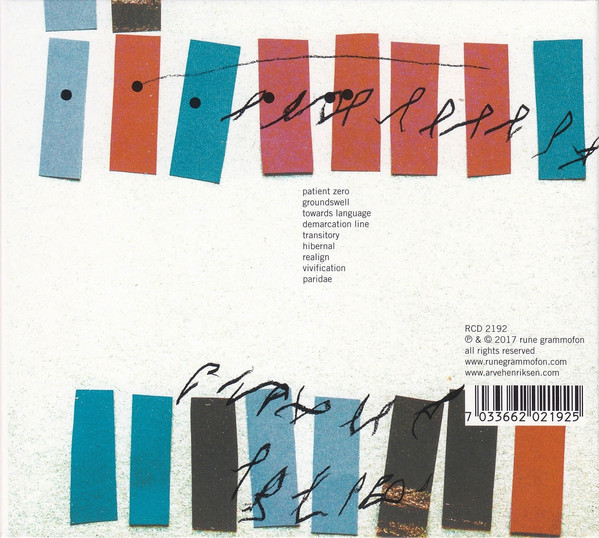
Sam Gleaves and Tyler Hughes-Sam Gleaves and Tyler Hughes.
Sam Gleaves and Tyler Hughes-Sam Gleaves and Tyler Hughes.
Label: Community Music Records.
When Sam Gleaves and Tyler Hughes first met at a party in West Virginia, it was rather fitting that music filled the room. As they started to talk, the two men realised just how much had in common. They had a similar taste in music, and had both already embarked upon a career as singer-songwriters.
Sam Gleaves had released his debut album in 2015, and already his music was started to find a wider audience. Tyler Hughes had just graduated from East Tennessee State University in 2015 with a Bachelor’s Degree in Bluegrass, Old Time and Country Music Studies in 2015. Now he was dividing his time between his solo career and working with the Empty Bottle String Band. Despite his already busy schedule, Tyler Hughes would soon embark upon a new project with his new friend Sam Gleaves.
At first the pair played live locally, and in doing so, continued the tradition of duet singing that for many generations, has been a feature of Virginia. Their tenor voices, Sam Gleaves’ guitar and Tyler Hughes banjo proved a potent, powerful and popular combination as they brought some of their favourite songs to life. Eventually, the pair decided that the next step was to record an album tougher. Just a few days ago, they release their eponymous debut album Sam Gleaves and Tyler Hughes on Community Music Records. It’s the next chapter in the story of two young and talented musicians from South Western Virginia.
That is where Sam Gleaves and Tyler Hughes were both born and brought up. Sam was born in Wytheville, Virginia, and growing up, was steeped in the traditional Appalachian music. He was fortunate to be mentored by some of the leading exponents in Appalachian music including Jim Lloyd and ballad singer Sheila Kay Adams. These musicians would later influence Sam when he embarked upon a career as singer-songwriter.
Before that, Sam graduated from Berea College with a degree in Folklore from Berea College. However, during his student years, he spent four years as a member of the Berea College Bluegrass Ensemble. This was all part of his musical education.
After leaving Berea College, Sam’s career began in earnest. He based himself in Berea, Kentucky, and has travelled the world playing live. This includes touring Canada, Britain, Ireland and Japan, and Canada. During his travels, Sam has played alongside
some of the biggest names in folk and country music, ranging from Cathy Fink and Marcy Marxer, to John McCutcheon, Si Kahn and Peggy Seeger. For Sam, whose star was in the ascendancy, playing alongside such big name musicians was invaluable experience.
Especially as Sam had decided to record his debut album. He went into the studio with Cathy Fink, who produced what became Ain’t We Brothers. When it was released in late 2015, it received praise and plaudits, and was played on NPR. Before long, Ain’t We Brothers started to be heard by a much wider audience. By then, great things were being forecast for Sam.
Appalachian novelist Lee Smith described Sam as: “the best young songwriter around . . . courageous as hell and country to the bone.” This was high praise for Sam, who looked as if he was well on his way to enjoying a successful solo career. Things changed after Sam’s chance meeting with Tyler Hughes. After that, Sam was juggling his solo career with his partnership with Tyler.
Just like Sam, Tyler Hughes is a native of Virginia. However, Tyler was born and raised in Big Stone Gap, a small town which is situated in the Appalachian mountains in Southwest Virginia. By the time Tyler was twelve, his love affair with old-time and country music had already began. Soon, he was performing locally, and as the years passed, he would perform across the East coast. At home, Tyler spent his time listening to the old-time, bluegrass, and country music that is still hugely popular in Southwest Virginia. It was something that he was passionate about.
So much so, that when Tyler headed to East Tennessee State University, he had enrolled on a Bachelor’s Degree in Bluegrass, Old Time and Country Music Studies. Over the next few years, Tyler immersed himself in the music that he had spent much of his life playing and listening to. In 2015, Tyler graduated with a Bachelor’s Degree in Bluegrass, Old Time, and Country Music Studies.
After returning home to Big Stone Gap, Tyler embarked upon a career as a singer-songwriter. He was also a member of the Empty Bottle String Band, who were based in Johnson City, Tennessee. Playing with the Empty Bottle String Band, and trying to establish himself as a singer-songwriter took up much of Tyler’s time. Despite this, when he received an invitation to a party in West Virginia, Tyler decided to accept the invitation, and enjoy some downtime.
As Tyler arrived at the party, just like every party in Virginia, music filled the air. Not long after he arrived at the party, Tyler started talking to another guest. This was Sam Gleaves, and soon, the two men realised that they shared much in common. Both men were from similar backgrounds and grew up within similar circles. However, the main thing Tyler and Sam had in common, was their love of music. Tyler remembers: “we loved all the same people,” recalls Tyler. “We had all the same major influences and admiration…It’s not too often you meet young men from our area who love Jeanette Carter, or some of the other people who wrote the songs on our album.” Sam recalling the first meeting remembers: “we were drawn to the same kind of expression.” This was no surprise.
Both Tyler and Sam had grownup in similar communities, where they learned to play the music they loved. In Sam’s case, this was a guitar, while Tyler gravitated towards the banjo.
After Tyler mastered the banjo, he started to play live, singing and accompanying himself on the banjo. Still, Tyler found time to enjoy flatfooting, a traditional Virginian percussive dance tradition. This was all part of the region’s musical and cultural heritage, that Tyler embraced and enjoyed.
Meanwhile, Sam’s solo career was blossoming after the release of his debut solo album Ain’t We Brothers. This was a mixture of songs penned by Sam and some traditional songs. When it was played on NPR, they hailed the album a: “traditional revolution” in Southern roots music. This was high praise, considering the area’s musical tradition.
Southwestern Virginia has long had a tradition for producing progressive singers and songwriters. Just like local historians, they’ve observed and documented life in Southwestern Virginia for countless generations. The way that these local storytellers do this differs. Some songs are bleak portrayals of the hardship and travails of life, while others are heartfelt and full of compassion. Other songwriters use humour as they tell their stories. However, many of these songs can be heard for the first time at local parties.
These aren’t lavish affairs, that take place in some parts of America. Instead, they take place in local people’s homes in Southwestern Virginia. Families and neighbours gather together, and when it comes time for everyone to dance, they head to the parlour. The furniture is pushed to the side of the room, and carpets roll up. A bidding singer-songwriter like Sam or Tyler in years gone by, will entertain the guests with their songs chronicling local life and sometimes, love and love lost in Southwestern Virginia. This is an old tradition, and one that continues to this very day.
Tradition plays an important part in daily life in Southwestern Virginia. Especially when it comes to music. Sam Gleaves and Tyler Hughes are proof of that. Having met and become friends, the next step was start singing together. Soon, Sam and Tyler were continuing an age-old tradition of duet singing. This has long been part of a Southwestern Virginia’s musical heritage.
Straight away, it became apparent that Sam and Tyler were perfectly suited to duet singing. Their tenor voices blended together perfectly, while Sam’s guitar and Tyler’s banjo provide the perfect backdrop. Soon they became a popular live act on the local scene as that showcased the music of the Appalachia region. This music is rich and diverse, and Sam and Tyler were already practised exponents. They were the latest generation to showcase this cerebral, eloquent, heartfelt, intelligent and thought-provoking music.
Many of the songs that Sam and Tyler played live, had already been played by several generations of musicians. The pair it seemed, were walking a road that was already well-travelled. Despite this, they managed to bring something new to the music. To do this, Sam and Tyler drew inspiration from those that had mentored them, and the singers and songwriters that had gone before them. This brought them success in a relatively short space of time.
So much so, that Sam and Tyler decided that it was time for them to record their debut album. Given the rise in their popularity, this made sense. When it came to choosing the songs for the album, the pair wanted to choose songs that spoke about life in South Western Virginia and the people who lived there.
For the album, Sam wrote Stockyard Hill and Tyler contributed When We Love. Sam and Tyler decided to cover two well-known two traditional songs, Georgia Row and Mister Rabbit. They were joined by Wade E. Mainer’s I Can’t Sit Down; James Oppenheimer’s Bread and Roses; Tom T. Hall’s I Washed My Face In The Morning Dew; Kate Peters Sturgill’s My Stone Mountain Home and Maybelle Carter’s Lonesome Homesick Blues. Other tracks included Boudleaux Bryant’s Well I Guess I Told You Off, Janette Carter’s Living With Memories and Anndrenna Belcher’s Mama Paint Me A Picture. The other tracks included Sleepy Eyed John and Tear Down The Fences. These songs were recorded with a familiar face.
This was none other than veteran roots singer, songwriter, musician and producer, Cathy Fink, who had previously produced Sam’s debut album Ain’t We Brothers. She returned to produce and later, mix Sam and Tyler’s debut album. This was something she was keen to do, having been impressed by how dedicated Sam and Tyler when they sung together. “When I heard them sing together, one of the things I loved from the start was the continuous respect, the love of tradition they feel, and what it can bring to us today.” Sam and Tyler were determined to bring new life to the songs, and ensure that they remained relevant.
When the sessions began, they were unlike many sessions Cathy Fink had worked on. It was just Sam and Tyler that entered the studio. Not only did they lay down the lead vocals and add harmonies, but both men were talented multi-instrumentalists and played all the instruments on the album. Sam played guitar, baritone guitar and mandolin. Tyler played banjo, gourd banjo, autoharp and played guitar on Well I Guess I Told You Off and Mama Paint Me A Picture. Together, the two multitalented musicians with the help of producer Cathy Fink and recordist Jim Robertson had recorded what would later become Sam Gleaves and Tyler Hughes.
Eventually, Sam Gleaves and Tyler Hughes was released in mid-June 2017. The two friends had come a long way since they first met at that party in West Virginia. They had recorded a captivating and powerful album that the music was relevant to life in 2017. This was something that Tyler wanted to do. He explains: “like a majority of people, I was quite disappointed with the ways of the world in 2016…Seeing this wave of anger brought to the surface of society, and not just here, but abroad as well. I thought about how people really don’t mean to bring such hate to the surface. Often humans are self-centred, we don’t think of how our words and actions affect those around us. I tried to address some of those thoughts.” This he managed to do on When We Love, a carefully crafted song with a positive message. It showcases Tyler’s skills as a songwriter, and impressed his Sam.
He remembers: “in so few words, he stated this welcoming message. I was inspired by this.” However, to augment the two songs that Sam and Tyler had penned: “we included older songs addressing political concerns, and we wanted our original tunes to dovetail with that.” This they have managed to do successfully, in such a way that the music on the album isn’t just relevant to people from South Western Virginia, but much further afield. That is apparent throughout Sam Gleaves and Tyler Hughes.
Many of the songs on Sam Gleaves and Tyler Hughes feature understated arrangements. It’s a case of less is more, including on Stockyard Hill, which opens the album. It was penned by Sam, and incorporates the words of his great-aunt, which are transformed, and become an uplifting song about Appalachian life. This gives way to Tyler’s hopeful sounding song When We Love. Again, it features an understated backdrop which allows Sam and Tyler’s tender, heartfelt vocals and close harmonies to take centre-stage on this beautiful, hopeful song.
Georgia Row is the first of two traditional songs. Just a guitar, banjo and fiddle accompany the vocal on a song that is a reminder of Virginia’s rich musical heritage. So is Mister Rabbit, where Sam and Tyler resist the temptation reinvent the wheel. Instead, they stay true to original, as they incorporate elements of blues and folk. Staying true to a song is important for Sam and Tyler. Sam describes how they recorded the songs on the album: “usually one of us knows the song by heart…One of us will learn the whole song and one of us will sing it, backstage or around the house. We learn from each other in person, not by sending links via email. I find learning this way is so much better and more enjoyable.” This way of working has proven to be successful for Sam and Tyler.
Especially on the joyous and spiritual sounding I Can’t Sit Down, which features some of Sam and Tyler’s best vocals. They feed off each other and reach new heights. Sam and Tyler then deliver a powerful and poignant cover of the labour anthem Bread and Roses. This gives way to another powerful and moving song, the oft-covered I Washed My Face In The Morning Dew. Here, Sam and Tyler bring to life the sadness, injustice, cruelty and sheer hypocrisy in the lyrics. Then on My Stone Mountain, there’s a yearning in Sam and Tyler’s vocals as if they can understand and relate to missing somewhere so badly. It’s a similar case on Lonesome Homesick Blues which features some of the best close harmonies on the album. Sam and Tyler sound as if they’ve experienced the loneliness and feeling homesick in the lyrics. The result is a heart-wrenching reading of lyrics that many people will be able to relate to. This is just the latest in a long of moving, emotive and poignant songs.
Sam and Tyler then stay true to original version of Well I Guess I Told You Off, which was written by Georgia born Boudleaux Bryant.
They deliver a mischievous rendition of the song that is tinged with humour. It’s followed by two beautiful, poignant ballads Living With Memories and Mama Paint Me A Picture. On both songs, Sam and Tyler deliver a tender, heartfelt and rueful vocals. Sleepy Eyed John is a reminder of the type of song that will be heard at a party in South Western Virginia. As the fiddle drives the song along, Sam and Tyler trade vocals. Closing the album is song that is particularly relevant Tear Down The Fences. It’s a call for people to find common ground that was written by bluegrass legend Ola Belle Reed. She has inspired both Sam Gleaves and Tyler Hughes, so it’s particularly fitting that one of her song closes the album.
After fourteen songs lasting just thirty-nine minutes, Sam Gleaves and Tyler Hughes debut album draws to a close. It features two truly talented singers, songwriters and musicians, Sam Gleaves and Tyler Hughes. They showcase their considerable talents and versatility on their eponymous debut album.
Sam Gleaves and Tyler Hughes seamlessly flit between and combine elements of disparate musical genres. This ranges from folk and country, to blues and bluegrass. They’re part of an album which is a mixture of ballads and uptempo songs. They sit side-by-side, and Sam and Tyler are equally comfortable as delivering ballads as the uptempo songs. However, Sam Gleaves and Tyler Hughes are at their best on the ballads, where they breathe life, meaning and emotion to the songs.
The majority of songs on Sam Gleaves and Tyler Hughes are cover versions. Sam Gleaves and Tyler Hughes only contribute one song each. This is enough to realise that they’re both talented songwriters. Maybe on their sophomore album, they’ll include more of their own compositions? However, on Sam Gleaves and Tyler Hughes the pair wanted to include songs are part of Virginia’s rich musical heritage. Some of the songs are full of social comment, while others deal with subjects like homesickness, loneliness and the past. These songs aren’t reinvented and Sam Gleaves and Tyler Hughes stay true to the originals. Tradition is important to Sam Gleaves and Tyler Hughes.
Cathy Fink who produced Sam Gleaves and Tyler Hughes confirms this. “Studying tradition can help a songwriter learn how to take an important issue and translate it into a very universal song, when serendipity and luck mixes with a deep knowledge and love of tradition. It’s important that song is mixed in with traditional and tradition-based music. It’s all of a piece.” This has influenced their eponymous debut album and played its part in its sound and success. Hopefully, will continue in the future.
Sam Gleaves and Tyler Hughes cherish and embrace their musical heritage. It’s something that they’re both proud of, and something has influenced their eponymous debut album. This ranges from the songs that they’ve chosen, the type of instruments that they used and their decision to continue the tradition of duet singing.
Sam and Tyler are perfectly suited to duet singing, and their rich tenor voices blend together perfectly on their eponymous debut album. Meanwhile Sam’s guitar and Tyler’s banjo provide the perfect backdrop for their vocals. It’s no surprise that they were soon a popular act on the local live scene, as they showcase the music of the Appalachia region. Its music is rich and diverse, and Sam and Tyler are already practised exponents as they showcase the beautiful, cerebral, eloquent, heartfelt, intelligent, poignant and thought-provoking music on Sam Gleaves and Tyler Hughes.
Sam Gleaves and Tyler Hughes-Sam Gleaves and Tyler Hughes.


Katharina Grosse and Stefan Schneider-Tiergarten.
Katharina Grosse and Stefan Schneider-Tiergarten.
Label: TAL.
Nowadays, musical collaborations are much more commonplace than ever before. Partly, that is because of the new musical technology that is available to artists. This has totally transformed the way that albums are now recorded.
It’s now possible to record an album on a laptop using just a DAW with a handful of VSTs and a selection of samples. As a result, two artists collaborating on an album no longer need to record it within the environs of a traditional recording studio. Indeed, the two artists don’t even need to be in the same city, country or continent.
If they’ve access to high-speed broadband artists can collaborate remotely on album. That is how many artists are recording an album in 2017. However, when Katharina Grosse and Stefan Schneider decided to record an album together, they used decided to use just a few vintage analogue synths. The resultant album Tiergarten, was recently released on the TAL label. Tiergarten will be familiar with anyone who has visited Berlin. It’s the park in the centre of Berlin, which lent its name to the first album that Katharina Grosse and Stefan Schneider have collaborated on. That is despite the pair enjoying a friendship that began in the late-eighties.
The friendship between Katharina Grosse and Stefan Schneider began in the late eighties, when they were studying fine arts at Düsseldorf Academy. Katharina Grosse was painting and Stefan Schneider was studying photography when they first met. Soon, the pair had struck up a firm friendship continued after they graduated from Düsseldorf Academy.
After leaving Düsseldorf Academy, Katharina Grosse embarked upon a career in the fiercely competitive world of art. Over the next few years, gradually, she forged her own unique and unmistakable style. Nowadays, Katharina Grosse is a world-famous visual artist, whose known for inventive and innovative use of materials and colour.
Especially when she creates her brightly coloured acrylic paintings and installations. They’re often created using an industrial air brush and mounds of pigmented dirt. The resulting partings are bold, and sometimes, psychedelic that that the viewer can immerse themselves in. To some extent, it’s an interactive experience, and one that art lovers across the world have experienced and enjoyed.
During her career, Katharina Grosse has exhibited at some of the most prestigious art galleries, ranging from New York’s MoMA PS1 to Chicago’s Renaissance Society and the Palais de Tokyo in Paris. Meanwhile, Katharina Grosse’s paintings can be found in Centre Pompidou in Paris, the Kunsthaus in Zürich, and The Museum of Modern Art in New York. Nowadays, Katharina Grosse is one of the leading lights of the German art scene, and divides her time between Berlin and Düsseldorf. That was where she collaborated on Tiergarten, with her old friend Stefan Schneider.
After he graduated from Düsseldorf Academy, Stefan Schneider embarked upon a career as a musician. This came as no surprise, to some people who knew him. Stefan Schneider had already been a member of the Düsseldorf based rock group Sons Of Care, and avant-pop group Deux Baleines Blanches since the mid-eighties. He featured on their two albums, Singende Drähte in 1986, and Songs From The Willow in 1989. Little did anyone realise that this was the start of a long and successful career.
Three decades later, and Stefan Schneider has over 240 credits to his name. This includes worked as an arranger, producer, remixer, sideman, songwriter and vocalist. Stefan has also worked on various collaborations and been a member of several bands. This includes Kreidler, who he cofounded in Düsseldorf in 1994, with former members of Deux Baleines Blanches. Stefan was a member of Kreidler until 1998, when he left to focus on his side-project, To Rococo Rot. By then, Kreidler were well on their way to becoming one of the most innovative and influential German bands of their generation.
Leaving a successful band like Kreidler was always risky, but Stefan’s career blossomed. He divide his time between a variety of disparate projects. This included To Rococo Rot the Berlin based post rock and electronic band he cofounded in 1995. They’ve now released ten albums, including their most recent album Instrument, which was released in 2014. However, To Rococo Rot is only part of Stefan’s career.
He was also a ember of several other bands. This included Music AM, who released a trio of albums between 2004 and 2006. Stefan was a member of September Collective, who released three albums between 2004 and 2009. Still though, Stefan found time to collaborate on a several high-profile collaborations.
This includes two albums with Bill Wells, Annie Whitehead and Barbara Morgenstern, Pick Up Sticks in 2004 and Paper Of Pins in 2009. A year later, Stefan and Bill Wells returned in 2010 with a new album, Pianotapes. However, in 2011 Stefan released the first of two critically acclaimed albums with one of the legends of German music, Hans-Joachim Roedelius. Their debut Stunden was released in 2011, with Tiden following in 2013. Stefan’s next collaboration was with Sven Kacirek and the pair released Shadows Documents in 2014. These are just a few of the artists Stefan has worked with.
Stefan has also recorded with, and performed alongside, some of the biggest names in music. This includes Faust’s Hans-Joachim Irmler; Kraftwerk and NEU!’s Klaus Dinger; Martha Wainwright; Saint Etienne; The Pastels and virtuoso drummer John McEntire of Tortoise, The Sea and Cake. These are just a few of the disparate artists that Stefan has with over the last three decades.
One artist that Stefan had worked for several years was Jay Patrick Ahern.This had released a string of E.P.s as the Hauntologists since 2008, but had never got round to releasing their debut album. This changed in 2015, when the Hauntologists, eventually released their eponymous album. By then, Stefan was working on a new album with his old friend Katharina Grosse.
By 2015, Katharina Gross and Stefan Schneider had reached the top of their respective fields. Katharina Gross was a world-famous visual artist, while Stefan Schneider was a groundbreaking and influential musician whose music had a worldwide audience. The two friends had come a long way since they graduated from Düsseldorf Academy. They had never lost touch, and had even performed together between 2008 and 2015.
Often, this was within Katharina Gross’ painted and sculpted environments. The music they made complemented and enhanced her art. Having performed together, the next natural step was for Katharina Gross and Stefan Schneider to record an album together. This became Tiergarten.
The idea to record Tiergarten came about a couple of years ago, and over the next two years, the pair set about recording nine instrumental tracks. These tracks were recorded by Katharina Gross and Stefan Schneider. No other musicians were brought onboard to record Tiergarten. This was a conscious decision. So was the decision to use just a small selection of equipment of analogue synths. It would’ve been easy to head to one of the top studios, where they could use a wide selection of classic synths. That wasn’t the way Katharina Gross and Stefan Schneider approached the recording of Tiergarten. They took a very different approach.
Prior to the recording sessions, Katharina and Stefan recorded ideas for songs separately. This to many people might seem like an unusual way to approach an album. However, Katharina and Stefan aren’t most people. They’ve enjoyed a long and close friendship and almost intuitively, know how the other functions musically. It’s like a musical equivalent of yin and yang. After they’ve recorded an idea for a track, they knew after listing to it, whether it would work as part of the Tiergarten project.
When the pair met, they listen to each other play live, and then began to form collections of sound that become part of an exhausting and vigorous musical conversation. This Katharina is keen to point out that they did: “without fixations.” Instead, they play their small selection of analogue synths with freedom and fluidity, and in the process, let their imaginations run riot. The result was captivating music that is full of twists and turns, and subtleties and surprises. It’s the musical equivalent of a magical mystery tour around Berlin . That is fitting given the title of Katharina and Stefan’s first collaboration.
After spending two years of recording separately and together, they had eventually completed the album. All that remained was to think of a title for the album. Katharina Grosse and Stefan Schneider decided to follow in the footsteps of Neu!, David Bowie and Brian Eno, and name their album after part of Berlin. That day, Tiergarten was born.
Tiergarten is the largest and most popular inner city park in Berlin. There are 520 acres for Berliners to enjoy and explore. Its history can be traced back to 1527, when it was founded by the Elector of Brandenburg as a hunting area. Since then, Berlin has grown around Tiergarten, and means different things to different people.
When Walter Benjamin published his memoirs Berlin Childhood Around 1900: Hope In The Past in 1938, he could well be thinking of Tiergarten when he wrote the first two sentences. “Not to find one’s way around a city does not mean much. But to lose one’s way in a city, as one loses one’s way in a forest, requires some schooling.” That is an adventure one would prefer to avoid. However, Katharina Grosse and Stefan Schneider’s debut album Tiergarten is a musical adventure to enthrall, embrace and enjoy.
As Blueberry opens Tiergarten, a dark, moody bass synth pulsates while what sounds like birdsong joins with squeaks and beeps. They’re part of slow, moody, dramatic and cinematic soundscape that emits a menacing sound. Meanwhile, fluttering, sweeping and squeaking sounds flit in and out as the arrangement meanders along. By then, sci-fi and otherworldly sounds are being unleashed. Later, the soundscape takes on an understated sound, but continues to captivate. Still though, there’s an element of drama. Especially as beeps, squeaks and cheeping sounds escape from an arrangement. They give way to whirring sounds that soars above arrangement, as if making its escape during this eight minute cinematic epic.
Understated described Aufglühen as it starts to unfold. However, its cinematic sound is guaranteed to set the listener’s imagination racing. Suddenly, scenarios start to unfold as futuristic sound emerge from the analogue synths. Initially, it sounds as if it’s the soundtrack to movie about intergalactic warfare. Later, it sounds as if it’s a soundtrack to space travel, or a modern-day explorer in search of a lost alien race. Latterly, the music is moody, with element of drama as Katharina Grosse and Stefan Schneider paint pictures with their powerful yet understated music.
Despite being just a minute long, Schattenmodell is full of imagery. That is the case from the opening bars, when it sounds as if the futuristic synths are replicating inter-planetary warfare. This would be perfect for the soundtrack to a sci-fi computer game. So are the array of beeps, squeaks, buzzes and shrill sounds that appear during the second half of this short but compelling soundscape.
A drone sits above the arrangement to Bright, while a myriad of sounds flit in and out. This ranges from a hissing sound to what sounds like sirens and later, an eerie and moody sound. Soon, they’re joining by crackling, bristling and beeping sounds. Later, sounds whoosh and whirr, while other times an otherworldly sound emerges. These sounds are used subtlety, and it’s a case of less is more. As a result, there’s always a degree of darkness drama as the soundscape reveals it secrets and surprises.
Yes No Why Later is the second of two short soundscapes. It quickly reveals an experimental sound, as Katharina and Stefan toy with their synths. Soon, a myriad of beeps and squeaks join buzzes and shrill, shrieking sounds. Later, a bass synths is joined by beeps, squeaks and crackles during this musical voyage of discovery.
Hypnotic beeps are emitted from Das Herz Am Schlagen, and take centre-stage, while a myriad of disparate sound drift in and out. This ranges from crackling and rustling sounds to whirrs and whooshes to later, sci-fi sounds. Mostly, they’re used subtly and compliment the mesmeric, bubbling beeps. Gradually, though, the music takes on a robotic sound, and the array of sounds that are deployed are no longer as subtle. However, an increase in volume allows them to seamlessly become part of a musical tapestry. Later, it’s all change as the soundscape becomes understated, and beeps, crackles, whirrs and gently pulsates during one of their most innovative tracks on Tiergarten..
Straight away, futuristic sounds emerge from Strömung, and conjure up images of images of space travel. Partly that is due to the sound of synths gliding high above the arrangement. Soon, this is replaced by crackling, beeping and squeaking sounds. They’re joined by whirring, whining, grinding and droning sounds that became part of this futuristic soundscape. Again, there’s an element of drama. Later, though, the soundscape floats along, before a dark, moody sound briefly appears only to disappear. All too soon, this captivating musical journey is over. In the space of six minutes, Strömung says more than a thousand words can.
Dark moody synths drones on Lilie which closes Tiergarten. Meanwhile, subtle sounds whoosh, whir and beep hypnotically. They’re part of one of the most cinematic tracks on Tiergarten, which sounds as if it’s been influenced Cluster and Kraftwerk.
Both bands created groundbreaking music during their long and illustrious careers. So did Katharina Grosse and Stefan Schneider during the two years they spent recording Tiergarten. It features nine carefully crafted soundscapes that last just forty minutes. That is how long albums used to last when vinyl was King. Alas, this changed when CDs were introduced.
Suddenly, artists and bands were releasing sprawling albums that featured fourteen or fifteen tracks and lasted seventy minutes. What many artists failed to realise was that several of the tracks should’ve never have made it onto an album. They certainly wouldn’t have made it onto an LP, which given its time constraints featured only an artist’s finest music. That is the case on Katharina Grosse and Stefan Schneider’s debut album Tiergarten, which was recently released on the TAL label.
They have approached Tiergarten as if it was a vinyl album from the seventies. Only the finest music that Katharina Grosse and Stefan Schneider recorded during a two-year period made its way onto Tiergarten. This makes Tiergarten an old school album. It’s also a captivating and cinematic genre-melting album.
Tiergarten finds Katharina Grosse and Stefan Schneider combining disparate musical genres to create an album of inventive and innovative music. This includes elements of ambient, avant-garde, Berlin School, electronica, experimental music and Krautrock. Elements of all these musical genres play their part in an album that is the musical equivalent of a magical mystery tour.
During this magical mystery tour, the music on Tiergarten veers between atmospheric, to dark and eerie to menacing and moody. Sometimes, the music is cerebral, thoughtful, thought-provoking and ruminative. Other times, the music is understated and subtle, with Katharina Grosse and Stefan Schneider taking a less is more approach. For much of the time, the music showcases a futuristic, sci-fi and otherworldly sounds. Always, though, the music on Tiergarten has a cinematic sound, and is guaranteed to set the imagination racing. Quite simply, Tiergarten is a musical voyage of discovery, which is full of twists and turns, and subtleties and surprises aplenty.
The two years that Katharina Grosse and Stefan Schneider spent recording Tiergarten, was definitely two years well spent. They have created a truly groundbreaking album where they push musical boundaries to their limits, and sometimes, beyond. That is despite limiting themselves to a small selection of vintage analog synths. They play their part in Katharina Grosse and Stefan Schneider’s cinematic, genre-melting musical opus, where the two old friends take the listeners on a magical mystery tour through Tiergarten.
Katharina Grosse and Stefan Schneider-Tiergarten.

BIG STAR-POWER POP PIONEERS.
Big Star-Power Pop Pioneers.
Sadly, in music, talent doesn’t guarantee commercial success. If it did, Big Star would’ve been one of the biggest bands in musical history. Alas, that wasn’t the case. Lady luck failed to smile on Big Star when they released a trio of albums between 1972 and 1978. Despite this, Big Star are nowadays regarded as one of the most important and influential bands in musical history. That is why Big Star have gone to influence several generations of bands. Their story began in 1971, in Memphis, Tennessee.
Memphis was twenty-one year old Alex Chilton’s hometown. It’s where his career began five years earlier in 1966, when he recorded his debut solo album. Just a year later, seventeen year old Alex Chilton became the lead singer with The Box Tops.
Alex Chilton was The Box Top’s lead singer between 1967 and 1970. During that period, The Box Tops enjoyed a number one single with The Letter. However, by 1970, Alex’s time with The Box Tops was over. Soon, though the twenty year old was offered the chance to join one of the biggest bands of that time.
This was none other than Blood, Sweat and Tears. They approached Alex, asking if he would consider joining as their lead singer. That wasn’t going to happen. Incredibly Alex rejected the idea out of hand, saying Blood, Sweat and Tears were “too commercial.” Not long after this, Alex Chilton met Chris Bell.
Alex Chilton and Chris Bell had known each other for a while. Both men spent time at Ardent Recording Studios, Memphis. That was where Alex Chilton first asked Chris Bell to collaborate with him. Originally, Alex Chilton’s idea was that he and Chris Bell would become a duo like Simon and Garfunkel. Chris Bell however, rejected the idea out of hand, and instead, asked Alex Chilton to join his band IceWater.
IceWater’s lineup featured guitarist Chris Bell, drummer Jody Stephens and bassist Andy Hummel. Alex having heard the group’s music, liked it. However, he felt he that ge could improve IceWater’s music. When Alex arrived at the next Icewater session, he brought along a new song that he had written, Watch The Sunrise. The other members of IceWater liked what they heard, and soon, IceWater had a new addition, Alex Chilton.
Compared to the rest of the members of Icewater, Alex seemed a musical veteran. He already had a wealth of previous musical experience, and before long, Alex was making his presence felt. This included suggesting that Icewater changed their name to Big Star.
This came about during a recording session, when Alex headed out to the local Big Star Markets for some food. He ended up in the Big Star Markets were a chain of stores across Memphis. Their logo was a five-pointed star. Within the five-pointed star was Big Star Markets. Seeing this logo was a eureka moment for Alex Chilton.
Once in the store, he realised that Big Star was a name that matched his ambitions for his new band. The five-pointed star would make the perfect logo for the band. That was, as long as he didn’t infringe the copyright. They wouldn’t, as long as they didn’t put Big Star within the five pointed star. With these ideas flying around his head, Alex returned to the studio to convince the rest of IceWater to change their name to Big Star.
Not long after this, IceWater changed their name to Big Star. By then, the band had already written several new songs, including Thirteen and Watch The Sunrise, would appear on their debut album, Number One Record.
Number One Record.
By April 1972, Big Star were ready to release their debut album, Number One Record. Big Star had signed a recording contract with Ardent Records, and the company founder John Fry was keen record the band’s debut album Number One Record.
Initially, all four band members of Big Star were going to contribute songs for Number One Record. It didn’t pan out that way, and instead, Alex and Chris wrote eleven of the twelve tracks. The exception was The India Song, penned by Andy Hummel. These twelve tracks would become Number One Record.
Recording of Number One Record took place at Ardent Studios Memphis. The rhythm section of drummer Jody Stephens and bassist Andy Hummel were joined by the twin guitars of Alex and Chris. Augmented by Terry Manning’s piano, Number One Record, which was produced by Jon Fry began to take shape.
During the Number One Record sessions at Ardent Studios, Big Star became one of the first groups to use a sixteen track tape recorder. This allowed Big Star to experiment and learn how best to best use the new technology to their advantage. The result was a polished album of power pop, featuring elegiac harmonies.
By the time Number One Record was due for release in June 1972, critics already loved Big Star’s music. The release of Number One Record further cemented critics love affair with Big Star. Released to critical acclaim, many, critics including Billboard and Cash Box thought that Big Star were on their way to becoming music’s next big thing. Record World Magazine went as far to say that Number One Record “was one of the albums of 1972.” Surely, Big Star were on the verge of greatness when they released Number One Record?
Sadly, when Number One Record was released in June 1972, there were problems with distribution. Stax Records couldn’t get copies of Number One Record into record shops. For Big Star, this was hugely frustrating. Especially, after such critically acclaimed reviews. This resulted in plenty of demand for Number One Record. Big Star watched on feeling helpless, as Number One Record sold less than ten thousand copies. For Big Star, this was a disaster. Things would get even worse.
Eventually, Stax signed a deal with Columbia Records to distribute their whole catalogue. However, Columbia didn’t seem interested is using the independent distributors previously used by Stax. This resulted in Number One Record being removed from the stores who previously sold Stax releases. After this tensions arose within Big Star.
Following the problems regarding the distribution of Number One Record, tensions arose within the band. Fights erupted between band members, instruments were destroyed and Chris Bell left the group, to record his own solo album. Not long after this, Big Star split-up, for the first time.
After a few months, Big Star decided that it was time to reform the band. However, all wasn’t well within Big Star. Onlookers watched on as a myriad of problems threatened to destroy Big Star. There was drug abuse, instruments destroyed, band members became ill and even a master tape went missing. Again the band spilt up.
Radio City.
Eventually, Big Star reconvened and Alex Chilton, Jody Stephens and Andy Hummel decided to record an album as a three-piece band. This would become Radio City.
For Radio City, Alex Chilton wrote six tracks and cowrote four others, including three with Andy Hummel, who contributed Way Out West. Alex and Andy wrote Daisy Glaze with Jody Stephens. One name was missing though, Chris Bell. It later emerged that Chris Bell did help write some songs on Radio City, but wasn’t credited. This includes O My Soul, and the Big Star classic Back of a Car. Chris’ omission would prove an expensive one. However, during the period Radio City was written and recorded, Chris was no longer a member of Big Star.
Recording of Radio City took place at Ardent Studios, Memphis in the autumn of 1973. John Fry and Big Star co-producer Radio City, which was Big Star’s first album as a trio. This being Big Star, things didn’t go to plan.
Alex, Jody and Andy only recorded part of Radio City. With nine tracks completed, Alex was left without a rhythm section. So, to complete Radio City, Alex brought in the rhythm section of drummer Richard Rosebrough and occasionally, bassist Danny Jones. Together, they finished recording Mod Lang, She’s A Mover and What’s Going Ahn. Eventually, Radio City was released in February 1974.
Just like Number One Record, Radio City was released to widespread critical acclaim. Radio City was seen as Big Star’s breakthrough album. It was described as commercial, polished and even brilliant and addictive. Surely, Big Star were about to make a breakthrough with Radio City?
Sadly, not. History repeated itself when Stax Records failed to get Radio City into record shops. Stax Records’ disagreement with Columbia Records made a bad situation worse. What many regarded as a future classic, and the definitive power pop album was stuck in a distributor’s warehouse. Eventually, when Stax Records counted sales of Radio City, the sales amounted to just twenty thousand. For Alex Chilton and Co. this was a huge body blow.

Third/Sister Lovers.
When Big Star returned to the recording studios in September 1974 to record what would eventually become Third/Sister Lovers, Big Star’s numbers were reduced. Andy Hummel had left the band. It was a case of and then there were two.
For Third/Sister Lovers, Alex contributed twelve of the fourteen tracks. Jody Stephens penned For You, and the other track was a cover of The Velvet Underground classic Femme Fatale, penned by Lou Reed. These tracks would become Third/Sister Lovers, which was produced by Jim Dickinson.
With just Alex Chilton and Jody Stephens remaining, Big Star entered the recording studio for what would proved to be the last time. Given their numbers were reduced, the two members of Big Star had to bring onboard various session musicians and a few friends.
This included drummer Richard Rosebrough, Alex’s girlfriend, vocalist Lesa Aldridge and guitarist Steve Cropper. With Jim Dickinson producing Third/Sister Lovers, Big Star proceeded to produce music that was variously beautiful, ethereal, experimental, haunting and innovative. That’s not surprising. Many of the songs were Alex had written were deeply personal. Many onlookers thought that Third/Sister Lovers wasn’t going to be a Big Star album.
At the time, Third/Sister Lovers looked more like an Alex Chilton solo album. Other onlookers remember seeing the session sheets naming the band as Sister Lovers. However, this was a reference to Alex and Jody dating sisters Lesa and Holliday Aldridge. Eventually, however, Third/Sister Lovers was completed on 13th February 1975, when Larry Nix completed the mastering. However, it would be another three years before Third/Sister Lovers was released.
Following the completion of Third/Sister Lovers, producer Jim Dickinson and John Fry headed to New York looking for a record label willing to release Big Star’s third album. By then, Big Star were history. Despite this, 250 copies had been pressed for promotional purpose. Sadly, nobody expressed an interest in releasing Third/Sister Lovers. Record company executives didn’t understand Third/Sister Lovers. The music seemed too stark, emotive and occasionally, disturbing. In a way, that’s not surprising.
Alex Chilton wasn’t in a good place during the recording of Third/Sister Lovers. Third/Sister Lovers was a cathartic album, where he unburdened himself. This made Third/Sister Lovers a very personal album. However, within Third/Sister Lovers there was beauty. It wasn’t until 1978, that Third/Sister Lovers’ beauty was heard.
Eventually, three years after Third/Sister Lovers was completed, the album was released. Previously, Third/Sister Lovers was perceived as uncommercial by record companies. Neither Alex nor Jody had shown any interest in releasing Third/Sister Lovers. Then there were the continuing financial problems. That’s why three years passed before the release of Third/Sister Lovers.
Prior to the release of Third/Sister Lovers, the critics had their say. Critics recognised the Third/Sister Lovers’ potential when the group were promoting it. Many wrote paeans exalting the Third/Sister Lovers’ beauty. However, it was only in later years that many critics realised the importance of Third/Sister Lovers. By then, it was being hailed as a minor classic. So were Number One Record and Radio City. Big Star were by then, one of the most influential bands in musical history. Not in 1978.
On the release of Third/Sister Lovers commercial success eluded what became Big Star’s third album. While many saw this a disaster for Big Star, much worse was around the corner.

Not long after Third/Sister Lovers was eventually released, tragedy struck, and Chris Bell died in a car crash. It was a tragedy for music and Big Star. They lost one of their creative forces and music lost one of its most talented sons. Sadly, after the tragic death of Chris Bell, that was the last anyone heard of them for fifteen years.
Over the next fifteen years, interest in Big Star started to grow. A new generation had discovered their trio of albums, including many young musicians. Suddenly, bands were citing Big Star as a major influence on their music. Somewhat belatedly, Big Star’s music was finding the audience it so richly deserved. Given the recent resurgence in interest in Big Star’s music, it was no surprise that the group reformed in 1993.
Two of Big Star’s original members, Alex Chilton and Jody Stephens, were joined by guitarist Jon Auer and bassist Ken Stringfellow. Big Star made a welcome comeback at the University of Missouri Music Festival. To celebrate the return of the comeback Kings, Big Star, the tapes were running and the concert was recorded. It was released later in 1993 as Columbia: Live At Missouri.
After their initial comeback, the new line up began to tour extensively. Big Star were back and were more popular than ever. It was tragic that Chris Bell wasn’t alive to see the group that he had cofounded receive the recognition they were receiving. However, for Big Star life went on and they returned with a new album in 2005.
In Space.
In Space consisted mostly of new songs, songs written by Alex Chilton, Jody Stephens, Jon Auer and Ken Stringfellow. When In Space was released, critics awaited an album of power pop perfection. However, critics were expecting too much. While the first album since the death of Chris Bell was well received by critics, who welcomed the return of Big Star it didn’t quite match their expectations. At least Big Star were back and making music.

Sadly after over ten years of belated success and recognition, Alex Chilton died of a heart attack on 19 July 2010. That day, music lost one of its most creative and greatest musicians. His genius can be heard on Big Star’s first three albums Number One Record, Radio City and Third/Sister Lovers.
Seven years after the death of Alex Chilton, the rresurgence in interest in Big Star continues. Nowadays, Big Star’s trio of albums were considered minor classics, which feature in Rolling Stone magazine’s list of the 500 greatest albums of all time. Meanwhile, Big Star were being hailed as one of the most influential, innovative and inventive bands in musical history.
Belatedly Big Star’s trio of albums have been recognised as the classics they were. One listen to Number One Record, Radio City and Third/Sister Lovers and it’s apparent that they’re classic albums from power pop pioneers Big Star at the peak of their powers.
Big Star-Power Pop Pioneers.


WILD HONEY-TORRES BLANCAS.
Wild Honey-Torres Blancas.
Label: Lovemonk Records.
Just over four years ago, Wild Honey released their much-anticipated sophomore album Big Flash in April 2013. This was the followup to Wild Honey’s 2009 debut album Epic Handshakes and A Bear Hug. While it was released to plaudits and praise, Big Flash marked the coming of age of Guillermo Farré the man behind Wild Honey.
When it came to recording his sophomore album Big Flash, Spanish singer, songwriter and multi-instrumentalist Guillermo Farré found himself working alongside Stereolab’s Tim Gane. For Guillermo Farré this was almost surreal, and if the truth be told, was a dream come true. When it comes to Stereolab, Guillermo Farré admits that he is something of a superfan. The chance to travel to Berlin and work with Tim Gane in his Berlin studio was too good to refuse. It also proved to an important part of his musical education.
From the outside, Tim Gane’s Berlin studio may not look much, but looks can be deceiving. The studio is well equipped, with a wide selection of instruments and equipment. Tim Gane was keen to show his new pupil how it worked, and Guillermo Farré proved to be a quick learner. He was enjoying learning from his former idol, who he now regarded as a friend and mentor. What Guillermo Farré was learning was invaluable, and played its part in the sound and success of Big Flash. It was released to widespread critical acclaim in the spring of 2013, and marked the coming of age for Wild Honey.
Just over four years after Big Flash, Wild Honey make a welcome return with Torres Blancas, their long-awaited and much-anticipated third album which was recently released by Lovemonk Records. It features another member of Sterolab, Sean O’ Hagan, whose lush, orchestrated arrangements are a feature of Torres Blancas. So too are Guillermo Farré’s expressive vocals, which are sung in Spanish, rather than English. This is just the latest thing that has changed since the release Big Flash.
During the last four years, Guillermo Farré has come to terms with what could be described as a mini midlife crisis. By the time he reached his mid-thirties, Guillermo Farré and found himself at a crossroads in his life. Suddenly, he was racked with uncertainty, and found himself questioning just about everything in his life. This ranged from where he lived, to his lifestyle, his family and friends and even, how he was making a living. For Guillermo Farré the future looked uncertain.
Fast forward to 2017, and that uncertainly is long gone. Guillermo Farré was a much more relaxed and happier man. He’s no longer racked by uncertainty and has accepted the cards that he’s dealt. Life is good, as Wild Honey completed their third album Torres Blancas, which marks the return of a newly revitalised and rejuvenated Guillermo Farré.
For Wild Honey’s third album Torres Blancas, Guillermo Farré wrote ten new songs. He also took charge of production, and is responsible for the multilayered arrangements on the ten carefully crafted songs. They feature Guillermo Farré and a few of his musical friends.
Not only does Guillermo Farré takes charge of lead vocals, he also plays guitar, piano, Wurlitzer, synths, percussion and uses samplers on the album. He’s joined by backing vocalist Anita Steinberg, who has been part of Wild Honey since day one. They were joined by a few of Wild Honey’s musical friend.
This included Wild Honey’s rhythm section, which featured drummer José María Rubio and bassist Javier Lorente. Drummer Lor Adrián Ceballos plays on the two tracks that bookend the album. Raúl Gil plays trumpet and flugelhorn, while Sterolab’s Sean O’ Hagan adds lush orchestrated arrangements on four tracks. Isabel F. Reviriego was drafted in to add the vocal on Horoscopo. Joining this small, but talented group of vocalists and musicians was a ‘bedroom pop genus’.
This was LA based produced Maston, who plays a part in the production process and deploys a myriad of effects. This includes tape delays and detuned Wurlitzer organs, which adds a tropicalia vibe. Guillermo Farré describes this as “creating that feel of music made under the sea”. Torres Blancas is a very special album.
It took its title from a huge residential building in Northern Madrid, that Guillermo Farré walked past every day in life for fifteen years. Sometimes, Guillermo Farré hardly noticed the building’s presence, while other times, he ridiculed it. Not any more though, as the newly rejuvenated Guillermo Farré has grown to love the building. He appreciates its beauty and takes pride of the its place on Madrid’s skyline. It’s certainly a building he’ll even forget, having named Wild Honey’s third album after Torres Blancas.
The ballad El Volcán de Montserrat opens Torres Blancas. Just a lone piano plays before a chiming guitar joins. So too, does a crackling sound that replicates worn vinyl. Soon, the rhythm section join and accompany Guillermo’s tender, heartfelt vocal. Meanwhile, while washes of synths and a piano accompany flit in and out. They accompany the cooing, ethereal vocal as this beautiful slice of pop perfection reveals its secrets.
As Torres Blancas begins to unfold, it’s as if a code is being tapped out. Suddenly, it’s all change as lush strings sweep in, and join the rhythm section and shimmering Byrdsian guitar. It accompanies Guillermo’s tender, wistful vocals. Soon, though, lush strings dance, keyboards glisten and the effects-laden guitar still shimmers. Gradually, the arrangement builds, while the rhythm section making their presence felt. They take care not to overpower the vocal and harmonies, while the strings play a leading role. They’re part of a carefully crafted arrangement where elements of sixties sunshine pop sound and psych combine to create a dreamy, rueful backdrop for Guillermo’s vocal.
Dramatic drums rumble and accompany a chiming, chirping guitar on Ojo de Cristal, and soon, are joined by crystalline synths. Meanwhile, Guillermo adds a hazy, lysergic vocal as the arrangement takes shape. This includes harmonies and dancing strings that soon, replace the vocal. Later, keyboards shimmer as the lush strings dance, while drums are caressed and shakers accompany a tender vocal. By then, all the pieces in this musical jigsaw have fallen into place, on a carefully crafted song where it sounds as if Wild Honey have drawn inspiration from the Beach Boys and Prefab Sprout.
Found sounds, including birdsong, are deployed before the band are counted in on Mapas de Zonas Desiertas. Soon, the arrangement is sashaying along. Drums crack, and join lysergic keyboards, an organ and the rhythm section. It drives the arrangement along, and help provide the backdrop for Guillermo’s ruminative vocal. This time, the arrangement is quite different from previous songs. More effects have been used, and play their part in a dreamy, psychedelic arrangement. Later, it’s like taking a trip on a psychedelic merry-go-round, as Wild Honey like modern-day Merry Pranksters provide the musical accompaniment.
The drums that open Horóscopo sound as if they belong on a dance track, and are quite different from those used on previous tracks. They’re soon joined by melancholy keyboards that create a dreamy backdrop for another of Guillermo’s tender vocals. Soon, he’s accompanied by ethereal harmonies, sci-fi synths and a shimmering guitar. Meanwhile, the mesmeric drums fit perfectly into the arrangement, joining with the guitar, keyboards and ethereal harmonies in creating a quite beautiful, melodic and memorable song.
Desenfocada opens with a much tougher sounding guitar, before Wild Honey return to their usual indie pop sound. While the guitar is still present, it’s mixed further back in the arrangement and is joined by the rhythm section, a glistening guitar and Guillermo’s joyous vocal. Later, when it drops out, the rest of Wild Honey showcase their skills. As the bass weaves across the arrangement, drums provide the heartbeat and the guitars are lysergic, crunchy and rocky. When the vocal returns, the arrangement is briefly stripped bare, but soon, guitars chime and drums pound which is the signal for the arrangement rebuilds. Guillermo’s tender vocal continues to play its part in the sound and success of this indie pop anthem.
The tempo drops on Leopardo, with the rhythm section playing slowly as guitars glisten as Guillermo adds another heartfelt vocal. When swathes of wistful strings sweep across the arrangement. They’re the perfect addition, and join with the rhythm section who provide the heartbeat, while washes of guitar are drizzled across the arrangement. Later, when the vocal drops out, they combine what’s one of the best songs on Torres Blancas.
Reverb Infinita is another ballad, and as the title suggest, reverb is used throughout the song. It’s not overused, and doesn’t spoil another beautiful ballad. Less is more in more ways than one. The band take care not to overpower the heartfelt vocal and ethereal harmonies. However, when they drop out the rest of Wild Honey step out of the shadows and again.The rhythm section and chiming, glistening guitar showcase their skills. Then when the vocal returns, they begin to play softly. Later, it drops out and leaves the rest of band to create a shimmering, lysergic wash of beautiful, captivating music.
Closing Torres Blancas is the ballad Siguiendo a Desconocidos. Keyboard tinkle as the song begins to reveals its secrets. They’re joined by horns while the distant keyboard sparkle as a guitar is strummed and accompanies Guillermo’s wistful vocal. By then, drums have been added, and almost gallop long, while the rueful strings and then melancholy horns add contrasts. They take centre-stage, after the vocal drops out. A shimmering guitar is added to the melancholy sounding arrangement. The addition of synths signal the return of the vocal which is accompanied by ethereal harmonies. As the arrangement meanders along, the vocal drops out, leaving the rest of Wild Honey to create a melancholy and thoughtful backdrop. It seems that Wild Honey have kept one of the best songs until last.
After four years away, Wild Honey return with Torres Blancas, which is a career defining album from the newly rejuvenated and reinvigorated Guillermo Farré. He and his musical friends are responsible for what’s without doubt the finest album of Wild Honey’s three album career. It seems that Wild Honey have matured, and produced what can only be described as a lovingly created and carefully crafted album of perfect pop.
Although Guillermo Farré has masterminded the rise and rise of Wild Honey, it’s far from a one man band. Each and every musician and vocalist in this small, but talented and versatile band played their part in the success of the album.This included Stereolab’s Sean O’ Hagan who was responsible for the lush orchestrated arrangement. They transform the songs, and play their part in this career defining opus. So to some extent, does LA based producer Maston, who played a part in the production process and added effects on this genre-melting album.
Wild Honey combine elements of sixties sunshine pop and psychedelia, with tropicalia, indie pop and dream pop. Sometimes, a rockier sound briefly emerges, but mostly a much more poppy sound is to the fore. Obviously, Wild Honey is another band that have been influenced by the Beach Boys. However, The Byrds and Big Star have both influenced Wild Honey. So too have Stereolab, who have influenced Wild Honey’s last two albums. Another band that may have influenced Wild Honey’s brand of perfect pop include Prefab Sprout. There’s many similarities between the two bands.
Both Prefab Sprout and Wind Honey are purveyors of carefully crafted, hook-laden perfect pop. Just like Prefab Sprout, Wild Honey create cerebral, melodic and memorable music. It’s veers between joyous, uplifting and anthemic, to ruminative wistful and emotive. Other times the music is beautiful, captivating and tugs at the heartstrings. Especially when Guillermo Farré lays bare his soul on Torres Blancas, which was recently released by Lovemonk Records. It finds Wild Honey reach new heights.
Quite simply, Torres Blancas which is the latest, is also the greatest album of Wild Honey’s three album career. It surpasses the quality of Wild Honey’s two previous albums, Epic Handshakes and A Bear Hug and Big Flash. They were merely the musical equivalent of an amuse-bouche. By comparison, Torres Blancas is a musical feast that comprises only the very finest of ingredients. When they’re combined, the result is Torres Blancas, a carefully crafted album of melodic and memorable perfect pop from Wild Honey, which is a career-defining mini-masterpiece.
Wild Honey-Torres Blancas.

THE ORCHESTRA SOLEDAD-VAMONOS/LET’S GO.
The Orchestra Soledad-Vamonos/Let’s Go!
Label: BBE.
As the sixties gave way to the seventies, 2.6 million people lived within Brooklyn’s seventy-one square miles. By 1970, it was largest and most densely populated of New York’s five boroughs. Brooklyn was also a cultural melting pot, with Irish, Italian, Jewish, Greek, Chinese, Polish, Russian and Latino neighbourhoods. They all had their own individual cultures and listened to their own music. In the Latino neighbourhood, this included their very own salsa band.
Brooklyn’s salsa band was The Orchestra Soledad, which was led by trombonist and singer Hector Ramos. He also wrote and arranged much of the music that The Orchestra Soledad played when they appeared live. The salsa music they played may have been brash and energetic, but audiences found it the irresistible. It was played by young and talented local musicians from the neighbourhood. Some of them had dreams and aspirations that The Orchestra Soledad would follow in the footsteps of the Fania All Stars, who had already released two live albums. However, when the time came for The Orchestra Soledad to record and release an album, it proved to be a much more low-key release.
When The Orchestra Soledad released their debut album Vamonos/Let’s Go! in 1970, it was on one of Chicago’s small, lesser known labels Futuro Records. They weren’t a prolific label and released less than a dozen releases. This includes The Orchestra Soledad’s debut album Vamonos/Let’s Go!, which will be reissued on vinyl and download by BBE on ‘16th’ June 2017. The reissue of Vamonos–Let’s Go! will be welcomed by many music fans, as this extremely rare and collectible album has been out of print since 1970. BBE are the first label to officially release Vamonos/Let’s Go!, which was recorded forty-seven years ago in 1970.
Having made the decision to record their debut album Vamonos/Let’s Go!, a new chapter in the history of The Orchestra Soledad began. They Orchestra Soledad had been together a while, and were popular locally. When The Orchestra Soledad played live, it was always to packed houses. They were popular not just within Latino community in Brooklyn, but the wider community. Recording their debut album made sense, and Hector Ramos and the rest of The Orchestra Soledad hoped that their popularity would translate to record sales. That was in the future. There was still the small matter or recording their debut album.
For what became The Orchestra Soledad’s debut album Vamonos/Let’s Go!, Hector Ramos wrote Cuero, Vamonos/Let’s Go, Problems, Just Like A Fool, Candela and Uptight. Hector also cowrote the three other songs on the album. He and William Corridor penned El Ritmo Soledad, while Hector Ramos and Raymond Gonzalez cowrote I’ll Make You A Queen. The album closer La Puerta Esta was a collaboration between Hector Ramos and Miguel Fulu. These songs would become The Orchestra Soledad’s debut album Vamonos/Let’s Go!
To record Vamonos/Let’s Go!, The Orchestra Soledad made their way to a local recording studio. Bandleader, first trombonist and lead vocalist Hector Ramos had arranged the nine songs, but the album was produced by H Hernandez. Meanwhile, the rhythm section featured bassist William Corridor and drummer and conga player Mike Curcado. They were joined by bongo player Tito Rodriguez; Raul (Ray) Rosa on timbales and pianist organist and vocalist Miguel Fulu. Raymond Gonzalez was another of the vocalists, who with the rest of the vocalists, formed the chorus. Tony Torres was the second trombonist, and completed the lineup of The Orchestra Soledad that recorded Vamonos/Let’s Go!.
With Vamonos/Let’s Go! completed, the album was released later in 1970. Sadly, it wasn’t the success that The Orchestra Soledad had hoped. While copies of Vamonos/Let’s Go! sold within the borough of Brooklyn, that was as good as it got for The Orchestra Soledad. For the younger members who had dreamt of following in the footsteps of the Fania All Stars, their hopes were dashed. It looked like they were destined to forever be part of the neighbourhood salsa band. The dream was over.
After that, Vamonos/Let’s Go! became just another musical curio that sometimes, crate diggers in New York stumbled across in record shops, boot sales and local flea markets. With its bright and distinctive cover, most dedicated crate diggers took a chance on Vamonos/Let’s Go! and paid their money. This proved to be a wise investment.
As the years passed by, copies of the original album were almost impossible to find. However, DJ Amir stumbled across a copy of Vamonos/Let’s Go! in a shop not far from the Bushwick home of Hector Ramos. When he saw the copy of Vamonos/Let’s Go! he was spellbound by the striking cover with its bright and striking artwork. DJ Amir had already decided to take a chance on Vamonos/Let’s Go! That was when DJ Amir saw a trophy for sale. When he picked it up, it turned out to be a battle of the bands’ trophy that The Orchestra Soledad had won during their heyday. For the second time in the space of minutes he had struck musical gold.
When DJ Amir returned home, he put Vamonos/Let’s Go! on his turntable to check out his latest find. Straight away, he was won over by Brooklyn’s onetime neighbourhood salsa band. The sound of The Orchestra Soledad in full flight was an irresistible one. Granted the music was brash, but it was joyous, energetic and akin to a call to dance. This was when he decided that music this good, deserved to be heard by a much wider audience.
DJ Amir was so impressed with the music on Vamonos/Let’s Go!, that he decided to include El Ritmo Soledad on a compilation he was compiling for BBE, Buena Música Y Cultura (Good Music And Culture: Rare Latin Sounds From Across The Americas). Somewhat belatedly, The Orchestra Soledad’s music was being heard by a wider audience.
After featuring on Buena Música Y Cultura (Good Music And Culture: Rare Latin Sounds From Across The Americas), BBE decided to reissue The Orchestra Soledad’s debut album Vamonos/Let’s Go! BBE’s timing was perfect, as demand was still outstripping supply when it came to copies of Vamonos/Let’s Go! Many record buyers wanted to add a copy of the album to their collection, but copies were few and far between. When a copy came up for sale, it sold for in excess $600. That puts a copy of Vamonos/Let’s Go! beyond most record buyers. However, all record buyers will be able to afford a copy of BBE’s reissue of Vamonos/Let’s Go!, which takes the listener back to 1970, and the irresistible salsa sound of The Orchestra Soledad’s that filled the air in Brooklyn.
El Ritmo Soledad opens Vamonos/Let’s Go! and sashays along, with the percussion and drums combining with the tack piano. They’re soon joined by an impassioned vocal, and after a flourish of piano, raw, growling horns. By then, The Orchestra Soledad is in full flight, with the chorus providing the perfect foil for the lead vocal. Meanwhile, an irresistible mixture of drums, jangling percussion, piano and braying horns combine with the vocal. Together they create an irresistible examine of early seventies salsa, Brooklyn style.
The tempo drops on the soulful ballad I’ll Make You A Queen. As a Hammond organ plays, drums are caressed and cooing harmonies accompany the tender, heartfelt vocal on this beautiful paean. Later, the chorus enters, before percussion augments the rasping horns which take centre-stage. When the vocal returns, it’s still heartfelt, but needy and soulful, as the chorus accompanies it. Before long, the vocal and chorus drop out, but the horns return as this beautiful, ballad draws to a close. It’s sure to have been played many a time in Brooklyn’s Latin quarter when it was time for the last dance.
Percussion plays before Cuero bursts into life. Stabs and flourishes of piano join with the growling horns, percussion and drums. Soon, the chorus delivers a joyous, but urgent vocal. By then, The Orchestra Soledad is playing as if their life depends upon it. It’s impressive and explosive performance. However, stabs of horns signal a breakdown where the piano augments the percussion before stabs of horns enter, and the rest of the track begins to unfold. As drums pounds brief , percussion gallops and the piano is played with urgency and it’s almost impossible to keep still during this call to dance.
Braying horns, galloping, rattling percussion and bursts of pounding drums combine on Vamonos/Let’s Go. They’re joined occasional flourish of piano, which helps power the uptempo arrangement along. Meanwhile, the lead vocal is accompanied by the joyous sound of the chorus accompanying the lead vocal. Later, the chorus and then jangling, tack piano enjoy their moment in the sun. Soon, stabs of blazing horns are added as the song continues to reveal its secrets and subtleties. Horns bray and blaze as the rest of The Orchestra Soledad propel the arrangement along. Occasionally the vocalists briefly interject, but mostly they sit back and enjoy The Orchestra Soledad who are in the groove, and reach new heights on this six-minute musical epic.
As La Puerta Esta unfolds, horns growl while the piano, percussion and drums lock down the groove. Soon, a tender, heartfelt vocal is added, before stabs of blazing horns punctuate the arrangement and grow in power. So does the vocal, which is accompanied by the chorus and jangling piano. Just like the horns, it adds rawness to the sound. Later, the arrangement becomes understated, with the bass and percussion augmenting the piano as it takes centre-stage. Soon, the vocal and chorus, return, and feed off each other. When they exit stage left, the rest of The Orchestra Soledad take charge, and showcases their skills. Before long, the vocal and chorus return, only to disappear as this truly memorable sashaying salsa reaches a crescendo.
The tempo drops on Problems, which starts off as a ballad. Drums rattle as the bass probes and weaves its way under the jangling piano. Taking centre-stage is an impassioned and emotive vocal, which is accompanied by the piano. At 1.36 it’s all change, and the arrangement bursts into life. The rhythm section and piano power the arrangement along as horns blaze. By then, the vocal is urgent but soulful, with the chorus matching it every step of the way. What started off as a ballad has been transformed and is joyous, irresistible and dance-floor friendly. It showcases The Orchestra Soledad’s skills. Especially pianist Miguel Fulu who delivers a spellbinding solo. Later, the rest of The Orchestra Soledad accompanies the lead vocal and chorus, as this magical musical mystery tour reveals the rest of secrets.
While the organ plays slowly, a soul-baring, heartbroken vocal is added to Just Like A Fool. It’s accompanied by the chorus, while percussion and organ provide the perfect backdrop. Here, it’s a case of less is more, and allows the vocal and chorus to take centre-stage on this heart-wrenching tale of love, and love lost.
Just drums and percussion gallop across Candela’s understated arrangement. They accompany an impassioned vocal as the tempo starts to rise. Soon, the braying horns enter, before the rest of The Orchestra Soledad return. By then, they play as one, as the vocal flits it and out. After the horns enjoy their moment in the sun, the piano and percussion combine and are joined by the vocal. It’s augmented by the chorus. Later, horns growl, drums pound and a flourish of piano signals the return of the vocal and chorus. They play their part in the sound and success of another irresistible and dance-floor friendly track.
The piano lead Uptight closes Vamonos/Let’s Go!, which sees the tempo drop. Horns bray as the piano joins percussion as the arrangement meanders along. They’re joined by the bass as the rueful, melancholy sound takes shapes. Stabs of horns punctuate the arrangement, while the piano takes centre-stage. They’re soon joined by rasping horns and together create a beautiful, but wistful sounding track. Later, the impassioned sound of the chorus adds the finishing touch, on what’s another of the album’s highlights. It seemed that have kept one of the best until last.
After nine tracks that showcase the considerable talents of The Orchestra Soledad, their 1970 debut album Vamonos/Let’s Go! is over. It features what was Brooklyn’s finest salsa band, as they switch seamlessly between uptempo tracks and heartfelt ballads. The Orchestra Soledad who were a versatile and talented band were equally at home playing uptempo tracks and heartfelt ballads. That is no surprise, as The Orchestra Soledad featured a mixture of experienced musicians and some of the best up-and-coming young musicians.
They hoped that Vamonos/Let’s Go! was the start of what would be a long and successful career. Music was one way out the crowded and sometimes dangerous streets of Brooklyn.
For one of the older, and more experienced musicians, he hoped that the release of Vamonos/Let’s Go! would kickstart his career. Puerto Rican singer, musician and bandleader Tito Rodriguez rose to during the fifties and sixties. By 1970, he was living in Brooklyn, and was hoping that the release of Vamonos/Let’s Go! would give his career a boost.
Sadly, Vamonos/Let’s Go! never found the audience it deserved, and The Orchestra Soledad never recorded another album. The dream was over for The Orchestra Soledad.
Sadly, after the release of Vamonos/Let’s Go! Tito Rodriguez never enjoyed the same success as he had during the fifties and sixties. A Tito Rodriguez continued to record right up until his death in 1973, aged just fifty. Vamonos/Let’s Go! was just one of many albums that Tito Rodriguez played on in the later years of his career.
Forty-seven years after the release of Vamonos/Let’s Go!, there’s been a resurgence of interest in this hidden gem of an album. The Orchestra Soledad’s debut album showcased the skills of the Brooklyn based salsa band. Their music is irresistible, joyous, dance-floor friendly, beautiful and soulful. However, Vamonos/Let’s Go! is an extremely rare album that changes hands for upwards of $600. This meant that Vamonos/Let’s Go! was beyond the budget of most record buyers. Thankfully, that is no longer the case, with BBE about to reissue Vamonos/Let’s Go! on vinyl and download by BBE on ‘16th’ June 2017. Somewhat belatedly, record buyers everywhere will have the opportunity to discover the delights of Vamonos/Let’s Go!, which features the greatest salsa band you’ve never heard…The Orchestra Soledad.
The Orchestra Soledad-Vamonos/Let’s Go!
 dereksmusicblog
 dereksmusicblog