JUNIE-THE COMPLETE WESTBOUND RECORDINGS 1973-1976.
Junie-The Complete Westbound Recordings.
Label-Westbound Records.
By 1973, nineteen year old Walter “Junie” Morrison Jr. was a member of one of the most successful funk bands of the early seventies…The Ohio Players. He had joined as a sixteen year old, and played on their sophomore album Pain, which was released in February 1972. Pain proved to be The Ohio Players’ breakthrough album, and was certified gold. The success continued with Pleasure in December 1972, which featured the number one US R&B single Funky Worm. Nine months later,The Ohio Players released Ecstasy in September 1973, which was their swan-song for Westbound. They then parted company with Westbound, and with Walter “Junie” Morrison. This was a huge blow for nineteen year old.
He hoped that The Ohio Players might have a change of heart, and he would rejoin their ranks. When this seemed unlikely, Walter decided to embark on a career as a solo artist. He signed a recording deal with Westbound Records, and went on to release a trio of albums as Junie for Westbound Records. These three albums, When We Do, Freeze and Suzie Supergroupie which were recently rereleased as a two CD set entitled The Complete Westbound Recordings. It was released by Westbound Records, an imprint of Ace Records. They showcase Walter “Junie” Morrison who was a truly talented songwriter, musician and producer. Sadly, he passed away on January ’21st’ 2017, aged just sixty-two.
Walter Morrison Jr was born in Drayton, Ohio in 1954, and at early age showed an aptitude for music. At school, Walter sang and played the piano, but soon, was learning a variety of other musical instruments. Given his prodigious talent, it was no surprise that Walter eventually became the school choir director and orchestra conductor. This many thought was the start of Walter’s musical career.
While his teachers may have envisaged Walter heading to college or university, they didn’t think that sixteen year old Walter would leave school and join a funk band. He joined The Ohio Players in 1970.
Pain.
Two years later, Walter featured on The Ohio Players’ 1972 sophomore album Pain. It featured a slick soulful, and sometimes, jazz-tinged and funky album that was released to critical acclaim. When Pain was released in February 1972, it reached 177 in the US Billboard 200 and twenty-one on the US R&B charts. This was enough to earn The Ohio Players’ their first gold disc.
Pleasure.
Ten months later,The Ohio Players released Pleasure in December 1972. The album was still soulful and funky, and sometimes moved in the direction of jazz. However, The Ohio Players revived the vocal harmonies that had been part of their original sound. They added to the radio friendly sound of some of the songs on Pleasure. Other songs were the result of late-night jam sessions. Again, critics were won over by Pleasure, and the album received plaudits and praise. It reached sixty-three on the US Billboard 200 and four on the US R&B charts. When Funky Worm was released as a single, it reached number fifteen on the US Billboard 100 and one on the US R&B charts. This gave The Ohio Players biggest hit single of their career. Walter who was still only eighteen, was part of one of the most successful funk groups of the early seventies.
Ecstasy.
When The Ohio Players came to record their fourth album Ecstasy, Walter arranged the album, and just like the two previous albums, wrote and produced the album with the rest of the band. That was apart from Not So Sad and Lonely and Food Stamps Y’all. Walter continued to voice the character Granny, which first featured on Pain and reappeared on Pleasure. His role in The Ohio Players’ organisation was growing in importance.
When Ecstasy was released in September 1973 the album was well received by critics, who poured praise on another carefully crafted album of soul and funk. It reached seventy on the US Billboard 200 and nineteen on the US R&B charts. While this didn’t quite match the success of Pleasure, the rise and rise of The Ohio Players continued.
One man wouldn’t be part of The Ohio Players when they left Westbound, and signed to Mercury was Walter “Junie” Morrison. The Ohio Players and Walter parted company, and he missed out on the most successful part of The Ohio Players. Their next four albums sold over 3.5 millions copies, with three being certified platinum and one gold.
When Walter left The Ohio Players in 1973, there was no bad feeling. He continued to work on projects with members of the band. Sometimes these projects were low-key, but when Walter later signed to Mercury members of The Ohio Players worked with him on his solo albums. That was still to come.
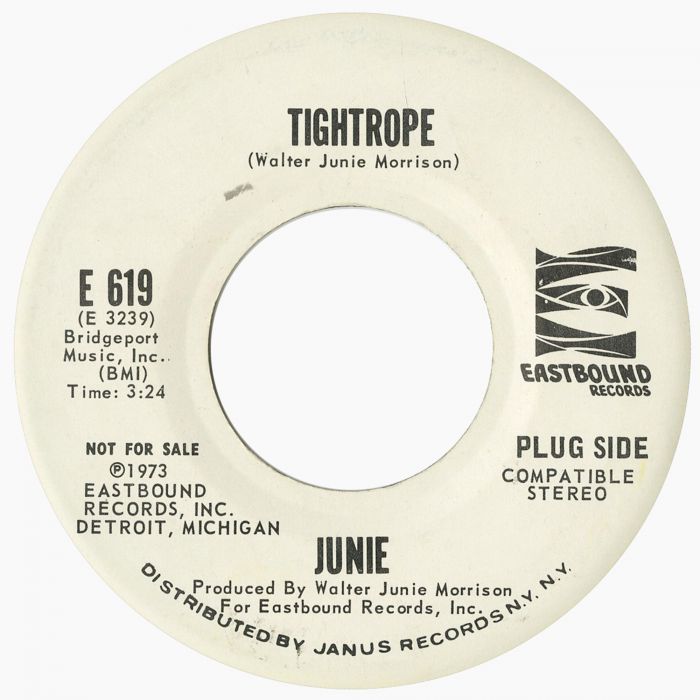
Walter was keen to begin the next chapter of his career, and headed into the studio to record his debut single. The result was two new songs, the single Tight Rope, which was soulful and funky with a clavinet adding a tougher edge. This was reminiscent of the type of music Stevie Wonder was recording circa 1973. On the B-Side was Walt’s Third Trip, which was an ambitious track that incorporated elements of disparate genres. Although it was jazz-tinged, funky and soulful, it’s best described as symphonic and sounds like the type of music the disco orchestras would produce later in the decade. Both songs are which are among the bonus tracks on disc two of The Complete Westbound Recordings.
Later in 1973, Tight Rope was released as a single, with Walt’s Third Trip consigned to the B-Side. However, the single failed to trouble the charts, and Junie’s career at Westbound got off to an inauspicious start.
Rather than begin work on his debut album, Junie decided to hold off, just in case he was asked to rejoin The Ohio Players. This didn’t happen, and he watched as Skin Tight was released in April 1974, and reached number eleven in the US Billboard 200 and number one in the US R&B charts. Skin Tight went on to sell over a million copies.
Seven months later, The Ohio Players released Fire, which reached number one on the US Billboard 200 and the US R&B charts, and again, sold over a million copies. For Junie, it was a case of what might have been.
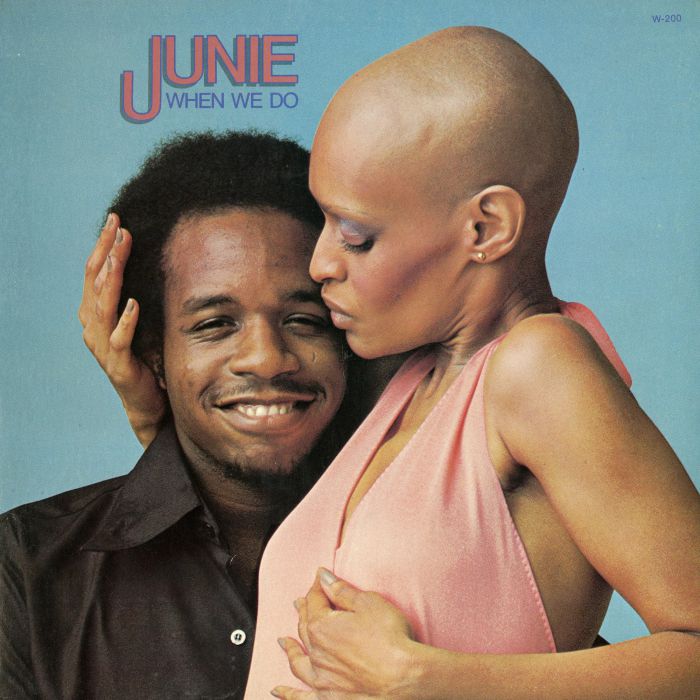
When We Do.
Realising he was unlikely to be reunited by The Ohio Players, Junie had begun work on his debut solo album When We Do. He had written eight new songs, which with Skin Tight and Walt’s Third Trip would form the basis for When We Do.
Junie was a talented multi-instrumentalist, and was able to lay down many of the instruments himself. However, when it came to add the strings, the Detroit Symphony Orchestra were contracted. They featured on several tracks, including Junie, The Place, Anna and Walt’s Third Trip. Gradually, When We Do was talking shape, with ballads and uptempo tracks rubbing shoulders with each other on a truly eclectic album.
Critics on hearing When We Do, were reminded of a playful nature of the music that was a feature of the trio of albums that Junie recorded with The Ohio Players. Although they now had two million selling albums under their belt, they had lost this playfulness. That wasn’t all they The Ohio Players had lost. Their music critics had noted was no longer as eclectic as it had been with Junie onboard. However, critics noted that Junie had incorporated this playfulness and eclecticism to When We Do, which was well received upon its release.
Eclecticism was a feature of When We Do, with Junie combining elements of disco funk, jazz, P-Funk, rock, samba and soul. Junie the opening track, starts off light and playful, before keyboards add a tougher, funky, sound. Soon, though, strings dance and add a contrast to the keyboards, before the female vocal adds the light playful sound. Loving Arms features a heartfelt needy and soulful ballad by Junie. Johnny Carson Samba is an inventive fusion of jazz and samba. The Place is a genre-melting tracks where Junie aided and abetted by his backing vocalists and strings, combine disco, funk, jazz, rock and soul. It’s without doubt one of the album’s highlights. Anna is a tender ballad, where Junie’s arrangement is reminiscent of Thom Bell.
Soulful and funky describes the single Tight Rope, which for Junie, was the one that got away. You and You is a tender, paean that shows Junie at his most soulful. This gives way to When We Do, where Junie and the Detroit Symphony Orchestra fuse elements of funk, soul, rocky guitars and disco strings. Married Him is another ballad, where the descending bass line, harmonies and strings are at the heart of the song’s success. Closing the album was Walts Third Trip, which had been relegated to the B-Side of the single Tight Rope. It’s one of the hidden gems on When We Do, and showcases just what Junie was capable of.
On the release of When We Do in 1975, while the album wasn’t a huge success, it sold reasonably well. This executives at Westbound thought was a good start to Junie’s career, and soon, he began recording his sophomore album, Freeze.
Freeze.
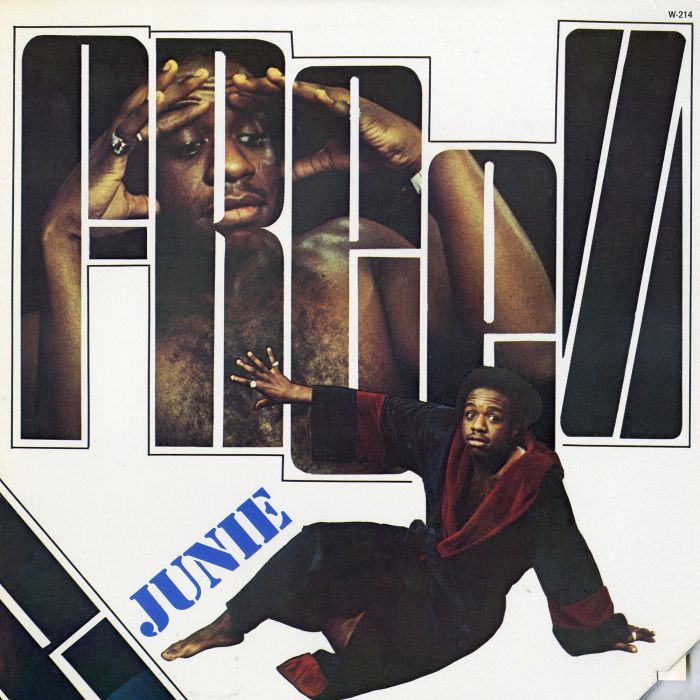
When it came to record Freeze, Junie dispensed with services of sidemen, strings and backing vocalists. He became a one-man band, writing, recording and producing the eight new tracks at Ardent Studios, in Memphis. These eight tracks became Freeze, which featured a very different sound.
Critics on hearing Freeze, noticed a stylistic change on some of the songs on Freeze. While some of the songs were similar to those on When We Do, including the ballads World Of Woe, Junie had reinvented himself on several songs. To do this, Junie deployed effects during several songs, including a vocoder on Musical Son and Super J. Junie also revisited the character Granny on Granny’s Funky Rolls Royce. This was a character from his days with The Ohio Players. Freeze with its mixture of the familiar and Junie’s new sound, found favour with critics, who hailed the album inventive and innovative.
That is apparent straight away, with Junie deploying effects on Freeze, which results in a tougher, funkier, but still soulful sound. Cookies Will Get You is a lysergic sounding song, with a talking cookie sharing lead vocal duties on this slice of cartoon funk. Not As Good As You Should is a funky jam, that’s one of the album’s highlights. Musical Son finds Junie deploying a vocoder, on an uptempo funk workout. The vocoder returns on Super J, a soulful slice of mid tempo funk. World Of Woe is a beautiful ballad on the album, and features a needy, hopeful vocal. It’s without doubt one of the album’s finest moments. Junie revisits the character of Granny from his days with The Ohio Players on the cartoon funk of Granny’s Funky Rolls Royce. Closing Freeze is Junie II, a funky, soulful song where Junie seems to improvise, as he delivers a vocal powerhouse.
Freeze was a stepping stone for Junie, as he started to reinvent his music. However, the big question was how would record buyers react to Freeze? Before that, an edit of Granny’s Funky Rolls Royce was released as a single, with an edit of Super J on the B-Side. (Both edits are among the bonus tracks on disc two of The Complete Westbound Recordings). When Granny’s Funky Rolls Royce was released as single, it too, failed to find an audience. Worse was to come when Freeze was released in the second half of 1975, and it didn’t come close to troubling the charts. For Junie and executives at Westbound, this was a worrying development. Despite this, Junie was allowed to begin work on his third album, Suzie Super Groupie.
Suzie Super Groupie.
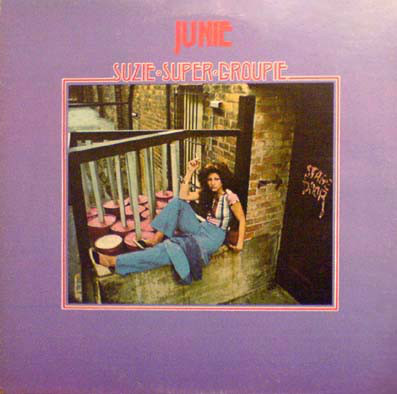
For Suzie Super Groupie, Junie returned to Detroit, and Pac Three Studio where he had recorded When We Do. That was where the nine songs on Suzie Super Groupie took shape. Just like previous albums, they had been penned and produced by Junie. However, this time, Junie was joined by band that included several members of the Crowd Pleasers. Their raison d’être was helping Junie rescue his career.
He realised that if Suzie Super Groupie failed commercially, there was every chance he would be dropped by Westbound Records. For the twenty-two year old, this would be a disaster, and could spell the end of his career. However, with a talented and versatile band behind him, Junie was responsible for an album that was slick, smooth and soulful, but also headed in the direction of boogie, funk and jazz. He waited with bated breath to hear what critics made of Suzie Super Groupie.
When critics heard Suzie Super Groupie, they preferred the album to Freeze. It was a much more eclectic album, that eschewed many of the effects and synths that featured on Freeze. They had been replaced by a talented band that who provided the perfect backdrop to Junie on his genre-melting album. Suzie Super Groupie was hailed as a return to form, and the album that had the potential to launch Junie’s career.
Suzie Super Groupie was released in 1976, and history repeated itself once again. Sales of Suzie Super Groupie were disappointing, and Junie knew that the end of his time at Westbound Records could well be near. That was despite the quality of Suzie Super Groupie.
The tender soulful sound of Suzie Super Groupie a thirty-two second amuse-bouche opens the album, and gives way to the soulful, funky sound of Suzie Thundertussy. One of the album’s highlights is If You Love Him, a soulful ballad, where rueful horns punctuate the arrangement. What Am I Gonna Do marks a return to the funky side, with Junie’s vocal referencing Stevie Wonder and Sly Stone. Super Groupie with x-rated lyrics heads in the direction of funk rock, while Suzie combines funk and disco. Stone Face Joe is propelled along by a boogie rhythm, while horns blaze and Junie plays his piano and later, adds a knock about vocal, on this fusion of music and theatre. Spirit is a slow burner, that starts off as a ballad, but heads in the direction of a funk rock as Junie takes his leave after this seven minute epic.
Not long after the release of Suzie Super Groupie, Junie left Westbound Records. This was almost inevitable. Junie knew before the release of Suzie Super Groupie that the album had to sell well. If it didn’t Westbound Records wouldn’t renew his contract. After all, no record company that wanted to stay solvent, would continue to allow an artist continue to release albums that failed to sell. It didn’t matter that they were of the quality of When We Do, Freeze and Suzie Supergroupie which were recently rereleased as a two CD set entitled The Complete Westbound Recordings. It was released by Westbound Records, an imprint of Ace Records. They showcase a truly talented musician as he tried to make a commercial breakthrough.
When Junie left Westbound Records, the musical prodigy was still only twenty-two. However, he had already released three albums with The Ohio Players and three solo albums. Junie was an experienced, talented and versatile who was a singer, songwriter, musician, arranger and producer. It wouldn’t be long before someone came calling, wanting to hire Junie.
That proved to be the case. In 1977, Junie was appointed musical director of Funkadelic, and made his debut on One Nation Under A Groove in 1978. The addition of Junie helped transform the fortunes of Funkadelic, when One Nation Under A Groove reached number sixteen on the US Billboard 200 and one on the US R&B charts. This gave Funkadelic and Junie their first platinum disc.
Uncle Jam Wants You was released a year later in September 1979, and reached number eighteen on the US Billboard 200 and two on the US R&B charts. Funkadelic received their first gold disc. However, after just two albums with Funkadelic, Junie and the band parted company.
Junie returned to his solo career in 1980, after writing two number one singles. Suddenly, Junie was hot property, with record companies fighting for his signature. Eventually, he signed to Columbia and released two albums. However, neither Bread Alone in 1980, nor Junie 5 in 1981 found an audience. Three years later, Junie returned with Evacuate Your Seats in 1984, but it was a familiar story when the album passed record buyers by. For Junie, this prompted a change of career.
In the lat eighties, Junie decided to relocate to London, where he founded the Akashic record label. Junie also worked as a songwriter, and wrote songs for Soul II Soul, Sounds Of Blackness and God’s Property. Later, Junie moved into production, and worked with a variety of artists, including James Ingram. By the mid-nineties, Junie was reunited with someone from his past.
This was none other than George Clinton, and the pair began the first of several collaborations. Then in 2004, Junie returned with what would be his final solo album When The City, which was released on his own label Juniefunk. Little did anyone realise that this was the last that would be heard of Junie.
By then, Junie’s music started to find an audience within the hip hop community. They realised that Junie’s music was ripe for sampling. On some of the songs on The Complete Westbound Recordings, Junie literally invites hip hop producers to sample his music. This was an invitation they accepted, and this has continued up until relatively recently. In 2016, songs from Kayne West’s album Life Of Pablo and Solange Knowles’ A Seat At The Table feature samples of Junie’s music. These two high-profile artists introduced Junie’s music to a new generation of record buyers. Not long after this, Walter “Junie” Morrison passed away on January ’21st’ 2017, aged just sixty-two. Music had lost a truly talented singer, songwriter, musician, arranger and producer, who is still one of music’s best kept secrets. Thankfully, maybe not for much longer. The recent release of Junie’s first three albums on The Complete Westbound Recordings, is the perfect introduction to his music, and features Junie at his playful, soulful, funky and innovative best.
Junie-The Complete Westbound Recordings.


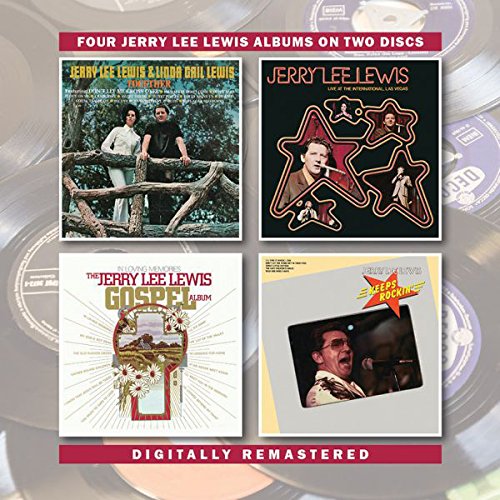
JERRY LEE LEWIS-TOGETHER, LIVE AT THE INTERNATIONAL LAS VEGAS, IN LOVING MEMORY:THE JERRY LEE LEWIS GOSPEL ALBUM AND KEEPS ROCKIN.
Jerry Lee Lewis-Together, Live At The International Las Vegas, In Loving Memory: The Jerry Lee Lewis Gospel Album and Keeps Rockin’.
Label:BGO Records.
Jerry Lee Lewis will always be remembered as one of music’s great survivors. He has enjoyed a long and chequered career, that although successful has often proved controversial. So much so, that at one time, Jerry Lee Lewis was a musical pariah.
The Jerry Lee Lewis story began when the twenty-one year old, travelled all the way from Ferriday, Louisiana to Memphis, Tennessee. When Jerry arrived in Memphis, Sam Phillips was Florida. However, producer and engineer Jack Clement had Jerry record a version of Ray Price’s Crazy Arms and a Jerry Lee Lewis original, End of The Road. This was the start of Jerry Lee Lewis’ career at Sun Records.
A month later, Jerry made the return trip to Memphis, and started what was, the first of many, recording sessions. Jerry wasn’t just a solo artist, but a session player. He played on tracks by Billy Lee Riley, Carl Perkins and Johnny Cash. However, a year later, in 1957, Jerry Lee Lewis made his breakthrough.
A Whole Lotta Shakin’ Goin’ On was recorded in February 1957, and released as a single in May 1957. It reached number three in the US Billboard 100 charts and number one in the US R&B charts. This transformed The Killer’s career. Suddenly, he was rock ’n’ roll royalty, and rubbing shoulders with Elvis. This success continued.
In November 1957, Jerry released Great Balls Of Fire, which featured in the 1957 movie Jamboree. It sold one million copies within the first five days of its release. Eventually, Great Balls Of Fire sold in excess of five million copies. However, still, Jerry Lee Lewis had his critics.
America’s moral guardians chastised Jerry Lee Lewis for lyrics that they deemed crude, suggestive and had sexual undertones. His performances some commentators suggested, were lewd. Ironically, Jerry Lee Lewis wasn’t entirely comfortable with the lyrics he was singing.
Unknown to many people, Jerry Lee Lewis was a devout Christian. His faith was important to him. When he cut songs like A Whole Lotta Shakin’ Goin’ On, Jerry Lee Lewis had a crisis of confidence. However, music was now his career. He had made his choice back in 1956. Since then, his life had changed beyond recognition. He was hero worshipped by the first generation of teenagers. That was, until controversy entered his life.
May 1958 will forever be etched in Jerry Lee Lewis’ memory. So will the name Ray Berry. He enjoyed his fifteen minutes of fame during Jerry’s 1958 British tour. Ray Berry made a disturbing discovery. Jerry’s third wife, Myra Gayle Brown, it transpired, was only thirteen when they married. Myra was Jerry’s first cousin, once removed. Straight away, Jerry Lee Lewis’ management set about firefighting the situation, but only made the situation worse.
Jerry’s management claimed that Myra was fifteen when the marriage took place. So did Jerry and Myra. This didn’t placate a horrified public. After all, a world-famous rock ’n’ roller had married a minor. It was essentially, career suicide.
Soon, Jerry Lee Lewis’ British tour was cancelled. He’d only played three dates. When he got back home, Jerry Lee Lewis incurred the wrath of the American music industry. He was blacklisted from American radio, and was no longer a familiar face on Dick Clark’s American Bandstand. Jerry’s fans turned their back on their former idol.
Right up until 1963, Jerry Lee Lewis recorded for Sun Records. He continued to released records. When they failed to sell, Sun tried releasing Jerry’s singles as The Hawk. Radio stations quickly realised who The Hawk was, and dropped the singles from their roster. For Jerry, his career had hit the buffers.
Before the scandal, Jerry had been able to command $10,000 per night. Now bookings were few and far between, and he was lucky to be picking up $250 per night, in some of the less salubrious nightspots. It seemed that the party was over for Jerry Lee Lewis.
In 1964, six years after he committed career suicide, Jerry was on the comeback trail. He was still seeking redemption, but was persona non gratis in his home country. Jerry Lee Lewis decided to try to rebuild his tattered reputation in Europe. So, in 1964, Jerry and The Nashville Teens had agreed to appear at The Star Club, Hamburg. That night, Jerry powered his way through thirteen tracks. It was a peerless performance, which was recorded for posterity.
Later in 1964, that legendary concert was released as Live at the Star Club, Hamburg. Released to critical acclaim, Live at the Star Club, Hamburg was a tantalising reminder of what the man they called The Killer, was capable of. However, to many Americans, Jerry Lee Lewis was still persona non gratis. They never could, and never would, forgive him.
Despite the period when he was persona non gratis Jerry Lewis continued to record and release singles and albums on the Smash label, which was an imprint of Mercury. The singles never troubled the charts, and only his most loyal fans continued to buy The Killer’s albums. No longer was Jerry Lewis enjoying the success he once had. It looked like his career was over. That was until his comeback in 1968.
By then, Jerry Lewis had reinvented himself as a country singer in 1968, and released Another Place, Another Time, which was billed as his ‘comeback’ album. It featured two top ten country hits. Another Place, Another Time reached number four, and What’s Made Milwaukee Famous (Has Made a Loser Out of Me reached number two. The one time musical pariah was now the comeback King.
The comeback continued later in 1968, when Jerry Lee Lewis released She Still Comes Around. It featured another two top five country singles. She Still Comes Around (To Love What’s Left of Me reached number two in the US Country charts, and when To Make Love Sweeter for You released in November 1968, it reached number one in the US Country charts. It seemed that Jerry Lee Lewis’ comeback was complete.
After reinventing himself in 1968, and transforming his career, Jerry Lee Lewis’ comeback continued in 1969. Still Jerry Lee Lewis found time to records an album with his sister Linda Gail Lewis. That album was Together, which is one of four albums that features on a two CD set released by BGO Records. These albums are Together, Live At The International Las Vegas, In Loving Memory: The Jerry Lee Lewis Gospel Album and Keeps Rockin’. The period that these four albums cover, 1969 to 1978, and saw Jerry Lee Lewis’ career take another unexpected turn. This latest chapter in the Jerry Lee Lewis’ story began in 1969.
Together.
Jerry Lee Lewis wasn’t the only singer in the Lewis family. His younger sister Linda Gail Lewis, who was only twenty-one, had followed in The Killer’s footsteps. She had been signed by Smash, and had released her debut solo album The Sides Of Linda Gail Lewis. It had failed to trouble the charts, which disappointed not just Linda Gail Lewis but executives at the Smash label. Soon, though, they had hatched a plan to give Linda Gail Lewis’ career a boost.
A decision was made that Jerry Lee Lewis and Linda Gail Lewis record an album together. Given Jerry Lee Lewis had just made a successful comeback, this would give Linda Gail Lewis’ career the type of boost most young singers could dream of. With the two Lewis siblings in agreement, work began on what would become Together.
Fortunately, Jerry Lee Lewis and Linda Gail Lewis had already recorded together, and could use some of these songs. However, it soon became apparent that they didn’t have enough for an album.
Eventually, a shortlist of eleven songs were chosen. This included songs that had already been recorded, plus some songs that would be recorded in Nashville. These songs had been chosen especially so that they would suit Jerry Lee Lewis and Linda Gail Lewis’ voices.
This included Lee Fikes’ Milwaukee Here I Come; Billy Edd Wheeler and Jerry Leiber’s Jackson; Buck Owens’ Crying Time and Nat Stuckey’s Sweet Thang. They were joined by Penny Jay’s Don’t Le Me Cross Over; David Lazar, Larry Ehrlich, Paul Clayton and Tom Six’s Gotta Travel On; Fred Rose’s We Live In Different Worlds; Donald Murray’s Earth Up Above and Chuck Berry’s Roll Over Beethoven. Linda Gail Lewis wrote the two other songs on Together. She penned Don’t Take It Out On Me with Kenny Lovelace, who was a member of Jerry Lee Lewis’ band. The pair also wrote Secret Places with Cecil J. Harrelson. Some of these songs were recorded in Nashville with producer Jerry Kennedy.
Joining Jerry Lee Lewis and Linda Gail Lewis to record the rest of Together, was a band that featured some of Nashville’s top session players. With Jerry Kennedy taking charge of production, recording of Together began on ‘13th’ June 1969. The Lewis’ siblings proved a potent partnership, as they recorded country classics, familiar songs and new songs. Linda Gail Lewis proved the perfect foil for her elder brother, with their voices blending together seamlessly. Although she had only released one album, Linda Gail Lewis was already an experienced singer and that shines through on Together.
When critics heard Together, the album was well received and received praise and plaudits. Especially songs like Don’t Take It Out On Me, the cover of Crying Time, Secret Places and We Live In Two Different Worlds. While a rousing version of Roll Over Beethoven closed Together, it wasn’t the highlight of the album. That was the cover of Don’t Let Me Cross Over. It stood head and shoulders above the rest of the songs on Together.
Executives at Smash realised this, and Don’t Let Me Cross Over was released as a single. It reached number nine on the US Country charts in 1969, giving Linda Gail Lewis her first hit single. For her brother, this was just the latest hit single since his comeback began in 1968. When Together was released, the album was billed as Jerry Lee Lewis and Linda Gail Lewis. It reached number eight in the US Country charts, and gave Linda Gail Lewis’ career another boost. For Jerry Lee Lewis, his comeback continued apace.

Live At The International Las Vegas,
By 1970, Jerry Lee Lewis was one of the biggest names in country music. It was a far cry from when he was playing dive bars for $250. That was in the past, and somewhere Jerry Lee Lewis had no wish to revisit. Now he was appearing on television shows, festivals and was playing at some of the top venues in America. This included the International Hotel in Las Vegas.
Jerry Lee Lewis had been invited to play at the International Hotel in 1970. This was where Jerry Lee Lewis had watched Elvis Presley play a year earlier in 1969. The King had headed to Columbus, Ohio, to personally invite The Killer see him play live at the International Hotel. That night, Kenny Lovelace introduced Jerry Lee Lewis to the audience, who gave him a standing ovation. This was very different the reception he would’ve received a decade earlier. A year later, in 1970, The Killer and The King would both play at the International Hotel.
When Jerry Lee Lewis returned to play at the International Hotel both he was playing in the lounge, which held around 2,500 people. Meanwhile, Elvis Presley was playing in the main room in front of 3,000. However, only Jerry Lee Lewis was recording his show, which would be released as Live At The International Las Vegas.
As he took to the stage at The International, The Killer’s band featured drummer Morris Tarrant, bassist Eddie DeBruhl, guitarists Buck Hutcheson and Kenny Lovelace who also played fiddle. Ned Davis played steel guitar while Jerry Lee Lewis sat behind the piano. Soon, Jerry Lee Lewis began working their way through a selection country classics.
This began with a rueful version of She Even Woke Me Up to Say Goodbye, which gave way to an uplifting cover of Hank Williams’ Jambalaya. Then on She Still Comes Around (To Love What’s Left of Me, Jerry Lee Lewis delivers a worldweary vocal, before following this up with Drinking Champagne and a cover of the Bob Willis classic San Antonio Rose. By then, The Killer, who was by then a veteran performer, has the audience eating out of the palm of his hand. What better time to cover Kris Kristofferson and Shel Silverstein’s Once More with Feeling. Jerry Lee Lewis breathes life and meaning into the lyrics, in what’s the highlight of the set so far.
Soon, he’s joined by Linda Gail Lewis and the pair duet on When You Wore a Tulip (And I Wore a Big Red Rose) and then Take These Chains from My Heart. It’s another of the highlights of the set, with Linda Gail Lewis proving the perfect foil for her elder brother. When she leaves the stage, Jerry Lee Lewis delivers a jaunty cover of Tom T. Hall’s The Ballad of Forty Dollars. This leaves just Flip, Flop and Fly, which started life as a jump blues, which was originally recorded by Big Joe Turner and later, Elvis Presley. The Killer’s version is powered along by his piano, as he rolls back the years. Suddenly, The Killer of old is back, before he exits stage left.
When Live At The International Las Vegas was released in 1970, it won over critics. The album was a tantalising reminder of just how good a live performer Jerry Lee Lewis was. He put his three decades of experience to good use that night in Vegas, and was the star of the two shows that took place at The International.
Buoyed by the critical acclaim Live At The International Las Vegas received, the album was released in 1970 and reached number five in the US Country charts. Live At The International Las Vegas also reached 149 in the US Billboard 200. This was par for the course for Jerry Lee Lewis, who was much more popular in country music circles. However, this was about to change.

In Loving Memory: The Jerry Lee Lewis Gospel Album.
On ‘11th’ December 1970, many Americans could’ve been forgiven for thinking that it was April Fool’s Day. One of the lead items on the news was that Jerry Lee Lewis had decided to turn his back on rock music, and had cancelled all future shows. Jerry Lee Lewis was now going to concentrate on gospel music. While this shocked many Americans, the rest of the statement left them reeling. The Killer had: “vowed never to set foot inside a nightclub again.” He also promised to never look at another woman, pop another pill or drink again. To call this a Damascene conversion was an understatement. Meanwhile, Americans wondered what had got into The Killer?
It turned out that Jerry’s third wife, Myra Gayle Brown, who was also his cousin once removed, had filed for a divorce. This was a huge blow to Jerry Lee Lewis, who it seemed was suffering a crisis of confidence.
He had returned to his faith, which during the early years of his career, he kept quiet about. Being a devout Christian didn’t go with his hard living reputation in the late-fifties. Things had changed since then, and now he was much more open about his faith. So much so, that he recorded In Loving Memory: The Jerry Lee Lewis Gospel Album.
To record his first gospel album, Jerry Lee Lewis headed to Nashville, where he and his sister Linda Gail Lewis would produce that eventually became In Loving Memory: The Jerry Lee Lewis Gospel Album. Linda Gail Lewis had also penned In Loving Memories, Gather ‘Round Children and I Know That Jesus Will Be There with Cecil Harrelson. They joined songs like The Lily of the Valley, The Old Rugged Cross, I’ll Fly Away and If We Never Meet Again/I’ll Meet You in the Morning. These songs saw Jerry Lee Lewis joined by band of top session players.
Once In Loving Memory: The Jerry Lee Lewis Gospel Album was complete, it was delivered to Mercury Records for release in 1971. Executives at Mercury Records knew that a gospel album, even one by The Killer was going to be a hard sell. As a result, it wasn’t top of their priorities when it came to releases.
When critics heard In Loving Memory: The Jerry Lee Lewis Gospel Album, they were impressed by what was The Killer’s first gospel album. It was unlike many of the gospel albums being released in 1971, and combined gospel and country music. In Loving Memory: The Jerry Lee Lewis Gospel Album was a gospel album recorded in Nashville, and was very different to Jerry Lee Lewis’ recent albums.
In a way, Jerry Lee Lewis was returning to one of his first musical loves…gospel music, and combining this with his new musical love…country music on In Loving Memory: The Jerry Lee Lewis Gospel Album. The two genres combined well, especially on the three songs his sister contributed In Loving Memories, Gather ‘Round Children and I Know That Jesus Will Be There, where her vocal steals the show. Along with songs like In Loving Memories, He Looked Beyond My Fault and Too Much to Gain to Lose, Jerry Lee Lewis’ had managed to reinvent himself as a gospel singer.
By the time that In Loving Memory: The Jerry Lee Lewis Gospel Album was released in 1971, Jerry’s estranged wife Myra Gayle Brown had made her feelings clear about her ex-husband’s Damascene conversion. “It won’t last. He’s only doing this to get me back.”
That was what executives at Mercury Records were also hoping. Jerry Lee Lewis’ decision to reinvent himself as a clean living, gospel singer, had cost Mercury Records one of the biggest names and hottest properties in country music to gospel music.
When In Loving Memory: The Jerry Lee Lewis Gospel Album was released in 1971, it failed to even trouble the US Billboard 200, and stalled at eighteen in the US Country charts. It was Jerry Lee Lewis’ least successful album since Soul My Way in 1967. For executives at Mercury Records this was a huge disappointment. However, Jerry Lewis was happy with his first album as a gospel singer. This was how he saw the future.

Keeps Rockin’.
By 1978, Jerry Lee Lewis was no longer the clean living, gospel singer he had been in 1971. He hadn’t been for several years. The hard living, Killer was back. His sales were declining, and no longer did Jerry Lee Lewis’ albums and singles reach the upper reaches of the country charts. To make matters worse, Jerry Lee Lewis’ behaviour had become unpredictable over the last few years. In many ways, Jerry Lee Lewis was longer seen as one of the assets on Mercury Records’ balance sheet. For some of the executives at Mercury Records, they were relieved that Jerry Lee Lewis only owed the company one more album. After that, they could cut him loose and wash their hands of the veteran singer.
For what Jerry Lee Lewis knew was potentially his Mercury Records swan-song, he decided to return to rock ’n’ roll. This came as a surprise to many within Mercury Records.
For Keeps Rockin’, Jerry Lee Lewis chose eleven songs, ranging from new songs like I’ll Find It Where I Can, to much more familiar songs. This included Blue Suede Shoes, I Hate You, Lucille, The Last Cheater’s Waltz, Sweet Little Sixteen, Don’t Let The Stars Get In Your Eyes and somewhat ironically, Before The Night Is Over. These were some of the songs that Jerry Lee Lewis would record in Nashville.
Joining Jerry Lee Lewis, was producer Jerry Kennedy and some of Nashville’s top session players. Even The Jordanaires were drafted in to add backing vocals on Keeps Rockin’, where Jerry Lee Lewis revisits his past. This hadn’t proven successful when he released The Return of Rock in 1965. Jerry Lee Lewis was hoping Keeps Rockin’ would prove more successful.
When critics heard Keeps Rockin’, a worldweary Jerry bowls a curveball on I’ll Find It Where I Can, where he returns to country music. It’s one of the highlights of the album. After that, he revisits his rock ’n’ roll past on a blistering versions of Blue Suede Shoes, Lucille and Sweet Little Sixteen. There’s a return to country music on rueful take on I Hate You, Arkansas Seesaw, The Last Cheater’s Waltz, Wild and Wooly Ways, Don’t Let The Stars Get In Your Eyes and a piano driven version of Pee Wee’s Place. Closing Keeps Rockin’ was Before The Night Is Over, where The Killer switches to electric piano and is accompanied by gospel-tinged harmonies. It’s an underrated song, and one that Jerry Lee Lewis knew could spell the end of his time at Mercury Records.
Keeps Rockin’ was released in 1978, but stalled at forty in the US Country charts. This was a far cry from when Jerry Lee Lewis was one of the most successful artists in country music.
After Jerry Lee Lewis reinvented himself as a country singer in 1968, it seemed he could do no wrong between 1968 and 1973. He enjoyed sixteen top ten in the US country charts, while another five albums reached the top twenty.The Killer was one of the hottest properties in country music. Things changed between 1974 and 1978.
No longer was Jerry Lee Lewis as prolific as he had once been. Nor was he enjoying the same success when he released an album. Only Boogie Woogie Country Man in 1975 and Country Class in 1976 reached the top twenty. The rest of The Killer’s albums languished in the lower reaches of the top forty in the country charts. It was changed days for The Killer, and there was no sentiment in music.

After the release of Keeps Rockin’, Mercury Records didn’t renew The Killer’s contract. He had spent a total of fifteen years Mercury Records. This started in 1963, when Jerry Lee Lewis was one of the most successful American musicians. However, everything changed in 1964, when it was discovered that Jerry Lee Lewis’ wife, Myra Gayle Brown, was only thirteen when they married. To make matters worse, she was Jerry Lee Lewis’ first cousin, once removed. The controversy surrounding Myra Gayle Brown lead to Jerry Lee Lewis being cast out into the musical wilderness between 1964 and 1968.
This wilderness years ended in 1968, when Jerry Lee Lewis reinvented himself as a country singer, and for the next five years, enjoyed one of the most successful periods of his career.
Three albums from this period are part of a two CD set recently released by BGO Records. The set starts with Together, which Jerry Lee Lewis and is sister Linda Gail Lewis released in 1970. Later in 1970, they released Live At The International Las Vegas in 1970. After a Damascene conversion, In Loving Memory: The Jerry Lee Lewis Gospel Album was released in 1971. Completing is Keeps Rockin’ which was released in 1978, and brought to a close the Mercury years
BGO Records’ two CD set is a reminder not just of Jerry Lee Lewis’ country years, but just how versatile an artist he was. Seamlessly, he switched between country, gospel and rock ’n’ roll, as he showcases his considerable skills. However, the period between 1968 and 1978 was a roller coaster ride for The Killer. He went from being one of the hottest properties in country, to turning his back on rock ’n’ roll and embarking on a career as a gospel artist. By 1978, Jerry Lee Lewis’ career was on the slide, but his Mercury Records’ swan-song Keeps Rockin’ is one of the hidden gems in his back-catalogue.
For much of his career, Jerry Lee Lewis was a prolific artist. Especially during the fifteen years he spent at Mercury Records. That was where Jerry Lee Lewis recorded some of the best albums of his long and illustrious career. A number of these albums have been reissued by BGO Records, and are a reminder of Jerry Lee Lewis, one of the pioneers of rock ’n’ roll, turned country singer, who will forever be known as The Killer.
Jerry Lee Lewis-Together, Live At The International Las Vegas, In Loving Memory: The Jerry Lee Lewis Gospel Album and Keeps Rockin’.
ON BROADWAY: THE SONGS OF BARRY MANN AND CYNTHIA WEIL.
On Broadway: The Songs Of Barry Mann And Cynthia Weil.
Label: Playback Records.
Ever since The Brill Building was built-in 1931, it has been synonymous with the music industry. Its eleven floors housed music industry offices and recording studios. The Brill Building was also home to some of the greatest songwriting teams in musical history.
Especially from the late-fifties and sixties, when everyone from Bacharach and David, Lieber and Stoller and Gerry Goffin and Carole King called the Brill Building Home. They made their name at The Brill Building. So did Barry Mann and Cynthia Weil, who were one of the most prolific and successful songwriting partnerships of their generation.
Composer Barry Mann and lyricist Cynthia Weil first met in 1959, when they were working for Aldon Music, the music publishing company that had been founded by Don Kirshner and Al Nevins in 1958. When Cynthia Mann arrived at Aldon Music, she was an aspiring lyricist who was looking for a songwriting partner. So was Barry Mann, who was in the early stages as his career as a composer. After their initial meeting, where the pair hit it off, they formed what would become one of the successful songwriting partnerships in the Brill Building.
The Barry Mann and Cynthia Weil songwriting was just the latest successful songwriting partnership formed in the Brill Building. This included Jeff Barry and Ellie Greenwich, Jerry Lieber and Mike Stoller, Carole King and Gerry Goffin, Neil Sedaka and Howard Greenfield. Each of these songwriting partnerships were given their own individual cubicles within the Brill Building.
Within each cubicle, was a piano, where songs would take shape. Barry Mann would sit at the piano while Cynthia Weil wrote the lyrics to the songs. One of their compositions, Forty Winks Away featured on the B-Side of Neil Sedaka’s top ten single Stairway To Heaven. This was a boost to the nascent songwriting partnership’s confidence, and would the first of many songs from the pen of Barry Mann and Cynthia Weil that reached the upper reaches of the charts.
In 1961, the Barry Mann and Cynthia Weil wrote several hit singles, including two for Tony Orlando, including Bless You and Happy Times Are Here To Stay which Barry Mann and Cynthia Weil wrote with Gerry Goffin. Barry Mann and Cynthia Weil also wrote Echoes with Carole Bayer Sager which gave Teddy Randazzo a hit single in 1961. It was the most successful year of Barry Mann and Cynthia Weil’s career so far.
It was also the year that Barry Mann and Cynthia Weil were married. Fifty-six years later, they’re still together, and regarded as one of the greatest songwriting partnerships in the history of popular music.
Their partnership is celebrated on a new compilation released by Playback Records, On Broadway: The Songs Of Barry Mann And Cynthia Weil. It features twenty-eight rare and classic songs from the Barry Mann And Cynthia Weil songwriting partnership. This includes songs from The Executives, The Crystals, Skeeter Davis, The Shirelles, The Paris Sisters, Walter Jackson, Glenn Yarbrough, Dionne Warwick, Roy Hamilton, BJ Thomas, The Delfonics and Jackie Wilson. These are just some of the songs that can be found On Broadway: The Songs Of Barry Mann And Cynthia Weil. It’s packed full of quality music, including songs from familiar faces and new names.
Fittingly, given Playback Records is an Australian label, it’s an Australian group The Executives, that open On Broadway: The Songs Of Barry Mann And Cynthia Weil with It’s A Happening World. It’s a Barry Mann and Cynthia Weil composition, that was released as a single on Festival Records in 1968. Despite being a carefully crafted and joyous sixties pop song, that epitomises the spirit of the sixties, it stalled in the upper reaches of the Australian charts. It’s A Happening World also featured on The Executives’ 1968 eponymous debut album, and was one of the highlights of the album.
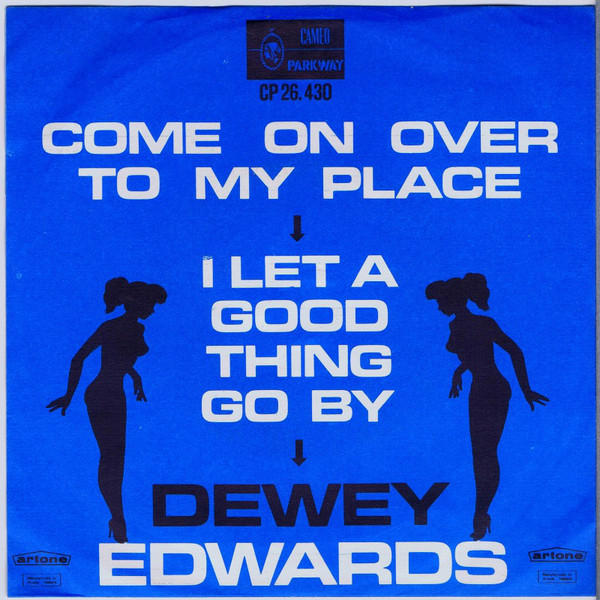
Many of Barry Mann and Cynthia Weil’s songs have been covered by many artists. That was the case with Come On Over To My Place, which was originally released as a single by The Drifters in 1965. Their version failed to make an impression on the charts, and soon, other artists began to cover Come On Over To My Place. This included Philly based singer Dewey Edwards. He released his cover of Come On Over To My Place on America on Cameo Parkway in 1965. Although it didn’t give Dewey Edwards a huge hit, it’s one of the best and most memorable covers of Come On Over To My Place.
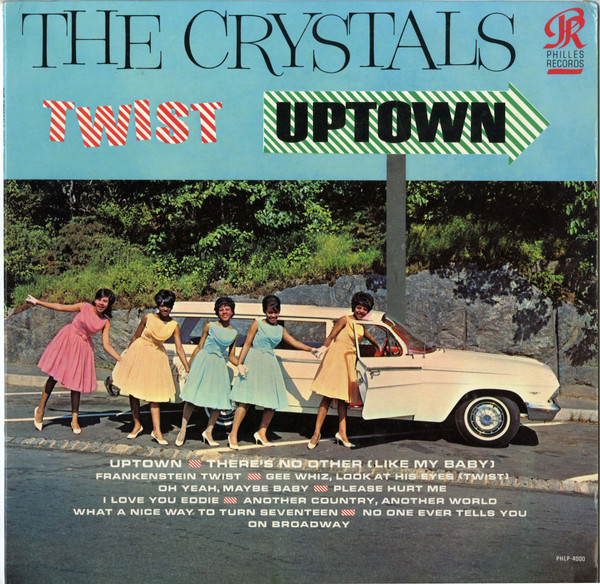
After signing to Phil Spector’s Philles Records in 1961, The Crystals would enjoy the most successful period of their career over the next two yeas. Between 1961 and 1963 The Crystals enjoyed six top twenty hit singles, and released their debut album Twist Uptown in 1962. It featured the original version of On Broadway, which was produced by Phil Spector. He had worked as a songwriter at the Brill Building, and knew Barry Mann and Cynthia Weil and Leiber and Stoller who wrote On Broadway. By 1962, Phil Spector was a successful and groundbreaking producer, who had honed his own unique production sound. This he put to good use on Twist Uptown, and songs like On Broadway. Meanwhile, The Crystals breathe life and meaning into this song about city life, as they sing of “dreams come true every day,” during what’s the most realistic portrayal of the original lyrics.
Danny and Diego were a New York based duo, who were discovered by Stan Kahan. In 1965, they became the latest group to cover Glitter and Gold. When it was released as a single on the Musicor, this pop rock anthem-in waiting failed to find the audience it deserved. Since then, it’s been an oft-overlooked hidden gem, that is a welcome addition to On Broadway: The Songs Of Barry Mann And Cynthia Weil.
British singer Julie Grant followed in the footsteps of The Cookies and released Baby Baby (I Still Love You) as a single. It was penned by Cynthia Weil and Russ Titleman, with Tony Hatch taking charge of production. He’s responsible for a slick girl group sound that was released on Pye on 1965. Sadly, commercial success eluded Baby Baby (I Still Love You), and it was the one that got away for Julie Grant.
The period between 1958 and 1963 was the most successful of The Shirelles’ career. However, when their producer Luther Dixon left Scepter Records in 1963 their career stalled. To add to The Shirelles’ woes, the British Invasion of 1964 saw their music fallout of fashion. A year later in 1965, The Shirelles sued Scepter Records, and went on strike. However, Scepter Records had plenty of unreleased recordings of The Shirelles in the vaults. Some of these recordings became The Shirelles’ first album in two years, Hear and Now. It was released on Scepter Records’ budget label Pricewise in 1965. One of the songs on Hear and Now was The Gospel Truth which Barry Mann and Cynthia Weil wrote with Mike Anthony. Although it features The Shirelles’ trademark girl group sound, The Gospel Truth swings and has a gospel influence. Not long after the release of Hear and Now, Scepter Records settled out of court with The Shirelles, and they resumed their recording career.
Keith Powell was born in Birmingham, England and made his recording debut in 1963. Two years later, in 1965, and Keith Powell released a cover Goodbye Girl, which had originally been recorded by Billy Carr. Goodbye Girl was released as a single on the Piccadilly label, which was an imprint of Pye. Sadly, the single failed to trouble the charts, despite the quality of this soul-baring single.
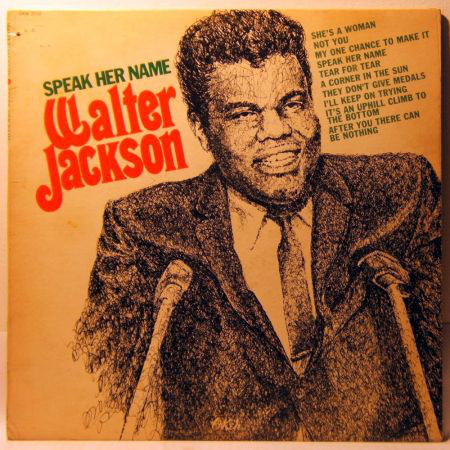
Walter Jackson had been signed to Okeh since 1964, and by 1967, had released two albums. His third album was Speak Her Name, which was released on Okeh in 1967. It featured Not You, which was penned by Barry Mann and Cynthia Weil. On Not You, Walter Jackson a soul-baring vocal that is one of the finest moments on Speak Her Name.
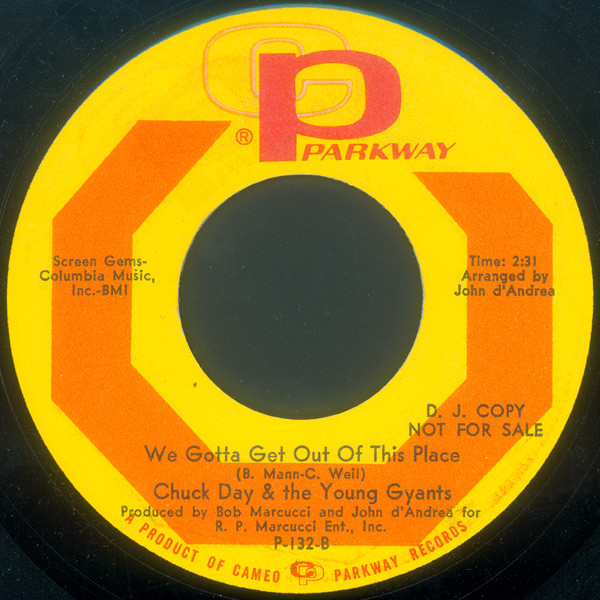
The Animals were the first band to record We Gotta Get Out Of This Place, and their version is regarded by many critics as the definitive version of the song. However, bluesman Chuck Day and The Young Gyants reinvented the song in March 1967, when it featured on the B-Side of his Cameo Parkway single Tom Dooley. It’s bluesy and soulful with gospel-tinged harmonies. Chuck Day and The Young Gyants are responsible for a powerful and emotive reading of We Gotta Get Out Of This Place, that shows a new side to this classic song.
In 1969, Dionne Warwick travelled to Memphis to record her new album Soulful with Chips Moman, at his American Sound Studios. This was a first, as usually, Dionne Warwick worked the songwriting and production team of Burt Bacharach and Hal David at Scepter Records. Not on Soulful, which saw Dionne Warwick, move away from pop stylings of previous albums. Replacing this was a much more Soulful sound. Dionne Warwick’s new sound proved popular when Soulful was released by Scepter Records in 1969. It reached number eleven in the US Billboard 100 and number two in the US R&B charts. One of the highlights of Soulful was Dionne Warwick cover of You’ve Lost That Lovin’ Feelin’, which Barry Mann and Cynthia Weil wrote with Phil Spector. Dionne Warwick brings the lyrics to this oft-covered classic song to life, delivering the lyrics as if she’s lived and survived them.
During his career, B.J. Thomas covered several Barry Mann and Cynthia Weil songs, including the hits I Just Can’t Help Believing and Rock and Roll Lullaby. However, the ballad This Is A Love Song was the one that got away. It was recorded by B.J. Thomas but never released until it found its way onto a compilation in 2006. Belatedly B.J. Thomas’ beautiful, heartfelt rendition of This Is A Love Song was released, and this long-lost, hidden gem was heard for the first time.
In 1970, The Delfonics, who were one of the pioneers of the Philly Soul, released their eponymous debut album on Stan Watson and Sam Bell’s Philly Groove Records. One of the songs on The Delfonics, was Barry Mann’s When You Get Right Down To It. Just like the rest of the album, it was arranged by producer Thom Bell with Stan Watson and Sam Bell taking charge of the production. When The Delfonics was released in 1970, it was the best album of group’s career so far. Especially with songs of the quality of the ballad When You Get Right Down To It, which is a truly timeless song, and a reminder of everything that is good about Philly Soul.
On Broadway: The Songs Of Barry Mann And Cynthia Weil closes with Jackie Wilson’s cover of Nobody But You. This became the title-track to Jackie Wilson’s 1976 album on Brunswick. By then, the man they called Mr. Excitement was no longer as popular as he had been during his sixties heyday. Still, though, Jackie Wilson was able to make good use of his four octave vocal range. On the ballad Nobody But You, he unleashes a soulful, vocal powerhouse where he combines power and passion on what was, without doubt, one of the highlights of his 1976 album. It’s also ensures that On Broadway: The Songs Of Barry Mann And Cynthia Weil ends on a high.
Barry Mann And Cynthia Weil were one of the greatest songwriting partnerships in the history of popular music. They’ve enjoyed a long and successful career, and were one of the most prolific and successful of the songwriting partnerships formed in the Brill Building. While some of the Brill Building songwriting partnerships faltered, Barry Mann And Cynthia Weil went from strength to strength, and were inducted into the Songwriters Hall of Fame in 1987. Nowadays, Barry Mann And Cynthia Wei are regarded as one of the greatest songwriting partnerships in the history of popular music.
Over the past fifty years, Barry Mann And Cynthia Weil have written countless classic. So many, that it would take a box set to feature ever one of these classic songs. These are just a few of the songs that Barry Mann And Cynthia Weil have written since their songwriting partnership began in 1959. These songs are part of a lifetime’s work.
Many of the songs written by Barry Mann And Cynthia Weil have been recorded by the great and good of music. They’ve enjoyed hit singles, gold discs and Grammy Awards. Often, a career has been transformed after recording a Barry Mann And Cynthia Weil composition. Similarly, many an ailing career has been rejuvenated after recording one of Barry Mann And Cynthia Weil’s songs. However, despite all their achievements, Barry Mann And Cynthia Weil are incredibly modest and play down everything that they’ve achieved.
To celebrate all that Barry Mann And Cynthia Weil have achieved, Playback Records recently released On Broadway: The Songs Of Barry Mann And Cynthia Weil. It’s a lovingly curated compilation that features twenty-eight songs penned by Barry Mann And Cynthia Weil.
This ranges from some of their classic songs, to oft-overlooked hidden gems. On Broadway: The Songs Of Barry Mann And Cynthia Weil features songs from familiar faces, old fiends and new names. Sometimes, the most obvious version of the song is eschewed, and a lesser known cover is chosen. Several times Playback Records strike music gold, in their search through the Barry Mann and Cynthia Weil songbook. Sometimes, artists stay true to the original song, while other times, a familiar song is reinvented and heads in a new and totally unexpected direction. Suddenly, a familiar song takes on new life and meaning. This happens several times during On Broadway: The Songs Of Barry Mann And Cynthia Weil, which is without doubt, the best compilation of Barry Mann And Cynthia Weil’s music released in recent years.
On Broadway: The Songs Of Barry Mann And Cynthia Weil is a fitting celebration of one of the greatest songwriting partnerships in the history of popular music. They’ve come a long way since they first met in the Brill Building in New York. Little did they realise when they met that day in the Brill Building, that they would become one of the most celebrated, successful and prolific songwriting partnerships in the history of popular music?
On Broadway: The Songs Of Barry Mann And Cynthia Weil.




JEANETTE JONES-DREAMS ALL COME TRUE.
Jeanette Jones-Dreams All Come True.
Label: Playback Records.
The history of soul music is littered with artists who could’ve and should’ve gone on to greater things, but for whatever reason, commercial success and critical acclaim passed them by. That, sadly, was the case with Jeanette Jones.
She had talent in abundance, and a voice that was a mixture of power, passion, emotion and sheer soulfulness. Sadly, Jeanette Jones’ recording career was all too brief, and amounts to just one single, Darling, I’m Standing By You. It was released on the Golden Soul label in 1969, and the two years later, was reissued by Kent. Nothing came of the single.
Jeanette Jones’ last recording session was in 1974, when she recorded a publishing demo for Barry Goldberg. Sadly, that was the last time she entered a recording studio. It was also the end of Jeanette Jones’ musical career. For Jeanette Jones, the dream was over.
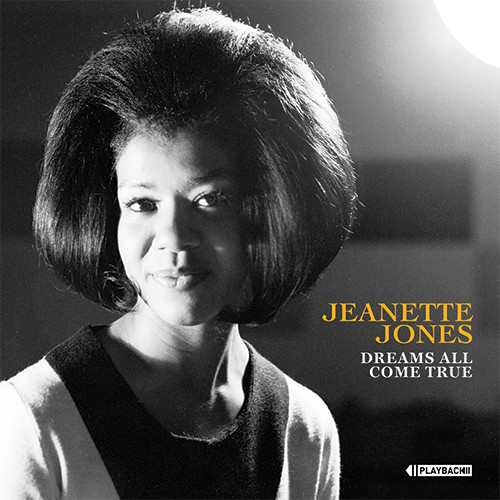
Since then, Jeanette Jones has remained an enigmatic and mysterious figure. Very little is known of her life pre and post music. Nowadays, it is thought that Jeanette Jones lives quietly in San Francisco. That was where the twenty songs on Playback Records’ new Jeanette Jones compilation Dreams All Come True were recorded. Dreams All Come True is the most compressive overview of her career, and covers the times she spent with The Mill Valley Bunch, The Voices Of Victory Choir and her solo carer. These twenty songs document the Jeanette Jones’ musical career.
Details of Jeanette Jones’ early life are somewhat sketchy. It’s thought that she was born and brought up in San Francisco. That was certainly where Jeanette Jones first discovered music.
Just like many future soul singers, Jeanette Jones first started singing in church. That proved to be Jeanette Jones’ gateway into music. However, it was with the Voices Of Victory gospel choir that Jeanette Jones’ first came to prominence.
Cora Wilson had formed The Voices Of Victory gospel choir in 1962. Hers was no ordinary choir though. The Voices of Victory gospel choir featured sixty singers, who travelled the West Coast in their own bus. They sang in churches and at gospel conventions. It was an impressive sight and sound. Especially when the soloists enjoyed their moment in the spotlight. By 1965, one of the soloists was Jeanette Jones.
She was the owner of an impressive and powerful voice. When Jeanette Jones stepped into the spotlight, she combined, power, passion and emotion. Given the her vocal prowess, it was no surprise that Jeanette Jones was one of the stars of The Voices Of Victory gospel choir. Everyone who heard them realised this. So too would Leo Kulka at Golden State Recorders.
Leo Kulka first encountered Jeanette Jones in November 1965. Cara Wilson had booked Golden State Recorders to record an album by The Voices Of Victory gospel choir. Given the size of the choir, Leo Kulka decided to use Golden State Recorders’ larger studio in Harrison Street. After the recording session, Cara Wilson planned to have a limited number of albums pressed, and they would be sold after concerts. In a way, Cara Wilson was just testing the water, to see if there was a market for albums featuring her choir. Soon, Leo Kulka realised that Cara Wilson was underselling her choir.
As the recording session got underway, Leo Kulka immediately realised just how good The Voices Of Victory gospel choir were. Cara Wilson’s choir wasn’t just one of the best in the state, but one of the best on the West Coast. Music this good deserved to be heard by a much wider audience. Especially as they recorded through He’ll Understand, Lord I’ll Go, There Is No Failure In God, Lord I’ll Cry Out and There Is A Fountain which feature on the Dreams All Come True compilation. So does Why which features Jeanette Jones on lead vocal.
When Leo Kulka heard Jeanette Jones’ lead vocal on Why, her voice stopped Leo Kulka in his tracks. It was a cut above the rest of the soloists. Jeanette Jones was capable of singing with power, but was always in control as she delivered the lyrics with emotion and sincerity. From the moment Leo Kulka heard Jeanette Jones sing, he promised himself he was going to sign her. So once the recording session was over, Leo Kulka approached Jeanette Jones, with a view to signing her.
Jeanette Jones wasn’t interested in signing a recording contract. She had no intention in crossing over, and instead, wanted to continue to do what she saw as the “Lord’s work” with The Voices Of Victory gospel choir. This must have come as a surprise to Leo Kulka.
Back in 1965, most singers, including gospel singers, dreamt of signing a recording contract. Even if this meant crossing over from gospel to secular music. Jeanette Jones it appeared was the exception. That was until late 1967.
It wasn’t until late 1967, that Leo Kulka next encountered Jeanette Jones. By then, things had changed for Jeanette Jones. Not only had she crossed over, and was singing secular music, but she also had acquired a manager, Jay Barrett.
He didn’t come from a musical background. Instead, he was a banker who was based in Palo Alto. Although a relative newcomer to the music industry, Jay Barrett wasn’t content to be a manager, he also dreamt of forging a career as a songwriter. Jeanette Jones he hoped would go on to record some of these songs. So he went away to work on a proposal.
By then, Jeanette Jones had signed to Leo Kulka’s Golden Soul label. Leo Kulka was vastly experienced, and would be able to guide Jeanette Jones through the early stages of her recording career. Soon, though, Soon, Jay Barrett came up with a proposal. It stated that if Jeanette Jones was willing to record Jay Barrett’s songs, then he was willing to part finance the recording of a demo. This would be recorded Leo Kulka’s Golden State Recorders. Leo Kulka agreed to this, and began preparing for his first session with Jeanette Jones.
The recording session was scheduled to take place in February 1968. No expense was spared, and Leo Kulka began to put together an extensive backing band. There was a problem though. The songs that Jay Barrett had written were unsuited to Jeanette Jones in their present form.
They were poppy, and sounded like a remnant from earlier in the sixties. Soon, though, Leo Kulka had worked out a solution,..backing vocalists. So Leo Kulka put in a call to Ramona King and her brother Cleo.
Ramona King’s career began in 1962, when she signed to Eden Records. Since then, she had spent time at Warner Bros. Records, Amy and most recently, Action Records. Leo Kulka explained that he needed backing vocalists to accompany Jeanette Jones and help her add some much-needed soulfulness to Jay Barrett’s songs. The Kings agreed, and when the recording sessions began, found themselves at Golden State Recorders.
At that first recording session, Jeanette Jones recorded a couple of Jay Barrett songs, Jealous Moon and Quittin’ The Blues. With the large ensemble accompanying her, the two songs were soon in the can, They were produced by Leo Kulka, with Jay Barrett receiving a co-production credit. The next step, was to try to interest another label in the songs.
Leo Kulka began shopping Jealous Moon and Quittin’ The Blues to various labels. However, none of the labels expressed an interest in releasing the songs. For Leo Kulka, this was a huge disappointment. So he dug deep into his contact book.
The man he decided to consult was Larry Goldberg, an independent producer based in Los Angeles. Larry Goldberg was part talent scout, part producer. Part of his time was spent finding and developing artists. Other times, he shopped his artists to major labels. Just like Leo Kulka, Larry Goldberg was vasty experienced. He also thought he might have the answer to Leo Kulka’s problem.
The answer Larry Goldberg thought, might lie in three backing tracks. This included the Ben Raleigh penned Break Someone Else’s Heart. Another possibility was Andy Badale and Albert Elias’ I Want Action, which had recently given Ruby Winters a hit. The third and final songs was Sam Russell’s Cut Loose, which had been arranged by H.B. Barnum. Having listened to the three pop soul cuts, Leo Kulka agreed that they had the potential to solve his problem. So he gave Jeanette Jones a call, and she made her way to Golden State Recorders.
Although Jeanette Jones was signed to Leo Kulka’s Golden Soul label, she was still singing with the Voices Of Victory gospel choir. Maybe she was keeping her options open, given the life of a professional singer could sometimes, be perilous? Careers were often short, and could be, unpredictable and unprofitable. Jeanette Jones must have realised this after her first recording session. Now was time to try once again.
Having listened to the trio of backing tracks, Jeanette Jones set about laying down vocals. She combined power and emotion, delivering an almost defiant vocal on Break Someone Else’s Heart. Then on Cut Loose, Jeanette Jones delivers a vocal tour de force, as horns and harmonies accompany her vocal on this stomper. On the final song, I Want Action Jeanette Jones again combines power and emotion as she delivers a needy, hopeful vocal. Once the vocals were recorded, Jeanette Jones had done her part. Now it was over to Leo Kulka.
His job was to shop the songs to various labels. Given the quality of the songs, Leo Kulka must have been confident of securing a deal for Jeanette Jones. Despite his best efforts, none of the labels he approached were interested in releasing the songs. Lightning had struck twice for Jeanette Jones.
She returned to the Voices Of Victory gospel choir. By the spring of 1969, Jeanette Jones was now fronting the Voices Of Victory gospel choir. They were still one of the biggest and most successful gospel choirs on the West Coast. Despite this, Jeanette Jones returned to Golden State Recorders.
Still Jeanette Jones hadn’t given up on her dream of making a career out soul music. So she headed to Golden State Recorders. That was where she first encountered singer-songwriter Wally Cox. Leo Kulka had asked him to write a song that would showcase Jeanette Jones’ conferable vocal talents. He delivered a trio of songs, including Darling, I’m Standing By You. It was tailor-made for Jeanette Jones.
At Golden State Recorders, Jeanette Jones prepared to record Darling, I’m Standing By You. With Leo Kulka producing, Jeanette Jones delivered a spine-tingling, soul-baring, testifying vocal. Backing vocalists accompany her every step of the way, as Jeanette Jones combines gospel and soul, on what was a career defining moment.
Meanwhile, Wally Cox went away and wrote two new songs. The Thought Of You was a beautiful mid-tempo ballad, that again, seemed tailor-made for Jeanette Jones. She’s in a reflective mood, as she gives thanks for the love she’s found. Unlike some of the soul being released in 1969, it had a much more modern, contemporary sound. Wally Cox’s other composition was I’m Glad I Got Over You, which features a defiant Jeanette Jones as she delivers another vocal powerhouse against an urgent, driving arrangement. It’s another song with a much more contemporary sound, that could’ve and should’ve transformed Jeanette Jones’ career. Leo Kulka realised this.
So much so, that he was willing to release Darling, I’m Standing By You and The Thought Of You on his own record label, Golden Soul. Leo Kulka hoped that the local R&B and gospel and radio stations would pickup on the single. This Leo Kulka hoped, would result in him being able to cut a distribution deal with a major label. That was the plan.
Leo Kulka had 1,000 copies of Darling, I’m Standing By You and The Thought Of You pressed. These copies he hoped would sell out, and the single would be picked up radio stations in the San Francisco area. However, the 1,000 copies of Darling, I’m Standing By You failed to sell, and Leo Kulka was back to square one.
While many people would’ve called it a day, Leo Kulka decided to use the single to shop Darling, I’m Standing By You to major labels. He took the single to Atlantic, but they turned the song down. Motown then passed on Darling, I’m Standing By You. Things weren’t looking good for Darling, I’m Standing By You, and Jeanette Jones’ career.
She had been trying to make a breakthrough since 1967, and was no nearer to doing so. Things however changed in 1971, when the Bihari brother agreed to release some of Leo Kulka’s releases on their Kent Records and Modern Records’ labels. One of the singles they chose to release was Jeanette Jones’ Darling, I’m Standing By You. Maybe, Jeanette Jones’ luck was changing?
Alas it wasn’t to be. Darling, I’m Standing By You failed commercially, and quickly, the single disappeared without trace. For Leo Kulka and Jeanette Jones it was a frustrating time. The single, Leo Kulka felt, hadn’t received sufficient promotion by Modern Records. So it was no surprise when it failed for commercially. By then, Jeanette Jones was beginning to rethink her future.
Following the commercial failure of Darling, I’m Standing By You, Jeanette Jones started to work as a session singer. She also worked with Mike Bloomfield on his Mill Valley Bunch project. Jeanette Jones takes the lead on the soul-baring ballad What Would I Do Without My Baby and unleashes a vocal powerhouse on Ooh Ooh Ooh, La, La, La which has been remixed. Both songs feature on the Mill Valley Bunch’s one and only album, Casting Pearls, which was released on Verve Records in 1972. Soon, though, Jeanette Jones began to look beyond music.
Jeanette Jones began to do some voiceover work, and was chosen as the voice of the Swiss Colony Wine radio campaign. It was also around this time, that Jeanette Jones began to do some modelling. This kept her busy, and gradually, Jeanette Jones seemed to lose interest in music. Indeed, she only returned to Golden State Recorders one more time.
This was in 1974, when Jeanette Jones headed to Golden State Recorders to record a publishing demo for Barry Goldberg, who a friend of both Mike Bloomfield and Leo Kulka. During that last session, Jeanette Jones cut two tracks penned by Gerry Goffin and Barry Goldberg. The first was You’d Be Good For Me a pulsating slice of uber funky music. Very different was What Have You Got To Gain By Losing Me? It’s a truly beautiful, heart wrenching ballad that showcased Jeanette Jones’ ability to breath life, meaning and emotion into a song. Sadly, after the publishing demo for Barry Goldberg, Jeanette Jones turned her back on music.
Since then, nothing has been heard of her, and the Jeanette Jones’ story is a case of what might have been. She could’ve and should’ve enjoyed commercial success and critical acclaim. Jeanette Jones certainly didn’t lack talent. Quite the opposite
Jeanette Jones was a hugely talented singer, who had the ability to breath life, meaning and emotion into lyrics. She could combine power and passion, and seamlessly switch between ballads and uptempo tracks. Despite her undoubted talent, sadly, Jeanette Jones never made a breakthrough. It was a case of what might have been.
That is despite Leo Kulka championing Jeanette Jones. He produced her, and then shopped the songs to bigger labels. Sadly, only once did a single get picked up by a bigger record, Darling, I’m Standing By You. Even when that happened in 1971, Modern Records didn’t promote the single sufficiently. Maybe this led to Jones considering her future?
After four years struggling to make a breakthrough, maybe reality kicked in and Jeanette Jones realised that not all dreams come true? It was certainly around this time that Jeanette Jones began to work as a session singer. After this, the only time Jeanette Jones returned to a recording studio was to record a publishing demo for Barry Goldberg, Ironically, during that session, Jeanette Jones recorded one of her finest songs What Have You Got To Gain By Losing Me? It’s a poignant reminder of Jeanette Jones, and features on Dreams All Come True, which was recently by Playback Records. Dreams All Come True is the most comprehensive overview of Jeanette Jones’ career and the perfect introduction to her music. The twenty tracks on Dreams All Come True, also document what was a case of what might have been.
What if Jeanette Jones has signed to Leo Kulka’s Golden State in 1965, when he recorded The Voices Of Victory gospel choir? Maybe she would’ve gone on to enjoy a successful career as a soul singer?and gone on to enjoy the success However, Jeanette Jones wanted to continue doing the “Lord’s work.”
Maybe by the time she changed her mind in 1967, it was too late? Music was changing, and changing fast. Suddenly the musical landscape was totally different. By 1967, pop and rock dominated the musical landscape, and the psychedelic revolution was well underway. While soul was still popular, it was nowhere near as popular as pop or rock. Some soul labels, including Stax and Motown were still releasing hit singles by 1967 and would continue to do until over the next four years. Meanwhile, Atlantic Records’ ‘soul years had finished in 1967, but the label had just released Aretha Franklin’s Atlantic Records’ debut I Never Loved a Man the Way I Love You in 1967. This was the start of Aretha Franklin’s Atlantic Records years, which was the most successful period of her career. Sadly, many other talented soul singers struggled to make a breakthrough during this period. This included Jeanette Jones.
Despite her undeniable talent, and her ability to breath life and meaning into a song, commercial success eluded Jeanette Jones.The question is why? Maybe if Leo Kulka had managed to interest a major label in Jeanette Jones, things would’ve been very different? However, there is also the possibility that Jeanette Jones was neither driven nor determined enough to make a career out of music. It could be that Jeanette Jones wasn’t comfortable singing secular music, given her background in gospel music? There’s any number of reasons why commercial success eluded Jeanette Jones.
Deep down, maybe Jeanette Jones knew that enjoying a successful career as a soul singer was a long shot, and very few succeeded? That is doubtful, and if it that was the case, it would be ironic, as Jeanette Jones had what it took to enjoy a long and successful career in music. Dreams All Come True is proof of this, and is a reminder of Jeanette Jones who could’ve, and should’ve, gone on to greater things. Sadly, commercial success and critical acclaim passed Jeanette Jones by who is proof that not All Dreams All Come True.
Jeanette Jones-Dreams All Come True.
VASHTI BUNYAN-THE QUEEN OF PSYCH FOLK.
Vashti Bunyan- The Queen Of Psych Folk
Vashti Bunyan was just twenty when she was “discovered” by Andrew Loog Oldham. This wasn’t the direction Vashti envisaged her career heading when she left her London home and headed to the Ruskin School of Drawing and Fine Art, the art school at Oxford University.
Alas, the dreaming spires of Oxford University weren’t for Vashti Bunyan. It was a familiar story. Vashti failed to turn up for classes and eventually, was expelled from the Ruskin School of Drawing and Fine Art. For Vashti Bunyan, this proved to be the start of a new chapter in her career.
With the folk boom well underway Vashti who was just eighteen, headed to New York in 1963. This was just after Bob Dylan had just released his classic album, The Freewheelin’ Bob Dylan. In New York, Vashti discovered Bob Dylan’s music. The gateway to Bob Dylan’s music was his opus, The Freewheelin’ Bob Dylan. Having immersed herself in Bob Dylan’s music, Vashti realised what she wanted to do with the rest of her life. She wanted to be a musician.
So Vashti headed home to London. It was there that she encountered Andrew Loog Oldham, The Rolling Stones’ manager. He spotted Vashti’s potential and became her manager. In June 1965, Vashti Bunyan released her debut single as Vashti.
This was no ordinary single. It was a single penned by Mick Jagger and Keith Richards. Some Things Just Stick in Your Mind had originally been released by The Rolling Stones on 13th February 1964. Just sixteen months later, the Jagger-Richards’ penned Some Things Just Stick in Your Mind was released in June 1965 on Decca. For Vashti, this was an inauspicious debut. It failed to chart. Maybe her sophomore single would fare better?
It wasn’t until May 1966, that Vashti Bunyan released her sophomore single. This was Train Song. Produced by Peter Snell, Train Song was released on Columbia. Lightning struck twice. Train Song disappeared without trace. For Vashti, her nascent musical career seemed to have stalled.
For the next two years, very little was heard of Vashti. Her only appearance was on The Coldest Night of the Year, a track from Twice as Much’s sophomore album That’s All. That proved to be an ironic title, as that’s all that was heard from Vashti during that period of her career.
Although Vashti records other songs for Andrew Loog Oldham’s Immediate Records during this period, they were never released. Instead, the languished in the Immediate Records’ vaults, For Vashti, this must have been disappointing and disheartening. Maybe that’s why Vashti and her then partner, Robert Lewis, decided to head off on a road trip.
This was very different to Jack Kerouac’s legendary road trip in On The Road. Vashti and Robert headed off to the Hebridean Islands by horse and cart. That was where singer- songwriter Donavan, a friend of Vashti, had planned to established a commune. This trip proved to be inspirational for Vashti.
During the road trip to the Hebridean Islands, Vashti wrote the songs that featured on her 1970 debut album Just Another Diamond Day. It would be produced by Joe Boyd, who Joe met at Christmas, 1968.
It was through a mutual friend that Vashti and Joe Boyd met. When Joe saw the songs, he immediately offered Vashti the chance to record an album of her travelling songs for his Witchseason Productions. However, this didn’t happen immediately.
Just Another Diamond Day.
A year later, in 1969, Vashti returned to London to record her debut album Just Another Diamond Day, with Joe Boyd. Vashti had no band, but this didn’t matter. An all-star folk band would join Vashti in the studio to record on Another Diamond Day.
This included Dave Swarbrick and Simon Nicol from Fairport Convention. They were joined by the Incredible String Band’s Robin Williamson. The final piece of the jigsaw was string arranger, Robert Kirby. Just like Joe Boyd, Robert Kirby would go on to work with Nick Drake. Before that, they worked on Just Another Diamond Day, which was recorded at Sound Techniques Studios, in London. Just Another Diamond Day was then released in December 1970.
When Just Another Diamond Day was released in December 1970, it was well received by critics. They appreciated Vashti Bunyan’s new sound. She was now a fully fledged folk singer. This suited Vashti. Just Another Diamond Day veered between pastoral, ethereal, lush, understated, rural, melancholy, cerebral and cinematic. Sadly, when Just Another Diamond Day was released, it failed commercially. Vashti took this badly.
She retired from music after the commercial failure of Just Another Diamond Day. At first, Vashti stayed in one of The Incredible String Band’s Glen Row cottages. After that, Vashti moved to Ireland, and then settled in to Scotland. For the next thirty years, Vashti settled into family life. She had three children. As her children grew up, little did Vashti realise that somewhat belatedly, Just Another Diamond Day found the audience it so richly deserved.
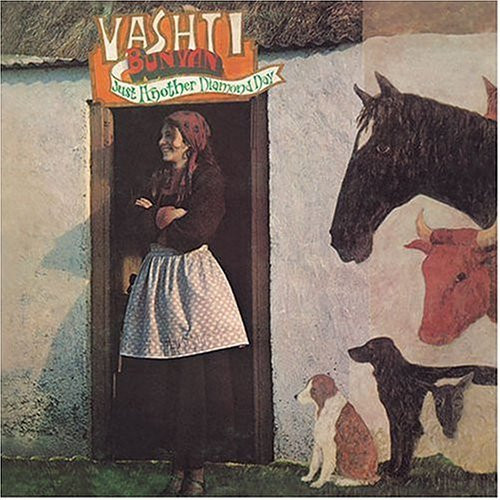
Since her retirement in 1970, gradually, Another Diamond Day found the audience it deserved. It was reappraised by a new generation of music lovers and critics. Among Just Another Diamond Day’s fans, were a new generation of musicians who had been influenced by Vashti Bunyan. They realised that Just Another Diamond Day, which was reissued in 2000, was a long-lost classic. Eventually, Vashti Bunyan decided to make a welcome return to music in 2002.
This started with Vashti making guest appearances on Piano Magic’s 2002 single Writers Without Homes. Two years later, Piano Magic and Vashti collaborated on the Saint Marie E.P. This was just the start of a string of guest appearances and collaborations that Vashti made.
Vashti’s next collaboration was on Devendra Banhart’s 2004 album Rejoicing In The Hands. This was quite fitting as nowadays, Vashti is credited as the the Queen of Psych Folk and Devendra Banhart is one of her disciples. It was a case of two generations of psych folk singers collaborating. This wasn’t the last of Vashti’s collaborations.
A year later, Vashti worked with another band who were influenced by her music. This was Animal Collective. Vashti appeared on their 2005 E.P. Prospect Hunter. However, the most important release for Vashti in 2005 was her sophomore album Lookaftering.
Lookaftering.
It had been a long time coming. Thirty-five years to be precise. However, eventually, Vashti made a very welcome return to the studio. The result was her sophomore album Lookaftering.
On Lookaftering, Vashti was joined by some of the artists she had influenced. This included Devendra Banhart and Joanna Newsom. A familiar face was Robert Kirby, who played such an important part in Vashti’s 1970 debut album Just Another Diamond Day. He played trumpet and French horn on Lookaftering, which was released in October 2005.
Just like when Just Another Diamond Day was released December 1970, Lookaftering was released to critical acclaim. Lookaftering was released to an appreciative audience. Understated, ethereal, cerebral, beautiful and ruminative, Lookaftering was a return to form from a reflective, philosophical Vashti. Older and wiser, Vashti Bunyan had matured with age. Surely, it wouldn’t be long before Vashti released her third album?
That’s proved not to be the case. Nine years have passed since Vashti released Lookaftering, Valerie released her third album Heartleap in October 2014.
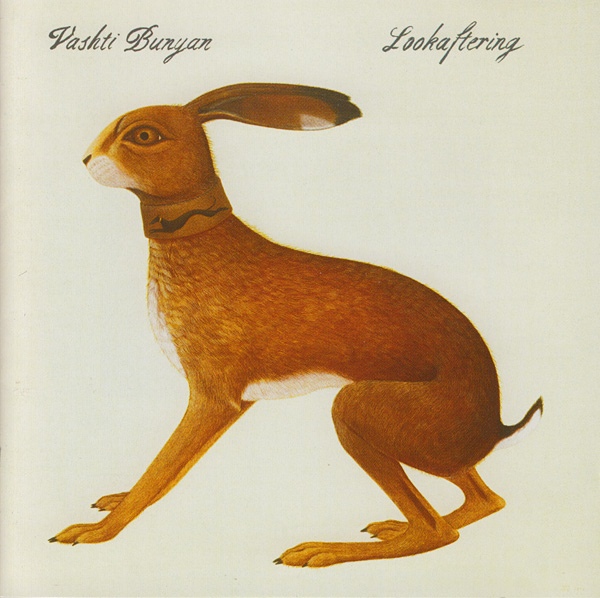
Heartleap.
Heartleap features nine songs written by Vashti. She plays acoustic guitar and is accompanied by a small, talented band. This includes strings courtesy of Fiona Bruce, Ian Burdge and Gillian Cameron. Guitarists Garth Dickson and Andy Cabic are joined by Jo Mango on kalimba and dulcimer. Saxophonist Ian Wilson also plays recorder. Devendra Banhart, who featured on Lookaftering, makes a welcome return, adding backing vocals. These musicians played their part in the recording of Heartleap.
When Heartleap was released, critics hailed the album as a return to form from Vashti Bunyan. Thirty-five years after turning her back on music, and twelve years since she stepped back into the limelight, the Queen of Psych Folk was back, and better than ever.
Across The Water opened Heartleap, and is a mixture of ethereal beauty and melancholia. This set the scene for the pastoral beauty of Holy Smoke. Mother then features a reflective Vashti, as remembers her mother sitting playing her piano and smiling. Sadness and melancholia fill Vashti’s voice on this beautiful autobiographical song. Very different is Jellyfish, a dreamy, lysergic song. It gives way to Shell, a captivating song, where Vashti veers between storyteller and philosopher. Imagery and metaphors are omnipresent as a worldweary Vashti delivers cerebral lyrics. The Boy features moving lyrics that have a cinematic quality. So do the lyrics to Gunpowder, another reflective song, where a rueful Vashti sings of love and love lost. Blue Shed finds Vashti accompanied by a lone piano who longs to be alone. There’s a change of mood on Here, a beautiful, joyous paean, which features a whispery vocal from Vashti. Heartleap closes with the title-track, where Vashti’s breathy vocal, delivers beautiful lyrics that are akin to a stream of consciousness. This crowned Vashti Bunyan’s comeback album Heartleap, an album that could’ve and should’ve transformed her career.
Sadly, when Heartleap was released in October 2014, the album passed most people by despite its undeniable quality. Heartleap failed to find the wider audience it deserved. For Vashti who was then sixty-nine, this must have been hugely disappointing and frustrating. Especially considering the quality of music on Heartleap
Heartleap was an album that oozes quality and ethereal beauty. That’s the case from the opening bars of Across The Water, to the closing notes of Heartleap. It’s best described as dreamy, melancholy, beautiful, ethereal, haunting, cerebral and wistful. Elements of ambient, folk, jazz, freak folk and psychedelia can be heard during the ten songs on Heartleap. It’s a potent and heady brew, that features thirty-four flawless minutes of music, as Vashti Bunyan showcases her considerable talents during a career defining opus.
Incredibly, Heartleap is only Vashti Bunyan’s third album, despite her career beginning back in 1965. After the commercial failure of her debut 1970 debut album Just Another Diamond Day, Vashti turned her back on music. It was thirty-five years until we heard from Vashti Bunyan. She released Lookaftering in 2005. Many thought Vashti was back for good. However, since then, she flitted out of our lives for another nine years. Although she dabbled in music, she never released another album until Heartleap in 2014. Sadly, that looks like being Vashti Bunyan’s swan-song.
Three years after the release of Heartleap, Vashti Bunyan is now seventy-two. Her legion of loyal fans would love Vashti to return with her fourth album. However, it must be incredibly frustrating releasing albums of the quality of Just Another Diamond Day, Lookaftering and her career defining album Heartleap and watch them fail to find the audience they so richly deserve. That’s a great shame, as Vashti Bunyan has always a been hugely talented singer and songwriter.
That was the case in 1970, when she released Just Another Diamond Day, an album which was ahead of the musical curve. It was only much later that the Queen of Psych Folk’s debut album was discovered by a new generation of music lovers, critics and musicians. They flew the flag for Vashti Bunyan when she released Lookaftering and Heartleap. At last, the Queen of Psych Folk was back and was still a musical pioneer. Sadly, though, outside her loyal coterie of fans, Vashti Bunyan is largely unknown. Most people are still unaware of the trio of albums Vashti released between 1970 and 2014. Just Another Diamond Day, Lookaftering and Heartleap are best described as true hidden gems, that have yet to be discovered by the wider record buying public. Maybe, one day soon, a much wider audience will discover the musical delights of Vashti Bunyan, and no longer will the Queen of Psych Folk be referred to as one of music’s best kept secrets?
Vashti Bunyan- The Queen Of Psych Folk.

DJ MARKY-INFLUENCES VOL 2.
DJ Marky-Influences Vol. 2.
Label: BBE.
DJ Marky has come a long way since he started DJ-ing in his hometown of São Paulo, Brazil over twenty-five years ago. He made his DJ-ing debut at the age of the tender age of twelve. Little did he know that he had just made his first tentative steps in what would be a long and illustrious DJ-ing career.
Nowadays, DJ Marky is regarded as one of the world’s leading DJs. Night after night, audiences worldwide are wowed by DJ Marky’s eclectic DJ sets that include everything from traditional Brazilian music, disco and acid jazz, to early house and drum ’n’ bass. However, DJ Marky isn’t just a DJ. Since 1999, he’s been releasing mix CDs and has also released several compilations. This includes Influences Vol. 2, a compilation album and DJ mix which was recently released on BBE. Influences Vol. 2 is a two CD set which showcases some of DJ Marky’s favourite music and his mixing skills. It has taken over twenty-five years to perfect.
It was in 1992 that Marky Mark as he was then known, started spinning drum ’n’ bass with a hardcore edge. The only problem was that this didn’t have the same widespread appeal as the more mainstream sound. Marky Mark was so disheartened that he almost gave up. However, he carried on and was determined to make a career as a DJ.
Gradually, things started to improve for Marky Mark. His popularity grew and soon, he was regarded as one of the rising stars of Brazilian DJ-ing. This resulted in Marky Mark being asked to compile a compilation for a São Paulo based label. In 1996, Marky Mark Any Time a compilation of drum ’n’ bass was released. For Marky Mark it was the first of many albums he would be involved in.
Two years later, in 1998, British DJ Bryan Gee spotted Marky DJ-ing in a club in São Paulo in 1998. Bryan Gee watched as Marky Mark showcased his incredible scratching skills. It was then that he realised that Marky Mark was a cut above most of the DJs he saw week-in, week-out. After Marky Mark had finished his set, Bryan Gee invited Marky Mark to play in London. This was the start of the rise and rise of the man born Marco Antônio Silva.
When Marky Mark started playing in London, dancers and DJs were impressed by his vibrant, melodic and eclectic sets. This was the shot in the arm the British drum and bass scene was needing at that time. It had started to stagnate, but the arrival of Marky Mark raised the bar.
After his successful DJ-ing debut in Britain, and the success he was enjoying at home in Brazil, it was only a matter of time before he recorded his own mix album. This was something many DJs were doing at that time. Not only was it a profitable venture for many DJs, but it raised their profile. Marky Mark decided the time was right to record his first commercial mix album.
To do that, Marky Mark didn’t head into a top club or even a recording studio. Instead, he chose a pile of albums and set up two turntables and his mixer in his house. When he was ready, he pressed record and recorded what eventually became Working The Mix. With the mix complete, Marky Mark decided to see if a record company would release it.
He took it to A&R executives at Paradoxx Music, in São Paulo, and they were won over by his selection of songs and elaborate mixes. Paradoxx Music agreed to release Working The Mix in 1999, which became his first commercial release. When it was released the album was a commercial success. However, things were about to get even better.
Later in 1999, Marky Mark was crowned the Best New DJ in Britain. By then, Marky Mark well on his way to becoming one of the top DJs in Britain and Brazil. Marky Mark had come a long way in seven years.
As the new millennia dawned, Marky Mark was busier than ever. His services as a DJ were constantly in demand. Despite that, Marky Mark found time to record a new mix album and compile a new compilation of drum ’n’ bass. When the Audio Architecture mix album was released in 2000, Marky Mark was now billed as DJ Marky. His other release in during 2000 was his second compilation, Flash Drum ‘N’ Bass By DJ Marky Mark. The newly rebranded DJ Marky had just enjoyed one of the busiest years of of his career so far.
There was no sign of DJ Marky slowing down in 2001, and he released two more mix albums. This included The Brazilian Job, a drum ’n’ bass mix album, and Audio Architecture: 2, which was a more eclectic mix. It featured drum ’n’ bass, broken beat and jungle. Both albums were welcomed by DJ Marky’s constantly growing fan-base.
Three years passed before DJ Marky returned with another new mix album. This was Bingo Sessions Volume 2, a drum ’n’ bass mix which was released in 2005. It was followed by The Master Plan another drum ’n’ bass mix in 2007. By then, DJ Marky was well on the way to becoming one of the most successful DJs in the world.
Despite living the life of a globetrotting DJ, DJ Marky still found time to compile the first instalment in the Influences’ series for BBE. The two disc set featured a compilation and DJ Marky’s most eclectic mix, which featured disco, drum ’n’ bass and funk, to house, jazz-funk and Latin music. When it was released in 2008, it was to widespread critical acclaim. Influences was by far, the best and most eclectic and compilation mix album of DJ Marky’s career.
Two years later, and DJ Marky was back with not one but two mix albums, including Fabriclive 55. The other release was a new compilation and mix album for BBE, where DJ Marky hooked up with 4Hero, an old DJ-ing friend he met in the late-nineties. 4Hero + DJ Marky released The Kings Of Drum and Bass to critical acclaim on BBE in 2010.
After the released of The Kings Of Drum and Bass in 2010, DJ Marky’s career continued to reach new heights. Still, though, he knew that there were things he hadn’t accomplished. This included releasing his debut album. Eventually, in 2015 My Heroes was released. Since then, he’s spent most of his time DJ-ing, but found time to compile Influences Vol. 2 for BBE.
Influences Vol. 2 is a two CD set, with CD one featuring an eighteen track mix by DJ Marky. His mixing is absolutely flawless as he mixes his way through eighteen songs. This ranges from acid jazz, Chicago house, disco, drum ’n’ bass, funk, jazz-funk, Latin, jazz and traditional Brazilian music. It’s a seamless mix that showcases DJ Marky’s musical taste.
CD One-Mixed.
DJ Marky’s mix opens with the soulful sound of William DeVaughn’s 1974 single on Roxbury Records, Blood Is Thicker Than Water, which gives way to the soulful disco of Maryann Farra and Satin Soul’s You Got To Be The One. This was the title-track to their 1976 debut album which was released on Brunswick. After that, DJ Marky drops The Pasito Allstars’ Cosa Nostra, which is an irresistible slice of soulful, funky, Latin music. It’s followed up by a track from one of the leading lights of the acid jazz scene, The Brand New Heavies featuring N’Dea Davenport. Dream Come True originally featured on their 1991 debut album The Brand New Heavies, but DJ Marky has chosen the Joey Negro Reality Mix. It’s the perfect addition and is followed the funky disco sound of Benelux and Nancy Dee 1979 single Switch. Gradually, the mix is building as Clyde Alexander and Sanction’s 1980 disco single enters. By then, it’s obvious that DJ Marky has impeccable musical taste.
From there, it’s time to jack as DJ Marky remembers the early days of Chicago house. He’s a picked a trio of classic tracks, staring with Phortune’s 1991 single on String Free on Hot Mix 5 Records. It’s followed by the K and T Dance Mix of Maurice’s This Is Acid, which was released on Vendetta Records in 1988. The same year, Easy Street Records released Hardhouse’s Check This Out. After this journey into early house, DJ Marky seamlessly mixes into Galaxy 2 Galaxy’s Timeline which was released on Submerge in 2006. So was Laurentius’ deep house single Karate Samba. Suddenly, the mix is building thanks to this laid-back, mellow slice of musical sunshine. This is a signal that things are about to change.
The tempo rises The Manuel Azevedo Quartet’s Futebol De Bar which was released on Freestyle Records in 2015. It’s four irresistible and uplifting minutes of Latin jazz. From there, the tempo continues to rise on Double Dee featuring Dany’s house anthem Found Love. It was originally released as a single in Italy on Five Record Indipendent in 1990, and in 1991 featured on the album Dee Dee. Briefly, DJ Marky allows dancers to draw breath before Manfredo Fest’s 1979 single for Bluebird Jungle Kitten bursts into life. By then, Latin jazz and jazz funk melt into on this hidden gem. Soon, though, DJ Marky is changing direction again.
is, the mix heads in the direction of drum ’n’ bass. First in a quartet of drum ’n’ bass tracks is Skanna’s Find Me, a track from the Find Me (The Remixes) EP, which was released on Skanna in 1995. Seamlessly this mixes into a Remix Pt I of Origin Unknown’s Truly One, which was the B-Side to their 1998 single on Ram Records Valley Of The Shadows. The two songs are like a musical yin and yang, and mix perfectly. DJ Marky’s track selection is peerless, as he pieces together what’s akin to a musical jigsaw. As the tempo continues to rise, he adds DJ Die Gnarly Mix of Roni Size Reprazent’s Watching Windows is added. It’s taken from the Watching Windows EP released on Talkin’ Loud in 1997. Having mixed his way through seventeen songs, DJ Marky reaches for his last selection Influx Datum’s Meant Love, which was the B-Side to Dayz Of Glory which was released on Headquarters in 2002. Fittingly, this is another slice of drum ’n’ bass, which DJ Marky has spent his career his spinning. However, Meant Love has a soulful and melodic sound, and ensures that DJ Marky’s eighteen track mix ends on a high.
CD Two-Unmixed.
Only twelve songs feature on the CD Two, the unmixed disc. They’re all full-length tracks unlike on disc one, where sometimes, DJ Marky mixes before the end of the track. This isn’t unusual, as DJs are always looking for the perfect mix out point. Seven of the eighteen songs from CD One feature on CD Two including: Benelux and Nancy Dee’s Switch, Clyde Alexander and Sanction’s Got To Have Your Love, Influx Datum’s Meant Love, The Brand New Heavies featuring N’Dea Davenports’ Dream Come True, Manfredo Fest’s Jungle Kitten, Skanna’s Find Me and Lars Bartkuhn’s Karate Samba. They’re joined by five new tracks.
The first of those is Esther Williams’ Last Night Changed It All (I Really Had A Ball). This is a track from her 1976 album Let Me Show You, which was released on the Friends and Co label. It’s a soulful slice of disco that forty-one years later, still sounds as good as the day it was released.
The Armed Gang were an Italo synth-funk band, who released Are You Ready as a single on Musix Records in 1983. It was popular not just in Europe, but in Brazil. Later in 1983 The Armed Gang released their one and only album The Armed Gang By them, they were billed as Kenny Claiborne and The Armed Gang. Without doubt, the finest track on the album was Are You Ready?
Given DJ Marky’s love of early house, it’s no surprise to see Jack Frost and The Circle Jerks’ Clap Me included. It was released on the legendary Chicago house label Trax Records in 1988. Clap Me is a reminder of the early days of the house revolution. So too is Cultural Vibe’s 1986 single for Easy Street Records, Ma Foom Bey. It’s Chicago house with a spiritual twist.
Closing CD Two of Influences Vol. 2 is Rotation, a techno track from veteran producer Dave Angel. It was originally released in 1993 on Rotation Records, as part of the Royal Techno EP on Rotation Records. Rotation is just another example of how eclectic DJ Marky’s musical taste is on Influences Vol. 2.
DJ Marky has chosen twenty-three tracks for Influences Vol. 2, which was recently released by BBE. It’s the long-awaited followup to Influences, which was released back in 2008. Nine years later, and DJ Marky is one of the world’s top DJ. That is no surprise, given his performance on the mix on CD One, shows just why he is one of the world’s leading DJs.
He takes eighteen tracks and seamlessly mixes them during what’s a flawless performance during an eclectic mix. DJ Marky takes the listener on a musical journey, full of twists and turns. During that journey, DJ Marky plays Acid Jazz, Chicago house, disco, drum ’n’ bass, funk, jazz-funk, Latin jazz and Philly Soul. As the journey unfolds, DJ Marky makes some difficult transitions, but manages to find the perfect play to mix in and out it. However, everything falls into place as the mix builds, and eventually, DJ Marky reaches his destination Influences Vol. 2.
Then on CD Two, which is unmixed there’s twelve tracks, including five that weren’t in the mix. There’s more Chicago house and disco, plus Italo synth-funk and techno as DJ Marky showcases his eclectic and impeccable musical taste. He’s obviously someone who has a passion for music, and not just the type of music he spins. Instead, DJ Marky seems to enjoy a wide range of music, and wants to share his love of music on Influences Vol. 2.
It features a mixture of familiar faces, new names and hidden gems. Influences Vol. 2 is sure to appeal to a wide range of music fans. That isn’t always the case, as nowadays, many compilations are genre specific, and only appeal to people who enjoy that type of music. However, given the eclectic nature of Influences Vol. 2, DJ Marky’s seamless mixing and impeccable musical taste, it’s a compilation that’s guaranteed to appeal to a wide range of music fans. One listen and you’re sure to agree.
DJ Marky-Influences Vol. 2.



NON BAND-NON BAND.
Non Band-Non Band.
Label: TAL
In the summer of 1978, a musical revolution took place in Japan, which changed music forevermore,..punk. The Japanese punk rockers were christened Tokyo Rockers, and initially were disregarded by the mainstream music industry. Record company executives made the mistake of thinking that the Japanese punk movement was just a passing fad, and that before long, it would be replaced by another musical movement. How wrong they were.
Left to their own devices, a vibrant and thriving underground music scene was born. Over the next few years, the Tokyo Rockers headed to underground clubs, which were similar to the ones frequented by British punks just a couple of years earlier. The Tokyo Rockers saw an eclectic selection of bands ranging from the new punk groups through to avant-garde bands and even on occasions, indie rockers. It was a fascinating scene populated by of independent and individualistic musicians who were keen to make an impression on the audiences. Some bands however, stood out from the crowd, including Maria 023, a male-female duo.
Maria 023 were just one of many bands who had caught the imagination of the Tokyo Rockers. Their lineup featured Genet and the bassist Non. She and Genet released the EP, Maria 023, which was released on Gozira Records in 1978, featured Theme and Human Being with Machine Sex and Face To Face on the B-Side. This was their one and only release, because Maria 023 proved to be a short-lived band.
During the short time that Maria 023 were together, they made a lasting impression on the Tokyo Rockers. Especially Maria 023’s bassist Non, who had come close to becoming a cult figure. However, when Maria 023 split-up, nothing was heard of Non until August 1979.
Non made her comeback at a legendary concert, Drive To 80s. Nobody was aware that Non was about to make her comeback that night, until she took to the stage. Accompanied by just her bass, she stood centre-stage, and sung several new songs during an intense, emotive and highly charged performance. When Non left the stage that night, little did she know that this was the start of a new chapter in her career.
Over the next few months, Non played a series of solo gigs. Non would pitch up at the venue with just her bass, and sing her new songs. By then, she was a talisman figure and role model amongst the female Tokyo Rockers. They admired and were inspired by Non, who they saw as a strong, independent young woman. For many female Tokyo Rockers, Non was everything they wanted to be, if they had been able to cast off their inhibitions. As a solo artist, she was already one of the leading lights of the Japanese punk movement. Soon, though, Non would form a band that would write their way into Japanese musical history…Non Band.
It was almost inevitable that Non would make the move from solo artist to founding her own, new band. Just like many new bands, it took several changes in lineup before they arrived at a settled lineup. By then, the Non Band’s lineup featured drummer Mitsuru Tamagak, bassist Non and Kinosuke Yamagishi who switched between clarinet and violin. This was the classic lineup of the Non Band, and the one that found the group at the peak of their musical powers. However, music was changing within Japan.
By then, the Japanese punk and new wave rock scene was evolving, and moving in a new direction. Many new bands were also being formed, including the second generation of bands. This was similar to what had happened in Britain. Just like in Britain, many new independent labels were also being formed and offered bands, old and new, an outlet for their music. This included Telegraph Records, which had been formed by Jibiky Yuichi in 1981. He then started putting together a distribution network for the records he planed to release.
Ever since forming Telegraph Records, Jibiky Yuichi had been watching the progress of Non Band. He was a fan of their music, and deep down, had always hoped that one day, he would be able to release a Non Band album. However, with so many new independent labels being founded, the best bands could have their pick of labels. The Non Band were one of the best bands, and convincing the Non Band to sign to a relatively new label wasn’t going to be easy.
Jibiky Yuichi proved persuasive and the Non Band eventually signed to Telegraph Records. Having signed a recording contract, the next step was for the Non Band to record their debut album.
Recording began at the Mod Studio, in Tokyo, in October 1981. The Non Band’s lineup featured drummer and percussionist Mitsuru Tamagak, Non who played bass, guitar and added vocals, plus Kinosuke Yamagishi who played clarinet, violin and mandolin. They were augmented by Chiko Hige who played mini keyboards plus Kummy and Mitsuwa who added the chorus. Producing the album was the Non Band, who completed their eponymous debut album in November 1981.
Three months later, and the Non Band and Telegraph Records were preparing to released their eponymous debut album in February 1982. This was step into the unknown for Non Band, while Telegraph Records the album was the label’s fifth release. Unlike most albums being released in 1982, a decision had been made to release Non Band as a ten inch album. It featured six songs from the Non Band, which it was hoped would introduce their music to a wider audience.
Jibiky Yuichi who owned Telegraph Records, knew that at best, a release like Non Band would sell around 1,000 copies. If Non Band sold anything like 1,000 copies the album would be deemed a success. When Non Band was released, the album surpassed even Jibiky Yuichi’s expectations. After repressing Non Band several times, the numbers were added up, and Jibiky Yuichi announced that the album had sold 2,000 copies. Non Band had a hit album on their hands. Soon, their popularity soared and Non Band was receiving critically acclaimed reviews. Thirty-five years later, and Non Band is a genre classic, which was recently on the Düsseldorf based TAL label. The success of Non Band marked the start of rise and the Non Band.
Opening Non Band is their theme tune Duncan Dancin’, whose title refers to the famous dancer, Isadora Duncan. It bursts into life, and is powered along by ohayashi rhythms that normally can be heard during the summer Neputa festival in Hirosaki. Stabs of scratchy free jazz clarinet accompany the hypnotic rhythms and usher in Non’s coquettish vocal. She’s briefly accompanied by the chorus, who disappear and reappear as the arrangement continues to reveal its secrets. This includes the plucked bass, shimmering guitar and Non’s scatted vocal. By then, a truly unforgettable, genre-melting dance track is unfolding. Later, Non unleashes a fleet fingered, funky bass, and latterly, a vocal powerhouse as this irresistible song reaches a memorable crescendo.
A dark menacing bass, otherworldly violin and drums play slowly on Ghetto. Against this backdrop, Non delivers a vocal that veers between breathy and tender to sultry and powerful. By then, the frustration of Ghetto life has gotten to her and her vocal is the equivalent of Primal Scream Therapy. When the vocal drops out, just occasional bursts of dramatic drums, a weaving bass and eerie violin plays. Then when Non returns, her vocal is a mixture of emotion, frustration, anger and sadness. Sometimes, there’s a nod to Siouxsie Sioux in Non’s delivery. Later, as Non exits stage left, the rest of Non Band enjoy their moment in the sun, creating a melodic, urgent and latterly, dramatic backdrop to one of the album’s highlights.
A mesmeric bass plays on Wild Child (Can’t Stand It) before a gypsy violin dances and drums pound. They accompany Non as she dawns the role of the Wild Child, and unleashes a defiant, powerful vocal. She seems to have embraced the role of Wild Child fully as the tempo and drama builds. Non becomes the enfant terrible as she spits out the vocal. Eventually, calm us restored and she sings softly, before exploding into life. Meanwhile, the band showcase their considerable skills and versatility, as they provide the backdrop for what’s akin to musical theatre from the enfant terrible of the Tokyo Rockers.
As Solar unfolds, the thunderous bass is joined by the mesmeric drums and the ruminative sound of the violin. Soon, they’re joined by Non, who joyously delivers the lyrics. Meanwhile, drums crack, as the bass weaves its way across the arrangement and joins the dreamy violin. When a drum cracks, the bass becomes funky, jerky and abstract as the violin dances for joy. Non’s vocal is a mixture of power and enthusiasm, as genre melt into one. Still, the song continues to reveals its secrets as it flows along. Later, the rhythm section and violin play leading roles during as Non’s scatted vocal flits in and out during a captivating song that features Non Group at their best.
Dance Song starts slowly, with the rhythm section exploring the groove, while Non releases an urgent vocal. It drifts in and out, leaving the rhythm section and shakers. Soon, it’s back to stay, and a braying, groaning clarinet adds a contrast and the tempo rises. Drums power the arrangement and backing vocal accompany Non’s urgent vocal. Her bass is joined by drums that crack, while the clarinet threatens to head in the direction of free jazz. All the time, drums provide a 4/4 rhythm that powers this urgent, joyous genre-melting track that straddles punk, post punk, funk, pop and jazz.
Drums gallop along on あわのうた~Bap Pang which closes Non Song. Soon, they’re joined by a scratchy, but melodic violin before Non sings softly. Meanwhile, the drums skip along, providing the perfect foil for the violin that takes centre-stage. Even the addition of the toy keyboards, works and adds to the song. They add a hypnotic sound, as Non continues to sing softly. Midway through the song it starts to taken on experimental sound. The sound of someone knocking on a window, shakers, scrabbled drums and a bounding bass are game-changers. Suddenly, it’s all change as the Non Band embark upon a short experimental jam. When they come out the other side, the rhythm section power the arrangement along, as the urgent violin and Non’s vocal join with keyboards and backing vocals as the song heads for the finishing line. It’s been a six-minute magical musical mystery tour, with surprises aplenty in-store on the song that closes Non Band, a timeless, genre classic.
Although Non Band were primarily a punk group, their eponymous debut album was much more than a punk album. There were elements of the post punk and new wave sounds, and occasional diversions into funk, free jazz, traditional Japanese music and even some poppy hooks. Very occasionally, Non Band took on a jazz and experimental sound and headed in the direction of avant-garde. Mostly, Non Band evokes the spirit of ’78, when the punk arrived in Japan. However, music had changed by late 1981 when Non Band was recorded, and this explains why it’s such a genre-melting album. Non Band was much more than a punk album, that launched the career of punk pioneers Non Group.
Following the success of Non Band, it was a case of hail the conquering heroes when the group took to the stage. By then, Non Band’s lineup had been expanded when two female rockers joined the group. Guitarist Kummy and keyboardist Mitsuwa joined Non Band at what proved to be the peak of their powers.
Everyone within the Tokyo Rockers’ scene expected the Non Band to go on to even greater success. Non Band was surely, the first of many critically acclaimed albums. Sadly, that wasn’t to be. Six months after the release of the Non Band, the Non Band was no more.
When members of the band departed, Non struggled to find suitable replacements. Eventually, she realised that it was an uphill struggle, and the Non Band disbanded. It was the end of the line for a truly innovative band. They went out at the peak of their powers, unlike some of their British counterparts who in similar circumstances, struggled on and became a parody of their former selves. Not the Non Band. They weren’t going to fade away, and went out at the top.
Non drifted away from the Tokyo Rockers’ scene, and returned home to Hirosaki in the south-west Aomori Prefecture, of Japan. This was the start of another new chapter in Non’s life. She settled down and raised two children, and eventually, took over the running of the family business. The former Tokyo Rocker now found herself running an arts supplies business. While she was happy in her new life, it was almost inevitable that Non would one day, contemplate a comeback.
It wasn’t until 1999 that Non started to think about her former life as a musician. She realised that she missed music, and began putting plans in place for the second coming of Non.
Twenty years after her triumphant comeback at Drive To 80s in August 1979, Non went in search of like-minded musicians. She found Keiji Haino and Tatsuya Yoshida, who Non invited to her home in Hirosaki. They began playing live together, and sometimes, Non played solo gigs. The second coming of Non was well underway.
For Non it was a new chapter in a story that started over twenty years earlier. However, it was a story that would run and run.
Non returned to Tokyo, where she had made her name in the late-seventies, but this time as a solo artist. Fans of the Non Band awaited her first appearance in Tokyo in two decades. As Non took to the stage, she was welcomed by fans old and new. It was a triumphant return, and Non’s comeback was almost complete.
The only thing that Non still had to do was release her debut solo album. That came in 2002, when Non released her much-anticipated debut album Ie. It received praise and plaudits, thanks to songs like Vagabond, Love Song and OK Song. Non’s comeback was complete. However, now that Non was back, she was here to stay, she was about to hatch a new plan.
Despite establishing herself as a successful solo artist, Non had unfinished business from twenty years ago. She decided it was time to make two phone calls. However, she didn’t know what response she would receive when she called Mitsuru Tamagak and Kinosuke Yamagishi. They were pleased to hear from Non, and agreed to reform the Non Band.
Just like their final performances in 1982, the original trio was expanded, with accordionist Emi Sasaki joining the Non Band. The newly expanded lineup of the Non Band booked a few comeback gigs, after twenty years away.
When the Non Band played their comeback gigs after twenty years away, it was to a wider fan-base. Since the Non Band had been away, a new generation had discovered their eponymous debut album. It was now a genre classic, that had won over two generations of music fans. These fans flocked to see the Non Band when they hit the comeback trail. They noticed that the Non Band had matured as musicians and as a group. The Non Band played with the same power, passion and intensity, and dazzled fans old and new during their comeback gigs. For the Non Band, their comeback had been a huge success.
After the comeback gigs, the Non Band decided that they were back for good. There was a caveat though. They weren’t going to embark on gruelling tours each year, and instead, would play just a few gigs each years. This was what the Non Band have been doing ever since, and in 2012, a live album Non Band Liven’ 2009-2012 was issued on Jibiky Yuichi’s Telegraph Records which had also made a comeback. The release of Non Band Liven’ 2009-2012 was a reminder of just how good a live band the Non Band were.
While the Non Band continued to play a few gigs each year, Non continued to work as a solo artist, and in 2014, self-released her long-awaited sophomore album Non Solo Song Book. It featured seventeen new songs, including Earth Song, ほいかん and 善でも悪でもない精霊 which featured the All Aomori Survivors, who had all survived the 2011 tsunami. They played their part in the sound and success of the Non’s sophomore album. When Non Solo Song Book was released in 204, it was welcomed by Non’s fans. So would another album three years later.
Three years later, in 2017, interest in the Non Band is greater than ever. Especially, their eponymous debut album Non Band, which was recently released by the Düsseldorf based TAL label on 12” vinyl and as a digital download. TAL’s decision to reissue Non Band on 12” rather than the original 10” vinyl has resulted in far superior sound quality. This is the definitive reissue of Non Band, and the one that fans of the Non Band have been waiting for. It’s the way to rediscover Non Band, and is sure bring back memories for the original Tokyo Rockers. Non Band will also introduce the album to new generation of record buyers, who weren’t around when the album was originally released. They too, will discover the delights of Non Band, and their groundbreaking eponymous debut album, which is a timeless genre classic, that in February 2017 celebrated its thirty-fifth birthday. That’s certainly something to celebrate, and what better way to do so that with a copy of TAL’s new reissue of Non Band?
Non Band-Non Band.


STEVE YOUNG-SEVEN BRIDGES ROAD: THE COMPLETE RECORDINGS.
Steve Young-Seven Bridges Road: The Complete Recordings.
Ace Records.
Over the last fifty years, there have been numerous examples of truly talented and gifted artists music whose music has been overlooked during their lifetime, This ranges from Nick Drake and Gram Parsons and to some extent, Tim Buckley. It’s only in death that their music started to received the attention and critical acclaim it so richly deserves. Sadly, that was also the case with Steve Young, who passed away just over a year ago, on ‘17th’ March 2016, aged just seventy-three. Sadly, very few people outside of a small coterie of musical connoisseurs were aware of Steve Young’s music. They knew one of Steve Young’s songs though.
This was Seven Bridges Road, which had been covered by everyone from Rita Coolidge, Joan Baez and Dolly Parton to The Eagles, Ian Matthews. The royalties Steve Young received from other artists covering Seven Bridges Road, allowed Steve Young to live his life on his own terms. While that is something many people would welcome, deep down Steve Young must have felt disappointed that his music didn’t find a wider audience. Hopefully, that is about to change.
Fifteen months after his death, Ace Records have released Steve Young-Seven Bridges Road: The Complete Recordings which features twenty-one tracks. This includes Steve Young’s sophomore album Seven Bridges Road, plus nine bonus tracks. This is the perfect introduction to one of music’s best kept secrets.
Steve Young was born in Newnan, Georgia on the ‘12th’ of July 1942, into a family of sharecroppers. His father who was a Native Indian, and had been a sharecropper since the age of thirteen. Life as a sharecropper was tough, and money was tight. To make matters worse, Steve’s father was often getting into trouble. As a result, the family were often on the move. Eventually, they settled in Gadsden, Alabama. By then, Steve knew how he wanted to make a living.
Ever since he had been a young boy, Steve had listened to music, and it made life that bit more bearable. He could see the beauty in music, especially, the Southern music, which Steve listened to. However, from an early age, Steve Young wasn’t content to listen to music. When people asked him what he wanted to do, he told them he wanted to be a singer, songwriter and musicians. To most people, this was a pipe dream.
Things changed when Steve’s grandfather took him to a swap meet, where he saw a warp necked Silvertone guitar. It was love at first sight. Steve tried to talk his grandfather into getting him the guitar. However, the answer was no, and a disappointed Steve returned home.
Still, he was determined to get a guitar of his own, and when he was fourteen, his mother relented and agreed to buy Steve his first guitar. She bought Steve a Gibson ES 125 thin body electric guitar. This was enough to make his dreams come true, and he hoped, follow in the footsteps of Carl Perkins and Elvis Presley at Sun Records.
By the time Steve had mastered his guitar, the folk boom had hit Birmingham, Alabama. Despite his love of Southern music, Steve started playing folk music. By his early twenties, Steve was a regular face on Birmingham music scene, and was regarded as one of the city’s rising stars.
During gigs he played a mixture of his own songs and covers of Bob Dylan songs. Sometimes, he took to the mic and started voicing his support for the nascent civil rights movement. While this was admirable, such talk was dangerous in Birmingham, Alabama, which was Klan country.
Some folks around Birmingham, Alabama didn’t take kindly to folk singers talking about equality and civil rights. Especially, ones like Steve, who after gigs, headed out on the town and enjoyed carousing. Sometimes, this lead to trouble, but Steve didn’t seem to care. He was determined to live life on his own terms. This included voicing his support for the civil rights movement. Fortunately, he never came to any harm, and in 1963, left Birmingham, Alabama.
This came about after Steve met Richard Lockmiller and Jim Miller, who were both folk musicians. They had signed to Capitol Records as a folk duo Richard and Jim, and were heading to Los Angeles to record their debut album. Steve joined the pair on their road trip, and in LA, played on Richard and Jim’s 1963 debut album Folk Songs and Other Songs.
Steve’s guitar playing on Folk Songs and Other Songs, brought him to the attention of other musicians. It was a similar case when Richard and Jim played live, Steve’s playing brought him to the attention of other musicians and record buyers. One of the first musicians to discover Steve Young was Van Dyke Parks.
From the first time he saw Steve play live, he realised that he was a cut above most musicians. Here was a versatile and talented singer and guitarist who seamlessly could switch between disparate musical genres. His live act saw Steve playing folk, blues and even a hint of Celtic music. The audience was enthralled by Steve’s vocal and virtuoso performance on guitar. Despite this, Steve spent time busking on Sunset Strip. This was only temporary.
Soon, Steve was about to go up in the world when he joined the ranks of LA’s session musicians. He also became the lead guitarist for the Steve Battin Band. After shows, Steve partied with some of the biggest names in the LA scene, including Mama Cass, Tim Hardin and Van Dyke Parks. At these parties, Steve partied hard, drinking and taking drugs in ever-increasing greater qualities. Still, though, Steve turning up for sessions the next day and even formed a new band with two well-known names.
The Gas Company included Van Dyke Parks and a young Stephen Stills, who played rhythm guitar. However, The Gas Company was just a stepping stone for Stephen Stills en route to greater things. Meanwhile, Steve’s life was professional and personal life was changing.
He met and married Terry Newkirk, who with Roger Tillison performed as The Gypsy Trips. Now a married man, Steve decided to take a job as a postman to make ends meet. However, he hadn’t given up on his dream.
It was only a matter of time before Steve caught a break, and was approached by Stone Country’s manager. They were looking for a guitarist, and Steve fitted the bill. He played on their debut album. Not long after this, Steve’s dream came true when he was signed by A&M.
This was the break he had been waiting for, and the twenty-six year old began work with producer Tommy LiPuma. Backed by a band that featured some top LA session players, plus Gram Parsons and Gene Clark. Gradually, Rock, Salt and Nails took shape, and was released in 1969. Sadly, the album passed an indifferent record buying public by. They had overlooked what’s now regarded as one of the hidden gems of the late-sixties, Rock, Salt and Nails.
After the commercial failure of Rock, Salt and Nails, Steve did a lot of soul-searching, and with a heavy heart announced that he was turning his back on music. This was something that he had never envisaged would happen. However, there was only so long anyone could struggle to make ends meet, with the hope that one day, he might make a breakthrough. Steve decided to make a fresh start and he and his wife left LA, and headed to San Francisco, where they settled in the Bay Area.
This was a new start for Steve, and was the first day of his life after music. However, by then, all Steve knew was music. He and Terry Newkirk setup a guitar shop in San Anselmo in 1970. It was the new start Steve had been looking for. That was until Andy Wickham of Reprise Records came calling.
When Steve turned his back on music, he was still under contract to A&M. Andy Wickham who had followed Steve’s career approached A&M to ask if they would be willing to release him from the contract. They agreed, and now all Andy Wickham had to do was convince Steve to sign on the dotted line.
Given Steve was disillusioned with life as a professional musician, this was going to be easier said than done. Especially with the new guitar shop up and running. However, for Andy Wickham it was a case of nothing ventured, nothing gained. He approached Steve about signing to Reprise, and eventually, he agreed to make a comeback.
Once Steve had signed to Reprise, he was paired with Ry Cooder, who would produce his first single for the label. The song chosen for the single was Bob Dylan’s Down In The Flood, which was retitled as Crash On the Levee. On the B-Side was The White Trash Song. They’re among the nine bonus tracks on Steve Young-Seven Bridges Road: The Complete Recordings. Once the single was recorded, it was released in 1970. Despite featuring a barnstorming performance from Steve Young, and a guest appearance from guitarist Ry Cooder, the single failed to trouble the charts. History was repeating itself.
After the failure of Crash On the Levee, a decision was made to pair Steve with a new producer. After just one single, the Steve Young and Ry Cooder partnership was over. Replacing Ry Cooder was Nashville based Paul Tannen. This was a strange decision, given Nashville in 1970 was, and to some extent, still is, a conservative town. Steve Young with liberal politics, wasn’t going to be well received in some quarters. That proved to be the case.
Steve Young journeyed to Nashville, to meet his new producer and record his sophomore album. He was aware that Paul Tannen had penned twenty songs and had around forty production credits to his name. This experience Steve hoped would be put to good use when he recorded his sophomore album. However, Steve was in for a surprise.
When Steve met Paul Tannen, he quickly came to the conclusion that his new producer was more of interested in music publishing than songwriting. This didn’t bode well for the future. However, Nashville had some of the best session musicians in America, and Steve hoped some of them would join him in the studio.
Before recording got underway, Steve was joined by Paul Tannen and some top session players. When they ran through the songs, some of the musicians took umbrage to the lyrics. To make matters worse, Steve’s liberal politics and outlook on life didn’t going down well with some of the band. As the session got underway, it soon became apparent that the band weren’t all on the same page. Some of the musicians couldn’t understand how to play the songs. It wasn’t the type of music they were used to playing. By then, the decision to record in Nashville and the choice of Paul Tannen as producer wasn’t looking like the right one. Steve later, would claim that he ended up producing what later became Seven Bridges Road himself. However, it wasn’t an easy album to record.
For parts of the session, there was an undercurrent and a degree of tension. Partly, this was because of the difficulties had understanding how to play their parts, but also because some members of some the band and Steve Young were polar opposites. Steve was a sixties child with liberal politics and views, while the band were older, and much more conservative. With his long hair, and liberal views, some of the band most likely saw Steve as a hippy from California. He saw some of the band as rednecks, and the type of people who he had spent his life avoiding. It was the case of never the two shall meet. However, in Nashville session musicians were professionals, and the album was eventually recorded. Steve hotfooted it home to San Francisco.
When Steve Young arrived home, he brought with him what would eventually become Seven Bridges Road. He took the tapes which featured twelve songs to Andy Wickham at Reprise. They listened to the tapes, and before long, everyone in the room realised that despite the difficulties Steve had experienced recording Seven Bridges Road, it was a very special album.
That was the case from the opening song, Seven Bridges Road, which is a beautiful, haunting paean to Terry Newkirk who Steve had to leave behind in San Francisco when he travelled to Nashville to record the album. Steve who was obviously homesick and missing his wife, lays bare his soul, and sets the bar high for the rest of the album.
During parts of Seven Bridges Road, Steve is like an actor in a series of plays. My Oklahoma is a cinematic sounding country ballad, where, Steve delivers a worldweary and wistful vocal, as he remembers and misses the place he grew up, and left behind. The White Trash Song was recut in Nashville, is transformed, taking on new life, as Steve lives the lyrics and delivers a defiant and hurt-filled vocal about the wife that left him. I Begin to See Design is another tale of love lost, where a weeping guitar and bluesy harmonica accompany and empathise with a heartbroken Steve. Despite its title, One Car Funeral Procession isn’t short of hooks, as country and folk collide while Steve showcases his skills as a singer and songwriter. That’s apparent on Long Way to Hollywood, anther powerful, cinematic song where backing by some of Nashville’s finest musicians and backing vocalists, Steve’s new Southern country sound continues to take shape. By the end of what side one of the original album, Steve hadn’t blotted his copybook. One great song followed hard on the heels on another.
The ballad Many Rivers, has a much more traditional country sound, and would’ve won the approval of the more conservative members of Steve band. It’s a timeless song that could’ve only been recorded in Nashville. Lonesome On’ry and Mean is a soulful ballad, where Steve’s new Southern country sound continues to emerge. It finds Steve, the original outlaw wearing his heart on his sleeve, while backing vocalists add to the soul. They return on Come Sit By My Side, adding cooing harmonies on this dramatic, poignant and ruminative song. After that, it’s all change.
True Note finds Steve returning a to a much more traditional country sound. Then on Ragtime Blue Guitar Steve showcases his versatility and sings the blues. There’s almost defiance in his voice, as Steve rerecording in Nashville sings: “I’ve a right to sing these blues.” Fittingly, Steve celebrates one of the spirit of a true giant of country music, Hank Williams on closes Montgomery, which In The Rain. By then, Steve’s new Southern country sound was fully formed.
While everyone at Reprise Records realised that they had heard a very special album, they had no idea how to market the album. Seven Bridges Road was very different from the country music that was being released at that time. Reprise Records were faced with the same problems as A&M when realising Steve Young’s debut album, what to do with it? The problem was, the album was way ahead of its time.
Steve Young was a musical visionary who was the architect of a new Southern country sound. This was a forerunner of the outlaw sound, which Waylon Jennings and Willie Nelson later went on to pioneer. Sadly, very few record buyers would know of the part Steve Young played in musical history.
On its release in 1972, Seven Bridges Road failed to find an audience, and before long the album couldn’t be found record shop shelves. Steve who watched his dream destroyed for the second time, for the second time, turned his back and music.
He and Terry Newkirk sold their guitar shop and bought some land in Nashville. They built a log cabin and raised their son Jubal. The couple went on what Steve later called: “your basic vegetarian-mystical trip.” This lasted for a while, until Steve started drinking heavily. That was when Terry Newkirk packed her bags and left. Quickly, Steve’s life was unravelling. That was until Jim Terr entered the picture.
Jim Terr owned Blue Canyon Records, and thought that Seven Bridges Road was the best record ever committed to vinyl. When Steve told him the album wasn’t even in circulation, the pair started hatching a plan.
The first part of the plan was to get Steve playing live again. He started playing around Albuquerque and then rerecorded The White Trash Song with The Last Mile Ramblers. After that, Jim Terr discussed with Steve buying the master to Seven Bridges Road from Warners, with a view to reissuing the album. Jim Terr hit Warners with a lowball offer, and they accepted.
Before reissuing Seven Bridges Road, two changes to the track-listing were made. The newly rerecorded version of The White Trash Song replacing the Nashville version. A cover of Merle Haggard’s I Can’t Hold Myself In Line replaced One Car Funeral Procession. Both of these songs that featured on Blue Canyon Records’ 1973 reissue of Seven Bridges Road also feature on Seven Bridges Road: The Complete Recordings. However, although Blue Canyon Records was a small company, that didn’t have a distribution network like Warners, the reissue of Seven Bridges Road introduced Steve Young to more record buyers. Still, though, he was one of music’s best kept secrets.
Sadly, that continued to be the case with Steve Young’s next three albums finding a limited audience. His third album was Honky-Tonk Man, which was released on Mountain Railroad Records in 1975. Despite its quality, again, the album failed to find the wider audience it deserved. Despite that, the following year, RCA Victor took a chance on Steve Young, and the original outlaw released Renegade Picker in 1976. It was the same old story, with the Renegade Picker showcasing a talented singer, songwriter and musician, whose music was enjoyed by a small coterie of discerning record buyers. There was no improvement in record sales after No Place To Fall in 1978, and RCA and Steve Young parted company.
After that, Steve Young’s spiralled out of control. He seems hellbent on destruction, and nearly drank himself to death. Eventually, he entered a clinic for homeless alcoholics in Nashville. It was during his stay in the clinic, that Steve realised that his lifestyle had come close to destroying him. He made the decision to embrace his Native Indian heritage and became a Buddhist. His new approach to life worked, and Steve managed to rebuild his life. It took time but paid off.
It wasn’t until 1981 that Steve Young returned with a new album. It was a remixed version of Seven Bridges Road, with a different track-listing. There’s a remixed version Seven Bridges Road plus new songs like Down in the Flood, Ballad of William Sycamore, My Oklahoma, Wild Goose and Days Of 49. The reissue of Seven Bridges Road meant that the album was available for a new generation of record buyers to discover.
By then, Steve Young had released another new album To Satisfy You, which was released on Mill Records in 1981. This marked the next start in the reinvention of Steve Young. Another five years passed before Steve returned with a much more experimental album, while Look Homeward Angel in 1986 which showcased a much more contemporary sound. That was the last album Steve released during the eighties.
He returned in 1990 with Long Time Rider, with Switchblades Of Love following three years later in 1993. Still, interest in Steve’s music and his landmark album Seven Bridges Road continued to grow. Despite that, Steve didn’t release another album until Primal Young in 1999. The sixty year old had released his best album in recent. However, after that albums continued to be sporadic.
It wasn’t until 2005 that Steve released Songlines Revisited Volume One, where he revisited many of his best known songs. The White Trash Song, Montgomery In The Rain, Rock Salt and Nails and of course Seven Bridges Road were all rerecorded. Steve sold the album at his gigs when he played live. Two years later in 2007, Steve Young released the live album Stories Round The Horseshoe Bend. Sadly, it was his swan-song.
Although Steve Young continued to play until 2010, he never released another album. That was despite having around a 100 songs that he had yet to record. Sadly hey never saw the light of day, because on the ‘17th’ March 2016, aged just seventy-three, Steve Young passed away. That day, music lost one of its most talented sons. His greatest album is Seven Bridges Road a cult classic, that is celebrated on Seven Bridges Road: The Complete Recordings, which was recently released by Ace Records. It features the original and best version of Seven Bridges Road, plus nine bonus tracks. Seven Bridges Road: The Complete Recordings is the perfect introduction to Steve Young, a pioneer, musical outlaw and one on of the finest purveyors what Gram Parson called Cosmic American Music. Steve Young is also one of music’s best kept secrets, but hopefully, not for much longer.
Steve Young-Seven Bridges Road: The Complete Recordings.






REGGIE YOUNG-FOREVER YOUNG.
Reggie Young-Forever Young.
Ace Records.
There aren’t many musicians who release a new album at the age of eighty-one. However, most musicians aren’t Reggie Young, who recently released a new album Forever Young on Ace Records. This isn’t just any album though. Forever Young is Reggie Young’s long-awaited, and much-anticipated, debut album.
In some ways though, it’s no surprise that it has taken Reggie Young so long to release his debut album. After all, he’s spent the past seven decades working with the great and good of music. This includes Elvis Presley, JJ Cale, Johnny Cash, Willie Nelson, Waylon Jennings, Neil Diamond and Dusty Springfield. They’re just a few of the musicians that Reggie Young has worked with during his long and illustrious career. His story began in 1936.
The Reggie Young story began in Caruthersville, Missouri on December ’12th’ 1936, but he spent the first for teen years of his life in Osceola, an hour from Memphis. In his early teenage years, Reggie got a job bagging groceries. Little did he know at the time, that this would be his only job in ‘civvy’ street. The rest of his life would be spent making music.
Things changed for Reggie Young when his family moved to Memphis in 1950 when his father Reggie Sr, got a job as a bookkeeper. For his first Christmas in Memphis, fourteen year old Reggie got his very first guitar. Now there were two guitarists in the Young household.
Reggie’s father already played Hawaiian guitar, and was a talented player, who would influence Reggie. He had already taught himself how to play lead guitar, through a scratch built amplifier a neighbour had built, when he decided to take some lessons. After one lesson which Reggie spent playing Three Blind Mice, he decided guitar lessons weren’t for him. Instead, he continued to teach himself, and knew that he could always his father, who would in some ways, would influence his playing style.
By then, Chet Atkins was the main influence on Reggie as his playing style developed. Later, his father’s playing style would influence Reggie and he would incorporate some of the Hawaiian legato phrasing he had watched his father use. This would become one of Reggie’s trademarks. That would come later.
Having left high school, where Reggie was a couple of years ahead of Steve Cropper and Donald “Duck” Dunn, he embarked upon a career as a session musician. His first session was accompanying singing hairdresser Tommy Smith. That day, Reggie laid down a memorable solo on Magic Girl. This opened doors for Reggie around town.
Soon, other musicians were talking about this eighteen your old kid who had laid down the lead guitar solo during the Tommy Smith session. Reggie started accompanying Eddie Boyd at a weekly gig at the Eagle’s Nest. For Reggie, this was valuable experience as he honed his chops
In 1955, Reggie featured on a single by Barney Burcham that was released on the Rodeo label. By then, Reggie and Jack Clement had started playing a weekly gig at the Kennedy Veteran’s Hospital For Incurables. However, Jack Clement was also a partner in Fernwood Records, and recorded a session with Reggie. The single much to Reggie’s relief was never released.
Not long after this, Reggie who was then into rock ’n’ roll, cut his debut single Rockin’ Daddy, which opened with Reggie’s oft-copied guitar lick. The single gave Reggie a regional hit, and Elvis’ first manager Bob Neal booked him to appear on a package tour. Reggie headed out on tour with Johnny Cash, Carl Perkins, Roy Orbison and Johnny Horton. When the tour stopped off in Nashville, Eddie Boyd cut his sophomore single and Reggie played on his first union session. By then of the day, he was $41.25 richer. However, by the end of the tour, Reggie had a new job.
During the tour, Johnny Horton and his guitarist had a disagreement, and Reggie took over the role. At the end of the tour, Reggie moved to Shreveport, Louisiana, where Johnny Horton lived and was based. While Johnny Horton wasn’t the most successful musician that Reggie would ever work with, he gained a wealth of experience during his time with in his band. This came to an end in 1958 when Reggie was told he was about to be drafted.
After leaving Johnny Horton’s band, Reggie headed home to Memphis awaiting the letter every young man dreaded…the draft. It never arrived and Reggie joined Bill Black’s Combo.
The new group headed to a new studio Royal Recording which was owned by Hi Records. On the Bill Black Combo’s first session, Reggie’s guitar played an important part in the sound and success of the instrumental that would become their first single, Smokie Pt. 1. When it was released, it reached number seventeen on the US Billboard 100 and number one on the US R&B charts. By then, Reggie had been drafted.
Still, he managed to join the rest of the Bill Black Combo when they made two appearances on the Dick Clark Show. With the permission of his company commander, Reggie played a thirty-one date tour with the Bill Black Combo. After that, he joined up with the rest of his unit to undergo basic training.
Whilst his unit were doing their basic training in Ethiopia, the royalties for Smokie Pt. 1 were mounting up. Reggie had received a co-composer’s credit for his guitar part, instead of a session fee. This was a wise move for Reggie, and by the time his eighteen months service was over, he returned to the Bill Black Combo.
They continued to enjoy a string of hit singles right up until 1964. However, in 1964 Bill Black sold the name to the Bill Black Combo, and left the group. This meant that the founder wasn’t a member of the group that opened for The Beatles on their first American tour. By then, he was the only remaining member of the Bill Black Combo. The tour with The Beatles was an eye-opener, and Reggie met The Kinks and The Yarbirds. He hit it off with Eric Clapton, who shared Reggie’s love of the blues. However, as 1964 drew to a close, Reggie knew that the times they were a changing.
In 1965, Reggie’s tour of duty with the Bill Black Combo was over. Founder member Bill Black had been ill for eighteen months, and died on October ‘21st’ 1965, aged just thirty-nine. By then, music was changing and sadly, the Bill Black Combo were seen as part of music’s past.
Rock ’n’ roll was regarded as part of music’s past. The future was rock, which was seen as music’s future. Meanwhile, Reggie decided to return to working as a session musician.
After being part of a successful band for seven years, many musicians might have regarded this as a comedown. However, for Reggie Young it was the start of a new chapter. He started playing on Hi Records’ recording studio Royal Recording in 1965. For the next two years, Reggie’s guitar could be heard on singles bearing the Hi Records’ logo. However, in 1967 Reggie was on the move.
Next stop for Reggie Young was Chips Moman’s American Sound Studios, in Memphis. He started work at American Sound Studios in 1967, and one of his earliest sessions was on James Carr’s classic Dark End Of The Street. This was the first of many hit singles that Reggie would play on at American Sound Studios.
Before long, Chips Moman decided to put together the American Sound Studios Band a.k.a. the Memphis Boys, who were one of the best studio bands of the late-sixties and early seventies. Reggie became the lead guitarist in the lead guitarist in, the Memphis Boys who were a truly prolific band. Over the next five years, the Memphis Boys worked with the great and good of music, and played on 120 hit singles. This includes Elvis Presley’s Suspicious Minds and In The Ghetto. However, by 1970 Chips Moman and Reggie had fallen out, and their relationship was never the same. Not long after this, things started to change at American Sound Studios.
Chips Moman made a decision to leave Memphis, and start over in Atlanta. Despite the fresh start, it was almost inevitable that Reggie would leave the Memphis Boys, and move on to pastures new. What surprised some people was that it took until 1972.
Having packed his bags, Reggie left Atlanta, en route to Memphis. For some reason, he decided to stop at Nashville and catchup with two old friends from Muscle Shoals, David Briggs and Norbert Putnam, who owned Quadraphonic Studio. They listened as Reggie recalled his departure from American Sound Studios. When he was finished, David Briggs asked Reggie: “you wanna work some?” When Reggie answer yes, a new chapter in his career began.
Nashville became his home, and he has lived and worked there ever since. One of the first sessions he played on in Nashville, was on Dobie Gray’s Drift Away. When it was released in 1972 it reached number five on the US Billboard 100, forty-two in the US R&B charts and was certified gold. The song rejuvenated Dobie Gray’s ailing career, and in the process, introduced Reggie to Nashville.
For the majority of the time, Reggie was playing country music, and this required him to change his playing style. Reggie was by then a versatile and talented guitarist, and seamlessly adjusted to country music. However, in 1973, Reggie returned to Memphis for one special session.
Reggie Young became part of the band that featured on Elvis Presley’s Stax sessions. By then, the King was no longer the singer he had encountered during the American Studio Sessions. He was surrounded by yes men and hangers-on, who hadn’t the courage to tell Elvis that the songs he was about to record weren’t good enough. Despite this, Reggie and his band gave their all, while Elvis phoned in some of the songs. As a result, it would be forty years before Elvis At Stax was released in 2013.
After working with Elvis at Stax, Reggie returned to Nashville, where he was one of the top session players. That was why Chips Moman came calling in 1977. By then, Chips Moman, had a studio in Nashville, and wanted Reggie to play on the session for Waylon Jennings’ 1977 single Luckenbach, Texas (Back To The Basics Of Love). Reggie agreed and seemed to have the Midas touch. When the single was released later in 1977, it gave Waylon Jennings the biggest hit of his career so far. For Reggie, it was yet another hit he had played on.
He continued to play on sessions until things changed in the late seventies. Many of the Outlaws, including Waylon Jennings and Willie Nelson started to bring their touring bands to play on recording sessions. For many session musicians this meant a huge drop in income. However, Reggie decided that if you can’t beat them, join them. He joined Waylon Jennings and Willie Nelson’s bands when they headed out on tour.
On his first tour with an Outlaw, Reggie lost was the only person who lost money. The session work he had turned down, came to more than he received for the tour. It was an expensive lesson, and one that Reggie never made again. After that, he divided his time between touring and session work.
One of the most memorable tours came in 1990, when Reggie headed out on tour with the country supergroup The Highwaymen. With a lineup that featured Johnny Cash, Waylon Jennings, Willie Nelson and Kris Kristofferson it was one of the concert tours of 1990. So popular were The Highwaymen, that they released a studio album The Road Goes On Forever in 1994. Reggie played on the album, and five years later, became joined Waylon Jennings’ band.
Although Reggie would spent much of his time doing session work, he still found time to tour with Waylon Jennings. Reggie joined the band in 1999, and was with the band right until Waylon Jennings played his final concert in 2002. The last song they played that night, was Drift Away, which featured just Waylon Jennings and Reggie Young. Sadly, on February ’13th’ 2002, Waylon Jennings passed away aged just sixty-five. That day, Reggie lost a good friend, who he had known for a long time.
By then, Reggie was sixty-six and showing no sign of slowing down. Over the next few years, he played sessions on albums by some of the biggest names in country music. He joined Glen Campbell, Hank Williams, George Strait, Dolly Parton and Kenny Rodgers in the studio. Still, he continued to play on hit singles and successful albums. However, as the years went by, there was still one thing that Reggie Young had to do…record a debut album.
Eventually, Reggie decided the time was right to record his debut album. Reggie wrote seven new songs, and put together a band that features some top musicians. This includes his old friend from the Memphis Boys, David Hood. He played bass on four of the seven songs that were recorded in his home studio. One of the other musicians that played on Forever Young was cellist Jenny Lynn Hollowell, who Reggie Young married in 1999. They’ve lived in Leipers Fork, in mid-Tennessee, where Reggie has a home studio. That was where Forever Young was recorded. It showcases a truly talented and versatile veteran guitarist.
Coming Home To Leipers Fork opens Forever Young, and showcases Reggie Young’s inimitable picking style as the guitar chirps and chimes. At one point, there’s even some legato phrasing that he watched his father use. There’s even a nod to Drift Away before the all-star band enter. The rhythm section lay down the heartbeat, and soon, the arrangement unfolds. A fiddle and horns are added, as the arrangement takes shape. They all play their part in the sound and success of the track. However it’s Reggie’s guitar that takes centre-stage, and says what a thousand words couldn’t. His playing is subtle, nuanced and emotive. It veers between wistful and rueful, to uplifting and joyous as the guitarist’s guitarist rolls back the years.
Memphis Grease finds Reggie Young continuing to roll back the years. A wash of Hammond organ and growling horns join the rhythm section, as Reggie lays down a glistening guitar solo. He then lets the rest of the band shine, before rejoining his guitar shimmering as it weaves across the arrangement. Meanwhile, the Hammond organ plays, horns bray and the rhythm section keep things soulful. Reggie like all good bandleaders allows his the rest of the band to shine. Especially the horns and tight rhythm section. Every time Reggie returns, he effortlessly delivers a flawless solo. Buoyed by this, the band lift their game and during this near seven minute, epic which is smooth, soulful, funky and jazz-tinged. Quite simply, it’s akin to musical sunshine that will brighten up even the dullest day.
Straight away, the rhythm section and horns lock into a slow, tight groove on Soul Love. They set the scene for Reggie’s crystalline guitar as it shimmers and glistens. Meanwhile, horns bray, while keyboards play and the rhythm section provide a slow, steady beat. Reggie plays slowly and with care, as his fingers flit up and down the fretboard. He adds effects, but remembers the maxim less is more. With his all-star band accompanying him, they create a beautiful, ruminative and sometimes wistful, but always soulful instrumental.
The tempo rises on Seagroove Place, which breezes along with Reggie’s guitar sitting atop the groove created by the rhythm section and keyboards. Reggie’s playing is jazz-tinged and soulful, as hypnotic drums, washes of warms keyboards and wistful flute flit in and out the carefully crafted arrangement. It features top class musicians at the top of their game. Especially the horns that punctuate the arrangement, as Reggie lays down some of his finest solos. His playing is jazz-tinged, soulful and effortless during this dreamy and joyous sounding track that breezes along as Reggie delivers a musical masterclass.
A flute and guitar combine as It’s About Time starts to unfold. When the rhythm section enter, this is the signal for Reggie to step forward and deliver his first solo. He puts seven decades of experience to good use, his fingers flying up and down the fretboard. Then a drum roll signals that it’s time for the flute to enjoy its moment in the sun. Reggie takes his leave, but when he returns, plays with freedom and fluidity, his guitar sparkling, glistening and shimmering. As the solo soars, it almost heads in the direction of rock. Then a synth enters and unleashes a fleet fingered solo. Again, Reggie allows his band to shine as the baton passes to the flute. Only then, does he return, and his guitar dances above the arrangement. After that, he’s happy to switching between playing with his band, and unleash effortless solos, as he continues to roll back the years and showcase his versatility.
Just the rhythm section play slowly and deliberately they create a dramatic, thoughtful backdrop to Exit 209. Soon, Reggie joins and plays slowly. His guitar shimmers, but soon, takes on a ruminative and almost wistful sound. This soon changes, as the guitar rings out and chimes, while the rhythm section and keyboards accompany him. By then, the tempo is rising and Reggie subtly uses effects, as this emotional roller coaster unfolds. Sometimes, the music is thoughtful, other times uplifting and anything in between, as Reggie and his band seamlessly flit between disparate musical genres on another of the album’s highlights.
A cello plays adding a melancholy backdrop on Jennifer, which closes Forever Young. It’s joined by Reggie’s wistful sounding guitar, while drum marks time. Meanwhile, a Hammond organ adds a reminder of Memphis’ musical past, as the rhythm section lock into groove. Sometimes, Reggie’s guitar sounds as if it’s about to weep. Later, the cello returns and adds the finishing touch. Its addition is a masterstroke during what sounds like a lament for love lost, or the one that got away? Who knows? However, it’s certainly a beautiful song that’s sure to tug at the heartstrings. Reggie Young has kept the best until last.
Reggie Young’s debut album Forever Young has been a long time coming. He’s now eighty-one, and has spent the last seven decades working as a professional musician. For most of his career, Reggie Young has been working with the great and good of music. That is no surprise, as he was one of the top guitarists in Memphis, Atlanta and for the last forty-five years, Nashville. Year after year was spent touring and recording, and as a result, Reggie Young never found the time to record an album. Instead, he was content to be a sideman, the hired gun who helped make others sound good. That was until recently.
Somewhat belatedly, Reggie Young has decided to step out of the shadows, and release his debut album Forever Young on Ace Records. It features a band that features some top sessions player. They provide a backdrop for Reggie Young as he showcases his talent and versatility. Seamlessly he switches between and combines musical genres on Forever Young, an almost flawless album of instrumentals. The music is variously beautiful, joyous, melancholy, rueful, ruminative, uplifting and wistful. Quite simply, Forever Young is a musical and emotional roller coaster, where Reggie Young the original guitarist’s guitarist, puts his seven decades of musical experience to good use on an album of carefully, crafted, timeless music that should be cherished by music lovers everywhere. They will discover on Forever Young musical sunshine that’s guaranteed to brighten up even the dullest day.
Reggie Young-Forever Young.
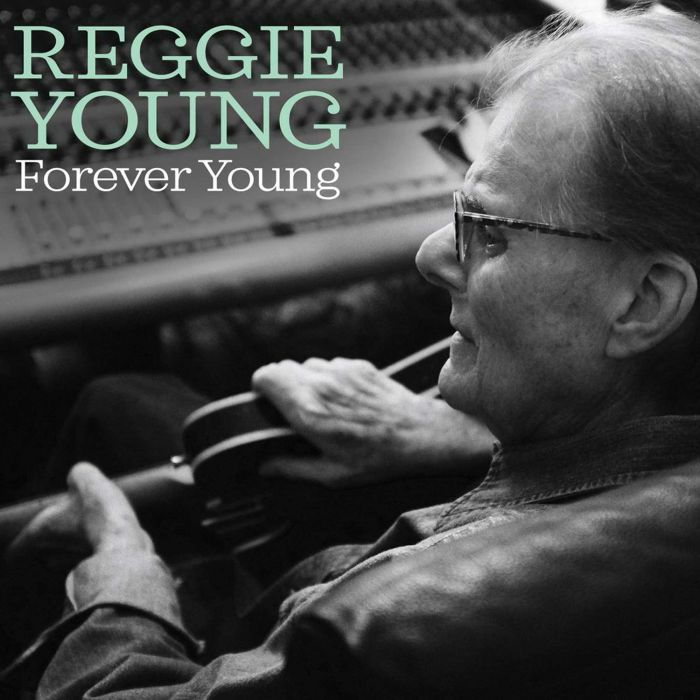
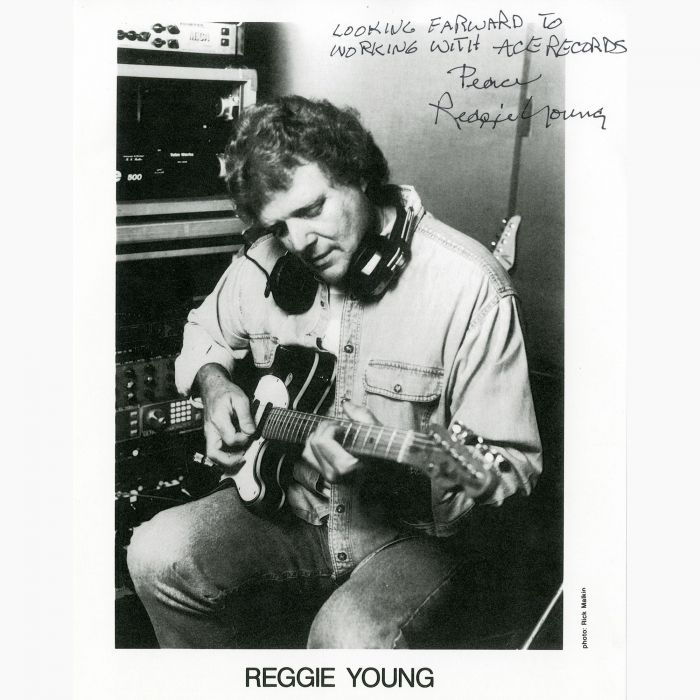


MAKING TIME: A SHEL TALMY PRODUCTION.
Making Time: A Shel Talmy Production.
Ace Records.
During the sixties and into the early seventies, Chicago-born Shel Talmy was one of the most successful and innovative producers working in the British music industry. Shel Talmy had arrived in Britain from Los Angeles in 1962, as a twenty-five year old. By then, his dreams of becoming a film director had been dashed.
This had happened nine years previously, when Shel Talmy attended a routine check-up at his ophthalmologist. That day, sixteen year old Shel Talmy discovered that he had retinitis pigmentosa. This inherited degenerative eye disease meant that Shel Shalmy would eventually loose his sight. For Shel Talmy this was a crushing blow.
Realising his dream of becoming a film direction was in tatters, Shel Talmy was forced to rethink his plans for the future. He decided to settle on the next best thing and become a record producer. Shel Shalmy was determined that when the time came, he would make his dream a reality.
By 1961, twenty-four year old Shel Talmy was ready to embark upon a career as a record producer. Rather than knocking on the doors of LA’s recording studios, Shel Talmy headed to one of Los Angeles’ many music business hang outs to network with music industry insiders.
At Martoni’s, Chicago-born Shel Talmy met Phil Yeend, a British expat who owned Conway’s Recorders. The two men talked and soon, Phil Yeend, offered twenty-four year old Shel Talmy a job as an engineer. By then, Phil Yeend had assured his newest employee that he would train him as an engineer.
Shel Talmy began work at Conway’s Recorders in early 1961. During his first three days at Conway’s Recorders, Shel Talmy was shown the basics, including how to work the board. After that, he was thrown in at the deep end.
Over the next few months, Shel Talmy spent much of his time working with members of the legendary studio band the Wrecking Crew. They were by then, seasoned veterans who had a wealth of experience, and Shel Talmy was able to tap into their experience. Shel Talmy also found himself working with the Beach Boys and Lou Rawls during his first year as an engineer and producer. For Shel Talmy, his first year at Conway’s Recorders was a whirlwind.
Shel Talmy also found himself working with Gary Paxton, who having started out as one half of Skip and Flip, was well on his way to becoming a successful producer. Meanwhile, Shel Talmy’s friendNic Venet was the A&R man at Capitol Records. He allowed Shel Talmy to sit in on recording sessions with Bobby Darin. Through watching these sessions Shel Talmy learnt how to run a session. This was all part of his musical apprenticeship.
Back at Conway Recorders, when Phil Yeend and Shel Talmy weren’t working with clients, they spent time experimenting with new recording techniques. Especially working out the best way to record guitars and drums. The pair was interested in the advantages of isolating instruments during the recording sessions. This was unheard of, but eventually, would become the norm. Shel Talmy was already innovating, and would continue do so throughout his career.
When there was some downtime at Conway Recorders, Phil Yeend allowed Shel Talmy to try out new recording techniques. This was all part of a steep learning curve. However, this crash course in engineering and production would stand Shel Talmy in good stead for the future.
Especially when Shel Talmy decided to spend a few months working in Britain. This visit wasn’t planned. Instead, it was a case of curiosity getting the better of Shel Talmy. During his time working with Phil Yeend, the Englishman had told him about life in Britain and how great a country it was. Eventually, Shel Talmy decided he would like to spend some time working in Britain.
Fortunately, a friend of Shel Talmy’s who worked at Liberty Records setup a meeting with Dick Rowe at Decca Records. When Shel Talmy went into the meeting, he wasn’t lacking in confidence and went as far as playing Dick Rowe acetates of some of the records that he had worked on. British record company executives in the early sixties weren’t used to such confident interviewees. However, Dick Rowe, who was a huge fan of all things American, liked Shel Talmy and hired him on the spot.
Just over a year later, Shel Talmy and Dick James founded a new label, Planet Records. This join venture was the start of a new chapter in Shel Talmy’s career.
By then, he was well on his way to enjoying the most successful chapter in his musical career. This lasted seventeen years and saw Shel Talmy become one of the most successful producers working in Britain. During this period, Shel Talmy had the Midas touch.
He discovered The Kinks, when their manager Robert Wace took a demo into one of music publishers on Denmark Street. When Robert Wace asked if anyone wanted to hear the demo, Shel Talmy answered in the affirmative. Having heard the demo and heard what he liked, Shel Talmy took The Kinks to Pye. Having signed to Pye, Shel Talmy produced The Kinks’ first five albums. During this period, The Kinks were one of the most successful British bands. They’re one of twenty-four groups and artists that feature on Making Time: A Shel Talmy Production, which was recently released by Ace Records.
Making Time: A Shel Talmy Production is a celebration of one of the most successful and innovative producers working in Britain between 1964 and 1970. During that period, Shel Talmy produced The Kinks, The Who, Manfred Mann, The Creation, The Pentangle, Lee Hazelwood, Roy Harper, The Mickey Finn, The Easybeats, The Fortunes and Tim Rose. They’re among the twenty-four artists and bands that feature on Making Time: A Shel Talmy Production.
Opening Making Time: A Shel Talmy Production is The Creation’s 1966 debut single for Planet, Making Time. It’s a stomping fusion of psychedelic rock and power that at times, is reminiscent of The Who. That comes as no surprise as Shel Talmy produced The Who early in their career. Making Time would later feature on The Creation’s 1967 debut album, We Are Paintermen. Sadly, a year later after its release The Creation split-up in 1968. This cut short what was a promising career. For The Creation, it was a case of what might have been.
1966 was a year of change for Manfred Mann. Their lead singer Paul Jones was replaced by Mike D’Abo, and Manfred Mann moved to Fontana Records. That was where Manfred Mann first encountered Shel Talmy, when he became their producer. The first single he produced was a cover of Bob Dylan’s Just Like A Woman. While it sneaked into the top ten, the followup Semi-Detached Suburban Mr James fared much better. It showcased a much more sophisticated production style than Manfred Mann’s earlier singles. Record buyers were won over but this carefully crafted production when Semi-Detached Suburban Mr James was released by Fontana Records, in 1966. It reached number two in Britain and thirty-two in the US Billboard 100. Since then, this pop classic is regarded as one of Manfred Mann’s finest singles, and is still become a favourite of oldies stations worldwide.
In 1965, The Kinks released the Ray Davies’ composition Tired Of Waiting For You as a single on Pye. It reached number one in Britain, and gave them their second number one single. Across the Atlantic, Tired Of Waiting For You reached number six on the US Billboard 100. This rueful sounding Kinks classic would later feature on The Kinks’ sophomore album Kinda Kinks which was released later in 1965.
On a visit to Britain during 1970, Lee Hazlewood recorded several songs with Shel Talmy. This included Bye Babe which was penned and produced by Shel Talmy. It wasn’t until 1997 that Bye Baby was released on the compilation Love and Other Crimes. The folksy sounding Bye Baby features a worldweary vocal from Lee Hazlewood, and is a reminder of a talented and underrated singer.
The Who would become one of the biggest British bands of the sixties. They burst onto the scene in 1964, and in 1965 released the defiant Anyway, Anyhow, Anywhere as their third single. It reached number ten in Britain, and epitomises everything that’s good about The Who. Fifty-two years later, Anyway, Anyhow, Anywhere is a timeless rock classic that’s one of the highlights of Making Time: A Shel Talmy Production.
Shel Talmy started taking an interest in folk music in 1965, and son, was producing many of the new wave of British folk artists. By 1969, this included The Pentangle, who had been signed to the Big T label. They released their third album Basket Of Light in October 1969, and it reached number five in Britain. This was The Pentangle’s most successful album . Light Flight, which was the theme to Take Three Girls, was released as the lead single from Basket Of Light, and reached number forty-three in Britain. The following year, 1970, Light Flight reentered the charts but stalled reached forty-five in Britain. While Basket Of Light is regarded as The Pentangle’s greatest album, Light Flight, which features an ethereal vocal from Jacqui McShee is one of the album’s highlights.
Perpetual Langley were an Irish girl group who released two singles for Planet Records. This included Surrender which was released in 1966. It’s a glorious slice of perfect pop. Partly this is because of interplay between the lead vocal and harmonies, and Shel Talmy’s production skills. All this results is a beautiful, melodic and memorable song that’s sure to tug at the heartstrings
During November in 1967, Roy Harper was in CBS’ London studio recording material for his sophomore album Come Out Fighting Ghengis Smith. It was released by CBS in 1968, and featured Ageing Raver, which features a stripped down, folk sound. It’s Roy Harper and his guitar, as he delivers an impassioned vocal on Ageing Raver, which marked his major label debut.
Lindsay Muir’s Untamed were a garage rock band from Worthing, in East Sussex. They signed to Planet Records and released Daddy Long Legs as their debut single in 1966. It was fusion of garage rock and blues that sounded as if it had been recorded in LA not London. Alas, the single failed to make any impression on the charts, and there was no followup. Thirty-three years later, and Lindsay Muir’s Untamed had a cult following, and in 1999, belatedly released their debut album It’s All True!
After the demise of the Planet Records, Shel Talmy signed a production deal with Polydor. One of the bands he worked with were psychedelic rockers Wild Silk. They released (Vision In A) Plaster Sky as a single on Columbia in 1969. Hidden away on the B-Side was Toymaker a hidden psychedelic gem, which is a welcome addition to Making Time: A Shel Talmy Production.
The Nashville Teens were founded in Weybridge, Surrey in 1962, and were part of the first wave of British bands to serve their musical apprenticeship in Hamburg, in Germany. This gave The Nashville Teens a good grounding for the future. They had enjoyed a degree of success in America. However, in 1967 The Nashville Teens released I’m Coming Home on Decca in Britain. It’s an upbeat and joyous fusion of R&B and pop rock, that should’ve enjoyed more success than it did.
The Fortunes were formed in Birmingham in 1963, and within a year had signed to Decca. They released four unsuccessful singles before enjoying a breakthrough hit single with You’ve Got Your Troubles. It reached the top ten in Britain and America. However, the one that got away for The Fortunes was Caroline which was released in 1964. Al wasn’t lost though. Radio Caroline started using the song as an unofficial theme tune. Some fifty-three years later, and Caroline has stood the test of time, and is a welcome reminder of another musical era.
In 1969, Tim Rose entered the studio to record his third album Love, A Kind Of Hate Story. It was released by Capitol Records in 1970, and featured Jamie Sue which closed the album. It’s the perfect showcase for Tim Rose as he delivers an impassioned, soul-baring vocal.
Closing Making Time: A Shel Talmy Production is Trini Lopez’s Sinner Not A Saint. It was released by DRA Records in 1962, and is a reminder of the R&B sound of the early sixties. Soon, though, music would change with The Beatles and the release of Love Me Do.
From 1962 until 1979, Shel Talmy was one of the most successful producer in Britain. So much so, that it would take a box set to do comprehensive overview of his career. However, Ace Records’ recently released compilation Making Time: A Shel Talmy Production is the perfect introduction to a groundbreaking producer.
Whilst other producers stuck to tried and tested production methods, Shel Talmy was experimenting and innovating. That had been the case since he started work at Conway’s Recorders in early 1961. Since then, Shel Talmy was a blue sky thinker when it came to production. This was similar to George Martin, when he worked with The Beatles.
Producers had to be able to think outside the box. They were hamstrung by what is now regarded as basic equipment. By being able to innovate, some producers were able to make groundbreaking recordings with this basic equipment. This included George Martin, Phil Spector, Joe Meek, Jimmy Miller and Jack Nitzsche. To that list the name Shel Talmy can be added. He belongs in such illustrious company.
After all, Shel Talmy wasn’t just a producer. He was a songwriter and talent spotter. However, first and foremost Shel Talmy is remembered as a pioneering producer who worked with some of the biggest names in British music. His innovative approach to production transformed many groups, and made stars of The Kinks and The Who, who went on to become two of the biggest names in British musical history. They’re just two of the hundreds of bands and artists who were produced by Shel Talmy. Twenty-four feature on Making Time: A Shel Talmy Production, which is reminder of a pioneering producer during the most successful period of his career.
Making Time: A Shel Talmy Production.
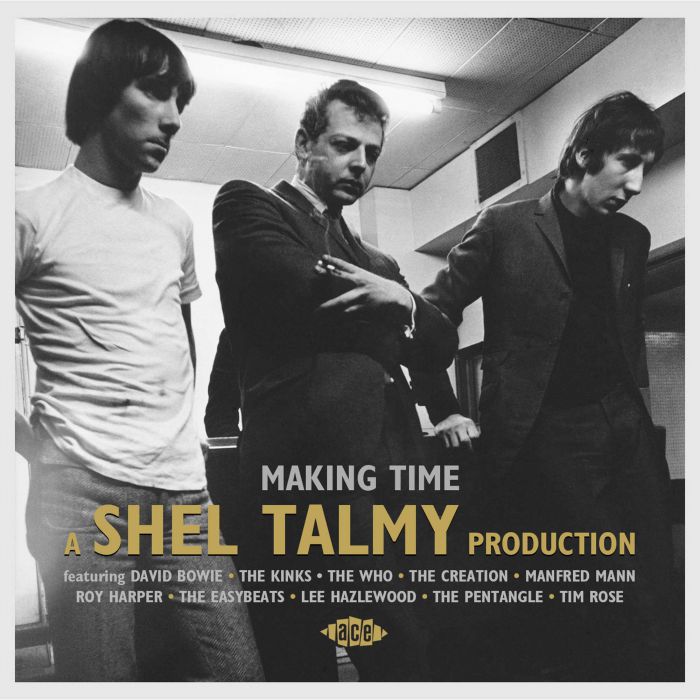
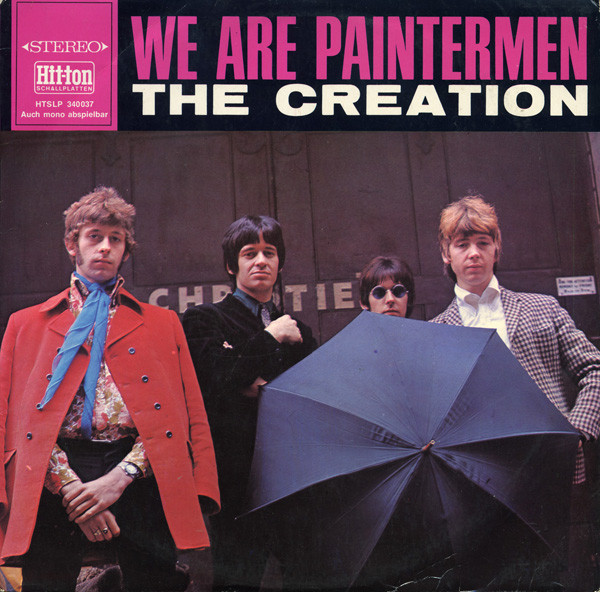
NOTHING BUT A HOUSE PARTY: THE BIRTH OF THE PHILLY SOUND 1967-71.
Nothing But A House Party: The Birth Of The Philly Sound 1967-71.
Kent Soul.
During the seventies, Philadelphia rose to become America’s soul capital. This began in 1971, when Kenneth Gamble and Leon Huff founded Philadelphia International Records, which became home to some of the finest purveyors of the Philly Sound, including Harold Melvin and The Blue Notes, The O’Jays and The Three Degrees. These groups were produced by two of the architects of the Philly Sound, Gamble and Huff. Meanwhile, another architect of the Philly Sound was producing The Delfonics, The Stylistics and The Detroit Spinners. This was Thom Bell, who along with Gamble and Huff became known as the Mighty Three. They made much of the music that defined the slick, sophisticated and innovative sound of Philly Sound. However, the Philly Sound wasn’t created by just three men.
That was for from the case. There are many arrangers, backing vocalists, musicians, producers and songwriters who played their part in the creating the Philly Sound. They’re often the forgotten heroes of the Philly Sound. This includes arranger, producer and songwriter Bobby Martin and backing vocalists the Sweethearts of Sigma. Then there’s arranger, producer, songwriter and musician Vince Montana Jr and the Baker, Harris, Young rhythm section, who were the go-to rhythm section during the late-sixties and seventies. They were part of MFSB, which was Philadelphia International Records’ house band between 1971 and 1976, and played on many of the label’s most successful recordings. MFSB helped to define the Philly Sound, but like Bobby Martin, Vince Montana Jr, Baker, Harris, Young and the Sweethearts of Sigma often, don’t receive the credit they deserve.
These forgotten heroes of Philly Sound are often overlooked by journalists, with the Mighty Three receiving all the credit and kudos. However, without all these arrangers, backing vocalists, musicians and producers, the Philly Sound wouldn’t have developed and transformed Philadelphia into the soul capital of America. However, this didn’t happen overnight.
Instead, the Philly Sound developed from the late-sixties right through to 1971, when Gamble and Huff formed Philadelphia International Records. This period is celebrated on Nothing But A House Party: The Birth Of The Philly Sound 1967-71, which was recently released by Kent Soul, an imprint of Ace Records. It features twenty-four songs that feature many of the forgotten heroes of the Philly Sound.
This includes many of the musicians that would become members of MFSB, including Baker, Harris, Young and Vince Montana Jr. They accompany the artists and bands on Nothing But A House Party: The Birth Of The Philly Sound 1967-71. Several of these songs were arranged by Bobby Martin; while all of the songs were recorded at Sigma Sound Studios, which was owned by engineer Joe Tarsia. He recorded nearly every Philly Sound single and album at his Sigma Sound Studios. However, he’s yet another of another forgotten heroes of the Philly Sound.
All these forgotten heroes of the Philly Sound were already making their mark in the Philadelphia music scene way before the city became the soul capital of America. They were accompanying the Show Stoppers, The Delfonics, Jerry Butler, Honey and The Bees, Cliff Nobles, Barbara Mason, The Intruders, Freddie Scott, Len Barry and Peaches and Herb. They’re among the twenty-four artists who feature on Nothing But A House Party: The Birth Of The Philly Sound 1967-71.
Opening Nothing But A House Party: The Birth Of The Philly Sound 1967-71 is the Show Stoppers’ Ain’t Nothing But A House Party. It was penned by Del Sharh and Joseph Thomas, with Bruce Charles taking charge of production. The single was released in 1967, on the Beacon label. It’s an irresistible, dance-floor filler from the City of Brotherly Love.
By 1967, The Delfonics had been working with Thom Bell for a year. He had produced their 1966 debut single He Don’t Really Love You. A year later, Thom Bell had written You’ve Been Untrue with lead vocalist Thom Hart. It was arranged and produced by Thom Bell, and released on the Philly based Cameo label. From the opening bars of You’ve Been Untrue, it’s obvious that this is a Thom Bell production. Little things like the French horn and the strings are a giveaway. Already, Thom Bell’s trademark sound was taking shape on this heart-wrenching ballad. It’s a tale of betrayal that features a hurt-filled vocal from William Hart.
Jerry Butler’s career had begun in 1968, and ten years later, he was working with Gamble and Huff. The three men had written Never Give You Up, which was arranged by Bobby Martin and produced by Gamble and Huff. It was released on Mercury in 1968, and reached number twenty in the US Billboard 100 and four on the US R&B charts. That was no surprise, given the quality of a single that features many future members of MFSB. This includes Vince Montana Jr, whose vibes can be heard on this soul-baring ballad from the Ice-Man, Jerry Butler.
Cliff Nobles released the explosive, horn-driven Love Is All Right on the Phil LA label in 1969. Having burst into life, a carefully crafted, dance-floor friendly song unfolds. It was penned and produced by Jesse James, and arranged by Bobby Martin. Sadly, DJs ignored Love Is All Right on its release, and preferred the B-Side The Horse. It’s the backing track to Love Is All Right and ironically, and didn’t even feature Cliff Nobles. However, nearly forty years later, and Love Is All Right is a welcome addition to Nothing But A House Party: The Birth Of The Philly Sound 1967-71, and is a reminder of one of Cliff Nobles’ finest singles.
As the seventies dawned, Lou Jackson wrote Peace To You Brother with Morris Bailey Jr. It was produced by Roscoe Murphy, Jr and released on Spring Records in 1971. Peace To You Brother is a timeless anthem that features an impassioned and powerful vocal from Lou Jackson. Sadly, Peace To You Brother failed to chart, and was the one that got away for Lou Jackson, whose a truly talented singer and songwriter.
In March 1969, Brenda and The Tabulations released That’s The Price You Have To Pay on the Dionn label. It was composed by lead singer Brenda Payton with Jerry Jones one of The Tabulations. Thom Bell and Bobby Martin arranged and conducted That’s The Price You Have To Pay which was produced by Gamble and Huff. It’s a wistful and soulful ballad, which features the Philly Sound taking shape.
Moses Smith’s Keep On Striving is another song that sees the nascent Philly Sound take shape. It was penned by Moses Smith, arranged by Sam Reed and produced by Gilda Woods. Keep On Striving was released on Cotillion in 1970, and is a heartfelt and hopeful Philly Soul ballad that features the Philly Sound almost fully formed.
For Barbara Mason, the release of her final single on Jimmy Bishop’s Arctic label, You Better Stop It was the end of an era. Arctic had been her home for the last few years. However, the seventies marked the start of a new chapter in her career. She would release a string of albums and enjoying several hit singles like Bed and Board and From His Woman To You. Before that, she released her final single on Jimmy Bishop’s Arctic label, You Better Stop It. It was penned by Barbara Mason and produced by Jimmy Bishop. He’s responsible for a string-drenched arrangement, which is the perfect foil for Barbara Mason’s hurt-filled vocal.
The Intruders were the very group to give songwriting and production team Gamble and Huff a hit single with (We’ll Be) United in 1967. Two years later, in 1969, The Intruders released Old Love on the Gamble label. On the B-Side was Every Day Is A Holiday was penned and produced by Gamble and Huff. It’s a hook-laden dance-floor filler.
Following their success with Jerry Butler, Gamble and Huff were soon being asked to record labels to produce other artists. Especially artists whose career needed a boost. This was how Gamble and Huff came to write and produce Freddie Scott’s 1968 single for Shout, (You) Got What I Need. It’s a slick single with a commercial sound that should’ve appealed to DJs and record buyers. Sadly, (You) Got What I Need failed to chart, and Gamble and Huff failed to rejuvenate Freddie Scott’s career.
In October 1968, Peaches and Herb released Let’s Make A Promise on the Date label. It was written by Thom Bell, Kenneth Gamble and Mikki Farrow and arranged by Bobby Martin and Thom Bell. Taking care of production were Gamble and Huff, who don’t spare the hooks on this catchy, soulful and dance-floor friendly single.
Sometimes, a song is way too good to be consigned to a B-Side. That was the case with I’m On My Way, which was the B-Side Winfield Parker’s 1968 single for Spring, SOS (Stop Her On Sight). It had already given Edwin Starr a hit in 1966, and Winfield Parker hoped that history would repeat itself. However, he overlooked the potential of I’m On My Way. This was a Jesse James and Jimmy Bishop composition, that had been arranged by Bobby Martin and Dee Dee Gamble, with Jimmy Bishop taking charge of production. They’re responsible for an irresistible, uptempo track where Dee Dee Gamble’s backing vocals are the perfect foil to Winfield Parker’s powerful, defiant vocal.
Closing Nothing But A House Party: The Birth Of The Philly Sound 1967-71 is The Ethics Standing In The Darkness. It was penned by Norman Harris of Baker, Harris, Young and MFSB. Norman Harris and Thom Bell arranged Standing In The Darkness which was produced Selassie Productions Inc. Standing In The Darkness was released on Vent Records in 1970, and features a fully fledged Philly Sound single. It’s a tantalising taste of the music that would come out of Philly during the seventies.
Nothing But A House Party: The Birth Of The Philly Sound 1967-71 documents how the Philly Sound took shape over a four-year period. The fully fledged Philly Sound was very different from the lightweight singles released on Cameo Parkway early in the seventies. By 1970, Philly Soul had come of age and its slick, sophisticated and innovative sound would transform Philadelphia into America’s soul capital.
Suddenly, soul music was one of Philly’s biggest exports.The Philly Sound wasn’t just popular in America, and found an audience much further afield. Record buyers were won over by Harold Melvin and The Blue Notes, The O’Jays,The Three Degrees, The Delfonics, The Stylistics, The Detroit Spinners and Blue Magic, which were some of the finest purveyors of the Philly Sound. These groups were responsible for some of the best, and most successful music that came out of Philly during the seventies. Much of that music was produced by the Mighty Three of Thom Bell and Gamble and Huff. However, many other people played a part in the success of the Philly Sound.
This includes Bobby Martin, Vince Montana Jr, Baker, Harris, Young of MFSB, the Sweethearts of Sigma and Joe Tarsia. Sadly, they often don’t receive the credit they deserve. However, they had played an important part in the Philly music scene since the late-sixties. Many of these forgotten heroes of the Philly Sound play their part in the music that features on Nothing But A House Party: The Birth Of The Philly Sound 1967-71. It’s a lovingly curated compilation that is a must-have for anyone with even a passing interest in the Philly Sound. Nothing But A House Party: The Birth Of The Philly Sound 1967-71 features the Philly Sound taking shape, and by the end of the compilation it was fully formed, and ready to take the world by storm.
Nothing But A House Party: The Birth Of The Philly Sound 1967-71.



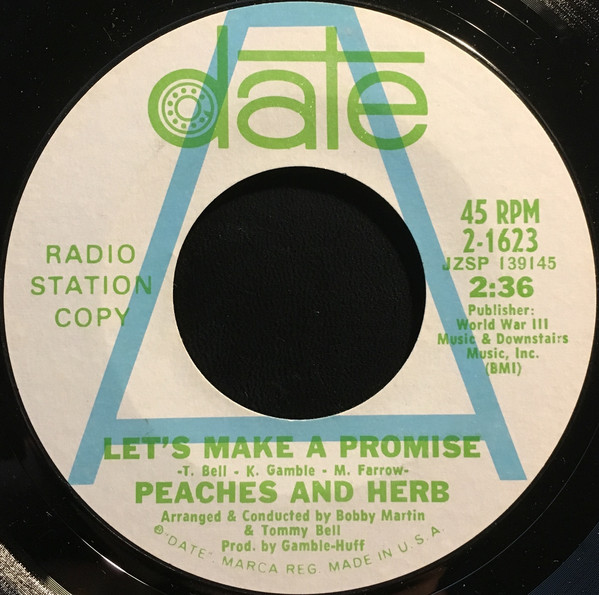
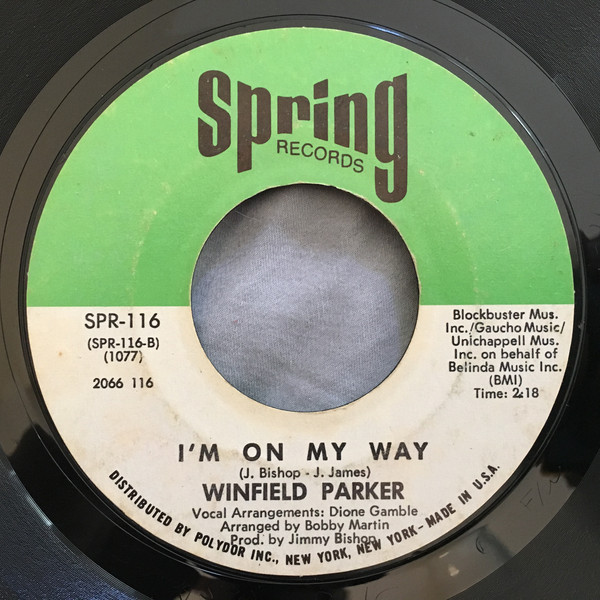

WHAT BECAME OF ALICE CLARK?
What Became Of Alice Clark?
Sadly, all too often, hype and image has triumphed over talent. Meanwhile, commercial success and critical acclaim eludes truly talented artists. Chastened by the experience, many of these artists turn their back on the music industry. They’re content to return to civvy street, free from a world populated by A&R executives, PR companies and radio pluggers. At least the artist knows that they gave it their best shot. Alas, it wasn’t to be. Now they begin the first day of the rest of their life.
This is what happened to Brooklyn born soul singer Alice Clark. Her career began in 1968, and was over by 1972. During that four-year period, Alice Clark recorded just fifteen songs during three recording session. This includes two singles, and her 1972 album Alice Clark. After commercial success eluded her, Alice Clark career turned her back on music. Since then, Alice Clark has remained one of the soul music’s best kept secrets. She’s also one of music’s music enigmatic figures.
Very little is known about Alice Clark. Indeed, her story is almost shrouded in mystery. All that’s known, is that Alice Clark was born in Brooklyn, and shared the same manager as The Crystals. It was her manager that introduced Alice to singer-songwriter Billy Vera.
The meeting took place at Billy Vera’s publishers, April-Blackwood Music. That afternoon, Billy spent time teaching her some songs that he had written. These songs would be recorded in 1969.
By the time the recording session took place, Alice Clark had taken to occasionally phoning Billy Vera. However, Alice who seems to have been a private person, only ever made small talk. Despite this, Billy remembers: “I got the impression her home life wasn’t that great.” He remembers that Alice: “had kids and belonged to a religious order.” These are the only thing Billy can remember about Alice. However, what nobody who heard Alice as she made her recording debut will forget is…her voice.
For the 1969 session, Jubliee’s studio was chosen. Billy Vera who wrote and would produce the three tracks put together a tight and talented band. The rhythm section featured drummer Earl Williams, bassist Tyrell and guitarists Butch Mann and Billy Vera. They were augmented by trumpeter Money Johnson and backing vocalist Tasha Thomas. This was the band that accompanied Alice Clark on You Got A Deal, Say You’ll Never Leave Me and Before Her Time. Alice Clark delivered confident and assured performances. Two of these songs became Alice’s debut single.
With the three songs recorded, the Rainy Day label decided to release You Got A Deal in January 1968. It was a driving slice of soul, with a feisty, vocal from Alice. Horns and harmonies accompany Alice as she’s transformed into a self-assured soul singer. The flip side was Say You’ll Never, a quite beautiful ballad. A number of radio stations began playing the song. Despite this, Alice Clark’s first single wasn’t a commercial success. It was an inauspicious start to Alice’s career.
Nothing was heard off Alice Clark until March 1969. By then, Alice had recorded her sophomore single. This was the George Kerr, Michael Valvano and Sylvia Moy penned You Hit Me (Right Where It Hurt Me). On the flip-side was Arthur Mitchell and Eddie Jones’ Heaven’s Will (Must Be Obeyed). The two songs were produced by George and Napoleon Kerr. This GWP Production was released on Warner Bros. Alice Clark was going up in the world.
Alas commercial success continued to elude Alice Clark. When You Hit Me (Right Where It Hurt Me) was released as a single, it failed to trouble the charts. That was despite featuring impassioned, hurt-filled vocal. Tucked away on the B-Side was another ballad, Heaven’s Will (Must Be Obeyed). It features a heartfelt vocal from Alice Clark where the secular and spiritual collide. Both sides of Alice Clark’s sophomore single showcased a truly talented singer. Sadly, very few people heard the single. Alice Clark was still one of music’s best kept secrets.
For the next couple of years, Alice Clark was cast out into the musical wilderness. Then Bob Shad at Mainstream Records decided to take a chance on Alice Clark. Mainstream Records were moving into the soul market, are were signing artists. He decided that Alice Clark fitted the bill, and signed her to Mainstream Records.
Soon, work began on Alice Clark’s debut album. A total of ten tracks were chosen. This included a trio of Bobby Hebb songs, Charms Of The Arms Of Love, Don’t You Care and Hard, Hard Promises. Among the other songs were Jimmy Webb’s I Keep It Hid; Petula Clark and John Bromley’s Looking At Life; Leonard Caston’s Don’t Wonder Why; Juanita Fleming’s Never Did I Stop Loving You and Earl DeRouen’s Hey Girl. The other songs chosen were John Kander and Fred Ebb’s Maybe This Time and Leon Carr and Robert Allen’s It Takes Too Long To Learn To Live Alone. These songs became Alice Clark.
With the material chosen, producer Bob Shad set about putting a band together. Apart from guitarist Ted Dubar, the identity of the rest of the band are unknown. However, Ernie Wilkins was drafted in to arrange the songs on Alice Clark. When it was recorded, the release was scheduled for later in 1972.
By then, three years had passed since a record bearing Alice Clark’s name had been released. You Hit Me (Right Where It Hurt Me) had disappeared without trace upon its release in March 1969. Everyone must have been hoping that history wouldn’t repeat itself. Alas, it did.
I Keep It Hid was chosen as the lead single, with Don’t Wonder Why featuring on the B-Side. On its release, I Keep It Hid sunk without trace. Worse was to come. When Alice Clark was released, the album failed to find the audience it deserved. Very few copies of Alice Clark sold. That was a great shame.
During the three years that Alice Clark had been away, she grown and matured as a singer. Despite this, there was to be no followup album. After Alice Clark failed commercially, Alice turned her back on music. Never again did this talented and versatile vocalist return to the studio. Alice Clark was lost to music.
During her four-year career, Alice Clark had recorded just fifteen tracks. They’re a mixture of beautiful ballads and uptempo songs. On each and every song, Alice breathes life and meaning into the lyrics. Her delivers veers between heartfelt, impassioned and soul-baring, to assured, hopeful and joyous. It seems when Alice Clark stepped into a recording studio, she was transformed.
No longer was Alice Clark the quietly spoken young mother that Billy Vera remembers. Suddenly, the God-fearing Alice Clark disappeared, and was replaced by one that wore her heart on her sleeve. She was comfortable sings songs about love and love lost, and could breathe life and meaning into songs about hope, hurt, heartbreak and betrayal. Despite her ability and versatility, Alice Clark commercial success and critical acclaim eluded Alice Clark.
Chastened by the experience, Alice Clark turned her back on the music industry. Nobody seems to know what happened to Alice Clark? Mystery surrounds this hugely talented singer, who should’ve gone on to enjoy a long and successful career. Sadly, that wasn’t to be.
By 1973, You Hit Me (Right Where It Hurt Me) became a favourite on the UK Northern Soul scene. Apart from that, very few people had heard of Alice Clark or her music. It would be a while before this changed.
As the years passed by, a few copies of Alice Clark found their way into bargain bins. Curious record collectors who chanced upon a copy of Alice Clark decided to take a chance on this little known album. Having paid their money, they discovered one of soul music’s best kept secrets,..Alice Clark. They were the lucky ones.
Since then, Alice Clark has become a real rarity. Anyone wanting an original 1972 copy of Alice Clark on Mainstream, will need to search long and hard. If they can find a copy, it will take at least $500 to prise it out of the hands of its owner. It feature a truly talented singer who could’ve and should’ve enjoyed widespread commercial success and critical acclaim. Sadly, for Alice Clark that wasn’t to be.
Instead, commercial success eluded Alice Clark, and in 1972, she turned her back on music. Since then, nothing has been heard of Alice Clark. Mystery surrounds Alice Clark’s life after she turned her back on music. She seems almost to have vanished into thin air. That’s a great shame. Especially given the resurgence in interest in her music and Ace Records recent release of The Complete Studio Recordings 1968-1972. Belatedly, Alice Clark’s music is finding the wider audience that it so richly deserves. What her newfound fans would like to know is what became of Alice Clark?
What Became Of Alice Clark?


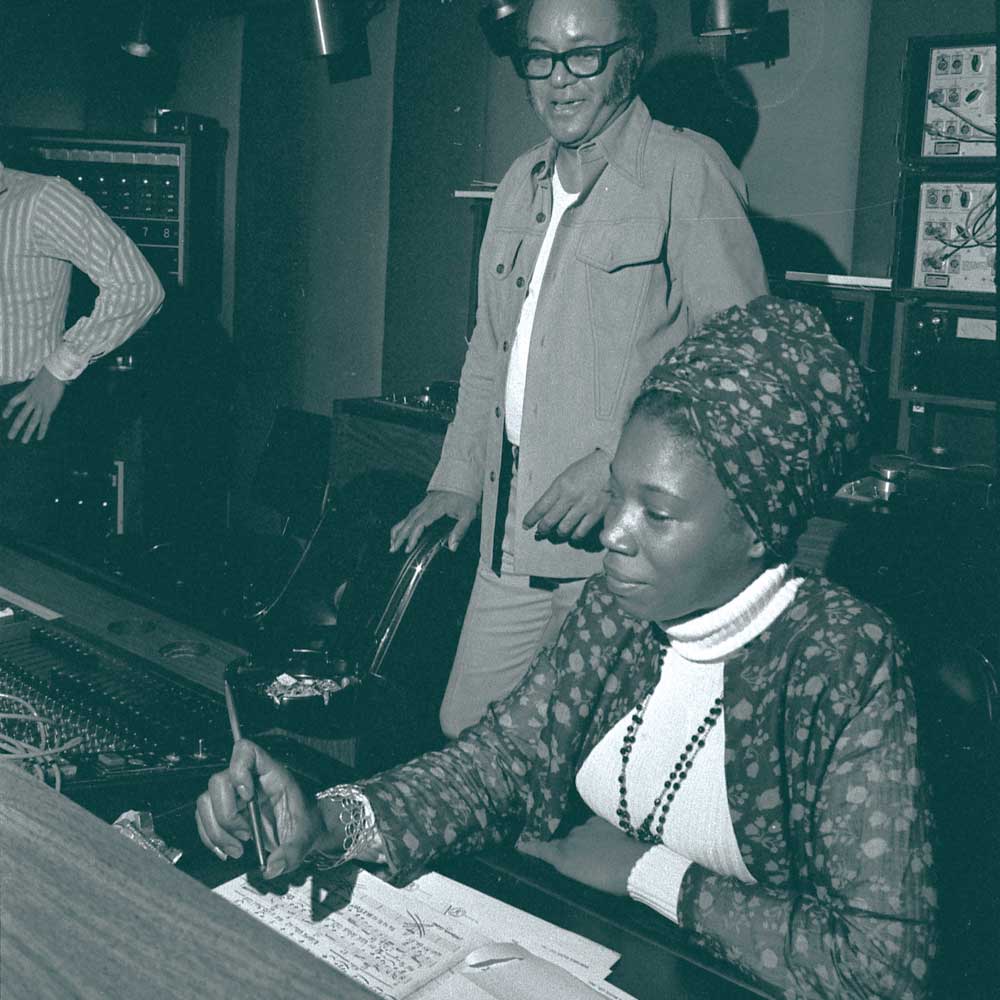
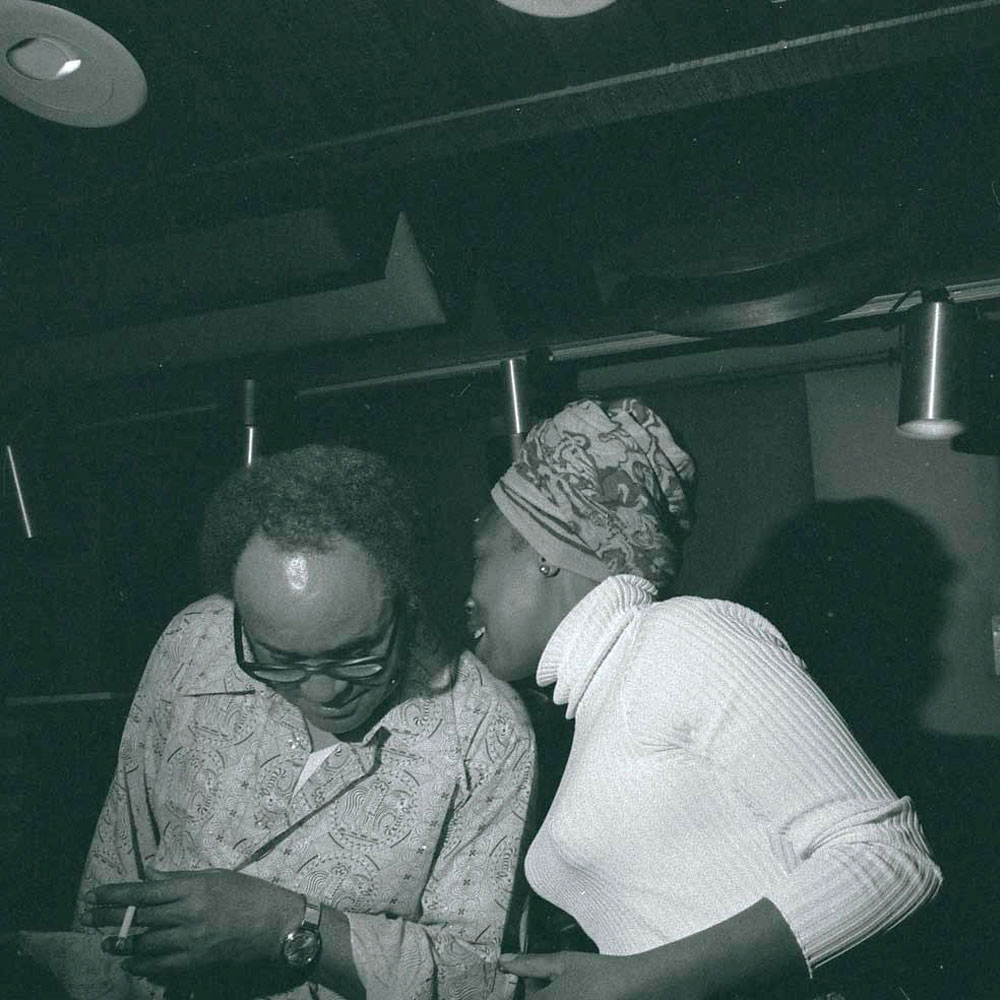



KONDI BAND-SALONE
Kondi Band-Salone.
Label: Strut.
The story behind the Kondi Band’s latest album Salone is a heartening one, and one that could only have happened in the internet age. Sorie Kondi is a blind street musician from Freetown, Sierra Leone . He plays the thumb piano in the streets of Freetown, and often locals and tourists stop to listen to him play. Many come away clutching copies of Sorie Kondi’s cassette albums. By then, they’ve discovered through talking to Sorie Kondi, whose a sociable, engaging and interesting man, that he has his own website. This website was where an American DJ and producer made contact with Sorie Kondi.
This was US producer, DJ Chief Boima, who also happens to be able trace his roots to Sierra Leone. One day, DJ Chief Boima came across a video of one of Sorie Kondi’s songs. DJ Chief Boima takes up the story: “Sorie Kondi is a blind musician with a will to thrive like no person I have met before…My work with him began with a YouTube link. I spotted the video for his track Without Money No Family and was struck by his beautiful vocals and socially conscious lyrics. These incredible melodies he was playing on his namesake thumb piano (kondi) sealed the deal: I immediately decided to remix it.”
Little did DJ Chief Boima realise the effect his bootleg remix would have. Suddenly, it started to feature on DJ playlists and there was even an article in The Fader magazine. This resulted in Sorie Kondi’s manager in Freetown contacting DJ Chief Boima. The next step was to bring Sorie Kondi to America.
To do this, a Kickstarter campaign was launched to fund Sorie Kondi’s journey to America. The Kickstarter campaign proved successful, with ninety backers pledging $3,562 to the Get Sorie Kondi To South By Southwest. Soon, Sorie Kondi was on his way to America for the first time. However, this wasn’t a social visit.
Instead, Sorie Kondi was about to embark upon a five date American tour. He also found time to record some new songs that made their debut on the Kondi Band’s debut album. It’s an album where two cultures unite.
DJ Chief Boima explains: “This album forges a direct link between techno born in the black cities of the American Mid-West, where I grew up, and roots African music…Sorie Kondi may be playing an acoustic folk instrument from Sierra Leone, but he thinks about music as if he were a techno producer with the dance-friendly pulse of his cajon drum, the spiralling melody lines from the thumb piano and his incredible vocals.” Producing Salone which was released by Strut on ‘2nd’ June 2017 was DJ Chief Boima.
There’s an intricacy to DJ Chief Boima’s production style. He adds a variety of electronic sounds to the mix, which prior to that, was underrated and spacious. It consists of just Sorie Kondi’s vocal and the drum piano. This less is more sound works, so it’s important not to overload the mix. Space has to be left in the mix for Sorie Kondi’s vocal, which plays a leading role as he delivers twelve new songs.
These songs were written by Sorie Kondi, and some of them are very personal. Especially Thank You Mama song that he dedicates to his mother, and where Sorie Kondi thanks her for loving him even though he was born blind. The anthem Without Money, No Family is a song about how even a family can be a privilege. On other songs on Salone, there is an immediacy and poignancy to the lyrics. However, the lyrics to other songs are uncompromising and tackle social problems that blight Sierra Leone. This includes the problem of child prostitution, which is dealt with on Girl Service. Then on Belle Wahalla, Sorie Kondi uses stomach pain as a metaphor for poverty, hunger, and lack of financial opportunity. Just like so many songs on Salone, it’s a powerful song from the pen of Sorie Kondi. He played a huge part in the sound and success of the Kondi Band’s debut album Salone.
Sorie Kondi wrote the twelve songs, plays thumb piano and takes charge of the lead vocals on Salone. DJ Chief Boima, the other member of the Kondi Band, produced Salone. The Kondi Band’s much-anticipated debut album Salone is the perfect introduction to a truly talented singer, songwriter and musician… Sorie Kondi.
As Yeanoh opens Salone, the words “sorry God” reverberate before a thumb piano combines with slow, deliberate drums. They set the scene for Sorie Kondi’s heartfelt, soulful vocal. Sometimes, it briefly becomes dubby, but always it’s impassioned and soulful as it takes centre-stage. Meanwhile, DJ Chief Boima’s arrangement is understated, with percussion, drums and the thumb piano providing the backdrop for the vocal. Later, synths replace the vocal as the drums provide the heartbeat. Soon, though, Sorie Kondi returns and scats, as this carefully crafted song takes shape and sets the bar high for the rest of the album.
Straight away, Belle Wahalla sounds as if it’s been designed with the dance-floor in mind. Drums pound, a synth groans and growl, while Sorie Kondi plays thumb piano and adds the vocal. Here, he uses stomach pain as a metaphor for poverty, hunger, and lack of financial opportunity. His vocal is impassioned and full of frustration. Meanwhile, the arrangement features stabs of braying horns, crisp drums courtesy of drum machine, a sultry saxophone and a buzzing, pulsating bass synth. It’s omnipresent and at the heart of an arrangement that’s dance-floor friendly song with a social conscience.
Thank You Mama has a much more understated introduction, with Sorie Kondi playing thumb piano and thanking his mother for loving him, even though he was born blind. Soon, washes of synths are added while drums scrabble and gallop along. Along with the synths, they play a prominent part in the arrangement, adding a degree of drama and urgency. However, it’s Sorie Kondi’s that plays a leading role as he delivers one of his most heartfelt and impassioned vocals.
On Titi Dem Too Service, thunderous drums pound and gallop along, while the thumb piano matches it every step of the way. Soon, they’re joined by another joyous, powerful and soulful vocal from Sorie Kondi. It soars high above the arrangement. Sometimes, Sorie Kondi answers his own call, while synths squeak and drums power the arrangement along. They all play their part in another carefully crafted and irresistible track.
Just a lone thumb piano opens Don Don Mi Money before drums and stabs of synths usher in Sorie Kondi’s tender, thoughtful vocal. Meanwhile, the arrangement slowly reveals its secrets. Instruments are added, but care is taken not to overpower the vocal. Instead, the arrangement frames the vocal, and compliments it as eventually, the songs reveals its subtleties and surprises.
Thogolingo Dembi Na opens with the thumb piano ushering in Sorie Kondi’s impassioned vocal. Soon, drums are added and drive the arrangement along. They’ve been mixed back in the arrangement so they don’t overpower Sorie Kondi as he adds the lead vocal and harmonies. As the drums sit further back, the thumb piano sits at the front of the mix, and at one point, enjoy their moment in the sun as Sorie Kondi plays a solo. Before long, he returns, and is accompanied by harmonies which add a spiritual sound to a song that’s soulful and thanks to the drums, dance-floor friendly.
Drums probe while the thumb piano plays and Sorie Kondi adds a soliloquy on You Wan Married? Soon, squelchy synths are added accompany Sorie Kondi’s rueful vocal. Harmonies answer Sorie Kondi’s call and are the perfect foil for the vocal. Meanwhile drums crack and synths probe and pulsate. However, the thumb piano is the only reminder of Sorie Kondi’s musical heritage. He continues to deliver one of finest, and most emotive vocals, thanks in part to the harmonies which are yin to Sorie Kondi’s yang.
As the thumb piano plays, hi-hats hiss on Geibai Gpanga Ne Gna. Soon, Sorie Kondi is delivering his vocal, and is accompanied by harmonies. When they drop out, drums are added. The drummer adds the heartbeat, while synth pulsate as the thumb piano accompanies Sorie Kondi and the harmonies. Both are heartfelt, soulful and have a spiritual quality. Soon, a wash of synth adds a degree of tension before stabs of horns are added. So too is a bass synth, as gradually, one of the best tracks on Salone takes shapes.
Kondi Instrumental is a showcase for Sorie Kondi’s thumb piano. It’s unmistakable sound takes centre-stage as master musician showcases his considerable talents.
Without Money, No Family is another song with a message. Sorie Kondi’s message is that even a family can be a privilege. As the song unfolds, synths dance, drums crack and combines with the thumb piano as stabs of a dubby vocal flit in and out of the arrangement. Soon, a bass rumbles ominously as Sorie Kondi seems to tease the listener. Eventually, at 1.29 his vocal enters and he delivers his message.Meanwhile, the bass rumbles, synths dance with joy, drums crack and harmonies are added. Although Sorie Kondi’s vocal is slow, impassioned and soulful, the multilayered arrangement is quick, hypnotic and dance-floor friendly. It’s all part of this anthemic celebration of family life.
Straight away, two cultures unite on Thogolobea. Drums, bass and thumb piano provide a backdrop for Sorie Kondi, whose accompanied by a choir. They answer his call, as horns bray and an irresistible songs starts to unfold. By then, the mix seems almost, perfect. Anything more would be overkill. Still, stabs of a phat synths are added. Later, so are swirling, whooshing, atmospheric synths. Fortunately, they don’t upset the musical apple cart, as this was already a joyous and irresistible track without their addition.
Closing Salone is Y’alimamy, where drums pound and crack, while the thumb piano plays. They usher in Sorie Kondi’s powerful, impassioned vocal, which is accompanied by a growling bass synth. A choir accompanies Sorie Kondi and answer his call When the vocal drops out, the growling, pulsating bass synth, keyboards, drum machine and thumb piano take centre-stage. They then accompany Sorie Kondi as the choir provides the perfect accompaniment to his vocal, which grows in power and passion. Meanwhile, synths judder, the bass synth beeps and buzzes and provides a contrast to the vocal and harmonies. So do a glacial synth and crisp drums. However, Sorie Kondi’s impassioned vocal and the heartfelt harmonies steal the show and play leading roles in the song that closes Salone.
It’s never easy to combine two the music from two disparate cultures. There is always the risk that the music of one culture will dominate the other. However, on Salone which was released their debut album Salone on Strut on ‘2nd’ June 2017, Sorie Kondi and DJ Chief Boima are equal partners.
While DJ Chief Boima produced the album, Sorie Kondi’s vocal steals the show on the album. They’re captivating and the listener will find themselves hanging on his every word. Sorie Kondi’s vocals range from heartfelt and impassioned to joyous. Sometimes, though, his vocals are full of sadness and frustration as he deals with subjects like child prostitution and poverty. In dealing with these subjects, Sorie Kondi provides a voice for the disadvantaged, disenfranchised and victims of crime and poverty. Other songs are joyous, uplifting, hook-laden and dance-floor friendly. Anthems sit beside songs with a social message on Salone, a carefully crafted debut album that thirty years ago, wouldn’t have been made.
Back then, there was no such thing as the internet, and making music was very different. Fortunately, DJ Chief Boima and Sorie Kondi live in the internet age. It was the internet brought the Kondi band together. DJ Chief Boima came across the video to Without Money No Family on You Tube. This was the start of a friendship that lead to the formation of the Kondi Band and of the recording of their debut album Salone. It’s an internet age album, that showcases The Kondi Band, which features DJ Chief Boima and Sorie Kondi, who are from very different backgrounds. However, they bonded over their shared love of music and have created the Kondi Band’s captivating, thought-provoking and uplifting album of create genre-melting, multicultural music, Salone.
Kondi Band-Salone.

ADDICTIVE TV-ORCHESTRA OF SAMPLES.
Addictive TV-Orchestra Of Samples.
Label: K7!
Recording and producing Addictive TV’s debut album Orchestra Of Samples has been a labour of love for production duo Graham Daniels and Mark Vidler. They spent five years travelling far and wide, visiting over twenty-five countries to record with hundreds of local musicians to create the source material for Orchestra Of Samples. These recordings were then sampled by Addictive TV, and eventually, became part of Orchestra Of Samples which was released on the K7! label on the ‘2nd’ of June 2017. This brings to fruition a project that began seven years ago.
Back in 2010, Addictive TV set out on what was a mammoth musical journey. Even they weren’t aware of the amount of travelling it would take to gather the source material for the Orchestra Of Samples project. However, Graham Daniels and Mark Vidler were by then, used to travelling.
They had already travelled the world with Addictive TV’s live audio-visual show. It had won praise and plaudits from critics and music fans over the years. However, during a period of reflection, Graham Daniels and Mark Vidler decided to take their career in a different direction. They decided to record their debut album. It’s an album with a difference though.
Orchestra Of Samples is essentially a musical collage, which is made up of samples of music that Addictive TV recorded on their five-year journey. During that epic journey, Addictive TV formed friendships and met musicians in far-flung corners of the globe. It was a life changing experience for Graham Daniels and Mark Vidler.
The journey began in 2010, and found Addictive TV crisscrossing the globe in their search for music for their debut album. Their travels took Addictive TV to five continents, where they visited over twenty-five countries. This included Bhutan, Brazil, Britain, China, France, Israel, Mexico, Senegal, Spain and Turkey where they worked with musicians whose music features on Orchestra Of Samples.
When they arrived in each country, Addictive TV were determined to forge long-lasting friendships and working relationships with the people and musicians they met. The only way to do this, was spent some time in each country and experience the local culture. This was very different from many DJs and bands, who make flying visits to a country, and never experience the local culture beyond their hotel room.
In each country, Addictive TV made a point of getting out and meeting local people during what was the modern equivalent of a grand tour. When they arrived in Tunisia, they spent time with locals in Tunisia at the beginning of the beginning of the Arab Spring. Addictive TV heard firsthand of the Tunisian people’s concerns as the country underwent a revolution. This sparked anger and frustration as the Tunisian people feared for democracy and human rights. Then when Addictive TV arrived in Senegal to record rapper Matador, they saw the outreach and education program he was providing for local young people. All these experiences opened Addictive TV’s eyes to what was happening in each country beyond the local music scene. It was an enlightening experience.
So was working with the hundreds of musicians Addictive TV met during their five-year journey. This was an opportunity to discover common ground between musicians in different countries. Graham Daniels remembers; “we began this project with no preconceptions, just a curiosity to explore musical possibilities. It’s made me see that all music clearly has the same basic roots and building blocks from which to create.” These “building blocks” were recorded in over twenty-five countries.
Addictive TV made several hundred recordings, which featured musicians jamming and improvising. Many times, just one artist was recorded. Sometimes, though, the recordings featured a number of musicians. In Bhutan, Addictive TV recorded the Bhutanese Himalayan village choir for the title-track Orchestra Of Samples. Other artists that were recorded and feature on the album included sitar player Baluji Shrivastav, Stereolab’s Laetitia Sadier and Senegalese rap-star Matador. However, regardless of who or how many people Addictive TV were recording and filming, they had the freedom to record what they wanted and how they wanted.
Each artist played a variety instruments, that ranged from what would be regarded as traditional, too much more avant-garde instruments. Each artist was encouraged to improvise,and record in different keys, time signatures and styles. These recording would eventually result in the threads that would become the musical tapestry that eventually, became Orchestra Of Samples.
Having spent five years recording the music that would be sampled for Orchestra Of Samples, now Addictive TV had to chop, splice and match their treasure trove of recordings from disparate cultures together. What they were attempting to do, was create eleven musical tapestries. This was time-consuming, but was a labour of love for Graham Daniels and Mark Vidler. Eventually, Addictive TV’s musical tapestry was complete and became Orchestra Of Samples.
For Graham Daniels, Orchestra Of Samples was more than an album. “It is about bringing people together, and creating something that you didn’t know you could. Music binds us all, it’s the one language on our planet we all speak.” That is certainly the case, with musicians from as far afield as Bhutan, Brazil, Britain, France, Israel, Senegal, Spain and Turkey joining together to speak the universal language of music on the eleven tracks on Orchestra Of Samples.
Opening Orchestra Of Samples is the title-track, which features the Bhutanese Himalayan village choir. Straight away, a myriad of disparate tradition instruments flit in and out. This ranges from a stringed instruments to percussion and drums. They set the scene for an ethereal, cooing vocal, before the heart-wrenching and soulful sound of the choir. Later, the ethereal vocal takes centre-stage as the song reaches a crescendo, and in doing so, sets the bar high for the rest of the album.
Spanish musician, Daniel Salorio plays Hang drum on Hangman, and soon, is joined by a bass as the song builds, and begins to reveal its secrets. Handclaps, drums and percussion play their part in a melodic backdrop. Soon, a sample of a tender vocal soars above the arrangement and scats as the arrangement is stripped bare. It has a crackling sound that is reminiscent of old vinyl record. This is an old trick that’s been used before, but works well. When the arrangement rebuilds, elements of dub, African music and Eastern sounds are combined to create a truly memorable and melodic dance-floor friendly track.
French cellist Agathe Issartier features on Unity Through Music, and soon, is joined by thunderous drums and brief bursts of woodwind. As the arrangement explodes into life, an urgent rapped vocal sings of “Unity Through Music.” Meanwhile, drums drive the arrangement along adding to the drama, while the cello plays and instruments flit in and out. Later sample of speech is added, as this musical tapestry takes shape. It becomes urgent, before the arrangement is stripped bare and become dramatic and moody. As the song rebuilds, a hopeful musical anthem-in- waiting unfolds…“Unity Through Music.”
Samples of a souk and the sound of traffic give way to conversation about life in Istanbul on Eastern Baschet. It’s replaced by keyboards, drums, traditional stringed instruments and percussion as the tempo builds. Soon, they’re joined by violins that help drive the arrangement along. Suddenly, the arrangement becomes understated as a haunting vocal enters. It drops out only to reappear as the arrangement builds. By then, pounding drums, atmospheric keyboards, traditional instruments and a vocal sample combine to create an irresistible multicultural musical potpourri.
Just Kounta Dieye’s lone kora opens with Kora Borealis. His fingers fly up and down the twenty-one strings of the kora before the arrangement builds. Drums pound, cymbals crash, a synth growls and Matador lays down a rap. He’s accompanied by soulful harmonies, before the arrangement ebbs and flows. Playing leading roles in this genre-melting track are Kounta Dieye’s kora and Senegalese rapper Matador.
The sound of waves breaking on beach and children playing opens Beachcoma. This gives way to Laetitia Sadier’s heartfelt vocal, which is accompanied by slow hypnotic drums, percussion and a guitar.Later, a ruminative horn plays as the arrangement meanders along, showcasing its dreamy, atmospheric sound.
Just a fiddle opens Rapscallion, before drums enter and crack. They set the scene for hip hopper Milk, Coffee and Sugar, who adds a rapid fire rap. The combination of the fiddle and the rap may sound like unlikely bedfellows, but they work well together. So does the addition of pizzicato strings and a wistful trumpet. When the trumpet drops out, another rap in unleashed. This is the signal for the understated arrangement to build before it reaches a crescendo.
A choppy acoustic guitar plays as Sundown (That’s A Fact) unfolds. The guitar ushers in a soulful vocal, while a bass underpins the arrangement and a thoughtful flute and percussion plays. By then, the vocal is heartfelt and soulful as the arrangement flows along and a melodic song unfolds. Midway through the song, the arrangement becomes understated and spacious. Instruments flit in and out, before the arrangement gains momentum. Soon, the melodic, sunshine soul of earlier makes a welcome return.
Vocalists Andrea Dos Santos and Theo Hakola feature on The American. It opens with a tack piano playing, which sets the scene as Andrea Dos Santos’ vocal plays a leading role. Meanwhile, drums add a brief burst of drama and are replaced by stabs of melancholy harmonica while the piano and bass play. Later, thunderous drums return and accompany an impassioned, emotive vocal. Later, when the vocal drops out, just a bluesy, wistful harmonica, moody bass and flourishes of piano remain, and close this carefully crafted track.
Who needs a guitar hero, when Sitar Hero Baluji Shrivastav is around? He unleashes a fleet-fingered solo as drums pound and join with synths that beep, buzz and squeak. Soon, the sitar is replaced by a vocal, before the baton passes to pulsating synths and a flawless sitar solo. Still drums pound and sci-fi synths accompany the Sitar Hero. By then, it’s a case of all hail the Sitar Hero, in what could very well be an unlikely club hit.
Closing Orchestra Of Samples is Herbal Haze, which has an understated introduction before Nir Yaniv adds an impassioned vocal. Soon, the arrangement bursts into life as drums pound, cymbals crash as pulsating, bubbling, growling and sci-fi synths are added. Later, a flute flutter above the arrangement and adds another contrast. So does Nir Yaniv’s vocal, which is a mixture of power and emotion as the arrangement is powered along. Fittingly, there’s even a burst of searing guitar during this alternative homage to guitar hero, Jimi Hendrix. It’s without doubt, one of the highlights of Orchestra Of Samples, which marks the debut of Addictive TV.
Orchestra Of Samples is the result of nearly seven years work for Addictive TV. They spent five years recording the music that was later sampled for Orchestra Of Samples. It was diced and spliced, then carefully crafted together to create a tapestry of sounds. Eventually, Orchestra Of Samples was complete, and featured music from over twenty-five countries.
This ranges from traditional and avant-garde instruments to vocals, raps and samples of everyday life. Listen carefully and the sound of waves crashing on a beach and sound of traffic in Istanbul can be heard on Orchestra Of Samples. Each of these sounds play their part in a captivating cross-cultural project, Orchestra Of Samples which was released on the K7! label on the ‘2nd’ of June 2017.
At last, Addictive TV have brought to fruition the Orchestra Of Samples project that began in 2010. It will introduce music fans to many talented musicians from different parts of the world. This includes one of the most talented musicians on Orchestra Of Samples, the Sitar Hero Baluji Shrivastav. He’s one of several master musicians who feature on Orchestra Of Samples. Maybe Addictive TV could do something to help their music reach the wider audience it deserves?
Hopefully, Orchestra Of Samples will find the audience it deserves. It’s a captivating album that features a treasure trove of sounds and sonic surprises from a multicultural cast of musicians, vocalists and rappers. They may come from far-flung places and speak different languages, but share a love of music. It’s a universal language that musicians worldwide understand. A reminder of that is Orchestra Of Samples, which is an exchange of musical ideas that features musicians from five continents. These musicians join Addictive TV, and achieve Unity Through Music, on Orchestra Of Samples, which features a myriad of master musicians, including The American and a Sitar Hero, who help weave this vibrant musical tapestry.
Addictive TV-Orchestra Of Samples.

JANNE SCHAFFER-KATHARSIS, EARMEAL AND PRESENS.
Janne Schaffer-Katharsis, Earmeal and Presens.
BGO Records.
Most people will have heard Swedish guitarist Janne Schaffer play many times, but never have realised it. He is one of Sweden’s premier session musicians, and has played with the great and good of Swedish music. This includes Sweden’s most successful musical export, Abba. Janne Schaffer played on many of Abba’s biggest hit singles during the seventies. However, his work as a session musician, and with Abba, is just part of the Janne Schaffer story.
His is a quite remarkable story. Janne Schaffer was born in the Swedish capital Stockholm, in 1945. Growing up, Janne Schaffer was always interested in music. So much so, that he built his first guitar in the woodwork class at the local high school. This was the first of many guitars that Janne Schaffer would own.
By the early seventies, Janne Schaffer was one of the top session musicians in Sweden. He played on Abba’s debut album Ring Ring which was recorded during 1972 and 1973. This was the start of a working relationship that would last much of the seventies. However, by the time Ring Ring was released on ’26th’ March 1973, Janne Schaffer was already planning to embark upon a solo career.
When Janne Schaffer released his eponymous debut album later in 1973, it topped the Swedish charts and was certified gold. This was a dream start to Janne Schaffer’s solo career.
Despite the success of his eponymous debut album, Janne Schaffer didn’t turn his back on session work. Janne Schaffer continued to work as a session musician throughout his solo career.
In 1974, Janne Schaffer’s eponymous debut album was released on the Vertigo label in Britain as The Chinese. Meanwhile, Janne Schaffer released his sophomore album Andra, back home in Sweden. Unfortunately, the album failed to match the commercial success of his debut album. Worse was to come when the Four Leaf label that Janne Schaffer became insolvent. This left Janne Schaffer without a record label.For Janne Schaffer this was a disaster.
Without a record company, Janne Schaffer returned to session work, and continued working with Abba. Janne Schaffer also enjoyed the opportunity to hone his jazz chops when he played on jazz trumpeter Tony Williams’ 1974 album Sleeping Bee. Janne Schaffer also worked with jazz drummer Tony Williams, on his latest project Pop Workshop, who released Song Of The Pterodactyl in 1974. Session work kept Janne Schaffer busy until he found a new record company.
It wasn’t until late 1975 that Janne Schaffer signed to CBS Records Swedish division. After a year where he was musically homeless, Janne Schaffer was going up in the world. He had signed to a major label. Janne Schaffer would three albums for CBS Records, Katharsis, Earmeal and Presens, which were recently remastered and rereleased as part of a two CD set by BGO Records. The CBS years marked the start of the next chapter in Janne Schaffer’s career.
Katharsis.
Having signed to CBS Records, Janne Schaffer was keen to begin recording his third album, which became Katharsis. More than a year had passed since Janne Schaffer released his sophomore album Andra. It had failed to match the commercial success of his eponymous debut album. Janne Schaffer was keen to begin work on his third album as soon as possible.
He had already written the eight tracks that would become Katharsis. All Janne Schaffer had to do was put a band together, and once rehearsals had taken place, they could begin recording Katharsis. Recording began in December 1975, with Janne Schaffer co-producing Katharsis with Lars Samuelson. They were joined in the studio by some of Sweden’s top musicians, including many close friends of Janne Schaffer.
Recording of Katharsis took place at two studios, Marcus Music and Europa Film. The sessions began in December 1975, and over the next four months eight tracks were recorded. During the recording sessions, the band were joined by a famous face, John “Rabbit” Burdock. He played the electric piano and clavinet on Bromma Struttin. Eventually, after four months, Katharsis was completed in March 1976. Now Janne Schaffer’s solo career could resume.
When Katharsis was released later in 1976, it was to widespread critical acclaim. Critics were won over by what was the most eclectic album of Janne Schaffer’s three album solo career. So was the Swedish record buying public, with Katharsis proving much more popular than its predecessor Andra. No wonder, as Katharsis showcased the considerable talents of Janne Schaffer and his all-star band as seamlessly, they switched between and combined musical genres.
That was case from the genre-melting album opener Bromma Struttin, which is a laid back fusion of funk, rock and even disco. During his first solo Janne Schaffer deploys a Talk Box and an array of effects as he showcases his virtuoso skills. This continues on Stocking Suite, which heads in the direction of progressive rock and then fusion. Janne Schaffer and his band’s playing veers between disciplined to a much freer and fluid style. The tempo then drops on The Blue Gate where funk gives way to fusion as Janne Schaffer and later, lock into a smouldering groove on what’s one of the highlights of Katharsis.
Janne Schaffer and his band continue to throw curveballs on Dimbaa Jullow,where they combined elements of fusion, progressive funk and even folk during this captivating and genre-melting track. Ramsa is a cinematic, folk-tinged track that conjures up images of country living. Janne Schaffer was inspired to write Atlanta Inn 2419 after touring America in 1974, and witnessing terrible weather. It’s a slow burner, that eventually reveals its secrets, and features a guitar masterclass from Janne Schaffer. This inspires his band to even greater heights on this nine minute epic. Uber rocky describes The Red Gate, which features layers of guitar as Janne Schaffer’s band become a power trio. Closing Katharsis is the ruminative sounding Wintergreen, which is an acoustic track that invites reflection. It also shows yet another side of Janne Schaffer.
After the success of Katharis in Sweden, CBS Records decided to release the album in Britain and America. They hoped that Katharis would find an audience in both countries. Katharis was well received by critics in both countries, and received praise and plaudits from Rolling Stone magazine. For Janne Schaffer, the future looked a lot brighter than it had after he released his sophomore album Andra. Now he was signed to a major label, and his career was back on track.
Despite the success of Katharis, Janne Schaffer continued to work as a session musician. This included working with Abba, who were by then, one of the biggest pop groups in Europe. However, out of the blue, Janne Schaffer received an invitation from Columbia to play at one of the most prestigious events on the music calendar, the Montreux Jazz Festival.
At the Montreux Jazz Festival, Janne Schaffer found himself rubbing shoulders with the great and good of jazz. This induced some legendary names from jazz’s past, including Dexter Gordon, Stan Getz and Maynard Ferguson. They were joined by the next generation of fusion musicians, including George Duke, Billy Cobham, Bob James, Eric Gale and Steve Khan. Despite such illustrious company, it was Janne Schaffer that was chosen to play on Andromeda, an twenty-two minute epic that later featured on Montreux Summit Volume 1 when it was released in 1978.
Appearing at the Montreux Jazz Festival did wonders for Janne Schaffer’s career. At last he was receiving the recognition that his music deserved. It wasn’t just critics and record buyers who sat up and took notice of Janne Schaffer. So did his peers, including four members of rock royalty, who would feature on Janne Schaffer’s fourth album Earmeal.
Earmeal.
Buoyed by the success of appearance at the Montreux Jazz Festival, Janne Schaffer was keen to begin work on his fourth album, Earmeal. He had written the nine would feature on Earmeal when the invite came to record the album in Los Angeles.
For the recording, Janne Schaffer decided to take his friend and flautist Björn J:Son Lindh to the recording sessions in LA. When an executive at CBS asked Janne Schaffer who he wanted to play the drums on Earmeal, and he chose future Toto drummer Jeff Porcaro. He was by then, one of the top West Coast session musicians, and had played on albums with Steely Dan, Boz Scaggs and Robert. Having chosen a drummer, CBS assured Janne Schaffer that the rest of the band would be in place when he arrived in LA.
That wasn’t the case. Janne Schaffer arrived to find his band comprised Jeff Porcaro and Björn J:Son. Needing some musicians to play on Earmeal, Janne Schaffer asked Joe Porcaro to recommend a bassist. He suggested his brother Mike Porcaro. Soon, a third Porcaro brother was added to the band, when keyboardist Steven Porcaro agreed to play on Earmeal. So did percussionist Joe Porcaro, the father of Jeff, Mike and Steven. The final member of the band was keyboardist Peter Robinson, Producing this tight, talented band at Larabee Sound, in LA. was Bruce Botnick, a vastly experienced producer. Before long, the majority of the album was complete. Some recording took place in Stockholm, and then Earmeal was ready for release.
When Earmeal was released in 1978, the album received the same praise and plaudits as Katharsis. It was another eclectic album, where Janne Schaffer take the listener on a musical adventure.
This began with the propulsive jazz-funk of Hot Days And Summer Nights which opens Earmeal. It gives way to Happy Feet, which breezes along, revealing a dreamy, summer sound reminiscent of Bob James. To A Beautiful Painter is a beautiful ballad that meanders along, allowing Janne Schaffer’s glistening guitar to take centre-stage. Bromma Express is funky jam that incorporates elements of jazz, fusion and Hispanic influences where Janne Schaffer and his all-star band enjoy the opportunity to stretch their legs musically.
The Shrimp is a mid-tempo track where Janne Schaffer returns to fusion, except during the bridge when the track briefly heads in the direction of disco. Next on the menu, is Shrimp A La Carte, a beautifully orchestrated track that lasts just one minute. It’s Never Too Late is an oft-sampled and uber funky track that later, heads in the direction of fusion. For the rest of the track Janne Schaffer and his band switch between funk and fusion as they showcase their considerable skills. It’s a similar case on Oriental Sign, where the tempo drops on a glorious, laid-back fusion of funk rock and Eastern influences. Closing Earmeal is Frederick’s Place a beautiful, understated and meditative track that leaves a lasting impression.
The same can be said of Earmeal, which was without doubt, one of the best albums of Janne Schaffer’s career. It was certainly the best album of the CBS years. The followup Presens, had a lot to live up to.
Presens.
Following the success of Earmeal, Janne Schaffer continued to divide his time between his solo career and his work as a session player. Eventually, the time came for Janne Schaffer to record his fifth album, and his third album for CBS Records. By then, he had written eight new songs. They would be recorded in Stockholm, not Los Angeles.
While Janne Schaffer had enjoyed recording an album in Hollywood, recording at Europa Film and Polar Sound meant that he was able to work with local musicians. This included some of those who had played on Katharsis, including keyboardist, flautist and arranger Björn J:Son Lindh drummer Malando Gassama, drummer and percussionist Per Lindvall and Stefan Brolund who played bass and double bass. Another musician who made a guest appearance on Presens, was organist John “Rabbit” Bundrick who played on Herr Allansson Pickles. A new name was bassist Christian Veltman, who also wrote Neon Dimma. With a band that featured old friends, familiar faces and new names, work began on Presens, which was produced by Janne Schaffer.
Before the release of Presens, critics had their say on Presens. They discovered a slick album where Janne Schaffer combined elements of disco, funk, fusion, jazz, pop and rock. The music was the most commercial sounding album that Janne Schaffer had released on CBS Records.
Proof of this was the album opener Herr Allansson Pickles. It’s an irresistible, dance-floor friendly, funky rocker where Janne Schaffer unleashes some guitar wizardry above a 4/4 beat. The guitar wizardry continues on The Tongue, an other stomping, rocky track. As it bursts into life, Janne Schaffer takes centre-stage while the rhythm section lock into the groove and power the arrangement along. Very different is a beautiful, ruminative balladry of Neon-moisture. Joyous, urgent and full of energy describes Marsch Från Tornhuven, were Janne Schaffer seamlessly marries rock and folk.
March From Refresher Course finds Janne Schaffer’s guitar plays a leading role in this dramatic, emotive and cinematic power ballad. Hooks haven’t been spared on High Pitch, which is one of the most commercial and memorable tracks on Presens. Evening At Alex is a captivating fusion of Scandinavian folk music and Eastern influences which races along at breakneck speed. Very different is the cinematic sound of Open Eyes where Janne Schaffer combines funk and fusion to create what sounds like the theme to a seventies police drama. Closing Presens is Desire, a beautiful understated and wistful sounding track that invites reflection on what’s gone before.
When Presens was released in 1980, it didn’t replicate the success of previous albums. It was the one that got away. Sadly, Presens was the last album that Janne Schaffer released for CBS Records. He left the label not long after the release of Presens, and began a new chapter in his career.

This was with the Electric Banana Band, which started life as a children’s band. However, it’s a band that united families when they attended Electric Banana Band concerts. It’s still going strong some thirty-seven years later. That was the next chapter in Janne Schaffer’s career.
This was very different to the CBS years, between 1976 and 1980, when Janne Schaffer released a trio of critically acclaimed albums Katharsis, Earmeal and Presens. They showcase one of the most talented and versatile Swedish guitarists as he seamlessly switches between and combines disparate genres. This ranges from disco to funk, fusion, to jazz, pop or rock. Janne Schaffer is equally at home playing each of these genres, or combining elements of several in the space of the one song. That is something that not every musician is capable of. However, Janne Schaffer isn’t just any musician. He’s one of the best European guitarists of his generation.
Sadly, many people outside of Sweden won’t be familiar with Janne Schaffer’s music. However, they’ll have most likely have heard his guitar playing on many of Abba’s songs. Some eagle-eyed music fans may have noticed the Janne Schaffer’s name on the credits of album cover. Now is the opportunity to discover what Janne Schaffer is capable.
Recently, Katharsis, Earmeal and Presens, which were recently remastered and rereleased as part of a two CD set by BGO Records. They’re a reminder of Janne Schaffer at the peak of his powers, and when he was being compared to the likes of the legendary British guitarist, Jeff Beck. Janne Schaffer belongs in such illustrious company, and when he rubbed shoulders with the great and good of music, always more than held his own. Proof of that can be found on Katharsis, Earmeal and Presens, which Janne Schaffer recorded during his CBS years,
Janne Schaffer-Katharsis, Earmeal and Presens.
CLUSTER-KONZERTE 1972-1977.
Cluster-Konzerte 1972-1977.
Bureau B.
Back in the seventies, the life of a musician wasn’t an easy one. Most bands were contracted to release at least one album each calendar year. As a result, many bands would get into habit of entering the studio just after the festive period, and would spend a couple of months recording their new album. It would be released in the spring, and then the band would embark upon an extensive tour to promote the album.
Often, the band was on the road for the remainder of the year, and had a gruelling schedule to contend with. In each city, there was a round of interviews with press, radio and television before heading to the venue to play live. Usually, concerts lasted two to three hours. This was the case night after night, week after week, and month after month. Then when the band returned home, they enjoyed a few weeks rest before the whole process started again. That was the case for many bands during the seventies.
This included Hans-Joachim Roedelius and Dieter Moebius, who were two of the hardest working and most prolific German musicians of the seventies. They were members of Kluster, Cluster and Harmonia and recorded twelve studio albums during the seventies. Seven of these albums bore the name of Cluster, the band that Hans-Joachim Roedelius and Dieter Moebius formed in 1971.
Although Cluster released seven studio albums between 1971 and 1979, they were also a legendary live band, whose marathon concerts usually lasted six hours or more. Sadly, Cluster never released a live album during the seventies. The nearest most people got to hearing Cluster live was when they heard Live In der Fabrik, a fifteen minute epic that featured on Cluster II in 1972. Since then, Cluster have never released an album of material from the seventies. That was until recently, when the Hamburg based Bureau B label released Konzerte 1972-1977, which features recordings from two Cluster concerts. These recordings make their debut on Konzerte 1972-1977 and are a tantalising reminder of what Cluster live in the seventies sounded like. Konzerte 1972-1977 is the musical equivalent of time travel, and transports the listener back to seventies,
Cluster’s concerts in the seventies were akin to the happenings of the sixties, with the band and audience often having partaken in alcohol or illicit substances. This was enough to open the doors of perception, as Cluster took the audience on a musical voyage of discovery.
During this voyage of discovery, Cluster always played with an intuitiveness and spontaneity as they improvised. That was the case night after night. Similarly, the two members of Cluster played with a fluidity and freedom during their marathon concerts. Meanwhile, the audience were captivated by Cluster’s groundbreaking soundscapes. What they heard on albums was merely a starting point, as Cluster sought to reinvent familiar tracks. It was like a live realtime remix. Sometimes, Cluster created a new soundscape live on stage. When this happened, the audience knew that they were watching musical history being made. This was something Cluster continued to do throughout the seventies, and beyond.
Constantly, Cluster sought to reinvent their music as the seventies progressed. In the early days, the music was rough and almost brutal. Later the music evolved and veered between elegiac and ethereal to eerie. Sometimes Cluster made music that pensive and ruminative, and invited reflection. Often though, Cluster made music that was cinematic and sometimes, lysergic. They were musical chameleons whose music never stood still and aways was groundbreaking and innovative. This was quite a feat, as Cluster used what was quite basic equipment.
Unlike other groups, like Kraftwerk, who were using expensive, cutting edge equipment, Cluster used only the most basic equipment. They eschewed expensive synths and sequencers when they took to the stage. Similarly, they didn’t use expensive high-end amplifiers to amplify their music when they played live. There was a reason for this. Cluster was determined they weren’t going to become dependent on machines. They were a means to an end, and part of the music making process. For Cluster, the important thing was the performance and the music, not banks of gleaming, expensive keyboards, synths and sequencers. That wasn’t Cluster’s style.
Sometimes, though, the sound quality suffered because of the equipment that Cluster used. That is the case on Konzerte 1972-1977. The sound quality can’t be described as hi-fidelity. However, Cluster’s performance couldn’t be faulted. As the audience left Fabrik, in Hamburg, in 1972 and at the Festival International de La Science-Fiction, in Metz in 1977, they knew that they had witnessed a groundbreaking group at the peak of their powers. Proof of that can be found on Konzerte 1972-1977.
By the time that Cluster appeared at Fabrik, in Hamburg, in 1972, the band had already released two albums. Cluster ’71 had been released in 1971, with Cluster II following in January 1972. Both were innovative albums that would influence a new generation of musicians in the early seventies. Even today, Cluster and Cluster II continue to influence musicians. That is no surprise, as both albums are regarded as Krautrock classics.
Sci-fi sounds swoop as beeps and squeaks emerge from the soundscape that is Fabrik, Hamburg 1972. So do seemingly random sounds that buzz, beep and grind. Meanwhile the soundscape is lo-fi and shrill, as an array of futuristic sound flit in and out, as Cluster transport the listener on a lysergic voyage of discovery. It’s a case of expect the unexpected as shrill, churning, whining and grinding sounds assail the listener. Sometimes, this doesn’t make for easy listening, while other times it’s strangely melodic. Always, though, the soundscape is engaging and compelling. Especially, as futuristic, industrial, grinding and droning sounds unite and become part of this groundbreaking soundscape. It ebbs and flows, as Cluster throw curveballs, and the listener discovers sonic subtleties and surprises.
Later, the soundscape becomes understated, and it’s as if Cluster are providing the soundtrack to sci-fi movie, as the music becomes futuristic. This brings back memories of Apollo space missions, as a drone grows sails above the arrangement. By then, there’s a degree of drama as the arrangement reverberates. It then becomes understated, otherworldly, haunting and cinematic. When beeps, squeaks and cheeps emerge from the soundscape, it sounds like Cluster have discovered an alien nation during this epic, genre-melting musical adventure. It’s a groundbreaking, captivating and cinematic with Cluster fusing elements of avant-garde, electronica, experimental, industrial, Krautrock and Musique Concrete,
Five years after their appearance at Fabrik, in Hamburg, in 1972, Cluster were invited to appear at the Festival International de La Science-Fiction, in Metz in 1977. Cluster’s music was regarded as the perfect backdrop top a festival dedicated to sci-fi. By then, Cluster’s music had evolved.
That had been the case since Cluster released Zuckerzeit in 1974. It was a haunting and melodic album of electronic pop and Krautrock, co-produced by Michael Rother. He was responsible for the rhythmic sound that was reminiscent of Neu!, and the stronger, more defined melody. Just like their first two album, critics hailed Zuckerzeit as a Krautrock classic.
Despite this, Cluster was put on hold while Hans-Joachim Roedelius and Dieter Moebius collaborate with Michael Rother on a new project, Harmonia. Although it wasn’t a successful project, the band produced two classic albums, 1974s Musik von Harmonia and 1975s Deluxe. Harmonia also collaborated with Brian Eno, who had called them: “the most important band in the world.” Unfortunately, the master tapes to Tracks and Traces were mislaid and the album wasn’t released until 1997.
After Harmonia ran its course, Hans-Joachim Roedelius and Dieter Moebius recorded Cluster’s fourth album Sowiesoso. It was recorded in just two days, and was released in 1976. Sowiesoso was a much more understated and melodic album, and later, would be hailed as a Krautrock classic. However, just like many of the Krautrock bands, Cluster weren’t going to become rich men.
Their first four albums hadn’t sold in vast quantities. Especially in their native Germany, where their music was overlooked and misunderstood. Part of the problem was that Cluster’s music was way ahead of the curve, and many people didn’t understand the music. However, in Britain and France, Cluster’s music found an appreciative audience. It was ironic that Cluster were more popular abroad, than at home.
In June 1977, Cluster released their collaboration with Brian Eno. Entitled Cluster and Eno, it was a fusion of gentle melodic, Brian Eno’s ambient stylings and avant-garde. Cluster and Eno was hailed an instant classic. As Cluster prepared to play at the Festival International de La Science-Fiction, in Metz in 1977 they were regarded as one of the most important, influential and innovative of the Krautrock groups. This becomes apparent on Konzerte 1972-1977.
Straight away, there’s a futuristic sound to Festival International de La Science-Fiction, Metz 1977. Drones quiver and otherworldly sounds ascend and descend. Mostly, the drones are to the fore and add a degree of urgency, before sound flit in and out. Some are subtle and distant, while others much more noticeable. This ranges from ruminative and otherworldly, to a whirring and growling sound that resembles an aircraft. It’s joined by pensive and futuristic sounds that add to the cinematic sound. This is guaranteed to set the listener’s imagination racing. Especially when the sound of an aircraft emerges from the soundscape.
Not long after this, the music becomes melodic, which was one of the trademarks by 1977. Meanwhile, the music drones and quivers, as if soaring high into the night sky. Before long, the music takes on an almost ethereal quality, as the journey continues. By then, it sounds as if it the aircraft is heading for a distant planet. Plink plonk strings and keyboard join with shivering, quivering, otherworldly and futuristic sounds. Gradually, the aircraft nears its destination, and as it does, the drama builds as this cinematic opus reaches a crescendo.
For many fans of Cluster, Konzerte 1972-1977 is the album that they’ve been waiting for. They’ve always wanted to hear live album of music that features Cluster in their seventies pomp. As the years passed by, it looked increasingly like this was never going to happen.
The only reminder of Cluster live in the seventies was Live In der Fabrik, which featured on Cluster II. It was a tantalising taste of Cluster live in the seventies. During this period, Cluster were one at the peak of their powers and one of the leading lights of Krautrock scene. Cluster released one classic album after album after another. This started with Cluster and continued with Cluster II, Zuckerzeit, Sowiesoso and Cluster and Eno. Each of these albums were among the most important and influential released during the Krautrock era. They featured groundbreaking and genre-melting music. However, the only thing missing from Cluster’s seventies back-catalogue was a live album. That was until the recent release of Konzerte 1972-1977, which features musical pioneers Cluster at the peak of their powers, as they show why will forever deserve to dine at Krautrock’s top table.
Cluster-Konzerte 1972-1977.
THE YOUNGBLOODS-ROCK FESTIVAL, RIDE THE WIND AND GOOD AND DUSTY.
The Youngbloods-Rock Festival, Ride The Wind and Good and Dusty.
BGO Records.
As the sixties gave way to the seventies, The Youngbloods had been together since 1965, and had already released three albums since they signed to RCA Victor in 1966. The albums found favour with critics, and were released to widespread critical acclaim. Despite the critical acclaim, the albums didn’t sell in vast quantities. However, when The Youngbloods rereleased their 1967 single Get Together in July 1969, it reached number five in the US Billboard 100. At last, it looked as if The Youngbloods’ luck was changing. Maybe the seventies was the start of a brave new world for The Youngbloods?
For their first album of the seventies, The Youngbloods released their first live album Rock Festival in 1970, which was recently remastered and reissued by BGO Records. It’s one of three album that feature on a two CD set. The other albums are Ride The Wind a second live album released in 1971, with Good and Dusty following later that year. It was The Youngbloods’ fourth studio album since they released their debut album in 1967. However, The Youngbloods began two years earlier, in 1965.
By then, bassist and vocalist Jesse Colin Young was twenty-four, and had already enjoyed a degree of success as a folk singer. He had already released two albums The Soul Of A City Boy in 1964, and Young Blood in 1965. However, Jesse Colin Young’s solo career was in the past.
Things changed when Jesse Colin Young met twenty-two year old guitarist Jerry Corbitt, a former bluegrass musician. The pair decided to form a band, which they named The Youngbloods. Initially, The Youngbloods was a duo, with Jesse Colin Young playing bass and Jerry Corbitt switching between piano, harmonica and lead guitar. This initial lineup of The Youngbloods made their debut on the Canadian circuit. However, before long, Jerry Corbitt introduced Jesse Colin Young to Banana.
This was none other than Lowell Levinger, a bluegrass musicians who was born Lowell Levinger III. However, the nineteen year old multi-instrumentalist was known within the music community Banana. Jerry Corbitt thought that Banana could flesh out The Youngbloods’ sound. Especially since Banana could play banjo, bass, guitar, mandola, mandolin and piano. Once Jesse Colin Young met Banana, he became the third and final member of the band.
After that, things happened quickly for The Youngbloods. Having made their live debut at Gerde’s Folk City, in Greenwich Village, within a matter of The Youngbloods were the house band at the prestigious Cafe au Go Go. By then, The Youngbloods had already signed their first recording contract.
Having signed to RCA Records, The Youngbloods discovered that the record label were unsure how to market the band. At one point, RCA Records tried to market The Youngbloods as a bubblegum pop act. However, in 1966, The Youngbloods released their debut single, Rider, which failed to chart. The followup was Grizzly Bear, which reached fifty-two in the US Billboard 100. Both of these single featured on The Youngbloods’ eponymous debut album.
The Youngbloods.
Work began on The Youngbloods’ eponymous debut at RCA Victor’s Studio B in New York, in late 1966. This was the start of a new chapter in their career. By then, founder member Jesse Colin Young was regarded as the focal point of the band. He was the band’s lead singer, and later, would become the band’s songwriter-in-chief. That was still to come.
For The Youngbloods, Jesse Colin Young only penned two songs, Tears Are Falling and Foolin’ Around (The Waltz). Jerry Corbitt contributed just the one song, All Over The World. The remainder of the songs were covers of old blues and folk songs. This included Blind Willie McTell’s Statesboro Blues, Jimmy Reed’s Ain’t That Lovin’ You, Baby, Mississippi John Hurt’s C.C. Rider, Fred Neil’s The Other Side of This Life and Chet Powers’ Get Together. These songs were recorded at RCA Victor’s Studio B, with producer Felix Pappalardi.
Once the album was recorded, The Youngbloods was scheduled for release in January 1967. When critics heard The Youngbloods, they lavished praise and plaudits on what was primarily an album of folk rock, with excursions into the blues and pop. Ballads and rockers sat cheek by jowl on The Youngbloods, which allowed the band to showcase their talent and versatility. Critics forecasted a bright future for The Youngbloods..
When The Youngbloods was released later in January 1967, the album reached 131 in the US Billboard 200. This wasn’t bad for a band who were only formed in 1965. The Youngbloods showed what the band were capable of. So did one of the singles released later in 1967.
Six months after the release of their eponymous debut album, The Youngbloods released their cover of Chet Powers’ Get Together in July 1967. It was an anthem-in-waiting about universal brotherhood that had the potential to launch The Youngbloods’ career. Mercury Records had high hopes for Get Together, but the single stalled at a sixty-two in the US Billboard 100. This was disappointing. Get Together hadn’t reached the heights that executive at Mercury Records had hoped…yet.

Earth Music.
Having released their debut album earlier in 1967, The Youngbloods began work on their sophomore album Earth Music. Just like their eponymous debut album, Earth Music was a mixture of covers and original songs.
Six of the songs on Earth Music was penned by members of The Youngbloods. Jesse Colin Young wrote All My Dreams Blue, Long and Tall and Wine Song. He also cowrote Sugar Babe. Jerry Corbitt penned Don’t Play Games and cowrote Dreamer’s Dream with Lowell Levinger who also wrote Fool Me. The remainder of the songs on the album were cover versions.
including Robin Remaily’s Euphoria, Chuck Berry’s Too Much Monkey Business and Tim Hardin’s oft-covered classic Reason To Believe. Again, these songs were recorded with producer Felix Pappalardi at RCA Victor’s Studio B in New York, and would become Earth Music.
Later in 1967, Earth Music was released to widespread critical acclaim. It was album that veer between folk rock to country and pop. There was even elements of jazz and psychedelia during an album of carefully crafted songs. Especially the cover of Euphoria, the mellow sounding All My Dreams Blue, Sugar Babe, Wine Song and a captivating cover of Tim Hardin’s Reason To Believe. Critics remarked on how the group were already maturing musically. Already some critics were comparing The Youngbloods to Lovin’ Spoonful. That came as no surprise, as The Youngbloods were about to release an album of carefully crafted and compelling songs that were playful and irresistibly catchy. Surely, an album of the quality of Earth Music would take The Youngbloods to the next level?
When Earth Music was released later in 1967, the album failed to chart. Things got even worse when was a similar case when Fool Me was released as a single and failed to chart. For The Youngbloods this rubbed salt into a very painful wound.

Elephant Mountain.
Nearly two years passed before The Youngbloods returned with their third album. Jesse Colin Young wrote seven of the thirteen songs on Elephant Mountain. He also cowrote Double Sunlight, Turn It Over, Trillium and Black Mountain Breakdown with the other two members of The Youngbloods. Lowell Levinger wrote On Sir Francis Drake, while Rain Song (Don’t Let the Rain Bring You Down) was penned by Jerry Corbitt, producer Felix Pappalardi and Gail Collins. These songs would be recorded on the West Coast at RCA’s Music Center of the World in Hollywood, Los Angeles.
Joining The Youngbloods were Jerry Corbitt plus some guest artists. This included fiddle player David Lindley, vibes player Victor Feldman, trumpeter Joe Clayton and tenor saxophonist Plas Johnson. They played their part in what was another carefully crafted album, Elephant Mountain.
When Elephant Mountain was released, critics again, lavished praise on the album. Given the quality of music, this was no surprise. They ranged from jazz-tinged acoustic ballads like Sunlight and Ride The Wind to captivating and playful songs like Smug and Beautiful and the bluesy, hard rocking Sham. Two songs were very different to anything The Youngbloods had written. Darkness, Darkness dealt with subject of depression, while Quicksand was a song about suicide. However, Rain Song (Don’t Let the Rain Bring You Down) was a return to the jug band songs like Euphoria and The Wine Song. It was part of what many critics regarded as The Youngbloods’ finest album.
When Elephant Mountain was released in 1969, the album reached 118 in the US Billboard 200. This meant that Elephant Mountain was The Youngbloods’ most successful album. Despite this, the lead single Darkness, Darkness and the followup Sunlight failed to chart. However, a song from the past would transform The Youngbloods’ fortunes.
In July 1969, The Youngbloods rereleased their 1967 Get Together. It had featured on radio and television commercials by the National Conference for Christians and Jews. These adverts were a call for brotherhood. They also paved the way for The Youngbloods first million selling single. Get Together entered the chart and started climbing all the way to number five in the US Billboard 100. This was by far, the biggest hit single of The Youngbloods’ career. Despite the success of Get Together, The Youngbloods seemed to be in no hurry to release their fourth studio album.
Rock Festival.
Instead, The Youngbloods embarked upon a lengthy American tour in the spring of 1970, which lasted well into the summer months. The plan was to record several dates on the tour, and release them as The Youngbloods’ first live album, Rock Festival
Between March and July 1970, the tapes were running during five concerts. The first was on March ’29th’ 1970 at The Family Dog, in San Francisco. Three weeks later, the concert at The Barn in Marshall, California on ‘16th’ April 1970 was recorded. Two nights later, on ‘18th’ April 1970, the tapes were running at the Santa Clara University. Then when The Youngbloods played at Provo Park in Berkeley, California on ‘19th’ May 1970. There was one final recording session on July ’21st’ 1970, at Pacific High Recording in San Francisco. At last, The Youngbloods’ fourth album was ready for release.
When The Youngbloods released Rock Festival later in 1967, it was to the same critical acclaim as previous albums. Rock Festival was another eclectic album, where The Youngbloods showcased their versatility. However, it’s a quite different album from their three studio albums. Rather than play to the audience, and win them over with some of their best known songs, The Youngbloods head in new directions.
Before that, they open the set with Jesse Colin Young’s It’s a Lovely Day, which gives way to Faster All The Time and Prelude. It’s followed by the instrumental On Beautiful Lake Spenard, where The Youngbloods stretch their legs musically. Fiddler A Dram finds The Youngbloods rework a traditional song. It gives way to the noodling Sea Cow Boogie, before Jesse Colin Young delivers a thoughtful cover on Tim Hardin’s Misty Roses. After Interlood, The Youngbloods unleahes the bluesy Peepin’ and Hidin’, before closing the set with Ice Bag, a free jazz workout. This eclectic set proved popular not just with critics, but record buyers too.
When Rock Festival was released in 1970, it reached number eighty in the US Billboard 200. This made Rock Festival The Youngbloods’ most successful album. So much so, that a year later, The Youngbloods decided to release a second live album, Ride The Wind.

Ride The Wind.
Most bands wouldn’t have released two consecutive live albums. However, it was a case of need’s must. The Youngbloods still hadn’t completed work on their fourth studio. They had even released The Best Of The Youngbloods as a stopgap. However, this had backfired when The Best Of The Youngbloods reached just 144 in the US Billboard 200. Given the success of Rock Festival earlier in 1970, a decision was made to release a second live album, Ride The Wind as a stopgap. That would keep their fans happy while The Youngbloods completed their new studio album.
Fortunately, The Youngbloods had recorded a number of shows over the years. This included three shows that took place in New York over three nights in November 1969. The first concert took place on ‘26th’ November, with the other concerts taking place on ’28th’ and ’29th’ November 1969. Six songs from these concerts were chosen for Ride The Wind. This included Jesse Colin Young’s Ride The Wind, Sugar Babe, Sunlight and Beautiful. They joined covers of Chester Powers’ Get Together and Fred Neil’s Dolphin on Ride The Wind.
Critics on hearing Ride The Wind, lavished praise and plaudits on The Youngbloods’ second live album. It was a very different album, and found The Youngbloods improvising and taking songs in a new direction. So much so, that some, bore very little resemblance to the original version. Ride The Wind becomes a ten minute epic, and gives way to a jaunty, playful version of Sugar Babe. Sunlight soon takes on a pastoral sound, before The Youngbloods reinvent Fred Neil’s The Dolphin, which becomes a near flawless eight minute jam. The Youngbloods stay true to the original version of their million selling anthem Get Together, before Jesse Colin Young’s vocal plays a starring role in Beautiful, which becomes a funky workout. It closes Ride The Wind, which was released later in 1970.
Despite the undoubted quality of Ride The Wind, the album stalled at 157 upon its release in 1970. This was a disappointment for The Youngbloods. However, they had just completed recording their fourth album Good and Dusty, which they hoped would get their career back on track.

Good and Dusty.
When The Youngbloods returned with Good and Dusty, it featured a new, expanded lineup of the band. Harmonica player Richard Earthquake Anderson had joined the band and made his debut on Good and Dusty.
It was an album that featured cover versions of familiar songs including Johnny Otis’ Willie and The Hand Jive, Sonny Boy Williamson II’s Pontiac Blues, When Will The Circle Be Unbroken and Lieber and Stoller’s I’m A Hog For You Baby. This time round, Jesse Colin Young had only penned two songs Drifting and Drifting and Light Shine. Recording of these songs began at Raccoon Studios B on June ‘9th’ 1971. It took just over a month for The Youngbloods to record the thirteen songs on Good and Dusty, which was completed on July ’15th’ 1971. Good and Dusty was released later in 1971.
Just like The Youngbloods’ previous albums, Good and Dusty won over critics. They were impressed by an album that looked back at America’s musical past. Covers of old blues songs and song from the fifties feature on Good and Dusty.
This includes the feel-good sound of Stagger Lee, which opens Good and Dusty, and gives way to a soul-baring cover of Roosevelt Jamieson’s That’s How Strong My Love Is. A playful cover of Willie And The Hand Jive is followed by the beautiful ballad Circus Face. It’s one of the highlights of Good and Dusty, while Hippie From Olema No. 5 is a country-tinged song penned by Lowell Levinger. Good and Dusty is a mini jazz jam, and a tantalising taste of what the song might have become if it had been developed further. Let The Good Times Roll, is reworked, before The Youngbloods head in the direction of the blues on Drifting And Drifting and Pontiac Blues. Moonshine Is The Sunshine continues the down home sound, before a country-tinged version of Will The Circle Be Unbroken unfolds. I’m A Hog For You Baby features The Youngbloods seamlessly fusing elements of country and blues, on this underrated song. This leaves just Light Shine, a beautiful, heartfelt ballad that’s another of the highlights of Good and Dusty.
When The Youngbloods released Good and Dusty in 1971, the album stalled at a lowly 160 in the US Billboard 200. This was a huge disappointment. Things didn’t get any better when Light Shine was released as a single. Despite being one of The Youngbloods’ best ballads, it didn’t even trouble the charts. This rubbed salt into the wound.
After the release of Good and Dusty, The Youngbloods released only one further album High On A Ridge Top. When it was released in 1972, it well received by critics, but reached just 185 in the US Billboard 200. For The Youngbloods it was a disappointing end to their career.
Not long after the release of High On A Ridge Top, The Youngbloods split-up, with each band member embarking upon a solo career. This was just three years after The Youngbloods released their million selling single Get Together.
Most bands would’ve been keen to have built upon the momentum created by Get Together, and began work on a new studio album. However, it took The Youngbloods two years to release Good and Dusty which was the followup to Elephant Mountain.
By then, The Youngbloods had released two live albums Rock Festival and Ride The Wind. These weren’t the stopgap albums that many bands release between studio albums. Both Rock Festival and Ride The Wind showcase just how good a live band The Youngbloods were. Especially on Ride The Wind, where The Youngbloods improvise and reinvent six songs and take them in a new and sometimes unexpected directions. They become part of what’s one of what’s an oft-overlooked and hugely underrated live album.
It’s a similar case with Good and Dusty, which was The Youngbloods’ long-awaited fourth studio album. It features songs like That’s How Strong My Love Is, Circus Face, Good and Dusty and Light Shine which are hidden gems within The Youngbloods’ back-catalogue. These songs are a reminder of The Youngbloods who are an oft-overlooked group.
Most people know The Youngbloods’ million selling single Get Together. However, that’s just one chapter in the story of a band that released five studio albums and two live albums. Recently, BGO Records remastered and reissued The Youngbloods’ two live albums Rock Festival and Ride The Wind plus their fourth studio album Good and Dusty as a two CD set. This is the perfect opportunity to discover the delights of The Youngbloods, whose albums were released to widespread critical acclaim between 1967 and 1972, but sadly, never enjoyed the commercial success they so richly deserved. It’s only relatively recently that The Youngbloods’ music has started to find a wider, and much more appreciative audience. For The Youngbloods it’s a case of better late than never.
The Youngbloods-Rock Festival, Ride The Wind and Good and Dusty.

FUNCTION UNDERGROUND-THE BLACK AND AMERICAN ROCK SOUND 1969-1974.
Function Underground: The Black and Brown American Rock Sound 1969-1974.
Now Again Records.
Just over a month ago, Function Underground: The Black and Brown American Rock Sound 1969-1974 was released by Now Again Records on vinyl as part of Record Store Day as a limited edition of 2,000. As a result, many people who wanted a copy of Function Underground: The Black and Brown American Rock Sound 1969-1974 were left empty handed and disappointed.
Fast forward five weeks, and Function Underground: The Black and Brown American Rock Sound 1969-1974 has been released on CD by Now Again Records. Those who were left empty handed and disappointed on Record Store Day, now have a big smile on their face. Especially since a CD copy of Function Underground: The Black and Brown American Rock Sound 1969-1974 is less than half the price of the vinyl edition. This leaves more money to be spent on vinyl or CDs. More importantly though, they’ve got a copy of Function Underground: The Black and Brown American Rock Sound 1969-1974 which features many oft-overlooked and hard to find tracks.
This includes 1984’s There’s A Wrinkle In Our Time, Purple Snow’s Down By The River, Jimi Macon’s Jimi’s Guitar Raps With The Bass, Blacklites’ BL Movement, LA Carnival’s Blind Man Revolution The Siesta Is Over and Black Maffia’s I Want To Take You Higher. They’re just a few of the fourteen tracks on Function Underground: The Black and Brown American Rock Sound 1969-1974. It according to the hype that accompanies the release: “an overlooked and important portion (sic) of rock n’ roll’s history.
During the period that compilation covers, 1969-1974, rock music was by far, the most popular musical genre. That had been the case since for some time. However, by the period between 1969 and 1974, there were a number of different sub-genres of rock, ranging from psychedelic rock, folk rock and garage rock to progressive rock, heavy rocky and symphonic rock. Bands from each of these sub-genres were enjoying successful careers, and releasing critically acclaimed classic albums. Many young people looked on enviously.
Especially, many young musicians who were either considering forming a band, or had just formed a band, these bands were living the dream. They wanted to follow in their footsteps and enjoy a tantalising taste of fame. This was the case on both sides of the Atlantic, with members of new bands dreaming that their band would become next Led Zeppelin, Deep Purple, Black Sabbath, Pink Floyd or Yes. That was no surprise, and was nothing new.
Music had long been a career that offered an escape from the grinding poverty that blighted many countries. That was why many young people were buying a guitar, bass or drum kit on hire purchase, in the hope that one day, they would be a member of one of the lucky bands plucked from obscurity.
These bands started off practising in basements and garages, before graduating onto the local live scene. That was where groups hoped that they would come to the attention of local A&R reps for the major record labels. For bands in Britain and America, this was the start of a journey that ultimately, they hoped, would end in fame and fortune, and of course all the trappings that the rock star life brought.
This was something that members of new bands in Britain had been dreaming of since The Beatles changed musical history with Love Me Do in 1962. Two years later, the British Invasion groups arrived on the American shores, and proceeded to change musical history.
After that, pop and rock began to dominate the US charts, while R&B became known as soul. It was no longer as popular as R&B had once been. While some soul artists enjoyed success, it was more sporadic. The exception was the music being made by the Motown soul factory in Detroit. Motown’s releases were very different to many other soul labels. This was soul with the rough edges smoothed away, that designed to appeal to all Americans. Purists saw Motown’s music as a sanitised and formulaic version of soul. However, Motown found an audience across the racial divide.
That was the case with many other types of music, and had been in America since the British Invasion in 1964. Young Americans bonded over their shared love of music. Music was something that brought together young people from different races and backgrounds, In a country divided by race, pop and rock music was something that brought the American youth together.
This would continue to be the case. By the late-sixties, there were many multiracial bands. Among the most successful were the Jimi Hendrix Experience and Love which was fronted by enigmatic Arthur Lee. Both bands would create important, innovative and influential music. So too would multiracial bands like Santana, Sly and The Family Stone and War, who incorporated rock into their genre-melting sound. Rock music had crossed there racial divide.
Not everyone believed or believes this. In the liner notes, the author recalls that: “rock n’ roll became perceived as something for the Caucasian kids.” However, perception and reality are two very different things. From the late-sixties onwards, many new rock bands were being formed in American cities. Some were multiracial bands, while others featured members of the black population. They then embarked upon a career that they hoped would end with them releasing a single or album. These bands were the lucky ones, and the ones that enjoyed a degree of success. This includes the fourteen bands on Function Underground: The Black and Brown American Rock Sound 1969-1974.
1984 open Function Underground: The Black and Brown American Rock Sound 1969-1974 with There’s A Wrinkle In Our Time. It was penned by 1984 and produced by Michael Nise. There’s A Wrinkle In Our Time was released on the Pennsylvania based Round Records in 1970. It’s an irresistible fusion of rock, funk and soul, which sadly, was the only release by Round Records and 1984.
Purple Snow released Down By The River in 1969, on the short-lived Saquarius’ label. The label’s only release was Down By The River, where Purple Snow showcase their talents as they combine rock, psychedelia and soul. There’s even a hint of CSNY during Down By The River, which sadly, was the only single Purple Snow released.
Oe of the rarest singles on the compilation is Jimi Macon’s Jimi’s Guitar Raps With the Bass. It was released around 1970, on Doin’ Our Thing Records. It finds Jimi Macon unleashing a guitar masterclass. He deploys various effects including a wah-wah pedal, as he combines funk and rock on Jimi’s Guitar Raps With the Bass. It’s one of the finest moments on Function Underground: The Black and Brown American Rock Sound 1969-1974.
Creations Unlimited released Corruption Is the Thing on the Soul Kitchen label in March 1972. There’s a definite Jimi Hendrix as Creations Unlimited, who are obviously talented musicians, as they fuse elements of funk, rock, soul and social comment.
Straight away, the lead guitar on We The People’s Function Underground, which as released on Darlene Records around 1969. Function Underground’s lead guitar has also been influenced by Jimi Hendrix. However, that’s just one of a myriad of influences that play their part in Function Underground. This includes rock, psychedelia, funk and jazz, as this genre-melting jam unfolds and reveals its secrets.
Michael Liggins and The Super Souls With Duppa Jack released Loaded Back as a single the Arizona based Mighty label, in 1969. Loaded Back was produced by Mike Lenaburg, and is quite different from previous tracks. It’s a slow burner with a slow, spacious arrangement. Just drums accompany a flute, before a blistering rock guitar is unlashed, and the band lock into a groove. They fuse rock, jazz and funk, and create a long lost hidden gem that’s sure to appeal to sample hungry hip hop producers.
Stone Coal White released Stone Coal White in 1970, on the Shur ’N’ Tel label. It’s a lo-fi, guitar driven fusion of rock, funk and psychedelia which features another effects laden guitar masterclass.
On Blacklites’ BL Movement, which was released on Salt City Records, it’s keyboards that take centre-stage and jam. The rest of the band play a supporting role, as rock and funk are combined by Blacklites.
In 1969, the Ebony Rhythm Band were released Soul Heart Transplant as a single on the short-lived Lamp label. On the B-Side was Drugs Ain’t Cool which was produced by Herb Miller. As the song explodes into life, and the Ebony Rhythm Band deliver their message, and combine psychedelia, garage rock and rock on what was their only single. That’s a great shame, as the Ebony Rhythm Band being a talented band.
Cisneros and Garza Group released Funky Nassau as a single on L-Z-E Records in 1969. On the B-Side was I’m A Man. It’s a hidden gem, where Cisneros and Garza Group combine elements of funk, soul, jazz and rock to create a melodic and memorable song.
In 1970, LA Carnival released Blind Man as a single on Pacific Avenue Records. It features a heartfelt, soulful and an arrangement that’s a mixture of funk and rock. Together, they create another of the highlights of Function Underground: The Black and Brown American Rock Sound 1969-1974.
The Revolution throw a curveball during the introduction to The Siesta Is Over. An organ that sounds as if it belongs in a church plays, before The Revolution unleash a fusion of rock, funk and soul that was released during 1970, on M&M Records.
In 1971, The Black Conspirators released L-O-V-E as a single. On the B-Side was Just Gotta Be Free, a fusion of funk, soul and rock. From the opening bars, it’s obvious that The Black Conspirators are talented musicians. They create a genre-melting track were funk and soul combine with blistering rocky, guitars. Together they create an uber funky, dance-floor friendly, soulful song.
Black Maffia’s I Wanna Take You Higher has never been released before, and is thought to have been recorded by the Black Maffia around 1970. It’s another fusion of funky and rock that showcases another talented band during this live jam. It’s a welcome addition to Function Underground: The Black and Brown American Rock Sound 1969-1974, and closes the compilation.
As compilations go eclectic described Function Underground: The Black and Brown American Rock Sound 1969-1974. This isn’t rock in the traditional sense of the word. Instead, it’s rock given a twist. Elements of funk, jazz and soul are added to the mix, on Function Underground: The Black and Brown American Rock Sound. It’s a compilation that will appeal to many different music fans.
Especially anyone whose interested in funk, jazz, soul, rock and psychedelia. Similarly, anyone who buys compilations to discover new music, then Function Underground: The Black and Brown American Rock Sound 1969-1974 then will be of interest to them. It features fourteen rarities, ranging from singles, B-Sides and an unreleased track. There’s several hidden gems, and tracks that be of interest to sample hungry hip hop producers. Function Underground: The Black and Brown American Rock Sound 1969-1974 will appeal to a variety of people.
This also includes those who were unable to find a copy of the vinyl edition on Record Store Day. For many people, Function Underground: The Black and Brown American Rock Sound 1969-1974 was at the top of the their Record Store Day wish-list. That was no surprise, given the quality of Now Again Records’ previous releases. However, with only 2,000 vinyl copies of Function Underground: The Black and Brown American Rock Sound 1969-1974 for sale on Record Store Day 2017, many people were left empty handed and disappointed, Not any more, given the release of Function Underground: The Black and Brown American Rock Sound 1969-1974. That disappointment has been replaced by a big smile and a CD copy of Function Underground: The Black and Brown American Rock Sound 1969-1974, which is the latest lovingly curated release from Now Again Records.
Function Underground: The Black and Brown American Rock Sound 1969-1974.
LINDA PERHACS-MUSIC’S BEST KEPT SECRET.
Linda Perhacs-Music’s Best Kept Secret.
It was in 1970, that twenty-seven year old dental hygienist Linda Perhacs released Parallelograms, her debut album. Some people wondered why it had taken Linda so long? After all, she was a musical prodigy.
Linda Long was born in Mill Valley, which lies just north of San Francisco’s Golden Gate Bridge in 1943. By the time she was six or seven, Linda was able to write write quite complicated compositions. She was a gifted and prodigious child. However, as is often the case with gifted children, her teachers didn’t maybe realise this. This didn’t stop Linda enrolling in the University of Southern California.
At University of Southern California, Linda majored in dental hygiene. This allowed her to work and study. Her course also allowed Linda to explore what was unfolding around her. Remember, this was the start of the counterculture explosion. San Francisco was central to this. Being around this meant Linda was exposed to a many different cultures. It was the same with art and music. For Linda, this was creatively stimulating and would change the course of her life.
Having graduated from University of Southern California, Linda began working with periodontist. During this period, Linda immersed herself in the various philosophies that were popular. Essentially, she taught her to mediate and rid herself of negative energy. This helped her and her patients. It may also have helped Linda develop as songwriter.
Away from work, Linda and her sculptor husband used to enjoy walking in the city’s public parks. It was during these walks that Linda was first inspired to write songs. This was something Linda hadn’t done since she and her husband moved to Topanga Canyon.
Indeed, Linda hadn’t written songs for a while. Throughout her University days, Linda hadn’t been involved in making music. However, she loved music. Topanga Canyon was full of artists and musicians. So, it was the perfect place for an aspiring singer-songwriter. With an environment that inspired her, and the sense of hope that was prevalent during the second half of the sixties, this marked the cultural blossoming of Linda Perhacs.
What also inspired Linda was her travels. She spent time travelling up the Big Sur coastline, right through Mendocino, the Pacific Northwest and to Alaska. This was her road rip. So was a trip to Chimacum, on the Olympic Peninsula. These journeys were what inspired Linda to write songs. Linda stresses her journeys inspired her. Drugs played no part in stimulating her creativity. Her songs come from her experiences in life.
This includes the colours, patterns and shapes that she’s seen since she was a child. Again, they’re not the result of recreational drugs. No. They’re a phenomenon that many people experience. These colours, patters and shapes inspired Linda, who soon, would be one step nearer releasing her first album.
Linda was, by now, working in the office of Beverley Hills’ periodontist. That’s where Linda met film soundtrack composer Leonard Rosenman and his wife Kay. Linda would ask them about their forthcoming projects. Then one day Leonard said to Linda “I can’t believe that clinical work is all you do?” So, Linda told them about her music and played a tape of one of her songs. These were songs she’d recorded during her travels. Leonard took the songs home to listen to them. The next day, Linda was offered a record contract.
When Linda handed Leonard the tape, she thought that Leonard was wanting to hear a glimpse of the type of music younger people were making. After all, Leonard had a lot of projects on the go. However, that didn’t stop him offering to produce Linda’s debut album. The song that made him make that offer was the Parallelograms, which would be the title-track of Linda’s debut album. Leonard referred to this track as “visual music composition.”
Leonard who’d been a composer all his life, had never been able to achieve this. Linda had. He explained that Parallelograms was different from the other tracks. Each of the component parts were interactive to the composer as three-dimensional sound. It’s akin to sculpting with ice, where the result is essentially a type of light and dance. For Linda, this was the way she’d always written. However, now Linda was going to take this one step further and record what became Parallelograms.
Parallelograms.
Parallelograms featured eleven tracks. Linda wrote ten of them. The exception was Hey, Who Really Cares? which Linda cowrote with Oliver Nelson wrote. For the recording of Parallelograms producer Leonard Rosenman brought in an all-star cast of musicians.
When recording of Parallelograms began, Leonard Rosenman and Linda were aiming to sculpt a series of soundscapes full of textures, colours and shapes. The music Linda hoped, would be “softer and ethereal.” Accompanying her were some legendary musicians. This included Shelley Mann and Milt Jackson on percussion. The rhythm section included Reinie Press on electric bass and Fender guitar and Steve Cohn on lead and 12-string guitar. John Neufield played flute and saxophone, Leonard Rosenman electronic effects and Tommy harmonica. Brian Ingoldsby was tasked with using an electrified shower hose for horn effects. Parallelograms was no ordinary album. Instead, it proved to be a truly groundbreaking album.
Before its release in 1970, critics received an advance copy of Parallelograms. The resultant reviews realised the importance of Linda Perhacs’ debut. Here was a truly talented singer, songwriter and musician. She had discovered her musical soul-mate in producer Leonard Rosenman. He was an ambitious, innovator who wanted to push musical boundaries to their limits on album that Leonard Rosenman described as “visual music composition.” Intrigued, critics investigated Parallelograms.
They discovered a beautiful, understated and enchanting album. From the opening bars of Chimacum Rain, right through to the closing notes of Delicious, Linda Perhacs breathed life, meaning, beauty and emotion into Parallelograms. It was an absolutely captivating listen; and an album where the listener was spellbound. That’s not surprising, as Parallelograms featured hopeful, captivating, ethereal and dreamy music. Parallelograms was also an ambitious and innovative album of genre-melting music.
Parallelograms was a flawless fusion of Americana, country, folk, pop, psychedelia and rock. There’s even a twist of ambient, drone pop, experimental and jazz. It was potent and heady brew; and one that should’ve launched Linda Perhacs’ career.
Sadly, when Parallelograms was released, Linda Perhacs’ psychedelic folk classic wasn’t the huge commercial success it should’ve been. This wasn’t helped by the record company’s failure to promote Parallelograms. As a result, Linda, like so many other hugely talented artists, failed to enjoy the commercial success and critical acclaim her undoubted talent deserved. So Linda returned to her job as a periodontist.
Meanwhile, music industry insiders and the those that had bought Parallelograms awaited Linda Perhacs’ sophomore album. A year passed, and there was no sign of the followup to Parallelograms. Linda was still working as a dental nurse, and had settled back into her life pre-Parallelograms. Two and three years passed, and still, there was no sign of another album from Linda. Three years became five, and five became ten. Linda had settled back into her life pre-Parallelograms. By then, fans of Linda Perhacs had all but given up hope that she would release another album.
Nothing was heard of Parallelograms until the nineties. By then, Parallelograms had become a cult classic which a new generation of record buyers had discovered. Interest in Parallelograms grew with each year. Somewhat belatedly, did people realise that Parallelograms was a seminal, lost classic and Linda Perhacs should’ve enjoyed a long and successful career. It was only later that Linda Perhacs realised what might have been.
It was only later in life that Linda Perhacs admitted that much as she loved music, she didn’t seem to have the drive required to make a career as a musician. She did, however, have the talent. Linda was blessed with an abundance of talent. That had been apparent on Parallelograms, and Linda’s long-awaited comeback album.
Having spent her career working as a dental hygienist, Linda decided to make her musical comeback. She’d spent a lifetime observing people and the world. This meant she’d a wealth of material for her not just her sophomore album, but a series of albums. However, first things first, Linda had to get round to releasing the follow to Parallelograms. This would become The Soul Of All Natural Things.
The Soul Of All Natural Things.
For The Soul Of All Natural Things, Linda wrote four tracks and cowrote the other six tracks. She penned The Soul Of All Natural Things, Intensity, Prisms of Glass and Song of the Planets. Linda and Chris Price wrote Children. They also cowrote River of God, Freely, Immunity and Song of the Planets with Fernando Perdomo. Fernando and Linda collaborated on Daybreak. These ten tracks became The Soul Of All Natural Things, which was recorded between September 2012 and April 2013.
Recording of The Soul Of All Natural Things took place at Reseda Ranch Studios, Reseda in California. The sessions took place between September 2012 and April 2013. Linda core band included Chris Price on backing vocals, guitars, bass, keyboards, percussion, programming and effects. Fernando Perdomo contributed bass, guitars, keyboards and percussion. Julia Holter and Ramona Gonzales added vocals and keyboards. Other artists featured on one or some of the tracks on The Soul Of All Natural Things. It was produced byChris Price, Fernando Perdomo and Linda. Once The Soul Of All Natural Things was completed, Linda’s long-awaited sophomore album was released in March 2014. After a forty-four year absence, Linda Perhacs was back.
By then, a new generation of critics were already familiar with the story of Linda Perhacs ‘ debut album Parallelograms. These critics penned critically acclaimed reviews, and hailed Linda Perhacs the comeback Queen.
Although forty-four years have passed since Linda Perhacs released her debut album Parallelograms, she’s picked up where she left off on The Soul of All Natural Things. Accompanied by some of the best young musicians Los Angeles has to offer, they’ve played their part in a flawless fusion of classic rock, folk, pop and psychedelia. There’s even diversions via ambient, experimental, jazz and drone pop during what’s another captivating and innovative album.
Just like on Parallelograms, Linda Perhacs proves to be a versatile vocalist. Her vocal veers between tender and breathy to elegiac, ethereal and emotive. Sometimes, there’s a fragility and sense of confusion, frustration and melancholia in Linda’s voice. Other times, her vocal becomes impassioned, hopeful and hurt-filled. The on Immunity, Linda’s vocal is louder, stronger and full of sincerity. Just like on other tracks this allows her to breath meaning into the lyrics. Meanwhile, Linda’s accompanied by a choir of lysergic angels who add cascading harmonies, while crystalline guitars and lush strings join with the rest of Linda’s band. They play their part in the sound and success of The Soul Of All Natural Things.
The music on The Soul Of All Natural Things veers from bewitching to beautiful, to cinematic and cerebral. Other times, the music is powerful and spacious, but has an intensity. However, for much of The Soul Of All Natural Things the music is dreamy, ethereal and lysergic. That’s not unlike the album that started this tale of two albums, Parallelograms.
Both albums albums feature a truly prodigious singer, songwriter and musician, Linda Perhacs. She could and should’ve enjoyed a long and successful career. Alas, fate conspired against Linda Perhacs, when her debut album Parallelograms wasn’t promoted didn’t received sufficient promotion. As a result, Parallelograms failed commercially and Linda returned to her work as a dental nurse. The dream it seemed was over.
It was later in her career that Linda Perhacs reflected that maybe, she hadn’t been the most driven musician. That was a great shame, as Linda Perhacs was a hugely talented singer-songwriter. That’s apparent on Parallelograms and the long-awaited and much-anticipated followup The Soul Of All Natural Things. It was released forty-four years after Parallelograms, in 2014.
By then, a lot of water had passed under the bridge since 1970 and the release of Parallelograms, but Linda hadn’t lost her mojo. Far from it. Just like Parallelograms, The Soul of All Natural Things was an album of flawless, timeless music. The Soul Of All Natural Things was a reminder, if any was needed that Linda Perhacs had the talent to become one of the leading lights of the Laurel Canyon scene. Especially if Parallelograms had been released on a major label. Thing Linda Perhacs’ career might have been very different. However, Linda Perhacs seems to be content with her life. It’s a case of no regrets.
Linda Perhacs may only have released two albums, but Parallelograms and The Soul Of All Natural Things are both flawless, cult classics. They showcase one of music’s best kept musical secrets, Linda Perhacs. She could’ve, and should’ve, enjoyed a long and successful career. Instead, Linda Perhacs’ career is a tale of two albums, Parallelograms and The Soul Of All Natural Thing. Theseflawless cult classics, and are a reminder of Linda Perhacs whose one of music’s best kept secret.
Linda Perhacs-Music’s Best Kept Secret.

THE CLARENCE DANIELS ORCHESTRA FEATURING OBIE JESSIE AND SANDY MILLER-HARD WORKIN’.
The Clarence Daniels Orchestra featuring Obie Jessie and Sandy Miller-Hard Workin’.
Ace Records.
By the sixties, big bands were no longer as popular as they had once been. That was no surprise as music had changed beyond recognition. Bands like The Beatles, and the British Invasion groups in 1964 were game-changers for the big band leaders. They were in a similar boat to the blues men, and found themselves marginalised, and no longer part of mainstream music. However, there were still venues where the big bands were welcomed with open arms.
This included the lounge bars in some of the classier hotels, and the casinos in Las Vegas and Reno. Each night, the big bands took to the stage and played in front of those who grew up listening to the same big bands. In Reno and Vegas, the audience was mainly gamblers, ranging from high rollers, to the little old ladies who had spent much of their day playing the slot machines. After the show, many of the bands tried to sell a copy of their latest album, hoping patrons would want a reminder of the evening’s music. It was a far cry when the heyday of the big bands, and when their albums sold in vast quantities. However, things had changed since then. Even Count Basie and Duke Ellington’s albums were no selling in the same quantities as they once had. For the big bands, and the bandleaders it was a worrying time.
Still, though, some big bandleaders were taking their bands into the studios during the sixties to record albums. This included Clarence Daniels, a native of Phoenix, Arizona who started out as a bassist and singer. However, he was always destined for greater things and eventually, founded The Clarence Daniels Orchestra.
Initially, the newly founded Clarence Daniels Orchestra were a popular draw, when they played live. Over the years, Clarence Daniels brought onboard a series of guest vocalists. This included Obie Jessie and Sandy Miller, who would feature on singles and albums released by The Clarence Daniels Orchestra. Some of these recording feature on a new compilation from Ace Records, Hard Workin’ which features The Clarence Daniels Orchestra featuring Obie Jessie and Sandy Miller. Hard Workin’ features twenty tracks recorded between 1966 and 1967, and includes singles, B-Sides, album tracks and nine previously unreleased tracks. Quite simply, Hard Workin’ is a comprehensive overview of The Clarence Daniels Orchestra’s all too short recording career.
The Clarence Daniels Orchestra’s recording career began in 1966. By then, The Clarence Daniels Orchestra had signed to one of the many independent labels based on the West Coast, Affiliated 45. It was an imprint of Modern Records, which was owned by the Bihari brothers.
They were music industry veterans, who were well versed in the ways of the music industry. The Bihari brothers had owned a number of record companies over the years, including Modern Records, plus its imprints Kent Records and Affiliated 45. These two labels would release everything The Clarence Daniels Orchestra released between 1966 and 1967. This included the trio of singles and album that The Clarence Daniels Orchestra released on Affiliated 45.
The Clarence Daniels Orchestra featuring Sandy Miller recorded the album Do The Deal, for the Affiliated 45 label in 1966. By then, Clarence Daniels had put together a talented band. They showcase their talents on the ten tracks on Do The Deal, which was released later in 1966.
Four of the these songs feature on Hard Workin’. This includes the jazzy Do The Deal, And Then I’ll Stay which features a heartfelt and soulful vocal from Sandy Miller. Clarence Daniels then takes charge of the vocal on Baby I’m Gone and I’ll Never Let You Go, and breathes life and meaning into the lyrics. There’s also a previously unreleased version of Baby I’m Gone on Hard Workin’, which shows the songs taking shape. Among the other songs on the compilation are the three singles Clarence Daniels released for Affiliated 45. They all feature on Hard Workin’.
This includes the single that was released from Do The Deal, Baby I’m Gone. On the B-Side, was And Then I’ll Stay. The single was released in 1966, and was one of three released by Clarence Daniels that year.
The best known of the three singles was Hard Working Girl, which was released on Affiliated 45 in 1966. Hard Working Girl features twice on Hard Workin’. There’s the single version of Hard Working Girl which swings gently along, and a previously unreleased first take where the vibes play a more prominent role in rhythm. Tucked away on the B-Side of Hard Working Girl was I’ve Got My Walkin’ Papers. It’s an underrated song about someone getting their call up papers, and features a vocal that’s a mixture of machismo and trepidation. Just like Both Hard Working Girl, I’ve Got My Walkin’ Papers is a welcome additions to the Hard Workin’ compilation.
It’s a similar case with You Dig It, the third of the singles that The Clarence Daniels Orchestra released on Affiliated 45 during 1966. You Dig It allows The Clarence Daniels Orchestra to stretch their legs and kick loose. Especially the horn section, who play a leading role in the sound and success of this instrumental. It’s one of The Clarence Daniels Orchestra finest houses during their stay at Affiliated 45 in 1966.
By 1967, The Clarence Daniels Orchestra were being billed as Clarence Daniels and His Orchestra, and had moved to another Modern Records’ imprint, Kent Records. Clarence Daniels and His Orchestra released their sophomore album Love Affair during 1967. Love Affair featured eight tracks, including Check Out Time, Hello California and What Can A Poor Boy Do? They feature on Hard Workin’ and are among the highlights of Love Affair. Especially, Check Out Time which features a much more contemporary, modal sound. Hello California, which features a vocal from Clarence Daniels, has a bluesy sound. So does What Can A Poor Boy Do? where Clarence Daniels and His Orchestra combine elements of blues and jazz. In doing so, they showcase their talent and versatility.
Despite their talent and versatility, Clarence Daniels and His Orchestra didn’t release any further albums on Kent Records. Love Affair which was released in 1967, was Clarence Daniels and His Orchestra’s one and only release for Kent Records.
Clarence Daniels spent just two years signed to the Affiliate 45 and then Kent Records. He signed on the dotted line during 1966, and departed in 1967. Sadly, it wasn’t the most successful period of his career. Since then, the Do The Deal and Love Affair albums have been oft-overlooked by record buyers. Thankfully, not any more, as there’s been a resurgence in interest in Clarence Daniels’ music. As a result, Ace Records have released a new compilation of music from The Clarence Daniels Orchestra featuring Obie Jessie and Sandy Miller, Hard Workin’. It features twenty tracks, including nine previously unreleased track. They’ll be of interest to anyone with even a passing interest in Clarence Daniels’ music.
Especially, the alternate takes of Baby I’m Gone and Hard Working Girl. There’s also six previously unreleased instrumentals. This includes the modal big band sound of Instrumental #1,the Latin jazz of Instrumental #2 and the Latin boogaloo of Instrumental # 3. Daddy’s Got A Shotgun heads in the direction of R&B, while the Orchestra’s horns play a leading role on Lonesome Shack and Cream Sherry. Sandy Miller adds the vocal on I Got To Get Ready, while Clarence Daniels takes charge of the vocal on Lonesome Shack. It’s another of the hidden gems on Hard Workin’, which was recently released by Ace Records.
Hard Workin’ which features the talents of The Clarence Daniels Orchestra featuring Obie Jessie and Sandy Miller is a compilation that will appeal to many people. First and foremost, fans of The Clarence Daniels Orchestra will enjoy the music on Hard Workin’. It’s also an opportunity to enjoy the vocal prowess of Obie Jessie, Sandy Miller and bandleader Clarence Daniels. He put together a truly talented orchestra, who showcase their considerable skills throughout Hard Workin’.
This includes on the three singles and the album Do The Deal, that The Clarence Daniels Orchestra released on Affiliate 45 during 1966. A year later, and now billed as Clarence Daniels and His Orchestra, the album Love Affair was released on Kent Records. Just like Do The Deal, Love Affair featured one of the most underrated big bands of the sixties. By then, big band music was no longer as popular. Realising this, Clarence Daniels took big band music in different directions, incorporating blues, Latin jazz, Latin boogaloo, modal jazz and R&B into the two albums that they released. Clarence Daniels realised that standing still wasn’t an option. If he stood, then his Orchestra risked becoming irrelevant. However, by trying to reinvent his music, Clarence Daniels and His Orchestra ensured that their career continued.
In the case of Clarence Daniels and His Orchestra, this meant heading to Vegas, where he played in casinos and the lounges in upmarket hotels. Through constantly reinventing his music, Clarence Daniels and His Orchestra were able to continue to make a living out of music. Meanwhile, many bigs bands folded, or were reduced to playing in less salubrious establishments. However, Daniels and His Orchestra survived the change in musical fashions, and continued to release albums. These albums are more a reminder of the night they saw one of the last remaining big bands in all its glory, while Hard Workin’ is a reminder of The Clarence Daniels Orchestra featuring Obie Jessie and Sandy Miller at the peak of their musical powers.
The Clarence Daniels Orchestra featuring Obie Jessie and Sandy Miller-Hard Workin’.


 dereksmusicblog
 dereksmusicblog