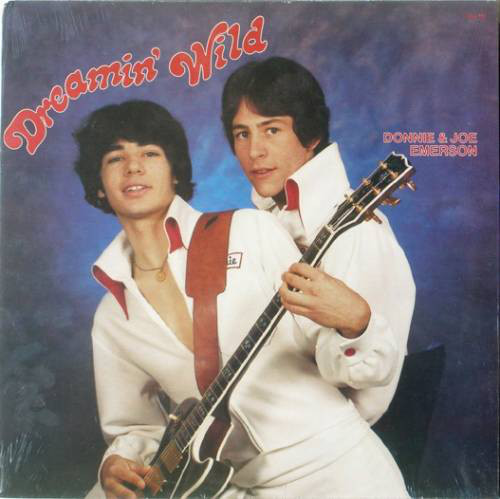
DONNIE AND JOE EMERSON- STILL DREAMING?
DONNIE AND JOE EMERSON-STILL DREAMING?
All parents want the best for their children. That has been the case since time immemorial. Parents want their children to have what they never had. So when children are young, they lavish them with the best in clothes and toys. As the children get that bit older, they’re given the best bikes, game’s consoles and sport’s equipment. By the time the children enter their teenage years, they’re dressed in designer clothes, have the best in laptops and iPods. Still, the parents are determined that their child should enjoy the finest things in life. However, some parents take this way too far. This was the case with Donnie and Joe Emerson’s parents.
Back in 1979, Donnie and Joe Emerson’s parents spent $100,000 buying equipment for their two son’s home studio. That wasn’t enough. Donnie and Joe weren’t going to settle for second best. Not when it came to the equipment for their nascent studio. The synths, drum machines and eight-track recorders available were good, but not good enough for Donnie and Joe. They had their limitations.
This had been proved a couple of years earlier, when Donnie and Joe Emerson recorded and released their debut single. It was a Donnie Emerson composition Take It. On the flip-side was another song penned by Donnie, Thoughts In My Mind. These two songs weren’t recorded as Donnie and Joe Emerson, but as Don, Joe and Eldon. Once the single was recorded it was ready for release.
Donnie and Joe Emerson had two options. They could shop Take It to various record label, in the hope that one might take a chance on the single. The label would have the budget and expertise the promote Take It. There was another option, release Take It as a private pressing. This is what the happened to Take It.
Take It was released on the family record label Enterprise and Co. When the single was released in 1977, Take It sunk without trace. Surely, the Emerson family had learnt a lesson from the commercial failure of Take It? Or had they?
Two years later, in 1979, Donnie and Joe Emerson realised that their home studio wasn’t without its limitations. They needed better equipment. Especially if they were going to record their debut album.
So, Donnie and Joe’s parents made one of the biggest decisions of their life, and mortgaged the 1,600 acre family farm in Fruitland, Washington. All this was so Donnie and Joe could follow their dreams. They went out and bought the very best musical equipment money could buy. This included was much better than the synths, drum machines and eight-track recorder in their original studio. By comparison, this was state of the art. It was the perfect environment for Donnie and Joe Emerson to record their debut album.
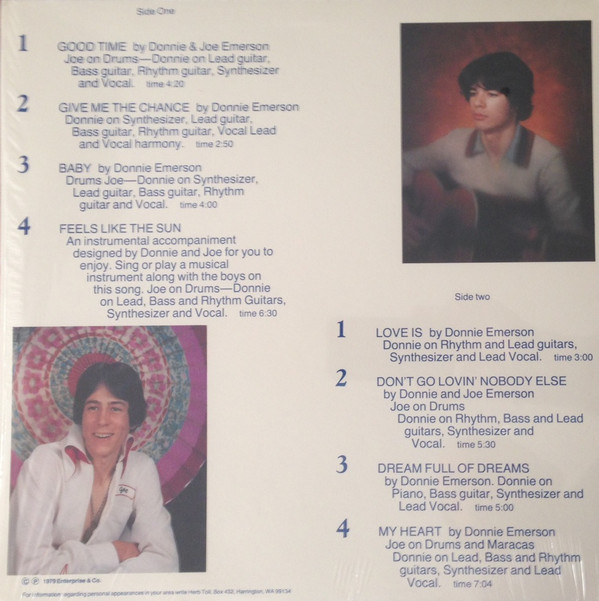
For their debut album, Donnie and Joe had written three tacks together, Good Time, Feels Like The Sun and Don’t Go Lovin’ Nobody Else. The rest of the album was written by Donnie. Similarly, Donnie played a bigger part in the recording of the album.
At the Emerson family’s new, state of the art studio, Joe Emerson played drums and added harmonies. Donnie played bass, acoustic, rhythm and lead guitar, synths and added lead vocals. He also took charge of production and mixing the album. Once the eight tracks were recorded, the album became Dreamin’ Wild. This was almost ironic.
After all, the Emerson brothers had been living the dream. In doing so, they’d spent a fortune, their parent’s fortune. The Emerson’s had spent $100,000 and mortgaged their future. Dreamin’ Wild had to sell well. It had to be a huge hit.
Having released their debut single as a private pressing, surely the Emerson family would try and interest record companies in Dreamin’ Wild? They had the budget and experience to promote the album. This would’ve been in Donnie and Joe Emerson’s best interests. However, the Emerson family decided to release the album privately. This wasn’t unusual.
All across America, private pressings were being released. They varied in quality. Many were little more than vanity releases. Not Dreamin’ Wild.
It showcased two talented singers, songwriters and musicians. Dreamin’ Wild wasn’t just a case of wealthy parents indulging their son’s musical fantasies. No. Far from it. Donnie and Joe’s fusion of soft rock, funk and soul had potential. The Emerson brothers could’ve enjoyed a successful career. Especially, if they’d signed to a major label. They would’ve guided Donnie and Joe’s career. That would’ve made sense. So would bring in an experienced management team to guide Donnie and Joe’s career. Sadly, that didn’t happen.
Instead, Dreamin’ Wild was released on the Emerson family’s Enterprise and Co. label. Its only prior release had been Donnie and Joe’s 1977 single Take It, and it had sunk without trace. Sadly, when Dreamin’ Wild was released in 1979, lighting struck twice. Just like Take It, Dreamin’ Wild it sunk without trace. The Emerson family’s gamble hadn’t paid off.
They had bet the bank on their talented sons. Not only were they $100,000 lighter, but there was a mortgage on their 1,600 acre farm. Dreamin’ Wild must be the most expensive private pressing ever.
The copies of Dreamin’ Wild that had found their way into record record shops, soon found its way into the Dollar bin. They were just the latest of thousands of private pressing that were released each year. Many were vanity releases, that deserved to find their way into the remainder piles and Dollar bins. Not Dreamin’ Wild. It was a cut above most private pressings. Maybe if the Emerson brothers had belatedly shopped the album to a record company, they might have taken a chance on it. However, by then, it was too late.
Following the commercial failure of Dreamin’ Wild, Joe decided to concentrate on the family farm. For Joe the dream was over. Reality seemed to have hit home. Maybe Joe realised that they were never going to enjoy commercial success and critical acclaim by releasing private presses? Things might have been different if they had been signed to a record company. So Joe decided to concentrate on helping run the facility farm, while music would become a hobby, something he did to relax. Donnie wasn’t willing to give up on his dream.
Still, Donnie believed he could make a career out of music. Maybe even with his brother? So while Donnie continued to chase his musical dream, he wrote and recorded with Joe when his brother had some spare time.
Over the next two and a half years, they wrote and recorded seventy songs. Not only were the Emerson brothers prolific, but the quality was consistent. What differed was style. They recorded everything from FM rock, power pop, and new wave. That was part of the problem.
The Emerson brothers continually flitted between musical genres. They couldn’t be marketed as pop, rock or new wave artists. This would’ve made it difficult for a record company to market the Emerson brothers. Their versatility had, in fact backfired. They would’ve been better advised to concentrate on one particular genre. However, that never happened, as the Emerson brothers didn’t seem interested in working with a record company. Instead, it seemed, they wanted to do things on their terms. That was all very well, but had already proved expensive. Despite this, Donnie never gave up his musical dream.
Throughout his life, music has been a constant. It was his passion, and how he once hoped to make his living. Sadly, Donnie Emerson never made the commercial breakthrough, and was never able to make a living out of music. However, at least he had the opportunity to follow his dreams. His parents made sure of that.
They spent $100,000 buying equipment for their two son’s home studio. That wasn’t enough. Donnie and Joe weren’t going to settle for second best. Not when it came to the equipment for their nascent studio. The synths, drum machines and eight-track recorders available were good, but not good enough for Donnie and Joe. They had their limitations. So, their parents mortgaged the 1,600 acre family farm in Fruitland, Washington. All this was so Donnie and Joe could follow their dreams. Sadly, this gamble didn’t pay off.
This wasn’t because Donnie and Joe lacked talent. Far from it. Instead, it was a case of making a series of bad decisions. The first was spending a small fortune on a home studio for two teenage boys. That was indulging two boy’s dreams. In doing so, the Emerson family risked everything. Their second mistake was not trying to get a record company interested in Dreamin’ Wild. Maybe then, Dreamin’ Wild would’ve become a commercial success. By releasing Dreamin’ Wild on their own label, the Emerson family weren’t able to promote the album sufficiently. So, it’s no surprise that Dreamin’ Wild sunk without trace. That’s a great shame.
The Emerson brother’s were both talented singers, songwriters and musicians. Joe cowrote three tracks, played drums and added occasional harmonies. Donnie wrote the rest of Dreamin’ Wild; played most of the instruments and sang the lead vocals. He also mixed and produced the album. Dreamin’ Wild was very much his baby.
It seems that Donnie was the driving force behind the Emerson brothers musical partnership. Maybe music played a different part in the two brothers’ lives? For Joe Emerson, maybe music was a hobby and if anything came of it, that was an added bonus. By comparison, Donnie Emerson’s life seemed to revolve around music. He was determined to make a career out of music, no matter what. This included letting his parents spent $100,000 and mortgage their farm to pay for a new studio. This allowed Donnie and Joe Emerson to record their debut album Dreamin’ Wild. At last, Donnie Emerson was living the dream, and when their debut was released was still dreaming. Alas, it was ultimately all for nothing.
The dream soon became a nightmare when the album Dreamin’ Wild failed commercially. Despite this, Donnie Emerson continued to dream, and who knows, maybe even today, is still dreamin’ of making a career as a music, like he was when he released Dreamin’ Wild.
DONNIE AND JOE EMERSON- STILL DREAMING?

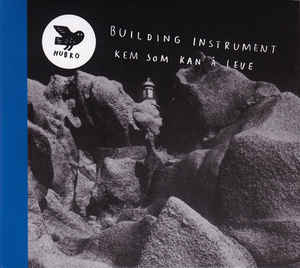
BUILDING INSTRUMENT-KEM SOM KAN Å LEVE.
BUILDING INSTRUMENT-KEM SOM KAN Å LEVE.
Just over two years have passed since Norwegian trio Building Instrument released their eponymous debut album in March 2014. The album was released to widespread critical acclaim, and great things were forecast for Building Instrument. Since then, Building Instrument have been working on their much anticipated sophomore album, Kem Som Kan Å Leve.
After nearly two years, Kem Som Kan Å Leve is completed, and will be released on Hubro Music, on the 2nd of September 2016. Kem Som Kan Å Leve marks a welcome return from the Nordic sonic explorers, Building Instrument. Their story began eight years ago.
It was back in 2008, that Building Instrument was formed by Mari Kvien Brunvoll, Øyvind Hegg-Lunde and Åsmund Weltzien. Originally, the three members of Building Instrument planned to make electronic music. That was their raison d’être…albeit briefly. Before long, Building Instrument decided to turn their back on electronic music.
After a musical rethink, Building Instrument settled on a very different sound. This time, they decided to make acoustic music, which would allow Building Instrument to improvise and innovate. Having made the decision to change direction, Building Instrument began to practise, honing and shaping their new sound. Gradually, their own unique sound began to take shape. It is best described as genre-melting, with Building Instrument drawing inspiration from various musical genres and influences. Once they had honed their unique sound, Building Instrument began to play live.
Each night Building Instrument took to the stage, they took the audience on a magical, musical, mystery tour. One minute Building Instrument’s music is understated, then the next it’s playful. The Building Instrument throw a curveball, and change direction. The next track is totally different, with Building Instrument losing their earlier self restraint, becoming bold as they kick out the jams. As a result, Building Instrument’s music is always innovative, inventive and interesting. Other times, glorious rhythms and melodic music assailed the audience, who were enthralled by veered between emotive and ethereal to compelling and dramatic. Other times, the music was adventurous, bold and always, innovative. However, that wasn’t surprising given Building Instrument’s multi-talented lineup.
Building Instrument’s vocalist is Mari Kvien Brunvoll, who also takes charge of an eclectic and interesting selection of instruments. This includes the zither, percussion, kazoo and sampler. Mari Kvien Brunvoll released her eponymous debut album in 2012. She has also worked with many artists during her carer. This includes her collaboration with Stein Urheim on their 2013 album Daydream Twin. It was nominated for a Spellemannprisen in the Open Category in 2013. However, Mari Kvien Brunvoll isn’t the only experienced musician in Building Instrument.
So is drummer and percussionist Øyvind Hegg-Lunde. He has been a member of several groups, including Crab Is Crap, the Erlend Apneseth Trio, Glow, Klangkameratane, Strings and Timpani and The Sweetest Trill. The final member of Building Instrument is Åsmund Weltzien, who plays synths, melodica and adds electronics and melodica. Together, the three multitalented members of Building Instrument proved a formidable force.
Having laboured long and hard to establish a reputation as a live band, Building Instrument were now familiar faces on Norway’s thriving and vibrant music scene. By then, Building Instrument’s concerts were receiving rave reviews. In the increasingly competitive Norwegian music scene, Building Instrument were regarded as rising stars. Their music was adventurous, inventive, innovative and totally unique. They had forged and honed their own style over the last few years. During this period, they’d worked away, quietly recording their eponymous debut album.
Building Instrument.
In March 2014, Building Instrument was released to critical acclaim. The music was beautiful, cinematic, ethereal, innovative and inventive album of genre-melting music, where Building Instrument push musical boundaries to their limits, and sometimes, beyond It was a captivating album, and one that sonically and stylistically, defied description.
Building Instrument combined elements of ambient, avant-garde, electronica, experimental, folk, free jazz, pop, and rock. There’s even a nod to sixties soundtracks and jazz. At the heart of Building Instrument’s sound, was the ethereal beauty of Mari Kvien Brunvoll’s vocal. The result was an album where Building Instrument certainly fulfilled their potential, and in doing so, whetted the listener’s appetite for the followup.
Given it had taken Building Instrument six years to release their eponymous debut album, the question was, how long would it take them to release their sophomore album? Building Instrument it turned out, took just over two years to record Kem Som Kan Å Leve, which by todays, standards, isn’t long. Kem Som Kan Å Leve is one of the most anticipated albums of 2016, and finds Building Instrument heading out on another magical musical mystery tour.

Kem Som Kan Å Leve.
Having released their eponymous debut album, Building Instrument’s thoughts turned to the followup. It took the best part of two years to complete six tracks that became Kem Som Kan Å Leve. The music to the six tracks was composed by Building Instrument, while vocalist Mari Kvien Brunvoll wrote the lyrics and is responsible for the melodies. However, the inspiration for some of Kem Som Kan Å Leve came from the artwork of Kurt Schwitters.
During the two year period that Building Instrument were writing and recording Kem Som Kan Å Leve, the trio were commissioned to write music that was inspired by Kurt Schwitters’ artwork. There was a reason for this.
In September 2015, a new, and permanent exhibition of Kurt Schwitters’ artwork was being opened at the Henie Onstad Kunstsenter, at Høvikodde, which is on the outskirts of Oslo. To celebrate the opening of the exhibition, a concert had been arranged. This was part of one of the most important events in Oslo arts calendar, the Ultima Oslo Contemporary Music Festival. The week that the exhibition of Kurt Schwitters’ was opened, Building Instrument would record Kem Som Kan Å Leve at the Studio, a hall in the Henie Onstad Kunstsenter. This was fitting.
Kurt Schwitter has obviously influenced Building Instrument. He was a German artist, who was born in 1887. Just like the members of Building Instrument, he was truly multitalented. Not only was Kurt Schwitter a painter, but a collage artist, sound poet and installation artist. However, during the thirties, Kurt Schwitter had to flea from the Nazis, and for a while, lived in exile in Hjertøya, in the municipality of Molde. This was a huge coincidence, as Molde just happened to be where Mari Kvien Brunvoll called home.
Maybe Mari Kvien Brunvoll had visited the Merzbau building that Kurt Schwitter had built in the stone cabin he rented? Whether she has, it certainly seems like Kurt Schwitter’s work has influenced Building Instrument.
On Kem Som Kan Å Leve, Mari Kvien Brunvoll delivers some of the lyrics using the Molde dialect. Other lyrics she sings using
an invented language. This was something she did on Building Instrument’s eponymous debut album. It’s also one of Liz Fraser’s trademarks when she was the Cocteau Twins’ vocalist. However, in the case of Building Instrument, they felt that it brought them closer to Kurt Schwitter.
A member of Building Instrument remarked: “working with this commissioned piece enabled us to go further in the direction of expanding or erasing the meaning of language, just as Schwitters did with his sound poetry.” It also was another example of Building Instrument’s determination to innovate, and push musical boundaries. That was certainly the case when Building Instrument recorded Kem Som Kan Å Leve.
Recording of Kem Som Kan Å Leve took place at The Studio, a hall in the Henie Onstad Kunstsenter. The session began on 11th September, with Jørgen Træen recording and co-producing the album with Building Instrument. Kem Som Kan Å Leve was recorded live. There was no overdubbing. This is unusual, as most groups are repair any ‘mistakes.’ However, when Building Instrument began recording Kem Som Kan Å Leve it was just like one of their live shows, as they improvised and headed in unexpected directions. To do this, Building Instrument deployed an array of eclectic instruments and effects.
Vocalist Mari Kvien Brunvoll played percussion, zither, kazoo and took charge of live sampling and effects. Åsmund Weltzien played synths and added electronics. Drummer and percussionist Øyvind Hegg-Lunde was responsible for the album’s heartbeat. After four days of recording, Kem Som Kan Å Leve was completed on 14th September 2015. Building Instrument had played their part.
Now the album could be mixed and mastered. The process began in January 2016. Four of the tracks were mixed at Grotten Studion by Bergen Kjøtt. He then mixed Like God å Leve and Taket at Broen Studio. However, when Kem Som Kan Å Leve was to be mastered, Bergen Kjøtt returned to Grotten Studion. Once the mastering was completed in February 2016, Building Instrument’s much-anticipated sophomore album was almost ready for release.
Nearly seven months later, and Kem Som Kan Å Leve will be released by Hubro Music on the 2nd of September 2016. Kem Som Kan Å Leve marks the welcome return from Building Instrument, who now are regarded as one of the most exciting and innovative Norwegian bands. They provide you with six compelling reasons why on Kem Som Kan Å Leve.
Opening Kem Som Kan Å Leve is Collage. The introduction is understated, dreamy and melodic. Soon, though, percussion, drums and a spoken word sample are added. There’s almost a hip hop influence. That’s until a church organ meanders in. It replaces the sample, provides a contrast to the mesmeric percussion and drums. Adding another contrast is Mari Kvien Brunvoll’s dreamy vocal. It almost floats across the arrangement, reminiscent of Liz Fraser. Then when the vocal drops out, washes of organ increases in volume and combines with the zither. Again, contrasts abound. Later, when the vocal returns, the volume of the organ decreases leaving space for Mari Kvien Brunvoll. Her ethereal vocal is panned right, while the organ, drums and percussion accompany her. Together, they create a dreamy, ethereal and melodic Collage that’s a tantalising taste of what’s to come from Building Instrument.
Sound effects are panned right on Fall, while keyboards, drums and then the zither are added. They may sound like unlikely bedfellows, but provide interesting contrasts and work well together. Suddenly, the drum drops out and Mari Kvien Brunvoll delivers a heartfelt vocal. She’s just accompanied by the zither, before the drums return. Soon, though, the vocal drops out, and the zither chimes, while the pitter patter of drums are joined by keyboards and percussion. Then when the vocal returns, Mari Kvien Brunvoll’s plaintive cry is full of emotion, before later becoming impassioned and sincere. All the time, instruments are swapped in and out, the arrangement veering between understated to a much fuller sound. This provides the perfect accompaniment to the vocal, on what’s a beautiful and captivating track, full of subtleties, surprises and nuances.
Rett Ned meanders into being, the understated arrangement crackling, reminiscent of old, worn vinyl. Meanwhile, Mari Kvien Brunvoll tenderly, before her vocal grows in power. It’s cocooned in effects, giving it a dreamy quality. Accompanying the vocal are an organ and crisp drums. Still, Mari Kvien Brunvoll’s vocal is bather in effects as it floats across the arrangement. When the vocal drops out, drums, percussion, keyboards and the zither combine. Later, when the vocal returns, it’s dubby, dreamy and lysergic. The arrangement is slow, meandering and multilayered. Contrasts abound, as elements of ambient, avant-garde, dub, electronica, experimental and indie pop are combined. Together they create a lysergic and dreamy modern day chill out track.
There’s almost an industrial influence as Farge Tida Sakte unfolds. There’s also a Faustian influence as washes of synths add an otherworldly sound. Soon, drums crack, scamper and skip across the arrangement. Meanwhile, the zither is added to this genre-melting musical feast. So is Mari Kvien Brunvoll’s vocal. Again, it’s bathed in effects, while effects are added to parts of the arrangement. Only the drums and zither are left untouched. Later, the sing song vocal grows in power and emotion, as it floats across the arrangement. That’s until the arrangement is stripped bare, and begins to rebuild. When it does, the vocal, drums, zither and kazoo combine. This results in an arrangement that’s variously hypnotic, ruminative and spacious as it floats and meanders along. It washes over the listener who bathes in its ethereal beauty.
Washes of synths meander and float across the arrangement to Like God å Leve. Soon, clip clop percussion and a bass join Mari Kvien Brunvoll’s impassioned, powerful vocal. Later, the vocal is swathed in effects becoming dreamy. That is only briefly. The earlier power returns, as synths, percussion, drums and a bass combine. Playing an important part in the arrangement are the synths. They add a cinematic sound, while Mari scats. Then when her vocal drops, out washes and waves of gently cascading synths play an important part in this dreamy, ethereal and hypnotic soundscape.
All too soon, Kem Som Kan Å Leve is over, as Taket closes the album. Synths, keyboards and subtle drums provide a backdrop for Mari Kvien Brunvoll’s cooing, ethereal vocal. It quivers, shivers and shimmers, before the improvised vocal gives way to an impassioned, emotive pleading vocal. By then, the arrangement features just occasional drums. Given its quality, Mari’s vocal deserves to take centre-stage. Later, keyboards synths and drums accompany Mari, as she revisits her earlier cooing, ethereal vocal. When it drops out, the baton passes to the keyboards, and they continue to create an ethereal backdrop, which provides a poignant ending to Taket and indeed, Kem Som Kan Å Leve.
Just over two years after the release of their critically acclaimed, eponymous debut album, Building Instrument return with Kem Som Kan Å Leve. It’s the much anticipated sophomore album from Building Instrument. Not only has Kem Som Kan Å Leve has lived up to the expectation, but surpassed it. Quite simply, Kem Som Kan Å Leve is one of the best albums of 2016.
Building Instrument have used their 2014 eponymous debut album as a building block, and have gone much further on Kem Som Kan Å Leve. They continue create inventive and innovate music, that’s ambitious and adventurous. That music is also beautiful, dreamy, ethereal, hypnotic and melodic. Partly, that is because of Mari Kvien Brunvoll’s vocal. She switches between the Molde dialect, and an invented language that only she can understand. That doesn’t matter.
Mari Kvien Brunvoll’s vocal is similar to Liz Fraser when she was with the Cocteau Twins. It has a similar calming, dreamy and ethereal quality. That ethereal beauty plays a huge part in the sound and success of Kem Som Kan Å Leve. However, Mari’s vocal can’t exist in isolation.
So the rest of Building Instrument, plus Mari Kvien Brunvoll combine to create the perfect accompaniment to the vocals. Synths, crisp drums, a myriad of percussion, the unmistakable sound of the zither and of course, an array of samples and effects. These effects are used effectively throughout Kem Som Kan Å Leve. Sometimes, it’s the vocal that’s bathed in effects; while other times, it’s parts of the arrangement. Each time, it proves hugely effective in this career-defining, genre-melting album.
Just like on their eponymous debut album, Building Instrument combine disparate musical genres. Elements of ambient, avant-garde, electronic, experimental, folk, indie pop, improv, industrial and jazz. It’s a captivating fusion of musical genres and influences. These influences include Kurt Schwitter a painter, but a collage artist, sound poet and installation artist.
On Kem Som Kan Å Leve, Building Instrument followed in the footsteps of Kurt Schwitter. Building Instrument: “go further in the direction of expanding or erasing the meaning of language, just as Schwitters did with his sound poetry.” This was an ambitious project, but the results are fascinating and captivating. They can be heard on Kem Som Kan Å Leve, which finds Norwegian sonic explorers at their inventive and innovative best. Kem Som Kan Å Leve is Building Instrument’s musical Magnus Opus, which features six soundscapes that are ambitious and adventurous, but also beautiful, dreamy, ethereal, hypnotic and melodic.
BUILDING INSTRUMENT-KEM SOM KAN Å LEVE.
ARTHUR BLYTHE-LENNOX AVENUE BREAKDOWN, IN THE TRADITION, ILLUSIONS AND BLYTHE SPIRIT.
ARTHUR BLYTHE-LENNOX AVENUE BREAKDOWN, IN THE TRADITION, ILLUSIONS AND BLYTHE SPIRIT.
Prodigy is an often overused word. It’s used to describe young children who show a modicum of talent in sport and music. Sadly, and all too often, those that are described as a prodigy never fulfil their supposed potential. The young ball player ends up parking cars, and the prodigious violinist pumping gas. However, there are some prodigies who fulfil their potential, including alto saxophonist Arthur Blythe.
He was born in Los Angeles on July 5th 1940. When he was nine, Arthur Blythe discovered the alto saxophone. Soon, he was taking lessons with a family friend, and saxophonist Junior Foster. He taught Arthur Blythe, and watched as he progressed from elementary school orchestra to the marching band. Within a few years, Arthur Blythe’s life would change, when he discovered jazz in his mid-teens. This was a game-changer.
Previously, Arthur Blythe loved R&B. That was his music. Then he discovered jazz. Arthur Blythe was then taught by Kirkland Bradford, who had played in Jimmie Lunceford’s swing band. However, it wasn’t swing that Arthur Blythe gravitated towards.
Instead, it was Thelonius Monk and then John Coltrane. It was only later, that Arthur Blythe discovered one of the greatest saxophonists, Charlie Parker. By then, Arthur Blythe lived and breathed jazz. He had discovered his purpose in life, and that was playing jazz saxophone.
While this is usually a dream for most young musicians, Arthur Blythe lived this dream; first as sideman and then as a solo artist. His solo career began in 1977, when Arthur Blythe signed to India Navigation. By 1978, Arthur Blythe had signed to a major Columbia, where he released Lenox Avenue Breakdown, In the Tradition, Illusions and Blythe Spirit. They have recently been reissued by BGO Records on a two disc set, and are the perfect introduction to Arthur Blythe. However, in the mid-sixties, Arthur Blythe was still finding has way as a musician.
By the mid-sixties, Arthur Blythe went in search of like-minded musicians. He found them at The Underground Musicians and Artists Association, which had been founded by pianist and composer Horace Tapscott. This was the perfect environment for an up-and-coming musician. Not only was Arthur Blythe surrounded by innovative and influential musicians, but it lead to him making his recording debut.
Horace Tapscott was looking for someone to play alto saxophone on his 1969 debut album and first album as bandleader, The Giant Is Awakened.Having gotten to know Arthur Blythe over the last few years, his friend from the Underground Musicians and Artists Association got the call. He was officially a member of the Horace Tapscott Quintet.
The Giant Is Awakened.
With Arthur Blythe onboard, the Horace Tapscott Quintet headed to the studio to meet producer Bob Thiele. He also owned Flying Dutchman Productions, the label the Quintet were signed to. It was an exciting time for everyone involved. Especially Arthur Blythe, who was making his recording debut; and Horace Tapscott who thought he was going to allowed to help mix the album. Before that, the album had to be recorde
Recording took place between the 1st and 3rd of April 1969. Over the three days, the Quintet recorded four Horace Tapscott compositions with producer Bob Thiele. The veteran producer had worked with some of the biggest names in jazz, and was the perfect person to coax and cajole the best performance from the nascent Quintet. He certainly brought out the best in Arthur Blythe, whose performances were being committed to tape for the first time. Once the sessions were over, it should’ve been a time to celebrate.
Alas, the celebrations were cut short when it became clear that Horace Tapscott wasn’t going to be involved in mixing The Giant Is Awakened. Horace Tapscott wasn’t pleased. For Horace Tapscott who was already suspicious of the music industry, this was enough for him to turn his back on the recording industry for ten years. This was ironic.
When The Giant Is Awakened was released later in 1969, it was to widespread critical acclaim. Sadly the Horace Tapscott Quintet would never released another album. However, Arthur Blythe had enjoyed recording The Giant Is Awakened, and was keen to repeat the experience.
Three years later, in 1972, Arthur Blythe returned to the studio. This time, it was with Julius Hemphill on his album Coon Bid’ness. It was an ambitious and innovative album where avant-garde and jazz combine. When it was released later in 1972, it was to critical acclaim. For the second time, Arthur Blythe had played an important part in the success of an album.
In 1974, two became three when Arthur Blythe joined Azar Lawrence for the recording of what was, a truly groundbreaking album of spiritual jazz, Bridge Into The New Age. Arthur Blythe didn’t seem of place alongside Azar Lawrence, Woody Shaw and Hadley Caliman. Despite this, Arthur Blythe’s career took an unexpected twist.
Just like many jazz musicians, Arthur Blythe had headed to New York, which was then, regarded as the American jazz capital.By the mix-seventies, was struggling to make a career out of music. Competition was fierce, and Arthur Blythe had no option but to take a job as a security guard. This was only temporary. Fortunately, he was soon hired by avant-garde vocalist Lean Thomas.
He was establishing a reputation as a leading light of avant-garde scene. Leon Thomas had also recently worked with a man from Arthur Blythe’s past, Bob Thiele. Their paths would cross again. That was in the future. Arthur Blythe was part of Leon Thomas’ band, and that was where he was ‘spotted’ by one of the biggest names in jazz, Chico Hamilton.
He played on Chico Hamilton’s 1975 album for Blue Note, Peregrinations, and the 1976 followup Chico Hamilton and The Players. Right through to 1977, Arthur Blythe played alongside Chico Hamilton. However, by 1977, his talents were in demand.
In 1976, Gil Evans Orchestra were looking for an alto saxophonist. Arthur Blythe answered the call, and would spend several years working with the Gil Evans Orchestra. When he was neither working with Chico Hamilton nor the Gil Evans Orchestra, worked with a variety of jazz musicians.
This included recording an album with Woody Shaw in 1977, This was The Iron Men, which featured Anthony Braxton. However, The Iron Men wasn’t released until 1980. By then, Arthur Blythe had embarked upon a solo career.
The Grip.
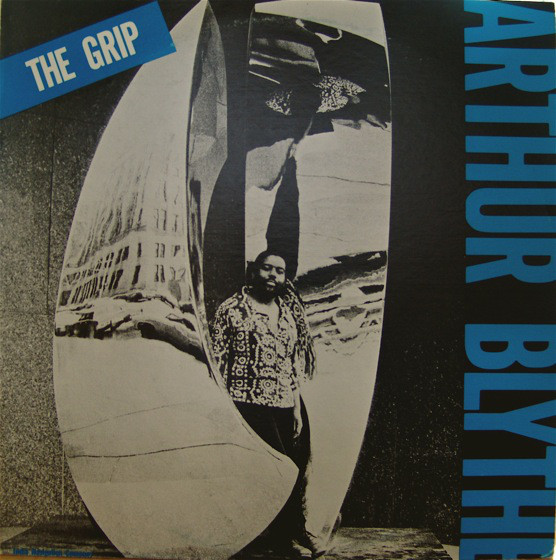
Arthur Blythe solo career began in early 1977, when having signed to the indie label India Navigation, he recorded his debut album The Grip on February 26, 1977. Unlike most debut albums, The Grip was a live album which was recorded at the Brook, in New York.
The Grip was an ambitious and adventurous album of free jazz. That was no surprise, as Arthur Blythe had put together a band that featured some of the most creative, free spirits on the New York jazz scene. Drummer Steve Reid provided the heartbeat, while Bob Stewart on tuba, trumpeter Ahmed Abdullah, cellist Abdul Wadud and percussionist Muhamad Abdullah joined Arthur Blythe. They were responsible for a debut album that won over critics.
When The Grip was released later in 1977, praise and plaudits accompanied the release of a truly groundbreaking album. Arthur Blythe’s band went further than any of his contemporaries. Critics were enthralled by such ambitious and adventurous album. What was all the more remarkable was that it was a live album. There were no second chances. That was the case with the other live album recorded on 26th February 1977.
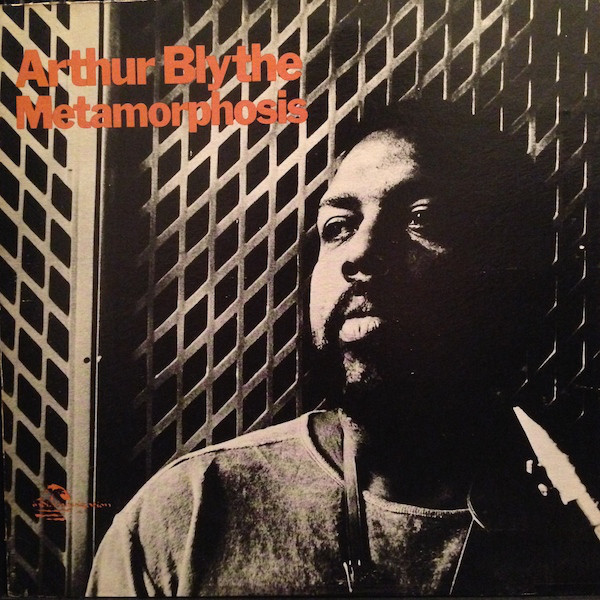
Metamorphosis.
The same night that The Grip was recorded at The Brook, the tapes were left running and a second live album was recorded, Metamorphosis. It was also released later in 1977, and just like The Grip, Metamorphosis, was an album that found favour with critics. They were impressed by Arthur Blythe’s distinctive and unique sound, as he and his band of musical free spirits took the listener on an another musical adventure. For critics and the record buyers who discovered Metamorphosis, it was a tantalising taste of what was to come from Arthur Blythe.
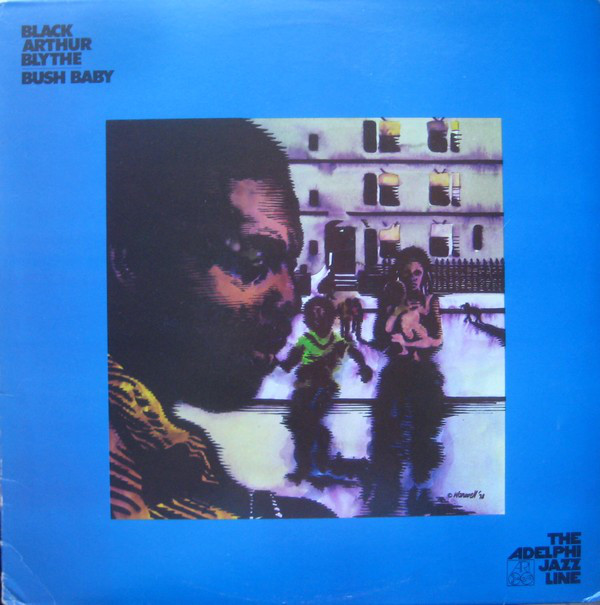
Bush Baby.
Despite having recorded and released two live albums early in 1977, Arthur Blythe wasn’t willing to rest on his laurels. Instead, he featured on Synthesis’ debut album Six By Six. Then he signed a contract with the Adelphi label, and headed into the studio in December 1977.
For his first studio album, Arthur Blythe four new compositions, They would be recorded by a trio. This featured Bob Stewart on tuba and Ahkmed Abdullah on congas. Sitting atop the arrangement was the unmistakable sound of Arthur Blythe’s alto saxophone. With the four compositions recorded, Bush Baby was released in 1978.
Before the release of Bush Baby, critics had their say on the album. Just like his two live albums, critics remarked upon Arthur Blythe’s adventurous spirit. They also remarked that already, Arthur Blythe was a versatile musician. He could seamlessly switch between playing soulfully, to playing with an unbridled intensity. Critics were won over by Bush Baby which was released in early 1978. Equally impressed by Arthur Blythe, were Columbia Records, who signed him in 1987. This was the start of a new era.
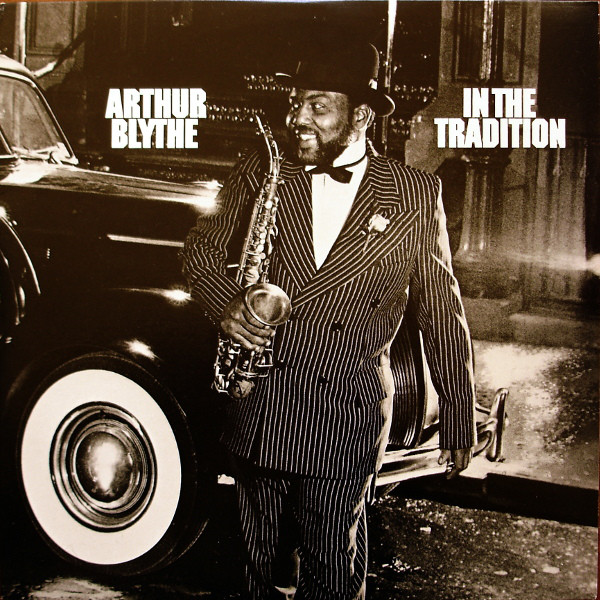
In The Tradition.
Having signed to Columbia Records, Arthur Blythe got the opportunity to renew his acquaintance with producer Bob Thiele. He was drafted in to produce Arthur Blythe’s Columbia Records’ debut, In The Tradition.
For In The Tradition, Arthur Blythe composed Break Tune and Hip Dripper. The rest of the tracks were cover versions, which took Arthur Blythe back to his teenage years. Fats Wallers’ Jitterbug Waltz had been a favourite, when R&B was Arthur Blythe’s passion. The other songs included a cover of Duke Ellington’s In A Sentimental Mood, and Caravan, which the Duke penned with Irving Mills and Juan Tizol. However, the album closer was Naima, which was written by one of the artists who inspired Arthur Blythe, John Coltrane. These six tracks were recorded at Mediasound Studios, in New York.
At Mediasound Studios, the free spirits that played on Arthur Blythe’s first three albums were absent. Replacing them, were a rhythm section of drummer Steve McCall and bassist Fred Hopkins. Completing Arthur Blythe’s quartet were pianist Stanley Cowell. Once In The Tradition was complete, Bob Thiele didn’t make the same mistake twice.
Not only did Bob Thiele co-produce In The Tradition with Arthur Blythe, but he allowed him play a part in the mixing of the album. He must have remembered the confusion surrounding the Horace Tapscott Qunintet’s The Giant Is Awakened. So, Arthur Blythe mixed In The Tradition with Doug Epstein. Then later in 1978, Arthur Blythe’s Columbia debut was released.
Critics were in for a surprise when they heard In The Tradition. This time, there were neither sonic experiments, nor musical adventures from Arthur Blythe. Instead, as the title suggested, the album had a much more traditional sound. The quartet embraced and enjoyed this return to a more traditional sound. It allowed the quartet to showcase their considerable skills. This was something critics remarked upon, praising and lauding the standard of musicianship on display on In The Tradition.
Especially on standards like In A Sentimental Mood and Caravan. Then on Naima, Arthur Blythe pays homage to Trane. He also showcases his skill as a composer and musician on Break Tune and Hip Dripper. When In The Tradition was released later in 1979, it was to critical acclaim.
The only disappointment was that In The Tradition didn’t chart in the US Billboard 200. However, it found an audience within the jazz community, who wondered what direction Arthur Blythe was heading next?
Lenox Avenue Breakdown.
1978 was one of the busiest years of Arthur Blythe’s career so far. Away from own his recording career, Arthur Blythe still worked as a sideman. He headed out on tour with Gil Evans, and recorded two live albums on the night of February 25th 1978. The first was Gil Evans Live at the Royal Festival Hall London, which wasn’t released until 1979. That same night, The Rest of Gil Evans Live at the Royal Festival Hall London 1978 was recorded. However, it wasn’t released until 1981. Two months later, and Arthur Blythe was back in the recording studio.
He played on two albums by Lester Bowie, The 5th Power and African Children. They were recorded between April 12th and 17th 1978. However, Arthur Blythe wasn’t finished working as sideman yet.
Arthur Blythe returned to Mediasound Studios later in 1978, with four new compositions. They would become Lenox Avenue Breakdown, which featured an expanded lineup of Arthur Blythe’s band.
This time around, Arthur Blythe was working with a septet, which featured some top jazz musicians. The rhythm section alone featured drummer Jack DeJohnette, bassist Cecil McBee and guitarist James Blood Ulmer. They were augmented by the familiar face of Bob Stewart on tuba, flautist James Newton and percussionist Guilherme Franco. Producing this all-star lineup, was a man used to big occasions, Bob Thiele. He coaxed and cajoled a masterful performance out of the septet. It was worth every ounce of effort and energy that had been expounded. After this, it was over to Arthur Blythe to mix Lenox Avenue Breakdown. Then Arthur Blythe’s Magus Opus was almost ready for release.
Before that, critics had their say on Lenox Avenue Breakdown. Critics thought the band had been together for years. However, they were a new band, and had been together just a week when Bob Thiele pressed play. He watched as the septet delivered a masterful performance on an album of innovative and influential contemporary jazz.
Bob Stewart the longest serving member of Arthur Blythe’s band, played an important part on Lenox Avenue Breakdown. Especially on the title-track, a thirteen minute epic, where he delivered what’s considered one of the finest tuba solos in modern jazz. That’s just one reason why Lenox Avenue Breakdown is the album’s centrepiece. However, the new band all play their part on album that critics exhausted superlatives on.
It was variously hailed a masterpiece and a modern classic. In a later review, The Penguin Guide To Jazz said: “one of the lost masterpieces of modern jazz.” Sadly, that was the case.
When Lenox Avenue Breakdown was released in 1979, the album never troubled the US Billboard 200. Even in the US Billboard Jazz Albums Charts, Lenox Avenue Breakdown reached just thirty-five. Arthur Blythe’s Magnus Opus, was indeed: “one of the lost masterpieces of modern jazz.” The next time Arthur Blythe stepped into a studio would be to play on an album by one the band that played on Lennox Avenue Breakdown.

This was Jack DeJohnette, who was about to record a new album Special Edition. Arthur Blythe spent part of February rehearsing and recording Special Edition. However, by the time Special Edition was released in 1980, the same year Arthur Blythe released third album for Columbia. That was still to come. Arthur Blythe was working on various projects
This included recording a new album with Gil Evans in July 1979. To do this, he had to catch a flight to Rome. That was where Gil Evans was going to record his next album.
On July 29th 1979 at Trafalgar Studios, Rome Arthur Blythe was part of Gil Evans’ band that recorded the double album Parabola. However, the next time Arthur Blythe was with Synthesis.
Two years had passed since the released their debut album Six By Six. When it came time to record Segments in 1979, Arthur Blythe got the call. Having recorded the album with Synthesis, Arthur Blythe, got the opportunity to accompany another jazz great, McCoy Tyner.
Playing in McCoy Tyner’s band kept Arthur Blythe busy for the rest of 1979, and into early 1980. McCoy Tyner was about to record a double album with a quartet, and wanted Arthur Blythe to feature on it. Seven musicians would feature on the eleven tracks that became Quartets 4×4.
Recording of Quartets began at Rudy Van Gelder Studio, Englewood Cliffs, New Jersey on March 3rd. This was the day that that Arthur Blythe was needed. He recorded Blues in the Minor, Stay As Sweet As You Are and It’s You Or No One, and that was his part complete. Now his thoughts could turn to his solo carer, his third Columbia album Illusions.
Illusions.
Having spent 1979 and early 1980 working as a sideman, this allowed Arthur Blythe to get over the commercial failure of Lenox Avenue Breakdown. Arthur Blythe must have known it was the best album of his career. Critics had called it a masterpiece and a classic. Now he had it all to do again, in the hope that commercial success wouldn’t continue to elude him. So Arthur Blythe returned to the studio in April 1980.
When recording Illusions began, the changes had been rung, Rather than Mediasound Studios, Illusions was being recorded at CBS Recording Studios, New York. Producing the album, was Arthur Blythe and Jim Fishel. There was no sign of Bob Thiele, nor the septet that featured on Lenox Avenue Breakdown.
While it was still a septet that featured on Illusions, this time there were several new faces. Even two different drummer were used on the album, each playing on three tracks. This meant the rhythm section featured drummers Steve McCall and Bobby Battle, bassist Fred Hopkins and guitarist James Blood Ulmer. Tubaist Bob Stewart returned, and was joined by cellist Abdul Wadud who had featured on Arthur Blythe’s first two albums. Completing the lineup was pianist John Hicks. They spent much of April and May recording Illusions. Once it was complete, critics were in for a surprise.
On Illusions, critics realised, that Arthur Blythe had used two different quartets. Musicians were swapped in and out, depending on the track. The result was an album of innovative and inventive jazz, where Arthur Blythe are at the peak of their powers. Arthur Blythe as a composer, bandleader and musician, was at his creative zenith, as he pushed musical boundaries to their limits, and sometimes, way beyond. It was a fitting followup to Lennox Avenue Meltdown, Arthur Blythe’s Magnus Opus. However, while the music on Illusions was innovative and inventive, Columbia would’ve preferred an album that appealed to a much wider audience.
When Illusions was released, just like Arthur Blythe’s two previous albums, it failed to trouble the US Billboard 200. To make matters worse, Illusions didn’t even match the success of Lennox Avenue Meltdown, which reached thirty-five in the US Billboard Jazz Album Charts. For Arthur Blythe, this was a huge disappointment.
Following the release of Illusions, Arthur Blythe returned to working as a sideman. Later in 1980, he played on Gil Evans’ album Live at the Public Theater Volume 1 and 2. The other album Arthur Blythe played on, was John Fischer’s 1980 album 6 × 1 = 10 Duos for a New Decade. Working on such an ambitious album, must have given Arthur Blythe food for thought.
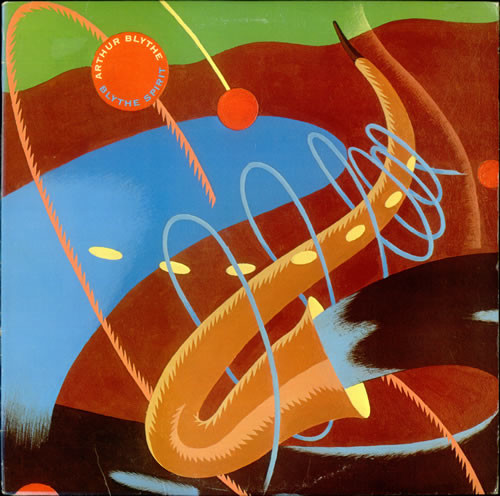
Blythe Spirit.
Arthur Blythe returned to CBS Recording Studios, in New York in 1981. This time around, Arthur Blythe had four new compositions, Contemplation, Faceless Woman, Reverence and Spirits in the Field. The other three tracks included George and Ira Gershwin’s Strike Up the Band; Johnny Burke and Erroll Garner’s Misty and a rework of the traditional gospel song Just a Closer Walk With Thee. These songs were recorded by a band that featured familiar faces and new names.
The rhythm section featured drummers Steve McCall and Bobby Battle, bassist Fred Hopkins and guitarist Kelvyn Bell. Tubaist Bob Stewart returned, and was joined by cellist Abdul Wadud and pianist John Hicks. Just like on Illusions, different musicians featured on the seven tracks. They would become Blythe Spirit, which produced by Jim Fishel and Arthur Blythe. It was a quite different album, from Arthur Blythe.
Critics realised this, when they received their advance copy of Blythe Spirit. Elements of avant-garde were combined with hard bop and R&B on Blythe Spirit Arthur Blythe. Some of the tracks featured a trio, while others featured quartet or quintet. They were responsible for tracks the veered between conventional like Misty, and a much more adventurous approach. Especially on the swinging take of Just A Closer Walk With Thee. Strike Up The Band was given an unlikely makeover, while the Arthur Blythe compositions are best described as genre-melting, and innovative. This resulted in an album that was well received by critics, but failed to find a wider audience.
Just like Illusions, Blythe Spirit failed to trouble the US Billboard 200. Illusions never even reached the US Billboard Jazz Album Charts. It was another disappointment for Arthur Blythe, and of course, Columbia.
They had placed their faith in Arthur Blythe, and gave him the freedom to release albums that featured ambitious, inventive and innovative. Sometimes it was almost experimental, as Arthur Blythe became a sonic explorer and took his music in unlikely directions on his four albums for Columbia.They’ve recently released by BGO Records as a two disc set, consisting of Lenox Avenue Breakdown, In the Tradition, Illusions and Blythe Spirit. This two disc set the highpoint of Arthur Blythe’s Columbia years.
His finest moment of his first four albums for Columbia was Lennox Avenue Breakdown, which was Arthur Blythe’s Magnus Opus. It was the best of the seven albums Arthur Blythe had released between 1977 and 1981.Lennox Avenue Breakdown was was an album that Arthur Blythe would struggle to surpass.
Illusions was a fitting followup to Lennox Avenue Breakdown, and came close to reaching the heights of Arthur Blythe’s finest hour. However, Arthur Blythe’s Columbia debut, In The Tradition, features a much more conventional sound. However, Blythe Spirit the Arthur Blythe’s fourth for Columbia, was a genre-melting album where avant-garde, post bop and R&B were combined. This might seem like an unlikely fusion, but it was a veritable musical feast that showed yet another side to Arthur Blythe. He switched between a trio, quartet and quintet, unleashing conventional, ambitious and even swinging, rousing music. This was a captivating way to end the first part of the Columbia years.
Having released four albums for Columbia, Arthur Blythe would released another five albums between 1982 and 1987. During that period, Arthur Blythe continued to work as a sideman. This is something he had done between 1978s In The Tradition and 1981s Blythe Spirit. There’s every possibility that working with some of the biggest names in jazz inspired Arthur Blythe, and played a part in the direction his music took.
It certainly took a few twists and turns, as the onetime prodigy Arthur Blythe’s first four albums contained some of the best, and most ambitious, creative, influential, innovative and inventive music of a solo career that’s spanned four decades. Sadly, despite enjoying such longevity, Arthur Blythe is still one of jazz music’s best kept secrets.
Maybe BGO Records’ reissue of Arthur Blythe’s first four Columbia albums, will result in his music being rediscovered by a wider audience, who will appreciate, embrace and enjoy albums like Lenox Avenue Breakdown, In the Tradition, Illusions and Blythe Spirit?
ARTHUR BLYTHE-LENNOX AVENUE BREAKDOWN, IN THE TRADITION, ILLUSIONS AND BLYTHE SPIRIT.

BOB LIND-MAGELLAN WAS WRONG.
BOB LIND-MAGELLAN WAS WRONG.
It was in 1966, when Bob Lind released his critically acclaimed debut album Don’t Be Concerned, on World Pacific Records. One of the songs on Don’t Be Concerned, was the song that launched Bob Lind’s career, Elusive Butterfly.
It was released as Bob Lind’s debut single in 1965, not long he signed to World Pacific Records, a subsidiary Liberty Records. When Elusive Butterfly was released in December 1965, it gave Bob Lind a top ten hit on both sides of the Atlantic. Elusive Butterfly reached number five in the US Billboard 100, but number five in the UK. This was just the start of the Bob Lind’s career.
By then, Bob Lind was twenty-three. He was born in Baltimore, Maryland on November 25th 1942. However, by 1965, Bob Lind was about to embark upon a career that would see him define and shape the folk-rock genre.
In 1966, Bob Lind released his debut album Don’t Be Concerned. It was released to widespread critical acclaim, and reached 148 in the US Billboard 200. For a new artist, in the folk rock genre, where most albums didn’t sell in the same quantities as those by pop and rock artists, this was regarded as a success. So World Pacific Records decided to build upon this success.
Bob Lind returned to the recording studio and recorded his sophomore album Photographs Of Feeling. It was scheduled for release in April 1966. Before that, Remember The Rain was released as a single, but reached just number forty-six in the US Billboard 100 and sixty-four in the UK. Compared to the transatlantic top ten hit Elusive Butterfly, this was have disappointing. So must have been Photographs Of Feeling failing to chart. Despite the positive reviews, of Photographs Of Feeling it never came close to troubling the charts. Despite this, a third Bob Lind album was released in 1966.
This was The Elusive Bob Lind, which was released on Verve Folkways. It featured five songs penned by Bob Lind; plus covers of Bob Dylan’s The Times They Are A Changin’ and the traditional song Hey Nellie Nellie. It was chosen as a single, and released later in May 1966, but failed to chart. For Bob Lind, this was disappointing. He was about to release his third album of 1966, The Elusive Bob Lind.
Prior to the release of The Elusive Bob Lind, critics were fulsome in their praise of the album. Especially, Bob Lind’s songwriting skills, his unique vocal and how he could breath life, meaning and emotion into a song. Despite the praise, The Elusive Bob Lind received, the album failed to chart. With two albums consecutive albums failing to chart, it was a worrying time for Bob Lind. Maybe, his single would get his ailing career back on track?
There was a problem though. With Bob Lind’s last two albums had been released on different labels, they were essentially competing against each other. Five singles were released between April and October 1966.
World Pacific Record released I Just Let It Take Me as second single from, Photographs Of Feeling later in June 1966. It stalled at 123 in the US Billboard 100. For Bob Lind, it was a case of close but no cigar. Especially when San Francisco Woman, was released as the third and final single from Photographs Of Feeling. However, when it was released in August 1966, it reached just 135 in the US Billboard 100. Bob Lind it seemed, was out of luck.
Despite this, Verve Folkways Records decided to release White Snow from The Elusive Bob Lind. This was just the second single released from the album. It was released in October 1966, but failed to trouble the charts. After four consecutive singles failing to chart in the US Billboard 100,
Bob Lind must have been wondering about his immediate future? He certainly wouldn’t have believed anyone who told him in fifty years time, his career would still be going strong, and he would’ve just released a new album. That is the case though.
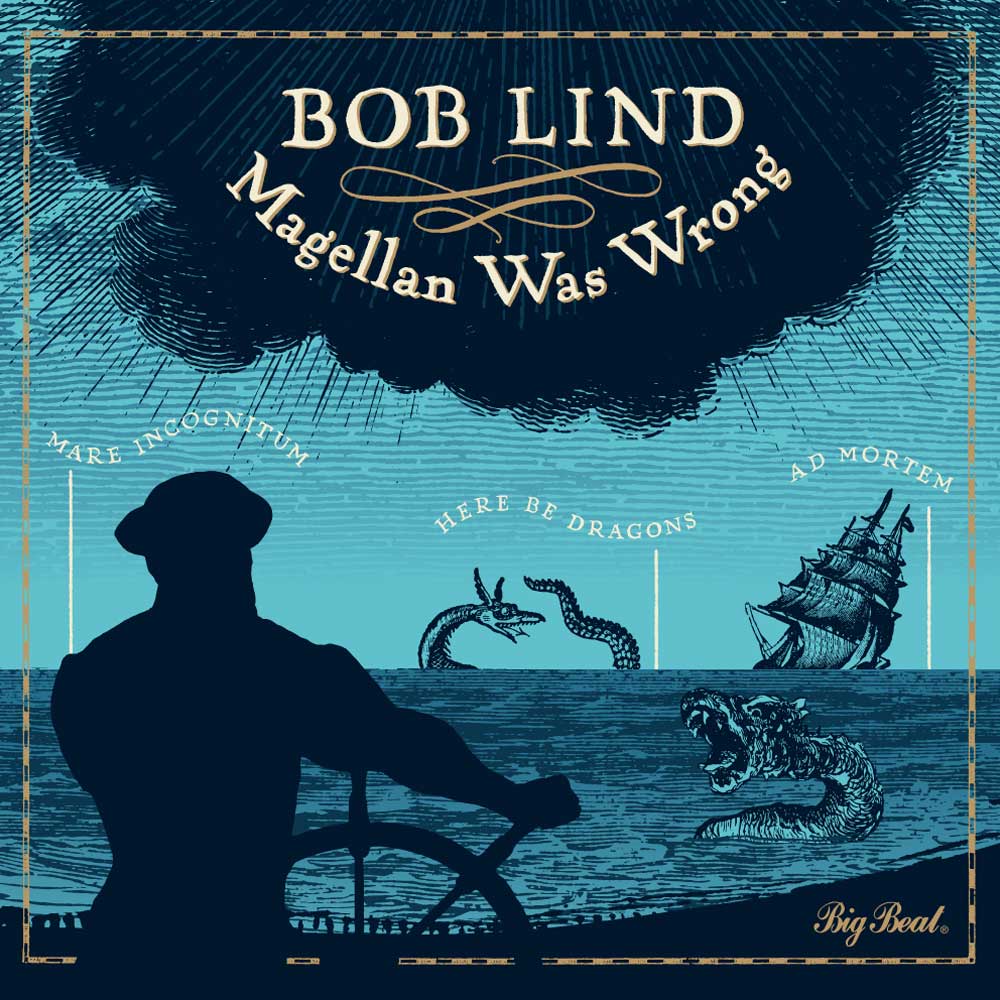
Recently, Bob Lind released Magellan Was Wrong on Big Beat Records, an imprint of Ace Records. Magellan Was Wrong is the much anticipated followup to 2012s Finding You Again. Bob Lind is a survivor, whose career has spanned six decades. That looked unlikely in the sixties.
After the roller coaster year that was 1966, Bob Lind continued to play live. He was still a popular draw, and had been since the earliest days of his career.Then in the spring of 1967, Bob Lind returned to the studio. This time, he only recorded two singles. Maybe World Pacific Records were being cautious, and wanted to gauge the success these singles? The first single, It’s Just My Love was released in April 1967, but failed to chart. Eight months later, Goodbye Neon Lies was released in 1967, but failed to chart. Little did anyone realise that Goodbye Neon Lies was Bob Lind’s World Pacific Records’ swan-song?
By 1969, Bob Lind, like many singers and musicians had developed a taste for the rock ’n’ roll lifestyle. He battled drug and alcohol addiction. To make matters worse, Bob Lind was regarded as difficult to work with. That was the case with many artists. However, if the delivered the goods, this record companies saw as the cost of doing business with an artist. Sadly, by 1969, Bob Lind had neither released a single for two years, nor an album for three. There was no sign of any music on the horizon. Despite this, very few people would’ve forecast that Bob Lind would decided to walk away from his contract with World Pacific Records in 1969.
Having severed his ties from World Pacific Records, very little was heard of Bob Lind. While he still played live, he never released any music between 1967 and 1971. That was when Bob Lind resurfaced, and signed a contract with Capitol Records.
Not long after this, Bob Lind entered the studio for the first time in four years. He recorded what became Since There Were Circles, Bob Lind’s Capitol Records’ debut album. It was scheduled for release later in 1971.
Before the release of Bob Lind’s comeback album, critics had their say on Since There Were Circle. The album was well received, and maybe, Bob Lind’s luck was changing. Alas, that wasn’t the case.
In September 1971, She Can Get Along was released as the lead single from Since There Were Circles. However, She Can Get Along failed to chart. This didn’t augur well for the release of Since There Were Circles. It also failed to chart, and this marked the end of Bob Lind’s time at Capitol Records.
Not long after leaving Capitol Records, Bob Lind turned his back on music. Bob Lind wasn’t the first, and certainly wouldn’t the last to walk away from music.
During the wilderness years, Bob Lind befriended writer Charles Bukowski. They struck up a close friendship. So much so, that Charles Bukowski immortalised the singer-songwriter in his 1978 book Women. Bob Lind was the inspiration for the character Dinky Summers, who would regularly reappear in Charles Bukowski’s work. Ten years after Women was published, Bob Lind became a writer.
Bob Lind decided in 1988 to follow the sun, and headed to Florida. That was where he embarked upon a new career, as a writer. The move to Florida, and career change proved successful. Not only did Bob Lind write five novels, but a stage play and the award winning screenplay Refuge. It went on to win the prestigious Florida Screenwriters’ Competition in 1991. This must have been the pinnacle of Bob Lind’s career as a writer.
Later in his writing career, Bob Lind spent eight years as a staff writer at the supermarket tabloids Weekly World News and The Sun. This was very different from writing novels, screenplays or a stage play. The content was marketed as satirical and sensationalist, but often fell foul of the privacy laws. For Bob Lind, this must have seemed like a far cry from his days as a musician? Maybe Bob Lind would even consider a comeback?
Thirty-three years after turning his back on music in 1971, Bob Lind had a change of heart in 2004. He was persuaded folk singer Arlo Guthrie, the son of Woody Guthrie, to make a comeback. The venue that was chosen was the Guthrie Center in Becket, Massachusetts.
That night, Bob Lind’s love of playing live was rekindled. Soon, the sixty-two year old and Arlo Guthrie were heading out on tour. Since then, they’ve continued to tour. Bob Lind was back.
Since his comeback in 2004, three’s been two of Bob Lind’s albums have been reissued. The first came in 2006, when RPM Records, an imprint of Ace Records released Since There Were Circles. Later in 2006, Bob Lind self-released his first live album Live At The Luna Star Cafe It featured the first new material Bob Lind had released since 1971. Then in 2007, RPM Records, released Elusive Butterfly: The Complete 1966 Jack Nitzsche Session. Suddenly, a whole new audience were discovering Bob Lind’s music.
Over the next few years, interest in Bob Lind’s music began to grow. However, within the music industry, many artists and groups were familiar with Bob Lind’s songs, and had covered them. This included luminaries like Eric Clapton, Glen Campbell, Dolly Parton, Aretha Franklin and The Four Tops. They’re just a few of the artists who have covered Bob Lind’s music, and helped spread the word about one of music’s best kept secrets.
With Bob Lind’s profile rising, cinematographer Paul Surratt finished a DVD about Bob Lind. It was a documentary, which also featured Bob Lind in concert. Bob Lind: Perspective was released in 2009, and introduced the singer-songwriter to a wider audience. However, there was still one thing Bob Lind hadn’t done since his comeback, release a new album.
Bob Lind rectified this in 2012. He had returned to the studio with The Spongetones’ guitarist Jamie Hoover. He produced what would become Bob Lind’s first album since Since There Were Circles was released in 1971. Forty-one years later, Finding You Again was released on Big Beat Records, a subsidiary of Ace Records. Finding You Again was released to critical acclaim, and marked a welcome return to form from the seventy year old folk-rock pioneer. Now that Bob Lind had found his audience again, the big question was, when would there be followup to Finding You Again?
For Magellan Was Wrong, Bob Lind wrote eleven new tracks and decided to cover Yom Paxton’s Bottle Of Wine. These songs were arranged and produced by Jamie Hoover. He also plays many of the instruments on Magellan Was Wrong. Bob Lind plays acoustic guitar, electric guitar, 12-string guitar and adds synth horns and vocals. Augmenting Jamie Hoover and Bob Lind, were a few musicians who added overdubs in two studios in Fort Worth, Miami. Once the songs, were complete, they became the much-antipated Magellan Was Wrong.
Opening Magellan Was Wrong, is I Don’t Know How To Love You. An urgently strummed guitar joins the rhythm section in driving the arrangement along. The bass like the piano is played slowly and carefully. Meanwhile, Bob Lind’s vocal is impassioned, needy and emotive. Espeically as he sings: “is there a secret code that I can steal, to bring your passion back, to make you feel, to make you see in me, the man you once knew.” Desperation fills vocal as he asks, begs “how can I pull you back, what can I do.” Soon, this paean is unfolding, and Bob ruefully reflects: “I don’t know how I lost you” and later, “I Don’t Know How To Love You, maybe I never did.” Jamie Hoover’s adds instruments at just the right time. Whether it’s the guitar, mandolin or piano, they compliment Bob on this soul-baring ballad.
You Are Home is a a song about the war veterans, who were wrongly imprisoned, and often, were tortured and left traumatised. Now they’re free, and are home with people who love and care for them. A slow, sultry tenor saxophone gives way to Bob’s vocal. He’s constantly reassuring: “you’re safe now, back with the ones that love you…you are back with the ones that love you. Meanwhile, the rhythm section, piano and guitar provide a subtle backdrop. Bob’s vocal is heartfelt and full of sincerity, while saxophone winds its way above the arrangement. It’s not overpowering, and again, compliments Bob’s vocal. When the vocal drops out, the sultry saxophone takes centre-stage and proves the perfect way to closes this beautiful, thought-provoking ballad.
Never Even There is a jazz-tinged song, where Bob scats as a chiming guitar, subtle drums and piano combine. A brief guitar solo gives way Bob’s vocal. He’s soon delivering lyrics that will ring true with many men. They spent too much time doing other things, and not spending time with their partner. Then one day; “she’ll leave you, like you were never even there.” After Bob delivers, that lyric, a jazz guitar returns. That’s until Bob dawns the role of agony uncle. He advices how to stop this happening, and tells what will happen to a man that doesn’t follow his advice,
Washes of Hammond organ give way to a stomping, pounding beat on Magellan Was Wrong. By then, Bob’s painting pictures with his lyrics. Meanwhile, a piano and harmonies accompany him. After years of believing that if something was possible, then it was achievable, he’s lost faith. Frustration fills his voice as he sings: “Magellan Was Wrong, this world is flat sometimes,” on this carefully crafted, hook-laden anthem.
The tempo drops on I Turn To You, a piano lead ballad. In the song, Bob plays tribute to the garage and strength of women. Mostly, it’s a wife or girlfriend a man turns to, when times get tough. As the piano plays, Bob sings: “I Turn To You…because you’re braver than I’ll ever be…you stand up strong against my despair.” Behind him, one of the biggest arrangement unfolds. A piano, drums and later a searing guitar play leading roles. Everything is played by Jamie Hoover. This leaves Bob to give thanks, as the arrangement builds and grows on this poignant ballad.
Bottle Of Wine was written by Tom Paxton, and since then, has been an oft=covered song. Just two acoustic guitars and a mandolin open the song, before Bob begins to deliver the heartbreaking lyrics. There’s desperation in Bob’s vocal as he pleads: “Bottle Of Wine fruit of the vine, when will let me get sober?” It’s a battle Bob in the song sounds desperate to win, but sadly, he’s still “holding his Bottle Of Wine.”
My Friend is another poignant song, where Bob reflects that each day we grow older, the sands of time are running dry. The piano is at the heart of the arrangement, while the rhythm section play subtly. Together, they frame Bob’s vocal. He’s in a reflective mood, looking back at life with his partner at the good times and the bad. Sadly, pride and years of disappointment have driven a wedge between them. Again, there’s a jazz influence to the slow, meandering arrangement. A piano takes the lead, and is joined by a drums and a jazz guitar. Then Bob asks: we’re not here long, must we be strangers in these candle days, and when the final darkness falls, these bitter moments to pride will look small.” These lyrics makes this a truly poignant, moving and beautiful song.
Cooing harmonies and the rhythm section open From The Road. Already, it’s obvious something special is unfolding. They’re joined by Bob’s joyous, hopeful vocal. Punchy harmonies accompany Bob, while the piano, drums and stabs of horns combine. Hooks haven’t been spare on a truly irresistible paean, that Bob dedicates to Jan. She’s lucky to have such a great song written and dedicated to her.
As You, Lola, You! unfolds, Bob delivers another scat. Meanwhile, his band deliver a jaunty, jazzy, mid-tempo arrangement. Bob showcases her versatility as he delivers a jazzy vocal, on this celebration love and being in love.
The sound of David Hubbard’s tenor saxophone opens The Outsider’s Dream. It gives way to the rhythm section and guitar. They accompany Bob’s vocal; as he sings about “a man who dreamed a dream.” As a subtle, tenor saxophone rasps, Bob delivers the cinematic lyrics that tell of a perfect life. “He had a knack for how to live” There’s a twist though: “and from some place outside himself, he saw his funeral passing by, mourned by souls he mattered to.” By then, the arrangement has grown, and provides a fitting backdrop for Bob: “the night passed by and took the dream.” It was then he realised that there was: “something more to get, that tiny tinges of regret.” These he would never forget. Although he keeps the world at bay, he feels these tinges to this day.” Just like so many songs on Magellan Was Wrong, it’s a truly poignant and reflective where Bob brings the lyrics to life.
Blind Love finds the tempo rise, and features a country influence. Again, there’s a cinematic quality to the lyrics. Guitars, synth strings and the rhythm section propel the arrangement along, as Bob remembers and reflects, on the love he once knew. Sadly, it was “Blind Love, and caused pain that even time can’t heal. Bob longs for a chance to turn back the clock, and never make the same mistake again.
A Break In The Rain closes Magellan Was Wrong. It also features the ethereal beauty of coloratura soprano Arbel Martin. She’s the perfect foil for Bob, as he reflects that whatever life throws at people, the earth keeps on turning.
Hw reminds us: “there will be A Break In The Rain, sun in our windows, gardens and lanes, dawn will break and light our way home.” Augmenting Bob and Arbel, are synths. They add the finishing touch, to a track which features ethereal beauty and thoughtful lyrics. It’s the prefect way to close Bob Lind’s comeback album Magellan Was Wrong, which was recently released by Big Beat Records, a subsidiary of Ace Records.
After a four year absence, Bob Lind returns with the best album since he returned to music in 2004, Magellan Was Wrong. It’s a tantalising taste of what Bob Lind’s capable of, and what record buyers missed out on, when he turned his back on music. Thankfully, Bob Lind is back, and has matured as a singer, songwriter and musician.
His lyrics are beautiful, celebratory, cerebral, poignant, reflective, rueful, thought-proving and wistful. Songs about love, love lost, returning heroes and the sands of time running dry, sit side-by-side with a cover Tom Paxton’s Bottle Of Wine. Often, the lyrics are also cinematic, vivid and rich in imagery, as Bob Lind unmistakable voice switches between musical genres. Bob Lind it seems, is just as comfortable singing folk and folk-rock as he is country, jazz or pop rock.
He’s a versatile and truly talented singer, songwriter and musician, who put all his years of experience into writing and recording Magellan Was Wrong. It finds Bob Lind making up for lost time, after turning his back on music for thirty-three years. That was a great shame, and many would say a waste of talent. For too long, music was robbed of one its most talented sons. Thankfully, in 2004,Bob Lind Arlo Guthrie convince Bob Lind to play live. Since then, Bob Lind has been on the comeback trail. However, it took eight years before Bob Lind released a new album.
This was the critically acclaimed Finding You Again which was released in 2012. Since then, Bob Lind’s fans have eagerly awaited the followup to Finding You Again. They had to be patience, and recently, their patience was rewarded when Bob Lind released Magellan Was Wrong. The much-anticipated followup to Finding You Again has been well worth the wait.
Magellan Was Wrong finds Bob Lind back to his very best. What’s more, Bob Lind still seems to be enjoying making music. That is apparent throughput Magellan Was Wrong, where Bob Lind’s joie de vivre shines through. Maybe Bob Lind has finally realised how lucky he his to be making a living out of music, and how much pleasure people get from his music? That I’m sure of. Magellan Was Wrong is a must have for fans, and is finds the comeback King, Bob Lind at his best, on what is without doubt, one the finest albums of his fifty-one year recording career.
BOB LIND-MAGELLAN WAS WRONG.
SIMPLE MINDS-NEW GOLD DREAM (81-82-83-84) DELUXE EDITION.
SIMPLE MINDS-NEW GOLD DREAM (81-82-83-84) DELUXE EDITION.
Simple Minds weren’t an overnight success. Very few bands are. It took five years and five albums before commercial success and critical acclaim came Simple Minds’ way. The album that transformed Simple Minds’ career was New Gold Dream (81–82–83–84).
Suddenly, Simple Minds were one of the most successful bands in Britain, and for the first time, were making inroads into Europe and North America. New Gold Dream (81–82–83–84) which was recently released by Universal as a two disc Deluxe Edition, was a game-changer for Simple Minds in more ways than one.
New Gold Dream (81–82–83–84) was the start of the rise and rise of Simple Minds. It was also the start of Simple Minds stadium rock era. This part of the Simple Minds story began in April 1982. However, Simple Minds were born in the South Side of Glasgow in 1977.
Simple Minds roots can be traced to the short-lived punk band Johnny and The Self-Abusers. They were formed in early 1977, and made their live debut on 11th April, which was Easter Monday. That was the first time the sextet took to the stage. Their lineup that day, included friends Jim Kerr and Charlie Burchill, plus drummer Brian McGee and bassist Tony Donald . They would later become founder members of Simple Minds.
Two weeks after their debut, Johnny and The Self-Abusers opened for Generation X in Edinburgh. This was the start of a summer where the nascent band spent playing live in Glasgow. Before long, the band had split into two factions. Founders Alan Cairnduff and John Milarky were in one faction, while the other featured Jim Kerr, Charlie Burchill,Brian McGee and Tony Donald. Despite being a band divided, Johnny and The Self-Abusers decided to record their debut single.
This was Saints and Sinners, which was released on Chiswick Record in November 1977. On the release date, Johnny and The Self-Abusers announced that they had split-up. Not long after this, Simple Minds were born.
The founding founding members of Simple Minds were Jim Kerr, Charlie Burchill, Brian McGee and Tony Donald. Jim Kerr who had been Johnny and The Self-Abusers keyboardist, packed his keyboards away, and became Simple Minds vocalist, and sometimes violinist. The rhythm section featured drummer Brian McGee, bassist Tony Donald and guitarist Charlie Burchill. Then in January 1978, Duncan Barnwell was drafted in to play second guitar. Not long after this, Barra born keyboardist Mick MacNeil joined the band. This was the original lineup of Simple Minds. They were soon making waves in their home city.
Quickly, Simple Minds established a reputation was one of Glasgow’s best up-and-coming bands. Constantly playing live allowed Simple Minds to hone their sound. However, in April 1978, there was a change to the lineup when Tony Donald left the band. This was a blow, as the band were about to record a demo tape. A replacement was soon found in Derek Forbes, who had been The Subs’ bassist. However, this wasn’t the end of the changes in Simple Minds’ lineup.
Later in 1978, second guitarist Duncan Barnwell was invited to leave the band. Now Simple Mind were a quintet, and that was how they would remain. By then, the Jim Kerr and Charlie Burchill songwriting partnership had taken shape, and Simple Minds had a manager.
Give Simple Minds were rising stars of the Glasgow music scene, it was inevitable that they would come to the attention of Bruce Findlay. He was one of the leading lights of the Glasgow music scene. Not only did he own the Bruce’s Records’ chain, but the Zoom Records’ label, which was a subsidiary of Arista Records. Bruce Findlay had heard good things about Simple Minds, and approached them about managing the group. At first, this was on a part-time basis. However, his would later change.
Life In A Day.
Before that, Simple Minds began work on their debut album, Life In A Day. It featured ten songs written by the Jim Kerr and Charlie Burchill songwriting partnership. Then the five members of Simple Minds headed south.
By then, Simple Minds’ lineup was settled. Vocalist Jim Kerr and keyboardist Mick MacNeil were joined by a rhythm section featuring drummer Brian McGee, bassist Derek Forbes and guitarist Charlie Burchill. They began recording Life In A Day December 1978. Three separate studios were used, including the Rolling Stones Mobile Studio. Further sessions took place at Abbey Road Studios and the Townhouse Studios, in London. Producing these sessions, which became Life In A Day, was John Leckie. He spent the best part of two months recording Simple Minds’ debut album. After nearly two months, Life In A Day was completed in January 1979. It would be released three months later.
Having recorded their debut album, Zoom Records sent copies of Life In A Day to critics. The reviews were mixed, ranging from favourable to positive. Two tracks came in for praise, Murder Story and Simple Minds’ tribute to Nico, Chelsea Girl. However, some critics remarked upon the noticeable early seventies influence, This gave the album a slightly dated sound. Other critics praised Jim Kerr’s vocals, while some praised some of the arrangements on Life In A Day. Despite this, there was no consensus. It was left to record buyers to have the final say.
Life In A Day was released on 1st April 1979, and reached just number thirty in the UK charts. For a debut album, it was regarded as a success. Then when Life In A Day was released as a single on 15th May 1979, it stalled at a disappointing sixty-two on the UK. For Simple Minds’ sophomore single, Chelsea Girl was chosen, but failed to chart. This was a disappointment for Simple Minds. Overall, they could be satisfied with the progress that they had made so far.

Real To Real Cacophony.
Just seven months after the release of Life In A Day, Simple Minds returned with their sophomore album Real To Real Cacophony. This was a much more collaborative album, with Jim Kerr writing the lyrics and the music for the twelve tracks being written by the band. However, what didn’t change, was John Leckie producing Real To Real Cacophony.
Recording of Real To Real Cacophony took place at Rockfield Studios, in Monmouth, Wales during September 1979. This had previously, been the scene of numerous musical triumphs. Classic albums and number ones had been recorded at Rockfield Studios. Maybe, Simple Minds were hoping that they would be inspired by the surroundings?
Once Real To Real Cacophony was complete, Zoom Records had scheduled a release date for November 1979. This didn’t leave much time to promote the album.
In the midst of releasing Real To Real Cacophony, critics had their say on Simple Minds’ sophomore album. Again, the reviews were mixed. Some of the views were favourable, while others were mixed. At least Real To Real Cacophony was well received by some of the critics. They realised that although the music on Real To Real Cacophony was still being influenced by the music the band grew up listening to, this time, they used this merely as a starting point. That music was reshaped and transformed into something totally different. Simple Minds were sonic sculptors. One example was the influence of Kraftwerk’s Radio Activity on Real To Real, which was one of the highlights of Real To Real Cacophony. It was released in November 1979.
When Real To Real Cacophony was released in November 1979, the album failed to chart. Neither did the single Changeling. For Simple Minds this was a huge blow. It would be nearly a year before Simple Minds returned with their third album, Empires and Dance.

Empires and Dance.
Despite the disappointment of Real To Real Cacophony, Bruce Findlay became Simple Minds’ full-time manager. His job was steering the band through the toughest time of their career.
Following the commercial failure of Real To Real Cacophony, Simple Minds began work on what would become Empires and Dance. Again, Jim Kerr wrote the lyrics, while the band wrote the music to the ten tracks. They were recorded in Wales, using the Rolling Stones Mobile Studio.
In Wales, John Leckie was in charge of production on Empires and Dance. This was the third album he had produced for Simple Minds. It would also be his swan-song.
Once Empires and Dance was complete, the release date was scheduled for 12th September 1980. Before that, critics received their advance copies. They dissevered that Empires and Dance was a genre-melting album. Elements of new wave, post punk, dance, electronica and rock melted into one. This one bullish critic later called “a post punk dance classic.” In contrast, NME called Empires and Dance “a weird, agitating record.” Mostly, though, the album was reasonably well received. One track stood out from the crowd, the album opener, I Travel. It should’ve transformed Simple Minds’ fortunes.
On 12th September 1980, Empires and Dance was released. It didn’t sell well, and stalled at just forty-one on the UK charts. That was an improvement on Real To Real Cacophony. Elsewhere, Empires and Dance reached number forty-seven in New Zealand. That was a small crumb of comfort.
Especially when the lead single I Follow failed to chart. This was a huge blow, as it was the strongest track on the album. History repeated itself when Celebrate was released as a single, but failed to chart. This was strange, given the song’s popularity among Simple Minds’ fan-base. While this was another disappointment, Simple Minds were soon going up in the world.
Sons and Fascination and Sister Feelings Call.
After Empires and Dance, Simple Minds left Arista Records and signed to Virgin Records. Some industry watchers saw this as a gamble on the part of Virgin Records.
After all, Simple Minds’ three albums hadn’t sold well. Life In A Day reached just number thirty in the UK album charts; Real To Real Cacophony never came close to troubling the charts and Empires and Dance stalled at just forty-one on the UK album charts. The three albums yielded very little when it came to singles. Life In A Day had given Simple Minds a minor hit single when it reached sixty-two in the UK singles charts. However, Virgin Records decided to take a chance on Simple Minds. They were determined to repay Virgin Records’ faith in them.
So Simple Minds began work on not just one album, but two. Sons and Fascination and Sister Feelings Call would be recorded at the sessions, and released on the same date. This was unusual, and meant twice the amount of work for Simple Minds.
Again, Jim Kerr penned the lyrics and Simple Minds wrote the music. Eight songs would feature on Sons and Fascination, while seven featured on Sister Feelings Call. When it came to recording Sons and Fascination and Sister Feelings Call, John Leckie had been replaced by Steve Hillage, of Genesis and Gong.
Steve Hillage had much in common with Simple Minds; especially a shared love Krautrock. Having bonded over their love of Krautrock, Steve Hillage got to work, and began to change Simple Minds’ sound. This included changing the position of the rhythm section. They were given a much more prominent place in the mix. The rhythm section was louder, driving and anchoring the arrangements along. Other instruments were panned across the arrangement. Sometimes, they were positioned in what seemed like an unlikely place for a guitar or vocal. Two examples are the positions of Jim Kerr’s vocal The American and Sweat In Bullet. Other times, instruments are placed so that they play their part in what’s an atmospheric backdrop. This was very different to John Leckie’s approach. However, the million Dollor question was would it result in a change of fortune for Simple Minds?
When the reviews of Sons and Fascination and Sister Feelings Call were published this seemed debatable. Both albums divided the opinion of critics. What critics agreed, was that Simple Minds were moving more towards the mainstream. The song structures were much more conventional, and the songs more melodic. However, it seemed that Simple Minds still were unable to record a cohesive album. Reviews of Sons and Fascination ranged from mixed to favourable. Sister Feelings Call really divided the opinion of critics. Their reviews ranged from favourable to unfavourable. There was no middle ground. It seemed that Sister Feelings Call was Marmite music, critics either liked or loathed the album. Ironically, as is often the case, history was later rewritten and many critics have revised their opinion on both albums.
The release of Sons and Fascination and Sister Feelings Call were scheduled for 12th of September 1981. Initially, Virgin Records decided to package the two albums as double album. In Britain, Sons and Fascination and Sister Feelings Call reached number eleven and were eventually certified gold. Elsewhere, Sons and Fascination and Sister Feelings Call reached number seven in Sweden and four in Switzerland. This was the first time a Simple Minds album had charted in these countries. It was a similar case in Australia, where Sons and Fascination and Sister Feelings Call reached thirty-one. Maybe, Simple Minds’ luck was changing?
It certainly looked like it. In 1981, The American was chosen as the lead single from Sister Feelings Call, and reached fifty-nine in the UK. This was slightly disappointing, considering it was one of the album’s highlights.
Love Song was then chosen as the lead single from Sons and Fascination, and reached forty-seven in the UK; seventeen in Australia; sixteen in Sweden and thirty-eight in Canada. Simple Minds had a minor hit on three continents. To build on the success of Love Song, Sweat Bullet was released as a single. It reached fifty-two in the UK; forty-seven in New Zealand and seventeen in Sweden. Simple Minds’ music was gradually reaching a wider audience. So a decision was made to rerelease one Simple Minds’ finest singles, I Travel. However, lightning struck twice, and the single failed to trouble the charts. This was disappointing. However, the events of 1982 would more than makeup for this.
Following the release of Sons and Fascination and Sister Feelings Call, set out on tour. This time, drummer Brian McGee would be absent. He had left Simple Minds after recording Sons and Fascination and Sister Feelings Call. It was a decision that surely, would come back to haunt him.
While a replacement was found, Kenny Hyslop became a part-time member of Simple Minds. He headed out on the first part of Simple Minds’ Sons and Fascination and Sister Feelings Call tour. He would also feature on one of songs on their next album New Gold Dream (81–82–83–84).
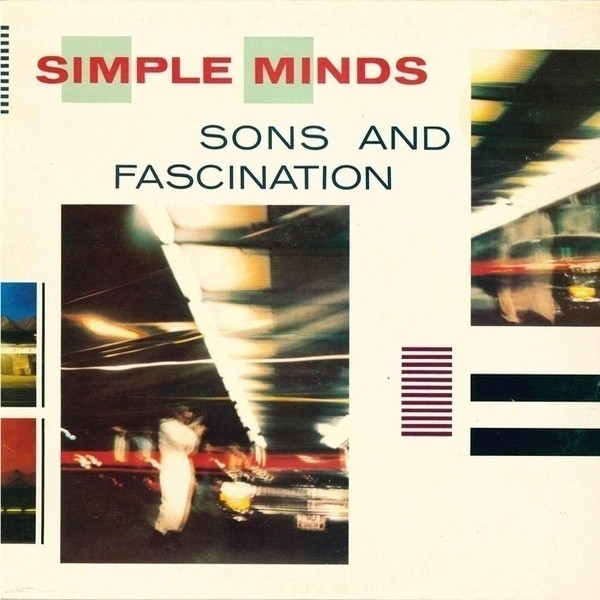
New Gold Dream (81–82–83–84).
Having returned from touring Sons and Fascination and Sister Feelings Call, Simple Minds were faced with the prospect of beginning work without a permanent drummer in place. However, ex-Skids’ drummer Kenny Hsylop was proving to be a useful and interesting addition to Simple Minds’ lineup.
While the rest of Simple Minds were interested in Krautrock, Kenny Hsylop enjoyed funk, hip hop and dance music. His influence could be heard on Simple Minds next single, Promised You A Miracle.
The five members of Simple Minds wrote Promised You A Miracle. Since then, allegations have been made the that inspiration for the riff came from an old funk track that had been played on the tour bus during the Sons and Fascination and Sister Feelings Call tour. That however, is just mere speculation. What isn’t in doubt, is that Promised You A Miracle was the first true pop song that Simple Minds wrote.
Promised You A Miracle was recorded with producer Peter Walsh at Townhouse Studios. At the heart of the song’s success is the interplay between Kenny Hyslop’s thunderous electronic beats, Charlie Burchill’s guitar riff and the hook that comes courtesy of Mick MacNeil’s keyboards. Add to that, Jim Kerr’s swaggering vocal, and the result was a slice of perfect pop. It was a stepping stone from Simple Minds old new sound to the stadium rock years.
When Simple Minds released the anthemic Promised You A Miracle it reached number eleven in the British charts. This was Simple Minds biggest British hit single. Soon, Promised You A Miracle took Europe by storm.
In Belgium, Promised You A Miracle reached number thirty-one; seventeen in Sweden; twenty-four in the Netherlands and twenty-five in the Republic Of Ireland. Further afield, Promised You A Miracle reached number eleven in Australia; nine in New Zealand and sixty-five in the US Billboard Hot Dance Charts. This was the start of Simple Minds transformation from new wave pioneers, to stadium rock superstars.
Having released what many critics felt was one of the finest song of their career so far, Simple Minds’ thoughts turned to their fifth album. However, a problem had arisen. Drummer Kenny Hyslop the band felt, wasn’t fitting in. What didn’t help, was his apparent suspicion of record companies. So Kenny Hyslop left Simple Minds in February 1982, five months after he joined on a temporary basis. In that short space of time, he had written his name in Simple Minds’ history. Now the search began for a successor.
Given Simple Minds’ star was in the ascendancy, plenty of drummers were interested in the job. Finally, Simple Minds settled on former Café Jacques drummer Mike Ogletree. Moving from a progressive rock band like Café Jacques, to Simple Minds could’ve been a culture shock for lesser drummers than Mike Ogletree. However, he quickly fitted in.
Having made his way to a converted barn in Perthshire, where Simple Minds were working on their next album Mike Ogletree got to work. By then, the four remanning members of Simple Minds had written eight new tracks. When they were combined with Promised You A Miracle, they became New Gold Dream (81–82–83–84). It was recorded in Perthshire and at Townhouse Studios, in London.
Recording began in Perthshire, where Mike Ogletree laid down the drum parts to what became New Gold Dream (81–82–83–84). Simple Minds then moved to Townhouse Studios to join producer Peter Wallsh, and complete New Gold Dream (81–82–83–84).
That was where Peter Walsh introduced Simple Minds to London born, session musician, Mel Gaynor. Peter Walsh assured Simple Minds that twenty-two year old Mel Gaynor was an experienced drummer. He had previously played with various artists and bands. So it was agreed that Mel Gaynor would sit in on the sessions, and learn the drum parts from Mike Ogletree, who would switch to percussion.
With the decision made to bring onboard Mel Gaynor as drummer, now he had to learn how to replicate Mike Ogletree’s drum parts. This was easier said than done, as the two drummers had very different playing styles. Eventually, three different drummers were credited with playing on New Gold Dream (81-82-83-84).
Mike Ogletree played drums on three tracks, Colours Fly and Catherine Wheel, Somebody Up There Likes You and New Gold Dream (81-82-83-84). Mel Gaynor featured on Someone Somewhere In Summertime, Big Sleep, New Gold Dream (81-82-83-84), Glittering Prize, Hunter and The Hunted and The King Is White and In The Crowd. The other drummer who featured on New Gold Dream (81-82-83-84), was Kenny Hyslop who played on Promised You A Miracle. These three drummers slotted into the rhythm section with bassist Derek Forbes and guitarist Charlie Burchill. Jim Kerr added the vocals on the eight tracks. Joining Simple Minds were a couple of guest artists.
This included Herbie Hancock, who played keyboards on Hunter and The Hunted. Sharon Campbell added vocals on Colours Fly and Catherine Wheel and Glittering Prize. With these parts recorded, New Gold Dream (81-82-83-84). It would be released on 13 September 1982. Before that, Simple Minds headed back out on tour.
The Sons and Fascination and Sister Feelings Call was a two-part tour. Simple Minds headed out on tour, having completed New Gold Dream (81-82-83-84). Their timing couldn’t have been better, as they had just enjoyed the biggest hit single of their career, Promised You A Miracle. However, the followup Glittering Prize, came close to replicating that success.
Four months after the release of Promised You A Miracle, Glittering Prize was released as the followup in August 1982. It reached number sixteen in Britain; number four in Sweden; eleven in the Republic Of Ireland; nine in Australia and four in New Zealand. Word was spreading about Simple Minds’ new sound. This was just in time for the release of New Gold Dream (81–82–83–84).
Before that, critics reviewed New Gold Dream (81–82–83–84). They lavished praise on what was, by far, the best album of Simple Minds career. It was the most cohesive and complete album of their five album career. Simple Minds combined their old new wave sound with synth pop, electronica, pop and rock. The result was a carefully crafted album where Simple Minds came of age musically.
Among New Gold Dream (81–82–83–84)’s highlights, were the pure pop anthems Promised You A Miracle, Glittering Prize and Someone Somewhere In Summertime. They were hook-laden, stadium rockers that transformed Simple Minds from also rans to superstars.
When New Gold Dream (81–82–83–84) was released on 13th September 1982, life was never going to be the same for Simple Minds. New Gold Dream (81–82–83–84) reached number three in Britain, and was certified platinum. Across the English Channel, France, New Gold Dream (81–82–83–84) reached thirty in France and was certified gold. Elsewhere, in Europe, New Gold Dream (81–82–83–84) reached thirty-one in the Netherlands and nine in Sweden. Further afield, Simple Mind’s popularity was growing.
In Australia, New Gold Dream (81–82–83–84) reached number three, and in New Zealand number two. However, belatedly, Simple Minds made a breakthrough in North America with New Gold Dream (81–82–83–84). Not only did it reach sixty-five in the US Billboard 200, but was certified gold in Canada. For Jim Kerr, Charlie Burchill, Michael MacNeil and Derek Forbes, it was a New Gold Dream come true.
The only disappointment was when one of Simple Minds’ most anthemic tracks, Someone Somewhere in Summertime, stalled at number thirty-six in Britain. It did reach thirty-six in Australia, and sixteen in the Republic Of Ireland. Apart from that, things had never been better for Simple Minds.
Or so it seemed. Simple Minds had been having problems with drummers. On New Gold Dream (81–82–83–84), the problem was, they didn’t have one. So, they’d used two drummers for the recording of New Gold Dream (81–82–83–84). Mike Ogletree played on three tracks, while Mel Gaynor played on the other five tracks and Kenny Hyslop who played on Promised You A Miracle. However, it was Mike Ogletree that headed out on tour with Simple Minds, to tour New Gold Dream (81–82–83–84). Mike played on the first leg of the tour, and left in November 1982 to form Fiction Factory. That presented a problem for Simple Minds.
The answer to their problem was Mel Gaynor. He had played on New Gold Dream (81–82–83–84). So, he knew many of the songs. Mel Gaynor was brought onboard, and became Simple Minds’ first non-Scottish member. However, Mel Gaynor’s drumming would prove a crucial part of Simple Minds future sound and success.
During the summer of 1983, Simple Minds played a series of high profile concerts. Many were in large stadiums, in front of fifty thousand people. This was no place for shrinking violets. So, Simple Minds cranked up the volume and went for it. Little did anyone realise, that Simple Minds were now bona fide stadium rockers.
One new song epitomised Simple Minds’ new sound… Waterfront. With its pulsating bass line, thunderous drums, and Jim’s strutting, preening vocal, Simple Minds literally swaggered their way through what was their latest anthem. This raised a few eyebrows. Were Simple Minds in the process of reinventing themselves?
That proved to be the case, with Simple Minds becoming one of the most successful stadium rock bands of the eighties and nineties. They could do no wrong from 1984s Sparkle In The Rain through 1985s Once Upon A Time, 1989s Street Fighting Years and 1991s Real Life. During that period, Simple Minds enjoyed a glittering career, with everything they touched turning to gold and platinum. From the UK, Europe, North America and Australia, Simple Minds were one of the biggest selling bands. However, when Good News From The Next World was released in 1995, it “only” certified gold in the UK, Germany, France and Switzerland, the writing was on the wall for Simple Minds.
Never again did they reach the same heights as they enjoyed between 1984 and 1995. For thirteen years, Simple Minds had been The Untouchables. However, that would never have been passible without the album that started this run of critically acclaimed and commercially successful albums, New Gold Dream (81–82–83–84). It was recently rereleased by Universal as a two disc Deluxe Edition.
The Deluxe Edition of New Gold Dream (81–82–83–84) features the album on disc one, and twelve extended mixes on disc two. There’s an instrumental of Sending Out An Angel, a club mix of Promised You A Miracle and even a German 12” remix of New Gold Dream without the drums. That’s not forgetting US remix and a dub remix of Promised You A Miracle. In total, there are four versions of Promised You A Miracle, two versions of Glittering Prize and just the one version of New Gold Dream and Someone Somewhere In Summertime. For anyone who likes remixes, then disc two of New Gold Dream (81–82–83–84) will be a veritable smorgasbord. However, for most people, the main event is disc one, and the newly remastered version of New Gold Dream (81–82–83–84).
The Deluxe Edition of New Gold Dream (81–82–83–84) features the album on disc one, and twelve extended mixes on disc two. There’s an instrumental of Sending Out An Angel, a club mix of Promised You A Miracle and even a German 12” remix of New Gold Dream without the drums. That’s not forgetting US remix and a dub remix of Promised You A Miracle. In total, there are four versions of Promised You A Miracle, two versions of Glittering Prize and just the one version of New Gold Dream and Someone Somewhere In Summertime. For anyone who likes remixes, then disc two of New Gold Dream (81–82–83–84) will be a veritable smorgasbord. However, for most people, the main event is disc one, and the newly remastered version of New Gold Dream (81–82–83–84).
After struggling for four albums, Simple Minds came of age musically on New Gold Dream (81–82–83–84). Now, Simple Minds were well on their way to superstardom. There was no stopping them as strutted and swaggered their ways through million selling albums of stadium rock. At last, Simple Minds were fulfilling their potential. For the next five albums, Simple Minds were one of the biggest and most successful British bands of the eighties and nineties. They enjoyed many a Glittering Prize, between the release of New Gold Dream (81–82–83–84) in 1982 and Good News From The Next World in 1995. However, two Simple Minds albums stand head and shoulders above the rest; Gold Dream (81–82–83–84) which transformed Simple Minds’ career; and Sparkle In The Rain, which completed the transformation of Simple Minds’ career to stadium rockers and fully fledged colossi of planet rock.
SIMPLE MINDS-NEW GOLD DREAM (81-82=83-84) DELUXE EDITION.

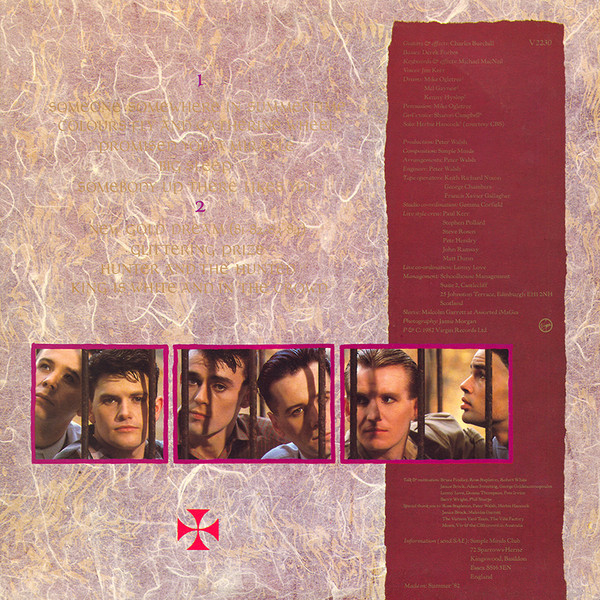

JEANETTE JONES-DREAMS ALL COME TRUE.
JEANETTE JONES-DREAMS ALL COME TRUE.
The history of soul music is littered with artists who could’ve and should’ve gone on to greater things, but for whatever reason, commercial success and critical acclaim passed them by. That, sadly, was the case with Jeanette Jones.
She had talent in abundance, and a voice that was a mixture of power, passion, emotion and sheer soulfulness. Sadly, Jeanette Jones’ recording career was all too brief, and amounts to just one single, Darling, I’m Standing By You. It was released on the Golden Soul label in 1969, and the two years later, was reissued by Kent. Nothing came of the single.
Jeanette Jones’ last recording session was in 1974, when she recorded a publishing demo for Barry Goldberg. Sadly, that was the last time she entered a recording studio. It was also the end of Jeanette Jones’ musical career. For Jeanette Jones, the dream was over.
Since then, Jeanette Jones has remained an enigmatic and mysterious figure. Very little is known of her life pre and post music. Nowadays, it is thought that Jeanette Jones lives quietly in San Francisco. It’s also where Jeanette Jones recorded the twelve songs that feature on the compilation Dreams All Come True. It was recently released on white vinyl by Kent Soul, an imprint of Ace Records. The twelve songs on Dreams All Come True document Jeanette Jones’ career at Leo Kulka’s Golden State Recorders. That however, is only part of Jeanette Jones’ story.
Details of Jeanette Jones’ early life are sketchy. It’s thought that she was born and brought up in San Francisco. That was where Jeanette Jones first discovered music.
Just like many future soul singers, Jeanette Jones first started singing in church. That proved to be Jeanette Jones’ gateway into music. However, it was with the Voices Of Victory gospel choir that Jeanette Jones’ first came to prominence.
Cora Wilson had formed The Voices Of Victory gospel choir in 1962. Hers was no ordinary choir though. The Voices of Victory gospel choir featured sixty singers, who travelled the West Coast in their own bus. They sang in churches and at gospel conventions. It was an impressive sight and sound. Especially when the soloists enjoyed their moment in the spotlight. By 1965, one of the soloists was Jeanette Jones.
She was the owner of a impressive and powerful voice. When Jeanette Jones stepped into the spotlight, she combined, power, passion and emotion. Given the her vocal prowess, it was no surprise that Jeanette Jones was one of the stars of The Voices Of Victory gospel choir. Everyone who heard them realised this. So too would Leo Kulka at Golden State Recorders.
Leo Kulka first encountered Jeanette Jones in November 1965. Cara Wilson had booked Golden State Recorders to record an album by The Voices Of Victory gospel choir. It was to be recorded at Golden State Recorders, and then a limited number of albums would be pressed. They would be sold after concerts. In a way, Cara Wilson was just testing the water, to see if there was a market for albums featuring her choir. However, Leo Kulka felt she was underselling her choir.
As the recording session got underway, at Golden State Recorders, Leo Kulka realised how good The Voices Of Victory gospel choir were. He knew they were recorded as one of the best choirs in the state, and when he heard them in the studio realised that their music deserved to be heard by a much wider audience. So did the voice of one of the choir’s soloists, Jeanette Jones.
Her voice stopped Leo Kulka in his tracks. It was a cut above the rest of the soloists. Jeanette Jones was capable of singing with power, but was always in control as she delivered the lyrics with emotion and sincerity. From the moment Leo Kulka heard Jeanette Jones sing, he promised himself he was going to sign her. So once the recording session was over, Leo Kulka approached Jeanette Jones, with a view to signing her.
Jeanette Jones wasn’t interested in signing a recording contract. She had no intention in crossing over, and instead, wanted to continue to do what she saw as the “Lord’s work” with The Voices Of Victory gospel choir. This must have come as a surprise to Leo Kulka.
Back in 1965, most singers, including gospel singers, dreamt of signing a recording contract. Even if this meant crossing over from gospel to secular music. Jeanette Jones it appeared was the exception. That was until late 1967.
It wasn’t until late 1967, that Leo Kulka next encountered Jeanette Jones. By then, things had changed for Jeanette Jones. Not only had she crossed over, and was singing secular music, but she also had acquired a manager, Jay Barrett.
He didn’t come from a musical background. Instead, he was a banker who was based in Palo Alto. Although a relative newcomer to the music industry, Jay Barrett wasn’t content to be a manager, he also dreamt of forging a career as a songwriter. Jeanette Jones he hoped would go on to record some of these songs. So he went away to work on a proposal.
By then, Jeanette Jones had signed to Leo Kulka’s Golden Soul label. Leo Kulka was vastly experienced, and would be able to guide Jeanette Jones through the early stages of her recording career. Soon, though, Soon, Jay Barrett came up with a proposal. It stated that if Jeanette Jones was willing to record Jay Barrett’s songs, then he was willing to part finance the recording of a demo. This would be recorded Leo Kulka’s Golden State Recorders. Leo Kulka agreed to this, and began preparing for his first session with Jeanette Jones.
The recording session was scheduled to take place in February 1968. No expense was spared, and Leo Kulka began to put together an extensive backing band. There was a problem though. The songs that Jay Barrett had written were unsuited to Jeanette Jones in their present form.
They were poppy, and sounded like a remnant from earlier in the sixties. Soon, though, Leo Kulka had worked out a solution, backing vocalist. So Leo Kulka put in a call to Ramona King and her brother Cleo.
Ramona King’s career began in 1962, when she signed to Eden Records. Since then, she had spent time at Warner Bros. Records, Amy and most recently, Action Records. Leo Kulka explained that he needed backing vocalists to accompany Jeanette Jones and help her add some much needed soulfulness to Jay Barrett’s songs. The Kings agreed, and when the recording sessions began, found themselves at Golden State Recorders.
At that first recording session, Jeanette Jones recorded a couple of Jay Barrett songs, Jealous Moon and Quittin’ The Blues. With the large ensemble accompanying her, the two songs were soon in the can, They were produced by Leo Kulka, with Jay Barrett receiving a co-production credit. The next step, was to try and interest another label in the songs.
Leo Kulka began shopping Jealous Moon and Quittin’ The Blues to various labels. However, none of the labels expressed an interest in releasing the songs. For Leo Kulka, this was a huge disappointment. So he dug deep into his contact book.
The man he decided to consult was Larry Goldberg, an independent producer based in Los Angeles. Larry Goldberg was part talent scout, part producer. Part of his time was spent finding and developing artists. Other times, he shopped his artists to major labels. Just like Leo Kulka, Larry Goldberg was vasty experienced. He also thought he might have the answer to Leo Kulka’s problem.
The answer Larry Goldberg thought, might lie in three backing tracks. This included the Ben Raleigh penned Break Someone Else’s Heart. Another possibility was Andy Badale and Albert Elias’ I Want Action, which had recently given Ruby Winters a hit. The third and final songs was Sam Russell’s Cut Loose, which had been arranged by H.B. Barnum. Having listened to the three pop soul cuts, Leo Kulka agreed that they had the potential to solve his problem. So he gave Jeanette Jones a call, and she made her way to Golden State Recorders.
Although Jeanette Jones was signed to Leo Kulka’s Golden Soul label, she was still singing with the Voices Of Victory gospel choir. Maybe she was keeping her options open, given the life of a professional singer could sometimes, be perilous? Careers were often short, unpredictable and unprofitable. Jeanette Jones must have realised this after her first recording session. Now was time to try once again.
Having listened to the trio of backing tracks, Jeanette Jones set about laying down vocals. She combined power and emotion, delivering an almost defiant vocal on Break Someone Else’s Heart. Then on Cut Loose, Jeanette Jones delivers a vocal tour de force, as horns and harmonies accompany her vocal on this stomper. On the final song, I Want Action Jeanette Jones again combines power and emotion as she delivers a needy, hopeful vocal. Once the vocals were recorded, Jeanette Jones had had done her part. Now it was over to Leo Kulka.
His job was to shop the songs to various labels. Given the quality of the songs, Leo Kulka must have been confident of securing a deal for Jeanette Jones. Despite his best efforts, none of the labels he approached were interested in releasing the songs. Lightning had struck twice for Jeanette Jones.
She returned to the Voices Of Victory gospel choir. By the spring of 1969, Jeanette Jones was now fronting the Voices Of Victory gospel choir. They were one of the biggest and most successful gospel choirs on the West Coast. Despite this, Jeanette Jones returned to Golden State Recorders.
Still Jeanette Jones hadn’t given up on her dream of making a career out soul music. So she headed to Golden State Recorders. That was where she first encountered singer-songwriter Wally Cox. Leo Kulka had asked him to write a song that would showcase Jeanette Jones’ conferable vocal talents. He delivered a trio of songs, including Darling, I’m Standing By You. It was tailor made for Jeanette Jones.
At Golden State Recorders, Jeanette Jones prepared to record Darling, I’m Standing By You. With Leo Kulka producing, Jeanette Jones delivered a spine-tingling, soul-baring, testifying vocal. Backing vocalists accompany her every step of the way, as Jeanette Jones combines gospel and soul, on what was a career defining moment.
Meanwhile, Wally Cox went away and wrote two new songs. The Thought Of You was a beautiful mid-tempo ballad, that again, seemed tailor made for Jeanette Jones. She’s in a reflective mood, as she gives thanks for the love she’s found. Unlike some of the soul being released in 1969, it had a much more modern, contemporary sound. Wally Cox’s other composition was I’m Glad I Got Over You, which features a defiant Jeanette Jones as she delivers another vocal powerhouse against an urgent, driving arrangement. It’s another song with a much more contemporary sound, that could’ve and should’ve transformed Jeanette Jones’ career. Leo Kulka realised this.
So much so, that he was willing to release ‘Darling, I’m Standing By You and The Thought Of You’ on his own record label, Golden Soul. Leo Kulka hoped that the local R&B and gospel an radio stations would pickup on the single. This Leo Kulka hoped, would result in him being able to cut a distribution deal with a major label. That was the plan.
Leo Kulka had 1,000 copies of Darling, I’m Standing By You and The Thought Of You pressed. These copies he hoped would sell out, and the single would be picked up radio stations in the San Francisco area. However, the 1,000 copies of Darling, I’m Standing By You failed to sell, and Leo Kulka was back to square one.
While many people would’ve called it a day, Leo Kulka decided to use the single to shop Darling, I’m Standing By You to major labels. He took the single to Atlantic, but they turned the song down. Motown then passed on Darling, I’m Standing By You. Things weren’t looking good for Darling, I’m Standing By You, and Jeanette Jones’ career.
She had been trying to make a breakthrough since 1967, and was no nearer to doing so. Things however changed in 1971, when the Bihari brother agreed to release some of Leo Kulka’s releases on their Kent Records and Modern Records’ labels. One of the singles they chose to release was Jeanette Jones’ Darling, I’m Standing By You. Maybe, Jeanette Jones’ luck was changing?
Alas it wasn’t to be. Darling, I’m Standing By You failed commercially, and quickly, the single disappeared without trace. For Leo Kulka and Jeanette Jones it was a frustrating time. The single, Leo Kulka felt, hadn’t received sufficient promotion by Modern Records. So it was no surprise when it failed for commercially. By then, Jeanette Jones was beginning to rethink her future.
Following the commercial failure of Darling, I’m Standing By You, Jeanette Jones started to work as a session singer. She also worked with Mike Bloomfield on his Mill Valley Bunch project. They released their one and only album Casting Pearls on Verve Records in 1972. Soon, though, Jeanette Jones began to look beyond music.
Jeanette Jones began to do some voiceover work, and was chosen as the voice of the Swiss Colony Wine radio campaign. It was also around this time, that Jeanette Jones began to do some modelling. This kept her busy, and gradually, Jeanette Jones seemed to lose interest in music. Indeed, she only returned to Golden State Recorders one more time.
This was in 1974, when Jeanette Jones headed to Golden State Recorders to record a publishing demo for Barry Goldberg, who a friend of both Mike Bloomfield and Leo Kulka. During that last session, Jeanette Jones cut two tracks penned by Gerry Goffin and Barry Goldberg. The first was You’d Be Good For Me a pulsating slice of uber funky music. Very different was What Have You Got To Gain By Losing Me? It’s a truly beautiful, heart wrenching ballad that showcased Jeanette Jones’ ability to breath life, meaning and emotion into a song. Sadly, after the publishing demo for Barry Goldberg, Jeanette Jones turned her back on music.
Since then, nothing has been heard of her, and the Jeanette Jones’ story is a case of what might have been. She could’ve and should’ve enjoyed commercial success and critical acclaim. Jeanette Jones certainly didn’t lack talent. Quite the opposite
Jeanette Jones was a hugely talented singer, who had the ability to breath life, meaning and emotion into lyrics. She could combine power and passion, and seamlessly switch between ballads and uptempo tracks. Despite her undoubted talent, sadly, Jeanette Jones never made a breakthrough. It was a case of what might have been.
That is despite Leo Kulka championing Jeanette Jones. He produced her, and then shopped the songs to bigger labels. Sadly, only once did a single get picked up by a bigger record, Darling, I’m Standing By You. Even when that happened in 1971, Modern Records didn’t promote the single sufficiently. Maybe this lead to Jeanette Jones considering her future?
After four years struggling to make a breakthrough, maybe reality kicked in and Jeanette Jones realised that not all dreams come true? It was certainly around this time that Jeanette Jones began to work as a session singer. After this, the only time Jeanette Jones returned to a recording studio was to record a publishing demo for Barry Goldberg, Ironically, during that session, Jeanette Jones recorded one of her finest songs What Have You Got To Gain By Losing Me? It’s a poignant reminder of Jeanette Jones, and features on Dreams All Come True, which was recently released on white vinyl by Kent Soul, an imprint of Ace Records. The twelve tracks on Dreams All Come True, also document what was a case of what might have been.
What if Jeanette Jones has signed to Leo Kulka’s Golden State in 1965, when he recorded The Voices Of Victory gospel choir? However, Jeanette Jones wanted to continue doing the “Lord’s work.” Maybe by the time she changed her mind in 1967, it was too late? Music was changing, and changing fast. Suddenly the musical landscape was totally different. There is also the possibility that Jeanette Jones was neither driven nor determined enough to make a career out of music. Deep down, maybe Jeanette Jones knew that enjoying a successful career as singer was a long shot, and very few succeeded? That would be ironic, as Jeanette Jones had what it took to enjoy a long and successful career in music. Dreams All Come True is proof of this.
JEANETTE JONES-DREAMS ALL COME TRUE.
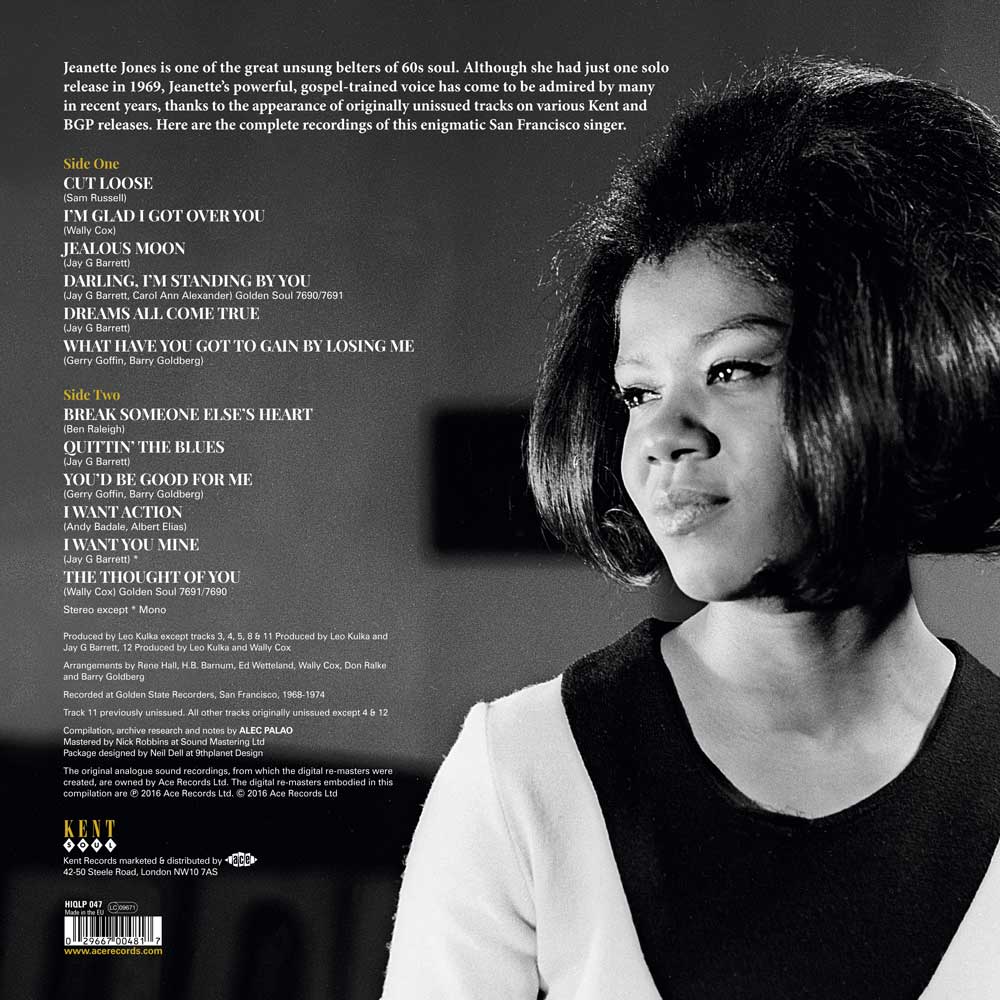

TRIUMPH AND TRAGEDY, THE STEVIE RAY VAUGHAN STORY.
TRIUMPH AND TRAGEDY, THE STEVIE RAY VAUGHAN STORY.
Stevie Ray Vaughan’s career is a story of triumph and tragedy. He spent eleven years struggling to make a breakthrough. During that period, Stevie Ray Vaughan spent six years as a sideman. This was akin to a musical apprenticeship for Stevie Ray Vaughan. Having served his apprenticeship, Stevie Ray Vaughan headed out on his own in 1977.
Stevie Ray Vaughan formed Triple Threat Revue, who would later, become Double Trouble. They announced their arrival with a barnstorming set at 1982s Montreux Jazz Festival. This resulted in Stevie Ray Vaughan and Double Trouble being signed to Epic.
Just over a year later, Stevie Ray Vaughan and Double Trouble released their debut album Texas Flood in 1983. It went on to sell over two million copies, and was certified platinum. This was triumph in the story of Stevie Ray Vaughan. The tragedy came just seven years later.
On August 27th 1990, tragedy struck, when Stevie Ray Vaughan was killed in a helicopter crash. The Texan blues man was just thirty-six, and had only enjoyed seven years in the spotlight. During that period, it seemed that Stevie Ray Vaughan and Double Trouble could do no wrong. They had released albums sold over eight million albums. It was a far cry from when Stevie Ray Vaughan dropped out of high school, Stevie Ray Vaughan, and embarked upon life as a blues man.
College or university Stevie Ray Vaughan decided, wasn’t for him. He had known that for a while. Maybe longer than he realised? After all, Stevie Ray Vaughan had been playing the guitar most of his young life.
Stevie Ray Vaughan was born in Dallas, Texas on October 3rd 1954. After watching his brother Jimmie play his guitar, seven year old Stevie Ray Vaughan picked up a guitar for the first time. Soon, he was hooked, and was determined to master the guitar.
By the time Stevie Ray Vaughan, he had mastered the guitar, and music became more important than getting an education. Eventually, he began to think of making a living out of music. After all, neither college nor university Stevie Ray Vaughan decided wasn’t for him. He had known that for a while. Instead, he wanted to play the blues. This many thought was just a pipe dream, a phase he was going through and eventually, Stevie would settle down. However, in 1971, Stevie Ray Vaughan dropped out of hight school and embarked upon a career as a blues man.
Ever since Stevie Ray Vaughan dropped out of high school in 1971, he had been playing the blues. Having played in a series of bands, Stevie’s break came when he started playing with Marc Benno’s band The Nightcrawlers. After The Nighcrawlers, Stevie played with Danny Freeman in The Cobras. For Stevie, this was all part of his musical apprenticeship. Then in 1977, Stevie Ray Vaughan went from sideman to bandleader, when he formed Triple Threat Revue.
Triple Threat Revue would later become Double Trouble. This came about, when Stevie Ray Vaughan brought onboard the rhythm section of drummer Chris Layton and bassist Tommy Shannon. It was with Double Trouble at his side, that Stevie Ray Vaughan announced his arrival at 1982s Montreux Jazz Festival.
That night, at 1982s Montreux Jazz Festival, Stevie Ray Vaughan and Double Trouble announced their arrival. Stevie, playing vintage guitars, eschewed the use of effects. Effects were used sparingly during his performance. While Stevie turned his back on effects, he and Double Trouble liked to crank the sound up. To do this, they combined a series of amplifiers. This made the audience sit up and take notice. What they saw was a a blistering, virtuoso performance. By the time Stevie Ray Vaughan and Double Trouble left the stage, at 1982s Montreux Jazz Festival their star was in the ascendancy.
Eleven months later, Stevie Ray Vaughan and Double Trouble released their debut album Texas Flood on Epic. It sold over two million copies, and was certified double platinum. This was the start of the rise and rise, of Stevie Ray Vaughan and Double Trouble.
Texas Flood.
Before they signed to Epic, Stevie Ray Vaughan and Double Trouble headed to Jackson Browne’s recording studio in Los Angeles. Between 22nd to 24th November 1982, Stevie Ray Vaughan and Double Trouble recorded ten tracks that would become their debut album, Texas Flood.
At Jackson Browne’s recording studio, Stevie Ray Vaughan and Double Trouble hooked up with engineer Richard Mullen. He would co-produced Texas Flood with Stevie Ray Vaughan and Double Trouble.
Texas Flood featured ten tracks. Five were penned by Stevie, who also cowrote Dirty Pool with drummer Doyle Bramhall. Along with covers of Howlin’ Wolf’s Tell Me and Buddy Guy’s Mary Had a Little Lamb, these tracks became eventually become Texas Flood.
On the first of the three days at Jackson Browne’s recording studio, Stevie Ray Vaughan and Double Trouble spent setting up their equipment. The next two days, Stevie Ray Vaughan and Double Trouble recorded what would become Texas Flood. Now all Stevie Ray Vaughan and Double Trouble needed, was a label to release Texas Flood.
In early 1983, Epic signed Stevie Ray Vaughan and Double Trouble. Epic having heard the master tapes of Texas Flood, decided it needed remastered. So, a $65,000 advance was given to remaster the recordings. The advance also allowed Stevie to lay down his vocals at Riverside Sound in Austin, Texas. Then on June 13th 1983, Texas Flood was released.
When Texas Flood was released, it was mostly, well received by critics. No wonder, Stevie Ray Vaughan was easily, one of music’s most exciting guitarists. However, Rolling Stone magazine and Robert Christgau, forever the contrarians, weren’t won over by Texas Flood. This didn’t affect sales of Texas Flood, which reached number thirty-eight in the US Billboard 200. Having sold two million copies, Texas Flood was certified double platinumin America and Canada. Following the success of Texas Flood, Stevie Ray Vaughan and Double Trouble headed out on a gruelling tour.
On 20th July 1983, Stevie Ray Vaughan and Double Trouble found themselves in Toronto. That night, they played at The El Mocambo. The concert was broadcast live, with Stevie Ray Vaughan and Double Trouble, billed as a A Legend In The Making.
Stevie Ray Vaughan and Double Trouble made their way through eight tracks. They were a mixture of original tracks and cover versions. Tracks from Texas Flood and Stevie Ray Vaughan and Double Trouble’s sophomore album Couldn’t Stand the Weather, sat side-by-side. These eight tracks were a tantalising taste of Stevie Ray Vaughan and Double Trouble live. Following the concert at The El Mocambo, the tour continued, before Stevie Ray Vaughan and Double Trouble returned to the studio in January 1984.
Couldn’t Stand the Weather.
Just like Texas Flood, Couldn’t Stand the Weather, Stevie Ray Vaughan and Double Trouble’s sophomore album Stevie penned half the tracks. He wrote four of the eight tracks. The other four tracks were cover versions, including a cover of Jimi Hendrix’s Voodoo Child (Slight Return). These eight tracks were recorded at The Power Station, New York.
Over nineteen days at The Power Station, Stevie Ray Vaughan and Double Trouble recorded Couldn’t Stand the Weather. Producing Couldn’t Stand the Weather, were Stevie Ray Vaughan and Double Trouble, Richard Mullen and Jim Capter. From the minute Stevie Ray Vaughan and Double Trouble laid down their cover of Tin Pan Alley, it was obvious to those in the control room that, here was a band at the top of their game.
That proved to be the case. On the release of Couldn’t Stand the Weather, on 15th May 1984, Stevie Ray Vaughan and Double Trouble’s fusion of blues rock, electric blues and Texas rock, won friends and influenced people. This included the programmers at MTV. They put the video for Couldn’t Stand the Weather on heavy rotation. For Stevie Ray Vaughan and Double Trouble this meant their music reached a much wider audience.
Then when critics heard Couldn’t Stand the Weather, it received widespread critical acclaim. Stevie Ray Vaughan and Double Trouble were now being hailed as the saviour of the blues. It had fallen out of fashion long ago. The problem was, the blues hadn’t evolved since the advent of the electric guitar. As a result, the blues was on life-support and close to breathing its last. Then came Stevie Ray Vaughan and Double Trouble, a blue group who were on MTV. This was as game-changer.
Especially when Couldn’t Stand the Weather was released on May 15th 1984, and reached number thirty-one on the US Billboard 200 charts. This resulted in Couldn’t Stand the Weather being certified double platinum in America and platinum in Canada. It seemed that Stevie Ray Vaughan and Double Trouble could do no wrong.

Soul To Soul.
In March 1985, Stevie Ray Vaughan and Double Trouble returned to the studio. This time, they headed to the Dallas Sound Lab. Between March and May 1985, Stevie Ray Vaughan and Double Trouble recorded the ten tracks that became Soul To Soul.
For Soul To Soul, Stevie only penned four of the ten tracks. They were Only Say What, Ain’t Gone ‘N’ Give Up On Love, Empty Arms and Life Without You. Drummer Doyle Bramhall contributed Lookin’ Out the Window and Change It. The other tracks were cover versions, including Willie Dixon’s You’ll Be Mine and Earl King’s Come On. Just like Texas Flood, Soul To Soul was co-produced by Stevie Ray Vaughan and Double Trouble and Richard Mullen. Soul To Soul would be released on September 30th 1985. However, before that, Stevie Ray Vaughan and Double Trouble made a triumphant return to where it all began, the Montreux Jazz Festival.
Three years after making their breakthrough at 1982s Montreux Jazz Festival, Stevie Ray Vaughan and Double Trouble returned to where it all began. They played a storming ten song set. That night, just like three years earlier, Stevie Ray Vaughan and Double Trouble had the audience enthralled. Here was the most exciting blues band in the world. Since their Montreux debut, Stevie Ray Vaughan and Double Trouble had sold four million albums in America alone. Before long, four would become five.
On the release of Soul To Soul, it was well received by critics. Soul To Soul received the same critical acclaim as their two previous albums. Stevie Ray Vaughan and Double Trouble were regarded as the most exciting blues band in the world. They were also one of the most successful.
Change It, one of two singles released from Soul To Soul, found flavour with MTV programmers. It reached number seventeen on the US Rock charts. Despite this, Soul To Soul wasn’t as big a commercial success as Stevie Ray Vaughan and Double Trouble’s two previous albums.
Soul To Soul was released on September 30th 1985. However, the album reached number thirty-four in the US Billboard 200 charts, and was certified platinum. In Canada, where Stevie Ray Vaughan and Double Trouble’s two previous albums were certified platinum, Soul To Soul was only certified gold. This was a troubling time for Stevie Ray Vaughan and Double Trouble.

Live Alive.
After the release of Soul To Soul, it would be four years before Stevie Ray Vaughan and Double Trouble released another album. During this period, Stevie’s appetite for drink and drugs couldn’t be sated. After breakfast, Stevie would begin his daily diet of a quart of whiskey and a quarter ounce of cocaine. This was Stevie’s daily diet. It would’ve killed most people. Not Stevie. He continued to record and play live. One of Stevie Ray Vaughan and Double Trouble live performances was released in July 1986, as Live Alive.
Live Alive was a double album recorded during 1985 and 1986s Live Alive tour. Stevie Ray Vaughan and Double Trouble swagger their way through fourteen tracks on Live Alive. Despite his chaotic lifestyle, Stevie was still one of the best blues guitarists of his generation. Backed by the tightest of rhythm sections, Stevie unleashes a series of blistering performances. Whether it’s original songs or cover versions, they come alive in Stevie Ray Vaughan and Double Trouble’s hands. As a result, critics and record buyers were won over by Live Alive.
Most critics gave Live Alive positive reviews. A few critics disagreed. However, that’s not surprising. Live albums always divide the opinion or critics. Not record buyers. When Live and Alive was released in July 1986, it reached number fifty-two in the US Billboard 200 charts. Although this was the lowest chart placing of any Stevie Ray Vaughan and Double Trouble album, Live Alive was certified platinum in America and Canada. This would be the last album Stevie Ray Vaughan and Double Trouble would release for three years.
In Step.
By the time Stevie Ray Vaughan and Double Trouble returned with their fourth album, In Step, Stevie was a changed man. Gone was the hard living, wild man, with the insatiable appetite for drink and drugs. This was reflected in some of the songs on In Step.
For In Step, Stevie only wrote two tracks, Travis Walk and Riviera Paradise. However, Stevie cowrote four tracks with Doyle Bramhall. This included Wall of Denial and Tightrope, which reflect Stevie’s newfound sobriety. Along with covers of Willie Dixon’s Let Me Love You Baby, Buddy Guy’s Leave My Girl Alone and Howlin’ Wolf’s Love Me Darlin,’ these songs became In Step.
Recording of In Step began on January 25th 1989 and lasted right through to March 13th 1989. Further sessions took place at Kiva Sudios, Memphis, and then in Los Angeles at Sound Castle and Summa Studios, where Double Trouble and Jim Gaines co-produced In Step. Once In Step was finished, it was released on June 6th 1989.
When In Step was released on June 6th 1989, the album was well received by critics. Stevie Ray Vaughan and Double Trouble’s fused of blues, rock and soul on In Step, which was perceived as an incredibly honest, personal and autobiographical album. This appealed to record buyers.
On In Step’s release, it reached number thirty-three in the US Billboard 200 charts. This resulted in In Step being certified double platinum in America, and platinum in Canada. Stevie Ray Vaughan and Double Trouble were the most successful blues bands of the eighties,
Since 1983s Texas Flood, Stevie Ray Vaughan and Double Trouble had sold eight million albums. Sadly, In Step was the final Stevie Ray Vaughan and Double Trouble album released during Stevie’s lifetime.
Tragedy struck for Stevie Ray Vaughan on August 26th 1990. After playing two shows with Eric Clapton at the Alpine Valley Music Theatre, in East Troy, Wisconsin, some of the musicians were due to fly to Chicago. This included Stevie Ray Vaughan. He made his way to one of the four helicopters waiting on a nearby golf course. However, there was a problem.
Witnesses report that that night, the skies weren’t clear. Instead, there was fog, haze and low cloud. This was far from ideal flying conditions. Despite this, the helicopters took off. Joining Stevie Ray Vaughan in the third helicopter, were three of Eric Clapton’s entourage. Once the passengers and crew were ready, the Bell 206A JetRanger helicopter took off, en route for the Merge Field, in the Windy City at 12.50 a.m.
As the helicopter made its way from East Troy, Wisconsin to Merge Field, Chicago, the pilots were instructed to fly over a 1000-foot ski hill. Given the inclement weather conditions, this seemed a strange route. It had disastrous consequences.
By the time the helicopter took off from, it was now the 27th August 1990. As the helicopter climbed high into the night sky, it suddenly, veered to the left and crashed into the ski hill. It was later discovered that the helicopter crashed just fifty feet from the summit. For everybody on board it had been a case of so close, yet so far.
At 4.30 a.m, the Civil Air Patrol were told about the incident. It took them three hours to locate the crash site. When they did, they were able to ascertain that there were no survivors. That day, music lost one of its most talented and charismatic sons, Stevie Ray Vaughan.
The Texan blues man was only thirty-five. Stevie Ray Vaughan had only released four studio albums and one live album. However, these albums sold over eight million copies, making Stevie Ray Vaughan and Double Trouble the most successful blues bands of the eighties.
Stevie Ray Vaughan and Double Trouble almost single handedly, revived interest in blues music. Suddenly, there was a resurgence in interest in what was an almost a moribund musical genre. Not any more. Throughout the eighties, Stevie Ray Vaughan and Double Trouble’s unique brand of blues rock reached a new, and much wider audience. Playing an important part in the rise and rise of Stevie Ray Vaughan and Double Trouble was MTV.
A number of Stevie Ray Vaughan and Double Trouble’s tracks were on heavy rotation on MTV. Suddenly, a new generation had been introduced to the blues by Stevie Ray Vaughan and Double Trouble. They were their gateway to a whole wider body of work. However, tragically, Stevie Ray Vaughan and Double Trouble’s amounts to just the five albums released during Stevie Ray Vaughan’s lifetime.
Stevie Ray Vaughan and Double Trouble’s swan-song was In Step, which was released on June 6th 1989, some twenty-seven years ago. However, still, a new generation of musicians cite Stevie Ray Vaughan as an influence. No wonder; he was one of the greatest blues guitarists of his generation. Sadly, Stevie Ray Vaughan was only in the spotlight for seven years.
During the seven years that Stevie Ray Vaughan and Double Trouble’s star was in the ascendancy, they released four studio albums and one live album. Their swan-song was In Step, which was released in 1989. By then, Stevie had turned his life around. No longer was he living the rock ’n’ roll lifestyle.
Stevie Ray Vaughan was a changed man. Gone was the hard living, wild man, with the insatiable appetite for drink and drugs. The change in Stevie Ray Vaughan was reflected on In Step’s lyrics. It introduced the listener to a new, changed Stevie Ray Vaughan. They liked what they heard, and In Step reached number thirty-three in the US Billboard 200 charts. This resulted in In Step being certified double platinum in America, and platinum in Canada. Stevie Ray Vaughan and Double Trouble looked like becoming one of the biggest bands of the nineties. They had already sold over eight million copies between 1982 and 1989.
Sadly, that never happened. On August 27th 1990 Stevie Ray Vaughan was killed in a helicopter crash. He was only thirty-five years old. That day music lost one of its most charismatic and talented sons, Stevie Ray Vaughan. His life is one of triumph and ultimately tragedy, but one that will never be forgotten.
TRIUMPH AND TRAGEDY, THE STEVIE RAY VAUGHAN STORY.


THE SHORT-LIVED STORY OF FOTHERINGAY.
THE SHORT-LIVED STORY OF FOTHERINGAY.
When Sandy Denny left Fairport Convention in December 1969, the reason she gave, was that the wanted to hone her skills as a songwriter. However, less than a year after her departure from Fairport Convention, Sandy Denny formed a new group, Fotheringay. Although Fotheringay were a short lived band, they certainly made a lasting impression on British folk music.
The Fotheringay story began in 1970, not long after Sandy Denny’s departure from Fairport Convention. Sandy decided to put together a new band. One of the first musicians she brought onboard was guitarist Trevor Lucas.
He had been born in Australia, but was now based in Britain. Trevor was now a familiar face in the British folk scene. Previously, Trevor was a member of Eclection. That’s when Trevor met Sandy Denny. The pair started dating in May 1969, and eventually, married in 1973. However, Trevor’s career began back in Australia, in the early sixties.
Back then, Trevor Lucas was a solo artist. He released his debut solo album See That My Grave Is Kept Clean in 1964. Then on New Year’s Eve Trevor boarded a ship and made the journey from Australia to Britain. That’s when he became a member of Eclection, and met drummer Gerry Conway.
Eclection were a folk-rock band, who were formed in 1967, and broke up two years later in 1969. However, by then, Trevor Lucas and Gerry Conway were firm friends. They renewed their musical partnership in Fotheringay.
Gradually, Sandy’s new band was taking shape. The final pieces in the musical jigsaw were two former members of the Poet and the One Man Band. Guitarist Jerry Donahue had moved from Manhattan to Britain, where he quickly became stalwart of the folk scene. This wasn’t surprising. Jerry’s father was big band saxophonist Sam Donohue. However, Jerry wasn’t inspired by his father. Instead, Gerry McGee, Earl Scruggs, Chet Atkins and Duane Eddy inspired Jerry, who in 1970, joined Fotheringay with Edinburgh born bassist Pat Donaldson.
By 1970, Pat Donaldson was a familiar face in the London music scene. He had moved to London in the early sixties. Since then, he had been a member of Bob Xavier and the Jury, Zoot Money’s Big Roll Band and the reformed Dantalian’s Chariot. Fotheringay was just the latest group the twenty-seven year old bassist work with.
With the lineup of her new band finalised, all Sandy Denny needed was a name for the band. She decided on Fotheringay, after Fotheringay Castle where Mary Queen Of Scots was imprisoned. With its lineup complete and a name in place, Sandy Denny’s new band could begin work on their debut album.
Fotheringay.
Sandy Denny didn’t waste any time recording Fotheringay’s debut album. She wrote four tracks and cowrote Peace in the End with Trevor Lucas. He also penned The Ballad of Ned Kelly. Other tracks included covers of Gordon Lightfoot’s The Way I Feel, Bob Dylan’s Too Much Of Nothing and Banks of the Nile. These ten tracks were recorded between February and April, 1970 at Sound Techniques, in London with Joe Boyd producing what became Fotheringay.
Once Fotheringay was completed, the album was released in June 1970. It was one of the most eagerly awaited albums of the year. Both critics and record buyers awaited with interest the release of Fotheringay’s eponymous debut album with interest and anticipation. Here was a group that had the potential, to be one of the biggest and most successful folk group.
On the release of Fotheringay, critics weren’t disappointed. Quite the opposite. Critics hailed the album a masterful debut. Sandy Denny was back, and better than ever. Her enchanting, ethereal vocal was complimented by a tight, talented band. They won not just the critics, but record buyers.
Fotheringay sold well upon its release in June 1970, and reached number eighteen in Britain. Good as this was, it wasn’t good enough for Island Records. Their expectations and Fotheringay’s differed. Island Records hoped the album would be one of the label’s biggest selling albums. That wasn’t the case. This resulted in Island Records’ pressurising Sandy to embark upon a solo career.
Sandy Denny dug her heels in. She was determined to continue with Fotheringay. So work began on what was meant to be Fotheringay’s sophomore album.
Fotheringay 2.
A total of eleven tracks were meant to feature on Fotheringay’s sophomore album. This time, Sandy Denny only wrote two songs. Trevor Lucas and Pete Roach penned Knights of the Road and Restless.Among the other tracks were traditional songs, a cover of Bob Dylan’s I Don’t Believe You and the Dave Cousins’ composition Two Weeks Last Summer. These eleven tracks were recorded by an expanded lineup of Fotheringay.
Joining the usual lineup of Fotheringay was Linda Thompson. She was going to add backing vocals when the sessions began in November 1970. The sessions continued into December 1970. Everyone thought that things were going to plan. Sadly, that wasn’t the case.
In January 1971, it was announced that Fotheringay were no more. The band broke up and what would eventually become Fotheringay 2 was shelved. The songs were in various states of completion. Fotheringay 2 wasn’t an album in the true sense of the word. There was a lot to do before Fotheringay 2 could be released. However, back in 1971, it seemed unlikely that Fotheringay 2 would be released. This would change in 2008.
Although Fotheringay 2 wasn’t complete, and to some extent, was work-in-progress, a decision was made to release the album in 2008. Using editing and modern recording techniques, the album was completed by Jerry Donohue and the other surviving band members. By then, several of the tracks had been released.
The two Trevor Lucas and Pete Roach compositions found their way onto two Fairport Convention albums. Knights of the Road featured on the 1973 album Rosie; while Restless found its way onto the 1975 album Rising For The Moon album. Fairport Convention even decided to record the Bob Dylan song I Don’t Believe You for their album Nine. Despite recording I Don’t Believe You, it never made it onto Nime when it was released in 1973. By then, Sandy Denny had recorded several Fotheringay songs for her solo albums.
When Sandy Denny was choosing material for her debut album The North Star Grassman And The Ravens, the decided to cover a trio of tracks that had been recorded for Fotheringay 2. Late November, John The Gun and The North Star Grassman And The Ravens all found their way onto Sandy Denny’s 1971 debut album. Then for Sandy’s 1974 album Rendezvous, she decided to record Silver Threads and Golden Needles. Belatedly, the song made its debut. So would Fotheringay 2 in 2008.
When Fotheringay 2 was released, the long lost album was well received. It was a reminder of Fotheringay’s potential. If they had stayed together, they could’ve become one of the great British folk bands. That critics said, was apparent by listening to Fotheringay 2. However, critics wondered what Fotheringay 2 would’ve sounded like if more time had been spent on the album? Would Fotheringay 2 have become one of the great British folk albums? Sadly, that wasn’t to be and it was a case of what might have been.
If Fotheringay hadn’t split-up in January 1971, would they have become a serious rival to Fairport Convention for the title of Britain’s premier folk-rock band. While that might seem unlikely, Fotheringay had something Fairport Convention didn’t…Sandy Denny. Her enchanting, ethereal vocal was at the heart of the sound and success of Fotheringay. So was her songwriting skills.

That’s why Sandy Denny left Fairport Convention. She wanted to improve as a songwriter. While she formed Fotheringay not long after leaving Fairport Convention, Sandy Denny was already a talented songwriter. She got the chance to shine on Fotheringay’s 1970 eponymous debut album. Not only did Sandy pen four tracks, but she wrote Peace in the End with Trevor Lucas. It seemed away from Fairport Convention, Sandy Denny was maturing as a singer and songwriter. Maybe, it was because was Fotheringay was her band? No longer was she surrounded by strong personalities who maybe, overshadowed Sandy. Given time, Sandy Denny’s new group could’ve rivalled Fairport Convention.
Sadly, that wasn’t to be. When Fotheringay reached a respectable number eighteen in 1970, this wasn’t good enough for Island Records. They started whispering in Sandy Denny’s ear, encouraging her to embark upon a solo career. While this wasn’t what Sandy Denny wanted, it would be financially advantageous to Island Records. However, Sandy Denny wanted to continue with Fotheringay. Sadly, Fotheringay was short-lived.
In January 1971, the announcement came, that Fotheringay had split-up. Island Records got their wish. Sandy Denny embarked upon a solo career.
The Solo Years.
Her debut album was The North Star Grassman and the Ravens. It was released in September 1971, and featured Late November, John The Gun and The North Star Grassman And The Ravens, which were meant to feature on Fotheringay 2. Critical acclaim accompanied the release of The North Star Grassman and the Ravens. Sandy Denny it seemed, could do no wrong.
A year later, Sandy Denny released her sophomore album Sandy in September 1974. It was released to the same critical acclaim as The North Star Grassman and the Ravens. However, Sandy surpassed the quality of The North Star Grassman and the Ravens. Indeed, it would prove to be the best album of her solo career.
It wasn’t until 1974, that Sandy Denny released Like an Old Fashioned Waltz followed in June 1974. The album saw a philosophical Sandy consider themes like loneliness, fear of the dark, the passing of time and even the changing seasons. Essentially, Sandy was fixating on growing old and death. That would prove ironic
When Like an Old Fashioned Waltz was released, critics noticed Sandy’s stylistic departure. Pop and folk featured heavily. It seemed Island Records were trying to turn Sandy Denny into something she wasn’t. Maybe that’s why Sandy returned to Fairport Convention.
A Return To Fairport Convention.
Sandy rejoined Fairport Convention in 1974. By then, Sandy’s husband Trevor Lucas was also a member. They joined for the Fairport Convention’s world tour. It was captured on the 1974 live album Fairport Live Convention. Sadly, Sandy and Trevor left Fairport Convention in 1975. Their swan-song was Rising For The Moon.
The Solo Years Take 2.
Following her second departure from Fairport Convention, Sandy returned to her solo career. Soon, she began work on what before her fourth solo album Rendezvous. One of the songs Sandy recorded was Silver Threads And Golden Needles. It had been recorded during the Fotheringay 2 sessions. However, Sandy decided to review the song for her fourth solo album Rendezvous.
She released Rendezvous in May 1977. Rendezvous saw Sandy embrace a contemporary rock sound. This was very different from previous albums. Still, Rendezvous was reasonably well received by critics. However, they noted that Rendezvous didn’t match the quality of The North Star Grassman And The Ravens and Sandy. Not long after the reviews were published, Rendezvous was released. Now record buyers could have the final say on Rendezvous.
Despite touring Britain promoting Rendezvous, the album didn’t sell well. The final night of the tour took place on 27th November 1977, at the Royalty Theatre, in London. It was recorded and was meant to be released as a live album, Gold Dust. Problems with the guitars meant this didn’t happen until 1998, when Gerry Donhue rerecorded the guitars. Ironically, that ill-fated concert was Sandy Denny’s swan-song.
When Rendezvous failed commercially, Island Records dropped Sandy. She was already drinking heavily, smoking and snorting cocaine. Her behaviour became erratic. Sandy was also suffering from severe headaches. So a doctor prescribed a distalgesic. However, Sandy continued to drink. Whether this played a part in a fall she had in late March 1978 is unknown. What we know, is that tragedy struck on 17th April 1978.
That night, Sandy Denny was admitted to the Atkinson Morley Hospital in Wimbledon. She fell into a coma, and four days later, on 21st April 1978, Sandy Denny died. The cause of Sandy’s death was a brain haemorrhage and blunt force trauma. It’s likely that when Sandy Denny fell, this played a contributory factor in her death. Tragically, Sandy Denny was only thirty-one. That day, British folk music lost one of finest voices.
While Sandy Denny is remembered for her two spells with Fairport Convention and four solo albums, often her time with Fortheringay is often overlooked. That’s a great shame, as Sandy Denny’s short-lived other group features Sandy Denny at the peak of her powers. With Sandy Denny at the helm, Fotheringay could’ve gone on to rival Fairport Convention. Sadly, they never got the opportunity to do so, and the Fotheringay story was over before it had began. It’s Sandy Denny’s “other,” sometimes forgotten and short-lived group.
THE SHORT-LIVED STORY OF FOTHERINGAY.

RHYTHM ’N’ BLUESIN’ BY THE BAYOU-NIGHTS OF SIN, DIRTY DEALS AND LOVE SICK SOULS.
RHYTHM ’N’ BLUESIN’ BY THE BAYOU-NIGHTS OF SIN, DIRTY DEALS AND LOVE SICK SOULS.
The state of Louisiana means different things to different people. For some, it’s the state’s rich literary heritage. One of its most famous writers was Tennessee Williams, the author of A Street Car Named Desire. Then there’s Anna Rice the nineteenth century author of metaphysical gothic fiction. Her best known work was Interview With A Vampire. However, Ernest Gaines managed to incorporate in his play A Lesson Before Dying, another thing Louisiana is famous for, cuisine.
In A Lesson Before Dying, one of Ernest Gaines’ characters utters the immortal line, “gumbo can be eaten at any time.” That’s the case is Louisiana, where gumbo is a delicacy. So is jambalaya, crawfish boil and a po boy sandwich. It’s a staple of Louisiana, especially in New Orleans during the Mardi Gras. So is music, another thing New Orleans and the rest of Louisiana is famous for.
It’s no exaggeration to say that Louisiana has a rich musical heritage. This was where Allen Toussaint, Dr. John, Harold Batiste, Irma Thomas, Jerry Lee Lewis, Louis Armstrong, the Neville Brothers, Professor Longhair and Tami Lynn were all born. Most of their careers have been well documented. However, this is just the tip of the iceberg, when it comes to Louisiana’s rich and vibrant music scene.
That’s been the case right back to the blues men like Leadbelly, Silas Hogan, Slim Harpo, Pee Wee Whitaker and T-Bone Shingleton were providing the soundtrack to life in Louisiana. Since then, musical soundtrack has changed many times. However, whether it was jazz, bluegrass, country, rockabilly, R&B, soul, swamp pop or zydeco, still Louisiana’s music scene was rich and vibrant. Despite that, Louisiana’s rich musical heritage has been overlooked by compilers.
Until fairly recently, record companies looking to compile a new compilation, followed the well trodden path to Chicago, Detroit, Memphis, Philly and New York. One place they constantly overlooked was Louisiana. That was until Ian Saddler decided to explore the the musical delights of Louisiana.
Ian Saddler knew there were rich pickings to be found in Louisiana. So he headed south, and embarked upon an musical voyage of discovery. What he was looking for, was enough music for his first volume of the By The Bayou series, which would be released by Ace Records. When Ian arrived in Louisiana, he was in for a pleasant surprise.
There was a musical treasure trove that was awaiting Ian Saddler’s discovery. Even Ian Saddler must have been overwhelmed by what he discovered. So vast was this treasure trove of musical delights, that Ian Saddler must have known there was enough for several volumes in the By The Bayou series. That depended on the success of the first volume in the By The Bayou series.
Following the success of the first instalment in the By The Bayou series, Ian Saddler got to work on a second volume. Then came a third, fourth and fifth volume. The By The Bayou series looked like it could run and run.
Fast forward a couple of years, and the fourteenth volume in Ian Saddler’s By The Bayou series has just been released. Rhythm ’N’ Bluesin’ By The Bayou-Nights Of Sin, Dirty Deals and Love Sick Souls, which was recently released by Ace Records, is the fifth volume of Louisiana rhythm ‘n’ blues. It features twenty-eight tracks. They’re a mixture of familiar faces, rarities, alternate takes and unreleased tracks. This includes contributions from Chris Kenner, Lester Robertson, Barbara Lynn, Jay Nelson, Leroy Washington, Little Victor, Big Walter Price and Classie Ballou. Some of the artists on Rhythm ’N’ Bluesin’ By The Bayou-Nights Of Sin, Dirty Deals and Love Sick Souls feature more than once. Often, their first contribution is so good, that they return for an encore on Rhythm ’N’ Bluesin’ By The Bayou-Nights Of Sin, Dirty Deals and Love Sick Souls. It you’ll realise, is a welcome addition to what’s now one of the most successful and longest running compilation series, By The Bayou.
Opening Rhythm ’N’ Bluesin’ By The Bayou-Nights Of Sin, Dirty Deals and Love Sick Souls is Chris Kenner’s Grandma’s House. It was released on the B-Side of his single Don’t Let Her Pin That Charge On Me. It was released on the Baton label on 7th February 1956. Grandma’s House was penned by Chris Kenner, and was recorded in New Orleans. It’s an irresistible slice of R&B from Chris Kenner, that whets the listener’s appetite for the rest of the compilation.
Lester Robertson is one of the artists on Rhythm ’N’ Bluesin’ By The Bayou-Nights Of Sin, Dirty Deals and Love Sick Souls that features three times. His first contribution is an alternate take of Oh Babe. The original was produced by Sam Montel, and then released as a single on Montel Record Co, in 1959. Oh Babe is piano driven fusion rock ’n’ roll and R&B. Very different is Lester Robertson’s second contribution.
Please Don’t Go was recorded by Lester Robertson at J.D. Miller’s studio. Sadly, this needy, soul-baring ballad lay unreleased until discovered by Bruce Bastin of Flyright Records. It featured on the 1977 compilation Louisiana Swamp Pop. Belatedly, this hidden gem was able to be heard by the record buying public.
Barbara Lynn was born in Beaumont in 1942, and throughout high school, played in bands. However, towards the end of her school days, Barbara Lynn changed direction musically when she saw Elvis. Soon, she was playing in blues clubs. That was blues man Clarence Garlow first encountered Barbara Lynn. Realising she had potential, Clarence Garlow setup a recording session with Eddie Shuler of Goldband.
At that session, Barbara Lynn covered Smiley Lewis’ One Night and Sam Cooke’s Love You Most Of All. Both tracks are a tantalising taste of a truly talented singer, as she breathes life and meaning into these bluesy songs. Incredibly, after the session, Eddie Shuler decided not to sign Barbara Lynn to Goldband. He had passed up the chance to sign Barbara Lynn. It wasn’t until 1961 that singer-songwriter Joe Barry discovered Barbara Lynn. This was the start of a long and successful career. However, maybe history would’ve been different if Eddie Shuler had signed Barbara Lynn?
Jay Nelson was still a teenager when his recording career began. He was born in Jeanerette, Louisiana in 1939, and by the mid-fifties, was recording for J.D. Miller and Eddie Shuler. Betty Ann was a song Jay Nelson recorded during this period. It’s a beautiful heartfelt, paean which sadly, lay unreleased until 1977. That’s when it featured on the 1977 Flyright Records’ compilation. Belatedly, this beautiful hidden gem of a ballad found the audience it deserved.
Lafayette born Little Victor is another artist who features twice on Rhythm ’N’ Bluesin’, Little Victor drops the tempo on the unreleased track Please Be There, and delivers a needy, hopeful vocal. What Is Love was the flip-side to Little Victor’s 1961 single Papa Lou And Gran. It was released on the Richmond label, and has a pleasant surprise on the B-Side, What Is Love. Hurt, heartbreak and betrayal fill Little Victor’s vocal on what’s an outpouring of raw emotion.
Pleasant Joseph was born in a rice plantation in Wallace, Louisiana in 1907. By the time he was a teenager, he was playing music on street corners. This was just the start of a career as a musician.
Before the thirties gave way to the forties, blues man Smilin’ Joe was a familiar face in the clubs of New Orleans where he was making a living as a jazz musician. However, by the forties, Smilin’ Joe was a piano playing blues man. He cut a couple of singles as Smilin’ Joe, including Living On Borrowed Time in 1955. It was released on Flip, and featured Love Sick Soul on the B-Side. Both songs were written by Pleasant Joseph, and are a reminder of talented songwriter and versatile singer and musician.
Leroy Washington is a veteran of the By The Bayou series. His contribution here, is an alternate take of his most famous track, Wild Cherry. It was recorded for J.D. Miller, but was never released until 1977. That’s when it found its way onto the Flyright Records’ Leroy Washington compilation Wild Cherry. It’s a reminder of a hugely talented singer and musician, who tragically, passed away in 1966, aged just thirty-four.
Classie Ballou features four times on the compilation. Just two of those appearances are as a solo artist. They were recorded at J.D. Miller’s studios. This includes the previously unreleased instrumental Crowley Stroll. It’s the perfect showcase for Classie Ballou’s skills as a guitarist. So is Version 2 of Hey Ma Ma, which lay unreleased until 1976. That was when the song was rediscovered and featured on a Flyright Records compilation Rock Me All Night Long. Its track list features some of the most talented singers and musicians from Louisiana, including Classie Ballou.
Ivory Jackson is best known as the drummer for Cookie and The Cupcakes. Occasionally, Ivory Jackson put down his drumsticks and enjoyed a recording career as a vocalist. He worked with Eddie Shuler, who he recorded Clautelia for. Sadly, this piano driven paean wasn’t released until 1976, when it featured on a Flyright Records’ compilation Rockin’ Blues Party. It’s another hidden gem, and one of just four Ivory Jackson recordings that were ever released.
Big Walter Price is another veteran of the By The Bayou series. His contribution is Better Run, which was recorded for Goldband. It’s a piano lead ballad, that features a vocal powerhouse from Big Walter Price. Better Run is one of the unreleased tracks, and makes a welcome debut on hythm ’N’ Bluesin’ By The Bayou-Nights Of Sin, Dirty Deals and Love Sick Souls.
So does the Baton Rouge Boys’ Rising Sun. It was recorded at J.D. Miller’s studio, but has lain in the vaults since then. Very little is known about the Baton Rouge Boys. However, Rising Sun’s slow, bluesy, late night sound oozes quality, and will make you want to hear more from the Baton Rouge Boys.
In 1961, Lester Robertson released My Heart Forever Yearns as a single on the Montel Records Co. Tucked away on the B-Side was My Girl Across Town, a Lester Robertson composition. Another recording exists. It’s credited to Lester Robertson and The Upsetters, and is described as an alternate take as My Girl Across Town. Sadly, since it was recorded in 1961, it’s lain in the Montel Record Co. vaults. Not any more; as it’s one of the unreleased tracks on Rhythm ’N’ Bluesin’ By The Bayou-Nights Of Sin, Dirty Deals and Love Sick Souls. It’s a welcome and joyous addition to the compilation.
The other two tracks from Classie Ballou, are credited to Classie Ballou and His King Tempo Orchestra. They feature on the 1956 Goldland single Loving Huggin’ Kissin’ My Baby. It closes Rhythm ’N’ Bluesin’ By The Bayou-Nights Of Sin, Dirty Deals and Love Sick Souls. Eddie Shuler and Classie Ballou wrote this joyous, dance-floor friendly love song. Hidden away on the B-Side, was D-I-R-T-Y D-E-A-L, an Eddie Shuler composition. Classie Ballou unleashes another blistering solo, while his orchestra accompany him on this heartbreaking D-I-R-T-Y D-E-A-L.
That is the story of Rhythm ’N’ Bluesin’ By The Bayou-Nights Of Sin, Dirty Deals and Love Sick Souls. It was recently released by Ace Records, and is the fourteenth volume in Ian Saddler’s critically acclaimed and commercially successful By The Bayou series. Rhythm ’N’ Bluesin’ By The Bayou-Nights Of Sin, Dirty Deals and Love Sick Souls is also the fifth volume of Louisiana R&B.
The twenty-eight tracks on Rhythm ’N’ Bluesin’ By The Bayou-Nights Of Sin, Dirty Deals and Love Sick Souls are a mixture of familiar faces, rarities, new names, alternate takes and unreleased tracks. Many artists are veterans of the By The Bayou series, and are back by popular demand. Some artists return for an encore on Rhythm ’N’ Bluesin’ By The Bayou-Nights Of Sin, Dirty Deals and Love Sick Souls.
Just like previous volumes of the By The Bayou series, some of the artists on Rhythm ’N’ Bluesin’ By The Bayou-Nights Of Sin, Dirty Deals and Love Sick Souls feature more than once. Often, their first contribution is so good, that they return for an encore. Lester Robertson features three times; twice as a solo artist and once with a band. Classie Ballou features twice as a solo artist, and twice with his orchestra. This shows different sides to the artists concerned. Similarly, the By The Bayou series shows the different sides to Louisiana’s rich and illustrious musical heritage.
Over the past fourteen volumes, Ian Saddler’s documented various different genres. This time around, Ian Saddler concentrated on R&B on Rhythm ’N’ Bluesin’ By The Bayou-Nights Of Sin, Dirty Deals and Love Sick Souls. It’s the latest instalment in the lovingly compiled By The Bayou series. Still, there’s not let up in the quality.
That takes some doing. Often the well will have run dry way before volume fourteen. However, Ian Saddler knows where to find rarities, hidden gems and unreleased tracks that ooze quality. They’re his secret weapons in the By The Bayou series, which is without doubt, Ace Records’ longest running and most successful series. It’s the compilation series that looks as if it will run and run. Especially if Ian Saddler continues to compile compilations as good as Rhythm ’N’ Bluesin’ By The Bayou-Nights Of Sin, Dirty Deals and Love Sick Souls, which is a welcome addition to Ace Records’ jewel in the crown, the By The Bayou series.
RHYTHM ’N’ BLUESIN’ BY THE BAYOU-NIGHTS OF SIN, DIRTY DEALS AND LOVE SICK SOULS.




CELESTIAL BLUES-COSMIC, POLITICAL AND SPIRITUAL JAZZ 1970 TO 1974.
CELESTIAL BLUES-COSMIC, POLITICAL AND SPIRITUAL JAZZ 1970 TO 1974.
Sometimes, music has been compared to fashion. Both industries are cyclical, with music and clothes both falling in and out of popularity.
One minute a genre is popular, the next, it’s fallen from grace. That has been the case since the birth of rock ’n’ roll. Everything from disco and doo wop, to progressive rock, psychedelia and punk, through to blues and heavy metal have all enjoyed their moment in the sun. However, as the man sang, “nothing lasts forever,” and each of these genres have fallen out of favour.
Sometimes, a genre’s fall from grace is spectacular. Especially, in the case of disco, when it went from hero to zero in the space of year. However, disco would eventually make a comeback. So would progressive rock, psychedelia, blues and heavy metal. Each of these genres went on to enjoy an Indian Summer.
The birth of the New Wave Of British Heavy Metal in the late seventies, resulted in a resurgence of interest in a genre that had fallen from favour a few years previously. Suddenly, heavy metal was back in fashion. It was a similar case with progressive rock in the eighties. Groups like Marillion introduced a new generation of record buyers to progressive rock. Since then, even disco has made a comeback in this musical merry-go-round. However, one genre had been out of fashion for way too long,..jazz.
Forty years had passed since jazz caught the imagination of the wider record buying public. For a few years in the late sixties and early seventies, jazz crossed over into the mainstream. That was when artists like Miles Davis, John McLaughlin and Herbie Hancock pioneered and popularised fusion, a meeting of jazz and rock. However, the fusion era was short-lived, and didn’t really result in a resurgence in interest in jazz. That didn’t come until last year.
That was when a struggling jazz saxophonist Kamasi Washington released a triple album The Epic. It received widespread critical and hailed as a groundbreaking album. The Epicsold well across the world, and no longer would Kamasi Washington be playing sessions to pay the bills. However, the other effect the success of The Epic has had, is that it’s lead to a resurgence in interest in jazz.
At last, jazz is back in fashion, and a new generation of record buyers are rediscovering the delights of jazz. However, for some newcomers to jazz, they struggle to distinguish between a myriad of sub-genres. They’re confused by sub-genre like bop, post boom West Coast jazz, free jazz and fusion. All they want to find, and listen to, is the music that inspired Kamasi Washington’s The Epic. They need look no further.
The good people at BGP, an imprint of Ace Records, have compiled Celestial Blues-Cosmic, Political and Spiritual Jazz 1970 To 1974. This is a ten track compilation of spiritual jazz, the music that influenced and inspired Kamasi Washington’s album The Epic. Celestial Blues-Cosmic, Political and Spiritual Jazz 1970 To 1974 features Gary Bartz NTU Troop, Azar Lawrence, Charles Earland, Roy Brooks, Joe Chambers, Carlos Garnett, Hampton Hawes and Oliver Nelson. Each and every one of these artists are musical pioneers, and innovators who pushed musical boundaries to their limits. That is apparent throughout Celestial Blues-Cosmic, Political and Spiritual Jazz 1970 To 1974.
Each of the tracks on Celestial Blues-Cosmic, Political and Spiritual Jazz 1970 To 1974 are an example of groundbreaking spiritual jazz. Its building blocks were the music of the post bop era, and the free jazz of John Coltrane. To that, boogaloo beats were combined with elements of funk, rock and soul and even African and Middle Eastern influences. When this was combined, it was potent and heady brew, that became known as spiritual jazz.
This new music was inventive and innovative. It was also way ahead of its time; and far removed from the music that other jazz musicians were making. Sadly, it was also very different to the music most record buyers were used to, and it passed them by.
The problem was, most record buyers didn’t understand this cerebral, groundbreaking music. It went over their head, and only a small, but discerning group of record buyers got spiritual jazz. It wasn’t until much later, that a new generation of record buyers discovered the delights of spiritual jazz and it began to grown in popularity. However, when the music was released in the late sixties and early seventies, it was misunderstood. This couldn’t have happened at a worst time for jazz.
No longer was jazz as popular as it once been. Jazz clubs were closing their doors, and others were being turned into rock venues. Even record companies were suffering. Sales of jazz were down and some jazz labels decided to close their doors. However, new labels like Muse began to release spiritual jazz. So did established labels like Prestige, who were renowned for releasing innovative music. Labels like Muse and Prestige would go on to release albums by some of the most pioneering music of the spiritual jazz era. Some of that music features on Celestial Blues-Cosmic, Political and Spiritual Jazz 1970 To 1974.
Opening Celestial Blues-Cosmic, Political and Spiritual Jazz 1970 To 1974 is Gary Bartz NTU Troop’s Celestial Blues. It’s a track from Gary Bartz NTU Troop’s 1971 sophomore album Harlem Bush Music-Uhuru. It was released on Milestone Records, and was the followup to the 1970 album Home! However, on Harlem Bush Music-Uhuru, a guest artist joined Gary Bartz NTU Troop.
This was none other than vocalist Andy Bey. His impassioned vocal is the perfect foil Gary Bartz’s soaring also saxophone and Ron Carter’s mesmeric, bubbling, bass line. They become part of what’s a complex but memorable and irresistible piece of music. It belatedly would become a cult classic, and is without doubt the best known track from Harlem Bush Music-Uhuru. It’s also the perfect introduction to two hugely talented artists and purveyors of spiritual jazz, Gary Bartz and Andy Bey.
Fire is another collaboration, this time, between Joe Henderson and Alice Coltrane. By 1974, jazz was in the doldrums, and it wasn’t the easiest time for jazz musicians. Even Joe Henderson who had released debut album Page One in 1963. Since then, Ohio born jazz saxophonist had released ten studio albums, and several collaborations. His latest was The Elements, which featured Alice Coltrane.
She was second wife of John Coltrane. However, Alice Coltrane was a multi-talented musician, who played piano, organ and harp. She had collaborated with Joe Henderson before, on her 1970 album Ptah, The El Daoud. Now Alice sat in with Joe and his band on The Elements, which was released in 1974 on Milestone Records. One of the highlights of The Elements was Fire.
It was a meeting of musical minds, with two pioneers feeding off each other as they drove each other to new highs. Joe’s blazing saxophone is played with power and passion; while Alice flits between instruments, and is equally comfortable switching from piano, tamboura, harmonium and finally harp. She adds flourishes of harp as the rhythm section power the arrangement along. This is the perfect showcase for the multitalented Alice Coltrane, before Joe Henderson takes centre-stage and unleashing a blistering solo. The result is a groundbreaking and timeless example of spiritual jazz, at its very best.
In 1974, saxophonist Azar Lawrence entered the studio to record his debut album, Bridge Into The New Age. By then, the tenor and soprano saxophonist was just twenty-one, but was already regarded as one of jazz’s rising stars. Azar Lawrence had played on McCoy Tyner’s 1973 album Enlightenment. Now a year later, he was about to record his debut album.
The L.A. born musician had put together a band that featured some of the best jazz musicians. They recorded five tracks, that became Bridge Into The New Age. It was released in 1974, on Prestige. Bridge Into The New Age was an ambitious album of innovative music. One of the finest moments was Warriors Of Peace, which featured a masterclass from Azar Lawrence and pianist Joe Bonner. They play starring roles in a track that was indeed, a Bridge Into The New Age, one where spiritual jazz should’ve been king.
Charles Earland was a prolific artists, releasing over sixty albums. He’s known for his albums of soul jazz. However, one of his finest albums was Leaving This Planet, which was released on Prestige in 1975. It’s an album of spiritual jazz, where Charles Earland and his “big burner” are joined by such luminaries as Joe Henderson and Freddie Hubbard. They’re the perfect foil for Charles Earland on the album’s title-track, Leaving This Planet.
The rhythm section and Charles Earland on Hammond organ, power Leaving This Planet along, while trumpeter Freddie Hubbard and tenor saxophonist unleash blistering solos. Later, Charles unleashes a peerless solo on his Hammond organ. His fingers fly and up down the keyboard, before passing the baton to Freddie Hubbard. Together, they play their part in a blistering example of spiritual jazz, which showcases Charles Earland’s versatility. He’s as equally comfortable playing spiritual jazz as he was soul jazz and later, funk.
Eight year after releasing his debut album Beat in 1964, drummer Roy Brooks returned in 1972 with the followup The Free Slave. It was released on Muse Records and is a genre-melting live album. The Free Slave was recorded live at the Left Bank Jazz Society on April 26th 1970. That night, Roy was joined by an experienced and talented band.
It featured bassist Cecil McBee, pianist Hugh Lawson, trumpeter Woody Shaw and tenor saxophonist George Coleman. While Roy anchors the arrangement, the piano and horns play leading role. Especially, trumpeter Woody Shaw and tenor saxophonist George Coleman, who Roy allows to shine. They play starring roles on this twelve minute genre-melting epic, that results in what’s an oft-overlooked hidden gem when it comes to spiritual jazz.
Philly is one of America’s musical city’s, and has given the world some of the biggest, and most successful names in music. One name many people won’t be familiar with, is Joe Chambers. He released his debut album The Alomoravid on Muse Records, in 1974. By then, Joe Chambers had been playing on other people’s albums since 1964. The Alomoravid was the perfect opportunity for the talented multi-instrumentalist to showcase his considerable talents.
So Joe Chambers, who played drums, piano and vibes, put together a band that included some of the top jazz musicians. On The Alomoravid, Joe’s drums are augmented by a myriad of percussion. It coms courtesy of Ray Mantilla who also adds congas; while percussionists David Friedman and Omar Clay both add marimba. This adds an exotic hue, as this mesmeric sounding track meanders along sharing its subtleties, surprises and secrets.
Panama born, but New York raised Carlos Garnett only released five albums during his career. One of the saxophonist’s finest, was Journey To Enlightenment. It was released in 1974, on Muse Records. Opening the album was one of the highlights, Let Us Go (To Higher Heights). It’s a captivating, genre-melting track, where elements of soul-jazz, electronic funk, free jazz and Latin combine. The result wasn’t just an innovative track, but one that was way ahead of its time, and also funky and soulful.
Sadly, Bayeté Umbra Zindiko only ever released two albums for Prestige. His second and final album was Seeking Other Beauty, which was recorded at Fantasy Studios, Berkeley, California on September 18th and October 2nd 1972. The multitalented Bayeté Umbra Zindiko played piano, electric piano and electric clavinet, added vocals and took charge of production. Joining him were the rhythm and horn sections. After two days, Seeking Other Beauty was complete and released in 1973.
Seeking Other Beauty was Bayeté Umbra Zindiko’s finest album, and the album opener, and Let It Take Your Mind the standout track. It’s a joyous musical potpourri, where funk, jazz, rock and soul combine to create a pulsating, driving track. It’s best described as a funky, psychedelic fusion that’s guaranteed to get any party started.
By 1972, Hampton Hawes had been a recording artist for twenty years. His 1972 album Universe, was the first he released on Prestige. It found the veteran jazz musician reinventing himself. To do that, he embraced new technology.
Hampton Hawes added synths to his musical arsenal of piano, electric piano and Hammond organ. This he used to create a slow burner of a track, Josie Black. Gradually, it reveals its charms and secrets. The horn is a counterpoint to the electric piano, as the rhythm section add a funky backdrop. By then, Hampton Hawes was heading into unchartered-waters as elements of funk and fusion combine with contemporary and free jazz. When combined, they play their part in captivating track where Hampton Hawes succeeds in reinventing himself.
Closing Celestial Blues-Cosmic, Political and Spiritual Jazz 1970 To 1974, is Aftermath, a track from Oliver Nelson’s 1970 album Black, Brown And Beautiful. It was Oliver Nelson’s solo debut album for Bob Thiele’s Flying Dutchman Productions. Black, Brown And Beautiful is a highly accomplished album, which sadly, didn’t find the audience it so richly deserved. Since then, it’s been a hidden gem of an album. One of its highlights is the opening track, Aftermath.
Joining saxophonist and clarinet player Oliver Nelson, were tenor saxophonists John Gross and John Klemmer. They join with Oliver in playing their part what starts as a slow, sultry and cinematic sounding track. Lush strings then fill out the arrangement which takes on a dramatic, cinematic sound. Then it’s all change as Aftermath heads in the direction frenzied free jazz. Oliver Nelson and his bands push musical boundaries to their limits, and sometimes beyond, as they create one of the finest tracks on Celestial Blues-Cosmic, Political and Spiritual Jazz 1970 To 1974. This is the perfect way to close Celestial Blues-Cosmic, Political and Spiritual Jazz 1970 To 1974, on a musical high.
The ten tracks lasting seventy-four minutes have flown past, as Celestial Blues-Cosmic, Political and Spiritual Jazz 1970 To 1974 reveals its musical secrets and surprises. Familiar faces and new names sit side-by-side. Each of them, share one thing in common; and that is, that they are all musical pioneers. They created music that was innovative and way ahead of its time. Sadly, much of the music on Celestial Blues-Cosmic, Political and Spiritual Jazz 1970 To 1974 passed record buyers by.
When the music on Celestial Blues-Cosmic, Political and Spiritual Jazz 1970 To 1974 was originally released, it went over the head of many record buyers. They neither understood nor “got” spiritual jazz. To understand the music, record buyers had to go back to spiritual jazz’s roots.
Its building blocks were the music of the post bop era, and the free jazz of John Coltrane. This was just the start. Boogaloo beats were then combined with elements of funk, rock and soul. Sometimes, African and Middle Eastern influences were combined to what was already a potent and heady brew. It became known as spiritual jazz, an oft-overlooked genre that eventually, found the audience it deserved.
This happened when a new generation of record buyers discovered the delights of spiritual jazz. These albums that once lay unloved in dusty warehouses or the Dollar bins of record shops were now appreciated by new audience who not only appreciated, but understood spiritual jazz. No longer was this misunderstood musical genre regarded as too radical and complex.
Instead, somewhat belatedly, Gary Bartz NTU Troop, Azar Lawrence, Charles Earland, Roy Brooks, Joe Chambers, Carlos Garnett, Hampton Hawes and Oliver Nelson began to receive the credit they so richly deserved. They all feature on Celestial Blues-Cosmic, Political and Spiritual Jazz 1970 To 1974. Each of these artists were pioneers, who created groundbreaking, inventive, innovative and influential music.
One of the artists the artists influenced by those on Celestial Blues-Cosmic, Political and Spiritual Jazz 1970 To 1974 was Kamasi Washington. This music played a part in his 2015 album The Epic. It ransformed the career of the onetime sessions musician. Suddenly, he had released one of the most successful albums of the year. The Epic was also the album that lead to the recent resurgence in interest in jazz. However, not all newcomers to jazz know the difference between fusion and free jazz, nor the difference between smooth jazz and spiritual jazz. That’s where they good people at BGP, an imprint of Ace Records come in.
They’ve created Celestial Blues-Cosmic, Political and Spiritual Jazz 1970 To 1974, a compilation of the finest spiritual jazz. It’s the perfect introduction to spiritual jazz, and for newcomers to the genre, a bridge into what was a new musical age, where the rules to jazz were rewritten by music pioneers.
CELESTIAL BLUES-COSMIC, POLITICAL AND SPIRITUAL JAZZ 1970 TO 1974. 






TRASHCAN SINATRAS-WILD PENDULUM.
TRASHCAN SINATRAS-WILD PENDULUM.
Not many bands formed in 1986 are still together today. That includes some of the most successful eighties bands. Many of these bands spilt-up in the late-eighties. Some made it as far as the nineties before calling it a day. By then, music had changed, while many of these bands had stood still. That was all that was heard of them until the suddenly, the eighties were fashionable again.
Many eighties bands were happy to reform, while others agreed to put their differences aside. Some were happy to reform, and spend some time with their old bandmates. However, for others, it was a case of need’s must. The money was long gone, and the only other alternative was reality television, the last bastion of the washed-up celebrity. So the newly reformed bands were happy to join Best Of The 80s package tours that played in half-empty stadiums across Britain. Some were even happy to lower themselves to playing weekenders at holiday camps. It was a sad sight, fifty year old musicians bursting out of gold lame suits. However, other bands had kept their dignity intact.
This includes the Trashcan Sinatras, who were formed in 2016. They celebrate their thirtieth anniversary with their sixth studio album, Wild Pendulum. It was funded by a crowd funding project, and released on the Red River label. Wild Pendulum was the first album the Trashcan Sinatras have released since 2009s In The Music. It’s a welcome return from the Trashcan Sinatras, whose story began in 1986.
That was when in Irvine, in Ayrshire The Trash Can Sinatras were born. The original lineup featured a rhythm section of drummer Paul Forde, bassist Frank Reader and guitarist George McDaid. Completing the lineup was guitarist and vocalist Davy Hughes. With the lineup in place, the band started thinking of a name for the nascent band. It was then the band’s thoughts turned to memories of a music class at school.
Memories came flooding back of the students improvising on a myriad of makeshift instruments. This included some trash cans. It was then that someone mentioned Frank Sinatra. Suddenly, The Trash Can Sinatras were born. The newly named band then began to hone their sound. However, by late 1986, early 1987 a few changed in The Trash Can Sinatras’ lineup.
Among the newcomers were lead guitarist Paul Livingston and rhythm guitarist John Douglas. They were joined by drummer Stephen Douglas. That wasn’t the of the changes. Davy Hughes switched to bass and Frank Reader switched to acoustic guitar and became The Trash Can Sinatras’ vocalist. This would the lineup of the band until 1998. However, with a settled lineup in place, The Trash Can Sinatras began playing live.
Initially, The Trash Can Sinatras were a covers band, who played on the Ayrshire pub and club circuit. This was where The Trash Can Sinatras honed and tightened their sound. It was akin to a musical apprenticeship, and one that stood them in good stead. Especially one night in Kilmarnock, where the Trash Can Sinatras’ lives were changed forever.
For The Trash Can Sinatras, the gig in Kilmarnock started off as just another booking. Little did they realise that Simon Dine was in the audience. He watched with interest, as The Trash Can Sinatras worked their way through their set. By then, The Trash Can Sinatras were regarded as a band with potential, who were destined for greater things. Soon, A&R executives would be catching the shuttle from London. So Simon Dine decided to steal a march on the competition.
Before long, The Trash Can Sinatras s were signing with Go! Discs. After signing on the dotted line, The Trash Can Sinatras decided to invest their advance wisely. They bought their own recording studio in Kilmarnock, which they called Shabby Road. This made sense, and would pay off in the long run.
Especially since The Trash Can Sinatras were about to head into the studio to begin recording their debut single and album. This would take time, but eventually, was worth it.
Cake.
The benefit of owning their own recording studio, meant that The Trash Can Sinatras weren’t watching the clock, and knowing that every hour was costing the band money. Instead, the Trash Can Sinatras could spend as long as they wanted working on the ten songs that they had written for their debut album, Cake.
At Shabby Road studios, The Trash Can Sinatras were joined by serval session musicians. They augmented the Trash Can Sinatras, adding strings, keyboards, piano and percussion. The two other people who joined The Trash Can Sinatras, were producers Roger Bechirian and John Leckie.
Roger Bechirian produced Obscurity Knocks, Thrupenny Tears, The Best Man’s Fall and Funny. John Leckie who mixed Cake produced Even The Odd and Circling The Circumference. The Trash Can Sinatras produced Maybe I Should Drive, Only Tongue Can Tell, You Made Me Feel and January’s Little Joke. Once the ten tracks were completed, Cake was released in 1990.
It had taken the best part of three years to complete Cake. However, it was well worth it. Critical acclaim accompanied the release of Cake. The Trash Can Sinatras’ lyrics were cerebral and witty; while their tight, Byrdsian harmonies were the perfect foil for Frank Reader’s vocals. The result was pop perfection from Irvine’s soon to be famous five. A great future was forecast for The Trash Can Sinatras, who were regarded as Scottish music’s next big thing.
When Cake was released on June 25th 1990, the album reached seventy-four in the UK, and 131 in the US Billboard 200. This was helped by the success of the lead single Obscurity Knock. It reached number eighty-six in the UK, and number twelve in the US Modern Rock charts. The followup “Only Tongue Can Tell reached number seventy-seven in UK, and number eight in the US Modern Rock charts. Later, in 1990, the only disappointment came when Circling The Circumference failed to chart. However, Cake had been a successful debut album for The Trash Can Sinatras.
After the release of Cake, The Trash Can Sinatras embarked upon their first tour of the UK and North America. With Cake spending three months on the US Billboard 200, The Trash Can Sinatras’ spent much of their time touring America. It was a far cry from playing cover versions in a Kilmarnock pub. However, the story was only beginning.

I’ve Seen Everything.
Three years passed before The Trash Can Sinatras returned in 1993, with their sophomore album I’ve Seen Everything. By then, bassist George McDaid had left, and was replaced by Davy Hughes. He and the rest of The Trash Can Sinatras penned the fourteen songs new songs that became I’ve Seen Everything. They were recorded at the band’s Shabby Road studio, in Kilmarnock.
Joining The Trash Can Sinatras at Shabby Road, was a new producer, Ray Shulman. He seemed an unlikely choice to produce The Trash Can Sinatras. Ray Shulman was the former bassist of pioneering progressive rockers Gentle Giant. Their music was very different to The Trash Can Sinatras. Despite this, it proved a successful partnership.
When I’ve Seen Everything was released in 1993, plaudits and praise accompanied the release of this masterclass in perfect pop. The Trash Can Sinatras had matured as a band since their 1990 debut album Cake. Their witty wordplay and harmonies were still trademarks of the band’s sound on what was an eclectic album, I’ve Seen Everything. It was released in 1993.
I’ve Seen Everything reached number fifty, but failed to chart in America. This was disappointing for The Trash Can Sinatras. However, Hayfever reached number eleven in the US Modern Rock charts and sixty-one in the UK. The followup single was I’ve Seen Everything. Despite its undoubtable quality, it failed to chart. For The Trash Can Sinatras this was another disappointment. However, headed out on tour, determined to win fiends and influence people.

A Happy Pocket.
After another three years, The Trash Can Sinatras returned with their third album, A Happy Pocket in 1996. It featured another fourteen songs from the pen of The Trash Can Sinatras. They had recorded and produced the album at Shabby Road, where they were joined by some of their musical friends. This included former Love and Money keyboardist Paul McGeechan and violinist David Crichton. However, one difference was that this time round, several mixers were used on A Happy Pocket.
Rather than employ one person to mix A Happy Pocket, different mixers were used. This included Larry Primrose who mixed six song and engineered two. Hugh Jones and Helen Woodward mixed four of songs; while Vincenzo Townsend engineered and mixed I Must Fly and Steve Whitfield mixed Make Yourself At Home. Using so many different mixers was something that critics commented on.
While A Happy Pocket was well received by critics, they felt that it didn’t quite match the quality of their first two albums. They were now regarded as cult pop classics. Part of the problem was the overuse of overdubbing and the mandolin. The other problem was using so many different mixers. This some critics felt, resulted in A Happy Pocket sounding like a compilation, rather than an album. Some critics felt some of the tracks had an unfinished sound, and were almost like demos.
However, A Happy Pocket featured several tracks that featured The Trash Can Sinatras at their very best. Especially, The Safecracker, Twisted and Bent, How Can I Apply…? and The Therapist. These tracks featured musical masterclasses from The Trash Can Sinatras, and featured hooks aplenty. It was against this backdrop that A Happy Pocket released.
When A Happy Pocket was released in 1996, the album failed to chart. Neither did any of the singles. The lead single was The Main Attraction, which was followed up by Twisted And Bent and How Can I Apply…? To Sir, With Love was the final single released from A Happy Pocket, and not only did it fail to chart. This was just the start of a period where nothing seemed to go right for The Trash Can Sinatras.
After the release of A Happy Pocket, The Trash Can Sinatras decided not to tour North America. Instead, they toured the UK and Japan, where they were a popular band. However, on their return, The Trash Can Sinatras were in for a surprise, and not a pleasant one.
In 1996, Go! Discs was acquired by Universal Music. One of the first things that happens after the takeover, is a record company’s roster is examined with a fine tooth comb. There are always casualties. Sadly, one of the casualties were The Trash Can Sinatras. They were dropped by Universal. This was a huge blow for the band.
So was the loss of bassist Davy Hughes. He departed in 1996, and returned in 2001. Before that, things would get a lot worse for The Trash Can Sinatras.
Especially when The Trash Can Sinatras realised that they would have to sell their beloved Shabby Road studios. Now they had lost the studio where they had recorded their first three albums. This could prove expensive in the long run. However, worse was to follow.
So perilous was The Trash Can Sinatras’ finances, that they had no option but to declare bankruptcy. It was a huge blow, and one that many bands wouldn’t recover from. However, The Trash Can Sinatras weren’t most bands.
For the next three years, The Trash Can Sinatras decided to keep a relatively low profile. They didn’t play live until 1999, when they toured the UK and Ireland. The Trash Can Sinatras then released their first live album, Chewing A Brick. Later in 1999, The Trash Can Sinatras embarked upon a tour of Japan. During that tour, they released a cover of Randy Newman’s Snow on Sony Japan. Not long after this, a new era began for The Trash Can Sinatras.
After all that had happened during the last few years, The Trash Can Sinatras decided to head to Hartford, Connecticut where they would record their fourth album, and then play a series of live dates. The recording sessions took place between March and June 2000. During that period, around twelve songs were recorded. This was more than enough for an album. However, when The Trash Can Sinatras returned home and listened to the ‘album’, the band realised that it was much too dark and subdued an album. This wasn’t what they wanted. So a decision was made to scrap the album, and start again.
Weightlifting.
2001 was when The Trash Can Sinatras began work on what became Weightlifting. During that year, they wrote new songs and recorded demos at Riverside Studios, in Glasgow. This was a new experience. Previously, The Trash Can Sinatras had recorded at their Shabby Road studio. Now the meter was running as The Trash Can Sinatras recorded their demos. Over the next year, twelve songs were recorded. This was the start of the comeback.
In 2003, The Trash Can Sinatras decided to return to the live circuit in earnest. They started playing concerts and festivals across Scotland. By then, The Trash Can Sinatras’ fourth album was well on its way to completion.
What became Weightlifting, featured twelve songs which were written by the band. These songs were produced by The Trash Can Sinatras and Simon Dine. Once the album was recorded, it was ready to mix,
Andy Chase of The Ivy, who was also a respected producer, was hired to mix Weightlifting. When he had finished mixing Weightlifting, the album was scheduled for release in August 2004.
Before that, The Trash Can Sinatras headed out on tour. They played in Spain, London and then headed to America in March 2004. The Trash Can Sinatras played a sellout show at the Troubadour in Los Angeles, and then headed to Austin, Texas to play at the South By Southwest festival. Again, The Trash Can Sinatras played a barnstorming set, and the comeback continued. However, there was a surprise in store.
When critics received copies of Weightlifting, they realised that the band had changed their name. Weightlifting was the first album from the newly renamed Trashcan Sinatras. It was also a carefully crafted album of joyous jangle pop. Fittingly Welcome Back opened the album, and set the tone for what was a return to form from the Trashcan Sinatras. They stuck to what they knew, and refrained from gimmicks in their latest pursuit of hook-laden perfect pop. Among the highlights, were string drenched, soulful ballads like Got Carried Away, What Woman Do To Men and A Coda.There’s brief excursions into heavy metal, stoner and a pastor sound. Mostly, it’s the Trashcan Sinatras doing what they do so well, jangle pop. With critical acclaim accompanying Weightlifting, things were looking good for the Trashcan Sinatras.
After a summer spent touring and promoting their fourth album Weightlifting, the Trashcan Sinatras were almost ready to release their first album in eight years. When Weightlifting was released on 31st August 2004, the album failed to chart in the UK and America. To add the Trashcan Sinatras’ woes, neither of the singles, All The Dark Horses nor Wild Mountainside charted. It was a disappointing result for an album that oozed quality. However, weren’t beaten. Not by a long shot.

In The Music.
Following the release of Weightlifting, there were a couple of changes in the Trashcan Sinatras’ lineup. Bassists Davy Hughes had left the band in 2005. His replacement was Grant Wilson joined in 2006, but departed in 2008. Replacing Grant Hughes on bass was Frank DiVanna. However, with a settled lineup, the Trashcan Sinatras returned in 2009, with their long-awaited fifth album In The Music.
The Trashcan Sinatras had written ten new songs for In The Music. They had been recorded with producer Andy Chase, who had mixed Weightlifting .Recording of In The Music took place at Stratosphere Sound, New York between November 2007 and February 2008. Further sessions took place in Martha’s Vineyard in July 2008. That was when Carly Simon added backing vocals to Should I Pray? Once the album was complete, the release was scheduled for 2009.
Before that, critics had their say on In The Music. It was well received by even the hardest nosed critics. They were won over by the album’s much more understated, grownup sound. The songs were carefully crafted and the music was lush, polished and soulful. Some critics regarded the album as almost flawless, and a mature and magnificent album of pop perfection. Surely this would get the Trashcan Sinatras back onto the charts?
The Trashcan Sinatras were taking no chances, and embarked upon a tour that began in July 2009 and lasted four months. By November 2009, the tour was over and In The Music had been released on 14th September 2009. Lightning struck twice, and In The Music failed to chart. For the Trashcan Sinatras, it was another in a long line of disappointments. As a result, seven years passed before the Trashcan Sinatras returned with Wild Pendulum,
Wild Pendulum.
In October 2014, The Trashcan Sinatras announced that they were about to begin recording their sixth album. Wild Pendulum would be a thoroughly modern album, which the band announced, fans could pre-order via PledgeMusic. Fans could buy various packages, and would received updates of the project. It was written and recorded during 2015.
As usual, the twelve songs that became Wild Pendulum, were written by the Trashcan Sinatras. The album was then recorded at ARC Studios, in Omaha, Nebraska. That was where the Trashcan Sinatras got to work.
The rhythm section featured drummer and percussionist Stephen Douglas, bassist Frank DiVanna and rhythm guitarist John Douglas. Paul Livingston played lead and acoustic guitar, Stevie Mulhearn added keyboards and Francis Reader took charge of vocals. Augmenting the Trashcan Sinatras’ core band were Nathaniel Walcott on piano, organ and clarinet and guitarist Simon Dine who also adds “sonic scenery. Producer Mike Mogis played guitars, pedal steel and percussion. However, there were still pieces of the jigsaw missing.
So series of guest artists were drafted in. Pianist Ben Brodin played on All Night; harmonica player Dustin Arbuckle plays on Ain’t That Something and vocalist Susan Sanchez who features on I’m Not The Fella and What’s In The Box? Just like previous Trashcan Sinatras albums, strings play an important part. So a string section were brought onboard. Wild Pendulum was nearly complete. Christopher Thorn then took care of some addition recording at Fireside Sound in L.A. Now Mike Mogis could mix the album and Howie Weinberg mastered Wild Pendulum in Laurel Canyon. Once this was complete, the Trashcan Sinatras could make an important announcement.
The Trashcan Sinatras announced that Wild Pendulum was complete, and ready for release in January 2016. That was the plan.
Unfortunately, the release of Wild Pendulum was delayed until March 2016. However, the Trashcan Sinatras were out of luck. There was yet another delay, and the release was put back again. For the Trashcan Sinatras it was a frustrating time. Especially, as they were about to embark upon some sonic experimentation on their long-awaited, and much anticipated sixth album, Wild Pendulum.
When Wild Pendulum was released, it was quite unlike previous Trashcan Sinatras’ albums. Their last couple of albums were a reminder that the Trashcan Sinatras were one of the finest indie pop bands of their generation. Their unique and enchanting brand of jangle pop had flitted in and out of their fan’s lives for the past thirty years. During that period, The Trashcan Sinatras had steadfastly refused to change direction. Why should they? They were, without doubt, one of the finest purveyors of jangle pop. Despite this, the Trashcan Sinatras’ last three albums hadn’t matched the commercial success of their first two alums. So they decided to change direction.
For Wild Pendulum, Simon Dine of Adventures In Stereo, a longtime confidant of the group was drafted in to add some ‘sonic scenery.’ This wasn’t new. He had added the same sonic scenery’ to albums by self-styled ‘Modfather’ Paul Weller. However, this was a stylistic departure from the Trashcan Sinatras. So was Simon Dine’s use of samples, loops, found sounds and horns. Combined with Mike Mogis’ much richer and fuller arrangements, Wild Pendulum was step into the unknown for the Trashcan Sinatras. It may have been one short step for mankind, but a giant leap for the Trashcan Sinatras.
Some things hadn’t changed though. Still the Trashcan Sinatras were capable of carefully crafting hook-laden, perfect pop. Let Me Inside (Or Let Me Out) which opened Wild Pendulum, was a statement of intent, where the Trashcan Sinatras old and new sounds combined. From there, Best Days On Earth is a beautiful and joyous anthem. The hooks haven’t been spared on Ain’t That Something, where the Trashcan Sinatras’ trademark harmonies play an important part in what’s a melodic and memorable anthem. Equally memorable is Autumn, a musical epic, where swathes of the lushest strings sweep above Francis Reader’s vocal. Variety it seems is the spice of life for the Trashcan Sinatras.
They’re equally at home on the heartachingly beautiful ballads. I Want To Capture Your Heart features a tender, heartfelt and emotive vocal from Francis Reader. Then on What’s Inside The Box, Susan Sanchez compliments Francis’ soul-baring vocal perfectly. The Neighbours’ Place features a reflective vocal full of heartbreak and hurt. It’s delivered against a multi-layered country-tinged arrangement. Soon, though, the Trashcan Sinatras spring a surprise.
All Night finds the Trashcan Sinatras heading for the dance-floor. This is a first. Who would’ve ever believed The Trashcan Sinatras would ever make a dance track? They have; but do it their way. A stomping beat and harmonica accompany Francis Reader on this slick, hook heavy dancer. Then normal service is resumed. The Family Way finds pizzicato strings accompany Francis, as he combines clever wordplay, hooks and harmonies. It’s a potent combination, and is a reminder of everything that’s good about the Trashcan Sinatras. After this, its all change.
The tempo drops on I’m Not The Fella. It’s reminiscent of Prefab Sprout in their prime, as the piano, strings and vocal combine to create a quite beautiful where the Trashcan Sinatras roll back the years. Cinematic describes Waves (Sweep Away My Melancholy), where Francis Reader paints pictures with the lyrics against the fuller arrangement. However, all too soon, Wild Pendulum is almost over. I See The Moon closes Wild Pendulum, and has a much more understated sound. This allows Francis Reader tender, thoughtful vocal to take centre-stage as he reflects, and delivers a needy, hopeful vocal on this pensive ballad. The Trashcan Sinatras have kept one of the best until last, on what’s their best album since Cake in 1990.
Despite Wild Pendulum being the best album the Trashcan Sinatras have released in twenty-six years, it passed record buyer by. On both sides of the Atlantic, Wild Pendulum failed to chart. This was the Trashcan Sinatras’ fourth consecutive album to fail to chart. Twenty-three years had passed since the Trashcan Sinatras’ 1993 sophomore album I’ve Seen Everything charted. Given the quality of Wild Pendulum, this must have been a massive disappointment for the Trashcan Sinatras.
Especially since tweaked their sound, and given it a moderne makeover. To some extent, the Trashcan Sinatras had reinvented themselves on Wild Pendulum. Sonic scenery, samples, loops, horns and found sounds have been combined on Wild Pendulum. There’s even a dance-track on Wild Pendulum. That was a first. It sits side-by-side with anthems, beautiful ballads and perfect pop. Still, the Trashcan Sinatras were one of the finest purveyors of perfect pop extraordinaire. This thee Trashcan Sinatras have been doing since 1986.
Thirty years later, and sadly, the wider record buying public have yet to discover the delights of the Trashcan Sinatras, and their much-anticpated sixth album Wild Pendulum. It features Irvine’s finest purveyors of jangle pop at their pioneering best, as they reinvent themselves. To do that, hooks and harmonies are combined with samples, sonic scenery and clever wordplay by the Trashcan Sinatras on Wild Pendulum. The result isn’t just the Trashcan Sinatras finest album since their 1990 debut Cake, but one of the best albums of 2016 so far. Sadly, Wild Pendulum has been overlooked by record buyers, who have missed out on an almost flawless album of jangle pop from one of Scotland’s most talented bands, the inimitable Trashcan Sinatras.
TRASHCAN SINATRAS-WILD PENDULUM.
THE BETTYE SWANN STORY.
THE BETTYE SWANN STORY.
The Bettye Swann story is a case of what might might have been. She could’ve and should’ve been one of the biggest names in sou music. That looked like being the case when Bettye Swann released her debut single Don’t Wait To Long in 1964. Three years later, in 1967, Betty Swann was topping the US R&B charts with Make Me Yours. The future looked bright for Bettye Swann and critics forecast she was about to enjoy a long and successful career.
Sadly, that wasn’t to be. Bettye Swann never scaled the same heights. Apart from a couple of minor hit singles, commercial success eluded Bettye Swann. Her recording career was over by 1976. In 1980, Bettye Swann gave her last concert. Later that year, Betty’s husband and manager George Barton died in 1980,
Following the death of her husband and manager, Bettye Swann retired from the music industry aged thirty-six. It was then that Bettye decided upon a change of name and career. In a sense Bettye Swann died and Bettye Barton was born. The “newly born” Bettye Swan embarked on a career in education in Las Vegas and became a Jehovah’s Witness. Never again, did Bettye return to soul music.
Thirty-six years after Bettye Swann turned her back on music, her music is more popular than ever. Six compilations of Bettye Swann’s music has been released, and her songs regularly feature on compilations. That’s how a new generation of record buyers have discovered one of the finest voices in soul music, Bettye Swann. Her story began in Shreveport, Louisiana, on October 24th 1944.
That’s the date that Betty Jean Champion was born. She was one of fourteen children. Betty grew up in Arcadia, Louisiana. It wasn’t until Bettye was in her teens that she starting singing secular music. She became part of a The Fawns, a vocal group who sung locally. However, in 1963, when Bettye was nineteen, she decided to move to Los Angeles, where she would stay with her sister.
Once she had settled in Los Angeles, Betty was spotted by songwriter Huey Harris. Realising that Betty had potential, Huey told Betty about a friend of his, Al Scott who ran Money Records.
Just like Huey Harris, Al Scott spotted Betty’s potential and wanted to sign her to Money Records. However, he didn’t like her name. So he advised Betty to change her name. She needed something that rolled off the tongue. He had a think, and came up with Bettye Swann. That was more showbiz. With a new name, she signed to Money Records.
Soon, Bettye’s life was transformed. Not only had she a new name, but a manager. She had began writing what she hoped would become her first hit. After a few false starts, Bettye Swann had penned Make Me Yours, which would become her first single.
Recording of Make Me Yours, took place at Gold Star Records, In L.A. Al Scott put together a tight, talented band. For the flip side, Huey Harris’ What Is The World Coming To was chosen? This was Al Scott’s way of thanking Huey Harris for putting Bettye Swann Money Records way. With Doc Siegel engineering the sessions, Make Me Yours and What Is The World Coming To were recorded at the foot of the Hollywood hills in late 1964. Now that Bettye’s debut single was recorded, all that was left, was to release it.
The release was scheduled for late December 1964. Before that, Money Records began promoting their latest singing’s debut single. Money Records didn’t skimp on promotion, and this paid off. By February 1965, Don’t Wait Too Long had reached number twenty-seven in the US R&B charts. For Bettye Swann, this was the stuff dreams were made of. However, the tricky thing was repeating the feat.
For the followup The Man That Said No was chosen. Bettye and Huey Harris cowrote The Man That Said No. The single was released later in June 1965. Everything was looking good for Bettye. She had booked to appear on television, where she would sing her new single. Accompanying her, were The Blossoms, who would add backing vocals. This was great publicity. Al Scott must have thought this would boosted sales. Ultimately, it didn’t. Bettye’s sophomore single was a commercial failure. For Bettye, it was back to the drawing board.
The song chosen for Bettye’s third single was The Heartache Is Gone. It showcased the new soul sound. This was seen as the future of soul. Tucked away on the B-Side was a heart wrenching ballad Our Love. It’s another Bettye Swann composition, and could’ve been released as a single. Sadly, that wasn’t to be. Our Love was destined to be just a flip side. When The Heartache Is Gone was released in 1966, it failed commercially. By then, Al Scott had started to work on Bettye’s debut album.
When work began of Bettye’s debut album, the plan was to used the Bettye’s first three singles and some of the flip sides. New songs would be recorded at Gold Star. They would become Bettye Swann’s debut album. That never happened.
With Bettye’s last two singles failed commercially, the proposed album was shelved. For Bettye this was a huge disappointment. However, Al Scott hadn’t lost faith in Bettye.
He sent her back into the studio. At Arts Studio Bettye recorded a song she had penned, Make Me Yours. For the flip side, I Will Not Cry was chosen. After Bettye had cut Make Me Yours, her career was transformed.
Make Me Your was released in April 1967. Straight away, the track began to climb the charts. Eventually, it reached number one on the US R&B charts and number twenty-one on the US Billboard 100. After three long and frustrating years, Bettye Swann had made a breakthrough. Now came the hard bit, following up Make Me Yours.
For the followup Fall In Love With Me was chosen. This was another song penned by Bettye. When it was released in August 1967, it charted, but stalled at just thirty-six in the US R&B charts. While this was disappointing compared to Make Me Yours, it took Bettye’s tally of hits to three in three years. She was hot property. So Al Scott’s thoughts turned to Bettye’s debut album.
Rather than rush out Bettye’s debut album, Al Scott decided to rerecord some of the tracks. This included two B-Sides, I Will Not Cry and Lonely Love. New tracks were recorded, including The Temptations’ Don’t Look Back, Ray Charles’ I Can’t Stop Loving You and Sam Cooke’s A Change Is Gonna Cone. With the album completed, it was released in 1967 as Make Me Yours.
Despite the effort of everyone at Money Records put into the release of Make Me Yours, the album wasn’t a commercial success. The album passed records by. So Al Scott’s thoughts turned to Bettye’s next single.
The song chosen was a track from Make Me Yours, Don’t Look Back. Hidden away on the B-Side You Gave Me Love. It falls into the category of hidden gem. Don’t Look Back was released in 1968, but failed commercially. Things weren’t going well for Bettye Swann. Her time at Money Records was almost at an end.
Bettye Swann would only released one more single on Money Records. Don’t Take My Mind was another track from Make Me Yours. It was paired with the soul-baring I Think I’m Falling In Love. History repeated itself when Don’t Take My Mind failed to chart. That proved to be the end of two chapters in Bettye Swann’s career.
The money spent on promoting Bettye’s Make Me Yours album had taken its toll on Money Records’ finances. This wasn’t helped by the failure of her last two singles. Something had to give. So, Bettye left Money Records.
Just a year after enjoying a number one single, Bettye Swann parted company with Al Scott. Not only did Al produce and manage Bettye, but they had been a couple. Mixing business and pleasure is always dangerous. That proved to be the case. The relationship faltered, and by 1968, Bettye had a new manager George Barton.
Following her departure from Money Records, Bettye and George Barton moved to Athens, Georgia. George who was twenty years older than Bettye, was a veteran of the music industry. He knew his way around the music business, and in mid-1968 Bettye Swann signed to what was one of the biggest, and most prestigious labels in music, Capitol Records. So far, so good.
Now Capitol Records had to pair Bettye with a producer. They decided to pair Bettye with Wayne Shuler. He was a relative newcomer to Capitol Records. Most people would’ve called Wayne a rookie. That wasn’t the case. Wayne’s father was Eddie Shuler, the producer and owner of Goldband Records. From an early age, he had taught Wayne tricks of the trade. So when he began work at Capitol Records, he had an edge on the real “rookies.” He was well versed not just in soul and R&B. All of a sudden, the pairing of Wayne and Bettye Swann made sense. Maybe Wayne could get Bettye’s career back on track?
Unlike Money Records, Capitol Records’ priority was albums. That was where the money was to be made. Singles were a bonus. Despite this, Bettye’s Capitol Records debut was a single,
I’m Lonely For You. It’s another of Bettye’s compositions. So was the B-Side was (My Heart Is) Closed For The Season. It had a much more grownup sound, and featured Bettye singing about the travails of life. This was the polar opposite of the pop soul of I’m Lonely For You. However, (My Heart Is) Closed For The Season was the direction Bettye’s music would take in the future. Maybe that was as well.
When I’m Lonely For You was released in August 1968, the single failed to chart. This wasn’t a good start to Bettye’s time at Capitol Records. However, better times weren’t far away.
For Bettye’s second single for Capitol Records, Bettye covered Hank Cochran’s Don’t Touch Me. When it was released in January 1969, it reached number fourteen in the US R&B charts. Now all thoughts turned to Bettye Bettye Swann’s first album for Capitol Records.
Ten tracks had been chosen for what became The Soul View Now! Only two of the tracks were penned by Betty. The rest were cover versions. This included Otis Redding’s These Arms of Mine, Chip Taylor’s Angel Of The Morning, Don Gibson’s Sweet Dreams. So do John D. Loudermilk’s Then You Can Tell Me Goodbye and Aaron Neville’s Tell It Like It Is. They both feature on The Very Best Of Bettye Swann. However, back in 1969, some of the top session players accompanied Bettye on The Soul View Now! Once the album was soon recorded, it was ready for release.
Bettye Swann’s first album for Capitol Records, The Soul View Now! was released in the first half of 1969. It reached number forty-eight in the US R&B Charts. Bettye’s luck seemed to be changing.
For her next single, the Chip Taylor penned Angel Of The Morning was chosen. It was released in May 1969, but failed to chart. This was a disappointment. However, still Capitol Records had faith in Bettye Swann. They sent her back into the studio.
Capitol Records didn’t spare any expense. Some top session musicians were drafted in to record the ten tracks. They accompanied Bettye, while Wayne Shuler produced Don’t You Ever Get Tired Of Hurting Me? Among the songs Bettye and her band recorded were Don’t You Ever Get Tired Of Hurting Me?, Little Things Mean A Lot, You’re Up To Your Same Old Tricks Again, Just Because You Can’t Be Mine, Stand By Your Man, Traces, Today I Started Loving You Again and Willie and Laura Mae Jones. On these tracks, Bettye breathed life and meaning into the lyrics. Sometimes, it sounds as if she had lived and survived them as she delivers a vocal tour de force. Once Don’t You Ever Get Tired Of Hurting Me? was completed it was released later in 1969.
When Don’t You Ever Get Tired Of Hurting Me? was released, it failed to chart. Little did Bettye Swann realise, that sadly, thing were going to get a whole lot worse.
Bettye Swann released just two more singles on Capitol Records. The first was Don’t You Ever Get Tired (Of Hurting Me)? It was released in September 1969, and failed to chart. When Little Things Mean A Lot was released in 1970, it also failed to chart. Neither single features on The Very Best Of Bettye Swann. For Bettye Swann, Little Things Mean A Lot was the last single she released on Capitol Records.
This left Bettye Swann looking for a new label. She found it in 1971, when she signed to Fame Records. It was enjoying the most successful period in its history. Candi Staton was its most successful artist. However, Fame Records were alway looking to add to their roster. So with Bettye Swann without a label, Fame Records swooped. Sadly, Bettye’s time at Fame Records was short-lived.
Mickey Buckins had been trying to get an in at Fame Records. His patience was eventually recorded, when he was given a job as staff songwriter and technician. Although Mickey was mainly based at Fame Records’ demo studio, this didn’t matter to him. He was just happy to be working at such a prestigious studio. He eventually formed a fruitful songwriting partnership with George Jackson. One of their songs was I’m Just Living A Lie. It seemed like the perfect song for Bettye Swann.
Bettye went into the Fame studios and cut I’m Just Living A Lie. It was released in March 1971, but failed to chart. For Bettye, history was repeating itself. There was no followup to I’m Just Living A Lie, and Bettye’s time at Fame Records was over.
It was nearly another year before Bettye Swann released another single. However, it was well worth the wait when Victim Of A Foolish Heart was released on Atlantic Records. However, it wasn’t written or produced in-house.
Instead, it had been written and recorded at Fame Records. Just like I’m Just Living A Lie, it was penned by Mickey Buckins and George Jackson. The song was produced by Mickey and Rick Hall. When executives at Atlantic Records heard the song, they knew they had a hit on their hands.
When Victim of A Foolish Heart was released on 30th March 1972, it reached number fourteen in the US R&B Charts and sixty-one in the US Billboard 100. After six singles that failed to chart, Bettye was back. Could she make it two in a row?
For the followup to Victim of A Foolish Heart, the song chosen was Merle Haggard’s Today I Started Loving You Again. Again, recording took place at Fame Studios. This time though, the producers were Phil Hurtt, Tony Bell and LeBaron Taylor. They reinvented Today I Started Loving You Again. When it was released in November 1972, it reached number twenty-four in the US R&B charts and number forty-six in the US Billboard 100. Bettye’s career had been rejuvenated at Fame.
Sadly, Bettye wouldn’t return to Fame to record the follow up to Today I Started Loving You Again. Instead, Bettye was Philly bound. Executives at Atlantic Records seeing the success of Philly Soul. So they sent Bettye to Philly. However, Bettye wasn’t working with Gamble and Huff or Thom Bell. The Big Three were too busy, so Bettye was paired with The Young Professionals.
Their first single with Bettye was The Boy Next Door. On its release in August 1974. it stalled at a disappointing seventy-four in the US R&B charts. On the flip side was Kiss My Love Goodbye, which features on The Very Best Of Bettye Swann. It’s an uptempo track that epitomises the Philly Soul sound. Although quite different from much of the music Bettye had recorded, it showcased her versatility. So did her next single.
For the followup to The Boy Next Door, Time To Say Goodbye and When The Game Is Played On You were chosen. They were released as a double-A-side. Neither track caught the imagination of the record buying public. They missed one of the best tracks from Bettye’s Philly Soul era, When The Game Is Played On You. After the commercial failure of Bettye’s latest single, executives at Atlantic Records were watching events in Philly closely.
Time To Say Goodbye was the last single produced by The Young Professionals. When it was released in September 1974, the single never troubled the charts. This spelt the end of Bettye’s Philly Soul era.
There was no sentimentality at Atlantic Records. When The Young Professionals failed twice to deliver a hit, they brought onboard a new producer, Dave Shapiro.
He chose Red Lane and Curly Putnam’s All The Way In Or All The Way Out. The Dave Shapiro produced All The Way In Or All The Way Out was released in 1975, but reached just eighty-three in the US R&B charts. Then in 1976, Bettye released Heading In The Right Direction. When it failed to chart, this spelt the end of Bettye Swann’s time at Atlantic Records.
Four years later, in 1980, Bettye Swann made what was the final appearance of her career. Betty’s husband and manager George Barton died in 1980,
Following the death of her husband and manager, Bettye Swann retired from the music industry aged thirty-six. It was then that Bettye decided upon a change of name and career. In a sense Bettye Swann died and Bettye Barton was born. The “newly born” Bettye Swan embarked on a career in education in Las Vegas and became a Jehovah’s Witness. Never again, did Bettye return to soul music.
That was a great shame. Bettye Swann was one of the most talented singers of her generation. She could breath life, meaning and emotion into lyrics. They were transformed, and the song took on new meaning. Sometimes, it seemed as if Betttye Swann had lived and survived the lyrics. However, despite her undoubtable talent, Bettye Swann didn’t scale the heights that Aretha Franklin, Diana Ross and Gladys Knight did. Nor did Bettye Swann make a fortune from music.
Far from it. Bettye Swann made very little money from music. It’s only relatively recently that Bettye Swann has received a small income from the various compilations of her music that have been released. For newcomers to Bettye Swann, the best place to start are with The Complete Money Recordings and The Very Best Of Bettye Swann (Money, Capitol, Fame, Atlantic Recordings 1964-1975). Both were released by Kent Soul, an imprint of Ace Records and are a tantalising reminder of a woman who was of the finest soul singers of her generation, Bettye Swann.
Nowadays, Bettye Swann is retired, and lives quietly in Las Vegas, Bettye Swann is a modest and humble woman, who doesn’t court publicity. Instead, Bettye Swann has spent so much of her life helping others. Very few of these people will even be aware of Bettye Swann’s past, or her rich musical legacy.
This includes over twenty singles and three albums, Soul View Now!, Make Me Yours and Don’t You Ever Get Tired Of Hurting Me? They’re a tantalising reminder of one of the most talented soul singers of her generation, and tell the first part of the Bettye Swann story.
The second part of the Bettye Swann story began in 1980, when after the death of her husband George Barton, thirty-six year Bettye Swann turned her back on music. She became a Jehovah’s Witness, and embarked upon a career in education in Las Vegas. The Bettye Swann story had taken an unexpected turn. Music’s loss was education’s gain. Since then, Bettye Swann has dedicated her life to helping others. So it’s fitting that having dedicated her life to others, there’s been a resurgence in interest in Bettye Swann’s music. Hopefully, the Bettye Swann story is going to have a happy ending?
THE BETTYE SWANN STORY.


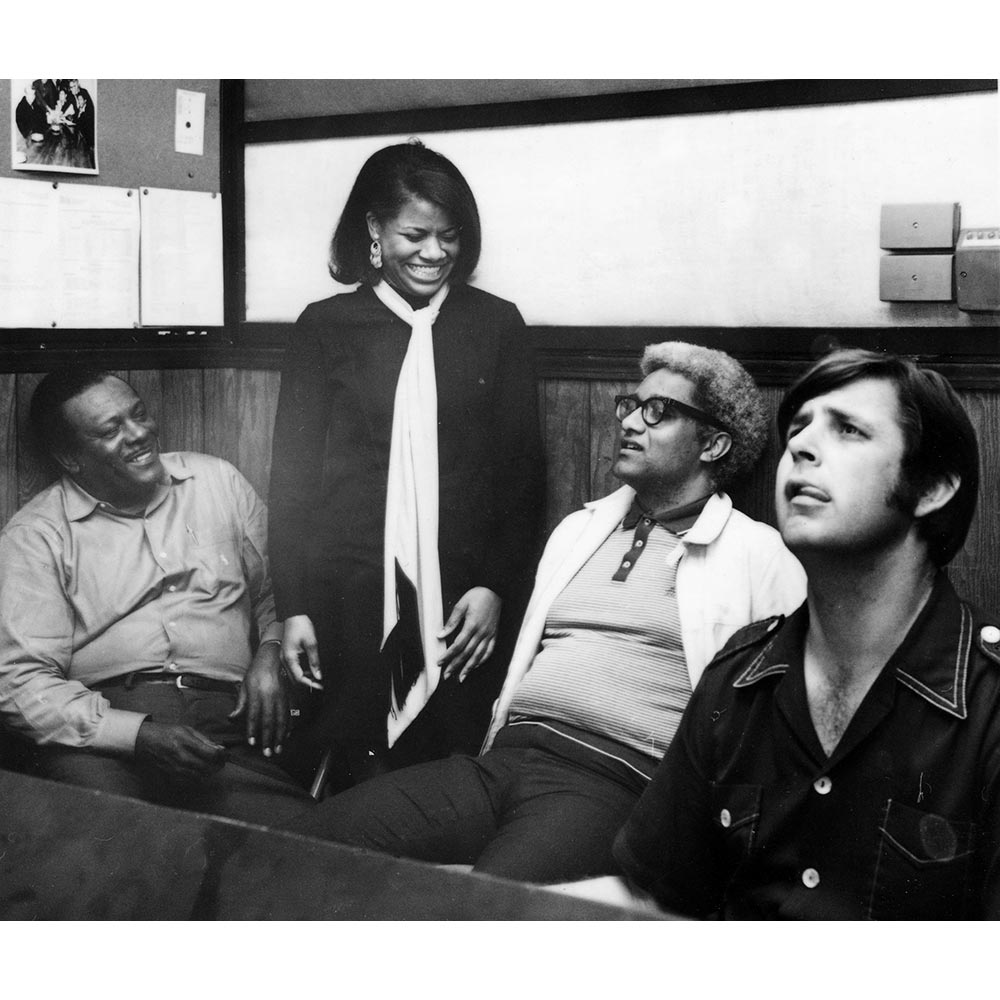
CHARLEY PRIDE-AMAZING LOVE, COUNTRY FEELIN’, PRIDE OF AMERICA AND CHARLEY.
CHARLEY PRIDE-AMAZING LOVE, COUNTRY FEELIN’, PRIDE OF AMERICA AND CHARLEY.
By the time Charley Pride released Amazing Love in October 1973, he was one of the biggest names in country music. Eleven of Charley’s albums had been certified gold, and his last thirteen albums had reached the top ten in the US Country charts. Seven of these albums topped the US Country charts. Charley Pride had come a long way from the days when he was working in a smelter. The only problem was, that no longer were Charley’s albums reaching the upper reaches of the lucrative US Billboard charts.
The seventies had started so well for Charley Pride. His first albums of the seventies, Just Plain Charley was released in January 1970, and reached twenty-two in the US Billboard 200. This resulted in another gold disc for Charley. So did Charley Pride’s 10th Album which was released in June 1970. It reached number thirty in the US Billboard 200 and number one in the US Country charts. Charley’s rich vein of form continued with From Me to You. On its release in December 1970, it reached just forty-two in the US Billboard 200 and number two in the US Billboard 200. Charley Pride, it seemed, could do no wrong.
When I‘m Just Me was released in June 1971, Charley enjoyed his third number one album on the US Country charts. However, I‘m Just Me stalled at just number fifty on the US Billboard 200. There was no gold disc this time around. The only small crumb of comfort was I‘m Just Me reached number two in Canada. Meanwhile, executives at RCA Victor must have noticed that Charley’s last two albums hadn’t sold as well as his first three albums of the seventies. They must have hoped it was a blip.
Four months later, Charley Pride Sings Heart Songs was released in October 1971. The album reached number thirty-eight in the US Billboard 200 and topped the US Country charts. This resulted in another gold disc for Charley. Normal service had been resumed.
Especially when Charley’s first gospel album Did You Think to Pray reached number seventy-six in the US Billboard 200 and reached number one on the US Country charts. This was enough for another gold disc. Although Charley’s first gospel album hadn’t reached the heights of Charley Pride Sings Heart Songs in the US Billboard 200, it was deemed a success. It seemed I’m Just Me had been a blip.
The success continued when RCA Victor decided to release The Best of Charley Pride Volume 2 during the first half of 1972. It reached fifty on the US Billboard 200 and topped the US Country chars. Charley received another gold disc to add to his collection. Later in 1972, Charley released a new country albums.
Nine months after the release of his previous country album, Charley released A Sunshiny Day with Charley Pride in July 1972. While it reached number one on the US Country charts, the album stalled at 115 in the US Billboard 200. This made A Sunshine Day With Charley his least successful album since Songs of Pride…Charley That Is in July 1972. Maybe it was a blip?
That was what Charley and everyone at RCA Victor were hoping. Songs of Love by Charley Pride was released in December 1972, but stalled at a lowly 149 in the US Billboard 200. However, the album still topped the US Country charts. Charley was still a giant of country music.
When Charley released Sweet Country in April 1973, the album reached just 166 in the US Billboard 200. At least Sweet Country reached number three in the US Country charts. Charley was still a massive draw in country circles. However, it seemed that he didn’t have the same crossover appeal he once had. So Charley set out to rectify this on Amazing Love, which is one of four albums reissued on a two disc set by BGO Records. The remastered set covers the period between Amazing Love which was released in October 1973, through Country Feelin’, Pride of America and Charley in May 1975. Would Charley’s search for crossover appeal prove successful?
Amazing Love.
Six months after the release of Sweet Country, Charley returned with Amazing Love in October 1973. It featured ten carefully selected tracks that hopefully, would appeal to more than fans of country music.
Among the tracks that featured on Amazing Love, were Allen Reynolds and Don Williams’ If She Helps Me (Get Over You). Two songs by John Schemers, who was then one of the top songwriters in country music. He had written several tracks for Charley. This time around, he had written I’m Only Losin’ Everything I Threw Away and Amazing Love. Two songwriters who had previously written songs for Charley contributed songs.
Ben Peters wrote I’m Glad It Was You, and James Bullington penned Comin’ Down With Love. Other songs included Al Urban’s Old Photographs, Jerry McBee’s Footprints In The Sands Of Time, Jim Lunsford’s Blue Ridge Mountains Turnin’ Green and Charles Isbell and Joe Keene’s I’ve Just Found Another Reason For Loving You. The song that would close Amazing Love was Glenn D. Tubb and Larry Lee Mr. Joe Henry’s Hand Clappin’ Open Air Rhythm Band. Just like the rest of Amazing Love, it was recorded in Nashville.
As usual, recording took place at RCA’s Nashville Sound Studio. Producing Amazing Love was Charley’s usual producer Jack Clement. However, he was joined by Felton Jarvis, who co-produced Amazing Love. It featured some of Nashville’s top musicians, who accompanied Charley on the ten tracks. Once they were recorded, Amazing Love was scheduled for release in October 1973.
Before the release of Amazing Love, critics had their say on the album. Amazing Love was well received within the country music community. Charley Pride had returned with an album carefully crafted songs. These ten songs showcased his talent and versatility. Bookending Amazing Love were two memorable mid tempo tracks, Comin’ Down With Love and Mr Joe Henry’s Happy Hand-Clappin’Open Air Rhythm Band. Blue Ridge Mountains, a banjo lead song featured a much more traditional sound, and shows another side to Charley. However, some of his best performances come on the relationship songs. Charley breathes life and meaning into the lyrics to If She Just Helps Me (Get Over You) and I’m Glad It Was You. It’s a similar case on the piano lead songs, I’ve Just Found Reason For Loving You and I’m Only Losin’ Everything I Threw Away Old Photographs. They’re a reminder of why Charley Pride was one of the biggest names in country music. So was the album’s standout track, Amazing Love.
The title-track was chosen as a single, and went on to top the country charts in America and Canada. This augured well for the release of Amazing Love.
When Amazing Love was released in October 1973, the album gave Charley Pride another number one on US Billboard Country charts. This was twelfth number one of Charley Pride’s career. However, the album failed to chart in the US Billboard 200. This was hugely disappointing. So was that Charley Pride had released another album, and still there was no sign of another gold disc.
The last gold disc Charley Pride received for a studio album came for Charley Pride Sings Heart Songs, which had been released in October 1971. Since then, only The Best of Charley Pride Volume 2, which was released in 1972, had been certified gold. While that was only two years ago, Charley Pride must have been worried. After all, he was no longer selling the same amount of albums. The problem was, nowadays, most of Charley Pride’s audience were country music fans. Previously, his music had crossed-over, and found an audience within mainstream music. Maybe this would change?
Country Feelin’.
Buoyed by a number one single and album in the US Country charts, Charley began work on his next album Country Feelin’. Ten tracks were chosen, including some from some of Charley’s favourite songwriters.
They had written songs for Charley’s previous albums. This included Ben Peters, who wrote Singin’ a Song About Love and Love Put A Song In My Heart. Among the other familiar faces were Jim Lunsford who wrote Streets of Gold; Allan and Marilyn Bergman contributed All His Children; Felice Bryant wrote We Could and Don Williams and Allen Reynolds cowrote It Amazes Me. Allen Bryant also wrote It Amazes Me with Wayland Holyfield. Other tracks included John Riggs’ Let My Love In, and the Max D. Barnes penned The Man I Used to Be. He wrote I Don’t See How I Can Love You Anymore with Maria Houston. Those songs became Country Feelin’, which was recorded in Nashville.
Recording took place at RCA’s Nashville Sound Studio. Producing Amazing Love was Charley’s usual producer Jack Clement. This time, there was no song of Felton Jarvis, who had co-produced Amazing Love. Joining Charley and Jack Clement were some of the top session musicians in Nashville. They were by The Nashville Edition, who added backing vocals on Country Feelin’. Gradually, the album took shape and once it was complete, RCA Victor started working towards a release date.
Country Feelin’ was scheduled for release in May 1974. Before that, critics had their say on Charley’s latest album. Critics were impressed by Country Feelin’, and called it one of his best albums of recent years. Just like Amazing Love, Country Feelin’ featured a selection of very different tracks.
The album opener, Which Way Do We Go has a much more traditional sound. This tale of love gone wrong whets the listener’s appetite for the rest of Country Feelin’. We Could is a quite beautiful, hopeful ballad that’s one of Country Feelin’s highlights. All His Children is another ballad, but one that’s roots are in the church. It would’ve sat comfortable on anther of Charley’s gospel albums. Street Of Gold features a reflective Charley; while I Don’t See How I Can Love You Anymore is another tale of love gone wrong. Singin’ A Song About Love is a joyous, mid tempo track. The Man I Used To Be is a hopeful sounding song; while Let My Love In features a needy vocal from Charley. Love Put A Song In My Heart, which closes Country Feelin’, is a joyous tale of new love. Country Feelin’ was an emotional roller coaster, which critics thought would sell well.
Alas, when Charley Pride released Country Feelin’ in May 1974, it stalled at number fifteen in the US Billboard Country charts. This was Charley Pride’s least successful album since The Pride of Country Music in June 1967. To make matters worse, Country Feelin’ became Charley Pride’s second consecutive album not to trouble the US Billboard 200. However, the Charley Pride bubble hadn’t burst.
We Could was chosen as a single from Country Feelin’. It reached number three in the US Billboard Country charts, and reached number one in the Canadian Country charts. This was a small crumb of comfort for Charley Pride and everyone at RCA Victor.
Pride Of America.
Six months later, Charley Pride returned back with a new album, Pride Of America in November 1974. By then, much had changed for Charley in an attempt to get him back to the top of the US Country charts.
One noticeable change was than Pride Of America didn’t feature songs by some of Charley’s favourite songwriters. There were not tracks from the ever reliable Ben Peters. Neither Jim Lunsford nor the songwriting team of Allan and Marilyn Bergman featured. However, John Schweers contributed Completely Helpless. Johnny Duncan wrote Mary Go Round and That Was Forever Ago. Red Stegall wrote The Hard Times Will Be The Best Time, Bobby P. Barker penned She Loves Me The Way That I Love You and Rod Morris contributed North Wind. Geoffrey Morgan and Kent Robb cowrote I Still Can’t Leave Your Memory Alone; while Paul Huffman, Joane Keller and Bucky Jones wrote Thorns of Life. Harold Dorman and Wiley Gann wrote Mississippi Cotton Picking Delta Town for Charley. It was semi-autobiographical, and would prove to be an important song for Charley. So would A.L. “Doodle” Owens and Dallas Frazier’s Then Who Am I, which like the rest of Pride Of America, was recorded in Nashville.
This time around, Charley’s usual producer Jack Clement had been replaced by Jerry Bradley. Despite this, when the sessions began at Nashville Sound” Studios, Charley was accompanied by a tight, talented band of top session players on Pride Of America. Once it was finished, it was released in November 1974.
Prior to the release of Pride Of America, critics cast their eye over the album. Opening Pride Of America was the ballad Than Who Am I, a tale of hurt and betrayal. So is Helpless, another soul-baring ballad. The balladry continued on I Still Can’t Leave Your Memory Alone, which is a tale of hurt and heartbreak. Charley then becomes a storyteller on the cinematic sounding The Hard Times Will Be The Best Times, and the semi-autobiographical Mississippi Cotton Picking Delta Town. It would strike a nerve with American record buyers when it was released as a single.
For much of the remainder of Pride Of America, Charley returns to balladry is a series of relationship songs. This is something he does so well. She Love Me The Way That I love You finds grief gives way to new love. It’s a poignant song, whose lyrics Charley brings to life. Equally poignant is That Was Forever Ago, another ballad about the end of a relationship. Thorns Of Life features a heartfelt vocal on this paean. North Wind which closes Pride Of America, is a jaunty ballad, rich in imagery, mystery and emotion. Pride Of America was well received by critics. Things were looking good for Charley Pride.
When Pride Of America was released in November 1974, it reached number five on the US Billboard Country charts. This was an improvement on Country Feelin’. However, Pride Of America was the third consecutive Charley Pride album that failed to enter the US Billboard 200. At least the singles fared better.
Mississippi Cotton Picking Delta Town was chosen as the lead single from Pride Of America. When it was released in late 1974, not only did it reach number three on the US Country charts, but number seventy on the US Billboard 100. This was Charley’s most successful single on the US Billboard 100 since Kiss an Angel Good Mornin’ in 1971. Across the border, Mississippi Cotton Picking Delta Town reached number one on the Canadian country charts. The second single released from Pride Of America, was Then Who Am I. It reached number one in the American and Canadian country charts. For Charley, it was his fourteenth number one single on the country chart. Charley Pride was still one of the biggest names in country music.
Charley.
Following the success of Pride Of America, RCA Victor didn’t waste time releasing another Charley Pride album. Charley was released in May 1975, and featured ten songs that had been recorded in Nashville.
This included Johnny Duncan’s Fools and I Ain’t All Bad. A.L. “Doodle” Owens and Dallas Frazier who had written Then Who Am I for Pride Of America, wrote She’s As Close As I Can Get To Loving You. Hope You’re Feelin’ Me (Like I’m Feelin’ You) came from the pen of Bobby David and Jimmy Rushing. He also wrote Lovin’ Understandin’ Man. The Grindelle, Gibbons and Hatch songwriting team penned Searching For The Morning Sun; while the Foster and Rice partnership were responsible for Now and Then. The other trace on Charley were The Hardest Part Of Livin’s Loving Me, One Mile More and You’re The Woman Behind Everything. They were recorded in the familiar surroundings of Nashville Sound Studios, Nashville.
Jack Clement returned to produce Charley. This was the second album he had produced with Charley Pride. Their first album, had featured two hit singles. It was the perfect start to their partnership. With a band that featured some top session musicians accompanying Charley, he recorded ten tracks at Nashville Sound Studios. They became Charley. When the album was complete, it was scheduled for release in May 1975.
Before Charley was released, critics had their say on the followup to Pride Of America. Again, ballads were to the fore on Charley.
The understated ballad Hope You’re Feelin’ Me (Like I’m Feelin ’You) opened the album. It features a vocal full of heartbreak and hurt. Searching For The Morning Sun is cinematic ballad, where Charley paints pictures with his vocal. Then on The Hardest Part Of Livin’s Loving Me and Now And Me, Charley delivers emotive vocals. They’re a reminder that balladry is something Charley excels at. Fools is a tale of love gone wrong, where pizzicato strings accompany Charley as he calls time on his failing relationship. Charley then delivers a hopeful vocal on I Ain’t All Bad; and a rueful, lovelorn vocal on She’s As Close As I Can Get To Loving You. Lovin’ Understandin’ Man which closes Charley, features a much more traditional sound on this heartfelt paean. It closes another album of carefully crafted songs. Critics were won over by Charley, which received mostly positive reviews. Things were looking good as Charley was released in May 1975.
Charley was released in May 1975, and reached number five in the US Country charts. For Charley Pride it was one step forward, and one step back. Charley hadn’t quite matched the success of its predecessor Pride Of America. Still Charley Pride was no closer to reconquering the US Billboard 200. However, again, Charley enjoyed two hit singles.
The first was I Ain’t All Bad, which reached number six in the US Country charts, but stalled at 101 in the US Billboard 100. Across the border in Canada, I Ain’t All Bad reached number. By then, Charley Pride had a large following in Canada. So when Hope You’re Feelin’ Me (Like I’m Feelin’ You) was released as a single, it reached number two in the Canadian Country charts and number one in the US Country charts. This was Charley’s fifteenth number one single in the US Country charts. However, it must have almost felt like a Pyrrhic victory.
While Hope You’re Feelin’ Me (Like I’m Feelin’ You) topped the US Country charts, it failed to even trouble the US Billboard 100. It had been situation with Charley. While it reached number fife in the US Country charts, it never came close to troubling the US Billboard 200. That was becoming a familiar story.
Charley Pride’s last album to enter the US Billboard 200 was Sweet Country in April 1973. Even then, it stalled at just 166 in the US Billboard 200. Since then, Amazing Love which was released in October 1973, Country Feelin’, Pride of America and Charley which was relaxed in May 1975 all failed to enter the US Billboard 200. It was a disappointing period for Charley Pride. That’s despite the four albums featuring three number one singles in the US Country charts. However, reaching the upper reaches, or even topping the US Country charts wasn’t enough to see Charley Pride enjoy the commercial success he once had.
Between January 1969 and April 1973, eleven of Charley’s albums had been certified gold. During that period, thirteen of Charley’s albums had reached the top ten in the US Country charts. Seven of these albums topped the US Country charts. Only Amazing Love added to that number.
Amazing Love is one of four albums to feature on a two disc set recently reissued by BGO Records. The remastered set includes Amazing Love Country Feelin’, Pride of America and Charley. Although these albums didn’t match the commercial success of Charley Pride’s earlier albums, they feature a true giant of country music at the peak of his powers. These four albums are hugely underrated, and deserve to be rediscovered by a much wider audience. During the period, Charley Pride was still one of the biggest names in country music.
Sadly, Charley Pride’s albums never again sold in the same quantities. It was across the border in Canada, where Charley Pride enjoyed two more gold discs and where The Best of Charley Pride Volume 3 was certified four times platinum in 1976. Since then, Charley Pride has continued to tour and release albums.
While the number albums and gold discs seemed to have dried up, Charley Pride had grown and matured as an artist. Lyrics come to life, as Charley Pride doesn’t so much sing them, but live them. His delivery is heartfelt, emotive and impassioned. It’s country music at his best. That’s not surprising, as Charley Pride is country music royalty.
Nowadays, Charley Pride is still regarded as country music royalty. He’s enjoyed thirty-nine number one singles on the US Billboard Country charts, and sold over seventy-million albums. Still, Charley Pride is RCA Victor’s second biggest selling artist of all time. Indeed, the only artist to have outsold Charley Pride at RCA Victor, is Elvis Presley. The boy from Sledge, Mississippi, who once dreamt of becoming a baseball player has come a long way, and nowadays, is the living embodiment of the American Dream. Patience and persistence paid off for Charley Pride, who is still living the dream.
CHARLEY PRIDE-AMAZING LOVE, COUNTRY FEELIN’, PRIDE OF AMERICA AND CHARLEY.
VAN HALEN-THE DAVID LEE ROTH YEARS AND BEYOND.
VAN HALEN-THE DAVID LEE ROTH YEARS AND BEYOND.
For any successful band, losing their lead singer can prove disastrous. Suddenly, the very future of the band is at risk.The band has two options, to and find a replacement or call it quits. However, this isn’t really an option for a band whose first six albums had sold thirty-four million copies in America alone,..Van Halen. So Van Halen went in search for a David Lee Roth. This wasn’t going to be easy. David Lee Roth had played an important part in the rise and rise of Van Halen .
The Van Halen story began in the early seventies, when brothers, Eddie and Alex Van Halen had formed a band. Like many bands, they found it difficult to settle on a name. Initially, they were called The Broken Combs, then changed the name to The Trojan Rubber Co. By then, The Trojan Rubber Co. had a settled lineup.
Their lineup featured Alex on drums and Eddie on guitar. They were joined by bassist Mark Stone and vocalist David Lee Roth, who they had hired a sound system from. Eddie had initially failed the audition. However, Eddie and Alex were realists. Money was tight, so if they brought David onboard, they would save having to hire a sound system. They also thought that David might improve as a vocalist. However, in 1974, The Trojan Rubber Co. changed its name and its lineup.
1974 was a pivotal year for The Trojan Rubber Co. By then, bassist Mark Stone had been replaced by bassist Michael Anthony. His audition was unorthodox. Only after Michael took part in an all night jam session, was he hired. So, Michael left local band Snake and joined The Trojan Rubber Co. Soon, The Trojan Rubber Co. changed its name to Mammoth, and then Van Halen. For the next three years, Van Halen spent honing their sound.
Van Halen played wherever they could. Backyard parties, clubs and dive bars, they weren’t proud. Far from it. They certainly were loud. Too loud some thought.
When Van Halen went to audition at Gazzarri’s, a bar on Sunset Strip, that was down on its luck, the owner Bill Gazzarri, told them they were “too loud, and refused to hire them.” However, Van Halen’s new managers stepped in.
Mark Algorri and Mario Miranda had just been installed as Van Halen’s managers. They had also just taken over the booking at Gazzarri’s. So, Van Halen were installed as the house band. Not long after this, Van Halen entered the studio for the first time.
The four members of Van Halen headed to Cherokee Studios, which had recently housed Steely Dan. At Cherokee Studios, Van Halen recorded their demo tape. It would become their calling card, and see them play some of L.A.’s top clubs, including the famous Whisky-A-Go-Go.
Soon, Van Halen were a permanent fixture in L.A.’s top clubs. That’s where they continued to hone their sound. It’s also where they came to the attention of Kiss’ Gene Simmons.
Gene Simmons had heard good things about Van Halen. So, he went to check out Van Halen. According to what he had heard, they were one of the rising stars of L.A.’s music scene. When Gene Simmons arrived at the Gazzarri club in the summer of 1976, he was won over by Van Halen. He knew they were going places.
So, Gene Simmons took Van Halen to Village Recorders in L.A. to produce a new demo tape. Overdubs then took place at Electric Ladyland in New York. Things were looking good for Van Halen. The only thing Van Halen baulked at, was Gene’s suggestion to change the band’s name to Daddy Longlegs. That was a step too far. The next step was for Gene to take the newly recorded demo tape to Kiss’ management.
When Kiss’ management heard the demo, they were pretty disparaging about Van Halen. According to Kiss’ managers, Van Halen “had no chance of making it.” These words would come back to haunt them, after Van Halen sold over 50.5 million albums in America alone. However, with Kiss’ management not interested in signing Van Halen, Gene Simmons bowed out of the story. He would be replaced a year later by Mo Ostin and Ted Templeman.
Down but not out, Van Halen returned to the club circuit. For the next year, they continued to hone their sound on the club circuit. One night, in the middle of 1977, Van Halen were playing at the Starwood in Hollywood. There wasn’t much of an audience. However, little did Van Halen know, that two very special guests were in the audience, Mo Ostin and Ted Templeman of Warner Bros. Records. The pair liked what they heard and less than a week later, Van Halen had signed to Warner Bros. Records. Mo Ostin dispatched Van Halen to Sunset Sound Records with producer Ted Templeman, where recording of Van Halen I began.
Van Halen.
Like many bands recording their debut album, Van Halen were fearless. They had no apprehension. Mind you, this wasn’t exactly a new experience. Van Halen had been in studios before, recording two different demo tapes. However, this was for real. The band had written nine tracks. The other two were covers of The Kinks’ You Really Got Me and John Brim’s Ice Cream Man. These eleven tracks would eventually become Van Halen’s debut album, Van Halen.
Recording of Van Halen began in the middle of September 1977. Van Halen’s rhythm section of drummer Alex Van Halen and bassist Michael Anthony set about proving the album’s pulsating heartbeat. A week was spent recording Eddie’s guitar parts. Another two weeks were spent recording David’s vocals and the backing vocals. By early October 1977, recording of Van Halen was all but complete. The decision was made not to do much in the way of over-dubbing. This meant Van Halen was much more like hearing Van Halen live. How would critics respond to this?
Before the release of Van Halen, critics had their say. For everyone at Warner Bros. Records, they held their breath. Back in 1978, critics could be venomous. It was hardly rock critic’s finest hour. They were in the throes of a love affair with punk. Many critics took great pleasure in trashing rock albums. The critics didn’t hold back when it came to Van Halen. Most of the reviews were negative. One of the worst reviews came from the so called doyen of critics, the contrarian Robert Christgau. The equally contrarian Rolling Stone were not fans of Van Halen. At least they admitted that Van Halen were going places. Mostly, the reviews panned Van Halen. However, soon, critics would be eating their words.
When Van Halen was released on 18th February 1978, it began climbing the charts. Eventually, it reached number nineteen in the US Billboard 200 charts. Since then, Van Halen has sold over ten million copies and has been certified diamond. Back in 1978, rhis was just the start of the rise and rise of Van Halen, who critics had changed their mind about.
Gradually, critics changed their minds about Van Halen. Suddenly, they began to regard Van Halen as one of the best debut albums in the history of rock ’n’ roll. That’s the case today, with critics hailing Van Halen as a classic, and one of the greatest debut albums ever released. From that album, a trio singles were chosen.
Three singles were released from Van Halen. A cover of The Kinks’ You Really Got Me reached number thirty-six in the US Billboard 100. Runnin’ With The Devil Stalled at number eighty-four in the US Billboard 100. The final single released from Van Halen was Ain’t Talkin’ ’bout Love. It failed to chart. While the singles failed to replicate the success of Van Halen, it showcased the band at their hard rocking best.
Literally, Van Halen strut and swagger through the eleven tracks on their debut album Van Halen. It’s no surprise that rock and heavy metal fans were won over by Van Halen. It’s a track full of some of Van Halen’s biggest songs, including Runnin’ With The Devil, Eruption, You Really Got Me, Ain’t Talkin’ ‘Bout Love, Jamie’s Cryin’ and Ice Cream Man. Van Halen’s rhythm section of Alex and Michael provide the backdrop to Eddie’s blistering guitars and David’s lived-in vocal. From the opening bars of Runnin’ With The Devil, right through On Fire, Van Halen win friends and influence people. The band who just a year ago, were being hailed L.A.’s best bar band, were on their way to becoming a one of the biggest bands on planet rock.
Van Halen II.
When Van Halen entered Sunset Sound Recorders, in Hollywood, on 11th December 1978, the the four members of the band must have wondered what had happened in the last ten months? They had gone from bar room band, to a million selling rock band. All of a sudden, they were one of the biggest bands in the America. They were being touted as the saviour of American rock. This was hard to comprehend. It also meant that Van Halen were under pressure to record a fitting followup to Van Halen.
Recording of what became Van Halen II began on 11th December 1978. Nine of the ten tracks were penned by Van Halen. Many of the tracks weren’t new songs. Instead, they featured on the Gene Simmons’ sessions. However, given Van Halen were under pressure to record their sophomore album, it’s no surprise that they chose to dust off these songs. The other track chosen for Van Halen II was Clint Ballard Jr.’s You’re No Good. These ten track were produced by Ted Templeman. By January 1979, Van Halen II was complete, and ready for release.
Given the negative reviews of their debut album, the four members of Van Halen must have awaited the reviews of Van Halen II with bated breath. Mostly, reviews of Van Halen II were positive. That’s apart from the “usual suspects,” who still, failed to be won over by Van Halen. They were in the minority. The majority of critics were impressed by Van Halen II’s upbeat, feel good sound. Especially tracks like Dance The Night Away and Beautiful Girls, which some critics referred to Van Halen II as perfect party music. One track however, was very different to the rest.
This was the instrumental, Spanish Fly. It was perceived as the followup to Eruption on Van Halen. Spanish Fly however, is only a minute long, and featured Eddie Van Halen on an acoustic guitar. Rather than fingerpick, he uses a plectrum. This makes things doubly hard. Despite this, he delivers a guitar masterclass. Eddie deploys a variety of techniques, including finger tapping and tremolo picking. Those who had marvelled at Eruption, would be spellbound by Eddie’s performance on Spanish Fly.
That would be the case with Van Halen’s performance on Van Halen II. When Van Halen II was released on March 23rd 1979, copies of Van Halen II sold quickly. It was one of 1979s must have rock albums. Soon, Van Halen two reached number six in the US Billboard 200. Eventually, it sold five million copies in America, and was certified platinum five times over. Across the border, Van Halen II was certified double platinum in Canada. Meanwhile, in France Van Halen II was certified gold. It seemed Van Halen could do no wrong.
While that was the case with Van Halen’s first two albums, their singles were selling as well. While Dance The Night Away reached number fourteen in the US Billboard 100, Beautiful Girls stalled at number eighty-four. Just like many other rock bands before them, Van Halen looked like being an album’s band. Maybe that would change with their third album?
Women and Children First.
Just a year after Van Halen began recording their sophomore album, the band began work on their third album, Women and Children First. It marked the beginning of a new chapter in the Van Halen story.
On Van Halen’s first two albums, Van Halen had added cover versions. This included a cover of The Kinks’ You Really Got Me and John Brim’s Ice Cream Man on Van Halen. Then on Van Halen II, Van Halen covered Clint Ballard Jr.’s You’re No Good. However, when recording of Women and Children First began in December 1979, cover versions were a thing of the past.
Women and Children First, Van Halen’s third album was their first album featuring just songs written by the four members of the band. Maybe Van Halen had realised that putting cover versions on albums was costing the band royalties? There was certainly no need to resort to cover versions? The four members of Van Halen were talented songwriters, capable of writing their own material. So when Van Halen entered the studio to record Women and Children First, they came with ten new songs they had penned. This however, wasn’t the only change that became apparent.
As recording of Women and Children First began, onlookers in the studio realised that Van Halen’s music was becoming heavier. This wasn’t just a stylistic change, and to some extent, a thematic one. Some of Van Halen’s later songs had a degree of darkness. Mostly, though, Van Halen were still the same hard rocking, good time band. However, what became apparent was that their way of recording was changing.
Unlike Van Halen and Van Halen II, Women and Children First saw Van Halen rely more upon overdubs. Backing vocals weren’t used as extensively. They were on Could This Be Magic?, and Nicolette Larson was drafted in to sing the choruses and backing vocal. This was the one and only time a female backing vocalist featured on a Van Halen album. Another first was the keyboard driven And the Cradle Will Rock. Although it sounds like a guitar, it’s a Wurlitzer electric piano with a phase shifter used to transform the sound. It seemed that Van Halen had the confidence to experiment more on Women and Children First. Given that Van Halen were working with such an experienced producer as Ted Templeman, this was the perfect opportunity to try new things. He could show Van Halen how to make their ideas work.
Despite the stylistic change and change in their way of recording, producer Ted Templeman didn’t try to reign in Van Halen. He must have known that Van Halen wanted to broaden their horizons musically. They had always been a hard rocking band, and weren’t willing to sacrifice what many felt was their true sound. Maybe Van Halen had sacrificed some of their true sound on their first two albums. Now that they had their foot in Warner Bros’ door, they could show their true colours. This may not have pleased everyone.
Van Halen finished recording Women and Children First in February 1980. At last, those within Warner Bros. could hear Women and Children First. Some were aware of Van Halen’s music changing stylistically. This didn’t please everyone. Van Halen were one of Warner Bros.’ biggest success stories. By changing their style, this could alienate their audience. Not everyone who had bought Van Halen, and Van Halen II, would be receptive to a heavier Van Halen. Would this be the case within Warner Bros?
Once the executives at Warner Bros. heard Women and Children First, they were able to form an opinion. Most of those whose opinion mattered liked Van Halen’s new sound. They realised that Van Halen wanted to evolve as a band. They couldn’t keep rehashing Van Halen, and Van Halen II. Instead, they had to move forward. However, it was a big risk. Van Halen, and Van Halen II were million selling albums. There was a lot at stake. If Women and Children First flopped it would prove costly.
Van Halen had two hurdles to overcome before they would know if Women and Children First had been a success. The first was the critics.
As the critics their say, everyone at Warner Bros. and the four members of Van Halen awaited the verdict. Eventually, the reviews were published. Many critics remarked upon Van Halen’s heavier sound. They also noted that the four members of Van Halen had written the ten tracks on Women and Children First. Although Women and Children First was quite different from Van Halen II, it was well received by critics. They felt Van Halen were maturing as a band and songwriters. Proof of this were tracks like Could This Be Magic? and Everybody Wants Some!!, which reinforced Van Halen’s reputation and credentials as a good time party band. Having cleared the first hurdle, now record buyers had the final say.
Only if Women and Children First sold in similar quantities to Van Halen and Van Halen II could the album be declared a success. Women and Children First was released on March 6th 1980. Straight away, Women and Children First was selling well. Soon, Women and Children First reached number six in the US Billboard 200. Eventually, it sold three million copies in America, and was certified triple-platinum. Elsewhere, Women and Children First was certified double platinum in Canada and gold in France. As Van Halen and everyone at Warner Bros. breathed a sigh of relief, still Van Halen weren’t selling singles in vast quantities.
The only single released from Women and Children First, was And The Cradle Will Rock. It stalled at number fifty-five in the US Billboard 100. Van Halen it seemed, were never going to be a singles band. However, what really mattered was that Women and Children First had sold well. That was certainly the case. Worldwide, Women and Children First sold over three million copies. Van Halen’s decision to change direction had paid off.
Fair Warning.
By the time that Van Halen began recording their fourth album, Fair Warning, Van Halen were a divided band. The band’s two main men were at loggerheads. David Lee Roth wanted Van Halen to return to the sound of the first two album. He wasn’t in favour of the heavier sound, which he felt didn’t appeal to as many people. The proof of this was the sales of Women and Children First.
Eventually, Women and Children First sold over three million coupes. Van Halen eventually sold ten million copies and Van Halen II five million copies. David felt it Van Halen continued with the heavier sound, they risked alienating record buyers. Van Halen co-founder didn’t agree.
Eddie wanted Van Halen to continue their heavier sound. Women and Children First was the first time they showcased this sound. He felt that the way forward was longer songs with much more complicated song structures. This would allow Van Halen to shine as musicians, especially Eddie, who was seen one of the best guitarists of the late-seventies and early eighties. Given Eddie was one of the best guitarists of his generation, he felt his guitar playing should take centre-stage. David Lee Roth disagreed, and disagreed with Eddie’s other proposal.
The other change Eddie proposed was a continuation of the darker themes that Van Halen began exploring on Women and Children First. For David Lee Roth, this wasn’t what Van Halen were about. They were, in many people’s eyes, a good time rock ’n’ roll band. However, that wasn’t the direction Eddie wanted Van Halen to take. Instead, it looked as if Eddie wanted Van Halen to become the Led Zeppelin of the eighties. With David and Eddie at loggerheads, work began on Van Halen’s fourth album Fair Warning.
Just like Women and Children First, Van Halen penned the ten tracks on Fair Warning. Recording of these ten tracks began in late 1980. Quickly, it became apparent that Eddie’s ideas had prevailed. The music was fast, rocky and sometimes dark. This allowed Van Halen’s rhythm section to showcase their skills Fair Warning. Especially Eddie, who unleaded a series of fierce, blistering solos on tracks like Mean Street, Hear About It Later, Unchained and So This Is Love? David who seemed to have pst the argument, added his trademark vocals. Producer Ted Templman had the job of bringing Fair Warning together. The result was the hardest rocking album of Van Halen’s career, Fair Warning.
Before Fair Warning was released on April 29th 1981, the critics had their say on Van Halen’s hardest rocking album. Reviews of Fair Warning were mixed. Most of the critics embraced Fair Warning. They were impressed by Eddie’s virtuoso skills. Aided and abetted by his box of sound effects, Eddie unleashes a series of blistering solos. Along with the other two members of the rhythm section, he was key to Van Halen’s new, hard rocking style. Together, they provided the backdrop for David’s vocals. He brought to life the lyrics, as Van Halen continued to evolve musically.
It seemed Fair Warning had won over most of the critics. However, while most of the reviews of Fair Warning praised Van Halen’s fourth album, there were still some doubters. They felt that Van Halen were heading down the wrong road. On Women and Children First and Fair Warning, Van Halen’s music had become much harder. This had cost Van Halen precious sales on Women and Children First. Would this be the case with Fair Warning?
On the release of Fair Warning on 29th March 1981, sales were slow. Fair Warning was the slowest selling Van Halen album of their four album career. Eventually, it reached number six in the US Billboard 200. While this was the same as Van Halen II and Women and Children First, sales were way down. Fair Warning sold “just” two million copies. This was a million less than Women and Children First, and three million less than Van Halen II. To make matters worse, none of the singles charted.
Four singles were released from Fair Warning during 1981. The first was So This Is Love. It failed to chart. So did Mean Street, Push Comes To Shove and Unchained. This wasn’t unexpected, as Van Halen weren’t a singles band. However, it further reinforced David Lee Roth’s argument.
Given that Fair Warning was Van Halen’s slowest selling and least successful album, many onlookers wondered whether Van Halen would rethink their sound. It seemed record buyers weren’t embracing Van Halen heavier sound. Maybe it was time to come round to David Lee Roth’s way of thinking?
Diver Down.
After the release of Fair Warning, Van Halen headed out on tour. They spent months promoting Fair Warning. Still, Fair Warning sold slowly, and failed to match the sales of previous albums. Once the tour was over, Warner Bros. started pressurising Van Halen into recording their fifth album.
That wasn’t what Van Halen wanted to hear. They wanted to take some time out, and then spend time writing and recording their fifth album. That wasn’t to be though.
Not long after the Fair Warning tour ended, David Lee Roth came up with an idea. He wanted Van Halen to record a single and release it just after the New Year. He had the very song in mind, Roy Orbison’s Oh, Pretty Woman. While this wasn’t the most obvious choice for a single, the rest of Van Halen agreed.
So the four members headed to Sunset Sound and recorded their cover of Oh, Pretty Woman. After working out an arrangement with producer Ted Templeman, Van Halen recorded Oh, Pretty Woman. Once it was finished, Oh, Pretty Woman was released early in the New Year.
Just after New Year 1981, Van Halen’s version of Oh, Pretty Woman was released. Van Halen weren’t known as a singles band. However, Oh, Pretty Woman succeeded where better Van Halen songs failed, and reached number twelve in the US Billboard 100 and number one on the US Mainstream Rock charts. Ironically, this became the most successful single of Van Halen’s career. However, the success of Oh, Pretty Woman backfired on Van Halen.
Having just enjoyed the biggest selling single of their career, Warner Bros. started pressurising Van Halen into recording their fifth album. Van Halen didn’t get the time to write and record their fifth album.
Eventually, Van Halen relented. That’s despite having been on tour for months. For the last four years, Van Halen had been recording and touring albums. It was like a merry-go-round, one that Van Halen needed to get off. Especially since the last year hadn’t been easy.
Eddie and David were still at loggerheads. Although Eddie had won the day, David had been vindicated. Sales of Fair Warning were way down. It sold a million less than Women and Children First. This was costing Van Halen and Warner Bros. money. So, Van Halen could hardly refuse Warner Bros.’ request to begin recording their fifth album. However, that wasn’t Warner Bros.’ only request.
Given Fair Warning hadn’t been as successful as previous Van Halen albums, someone at Warner Bros hit on the idea that Van Halen should include some covers on what became Diver Down. The reasoning for this was, that if people recognised some of the songs on the album, they would be more likely to by it. Especially if these songs had been hits before. So, Van Halen went in search of covers.
Having already recorded and released Oh, Pretty Woman, Van Halen got to work on their fifth album, Diver Down. In addition to Oh, Pretty Woman, Van Halen had chosen four other cover versions. This included The Kinks, Where Have all the Good Times Gone and Martha and The Vandellas’ Dancing In The Streets. They were augmented by Milton Ager and Jack Yellen’s Big Bad Bill (Is Sweet William Now) and Dale Evans’ Happy Trails. Apart from the five cover versions, Van Halen had seven new songs. Three of the songs weren’t so new.
Hang ‘Em High started life as Last Night, a track from Van Halen’s 1977 demo. Happy Trails was another song from the 1977 demos, which had been included as a joke. Now the joke was on Warner Bros. The other song was Cathedral, a song Van Halen had been playing for a couple of years. During that period, the song had continued to evolve. These three songs would become part of Diver Down, which was recorded in two studios in Los Angeles.
Recording of Diver Down began in January 1982. Two studios were used by Van Halen. The first was Sunset Sound, where Van Halen had recorded previously. Other sessions took place at Warner Bros. Recording Studios, which before the corporate rebinding, was known as Amigo Studios. At these two studios, Van Halen and Ted Templeman got to work. Things weren’t going to plan as Van Halen began recording eleven of Diver Down’s twelve songs.
During the recording of Van Halen’s previous album, Diver Down, released in 1982, David, Eddie and producer Rod Templeman had clashed. The problem was, Eddie wanted to make keyboards a prominent part of the Van Halen sound. David and Rod disagreed. Thinking that Van Halen was a democracy, the two men thought the matter was settled. They were wrong.
Despite this, Eddie went ahead and recorded much of Diver Down at his home studio. When the band heard it, it was keyboard heavy rock rubbed shoulders with Van Halen’s trademark sound. Presented with what seemed like a fait accompli, David began to reconsider his position. He was far from happy with Eddie’s sudden discovery and love of synths. For a rock ’n’ roller like David, this was sacrilege. Despite this, David and Eddie managed to work together.
Over the next three months, Van Halen worked their way through the twelve tracks. Some were easier to record than others. Sometimes, things didn’t go to plan. Some of the covers were difficult to adapt, so that they took on Van Halen’s sound. One of the most problematic was Dancing In The Streets. The problem was Eddie couldn’t work out a guitar riff. Eventually though, Van Halen figured out an their take on Dancing In The Streets. Gradually, Diver Down began to take shape. By March 1982, Diver Down was completed. It would be released on April 14th 1982.
This meant there wasn’t long before Van Halen completed Diver Down and its release on April 14th 1982. By then, some of the members of Van Halen were beginning to realise that Diver Down wasn’t their finest moment. Eddie Van Halen would later say: “I’d rather have a bomb with one of my own songs than a hit with someone else’s.” However, Van Halen had folded too quickly for a band who had already sold over fifteen million albums. They had been cajoled into recording cover versions. For the hard rocking Van Halen, this almost subservient attitude was surprising. Or was it?
When critics were sent advance copies of Diver Down, they were struck by the album cover. It portrayed the diver down flag, which is used to indicate that a scuba diver is diving within that area. If ever it was a case of “a picture paints a thousand words.” David Lee Roth explained that “there was something going on that’s not apparent to your eyes…it’s not immediately apparent to your eyes what is going on underneath the surface.” That could easily be replaced by the press and record buyers weren’t aware what was going on behind the scenes. They never knew that Van Halen were pressurised to record Diver Down. Would the pressure Warner Bros. under, could come back to bite them?
Having received advance copies of Diver Down, critics were determined to have their say. Most were impressed by Diver Down. Some weren’t enamoured with the cover versions. This was quite unlike Van Halen. However, mostly, the reviews of Diver Down were positive. Things were looking up for Van Halen.
On its release on 29th April 1982, Diver Down reached number three in the US Billboard 100. This was the highest chart position of Van Halen’s first five album. Eventually, Diver Down sold four million copies, which was double the amount of Fair Warning. This was pretty good for album that included cover versions and a trio of tracks from Van Halen’s past. However, the success didn’t stop there.
Dancing In The Street was the second single to be released from Diver Down. It stalled at number thirty-eight in the US Billboard 100. The other four singles, Secrets, Little Guitars, The Full Bug and Where Have All the Good Times Gone failed to reach the US Billboard 100. At least they reached the US Mainstream Rock charts. However, times had changed, with Van Halen having enjoyed two hit singles from Diver Down. For a band who hadn’t been known as a singles band, this was changed times for Van Halen, in more ways than one.
Previously, Van Halen would’ve held their ground, and not acquiesced to Warner Bros.’ request to record an album before they were ready. However, it was only later than the members of Van Halen realised that they had folded too easily. They shouldn’t have given in to Warner Bros., as they were an experienced and successful band. If they had taken the time to write and record the album they wanted, they may have reached the scaled the same heights as their next album.
Two years later, in 1984, and Van Halen’s first five albums were well on their way to selling twenty-four million copies. However, their sixth album, 1984 was a game-changer, in more ways than one.
1984.
During the six years since Van Halen released their eponymous debut album, Van Halen were without doubt, the biggest bands in planet rock. Van Halen were certainly the highest paid band in rock music. No wonder. Each album reached a higher chart placing than its predecessor. So, it’s no surprise that Van Halen
had sold fourteen million albums in America alone. 1984, however, was a game-changer, in more ways than one.
Behind the scenes, all wasn’t well within Van Halen. David Lee Roth, Van Halen’s charismatic frontman would quit after 1984. In some ways, the writing had been on the wall.
During the recording of Van Halen’s previous album, Diver Down, released in 1982, David, Eddie and producer Rod Templeman had clashed. The problem was, Eddie wanted to make keyboards a prominent part of the Van Halen sound. David and Rod disagreed. Thinking that Van Halen was a democracy, the two men thought the matter was settled. They were wrong.
Despite this, Eddie went ahead and recorded much of Diver Down at his home studio. When the band heard it, it was keyboard heavy rock rubbed shoulders with Van Halen’s trademark sound. Presented with what seemed like a fait accompli, David began to reconsider his position. He was far from happy with Eddie’s sudden discovery and love of synths. For a rock ’n’ roller like David, this was sacrilege. However, David decided to continue with Van Halen…meantime.
Recording of 1984 took place during 1983 at 5150 Studios, in Studio City, California. Van Halen cowrote all of 1984s songs. Michael McDonald however, received a credit for I’ll Wait. Van Halen’s rhythm section of drummer Alex Van Halen and Michael Anthony’s thunderous bass set about providing the 1984’s heartbeat. Eddie Van Halen played guitar and keyboards. For the last time, David Lee Roth added vocals. Once 1984 was completed, it was that time again, time for critics to have their say on Van Halen’s sixth album.
When reviews of 1984 were published, mostly, they were positive. As usual, there was the odd dissenting voice. One Napoleonic critic described 1984 as a one sided album. For him, the second side received the consolation prize. What he failed to see, was that side one set the bar high.
From the instrumental 1984, through the the Van Halen classics Jump and Panama, Van Halen could do wrong. They were well on their way to hitting a home run. Top Jimmy and Drop Dead Legs rounded off side one, and left you wanting more of Van Halen’s heaving rocking music. Everything just dropped into place. Even the synths had their place, and played their part in a classic album. The fun didn’t stop there.
Hot For Teacher was the perfect way to start side one. An anthemic track, it gave way to I’ll Wait, one of the singles from 1984. Girl Gone Bad was another fist pumping anthem, that showcased what Van Halen were capable. By the time House Of Pain closed 1984 it was apparent that Van Halen had released the second classic album of their career.
1984s fusion of keyboard heavy rock, combined Van Halen’s trademark hard rocking sound proved a winning combination. These two sides of Van Halen resulted in a classic album that would become the biggest selling album of Van Halen’s career.
On its release on January 9th 1984, 1984 started climbing the charts. Eventually, it reached number two in the US Billboard 200. This was the highest chart placing of Van Halen’s six album career. It also became the biggest selling album of Van Halen’s career. Eventually, 1984 sold twelve million copies. 1984 became Van Halen’s second album to be certified diamond. Elsewhere, 1984 was a huge seller.
In Canada, 1984 was certified five times platinum. Over the Atlantic, 1984 was certified gold in Britain and France. Meanwhile, 1984 was certified platinum in Germany. That wasn’t the end of the commercial success.
Four singles were released from 1984. Jump reached number one in the US Billboard 100. I’ll Wait then reached number thirteen in the US Billboard 100. Panama became the third single to be released from 1984. It reached number two in the US Billboard 200. The final single released from 1984, was Hot For Teacher, which stalled at number fifty-six in the US Billboard 200. By then, 1984 had become Van Halen’s most successful album of their career, and their second classic album. However, it was the end of an era.
Following the release of 1984, David Lee Roth left Van Halen. The disagreements with Eddie Van Halen had taken their toll. Relations had been strained since the recording of Diver Down. Eddie was pro synths, David a died in the wool rock ’n’ roller, wasn’t in favour of this stylistic departure. When the pair couldn’t resolve their disagreements, David called time on his career with Van Halen.
David had had a good run. Especially since he was originally seen as a stopgap singer. He had failed the original audition. However, David lasted six albums. They sold thirty-six million copies. Not bad for what one critic referred to as a bar band. It would be another twenty-two years before David Lee Roth rejoined Van Halen.
This came during Van Halen’s 2006. This was the second Van Halen reunion during Van Halen’s long and turbulent career. However, when David Lee Roth left Van Halen after the release of 1984, the group’s future was in doubt.
Looking back, there was no way that Van Halen were going to call time on their career. They were one of the biggest bands in the world. However, replacing David Lee Roth wasn’t going to be easy.
That proved to be the case. The three remaining members of Van Halen were struggling to find the right frontman. Names were considered, and eventually, disregarded. At one point, Van Halen even considered using temporary lead vocalists, including Eric Martin, Jimmy Barnes and Patty Smyth of Scandal were considered as temporary replacements. When Patty Smyth was asked, she declined the opportunity to replace David Lee Roth. She knew his were big shoes to fill. Meanwhile, Warner Bros. were worried.
So much so, that Warner Bros. advised the remaining members of Van Halen to discontinue using the Van Halen name. This request was refused, and the search went on. It came to an end in July 1985, when Eddie Van Halen was talking to a mechanic who was working on his Ferrari. The mechanic recommended Sammy Hagar, the former Montrose frontman. That day, Van Halen found their new lead singer.
Eddie Van Halen contacted Sammy Hagar, and the pair met. They hit it off, and soon, Sammy Hagar was working with Van Halen. This didn’t please everyone.
Even critics who had never been a fan of David Lee Roth were less than impressed with the addition of Sammy Hagar. They didn’t believe the former Montrose frontman was the answer to Van Halen’s problem in the long term. This proved to be the case.
5150.
Van Halen had began recording 5150 in November 1985, and finished the albumin at 5150 studios in February 1986. The band were facing the biggest challenge of their career, following up their second classic album, 1984. However, the new lineup came up short in this challenge.
5150 was released in March 1986, and was the first album of the Sammy Hagar era. It showcased a much more experimental sound than 1984. Critics weren’t impressed by 5150. This included some critics who hadn’t been a fan of David Lee Roth.
These critics weren’t afraid to shoot from the hip. Their reviews ranged from disappointing to favourable. That is despite Eddie Van Halen playing a starring role. His performance was described as a mixture of brilliance and banality. Robert Christgau was less than impressed by Sammy Hagar, saying: “no musician with something to say could stomach responding to Sammy Hagar’s call.” Given the disappointing reviews of 5150, Van Halen and Warner Bros. must have been wondered how the album would sell?
On the release of 5150, it reached number one on the US Billboard 200. 5150 was certified six times platinum in America; three times platinum in Canada; silver in the UK and gold in Germany. 5150 had sold four million fewer copies than 1984. However, 5150 was the start of a new era. maybe there was life after David Lee Roth?
OU812.
When Van Halen returned with OU812 in May 1988, it had been a close run thing. Reording began in September 1987, but was only finished at 5150 Studios in April 1988. With only weeks to spare, OU812 was ready for release.
It was a familiar story. Critics were less than impressed with OU812. Although the whole band came in for criticism, vocalists Sammy Hagar was singled out. He critics felt, was costing Van Halen their shot at becoming the greatest rock band of the eighties. However, Eddie Van Halen seemed to have lost some of his magic, and the usually reliable rhythm section weren’t immune from criticism. With OU812 receiving decidedly mixed reviews, things weren’t looking good for the release of OU812.
When OU812 was released in April 1988, the album reached number one on the US Billboard 200. OU812 was certified four times platinum in America and silver in the UK. Although OU812 topped the American charts, it had sold two million fewer copies than 5150. Elsewhere the album hadn’t sold in the same quantities. This was a worrying time for Van Halen.
For Unlawful Carnal Knowledge.
Following the release of OU812, over three years passed before For Unlawful Carnal Knowledge was released in June 1991.Van Halen had been locked away in 5150 Studios between March 1990 and April 1991. After thirteen months, they returned with their ninth studio album, and the third of the Sammy Hagar era.
When For Unlawful Carnal Knowledge was released, it wasn’t to critical acclaim. Instead, the reviews of the album were mixed. Here was a rock band that had forgotten their raison d’être, and somehow, seemed to have forgotten how to rock. Van Halen were a pale shadow of the band they had been during the David Lee Roth years.
Despite this, For Unlawful Carnal Knowledge reached number one on the US Billboard 200, and was certified three times platinum. Elsewhere, was certified platinum in Canada and silver in the UK. Van Halen’s fans were still religiously buying the band’s albums, albeit in greatly reduced numbers. For Unlawful Carnal Knowledge had sold a million fewer copies in America OU812. Van Halen were no longer as popular as they had once been.
Balance.
Nearly four years passed before Van Halen returned with Balance in January 1995. It had been a turbulent time for the band. Van Halen’s longtime manager and friend Ed Leffler, had passed away in October 16th 1993. He was replaced by Alex’s brother-in-law, Ray Danniels. Balance proved to be a baptism of fire for Ray Danniels.
Balance had been recorded over a three year period. Strung Out was the first song that was recorded. It was recorded in 1993. After this, Van Halen didn’t return to the studio until May 25th 1994. Over the next few months, Van Halen spent time at Studio City, Los Angeles and Little Mountain Sound Studios in Vancouver. That was where five of the lead vocals were recorded by Sammy Hagar. The rest of the album was recorded in L.A. Gradually, Balance begin to take shape, with Van Halen working eight hour days. Eventually, Balance was completed on September 2nd 1994, and was released in early 1995.
Balance, Van Halen’s tenth album was released on 25th January 1995. By then, all was not well within the band. Van Halen were a band divided. In one corner, were Eddie and Alex Van Halen, while a lonely Sammy Hagar sat in the other corner. There was only going to be one winner. However, before the knockout blow was delivered, Balance was released.
If Eddie and Alex Van Halen hadn’t decided what to do next, the reviews of Balance must have made their mind up. Just like the three previous albums featuring Sammy Hagar, the reviews were mixed. Critics weren’t impressed by the album, which had taken over a year to record. It was hard to believe that it was the same group that had released classic albums Van Halen and 1984.
Despite this, when Balance was released, it reached number one on the US Billboard 200. This resulted in Balance being certified triple-platinum in America and Canada. In Brazil, Balance was certified gold. This was a long way from the six million selling 5150, which had been Sammy Hagar’s debut. Balance proved to be Sammy Hagar’s final album with Van Halen. However, that wasn’t the end of the Sammy Hagar era.
After the release of Balance, Van Halen set off on tour. The tour wasn’t the easiest for the band. Tensions within the band were high. Especially between the Van Halen brothers, and lead vocalist Sammy Hagar. This had been the case for some time.
Eddie Van Halen was able to trace back to when he quit drinking on October 2nd 1994. Sadly, during the Balance tour, things got so bad, that Eddie fell off the wagon and began drinking. That wasn’t all that happened.
Two members of Van Halen succumbed to injuries during the Balance tour. Eddie Van Halen was struggling with a hip injury, while brother Alex ended up having to wear a neck brace. However, the major casualty was Sammy Hagar. He departed Van Halen Mk II on Father’s Day 1997, when the band were recording songs for the soundtrack to Twister. The Sammy Hagar era was over, after just four albums.
Van Halen III.
Van Halen should’ve called time on the band after the departure of Sammy Hagar. The band was on its last legs. Bassist Michael Anthony’s contribution to Van Halen III was minimal. However, the benefit of hindsight is a wonderful thing. Instead, Van Halen decoded to continue and brought onboard Extreme lead vocalist Gary Cherone. He made his debut on Van Halen III.
Recording of Van Halen III took place at 5150 Studios, between March and December 1998. Most of the album was recorded by the Van Halen brothers, with Gary Cherone adding vocals. Michael Anthony who had with Van Halen through the highs and lows played only a small part in the album. He featured on Without You, One I Want and Fire In The Hole. The rest of the bass parts were recorded by Eddie Van Halen. It looked like it was the end of an era.
Before the release of Van Halen III, critics had their say on the album. They were less than impressed, and savaged the album. The reviews were among some of the worst any Van Halen received. That wasn’t surprising, as Van Halen III was a low-point in the band’s career in more than one way.
When Van Halen III was released on March 17th 1998, it reached number four on the US Billboard 200. Having sold over 500,000 copies, this was enough for the album to be certified gold. It was a far cry from Van Halen’s glory days, in terms of quality and units sold. However, Van Halen’s glory days were a long gone.
After Van Halen toured Van Halen III, a decision was made to put the band on hold in 1999. This decision was made somewhat belatedly. Van Halen had come close to tarnishing their reputation. By 1999, Van Halen were one of the biggest bands on planet rock. Their 1977 debut album Van Halen and 1984 which were both classic albums, had been certified diamond after selling over ten million copies. This was something very few albums have done. Both albums feature the vocals of David Lee Roth. However, after David Lee Roth left 1984, Van Halen never scaled the same heights.
David Lee Roth proved to be irreplaceable. Neither Sammy Hagar nor Gary Cherone ever came close to replacing David Lee Roth. The four albums Van Halen recorded with Sammy Hagar sold 16 million in America alone; while Van Halen III the only album to feature Gary Cherone, sold just 500,000 copies in America. By comparison, the six albums featuring David Lee Roth sold over thirty-four million copies in America. These albums feature Van Halen at the peak of their power, when they were one of the biggest and most successful bands in musical history. Sadly, after the departure of David Lee Roth, Van Halen were never the same band.
What was ironic was that David Lee Roth left Van Halen after their second classic album, 1984. Who knows what heights the band could’ve reached if they could’ve reconciled their differences. The original lineup of Van Halen’s was a classic, and executives at Warner Bros. believed should’ve been their swan-song.
With David Lee Roth having left the band, executives at Warner Bros. advised Van Halen not to continue using the name. Maybe executives at Warner Bros. were correct, and that the Van Halen name shouldn’t have been used after the departure of David Lee Roth? Every album the new lineup of Van Halen released, was compared to the albums they released during the David Lee Roth. These albums didn’t compare favourably.
Van Halen Mk II and III were a pale shadow of their former self. While they continued to sell records by the million, the sales fell with each of the five albums. Even Van Halen loyalists realised that the band’s best years were behind them.
While Van Halen survived the loss of David Lee Roth, the band didn’t prosper. It was a case of what might have been, if the original lineup had stayed together. Sadly, the original lineup never recorded another album. The nearest they came was in 2012, when Van Halen Mk IV released A Different Kind Of Truth.
A Different Kind Of Truth.
Six years earlier, David Lee Roth was reunited with Van Halen, and they toured together. By then, the Wolfgang Van Halen was the permanent bassist. Van Halen was now, a family affair.
Recording of A Different Kind Of Truth took place between November 2010 and August 2011 at the old A&M Studios. They were now called Henson Recording Studio. That was where Van Halen spent the best part of nine months recording. Six of the songs were new songs. Seven of the thirteen songs on A Different Kind Of Truth were old songs, that Van Halen had written and demoed in the late seventies and early eighties. These songs were rewritten and rearranged. This took time.
Van Halen returned to the studio in early January 2012 to complete A Different Kind Of Truth. It was released on February 7th 2012.
Before the release of A Different Kind Of Truth, the album received something that no Van Halen studio album had received since 1984…critical acclaim. It seemed the return of David Lee Roth had signalled a change in fortune for Van Halen.
On the release of A Different Kind Of Truth, it reached number two in the US Billboard 200. No longer did groups need to sell millions of albums to reach number two. Instead, A Different Kind Of Truth sold 188,000 copies in the first week, and 411,000 copies during 2012. Although this wasn’t enough for a gold disc, A Different Kind Of Truth was the sixth biggest selling album of 2012. Elsewhere, A Different Kind Of Truth was certified gold in Canada. By 2012s standards, Van Halen’s comeback had been a success. It was a reminder of the most successful period of their career, the David Lee Roth years.
A Different Kind Of Truth was a brief and tantalising reminder of Van Halen’s classic years, between 1977 and 1984. During that period, David Lee Roth, Michael Anthony, Eddie and Alex Van Halen were members of members of one of the best and most successful bands. For seven years, Van Halen Mk I rocked hard and lived hard.
They were also a notoriously hard living band. Van Halen burnt the candle at both ends, replicating the excesses of Led Zeppelin, Black Sabbath and Deep Purple. Just like Icarus, members of Van Halen sailed to close to the sun. However, Van Halen lived to tell the tale, and in the process, released some of the best rock music of the late seventies and early eighties. Sadly, all too soon, the David Lee Roth years were over, and Van Halen never scaled the same heights again. It had been good while it lasted. Two reminders of this period, are the classic albums Van Halen and 1984, which feature the hard rocking Van Halen at the peak of their musical powers.
VAN HALEN-THE DAVID LEE ROTH YEARS AND BEYOND.


BELLE AND SEBASTIAN-THE FIRST TWENTY YEARS.
BELLE AND SEBASTIAN-THE FIRST TWENTY YEARS.
Over the last fifty years, many bands have been formed at university or college. Many of these bands went on to hone their sound on college and university circuit. However, only one of theses bands went on to release their debut single and album on their college’s record label. This might sound fat fetched, but it’s not. Stow College in Glasgow has its own record label, and it’s where Belle and Sebastian first came to prominence twenty years ago.
It was back in 1996, at Stow College, in Glasgow that Belle and Sebastian were formed. The band was formed by two students, Stuart Murdoch and Stuart David, and was named after Cecile Aubry’s 1965 book Belle et Sebastien. Since then, many members have joined and left the group, one of the most influential being, Isobel Campbell, who joined in 1996 and left the group in 2002, singing vocals and playing cello. Other members include Chris Geddes and Sarah Martin.
Whilst at college, in 1996, Belle and Sebastian recorded some demo tracks with the college’s music professor Alan Rankin. Yes. That Alan Rankin, formerly the keyboardist and guitarist in The Associates alongside the late Billy Mackenzie. The demos came to the notice of the college’s business studies department, who each year, released a single on the college’s record label. Belle and Sebastian, by then, had recorded a number of songs, enough to fill an album. Having been so impressed by Belle and Sebastian’s music, that year, the label decided to release an album, called Tigermilk.
Tigermilk.
Tiigermilk, which was produced by Alan Rankin, was recorded in just three days. Only 1,000 vinyl copies were pressed, and the album was released in June 1996. Tigermilk was well received and the album sold out quickly.
Nowadays, the original copies of Tigermilk are collector’s items, and prized possessions amongst Belle and Sebastian fans. Little did the members of Belle and Sebastian realise who prized copies of Tigermilk would become, However, following the success of Tigermilk, Belle and Sebastian decided to make a career out of music.
Stuart Murdoch and Stuart David decided that Belle and Sebastian would become a full-time band. Soon, further members joined the band. Isobel Campbell joined on vocals and cello, Stevie Jackson on guitar and vocals, Richard Coburn on drums and Chris Geddes on keyboards.
If You’re Feeling Sinister
After Tigermilk’s success, the group signed to Jeepster Records .in August 1996. Just four months later, Belle and Sebastian were preparing to released their sophomore album If You’re Feeling Sinister. It had been produced by Tony Doogan, who would play an important part in the Belle and Sebastian story.
On 18th November 1996,If You’re Feeling Sinister was released and went on to reached 191 in the UK. Since then, the album has been certified gold. That’s not surprising, Many people believe that this is Belle and Sebastian’s finest album. Indeed, American magazine Spin, liked the album so much, that they put it at number seventy-six in their top one-hundred albums released in the twenty year period between 1985-2005. Rolling Stone magazine put the album in its list of essential albums of the 1990s.
After the release of If You’re Feeling Sinister, the group released series of E.P.s during 1997. The E.P.s were Dog On Wheels, Lazy Line Painter Jane and 3, 6, 9 Seconds of Light. Dog On Wheels featured four songs that were recorded before the formation of Belle and Sebastian. It reached number fifty-nine in the UK charts. Lazy Line Painter then reached number forty-one in the UK charts, before 3, 6, 9 Seconds of Light became the group’s first top forty single, reaching number thirty-two in the UK charts. That was the start of the rise and rise of Belle and Sebastian.
The Boy With The Arab Strap.
September 1998, saw Belle and Sebastian release their third album, the Tony Doogan produced The Boy With The Arab Strap. It reached number twelve in the UK charts and was certified gold. Unlike previous Belle and Sebastian albums, Stuart Murdoch doesn’t feature on vocals. Instead, they’re shared amongst Isobel Campbell, Stevie Jackson and Stuart David. The album received mixed views from the music press. Long time supporter of Belle and Sebastian, Rolling Stone and The Village Voice praised The Boy With The Arab Strap, while others weren’t as impressed. However, since its release, many people, myself included, believe The Boy With The Arab Strap to be Belle and Sebastian’s finest hour. Despite the success of The Boy With The Arab Strap, Belle and Sebastian changed direction musically. However, before that, Tigermlk was released.
Tigermilk.
Three years after Tigermilk was first released, Belle and Sebastian’s debut album was rereleased by Jeepster in 1999. This made sense. Belle and Sebastian’s fans wanted a copy of the band’s debut. However, when Tigermilk was originally released, only a 1,000 copies were pressed. They were now collectors’s items. So a decision was made to reissue Tigermilk. It reached number thirteen in the UK, and was certified gold. With a new millennia fast approaching, Belle and Sebastian were one of the rising stars of British music.
Fold Your Hands Child, You Walk Like A Peasant.
Two years after the release of The Boy With The Arab Strap, Belle and Sebastian returned with Fold Your Hands Child, You Walk Like A Peasant. It was the second album to be produced by Tony Doogan, would become Belle and Sebastian’s music successful album.
Released to critical acclaim in June 2000, Fold Your Hands Child, You Walk Like A Peasant reached number ten in the UK and was certified silver. Across the Atlantic, Fold Your Hands Child, You Walk Like A Peasant became Belle and Sebastian’s first album to chart. It reached eighty in the US Billboard 200. This was as a result of a change in direction from Belle and Sebastian.
Their music is best described as chamber pop. Fold Your Hands Child, You Walk Like A Present has a much more laid-back, mellow sound. The tempo is slower, while vocals are shared amongst band members. Then there’s the strings. They’re used more extensively. Sadly, this was the last album to feature founder member Stuart David. For their next album, Belle and Sebastian would try their hand at writing a film score.
Storytelling.
Although Storytelling was both Belle and Sebastian’s fifth album, it was their first film score. Released in June 2002, the album reached just twenty-six in the UK and15o in the US Billboard 200. This was hugely disappointing, although not as disappointing as what happened next.
Only six minutes of the thirty-five minutes of music recorded by Belle and Sebastian made it into Todd Solondz’s movie. It sounds as if the experience was somewhat frustrating for the band. They had problems communicating with Todd Solondz. Worse was to come.
Belle and Sebastian were about to lose one of their most important members… Isobel Campbell. Having released and toured Storytelling, Isobel Campbell left Belle and Sebastian. She decided to pursue a solo career. Many critics wondered what effect this would’ve on Belle and Sebastian? They came back, but briefly, were different band
Dear Catastrophe Waitress.
Much of the summer of 2003 saw Belle and Sebastian recording their sixth album. Losing Isobel Campbell wasn’t the only that had changed since the release of Belle and Sebastian previous album. No.They had left Jeepster, and signed to Rough Trade. Tony Doogan was also replaced as producer. His replacement was Trevor Horn. This seemed a somewhat strange decision.
Previously, ex-Buggle Trevor Horn had been an award winning producer and songwriter. Recently, though, he had been working with Charlotte Church and Lee Ann Rimes. Considering Belle and Sebastian were one of the hottest indie bands, they seemed strange and awkward bedfellows. It seemed Trevor Horn had been brought in to polish of the band’s rough edges. Rough Trade, a supposed indie label, were polishing away part of the group’s charms. Many onlookers were horrified, afraid of the direction Trevor Horn would take Belle and Sebastian.
In some ways, those fears were justified. Gone was the folksie, melancholy, chamber pop of Belle and Sebastian’s roots. These fears were justified. Dear Catastrophe Waitress was the polar opposite of previous albums. Replacing Belle and Sebastian’s trademark sound was the slick, poppy charms of the Trevor Horn produced Dear Catastrophe Waitress. It was an album that divide the opinion of fans and critics.
Before the release of Dear Catastrophe Waitress, critics gave the album favourable reviews. Critics on both sides of the Atlantic were won over by the new sound Belle and Sebastian showcased on Dear Catastrophe Waitress, but stalled at just twenty-one in the UK and eighty-four in the US Billboard 200. Despite this Dear Catastrophe Waitress was certified gold, and was was nominated for an Ivor Novello award. However, despite the positive reviews Dear Catastrophe Waitress received, thankfully, Belle and Sebastian and Trevor Horn never renewed their acquaintance when they released their next album, three years later.
Between the release of Dear Catastrophe Waitress and 2006s The Life Pursuit, Belle and Sebastian kept busy. In 2005, they released a twenty-five track compilation entitled Push Barman To Open Old Wounds. Featuring a series of E.P.s Belle and Sebastian had released, critics adored the album. Hailed as vintage Belle and Sebastian, they were crowned the best indie band. Very different from Dear Catastrophe Waitress, Push Barman To Open Old Wounds was the Belle and Sebastian their fans knew and loved. Push Barman To Open Old Wounds wasn’t Belle and Sebastian’s only release during 2005.
No. Belle and Sebastian released their first live album, If You’re Feeling Sinister: Live At The Barbican. Released in December 2005, this allowed Belle and Sebastian to revisit their 1996 album If You’re Feeling Sinister and rectify what the band believed to be the mistakes of the original album. That night in September 2005, Belle and Sebastian took the Barbican by storm, playing an encore lasting over an hour. This encore would prove to be somewhat prophetic.
The Life Pursuit.
When Belle and Sebastian released The Life Pursuit in February 2006, it proved to be their most successful album. The Life Pursuit was produced by Tony Hoffer, who previously, produced Air, Turin and Beck. He was a much better fit than Trevor Horn. On its release, critical acclaim accompanied The Life Pursuit, which reached number eight in the UK and number sixty-five in the US Billboard 200. This resulted in another gold disc for Belle and Sebastian. Funny Little Frog then gave Belle and Sebastian the biggest hit single of their ten year career. Despite that, it would be four years until Belle and Sebastian released their next studio album.
Following the release of The Life Pursuit, Belle and Sebastian headed out on tour. They were now well versed in the album, tour, album, tour routine. To ensure their fans didn’t forget them, Belle and Sebastian released The BBC Sessions in November 2008. A double-album, the first disc featured many songs that featured Isobel Campbell. These songs had never been heard before. So for fans of Belle and Sebastian this was a real must have. As for the second disc, it features Belle and Sebastian live in Belfast, which sees the group cover Thin Lizzy’s The Boys Are Back In Town. While The BBC Sessions kept Belle and Sebastian’s fans occupied, the group recorded their most successful album to date.
Belle and Sebastian Write About Love.
October 2010, saw Belle and Sebastian released their eighth studio album. Entitled Belle and Sebastian Write About Love, it was the second Belle and Sebastian album produced by Tony Hoffer. Recorded in Los Angeles, rather than Glasgow this surprised some people. Tony’s decision to take Belle and Sebastian out their comfort zone worked. He was proving to be the perfect foil for Belle and Sebastian’s foibles. Featuring contributions from Norah Jones, Sarah Martin and Carey Mulligan, Belle and Sebastian and friends struck musical gold.
Reaching number eight in the UK, Belle and Sebastian Write About Love reached number fifteen in the US Billboard 200. Critically acclaimed and a hit worldwide, this was a long way from recording Tigermilk in three days as part of a college project. Belle and Sebastian were indie Queens and Kings. Despite this, the continued to things their way.
While many bands would’ve headed straight back into the studio and had a followup to Belle and Sebastian Write About Love release A.S.A.P, this isn’t the Belle and Sebastian way. No. Not only do Belle and Sebastian do things their way, but they care about their fans. So, whilst taking their time recording a followup to Belle and Sebastian Write About Love, they’ve released a nineteen track retrospective, The Third Eye Centre.
This nineteen track retrospective, The Third Eye Centre, features rarities, remixes, B-SIdes, non-album tracks and tracks from E.P.s. The music spans Belle and Sebastian’s career. There’s tracks from albums produced by Tony Doogan, Trevor Horn and Tony Hoffer. Bonus tracks sit side by side with remixes, while B-Sides and charity singles. In some ways, The Third Eye Centre allows the listener to hear another side to Belle and Sebastian. The Third Eye Centre was the perfect amuse bouche until Belle and Sebastian released their ninth studio album.
Girls In Peacetime Want To Dance,
Work began on Belle and Sebastian’s ninth album back in 2014. By then, the members of Belle and Sebastian had written twelve tracks. These tracks would become Girls In Peacetime Want To Dance, which somewhat surprisingly, was produced by Ben H. Allen III.
This was a strange, and somewhat controversial decision. Many people thought Tony Hoffer, who produced Belle and Sebastian’s previous album, Belle and Sebastian Write About Love would return.Belle and Sebastian Write About Love was the second Belle and Sebastian album produced by Tony Hoffer. The first was The Life Pursuit. Tony seemed to bring out the best Belle and Sebastian. However, this being Belle and Sebastian, it’s always a case of expect the unexpected. After all, previously, Belle and Sebastian hired Trevor Horn, who gave their music a slick, polished sheen. So maybe, bring in Ben H. Allen III to produce Girls In Peacetime Want To Dance would work?
Some sceptics had their doubts. After all, Ben H. Allen III’s C.V. showed that previously, he had produced Animal Collective and Washed Out. This was very different to Belle and Sebastian. However, maybe, Belle and Sebastian and Ben H. Allen III would prove a potent partnership.
For their ninth studio album, Girls In Peacetime Want To Dance, Belle and Sebastian penned twelve tracks. Much of the recording took place in Atlanta, Georgia with producer by Ben H. Allen III, .Additional recording took place at other studios in Minneapolis, Minnesota and at Glasgow’s Castle Of Doom Studios with Tony Doogan. He’s previously, has produced four Belle and Sebastian albums. However, they were very different to Girls In Peacetime Want To Dance.
When Girls In Peacetime Want To Dance was released on 19 thJanuary 2015, mostly, the reviews were favourable. Critics noted that Belle and Sebastian were still, among the most talented modern day songwriters. However, critics noted the Belle and Sebastian’s music had been given a makeover, They headed for the dance -floor on several tracks, before returning to their more traditional sound, that took shape over their first four albums. After that, Belle and Sebastian became musical chameleons.
Belle and Sebastian have their own unique sound. It took shape on the quartet of albums produced by Tony Doogan. From 1996s If You’re Feeling Sinister, through 1998s The Boy With The Arab Strap, Fold Your Hands Child, 2000s You Walk Like a Peasant and 2002s Storytelling, Belle and Sebastian’s trademark sound gradually take shape. Then came the Trevor Horn Dear Catastrophe Waitress. That was a one-off.
Tony Hoffer then produced 2006s Belle and Sebastian Write About Love and 2010s The Life Pursuit. However, Tony Hoffer didn’t return for Girls In Peacetime Want To Dance. Instead, Ben H. Allen III took his place on what’s a quite different album from Belle and Sebastian.
Before the release of Girls In Peacetime Want To Dance, it was hard to imagine Belle and Sebastian ever making a dance album. However, with Belle and Sebastian, never rule anything out. They’re a contrarian band, always determined to do things their way. This includes making a dance album. It’s interspersed with Belle and Sebastian’s more traditional sound.
This means the sound that took shape between Tigermilk and Storytelling. The music on these albums showcase the literary and musical talents of Belle and Sebastian. They’re wordsmiths extraordinaire. Each song features lyrics that are cerebral, eloquent, emotive, joyous, melancholy and poignant. Beauty is feature of many of the lyrics. However, others are full of pathos and sadness, and relentlessly tug at your heartstrings. Especially when delivered by Stuart Murdoch, Sarah Martin and Stevie Jackson. However, Belle and Sebastian are no one trick pony.
Far from it. They’ve been making music for twenty years, and that music has evolved since 1997. Belle and Sebastian are musical chameleons, who constantly reinvent their music. This ensures their music stays relevant. It also seem that Belle and Sebastian enjoy being taken out of their comfort zone. Maybe that’s why they’ve worked with so different producers, some of which have seemed a strange fit for Belle and Sebastian. However, those who have followed the band’s career aren’t surprised.
Belle and Sebastian have always had a contrarian streak. They’ve alway been determined to do things their way, and can never be described as a corporate band. Far from it. Belle and Sebastian do things their way, or not at all. if they want to change producer or direction musically, so be it. Similarly, if Belle and Sebastian decide to take four or five years to release an album, so be it. There’s a reason for this. The members of Belle and Sebastian realise that there’s more to life than music.
They’re one of the few bands whose members put the band on hold on hold to spend time with their family. Only Belle and Sebastian could do this. That’s why they’re a one off, and so many people hold them and their music dear. That’s been the case since Belle and Sebastian released Tigermilk in 1996. Twenty years later, and Belle and Sebastian are still going strong. They’ve released nine studio albums, three live albums and two compilations since 1996. These albums feature the inimitable and chameleon-like Belle and Sebastian, as they constantly reinvent their unique brand of enchanting music in their search for musical perfection.
BELLE AND SEBASTIAN-THE FIRST TWENTY YEARS.


JOHN ILLSLEY-LONG SHADOWS.
JOHN ILLSLEY-LONG SHADOWS.
Nowadays, life is very different for John Illsley. The former Dire Straits bassist lives in the New Forest, where he lives with his wife, their young family and two dogs. John it seems, has taken to country living. So much so, that when his local pub came up for sale, he decided to buy it, purely to safeguard its rustic charms. This is very different to what life was once like for John.
At one time, John Illsley was a member of one of the most successful bands of the seventies, eighties and nineties,..Dire Straits. They released six studio album and three live albums between 1978 and 1995. These albums sold in excess of 100 million copies, and resulted in Dire Straits becoming one of the biggest bands. Sadly, nothing lasts forever.
In 1995, Dire Straits quietly disbanded. By then, the only remaining original remembers were Mark Knopfler and John Illsley. Dire Straits’ swan-song was Live At The BBC on the 26th of June 1995. This meant that Dire Straits had fulfilled their contractual obligations to Vertigo. Not long after this, Mark Knopfler and John Illsley embarked upon solo careers.
Now twenty-one years later, and John Illsley has just released his sixth solo album Long Shadows on Blue Barge Records. It’s the much-anticipated followup to John’s critically acclaimed 2014 album Testing The Water.
For Long Shadows, John wrote the eight tracks on the album. These tracks were recorded at three studios, including Mark Knopfler’s British Grove Studios, Room Aith A View Studio and A Bay Studios. That was where John and a a few of his musical friends got to work.
When work began, John’s core band was augmented by guest artists. This meant that the lineup changed from track to track. The rhythm section featured drummer and percussionist Paul Beavis, John on acoustic guitar, electric guitar, Fender bass and vocals and guitarists Phil Palmer and Simon Johnson who added slide guitar and mandolin. Robbie McIntosh aded slide guitar; Steve Smith grand piano, piano, Wurlitzer and Taurus bass pedal and Guy Fletcher switched between Hammond organ, electric piano and synths. Adding strings were violinists Everton Nelson and Ian Humphries; violist Bruce White and cellist Caroline Dale. The backing vocalists included Jess Greenfield, Dee Dee Illsley and Jess Illsley. Once the sessions were complete, Long Shadows was ready for release.
Long Shadows opens with Let Me Inside (Or Let Me Out), a melancholy piano lead instrumental. A string quartet add a wistful hue, while John’s acoustic piano combines with the piano. Together, they create a truly beautiful, melancholy track.
In The Darkness is a song that sonically, harks back to Dire Straits. A guitar shimmers, and chimes before the rhythm section lock into the tightest of grooves. Subtle, cooing harmonies sit atop the arrangement, before John’s worldweary vocal enters. He sings of how the internet can seduce people in various ways, including becoming radicalised. John’s lyrics are cinematic and cerebral; “he was searching for a reason, maybe looking for a reason, a desire to get involved.” Sadness fuels John’s vocal, as he ruefully delivers the lyrics. Soon, he’s singing: “as his fingers did the talking, to a faceless entity, with promises of endless pleasure and a route to ecstasy.” When the vocal drops out, the piano, rhythm section and searing guitar combine with cooing harmonies. Later, when John returns, he warns: “he’s on a road to hell,” and offers an alternative: “let the light shine through,” on this poignant, cinematic and cerebral song.
As the rhythm section combines with guitars on Comes Around Again, again, sonically and stylistically there’s a nod to early Dire Straits. Even John’s vocal has a similar lived-in vocal quality to Mark Knopfler. There’s a sadness in John’s vocal as he sings of someone who: “left your family and your home…for this godforsaken place.” The arrangement is slow and understated as the rhythm section, crystalline guitars and harmonies combine. A slide guitar weeps, while acoustic guitars and a mandolin are added. Later, John cautions that:” you’ll always need a friend,” and offers hope that: “it’s not over till its over, it Comes Around Again.” As he does, John showcases his talents as a singer, songwriter, storyteller and musician.
Washes of guitar reverberate, as if weeping on There’s Something About You. These guitars accompany John’s vocal, while subtle drums provide the heartbeat. Shivering cymbals add to the atmospheric arrangement; before an acoustic guitar is plucked and joins whispery harmonies. Later, the electric guitar shimmers, and adds to the slow, atmospheric backdrop to this needy, hopeful paean.
The introduction to Ship Of Fools is almost dreamy. Just a glistening, shimmering guitar, rhythm section and subtle, distant washes of Hammond organ combine with an acoustic guitar. They usher in John’s lived-in vocal. Frustration fills his voice as he sings of the bankers who almost brought down the British banking system in 2008. They’re the: “monkeys who walked away Scot free.” All the government did was to: “invite them in for a cosy chat.” Now with nothing to stop this happening again, the: “Ship Of Fools goes round again.” Disbelief and frustration fills John’s voice. Meanwhile, the arrangement is understated and bluesy, as the rhythm section, chiming guitars, Hammond organ and harmonies accompany John. They play their part in another cerebral song full of social comment.
Straight away, Lay Me Down reminds me of J.J. Cale. It’s a much more uptempo track, with the rhythm section driving the shuffling arrangement. Guitars and harmonies join the rhythm section. By then, John’s vocal is needy as he asks: “Lay Me Down under whispering trees, feel the warmth of the summer breeze, I think you understand, I wanna be your man.” As the arrangement becomes jaunty, chiming guitar licks and washes of Hammond organ join the harmonies. Then as a blistering guitar solo cuts through the arrangement, John and cooing harmonies combine, on this hopeful paean. It’s a fusion of Americana, blues, boogie, folk and soulful harmonies.
There’s no drop in tempo on Long Shadows. Bristling, choppy guitars are to the fore, while the rhythm section and swirling Hammond organ power the arrangement along. John’s vocal is understated and lived-in, as he sings: to me you always made some sense, it was self-defence, you leave a Long Shadow, straight and narrow.” Meanwhile, his band create the tightest of grooves. The band never miss a beat, as they showcase their considerable skills. Especially as a blistering guitar solo is unleashed, and sits above the arrangement. Later, the story has begin to take shape and John is much more certain, and sings: “only game in town that’s making sense, it was self-defence.” With its cinematic sound and a mixture of mystery and intrigue, it’s a truly captivating track.
Close To The Edge closes Long Shadow. There’s a drop in tempo, as briefly, the arrangement becomes atmospheric. Just the rhythm section and smoky Hammond organ combine before a bristling, chiming guitar is added. It’s the signal for John’s thoughtful, probing vocal as he sings: “you tried to climb a mountain, now you’re climbing walls instead.” Soon, John’s wondering if it’s worth the risks? “Getting Close To The Edge, hanging by a silver thread, is best to toe the line, or go where angel’s tread?” As he delivers the lyrics, the arrangement is rhythm section provide the heartbeat, while the Hammond organ and Wurlitzer join crystalline guitar. Later, John warns: “there’s a club the call heaven, where your credit card’s declined.” However, a rueful, John reflects: “you tried to climb a mountain, now you’re climbing walls instead.” John it seems, has kept one of the most poignant songs until last on Close To The Edge.
Eighteen months after the release of Testing The Water, John Illsely returns Close To The Edge, one of his finest solo albums. The master storyteller works his way through eight songs that ebb and flow beautifully, as the listener is taken on a journey by John Illsley.
From the beautiful, melancholy Morning, the songs on Long Shadows are variously atmospheric, beautiful, cerebral, cinematic and melancholy. They’re also captivating and full of mystery, intrigue and social comment. John also introduces the listener to a cast of characters on Close To The Edge, and proceeds to tell their story. Other songs are full of social comment. This includes In the Darkness, where John tells how people can be seduced by the internet. Then on Ship Of Fools, frustration fills John’s voice, as he remembers the bankers who took Britain to the brink in 2008, yet went unpunished. However, two of the finest songs are the paeans, There’s Something About You and Lay Me Down. John it seems is capable of switching between styles and tempo.
That is the case throughout Long Shadows. John Illsley showcases John’s versatility, and his talent as a singer, songwriter, musician, producer and bandleader. Seamlessly, John combines elements of Americana, blues, boogie, country, folk and rock on Long Shadows. Sometimes, John and band sound not unlike Dire Straits. Then on Lay Me Down, John seems to draw inspiration from J.J. Cale. These musical genres and influences combine to create Long Shadows. which is without doubt, one of the best albums of John Illsley’s solo career. Long Shadows is also proof that, the old ones are the best. That there is no doubt about.
JOHN ILLSLEY-LONG SHADOWS.
STARLESS-STARLESS.
STARLESS-STARLESS.
Paul McGeechan, it’s fair to say, is a veteran of Scottish music. After all, he’s spent over thirty years making music. His career began in 1982, when he was cofounded the short-lived, but much missed Friends Again.
Friends Again’s recording career began in 1983, when they released the first of eight single and EPs. Then in 1984, Friends Again released their one and only album, Wrapped and Unwrapped. Alas, there was no followup to this minor classic, and the Friends Again went their separate ways.
The former members of Friends Again went on to form two of the most important and influential bands in Scottish music. Love and Money was formed in 1985 by James Grant, Neil Cunningham, Stuart Kerr and Paul McGeechan. Meanwhile, Chris Thomson went on to form The Bathers. Both of these bands would make their mark on Scottish music.
Love and Money.
A year after they were formed, Love and Money released their debut single Candybar Express in 1986. Although it only reached fifty-six in the UK charts, Candybar Express found its way onto playlists on both sides of the Atlantic. Things were looking good for Love and Money.
All You Need Is…Love and Money.
Later in 1986, Love and Money released their debut album All You Need Is…Love and Money. It had been produced by veteran producer Tom Dowd; and featured a slick, polished sound and carefully crafted songs. This included future favourites like Candybar Express, River Of People and the heart-wrenching paean You’re Beautiful, which Paul McGeechan and James Grant penned. Critics praised Love and Money’s debut album, and forecast a bright future for the band.
Alas, despite the quality of All You Need Is…Love and Money, the album failed to chart. However, a small crumb of comfort was that Dear John and River Of People were minor hits.
Strange Kind Of Love.
Two years after the release of their debut album, Love and Money returned with their sophomore album Strange Kind Of Love. It had been produced by Steely Dan’s producer Gary Katz. Making guest appearances on Strange Kind Of Love were Toto’s.drummer Jeff Porcaro and Donald Fagen. The result was another album of slick, sophisticated and cerebral pop and rock.
Strange Kind Of Love was an album that oozed quality. It was a cut above much of the music being released in Britain in 1988. Proof of this were songs like Halleluiah Man, Strange Kind Of Love, the Paul McGeechan penned Jocelyn Square, Walk The Last Mile and Up Escalator. Unsurprisingly, critical acclaim accompanied the release of Strange Kind Of Love. Love and Money’s luck was changing.
Halleluiah Man was chosen as the lead single, but reached just sixty-three in the UK. Elsewhere, the single sold well in Europe and Oceania. Helped by the success of Halleluiah Man, Strange Kind Of Love went on to sell over 250,000 copies worldwide. Love and Money it seemed, had arrived.
Dogs In The Traffic.
Their star was definitely in the ascendancy. After the release and success of Strange Kind Of Love, Love and Money were asked to support musical luminaries like BB King and Tina Turner. This helped raise the band’s profile and introduce their music to a much wider audience. However, three years would pass before Love and Money returned with their third album, Dogs In The Traffic.
It had been recorded in Glasgow and London. This time, though, Love and Money co-produced Dogs In The Traffic. They worked with two separate co-producer. This included Steve Nye of The Penguin Cafe Orchestra and Tony Phillips. The result was a quite different album.
Critics felt that James Grant had come of age as a songwriter, and the much more understated arrangements were the perfect accompaniment to his vocals. Among the highlights of Dogs In The Traffic were Winter, My Love Lives In A Dead House, Cheap Pearls, You’re Not The Only One, Looking For Angeline and Whiskey Dream. However, the album’s highlight was the soul-baring, Sometimes I Want To Give Up, with its despair filled vocal. Critics hailed Dogs In The Traffic Love and Money’s Magnus Opus, and later, it would become a classic Scottish album. Given the reviews, surely Dogs In Traffic would more than match the sales of Strange Kind Of Love?
Alas, despite its quality, intensity and cerebral and emotive lyrics, Dogs In Traffic wasn’t a commercial success. Neither of the singles troubled the charts, and Dogs In Traffic was the last album Love and Money released on a major label.
Littledeath.
By the time Love and Money released their fourth album Littledeath in 1993, Bobby Paterson had left the band. Love and Money were also without a record label. They had left Fontana after the release of Dogs In Traffic. So they made the decision to release their new album Littledeath independently.
Littledeath was released through the Glasgow based Iona Gold label. Although it was a much much more low profile release, the quality remained. Songs like I’ll Catch You When You Fall, Pray For Love and Love Is Like A Wave were proof of this. However, given Glasgow’s illustrious industrial past, The Last Ship On The River was a poignant and beautiful song. It showed that Love and Money were still a potent force.
While Littledeath was well received by critics, the album didn’t sell in the same quantities as previous albums. Only 25,000 units were sold, which was just ten percent of what Strange Kind Of Love sold. This was hugely disappointing.
Even more disappointing was Love and Money’s decision to disband in 1994. After nine years and four albums, Love and Money were no more. Keyboardist Paul McGeechan decided to join a new band, Cowboy Mouth.
Cowboy Mouth.
Joining Paul McGeechan in Cowboy Mouth were Douglas MacIntyre, Gordon Wilson, Grahame Skinner and Michael Slaven. The group was formed in 1994, and released two albums on Marina Records. Their debut album was Life As A Dog.
Life As A Dog.
It was recorded during three days at three different studios in Glasgow. The Glaswegian alt-rockers worked their way through songs like Headlights, My Life As A Dog, I Won’t Let It Happen Again, Bad Poetry and Breakdown. Once these songs were recorded, they became Life As A Dog.
Elements of rock, country and folk combined on Life As A Dog. It was released on Marina Records in 1994. Although well received, commercial success eluded Cowboy Mouth’s debut. So they returned a year later with their sophomore album Love Is Dead.
Love Is Dead.
Just like their debut album, Life As A Dog, Love Is Dead was recorded at three Glasgow studios. Stylistically, Love Is Dead was similar to its processor. However, this time around, Cowboy Mouth produced Love Is Dead. Once it was recorded it was released later in 1995.
On 1st November 1995, Life As A Dog was released. It was a strong and cohesive album. Songs like Melanie, My Beautiful Dream, Summer Runaway, The Colour Of Spring and Love Is Dead showcased a talented band. Alas, when commercial success eluded Love Is Dead, Cowboy Mouth called it a day in 1995.

Sugartown,
By then, Douglas MacIntyre, Gordon Wilson and Paul McGeechan had formed a new group, Sugartown. Just like Cowboy Mouth, it had signed to Marina Records. Sugartown released their debut album Swimming In The Horsepool in 1995.
Swimming In The Horsepool.
Just like the Cowboy Mouth albums, recording took place at Riverside Studios, Busby and also at the Keyroom and CaVa Studios in Glasgow. Joining Sugartown, were a few of their musical friends, who augmented the core group. The result was an album carefully crafted songs.
When Swimming In The Horsepool was released, critics were impressed with the album. It was a mixture of new songs and cover versions. The new songs that stood out were Secondhand, This Is Not For Me, Desert Bloom. The covers of The Velvet Underground’s I’m Set Free came complete with a slide guitar solo from Michael Slaven; while Willie Nelson’s Valentine was given a makeover. Despite the reviews, and the undeniable quality of Swimming In The Horsepool commercial success eluded the album. For Sugartown this was a disappointing start to their career. Meanwhile, Paul McGeechan was adding a string to his bow.
Paul McGeechan decided to embark upon a career as a producer. This made sense. Paul McGeechan has worked with some of the best in the business, including Tom Dowd and Gary Katz. Watching two of top producers at work was part of his apprenticeship. So was co-producing Dogs In Traffic and Littledeath. Now Paul McGeechan embarked upon a career as a producer.
The Production Years.
Having made the decision to embark upon a career in production, it wasn’t long before Paul McGeechan was asked to produce an album. Capercaillie vocalist Karen Matheson had decided to embark upon a solo career. She needed a producer and chose Paul to produce her debut album, The Dreaming Sea. It was released in 1996, and marked the start of Paul McGeechan’s production career.
A year later, and Paul McGeechan was asked to produce former Ricky Ross’ sophomore album. The Deacon Blue frontman released his album New Recording in 1997. The same year, Sugartown returned with their sophomore album, Slow Flows The River.
Sugartown-Slow Flows The River.
When work began on Slow Flows The River, there had been a couple of changes. One was that Paul McGeechan would produce Slow Flows The River. Given Paul’s new career as a producer, this made sense. Given Paul produced the album, it also made sense that he mixed it. Once Slow Flows The River was complete, it was released later in 1997.
Sadly, it was a familiar story for Sugartown. Again, quality shawn through on this album of country, folk, pop and rock. Among the standout tracks were The Look In Your Eyes, Sad Eyed In The City, I Won’t Let You Go Again and a cover of the James Grant penned Are You With The One You Love. Despite the quality, and positive reviews Slow Flows The River failed to find the audience it deserved. This was a familiar story for Paul McGeechan.
It had been the case with Love and Money, Cowboy Mouth and now Sugartown. So it was no surprise that Slow Flows The River was the last album Sugartown released. They became another of Scottish music’s best kept secrets. Meanwhile, Paul McGeechan worked on over fifty projects between 1997 and 2011.
After the release of Slow Flows The River in 1997, worked with the great and good of Scottish music. This included working as producer, remixer, recordist, mixer and musician. It seemed artists across Scotland had Paul’s number on speed-dial. He was one of the hardest working men in Scottish music; working with Ricky Ross, Capercaillie, Bill Wells, Isobel Campbell, The Pearlfishers, James Grant, Justin Currie, the BMX Bandits, Karen Matheson, Emily Smith, Kris Drever and Roddy Hart. It wasn’t just Scottish artists Paul McGeechan worked with. English folk singer Kate Rusby worked with. However, one phone call he thought he would never receive came in 2011.
Love and Money Reform.
In 2011, Love and Money decided to reform to for what was billed as “one night only.” Love and Money were going to play a one-off show at the Glasgow Royal Concert Hall as part of Celtic Connections 2011. Quickly, the show sold out, and when Love and Money made their comeback in their hometown, they received a rapturous reception. That night, they worked their way through two entire albums, Strange Kind Of Love and Dogs In The Traffic. When Love and Money left the stage that night, a seed had been planted.
In December 2011, Love and Money’s comeback continued. This time, they played another hometown show, but chose the Clyde Auditorium. So successful was the show, that Love and Money decided to record their fifth solo album, and first since 1993.
The Devil’s Debt.
Unlike previous Love and Money albums, where recording took place at one or two studios, The Devil’s Debt was recorded at twelve studios in Glasgow and in the West of Scotland. This time around, Paul McGeechan played a major part in the recording of The Devil’s Debt. He cowrote The Desired with James Grant, and added keyboards. However, Paul also engineered, recorded and mixed the album, and co-produced it with the rest of Love and Money. Once it was complete, it was released in October 2012.
The Devil’s Debt was launched at a preview show at King Tut’s Wah-Wah Hut in Glasgow. Critics liked what they heard, and The Devil’s Debt received positive reviews. Love and Money’s first album for nineteen years had been well received and found an audience with fans old and new. Not long after this, Paul McGeechan’s thoughts turned to a project he had been contemplating for several years, Starless.
Starless-Starless.
This was nothing to do with Love and Money. Instead, Starless was the brainchild of Paul McGeechan. It was a project he first contemplated couple of year before the Love and Money reunion. It was only after the Love and Money reunion, that Paul decided to return to songwriting. The songs he wrote would find their way onto the Starless album.
Newly reinvigorated, Paul sat down at his keyboard and wrote Fuadach, Misty Nights and Jura. He would also eventually write three track and cowrote five other tracks. This included Starless, where Paul and Bobby Henry cowrote the lyrics; and Solitude where Paul also added the music to Bobby Henry’s lyrics. Paul’s other contributions included writing addition music to Surge Of The Sea; composing the music that accompanies Marie Claire Lee’s lyrics to Whispered Reason, No. 2 and adding the music to John Palmer’s lyrics to Yellow Midnight. These compositions would form the basis for Starless.
By then, Paul McGeechan had secured funding for the Starless project from Creative Scotland. Paul had approached them with his vision of a project that incorporated elements of Scottish-Gaelic traditional music, pop, rock, an element of theatre and even The Prague Philharmonic Orchestra. The final piece of the jigsaw would be a cast of singers and musicians that Paul had worked with. They were on Paul’s wish-list. Convincing everyone to take part, was another matter.
Paul knew it wasn’t going to be easy. However, he was well known within Scottish music, having worked with everyone from traditional Scottish singers to folk, pop and rock artists. Many of the people on Paul’s wish-list were people he had worked with. Others were friends or contemporaries of Paul’s. This included two singers who were at the top of Paul’s wish-list.
The first was Paul Buchanan,The Blue Nile lead vocalist. This was someone Paul McGeechan had admired since the release of The Blue Nile’s debut album A Walk Across The Rooftops. So Paul McGeechan got in contact with Paul Buchanan. Then it was a waiting game. However, after three months, Paul Buchanan got in touch to say that if he liked the song, he was onboard. Sadly, the other name at the top of Paul’s wish-list unavailable. This was former Cocteau Twin, Liz Fraser. Her ethereal vocal would’ve been perfect for the project. Alas, it wasn’t to be. However, some other big names signed up to join the Starless project.
This included The Bathers’ lead singer Chris Thomson, former Capercaillie vocalist Karen Matheson and Scottish folk singer Julie Fowlis. Both Karen and Julie had worked with Paul McGeechan. So had Kris Drever of Lau. He adds backing vocals on Apocalypse, which is one of two songs where Kaela Rowan takes charge of the lead vocal. Paul spent time matching singers to songs, and chose Marie Clare Lee, Kathleen McInnes, Andrew White and Gwena Stewart to add the vocals to other songs on Starless. At last the ‘cast’ was in place for Starless.
By now, another four songs had been penned. Kaela Rowan cowrote Apocalypse, Andrew White penned Within These Walls and Ewan Robertson wrote the words to Duthaich Mhicaoidh. It was arranged by Paul McGeechan. Now his band could get to work.
No longer are albums recorded in one studio. So, Starless was recorded at various studios in Glasgow and the West of Scotland. This included Waterside Production, CaVa Sound, Chem 19, Watercolour Music, NCL and the studios at the University of The West of Scotland. These studios were where Paul McGeechan began what was the most ambitious project of his career.
When the sessions began, Paul played keyboards, synths, Hammond organ and took charge of much of the programming. That was except for Fuadach and Surge Of The Sea, which Mark Sinclair was responsible for. Bassist Ewan Vernal played on much of Starless; while other musicians played on just one track. This included accordionist Colin Train and harpist Mary Ann Kennedy who featured on Surge Of The Sea. Finn Lemarinel played acoustic guitar on New Green World; while Martin Bond added guitars on Misty Nights and Paul’s son, guitarist Joshua McGeechan stars on Apocalypse. However, the sessions at Waterside Studios were only part of the Starless story.
In Prague, at the Smecky Studios, Paul travelled to record the Prague Philharmonic Orchestra’s string session. He had previously worked with them on Love and Money’s 2012 album The Devil’s Debt However, this was quite an undertaking. So Paul had brought some friends along. Paul and Pete Whitfield arranged the strings; while Richard Hein conducted the strings and James Fitzpatrick produced the session. Once the session was complete, so was Starless,..almost.
All that remained was for Paul to mix Starless. By the time the mix was complete, Paul had been involved in just about every part of the process. He had written, arranged, recorded, played a part in the engineering of Starless and had produced the album. Starless which had been Paul’s idea, all these years ago, was now ready for release on Marina Records. Now critics and record buyers would have their say on what was a hugely ambitious project, one that would take time, patience and persistence to realise, Starless.
Fuadach opens Starless. Bells chime, and a choir sing what sounds like a gaelic psalm. By then, melancholy string sweep, and add to the cinematic sound. Meanwhile, drums crack and Paul’s piano play. Although its twinkling sound meanders, plays an important part in the sound and success of the track, it’s the strings that steal the show. They’ve a cinematic quality and produce a heart-achingly beautiful sound.
Starless features Paul Buchanan of The Blue Nile. His worldweary, lived-in vocal is perfect for the lyrics: “I’m faithless and fallen, careless and loving, deeper and dark, like your eyes in the rain.” By then, swathes of strings have swept in, and join synths, a bubbling bass and crisp drums. Karen Matheson adds backing vocals. They’re a perfect foil to the troubled troubadour. His hurt and heartbreak seems very real. Especially as he sings: I prayed down the angels, took a walk down to Central, washed up and gentle, like a song in the rain.” Again, there’s a cinematic quality, and it’s possible to imagine a heartbroken figure aimlessly walking in the rain to Central Station, in Glasgow. Maybe he’s not heartbroken: “I’m saddened without you, maybe that’s not true?” There’s maybe a reason for this: “in a Starless sky, one shutdown moon, here in the city, we fall in love too soon.” Despite this, despairingly Paul sings: “I can’t get out of this,” on what’s an emotional roller coaster, featuring a vocal tour de force from Paul Buchanan.
Urgently, washes of jagged synths accompany Marie Clare Lee on Whispered Reason, No. 2. Her tender, heartfelt vocal has an ethereal quality that’s reminiscent of Jerry Burns. It’s perfect for this mysterious paean. This becomes apparent as Marie Clare sings: “I have seen your face, in the darkness I know this place, I wait for you so long, I am calling you to my heart.” Meanwhile,bubbling bass joins, a chiming guitar, eighties drums and keyboards. Harmonies add the finishing touch to this dreamy ballad floats along. Its ethereal beauty washes over you for three magical and mesmeric minutes.
A myriad of otherworldly sounds open Apocalypse, as Kaela Rowan delivers the vocal. Her vocal is tender and impassioned as she sings: “here comes Apocalypse, as I kiss you on the lips, I don’t care if the world falls apart, living life from the heart.” By then, strings slowly sweep in, and are joined by slow hypnotic drums and the bass. Later, when the vocal drops out a crystalline guitar joins the swells of strings. By the time the vocal returns, they’ve become lush and are the perfect accompaniment to Kaela’s vocal on this beautiful, poetic paean.
The sound of waves breaking on the beach opens The Surge Of The Sea. Karen Matheson, Julie Fowlis and Kathrine MacInnes, who sing in Gaelic, share the lead vocal. This they do, against a backdrop of the lushest strings. Meanwhile, the vocal is delivered slowly, thoughtfully and with a poignancy. Later, drums and backing vocals join the swells of strings as they sweep. Deep in the mix, the bass plays, while thunder cracks. Soon, the vocals drop out and the tempo drops. This adds to the drama and emotion, before keyboards and a flourish of harp is added to this beautiful, cinematic track that’s the musical equivalent of a widescreen production.
Solitude marks the return of Marie Lee Clare. She delivers the lyrics against what begins as an understated arrangement. Not for long. Soon, the strings swell and drama builds. Marie Lee’s vocal combines power and emotion. Sadness, guilt and longing combine as the strings take centre-stage, before the track takes a brief diversion via trip hop. By then, the vocal is needy and almost despairing, as if Marie Lee is resigned to a life of loneliness and Solitude. It’s a truly poignant track, that tugs at the heartstrings.
The piano lead Within These Walls was written by Andrew White. He delivers an emotive and impassioned vocal. It’s accompanied by sweeping, swirling string, the rhythm section, and keyboards. However, it’s the strings that play a leading role. They dominate the arrangement, and are yin to the vocal’s yang. Soon, seesaw strings quicken, adding a degree of drama, as Andrew delivers a soul-baring vocal. Then the arrangement flows along, strings cascading as Andrew almost lives the lyrics. Later, a curveball is thrown when sci-fi synths make a brief reappearance, in another powerful and emotive example of balladry.
Distant, ethereal synths are joined by a picked guitar as the understated arrangement to Misty Nights unfolds. It ushers in Chris Thomson’s vocal. He too, dawns the role of troubled troubadour. “Sure as east meets west, she’s in her summer dress, young musicians on their knees.” Chris paints pictures of a beautiful, bewitching, siren, but urges caution: “the song she sang was ageless, strange her beauty lies, parade of joy confound us, beware how sorrow flies.” Later, as a piano, strings and the bass accompany Chris, there’s sadness in his voice as he remembers: “the darkened sky, the laughing eyes, a tender kiss, the lost good-bye, the fallen years that cling to me.” These are some of the best, and most moving lyrics, on a track full of heartbreak, sadness and melancholia.
Duthaich Mhicaoidh features a vocal from Julie Fowlis. She delivers the lyrics in Gaelic, as strings sweep. They dominate the arrangement. However, that’s all that’s required to compliment Julie’s beautiful, emotive vocal on a track, where less is more.
Jura closes Starless and features Kaela Rowan. It’s a track that’s meant to last nearly six minutes. Just swathes of the lushest sweeping strings accompany the vocal. They produce a beautiful sound, emotive sound. Meanwhile, Kaela delivers an ethereal scat. Sadly, by 1.41 the vocal disappears. Then a hidden ‘track’ appears. For the next four minutes an avant-garde soundscape, full beeps, squeak, chirps and crackles meanders along, showing another side to Starless. This is a quite unexpected way to end the most ambitious project of Paul McGeechan’s musical career.
Starless is a project that Paul McGeechan conceived over seven years ago. It was only after the the Love and Money reunion, and the release of their latest album The Devil’s Debt in 2012, that Paul’s thoughts turned to Starless.
Paul knew it was an ambitious project, and one that would take time, patience and persistence to realise. However, this he realised, was the time to make the Starless project reality. So having compassed music of the music on Starless, Paul enlisted a few friends.
Soon, Paul had a cast of some of the most talented singers in Scotland. This included not just pop and rock vocalists, but traditional singers. Many of these had been in the music industry as long as Paul. He knew the, and had worked with them. Now they were part of the cast of Starless, which Paul would direct. These veterans were joined by newcomers, and together they made Paul’s Starless project reality.
Playing a starring role were The Blue Nile’s Paul Buchanan, Capercaillie’s Karen Matheson, Marie Clare Lee, Julie Fowlis, Andrew White and Chris Thomson of The Bathers. That’s not forgetting the contribution of the string section of the Prague Philharmonic Orchestra. Their contribution to Starless was huge.
The strings provided an emotive backdrop throughout Starless. They swept the arrangements along, and in the process framed the vocals. What was unusual was that the strings dominated the arrangements, rather than the usual instruments that feature on a pop or rock album. However, Starless was no ordinary album, and Starless is ordinary group.
Instead, Starless is more like a musical collective, where there is room for the lineup to evolve. This means, that if Starless release future albums, their lineup won’t necessary be rigid, and any number of vocalists and musicians will play their part in the future success of the collective. Who knows, maybe Paul will be able to convince Liz Fraser to lend her ethereal beauty to future albums. Not that there was any lack of ethereal beauty on Starless.
Indeed, ethereal beauty and troubled troubadours with worldweary vocals join lush strings in producing an almost flawless album. That album is Starless, which features stars aplenty, that shine bright and made Paul McGeechan’s Starless project a reality, and a resounding success.
STARLESS-STARLESS.
VASHTI BUNYAN-STILL ONE OF MUSIC’S BEST KEPT SECRETS.
VASHTI BUNYAN-STILL ONE Of MUSIC’S BEST KEPT SECRETS.
It was back in 1965, that Vashti Bunyan’s musical career began. She looked destined for great things. Sadly, that proved not to be the case. Five years after her career began, Vashti Bunyan released her debut album Just Another Diamond Day in 1970. It failed to chart. This lead to Vashti Bunyan retiring from music. Nothing was heard of Vashti Bunyan for thirty-two years.
Then in 2002, Vashti Bunyan made a comeback. However, another three years passed before Vashti released her sophomore album Lookaftering in 2005. Another nine years before Vashti released her third album Heartleap, in 2014. Since then, the only music that Vashti released was Some Things Just Stick in Your Mind-Singles and Demos 1964 – 1967. It was released in 2015, fifty years after Vashti’s career began. Back then, Vashti was in love with music. Little did she think that she would ever fall out of love with music. However, she did. During that period, Vashti became one of music’s best kept secrets.
For thirty-two years, Vashti Bunyan was one of music’s best kept secrets. Vashti’s music was almost unknown outside of a small, loyal coterie of music lovers. This included a new generation of folk singers, including Devendra Banhart and Joanna Newsom. Their careers were influenced by Vashti Bunyan, and especially, her 1970 debut album Just Another Diamond Day.
Five years after Vashti’s career began in 1965, she released her debut album Just Another Diamond Day. It was well received upon its released on Phillips, in 1970. Sadly, Just Another Diamond Day failed commercially. This lead to Vashti retiring from music. She was gone, but not forgotten.
Over the next thirty-two years, gradually, Just Another Diamond Day found the audience it deserved. It was reappraised by a new generation of music lovers and critics. They realised that Just Another Diamond Day was a long lost classic. This resulted in Vashti Bunyan making a welcome return to music in 2002. The story that began in 1965, picked up where it left off in 2002.
Vashti Bunyan was just twenty when she was “discovered” by Andrew Loog Oldham. This wasn’t the direction Vashti envisaged her career heading when she left her London home and headed to the Ruskin School of Drawing and Fine Art, an art school at Oxford University.
The dreaming spires of Oxford University weren’t for Vashti Bunyan. It was a familiar story. Vashti failed to turn up for classes. Eventually, Vashti was expelled from the Ruskin School of Drawing and Fine Art. For Vashti Bunyan, this proved to be the start of a new chapter in her career.
Aged just eighteen, Vashti headed to New York. This was 1963. Bob Dylan had just released his classic album, The Freewheelin’ Bob Dylan. Vashti discovered Bob Dylan’s music. The gateway to Bob Dylan’s music was his opus, The Freewheelin’ Bob Dylan. Having immersed herself in Bob Dylan’s music, Vashti realised what she wanted to do with the rest of her life. She wanted to be a musician.
So Vashti headed home to London. It was there that she encountered Andrew Loog Oldham, The Rolling Stones’ manager. He spotted Vashti’s potential and became her manager. In June 1965, Vashti Bunyan released her debut single as Vashti.
This was no ordinary single. It was a single penned by Mick Jagger and Keith Richards. Some Things Just Stick in Your Mind had originally been released by The Rolling Stones on 13th February 1964. Just sixteen months later, the Jagger-Richards’ penned Some Things Just Stick in Your Mind was released in June 1965 on Decca. For Vashti, this was an inauspicious debut. It failed to chart. Maybe her sophomore single would fare better?
It wasn’t until May 1966, that Vashti Bunyan released her sophomore single. This was Train Song. Produced by Peter Snell, Train Song was released on Columbia. Lightning struck twice. Train Song disappeared without trace. For Vashti, her nascent musical career seemed to have stalled.
For the next two years, very little was heard of Vashti. Her only appearance was on The Coldest Night of the Year, a track from Twice as Much’s sophomore album That’s All. That proved to be an ironic title, as that’s all that was heard from Vashti during that period of her career.
Although Vashti released other songs for Andrew Loog Oldham’s Immediate Records, they were never released. For Vashti, this must have been disappointing. Maybe that’s why Vashti and her then partner, Robert Lewis, decided to head off on a road trip.
This was very different to Jack Kerouac’s legendary road trip in On The Road. Vashti and Robert headed off to the Hebridean Islands by horse and cart. That was where singer- songwriter Donavan, a friend of Vashti, had planned to established a commune. This trip proved to be inspirational for Vashti.
During the road trip to the Hebridean Islands, Vashti wrote the songs that featured on her 1970 debut album Just Another Diamond Day. It would be produced by Joe Boyd, who Joe met at Christmas, 1968.
It was through a mutual friend that Vashti and Joe Boyd met. When Joe saw the songs, he immediately offered Vashti the chance to record an album of her travelling songs for his Witchseason Productions. However, this didn’t happen immediately.
Just Another Diamond Day.
A year later, in 1969, Vashti returned to London to record her debut album Just Another Diamond Day, with Joe Boyd. Vashti had no band. This didn’t matter. An all-star folk band would join Vashti on Another Diamond Day.
This included Dave Swarbrick and Simon Nicol from Fairport Convention. They were joined by the Incredible String Band’s Robin Williamson. The final piece of the jigsaw was string arranger, Robert Kirby. Just like Joe Boyd, Robert Kirby would go on to work with Nick Drake. Before that, they worked on Just Another Diamond Day, which was recorded at Sound Techniques Studios, in London. Just Another Diamond Day was then released in December 1970.
When Just Another Diamond Day was released in December 1970, it was well received by critics. They appreciated Vashti Bunyan’s new sound. She was now a fully fledged folk singer. This suited Vashti. Just Another Diamond Day veered between pastoral, ethereal, lush, understated, rural, melancholy, cerebral and cinematic. Sadly, when Just Another Diamond Day was released, it failed commercially. Vashti took this badly.
She retired from music after the commercial failure of Just Another Diamond Day. At first, Vashti stayed in one of The Incredible String Band’s Glen Row cottages. After that, Vashti moved to Ireland, and then settled in to Scotland. For the next thirty years, Vashti settled into family life. She had three children. As her children grew up, little did Vashti realise that somewhat belatedly, Just Another Diamond Day found the audience it so richly deserved.
Since her retirement in 1970, gradually, Another Diamond Day found the audience it deserved. It was reappraised by a new generation of music lovers and critics. Among Just Another Diamond Day’s fans, were a new generation of musicians who had been influenced by Vashti Bunyan. They realised that Just Another Diamond Day, which was reissued in 2000, was a long lost classic. Eventually, Vashti Bunyan decided to make a welcome return to music in 2002.
This started with Vashti making guest appearances on Piano Magic’s 2002 single Writers Without Homes. Two years later, Piano Magic and Vashti collaborated on the Saint Marie E.P. This was just the start of a string of guest appearances and collaborations Vashti made.
Vashti’s next collaboration was on Devendra Banhart’s 2004 album Rejoicing In The Hands. This was quite fitting. Vashti is credited as the Queen of freak folk. Devendra Banhart was one of her disciples. It was a case of two generations of freak folk collaborating. This wasn’t the last of Vashti’s collaborations.
A year later, Vashti worked with another band who were influenced by her music. This was Animal Collective. Vashti appeared on their 2005 E.P. Prospect Hunter. However, the most important release for Vashti in 2005 was her sophomore album Lookaftering.
Lookaftering.
It had been a long time coming. Thirty-five years to be precise. However, eventually, Vashti made a very welcome return to the studio. The result was her sophomore album Lookaftering.
On Lookaftering, Vashti was joined by some of the artists she had influenced. This included Devendra Banhart and Joanna Newsom. A familiar face was Robert Kirby, who played such an important part in Vashti’s 1970 debut album Just Another Diamond Day. He played trumpet and French horn on Lookaftering, which was released in October 2005.
Just like when Just Another Diamond Day was released December 1970, Lookaftering was released to critical acclaim. Lookaftering was released to an appreciative audience. Understated, ethereal, cerebral, beautiful and ruminative, Lookaftering was a return to form from a reflective, philosophical Vashti. Older and wiser, Vashti Bunyan had matured with age. Surely, it wouldn’t be long before Vashti released her third album?
That’s proved not to be the case. Nine years have passed since Vashti released Lookaftering, Valerie released her third album Heartleap in October 2014.
Heartleap.
Heartleap features nine songs written by Vashti. She plays acoustic guitar and is accompanied by a small, talented band. This includes strings courtesy of Fiona Bruce, Ian Burdge and Gillian Cameron. Guitarists Garth Dickson and Andy Cabic are joined by Jo Mango on kalimba and dulcimer. Saxophonist Ian Wilson also plays recorder. Devendra Banhart, who featured on Lookaftering, makes a welcome return, adding backing vocals. These musicians played their part in the recording of Heartleap.
When Heartleap was released, critics hailed the album as a return to form from Vashti Bunyan. Thirty-five years after turning her back on music, and twelve years since she stepped back into the limelight, the Queen of Psych Folk was back, and better than ever.
Across The Water opened Heartleap, and is a mixture of ethereal beauty and melancholia. This set the scene for the pastoral beauty of Holy Smoke. Mother then features a reflective Vashti, as remembers her mother sitting playing her piano and smiling. Sadness and melancholia fill Vashti’s voice on this beautiful autobiographical song. Very different is Jellyfish, a dreamy, lysergic song. It gives way to Shell, a captivating song, where Vashti veers between storyteller and philosopher. Imagery and metaphors are omnipresent as a worldweary Vashti delivers cerebral lyrics. That’s the case on The Boy, where the lyrics are moving, and have a cinematic quality. Vashti’s lyrics paint pictures in your mind’s eye. So do the lyrics to Gunpowder, another reflective song, where a rueful Vashti sings of love and love lost. Blue Shed features just a lone piano accompanying Vashti, who longs to be alone. There’s a change of mood on Here, a beautiful, joyous paean, which features a whispery vocal from Vashti. Heartleap closes with the title-track, where Vashti’s breathy vocal, delivers beautiful lyrics that are akin to a stream of consciousness. This crowned Vashti Bunyan’s comeback album Heartleap, an album that could’ve and should’ve transformed her career.
Sadly, when Heartleap was released in October 2014, the album passed most people by. . Despite its undeniable quality, Heartleap failed to find the wider audience it deserved. For Vashti this must have been frustrating. Especially considering the quality of music on Heartleap
Heartleap was an album that oozes quality and ethereal beauty. That’s the case from the opening bars of Across The Water, to the closing notes of Heartleap. It’s best described as dreamy, melancholy, beautiful, ethereal, haunting, cerebral and wistful. Elements of ambient, folk, jazz, freak folk and psychedelia can be heard during the ten songs on Heartleap. They only last thirty-four minutes. However, Heartleap is thirty-four flawless minutes of music. Despite this quality, Vashti was destined to remain one of music’s best kept secrets.
The potent and heady brew that is Heartleap showcased Vashti Bunyan’s considerable talents. Sadly, however, Heartleap is only Vashti Bunyan’s third album. After the commercial failure of her debut 1970 debut album Just Another Diamond Day, Vashti turned her back on music.
It was thirty-five years until we heard from Vashti Bunyan. She released Lookaftering in 2005. Many thought Vashti was back for good. She flitted out of our lives for another nine years. Although she dabbled in music, she never released another album. That was until 2o14.
Aged sixty-nine, Vashti Bunyan decided to release her long awaited third album Heartleap in October 2014,. For her legion of loyal fans, this was good news. They’d lived in hope that Vashti would release another album. With each year that passed, it looked like we’d heard the last of Vashti Bunyan. Thankfully, that wasn’t the case.
Twelve years after the release of Lookaftering, Vashti Bunyan has returned with Heartleap. It was a career defining album. Heartleap surpasses 2005s Lookaftering, and comes close to rivalling Vashti Bunyan’s lost classic Just Another Diamond Day. That’s how good an album Heartleap was. Anyone who was familiar with Vashti’s music wasn’t surprised about the quality of Heartleap.
Vashti Bunyan was always a hugely talented singer and songwriter. That was the case in 1970, when she released Just Another Diamond Day. Sadly, Vashti Bunyan was ahead of the musical curve. When Just Another Diamond Day failed commercially, she turned her back on music. Gradually, though, a new generation of music lovers, critics and musicians discovered Just Another Diamond Day. Belatedly, Vashti Bunyan was receiving the critical acclaim that her music so richly deserves.
Sadly, though, outside her loyal coterie of fans, Vashti Bunyan is largely unknown. Most people are still unaware of the trio of albums Vashti released between 1970 and 2014. Just Another Diamond Day, Lookaftering and Heartleap are best described as true hidden gems, that have yet to be discovered by the wider record buying public. Maybe, one day soon, a much wider audience will discover the musical delights of Vashti Bunyan, and no longer will she be referred to as one of music’s best kept secrets?
VASHTI BUNYAN-STILL ONE OF MUSIC’S BEST KEPT SECRETS.
CANNED HEAT-ONE MORE RIVER TO CROSS.
CANNED HEAT-ONE MORE RIVER TO CROSS.
On March 8th 1973, Canned Heat released their ninth album The New Age. It proved to be their Liberty Records’ swan-song. After six years and nine studio albums, Canned Heat left Liberty Records. The band had managed to negotiate their release from their Liberty Records contract. This left Canned Heat free to sign for Atlantic Records.
Later in 1973, Canned Heat were preparing to release their tenth studio album One More River To Cross, which was recently reissued by BGO Records. One More River To Cross would be Canned Heat’s first album for Atlantic Records. Canned Heat were hoping that One More River To Cross was the start of a new era for the band. They had changed since they were formed in Los Angeles in 1965.
Canned Heat’s roots can be traced to a community of blues collectors in Topanga, California. They had been meeting at Bob Hite’s house for some time. The blues aficionados listened to music, and traded records. Then in 1965, some of the people who attended the group decided to form a band.
The initial lineup featured vocalist Bob Hite, Alan Wilson on bottleneck guitar, Mike Perlowin on lead guitar, bassist Stu Brotman and drummer Keith Sawyer. With the lineup complete, all that was needed was a name. Eventually, they named their new band Canned Heat, after Tommy Johnson’s 1928 song Canned Heat Blues. However, within a matter of days, the lineup changed.
Mike Perlowin and Keith Sawyer both dropped out. This was a huge disappointment for the nascent band. Fortunately, guitarist Kenny Edwards, a friend of Alan Wilson agreed to replace Mike Perlowin. Drummer Ron Holmes agreed to join until permanent replacements could be found.
Fortunately, a friend of Bob Hit’s was between bands. Henry Vestine had been sacked by Frank Zappa for “excessive drug use.” However, Henry Vestine was a talented and experienced lead guitarist. So he joined Canned Heat; and it was agreed that Henry Edwards could remain on a temporary basis. Soon, though, Henry Edwards left Canned Heat to form The Stone Poneys with Linda Rostadt. With the lead guitarist role filled, all that was needed was a new drummer.
Canned Heat found their new drummer in Frank Cook. His previous employers included jazzers Charlie Haden, Chet Baker and Elmo Cook. With their second lineup complete, Canned Heat set about honing their sound.
By 1966, Canned Heat were playing in the clubs of the L.A, and were a popular draw. Their sets included reinterpretations of blues numbers. Canned Heat were keen to promote blues music, which had fallen out of fashion. That was until the British Invasion groups began to promote its merits. Just like Canned Heat, they appreciated the blues and recognised its importance in modern music. It certainly played an important part in Canned Heat’s music as they played in the clubs of L.A. Later in 1966, Canned Heat recorded what should’ve been their debut album.
In the summer of 1966, Canned Heat hooked up with bandleader and producer Johnny Otis. He produced the twelve tracks that Canned Heat recorded. This included covers of Willie Dixon’s Spoonful and John Lee Hooker’s Louise. Once the album was recorded, Stu Brotman announced he was leaving Canned Heat. Worse was to come.
What should’ve been Canned Heat’s debut album lay unreleased until 1970. By then, Canned Heat were a successful band. So Janus Records decided to release the twelve tracks as Vintage Heat. It’s the only Canned Heat album to feature the lineup of Bob Hite, Alan Wilson, Frank Cook, Henry Vestine and Stu Brotman. After Stu Brotman’s departure, the search for a new bassist began.
Despite Canned Heat not having a permanent bassist, they still managed to secure a management contract with Skip Taylor and John Hartmann. Then in March 1967, Canned Heat finally found a permanent bassist in Larry Taylor. He had previously been a member of The Moondogs and had worked with Jerry Lee Lewis and Chuck Berry. Larry Taylor made his debut on the band’s eponymous debut album, Canned Heat.
Canned Heat.
Just month after the classic lineup of Canned Heat was finalised, Canned Heat began recording their debut album for Liberty Records in April 1967. Calvin Carter the former head of A&R was drafted in to produce what became Canned Heat. He was well qualified, having previously recorded albums with Jimmy Reed and John Lee Hooker.
Recording of Canned Heat took place in L.A., with twelve songs being recorded. Eleven of them were cover versions, including Muddy Waters’ Rollin’ and Tumblin’, Willie Dixon’s Evil (Is Going On) and Robert Johnson and Elmore James’ Dust My Broom. The only track penned by Canned Heat, was Bullfrog Blues. Once the twelve songs were recorded, Canned Heat would be released in July 1967.
Before that, Canned Heat were due to appear at the Monterey International Pop Music Festival, on June 17th 1967. Canned Heat pulled out all the stops, and produced one of the best performances of their two year career. Critics struggled for superlatives to describe Canned Heat’s performance. The twin guitars of Henry Vestine and Alan Wilson stole the show; while Bob Hite’s powerhouse vocals came a close second. Critics agreed, that Canned Heat had a bright future in front of them.
Following their successful appearance at the Monterey International Pop Music Festival, Canned Heat released their eponymous debut album in July 1967. Canned Heat reached seventy-six in the US Billboard 200, and in the process, launched the band’s career. Everything seemed to be going almost too well.
Already, drugs had entered the equation. Over the next few years, drugs would become a problem with Canned Heat. It earned them a degree of notoriety, and the reputation “the bad boys of rock.” One of the first incidents was when the band were arrested and jailed in Denver, Colorado on a possession charge. With Canned Heat in jail, their manager Skip Taylor had to sell the band’s publishing rights to Liberty Records’ to raise the bail of $10,000. It was a costly mistake, and cost Frank Cook his place in Canned Heat.
Replacing Frank Cook was Adolfo “Fito” de la Parra. He made his debut on December 1st 1967 at Long Beach Auditorium. That night, Canned Heat and The Doors shared top spot on the bill. This was the debut of the classic lineup of Canned Heat.
Boogie With Canned Heat.
Just six months after Canned Heat released their eponymous debut album, they returned with their sophomore album Boogie With Canned Heat. It was the first album to feature the classic lineup. By then, each member of Canned Heat had adopted a nickname. Canned Heat now featured Bob “The Bear” Hite, Alan “Blind Owl” Wilson, Henry “Sunflower” Vestine, Larry “The Mole” Taylor and Adolfo “Fito” de la Parra. They made their debut on Boogie With Canned Heat.
By then, Canned Heat were writing more of their own songs. They wrote four of the ten songs. Other songs were written by members of Canned Heat. Bob Hite penned Whiskey Headed Woman No. 2; Henry Vestine contributed Marie Laveau and Alan Wilson wrote An Owl Son. Alan Wilson also cowrote On The Road Again with Floyd Jones. It would play an important part in rise and rise of Canned Heat.
When Boogie With Canned Heat was released on 21st January 1968, it was to critical acclaim. The album epitomised Canned Heat’s unique sound. Loose limbed jams and Canned Heat’s trademark boogies rubbed shoulders on Boogie With Canned Heat. This found favour with record buyers when Boogie With Canned Heat reached number eighteen in the US Billboard 200. That wasn’t an end of the success.
Boogie With Canned Heat included what’s without doubt, Canned Heat’s most famous single, On The Road Again. It reached the top ten in the US Billboard 100. The success of On The Road Again further cemented Canned Heat’s reputation was one of America’s top bands.
Living The Blues.
After the success of Boogie With Canned Heat, there was no resting on their laurels for Canned Heat. They returned to the studio and recorded their part of third album Living The Blues. It was a double album with a twist.
The eight songs on sides one and two were recorded in the studio. They were a mixture cover versions and original songs. The covers included Charley Patton’s Pony Blues, Jimmy Rogers’ Walking by Myself and Blind Lemon Jefferson’s One Kind Flavour. Canned Heat penned nine part suite Parthenogenesis. Bob Hite wrote Sandy’s Blues and Alan Wilson wrote My Mistake. Alan also wrote another of Canned Heat’s best known songs, Going Up The Country. These songs were recorded between August and October 1968, at .D. Sound Studios. However, the two lengthy jams on sides three and four Refried Boogie I and II were recorded live at The Kaleidoscope, Hollywood, This mixture of studio and live songs became Living The Blues.
When Living The Blues was released in October 1968, the reviews of this sprawling double album were mixed. The experimental nature of Parthenogenesis seemed to catch critics on the hop. They didn’t seem to know what to make of this genre-melting collage. However, one track stood out on Living The Blues, Going Up The Country.
When Living The Blues was released, it reached number eighteen in the US Billboard 200 and number forty-five in the US R&B charts. The lead single Going Up The Country seemed to speak to a generation, and it reached number eleven US Billboard 100, and number one in twenty-five countries worldwide. Later, Going Up The Country became the unofficial anthem to Woodstock. That was still to come.
Before that, Canned Heat enjoyed a triumphant end to 1968, when they played at the Shrine Auditorium in L.A. To crown what had been a barnstorming performance from Canned Heat, they were joined by Bob Hope sitting a atop an elephant. It was a surreal sight, but proof that Canned Heat were now one of the biggest bands in America.
Hallelujah.
Canned Heat returned to I.D. Sound Recorders Hollywood, in May 1969. They recorded eleven tracks that became their fourth album Hallelujah. Canned Heat wrote two tracks, while individual members of the band wrote most of the tracks. Alan Wilson contributed four tracks, Change My Ways, Time Was, Do Not Enter and Get Off My Back. He was quickly becoming Canned Heat’s songwriter in chief, and played an important role in Hallelujah.
Canned Heat released their fourth album, the blues based, Hallelujah on July 8th 1969. Again, the reviews were mixed. They ranged from favourable to positive. However, again, there was no consensus on Hallelujah. Despite this, Hallelujah still reached thirty-seven on the US Billboard 200. This in part, was a result of Canned Heat taking Woodtstock by storm. Before that, the classic lineup of Canned Heat was no more.
Just after the release of Hallelujah, Canned Heat were due to play two nights at Fillmore West. On the first night, there was an onstage altercation between Larry Taylor and Henry Vestine. After the show, Henry Vestine left Canned Heat.
With Canned Heat a man down for the second show, Mike Bloomfield and Harvey Mandel filled the void left by Henry Vestine. They jammed onstage with Canned Heat. So impressive were their performances, that both men were offered a place in Canned Heat. However, it was Harvey Mandel that agreed to join Canned Heat.
Harvey Mandel made his official Canned Heat debut in August 1969. Canned Heat played two nights at the Fillmore West, in preparation for their performance at the Woodstock Music and Art Fair.
The Woodstock Music and Art Fair took place between the 15th and 18th August 1969. Canned Heat were booked to play on the 16th August 1969. Logistically, the only way for Canned Heat to arrive was in a helicopter. They flew over what was a heaving mass of humanity. Having arrived by helicopter, Canned Heat took to the stage as the sun set. Their legendary set included some of their greatest songs, including On The Road Again and Going Up The Country, which became the unofficial anthem to Woodstock. As they left the stage, it was apparent that Canned Heat were one of the stars of the Woodstock Music and Art Fair.
Future Blues.
1969 had been both an eventful and momentous year for Canned Heat. They had lost a member of the classic lineup of Canned Heat, then were one of the stars of Woodstock. By 1970, “the bad boys of rock” had been booked to tour Europe. With some time to spare, Canned Heat decided to record their fifth album, Future Blues.
Canned Heat headed to Village Recorders, where they were due to record nine songs. This included covers of Eddie Shuler’s Sugar Bee; Charley Patton’s Shake It and Break It; Arthur “Big Boy” Crudup’s That’s All Right (Mama) and Wilbert Harrison’s Let’s Stick Together. Canned Heat penned So Sad (The World’s In A Tangle) and Future Blues. Alan Wilson who was still Canned Heat’s songwriter-in-chief wrote Skat, London Blues and sadly, prophetic My Time Ain’t Long. Once the album was complete, it was scheduled for release in late summer 1970.
Future Blues was well received by critics. They praised the album, calling it Canned Heat’s best albums of recent years. With critical acclaim accompanying its release, Future Blues was released on August 3rd 1970. However, Future Blues stalled at fifty-nine on the US Billboard 200. This made Future Blues Canned Heat’s least successful album since their eponymous debut album. The only small crumb of comfort for Canned Heat and Liberty Records, was that Let’s Work Together reached twenty-six in the US Billboard 100. By then, Larry Taylor and Harvey Mandel dropped a bombshell.
The two men announced that they were leaving Canned Heat not long after the release of Future Blues. Larry Taylor joined John Mayall’s band, and Harvey Mandel followed in his footsteps. This left just drummer Adolfo de la Parra, vocalist Bob Hite and guitarist Alan Wilson.
Hooker ’N’ Heat.
After the departure of Larry Taylor and Harvey Mandel, guitarist Henry Vestine rejoined Canned Heat. Replacing bassist Larry Taylor was Antonio de la Barreda. He had previously played alongside Adolfo de la Parra in Mexico. This new lineup of Canned Heat entered the studio to record an album with veteran bluesman John Lee Hooker.
Canned Heat had met John Lee Hooker at an airport in Portland, Oregon. When they got talking, the members of Canned Heat told John Lee Hooker they were longtime fans of his music. It turned out that apparently, John Lee Hooker just happened to be a fan of Canned Heat’s music. So they decided to record an album together.
This would be no ordinary album. Instead, Hooker ’N’ Heat was a sprawling double album. It was recorded at Liberty Records, in Los Angeles, with Bob Hite and Skip Taylor taking charge of production. John Lee Hooker wrote or cowrote every song on Hooker ’N’ Heat. Some of the songs, featured just John Lee Hooker. On other tracks, Canned Hat were reduced to a backing band on Hooker ’N’ Heat. Once Hooker ’N’ Heat was completed, the album was scheduled for release in January 1970.
Between the completion and release of Hooker ’N’ Heat, tragedy touched Canned Heat in September 1970. Just after the completion of the Hooker ’N’ Heat, Alan Wilson attempted to commit suicide when he drove his van off a a cliff near Bob Hite’s home in Topanga Canyon. Fortunately, Alan Wilson survived. Sadly, not for long.
After years of bravely battling depression, Alan Wilson’s life came to an end on the 3rd of September 1970. Alan Wilson was found dead on a hillside at the rear of Bob Hite’s Topanga home. The cause of death was an overdose of barbiturates. When the other members of Canned Heat were told of Alan Wilson’s death, they believed that he had committed suicide. It was a huge blow for the rest of Canned Heat. They were grieving over the loss of a not just a bandmate, but a friend.
Despite the death of Alan Wilson, Canned Heat were due to tour America, Australia and Europe. Then they had a studio time booked to record a new album. So Joel Scott Hill, who had been a member of The Strangers and Moby Grape was drafted in to replace Alan Wilson. Then in January 1971, Hooker ’N’ Heat was released
Reviews of Hooker ’N’ Heat were mixed. However, critics agreed that Canned Heat had returned to their R&B roots. Some of the songs varied in quality. Especially some that featured only the veteran bluesman. Two of the poorest songs on Hooker ’N’ Heat were Send Me Your Pillow and Drifter. However, things improved when Canned Heat joined the fray. Together, they formed a potent partnership, and suddenly, Hooker ’N’ Heat was a very different album. Despite this, Hooker ’N’ Heat stalled at seventy-three in the US Billboard 200. Normally, this would be regarded as disappointing. However, given the death of Alan Wilson, this hardly seemed to matter. Some things mattered more than music. The loss of a friend was one of them.
Live At Topanga Corral.
Later in 1971, Canned Heat belatedly released the first live album of their career. The band had wanted to release a live album for several years. However, Liberty Records who Canned Heat were contracted to, weren’t interested in releasing a live album. Despite this, Canned Heat’s manager Skip Taylor managed to get Canned Heat’s live album released.
Skip Taylor took to Liberty Records a recording of five tracks. They he said, had been recorded at the Topanga Corral during 1966 and 1967. That wasn’t strictly true. The recording was of a concert that took place in 1969, at the Kaleidoscope. When Liberty Records heard that Live At Topanga Corral had been recorded in 1966 and 1967, they allowed Canned Heat to release the album on Wand Records.
When Live At Topanga Corral was released, the album was well received by critics. It featured the lineup of Bob Hite, Alan Wlson, Henry Vestine, Larry Taylor and Adolfo de la Parra. They open the set with Bullfrog Blues, and work their way through Sweet Sixteen, I’d Rather Be The Devil, Dust My Broom, Wish You Would and When Things Go Wrong. Sadly, despite being one of the best live recording of Canned Heat, it failed to find an audience. However, it’s a fitting farewell to Alan Wilson. Their next album, Historical Figures and Ancient Heads was the start of a new era for Canned Heat.
Historical Figures and Ancient Heads.
Having released an album in January 1971, Canned Heat closed the year with the released of their eighth album, Historical Figures and Ancient Heads. It was released in December 1971, and was the first album not to feature Alan Wilson. Joel Scott Hill was given the job of replacing Alan Wilson on guitar. His were big shoes to fill.
Alan Wilson was more than a musician. He was also a songwriter. On Historical Figures and Ancient Heads, Canned Heat penned just the one song, Utah. The other seven songs were cover versions. Among them, were Jessie Mae Robinson’s Sneakin’ Around and Jimmy Rogers’ That’s All Right. They were recorded by Canned Heat, and a few friends.
This included Little Richard on the Skip Taylor and Richard Wayne Penniman penned Rockin’ With the King. Harvey Mandel returned to add lead guitar on a cover of That’s All Right. Charles Lloyd joined Canned Heat when they covered his song I Don’t Care What You Tell Me. Producing Historical Figures and Ancient Heads were Skip and Jim Taylor. Once the album was complete, it was released in December 1971.
When Historical Figures and Ancient Heads was released, the reviews were mixed. Some critics felt Canned Heat were no longer the same group. While they still were still able to boogie with the best of them, Canned Heat seemed to have lost their bluesy roots. However, Historical Figures and Ancient Heads was not without merit.
Cherokee Dance and Utah were regarded as the highlights of the album. Both songs found their way onto FM playlists. Another highlight of Historical Figures and Ancient Heads was Rockin’ With The King, where Canned Heat joined forces with Little Richard. They proved a potent partnership. Despite this, and Cherokee Dance and Utah finding their way onto FM radio, the album stalled at a lowly eighty-seven in the US Billboard 200. Historical Figures and Ancient Heads became the least successful album of Canned Heat’s career. Surely, the only way was up?
Following Historical Figures and Ancient Heads, all wasn’t well within Canned Heat. Joel Scott-Hill and Antonio de la Barreda seemed to have developed an attitude problem. This lead to drummer Adolfo de la Parra threatening to quit the band. Fortunately, he was talked out of leaving Canned Heat, and instead, the insurgents exited stage left. This meant another change of lineup for their next album The New Age.
The New Age.
Joining Canned Heat for their ninth album The New Age, were rhythm guitarist and vocalist James Shane, keyboardist Ed Beyer on keyboards and bassist Richard Hite. Bob Hite’s brother would slot into the rhythm section alongside drummer Adolfo de la Parra and rhythm guitarist James Shane. They headed to The Record Plant in Los Angeles to record The New Age.
For The New Age, nine songs were chosen. Most of them were new songs, which were penned by members of Canned Heat. The only cover version was Lieber and Stoller’s Framed. Bob Hite penned Keep It Clean, Don’t Deceive Me and Rock and Roll Music. However, the new recruit came up trumps. Ed Bayer wrote You Can Run, But You Sure Can’t Hide and Election Blue. James Shane went one better, and wrote a trio of songs. This included Lookin’ For My Rainbow, So Long Wrong and the biker anthem Harley Davidson Blues. It would become a favourite of Canned Heat fans. That was still to come. Before that, Canned Heat had an album to record.
When recording of The New Age began at The Record Plant, Clara Ward joined Canned Heat. Her vocal features on Lookin’ For My Rainbow. Sadly, this was the last recording of one the most successful gospel singers. She joined the latest lineup of Canned Heat, as they tried to get their career back on track.
Despite the best efforts of Canned Heat and producer Skip Taylor, The New Age wasn’t the start of a new era for Canned Heat. The album wasn’t well received. One critic in particular, was less than impressed. Lester Bangs savaged The New Age. His over the top review was regarded as “disrespectful,” and Lester Bangs was sacked by Rolling Stone. However, the damage was done.
Other critics took a much more balanced approach to The New Age. They pointed out highlights like Lookin’ For My Rainbow and the biker anthem Harley Davidson Blues. However, when The New Age was released on March 9th 1973, the album failed to trouble the charts. Worse was to come for Canned Heat.
They were now heavily in debt. Skip Taylor was desperately looking for a solution to the problem. That’s when it’s alleged that Skip Taylor advised Canned Heat to sign away all their future royalties to Liberty Records and United Artists’ recordings, and in return, Canned Heat would be allowed to sign to Atlantic Records. If this was the case, it would prove to be one of the worst deals in the history of music.
One More River To Cross.
Having negotiated a release from their Liberty Records’ contract, Canned Heat signed to Atlantic Records in 1973. They began work on their tenth studio album One More River To Cross. However, Canned Heat’s time at Atlantic Records got off to a bad start.
Bob Hite and Henry Vestine were about to use a vending machine at Atlantic Records. Suddenly, the pair began to argue, and brawl began. Now two members of Atlantic Records’ latest signing were fighting amongst themselves. While this didn’t present Canned Heat in a good light, surely things would improve?
For One More River To Cross ten songs were chosen. Again, they were a mixture of cover versions and new songs. Among the cover versions were Daniel Moore’s One More River To Cross, plus Charles Calhoun and Joel Scott Hill’s classic Shake, Rattle and Roll. Just like The New Age, there was also another Lieber and Stoller song, I’m a Hog for You Baby. The other cover version was entitled We Remember Fats. Canned Heat planned to work their way through eight songs penned by Fats Domino and Dave Bartholomew in just five minutes. This would be a remarkable feat. However, this was just part of the story of One More River To Cross came.
The rest of One More River To Cross came from the pen of Canned Heat. L.A. Town, Bagful Of Boogie, Bright Times Are Coming and Highway 401 were credited to Canned Heat. Bob Hite wrote I Need Someone and James Shane penned You Am What You Am. These tracks, plus the cover version became One More River To Cross.
Rather than recording One More River To Cross in L.A., it was decided that the album be recorded at Muscle Shoals Sound Studio, in Sheffield, Alabama. That was home to Roger Hawkins and Barry Beckett of the Muscle Shoals Rhythm Section. They would produce One More River To Cross.
At Muscle Shoals Sound Studio, Canned Heat’s rhythm section featured drummer Adolfo de la Parra, bassist Richard Hite and rhythm guitarist James Shane. Henry Vestine played lead guitar, Ed Beyer played piano and Bob Hite took charge of the lead vocals. Joining them, were drummer Roger Hawkins and keyboardist Barry Beckett. The final piece of this musical jigsaw was the Muscle Shoals Horns. They added a new dimension to Canned Heat’s sound, on One More River To Cross. It was completed and ready for release later in 1973.
One More River To Cross was released later in 1973. It wasn’t just Canned Heat’s Atlantic Records’ debut, but their tenth studio album. This was a remarkable feat, considering Canned Heat only released their debut in 1967. A lot had happened since then. The lineup had changed numerous times, there had been countless drugs busts and controversies aplenty. However, only one Canned Heat album failed to chart. That was their previous album The New Age. Sadly, One More River To Cross followed in its footsteps. Since then, One More River To Cross has been regarded as a truly underrated album.
Roger Hawkins and Barry Beckett’s approach to production was a refreshing change from previous albums. One More River To Cross opens the album, and is a slice of joyous good time blues, boogie and Southern Soul. It’s propelled along by Canned Heat’s rhythm section and the Muscle Shoals Horns, while solos from lead guitarist Henry Vestine and Barry Beckett on Hammond organ come close to stealing the show. This sets the tone for the rest of One More River To Cross.
L.A. Town has a much more laid back and loose sound. Horns, piano and guitar play a leading role, as Bob Hite strolls through the lyrics. Canned Heat combine blues, R&B and boogie. The ballad I Need Someone finds Canned Heat at their most soulful. It almost harks back to Alan Wilson’s needy, hopeful vocals as Canned Heat seamlessly combine blues and soul. Then on Bagful Of Boogie, Canned Heat do what they do so well, and unleash a bluesy slice of boogie. Very different is Lieber and Stoller’s I’m A Hog For Your Baby. Canned Heat throw a curveball, before sashaying their way through this genre-melting reinvention of I’m A Hog For Your Baby. After this it was all change.
You Am What I Am starts life as a funky jam, before Canned Heat add elements of R&B and blues. There’s more than a nod to Dr. John, on what’s without doubt one of the highlights of One More River To Cross. From there, Canned Heat give Shake, Rattle and Roll a makeover, combining rock ’n’ roll, R&B, blues and rock. Meanwhile, The Muscle Shoals Horns prove the perfect foil for Canned Heat’s good time sound. Then Canned Heat drop the tempo on the Richard Hite penned bluesy ballad. Its late night sound is another of One More River To Cross’ highlights. Highway 401 is another track where Canned Heat showcase their considerable skills. Powered along by the rhythm section, Canned Heat roll back the years on what’s a reminder of their glory years. Sadly, that’s nearly the end of One More River To Cross. All that remains is We Remember Fats, which finds Canned Heat working their way parts of eight Fats Domino songs in just five minutes. Somehow, Canned Heat manage this, and One More River To Cross finished on a high.
That’s another reason why One More River To Cross is one of the most underrated albums Canned Heat released between 1967 and 1973. Canned Heat seemed to have been reinvigorated by the change of studio and producer. Roger Hawkins and Barry Beckett seemed to encourage Canned Heat to loosen up, and play with new found freedom. Canned Heat sounds as if their enjoying themselves, on what was one of their best albums of recent years.
One More River To Cross found Canned Heat seamlessly combining musical genres. They combined blues and boogie with funk, R&B, rock and Southern Soul. Ballads, blues and boogie sat side-by-side with funky jams, R&B and rock ’n’ roll. There was something for everyone. Alas, One More River To Cross failed commercially, and possibly, became one of the most expensive albums in music history.
Especially if the allegations that Skip Taylor advised Canned Heat to sign away all their future royalties to Liberty Records and United Artists’ recordings, so they could sign to Atlantic Records were true? After the commercial failure of One More River To Cross, Atlantic Records cut their ties with Canned Heat. Their relationship with Atlantic Records was brief and potentially ruinously expensive.
If the allegation regarding future royalties are indeed true, then Canned Heat were very badly advised. The decision to trade their future royalties, for their freedom, backfired and backfired badly. Who knows how much this cost Canned Heat in lost royalties? Even today, the cost of One More River To Cross continues to rise. That’s why One More River To Cross is one of the most expensive albums ever recorded. It was recently rereleased.
BGO Records recently released a remastered version of One More River To Cross. The reissue of One More River To Cross comes complete with two bonus tracks, The Harder They Come and Rock ’N’ Show. They’re a welcome addition and are further reminder of Canned Heat’s Muscle Shoals’ sessions, and what’s one of the most underrated albums of Canned Heat’s career, One More River To Cross.
CANNED HEAT-ONE MORE RIVER TO CROSS.

ELECTRI CITY_2.
ELECTRI CITY_2.
At this time of year, most people’s thoughts turn to holidays. Some people are easily pleased, while others struggle to find the perfect holiday. They spend an inordinate amount of time flicking through holiday brochures. Part of the problem though, is the amount of choice. However, one group of people seem to be neglected by holiday companies,…music lovers.
For many music lovers, their ideal holiday would one that takes them to one or some of their favourite musical cities. After all, many musical cities await the intrepid musical tourist in America and Europe.
Memphis, and it’s remembered as the birthplace of rock ’n’ roll, the home of Elvis Presley and later, Southern Soul. Philadelphia is famous for Philly Soul and to some extent, disco. Chicago for many people, is synonymous with Chess Records, eclectic blues, soul and house music. That is not all.
New Orleans gave the world Dixieland and R&B, Seattle grunge, Plainfield P-Funk, Washington Go-Go and New York hip hop and disco. Then there’s Detroit, which is famous for Motown and techno. Across the Atlantic, Britain and Europe has given the world their fair share of musical genres.
Liverpool gave the world The Beatles and Mersey-beat. The Midlands was the birthplace of heavy metal. A decade later, Coventry spawned T-Tone. Over the English Channel, Europe has been a musical hotbed.
One of France’s most famous musical exports was ye ye. It was born in Paris. A decade later, Euro Disco was born in Munich. Another German city, Dusseldorf, is famous for electronic pop music. That has been the case since the late sixties.
Since then, Dusseldorf has had a rich and vibrant music scene. It has been home to Michael Rother, Neu!, Wolfgang Reichmann, La Dusseldorf, Der Plan, Daf, Teja Scmitz, Die Krups, Rheingold and Pyrolator. They’re just some of the artists that feature on Groenland Records’ new compilation Electri_City 2. This sixteen track CD will be released on 12th August 2016 on CD and vinyl; and is a further reminder of the city’s rich and illustrious musical history.
Opening Electri_City 2 is Abendlicht by Wolfgang Reichman. His career began in 1966. He was a member Kraftwerk and Neu. After that, he became a member of Düsseldorf based band called Streetmark. Then in 1977, Wolfgang embarked upon a solo career. His debut album was 1978s Wunderbar, which was released on Sky Records. One of its highlights is Abendlich, an elegiac, shimmering and pulsating fusion of ambient, Berlin School, experimental and electronica. Tragically, by the time Wunderbar was released, tragedy had struck.
One evening in August 1978, two men approached Wolfgang Reichman. For no apparent reason, they stabbed him. That night, Wolfgang Reichman’s career was cut tragically short. Streetmark was released posthumously, and is a reminder of a hugely talented musician, who had a bright future ahead of him.
Nowadays, Neu! are regarded as one of the most important, influential and innovative bands in German musical history. Still, their influence continues to influence a new generation of bands. That is despite releasing just five albums. Their fourth album was Neu! ’75, was produced by Neu! and Conny Plank. It was then released on Brain Records in 1975. By then, Klaus Dinger’s role in the band had changed.
Klaus had moved from behind the drum kit, and was playing guitar and adding vocals. Adding the Dinger beat on Isi is Klaus’ brother Thomas Dinger. He plays an important part in the success of what’s a poignant, but mesmeric and thoughtful track. It opened Neu! ’75, which is Neu!’s most underrated album. Alas, it was the last album Neu! released for twenty years. They split up after the release of Neu! ’75, and only returned in 1995 with the controversial Neu! 4.
In 1980, Rheingold released Fluss as a single on Welt-Rekord, an imprint of EMI. Fluss was a catchy and memorable fusion of New Wave, Krautrock, indie rock and electronica. It also featured on Rheingold’s 1980 debut eponymous album. This was the first of three albums Rheingold released between 1980 and 1984. After that, nothing was heard of them until 2007. That’s when Rheingold decided to make a comeback. However, one of their best singles is Fluss, which helped launch the career of Rheingold, who are one of Germany’s best kept musical secrets.
Munich born Robert Görl was a member of Der Plan when they were founded in 1979. However, he left Der Plan after their first release. By 1983, he had reinvented himself as a solo artist and was signed to Mute. When Robert Görl released Darling Don’t Leave Me as a single, it found Robert duetting with Scottish diva Annie Lennox of The Eurythmics. Together they create a memorable, dance-floor friendly slice of sophisticated synth pop. It also featured on Robert Görl’s 1984 debut album Night Full Of Tension, it featured Darling Don’t Leave Me.
Die Krupps are a bands whose music has constantly evolved. Standing still wasn’t an option for them. Instead, Die Krupps constantly sought to reinvent their music. Their music ranged from noise, EBM, industrial and then during the nineties, headed in the direction of heavy metal. Back in 1982, Die Krupps released their sophomore album Volle Kraft Voraus! It’s an impassioned ballad where Die Krupps combine fusion of electronica, Krautrock and synth pop. In doing so, they showcase their versatility and determination to constantly reinvent their music.
Most people won’t have heard of Teja Schmitz. That’s not surprising. They only released the one single, Säuren Ätzen Und Zersetzen in 1981. In keeping with the spirit of ’76, there was no label involved. Instead, Teja self-released Säuren Ätzen Und Zersetzen. Alas, this backfired, and since 1981, the single lay undiscovered.
Then in 2013, Snowboy Records released Säuren Ätzen Und Zersetzen as a limited edition of 200. The following year, Säuren featured on Groenland Records’ Electri_City compilation. Two years later, and Studieren features on Electri_City 2. It’s another innovative track, where Teja Schmitz pushes musical boundaries to their limits. Elements of avant-garde, Berlin School, dub and electronica combine on Studieren to create a groundbreaking track that was way ahead of its time.
The DAF story began in 1978, when the band were formed in Düsseldorf. They released six albums between 1979 and 1986. Sadly, after six albums DAF called it a day. That looked like the end of the DAF story. DAF made a comeback in 2002, and releasing their seventh album Fünfzehn Neue DAF Lieder. However, many critics believe DAF released their best music between 1979 and 1986
By 1982, DAF were enjoying a rich vein of form, and were about to release their fifth album, the Conny Plank produced Für Immer. One of its highlights was the single Kebab-Träume. It’s a fusion of synth pop, electronica and experimental music. Add to this a post punk vocal, and the result was DAF at their genre-melting and groundbreaking best.
Pyrolator’s career began in 1979, when he released his debut album Inland. By 1981, Pyrolator was ready to release his sophomore album Ausland on Ata Tak. It featured Max, which was a musical melting pot of influences. Everything from electronica, synth pop and hip hop combines with avant-garde and Krautrock. The result is a truly captivating and carefully crafted track, that should have listeners looking for a copy of Ausland, to see what other delights await discovery.
In 1976, La Dusseldorf released their eponymous debut album on Nova Records. La Dusseldorf’s had been founded by Klaus Dinger after Neu! split-up in 1975. Neu! had just released Neu 75, but the album wasn’t a commercial success. This resulted in Neu! splitting-up.
A year later, Klaus Dinger returned with his new band La Dusseldorf. It featured Hans Lampe and Thomas Dinger. They released their eponymous debut album in 1976. It was produced by Conny Plank and La Dusseldorf. On its release on Nova Records, La Dusseldorf wasn’t a commercial success. Despite this, La Dusseldorf is a vastly underrated album. Somewhat belatedly, it’s receiving the recognition it so richly deserves. La Dusseldorf is one of the album’s highlights. It’s a driving, anthemic and hypnotic fusion of Krautrock, post punk and avant-garde.
Belfegore were a short-lived gothic new wave band who were formed in the early eighties. They went on to released two albums and several singles between 1983 and 1984. Their debut album was A Dog Is Born, was recorded at Can’s Inner Space Studios, and was then released on the Pure Freude label in 1983. Mensch Oder Gott opened the album, and showcased Belfegore’s gothic new wave sound. So impressed were Elektra, that they signed Belfegore.
Having signed to Elektra, Belfegore released All That I Wanted as a single. It became a hit on US college radio. Sadly, there was no happy ending. After the release of Belfegore’s 1984 eponymous sophomore album, the band split-up. That’s despite being so close to making a commercial breakthrough. Mensch Oder Gott is a reminder of the nearly men of German gothic new wave.
Der Plan were founded in 1979 and were together until 1993. During that period, they were responsible for some truly groundbreaking music. They constantly changed direction, as if afraid their music would cease to be relevant. In 1983, Der Plan released Gummitwist as a single on WEA. It has much more commercial sound than some of their tracks. It’s a memorable and hook-laden mixture of synth pop, electronic and new wave, that shows another side of Der Plan.
Liaisons Dangereuses only ever released the one album. That was their 1981 eponymous album, which was released on the TIS label. It was an album of pioneering music, some of which, was way ahead of its time. That’s the case with Etre Assis Ou Danser, which is one of the highlights. It’s propelled along by a drum machine and synths, before a post punk vocal is added to this fusion of synth pop, new wave, experimental and industrial. However, strip out the vocal and there’s a proto techno sound. Alas, Liaisons Dangereuses wasn’t a commercial success, and there was no followup. That’s a great shame, given Liaisons Dangereuses’ ability to create innovative music like Etre Assis Ou Danser.
A new name to most people, will be Topolinos. Their lineup featured Claudia Brücken and Susanne Freytag who would go on to enjoy commercial success and critical acclaim with Propaganda. That was still to come.
Before that, Claudia Brücken and Susanne Freytag were members of the all female new wave group Topolinos. It was formed by Sabine Wolde of Croox in the early eighties. Before long, Topolinos headed into the studio and in 1982, one of Topolinos’ tracks, Mustafa featured on Ink Records’ 1982 compilation Partysnaks. It was the perfect showcase for new, and up-and-coming artists. This included Topolinos. They combine avant-garde, electronica and synth pop with Eastern influences on Mustafa. Despite their undoubted talent, commercial success eluded Topolinos. Propaganda however, was a different story, and transformed the careers of Claudia Brücken and Susanne Freytag.
It was in March 1981 that Die Lemminge released Lorelei as a single. On the flip side was Im Himmel, a genre-melting track. Die Lemminge combined elements of ambient, avant-garde, experimental and electronic music. The result is an understated, thoughtful and strangely melodic track.
It’s no exaggeration to describe Michael Rother as one of the legends of German music. He’s been a member of three of the most innovative German bands, Kraftwerk, Neu! and Harmonia. This is what many people remember Michael Rother for. However, that is only a part of the Michael Rother story.
Michael Rother has also enjoyed a long and successful solo career. So it’s fitting that it’s a track from Michael solo career that closes Electri_City 2. Karussell is from Michael’s 1977 debut solo album Flammende Herzen. It’s the finest album of Michael’s solo career; with Sterntaler coming a close second. One of the highlights of Flammende Herzen is Karussell. It combines Michael’s Krautrock roots with elements of ambient music, and features a guitar masterclass. For anyone yet to discover Michael Rother’s solo albums, Karussell is a perfect starting place. That is the case with many of the artists on Electri_City 2.
For many people the Electri_City 2 compilation will be a musical voyage of discovery. The fifteen tracks, plus the hidden track on Electri_City 2 will just be the start of this musical journey.
They’ll decide to dig deeper, and explore the back-catalogue of the artists on Electri_City 2. They’ve all played a part in the Dusseldorf’s rich musical history. Some of the alumni of Dusseldorf’s music scene, including Michael Rother, Neu!, La Dusseldorf, DAF and Der Plan went on to enjoy long and successful careers. Sadly, commercial success eluded some of the artists on Electri_City 2, and it’s only fairly recently that their music has started to find a wider audience. That’s thanks to the release of compilations like Electri_City in 2014, and the follow-up Electri_City 2.
Groenland Records’ new compilation Electri_City 2 will be released on 12th August 2016. It’s available on CD and vinyl, and is a fitting followup to Electri_City. So much so, that Electri_City 2 is even better than its predecessor. That is despite Electri_City being one of the best compilations of 2014.
Electri_City 2 is lovingly compiled and eclectic compilation of music from one of Germany’s musical cities, Dusseldorf. Everything from avant-garde, Berlin School, electronica, experimental and industrial music sit side-by-side with Krautrock, new wave, post punk and synth pop. Often, several musical genres melt into one on the one track. The result is often a groundbreaking, genre-melting track. Some of these tracks were way ahead of their time. Indeed, it’s only now that the importance of this music is being recognised. Other tracks were truly innovative and went onto influence several generations of musicians.
Especially groups like Neu!, La Dusseldorf and guitar virtuoso Michael Rother. They’re true musical pioneers, who were leaders not followers. Nearly forty years later, and their music continues to influence yet another generation of musicians. That’s the case with many other artists on Electri_City 2. They all have one thing in common. That’s that their career began in one of Germany’s musical cities, Dusseldorf. Electri_City 2 is a lovingly compiled reminder of Dusseldorf’s illustrious musical past.
ELECTRI CITY_2.
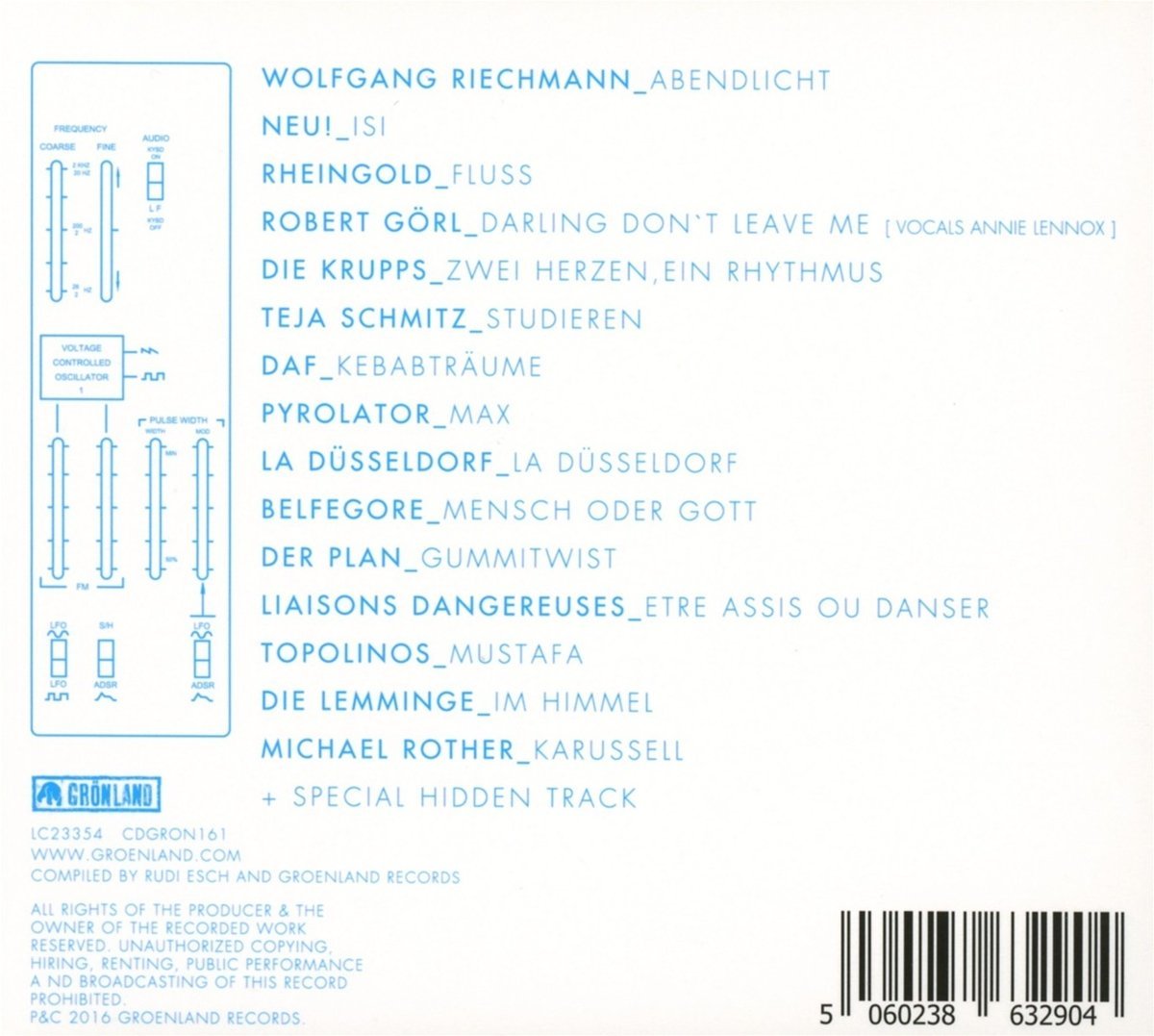




 dereksmusicblog
