GURU GURU-GURU GURU-VINYL EDITION.
GURU GURU-GURU GURU-VINYL EDITION.
By the late sixties, the members of many British and American bands were well on their way to becoming multi-millionaires. Especially groups like The Beatles and Rolling Stones. They had been at the top for the best part of a decade, and were now enjoying wealth beyond their wildest dreams.
To look after their wealth, these groups employed accountants, investment companies and tax advisers. They ensured that their clients minimised their tax liability and became even wealthier. It was changed days. No longer were the angry young men angry. Instead, they were affluent and aspirational. Where had the spirit of rock ’n’ roll gone?
It was alive and well, and living in Heidelberg, Germany. That’s where The Guru Guru Groove, who later became Guru Guru, had been formed in 1968 by drummer Mani Neumeier, bassist Uli Trepte and guitarist Eddy Naegeli. However, even The Guru Guru Groove hadn’t started off as a rock ’n’ roll band.
Instead, The Guru Guru Groove’s roots were in the German free jazz scene. They had previously worked with Swiss pianist Irène Schweizer. Drummer Mani Neumeier was also a stalwart of the German free jazz scene, and already, had won a several prizes. However, by 1968, when The Guru Guru Groove was born, its members were embracing psychedelic rock.
The three members of The Guru Guru Groove had been won over by American and British psychedelic rock. Jimi Hendrix and Franz Zappa had inspired Mani Neumeier, Uli Trepte and Eddy Naegeli. So had The Crazy World of Arthur Brown, the Rolling Stones and Pink Floyd. These bands inspired not just The Guru Guru Groove, but Amon Düül, Can and Xhol Caravan. They would play an important part in the nascent, but burgeoning German music scene of the late sixties.
Unlike the American and British rock scenes, commune culture played an important part in the German music scene at that time. The three members of The Guru Guru Groove lived in a commune in the Odenwald region, where they experimented with various hallucinogenic drugs. Many of The Guru Guru Groove’s early concerts took place in communes. Soon, though, The Guru Guru Groove were a familiar face on they university circuit.
The Guru Guru Groove organised concerts with the Socialist German Student Union. This wasn’t surprising. Like many German bands of this period, The Guru Guru Groove were politically to the left. They were essentially a socialist band, who unlike many of their American and British counterparts, had a social conscience. This became apparent during concerts.
Concerts organised by The Guru Guru Groove and the Socialist German Student Union were spectacles. The band didn’t just take to the stage, play a few songs then say their goodbyes. Instead, members of The Guru Guru Groove read political texts between the songs. Sometimes though, the concerts descended into near anarchy. This didn’t seem to matter. All that mattered was the music.
It was a fusion of free jazz, avant garde, psychedelia and rock. The three musical alchemists combined elements of these disparate genres, wherever they played. Sometimes, this included prisons, where The Guru Guru Groove introduced inmates to their mind bending sound. By then, they were well on their way to becoming one of the leading groups in the German underground scene.
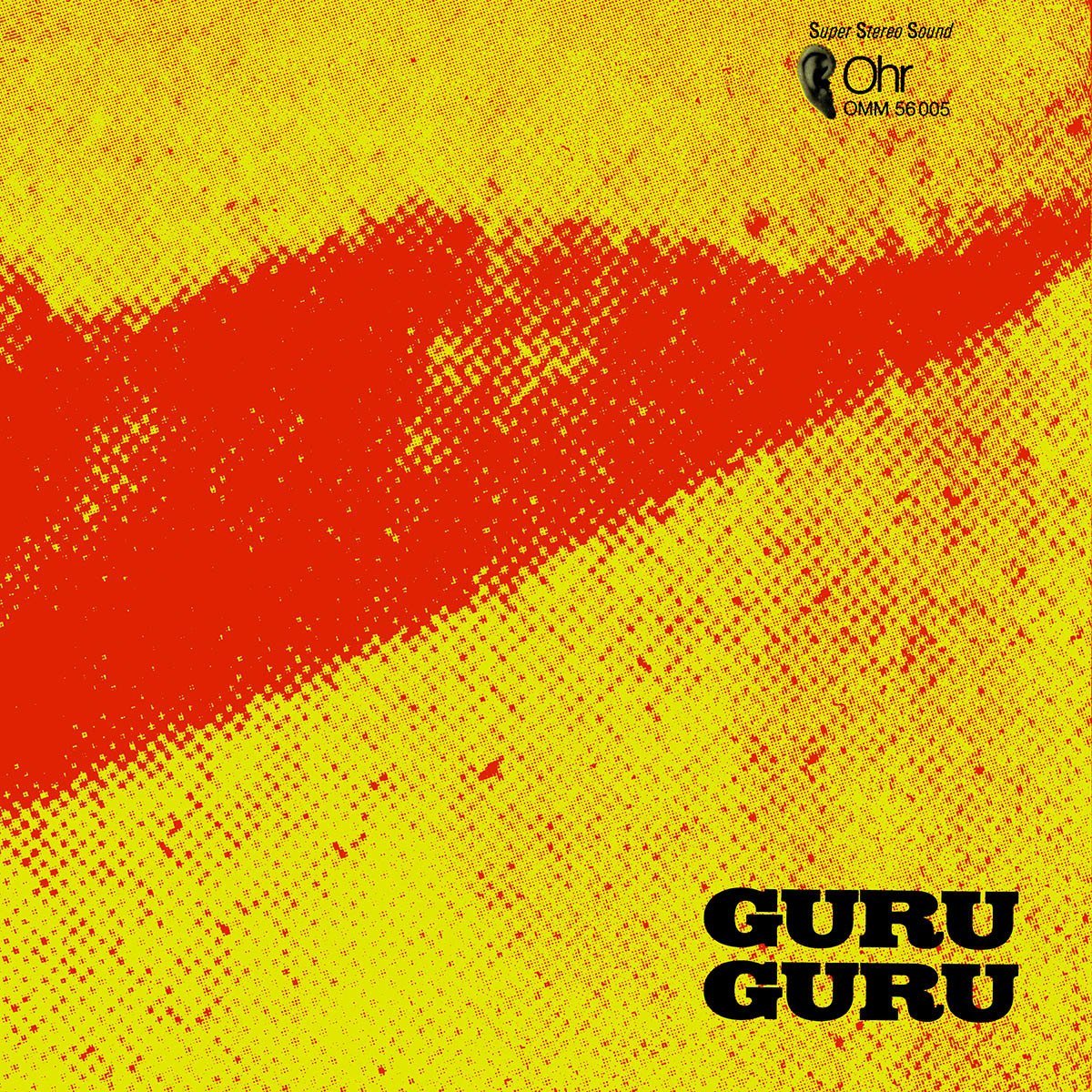
It wasn’t all smooth sailing though. Change was afoot. The Guru Guru Groove became Guru Guru, who would become one of the leading lights of German music. Guru Guru’s lineup would also change twice. Guitarist Eddy Naegeli was replaced by American Jim Kennedy. Then Ax Genrich was drafted in to replace Jim Kennedy. By then, Guru Guru’s lineup featured drummer Mani Neumeier, bassist Uli Trepte and guitarist Ax Genrich. This is regarded as the classic lineup of Guru Guru, and the one that recorded their debut album UFO in June 1970. It’s recently been reissued on vinyl by Play Loud Productions.
When Guru Guru entered the studio for the first time, Julius Schittenhelm who was a producer for the Ohr label, and his wife Doris must have realised that they were about to record what was, no ordinary band. Guru Guru were far from a power trio, featuring drums, bass and guitar.
The three members of Guru Guru unpacked, and setup a wide array in instruments and electronics. Drummer and vocalist and Neumeier added cymbals, gongs and a tape to his setup. Bassist Uli Trepte added various electronic items, including a transistor radio, mixer and intercom. New guitarist Ax Genrich added an array of effects pedals, including an Echogerät Pedal. Ax and the rest of Guru Guru were determined to record a debut album nobody would forget.
So it proved to be. Guru Guru released UFO on the Ohr label, later in 1970. It was released to almost overwhelming critical acclaim, and hailed as a groundbreaking fusion of genres and influences. These growing reviews lead to UFO selling reasonably well, and launched Guru Guru’s career. They’ve released over twenty studio album over a forty-three year period. The first of these albums was UFO.
Stone In opens UFO. Ax’s searing, Hendrix inspired psychedelic guitar cuts through the arrangement. Its effects laden sound dominates the arrangement. The rest of rhythm section are left playing supporting roles. Briefly, Mani’s improvised vocal flits in and out. By then, Guru Guru are in full flow. Mani’s urgent drums join with Uli’s bass in driving the arrangement along. They’re still not equal partners. Not when Ax is unleashing a mesmeric, spellbinding solo. His fingers fly up and down the fretboard, as Ax delivers a guitar masterclass. It’s a stunning start to UFO, which showcases the combined talented of the classic lineup of Guru Guru, as they make their recording debut.
Sci-fi sounds arrive from the distance, before Girl Call bursts into life. Ax’s bristling guitar, a buzzing bass and crashing cymbals join with pounding drums. There’s even a burst of feedback. Quickly, Ax tames the tiger, before taking centre-stage. He unleashes another scorching, psychedelic solo. Then the baton passes to Mani, who showcases his trademark drumming style. Uli’s bass matches him every step of the way. As the rhythm section power the arrangement among, the Ax man returns. Soon, he spraying blistering, machine gun licks above the rhythm section. Seamlessly, Ax combines speed and accuracy, as the musical shaman works his magic on a psychedelic, rocky opus.
Literally, Next Time See You At The Dalai Lhama explodes into life. Guru Guru dive feet first into the track, with Mani and Uli creating a hypnotic, mesmeric groove. This allows Ax to unleash another barnstorming solo. Mani’s determined not to be outdone, and powers his way round his kit. Neither is Uli. The three members of Guru Guru raise their game. Elements of Led Zeppelin and Black Sabbath shine through. So do elements of avant garde, free jazz, psychedelia and progressive rock. Guru Guru play with confidence, swaggering their way through this genre-melting soundscape.
UFO finds Guru Guru at their most inventive. They utilise the array of electronic that they took into the studio. The briefest bursts of guitar make an appearance as Guru Guru improvise. Elements of avant garde, experimental and musique concrète shine through, as Guru Guru eschew traditional song structure. What follows is a cinematic soundscape, where the listener supplies the script to what sounds like a journey. That journey is on Guru Guru’s UFO, as they take the listener to an unknown destination.
A droning sound arrives from the distance on Der LSD-Marsch, which closes UFO. Like the previous track, Guru Guru improvise. This time, they create a lysergic soundscape. It’s dark, moody, eerie and ominous. Washes of guitar shimmer, while otherworldly noises squawk. Later there’s a series of beeps, as if Guru Guru’s UFO has landed, and is about to be impounded at. After that, Guru Guru return to a much more traditional song structure. Ax’s guitar references both blues and psychedelia. Mani’s pounds and powers his drums, while Uli’s bass runs match him every step of the way. However, stealing the show is Ax, who was the final piece of the jigsaw. His addition was a masterstroke. Not to be outdone, Mani unleashes another solo where his jazz roots are apparent. Later, Guru Guru become one, as they bring to a close their debut album. It’s Ax who steps forward and delivers another psychedelic solo, as Guru Guru close UFO with a flourish, and in the process, make their mark in German musical history.
UFO was one of the best debut albums of the nascent Krautrock era. Nowadays, UFO is still regarded as a Krautrock classic, and is, without doubt, one of Guru Guru’s finest albums. That’s no surprise.
The lineup of Guru Guru that played on UFO, is regarded as the classic lineup of the band. This lineup were together until 1975, when former Kollective guitarist Jürgen “Jogi” Karpenkiel replaced Ax. However, between 1970 and 1975, Guru Guru released eight albums. This includes 1971s Hinten, 1972s Känguru and 1973 Guru Guru and Don’t Call Us, We Call You. By then, Guru Guru were on a roll, and releasing some of the finest music of the Krautrock era. This music found a wider audience that many other Krautrock bands.
That’s why, forty-three years after the release of UFO, Guru Guru released Electric Cats in 2013. This meant that they had released over forty studio and live albums. Guru Guru were still going strong after six decades and several changes in lineup. The one constant was drummer and vocalist Mani Neumeier, who nowadays, is regarded as one of the finest German drummers of his generation. He’s made a lot of music since UFO in 1970.
UFO is a timeless Krautrock classic, which features the classic lineup of Guru Guru. Seamlessly, the three musical alchemists fuse avant garde, blues rock, free jazz, musique concrète, progressive rock, psychedelia and rock. The result is a truly groundbreaking journey, where gradually, Guru Guru show their inventiveness.
Rather than dive in feet first with one of the more experimental tracks, Guru Guru showcase their considerable psychedelic talents on Stone In, Girl Call and Next Time See You At The Dalai Lhama. It’s only then that they introduce the listener to their most experimental music on UFO, and the the first half of Der LSD-Marsch. Guru Guru it seems, have been breaking the listener in gently, and educating them. Only then, are they ready to hear Guru Guru at their music inventive and innovative on two groundbreaking soundscapes. These two tracks show another side to Guru Guru, which references the group’s free jazz roots. UFO particularly, finds Guru Guru improvising, and pushing musical boundaries to their limits. In doing so, Guru Guru proved pioneers.
Even today, Guru Guru’s influence an be heard on the latest generation of Norwegian musicians. Many of them, seem to have been influenced by groups like Guru Guru, and are picking up where they left off. It seems that Guru Guru’s music lives on through a new generation of musicians; and through a new generation of music lovers who have discovered their music.
Many of those who are discovering albums like UFO, weren’t even born when the classic lineup of Guru Guru made their first tentative steps into the recording studio. They recorded what became a timeless Krautrock classic, UFO. Part of its success is down to Guru Guru’s latest recruit, Ax Genrich. His addition to Guru Guru was a masterstroke, in what was a musical marriage made in heaven UFO.
GURU GURU-GURU GURU-VINYL EDITION.
THE ALLMAN BROTHERS BAND AT FILLMORE EAST-VINYL EDITION.
THE ALLMAN BROTHERS BAND AT FILLMORE EAST-VINYL EDITION.
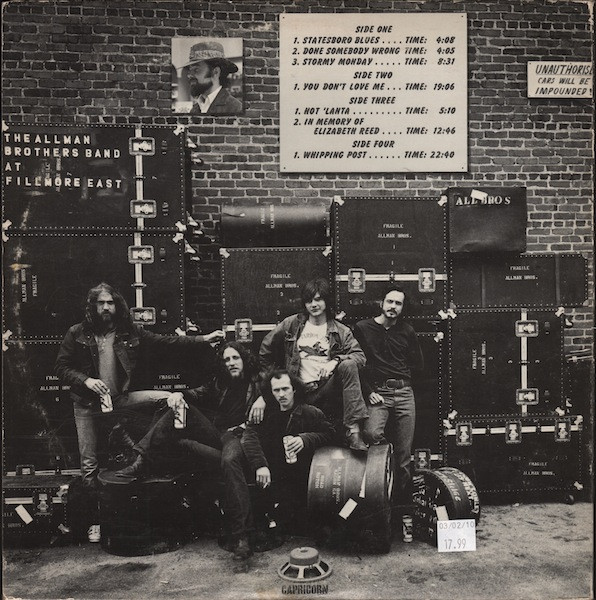
There aren’t many bands who make a commercial breakthrough with a live album. That, however, is what happened to The Allman Brothers Band. Their third album, 1971s At Fillmore East, which was recently reissued as part of Universal Music’s as six-disc box set The 1971 Fillmore East Recordings, was a game-changer. At Fillmore East reached number thirteen in the US Billboard 200 and was certified platinum, and in the process, transformed The Allman Brothers Band’ career.
Just two years previously, brothers Duane and Gregg Allman founded The Allman Brothers Band in Jacksonville, Florida. The pair had been involved in music since they attended high school in Dayton, Florida. Gregg was first to get the music bug. Then when Duane discovered music, he bought a guitar and set about mastering it. Before long, he quit high school, determined to make a living out of music. The Escorts was the first step on that road.
Not long after founding The Escorts, one of Gregg’s friend introduced him to R&B and soul. Gregg was hooked. Soon, The Escorts began to incorporate R&B and soul into their sets. Then in 1967, The Escorts made a breakthrough.
The Escorts were playing in St. Louis when a Los Angeles’ based music executive heard them. He suggested they move to Los Angeles and change their name to The Hour Glass.
Taking his advice, The Hour Glass. headed to L.A. That’s where they recorded two albums. Sadly, neither 1967s The Hour Glass, nor 1968s Power Of Love proved a commercial success. As a result, a disillusioned Duane left L.A. to make a living as a session musician. Gregg wanted to embark upon a solo career. However, the contract with Liberty meant this wasn’t possible. So Gregg stayed in L.A. For the first time in a year, the brothers were apart.
The only time the two brothers worked together, was when they produced 31st of February. They were a Florida based rock band, featuring Jacksonville Florida natives’ Scott Boyer, David Brown and Butch Trucks, who later, would play an important part in The Allman Brothers Band story. Before that, Duane was well on his way to establishing a reputation as one of the best session guitarists.
Having left Los Angeles, Duane travelled to Muscle Shoals, where he became the primary guitarist in Fame Records house band. Duane accompanied some of the biggest names in R&B and soul music, including Aretha Franklin, King Curtis and Wilson Pickett. Then after Duane suggested Wilson Pickett cover The Beatles’ Hey Jude, he was offered a five year recording contract. So, he began putting together a band.
Duane’s new band included Johnny Sandlin and Paul Hornsby. Soon, drummer Jai Johanny “Jaimoe” Johanson was recruited. Not only did Duane get a new drummer, but a place to stay. He moved into Jai’s house on the Tennessee River. Bassist Berry Oakley was next to come onboard Duane’s nascent band. Duane asked Berry to jam with his new band. However, this was very different to most bands around in the late-sixties.
Duane decided that his new band should feature two lead guitarists and two drummers. This didn’t please Rick Hall at Fame Records. He wasn’t impressed with the way Duane’s new band were approaching the recording sessions. So, Rick Hall offered Duane’s group’s five year contract to Jerry Wexler of Atlantic Records and Phil Walden, who formerly had managed Otis Redding. Phil was looking for rock groups to manage. Duane’s new band fitted the bill. Especially when Rick Hall was only asking $10,000 for their contract. Little did Rick Hall realise he’d sold what would’ve been his most successful band for $10,000.
Disillusioned with being a session guitarist at Fame Records, and playing the “house sound” day in, day out, Duane moved with Jaimoe to Jacksonville in early March 1969. As soon as he was settled, Duane sent out an invitation to local musicians that if they wanted to join his jam sessions, they were welcome to do so.
These sessions resulted in Dickey Betts of The Second Coming becoming The Allman Brothers Band second lead guitarist. Butch Trucks, who had been a member of 31st Of February, who Duane co-produced less than a year earlier, became The Allman Brothers Band’ second drummer. Keyboardist Reese Wynans briefly joined the band. He was however, replaced by Gregg Allman on 26th March 1969, who could also play keyboards. After a few months where the band’s lineup is best described as fluid, this was the lineup of Duane Allman’s yet unnamed band that moved to Macon, Georgia.
The reason for the move to Macon, was that’s where Phil Walden was going to base his Capricorn Records’ label. It was in Macon that The Allman Brothers Band met two of their most loyal lieutenants, roadies ike Callahan and Joseph “Red Dog” Campbell, a former disabled Vietnam veteran. Red Dog help fund the band by giving them his disability checks. Meanwhile, The Allman Brothers Band were ‘bonding.’
These ‘bonding’ sessions took place at The Allman Brothers Band’ self-styled Hippie Crash Pad and the Rose Hill Cemetery. That’s where they consumed copious amounts of psychedelic drugs, wrote their early songs and rehearsed. Then on the 30th and 31st May 1969, The Allman Brothers Band made their debut, opening for The Velvet Underground. This was the start of the rise and rise of The Allman Brothers Band.
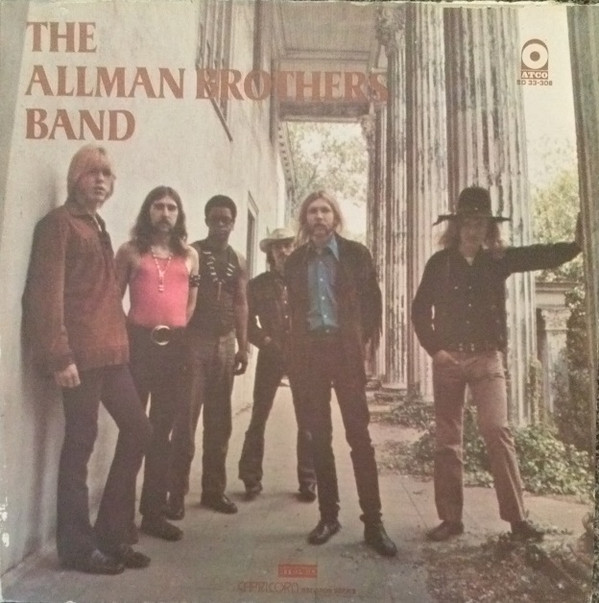
The Allman Brothers Band.
In August 1969, flew to New York, where they were meant to record their eponymous debut album, The Allman Brothers Band Band with Tom Dowd. Unfortunately, the man who had produced Aretha Franklin, Cream and John Coltrane was double booked. Finding someone of the the calibre of Tom Dowd was almost impossible. Adrian Barber, an Atlantic Records’ engineer was given the job of producing The Allman Brothers Band Band Band. This was his production debut. For a new and up-and-coming band like The Allman Brothers Band, this was a big risk.
For The Allman Brothers Band Band, Greg Allman, who was now the principal songwriter, had written five songs. The other two tracks were cover versions. This included The Spencer Davis Group’s Don’t Want You No More and Muddy Water’s Trouble No More. These seven songs were recorded between the 3rd and 12th September 1969. Less than two months later, The Allman Brothers Band Band was released.
On November 4th 1969, The Allman Brothers Band Band was released, reaching just number 188 in the US Billboard 200. The Allman Brothers Band Band had sold just 35,000 copies. This was disappointing. Especially considering the critics response to The Allman Brothers Band Band.
Critics gave The Allman Brothers Band Band positive reviews. They were won over by this unique fusion of blues, blues rock and rock. The Allman Brothers Band Band critics forecasted, had a bright future in front of them. How right they were. Southern Rock was about to be born, and The Allman Brothers Band were its founding fthers.
Idlewild South.
Having failed to secure the services of Tom Dowd first time round, The Allman Brothers Band got their man for Idlewild South, their sophomore album. It was recorded between February and July 1970, while The Allman Brothers Band were on an extensive tour. As a result, three different studios were used to record Idlewild South.
Recording of Idlewild South took place at three studios, including Phil Walden’s new Capricorn Studios in Macon. Then as the tour continued, other sessions took place at Criteria Studio, Miami, and Regent Sound Studios in New York. That’s where Tom Dowd produced Idlewild South, The Allman Brothers Band sophomore album.
Idlewild South featured seven tracks. Just like their debut album The Allman Brothers Band Band, it was a mixture of original songs and cover versions. Gregg wrote Don’t Keep Me Wonderin,’ Please Call Home and Leave My Blues at Home. He also cowrote Midnight Rider with Robert Payne. Dickey Betts contributed Revival and In Memory of Elizabeth Reed. The only cover version was Willie Dixon’ blues’ classic Hoochie Coochie Man. These seven tracks became Idlewild South, which earlier this year, Rolling Stone called one of the forty most groundbreaking albums of all time.
On Idlewood South, Southern Rock was born. The Allman Brothers Band were its founding fathers. Only in later years, did critics and cultural commentators realise Idlewood South’s significance. On its release on 23rd September 1970, Idlewood South was released to critical acclaim. A new genre had just been born, so Idlewood South was a truly groundbreaking album. This was reflected in the record sales. Idlewood South reached number thirty-eight on the US Billboard 200. The Allman Brothers Band were on their way.
Atlantic Records, realised this. They encouraged The Allman Brothers Band to move to Los Angeles. Despite telling The Allman Brothers Band they could be one of the biggest groups of the seventies, they were content to stay in Macon, Georgia. However, within a year, The Allman Brothers Band’ lives were transformed.
At Fillmore East.
In between the recording of Idlewild South and At Fillmore East, Duane Allman had worked with Eric Clapton on his side project. Derek and The Dominoes.
Duane, who had been a huge fan of Cream, had been asked to work with Eric Clapton on his Derek and The Dominoes’ album, Layla and Other Assorted Love Songs. For Duane, this was a no-brainer. He met Eric Clapton after a show, and the pair jammed all night. Straight away, it became clear the pair were musical soul mates.
During the recording of Layla and Other Assorted Love Songs Duane and Eric Clapton became firm friends. Once the recording was completed, a reinvigorated Duane, returned to The Allman Brothers Band. All wasn’t well though.
For much 1970, The Allman Brothers Band toured America. At first, they travelled in a Ford Econoline van. Given how long The Allman Brothers Band tour was, this wasn’t practical. They would play over 300 concerts during 1970. So, they bought a Winnebago, which they nicknamed the Wind Bag. However, the first cracks were showing.
Some members of The Allman Brothers Band were struggling with drug addiction. Money was so tight, that the band were struggling to make ends meet. Things got so bad, that one night, when a promoter failed to pay the band, tour manager Twiggs Lyndon stabbed and killed him. For The Allman Brothers Band things weren’t looking good. Then their fortunes improved during 1971.
Legendary promote Bill Graham had always been a fan of The Allman Brothers Band. They first played the Fillmore East in 1969, when they opened for Blood, Sweat and Tears. Then in 1970, The Allman Brothers Band opened for Buddy Guy and B.B. King at the Fillmore West in San Francisco. After this, they opened for the Grateful Dead at the Fillmore East. These concerts were crucial in establishing The Allman Brothers Band reputation as one of the best up-and-coming bands. By 1971, however, The Allman Brothers Band were the finished article. They were ready to make the next step.
Bill Graham would play a big part in the rise and rise of The Allman Brothers Band. This began when Butch Trucks mentioned to Bill Graham that The Allman Brothers Band were frustrated recording studio albums. Their next album, The Allman Brothers Band hoped, would be a live album. This would allow The Allman Brothers Band to stretch their legs, as they jammed and improvised. So, Bill Graham made this live album happen. It became At Fillmore East, which will be reissued on vinyl as a double album by UMC on 22nd July 2016.
A contract between The Allman Brothers Band and Bill Graham was drawn up. Bill Graham proposed that on the nights of March 11th, 12th and 13th 1971. For each of the five concerts, The Allman Brothers Band would be paid just $1,250. However, there’s a reason for that. The Allman Brothers Band weren’t the headline act.
The bill also featured Johnny Winter and The Elvin Bishop Group. The headline act was Johnny Winter. However, on the final night, The Allman Brothers Band would close the show. With the contracts signed, The Allman Brothers Band brought Tom Dowd onboard to produce At Fillmore East.
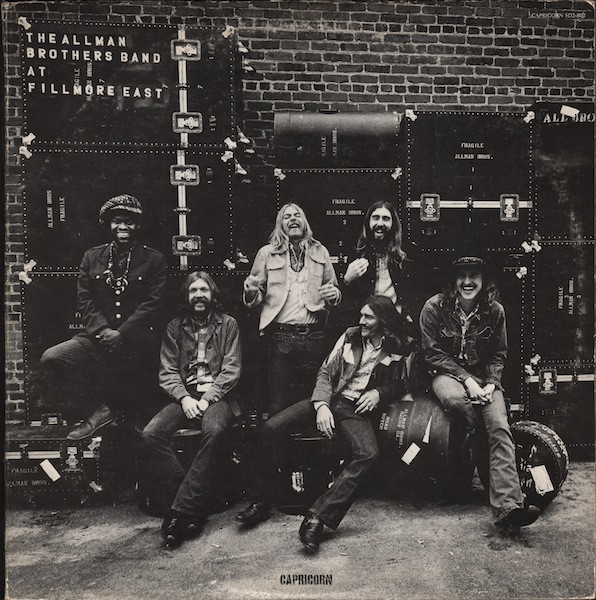
Over three nights, The Allman Brothers Band combined their trademark brand of blues, country, jazz and rock. This was something that no other band were doing. The Allman Brothers Band were musical pioneers. That’s apparent from the moment they walked onstage At Fillmore East and work their way through an eclectic set.
Over three nights, The Allman Brothers Band took to the stage five times. Each night, they played a set the featured between six and ten songs. Seven of these songs feature on the reissue of At Fillmore East.
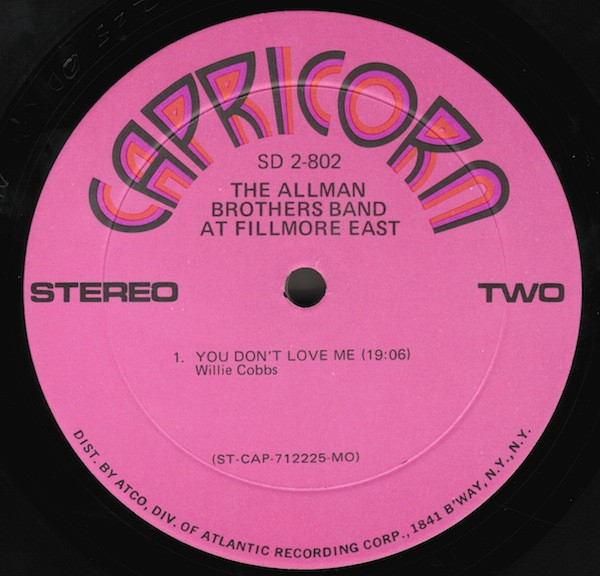
Each night, the set-list At Fillmore East changed slightly. Some songs, however, were staples of The Allman Brothers Band’s sets. Among them were Blind Willie McTell’s Statesboro Blues, Muddy Waters’ Trouble No More, T-Bone Walker’s Stormy Monday, Wille Cobbs’ Don’t You Love Me and Elmore James’ Done Somebody Wrong. However, it wasn’t just cover versions The Allman Brothers Band’ played At Fillmore East.
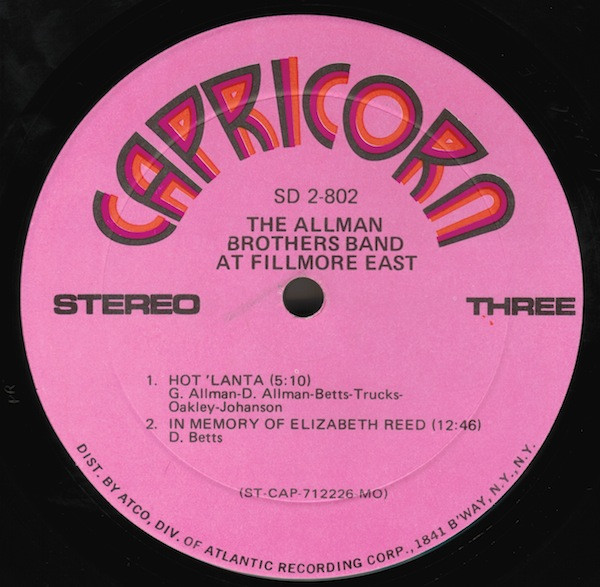
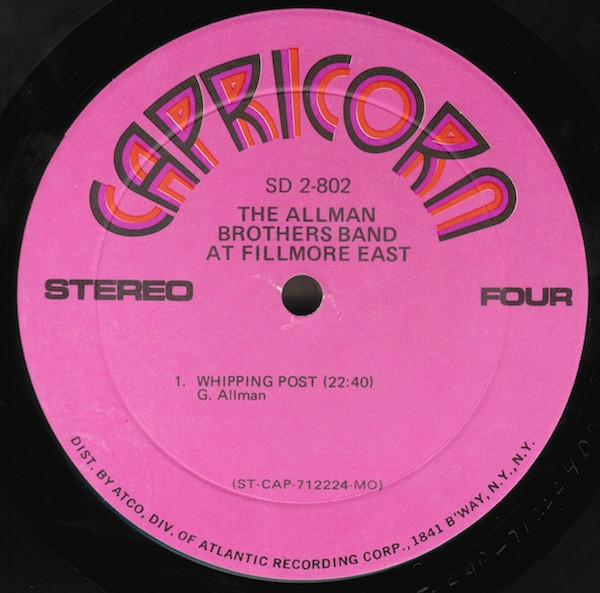
The Allman Brothers Band featured some talented songwriters. Their songwriter-in-chief was Greg Allman. He penned Don’t Keep Me Wonderin’ and Whipping Post. Dickey Betts contributed In Memory of Elizabeth Reed and Hot ‘Lanta was credited to The Allman Brothers Band. Each of these songs were showcased during the five concerts At Fillmore East, where The Allman Brothers Band’ fortunes were transformed.
Over three nights and five concerts, the founding fathers of Southern Rock, The Allman Brothers Band went from contenders to title-holders. They blew away Johnny Bishop and The Elvin Bishop Band. The Fillmore East’s audiences only had ears for The Allman Brothers Band, as seamlessly the fused musical genres. Elements of blues, country, jazz and rock melted into one, as The Allman Brothers Band won friends and influenced people. No wonder.
For the three nights At Fillmore East, The Allman Brothers Band were at the peak of their powers. Over the past two years, they had honed their sound. By March 1971, this group of experienced and talented musicians were playing as one. Although they had only been together since 1969, The Allman Brothers Band had played 300 concerts during 1970. So, they were much more experienced, practiced and talented than similar bands. What also helped is that in Duane Allman, they had a guitarist who could have been one of the greatest guitarists in the history of rock music. Dickey Betts, The Allman Brothers other lead guitarist, was the perfect foil for Duane. They brought out the best in each other, and played an important part in the Live At Fillmore’s success. Before that, Jerry Wexler of Atlantic Records had to be convinced to release At Fillmore East.
When Phil Walden of Capricorn Records first spoke to Jerry Wexler about releasing At Fillmore East as a double album, he dismissed the idea. He asked why The Allman Brothers Band wanted to release what was essentially an album of jams? Phil Walden, The Allman Brothers Band’s manager explained that the band didn’t see themselves as a studio band. No. They were more of a live band. Eventually, Jerry Wexler agreed to release At Fillmore East as a live album. There was a but though. At Fillmore East should be sold at the price of a single album. For The Allman Brothers Band, this would prove expensive.
When At Fillmore East was released on 6th July 1971, it was to overwhelming critical acclaim. Critics hailed Live At Fillmore East The Allman Brothers Band’s finest hour. It was much more representative of The Allman Brothers Band. In some ways, their two previous studio albums didn’t do The Allman Brothers Band justice. At Fillmore East was Southern Rock at its finest, taking diversions via blues, country, jazz and rock. Record buyers agreed.
On its release At Fillmore East reached number thirteen in the US Billboard 200 and was certified platinum. This transformed The Allman Brothers Band’s career. Sadly, there was a twist in the tale.
Riding high on the commercial success of At Fillmore East, The Allman Brothers Band were no longer struggling to make ends meet. They had money to burn. This wasn’t good for a band with a drug problem. By October 1971, having completed their third studio album, Eat The Peach, Duane Allman, Berry Oakley, and roadies Robert Payne and Joseph “Red Dog” Campbell realised they had to do something about their drug problem. So they checked into the Linwood-Bryant Hospital to undergo rehab. That should’ve helped the situation. Sadly, for Duane it didn’t.
On 29th October 1971, Duane Allman was returning to the Linwood-Bryant Hospital from a trip to Macon. He was driving his motorbike at high speed when, he swerved to avoid hitting a flatbed lorry. This resulted in Duane hitting the back of crane. He was thrown off his bike. It then landed on top of him. With the motorbike on top of him, Duane skidded ninety feet along the road, all the time, the motorbike was crushing his internal organs. Despite being rushed to hospital, Duane Allman was pronounced dead a couple of hours later. The Allman Brothers Band founder and guitarist was just twenty-four.
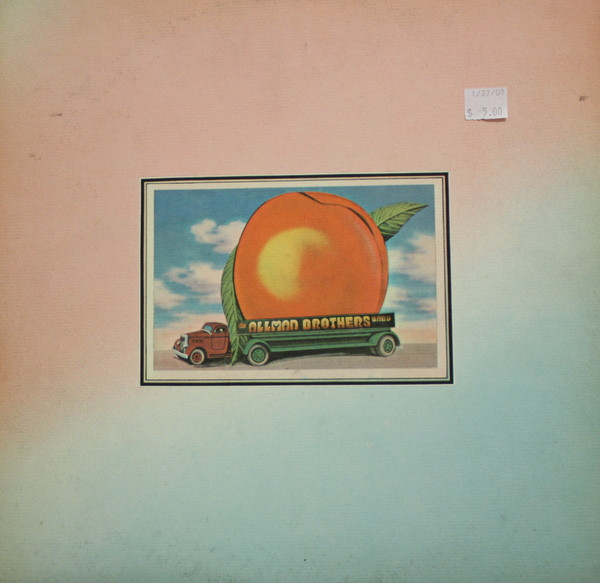
After the death of Duane Allman, The Allman Brothers Band decided to continue as a quintet. The first thing the five members of The Allman Brothers Band had to do, was finish Eat A Peach, which would become The Allman Brothers Band’s third studio album.
Eat A Peach.
When Duane died, The Allman Brothers Band had just finished recording Eat A Peach. It was unlike any of their three previous albums.
On Eat The Peach, songs recorded in Criteria Studio, with producer Tom, between September and December 1971 sat side-by-side with live recordings, including Mountain Jam, a thirty-four minute jam that took up sides two and four of Eat The Peach. This ten track album became The Allman Brothers Band’s most successful album.
On its release on February 12th 1972, commercial success and critical acclaim accompanied Eat The Peach. Critics hailed the album a Southern Rock classic. Record buyers turned Eat The Peach into a million selling album, when it reached number four in the US Billboard 200. This resulted in another platinum disc for The Allman Brothers Band. For a band in the throes of drug addiction, this was quite an achievement.
After the release of Eat The Peach, The Allman Brothers Band bought 423 acres of land in Juliette, Georgia. Nicknaming it The Farm, this was a dream come true for bassist Berry Oakley. He had long talked of the band living communally. Sadly, the dream didn’t last long.
Berry Oakley missing his fallen comrade, started drink heavily and take excessive quantities of drugs. He lost weight, direction and ambition. Then on 11th November 1972, Berry Oakley was looking forward to leading a jam session the next day. However, he got high and drunk. Then he decided to go for a ride on his motorbike. Three blocks from where Duane Allman lost his life, Berry Oakley’s motorbike hit the side of a bus. Declining hospital treatment, Berry Oakley returned home, became delirious and died from a traumatic brain injury. Berry Oakley was buried next to his fallen comrade Duane Allman. His dream was over.
For The Allman Brothers Band, Eat The Peach marked the end of an era. It was the last time the original and classic lineup of The Allman Brothers Band can be heard. Although they continued to release albums the commercial success soon dried up.
1973s Brothers and Sisters reached number one on the US Billboard 200, and was certified platinum. The followup Win, Lose Or Draw reached number five on the US Billboard 200, and was certified gold. After that, only 1979s Enlightened Rogues was certified gold. By then, The Allman Brothers Band were in what seemed like a perpetual state of chaos.
Just like the early days, drug abuse was at the heart of the problem. That was nearly the end of the commercial success. Most of The Allman Brothers Band’s albums failed to scale the heady heights of At Fillmore East, Eat The Peach and Brothers and Sisters. However, when The Allman Brothers Band made a comeback as the nineties dawned, 1994s Where It All Begins was certified gold. That was the end of The Allman Brothers Band’s commercial success. Where it all began was with their landmark live album At Fillmore East.
Since its release in July 1971, At Fillmore East is regarded as one of the greatest live albums ever. Rolling Stone magazine included At Fillmore East in its 500 greatest albums of all time. That is quite an accolade. Not as much as the US Congress choosing At Fillmore East as one of city albums to be added to the National Recording Registry in 2004. By then, At Fillmore East had attained classic status, and is perceived as part of any self-respecting record collection.
For anyone who has yet to discover this classic album, then now is the chance to do so. UMC are reissuing a newly remastered version of At Fillmore East. This however, is is no ordinary remaster. Instead, At Filmore East has been remastered by Kevin Reeves who remastered Idlewild South in 2015. Again, the album is transferred to 192kHz/24-bit audio, and then cut on copper plates using Abbey Road Mastering’s Direct Metal Mastering lathe. At Fillmore East is then pressed onto heavyweight vinyl. The result is a welcome reissue of a classic live album, At Fillmore East, which will allows newcomer to The Allman Brothers Band experience the original album in all its glory.
At Fillmore East is an introduction to the founding fathers of Southern Rock, The Allman Brothers Band at the peak of their power. Over the three night in March 1971, The Allman Brothers Band played five concerts At Fillmore East. These groundbreaking concerts transformed The Allman Brothers Band’s career, and turned them into the Kings of Southern Rock.
THE ALLMAN BROTHERS BAND AT FILLMORE EAST-VINYL EDITION.

CAMERA-PHANTOM OF LIBERTY.
CAMERA-PHANTOM OF LIBERTY.
Ever since the late-sixties, Berlin has been home to some of the most innovative bands in German musical history. That was the case from the time when all the freelance musicians in the city found their way to Zodiak Free Arts Lab, in West Berlin. That was a meeting place for members of Can, Tangerine Dream, Ash Ra, Cluster and Neu! Some of these bands even honed their skills on the stage at the Zodiak Free Arts Lab; before embarking upon a musical journey that saw each group release several classic albums. Since then, Berlin’s music scene has always been rich and diverse.
So much so, musicians from all over Germany made their way to Berlin. They saw the city as Germany’s cultural capital. That is still the case today.
Nowadays, musicians travel from all over Europe to Berlin. They’re determined to tap into the city’s cultural capital, in an attempt to further their career. What many newcomers to Berlin discover, is a city with a thriving music industry.
Many record companies have chosen Berlin as their headquarters. Similarly, many recording and mastering studios are housed in Berlin. This makes the city the perfect place to form a group. That’s what three young Berlin based musicians decided to do.
Franz Bargmann, Michael Drummer and Timm Brockmann founded Neo-Krautrock group Camera. They were soon making an impression on Berliners.
Especially given Camera’s propensity for putting on impromptu gigs in public places. Camera would turn up, plug in their instruments and play. This got the attention of Berliners. Soon, they were talking about this new band, Camera, and their fondness for what were being called “guerrilla gigs.” Their pièce de résistance came at the after-show party for the German Film Prize. Cool as a cucumber, Camera turned up, set their equipment up and got the party started. All was going well until one of the security guards twigged that Camera hadn’t been booked. However, this situationist event resulted in publicity aplenty for Camera.
Critics and cultural commentators drew comparisons with the original Krautrockers. This was the type of stunt Amon Duul, Faust and Neu! would’ve pulled forty years earlier. One of the musicians responsible for similar situationist events was watching with interest.
Michael Rother the former guitarist in Kraftwerk, Neu! and Harmonia had played plenty of similar impromptu gigs. He had a similar rebellious steak, and admired Camera for this…and of course their music.
So much so, that when Michael Rother was playing live, he asked Camera to open for him. Later, when Michael Rother was reunited with former Harmonia bandmate Dieter Moebius, Camera and Admiral vocalist Shaun Mulrooney were asked to share the stage with them. They took to the stage at the HBC in Berlin, on Ooctober 22nd, 2011. That night, Krautrock’s past and present became one. Since then, Camera’s star has been in the ascendancy.
Now, Camera are regarded as one of the leading lights of the Neo-Krautrock scene. Camera’s 2012 debut album Radiate was released to critical acclaim. Critics compared Camera to Krautrock legends Neu! and La Düsseldorf. This was high praise indeed.
Fittingly, given the comparison to Neu!, Camera Live at HBC was released later in 2012. It featured a trio songs Camera recorded with Michael Rother and Dieter Moebius of Harmonia. These songs had been recorded for posterity, and were a reminder of the night two generations of Krautrockers shared the stage. That night had been a meeting of musical minds. However, this was just another part of Camera’s musical adventure.
The next part of this adventure took place in 2014, when Camera released their sophomore album Remember I Was Carbon Dioxide. I is best described as a genre-melting album. Krautrock was merely a starting point for Camera, as they continually flitted between, and fused musical influences and genres. Just like Radiate, critical acclaimed accompanied the release of Remember I Was Carbon Dioxide. By then, Camera’s music was reaching a much wider interest.
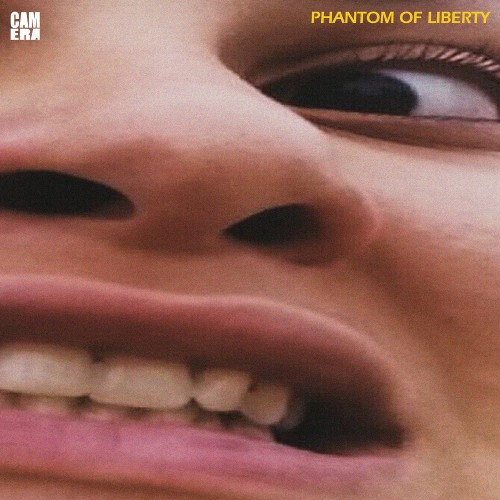
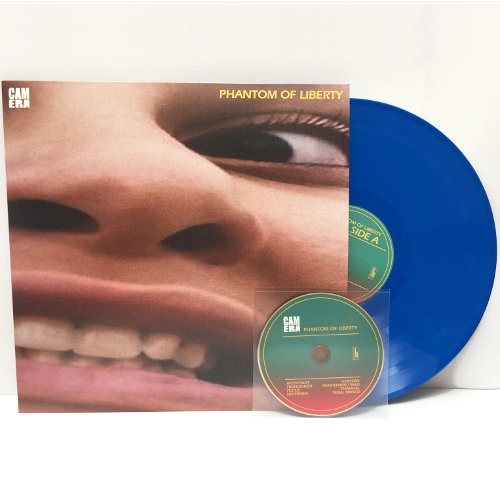
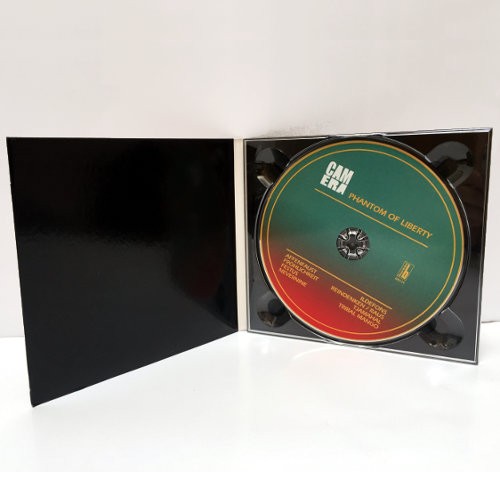
The whole Neo-Krautrock movement had grown in popularity. Similarly, there was a resurgence of interest in Krautrock. Suddenly, a new generation were discovering the groups that had influenced Camera on their first two albums, Radiate and Remember I Was Carbon Dioxide. However, soon, two will become three when Camera release their third studio album Phantom Of Liberty. It will be released by Bureau B on 5th of August 2016, and marks the welcome return of Camera.
For Phantom Of Liberty, the three members of Camera wrote eight new tracks. They were recorded at various sessions during 2015 and 2016. The studio chosen was Kellerloch at Malzfabrik, Berlin. This was where Remember I Was Carbon Dioxide had been recorded. So drummer Michael Drummer, guitarist Franz Bargmann and keyboardist Timm Brockmann were returning to familiar surroundings. Producing Phantom Of Liberty with Camera, was Steffen Kahles. Eventually, the eight tracks were completed earlier in 2016. This left just two things to do.
The first was to mix Phantom Of Liberty. Emanuele Baratto had been chosen to do so. He mixed Phantom Of Liberty at Big Snuff Studio, in Berlin. That was where he mastered Phantom Of Liberty. Only then was Phantom Of Liberty ready for Camera to release.
Affenfaust opens Phantom Of Liberty. Squelchy, acidic synths combine with relentless drums and a distant, chiming, stadium guitar. They create a hypnotic, mesmeric backdrop. That’s until synths make an appearance, adding first light, then darkness and drama. However, at the heart of the arrangement are the Klaus Dinger inspired drums. They’re pounded and punished and occasionally, cymbals crash. Meanwhile, washes of futuristic, space age synths emerge from the arrangement. Later, the tempo begins to drop, and nearly grinds to a halt. Futuristic synths join radio chatter and rinsing cymbals as the arrangement meanders along, still sharing a myriad of subtleties, surprises and secrets. By then, the arrangement has taken on a cinematic quality, and sounds as if it belongs on a sci-fi movie.
The keyboards that open Fröhlichkeit wouldn’t sound out of place on a seventies progressive rock album. They’re played quickly and accurately, before the drums power the arrangement along. It’s reminiscent of the classic Krautrock of Can and Neu! There’s the same mesmeric quality; which is interrupted by occasional flourishes and drum rolls. Soon, Camera are playing as one. Banks of keyboards buzz and add the melody. They veer between cinematic, futuristic, robotic, shrill and occasionally elegiac and ethereal. Sometimes, it’s as if Camera are providing the soundtrack to a journey, a la Kraftwerk’s Autobahn or Trans Europe Express. During this memorable and melodic journey, Camera combine elements of Krautrock, electronica and progressive rock.
Straight away, here’s an Eastern influence to Festus, as the arrangement meanders along. Lysergic drones join drums and percussion. Soon, a scorching, blistering guitar cuts through the arrangement. It doesn’t overpower the other instruments though. No. Instead, a bass prowls, while a myriad of otherworldly lysergic sound flit in and out this soundscape. It’s sculpted by Camera. Nothing is as it seems. Effects have been added to many instruments. Playing a leading role in this fusion of avant-garde, improv, Krautrock, rock and Eastern sounds are the drums, percussion, guitar and bass. They play their part in what’s a captivating and lysergic track that seems to have has been influenced by the music of the sixties and seventies.
Nevernine literally explodes into life. Effects have been used to shred Nirvana-esque guitars and keyboards. They’re hidden behind a fuzzy mask while the arrangement unfolds at breakneck speed. Powering the arrangement along are thunderous drums. Meanwhile, panning is used on the rest of the arrangement. Then some of the fuzzy mask is lifted. Soon, volcanic keyboards are playing a leading role, as they bubble and threaten to explode. The guitar is played with speed and accuracy, adding a rocky hue. By then, the keyboards sound as if they belong in a cathedral. They’re soon overshadowed by a machine gun guitar. It bristles and feedbacks, before Camera slow things down. As the drums drop out, it’s just the keyboards and thoughtful guitar than remain. Then when just the keyboards remain, this magical musical mystery tour is totally transformed, and meanders along to its genre-melting conclusion.
Deliberately and dramatically, keyboards play on Ildefons. Soon, though, it’s all change, as drums crack and lysergic synths join a scorching guitar solo. It cuts through the arrangement like a flamethrower. Meanwhile the bass locks into a groove with the mesmeric drums. Still the blistering guitar is playing a starring role. That’s until the space-age keyboards make a brief appearance. Then the baton passes to the guitar, before the ghostly arrangement begins to dissipate. All that’s left is the memory of Camera at their most inventive, imaginative and innovative. That’s why they’re regarded as one of the leading lights of the Neo-Krautrock scene.
Reindenken/Raus opens with two samples. Someone walks along a road, and then a car starts. This is a homage to Kraftwerk’s Autobahn. Meanwhile, a guitar is plucked as keyboards play. Soon, though, the samples drop out. This is the signal for the rhythm section and futuristic synths to combine. They jam, playing with a fluidity. As guitars wah-wah, the synths follow in their footsteps, adding an atmospheric sci-fi sound. This harks back to the synth sound found on many seventies’ Krautrock, Berlin School and progressive rock albums. Later, synthetic harmonies add an elements of darkness and drama. By then, the arrangement meanders along, and its cinematic sound invites the listener to let their imagination run riot. Alas the track is almost over. That’s when the tempo increases, and synths chatter as if sending out a message. Maybe that message is that Reindenken/Raus is the highlight of Phantom Of Liberty?
Synths are panned on Tjamahal before drums provide a stomping beat. Soon, synth glide across the arrangement, which is a mass of bristling, shredded guitar, synths and relentless drums. They drive the arrangement along as synths buzz and beep. Still, the guitar has been mangled by effects. This works, and it plays a part in this stomping arrangement. By then, the synths veer between glacial and elegiac, to grinding and buzzing, to a futuristic sound. Along with the drums, they play starring roles in this irresistible, stomping, swaggering track.
Tribal Mango closes Phantom Of Liberty. Ethereal describes the arrangement, as drones carry the elegiac harmonies along. A dubby vocal sounds as if it’s carrying out some quasi religious ceremony. Then at 1.34 it’s all change. The bass is joined by synths and a spoken word sample from the Apollo space missions. Soon, it’s joined by the rhythm section and a Hendrix inspired guitar. Effects have been used heavily, and sometimes the guitar feedbacks. Other times, it chimes, rings out and wah-wahs, joining the hypnotic, relentless drums. Elegiac synths are added, while the sample chatters away. A blistering guitar solo is unleashed, and sits atop the rest of the arrangement. It’s akin to a jam, with the members of Camera showcasing their versatility, talent and improvisational skills. Everyone plays their part as they keep one of the highlights of Phantom Of Liberty until last.
Two years after the release of their sophomore album Remember I Was Carbon Dioxide in 2014, Camera return with the finest album of their career, Phantom Of Liberty. It’ll be released by Bureau B on 5th August 2016, and finds the Neo-Krautrockers release a career-defining album.
They take as their starting point Krautrock, and add to that, elements of avant-garde, Berlin School, electronica, improv, progressive rock, psychedelia and rock. Seamlessly, Camera switch between, and fuse musical genres within the one track. Mostly, though, the hypnotic, relentless drums power the arrangement along. They’re reminiscent of Can, Neu and La Düsseldorf. Often, the drums sound as if they’ve been inspired by Klaus Dinger. Sometimes, the guitars have a Michael Rother influence. Apart from that, the influences are varied.
Among the groups to influence Camera, are Krautrock legends like Can, Neu, Krafttwerk and La Düsseldorf. That’s apart from on two tracks. Tthe drums on Tjamahal sound as if they belong on a Led Zeppelin album. They’ve a much heavier sound, and are not unlike what members of Led Zeppelin affectionately referred to as John Bonham’s hooligan drum sound. Then on Festus, the drums are much more understated. Mostly, though, the drums are to the fore on Phantom Of Liberty. However, it’s apparent that other artists and groups seem to have influenced Camera.
This includes Jimi Hendrix. He seems to have influenced guitarist Franz Bargmann, as he unleashes effects laden solos. Some of the keyboard sounds on Phantom Of Liberty wouldn’t sound out of place on seventies progressive rock albums. The keyboards play an important part in the success and sound of Phantom Of Liberty.
The keyboards are akin to a sonic pallet, which is used throughout the album. Often, the keyboards produce futuristic, space-age sounds. Other times, they produce ghostly, ethereal and elegiac sounds. This variety of sounds are part of Camera’s carefully constructed musical tapestry, Phantom Of Liberty.
Camera spent part of 2015 and 2016 recording, honing and completing Phantom Of Liberty. All Camera’s effort has been worthwhile. Not only have they recorded a career-defining album, but what’s without doubt, one of the finest Neo-Krautrock albums of 2016.
CAMERA-PHANTOM OF LIBERTY.

RICK REDBEARD-AWAKE UNTO.
RICK REDBEARD-AWAKE UNTO.
Music has changed almost beyond recognition over the last fifteen years. One of the biggest changes is how long it takes an artist to release an album. No longer do artists release an album each year. That was the norm during the late-sixties and seventies. Indeed, some artists released two albums during a calendar year. A few even released three albums. Nowadays, we’re lucky if an artist releases an album every other year.
Suddenly, artists are spending two or three albums on album. Some artists spend longer on their supposed Magnus Opus, only to discover that music has changed and the album is no longer relevant. That has happened many times. Not to Rick Anthony, who recently, has been one of the hardest working musicians in Scottish music.
Many people will know Rick Anthony as the lead singer of Scottish indie rockers, The Phantom Band. They were formed in 2002, and after numerous name changes, settled upon The Phantom Band. However, it wasn’t until 2009 that The Phantom Band released their debut album.
Checkmate Savage.
By then, The Phantom Band had spent years honing their sound, and building a following. This they did the old fashioned way, touring the length and breadth of the country. However, by 2008, The Phantom Band were more than ready to record their debut album.
Recording of what became Checkmate Savage took place at Chem 19 studios in Blantyre, where The Phantom Band and producer Paul Savage got to work. The sessions began in early 2008, and over a period of several months, Checkmate Savage began to take shape. Once it was complete, the album was mixed at Franz Ferdinand’s Glasgow studio. Only the was Checkmate Savage ready for release.
Critical acclaim accompanied the release of The Phantom Band’s genre-melting debut album, Checkmate Savage. It was released on Chemikal Underground in January 2009, and reached number 181 in the UK album charts. Not only had The Phantom Band arrived, but a great future was forecast for them.
That proved to be the case. When The Phantom Band toured Savage Amusement, each night, they were playing to sell out crowds across Germany, France, Ireland, Belgium, the Netherlands and Switzerland. The Phantom Band were enjoying the fruits of seven years hard work. However, they couldn’t rest on their laurels.
The Words.
So it was no surprise that The Phantom Band didn’t waste time, and returned to studio in early 2010. This time, the sessions didn’t run so smoothly. Fortunately, producer Paul Savage was able to steer The Phantom Band through these troubled waters. They weren’t the first, and would be the last band to experience the difficult second album. This was merely a blip.
When The Phantom Band released their sophomore The Words followed in October 2010, praise and plaudits accompanied another swaggering album of rock. Suddenly, The Phantom Band’s star was in the ascendancy.
Once The Words was released, The Phantom Band’s original drummer Damien Tonner left the band. After this, The Phantom Band headed out on tour, to spread their musical message. The tour began in early 2011, and lasted right through the summer months. After playing two shows in Glasgow in December 2011, The Phantom Band decided to enjoy some down time. This allowed each member of The Phantom Band to pursue solo projects.
No Selfish Heart.
This was when Rick Anthony decided to finish his solo album. He had been working on it since 2005. To finish what became No Selfish Heart, Rick didn’t head to one of Glasgow’s top studios. Far from it.
Instead, Rick eschewed Glasgow’s top recording studios, and took a different approach to recording No Selfish Heart. He decided split his time between his between two places. This included his flat in Glasgow’s West End, in the city’s artistic quarter and his parent’s house in rural Aberdeenshire. From a technical viewpoint, this isn’t ideal.
Neither his flat, nor his parents house had the equipment that Chem 19 had. So this meant that his album would have a much more lo-fi and intimate sound. Listen carefully and you can hear imperfections like a piano stool creaking. However, the intimate and familiar surroundings brought out the best in Rick, and allowed an outpouring of emotion. Rick’s sensitive and pensive side shawn through. Eventually, after eight years hard work, No Selfish Heart, a true musical labor of love was completed.
Now was time for Rick Anthony to dawn his alias Rick Redbeard. It’s akin to Rick Anthony’s alter ego. Rick Redbeard’s music is much more sensitive and pensive. Critics would remark upon this.
When Rick Redbeard came to release No Selfish Heart, it made sense to release it on Chemikal Underground. After all, it was the label that The Phantom Band’s were signed to. Released in January 2013, No Selfish Heart was released to widespread critical acclaim. Superlatives were exhausted by critics in an attempt to describe No Selfish Heart. The music showed a very different side to Rick, and they liked. Indeed, the critics marvelled at No Selfish Heart. It may have been eight years in the making, but it had been time well spend. Now some critics began wondering aloud when the followup to No Selfish Heart would follow?
Strange Friend.
Before that, The Phantom Band would release two more albums. The first of these two albums was Strange Friend. It was an album that marked a new new beginning for The Phantom Band.
When recording of Strange Friend began, The Phantom Band’s lineup had changed. Drummer Iain Stewart had replaced Paul Tonner. Nor was there any sign of producer Paul Savage. Instead, Strange Friend was produced by The Phantom Band and Derek O’Neill. He also engineered Strange Friend with Paul Savage. Once Strange Friend was completed, it was released in June 2013.
Just like their two previous albums, praise and plaudits accompanied the release of Strange Friend. Critics hailed Strange Friend the best album of The Phantom Band’s career.
Buoyed by the critical acclaim that accompanied the release of Strange Friend, The Phantom Band were already making plans to release their fourth album, Fears Trending.
Fears Trending.
There was a reason for that. The seven tracks on Fears Treading had already been recorded. They were recorded at Chem 19, during the same recording sessions as Strange Friend was recorded at.
When Strange Friend was recorded, there were still seven tracks left. The temptation for many bands is to release a sprawling, epic album. However, often that doesn’t work. After eight or nine tracks, the listener’s attention wanders. So, it made sense to keep the other seven tracks in reserve. They became Fears Trending.
When it came to choosing a title, The Phantom Band couldn’t resist some wordplay. They chose Fears Trending, an anagram of Strange Friend. It became The Phantom Band’s fourth album.
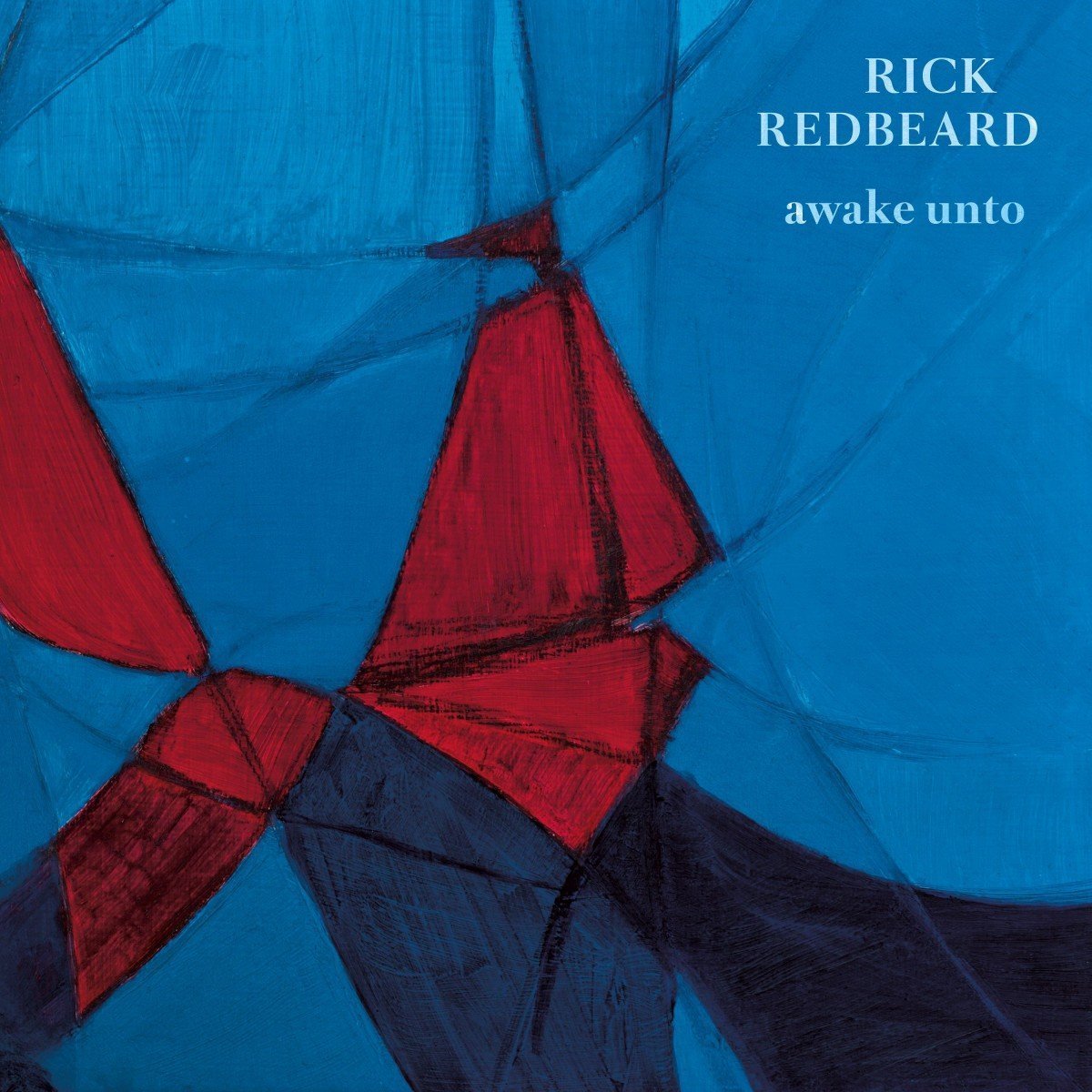
Fears Trending was released in January 2015, and proved to be the perfect foil for Strange Friend. Listening to Strange Friend and then Fears Trending, is akin to seeing two sides of The Phantom Band. Critics realised this, and lavished praise on Fears Trending. It showcased a versatile and talented band, who were now one of Scotland’s most successful bands. Despite this, the members of The Phantom Band still found time for their various solo projects. In the case of Rick Redbeard, this meant sophomore album Awake Unto. It was recently released by Chemikal Underground Records.
Awake Unto.
After recording two albums with The Phantom Band, it was time for Rick to return to his solo career. So he wrote eight new songs, and cowrote In My Wake with Andy Wake of The Phantom Band. Field Years was written by Rick and another member of The Phantom Band, Gerry Hart. These songs would eventually become Rick’s sophomore album Awake Unto.
Rather than head into a studio, Rick recorded the ten songs at a variety of locations across Scotland. These recordings took place between 2012 and 2015, and feature understated, sparse arrangements. They frame Rick’s vocal as he breathes life, meaning and emotion into the lyrics to these ten poetic and cinematic songs. That’s why he’s been compared to Leonard Cohen and Bill Callahan, on what’s captivating and breathtaking album of music. Awake Unto.
Wild Young Country opens Awake Unto. It’s a country-tinged, piano-lead ballad. As the piano plays, Rick delivers a poetic, heartfelt paean. “Darling darling how would you like to dance around with me, tonight as naked as when we were born in candlelight dawn?” Accompanying Rick is an underrated arrangement. Just drums, a picked guitar and slow, thoughtful drums provide the backdrop as he delivers what’s a needy, hopeful paean.
Just a lone guitar accompanies Rick on In My Wake as the song begins to share its secrets. Again, there’s a poetic quality to the lyrics. However, here, they’ve a cinematic quality, as Rick paints pictures. Especially as he sings of: “prowlers wait in our wake, to see what we’ve made, and I feel the coldest wind of the winter blowing from my lovers side.” Later, Rick has transported the listener to the barren landscapes, and can imagine: “the fire roaring from the other side.” By then, just guitars and occasional harmonies accompany Rick on this atmospheric and cinematic songs.
After Rick counts himself in on The Golden Age, a guitar and banjo combine. They usher in Rick’s vocal, as he delivers a joyous, beatific vocal. Especially as he sings to his lover: “we’re in The Golden Age, let’s stay in The Golden Age.” Almost defiantly, Rick sings: “the world can bare its teeth, but if we live for joy and let not grief and worry mar the hours we keep.”Joy fills Rick’s vocal as guitars, banjo and harmonies accompany him. Later, the rhythm section help propel the arrangement along, before a blistering guitar solo is unleaded. It adds the finishing touch to what’s a memorable, joyous and anthemic song.
Understated describes the introduction to Unfound. A chirping acoustic guitar accompanies Rick on this contemporary folk ballad. Its roots can be found in traditional folk songs. A devoted Rick sings: “should you go to the dragon’s lair, I would follow you there, and should you never return from underground, I too will remain Unfound.” Later, Rick sings of: “a harvest of riches and lasting forgiveness, will rid us of your misery.” This adds to an element of mystery to a song which veers between a love song, to one that’s tinged with mysticism, mystery, drama and beauty.
From the opening bars of The Night Is All Ours, it’s apparent that something special is unfolding. The song sounds as if it’s been penned by Angelo Badalamenti for a David Lynch film. Guitars reverberate, while strings slowly sweep. Soon, Rick is delivering a heartfelt croon. He’s accompanied by a crystalline guitar, probing bass and harmonies. That’s not forgetting the lush strings. They provide the backdrop for Rick as he croons: “darling the day belongs to servants of another song,..the night is all ours, me and my baby sing.” It’s without doubt the most beautiful song on Awake Unto.
From the distance, the arrangement to Field Years draws nearer. The keyboard stem is played backwards. This works though, as Rick delivers a tender, thoughtful vocal. He long for: “a place to call my own, four solid walls made of stone, roof overhead happy.” Soon, he can imagine himself watching the changing of the seasons, and watching “wildflowers grow.”Soon, the listener can imagine and wants to share Rick’s rural idyll on another cinematic song.
Slowly and gradually Get Blood (Friendly) begins to unfold. It’s a fusion of country and folk where Rick is joined by Josephine Anthony. They duet, while a banjo, drums, accordion and guitar accompany them. Rick’s found happiness and is happy with his life. Compliments abound, including some backhanded ones. This includes the line: “you ain’t so pretty but you’ll do for me, you’ve a sadness that only I can see.” Despite this, Rick wouldn’t change it for the world in this genre-melting paean.
Yuki Onna is another cinematic folk song. Straight away, Rick is painting pictures as plays his guitar and sings of “a traveller walked the night alone, towards a distant fireside glow.” That was where he met a bewitching and mysterious woman. Or did he? “But in the morning she was gone-a ghost, a dream or something from the pure white snow he lay upon.” He’ll never know, nor will the listener.
It’s just an acoustic guitar that accompanies Rick on What Fine People, as the song unfolds. Anything else would be overkill. Rick’s vocal takes centre-stage, as he delivers the lyrics. As he delivers the lyrics there’s a sense of sadness and melancholia. Despair and disbelief are omnipresent as he sings: “what a fine fine people we are, robbing these graves from afar.” Accompanying Rick, is his trusty chiming guitar, which frames one of his finest vocals. He breathes life and meaning into his lyrics.
Closing Awake Unto, is Let It Rust. Chiming, meandering guitars and rat-a-tat drums usher in Rick’s vocal. Soon, it’s joined by percussion, ethereal harmonies and a bass. By then, memories of childhood have come flooding back. Suddenly, reality strikes. He wasn’t an “idealistic youth.” “When I was young I never did anything.” Instead, “my friends and I had dreams of living without dreams-running like a wolf pack through the trees, and then as gliding birds, we surrendered to the breeze.” That was then. Now life is very different. Rick compares it “to that old hotel, where you’d go to hate yourself.” Gone are any hopes and dreams he once had, as a defeated Rick delivers his vocal. Later, it’s replaced by a wash of swirling guitar, chattering percussion and lysergic harmonies. They add to what’s a poignant and cinematic tale where reality strikes and Rick is forced to face the truth. It’s another of the highlight of Awake Unto.
Three years after the release of No Selfish Heart, Rick Redbeard recently returned with his sophomore album Awake Unto. It was released by Glasgow based Chemikal Underground Records. Awake Unto is an album where Rick Redbeard has come of age musically as a solo artist.
Awake Unto a much stronger and more cohesive album than No Selfish Heart. Rick Redbeard spent three years carefully crafting the ten songs on Awake Unto. With the help of a few musical friends, Rick has wrote and recorded Awake Unto between 2012 and 2015. These songs were recorded at various locations across Scotland. However, many of the songs on Awake Unto have much in common. Not only are they beautiful, but they’ve a cinematic quality. Rick Redbeard paints pictures with his lyrics, and with his unique and unmistakable vocal, takes the listener on a musical adventure.
Although beautiful and cinematic describes many of the songs on Awake Unto, others are poignant, atmospheric, and tinged with drama, melancholy, mystery and mysticism. Other tracks are melodic and memorable, with The Golden Age best described as anthemic. Wild Young Country and Field Years are both heartfelt paeans from the pen of Rick Redbeard. He’s a talented songwriter, who has the ability to breath life, meaning and emotion into the lyrics. As he does this, he often combines musical genres.
Mostly, though, Awake Unto is an album of folk music. There’s also diversions via country and pop, plus hints of rock and psychedelia. Awake Unto is also an album that’s the antithesis of most albums being released today.
Nowadays, many albums being released are almost disposable. Not Awake Unto. Instead, it’s an album of cerebral music, that’s evocative, expressive, poetic and thoughtful. Rick Redbeard is a musical philosopher, the troubadour who sings of hurt and heartbreak, love and loss, life and death. Poignancy gives way to pathos, while there’s a sense of melancholia on several tracks. Especially as Rick reflects on his life so far on Let It Rust. Rick’s vocal plays an important part in the success of that song. That’s the case throughout Awake Unto.
Most of the arrangements are acoustic. They’re understated and subtle. Despite this, the songs are intricate and multilayered. Subtleties, surprises and nuances await discovery from the opening bars of Wild Young Country, to the closing notes of Let It Rust. The ten carefully crafted songs on Awake Unto all tell a story, which is narrated by Rick Redbeard, Scotland’s latest troubled troubadour.
RICK REDBEARD-AWAKE UNTO.
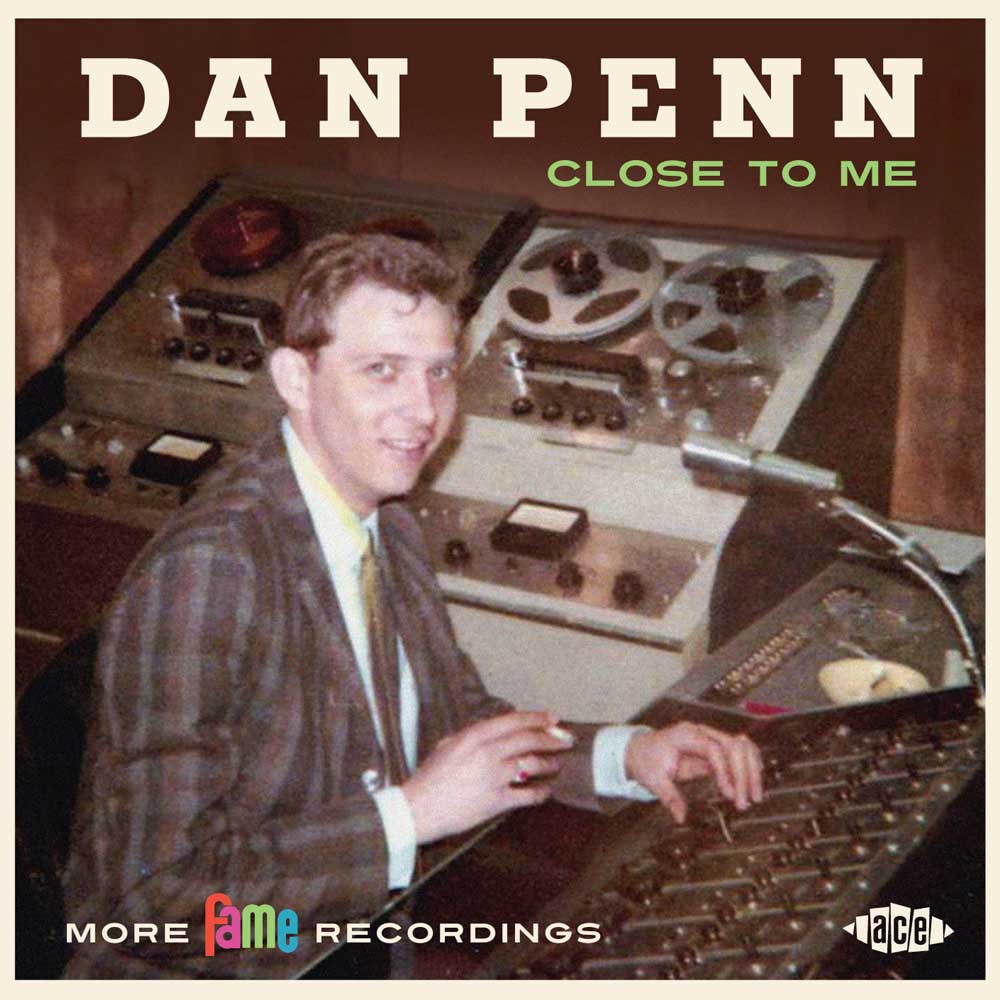
DAN PENN-CLOSE TO ME-MORE FAME RECORDINGS.
DAN PENN-CLOSE TO ME-MORE FAME RECORDINGS.
Wallace Daniel Pennington was born in Vernon, Alabama on the 19th of May 1941. The Pennington family were respectable church going people. They were regarded as pillars of the local community. Each week the Pennington family attended church en masse. However, by the time Wallace Daniel Pennington was a teenager, he had turned his back on the church. By then, the future Dan Penn had discovered R&B, and had dreams of making a career as a R&B singer.
Wallace Daniel Pennington became the lead singer of a series of short-lived band, including The Mark V, The Nomads and Pallbearers. During his time with these bands, Wallace’s determination to forge a career as an R&B intensified. Each night, as he took to the stage, he combined power and passion. This would play its part in shaping Wallace’s raspy, lived-in, soulful vocal. It Wallace hoped, would feature on records in the not to distant future.
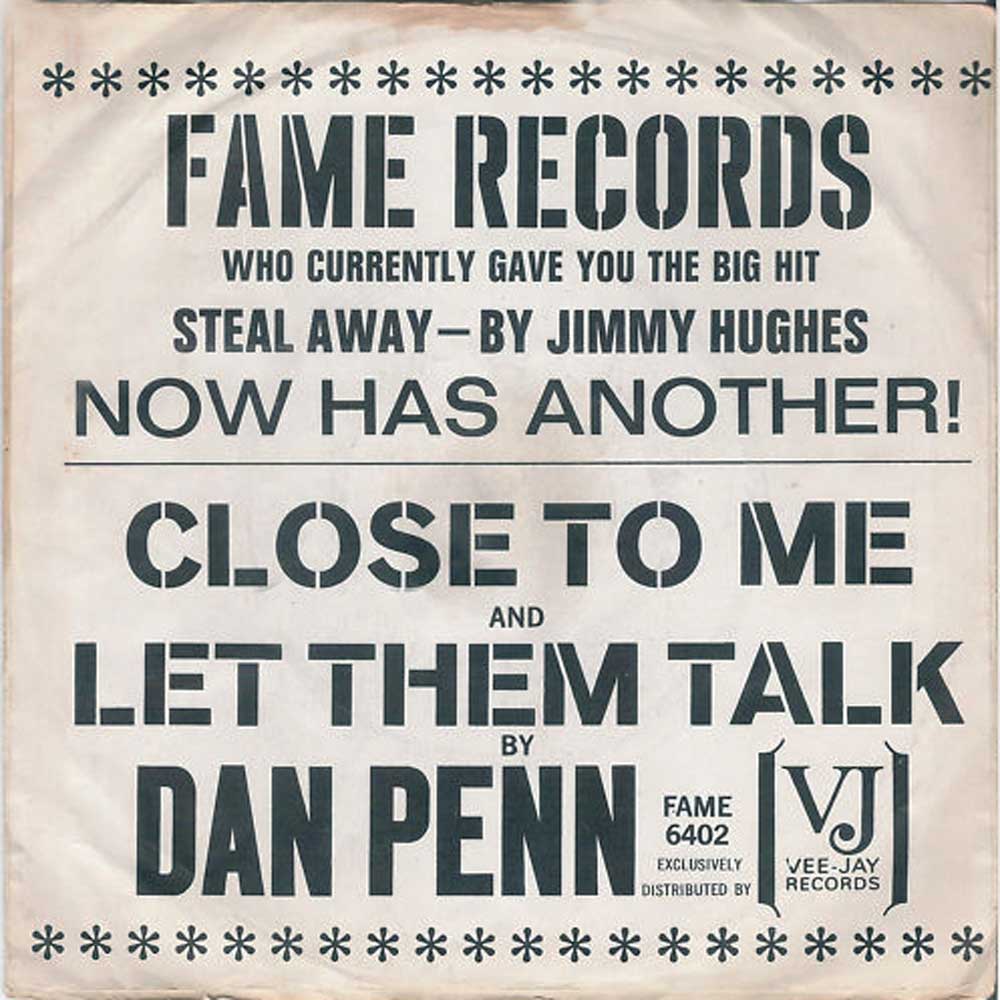
That proved to be the case. By 1960, Dan Penn was spending much of his time in the Quad Cities, Muscle Shoals area. He was also a regular visitor to Rick Hall’s Fame Records. That was where he recorded his first single Crazy Over You in 1960. On its release, Crazy Over You failed commercially. It was a somewhat inauspicious start to Dan Penn’s career as a singer. However, later, in 1960, commercial success came Dan Penn’s way.
Although Dan Penn dreamt of becoming a singer, he was also a songwriter. One of the songs the nineteen year old had written was Is a Blue Bird Blue? It was recorded by country singer Conway Twitty later in 1960. When it was released, it reached number thirty-five in the US Billboard 200 and number twenty in the Australian charts. For Dann Penn this was the start of a long and successful career as a songwriter.
During the rest of the sixties, Dann Penn went on to work with various songwriting partners. This included Rick Hall, Donnie Fritts, Quin Ivy, Marlin Greene and David Briggs. However, Dan Penn’s most successful songwriting partnership was with Chips Moman.
This songwriting partnership began in 1966, at Chips Moman’s American Studios. The pair struck up what became a relatively prolific and successful songwriting partnership.
They managed to write a lot of songs during what was a short-lived and incredibly intense songwriting partnership. Despite this, some of their songs were recorded by some of the biggest names in music; while other songs became timeless classics. This included James Carr’s Dark Side Of The Street and Aretha Franklin’s Do Right Woman. Others songs have been oft-covered. Among them are You Left The Water Running and I’m Your Puppet. These tracks have been covered by everyone from Barbara Lynn to Otis Redding and Irma Thomas. Sadly, the Dann Penn and Chips Moman didn’t enjoy the same longevity as other songwriting partnerships, and the pair went their separate ways. The Dan Penn and Chips Moman is one of the songwriting partnerships documented and celebrated in a recently released compilation.
This is the Dan Penn compilation Close To Me-More Fame Recordings. It was recently released by Ace Records, and is the sequel to their 2014 release The Fame Recordings. Just like The Fame Recordings, Close To-More Fame Recordings features twenty-four demos recorded by Dan Penn at Rick Hall’s Fame Studios. These are unlike most demos recorded during the sixties.
Back then, most demos were spartan and understated affairs. Often, it was just singer accompanied by a lone piano or guitar. Publishing companies and songwriters didn’t want to spend more than they had to. After all, the raison d’être of a demo is to sell a song. However, that’s not the attitude Dan Penn took.
For the twenty-four songs on Close To Me-More Fame Recordings, Dan Penn was accompanied by the Memphis Shoals Rhythm Section. This included David Briggs, Junior Lowe, Roger Hawkins and Jimmy Johnson, to name but a few. They accompanied Dan Penn on songs he had written with Rick Hall, Donnie Fritts, Quin Ivy, Marlin Greene, David Briggs and Spooner Oldham. These songs were recorded between 1963 and 1966, and most have never been released before. That’s until now, and the release of Close To Me-More Fame Recordings, by Ace Records.
By 1963, which is the start of the period that Close To Me-More Fame Recordings covers, Dan Penn was just twenty-two. Although he had penned his first hit when he was just nineteen, Dan Penn knew that he had much more to learn. So he continued to hang out at Fame Studios.
Each day, he could sit there, and watch and learn. It was akin to a musical apprenticeship. Dan sat there, and watched producer Rick Hall at work. Then one day, Dan was in Fame Studios when Otis Redding was producing Sweet Soul Music. As Dan sat in the control room with Rick Hall and Otis Redding, they continued to press play. The three men realised history had been made. Sweet Soul Music had the potential to be a classic. That was the also night that Rick Hall asked Otis Redding asked if he could sing a demo of You Left The Water Running?
This was a song Rick and Dan cowrote. Otis Redding agreed, as long as he liked You Left The Water Running. He did, with Dan adding backing vocals. This may have been the first demo Dan sang on, but it wouldn’t be the last.
Between 1963 and 1966, Dan Penn was a prolific songwriter. He cowrote songs with various songwriting partners, including Rick Hall, Donnie Fritts, Quin Ivy, Marlin Greene, David Briggs and Spooner Oldham. These demos were much more sophisticated than the demo of Otis Redding singing You Left The Water Running. Usually, the Muscle Shoals Rhythm Section accompanied Dan Penn.
That was the case on Close To Me, the song that opens Close To Me-More Fame Recordings, and lends its name to the compilation. It was written by Dan, and features doo woo inspired vocals. They’re joined by the Muscle Shoals Rhythm Section as Dan delivers a soul-baring vocal on this beautiful, soulful ballad. Dan also wrote Live and Let Live, which is a emotional roller coaster that heads in the direction of Southern Soul. These tracks show that on his own, Dan Penn was a truly talented songwriter. However, for much of his career, he worked with a songwriting partner.
Occasionally, this included Quin Ivy. Dan and Quin penned Without a Woman together. It’s a heart-wrenching ballad, where Dan embraces the role of Southern Soul man. Sadly, this is the only Dan Penn and Quin Ivy song on Close To Me-More Fame Recordings.
It’s a similar case with the Dan Penn and Donnie Fritts songwriting partnership. Only Do You Need It features on Close To Me-More Fame Recordings. Although Do You Need It is a needy Southern Soul ballad, Dan vocal sometimes becomes a vamp. This showcases his versatility.
This versatility is put to good use on two songs that Dan cowrote with another of his occasional songwriting partners, Marlin Greene. The pair penned Trash Man, another emotive ballad. Their other collaboration on Close To-More Fame Recordings is So Many Reasons, where Dan Penn sounds not unlike Sam Cooke. Indeed, So Many Reasons wouldn’t have sounded out of place on a Sam Cooke album. So good is So Many Reasons, it’s one of Dan’s finest moments on Close To Me-More Fame Recording.
Another of Dans occasional songwriting partners was Marlin Greene. The pair penned Trash Man, another emotive ballad. Their other collaboration on Close To-More Fame Recordings is So Many Reasons, where Dan Penn sounds not unlike Sam Cooke. Indeed, So Many Reasons wouldn’t sound out of place on a Sam Cooke album.
Dan Penn and David Briggs cowrote a number of songs together. This includes It Hurts, a tale of heartbreak, which Dan brings to life. So much so, that he sounds as if he’s lived and survived the lyrics. Another contribution from Dan Penn and David Briggs is Diamonds, a poppy slice of soulful music. The Dan Penn and David Briggs songwriting team are joined by Spooner Oldham on I Need You. It’s a heart-wrenching ballad where Dan combines power and passion. In doing so, Again, Dan showcases his versatility as a singer
This is likely one of the lessons that Dan Penn learnt whilst under the tutelage of Rick Hall. They forged a successful songwriting partnership. One of their lesser known songs is Lovely Ladies. It’s a sassy stomper that’s very different to many of the other songs on Close To Me-More Fame Recordings. Rick Hall adds rasping horns and piano, as Dan struts and vamps his way through the lyrics. Dan’s version of Diamonds was the flip-side to Lonnie Ray’s Just As I Am, which was released on Fame in May 1965. Since then, Lovely Ladies has been hidden gem in Dan’s back-catalogue.
One man who most likely played on Lovely Ladies, is drummer Roger Hawkins. He and Don Covay cowrote I Can’t Stop (The Feeling Won’t Let Me). It’s in a similar vain to some of the music being released on Stax between 1963 and 1966. Sam and Dave and Otis Redding are reference points. Dan’s vocal is double tracked, and sometimes, he heads into James Brown territory as he vamps. It’s another track that showcases Dan Penn’s talent and versatility.
That’s the case on the thirteen tracks penned by Dan Penn and Spooner Oldham. They forged a successful and quite prolific songwriting partnership. The songs they wrote varied, and would’ve suited a variety of artists. Miss Personality was a vampish slice of Southern Soul, full of yelps and vamps. There’s more than a hint of James Brown in Dan’s delivery. Love Is a Wonderful Thing and Standing in the Way of a Good Thing sounds like the type of song Sam and Dave would’ve recorded. Both tracks find Spooner Oldham adding backing vocals, augmenting Dan’s lead vocal. That’s the case on Reaching Out For Someone, where Dan and Spooner prove a potent partnership.
Some of the best songs from the pen of Dan Penn and Spooner Oldham are the ballads. This includes the heartfelt paeans I’ll Take Care Of You and Little Girl. Another of the heartfelt paeans is I Love Everything About You, which is reminiscent of Sam Cooke. She Ain’t Gonna Do Right and Downright Uptight Good Woman are both heart-wrenching Southern Soul ballads. Another slice of Souther Soul, is We’re Swinging, which features an impassioned, gravely and soulful vocal from Dan. You Really Know How To Hurt a Guy is another tale of heartbreak, where Dan wears his heart on his sleeve. He seems to come into is own on the ballads on Close To Me-More Fame Recordings.
Destroyed sees the tempo rise, as Dan Penn accompanied by harmonies, heads in the direction of the dance-floor. This shows another side of Dan Penn and Spooner Oldham.
That’s the case with I Dig A Big Town. Given the lyrics and the title, I Dig a Big Town sounds as if it was written towards the end of the period covered by Close To Me-More Fame Recordings. The arrangement has a much more underrated, contemporary sound, where Dan reinvents himself. This is something that so many soul singers, songwriters and producers failed to do. They never enjoyed the longevity that Dan Penn has enjoyed.
Some six decades after his recording career began, seventy-five year old Dan Penn has lost none of his enthusiasm for music. The veteran singer, songwriter and producer inducted into the Alabama Music Hall of Fame in autumn 2013. That’s fitting, given how important a part Dan Penn has played in the state’s musical past. He’s one of the most successful songwriters Alabama has produced. Considering that Dan Penn originally wanted to be a singer, that’s quite ironic.
While Dan Penn spent much of the sixties writing songs for other people, he didn’t release his first album studio album Nobody’s Fool in 1973. Do Right Man followed in 1974. However, a quarter of a century passed before Dan Penn released his third studio album.
This was Blue Nite Lounge, which was released in 1999. Later that year, Dan released Moments From This Theatre a live recording which featured Dan Penn and Spooner Oldham. The old songwriting partnership was reunited, roll back the years. Nine years later, and Dan Penn released a new studio album, Junk Yard Junky in 2008. Since then, Ace Records have released two compilations of Dan Penn’s music, 2012s The Fame Recordings and the recently released Close To Me-More Fame Recordings.
These two compilations feature a veritable feast of Dan Penn recordings from the sixties. Although they’re ostensibly demos, they’re a cut above the usual demos. Close To Me-More Fame Recordings features the Muscle Shoals Rhythm Section in full flight, on twenty-four tracks recorded between 1963 and 1966. During this period, Dan Penn was honing his skills as a singer and songwriter. He was already a talented singer and songwriter. Dan Penn was also versatile singer, who could seamlessly switch between heart-wrenching ballads and more uptempo tracks. For a singer who was only twenty-five in 1966, Dan Penn could’ve and should’ve enjoyed more success as a singer than he did.
Instead, Dan Penn enjoyed more success as a songwriter. By the end of the sixties, Dan Penn had realised just how lucrative a business songwriting was. After this, Dan Penn’s career as a singer seemed to take a back seat. While he continued to record the occasional album, and play live, most record buyers remember Dan Penn for the classic songs he’s written. That’s still the case today. This is sure to change when they hear Close To Me-More Fame Recordings. Then they’ll realise that Dan Penn doesn’t just write songs, but sings them too.
DAN PENN-CLOSE TO ME-MORE FAME RECORDINGS.
MOGWAI-SCOTLAND’S POST ROCK PIONEERS.
MOGWAI-SCOTLAND’S POST ROCK PIONEERS.
Although Scotland have produced many successful bands over the past forty years, there aren’t many that have enjoyed the longevity, commercial success and critical acclaim that Mogwai have. They were founded in 1995, and since then, have released eight albums of pioneering post rock. That’s not forgetting the four soundtracks that Mogwai have been commission to write. However, that’s only part of the Mogwai story.
Just a year after Mogwai were founded, the nascent band founded their own record label Rock Action Records in 1996. Some of Mogwai’s early singles were released by Rock Action Records. It has come a long ways since then.
Nowadays, Rock Action Records is home to some of Scotland’s top bands, and bands from much further afield. Currently, Rock Action Records’ roster includes Mogwai, Errors, Remember Remember, De Rosa, Envy, Half Chimp and Sacred Paws. So it’s no surprise that Rock Action Records is now one of Scotland’s most successful record labels. Equally successful is the recording studio Mogwai co-founded in 2005.
This was Castle Of Doom Studios, which is situated in the West End of Glasgow. It was cofounded by Mogwai and Tony Doogan in 2005. Since then, the great and good of Scottish music have beat a path to Castle Of Doom Studios. So do artists from across the globe. That’s why Castle Of Doom Studios is now one of the most successful recording studios in Scotland. It’s also where Mogwai have recorded several albums. However, the Mogwai story began way back in 2001.
That’s when Stuart Braithwaite and Dominic Aitchison first met in Glasgow. Four years later, they met drummer Martin Bulloch and formed Mogwai, which film buffs will remember, is a character from the movie Gremlins. Mogwai was always meant as a temporary name, but it stuck and was on the label of Tuner, their 1996 debut single.
Tuner was released to critical acclaim and the NME awarded it their single of the week award. Two other singles were released during 1996 Angels v. Aliens and Summer, which features on Central Belters. By then Mogwai were a quartet.
Guitarist John Cummings joined the band in 1995. He’s also something of a maestro when it comes to all things technical and is described as playing “guitar and laptop.” He was part of one of the hottest bands of the late nineties, Mogwai who released two more singles in 1997.
The first of these was New Paths To Helicon Pt. 1 which features on Central Belters. It showed Mogwai growing and maturing as a band. NME agreed, and just like their debut single Tuner, New Paths To Helicon Pt. 1 was won NME’s single of the week award. Club Beatroot the followup to was also well received by critics. This was the perfect time for Mogwai to record their debut album, Mogwai Young Team.
Mogwai Young Team.
For Mogwai Young Team, Mogwai brought onboard Brendan O’Hare the Teenage Fanclub’s drummer. Another guest artist was Aidan Moffat of Falkirk based band Arab Strap. He added the vocal to R U Still In 2 It. The rest of Mogwai Young Team consisted of instrumentals. Mogwai Young Team was recorded at Chem 19 studios and produced by two of Scotland’s top producers, ex-Delgado Paul Savage and Andy Miller. Once Mogwai Young Team was completed, it was then released on Scotland’s biggest record label, Chemikal Underground Records.
Before its release, critics were one over by Mogwai Young Team. Mogwai were hailed Mogwai as a band with a big future. Mogwai Young Team was a hailed as a groundbreaking album of post-rock. It’s just one reason critics forecast a big future for Mogwai.
That proved to be a perceptive forecast. When Mogwai Young Team was released on 21st October 1997, sold over 30,000 copies and reached number seventy-five in the UK. The Mogwai Young Team were on their way. However, a few changes were about to take place.
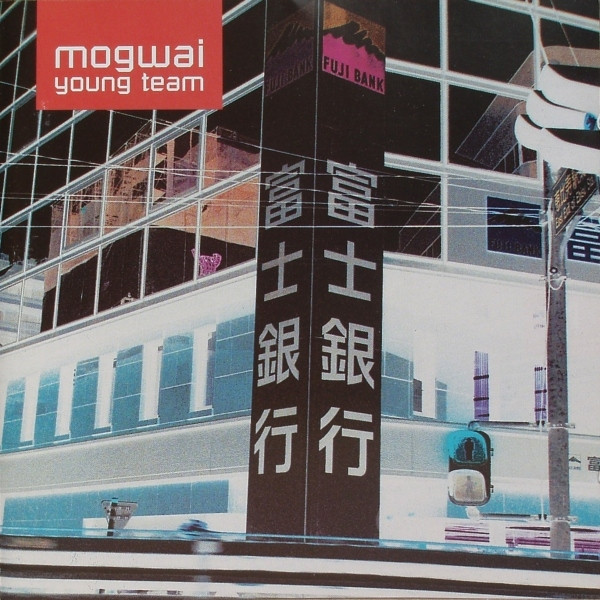
Come On Die Young.
A year later, Mogwai were back in the studio recording their sophomore album Come On Die Young. Much had changed. A new member had joined the band. Barry Buns a flautist and sometimes pianist, had played a few gigs with the band. They then asked him to become the fifth member of Mogwai. Violinst Luke Sutherland joined Mogwai, but not on a full-time basis. This wasn’t the only change.
Recording was split between New York and Glasgow. This time, they’d forsaken Chem 19 in Blantyre and recorded parts of the album in Rarbox Road Studios, New York. Some sessions took place in Glasgow’s Cava Studios. Producing Come On Die Young was Dave Fridman. For some critics, his addition changed Mogwai’s sound.
Some critics felt his production style resulted in a much more orthodox sounding album. However, personally, I felt that Come On Die You was part of Mogwai discovering their “sound” and direction. Come On Die Young is a much more understated, but also ambient, experimental, multi-textured and melodic. There’s a fusion of ambient, grunge and post rock on Come On Die Young, which was released in 29th March 1999.
On its release, Come On Die Young reached number twenty-nine in the UK. Mogwai it seemed were now on their way to finding their sound and fulfilling the potential evident on their debut album. This was apparent with tracks of the quality of CODY and Hugh Dallas s. However, like all innovative bands, Mogwai continued to reinvent their music.
This proved to the case on their eponymous E.P. Two of E.P.’s four tracks feature on Central Belters. This includes Stanley Kubrick, which was recorded in the exotic surroundings of Cowdenbeath in Fife. Burn Girl Prom Queen was recorded at Cava Studios, in Mogwai’s hometown of Glasgow. These two tracks were part of E.P., which further enhanced Mogwai’s reputation as post rock pioneers. So did their third album Rock Action.
Rock Action.
Mogwai’s music continued to evolve on their third album 2001s Rock Action. More use was made of electronics on Rock Action. This was part of a process that would continue over the next few albums. There were even more layers and textures on Rock Action. It was as if Mogwai had expanded their palette. Seven of the songs were instrumentals, while Dial Revenge featured Gruff Rhys of Super Furry Animals.
Again, Rock Action was produced by Dave Fridman, while recording took place in New York and at Glasgow’s Cava Studios. Once Rock Action was completed, it became Mogwai’s first album to be released on Play It Again Sam.
Rock Action was released in April 2001, and proved to be Mogwai’s most successful album. It reached number twenty-three in the UK. Critics remarked upon how Rock Action wasn’t as dark an album as its predecessors. That didn’t mean that Mogwai’s view of the world had changed. They were still worldweary. That would become a Mogwai trademark.
Six months after the release of Rock Action, Mogwai returned with another single, The My Father My King. It was released in October 2001, and was described “as the companion piece to Rock Action.” A sticker on the cover bore Mogwai’s description of the single as: “two parts serenity and one part death metal.” That was about to change. Soon, they’d be happy people writing happy songs and making a breakthrough into the American market.
Happy Songs For Happy People.
Happy Songs For Happy People was released in 2003. Mogwai’s evolution continued. Their music continued further down the electronic road. Yes, electric guitars and a drummer were used, but synths were playing a more important role in Mogwai’s music. So were the addition of strings and a piano. They played their part in what was a much more understated album. Part of this change in style was a change of producer.
Tony Doogan was brought onboard as producer. He replaced Dave Fridman. Gone were transatlantic recording sessions. Happy Songs For Happy People was recorded at Cava Sound Studios, Glasgow. On its release in June 2003, Happy Songs For Happy People was well received by critics. Critics drew attention to I Know You Are But What Am I? and Hunted By A Freak, two of the album’s highlights. The critics also welcomed Mogwai’s latest change in style. So did record buyers.
While Happy Songs For Happy People only reached number forty-seven in the UK, it spent a week in the American charts, reaching number 182 in the US Billboard 200. After four albums, Mogwai had broken into the American market. Happy Songs For Happy People it seemed, was a landmark album.
Having made inroads into the lucrative American market, Mogwai didn’t rush their fifth album. It was released three years after Happy Songs For Happy People. There’s a reason for this. They were working on tree separate projects.
The first was their fifth album Mr. Beast. Then there was the first soundtrack they’d written and recorded. This was for the 2006 movie Zidane: A 21st Century Soundtrack. Mogwai also collaborated with Clint Mansell on the soundtrack to The Fountain. Although soundtracks were a nice sideline for Mogwai, their fifth album Mr. Beast was of huge importance. Especially, if it was a commercial success in America.
Mr. Beast.
Recording of Mr. Beast took place at Mogwai’s new studio, Castle Of Doom Studios in Glasgow. Co-producing Mr.Beast with Mogwai, was Tony Doogan. Between April and October 2005, Mogwai honed their fifth album. Tony Doogan and Mogwai co-produced Mr. Beast. After six months, Mr. Beast was complete. It was Mogwai’s most important album.
Everyone realised the importance of Mr. Beast. Mogwai were on a verge of breaking into the American market. Happy Songs for Happy People had got Mogwai’s foot in the door. Now was the time for the Mogwai Young Team to kick it in, and make their presence felt. That’s what Mogwai intended to do with tracks like Travel Is Dangerous,Friend Of The Night and We’re No Here. They featured Mogwai at their innovative and creative best. This trio of tracks were part of an album that would please critics, Mr. Beast.
On its release, it was mostly, to critical acclaim. Critics were fascinated at how Mogwai’s music continued to evolve. For Mogwai, standing still was going backwards. Groundbreaking music was what record buyers expected from Mogwai.
When Mr. Beast was released on 5th March 2006, record buyers found an album of innovative music. It climbed thirty-one in the UK. Across the Atlantic, Mr. Beast reached number 128 in the US Billboard 200. Mogwai were now one of Scotland’s most successful musical exports. They were certainly Scotland’s most innovative band. This was a title they weren’t going to give up without a fight.
Zidane: A 21st Century Portrait.
Following the release of Mr. Beast, the other two projects that Mogwai had been working on, were released. The first was Zidane: A 21st Century Portrait. The project came about in late 2005, when artist Douglas Gordon asked Mogwai to write and record a soundtrack to a film he was making about Zinedine Zidane, Zidane: A 21st Century Portrait. Mogwai agreed, and this gave them their entry into the world of soundtracks.
Maogwai grasped this opportunity. They recorded Zidane: A 21st Century Portrait at Castle Of Doom Studios. At first hand, Mogwai had recorded ten tracks, which were produced by Tony Doogan. However, when the soundtrack was released, it came baring a secret.
Unlike Half Time, which features on Central Belters, the hidden track Untitled, is a twenty-three minute epic, featuring Mogwai at their most inventive. That was the case throughout Zidane: A 21st Century Portrait. Most critics realised this. A few, however, didn’t seem to ‘get’ Zidane: A 21st Century Portrait. However, the critics that mattered, gave Mogwai the recognition they deserved when Zidane: A 21st Century Portrait was released on 30th October 2006. Then less than a month later, the soundtrack to The Fountain was released on 27th November 2006.
The Fountain.
The Fountain was a collaboration between contemporary classic composer Clint Mansell, string quartet the Kronos Quartet and Mogwai. To some onlookers, it looked like an unlikely collaboration. That wasn’t the case though.
Mogwai had spent December 2005 locked away in their Castle Of Doom Studios with producer Tony Doogan. Other parts of The Fountain project were recorded in New York and Los Angeles. Then once the project was complete, The Fountain was released on 27th November 2006.
When The Fountain soundtrack was released, the reviews were positive. Mogwai’s contribution to the soundtrack had proved vital, while the Kronos Quartet proved a perfect foil the Mogwai Young Team. Mogwai’s lasted soundtrack had enhanced their reputation as the go-to guys for a soundtrack. That would their sideline in the future. However, before they released another soundtrack, Mogwai would release another two albums.
The Hawk Is Howling.
The first of these was The Hawk Is Howling. To ensure they kept their title of Scotland’s most innovative bands, Mogwai returned to the studio where it all began, Chem 19 in Blantyre.
Andy Miller who’d co-produced Mogwai Young Team, Mogwai’s debut album was chosen to produce what became The Hawk Is Howling. This was Mogwai’s sixth album and marked a first. It was Mogwai’s first album to consist of just instrumentals. Among them were I’m Jim Morrison, I’m Dead, The Sun Smells Too Loud, Batcat and Scotland’s Shame. They feature the post rock pioneers pushing musical boundaries to their limits, and sometimes, beyond. Once The Hawk Is Howling was recorded, Garth Jones mixed the album at Castle Of Doom Studios in Glasgow. After that, The Hawk Is Howling was ready for release.
The Hawk Is Howling was released on 22nd September 2008. Critics were won over by The Hawk Is Howling. There were no dissenting voices. This was one of Mogwai’s best albums. So, it was no surprise it sold well in the UK and America.
On its release, The Hawk Is Howling reached number thirty-five in the UK and number ninety-seven in the US Billboard 200. It seemed with each album, Mogwai’s music evolved and matured. This resulted in even more success coming their way. Would this continue with Hardcore Will Never Die?
Hardcore Will Never Die, But You Will.
For their seventh album, Mogwai returned to Chem 19 Studios in Blantyre, where they hooked up with ex-Delgado Paul Savage. Since he’d produced Mogwai’s debut album, Mogwai Young Team Paul had established a reputation as one of Scotland’s best producers.
By then, Paul Savage had worked with everyone from Franz Ferdinand to R.M. Hubbert. However, it was a very different Mogwai Paul encountered. They were very different to the band who recorded Mogwai Young Team Paul. Their music had evolved and was continuing to do so. They’d matured as musicians and embraced the new technology. Hardcore Will Never Die, But You Will was proof of this.
Here was an album of groundbreaking, genre-melting post-rock with attitude. Hardcore Will Never Die, But You Will was also an album not short on humour. Poppy soulster Lionel Ritchie provided the inspiration for You’re Lionel Ritchine. There was also a celebratory sound to Hardcore Will Never Die, But You Will
The death of Scotland’s nemesis, Margaret Thatcher sparked celebration on Glasgow’s George Square. Hardcore Will Never Die, But You Will, celebrated that great night again with George Square Thatcher Death Party. It was just one track on album of pioneering, post rock music crammed full of hooks, humour and attitude. Others highlights Mexican Grand Prix, Rano Pano and How To Be A Werewolf . With music of this quality, surely Hardcore Will Never Die, But You Will couldn’t fail?
Before the release of Hardcore Will Never Die, But You Will, Rano Pano was released as a single. On the flip side was Hasenheide, which didn’t feature on Hardcore Will Never Die. . Things it seemed were looking good for Mogwai.
Yet again, Mogwai won over the majority of critics with Hardcore Will Never Die, But You Will. A couple of contrarian critics proved to be mere dissenting voices in the wilderness. Most critics realised that Hardcore Will Never Die, But You Will was one of Mogwai’s finest hours. Record buyers would agree.
Hardcore Will Never Die, But You Will reached number thirty-five in the UK and number ninety-seven in the US Billboard 200. For Mogwai, they were now into their third decade as band and had just enjoyed their biggest album to date. What next?
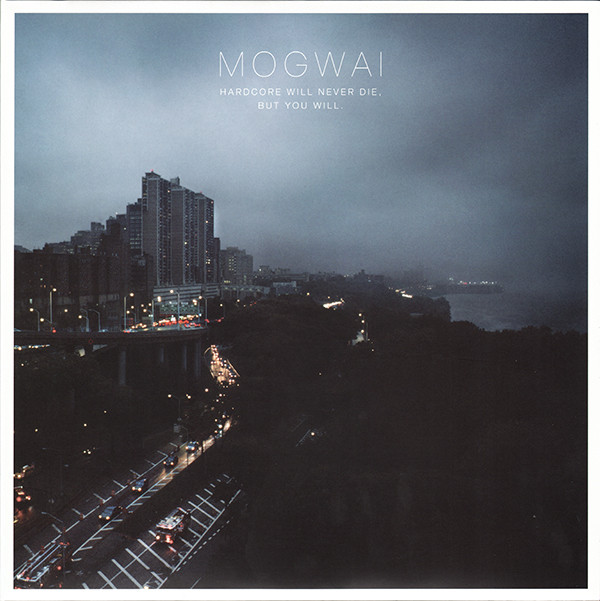
Les Revenants.
The answer to that was Les Revenants, a soundtrack to a French television series. Les Revenants or The Returned is essentially a television program about zombies. Unlike similar programs, when the “undead” return to the town they lived in, it’s as they were, not how most films portray zombies. Another difference was the way Mogwai were commissioned.
Usually, someone writing a soundtrack can see the film they’re writing music to. Not Mogwai. They were just shown a few scripts. Then they were given an overview of what the series was about. From there, Mogwai wrote thirteen of the fourteen tracks including Wizard Motor and Hungry Face. They’re two of the album’s best tracks. The other track on Les Revenants was What Are They Doing In Heaven Today, which was written by Charles Elbert Tilney. These fourteen tracks were recorded by Mogwai, who produced Les Revenants with Neil MacMenamin. Once Les Revenants was finished, it was released in February 2013.
Before Les Revenants was released an E.P. was released. It featured four tracks. That was a tantalising taster of what was to come. After all, Mogwai would approach a soundtrack like Les Revenants in a different manner. They wouldn’t do anything predictable. Les Revenants was a case of expect the unexpected. Critics loved Les Revenants and hailed the album as one of the best albums Mogwai had released. However, Mogwai had other ideas.
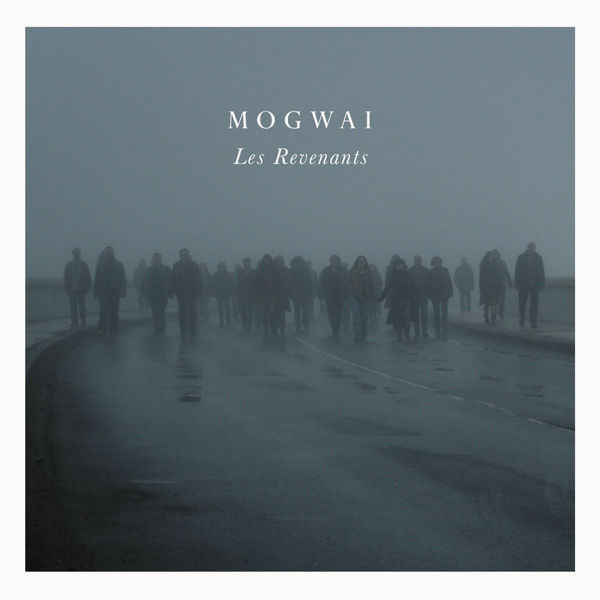
Rave Tapes.
Rave Tapes features ten tracks which were written by Mogwai. These tracks were recorded at Mogwai’s Castle Of Doom Studios, in Glasgow. Producing Rave Tapes was ex-Delgado Paul Savage. He’s produced previous Mogwai albums and knew how the band worked. This was important, given Mogwai were at last, enjoying the critical acclaim and commercial success their music deserved. Work began on Rave Tapes on the 28th August 2013.
This was like the first day back at school. Mogwai were ready to begin recording what was their eighth studio album. The lineup of Mogwai has been settled for a few years. This included a rhythm section of bassist and guitarist Dominic Aitchison, drummer Martin Bulloch and guitarists Stuart Braithwaite and John Cummings who also played piano. Barry Burns plays organ, piano and guitar. at Castle Of Doom Studios, Glasgow, Mogwai recorded the ten tracks that became Rave Tapes, which was released on 20th January 2014.
Rave Tapes was one of the most anticipated albums of 2014. The big question was, what direction Mogwai’s music would head? After all, Mogwai’s music never stands still. It’s in a constant state of evolution. That’s no bad thing. Standing still is akin to going backwards in Mogwai’s book. On Rave Tapes, Mogwai’s music continues to evolve. Musical genres and influences melt into one on tracks like Remurdered, The Lord Is Out Of Control and Tell Everyone I Love Them. However, one of the most prominent influences on Rave was Krautrock. Add to this ambient, avant-garde, electronica, experimental, indie rock and rock. We hear different sides to Mogwai on Rave Tapes. Whether it’s fuzzy soundscapes or kicking out the jams, Mogwai didn’t disappoint with Rave Tapes.
Critics agreed. Rave Tapes was released to widespread critical acclaim. Superlatives were exhausted in search of a fitting description of what many felt was Mogwai’s finest hour. Some critics wondered aloud whther Mogwai’s music was mellowing. Others felt that Mogwai were improving with age. Record buyers agreed.
When Rave Tapes was released on 14th January 2014, the album reached number ten in Britain and fifty-five in the US Billboard 200 charts. Rave Tapes became Mogwai’s most successful album in Britain and America. Elsewhere, Rave Tapes sold well across Europe. Mogwai were enjoying the most album of their three decade career. However, it would be two years before Mogwai released a new album. Before that, Mogwai decided to celebrate their twentieth anniversary in style.
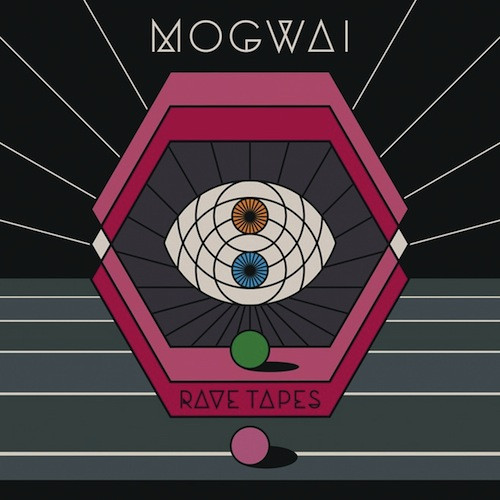
Central Belters.
In 2015, Mogwai were celebrating their twentieth anniversary. By then Mogwai were Scottish music’s elder statesmen, A lot had happened to them during the first twenty years of their career. Mogwai have released eight studio albums and three soundtracks. That’s not forgetting there’s countless singles, E.P.s and two remix albums. It was official, Mogwai had been one of the hardest working bands in music between 1995 and 2015. They were also one of the most innovative.
So it was no surprise that critical acclaim and commercial success accompanied the release of each Mogwai album. Suddenly, the Glasgow-based were enjoying success not just in Britain, Now was the perfect time for Mogwai to release Central Belters, a three disc career retrospective box set. Central Belters tells the story of the first twenty years of Mogwai.
With Mogwai not planning to release a studio album or soundtrack during 2015, Central Belters was a perfect stopgap. It was released on 23rd October 2015, and reached number forty in Britain, Central Belters sold reasonably well across the Europe, and was a perfect primer to the first twenty years of Mogwai’s career. The next part of Mogwai’s career began with a soundtrack album, Atomic.
Atomic.
Having enjoyed celebrating their twentieth anniversary during 2015, Mogwai got back down to business on 1st April 2016. That was when they released Atomic, their first new album in over two years. Atomic was Mogwai’s fourth soundtrack album,
During the summer of 2015, Mogwai had provided the soundtrack Mark Cousins documentary Atomic: Living In Dread and Promise. It was aired on BBC Four, and was a very personal memoir of growing up in the nuclear age. Using archive film, Mark Cousins constructed an impressionistic cinematic memoir of what was a harrowing time.
Post rock pioneers Mogwai were commissioned to write the soundtrack to Atomic: Living In Dread and Promise. It was hailed as the perfect backdrop to Atomic: Living In Dread and Promise, which was a personal and poignant cinematic memoir. However, after the documentary was aired in the summer of 2015, Mogwai decided to rerecord Atomic.
At their Castle Of Doom Studios in Glasgow, Mogwai were joined be an old friend, occasional band member Luke Sutherland. Mogwai were also joined by Sophie, Robin Proper-Sheppard formally of The God Machine and Glasgow composer Robert Newth. Together, they got to work on on Atomic, which was Mogwai’s twelfth album since they formed back in 1995.
Once Atomic was completed, it was scheduled for release on 1st April 2016. Before that, Atomic was hailed as Mogwai’s finest soundtrack album, and a welcome addition to their discography.
On Atomic, Mogwai combine disparate and eclectic musical genres. Elements of avant-garde, Berlin School, electronica and experimental music are combined with indie-rock, Krautrock, post-rock and psychedelia. This results in a genre-melting, cinematic album. Atomic captivates and compels, and takes the listener on a musical journey. It veers between dramatic and dreamy, to surreal and lysergic, to beautiful, pensive and understated to melancholy and melodic. Other times the music is dramatic, moody and broody. One thing the music never is, is boring. That’s one thing that can never be levelled against Mogwai. Always expect the unexpected.
That’s been the case since Mogwai were formed in 1995. Since then, Mogwai have released eight albums and four soundtracks. Then there’s countless singles, E.P.s and two remix albums. Mogwai must be one of the hardest working bands in music. That’s not forgetting one of the most innovative.
For the last twenty years, Mogwai’s music has been ambitious, bold, challenging, influential and innovative music. It’s full of nuances, subtleties and surprises as Mogwai seamlessly combine musical genres. They fuse ambient, avant garde, classic rock, electronica, experimental, indie rock, psychedelia and Krautrock, to create their unique post rock sound. All the time, Mogwai continue to push musical boundaries to their limits and even sometimes, way beyond.
That’s why Mogwai’s music has continued to evolve. They’ve never been content to stand still. Mogwai never play it safe, and their music is never predictable. Leave that to lesser mortals, like Coldplay, Mumford and Sons and Ed Sheeran. While they churn out album after album of similar music, the Mogwai Young Team will be off on a new adventure.
Glasgow’s famous five’s latest musical adventure was Atomic, which was released on their own label, Rock Action Records. This was the twelfth album of Mogwai’s career. Hopefully, it won’t be long before Mogwai begin thinking about their next musical adventure. This isn’t the type of adventure Enid Blyton’s Famous Five once enjoyed.
Far from it. There’s no picnics, lemonade and bicycle trips. Instead, it’s Mogwai’s music adventures are a bit more edgy and gritty. That’s been the case throughout Mogwai’s twelve album and twenty-one year career. During their career so far, post rock pioneers Mogwai have continually created groundbreaking and innovative music. Let’s hope that will be case for a long time to come.
MOGWAI-SCOTLAND’S POST ROCK PIONEERS.
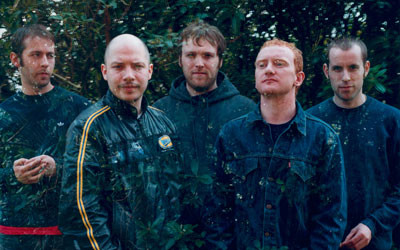
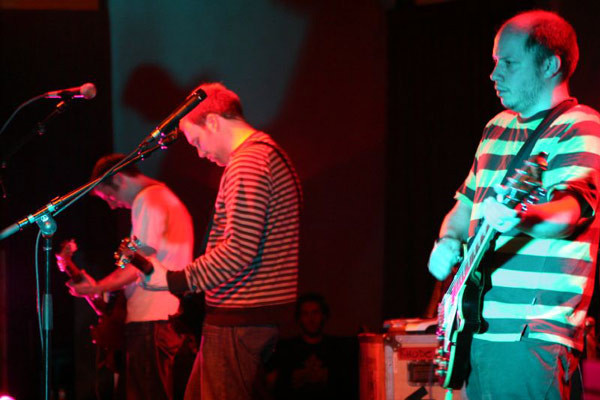
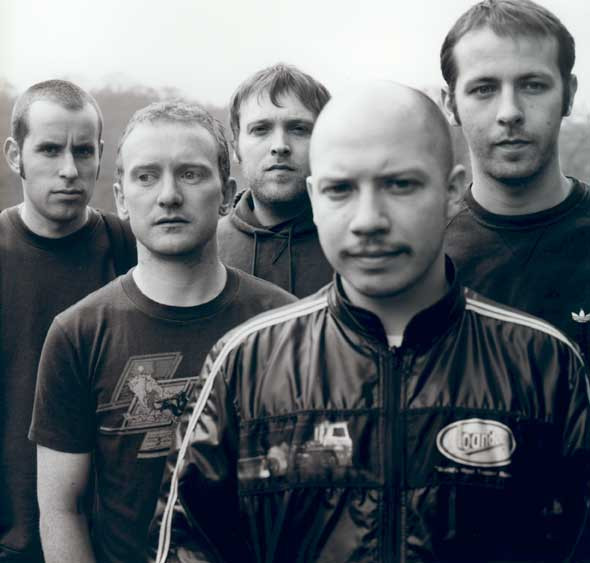
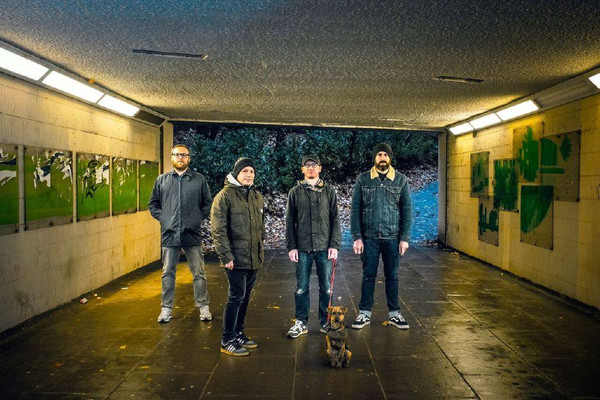
ALICE COOPER-THE WARNER BROS YEARS 1969-1983.
ALICE COOPER-THE WARNER BROS YEARS 1969-1983.
It was in Detroit, Michigan, on February 4th 1948, Vincent Damon Furnier was born. He would go on to become one of the biggest names in music, after changing his name to Alice Cooper in 1968. After that, Alice Cooper’s career has spanned five decades and twenty-six studio albums. This includes the fifteen albums released on Warner Bros. between 1969 and 1983. During the first fourteen years of Alice Cooper’s sometimes controversial career, he released some of the best music of his long and eventful career. However, when Vincent Damon Furnier was growing up, very few people could’ve foreseen that he would forge a career as a rock star.
Growing up as Vincent Damon Furnier life was very different. Vincent Damon Furnier grew up in Detroit, Michigan, where his father was a minister in the Church of Jesus Christ. When Vincent was eleven, he was already participating in church life. This was short-lived, and only lasted until Vincent was twelve.
By then, he was attending Nankin Mills Jr. High School, and was suffering from a variety of illnesses. This resulted in the Vincent’s father moving the family to Phoenix, Arizona.
Having moved from Detroit to Phoenix, Vincent attended Cortez High School in North Phoenix. After leaving high school, Vincent attended Glendale Community College, where he graduated with a Bachelor of Fine Arts. By then, Vincent’s musical career was well underway. It began in 1964, when Vincent and the members of the school’s cross-country team, formed a group The Earwigs.
They entered the annual high school talent show. The Earwigs performance saw the mime to various Beatles’ songs. Somehow, this was enough for The Earwigs to win the first prize. This was enough to whet Vincent’s musical appetite. Soon, The Earwigs were renamed as The Spiders. The newly formed group’s lineup featured Vincent on vocals; lead guitarist Glen Buxton, rhythm guitar John Tatum, bassist Dennis Dunaway and drummer John Speer. Mostly, The Spiders played cover versions of songs by British Invasion bands. This included The Beatles, The Who, Rolling Stones and The Kinks. Soon, though, The Spiders’ thoughts turned to recording their debut single.
Why Don’t You Love Me was recorded in 1965, and became The Spiders’ debut single. For the recording of Why Don’t You Love Me, Vincent had to learn the harmonica. On the flip side was a cover of Hitch Hike, which had given Marvin Gaye a hit. The single was then released on Mascot Records, which was owned by local music impresario Jack Curtis. He was a concert promoter, owned the Stage 7 club, where The Spiders had a residency. Things were going well for The Spiders, who were set to graduate high school in 1966. Having all graduated in 1966, change was on the horizon.
Michael Bruce replaced rhythm guitarist John Tatum. The new recruit played on The Spiders’ sophomore single Don’t Blow Your Mind. Although this was one of the first songs The Spiders had penned themselves, it went on to reach number one locally. By 1967, The Spiders’ star was in the ascendancy.
They were travelling as far afield as Los Angeles, to play live. It was around this time that The Spiders changed their name to Nazz, and released Wonder Who’s Lovin’ Her Now? On the B-Side was a song that would reappear later, Lay Down and Die, Goodbye. It would become an Alice Cooper favourite. Before that, drummer John Speer was replaced by Michael Speer, and Nazz relocated.
Like many bands before them, Nazz decided to move to L.A. From he birth of rock ’n’ roll, bands always moved to where the record companies, recording studios and prestigious clubs were. Nazz were no different, and decided moved to L.A. where they hoped they could attract the attention of a record company. However, there was a problem. Word got back to the members of Nazz, that Todd Rundgren had a also a band called Nazz. It had been around longer, so the members of Nazz had to come up with a new name. This was when Alice Cooper was born.
Many myths surround the naming of Alice Cooper. However, the most plausible was, that Alice Cooper was the name of a character in an American television series Mayberry R.F.D. It was shown on CBS, one of the biggest television networks. So in homage to Mayberry R.F.D., Nazz became Alice Cooper. So did Vincent Damon Furnier. The twenty-one year old singer, songwriter and musician saw the potential in adopting a persona. That persona, allowed him to portray various “characters.” This varied from album to album. However, with Vincent’s sense of theatre, drama, flamboyance and showmanship, this would prove crucial not just to the success of the band Alice Cooper, but later, his solo career. Before that, Alice Cooper the band, attracted the attention of Frank Zappa.
Ironically, this came after a particularly disappointing gig. Alice Cooper only played ten minutes at the Cheetah club in Venice, California. That was enough for Alice Cooper to clear the room. That was a disaster. However, for Alice Cooper, every cloud had a silver lining. Shep Gordon, who managed various bands, approached Alice Cooper. He realised that Alice Cooper had potential, and it was just a matter of guiding them, and pointing them in the right direction. This included arranging an audition with Frank Zappa, who had just founded a new record label, Straight Records.
Being a new label, Frank Zappa’s Straight Records were looking to build up a roster of artists. So Shep Gordon arranged for Alice Cooper to audition at Straight Records. The time of the audition was seven o’clock. What the members of Alice Cooper didn’t realise, was that they were meant to arrive at Frank Zappa’s house at 7pm. Instead, they arrived at 7am. This could’ve proved disastrous, but didn’t. After hearing Alice Cooper’s brand of psychedelic rock, Frank Zappa offered the band a three album deal, which they accepted. Now Alice Cooper could begin work on their debut album, Pretties For You.
Pretties For You.
Now signed to Straight Records, the five members of Alice Cooper began recording what became Pretties For You. Producing the album, were producers Ian Underwood and Herb Cohen. They oversaw the recording of thirteen tracks, penned by the five members of Alice Cooper.
This included the rhythm section of drummer Neal Smith, bassist Dennis Dunaway and rhythm guitarist Michael Bruce. They were augmented by lead guitarist Glen Buxton and Alice Cooper on lead vocals. That’s apart from on Sing Low, Sweet Cheerio, which features Michael Bruce on lead vocal. Throughout the album, effects are used extensively. They add to what Alice Cooper saw as an ambitious and innovative album of psychedelia. Guiding Alice Cooper through the musical maze that was their debut album were producers Ian Underwood and Herb Cohen. However, it was more than an psychedelic album.
Pretties For You was an album that had obviously been influenced by Pink Floyd. Especially, The Piper At The Gates Of Dawn. However, psychedelia wasn’t the only influence on Pretties For You. There’s also a jazz influence, on Pretties For You, as Alice Cooper experiment with various time signatures. Avant garde and experimental music influenced Alice Cooper as they worked on their debut album.
These eclectic influences lead to criticism of Pretties For You. For some critics, Pretties For You was just too left-field an album. They didn’t understand the eclectic influences that had shaped the album. Nor did they understand the constant changes in tempo and time signatures. Reviews ranged from unfavourable to mixed. This didn’t augur well for the release of Pretties For You. June 1969 saw the release of Pretties For You. The album stalled at 193 in the US Billboard 200. This was disappointing for Alice Cooper, who were about to receive some unwelcome publicity.
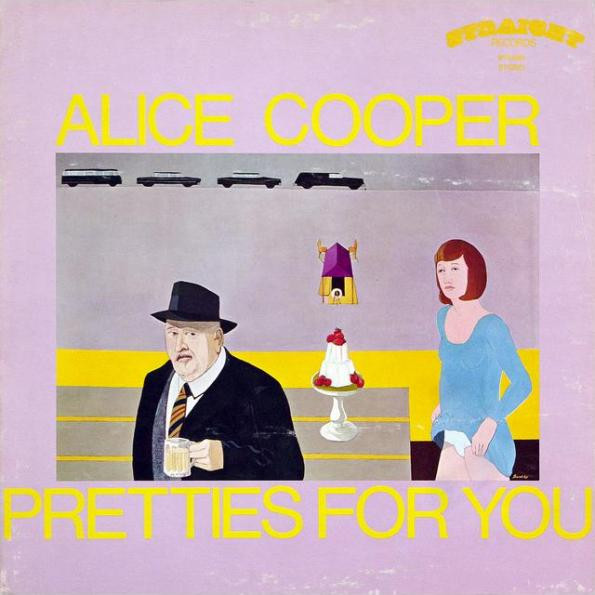
On September 13th 1969, Alice Cooper were playing at the Toronto Rock and Roll Revival. Mid-set, a chicken flew onto the stage. Alice Cooper thinking the chicken could fly, threw it off the stage. What happened next is unclear. Allegations were made that when the chicken was thrown off the stage, it was ripped to pieces. By the next day, newspapers were reporting that Alice Cooper had bitten the head off the chicken.
The next day, Frank Zappa phoned Alice Cooper to establish what exactly happened. Alice Cooper denied the story. Frank Zappa thinking that all publicity is good publicity, told him to admit to biting the head off the chicken and drinking its blood. This was the worst advice he could’ve given Alice Cooper. The story has haunted him, and has harmed his career. For many people, his name is synonymous with that story. Once the controversy had started to die down in 1969, Alice Cooper began work on their sophomore album Easy Action.
Easy Action.
Despite Alice Cooper’s newly acquired hell raising image, he was in fact, a very different person. The title to Alice Cooper’s sophomore album, Easy Action, came from a line in West Side Story. It featured nine new tracks, penned by the five members of Alice Cooper. No longer were all the tracks credited to the five members of the band. Now, it was every man for himself, as work began on Easy Action.
The nine tracks tracks that became Easy Action were recorded between late-1969 and early 1970. Producing Easy Action was David Briggs. The change of producer was meant to bring a change in fortune for Alice Cooper. That wasn’t to be. When critics heard Easy Action, they weren’t impressed. Reviews were far from flattering of what was a commercial type of psychedelia. Later, even members of the band weren’t impressed with Easy Action. Drummer Neal Smith felt it resembled the music was more like a: “TV or radio commercial.” Part of the blame lay at producer David Briggs’ door. Neal Smith remembers “he did not help with song arrangement or positive input in any way.” It’s not surprising that when Easy Action was released, it wasn’t a commercial success.
Easy Action was released in March 1970, and disappeared without trace. Alice Cooper’s sophomore album sunk faster than the Titanic. With just one album left on their contract with Frank Zappa’s Straight Records, Alice Cooper needed a break.

Love It to Death.
Even Frank Zappa seemed to be having his doubts about Alice Cooper. He decided that Alice Cooper released a single before releasing what became Love It to Death. The song chosen, was I’m Eighteen, which showcased Alice Cooper’s new, hard-rocking sound.
This was the third single Alice Cooper had released, but the first to chart. I’m Eighteen reached number twenty-one on the US Billboard 100. Alice Cooper got the green light to record their third album, Love It to Death.
For the recording of Love It To Death, a new production team of Jack Richardson and Bob Erzin were brought onboard. Bob Erzin had earned his stripes producing the hit single I’m Eighteen. Now he and Jack Richardson had to hone Alice Cooper’s new sound. The one-time freak psychedelic band had reinvented themselves as a swaggering, hard-rocking band. Elements of hard rock and heavy metal melted into one, on Love It To Death. Every member of Alice Cooper had played a part in writing the nine songs. Alice Cooper wrote Second Coming, and cowrote I’m Eighteen and Is It My Body with the rest of the band. These tracks, and the rest of the album were recorded at RCA Mid-American Recording Center, Chicago and scheduled for release on March 8th, 1971.
Before that, critics had their say on Love It To Death. They were won over by Alice Coopers, swaggering, aggressive and ballsy hard-rocking sound. They were a group reborn sonically and stylistically. Om Love It To Death’s album cover, Alice Cooper wore dresses and makeup. This would prove controversial in the conservative parts of America. That didn’t seem to affect album sales. When Love It To Death was released, it reached thirty-five in the US Billboard 200. Having sold one million copies, Love It To Death was certified platinum. Elsewhere, Love It To Death proved popular in Canada and Britain. Alice Cooper’s career was well underway.
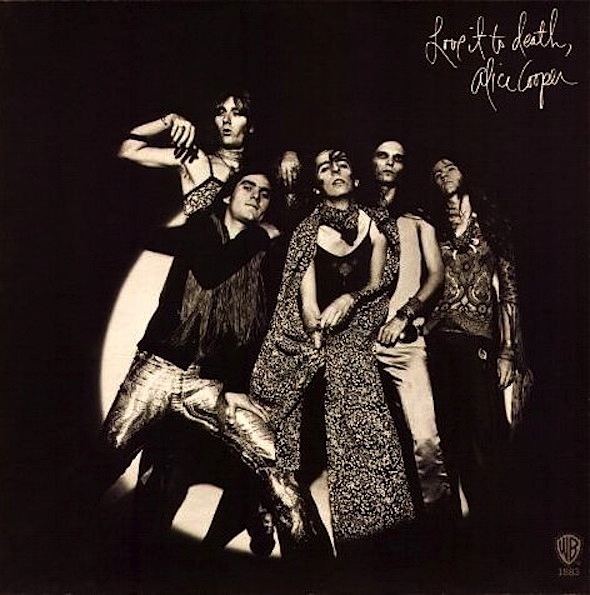
Killer.
Having released Love It To Death on Straight Records in conjunction with Warner Bros., Alice Cooper’s three album deal with Frank Zappa was up. The members of Alice Cooper knew that to move to the next level, they needed the major label machine behind them. So they signed to Warner Bros. and began work on their fourth album, Killer.
Alice Cooper didn’t waste time before returning to the recording studio. They were keen to build on the success of Love It To Death. So Alice Cooper headed to RCA Studios, in Chicago to record eight new tracks with producer Bob Erzin.
Again, various members of Alice Cooper wrote or cowrote tracks. This included Alice Cooper, who cowrote five tracks. Among them, were ou Drive Me Nervous which Alice cowrote with Michael Bruce and producer Bob Erzin. He cowrote two tracks, and was quickly, becoming an important part of the Alice Cooper success story.
That success, if the critics were correct, would’ve ground to a halt. Many reviews of Killer were far from positive. Killer was seen as licking the cohesion of Love It To Death, and revisited the erratic sound of Alice Cooper’s first two albums. Robert Christgau had some strong words; referring the album as “surreal,” “theatrical,” and let us not forget “transvestite” trappings”. Adding to irony of Robert Christgau’s comments, are his comments about the weakness of Under My Wheels and Be My Love.
When the singles were chosen from Killer, Under My Wheels reached fifty-nine, before Be My Love surpassed this, reaching number forty-nine in the US Billboard 100. While neither single matched the success of I’m Eighteen, it was obvious that Alice Cooper were on the right road. Especially when Killer was released in November 1971, and reached twenty-one on the US Billboard 200. This was enough for Alice Cooper to receive their second platinum album. Could they make it three in a row?
School’s Out.
Alice Cooper arrived at The Record Plant, New York early in 1972. They were about to begin work on their fifth album in three years. By then, Alice Cooper and the rest of the band were just twenty-four. Success had come quickly, and they were living the rock ’n’ roll dream. The Record Plant was one of New York’s premier studios. However, Alice Cooper were well on their way to becoming one of America’s biggest bands. A lot depended on their fifth album, School’s Out.
For School’s Out, Alice Cooper played a bigger part in the songwriting process. He cowrote seven of the nine tracks. This included cowriting the anthemic School’s Out with the rest of the band; and My Stars with Bob Erzin. Again, Bob Erzin cowrote two tracks on what’s loosely described as Alice Cooper’s first concept album.
School’s Out dealt with school, and coming of age. The album opener was the future Alice Cooper classic, School’s Out. It would reach number two in the US Billboard 100, number three in Canada and number one in Britain. Since then, it’s been a staple of Alice Cooper’s live shows. However, when School’s Out was released in June 1972, nobody realised how popular the single and album would become.
When critics heard School’s Out, they realised that it wasn’t just an album hard rocking music. There was a hint of glam rock, like on Killer, and a nod to art rock. Essentially, Alice Cooper were spreading their wings stylistically. That didn’t seem to matter. Reviews of School’s Out ranged from mixed to favourable. Partly, that was because some critics looked down on the theatre, drama and showmanship of Alice Cooper, and their live shows. It was only later that critics would rethink their opinions on Alice Cooper. So with disappointing reviews preceding the release of School’s Out, there was no hint that Alice Cooper were about to release the most successful album of their career.
When School’s Out was released, the record vinyl was wrapped in a pair of paper pants. This must have seemed like a good idea at the time. However, it later transpired that the material the paper pants were made out of, were flammable. By then, School’s Out was racing up the charts.
June 1972 saw the release of School’s Out, which reached number two in the US Billboard 200. This resulted in the third platinum album of Alice Cooper’s career. Elsewhere, from Canada to Australia, Europe and Britain, School’s Out found its way into the top ten. Alice Cooper were now one of the biggest bands on planet rock.
Billion Dollar Babies.
Just two months after the release of School’s Out, Alice Cooper began work on their sixth album, Billion Dollar Babies. By then, Alice Cooper were touring School’s Out. So the album was recorded in studios on both sides of the Atlantic with Bob Erzin.
Three studios were used to record Billion Dollar Babies. Sessions took place at The Galecie Estate, Greenwich and The Record Plant, New York were the two American studios Billion Dollar Babies was recorded at. Other sessions took place at Morgan Studios, London. A total of ten songs were scheduled to be recorded for Billion Dollar Babies. Of these ten tracks, nine were cowritten by Alice Cooper. Again, Bob Erzin collaborated on two tracks and added keyboards as Alice Cooper celebrated their good fortune.
The album title, Billion Dollar Babies, was a result of the money coming Alice Cooper’s way. After four years releasing records, the members of Alice Cooper were very rich young men, and able to buy whatever they wanted. Suddenly, people who previously, wouldn’t have looked their way, wanted to know them. This included women who wanted to date them; and men wanted to befriend them, hoping some of their good fortune would come their way. However, there was also a darkness to Billion Dollar Babies.
During Billion Dollar Babies, Alice Cooper explored the sick perversions that some people have. The album titles hint at the darkness within Raped and Freezin’, No More Mr. Nice Guy, Sick Thing and I Love The Dead. Other themes included fear of dentists, horror and sexual harassment. This was all part and parcel of Alice Cooper’s most controversial album. How would critics respond to Billion Dollar Babies?
Ironically, Billion Dollar Babies received some of the best reviews of any Alice Cooper. Critically acclaimed described the reviews. The only criticism was that Billion Dollar Babies lacked an obvious single. That proved not to be the case.
Four singles were reeled from Billion Dollar Babies. Elected was the lead single in 1972, and reached number twenty-six on the US Billboard 100. Hello Hooray then reached thirty-five on the US Billboard 100 1973. No More Mr. Nice Guy reached number twenty-five on the US Billboard 100. The final single was Billion Dollar Babies, which reached number fifty-seven on the US Billboard 100. That didn’t matter though.
When Billion Dollar Babies was released on February 25th 1973, it reached number one in Britain and America. Billion Dollar Babies was certified platinum in America, and gold in Canada. Elsewhere, Billion Dollar Babies reached the top ten everywhere from Australia to Austria, Germany and Norway. In the Netherlands, Billion Dollar Babies reached number one. Alice Cooper had just enjoyed the most successful album of their career. Now they set about touring Billion Dollar Babies.
Following the release of Billion Dollar Babies, Alice Cooper embarked upon an ambitious tour of America. Alice Cooper were all set to play sixty-four dates in fifty-nine cities in ninety days. This tour was meant to gross over $20 million.
Alice Cooper played each night against a set that would put many Hollywood theatres to shame. Each night, between forty and fifty road crew arranged 26,000 pounds of equipment. The list of equipment ran to page after page. Despite this, the concert which veered towards theatre and horror show, grossed only $4 million. This was disappointing for Alice Cooper. Worse was to come. The followup, Muscle Of Love, would prove to be Alice Cooper’s swan-song.

Muscle Of Love.
Following the success of Billion Dollar Babies, Alice Cooper began work on the followup, Muscle Of Love. It marked a change of style and sound. Gone was the theatre of Billion Dollar Babies, to be replaced by a much more back to basics rock ’n’ roll sound of Muscle Of Love.
Recording of Muscle Of Love took place at Sunset Sound, Hollywood, The Record Plant, New York and The Cooper Mansion, Greenwich. That’s where the nine tracks were recorded. They were all cowritten by Alice Cooper. He was forming a successful songwriting partnership with Michael Bruce. They cowrote four songs, and cowrote another four with various songwriting partners. However,one man was missing, producer Bob Erzin.
For the first time since Easy Action, Bob Erzin was missing. The official line was, that he was recovering from an illness. However, later, Dennis Dunaway alleged that Michael Bruce had an argument with Bob Erzin when the producer refused to change the arrangement of Woman Machine. This argument lead to Bob Erzin splitting with Alice Cooper, and Jack Richardson and Jack Douglas replacing him. The result was a concept album, which was far from Alice Cooper’s finest hour.
Just like School’s Out, Muscle Of Love can be loosely described as a concept album. This time, the subject matter Alice Cooper claimed was ”urban sex habits”. Alice Cooper seemed to like to walk on the wild side, and shock conservative middle America. Critics were also shocked. Not at the subject matter, but the quality of the album.
Critics weren’t impressed by The Jack Richardson and Jack Douglas produced Muscle Of Love. Reviews ranged from the good, bad and indifferent. Only Creem gave Muscle Of Love a positive review. They seemed to see something nobody else did.
Muscle Of Love as a mixed bag was, and still is, one of the worst albums in Alice Cooper’s career. It’s down there with Alice Cooper’s sophomore album Easy Action. Neither Jack Richardson nor Jack Douglas were able to replace Bob Erzin. That became clear when Muscle Of Love was released on November 20th 1973.
On its release Muscle Of Love reached number ten on the US Billboard 200, and was certified gold. Elsewhere, Muscle Of Love reached number four in Canada, and was a minor hit in Australia and Britain. It was a disappointing way for the Alice Cooper story to end.
Members of Alice Cooper decided to put the band on hold. This allowed Alice Cooper to forge a career on television. Meanwhile, Alice Cooper’s Greatest Hits was released in August 1974, and reached number eight on the US Billboard 200. This stopped people forgetting about Alice Cooper. So did the release of the feature film Good To See You Again, Alice Cooper, which featured footage of the band live. However, by then Alice Cooper were history.
Alice Cooper said farewell during a South American tour, which took place during March and April 1974. One of the highlights of the tour was playing un front of 158,000 fans in Sao Paulo, Brazil. This wasn’t the end of the Alice Cooper story. Far from it.
Alice Cooper returned in 1975, having changed his name officially to Alice Cooper. This meant there were no legal problems for him using his former band’s name. He was now touring as a solo artist, using what was now regarded as his real name, Alice Cooper.
Alice Cooper-The Solo Years.
Welcome To My Nightmare.
Having now embarked upon a solo career, Alice Cooper brought back Bob Erzin. He had been badly missed on Muscle Of Love. He wasn’t just a producer, but a songwriter, keyboardist and confident.
On Welcome To My Nightmare, Bob Erzin cowrote six of the ten tracks with Alice Cooper. He worked with various songwriting partners, including singer, songwriter, musician and ‘musical impresario’ Kim Fowley. Another songwriting partner was Dick Wagner, of Lou Reed’s band.
Many members of Lou Reed’s band accompanied Alice Cooper on Welcome To My Nightmare. It was recorded at the Soundstage, Toronto and the Record Plant, Electric Lady and A&R Studios, New York during the second half of 1974 and early 1975. Once Welcome To My Nightmare was complete, Alice Cooper’s debut solo album was scheduled for release in March 1975.
Prior to the release of Welcome To My Nightmare, critics received a copy of Alice Cooper’s debut album. Just like some of Alice Cooper’s previous albums, it was a concept album. This time, it was a musical journey through the nightmares of a child called Steven. Critics however, weren’t over impressed, and reviews were mixed. One mistake was the horns that punctuated what was a fusion of heavy metal, art rock and classic rock. They were in the wrong movie. However, rescuing the album were Devil’s Food, The Black Widow, Department of Youth and Cold Ethyl. Maybe, this quartet of tracks could kick-start Alice Cooper’s solo career.
Only Woman Bleed was chosen as the lead single from Welcome To My Nightmare, and reached number twelve in the US Billboard 100. Then Department of Youth reached a lowly sixty-seven and Welcome to My Nightmare stalled at forty-five in the US Billboard 100. By then, Welcome to My Nightmare had reached number five in the US Billboard 200. This resulted in the album being certified platinum. Across the border, Welcome To My Nightmare was certified double platinum. Meanwhile, Welcome to My Nightmare was certified platinum in Britain. It looked like Alice Cooper was about to enjoy a long and successful solo career.
Alice Cooper Goes To Hell.
For his sophomore album, Alice Cooper returned to the story of Steven, which began on Welcome To My Nightmare. The next part of the story unfolded on Alice Cooper Goes to Hell.
For Alice Cooper Goes To Hell, eleven tracks were penned. Nine were written by Alice Cooper, Bob Erzin and guitarist Dick Wagner. I Never Cry was penned by Alice Cooper and Dick Wagner; while You Chasing Rainbows was a standard penned by Harry Carroll, Joseph McCarthy. These eleven tracks would be recorded in three studios.
Just like Welcome To My Nightmare, some of Alice Cooper Goes To Hell was recorded at Soundstage, Toronto and at Record Plant, New York. Other sessions took place on the West Coast, at RCA Recording Studios, Los Angeles. Accompanied by a tight, talented band of top session players, and Bob Orzin producing, Alice Cooper recorded his second solo album, Alice Cooper Goes To Hell. It was scheduled for release on June 25th 1976, with an ambitious tour following.
All wasn’t well in Alice Cooper’s personal life. He had been enjoying the rock ’n’ roll lifestyle too much. Now, Alice Cooper was a borderline alcoholic. He revealed this on I Never Cry, which was tantamount to a confession via a rock ballad. This was something Alice Cooper had some success with.
Only Women Bleed, the most successful single from his debut solo album, Welcome To My Nightmare, had been a ballad. He was hoping that lightning would strike twice, when I Never Cry was released as a single. Just like Only Women Bleed, it reached number twelve in the US Billboard 100. This augured well for the release of Alice Cooper Goes To Hell.
Much however, would depend on the critical reception to Alice Cooper Goes To Hell. Just like Welcome To My Nightmare, the reviews of Alice Cooper Goes To Hell were mixed. It seemed that Alice Cooper had struggled to release a cohesive album. Only Billion Dollar Babies was seen as a cohesive album from Alice Cooper. That had been when Alice was with the band. Three years had passed since the release of Billion Dollar Babies. The portents were there.
On the release of Alice Cooper Goes To Hell on June 25th 1976, the album stalled at twenty-seven on the US Billboard 200. It was certified gold. However, these were worrying times.
Especially when Alice Cooper was forced to cancel his 1976 Alice Cooper Goes To Hell tour. He was suffering from Anaemia. Was his lifestyle catching up on Alice Cooper?
Lace and Whiskey.
There was more than a hint that this was the case, in the title of Alice Cooper’s third solo album, Lace and Whiskey. It was a concept album with a difference. Gone was the darkness of previous albums. To replace it, Alice Cooper adopted the persona of heavy drinking, hard living, comedic P.I. Maurice Escargot. Alice Cooper even dresses as P.I. Maurice Escargot on the back of Lace and Whiskey’s album cover.
On the back of Lace and Whiskey was the track listing. There were ten tracks, including eight written by Alice Cooper, Dick Wagner and Bob Ezrin. You and Me was penned by Alice Cooper and Dick Wagner; while Charles Underwood wrote Ubangi Stomp. These ten tracks would be recorded in four studios.
Lace and Whiskey was recorded at Soundstage, Toronto, Record Plant, New York and at RCA Recording Studios, Los Angeles. Other sessions took place a the Producer’s Workshop in L.A. With many of the same top session players that played on Alice Cooper Goes To Hell, Bob Orzin got to work producing, Alice Cooper’s third solo album, Lace and Whiskey.
April 29, 1977 was when Lace and Whiskey would be released. However, by then, critics had quite rightly, torn Lace and Whiskey to shreds. Essentially, Lace and Whiskey was a rock album. However, sometimes, Alice Cooper seemed to flit between genres. This included on the easy listening ballad You and Me, and the disco tinged No More) Love at Your Convenience. Neither could be described as Alice Cooper’s finest moment. Indeed, Lace and Whiskey was the worst album of Alice Cooper’s solo career…so far.
The lead single from Lace and Whiskey was You and Me, which somehow, reached number nine in the US Billboard 100. Then Lace and Whiskey reached just forty-two in the US Billboard 200. There neither a platinum nor gold disc this time round. Despite this, Alice Cooper embarked on his King of the Silver Screen tour.
It started off in the summer of 1977, and saw Alice Cooper return to the theatre of previous tours. There were even commercials between some of the songs. So popular was the tour, that it returned in the summer of 1978, when it was renamed the School’s Out For Summer tour. By then, Alice Cooper had climbed into, and out a bottle.
From The Inside.
In 1978, Alice Cooper celebrated his thirtieth birthday. Over the last couple of years, he had been to hell and back. He spent time in a psychiatric hospital, in an attempt to cure his alcoholism. This experience he revisited on what would become his fourth solo album, From The Inside.
For From The Inside, there was a change in songwriting partnership. The lyrics to six songs were penned by Alice Cooper and Bernie Taupin; while Dick Wagner and Alice wrote the music. Alice cowrote the other four tracks with various songwriting partners, including Dick Wagner and David Foster who cowrote the title-track. One name missing, was Bob Erzin.
The man who had been at Alice Cooper’s side for the best years of his career was missing. The last time Bob was absent, had proved disastrous, when 1973s Muscle Of Love proved to be the Alice Cooper band’s swan-song. Bob Erzin’s replacement was David Foster. Could he fill the void left by Bob Erzin?
David Foster and Bernie Taupin weren’t the only new names. Guitarist Davey Johnstone and bassist Dee Murray had previously been members of Elton John’s band. They joined Alice Cooper’s band to record an album that veered between classic rock to heavy rock and a much more poppy sound. Then there was the power ballad How You Gonna See Me Now? It was later chosen would as the lead single, and reached number twelve in the US Billboard 100. Before that, critics had their say on From The Inside.
Reviews of From The Inside ranged from mixed to favourable. This was an improvement on the disastrous Lace and Whiskey. However, still, Alice Cooper hadn’t released an album that was cohesive. From The Inside was still a mixed bag of songs.
This became apparent when From The Inside was released in November 1978. It stalled at number sixty in the US Billboard 200. Then when From The Inside was released as a single, it failed to chart. For Alice Cooper, this was a disaster. Those within the music industry wondered if Alice Cooper’s career was at a crossroads?
Despite the musings of critics and industry insiders, Alice Cooper headed out on the Madhouse Rocks Tour, which followed the release of From The Inside. From February to April 1979, Alice Cooper toured America, hoping that this would improve sales of From The Inside. That wasn’t to be, and Alice Cooper wouldn’t release another album until 1980.
Flush The Fashion.
After the Madhouse Rocks Tour finished in April 1979, Alice Cooper’s thoughts turned to recording his next album. It was a time of change for Alice Cooper.
Not only did Flush The Fashion sees a stylistic change from Alice Cooper. His music veered from classic rock to hard rock and even new wave. This was a first, but showed that Alice Cooper was determined to move with the times. To help him do that, he brought onboard new songwriting partners.
Six of the ten tracks on Flush The Fashion were credited to Alice Cooper, Davey Johnstone and Fred Mandel. Alice Cooper also cowrote Dance Yourself to Death with Frank Crandall. Along with a small, tight band, featuring just four musicians, Alice Cooper recorded his first album of the eighties, Flush The Fashion. It was released on April 28th 1980.
By then, it had been a long time since Alice Cooper had enjoyed a successful album. Gold and platinum discs were a thing of the past. According to critics, that would be the case for the foreseeable future. Flush The Fashion was a decidedly average album, featuring the good, the bad and the mediocre. That became apparent when Flush The Fashion was released.
Before that, Clones (We’re All) was released as the lead single, but reached just forty in the US Billboard 100. Then Talk Talk failed to chart. When Flush The Fashion was released, it stalled at forty-four in the US Billboard 200. This was disappointing. However, a small crumb of comfort came when Flush The Fashion was certified gold in Canada. Maybe Alice Cooper’s luck was changing?
Special Forces.
By the time, Alice Cooper began recording Special Forces, he should’ve been buoyed by Flush The Fashion being certified gold in Canada. However, he was living a lie. Alice was in the throes of cocaine addiction. He was hopelessly addicted. So much so, that he recorded three albums, and can’t remember doing so. The first was Special Forces.
For the recording of Special Forces, Alice Cooper’s band had expanded to five. This included Duane Hitchings, who cowrote four songs with Alice. The pair also cowrote Vicious Rumours with two other members of the band, Erik Scott and Mike Pinera. In total, Alice Cooper cowrote nine of the ten tracks on Special Forces. The other track was a cover of Arthur Lee’s Love classic Seven and Seven Is. This track, and the rest Special Forces was produced by another new producer, Richard Podolor, who previously, had produced Three Dog Night and Stepponwolf. Could he rejuvenate Alice Cooper’s career.
The answer to that was no. Special Forces received mixed reviews. Stylistically, it was similar to Flush The Fashion, flitting between classic rock, hard rock and new wave. Just like Flush The Fashion, Special Forces was another decidedly average album. It was a long time since Alice Cooper had released an album that had critics reaching for superlatives. With each album, he seemed more like yesterday’s man. However, this wasn’t surprising.
Special Forces was the first of a trio of what Alice Cooper refers to as his “blackout albums.” So far in throes of addiction was Alice Cooper, that he can’t remember Special Forces. He probably can’t remember on The Tomorrow Show dressed in military fatigues. Alice Cooper looked gaunt, and a lot older than thirty-three. Viewers worried that this was a story without a happy ending.
When Special Forces was released in September 1981, it reached just 125 in the US Billboard 200. Elsewhere, Special Forces bombed. For Alice Cooper, and executives at Warner Bros., these were worrying times.
Despite that, Alice Cooper toured Special Forces. In Canada, Alice Cooper arrived onstage late. The Canadian audience, who had always been loyal to Alice Cooper, took umbrage. A riot ensued, and the show was cancelled. With sales slow and Alice Cooper’s asthma worsening, the tour finished in February 1982, and Alice Cooper didn’t tour again for four more years.
Zipper Catches Skin.
Following the end of his tour in February 1982, Alice Cooper began to think about what was his fourteenth album since 1969. Incredibly, he was only thirty-four. That was hard to believe. Alice Cooper looked ten years older. His lifestyle was catching up on him. It was also affecting his music. That had been apparent for a while. However, most of the time, Alice Cooper could remember recording an album. Special Forces was the first time that Alice Cooper recorded an album and can’t remember doing so. Zipper Catches Skin was the second in Alice Cooper’s “blackout” trilogy.
Stylistically, Zipper Catches Skin featured several changes in direction. Apart from the classic rock, hard rock and new wave of his last two albums, Alice Cooper added elements of pop punk and post punk. However, Alice Cooper had gotten to the post punk party late.
Other bands had pioneered the post punk sound from 1977 onwards. For Alice Cooper, however, post punk was new. He wanted to avoid the cliches that other post punk artists resorted to, on what would be lean, mean, stripped back songs.
Aiding and abetting Alice Cooper, were Billy Steele, Erik Scott and John Nazzinger. They penned Zorro’s Ascent. The Alice Cooper, John Nitzinger and Erik Scott songwriting team cowrote I Like Girls, Remarkably Insincere and Tag, You’re It. These songs were high on the sarcasm count. Make That Money (Scrooge’s Song and No Baloney Homosapiens was a track from the old songwriting partnership of Alice Cooper and Dick Wagner. They joined with Erik Scott to pen I Better Be Good and I’m Alive (That Was the Day My Dead Pet Returned to Save My Life). Along with a cover of Gary Osborn and Lalo Schifrin’s I Am The Future, these ten tracks became Zipper Catches Skin.
This time around, Alice Cooper’s band had expanded. Joining the rhythm section were four guitarists, a synth player, percussionist and backing vocalists. However, this was no ordinary band. They were tight, talented and determined to rejuvenate Alice Cooper’s career. That however, was easier said than done.
Midway through the recording of Zipper Catches Skin, Dick Wagner had enough. He didn’t like what he saw, and left. Dick described Zipper Catches Skin as an: “off to the races speedy album” and a “drug induced nightmare.” Many thought that he was exaggerating. However, he was later vindicated when the documentary Super Duper Alice Cooper was released and showed Alice Cooper smoking crack cocaine during the Zipper Catches Skin. No wonder Dick Wagner exited stage left. By then, Alice Cooper was coproducer of the second “blackout” album.
Zipper Catches Skin was being produced by Alice Cooper and Erik Scott; with Steve Tyrell producing I Am The Future. Despite this latest change in producer, still Alice Cooper wasn’t able to reach the heights of his debut album. Again, Zipper Catches Skin lacked cohesion, and was another mixed bag of songs. There were some good songs on the album. However, they were in the minority. This became apparent when Zipper Catches Skin released on August 25th 1982.
Despite Alice Cooper appearing on a television commercial for Zipper Catches Skin, it became the first album since Easy Action not to chart. Zipper Catches Skin was a long way from the days of million selling albums. Executives at Warner Bros. and critics wondered if these days were gone for good?
DaDa.
For Alice Cooper’s fifteenth album, Bob Erzin returned to try and reduce his old friend’s career. Six years had passed since the pair had worked together. Since then, Alice Cooper’s career had hit the buffers. Making a bad situation even worse, was that Alice Cooper had started drinking again. After several years sober, Alice Cooper had fallen off the wagon. He was showing no sign of climbing back onboard. This made the recording of DaDa hard work.
Despite seeing things that scared him away from the Zipper Catches Skin sessions, Dick Wagner returned. He collaborated with Alice Cooper and Bob Erzin on Former Lee Warmer, No Man’s Land, Scarlet and Sheba and Fresh Blood. The trio also cowrote Enough’s Enough, Dyslexia and I Love America with Graham Shaw. However, it was Bob Erzin who wrote the title track, which opened DaDa. Fittingly, Alice and Dick Wagner penned Pass The Gun Around, which closed DaDa. It was produced by Bob Erzin, who guided what was an experienced band through the recording of Alice Cooper’s fifteenth album, DaDa.
Just like many previous Alice Cooper album, DaDa is best described as a concept album of sorts. Thematically, DaDa is somewhat weak. It appears that the album’s central character Sonny, suffers from mental illness. This manifests itself in a personality disorder; and various personalities emerge through the album. Dada, which came complete with a Dadaist cover, was critics believed, a marginally better album than the two previous “blackout” albums. That was ironic.
Alice Cooper’s contract with Warner Bros. was almost at an end in 1983, when he released DaDa on September 28th 1983. It flitted between avant garde and experimental to classic rock, new wave and hard rock. However, Warner Bros., who had almost lost patience with Alice Cooper, didn’t seem to spend much promoting DaDa. This showed, when DaDa failed to chart. This was an ignominious end to Alice Cooper’s Warner Bros. years.
After fourteen years and fifteen albums, Alice Cooper’s Warner Bros. years were over. DaDa was the last album Alice Cooper released until 1986. During that three year sabbatical, Alice Cooper made every effort to get clean. This resulted in a brief resurgence in Alice Cooper’s career between 1986 and 1991. However, for many people, the best period of Alice Cooper’s career came between 1971s Love It To Death and 1973s Billion Dollar Babies. During that period, the four albums Alice Cooper released were all certified platinum in America. Even the Alice Cooper band’s swan-song, the rock ’n’ roll inspired Muscle Of Love was certified gold. Then when Alice Cooper embarked upon a solo career, things looked so promising.
1975s Welcome To My Nightmare was certified platinum, and Alice Cooper Goes To Hell was certified gold in America. These two albums were the finest albums of Alice Cooper’s Warner Bros. years. Other albums lack the quality of these albums. They’re mixed bags, ranging from the good, bad and indifferent. Even Alice Cooper’s trilogy of “blackout” albums feature some hidden gems. Even on his worst albums, there’s something worth hearing. It seems even in his darkest hour, Alice Cooper could produce something guaranteed to grab the listener’s attention. However, the best music of Alice Cooper’s career was released between 1971 and 1973 and includes a quartet of albums that includes Love It To Death, Killer, School’s Out and Billion Dollar Babies. They’re without doubt, the best of Alice Cooper’s Warner Bros. Years.
ALICE COOPER-THE WARNER BROS YEARS 1969-1983.

DEEP PURPLE-DEEP PURPLE IN ROCK-VINYL LIMITED EDITION.
DEEP PURPLE-DEEP PURPLE IN ROCK-VINYL LIMITED EDITION.
Without doubt, the golden era for rock music was the seventies. That was when rock music came of age. It’s certainly when commercial success and critical acclaim came the way of Deep Purple. Between 1970 and 1975 Deep Purple enjoyed worldwide success. The album that started this run of commercial success was Deep Purple In Rock. It was recently reissued on marbled vinyl by Harvest as part of their Vinyl Collector series. Only 1,000 copies of Deep Purple In Rock were produced, and a reminder of one the most successful and hardest rocking groups of the seventies in their heyday.
Vying with Deep Purple for the title of Kings of seventies rock were Led Zeppelin and Black Sabbath. Just like Deep Purple, they were hugely successful and hard rocking bands. They were also the hardest living living rock groups. This lead to them being known as the “unholy trinity of British hard rock and heavy metal.” The three groups seemed proud of their infamy, and wore it like a badge.
The “unholy trinity’s” penchant for the rock ’n’ roll lifestyle was legendary. Excess and extravagance was an everyday occurrence. Similarly, chaos and carnage was omnipresent as the “unholy trinity” toured the world. Each group seemed to determined to outdo the other. Hotel rooms were wrecked, televisions thrown out of windows and copious amounts of drink and drugs consumed. This would ultimately come at a human cost later in the seventies with the death of Led Zeppelin’s John Bonham. Until then, the party continued; and the “unholy trinity” continued to make what would be remembered as some of the best, and most memorable music of the seventies. They were living the dream. Especially Deep Purple, who had only been formed in 1968.
Deep Purple were formed in 1968 in Hertford. However, the story begins in 1967. That was when ex-Searchers drummer, Chris Curtis, contacted London based businessman, Tony Edwards, with a business proposition. Chris wanted to create a supergroup which he would name Roundabout. The idea behind the name was that the lineup was fluid. Members would come and go, on what was akin to a musical roundabout. Tony Edwards liked the idea and brought onboard Jon Coletta and Ron Hire. They named their new venture Hire-Edwards-Coletta (HEC) Enterprises. Now with financial backing, Chris Curtis started putting together Roundabout.
The first member of Roundabout was Jon Lord, a classically trained organist. He’d previously played with The Artwoods. Guitarist Richie Blackmore, who recently, had been working as a session musician is Hamburg auditioned. He too joined Roundabout. So did bassist Nick Simper, whose most recent band was The Flower Pot Men. Nick was a friend of Richie Blackmore. The two other members of Roundabout were also friends. Rod Evans was recruited as the lead vocalists. Previously, he was a member The Maze. Their drummer was Nick Paice. Nick became the final piece in the jigsaw. However, he was not the first choice drummer.
Originally, Bobby Woodman was meant to be Roundabout’s drummer. He was drummer when Rod Evans auditioned as vocalist. Richie Blackmore had seen Nick Paice playing before. Although just eighteen, Richie knew Nick Paice was a good drummer. So when Bobby headed out to buy cigarettes, Nick Paice was auctioned. Instantly, everyone realised Nick Paice was a better drummer. When Bobby returned with his cigarettes, he was no longer Roundabout’s drummer. However, at least Roundabout’s lineup was settled. Or so people thought.
Roundabout were kitted out with the finest equipment and lived at Deeves House in South Mimms, Hertfordshire. This was their home during March 1968. That was, until they headed out on a short tour of Denmark and Sweden. It was during this tour that Roundabout became Deep Purple.
It was Richie Blackmore that came up with the name Deep Purple. This was the name of his grandmother’s favourite song. That was the name he wrote on the blackboard, when everyone was asked to choose a new name for the nascent band. Deep Purple wasn’t the favourite though. That was Concrete God. However, the members of Roundabout decided against it. They felt the name was too harsh. So Roundabout became Deep Purple and began recording their debut album in May 1968.
Shades Of Deep Purple.
When Deep Purple entered Pye Studios, in Marble Arch, London Deep Purple in May 1968, they’d chosen ten songs for their debut album Shades Of Deep Purple. Seven songs were written by members of Deep Purple. The other three songs were cover versions. This included Joe South’s Hush, Lennon and McCartney’s Help! and Joe Roberts’ Hey Joe which is synonymous with Jimi Hendrix. These ten songs were recorded by the original version of Deep Purple. This included vocalist Rod Evans, drummer Ian Paice, bassists Nick Simper, organist Jon Lord and guitarist Richie Blackmore. Producing Shades Of Deep Purple was a friend of Richie’s, Derek Lawrence. Once Shades Of Deep Purple was recorded, it was released later in 1969
When critics heard Shades Of Deep Purple they weren’t impressed. Reviews were mostly negative. Since then, critics have rewritten history and most reviews of Shades Of Deep Purple are positive. Back in 1968, things were very different. Shades Of Deep Purple was perceived as unfocused. It was a mix of psychedelia, progressive rock, pop rock and thanks to Richie’s guitar riffs, hard rock. That was why many critics disliked Shades Of Deep Purple. Record buyers had different ideas about Shades Of Deep Purple,
Shades Of Deep Purple was released in July 1968 in America. It reached number twenty-four in the US Billboard 200 charts. This was no doubt helped by Hush reaching number four in the US Billboard 100 charts. Two months later, Shades Of Deep Purple reached number fourteen in Britain. For Deep Purple their debut album had been a commercial success and their lives transformed.
After the commercial success of the single Hush and Shades Of Deep Purple, Deep Purple were booked into a gruelling tour of America. Their American record company, Tetragrammaton, decided that Deep Purple should record another album. So Deep Purple headed into the recording studio in September 1968 to record The Book of Taliesyn.
The Book of Taliesyn.
Time was against Deep Purple. There wasn’t long before their American tour began. Deep Purple only had five new songs written. They had to rely upon cover versions to complete The Book of Taliesyn. Neil Diamond’s Kentucky Woman, Lennon and McCartney’s We Can Work It Out and River Deep, Mountain High completed The Book of Taliesyn. It was released in America in December 1968,
Just like Shades Of Deep Purple, The Book of Taliesyn was a mixture of psychedelia and progressive rock. The only difference was it had a harder edge. Deep Purple’s trademark sound was evolving. Critics seemed to prefer The Book of Taliesyn. It received a much more favourable reception from critics. This was also the case upon the release of The Book of Taliesyn.
Released in December 1968, The Book of Taliesyn reached number fifty-four in the US Billboard 200. Two singles were released in America. Kentucky Woman reached number thirty eight in the US Billboard 100 charts. Then River Deep, Mountain High stalled at number fifty-three in the US Billboard 100 charts. The Book of Taliesyn charted in Canada and Japan. It seemed word was spreading about Deep Purple. However, in Britain, The Book of Taliesyn failed to chart. That wasn’t the only problem Deep Purple would have.
Deep Purple.
By 1969, Deep Purple were becoming a tight, talented band. Onstage and in the studio, they were growing and evolving. This included as songwriters. Although they’d only been together just over a year, they were a much better band. They’d released two albums and toured constantly. There was a problem though. Which direction should their music take?
Some members of Deep Purple wanted their music to take on a rawer, harder sound. This didn’t please everyone. Lead vocalist Rod Evans and bassist Nick Simper were in the minority. Organist Jon Lord, guitarist Richie Blackmore and drummer Nick Paice wanted the band to change direction. With the band split, this wasn’t the best way to prepare for the recording of their third album Deep Purple.
For Deep Purple, the band were keen to turn their back on cover versions. Deep Purple only featured one cover version, Donavon’s Lalena. The eight tracks were all written by members of Deep Purple. Just like their first two albums, Deep Purple would be produced by Derek Lawrence.
Recording of Deep Purple took place during a two-month tour. Deep Purple had ensured they had some free days where they could record their third album during January and March 1969. Recording took place at the De Lane Lea Studio, London. They were familiar with the De Lane Lea Studio. Previously, Deep Purple had rerecorded The Bird Has Flown there. So, they were familiar with the room. This allowed Deep Purple to work quickly. With their reputation in America growing, Deep Purple wanted their eponymous album released as soon as possible.
As soon as Deep Purple was recorded, Deep Purple jumped on a plane and headed back to America. They rejoined the tour of the country that had claimed them as their own. There was a problem though. Tetragrammaton, Deep Purple’s American label hadn’t pressed the album. Worse than that, the label had financial problems. Within a year, they would be insolvent and filing for bankruptcy. Already, this was affecting Deep Purple. Their manager John Colleta headed home. He decided that this would save on a hotel room. Things it seemed, couldn’t get any worse for Deep Purple.
On the release of Deep Purple in June 1969, the album had a harder sound. Elements of blues, progressive rock and heavy metal combined on seven tracks. The exception was The Bird Has Flown. It veered off in the direction of classical music. Mostly, though, Deep Purple’s trademark sound was evolving. How would critics and fans respond to Deep Purple?
Given the problems with Tetragrammaton, it’s no surprise that Deep Purple wasn’t a commercial success. Tetragrammaton couldn’t afford to promote Deep Purple properly. Despite generally positive reviews from critics, Deep Purple stalled at 162 in the US Billboard 200 charts. It failed to chart in the UK on its release in November 1969. At least Deep Purple charted in Japan. Things looked up when Deep Purple was certified gold in Germany. That was the only good news Deep Purple enjoyed.
The tension that was within Deep Purple bubbled over after the release of their third album. This lead to vocalist Rod Evans and bassist Nick Simper being replaced. In came vocalist Ian Gillan and bassist Roger Glover. Little did anyone realise that this would later, be perceived as the classic lineup of Deep Purple. It was also the lineup that recorded the album that saw Deep Purple make a commercial breakthrough in Britain, Deep Purple In Rock.
Deep Purple In Rock.
With their new lineup, Deep Purple Mk II entered the studio for the second time. They made their recording debut on Concerto for Group and Orchestra which was a collaboration between Deep Purple and The Royal Philharmonic Orchestra. However, Deep Purple In Rock was the start of a new era in Deep Purple’s history.
Recording of Deep Purple In Rock took place at IBC, De Lane Lea and Abbey Road Studios. A total of seven songs were recorded. They were written by Deep Purple. These seven songs showcased the new Deep Purple. The music was heavier and more like what would be seen as their classic sound. This was essentially hard rock or heavy metal. It was after the success of Deep Purple In Rock that lead to Deep Purple being referred to as the third member of the “unholy trinity of British hard rock and heavy metal.
Deep Purple released Deep Purple In Rock on 3rd June 1970. This was Deep Purple’s first album to be released to widespread critical acclaim and commercial success. It was the first Deep Purple album to reach the top ten in Britain. Deep Purple In Rock reached number four in Britain. In America, Deep Purple In Rock only reached number 143 in the US Billboard 200 charts. Elsewhere, Deep Purple In Rock was a huge commercial success worldwide.
From Europe to Argentina, America and Japan, Deep Purple In Rock was a huge success. This resulted in gold discs for Deep Purple in America, Argentina, Britain, France and Holland. For Deep Purple, Deep Purple In Rock was a game-changer. Their decision to change direction musically was vindicated. Now, Deep Purple were one of the biggest bands in rock music. This was apparent on Deep Purple In Rock.
Speed King explodes into life, opening Deep Purple In Rock. Deep Purple’s rhythm section are at the heart of the action. Ian Paice’s drums crack and pound, and with Roger Glover’s bass, drives the arrangement along. Meanwhile, Ritchie Blackmore unleashes a blistering, searing guitar. Ian Gillan delivers a powerhouse of a vocal on this slice of good time rock. This gives way Jon Lord’s psychedelic keyboard solo. Then a scorching guitar solo is unleashed at breakneck speed. When Ian’s vocal returns, briefly, he pays homage to Little Richard with a burst of Tutti Fruti. By then Deep Purple are in full flight. It’s an impressive sound, as one of the “unholy trinity” kick loose, and showcase their considerable talents before reaching a dramatic crescendo.
Just Ritchie Blackmore’s crunchy guitar opens Bloodsucker. It’s played with speed and precision before the rhythm section join the fray. So does Ian Gillan’s powerful vocal. He’s always in control. Even when his vocal gives way to a vamp that’s reminiscent of Jimmy Page. By then, Deep Purple are in full flight. Ian is swaggering and strutting his way through the lyrics. When his vocal drops out midway through the song, Jon Lord’s keyboards and Richie’s guitar take centre-stage. They unleash peerless solos as they feed off each other. This inspires the rest of Deep Purple. Somehow they raise their game. A hard Deep Purple are accompanied by a machine gun, vampish vocal from Ian. It’s the finishing touch to this swaggering slice of glorious über hard rock.
Understated keyboards open Child In Time. They’re played slowly and thoughtfully, taking care not to overpower Ian Gillan’s vocal. It’s tender and heartfelt, but grows in power and passion. When the vocal drops out, the rhythm section and cooing harmonies combine. Soon, though, Ian’s vocal becomes a powerful vamp as the momentum grows. Ian Paice sprays machine gun drums before Ritchie Blackmore unleashes a blistering, rapid fire guitar licks. By then, the arrangement is galloping along, all the time, gathering speed. It’s akin to a jam now. Deep Purple enjoy the opportunity to stretch their legs. Jon Lord’s keyboard solo goes toe-to-toe with Richie’s guitar. That’s until the arrangement almost grinds to a halt. Then keyboards begin to rebuild the arrangement. They’re joined by Ian’s vocal, which is a mixture of drama and theatre. Later, harmonies add to the drama as the arrangement builds, before this ten minute hard rocking opus reaches a dramatic ending.
From the get-go, Deep Purple are rocking hard and fast on Flight Of The Rat. The rhythm section power the arrangement along, while scorching, blistering licks are unleashed. Ian Gillan delivers another swaggering vocal. By then, he had established himself as one of the top rock vocalists. Similarly, Ritchie Blackmore was one of the top rock guitarists, and his ability to play with speed, precision and accuracy is highlighted here. The same can be said of keyboardist Jon Lord. Meanwhile, the rhythm section anchor the arrangement, as Richie unleashes a succession of machine gun licks. There’s even a few funky licks thrown in for good measure. Then after the song almost grinds to a halt, Deep Purple are off and running. Drummer Ian Paice and Richie on guitar enjoy their moment in the spotlight, before the group reunite. They head for the big finish on what’s another epic track.
The rhythm section and guitar combine on Into The Fire. It’s slower than previous tracks, but is just as rocky and heavy. Especially as Ian Gillan delivers a gravelly, vocal powerhouse. Behind him, the deliberate arrangement features Deep Purple at their heaviest. Later when the vocal vocal drops out, a scorching guitar sits atop, the chugging arrangement. When Ian returns, he continues to unleash what’s one of his best, and most powerful vocals, as Deep Purple seamlesly fuse elements of blues, psychedelia and rock.
Drums set the scene on Living Wreck, before washes of psychedelic organ and scorching guitars enter the fray. They’re joined by another lived-in, throaty vocal from Ian Gillan. When his vocal drops out, washes and flourishes of keyboards join the rhythm section and scorching guitar. Midway through the track, the bass and keyboards add an element of darkness while searing guitars cut through the arrangement. Later, Ian who sounds as if he’s lived and survived the lyrics, delivers a vocal masterclass. Then keyboardist Jon Lord steps forward and unleashes a breathtaking performance. His keyboards play an important part in the sound and success of Living Wreck, which is a truly timeless track.
Hard Lovin’ Man closes Deep Purple In Rock. Dramatic, rocky flourishes are followed by machine gun guitars and psychedelic keyboards. They’re joined by thunderous bursts that come courtesy of the hard rocking rhythm section. Equally hard rocking is Ian Gillan powerhouse of a vocal. Again, it’s reminiscent of Jimmy Page as it soars above the arrangement becoming vampish. By then, the arrangement is galloping along. Richie Blackmore unleashing guitar licks like a gunslinger. Jon Lord’s keyboards have a sixties sounds as he plays them with speed and precision. Sometimes he stabs at them, and they wail like a siren. Later, a searing guitar solo cuts through the galloping arrangement. It became a jam, before Ian’s vocal returns. Just like the rest of Deep Purple, he plays the role of Hard Lovin’ Man to a tee, as they take their bow on Deep Purple In Rock.
Although Deep Purple In Rock was Deep Purple’s fourth album, it was the album that transformed their career. Before Deep Purple In Rock, the only success the band had enjoyed was a gold disc in Germany for their third album Deep Purple in 1969. A year later, Deep Purple In Rock was released to widespread critical acclaim and commercial success. It reached number four in Britain, but only reached number 143 in the US Billboard 200 charts. However, elsewhere, Deep Purple In Rock was a huge commercial success worldwide.
From Europe to Argentina, America and Japan, Deep Purple In Rock was a huge success. This resulted in gold discs for Deep Purple in America, Argentina, Britain, France and Holland. For Deep Purple, Deep Purple In Rock was a game-changer. Their decision to change direction musically was vindicated. Now, Deep Purple were one of the biggest bands in rock music. This success lasted until 1975.
Following Deep Purple In Rock, Deep Purple released another six albums between 1971 and 1975. These albums saw Deep Purple become one of the biggest bands in the world. This started when 1971s Fireball reached number one in Britain and thirty-two in the US Billboard 200. As a result, Fireball was certified gold in Germany, Holland and America. However, this was just the start.
Having made a breakthrough in America, Machine Head was released in March 1972. It reached number seven in the US Billboard 200 and number one in Britain. Across the English Channel, Machine Head was certified gold three times in France. In Argentina, Machine Head was certified platinum. However, Machine Head was most successful in America, where it was certified double-platinum. However, this wasn’t the end of Deep Purple’s commercial success during 1972.
On its release in December 1972, Made In Japan reached number fifteen in Britain and was certified gold. Made In Japan reached number one in Austria, Germany and Canada. In Norway, Made In Japan reached number seven. Then in April 1973, Made In Japan reached number six in the US Billboard 200. For Deep Purple, this resulted in even more gold and platinum discs.
Across the word, Made In Japan was a commercial success. After being certified gold in Britain, it was then certified gold in France. Made In Japan was then certified platinum in America, Austria, Germany and Italy. In Argentina, Made In Japan was certified double platinum. Just four years after they first formed, Deep Purple were one of the most successful rock bands in the world. This was set to continue.
When Who Do We Think We Are was released in January 1973, it reached number four in Britain and number fifteen in the US Billboard 200. This resulted in gold discs in America and France. Compared with Deep Purple’s recent success this was seemed slightly disappointing. To make matters worse, vocalist Ian Gillan and bassist Roger Glover left the band after Who Do We Think We Are. Deep Purple’s career looked like it was at a crossroads.
It wasn’t. The two departing members of Deep Purple were soon replaced. A then unknown David Coverdale became Deep Purple’s vocalist. Glen Hughes of Trapeze took over as bassist. They had big shoes to fill. However, with the help of the remaining members of Deep Purple, managed to do so during 1974. It was one of the busiest years of Deep Purple’s career.
Burn was the first of two album Deep Purple released during 1974. On its released in February 1974, it reached number three in Britain and number nine in the US Billboard 200. This resulted in gold discs in America, Argentina, Britain, France, Germany and Sweden. Then when Stormbringer was released in November 1974, it became apparent that Deep Purple had incorporated elements of soul and funk in their music. Despite this, Stormbringer reached number six in Britain and number twenty in the US Billboard 200. Stormbringer was certified gold in America,, Britain, France and Sweden. 1974 had been one of the most successful years of Deep Purple’s career. Sadly, 1975 was the beginning of the end.
When Deep Purple’s tenth album Come Taste The Band was released in October 1975, guitarist Ritchie Blackmore had left the band. Replacing him on the album was Tommy Bolin. With this latest change to the lineup, Come Taste the Band still reached number nineteen in Britain and forty-three in the US Billboard 200. Come Taste The Band was certified silver in Britain, and gold in Argentina and Czech Republic. While Come Taste The Band didn’t match the success of previous albums, that was the least of Deep Purple’s worries.
Following the release of Come Taste The Band, David Coverdale and Glen Hughes left to form Whitesnake. This lead to Deep Purple splitting up in 1976. However, Deep Purple reformed in 1984. This lasted until 1994, before Steve Morse revived the Deep Purple name. However, Deep Purple never again enjoyed the commercial success they enjoyed between 1970 and 1975.
Deep Purple’s breakthrough album was Deep Purple In Rock in 1970. This was the start of five years of commercial success and critical acclaim. During that period, Deep Purple challenged Led Zeppelin and Black Sabbath for supremacy as most successful and hard rocking band. There was also another competition going on. This was to see which of the “unholy trinity of British hard rock and heavy metal” was the hardest living band. It was a close fought and hard won contest.
Over the years, Deep Purple’s penchant for the rock ’n’ roll lifestyle was legendary. It came with the territory. This was after all, rock ’n’ roll during the early seventies. Chaos and carnage was omnipresent and expected as Deep Purple toured the world. This never seemed to affect Deep Purple’s music. Proof if any is needed, is Deep Purple In Rock. It features Deep Purple at their hard rocking, hard living best.
DEEP PURPLE-DEEP PURPLE IN ROCK-VINYL LIMITED EDITION.


BOO HEWERDINE-BORN E.P.
BOO HEWERDINE-BORN E.P.
Music courses through Boo Hewerdine’s veins. It always has, and still does. That’s been the case for over thirty years. His latest release in his Born E.P. which was released on Reveal Records. It’s the latest addition to Boo Hewerdine’s burgeoning discography. He’s come a long way from when he used to sell records, rather than make then.
The first job Boo Hewerdine had, was working in the warehouse of Andy’s Records in Bury St. Edmunds. However, Boo Hewerdine always had ambition beyond working in a record shop.
This first materialised when he formed his first band with a friend. Placebo Thing may have been a short-lived band, but it gave Boo a tantalising taste of life as a musician. Suddenly, he wanted to be making records rather than selling them.
The Great Divide.
Fortunately, he didn’t have long wait. Boo Hewerdine joined The Great Divide in the early eighties. They were another local band, but one that looked as if they were going places.
By 1982, The Great Divide had signed to a local Cambridge label, Wimp Records. Twenty-one year old Boo Hewerdine made his debut on the single Who Broke the Love Bank. Not long after this, The Great Divide caught a break, when Mike Scott of The Waterboys heard the band.
He thought that The Great Divide had potential, so recommended them Ensign Records. Executives at Ensign Records agreed, and signed The Great Divide. They went on to release a trio of singles on Ensign Records. Alas, commercial success eluded these singles. By 1985, Boo Hewerdine was back where it all started for him.
With The Great Divide consigned to musical history, Boo Hewerdine was back working in a record shop in 1985. This time, Boo Hewerdine was behind the counter of the Beat Goes On record shop in Cambridge. While this allowed Boo to be around music, he hadn’t given up on his dream of making a living as a musician. So when Boo met jazz drummer Tony Shepherd, it looked like his time behind the counter could be coming to an end.
The Bible.
Originally, Tony Shepherd was a jazz drummer when he met Boo Hewerdine. While Tony sat in with other bands, he was like Boo, between bands. So the pair decided to form a new band, and The Bible were born. They drafted in Kevin Flanagan another former member of The Great Divide. Before long, The Bible began to make an impression locally.
Soon, The Bible were a popular band locally. They had quickly acquired a cult following. Word began to spread further afield about this new band from Cambridge. This was through word-of-mouth. So it was no surprise that a record company decided to sign The Bible.
The label that signed The Bible was Black Records, a Norwich based independent label. They released The Great Divide’s 1986 debut album Walking The Ghost Back Home. It reached number ten in the UK Indie Charts, and featured two hit singles. Graceland reached number eighty-seven in UK charts, before Mahalia reached number fifteen in the UK Indie Charts. Given the success of Walking The Ghost Back Home, it was no surprise that bigger record labels started to take an interest The Bible.
Eventually, The Bible decided to sign to Chrysalis. They began work on their sophomore album Eureka. The Great Divide had decided to produce the album with Pete Smith and Owen Morris. However, the initial sessions proved unsatisfactory for the band. It was then that their management suggested bringing country rocker Steve Earle onboard to produce Eureka. This worked, and the album was scheduled for release in 1988.
Prior to the release, the reviews of Eureka were positive. Despite this, the album stalled at just seven-one in the UK. For everyone involved, this was disappointing, considering how popular The Bible were. Surely this was a blip?
Just a year later, The Bible enjoyed the most successful single of their career. A rerecorded version of Graceland reached fifty-one in the UK. It looked like things were improving for them. Then Honey Be Good reached fifty-four in the UK. However, when The Bible released their third album Dodo, it failed to chart. Things were set to get even worse.
A year later, and The Bible split-up in 1990. After five years together, and a lineup that’s best described as fluid, it looked like the end of the road for The Bible. It wasn’t.
Since then, The Bible have reformed twice. The first time came in 1994, and the second in 2011. However, then Boo Hewerdine was a successful solo artist.
Boo Hewerdine and Darden Smith-Evidence.
Once The Bible split-up, Boo Hewerdine decided to concentrate on his solo career. He knew the direction his career was heading. A meeting a year earlier had influenced the direction his music was about to head in.
This meeting took place in 1989, while The Bible were still together. That was when an A&R executive introduced him to New Country singer Darden Smith. The two realising they had much in common, decided to write and record an album together. Time was short though.
Somehow, Darden Smith and Boo Hewerdine managed to write and record an album in just nine days. This album became Evidence, which was released to critical acclaim in 1989. This was the first, but not the last time Boo would collaborate with other artists. By then, he would be a solo.
The Solo Years.
Now that The Bible had split-up, Boo Hewerdine embarked upon a solo career. This solo career began in 1990. Since then, Boo has released eight albums and a string of E.P.s. This includes the Born E.P. It was recently released by Reveal Records, and was a very personal record for Boo. He wrote the five songs at his father’s piano with his son Ben. The Born E.P is a welcome addition to Boo’s burgeoning discography.
Two years after the demise of The Bible, Boo Hewerdine released his debut album Ignorance in 1992. Critical acclaim accompanied the release Ignorance. It was a much anticipated and highly accomplished album of carefully crafted songs. However, three years would pass before the followup was released.
The reason for the delay, was that by then, Boo Hewerdine was writing for other artists. This included writing for Eddi Reader and Clive Gregson’s 1993 album Wonderful Lie. Since then, Boo has written songs for many successful artists, including KD Lang, Kris Drever, David McAlmont, Natalie Imbruglia and Alex Parks. However, this sometimes curtailed his ability to release albums quickly.
It wasn’t until 1995 that Boo Hewerdine returned with his sophomore album Worlds End. Just like Ignorance, praise and plaudits accompanied the release of World’s End. Buoyed by the response and success of World’s End, Boo released Baptist Hospital in 1996. Some critics felt that was the best album of Boo’s career. With album he seemed to be maturing and growing as a singer and songwriter. Like a fine wine, Boo was maturing with age.
So when Nick Hornby was looking for someone to write the soundtrack to the film adaptation of his book Fever Pitch, Boo got the call. The film was released in 1997, the same year that the film Twenty Four Seven was released. Boo and Neil MacColl had written the soundtrack. The other soundtrack that Boo penned for the television film Our Boy. For Boo, writing for film and television was a whole new world, and one he would return to later. Before that, Boo released a new solo album.
Three years had passed since Boo Hewerdine had released Baptist Hospital in 1996. He returned in 1999 with his fourth album Thanksgiving. It featured a guest appearance by Martha Wainwright. By then, Boo’s music was reaching a wider audience. That wasn’t surprising given the quality of songs on Thanksgiving. The Birds Are Leaving, Hope Is A Name, Our Boy, Homesick Son and A Long Winter showcased a talented singer, songwriter and storyteller. However, in 2002, Boo added another string to his bow.
This came about when Boo Hewerdine was asked to co-produce Eddie Reader’s album Angels and Electricity. Boo had written a number of songs for Eddi, but was now co-producing her albums. Soon, Boo was producing The Corrs, Heidi Talbot and Chris Difford. Along with his work as a songwriter, Boo was constantly busy. Sometimes, his solo career seemed to take a backseat. However, in 2001, Boo’s contribution to music was recognised.
In 2001, Boo Hewerdine was named as the Performing Rights Society’s songwriter in residence at The Song’s The Thing concert series in London. Boo had come a long way from when he was working in a record shop warehouse and about to form his first band. Now he was regarded as one of Britain’s top songwriters. He took to the stage during one of The Song’s The Thing concerts, and got the opportunity to showcase his skills as a singer and a songwriter. However, another opportunity for Boo to showcase his songwriting skills arose during 2001.
This came when Boo returned to the world of soundtracks. One of his songs featured in Christine Lahti‘s My First Mister. For Boo, this meant a whole new audience would hear his music. This couldn’t have happened at a better time, as Boo would released a new album in 2002.
Anon, which was released in 2002, was Boo Hewerdine’s first album of the new millennia. By then, Boo’s star was in the ascendancy. It seemed that every album he released was welcomed with open arms by admiring critics. His new album Anon was no different. Boo was consistently releasing albums of carefully crafted, thought provoking songs. That continued to be the case.
When Eddi Reader entered the studio to record her critically acclaimed album Sings The Songs Of Robert Burns, Boo Hewerdine was drafted in to co-produce the album. The result was one of the most successful albums of Eddi Reader’s career. It found favour with Burns aficionados across the world. Buoyed by the success of Sings The Songs Of Robert Burns. 2003 had been a good year for Boo.
It got even better when Boo’s song Different God was chosen to feature on the soundtrack to the film Intermission. After such a successful year, Boo’s thoughts began to turn to his solo career.
Two years later, and Boo Hewerdine returned with a new album in 2005. This was his sixth album, Harmonograph. Boo it seemed had the Midas touch, and critics heaped praise on Harmonograph. However, Boo it seemed, was in no rush to release a followup.
That wasn’t surprising. Boo Hewerdine now spending more time writing songs for other artists. He was also in demand as a producer. He also recorded a comeback album with The Bible. Money and Time was released in 2007. However, Boo hadn’t turned his back on his solo career.
Still, though, he found time to play live, and when he had the time, headed into the studio. The fruits of his most recent sessions were his seventh album God Bless The Pretty Things. It was released in 2009, and just like the albums the had preceded it, was well received by the critics. They lavished praise on God Bless the Pretty Things, which was a welcome, and some felt overdue addition to Boo’s back-catalogue.
Little did they realise it would be six years before Boo Hewerdine released another album. During that period featured on State Of The Union’s two albums. He wrote much of their eponymous debut album and shared the lead vocals with Brook Williams. This was the case when State Of The Union released their 2012 sophomore album Snake Oil. These albums weren’t the only albums Boo worked on.
When Kris Drever was recording his solo album Last Man Standing, Boo featured on the album. Last Man Standing was released in 2015, the same year that Boo released his long-awaited comeback album.
Open was released in 2015, and found Boo Hewerdine crowned the comeback King. He may have been six years since his last solo album, but the fifty-three year old’s comeback album had been well worth the wait. Critical acclaim accompanied the release of Open. However, Boo’s fans wondered when they would hear from Boo again?
Born E.P.
Little did they realise it would be so soon. Just a year later, and Boo Hewerdine recently returned with a new E.P. The Born E.P. is the first E.P. that Boo has released since Toy Box No. 2 in 2008. However, the Born E.P. is very different.
The best way to describe the Born E.P. is a very personal collection of songs. It’s a collaboration between Boo Hewerdine and his son Ben. They wrote the five songs at Boo Hewerdine’s father piano.Three of the songs, The Year That I Was Born, Bobby Fischer and Farewell were written by Boo Hewerdine. Hometown and Swimming in Mercury were written by Boo and Ben Hewerdine. These five songs were recorded at Hub Studios, in Cambridge.
When recording of the Born E.P. began at Hub Studios, Boo played most of the instruments. The exception was the piano on Farewell. It’s played byBoo’s son, Ben Hewerdine. Producing the Born E.P were Boo and Chris Pepper. Once the five songs that became the Born E.P. were complete, they were ready for Reveal Records to release recently.
Opening the Born E.P. is The Year That I Was Born. A drum pounds, as if replicating a heartbeat. It sets the scene for Boo’s piano. Soon, he’s delivering a tender, thoughtful vocal, as he reflects upon 1962, “The Year That I Was Born.” He sings of the Cold War, the Berlin Wall, President “Kennedy’s first State Of The Union Speech” and an uncertain future. Briefly, a bass synth pulsates, adding an element of drama. By then, Boo reflects upon “the trial in Jerusalem” and later, “the death of (Ernest) Hemingway.” Uncertainty and sadness it seems, are omnipresent as Boo’s vocal takes centre-stage. Meanwhile, the piano and synth play supporting roles. Later, Boo sings of “The Beatles in The Cavern, the cellar full of noise, all the post war girls and boys, in a world that might that explode.” Boo’s vocal is impassioned and heartfelt, before a vortex of ethereal, celestial sounds sit above the arrangement. Later, wonderment and hope join the uncertainty in what’s a beautiful, reflective song.
Hometown finds Boo in a reflective mood again. The arrangement is sparse as he plays the piano and sings. Straight away, he’s painting pictures; “down by the river where the birds don’t sing.” Soon, he’s singing of returning to his Hometown where he can be antonymous. However, he realises city life isn’t perfect: “they chain you up and call you free.” Still though, Boo knows: “I’ll return to my Hometown,” during what’s a carefully crafted, thoughtful, cinematic song.
The introduction to Swimming in Mercury is almost jaunty. Just a piano accompanies Boo’s vocal as he sings: “I was a boy growing in up in suburbia, you showed the future to me, skinny and pale, Swimming in Mercury.” By then, Boo has been transported back in time, as he delivers a tender, wistful vocal. He remembers: “we didn’t care, we went everywhere, Swimming in Mercury.” When Boo’s vocal drops out, the piano ensures the spartan arrangement seems to waltz along, all the time, painting pictures.
People of a certain age will remember the great Bobby Fischer. He was a chess grandmaster, who became the eleventh world champion. Many remember him for his titanic battle with Boris Spassky in 1972 in Iceland. In this piano lead song, Boo remembers, and in a way, pays homage to the man many chess aficionados regard as the greatest player ever. It’s a poignant song that brings back memories of late Bobby Fischer.
Farewell closes the Born E.P. It lasts just one minute, and features Ben Hewerdine on piano. He’s responsible for a sprightly and almost joyous track. It’s the perfect way to say Farewell, even to Boo Hewerdine’s Born E.P
Although the Born E.P. features just five songs lasting fifteen minutes, it shows what Boo Hewerdine is capable of. He wrote or cowrote the five songs on the Born E.P; played most of the instruments and co-produced it with Chris Pepper. Four of these songs are ballads, which are variously beautiful, cinematic, reflective and wistful. They find Boo Hewerdine reflecting on the first fifty-three years of his life. During those fifty-three years, Boo Hewerdine has spent thirty-three making music. The songs on the Born E.P. are a tantalising taste of what’s in store for newcomers to Boo Hewerdine.
Anyone whose yet to discover Boo Hewerdine, is about to embark upon a voyage of musical discovery. The Born E.P. which was recently released by Reveal Records is the first part of the journey. After, this the next part of the journey can be found on two further Reveal Records releases, Boo’s 2015 album Open and the compilation My Name In The Brackets (The Best Of Boo Hewerdine and The Bible). Along with Boo Hewerdine’s Born E.P, they’re part of what’s a veritable musical feast.
BOO HEWERDINE-BORN E.P.
JESSICA SLIGTER-A SENSE OF GROWTH.
JESSICA SLIGTER-A SENSE OF GROWTH.
When Dutch musician Jessica Sligter released her sophomore album Fear And The Framing in 2012, many people could’ve been forgiven for thinking that this was her debut album. After all, Fear And The Framing was the first album bearing Jessica Sligter’s name. While this was true, Jessica Slighter’s solo career began two years earlier.
Balls and Kittens, Draught and Strangling Rain.
That’s when the Oslo-based singer, songwriter and producer released her debut album Balls and Kittens, Draught and Strangling Rain. It was released on Hubro Music in October 2010. However, rather than release Balls and Kittens, Draught and Strangling Rain as Jessica decided to use the moniker Jæ.
Before the release of Balls and Kittens, Draught and Strangling Rain, critics described the album as compelling and innovative. Ballads rubbed shoulders with avant-garde, folk, jazz and psych folk. Even the most hard bitten critic was won over by Balls and Kittens, Draught and Strangling Rain. Critical acclaim accompanied the release of Jæ’s debut album in October 2010.
Upon the release of Balls and Kittens, Draught and Strangling Rain, the album sold well. It introduced the record buying public to a talented singer-songwriter. Her popularity began to grow.
This was the case for the next two years. By then Jæ had attracted a cult following across Europe. She was also preparing to releasethe followup to Balls and Kittens, Draught and Strangling Rain.
Fear And The Framing.
December 2012 was when the followup to Balls and Kittens, Draught and Strangling Rain was scheduled to be released by Hubro Music. The album was entitled Fear And The Framing. By then, things had changed.
Jessica Sligter had decided to dispense with her Jæ moniker. Instead, she was about release her sophomore album Fear And The Framing as Jessica Sligter. Although this risked causing a degree of confusion, this decision paid off.
When critics heard Fear And The Framing, they drew comparisons with everyone from Linda Perhacs to Josephine Foster, to Scott Walker and Morrisey. Superlatives were almost exhausted in an attempt to describe Fear And The Framing. Words like atmospheric, bold, captivating and melancholy were used to describe the music on Fear And The Framing. It was music made by a musical free spirit. Jessica Sligter continued to flit between musical genres, mixing elements of folk and jazz with pop. Some critics remarked that Fear And The Framing was a much stronger album. It was also a tantalising taste of what Jessica Sligter was capable of.
Since then, critics and fans of Jessica Sligter have had to be patient. Four years have passed since the release of Fear and The Framing. Since then, Jessica Sligter has been busy. Jessica Sligter has toured and has been commissioned to write several pieces of music. This has resulted in Jessica Sligter collaborating with Wilbert Bulsink and with one of Norway’s top artists and composers Susanna. However, somehow, Jessica Sligter has managed to find time to write and record her third album A Sense Of Growth.
A Sense Of Growth.
After four years away, Jessica Sligter returns with what’s without doubt, the most ambitious and abstract album of her career, A Sense Of Growth. It was recorded in Seattle, a city better known for grunge, than the abstract, genre-melting soundscapes that feature on A Sense Of Growth. The seven new songs that Jessica Sligter has penned for A Sense Of Growth, find her “deconstructing the format of song based music.” To do this, she’s brought onboard a vast cast of guest musicians.
They got to work at Avast Studios, Seattle, with Jessica Sligter taking charge of producing A Sense Of Change. Accompanying her, were a rhythm section of drummer and percussionist Dave Abramson; bassist Guro Skumsnes Moe and guitarists Håvard Skaset, Milky Burgess and Solmund Nystabakk. Andreas Stensland Løwe, Timm Mason and vocalist Randall Dunn all added synths. They were joined by Kevin Barrans on accordion and banjo, clarinetist Kristine Tjøgersen, violist Eyvind Kang, saxophonist Skerik and Sarah Jeffrey who played recorder. Vocals came courtesy of Jenny Hval, Kevin Barrans and Viljam Nybacka. Jessica Sligter played piano, synths and added vocals. Once the sessions at Avast Studios were complete, further recording took place at Malabar Studio, Oslo. Only then was A Sense Of Growth complete.
With A Sense Of Growth complete, Hubro Music scheduled the release of the album for July 8th 2016. That day, Jessica Sligter released the most ambitious album of her career, A Sense Of Growth.
Opening A Sense Of Growth is Surrounds, Surrounds Me. The introduction is both atmospheric and dramatic. Synths are to the fore. They’re variously jagged, crystalline and elegiac as this moody, cinematic soundscape unfolds. Meanwhile, a broody bass synth meanders across the arrangement. They join synths in setting the scene for Jessica’s vocal on this ballad. It’s akin to a confessional as she sings: “I went down to the city and tried to compensate for the loss that I’d caused, what a waste.” As Jessica lays bare her soul, synth strings, a sultry saxophone and viola accompany the drums that provide the slow. thoughtful heartbeat. Meanwhile, Jessica’s vocal is rueful, and full of guilt and sadness. Whatever she does, this guilt and sadness: “Surrounds, Surrounds Me” on what’s a heartachingly beautiful confessional.
Wherever You Go is another ballad; and one that not only showcases Jessica’s skill as a singer and songwriter, but as a producer. As the arrangement unfolds, it’s almost understated. Just a piano and the rhythm section combine before cascading strings accompany Jessica’s impassioned vocal on this paean. From the start,there’s doubt in her vocal: “I guess I could try to be part of some thoughts I could reconcile” This doubt continues: “I’ll go wherever you go, no worries, I imagine.” By then, Jessica combines power and emotion with sadness and frustration. She’s on an emotional roller coaster. Later, her vocal is multi-tracked, before her vocal becomes melancholy. Then later, a blistering guitar threatens to feedback. It’s reigned in, and adds an element of drama to what’s a wistful and cinematic ballad.
Distant drums join with a punchy rasping saxophone on A Sense of Growth. It’s is the first of two tracks to feature the vocal prowess of Jenny Hval. Jazz-tinged describes the introduction, before swaths of synths strings and multi-tracked vocals sweep in. They add an element of drama, before dropping out. Replacing them, are the drums and percussion. By then, another cinematic confessional is unfolding. It tells the story of how someone lost their “autonomy” and “found myself tainted and appropriated, stunned I gave all claims” Later Jessica admits “I lost my identity” and it seems confidence. It’s a heart wrenching story that Jessica and Jenny Hval make seem very real. Especially with as the two different parts of the arrangement flit in and out, one replacing the other. This results in a powerful and moving song, that reaches a poignant crescendo.
Just a wistful clarinet plays, as the bubbling sounds give way to a sample of running water. Soon, a galloping bass and drums join The Dream Dealer. Again, it features Jenny Hval. Her vocal is panned quickly, across the harmonies. That’s until Jessica takes charge of the lead vocal. It’s assured and feisty. Jessica’s vocal sits atop the galloping arrangement, as she dawns the role of The Dream Dealer: “I just supply them and demand is so high.” Meanwhile, the mournful clarinet, harmonies and the rhythm section combine as Jenny’s filtered vocal is panned. By then, the drums replicate the sound of a horse galloping along. This is in keeping with this song. So are the futuristic sounds that come courtesy of the synths. They add the finishing touches to what’s a truly inventive song that sounds as if it belongs on a 21st Century Western.
As The Smoking Tree unfolds, it has an understated, folk-tinged sound. Just a probing bass accompanies Jessica’s vocal. It’s perfectly suited to this type of song. So is the clarinet and harmonies that are added. The harmonies transform the song, and add a contemporary sound. Meanwhile, the lyrics are full of imagery from the past and social comment. Jessica’s vocal is dramatic, and starts ofd half-spoken before she sings of poverty and society divided into the haves and the have-nots.“An old woman asks me “coins to dance, then she and her man dance a dance of precarity, a jury of five, grinning and spitting sitting out rom the Gucci store.” With their rich and vivid imagery, and its fusion of folk and soulful harmonies The Smoking Tree shows another sides of Jessica Sligter.
A synth drones moodily, on Mercilessly Clear. Suddenly, a scratchy viola plays adding a cinematic sound to the drama of the drones. Then Jessica’s accusing, hurt-filled vocal enters. Soon, she’s combining power and emotion. Meanwhile, shrill strings and droning, bubbling synths meander moodily along as occasional drums punctuate the arrangement. They add a degree of drama to a powerful song that’s a mixture of music and theatre.
Run, Now! closes A Sense Of Growth. As a jagged, droning synth accompanies Jessica’s vocal, a banjo plays. Soon, she’s joined by harmonies as folk and country combine. They provide an almost minimalist backdrop for Jessica’s ethereal, emotive vocal. Occasionally, a drum pounds briefly, and later, a guitar wah-wahs. This adds a psych-folk sound. Meanwhile, synths and electronics add an avant-garde sound. Taking centre-stage are Jessica’s vocal. She combines power and emotion, while tight harmonies accompany her. While Jessica steals the show, the harmonies play their part in the sound and success of this genre-melting song. It’s ensures that A Sense Of Growth closes on a high.
While A Sense Of Growth features just seven songs lasting thirty-four minutes, it’s without doubt, the best album of Jessica Slighter’s career. Not only does A Sense Of Growth showcase a talented singer, but an equally talented songwriter and producer. Jessica’s talents as a singer, songwriter and producer have improved with each album. She’s made giant steps on A Sense Of Growth.
Partly, this is because Jessica Sligter reevaluated not just how she writes songs, but how songs are written per se. This allowed her to deconstruct and reconstruct the songwriting process. The result are seven captivating songs where Jessica lives and breathes the lyrics. She dawns the role of a storyteller, as she combines paeans, confessionals, and social comment with songs filled with hurt and pain. This includes the heart-wrenching title-track. Just like so many of the songs on A Sense Of Growth, it has a cinematic quality. Jessica dawns the role of director, and uses instruments and harmonies to help her tell these stories. This is hugely effective, and results in a truly compelling and innovative, genre-melting album.
Throughout A Sense Of Growth, Jessica Sligter flits between, and combines disparate musical genres. Everything from avant-garde, country, folk, pop, psych-folk and rock feature on A Sense Of Growth. However, sometimes, Jessica fuses various musical genres in the space of one song. This she does effectively. Sometimes, though, just the merest hint of a genre features on A Sense Of Growth. That’s the case with avant-garde and rock. Both merely play a walk-on part on the album. Regardless of this, Jessica’s ability to seamlessly combine musical genres and instruments is at the heart of A Sense Of Growth’s success.
Throughout A Sense Of Growth, Jessica Slighter uses an array of musical instruments like an artist would use his palette. However, Jessica’s choice of instruments is impeccable. She mixes and matches a variety of instruments. Some seem like unlikely bedfellows, but somehow, they work and combine create songs that are variously beautiful, cinematic, dramatic, emotive and moving. Other songs veer between elegiac and ethereal; to emotive and melancholy and sometimes, poignant and wistful. Each and every song on A Sense Of Growth is guaranted to stir an emotion and make the listener think. That’s why A Sense Of Growth is a career-deifining album from soncic inovator and explorer Jessica Sligter.
The Dutch born, but Oslo based singer, songwriter, musician and producer has come a long way since reelasing her debut album Balls and Kittens, Draught and Strangling Rain, six years ago in 2010. Since then, Jessica Sligter has been winning friends and influenced people. However, it was Jessica Sligter’s sophomore album Fear And The Framing that saw many critics forecast a great future for her. That looks like being the case. A Sense Of Growth, which was recently released by Hubro Music, is a career-defining album, and the one that should introduce Jessica Sligter’s music to a much wider audience.
JESSICA SLIGTER-A SENSE OF GROWTH.

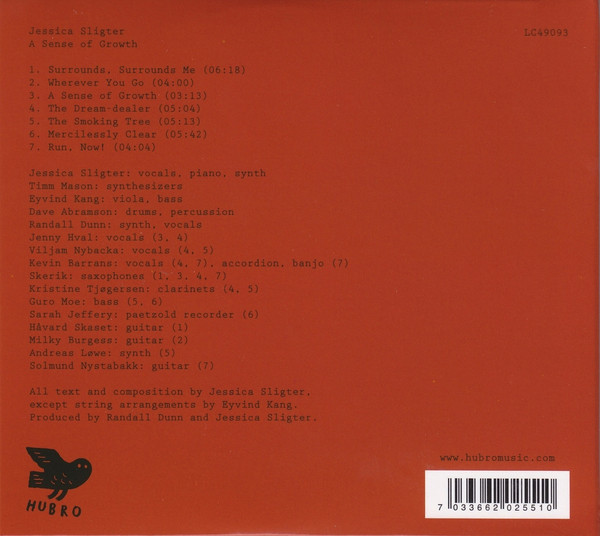
JAY STRONGMAN PRESENTS POPCORN HEARTBREAK 1958-1964.
JAY STRONGMAN PRESENTS POPCORN HEARTBREAK 1958-1964.
Throughout musical history, songwriters always revisit certain subjects. Especially, angst, betrayal, heartbreak and love lost. Countless songs have been written about these subjects. That has been the case since the birth of popular music. However, for many music lovers, the late fifties and early sixties was a golden age for songs about heartbreak.
By then, America had shaken of the post-War gloom. Americans were now enjoying peace and prosperity. Fuelled by increased government spending, the American economy was booming. This was just as well, because each year, four million baby boomers were born. The future was looking good for the next generation of Americans.
Unemployment and inflation were at a record low. Meanwhile, disposable incomes were higher than ever. Americans were spending their newfound wealth on all manner of consumer goods. They also treated themselves to the new models of cars being built by GM, Ford and Chrysler. Many of these family cars were “borrowed” by young Americans as they made their way in life.
Unlike their parents, they had grown up in an era of peace and prosperity. These young Americans were able to borrow the family car and headed off to the drive-in, high school dance or local hop. Other times, they took the family car and cruised round town, or headed to a local block party. Providing the soundtrack to these adventures was the music playing on the radio.
Back then, Americans were able to enjoy an eclectic selection of music on the radio. As they drove around, young Americans switched between radio stations, enjoying everything from country, doo-wop, Latin, pop, R&B, rockabilly and rock ’n’ roll. Sometimes, music genres were fused, resulting in a new musical genre,..soul.
This occurred purely by chance, when artists combined elements of pop, country and gospel to create a nascent soul sound. Similarly, other artists combined R&B with doo-wop harmonies to create what was a forerunner of soul. While their constituents parts were different, the result was the same; med-tempo songs featuring lyrics full of angst, betrayal, heartbreak and love lost. They would prove popular for the next few years.
Especially between 1958 and 1964, which is the period a new Jay Strongman’s new compilation covers. Jay Strongman Presents Popcorn Heartbreak 1958-1964 will be released by BBE Records on 15th July 2016. It documents an important period in American history where hope, change and fear were part of everyday life.
Between 1958 and 1964, many of the soulful songs on Jay Strongman Presents Popcorn Heartbreak 1958-1964 became favourites of young Americans. Many were high school students who should’ve been looking forward to the future. Sadly, by 1964, two dark clouds loomed large over America, the Cold War and the Vietnam War. America was about to change.
By 1964, war raging in Vietnam. A generation of young Americans were growing up fearing the draft. The thought of being forced to fight in Vietnam cast a shadow over their lives. Meanwhile, America was still reeling from loss of President J.F. Kennedy in 1963. No longer was there the same hope for the future. It was no surprise that America began to change.
So did American music. This began when the British Invasion groups arrived on American shores. Suddenly, American teenagers musical tastes changed. The soulful soundtrack of the last six years was usurped by the sound of The Beatles, Rolling Stones, The Who, The Kinks and The Animals. This wasn’t the last that was heard of the soulful sounds on Jay Strongman Presents Popcorn Heartbreak 1958-1964.
Music is cyclical, and usually comes back into fashion. That was the case with the music on Jay Strongman Presents Popcorn Heartbreak 1958-1964. It was rediscovered by Belgian DJs in the seventies, who looking for an alternative to disco.
The Belgian DJs realised that most of the disco tracks were far too fast for what they were looking for. So they cast their net further, in an attempt to discover mid-tempo songs for slow jive dancing. The mid-tempo,soulful song from a decade earlier fitted the bill the perfectly. They became the soundtrack to late night jive dancing. These soulful songs were interspersed with everything from ska to pop. This mixture of ska, pop and soul was known as Popcorn, after a song by the self-styled Godfather of Funk, James Brown. Twenty slice of popcorn feature on Jay Strongman Presents Popcorn Heartbreak 1958-1964.
Among the twenty artists who feature on Jay Strongman Presents Popcorn Heartbreak 1958-1964 are Hillard Street, Varetta Dillard, Jesse James, The Gainors, Dolly Lyon, Brook Benton and Cindy Devereaux. That’s not forgetting contributions from Anna King, Johnny Wells. Timi Yuro and Lew Conetta. Each of these artists have their own tale of heartbreak to share on Jay Strongman Presents Popcorn Heartbreak 1958-1964.
The most important songs on any compilation is the first one. Jay Strongman Presents Popcorn Heartbreak 1958-1964 is no different. It’s imperative that the right song is chosen, as it sets the tone for the compilation. In those days of short attention spans, if the wrong song is chosen, often a potential purchaser will move on. Jay Strongman realises this, and had chosen well.
The song he’s chosen to open Jay Strongman Presents Popcorn Heartbreak 1958-1964, is Hillard Street’s River Love. This was a James Parker and Florence Keller composition. It was chosen to be Hillard Street’s debut single for Capitol. River Love was released in November 1958. It’s propelled along by Latin percussion, while shrill, cinematic strings and doo-wop harmonies accompany Hillard Street’s jazz-tinged, soulful vocal. This proves a potent and heady brew, and whets the listener’s appetite for the rest of the compilation.
Jesse James will be a new name to most people. That’s not surprising; as he only ever released the one single, Dreams Never Hurt Nobody. This was an Eddie Curtis composition. It’s a Lutz and Kipness Production, that was was released on Musicor in May 1961. However, commercial success eluded Dreams Never Hurt Nobody. That’s despite Jesse delivering a needy, lovelorn vocal, which is accompanied by a crystalline guitar, braying horns and quivering harmonies. They combine to create a song that epitomises everything that is good about the popcorn genre.
In 1962, Patsie Slater released her one and only single Yes You Did. Tucked away on the flip side was one of Patsie Slater’s compositions, A Tear. It was arranged by Bobby Smith. He’s responsible for an understated arrangement where jazz and R&B combine. It’s the perfect accompaniment for Patsie. She delivers the lyrics to this soul-baring ballad as if she’s lived and survived them.
Bubbling pizzicato strings set the scene for the vocal on The Gainors’ Tell Him. Already it’s obvious something special is unfolding. Suddenly, it’s 1963 all over again, and one can imagine this Van McCoy composition playing on car radios and jukeboxes. Alas, that wasn’t to be. When Tell Him was released on the Talley-Ho label in 1963, incredibly, this soulful and heartfelt plea failed commercially. Now fifty-three years later, it makes a welcome return on Jay Strongman Presents Popcorn Heartbreak 1958-1964 and is my highlight of the compilation.
Dolly Lyon’s Palm Of Your Hand is a jazz-tinged slice of R&B. It was originally released on Apollo Records in 1957. Sadly, it’s an all too familiar story. When the single was released in 1957, it failed to find the audience it deserved. After this the single became a rarity. Even during the popcorn era, collectors struggled to find copies of Palm Of Your Hand. However, in February 2011, the Popcorn label rereleased Palm Of Your Hand. Belatedly, a new generation of record collectors were able to rediscover this hidden gem. That will be the case upon the release of Jay Strongman Presents Popcorn Heartbreak 1958-1964.
Mention the name Brook Benton, and most people think of his cover of Rainy Night In Georgia. That’s just one single in a long and illustrious career. Way back in July 1960, Brook Benton was signed to Mercury Records and was preparing to release his new single Kiddio. This was a song Brook and Clyde Loverne had written. When Kiddio was released as a single, it reached number seven on the US Billboard 100 and number one on the US R&B charts. That is no surprise. Brook Benton’s phrasing and delivery is perfect. He delivers a tender, needy and heartfelt vocal on this jazz-tinged and soulful tale of heartbreak.
Cindy Devereaux is another artist whose career amounted to just the one single. This was a cover of Loverne’s Sing On Baby. It was released on Mercury Records in 1960. Doo-wop inspired harmonies accompany Cindy Devereaux’s coquettish vocal, as she delivers a feisty, powerful vocal.
On the 1st of April 1963, Anna King released You Don’t Love Me Anymore as a single on the Ludix label. Hidden away on the B-Side was The Big Change, a Dixon, Edwards, Weiss composition. It was arranged by Roy Montrell and produced by Ludix Productions. Despite being relegated to the flip side, The Big Change was another hidden soulful gem. Anna King delivers a heart-wrenching vocal that’s full of hurt and heartbreak.
Although Timi Yuro’s career only began in 1961, by June 1962, she was ready to release her fifth solo single. By then, she had enjoyed four hit singles. Her most successful single was her debut, Hurt. Not only did it reach number four in the US Billboard 100, but reached twenty-two in the US R&B charts. Since then, Timi Yuro had struggled to replicate the success of Hurt. So it was important that Timi’s fifth single got her career back on track.
The song chosen was What’s A Matter Baby (Is It Hurting You). It was penned by Joy Byers and Clyde Otis, who produced the single. When it was released in June 1962, it reached number twelve in the US Billboard 100, but reached sixteen in the US R&B charts. Timi Yuro was back on track. That was no surprise. What’s A Matter Baby (Is It Hurting You) featured a vocal that was a mixture of defiance, hurt, frustration and anger. This makes Timi Yuro’s vocal one of the most emotive on Jay Strongman Presents Popcorn Heartbreak 1958-1964.
The final track of any compilation has to be a good one. It should leave the listener wanting more. There’s nothing more frustrating than sitting through a compilation only to discover that the compiler has run out of good music. When that happens, it’s something of a damp squib. Thankfully, Jay Strongman has dug deep.
Closing Jay Strongman Presents Popcorn Heartbreak 1958-1964 is Lew Conetta’s You Got Me Crazy. Theodore Conyers and Lloyd Pemberton cowrote the song, which was released on Decca in 1957. A desperate Lew Conetta delivers a needy, pleading vocal, as he lays bare his hurt and heartbreak for all to see. It reached a dramatic and memorable crescendo. Nobody will forget Lew Conetta’s You Got Me Crazy in a hurry.
That is the story of Jay Strongman Presents Popcorn Heartbreak 1958-1964. This twenty track compilation will be released by BBE Records on 15th July 2016. Jay Strongman Presents Popcorn Heartbreak 1958-1964 takes the listener back nearly sixty years, and documents what was an important period in American history.
Having shaken off the post-War gloom, America was now enjoying peace and prosperity. This was the case in 1958, the start of the period that Jay Strongman Presents Popcorn Heartbreak 1958-1964. Some of the songs on the compilation may have provided the soundtrack as American teenagers cruised their local town, en route to hops, high school dances and block parties. However, within the six years, it was the end of the innocence.
In 1964, America was still reeling from the death of President J.F. Kennedy in 1963. The war was raging in Vietnam, and a generation of young Americans were growing up fearing the draft. The thought of being forced to fight in Vietnam cast a shadow over their lives. Gone was the hope that seemed to be omnipresent during the seventies. It was no surprise that America began to change. So did music.
The soulful sounding music on Jay Strongman Presents Popcorn Heartbreak 1958-1964 fell out fashion until the seventies. It was only when Belgian Popcorn DJs are looking for an alternative to disco that they discovered the mid-tempo, soulful sounds on
These mid-tempo,soulful song from a decade earlier fitted the bill the perfectly. They became the soundtrack to slow dancing, late at night at Popcorn nights across Belgium. Before long, Popcorn nights weren’t just confined to Belgium, and they grew in popularity.
Nearly forty years later, and even today, there are still Popcorn nights being organised in clubs. This is testament to the music that is played at these nights. It’s truly timeless, and is a reminder of another musical age.A reminder of this music can be found on Jay Strongman Presents Popcorn Heartbreak 1958-1964, with its soulful songs full of angst, betrayal, heartbreak and love lost.
JAY STRONGMAN PRESENTS POPCORN HEARTBREAK 1958-1964.

ALICE CLARK THE COMPLETE STUDIO RECORDINGS 1968-1972.
ALICE CLARK THE COMPLETE STUDIO RECORDINGS 1968-1972.
The cream always rises to the top. This may be the case in some industries, but sadly, not in the music. Far too often, hype and image triumph over talent. Meanwhile, commercial success and critical acclaim eludes truly talented artists. Chastened by the experience, many of these artists turn their back on the music industry. They’re content to return to civvy street, free from a world populated by A&R executives, PR companies and radio pluggers. At least the artist knows that they gave it their best shot. Alas, it wasn’t to be. Now they begin the first day of the rest of their life.
This is what happened to Brooklyn born soul singer Alice Clark. Her career began in 1968, and was over by 1972. During that four year period, Alice Clark recorded just fifteen songs during three recording session. This includes two singles and her 1972 album Alice Clark. These songs feature on The Complete Studio Recordings 1968-1972. It’s a sixteen track compilation which was recently released by BGP, an imprint of Ace Records. The Complete Studio Recordings 1968-1972 is an introduction to one of the soul music’s best kept secrets, Alice Clark.
Very little is known about Alice Clark. Indeed, her story is almost shrouded in mystery. All that’s known, is that Alice Clark was born in Brooklyn, and shared the same manger as The Crystals. It was her manager that introduced Alice to singer-songwriter Billy Vera.
The meeting took place at April-Blackwood Music, who at the time, were Billy Vera’s publishers. That afternoon, Billy spent time teaching her some songs that he had written. These songs would be recorded in 1969.
By the time the recording session took place, Alice Clark had taken to occasionally phoning Billy Vera. However, Alice who seems to have been a private person, only ever made small talk. Despite this, Billy remembers: “I got the impression her home life wasn’t that great.” He remembers that Alice: “had kids and belonged to a religious order.” These are the only thing Billy can remember about Alice. However, what nobody who heard Alice as she made her recording debut will forget is…her voice.
For the 1969 session, Jubliee’s studio was chosen. Billy Vera who wrote and would produce the three tracks put together a tight and talented band. The rhythm section featured drummer Earl Williams, bassist Tyrell and guitarists Butch Mann and Billy Vera. They were augmented by trumpeter Money Johnson and backing vocalist Tasha Thomas. This was the band that accompanied Alice Clark on You Got A Deal, Say You’ll Never Leave Me and Before Her Time. Alice Clark delivered confident and assured performances. Two of these songs became Alice’s debut single.
With the three songs recorded, the Rainy Day label decided to release You Got A Deal in January 1968. It was a driving slice of soul, with a feisty, vocal from Alice. Horns and harmonies accompany Alice as she’s transformed into self-assured soul singer. The flip side was Say You’ll Never, a quite beautiful ballad. A number of radio stations began playing the song. Despite this, Alice Clark’s first single wasn’t a commercial success. It was an inauspicious start to Alice’s career.
Nothing was heard off Alice Clark until March 1969. By then, Alice had recorded her sophomore single. This was the George Kerr, Michael Valvano and Sylvia Moy penned You Hit Me (Right Where It Hurt Me). On the flip-side was Arthur Mitchell and Eddie Jones’ Heaven’s Will (Must Be Obeyed). The two songs were produced by George and Napoleon Kerr. This GWP Production was released on Warner Bros. Alice Clark was going up in the world.
Alas commercial success continued to elude Alice Clark. You Hit Me (Right Where It Hurt Me), which became a favourite on the Northern Soul scene, features an impassioned, hurt-filled vocal. Just like Alice’s debut single, the B-Side was a ballad Heaven’s Will (Must Be Obeyed). It features a heartfelt vocal where the secular and spiritual collide. Just like You Hit Me (Right Where It Hurt Me), Heaven’s Will (Must Be Obeyed) Heaven’s Will (Must Be Obeyed) showcased a truly talented singer. Sadly, very few people realised this. Alice Clark was one of music’s best kept secrets.
For the next couple of years, Alice Clark was cast out into the musical wilderness. Then Bob Shad at Mainstream Records decided to take a chance on Alice Clark. Mainstream Records were moving into the soul market, are were signing artists. He decided that Alice Clark fitted the bill, and signed her to Mainstream Records.
Soon, work began on Alice Clark’s debut album. A total of ten tracks were chosen. This included a trio of Bobby Hebb songs, Charms Of The Arms Of Love, Don’t You Care and Hard Hard Promises. Among the other songs were Jimmy Webb’s I Keep It Hid; Petula Clark and John Bromley’s Looking At Life; Leonard Caston’s Don’t Wonder Why; Juanita Fleming’s Never Did I Stop Loving You and Earl DeRouen’s Hey Girl. The other songs chosen were John Kander and Fred Ebb’s Maybe This Time and Leon Carr and Robert Allen’s It Takes Too Long To Learn To Live Alone. These songs became Alice Clark.
With the material chosen, producer Bob Shad set about putting a band together. Apart from guitarist Ted Dubar, the identity of the rest of the band are unknown. However, Ernie Wilkins was drafted in to arrange the songs on Alice Clark. When it was recorded, the release was scheduled for later in 1972.
By then, three years had passed since a record bearing Alice Clark’s name had been released. You Hit Me (Right Where It Hurt Me) had disappeared without trace upon its release in March 1969. Everyone must have been hoping that history wouldn’t repeat itself. Alas, it did.
I Keep It Hid was chosen as the lead single, with Don’t Wonder Why featuring on the B-Side. On its release, I Keep It Hid sunk without trace. Worse was to come. When Alice Clark was released, the album failed to find the audience it deserved. Very few copies of Alice Clark sold. That was a great shame.
During the three years that Alice Clark had been away, she grown as a singer. She delivers a soul-baring cover of Jimmy Webb’s I Keep It Hid. It’s full of emotion hurt. Looking At Life takes on a mellow, understated and jazz-tinged sound. Suddenly, the song takes on new meaning as Alice delivers a soulful and joyous vocal. There’s a sadness in Alice’s vocal on Don’t Wonder Why, as she delivers a rueful, wistful vocal. However, wistful gives way to hope on Maybe This Time, as she sings “maybe this time love won’t hurry away?” Meanwhile, soul and jazz combine. Never Did I Stop Loving You closed side one, and is a much more uptempo track, where the band kick loose, and Alice delivers an impassioned vocal powerhouse.
Charms Of The Arms Of Love picks up where Never Did I Stop Loving You left off. It proves the perfect showcase for Alice Clark as she delivers an assured and powerful vocal. However, on the horn driven Don’t You Care, Alice combines frustration and anger, and sounds as if she’s lived and survived the lyrics. On It Takes Too Long To Learn To Live Alone, Alice delivers a vocal full of hurt, heartbreak and pain. There’s almost a cinematic quality to this breakup song. Very different is Hard Hard Promises. Horns and a Hammond organ accompany Alice as she delivers an emotive vocal powerhouse. This showcases Alice’s versatility. Hey Girl closes Alice Clark. Elements of jazz, soul and funk combine as a lovestruck Alice brings her debut album to a close.
Sadly, there was to be no followup. After Alice Clark failed commercially, Alice turned her back on music. Never again did this talented and versatile vocalist return to the studio. Alice Clark was lost to music.
During her four year career, Alice Clark had recorded just fifteen tracks. They’re a mixture of beautiful ballads and uptempo songs. On each and every song, Alice breathes life and meaning into the lyrics. Her delivers veers between heartfelt, impassioned and soul-baring, to assured, hopeful and joyous. It seems when Alice Clark stepped into a recording studio, she was transformed.
No longer was Alice Clark the quietly spoken young mother that Billy Vera remembers. Suddenly, the God-fearing Alice Clark disappeared, and was replaced by one that wore her heart on her sleeve. She was comfortable sings songs about love and love lost, and could breath life and meaning into songs about hope, hurt, heartbreak and betrayal. Despite her ability and versatility, Alice Clark commercial success and critical acclaim eluded Alice Clark.
Chastened by the experience, Alice Clark turned her back on the music industry. Nobody seems to know what happened to Alice Clark? Mystery surrounds this hugely talented singer, who should’ve gone on to enjoy a long and successful career. Sadly, that wasn’t to be.
By 1973, You Hit Me (Right Where It Hurt Me) became a favourite on the UK Northern Soul scene. Apart from that, very few people had heard of Alice Clark or her music. It would be a while before this changed.
As the years passed by, a few copies of Alice Clark found their way into bargain bins. Curious record collectors who chanced upon a copy of Alice Clark decided to take a chance on this little known album. Having paid their money, they discovered one of soul music’s best kept secrets,..Alice Clark. They were the lucky ones.
Since then, Alice Clark has become a real rarity. Anyone wanting an original 1972 copy of Alice Clark on Mainstream, will need to search long and hard. If they can find a copy, it will take at least $500 to prise it out of the hands of its owner. That was until BGP, an imprint of Ace Records, recently released The Complete Studio Recordings 1968-1972. It features everything that Alice Clark recorded during that four year period.
The Complete Studio Recordings 1968-1972 features Alice Clark’s two singles and the ten tracks on her 1972 eponymous debut album. That’s not all. There’s also two tracks that weren’t released until 2010. They’re Before Her Time which was recorded at Alice Clark’s first recording session, and an instrumental version of You Hit Me (Right Where It Hurt Me). Incredibly, these sixteen tracks on The Complete Studio Recordings 1968-1972 amount to Alice Clark’s entire back-catalogue. The Complete Studio Recordings 1968-1972 is also an introduction to one of soul music’s best kept secrets, and a singer who could’ve and should’ve enjoyed commercial success dn critical acclaim,..Alice Clark.
ALICE CLARK THE COMPLETE STUDIO RECORDINGS 1968-1972.
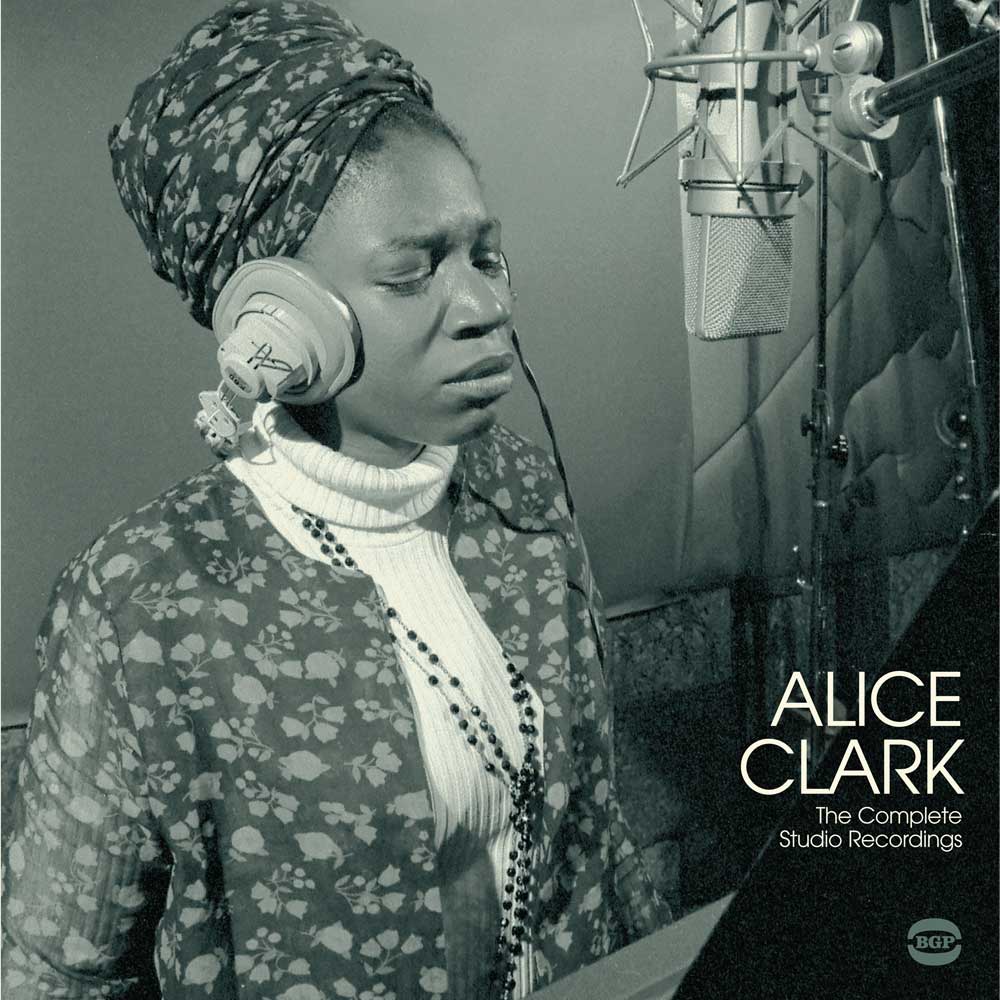





THE DOOBIE BROTHERS-THE WARNER BROS. YEARS.
THE DOOBIE BROTHERS-THE WARNER BROS. YEARS.
Between 1972 and 1980, The Doobie Brothers could do no wrong. They released eight albums, which sold in excess of ten million copies. It has been a roller coaster ride for The Doobie Brothers, whose recording career got off to an inauspicious start in 1971.
By then The Doobie Brothers had been a familiar face on the North California live scene. That had been the case since 1970. However, The Doobie Brothers’ roots can be traced to 1969.
That’s when drummer John Hartman made his way from Falls Church, Virginia, to Los Angeles. He was a man with a mission. John Hartman was determined to meet Skip Spence, Moby Grape’s legendary frontman.
John Hartman met Skip Spence, and was invited to join a newly reunited Moby Grape. That however, didn’t happen, At least Skiip Spence introduced John Hartman to a singer, songwriter and guitarist Tom Johnson. Little did anyone realise, that The Doobie Brothers had just been born,
John Hartman and Tom Johnson began experimenting musically, and were soon playing live around the San Jose area as Pud. That’s where the two members of Pud singer, songwriter and guitarist Patrick Simmons and bassist Dave Shogren.
Patrick Simmons had played in a number of groups, including Scratch, which coincidentally, featured future Doobie Brothers’ bassist, Tiran Porter. Meanwhile, Dave Shogren was The Doobie Brothers bassist, as they began to make a name for themselves around North California.
Whenever and wherever The Doobie Brothers played live, the venues sold out. The Doobie Brothers were particularly popular amongst the local Hell’s Angel’s chapters. That’s not surprising.
At this time, The Doobie Brothers’s were no different from the Hell’s Angels who came to see them play live. They wore leather jackets and rode motorbikes. This would change quite quickly, when The Doobie Brothers signed to Warner Bros. and released their eponymous debut album.
The Doobie Brothers.
Having established themselves on the North California live circuit, The Doobie Brothers quickly came to the attention of several record companies. Eventually, it was Warner Bros. who signed The Doobie Brothers in the second half of 1970. They didn’t waste time, and sent The Doobie Brothers into the studio on October 1970.
The four members of The Doobie Brothers were ready to begin work on what would be their debut album, The Doobie Brothers. Unlike many groups, The Doobie Brothers had two songwriters, Tom Johnston and Patrick Simmons. However, for their debut album The Doobie Brothers, Tom Johnston penned seven of the ten tracks and Patrick Simmons just one. The other two songs were a cover Randy Newman’s Beehive State, and the traditional song Chicago. These ten tracks were recorded at Pacific Recording Studios, San Mateo, California.
Recording of The Doobie Brothers took place during October and Novmber of 1970. Warner Bros. had high hopes for their latest signing, so brought onboard Lenny Waronker and Ted Templeman to coproduce The Doobie Brothers. They would guide the four members of The Doobie Brothers through the recording of their eponymous debut album. This was unchartered territory for them.
Tom Johnston took charge of lead vocals, and played guitar, piano, harp and harmonica. Guitarist Patrick Simmons joined drummer John Hartman and bassist Dave Shogren in the rhythm section. However, Dave Shogren was more than a bassist. He played keyboards, organ and like the rest of The Doobie Brothers added backing vocals on The Doobie Brothers. It was released in April 1974.
Before that, critics had their say on The Doobie Brothers.With its country tinged sound and chugging guitars, The Doobie Brothers was described as country boogie, albeit with a hint of laid-back A.O.R. and rock. Reviews were mixed, ranging from disappointing to approving. Some critics felt that The Doobie Brothers were on the right lines with their fusion of country and rock, but that it would take two or three albums to hone and polish their sound. That proved to be the case.
Nobody was chosen as the lead single from The Doobie Brothers, but failed to chart in 1971. Neither did Travelin’ Man nor Beehive State. However, when Nobody was reissued in 1974, it reached number fifty-eight in the US Billboard 100. After the disappointment of Nobody, The Doobie Brothers, was released in April 1971. It stalled at 208 in the US Billboard 200. This was doubly disappointing for The Doobie Brothers. However, things would get better.

Toulhouse Street.
After the release of The Doobie Brothers, bassist Dave Shogren left the band. His replacement was Tiran Porter, who had been a member of Scratch with Patrick Simmons. This wasn’t the only new addition to The Doobie Brothers’ lineup.
For some time, The Doobie Brothers had been considering adding a second drummer to the lineup. Eventually, former Vietnam veteran Michael Hossack was chosen to augment John Hartman. And now, there were five, as work began on Toulouse Street.
Just like their eponymous debut album, Toulouse Street Tom Johnson wrote and Patrick Simmons penned the majority of the ten tracks. Tom Johnson wrote five songs, and Patrick Simmons two. The other three tracks were cover versions, including Seals and Croft’s Cotton Mouth, Arthur Reid Reynold’s Jesus Is Just Alright and Sonny Boy Willaimson’s Don’t Start Me Talkin’. These tracks were recorded in two top studios during 1972.
Warner Brothers Studios, North Hollywood and Wally Heider Studios, in San Francisco were where The Doobie Brothers new lineup recorded Toulhouse Street. Augmenting the five Doobie Brothers were a horn section, while producer Rod Templeman added percussion. Gradually, a very different album to The Doobie Brothers took shape. It was scheduled for release on July 1st 1972.
Prior to the release of Toulouse Street, critics received their advance copies of the album. When they dropped the needle on Toulouse Street, they heard a slice of classic rock. Tracks like Listen To The Music, Rockin’ Down The Highway and Jesus Is Just Alright convinced the doubters.
Those who were critical of The Doobie Brothers were won over. Even the Rolling Stone, which didn’t dish out praise lightly, gave Toulouse Street a favourable review. Unsurprisingly, the self-appointed dean of American critics, Robert Christgau, wasn’t particularly impressed. However, he very rarely was. He should’ve been.
When Toulouse Street was released on 1st July 1972, it eventually reached twenty-one on the US Billboard 200, and was certified platinum. Helping sales of Toulouse Street was the lead single Listen To The Music. It was released on 17th July 1972, and reached number eleven on the US Billboard 100. Jesus Is Just Alright was released in November 1972, but reached thirty-five in the US Billboard 100. The only disappointment was when Rockin’ Down The Highway failed to chart. By then, The Doobie Brothers were enjoying their first million selling album. This was the first of many.
The Captain And Me.
Following the success of Toulouse Street, The Doobie Brothers headed out on tour. They were about to settle into the routine where they record an album, promote the album and then tour it. So, when they weren’t touring Toulouse Street, the Warner Brothers Studios, North Hollywood was a second home for The Doobie Brothers.
Time was of the essence. The pressure was on The Doobie Brothers to record their third album quickly. Having just released a million selling album, Warner Bros. wanted to strike while the iron was hot. So when The Doobie Brothers arrived a the Warner Brothers Studios, North Hollywood they began looking to the past for inspiration.
The Doobie Brothers were just the latest band to look to the blues for inspiration. That’s how one of the six tracks that Tom Johnston wrote came about. He started improvising, and then producer Ted Templeman suggested that Tom Johnston make the lyrics about a train. Gradually, Long Train Runnin’ took shape. That was the first future Doobie Brothers’ classic Tom Johnson penned for The Captain And Me. The other was China Grove. Not to be outdone, Patrick Simmons contributed three songs or The Captain And Me.
They were Clear as the Driven Snow, South City Midnight Lady, and Evil Woman. Without You was credited to The Doobie Brothers. The other track on The Captain And Me was Busted Down Around O’Connelly Corner, a James Earl Luft composition. These eleven tracks were recorded at Warner Brothers Studios, North Hollywood with a few session players augmenting The Doobie Brothers.
This time around, there was no horn section. Instead, Jeff Baxter played pedal steel and steel guitar, while Bill Payne played keyboards,organ and piano. A first was the use of synths strings, which were arranged by Nick DeCaro. Producer Ted Templeman added percussion, on what would be The Doobie Brothers’ third album in three years, The Captain And Me. It was due for release on March 2nd 1973.
Just before the release of The Captain And Me, the reviews of the album were published. Most of the reviews were favourable, and were impressed by what was essentially classic rock with a bluesy twist. However, not everyone was won over by The Captain And Me. One of the exceptions was Rolling Stone magazine. However, most critics realised that The Doobie Brothers were maturing into one of the biggest names in music.
When The Doobie Brothers was released two years earlier, some critics had forecast that it would take The Doobie Brothers two to three albums to hone and polish their sound. This proved to be the case. Tom Johnson and Patrick Simmons were maturing into talented songwriters. Meanwhile, The Doobie Brothers were a tight, talented band who wrote music that appealed to a wide range of record buyers.
Over two million copies of The Captain And Me were eventually sold. The album reached number seven in the US Billboard 200, and was certified double-platinum. Long Train Runnin’ was the lead single from The Captain And Me. It reached number nine in the US Billboard 100, and became The Doobie Brothers’ biggest single. China Grove then reached number fifteen in the US Billboard 100. For The Doobie Brothers, The Captain And Me had been the most successful album of their career. Now it was a case of doing it all over again.
What Were Once Vices Are Now Habits.
There was no rest for The Doobie Brothers. Having released The Captain And Me, they embarked upon another tour. Then when they weren’t on tour, they were writing and recording their fourth album, What Were Once Vices Are Now Habits.
Given their gruelling schedule, The Doobie Brothers hadn’t the time they would have liked to hone songs. Instead, some of the songs were written or completed in the studio. Principal songwriter Tom Johnston penned six tracks, and cowrote Road Angel with John Hartman, Michael Hossack and Tiran Porter. He also contributed Flying Cloud. Patrick Simmons wrote Black Water, You Just Can’t Stop It, Tell Me What You Want (And I’ll Give You What You Need) and Daughters Of The Sea. These twelve tracks were recorded at three studios.
Recording took place not just at Warner Bros. Studios, North Hollywood, but at Wally Helder Studios, San Francisco and Burbank Studios, in Burbank. Augmenting The Doobie Brothers were The Mempis Horns and backing vocals. Familiar faces included Jeff Baxter on pedal steel and steel guitar, while Bill Payne played keyboards, organ and piano. As usual, Ted Templeman added percussion and more importantly produced What Were Once Vices Are Now Habits. It was scheduled for release on 1st February 1974.
This meant that The Doobie Brothers were about to release two albums in eleven months. When critics heard What Were Once Vices Are Now Habits, reviews were mixed. Classic rock, bluegrass, country, soft rock and A.O.R. shawn through on What Were Once Vices Are Now Habits. There was a but though.
Gone was the overwhelming critical acclaim that accompanied their last two albums. Although some reviews were positive, some critics felt What Were Once Vices Are Now Habits lacked the quality of Toulhouse Street and The Captain And Me. Rolling Stone magazine and Robert Christgau were among the fiercest critics. This time, though, they were alone. A few critics wondered aloud of The Doobie Brothers were releasing too many albums in too short a space of time? Only time, and album sales would tell.
When What Were Once Vices Are Now Habits, was released, the AOR boom was about to begin. Especially amongst the generation who had just graduated university and had entered the workplace for the first time. With their disposable income, they bought albums by groups like The Doobie Brothers. As a result, What Were Once Vices Are Now Habits reached number four in the US Billboard 200, and was certified double-platinum. Across the Atlantic, What Were Once Vices Are Now Habits reached nineteen in Britain. This resulted in a silver disc for The Doobie Brothers. However, this wasn’t the end of the commercial success.
Another Park, Another Sunday reached number thirty-two in the US Billboard 100 in 1974. Eyes of Silver stalled at number fifty-two in the US Billboard 100. If The Doobie Brothers or executives at Warner Bros. were worried, they needn’t have been. Black Water, with its bluegrass influence gave The Doobie their first number one on the US Billboard 100. Despite the disappointing reviews, 1974 had been the most successful year of their four album career. All they had to do, was do it again.

Stampede.
Just seven months after the release of What Were Once Vices Are Now Habits, The Doobie Brothers returned to the studio on 9th September 1974. When they arrived, they had a new recruit, Jeff Baxter. He had played played pedal steel and steel guitar on the last couple of Doobie Brothers’ albums. Now he was a permanent fixture. Five Doobie Brothers become six.
Right through to October the 6th 1974, it seemed that The Doobie Brothers were on a tour of some of America’s top recording studios. Warner Bros. Studios, North Hollywood, Wally Helder Studios, San Francisco and Burbank Studios, in Burbank were all used. So was The Record Plant in Sausalito, California and Creative Workshop in Nashville. These five studios were where The Doobie Brothers released the most eclectic album of their career so far, Stampede.
This became apparent when The Doobie Brothers covered Holland, Dozier, Holland’s Take Me in Your Arms (Rock Me a Little While). Their other cover was the instrumental Précis. The rest of Stampede came courtesy of The Doobie Brothers’ two main songwriters. Tom Johnson only penned four tracks for Stampede, and cowrote Sweet Maxime with Patrick Simmons. He wrote four tracks, and was beginning to rival Tom Johnson as The Doobie Brothers’ principal songwriters. This was just as well.
Things were about to change for The Doobie Brothers. Onlookers who watched the recording of Stampede weren’t surprised. The Doobie Brothers took excursions via country rock, folk and sadly, funk. Guest artists included guitar virtuosos Ry Cooder, singer Maria Muldaur, pianist and marimba player Victor Feldman, percussionist Bobbye Hall and backing vocalists Sherlie Matthews and Venetta Fields. Horns and strings were over-dubbed onto what was an ambitious album from The Doobie Brothers.
Once The Doobie Brothers had finished recording Stampede with producer Ted Templeman, the release date was confirmed as April 25th 1975. However, there was a problem though.
As 1974 drew to a close, Tom Johnson’s health was suffering. Years spent on the road, carousing and enjoying the rock ’n’ roll lifestyle had taken its toll. He was absent when The Doobie Brothers played on Dick Clark’s New Year’s Rockin’ Eve. The other members of The Doobie Brothers, and executives at Warner Bros. were worried. Tom Johnson played a huge role in the rise and rise of The Doobie Brothers.
By the spring of 1975, things had taken a turn for the worst. Tom Johnston had been hospitalised with a bleeding ulcer. This left a huge void. Jeff Baxter however, had a solution.
Jeff Baxter had first met Michael McDonald when the pair were playing with Steely Dan. Michael McDonald was a keyboardist and vocalist. His whose style is best described as ‘blue-eyed soul’. This was who Jeff Baxter suggested should replace Tom Johnston on the Stampede promotional tour.
Eventually, it was agreed that Michael McDonald join The Doobie Brothers, and Tom Johnston’s vocal and guitar duties be shared out. Patrick Simmons, Michael McDonald, Tiran Porter andKeith Knudsen would share vocals. Jeff Baxter and Patrick Simmons would play Tom Johnston’s guitar parts. It wasn’t ideal, but it was the only alternative to postponing the tour. That wasn’t going to happen. Warner Bros. had Stampede scheduled for release on April 25th 1975.
When critics heard Stampede, they were won over by what was the most eclectic album of The Doobie Brothers’ five album career. Critically acclaimed reviews preceded the release of Stampede.
On Stampede’s release, it reached number four on the US Billboard 200. This was The Doobie Brothers’ highest chart placing. Despite this, Stampede was only certified gold. In Britain, Stampede reached fourteen and was certified silver. Stampede hadn’t proved as commercially successful in America as The Doobie Brothers’ last two albums. Maybe the singles could save the day?
Take Me in Your Arms (Rock Me a Little While), which featured Tom Johnson reinventing Holland, Dozier, Holland’s reached number eleven in the US Billboard 100. Sweet Maxine reached just number forty in the US Billboard 100. That was disappointing. So was I Cheat the Hangman stalling at number sixty in the US Billboard 100. Although Stampede had been certified gold, 1975 was proving a disappointing and worrying year for The Doobie Brothers.
Takin’ It to the Streets.
After the release of Stampede, The Doobie Brothers’ thoughts turned to their sixth album. Tom Johnston was still unwell, suffering from stomach ulcers. Things had got so bad, that shows were cancelled, and Tom Johnston’s involvement was reduced. At one point, the rest of The Doobie Brothers considered calling time on the band. They were only contracted to Warner Bros. until 1976. Michael McDonald, Tom Johnston’s temporary replacement, was merely a stopgap.
Michael McDonald was between bands when The Doobie Brothers came calling. He was living in a garage apartment. The vocalist wasn’t really the accomplished keyboardist The Doobie Brothers wanted. They wanted someone that could seamlessly switch between Hammond organ and various other keyboards. That didn’t describe Michael McDonald. However, Michael McDonald had one thing going for him, he was a singer.
The Doobie Brothers met Michael McDonald at Le Pavillon Hotel in New Orleans. They spoke with him, and then took him to a warehouse to rehearse for two days. To all intents and purposes, he was auditioning for The Doobie Brothers’ sixth album Takin’ It to the Streets.
Eventually, The Doobie Brothers decided to bring Michael McDonald onboard for the recording of Takin’ It to the Streets. This worried Warner Bros. After all, Michael McDonald was an unknown singer, who was about to become the lead singer of one of the biggest selling American bands. Now there were seven.
With The Doobie Brothers’ number swelling to seven, and their principal songwriter sidelined, it was all hands on deck. Tom Johnston only wrote Turn It Loose, which he played the guitar on. Patrick Simmons wrote 8th Avenue Shuffle and cowrote two tracks, including Wheels of Fortune, which Tom Johnston added the lead vocal to. However, Michael McDonald contributed Takin’ It To The Streets, Losin’ End, It Keeps You Runnin’ and cowrote Carry Me Away. Quickly, the unknown singer was making his presence felt, as recording began at Warner Brothers Studios, in North Hollywood.
As the recording began, producer Ted Templeman was faced with recording an album without the most talented member of The Doobie Brothers. While Tom Johnston featured on two tracks, he was a huge loss. Michael McDonald had a hard act to follow. He tried his best, adding vocals on seven songs. Tiran Porter featured on For Someone Special. Vocalist Maria Muldaur featured on Rio. Just like previous albums, The Memphis Horns add their inimitable sound. However, Takin’ It To The Streets was a very different The Doobie Brothers album.
Critics realised this straight away. Reviews of Takin’ It To The Streets varied. Some were mixed, a few favourable and some positive. However, one thing became clear, Michael McDonald was a very different type of vocalist. He interpreted the songs in a different way. His blue-eyed soul was very different to Tom Johnston, who was key to the success of The Doobie Brothers. His loss was felt on Takin’ It To The Streets, an album of classic rock, blue-eyed soul and A.O.R.
Despite the loss of Tom Johnston, when Takin’ It To The Streets was released in March 1976, it reached number eight in the US Billboard 200. This resulted in a platinum disc for The Doobie Brothers. Takin’ It To The Streets reached just forty-two in Britain, but was certified silver. However, only line of singles reached the upper reaches of the US Billboard 100.
Takin’ It To The Streets reached number thirteen in the US Billboard 100. Then Wheels of Fortune stalled at number eighty-seven. It Keeps You Runnin’ reached just number thirty-seven. However, despite this, 1976, which was the last year of The Doobie Brothers; Warner Bros.’ contract had been a successful one. However, what did the future hold for them?
The Best Of The Doobies.
Warner Bros. must have wondered this? So later in 1979, Warner Bros. decided to release a compilation of The Doobie Brothers hit singles. The Best Of The Doobie Brothers covered the period between their sophomore album Toulouse Street through their sixth album Takin’ It to the Streets. A total of eleven songs were chosen, which covered the Tom Johnston and Michael McDonald years. Among the songs chosen, were China Grove, Long Train Runnin’, Listen To The Music, South City Midnight Lady and Take Me In Your Arms. These eleven songs became The Best Of The Doobie Brothers.
Critical acclaim accompanied the release of The Best Of The Doobie Brothers. It was released on October 29th 1976 and reached number five in the US Billboard 200 and number three in Canada.This resulted in The Best Of The Doobie Brothers was certified double platinum in Canada. Meanwhile, in Britain The Best Of The Doobie Brothers was certified silver. However, in America The Best Of The Doobie Brothers sold ten million copies and was certified diamond. By then, The Doobie Brothers had resigned to Warner Bros.
Livin’ On The Fault Line.
Having resigned to Warner Bros., The Doobie Brothers began working on their seventh album, Livin’ On The Fault Line. Tom Johnston was newly restored to The Doobie Brothers’ lineup…for the time being.
Tom Johnston had written five songs for Livin’ On The Fault Line. He was restored to his rightful role as The Doobie Brothers’ principal songwriter. The Doobie Brothers had recorded these five tracks, which should’ve become half of their seventh album, Livin’ On The Fault Line. However, all wasn’t well.
During the Livin’ On The Fault Line sessions, Tom Johnston left The Doobie Brothers. His songs were removed from the album. However, his guitar lines and some vocals can be heard. Without Tom Johnston’s songs, The Doobie Brothers were almost starting again.
Eventually, when Livin’ On The Fault Line was ready for release, one name loomed large, Michael McDonald. He wrote two songs and cowrote another two. Patrick Simmons only cowrote three songs, and cowrote Echoes of Love which Willie Mitchell and Earl Randle cowrote for Al Green. The song was never quite finished though, until Patrick Simmons intervened. Along with Holland, Dozier, Holland’s Little Darling (I Need You) and Tiran Porter’s Need A Lady, these ten tracks became Livin’ On The Fault Line.
Again, it was recorded in various studios, including Sunset Sound Recorders and Western Recorders in Hollywood. Other sessions took place in Warner Bros. Recording Studios, North Hollywood. Overseeing the sessions, was producer Ted Templeman. He ensured that Livin’ On The Fault Line was ready for release on August 19th 1977.
Livin’ On The Fault Line wasn’t as well received as many Doobie Brothers’ albums. Reviews were mixed, varying between mixed to favourable and positive. Some critics however, weren’t won over by Livin’ On The Fault Line’s jazzy hue. What would record buyers think?
When Livin’ On The Fault Line was released, it reached number ten on the US Billboard 200. This was enough for the album to be certified gold. That was as good as it got.
The lead single, Little Darlin’ I Need You reached just forty-eight in the US Billboard 100. Then Echoes of Love stalled at a lowly sixty-six in the US Billboard 100. Some critics felt Tom Johnson, who cofounded The Doobie Brothers, was a big loss.

Minute By Minute.
This forecast by some critics would prove ironic. On December 1st 1978, The Doobie Brothers would release the most successful album of their career, Minute By Minute.
For the first album of the post Tom Johnson era, Michael McDonald played a big part in writing Minute By Minute. He penned Here To Love You, and penned What A Fool Believes with Kenny Loggins. He wasn’t finished. Michael McDonald and Lester Abrams cowrote Minute By Minute. The pair also cowrote Open Your Eyes with Patrick Henderson. How Do the Fools Survive? was a Michael McDonald composition with Carole Bayer Sager. Then Michael McDonlad cowrote Dependin’ On You with Patrick Simmons. However, he wasn’t being sidelined.
Patrick Simmons wrote Steamer Lane and You Never Change. He also cowrote Sweet Feelin’ with producer Ted Templeman. These songs became part of Minute By Minute, which was recorded at Warner Bros. Recording Studios, North Hollywood.
For the recording of Minute By Minute, The Doobie Brothers were joined by season players and backing vocalists. This includes backing vocalist Nicolette Larson. Michael Jackson also claimed to have added backing vocals on What a Fool Believes, Here to Love You and Minute by Minute. However, he wasn’t credited on the album when it was released on December 1st 1978.
Before the release of Minute By Minute, the reviews were mixed. Critics were divided by the mixture of A.O.R., blue-eyed soul and soft rock. However, record buyers loved Minute By Minute.
When Minute By Minute was released, it reached number one on the US Billboard 200 charts. Three million copies of Minute By Minute were sold, and the album was certified platinum three times over. Across the border, Minute By Minute was certified platinum in Canada. This was just the start of the success.
The lead single from Minute By Minute, What A Fool Believes reached number one on the US Billboard 100 charts in 1980. Minute By Minute reached number fourteen on the US Billboard 100 charts. Then Depending On You reached number twenty-five on the US Billboard 100 charts. That hardly mattered. One of the most prestigious awards in music was tantalisingly close…The Grammy Awards.
When the Grammy Awards’ nominations were released, The Doobie Brothers and Minute by Minute were were nominated four times. Michael McDonald and Kenning Loggins had penned What A Fool Believes. This won them a Grammy Award for the Record of the Year. Minute By Minute then won a Grammy Award for Album Of The Year. Both Minute By Minute and What A Fool Believes were nominated for the Song of the Year. Ultimately, What A Fool Believes won a Grammy Award for Song of the Year. That took The Doobie Brothers toll of Grammy Awards to three. 1980 had been the most successful year of The Doobie Brothers’ ten year career. However, there was a twist in the tale.
One Step Closer,
After the success of Minute By Minute, The Doobie Brothers literally fell apart. The near dissolution of The Doobie Brothers was spun by P.R. men as the constant years of touring and recording catching up on the band. However, another explanation was the addition of Michael McDonald.
Since Michael McDonald had been rescued from the penury of his garage flat, the band had changed, and not necessary for the better. One of founder members, Tim Johnston had left The Doobie Brothers. Next to leave was guitarist Jeff Baxter. He clashed with Michael McDonald, who didn’t approve of his avant garde guitar parts. This Michael McDonald felt didn’t suit The Doobie Brothers. It seemed the one time session player was now dictating The Doobie Brothers’ musical direction. Soon, other members of The Doobie Brothers decided to leave.
Drummer John Hartman, another founding member of The Doobie Brothers left the band. So did longtime guitarist Jeff Baxter and percussionist Bobby LaKind. However, Michael McDonald remained.
Patrick Simmons watched as another of the second of the founding members of The Doobie Brothers left. It seemed ten years playing together counted for little. This meant Patrick Simmons and Tiran Porter were the last original member of The Doobie Brothers left. It was a sad day.
Despite this, The Doobie Brothers continued. They were scheduled to embark on a lucrative tour. So the remaining members of The Doobie Brothers headed out on tour.
This included Patrick Simmons, Tiran Porter and Michael McDonald. They were joined by Keith Knudsen. Augmenting them quwere drummer Chet McCracken, guitarist and violinist John Mc Fee and one-time Moby Grape saxophonist and flautist Cornelius Bumpus. They headed out on the lucrative tour, then in 1980, began recording One Step Closer.
When The Doobie Brothers regrouped, to record One Step Closer, producer Ted Templeman was greeted by a very different group to the one that recorded a triple-platinum album that won a trio of Grammy Awards. The Doobie Brothers were a pale shadow of its former self. It wasn’t going to be easy to record an album as successful as Minute By Minute.
For One Step Closer, Michael McDonald wrote Keep This Train A-Rollin’ and cowrote another four tracks. This included “No Stoppin’ Us Now, which Chris Thompson and Patrick Simmons cowrote. Patrick Simmons also wrote Just in Time. Other members of The Doobie Brothers contributed tracks. Cornelius Bumpus penned Thank You Love. Chester McCracken cowrote with John McFee. He cowrote One Step Closer with Keith Knudson and Carlene Carter. These ten tracks would become The Doobie Brothers ninth studio album, One Step Closer.
Again, various studios were used from L.A. to New York and Detroit. Sessions took place at Sunset Sound Recorders in Hollywood. Nearby, Warner Brothers Studio in North Hollywood was a favourite place for The Doobie Brothers. Other sessions were recorded at United Sound Recorders in Detroit, and A & R Recorders in New York. At the four studios, ten tracks took shape. They were recorded by The Doobie Brothers, a horn section and backing vocalists, including Nicolette Larson. Once the ironically titled One Step Closer was finished, so was the first chapter in The Doobie Brothers’ career.
Before that, One Step Closer was reviewed by critics. They weren’t impressed with what was the worst album of The Doobie Brothers’ nine album career. Reviews were far from positive. One Step Closer didn’t sound a cohesive album. That wasn’t surprising as The Doobie Brothers were now augmented by session musicians. Good as they were, they weren’t as invested in the project. For them, it was another project. However, despite the disappointing reviews, One Step Closer proved a popular album.
On its release on September 17th 1980, One Step Closer surprisingly reached number three on the US Billboard 200, and number thirty-one on the US R&B charts. This resulted in another platinum album for The Doobie Brothers. However, maybe a lot of record buyers bought One Step Closer looking for another album like Minute By Minute. They would be disappointed. There were no singles like What A Fool Believes.
The closest thing was Real Love, which reached number five in the US Billboard 100. One Step Closer then reached twenty-four in the US Billboard 100. Keep This Train A-Rollin’ proved an ironic title, when it reached a lowly sixty-two in the US Billboard 100. The end was nigh for The Doobie Brothers.
After the release of One Step Closer, The Doobie Brothers continued to tour during the rest of 1980 and 1981. However, gradually, the band fell apart.
Towards the end of 1981, Patrick Simmons left the band. This meant that there were no original members of The Doobie Brothers left in the lineup. Calling the band The Doobie Brothers would’ve been farcical. By then, Michael McDonald had one eye on a solo career. So the remaining ‘members’ of The Doobie Brothers called tine on the once proud band. In the end it was a mercy killing. Maybe it should’ve happened much sooner?
Back in 1975, when Tom Johnston was having medical problems, maybe that was the time to call time on The Doobie Brothers? However, the band was at the peak of their powers, and were signed to Warner Bros. for one more year. They were caught between a rock and hard place. If they had called time on The Doobie Brothers in 1975, the band’s identity would’ve remained intact. Instead, The Doobie Brothers with Michael McDonald became a very different type of band, and one that even today, divides the opinion of critics. They were penning The Doobie Brothers‘ epitaphs. Meanwhile, Warner Bros. were preparing to release the Best Of The Doobie Brothers Volume II.
Best Of The Doobie Brothers Volume II.
For the Best Of The Doobie Brothers Volume II, ten tracks were chosen. They covered the period between Livin’ On The Fault Line and One Step Closer were chosen. Among the singles chosen, were Little Darling I Need You, You Belong To Me, What A Fool Believes, Here to Love You and Minute By Minute. These ten tracks became the Best Of The Doobie Brothers Volume II, and were released in November 1981.
The second compilation of The Doobie Brothers didn’t sell ten million coupes. However, when the Best Of The Doobie Brothers Volume II was released in November 1981, it reached thirty-nine in the US R&B charts. This was enough for the Best Of The Doobie Brothers Volume II to be certified. Having released a second successful Best Of album, there was still something missing from The Doobie Brothers’ back-catalogue, their first live album Farewell Tour.
Farewell Tour.
When the seventeen track Farewell Tour was released in June 1983, it was the case for the prosecution. Farewell Tour showed what The Doobie Brothers had become. They were a blue-eyed soul band, which was a long way from the guitar driven boogie of the Tom Johnston years. Fittingly, Tom Johnston has the final say on Farewell Tour.
He closes Farewell Tour with Long Train Runnin’ and China Grove. Tom Johnston also features on Slippery St. Paul, from The Doobie Brothers. It’s a tantalising taste of The Doobie Brothers before their rough edges were smoothed away. It was a reminder of what The Doobie Brothers had once been.
On the release of Farewell Tour, it reached a lowly seventy-nine on the US Billboard 200. The single You Belong To Me reached just seventy-nine on the US Billboard 100. It looked like The Doobie Brothers’ time was up.
They had had a good run. Between 1971s The Doobie Brothers and 1983s Farewell Tour, the group had sold 21.5 million albums in America alone. This was the most successful period of The Doobie Brothers’ career.
Since then, The Doobie Brothers have reformed and hit the comeback trail several times, releasing five albums between 1989 and 2014. However, commercial success only visited them once more. That was their tenth studio album Cycles, reached seventeen in the US Billboard 200, and was certified gold. This was as good as it got for The Doobie Brothers.
1991s Brotherhood failed to match the commercial success of Cycles, reaching a lowly eighty-two on US Billboard 200. Sibling Rivalry released in 2000, failed to chart. Ten years later, The Doobie Brothers released World Gone Crazy, which reached thirty-nine in the US Billboard 200. Then Southbound, which was released in 2014, saw The Doobie Brothers reach eighteen in the US Billboard 200. However, by then, no longer did a group need to sell 500,000 copies to reach the top twenty. In a way, it was a Pyrrhic victory.
By 2014, the best and most successful years of The Doobie Brothers were long behind them. By then, the best and and most successful years of The Doobie Brothers career was a generation ago, when they were signed to Warner Bros. The twelve years The Doobie Brothers spent at Warner Bros. was the most successful of their career. That period of The Doobie Brothers’ career will mean different things to different people. Some remember and prefer the guitar driven boogie of the Tom Johnston years; while other enjoyed the blue-eyed soul of the Michael McDonald years. These two different sides of of The Doobie Brothers made them one of the biggest selling bands between 1971-1983.
During that period, The Doobie Brothers sold 21.5 million albums in America alone, They received three gold discs, three platinum discs; had two albums certified double platinum; one certified triple-platinum and one certified diamond. Glittering describes The Doobie Brothers’ career, especially the Warner. Bros’ years.
THE DOOBIE BROTHERS-THE WARNER BROS. YEARS 1971-1983.

AMERICA-THE WARNER BROS. YEARS.
AMERICA-THE WARNER BROS. YEARS.
Somewhat confusingly, the America story began in London in 1971. That’s when high school students Dewey Bunnell, Dan Peek, and Gerry Beckley first met. Their fathers were all members of the US Air Force, and at that time, were stationed in London. Far from home, and strangers in a foreign country Dewey, Dan and Gerry soon became close friends. They had a lot common. Especially music.
It wasn’t long until Dewey, Dan and Gerry formed a group. They sung close vocal harmonies and quickly, honed their own sound. Early on, it was described as acoustic folk. This became popular around the London area, where they performed live. For the trio of high school students, things were happening fast.
By the time that Dewey, Dan and Gerry had graduated high school, Warner Bros. offered them a record band. For the nascent group, this was the stuff that dreams were made of. However, for America this was just the start of a roller coaster ride.
Between 1971 and 1976, America became one of the most popular bands on both sides of the Atlantic. They released six albums during this period. This included their eponymous debut album in December 1971.
America.
Having signed to Warner Bros., the label didn’t waste time getting their latest signing into the studio. America had written twelve tracks for their eponymous debut album. Each member contributed to the America. Dewey Bunnell penned six tracks, Dan Peek three and Gerry Beckley three. These songs were recorded at two London studios.
Trident Studios and Morgan Studios were chosen for the recording of America. Producing America, was Ian Samwell, who already established a reputation as a talented producer. Keeping a close eye on proceeding was former dancer Jeff Dexter. He was America’s manager, and was credited as the executive producer of America. His clients were a talented trio.
This became apparent when recording of America began. The three members of America were all multi-instrumentalists. They played many of the instruments on America. Dewey Bunnell played acoustic guitar. Gerry Beckley played bass, six and twelve string acoustic guitar, electric guitar, piano and chimes. Dan Peek bass, six and twelve string acoustic guitar, electric guitar and piano, When it came to the lead vocals, they were shared around. Usually, one member of America took the lead, while the other two added harmonies. However, on Riverside which opened America, the three members of America shared lead vocals. Augmenting America, were some session players including guitarist David Lindley and percussionist Ray Cooper. Once America was recorded, it was scheduled for release in December 1971.
Before the release of America, critics received an advance copy. When critics heard this new group’s debut album, they were quickly won over. While critical acclaim accompanied the release of America, some critics went as far as to call the album a “folk pop classic.” This was a huge call, but proved to be prescient.
When America was released on 29th December 1971, the album began climbing the charts on both sides of the Atlantic. In Britain, America’s adopted home, the album reached number five and was certified silver. However, in their home country, America reached number one in the US Billboard 200, and was certified platinum. Helping sales of the album were a classic single.
A Horse With No Name was chosen as the lead single from America. It was released on January 12th 1972, and reached number three in Britain and number one on the US Billboard 100. Elsewhere, A Horse With No Name was a huge hit single. However, it was in America where it was most successful. Having sold over a million copies, A Horse With No Name was certified platinum. For America, this wasn’t the end of the success.
I Need You was released on 26th April 1971, and reached number nine in the US Billboard 100. This was just the icing on the cake for America. They had just enjoyed a million selling single and album, both of which were being referred to as classics. Could things get any better?
Homecoming.
After the success of America, the band returned to the studio in 1972. The pressure was on for America to prove that their debut album hadn’t been a fluke. Musical history was littered with bands who enjoyed one successful album, then faded away. America were determined not to join their ranks.
For their sophomore album Homecoming, the three members of America penned nine of the ten tracks. Each member contributed three tracks each. America the band, were a democracy. The other track on Homecoming was a cover of John Martyn’s Head and Heart. With the help of some top session players, these tracks became America’s sophomore album.
Among the session players, were Wrecking Crew drummer Hal Blaine. He provided the heartbeat to nine of the tracks on Homecoming, which was being produced by America. For such a young group, this was seen as a brave or foolish decision.
Ironically, when critics heard Homecoming there was no criticism of the production. America’s decision to dispense with a producer had been vindicated. The only criticism of Homecoming was that some of the lyrics lacked depth. They veer towards banal, and can hardly be described as cerebral. Despite this, Homecoming received glowing reviews, and nowadays, is seen as one of their finest albums. Record buyers heard a sneak preview of Homecoming on September 19th 1972.
That’s when Ventura Highway was released as a single. It reached number forty-three in Britain and number eight in the US Billboard 100. This augured well for the release of Homecoming.
November 15th 1972 was the date that America had been waiting for. That was when their sophomore album was released. It was their production debut. They wondered how listeners would react to the change in sound. Although still based around the acoustic guitar, both the electric guitar and keyboards were more prominent. America hoped this stylistic departure wouldn’t alienate listeners.
It didn’t. Homecoming reached number twenty-one in Britain and number nine in the US Billboard 200. While Homecoming wasn’t as successful as America, the album was certified platinum in America. This was America’s second album that sold over a million copies. Elsewhere, America’s popularity was spreading. Homecoming was certified platinum in Australia and gold in Canada. Spurred on by this success, America released another single from Homecoming.
Don’t Cross the River was released on the 3rd January 1973, and reached number thirty-five in the US Billboard 100. This was disappointing for America. It was the least successful single of their career. Until America released Only in Your Heart. When it was released on April 14th 1973, it stalled at a lowly sixty-two in the US Billboard 100. Were there problems ahead for America?

Hat Trick.
Although Homecoming had been certified platinum, the commercial failure Don’t Cross the River and Only in Your Heart rankled with America. This made them doubly determined to return with another successful album. So they began work on their third album.
Eventually, Dewey Bunnell had penned four tracks, Gerry Beckley three and Dan Peek two. The three members of America penned Hat Trick, which lent its title to the album. Muskrat Love was the other song on Hat Trick. It had been penned by Willis Alan Ramsey. Originally, the song had been entitled Muskrat Candlelight, and featured on Willis Alan Ramsey’s 1972 eponymous debut album. However, when America recorded the song, they changed the title to Muskrat Love. Along with the other ten tracks, it was record at the Record Plant, Los Angeles.
Just like Homecoming, Hat Trick was produced by America. They brought onboard some high profile musicians to augment them. Drummer Hal Blaine, guitarist Joe Walsh and Beach Boys Bruce Johnston and Carl Wilson. They joined America as they recorded Hat Trick between 29th May and 12th July 1973. Once Hat Trick was recorded, the release was scheduled for October 19th 1973.
Before the release of Hat Trick, critics had their say. They weren’t impressed. The songwriting wasn’t on Hat Trick wasn’t the standard. Letting Hat Trick down were Green Monkey, Molten Love and Willow Tree Lullaby. These three tracks weren’t up to the standard critics expected of America. Nor were some of the tracks as melodic as America and Hat Trick. America seemed to have lost their folk rock mojo. Would this be reflected in sales of Hat Trick?
Muskrat Love had been released as a single on June 28th 1973, while America were still recording Hat Trick. It stalled at a disappointing sixty-seven in the US Billboard 100. When Hat Trick was released on October 19th 1973, it reached just forty-one in Britain and twenty-eight in the US Billboard 200. There was no third platinum disc for America. A small crumb of comfort was that Hat Trick was certified silver in Britain. That was as good as Hat Trick got for America.
When Rainbow Song was released later in 1973, it failed to chart. Green Monkey also failed to chart upon its release in 1974. For America, these were worrying times.
Holiday.
Following the relative failure of Hat Trick in America, America decided to bring onboard a producer. With technology playing an increasingly important part in the recording process, many thought that America would employ someone used to the latest technological advancements. Instead, they brought onboard someone who many regarded as an old school producer. However, forty-eight year old George Martin had an enviable track record.
He was the man who transformed the fortunes of The Beatles, taking them from relative unknowns to the biggest selling band in the world. If he could work his magic again, America’s career would be back on track.
For the first album in America’s George Martin era, America had written twelve tracks. Gerry Beckley had penned five tracks, Dewey Bunnell three and Dan Peek three. Dan also penned Lonely People with his wife Catherine Peek. These twelve tracks would accompany America to AIR Studios, London.
Recording of what became Holiday, began on April 17th and was completed on May 7th 1974. America played every instrument, apart from the drums. Willie Leacox was drafted in to add drums. Geoff Emerick engineered Holidays and George Martin arranged and produced the album. George Martin even added some keyboard tracks. Everything went smoothly, and in three weeks America’s fourth album Holiday was complete. Would it be their comeback album?
Critics decided that it was. America’s decision to bring George Martin onboard was a masterstroke. He brought out the group’s potential. For much of Hat Trick, it seemed to have lain dormant. Not any more. George Martin brought out the best in America, and the result was Holiday, an album that would appeal to a wide spectrum of record buyers.
Whether AOR, folk rock, pop or rock was their bag, record record buyers were won over by Holiday. It reached number three in the US Billboard 200 and number one on the Adult Contemporary charts. Holiday was certified gold in America and silver in Britain. America’s comeback was almost complete.
Tin Man was chosen as the lead single from Holidays. It was released on July 10th 1974, and reached number four in the US Billboard 100 and number one on the Adult Contemporary charts. Lonely People was released as a single on November 27th 1974, and reached number five in the US Billboard 100 and number one on the Adult Contemporary charts. Now America’s comeback was complete.

Hearts.
Following the success of Holiday, America were under pressure to record their fifth studio album. Less than two months after the release of Holiday, America were back in the studio with George Martin.
For Hearts, America had written twelve new tracks. Garry Beckley wrote just three tracks and Dewey Bunnell three. However, Dewey cowrote Dan Peek penned Midnight and The Story Of A Teenager. Dan Peek contributed three tracks, and cowrote Old Virginia with Catherine Peek. These twelve tracks wouldn’t be recorded in America with George Martin.
This time, George Martin decided to forsake his beloved AIR Studios for the sun of Sausalito, in California. That’s where The Record Plant was situated. It had quickly established a reputation as one of the top studios on the West Coast. The sessions began on January 6th 1975. George Martin arranged and produced Hearts. He even added piano. Engineer Geoff Emerick accompanied George Martin. Another familiar face was drummer and percussionist Willie Leacox. He had featured on Holiday. A newcomer was bassist David Dickey. Hearts was his first session with America and George Martin. Just like the last time, everything ran smoothly, and Hearts was completed on January 30th 1975. Less than two months later, Hearts was released on March 19th 1975.
When critics heard the George Martin produced Hearts, it didn’t elicit the same response as Holiday. Although reviews of Hearts were mostly positive, they weren’t as gushing as Holiday. Still, though, Hearts received the seal of approval from most critics. They saw Hearts as a B+ rather than an A.
Record buyers had a different view. When Hearts and the single were released on 19th March 1975, both proved a commercial success. Hearts reached number four on the US Billboard 200, and was certified gold. Sister Golden Hair reached number one in the US Billboard 100 and number five on the Adult Contemporary charts. It seemed the critics had been wrong.
Nearly four months later, Daisy Jane was released on 2nd July 1975, reached number twenty in the US Billboard 100 and number four on the Adult Contemporary charts. Woman Tonight then reached number forty-four in the US Billboard 100 and number forty-one on the Adult Contemporary charts. Although these two singles were only minor hits, FM radio latched onto several album tracks. Old Virginia, Bell Tree and Midnight were regularly played by FM DJs. The America success story continued apace.

History: America’s Greatest Hits.
Having released five studio album, and enjoyed eleven hit singles, Warner Bros. decided the time was right for America to release a Greatest Hits album. The release was scheduled for October 24th 1975.
When the twelve compilation hit the shops, History: America’s Greatest Hits became America’s biggest selling album. It reached number three in the US Billboard 200 and number sixty in Britain. This resulted in the album being certified silver in Britain. However, History: America’s Greatest Hits sold four million copies in America, and was certified platinum four times over. In Australian, History: America’s Greatest Hits was certified platinum six times over. Over the border, Canada’s love affair with America’s music continued, and the album was certified platinum. There was no sign of America’s popularity declining. Far from it.
Hideaway.
So just three months after the release of History: America’s Greatest Hits, America began work on their sixth album. They had written thirteen new tracks for what would become Hideaway.
Gerry Beckley had written four tracks, Dewey Bunnell five and Dan Peek three tracks. Jet Boy Blue, the other song on Hideaway was a Dan and Catherine Peek composition. These twelve tracks were recorded in Colorado.
America and producer George Martin made the journey to Caribou Ranch, in Nederland, Colorado. It housed the studio built by James William Guercio in 1972. He had produced Chicago’s early albums. His other credits included sunshine pop group The Buckinghams and Blood, Sweat and Tears. However, one of James William Guercio’s finest hours was Blood, Sweat and Tears’ 1969 eponymous sophomore album. It won a Grammy Award. Seven years later, the thirty-one year old producer owned his own studio, and had been joined by America and George Martin.
Recording began on February 16th 1976, and followed a similar pattern to Holiday and Hearts. America played most of the instruments, apart from bass and drums. So drummer and percussionist Willie Leacox and bassist David Dickey were brought onboard. By February 28th 1976, Hideaway was complete. Its release was scheduled for the 9th April 1976.
That left less than two months to promote and release Hideaway. It wasn’t a lot of time, but wasn’t unusual in the seventies. Somehow, the record was mastered, the sleeve designed, promoted and copies sent out to critics.
When critics received their copy of Hideaway, most of them gave the album positive reviews. Some critics felt Hideaway wasn’t America’s strongest album. They weren’t shy about saying so. However, the critics had been proved wrong before. Hearts was a case in point.
So was Hideaway. It was released on 9th April 1976, and reached number eleven in the US Billboard 200. Having sold 500,000 copies, it was certified gold. This success continued when Today’s The Day was released on April 28th 1976. While it only reached number twenty-three on the US Billboard 100, it topped the Adult Contemporary charts. Four months later, She’s A Liar stalled at seventy-five in the US Billboard 100 and number seventeen in the Adult Contemporary charts. While this was a disappointing end to 1976, America were still a favourite of FM radio, with Jet Boy Blue and Don’t Let It Get You Down favourites of DJs. Commercially, 1976 had been a relatively good year for America.
The only cloud on the horizon was that Hideaway had sold less copies than Hearts. It had sold less copies than Holiday. However, Holiday sold more copies of Hat Trick. As America headed out on tour that wasn’t the only thing worrying them.
America were finding it hard to replicate George Martin’s arrangements live. So America decided to augment their live lineup. Percussionist Tom Walsh and keyboardist and saxophonist Jim Calire joined America on tour. Hopefully, their 1976 tour would improved sales of Hideaway.
Although America’s 1976 tour proved reasonably successful, as the tour ended, still the sales of Hideaway were less than Hearts. This was disappointing. Little did America know that things were going to get a lot worse.
Harbor.
From their 1971 eponymous debut, right through to 1976s Hideaway, it had been mostly smooth sailing for America. The only disappointment was Hat Trick. However, when George Martin was brought onboard, America never looked back. Commercial success and critical acclaim accompanied them. America had sold over 5.5 million albums in America alone since George Martin’s arrival. He had been a godsend for America. Without him, their career could’ve hit the buffers. He produced three consecutive gold albums. Could he make it four?
America had been writing their seventh album Harbor, before heading to the Ka Lae Kiki Studios, Kauai, Hawaii. Just like their six previous studio albums, each member of America contributed tracks. Gerry Beckley penned five tracks, Dewey Bunnell three and Dan Peek four. With Harbor written, America made the short journey to Hawaii.
Recording began in late 1977 at Ka Lae Kiki Studios. Harbor was the fourth America album George Martin had produced. They had all been certified gold. He was joined by some familiar faces. Drummer Willie Leacox and bassist David Dickey had played on previous America albums. Percussionist Tom Walsh had been part of America’s touring band. Larry Carlton, although an experienced musician, had never worked with America. He was a guitarist, but on Harbor, played electric sitar. This was new, and added an experimental sound. Maybe this should’ve been a warning of what was about to happen.
Once Harbor was completed, Warner Bros. scheduled the release for 15th February 1977. Harbor, with its mixture of pop, rock and soft rock wasn’t well received by critics. They recognised that Harbor was easily, the worst album of America’s career.
Despite the reviews of Harbor, when the album was released on 15th February 1977, it reached number twenty-one on the US Billboard 200. Sales were way down, and there was no gold disc for America. To make matters worse, the singles flopped.
God of the Sun was chosen as the lead single. When it was released in April 1977, it failed to chart. Two months later, Don’t Cry Baby also failed to chart. Then later in 1977, Slow Down became America’s third consecutive single not to chart. By then, three had become two.
Dan Peek had had a crisis of conscience. After years of enjoying the rock ’n’ roll lifestyle, Dan became a Christian. This was nothing new. He had been a Christian before finding fame and fortune with America. However, his faith had lapsed and Dan dabbled in drugs. Not any more. Now he had returned to the Christian fold, Dan was determined not to put temptation his way. So he left America.
When Dan left America, it was with Dewey and Gerry’s blessing. However, this presented a problem for Dewey and Gerry. Did they remain a duo or recruit a new member of America. After some careful consideration, they decided to remain a duo. The first many people heard of the “new” America, was when they heard America Live.
America Live.
Just a couple of months after America were reduced to a duo, Gerry and Dewey journeyed to Los Angeles on July 24th 1977. Their destination was the Greek Theatre, where America were due to record a live album.
For America Live, fourteen tracks were chosen. Seven were penned by Dewey Bunnell and six by Gerry Beckley. The other was Willis Alan Ramsey’s Muskrat Love. Accompanied by their touring band, the “new” America recorded their first live album. It would be released in October 1977.
America Live wasn’t well received by critics. The loss of Dan Peek had proved costly. Now that America were a duo, gone were their trademark close vocal harmonies. While backing vocalists could try and make up for Dan’s loss, they didn’t come close. America weren’t the same band.
Record buyers turned their back on America. America Live reached just a lowly 129 in the US Billboard 200. Even in Australia, where America were popular, America Live stalled at just seventy-four. America’s career was at a crossroads. Could George Martin come to America’s rescue?

Silent Letter.
Silent Letter was the last album produced by George Martin, It was recorded at AIR Studios, Montserrat during March and April of 1979. Over eleven tracks, America embraced disco and power ballads. It was a last gasp attempt to get their career back on track.
Ultimately, this desperate throw of the dice failed. Critics were far from impressed by Silent Letter. They realised it was a far cry from America’s first two albums. 1971s America and its 1972 followup Homecoming, were the finest albums of America’s career. Silent Letter was the low point.
As the reviews forecast, when Silent Letter was released on June 15th 1979, it reached a lowly 110 in the US Billboard 200. To make matters worse, the lead single Only Game in Town failed to chart. So did All My Life and All Around. However, All My Life reached forty-eight in the Adult Contemporary charts. Then in 1980, All Around reached forty-five in the Adult Contemporary charts. That was the end of America’s Warner Bros. years.
The Warner Bros. years were the best years of America’s career. For much of that time, America’s albums were released to commercial success and critical acclaim. Their first seven studio albums sold over 4.5 million albums. That’s no surprise.
During their time Warner Bros., America released the best music of their career. Their first seven studio albums and Live America are documented on America-The Warner Bros. Years 1971-1977. 1971s America begins the America story, and was the most successful album of America’s career. However, their 1972 sophomore album Homecoming is regarded by many as their finest hour. Unlike 1973s Hat Trick, which saw America’s career briefly derailed. It took producer George Martin to get America’s career back on track.
From 1974s Holiday through 1975s Hearts to 1976s Hideaway, George Martin seemed to be working his magic. All seemed to be going well. Holiday, Hearts and Hideaway were all certified gold. However, Hearts sold less that Holiday. Then Hideaway sold less than Holiday. Executives at Warner Bros. looked on with concern. Then Harbor became America’s least successful album since 1973s Hat Trick. Just as things couldn’t get any worse, Dan Peek left.
With America reduced to a duo, it was the end of an era. Their first live album, America Live failed commercially. That was a sign of what was to come from America.
Fortunately, America only owed Warner Bros. one album. Silent Letter proved a disappointing end to a relationship that lasted eight studio albums, a live album and a greatest hits album. After over 8.5 million record sales, two platinum and three gold discs, America left Warner Bros. It had been an incredible journey that lasted eight years.
Little did America realise when they left Warner Bros. and signed to Capitol, that they would never experience the same commercial success and critical acclaim. Incredibly, Gerry Beckley and Dewey Bunnell were only twenty-seven. They had their whole life in front of them. While they persevered with America for another four decades, America’s best years were behind them. They took place at Warner Bros. between 1971-1977.
AMERICA-THE WARNER BROS. YEARS.

RICK WAKEMAN-5 CLASSIC ALBUMS.
RICK WAKEMAN-5 CLASSIC ALBUMS.
To misquote George Orwell, “not all box sets are created equal.” Indeed, box sets come in all shapes and sizes. Some are lovingly compiled, lavish and bespoke. They’re released in limited numbers and quickly become a collector’s item. Then there’s the mid-price box sets, which feature all the albums an artist released during a period of their career. Usually, this was while the artist was signed to a particular label. These box sets usually come complete with a lengthy essay detailing this period of the artists career. However, there’s another type of box set which have become popular recently; the no frills box set.
Far too often, they’re overlooked by critics and music fans alike. This includes the 5 Classic Albums series. It’s been released by Spectrum Music, an imprint of Universal Music Group. Rick Wakeman is the latest artist to feature in the 5 Classic Albums series.
The 5 Classic Album Series begins with The Six Wives Of Henry VIII and continues through Journey To The Centre Of The Earth, The Myths and Legends Of King Arthur and The Knights Of The Round Table, No Earthly Connection and White Rock. Each of these albums are wrapped in a replica sleeve and are contained within a cardboard box. However, there’s neither bonus tracks nor a lengthy essay on this period of Rick Wakeman’s career. Having said that, Rick Wakeman 5 Classic Albums costs just £9, $13 or €12. For anyone looking to replace their vinyl versions of these albums, look no further. They’re a reminder of the most creative period of Rick Wakeman’s career. It began in 1972.
The Six Wives Of Henry VIII.
In early 1972, Yes were touring America to promote their fourth studio album Fragile. On a stopover in Richmond, Virginia, Rick Wakeman, joined Yes in August 1971, and made his debut on Fragile, was perusing the airport bookshop. Eventually, Rick bought four books, including Nancy Brysson Morrison’s The Private Life Of Henry VIII.
On the subsequent flight from Richmond to Chicago, Rick began reading Private Life Of Henry VIII. As he began reading about Anne Boleyn, Rick remembered a recording he had made in 1971. Since then, Rick had done nothing with that piece of music. After recording the music, Rick had been struggling to come up with lyrics to accompany it. This being the age of the concept album, what Rick was looking for, was a theme that could run through the recording. Not any more.
Suddenly, everything came together. The notes Rick made about Anne Boleyn on the flight to Chicago were just the start. Over the next few weeks and months, whether at home or on tour, Rick focused on each of Henry VII’s six wives. At his piano, he continued to make notes. Eventually, Rick’s notes became the thread that ran through his sophomore album, The Six Wives Of Henry VIII. It transformed Rick Wakeman’s solo career.
Prior to the release of The Six Wives Of Henry VIII in January 1973, Rick Wakeman had only released one solo album, 1971s Piano Vibrations. However, controversy surrounds Piano Vibrations. Rick doesn’t even consider Piano Vibrations as part of his discography. Rick’s involvement was minimal. He neither wrote, nor chose the material on Piano Vibrations. Eight of the ten tracks were cover versions of popular songs, and the two other tracks were cowritten by producer, John Schroeder. All Rick who was working as a session musician, had to do, was turn up and play piano. The result was what is best described as a cheesy sounding album, that failed to chart. This was the polar opposite to Rick’s sophomore album The Six Wives Of Henry VIII.
Having joined Yes in August 1971, Rick played on their fourth album, Fragile. It was released on 29th November 1971 in Britain, reaching number seven. This resulted in Fragile being certified silver. Across the Atlantic, Fragile was released on 4th January 1972, and reached number four in the US Billboard 200. Fragile was certified double platinum, and became the most successful album of Yes’ career. This would also be the case with Rick’s sophomore album, The Six Wives Of Henry VIII.
Recording of The Six Wives Of Henry VIII took place between February and October 1972. A&M Records gave Rick an advance of £4,000 to help with recording of The Six Wives Of Henry VIII. That wasn’t going to go far. Luckily, Rick was a multi-instrumentalist, who could rely upon members of Yes, and his former band The Strawbs.
On The Six Wives Of Henry VIII, Rick played Minimoog and ARP synths, Mellotron, Hammond organ, church organ, electric piano, grand piano and harpsichord. Accompanying Rick, who produced The Six Wives Of Henry VIII, were some of the top musicians of the early seventies.
Among Rick’s band were what can only described as prog rock royalty. This included Yes’ rhythm section of drummers Bill Bruford and Alan White, bassist Chris Squire and guitarist Steve Howe. They were joined by The Strawbs bassist Chris Cronk and Dave Cousins, who played electric banjo. These were just a few of the musicians who played on The Six Wives Of Henry VIII.
Other musicians who played a part in the making of The Six Wives Of Henry VIII were drummer Barry de Souza, bassists Dave Winter and Les Hurdle and guitarist Mike Egan. They were joined by percussionists Ray Cooper and Frank Ricotti and vocalists Laura Lee, Sylvia McNeill, Judy Powell, Barry St. John and Liza Strike. Once the six tracks were recorded, the cost of The Six Wives Of Henry VIII had risen to £25,000. A&M Records’ advance hadn’t come close to covering the cost of The Six Wives Of Henry VIII. Rick needed The Six Wives Of Henry VIII to be a huge success.
Prior to the release of The Six Wives Of Henry VIII, Rick was booked to appear on BBC TV’s The Old Grey Whistle Test, where he would play excerpts of The Six Wives Of Henry VIII. That should’ve given The Six Wives Of Henry VIII a huge boost. However, back then, there were only three television channels. On one of the other channels, ITV a documentary about Andy Warhol was scheduled to be released. The documentary was much anticipated, and as many as ten million viewers were expected to view it. Luckily, at the last minute, it was banned. With ten million people looking for something to watch, many turned to BBC 2, and The Old Grey Whistle Test. That night, excepts from Rick Wakeman’s sophomore album, The Six Wives Of Henry VIII were heard by a huge audience. This was just what he needed.
Reviews of The Six Wives Of Henry VIII hadn’t been good. Only Time magazine and Rolling Stone seemed to appreciate The Six Wives Of Henry VIII. They published glowing reviews. However, they were the only ones. Other critics weren’t won over by The Six Wives Of Henry VIII. Neither were many people at A&M Records. Behind the scenes, staff at A&M Records referred to The Six Wives Of Henry VIII as “unsellable.” They reckoned that an instrumental prog rock album was unlikely to sell well. So, only 12,500 copies of The Six Wives Of Henry VIII were pressed prior to release. How wrong executives at A&M Records were.
On the release of The Six Wives Of Henry VIII on 23rd January 1973, it topped the charts in four countries. The Six Wives Of Henry VIII reached number seven in Britain, and number thirty in the US Billboard 200 charts. This resulted in The Six Wives Of Henry VIII being certified gold in America. However, things would get even better for Rick Wakeman.
By July 1973, The Six Wives Of Henry VIII was certified platinum, having sold two million albums. Eventually, The Six Wives Of Henry VIII sold over fifteen million copies. As 1973 drew to a close, Time magazine named The Six Wives Of Henry VIII as the best album of 1973. Since then, it’s attained classic status. What was described as an “unsellable,” instrumental prog rock album is now regarded as one of the genre’s best examples,
Journey To The Centre Of The Earth.
Following the success of The Six Wives Of Henry VIII, Rick Wakeman began work on his third album, Journey To The Centre Of The Earth. This was another concept album. It was based on Jules Vernes’ science fiction novel Journey To The Centre Of The Earth, which was published in 1864. It inspired Rick to write and record another prog rock opus.
Journey To The Centre Of The Earth featured two lengthy tracks written by Rick Wakeman. The Journey/Recollection, which lasted twenty-one minutes, would fill side one of Journey To The Centre Of The Earth. Side two featured The Battle/The Forest, which lasted nearly nineteen minutes. However, these two tracks weren’t recorded in a studio.
No. Journey To The Centre Of The Earth was recorded at the Festival Hall, London. On 18th January 1974, Rick Wakeman, accompanied by the London Symphony Orchestra, the English Chamber Choir and a select group of musicians who Rick named The English Rock Ensemble. With such an ambitious project, Rick wasn’t taking chances. Two concerts were scheduled and both were recorded. The second concert would feature on the completed version of Journey To The Centre Of The Earth, which was released on 9th May 1974.
Before the release of Journey To The Centre Of The Earth, critics had their say. To say reviews were mixed is an understatement. Among the less favourable reviews, words like a “classical pastiche” “genuinely appalling” and “brutal synthesiser overkill” peppered reviews. For Rick this was hugely disappointing. It had been a hugely ambitious project, one which took a lot out of him. However, other critics, especially the rock critics, were much more open minded. They gave Journey To The Centre Of The Earth glowing reviews. Maybe, Rick’s hard work was about to pay off?
When Journey To The Centre Of The Earth was released on 9th May 1974, Rick Wakeman had the last laugh. Journey To The Centre Of The Earth reached number one in Britain and number three in the US Billboard 200 charts. This resulted in Journey To The Centre Of The Earth being certified gold in America, Britain and Brazil. Rick Wakeman had been vindicated. Especially when Journey To The Centre Of The Earth won an Uvor Novello Award and was nominated for Grammy Award. However, his world was about to be turned upside down.
The Myths and Legends Of King Arthur and The Knights Of The Round Table.
Following the release of Journey To The Centre Of The Earth, Rick Wakeman was getting ready to begin work on his fourth album. Then disaster struck. Rick had the first of three minor heart attacks. He was taken to Wexham Park Hospital, near Slough, in Berkshire. That’s where Rick recuperated and began writing The Myths and Legends Of King Arthur and The Knights Of The Round Table.
When Rick was admitted to the Wrexham Park Hospital, the prognosis wasn’t good. Far from it. The doctor advised Rick to stop playing and touring. If he retired, his health might improve. Rick wasn’t amenable to this suggestion. So, that night, he penned The Last Battle, the track which would eventually, close The Myths and Legends Of King Arthur and The Knights Of The Round Table. This was the start of Rick Wakeman’s recovery.
The suggestion that Rick Wakeman retired seemed to inspire him. So, whilst recovering from the heart attack, Rick wrote most of The Myths and Legends Of King Arthur and The Knights Of The Round Table at Wrexham Park Hospital. Before long, his health had improved and he was ready to record The Myths and Legends Of King Arthur and The Knights Of The Round Table.
Recording of The Myths and Legends Of King Arthur and The Knights Of The Round Table began at Morgan Studios, London, on 16th October 1974. Right through to the 10th January 1975, Rick and his band recorded the seven tracks that became The Myths and Legends Of King Arthur and The Knights Of The Round Table. Rick’s band included the rhythm section of drummer Barney James, bassist Roger Newell and Geoff Crampton on lead and acoustic guitar. They were joined by percussionist John Hodgson and The English Chamber Choir. Taking charge of the lead vocalis were Gary Pickford-Hopkins and Geoff Crampton. Rick who produced The Myths and Legends Of King Arthur and The Knights Of The Round Table, played synths, keyboards and grand piano. Once recording was completed on 10th January 1975, The Myths and Legends Of King Arthur and The Knights Of The Round Table was released in April 1975.
Before that, the critics had to have their say about The Myths and Legends Of King Arthur and The Knights Of The Round Table. This time, generally, reviews were more favourable. Gone were the scathing, jaundiced reviews that preceded Journey To The Centre Of The Earth. Things were looking good for Rick Wakeman.
On the release of The Myths and Legends Of King Arthur and The Knights Of The Round Table, in April 1975, it reached number two in Britain and number twenty-one on the US Billboard 200 charts. This resulted in Rick’s third consecutive gold disc in America. The Myths and Legends Of King Arthur and The Knights Of The Round Table also was certified gold in Japan, Australia and Brazil. Things were indeed, looking up for Rick Wakeman. However, according to the musical rumour mill, there was a problem.
Rick had decided to tour The Myths and Legends Of King Arthur and The Knights Of The Round Table, to support the album. This included three nights at Wembley, which was billed as King Arthur On Ice. Although these nights sold out, rumours persisted that Rick Wakeman had taken a large financial hit. Some rumour mongers went as far as to suggest that Rick had been declared bankrupt. That was far from the truth.
Later, it became apparent that Rick never lost money on the tour that accompanied The Myths and Legends Of King Arthur and The Knights Of The Round Table. Indeed, the tour and album had been a profitable venture, selling over twelve million copies worldwide. Not bad for an album Rick Wakeman wrote in his hospital bed, and released forty years ago, when progressive rock, like Arthur was King?
Lisztomania.
After three hugely successful albums, Rick Wakeman’s profile had never been higher. Rick was commissioned to write and record the soundtrack to Ken Russell’s film Lisztomania, which was a biography of classical composer Franz Liszt.
Ken Russell gave Rick Wakeman free reign when it came to the soundtrack. So Rick Wakeman brought onboard Who frontman Roger Daltrey. He wrote some of the lyrics and added the vocals. Joining Roger Daltrey, were vocalists Linda Lewis and Paul Nicholas. They featured on the Lisztomania soundtrack which was released in November 1975.
There was a problem with Lisztomania. Rick Wakeman wasn’t happy with the soundtrack. So much so, that album was reworked and rereleased as The Real Lisztomania. Rick’s concerns about Lisztomania proved to be correct. The reviews were mixed. This didn’t bode well for the release of Lisztomania.
When Lisztomania was released in November 1975, the album failed to chart in Britain. Across the Atlantic, Lisztomania stalled at 145 in the US Billboard 200. For someone who was used to gold and platinum discs, this was a low point of Rick Wakeman’s career. However, redemption wasn’t far away.
No Earthly Connection.
Once the festive period was over, Rick Wakeman and his band returned to the studio in January 1975. That would be their home for the next three months.
Like many rock stars during the seventies, Rick Wakeman decamped to France to record albums and sometimes, to live. Many musicians who were unwilling to pay the high rates of income tax in Britain, became tax exiles. Others, just enjoyed the more exotic location of Château d’Hérouville, in Hérouville. This was where Rick decided to record the three tracks that became No Earthly Connection a creation myth which was based on music.
Rick had written No Earthly Connection. The centrepiece of the album, was an ambitious, five part suite Music Reincarnate. It was a twenty-eight minute epic. For No Earthly Connection, Rick had written The Prisoner and The Lost Cycle. These three tracks featured Rick’s band.
The rhythm section featured drummer Tony Fernandez, bassist Roger Newell and John Dunsterville on guitars and mandolin. They were augmented by a horn section Martyn Shields on trumpet, flugelhorn and French horn, and Reg Brooks on trombone and bass trombone. Adding vocals was Ashley Holt. Rick played all manner of pianos, keyboards and organs, and produced No Earthly Connection. It was completed in March 1976, and would be released in May 1976
Before that critics had their say on No Earthly Connection. Most of the reviews were positive. There was the occasional dissenting voice. Overall, No Earthly Connection was regarded as a return to form from Rick Wakeman, and a vast improvement on Lisztomania. This bode well for No Earthly Connection, which came with a couple of surprises.
On the release of No Earthly Connection in May 1976, it began to climb the charts. Eventually, it reached number nine in Britain. Across the Atlantic, No Earthly Connection stalled at number sixty-seven in the US Billboard 200. This time around, there were neither gold nor platinum discs for Rick Wakeman. However, his career was back on track. Lisztomania had been a blip, and redemption came in the shape of No Earthly Connection. While it didn’t match the quality and success of The Six Wives of Henry VIII, Journey to the Centre of the Earth and The Myths and Legends of King Arthur and the Knights of the Round Table, No Earthly Connection was a reminder that Rick Wakeman was one of the most ambitious and innovative British musician of the seventies.
White Rock.
Despite his disappointment with how the soundtrack to Lisztomania had turned out, Rick Wakeman agreed to record White Rock, a documentary film about the 1976 Winter Olympics, in Innsbruck, Austria. Rick approached the White Rock soundtrack differently.
Instead of using a band for the White Rock soundtrack, Rick Wakeman took his banks of trusty keyboards and synths to CBS Studios. Rick’s banks of keyboards and synths were able to produce the majority of the sounds on White Rock. However, augmenting Rick was drummer and percussionist Tony Fernandez, plus St Paul’s Cathedral Choir. They began work on White Rock in January 1976.
By then, Rick Wakeman had written seven tracks. That was all very well. However, he was meant to have written eight. When Rick entered the studio one day, he realised he forgotten to record what became After the Ball. Rather than admit to his mistake, Rick Wakeman proceeded to improvise his way through After the Ball. With the track recorded, Rick listened to the playback and realised that it was a flawless take. There was no need for a further take. For the track that closed the White Rock soundtrack, Rick pioneered the use of sampling.
Ice Run was the track that closed the soundtrack. As Rick worked on the track, he realised that a two parts of one of his old tracks would be perfect for Ice Run. So Rick sampled two parts Anne Of Cleves, from Rick’s album The Six Wives Of Henry VII. By using two samples from Anne Of Cleves this completed the song. However, White Rock wasn’t complete until September 1976.
With White Rock complete, A&M Records scheduled the release for 1977. This meant Rick Wakeman had to wait before hearing how his second venture into the world of soundtracks would be greeted? Deep down, Rick must have been hoping that lightning wouldn’t strike twice. Sadly it did.
By 1977, the musical landscape had changed. Punk had arrived in Britain, kicking and screaming. Hanging on their every word, were a new breed of gunslinger critics. They were happy to fly the flag for this anti-music, and acted as the punks mouthpiece. If a puff piece was needed, the gunslinger critics wrote it. They were happy to be their master’s voice. The gunslinger critics slavishly agreed with their musical masters, saying progressive rock was yesterday’s music. Progressive rockers were dinosaurs the script went. That’s despite the gunslinger critics once championing progressive rock. It seemed they had recently undergone a Damascene conversion. These ‘critics’ savaged White Rock, calling it the worst album of Rick Wakeman’s career. Other critics wrote much more unbiased reviews, concluding that White Rock was a good, but not great album. The curse of the soundtrack had struck again.
Or had it? When White Rock was released in 1977, it reached number fourteen in Britain. This resulted in a silver disc for Rick Wakeman. He had the last laugh, Meanwhile, in America White Rock stalled at 128 in the US Billboard 200. While this was disappointing, it was an improvement on Rick’s last venture into the world of soundtracks. Still, Rick was a popular artist on both sides of the Atlantic.
That had been the case since The Six Wives Of Henry VIII, which was the first album in the 5 Classic Albums box set. This commercial success continued from Journey To The Centre Of The Earth, through The Myths and Legends Of King Arthur and The Knights Of The Round Table, No Earthly Connection and White Rock. These five albums feature on the Rick Wakeman 5 Classic Albums box set. It was recently released by Spectrum Music, an imprint of Universal Music Group. It’s the perfect introduction to one of the pioneers of British progressive rock, Rick Wakeman.
While the box set is billed as 5 Classic Albums, only The Six Wives Of Henry VIII, Journey To The Centre Of The Earth and The Myths and Legends Of King Arthur and The Knights Of The Round Table deserved to be called classic albums. No Earthly Connection was a return to form from Rick Wakeman, and featured some innovative music. Especially the five part, twenty-eight minute epic Music Reincarnate. However, No Earthly Connection stops short of reaching classic status, but is still one of the highlights of Rick’s career. White Rock by comparison, is a disappointing album that’s best described as good, but not great. Having said that, the Rick Wakeman 5 Classic Albums box set is fantastic value for money.
They’re considerably cheaper than just one of the recent remasters. The sound quality is every bit as good, if not better. That’s why Rick Wakeman 5 Classic Albums box set has to be one of the bargains of 2016 so far. Especially since for far too long, these lbums were unavailable. They make a welcome return in the Rick Wakeman 5 Classic Albums box set, and are a reminder of Rick Wakeman in the seventies, as he constantly strove for perfection.
That was what Rick Wakeman spent much of the seventies searching for. For most musicians, that’s unattainable. However, Rick Wakeman wasn’t most musicians. Just like so many musicians of the progressive rock era, he was a musical pioneer, who created cerebral, groundbreaking and innovative music. To do this, Rick Wakeman pushed musical boundaries in his pursuit of perfection. Rick Wakeman came closest on The Six Wives Of Henry VIII, Journey To The Centre Of The Earth and The Myths and Legends Of King Arthur and The Knights Of The Round Table. These albums deserve to be called classics, and are a reminder of Rick Wakeman during his relentless pursuit of perfection. It’s documented on the Rick Wakeman 5 Classic Albums box set, which covers the period between 1972 and 1977. During this period, Rick Wakeman was at his creative zenith, and creating some of the best music of his long and illustrious career.
RICK WAKEMAN-5 CLASSIC ALBUMS.
MARIA MULDAUR-SWEET HARMONY, SOUTHERN WINDS AND OPEN YOUR EYES.
MARIA MULDAUR-SWEET HARMONY, SOUTHERN WINDS AND OPEN YOUR EYES.
Although some artists record twenty or thirty albums, they’re often remembered for just one song. Usually, that song is the biggest hit of their career. That was the case with Maria Muldaur.
She released her eponymous debut solo album Maria Muldaur in 1973. The song that was chosen as the lead single was Midnight At The Oasis. It reached number six on the US Billboard 100. Buoyed by the success of Midnight At The Oasis, Maria Muldaur reached number three in the US Billboard 200, and was certified gold. Since then, Midnight At The Oasis has been synonymous with Maria Muldaur.
Indeed, every time that a Maria Muldaur song is played on radio, it’s Midnight At The Oasis. That’s despite Maria Muldaur recording forty solo albums. This includes Sweet Harmony, Southern Winds and Open Your Eyes. They’ve recently been remastered and reissued by BGO Records on a two CD set. These three albums are a reminder that there’s more to Maria Muldaur than Midnight At The Oasis.
Maria Grazia Rosa Domenica D’Amato was born in Greenwich Village, New York on September 12th 1943. Growing up, Maria attended Hunter College High School, which catered for intellectually gifted students on Manhattan’s Upper East Side. Having left Hunter College High School, Maria eschewed further education for a musical career.
Even Dozen Jug Band.
In 1964, Maria D’Amato joined the Even Dozen Jug Band. It was a thirteen piece band that also featured John Sebastian of The Lovin’ Spoonful and folk-blues guitarist Joshua Rifkin and future. Indeed, several members of the Even Dozen Jug Band would go on to greater things. Before that, the Even Dozen Jug Band released their debut album.
Even Dozen Jug Band was released in 1964, and was the one and only album that the Even Dozen Jug Band released. Not long after the release of their eponymous debut album, the Even Dozen Jug Band split-up. It had only been a matter of time before the band imploded. This left Maria’s career at a crossroad.
Jim Kweskin and The Jug Band.
Not for long. She soon joined Jim Kweskin and The Jug Band in 1964, and became their vocalist and violinist. That was where Maria met blues guitarist Geoff Muldaur. They were married in 1964. A year later in 1965, the Jim Kweskin and The Jug Band released its debut album on the Vanguard label.
Maria Muldaur made her debut on Jim Kweskin and The Jug Band’s 1965 debut album Jug Band Music. Then in 1966, Maria featured on Jim Kweskin and The Jug Band’s sophomore album See Reverse Side For Title. By 1967, Jim Kweskin and The Jug Band had signed to Elektra, and it seemed like a new dawn for the band.
Alas, it was a false dawn. Jim Kweskin and The Jug Band only released the one album on Elektra, Garden Of Joy in 1967. When Jim Kweskin and The Jug Band split-up, Maria and Geoff Muldaur signed to Reprise.
Maria and Geoff Muldaur.
Maria and Geoff Muldaur could’ve and should’ve enjoyed much more critical acclaim and commercial success than they did. Geoff was a talented and versatile guitarist. Although blues was his first love musically, he could seamlessly flit between genres. So could Maria as she breathed life and meaning into lyrics. She did this on the two albums Maria and Geoff Muldaur recorded and release two albums for Reprise.
The first of these was Pottery Pie in 1970. When it was released in 1970, commercial success eluded Pottery Pie. However, the couple weren’t lacking in talent, and surely, a success couldn’t be far away?
Two years later, and the followup Sweet Potatoes was released. While reviews of Sweet Potatoes were mostly positive, history repeated itself. Again, commercial success passed Sweet Potatoes by. However, by then Maria and Geoff’s relationship was at end. They would divorce later in 1972, and would embark upon a solo career.
The Solo Years.
After her divorce, Maria decided to keep her married name. She also decided to sign as a solo artist to Reprise, the label that had released the two albums by Geoff and Maria Muldaur. Maybe her luck would improve?
Maria Muldaur.
For what became her eponymous debut album, Reprise paired Maria Muldaur with producers Joe Boyd and Lenny Waronker. They entered the studio to record eleven cover versions. Joining them, were some top musicians. This included drummer Jim Keltner; bassists Klaus Voormann and Chris Ethridge; Ry Cooder and Andrew Gold on acoustic guitar; keyboardist Dr. John; pianists Jim Dickinson and Spooner Oldham. With musicians of this calibre accompanying her, surely Maria Muldaur couldn’t fail?
When critics heard Maria Muldaur, most of the reviews were positive. So with critical acclaim accompanying the release of Maria Muldaur, her debut album was released in 1973.
Gradually Maria Muldaur began to climb the US Billboard 200. When Midnight At The Oasis was released as the lead single from Maria Muldaur this was a game-changer. It reached number six on the US Billboard 100. Buoyed by the success of Midnight At The Oasis, Maria Muldaur reached number three in the US Billboard 200, and was certified gold. Three Dollar Bill was then chosen as the followup to Midnight At The Oasis, but didn’t enjoy the same commercial success. Instead, it reached number seven in the US Billboard Adult Contemporary charts. However, Maria Muldaur’s eponymous debut album had launched the career of the onetime lead vocalist of Jim Kweskin and The Jug Band. Now Maria had it all to do again.
Waitress In A Donut Shop.
After the success of Maria Muldaur, Reprise didn’t waste time in getting Maria back into the studio. Another eleven cover versions had been chosen. They were an eclectic selection of songs that included blues, folk and pop. This saw Fats Waller and Clarence Williams’ Squeeze Me rubbing shoulders with Lieber and Stoller’s I’m A Woman, Skip James’ If You Haven’t Any Hay and Allen Toussaint’s Play Something Sweet (Brickyard Blues). Again, Reprise paired Maria producers Joe Boyd and Lenny Waronker.
When work began on what became Waitress In A Donut Shop, the studio could’ve done with a revolving door. Again, different musicians played on different tracks. Musicians that had featured on Maria Muldaur were joined by new names. Many of the musicians were familiar faces. This included drummer Earl Palmer, guitarists Lowell George and Alvin Bishop, pianist Dr. John, harmonica player Paul Butterfield, David Lynley on pedal steel guitar, trombonist George Bohanon and trumpeter Snooky Young. Adding backing vocalists were Linda Ronstadt and Anna and Kate McGarrigle. With such accomplished, experienced and talented musicians accompanying Maria, the sessions went smoothly. So much so, that Waitress In A Donut Shop was scheduled for release in 1974.
It was a case of striking when the iron was hot. With Maria Muldaur and Midnight At The Oasis fresh in critics’ memories, they received a copy of the followup Waitress In A Donut Shop. Mostly, the reviews were positive as Maria switched between blues, folk and much more contemporary sound. This was similar to Maria Muldaur. However, would Waitress In A Donut Shop enjoy the same commercial success?
On the release of Waitress In A Donut Shop in 1974, the album reached just number twenty-three on the US Billboard. Reprise chose I’m A Woman as the lead single, and it reached number twelve in the US Billboard 200. It also reached number four on the US Billboard Adult Contemporary charts. Despite the lack of a single like Midnight At The Oasis, it looked like Maria Muldaur was on the verge of a long and successful career.
Sweet Harmony.
Buoyed by two hit singles and two successful albums, Maria Muldaur began work on her third album. She had overcome the notoriously difficult second album, and was forging a reputation as a talented and versatile singer. Maria was capable of seamlessly switching between genres, and had done so on her first two albums. This allowed Maria to choose a much more eclectic selection of songs for her third album.
This included William “Smokey Robinson’s Sweet Harmony, Neil Sedaka and Phil Cody’s Sady Eyes, Kate McGarrigle’s Lying Song, Haogy Carmichael’s Rocking Chair and Smokey McAllister’s I Can’t Stand It. Maria decided to cover two songs by Wendy Waldman, Back By Fall and Wild Bird. The other songs on Sweet Harmony included Harry Woods’ We Just Couldn’t Say Goodbye, Jon Herald’s Jon The Generator and Rev. William Herbert Brewster. This was a suitably eclectic selection of tracks that would allow Maria to showcase her versatility.
For Sweet Harmony, producers Joe Boyd and Lenny Waronker returned. This time around, many of the musicians that featured on Waitress On A Donut Shop were absent. However, their replacements were just as experienced and talented. Some of the session musicians seemed to spend half of their waking hours in the recording studio. However, some successful artists weren’t averse to playing on a sessions.
This included the legendary J.J. Cale, who added slide guitar on Sad Eyes. Just like many other musicians, he only featured on the one track. Among the other high profile musicians were bassists Jim Dickinson and Larry Gales, drummers Earl Palmer and Russ Kunkel, guitarist Kenny Burrell and Little Feat keyboardist Bill Payne. Among the backing vocalists were Linda Ronstadt and Amos Garrett. They were joined by a horn and string section. Woodwind was also used on Sweet Harmony. Just like previous albums, it seemed to a case of no expense spared when Maria entered the studio. So far, it had paid off.
Now that Sweet Harmony was complete, Reprise scheduled the release for later in 1975. Before that advance copies were sent out to critics. They were immediately struck by how the songs seemed tailor made for Maria. Each song was perfectly suited to her voice, and her interpretation brought new meaning to many of the lyrics. Especially when accompanied by such a tight and talented band. With their help, Maria takes detours via gospel and jazz, before returning to what’s more familiar territory, blues, country folk and rock on Sweet Harmony.
The title track, which is a beautiful ballad where country and gospel combine, opens Sweet Harmony. The quality continues on a melancholy and poignant country-tinged version of Sad Eyes. Lying Song is like returning to another musical age. Suddenly, the listener is transported to a speakeasy in New Orleans, and an old time jazz band accompany Maria, as she showcases her versatility. Blues and jazz then combine on the wonderfully wistful sounding Rocking Chair. Then it’s all change as I Can’t Stand It features a vocal powerhouse from Maria. Elements of gospel, jazz and rock combine, and prove the perfect way to close side one of Sweet Harmony.
We Just Couldn’t Say Goodbye saw Maria and her tight, talented band combine elements of blues and jazz. Then Back By Fall has a much more understated and contemporary sound, as she delivers a heartfelt vocal. It’s all change Jon The Generator, as Maria kicks loose as her band fuse jazz, blues and gospel. However, one of the most beautiful songs is Wild Bird, is another ballad. Maria’s tender vocal is accompanied by a subtle arrangement. Closing Sweet Harmony was a powerful and rousing version of As An Eagle Stirreth In Her Nest. Sweet Harmony was truly eclectic album where Maria Mudaur changed direction, and in doing so, showcased her versatility and talent on an album that oozed quality.
When Sweet Harmony was released in 1975, it didn’t match the success of previous albums. Sweet Harmony stalled at fifty-three in US Billboard 200. For Maria this was hugely disappointing. Her first two albums had sold well. Maybe she had badly advised about the direction to take? Was a move in the direction of gospel and jazz the right one to make in 1975? That must have been what executives at Reprise were thinking.
They decided that it was time to make a change. If Reprise left it any longer, irreparable damage could be done to Maria’s career. So a decision was made that producers Joe Boyd and Lenny Waronker wouldn’t return for Maria’s fourth album Southern Winds.
Southern Winds.
Replacing Joe Boyd and Lenny Waronker was Chris Bond. He had previously producedHall and Oates’ last three albums. By the time he began work on what would become Southern Winds, Chris Bond’s star was in the ascendancy. He had produced two million selling albums for Hall and Oates, so was regarded as the perfect producer to rejuvenate Maria Muldaur’s career.
Maria Muldaur’s eponymous debut album had been the most successful of her career. Since then, sales of Maria’s albums had declined. That had been the case with Waitress In A Donut 1974 and 1975s Sweet Harmony. Something had to change. So in 1977 Maria and Chris Bond headed to the Sound Labs Inc. studio in Hollywood.
That was where Southern Winds was recorded. It featured ten cover versions. This included three penned by Leon Russell. He wrote Make Love To The Music and Joyful Noise, and cowrote Say You Will with Gary Oglan. Among the other tracks were Leonard Caston’s I’ll Keep My Light In My Window, Rory Block’s I Got A Man, J.J. Cale’s Cajun Moon, Bill Champlin’s Here Is Where Your Love Belongs, Deadric Malone’s That’s The Way Your Love Is and Charles Johnson’s My Sisters And Brothers. The other tracks was Daniel Moore and John Bettis’ I Can’t Say No. These tracks would become Southern Winds.
At Sound Labs Inc, a much smaller band would accompany Maria. This time around, the revolving door wasn’t needed for the studio door. The rhythm section featured drummer Ed Greene, bassist Scott Edwards and guitarist Amon Garrett. Les Dudek laid down some slide guitar; Michael Finnigan added keyboards and Ernie Watts lead the horn section. The backing vocalists that again featured Wendy Waldman. Gradually, Southern Winds took shape. For Maria Muldaur this was the most important album of her career.
Reprise scheduled Southern Winds for release in 1977. Before that critics were sent a copy of the album. It was an album that divided the opinion of critics. While most critics gave Southern Winds positive reviews, a few critics felt the album wasn’t up to the standard of previous albums. Desite this, the majority of critics felt that the change of producer was a breath of fresh air. Chris Bond was responsible for a much more slicker, more contemporary sound. Still though, Maria stayed true to her roots and made occasional forays into blues and gospel. Although, most critics welcomed the more contemporary sound, some critics felt that Maria was too reliant on cover versions.
As proof, they pointed at three songs penned by Leon Russell. Given Maria wasn’t writing her own songs, this was a necessary evil. The only alternative was to follow in the footsteps of other artists who used songwriters and songwriting teams to provide them with new material. Maybe this was a route Maria would go down in the future? This to some extend would depend on the commercial success of Southern Winds.
When Southern Winds was released in 1978, the album sold poorly, reaching just a lowly 143 in the US Billboard 200. This was the least successful album of Maria’s solo career. Sadly, bringing onboard producer Chris Bond hadn’t resulted in a commercial successful album. However, Southern Winds is a truly underrated album.
Make Love To The Music set the tone for Southern Winds. It’s a heartfelt ballad, with a lush AOR sound was reminiscent of Midnight At The Oasis. I Got A Man is another ballad. Here an Maria is accompanied by backing vocalists on a track where AOR, gospel and jazz combine. Here is Where Your Love Belongs is another ballad that fuses AOR and jazz. It features a tender, needy vocal from Maria. Again, she revisits the sound and style of Midnight At The Oasis. Maria then stays true to J.J. Cale’s Cajun Moon and doesn’t try to reinvent the wheel. This is only part of the story of Southern Winds.
Say You Will, with its jaunty arrangement and gospel-inspired harmonies. I’ll Keep My Light In My Window showcases the new slick and contemporary sound. Again, the backing vocalists are called into action as Maria combines power and passion. That’s the case on the country-tinged I Can’t Say No. It features a feisty vocal from Maria, who again, proves to be a versatile vocalist. That’s the Way Love Is finds Maria unleashing a rueful, emotive and powerful vocal. Adding the finishing touch are gospel-tinged harmonies. The bluesy Joyful Noise finds Maria delivering a feisty vocal powerhouse. That’s the case on She My Sisters and Brothers closes Sweet Harmony. Again, gospel tinged harmonies accompany Maria on what’s a truly underrated album.
Sweet Harmony was the fourth album of Maria Muldaur’s career. It had a hit a new low. The album had reached just 143 in the US Billboard 200. Five years previously, Midnight At The Oasis had given Maria a top ten hit and her eponymous debut album had been certified gold. Now Maria Muldaur’s career was officially at the crossroads. Surely the only way was up. Or was it?

Open Your Eyes.
Chris Bond didn’t return for the followup to Sweet Harmony, Open Your Eyes. Instead, two producers were hired. The first was Patrick Henderson, who was an experienced songwriter and producer. He had previously worked with The Doobie Brothers and Michael McDonald. Joining Patrick Henderson, was David Nichtern a talented songwriter who had written Maria’s biggest hit Midnight At The Oasis. With the two producers both being experienced and talented songwriters, maybe things were staring to look up for Maria Muldaur?
For Open Your Eyes, the two producers contributed five new songs. Patrick Henderson and Worrell Jones wrote Fall In Love Again and Heart On Fire. He also wrote Open Your Eyes with Michael McDonald and Lee Abrahams. David Nichtern penned Birds Fly South (When Winter Comes) and Elona. Other tracks included Brenda Burns Finally Made Love To A Man and John Hiatt’s (No More) Dancin’ In The Street. The other two tracks were familiar ones: Clarence Reid and Willie Clarke’s Clean Up Woman and Jimmy Davis, James Sherman and Roger Ramirez’s Lover Man (Oh, Where Can You Be)? This mixture of old and new songs became Maria Muldaur’s fifth album Open Your Eyes.
To record Open Your Eyes, various studios in Los Angeles were used. This included Warner Bros. Recording Studios, Studio 55, Cherokee Recording Studios and Burbank Recording Studios. Producers Patrick Henderson and David Nichtern used a core band, and augmented them with guest musicians. Some only played one or two songs. The two producers were also musicians and played on Open Your Eyes. Patrick Henderson played piano, Fender Rhodes and took charge of rhythm arrangements. David Nichtern played acoustic guitar and arranged the strings. They brought onboard musicians of the calibre of drummers Rick Schlosser and Ron Tutt, bassist Willie Weeks and guitarist Dean Parks. Stevie Wonder added harmonica on Birds Fly South (When Winter Comes); while Junior Walker added saxophone on Heart Of Fire. Although the band was much smaller than on Maria Muldaur’s first couple of albums, it was tight, talented and certainly not lacking in experience. They were determined to get Maria Muldaur’s career back on track.
By the time that Open Your Eyes was completed, and the costs were totted up, it would prove to be one of the most expensive albums recorded in L.A. during this period. This of course would be recouped against Maria Muldaur’s royalties. That was if enough copies of Open Your Eyes were sold on its release in August 1979?
Before the release of Open Your Eyes, critics received an advance copy of the album. Meanwhile, executives at Reprise waited with baited breath. They needed Open Your Eyes to sell well, given how much had been spent on the album. To some extent the reviews would determine how many people bought the album. Granted Maria Muldaur’s fans would buy the album. Sadly, there weren’t enough of them. What Reprise needed, were casual record buyers to go into their local record shop and ask for a copy of Maria Muldaur’s Open Your Eyes. After the reviews, this was looking rather unlikely.
Open Your Eyes was an album that divided the opinion of critics. While it garnered some positive reviews, the new breed of gunslinger critics set aim on Open Your Eyes. They saw Maria as part of the musical establishment, and albums that were produced in Hollywood hills as the antithesis to the punk and post punk music that was filling the charts. Often, these gunslinger critics hadn’t even listened to the album, and unleashed their vitriol.
If the gunslinger critics had listened to Open Your Eyes, they would’ve heard an album was well produced, and featured a tight, talented band accompanying Maria. As usual, she was able to inject emotion, energy, power and humour into the songs. Whatever was needed, Maria was capable of providing it, in an attempt to breath life and meaning into the songs. They broadly fall into two categories, uptempo tracks and ballads.
Fall in Love Again was a rocky track where Maria delivers a vocal powerhouse. Meanwhile piano, strings and harmonies accompany her. Heart of Fire was another rocky track that featured some clever interplay by the horn section. (No More) Dancin’ In The Street features a feisty and powerful vocal from Maria, while her band combine blues, rock and jazz. Maria’s then covers Betty Wright’s million selling single Clean Up Woman. She brings something new to a familiar song. However, this only part of the story of Open Your Eyes.
The ballads on Open Your Eyes feature Maria at her best. Finally Made Love to a Man is a beautiful, tender ballad. Then Birds Fly South (When Winter Comes) is a wistful and dreamy ballad before it’s transformed by Stevie Wonder’s harmonica solo. Lover Man (Oh Where Can You Be) features an understated arrangement and jazzy horns. They accompany Maria’s tender hopeful and thoughtful vocal. Quite different is Open Your Eyes. Although synths feature, it’s the interplay between Maria and her backing vocalists plays an important part in the song’s sound. Another song with an understated arrangement is Elona. It allows Maria’s vocal to take centre-stage. That’s the case with Love is Everything, which closes Open Your Eyes. Just piano and cooing harmonies accompany Maria on what’s a quite beautiful song. Alas, all this wasn’t enough to convince record buyers
When Open Your Eyes was released, the album failed to even trouble the US Billboard 200. It was the least successful album of Maria’s five album career at Reprise. For Maria, this was the end of her time at Reprise. This was no surprise.

Ever since releasing Maria Muldaur in 1973, it had been downhill all the way. Each album sold less than the last one. Open Your Eyes was a long way from Maria Muldaur’s eponymous debut album. Not only did was it certified gold, but featured the top ten hit Midnight At The Oasis. By 1979, it was the song that had become synonymous with Maria Muldaur.
Indeed, even today, every time that a Maria Muldaur song is played on radio, it’s Midnight At The Oasis. That’s despite Maria Muldaur recording forty solo albums. This includes Sweet Harmony, Southern Winds and Open Your Eyes. They’ve recently been remastered and reissued by BGO Records. The sound quality is excellent, and feature the different sides of Maria Muldaur.
Unlike many singers, Maria Muldaur was equally comfortable single AOR, blues, folk, gospel, pop and rock. That’s the case on Sweet Harmony, Southern Winds and Open Your Eyes. They feature a versatile and talented singer, Maria Muldaur. Sadly, these three albums failed to match the commercial success of Maria Muldaur’s first two albums, 1973s Maria Muldaur and 1974s Waitress In A Donut Shop. Even changing producer twice couldn’t change Maria Muldaur’s fortunes.
Producers Joe Boyd and Lenny Waronker were replaced Chris Bond. He was brought in to produce Southern Winds, but departed after one album. Replacing him were Patrick Henderson and David Nichtern. Alas, they couldn’t arrest the decline in Maria Muldaur’s fortunes. She left Reprise after Open Your Eyes, and never recorded an album for a major label again.
That’s despite Maria Muldaur recording forty solo albums. Maria Muldaur 1973 eponymous debut album was the most successful album of her long career. However, there’s much more to Maria Muldaur than just one album. This includes Sweet Harmony, Southern Winds and Open Your Eyes, which are the perfect introduction to Maria Muldaur.
MARIA MULDAUR-SWEET HARMONY, SOUTHERN WINDS AND OPEN YOUR EYES.

THE LADIES OF TOO SLOW TO DISCO-RECORD STORE DAY VINYL EDITION.
THE LADIES OF TOO SLOW TO DISCO-RECORD STORE DAY VINYL EDITION.
Over the last few years, there’s been a resurgence in interest in the West Coast sound. It fell from grace in the late seventies. Before that, the West Coast sound had won over the hearts and minds of record buyers, and provided the soundtrack to much of the seventies. This wasn’t surprising.
The West Coast sound was slick and full of hooks. Trademarks of the West Coast were clever chord progressions and lush harmonies. This proved to be irresistible combination, and why across America, radio station playlists were dominated by the West Coast sound. However, like all good things, the success story that was the West Coast sound had to come to an end. However, over the last couple of years, the West Coast sound has been on the comeback trail.
This comeback began around 2014, when several compilations of the West Coast sound were released. However, it seemed that the West Coast sound had been rebranded. It was referred to as Yacht Rock or Vanilla Funk. Nothing it seems is sacred. At least though, compilers were rediscovering the West Coast sound. This included the DJ Supermarkt and the good people at the How Do You Are label.
They were responsible for a new compilation series that was launched in May 2014.,,,Too Slow To Disco. This nineteen track was compiled by DJ Supermarkt, who had dug deeper than most compilers and was responsible for a compilation where familiar faces and hidden gems sat side-by-side. Too Slow To Disco was well received, and it was no surprise when Too Slow To Disco Volume 2 followed in June 2015. Just like the first instalment in the series, new names and old friends featured on Too Slow To Disco Volume 2. It was welcome addition to this nascent series, and most people thought it was only a matter of time before Volume 3 followed. Wrong.
Instead, the How Do You Are label announced the release of a new addition to the Too Slow To Disco family, The Ladies Of Too Slow To Disco. It was released for Record Store Day as a double album and comes complete with a 7″ single. On the two slabs of heavyweight vinyl are nineteen songs, including contributions from Evie Sands, Rickie Lee Jones, Melissa Manchester, Valerie Carter, Carole Bayer Sager, Carly Simon, Lauren Wood, Carole King and Lynn Christopher. They’re just a tantalising taste of the music awaiting the listener on The Ladies Of Too Slow To Disco.
Opening The Ladies Of Too Slow To Disco is Evie Sands’ You Can Do It. It’s a song Evie cowrote with Ben Weisman and Richard Germinaro. You Can Do It featured on Evie’s third album, Suspended Animation. It was released on RCA Victor 1979, but failed commercially. Suspended Animation was the only album Evie released for RCA Victor. One of Suspended Animation’s highlights is You Can Do It. Against a sultry, funky arrangement, Evie’s delivers a vocal that’s sassy and sensual. This is a reminder of a truly talented singer, who sadly, never enjoyed the commercial success her music deserved.
Chuck E’s In Love is the song that forever will be synonymous with Rickie Lee Jones. That’s despite a recording career that’s lasted thirty-six years. Rickie Lee Jones began in 1979, when she released her eponymous debut album on Warner Bros. It reached number three in the US Billboard 200, and was certified platinum. The lead single was Chuck E’s In Love, which reached number four in the US Billboard 100 and number eighteen in Britain. Since then, Chuck E’s In Love has become an AOR classic. However, it’s just a tantalising taste of one of the most talented singer-songwriters of her generation, Rickie Lee Jones.
Laura Allen was another talented singer, songwriter and musician. She who played mainly stringed instruments, including the dulcimer and zither. Later in her career, Laura dividing her time between music and making musical instruments. They were often bought by musical luminaries like Joni Mitchell and David Crosby. However, Laura’s career began in 1978, when she released her eponymous debut album on Elektra. The opening track was Opening Up To You, a Laura Allen composition. It’s a beautiful heartfelt and soulful ballad, with a folk rock sound. Sadly, Laura’s career was cut tragically short when she died in 2008, aged just fifty-six.
Just like Laura Allen, many people won’t have heard of Franne Golde. She released a trio of albums between 1976 and 1980. Having released her 1976 eponymous debut album on Atlantic Records, Franne released her 1978 sophomore album Franne on the Portrait label. On Franne was Isn’t It Something, which Franne cowrote with Cynthia Weil. It’s melodic, memorable and soulful. Especially with strings and harmonies accompanying, one of the West Coast’s best kept secrets.
Although Carole Bayer Sager is best known as a songwriter, she released a trio of albums between 1977 and 1981. In 1978, Carole released It’s The Falling In Love as a single. It was released on Elektra, and was taken from Carole Bayer Sager’s sophomore album Too. It’s The Falling In Love was written by Carole Bayer Sager and David Foster, and is another dance-floor friendly track with AOR leanings.
Carly Simon however, was one of the stars of the West Sound era. By 1978, Carly Simon had just released her seventh album, Boys In The Trees on Elektra. It featured the single Tranquillo (Melt My Heart), which saw Carly Simon heading in the direction of the dance-floor. This wasn’t surprising, as disco was at the peak of its popularity. Despite its disco influence, doesn’tTranquillo (Melt My Heart) see Carly Simon turning her back on her AOR roots.
By 1979, Lauren Wood was signed to Warner Bros. and preparing released her eponymous debut album. One of the highlights of Lauren Wood, was Gotta Love, which Lauren had written. It showcases a talented vocalist. Seamlessly, Lauren’s vocal veers between tender to powerful and sassy. As she showcases her versatility, an all-star band accompany her. Along with synths, a sultry saxophone and gospel-tinged harmonies, Lauren breathes life and meaning into the lyrics, and in the process, delivers one of her finest vocals on the album.
Maria Muldaur’s ccareer began in the early sixties, when she was a part of folk music revival. By 1973, music had changed and the West Cost sound was part of the soundtrack to America. This was the perfect time for Maria Muldaur to release her eponymous debut album. It was released on Reprise Records, and reached number three on the US Billboard 200, and was certified gold in 1974. The lead single from the album was a cover of David Nichtern and Philip Steir’s Midnight At The Oasis. It reached number six in the US Billboard 100, and nowadays is regarded as a classic. Despite being an oft-covered track, Maria Muldaur’s version is the definitive version of Midnight At The Oasis.
Having released her eponymous debut album in 1979, Leah Kunkel returned with her sophomore album I Run With Trouble in 1980. Just like her debut album, it was released on Columbia. One of the songs Leah Kunkel had written for I Run With Trouble, was Temptation. It’s a track the epitomises the West Coast sound circa 1980. The arrangement combines elements of blues and folk rock, as Leah delivers a vocal that’s a mixture of despair, disbelief and frustration. So good is Temptation, that one can’t help but wonder why Leah Kunkel didn’t enjoy a linger career. I Run With Trouble proved to be her swan-song.
By 1978, everyone was jumping on the disco bandwagon. This was a way of transforming a failing career. However, Carole King’s career wasn’t failing. She was still one of the biggest names in music. Despite this, Carole released Disco Tech, as a single. It was penned by Carole and Navoarro, and featured on her 1978 Columbia album Welcome Home. Although Catchy and dance-floor friendly, Disco Tech was a far cry from Will You Still Love Me Tomorrow and It’s Too Late.
My final choice from The Ladies Of Too Slow To Disco is Lyn Christopher’s Take Me With You. This is a track written by Kaplan Kaye and Navarro. It featured on Lyn Christopher, which was released in 1973 on Paramount Records. Soulful, sensual and dance-floor friendly, it’s a real hidden gem, that leaves you wanting to hear more from Lyn Christopher. Sadly, she only released the one album, and her career was almost over before it began. The Ladies Of Too Slow To Disco compilation is also over.
That was only part of the story of The Ladies Of Too Slow To Disco Although I’ve only mentioned eleven of the nineteen tracks on The Ladies Of Too Slow To Disco, I could just as easily have picked any of the tracks. That’s how good The Ladies Of Too Slow To Disco is. It’s all killer and no filler. That’s thanks to compiler DJ Supermarkt. He’s dug deep to find the music on The Ladies Of Too Slow To Disco.
Classics, hidden gems and rarities sit side-by-side on The Ladies Of Too Slow To Disco. There’s contributions from, Rickie Lee Jones, Melissa Manchester, Carole Bayer Sager, Carly Simon and Carole King. They’re West Coast royalty. There’s also contributions from Evie Sands, Valerie Carter, Lauren Wood and Lynn Christopher. Many of the tracks aren’t the artists biggest hits.
Instead, many are album tracks. This makes a pleasant change. Usually, compilers look no further than singles. However, that’s not DJ Supermarkt’s style. He eschews the obvious for long forgotten album tracks. Many people won’t remember these tracks. No. They’ll only be remembered by diehard fans. Not any more. Now a new generation of music lovers will get the chance to hear these tracks. The same can be said of the West Coast sound.
The Ladies Of Too Slow To Disco is a welcome addition to the Too Slow To Disco series. Especially the vinyl edition that was released on heavyweight vinyl for Record Store Day 2016. It will be a welcome addition to any record collection. Unlike many vinyl releases, sonically it’s of the highest quality. Neither is the album too loud. Too many mastering engineers add too much compression. Not this time. It’s used subtly. Similarly, each instrument can be heard clearly, so there’s no problem with separation. Overall, The Ladies Of Too Slow To Disco has been well mastered is a well presented compilation. The vinyl version of The Ladies Of Too Slow To Disco allows listeners to enjoy the West Coast sound seventies style, on vinyl.
Indeed, The Ladies Of Too Slow To Disco is the perfect addition to this nascent series. Along with the two instalments in the Too Slow To Disco series, this is the perfect introduction to the West Coast sound. This hopefully, will the start of a voyage of discovery, where newcomers will discovers the delights of the West Coast sound, including The Ladies Of Too Slow To Disco.
THE LADIES OF TOO SLOW TO DISCO-RECORD STORE DAY VINYL EDITION.
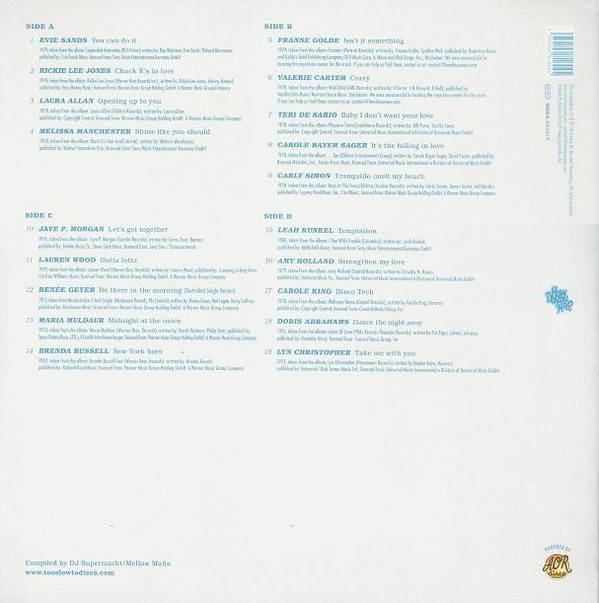


HANK BALLARD AND THE MIDNIGHTERS-UNWIND YOURSELF-THE KING RECORDINGS 1964-1967.
HANK BALLARD AND THE MIDNIGHTERS-UNWIND YOURSELF-THE KING RECORDINGS 1964-1967.
Hank Ballard played an important part in musical history. He was a successful singer and songwriter, whose career spanned fifty-two years. The most successful period of Hank Ballard’s career, was between 1953 and 1969, when he was the lead singer of Hank Ballard and The Midnighters.
They were one of the pioneers of rock ’n’ roll in the early fifties and helped shape this new genre. Hank Ballard and The Midnighters also enjoyed twenty-one hit singles in the US R&B charts. This included twelve top ten singles, and a trio of number ones. The first was Work With Me Annie in 1954. Later that year, one became two when Annie Had A Baby reached number one in the US R&B charts. Six years later, Let’s Go, Let’s Go, Let’s Go gave Hank Ballard and The Midnighters their third number one in the US R&B charts in 1960. However, the most successful and famous song that Hank Ballard wrote was The Twist.
When Hank Ballard and The Midnighters released The Twist in 1959, it reached number sixteen in the US R&B charts. This looked like the end of the story of The Twist.
That was until The Twist became popular on Baltimore DJ Buddy Dean’s television dance show. Buddy Dean recommended the songs to Dick Clark, the host of American Bandstand. Dick Clark tried to book Hank Ballard, but he wasn’t available. So Dick Clark began looking for a local artist to record The Twist. The artist he chose was Chubby Checker
Having recorded The Twist, Chubby Checker first sung The Twist live at the Rainbow Club in Wildwod, New Jersey in July 1960. Already the momentum was building. Then when Chubby Checker performed The Twist on American Bandstand in August 1960, the genie was out of the bottle. Soon The Twist reached number one the US Billboard 100 and two in the US R&B charts later in 1960; and in the process, launched a dance craze. Hank Ballard must have been rueing being unable to perform The Twist on American Bandstand.
To make up for this missed opportunity, King Records decided to reissue Hank Ballard and The Midnighters’ version of The Twist in 1960. It reached number twenty-eight in the US Billboard 100 and sixteen in the US R&B charts. While this didn’t come close to matching Chubby Checker’s version, at least Hank Ballard and The Midnighters had enjoyed another hit single. So would Chubby Checker when he reissued The Twist in 1962.
Less than two years after Chubby Checker originally released The Twist, he rereleased his biggest hit in 1962. Not only did it reach number one in the US Billboard 100, but number four in the US R&B charts. Chubby Checker had enjoyed two number one singles with the Hank Ballard penned The Twist. Things were looking good for Chubby Checker in 1962. Meanwhile, the hits were drying up for Hank Ballard and The Midnighters.
The last hit single that Hank Ballard and The Midnighters released, was Nothing But Good in 1961. It staled at forty-three in the US Billboard 100, but reached number nine in the US R&B charts. This was a familiar story. Although fourteen of Hank Ballard and The Midnighters’ singles had charted in the US Billboard 100, only 1960s Finger Poppin’ Time and Let’s Go, Let’s Go, Let’s Go reached the top ten. However, music had changed since then.
That continued to be the case, and by 1964, the British Invasion groups had arrived on American shores. Suddenly, many young Americans’ musical tastes were changing. Pop and rock were proving popular, blues, R&B and soul were no longer as popular. For Hank Ballard and The Midnighters, this was bad news. The period between 1964 and 1967 was tough for them. It’s documented on Unwind Yourself-The King Recordings 1964-1967, which was recently released by Kent Soul, an imprint of Ace Records. These twenty-six tracks are a mixture of singles, album tracks and unreleased tracks. Unwind Yourself-The King Recordings 1964-1967 is a reminder of the last few years of Hank Ballard and The Midnighters King Records years.
1964.
The first recording session that Unwind Yourself-The King Recordings 1964-1967 covers, took place on the 2nd of June 1964. Four songs were recorded. Three of these songs, Let’s Get The Show On The Road, Everybody Do Wrong and Knock On Wood I Feel So Good were written by Hank Ballard. Willie Hooks had penned A Winner Never Quits. Of these four songs, two would be feature on a single, while the others would find their way onto Hank Ballard and The Midnighters’ next album.
Let’s Get The Show On The Road was released on King Records in November 1964, with A Winner Never Quits on the B-Side. Despite the quality of the song, commercial success eluded Hank Ballard and The Midnighters’ latest single. It had been three years since their last hit single Nothing But Good in 1961. This was a worrying time for Hank Ballard and The Midnighters. By then, they had returned to the studio.
Ten days after their last recording session, Hank Ballard and The Midnighters returned to the recording studio on 12th June 1964. They were scheduled to record another four tracks for their forthcoming album. Unlike the previous session, only one Hank Ballard composition was chosen, Somebody’s Got To Help Me. The other tracks included That’s Your Mistake, One Monkey Don’t Stop No Show and Watch What I Tell You. Once these tracks were recorded, they would become part of Hank Ballard and The Midnighters’ new album Those Lazy, Lazy, Days.
When Those Lazy, Lazy, Days was released in 1965, the eight songs recorded in June 1964 were included and also feature on Unwind Yourself-The King Recordings 1964-1967. A surprising omission from Those Lazy, Lazy, Days was He Came Along. Especially when it became apparent that a couple of songs that had been recorded in 1962 were included. Critics remarked that the older songs sounded slightly dated. Especially when compared to the contemporary sound of the songs that were recorded in June 1964. These songs found
Hank Ballard and The Midnighters in good voice as they rolled back the years. Despite this, Those Lazy, Lazy, Days didn’t match the commercial success of previous albums. For Hank Ballard and The Midnighters it was back to the drawing board.
1965.
Hank Ballard and The Midnighters didn’t return to the recording studio until 18th February 1965. They prepared to record two new songs penned by Hank Ballard, Poppin’ The Whip and You, Just You. They became Hank Ballard and The Midnighters’ next single.
Poppin’ The Whip was chosen as the single, and released later in 1965. Tucked away on the flip-slide was You, Just You, an impassioned, soul-baring ballad. It’s a real hidden gem from Hank Ballard and The Midnighters’ back-catalogue. Sadly, history repeated itself, when Poppin’ The Whip failed to trouble the charts. Maybe things might have been very different if You, Just You had been released as a single? Still, the search went on for a hit single.
After a five month absence from the studio, Hank Ballard and The Midnighters returned on the 2nd of July 1965. This time around, they were going to record Rudy Clark compositions. Usually, Hank Ballard preferred to record his own songs. However, he was desperate for a hit, and was willing to record someone else’s songs if it resulted in that elusive hit single. So the heartfelt ballad I’m Just A Fool (And Everybody Knows) and the dance track Do It Zulu Style were recorded, and would become Hank Ballard and The Midnighters’ new single.
When Hank Ballard and The Midnighters released I’m Just A Fool (And Everybody Knows) as a single in 1965, it failed to chart. Four years had passed since their last single. It was no surprise that all wasn’t well with the Hank Ballard and The Midnighters’ camp.
Later in 1965, Hank Ballard and The Midnighters split-up. However, Hank Ballard continued to release singles and albums bearing the name Hank Ballard and The Midnighters.
15th November 1965 was the first recording session that featured just Hank Ballard. He had written four new songs, and laid down all the vocals on Sloop And Slide,Togetherness, I’m Ready, My Sun Is Going Down. They would provide Hank Ballard and The Midnighters with their next two singles.
1966.
The first of these singles Sloop And Slide, an explosive slice of R&B. It was released in January 1966, with My Sun Is Going Down on the flip-side. Stylistically, Sloop And Slide seemed to have been inspired by some of the music coming out of Stax. While it was one of soul’s most successful labels, Sloop And Slide didn’t bring commercial success the way of King Records. Neither did the followup to Sloop And Slide.
Togetherness was released as the followup single to Sloop And Slide, but failed commercially. It was a single that deserved to fare better. Hank Ballard’s lyrics to Togetherness were hopeful and full of social comment. Those that flipped over to the B-Side, discovered I’m Ready, a fusion of soul and funk that came complete with vamp. This made I’m Ready sound like a homage to another King Records’ artist James Brown. Sadly, Hank Ballard wasn’t enjoying any of the success the self-styled Godfather of Funk was enjoying.
By 19th July 1966, Hank Ballard was ready to record two new songs. Both Get That Hump In Your Back and He Came Along were Hank Ballard compositions. These two tracks were recorded on the 19th July. Since then, Get That Hump In Your Back has never been released, and makes its debut on Unwind Yourself-The King Recordings 1964-1967. He Came Along would be released much sooner. Before that, Hank Ballard was back in the studio three days later.
Hank Ballard was scheduled to lay down vocals on two tracks on 22nd July 1966. One of these tracks, Teardrops On Your Letter, was a Henry Glover composition which Hank Ballard and The Midnighters had recorded back in 1958. However, (Dance With Me) Annie was a new song, written by Hank Ballard. It would become Hank Ballard and The Midnighters’ new single.
(Dance With Me) Annie was released later in 1966, and exploded joyously into life. Surely, this was going to bring Hank Ballard and The Midnighters’ that elusive hit single. Even the B-Side He Came Along, oozed quality. It finds Hank Ballard delivering a heart-wrenching and soulful vocal. Sadly, (Dance With Me) Annie passed record buyers by, and Hank Ballard was left wondering what it would take to give Hank Ballard and The Midnighters their first single in five years?
1967.
After the commercial failure of (Dance With Me) Annie, Hank Ballard didn’t return to the recording studio until 4th February 1967. That day, Hank recorded two songs. The first was Here Comes The Hurt, a song penned by Gordon Brisker, Ural Thomas and Bud Hobgood. He also wrote Dance Till It Hurtcha with Hank Ballard. These two songs were released as a single in 1967.
Dance Till It Hurtcha was chosen as the single. It’s a fusion funk and soul, that sounds as if it was recorded at Stax in Memphis. With a sound that was right on-trend, things were looking good for Hank Ballard. On the B-Side was the heart-wrenching ballad Here Comes The Hurt. Hank Ballard sounds as if he’s lived and survived the lyrics. They proved to prescient.
When Dance Till It Hurtcha was released in 1967, Hank Ballard and everyone at King Records must have felt that this was the single that would get Hank Ballard and The Midnighters back on track? Sadly, it was a false dawn, and Dance Till It Hurtcha disappeared without trace. For Hank Ballard, it was a case of Here Comes The Hurt.
By then, Hank Ballard had endured six years of hurt. During that period, a hit single continued to elude him. That’s despite his best efforts. He returned to the studio on 12th July 1967 and recorded two tracks he had written with singer-songwriter Charles Spurling. They were You’re In Real Good Hands and Unwind Yourself. Once the two tracks were recorded, it was a case of choosing which would be Hank Ballard and The Midnighters’ next single.
Eventually, You’re In Real Good Hands was chosen as the single, and Unwind Yourself was relegated to the B-Side. Both tracks featured a much funkier sound. However, You’re In Real Good Hands had a tougher edge. This was a long way from Hank Ballard and The Midnighters’ hit making days. Maybe this funky makeover would result in a change in fortune for Hank Ballard and The Midnighters?
By the time You’re In Real Good Hands was released, funk was growing in popularity. One of the most popular artists was James Brown, who was signed to King Records. He often produced singles released on King Records. You’re In Real Good Hands sounded not unlike a James Brown track. Despite the quality of You’re In Real Good Hands it failed to trouble the charts in 1967. For Hank Ballard this was a huge disappointment. However, he remembered the Willie Hooks song, and told himself A Winner Never Quits.
So when Hank Ballard returned to the studio on 7th September 1967, he was still hoping that the session might produce a hit single. Neither Which Way Should I Turn nor Funky Soul Train had been written by Hank. He was willing to record other people’s songs in the hope that this would result in a hit single.
With the two songs recorded, James Brown, Bud Hobgood, William Bowman and Troy Seals’ Which Way Should I Turn was chosen as the single. On the flip-side was James Brown and Bud Hobgood’s Funky Soul Train. When Which Way Should I Turn was released in October 1967, the single never came close to troubling the charts. It was now over six years since Hank Ballard and The Midnighters had enjoyed a hit single.
The period between 1961 and 1967 had been the least successful period of Hank Ballard and The Midnighters’ career. Before that, they enjoyed twenty-one hit singles in the US R&B charts and fourteen hits in the US Billboard 100. That’s not forgetting three hit singles. For a seven year period between 1954 and 1961, Hank Ballard and The Midnighters were one of the most successful American bands. However, nothing lasts forever.
Music began to change. Especially between 1964 and 1967 which the compilation Unwind Yourself-The King Recordings 1964-1967 covers. In 1964, the British Invasion groups arrived on American shores. Soon, singles and albums by The Beatles, Rolling Stones, The Kinks, The Who and The Animals featured on the American charts. Suddenly, soul wasn’t as popular.
That’s apart from labels like Atlantic, Stax and Motown. Mostly, pop and rock ruled the roost. Then when the psychedelic age began in 1965, many soul groups failed to adapt. It was a case of adapt or die. The Midnighters decided to call it day. Not Hank Ballard though.
He continued to release singles and albums as Hank Ballard and The Midnighters. Gradually, the music Hank Ballard and The Midnighters released began to change. By the end of the period that Unwind Yourself-The King Recordings 1964-1967 covers, Hank Ballard was no longer a soul man. Instead, his music headed in the direction of funk. This was just another side to a truly versatile and talented singer, Hank Ballard.
This is apparent on Unwind Yourself-The King Recordings 1964-1967. It was recently released by Kent Soul, an imprint of Ace Records. Listener hear the different sides to Hank Ballard and The Midnighters on twenty-six tracks. They veer between heart-wrenching ballads, dance-tracks, rousing R&B and funk. These tracks are a mixture of singles, B-Sides, album tracks and even a previously unreleased track. Unwind Yourself-The King Recordings 1964-1967 is the most comprehensive overview of the music released by Hank Ballard and The Midnighters between 1964 and 1967. It’s also a reminder of a talented singer and songwriter, Hank Ballard.
Sadly, none of the songs on Unwind Yourself-The King Recordings 1964-1967 enjoyed the same commercial success as The Twist, Work With Me Annie, Annie Had A Baby, Let’s Go, Let’s Go, Let’s Go and Finger Poppin’ Time. These were the most successful songs of Hank Ballard’s fifty-two year career, and even today, are all still favourites on oldies’ radio stations. For Hank Ballard, these tracks were akin to a pension plan, and ensured that he was able to live comfortably for the rest of his life. However, there’s much more Hank Ballard than just five songs.
Unwind Yourself-The King Recordings 1964-1967 is proof of this. It’s a reminder of the latter years of the three decades that Hank Ballard and The Midnighters spent at King Records. Sadly, this wasn’t the most successful period of Hank Ballard and The Midnighters’ career. Still, they were still recording and releasing music that was the envy of their contemporaries. This music makes a welcome return on Unwind Yourself-The King Recordings 1964-1967, which for newcomers to Hank Ballard and The Midnighters, is the perfect introduction to their music.
HANK BALLARD AND THE MIDNIGHTERS-UNWIND YOURSELF-THE KING RECORDINGS 1964-1967.






ERLEND APNESETH TRIO-DET ANDRE ROMMET.
ERLEND APNESETH TRIO-DET ANDRE ROMMET.
Practise makes perfect. So the old proverb says. Erlend Apneseth is proof of this. He’s one of Norway’s top young fiddlers, and is already competing at the highest level.
That has been the case for some time. Erlend Apneseth competes at the elite level in Norway’s National Contest For Traditional Music. Over the last few years, Erlend Apneseth has won numerous awards and prizes. This includes Grappa’s New Artist Award in 2012. Buoyed by winning such a prestigious award, Erlend Apneseth began work on his debut album.
A year later in 2013, and Erlend Apneseth was about to release his debut album Blikkspor. It had been recorded with the help of a few friends. When Blikkspor was released, it was to overwhelming critical acclaim. Blikkspor was an album of groundbreaking and genre-melting music, that announced the arrival of an an ambitious and innovative musician. It was also a tantalising foretaste of what Erlend Apneseth was capable of. Critics awaited his sophomore with interest.
They’ve had to be patient. Since then, Erlend Apneseth has been busy. He’s collaborated with musicians from a variety of different backgrounds, including folk, improv, jazz and rock. Groups big and small have also been joined by the Jølster born fiddler. So have folk singer Torgeir Vassvik and poet Erlend O. Nødtvedt. Erlend Apneseth has even enjoyed a spell as a soloist with the Bergen Philharmonic Orchestra. However, eventually, he decided it was time to release his sophomore album.
While Blikkspor was credited to Erlend Apneseth, the followup is credited to the Erlend Apneseth Trio. This came about after drummer Øyvind Hegg-Lunde and guitarist Stephan Meidell featured on Sommarflukt, the final track on Blikkspor. Erlend Apneseth hit it off with the two musicians, and asked them if they wanted to join him in a trio? They agreed, and the Erlend Apneseth Trio was born. Their first album Det Andre Rommet, will be released Hubro Music on the 1st of July 2016. However, Det Andre Rommet was recorded back in March 2015.
For Det Andre Rommet, a total of ten tracks were written. Erlend Apneseth wrote Trollsuiten, Dialog, Sapporo, St Thomas-klokkene, Hugskot and Draum Om Regn. The other four tracks, Under Isen, Det Andre Rommet, Nattkatt and Magma. St Thomas-klokkene, were written by the Erlend Apneseth Trio. These tracks were recorded over four days in March 2015 by the Erlend Apneseth Trio.
The recording sessions began on 9th March 2015 at Hallibakken Lydproduksjon. By then, the Erlend Apneseth Trio had been playing together for the best part of two years. However, drummer Øyvind Hegg-Lunde and guitarist Stephan Meidell had been collaborating for a lot longer.
Over the years, they had been members of the same bands. Øyvind Hegg-Lunde had been a member of Building Instrument, Crab Is Crap, Electric Eye, Glow, Klangkameratane, Strings and Timpani and The Sweetest Thrill. Øyvind Hegg-Lunde had been a member of Cakewalk, Mr. Eart, Strings and Timpani, The Sweetest Thrill, Vanilla Riot and Velkro. The pair had formed a good working relationship, and would play an important part in the Erlend Apneseth Trio.
When the sessions began, drummer Øyvind Hegg-Lunde, guitarist Stephan Meidell and Erlend Apneseth on Hardanger Fiddle were joined by recordist Tor Magne Hallibakken. Over the four days, the Erlend Apneseth Trio’s music began to evolve. It was quite different from the music on Erlend Apneseth’s 2013 debut album Blikkspor.
Elements of folk, improv, jazz and rock combine on the ten songs and sketches that became Det Andre Rommet. What was a captivating debut album from the Erlend Apneseth Trio took shape. Over the next four days, they recorded the ten tracks that became Det Andre Rommet. They were completed by 12th March 2015. All that was left was mixing and mastering.
The mixing of Det Andre Rommet took place at Avast, Seattle, during September and October 2015 by Randall Dunn. Det Andre Rommet was then astered by Jørgen Træen at Lydgrotten in Bergen during December 2015. Now Det Andre Rommet was almost ready for release.
Det Andre Rommet will be released by Hubro Music on the 1st of July 2016. It’s the debut album from the Erlend Apneseth Trio, and finds three of Norway’s top musicians innovating, pushing musical boundaries and combining disparate musical genres. It’s a captivating musical journey across ten tracks lasting forty minutes. These tracks became Det Andre Rommet.
Practise makes perfect. So the old proverb says. However, Erlend Apneseth is proof of this. He’s one of Norway’s top young fiddlers, and is already competing at the highest level.
That has been the case for some time. Erlend Apneseth competes at the elite level in Norway’s National Contest For Traditional Music. Over the last few years, Erlend Apneseth has won numerous awards and prizes. This includes Grappa’s New Artist Award in 2012. Buoyed by winning such a prestigious award, Erlend Apneseth began work on his debut album.
A year later in 2013, and Erlend Apneseth was about to release his debut album Blikkspor. It had been recorded with the help of a few friends. When Blikkspor was released, it was to overwhelming critical acclaim. Blikkspor was an album of groundbreaking and genre-melting music, that announced the arrival of an an ambitious and innovative musician. It was also a tantalising foretaste of what Erlend Apneseth was capable of. Critics awaited his sophomore with interest.
They’ve had to be patient. Since then, Erlend Apneseth has been busy. He’s collaborated with musicians from a variety of different backgrounds, including folk, improv, jazz and rock. Groups big and small have also been joined by the Jølster born fiddler. So have folk singer Torgeir Vassvik and poet Erlend O. Nødtvedt. Erlend Apneseth has even enjoyed a spell as a soloist with the Bergen Philharmonic Orchestra. However, eventually, he decided it was time to release his sophomore album.
While Blikkspor was credited to Erlend Apneseth, the followup is credited to the Erlend Apneseth Trio. This came about after drummer Øyvind Hegg-Lunde and guitarist Stephan Meidell featured on Sommarflukt, the final track on Blikkspor. Erlend Apneseth hit it off with the two musicians, and asked them if they wanted to join him in a trio? They agreed, and the Erlend Apneseth Trio was born. Their first album Det Andre Rommet, will be released Hubro Music on the 1st of July 2016. However, Det Andre Rommet was recorded back in March 2015.
For Det Andre Rommet, a total of ten tracks were written. Erlend Apneseth wrote Trollsuiten, Dialog, Sapporo, St Thomas-klokkene, Hugskot and Draum Om Regn. The other four tracks, Under Isen, Det Andre Rommet, Nattkatt and Magma. St Thomas-klokkene, were written by the Erlend Apneseth Trio. These tracks were recorded over four days in March 2015 by the Erlend Apneseth Trio.
The recording sessions began on 9th March 2015 at Hallibakken Lydproduksjon. By then, the Erlend Apneseth Trio had been playing together for the best part of two years. However, drummer Øyvind Hegg-Lunde and guitarist Stephan Meidell had been collaborating for a lot longer.
Over the years, they had been members of the same bands. Øyvind Hegg-Lunde had been a member of Building Instrument, Crab Is Crap, Electric Eye, Glow, Klangkameratane, Strings and Timpani and The Sweetest Thrill. Øyvind Hegg-Lunde had been a member of Cakewalk, Mr. Eart, Strings and Timpani, The Sweetest Thrill, Vanilla Riot and Velkro. The pair had formed a good working relationship, and would play an important part in the Erlend Apneseth Trio.
When the sessions began, drummer Øyvind Hegg-Lunde, guitarist Stephan Meidell and Erlend Apneseth on Hardanger Fiddle were joined by recordist Tor Magne Hallibakken. Over the four days, the Erlend Apneseth Trio’s music began to evolve. It was quite different from the music on Erlend Apneseth’s 2013 debut album Blikkspor.
Elements of folk, improv, jazz and rock combine on the ten songs and sketches that became Det Andre Rommet. What was a captivating debut album from the Erlend Apneseth Trio took shape.
Over the next four days, they recorded the ten tracks that became Det Andre Rommet. They were completed by 12th March 2015. All that was left was mixing and mastering.
The mixing of Det Andre Rommet took place at Avast, Seattle, during September and October 2015 by Randall Dunn. Det Andre Rommet was then astered by Jørgen Træen at Lydgrotten in Bergen during December 2015. Now Det Andre Rommet was almost ready for release.
Det Andre Rommet will be released by Hubro Music on the 1st of July 2016. It’s the debut album from the Erlend Apneseth Trio, and finds three of Norway’s top musicians innovating, pushing musical boundaries and combining disparate musical genres. It’s a captivating musical journey across ten tracks lasting forty minutes. These tracks became Det Andre Rommet.
Opening Det Andre Rommet is Trollsuiten. It’s the perfect showcase for Erlend Apneseth. A flourish of his fiddle, sets the ball rolling. Soon, he plays briskly and with confidence and flamboyance. Other times, he drops the tempo, and his folk-tinged sound is a mixture of melancholy and emotion. Then almost seamlessly, the arrangement heads in the direction of improv. By then, the guitar drones and wails, adding to what’s an evocative and wistful sound. Soon, though the fiddle slips almost joyously across the arrangement, as Erlend revisits hits folk roots. Latterly, he revisits the earlier improv sound on what’s a captivating genre-hopping track.
What sounds like alarm clocks ring out urgently on Under Isen. Almost randomly, the occasional rattle and bump punctuates the arrangement. So does an occasional drum roll. Soon, Erlend’s fiddle quivers and shimmers in the background. Meanwhile, he toys with his fiddle as a series of pulsating sounds flit in and out. By now, an alternative improvised symphony is unfolding and washes over the listener.
Pizzicato describes the technique used by Erlend on Dialog. As he plucks the strings of his fiddle, it reverberates, and takes on an Eastern influence. Its beauty is mesmeric, as and repeatedly it washes over the listener and in the process, soothes their weary soul.
Cymbals shimmer and rinse s on Sapparo. Meanwhile, Erland plays his fiddle slowly and almost deliberately. It portrays a sense of sadness and yearning. Behind him, cymbals shimmer, drums pound and the guitar plays. They’re playing supporting roles, as Erlend’s fiddle takes centre-stage. Later, they’re allowed their moment in the spotlight. Stephan Meidell plays his guitar carefully and deliberately. Then when the baton passes to drummer Øyvind Hegg-Lunde, he improvises while ethereal, elegiac sounds rejoice in the background. They’re joined by plaintive cry of the fiddle. This adds the finishing touch to a track where folk and improv combine to create a track that’s a mixture of sadness, melancholia, drama and ethereal beauty.
Although Erland wrote St Thomas-Klokkene, it features an archive recording of Sigurd Eldegard. A wash of fiddle swells, as cymbals rinse and a guitar threatens to feedback. Soon, the fiddle soars above the vortex of sound. Contrasts abound, as the arrangement drones. Still the fiddle shimmers, shivers and quivers, while drums threaten to interject. By then, Erland is delivering one of his finest performances, showing why he’s one of Norway’s finest fiddlers. He uses folk as the starting point, but adds elements of avant-garde and improv. The result is a truly compelling track that’s cinematic and melodic, but full of melancholia, mystery and drama.
Almost hesitantly, the strings of the fiddle are plucked tenderly on Det Andre Rommet. Meanwhile, percussion is sprinkled subtly atop the arrangement. Gradually, there’s a sense of urgency, as the fiddle emerges from the arrangement, taking centre-stage. It produces a heart-wrenching sound, as folk, avant-garde and improv combine. By then, the plaintive cry of the fiddle adds an evocative sound, drums adds a thunderous backdrop as an array of alternative percussion is added. Again, sleight of hand is used, and nothing is as it seems. Instruments are transformed and take on a new sound. As a result, the arrangement takes on an urgent, frenzied and dramatic sound. Later, this begins to dissipate and returns to a much more understated sound. Then all of sudden, Det Andre Rommet reaches a crescendo, leaving just the memory of the Erlend Apneseth Trio at their most ambitious and innovative.
It’s as if the Erlend Apneseth Trio are toying and teasing the listener on Nattkatt. They play almost hesitantly, but all the time, hint at something magical. Gradually, though, the arrangement reveals its secrets. Soon, the Erlend Apneseth Trio have been transformed into a man machine. They combine avant-garde, free jazz and musique concrète to create a robotic, jerky and moderne arrangement. Then as a wailing, free jazz sound soars above the arrangement, it’s as if the ghost of Albert Ayler is making a guest appearance. Later, the arrangement becomes spartan and robotic, with beeps and squeaks punctuating the arrangement. By then, the n Nattkatt has revealed its secrets, magic and majesty on another groundbreaking track.
There’s an almost eerie, cinematic sound as Magma unfolds. Soon, the drama builds and swells, and it’s as if the Erlend Apneseth Trio are creating the soundtrack to a Nordic thriller. Bells chime, and are sprinkled atop the pounding drums. Meanwhile, the fiddle scampers across this cinematic soundscape as the drama builds. Adding to the drama are the drums and then the guitar. It adds an element of darkness; before blood curdling strings add the finishing touch to this cinematic soundscape.
Hugskot finds Erlend return to his folk roots. However, anything could happen, and the Erlend Apneseth Trio could throw a curveball at any given moment. While Erlend is content to play it straight, gradually, a myriad of percussion and cymbals punctuate the arrangement. Later, so briefly does a guitar. They’re merely playing a supporting role, while Erlend takes centre-stage as he returns to his roots.
Draum Og Regn closes Det Andre Rommet, where beauty and melancholy are omnipresent. Cymbals shimmer, while drums roll and percussion punctuates the arrangement. Meanwhile, the plaintive cry of the fiddle tugs at one’s heartstrings. While it showcases a traditional folk sound, the rest of the arrangement is a mixture of avant-garde and improv. Bubbling and pizzicato strings are joined by percussion and bells, and with Erlend’s fiddle, create a beautiful, wistful sounding track. It’s a quite beautiful way to close Det Andre Rommet.
It’s the debut album from the Erlend Apneseth Trio. They first played together on a track on Erlend Apneseth’s debut album Blikkspor. The three musicians hit it off, and a new band was born in early 2013. Since then, they’ve been playing together, and gradually honing their sound. By March 2015, the Erlend Apneseth Trio were ready to record their debut album, Det Andre Rommet.
It was recorded over four days in March 2015, at Hallibakken Lydproduksjon, Producing Det Andre Rommet were Andreas R Meland and the Erlend Apneseth Trio. The result was an ambitious album of innovative, genre-melting music.
On many of the tracks on Det Andre Rommet, the Erlend Apneseth Trio use folk as a starting point. From there, they add elements of everything from avant-garde, improv, jazz, musique concrète and even rock. The result is music that veers between beautiful to cinematic, to dramatic and eerie. Other times, the music on Det Andre Rommet is elegiac, ethereal, elegiac, melancholy and melodic. Sometimes, the music is full of sadness and is heart-wrenching. Often, it’s Erllend’s fiddle that takes the listener on this emotional roller coaster, Always, though, the music on Det Andre Rommet has the capacity to captivate and spring surprises, as the Erlend Apneseth Trio take the listener in a new and unexpected direction.
Every member of the Erlend Apneseth Trio plays their part in this musical magical mystery tour. Sometimes, though, it’s Erllend’s fiddle that takes the listener on this emotional roller coaster. It plays an important part in Det Andre Rommet, and in Erlend Apneseth’s hands, proves a versatile instrument. One minute, he’s playing the fiddle in the same way as countless generations before him; the next, Erlend Apneseth is rewriting the rules, and unleashing a Hendrix-esque performance. This isn’t surprising. Just like the rest of the Erlend Apneseth Trio, Erlend is a musical maverick.
So it’s fitting that these three musical mavericks have found the perfect vehicle for their music in the Erlend Apneseth Trio. It allows them to innovate, and create groundbreaking music. This the Erlend Apneseth Trio do throughout their captivating, genre-melting debut album Det Andre Rommet, which will be released by Hubro Music on the 1st of July 2016.
ERLEND APNESETH TRIO-DET ANDRE ROMMET.

SPOOKY TOOTH-THE ISLAND RECORDS YEARS.
SPOOKY TOOTH-THE ISLAND RECORDS YEARS.
All too often, some bands don’t get the credit they deserve. That was the case with Spooky Tooth, who for a time, pioneered the use of twin keyboards. They lead the way. Soon, other bands were following in their wake. By then, the Spooky Tooth story was over.
Spooky Tooth were only together seven years between 1967 and 1974, but managed to release eight seven albums. They could’ve become one of the biggest British bands of the late-sixties, early-seventies. However, Spooky Tooth wandered down a rocky road. That was the case since for a lot longer.
The Spooky Tooth story started in 1963, when The V.I.P.s were founded in Carlisle, Cumbria by lead vocalist Mike Harrison and bassist Greg Ridley. Over the next four years, The V.I.P.s lineup evolved. Rhythm guitarist Frank Kenyon, lead guitarist Jimmy Henshaw, drummer Mike Kellie and guitarist Luther Grosvenor were members between 1963 and 1967. Other musicians played a walk-on roll on The V.I.P.s’ story. This included Keith Emerson whose keyboards would play a starring role in The Nice and Emerson, Lake and Palmer. However, by the time The V.I.P.s decided to change direction musically, Keith Emerson had left the band.
For the four years they were together, The V.I.P.s played blues and R&B. By 1967, they decided that to change direction musically. So The V.I.P.s changed their name to Art and recorded their one and only album, Supernatural Fairy Tales.
Supernatural Fairy Tales.
In 1967, the newly named Art found themselves signed to Chris Blackwell’s Island Records. Art were about to go into the studio with producer Guy Stevens, so began work on their debut album.
By then, Art’s lineup featured drummer Mike Kellie and guitarist Luther Grosvenor, bassist Greg Ridley, guitarist Luther Grosvenor and vocalist and keyboardist Mike Harrison. The four members of Art got to work on what became Supernatural Fairy Tales.
For their debut album Supernatural Fairy Tales, the four members of Art wrote ten tracks. They would be augmented by covers of The Young Rascals’ Come on Up and Buffalo Springfield’s For What It’s Worth. Recording took place at two studios.
Pye Studios was where the majority of Supernatural Fairy Tales was recorded. Some recording took place at Olympic Studios. At the two studios, producer Guy Stevens, whose career was in the ascendancy, took charge of production. He guided Art through the maze that’s recording a debut album. The result was Supernatural Fairy Tales, which became a cult classic.
When critics heard Supernatural Fairy Tales, the reviews of Art’s debut album were mostly positive. Its progressive, psychedelic rock sound was decidedly on trend. It tapped into a sound that was commercial. Surely, Supernatural Fairy Tales would prove a commercial success?
Sadly, when Supernatural Fairy Tales was released in the Autumn of 1967, the album wasn’t a commercial success. This was disappointing for Art and Island Records.
Shortly after the release of Supernatural Fairy Tales Art split-up. However, like a phoenix from the ashes rose a new band, Spooky Tooth.

The Birth Of Spooky Tooth.
Gary Wright was also a psychology student, who had travelled to Berlin to finish his studies. That was where Gary Wright formed the band The New York Times with some American expats and a German bassist. They had opened for Traffic, and were thinking about recording an album. So Gary Wright contacted his old friend Jimmy Miller. The producer was working for Island Records, and suggested that The New York Times hotfoot it to London.
When The New York Times arrived in London, the recording sessions didn’t go to plan. The rest of the band split, leaving Gary Wright. It was then, in October 1967, that Gary Wright was introduced to the former members of Art and they formed a new band, Spooky Tooth.
It’s All About.
Straight away, work began on Spooky Tooth’s debut album. The new recruit quickly made his presence felt. Whereas the four members of Art cowrote most of their debut album Supernatural Fairy Tales, that wasn’t the case with Spooky Tooth.
Gary Wright penned Sunshine Help Me and cowrote another six tracks. This included It Hurts You So and Forget It, I Got It with his ole buddy Jimmy Miller. The Wright and Miller partnership weren’t finished. They cowrote Love Really Changed Me with Luther Grosvenor. That trio joined Mike Harrison in penning Here I Lived So We. Luther Grosvenor and Chris Wight also cowrote Bubbles. Spooky Tooth was quickly becoming the Gary Wright show.
If the other members felt uncomfortable that Chris Wight was playing a leading role in Spooky Tooth. He was friends with Jimmy Miller, who was chosen to produce It’s All About. He just happened to be friends with Island Records’ owner Chris Blackwell. To onlookers, these relationships looked too cosy. After all, it was Chris Blackwell who introduced Gary Wright. He would join the rest of Spooky Tooth at Olympic Studios.
Island Records’ recording sessions were notorious for only allotting a specific amount of time to record an album. Woe betide the band and producer who went over budget. Spooky Tooth had twelve songs to record when they entered the studio in November 1967. This included covers of Janis Ian’s Society’s Child, Bob Dylan’s Too Much Of Nothing and John D. Loudermilk’s Tobacco Road. Along with the songs penned by members of Spooky Tooth, the twelve songs became It’s All About.
Before the release of It’s All About in June 1968, critics had their say on Spooky Tooth’s debut album. They were won over by It’s All About. Many critics gave the albums rave reviews. Some critics liked that Spooky Tooth had two different vocalists. This was uncommon. However, with Mike Harrison and Gary Wright sharing the lead vocals, this allowed the band to take their music in a variety of directions. On It’s All About, this included blues, rock and psychedelia. Despite winning over critics, record buyers weren’t convinced.
When It’s All About was released in June 1968, the album wasn’t the success many had forecast. This would soon change.
Spooky Tooth were about to become one of Europe’s most popular live bands. Then in August 1968, Spooky Tooth were invited to tour America. This was a game-changer. Especially when Spooky Tooth were invited to play at one of the most prestigious venues in America, the Fillmore West in San Francisco.
Promoter Bill Graham invited Spooky Tooth to play the Fillmore West. This was a rite of passage for bands touring America. It was a signal they had arrived. Spooky Tooth were going up in the world, so Island Records’ thoughts turned to their sophomore album, Spooky Two.

Spooky Two.
Unlike their debut album, Spooky Two only featured eight songs. Partly, this was why Spooky Too was a leaner, more focused album. Again, Gary Wright who had assumed the role of Spooky Tooth’s songwriter-in-chief.
Gary Wright penned four tracks and cowrote three others. This included Feelin’ Bad and I’ve Got Enough Heartaches with drummer Mike Kellie. Mike Harrison and Luther Grosvenor cowrote Waitin’ for the Wind with Gary Wright. Spooky Two’s other track, was a cover of Larry Weiss’ Evil Woman. These songs were recorded at Morgan Studios, London.
Just like It’s About You, Spooky Two was produced by Jimmy Miller. Recording began in November 1968, and Spooky Tooth began recording what’s now considered their greatest album, Spooky Two.
Once Spooky Two was complete, the release was scheduled for March 1969. This didn’t leave much time to promote the album. However, the reviews did a good job of this. Spooky Two was hailed a masterpiece of blues, hard rock, psychedelia and classic rock. Luther Grosvenor’s guitar playing was at the heart of the album’s success. It was loose, but fluid. Spooky Tooth’s played hard, raw and rock on Spooky Too. Critics forecast that Spooky Two was going to be Spooky Tooth’s breakthrough album.
That proved to be the case. On its release in March 1969, Spooky Two reached number forty-four in the US Billboard 200. This resulted in Spooky Tooth’s profile rising.
Suddenly, they were playing in front of bigger audiences on nearly every continent. Other musicians wanted to work with Spooky Tooth. This included French electronic musician, Pierre Henry.
Ceremony.
After the release of Spooky Too, there was a change to Spooky Tooth’s lineup. In 1970, bassist Greg Ridley was asked to join Humble Pie. He agreed, and Andy Leigh was drafted in as his replacement. This was the first, but not the last change in Spooky Tooth’s lineup.
After the commercial success and critical acclaim of Spooky Too, Spooky Tooth’s star was in the ascendancy. Suddenly, people wanted to work with Spooky Tooth. This included French electronic musician, Pierre Henry.
He described himself as a found-object” composer. Pierre Henry took everyday objects and transformed them into an instrument. This wasn’t a new concept.
Pablo Picasso had pioneered the idea in 1912, when he pasted aprinted image of chair caning onto his painting Still Life with Chair Caning. Turning everyday objects into musical instruments took the idea further. That’s what Pierre Henry, and many other moderne musicians did.
Originally, Spooky Tooth were collaborating with Pierre Henry. It was his album. The new lineup of Spooky Tooth were essentially his backing band, on Ceremony.
For Ceremony, Pierre Henry and Gary Wright wrote six tracks. He and the rest of the new lineup of Spooky Tooth made their way to France. It was agreed that Pierre Henry and Spooky Tooth would co-produce Ceremony, due to the fact the album takes the form of a church service.
Quickly, Spooky Tooth recorded their parts. This left Pierre Henry to play synths and take charge of electronics on five tracks. On Hosanna, which closed Ceremony, Spooky Tooth took centre-stage. It was Ceremony’s Magnus Opus. Once the recording was complete, Spooky Tooth headed home.
Having returned home, Spooky Tooth were sent a copy of Ceremony. Gary Wright didn’t like what he heard. He was straight on the phone to Chris Blackwell, urging him not to release Ceremony. This didn’t work.
Chris Blackwell disagreed, telling Gary Wright: “people will love this album. We have to put this out.” According to Gary Wright, the rest of Spooky Tooth didn’t want Ceremony released. He went as far as to say: “it was against our wishes.” He thinks that the “release of the album lead to the initial breakup of the band.”
With Island Records determined to release Ceremony, December 1969 was scheduled as the release date. Before that, critics had their say on Ceremony. This fusion of rock and avant-garde was billed as an album from Spooky Tooth and Pierre Henry. Reviews were mixed. It wasn’t what most critics had expected from Spooky Tooth. The problem Mike Harrison says was;”people thought it was Spooky Tooth’s third album.”
When Ceremony was released in December 1969, it reached just ninety-two in the US Billboard 200. Spooky Tooth were going backwards. That was only part of the story.
All wasn’t well within Spooky Tooth. There was disharmony within the ranks. Mike Kellie believes things would’ve been different if Spooky Tooth: “had independent management.” They could’ve been an arbiter in the conflicts. Without that, Spooky Tooth split-up.

The Last Puff.
That wasn’t the end of the Spooky Tooth story. Instead, it was just the end of a chapter. Mike Harrison, Mike Kellie and Luther Grosvenor remained. Gary Wright exited stage left. So did bassist Andy Leigh. In their place, came some new faces.
Among them, were guitarist Henry McCullough, bassist Alan Spenner and Chris Stainton. He played bass, piano and organ. His versatility would be put to good use on The Last Puff, which was billed as an album from Spooky Tooth Featuring Mike Harrison.
For The Last Puff, seven cover versions were chosen. Among them were Lennon and McCartney’s I Am The Walrus; Joe Cocker and Peter Nichols’ Something to Say; David Ackles’ Down River and Elton John and Bernie Taupin’s Son of Your Father. New recruit Chris Stainton contributed The Last Puff. Ironically, The Wrong Time a song penned by Gary Wright and Hugh McCracken. Given Gary Wright had just left Spooky Tooth this seemed a strange decision.
Recording of The Last Puff took place at Island Studios, London. Producing the album was Island Records’ owner Gary Blackwell and Chris Stainton. Once the new lineup of Spooky Tooth finished recording The Last Puff, it was released in July 1970.
Critics however, received advance copies of Spooky Tooth Featuring Mike Harrison’s album The Last Puff. Critical acclaim accompanied this album of art rock, blues rock, psychedelia and rock. It seemed the loss of two members hadn’t derailed Spooky Tooth.
That seemed to be the case. The Last Puff proved more successful than Ceremony, reaching number eighty-four in the US Billboard 200. However, not long after the release of The Last Puff, Spooky Tooth split-up.
That looked like the end of the line for Spooky Tooth. Island Records were dismayed. They had just lost one of their most popular groups.
So a year later, in 1971, Island Records repackaged and rereleased It’s All About as Tobacco Road. When the album was released, it reached number 152 in the US Billboard 200. That many people thought, was Spooky Tooth’s swan-song. It wasn’t.

You Broke My Heart So I Busted Your Jaw.
In 1972, Spooky Tooth reformed, with a new lineup. The only musician who had played on The Last Puff was Mike Harrison.
Luther Grosvenor had joined Mott The Hoople, where he dawned the alias Ariel Bender. His replacement in Spooky Tooth, was future Foreigner guitarist Mick Jones. Mike Kellie was replaced by drummer and percussionist Bryson Graham. Chris Stewart became Spooky Tooth’s fourth bassist. However, the biggest surprise, was the return of Gary Wright.
Quickly, Gary Wright resumed the role of Spooky Tooth’s songwriter-in-chief. He wrote six of the eight songs, and cowrote Times Have Changed with Mick Jones. The other song on You Broke My Heart So I Busted Your Jaw was the Bryson Graham composition This Time Around. These eight songs were recorded at three London studios.
Recording of You Broke My Heart So I Busted Your Jaw. Olympic Studios, Island Studios and Apple Studios. It seemed no expense was being spared for Spooky Tooth’s comeback album. These were some of London’s top studios. One expense that was saved was a producer. Spooky Tooth produced You Broke My Heart So I Busted Your Jaw. It was scheduled for release in ay 1973.
Many of Spooky Tooth’s fans eagerly awaited their comeback album. However, when reviews were published, they were mixed. Some critics felt that You Broke My Heart So I Busted Your Jaw wasn’t Spooky Tooth’s finest hour. That’s despite Spooky Tooth combining progressive rock, hard rock and blues rock. While hard rock was still popular, progressive rock dominated the charts. However, other critics were won over by Spooky Tooth’s comeback album.
Other critics liked the dual keyboard sound on You Broke My Heart So I Busted Your Jaw. This brought a new dimension to Spooky Tooth’s sound. There was no consensus. For once, a Spooky Tooth album had divided the critics’ opinion. However, record buyers were of one mind.
On the release of You Broke My Heart So I Busted Your Jaw, in November 1973, the album reached number eighty-four in the US Billboard 200. This matched the popularity of The Last Puff. Spooky Tooth were back to where they were before Ceremony. What could go wrong?
Witness.
After making their comeback with You Broke My Heart So I Busted Your Jaw, Spooky Tooth looked as if their career was back on track. Then there was a change in Spooky Tooth’s lineup.
This time, Spooky Tooth’s original drummer Mike Kellie made a comeback, and replaced recent recruit Bryson Graham. However, that wasn’t the end of Bryson Graham. He played on some of the tracks on Witness. It was a tale of two drummers.
One thing didn’t change, Gary Wright wrote most of Witness. He penned six of the nine tracks, and cowrote the other three tracks with members of Spooky Tooth. Considering the other members weren’t regarded as songwriters, they were proving a reliable source of songs. Gary Wright and Chris Stewart penned Don’t Ever Stray Away. Mick Jones collaborated with Gary Wright on All Sewn Up. Drummer Mike Kellie celebrated his return by cowriting Pyramids with Chris Stewart. It seemed the other members of Spooky Tooth had hidden talents.
They also produced Witness, which was recorded at Olympic Studios and Island Studios, in London. At two of London’s premier studios, Spooky Tooth recorded their sixth studio album. Little did anyone realise, but this would be the last time one of the band set foot in a recording studio with Spooky Tooth. It was the end of an era.
Sadly, with one of the band about to call time on their career with Spooky Tooth, the reviews of Witness were mixed. Not for the first time, a Spooky Tooth album divided opinion. Some critics enjoyed Witness mixture of hard rock, blues rock, progressive rock and psychedelia. Others felt the sound was dated. Record buyers had the deciding vote.
They too were undecided. When Witness was released in November 1973, it stalled at ninety-nine in the US Billboard 200. Witness hadn’t matched the commercial success of You Broke My Heart So I Busted Your Jaw. That was disappointing. However, it wasn’t as disappointing as losing one of the band’s most important figures.
Mike Harrison, who founded The V.I.P.s ten years previously, called time on the band he cofounded with Greg Ridley. The group’s cofounder wanted to pursue other projects. Another departure was bassist Chris Stewart. While he was a loss, his departure didn’t leave the void that Mike Harrison’s left. It was a case of the King is dead, long live the King.
The Mirror.
By 1974, music was changing, and changing fast. Progressive rock was one of the most popular genres. It was the most cerebral type of rock music. Glam rock however, was all style and no substance. Then there was Art Rock, which groups like Roxy Music pioneered. Heavy rock was still popular, with Led Zeppelin and Bad Company two of it’s finest purveyors. Spooky Tooth had previously aligned themselves with hard rock. Now they decided to change direction.
With Spooky Tooth changing direction, a new member joined the band. Val Burke had featured on Witness, but on Mirror became a permanent member. Again, Mike Kellie and Bryson Graham both featured on Witness. Drummer, percussionist and keyboardist Mike Patto, was another new addition. It was a very different version of Spooky Tooth that began work on The Mirror.
Gary Wright wrote just two songs and cowrote the other seven songs. The other members of the band seemed to want to contribute to The Mirror. Mick Jones cowrote Fantasy Satisfier with Gary Wright. They cowrote Two Time Love and The Mirror with Mike Patto. He joined Gary Wright in penning The Hoofer. Along with Kyle and I’m Alive, which Gary Wright cowrote, these nine songs became The Mirror.
When recording of The Mirror began, Gary Wright, Eddie Kramer and Mick Jones were co-producing the album. It quickly became apparent to onlookers, that Spooky Tooth had changed direction. Gospel, pop and R&B combined with rock on The Mirror. Once it was complete, Island Records announced The Mirror would be released in October 1974.
Before then, critics had their say on The Mirror. Most were impressed by the new Spooky Tooth. Some weren’t convinced. The new lineup of Spooky Tooth was a shadow of its vainglorious self. Cynics suggested that Spooky Tooth had dumbed down their sound in the hope of commercial success. If that was the case, it backfired on Spooky Tooth.
When The Mirror was released in October 1974, it only reached 130 in the US Billboard 200. It became Spooky Tooth’s least successful album. However, there was a twist in the tale.
A month after the release of The Mirror, Spooky Tooth announced they were splitting up. The members of Spooky Tooth joined other bands, or embarked upon new projects. Some critics said it was the end of an era.
In reality, the departure of Mike Harrison marked the end of an era. He had founded The V.I.P.s with Greg Ridley in Carlisle, in 1963. The V.I.P.s became Art, and then Art became Spooky Tooth. However, Spooky Tooth without Mike Harrison was gin without the tonic. He was part and parcel of the band’s sound, and been a vital cog in the Spooky Tooth Wheel. Without him, the band limped on, and a year later, literally fell apart.

That was the end of Spooky Tooth until 1999, when they reformed and released Cross Purpose. Mike Harrison was back at the helm. Gary Wright wasn’t part of the newly reformed Spooky Tooth. Making a comeback in the Spooky Tooth story was Island Records founder, Chris Blackwell. He produced Cross Purpose, which proved to be Spooky Tooth’s last studio album.
Spooky Tooth went on to released two live albums. The first was Live In Europe in 2001. Another six years passed before Nomad Poets-Live In Germany 2004 was released in 2007. By then, Spooky Tooth were enjoying a resurgence in popularity. It was too little too late for a group who musical history should remember as pioneers and innovators.
It was Spooky Tooth who pioneered the use of twin keyboards in their music. This was something that many other groups went on to adopt later, and contributed to the commercial success and critical acclaim they enjoyed. Spooky Tooth were also one of the few rock bands to use two vocalists. While this had ben tried in other genres, very few rock bands used two vocalists. That was until Spooky Tooth, who embraced also innovation.
Probably Spooky Tooth’s most ambitious and controversal album who collaborated on the album Ceremony with French electronic musician, Pierre Henry. However, b then, Spooky Tooth had already been combining disparate musical genres on their albums. Elements of blues and blues-rock to hard rock, psychedelia and rock featured on Spooky Tooth’s albums. This ensured that their music stayed relevant during what was a golden age for rock music.
During this period competition was fierce. Many of the top rock bands came from Britain, including Bad Company, Black Sabbath, Deep Purple and Led Zeppelin. They were among the hardest rocking bands of the late-sixties and early-seventies. This meant they were rivals of Spooky Tooth. However, Bad Company, Black Sabbath, Deep Purple and Led Zeppelin enjoyed far more commercial success and critical acclaim than Spooky Tooth. That’s despite the quality of music Spooky Tooth released. Looking back, Spooky Tooth never quite fulfilled their potential.
This wasn’t helped by changes in lineup and breakups. Despite this, Spooky Tooth still managed to make some of the best, and most memorable rock music of the late-sixties and early-seventies. This music could’ve and should’ve enjoyed much more commercial success and critical acclaim. Even one of the members of Spooky Tooth realised this.
Mike Kellie realised that things would’ve been different if Spooky Tooth: “had independent management” throughout their career. Maybe, with the right manager guiding their career, Spooky Tooth would’ve enjoyed a settled lineup; and The Island Records Years would’ve lasted longer than seven years and seven studio albums; and that Spooky Tooth would be receiving the credit they deserve.
SPOOKY TOOTH-THE ISLAND RECORDS YEARS.

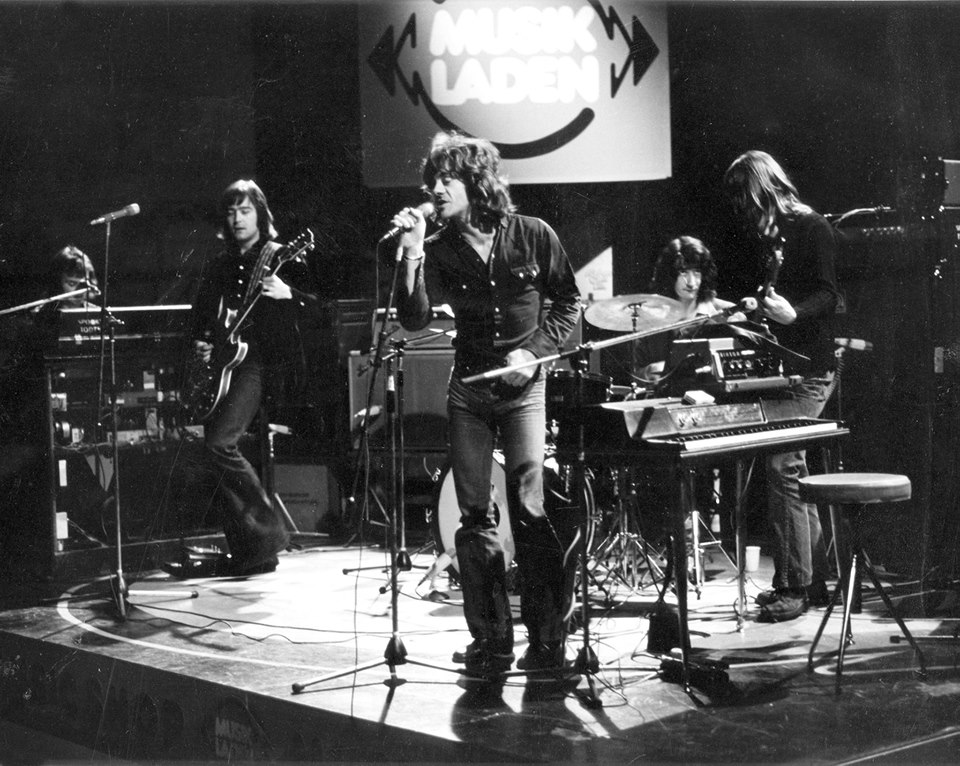

 dereksmusicblog
 dereksmusicblog