KROKOFANT-KROKOFANT II.
KROKOFANT-KROKOFANT II.
Two years ago, Krokofant were preparing to release their eponymous debut album on Rune Grammofon. It was an exciting time for the Kongsberg based trio. Krokofant were regarded as one of the rising stars of the Nordic music scene. Great things were forecast for Krokofant, who were being described by critics as one of the most exciting, innovative and pioneering Norwegian groups. This was high praise indeed; as Norway is blessed with a plethora of talented bands.
That’s been the case for several years. Norway had, and still has, one of the strongest and most vibrant music scenes in Europe. Countless bands have made a breakthrough in the last few years. This includes Elephant9, Cakewalk, Bushman’s Revenge, Moster!, Labfield, Syydive, Finland, Labfield and Space Monkey. In March 2014. Krokofant were all set to join their ranks.
That was when Krokofant was scheduled for release by Rune Grammofon. The album was the result of several years hard work. It was well worth it. Now, Krokfant were being hailed as one of Norway’s most exciting and pioneering groups. Critically acclaimed reviews of Krokofant praised the band’s pioneering, genre-melting sound. After years of hard work and dedication, Krokofant were regarded as one of Norway hottest musical prospects. It could all have been so very different. Especially, if saxophonist Jørgen Mathisen hadn’t gone into that guitar shop.
Originally, Krofofant were just a duo, consisting of guitarist Tom Hasslan and drummer Axel Skalstad. Then in 2012, Tom and Alex met saxophonist Jørgen Mathisen, in a guitar shop in Kongsberg, a town in Southern Norway which is famous for its annual jazz festival. Straight away, Tom, Alex and Jørgen hit it off. Straight away, Tom, Alex and Jørgen hit it off.
When Tom, Alex and Jørgen began playing together, it quickly became apparent that Jorgen was the missing piece in the musical jigsaw. No wonder. Jorgen was already an experienced musician. He’d already played in groups like Shagma, The Core and Zanussi Five. Soon, the new lineup of Krokofant became part of an innovative musical movement that’s sweeping the Norway.
So much so, that Krokofant epitomise this new innovative and exciting musical movement. Part of Krokofant’s music is improvisational. They fuse improvisation with rock beats and driving rhythms. Essentially, it’s a marriage of avant rock, free jazz, jazz rock and progressive rock. That’s a good description of Krokofant’s live sound, and their critically acclaimed eponymous debut album.
Probably the best way to describe Krokofant’s music, is a marriage of the Joycean progressive rock odysseys of King Crimson and Henry Cow, with Peter Brötzmann’s free jazz ensembles. Add to that, the influence of early-seventies jazz-rock pioneers; including The Mahavishnu Orchestra, Terje Rypdal and Ray Russell. It’s a unique and captivating fusion of raw but refined power, with discipline, energy and enthusiasm. Almost seamlessly, musical genres and influences becomes one. However, this didn’t happen overnight.
Like many bands before them, Krokofant’s sound was honed by playing live. The Kongsberg based trio earned their stripes by a relentless and gruelling live schedule. That was the case for the best part of two years. This constant touring paid off, and soon, Krokofant’s star was in the ascendancy. So the next step was for Krokofant was to record their debut album.
Six songs were recorded at Engfelt and Forsgren Studio in Oslo. By then, saxophonist Jørgen Mathisen had been officially confirmed as a member of Krokofant. He agreed, and with a spring in their step, the three members of Krokofant recorded their eponymous debut album. It was released in March 2014, to widespread critical acclaim.
Critics hailed Krokofant as a groundbreaking album, from one of the most exciting and pioneering Norwegian bands. Given the plaudits Krokofant had received, it was no surprise that upon its release in March 2014, the album sold well. Soon, word was out, and across Europe and further afield, Krokofant’s star was in the ascendancy.
As the year drew to a close, critics began drawing up their best of 2014 lists. When they were published, Krokofant found its way into many lists. Given this was only Krokofant’s debut album, this was a remarkable achievement. However, on 8th January 2016, Krokofant return will their eagerly-awaited sophomore album Krokofant II. It’ll be released by Rune Grammofon, and marks the welcome return of the Kongsberg based trio.
For their sophomore album Krokofant II, six songs were penned. Five of them, C.O.T.A., Sail Ahead, Nieu, The Ship and Watchtower were credited to Tom Hasslan and Krokofant. Snakedog was credited to Jørgen Mathisen and Krokofant. These six songs would become Krokofant II, which was recorded in the familiar surroundings of Engfelt and Forsgren Studio, in Oslo.
This was where Krokofant recorded their eponymous debut album. The Engfelt and Forsgren Studio was the perfect place to record Krokofant II. It was an analogue studio, and vintage equipment would be perfect to capture Krokofant’s old school sound. Providing the heartbeat, was Axel Skalstad drums. They were joined by guitarist Tom Hasslan and saxophonist Jørgen Mathisen. Christian Engfelt took charge of recording what became Krokofant II, and mixed the album. Then when Håkan Åkesson had mastered Krokofant II, it was ready for release.
The resultant album, Krokofant II, is one of the most eagerly awaited Nordic Wave albums of recent years. Krokofant was one of the best debut albums of recent years. Matching its quality, never mind surpassing it, isn’t going to be easy. However, if anyone can do it, Krokofant can.
C.O.T.A., which opens Krokofant II, explodes into life. There’s a real sense of urgency. The three members of Krokofant play as one, and this tight, talented trio never miss a beat. Not with twenty-two year old drummer Axel Skalstad providing the heartbeat. He pounds, powers and thunders his way round his kit, bringing to mind John Bonham and Keith Moon. Just like these two greats, Axel plays with equal amounts of energy and enthusiasm. This can’t help but inspired the rest of the band. Not that that they need inspiration.
Far from it. Jørgen Mathisen’s rasping, braying saxophone punctuates the arrangement, and goes toe-to-toe with Axel’s drums. Then, it’s guitarist Tom Hasslan’s turn to shine. He seems to draw inspiration from Jimmy Page. Not to be outdone, Jørgen unleashes another saxophone solo. Sheets of Pharaoh Sanders’ like saxophone drenches the arrangement. Midway through the track, Tom channels the spirit of Hendrix. By then, Krokofant are fusing avant rock, free jazz, progressive rock and psychedelia. For the next two minutes, Tom Hasslan delivers a spellbinding, inventive and innovative guitar solo. Somewhere, Jimi Hendrix is raising a glass to Tom Hasslan. For the last minute, Krokofant reunite to deliver a driving, powerhouse of an arrangement, where rock and jazz unite. This brings back memories of the golden age of the power trio, as Krokofant pickup where they left off on their debut album.
It’s a case of anchors away, as Krokofant kick loose on Sail Ahead. A seamless fusion of jazz and rock combines on another eight minute epic. This allows Krokofant to take the listener on a musical adventure. With the rhythm section driving the thunderous arrangement along, the grizzled, growling saxophone soars above the arrangement. Gradually, Tom’s guitar starts to play a more prominent role. It’s soon duelling with Jørgen’s saxophone. They drive each other to greater heights. Meanwhile, Axel powers his way round his drum kit, fills and rolls the order of the day. Then after 1.55 it’s all change.
A much more understated, jazz-tinged sound takes centre-stage. Everyone is playing within themselves. The sultry saxophone and rhythm section are straining at the leash. Very gradually, the tempo and power grows. It’s a case of when, not if Krokofant kick out the jams. By then, Jørgen’s saxophone has headed in the direction of free jazz. It wails and howls, like a melodic, cathartic unburdening. From there, Axel’s unleashes a thunderous rocky drum solo. With Tom for company, he provides the perfect foil for Jørgen’s saxophone, as rock meets jazz on this breathtaking, genre-hopping, musical tour de force.
As Jørgen’s free jazz inspired saxophone wails and howls on Nieu, Tom delivers another stunning guitar solo. His fingers flit and fly up and down the fretboard at breakneck speed. This is the musical equivalent of a master craftsman at work. As his solo draws to a close, he adds a touch of delay, and Jørgen’s saxophone takes on a much more orthodox sound. This being Krokofont, it’s sure to be a curveball.
It is. The solo gives way to Krokofont in full flight. They combine their hard rocking sound with a much more orthodox style of jazz. As Axel power’s the arrangement along, Tom delivers some Led Zeppelin inspired licks. Take out the saxophone, and it’s like listening to a classic rock album of the early seventies. However, Jørgen’s blistering, scorching saxophone runs and solos helps define Krokofont’s unique sound, adding a jazzy hue. Meanwhile, Axel’s thunderous, relentless drums and Tom’s blistering licks add waves of drama, as what’s akin to masterful, musical blitzkrieg reaches a glorious, dramatic, crescendo.
Straight away, The Ship Krokofant sets sail. Krokofant hardly let passengers take their seats, before kicking loose. Axel plays with enthusiasm, energy and power, pounding his drums while the cymbals ring out. Tom marches Axel every step of the way. They’ve been playing together for years, and have formed a potent partnership. Jørgen who joined Krokofant in 2012, barely seems to draw breath; unleashing searing, scorching jazz-tinged solos. They bray, soaring and snaking above and around the rest of the arrangement. Meanwhile, Tom and Axel provide a relentless rocky backdrop. Later, Krokofant show their versatility. A tempo change signals a diversion via progressive rock. Then it’s all change again. Fusion gives way to blistering avant rock, before Krokofant at their most adventurous, innovative and inventive, head for home on this eight minute epic.
It’s just the rhythm section and scorching, rocky guitars that open Snakedog. Soon, Jørgen’s saxophone joins the fray. He plays within himself, allowing a duel between Axel and Tom to unfold. Tom seems to be getting the better of Axel, his guitar dominating the arrangement. Axel’s drums come a close second. Then it’s Jørgen’s time to enjoy his moment in the spotlight. Everyone gets their time to shine in this fusion of avant rock, free jazz and classic rock. Gradually, Tom’s guitar and Axel’s drums begin to dominate the arrangement, while Jørgen is left to fill in the spaces. While Axel adds fills and rolls, Tom unleashes another guitar masterclass that’s reminiscent of Jimmy Page and Jimi Hendrix. Tom’s fingers race up and down the fretboard, and seamlessly, he’s at one with his guitar. Latterly, Jørgen and Tom play with a subtly, as Snakedog reaches an understated jazz-tinged ending, that shows yet another side of Krokofant.
There was a reason for this. Just under two years ago, in March 2014, Krokofant had released their eponymous debut album on Rune Grammofon. It was released to widespread critical acclaim, and as 2014 drew to a close, hailed as one of best debut albums of 2014. Krokofant was also regarded as one of the best Nordic Wave releases of 2014. Following up Krokofant wasn’t going to be easy. The pressure was on Krokofant when they began recording their sophomore album, Krokofant II.
After nearly two away, Krokofant returned with their eagerly-awaited sophomore album Krokofant II. It doesn’t just match the quality of Krokofant, but surpasses it. Krokofant II finds Krokofant coming of age musically, as they seamlessly flit between, and fuse disparate and eclectic musical genres.
On Krokofant II, there’s everything from avant rock, free jazz, fusion and rock, to avant garde, progressive rock and post rock. There’s even hints of experimental and psychedelia as Krokofant weave their unique musical tapestry. As they do so, they draw inspiration from a wide range of sources.
Collectively, everyone from Jimi Hendriix, King Crimson, Led Zeppelin and Mahavishnu Orchestra continue to influence Krokofant. l Just like on their eponymous debut album, Henry Cow, The Mahavishnu Orchestra, Terje Rypdal and Ray Russell continue to influence Krokofant. Similarly, an eclectic selection of artists inspire the individual members of Krokofant,
Both Jimmy Page and Jimi Hendrix have inspired the virtuoso guitar skills of Tom Hasslan. John Bonham and The Who’s Keith Moon have obviously influenced Krokofant’s prodigiously talented, twenty-two year old drummer, Axel Skalstad. Listening to Krokofant’s saxophonist Jørgen Mathisen, he sometimes replicates Pharaoh Sanders’ sheets of sound. Sometimes, he draws inspiration from has John Coltrane’s Impulse period. These influences have helped mould the members of Krokofant into the tight, talented band they’ve become.
While Krokofant were regarded as rising stars of the Norwegian music scene, they’ve arrived with Krokofant II, which will be released by Rune Grammofon on the 8th January 2016. Krokofant II features music that’s not just bold and brave, but inventive, innovative and influential. Continually, Krokofant continue to push musical boundaries, and constantly seek to reinvent themselves and their music. Not many bands modern bands are willing to do that. However, Krokofant do.
This becomes apparent on Krokofant II, as Krofofant take the listener on a genre-melting musical journey. Each and every song is different and full of subtleties and nuances. Having thrown another curveball, seamlessly, Krokofant change direction, and your hear another side to their music. That’s what you expect from musical pioneers.
That’s the perfect way to describe Krokofant. They’re the latest in a long line of Norwegian musical pioneers. However, Krokofant are at an important stage in they’re career. The Kongsberg based trio, are about to release their much-anticipated, and eagerly awaited, sophomore album Krokofant II. It’s a career-defining album from Krokofant, who come of age musically on Krokofant II, an album which features genre-melting, groundbreaking music that should see Krokofant become one of the leading lights of the vibrant Nordic Wave movement.
KROKOFANT-KROKOFANT II.

INTERVIEW WITH MICHAEL ROTHER-50 YEARS MAKING MUSIC.
INTERVIEW WITH MICHAEL ROTHER-50 YEARS MAKING MUSIC.
During the early seventies, the German music scene was thriving. It was one of the most vibrant in Europe. Some of the most influential and innovative music was being released by German bands. This included the holy trinity of Can, Kraftwerk and Neu!. Along with Amon Düül II, Ashra, Cluster, Popol Vuh and Tangerine Dream, these groups were at the forefront of a new musical movement.
In Germany, this new musical movement was called Kosmische musik. Its roots can be traced to the late-sixties, and in a way, were a reaction against the rigidity and rules of traditional music. No longer were musicians willing to be constrained by the rules of modern music. They wanted to free themselves from the shackles of rules and rigidity, and in the process, create new and groundbreaking music.
To do this, musicians fused a disparate and eclectic selection of musical genres. Everything from avant-garde, electronica, experimental rock, free jazz and progressive rock influenced and inspired Kosmische musik. This included the holy trinity of Can, Kraftwerk and Neu!.
They went on to create music that at the time, was ambitious, groundbreaking and innovative. Musical boundaries were pushed to their limits, and musical norms challenged. The holy trinity were fearless visionaries. This includes Michael Rother, who was a member of three of the biggest bands in German musical history.
Michael Rother, who has played a huge part in German musical history, celebrates fifty years as a musician in 2015. He started his career with Spirits Of Sound in 1965, before first jamming with Kraftwerk in the late-sixties. Later, he joined the band on a permanent basis, but left in 1971 to form another of the holy trinity, Neu! with Klaus Dinger.
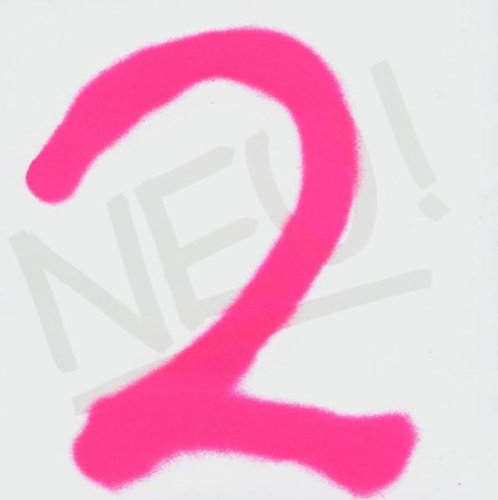
The pair recorded and released two groundbreaking albums Neu! in 1972 and Neu! 2 in 1973. However, when Neu! 2 wasn’t a commercial success, Neu! was put on hold, and Michael Rother joined Harmonia, the first German supergroup.
Harmonia featured Michael Rother plus Hans-Joachim Roedelius and Dieter Moebius of Cluster. They released two albums, Deluxe in 1974 and Music Von Harmionia in 1975. Both were groundbreaking and influential albums. However, Harmonia were too ahead of the musical curve, and neither album was a success. So Michael Rother recorded another another album with Neu!
By then were very different people, and had different ideas on music. This became apparent when Neu ’75 was released. It was the last time they would record for over a decade. In the meantime, Michael Rother returned to life with Harmonia.
Their music had attracted Brian Eno’s attention. He had called Harmonia “the most important band in the world.” Soon, Harmonia and Brian Eno would spend eleven days recording an album. Once the recording sessions were complete, the master tapes went missing, and only were discovered two decades later. Belatedly, Tracks and Traces was released in 1997 Michael Rother told me, as we discussed his fifty year career.
Michael Rother was born on 2nd September 1950 in Hamburg. That was home for the early years of his life. Then the Rother family moved from Hamburg to Wilmslow in Cheshire “because my father was a pilot. This was just the first in a series of moves.|
“Next we moved to Karachi, in Pakistan, where I was: captivated by the street musicians. The sounds, scales, rhythm and constant repetition mesmerised me. They would later influence as a musician.” That wasn’t his first musical influence.
“Originally, my earliest musical influence, was classical music. I remember my mother, who was a pianist, playing Chopin’s concertos. Then it was rock ’n’ roll. My brother who was ten years older than me, had rock ’n’ parties. Little Richard was my favourite, I loved the energy. Later, after the British explosion, The Beatles, Rolling Stones and The Kinks were the groups I listened to. Much later, the guitarists Eric Clapton, Jeff Beck and Jimi Hendrix when he descended down, were my influences.” However, the mention of Jimi Hendrix’s name and almost in an instant, Michael Rother is a teenager again.
“I was lucky, I once saw Jimi Hendrix live, it was an incredible experience.” As Michael speaks, he’s almost awe-struck. Then he reflects on the subject of influences: “later, when I became a musician, I came to regard those that I worked with, and collaborated with, as my influences and inspirations.” It’s then that Michael turns to the clock back to 1965, when his career began.
Spirits Of Sounds.
“My career began in 1965, when I joined a covers band at school. I had watched them play, so went away and spent the next year practising my guitar. Once I was ready, I asked if I could join and I became a member of Spirits Of Sounds. They said yes and this was the start” This cover’s band featured two other musicians who would enjoy successful processional careers.
Wolfgang Flür went on to form Kraftwerk and Wolfgang Riechman formed Wunderbar. Spirit Of Sounds must have been the only cover’s band to feature three musicians who would later transform German music. That was still to come.
“Spirits Of Sound played just covers, including songs by The Beatles, Rolling Stones and The Who.” For Michael Rother, this was his musical apprenticeship. Playing with Spirits Of Sound allowed him to learn his trade and hone his sound. All the time, he was listening to music which changed throughout the sixties.
“Later guitarists like Eric Clapton, Jeff Beck and Jimi Hendrix that were influencing me.” By then, Michael Rother was happy being part of a band, and seeing what life in a group was like. He was also well on his way to refining his guitar playing. However, then in 1969, Michael Rother got the call all young people must have dreaded.
Back in 1969, every German citizen had to spend six months in the army. Those who refused, or suffered from ill health, could spend six months as a civilian volunteer. That’s how in 1969, Michael Rother found himself working at St. Alexius hospital, Neuss. He had no option.
By the time his six month as a civilian volunteer was over, Michael Rother “was beginning to become frustrated with playing in a cover’s band. It had its limitations, and wanted to move away from traditional music.” Fortunately, Michael Rother got the opportunity to jam with a new band, Kraftwerk in late 1969.
Kraftwerk.
At first, Michael was just jamming with Kraftwerk. He enjoyed the freedom that their approach to music had. “When I began playing with Kraftwerk, they improvised, playing melodies without the blue notes.” For Michael this opened his eyes to the possibilities that were in the process of unfolding. Kosmische musik had just been born, and Kraftwerk were one of its pioneers. “After I had jammed with Kraftwerk, Florian Schneider and I exchanged phone numbers.”
After his session with Kraftwerk, Michael returned to Spirits Of Sound. Musically, his eyes had been opened. A new musical movement had been born in West Germany. However, for the time being, Michael was back in his covers band.
Then in 1971, Michael received a call from Florian Schneider. “Ralf Hütter had quit Kraftwerk unexpectedly, and returned to university to complete a course.” Meanwhile “the first Kraftwerk album had been a hit, and they wanted to build on the momentum.” So Florian wanted Michael to join Kraftwerk on a permanent basis.
It didn’t take Michael long to agree. After six years with Spirits Of Sound, a new chapter in Michael Rother’s career was about to begin. He was going to be part of Kraftwerk, who were now a trio.
When joined Kraftwerk, the group’s lineup was very different to the one that had recorded their 1970 eponymous debut album. Just Florian Schneider and Klaus Dinger remained. The addition of Michael Rother on guitar filled out the sound. However, very quickly, Michael discovered that all wasn’t well within Kraftwerk.
Michael’s role in Kraftwerk was twofold. “I would play live and play on what was to be their second album.” Straight away, Michael discovered that life with Kraftwerk was eventful. “It was exciting, never boring. When we played live, it could become chaotic, fights broke out between Klaus and Florian. They were both spiky characters.” That was only half the story.
“Sometimes, the audience didn’t understand what they heard. They came to hear what they heard on Kraftwerk. That was just a starting point. We took things from there. For members of an audience who expected to hear Kraftwerk replicated live, this what frustrating. Other members of the audience were excited by the possibilities. It was an exciting time for everyone” However, it was also a frustrating one.
After the success of Kraftwerk, Florian and Klaus were keen to record their sophomore album with producer Conny Plank. Tension was in the air. The recording sessions were fraught with difficulties. Although songs were recorded, the album never was completed. “Eventually, we hit a dead end and the recordings have been released. It was then that Klaus and I decided to form a new band, Neu!”
Neu!
By then, Michael and Klaus realised that “we had a similar musical vision.” So the nascent band were formed later in 1971, and was based in Dusseldorf. After the disagreements and frustration of Kraftwerk towards the end, the new band was a breath of fresh air. It was sure to revitalise the two musicians. The only thing they couldn’t agree on, was the band’s name
Michael though the band should have an organic name. Klaus however, had hit on the name Neu! This made sense, as they were a new band, who were part of the new musical Kosmische musik movement.
So, the new band became Neu! To go with the new name, a pop art logo was designed and copyrighted. This new logo was seen as a comment and protest against the modern consumer society. Just like contemporaries Can, Neu weren’t afraid to combine social comment and art. Having settled on a name, Neu!’s thoughts turned to recording their debut album. There was a problem though.
Neu!
Michael explains “we were poor musicians,’ All we could afford were four nights at Windrose-Dumont-Time Studios in December 1971. The reason we chose to record at nights, is it was cheaper. However, “it was a close shave, I get the shivers thinking about it. However, with the help of the genius Conny Plank, we got our message across.”
Over the four days, Neu! recorded a total of six tracks. They were written by Michael and Klaus. The two members of Neu! laid down all the parts onto an eight-tracks. Michael played guitars and bass, while Klaus played drums and a Koto. “At first the recording was slow, then we found the positive energy to move forward. The songs were stripped down to the bare essentials, they had to be we only had eight tracks to record onto.” Five of the six songs Neu! recorded were lengthy tracks. This included Hallogallo and Negativland.
Both feature Klaus’ innovative and mesmeric motorik beat. He played a 4/4 constantly, with only an occasional interruptions. Its hypnotic sound would soon become famous.
As Klaus and Michael listened to the playback of Hallogallo and Negativland, they had no idea that this drumbeat would become synonymous with Kosmische musik. Even once Conny Plank had mixed Neu! at Star Musik Studio, in Hamburg the two members of Neu! had no idea how influential the album would become.
“Once the album was mixed, Conny Plank gave me a copy of the cassette to listen to. I was proud, and played it to my girlfriend, family and friends. I’d no idea the effect the album would have. I was just pleased to have recorded my album. It had been a close shave.” Michael had no inclination that he had recorded a classic album.
Neu! was scheduled for release in early 1972. At the time, critic’s opinions were divided. Some critics realised Neu! was a truly groundbreaking album, and appreciated what was a genre-melting album. Elements of ambient, electronica, experimental, free jazz, industrial, music concrete and rock can be heard. These critics identified the album as a Kosmische classic. Other critics didn’t seem to understated Neu!, or Kosmische musik, which by then, had been renamed.
In London, a critic at Melody Maker had coined the term Krautrock. This came after Amon Düül released their 1969 album Psychedelic Underground. It featured a track titled Mama Düül und Ihre Sauerkrautband Spielt Auf, which in English, translates as Mama Düül and her Sauerkrautband Strike Up. At first, many people were reticent about using the name of this new genre.
By the time Neu! was released in 1972, that was no longer the case. Other critics and record buyers were using Krautrock rather than Kosmische musik. This was how they described the music of Can and Kraftwerk, and then Neu!, who had just released their eponymous debut album.
When Neu! was released on Brain in 1972, the album sold 30,000 copies in Germany. For an underground album, that was seen as a success. However, outside of Germany, Neu! didn’t sell in vast quantities. Despite only selling well in Germany, Neu! began work on their sophomore album, Neu! 2.

Neu! 2.
In January 1973, Neu! found themselves back in the studio with producer Conny Plank. “We weren’t signed to a record label, so Klaus, Conny and I had saved our money, and when we went to the studio, handed over enough to record for ten days.”
With Conny Plank producing what became Neu! 2, Michael and Klaus began work. “This time, we had sixteen tracks to work with, so could layer instruments. I played my guitar, it was played backwards, the tempo was sped up and effects were added.” Neu! it seemed, had taken experimenting to a new level, and were pushing musical boundaries to their limits, and sometimes way beyond. Everything seemed to be going so well. Then a problem arose.
“By then we had spent a week exploring, adding layers. I stacked five six guitars, added effects like distortion. This had taken a week, and we only had half an album recorded. We panicked. Then we thought of a solution. We had released recently Neuschnee and Super as a single. For some reason, the record company hadn’t promoted it. They seemed not to value singles. So we began to experiment.”
This Michael explains was: “a result of desperation. Side two of Neu! 2 is made different versions of Neuschnee and Super. We did all sorts of things. I played the single on a turntable, and Klaus kicked it as it played. We than played the songs in a cassette player, slowing and speeding up the sound, and mangling the sound in the process.” Just like their debut album, Neu! 2 was completed just in time. It was another: “close shave.”
With Neu! 2 complete, it was scheduled for release later in 1973. When the album was released, critics heard than Neu! had refined their trademark sound, and taken it even further. “Für immer an eleven minute epic was the best example.” It features Klaus and Michael becoming one. As Klaus’ drums propel the arrangement along, Michael delvers a virtuoso performance. Critics were won over by “Für immer, which was regarded as the highlight of Neu! 2. However, side two proved controversial.
Many critics weren’t impressed by side two of Neu! 2. They saw the music as gimmicky, and accused Neu! trying to fool and rip off record buyers. As indignant critics took the moral high-ground, again, it was a case that they didn’t understated music.
“What we had done, was take ready made music and deconstruct it. Then they could either reconstruct or manipulate the deconstructed music.” Critics either couldn’t or didn’t want to understand this. Neither did record buyers.
Just like critics, those who bought Neu! 2 were won over by side one. Für immer was Neu! 2 masterpiece, and most people realised this. However, when record buyers turned over to side two, they quickly became alienated. “They felt that we were trying to rip them off. That was not the case. Side two was Neu! at their most experimental, deconstructing only to reconstruct or manipulate. People didn’t understand this. It’s only recently that the music on side two has began to find favour with people. That wasn’t the case in 1973.”
On its release, Neu! 2 didn’t sell well. Even in Germany, Neu! 2 failed commercially. Brian who released Neu! 2, had expected the band to tour the album. However, there was very little interest in Neu!
Klaus Dinger and his brother Thomas even headed to London, to see if he could organise a Neu! tour of Britain. There, he met DJ John Peel, and Karen Townsend, the wife of The Who’s guitarist Pete. Although John Peel played tracks from Neu! 2 on his radio show, and tried to champion the band, there was no appetite for a Neu! tour of Britain. When Klaus returned home, he and Michael put Neu! on hold.
Both Klaus and Michael were keen to make it clear that this wasn’t the end of Neu! They merely, wanted to take some time out, to pursue other interests and projects. Klaus’ new project was La Düsseldorf. Meanwhile, Michael decided to embark on a journey to the Forst Commune.
The Birth Of Harmonia.
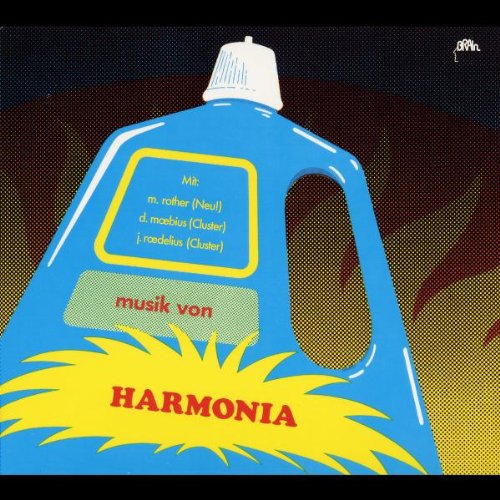
That was where he would meet Dieter Moebius and Hans-Joachim Roedelius of Cluster. Michael had heard Im Süden, a track from Cluster’s sophomore album Cluster II. The track struck a nerve with Michael, who wondered if Dieter Moebius and Hans-Joachim Roedelius would be interested in joining an extended lineup of Neu!? Then Michael began to consider a German supergroup consisting of Neu! and Cluster.
That proved to be the case. At the Forst Commune, Michael jammed with Dieter Moebius and Hans-Joachim Roedelius. That initial jam later became Ohrwurm, a track from Harmonia’s 1974 debut album Musik von Harmonia. Following their initial jam session, Michael stayed at the Forst Commune to prepare for the recording of Harmonia’s debut album.
Meanwhile, Klaus and Thomas Dinger had returned from London. They came, they thought, baring gifts. One of the gifts was studio engineer Hans Lampe, who for much of 1972, had been Conny Plank’s engineer. The other was Klaus’ brother Thomas. They Klaus proposed, would join an extended lineup of Neu! In preparation, they played a series of concerts as La Düsseldorf. Michael however, was busy with Harmonia. Not only were they planning to record their debut album, but build a recording studio.
Building a recording can be fraught with difficulties. However, for Michael, Dieter Moebius and Hans-Joachim Roedelius the building of their studio in Forst went smoothly. This new studio would play a hugely important part in Michael Rother’s future career. Not only would it be where Harmon recorded their debut album, but where Michael worked on future projects with Neu! and later, recorded his solo albums. That was still to come. Before that, Harmonia began to record their debut album Musik von Harmonia.
Musik Von Harmonia.
Having built their new studio, Michael Rother, Dieter Moebius and Hans-Joachim Roedelius started recording what became Musik von Harmonia in June 1973. Over the next five months, Harmonia recorded eight songs. The two members of Cluster were receptive to Michael Rother’s way of working. Hans-Joachim Roedelius explained recently: “there were no problems, we wanted to learn. Previously, we improvised, which made playing live problematic. A song was merely the starting point, it could go anywhere. Michael however, taught us about structure. We influenced him. It was a two-way thing.”
That’s definitely the case. Michael Rother believes: “that working with Dieter Moebius and Hans-Joachim Roedelius made him a more complete musician.” Over his time working with the two members of Cluster; “I learnt so much.”
This became apparent when Musik von Harmonia was completed in November 1974. Harmonia’s 1974 debut album, Musik von Harmonia, was a move towards ambient rock. Both Michael Rother and the two members of Cluster’s influences can be heard on the nascent supergroup’s debut album. It was released in January 1974.
When Musik Von Harmonia was released, many critics realised the importance of what’s a groundbreaking classic. It saw this nascent supergroup seamlessly embrace and incorporate disparate musical genres. In the process, Harmonia set the bar high for future ambient rock albums. Despite the critical acclaim that accompanied Musik von Harmonia, the album wasn’t a commercial success.
Michael Rother remember ruefully: “the seventies weren’t a good time for Harmonia. Our music was ignored, it was tough to survive during this period. So towards the end of 1974, Michael and Klaus reunited for Neu!’s third album.
The Return Of Neu!-Neu! ’75.
For Neu!! ’75, Michael Rother and Klaus Dinger reunited in December 1974 at Conny Plank’s studio. By then, Conny’s Studio was the go-to recording studio for German groups. They wanted “the genius” to sprinkle his magic on their albums. This would be the case for Neu! ’75.
The two members of Neu! had changed. Klaus was heavily into rock music, while Michael’s interest in ambient music was growing. As Michael explains: “After two years apart, we were different people. To complicate matters, Klaus wanted to move from behind the drum kit. He felt he was hidden away. I can understand this. But it was what Klaus did so well. However, he wanted to become an entertainer, playing the guitar and singing. He wanted to bring in two new musicians to replace him.” This included Klaus’ brother Thomas and Conny Plank’s former engineer Hans Lampe. These new musicians would allow Neu! to make a very different album.
Michael realised this was problematic. “By then Klaus could be difficult to work with. I realised we had compromise, so ended making an album with two very different sides. Side one was old Neu! and side two was new Neu!” On side two Klaus come out from behind his drum kit and play guitar and sing. He became the entertainer on what proved to be an album of two sides. It was completed in January 1975, and released later that year.
When critics were sent copies of Neu! ’75, they were struck by side one’s subtle, ambient, melodic sound. Michael remembers: “we used keyboards and phasing a lot on both sides. While Michael Rother’s name was written large all over side one; side two was very different, and quite unconventional. Reviews were mixed, partly because of side two. Some critics felt that if Neu! ’75 had the same sound throughout, it would’ve been hailed a classic. However, later Neu! ’75 and Neu!’s earlier albums would be reevaluated. Before that Neu! ’75 was released.
Just like Neu! 2, Neu! ’75 didn’t sell well. The problem was, many people didn’t understand what was essentially parts of two disparate albums joined together. The proto-punk of side two was so different from the ambient sound of side one. Record buyers were confused, and didn’t understand what Neu! stood for? It seemed that Neu! were just the latest groundbreaking group whose music was misunderstood and overlooked.
Michael looking back at Neu! ’75 reflects: “It was a time time. Klaus wasn’t the easiest person to work with. He was involved with different people, and being pulled in different ways. We were also very different musically. Then there were the new drummers on side two. They weren’t particularly good. Certainly neither were as good as Klaus,” a rueful Michael remembers. “It was a difficult project. By then Klaus was different to the man I’d met a few years earlier.” Michael wouldn’t work with Klaus for another decade. By then, Neu! music had inspired a new musical movement, punk.
Things started to change in 1976. Michael explains: “many punks claim that Neu! ’75 inspired them. Especially, side two.” That wasn’t the only Neu! album that inspired the punk ideal. Side two of Neu! 2 was a favourite of punks. It was: “a result of desperation,” which struck a nerve with the nascent punk movement, and its D.I.Y. approach. That’s when the revaluation of Neu! began. However, “it was a long time before our music was accepted and recognised, and began to sell in the quantities it does now”. That’s also the case with Harmona, who began recording their sophomore album in June 1975.

The Reuturn Of Harmonia-Deluxe.
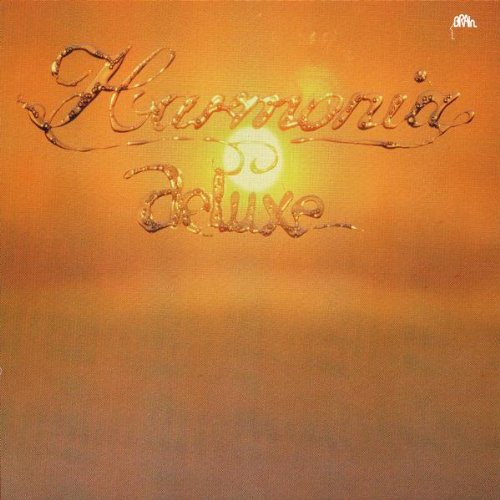
In June 1975, the three members of Harmonia returned to their studio in Forst for the recording of their sophomore album, Deluxe. Joining them, was a new face, Conny Plank, who was co-producing Deluxe. Conny Plank and Michael were good friends, and had worked together on four projects. This included Kraftwerk’s aborted album and Neu!’s two albums. The addition of the man who Michael Rother calls: “the genius,” just happened to coincide with Harmonia changing direction musically.
Deluxe saw a move towards Kominische musik. Partly, this was down to the addition of Guru-Guru drummer Mani Neumeier. He played on some track, and added a Kominische influence. Another change was that Michael Rother’s guitar played a more prominent role. That wasn’t Michael’s only influence.
The music on Deluxe was more song oriented. This was Michael Rother’s influence. He had taught the two members of Cluster the importance of structure. However, still Harmonia were experimenting, pushing musical boundaries. This was Cluster’s influence. Other parts of Deluxe had been influenced by Michael Rother. Hans-Joachim Roedelius agrees. “Michael Rother’s influence can be heard on Deluxe, more so than on Musik Von Harmonia.” What was also noticeable, was that Deluxe had a more commercial sound.
“This wasn’t a conscious decision. The music morphed and evolved, and the result was Deluxe,” Hans-Joachim Roedelius reflects. Michael Rother agrees. “Every album I’ve made I set out for it to be commercial. Sometimes, though, it doesn’t work out that way.” Sadly, that proved to be the case.
When Deluxe was released in 1975, to the same critical acclaim as Musik von Harmonia. The noticeable shift to what was a more commercial sound, surely would lead to a change in Harmonia’s fortunes?
That wasn’t to be. Deluxe was released on 20th August 1975, and sales of the album were slow. They never picked up, and history it seemed, was repeating itself. Michael reflects: “Still our music was being ignored. It was a difficult time for us. So much so, that Michael decided to record his debut solo album.
Michael Rother-The Solo Years-Part One.
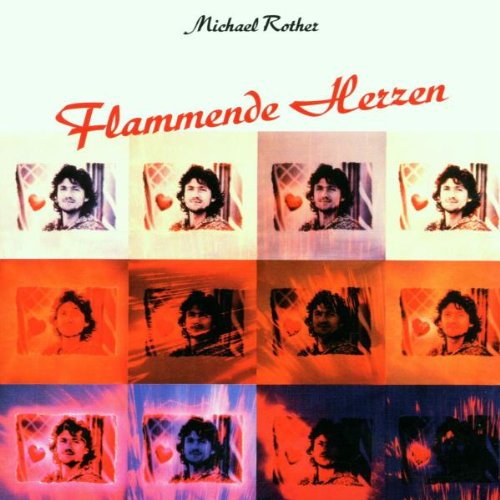
With Harmonia having just about run its course, Michael Rother embarked upon his solo career. That would take up the majority of his time. Michael’s first solo album was “Flammende Herzen which I recorded at Conny’s Studio.” Michael had entrusted his solo career to the man he refers to as “the genius.”
Flammende Herzen.
Recording of Flammende Herzen began at Conny’s Studio in June 1976. Michael had penned five tracks, and planned to play most of the instruments himself. The only instrument he couldn’t play were the drums. So Jaki Liebezeit of Can came onboard, and this was the start of a long-lasting collaboration. That was the case with Conny Plank, who co-produced Michael’s debut solo album.
At Conny’s Studio, five instrumentals which were based around Michael’s guitar were recorded. These tracks became Flammende Herzen, which was completed in September 1976. Michael’s debut album scheduled for release in March 1977.
Before the release of Flammende Herzen, critics had their say on Michael Rother’s solo album. Most of the reviews were positive. It seemed that Michael’s fortunes were about to change.
When Flammende Herzen was released in March 1977, the album wasn’t a commercial success. It was as if Michael was fated. Despite releasing album after album of innovative and influential music, they failed to sell. The only small crumb of comfort for Michael, was that “Flammende Herzen, which, was released as a single, was later used in the soundtrack to Flaming Hearts.”
Nowadays, Flammende Herzen is regarded as one of Michael’s finest solo albums. It’s as if this was the album he had been longing to make. Sadly, in 1977, as punk was making its presence felt, Flammende Herzen passed record buyers by. By then, Michael had been back in the studio with Harmonia, and a special guest, Brian Eno.
The Return Of Harmonia With Brian Eno-Tracks and Traces.
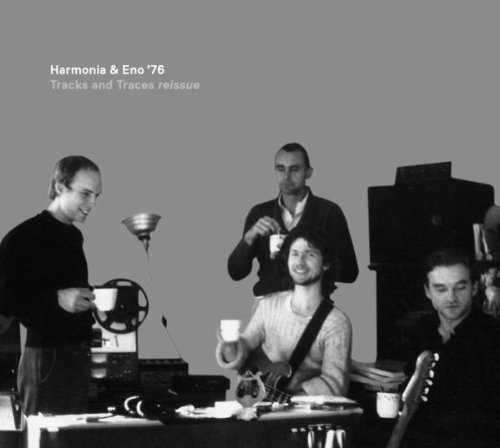
After the release of Musik von Harmonia, Brian Eno had called Harmonia was “the world’s most important rock band” at the time. So it was no surprise that when Harmonia reunited to record their third album, it was a collaboration with Brian Eno. However, it was also the end of an era.
Little did the three members of Harmonia realise, that Deluxe was the last album they would release for thirty-two years. For what was their swan-song, Harmonia were joined by another legend, Brian Eno.
Michael remembers the sessions well. “Brian Eno was a very intelligent man. He seemed to know what music was on the way up. By then, he was making ambient music and was working as a producer. He was about to produce David Bowie’s Heroes’ album.” However, for the next eleven days, Brian Eno joined the band he had been championing since their debut album.
At the studio in Forst, Hans-Joachim Roedelius, Dieter Moebius, Michael Rother and Brian Eno spent eleven summer days recording what was meant to be their third album. The working title was Harmonia ’76. However, by then, Hans-Joachim Roedelius remembers “Michael Rother was wanting to concentrate on his solo career. Once the album was completed, it became apparent Harmonia had run its course. It was evolution.”
This wasn’t surprising. Harmonia weren’t selling many records. “It was a tough time for us. Our music seemed to be ignored.” Neu! also seemed to have run its course. “Neu ‘75 hadn’t sold well. Klaus wasn’t an easy person to work with. So, I decided to return to my solo career after the release of Harmonia ’76.” That never happened.
Incredibly, the master-tapes for Harmonia ’76 went missing. “We feared they were lost forever. Then twenty years later, they were found.” What was meant to be Harmonia ’76 was released Tracks and Traces in 1997.” That wasn’t the end of the Harmonia story. No. However, before the next chapter in the Harmonia story unfolded, Michael Rother’s solo career continued.
Michael Rother’s Solo Career-Part Two-Sterntaler.
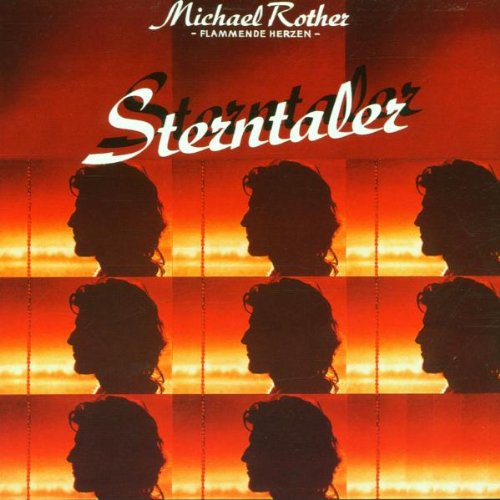
After the drama and disappointment of the loss of the master tapes for Harmonia ’76, the three members of Harmonia went their separate ways. By September 1977, Michael was ready to record his sophomore album Sterntaler.
It was recorded between September and November 1977 at two studios. This included Conny’s Studio, and Michael’s studio in Forst. By then, Michael was a true multi-instrumentalist, and was playing guitar, bass guitar, piano, synths, electronic percussion Hawaiian slide guitar and synth strings. Augmented by Jaki Liebezeit’s drums, Sterntaler took shape.
Unlike his debut album, the synths were playing an important part in Sterntaler’s sound, and were responsible for the melody. Then on the ambient sounding Blauer Regen, Jaki Liebezeit’s weren’t needed. This was another signal that Michael’s music was changing. Michael and co-producer Conny Plank finished work on Sterntaler in November 1977. Maybe the stylistic shift would result in a change in Michael’s fortunes?
Sadly, it was a familiar story. The reviews of Sterntaler were generally positive, and Michael was regarded as one of the most innovative musicians of his generation. However, when Sterntaler was released, the album didn’t sell well. Michael remembers; “my music seemed to be out of fashion.” However, he continued to make music, music that continued to evolve.
Katzenmusik.
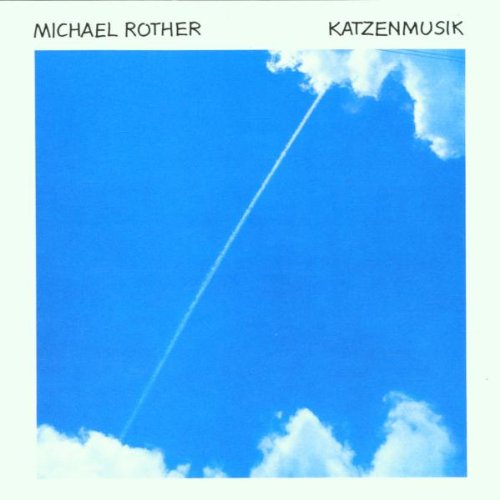
Recording of Michael’s third album Katzenmusik took place between March and July 1979. Just like his previous album, the album was recorded in Forst and Conny’s Studio. Michael used mainly electronic instruments. They were augmented by guitars and Jaki Liebezeit’s drums.
It seemed that if Michael was a painter, he was reducing his pallet. That would be the case for most musicians. Michael Rother wasn’t most musicians. Along with his co-producer Conny Plank, they recorded two suite of songs which featured twelve tracks. Essentially, they were variations layered around four different five-note melodies. They then recur in a variety of ways. While stylistically, the music was similar to his two previous albums, the instruments used had changed. However, this didn’t stop Michael recording another album of groundbreaking music. It was released later in 1979.
On Katzenmusik’s release, some critics hailed the album Michael Rother’s finest hour. He had come of age as a solo artist. This should’ve been a cause for celebration. However, it was, and it wasn’t.
Katzenmusik was the last album Michael recorded with Conny Plank. “It was no reflection on Conny. The man was a genius. However, I wanted to go my own way, and explore other options.” Sadly, Michael Rother and Conny Plank’s swan-song wasn’t a commercial success. It would be another three years before Michael released a new album.
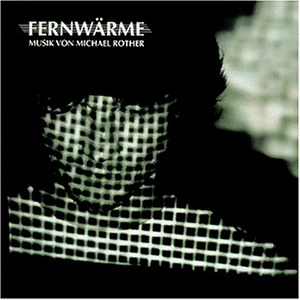
Fernwärme.
It was 1981 when Michael Rother began work on his fourth album. The recording took place at Michael’s own Flammende Herzen Studio in Forst. It was just Michael and drummer Jaki Liebezeit. Unlike his first three albums, Conny Plank was absent. “We remained friends, and I owe Conny a lot, but it was the time to move on.”
This couldn’t have been easy. The pair had worked on nearly every project Michael had been involved with. Fernwärme was a first. It was just Michael, Jaki and the latest electronic instruments. They were used extensively on Fernwärme. This included drum machines. For Jaki Liebezeit the writing was on wall. Fernwärme was his swan-song with Michael Rother.
Michael explains: “Fernwärme was the last project Jaki worked on. Again, it was nothing personal. It was similar to the situation with Conny Plank. I wanted to move in a different direction, and already had began to use drum machines. Jaki was a fantastic drummer. The man is a machine, and will be drumming the rest of his life. However, Fernwärme was the last time we worked together.”
As Michael Rother prepared for the release of Fernwärme in 1982, it must have been with a degree of trepidation. It was the first album he had produced himself. However, he needn’t have worried, as Fernwärme was well received upon its release. Michael’s first album in three years, and the first he had produced himself was hailed a success. Sadly, the wider record buying public still hadn’t discovered Michael Rother’s music. “It was a really frustrating time for me.”
Lust.
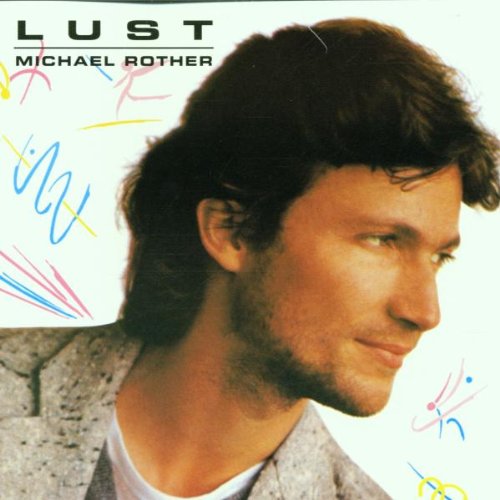
After the release of Fernwärme in 1982, Michael didn’t return to his Sterntaler Studio, Forst until 1983. When he did, he was on his own. “Lust was the first album I wrote, recorded and produced on my own. Because I had my own studio, I found myself spending more time thinking things over. Sometimes, when I went to bed, all I could think of was what I had been working on. That is the downside of having a home studio. However, the advantages outweigh disadvantages. I had also bought a Fairlight, and was just getting use to it. Its sounds divides people. Some people like it, others love it. Lust was the first album where I used the Fairlight.” That was another reason Michael spent as long as he wanted perfecting Lust. Only then, was he ready to release the album.
Lust was released in 1983, and was Michael Rother’s fifth album. It was all his own work. No other musician had played a part in recording the album, which showcased a new sound. At the heart of the sound was the Fairlight. Although the Fairlight divided people’s opinion, the majority of critics gave Lust positive reviews. The latest reinvention of Michael had been a critical success. However, when Lust wasn’t the commercial success many critics forecast, it was another two years before Michael returned with his sixth solo album.
Süßherz und Tiefenschärfe.
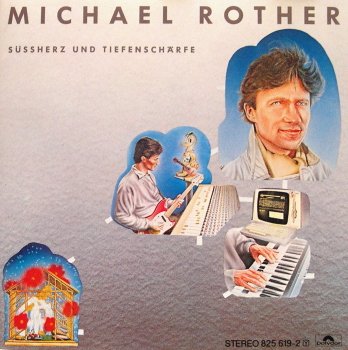
November 1984 saw Michael Rother return to his Katzenmusik Studio, in Forst to record what would become Süßherz und Tiefenschärfe. Just like his previous album Lust, he wrote, recorded and produced. It was just Micael, his trusty guitar and the electronic instruments he favoured. For three months he honed what became his sixth solo album. It was completed in February 1985, and became Süßherz und Tiefenschärfe.
Later in 1985, Polydor released Süßherz und Tiefenschärfe. Before that, critics had their say on Michael Rother’s sixth solo album. Again the reviews were positive. Some critics went as far as to say that üßherz und Tiefenschärfe was one of the best albums Michael had recorded. It was released later in 1985. By then, Michael Rother and Klaus Dinger had been reunited.
Neu! Reunite Again.
Little did Micahel Rother realise what he was letting himself in for. When Michael met Klaus; “I realised that Klaus wasn’t in a good place. He had surrounded himself with people who were pulling him in all directions. Klaus was also needing money, and recording a new Neu! album offered him the opportunity to make some money. So we entered a small studio in Düsseldorf. It wasn’t like the professional studio we had worked in before. Instead, it was more like a semi-professional studio.” That was where recording of Neu!’s most controversial album began.
Recording began in October 1985. The members of Neu! then moved between Grundfunk Studio and Dinerland-Lilienthal Studio. The sessions were problematic. A decade had passed since the pair had worked together. Michael remembers: “Klaus seemed different. He was argumentative, and there was no longer the same chemistry between us. It wasn’t an easy time. Despite that, we managed to record tracks which I took to my own studio in Forst.”
The group’s sound was very different. Synths were added to Neu!’s old sound. It was Neu! with a new wave twist. However, this didn’t work. By then, Klaus and Michael were vey different as musicians. Michael had moved towards the electronics and technology. Klaus it seemed, hadn’t moved at the same pace.
By April 1986, work on the album stopped, and the project was cancelled. “Klaus and I met in Düsseldorf and agreed to abandon the project. We even went as far as sealing the tapes. This seal wasn’t to be broken without the other’s permission. The album was certainly not going to be released. That was why we sealed the master tapes. I never thought the would be released. Certainly not in the way that was released in late 1995.” By then, Michael was concentrating on his solo career.
Michael Rother The Solo Years Part 3-Traumreisen.
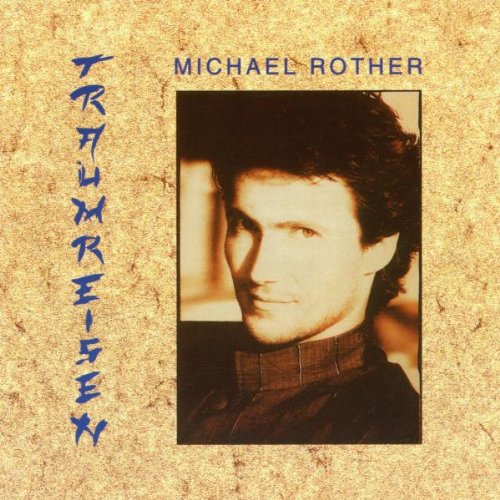
After the abandoned Neu! project, Michael Rother didn’t return to the studio until January 1987. He spent the next six months in his home studio. “That was the benefit of having your own studio. I could record when I wanted. Sometimes, it a lonely life, and I felt as if I was going slightly mad.” Eventually, though, Traumreisen was completed in July 1987.
Just like his previous album, Traumreisen featured just guitars and Michael electronic instruments. Critics were won over by Traumreisen, which was released later in 1987. It was a case of deja vu, when Traumreisen failed to reach a wider audience. After seven solo albums, he was still make a commercial breakthrough. Michael’s music it seemed, was only appreciated by connoisseurs of Kosmische musik. This lack of commercial success resulted in Michael “beginning to lose interest in recording albums.” It would be another nine years before he released another album. By then, Michael had founded his own record company.
Random Records was founded in 1993. This coincided with Michael managing to secure the rights to his back catalogue. However, the new label’s first release was a compilation, Radio-Musik Von Michael Rother-Singles 1977-93. It was released in 1993, with reissues of Michael’s solo albums being released over the next few years. Each album was remastered and released with bonus tracks on Michael’s Random Records. Michael was in control of his musical destiny. At least for his solo career. Neu! was another matter.
Neu! 4.
By the time Michael founded Random Records, Neu!’s first three albums had been released on CD by Germanofon Records, a Luxembourg based label. However, there was a problem.
Michael explains: “the deal to release Neu!’s first three albums was entered into, without his permission. These bootlegs were available in every record shop I entered into.” There’s frustration and anger in his voice. It’s not about money though. Instead; “I was frustrated that people were buying an inferior product. It wasn’t of the quality I expected.” If Michael was frustrated about the release of Neu!’s first three albums, he was in for a shock on the morning of 17th October 1995.
“That day, I was sitting at home, when I received a fax from Klaus congratulating on the release of Neu! 4. I was shocked, as I hadn’t given my permission or consent to release the album. Soon, the picture became clear.
“By then, Klaus was really frustrated and angry about the bootleg releases of our first three albums. They were selling well, and neither of us were making anything from them. To make matters worse, Klaus was short of money, and desperate, so entered into a deal with the Japanese label Captain Trip Records. The owner was a huge fan of Neu! and was impressed by Klaus. He gave Klaus cash which he was meant to share with me. In the sleeve-notes to what was billed as Neu! 4, Klaus railed against the bootleggers.” Ironically, this was something that both Michael and Klaus agreed about. However, the release of Neu! 4 drove a wedge between the two old friends.
With the benefit of hindsight, Michael reflects: “looking back, I wish I’d jumped on the train to Düsseldorf and punched Klaus on the nose. I’m not that kind of person though. But I might have felt better. Then we could’ve moved on. However, we never did.”
After the release of Neu! 4, Klaus and Michael were continually at loggerheads. This was ironic. “By then, Neu! were at last, a popular band. People wanted to buy our albums. All that was available were the bootlegs, and Neu! 4 which to me, wasn’t a legally released or genuine album.” Eventually, though, Michael and Klaus reached an agreement in 2000, and Astralwerks in America and Grönland Records in Europe released Neu!’s first three albums. They also recalled copies of Neu! 4, which has been out of print ever since. Michael however, stresses: “I’ve no problem people buying a second hand copy of Neu! 4, I just don’t want the album rereleased. After the problems with Neu! 4, Michael released his eighth solo album in 1996.

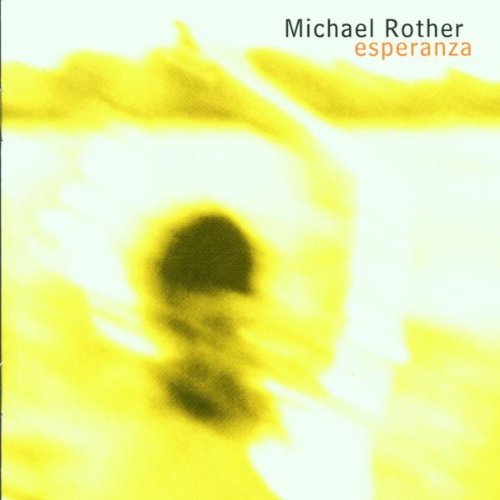
Esperanza.
Unlike his last couple of albums, Michael didn’t work alone on Esperanza. He was joined by Jens Harke, who wrote the lyrics and added vocals to Weil Schnee und Eis. This was a first. Apart from the occasional vocal sample, Michael’s album had been vocal free zones. That wasn’t the only change.
The other contributor to Esperanza was Joachim Rudolph. He took charge of Pro Tools programming. Things had changed since Michael’s last album. It was the digital age, and now, DAWs had found their way into recording studios. As befitting the digital age; “I used only electronic instruments on Esperanza. There were no guitars on the album. This wasn’t a first. I’d already gone on a tour of America without a guitar. I was tired of the guitar and wanted to experiment.” That’s what Michael Rother did between January 1995 and January 1996 at three studios. Once the album was completed, it was released two months later.
Esperanza was released on the 11th March 1996, on Michael’s Random Records. Most of the reviews of Esperanza were positive. Michael Rother, was continuing to innovate and push musical boundaries. However, when Esperanza wasn’t a commercial success, “I began to lose interest in recording, and decided to concentrate on playing live.” As a result, it was a new millennia when Michael released his next album.
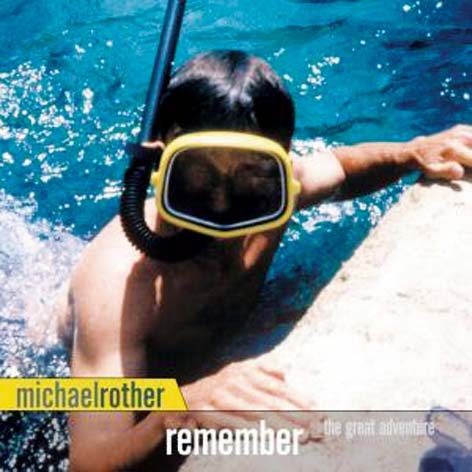
Remember (The Great Adventure).
April the 25th 2004 proved to be a significant date in Michael Rother’s career. It was the day he released his most recent solo album, Remember (The Great Adventure). It had been recorded over a period of seven years and was a collaboration with various electronic musicians. This includes Thomas Beckmann, Andi Toma and Jake Mandell, who all programmed beats for the rhythm tracks. Sophie Williams and Herbert Grönemeye added vocals on Remember (The Great Adventure). This was only Michael’s second album to feature vocalists. Ironically, it proved to be his last.
Michael Rother’s collaboration with a new generation of musicians was well received by critics. Just like his previous albums, Michael didn’t shy away from innovating. Instead, he embraced the new and was determined to look forwards, rather than backwards. That was the case throughout his solo career.
Following Remember (The Great Adventure), Michael Rother “decided to concentrate on playing live. It’s allowed me to travel the world and play all over Europe, America and in 2014, in China. My albums were not selling well, and after a while, I lost interest in recording music.” However, it wasn’t just Michael that was playing live. One of his old groups reunited and took to the stage one more time, Harmonia.
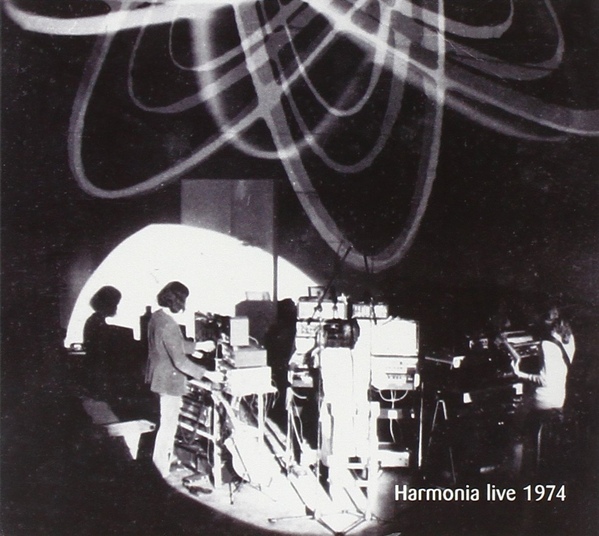
Harmonia Reunited and Live.
The reunion was for the release of Harmonia’s Live 1974 album. It featured a a recording of Harmonia’s concert on the 23rd March 1974, at Penny Station Club in Griessem, Germany. To celebrate the release of Live 1974, Harmonia played live for the first time since 1976. This landmark concert took place at the Haus der Kulturen der Welt in Berlin, on November 27th 2007. Sadly, it would be the last time the three members of Harmonia played live. Belatedly, they had found the critical acclaim and commercial success they so richly deserved. It had taken thirty years, but Harmonia were regarded as one of the most innovative and influential groups in Kosmische musik. So were Neu!
Neu! The Comeback-Neu! ’86.
As the years passed by, Neu! 4 was still a sore point for Michael Rother. It had driven a wedge between Michael and Klaus. “Sadly, Klaus died in 2008. I was deeply saddened. We had been great friends once.” Kosmische musik had lost one of its pioneers.
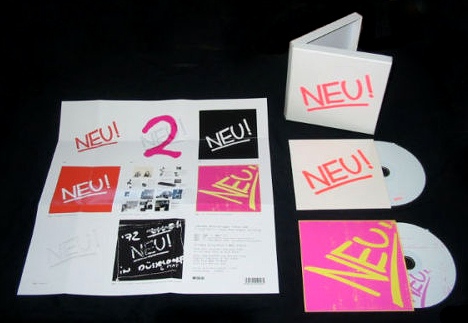
Two years later, Michael got the opportunity to right a wrong. He explains: “in early 2010, I came to an agreement with Klaus’ widow. It allowed me work on what had been Neu! 4. Using the master tapes, I remixed the whole album.” That wasn’t the only change.
The running order changed. Some of the tracks were given new names. Only twelve of the fourteen tracks on Neu! 86 found their way onto Neu! 86. A new song, “Drive (Grundfunken), was added to what became Neu! 86. It was released as a box set on May 10th 2010. Then on August 16th 2010, a CD version of Neu! 86 was released.
Mostly, reviews of Neu! 86 were positive. The only criticism was that the album was overproduced. Michael disagrees but agree: “it’s all matter of taste and opinion. I feel I did the best I could with what I had. Now Neu! 86 is much nearer to the album we had tried to make in 1985.” A quarter of a century later, and Michael was happy at the release of Neu! 86 in 2010. That wouldn’t be the last project from the past that Michael would undertake.


Harmonia-Complete Works.
Recently, Michael Rother has been working on what can only be described as a loving curated and luxurious box set. He has overseen the remastering of Harmonia-Complete Works, which will be released by Grönland Records in October 2015. Included in the box set are the five digitally remastered vinyls; including Musik Von Harmonia, Deluxe, Tracks and Traces, Live ’74 and an album of unreleased material. One of the unreleased tracks was nearly lost forevermore.
Michael explains what happened. “Harmonia recorded all our shows and rehearsals. However, we were a poor band, and had to reuse each tape. Luckily, one night, a friend asked if we could record a rehearsal? Hans-Joachim Rodelius recorded the show, and at the end of the night, handed him the tape. That tape features what I consider to be the ultimate version of Tiki. Having given the tape away, I feared we would never see it again. Fortunately, our friend has kept that tape and the version of Tiki features on the fifth album of Complete Works.” That however, isn’t all that features in this laving and luxurious box set.
“There’s a thirty-six page booklet, detailing Harmonia’s history and a tour poster.” For those wanting to keep their vinyl pristine, there’s even a download code. This seems a fitting way to remember the group Brian Eno considered as: “the world`s most important rock group.“ However, the release of Complete Works is tinged with sadness.
After a brave and lengthy battle against cancer, Dieter Moebius died on 20th July 2015. Michael’s saddened by the passing of his old friend. During the making of Complete Works, Michael says: “I always made sure to keep Dieter up to date with how Complete Works was progressing. Only after he had approved everything, did I move on. I would never have done anything without his approval.” Sadly, Dieter Moebius died before Complete Works was released. He never got to see what will prove to be fitting reminder of the group that Dieter Moebius played such a big part of. Along with Hans-Joachim Roedelius and Michael Rother, Dieter Moebius was part of one of the most innovative groups in the history of Kosmische musik. They’re now regarded as one of the finest purveyors of Kosmische musik. Harmonia sit alongside the holy trinity, at Kosmische musik’s top table. At the head of the table is Michael Rother.
There’s a reason for this. Michael Rother has been part of three of the biggest bands in the history of Kosmische musik; Kraftwerk, Neu! and Harmonia. He then released nine solo albums and more recently, two soundtrack albums. “That was a new experience. However, now I concentrate my time on performing live.” Michael explains.
“I’ve been fortunate it’s taken me all over the work. One of the highlights was playing in China in 2014. I’ve a tour booked for early 2016, and will be playing in London. However, I’ve really enjoyed working on the Harmonia box set project. Indeed, once Complete Works is released, I’ll not know what to do with myself. Maybe, I’ll go back into the studio? I don’t know. That’s the future. For now, I’m concentrating on the release of Complete Works. Grönland Records have done a fantastic time and I’m grateful for that. The Complete Works has been a labour of love, and I’ve enjoyed seeing it through to fruition.”
Since then, The Complete Works box set has almost sold out. It’s been a huge commercial success, and when I was asked to choose my best box set of 2015, there was only one choice, The Complete Works. Nothing else came close. Michael Rother’s loving compiled box set was the perfect way to celebrate and document one of the most innovative, influential and important Kosmische groups ever, Harmonia. They were just one of three pioneering groups Michael Rother was a member of.
Michael Rother, the one-time Kraftwerk guitarist went on to cofound Neu! and then Harmonia. Both of the groups Michael Rother cofounded, went on to play an important part in the history of Kosmische musik; and even today, continue to influence and inspire several generations of musicians. That’ll be case for the foreseeable future.
Early in 2016, Michael Rother heads out on tour, and each night, will play a selction of songs by Neu! and Harmonia. Michael Rother live is proving the hottest ticket in town, and on the 6th of February 2016, Michael Rother makes a welcome return to London, where he will play what’s one of the most eagerly awaited shows of recent years, at Under The Bridge.
INTERVIEW WITH MICHAEL ROTHER-50 YEARS MAKING MUSIC.
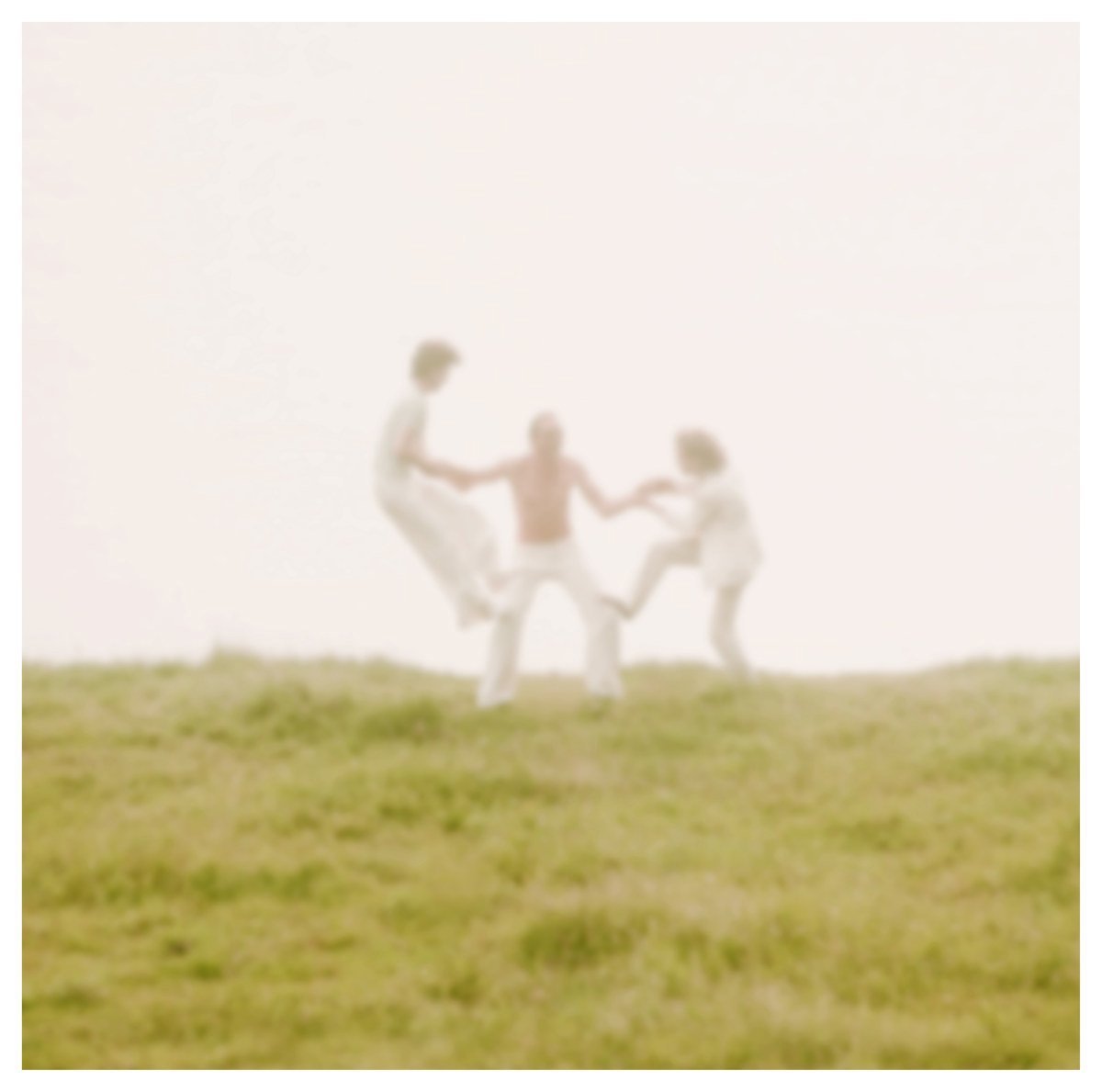


HARMONIA-MUSIK VON HARMONIA.
HARMONIA-MUSIK VON HARMONIA.
Just a week before Christmas, the album that caused Brian Eno to call its makers “the most important band in the world” was reissued on CD by Grönland Records. Sadly, that album didn’t go on to sell millions of copies. Far from it. Musik Von Harmonia, the debut album from German supergroup Harmonia, failed commercially. Its release almost passed unnoticed in 1973.
So did the followup Deluxe in 1975, which has also been reissued by Grönland Records. Harmonia cofounder Michael Rother remembered this period, when I interviewed him in late 2015. “The seventies weren’t a good time for Harmonia. Our music was ignored, it was tough to survive during this period.” Harmonia weren’t alone.
Other Kominische bands were releasing albums that passed almost unnoticed. Can and Amon Düül II were in a similar boat. Even Kraftwerk’s first three albums weren’t a commercial success. It was a similar story for Neu! back in 1973.
Back in 1973, Neu! had just released their sophomore album Neu! 2. It failed to match commercial success and critical acclaim of their eponymous debut album. Neu! had sold 30,000 copies in Germany alone. This was good for an underground album. However, Neu! 2 was a different matter.
The problems started when Neu! went into the studio to record Neu! 2. They had booked ten days to record their second album. This should’ve been plenty of time. Neu! had recorded their debut album in four days. However, Micahel and Klaus spent too long recording side one of the album. With only three days left, the pair panicked. Desperation set in. Then they remembered a single Neu! had released, Neuschnee which featured Super on the flip-side. This was the solution to their problems.
So for side two of Neu! 2, Michael and Klaus recorded versions of Neuschnee and Super. Michael remembers “We did all sorts of things. I played the single on a turntable, and Klaus kicked it as it played. We than played the songs in a cassette player, slowing and speeding up the sound, and mangling the sound in the process.” Just like their debut album, Neu! 2 was completed just in time. It was another: “close shave.”
With Neu! 2 complete, it was scheduled for release later in 1973. When the album was released, critics were won over by side one. Neu! were refining the sound of their debut album. Für immer was Neu! 2’s masterpiece. However, critics weren’t impressed by side two.
Many critics saw the music as gimmicky, and accused Neu! trying to fool and rip off record buyers. Indignant critics took the moral high-ground. Some record buyers agreed. “They felt that we were trying to rip them off. That was not the case.” Side two was Neu! at their most experimental, deconstructing ready made music only to reconstruct or manipulate it. However, neither critics nor record buyers realised this, and Neu! 2 failed commercially. This left Michael Rother and Klause Dinger with a problem.
Both men decided to look for a solution to the problem. Klaus headed to London, where he tried to drum up interest in Neu! Meanwhile, Michael found the solution to his problem in a song.
After hearing “Im Süden, a track from Cluster’s sophomore album Cluster II,” Micahel Rother decided to turn Neu! into the first German supergroup. So Michael embarked upon a journey to the Forst Commune, where his he had a proposal for two of his friends, Dieter Moebius and Hans-Joachim Roedelius of Cluster.
As Michael made his way to the Forst Commune, he wondered if Dieter Moebius and Hans-Joachim Roedelius would be interested in joining an extended lineup of Neu!? Then Michael began to consider another possibility, a German supergroup consisting of Neu! and Cluster? This would be a first. Nobody had ever tried this before. It was the opportunity of a lifetime.
Soon, it became apparent that Michael’s idea of a supergroup was about to take shape, just not in the way Michael had originally envisaged. That initial jam later became Ohrwurm, a track from Harmonia’s 1974 debut album Musik Von Harmonia. Following their initial jam session, Michael stayed at the Forst Commune to prepare for the recording of Harmonia’s debut album. Germany’s first supergroup had just been born. It wasn’t an extended version of Neu! Instead, it was a new band Harmonia.
Musik Von Harmonia.
Soon, Michael Rother, Dieter Moebius and Hans-Joachim Roedelius started recording what became Musik von Harmonia in June 1973. It was meeting of musical minds. Over the next five months, Harmonia recorded eight songs. The two members of Cluster were receptive to Michael Rother’s way of working. Hans-Joachim Roedelius explained recently: “there were no problems, we wanted to learn. Previously, we improvised, which made playing live problematic. A song was merely the starting point, it could go anywhere. Michael however, taught us about structure. We influenced him. It was a two-way thing.”
That’s definitely the case. Michael Rother believes: “that working with Dieter Moebius and Hans-Joachim Roedelius made him a more complete musician.” Over his time working with the two members of Cluster; “I learnt so much.”
This became apparent when Musik von Harmonia was completed in November 1973. Harmonia’s 1974 debut album, Musik von Harmonia, was a move towards ambient rock. Both Michael Rother and the two members of Cluster’s influences can be heard on the nascent supergroup’s debut album. It was released in January 1974.
When Musik von Harmonia was released, many critics realised the importance of what’s a groundbreaking classic. It saw this nascent supergroup seamlessly embrace and incorporate disparate musical genres. In the process, Harmonia set the bar high for future ambient rock albums. Despite the critical acclaim that accompanied Musik von Harmonia, the album wasn’t a commercial success.
Opening Musik Von Harmonia is Watussi. Rhythmic and hypnotic describes this track. Drumbeats courtesy of a drum machine crack, joining banks of synths. Constant panning is used, so the sound assails and surrounds the listener. Hypnotic but joyous, this is classic Kominische, albeit with a twist. The twist is the ambient influence. In the background, ambient and experimental music are fused. Washes of synths, percussion and searing, blistering guitar combine with effects. This results in a mesmeric and innovative fusion of classic Kominische with elements of ambient, avant-garde and experimental music.
Sehr Kosmisch has a much more understated, subtle sound. It’s best described as an ambient soundscape. The music unfolds in waves, growing ever closes. The drama grows, as drums steadily pulsate. There’s a cinematic quality, as purposely, Harmonia march to the beat of the drum. Meanwhile, washes of synths are variously ethereal and jagged, meandering as their eerie, broody sound grows. As the arrangement progresses, the drama builds. Gone is the understated sound. There’s a still a hypnotic, pulsating sound to the dramatic arrangement. It still unfolds in waves as it builds to its crescendo, as Harmonia reinvent Kominische muzik with a groundbreaking, moody, cinematic Magnus Opus.
Sonnenschein bursts into life, the arrangement panning from right to left. Guitars reverberate and are joined by synths, drums and futuristic, otherworldly sound effects. Together, they create a bold, dramatic and almost grandiose arrangement. Soon, it’s as if Harmonia are taking the listener on a journey. Harmonia become a benevolent, modern day Pied Piper, and the listener marches along as if en route to some idyllic, rural Kominische utopia, where carefree communal living offers an alternative to the drudgery of 9 to 5 and der mann. As they march along, Harmonia continue to rewrite Kominische music’s rulebook. To do this, they fuse ambient, avant-garde, classical, experimental, rock and world music. This results in music that’s hypnotic, grandiose, dramatic, futuristic and impressive, as musical visionaries Harmonia, continue their pioneering musical journey.
Dino is driven along by the drums, while guitars wah-wah and synths buzz and beep. Straight away, there’s a similarity to Neu!’s first two albums. That’s thanks to the hypnotic Apache beat. It’s present despite only one half of Neu! playing on Musik Von Harmonia. However, Klaus Dinger’s influence can be heard by proxy. The Apache beat is replicated by a drum machine. Soon, elements of Neu!, Cluster and Krafterk shine through. The mesmeric Apache beat, and Michael’s shimmering, sometimes choppy guitar play leading roles. By then, Harmonia are in top gear. Aided and abetted by Dieter and Hans-Joachim, they create what’s the perfect soundtrack to any journey down the Autobahn.
Swathes of eerie, haunting synths open Ohrwurm. Add to this pizzicato strings and experimental guitar. Feedback hangs in the air, as the track takes on an avant-garde sound. It’s as if Harmonia are just jamming, seeing where this leads. This was what Can did, and called spontaneous composition. By now, fuzzy guitars are sprayed across the arrangement. Menacingly, they hang in the air. So do the the jagged synths. It all becomes very avant-garde and experimental, but strangely melodic and compelling. Harmonia it seems, are determined to constantly reinvent their music, and do so, almost seamlessly.
Ahoi has an spacious, ambient sound. Just a melancholy keyboard and chiming guitar combine. They meander along, seemingly in no hurry. Space is left, as the keyboards and guitar keep each other company. The guitar reverberates into the distance, while a wistful piano poses questions that are never answered. Later, it’s all change. Waves of dramatic music threaten to assail you. Urgent strings, hypnotic keyboards and a myriad of percussion swagger along. By then, the arrangement veers towards discordant and disturbing, but remains the rights side of dramatic. A song of two parts, it shows two equally enthralling sides to Harmonia’s music.
Veterano is a dramatic, driving fusion of Kominische, psychedelia and rock. Synths, crunchy, punchy drums and mesmeric keyboards unite. They drive the arrangement along. Meanwhile guitars drift in and out. They’re panned hard right, and sometimes, sound hesitant. Other times they’re responsible for some peerless solos. A myriad of percussion adds to the hypnotic nature of this driving, urgent arrangement that forty years later, is truly timeless.
Hausmusik closes Musik Von Harmonia. A vintage sounding keyboard plays in the distant. It sounds like a reminder of another age. Gradually, it draws closer. Washes of synths, percussion and wailing guitars are panned right to left assailing and surrounding you. It’s as if Harmonia are determined to close their debut album on a high. This they do, mixing vintage and space-age sounds to create a soundscape that’s innovative, ethereal, multilayered and full of nuances and subtleties.
Forty-two years after the release of Musik Von Harmonia, Harmonia are somewhat belatedly getting, the recognition their music so richly deserve. Harmonia are now regarded as one of the finest purveyors of Kosmische musik.
Each and every one of these groups were innovators, whose music was way ahead of its time. The musicians in these groups, including Harmonia were visionaries, who were determined to make a new type of music. This music was neither going to be influenced by American nor British music.
Instead, Kosmische musik’s roots can be traced to the late-sixties, and in a way, were a reaction against the rigidity and rules of traditional music. No longer were musicians willing to be constrained by the rules of modern music. They wanted to free themselves from the shackles of rules and rigidity, and in the process, create new and groundbreaking music.
To do this, they fused a disparate and eclectic selection of musical genres. Everything from avant-garde, electronica, experimental rock, free jazz and progressive rock influenced and inspired Kosmische musik. Michael Rother explained: “we weren’t influenced by the blues music that had influenced other musicians. That wasn’t our music. Nor was the Schlager music which our parents listened to. We were looking for something new. Musically this was our year zero.” So in the late-sixties, this new breed of you German musicians embarked upon a musical revolution.
By 1974, when Harmonia released their debut album Musik Von Harmonia, Germany was in the midst of a musical revolution. At the forefront of this vanguard for change, were Can, Kraftwerk, Amon Düül II, Neu! and Popol Vuh. Only Kraftwerk had made a breakthrough. Even then, that came when Kraftwerk changed direction musically upon the release of Autobahn in 1974. They were like a new band, almost unrecognisable from their first three albums. Like the starving artist, other Kosmische bands, stayed true to their principles. Others gave up altogether, and it’s only fairly recently, that they’ve started to receive the plaudits they so richly deserve.
That’s the case with Harmonia. It’s a far cry from the seventies, which an almost rueful Michael Rother remembers; “wasn’t a good time for Harmonia. Our music was ignored, it was tough to survive during this period.” Survive they did. Not only did Harmonia survive, but recently, they’ve thrived.
Harmonia’s music has been rediscovered by a new generation of music lovers. This has lead to Harmonia’s music being reappraised by music critics and cultural commentators. Somewhat belatedly, they’ve realised that Harmonia were musical pioneers, whose music was groundbreaking, innovative and way ahead of its time. This has lead to Harmonia’s back-catalogue being remastered and reissued.
The first part of this reissue program, was the release of The Complete Works box set in October 2015. Michael Rother oversaw the reissue of the five album box set by Grönland Records. So it’s no surprise that The Complete Works is a lovingly compiled and curated, luxurious box set. It’s a fitting way to celebrate, and document the career of one of the greatest bands in the history of Kosmische musik. For fans of Harmonia, Santa Claus had come early. He came bearing gifts a week before Christmas.
This was the remastered reissue of Harmonia’s debut album Musik Von Harmonia, and the followup Deluxe. They’ve been reissued on CD by Grönland Records. The sound quality is absolutely stunning, and sets the bar for all other reissues. All of Musik Von Harmonia subtleties and nuances shine through. It has a far superior sound quality to the other CD version of Musik Von Harmonia that I have. When I compare them side-by-side, not only is the sound quality is far superior, but the Grönland Records’ reissue has a much wider dynamic range. So much so, it’s like listening to a new album. Just like The Complete Works’ box set, it’s a fitting homage to one of the most innovative bands of the seventies. Brian Eno went much further.
On hearing Musik Von Harmonia, Brian Eno called Harmonia: “the most important band in the world.” Harmonia went on to inspire and influence several generations of musicians during the seventies, including David Bowie, Brian Eno and Iggy Pop. Since then, several generations of musicians have been inspired by Harmonia, and their critically acclaimed debut album Musik Von Harmonia.
Innovative and timeless, Musik Von Harmonia is not just a Koninische classic, but a classic album, and one that deserves to find its way into every record collection. Musik Von Harmonia is a reminder of one of the most important, influential and innovative bands in Kominische muzik history, Harmonia, who deserve to sit at its top table alongside Can, Kraftwerk and Neu!
HARMONIA-MUSIK VON HARMONIA.

SENEGAL 70-SONIC GEMS AND PREVIOUSLY UNRELEASED GEMS FROM THE 70S.
SENEGAL 70-SONIC GEMS AND PREVIOUSLY UNRELEASED GEMS FROM THE 70S.
For their final release of 2015, Senegal 70 Sonic Gems and Previously Unreleased Recordings From The 70s, Analog Africa return to what was the musical capital of West Africa, Senegal. It had one of the most vibrant musical scenes in West Africa. That had been the case since the sixties. However, Senegal’s proud and eclectic musical heritage can be traced back to the late forties.
That was when American and Cuban sailors came bearing musical gifts. The American sailors brought with them jazz from New Orleans. Cuban sailors brought Son Montuno and Patchanga music. All this music was embraced in the major Senegalese cities, and quickly found an audience within the local music scene.
Soon, Caribbean music was providing the soundtrack to many clubs in Senegal. Before long, the locals had embraced this vibrant, exotic sound. The next stop was to combine Son Montuno and Patchanga with their own music.
Soon, Caribbean music was being combined with West African and Latin music. The result was a unique and unlike musical fusion, where the music of three continents combined. This new unique sound was quickly embraced by local musicians and producers.
Records were recorded, and the top bands became hot property. Club owners wanted the best bands to play at their clubs. This included Ibra Kassé, who also owned the Miami nightclub in Dakar. His club would at the heart of this new scene as it exploded into life.
Across Senegal, bands were being formed and ballroom parties were being thrown. However, the country’s capital Dakar, was where the best musicians gravitated. That was just as well.
In Dakar, there were hardly enough local musicians to fulfil the demand. So musicians were coming from much further afield. This included Amara Touré, a percussionist and singer from Guinea-Conakry.
Amara Touré was discovered by Ibra Kassé, owner of Dakar’s Miami nightclbub. He he was accompanying Dexter Johnson on tour. That was where Ibra Kassé first heard Amara Touré he realised the young percussionist and singer had potential, and was destined for greater things. So Ibra Kassé asked Amara Touré of he wanted to become part of a new band he was putting together in Dakar. It didn’t take Amara Touré long to agree. What he didn’t realise, was that this new band would change Senegalese music forever.
That band was Le Star Band de Dakar. It would become one of the most important bands in the history of modern Senegalese music. They played an important part to Senegal’s musical soundtrack during the sixties and seventies. Especially with Amara Touré at the helm. One of the twelve tracks on Senegal 70 Sonic Gems and Previously Unreleased Recordings From The 70s, El Carretero, features the potent partnership of Amara Touré et Le Star Band de Dakar. By then, Senegal’s had one of the most vibrant musical scenes in West Africa.
That had been the case since the sixties. Bands were fusing everything from Afro-beat, blues, funk, jazz, Mbalax, R&B, soul, Son Montuno from Cuba and the inimitable Mandigue guitar sound. This potent fusion provided the soundtrack to many a night out in towns and cities across Senegal. However, none of the twelve tracks on Senegal 70 Sonic Gems and Previously Unreleased Recordings From The 70s were part of the soundtrack.
The twelve tracks on Senegal 70 Sonic Gems and Previously Unreleased Recordings From The 70s have lain unreleased for forty years. However, the story behind the compilation started six years ago in 2009.
That’s when Adamantios Kafetzis made the journey from Senegal to Greece in search of a new tape recorder. The former owner of the famous Sangomar club in Thiés, had a pile of reel-to-reel tapes he wanted to digitise. To do that, he needed a new tape recorder. So he made the journey to Greece, to find the much needed tape recorder.
Having eventually found a new tape recorder Adamantios Kafetzis was ready to return home. He was eager to return home, so he could begin to digitise his collection of tapes. This was going to take time.
Back home in Thiés, Adamantios Kafetzis had four decades worth of reel-to-reel tapes. They had been recorded at the Sangomar club by sound engineer Moussa Diallo. Luckily, Adamantios Kafetzis was a patient man. His patience was rewarded when he discovered 300 songs that had never been heard before. Adamantios Kafetzis had struck gold, and five of these songs eventually, made their way onto Senegal 70 Sonic Gems and Previously Unreleased Recordings From The 70s.
Compiling Senegal 70 Sonic Gems and Previously Unreleased Recordings From The 70s took Samy Ben Redjeb four years. During that period, he worked with Teranga Beat, who currently, are the leading Senegalese record label. Aided and abetted by the Teranga Beat, Samy Ben Redjeb set about compiling a compilation that will transport the listener to Senegal during the seventies. The twelve tracks give the listener a flavour of the hot, heady nights in towns and cities across Senegal. This they can do, without leaving their home. Instead, all they need to do, is press play, on Senegal 70 Sonic Gems and Previously Unreleased Recordings From The 70s, and instantly, they’re transported to Senegal in the seventies.
The listener is privileged to hear songs from Le Sahel, Orchestre Laye Thiam, Number One de Dakar, Orchestra Baobab and Dieuf Dieul de Thies and Xalam1. These bands and orchestras combined a mixture of traditional and modern instruments. From Senegal’s musical past, came the traditional percussive sound of the Sabra, Tama and Bougarabou. They were combined with a myriad of organs, keyboards and often, guitars. The result was a musical hybrid, which crossed not just generations, but centuries. Here was music that gave a nod to the past, including Senegalese folklore, the present, and given the experimental sound of some of the songs, the future. It was no wonder that this music was embraced by Senegalese youth. In one fell swoop, Cuban music was dethroned as the favoured sound amongst the Senegalese youth, who were being exposed to a much more eclectic selection of music.
It wasn’t just local artists who were finding an audience amongst the Senegalese youth. American, European and music from other African countries was finding its way into Senegal. Often, sailors brought the latest releases back from their travels. However, the Senegalese President was a man with a “vision.”
Unlike many of his counterparts across Africa, the Senegalese President’s plan neither involved five year plans nor nuclear weapons. Instead, President Senghor wanted Senegal to attract the biggest names in music. He was successful, to a degree. James Brown and The Jackson Five arrived from America. However, whether they can be regarded as the creme de la creme of international or even American music is debatable? After this, Cuban singer Celia Cruz and Haitian star Tabou Combo made their way to Senegal. For President Senghor this was good publicity for his regime. So was the arrival of some of the biggest names in African music.
From the Congo,Tabu Ley Rochereau arrived. So did Manu Dibango from Cameroon and Bembeya Jazz from Guinée. These stars of African music not only played in Senegalese cities, but were happy to play alongside local musicians. All these visiting musicians were influencing the local musicians, including some of the bands that featured on Senegal 70 Sonic Gems and Previously Unreleased Recordings From The 70s.
The best way to describe Senegal 70 Sonic Gems and Previously Unreleased Recordings From The 70s, which is Analog Africa’s nineteenth release, is eclectic. The compilation has been four years in the waiting. That has been four years in the waiting. This becomes apparent on the opening track.
That’s Fangool’s Mariama, which opens Senegal 70 Sonic Gems and Previously Unreleased Recordings From The 70s. It’s something of a slow-burner, which has an almost spiritual quality to the vocal. Horns and a Hammond organ lock into a groove with percussion, as the track takes on a mesmeric sound. Then when the vocal returns, it’s truly heartfelt and hauntingly beautiful. One wonders how Samy Ben Redjeb will surpass Mariama?
Orchestre G.M.I then burst into life on Africa, a track that’s
funky, jazz-tinged and dance—floor friendly. It’s also joyous and up-lifting. Resistance is impossible. Best just submit to Africa’s charms. After this, a series of curveballs are thrown.
The first is Orchestre Bawobab’s Thiely, which has a much more understated, traditional sound. It’s just the vocal, percussion, guitar and dusty, braying horns. They respond to the soulful, impassioned vocal’s call. Thiely is proof that sometimes, less is more.
Le Sourouba De Louga haven’t just been influenced by Senegalese music, but funk and occasionally rock. That quickly becomes on Bour Sine, as they sing call and response, against an almost funky, hypnotic arrangement. Later, it features a blistering, rocky guitar solo, that tries to conjure up the spirit of Hendrix, as the music of two continents collide.
Further proof that less is more comes on King N´gom Viva Marvillas. The vocals dominate the arrangement, with percussion and guitars playing a supporting role on a track that more than hints at Senegal’s musical past.
That’s the case with Orchestre Laye Thiam, as they burst into life Massani Cicé. However, they add a healthy pinch of funk to this fusion of Afr0beat and jazz. It unfolds in mesmeric waves, that wash over the listener. Horns and a Hammond organ play starring roles on what’s another of the highlights of Senegal 70 Sonic Gems and Previously Unreleased Recordings From The 70s.
That’s the case with Orchestre Laye Thiam, as they burst into life Massani Cicé. However, they add a healthy pinch of funk to the jazz-tinged arrangement. It unfolds in mesmeric waves, that wash over the listener. Horns and a Hammond organ play starring roles on what’s another of the highlights of Senegal 70 Sonic Gems and Previously Unreleased Recordings From The 70s.
Two of the stars of Senegalese music feature on El Carretero, Amara Touré et Le Star Band de Dakar. Together, they play their part in a melodic, sultry and heart wrenching ballad. It’s a real find. So is the bustling, joyous sound of Le Tropical Jazz on the uptempo Kiko Medina. Following hard on its heels is Orchestre Laye Thiam’s Kokoriko. This is another irresistible call to dance. Propelled along by a myriad of percussive and a vocal that’s obviously been influenced by James Brown, it’s a potent mix that’s guaranteed to put a smile on even the saddest face. By then, Samy Ben Redjeb keeps pulling musical rabbits out of his hat? However, can he keep this up?
He can. Gestu De Dakar’s Ndiourel’s is up-lifting, joyful, good-time music. Propelled along my percussion, guitars and one of the best vocals on Senegal 70 Sonic Gems and Previously Unreleased Recordings From The 70s, Ndiourel is another hidden gem that
Samy Ben Redjeb has discovered.
Ma Penda is the second contribution from Orchestre Bawobab. Their previous contribution Thiely, had a quite traditional sound. To some extent, so does Ma Penda. Other times, the music that was arriving from America and Europe affects the arrangement. This includes an effects laden guitar. It’s provides a contrast to the heartfelt, emotive vocal, shrill horns and futuristic keyboards. They exit stage left when the galloping arrangement is stripped bare. Percussion takes centre-stage, before a stunning, virtuoso scorching guitar solo steals the show. Breathtaking describes a performance singlehandedly transforms the song.
Orchestre Laye Thiam’s Sanga Té closes Senegal 70 Sonic Gems and Previously Unreleased Recordings From The 70s. It has an understated, wistful sound that meanders along. Genres melt into one. Listen carefully, and elements of blues, Cuban, jazz, funk and soul can be heard on what’s a quite beautiful, melancholy song, proving a perfect way to close Senegal 70 Sonic Gems and Previously Unreleased Recordings From The 70s.
So that’s the story of Analog Africa’s nineteenth release, proving a perfect way to close Senegal 70 Sonic Gems and Previously Unreleased Recordings From The 70s. It’s taken four years to compile, but this has been four years well spent. The twelve hidden gems on Senegal 70 Sonic Gems and Previously Unreleased Recordings From The 70s have lain unreleased for far too long.
That not always the case when an albums comes bearing the words unreleased recordings. Often, they’re tracks that were never meant to be released. They’re either demos or outtakes, and the artists would be embarrassed that they’re seeing the light of day. However, that’s definitely not the case with Senegal 70 Sonic Gems and Previously Unreleased Recordings From The 70s.
Analog Africa have struck Senegalese gold, on these twelve glittering gems. They deserve to be heard by a much wider audience, and show how eclectic, Senegal’s vibrant music scene was during the seventies. It had been influenced by everything from Afro-beat, blues, funk, jazz, Mbalax, R&B, soul, Son Montuno from Cuba and the inimitable Mandigue guitar sound. That’s apparent on Senegal 70 Sonic Gems and Previously Unreleased Recordings From The 70s, which features some of the biggest names in Senegalese music.
There was no bigger names than Amara Touré et Le Star Band de Dakar. They became one of the most important bands in the history of modern Senegalese music. Especially with Amara Touré at the helm. Like everything, this relationship came to an end, and Amara Touré went off to form his own band. By then, Amara Touré et Le Star Band de Dakar had played an important part of the soundtrack to Senegal during the seventies. That’s the case with many of the bands on Senegal 70 Sonic Gems and Previously Unreleased Recordings From The 70s, which was the most exciting and vibrant period during Senegal’s modern musical history.
SENEGAL 70-SONIC GEMS AND PREVIOUSLY UNRELEASED GEMS FROM THE 70S.
MAGMA-KOHNZERT ZUND.
MAGMA-KOHNZERT ZUND.
In 1969, Christian Vander had a vision. His vision was “humanity’s spiritual and ecological future.” What he saw worried him. So Christian Vander decided to share his vision of the future. The way he chose to do this, was through music. Christian Vander was a classically trained drummer, and in 1969, ormed what would become the leading French, progressive rock band, Magma. They released their eponymous debut album in 1969, and it featured Christian Vander’s vision of the future.
Critics and cultural commentators waited with baited breath to hear what Christian Vander’s vision for the future was on Magma. To some extent, they’re still waiting.
Before the release of Magma, it became clear that that album told the story of a group of people who, having realised the earth is doomed, decide to resettle on the new and fictional planet Kobaï. This many critics thought was a taster of what they would find on Magma. They were in for a surprise.
Christian Vander had constructed his own Magma-esque language, Kobaïan. It’s a fusion of Slavic and German, that would become a feature of Magma’s ten concept albums. Magma would also rely upon Kobaïan for the various live albums they released between 1975 and 2000. These live albums have been recently reissued by Jazz Village as part of the twelve-disc Köhnzert Zünd box set.
The Köhnzert Zünd box set is a welcome reissue for fans of Magma, and is the perfect companion to the Studio Zund twelve disc box set. When Studio Zund was released in 2009, Magma fans wondered why there was no live material in the box set? Now they know. Even back then, it looks like plans were afoot to release the definitive box set of Magma’s live material. So, what can be found in the the twelve-disc Köhnzert Zünd box set?
When I unpacked Köhnzert Zünd, I couldn’t help be impressed by the sculptural quality of the box set. It’s akin to a mini work of art. A great deal of time and effort was put into the design of Köhnzert Zünd. It puts many of the cheaply made box sets to shame. Jazz Village deserve to be congratulated on the design of Köhnzert Zünd box set. However, as a man once said: “what’s in the box?”
Magma Live.
The first two discs in the Köhnzert Zünd box set feature what was Magma’s first live album, Magma Live. However, Magma Live has also been released as Live/Hhaï, Live Köhntark and Hhaï Live. Indeed, the first disc in the Köhnzert Zünd box set is entitled Live Köhntark and the second disc Live Hhaï. The recording of Magma Alive took place where the Magma story began six years earlier…Paris.
Record of what became Magma Alive took place in Magma’s home city, Paris. Magma were due to play a series of concerts between the 1st and 5th June 1975. Each of these concerts were recorded, and eight tracks became Magma Alive, which was released later in 1975.
When Magma Live was released, it became the fifth album of Magma’s career. The eight members of Magma revisited tracks from their first four studio albums, and in doing so, flitted between progressive rock, folk, jazz, psychedelia and rock. Very occasionally, it isn’t easy listening. Instead, it’s challenging, but well worth sticking with it, as Magma welcome you to their world. By then, they were one of the leading lights of the European progressive rock scene.
Retrospektïẁ (Parts I and II).
Just over six years after Magma recorded Magma Alive, Magma were preparing to record the second live album of their career, Retrospektïẁ (Parts I and II). Much had happened to Magma during that period.
When Magma released their sixth studio album, Üdü Ẁüdü in 1976, it was to critical acclaim. Magma’s star was in the ascendancy, and they were regarded as European progressive rock royalty. However, behind the scenes, all wasn’t well.
Following the release of Üdü Ẁüdü, Magma split-up. Surely, Magma weren’t going to be consigned to musical history? They had only released six studio albums and one live album?
After a year, Magma reunited, and work began on their seventh album. However, word leaked out from the recording studio that Magma had changed direction slightly on what became Attahk. Elements of funk, gospel and pop were finding their way onto Attahk. This would divide the opinion of some of Magma’s fans.
They preferred Magma pre-Attahk. Funk, gospel and pop didn’t belong on a Magma album. Other fans were willing to give Attahk a chance.What they found, was the most eclectic album of Magma’s career. While not as good as their first six studio albums, at least Magma were were back. Or were they?
On the 9th June 1981, Magma found themselves in Paris, about to a series of comeback concerts. Much had changed, including Magma’s lineup. It’s best described as fluid, and new members of Magma made their debut in Paris, and set about recording what became their first album in three years. By the 11th June 1981, it was a case of mission accomplished.
Later in 1981, Magma released Mekanïk Destruktïw Kommandöh Parts 1 and 2. The album was billed as Christian Vander and Magma. This raised a few eyebrows. What was going on with Magma? Were they a band divided? However, that was soon forgotten.
Christian Vander’s band had rolled back the years. They opened the show with Mekanïk Destruktïw Kommandöh Parts 1 and 2, which featured on disc three of Köhnzert Zünd. Magma then worked their way through Theusz Hamtaahk Parts 1 and 2, which features on disc four of Köhnzert Zünd. This quartet of lengthy tracks allowed Magma to stretch their legs, fusing art rock, avant garde, free jazz and rock. As Magma showcased their considerable skills on Retrospektïẁ (Parts I and II), it was a reminder of what Magma’s fans had been missing. So was the followup.
Retrospektïẁ (Part III).
Rather than release a triple album, Magma decided to release the double album Retrospektïẁ (Parts I and II); and then Retrospektïẁ (Part III). Financially, this makes sense. It would be more profitable to things this way. Whether Christian Vander and Magma had even considered this, isn’t know. All they were thinking of, were a series of reunion concerts in their hometown.
Between the 9th and 11th June 1981, Christian Vander and Magma, took to the stage, and worked their way through a trio of tracks.They’re all penned by Christian Vander, who founded Magma twelve years earlier in 1969. Since then, much had happened to Magma. However, still Christian Vander marshalled his band from his drum stool.
Christian Vander plays a starring role on an eighteen minute version of Retrovision (Je Suis Revenu De L’Univers). Then Hhai (Version Intégrale takes a myriad of twists and turns, over thirteen captivating minutes. Closing the show and Retrospektïẁ (Part III), which features on disc five of Köhnzert Zünd, was La Dawotsin. Magma’s hometown reunion had been a success. Maybe, Magma would return to the recording studio?
Theusz Hamtaahk Trilogie.
Three years after their reunion in Paris, Magma released their next studio album, Merci in 1984. After waiting patiently for three, years Merci proved a disappointing addition the Magma back-catalogue. Magma it seemed, had lost their way. Sadly, twenty years would pass before they returned to the studio. They would release another live album, Theusz Hamtaahk Trilogie.
This was the most ambitious live album of Magma’s career. It was recorded at the Trianon Theater, Paris, on the 13th and 14th May 2000. These two shows were part of Magma’s thirtieth anniversary tour. However, this was no greatest hits tour.
Christian Vander had planned Theusz Hamtaahk Trilogie’s schedule carefully. Each night, Magma would play three movements. What became the First Movement, Theusz Hamtaahk, had been part of Magma’s repertoire since the mid-seventies. The Second Movement: Ẁurdah Ïtah saw Magma replicated the soundtrack to Yvan Lagrange’s 1972 avant-garde movie Tristan et Iseult. Christian Vander had provided the soundtrack to the film. Over two nights in May 2000, Magma would recreate the soundtrack. Then the Third Movement was Mëkanïk Dëstruktïẁ Kömmandöh, which was Magma’s critically acclaimed third album. It had been released in 1973, and is regarded as Magma’s finest hour. This seemed a fitting way to close Magma’s thirtieth anniversary concerts in their hometown.
Magma didn’t disappoint. That’s apparent on discs six, seven and eight on Köhnzert Zünd. They feature the three movements in the Theusz Hamtaahk Trilogie. Literally, Magma roll back the years. Especially when they revisit their Kobaïan opus Mëkanïk Dëstruktïẁ Kömmandöh. It’s the highlight of the Trilogie Theusz Hamtaahk, with Ẁurdah Ïtah coming not far behind.
When Trilogie Theusz Hamtaahk was released in 2001, what was not just Magma’s most ambitious live album, but one of the most ambitious live albums of recent years was hailed a success. Critics felt Magma were maturing, like a fine wine. Proof of that was Theusz Hamtaahk Trilogie, which some critics regarded as the finest live album of Magma’s long and illustrious career. However, they weren’t finished yet.
Since the release of Theusz Hamtaahk Trilogie in 2001, Magma have headed out on several tours. This included their 2005 tour, which is documented on the six tracks on Triton Zünd Zëlëkt I on disc nine of Köhnzert Zünd. Just like before, Magma aren’t content to stand still, and are determined to reinvent their music. That’s also the case on Triton Zünd Zëlëkt II, which was recorded in 2011. It featured on disc ten of Köhnzert Zünd, and features a genre-melting performance from Magma on Riah Sahiltaahk, Dondaï, Slag Tanz and Maahnt. After forty-two years making music, Magma, lead by the inimitable Christian Vander show they’ve lost none of their flair and inventiveness. That was the case with the Alahambra concerts on discs eleven and twelve.
Alahambra 1 and 2.
One of the most welcome additions on the Köhnzert Zünd box set, was the Alahambra. It spans discs eleven and twelve, and features a masterful performance from Magma, that’s been crying out to be released.
That becomes apparent as the Alahambra concert opens with a seven minute version of Ëmëhntëhtt-Ré I. It’s the musical equivalent of an amuse bouche. Magma then work their way through the four parts. This takes another forty-one minutes, and during that time, one can’t help but marvel at Magma’s performance. They’ve lost none of their enthusiasm, flair or showmanship, as they combine progressive rock, jazz and rock. Disc eleven closes with the melancholy Funërarium Kahnt.
Then disc twelve, the final disc in the Köhnzert Zünd box set features one of the hidden gems, Félicité Thösz. It’s a thirty minute epic. Spellbinding describes Magma’s performance, which gives way to Sëhntëhndëh. At sixteen minutes, its almost a lesson in brevity. However, Christian Vander pull out the stobs, and leave nothing behind. It’s a fitting finale to the Köhnzert Zünd box set.
For fans of Magma, Köhnzert Zünd box set will be a must have. They’ll need to be quick. This is a limited edition release. Only 5,000 copies are available of the definitive retrospective of Magma’s live career. It began in 1975, and lasts right through to 2011. During that thirty-six year period, Christian Vander was and is, lead Magma through good and bad times.
Magma’s lineup has been fluid. Members have come and gone over the last forty-six years. There’s also been breakups, makeups and reunions.During these reunions, Magma have been the homecoming Kings, in their home city of Paris. That’s where they seem most at home, and deliver some of the best performances on the Köhnzert Zünd box set, which was recently released by Jazz Village. However, that’s not surprising.
It was in Paris in 1969, that Christian Vander founded Magma. Since then, Paris has been home to one of the greatest European progressive bands Magma. Their live career is documented in Köhnzert Zünd; which is the perfect companion to the Studio Zund box set; and shows why after forty-six years, twelve studio albums and countless changes in lineup, that Magma are still France’s Kings of progressive rock.

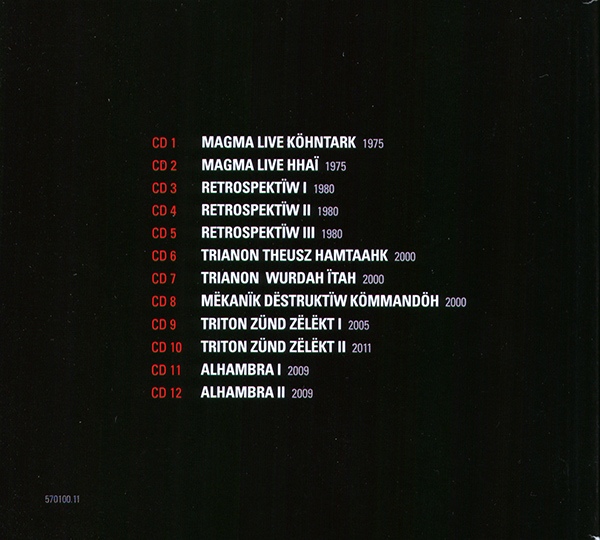
HAWKWIND-THIS IS YOUR CAPTAIN SPEAKING…YOUR CAPTAIN IS DEAD.
HAWKWIND-THIS IS YOUR CAPTAIN SPEAKING…YOUR CAPTAIN IS DEAD.
As the sixties drew to a close, one of the pioneers of the British space rock sound were formed in November 1969. This was Hawkwind, whose career would span six decades. During that period, Hawkwind’s lineup is best described as fluid.
Over forty musicians have played a part in the Hawkwind story. However, the only member to have survived forty-six years, and countless changes in lineup, is guitarist, bassist and keyboardist Dave Brock. He formed Hawkwind in November 1969 with guitarist Mick Slattery.
They had previously been members of London based psychedelic band Famous Cure. Then November 1969, Dave Brock and Mick Slattery met bassist John A. Harrison. The three musicians soon realised that they had a shared interest…electronic music. So they decided to form a new band. However, there was a problem, they didn’t have a drummer.
The best way to find a drummer in those pre-internet days, was to advertise in one of the music papers. One of those who answered the advert, was seventeen year old drummer Terry Ollis. He was auditioned, and became the nascent group’s drummer. However, at the same time, an old friend of Dave Brock’s volunteered to be the bands roadie.
Nik Turner was willing to drive the band around, and setup their equipment. Quickly, though, it became apparent that Nik Turner was overqualified as a roadie. He could play flute and saxophone. So he was brought onboard to the as yet nameless band.
The nameless band read that there was a talent show at All Saints Hall, Notting Hill, London. So the five members of the band decided to gatecrash the event. They turned up, unannounced, and managed to convince the organisers to let them take to the stage. When they were asked what their name was, the band members settled on Group X.
When Group X took to the stage, they played a twenty minute jam loosely based on The Byrds’ Eight Miles High. Elements of psychedelia, electronica and progressive rock were combined by Group X. It was unlike anything many members of the audience had heard. However, one man in the audience was impressed.
This was Radio One DJ John Peel. He realised that Group X had potential, so told Douglas Smith, who had organised the event, that. On hearing this, Douglas Smith went out and signed Group X. He then got them a deal with Liberty Records. By then, Hawkwind had been born.
After quickly dispensing with the name Group X, the band had a dalliance with Hawkwind Zoo. Eventually, though, the band settled on Hawkwind, a name which would become famous in British music.
Since 1969, the various lineups of Hawkwind have released twenty-seven studio albums, ten live albums and fifteen compilations. That’s not forgetting the recently released eleven disc box set, This Is Your Captain Speaking…Your Captain Is Dead. It was recently released by PLG, and features Hawkwind’s first four studio albums, three live albums and a singles compilation. Mainly, This Is Your Captain Speaking…Your Captain Is Dead documents the period between 1969 and 1974.
Hawkwind.
After Hawkwind’s manager Douglas Smith secured them a deal with Liberty Records in early 1970, Hawkwind began work on their eponymous debut album. By April 1970, Dave Brock and the members of Hawkwind had penned seven tracks. These tracks became Hawkwind.
Recording of Hawkwind began in March 1970, at Trident Studios. That’s where Hawkwind joined forces with producer and former Pretty Things guitarist Dick Taylor. He would coproduce Hawkwind’s eponymous debut album with the band. Their number had swelled to seven.
This included a rhythm section of drummer Terry Ollis, John A. Harrison and guitarists Mick Slattery, Huw Lloyd-Langton and Dave Brock on guitar, keyboards and harmonica. They were augmented by Dik Mik on synths, and Nik Turner on flute and saxophones. Gradually, the seven songs that became Hawkwind took shape.
At first, coproducer Dick Taylor was struggling to capture Hawkwind’s true sound. He had experienced Hawkwind live, and wanted to capture that sound. This was proving easier said than done. Eventually after several unsuccessful attempts to record each song, Dick Taylor had Hawkwind play live. This worked, and by April 1970, Hawkwind was complete, and the release scheduled for 14th August 1970.
Before that, critics had their say on Hawkwind. They were a new band, who on side one of their eponymous debut album, pioneered the space rock sound. Hawkwind fused elements of electronica, folk, psychedelia and rock. This was something new and innovative. It was also trippy, thanks to the myriad of effects and electronics deployed by Hawkwind. They admitted in the sleeve-notes that they want to “freak people. However, this was an acid free trip.
It was also one that won over critics. They hailed Hawkwind an “exciting” and “interesting” album. Especially the myriad of left-field sounds that were deployed. However, this came with a caveat. Hawkwind shouldn’t become over-reliant on them. Used sparingly, like on Seeing It As You Really Are and Hawkwind could become one of the rising stars of the seventies.
That didn’t look like being the case when Hawkwind was released. The album sunk without trace, and didn’t even come close to troubling the charts. Things however, would be different next time round.
X In Search of Space.
Following the release of Hawkwind, there were two changes in the band’s lineup. The first to leave was bassist John A. Harrison. He was replaced by Thomas Crimble of Skin Alley. However, Thomas Crimble never got to play on a Hawkwind album. Thomas Crimble was then replaced by Dave Anderson of seminal Krautrock pioneers Amon Düül II. Dave Anderson arrived to what must have seemed like a game of musical chairs.
Next to leave was Dik Mik Davies. This was only temporarily. So Del Dettmar, Hawkwind’s live sound engineer replaced Dik Mik Davies. That wasn’t the end of the departures.
Huw Lloyd-Langton left Hawkwind after a bad LSD trip. This wasn’t uncommon in the late-sixties and early-seventies. Acid casualties were rife within the music industry. Sadly, many never recovered from their trip. Luckily, Huw Lloyd-Langton and later rejoined Hawkwind in 1979. By then, Hawkwind had released a classic album, X In Search of Space.
For X In Search of Space, Hawkwind had written six tracks. This included two penned by Dave Brock, and two he cowrote with Nick Turner. Adjust Me was credited to Hawkind, while the acoustic Children of the Sun was penned by Nik Turner and Dave Anderson. With their sophomore album written, Hawkwind were booked into AIR Studios with George Martin.
How anyone at Liberty Records didn’t foresee that the combination of Hawkwind and George Martin, wasn’t destined to end up in chaos is astounding. They were polar opposites. So it was no surprise that the session at AIR Studios yielded very little. Eventually, the session came to a grinding halt, when one of Hawkwind’s friends or entourage, allegedly broke into George Martin’s drink’s cabinet and spiked the engineer’s drinks with acid. This resulted in Hawkwind being asked to leave AIR Studios. Ironically, it was the best think that happened to Hawkwind.
They moved to Olympic Studios to work with producer George Chkiantz. By then, Hawkwind were behind the black ball. So much time had been wasted, that there was very little time to complete the album. This seemed to focus everyone’s minds, and George Chkiantz guided Hawkwind through the recording of their first classic album, X In Search Of Space.
With X In Search Of Space completed, promo copies were sent out to critics. They were won over by In Search Of Space, and called the album ambitious and innovative. Elements of electronica, combined with Krautrock, psychedelia and heavy rock. Some critics even compared X In Search Of Space favourably to some of the leading lights of the Krautrock scene. One of the groups Hawkwind were compared to were Amon Düül II. A few perceptive critics went as far as to refer to X In Search Of Space as a classic.
That proved to be the case. Thirty-five years later, in 2006, In Search Of Space found its way into Classic Rock magazine’s list of the 100 Greatest British Rock Albums. That was no surprise.
When X In Search Of Space was released on 8th October 1971, it eventually reached number eighteen in Britain. It seemed that being asked to leave AIR Studios was the best thing that had happened to Hawkwind. They then got the opportunity to work with producer George Chkiantz. Together, they co-produced a classic album, British rock album, In Search Of Space. Its success saw Hawkwind’s profile rise.
Greasy Truckers Party.
Proof of that came on 13th February 1972, when Hawkwind found themselves at the Roundhouse, in London. Hawkwind were joined by Brinsley Schwarz and Man in what was one of the biggest charity concert in Britain. Patrons paid the princely sum of £1.50 to see three of Britain’s top bands play in what was originally billed as a marathon concert.
Originally, the Greasy Truckers Party was due to run from 3pm until midnight, and featured numerous bands. However, power cuts and wage disputes meant that only Hawkwind, Brinsley Schwarz and Man would play on the 13th February 1972.
To further muddy the waters, Clive John had just left Man. However, they weren’t going to let the audience down. They opened the night, with Brinsley Schwarz following and Hawkwind bringing the curtain down. The three bands didn’t disappoint, and the Greasy Truckers Party has entered British musical folklore. Partly, that’s because the concert was recorded and released on 28th April 1972.
The Greasy Truckers Party was a double album, and is a reminder of Hawkwind early in their career. By then, Hawkwind had only been playing live since 1970. However, by 1972, their space rock sound was winning favour with concert goers. That’s apparent on Master of the Universe and Born to Go. These tracks showcase musical pioneers Hawkwind, as they were about to come of age.
Doremi Fasol Latido.
Following the Greasy Truckers Party, Hawkwind lost its rhythm section. Bassist Dave Anderson and drummer Terry Ellis left. Their replacements were Opal Butterfly’s former rhythm section.
This included drummer Simon King. His partner-in-crime, was Opal Butterfly’s charismatic frontman and bassist, Fraser “Lemmy” Kilmister. Back in 1972, the man who would become known to all as Lemmy, was a twenty-six year old veteran, with a love of the rock ’n’ roll lifestyle. This was something that Lemmy embraced, and defiantly enjoyed until his death on December 28th 2015, aged just seventy. However, back in 1972, Lemmy was still to taste critical acclaim and commercial success. They would become constant companions.
Originally, Lemmy was going to become Hawkwind’s second guitarist. However, there was a small problem.
From the moment Lemmy became a member of Hawkwind, it became apparent he disguised his failing with volume and showmanship. So Lemmy switched to bass. There was another problem though.
Lemmy didn’t know how to play the bass. It was a case of learning on the job. As he stepped onto the stage each night, a bass was strapped round his neck, and Lemmy winged it. This presented a problem for Dave Brock.
He wanted Hawkwind to feature two guitarists when on their third album Doremi Fasol Latido. This wasn’t to be. However, Lemmy contributed the album closer The Watcher. Founder member Dave Brock contributed four tracks; while Del Dettmar and Nik Turner wrote one apiece. These seven tracks became Doremi Fasol Latido.
Recording of Doremi Fasol Latido took place at Rockfield Studios between September and October 1972. Dave Brock and Del Dettmar produced Doremi Fasol Latido, which featured the new lineup of Hawkwind.
This included a rhythm section of drummer Simon King, bassist Lemmy and Dave Brock on guitars. Dik Mik and Del Dettmar added synths; while Nik Turner added flutes and saxophone. Augmenting Hawkwind, were guitarists Robert Calvert and Paul Rudolph. However, the sessions were problematic.
When recording of Doremi Fasol Latido was taking place, Rockfield Studios was a relatively new facility, not the world class studio its became. Members of Hawkwind were concerned about the sound quality. They liked the record the rhythm section and vocals together. When they listened to the recordings, they lacked depth, bite and clarity. Questions were even asked about Dave Brock and Del Dettmar productions. It was a worrying time for Hawkwind.
Once Doremi Fasol Latido was completed in October 1972, United Artists were determined to have the album released on 24th November 1972. Before that, critics had to have their say on Doremi Fasol Latido.
Reviews of Doremi Fasol Latido were decidedly mixed. A press corps. that had previously been won over by every Hawkwind release, weren’t convinced. Some felt the album lacked cohesion, and the sound quality wasn’t the best. Other critics however, embraced this cosmic pot pourri. It was unlike anything Hawkwind, or any band had released. Psychedelia, progressive rock and electronica, were combined with effects to create a space rock album that divided the opinion of critics. Record buyers had the deciding vote.
When Doremi Fasol Latido was released, it became Hawkwind’s most successful album, reaching number fourteen in Britain. Now Hawkwind had to build on the success of Doremi Fasol Latido.
Space Ritual.
Most bands would’ve headed back into the studio to record the followup to Doremi Fasol Latido. Not Hawkwind.
Following the release of Doremi Fasol Latido, Hawkwind were touring their third album. They were booked to play the Liverpool Stadium on 22nd December 1972. Then eight days later, Hawkwind were scheduled to appear at the Brixton Academy, London. Both these concerts would be recorded, and became the Space Ritual.
Their 1972 tour was unlike previous Hawkwind tour. It was a much more ambitious project, where songs gave way to electronic and spoken pieces. Essentially, the each night, Hawkwind combined music, animation, poetry, theatre and drama. The Space Ritual show was also billed as an audio visual experience.
Graphic designer and director Barney Bubbles, and Robert Calvert of Hawkwind had created a short, animated sci-fi story. It was accompanied by Liquid Len’s light-show and poetry readings. This gave the show a sixties happening feel. However, this was happening in late 1972.
This didn’t matter, on the two nights in Liverpool in London, Hawkwind’s set featured mostly Doremi Fasol Latido.Everything seemed to fall almost flawlessly into place. The only disappointment for some members of the audience, was when Hawkwind didn’t play their hit single, Silver Machine. Even that paled into insignificance, as Hawkwind gave two of the best performances of the tour. The members of Hawkwind breathed a sigh of relief. Both nights were being recorded, and became Space Ritual
Five months later, Space Ritual was released on 11th May 1973. The album became Hawkwind’s most successful album, reaching number nine in Britain, and 179 in the US Billboard 200. Belatedly, Hawkwind had made a breakthrough in the lucrative American market. Was this a one-off, or could they sustain this?
Hall Of The Mountain Grill.
When Hawkwind returned to Edmonton Sundown studio in January 1974, there had been three changes in the band’s lineup. Robert Calvert and Dik Mik had left Hawkwind. Simon House had joined the band, and would add synths, mellotron and electronic violin on nine new tracks.
Five of the tracks on Hall Of The Mountain Grill had been penned by Hawkwind’s songwriter-in-chief, Dave Brock. Other members of the band played their part. Nik Turner contributed D-Rider; Simon House Hall Of The Mountain Grill; and Del Dettmar Goat Willow. Lemmy and Mick Farren cowrote Lost Johnny. For the best part of a month, Hawkwind worked on Hall Of The Mountain Grill Edmonton Sundown. By the time, January was over, Hawkwind resumed their gruelling touring schedule.
It wasn’t until May and June of 1974, that Hawkwind were able to return to the studio. At Trident Studios, they were joined by Roy Thomas Baker and Doug Bennett. They co-produced Hall Of The Mountain Grill with Hawkwind. The addition of experienced producers made a difference to Hall Of The Mountain Grill’s sound.
Once Hall Of The Mountain Grill was completed, the release date was scheduled for 6th September 1974. Before that, critics were sent a copy of Hall Of The Mountain Grill.
Critics that hadn’t been won over by Doremi Fasol Latido, felt that Hawkwind were back to their very best on Hall Of The Mountain Grill. That’s despite the loss of vocalist Robert Calvert. So vocals were shared between Dave Brock, Nik Turner and Lemmy. They proved to be admirable replacements, as Hawkwind became musical shape shifters.
Throughout Hall Of The Mountain Grill, Hawkwind change direction musically. On The Psychedelic Warlords (Disappear in Smoke) and Lost Johnny, Hawkwind become a swaggering, hard rocking band. Then on D-Rider and Web Weaver, Hawkwind head in the direction of psychedelia. However, on Goat Willow, Wind of Change and Hall Of The Mountain Grill, a much more understated, introspective Hawkwind shine through. Critics felt that Hawkwind could do no wrong on Hall Of The Mountain Grill, and called the album a “career high.” Record buyers agreed.
When Hall Of The Mountain Grill was released, it reached sixteen in the British charts. While that was slightly disappointing, after The Space Ritual Alive reached number nine. However, across the Atlantic, Hall Of The Mountain Grill reached 110 in the US Billboard 200. Hawkwind’s star was in the ascendancy in America. So in 1974, Hawkwind recorded a live album in America, The 1999 Party (Live Chicago Auditorium).
The 1999 Party (Live At The Chicago Auditorium).
In between starting and completing the recording of Hall Of The Mountain Grill, Hawkwind had toured America. On March 21st 1974, Hawkwind were scheduled to play at the Chicago Auditorium. The show was being recorded, so that it could be released as a double album.
When Hawkwind took to the stage at the Chicago Auditorium, they worked their way through sixteen tracks. From the opening track, Standing On The Edge, Hawkwind are determined to win over the audience. They unleash It’s So Easy, You Know You’re Only Dreaming, Brainstorm, Seven By Seven, The Watcher, The Awakening, You’d Better Believe It, The Psychedelic Warlords (Disappear In Smoke), D-Rider and Sonic Attack. Closing the show was, Welcome To The Future. This mixture of tracks from the first three studio albums, plus a smattering of songs from Hall Of The Mountain Grill proved a potent combination. By the time the curtain fell, Chicago had been won over by Hawkwind.
Despite the success of the tour, and Hall Of The Mountain Grill, United Artists were in no hurry to release The 1999 Party (Live At The Chicago Auditorium). It wasn’t until 2007, that the album was released. By then, CDs had all but replaced vinyl, and Hawkwind’s lineup had been through countless changes. That’s the case with the final album in the This Is Your Captain Speaking…Your Captain Is Dead.
Of Time and Stars: The Singles.
Disc eleven in This Is Your Captain Speaking…Your Captain Is Dead features fifteen of Hawkwind’s singles. There’s original single mixes, edits and live singles. Among the highlights, are the original mix of Silver Machine, Seven By Seven and Psychedelic Warlords (Disappear In Smoke). Then there’s Urban Guerilla and It’s So Easy, plus live versions of Born To Go and Seven By Seven. There’s even an attempt to bring Hawkwind into the 21st Century, with a remixed single version of Seven By Seven. It’s ironic that this remix closes the This Is Your Captain Speaking…Your Captain Is Dead. After all, Hawkwind were making groundbreaking, futuristic music for the 21st Century over forty years ago.
Indeed, forty-five years have passed since Hawkwind released their eponymous debut album in 1970. Since then, Hawkwind have released another twenty-six studio albums, ten live albums and fifteen compilation. Hawkwind’s recording career has spanned five decades and featured countless different lineups of the band.
Over forty musicians have been part of the Hawkwind success story. This included Ginger Baker, and Lemmy, who sadly, died of an aggressive form of cancer on the 28th December 2015. He was only seventy, but was a veteran of several bands, including Hawkwind and then Motörhead.
Lemmy joined Hawkwind in 1972, and left in 1975. By the time he left to form Motörhead, Hawkwind’s star was in the ascendancy. They had enjoyed commercial success and critical acclaim on both sides of the Atlantic. So would Lemmy’s next band Motörhead. They nearly matched Hawkwind for longevity.
Even in 2015, Hawkwind are still going strong. The only original member is Dave Brock, who cofounded the band in 1969. Since then, the lineup has changed constantly, and Hawkwind’s music has fallen in and out of fashion. Nowadays, Hawkwind are regarded as pioneers of space rock sound.
These musical trailblazers went onto inspire several generations of bands, with albums like X In Search of Space and Hall of the Mountain Grill. Then there’s Hawkwind’s 1970 eponymous debut album and their third album Doremi Fasol Latido. Both are underrated, and deserve to be reappraised. The This Is Your Captain Speaking…Your Captain Is Dead box set, which was recently released by PLG allows music fans to do so. They’ll also be able to discover Hawkwind’s performance at the Greasy Truckers Party, and what was one their most ambitious live albums, The Space Ritual Alive. That’s not the end of the story.
As an added bonus, The 1999 Party (Live At The Chicago Auditorium) and the Time and Stars: The Singles have been included on the This Is Your Captain Speaking…Your Captain Is Dead box set. It’s the perfect introduction to what many people regard as Hawkwind’s glory days.
HAWKWIND-THIS IS YOUR CAPTAIN SPEAKING…YOUR CAPTAIN IS DEAD.
IRMIN SCHMIDT-ELECTRO VIOLET BOX SET.
IRMIN SCHMIDT-ELECTRO VIOLET BOX SET.
After eleven years and eleven studio albums, Can called time on their career in 1979. By then, Can were rightly regarded as one of the most innovative bands of the Krautrock era. They had enjoyed an almost unrivalled longevity.
Can were formed in 1968, by Holger Czukay and Irmin Schmidt. Both had been students of Karlheinz Stockhausen and graduated in 1966.
By then, Irmin Schmidt was twenty-nine. He born in Berlin on 29th May 1937, and grew up playing piano and organ. Soon, it was apparent that he was a talented musician. So it came as no surprise that Irmin headed to the conservatorium in Dortmund, to study music. This was just the start of Irmin’s studies.
From there, Irmin moved to Folkwang University of the Arts in Essen, before moving to Austria, and the Mozarteum University of Salzburg. The final part of Irmin’s musical education took place in Cologne, where Irmin met Holger.
The two future founding members of Can were studying composition under Karlheinz Stockhausen at the Cologne Courses For New Music. Between 1962 and 1966, Irmin and Holger studied composition. However, after they graduated, their lives headed in different directions.
Holger Czukay became a music teacher, and began a career educating a new generation of young Germans. Meanwhile, Irmnin Scmidt headed to New York.
During his time in New York, Irmnin Scmidt spent time with avant-garde musicians like Steve Reich, Terry Riley and La Monte Young. Soon, Irmin Scmidt was aware of Andy Warhol and Velvet Underground. This inspired him to form his own band when he returned home to Cologne.
By the time Irmin Scmidt returned home, Holger Czukay what he described to me “as a life-changing moment…the music of the past and present came together.” At last, “here was music that made the connection between what I’d studied and I was striving towards” With the innovative use of bursts of radio and the experimental sound and structure, “I went in search of similar music.”
He found Velvet Underground. Holger remembers Velvet Underground when he first heard them. “They were different…and really influential.” They influenced the music I made. This would include the music Holger Czukay made with Can.
When Irmin Scmidt returned home, he decided to form a band with his old friend Holger Czukay. So in Cologne in 1968, Can was born.
Pianist and organist Irmin Scmidt formed Can with American avant garde flautist David C. Johnson and bassist Holger Czukay. Up until then, the trio had exclusively played avant-garde classical music. Now their ambitions lay beyond that. Their influences included garage, rock, psychedelia, soul and funk. So they brought onboard three new members of the group, which started life as Inner Space, and then became The Can. Eventually, they settled on Can, an acronym of communism, anarchy, nihilism
The first two new additions were guitarist Michael Karoli and drummer Jaki Liebezeit. Vocalist and New York-based sculptor Malcolm Mooney joined the band midway through 1968. By then, they were recording material for an album Prepare To Meet Thy Pnoom. Two tracks, Father Cannot Yell and Outside My Door were already recorded. Unfortunately, record companies weren’t interested in Prepare To Meet Thy Pnoom. As a result, it wasn’t released until 1981, when it was released as Delay 1968. Undeterred, Can continued to record what became their debut album, Monster Movie.
Despite not being able to interest a record company in Prepare To Meet Thy Pnoom, Can were confident in their own ability. So Can continued recording what would become their debut album Monster Movies. However, soon, there was a problem.
David C. Johnson left Can at the end of 1968. He was disappointed at the change in musical direction. Little did he realise that he’d lost the chance to be part of one of the most groundbreaking band’s in musical history, Can.
Monster Movie.
Monster Movie had been recorded in Schloss Nörvenich, a 14th-century castle in North Rhine-Westphalia. Can recorded Monster Movie between 1968-69. It was the released in August 1969. This marked the debut of Can. Their career started as they meant to go on. A groundbreaking, genre-melting fusion of blues, free jazz, psychedelia, rock and world music, Monster Movies has a Velvet Underground influence. It’s as if Can have been inspired by Velvet Underground and pushed musical boundaries to their limits.
Throughout Monster Movie, Can improvised, innovated and experimented. Multilayering and editing played an important part in Monster Movie’s avant garde sound. So did spontaneous composition, which Can pioneered.
Spontaneous composition was hugely important in Can’s success. Holger Czukay remembers “that the members of Can were always ready to record. They didn’t take time to think. It was spontaneous. The music flowed through them and out of them.” Holger remembers that he was always “given the job of pressing the record button. This was a big responsibility as the fear was failing to record something we could never recreate.” In some ways, Can were an outlet for this outpouring of creativity, which gave birth to a new musical genre.
This new musical genre was dubbed Krautrock by the British music press. So not only was Monster Movie the album that launched Can’s career, but saw a new musical genre, Krautrock coined. The founding father’s of Krautrock were Can.
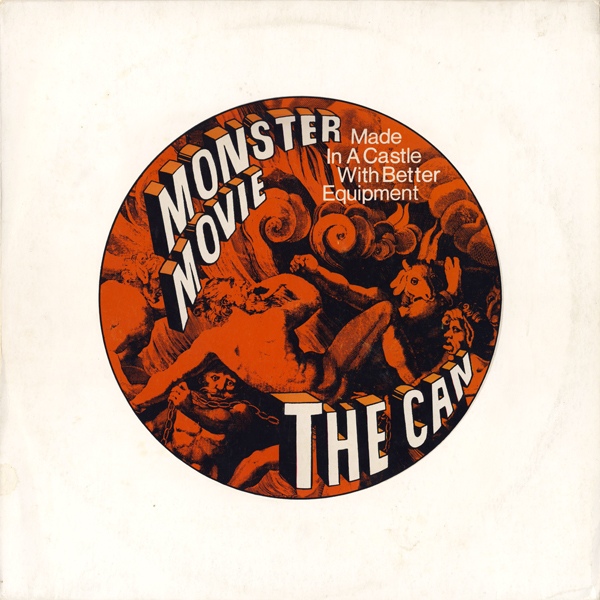
Soundtracks.
Released in 1970, Soundtracks, was Can’s sophomore album. Essentially, Soundtracks is a compilation of tracks Can wrote for the soundtracks to various films. It’s the album that marked the departure of vocalist Malcolm Mooney. Replacing him, was Japanese busker, Kenji Damo Suzuki. He features on five of the tracks, contributing percussion and vocals. The addition of Damo wasn’t the only change Can were making.
Soundtracks was a coming of age for Can. It marked a move away from the psychedelic jams of Monster Movie and a move towards their classic sound. That saw the music becoming much more experimental and avant-garde. The music took an ambient, meditative, mesmeric and thoughtful sound. This marked the beginning of what became known as Can’s classic years, when albums like Tago Mago, Ege Bamyasi and Future Days were released.
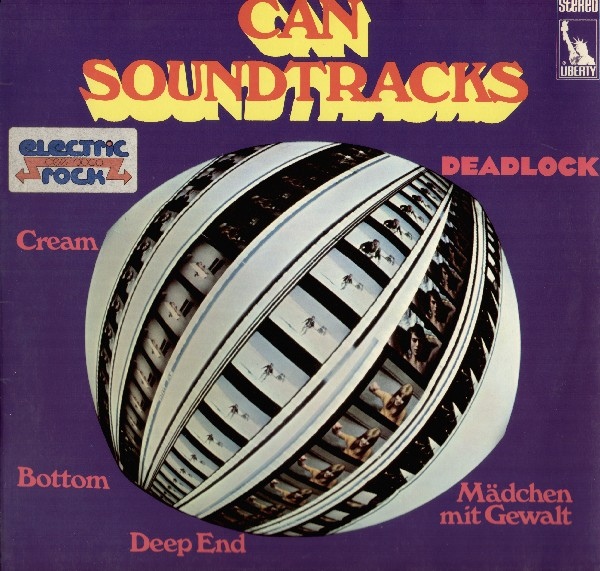
Tago Mago.
The first instalment in the golden quartet was Tago Mago. This was the first album where Kenji Damo Suzuki was a permanent member of Can. He and the rest of Can spent a year in the castle in Schloss Nörvenich. It was owned by an art collector named Mr. Vohwinkel. He allowed Can to stay at Schloss Nörvenich rent free. For what Holger described as “a poor man’s band,” this was perfect.
Holger remembers Can during this year as “just jamming and seeing what took shape. Songs started as lengthy jams and improvised pieces.” This Holger says “how Can always worked” After that, Holger edited the songs which became and the mini masterpieces featured on Tago Mago, which was four months in the making.
For four months between November 1970 and February 1971, Can recorded what would become one of their most innovative and influential albums, Tago Mago.
A double album, it featured seven groundbreaking tracks. Tago Mago was released in February 1971. Straight away, critics realised the importance of Tago Mago. Here was a game-changer of an album. It has an intensity that other albums released in 1971 lacked. Jazzier with an experimental sound, the music is mysterious, mesmeric and multilayered. It’s innovative, with genres and influences melting into one. Nuances, subtleties and surprises reveal themselves. No wonder. Can deliver an avant garde masterclass.
This comes courtesy of jazz-tinged drumming, improvised guitar playing and showboating keyboard solos. Then there was Kenji Damo Suzuki’s unique vocal style. All this, resulted in an album that was critically acclaimed, influential and innovative.
Released to widespread critical acclaim in 1971, Tago Mago was the start of a golden period for Can. Their reputation as one of the most innovative groups of the seventies started to take shape. Can had released one of the most innovative albums, Tago Mago. Holger remembers the reaction to Tago Mago. “I knew Tago Mago was an innovative album, but I never realised just how innovative an album it would become?
On Tago Mago’s release, it was hailed as their best album yet. Since then, several generations of musicians have been inspired by Tago Mago, a true Magnus Opus, that belongs in every record collection. So does the followup Ege Bamyasi.
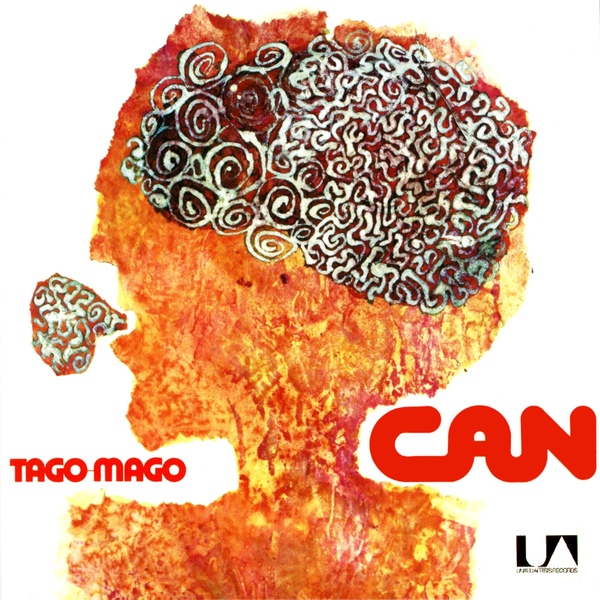
Ege Bamyasi.
Can were on a roll. It seemed they could do no wrong. They released Spoon as a single in 1972. It reached number six in Germany, selling over 300,000 copies. That was helped no end, by the single being used as the theme to a German thriller Das Messer. It seemed nothing could go wrong for Can. The money the made from Spoon, allowed Can to hire disused cinema to record what became Ege Bamyasi.
Can adverted for a space to record their next album, Ege Bamyasi. Recording began in a disused cinema, which doubled as a recording studio and living space. The sessions at Inner Space Studio, in Weilerswist, near Cologne didn’t go well. Irmin Schmidt and Kenji Damo Suzuki took to playing marathon chess sessions. As a result, Can hadn’t enough material for an album. This resulted in Can having to work frantically to complete Ege Bamyasi. Despite this, Can were still short of material. So Spoon was added and Ege Bamyasi was completed.
Ege Bamyasi was a fusion of musical genres. Everything from jazz, ambient, world music, psychedelia, rock and electronica melted into one. When it was Ege Bamyasi released in November 1972, it was to the same critical acclaim as previous albums. Critics were won over by Can’s fourth album. It was perceived as a more accessible album than its predecessors. Just like Can’s previous albums, the quality of music was consistent.
Critics hailed Can as one of the few bands capable of creating consistent and pioneering albums. They were one of the most exciting bands of the early seventies. Can were continuing to innovate and influence musicians and music lovers alike. Just like its predecessor, Tago Mago, Ege Bamyasi is an essential part of any self respecting record collection. Having released two consecutive classic albums and their first single, it seemed nothing could go wrong for Can.
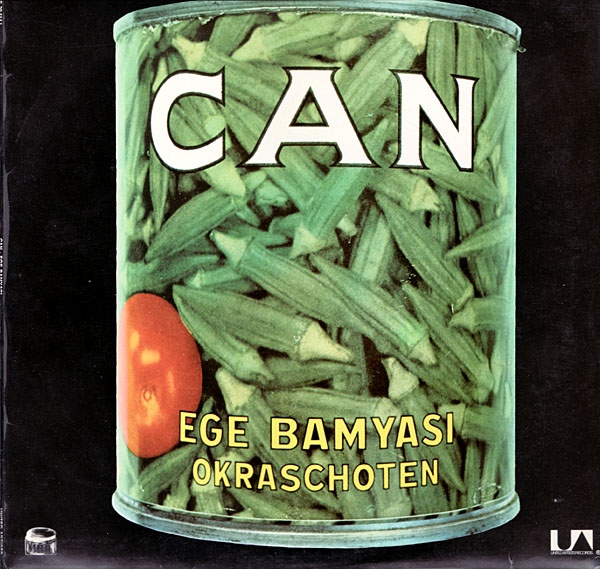
Future Days.
Despite Tago Mago and Ege Bamyasi being referred to as two of the most influential albums ever released, Holger Czukay prefers Future Days. This is the album he calls “my favourite Can album.” It was the third in Can’s golden quartet, and marked a change in direction from Can.
Future Days saw Can’s music head in the direction of ambient music. The music is atmospheric, dreamy, ethereal, melancholy, expansive and full of captivating, mesmeric rhythms. It’s also pioneering and progressive, with elements of avant garde, experimental, psychedelia and rock melting into one. Rather than songs, soundscapes describes the four tracks. Future Days and Bel Air showcase Can’s new sound. Bel Air was the Future Day’s epic. It lasted just over nineteen minutes, and sees can take you on an enthralling musical journey. Just like the rest of Future Days, critics hailed the album a classic.
On its release in August 1973, Future Days was hailed a classic by music critics. The move towards ambient music may have surprised some Can fans. However, Brian Eno was just one artist pioneering ambient music. This move towards ambient music must have pleased Holger’s guru Karlheinz Stockhausen. He must have looked on proudly as Can released the third of a quartet of classic albums. The final album in this quartet, Soon Over Babaluma was released in 1974.
Soon Over Babaluma,
Soon Over Babaluma marked the end of Can’s golden period. It was the end of a period where they were releasing some of their most innovative and groundbreaking music. There was a change of direction on Soon Over Babaluma. Can were without a vocalist. Kenji Damo Suzuki left Can and married his German girlfriend. He then became a Jehovah’s Witness. Despite the lack of a vocalist, Can continued as a quartet. They released Soon Over Babaluma in November 1974.
When Can released Soon Over Babaluma in November 1974, it received praise from critics. With a myriad of beeps, squeaks and sci-fi sounds, Soon Over Babaluma is like musical journey into another, 21st Century dimension. A musical tapestry where layers of music are intertwined during five tracks on Soon Over Babaluma. It followed in the ambient footsteps of Future Days and brought to a close the most fruitful period of Can’s career. Following the “golden quartet,” Can didn’t go into decline. Instead, Can continued to reinvent themselves and their music.
Landed.
Landed was released in September 1975. It had been recorded between February and April 1972 at Inner Space Studios. Just like previous albums, Can produced Landed. Holger and Tony Robinson mixed the first four tracks at Studio Dierks, Stommeln. The other two tracks were mixed by Holger at Inner Space Studios. These six tracks marked a change of direction from Can.
As well as a change in direction musically, Landed was the first Can album to be released on Virgin Records. Gone is the ambient sound of Soon Over Babaluma. Only Unfinished on Landed has an ambient influence. Instead, Landed has a poppy, sometimes glam influence. With uptempo, shorter songs, Landed was a much more traditional album. How would the critics react?
Critics were divided about Landed. Some critics saw Landed as the next chapter in the Can story, while others praised the album as adventurous, eclectic and innovative. Others thought Can were conforming. Surely not?
Flow Motion.
Flow Motion was Can’s eight album. As usual, it was recorded at Inner Space Studios. Produced by Can, Flow Motion was an album that drew inspiration from everything from funk, reggae, rock and jazz. It was an eclectic, genre-melting album. It’s also one of Holger Czukay’s favourite Can albums.
Holger remembers Flow Motion as an “Innovative and eclectic” album. He calls it “one of Can’s underrated albums,” Flow Motion marked a another change in Can’s way of working.
Released in October 1976, Flow Motion featured lyrics written by Peter Gilmour. This was a first. Never before, had anyone outside the band had written for Can. It worked. Can enjoyed their first UK single I Want More. It would later be recorded Fini Tribe and then Italo disco group Galaxis. With what was just their second hit single in seven years, maybe Can were about to make a commercial breakthrough?
Saw Delight.
Sadly, that wasn’t to be. Saw Delight which was released in March 1977, wasn’t the commercial success many people forecast. That’s despite the new lineup of Can embracing world music.
Joining Can were bassist Rosko Gee and percussionist and vocalist Rebop Kwaku Baah. They’d previously been members of British rock band Traffic. Rosko Gee replaced Holger on bass. Holger decided to add a percussive element, Holger added a myriad of sound-effects. This was Holger at his groundbreaking best. Experimental sounds including a wave receiver was used. The result was one of the most ambitious albums can had released.
Despite the all-star lineup and a bold, progressive and experimental album, Saw Delight wasn’t a commercial success. It was well received by critics. The problem was, Saw Delight was way ahead of its time. If it had been released in the eighties, like albums by Paul Simon or Peter Gabriel, it would’ve been a bigger commercial success. Sadly, by then Can would be no more. That was still to come. However, things weren’t well within the Can camp.
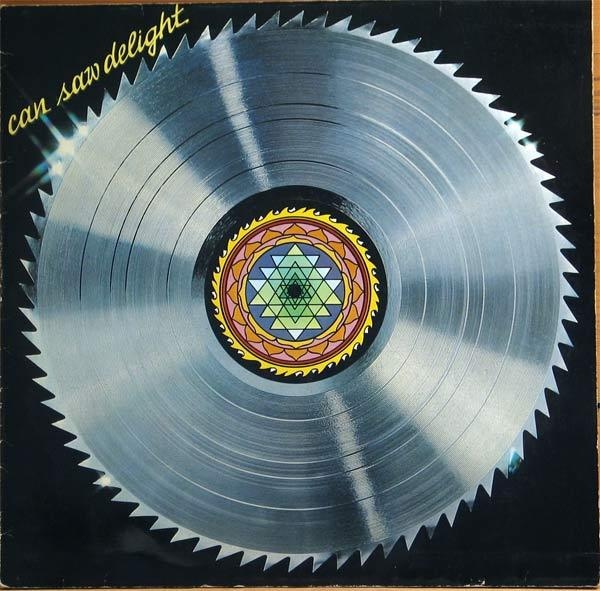
Out Of Reach.
Nine years after Can had released their debut album Monster Movie, they released their tenth album, Out Of Reach. It was released in July 1978. The title proved to be a prophetic. After all, commercial success always seemed to elude Can. Not only did Out Of Reach fail commercially, but the Out Of Reach proved to be Can’s most controversial album.
So much so, that they disowned Out Of Reach. On Out Of Reach Holger was left to add myriad of sound-effects. Bassist Rosko Gee and percussionist Rebop Kwaku Baah of Traffic returned. They were part of the problem. Holger confirms this.
When I asked him what he meant by this, he said “During the recording of Out Of Reach, I felt an outsider in my own group. I was on the outside looking in. I was on the margins. All I was doing was add sound-effects.” For Holger, he felt his group had been hijacked by Rosko Gee and and Rebop Kwaku Baah. Things got so bad, that Holger quit Can.
Rosko Gee and Rebop Kwaku Baah dominated Out Of Reach. Gone was the loose, free-flowing style of previous albums. Even Jaki Liebezeit’s play second fiddle to Baah’s overpowering percussive sounds. The only positive thing was a guitar masterclass from Michael Karoli. Apart from this, things weren’t looking good for Can. It was about to get worse though.
The critics rounded on Out Of Reach. They found very little merit in Out Of Reach. Gee and Baah were rightly blamed for the album’s failure. Even Can disliked Out Of Reach. They later disowned Out Of Reach. Despite this, Rosko Gee and and Rebop Kwaku Baah remained members of Can.
Unable to play with the necessary freedom Can were famed for, the two ex-members of Traffic stifled Can. Rebop’s percussion overpowers Jaki’s drums, which have always been part of Can’s trademark sound. At least Michael’s virtuoso guitar solos are a reminder of classic Can. A nod towards Carlos Santana, they showed Can were still capable of moments of genius. There wouldn’t be many more of these. Can would breakup after their next album.
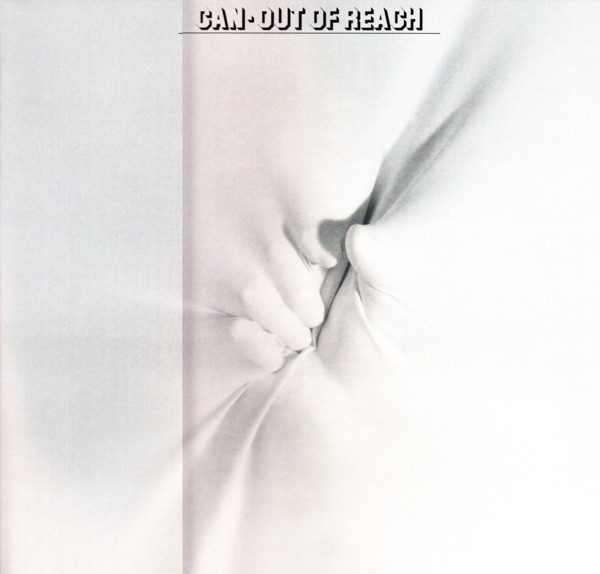
Can.
Following the failure of Out Of Reach, the members of Can began recording what became Can. Remarkably, Rosko Gee and Rebop Kwaku Baah were still part of Can. Sadly, Holger was not longer a member of Can. He’d left during the making of Out Of Reach. His only involvement was editing Can.
Can, which is sometimes referred to as Inner Space, was released in July 1979. Again, critics weren’t impressed by Can. It received mixed reviews. No longer were Can the critic’s darlings. The music on Can was a fusion of avant garde, electronica, experimental, psychedelia and rock. Add to that, a myriad of effects including distortion and feedback, and here was an album that divided the opinion of critics. The critics agreed, it was better than Out Of Reach. They agreed that Holger was sadly missed.
Even Holger’s renowned editing skills couldn’t save Can. Try as he may, he could only work with what he was given. He did his best with Can, which the eleventh album from the group he co-founded. By the time Can was released, Holger “had come to a realisation, that it was time to go his own way.” Holger describes this as “necessary.”
Can had split-up after the release of Can. That was their swan-song. However, even before that, Holger “felt marginalised, this had been the case since Rosko Gee and Rebop Kwaku Baah became part of Can. They’d hijacked Can.” This lead to the death of a great and innovative band.
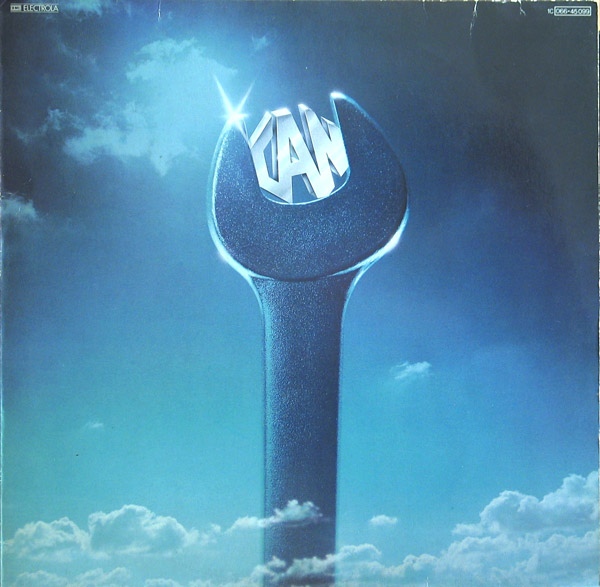
With Can now part of musical history, Irmin Schmidt, Holger Czukay, Michael Karoli and Jaki Liebezeit set about reinventing themselves. Music critics wondered whether they would form new bands or embark upon solo careers? Irmin Schmidt, Holger Czukay and Michael Karoli all embarked upon solo careers. The most prolific of the trio was Irmin Schmidt.
Since Can disbanded in 1979, Irmin Schmidt has established a reputation as the most prolific former member of Can. Irmin has written the scores for over 100 films and television programs. Some of this music features in the recently released Irmin Schmidt box set Electro Violet. This twelve disc box set, which was recently released by Mute, features not just the five volumes of the Film Musik Anthology, but a previously unreleased sixth volume. Then there’s Irmin Schmidt’s first four solo albums, 1981s Toy Planet, 1987s Musk At Dusk and 1991s Impossible Holidays. Then there’s Irmin Schmidt’s two collaborations with Kumo, 2001s Master Of Confusion and 2008s Axolotl Eyes. The final disc in the Electro Violet box set is opera Gormenghast, which was released in 2000, and was based on Mervyn Peake’s classic novel. Gormenghast shows the versatility of Irmin Schmidt, the classically trained musician who become part of Can, one of the most successful bands of the twentieth century. Sadly, by 1980, Can was history, and it was a brave new world for Irmin Schmidt.
Filmmusik.
Just a year after Can released their swan-song, Irmin Schmidt released the first volume in his Filmmusik series. This eight track compilation, was an introduction to the music Irmin had been writing for film and television. It would become a popular, and much anticipated series, which introduced many people to Irmin’s solo music. On the first volume of Filmmusik, Irmin was joined by old friends and some new names.
Among the old friends, was Can guitarist Michael Karoli. He featured on the eight minute, cinematic epic Im Herzen Des Hurrican (Verfolgung) and Im Herzen Des Hurrican (No. 5). Michael Karoli played his part in the success of Filmmusik. So did what was a new name to many Can fans was tenor saxophonist Bruno Spoerri.
He had been making electronic music since 1965, and by 1980, the forty-five year old, was running his own studio in Zurich. This was Studio Für Elektronische Musik Spoerri, where some of the Filmmusik sessions took place. Most of the recording of Filmmusik took place at Can’s Inner Space Studio, near Cologne. This had been where Can recorded some of the best music of their career. It would be no different for Irmin Scmidt.
While the cinematic sound of Filmmusik was very different to the music Can had been releasing, it showed just how versatile a composer and musician Irmin was. He had created eight tracks that were evocative, and had the ability to paint picture’s. This was important for anyone composing music for film and television. It looked like Irmin Schmidt had a big future ahead of him. He had stepped out of the shadow of Can and was about to enjoy his moment in the spotlight.
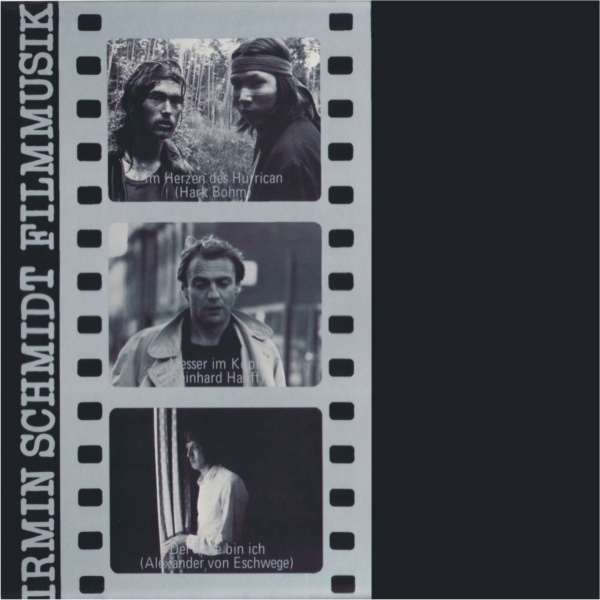
Filmmusik Volume 2.
So much so, that Irmin Schmidt released two albums during 1981. This included Filmmusik Volume 2. By then, Irmin was forging a reputation as the go-to-guy for anyone looking for a soundtrack to a film or television series in Germany. Eventually, Irmin would write over 100 scores. However, in 1981, his career was in its early days.
On Filmmusik Volume 2, it’s akin to Can reunion. Guitarist Michael Karoli and drummer Jaki Liebezeit feature on Endstation Freiheit-Titelmusik, Endstation Freiheit-Loony’s Walk and on Endstation Freiheit-Decision. So does bassist Rosko Gee. He’s replaced by Holger Czukay on Flächenbrand-Lurk and Flächenbrand-Titelmusik. Then on Die Heimsuchung Des Assistenten Jung-Man On Fire, Jaki Liebezeit added percussion. It seemed that the former bandmates were still friendly, and were happy to play on each other’s albums. Maybe, Can weren’t history after all?
That’s what some critics remarked when they saw the credits to Filmmusik Volume 2. With its all-star cast, it was a tantalising prospect. The critics weren’t disappointed when they heard Filmmusik Volume 2. It seemed Irmin Scmit was playing his part in reinventing what a soundtrack should sound like. He was just one of a new breed of composers determined to do so. However, Irmin wasn’t content to just write soundtracks. A solo career beckoned.
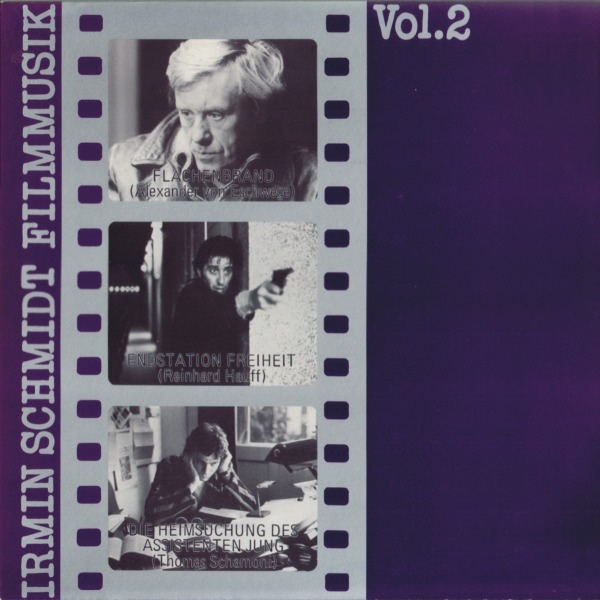
Toy Planet.
Irmin Schmidt also wanted to enjoy a solo career. This could run in parallel with his career composing soundtracks. For his debut solo album, Irmin Schmidt decided to collaborate with Bruno Spoerri, on what became Toy Planet.,
Zurich based Bruno Spoerri was two years older than Irmin. Bruno had been a pioneer of electronic music since 1965. Back then, Irmin was still studying under Karlheinz Stockhausen. However, within two years, he would be embracing new, experimental music in New York. That was sixteen years ago. Now Irmin Schmidt was regarded as a musical innovator and pioneer. His debut album would be much anticipated.
Critics and record buyers weren’t disappointed when Toy Story was released in 1981. It’s best described as a genre-melting opus. Everything from ambient, jazz and electronica, combines with rock and classical and psychedelia. There’s even a nod to the Berlin School, progressive rock and Phillip Glass, as a myriad of sounds assail you. Listening intently, instruments and sounds flit in and out. Sometimes, you question what you heard? Were there birds and a variety of animal noises on The Seven Game? Then on the title-track, futuristic and otherworldly describes what can be a haunting track. What follows is a minor musical masterpiece, which sadly, has been overlooked by the majority of music lovers since its release in 1981. Those that bought Toy Planet, eagerly awaited the followup.
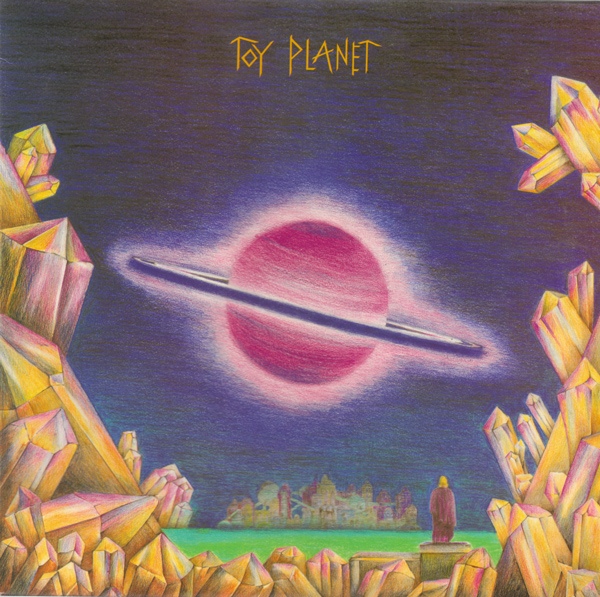
Rote Erde.
It was a long time coming. Four years to be precise. To record buyers, it seemed that Irmin Schmidt was in no hurry to release the followup to Toy Planet. That wasn’t the case.
Instead, he was just incredibly busy. Irmin had been commissioned to compose the soundtrack to Rote Erde. It was released in 1983, and featured Michael Karoli and a former member of Can, David Johnson. Rote Erde, a journey through art rock and electronica, would give Irmin Schmidt’s fans something to listen to, while he continued to work on his burgeoning soundtrack career.
Filmmuzik Volumes 3 and 4.
Proof of this, was the release of Filmmuzik Volumes 3 and 4. This double album featured another twelve tracks Irmin Scmidt had written for film and television. On some of the tracks, Irmin was joined by Michael Karoli and Jaki Liebezeit. Only Holger Czukay was missing from what would’ve been a Can reunion.
On the twelve tracks on Filmmuzik Volumes 3 and 4, Irmin Schmidt shows his versatility, as stylistically, the music shifts between disparate genres. This includes everything from classical and experimental, to jazz and rock. With a tight, talented and hugely experienced band for company, Irmin provided the soundtrack German film and television. Again, for many younger viewers, this would be their first exposure with Irmin Schmidt’s music. Given the quality of music on Filmmuzik Volumes 3 and 4, it wouldn’t be their last.
Mostly, the reviews of Filmmuzik Volumes 3 and 4 were positive. That had been the case throughout Irmin Schmidt’s career. He hadn’t released a disappointing album. However, most of Irmin’s albums had either been compilations or soundtracks. They hadn’t sold in vast quantities. It seemed that Irmin Schmidt had a small, but loyal following. However, with every release, Irmin Schmidt’s music seemed to be finding a wider audience. Maybe the release of his sophomore solo album Musk At Dusk would result in Irmin Schmidt’s music reaching a much wider audience?
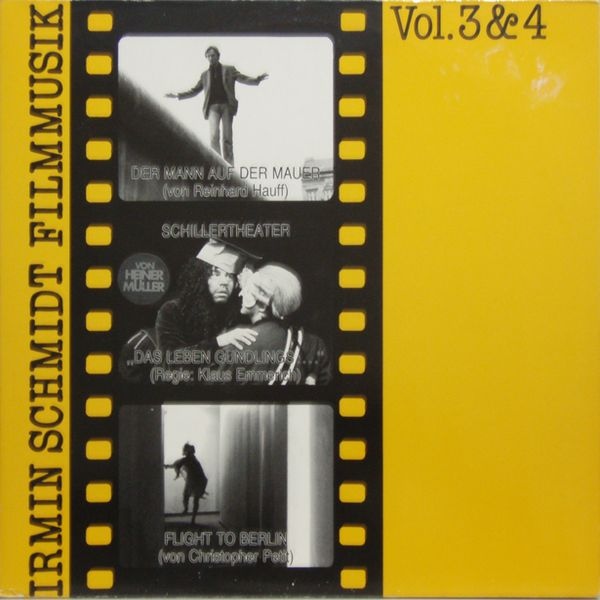
Musk At Dusk.
That should’ve been the case. Can had reunited in 1986. The first Can reunion had been a success. Now Irmin Scmidt was ready to begin work on his second solo album, Musk At Dusk, some familiar faces were present. This included Michael Karoli and Jaki Liebezeit.
Only Michael Karoli had released a solo album, Deluge, his 1984 collaboration with Polly Eltes. Jaki Liebezeit was content to work as a hired gun, playing on other artist’s albums. This included Holger Czukay and Irmin Schmidt’s albums. They were fortunate to have one of the top German drummers of Krautrock era providing the heartbeat to their albums.
That was the case on Musk At Dusk. It was another stylistically eclectic album. Elements of ambient, electronica, jazz, lounge and even progressive rock shawn through, on what was another ambitious, captivating and innovative solo album from Irmin Schmidt.
Critics agreed when Musk At Dusk was released. Irmin Scmidt seemed determined to reinvent himself on the long-awaited followup to Toy Planet. Six years after the release of Toy Planet, Musk At Dusk was released in 1987.
Sadly, Musk At Dusk wasn’t a huge commercial success. A small crumb of comfort was that gradually, word seemed to be spreading about Irmin Schmidt’s music. Meanwhile, Kraftwerk were enjoying commercial success and critical acclaim. They seemed unable to do no wrong. This must have been frustrating for Irmin, whose music was no nearer to reaching a wider audience. Aged fifty, he was still regarded as an underground artist. So, Irmin Schmidt returned to composing music for film and television.
Filmmuzik Volume 5.
Two years after the release of Musk At Dusk, Irmin Schmidt released Filmmuzik Volume 5. By then, the Filmmusik series was becoming a much anticipated and highly regarded series. It showcased Irmin’s music to many people who had neither seen the films nor television programs it featured in. Back in 1989, satellite television was in its infancy.
Filmmuzik Volume 5 featured another eight eclectic tracks. Again, the Can connection was strong. Drummer Jaki Liebezeit played on Zu Nah Dran. This was the only track to feature drums. Guitarost Michael Karoli featured on Mountain Way, Rita’s Tune, Bohemian Step, Geld and Geister and Zocker. These tracks featured on an album veered between cinematic, electronic and rocky. Just like the previous volumes in the Filmmuzik series, it caught the imagination of critics and record buyers.
It didn’t matter that many of the people buying Filmmuzik Volume 5 had neither seen the films, nor television programs they were taken from. The tracks worked as standalone pieces of music. Critics agreed. They felt Irmin Scmidt was maturing as a composer with each instalment in the Filmmuzik series. Those that bought Filmmuzik Volume 5 agreed, and eagerly awaited the next instalment in this popular series. Little did they know, they would have to wait twenty-six years.
Impossible Holidays.
By 1991, Can were back on the comeback trail. This was their second reunion. Can’s popularity had grown since their last reunion in 1986. Never before, had Can been as popular. They were somewhat belatedly receiving the plaudits they so richly deserved. The Can reunion was part of one of the busiest years of Irmin Schmidt’s recent career.
Still Irmin Schmidt was busy composing music for films and television programs. Four years had passed since Irmin had released a solo album. Critics and record buyers wondered when the followup to 1987s Musk At Dusk would be released?
Little did they realise that in studios in Nice, Paris, Berin and Cologne, Irmin Schmidt had been working on his long-awaited, and much-anticipated third solo album, Impossible Holidays.
For Impossible Holidays, Irmin Schmidt worked with lyricist Duncan Fallowell. Gradually, Irmin’s third solo album Impossible Holidays began to take shape. Once the lyrics and music were written, Impossible Holidays was recorded at various studios in France and Germany.
When work began on Impossible Holidays, two familiar faces were present. Can drummer Jaki Liebezeit and guitarist Michael Karoli. Bassist Franck Ema-Otu, a long term collaborator of Irmin Schmidt was present. He had also played on Michael Karoli’s 1984 debut solo album Deluge. Along with backing vocalists and session players, Irmin and co-producer Gareth Jones recorded Impossible Holidays. This they hoped would be Irmin’s breakthrough solo album.
Impossible Holidays was released in 1991, when Irmin Scmidt was fifty-five. He was approaching veteran status, and was regarded as one of the finest German composers of soundtracks for film and television programs. However, Irmin’s solo career had proved disappointing. He had released a two critically acclaimed solo albums. Sadly, neither Toy Planet nor Musk At Dusk had been sold in vast quantities. Maybe Impossible Holidays would be a game-changer for Irmin Schmidt?
When Impossible Holidays was released, reviews were positive. Irmin Schmidt was regarded as one of the grand old men of Germen music. However, he was still regarded as an innovator, and someone who was capable of releasing ambitious, groundbreaking music. Impossible Holidays was no different.
Elements of avant garde, electronica, Krautrock and rock could be heard on Impossible Holidays. So could something that no previous Irmin Schmidt solo album featured…lyrics. They came courtesy of Irmin, while Claudia Stülpner, Gitte Haenning and Özay Fecht added backing vocals. Despite these stylistic changes, Impossible Holidays didn’t sell in huge quantities. While more people had discovered Impossible Holidays, Irmin Schmidt was still one of music’s best kept secrets.
Masters Of Confusion.
Just a year after the release of Gormenghast, Irmin Schmidt returned with Masters Of Confusion, his first collaboration with Kuno. Irmin had met Kuno when recording Gormenghast.
Kuno was none other that Jono Podmore, who co-produced Gormenghast with Irmin. Just like Irmin, Jono was a musical adventurer. He had released two solo albums, 1997s Kaminari and 2000s 1+1=1. It was an album of drum ’n’ bass, which was released by Mute, the same label that Irmin was signed to. After the release of Gormenghast, Irmin and Kuno decided to collaborate. The result was Masters Of Confusion.
When Masters Of Confusion was released in 2001, critics were aghast. They couldn’t help but admire Irmin Schmidt’s ambition and bravery. Masters Of Confusion was totally unlike anything that Irmin Schmidt had released in a career spanning five decades. He had taken a huge leap of faith, which was rewarded when a new generation of music lovers embraced Masters Of Confusion, a journey through drum ’n’ bass, ambient and experimental music. Suddenly, Irmin Schmidt was the toast of dance-floors in clubs across Europe. So Irmin Schmidt and Kuno returned with the followup Axolotl Eyes. This however, took time.

Axolotl Eyes.
Seven years passed before Irmin Schmidt and Kuno returned with the followup Axolotl Eyes. It was released in 2008, and just like Masters Of Confusion, was an eclectic album.
Irmin Schmidt and Kuno took listeners on a roller coaster journey through avant garde, cinematic, dark ambient, experimental and even Krautrock. This was a return to Irmin’s musical roots, and the glory days of Can. That was fitting
Since the release of Masters Of Confusion in 2001, Can guitarist Michael Karoli was dead. Irmin’s longtime collaborator and friend, had died on 17th November 2001 in Essen, Germany. It seemed fitting that Irmin Schmidt and Kuno revisited Krautrock on Axolotl Eyes.
When Axolotl Eyes was released in 2008, seven years had passed since Masters Of Confusion took dance-floors by storm. Seven years is a long time in dance music. During that period, genres came and went. Luckily, Axolotl Eyes wasn’t a remake of Masters Of Confusion. Far from it.
Axolotl Eyes was hailed an ambitious and groundbreaking album. It was released to critical acclaim. Partly, this was because Irmin Schmidt was never determined to stand still. Constantly, he was looking to reinvent his music. He had never released the same album twice, and wasn’t going to start after five decades.
Filmmusik Volume 6.
Since the release of Axolotl Eyes in 2008, Irmin Schmidt has been busy. He provided the soundtrack to Wim Wenders’ film Palermo Shooting. It as released in 2008. Then in 2009, Irmin collaborated with Inner Space Production on Kamasutra-Vollendung Der Liebe. Since then, Irmin Schmidt has been kept busy.
He continues to write music for film, theatre and television. As of 2015, Irmin Schmidt had written over 100 film and television soundtracks. This meant there was plenty of material for at least another volume in the Filmmusik series.
Twenty-six years had passed since Irmin Schmidt had released Filmmusik Volume 5 in 1989. Since then, nothing. That was until recently, when Mute announced the release of the twelve disc Electro Violet box set. The good news was, that included in this luxurious and lovingly compiled box set was Filmmusik Volume 6. This brought the story of Irmin Schmidt’s soundtrack career up to date. The seventy-eight year old hasn’t lost his magic touch, and is still able to create music that evocative, emotive and most importantly, cinematic. It helps tell the story. However, the music on Filmmusik Volume 6 works as standalone pieces of music. They feature the same quality that one expects from Irmin Schmidt. That’s not surprising.
Throughout a career that’s spanned five decades, Irmin Schmidt has been regarded as a musical innovator. While that’s an oft-overused word, in the case of Irmin Schmidt, innovator describes one of the greatest musicians of his generation.
That’s been the case from Irmin Schmidt’s days with Can, right through to his solo years and the various collaborations he’s been involved with. Much of Irmin Schmidt’s post-Can career has been spent composing soundtracks for film, theatre and television. A tantalising taste of this can be found on the six volumes of Filmmuzik. That’s not forgetting Irmin’s first three solo albums, 1981s Toy Planet, 1987s Musk At Dusk and 1991s Impossible Holidays. Then the opera Gormenghast, which was released in 2000. It lead to Irmin Schmidt’s two collaborations with Kumo, 2001s Master Of Confusion and 2008s Axolotl Eyes, which closes the Electro Violet box set.
The Electro Violet box set is a celebration of the first five decades in Irmin Schmidt’s post can career. Throughout what has been a long and illustrious career, Irmin Schmidt has released music that’s ambitious, innovative, inspiring and influential. Irmin Schmidt is a musical visionary, who as a member of Can, and as a solo artist, has released groundbreaking music that was often, way ahead of the curve. A reminder of this is the music in the Electro Violet box set, which like the music of Can, will forever influence and inspire further generations of musicians and continue to captivate discerning music lovers.
IRMIN SCHMIDT-ELECTRO VIOLET BOX SET.

KATHRYN JOSEPH-BONES YOU HAVE THROWN ME AND BLOOD I’VE SPILLED-VINYL EDITION.
KATHRYN JOSEPH-BONES YOU HAVE THROWN ME AND BLOOD I’VE SPILLED-VINYL EDITION.
In the history of the Scottish Album Of The Year Award, Kathryn Joseph recently became the first artist to win Scotland’s most prestigious music award with a debut album. That debut album is Bones You Have Thrown Me and Blood I’ve Spilled, was released on vinyl Hits The Fan Records earlier in 2015.
A few months later, and Bones You Have Thrown Me and Blood I’ve Spilled was one of 147 albums nominated for the Scottish Album Of The Year Award. This was narrowed down to what the judges considered the twenty best Scottish albums of 2015. They were an eclectic selection featuring everything from folk to indie rock and everything in between. The long-list featured some of the biggest names in Scottish music. Mogwai, Belle and Sebastian, Errors, King Creosote, The Twilight Sad, The Phantom Band and Withered Hand had all been nominated. This was to be expected. Some names however, were missing.
There was no sign of Lau’s The Bell That Never Raung, Bill Wells and Aidan Moffat’s The Most Important Place In The World and Vashti Bunyon’s Heartleap. Somehow, these three albums been passed over. On another day, they could’ve easily found their way onto the long-list. Sadly, it wasn’t to be. However, this meant three other artists would have their moment in the sun.
When 147 became twenty, critics and record buyers studied the long-list with interest. There were what some considered some unexpected names. One of these names was Kathryn Joseph.
She had only released Bones You Have Thrown Me and Blood I’ve Spilled a couple of months earlier. However, it was released to widespread critical acclaim. The Aberdeen born singer, songwriter and pianist had made an impression on music critics, DJs and music lovers. So for those of us who had followed Kathryn’s career with interest, it was no surprise when Bones You Have Thrown Me and Blood I’ve Spilled made the long-list for the 2015 Scottish Album Of The Year Award. Doubters however, thought that Bones You Have Thrown Me and Blood I’ve Spilled wouldn’t make the short-list of ten.
It looked like a close call. Certain albums looked nailed on to make the short-list. Especially, Mogwai’s Rave Tapes, Withered Hand’s New Gods, King Creosote’s From Scotland With Love, Belle and Sebastian’s Girls In Peacetime Want To Dance, Errors’ Lease Of Life and The Phantom Band’s Strange Friend. They were almost guaranteed to make the cut. So was The Twilight Sad’s Nobody Wants To Be Here and Nobody Wants To Leave. This left thirteen albums fighting it out for three places.
In the end, it was up to the public and judges to choose the ten albums that would make the short-list. Eventually, the short-list was announced. The record buying public and judges had spoken. Incredibly, King Creosote, Mogwai, The Phantom Band and Withered Hand never made the short-list. To rub salt into the wound, faux soul singer Paolo Nutini did. At times like this, and democracy is flawed. The only small crumb of comfort was that Kathryn Joseph’s debut album is Bones You Have Thrown Me and Blood I’ve Spilled made the short-list.
From the 147 albums nominated, only ten remained. The biggest names on the short-list were Belle and Sebastian and Errors. Worryingly Paolo Nutini was still there. Surely, his poppy brand of lite soul wasn’t going to steal the prize? All would become clear.
The ten who made the short-list, were invited to a glittering gala dinner in late June 2015. It was attended by what the “great and good” of Scottish music. Critics, bloggers, bookers, promoters and DJs eagerly awaited the announcement of the winner of the Scottish Album Of The Year Award for 2015.
When the announcement was made, many within the room were surprised. The winner of Scotland’s most prestigious music award was Kathryn Joseph, who had just released her debut album
Bones You Have Thrown Me and Blood I’ve Spilled in January 2015. Five months later, Kathryn Joseph was clutching the Scottish Album Of The Year Award for 2015 and a cheque for £20,000. Kathryn Joseph had come a long way in a short space of time.
Originally born in Aberdeen, Kathryn now lives in Scotland’s musical capital, Glasgow. That’s where she recorded the award winning Bones You Have Thrown Me and Blood I’ve Spilled.
Kathryn Joseph wrote the ten tracks that became Bones You Have Thrown Me and Blood I’ve Spilled. They were recorded and mixed at The Diving Bell Lounge in Glasgow. Producing Bones You Have Thrown Me and Blood I’ve Spilled was Marcus MacKay. He also plays bass and rhythm guitar. Kathryn played piano and added vocals to the ten tracks. When they were completed, they became Bones You Have Thrown Me and Blood I’ve Spilled, which I’ll tell you about.
Opening Bones You Have Thrown Me and Blood I’ve Spilled is The Bird. Just a lone piano plays, while in the distance, “cheep cheep,” can be heard. Quickly, Kathryn’s vocal veers between fragile and vulnerable, to emotive and powerful. Soon, a bass cuts in and accompanies Kathryn and her piano. Sometimes, Kathryn’s vocal quivers. Especially, as she sings: “you do not know me, and never will, Bones You Have Thrown Me and Blood I’ve Spilled.” Meanwhile, the piano and bursts of drums add an element of drama. Then later, there’s an overwhelming sense of sadness as she sings: “you bring dead birds, then you go.” Ruefully and wistfully she delivers the lines to a captivating and dramatic track.
As the piano plays, The Blood takes on a wistful sound. That’s even before Kathryn sings. When her vocal enters, it has an almost otherworldly sound. It has the same vulnerable quality as she delivers a breathy, but urgent vocal. The drama increases when the rhythm section kicks in. Folk veers towards folk rock, and Kathryn seems to have been inspired by Astrid Williamson, Jerry Burns, Liz Fraser and Kate Bush. Especially Kate Bush, as she unleashes a vocal where power and emotion are omnipresent.
Washes of Kathryn’s vocal assail the listener on The Want. Her vocal is truly impassioned and becomes a plea: “hear me out.” Later, her vocal is tinged with regret as she sings: “I can’t be with you, hear me out.” Despite just accompanying herself on the piano, The Want is one of the most moving songs on Bones You Have Thrown Me and Blood I’ve Spilled.
The piano comes close to overpowering Kathryn’s ethereal vocal on The Why What, Baby? As a result, you listen intently as Kathryn delivers her lyrics. Again, her vocal has a vulnerable quality. Not when she delivers the line: “God knows what you are guilty of.” Anger and frustration shines through. Other times though, her vocal veers between tender and impassioned, as she breathes life and meaning into her powerful lyrics.
Just like previous tracks, The Outtakes opens with just Kathryn playing her piano. Her fingers flit nimbly across the piano, playing boldly and confidently. Soon, her tender, ethereal vocal enters. It quivers, before a pounding drum joins is added. Whether it’s needed at that point is debatable? Granted it adds an element of drama. However, so does Kathryn’s expressive vocal. Later, melancholy strings are added. So is a bass. Both add to the mix. It’s better with their inclusion. That’s even the case with drum, but just at that point. Everything falls into place, in what sounds like a homage to Kate Bush.
For the first six bars of The Bone it’s just a lone piano that plays. This isn’t unusual. Most of the songs on Bones You Have Thrown Me and Blood I’ve Spilled open with Kathryn’s piano. She plays unaccompanied, and sets the scene for her vocal. It’s heartfelt and impassioned, and has the same fragility of previous tracks. Another similarity is the use of a lone drum. It’s added at the nineteenth bar. Again, its raison d’être is to add a dramatic backdrop. This time it succeeds. Producer Marcus MacKay doesn’t overuse the drum. Nor does it come close to overpowering Kathryn’s captivating and impassioned vocal.
Slowly, The Crow decides to show its secrets. Lazily, the arrangement meanders slowly along the piano playing. By the fifteenth bar, Kathryn delivers a dreamy, ethereal vocal. Just the piano and plucked guitar accompany her. They play their part in a stark, understated vocal. It’s definitely a case of less is more, as a beautiful, emotive song unfolds.
The Mouth picks up where The Crow left off. Its arrangement is understated. For the time being, less is more. Just the piano, accompanies Kathryn’s vocal, which she almost turns into another instrument. Later, harmonies accompany her. Soon, the drum and guitar are added, as the arrangement swells. Seamlessly, the instruments, harmonies and Kathryn’s vocal intertwine, becoming one, and reach a dramatic crescendo. The instruments, harmonies and Kathryn’s vocal. Then it’s just Kathryn and her trusty piano, as the track reaches its sudden a poignant ending.
Each of Kathryn’s songs take the listener on a journey. The Good is no different. It may only be just over two minutes long, but Kathryn, accompanied by her wistful piano paints pictures. Her vocal is fragile and ethereal. Slowly and thoughtfully, she delivers the lyrics. She doesn’t rush. Instead, she dramatically and sometimes, defiantly delivers the lyrics.
Closing Bones You Have Thrown Me and Blood I’ve Spilled is The Weary, a homecoming song. It’s a fitting way to close Bones You Have Thrown Me and Blood I’ve Spilled is The Weary. Just like previous songs, Kathryn’s accompanied by her piano. One change is Kathryn’s vocal. Her accent is slightly stronger. On other tracks, Kathryn Joseph doesn’t sound Scottish. That’s not the case here. Another difference is the way the arrangement builds. It’s as if Kathryn’s determined to bring her debut album to a dramatic finale, with this homecoming song about The Weary traveller, home “safe and sound.”
Kathryn Joseph’s debut album Bones You Have Thrown Me and Blood I’ve Spilled features ten tracks and lasts less than a forty-five minutes. During this captivating musical journey, the listener is introduced to what many people consider Scottish music’s best kept secret, Kathryn Joseph. However, not any more.
Earlier this year, Kathryn Joseph was nominated for the 2015 Scottish Album Of The Year Award. Incredibly, she beat off competition from another 146 artists. The result was a first in the history of the Scottish Album Of The Year Award. No artist had won the Scottish Album Of The Year Award with their debut album. That was until Kathryn Joseph triumphed with Bones You Have Thrown Me and Blood I’ve Spilled. Winning Scotland’s most prestigious music award was a game-changer for Kathryn Joseph. Suddenly, her music was being heard by a much wider audience. Now she has just embarked upon a European tour, where Kathryn Joseph is sure to win over the hearts and minds of music lovers.
Especially given Kathryn Joseph’s vocal. It’s variously ethereal, haunting, heartfelt, melancholy and otherworldly. On each of the ten tracks on Bones You Have Thrown Me and Blood I’ve Spilled, Kathryn Joseph lyrics come to life. That’s down to Kathryn. She’s part singer, part storyteller. Each of her vocals are captivating. Partly, that’s because she tailors her vocal to suit the song. Sonically and stylistically, her vocal is unique. Especially, when she transforms her vocal into another instrument. This adds an extra dimension to the award winning Bones You Have Thrown Me and Blood I’ve Spilled. It’s an enchanting album. However, is it a worthy winner of Scotland’s most prestigious music award?
The fifteen months that the 2015 when the Sottish Album Of The Year Award covered, just so happen to coincide with the release of many critically acclaimed Scottish albums from Mogwai, Belle and Sebastian, Errors, King Creosote, The Phantom Band and Withered Hand. They had all been nominated and made the long-list. Some albums, including Lau’s The Bell That Never Raung, Bill Wells and Aidan Moffat’s The Most Important Place In The World and Vashti Bunyon’s Heartleap didn’t make the long-list. This just goes to show the strength in depth of the competition Kathryn was up against. However, when the long-list became the shortlist, Kathryn Joseph’s chances improved.
Incredibly, King Creosote, Mogwai, The Phantom Band and Withered Hand all failed to make the shortlist. Any one these albums would’ve been worthy winners. The loss of such high profile albums meant Kathryn Joseph’s odds shortened. Her chances of doing a Hubby improved.
Just like R.H. Hubbard in 2013, Kathryn Joseph snuck up on the rails to win the Sottish Album Of The Year Award by a head. The debutant had beaten veterans of Scottish music like Belle and Sebastian, and innovators and leaf lovers Errors. Just like the last couple of years, the Sottish Album Of The Year Award was won by an outsider.
Whether Bones You Have Thrown Me and Blood I’ve Spilled was the best album released between 1st January 2014 and March 31st 2015 is subjective. A strong case could be made for any one of eight albums on the long-list.
Ultimately, the winning album was the choice of twelve people. They sat in judgement, and eventually came up with Kathryn Joseph’s Bones You Have Thrown Me and Blood I’ve Spilled. Whether it would’ve been the choice of the public is another thing? That’s debatable.
If the Scottish Album Of The Year was chosen by public vote, the result could’ve and would’ve been very different. Any one of Mogwai, Belle and Sebastian, King Creosote, Errors, The Phantom Band or Withered Hand would’ve won. However, allowing the public to choose the winner of the Scottish Album Of The Year could’ve proved risky.
Leaving the record buying public to choose the winner of the Scottish Album Of The Year could’ve turned a prestigious award into a popularity contest? Imagine if populism had triumphed, and Paolo Nutini had won? The Scottish Album Of The Year would’ve lost its credibility. Thankfully, that wasn’t to the case.
Instead, Kathryn Joseph, one of the rising stars of Scottish music triumphed, with what was one of the best debut albums of the last two years. Against all odds, Kathryn Joseph beat off competition from another 146 artists to win Scottish music’s most prestigious price, the Scottish Album Of The Year Award. The winning album was Bones You Have Thrown Me and Blood I’ve Spilled, which looks like launching the career of Kathryn Joseph, who previously, was Scottish music’s best kept secret.
KATHRYN JOSEPH-BONES YOU HAVE THROWN ME AND BLOOD I’VE SPILLED-VINYL EDITION.
MIAOUX MIAOUX-SCHOOL OF VELOCITY-VINYL EDITION.
MIAOUX MIAOUX-SCHOOL OF VELOCITY-VINYL EDITION.
Following up a critically acclaimed debut album is never easy. It never has been, and never will be. That’s why many artists labour long and hard over their sophomore album. In some cases, three years pass by. During this creative struggle, an artist is said to be suffering from second album syndrome. It’s like a musical equivalent of writer’s block. Eventually though, it passes, and the long awaited sophomore album is ready for release.
Often though, by the time the album is completed, music has moved on. That genre of music is yesterday’s sound. In the pursuit of perfection, the artist has become irrelevant. They failed to notice that music was changing, while they were standing still. As a result, their career is over before it’s started; and they became a footnote in musical history, remembered for one critically acclaimed album. While that’s happened numerous times, it certainly hasn’t happened to Glasgow based Miaoux Miaoux.
Although it’s been three years since Miaoux Miaoux released their debut album Light Of The North in June 2012, it’s just that the man behind Miaoux Miaoux, Julian Corrie has been one of the hardest working men in Scottish music. He’s been playing live and much in demand as a remixer. So, it’s taken three years for Miaoux Miaoux to release their much anticipated sophomore album School Of Velocity. Just like Light Of The North, it was released on Glasgow’s premier label Chemikal Underground. School Of Velocity is the latest chapter in Miaoux Miaoux story, which began in 2012.
That’s when Miaoux Miaoux released their much anticipated, debut album Light Of The North. It was released in June 2012, to widespread critical acclaim. Miaoux Miaoux seemed to have found the missing link between Mogwai and New Order. So it’s no surprise, that critics hailed Light Of The North as one of the finest debut albums of 2012. Critics also forecast a great future for Light Of The North. They were seen as one of Scotland’s rising stars.
Record buyers agreed. They too, were also won over by Miaoux Miaoux’s debut album. Light Of The North was a spellbinding, genre hopping musical journey. Seamlessly, Miaoux Miaoux married dance music and indie pop. The finishing touch to this captivating and glossy musical concoction, was a healthy supply of hooks. This ensured that Light Of The North was an irresistible soundtrack to the summer of 2012. Soon, word was spreading about Miaoux Miaoux.
Miaoux Miaoux head out on tour to promote Light Of The North. With his myriad of instruments and effects, Miaoux Miaoux hit the road. Before long, Miaoux Miaoux’s reputation was on the rise. This was helped by some high profile appearances, plus the fact that some high profile DJs were championing Miaoux Miaoux’s music. Meanwhile, other artists were aware of Miaoux Miaoux’s music and Julian Corrie’s skills as a remixer.
Light Of The North opened doors for the man behind Miaoux Miaoux, Julian Corrie. It was like his calling card, and showed just what he was capable of musically.Suddenly, the Glasgow based singer, songwriter, multi-instrumentalist, producer and remixer was being asked to remix other artists.
The first was one of Scottish music’s rising stars, Chvrches. They were just about to release their debut single The Mother We Share in 2012. It was given a Miaoux Miaoux makeover in 2012. Then in 2013, Miaoux Miaoux was asked to remix another Glasgow band.
This time, it was one of Scotland’s biggest bands, Belle and Sebastian. They asked Miaoux Miaoux to remix Your Cover’s Blown. It too, was given a dance-floor friendly sheen. After that, Miaoux Miaoux proved that he was an equal opportunities remixer.
Miaoux Miaoux headed off on a road trip down the M8. His destination was Edinburgh, where Miaoux Miaoux was going to remix a track by the acousto-electronic quartet,Discopolis. The track in question, was their single Zenithobia. It too, was remixed by Miaoux Miaoux. Having worked his magic, yet again, Miaoux Miaoux’s thoughts eventually turned to his sophomore album.
School Of Velocity, Miaoux Miaoux’s sophomore album was, as the man said, a long time coming. Almost three years after the release of Light Of The North, School Of Velocity was released on Glasgow’s premier label, Chemikal Underground. That’s not surprising.
Recording an album like School Of Velocity is, without doubt, a complex affair. Especially considering Miaoux Miaoux a “one man band.” This means Julian Corrie, the man behind Miaoux Miaoux, had to juggle numerous roles. He’s a songwriter, singer, musician, mixer and producer.
Having written the ten tracks, Julian add vocals, played a variety of instruments on School Of Velocity. Luckily, Julian plays a variety of instruments. He’s a talented multi-instrumentalist whose equally at home playing guitar or keyboards. Then there’s the vintage analogue equipment Julian deployed on School Of Velocity. Vintage keyboards, synths, drum machines and effects have been used effectively. They’ve played their part in an album where genres melt into one. The music is melodic, poppy and hook-laden. School Of Velocity is, as you’ll see, is the perfect soundtrack to the summer of 2015.
Launch Loop opens School Of Velocity. Sci-fi sounds provide an understated backdrop before the song explodes into life. There’s a brief nod to Simple Minds’ Up On The Catwalk. It’s a big, bold, gallus Glasgow sound. That’s until the tempo drops and the vocal enters. It’s tender and accompanied by crispy drums and synths that beep and squeak. By then, comparison can be drawn to Scritti Politti. From there, the arrangement veers between a floaty, dreamy and anthemic. It’s a vintage slice of pop perfection from Miaoux Miaoux.
Choppy synths open A Flutter Echo. Soon, thunderous 4/4 beats are added. They’re joined by a vocal that sounds as of it’s been inspired by Paddy McAloon. It’s like Prefab Sprout transported to 2015. As synths bubble and squeak, drums pound and Julian delivers a heartfelt, needy vocal. Later, steel drums and sci-fi synths are added. They’re a welcome addition to this irresistible hands in the air anthem, where indie pop and dance music become one.
Synths set the scene for Julian’s wistful vocal on Star Sickness. As a bass synth and drums interject, a bank of synths add an element of drama. They reflect the pain and hurt in Julian’s vocal. It’s rueful, as he thinks about what he’s lost. Meanwhile, this tale of love lost heads to the dance-floor. Guitars chime, while a bass adds some funky licks. Filters are added, while the arrangement is driven along by the synths and drums. They’re responsible for a trance influence. However, Julian’s vocal is indie pop all the way. Together, they prove a delicious and joyous combination.
Washes of shimmering synths are scene setters as Luxury Discovery unfolds. Soon, drums are added. When Julian’s vocal enters, again, it’s too a roll of drums. Again, there’s a Paddy McAloon influence as Julain delivers a slow, heartfelt, joyful and dramatic vocal. Harmonies augment his vocal, while glistening, elegiac synths and crispy drums frame the vocal. At the breakdown, one wonders if Julian’s taken a wrong turning? He hasn’t. After this clever twist, he continues to combine a combination of drama and joyousness, as arrangement builds to a beautiful, breathtaking crescendo.
School of Velocity sounds like a lost Prefab Sprout track given a makeover by Miaoux Miaoux. Washes of almost hypnotic, glimmering synths are joined by Julian’s tender, hopeful vocal. A rolling bass line sits atop the synths. Its ominous sound provides a contrast to the of the arrangement. Then a journeys round the drum kit adds an element of drama. Ethereal harmonies provide another contrast, before the arrangement explodes into life. Everything has been building up this, and what’s sure to be a crowd pleaser and festival favourite reaches a dramatic ending.
A wash of synths and slow, plodding drums are joined by Julian’s Prince like vocal on Giga Shrug. It’s obvious that Julian is a fan of the Minneapolis born singer. As the arrangement grinds along, banks of synths and drum machines provide an electronic backdrop, as Julian delivers a slow, sultry, vampish vocal.
It’s The Quick sees Julian deploy a vocoder. As he delivers the vocal, a moody, broody, vocoded vocal responds. Meanwhile, 4/4 pounding dance-floor beats and a bass synth combine with futuristic sounding synths. They beep and squeak as they deliver a futuristic language. They’re the perfect accompaniment to Julian’s vocal, on this 21st Century dance track.
Peaks Beyond Peaks sees a complete change of style. There’s almost a Bacharach and David influence. Nearer to home, it’s as if David Scott of The Pearlfishers has influenced Julian’s vocal. As he delivers the tenderest of heartfelt vocals, the arrangement is akin to musical merry-go-round. Indie pop and dance combine before Julian toys with the arrangement. A brief reggae influence can be heard, while sci-fi synths, bounding bass and filtered drums combine. It’s akin to a magical, musical merry-go-round.
There’s a Kraftwerk influence on Unbeatable Slow Machine. Think Man Machine. Industrial and futuristic synths accompany Julian’s defiant monotone vocal. Effects are deployed as the arrangement whirrs and grinds along. Ominously, Julian warns: “you will never win, you will never win, but you keep fighting against the machine.”
Mostly Love, Now closes School of Velocity. Banks of understated synths meander along, setting the scene for Julian’s vocal. Its entrance is accompanied by slow drums and ethereal harmonies. They sit well together, and prove a perfect combination. Later, Julian unleashes his inner rock star, and adds an element of drama to this quite beautiful ballad.
It might have taken Miaoux Miaoux three years to release School of Velocity, the followup to Light Of The North. However, Miaoux Miaoux pickup where they left off on Light Of The North, seamlessly combining indie pop and dance music. To that, elements of eighties pop, electronica, funk, rock and trance are added. There’s also a nod to Kraftwerk, Prefab Sprout and Prince. Nearer, to home, Glasgow’s very own Chvrches, Simple Minds and The Pearlfishers have all influenced Miaoux Miaoux on School of Velocity. Their influence can be heard on this genre hopping musical adventure.
I say adventure, because no two tracks are the same. Granted several tracks cane be described as ballads or dance tracks. However, not all ballads and dance tracks are created equally. Far from it. Each arrangement is different. The building blocks vary from track to track. As a result, when a track unfolds, you never know where it’s heading. Sometimes, School of Velocity is like Forest Gump’s box of chocolates, “you never know what you’re gonna get.” Especially when Miaoux Miaoux throws a curve-ball, and the arrangement heads off in a totally unexpected direction. Very occasionally, one thinks that Miaoux Miaoux has blown it. That’s not the case though. It’s a case of “take a good thing and make it better.” That’s the case on Flutter Echo and School of Velocity. A brief musical detour transforms the tracks and result in two of of Miaoux Miaoux’s finest moments on School of Velocity. They’re not alone though.
School of Velocity oozes quality. Miaoux Miaoux’s long awaited sophomore album, which was recently issued by Chemikal Records, is bound to be part of the soundtrack to the sumner of 2015. Especially the hook-laden anthems. They’re plentiful, and are sure to go down a storm with DJs. Similarly, these anthems will be festival favourites when Miaoux Miaoux plays live. The ballads show another side to Miaoux Miaoux. A reflective, rueful and sometimes hopeful and needy Julian Corrie lays bare his soul. This means there’s something for everything on School of Velocity. Whether it’s indie pop or dance music that’s your bag, then there’s something for everyone on School of Velocity, Miaoux Miaoux’s magical, musical merry-go-round that you won’t want to get off.
MIAOUX MIAOUX-SCHOOL OF VELOCITY-VINYL EDITION.
ADMIRAL FALLOW-TINY REWARDS-VINYL EDITION.
ADMIRAL FALLOW-TINY REWARDS-VINYL EDITION.
Often, the hardest thing about forming a new band is coming up with a name. It can be a long and tortuous process. Especially, in the internet age. A new band have to ensure the dot com address hasn’t been taken. If it has, it’s a case of starting the process all over again. Either that, or negotiating with the owner of the dot com to buy the address. That can be an expensive and time consuming process. So for most bands, it’s case of starting again. That’s been the case since the birth of rock ’n’ roll. Even the biggest band of all changed their name. The Beatles started life as The Blackjacks, before briefly becoming The Quarrymen and then The Silver Beatles. It wasn’t until July 1959 that The Silver Beatles became The Beatles. Since then, countless other bands have had a similar struggle to come up with a suitable name. In 2007, Glasgow based singer-songwriter Louis Abbott decided to formed a new band with Kevin Brolly, Philip Hauge, Sarah Hayes and Joe Rattray. They settled on the name Brother Louis Collective. Two years later, and the Brother Louis Collective changed its name to Admiral Fallow. The rest as they say, is history. Since then, Admiral Fallow have toured the world, and played at some of the biggest and most prestigious venues and festivals. Admiral Fallow have also released a trio of albums. Their most recent album Tiny Rewards, was released recently on vinyl on Nettwork. Tiny Rewards is the latest chapter in the Admiral Fallow story. It began in 2007. That’s when Glasgow based singer, songwriter and Louis Abbott decided to formed a new band. This wasn’t going to a traditional indie band. Instead, Brother Louis Collective were going to fuse orchestral and indie pop. To bring this about, Louis was joined by four other Glasgow based musicians. This included the rhythm section of drummer and percussionist Philip Hauge and bassist Joe Rattray. They were joined by a two musicians who would help create the orchestral sound. Sarah Hayes played flute, piano and accordion, while Kevin Brolly added clarinet, keyboards and percussion. Along with Louis Abbot, they became Brother Louis Collective. With a lineup in place, the Brother Louis Collective set about honing their sound. The five friends quickly began to define their sound. Through the rest of 2007 and throughout 2008, the Brother Louis Collective were gaining a reputation as a popular live act. So in early 2009, Brother Louis Collective decided to record their debut single. For Brother Louis Collective’s debut single, These Barren Years was chosen. The B-Side was Gypsy Woman. These Barren Years was well received upon its release in March 2009. The single brought the Brother Louis Collective’s music to a wider audience. With the Brother Louis Collective’s recording career up and running, the band decided to change their name. Usually, bands change their name early on in their career. However, after nearly two years, the band realised something wasn’t quite right. That was the name. This resulted in a rethink, and Brother Louis Collective became Admiral Fallow. Given that the Brother Louis Collective already were a popular live band, and were attracting the attention of critics, a change of name could’v backfired on Admiral Fallow. All the time they had spent during the last two years could’ve been in vain. Fortunately, that wasn’t the case. Instead, the last two years had been time well spent. The newly named Admiral Fallow had spent much of the last two years playing live. This allowed them to hone and tighten their sound. It also allowed the band to grow their fan-base. Already they were a popular draw wherever they played. So, it made sense for Admiral Fallow to record their debut album. Boots Met My Face. In June 2009, Admiral Fallow made the short journey from Glasgow to Blantyre, in Lanarkshire. That’s where former Delgados Paul Savage and Emma Pollock’s studio is situated. Admiral Fallow were following in the footsteps of many successful Scottish bands. At Chem 19 Studios, Admiral Fallow met former Delgados’ drummer Paul Savage. By 2009, he had established a reputation as a successful and talented producer. Paul was the go-to-guy producer for many Scottish bands, including up-and-coming bands. This made him the perfect person to produce Admiral Fallow’s debut album. While Admiral Fallow were an experienced live band, they had only recored one single. Recording an album was very different. So, producer Paul Savage guided Admiral Fallow through the recording process. In total, ten tracks were recorded at Chem 19 Studios. The ten tracks were written by Louis Abbott. He describes the songs as autobiographical, and document his childhood and youth. Each song is based upon a person or event. This includes Subbuteo, where Louis remembers being beaten up in Edinburgh, where he grew up. A lyric from Subbuteo also provided the album title, Boots Met My Face. With Boots Met My Face recorded, Admiral Fallow started looking for a record label to release their debut album. However, that search was put on hold briefly, as Admiral Fallow played a band-storming set at Scotland’s biggest music festival. Although Admiral Fallow had only been together two years, they were chosen to headline the Sunday night T Break stage at T In The Park. For a Scottish group, this was a huge honour, one they must have hoped would help in Admiral Fallow’s search for a record label. That took a while. In March 2010, Admiral Fallow opened for fellow Scot King Creosote at the Fence Collective’s Homegame Festival. Then in April 2010, Admiral Fallow supported The Futureheads in Glasgow, This was perfect timing. In April 2010, Admiral Fallow released their debut single Squealing Pig on Lo-Five Records. That however, was a mere aperitif. Later in April 2010, came the release of Boots Met My Face. It was released to critical acclaim. A great future was forecast for Admiral Fallow, who were about to head out on the festival circuit. Admiral Fallow renewed their acquaintance with King Creosote at the Glasgow West End Festival. They then played the Wee Chill, Rockness and Insider festivals. However, it was at T In The Park that Admiral Fallow made a triumphant return. This time, Admiral Fallow were playing the prestigious BBC Entroducing stage. A lot had happened to Admiral Fallow since they took T In The Park by storm a year earlier. There seemed to be no stopping Admiral Fallow. They had played their first Scottish tour in August 2010. Then later in 2010, Admiral Fallow opened for another Scottish band, Frightened Rabbit. Then in October 2010, Admiral Fallow released the second single from Boots Met My Face, Subbuteo. This was the perfect way to round off 2010. 2011, looked like being a big year for Admiral Fallow. In February and March of 2011,Admiral Fallow hit the road, and completed their first tour of Britain. This was to coincide with the reissue of Boots Me My Face. Then on 13th March the band flew to Austin, Texas for SxSW 2011. Given this is one of the most prestigious American festivals, this was a huge boost for Admiral Fallow. During their time in America, Admiral Fallow were embraced by American critics. The critics forecast a great future for Admiral Fallow. They weren’t wrong. Tree Bursts In Snow. Just like Boots Met My Face, Tree Bursts In Snow was recorded at Chem 19 Studios. This time however, some guest artists would join Admiral Fallow. Among them were former Frightened Rabbit vocalist Gordon Skene, Jo Mango, Kenny Reid, Tom Gibbs and Tom Stearn. These guest artists featured on three of the ten tracks that became Tree Bursts In Snow. Before the release of Tree Bursts In Snow on 21st May 2012, Louis Abbot explained what the title meant. Tree Bursts In Snow Louis explained is: “the sound and the image of an artillery shell exploding into a cluster of snow-drenched trees.” It was a poignant picture that Louis Abbot was painting. Especially as he went on to speak about gun crime in America and: ”the effect that losing friends through violence, in particular during times of war or conflict has on young men and women.” Louis had thought deeply about this, and on Tree Bursts In Snow combined social comment and poppy hooks. When Tree Bursts In Snow was released, critics were won over by Admiral Fallow’s sophomore album. Superlatives were exhausted praising the Glasgow’s band’s unique brand of orchestral and indie pop. Admiral Fallow’s star was in the ascendancy, and would be during the rest of 2012. During the 2012 festival season, Admiral Fallow played The Great Escape, Glastonbury Festival, Latitude, Cambridge Folk Festival, Green Man and the End of The Road festival. There were also appearances at Sligo Live and Crossing Border. Later in 2012, Admiral Fallow were asked to open for Scottish indie pop royalty Belle and Sebastian. Admiral Fallow also opened for Paul Heaton and The Low Anthem. All this was good experience for Admiral Fallow, who were quickly becoming one of Scotland’s most successful musical exports. That’s been the case in the last three years. Admiral Fallow have gone from strength to strength. They’ve continued to play live, and are now recognised as one of the best Scottish live bands. However, in late 2013, Admiral Fallow cut back on the live shows they were playing. They had an album to record. That album would become Tiny Rewards, which was released on 25th May 2015. Tiny Rewards. Admiral Fallow’s weren’t going to rush their third album. Work began in late 2013. Admiral Fallow wrote the music and Louis Abbott wrote the lyrics for Tiny Rewards. This was Admiral Fallow’s third album, and second album for Canadian label Nettwerk. Unlike previous albums, Tiny Rewards wasn’t recorded at just one studio. Three studios, Angelic, Red Kite and Voltaire Road Studios were used. So were the familiar surroundings of Chem 19 Studios. That’s where Paul Savage took charge of “additional production.” However, Paul Savage wasn’t in charge of production. This time around, Admiral Fallow and Cameron Blackwood produced the twelve tracks that became Tiny Rewards. At the three studios, Tiny Rewards’ twelve tracks were recorded by Admiral Fallow and friends. The rhythm section featured guitarist and vocalist Louis Abbott, drummer and percussionist Philip Hauge and bassist Joe Rattray. They were joined by a two musicians who would help create the orchestral sound. Sarah Hayes played flute, piano and accordion, while Kevin Brolly added clarinet, keyboards and percussion. They’re joined by cellist Jackie Baxter, violinist Kristian Harvey and guitarist Stu Goodall. Once Tiny Rewards was recorded, it was mixed by Paul Savage and mastered by in London by Mandy Parnell. Only then was Tiny Rewards ready for release. The big day was 25th May 2015. That’s when Tiny Rewards was released to widespread critical acclaim. Tiny Rewards was hailed as Admiral Fallow’s finest hours. Here’s why. Opening Tiny Rewards is Easy as Breathing. A pounding rhythm section, stabs of keyboards and searing guitars create a dramatic wall of sound. In the midst of the arrangement, a piano carries the melody. It’s present when Louis Abbott delivers a soul-baring vocal. He doesn’t so much deliver lyrics, but lives them. Behind him, the thunderous, mesmeric arrangement has an anthemic sound. During the break, the arrangement is stripped bare. Just wistful harmonies, and piano accompany Louis before Admiral Fallow kick loose. By then, it’s easy to imagine East As Breathing becoming a festival favourite. A drum machine and synths are deployed on Evangeline, as Louis delivers a slow, melancholy vocal. Soon, chiming, crystalline guitars, bass and keyboards are added. They fill out the arrangement, as slowly and dramatically Louis delivers the lyrics. By then, Admiral Fallow sound like a 21st Century version of The Smiths. Later, Sarah Hayes’ backing vocals are the perfect foil for Louis. They’re reminiscent of Lorraine MacIntosh of Deacon Blue. As the arrangement continues to grow, electronica and indie pop combine head-on. It’s a potent partnership, one that’s not short of poppy hooks. Beeps courtesy of a synth and drums combine with a myriad of disparate sounds on Happened in the Fall. They create a lo-fi, left-field and almost robotic arrangement. Very different, is Louis’ despairing vocal. As his vocal drops out, a guitar rings out, and cuts through the arrangement. Then Louis, accompanied by Sarah Hayes, delivers a tender, hurt filled vocal as he sings: “ it Happened in the Fall” When Louis poignant vocal drops, a blistering guitar gives way to a wistful piano and strings. They frame Louis’ vocal as accompanied by harmonies, memories come flooding back. From the opening bars of Good Luck, it’s obvious something special is unfolding. A piano and drums combine, before a scorching guitar is unleashed. Then a roll of drums signals the arrival of Louis’ vocal. Slowly and deliberately he delivers the lyrics. Harmonies augment his vocal, as the arrangement grows in power and drama. Admiral Fallow aren’t afraid the unleash their inner rocker. Similarly, they’re not afraid to vary the tempo. This grabs the listener’s attention, and forces them to listen. A pleasant surprise comes when Sarah takes charge of the vocal. She’s a talented and versatile vocalist. Later, though, the baton passes to Louis. He takes charge of the vocal. Aided and abetted by harmonies, a storming, hook heavy anthem unfolds. Against the chatter of a radio playing, a piano plays and Holding The Strings begins. Drums provide the heartbeat as Louis delivers an emotive vocal. Ethereal harmonies, keyboards, a crystalline guitar and the rhythm section combine. Soon, the tempo is rising and the arrangement takes on a rocky hue. Dramatic flourishes and variations in tempo are used, before the rhythm section and guitar drive the arrangement along. Louis seems to have reserved one of his best vocals. With Sarah encouraging him every step of the way, he breathes life, meaning and emotion into the lyrics, delivering the lyric “we are old” poignantly. As a piano and drums combine on Sunday, the track takes on an almost hypnotic sound. Then when Louis’ vocal enters, it’s obvious he’s singing about being at a festival. “Far from being alone, surrounded by tents and future friends.” Soon, the track takes a dark twist. Especially, lyrics like; ”take those pills, you bought to take the guilt.” This leaves the listener to wonder what caused the guilt? Was it one night stand? From there, the arrangement becomes a lysergic merry-go-round. It also takes on rocky and sometimes dramatic sound. Meanwhile, Louis and Sarah combine, bringing to life the guilt on the day after the night before, as they leave the festival behind, and return to their respective lives. On the count of “5,6” a drum and crystalline guitar combine on Building As Foreign. They’re joined by Louis’ vocal and a prowling bass. Like so many of Admiral Fallow’s songs, the lyrics are based upon Louis childhood. That becomes apparent straight away:“how we ended up here, with the start we had is amazing.” He goes on to remembers “measuring his height by the door,” his first football strip, and “first kiss.” Accompanied by ethereal harmonies, pounding rhythm section and searing guitar, memories come flooding back for a wistful, grateful Louis. A lone guitar opens Salt. It’s just two minutes long, but is a quite beautiful song. The arrangement is understated. Just a chirping, mesmeric guitar accompanies Louis. He’s accompanied by Sarah. She’s a perfect foil for Louis. They’re like yin and yang. They compliment each other, on what’s a beautiful ballad. It shows another side to Admiral Fallow. Drums pound and crack, while washes of keyboards sweep in on Some Kind of Life. Slowly, the arrangement unfolds. Admiral Fallow don’t rush. They drop in a piano and bass. After a minute, Louis’ heartfelt vocal enters. As he sings: “I left the house and started the next chapter,” confusion and uncertainty fills his voice. Has, and is, he doing the right thing? Behind him, the rest of Admiral Fallow create one of the best arrangement. It unfolds in waves, as Louis delivers an emotive, soul-searching vocal. He describes this as a “never ending tussle with the mind.” By then, the arrangement has grown in drama and power. When Louis’ vocal is added, Some Kind of Life takes on anthemic sound. It’s also one of the highlights of Tiny Rewards. The drums that open Liquor and Milk are similar to those on Building As Foreign. However, this time, it’s mesmeric, deliberate stabs of piano that accompany the drums. They frame Louis’ vocal as he reminisces. Accompanying him is Sarah, her vocal equally impassioned and emotive. Their vocal take centre-stage, as the drums and piano provide the accompaniment. Later, strings and percussion are added, as the arrangement reaches a crescendo. Carousel see the tempo rise slightly. Admiral Fallow jump on the merry-go-round. It’s has a much more upbeat sound. Driving along the arrangement along are the piano and drums. They accompany Louis. However, Sarah steals the show, combining power and emotion. Meanwhile, a bass, keyboards and drums power the arrangement along. Louis and Sarah combine, hopefully singing: “get yourself out from under the weather, stick another pin in that map you drew, get yourself out from under the weather, and I long for this to be the pin you want to do.” Melancholy. That describes the slow, deliberate introduction to Seeds, which closes Tiny Rewards. Louis, accompanied by the piano, delivers a wistful, deliberate vocal. Drums rumble, while keyboards and piano combine with a clarinet. They set the scene for Louis and Sarah. As they sing: “we sow seeds wherever we go,” there’s an element of hope amidst the melancholia. It grows, as the arrangement builds, and Tiny Rewards draws to a close. Three years after the release of their sophomore album Tree Bursts In Snow, Admiral Fallow returned recently with Tiny Rewards. It was released on vinyl on the Canadian label Nettwerk. Tiny Rewards was well worth the three year wait. With its mixture of anthems, future festival favourites, heart wrenching ballads and cinematic tracks, Tiny Rewards is a captivating album. Lyricist and vocalist Louis Abbott is aided and abetted by Sarah Hayes. Together, they bring the lyrics to life, breathing life, meaning, emotion and sometimes, melancholy into the twelve tracks. Other times, there’s a hopeful, sound on Tiny Rewards, which is a career defining album from Admiral Fallow. Six years after the Brother Louis Collective became Admiral Fallow, the Glasgow based band are now one of Scottish music’s most successful exports. No wonder, given the quality of music on Tiny Rewards. It manages to surpass the quality of Tree Bursts In Snow. Many people thought Tree Bursts In Snow was an album Admiral Fallow would struggle to surpass. However, after three years hard work and the a little from help from their friends, Admiral Fallow return with Tiny Rewards, the eclectic album of their career. Tiny Rewards sees Admiral Fallow jump onboard the Carousel and combine disparate musical genres. Everything from electronica, folk, indie pop, indie rock, orchestral, pop, psychedelia and rock is combined by Admiral Fallow. The result is Tiny Rewards, the finest, and most captivating and eclectic album ofAdmiral Fallow’s career.
ADMIRAL FALLOW-TINY REWARDS-VINYL EDITION.
ERLAND DAHLEN-BLOSSOM BELLS.
ERLAND DAHLEN-BLOSSOM BELLS.
Back in 2012, drummer and percussionist Erland Dahlen released his long-awaited, and much-anticipated debut album Rolling Bomber. By then, the forty-one year old was a veteran of the vibrant Nordic music scene.
When Rolling Bomber was released, Erland Dahlen was a veteran of countless bands, including HET, Boschamaz, Kiruna, Morris, Piston Ltd, Batagraf, The Sonic Codex Orchestra and Stian Westerhus and Pale Horses. This however, was only part of the story. H
Erland Dahlen was also one of Norway’s top session musicians. Over a ten year period, Erland Dahlen had played on over a hundred albums. Any Norwegian musician looking for a drummer, seemed to have Erland Dahlen’s number on speed-dial. This included Norwegian blues-tinged, alternative rock band Madrugada.
They recruited Erland Dahlen in 2005 Madrugada. For the next three years, Erland Dahlen was the band’s “semi-permanent” drummer. This was the best of both worlds. Erland Dahlen could continue doing session work, and played with Madrugada live and in the studio between 2005 and 2008.
Having joined Madrugada in 2005, Erland Dahlen played Madrugada’s fourth album Deep End, and the live album, Live at Tralfamadore. Both were released in 2005. Then in 2007, Erland Dahlen played on Madrugada’s eponymous sixth album. When Madrugada was released in 2008, it Madrugada proved to be the band’s swan-song. After this, Erland Dahlen returned to being a hired gun.
As one of the most respected drummers in the Nordic music scene, Erland Dahlen was never short of work. Like the musical equivalent of a gunslinger, Erland Dahlen travelled from city to city, playing album after album. Studios were a second home to Erland Dahlen. However, by 2011, and a lifetime making music, there was something Erland Dahlen…record his debut album.
So Erland Dahlen set about filling this one gap in his musical C.V. He had done just about everything else. Erland Dahlen had released a string of albums with the various bands he had been a member of; collaborated with some of the biggest names in Nordic music; and won a Gammleng Award. There was not a lot else he still had to do. Apart from releasing a solo album.
This came in 2012, when Erland Dahlen released Rolling Bomber on Hubro Music. Rolling Bomber was released to widespread critical acclaim, and was hailed as one of the most innovative albums of 2012 from this Nordic one-man band. Since then, critics, cultural commentators and music fans have eagerly awaited the released of Erland Dahlen’s sophomore album. They’ve had to be patient.
Three years passed before Erland Dahlen recently released Blossom Bells, on Hubro Music. That’s not surprising.
For Blossom Bells, Erland Dahlen has collected vintage percussion instruments. Erland Dahlen has spent countless hours searching second hand shops as he tours the world. When he’s at home, Erland Dahlen scours internet sites, constantly searching for instruments that can bring a new, intriguing sounds to his music. This includes havingnew instruments custom-built. Not many musicians would go to such lengths. However, Erland Dahlen is a musical innovator who constantly, pushes musical boundaries. That became apparent as recording of Blossom Bells began.
Erland Dahlen didn’t bring onboard a band to record Blossom Bells. Instead, he become a one-man band, playing everything from traditional instruments and a myriad of percussion, to homemade instruments that would grace any music concrete album. Then there’s the everyday items that can be found in most homes. This includes knives and forks and even a toy robot. All these instruments were taken to Oslo Klang Studio, where Erland Dahlen got to work.
At Oslo Klang, Erland Dahlen was joined by his co-producers Hallvard W.Hagen, Jens Petter Nilsen and Johnny Skalleberg. They watched as Erland Dahlen unpacked instruments, utensils and even toys. This included WFL drums from the late-thirties, steel drums, a log drum and marching toms. Then Blossom Bells, rack bells, hand bells, a temple block maracas, gongs and a xylophone made an appearance. So did keyboards, guitars, drone-boxes and string instruments. Sticks, mallets and bows were sued to play the string instruments. Slightly more left-field were toy robots, a typewriter and knives and forks. Then there’s a some custom-made instruments.
This includes cake moulds with springs built by Hallvard W. Hagen. Then there’s a custom-made percussion bass built by Harald Hougaard. Finally, Kenny Wollesen was responsible for building a windup wood instrument with elastic bands. These custom-built interments were playing an important part in what was an intriguing album, which also featured vocals which
came courtesy of Erland Dahlen. Most of the recording was done at Oslo Klang, with Hallvard W.Hagen and Jens Petter Nilsen recording the six tracks that Erland Dahlen had written. Other recording took place at Coffee Fabric, in Oslo. Once Blossom Bells was completed Helge Sten mastered the album at Audio Virus Lab. All the Erland Dahlen needed was an album title.
That wasn’t difficult. Erland Dahlen wanted to pay homage to the maker of one of the instruments which he played on the album. So Erland Dahlen’s sophomore album became Blossom Bells, which were made by
legendary instrument-maker Pete Engelhart. These unusual chromatic set of bells feature several times on Blossom Bells, which was one of the most eagerly awaited albums of recent years.
The first thing you realise when you go to play Blossom Bells, that this isn’t a sprawling album. Far from it. There’s just six tracks lasting around thirty-seven minutes. That’s not surprising. Hubro Music release all their albums on vinyl and compact disc. Indeed, if you buy the vinyl edition, it comes with a compact disc version. This means you’re getting the best of both worlds. However, for an artist, their album being released on vinyl disciplines them.
There’s a limit to the amount of music that can be fitted onto one vinyl album. Thirty-seven minutes, which is the length of Blossom Bells, is a return to the golden age of vinyl. Back then, albums weren’t sprawling affairs. Instead, they featured anything between six to ten tracks. This meant that you heard the best an artist had to offer. That’s the case on
Blossom Bells
From the opening bars of Snake, which opens Blossom Bells, it’s apparent that this is an ambitious, groundbreaking and genre-melting album. Mesmeric and pulsating describes the arrangement. Then an array of eclectic and captivating subtle sounds assail the listener. They arrive from right and left, teasing and tantalising the listener. It’s a case of expect the unexpected in this multilayered arrangement. Subtle percussion, a chirping string and chiming guitar. Soon, glistening chimes that hang in the air like an unanswered question. They’re joined by darkness and drama, as the arrangement becomes moody and broody. Cinematic, captivating and hypnotic also describes Snake’s arrangement as it meanders along fusing elements of ambient, avant garde, electronia, experimental and post rock. This whets the listener’s appetite, as the album prepares to unfold.
Straight away, a curveball isn’t so much thrown as launched on Pipe. What sounds like footsteps precedes drums that propel the arrangement along. Bells ring out, and a drone sounds ominously. By then, there’s an urgency to the arrangement. Again, it’s cinematic, as a wash of guitar unite with the drums and cascading bells, providing a propulsive, urgent, but joyous and playful post rock backdrop. It’s the work of just one man, Erland Dahlen and his unique and disparate musical arsenal.
Knife drones melodramatically and threatens to surge towards the listener. That’s before pedestrian drums begin to plod, threateningly and ominously. Meanwhile, otherworldly and futuristic sounds make their presence felt. Sounds flit in and out. Some linger longer, including the searing, rocky guitars. Others, including bells, make just fleeting appearances. They’re used sparingly, but effectively. They’re part of Erland Dahlen’s musical palette on what could easily be the soundtrack to a sci-fi film from David Lynch or Wim Wenders.
As Iron unfolds, elements of avant garde, experimental and music concrete. There’s even a nod to free jazz, as instruments flit in and out. Again, there’s cinematic sound. Just like before, the listener has to supply the scenes to this as yet unmade film. All they need to do, is listen intently and let their imagination run riot. When they do, they’ll here countless sounds that together, veer between moody and broody, to dark and dramatic. At one point, a string instrument seems determined to recreate the sound of a ship docking. Elsewhere bells and chimes join a myriad of percussion. They add an otherworldly sound, to what could be a the little shop of horrors. Maybe, Erland Dahlen has a future writing film scores? I wouldn’t be surprised, as the atmospheric Iron sounds like the perfect backdrop to a modern day horror movie. Indeed, Erland Dahlen’s music says more than a thousand words which is testament to a truly talented and innovative musical pioneer.
The ominous sound of a bass being picked opens Hammer. Meanwhile, a rocky guitar solo threatens to kick loose. Percussion and bells are added, as layer upon layer of music makes its presence felt. Soon, the drums are driving the arrangement along. An otherworldly, quivering, spine-tingling sound joins this six minute post rock opus. It sounds as it’s the work of five or six musicians minimum. It’s not. Instead, it’s the work of one of the most imaginative and inventive musicians in the vibrant Nordic music scene… Erland Dahlen. No wonder Erland Dahlen has played on over 160 albums. Sadly, his stunning sophomore album Blossom Bells is almost over.
Closing Blossom Bells, is the title-track. Its understated introduction showcases Pete Engelhart unusual chromatic set of bells. They take centre-stage, while a shimmering, otherworldly sound seems to have arrived from another world. Then Erland Dahlen adds his drums. Slowly, and with the utmost care, he fills out the arrangement. It sounds as if it belongs on a Pink Floyd album. Lysergic, otherworldly, spiritual, haunting and ethereal, it’s the perfect way to close Blossom Bells, a career defining album from Erland Dahlen.
He’s now forty-four, and has spent a lifetime making music. This includes playing on over 160 albums by other artists. He’s collaborated with some of the biggest names in Norwegian music, and is a veteran of many bands. However, until recently, Erland Dahlen had only released one album, Rolling Bomber in 2012. It was released on Hubro Music in 2012, to widespread critical acclaim. Surely, a followup would be released the next year?
2013 came and went. So did 2014. It wasn’t until recently, that Erland Dahlen returned with Blossom Bells, on Hubro Music. However, Blossom Bells has been well worth the three year wait.
Blossom Bells is a near flawless fusion of ambient, avant garde, electronica, experimental, Krautrock, Nordic Wave, post rock, psychedelia and rock. Genres melt into one, on an album that’s variously moody and broody, to dark and dramatic, to lysergic, otherworldly, spiritual, haunting, atmospheric and ethereal. The music on Blossom Bells is definitely cinematic. That’s the case throughout Blossom Bells. It sounds like the soundtrack to a film that’s yet to be made. Other times, the music on Blossom Bells becomes anthemic and up-lifting. Always, though, the music on Blossom Bells is captivating, cerebral, cinematic, inventive and innovative. That’s why Erland Dahlen’s sophomore album Blossom Bells deserves to find its way onto the lists of the best albums of 2015.
ERLAND DAHLEN-BLOSSOM BELLS.

BOZ SCAGGS-A FOOL TO CARE-VINYL EDITION.
BOZ SCAGGS-A FOOL TO CARE-VINYL EDITION.
2015 has been the year of the comeback. Some of the biggest names of yesteryear have returned after a lengthy absence.
The year started well with critically acclaimed comeback album from Bob Dylan. Then recently, Dave Gilmour, released his first solo album since Pink Floyd called it a day. However, there’s been many more comebacks during 2015.
Troubadour James Taylor and former Eagle Don Henley both make welcome returns. Keith Richards made a return with was easily, the most overhyped comeback album of 2015. It was an album that was everywhere. Unlike Boz Scaggs’ recent comeback album Fool To Care. It was quietly released on vinyl on 429 Records.
Unlike many of his contemporaries who hit the comeback trail during 2015, it had only been two years since Boz Scaggs released his last album Memphis. It reached number seventeen on the US Billboard 200, and became Boz Scaggs’ most successful album since 1980s Middleman. Not only did Middle Man reach number eight in the US Billboard 200, but was certified platinum. However, Boz Scaggs was no stranger to commercial success and critical acclaim.
Middleman was Boz Scaggs ninth album since his 1965 debut album Boz. It was recorded on September 30th 1965, in Stockholm, Sweden. Later in 1965, Boz was released, but failed to chart. For Boz Scaggs it would another four years before he released another solo album.
During that period, Boz Scaggs became part The Steve Miller Band. He featured on their first two albums, Children of the Future was released in July 1968 and reached just 134 in the US Billboard 200. Three months later, and The Steve Miller Band released Sailor in October 1968. It reached number twenty-four in the US Billboard 200. Despite the commercial success and critical acclaim Sailor enjoyed, both Boz Scaggs and Jim Peterman left the band.
Boz Scaggs returned to his solo career, and in August 1969, released Boz Scaggs. This was the album that saw Boz Scaggs make a commercial breakthrough. Although it reached just number 171 in the US Billboard charts, it looked as if Boz Scaggs was on his way.
Two years later, and Boz Scaggs returned with the first of two albums he released during 1971. The first was Moments, which was released in March 1971. It reached 124 in the US Billboard 200 charts. For many, it looked as if Boz Scaggs career was on the up.
Sadly, that wasn’t the case. When Boz Scaggs and Band was released in December 1971, the album failed commercially, reaching just 198 in the US Billboard 200 charts. Things improved slightly, when My Time was released in September 1972. It reached number 138 in the US Billboard 200 charts. Was that a sign that Boz Scaggs fortunes were improving?
That was the case. Between 1974 and 1980, Boz Scaggs could do no wrong. His sixth album, Slow Dancer was released in March 1974. Although it only reached number seventy-four in the US Billboard 200 charts, it was certified gold. Two years later, and Silk Degrees hit the shops in March 1976. Quickly, it became Boz Scaggs’ most successful album, reaching number two in the US Billboard 200 and number six in the US R&B charts. Silk Degrees sold over five million copies, and was certified platinum five times over. After the success of Silk Degrees, it was nineteen months before Boz Scaggs returned with a new album,
That new album was Down Two Then Left, which was released in November 1977. It reached number eleven in the US Billboard 200 charts and was certified platinum. Nearly two-and-a-half years passed before Boz Scaggs released Middle Man in April 1980. Not only did Middle Man reach number eight in the US Billboard 200 charts, but number thirty-six in the US R&B charts. Boz Scaggs was on a roll. Even his 1980 Hits! album reached number twenty-four, and was certified gold. Boz Scaggs had been one of the most successful artists of the late seventies. It looked like this success would continue into the eighties.
Looking back, that might have been the case. However, Boz Scaggs decided to take a break from music. This break lasted eight years. It wasn’t until August 30th 1988, that Boz Scaggs returned with Other Roads, an album of AOR. Realising his audience were eight years older, Boz Scaggs figured that AOR would be what they were listening to. While Other Roads and the single Heart Of Mine proved popular in the AOR charts, the US Billboard 200 and US Billboard 100 were another thing. Other Roads only reached number forty-seven in the US Billboard 200 and Heart Of Mine reached thirty-five in the US Billboard 200. For Boz Scaggs, it was a Pyrrhic victory.
Another six years passed before Boz Scaggs returned with his next album Some Change on April 5th 1994. It stalled at just ninety-one in the US Billboard 200. Despite its lowly chart placing, some critics boldly pronounced Some Change Boz Scaggs’ finest album since 1976s Silk Degrees. Sadly, it hadn’t enjoyed the same success.
Neither did Fade Into Light, which was only released in Japan. The album was released on November 19th 1996, and was only released in America in 2005. Meanwhile, it was another five months before Boz Scaggs released another album in America.
It wasn’t until April 8th 1997 that Boz Scaggs released Come On Home. Just like Some Change, Come On Home wasn’t a commercial success, reaching ninety-four in the US Billboard 200. For an artist who once was used to gold and platinum discs, this was a frustrating time. Nor was it going to get any better.
Four years passed before Boz Scaggs released his next album Dig. Boz Scaggs had recorded Dig in February 2001. He waited another seven months to release the album. The day chosen for the release of Dig, was a day that changed history forevermore.
That day was September 11th 2001. It was meant to be an ordinary day. Some music fans awaited the release of album by one of the veterans of American music, Boz Scaggs. However, tragedy struck, and the last thing Americans had on their mind was music. Despite the tragedy that unfolded, Dig reached number 146 in the US Billboard 200. It was another two years before Boz Scaggs returned.
With Boz Scaggs no longer as popular as he once was, he decided to think outside the box. He came up with the idea of recording an album jazz standards. But Beautiful was released on May 20th 2003, and although it only reached 167 in the US Billboard 200, it topped the US Jazz charts. Despite finding an audience among jazz fans, Boz Scaggs didn’t release another album until 2008.
Speak Low was released in 2008, and reached number 128 in the US Billboard 200. That was an improvement on But Beautiful. Despite the relative success of Speak Low, Boz Scaggs didn’t release another album for another five years.
When Boz Scaggs did eventually return, he returned with album of blues and rock, Memphis. It was produced by Steve Jordan, and was well received by critics. Record buyers were also won over by Memphis, which reached number seventeen on the US Billboard 200. Memphis became Boz Scaggs’ most successful album since 1980s Middleman. Fired up by the success of Memphis, Boz Scaggs returned recently with what’s the nineteenth studio album of his career A Fool To Care.
Unlike previous albums, A Fool To Care, features eleven cover versions and just one track penned by Boz Scaggs, Fool To Pay. The cover versions are an intriguing selection. Among them, are Richard Hawley’s There’s A Storm A Comin’, Curtis Mayfield’s I’m So Proud and Huey P. Smith’s High Blood Pressure. Another is Richard Danko and Robert Guidry’s Small Town Talk. Then there’s Al Green’s Full Of Fire, which Al penned with Willie Mitchell and Mabon Lewis Hodges. They’re just five of eleven cover versions which Boz Scaggs’ and an all-star band give a makeover.
Recording of A Fool To Care took place at Blackbird Studios, Nashville. Steve Jordan, who produced Memphis, produces A Fool To Care. However, the band is a mixture of musicians who play on all tracks or on some cases, just one or two. The rhythm section features drummer and percussionist Steve Jordan, bassist Willie Weeks and guitarists Ray Parker Jr., Boz Scaggs, Reggie Young and Al Anderson. Joining them are Paul Franklin plays steel guitar, pianist Eric Crystal, organist Seth Asarnow and Clifford Carter adds synths. Jim Cox however, switches between organ, piano and Wurlitzer. They’re augmented by The Love Sponge Strings and a horn section. Jim Hoke plays alto flute and various other woodwind instruments. Backing vocals come courtesy of Conesha “Ms. Monet” Owens, Fred Ross, Steve Jordan and Tony Lindsay. That’s not forgetting two special guests, Bonnie Raitt and Lucinda Williams. They feature on A Fool To Care, Boz Scaggs’ nineteenth album. It was released recently.
Many critics saw A Foot To Care as Boz Scaggs picking up where he left on Memphis. It’s a far cry from the albums he released during his wilderness years. Back then, Boz Scaggs seemed to lack direction. Not any more. With producer Steve Jordan, all-star band and two high profile guest artists, Boz Scaggs was on the comeback trail.
Rich Woman opens A Fool To Care. Straight away, Boz Scaggs languid, lived in vocal doesn’t so much deliver the lyrics, but lives them. A crunchy guitar and bass are joined by guitars and drums. Soon, braying horns enter. They accompany Boz as blues, country and rock combine. A glistening guitar sits below the mass of horns and rhythm section. Washes of Hammond organ add an atmospheric hue, as Boz delivers this paean to his Rich Woman “whose all mine.”
The Ted Daffan penned I’m A Fool To Care is given a bluesy makeover by Boz Scaggs and his band. Scorching horns, a piano and the rhythm section combine with Boz and Ray Parker Jr.’s guitars. They provide the perfect backdrop for Boz’ needy, hurt-filled vocal.
Hell To Pay sees Boz joined by Bonnie Raitt. She shares the lead vocal and plays slide guitar. They’re the perfect foil for each other. As the rhythm section provide the heartbeat, Al Anderson adds chunk guitar and Jim Cox electric piano. Bonnie meanwhile, delivers a sassy vocal. She plays a starring role, while Boz is left playing a supporting role. That doesn’t matter, when everything is combined, the result is an irresistible bluesy shuffle.
Just a lone Hammond organ opens Small Town Talk, and accompanies Boz’s emotive vocal. Behind his impassioned plea, drums provide a subtle backdrop. Jim Hoke plays accordion, adding, while bursts of chiming guitar and subtle bursts of Hammond organ provide a backdrop for Boz’s soul-baring vocal.
A wistful piano opens Last Tango On 16th Street. Soon, a bass and accordion play. Drums and percussion open Boz’s worldweary vocal. It sounds as if he’s lived and experienced the cinematic lyrics. He paints pictures, of life on 16th Street, while behind him, the arrangement takes the listener to French Quarter of New Orleans with this melancholy and cinematic song.
There’s A Storm A Comin’ was originally written and recorded by Richard Hawley. Boz Scaggs stays true to the original, almost crooning the lyrics about hurt and heartbreak. Meanwhile, the arrangement is atmospheric, mesmeric and understated. It features just synths, organs and the rhythm section. Along with Boz’s guitar, they give the track a vintage sound. That’s something Richard Hawley’s original has. Where it differs is the accordion solo. This is part of Boz and producer Steve Jordan’s “sound.” Together, they give this a beautiful, understated song a twist, as Boz becomes a crooner.
Boz and producer Steve Jordan remember Miles Davis’ quote about leaving space in a song. They do that on the cover of Curtis Mayfield’s I’m So Proud. It has an understated arrangement. Just the rhythm section, chiming crystalline guitar and washes of Hammond organ accompany Boz’s tender, heartfelt vocal. Fills of vibes and harmonies add the finishing touch to what’s one of the best covers on A Fool To Care.
A lone acoustic guitar sets the scene on I Want To See You. Willie Weeks’ bass is joined by percussion and piano. They give the track a Latin sound as Boz delivers a rueful, needy vocal. Behind him, washes of Hammond organ and accordion are added. However, the Latin influence is still present, as a lovestruck Boz delivers a hopeful, heartfelt vocal.
It was Huey “Piano” Smith who wrote High Blood Pressure. Fittingly, it’s the piano that opens the track. Soon, the rhythm section, crunchy guitars combine. The guitars are panned left, and are muffled. Meanwhile, Boz has being somewhat ambitious, and seems to struggle to reach the higher notes. Good as his band are, Boz lets the side down. High Blood Pressure is more suited to Dr. John. However, the addition of gospel tinged harmonies partly, makes amends. By then, Boz’s vocal is more relaxed. He’s no longer forcing it. Later, Jim Cox unleashes a stunning piano. Along with the harmonies the song is swinging. It’s just a pity about the guitar and parts of the vocal.
From the opening bars, Al Green’s Full Of Fire is almost unrecognisable as it unfolds. That’s no surprise. Al Green’s original is the definitive version. So it’s a case of reinventing the song. One way to do this is smoothing the song out. When the horns bray, the rhythm section land down lay down a slightly funky groove. Boz’s vocal veers between AOR and soulful, as he demonstrates his versatility. As The Love Strings swing, washes of Hammond organ are joined by a searing guitar that cuts through the arrangement. By then, Full Of Fire has taken on a slick, almost AOR sound. It’s far from Al’s original. While it’s impossible to fault the musicianship and arrangement, it’s way too smooth and slick.
It’s just a Hammond organ and drums that combine to open Love Don’t Love Nobody. They set the scene for Boz’s soulful, wistful vocal. His delivery is heartfelt, as a piano plays, and a guitar chimes. Producer Steve Jordan realises that Boz is delivering one of his finest vocals, and ensures that the arrangement doesn’t overpower it. So everything is subtle. Whether it’s the piano, washes of Hammond organ, cooing harmonies or drums, they’re raison d’être is to frame Boz’s vocal. They do this beautifully, and this Joseph Jefferson and Charles Simmons’ song is one of the highlights of A Fool To Care.
Whispering Pines closes A Fool To Care, and features Lucinda Williams. She shares the lead vocal. Against a backdrop of accordion, rhythm section, guitar and washes of Hammond organ, Lucinda unleashes a soul-searching vocal. When the baton passes to Boz, his vocal is full of emotion. Then when Lucinda and Boz trade vocals, Lucinda sometimes overpowers Boz’s vocal. That’s a shame.Producer Steve Jordan had taken great care with his production. He adds a weeping guitar and Hammond organ. They’re meant to compliment the vocals on what could’ve been a heart wrenching track. It’s good, not great, purely because Lucinda’s vocal powerhouse, sometimes overpowers Boz. Sadly, it’s a slightly disappointing end to the vinyl versions of A Fool To Care.
Unlike the CD version of A Fool To Care, the three bonus tracks are missing from the vinyl version. That’s no great loss. Bonus tracks always divide opinion. Some people welcome bonus tracks, and see this as “something for nothing.” However, with some artists, it’s often a way of using up tracks that would never find their way onto an album. They’re merely outtakes, demos and alternate takes. Often, it seems that artists seem to be determined to fill up the eighty minutes of a compact disc. They’re like the child with their first colouring book, and they’re determined to use every square inch of paper. There’s no need for that. That was never the case when vinyl was King.
Back then, artists were limited by the amount of music that could fit on an LP. If they were really lucky, the could squeeze forty-five minutes music onto an album. That was pushing it. Mostly, though, albums lasted thirty-four to thirty-six minutes and featured eight to ten tracks. Occasionally, brevity was the order of the case. That was the case with Nick Drake, whose albums lasted twenty-seven to twenty-nine minutes. However, just like many other artists in the vinyl age, record buyers were hearing an artist’s best music. Albums were all killer and no filler. Not any more.
Since the advent of the compact disc, albums are sprawling affairs, and can feature anything up to twenty tracks. There’s no way that an artist can record twenty great songs. Nor fifteen. Even twelve is a push. That’s the case on A Fool To Care.
Of the twelve tracks on A Fool To Care, nine find Boz Scaggs rolling back the years. He comes up short on Hight Blood Pressure, Full Of Fire and Whispering Pines. This trio of tracks are far from disastrous. It’s just small things, that could’ve and should’ve been spotted. Boz’s seems to struggle to reach the higher notes on Hight Blood Pressure. Full Of Fire is way too smooth, and lacks musical ‘fire.’ On Whispering Pines Lucinda Williams overpowers Boz’s vocal. Despite these flaws, A Fool To Care sees Boz Scaggs more or less pickup where he left off on Memphis. Only time will tell whether it will sell in the same quantities. Personally, I think that’s highly unlikely.
Some of the artists on the comeback trail are no longer as popular as they once were. There are exceptions. Bob Dylan and Dave Gilmour will both sell huge quantities of albums. It’s unlikely that James Taylor and Don Henley enjoy the same popularity they once did. Even Keith Richards, with his latest effort is no longer the draw he once was. However, music and musical tastes have changed since Boz Scaggs’ glory days.
Despite this, Boz Scaggs is still a talented and versatile artist. He flits between blues, country, and rock on A Fool To Care. There’s even elements of funk, jazz, Latin and gospel tinged harmonies. A Fool To Care is an eclectic and captivating comeback album from Boz Scaggs, who fifty years ago, released his debut album Boz.
BOZ SCAGGS-A FOOL TO CARE-VINYL EDITION.
ALICE COOPER-THE STUDIO ALBUMS 1969-1983.
ALICE COOPER-THE STUDIO ALBUMS 1969-1983.
It was in Detroit, Michigan, on February 4th 1948, Vincent Damon Furnier was born. He would go on to become one of the biggest names in music, after changing his name to Alice Cooper in 1968. After that, Alice Cooper’s career has spanned five decades and twenty-six studio albums. This includes the fifteen albums in The Studio Albums 1969-1983 box set, which was recently released by Warner Bros. It documents the first fourteen years of Alice Cooper’s sometimes controversial career. However, growing up as Vincent Damon Furnier life was very different. Vincent Damon Furnier grew up in Detroit, Michigan, where his father was a minister in the Church of Jesus Christ. When Vincent was eleven, he was already participating in church life. This was short-lived, and only lasted until Vincent was twelve. By then, he was attending Nankin Mills Jr. High School, and was suffering from a variety of illnesses. This resulted in the Vincent’s father moving the family to Phoenix, Arizona. Having moved from Detroit to Phoenix, Vincent attended Cortez High School in North Phoenix. After leaving high school, Vincent attended Glendale Community College, where he graduated with a Bachelor of Fine Arts. By then, Vincent’s musical career was well underway. It began in 1964, when Vincent and the members of the school’s cross-country team, formed a group The Earwigs. They entered the annual high school talent show. The Earwigs performance saw the mime to various Beatles’ songs. Somehow, this was enough for The Earwigs to win the first prize. This was enough to whet Vincent’s musical appetite. Soon, The Earwigs were renamed as The Spiders. The newly formed group’s lineup featured Vincent on vocals; lead guitarist Glen Buxton, rhythm guitar John Tatum, bassist Dennis Dunaway and drummer John Speer. Mostly, The Spiders played cover versions of songs by British Invasion bands. This included The Beatles, The Who, Rolling Stones and The Kinks. Soon, The Spiders’ thoughts turned to recording their debut single. Why Don’t You Love Me was recorded in 1965, and became The Spiders’ debut single. For the recording of Why Don’t You Love Me, Vincent had to learn the harmonica. On the flip side was a cover of Hitch Hike, which had given Marvin Gaye a hot. The single was then released on Mascot Records, which was owned by local music impresario Jack Curtis. He was a concert promoter, owned the Stage 7 club, where The Spiders had a residency. Things were going well for The Spiders, who were set to graduate high school in 1966. Having all graduated in 1966, change was on the horizon. Michael Bruce replaced rhythm guitarist John Tatum. The new recruit played on The Spiders’ sophomore single Don’t Blow Your Mind. Although this was one of the first songs The Spiders had penned themselves, it went on to reach number one locally. By 1967, The Spiders’ star was in the ascendancy. They were travelling as far afield as Los Angeles, to play live. It was around this time that The Spiders changed their name to Nazz, and released Wonder Who’s Lovin’ Her Now? On the B-Side was a song that would reappear later, Lay Down and Die, Goodbye. It would become an Alice Cooper favourite. Before that, drummer John Speer was replaced by Michael Speer, and Nazz relocated. Like many bands before them, Nazz decided to move to L.A. From he birth of rock ’n’ roll, nands always moved to where the record companies, recording studios and prestigious clubs were. Nazz were no different, and decided moved to L.A. where they hoped they could attract the attention of a record company. However, there was a problem. Word got back to the members of Nazz, that Todd Rundgren had a also a band called Nazz. It had been around longer, so the members of Nazz had to come up with a new name. This was when Alice Cooper was born. Many myths surround the naming of Alice Cooper. However, the most plausible was, that Alice Cooper was the name of a character in an American television series Mayberry R.F.D. It was shown on CBS, one of the biggest television networks. So in homage to Mayberry R.F.D., Nazz became Alice Cooper. So did Vincent Damon Furnier. The twenty-one year old singer, songwriter and musician saw the potential in adopting a persona. That persona, allowed him to portray various “characters.” This varied from album to album. However, with Vincent’s sense of theatre, drama, flamboyance and showmanship, this would prove crucial not just to the success of the band Alice Cooper, but later, his solo career. Before that, Alice Cooper the band, attracted the attention of Frank Zappa. Ironically, this came after a particularly disappointing gig. Alice Cooper only played ten minutes at the Cheetah club in Venice, California. That was enough for Alice Cooper to clear the room. That was a disaster. However, for Alice Cooper, every cloud had a silver lining. Shep Gordon, who managed various bands, approached Alice Cooper. He realised that Alice Cooper had potential, and it was just a matter of guiding them, and pointing them in the right direction. This included arranging an audition with Frank Zappa, who had just founded a new record label, Straight Records. They were looking to build up a roster, so Shep Gordon arranged an audition at seven o’clock. What the members of Alice Cooper didn’t realise, was that they were meant to arrive at Frank Zappa’s house at 7pm. Instead, they arrived at 7am. This could’ve proved disastrous, but didn’t. After hearing Alice Cooper’s brand of psychedelic rock, Frank Zappa offered the band a three album deal, which they accepted. Now Alice Cooper could begin work on their debut album, Pretties For You. Pretties For You. Now signed to Straight Records, the five members of Alice Cooper began recording what became Pretties For You with producers Ian Underwood and Herb Cohen. They oversaw the recording of thirteen tracks, penned by the five members of Alice Cooper. This included the rhythm section of drummer Neal Smith, bassist Dennis Dunaway and rhythm guitarist Michael Bruce. They were augmented by lead guitarist Glen Buxton and Alice Cooper on lead vocals. That’s apart from on Sing Low, Sweet Cheerio, which features Michael Bruce on lead vocal. Alice Cooper, guided by producers Ian Underwood and Herb Cohen recorded an album that had a psychedelic sound. Sound effects were deployed, on Pretties For You, which had been influenced by Pink Floyd. Especially, The Piper At The Gates Of Dawn. That wasn’t the only influence on Pretties For You. There’s also a jazz influence, on Pretties For You, as Alice Cooper experiment with various time signatures. Avant garde and experimental music influenced Alice Cooper as they worked on their debut album. These eclectic influences lead to criticism of Pretties For You. For some critics, Pretties For You was just too left-field an album. They didn’t understand the eclectic influences that had shaped the album. Nor did they understand the constant changes in tempo and time signatures. Reviews ranged from unfavourable to mixed. This didn’t augur well for the release of Pretties For You. June 1969 saw the release of Pretties For You. The album stalled at 193 in the US Billboard 200. This was disappointing for Alice Cooper, who were about to receive some unwelcome publicity.  On September 13th 1969, Alice Cooper were playing at the Toronto Rock and Roll Revival. Mid-set, a chicken flew onto the stage. Alice Cooper thinking the chicken could fly, threw it off the stage. What happened next is unclear. Allegations were made that when the chicken was thrown off the stage, it was ripped to pieces. By the next day, newspapers were reporting that Alice Cooper had bitten the head off the chicken. The next day, Frank Zappa phoned Alice Cooper to establish what exactly happened. Alice Cooper denied the story. Frank Zappa thinking that all publicity is good publicity, told him to admit to biting the head off the chicken and drinking its blood. This was the worst advice he could’ve given Alice Cooper. The story has haunted him, and has harmed his career. For many people, his name is synonymous with that story. Once the controversy had started to die down in 1969, Alice Cooper began work on their sophomore album Easy Action. Easy Action. Despite Alice Cooper’s newly acquired hell raising image, he was in very different person. The title to Alice Cooper’s sophomore album, Easy Action, came from a line in West Side Story. It featured nine new tracks, penned by the five members of Alice Cooper. No longer were all the tracks credited to the five members of the band. Now, it was every man for himself, as work began on Easy Action. The nine tracks tracks that became Easy Action were recorded between late-1969 and early 1970. Producing Easy Action was David Briggs. The change of producer was meant to bring a change in fortune for Alice Cooper. That wasn’t to be. When critics heard Easy Action, they weren’t impressed. Reviews were far from flattering of what was a commercial type of psychedelia. Later, even members of the band weren’t impressed with Easy Action. Drummer Neal Smith felt it resembled the music was more like a: “TV or radio commercial.” Part of the blame lay at producer David Briggs’ door. Neal Smith remembers “he did not help with song arrangement or positive input in any way.” It’s not surprising that when Easy Action was released, it wasn’t a commercial success. Easy Action was released in March 1970, and disappeared without trace. Alice Cooper’s sophomore album sunk faster than the Titanic. With just one album left on their contract with Frank Zappa’s Straight Records, Alice Cooper needed a break.
  Love It to Death. Even Frank Zappa seemed to be having his doubts about Alice Cooper. He decided that Alice Cooper released a single before releasing what became Love It to Death. The song chosen, was I’m Eighteen, which showcased Alice Cooper’s new, hard-rocking sound. This was the third single Alice Cooper had released, but the first to chart. I’m Eighteen reached number twenty-one on the US Billboard 100. Alice Cooper got the green light to record their third album, Love It to Death. For the recording of Love It To Death, a new production team of Jack Richardson and Bob Erzin were brought onboard. Bob Erzin had earned his stripes producing the hit single I’m Eighteen. Now he and Jack Richardson had to hone Alice Cooper’s new sound. The one-time freak psychedelic band had reinvented themselves as a swaggering, hard-rocking band. Elements of hard rock and heavy metal melted into one, on Love It To Death. Every member of Alice Cooper had played a part in writing the nine songs. Alice Cooper wrote Second Coming, and cowrote I’m Eighteen and Is It My Body with the rest of the band. These tracks, and the rest of the album were recorded at RCA Mid-American Recording Center, Chicago and scheduled for release on March 8th, 1971. Before that, critics had their say on Love It To Death. They were won over by Alice Coopers, swaggering, aggressive and ballsy hard-rocking sound. They were a group reborn sonically and stylistically. Om Love It To Death’s album cover, Alice Cooper wore dresses and makeup. This would prove controversial in the conservative parts of America. That didn’t seem to affect album sales. When Love It To Death was released, it reached thirty-five in the US Billboard 200. Having sold one million copies, Love It To Death was certified platinum. Elsewhere, Love It To Death proved popular in Canada and Britain. Alice Cooper’s career was well underway.
  Killer. Having released Love It To Death on Straight Records in conjunction with Warner Bros., Alice Cooper’s three album deal with Frank Zappa was up. The members of Alice Cooper knew that to move to the next level, they needed the major label machine behind them. So they signed to Warner Bros. and began work on their fourth album, Killer. Alice Cooper didn’t waste time before returning to the recording studio. They were keen to build on the success of Love It To Death. So Alice Cooper headed to RCA Studios, in Chicago to record eight new tracks with producer Bob Erzin. Again, various members of Alice Cooper wrote or cowrote tracks. This included Alice Cooper, who cowrote five tracks. Among them, were ou Drive Me Nervous which Alice cowrote with Michael Bruce and producer Bob Erzin. He cowrote two tracks, and was quickly, becoming an important part of the Alice Cooper success story. That success, if the critics were correct, would’ve ground to a halt. Many reviews of Killer were far from positive. Killer showcased a hard rock sound, albeit tinged with a glam rock sheen. However, Killer was seen as licking the cohesion of Love It To Death, and revisited the erratic sound of Alice Cooper’s first two albums. Robert Christgau had some strong words; referring the album as “surreal,” “theatrical,” and let us not forget “transvestite” trappings”. Adding to irony of Robert Christgau’s comments, are his comments about the weakness of Under My Wheels and Be My Love. When the singles were chosen from Killer, Under My Wheels reached fifty-nine, before Be My Love surpassed this, reaching number forty-nine in the US Billboard 100. While neither single matched the success of I’m Eighteen, it was obvious that Alice Cooper were on the right road. Especially when Killer was released in November 1971, and reached twenty-one on the US Billboard 200. This was enough for Alice Cooper to receive their second platinum album. Could they make it three in a row?
  School’s Out. Alice Cooper arrived at The Record Plant, New York early in 1972. They were about to begin work on their fifth album in three years. By then, Alice Cooper and the rest of the band were just twenty-four. Success had come quickly, and they were living the rock ’n’ roll dream. The Record Plant was one of New York’s premier studios. However, Alice Cooper were well on their way to becoming one of America’s biggest bands. A lot depended on their fifth album, School’s Out. For School’s Out, Alice Cooper played a bigger part in the songwriting process. He cowrote seven of the nine tracks. This included cowriting the anthemic School’s Out with the rest of the band; and My Stars with Bob Erzin. Again, Bob Erzin cowrote two tracks on what’s loosely described as Alice Cooper’s first concept album. School’s Out dealt with school, and coming of age. The album opener was the future Alice Cooper classic, School’s Out. It would reach number two in the US Billboard 100, number three in Canada and number one in Britain. Since then, it’s been a staple of Alice Cooper’s live shows. However, when School’s Out was released in June 1972, nobody realised how popular the single and album would become. When critics heard School’s Out, they realised that it wasn’t just an album hard rocking music. There was a hint of glam rock, like on Killer, and a nod to art rock. Essentially, Alice Cooper were spreading their wings stylistically. That didn’t seem to matter. Reviews of School’s Out ranged from mixed to favourable. Partly, that was because some critics looked down on the theatre, drama and showmanship of Alice Cooper, and their live shows. It was only later that critics would rethink their opinions on Alice Cooper. So with disappointing reviews preceding the release of School’s Out, there was no hint that Alice Cooper were about to release the most successful album of their career. When School’s Out was released, the record vinyl was wrapped in a pair of paper pants. This must have seemed like a good idea at the time. However, it later transpired that the material the paper pants were made out of, were flammable. By then, School’s Out was racing up the charts. June 1972 saw the release of School’s Out, which reached number two in the US Billboard 200. This resulted in the third platinum album of Alice Cooper’s career. Elsewhere, from Canada to Australia, Europe and Britain, School’s Out found its way into the top ten. Alice Cooper were now one of the biggest bands on planet rock.
  Billion Dollar Babies. Just two months after the release of School’s Out, Alice Cooper began work on their sixth album, Billion Dollar Babies. By then, Alice Cooper were touring School’s Out. So the album was recorded in studios on both sides of the Atlantic with Bob Erzin. Three studios were used to record Billion Dollar Babies. Sessions took place at The Galecie Estate, Greenwich and The Record Plant, New York were the two American studios Billion Dollar Babies was recorded at. Other sessions took place at Morgan Studios, London. A total of ten songs were scheduled to be recorded for Billion Dollar Babies. Of these ten tracks, nine were cowritten by Alice Cooper. Again, Bob Erzin collaborated on two tracks and added keyboards as Alice Cooper celebrated their good fortune. The album title, Billion Dollar Babies, was a result of the money coming Alice Cooper’s way. After four years releasing records, the members of Alice Cooper were very rich young men, and able to buy whatever they wanted. Suddenly, people who previously, wouldn’t have looked their way, wanted to know them. This included women who wanted to date them; and men wanted to befriend them, hoping some of their good fortune would come their way. However, there was also a darkness to Billion Dollar Babies. During Billion Dollar Babies, Alice Cooper explored the sick perversions that some people have. The album titles hint at the darkness within Raped and Freezin’, No More Mr. Nice Guy, Sick Thing and I Love The Dead. Other themes included fear of dentists, horror and sexual harassment. This was all part and parcel of Alice Cooper’s most controversial album. How would critics respond to Billion Dollar Babies? Ironically, Billion Dollar Babies received some of the best reviews of any Alice Cooper. Critically acclaimed described the Billion Dollar Babies’ fusion of hard rock, glam rock and what’s now referred to as classic rock, as cohesive and constant. Billion Dollar Babies was regarded as Alice Cooper’s finest hour. The only criticism was that Billion Dollar Babies lacked an obvious single. That proved not to be the case. Four singles were reeled from Billion Dollar Babies. Elected was the lead single in 1972, and reached number twenty-six on the US Billboard 100. Hello Hooray then reached thirty-five on the US Billboard 100 1973. No More Mr. Nice Guy reached number twenty-five on the US Billboard 100. The final single was Billion Dollar Babies, which reached number fifty-seven on the US Billboard 100. That didn’t matter though. When Billion Dollar Babies was released on February 25th 1973, it reached number one in Britain and America. Billion Dollar Babies was certified platinum in America, and gold in Canada. Elsewhere, Billion Dollar Babies reached the top ten everywhere from Australia to Austria, Germany and Norway. In the Netherlands, Billion Dollar Babies reached number one. Alice Cooper had just enjoyed the most successful album of their career. Now they set about touring Billion Dollar Babies. Following the release of Billion Dollar Babies, Alice Cooper embarked upon an ambitious tour of America. Alice Cooper were all set to play sixty-four dates in fifty-nine cities in ninety days. This tour was meant to gross over $20 million. Alice Cooper played each night against a set that would put many Hollywood theatres to shame. Each night, between forty and fifty road crew arranged 26,000 pounds of equipment. The list of equipment ran to page after page. Despite this, the concert which veered towards theatre and horror show, grossed only $4 million. This was disappointing for Alice Cooper. Worse was to come. The followup, Muscle Of Love, would prove to be Alice Cooper’s swan-song.
  Muscle Of Love. Following the success of Billion Dollar Babies, Alice Cooper began work on the followup, Muscle Of Love. It marked a change of style and sound. Gone was the theatre of Billion Dollar Babies, to be replaced by a much more back to basics rock ’n’ roll sound of Muscle Of Love. Recording of Muscle Of Love took place at Sunset Sound, Hollywood, The Record Plant, New York and The Cooper Mansion, Greenwich. That’s where the nine tracks were recorded. They were all cowritten by Alice Cooper. He was forming a successful songwriting partnership with Michael Bruce. They cowrote four songs, and cowrote another four with various songwriting partners. However,one man was missing, producer Bob Erzin. For the first time since Easy Action, Bob Erzin was missing. The official line was, that he was recovering from an illness. However, later, Dennis Dunaway alleged that Michael Bruce had an argument with Bob Erzin when the producer refused to change the arrangement of Woman Machine. This argument lead to Bob Erzin splitting with Alice Cooper, and Jack Richardson and Jack Douglas replacing him. The result was a concept album, which was far from Alice Cooper’s finest hour. Just like School’s Out, Muscle Of Love can be loosely described as a concept album. This time, the subject matter Alice Cooper claimed was ”urban sex habits”. Alice Cooper seemed to like to walk on the wild side, and shock conservative middle America. Critics were also shocked. Not at the subject matter, but the quality of the album. Critics weren’t impressed by The Jack Richardson and Jack Douglas produced Muscle Of Love. Reviews ranged from the good, bad and indifferent. Only Creem gave Muscle Of Love a positive review. They seemed to see something nobody else did. Muscle Of Love as a mixed bag was, and still is, one of the worst albums in Alice Cooper’s career. It’s down there with Alice Cooper’s sophomore album Easy Action. Neither Jack Richardson nor Jack Douglas were able to replace Bob Erzin. That became clear when Muscle Of Love was released on November 20th 1973. On its release Muscle Of Love reached number ten on the US Billboard 200, and was certified gold. Elsewhere, Muscle Of Love reached number four in Canada, and was a minor hit in Australia and Britain. It was a disappointing way for the Alice Cooper story to end. Members of Alice Cooper decided to put the band on hold. This allowed Alice Cooper to forge a career on television. Meanwhile, Alice Cooper’s Greatest Hits was released in August 1974, and reached number eight on the US Billboard 200. This stopped people forgetting about Alice Cooper. So did the release of the feature film Good To See You Again, Alice Cooper, which featured footage of the band live. However, by then Alice Cooper were history. Alice Cooper said farewell during a South American tour, which took place during March and April 1974. One of the highlights of the tour was playing un front of 158,000 fans in Sao Paulo, Brazil. This wasn’t the end of the Alice Cooper story. Far from it. Alice Cooper returned in 1975, having changed his name officially to Alice Cooper. This meant there were no legal problems for him using his former band’s name. He was now touring as a solo artist, using what was now regarded as his real name, Alice Cooper.
  Welcome To My Nightmare. Having now embarked upon a solo career, Alice Cooper brought back Bob Erzin. He had been badly missed on Muscle Of Love. He wasn’t just a producer, but a songwriter, keyboardist and confident. On Welcome To My Nightmare, Bob Erzin cowrote six of the ten tracks with Alice Cooper. He worked with various songwriting partners, including singer, songwriter, musician and ‘musical impresario’ Kim Fowley. Another songwriting partner was Dick Wagner, of Lou Reed’s band. Many members of Lou Reed’s band accompanied Alice Cooper on Welcome To My Nightmare. It was recorded at the Soundstage, Toronto and the Record Plant, Electric Lady and A&R Studios, New York during the second half of 1974 and early 1975. Once Welcome To My Nightmare was complete, Alice Cooper’s debut solo album was scheduled for release in March 1975. Prior to the release of Welcome To My Nightmare, critics received a copy of Alice Cooper’s debut album. Just like some of Alice Cooper’s previous albums, it was a concept album. This time, it was a musical journey through the nightmares of a child called Steven. Critics however, weren’t over impressed, and reviews were mixed. One mistake was the horns that punctuated what was a fusion of heavy metal, art rock and classic rock. They were in the wrong movie. However, rescuing the album were Devil’s Food, The Black Widow, Department of Youth and Cold Ethyl. Maybe, this quartet of tracks could kick-start Alice Cooper’s solo career? It was Only Woman Bleed that was chosen as the lead single from Welcome To My Nightmare. On its release, it reached number twelve in the US Billboard 100. Then Department of Youth reached a lowly sixty-seven and Welcome to My Nightmare stalled at forty-five in the US Billboard 100. By then, Welcome to My Nightmare had reached number five in the US Billboard 200. This resulted in the album being certified platinum. Across the border, Welcome To My Nightmare was certified double platinum. Meanwhile, Welcome to My Nightmare was certified platinum in Britain. It looked like Alice Cooper was about to enjoy a long and successful solo career.
  Alice Cooper Goes To Hell. For his sophomore album, Alice Cooper returned to the story of Steven, which began on Welcome To My Nightmare. The next part of the story unfolded on Alice Cooper Goes to Hell. For Alice Cooper Goes To Hell, eleven tracks were penned. Nine were written by Alice Cooper, Bob Erzin and guitarist Dick Wagner. I Never Cry was penned by Alice Cooper and Dick Wagner; while You Chasing Rainbows was a standard penned by Harry Carroll, Joseph McCarthy. These eleven tracks would be recorded in three studios. Just like Welcome To My Nightmare, some of Alice Cooper Goes To Hell was recorded at Soundstage, Toronto and at Record Plant, New York. Other sessions took place on the West Coast, at RCA Recording Studios, Los Angeles. Accompanied by a tight, talented band of top session players, and Bob Orzin producing, Alice Cooper recorded his second solo album, Alice Cooper Goes To Hell. It was scheduled for release on June 25th 1976, with an ambitious tour following. All wasn’t well in Alice Cooper’s personal life. He had been enjoying the rock ’n’ roll lifestyle too much. Now, Alice Cooper was a borderline alcoholic. He revealed this on I Never Cry, which was tantamount to a confession via a rock ballad. This was something Alice Cooper had some success with. Only Women Bleed, the most successful single from his debut solo album, Welcome To My Nightmare, had been a ballad. He was hoping that lightning would strike twice, when I Never Cry was released as a single. Just like Only Women Bleed, it reached number twelve in the US Billboard 100. This augured well for the release of Alice Cooper Goes To Hell. Much however, would depend on the critical reception to Alice Cooper Goes To Hell. Just like Welcome To My Nightmare, the reviews of Alice Cooper Goes To Hell were mixed. It seemed that Alice Cooper had struggled to release a cohesive album. Only Billion Dollar Babies was seen as a cohesive album from Alice Cooper. That had been when Alice was with the band. Three years had passed since the release of Billion Dollar Babies. The portents were there. On the release of Alice Cooper Goes To Hell on June 25th 1976, the album stalled at twenty-seven on the US Billboard 200. It was certified gold. However, these were worrying times. Especially when Alice Cooper was forced to cancel his 1976 Alice Cooper Goes To Hell tour. He was suffering from Anaemia. Was his lifestyle catching up on Alice Cooper?
  Lace and Whiskey. There was more than a hint that this was the case, in the title of Alice Cooper’s third solo album, Lace and Whiskey. It was a concept album with a difference. Gone was the darkness of previous albums. To replace it, Alice Cooper adopted the persona of heavy drinking, hard living, comedic P.I. Maurice Escargot. Alice Cooper even dresses as P.I. Maurice Escargot on the back of Lace and Whiskey’s album cover. This wasn’t the only thing on the back of Lace and Whiskey. On the back of Lace and Whiskey was the track listing. There were ten tracks, including eight written by Alice Cooper, Dick Wagner and Bob Ezrin. You and Me was penned by Alice Cooper and Dick Wagner; while Charles Underwood wrote Ubangi Stomp. These ten tracks would be recorded in four studios. Lace and Whiskey was recorded at Soundstage, Toronto, Record Plant, New York and at RCA Recording Studios, Los Angeles. Other sessions took place a the Producer’s Workshop in L.A. With many of the same top session players that played on Alice Cooper Goes To Hell, Bob Orzin got to work producing, Alice Cooper’s third solo album, Lace and Whiskey. April 29, 1977 was when Lace and Whiskey would be released. However, by then, critics had quite rightly, torn Lace and Whiskey to shreds. Essentially, Lace and Whiskey was a rock album. However, sometimes, Alice Cooper seemed to flit between genres. This included on the easy listening ballad You and Me, and the disco tinged No More) Love at Your Convenience. Neither could be described as Alice Cooper’s finest moment. Indeed, Lace and Whiskey was the worst album of Alice Cooper’s solo career…so far. The lead single from Lace and Whiskey was You and Me, which somehow, reached number nine in the US Billboard 100. Then Lace and Whiskey reached just forty-two in the US Billboard 200. There neither a platinum nor gold disc this time round. Despite this, Alice Cooper embarked on his King of the Silver Screen tour. It started off in the summer of 1977, and saw Alice Cooper return to the theatre of previous tours. There were even commercials between some of the songs. So popular was the tour, that it returned in the summer of 1978, when it was renamed the School’s Out For Summer tour. By then, Alice Cooper had climbed into, and out of a bottle.
  From The Inside. In 1978, Alice Cooper celebrated his thirtieth birthday. Over the last couple of years, he had been to hell and back. He spent time in a psychiatric hospital, in an attempt to cure his alcoholism. This experience he revisited on what would become his fourth solo album, From The Inside. For From The Inside, there was a change in songwriting partnership. The lyrics to six songs were penned by Alice Cooper and Bernie Taupin; while Dick Wagner and Alice wrote the music. Alice cowrote the other four tracks with various songwriting partners, including Dick Wagner and David Foster who cowrote the title-track. One name missing, was Bob Erzin. The man who had been at Alice Cooper’s side for the best years of his career was missing. The last time Bob was absent, had proved disastrous, when 1973s Muscle Of Love proved to be the Alice Cooper band’s swan-song. Bob Erzin’s replacement was David Foster. Could he fill the void left by Bob Erzin? David Foster and Bernie Taupin weren’t the only new names. Guitarist Davey Johnstone and bassist Dee Murray had previously been members of Elton John’s band. They joined Alice Cooper’s band to record an album that veered between classic rock to heavy rock and a much more poppy sound. Then there was the power ballad How You Gonna See Me Now? It was later chosen would as the lead single, and reached number twelve in the US Billboard 100. Before that, critics had their say on From The Inside. Reviews of From The Inside ranged from mixed to favourable. This was an improvement on the disastrous Lace and Whiskey. However, still, Alice Cooper hadn’t released an album that was cohesive. From The Inside was still a mixed bag of songs. This became apparent when From The Inside was released in November 1978. It stalled at number sixty in the US Billboard 200. Then when From The Inside was released as a single, it failed to chart. For Alice Cooper, this was a disaster. Those within the music industry wondered if Alice Cooper’s career was at a crossroads? Despite the musings of critics and industry insiders, Alice Cooper headed out on the Madhouse Rocks Tour, which followed the release of From The Inside. From February to April 1979, Alice Cooper toured America, hoping that this would improve sales of From The Inside. That wasn’t to be, and Alice Cooper wouldn’t release another album until 1980.
  Flush The Fashion. After the Madhouse Rocks Tour finished in April 1979, Alice Cooper’s thoughts turned to recording his next album. It was a time of change for Alice Cooper. Not only did Flush The Fashion sees a stylistic change from Alice Cooper. His music veered from classic rock to hard rock and even new wave. This was a first, but showed that Alice Cooper was determined to move with the times. To help him do that, he brought onboard new songwriting partners. Six of the ten tracks on Flush The Fashion were credited to Alice Cooper, Davey Johnstone and Fred Mandel. Alice Cooper also cowrote Dance Yourself to Death with Frank Crandall. Along with a small, tight band, featuring just four musicians, Alice Cooper recorded his first album of the eighties, Flush The Fashion with producer Ray Thomas Baker. It was released on April 28th 1980. By then, it had been a long time since Alice Cooper had enjoyed a successful album. Gold and platinum discs were a thing of the past. According to critics, that would be the case for the foreseeable future. Flush The Fashion was a decidedly average album, lacking cohesion and flitting between disparate genres. Essentially, Flush The Fashion was an album featuring the good, the bad and the mediocre. That became apparent when Flush The Fashion was released. Before that, Clones (We’re All) was released as the lead single, but reached just forty in the US Billboard 100. Then Talk Talk failed to chart. When Flush The Fashion was released, it stalled at forty-four in the US Billboard 200. This was disappointing. However, a small crumb of comfort came when Flush The Fashion was certified gold in Canada. Maybe Alice Cooper’s luck was changing?
  Special Forces. By the time, Alice Cooper began recording Special Forces, he should’ve been buoyed by Flush The Fashion being certified gold in Canada. However, he was living a lie. Alice was in the throes of cocaine addiction. He was hopelessly addicted. So much so, that he recorded three albums, and can’t remember doing so. The first was Special Forces. For the recording of Special Forces, Alice Cooper’s band had expanded to five. This included Duane Hitchings, who cowrote four songs with Alice. The pair also cowrote Vicious Rumours with two other members of the band, Erik Scott and Mike Pinera. In total, Alice Cooper cowrote nine of the ten tracks on Special Forces. The other track was a cover of Arthur Lee’s Love classic Seven and Seven Is. This track, and the rest Special Forces was produced by another new producer, Richard Podolor, who previously, had produced Three Dog Night and Stepponwolf. Could he rejuvenate Alice Cooper’s career. The answer to that was no. Special Forces received mixed reviews. Stylistically, it was similar to Flush The Fashion, flitting between classic rock, hard rock and new wave. Just like Flush The Fashion, Special Forces was another decidedly average album. It was a long time since Alice Cooper had released an album that had critics reaching for superlatives. With each album, he seemed more like yesterday’s man. However, this wasn’t surprising. Special Forces was the first of a trio of what Alice Cooper refers to as his “blackout albums.” So far in throes of addiction was Alice Cooper, that he can’t remember Special Forces. He probably can’t remember on The Tomorrow Show dressed in military fatigues. Alice Cooper looked gaunt, and a lot older than thirty-three. Viewers worried that this was a story without a happy ending. When Special Forces was released in September 1981, it reached just 125 in the US Billboard 200. Elsewhere, Special Forces bombed. For Alice Cooper, and executives at Warner Bros., these were worrying times. Despite that, Alice Cooper toured Special Forces. In Canada, Alice Cooper arrived onstage late. The Canadian audience, who had always been loyal to Alice Cooper, took umbrage. A riot ensued, and the show was cancelled. With sales slow and Alice Cooper’s asthma worsening, the tour finished in February 1982, and Alice Cooper didn’t tour again for four more years.
  Zipper Catches Skin. Following the end of his tour in February 1982, Alice Cooper began to think about what was his fourteenth album since 1969. Incredibly, he was only thirty-four. That was hard to believe. Alice Cooper looked ten years older. His lifestyle was catching up on him. It was also affecting his music. That had been apparent for a while. However, most of the time, Alice Cooper could remember recording an album. Special Forces was the first time that Alice Cooper recorded an album and can’t remember doing so. Zipper Catches Skin was the second in Alice Cooper’s “blackout” trilogy. Stylistically, Zipper Catches Skin featured several changes in direction. Apart from the classic rock, hard rock and new wave of his last two albums, Alice Cooper added elements of pop punk and post punk. However, Alice Cooper had gotten to the post punk party late. Other bands had pioneered the post punk sound from 1977 onwards. For Alice Cooper, however, post punk was new. He wanted to avoid the cliches that other post punk artists resorted to, on what would be lean, mean, stripped back songs. Aiding and abetting Alice Cooper, were Billy Steele, Erik Scot and John Nazzinger. They penned Zorro’s Ascent. The Alice Cooper, John Nitzinger and Erik Scot songwriting team cowrote I Like Girls, Remarkably Insincere and Tag, You’re It. These songs were high on the sarcasm count. Make That Money (Scrooge’s Song and No Baloney Homosapiens was a track from the old songwriting partnership of Alice Cooper and Dick Wagner. They joined with Erik Scott to pen I Better Be Good and I’m Alive (That Was the Day My Dead Pet Returned to Save My Life). Along with a cover of Gary Osborn and Lalo Schifrin’s I Am The Future, these ten tracks became Zipper Catches Skin. This time around, Alice Cooper’s band had expanded. Joining the rhythm section were four guitarists, a synth player, percussionist and backing vocalists. However, this was no ordinary band. They were tight, talented and determined to rejuvenate Alice Cooper’s career. That however, was easier said than done. Midway through the recording of Zipper Catches Skin, Dick Wagner had enough. He didn’t like what he saw, and left. Dick described Zipper Catches Skin as an: “off to the races speedy album” and a “drug induced nightmare.” Many thought that he was exaggerating. However, he was later vindicated when the documentary Super Duper Alice Cooper was released and showed Alice Cooper smoking crack cocaine during the Zipper Catches Skin. No wonder Dick Wagner exited stage left. By then, Alice Cooper was coproducer of the second “blackout” album. Zipper Catches Skin was being produced by Alice Cooper and Erik Scot; with Steve Tyrell producing I Am The Future. Despite this latest change in producer, still Alice Cooper wasn’t able to reach the heights of his debut album. Again, Zipper Catches Skin lacked cohesion, and was another mixed bag of songs. There were some good songs on the album. However, they were in the minority. This became apparent when Zipper Catches Skin released on August 25th 1982. Despite Alice Cooper appearing on a television commercial for Zipper Catches Skin, it became the first album since Easy Action not to chart. Zipper Catches Skin was a long way from the days of million selling albums. Executives at Warner Bros. and critics wondered if these days were gone for good?
  Dada. For Alice Cooper’s fifteenth album, Bob Erzin returned to try and reduce his old friend’s career. Six years had passed since the pair had worked together. Since then, Alice Cooper’s career had hit the buffers. Making a bad situation even worse, was that Alice Cooper had started drinking again. After several years sober, Alice Cooper had fallen off the wagon. He was showing no sign of climbing back onboard. This made the recording of DaDa hard work. Despite seeing things that scared him away from the Zipper Catches Skin sessions, Dick Wagner returned. He collaborated with Alice Cooper and Bob Erzin on Former Lee Warmer, No Man’s Land, Scarlet and Sheba and Fresh Blood. The trio also cowrote Enough’s Enough, Dyslexia and I Love America with Graham Shaw. However, it was Bob Erzin who wrote the title track, which opened DaDa. Fittingly, Alice and Dick Wagner penned Pass The Gun Around, which closed DaDa. It was produced by Bob Erzin, who guided what was an experienced band through the recording of Alice Cooper’s fifteenth album, DaDa. Just like many previous Alice Cooper album, DaDa is best described as a concept album of sort. Thematically, DaDa is somewhat weak. It appears that the album’s central character Sonny, suffers from mental illness. This manifests itself in a personality disorder; and various personalities emerge through the album. Dada, which came complete with a Dadaist cover, was critics believed, a marginally better album than the two previous “blackout” albums. That was ironic. Alice Cooper’s contract with Warner Bros. was almost at an end in 1983, when he released DaDa on September 28th 1983. It flitted between avant garde and experimental to classic rock, new wave and hard rock. However, Warner Bros., who had almost lost patience with Alice Cooper, didn’t seem to spend much promoting DaDa. This showed, when DaDa failed to chart. This was an ignominious end to Alice Cooper’s Warner Bros. years, which are documented on The Studio Albums 1969-1983 box set, which was recently released by Warner Bros.
  After fourteen years and fifteen albums, Alice Cooper’s Warner Bros. years were over. DaDa was the last album Alice Cooper released until 1986. During that three year sabbatical, Alice Cooper made every effort to get clean. This resulted in a brief resurgence in Alice Cooper’s career between 1986 and 1991. However, for many people, the best period of Alice Cooper’s career came between 1971s Love It To Death and 1973s Billion Dollar Babies. During that period, the four albums Alice Cooper released were all certified platinum in America. Even the Alice Cooper band’s swan-song, the rock ’n’ roll inspired Muscle Of Love was certified gold. Then when Alice Cooper embarked upon a solo career, things looked so promising. 1975s Welcome To My Nightmare was certified platinum, and Alice Cooper Goes To Hell was certified gold in America. These two albums were the finest albums of Alice Cooper’s Warner Bros. years. Other albums lack the quality of these albums. They’re mixed bags, ranging from the good, bad and indifferent. Even Alice Cooper’s trilogy of “blackout” albums feature some hidden gems. Even on his worst albums, there’s something worth hearing. It seems even in his darkest hour, Alice Cooper could produce something guaranteed to grab the listener’s attention. Now, thirty-two years after Alice Cooper’s Warner Bros. years ended, The Studio Albums 1969-1983 offers newcomers to that great survivor’s music. The The Studio Albums 1969-1983 fifteen disc box set is the perfect opportunity for newcomers to dip their toe into the water of what’s the greatest period of Alice Cooper’s career, the Warner Bros. years
ALICE COOPER-THE STUDIO ALBUMS 1969-1983.
RICHARD THOMPSON-STILL-VINYL EDITION.
RICHARD THOMPSON-STILL-VINYL EDITION.
Not many musicians enjoy the longevity that Richard Thompson has. His professional career career began in 1967, when Richard was just eighteen. He had just left the William Ellis School in Highgate. That’s where Richard Thompson formed his first band, Emile and The Detectives with future Strangler Hugh Cornwell.
It was with Emile and The Detectives that Richard Thompson honed his skills as a guitarist. Then when he was eighteen, he joined the newly formed Fairport Convention. They came to the attention of American producer Joe Boyd. Partly, that was down to Richard Thompson’s guitar playing. Joe Boyd decided to take a chance on Fairport Convention. So he signed them to his Witchseason production and management company.
For Richard Thompson, this was the start of a career that’s spanned forty-eight years. This began with the five alums he released with Fairport Convention.
Fairport Convention.
Their debut was Fairport Convention, which was released by Island Records in June 1968. Fairport Convention was heavily influenced by American music. It was well received by critics, who forecast a bright future for Fairport Convention.
What We Did on Our Holidays.
They were right. The followup What We Did on Our Holidays, was released in January 1969 and became one of Fairport Convention’s classic albums. It marked the move away from the Amerian influence to a much more traditional, English folk rock sound. A combination of Sandy Denny’s ethereal vocals and Richard’s guitar playing proved a potent combination. This continued with Unhalfbricking, which released in July 1969. Sadly, by then, tragedy had struck for Richard Thompson.
On 11th May 1969, Fairport Convention were returning from a concert in Birmingham. The band’s van crashed, and drummer Martin Lambie and Richard’s girlfriend’s Jeannie Franklyn both died. For Fairport Convention, and Richard Thompson who was just twenty, it was a lot to cope with. At one point, the remaining members of Fairport Convention almost called time on the band. However, eventually, they chose to continue.
Unhalfbricking.
Fairport Convention released Unhalfbricking in June 1969. It completed Fairport Convention’s move towards the traditional English folk rock sound that began on What We Did on Our Holidays. When critics heard Unhalfbricking, they hailed the album as Fairport Convention’s finest. Record buyers agreed, and the album reached number twelve in Britain. However, good as Unhalfbricking was, it was surpassed by Fairport Convention’s third album of 1969.
Liege and Lief.
Liege and Lief was released in December 1969. The album was a mixture of tradition folk song and original compositions. After four albums, it seemed, Fairport Convention had found their own style.
Critics hailed Liege and Lief a classic. Record buyers agreed, and Liege and Lief spent fifteen weeks in the British charts, reaching number fifteen. Later, Liege and Lief would become a hugely influential album. It’s been called the first British folk rock album. However, that’s since been disputed. For Fairport Convention, it was a case of “when will we see your likes again?”
After the release of Liege and Lief, Sandy Denny left Fairport Convention and formed Fotheringay. This left a huge void. Her vocals played a huge part in the sound and success of Fairport Convention.
Full House.
Sandy Denny wasn’t the only person to leave Fairport Convention. So did Ashley Hutchings. However, bassist Dave Pegg joined the band, and recording of Full House began. It was Fairport Convention’s first album without a female vocalist.
Despite the absence of Sandy Denny, Full House was well received by critics. They were won over by Fairport Convention reinterpreting traditional folk songs. Some went as far as to compare Fairport Convention to The Band. However, despite the critically acclaimed reviews, commercial success eluded Full House. Maybe this made Richard Thompson’s mind up to leave Fairport Convention?
In January 1971, Richard Thompson announced he was leaving Fairport Convention, and was about to embark upon a solo career. At the time, Richard Thompson said he hadn’t planed his departure from Fairport Convention. Instead, it was a spur of the moment decision. It’s a decision that’s worked well.
Henry The Human Fly.
Just over a year later, in April 1972, Richard Thompson released his debut album Henry The Human Fly. It featured many of the biggest names in folk music. This included two former members of Fairport Convention, Sandy Denny and Ashley Hutchings. Other guest artists included Pat Donaldson, Linda Peters and Andy Roberts. Despite this star studded lineup, Henry The Human Fly wasn’t a commercial success. However, since then, Richard Thompson has been a truly prolific artist. Following the release of Henry The Human Fly, Richard Thompson recorded six albums with his then wife Linda. These albums were released between 1974 and 1982. They weren’t particularly successful. So, in 1982, Richard Thompson resumed his solo career. Since then Richard Thompson has released another fifteen albums. His sixteenth album is Still, which was released on Proper Music.
Despite Still being Richard Thompson’s twenty-fifth album, he’s still determined to reinvent himself musically. So, for Still, Richard Thompson brought onboard Wilco’s Jeff Tweedy to produce Still. Jeff Tweedy brought new ideas to the table, and resulted in a quite different album from the folk-rock veteran. However, after his 1972 debut album Henry The Human Fly, Richard Thompson decided to put his solo career on hold.
I Want To See The Bright Lights Tonight.
Following the commercial failure of Henry The Human Fly. Richard Thompson decided to record an album with his then wife Linda. I Want To See The Bright Lights Tonight was recorded in May 1973. However, due to the petrol shortage, the album was held over until April 1974.
On its release in April 1974, critics were won over by I Want To See The Bright Lights Tonight. Richard had written most of the lyrics. They feature Richard’s somewhat bleak worldview. While the lyrics were appreciated by critics and the album would become a minor classic, the album was all but ignored by record buyers. So was their sophomore album.
Hokey Pokey.
By the time Hokey Pokey was released in April 1975, Richard and Linda had converted to Islam, and were living in an Islamic commune. The songs on Hokey Pokey had been written prior to their conversion to Islam, so didn’t represent where the Thompsons were spiritually.
Instead, Hokey Pokey continued with Richard’s bleak worldview. In Richard’s world, people lived a shallow existence. They weren’t spiritually enlightened. Instead, they found solace in drink, drugs and casual sexual encounters. It’s as if Richard is casting a disapproving eye at the faithless. Later, in Hokey Richard declares his new found faith on A Heart Needs a Home.
However, while critics gave Hokey Cokey a warm reception, record buyers continued to turn their back on Richard and Linda Thompson. They still owed Island Records an album, so began recording what was their final album together.
Pour Down Like Silver.
Richard and Linda Thompson recorded Pour Down Like Silver in the summer of 1975. It was ready for release in November 1975. Pour Down Like Silver was a very personal album for Richard and Linda Thompson.
Having converted to the Sufi faith in 1974, and trying to make a living as a musician wasn’t easy. At one point, one of Richard’s ‘spiritual’ leaders forbade Richard to make music. This contradicted his earlier advice that “you have a voice and you’ve got to sing.” On another occasion, another ‘spiritual’ leader forbade Richard from playing his guitar. All this was proving hugely frustrating for Richard. He poured his frustration into Pour Down Like Silver which was released in November 1975.
Pour Down Like Silver was quite different from Richard and Linda Thompson’s two previous albums. Much of the album was about God and faith. However, stylistically, Pour Down Like Silver was different. Richard’s electric guitar was much more prominent. Over-dubbing wasn’t used as extensively and the album had a much sparser sound. Critics remarked that despite the changes, it was still very much a Richard and Linda Thompson album. When it failed commercially, Richard and Linda Thompson were dropped by Island Records. This resulted in Richard and Linda withdrawing from music.
After three years away from music, Richard and Linda Thompson returned refreshed and reenergised. Richard and Linda released another three albums together.
First Light.
The first was First Light, which was released in October 1978. It was the first album the Thompsons released for Chrysalis. First Light featured mostly religious songs, and saw Richard and Linda accompanied by musicians who were practitioners of the Sufi faith. Unsurprisingly, First Light wasn’t a commercial success, and the Thompson’s continued their journey into the musical wilderness.
Sunnyvista.
Another year passed before Richard and Linda Thompson released another album, Sunnyvista. It had been recorded at Olympic Studios, and was a very different album from First Light.
It’s thought that Richard and Linda Thompson were under pressure to deliver a commercially successful album. Sunnyvista was a vast improvement on First Light. Partly, that was down to the musicians that accompanied Richard and Linda. They were much more accomplished and talented than those that featured on First Light. The other reasons were the songs were much more commercial, and rocky. Maybe, just maybe, the Richard and Linda Thompson’s luck was going to change?
That proved not to be the case. While critics praised Sunnyvista, it wasn’t a commercial success. Granted it was a bigger success than First Light. That didn’t stop Chrysalis dropping Richard and Linda Thompson. Things were looking bleak for Richard and Linda Thompson.
Following the commercial failure of Sunnyvista, Richard and Linda Thompson toured with Gerry Rafferty. They were reduced to the role of the support act during Gerry’s 1980 tour. Once the tour was completed, Richard and Linda recorded some demos. No record company was expressing an interest in Richard and Linda Thompson. That’s until Gerry Rafferty stepped in.
Gerry Rafferty offered to finance and produce a new Richard and Linda Thompson album. This proved to an expensive mistake. The album was recorded between September and October 1980. When it came to the mixing of the album, Richard who worked quickly and spontaneously, couldn’t cope with Gerry Rafferty’s approach. He was a perfectionist, someone who took pride in his work. Eventually, Richard stopped turning up. Soon, the project was doomed.
Gerry Rafferty tried to interest record companies in Richard and Linda’s new album. However, after what happened to Island and Chrysalis with Richard and Linda Thompson albums, nobody was interested. For Gerry Rafferty this was a disaster. He lost £30,000, and the Thompson’s journey into the musical wilderness continued apace.
Shoot Out The Lights.
It was Joe Boyd rode to the rescue of Richard and Linda Thompson. He was running his own record label Hannibal Records, and decided to offer Richard and Linda Thompson a contract in the summer of 1981. However, there was a catch.
Rather than spend months recording what became Shoot Out The Lights, Joe Boyd decided that the album would be recorded quickly, over the space of a few days. The money saved could be spent on an American tour. Richard and Linda agreed.
For Shoot Out The Lights, Richard and Linda rerecorded six of the songs from the ill-fated Gerry Rafferty sessions. Two other songs were recorded. They became Shoot Out The Lights, the song the relaunched Richard and Linda’s career.
By the time Shoot Out The Lights was released on March 15th 1982, Richard and Linda’s marriage was over. This was ironic. Shoot Out The Lights was released to widespread critical acclaim. It Richard and Linda’s biggest selling album. In American and Britain, Richard and Linda Thompson were back.
While Richard and Linda split-up after the release of Shoot Out The Lights, their sixth and final album rescued their careers. In the aftermath of Shoot Out The Lights Richard Thompson decided to return to his solo career, and in 1983, released Hand Of Kindness his belated sophomore album.
Hand Of Kindness.
Hand Of Kindness saw Richard team up with Joe Boyd again. Eleven years after releasing his debut solo album, Richard was back, and back with a critically acclaimed album.
After being down and nearly out, Richard, aided and abetted by his old friend Joe Boyd pulled a rabbit out of the bag. Hand Of Kindness saw Richard combine Americana, country, folk-rock and rock. It was a much more upbeat and palatable album. Gone was Richard’s dark, cynical worldview. It was as if someone had said, “let there be light.” Richard’s response to that was Hand Of Kindness, the album the completed the reinvention of Richard Thompson.
Since then, Richard Thompson has released another fourteen solo albums. Among the highlight are 1988s Amnesia, 1991s Rumour and Sigh and 1999s Mock Tudor. Richard’s most recent album is Still. It was recently released, and see Richard collaborate with Jeff Tweedy of Wilco. Jeff produced Still, Richard Thompson’s sixteenth studio album.
Still.
For what became Still, Richard Thompson penned twelve new tracks. Richard was determined that his sixteenth studio album be different from previous albums. Deep down, he was scared of standing still. The last thing Richard wanted to do, was keep making the same kind of album. Instead, he wanted to change things around. So he decided to bring onboard a new producer.
Given how long Richard has been involved in music, he could’ve chosen just about anyone. However, eventually, he made what many regarded as an unlikely choice, Jeff Tweedy of Wilco. It wasn’t though.
Richard liked the way Jeff Tweedy makes albums. He felt that: “Jeff is musically very sympathetic.” This was important. The changed that Jeff would make would be subtle, rather than radical. It was the musical equivalent of a nip and tuck. However, for this minor surgery, Richard Thompson had to journey to Chicago.
Recording of Still took place at Jeff Tweedy’s The Loft Studio in Chicago. Richard who sang vocals and played guitar, was accompanied by a small, but tight and talented band. The rhythm section featured drummer Michael Jerome, bassist Taras Prodani and guitarist Jim Elkington. Liam and Sima Cunningham add backing vocals. Producer Jeff Tweedy plays guitar and adds backing vocals. Once Still was completed, it was released in June 2015.
Critical acclaim accompanied the release of Still. It reached number eighty-two in the US Billboard 200 and number ten in Britain. Elsewhere, Still reached number eighty-six in Belgium, number twenty in Holland and number ninety-one in Germany. However, it was in Britain and America that Still proved most popular. It seems Richard Thompson’s decision to reinvent himself on Still, his sixteenth studio album was vindicated. I’ll tell you why.
She Never Could Resist A Winding Road opens Still. Just a lone crystalline guitar accompanies Richard’s heartfelt, wistful vocal. Soon, the rhythm section add a slow, moody and country tinged backdrop. Meanwhile, Richard dramatically tells the story of a restless spirit; “she never could stay any place too long.” He’s accompanied by harmonies. They compliment his vocal, as elements of Americana, country, folk and folk-rock are combined by producer Jeff Tweedy and his band. They’re the perfect foil for Richard as he delivers a heart wrenching vocal.
The drums that open Beatnik Walking have a traditional folk sound. They provide the heartbeat while guitars are played quickly. Fingers flit up and down the fretboard. Soon, Richard accompanied by backing vocals enters. He’s determined “to leave the beatnik blues behind.” His destination is: “Amsterdam where good things come in threes, soothe your troubles and shoot the breeze.” These lyrics play their part in an upbeat and catchy song about escaping the tedium of everyday life.
Straight away, Patty Don’t You Put Me Down has a cinematic folk-rock sound. Stylistically, it’s quite different from the first two songs. It’s has a much more rocky sound. That’s down to the guitars. They play an important part in the mix, and could easily belong on a Neil Young album. The rest of the rhythm section lock into a groove. Richard struts his way through the track, delivering a feisty,sassy vocal. Complimenting his vocal, are backing vocalists. They add the finishing touch to what’s easily, one of Still’s highlights.
Broken Doll marks another change in style. Gone is the rocky style. Instead, it’s replaced by a ballad. The arrangement meanders along. Muted guitars and the rhythm section provide a backdrop for Richard’s vocal. It’s variously dramatic, emotive and heartfelt as he almost serenades the “Broken Doll.” By then, the arrangement is like a lysergic merry-go-round. There’s a sense of despair in Richard’s voice as he realises ahe can’t mend the “Broken Doll.”
All Buttoned Up has a jaunty arrangement. As the band march along to the beat of the drum, guitars chime. Richard’s vocal is full of frustration, as he sings: “I got a girl-best girl in the world, but she won’t give me a taste of it.” Accompanied by harmonies and duelling guitars, he continues to vent his frustration.” However, Richard’s delivery is tongue in cheek, as as he combines humour and hooks.
Just a guitar opens Josephine. It sounds as if it belongs on a folk album from the late-sixties or early-seventies. The arrangement is understated. Meanwhile, Richard’s delivery is both dramatic. He’s like an actor on the stage, as he paints pictures. So much so, it’s easy to imagine a haunted and tormented Josephine, in her room scribbling frantically her thoughts on the wall.
Long John Silver sees another stylistic change. The tempo increases and Richard and his band plug-in. Bristling, electric guitar are accompanied by the rhythm section. They anchor the arrangement. Meanwhile, Richard and his backing vocalists combine, and warn about Long John Silver. “Don’t bet you shirt on Long John Silver.” Regardless of how hard they try,the lyrics to Long John Silver let the song down. Producer Jeff Tweedy does his best, but isn’t a magician.
Pony In The Stable proves to be a bit of a slow burner. That’s the case as Richard sings: “you’re messing with my mind, you’re thrilling me, you’re killing me.” Just drums and a guitar combine to create an understated, folk-tinged arrangement. Then after thirty seconds, the band kick loose, combining elements of folk, country, Americana and rock. They move up through the gears. Eventually, Richard, accompanied by backing singers and a rocky arrangement sings: “I’m flattered but I’m scared, you picked me out from all the others.” There’s a sense of insecurity in his voice as he wonders why this modern day Cleopatra has chosen him?
Where’s Your Heart sees the tempo drop. Guitars shimmer and the rhythm section create a slow, moody backdrop. This is perfect for Richard’s soul-searching vocal. With backing vocalists for company, he asks “Where’s Your Heart, it should be there?” The backing vocalists are perfect accompaniment for Richard, as his band provide an atmospheric and moody arrangement. It’s the highlight of Still.
No Peace, No End has a folk rock sound. Producer Jeff Tweedy isn’t trying to reinvent Richard Thompson. Instead, he given him a sympathetic makeover. Here, Jeff and Richard take Still in ten direction of folk rock. It’s a driving, rocky track with an anthemic sound and some of the best lyrics on Still. He poses a series of questions to a shallow, uncaring person; “where were you when the walls were crumbling, where were you when the guns were rumbling, where were you when the hounds of hell, took sons and lovers away?” They show that Richard hasn’t lost his ability to write insightful, relevant lyrics. The song also features some blistering guitar licks. Especially as Richard asks: “someday won’t you, stand in my shoes, and see the world as I see.”
After a rocky workout, Richard and the band drop the tempo on Dungeons For Eyes. As guitars chime, and the rhythm section create a moody, dramatic backdrop, Richard sings: “he’s smiling at me, the man with the blood on his hands, the man with the snakes in his shoes, how am I supposed to love him?” Just like No Peace, No End, the lyrics are among the best on Still. Especially, the way Richard delivers them. He literally lives the lyrics as another anthem unfolds.
Guitar Heroes close Still, Richard Thompson’s sixteenth studio album. In an instant, Richard is transported back to his you, when he stayed in at weekends to practice his guitar. Or as he sings “the Django way.” Seamlessly, Richard pays a homage to Django Reinhart, before recollecting how the teachers threatened to throw him out of school: “cos I’m nothing but a bebop, twang-headed, rock ’n’ roll fool.” Sixteen studio albums, five with Fairport Convention and six with his ex-wife Linda, Richard Thompson has the last laugh, and is now a fully fledged guitar hero.
Now aged sixty-six, Richard Thompson returns with the sixteenth studio album of his career. He’s now a musical veteran, one who has been releasing music for six decades.
Richard Thompson’s career started with Fairport Convention. After leaving Fairport Conventionin January 1971, Richard released his debut solo album Henry The Human Fly in 1972. When it failed commercially, Richard could never have imagined that forty-three years later, he would be one of the biggest names in folk-rock. Back in 1972, Richard Thompson was forced to put his solo career on hold.
Between 1974 and 1982, Richard and Linda Thompson released six solo albums. The only album that was a commercial success, was their swan-song Shoot Out The Lights. By the time it was released, Richard and Linda’s marriage was over. This left Richard with no option, but to resume his solo career.
In 1983, Richard released his belated sophomore album Hand Of Kindness. Eleven years after the release of his debut album, Richard Thompson was back with a critically acclaimed album. It
launched Richard Thompson’s solo career. Thirty-two years and fourteen albums later, and Richard Thompson is still going strong, and is still determined to reinvent himself musically. That’s what he did on Still, which was recently released by Proper Music.
Before releasing Still, Richard Thompson made the conscious decision to reinvent himself. So he brought onboard Jeff Tweedy of Wilco. At Jeff’s Chicago studio The Loft, he and Richard combined elements of Americana, country, folk, folk-rock, jazz and rock. Seamlessly, these elements are combined by Jeff Tweedy and a small, but tight and talented band. They provide the perfect backdrop for Richard Thompson on Still, as he showcases lyrics that are cerebral, heartfelt, humorous, incisive and insightful. When Richard Thompson’s lyrics were combined with Jeff Tweedy’s musical backdrop, the result is Still, an album that shows that after six decades making music, he’s still relevant musically. Long may that continue to be the case.
RICHARD THOMPSON-STILL-VINYL EDITION.
THE DOOBIE BROTHERS-THE WARNER BROS. YEARS 1971-1983.
THE DOOBIE BROTHERS-THE WARNER BROS. YEARS 1971-1983.
Between 1972 and 1980, The Doobie Brothers could do no wrong. They released eight albums, which sold in excess of ten million copies. It has been a roller coaster ride for The Doobie Brothers, whose recording career got off to an inauspicious start in 1971.
By then The Doobie Brothers had been a familiar face on the North California live scene. That had been the case since 1970. However, The Doobie Brothers’ roots can be traced to 1969.
That’s when drummer John Hartman made his way from Falls Church, Virginia, to Los Angeles. He was a man with a mission. John Hartman was determined to meet Skip Spence, Moby Grape’s legendary frontman.
John Hartman met Skip Spence, and was invited to join a newly reunited Moby Grape. That however, didn’t happen, At least Skiip Spence introduced John Hartman to a singer, songwriter and guitarist Tom Johnson. Little did anyone realise, that The Doobie Brothers had just been born,
John Hartman and Tom Johnson began experimenting musically, and were soon playing live around the San Jose area as Pud. That’s where the two members of Pud singer, songwriter and guitarist Patrick Simmons and bassist Dave Shogren.
Patrick Simmons had played in a number of groups, including Scratch, which coincidentally, featured future Doobie Brothers’ bassist, Tiran Porter. Meanwhile, Dave Shogren was The Doobie Brothers bassist, as they began to make a name for themselves around North California.
Whenever and wherever The Doobie Brothers played live, the venues sold out. The Doobie Brothers were particularly popular amongst the local Hell’s Angel’s chapters. That’s not surprising,
At this time, The Doobie Brothers’s were no different from the Hell’s Angels who came to see them play live. They wore leather jackets and rode motorbikes. This would change quite quickly, when The Doobie Brothers signed to Warner Bros. and released their eponymous debut album. It’s one of ten albums in The Doobie Brothers’ box set, The Warner Bros. Years 1971-1983, which was recently released by Warner Bros. The ten disc box set documents what’s undoubtably, the best period of The Doobie Brothers’ career. It began in 1971 with the release of their debut album, The Doobie Brothers.
The Doobie Brothers.
Having established themselves on the North California live circuit, The Doobie Brothers quickly came to the attention of several record companies. Eventually, it was Warner Bros. who signed The Doobie Brothers in the second half of 1970. They didn’t waste time, and sent The Doobie Brothers into the studio on October 1970.
The four members of The Doobie Brothers were ready to begin work on what would be their debut album, The Doobie Brothers.
Unlike many groups, The Doobie Brothers had two songwriters, Tom Johnston and Patrick Simmons. However, for their debut album The Doobie Brothers, Tom Johnston penned seven of the ten tracks and Patrick Simmons just one. The other two songs were a cover Randy Newman’s Beehive State, and the traditional song Chicago. These ten tracks were recorded at Pacific Recording Studios, San Mateo, California.
Recording of The Doobie Brothers took place during October and Novmber of 1970. Warner Bros. had high hopes for their latest signing, so brought onboard Lenny Waronker and Ted Templeman to coproduce The Doobie Brothers. They would guide the four members of The Doobie Brothers through the recording of their eponymous debut album. This was unchartered territory for them.
Tom Johnston took charge of lead vocals, and played guitar, piano, harp and harmonica. Guitarist Patrick Simmons joined drummer John Hartman and bassist Dave Shogren in the rhythm section. However, Dave Shogren was more than a bassist. He played keyboards, organ and like the rest of The Doobie Brothers added backing vocals on The Doobie Brothers. It was released in April 1974.
Before that, critics had their say on The Doobie Brothers.With its country tinged sound and chugging guitars, The Doobie Brothers was described as country boogie, albeit with a hint of laid-back A.O.R. and rock. Reviews were mixed, ranging from disappointing to approving. Some critics felt that The Doobie Brothers were on the right lines with their fusion of country and rock, but that it would take two or three albums to hone and polish their sound. That proved to be the case.
Nobody was chosen as the lead single from The Doobie Brothers, but failed to chart in 1971. Neither did Travelin’ Man nor Beehive State. However, when Nobody was reissued in 1974, it reached number fifty-eight in the US Billboard 100. After the disappointment of Nobody, The Doobie Brothers, was released in April 1971. It stalled at 208 in the US Billboard 200. This was doubly disappointing for The Doobie Brothers. However, things would get better.

Toulhouse Street.
After the release of The Doobie Brothers, bassist Dave Shogren left the band. His replacement was Tiran Porter, who had been a member of Scratch with Patrick Simmons. This wasn’t the only new addition to The Doobie Brothers’ lineup.
For some time, The Doobie Brothers had been considering adding a second drummer to the lineup. Eventually, former Vietnam veteran Michael Hossack was chosen to augment John Hartman. And now, there were five, as work began on Toulouse Street.
Just like their eponymous debut album, Toulouse Street Tom Johnson wrote and Patrick Simmons penned the majority of the ten tracks. Tom Johnson wrote five songs, and Patrick Simmons two. The other three tracks were cover versions, including Seals and Croft’s Cotton Mouth, Arthur Reid Reynold’s Jesus Is Just Alright and Sonny Boy Willaimson’s Don’t Start Me Talkin’. These tracks were recorded in two top studios during 1972.
Warner Brothers Studios, North Hollywood and Wally Heider Studios, in San Francisco were where The Doobie Brothers new lineup recorded Toulhouse Street. Augmenting the five Doobie Brothers were a horn section, while producer Rod Templeman added percussion. Gradually, a very different album to The Doobie Brothers took shape. It was scheduled for release on July 1st 1972.
Prior to the release of Toulouse Street, critics received their advance copies of the album. When they dropped the needle on Toulouse Street, they heard a slice of classic rock. Tracks like Listen To The Music, Rockin’ Down The Highway and Jesus Is Just Alright convinced the doubters.
Those who were critical of The Doobie Brothers were won over. Even the Rolling Stone, which didn’t dish out praise lightly, gave Toulouse Street a favourable review. Unsurprisingly, the self-appointed dean of American critics, Robert Christgau, wasn’t particularly impressed. However, he very rarely was. He should’ve been.
When Toulouse Street was released on 1st July 1972, it eventually reached twenty-one on the US Billboard 200, and was certified platinum. Helping sales of Toulouse Street was the lead single Listen To The Music. It was released on 17th July 1972, and reached number eleven on the US Billboard 100. Jesus Is Just Alright was released in November 1972, but reached thirty-five in the US Billboard 100. The only disappointment was when Rockin’ Down The Highway failed to chart. By then, The Doobie Brothers were enjoying their first million selling album. This was the first of many.
The Captain And Me.
Following the success of Toulouse Street, The Doobie Brothers headed out on tour. They were about to settle into the routine where they record an album, promote the album and then tour it. So, when they weren’t touring Toulouse Street, the Warner Brothers Studios, North Hollywood was a second home for The Doobie Brothers.
Time was of the essence. The pressure was on The Doobie Brothers to record their third album quickly. Having just released a million selling album, Warner Bros. wanted to strike while the iron was hot. So when The Doobie Brothers arrived a the Warner Brothers Studios, North Hollywood they began looking to the past for inspiration.
The Doobie Brothers were just the latest band to look to the blues for inspiration. That’s how one of the six tracks that Tom Johnston wrote came about. He started improvising, and then producer Ted Templeman suggested that Tom Johnston make the lyrics about a train. Gradually, Long Train Runnin’ took shape. That was the first future Doobie Brothers’ classic Tom Johnson penned for The Captain And Me. The other was China Grove. Not to be outdone, Patrick Simmons contributed three songs or The Captain And Me.
They were Clear as the Driven Snow, South City Midnight Lady, and Evil Woman. Without You was credited to The Doobie Brothers. The other track on The Captain And Me was Busted Down Around O’Connelly Corner, a James Earl Luft composition. These eleven tracks were recorded at Warner Brothers Studios, North Hollywood with a few session players augmenting The Doobie Brothers.
This time around, there was no horn section. Instead, Jeff Baxter played pedal steel and steel guitar, while Bill Payne played keyboards,organ and piano. A first was the use of synths strings, which were arranged by Nick DeCaro. Producer Ted Templeman added percussion, on what would be The Doobie Brothers’ third album in three years, The Captain And Me. It was due for release on March 2nd 1973.
Just before the release of The Captain And Me, the reviews of the album were published. Most of the reviews were favourable, and were impressed by what was essentially classic rock with a bluesy twist. However, not everyone was won over by The Captain And Me. One of the exceptions was Rolling Stone magazine. However, most critics realised that The Doobie Brothers were maturing into one of the biggest names in music.
When The Doobie Brothers was released two years earlier, some critics had forecast that it would take The Doobie Brothers two to three albums to hone and polish their sound. This proved to be the case. Tom Johnson and Patrick Simmons were maturing into talented songwriters. Meanwhile, The Doobie Brothers were a tight, talented band who wrote music that appealed to a wide range of record buyers.
Over two million copies of The Captain And Me were eventually sold. The album reached number seven in the US Billboard 200, and was certified double-platinum. Long Train Runnin’ was the lead single from The Captain And Me. It reached number nine in the US Billboard 100, and became The Doobie Brothers’ biggest single. China Grove then reached number fifteen in the US Billboard 100. For The Doobie Brothers, The Captain And Me had been the most successful album of their career. Now it was a case of doing it all over again.
What Were Once Vices Are Now Habits.
There was no rest for The Doobie Brothers. Having released The Captain And Me, they embarked upon another tour. Then when they weren’t on tour, they were writing and recording their fourth album, What Were Once Vices Are Now Habits.
Given their gruelling schedule, The Doobie Brothers hadn’t the time they would have liked to hone songs. Instead, some of the songs were written or completed in the studio. Principal songwriter Tom Johnston penned six tracks, and cowrote Road Angel with John Hartman, Michael Hossack and Tiran Porter. He also contributed Flying Cloud. Patrick Simmons wrote Black Water, You Just Can’t Stop It, Tell Me What You Want (And I’ll Give You What You Need) and Daughters Of The Sea. These twelve tracks were recorded at three studios.
Recording took place not just at Warner Bros. Studios, North Hollywood, but at Wally Helder Studios, San Francisco and Burbank Studios, in Burbank. Augmenting The Doobie Brothers were The Mempis Horns and backing vocals. Familiar faces included Jeff Baxter on pedal steel and steel guitar, while Bill Payne played keyboards, organ and piano. As usual, Ted Templeman added percussion and more importantly produced What Were Once Vices Are Now Habits. It was scheduled for release on 1st February 1974.
This meant that The Doobie Brothers were about to release two albums in eleven months. When critics heard What Were Once Vices Are Now Habits, reviews were mixed. Classic rock, bluegrass, country, soft rock and A.O.R. shawn through on What Were Once Vices Are Now Habits. There was a but though.
Gone was the overwhelming critical acclaim that accompanied their last two albums. Although some reviews were positive, some critics felt What Were Once Vices Are Now Habits lacked the quality of Toulhouse Street and The Captain And Me. Rolling Stone magazine and Robert Christgau were among the fiercest critics. This time, though, they were alone. A few critics wondered aloud of The Doobie Brothers were releasing too many albums in too short a space of time? Only time, and album sales would tell.
When What Were Once Vices Are Now Habits, was released, the AOR boom was about to begin. Especially amongst the generation who had just graduated university and had entered the workplace for the first time. With their disposable income, they bought albums by groups like The Doobie Brothers. As a result, What Were Once Vices Are Now Habits reached number four in the US Billboard 200, and was certified double-platinum. Across the Atlantic, What Were Once Vices Are Now Habits reached nineteen in Britain. This resulted in a silver disc for The Doobie Brothers. However, this wasn’t the end of the commercial success.
Another Park, Another Sunday reached number thirty-two in the US Billboard 100 in 1974. Eyes of Silver stalled at number fifty-two in the US Billboard 100. If The Doobie Brothers or executives at Warner Bros. were worried, they needn’t have been. Black Water, with its bluegrass influence gave The Doobie their first number one on the US Billboard 100. Despite the disappointing reviews, 1974 had been the most successful year of their four album career. All they had to do, was do it again.

Stampede.
Just seven months after the release of What Were Once Vices Are Now Habits, The Doobie Brothers returned to the studio on 9th September 1974. When they arrived, they had a new recruit, Jeff Baxter. He had played played pedal steel and steel guitar on the last couple of Doobie Brothers’ albums. Now he was a permanent fixture. Five Doobie Brothers become six.
Right through to October the 6th 1974, it seemed that The Doobie Brothers were on a tour of some of America’s top recording studios. Warner Bros. Studios, North Hollywood, Wally Helder Studios, San Francisco and Burbank Studios, in Burbank were all used. So was The Record Plant in Sausalito, California and Creative Workshop in Nashville. These five studios were where The Doobie Brothers released the most eclectic album of their career so far, Stampede.
This became apparent when The Doobie Brothers covered Holland, Dozier, Holland’s Take Me in Your Arms (Rock Me a Little While). Their other cover was the instrumental Précis. The rest of Stampede came courtesy of The Doobie Brothers’ two main songwriters. Tom Johnson only penned four tracks for Stampede, and cowrote Sweet Maxime with Patrick Simmons. He wrote four tracks, and was beginning to rival Tom Johnson as The Doobie Brothers’ principal songwriters. This was just as well.
Things were about to change for The Doobie Brothers. Onlookers who watched the recording of Stampede weren’t surprised. The Doobie Brothers took excursions via country rock, folk and sadly, funk. Guest artists included guitar virtuosos Ry Cooder, singer Maria Muldaur, pianist and marimba player Victor Feldman, percussionist Bobbye Hall and backing vocalists Sherlie Matthews and Venetta Fields. Horns and strings were over-dubbed onto what was an ambitious album from The Doobie Brothers.
Once The Doobie Brothers had finished recording Stampede with producer Ted Templeman, the release date was confirmed as April 25th 1975. However, there was a problem though.
As 1974 drew to a close, Tom Johnson’s health was suffering. Years spent on the road, carousing and enjoying the rock ’n’ roll lifestyle had taken its toll. He was absent when The Doobie Brothers played on Dick Clark’s New Year’s Rockin’ Eve. The other members of The Doobie Brothers, and executives at Warner Bros. were worried. Tom Johnson played a huge role in the rise and rise of The Doobie Brothers.
By the spring of 1975, things had taken a turn for the worst. Tom Johnston had been hospitalised with a bleeding ulcer. This left a huge void. Jeff Baxter however, had a solution.
Jeff Baxter had first met Michael McDonald when the pair were playing with Steely Dan. Michael McDonald was a keyboardist and vocalist. His whose style is best described as ‘blue-eyed soul’. This was who Jeff Baxter suggested should replace Tom Johnston on the Stampede promotional tour.
Eventually, it was agreed that Michael McDonald join The Doobie Brothers, and Tom Johnston’s vocal and guitar duties be shared out. Patrick Simmons, Michael McDonald, Tiran Porter andKeith Knudsen would share vocals. Jeff Baxter and Patrick Simmons would play Tom Johnston’s guitar parts. It wasn’t ideal, but it was the only alternative to postponing the tour. That wasn’t going to happen. Warner Bros. had Stampede scheduled for release on April 25th 1975.
When critics heard Stampede, they were won over by what was the most eclectic album of The Doobie Brothers’ five album career. Critically acclaimed reviews preceded the release of Stampede.
On Stampede’s release, it reached number four on the US Billboard 200. This was The Doobie Brothers’ highest chart placing. Despite this, Stampede was only certified gold. In Britain, Stampede reached fourteen and was certified silver. Stampede hadn’t proved as commercially successful in America as The Doobie Brothers’ last two albums. Maybe the singles could save the day?
Take Me in Your Arms (Rock Me a Little While), which featured Tom Johnson reinventing Holland, Dozier, Holland’s reached number eleven in the US Billboard 100. Sweet Maxine reached just number forty in the US Billboard 100. That was disappointing. So was I Cheat the Hangman stalling at number sixty in the US Billboard 100. Although Stampede had been certified gold, 1975 was proving a disappointing and worrying year for The Doobie Brothers.
Takin’ It to the Streets.
After the release of Stampede, The Doobie Brothers’ thoughts turned to their sixth album. Tom Johnston was still unwell, suffering from stomach ulcers. Things had got so bad, that shows were cancelled, and Tom Johnston’s involvement was reduced. At one point, the rest of The Doobie Brothers considered calling time on the band. They were only contracted to Warner Bros. until 1976. Michael McDonald, Tom Johnston’s temporary replacement, was merely a stopgap.
Michael McDonald was between bands when The Doobie Brothers came calling. He was living in a garage apartment. The vocalist wasn’t really the accomplished keyboardist The Doobie Brothers wanted. They wanted someone that could seamlessly switch between Hammond organ and various other keyboards. That didn’t describe Michael McDonald. However, Michael McDonald had one thing going for him, he was a singer.
The Doobie Brothers met Michael McDonald at Le Pavillon Hotel in New Orleans. They spoke with him, and then took him to a warehouse to rehearse for two days. To all intents and purposes, he was auditioning for The Doobie Brothers’ sixth album Takin’ It to the Streets.
Eventually, The Doobie Brothers decided to bring Michael McDonald onboard for the recording of Takin’ It to the Streets. This worried Warner Bros. After all, Michael McDonald was an unknown singer, who was about to become the lead singer of one of the biggest selling American bands. Now there were seven.
With The Doobie Brothers’ number swelling to seven, and their principal songwriter sidelined, it was all hands on deck. Tom Johnston only wrote Turn It Loose, which he played the guitar on. Patrick Simmons wrote 8th Avenue Shuffle and cowrote two tracks, including Wheels of Fortune, which Tom Johnston added the lead vocal to. However, Michael McDonald contributed Takin’ It To The Streets, Losin’ End, It Keeps You Runnin’ and cowrote Carry Me Away. Quickly, the unknown singer was making his presence felt, as recording began at Warner Brothers Studios, in North Hollywood.
As the recording began, producer Ted Templeman was faced with recording an album without the most talented member of The Doobie Brothers. While Tom Johnston featured on two tracks, he was a huge loss. Michael McDonald had a hard act to follow. He tried his best, adding vocals on seven songs. Tiran Porter featured on For Someone Special. Vocalist Maria Muldaur featured on Rio. Just like previous albums, The Memphis Horns add their inimitable sound. However, Takin’ It To The Streets was a very different The Doobie Brothers album.
Critics realised this straight away. Reviews of Takin’ It To The Streets varied. Some were mixed, a few favourable and some positive. However, one thing became clear, Michael McDonald was a very different type of vocalist. He interpreted the songs in a different way. His blue-eyed soul was very different to Tom Johnston, who was key to the success of The Doobie Brothers. His loss was felt on Takin’ It To The Streets, an album of classic rock, blue-eyed soul and A.O.R.
Despite the loss of Tom Johnston, when Takin’ It To The Streets was released in March 1976, it reached number eight in the US Billboard 200. This resulted in a platinum disc for The Doobie Brothers. Takin’ It To The Streets reached just forty-two in Britain, but was certified silver. However, only line of singles reached the upper reaches of the US Billboard 100.
Takin’ It To The Streets reached number thirteen in the US Billboard 100. Then Wheels of Fortune stalled at number eighty-seven. It Keeps You Runnin’ reached just number thirty-seven. However, despite this, 1976, which was the last year of The Doobie Brothers; Warner Bros.’ contract had been a successful one. However, what did the future hold for them?
Livin’ On The Fault Line.
Having resigned to Warner Bros., The Doobie Brothers began working on their seventh album, Livin’ On The Fault Line. Tom Johnston was newly restored to The Doobie Brothers’ lineup…for the time being.
Tom Johnston had written five songs for Livin’ On The Fault Line. He was restored to his rightful role as The Doobie Brothers’ principal songwriter. The Doobie Brothers had recorded these five tracks, which should’ve become half of their seventh album, Livin’ On The Fault Line. However, all wasn’t well.
During the Livin’ On The Fault Line sessions, Tom Johnston left The Doobie Brothers. His songs were removed from the album. However, his guitar lines and some vocals can be heard. Without Tom Johnston’s songs, The Doobie Brothers were almost starting again.
Eventually, when Livin’ On The Fault Line was ready for release, one name loomed large, Michael McDonald. He wrote two songs and cowrote another two. Patrick Simmons only cowrote three songs, and cowrote Echoes of Love which Willie Mitchell and Earl Randle cowrote for Al Green. The song was never quite finished though, until Patrick Simmons intervened. Along with Holland, Dozier, Holland’s Little Darling (I Need You) and Tiran Porter’s Need A Lady, these ten tracks became Livin’ On The Fault Line.
Again, it was recorded in various studios, including Sunset Sound Recorders and Western Recorders in Hollywood. Other sessions took place in Warner Bros. Recording Studios, North Hollywood. Overseeing the sessions, was producer Ted Templeman. He ensured that Livin’ On The Fault Line was ready for release on August 19th 1977.
Livin’ On The Fault Line wasn’t as well received as many Doobie Brothers’ albums. Reviews were mixed, varying between mixed to favourable and positive. Some critics however, weren’t won over by Livin’ On The Fault Line’s jazzy hue. What would record buyers think?
When Livin’ On The Fault Line was released, it reached number ten on the US Billboard 200. This was enough for the album to be certified gold. That was as good as it got.
The lead single, Little Darlin’ I Need You reached just forty-eight in the US Billboard 100. Then Echoes of Love stalled at a lowly sixty-six in the US Billboard 100. Some critics felt Tom Johnson, who cofounded The Doobie Brothers, was a big loss.

Minute By Minute.
This forecast by some critics would prove ironic. On December 1st 1978, The Doobie Brothers would release the most successful album of their career, Minute By Minute.
For the first album of the post Tom Johnson era, Michael McDonald played a big part in writing Minute By Minute. He penned Here To Love You, and penned What A Fool Believes with Kenny Loggins. He wasn’t finished. Michael McDonald and Lester Abrams cowrote Minute By Minute. The pair also cowrote Open Your Eyes with Patrick Henderson. How Do the Fools Survive? was a Michael McDonald composition with Carole Bayer Sager. Then Michael McDonlad cowrote Dependin’ On You with Patrick Simmons. However, he wasn’t being sidelined.
Patrick Simmons wrote Steamer Lane and You Never Change. He also cowrote Sweet Feelin’ with producer Ted Templeman. These songs became part of Minute By Minute, which was recorded at Warner Bros. Recording Studios, North Hollywood.
For the recording of Minute By Minute, The Doobie Brothers were joined by season players and backing vocalists. This includes backing vocalist Nicolette Larson. Michael Jackson also claimed to have added backing vocals on What a Fool Believes, Here to Love You and Minute by Minute. However, he wasn’t credited on the album when it was released on December 1st 1978.
Before the release of Minute By Minute, the reviews were mixed. Critics were divided by the mixture of A.O.R., blue-eyed soul and soft rock. However, record buyers loved Minute By Minute.
When Minute By Minute was released, it reached number one on the US Billboard 200 charts. Three million copies of Minute By Minute were sold, and the album was certified platinum three times over. Across the border, Minute By Minute was certified platinum in Canada. This was just the start of the success.
The lead single from Minute By Minute, What A Fool Believes reached number one on the US Billboard 100 charts in 1980. Minute By Minute reached number fourteen on the US Billboard 100 charts. Then Depending On You reached number twenty-five on the US Billboard 100 charts. That hardly mattered. One of the most prestigious awards in music was tantalisingly close…The Grammy Awards.
When the Grammy Awards’ nominations were released, The Doobie Brothers and Minute by Minute were were nominated four times. Michael McDonald and Kenning Loggins had penned What A Fool Believes. This won them a Grammy Award for the Record of the Year. Minute By Minute then won a Grammy Award for Album Of The Year. Both Minute By Minute and What A Fool Believes were nominated for the Song of the Year. Ultimately, What A Fool Believes won a Grammy Award for Song of the Year. That took The Doobie Brothers toll of Grammy Awards to three. 1980 had been the most successful year of The Doobie Brothers’ ten year career. However, there was a twist in the tale.
One Step Closer,
After the success of Minute By Minute, The Doobie Brothers literally fell apart. The near dissolution of The Doobie Brothers was spun by P.R. men as the constant years of touring and recording catching up on the band. However, another explanation was the addition of Michael McDonald.
Since Michael McDonald had been rescued from the penury of his garage flat, the band had changed, and necessary for the better. One of founder members, Tim Johnston had left The Doobie Brothers. Next to leave was guitarist Jeff Baxter. He
clashed with Michael McDonald, who didn’t approve of his avant garde guitar parts. This Michael McDonald felt didn’t suit The Doobie Brothers. It seemed the one time session player was now dictating The Doobie Brothers’ musical direction. Soon, other members of The Doobie Brothers decided to leave.
Drummer John Hartman, another founding member of The Doobie Brothers left the band. So did longtime guitarist Jeff Baxter and percussionist Bobby LaKind. However, Michael McDonald remained.
Patrick Simmons watched as another of the second of the founding members of The Doobie Brothers left. It seemed ten years playing together counted for little. This meant Patrick Simmons and Tiran Porter were the last original member of The Doobie Brothers left. It was a sad day.
Despite this, The Doobie Brothers continued. They were scheduled to embark on a lucrative tour. So the remaining members of The Doobie Brothers headed out on tour.
This included Patrick Simmons, Tiran Porter and Michael McDonald. They were joined by Keith Knudsen. Augmenting them quwere drummer Chet McCracken, guitarist and violinist John Mc Fee and one-time Moby Grape saxophonist and flautist Cornelius Bumpus. They headed out on the lucrative tour, then in 1980, began recording One Step Closer.
When The Doobie Brothers regrouped, to record One Step Closer, producer Ted Templeman was greeted by a very different group to the one that recorded a triple-platinum album that won a trio of Grammy Awards. The Doobie Brothers were a pale shadow of its former self. It wasn’t going to be easy to record an album as successful as Minute By Minute.
For One Step Closer, Michael McDonald wrote Keep This Train A-Rollin’ and cowrote another four tracks. This included “No Stoppin’ Us Now, which Chris Thompson and Patrick Simmons cowrote. Patrick Simmons also wrote Just in Time. Other members of The Doobie Brothers contributed tracks. Cornelius Bumpus penned Thank You Love. Chester McCracken cowrote with John McFee. He cowrote One Step Closer with Keith Knudson and Carlene Carter. These ten tracks would become The Doobie Brothers ninth studio album, One Step Closer.
Again, various studios were used from L.A. to New York and Detroit. Sessions took place at Sunset Sound Recorders in Hollywood. Nearby, Warner Brothers Studio in North Hollywood was a favourite place for The Doobie Brothers. Other sessions were recorded at United Sound Recorders in Detroit, and A & R Recorders in New York. At the four studios, ten tracks took shape. They were recorded by The Doobie Brothers, a horn section and backing vocalists, including Nicolette Larson. Once the ironically titled One Step Closer was finished, so was the first chapter in The Doobie Brothers’ career.
Before that, One Step Closer was reviewed by critics. They weren’t impressed with what was the worst album of The Doobie Brothers’ nine album career. Reviews were far from positive. One Step Closer didn’t sound a cohesive album. That wasn’t surprising as The Doobie Brothers were now augmented by session musicians. Good as they were, they weren’t as invested in the project. For them, it was another project. However, despite the disappointing reviews, One Step Closer proved a popular album.
On its release on September 17th 1980, One Step Closer surprisingly reached number three on the US Billboard 200, and number thirty-one on the US R&B charts. This resulted in another platinum album for The Doobie Brothers. However, maybe a lot of record buyers bought One Step Closer looking for another album like Minute By Minute. They would be disappointed. There were no singles like What A Fool Believes.
The closest thing was Real Love, which reached number five in the US Billboard 100. One Step Closer then reached twenty-four in the US Billboard 100. Keep This Train A-Rollin’ proved an ironic title, when it reached a lowly sixty-two in the US Billboard 100. The end was nigh for The Doobie Brothers.
After the release of One Step Closer, The Doobie Brothers continued to tour during the rest of 1980 and 1981. However, gradually, the band fell apart.
Towards the end of 1981, Patrick Simmons left the band. This meant that there were no original members of The Doobie Brothers left in the lineup. Calling the band The Doobie Brothers would’ve been farcical. By then, Michael McDonald had one eye on a solo career. So the remaining ‘members’ of The Doobie Brothers called tine on the once proud band. In the end it was a mercy killing. Maybe it should’ve happened much sooner?
Back in 1975, when Tom Johnston was having medical problems, maybe that was the time to call time on The Doobie Brothers? However, the band was at the peak of their powers, and were signed to Warner Bros. for one more year. They were caught between a rock and hard place. If they had called time on The Doobie Brothers in 1975, the band’s identity would’ve remained intact. Instead, The Doobie Brothers with Michael McDonald became a very different type of band, and one that even today, divides the opinion of critics. That’s the case with The Doobie Brothers’ first live album Farewell Tour.

Farewell Tour.
When the seventeen track Farewell Tour was released in June 1983, it was the case for the prosecution. Farewell Tour showed what The Doobie Brothers had become. They were a blue-eyed soul band, which was a long way from the guitar driven boogie of the Tom Johnston years. Fittingly, Tom Johnston has the final say on Farewell Tour.
He closes Farewell Tour with Long Train Runnin’ and China Grove. Tom Johnston also features on Slippery St. Paul, from The Doobie Brothers. It’s a tantalising taste of The Doobie Brothers before their rough edges were smoothed away. It was a reminder of what The Doobie Brothers had once been.
On the release of Farewell Tour, it reached a lowly seventy-nine on the US Billboard 200. The single You Belong To Me reached just seventy-nine on the US Billboard 100. It looked like The Doobie Brothers’ time was up.
They had had a good run. Between 1971s The Doobie Brothers and 1983s Farewell Tour, the group had sold eleven million albums in America alone. These ten albums, which feature in The Warner Bros. Years 1971-1983, which was recently released by Warner Bros, feature the most successful period of The Doobie Brothers’ career.
The Doobie Brothers reformed and hit the comeback trail several times, releasing five albums between 1989 and 2014. However, commercial success only visited them once more. That was their tenth studio album Cycles, reached seventeen in the US Billboard 200, and was certified gold. 1991s Brotherhood failed to match the commercial success of Cycles, reaching a lowly eighty-two on US Billboard 200. Sibling Rivalry released in 2000, failed to chart. Ten years later, The Doobie Brothers released World Gone Crazy, which reached thirty-nine in the US Billboard 200. Then Southbound, which was released in 2014, saw The Doobie Brothers reach eighteen in the US Billboard 200. However, by then, no longer did a group need to sell 500,000 copies to reach the top twenty. In a way, it was a Pyrrhic victory.
By 2014, the best and most successful years of The Doobie Brothers were long behind them. The best and successful years of The Doobie Brothers will mean different things to different people. That will depend if you prefer the guitar driven boogie of the Tom Johnston years, or the blue-eyed soul of the Michael McDonald years. Both feature on The Doobie Brothers’ ten disc box set, The Warner Bros. Years 1971-1983, which is the definitive collection of The Doobie Brothers.
THE DOOBIE BROTHERS-THE WARNER BROS. YEARS 1971-1983.
JETHRO TULL-TOO OLD TO ROCK ’N’ ROLL: TO YOUNG TO DIE!
JETHRO TULL-TOO OLD TO ROCK ’N’ ROLL: TO YOUNG TO DIE!
By December 1975, Ian Anderson was only twenty-eight, and was the lead singer of one of the most successful progressive rock bands in the world, Jethro Tull. British music magazine Melody Maker went further. They asked in February 1975; “Jethro Tull–Now The World’s Biggest Band?” No wonder. Jethro Tull had just sold out five nights at the 20,000 seater Los Angeles Forum. This was regarded as a remarkable achievement. However, it wasn’t surprising.
Jethro Tull’s first eight albums had sold over six million copies in America alone. This resulted in six gold discs; while 1971s Aqualung was certified triple-platinum. Back home in Britain, two of Jethro Tull’s albums had been certified silver. Jethro Tull were now regarded as progressive rock royalty. Despite that, bassist Jeffrey Hammond left Jethro Tull in 1975, after touring the Minstrels In The Gallery album.
The four years Jeffrey Hammond spent with Jethro Tull were some of their most successful. Glenn Cornick had left Jethro Tull in 1971. Into the breach stepped Jeffrey Hammond. He made his debut on Aqualung, which was released on 19th March 1971. This was the first of five albums Jeffrey Hammond played on. It was a glittering career, and by the time he left in 1975, gold and platinum discs adorned the walls of Jeffrey Hammond’s house. However, this came at a cost.
By the end of the Minstrels In The Gallery tour, Jeffrey Hammond was exhausted. Life with Jethro Tull seemed to be a schedule of record an album, then tour the album. It was non-stop. Jeffrey Hammond wanted to slow down. So, after the Minstrels In The Gallery tour, he announced he was leaving to become an artist. For Jethro Tull, this presented a problem. They were about to release their ninth album, Too Old To Rock ’N’ Roll: To Young To Die, which has recently been reissued by PTG.
After the the Minstrels In The Gallery tour ended, Jethro Tull set about recording their ninth album, Too Old To Rock ’N’ Roll: To Young To Die. It was another concept album, where Jethro Tull told the story of an ageing rock star, who found fame when musical tastes changed. The ten tracks on Too Old To Rock ’N’ Roll: To Young To Die had been written by Ian Anderson. He was Jethro Tull’s songwriter-in-chief. These ten songs were recorded during December 1975.
The recording took place at Radio Monte Carlo, using the Maison Rouge Mobile Studio. This wasn’t the first time Jethro Tull had used the Maison Rouge Mobile Studio. It had been used to record Minstrels In The Gallery. For Too Old To Rock ’N’ Roll: To Young To Die, the Maison Rouge Mobile Studio was situated in the Principality of Monaco.
Radio Monte Carlo provided the soundtrack to the Principality of Monaco. It also housed a recording studio. This should’ve proved an attractive location for groups recording albums in the seventies. Monte Carlo was a tax haven, where many of the wealthiest British people were living. They weren’t will to pay 75% income tax and 83% on earned income. As a result, many groups, including the Rolling Stones became tax exiles.
This meant, they could only spend a limited amount of days in Britain. If they exceeded that amount of days, they became liable for taxation at the highest amount. So it wasn’t unusual for British groups to record albums in unusual locations. Often, their tax rates were much lower in Britain. Whether that’s why Jethro Tull chose to record in Monte Carlo in December 1975, is mere speculation?
When the recording of Too Old To Rock ’N’ Roll: To Young To Die began, there were a change in the lineup. Bassist John Glascock had replaced Jeffrey Hammond. John Glascock had been a member of flamenco rock band Carmen. They opened for Jethro Tull on their Minstrels In The Gallery tour. Now, John Glascock found himself slotting into Jethro Tull’s rhythm section alongside drummer and percussionist Barriemore Barlow and guitarist Martin Barre. John Evans who had been a member of Jethro Tull since 1970, played piano. Ian Anderson, Jethro Tull’s charismatic frontman played flute, acoustic guitar and sang lead vocals. He occasionally switched to eclectic guitar and added percussion. Augmenting Jethro Tull was the man many regarded as the band’s sixth man, David Palmer.
He had long been part of the Jethro Tull success story, orchestrating albums and concerts. However, from the Minstrels In The Gallery tour onwards, David Palmer officially joined the Jethro Tull’s stage show, playing keyboards and synths. However, on Too Old To Rock ’N’ Roll: To Young To Die, David Palmer played saxophone, piano and took charge of orchestrations and conducted the orchestral. Meanwhile, Jethro Tull drafted in another well known name for the recording of Too Old To Rock ’N’ Roll: To Young To Die, Maddy Prior.
The title-track, Too Old To Rock ’N’ Roll: To Young To Die required someone to add backing vocalists. Ian Anderson decided that the Steeleye Span vocalist fitted the bill. However, Angela Allen was chosen to add backing vocals on Crazed Institution and Big Dipper. Once the two backing vocalists laid down their parts, Too Old To Rock ’N’ Roll: To Young To Die, which Ian Anderson produced, was completed. It would another four months before Too Old To Rock ’N’ Roll: To Young To Die was released.
Before that, critics had their say on Too Old To Rock ’N’ Roll: To Young To Die. Before that, Ian Anderson tried to explain the album’s concept. Music Ian Anderson felt, was like fashion it cyclical. Progressive rock had been popular since the seventies dawned. There was nothing to say that progressive rock wouldn’t fall from favour. However, if Jethro Tull stuck with progressive rock, despite it falling out of favour, it may rise like a phoenix from the ashes. This proved prophetic.
The rise of punk, which was the antithesis to progressive rock, resulted in groups like Jethro Tull being labelled musical dinosaurs. They were perceived by the punks as remnants of the musical past. This resulted in a backlash against the musical establishment, including Jethro Tull. Their albums still sold well, but progressive rock was no longer as popular. However, in the eighties, there was a resurgence in progressive rock, with groups like Marillion enjoying commercial success and critical acclaim. Meanwhile, many of the embittered punks were now returned to the sink estates where they had come from. By April 1976, Too Old To Rock ’N’ Roll: To Young To Die was just about to be released, and the public introduced to Ray Lomas.
Too Old To Rock ’N’ Roll: To Young To Die told the story of Ray Lomas. He was ageing rock star, who had retired from music, when the music he played fell out of fashion. Still, Ray Lomas was a greaser. He wasn’t going to have a makeover. Not even when he went onto the “Quizz” show, where won the jackpot. Money however, didn’t bring Ray Lomas happiness.
After winning the money, Ray Lomas tries to commit suicide. Like the Sleeping Beauty, he falls into a deep sleep. When Ray Lomas wakes up, the greaser fashion is back in style, and he makes a comeback. Never did he loose faith that his style would come back into fashion. The story of Ray Lomas was told in a series of cartoons printed in Too Old To Rock ’N’ Roll: To Young To Die’s sleeves. This was meant to guide critics and listeners through Too Old To Rock ’N’ Roll: To Young To Die’s plot.
Or some Jethro Tull thought. Some critics couldn’t quite understand Too Old To Rock ’N’ Roll: To Young To Die. This resulted in mixed reviews of Too Old To Rock ’N’ Roll: To Young To Die. Unsurprisingly, the contrarian Rolling Stone magazine. slated Too Old To Rock ’N’ Roll: To Young To Die. They called the plot “muddled,” and telling Ian Anderson to “stick to music, because he most definitely is not a storyteller.” Other reviews were mixed.
Melody Maker magazine, who up until then, had been a Jethro Tull loyalist, gave Too Old To Rock ’N’ Roll: To Young To Die a mixed review. On the plus side, were Ian Anderson’s songwriting skills and Martin Barre’s stunning guitar solos. However, they felt the rhythm section were subdued, and longed for them to kick loose. What critics were forgetting, was that Too Old To Rock ’N’ Roll: To Young To Die was John Glascock’s debut. He had made the step up from flamenco rockers Carmen, to progressive rock royalty Jethro Tull, who usually, sold 500,000 albums in America.
Not this time around. Too Old To Rock ’N’ Roll: To Young To Die reached number fourteen in the US Billboard 200 and fifteen in Britain. Elsewhere, Jethro Tull’s ninth album reached number ten in Austria, and number twenty-seven in Sweden. This time there were no gold, silver or platinum discs. It was the first time a Jethro Tull album had failed to achieve silver, gold or platinum status. Since then, Too Old To Rock ’N’ Roll: To Young To Die is regarded as a hidden gem in Jethro Tull’s back-catolgue.
Too Old To Rock ’N’ Roll: To Young To Die, was Jethro Tull’s final concept album. It opened with Quizz Kid. Just a strummed guitar accompanies Ian Anderson’s wistful vocal, before strings sweep in and the rhythm section provide an understated heartbeat. Meanwhile, Ian paints a picture of yesterday’s man, the greaser Ray Lomas. Then when Ray wins the Quizz, the arrangement explodes into life. A searing guitar is unleashed, and Ian’s vocal grows in power. Soon, the tempo changes, and Ian briefly plays his flute. When his vocal returns, Jethro Tull the arrangement becomes rocky. The rhythm section are augmented by acoustic guitar, percussion and pizzicato strings. There’s constant changes in tempo and style. From progressive rock, folk rock and classic rock influences can be heard. Later, Ian vamps, while a freewheeling Jethro Tull provide the perfect backdrop, as the story of Ray Lomas begins to unfold.
An urgently strummed guitar and a subtle burst of flute usher in Ian’s vocal on Crazed Institution. Ian embraces the role of Ray Lomas. Winning the Quizz wasn’t the answer to his problems. All the money means, is he’s able to shop at the “Crazed Institution of the stars,” which he calls Horrids. Revulsion fills his voice as he delivers the lyrics. Meanwhile, the arrangement gradually builds. For a while the rhythm section are almost restrained. Eventually, they’re allowed to step out of the shadows. However, it’s flourishes of piano add an element flamboyance and drama. Backing vocals accompany Ian, as the arrangement sweeps along. That’s until the bass signals it’s all change. A braying saxophone, stabs of piano and acoustic guitar accompany Ian, his flute and percussion. By now, Ian’s delivery is impassioned, as Jethro Tull in full flight, on what later became a staple and favourite of Jethro Tull concerts.
Just a lone Spanish guitar plays on Salamander. It’s joined by another guitar. Both are played and picked with a degree of urgency. Eventually, Ian’s vocal enters after midway through the track. His vocal manages to be heartfelt and rueful as he becomes Ray. Suddenly, Ray remembers the first time he saw her: “on the sun kissed lane.” All the time, backing vocals accompany him, as the lyrics take on a cinematic quality. Later, Ian switches to flute on what’s an understated, beautiful hidden gem from the Jethro Tull back-catalogue.
As Ian calls “Taxi,” Taxi Grab begins. A blistering guitar and pounding drum combine with the bass. Ian is like Pied Piper, delivering a jaunty vocal. He observes how each night, London “evacuates” and the “Taxi Grab” begins. Meanwhile, machine gun guitars are panned left. They’re joined by the rest of the rhythm section, and later, a bluesy harmonica. Briefly, Martin Barre unleashes a searing guitar solo. Mostly, his playing is restrained, just like drummer Barriemore Barlow. Technically, it’s hard to fault Jethro Tull’s musicianship. Similarly, Ian’s lyrics and delivery can’t be criticised. However, what some listeners will wonder, is what has this to do with Ray Lomas? They’ll be left to assume this is Ray’s observations, as he watches on, as London evolves as night falls.
Slowly, and gently, an acoustic guitar plays on From a Dead Beat to an Old Greaser. It accompanies Ian’s vocal, which are accompanied by rueful harmonies and wistful strings, as he reminisces: “when bombs were bombed every Sunday, and The Shadows played F.B.I.” Later, Ian sings: “Jack Kerouac, Rene Magritte, to name a few of the heroes…who were too wise for their own good left the young brood to go on living without them.” When the vocal drops out, the sultriest of saxophone is dropped in. It’s an inspired choice, and knits the song together. By then, Jethro Tull sound like another member of progressive rock royalty, Pink Floyd, on what’s without doubt, one of Too Old To Rock ’N’ Roll: To Young To Die’s highlights.
Bad-Eyed and Loveless has a bluesy introduction. Just a guitar accompanies Ian’s gravelly vocal as he sings: “Yes an’ she’s bad-eyed and she’s loveless, a young man’s fancy and an old man’s dream.” His vocal veers between heartfelt and rueful, realising he’s being used. Without the money, she wouldn’t look twice at an old greaser like Ray Lomas.
An airy flute opens Big Dipper, which seems to have been inspired by the town where Ian grew up, Blackpool. The references to the Pleasure Beach and Tower Ballroom are clues. They add to the cinematic quality of the song, which tells of weekends away in Blackpool for the” “weekend happiness seekers.” Fun and frolics are the order of the day. Meanwhile, Ian’s flute and Barriemore Barlow drums and percussion play leading roles. So does Martin’s searing guitar. Although’s he still not let off the leash, the song wouldn’t be the same without it. Jethro Tull are roiling back the years, as Ray Lomas remembers pre-fame, hedonistic weekends where he sough escape from the drudgery of modern life.
A crystalline guitar run joins with the rhythm section and pizzicato strings on Too Old To Rock ‘n’ Roll: Too Young to Die. There’s sadness in Ian’s voice as he realises that Ray’s career is at a crossroads. He’s been cast out into the wilderness, and is: “Too Old To Rock ‘n’ Roll: Too Young to Die.” Behind him, the arrangement has grown, and is one of the best on the album. David Palmer’s strings sweep and swell, adding drama and a wistful quality. The rhythm section add to this drama. Later, Maddy Prior adds a melancholy backing vocal. Even bassist John Glascock stamps his authority on the song. So does a pounding piano, growling saxophone and Martin Barre’s piano. From there, the arrangement reaches a wistful, symphonic crescendo. It’s a fitting finale to this progressive rock epic.
Having reached a crossroads in his life on Pied Piper, Ray can see no way out, and tries to commit suicide. This becomes apparent as Ian sings: “now if you think Ray blew it, there was nothing to it, they patched him up as good as new.” All isn’t well with him though. “You can see him every day riding down the Queen’s highway, handing out his small cigars to the kids from school.” Accompanying Ian, are dark harmonies, sweeping, then pizzicato strings. By then, genres melt into one, becoming part of this musical tapestry. Progressive rock, folk, jazz classical have been combined by Jethro Tull. Similarly, the tempo changes, adding to the drama, as Ray seems to unravel. He’s referred to as the: “Pied Piper, the mad biker.”
The Chequered Flag (Dead or Alive) closes Too Old To Rock ‘n’ Roll: Too Young to Die, which was Jethro Tull’s final concept album. It’s a poignant song to close the album, and features some of Ian’s best lyrics. There’s triumph and sadness throughout the song. However, that’s still to come.
Just a Fender Rhodes join a chiming guitar. Then Ian sings:“the disc brakes drag, the chequered flag sweeps across the oil-slick track, he young man’s home; dry as a bone, his helmet off, he waves: the crowd waves back.” Swathes of strings sweep, and the rhythm section provide a slow, melancholy backdrop. This is fitting as Ian sings: “he hard road’s end, the white god’s sendis nearer everyday, in dying the old man says, isn’t it grand to be playing to the stand, dead or alive.” Ian Anderson seems to have kept his best vocal until last. With harmonies, and David Palmer’s beautiful orchestrated arrangement, it’s a beautiful, melancholy and poignant song, which features Jethro Tull at their best. It’s a fitting way to end an era.
Too Old To Rock ‘n’ Roll: Too Young to Die was the last concept album Jethro Tull released. By then, they were masters of the concept album. That’s why, in 1976, Jethro Tull were one of the biggest progressive rock bands in the world. However, Too Old To Rock ‘n’ Roll: Too Young to Die had failed to sell in the same quantities as their previous albums. That’s despite the undoubtable quality of music on Too Old To Rock ‘n’ Roll: Too Young to Die.
It’s one of the most underrated albums in Jethro Tull’s illustrious back-catalogue. However, Too Old To Rock ‘n’ Roll: Too Young to Die had the misfortune to be released just as punk was born. It came kicking and screaming into the world, kicking out at the musical establishment. Suddenly, progressive rock groups were seen as dinosaurs, and remnants of music’s past by the new breed of gunslinger critics.
Many of these new critics were blinkered. They believed music began in 1976. This was music’s year zero. These new critics slated albums by the musical establishment. Progressive rock groups never stood a chance. However, Too Old To Rock ‘n’ Roll: Too Young to Die is a much better album than many reviews would’ve record buyers believe.
Those that bought Too Old To Rock ‘n’ Roll: Too Young to Die, found a cohesive, cerebral concept album that told the story of ageing greaser, Ray Lomas. He was the retired rocker whose music had fallen out of fashion. However, he believed that one day, his music would become fashionable again. When it did, Ray Lomas would be back where he belonged. That was prophetic.
Following Too Old To Rock ‘n’ Roll: Too Young to Die, Jethro Tull’s fortunes improved. There was a reason for this. Jethro Tull reinvented themselves musically. They had always been musical pioneers, and weren’t content to stand still. Instead, they experimented musically, and pushed musical boundaries to their limit over the next few years. This just happened to coincide with an upturn in Jethro Tull’s fortunes.
Jethro Tull’s tenth album, Songs From The Wood was certified gold in America and Canada. Then 1978s Heavy Wood was certified gold in America and Canada, and silver in Britain. The seventies finished for Jethro Tull with 1979s Stormwatch being certified gold in America and Canada. This meant that Jethro Tull had sold over seven million albums in America alone. The only album of the seventies that wasn’t certified gold or silver, was Too Old To Rock ‘n’ Roll: Too Young to Die. It’s a hidden gem in Jethro Tull’s glorious back catalogue. Sadly, it marked the end of en era for Jethro Tull.
Following Too Old To Rock ‘n’ Roll: Too Young to Die, Jethro Tull’s music continued to evolve. Their music moved towards a folk rock sound. Too Old To Rock ‘n’ Roll: Too Young to Die had been their progressive rock swan-song. Sadly, Too Old To Rock ‘n’ Roll: Too Young to Die was Jethro Tull’s swan-song, when it came to concept albums.
That was great shame. Jethro Tull were one of the finest purveyors of progressive rock. Some of Jethro Tull’s finest albums had been concept albums, including their Magnus Opus Aqualung and Thick As A Brick. While, Too Old To Rock ‘n’ Roll: Too Young to Die may not match the quality of Jethro Tull’s classic, Aqualung, it’s a far superior album to A Passion Play, and even Thick As A Brick and would make a worthy inclusion into any self-respecting record collection.
JETHRO TULL-TOO OLD TO ROCK ’N’ ROLL: TO YOUNG TO DIE!


AS THE TIRED TRAINS CROSS EUROPE-LUCID MOMENTS-VINYL EDITION.
AS THE TIRED TRAINS CROSS EUROPE-LUCID MOMENTS-VINYL EDITION.
Nowadays, the gonzo music journalist approaches press releases with a degree of cynicism. They’ve decided to take Public Enemy’s advice and; “don’t believe the hype.” That’s not surprising.
Usually, when an artist or band sends an album to be reviewed, it comes complete with a press release about the artist’s achievements. Sometimes it runs to several pages. Occasionally, the press release is the equivalent to a novella. By the time a critic has ploughed through the artist’s achievements, they’re fully expecting a Grammy Award winning album, or at least a Mercury Award winner. Sadly, though, they’re often disappointed.
What they often discover is an album of third rate hip hop or nu soul. Most critics have experienced this. They’re left feeling disappointed and deflated. It’s at this time like this, that Johnny Rotten’s quote “do you ever feel like you’ve been conned?” rings true. Sadly, certain labels are famous for over-egging the musical pudding. Others labels, including a new Norwegian label, Big Pink Records take a very different approach. That’s to be welcomed.
Back in September 2015, Norway’s latest label, Big Pink Records announced the release of their first ever album; the debut album from As The Tired Trains Cross Europe, Lucid Moments. It came complete with a press release that combined honesty, modesty and brevity. There was no wading through page after page of information. This was a refreshing approach. By the time one had digested the press release, an air of mystery surrounded Vegard Eggum, the man behind the enigmatic sounding As The Tired Trains Cross Europe. I wanted to know more about As The Tired Trains Cross Europe’s debut album Lucid Moments.
So back in September 2015, before the release of Lucid Moments on CD and as a digital download, I sat down with Vegard Eggum. He told me about the making of Lucid Moments, and his latest musical vehicle As The Tired Trains Cross Europe. Modestly, Vegard Eggum described how “As The Tired Trains Cross Europe started life as a studio experiment.” It was just: “one guy, no rules and a hundred ideas.” Since then, As The Tired Trains Cross Europe has been picking up passengers across Europe, and music lovers have been enjoying and embracing the delights of the musical journey that is, Lucid Moments. So this is the perfect time to catch up with Vegard Eggum.
To do so, I jumped aboard As The Tired Trains Cross Europe as it stopped in a nearby station. When I meet Vegard Eggum, he’s a happy man, celebrating the much anticipated, release of the vinyl edition of Lucid Moments. This is just the latest chapter in a story that began three months ago.
Since September 2015, when Big Pink Records released Lucid Moments, it’s been a roller coaster ride for Vegard Eggum. Lucid Moments received critically acclaimed reviews. This augured well for the release of Lucid Moments in Norway.
When Lucid Moments was released, the commercial success even surprised Vegard Eggum. “The response has been great, I’ve received calls and messages from old friends I haven’t talked to for ages. People I do not know at all, just cause they want to tell how much they love the album. For me that has been the greatest reward I could ever ask for, it gives me the power to push on and I’m so grateful for all of it.” This commercial success lead to As The Tired Trains Cross Europe becoming a rising star of the vibrant Nordic music scene.
Lucid Moments has received radio play in Vegard Eggum’s native Norway. This resulted in him being interviewed by the press and radio. Then to promote Lucid Moments, As The Tired Trains Cross Europe headed off on a mini-tour.
On that mini-tour, As The Tired Trains Cross Europe were soon winning friends and influencing people. Each night as they took to the stage, the won the audience over with a selection of songs from Lucid Moments. However, As The Tired Trains Cross Europe’s debut album. Its profile was about to rise.
A few weeks ago, Norway’s biggest chain of record shops made Lucid Moments their record of the week. This was a huge boost to As The Tired Trains Cross Europe’s profile. Suddenly, Norwegian music lovers were being introduced to As The Tired Trains Cross Europe, and their debut album Lucid Moments. Vegard Eggum’s latest musical vehicle had come a long way in a short space of time. However, Vegard Eggum wasn’t a newcomer to music.
Far from it. Vegard Eggum’s life has revolved around music. That’s been the case for as long as he can remember. Music has always played an important part in his life. However, Vegard never received a formal music education. “I have no formal musical education, I’m self taught. I have had two or three guitar lessons my whole life-the rest I’ve figured out by myself. But I have had some great help in understanding the formal language of music from my very good friend and composer Julian Skar, he made me realise that it is important to speak the same language.” Parts of that language he learnt from musical masters.
Growing up, a disparate selection of artists have helped shape, inspire and influence Vegard Eggum musically. He explains that he was: “inspired by David Bowie, Flaming Lips, Frank Zappa, Neil Young, Swans, Beck, Captain Beefheart, Miles Davis and King Crimson.” It’s King Crimson that’s been the biggest inspiration on Vegard. However, each and every one of these artists inspired him. He soaked up their music like a sponge. However; “I have ever made music that is directly in relationship with them, but there is something with the way they moved through uncharted paths, combining elements from whatever came their way-that has always been a huge inspiration.” That inspiration Vegard says is: “to be progressive,” as he embarked upon a career as a musician.
That Vegard Eggum would became a musician, was never in doubt. “I started out in bands at the age of twelve, playing in various garage bands, but it was around 2000 that we formed Uramuse, the lineup that would later become Meadows and io. This was a huge part of Vegard’s career.
“Meadows and io was my life for about ten years, moving through several name changes and adding members as we went. A few years after we released our debut album Fieldwork in 2009, we came to the point where had to let it rest for a while.” However, this isn’t the end of Meadows and io. Vegard is sure that: “M and io will resurrect when the time comes and the stars are all aligned.” However, Meadows and io is just one facet of Vegard Eggum’s career.
He’s been involved in several other projects. “Sky Is A Roof is the solo project of Pål Henrik Hagen, who is the guitarist in M and io. I’ve been his sidekick since the mid-2000s. Sometimes I’ve played bass, other times guitar, banjo and keyboards. I’ve also worked as a producer and engineer. I’m a hired gun doing whatever is necessary.” Vegard seems to be happy making music, and is versatile enough to play with a variety of bands.
“I also play in the Krautrock, new-wave-ish band Sightseers, and with the dusty blues-maestro Uf Myrvold. As well as that, the whole Big Pink family meets up for noise-blow-out sessions that we call Soup Sessions, cause we make soup and play extremely loud improvised music.” However, despite enjoying life as a member of a band, Vegard Eggum was determined to put some of his “hundred ideas” into practice. So. Vegard Eggum decided to begin a new chapter in his carer
This latest chapter in Vegard Eggum’s career began at his Happy Hunting Studio. This is where As The Tired Trains Cross Europe was born. Vegard describes As The Tired Trains Cross Europe as: “an accident waiting to happen. I’ve been writing songs for nearly twenty years, many of them for bands that I’ve played with, but there has always been a huge pile of orphan songs-stuff that never got it’s own place, that never fitted in. When Meadows & io, was ‘put on ice’ for a period, this pile of unused, orphaned songs started to become a problem. It started to feel like I was making music for no reason at all, just writing them and putting them in a drawer. It was killing my line of creativity and I knew that I had to do something about it.”
With his creativity starting to be affected, Vegard had to do something. “So I started a studio experiment, as a kind of a treatment of my own creativity. There was no real plan so I wanted to see how far I could take these songs on my own, not involving anyone else. As time went and I finally got my nerve up to show some of the stuff that I’d done to a few friends – it suddenly came clear that there was more to this than I first expected and that I was making a record without actually knowing it. Then it all fell into place and my old determination and focus came alive.”
With a myriad of instruments and effects for company, Vegard Eggum got to work. By then, Vegard had chosen the ten tracks that would become Lucid Moments. Soon, Vegard Eggum was playing all the instruments and adding vocals. Vegard Eggum also took charge of production and mixed Lucid Moments. That’s not surprising, as Vegard had “studied music production, but that had mostly to do with recording and mixing.” However, when Vegard Eggum started, there was still a sense of the unknown.
Vegard Eggum describes how he: “hit record just to see how far he could take it on his own. There was no real mission, no real plan, only the need to create.” The result was Lucid Moments a musical journey through the conscious and unconscious mind of Vegard Eggum.” This was no ordinary journey. Vegard Eggum describes it as “a dark yet colourful road filled with hope, wonder and fantastically great songs.” With these songs recorded, all that Vegard Eggum needed, was a name for his new musical vehicle.
It’s never easy to pick a name for a new band. However, Vegard Eggum had a name up his sleeve for ten long years. “I picked up the name about ten years ago when I read “Dangling in the Tournefortia” by Charles Bukowski. It just stuck with me and I’ve been waiting for an opportunity to use it. When I suddenly figured out that I was making a solo record it just came clear that this was the moment I had been waiting for.” So As The Tired Trains Cross Europe was born. Vegard cautions that: “I might mention that during the years, my memory altered the quote a bit, so you will not find it in the same form in Buckowski’s book.” That didn’t matter, Vegard had a truly distinctive name for his new musical vehicle, As The Tired Trains Cross Europe. They were ready to make their presence felt.
That’s what they’ve been doing since the release of Lucid Moments in September 2015. After critically acclaimed reviews, the release of Lucid Moments swung round. Sadly, the vinyl version of Lucid Moments had to postponed. Somehow, when the vinyl arrived, the LPs were damaged. It was like a dagger through Vegard’s heart. While the release of the CD and digital download went ahead, Vegard found himself looking for another pressing plant. However, there was a backlog of vinyl waiting to be pressed. So it was over two months before Vegard received the pristine vinyl copies of Lucid Moments. They come baring the distinctive album cover that countless people have remarked upon.
Lucid Moments’ album cover is fast becoming a modern day classic. While it looked good on the CD copy, it’s a work of art on the vinyl version of Lucid Moments. Vegard explains that: “the Lucid Moments album cover was created by the talented artist Yola Maria Tsolis. The first time I saw it I was completely blown away, it felt like she had tapped in to my mind and created the cover art especially for me. I’m so proud to have my music enclosed in her excellence.” So is everyone who has bought a copy of Lucid Moments, which comes with what has to be one of the album covers of 2015. However, there’s more to the vinyl version of Lucid Moments than a stunning album cover. As The Tired Trains Cross Europe’s music is equally impressive.
Velvet Maze opens side one of As The Tired Trains Cross Europe’s debut album Lucid Moments. Straight away, the rhythm section combine, laying down a loping, dramatic arrangement. They’re joined by pans and percussion. As pans quiver and shiver, Vegard Eggum slowly and deliberately delivers the lyrics. He combines power and passion, delivering the lyrics with feeling. By then, Vegard sounds uncannily like David Bowie. Everyone they say, has a doppleganger. The Thin White Duke’s is Vegard Eggum. Later, he adds harmonies as Velvet Maze continues to draw the listen in. Resistance is impossible. Constantly, Velvet Maze teases and tantalises with its glorious genre-melting sound. Elements of eighties electronica, Krautrock, pop, post rock, psychedelia, reggae and rock can be heard as this musical adventure begins.
It continues with the ballad The Battles That We Escape. Just a crystalline guitar rings out, before tender harmonies give way to Vegard’s heartfelt vocal. When Vegard’s vocal drops out, it’s just the guitar. That’s all that’s needed. Anything else would be overkill. It’s only once the vocal returns that, the arrangement shares its secrets. Gradually, it builds. The rhythm section join the guitar, with the bass adding a moody sound. This reflects the cinematic lyrics. Vegard sings of dreams, escaping from battles, dining with kings and queens and even armageddon. It’s truly a musical journey through the conscious and unconscious mind of Vegard Eggum.
There’s a sense of urgency as the rhythm section drive the arrangement to Enemy along. This urgency is apparent as Vegard delivers the vocal. He sings of the “Enemy that haunts me, creeping up behind me, short sword stabbing me.” His fear seems real. Sometimes, it comes close to paranoia. Especially, as he sings my soul is dying, tell me it’s not just me?” This fear and paranoia continues to make its presence felt: “cannibal torture, eating out my inner orchard, eating out my inner me.” The way Vegard Eggum delivers the lyrics his fear seems very real. It’s as if he’s lived the lyrics, and his delivery of them is a cathartic cleansing, which releases his inner demons.
From the opening bars of the wistful sounding East Vs. West Vegard Eggum has the listener hooked. It’s just Vegard and his trusty guitar. He plays slowly and deliberately. Sometimes, there’s a country-tinged sound. Mostly, it’s as if Vegard is choosing every chord with the utmost care. Then he delivers a probing vocal, as he wonders: “why my soul turned to the east?” He can’t seem to work out why? That’s when Vegard adds ethereal harmonies. It’s as if he’s still trying to work out “why my soul turned to the east?” The question seems to haunt Vegard, who delivers an impassioned, despairing vocal. This vocal sounds like John Lennon circa Double Fantasy and Milk and Honey.
Wives and Children closes side one of Lucid Moments.. As the arrangement unfolds, it has an understated, airy sound. Drums clap twice and Vegard strums his guitar. Soon, he’s delivering a tender, heartfelt vocal about family life. All isn’t well as Vegard paints pictures with his lyrics. Later, there’s a sense of urgency as harmonies and a guitar are added. When the vocal drops out, Vegard stretches his legs, becoming a one man band. When his vocal returns, it’s best described as a a soul-baring confessional. What’s essentially a roller coaster of emotions continues to unfold, before reaching a poignant crescendo.
Gold Rush, which opens side two of Lucid Moments, has a harder, rockier sound. This comes courtesy of the rhythm section and guitars. Similarly, Vegard’s vocal has a tougher sound. That’s until the arrangement takes on a captivating, melodic sound. Then Vegard’s vocal becomes hopeful, heartfelt and needy. Cooing harmonies and tinkling keyboards have been added. By then, it’s obvious that hooks certainly haven’t been rationed. It’s another irresistible and cinematic sounding track that shares its secrets over four melodic minutes.
Tender and With Soft Lies is the only track where Vegard didn’t play every instrument. Annema Fromyhr Eggum was drafted in to play the cello. That’s still to come. Before that, the arrangement has a slow, deliberate and rocky sound. There’s more than a nod to Neil Young. It’s just Vegard and his needy, hurt-filled vocal. He’s been betrayed, and his hurt shows. Behind him, a the rhythm section and harmonies seem to have been inspired by The Travelling Wilburys. The harmonies add a melodic hue. Then the wistful sound of the cello reflects Vegard’s hurt and pain. Later, the arrangement takes a diversion via jazz, post rock and rock. This shows musical adventurers Vegard Eggum’s determined to innovate, and to create music that’s both melodic and emotive.
Just a lone acoustic guitar opens Secret Doors. Stylistically, this picking style reminds me of Nick Drake. It sets the scene for what’s an impassioned, tender vocal. With just the acoustic guitar accompanying the vocal, it allows the listener to focus on the lyrics as the arrangement meanders along. That’s until Vegard’s dramatic interjection. His vocal soars above the arrangement. Mostly, though Secret Doors has an understated, minimalist and folk-tinged sound sound. However, that’s all that’s needed to frame the vocal and showcase Vegard Eggum’s versatility.
Washes of synths accompany Vegard’s guitar and needy vocal on Lucid Moments/Lone Birds. As arrangement quivers and shivers, it takes on an almost futuristic, sci-fi sound. This doesn’t overpower the arrangement. Instead, it compliments Vegard’s vocal. Then after two minutes, As The Tired Trains Cross Europe kick loose. The arrangement grows in power and drama. Drums pound, hypnotic harmonies chant and a myriad of disparate sounds combine. Seamlessly, they make sense as this song of two parts takes shape over five captivating minutes.
Mountain closes side two of Lucid Moments, the first album from As The Tired Trains Cross Europe. Guitars shimmer, drums pound and Vegard delivers a thoughtful vocal. There a sense of sadness and inevitability in his voice. He sings of relationship that’s ending, but warn that it’ll never really be over. Nowhere to hide your soul, it is everyone you meet…no escaping your actions, you’ll never go back in time.” Behind the vocal, a slow, sombre and mesmeric arrangement provides the perfect accompaniment. They’re like yin and yang, as the first musical adventure from As The Tired Trains Cross Europe draws to a close, leaving you wanting more.
That’s no bad thing. Nowadays, albums are often sprawling affairs featuring fifteen or more tracks. That’s totally unrealistic. No artist can write, record and produce fifteen quality tracks. That’s asking too much. As The Tired Trains Cross Europe realised that, and for their debut album Lucid Moments, Vegard Eggum penned ten tracks.
These tracks were recorded at Vegard Eggum’s Happy Hunting Studio. They became Lucid Moments, which was originally released by Big Pink Records on CD and digital download in September 2015. Lucid Moments is no ordinary album. Instead, it’s the work of “one guy, no rules and a hundred ideas.”
That’s how Vegard Eggum the man behind As The Tired Trains Cross Europe describes the making of Lucid Moments. Modestly, Vegard describes how he: “hit record just to see how far he could take it on his own. There was no real mission, no real plan, only the need to create.” The result was Lucid Moments: “a musical journey through the conscious and unconscious mind of Vegard Eggum.” This was no ordinary journey. Vegard Eggum describes it as “a dark yet colourful road filled with hope, wonder and fantastically great songs.” That’s no exaggeration.
As The Tired Trains Cross Europe is the perfect showcase for the the multi-talented Vegard Eggum. He wrote, recorded, produced and mixed the ten tracks on Lucid Moments. It’s a musical roller coaster, where As The Tired Trains Cross Europe flits between and combines elements of country, electronica, folk, jazz, Krautrock, Nordic Wave, pop, post rock, psychedelia, reggae and rock. The result is a musical journey that all music loves should experience and embrace.
Over Lucid Moments’ ten tracks, Vegard Eggum becomes storyteller and troubadour. He embraces these roles, delivering vocals that are variously cathartic, heartfelt, hopeful, hurt-filled, impassioned, needy and soul-baring. Lyrics come to life, as Vegard Eggum lives them, on Lucid Moments, the debut album from his latest musical vehicle, As The Tired Trains Cross Europe. This was the perfect way to launch Norway’s latest record label, Big Pink Records.
Now three months later, As The Tired Trains Cross Europe return with the delayed vinyl version of Lucid Moments. It’s an album that’s perfectly suited to the vinyl medium. Lucid Moments has a lovely, open sound and reminds me of many well mastered classic albums from the seventies. There’s also a warmth to Lucid Moments, that’s often missing from many CDs. That’s not the case with the CD version of Lucid Moments. The warmth is omnipresent on both the CD and vinyl versions of Lucid Moments. What’s also present on both versions is the stunning album cover.
Lucid Moments’ album cover has one of the best album covers of 2015. It’s the work of artist Yola Maria Tsolis. This hugely talented Norwegian artist allowed As The Tired Trains Cross Europe to use the image for the cover of Lucid Moments. It’s striking and spellbinding image, that guaranteed to draw people’s attention to Lucid Moments, As The Tired Trains Cross Europe’s debut album. It’s also the debut album from a new Norwegian label, who have big plans for 2016.
Norway is home to some of the best independent record labels in Europe. Hubro Music and Rune Grammofon release music that’s ambitious, influential and innovative. They’ve been doing this for years. Now, Big Pink Records are about to follow in their footsteps, and plan to release many more albums in 2016. However, what better way to launch a new label, than with an album that’s without doubt, one of the best debut albums of 2015. It comes courtesy of As The Tired Trains Cross Europe, whose debut album Lucid Moments, is a musical journey through the mind of musical adventurer and explorer Vegard Eggum.
AS THE TIRED TRAINS CROSS EUROPE-LUCID MOMENTS-VINYL EDITION.

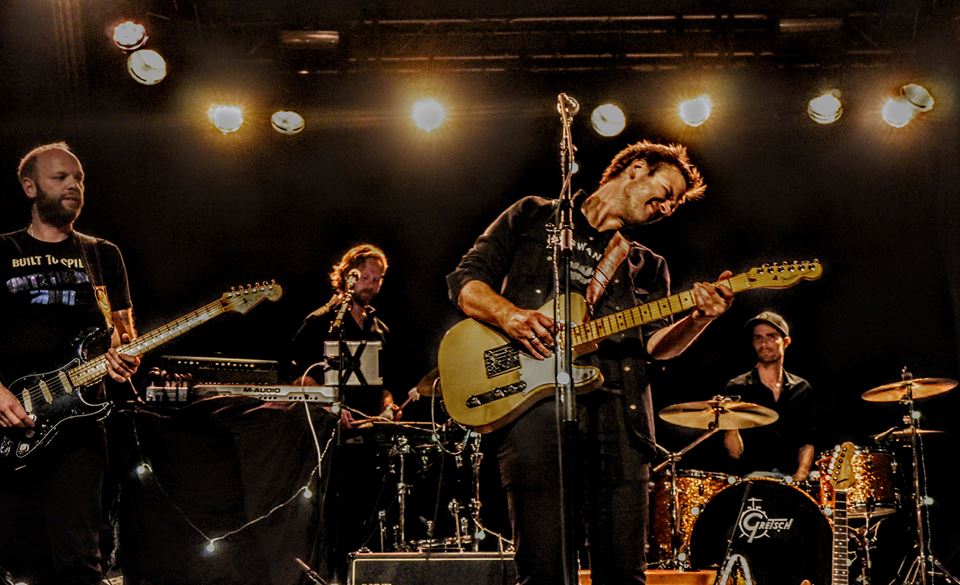
HOUSE OF NOT-THE WALKABOUT OF A. NEXTER NIODE- PART ONE-OFF THE PATH.
HOUSE OF NOT-THE WALKABOUT OF A. NEXTER NIODE- PART ONE-OFF THE PATH.
For many music historians, the seventies was the golden age of rock. During the golden age of rock, concept albums and rock operas were commonplace. Pink Floyd, Jethro Tull, Yes, Genesis, The Who were responsible for some of the most critically acclaimed and commercially successful concept albums and rock operas. They sold in their millions, and are now regarded as classic albums. Some groups did more to popularise the concept album.
None more so than Pink Floyd. Some of their finest albums were concept albums, including Dark Side Of The Moon, Animals, Wish You Were Here and The Wall. Coming a close second in the concept album stakes were Genesis, with concept albums that included Trespass, Foxtrot, Selling England by the Pound and The Lamb Lies Down on Broadway. Jethro Tull got in on the act too, releasing Thick As A Brick and Never To Old To Rock ’N’ Roll. So did Yes, another master of the concept album, with Fragile, Close To The Edge and Tales From Topographic Oceans a trio of classics. These are just a few of the greatest concept albums of the seventies, the golden era of rock. Another reminder of this golden era was the rock opera.
The Who were responsible for two of the best known, rock operas, Tommy and Quadrophenia. They enjoyed commercial success and critical acclaim during the seventies. So did Pink Floyd’s The Wall. It was still enjoying rave reviews long after the concept album and rock opera had fallen from favour.
As the seventies drew to a close, many saw the concept album and rock opera as belonging in the seventies. Groups like Genesis, Yes and Pink Floyd still continued to release the occasional concept album. However, by the eighties, it was thought that neither the concept album nor the rock opera would make a comeback.
They never really have. The rock opera seems a remnant of musical history. To some extent, so is the concept album. Sadly, in the past thirty-five years, there’s never been a time when the album charts have been filled with critically acclaimed, cerebral, concept albums. However, one group has been trying to bring back the glory days of the concept album, Canadian band, House Of Not.
Toronto based House Of Not haven’t been content to release one concept album. Instead, they’ve released three albums in what’s going to be a five album rock odyssey. It’s a truly ambitious project, one that the enigmatic, Canadian band have spent twelve years working on. So far, only three volumes of what’s billed as “The House Of Not Project” have been released.
This is one of the most ambitious projects any band has embarked upon in the last decades. The House Of Not decided in the early part of the new millennia to begin work on a five album rock odyssey. Over the five albums, House Of Not document the journey of troubadour A. Nexter Niode, who busks his way through what’s described as a futuristic, “exotic land.” This gunslinging guitarist’s journey began in 2003.
It was back in 2003, when House Of Not released The Walkabout Of A. Nexter Niode-Part One-Off The Path, on Freak Street Productions. This was the start of this five part odyssey for House Of Not and their friends.
For The Walkabout Of A. Nexter Niode-Part One-Off The Path, A. Nexter, a.k.a. Brian Erikson had written fourteen tracks. He took charge of vocals, and added pipes and bells. Lou Ropolli played all the guitars; while Ken O’Gorman played bass, mandolin and backing guitars. Joining House Of Not were a number of what’s billed as “House Guests.” These musicians and backing vocalists augment House Of Not on Off The Path-Part One. The “House Guests” play everything from drums to didgeridoo, and help fill out the sound. While this is going on, House Of Not take charge of production; and once The Walkabout Of A. Nexter Niode-Part One-Off The Path was complete, they mixed the album. The Walkabout Of A. Nexter Niode-Part One-Off The Path was then scheduled for release in 2003.
When The Walkabout Of A. Nexter Niode-Part One-Off The Path was released in 2003, it proved to be no ordinary album. Billed as “The Walkabout Of A. Nexter Niode.” Over the fourteen tracks, eighteen year old Nexter takes a “trip,” and discovers Icon City. This is a land where the majority live in poverty, in servitude to the powerful tyrant, they call Hypocrite. He has transformed, and many would say ruined, the once utopian Sanctuary into a technologically indoctrinated collective. This once utopian dream has become a nightmare. That’s until a wanderer, dreamer and troubadour discovers Icon City.
It’s then that A. Nexter Niode sets about destroying both the status quo, and a despot’s fraudulent and tyrannical reign. This wander, dreamer and troubadour is The Wayfarer, A. Nexter Niode, who chances upon this secretive, and once proud city. Its story unfolds over the fourteen tracks on The Walkabout Of A. Nexter Niode-Part One-Off The Path. Before that, the listener is introduced to the cast of characters.
Apart from the hero of the story, A. Nexter Niode, The Wayfarer, there’s the heroine, Silk, a.k.a. Lady Sadness. She becomes Nexter’s lover and muse. However, Nexter’s confidant is Hope, a.k.a. Lady-In-Waiting. Schadenfreude is billed as the villain of the piece. A tyrant and hypocrite, he rules Icon City with an iron fist. Then there’s Fred, The Piper, the father of Silk, and the family patriarch. He and his family have had their lives turned upside down. The final character is Number One, the narrator, who with the rest of House Of Not, guide the listener through the story on The Walkabout Of A. Nexter Niode-Part One-Off The Path, the first of this five part rock odyssey.
Homeric. That descries a rock odyssey in five parts. However, House Of Not don’t take long to tell the story of the first fifteen years of A. Nexter Niode’s life on Force Of Nature, which opens The Walkabout Of A. Nexter Niode-Part One-Off The Path. From conception through birth to adolescence, House Of Not spend just four minutes telling the story of what seems like an unremarkable life. As they do, House Of Not seem to draw inspiration from Kings of the concept album, Pink Floyd. Especially, Pink Floyd circa 1973, when they released Dark Side Of The Moon. Right down the backing vocals, House Of Not sound sonically and stylistically, like one of British’s music’s finest exports. It’s a case of wallowing in an arrangement that’s dramatic, progressive and ethereal, which whet the listener’s appetite.
Everything seems to be getting on top of Nexter on Mainstream. From his family and friends, right through to his boss and even the government, things are getting to Nexter. Constantly he questions everything and everyone. His questions are left unanswered by those Nexter consider the establishment. Nexter feeling even more confused and persecuted, is desperate to escape. This becomes apparent on what starts off as a thoughtful, acoustic, guitar lead ballad. Later, it takes on a much more rocky sound. It’s not unlike Pink Floyd on The Final Cut. Especially, the arrangement, which features impassioned, pleading vocal, asking Nexter not to go.
He’s minds almost made up. Then when he meets a much more seasoned “wayfarer” on Footnotes, Nexter is convinced to take the “trip.” He decides he wants to become a troubadour, traveling from city to city busking for change. There’s a condition though.
The veteran wayfarer explains he’s got to play with passion. That’s the case on Footnotes, which meanders melodically alone, the veteran wayfarer explaining the rules of the game to the newcomer on a meandering, melodic fusion of folk, rock and psychedelia. Then the sage like wayfarer unleashes a blazing guitar solo, and Nexter knows what’s expected of him, as he begins his journey.
Although everyone thinks Nexter is heading for “destination unknown,” he’s meant to be heading East. That’s where he will meet great, and wise men. Nexter is meant to learn from them, which should help Nexter discover his destiny. However, the plan goes awry, on the lysergic sounding Off The Path.
As he journeys, Nexter travels far and wide, constantly discovering new and exotic lands. Providing the soundtrack are two instrumentals, Off the Path and Taj Mahal Daydream, which are mesmeric melting pots of influences, Wistful and ethereal sounding describes Taj Mahal Daydream. That’s fitting. Nexter is far from home, and what he knows. He’s far removed from his comfort zone. Then Nexter comes across what he thinks is another exotic lands, Icon City.
It’s a case of all that glitters isn’t gold in Icon City. despot’s fraudulent and tyrannical reign. Schadenfreude, The Hypocrite rules the Icon City. He’s ruined this once proud city, whose people live in poverty, and are in servitude to The Hypocrite. It’s this once proud, but now secretive city the nomadic Nexter, dreamer, idealist and troubadour decides to unpack his guitar and play with pasion.
Once he’s looked around Icon City, Nexter the troubadour, settles down by the fountain in the square, and begins to play his guitar. It’s then that Nexter sees a beautiful, but almost haunted woman. This is Silk, who we’re introduced to in the thoughtful ballad Sad Silk. Sadness seems to exudes from Silk’s very pore. She’s known as Lady Sadness, but there’s a reason for this sadness.
In Icon City, Silk is an unwilling associate of Schadenfreude, The Hypocrite. She loathes and fears him. Her twin fears are that she’ll have to submit to his political ambitions and sexual desires. That’s been her fears from an early age.
Sllk, who is worshipped by her people, was snatched from her heartbroken father, Fred The Piper when she was young. Since then, she’s been enslaved, and unable to escape,..until now, when she meets a strangers to Icon City.
Nexter is in the crowd as Silk makes her way through her people, on Sad Silk. At once, he’s smitten, and vies for Silk’s affections. As Nexter gazes spellbound and lovingly at Silk. She in turn becomes a temptress, teasing and testing Nexter during The Walkabout. Sad Silk tells the story of this encounter. There’s a sense of sadness from the opening bars, as the story of this almost tragic figure unfolds. She dreams of escape, but The Hypocrite won’t let that happen.
When she sees Nexter looking longingly at Silk, she challenges him by saying: “you pretend.” All the time, Schadenfreude’s watchful eye burns into Nester. Then the spell is broken.
It’s Nexter that breaks the spell. He’s involved in an unseemly exchange, and when Schadenfreude takes his eye of Nexter, he announces he’s going to take Silk away, and be true to her. It’s then that Schadenfreude says: ”be true and be cursed!” From Icon City, Nexter beats a hasty retreat.
Next stop for Nexter is the Middle East. As he continues his travels, he wonders in A Mile in Those Shoes what his friends and family would think of him now? Again, the arrangement starts off with an understated sound, but grows and builds, before showcasing a much harder, rockier sound. Seamlessly, A Mile in Those Shoes gives way to Sacred Cow. While it has a similar sound, the subject matter is different. Here, Nexter ponders the subject of state and religious fundamentalism. Then it’s all change.
Ol’ Phat Fok sounds as if it’s providing the soundtrack to an old Western. Then a jazz-tinged horn punctuates the arrangement, and Nexter might as well be on Beale Street, New Orleans. He’s comparing his relationship with his nemesis The Hypocrite, with that of latter day icons, whether religious, political or corporate. He does this against what can only be described as a genre-melting arrangement. House Of Not continue to spring surprises. A swaggering slice of rock briefly explodes. So does a brief bluesy jam, before Nexter remembers The Hypocrite’s words: “I “curse you to be true. Be true and be cursed!” With those words ringing in his ears, Nexter continues his journey.
He finds himself on Freak Street, in Kathmandu, Nepal. This famous street is at the heart of the city’s counterculture. A new type of counterculture is taking shape. As it does, Nexter meets and befriends Friedrich, an eccentric finger-painter. He helps Nexter to discover a new type of rock ’n’ roll. However, Nexter will only fully comprehend this genre, once his journey is at an end. This part of Nexter’s “trip” is documented in the lysergic, otherworldly, and almost post rock sounding Freak Street. It features another scorching guitar solo, which sounds as if Nexter’s been reborn, and found his inner Hendrix. Just when everything seems to be going to plan, danger is ahead.
On Stranger, a six minute epic, drama and danger are omnipresent as the song unfolds. Guitar runs are accompanied by chimes, bells and a myriad of other sounds. This is the cue for Nexter to look at himself in the mirror, and realise that’s he’s straying further from the world he knows and is familiar with. It’s like Alice In Wonderland, albeit with a rocky backdrop. However, one can’t help wonder if rather than a a journey in the traditional sense, Nexter is in the throes of a prolonged LSD trip, as he seems to be losing touch with reality?
High In The Himalayas is a variation of of a Buddhist hymn. In this melancholy, guitar lead instrumental, one can hear the wind blow, and almost imagine Nexter scaling the Himalayas in search of spiritual salvation. There’s also a cinematic quality to the track. It sounds as if it’s been composed by Ry Cooder for a Wim Wenders’ soundtrack. Other times, it references the Berlin School of the late-seventies, early eighties. Blood From A Stone also has an eighties influence.
Straight away, Blood From A Stone, is reminiscent of Dire Straits early eighties albums. Soon, though a Pink Floyd influence shines through. By then, Nexter realises that he’s come to a conclusion. He something else, but he doesn’t know what. One thing he doesn’t want, is certainty. So Nexter decides to rethink his future.
Sanctuary, which closes The Walkabout Of A. Nexter Niode-Part One-Off The Path, has a similar sound to Blood From A Stone. It’s as if House Of Not have drawn inspiration from Pink Floyd and Dire Straits. Meanwhile, Nexter seeks solitude, as he considers what path to take on this journey that’s life. House Of Not have closed The Walkabout Of A. Nexter Niode-Part One-Off The Path on a cliff-hanger.
There’s a reason for this. The Walkabout Of A. Nexter Niode-Part One-Off The Path is the first in a five part rock odyssey from House Of Not. This first volume was released in 2003, on Freak Street Productions, and showcases a tight, talented and polished band.
That becomes apparent straight away. House Of Not are obviously experienced musicians. They sound as if House Of Not have learnt from the masters. Sometimes, House Of Not seem to have been inspired by some of the biggest names in rock, including Pink Floyd, Yes, Dire Straits and Genesis. That’s when the band play as one. Other times, when it’s a much more understated, acoustic sound, we hear a different sound to House Of Not.
On the much more understated sounding track, often, it’s just Brian Erikson and an acoustic guitar, as the song takes shape. He’s transformed, as the rest of House Of Not disappear into the shadows. All of sudden, Brian Erikson take centre-stage as he dawns the role of troubadour. He embraces and lives role, bringing life and meaning to the lyrics that are variously cerebral, thoughtful, beautiful and sometimes, full of social comment. House Of Not don’t shy away from the big issues, on an album that harks back to the golden era a rock, the seventies.
That was the age of the concept album. Back then, concept albums were inspired by numerous subjects, including mythology and science fiction, to religion, politics and war, and subjects as diverse as greed, money and madness. These subjects played their part in some of the greatest concept albums. However, they were all one offs. House Of Not have decided that they’re rock odyssey will be in five parts. The Walkabout Of A. Nexter Niode-Part One-Off The Path is the just the first step in a journey that’s variously Homeric, Joycean, lysergic and surreal.
Indeed, surreal is a good description of The Walkabout Of A. Nexter Niode-Part One-Off The Path. Sometimes, The Walkabout Of A. Nexter Niode-Part One-Off The Path is a bit like Alice In Wonderland. Nothing is quite as it seems. One can’t help wonder if the whole journey is LSD trip, where Nexter has kicked open the doors of perfection, and sprinted off at speed? If it is, will Nexter be able to close the doors? That will only become apparent when the next part of Nexter’s trip unfolds.
If it’s matches the quality of The Walkabout Of A. Nexter Niode-Part One-Off The Path, then it will be a captivating, enjoyable and genre-melting trip. Over the fourteen tracks, House Of Not flitted between blues, classic rock, country, folk, folk rock, post rock, progressive rock and psychedelia, These genres melt into one on a cinematic and cerebral album that harks back to the golden age of rock, The Walkabout Of A. Nexter Niode-Part One-Off The Path.
HOUSE OF NOT-THE WALKABOUT OF A. NEXTER NIODE- PART ONE-OFF THE PATH.
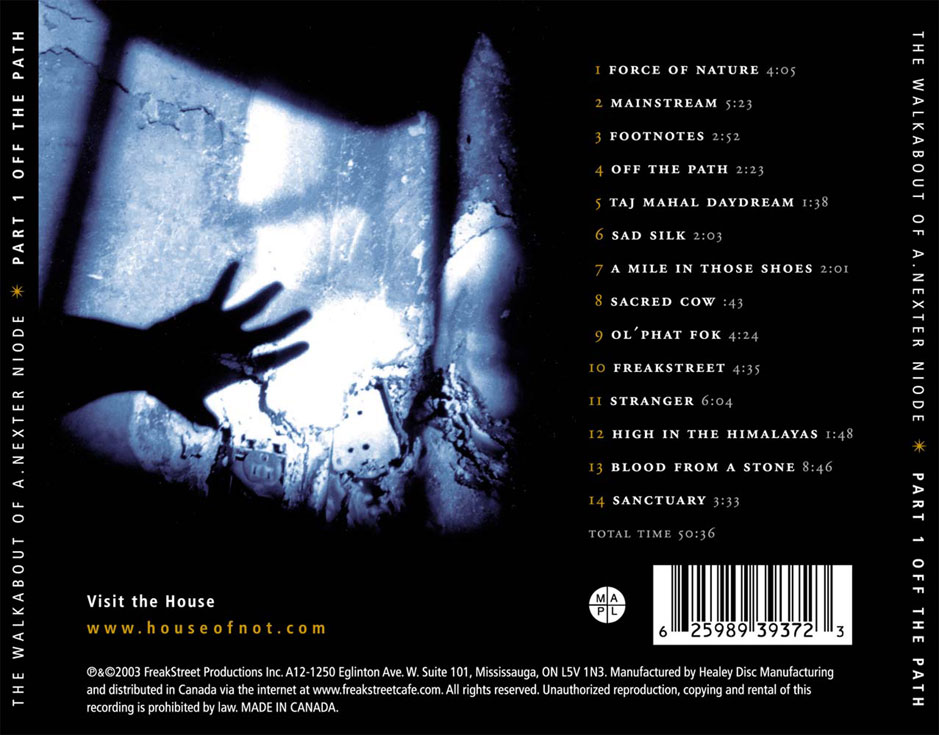
THE VELVET UNDERGROUND-LOADED.
THE VELVET UNDERGROUND-LOADED.
For The Velvet Underground, 1969 had been a turbulent year. They had released their third album The Velvet Underground in March 1969. It featured the debut of Doug Yule, who was brought in to replace John Cale. This was meant to the start of a bright new future for The Velvet Underground.
After two albums which had failed commercially, Lou Reed decided that The Velvet Underground had to change tack. They had to release music that was much more pop oriented and therefore, commercial. John Cale however, didn’t agree with how Lou Reed’s master-plan.
This had been a bone of contention between the pair for some time. John Cale wanted The Velvet Underground to continue to innovate, and create experimental music like White Light/White Heat, The Velvet Underground’s sophomore album. Lou Reed didn’t agree.
Lou Reed believed that The Velvet Underground’s music should become more pop oriented. This he felt, would broaden their appeal. No longer would they be an art rock group whose music appealed to discerning music lovers. Eventually, Lou Reed won over the rest of The Velvet Underground. For John Cale this was hugely disappointing. So, he decided the only option was to leave The Velvet Underground.
Following the departure of John Cale, The Velvet Underground began looking for a replacement. Eventually, Doug Yule was chosen as John Cale’s replacement. He made his Velvet Underground eponymous third album in November 1968, at TTG Studios, Hollywood. The Velvet Underground recorded ten songs penned by Lou Reed. By December 1968, The Velvet Underground was completed it was released in March 1969.
Before that, critics had their say on The Velvet Underground. The majority of the critics were won over by The Velvet Underground’s new sound. Some critics went as far as to say that the album was The Velvet Underground’s finest hour. They were impressed The Velvet Underground’s much more accessible sound. The Velvet Underground were congratulated on the quality of songwriting, and the delivery of the lyrics. However, there was a but.
Some critics felt that The Murder Mystery was an experiment that hadn’t worked. Others ant further, lamenting that The Murder Mystery fell short of the quality of White Light/White Heat. Other critics remarked that The Velvet Underground lacked the eclectic sound of its predecessors. Even the quality of recording was criticised. Mostly though, critics thought that The Velvet Underground were on the right road. However, as usual, record buyers had the casting vote.
When The Velvet Underground was released in March 1969, the album crept into the US Billboard 200, reaching just 197. This was a disaster for The Velvet Underground. Lou Reed’s decision to embrace a more commercial sound had backfired.
Following the release of The Velvet Underground, the band headed out on tour. They spent much of 1969 touring America and Canada. Night after night, they reworked tracks from their first three albums. The audience watched as a tight band fought for their very future. Some nights, The Velvet Underground debuted new songs.
New Age, Rock and Roll and Sweet Jane found their way onto the set list. This trio of songs found their way onto Loaded, which was released in 1970. Loaded has been reissued by Rhino, to mark the forty-fifth anniversary of Loaded’s release. It proved a landmark album in The Velvet Underground’s career.
As The Velvet Underground’s seemingly never ending tour continued, they continued to hone their sound. They were a very different band to just a few years previously when they were Warholian disciples. That was the past. Now The Velvet Underground were willing to forsake what many thought was their true sound, for commercial success. That proved ironic.
After three albums that had failed commercially, MGM were starting to loose patience with The Velvet Underground. It didn’t help that MGM had been haemorrhaging money for a couple of years. They had too many loss making acts on their roster. Something had to give.
During the night of the long knives, executives at MGM decided to cancel the contracts of eighteen loss making acts. This included The Velvet Underground. They were invited to the headquarters of MGM, and told that their contract had been cancelled. However, was the decision to cut The Velvet Underground loose purely a business decision?
Since then, there has been speculation that The Velvet Underground were dropped just because they were losing MGM money. Maybe, it was more to do with The Velvet Underground’s image being at odds with MGM’s corporate image? That proved to be the case. In 1970, an executive of MGM said: “it wasn’t eighteen groups, Mike Curb was misquoted. The cuts were made partly to do with the drug scene—like maybe a third of them had to do with drug reasons. The others were dropped because they weren’t selling.” It seemed that MGM’s mattered more than selling records. MGM it seemed, only wanted artists whose lifestyle they approved of.
Many thought that being dropped by MGM must have been devastating for The Velvet Underground. It seems it was, and it wasn’t. When Lou Reed was interviewed in 1987, he admitted: “we wanted to get out of there.” That may just be bravado. After all, the music industry is a small village, and word would’ve spread like wildfire why The Velvet Underground had been dropped. Some critics however, thought the situation was ironic.
Back in 1968, The Velvet Underground had made what many regarded as the ultimate musical sacrifice. They had changed direction musically on their eponymous third album. No longer were they seen as an art rock band by championed by many critics and cultural commentators. Instead, the move towards a more populist sound was seen as the ultimate betrayal from The Velvet Underground. This resulted in John Cale’s departure from the band. Now that The Velvet Underground had been dropped by MGM, the loss of one of their main creative forces, had been for nothing. Given what had happened, it was the ultimate irony.
Now without a record contract, The Velvet Underground headed back out on tour. Touring was now their main source of income. So they spent much of 1969 on the road. Mostly, it was the tight version of The Velvet Underground that took to the stage. Other times, they revisited their past.
The Velvet Underground decided to reinvent songs, during lengthy improvisations. This mixture of art rock, avant garde and free jazz showed that the old Velvet Underground weren’t dead. Some critics believed it was merely being suppressed in the search for commercial success.
During their gruelling touring schedule, The Velvet Underground made occasional forays into the recording studio. Some of the songs The Velvet Underground recorded, were seen as having potential. However, they couldn’t be released, as The Velvet Underground were in dispute with MGM. With no recording contract, and locked in what could prove a biter, lengthy and expensive dispute with MGM, things looked bleak for The Velvet Underground.
By November 1969, The Velvet Underground arrived in San Francisco, and were due to play at The Matrix and The Family Dog. These shows were recorded, and were meant to be released as live albums. However, that didn’t happen until the next millennia, when Bootleg Series Volume 1: The Quine Tapes was released in 2001. 1969 was fast proving to by The Velvet Underground’s Annus horriblis. Surely, things would improve as when the new decade dawned.
That proved to be the case. 1970 saw The Velvet Underground’s luck improve. They were signed by Atlantic Records, and told to record an album: “loaded with hits.” This would be a first.
Commercial success had eluded The Velvet Underground. Three albums into their career, and they hadn’t enjoyed a hit single. The nearest they came to commercial success was when their 1967 debut album, The Velvet Underground and Nico reached 129 in the US Billboard 200. It was all downhill from there. In 1968, White Light/White Heat struggled into the US Billboard 200 at 199. Then when The Velvet Underground was released in 1969, it stalled at 197 in the US Billboard 200. The Velvet Underground were faced with a mammoth task to produce an album: “loaded with hits.”
With these words ringing in his ears, Lou Reed went away and wrote the ten tracks that became Loaded. Then recording began at Atlantic Recording Studios, New York with Geoff Haslam, Shel Kagan and The Velvet Underground producing Loaded. However, one member of The Velvet Underground was missing.
Maureen Tucker missed the Loaded recording sessions. They took place between April and August 1970. Her only contribution was singing on the outtake I’m Sticking With You, and adding drums on a demo of I Found a Reason. Loaded was the first Velvet Underground album Maureen Tucker.was missing from.
Various musicians replaced Maureen Tucker on Loaded. Engineer Adrian Barber, who played on Who Loves the Sun and Sweet Jane. Tommy Castagnaro then played drums on Cool It Down” and Head Held High. Billy Yule, Doug Yule’s brother deputised on drums on Lonesome Cowboy Bill and Oh! Sweet Nuthin.’ Even bassist Doug Yule played drums.
Although hired as a bassist, Doug Yule played fuzz bass, piano, keyboards, lead guitar, percussion and added backing vocals. He added the lead vocals on Who Loves the Sun, New Age, Lonesome Cowboy Bill and Oh! Sweet Nuthin’. Sterling Morrison played lead and rhythm guitar. Lou Reed, who was now The Velvet Underground’s main creative and driving force, played lead and rhythm guitar, plus the piano. This depleted version of The Velvet Underground, plus a few friends eventually, finished recording of Loaded in August 1968. The release was scheduled for 15th November 1970. A lot would happen before then.
With Loaded completed, usually, The Velvet Underground would’ve been readying themselves for the usual round of promotion that takes place before an album is released. Not this time.
Lou Reed called time on his career with The Velvet Underground on 23rd August 1970. This left The Velvet Underground like a rudderless ship.
With The Velvet Underground having lost their leader and creative force, others took charge of final mix of the album. That was fatal. Lou Reed should’ve handed Atlantic Records the final mix, and then left.
When Lou Reed saw and heard a copy of Loaded, he was in for a shock. The claimed that Loaded had been re-sequenced. This hadn’t been authorised. That was bad enough. No longer would Loaded flow as it was meant to. Much worse, was that some of Lou Reed alleged that some of the songs on Loaded had been edited.
Lou Reed railed against the edited version of Mary Jane. So badly edited was the song, that it was bereft of its very melody. A heartbroken Lou Reed described the melody as: “heavenly wine and roses.” Sadly, it was gone. New Age was another song that had fallen victim to the razor blade in the editing suite. However, one of the remaining members of The Velvet Underground disputed Lou Reed’s claims.
It was newcomer Doug Yule who spoke out. Despite being a relative newcomer to the band, he disputed what Lou Reed said. Doug Yule claimed that it was Lou Reed who edited Mary Jane, before he left The Velvet Underground. This essence of his explanation was that Lou Reed edited the song so that it would be a hit. However, it was claim and counter-claim. If Lou Reed edited the song, why did he edit the “heavenly wine and roses” of the melody from the song? The editing was just one of several grievances Lou Reed had.
The ten songs on Loaded came from the pen of Lou Reed. However, when Lou Reed received his copy of Loaded, he discovered that the songs were credited to The Velvet Underground. What made this worse, was that Lou Reed was third in the credits. He felt he wasn’t receiving the credit he deserved. Rubbing salt into the wound was a large photograph of Doug Yule playing the piano. The Velvet Underground’s creative force was overshadowed by the newcomer. Was this a deliberate slight seen Lou Reed had left The Velvet Underground?
As Lou Reed studied Loaded album’s cover, he discovered that Maureen Tucker was credited as the drummer. She hadn’t played on Loaded, as she was pregnant. It was the only Velvet Underground she didn’t play on. Ironically, many critics felt Loaded was one The Velvet Underground’s finest albums. However, even another member of the band didn’t agree with this.
Sterling Morrison had been ever-present on the four albums The Velvet Underground had released. This made him well qualified to critique the album. He had mixed feelings on the absence of Maureen Tucker and Doug Yule’s increased influence on Loaded. Without Maureen Tucker: “it’s still called a Velvet Underground record. But what it really is is something else.” Then when asked about Doug Yule playing a bigger part on Loaded he said: ”the album came out okay, as far as production it’s the best, but it would have been better if it had real good Lou vocals on all the tracks.” It seems the newcomer hadn’t convinced The Velvet Underground guitarist. What did the critics think?
Most critics were won over by Loaded. It followed in the footsteps of The Velvet Underground, which showcased a much more populist, commercial sound. Among Loaded’s highlights were the hook-laden, Sweet Jane and Rock and Roll. Even without the “heavenly wine and roses” of the melody, Sweet Jane was a timeless classic. Along with Rock and Roll, they became favourites on American FM radio stations. Other tracks that were mentioned in dispatches by critics were the soulful infused I Found a Reason and New Age. However, not everyone was convinced by Loaded.
Rolling Stone magazine wasn’t impressed by Loaded. They were the highest profile critic of Loaded. Ironically, they’ve performed a volte face, and nowadays, Loaded is one Rolling Stone magazine’s 500 best albums of all time. However, Rolling Stone weren’t being contrarian, like some critics.
While Loaded is indeed, a minor classic, it could’ve and would’ve been a better album. Especially, if Lou Reed took charge of all the lead vocals. Sterling Morrison had a point. Lou Reed was The Velvet Underground’s best vocalist. Having written the lyrics, he was able to bring them to life. From Sweet Jane and Rock and Roll, to Cool It Down, Head Held High, I Found A Reason and Train Round The Bend, Lou Reed unleashes a series of vocal masterclasses. Sadly, he only sung six of the ten vocals. That proved to be a a mistake.
In another group, Doug Yule would’ve been a more than adequate replacement. However, he couldn’t quite live the lyrics like Lou Reed. That’s not to say his performance is disappointing on on Who Loves the Sun, New Age, Lonesome Cowboy Bill and “Oh! Sweet Nuthin’. Far from it. Instead, they’re just not as good as The Velvet Underground’s worldweary leader, Lou Reed. Those were big shoes to fill. Even Sterling Morrison agreed.
Similarly, Maureen Turner was missed. While her replacements are more than adequate, it could be argued that there’s no continuity. Each drummer has their own sound and style. Despite that, Loaded came to be regarded as a minor classic. Very few people thought that would be the case in 1970.
When Loaded was released on 15th November 1970, the album failed to chart. It stopped just short, reaching 202 in the US Billboard 200. So near, but yet so far. This was a familiar story for The Velvet Underground.
Their fourth album Loaded deserved to fare better. They had sacrificed and suppressed their true sound to deliver an “album loaded with hits.” Loaded had everything going for it. It benefited from a much more commercial sound, and plethora of hooks. This meant that Loaded was The Velvet Underground’s most accessible album. Surely this was what record buyers wanted The Velvet Underground reasoned?
Record buyers had shied away from The Velvet Underground and Nico and White Light/White Heat. Then on The Velvet Underground, which was released in 1969, Lou Reed and Co. moved towards a more populist, accessible sound. This came at the cost of John Cale. Still The Velvet Underground failed commercially, and MGM dropped the Velvets. This proved the ultimate irony.
Just under a year later, and Lou Reed was gone too. This left just Sterling Morrison and the returning Maureen Tucker. Sadly, The Velvet Underground were a shadow of the band they once were. Loaded proved to be what many regard as their swan-song.
Despite its flaws, Loaded is a minor classic from The Velvet Underground. Nowadays, it’s regarded as one of the best 500 albums by Rolling Stone magazine. Loaded also belongs in every self-respected record collection. For those who have yet to discover Loaded, now is the time to do so.
Recently, Loaded has been reissued by Rhino to mark the forty-fifth anniversary of Loaded. Sadly, the release of Loaded was the end of an era for one of rock’s most innovative bands, The Velvet Underground.
Never again would Lou Reed join with Maureen Tucker, Sterling Morrison and Doug Yale again as The Velvet Underground. Squeeze which was released in 1972, was a Velvet Underground in name only. Only Doug Yule, who was using The Velvet Underground name featured on Squeeze. It’s not worthy of bearing The Velvet Underground name. That why for many, Loaded marked the end of The Velvet Underground story.
Their recording career had started in 1967 with The Velvet Underground and Nico, 1968s White Light/White Heat, 1969s The Velvet Underground and Loaded in 1970. Nowadays, each and every one of these albums are regarded as a classic; and The Velvet Underground are remembered as one of the most important, influential and innovative bands in the history of music. However, one can’t help wonder what direction The Velvet Underground would’ve headed if they hadn’t changed direction musically?
The Velvet Underground and Loaded would be very different albums. However, maybe, The Velvet Underground had no option. MGM were losing money hand over fist. They needed bands to sell vast quantities of albums, not release albums that would find favour with discerning music lovers. Maybe, if The Velvet Underground had known they were going to be dropped, they would’ve stuck to their musical principles? That wasn’t to be.
Instead, The Velvet Underground sacrificed their musical soul at the altar of populist music. John Cale couldn’t bear to watch this sacrifice, and walked away with his principles intact. Lou Reed desperate for the band he formed find commercial success as well as critical acclaim, played the game. After two albums of The Velvet Underground suppressing what they stood for musically, Lou Reed walked away.
He left behind one of the richest legacies for any group who only recorded four studio albums. Each is a classic. From The Velvet Underground and Nico to Loaded, each album features shamanistic performances from those musical shape shifters and high priests of music, The Velvet Underground.
THE VELVET UNDERGROUND-LOADED.
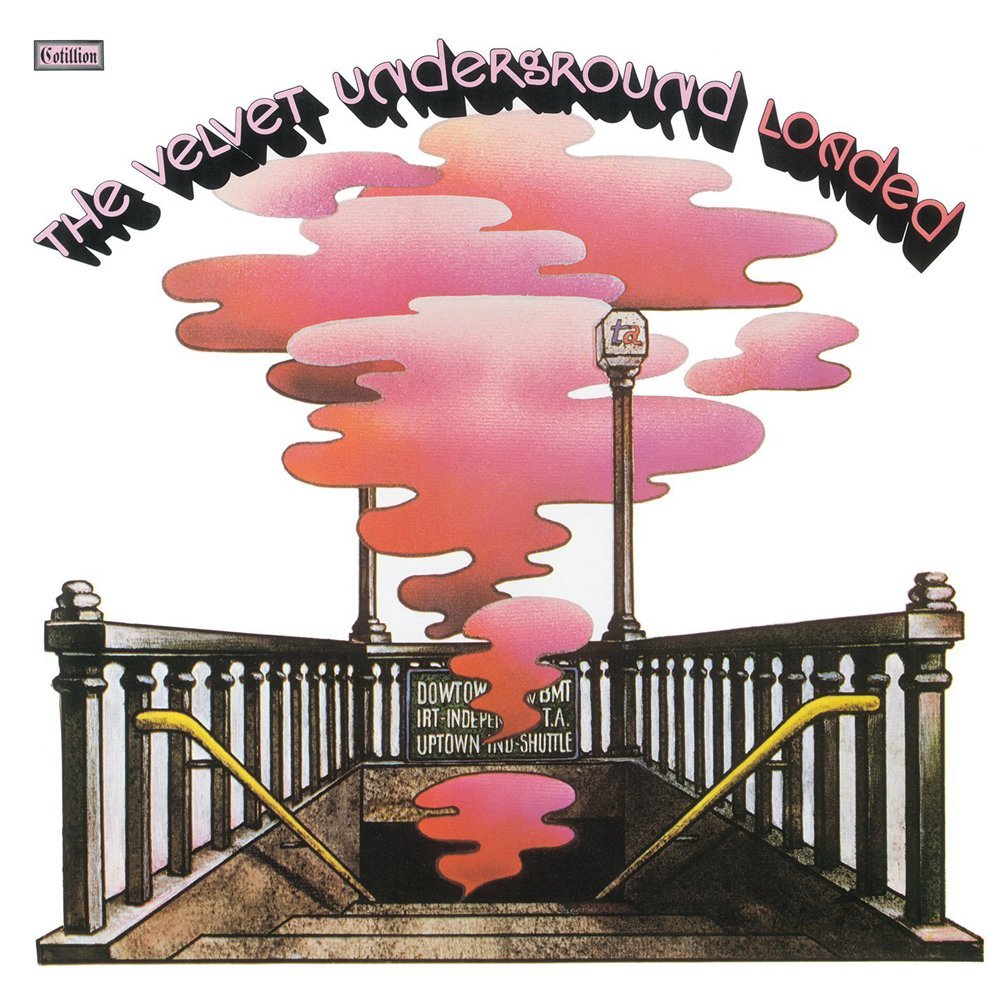
BACK TO THE RIVER-MORE SOUTHERN SOUL STORIES 1961-1978.
BACK TO THE RIVER-MORE SOUTHERN SOUL STORIES 1961-1978.
With Christmas just around the corner, Kent Soul, an imprint of Ace Records, have just released the perfect present for the soul man or woman in your life, Back To The River-More Southern Soul Stories 1961-1978. This luxurious, and lovingly compiled three disc box set, features seventy-five songs, from the great and good of Southern Soul. It’s the long-awaited and much anticipated followup to Take Me To The River: A Southern Soul Story 1961-1977, which was released in November 2006. Since then, many fans of Southern Soul have awaited the followup to what was, one the best box sets of 2006. They’ve had a long wait.
Given the success of Take Me To The River: A Southern Soul Story 1961-1977, music fans were hoping that a followup would be released in 2007. However, compiling a box set takes time and patience. That was the case for Dean Rudland and Tony Rounce, who compiled Back To The River-More Southern Soul Stories 1961-1978.
The first stage was choosing a long-list of tracks that would make their way onto Back To The River-More Southern Soul Stories 1961-1978. Dean and Tony spent many a happy hour searching through their respective record collections. These record collections have been built up over more years than they care to remember, and bring back memories of countless crate-digging expeditions.
Dean and Tony are battled scarred veterans of crate-digging expeditions in record shops, thrift stores, dusty warehouses and garage sales. Record fares have proved a happy hunting ground for the pair. So have the sales tables at soul nights and all-nighters. Then there’s the countless trades they’ve done over the year. Every record tells a story, and Dean and Tony are always looking for vinyl.
Wherever they go, no source of vinyl is left undisturbed. If it was, that would lead to sleepless nights. After all, that pile of vinyl might just contain that elusive hidden gem. Often, it does. Their impressive record collections are proof of this. They’re the perfect place to start when work began on Back To The River-More Southern Soul Stories 1961-1978.
No corner of Dean and Tony’s record collection were left untouched. They’ll worked their way through thousands of records. This took time. They then headed to Ace Records H.Q., where they began listening to master tapes at Ace Records H.Q. Tracks began to make their way onto their wish list of records that potentially, might make their way onto Back To The River-More Southern Soul Stories 1961-1978.
Potentially was the operative word. That’s why Dean and Tony’s long-list could have had over a hundred tracks. They’ll have the tracks that in an ideal world, would make it onto the compilation. Then they’ll have a list of of alternatives. That made senses. Any compiler knows that they could’ve come across a problem with licensing. That’s not unheard of.
Often, a compiler comes across a killer track, but is unable to license the tracks. There can be any number of reasons for this. When that happens, it pays to have a plan B. The compiler then dips into his list of alternative track. Veteran compilers know, that it’s highly unlikely that they’ll get every one of their preferred tracks on a compilation. If they do, there’s every chance they’ll also be clutching the winning lottery ticket come Saturday night.
Once all the tracks are licensed, work begins on things like sleeve-notes and packaging. The sleeve-notes to Back To The River-More Southern Soul Stories 1961-1978 are best described in-depth and informative. Reading them, it’s obvious that Tony Rounce is passionate about soul music. His enthusiasm jumps off the page. What he doesn’t know about each of the seventy-five tracks isn’t worth noting. Throughout the sixty-four page booklet, there’s evocative photographs and scans or record labels and adverts. Suddenly, you’re transported back to the river, as you enjoy more Southern Soul stories which were released between 1961 and 1978.
These seventy-five tracks featured Southern Soul royalty. There’s no bigger names than Otis Redding and Aretha Franklin. Or how about Bobby Bland, Solomon Burke, Joe Simon, O.V. Wright, Esther Phillips, Sam Dees? That’s nat all. What about Brook Benton, Jimmy Lewis, Z.Z. Hill, Don Covay, Otis Clay, Fontella Bass, Aaron Neville or Little Richard? These are just a few of the names that made their way onto Back To The River-More Southern Soul Stories 1961-1978.
By the time the track listing to Back To The River-More Southern Soul Stories 1961-1978 was completed, and Ace Records announced that this long-awaited box set would be released just in time for Christmas, nine years had passed since Take Me To The River: A Southern Soul Story 1961-1977 was released. By then, many doubters wonder if the followup would ever be released?
Many Southern Soul fans never stopped believing. The doubters began comparing these Southern Soul fans to the optimistic big band fans who still think that Glen Miller is just running late. However, these Southern Soul fans patience was recently rewarded, when Back To The River-More Southern Soul Stories 1961-1978 was released. It’s a luxurious, lovingly compiled, three disc, seventy-five song box set. Back To The River-More Southern Soul Stories 1961-1978 will nestle in nicely to Take Me To The River: A Southern Soul Story 1961-1977. However, is Back To The River-More Southern Soul Stories 1961-1978 a fitting followup to Take Me To The River: A Southern Soul Story 1961-1977, and worth the nine year wait?
Disc One-Muscle Shoals-Memphis Redux.
Just like each of the three discs, disc one of Back To The River-More Southern Soul Stories 1961-1978 has twenty-five tracks. It’s entitled Muscle Shoals-Memphis Redux, and unsurprisingly, features tracks recorded in Muscle Shoals and Memphis. This includes some of the tracks that never made it onto Take Me To The River: A Southern Soul Story 1961-1977. It doesn’t say which one, but that doesn’t matter as disc one features contributions from some of the biggest names in Southern Soul.
This includes Solomon Burke’s 1968 Atlantic Records’ single I Wish I Knew (How It Would Feel To Be Free). Released at the height of the civil rights movement, Solomon Burke delivers a hope filled vocal which sets the tone for the rest of disc one.
Bettye LaVette, one of Southern Soul’s finest female vocals unleashes a vocal masterclass on her 1969 single Nearer To You. Then Dean Rudland and Tony Rounce play one of their trump cards.
This is a previously unreleased extended version of Judy Clay and William Bell’s Private Number. Don’t worry, they’ve another trick up their sleeve. This a previously unreleased take of Free Me, which Otis Redding recorded in 1967. It’s a spine-tingling track. Only four tracks in, and Dean Rudland and Tony Rounce have the listener hooked. There’s still plenty more delicious Southern Soul treats to come.
How about Bobby Bland’s 1967 single A Touch Of The Blues? Produced by Willie Mitchell, it’s a heart wrenching, soulful, blues. Equally emotive is an unreleased take of Eddie Floyd’s I Got Everything I Need. It was recorded in 1966, at Stax Studio’s in Memphis, with Stax’s house band accompanying Eddie Floyd. Another tale of heartbreak is Joe Perkins 1969 single Think I’ll Go Somewhere And Cry Myself To Sleep, which was recorded at Quinvy Studios in Memphis. Joe delivers the lyrics as if he’s lived them. Sadly, when the single was released on Nugget, it never enjoyed the commercial success it deserved. Jeanie Greene’s Sure As Sin was also recorded at Quinvy Studios, and released on Atco in 1969. However, it has a much smoother, polished sound, from one of Southern Soul’s best kept secrets, Jeanie Greene.
Mary Wells however, is a name that’s much more familiar. She recorded I Found What I Wanted at the Fame Studios, and the single was released in 1971. It’s a track that could only have been recorded at Fame, and features Mary Wells at her best. She’s not alone.
That’s the case with Joe Simon’s vocal on his 1974 single Message From Maria. It was produced by Willie Mitchell, and released on Monument. Willie Mitchell seemed to get the best out of Joe Simon. That was also the case with O. V. Wright, who released I’ve Been Searching on Hi Records in 1974. This is an irresistible introduction to O.V. Wright, one of the most underrated Southern Soul men on disc one.
Another is Clarence Carter, who may be a new name to all but the the most devoted Southern Soul fans. He worked extensively with producer Rick Hall, at Fame Studios. However, She Ain’t Gonna Do Me Right was lain unreleased for far too long, and makes a welcome debut on Back To The River-More Southern Soul Stories 1961-1978. Bettye Swann also made the journey to Fame Studios in 1971. She had released her biggest hit single Make Me Yours in 1967. Since then, Bettye Swann never reached the same heights. So in 1971, she made her way to Fame Studios, where Rick Hall worked his magic. The result was the a beautiful soul-baring single I’m Just Living A Lie. It’s not the only ballad on disc one.
Another ballad is The Soul Children’s dramatic, soulful, cover of Lennon and McCartney’s Yesterday. Incredibly, this David Porter and Ronnie Williams production has never been released before, and brings disc one of Back To The River-More Southern Soul Stories 1961-1978 to a poignant close.
Disc Two-Southern Routes.
Just like disc one, disc two, which is entitled Southern Routes, oozes quality. One of the highlights has to be Brook Benton’s 1970 hit single Rainy Night In Georgia which was released on Cotillion. Ironically, this soul classic was recorded in Criteria Studios, Miami, not Georgia. So was Joey Gilmore’s Somebody Done Took My Baby and Gone. It was released in 1971, on Saadia Records, and features an outpouring of hurt from Joey Gilmore. Helene Smith’s A Woman Will Do Wrong was also recorded at Criteria Studios, Miami, in 1960. The single was released on the Phil L.A. label, and is a reminder of Helene Smith, who during the early sixties, was Miami’s first lady of soul. It was to Miami, Esther Phillips headed in 1969.
By 1969, Miami was where for Atlantic Records sent their artists to record. Esther Phillips recorded Linda Cooke and Bobby Womack’s I’m In Love at Atlantic South-Criteria Studios. The journey was worthwhile, and Esther Phillips rolled back th years, unleashing a vocal powerhouse, which was released in 1969. However, not all the songs were on disc one were recorded in the Sunshine State. Far from it.
Sam Dees recorded Easier To Say Than Do, in Birmingham, Alabama. That was where one of the greatest singer-songwriters in the history of soul music called home. It’s also where he added the vocal to heart-wrenching Easier To Say Than in 1969. Since then, Sam Dees has spent more time writing songs for the great and good of soul, than recording. However, no self-respecting Southern Soul compilation is complete without a Sam Dees’ song.
Joe Medwick is just one of several artists on disc two who recorded at Pasadena Sounds Studio, in Pasadena, Texas. That’s where he recorded Nearer To You, a track that epitomises what Southern Soul sounds like. It was released on Tear Drop in 1967. The same year, Toussaint McCall released Nothing Takes The Place Of You. It was also produced by Ray Doggett, and released on Tear Drop. Johnny Adams’ (Sometimes) A Man Will Shed A Few Tears Too was recorded at Pasadena Sounds Studio. This time, Huey P. Meaux produced the single, which was released on Pacemaker Records. For anyone whose yet to discover Johnny Adams, this is the perfect introduction, which was recorded at the prolific Pasadena Sounds Studio. However, it wasn’t the only prolific studio.
Criteria Studios in Miami, was still one of the city’s busiest studios. Della Humphrey’s horn lead ballad Your Love Is All Need was recorded there in 1968. It was released on Arctic in 1968. Two years later, Little Beaver’s cover of Frank Williams’ Do Right Man was recorded at Criteria Studios. Producing the session was Frank Williams and Willie Hale. Despite a soulful, impassioned vocal, when the single was released on Saadia, it sunk without trace. It makes a welcome return on Back To The River-More Southern Soul Stories 1961-1978. It’s not alone.
George Perkins’ 1972 single How Sweet It Would Be was recorded at Sound City Studios, Shreveport. Accompanying George’s hurt filled vocal are gospel inspired harmonies. Together, they play their part in one of the highlights of Back To The River-More Southern Soul Stories 1961-1978. This isn’t the only tracks recorded at Sound City Studios. So was Reuben Bell’s heartfelt, string-drenched ballad Asking For The Truth. It was released on Alarm in 1975. That was two years after the release of Charles Crawford’s A Sad Sad Song, on Hy Sign in 1973. This was another track recorded at Sound City Studios, which in the early to mid seventies, was enjoying a hot streak. Back then, Southern Soul was enjoying a resurgence in popularity.
Back in 1966, when Aaron Neville released Tell It Like It Is on Par-Lo, Motown was providing the soundtrack for America. However, this beautiful, timeless ballad rivalled anything coming out of the Detroit, or anywhere else. It’s should be a soul classic, and it’s fitting that Tell It Like It Is closes Back To The River-More Southern Soul Stories 1961-1978.
Disc Three-Going Back Home.
The third and final disc in the Back To The River-More Southern Soul Stories 1961-1978 box set, is entitled Going Back Home. There’s certainly not letup in quality. An unreleased extended version of The Girls From Texas almost waltzes along, showcases Jimmy Lewis’ voice. Talking of voices, one of the most famous voices in soul, steps forward.
That’s Aretha Franklin on the sultry sounding Ain’t No Way, which she released as single on Atlantic Records in 1968. Aretha Frankin has not left her gospel roots behind, on this soulful offering. Neither has Clay Hammond on Take Your Time, which he released on Kent in 1966. Don Covay’s roots were also in the church. His father was a baptist minister. However, Don Covay crossed over, and in 1965, released You’re Good For Me, on the Landa label. Clay Hammond and Don Covay are just two of the great voices of Southern Soul men.
Z.Z. Hill is another. He helped rejuvenate Southern Soul’s popularity with singles like Don’t Make Me Pay For His Mistakes. It was released in 1971, on Hill. Around this time, Hi Records were about to become one of the most successful Southern Soul labels. One of their signings would be Otis Clay, who in 1967, released That’s How It Is (When You’re In Love) on One-derful. It’s a tantalising taste of one of the most underrated Southern Soul men. Willie Hightower falls into the same category. He was signed to Hi Records when he released Don’t Blame Me in 1973. This Willie Mitchell production epitomises everything that’s good about Southern Soul.
Southern Soul was also blessed with some fantastic female singers. This includes Fontella Bass, whose synonymous with her hit single Rescue Me. I Want Everyone To Know, which was released on the Paula label in 1972, shows another side of Fontella Bass, on this smouldering slice of sultry Southern Soul. She’s joined on disc two by another soul sister, Philly born Barbara Mason. She might sound like an unlikely Southern Soul singer. However, in 1975, Barbara Mason joined forces with producer Don Davis. The result was the album Love’s The Thing. One of the highlights was the Millie Jackson inspired Shackin’ Up, which was one of the album’s highlights.
From the opening bars of Timmy Willis’ Easy As Saying 1-2-3, it’s obvious that something special is unfolding. Timmy Willis’ live-in vocal brings the lyrics to life, while the Muscle Shoals rhythm section and horns accompany him. What follows is a hidden Southern Soul gem, that was released on Jubilee in 1970. That was two years after Bobby Rush released Mary Jane on Galaxy in 1968. Bluesy and soulful, Mary Jane features one of the veterans of Southern Soul, Bobby Rush whose still playing live in 2015. So it’s fitting that Bobby Rush closes Back To The River-More Southern Soul Stories 1961-1978.
Nine years have passed since the release of the Take Me To The River: A Southern Soul Story 1961-1977. Since then, fans of Southern Soul have patiently awaited the followup. Recently, that wait was over, when Kent Soul, an imprint of Ace Records, have just released Back To The River-More Southern Soul Stories 1961-1978. This luxurious, and lovingly compiled three disc box set, features seventy-five songs, from the great and good of Southern Soul. There’s everyone from Southern Soul royalty like Otis Redding and Aretha Franklin, to Bobby Bland, Solomon Burke, Joe Simon, O.V. Wright, Esther Phillips and Sam Dees. Then there’sBrook Benton, Jimmy Lewis, Z.Z. Hill, Don Covay, Otis Clay, Fontella Bass and Aaron Neville. However, this is just the tip of a musical iceberg, which oozes quality.
So good is Take Me To The River: A Southern Soul Story 1961-1977, that it’s manage to surpass the quality of Take Me To The River: A Southern Soul Story 1961-1977. That’s no surprise. Back To The River-More Southern Soul Stories 1961-1978 features familiar faces, new names and hidden gems among the seventy-five tracks. There’s something for everyone.
Ballads and tales of heartbreak and betrayal, rub shoulders with songs full of emotion and joy over Back To The River-More Southern Soul Stories 1961-1978’s three discs. This seventy-five song roller coaster, is a reminder of the glory days of Southern Soul, and is the perfect Christmas present for soul man or woman in your life.
BACK TO THE RIVER-MORE SOUTHERN SOUL STORIES 1961-1978.


 dereksmusicblog
