JETHRO TULL-THICK AS A BRICK-STEVEN WILSON MIX.
JETHRO TULL-THICK AS A BRICK-STEVEN WILSON MIX.
Jethro Tull came of age musically in 1971. That’s when they released Aqualung, the most successful album of their four album career. Aqualung sold three million copies in America, and was certified triple platinum. This surpassed the success of their three previous albums, including 1969s Stand Up and 1970s Benefit. Both were certified gold in America. However, Aqualung was a game-changer.
Suddenly, Jethro Tull were one of the biggest bands in the world. They were well on their way to becoming one of the most successful, groundbreaking and innovative prog rock bands. Partly, that was down to Jethro Tull’s determination to reinvent themselves musically. Jethro Tull weren’t content to stand still. Instead, they experimented musically, and pushed musical boundaries to their limit. This saw Jethro Tull become one the most groundbreaking and inventive bands. However, very few people were prepared for Thick As A Brick, the followup to Aqualung.
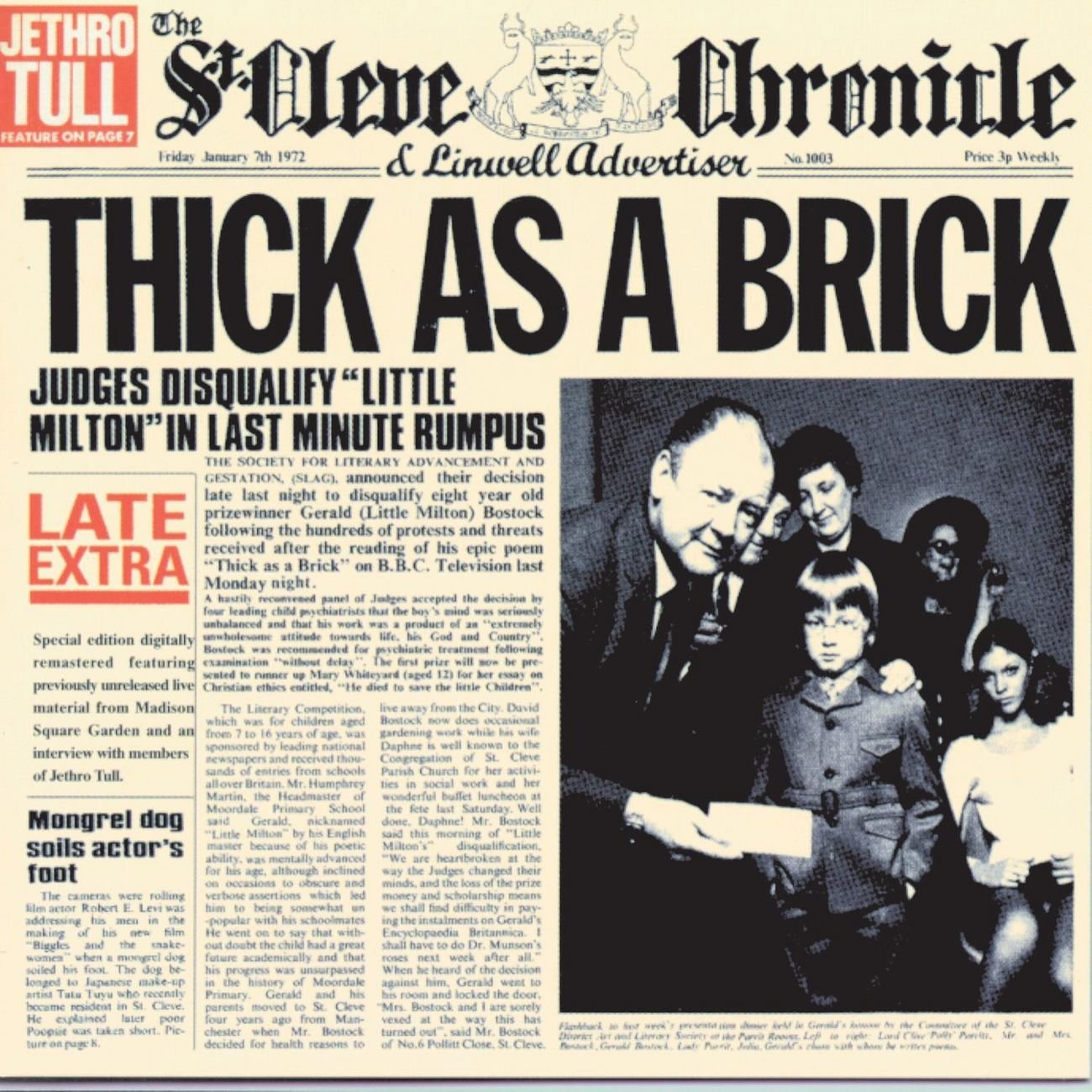
Thick As A Brick, which was recently reissued by PLG, was a concept album. Not just any concept album though. Instead, Thick As A Brick was a concept album featuring just one lengthy track. This track, Jethro Tull described as “bombastic” and “over the top.” It was meant to be an adaptation of an epic poem written by an fictional eight year old prodigy. It’s meant to be Homeric, but with a bombastic, humorous style. The album came complete with a cover that replicates a comedic newspaper, which features the poem penned by the child prodigy. In reality, the lyrics were written by Ian Anderson, Jethro Tull’s lead singer. Up until then, he could do no wrong. Was this about to change?
The origins of Jethro Tull can be traced to Blackpool, in 1962, That’s when Ian Anderson formed his first group Blades. Originally a four piece, featuring Ian Anderson on vocals and harmonica, they became a quintet in 1963 and sextet in 1964. By that time, they were a blue eyed soul band. After three years, the band decided to head to London.
Having moved to London, the band split-up within a short time. Just Ian Anderson and bassist Glen McCornick were left. This proved a blessing in disguise. They were soon joined by blues guitarist Mick Abrahams and drummer Clive Bunker. This was the lineup that featured on their debut album This Was. That was still to come.
Before that, the band had to settle on a name. Various names were tried. Then someone at a booking agent christened them Jethro Tull, after the eighteenth century agriculturalist. Not long after that, Ian Anderson acquired his first flute.
Up until then, Ian Anderson played just harmonica and was trying to learn to play the guitar. He realized wasn’t a great guitarist though. So, decided the world had enough mediocre guitarists, decided to expand his musical horizons. So he bought his flute. Little did he realize this would be one of Jethro Tull’s trademarks. After a couple of weeks, Ian had picked up the basics of the flute. He was learning as he played. Not long after this, Jethro Tull released their debut single.
Sunshine Day was penned by Mick Abrahams, with Derek Lawrence producing the single. On its release, the single was credited to Jethro Toe. It seemed thing weren’t going right for Jethro Tull. The single wasn’t a commercial success and failed to chart. Despite this disappointment, thing got better when they released their debut album This Was.
This Was.
Recording of This Was took place at Sound Techniques in London. The sessions began on 13th June 1968, and finished on 23rd August 1968. Unlike later albums, Jethro Tull recorded This Was on a tight budget. Only £1,200 was spent recording Jethro Tull’s debut album This Was. This money would soon be recouped when This Was released.
Having released their debut album This Was in 25th October 1968, it reached number ten in the UK. This Was was well received by critics. They were won over by Jethro Tull’s fusion of blues rock, R&B and jazz. This lead to This Was being launched at the Marquee Club.
Jethro Tull were only the third band to launch their debut album at the Marquee Club. The other two were The Rolling Stones and The Who. Both were now amongst the biggest bands in the world. They had certainly conquered America. So would Jethro Tull.
When This was released in the US on 3rd February 1969, it reached just number sixty-two in the US Billboard. This was seen as a success by Island Records in Britain and Reprise in America. Jethro Tull had made inroads into the most lucrative music market in the world. It was a successful start to Jethro Tull’s career, which was about to enter a period where critical acclaim and commercial success were almost ever-present. However, there was a twist in the tale.
Prior to the recording of Stand Up, Jethro Tull’s sophomore album, Mick Abrahams left the band. Mick and Ian Anderson disagreed over the future direction of Jethro Tull. The problem was, Mick wanted Jethro Tull to stick with blues rock. Ian Anderson realised there was no real future in blues rock. He wanted to take Jethro Tull in different directions, exploring a variety of musical genres. So Mick left Jethro Tull and was replaced by Michael Barre. Little did either Mick nor Michael realize that Stand Up marked the start of a period where Jethro Tull sold over sixty-million albums.
Stand Up.
Following the departure of Mick Abrahams, who was replaced by Michael Barre work began on Jethro Tull’s sophomore album. It would be very different to This Was.
Stand Up was a much more eclectic album. Ian Anderson, who was now the primary songwriter, penned nine of the ten tracks. He drew inspiration from everything from blues rock, Celtic, classical, folk and rock. The ten tracks became Stand Up, which was recorded over three months in 1969.
Recording of Stand Up took place at Morgan Studios and Olympic Studios. The sessions began in April 1969, and continued through to May 1969. They recommenced in August 1969, when Stand Up was completed. A month later, and Stand Up was released.
Before the release of Stand Up in September 1969, reviews of the album were positive. The musicianship and production were praised. Whilst there was still a blues rock sound, Jethro Tull were expanding their musical palette. This struck a nerve with critics and record buyers.
On its release in September 1969, Stand Up reached number twenty in the US Billboard 200 Charts and number twenty in Britain. This resulted not just in the start of Jethro Tull’s first gold disc of their career and the beginning of a golden period in their career. The next album in this golden period was Benefit.
Benefit.
Following the commercial success of Stand Up, Jethro Tull returned to the studio in December 1969. Ian Anderson had written ten new tracks. These ten tracks were recorded at Morgan Studios, London. For the first time, Ian Anderson was the sole producer of a Jethro Tull album. He started as he meant to go on, producing what would become a much more experimental, and darker album, Benefit. It was completed in January 1970 and release in April and May 1970.
Before the release of Benefit, the critics had their say. They remarked upon the much more experimental sound of Benefit. Ian Anderson had allowed Jethro Tull more freedom to express themselves. He also wanted Benefit to have a live sound. This shines through. So, does Benefit’s darker sound. This Ian Anderson claimed was because of the pressure of a forthcoming American tour, and his disillusionment with the business side of the music industry. However, this didn’t affect sales.
When Jethro Tull released Benefit in the America. It was released 20th April 1970, and reached number eleven in the US Billboard 200 Charts. This meant another gold disc for Jethro Tull. However, how would British record buyers react to Benefit?
Already, Jethro Tull were more popular in America, than in Britain. Stand Up, Jethro Tull’s previous album was more successful in America, than Britain. It seemed American record buyers “got” Jethro Tull more than their British counterparts. Benefit just reinforced this. Upon its release on May 1st 1970, Benefit reached number three in Britain. While there was no gold disc, Jethro Tull were on a roll, and about to release a classic album.
Aqualung.
By December 1970, Jethro Tull had just returned from their American tour. They were on a gruelling schedule, where they recorded an album, then embarked upon long, exhausting tours. It wasn’t ideal, and already, Ian Anderson wasn’t enjoying the months away from home. He missed his friends and family. However, this was one of the downsides of being a member of one of the most successful rock bands in the world. So, while others were readying themselves for the forthcoming festive season, Ian Anderson and the rest of Jethro Tull were about to begin recording their fourth album, Aqualung.
Despite Jethro Tull’s gruelling touring schedule, Ian Anderson’s creativity hadn’t been stifled. Far from it. Ian returned with the lyrics to Jethro Tull’s most ambitious and cerebral album, Aqualung. It was a concept album that examined ”the distinction between religion and God.” This seemed an unlikely subject for an album, even a seventies concept album. However, Aqualung, which feature two new members, would transform Jethro Tull’s fortunes.
As Jethro Tull arrived at Island Studios in December 1970, two new members made their debut. Keyboardist John Evans and bassist Jeffrey Hammond were the latest recruits to Jethro Tull. Right through to February 1970, Jethro Tull recorded their most cerebral and philosophical album. Aqualung was produced by Ian Anderson and Terry Ellis. It was also their most successful album.
Once Aqualung was completed, neither Chrysalis in Britain, nor Reprise in America wasted time in releasing Jethro Tull’s fourth album. Given the subject matter, there must have been a some trepidation amongst the executives at Chrysalis and Reprise. After all, concept albums were controversial. However, what about a concept album that examined ”the distinction between religion and God?”
As copies of Aqualung were sent out to critics, executives at Chrysalis and Reprise awaited their reviews with baited breath. They need not have worried. Most of the reviews were positive. Reviews remarked upon the quality of the music, the standard of the musicianship and Ian Anderson’s lyrics. Many critics hailed Aqualung Jethro Tull’s finest album. Since then, Aqualung is seen as a classic album. However, forty-five years ago, critics embraced they hailed as an extremely cerebral album. Aqualung was music for the mind, and music the world would embrace.
On the release of Aqualung on 19th March 1971, it reached number seven in the US Billboard 200, and was certified triple platinum. Across the Atlantic, Aqualung reached number four in Britain. Elsewhere, Aqualung reached number five in Germany, and was certified gold. In total, Aqualung sold over seven million copies. This transformed Jethro Tull. They were now one of the biggest rock bands in the world.
For the two new members of Jethro Tull, this must have been hard to take in. Suddenly, the were part of a band who had just sold over seven million albums. This doesn’t happen often, even in the seventies, the heyday of the album. However, after the success of Aqualung, another member of Jethro Tull decided to call it a day.
Drummer Clive Bunker had been a member of Jethro Tull since the early days. He was part of the furniture, and replacing him wasn’t going to be easy. However, at least Clive Bunker had been able to enjoy what was the most successful album of Jethro Tull’s career, Aqualung. Following up Aqualung wasn’t going to be easy.
Thick As A Brick.
After the commercial success and critical acclaim of Aqualung, critics, record company executives and the record buying public wondered what Ian Anderson had in-store for the fifth Jethro Tull album?As always, it was a case of expect the unexpected.
What nobody expected, was that Ian Anderson would’ve penned one lengthy track that took up both sides of Thick Of A Brick. Side one of the original album featured Thick as a Brick Part I, while side two featured Thick as a Brick Part II. This song of two parts comprised Jethro Tull’s latest concept album.
Following critics conclusion that Aqualung was a “concept album,” Ian Anderson decided to have some fun at the critic’s expense. He decided to “come up with something that really is the mother of all concept albums”. One of his influences was Monty Python. Another influence was the movie Airplane. Just like Airplane poked fun at the cinema goers, filmmakers and critics, Thick Of A Brick saw Jethro Tull poke fun at their audience and music critics. However, Jethro Tull weren’t laughing at their audience, they were laughing with them. They maybe, were laughing at other groups.
Later, Ian Anderson would say Thick As A Brick was a reaction against the concept albums being released by groups like Yes and Emerson, Lake and Palmer. That would explain why Ian Anderson produced an album that he later described as “bombastic” and “over the top.”
When Jethro Tull entered the Morgan Studios, on 10th December 1971, Jethro Tull had a new drummer, Barriemore Barlow. Thick As A Brick wasn’t his most exacting album with Jethro Tull. Far from it.
Thick As A Brick was recorded in a day. It was meant to be an adaptation of an epic poem written by an fictional eight year old prodigy, Gerald Bostock. Ian Anderson even went as far as giving the fictional Gerald Bostock a co-credit. The poem was
meant to be pseudo Homeric, but with a bombastic, humorous style. The album came wrapped in a cover that replicates a comedic newspaper. It features the poem penned by the child prodigy. Although Thick As A Brick’s album cover and the album had spoof written all over it, many people didn’t get Jethro Tull, or more specifically, Ian Anderson’s unique style of humour. It was way too subtle.
With Thick As A Brick complete, and the fictional Gerald Bostock’s epic poem brought to life, copies of the album were sent out to critics. They hailed the album one of Jethro Tull’s finest. The music on Thick As A Brick was groundbreaking, innovative, slick and sophisticated. Most critics were won over by music that was complicated, but tinged with subtle humour. Incredibly, some critics failed to find the funny side of Thick As A Brick, and bought it hook, line and sinker. They failed to see that Jethro Tull were poking fun at the concept album, and laughing along with their audience at what Ian Anderson perceived as its pomposity. However, what very few critics overlooked was Jethro Tull’s first prog rock offering.
Thick As A Brick marked the completion of Jethro Tull’s move towards prog rock. They had toyed with the genre before. On Thick As A Brick they embraced it. There were numerous musical themes, changes in time signature and tempo shifts on Thick As A Brick. Even the instruments used differed from Jethro Tull’s early blues rock offerings. Never before had harpsichord, lute, saxophone, timpani, trumpet, violin or xylophone featured on a Jethro Tull album. This was a first. What Ian Anderson regarded as a satirical album, marked the beginning of Jethro Tull’s conversion to prog rock pioneers.
When Thick As A Brick was released, it came wrapped in a pun riddled cover. It was disguised as a British regional newspaper, and openly mocked the style of journalism that prevailed in these provincial publications. Thick As A Brick’s newspaper cover poked fun at the style of journalism. Most of the cover was designed by Ian Anderson, with the rest of the band having a hand in the design. Ironically, the cover took longer to design than the album took to record. However, it proved to be worth the effort.
On 10th March 1972, Thick As A Brick was released, it reached number one in Australia, Canada and the US Billboard 200 charts. Back home in Britain, Thick As A Brick reached number thirteen. This wasn’t unlucky for Jethro Tull. Thick As A Brick proved to be Jethro Tull’s most popular album in Britain. It was certified silver, while Thick As A Brick was certified gold in America. Ian Anderson’s parodic concept album saw Jethro Tull triumph again, as they became prog rock pioneers.
Following Thick As A Brick, Jethro Tull went on to see eight further albums certified gold. In total, Jethro Tull sold over sixty-million albums over a recording career that lasted five decades. The most successful period of Jethro Tull’s career came between 1969s Stand Up and 1989s Rock Island. During that period, Jethro Tull were one of the most successful bands in the world. Their albums sold by the million, while their tours sold out. That’s not surprising. Jethro Tull were one of the most innovative bands of their generation.
Before Thick As A Brick, Jethro Tull experimented musically. Thick As A Brick was a turning point in Jethro Tull’s career. It sees Jethro Tull full embrace prog rock. Before Thick As A Brick, they had toyed with prog rock. Not any more. On Thick As A Brick, Jethro Tull became converts to the prog rock cause. Jethro Tull were like Paul on the road to Damascus.
Following this conversion to prog rock, Jethro Tull constantly, sought to reinvent themselves, and their music. They were determined not to stand still, and constantly release music that was ambitious, cerebral, groundbreaking and sophisticated. Aqualung had been the most cerebral album of Jethro Tull’s career. Thick As A Brick was the most ambitious and sophisticated. It was also tinged with subtle satire, satire that forty-three years later, has stood the test of time.
Thick As A Brick which was recently released by PLG. This however, is no ordinary reissue. It’s Steven Wilson’s Stereo Mix. While many purists will hold up their hands at the thought of Jethro Tull’s albums being remixed, they need not worry.
Just like previous albums Steven Wilson has mixed, his mix bring out all Thick As A Brick’s subtleties and nuances. Thick As A Brick, and its numerous musical themes comes to life. Steven Wilson’s new mix highlights the changes in time signature and tempo shifts. Similarly, the eclectic palette of music instruments deployed by Jethro Tull can be heard much more clearly. They stand out in the mix. Especially, the harpsichord, lute, saxophone, timpani, trumpet, violin or xylophone. The use of these instruments marked a stylistic departure for Ian Anderson and Jethro Tull. Never before had they used such an eclectic selection of instruments before. However, Thick As A Brick was a first, and marked Jethro Tull’s Damascene conversion to prog rock pioneers on Ian Anderson satirical pièce de résistance.
JETHRO TULL-THICK AS A BRICK-STEVEN WILSON MIX.
AMARA TOURE-1973-1980.
AMARA TOURE-1973-1980.
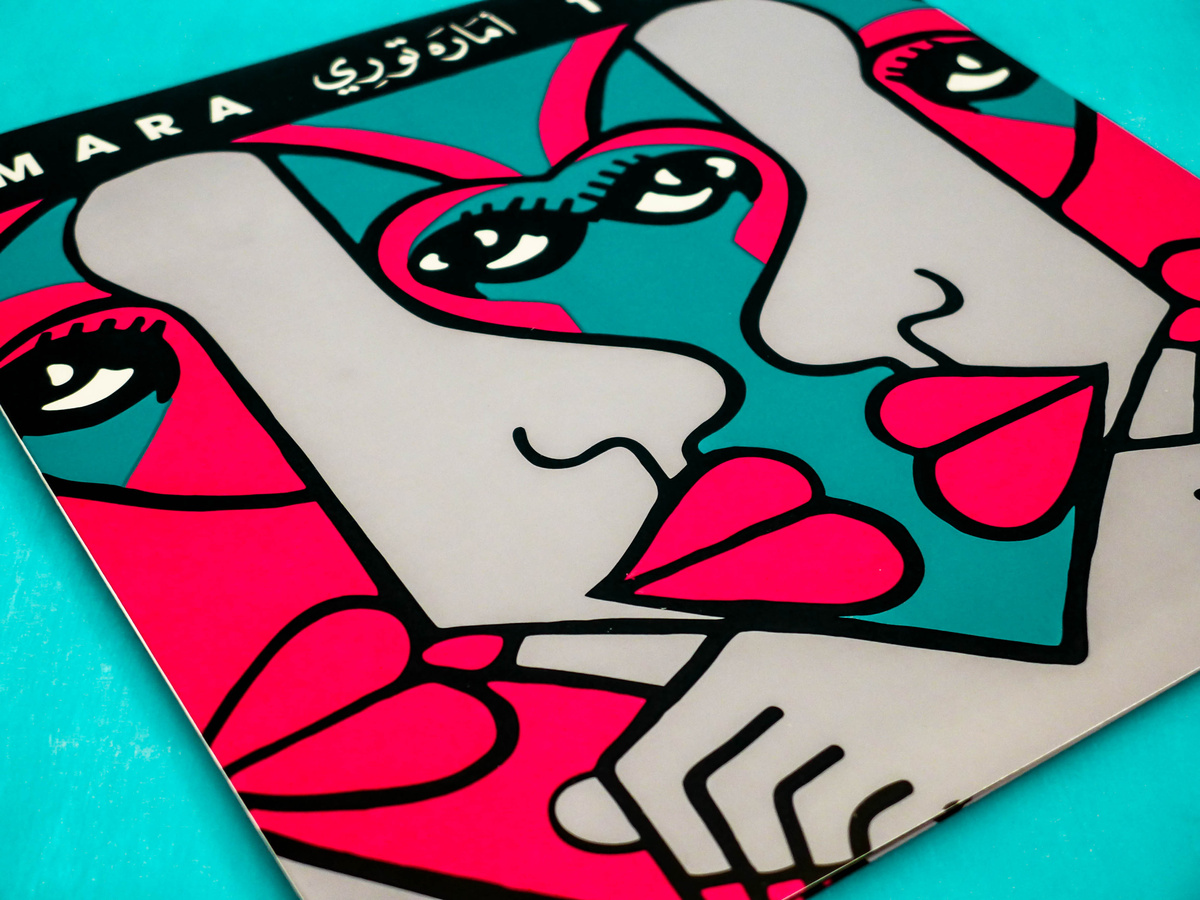
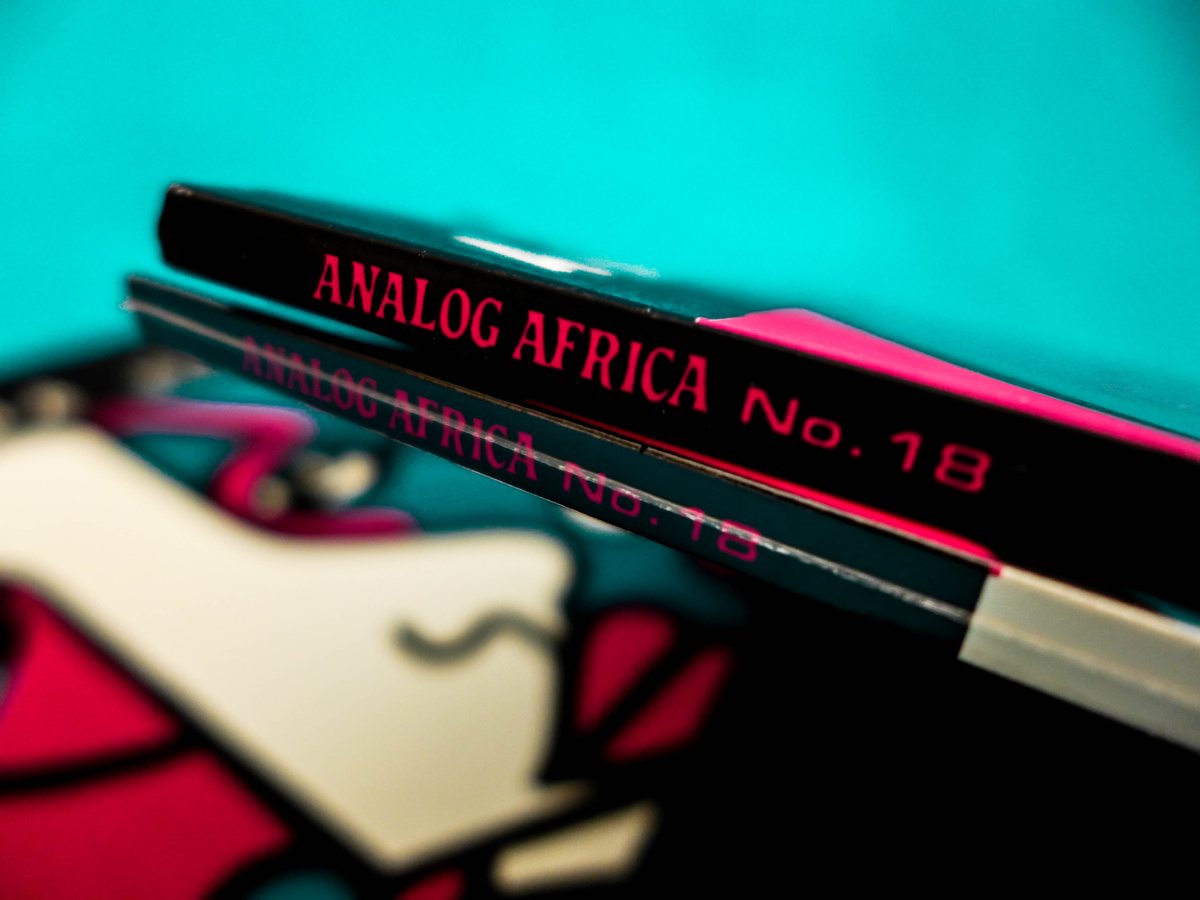
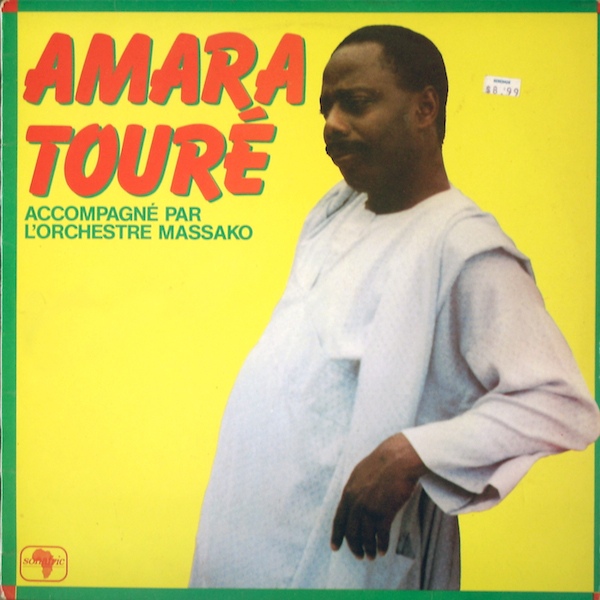
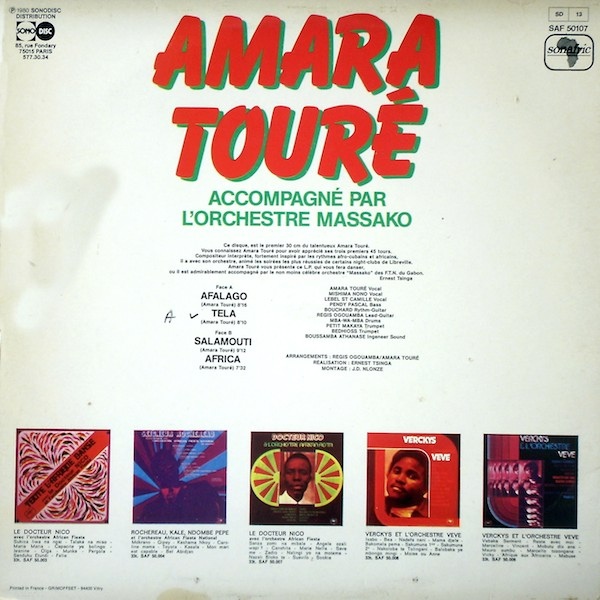
Amara Touré’s recording career lasted just seven years. It started in 1973, and finished in 1980. His discography consists of just ten tracks. This includes three singles, and the four tracks on his 1980 album Accompagné Par L’Orchestre Massako. These ten tracks comprise Amara Touré’s discography. While that might not seem like much, but for seven years, Amara Touré released groundbreaking music. Thirty-five years later, and Amara Touré is remembered as one of the most influential and inventive artists of his generation. His recording career is documented on Analog Africa’s eighteenth release, Amara Touré 1973-1980. It features the ten tracks Amara Touré released during his all too brief career. However, Amara Touré’s career began back in 1958.
Back then, Senegal had been won over by Son Montuno and Patchanga music. That had been the case since the early forties, when Cuba sailors first brought Son Montuno and Patchanga home from their travels. It quickly found an audience within the local music scene. Soon, Caribbean music was providing the soundtrack to many clubs in Senegal. Before long, the locals had embraced this vibrant, exotic sound. The next stop was to combine Son Montuno and Patchanga with their own music.
Soon, Caribbean music was being combined with West African and Latin music. The result was a unique and unlike musical fusion, where the music of three continents combined. This new unique sound was quickly embraced by local musicians and producers.
This included Ibra Kassé, who also owned the Miami nightclub in Dakar. His club would at the heart of this new scene as it exploded into life. Across Dakar, bands were being formed and ballroom parties were being thrown. There were hardly enough local musicians to fulfil the demand. So musicians were coming from much further afield. This included Amara Touré, a percussionist and singer from Guinea-Conakry.
Amara Touré was discovered by Ibra Kassé when he was accompanying Dexter Johnson. When Ibra Kassé first heard Amara Touré he realised the young percussionist and singer had potential. He was destined for greater things. So Ibra Kassé asked Amara Touré of he wanted to become part of a new band he was putting together in Dakar. It didn’t take Amara Touré long to agree. What he didn’t realise, was that this new band would change Senegalese music forever.
Having agreed to move to Dakar, Amara Touré packed his belongings and said goodbye to Guinea-Conakry. His destination was Dakar, where he was about to become a member of Le Star Band de Dakar. Little did Amara Touré know, that Le Star Band de Dakar would become one of the most important bands in the history of modern Senegalese music.
The leader of Le Star Band de Dakar was Mady Konaté. He would mentor many up-and-coming musicians, so that eventually, they would be able to go on and become bandleaders in their own right. Just like many other musicians, Amara Touré severed his musical apprenticeship in Le Star Band de Dakar. From the day he was brought onboard by Ibra Kassé, Mady Konaté realised that Amara Touré was destined for greater things.
As Mady Konaté oversaw rehearsals, he realised that Le Star Band de Dakar latest recruit was something special. Not only was Amara Touré a gifted percussionist, but he had a voice that mixed power, passion and emotion. Watching on, Mady Konaté was captivated as Amara Touré brought the songs to life, breathing meaning and emotion into the Cuban songs. Straight away, Mady Konaté saw what Ibra Kassé saw in Amara Touré. With Amara Touré onboard, Mady Konaté realised that Le Star Band de Dakar were about to change Senegalese music forever.
Having joined Le Star Band de Dakar in 1958, they continued their residency at Ibra Kassé’s Miami nightclub. Soon, Le Star Band de Dakar’s star was soon in the ascendancy. They swept aside all-comers, and quickly became Dakar’s top orchestra. No other orchestra came close. This meant that patrons flocked to Ibra Kassé’s Miami nightclub. It became the only place in town. As a result, each night, the Miami was packed to the rafters. This lasted for the ten years that Amara Touré was a member of Le Star Band de Dakar. He left Le Star Band de Dakar in 1968, and a new chapter in his career began.
While Amara Touré was enjoying his time with Le Star Band de Dakar, by 1968, he was thinking about returning home, and forming his own band. However, then he received an offer that he couldn’t turn down when he was contacted by Assane Dieye, about joining L’Ensemble Black and White.
For some time, there had been tension between members of Lynx Tall and the other members of the L’Ensemble Black and White. They thought that Lynx Tall was a “big head,” and that he was more important than the other band members. So Assane Dieye was dispatched to ask Amara Touré whether he wanted to join L’Ensemble Black and White as their new lead singer.
With Amara Touré looking for a new challenge, it made sense to accept this new offer. Especially since he would be playing with some of the top musicians in Senegal. So, Amara Touré agreed to join ’Ensemble Black and White, and journeyed to Cameroon, where they become L’Ensemble Black and White were playing.
For five years, the Black and White ensemble toured Cameroon relentlessly. Night after night, week after week, month after month they played live. One year became two, became three, four and five. During that period, L’Ensemble Black and White played the top venues. They were seen as the top band in Cameroon. So much so, that they were regarded as Cameroon’s presidential band. However, despite their undoubtable popularity, L’Ensemble Black and White had never recorded a single. That changed in 1973, when the first of the three singles on Amara Touré 1973-1980 were recorded.
For their first singles, Amara Touré and the rest of L’Ensemble Black and White headed to the studio. L’Ensemble Black and White’s lineup features Amara Touré on tenor vocal and percussion, with Ahanda on second vocal. Many members of L’Ensemble Black and White were from Cameroon, including bassist Jean-Claude N’Jo, rhythm guitarist Lucien, lead guitarist Charles and keyboardist Tina Brown. Drummer Mosquito and alto saxophonist Fete are from the Congo, while clarinet player Peter was from Nigeria. This musical league of nations entered the studio for the first time in 1973.
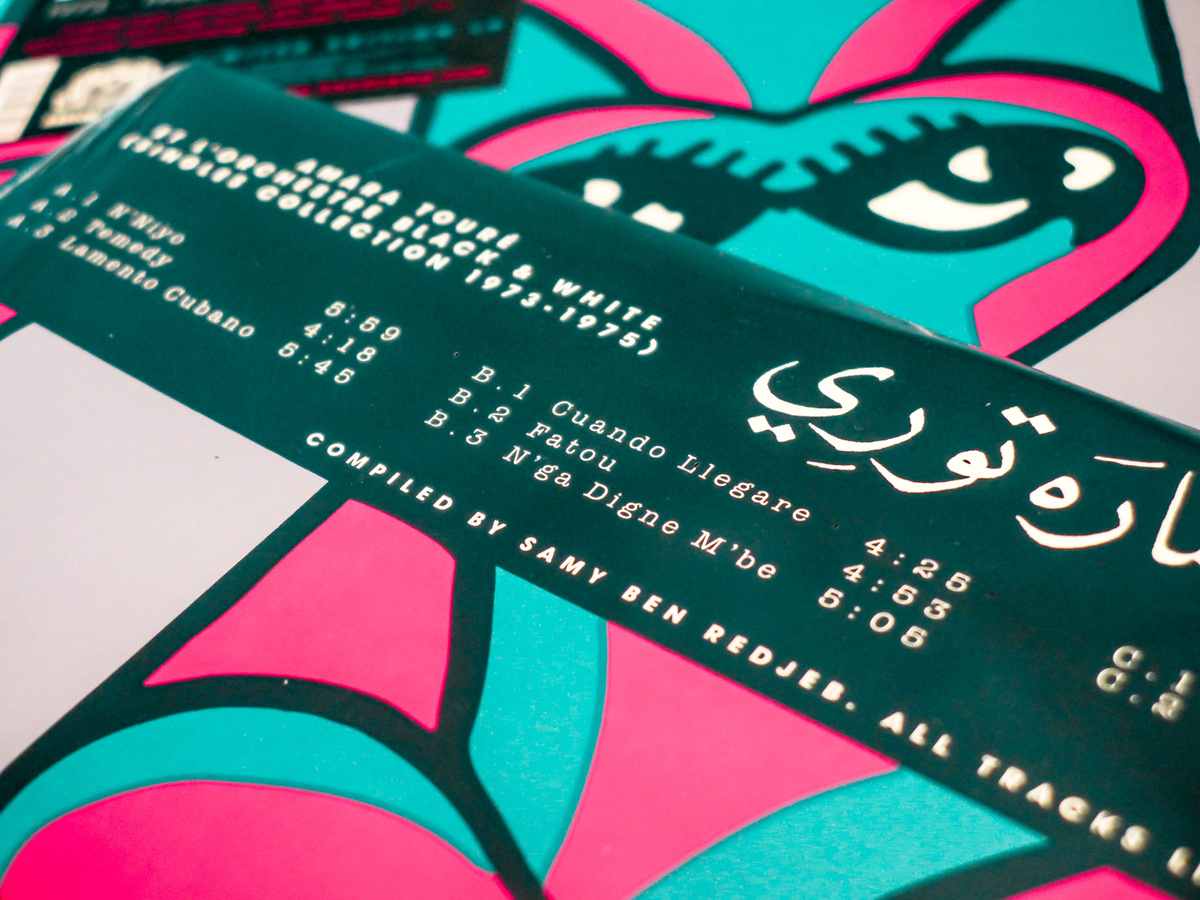
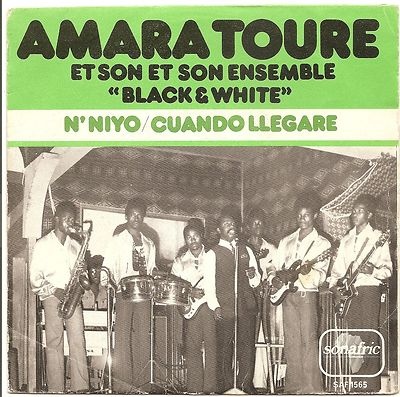
In total, L’Ensemble Black and White recorded just three singles with Amara Touré as lead singer. The first of these singles was N’Niyo, which featured Cuando Llegare on the B-Side. They were released on the French label Sonafric, which was an imprint of Sondisc. Despite their popularity, L’Ensemble Black and White’s debut single wasn’t a commercial success. However, at least Amara Touré had fulfilled what he set out to do.
Before he set foot in a recording studio, Amara Touré knew exactly what he wanted to do. He wanted to put on record some of the most sensual, seductive music in the history of African music. This was how he described his music. Especially a song like N’Niyo, where he delivers a truly impassioned, pleading vocal. It’s accompanied by stabs of horns and a hypnotic, meandering arrangement. Sadly, this sensuous music never found the audience Amara Touré hoped when it was released. He wasn’t going to give up though.
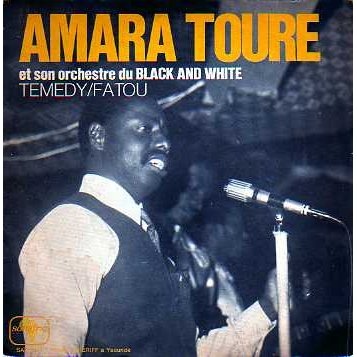
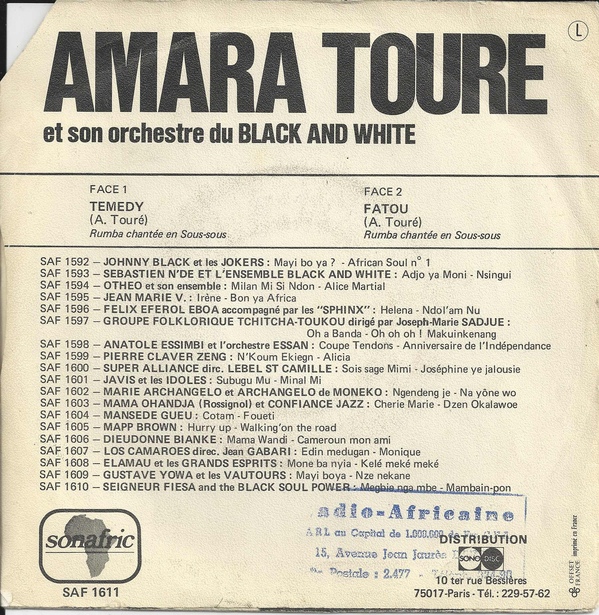
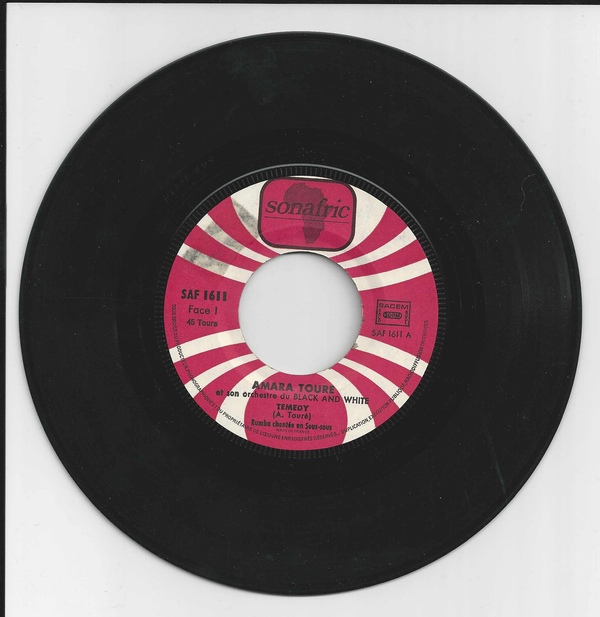
The followup to N’Niyo was Temedy, a song written by Amara Touré. He also penned the B-Side Fatou. Temedy was released in 1974, and just like N’Niyo, wasn’t a commercial success. As a result, copies of Temedy are extremely rare, and change hands for over £150, $210 or €175. This genre-melting single is a real hidden gem, which is a prized possession amongst collectors of African music. No wonder, given its undeniable quality. It features one of Amara Touré’s finest vocals. Quickly, it becomes apparent what Ibra Kassé and Mady Konaté saw in Amara Touré. It’s a fusion of Amara Touré’s Mandingue roots and the Senegalese sound that he mastered with Le Star Band de Dakar. This was the platform for Amara Touré’s impassioned Afro-Cuban interpretations of L’Ensemble Black and White, including Temedy and Fatou. Both feature on Amara Touré 1973-1980. So does the third single Amara Touré recorded with L’Ensemble Black and White.
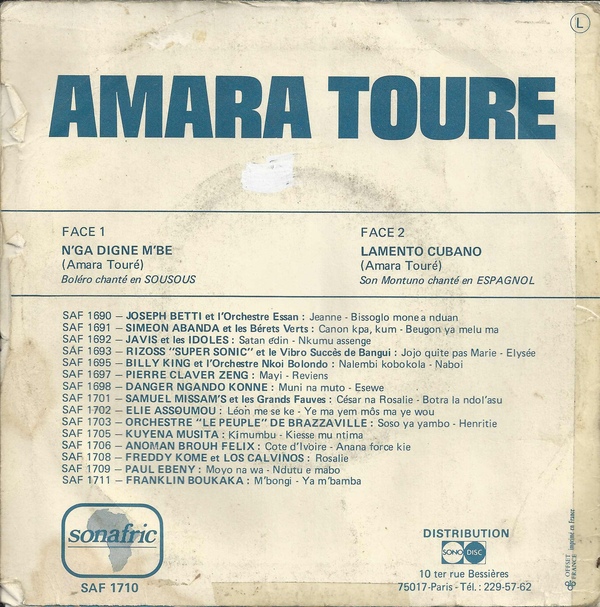
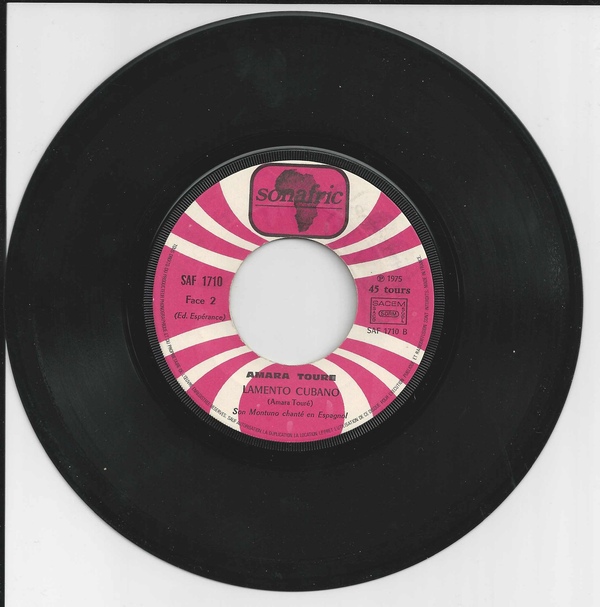
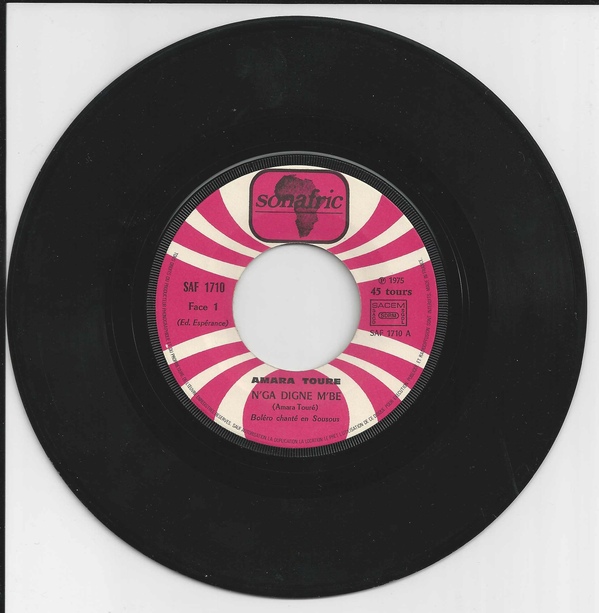
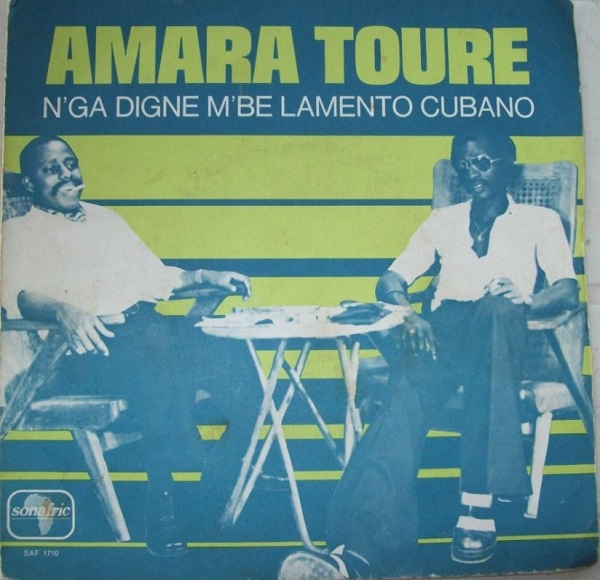
The followup L’Ensemble Black and White recorded what would be the third and final single with Amara Touré. N’Ga Digne M’Be was chosen as the single, and Lamento Cubano as the flip side. Once the two songs were recorded, N’Ga Digne M’Be was released as a single in 1975. It was a similar story to the other two singles released by L’Ensemble Black and White. Commercial success eluded N’Ga Digne M’Be. At the time, they must have thought that L’Ensemble Black and White would release other singles with Amara Touré?
That proved not to be the case. Although Amara Touré continued to tour with L’Ensemble Black and White, they never entered a recording studio together.
Right up until Amara Touré left L’Ensemble Black and White in 1980, they were still one of the most popular bands in Cameroon. They continued to tour relentlessly, playing some of the most desirable venues in the country. However, by 1980, Amara Touré wanted to expand his musical repertoire. So in 1980, he crossed the Cameroonian border and headed to Libreville, Gabon, where he collaborated with the L’Orchestre Massako.
The collaboration between Amara Touré and the L’Orchestre Massako resulted in what many connoisseurs of African music consider a stonewall classic album, Amara Touré Accompagné Par L’Orchestre Massako.
While Amara Touré Accompagné Par L’Orchestre Massako may only feature four tracks, but they’re akin to lost musical treasure. There’s a reason for this. Before Analog Africa recently released Amara Touré 1973-1980, copies of Amara Touré Accompagné Par L’Orchestre Massako were incredibly rare. They don’t come up often, but when they do, their prices are beyond most people. A recent copy sold for £230, $345 or €280. So very few people had heard the musical gold that is Amara Touré Accompagné Par L’Orchestre Massako.
From the opening bars of Afalago, through Tela, Salamouti and right through to the closing bars of Africa, the collaboration between Amara Touré and L’Orchestre Massako is a meeting of musical giants. Accompanied by some of the most talented musicians in the Gabon, Amara Touré reaches previously unreached musical heights. Musical genres melt into one, while L’Orchestre Massako prove the perfect foil to Amara Touré’s vocal prowess. His vocals are variously heartfelt, impassioned, powerful, pleading and hopeful. Twenty-two years of experience shines through, on Amara Touré’s swan-song.
Following the release of Amara Touré Accompagné Par L’Orchestre Massako in 1980, Amara Touré disappeared. It’s thought that he stayed in Cameroon for a while. What’s not known, is whether Amara Touré is still alive. Nobody has seen or heard from Amara Touré in thirty-five years. That’s ironic.
Not long after the disappearance of Amara Touré, his music found the audience it so richly deserves. Since then, Amara Touré’s music has grown in popularity. That’s why recently, Analog Africa recently released Amara Touré 1973-1980.
This compilation, Amara Touré 1973-1980 features just ten tracks. That amounts to Amara Touré recording career. He recorded with songs with L’Ensemble Black and White and four with L’Orchestre Massako. These songs showcase a musical pioneer at the height of his career, as he fuses elements of African, Afro-Cuban and Latin music. He even adds elements of funk, jazz, soul and rock. This results in a tantalising musical fusion, one which is continually captivating. That’s thanks to Amara Touré and some of the best African musicians of their generation. They’re responsible for then ten tracks on Amara Touré 1973-1980, which documents the career of one of the best, but most underrated African singers you’ve never heard.
AMARA TOURE-1973-1980.


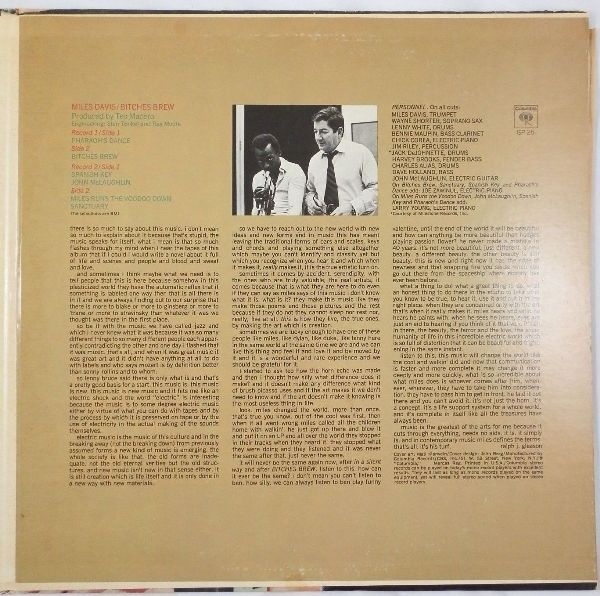
MILES DAVIS-BITCHES BREW-VINYL EDITION.
MILES DAVIS-BITCHES BREW-VINYL EDITION.
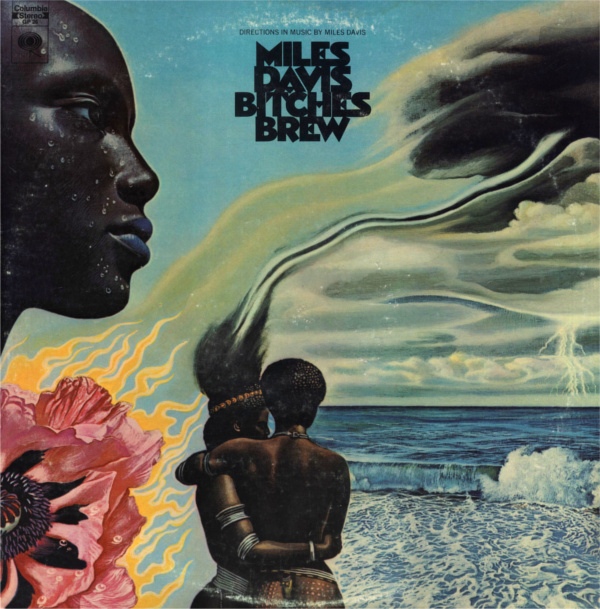
Miles Davis’ recording career began in 1951, when he released his debut album The New Sounds. Soon, Miles Davis was establishing a reputation as a prolific, and innovative musician. He released further forty-three albums between 1951 and 1969. This included classics like 1957s Round About Midnight and 1959s Kind Of Blue. While both of these albums would become classic albums, neither sold in huge quantities. Certainly not enough to result in a gold or platinum disc. That was all about change when Miles Davis released his forty-fifth album, Bitches Brew; which will be reissued on vinyl by Sony Music, on 16th October 2015.
Bitches Brew was the second of Miles Davis’ electric albums. This latest period in Miles’ career began with In a Silent Way. It was released in July 1969, and completed the shift that began on Filles de Kilimanjaro.
For Miles Davis, In a Silent Way marked a change in his fortunes. When it was released on 30th July 1969, In a Silent Way reached number 134 in the US Billboard 200. This became Miles first album to chart since Seven Steps to Heaven in 1963. In A Silent Way also reached number three in the US Jazz charts. This meant it was Miles’ most successful album. It seemed Miles’ new sound had introduced a new generation to Miles Davis. So, it’s no surprise that Miles decided to return to the studio straight away.
Miles booked three days at Columbia Studio B, New York. The sessions for what became Bitches Brew began on August 19th 1969. Over the next three days, Miles’ extended band would record six songs that became one of Miles’ most ambitious and innovative albums, Bitches Brew.
Between 19th and 21st August 1969, a huge cast of what can only be described as the great and good of jazz, made their way Columbia Studio B. This included a rhythm section of bassist Dave Holland, Harvey Brooks on electric bass guitarist John McLaughlin, drummers Lenny White and Jack DeJohnette. Joe Zawinul and Chick Corea played electric piano, Don Alias congas and Juma Santos played shaker and congas. Wayne Shorter added soprano saxophone, Bennie Maupin bass clarinet and Miles Davis trumpet. The session on the 19th August set the tone for the next three days.
Three songs were recorded on the 19th August by producer Teo Macero, Bitches Brew, John McLaughlin and Sanctuary. Miles’ band was different from most bands of that time. He used two drum kits and two electric pianos. Lenny White’s drum kit was situated on the right, and Jack DeJohnette’s on the left. Similarly, Chick Corea electric piano sat on the right, while
Joe Zawinul was situated on the left. There were also two bases used. Dave Holland played standup bass and Harvey Brooks electric bass. Some of the musicians had never encountered this setup. Neither had engineer Frank Laico. Nobody it seemed, had encountered Miles’ way of working on Bitches Brew.
Miles had brought the band together without much notice. Looking back, it’s as if he wanted them to arrive without any preconceived ideas. He needed them to work with them. Very little of the material had been rehearsed. That’s how Miles planned it. Everything was off-the-cut. Briefly, he would give them some hints about tempo, chord structure, melody, mood or tone. Then the red light came on. As Miles stood watching, he would study each of the musicians, encouraging and cajoling, giving cues when to change tempo or chord. Often, the only cue a musician had, was when Miles clicked his fingers. With Miles guiding his all-star band, gradually a very different style of music emerged.
The three tracks recorded on the 19th August, Bitches Brew, John McLaughlin and Sanctuary hinted at the direction Bitches Brew was heading. Miles was turning his back on traditional jazz rhythms. Instead, he embraced a much looser rock-tinged, improvisational style. This was what Miles had been trying to cajole out of his band. As Miles played the tapes back once the session was over, he knew he was on the right road.
Miles had coaxed and cajoled the basis for three tracks. Bitches Brew would eventually become a twenty-seven minute epic. John McLaughlin would be trimmed to just over four minutes. Sanctuary, which was penned by Joe Zawinul, would close Bitches Brew. It would eventually clock in at just under eleven minutes. However, there was still half an album to record, plus a lot of editing to do.
As the 20th August 1969 dawned, the same musicians made their way to Columbia Studio B. The only change was Stan Tonkel engineered the rest of the sessions. Everything else stayed the same.
If the previous day had been a shock to their system, now they had some idea of what Miles and producer Teo Macero was trying to achieve. Those that thought about it, realised that Bitches Brew potentially, was a truly innovative album in the making. Especially, those in the rhythm section.
For those in the rhythm section, they must have realised the enormity of rhythmic innovations. The use of two bassists, two drummers and two electric pianos was groundbreaking. Especially, as they all played together. This was what a generation of rock groups had been doing. Miles’ admitted to having been influenced and inspired by the Jimi Hendrix Experience. Their influence was playing a part in the reinvention of Miles Davis.
As part of the reinvention of Miles Davis, he decided that his rhythm section be allowed off the leash. They enjoyed took centre-stage, enjoying the opportunity to fire off lengthy and improvised solos. For musicians of the calibre of John McLaughlin, Dave Holland and Chick Corea, this was music to their ears.
Whereas the previous day, Miles’ band had recorded three tracks, they only recorded the one track on the 20th August, Miles Runs The Voodoo Down. It’s an equally ambitious track, that eventually, was edited down to fourteen minutes. However, that day in August, when the red light went on, Miles coaxed, cajoled and encouraged a performance out of his band. He wasn’t interested in a good performance. No, What he was looking for was an outstanding and groundbreaking performance. His band were capable of this. It was Miles’ job to coax it out of the band.
Unsurprisingly, Miles managed to do so. He had been a bandleader long enough. Using a mixture of praise and constructive criticism, somehow, Miles’ band raised their game. Just like the day before, the rhythm section were responsible for a truly innovative performances. Similarly, Wayne Shorter’s soprano saxophone, Bernie Maupin’s bass clarinet and Miles’ trumpet played leading roles in another epic track. It would later be edited down to fourteen minutes. That was still to come. There were two more tracks to record.
The two final tracks that would make up Bitches Brew, were Spanish Key and Joe Zawinul’s Pharaoh’s Dance. They were recorded on 21st August 1969. While the same band reconvened, Miles decided to add a third pianist. He knew the very man, Larry Young.
Bringing in a new face so let on in the Bitches Brew session made sense. Larry Young would have no preconceived ideas about what to play. He would play with an unbridled freedom. That’s what Miles and producer Teo Macero wanted from Larry, whose piano would sit in the centre of the arrangement. This resulted in yet another layer of music, as Miles and Ted continued to push musical boundaries.
Over the course of the 21st August, Miles encouraged, coaxed and persuaded two final performances out his band. They responded to Miles’ encouragement, unleashing two sterling performances. As engineers Frank Laico and producer Teo Macero looked on, little did they know that they were in the process of making history.
With the six songs that became Bitches Brew recorded, the band left Columbia Studio B, New York. None of them realised that they had just played their part in an album that would transform jazz music. However, there was a lot of work to do before then.
Much of this entailed editing. Miles had encouraged the band to lay down a series of performances. Now he was left to pick and choose what made its way onto the final tracks. Surrounded by piles of reel-to-reel tapes, Miles and Ted worked their way through the various reels. What followed was like piecing together a musical jigsaw. Sometimes, numerous edits featured in the one track. On Bitches Brew, there were fifteen edits, including the same loop being repeated on three occasions.
Then on Pharaoh’s Dance, the number rose to nineteen. Never before had editing been used so extensively. Bitches Brew was seen as a landmark use of studio technology. This wasn’t the only reason though.
In the studio, all producers had a variety of effects they can use. Like most musicians, Miles Davis was well aware of this. So, he encouraged Teo Macero to do so. Miles wanted to transform the studio into another musical instrument. This wasn’t new. The musique concrète composers of the fifties and sixties had used this extensively. Now was Miles time to deploy tape delays, reverb and echo. They would play their part in what would be the most ambitious and innovative album of Miles Davis’ career. However, before then, Miles returned to Columbia Studio B, New York, on January 28, 1970.
Many of the same musicians that featured on the other tracks on Bitches Brew returned. This included a rhythm section of bassist Dave Holland, Harvey Brooks on electric bass, guitarist John McLaughlin, drummers Lenny White and Jack DeJohnette. Joe Zawinul and Chick Corea played electric piano and Airto Moreira percussion and cuíca. Wayne Shorter added soprano saxophone, Bennie Maupin bass clarinet and Miles Davis trumpet. They would record Felio, which Wayne Shorter had written.
Over the course of January 28, 1970, Miles, producer Teo Macero and engineer Stan Tonkel recorded Felio. Gradually, the song began to take shape. Eventually, by the close of play, Miles had another song in the can. Would it make its way onto Bitches Brew?
The answer was no. Despite its quality, Felio didn’t make it onto Bitches Brew. It was an ambitious and groundbreaking double album that lasted ninety-four minutes and eleven seconds. Miles and Ted had poured their heart and soul into an album which they believed, could, change the face of jazz music.
There was a stumbling block though. Critics weren’t won over by Bitches Brew. Reviews were mixed. Rock critics seemed to “get” Bitches Brew. Most were excited by this melting pot of musical genres. They could understand the marriage of avant-garde, experimental, musique concrète, funk, jazz, psychedelia and rock. It seemed to harness the best of various disparate genres. However, not everyone agreed.
Jazz critics especially, wrote disparaging reviews of Bitches Brew. Some went as far as to say this wasn’t jazz music. The problem was, many critics fed on diet of mainstream jazz, just didn’t understand this gushing vortex of groundbreaking, genre-melting music. An expanded rhythm section featuring multiple drummers, bassists and pianists wasn’t something they had encountered before. This was something new, imaginative, influential and innovative, fusion. It caught the attention of a several generations of music lovers.
Unlike some music critics, record buyers tuned in and were turned on to the music on Bitches Brew. It was released in April 1970, and before long, became Miles Davis’ biggest selling album. Bitches Brew reached number thirty-five in the US Billboard 200 and number one on the US Jazz charts. This resulted in Miles’ first gold album. Over the Atlantic, Bitches Brew was certified silver. On both sides of the Atlantic, Bitches Brew had given Miles his biggest selling album. That was fitting, as it was his forty-fifth album. Eventually though, Bitches Brew sold over two million copies in America, and was certified double platinum. By then, people understood Bitches Brew.
Just like so much groundbreaking music, many people didn’t understand Bitches Brew. Critics, musicians and record buyers were puzzled. Why had Miles plugged in? What was with the expanded rhythm section and the myriad of effects? They found it hard to comprehend where Miles was coming from. Soon, it all became clear; at least to those who cared to listen.
The Godfather of cool and modal jazz was at the vanguard of a new musical movement, fusion. Where Miles Davis lead, others followed. Soon, it would become one of the biggest musical movements of the seventies. Miles Davis would, eventually, be crowned its founding father. Recognition came a year later.
In February 1971, Miles Davis released The Complete Bitches Brew Sessions. This four album set featured the Bitches Brew Sessions in their entirety. In some ways, this further explained where Miles Davis was coming from musically. The four discs explained the musical journey that became Bitches Brew. Suddenly, many who hadn’t understood Bitches Brew were enlightened. Already enlightened however, were the Grammy Awards’ judges.
From 1961, there had a Grammy Award for the Best Large Jazz Ensemble Album. One of the nominees in 1971, was Miles Davis’ Magnus Opus Bitches Brew. Looking back, it seemed inevitable Miles’ would win a Grammy Award for Bitches Brew. However, it was far from a fait accompli.
On its release, Bitches Brew had divided opinion. While Bitches Brew won the hearts and minds of rock critics, jazz critics weren’t convinced. To them it was strange brew of disparate musical genres and influences; one they either didn’t understand, or want to understand. However, the Grammy Award judges were made of sterner stuff. They understood innovation when they heard it, and were more than happy to reward it.
At the glittering Grammy Awards’ ceremony in April 1971, Miles Davis was vindicated. His decision to plug in, and change direction musically on Bitches Brew, was richly rewarded. He won a Grammy Award for the Best Large Jazz Ensemble Album. By then, fusion as it became known, was growing in popularity. The man who gave birth to fusion was receiving his reward. This has been the case over the last forty-five years.
Ever since the release of Bitches Brew, it has been recognised as a landmark album. This musical tour de force is now perceived as one of the most important albums in the history of jazz. Bitches Brew was a game-changer. Suddenly, jazz’s rhythmic rules were rewritten. Anything was possible. Rhythm sections grew in size. Suddenly, two drummers, bassists or pianists were acceptable. The use of effects were embraced, transforming the recording studio into an extra instrument. Similarly, editing was used as part of the creative process. Here, Miles drew inspiration from the musique concrète composers of the fifties and sixties. This was just another piece in the musical jigsaw that was Bitches Brew. It rejuvenated interest in jazz.
By 1970, many critics and record buyers regarded jazz as yesterday’s music. It was the music their parents and grandparents listened to. A new generation of record buyers turned their back on jazz. That was until Miles Davis released Bitches Brew.
Suddenly, jazz was back in fashion. It had been reimagined and reinvented by Miles Davis on Bitches Brew. This was a game-changer. Fusion as the genre became known, proved to be happy a marriage between jazz and rock. Before long, fusion was the most popular genre of jazz. A generation of jazz and rock musicians collaborated, resulting in jazz that was commercially successful and critically acclaimed. It’s also music that’s stood the test of time.
That’s why forty-five years after the release of Bitches Brew, Sony Music will rerelease Bitches Brew on vinyl on 16th October 2015. A copy of Bitches Brew should make its way into every self-respecting record collection. It’s not just one of Miles Davis’ best albums, but one of his most ambitious and groundbreaking albums. Yet again, Miles Davis set out to reinvent himself and jazz music. Miles Davis succeeded in doing so, and in the process, created a pioneering album that transformed, and rejuvenated jazz, Bitches Brew.
MILES DAVIS-BITCHES BREW-VINYL EDITION.
JIMI HENDRIX-ARE YOU EXPERIENCED, AXIS: BOLD AS LOVE AND ELECTRIC LADYLAND-VINYL EDITIONS.
JIMI HENDRIX-ARE YOU EXPERIENCED, AXIS: BOLD AS LOVE AND ELECTRIC LADYLAND-VINYL EDITIONS.
Jimi Hendrix’s career was tragically short. He only released three albums during his lifetime. These albums were recorded with The Jimi Hendrix Experience.
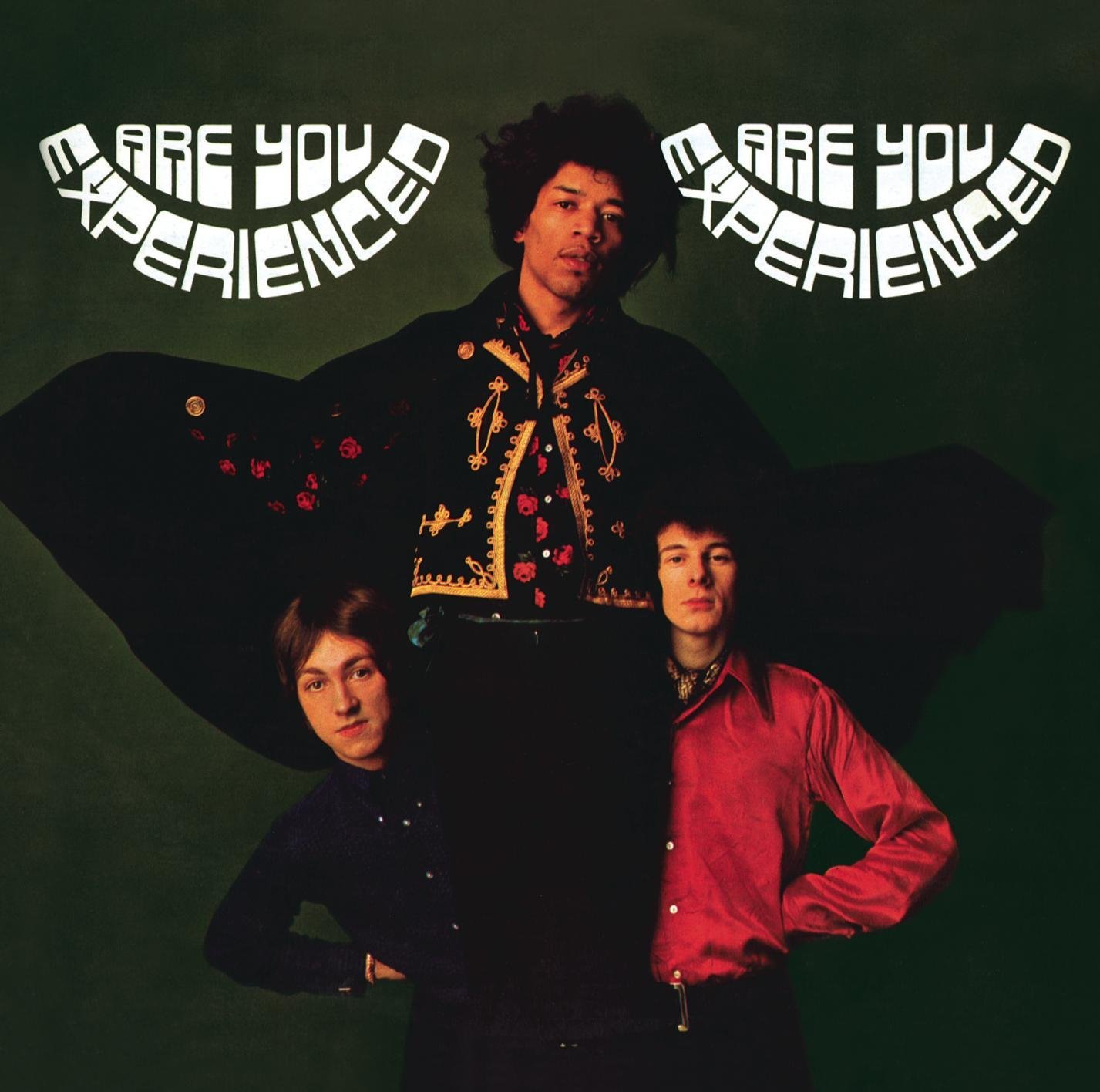
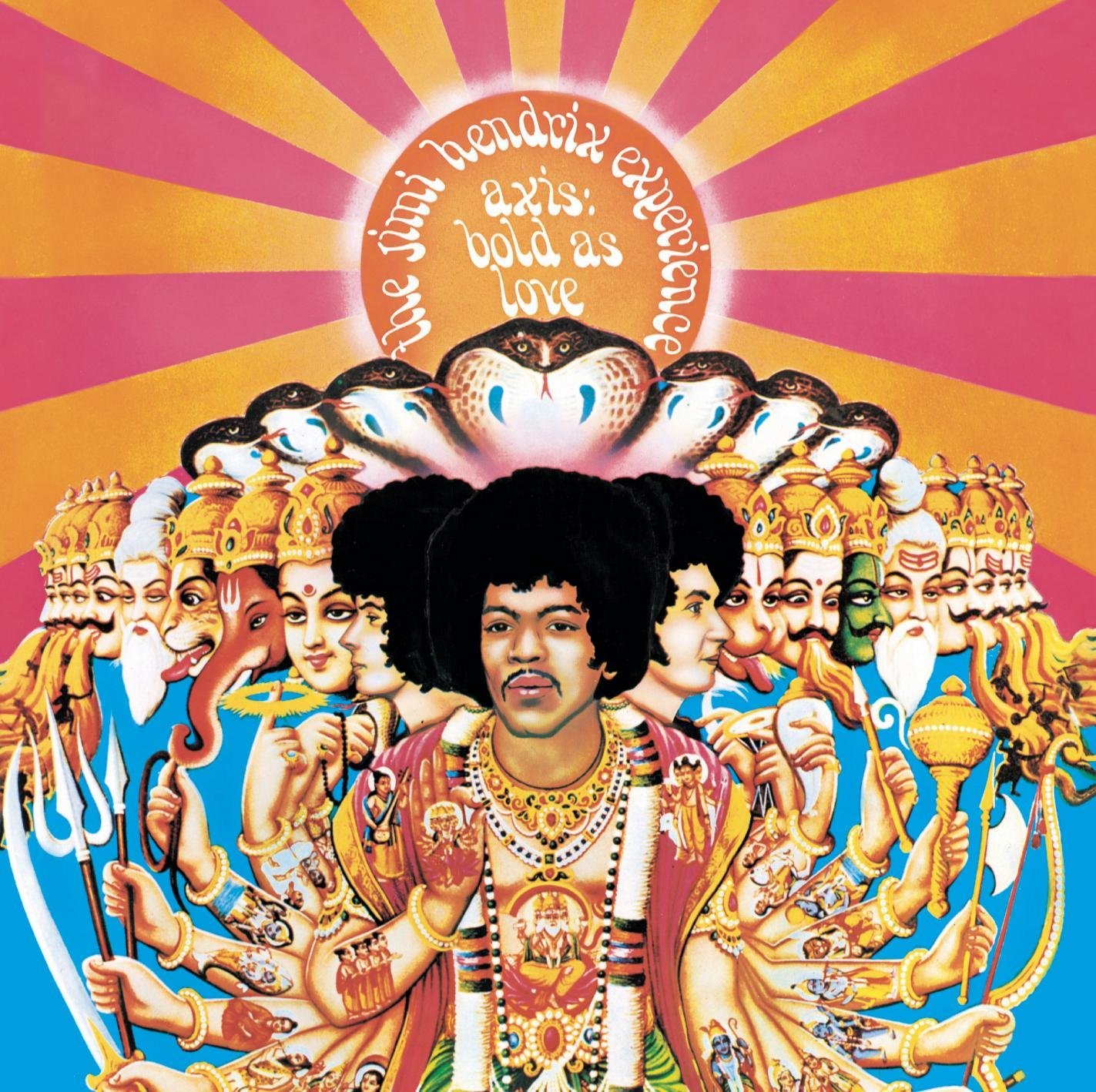
Their debut album was Are You Experienced, which was released on May 12th 1967. It was released to widespread critical and commercial success. Are You Experienced introduced the world to Jimi Hendrix, a musical maverick, and legend in the making. Then on December 1st 1967, The Jimi Hendrix Experience released their sophomore album Axis: Bold as Love.
Under the terms of their recording contract, The Jimi Hendrix Experience had to release two albums during 1967. Axis: Bold as Love was the album that saw The Jimi Hendrix Experience fulfil their contractual obligations. While it was released to widespread critical acclaim and commercial success, Axis: Bold as Love wasn’t released in America. Track Records were worried if they released Axis: Bold as Love in America, it would affect sales of Are You Experienced. They need not have worried.
Both albums sold in huge quantities, transforming the lives of the three members of the Jimi Hendrix Experience. They could do no wrong. Especially Jimi Hendrix, whose star was in the ascendancy.
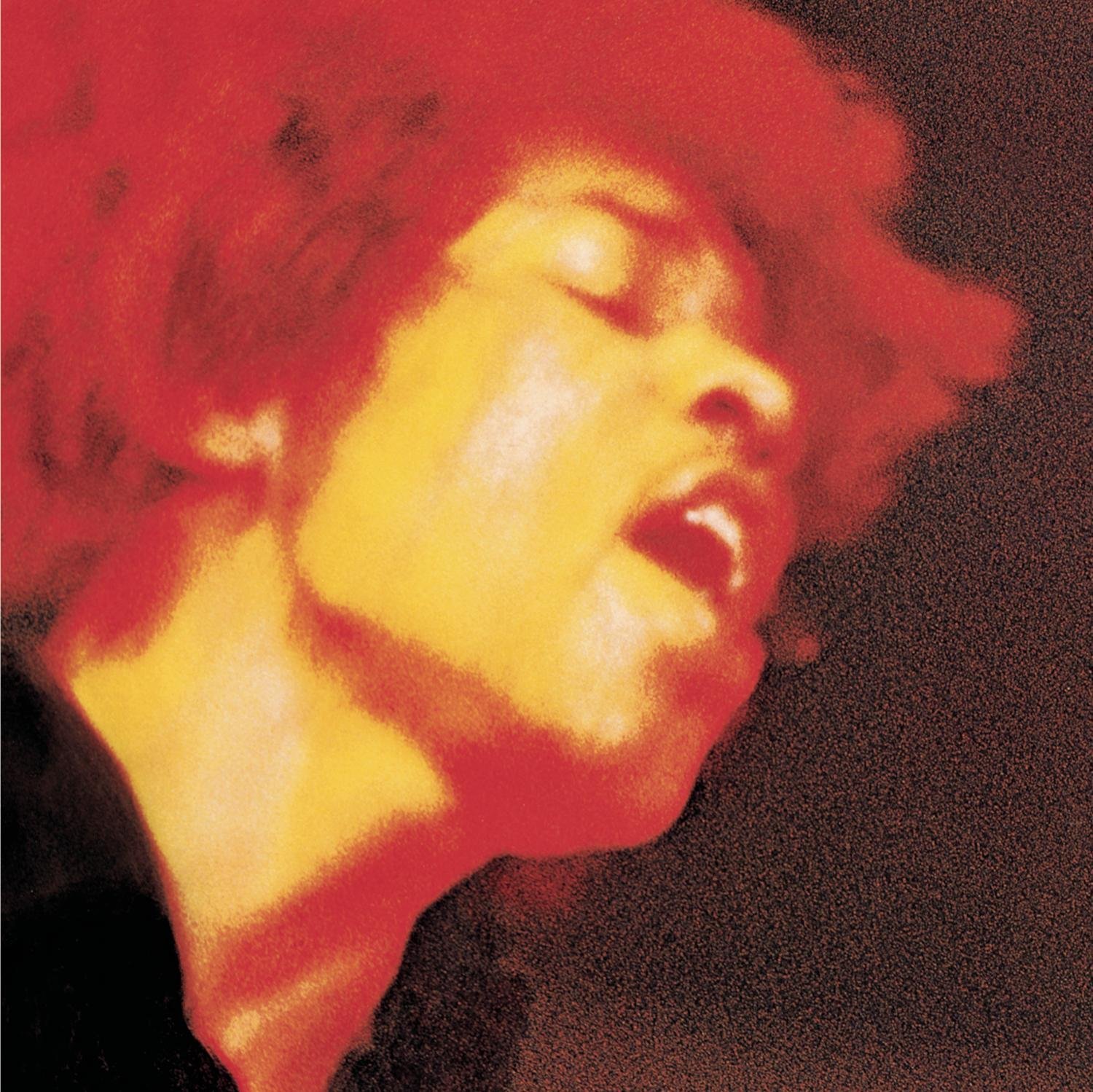
Jimi Hendrix looked like becoming one of the biggest stars of the late sixties. He was being hailed by many as the finest guitarist of his generation. When The Jimi Hendrix Experience released Electric Ladyland on October 16th 1968, this only reinforced this claim. Electric Ladyland was The Jimi Hendrix Experience’s finest album of their career. It was their Magnus Opus. However, Electric Ladyland was the final album The Jimi Hendrix Experience released. Tragically, Electric Ladyland was also the last studio album released during Jimi Hendrix’s career.
Around 11a.m., on the 18th September 1970, Jimi Hendrix was found unresponsive at an apartment in the Samarkand Hotel, in Notting Hill, London. He was rushed to the St. Mary’s Abbot’s Hospital, but pronounced dead at 12.45p.m. Jimi Hendrix was just twenty-seven. However, music had lost one of the most influential and innovative guitarists of his generation.
That’s despite Jimi’s solo career beginning just four years earlier. Since then, Jimi had released a trio of studio album and one live album. The Jimi Hendrix Experience’s three studio albums, Are You Experienced, Axis: Bold As Love and Electric Ladyland will be released on vinyl, by Sony Music, on 5th September 2015. These albums are a remainder of a musical maverick at the peak of his powers.
Jimi Hendrix took music by storm, and vied for the title of rock’s greatest guitarist. Throughout his solo career, Jimi was a flamboyant showman, who growing up, modelled himself on T-Bone Walker.
It was T-Bone who Jimi saw playing his guitar with his teeth. When Jimi saw this, he took it as a challenge. This became part of Jimi’s routine. In years to come, Jimi played his guitar as if his life depended upon it. Jimi, on form, was like a man possessed. Some nights, Jimi played his guitar behind his back, played it with his teeth and as if trying to exercise some inner demons, set his guitar on fire. All this made Jimi one of the most exiting guitarists ever. However, Jimi was also a technically brilliant guitarists of his generation.
Are You Experienced?
That was apparent from The Jimi Hendrix’s 1967 debut album Are You Experienced. It featured the debut of the legendary power trio of drummer Mitch Mitchell, bassist Noel Redding and guitarist Jimi Hendrix. They fused rock and psychedelia on eleven tracks penned by Jimi Hendrix.
The eleven tracks that became Are You Experienced, were recorded between October and April 1966. Three London studios were used, De Lane Lea Studios, CBS, and Olympic Studios. That’s where The Jimi Hendrix Experience recorded their debut album Are You Experienced, which was produced by Chas Chandler. Once it was completed, it was released in Britain in May 1967,
When Are You Experienced was released, it was hailed as one of the greatest debut rock albums. It showcased an innovative fusion of rock and psychedelia. At the heart of the Are You Experienced’s sound was the freewheeling sound of Jimi Hendrix’s guitar. He could do things other guitarists could only dream of. Add to the equation Jimi’s languid, charismatic vocal and it’s no surprise that Are You Experienced was such a huge commercial success.
When Are You Experienced was released in Britain, in May 1967, it reached number two. This resulted in a gold disc for the Jimi Hendrix Experience. No wonder. Are You Experienced featured future Jimi Hendrix classics like Foxy Lady, Third Stone from the Sun and Are You Experienced? Three months later, in August 1967, Are You Experienced was released in the US. It reached number five, and was certified platinum five times over. For Jimi, this was the start of a three year period where he could do no wrong.
Axis: Bold As Love.
Seven months later, on 1st December 1967, the Jimi Hendrix Experience returned with their sophomore album Axis: Bold As Love in the UK. It featured thirteen tracks. Twelve were penned by Jimi. These tracks showed Jimi evolving as a songwriter. He may have just been twenty-five, but he was a talented songwriter. Proof of this were tracks like Spanish Castle Magic, Wait Until Tomorrow, Castles Made of Sand and Bold As Love. They featured Jimi coming of age as a songwriter. These songs were recorded at Olympic Studios, London.
Recording of Axis: Bold As Love took place at Olympic Studios, London. The sessions took place during May, June and October 1967. Axis: Bold As Love had to be released during 1967. The contract that the Jimi Hendrix Experience had signed stipulated this. Ironically, the album was nearly lost. However, Axis: Bold As Love was only released in Britain in December 1967.
One night, Jimi Hendrix took the master tapes to side one home. Unfortunately, Jimi left them in a taxi. The master tapes were never found. This resulted in side one being mixed again. This didn’t delay the release of Axis: Bold As Love.
Axis: Bold As Love, was released in Britain, on 1st December 1967. It was released to the same critical acclaim as Are You Experienced. Critics ran out of superlatives in an attempt to describe Axis: Bold As Love. Jimi was described as some sort of musical messiah, who had music’s future in his hands. Record buyers agreed with the critics description of Axis: Bold As Love.
When Axis: Bold As Love was released in Britain, it reached number five and was certified silver. Then on January 15th 1968, Axis: Bold As Love was released in America. However, Axis: Bold As Love hadn’t been released in America during 1967.
There was a reason for this. The Jimi Hendrix Experience’s record company were scared this would affect sales of Are You Experienced. So Axis: Bold As Love wasn’t released in America until January 1968. When it was released, it reached number three in the US Billboard 200 and was certified platinum. Although not as successful as Are You Experienced, Jimi Hendrix was riding the crest of a musical wave.
Electric Ladyland.
By October 1968, when The Jimi Hendrix Experience released Electric Ladyland, Jimi Hendrix was one of the most successful musicians in the world. His albums sold by the million, and when The Jimi Hendrix Experience played live, they were one of the hottest live acts. This showed when Electric Ladyland was released.
Unlike The Jimi Hendrix Experience’s two previous albums, Electric Ladyland was an ambitious double album. It featured sixteen songs. Thirteen songs were penned by Jimi. Two of the covers were Bob Dylan’s All Around The Watchtower and Earl King’s Come On (Let the Good Times Roll. These tracks, and the rest of Electric Ladyland were recorded at three recording studios.
Recording sessions took place between July and December 1967, then between January and April 1968. Three different studios in London and New York were used. This included Olympic Studios in London and Record Plant Studios and Mayfair Studios, New York. Once the sixteen tracks were recorded, Electric Ladyland was released in October 1968.
As soon as critics heard Electric Ladyland, they realised that this was The Jimi Hendrix Experience’s. It oozed quality. Tracks like Crosstown Traffic, Voodoo Chile, Voodoo Child (Slight Return), All Along the Watchtower and Gypsy resulted in what was the greatest album of The Jimi Hendrix Experience’s career. Critics hailed Electric Ladyland a career high for The Jimi Hendrix Experience. Record buyers agreed.
When Electric Ladyland was released in Britain, on 16th October 1968, it reached number six and was certified gold. Nine days, later, on 25th October 1968 Electric Ladyland was released in America. It reached number one on the US Billboard 200 and was certified double platinum. The rise and rise of The Jimi Hendrix Experience continued.
Just like their previous two albums, their third album Electric Ladyland became a classic. Electric Ladyland was the album that The Jimi Hendrix Experience were always capable of making. It was a coming of age for The Jimi Hendrix Experience. They’d released the finest album of their three album career. Sadly, there was a twist in the tale. Electric Ladyland would be The Jimi Hendrix Experience’s final album.
On the 18th September 1970, Jimi Hendrix died. He was the latest addition to the infamous twenty-seven club. Music was in mourning. No one could believe Jimi Hendrix was dead. However, given his appetite for the rock ’n’ roll lifestyle, Jimi must have cheated death many times. Sadly, his luck ran out. His musical legacy was just three studio albums and one live album. However, Jimi Hendrix had been a prolific recording artist.
There were many tracks in various states of completion. This was more than enough for several album’s worth of material. They would be released over the next forty-four years. However, for purists, The Jimi Hendrix Experience’s three studio albums, Are You Experienced, Axis: Bold As Love and Electric Ladyland will be released on vinyl, by Sony Music, on 5th September 2015 contain the finest music of Jimi Hendrix’s tragically short career. They were a tantalising taste of what Jimi Hendrix was capable of. He was, without doubt, one of the finest guitarists of his generation.
Jimi Hendrix is still regarded as one of the greatest musicians in the history of modern music. He was a freewheeling, flamboyant, musical maverick, who did things his way. This included playing his guitar with his teeth. When Jimi saw T-Bone Walker do this, he took it as a challenge. Soon, it became part of Jimi’s routine.
In years to come, Jimi played his guitar as if his life depended upon it. Jimi, on form, was like a man possessed. Some nights, Jimi played his guitar behind his back, played it with his teeth and as if trying to exercise some inner demons, set his guitar on fire. All this made Jimi one of the most exiting guitarists ever. There’s no denying that Jimi Hendrix was also a technically brilliant guitarists of his generation. Sadly, he was also fundamentally flawed.
Just like so many musicians who came to the fore in the sixties, Jimi Hendrix had a penchant for the rock ’n’ roll lifestyle. Drink and drugs were ever-present as Jimi lived life in the fast lane. Life was for living, and Jimi was determined to try everything once. He took this as a challenge. As a result, Jimi had a few close calls. However, there’s only saw often you can dice with death. On on the 18th September 1970, Jimi Hendrix died from an accidental overdose of sleeping pills. That day, music lost one of its most talented sons. His musical legacy included three studio albums and one live album.
Since then, Jimi’s discography has grown. Twelve further albums have been released. They feature Jimi Hendrix as he matured as a singer, songwriter and musicians. Goodness knows what kind of musical colossus he might have become, had he cheated death? He may have continued to have been one of the most innovative and influential musicians of his generation. Sadly, that’s mere speculation.
What we do know, is that Jimi Hendrix leaves behind a rich musical legacy. The jewel in the crown are the trio of classic albums Jimi Hendrix recorded with the Jimi Hendrix Experience. Are You Experienced, Axis: Bold As Love and Electric Ladyland are classic albums. They’re a tantalising taste of what Jimi Henrix at the peak of his powers was capable of.
JIMI HENDRIX-ARE YOU EXPERIENCED, AXIS: BOLD AS LOVE AND ELECTRIC LADYLAND-VINYL EDITIONS.
SLY AND THE FAMILY STONE-LIVE AT THE FILLMORE EAST-OCTOBER 4TH AND 5TH 1968.
SLY AND THE FAMILY STONE-LIVE AT THE FILLMORE EAST-OCTOBER 4TH AND 5TH 1968.
As promoters go, Bill Graham was one of the best. He seemed to have the uncanny knack of spotting bands on their way up. Often he managed to book bands just before they made it big. This meant when a band were enjoying a hit single or album, they were playing at the Fillmore East or West. However, one band Bill Graham didn’t initially “get,” were Sly and The Family Stone.
For whatever reason, Bill Graham didn’t see what other people saw in Sly and The Family Stone. Initially he wasn’t won over by their unique brand of dance music. As a result, he was reluctant to book Sly Stone and his band. Eventually, though, Bill Graham was persuade to go and see Sly and The Family Stone live. This changed his mind.
Sly and The Family Stone in full flight were a musical powerhouse. Their fusion of soul, funk and psychedelia was winning friends and influencing people. They certainly won over Bill Graham. So much so, that Bill Graham booked Sly and The Family Stone to open for Eric Burdon and The Animals at four concerts a the Fillmore East in October 1968.
These four concerts were recorded, but never released. That’s until recently. Live At The Fillmore East-October 4th and 5th 1968 was recently released by Sony Music as a four disc box set. Each disc features one of the concerts. They’re a fascinating insight into Sly and The Family Stone.
Live At The Fillmore East-October 4th and 5th 1968 features Sly and The Family Stone way before they became one of the biggest bands of the late sixties and early seventies. Back then, they had only released a trio of albums, 1967s A Whole New Thing, 1968s Dance To The Music and Life. None of these albums were a huge success. That was still to come.
By 1968, Sly and The Family Stone had only been together a year. Sly and The Family Stone was formed when Sly Stone and his brother Freddie decided to amalgamate their two bands, Sly and the Stoners and Freddie and the Stone Souls. The result was Sly and The Family Stone, the first multiracial band of the sixties.
Originally, Sly and The Family Stone featured guitarist Sly Stone, guitarist Freddie Stone, drummer Gregg Errico, trumpeter Cynthia Robinson and saxophonist Jerry Martini. This was the initial lineup of Sly and The Family Stone. However, initially, there was a problem. Both Sly and Freddie were guitarists.
Sly felt the new band didn’t need two guitarists. So, he volunteered to switch to the organ. There was one problem with this. He couldn’t play the organ. This didn’t bother Sly, who liked a challenge. Before long, Sly Stone was equally comfortable on guitar or organ. Now all Sly and The Family Stone needed, was a bassist.
That was the missing piece in the musical jigsaw. Luckily, Sly Stone knew the very man, Larry Graham. So Sly went to see Larry Graham, and by the time he left, Sly and The Family Stone’s lineup was complete. Or so he thought.
Then Sly Stone met Vaetta Stewart. She wanted to join Sly and The Family Stone. Vaetta Stewart was already a member of a gospel group, The Heavenly Tones with Mary McCreary and Elva Mouton. Once Sly Stone heard The Heavenly Tones, he decided to bring them onboard. They became Sly and The Family Stone’s backing singers, Little Sister. Now Sly and The Family Stone were ready to make some funky, soulful and psychedelic music.
Soon, Sly and The Family Stone were playing local clubs. This allowed them to hone their sound. Some members of the two bands that became Sly and The Family Stone had never played together. However, it didn’t take long before the new band were firing on all cylinders.
Quickly, Sly and The Family Stone established a name for themselves in San Francisco. One night they were booked to play at the Winchester Cathedral, nightclub in Redwood City. Sly and The Family Stone approached the concert like any other. Little did they realise that out front, sat David Kapralik from CBS Records.
After the concert, David Kapralik approached Sly and The Family Stone. He had liked what he heard, and wanted to sign Sly and The Family Stone to CBS Records’ imprint, Epic Records. For such a new band, this was almost unheard of. However, Sly and The Family Stone didn’t need to be asked twice. They signed on the dotted line.
A Whole New Thing.
With Sly and The Family Stone now signed to Epic Records, work began on their debut album. Sly Stone was already proving to be the group’s creative force. He wrote the twelve songs that became A Whole New Thing and produced the album. However, Sly Stone way of working was quite different from other producers.
Rather than employ overdubbing, Sly Stone decided to record A Whole New Thing live in the studio. To him, this made sense. It was how Sly and The Family Stone sounded live. There was also a sense of spontaneity and energy recording A Whole New Thing live. Doing things this way, was also quicker. So, A Whole New Thing was ready for release in October 1967.
On the release of A Whole New Thing, critics gave Sly and The Family Stone’s debut album mixed reviews. However, within the music industry, A Whole New Thing found favour with Tony Bennett and Mose Allison. They were won over by Sly and The Family Stone and their groundbreaking fusion of funk, soul and R&B on A Whole New Thing. However, what did record buyers think?
When A Whole New Thing was released, it didn’t sell well. It failed to even reach the lower reaches of the charts. For Sly and The Family Stone, this was a disaster. They had hoped that A Whole New Thing was their ticket out of the small clubs that they had been playing. That wasn’t going to be the case.
At CBS Records, the low sales of A Whole New Thing were a cause for concern. The label had high hopes for Sly and The Family Stone. So, president Clive Davis went to speak to Sly Stone. He explained to Sly that maybe, the followup to A Whole New Thing needed to be a much more commercial album.
Dance To The Music.
With Clive Davis’ advice ringing in his ears, Sly Stone set about writing a commercial song for him. He came up with Dance To The Music. It was recorded in late 1967, and released as a single in January 1968. Soon, Clive Davis had his single.
Before long, Dance To The Music was climbing the charts. It eventually reached number eight on the US Billboard 100 and number nine on the US R&B charts. Across the Atlantic, Dance To The Music reached number seven in Britain. However, there was a problem.
None of the members of Sly and The Family Stone like Dance To The Music. Although Dance To The Music was a fusion of funk, soul, R&B and pop, it had a much more poppy, commercial sound than the music on A Whole New Thing. While Dance To The Music had given Sly and The Family Stone a hit single, it wasn’t on their terms. The members of Sly and The Family Stone didn’t want to be in a pop band. Jerry Martini was the most vocal member of the band. He called Dance To The Music: “glorified Motown beats.” He wouldn’t be pleased when CBS Records wanted an album to followup Dance To The Music.
When the recording of Sly and The Family Stone’s sophomore album began, a new member had joined the band. Rose Stone, Sly and Freddie’s sister had been recruited to play keyboards and sing backing vocals. With their newest recruit, Sly and The Family Stone got to work.
Again, Sly Stone had penned each of the ten tracks. He also produced what became Dance To The Music, which featured several themes. This included peace, equality and brotherly love. Sly was keen to promote the message of equality, at a time when racism was rife. His platform to do so, was his music. It gave him the opportunity to reach a much wider audience than many activists. That was, if Dance To The Music sold well?
Before the release of Dance To The Music, critics had their say. Most of the reviews were positive, with critics enthusing over this Sly and The Family Stone’s new sound on Dance To The Music. This they referred to as psychedelic soul. With such positive reviews of Dance To The Music, things were looking good for Sly and The Family Stone.
Dance To The Music was released on April 27th 1968. Soon, it was climbing the charts. Eventually, it peaked at number 142 in the US Billboard 200 and number eleven in the US R&B charts. Clive Davis it seemed, had been right. By changing their style, commercial success came Sly and The Family Stone’s way. The only problem was, Sly and The Family Stone hated Dance To The Music. To them, it was tantamount to selling out. Ironically, numerous producers, including those toiling at the Motown music factory, took to copying Sly and The Family Stone’s new style. This new style would become their old style later in 1968.
Life.
Following the success of Dance To The Music, Sly and The Family Stone returned to the studio in the summer of 1968. Recording took place in San Francisco, where Sly and The Family Stone recorded ten tracks penned by Sly Stone. Just like the two previous albums, Sly wrote the songs on Life, and produced the album. Unlike last time, Sly wasn’t going to have the band record an album they hated. Instead, he was a man with a plan, a master-plan.
Sly Stone had decided there was no way he was recording Dance To The Music II. That wasn’t going to happen. So he decided to find a middle ground, somewhere between A Whole New Thing and Dance To The Music. This he hoped would result in an album that allowed Sly and The Family Stone to express themselves but sold well. M’Lady, Fun and Love City he hoped would appeal to those who enjoyed Sly and The Family Stone’s much more commercial sound. Other tracks, had a much more gritty sound. Just like previous albums, several themes run through Life. Among them are unity and integration. There’s also songs about groupies, plastic people and the dating scene. All these themes were explored on Life, Sly and The Family Stone’s second album of 1968.
In September 1968, Life, Sly and The Family Stone’s third album was released. Mostly, reviews of Life were positive. There were the occasional unfavourable review. However, it seemed like Sly and The Family Stone had done it again, with their unique brand of funk and psychedelic soul. Success looked almost assured.
That proved not to be the case. When Life was released, it didn’t sell well, and peaked at 195 in the US Billboard 200. It was a case of third time unlucky for Sly and The Family Stone. However, things were about to get a lot worse.
Sly and The Family Stone were schedule to tour Britain. So, Sly and The Family Stone embarked on a transatlantic flight. Once they arrived in Britain, the tour began. At first, things were going to plan. Then Larry Graham was arrested for possession of marijuana. That wasn’t the end of Sly and The Family Stone’s problems. There were problems with British concert promoters. Eventually, Sly and The Family Stone decided to cut their losses, and return home. By the time they arrived on American soil, Sly and The Family Stone weren’t in a good place. To make matters worse, Sly and The Family Stone were about to make their Fillmore East debut.
Following the problems that beset Sly and The Family Stone’s British tour, the band had to get their game head on. They were about to make their Fillmore East debut, this didn’t bode well for the 4th and 5th October 1968. Each day, Sly and The Family Stone would open for Eric Burdon and The Animals in their early and late shows. These four shows could play an important part in Sly and The Family Stone’s future career.
Live At The Fillmore East-October 4th and 5th 1968.
By the time, the 4th of October 1968 came round, Sly and The Family Stone were doubly determined that their four concerts at the Fillmore east would transform their ailing fortunes.
So on the 4th October 1968, Sly and The Family Stone took to the stage for the early show at the early show at The Fillmore East. They proceeded to work their way through seven tracks, comprising cover versions and album tracks.
From the moment Sly and The Stone strike up Are You Ready, they’re in the funkiest of grooves. They work their way through Colour Me True, Won’t, Be Long, We Love All (Freedom) and a medley of Turn Me Loose, I Can’t Turn You Loose. By then, Sly and The Family Stone have won over the Fillmore East. While they were just the support band, they were more than making an impression. Closing the show, were two tracks from Life, Chicken and Love City. As Sly and The Family Stone walked of the stage of The Fillmore East, it was to a standing ovation. Later, they had it all to do again.
When Sly and The Family Stone opened their late show, it was with two different tracks. M’Lady from Life opened the show, before they turned their attention to Don’t Burn Baby from Dance To The Music. Then Sly and The Family return to Colour Me True and Won’t, Be Long. From there, they drop in St. James Infirmary, which was already a staple of Sly and The Family’s live show. Somehow, Sly and The Family were matching, and sometimes, surpassing the quality of the early show. They were on a mission.
It was the perfect time to drop in their medley of Turn Me Loose, I Can’t Turn You Loose, and then Dance To The Music. By now, everyone in The Fillmore East seems to be on their feet. Now that Sly and The Family Stone have them where they want them, they close the show with Music Love and finally, a medley of Life and Music Lover. They then take their leave, and ready themselves to do it all again on the 5th October 1968.
Having conquered The Fillmore East on the 4th October 1968, Sly and The Family Stone had it all to do again. Given they had produced two barnstorming performances, Sly and The Family Stone must have had mixed feelings. Could they top their two previous performances? They were going to give it a good go.
As Sly and The Family Stone took to the stage, they opened with Life, the title-track to their third album. From there, they followed up with Colour Me True and Won’t Be Long. They had featured in the two previous sets, and allowed Sly and The Family Stone to their stride.
Then came Dance To The Music, which was by then Sly and The Family Stone’s theme tune. Each set they were forced to play a song they loathed. However, this doesn’t show, as Sly and The Family Stone combine elements of funk, pop, psychedelic soul, R&B and even rock. They prove a talented and versatile band, one who seamlessly combine musical genres. This they do on Music and then, M’Lady a track from Life which closes the set. As Sly and The Family Stone make their way off the stage, they’re given another standing ovation. All they had to do, was do it all again that night.
Unlike many bands, Sly and The Family Stone didn’t play the same set each time they took to the stage. Instead, they mixed things up. On the evening of the 5th October 1968, they opened with Life and M’Lady, before turning to Are You Ready, Won’t Be Long and Colour Me True. Having worked the audience into a frenzy with their unique brand of funky, psychedelic soul, Sly and The Family Stone drop in their biggest hit Dance To The Music. This has the desired effect, and almost lifts the roof off. From there, Music City gives way to Love City and the medley of Turn Me Loose, I Can’t Turn You Loose. Closing the show and two days at The Fillmore East is The Riffs. With that, Sly and The Family take their leave. Their luck has changed, and would continue to do so.
Reviews of Sly and The Family Stone’s at The Fillmore East went a long way to restoring their reputation. The commercial failure of Life, then the ill-fated tour of Britain left Sly and The Family Stone’s reputation in tatters. These two days at The Fillmore East were make or break for Sly and The Family Stone. If they hadn’t gone well, it could’ve been game over for Sly and The Family Stone. Would CBS Records have allowed Sly Stone the freedom to make Sly and The Family Stone’s next album Stand? It was the start of a five year period when Sly and The Family Stone could do no wrong.
Stand.
Maybe, Clive Davis would have parachuted a producer in to oversee Sly and The Family Stone’s fourth album. That wasn’t the case. Sly and The Family Stone were the conquering heroes, who had produced four barnstorming performances at The Fillmore East. They’re documented on Live At The Fillmore East-October 4th and 5th 1968, which was recently released by Sony Music. It features Sly and The Family Stone as they embark upon the most successful period of their career.
This began when Sly and The Family Stone released Everyday People in December 1968. It reached number one on the US Billboard 100 and US R&B charts. Then on May 3rd 1969, Sly and The Family Stone released Stand. It reached number thirteen in the US Billboard 200 and number three on the US R&B charts. This resulted in Sly and The Family Stone’s first platinum album, and the beginning of the rise and rise of Sly and The Family Stone.
Following Stand, Sly and The Family Stone were one of the stars of Woodstock. Their early morning set on 17th August 1969, was one of the highlights of Woodstock. This further cemented their huge popularity. After Woodstock, CBS, their record company were desperate for a new album.
Greatest Hits.
No wonder. Sly and The Family Stone’s profile was at an all time high. Deadlines were set, and deadlines missed. For CBS, this was frustrating. They were desperate for a new album. Realising a new album wasn’t going to be imminent, a Greatest Hits album was released in 1970. Featuring three new songs, Greatest Hits reached number two in the US Billboard and number one in the US R&B Charts. This resulted in Greatest Hits being certified gold. Eventually, Greatest Hits surpassed the success of Stand, selling five million copies and was certified platinum five times over in 2003. By releasing their Greatest Hits album, Sly and The Family Stone had bought some time. All wasn’t well within Stand, Sly and The Family Stone.
At this time, relationships within the band were at an all time low, especially among The Stone brothers Sly and Freddie, and bassist Larry Graham. Tense doesn’t come close to describe their relationship. Ironically, Larry’s bass playing would be crucial to the success of what became There’s A Riot Goin’ On. It provided the heartbeat to the album. Sadly, the tension between the band members wasn’t the only problem surrounding Sly and The Family Stone.
The other problem was that drug use was rife within the band. Stories emerged that Sly Stone allegedly, carried a violin case full of drugs everywhere the band went. Drug use had worsened when the band had relocated to California. PCP and cocaine were now the drugs of choice for the band. This started to affect the recoding schedule and tours. Sly’s moods changed One minute he was upbeat and happy, then suddenly he was moody. His behavior started to become erratic. Between concerts, it was reported that he spent much of his time taking drugs. For a band who’d just enjoyed two hugely successful albums, Sly and The Family Stone were shooting themselves in their foot at every turn. Controversy arose when Sly Stone became friendly with The Black Panthers.
Adding to the controversy surrounding Sly Stone, was his newfound relationship with The Black Panthers. This was said to be affecting the band’s music. They wanted the band’s music to be more militant, both in style, lyrically and musically. The Black Panthers also felt that Sly and The Family Stone should reflect the movement’s beliefs. Even more controversial was that The Panthers wanted Sly to fire the two white instrumentalists Greg Errico and Jerry Martini. Their replacements, The Panthers said, should be black musicians. Their final request, was that manager David Kapralik be sacked. Replacing him, should be a black manager who would represent the group. Soon, politics were the least of Sly’s problems. Soon, Sly was involved with gangsters.
By now, the Sly Stone story was like a cheap dime novel. He had decided to hire gangsters to manage his affairs, protect him and source him drugs. Other members of the band looked on helplessly. With Sly’s various problems and members of the band being sacked, Sly and The Family Stone were a band in crisis. Adding to this crisis was drummer Greg Errico’s decision to leave the band. This was the backdrop for the recording of new album in 1970 and 1971. Sly and The Family Stone were up against it when recording of There’s A Riot Goin’ On began.
There’s A Riot Goin’ On.
Recording of There’s A Riot Goin’ On took place between 1970 and 1971 at the Record Plant, Sausalito. Sly and The Family Stone recorded twelve songs penned by Sly Stone. Eventually, amidst rancor, tension and a haze of drugs, a genre-melting album was recorded. There’s A Riot Goin’ On was a delicious fusion of funk, soul, rock, psychedelia and jazz. Ironically, There’s A Riot Goin’ On wasn’t immediately recognized as a stonewall classic.
On its release, There’s A Riot Goin’ On was released to widespread critical acclaim. It reached number one on the US Billboard 200 and US R&B charts and was certified platinum. There’s A Riot Goin’ On also featured the number one single Family Affair, which reached number one on the US Billboard 100 and US R&B charts. Sly and The Family Stone, it seemed, could do no wrong.
Fresh.
Following up a stonewall classic like There’s A Riot Goin’ On was almost impossible. Especially since Sly Stone was continuing to indulge in the rock ’n’ roll lifestyle. His drug use was affecting the band.
He had written and produced the eleven tracks that became Fresh. However, constantly Sly rerecorded and remixed the album. Sly was never happy with the songs. For his record company, this was frustrating. They desperately needed a new album. Eventually, nineteen months after the release of There’s A Riot Goin’ On was released, Fresh was released on June 30th 1973.
Reviews of Fresh were mixed. Fresh’s dark, funky sound divided the opinion of critics. Their reviews ranged from favourable to positive. However, other musicians saw Fresh as an innovative album. This included Brian Eno, Miles Davis and George Clinton. Brian Eno remarked that Fresh was the start of a period where the bass and bass drum became the most important instruments in a mix. Miles Davis and George Clinton were equally impressed, referring to Fresh as one of their favourite albums. However, would record buyers agree?
To an extent they did. Fresh reached number seven in the US Billboard 200 and number one in the US R&B charts. This resulted in a gold disc for Sly and The Family Stone. While many musicians would’ve been pleased with this, album sales were way down. Was this the end of Sly and The Family Stone’s golden era?
Small Talk.
Having spent nineteen months recording Fresh, Sly and The Family Stone released Small Talk in July 1974. He wrote ten of the eleven tracks and cowrote Small Small Talk. Sly also arranged and produced Small Talk, which marked the end of an era.
Prior to its release, Small Talk received mixed reviews. Just like Fresh, they ranged from poor to positive. Many were wondering had Sly Stone lost his Midas Touch?
That proved not to be the case. Small Talk reached number fifteen in the US Billboard 200 charts, and was certified gold. While this should’ve pleased everyone at Epic Records, they were in for a shock.
Six months later, in January 1975, Sly and The Family Stone split-up. Between 1969s Stand and 1974s Small Talk, Sly and The Family Stone could do no wrong. They released five albums, which sold over ten million copies. This run of commercial success and critical acclaim began with Stand, which was certified platinum, and ended with Small Talk, which was certified gold. In between, Sly and The Family Stone were one of the most groundbreaking groups of the late sixties and early seventies. Their music influenced several generations of musicians, and much of it is timeless. However, the commercial success and critical acclaim that Sly and The Family Stone enjoyed could’ve, and should’ve lasted longer.
Especially given the combined talents of Sly and The Family Stone, that’s hugely disappointing. At the heart of Sly and The Family Stone’s downfall, were the problems surrounding Sly Stone, the group’s leader, songwriter and producer. They eventually took their toll. Just like Icarus, Sly Stone flew to close to the sun. Drugs and his involvement with gangsters and the Black Panthers proved costly. So did his decision to replace key members of the band. By then, Sly’s life had become increasingly chaotic. However, for five years Sly and The Family Stone were an innovative and imaginative band who released groundbreaking, influential music. This journey began at The Fillmore East on the 4th and 5th October 1968, and saw Sly and The Family Stone rise, like a phoenix from the ashes on Live At The Fillmore East-October 4th and 5th 1968.
SLY AND THE FAMILY STONE-LIVE AT THE FILLMORE EAST-OCTOBER 4TH AND 5TH 1968.
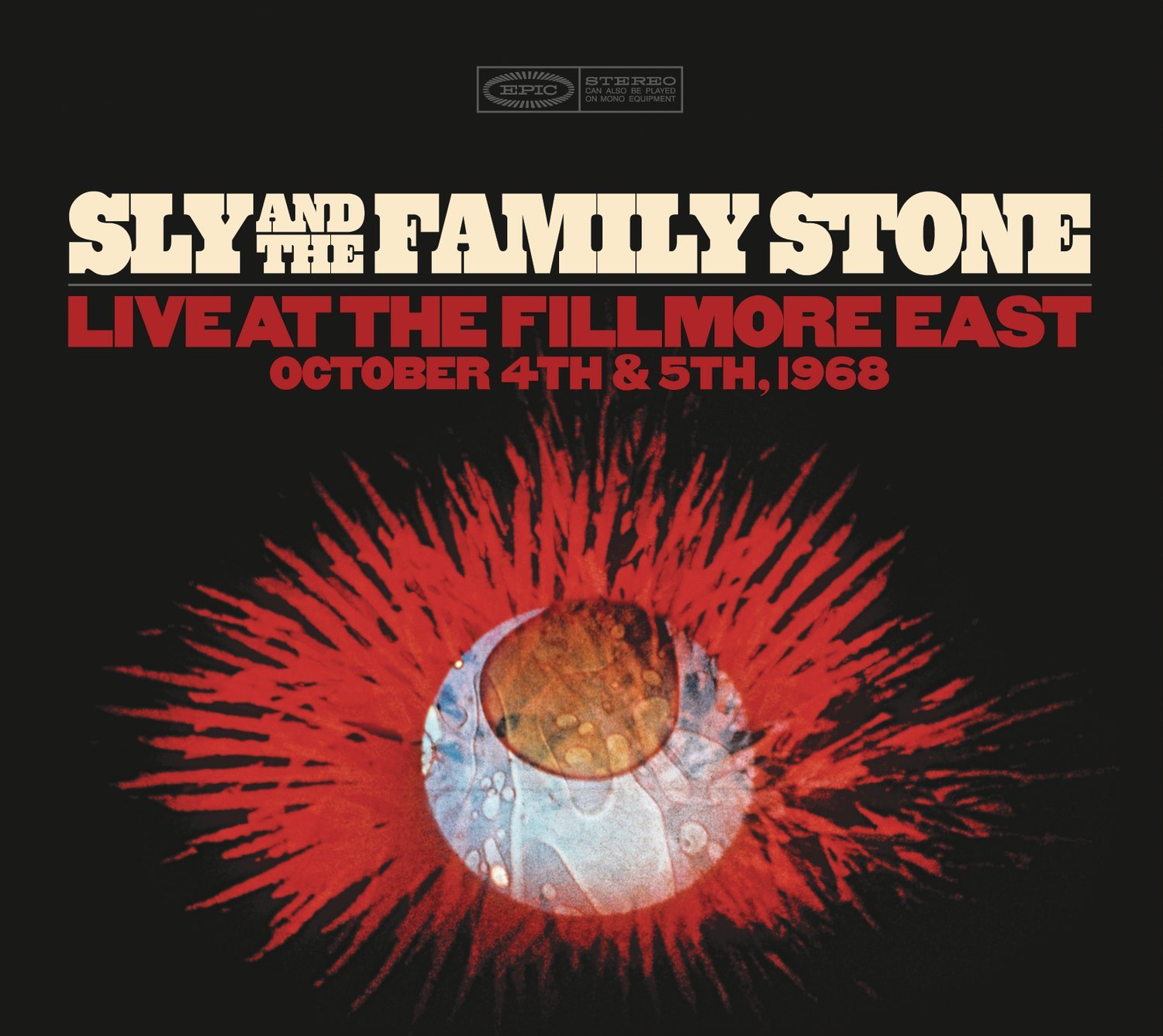
PAT THOMAS AND KWASHIBU AREA BAND-PAT THOMAS AND KWASHIBU AREA BAND.
PAT THOMAS AND KWASHIBU AREA BAND-PAT THOMAS AND KWASHIBU AREA BAND.
By the time Pat Thomas was in high school, he already knew what he wanted to be. He wanted to sing highlife. This wasn’t surprising, as he came from a musical family.
Pat Thomas’ father taught music theory, his mother was a bandleader and his uncle was legendary Ghanian guitarist King Onyina. Given his background, it wasn’t surprising Pat Thomas wanted to make a career out of music.
Music was in Pat Thomas’ blood. He grew up surrounded by music. That had been the case since Pat was born in Agona, in the Ashanti region of Ghana in 1951. Growing up, he listened to all types of music. However, it was highlife that struck a nerve with Pat. By the time he was in high school, Pat Thomas dreamt of singing highlife. However, he was too young.
This wasn’t going to stop Pat Thomas embarking upon a musical career. So while he was at high school, Pat Thomas started singing covers of songs by Stevie Wonder, Nat King Cole, Miriam Makeba and Jimmy Cliff. While this wasn’t ideal, it was a start.
The next chapter in Pat Thomas’ career began in 1966. Pat was only sixteen, but something of a musical prodigy. This was in part, thanks to his uncle. He took Pat under his wing. Soon, he was able to write music, and play guitar and drums. However, it was as a singer that Pat Thomas excelled. Already he was a familiar face in local clubs, and was perceived as one of the rising stars of the local music scene. That’s why he was hired as an arranger by one of the biggest names in Ghanian music, Ebo Taylor.
Ebo Taylor had just returned from London, when he hired Pat Thomas as an arranger. He and Fela Kuti had been studying music in London. Now Pat was home, he was determined to put what he had learnt into practice. This included modernising highlife.
With Pat Thomas onboard, Ebo Taylor embarked upon a journey that eventually, would see the transformation of highlife. It was a meeting of minds. They gave highlife a Western twist. Horns were added. So were guitars and vocals. This once traditional form of African music was about to be transformed by two of Ghana’s most progressive musicians.
Over the next few years, Pat Thomas and Ebo Taylor played together in various bands. This included the Stargazer’s Dance Band and the Broadway Dance Band. Pat was the arranger and vocalist, while Ebo played the guitar. They were a formidable duo. However, despite their close friendship, Pat Thomas made the decision to journey to Britain.
He wasn’t the first African musician to make this journey. Nor would he be the last. Pat made the Journey to London in 1970. During the time he spent in London, he toured with the Uhuru Dance Band. Then in 1971, Pat returned home and moved to Accra.
That’s where Pat Thomas and Ebo Taylor renewed their musical partnership in 1971. That’s when Pat joined the Blue Monks. Again, Pat was the vocalist and Ebo the guitarist. They were resident at the Tip Toe Nite Club, where the Blue Monks would make their mark on Ghanian musical history. They’re now remembered as one of most important and influential Ghanian bands of the early seventies. However, just like before, Pat and Ebo went their separate ways.
This time, Pat Thomas moved to the Ivory Coast. After a while, Pat decided to return home, and once more, reunited with Ebo Taylor. In 1974, they joined Sweet Beans, a group sponsored by the Ghana Cocoa Board. Then five years later, in 1978, Pat and Ebo embarked on a collaboration with another legend of African music, Fela Kuti’s former drummer, Tony Allen.
At the time, Pat Thomas, Ebo Taylor and Tony Allen were at the peak of their powers. They were like an African supergroup. The collaboration came about when Tony Allen was rerecording the soundtrack to Black President in Accra. When Tony had some downtime, he headed to Kumsai to record with Pat and Ebo. Sadly, the sessions never saw the light of day, after they were destroyed in a fire. However, four decades later, and Pat Thomas would collaborate with his old friends.
Recently, Pat Thomas recorded an album with the Kwashibu Area Band, in Accra. This all-star band featured Pat Thomas’ old friends Ebo Taylor and Tony Allen. They feature on Pat Thomas and Kwashibu Area Band’s eponymous debut album. It was recently released by Strut Records and is the latest chapter in Pat Thomas near fifty year career. Pat released his debut album in 1978.
By then, Pat Thomas was no stranger to a recording studio. He had released an album with The Sweet Beans False Lover in 1974. It was released on Gapophone Records. That was their one and only album. However, for Pat Thomas, this was just the start of his recording career.
Two years later, in 1976, Pat Thomas released his live album Wednesday At Tip Toe. This was where recorded where The Blue Monks once enjoyed a residency. In 1976, Pat Thomas was taking centre-stage. That night was recorded for posterity, and released on Gapophone Records. The same year, Pat released his first collaboration with Marijata.
Pat Thomas Introduces Marijata was released in 1977, on Gapophone Records. This was the first of two albums Pat released with Marijata. The followup was Pat Thomas and Marijata, which was released in 1978. After that, Pat decided to concentrate on his solo career.
This was the same year that the fated Thomas, Taylor, Allen sessions took place. However, In Action Volume 1, which was released by Gapophone Records, fared better. It was actually released, but by then, Ghana was a troubled country.
Ghana was in the throes of a coup d’état lead by Flight Lieutenant Jerry Rawlings. Many Ghanians fearing their safety, fled the country. Those that remained, their lives were in danger. Nothing was sacred. To make matters worse the military junta set about destroying the Ghanian music industry. They went as far as destroying the master tapes in Gapophone Records’ vaults. Musicians like Pat Thomas looked on helplessly. However, they weren’t going to be silenced.
So in 1979, Pat Thomas released In Action Volume 2. Just like its predecessor, it was released by Gapophone Records, which essentially, was the only show in town. However, after that, Pat Thomas left Ghana, and headed for London.
In 1980, Pat Thomas released Pat Thomas 1980, which was the most eclectic album of his career. Elements of disco, reggae, pop, funk and soul could be heard on Pat Thomas 1980. It was very different to Pat’s previous albums and marked the start of a new chapter in his career.
Two years later, Ebo Taylor, Pat Thomas and Uhuru Yenzu collaborated on Hitsville Re-Visited. Accompanied by an all-star band, this Ghanian supergroup won friends and influenced people when the album was released in 1982. The following year, Pat released another solo album.
Pat Thomas released In His Style From London-Hot and Cool Highlife in 1983. This was the second live album of Pat’s career. It had been recorded while Pat was touring in 1983. A year later, Pat released an album with one of his oldest friends, Ebo Taylor.
1984 saw the release of Pat Thomas and Ebo Taylor released another collaboration. It was released on Dannytone Records and featured two of Ghanian music’s most influential musicians. They had been working together for eighteen years. However, the last few years hadn’t been easy. Both men were exiles. Despite this, Pat was about to enter the most productive period of his career.
Between 1985 and 1988, Pat released four studio albums and a collaboration. The first of the studio albums was Asanteman, which was released in 1985. Highlife Greats Mbrepa followed in 1986. By then, Pat Thomas’ star was in the ascendancy. He was a star of the hamburger highlife scene. Everything was going well for Pat Thomas. Despite this, pat made the decision to leave London behind. He moved to Canada, which was home for Pat Thomas for the next ten years.
Now living in Canada, this productive period continued. In 1987, Pat released Pat Thomas and Friends and his solo album Santrofi. This productive period finished in 1988, when Pat released Me Do Wiase in 1991. The next time Pat Thomas released an album, he would be back home, in Ghana.
Pat Thomas returned to Ghana in 1997. Not long after this, Pat signed to the Megastar Company and released his Sika Nantie album. Soon, Pat Thomas was back where he belonged, at the top of the Ghanaian music scene. His comeback was complete in 2008, when he starred at the Made In Germany burger highlife festival. However, since then, Pat Thomas has stayed and played in Ghana.
While his old friend Ebo Taylor has travelled overseas, and had reinvented himself, becoming an international star, Pat Thomas was happy to remain in Ghana. He had spent over twenty years living overseas. Now he was home. Although he wasn’t playing live as much as he once had, he was still in demand for gala dinners and corporate functions. Nor had Pat recorded an album for a long time. However, in 2013, he got the chance to return to the studio.
Tony Allen got in touch with Pat Thomas and Ebo Taylor. He wanted to record an album with them. Pat and Ebo were just as keen. So in January 2014, the three men headed to a studio in Accra. They were joined by what can only be described as an all-star band.
The all-star band that convened in the Accra studio, included some of the biggest names in Ghanian music. This includes percussionist Eric Owusu, bassist Emmanuel Ofori, saxophonist Abaranel-Wolff. He co-produced the album with multi-instrumentalist Kwame Yeboh. They’re just three members of this multi-talented band. Add to the equation Tony Allen play drums on three tracks, Ebo Taylor’s guitar licks and Pat Thomas’ vocals. The result is the long-awaited and much anticipated eponymous debut album from Pat Thomas and Kwashibu Area Band, which I’ll tell you about.
Opening Pat Thomas and Kwashibu Area Band is Mewo Akoma. This is a song Pat Thomas wrote some years ago. It’s a four part highlife medley, which Pat sings in Fanti. The lyrics examine life and love. Big bold stabs of horns join gyrating drums, a picked bass and the pumping organ. Together, they create a joyous, celebratory sound. Atop the arrangement, sits Pat’s heartfelt vocal. When Pat’s vocal drops out, guitars chime, and dramatic stabs of horns are unleashed. They’re joined by a myriad of percussion, bouncing drums and subtle stabs of an organ. Then when dramatic surges of horns signal the return of Pat’s vocals, he’s accompanied by harmonies. They’re the perfect accompaniment for Pat’s soulful vocal as he embarks upon his comeback.
Ebo Taylor and Pat Thomas penned Gyae Su. A crystalline guitar skips across the arrangement. It’s accompanied by a pulsating bass that’s reminiscent of the kwa guitar bands. They’re joined by bursts of joyous horns and pounding hypnotic drums. Pat’s vocal is soothing, as he sings: “don’t cry, life has its ups and downs.” Accompanying him are harmonies and swathes of chiming guitars. Meanwhile the rhythm section create a pulsating groove and the horns add a delicious feel good sound.
Although Odoo Be Ba has highlife written all over it, various genres of African music play their part in the overall sound. That’s the case from the moment the rhythm section, percussion and crystalline guitars combine. As Afro-beat drums provide the heartbeat to this pulsating groove, bursts of organ and shrill stabs of horns are added. They’re arranged by Ebo Taylor. Pat’s vocal is tender. Especially as he sings: “my love will come…I’m waiting for my love.” Equally tender harmonies compliment Pat’s heartfelt, hopeful vocal, as a quite beautiful slice of modern highlife unfolds.
Me Ho Asem transports the listener back to the early seventies. This is the type of music that provided the soundtrack to life in Ghana just over forty years ago. Back then, Pat Thomas and Ebo Taylor were forming a potent partnership. Forty years later, and they’re back together with The Kwashibu Area Band. They provide a slow, funky and melodic backdrop. This comes courtesy of the pumping rhythm section, keyboards percussion and occasional bursts of blazing horns. Together this results in one of the best arrangements. That’s fitting, as Pat delivers one of his best vocals. It’s truly soulful and full of hope and joy. Pat’s glass is half full as he sings: “you can talk all you want, but things will always be better for me.”
Oye Asem sees Pat Thomas and Kwashibu Area Band head in the direction of Afro-Highlife. That’s down to Ebo Taylor’s horn charts. Add to this Kumsai guitar playing and of course, a masterclass from drummer Tony Allen. This seems to inspire, who accompanied by harmonies, delivers a tender, thoughtful vocal. Then when his vocal drops out, the band take centre-stage. Bursts of horns soar above the arrangement. Meanwhile, the bass and organ weave across the arrangement. Later, stabs of horns and bursts of organ add to the drama, as everything from Afro-Highlife, jazz, funk and soul can be heard on another of Pat Thomas and Kwashibu Area Band’s highlights.
Odo Adaada have Pat Thomas a hit back in the eighties. So it’s no surprise that he’s chosen to rerecord the track. This time, he reinvents the track. To do this, he combines a pulsating, pounding rhythm, stabs of frantic keyboard and a myriad of percussive delights. This is a delicious combination, resulting in a track that’s joyous and dance-floor. However, the lyrics aren’t joyous. They’re tinged with hurt and heartache. Pat, accompanied by harmonies, delivers an emotive vocal, as he sings: “love has deceived me.”
Brebrebre comes with a message from Pat, “don’t rely on your worldly possessions.” He knows what he’s talking about. He once fled Ghana, during the 1978 coup d’état. Against a pumping, mesmeric arrangement, Pat delivers an impassioned vocal. Stabs of horns, chiming guitars and washes of Hammond organ play their part in the arrangement. It’s anchored by the rhythm section. Along with the rest of the Kwashibu Area Band they provide the perfect backdrop for Pat Thomas. He’s accompanied every step of the way by harmonies, as he combines highlife and social comment.
Fittingly, Amaehu is a collaboration between Pat Thomas, Ebo Taylor and Tony Allen. The rhythm section, including Tony Allen’s drums combine with the unmistakable sound of a Hammond organ. They’re soon joined by the horns, arranged by Ebo Taylor. Clearly, his inspiration for the horns has been Afro-beat and highlife. However, playing a leading role are the keyboards. They play a vital part in the sound and success of Amaehu. Along with the rest of the Kwashibu Area Band, they set the scene for Pat Thomas. His vocal is impassioned, heartfelt and soulful. Answering his call are backing vocalists. They compliment Pat’s vocal perfectly, and like the rest of the Band, ensure the album ends on a high.
Forty-nine years after his career began, Pat Thomas is the highlife’s comeback King. It’s a while since he last released an album. However, at last Pat Thomas is back, and back doing what he does best…making music. The result is Pat Thomas and Kwashibu Area Band, which was recorded in January 2014.
Over a year later, and Pat Thomas and Kwashibu Area Band was recently released by Strut. It’s a return to form from Pat Thomas and his all-star band. That’s the perfect description of the Kwashibu Area Band. Not only does Tony Allen play on three tracks, but Ebo Taylor arranged the horns. That’s not forgetting percussionist Eric Owusu, bassist Emmanuel Ofori, saxophonist Abaranel-Wolff and multi-instrumentalist Kwame Yeboh. They’re just a few of the musicians who played a part in the sound and success of Pat Thomas’ long-awaited and much anticipated comeback album. It’s an album that could’ve been released back in 1978.
Back then, Pat Thomas, Ebo Taylor and Tony Allen were at the peak of their powers. They were like an African supergroup.
The collaboration came about when Tony Allen was rerecording the soundtrack to Black President in Accra. When Tony had some downtime, he headed to Kumsai to record with Pat and Ebo. Sadly, the sessions never saw the light of day, after they were destroyed in a fire. However, four decades later, and Pat Thomas got the opportunity to collaborate with his old friends. They might be thirty-seven years older, but they’ve not lost their touch.
Far from it. Pat Thomas, Ebo Taylor and Tony Allen have another thirty-seven years experience behind them. Accompanied by some of Ghana’s most talented musicians, they roll back the years on Pat Thomas and Kwashibu Area Band’s eponymous debut album. They make music that’s ambitious, groundbreaking and genre-melting. Pat Thomas and Ebo Taylor continue what they started back in 1966
On Pat Thomas and Kwashibu Area Band, Pat Thomas and Ebo Taylor continue what they set out to do nearly fifty years ago. That’s reinvent highlife. They’ve been doing that throughout their long and illustrious careers. They continue that on Pat Thomas and Kwashibu Area Band, which marks the welcome return of a legend of highlife veteran and comeback King, Pat Thomas.
PAT THOMAS AND KWASHIBU AREA BAND-PAT THOMAS AND KWASHIBU AREA BAND.
RACHEL SERMANNI-TIED TO THE MOON.
RACHEL SERMANNI-TIED TO THE MOON.
Rachel Sermanni can’t remember life without music. It has always been there, and has been a constant in her life. This was certainly the case as long as Rachel can remember. Growing up, music provided the soundtrack for Rachel and her siblings. Music also provided Rachel with one of her earliest memories.
Even today, Rachel can vividly remember her father teaching her how to play Twinkle Twinkle Little Star on a penny whistle. Little did Rachel’s father realise, that his younger daughter would embark upon a musical career.
He certainly never realised that on the 7th November 1991. That’s when Rachel Sermanni was born, in Carrbridge, a tiny village in the highlands of Scotland, with a population of 708. Rachel’s mother worked for the N.H.S. and her father was a dog handler for the police. Carrbridge’s newest resident would one day, become its most famous. That was still to come.
As Rachel grew up, music surrounded her. At an early age, her taught her to play the penny whistle. Soon, Rachel and her siblings were singing and even making up songs. Later, Rachel would learn to play the guitar. By then, Rachel was immersing herself into music.
Especially, traditional Scottish music. At school, Rachel heard and performed traditional Scottish music. She enjoying singing in front of an audience, and was a natural performer. It seemed even at an early age the world was Rachel Sermanni’s stage.
Back home, Rachel listened to an eclectic selection of music. Everything from Bob Dylan, Tom Waits and Van Morrison, right through to Eva Cassidy, Joni Mitchell, Bjork and P.J. Harvey. Along with her love of traditional Scottish music, this would shape Rachel as a singer and songwriter.
By the time Rachel was sixteen, she was already writing her own songs. She was already drawing experience from her childhood, the landscape and the vivid dreams she was already having. All this played their part in Rachel’s early songs, one of which made its way onto her debut album, Under Mountains, which was released in 2012. That was five years away. Rachel still had musical apprenticeship to serve.
This resulted in Rachel playing in local pubs. Later, Rachel moved to Glasgow, where she was a familiar face at traditional music nights throughout the city. Rachel was one of many hopefuls who turned up, clutching a guitar. However, Rachel stood out from the rest. All she needed was a break.
It came in 2009. Rachel went to see Mumford and Sons at Ullapool’s Loopallu festival. After they played their set, Rachel discovered them in a local pub. She asked them if they wanted to jam. Later, Rachel and Mumford and Sons were jamming on Ullapool’s beach. This lead Mumford and Sons to invite Rachel to open for them at Dingwalls, in London in 2011. Before that, Rachel headed off on her travels.
A year after her encounter with Mumford and Sons, Rachel travelled to the Middle East in 2010. However, she wasn’t alone. Accompanying her were other Scottish musicians. They were going work on a project where traditional Scottish music and musicians collaborated with their counterparts from Jordan. For Rachel, this was a fascinating insight into another culture, and what happened when two cultures were combined. This experiment was repeated in 2011.
This time, Rachel headed to India, where she embarked upon another collaboration. Her collaboraties were a mixture of tradition Indian musicians and some of the biggest names in Bollywood. Among them, were Bikram Ghosh and Papon Angaraag Mahanta. They toured India with Rachel, and began work on an E.P. which has still to be completed. While this journey to India was one of the highlights of 2011 for Rachel, the biggest highlight had still to come.
It came when Rachel opened for Mumford and Sons at Dingwalls, in London in 2011. This was a far cry from a jam session on Ullapool beach. However, won friends and influenced people that night at Dingwalls, including many within the music industry. Later in 2011, Rachel was touring with Fink. By the end of 2011, Rachel Sermanni was a name on many people’s lips. She was one of the hardest working musicians of 2011.
If 2011 had been a big year for Rachel Sermanni, 2012 surpassed it. Rachel released her debut album Under Mountains in 2012. It reached number twenty-six in Scotland, and number twenty-three on the British Indie charts. Considering Rachel wasn’t signed to one of the bigger indie labels, this was a successful debut album. Her debut album was heard far and wide.
In 2012, Rachel Sermanni made her debut at the Celtic Connection festival in Glasgow. This was just the first of a number of high profile appearances she would make.
Between 2012 and 2015, Rachel Sermanni has toured far and wide. From America and Canada, to Europe and Australia, Rachel has been a familiar face. She has opened for Rumer and Elvis Costello, and played some of the biggest festivals. This includes the Greenman Festival, Cambridge Folk Festival, Orkney Folk Festival, T In the Park, Wickerman, Deershed, Loopallu, Calgary Folk Festival, CMW, Dawson City Music Festival, Interstellar Rodeo, Vancouver Folk Festival, Woodford Folk Festival and Iceland Airwave. It’s no wonder Rachel Sermanni has the reputation as one of the hardest working musicians.
Apart from touring extensively, Rachel Sermanni has also released numerous singles and E.P.s, including The Bothy Sessions, Black Currents, Eggshells, Waltz, The Boatshed Sessions and Everything Changes. Then there’s Rachel’s 2012 debut album Under Mountains, and a live album recorded at the Dawson City Music Festival. However, it’s three long years since Rachel Sermanni last released an album. Back then, she was only twenty-one and had just embarked upon her career as Nu Folk singer.
Three years later, and Rachel Sermanni is back with her sophomore album Tied To The Moon. Considering how busy Rachel has been, it’s amazing she has found time to write ten new tracks. They were inspired by Rachel’s childhood, her experiences as woman, instinct and inhibition. The ten songs are much more poetic and rhythmic. They were recorded by Rachel’s talented band, who made a journey across the water.
With her talented band in tow, Rachel made her way to the beautiful, picturesque Island Of Lewis. What better place could there be to record an album? Especially, with one of the veterans of Scottish music producing Tied To The Moon.
Happily ensconced on the Island Of Lewis, Rachel set about recording ten tracks at Further North Studios. Producing Tied To The Moon was none other than Colin MacLeod, the man behind the Mull Historical Society. He also played guitars and pedal steel. Colin was joined in the rhythm section by Louis Linklater Abbott on drums and percussion, while Gordon Skene played bass and cello. Jane Hepburn played fiddle, while Jennifer Austin played piano, organ, fiddle and added backing vocals. Nicola and Fiona MacLeod aded backing vocals on In This Love. Rachel added backing vocals and played guitar. These ten tracks became Tied To The Moon, which was recently released by Middle Of Nowhere. This long-awaited and much-anticipated album marks a welcome return from Rachel Sermanni, Scotland’s Queen of Nu Folk.
Opening Tied To The Moon is Run. From the opening bars, it’s best described as dramatic. That’s the case from the moment the a guitar shrieks and the rhythm section lock into a tight, moody groove. Rachel meanwhile, delivers a vocal full of disbelief. She can’t quite comprehend what happened the night before: “I have made a mess I know, there is nothing you can throw, last night I was one shadow, trying to kill another.” Soon, there’s a sense of acceptance and later, melancholy in Rachel’s voice that her relationship is over. By then, the rhythm section and atmospheric washes of Hammond organ combine with Rachel’s ethereal vocal. Complimenting her vocal are ethereal, cooing harmonies. So does the hypnotic, moody, broody groove. When combined, they more than whet the listener’s appetite for the rest of Tied To The Moon.
Wine Sweet Wine has a quite different sounds. There’s a much more country tinged sound. It’s almost a case of spright outta Nashville. As a guitar is strummed, the piano is played deliberately and the drums provide the heartbeat. Rachel’s vocal is weary and wistful. She’s just realised that: “I just can’t be with someone, who wants just anyone.” So she has to leave. “I cannot sit on the shelf, while you play with someone else.” As Rachel delivers the lyrics, sadness, frustration and anger well up. Behind her a country tinged arrangement replaces Rachel’s vocal. When Rachel’s vocal returns, the lyrics are still cinematic. Pictures unfold before your eyes, and you find yourself taking sides, and feeling sorry for the woman who has been wronged. It’s portrayed realistically by Rachel, and is like a short story set to music.
A guitar is carefully plucked as Old Ladies Lament unfolds. The arrangement is understated and allows Rachel’s tender, melancholy vocal to take centre-stage. She sings about a child growing old and leaving home for the first time. There’s a sense of sadness in Rachel’s voice. Partly, because the character in the song’s child is leaving home. However, she also realises she’s growing old, and is alone. Later a telling and beautiful line is: “I would do it all again, I’d have my heart be broken.”
Slowly, and deliberately Rachel delivers the introduction to I’ve Got a Girl. Soon, the arrangement grows in power and drama. An electric guitar dominates the arrangement. It’s joined by the rhythm section and organ. At one point the arrangement almost waltzes along. However, the one constant is the drama. Rachel’s vocal is equally dramatic and deliberate. By then, there’s a brief nod to Cabaret. Mostly, though, I’ve Got a Girl sounds as if it belongs on the soundtrack to the new series of Twin Peaks as slowly, deliberately and dramatically, Rachel articulates the lyrics, bringing them to life.
Just like Old Ladies Lament, the arrangement to Don’t Fade has a much more understated sound. It’s obviously been influenced by the folk and traditional music Rachel listened to growing up. As Rachel tenderly and thoughtfully delivers the lyrics, she’s accompanied by a piano and guitar. That’s all that’s needed to frame Rachel’s lyrics. They take pride of place, allowing you to hear truly beautiful lyrics. This includes: “don’t fade before, you reach the shore, I want to see your face.” As Rachel delivers the lyrics, her vocal is truly heartfelt, hopeful and needy.
Tractor has a much more “poppy” sound, and shows another side to Rachel Sermanni. She’s a truly versatile artist, one that’s capable of writing cerebral lyrics. That’s the case here. Rachel’s part poet, poet philosopher. As she delivers an impassioned vocal, behind her, the rhythm section provide a tight groove.
Producer Colin MacLeod unleashes washes of pedal steel. They add an atmospheric hue. Especially, as Rachel delivers lines like: “if you choose, you can paint your own truth,” and “all this living, just to lie down and love.” Poet, philosopher, singer and songwriter, Rachel Sermanni is a truly talented artist, one whose capable of combining social comment and subtle hooks.
Ferryman has a much more traditional sound. It’s obviously been inspired by traditional Scottish music. Accompanied by just a guitar Rachel tenderly paints pictures. Imagery is ever-present. It’s possible to picture the Ferryman, the journey across the water and the lovestruck lovers. However, there’s a twist in the tale. “They knocked hard on the door, boots hard on the floor, and took us down to the shore, told us no more, we could be.” As Rachel’s wistful, heartbroken vocal drops out, it’s replaced by strings. They replicate the melancholy and sadness, before setting the scene for Rachel’s as ponderously she sings: “I asked the old man about crossing the river?”
Briefly, Rachel sounds like Suzanne Vega on Banks Are Broken. Then she slowly she delivers a needy, heartfelt vocal. With just a guitar for company, her vocal becomes wistful, as she sings: “tonight is the last time, I get to hold you fast and fast go the hours.” Then there’s a twist in the tale. The arrangement takes on a country sound, and Colin MacLeod’s vocal enters. In an instant, he becomes Lee Hazlewood to Rachel’s Nancy Sinatra, or more likely, Mark Lanegan to Rachel’s Isobel Campbell. Washes of pedal steel, piano and hypnotic drums joins with the guitar. Occasional bursts of cooing harmonies are added. So is a cello. Everything is added at just the right time by producer Colin MacLeod. He’s also the perfect foil for Rachel, they’re like yin and yang on Banks Are Broken.
Begin is an acoustic ballad. Rachel’s wistful is accompanied by a guitar. Her vocal is heartfelt. Especially as she sings: “do you trust, give you all that I can, if you let me.” Before long there’s a sense of uncertainty in Rachel’s vocal. “I think we’re thinking the same, what are you thinking.” Does he feel what she feels? She’s no longer sure. By then, she’s racked with insecurity and uncertainty. That becomes apparent when Rachel sings: “swim in the lake, we’ll be sinking, diving diving, how to we begin?” As a guitar is played firmly and deliberately and joined by a mandolin. They provide the backdrop for Rachel’s ethereal, cooing, scat on this tale of love, insecurity and uncertainty.
This Love closes Tied To The Moon. It’s a tale of love and betrayal. At first, there’s a sense of hope. Especially as Rachel sings lyrics like: “this love is a blue sky, this love is a sweet tooth.” As Rachel delivers the lyrics, there’s no sense of hope or joy in her vocal. Far from it. She’s been cheated upon. She has betrayal and revenge on her mind. “Revenge is making a comeback,” sings Rachel, “self pity searches for a rope.” However, despite her “making a comeback,” Rachel realises that “This Love is no love at all.” This proves a sobering end to Tied To The Moon, Rachel Sermanni’s long-awaited sophomore album.
Three years have passed since Rachel Sermanni released her debut album Under Mountains in 2012. Since then, Rachel has toured almost non-stop. She’s one of the hardest working singer-songwriters. Rachel Sermanni is also one of the most talented. Her new album Tied To The Moon, which was released on Middle Of Nowhere, is proof of this.
Tied To The Moon is what I would describe as an old school album. It features just ten tracks, and lasts thirty-nine minutes. That’s what albums used to be like, way before the compact disc. Back then, space on a vinyl album was at premium, so an album featured what was an artist’s best work. That’s the case with Tied To The Moon. The ten tracks are variously beautiful, cerebral, cinematic and dramatic. However, cinematic is the perfect description of Tied To The Moon.
On Tied To The Moon, Rachel Sermanni paints pictures with her lyrics. Scenes and scenarios unfold before the listener’s eyes. Characters come to life. Listeners share their sadness, pain and joy. They empathise at their uncertainty and insecurity. Especially, when Rachel sings of heartbreak and betrayal. Her voice breathes life, meaning and emotion into the lyrics. As a result, the characters in Rachel’s songs become real. So does their flaws, and the pain, hope and sadness they experience. Not many singers-songwriters have the ability to do so. Especially an artist who previously, has only released one studio album.
However, Rachel Sermanni is unlike most artists. Although she’s just twenty-four, Rachel is already a talented and accomplished artist. The last four years she’s spent touring, has been time well spent. Rachel has used that time to hone her songs and sound. As a result, she was more than ready to record her sophomore album, Tied To The Moon.
When recording began, Rachel Sermanni brought onboard Colin MacLeod as producer. He brings out the best in Rachel, framing her vocals with arrangements that veer between country, folk, pop and rock. Often, there’s a twist in the tale or a surprise in store. None more so, than on Tractor, which has single written all over it. Other times, Rachel seems to have been inspired by everyone from Bob Dylan, Tom Waits and Van Morrison, right through to Eva Cassidy, Joni Mitchell, Suzanne Vega, Bjork and P.J. Harvey. Their influence can be heard throughout Tied To The Moon. So can the traditional Scottish music Rachel Sermanni grew up listening to. It has influenced and shaped Rachel Sermanni as a singer and songwriter, as she makes the next step on what will surely be the road to stardom.
There’s no doubt about that. Rachel Sermanni is one of the brightest prospects in Scottish music. A great future awaits The Queen of Scottish Nu Folk. Her new album Tied To The Moon showcases a talented and versatile singer-songwriter. Tied To The Mood will introduce Rachel Sermanni to a much wider audience, and will take Rachel Sermanni one more step along the road to stardom.
RACHEL SERMANNI-TIED TO THE MOON.



THE FANTASTIC FOUR-THE LOST MOTOWN ALBUM.
THE FANTASTIC FOUR-THE LOST MOTOWN ALBUM.
The story of The Fantastic Four begins in Detroit, in the early sixties. Ralph Pruitt was walking through his neighbourhood when he heard singing. Curiosity got the better of Ralph. He couldn’t stop himself knocking on the door where the singing came from. The door was opened by James Epps, who introduced Ralph to his friend William Hunter. Soon, the three men were singing together. Just before the three men were about to go their separate ways, Ralph Pruitt asked James and William to join a group he was about to form. They accepted, and that day, The Fantastic Four were founded. Their music is documented on a new compilation of The Fantastic Four’s music, The Lost Motown Album which was released on Kent Soul, an imprint of Ace Records.
Soon, Ralph Pruitt’s younger brother Joe was drafted into the nascent group. Joe seemed a good choice. Music was in the Pruitt family’s blood. Ralph and Joe’s father, Alonzo Tucker was a guitarist. He had been a member of Hank Ballard and The Midnighters. After that, he became a stalwart of Jackie Wilson’s back-room team. Soon, he was cowriting many of Jackie Wilson’s hit singles. Now his two sons were following him into what was the “family business.”
Before long, the group encountered a problem. William Hunter was older than the rest of the group. He had a family to support and worked during the day. There was no way he could turn his back on his day job for a new group. Music was a somewhat perilous way of making a living for a family man. What if it wasn’t a success? So with a heavy heart, William Hunter left, and Wallace “Toby” Childs was drafted in as his replacement. With a settled lineup, all that was needed was a name.
Deciding on a name for their new name wasn’t easy. Eventually, the four men decided to all write down a name, which was drawn out of a hat. The winning name was The Fantastic Four. So, The Fantastic Four were born and began practising in earnest.
Quickly, The Fantastic Four were making progress. Eventually, when The Fantastic Four felt they had perfected and polished their sound, they decided to audition at one of Detroit’s record labels.
While Motown was the biggest record label in Detroit, The Fantastic Four decided to try another label. The label the chose, was Ed Wingate’s Ric Tic. It was situated at the Golden World studios, which was home to Ed Wingate’s Ric Tic and Golden World labels. They had been built up by Ed Wingate over a period of time. By 1966, Berry Gordy, Motown’s founder was rattled. He knew he had a serious rival.
Despite dwarfing Ed Wingate’s labels, Berry Gordy decided to buy the Golden World studios. It became part of the Motown “empire.” So did some of Ric Tic’s bigger artists, including Edwin Starr. Once these artists had moved to Motown, Ed Wingate was free to run the Ric Tic and Golden World labels as he saw fit.
So when The Fantastic Four turned up for their audition, the decision to sign them or not, was Ed Wingate’s alone. However, Pat Lewis, who was already signed to Golden World, advised Ed Wingate to sign The Fantastic Four. When Ed Wingate heard The Fantastic Four, he liked what he heard and signed them to Ric Tic. Soon, they would begin work on their debut single.
The Fantastic Four’s debut single was Live Up To What She Thinks was produced by George Clinton. It was released on Ric Tic in December 1966. Although it wasn’t a commercial success, Live Up To What She Thinks showed what The Fantastic Four were capable of. Early in 1967, The Fantastic Four returned with their sophomore single Can’t Stop Thinking Of My Baby. Ric Tic staff producer was drafted in to produce Can’t Stop Thinking Of My Baby. While commercial success still eluded The Fantastic Four, they knew they were on the right road.
It quickly became apparent that Al Kent was able to bring out the best in The Fantastic Four. When he took them into the recording studio to record The Whole World Is A Stage. Everything seemed to click. Both Al Kent and The Fantastic Four knew their time had come. That proved to be the case. The Whole World Is A Stage was released in the spring of 1967, and reached number six in the US R&B charts and number sixty-three in the US Billboard 100. It looked like The Fantastic Four’s star was in the ascendancy.
That proved to be the case. The Fantastic Four headed into the studio to record their fourth single, I Love You Madly. It was produced by Mike Hanks. On its release in the summer of 1967, I Love You Madly started climbing the charts. Across Detroit, Ed Wingate at Motown realised that somehow, The Fantastic Four had been overlooked by his A&R men. So a deal was struck to transfer I Love You Madly over to Motown’s Soul Records’ imprint. Many within the music industry thought that The Fantastic Four had hit a home run. The Fantastic Four
No wonder. By 1967, Motown was one of the most success record labels of the sixties. It was home to The Temptations, The Four Tops, The Supremes, Marvin Gaye and The Jackson 5. Motown was a hit making machine. Teams of songwriters, arrangers and producers worked day in, day out to produce hits for Motown’s ever expanding roster. This now included The Fantastic Four.
Now signed to Motown, I Love You Madly continued its climb up the charts. Eventually, it reached number twelve in the US R&B and number fifty-six in the US Billboard 100. This vindicated Ed Wingate’s decision to sign The Fantastic Four.
Following the success of I Love You Madly, the Motown machine sprung into action. Work began on what was The Fantastic Four’s Motown debut proper. However, it wasn’t Motown’s A-Team of songwriters or producers that were working with The Fantastic Four. Instead, the reserve team got a run out. For The Fantastic Four, this must have been a sobering thought. At Ric Tic The Fantastic Four were one of the label’s biggest names.
Eventually, The Fantastic Four were ready to record their Motown debut. The song chosen, was I Feel Like I’m Falling In Love Again, which was released as a single on 13th March 1969. It was produced by James Dean and William Weatherspoon. The flip side, Pinpoint It Down, was produced by George Gordy, Berry Gordy’s brother. When Feel Like I’m Falling In Love Again was released on Soul Records, commercial success eluded the single. This proved an inauspicious start to The Fantastic Four’s Motown career.
Another six months passed before The Fantastic Four released another single. Just Another Lonely Night on 23rd September 1969. It was produced by Clay McMurray. Just like George Gordy, Clay McMurray wasn’t one of Motown’s top producers. Instead, he was one of the second string. For The Fantastic Four this was disconcerting. They were worried.
No wonder. When Just Another Lonely Night was released, lightning struck twice. The single sunk without trace. For The Fantastic Four, they must have been disappointed with how their Motown career was going.
Before signing to Motown, The Fantastic Four’s star was in the ascendancy. They had worked with Ric Tic’s top songwriters and producers. At Motown, things were very different.
Often The Fantastic Four were competing with other groups for songs. Sometimes the backing tracks had been recorded a year or more before. Occasionally, they been used on other songs. What must have troubled The Fantastic Four was that they weren’t working with top songwriters or producers. If they had, then they definitely had the potential to become a much bigger group. By 1969, that didn’t look like happening.
Even though The Fantastic Four had only released two singles, they had recorded much more music. With producer Clay McMurray, The Fantastic Four recorded cover versions of The Beatles’ We Can Work It Out, The Temptations’ Just Another Night, Jerry Butler’s Just Can’t Forget About You Baby and Marvin Gaye and Tammi Terrell’s If This World Were Mine. However, these four tracks were never released as singles. Instead, The Fantastic Four’s next single wasn’t released until 1970.
On The Brighter Side Of A Blue World was released as a single on 23rd April 1970, just over two years since The Fantastic Four had released their Motown debut. On the flip side was I’m Gonna Carry On. Both tracks were produced by Clay McMurray. However, just The Fantastic Four’s previous singles, they failed commercially. Little did anyone know that On The Brighter Side Of A Blue World was the last single The Fantastic Four released on Motown. However, nobody realised that.
Before the release of On The Brighter Side Of A Blue World, Motown had been making plans to release The Fantastic Four’s long awaited debut album. There was more than enough material for a debut album. So work began on narrowing down this material to twelve tracks. This included the singles I Feel Like I’m Falling In Love Again, Just Another Lonely Night and On The Brighter Side Of A Blue World. They were joined by B-Sides I’m Gonna Carry On and Don’t Care Why You Want Me (Long As You Want Me). Then there were cover versions of The Beatles’ We Can Work It Out, The Temptations’ Just Another Lonely Night, Jerry Butler’s Just Can’t Forget About You Baby and Marvin Gaye and Tammi Terrell’s If This World Were Mine. Other tracks included Take Him Back If It Makes You Happy, and A Little Too Much and Keep On Tryin’ (‘Til You Find Love). These twelve tracks were scheduled to be The Fantastic Four’s long awaited debut album.
Recording of The Fantastic Four’s long awaited debut album took place over a period of two years. It was a piece meal project, with twelve of the many tracks The Fantastic Four had recorded chosen. These twelve tracks were given a title, How Sweet He Is, and was scheduled for release in 1971. That was until On The Brighter Side Of A Blue World failed commercially.
That was a game-changer. Now all bets were off. Motown called time on The Fantastic Four’s debut album. It had been scheduled to be called How Sweet He Is. This proved a controversial title.
Soon, rumours spread that How Sweet He Is was going to be James Epps’ debut album. Many thought that Motown were ready to focus their attention, and budget on James Epps. While this idea had been considered, it was quickly dismissed. However, that was the least of The Fantastic Four’s worries.
By then, tragedy had struck for The Fantastic Four. Around the time On The Brighter Side Of A Blue World was released, Wallace “Toby” Childs died. He was replaced by Ernest Newsome, who previously had been a member of The Volumes. However, by then, Motown had lost interest in The Fantastic Four. When their contract expired, it wasn’t renewed. Since then, The Fantastic Four’s lost album How Sweet He Is has lain in the Motown vaults.
That’s until recently. How Sweet He Is was recently rediscovered when Chris Jenner and Tony Rounce were perusing the Motown vaults. Not only did the discover the twelve tracks on How Sweet He Is, but another thirteen bonus tracks. They include B-Sides and previously unreleased tracks. The result is what’s easily, the most comprehensive overview of The Fantastic Four’s Motown years.
Belatedly, How Sweet He Is can be heard by soul fans for the very first time. Previously, the only tracks that had been released were the singles I Feel Like I’m Falling In Love Again, Just Another Lonely Night and On The Brighter Side Of A Blue World. They were joined by B-Sides I’m Gonna Carry On and Don’t Care Why You Want Me (Long As You Want Me). If This World Were Mine featured on a compilation in 2008. Two years later, and Take Him Back If He Makes You Happy and Keep On Tryin’ (‘Til You Find Love). However, the rest of How Sweet He Is remained unheard. Nor had the original album been heard as it was meant to be heard. Belatedly, this is rectified on The Lost Motown Album. It’s just part of the story of The Lost Motown Album.
Apart from The Lost Motown Album, there’s another thirteen bonus tracks that were discovered in the Motown vaults. They showcase a versatile and talented group. They’re equally at home whether its uptempo, dancers or ballads. Two of the best uptempo tracks are How Big Is Your Heart and The Temptations’ inspired Pin Point It Down, The Fantastic Four. However, The Fantastic Four come into their own on ballads like I’ve Found My Goal and I Hate Myself For Loving You. They showcase The Fantastic Four at their best. They’re two impassioned ballads. I’m Still A Struggling Man is a real hidden gem, one that makes you wonder what heights The Fantastic Four might have reached with a label that backed them fully. The same can be said of Loving You (Is Hurting Me), with its quivering strings. Despite being paired with second rate producers, The Fantastic Four were still capable of delivering the soulful goods. They breathed emotion and meaning into songs. Sadly, most of these songs have lain unreleased in the Motown vaults until very recently.
Thankfully, Kent Soul, an imprint of Ace Records have reissued The Lost Motown Album. It’s a reminder of one of Motown’s forgotten groups. They went from riding the wave of success at Ric Tic, to the forgotten men of Motown.
The Fantastic Four weren’t didn’t even get the chance to release their singles on the Motown label. Instead, they were relegated to the Soul Records’ imprint. When they signed to Soul Records, The Fantastic Four had to compete with other groups for the best songs. They were always reserved for the big name groups. It was an impossible situation. Especially given
The Fantastic Four were always paired with second string producers. Despite being behind the black ball, The Fantastic Four punched above their weight. So much so, that one wonders what heights might The Fantastic Four have reached if Motown had backed them fully?
If Berry Gordy had ensured that The Fantastic Four worked with Motown’s top songwriters and producers, they may have gone on to rival The Temptations and The Four Tops. That sadly, wasn’t the case. Instead, The Fantastic Four became the forgotten men of Motown whose debut album has lain unreleased for forty-five years. Now that The Lost Motown Album has been released, it’s a welcome reminder of just how talented The Fantastic Four were. Their story is a case of what might have been?
THE FANTASTIC FOUR-THE LOST MOTOWN ALBUM.

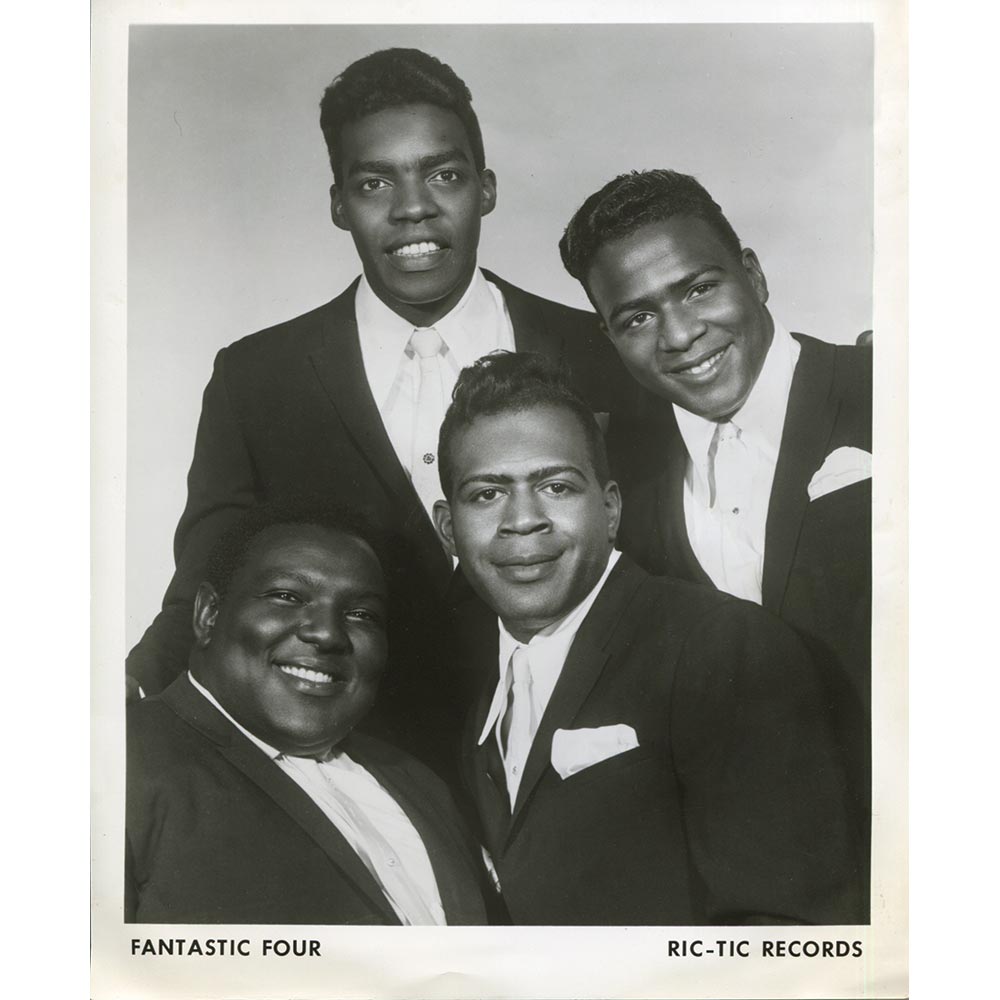
TAMPA RED-DYNAMITE! THE UNSUNG KING OF THE BLUES.
TAMPA RED-DYNAMITE! THE UNSUNG KING OF THE BLUES.
Underrated and one of the unsung heroes of the blues. That’s a perfect description of Florida born guitarist, Tampa Red. He was, without doubt, one of the most influential blues guitarists ever. Tampa Red influenced everyone from Big Bill Broonzy and Robert Nighthawk, through to Muddy Waters, Mose Allison and Elmore James during a career that spanned over thirty years.
Tampa Red’s recording career began in 1930, and lasted right through until the sixties. However, only four of his singles reached the top ten in the US R&B charts. This was whilst Tampa Red was signed to the Bluebird and RCA Victor labels. Part of this period is covered in a new Tampa Red compilation released by Ace Records, Dynamite! The Unsung King Of The Blues. It’s a fifty tracks double album, which concentrates on the music Tampa Red released on Bluebird and RCA Victor between 1942 and 1954. By then, Tampa Red was one of the biggest name in the blues. His story began in Florida, in 1904.
The future Tampa Red was born Hudson Woodbridge, on January 8th 1904, in Smithsville, Georgia. Tragedy struck early in Hudson’s career, when both of his parents died.
This resulted in Hudson moving to Tampa Bay, Florida, where he was brought by his aunt and grandmother. Hudson adopted their surname, and became Hudson Whittaker. Growing up, one of the major influences on Hudson, was his elder brother Eddie.
Eddie was a musician. He played guitar, and had been taught by a veteran musician Piccolo Pete. Now Eddie was becoming an accomplished player, Hudson watched on eagerly. Soon, he was copying and replicating the blues licks his brother played. It wasn’t long before Hudson was a better guitarist than Eddie. So it was no surprise that Hudson would embark upon a career as a musician.
This happened in the early twenties, when Hudson Whittaker moved to Chicago. By then, Hudson had already mastered the slide guitar. When he arrived in Chicago, Hudson Whittaker became Tampa Red. Tampa was a nod to his old hometown, while Red was either after the shock of red hair he sported or his light skin tone. Little did anyone who met the newly named Tampa Red realise that a blues great had just been born.
Tampa Red got his break when Ma Rainey was looking for a new guitarist. She was one of the biggest names in blues music. So this was something of a coup for a relative newcomer. However, a year later, and Tampa Red’s was well known across America.
In 1928, Tampa Red and Georgia Tommy Dorsey recorded It’s Tight Like That. It went on to sell in excess of 500,000 copies. Suddenly, Tampa Red’s name was on everyone’s lips. The twenty-four year old had come from nowhere, to become one of the biggest selling bluesmen of the time. And he wasn’t going away.
Not long after the release of It’s Tight Like That, Tampa Red became friends with one of Chi-Town’s music publishers, Lester Melrose. He published many of the songs Tampa Red penned and for many years, was was his de facto manager. This relationship lasted right through to the sixties. However, as well as a publisher and business manager, Tampa Red had also acquired a wife.
It’s fair to say that Tampa Red and his Frances Whittaker were an unlikely pairing. She was much older than Tampa Red, and was almost maternal in the way she looked after her new husband. She was quite happy looking after Tampa Red and his musical friends who came to stay. Although the newly weds were an unlikely pairing, Tampa Red enjoyed a stable home life. He was the polar opposite to many bluesmen. They drank excessively, took drugs, smoke and brawled. Some went to jail. A couple even cheated the hangman’s rope. Not Tampa Red though.
Instead, Tampa Red was establishing a reputation as a musical pioneer. He came a National steel bodied resonator guitar. In the days before bluesmen plugged in, it was a game-changer. Importantly, the National was much louder. For Tampa Red playing in large, often noisy halls, this would help. What also appealed to Tampa Red, and many other bluesmen, was the National looked good. It was showy, brash and flashy. When Tampa Red played single string runs, the audience were awe struck. Here was a guitar that stood out from the crowd. So did the man playing it. His bottleneck style wowed audiences wherever he went. Unsurprisingly, Tampa Red was always in demand as a guitarist.
Right through to 1932, Tampa Red and Georgia Tommy Dorsey enjoyed a successful partnership. However, nothing lasted forever, and in 1932, the two men parted company. So, Tampa Red began working as a session musician.
Such a talented guitarist as Tampa Red was always going to be busy. Everyone from Sonny Boy Williamson to Big Maceo and Memphis Minnie bought Tampa Red onboard to play guitar. Then in 1934, Tampa Red signed to Victor Records.
This was the start of a relationship that lasted nineteen years, and includes the years covered on the Ace Records’ compilation, Dynamite! The Unsung King Of The Blues. However, that compilation covers the period between 1942 to 1954. Before that, Tampa Red would form a new band and a new sound.
Now signed to Victor Records, Tampa Red formed The Chicago Five. His new group consisted of session musicians. They were responsible for the Bluebird sound, which went on to influence jump blues and then rock ’n’ roll. During this period, everything in Tampa Red’s life was going to plan.
During the remainder of the prewar years, Tampa Red was one of the most respected figures in blues music. His records were selling well and Tampa Red compared to other bluesmen, he was reasonably wealthy. He was certainly able to live comfortably, and enjoyed spending time with two of his best friends within music, Big Maceo Merriweather and Big Bill Broonzy. Knowing how lucky he was, Tampa Red continued his open house policy.
Still, when any of Tampa Red’s musical friends came to play in Chicago, Tampa Red allowed them to stay at his home. Often, they were allowed to use it as a rehearsal space. This was also the case with musicians arriving from the Mississippi Delta looking for a new life. As the next generation of blues men came chasing the dream, Tampa Red gave them somewhere to stay. In this corner the blues capital of America, newcomers and legends were made welcome by Tampa Red, who was about to enjoy the most successful period of his career. It’s documented on Dynamite! The Unsung King Of The Blues.
By 1942, Tampa Red was releasing singles via RCA Victor’s Bluebird imprint. This just happened to coincide with the most successful period of his career.
Tampa Red was a truly prolific artist. During his career, who recorded in excess of 300 sides. This included the single You Better Be Ready To Go. It featured Don’t Deal With The Devil on the flip side. Tampa Red had recorded both tracks in June 1941, but didn’t release them until 1942. Later that year, She Wants To Sell My Monkey was released as a single with Mean and Evil Woman on the flip side. These two tracks had been recorded at a session on 6th February 1942. Both singles sold well, but nowhere near as good as Tampa Red’s third single of 1942.
Despite Tampa Red being an experienced solo artist, he had never experienced the success enjoyed with Let Me Play With Your Poodle. It was recorded at a session with Big Maceo Merriweather and Clifford “Snags” Jones. That day four tracks were recorded, including Let Me Play With Your Poodle and the B-Side My First Love Blues on the B-Side. On the release of Let Me Play With Your Poodle, it surpassed the success of Tampa Red’s previous singles, reaching number four in the US R&B charts. Little did Tampa Red know that was the most successful single of his career.
After the recording session in February 1942, Tampa Red only released two more songs during 1942. I Got My Habits On and Mary Lou Blues were recorded with Big Maceo Merriweather and Clifford “Snags” Jones on 28th July 1942. Neither track was released until now, when they make their debut on Dynamite! The Unsung King Of The Blues. These were the last tracks Tampa Red recorded until December 1944 due to the musicians strike by the American Federation of Musicians.
On 15th December 1944, after over two ways away from the recording studio, Tampa Red was back. He recorded Detroit Blues with Blind John Davis and Ransom Knowling. It was released as a single on Bluebird on 1945. This was Tampa Red’s first single for three years. However, it was a return to form from the veteran blues man.
In July 1946, Big Maceo Merriweather and Charles “Chick” Sanders joined Tampa Red in the studio. The three men recorded Texas Stomp, which was released in 1946 bearing Big Maceo’s name. However, it features on Dynamite! The Unsung King Of The Blues. So do two tracks Tampa Red recorded later in 1945.
Three months later, on 19th October 1945, Tampa Red returned to the studio. With Big Maceo Merriweather and Alfred Elkins, they recorded Corrine Blues and Play Proof Woman. Both tracks were released in 1947. By then, Tampa Red would’ve enjoyed another huge hit.
February 1946 saw Tampa Red enter the studio with a five piece band. They accompanied him on Crying Won’t Help and Let’s Try It Again. When Crying Won’t Help was released as a single later in 1946, it was on RCA Victor. No longer was Tampa Red signed to Bluebird. No. He had gone up in the world. This coincided with a successful period in Tampa Red’s career. It began when Crying Won’t Help reached number five in the US R&B charts. Tampa Red was one of the biggest selling blues men of the postwar years.
Although Tampa Red was riding a wave of success, it wasn’t until 23rd September 1947, that he returned to the studio. Two tracks were cut, I Know My Baby Loves Me and You Better Woo Your Baby. Then in October 31st 1947, Tampa Red returned to the studio. With a second musician’s strike looming, record companies were keen to have plenty of music recorded.
So Tampa Red, with a five piece band accompanying him, recorded another three tracks. I’ll Dig You Sooner Or Later and Roamin’ And Ramblin’ were released in 1946. However, Keep Jumping was kept in reserve by RCA Victor. By then, it was looking increasingly likely that the dispute wasn’t going to be resolved.
That proved to be the case. As the clock struck 00.01 on 1st January 1948, the second Petrillo ban came into force. Record companies were better prepared. Not only had they been recording music during the past few weeks, but since the last ban. They were determined that never again, would they be help to ransom by a union. This was all very well, but for artists like Tampa Red, the future looked uncertain.
It wasn’t until early 1949 that the musician’s strike was resolved. Caesar Petrillo had gone into battle for the musician’s union members and one. With victory secured, now his members could get back to what they did best, making music.
On 24th March 1949, Tampa Red was joined in the studio by Little Johnnie Jones, Odie Payne and Ransom Knowling. They recorded a trio of tracks; It’s A Brand New Boogey, When Things Go Wrong With You (It Hurts Me Too) and Please Try To See It My Way. After almost two years away, Tampa Red sounded even better. It was as if he had been reinvigorated, and was able to breath meaning and emotion into the lyrics. His hand picked band compliment him perfectly. Surely, these tracks would give Tampa Red a hit single?
It’s A Brand New Boogey and When Things Go Wrong With You (It Hurts Me Too) were released in 1949. When Things Go Wrong With You (It Hurts Me Too) was released reached number nine in the US R&B charts. This was Tampa Red’s biggest hit since the musicians strike ended. Buoyed by another hit single, Tampa Red returned to the studio.
Another four months passed before Tampa Red returned to the studio on 21st July 1949. During that period, Tampa Red was playing live and writing songs. So when he entered the studio, he had a couple of new song, That’s Her Own Business which was released in 1949, and It’s Too Late Now which was released in 1950.
Another four months passed before Tampa Red returned to the studio on 21st July 1949. During that period, Tampa Red was playing live and writing songs. So when he entered the studio, he had a couple of new song, That’s Her Own Business which was released in 1949, and It’s Too Late Now which was released in 1950.
So was Please Try To See It My Way, which had been recorded in March 1949. It’s the latest of the tracks on disc two of Dynamite! The Unsung King Of The Blues. They were recorded between 24th June 1941 and 21st June 1949. However, disc two of Dynamite! The Unsung King Of The Blues features the period between 7th March 1950 and 4th December 1953.
The period that disc one of Dynamite! The Unsung King Of The Blues begins on 7th March 1950. That’s when Tampa Red and his band of Little Johnnie Jones, Odie Payne and Ransom Knowling returned to the studio. They recorded 1950 Blues, Love Her With A Feelin’, It’s Good Like That and New Deal Blues which features on disc one. These tracks would be released as singles later in 1950.
For the first single, 1950 Blues was chosen as a single. On the B-Side was Love Her With A Feelin’. The followup was It’s Good Like That with New Deal Blues on the B-Side. Both singles sold well, but didn’t match the success of When Things Go Wrong With You (They Hurt Me Too). So the search for Tampa Red’s next single continued.
Tampa Red and his band reconvened on 5th November 1950. They recorded another three tracks, Sweet Little Angel, Midnight Boogie and I Miss My Lovin’ Blues. Midnight Boogie was released with I Miss My Lovin’ Blues as a single in 1951. Both songs oozed quality, but never came close to matching the commercial success of some of Tampa Red’s earlier singles. Over the next four years, this would become a familiar story. Music was about to change, and change beyond recognition.
After a five month gap, Tampa Red returned to the studio to record his new single in March 1951. Three tracks were recorded by Tampa Red and his usual band, She’s Dynamite, Pretty Baby Blues and Early In The Morning. Later in 1951, She’s Dynamite was released as a single. Early In The Morning was chosen as the flip side. While it didn’t give Tampa Red that elusive hit single, Pretty Baby Blues did. It reached number seven in the US R&B charts. Little did Tampa Red realise this, but it was the last major hit single of his career.
On 28th July 1951, Tampa Red and his band cut another three tracks, She’s A Cool Operator, I Won’t Let Her Do It and Green And Lucky Blues. Without doubt, the highlight of the session was She’s A Cool Operator. It was chosen as a single, and paired with Green And Lucky Blues. However, Tampa Red’s was out of luck.
In 1952, it was twenty years since Tampa Red and Georgia Tommy Dorsey went their separate ways. Since then, Tampa Red had been heralded as one of the most influential and innovative bluesmen. He was also one of the most successful bluesmen of the past twenty years. However, hits were getting hard to find.
Having recorded I’m Gonna Put You Down, But I Forgive You and Look A There, Look A There on 21st April 1952, Tampa Red chose But I Forgive You as a single. On the flip side was I’m Gonna Put You Down. When But I Forgive You was released it wasn’t a commercial success. Look A There, Look A There was then released as a single. History repeated itself.
This wasn’t the way Tampa Red wanted to celebrate twenty years as a solo artist. So in 17th November 1952, Tampa Red recorded Too Late, Too Long, I’ll Never Let You Go and Got A Mind To Leave This Town. Of the three tracks, Too Late, Too Long was released as a single in 1953, with I’ll Never Let You Go on the B-Side. Again, commercial success eluded Tampa Red. This was becoming a habit.
By September 1953, it was nearly two years since Tampa Red enjoyed a hit single. With a new five piece band in tow, he recorded So Crazy About You, Baby, If She Don’t Come Back and So Much Trouble. In 1954, So Crazy About You was released as a single, with So Much Trouble on the flip side. It was a familiar story, when the single wasn’t a commercial success. Part of the problem was, that rock ’n’ roll had just been born. To many record buyers, the blues was the music of the past. Despite that, Tampa Red wasn’t going to give up.
On 4th December 1953, which is the last recording session documented The Unsung King Of The Blues, Tampa Red and his band recored four tracks. They were Evalena, Big Stars Falling Blues, Rambler’s Blues and (If I Don’t Find Another) True Love. Only Big Stars Falling Blues was released as a single in America, while Rambler’s Blues was released in Britain. Neither single were a commercial success, despite their undoubtable quality. This wasn’t the end of Tampa Red.
The birth of rock ’n’ roll spelt bad news for the blues. It quickly fell out fashion. While Tampa Red and other blues players still played live and released singles, they were no longer the big draws they had once been. However, by the sixties, the blues was back in fashion.
Championing the blues were the new breed of rock ’n’ roll group, including The Rolling Stones, The Beatles and The Animals. So did John Mayall and Eric Clapton. Both were fervent champions of the blues. They too, were determined to introduce the blues and to a new audience. So often, when they headed out on tour in the mid-sixties, a blues artist was the opening act. Suddenly, Muddy Waters and Howlin’ Wolf were being heard by a new audience. This extended to Tampa Red.
The new generation of rock ’n’ roll fans were suddenly listening to Tampa Red’s records. This resulted in a resurgence of interest in Tampa Red’s music. It lasted well into the sixties, with new labels being setup to release blues music. However, blues music’s glory day’s were long gone.
Good as it was, to see legends of blues music make a comeback, nothing lasts forever. By the end of the sixties, many blues artists had faded back into obscurity. They struggled to make a living. Some were even forced back into civvy street. However, the decline in popularity of blues music was the least of Tampa Red’s worries.
Ever since his wife died in 1953, Tampa Red began the slow descent into full blown alcoholism. As Tampa Red grieved, he sought solace in a bottle. For this once proud and shrewd man, the story wasn’t going to end well.
Over the next twenty-eight years, Tampa Red bravely battled alcoholism. Sadly, it got the better of him, and on March 19th 1981 Tampa Red died. He was penniless and homeless. It was quite a fall to grace for one of unsung heroes of the blues. Tampa Red was, without doubt, one of the most influential blues guitarists ever. He was at his most productive, successful and innovative between 7th March 1942 and 4th December 1953, the period that Dynamite! The Unsung King Of The Blues covers. It was recently released by Ace Records and is the perfect introduction to Tampa Red, a true legend of blues music.
TAMPA RED-DYNAMITE! THE UNSUNG KING OF THE BLUES.


LED ZEPPELIN-PRESENCE-VINYL EDITION.
LED ZEPPELIN-PRESENCE-VINYL EDITION.
By 1975, Led Zeppelin were at the peak of their powers. They were one of the biggest bands in the world. Every time they released an album, it was to critical acclaim and commercial success. Led Zeppelin albums sold by the million. That had been the case since Led Zeppelin released their eponymous debut album album in 1969.
When Led Zeppelin was released in January 1969, it was certified double platinum in Britain. Elsewhere, Led Zeppelin was certified gold in France, Holland and Switzerland. In Canada, Led Zeppelin sold a million copies and was certified diamond. This was almost unheard of. However, this was nothing compared to sakes of Led Zeppelin in America.
In America, Led Zeppelin sold eight million copies. This resulted in Led Zeppelin being certified platinum eight times over. Despite the success of Led Zeppelin, it wouldn’t be Led Zeppelin’s biggest selling album in America. That was still to come.
Between the release of Led Zeppelin II in October 1970, and Physical Graffiti in February 1975, Led Zeppelin were the biggest selling band in America. Their first six albums sold seventy-six million albums in America alone. This included sixteen million copies of Physical Graffiti, which became Led Zeppelin’s second most successful album. Elsewhere, Led Zeppelin continued to outsell most bands. So when Led Zeppelin announced a tour later in 1975, tickets sold out quickly.
Tickets to Led Zeppelin’s 1975 were like gold dust. It was the show everyone wanted to see. No wonder. Led Zeppelin were one of the best live bands of the seventies. They were the hardest rocking band of the seventies. The only bands that had come close, were the other the other two members of the unholy trinity of rock, Led Zeppelin, Black Sabbath and Deep Purple.
However, by 1975, Led Zeppelin stood head and shoulders above the rest in more ways than one.
Ever since the early days, Led Zeppelin were one of the hardest living bands in rock music. They embraced the rock ‘n’ roll lifestyle. Especially on tour. Led Zeppelin lived the rock ’n’ roll dream. Drink, drugs and debauchery was commonplace. So was destruction. The four members of Led Zeppelin weren’t averse to wrecking hotel rooms. Having trashed a room in the Tokyo Hilton, Led Zeppelin were banned from the chain for life. Hotel rooms weren’t just trashed. Television sets out of hotel windows. Another time, John Bonham rode a motorcycle the Continental Hyatt House, which Led Zeppelin nicknamed Riot House. However, it wasn’t just on tour Led Zeppelin embraced the rock ‘n’ roll lifestyle.
When neither touring nor recording, Led Zeppelin lived the life becoming a rock star. Members of Led Zeppelin lived in mansions, drove fast cars and in Robert Plant’s case, flamboyant clothing and expensive jewellery. Robert Plant was every inch the rock star. He enjoyed the finer things in life, including holidays to the most glamorous of destinations.
On the 5th of August 1975, Robert Plant and his family were relaxing in Rhodes. He was about to join the rest of Led Zeppelin on the 23rd of August 1975, when they embarked upon their world tour. Just like previous Led Zeppelin tours, it would prove gruelling. Especially, they way Led Zeppelin relaxed after concerts. So, Robert was enjoying himself on the beautiful Greek island. Then disaster struck.
Robert had hired a car to use during his holiday. Everything had been going well until the 5th of August 1975. That day, Robert was driving along the road when all of a sudden, the car spun off the road and crashed. He was taken to hospital where doctors discovered that Robert had broken his ankle and elbow. Once Robert had been treated, he was taken to a ward. Straight away, Robert was immediately recognised. The man in the next bed was a fan, and took to serenading Robert with a selection of Led Zeppelin songs. For the next few days, Robert Plant spent time in hospital, before being discharged in a wheelchair. Considering Led Zeppelin were meant to be heading off on tour in less than two weeks, this presented a problem.
Manager Peter Grant and the rest of Led Zeppelin realised that with Robert Plant in a wheelchair, there was no way the tour could go ahead. Led Zeppelin’s world tour was cancelled. For Led Zeppelin this was a disaster, although they never realised how much. It would take two years before Robert Plant fully recovered. By then, they would’ve released their seventh album Presence, which will be reissued by Warner Music on vinyl on 31st July 2015. Presence was written and recorded as Robert Plant recuperated.
Following his return from Greece, Robert Plant began the lengthy period of recuperation. His convalescence began in Jersey, where Robert began writing some of the lyrics for Presence. When Robert moved Malibu, he continued to write the lyrics for Presence. By then, he was joined by Jimmy Page. The pair began to knock the lyrics into shape. Soon, the Page and Plant songwriting partnership had enough material for an album. Now they could begin rehearsing what became Presence.
Bassist John Paul Jones and drummer John Bonham joined guitarist Jimmy Page and vocalist Robert Plant at Hollywood’s SIR Studio. That’s where they spent the next month, recording the songs that became presence. After a month, Led Zeppelin flew to Giorgio Moroder’s Musicland Studios, in Munich, Germany, which was perceived as the studio to record an album. Led Zeppelin were just the latest to make their way Musicland Studios.
Led Zeppelin arrived at Musicland Studios, in November 1975. Page and Plant had penned seven of Presence’s eight tracks. The other track, Royal Orleans, was credited to the four members of Led Zeppelin. These eight tracks would feature a different Led Zeppelin.
As Led Zeppelin setup, onlookers something was missing. John Bonham’s drums and percussion were present. So were John Paul Jones four and eight string basses. Jimmy Pages’ array of guitars were setup in his corner of the studio. All Robert Plant brought was his trusty harmonica. Then it became clear what was missing, keyboards. It looked like Led Zeppelin were going to record an album without keyboards.
That’s what Led Zeppelin proceeded to do. Presence Plant and Page decided, should mark a change in Led Zeppelin’s sound. This should make Led Zeppelin’s return to hard rock. The riffs were much simpler, as Led Zeppelin moved towards guitar based jams. This was very different to some of the complex arrangements on Physical Graffiti. Another change was the lack of keyboards. Originally, they were meant to be absent. However, it was a case of needs must. Keyboards had to be used for the chorus on Candy Store Rock. Mostly, though, Presence was a much more stripped back, simpler and spontaneous album than previous Led Zeppelin albums. There was a reason for this.
Led Zeppelin had to work quickly. The Rolling Stones were scheduled to record Black and Blue. So, Led Zeppelin had to work quickly. They laid the tracks down quickly. There was an element of spontaneity in the sessions. Once the tracks were laid down, three nights were spent adding overdubs. By the 25th November 1975, Led Zeppelin’s yet unnamed album was recorded and mixed. It hadn’t been the ideal sessions for Led Zeppelin.
Usually, Led Zeppelin would spend much longer than eighteen days recording an album. However, they were against the clock.
If the album wasn’t recorded in time, Led Zeppelin would have to find another studio. They were determined not to have to do this, so they spent eighteen to twenty hours a day recording. Sometimes, members of Led Zeppelin fell asleep while mixing the album. Whoever was left awake, was left to mix the track. Somehow, Presence was recorded the album in eighteen days. Later, Robert Plant felt this showed.
With Robert Plant confined to a wheelchair, this made delivering his trademark vocals difficult. He couldn’t unleash the same power. As a result, Robert later though his vocal was “pretty poor”…and “sounds tired and strained.” Robert also felt “claustrophobic” as Led Zeppelin recorded in Musicland’s basement studios. He was also still suffering from the accident that happened three months earlier. Despite this, Robert soldiered on and the Presence sessions were finished on time.
Somehow, Led Zeppelin had managed what many thought was impossible, and recorded and mixed an album in eighteen days. All they needed now was a title and a cover.
Originally, Led Zeppelin wanted to call the album Thanksgiving. The idea was quickly forgotten, in favour of Presence. Led Zeppelin felt that this explained the powerful force and presence that surrounded the group. Now that the album had a title, Led Zeppelin asked the designers Hipgnosis to come up with an album cover.
Hipgnosis came up with an image of two people interacting within a black obelisk shaped object. This they named “The Object,” which was meant to represent the “force and presence” of Led Zeppelin. Now that the cover was complete, Led Zeppelin could release their seventh album Presence.
Before Presence was released on 31st March 1976, critics had their say about Led Zeppelin’s latest album. Previously, many critics hadn’t been fans of Led Zeppelin. It didn’t matter that they were one of the most successful bands in the world, certain critics enjoyed panning new Led Zeppelin albums. So, it was no surprise that Led Zeppelin tended to avoid the press. No wonder. Just like previous albums, Presence wasn’t well received by critics. Some critics remarked that the songs were all similar. Gone was the diversity of previous albums. Other critics called Presence inaccessible, and a difficult album to like. While Led Zeppelin had had bad reviews before, this didn’t bode well for the release of Presence.
Presence wasn’t released until 31st March 1976. The album had been delayed while the sleeve was completed. By the time Presence was released, it had racked up the highest ever advance orders in Britain. This resulted in Presence reaching number one and being certified gold upon its release, and later, was certified platinum. Across the Atlantic, Presence eventually reached number one in the US Billboard 200. It was the slowest selling of Led Zeppelin’s seven album career. Eventually, Presence sold just three million copies, and was certified triple-platinum. Considering Physical Graffiti had sold sixteen million copies, Presence was seen as a failure in America. Elsewhere, sales of Presence were slow.
In Australia, France, Japan, New Zealand, Norway, Spain and Sweden, Presence entered the top ten. Presence didn’t sell as well in Canada, where Led Zeppelin had always been popular. Gold and platinum discs were in short supply. Apart from Britain and America, Presence didn’t sell enough copies elsewhere. Nor did the single released from Presence.
Candy Store Rock was chosen as Presence’s lead single. It was perceived as one of Presence’s highlights. However, it failed to chart in any of the countries it was released in. For Led Zeppelin, Presence was a disappointing album commercially. Especially given Led Zeppelin were at the peak of their powers. Was Presence the wrong album at the wrong time? After all, music’s bastard child, punk had just been born. Did that play a part in Presence’s commercial failure? Or was it that the album had been rushed? That’s what I’ll tell you, once I’ve told you about Presence.
Led Zeppelin open Presence with Achilles Last Stand, a ten and a half minute epic that was inspired by Robert’s visit to, and experiences in, Morocco. It’s the longest song in the Led Zeppelin back-catalogue, and a song of two parts. From an understated introduction, the arrangement literally gallops along. Crucial to this galloping sound, is John Paul Jones’ eight-string bass and John Bonham’s drums. They become one, and drive the arrangement along. They’re joined by bursts of blistering guitar riffs. Sometimes, they’re multi-tracked, with twelve layers of guitars adding an orchestral twist. The other component part to Achilles Last Stand is Robert’s vocal. Sadly, it lacks the strength of earlier albums. That can be forgiven, as he manfully delivered the lyrics from his wheelchair. Bursts of vintage Robert Plant shine through, as Led Zeppelin always the innovators, showcase their new sound, which would result in the New Wave of British Heavy Metal.
Slowly and dramatically, the rhythm section and searing guitars combine on For Your Life. Robert vamps, and unleashes a venomous vocal. Anger, frustration and fury fill his vocal, as he sings of “the city of the dammed.” That’s Los Angeles, after a blizzard of cocaine resulted in numerous casualties among its musical community. As Robert delivers one of his best, and most emotive vocals, the rest Led Zeppelin jam. The rhythm section provide the foundation for Jimmy’s guitar masterclass. It might not be the most complicated song he’s played, but his contribution makes the song. His playing is no frills. There’s no showboating, as he unleashes machine gun licks. It’s as if he’s happy to let Robert’s vocal takes centre-stage, as he fires off a warning shot about the dangers of cocaine within L.A.’s music scene.
Royal Orleans is allegedly, about an unwitting encounter John Paul Jones had with a transvestite in the Royal Orleans Hotel, in New Orleans. Not knowing she was a he, John invited them upstairs. They smoked a joint, and fell asleep. The only problem was that the transvestite had a join in their hand, and the room burnt down. The song tells the story. Blistering, machine gun licks join with the rhythm section and Robert’s vocal. He struts his way through the song, recovering some of his usual power. Crystalline guitar licks, hissing hi-hats and pounding drums join with percussion. They provide the backdrop for Robert as he fires of the warning shot; “be careful how you choose it,” and later; ”poor whiskers set the room alight.”
From their early days, Led Zeppelin found inspiration in the blues music. That’s the case with Nobody’s Fault But Mine. Its roots can be traced back to Robert Johnson’s Hellhound On My Trail. However, Led Zeppelin eschew the blues, and kick loose, delivering one of the hardest, rockiest songs of their seven album career. Straight away, waves of scorching, searing guitars assail the listener. Robert vamps and wails, before the rhythm section make their presence felt. Soon, Robert seems to have regained some of his power. He delivers a tormented vocal, admitting: “it’s Nobody’s Fault But Mine.” Robert then blows a mean blues harp. Behind him, Led Zeppelin are in the rockiest of grooves. For six minutes, Led Zeppelin are at their heaviest and rockiest, delivering a blistering performance,
Candy Store Rock was chosen as the lead single from Presence. Led Zeppelin play the song as if it’s a rock ’n’ roll number. In doing so, John Bonham and Jimmy Page eschew power. Instead, their performances are controlled. Robert is transformed into an old rock ’n’ roller. His lyrics seem to have been inspired by old Elvis Presley songs. Although quite different from previous tracks, it shows another side to Led Zeppelin.
Hots On For Nowhere finds a frustrated Robert Plant make his feelings known about Jimmy Page and Led Zeppelin’s manager, Peter Grant. After a stop start introduction, the rhythm section and searing guitars accompany Robert’s vocal. Straight away, Robert’s vocal lacks the power of previous albums. It’s weak, but still the track takes on a melodic sound. Later, la-la-la harmonies are added. Then Jimmy Page steps up and steals the show with some of crystalline licks. They literally cut through the arrangement. This seems to inspire Robert. Along with the harmonies, the track takes on a singalong, anthemic sound.
Bookending Presence is Tea For One, a nine minute track. It seems fitting that epics bookend Presence. Straight away, Led Zeppelin throw a curveball. It looks as if they’re about to unleash a vintage slice of rocky music. However, they then slow the arrangement down, and it takes on a hypnotic, spacious and bluesy sound. The rhythm section leave space for Jimmy’s searing, soaring, crystalline licks. Deliberately, he plays each note with care. After nearly two minutes, Robert’s vocal enters. It’s full of pain and hurt, and can almost be described as pained. He sounds as if he’s been homesick and lonely while on tour. Occasionally, the arrangement has taken on a harder and rockier sound. Mostly, though, Tea For One is a dramatic epic where blues and rock unite seamlessly, as Led Zeppelin keep the best until last.
While Presence failed to match the commercial success of Led Zeppelin’s six previous albums, there are several explanations for this. The first is that Led Zeppelin returned to the studio too soon. With the tour having been cancelled, this gave Led Zeppelin the opportunity to record their seventh album. However, it wasn’t well planned.
Robert Plant was still recovering from a broken ankle and elbow. He was unable to walk. This resulted in Robert Plant delivering his vocals from a wheelchair. For such an expressive and powerful vocalist, this was never going to work. Robert later admitted this, saying his vocals were “pretty poor”…and “sounds tired and strained.” This shows on Presence, with Robert never quite unleashing his trademark powerhouse vocal. However, this wasn’t the only problem with the recording of Presence which will be reissued on vinyl by Warner Music on 31st July 2015.
Having rehearsed Presence in Hollywood’s SIR Studio, Led Zeppelin flew to Munich. Like many bands and artists, they decided to record at Giorgio Moroder’s Musicland Studios. This was the fashionable place for bands to record. Everyone from Donna Summer to David Bowie and Deep Purple had recorded their. However, Led Zeppelin knew they had only eighteen days to record and mix Presence. Still, they decided that was the studio for them. In the end it backfired.
With only eighteen days of studio time, the recording of Presence was rushed. Whereas Led Zeppelin usually spent time honing an album, they quickly laid down the seven tracks. They then pulled several all-nighters, mixing Presence. Members of Led Zeppelin fell asleep at the mixing desk. The last man standing was left to mix the track. For Led Zeppelin, and especially Jimmy Page who produced Presence, this can’t have been satisfactory. Sometimes, it shows that Presence was recorded quickly. Mostly, Led Zeppelin get away with it. However, not everyone liked Led Zeppelin’s new sound.
Led Zeppelin had decided to adopt a heavier, stripped back sound. Presence saw Led Zeppelin return to hard rock. The riffs were much simpler, as Led Zeppelin moved towards guitar based jams. This was very different to some of the complex arrangements on Physical Graffiti. Another change was the lack of keyboards. For many critics and record buyers, they didn’t like what they heard.
As a result, Presence only sold three million copies in America. This was thirteen million less than Physical Graffiti. Presence was the least successful album of Led Zeppelin’s seven album career. For Led Zeppelin, this was a shock to their system. Surely, they weren’t yesterday’s men?
According to a new breed of “musicians,” that was the case. Punk had just been born, and the pantomime villain of music was trash talking. The punks called groups like Led Zeppelin, Deep Purple, Black Sabbath, Yes and King Crimson yesterday’s men. Their music represented the past. It had had its day. Now punk was the future. That obviously wasn’t the case. Talk is cheap, and the importance of punk has always been overstated. It certainly wasn’t going to stop people buying albums like Presence. The problem with the failure of Presence lay elsewhere.
Mostly, the failure of Presence was down to trying to record an album in eighteen days, while the lead singer was confined to a wheelchair. Then there was the sudden change of style. Led Zeppelin regressed to the hard rock of their early days. Gone was the diversity of previous albums. Acoustic tracks and anthems were nowhere to be seen. Instead, Presence featured Led Zeppelin at their hardest and rockiest. This alienated many record buyers. However, there’s another factor to consider.
What didn’t help, was that Led Zeppelin’s previous album, Physical Graffiti was a stonewall classic. It sold sixteen million copies. Following up Physical Graffiti was almost impossible. For six albums, Led Zeppelin could do no wrong.These six albums sold seventy-six million copies in America alone. Obviously, this success might not last forever. One day, Led Zeppelin would release an album that wouldn’t sell as well their previous albums. That just happened to be Presence. This could’ve been avoided if Led Zeppelin had taken more time to write and record their seventh album. Maybe then, Led Zeppelin might have had the third diamond certified album of their career? That wasn’t to be, and Led Zeppelin’s seventh album Presence, which sold three million copies in America, was perceived as a commercial failure. Despite that, Presence is one of the most underrated albums of Led Zeppelin’s career, which played a part in launching the New Wave of British Heavy Metal.
LED ZEPPELIN-PRESENCE-VINYL EDITION.
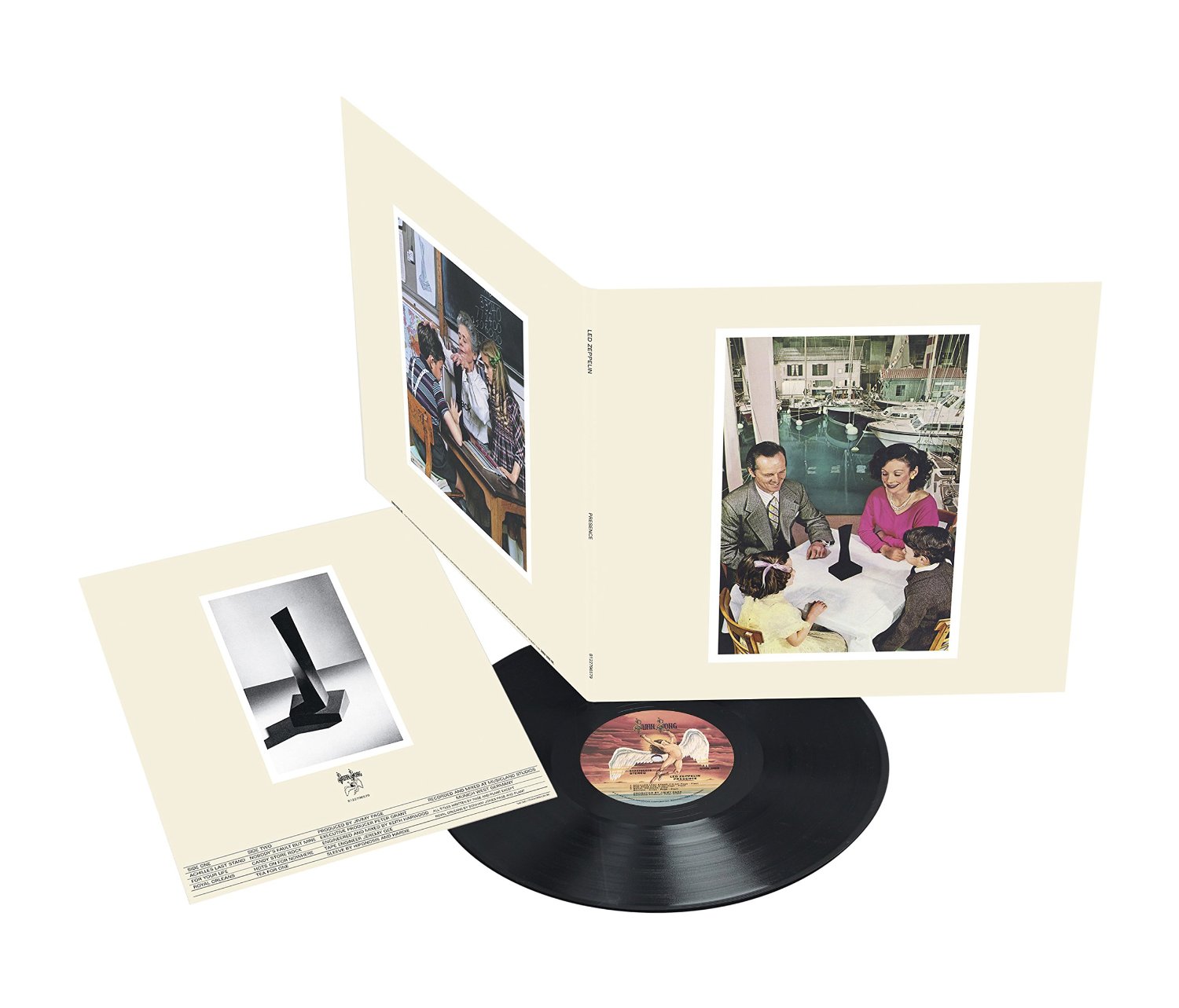
DORE L.A. SOUL SIDES 2.
DORE L.A. SOUL SIDES 2.
In the mid-fifties, many small record companies sprung up across America. Especially, in cities like New York and Los Angeles, which are two of America’s musical cities. One of these new labels was Era Records, which was founded in 1955 by two cousins, Lew Bedell and Herb Newman.
The two cousins came from very different backgrounds. Lew Bedell had been a comedian, but his career was at a crossroads. So he was on the lookout for a new career. Herb Newman however, was a music industry veteran. He’d started out as a West Coast sales rep for Mercury and later Decca. Having learnt the ropes, Herb wanted to form his own company. With his cousin looking for a new career, this seemed like the perfect opportunity for the two cousins.
Herb and Lew were like brothers. This and been the case since Lew’s parents split-up. Lew was born in El Paso, Texas. After his parent’s divorce, his mother took Lew and his sister to New York. They didn’t stay in New York long. Instead, they headed to Los Angeles, where they stayed with Max Newman. Not long after this, Herb Newman was born. The two cousins were brought up as brothers. So it’s no surprise that the two cousins went in to business together.
With the financial support of Herb’s father Max Newman, they founded Era Records in 1955. Three years later, in 1958, Doré Records, an imprint of Era Records was founded. The newly founded Doré Records was named after Lew’s first son, who’d been born to Lew and his wife Dolores in 1957. The rationale behind forming a second label was that it would double the chances of having a record played on the radio. Doré Records would also allow Herb and Lew to release much more groundbreaking records.
This was the case from the day Doré Records opened its doors. Having released two singles, a young Phil Spector approached Herb and Lew with To Know Him Is To Love Him, by The Teddy Bears. When Herb heard the understated arrangement, he thought that if it was to be released on Era the record would be rerecorded. Phil disagreed. So did Lew. He heard the potential in the To Know Him Is To Love Him and agreed to release the track in its original form. It became a huge worldwide hit. For the next couple of years, Lew and Herb’s opinions on music differed. Eventually, in 1959, Lew and Herb decided to go their own ways in May 1959.
It was an amicable spilt. Herb Newman continued with Era Records, but moved the company to new premises. Lew retained Doré Records, which stayed at 1481 Vine Street, Hollywood.
Doré Records became Lew’s baby. He was a shrewd judge of character and transformed Doré Records into one of the top independent soul labels of the sixties. That’s why in May of 2014, Kent Soul, a subsidiary of Ace Records released Doré L.A. Soul Sides, a compilation of music released by Doré Records and its subsidiaries Crescent and Horace’s. It was so successful that recently, a followup was released. This was Doré L.A. Soul Sides 2, which was also released by Kent Soul, an imprint of Ace Records.
Doré L.A. Soul Sides 2 features twenty-four singles tracks. Most were released on Doré Records. That’s apart from two tracks. The Vows’ I Wanna Chance was released on Markay, while Toussaint McCall’s From Saigon To San Francisco has never been released before. Several of the tracks on Doré L.A. Soul Sides 2 were penned by Lew Bedell using various aliases. Among them, were Lou Bideu, R.W. Chandler and B.J. Hunter. Lew Bedell, it seems had hidden talents. He was a dyed in the wool music man, who was determined to turn Doré Records into one of the most successful independent labels. Playing a part in the success of Doré Records, were many of the artists on Doré L.A. Soul Sides 2.
Opening Doré L.A. Soul Sides 2 is the first of two tracks from The Entertainers IV. They were formed in 1965, and released their debut single Temptation Walk in 1966. The followup later in 1966, was My Garden Of Eden. On the flip-side was Gettin’ Back Into Circulation, which was penned by Bobby Swayne and Cal Richardson. Gettin’ Back Into Circulation is something of a hidden gem, and became a a favourite on the Northern Soul scene. It’s been remixed for Doré L.A. Soul Sides 2. This whets the listener’s appetite for the rest of Doré L.A. Soul Sides 2, including The Entertainers IV other contribution.
That’s Just Aint My Day, which was released in 1968 was arranged, conducted and written by Richard “Dimples” Fields. He discovered a new lineup of The Entertainers IV. Two members of the band had left, and been replaced. This becomes apparent straight away. Just Aint My Day has the tougher, funkier sound that was becoming popular. However, Just Aint My Day didn’t find favour with record buyers, and only relatively recently, has found an audience.
Along with The Whispers, The Superbs were Doré Records’ most successful signings. They were also one of Doré Records’ longest serving groups. Their Doré Records came in 1964. A year later, in 1965, The Superbs released Goodess Of Love in 1965. This Ernie Freeman and B.J. Hunter composition marked the end of an era. Goodess Of Love was Bobby Swayne’s swan-song. Bobby and the rest of The Superbs ensure that Bobby’s left on a high. Soulful, catchy and dance-floor friendly, Bobby bowed out in style. However, The Superbs stayed where they were.
Eight years later, and The Superbs were still signed to Doré Records, and released Your Eyes as a single. On the B-Side was Wind In My Sails. Just like Your Eyes, it was penned by Ronald Cook and Lawrence Dickens. It’s very different from Goodess Of Love. That’s not surprising. By 1972, soul music had changed. That’s apparent on Wind In My Sails, which has tougher, funky, arrangement. The Superbs also adopt this tougher sound. Still though, their music can be smooth and soulful, as The Superbs’ music evolves in an attempt that their music stays relevant.
Former Superb Bobby Swayne cowrote Funky With My Stuff with his brother Billy and Antoinette Perry. The three of them then became The Natural Resources Unpolluted. Funky With My Stuff was released in 1971. Soulful and funky describes a track that seems to have been inspired by The Temptations’ Ball Of Confusion. It’s definitely a case of imitation is the sincerest form of flattery, in this homage to The Temptations.
Before releasing That’s What Love Will Do, Milton James was a member of The Creators. They joined Doré Records towards the end of 1965. By June of 1966, Milton James was about to record his debut single. The song chosen was My Lonely Feeling. On the flip side, was a song Milton James and Howard Scott penned, That’s What Love Will Do. This slow, melancholy but beautiful ballad released later in 1966. It’s too good for a B-Side. Sadly, when My Lonely Feeling was released as a single, it failed commercially and is now an extremely rare record. Both sides would later be rerecorded by the group The Creators became, War and at one point, were staples of their live shows.
One of the earliest recordings on Doré L.A. Soul Sides 2 is The Darlings’ My Pillow. The Darlings were a Los Angeles’ based quartet, that featured Julia and Maxine Walters. They would become part of the family band The Walters, and later, become song of the most in-demand backing vocalists. In 1963, that was still to come.
Back then, The Darlings were managed by Bobby Sanders, who produced My Pillow. It was arranged by Gene Page and released in 1963. Elements of soul and doo wop shine through, on what was the first of two singles The Darlings’ released Doré Records released.
Little Johnny Hamilton and The Creators released Keep On Movin’ in March 1965. It was penned by Gilbert Colvell, the band’s manager, one of The Creators, Bobby Nicholson. It’s without doubt the rarest record on Doré L.A. Soul Sides 2. Only one copy is known to have survived. As a result, it’s impossible to put a price on this track by one of the most underrated soul men who passed through Doré Records’ doors, Little Johnny Hamilton.
Without doubt, the best way to describe The Swans’ Nitty Gritty City is as a stomper. That’s the perfect description for Nitty Gritty City. It was penned by William Powell, and arranged by Miles Grayson. When Nitty Gritty City was released in 1966, this joyous, anthemic, stomper passed record buyers by. Over the last few years, its found favour within the Northern Soul scene. However, record collectors wanting a copy, will be hard pushed to find a copy. It’s another rarity, whose price will be beyond most people. So, its inclusion on Doré L.A. Soul Sides 2 will be welcomed.
Unlike many soul labels, Doré managed to survive the seventies, when when soul fell out of favour. By 1981, Doré were still going strong and had released Gail Anderson’s single We Communicate. On the flip side was Just A Little Ugly. This was a song she wrote with Wilbert James, who co-produced the song with Jesse Antoine and John Stephens. Just A Little Ugly is another song that falls into the category of hidden gem. Against a funky arrangement, Gail delivers a gospel inspired vocal tour de force. It veers between powerful, emotive and sassy.Why Just A Little Ugly was relegated to a B-Side seems a strange decision. It deserved better than that.
My final choice from Doré L.A. Soul Sides 2 comes courtesy of Eddie Kool, a.k.a. Eddie Williams. He penned I Look In The Mirror, which was arranged and produced by Bobby Day. It was released in 1968, and showcases a soul-baring ballad from Eddie Kool. It’s the perfect way to close Doré L.A. Soul Sides 2, as it leaves you wanting more and hopefully, Doré L.A. Soul Sides 3.
Not only does Doré L.A. Soul Sides 2, pick up where Doré L.A. Soul Sides left off. It was the perfect introduction to Lew Bedell’s Doré Records. The recently released Doré L.A. Soul Sides 2 continues the Doré Records story.
For over twenty years, Doré Records released innovative and exciting music. That’s what Lew Bedell set out to do when he founded Era Records in 1955. Four years later, and Lew and Herb decided to go their own ways in May 1959. With a steely eyed determination, Lew Bedell set about turning Doré Records into one of the leading independent labels in America. He succeeded in doing so.
There’s a reason for this. Unlike many of Doré Records’ competitors, Lew Bedell ensured his label evolved. He knew that music was constantly changing. It didn’t matter what genre of music, it was always changing. The trick was not to get stuck in the past. Lew had watched other labels suffer that fate. He knew that they wouldn’t last long. This proved to be the case. Meanwhile, Doré Records went from strength to strength.
Partly, that was because Lew embraced change. Another reason was he surrounded himself with talented people. Whether it was arrangers, producers or songwriters, Lew didn’t settle for second best. Especially when it came to artists.
Constantly, Lew Bedell on the look out for talented artists. He didn’t mind if they were up-and-coming or established artists. As long as he thought they were capable of producing a hit record, he would sign them to Doré Records. That was the case throughout the history of Doré Records. It was certainly the case with each and every one of the artists on Doré L.A. Soul Sides 2, which was recently released by Kent Soul, an imprint of Ace Records.
Lew Bedell thought each of the artists on Doré L.A. Soul Sides had potential. Sometimes he was right. Some of these artists went on to play an important part in the Doré Records’ story. Others, played a mere walk-on part. However, whether the twenty-four tracks on Doré Records Doré L.A. Soul Sides 2 were hits or hidden gems, they each have one thing in common…,their quality. That becomes apparent from the first time you discover the delights of on Doré Records Doré L.A. Soul Sides 2.
DORE L.A. SOUL SIDES 2.
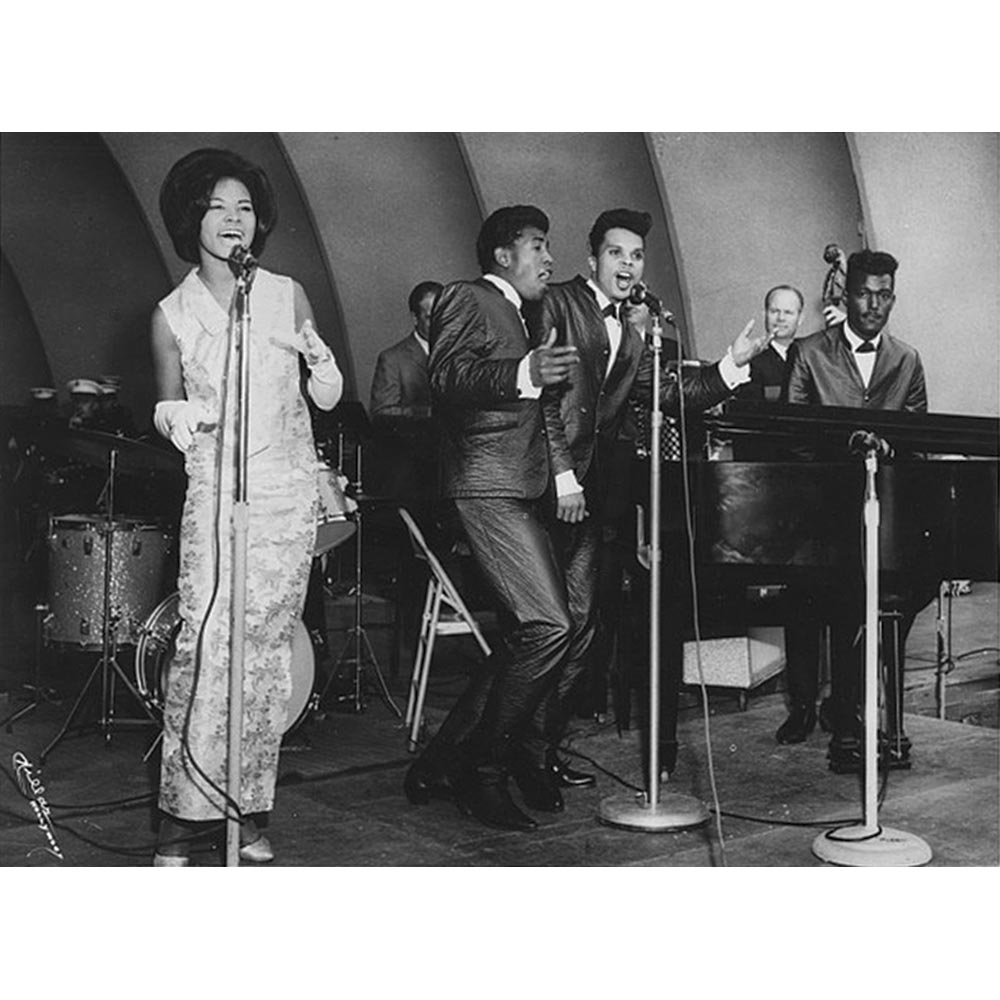
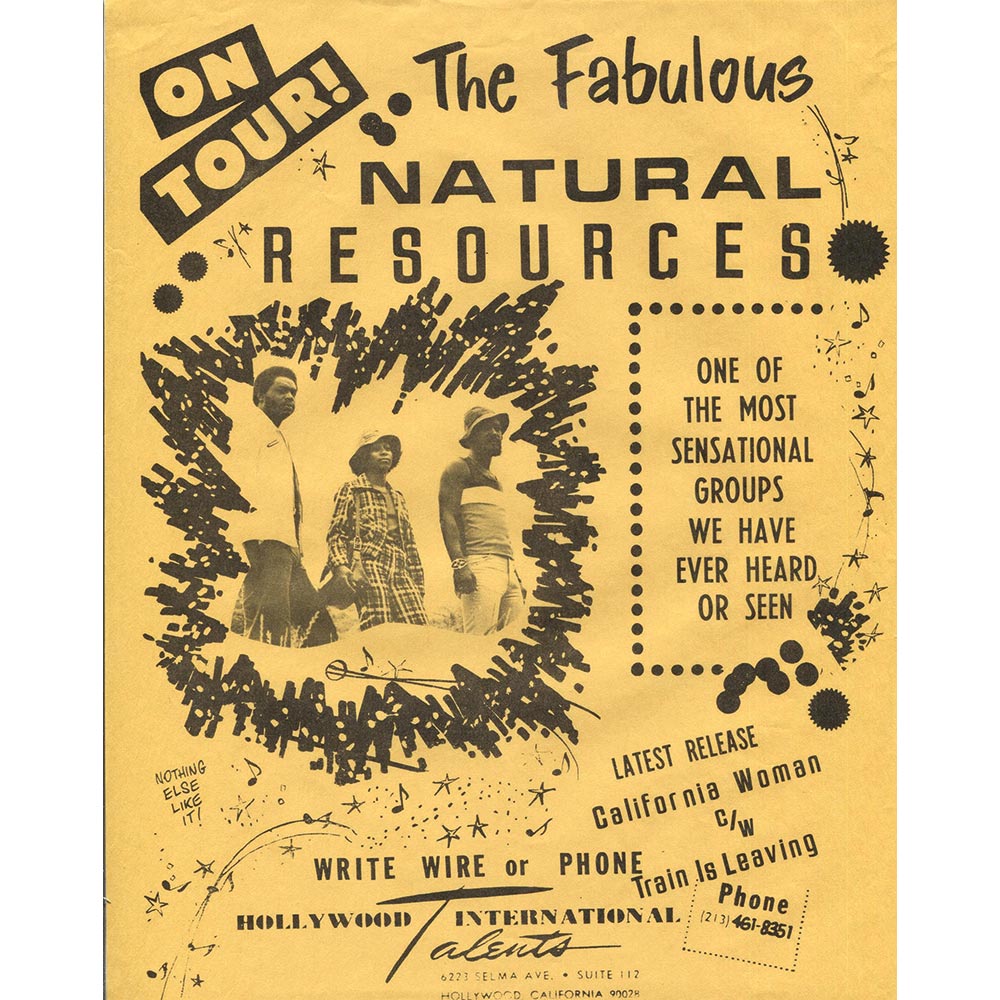
TOMMY RIDGLEY AND BOBBY MITCHELL-IN THE SAME OLD WAY: THE COMPLETE RIC, RON AND SHO-BIZ RECORDINGS.
TOMMY RIDGLEY AND BOBBY MITCHELL-IN THE SAME OLD WAY: THE COMPLETE RIC, RON AND SHO-BIZ RECORDINGS.
Although Joe Ruffino’s Ric and Ron labels may not have been the first R&B labels in New Orleans, they would become two of the most important and influential. That’s no surprised. Joe Ruffino was a music industry veteran. By 1958, Joe was ready to go it alone. So he founded two labels, Ric and Ron,which he named after his sons. They became a showcase for some of New Orleans’ most popular and talented R&B singers. Some of the the most successful were Eddie Bo, Johnny Adams, Joe Jones, Irma Thomas and Professor Longhair. However, there’s more to the Ric and Ron discography than a quintet of singers.
Two other talented local R&B singers that signed to Ric and Ron were Tommy Ridgley and Bobby Mitchell. They recently featured on an Ace Records compilation, The Complete Ric and Ron and Sho-Biz Recordings. This twenty-two tracks compilations documents the singles Tommy Ridgley and Bobby Mitchell released for Ric and Ron, whose story begins in 1958.
It was back in 1958, in New Orleans when Joe Ruffino founded his Ric and Ron labels. He named them after his two sons, Ric and Ron. While they were the Big Easy’s first independent R&B labels, they became two of the most important and influential. That’s no surprise, the man heading Ric and Ron was a music industry veteran.
Previously, Joe had worked in the record distribution business. He’d been employed by the New Orleans’ distributor Record Sales. Joe had also worked with Johnny Vincent, who owned the Ace and Vin labels. They were based in Jackson, Mississippi. However, Joe was Johnny’s man in New Orleans. He looked after the companies’ interest. One way he did this, was by bringing new acts to Johnny. Two of these acts were The Supremes and Lenny Capello. However, eventually, Joe tired of working for other people. Now was the time to head out on his own.
As a token of his gratitude, Johnny Vincent gave Joe some Ace masters. This would help Joe’s nascent labels, Ric and Ron. That would get Joe started. However, Joe was looking beyond releasing the Ace masters. Joe wanted to sign artists to his nascent labels. So he needed an an A&R man. They had to be the best that Joe Ruffino could find.
Early on, Joe realised the importance of surrounding himself with talented people. So he went looking for the best person for each job. Not only did this include musicians, songwriters and producers, Ric and Ron’s A&R man, Edgar Blanchard.
Just like Joe, Edgar Blanchard was a veteran of the New Orleans music scene. Edgar had been around since the forties. He was a talented guitarist and bandleader. However, Joe wasn’t signing Edgar to play guitar or lead his studio band. Instead, he was looking for someone who bring both established and up-and-coming local artists. It didn’t take long before Edgar signed Ric’s first artist, Al Johnson.
Al Johnson only released two singles on Ric. His debut on Ric was You Done Me Wrong was released on Ric, in 1958. Two years later, Al released his best known song Carnival Time. It was written by Joe and Al and became Al’s theme song. After that, Al became known as Mr. Carnival Time. By then, things had changed at Ric.
Edgar Blanchard left Ric. Filling his shoes wasn’t going to be easy. However, Joe Ruffino caught a break with the man Joe appointed as Edgar Blanchard’s successor, Harold Battiste.
Joe Ruffino seemed to have the uncanny knack of appointing the right man. Surrounding himself with talented people, ensured that Ric and Ron had every chance of thriving. Competition was fierce, so Joe needed loyal and talented lieutenants. He found that in Harold Battiste was certainly that. He filled the void left by Edgar Blanchard.
Harold Battiste took over from Edgar. With Harold Battiste onboard, Ric and Ron’s reputation grew. Suddenly, people started sitting up and taking notice of Joe Ruffino’s nascent labels. However, when Harold Battiste left, many thought that this would impact badly upon Ric and Ron. It didn’t.
That’s because Joe Ruffino found a ready made replacement, in Malcolm “Mac” Rebenack, the future Dr. John. He was a guitarist, pianist, songwriter, arranger and producer. Mac was more than capable of filling the void left by Harold Battiste and played his part in the rise and rise of Ric and Ron. However, back in 1958, Joe Ruffino was slowly building up Ric and Ron’s roster.
Midway through 1958, Joe added Johnny Adams to his roster. Johnny would release more singles on Ric and Ron than any other artist. His first single was I Won’t Cry, which became synonymous with Johnny Adams, who was one of Joe Ruffino’s most successful signings. So was another artist signed in mid-1958, Eddie Bo.
Eddie Bo was one of the many talented piano players to come out of New Orleans. A talented singer, songwriter and pianist, Eddie not only enjoyed a solo career on Ric, but penned tracks for other artists. It seemed that Joe Ruffino was continuing his policy of signing talented and versatile artists. This was certainly true of Tommy Ridgley.
Tommy Ridgley became the third male R&B singer to sign to Joe Ruffino’s labels. By then, Tommy was thirty-five. His career began in 1946, when he won a talent contest at the Dew Drop Inn in New Orleans. Soon, Tommy was making a name for himself locally, in New Orleans’ clubs. Then he joined the Bama Band, which was akin to Tommy’s musical apprenticeship.
By 1949, Tommy was singing with Dave Bartholomew’s band. Then when Dave left, to become an A&R man at Imperial Records, he signed Tommy Ridgley. His first single was Shrewsbury Blues, which was the first New Orleans’ R&B record released on Imperial. It sold well, and resulted in Tommy releasing further singles on Imperial. In total, Tommy released six singles before parting company with Imperial in 1951.
Not long after he left Imperial, Tommy Ridgley and His Orchestra released Tra-La-La on Decca. It looked like giving Tommy a hit single. However, Imperial thought they still had Tommy and his orchestra under contract. A contractual dispute followed. This contractual dispute resulted in Tra-La-La failing to fulfil its commercial potential. To rub salt into the wound, the Griffin Brothers Orchestra then released a cover. It was almost identical to Tommy’s version. Ironically, the Griffin Brothers Orchestra outsold Tommy’s version. Things would get worse for Tommy Ridgley and His Orchestra discovered they were under contract to Imperial until 1952.
Once Tommy was free of his Imperial contract, he formed a new band, The Untouchables. They signed to Atlantic Records and recorded twelve tracks over the next eighteen months. Only two singles were released, and they never sold well. For Tommy, this period between 1952 and 1954 proved frustrating. The Untouchables had potential, but they never got the chance to show what they were capable of. Sadly, Tommy’s luck was out, in more ways than one.
Following the end of The Untouchables’ contract with Atlantic, Tommy spent the next two years without a label. Then in 1956, Tommy signed Al Singer’s New York label Herald Records. His debut was When I Met My Girl. It gave Tommy a minor hit.
Another five singles followed over the next two years. Sadly, success eluded these singles. These singles were distributed by Ric, who Tommy Ridgley was introducing up-and-coming singers to.
One of the singers Tommy Ridgley recommended to Joe Ruffino, was a young singer who occasionally sung one with The Untouchables. Her name was Irma Thomas, the future Queen Of New Orleans. Irma Thomas released two singles for Ric, before signing to their competitor Minit in 1960. By then, Tommy Ridgley had signed a contract with Joe Ruffino. So had a young singer called Bobby Mitchell.
When Bobby Mitchell signed with Joe Ruffino, he was just twenty-five. He was ten years younger than his label mate Tommy Ridgley. However, Bobby, who was also a native of New Orleans, had been releasing records since 1953.
Bobby Mitchell’s career began when his group The Toppers were signed by Dave Bartholomew, to Imperial Records. The Toppers were together until 1955, when the group ran its course. By then, Bobby was ready to embark upon a solo career.
Like many artists, the early years of Bobby’s solo career are a case of what might have been. He released a cover of Nothing As Sweet As You. It was well received, but failed commercially. Then in 1956, Bobby enjoyed a hit with Try Rock and Roll, which reached number fourteen in the US R&B charts, That was as good as it got for Bobby Mitchell at Imperial.
Early in 1957, Bobby released a cover of The Mills Brothers’ You Always Hurt The One You Love. Despite its quality, it failed commercially. So did I’m Gonna Be A Wheel Someday, which was released in December 1957. By then, Bobby Mitchell’s singles were hardly being promoted. It was as if Imperial had given up on Bobby. So Bobby signed to Sho-Biz Records in 1960.
Sho-Biz Records was founded by Jim Stewart, the program director at the WWOZ radio station. This was a short-lived label and in 1960, Bobby Mitchell released Well I Done Got Over It as a single. On the flip-side was Just Say You Love Me. Both tracks feature on The Complete Ric and Ron and Sho-Biz Recordings. During his dalliance with Sho-Biz Records, Bobby Mitchell signed to Ron, where he and Tommy Ridgley who was signed to Ric. The two men enjoyed a friendly rivalry, and released another ten singles which feature on The Complete Ric and Ron and Sho-Biz Recordings. Their rivalry began in 1960.
Having signed to Joe Ruffino’s Ric label in the spring of 1960, Tommy began work on his Ric debut. The song chosen was Is It True? On the release of Is It True in April 1960, Ric billed their latest signing as “Tommy Ridgley The New King Of The Stroll.”Tommy lived up to the hype. He delivers a vocal tour de force, combining power and emotion. On the B-Side, was Let’s Try and Talk This Over, where Tommy deliver a needy, hopeful vocal. Despite the quality of both sides, Tommy’s Ric debut failed commercially. While Is It True was a success in New Orleans, it didn’t sell elsewhere. Given this was only Tommy’s Ric debut, nobody was worrying too much.
Six months passed before Tommy Ridgley released the followup to Is It True in late 1960. The song chosen was Do You Remember, which was an another tale of heartbreak. The flip side was a cover of Please Hurry Home. Sadly, for Tommy, lightning struck twice. Do You Remember sold well locally, but wasn’t a success further afield. For Tommy this was disappointing. Just like Bobby Mitchell, 1960 was meant to mark the beginning of new chapter in his respective careers. Maybe it would be a case of third time lucky for Tommy Ridgley?
For Tommy’s third single, and first single of 1961, a familiar song was chosen, Should I Ever Love Again. Four years previously, it had given Wynona Carr a hit single in 1957. Joe Ruffino was hoping lightning would strike twice.
When Should I Ever Love Again was released in March 1961, Tommy did his part, and delivered a heartfelt cover of Should I Ever Love Again? For the B-Side, a Tommy Ridgley composition Double Eye Whammy was chosen. It would later “inspire” Freddy King when he wrote Double Eyed Whammy in 1966. He gave Tommy a co-writers credit. Sadly, that was the nearest thing to success that Tommy’s third single got.
Just like his two previous singles, Should I Ever Love Again which was a success in the New Orleans area, where Tommy was a star. However, outside of New Orleans, Tommy was almost an unknown. What didn’t help, was that Joe Ruffino didn’t have the budget to promote Should I Ever Love Again. For Tommy, 1961 hadn’t started well. Surely, things would get better?
Four months later, in July 1961, Tommy Ridgley released his second single of 1961, Three Times. On the B-Side, was The Only Girl For Me. Just like Three Times, it was a Cornish and Smith composition. Tommy brought both sings to life, in his own inimitable style. While Three Times was popular in New Orleans, it was the old story. Beyond the New Orleans’ boundaries, Three Times failed to sell. That made it four consecutive singles that had failed commercially. Things hadn’t got any better.
With success still eluding Tommy, Joe Ruffino and Tommy went looking for a song that stood a chance of giving Tommy that elusive hit. They thought they had found it, when the came across In The Same Old Way. It became Tommy’s fifth Ric single, when it was released in November 1961. On the B-Side, was another song penned by Tommy, the The Girl From Kooka Monga. Despite the quality of both sides, In The Same Old Way was no more than a local hit. This was the fourth single Tommy had released during 1961. Although they had all sold well locally, that was as good as it got. For Tommy and Joe, this was a worrying trend? However, was Bobby Mitchell doing any better?
Bobby Mitchell was still signed to Sho-Biz Records in 1961. However, things had been tough for Bobby. Aged just twenty-five, he suffered a heart attack and took time to recover. However, by early 1961, Bobby was ready to release a new single.
Jim Stewart, who owned Sho-Biz Records, decided to sell Send Me Your Picture to Joe Ruffino. This was a gamble. If the single was a huge success, this could prove costly. This was a risk Jim was willing to take.
From the first time Joe Ruffino heard Send Me Your Picture, he thought the song had potential. So it was released as a single in early 1961. On the B-Side was You’re Doing Me Wrong. Both sides found Bobby Mitchell in fine voice. Especially on Send Me Your Picture, which Bobby’s wife penned. Joe Ruffino had high hopes for the single. Sadly, by the time Send Me Your Picture was released, Bobby was no longer performing live. Given his health problems, this deemed to risky. This hampered the potential success of Send Me Your Picture. It failed commercially. While it was popular locally, that was as good as it got. This Joe saw as a setback. He still believed in Bobby Mitchell.
Six months later, and a followup to Send Me Your Picture was released. The song chosen was the heartfelt ballad There’s Only One Of You. On the flip side, was uproarious and rousing version of Mama Don’t Allow. Why it wasn’t chosen as the single seemed a strange choice. Especially when Send Me Your Picture wasn’t a commercial success outside of the Big Easy. For Bobby Mitchell this was disappointing, and brought to an end his relationship with Jim Stewart and Joe Ruffino. Tommy Ridgley however, was still going strong and looking for a hit.
It wasn’t until July 1962, that Tommy released his sixth single. By then,Malcolm “Mac” Rebenack was Joe Ruffino’s new A&R man. He oversaw the recording of My Ordinary Girl, which was chosen as Tommy’s next single. It was written by Joe Ruffino. On the B-Side was She´s Got What It Takes. When My Ordinary Girl was released, nothing had changed. My Ordinary Girl sold well locally, but nowhere else. For Tommy and everyone at Ric this was disappointing. However, things were about to get worse.
In August 1962, tragedy struck. Joe Ruffino died suddenly of a heart attack. Ever since he founded Ric and Ron, Joe had worked tirelessly. Now it seemed all the years of long days and hard work caught up with Joe Ruffino. His family and the wider New Orleans’ music community were shocked.
With Joe gone, his two sons were left to run the Ric and Ron labels. They tried to follow in their father’s footsteps. That, however, proved impossible. Eventually, Joe’s brother-in-law Joe Assunto took over the running of Ric and Ron. By then, the Ric and Ron labels were on their last legs. For Tommy Ridgley, this was a disaster.
Now Joe Assunto was running Ric and Ron, he had to try and pick up the pieces of Joe Ruffino’s mini musical empire. It wasn’t going to be easy. However, Joe was determined to do the best for his sister and nephews.
Given all that had happened, it had been a while since Tommy Ridgley last released a single. He was still under contract to Ric. So, Malcolm “Mac” Rebenack got to work, Ge cowrote Heavenly, which was chosen as Tommy’s next single. On the B-Side was I Love You Yes I Do. However, it was a familiar story. Heavenly had potential, but Ric hadn’t neither the means nor the money to promote the single. For Tommy, his search for a hit went on. The only small crumb of comfort was that Heavenly sold well locally. However, that wasn’t going to be enough to save Ric.
It was nearly the end of the road for Joe Ruffino’s two labels. Without him, the labels were a shadow of what they had once been. However, Joe Assunto wasn’t ready to call time on Ric and Ron. One of the final singles to be released on either label was Tommy Ridgley’s Ric swan-song I’ve Heard That Story Before. That was almost ironic, given so many of Tommy’s singles were going to be the one that gave him his big break. That wasn’t the case with I’ve Heard That Story Before, which featured a cover of Honest I Do on the flip side. Just like Tommy’s previous singles, they were successful locally, but nowhere else. It seemed that Tommy Ridgley was destined to never make it big outside of the Big Easy. The music industry like life, isn’t fair.
For both Tommy Ridgley and Bobby Mitchell, it was a case of what might have been. Both men certainly had the talent to become successful singers. What they never got, was a break. Instead, hit singles eluded both Tommy Ridgley and Bobby Mitchell. That’s despite the quality of music Tommy Ridgley and Bobby Mitchell released on Ric and Ron. It should’ve found a wider audience. Sadly, that wasn’t the case.
Maybe if Tommy Ridgley and Bobby Mitchell had been signed to a major label like Atlantic, or one of the larger independents like Stax, then they would’ve enjoyed the commercial success their talent warranted. Sadly, that wasn’t the case. Instead, commercial success eluded Tommy Ridgley and Bobby Mitchell. They’re the nearly men of Ric and Ron, who could’ve and should’ve enjoyed commercial success and critical acclaim. Sadly, that wasn’t to be.
Fifty-two years after Ric and Ron closed their doors, Tommy Ridgley and Bobby Mitchell, Ric and Ron’s nearly men, are now perceived as two of the most underrated singers who Joe Ruffino signed. Their music is celebrated on Ace Records recently released compilation, The Complete Ric and Ron and Sho-Biz Recordings. This twenty-two track compilation documents and celebrates two singers who could’ve and should’ve reached greater heights than they did.
They certainly didn’t lack talent. Far from it. Tommy Ridgley and Bobby Mitchell had that in abundance. That’s apparent on The Complete Ric and Ron and Sho-Biz Recordings which documents and celebrates the career of Tommy Ridgley and Bobby Mitchell.
TOMMY RIDGLEY AND BOBBY MITCHELL-IN THE SAME OLD WAY: THE COMPLETE RIC, RON AND SHO-BIZ RECORDINGS.
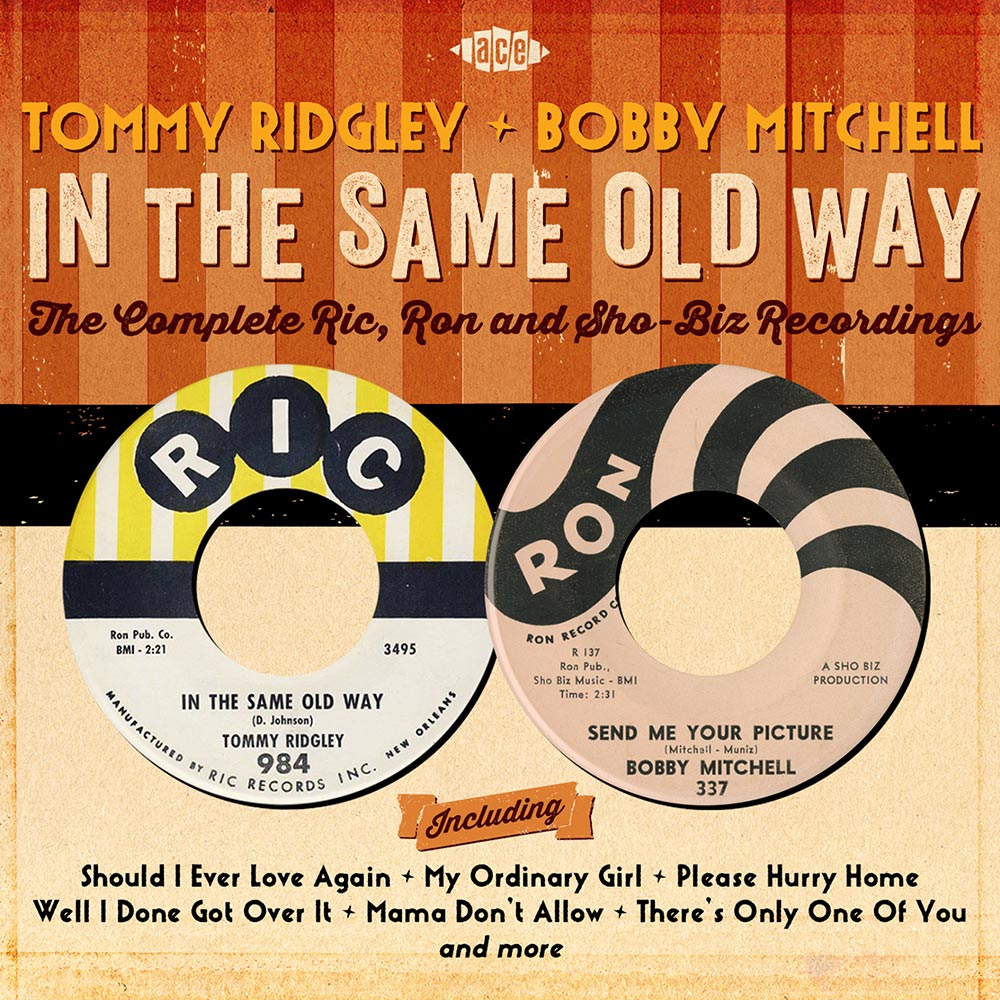
ANNELI DRECKER-ROCKS AND STRAWS.
ANNELI DRECKER-ROCKS AND STRAWS.
After a ten year wait, Anneli Drecker will shortly released her long awaited, and much anticipated third solo album, Rocks and Straws. It will be released on Rune Grammofon on 17th July 2015, marks a welcome return from Anneli Drecker. Her recording career began twenty-eight years ago, with Bel Canto.
Anneli Drecker first came to prominence in 1987, when she was the lead singer of Norwegian band Bel Canto. She was only seventeen, but was determined to make a career out of music. So Anneli made the brave decision to leave behind her Arctic hometown of Tromsø. However, she wasn’t leaving alone.
Instead, Anneli Drecker made the move to Bruxelles with the other two members of Bel Canto, Geir Jenssen and Nils Johansen. Soon, Bel Canto were part of Bruxelles’ thriving and vibrant indie scene. Bel Canto stood head and shoulders above the rest. It was only a matter of time before a record company came calling.
That proved to be the case. Belgian label Crammed Discs signed Bel Canto to their roster. Soon, Bel Canto began working on their debut album, White Out Conditions. Everything was going to plan until Bel Canto discovered a choir using the same name. So, Bel Canto were forced to release their debut album as Bel Kanto. This didn’t matter.
When White Out Conditions was released in 1987 by Crammed Discs, it was to critical acclaim. Critics and cultural commentators forecast a great future for Bel Kanto. They weren’t wrong. Three years later, in 1990, and Bel Canto were about to release their sophomore album Birds Of Passage. By then, Bel Canto were back using their original name. This just happened to coincide with album that wasn’t just released to critical acclaim, but was award winning.
When Birds Of Passage was released it was to widespread critical acclaim. Reviews of Birds Of Passage hailed the album one of the indie albums of 1990. Back home in Norway, the organisers of the Spellemannprisens, which are the Norwegian equivalent of a Grammy Award, agreed. Birds Of Passage won Bel Canto their first Spellemannprisens. For Bel Canto, Birds Of Passage was a game-changer.
Birds Passage was released internationally. Soon, Bel Canto star was in the ascendancy. However, what many critics remarked upon, was the ethereal quality of Anneli Drecker’s voice. It was almost inevitable that comparisons were drawn to the Cocteau Twins’ Liz Fraser. Both were the lead singer of successful indie bands. They both had a unique ethereal and enchanting vocal style. It would be another two years before it featured on another Bel Canto album.
It wasn’t until 1992, that Bel Canto released their third album, Shimmering, Warm and Bright was released on Crammed Discs. Just like Bel Canto’s two previous albums, it was released to critical acclaim. Superlatives were exhausted by critics who continued to champion Bel Canto. Back home in their native Norway, Bel Canto won their second Spellemannprisen with Shimmering, Warm and Bright. The critics had been right when they said Bel Canto were a group going places. That proved to be the case, in more ways than one.
After releasing a trio of albums on Crammed Discs, Bel Canto were signed by Atlantic Records. After five years and three albums, Bel Canto were leaving their indie roots behind.
Another three years passed before Bel Canto released their fourth album, Magic Box in 1995. This was Bel Canto’s major label debut. Magic Box was released on Atlantic and in America, on the Atlantic imprint Lava.
It seemed that making the move from indie to major hadn’t fazed Bel Canto. Nor did the fact that co-producing Magic Box was produced by Bel Canto were Jah Wobble, Mark Ferda, and Ulf Holand. This all-star production team were responsible for yet another critically acclaimed and award winning album.
Magic Box was released to same critical acclaim that had accompanied previous Bel Canto releases. It also won Bel Canto the third Spellemannprisens of their career. Now Bel Canto were one of the few artists or groups to have one three Spellemannprisens. How could Bel Canto surpass this?
Just two years later, in 1998, Bel Canto returned with the fifth album of their career, Rush. While it failed to win Bel Canto another Spellemannprise, Rush was hailed by some critics as a better album than Magic Box. This was fitting, because following Rush Anneli Drecker embarked upon a sabbatical from Bel Canto.
Following Rush, Anneli Drecker decided to embark upon a solo career. It saw Anneli collaborate with some high profile musicians on Tundra. This included Hans Magnus Ryan and Bent Sæther of Motorpsycho, plus Martin Horntveth and Sjur Miljeteig.
Former Cocteau Twin Simon Raymonde produced a track. So did Röyksopp. Torbjørn Brundtland of Röyksopp played on and produced four tracks. With this glittering array of talent aiding and abetting, Anneli Drecker, Tundra, promised to be one of the most anticipated debut albums of 2000.
It was no surprise that when Anneli released debut album her debut album Tundra in March 2000, it was to widespread critical acclaim. Critics were won over by Tundra’s more eclectic, genre-melting sound. Elements of electronica, rock and even post rock shine through on Tundra. As debut albums go, Tundra was the perfect album to launch Anneli Drecker’s solo career. However, Anneli’s solo career was put put on hold after Tundra.
In September 2001, Röyksopp released their debut album Melody A.M. Anneli Drecker cowrote Sparks with Röyksopp, and added the vocal. Sparks played its part in the runaway success of Melody A.M. Not only was it certified platinum in Norway, but in Britain. Then later in 2001, Melody A.M. won a Spellemannprisen for the best electronic album. By then, Röyksopp’s Melody A.M. was a huge success. In the process, it introduced Anneli Drecker to a wider audience.
Having toured Melody A.M. with Röyksopp, Anneli’s thoughts turned to Bel Canto’s sixth album. Dorothy’s Victory was produced by the three members of Bel Canto, and released in February 2002. Bel Canto, it seemed could do no wrong.
When critics heard Dorothy’s Victory, it received the same glowing reviews as its predecessors. It was fitting that critical acclaim accompanied Dorothy’s Victory. This would prove to Bel Canto’s final album. Anneli never knew this, a she embarked upon the next chapters of her career.
Three years later, and Anneli Drecker released her sophomore album Frolic. It was released in April 2005, and marked a change in direction. Frolic was a much more downtempo album. This appealed to many critics, who lauded Anneli’s brave decision to reinvent herself. They wondered what direction Anneli’s third album would take?
Another ten years passed before Anneli Drecker’s thoughts turned to her third album. During that ten year period Anneli Drecker was busy. She joined A-Ha for two gruelling world tours. However, part of the time Anneli spent with Røyksopp.
Having recorded Melody A.M. with Røyksopp, Anneli Drecker joined them on several tours. A live album was released in 2006, Röyksopp’s Night Out. It featured Anneli’s vocals on What Else Is There? and Sparks, two tracks she cowrote with Anneli Drecker. Four years later, Anneli rejoined Røyksopp for their third studio album Junior, which was released in March 2009. That would be the last Røyksopp album Anneli featured on. However, she continued to tour with them and collaborate with various artists.
Throughout her career, and way back to her days with Bel Canto, many artists and DJs have collaborated with Anneli Drecker. This includes everyone from DJ Krush, Gavin Friday, and Jah Wobble, to Hector Zazou, Tim Simenon, Guy Sigsworth and Ketil Bjørnstad. Each of these artists have worked with Anneli Drecker. So have many others, including those that would go on feature on Anneli Drecker’s long awaited third album, Rocks and Straws, which will be released on Rune Grammofon on 17th July 2015.
For Rocks and Straws, Anneli Drecker penned eleven new songs. These songs are based on lyrics by cult poet Arvid Hanssen, and were translated into English by artist and writer Roy-Frode Løvland. Arvid Hanssen´s poems have been strongly influenced by the mysterious and powerful nature of this arctic region, including the works of writer of Knut Hamsun. Despite the lyrics being based on Arvid Hanssen’s lyrics, the songs on Rocks and Straws are personal to Anneli Drecker. She describes them as an “ode” to the town and region she was born and brought up. Helping Anneli Drecker, who also produced Rocks and Straws, are some of the great and good of Norwegian music.
Among the musicians to play on Rocks and Straws are a rhythm section of drummers Rune Arnesen and Erland Dahlen, bassist Ole Vegard Skauge and guitarist Eivind Aarset. They’re joined by Tromsø´s prestigious Arctic Philharmonic Orchestra. They join Anneli, who adds vocals and plays the piano and organ at the Kysten Studio and Facing North Studio, in Tromsø. The result is an acoustic album which uses recording techniques from the seventies.
Alone opens Rocks and Straws. Washes of synths replicate the sound of an Arctic wind blowing. They’re joined by slow, moody notes on an organ. They accompany Anneli Drecker’s vocal. It’s as if she’s remembering the past, and growing up Alone in Arctic wilderness. Her thoughtful, ethereal vocal is accompanied by wistful strings. Still, the Arctic wind blows. So realistic is this soundscape that you’re transported to Anneli Drecker’s hometown, as she grows up Alone.
There’s a sense of hope as Anneli plays the piano on Circulating Light. The long winter months are gone, and spring has sprung. Suddenly, her hometown comes to life. It becomes vibrant and full of life and energy. Strings sweep and almost dance with joy. By then, there’ a joyousness in Anneli’s vocal. She paints pictures with her lyrics. Scenes come to life, as swathes of strings join the rhythm section and piano in providing the backdrop to Anneli’s joyous, hopeful vocal.
Just a long guitar opens Come Summer´s Wind. It signals the introduction of Anneli’s vocal. Again, she remembers how the arrival of spring showed that summer wasn’t far away. Accompanied by lush strings, her vocal veers between dreamy and tender to ethereal and enchanting. Again, she’s transported back to her youth, as she remembers spring becoming summer and the summer wind blowing gently against her skin. Dreamily and tenderly she sings: “Come Summer´s Wind,” on this beautiful ballad.
The changing of the seasons is important to Anneli. She’s not alone. That’s always been the case for people who live in places where the weather can be extreme. For Anneli growing up, that was the case. Green Leaves In The Snow is a song about spring, and the knowledge that a long, hard winter is behind her. Again, there’s a mixture of hope and joy in her vocal. Enthusiastically, she delivers the vocal. Meanwhile, her piano and the rhythm section play leading roles in the arrangement. So do the subtle strings. However, it’s Anneli’s vocal that steals the show, as a rocky anthem unfolds. It’s bound to be a favourite on Anneli’s forthcoming tour.
Strings quiver dramatically on Fisherman´s Blues. It’s as if they’re signalling the danger that the fisherman face every day of their life. There’s a melancholy nature to the strings. They set the scene for Anneli’s vocal. Her lyrics are cinematic lyrics. It’s almost possible to imagine the fishermen, as they prepare to head out to sea. Anneli’s vocal is sometimes jazz-tinged, as she pays homage to their bravery. This she does with just her piano and strings for company. That’s all that’s needed to frame her vocal on this cinematic song.
From an understated introduction, Ocean´s Organ soon grows in drama. Accompanied by just subtle strings, Anneli’s vocal is loud and clear. It then drops out. Backing vocals are barked out, replicating a ship’s crew manning a ship in days gone by. Meanwhile strings sweep and the rhythm section provide a driving, dramatic backdrop. Suddenly, the arrangement reaches a crescendo and Anneli’s crystalline vocal returns. The song is transformed, as her vocal becomes impassioned, as it soars above the now rocky, dramatic arrangement. Along with her band, she creates an captivating, dramatic and cinematic arrangement.
Straight away, Rain has a dreamy sound. It reminds me of Kate Bush and Jerry Burns. Anneli plays piano and delivers a slow, carefully articulated vocal. Her lyrics are thoughtful and cerebral. Especially, lyrics like: “every seed has its place in the rain…why should you complain in the rain.” Behind Anneli the arrangement is ethereal and understated. As it meanders along, this allows the listener to concentrate on the lyrics, and of course one of Anneli’s finest and most versatile vocals.
There’s a stylistic change on Rocks and Straws. The arrangement has a slightly experimental sound. A guitar and drone set the scene for Anneli. She delivers a tender, breathy and sometimes dramatic vocal. It also has an ethereal quality on this short track, where we hear another side to Anneli Drecker.
In the distance, a plink plonk piano opens Seagull´s Melody. Soon, strings sweep in. They signal Anneli’s tender, ethereal vocal. Soon, she’s remembering the landscape that surrounded her growing up. She remembers the sound of the: “nightingale came as a guest in July.” However, it didn’t stay. Wistfully, Anneli remembers the only thing that stayed were the seagulls, and the “Seagull´s Melody.” They were the only birds capable of surviving the inclement weather.
The piano lead Waiting For A Boat closes Rocks and Straws. Straight away, Anneli sounds like Kate Bush. The similarity is uncanny. While there have been similarities throughout Rocks and Straws, this is different. Partly, that’s because of the arrangement. Swathes of strings are unleashed, while a drum plays. Mostly though, it’s just Anneli and her piano, as she remembers Waiting For A Boat, and leaving her hometown behind.
Although Waiting For A Boat is meant to close Rocks and Straws, there’s still the hidden track Little Tree that awaits discovery on the CD. Again, it’s mostly Anneli and her piano. Occasionally dark strings and bells interject. They compliment Anneli’s hope filled vocal, as she sings of the Little Tree. It could be a metaphor for new life, given the sound of a baby later in the track. Given the sense of hope that new life brings, Little Tree bookends Rocks and Straws perfectly.
Ten years might seem a long time to wait for an album. However, in the case of Anneli Drecker’s third album Rocks and Straws, it’s been well worth the wait. Rocks and Straws is a carefully crafted album, one where Anneli Drecker pays homage to the town and region that shaped her.
That’s apparent when one listens to Rocks and Straws’ lyrics. Anneli Drecker sings about the landscape, habitat and changing of the seasons. There’s even Fishermen’s Blues, which pays tribute to the local fishermen, who like night follows day, brave the inclement weather. Just like the other songs on Rocks and Straws, Anneli Drecker toys with the listener’s emotions.
The eleven songs on Rocks and Straws veer between cerebral and incisive, to beautiful, hopeful and joyous. Other times, the music is melancholy and wistful. Sometimes there’s a mysterious quality to Anneli Drecker’s lyrics, which conjures up pictures of the barren Arctic landscape. Always though, Rocks and Straws captivates. Especially the way Anneli Drecker delivers the lyrics.
Anneli Drecker’s vocal is ethereal. That’s the perfect description of Anneli Drecker’s vocal. It’s complimented by understated, acoustic arrangement. They frame Anneli Drecker’s vocals, as effortlessly, she breathes life, meaning and hope into lyrics. Other times, her vocal veers between tender, dramatic and powerful. Occasionally, Anneli Drecker’s vocal and tinged with sadness. Always, it’s heartfelt and impassioned. That’s because each of the eleven songs on Rocks and Straws are personal to Anneli Drecker. They’re about Anneli Drecker and her life and formative years. These years shaped Anneli Drecker, and made her what she is now. That’s one of the most talented singers in Europe.
Sadly, many people are yet to discover Anneli Drecker’s music. They may have heard her with Bel Canto or with Röyksopp. These are just two of the chapters in Anneli Drecker’s twenty-seven year career. During her career, Anneli has also collaborated with everyone from DJ Krush, Gavin Friday, and Jah Wobble, to Hector Zazou, Tim Simenon, Guy Sigsworth and Ketil Bjørnstad. However, now, Anneli Drecker is concentrating on her solo carer.
Anneli Drecker’s long awaited and much anticipated third solo album, Rocks and Straws, will be released on Rune Grammofon on 17th July 2015. Rocks and Straw is a career defining album which hopefully, will introduce a wider audience to the ethereal voice of the multi-talented Anneli Drecker.
ANNELI DRECKER-ROCKS AND STRAWS.
GROOVE WITH A FEELING-SOUNDS OF MEMPHIS-BOOGIE, SOUL AND FUNK 1975-1985.
GROOVE WITH A FEELING-SOUNDS OF MEMPHIS-BOOGIE, SOUL AND FUNK 1975-1985.
Ever since the birth of rock ’n’ roll, music has continued to evolve. As a result, musical genres have come and gone.Those that were resistant to change were left behind. That could’ve happened to many within the Memphis music industry in 1975.
By then, soul music, which was one of Memphis’ most successful musical exports, was no longer as popular.Far from it. Soul music was very much yesterday’s sound. Disco had surpassed soul in popularity. This was a disaster for the city. Memphis was a musical city. Countless arrangers, backing vocalists, producers session musicians and songwriters relied upon soul music to make a living. Then there were engineers and studio owners.The change in musical tastes could prove disastrous for Memphis. Especially after the demise of Stax.
Once one of the biggest soul labels of the sixties and even into the early seventies, Stax was one of the most successful of Memphis’ record labels. Throughout the sixties, it was a hit making machine. However, by 1975, Stax filed for bankruptcy. This once musical colossus was no more. Worse was to come.
Hi Records, which was home to Al Green, Ann Peebles, O.V. Wright and Otis Clay was no longer the powerhouse it once was. Al Green its most successful artist had found religion. This just happened to coincide with a fall in his album sales. When Al Green Is Love was released in 1975, it reached number twenty-eight in the US Billboard 100 and number one in the US R&B charts. However, sales were way down, and Al Green Is Love became Al’s least successful album since 1971s Let’s Stay Together. This was as good as it got for Al Green. It was all downhill from here.
That was the case with every soul label. However, Memphis was a soul city. Soul was an integral part of the local economy. Many people relied upon soul music for their living. Without soul music, many local economists feared for the city’s economy.
What the local economists forgot, was the many within Memphis’ music industry had what economists called transferable skills. Not only could the musicians play soul, but the could play funk and boogie. At a pinch, they could even play disco. Many though, hoped it wouldn’t come to that. It didn’t; and for the next ten years, many within Memphis music industry made a living out of boogie, funk and even soul.
This included many people connected with the Sounds Of Memphis label, which previously, had been one of the city’s soul labels. However, those at Sounds Of Memphis were realists. Record buyers no longer had an appetite for soul. So it was a case of making music people wanted. It’s documented on Groove With A Feeling-Sounds Of Memphis-Boogie, Soul and Funk 1975-1985, which has just been released by BGP, an imprint of Ace Records.
Groove With A Feeling-Sounds Of Memphis-Boogie, Soul and Funk 1975-1985 is a nineteen track compilation. Among the contributors, are Lee Moore, Demetrius, Freedom Express, Fran Farley, Everyday People and Vision. Ex Ovation Louis Williams and ex Hi Records backing vocalist Erma Moore. Many of the tracks have never been released before, and make their debut on Groove With A Feeling-Sounds Of Memphis-Boogie, Soul and Funk 1975-1985, which I’ll pick the highlights of.
Opening Groove With A Feeling-Sounds Of Memphis-Boogie, Soul and Funk 1975-1985 is the first of three tracks from Lee Moore, You Can Bet I Can Get You Yet. This is the first of the unreleased tracks. It’s soulful slice of eighties boogie, that show’s Lee’s versatility. Previously, Lee had sung soul and disco. However, after disco’s demise, Lee knew he had to evolve as an artist. He combined his soulful past with the new boogie sound, on a session he cut for Sounds Of Memphis. A number of tracks were recorded, including Get Off, which Lee released as a single on his Score label. Sadly, You Can Bet I Can Get You Yet, What You Do For Love and What’s In The Dark were never released. However, these three slices of soulful boogie show just how talented and versatile a vocalist Lee Moore.
For anyone familiar with the Hi Records’ discography, they’ll be familiar with the name Erma Shaw. She added backing vocals on many of Hi Records’ recordings in the late seventies. Like many backing singers, Erma wanted to embark upon a career as a solo artist. Her career began at Hi Records, where she released several singles. She then moved to Sounds Of Memphis, where she recorded Ridin’ a song she penned with Ben Cauley and Jerod Minnies. Another song Erma Shaw recorded was Attraction, which she cowrote with Jerod Minnies and Linda Lucchesi, who had taken over the running of the Sounds Of Memphis from her father. Ridin’ is best described as a fusion of funk and Southern Soul. It features a vocal powerhouse from Erma. Attraction shows how much soul music had changed by the early eighties. Synths and drum machines accompany Erma’s old school vocal, as she combines power and emotion. Sadly, neither track were ever released and make their debut Groove With A Feeling-Sounds Of Memphis-Boogie, Soul and Funk 1975-1985.
By the time Linda Lucchesi took over the running of Sounds Of Memphis, Eddie Thomas was the bassist in the Sounds Of Memphis house band. Eddie wasn’t the only musician in the Thomas household. His son Demetrius had dreams of making a career as a singer. So, Eddie introduced Demetrius to Linda Lucchesi. She agreed to allow Demetrius to record several songs. This included One To One, which Richard Blackman, Wendell Moore and Eddie Thomas cowrote. In Demetrius’ hands, One To One became a futuristic sounding slice of funky boogie. Sadly, it was never released. Despite this, Linda asked Demetrius to cut Tighter Tighter with Takelia.
Linda Lucchesi’s decision to pair Demetrius with Takelia proved a masterstroke. They seemed to bring out the best in each other. On Tighter Tighter, their vocals are soulful and heartfelt. They prove to be a potent and soulful partnership. Takelia proves to be yin to Demetrius’ yang. Despite the quality and soulfulness of Tighter Tighter, the song was never released as a single. However, somewhat belatedly, this hidden gem can be heard by a new generation of record buyers.
The Ovations released their final single, Sweet Thing, in 1978. Not long after that, lead vocalist Louis Williams cut Don’t Fight It, the first single of his solo career. Don’t Fight It is a real fusion of influences. Everything from disco, funk, proto-boogie and soul is combined by Louis and the Sounds Of Memphis’ house band. The result is a track that straddles the disco and boogie era. Thirty-seven years later, Don’t Fight It has stood the test of time and will appeal to DJs and dancers alike.
Fran Farley features three times on Groove With A Feeling-Sounds Of Memphis-Boogie, Soul and Funk 1975-1985. These three tracks show different sides to Fran Farley. Cold Blooded Sally, which Fran and Phillip Farley penned is an uber funky soulful cut. It sounds as if it belongs on a seventies Blaxploitation movie. Partly, that’s down to the performance of the Sounds Of Memphis’ house band. They up the funk factor. Got To Have My Own is very different to Cold Blooded Sally. Here, Fran delivers a soul-baring vocal against a much mure understated, subtle arrangement. Then on Lord Give Me A Little Of Your Heaven gospel and Southern Soul become one, creating a truly beautiful track.
One of the funkiest tracks on Groove With A Feeling-Sounds Of Memphis-Boogie, Soul and Funk 1975-1985 comes courtesy of Everyday People. They wrote Politics, which is another genre defying track. It could be described as funk with a social conscience. There’s definitely a nod to Sly and The Family Stone and even, Gil Scott-Heron as Everyday People vamp their way through Politics, combining cutting social comment, funk, soul and even early hip hop.
One of the most left-field tracks in Kannon’s New Lang Syne. It’s what would’ve happened if Jimmy Shand had dropped acid in the White Heather Club. Funk, fusion and boogie combine head on, resulting in an alternative and lysergic way to bring in the New Year.
While The Jacksonians only ever released one single, they recorded a number of tracks at Sounds Of Memphis. This includes I’ll Be Around, which Thom Bell and Phil Hurtt cowrote. This is a cover of a song made famous by The Spinners. Apart from the occasional brief, funky intervention,mostly, The Jacksonians stay true to the original. There’s no attempt to reinvent the wheel. The result is what’s easily, one of the most soulful songs on Groove With A Feeling-Sounds Of Memphis-Boogie, Soul and Funk 1975-1985.
Anyone who like their music funky and soulful will enjoy Donald O’Connor’s We Need Love. This is a track that Donald penned. That was before he became Earth, Wind and Fire’s keyboardist and musical director. Back when he recorded We Need Love, Donald was a solo artist. Sadly, fame and fortune eluded him. That’s despite being a talented singer, songwriter and keyboardist. Donald showcases his considerable skills on the truly joyous and irresistible We Need Love.
Freedom Express feature twice on Groove With A Feeling-Sounds Of Memphis-Boogie, Soul and Funk 1975-1985. Very little is known about Freedom Express. Complicating matters, is that during there were two bands in Memphis with the same name. This Freedom Express are obviously a tight and talented band. Their first contribution is Groove With A Feeling, which lent its title to this BGP compilation. It’s a fusion of funk and soul. Adain the arrangement has a harder, uber funky sound. By comparison, the vocal is almost tender and restrained. However, the vocal comes into its own on Dream Girl. As a slow, meandering arrangement almost jazz-tinged unfolds, the vocal veers between sits a hopeful and needy, but always soulful. Dream Girl, which is a fusion soul and jazz, is a real find and is the perfect way to close Groove With A Feeling-Sounds Of Memphis-Boogie, Soul and Funk 1975-1985, in that it leaves you wanting more.
After soul fell out of favour around 1975, many soul labels folded. These labels were resistant to change. They kept churning out music nobody wanted to hear. Just like the gambler who always thinks their luck will change with the next throw of the dice, these labels thought the next single would give them a much needed hit. It never did. Instead, they were pouring good money after bad. Eventually, they ran out of money and were forced to close their doors. Other soul labels, including Sounds Of Memphis, realised they had to evolve.
So between 1975 and 1985, Sounds Of Memphis released a much more eclectic selection of music. Boogie, funk and soul was recorded and released by Sounds Of Memphis. This was the only way. Sounds Of Memphis had to change. That’s apparent from the nineteen tracks on Groove With A Feeling-Sounds Of Memphis-Boogie, Soul and Funk 1975-1985, which was recently released by BGP, an imprint of Ace Records.
Not only did Sounds Of Memphis evolve musically, but incorporated the new technology that was making its way into studios across America. By the late-seventies and early-eighties, drum machines, synths and sequencers were playing a much more important part in music. Some musicians and labels resisted these changes. Not Sounds Of Memphis. They realised this new technology wasn’t going away, so embraced it. It can be heard throughout Groove With A Feeling-Sounds Of Memphis-Boogie, Soul and Funk 1975-1985, which shows another side to the music Sounds Of Memphis released. No longer were they a soul label.
By that time Linda Lucchesi had taken over the running of Sounds Of Memphis. She knew that music was changing, and changing fast. Linda also knew that labels that didn’t embrace change, risked their future. There was no way she was going to let that happen to Sounds Of Memphis. Other label owners realised this too. The demise of Stax had been a shock to many label owner’s system. It forced their hand, they had to change.
Having moved from being just a soul label, to a label that released what record buyers wanted to hear Sounds Of Memphis stood a better chance of surviving. Other record labels and recording studios in Memphis weren’t so lucky. The problem was, they were resistant to change. That was fatal, and ultimately costly. As Billy Paul and Jerry Butler sang, Only The Strong Survive.
One of the survivors was Sounds Of Memphis. Linda Lucchesi made sure of that. She realised that Sounds Of Memphis had to record and release what people wanted to hear. Between 1975 and 1985, this including the boogie, funk and soul that features on Groove With A Feeling-Sounds Of Memphis-Boogie, Soul and Funk 1975-1985.
GROOVE WITH A FEELING-SOUNDS OF MEMPHIS-BOOGIE, SOUL AND FUNK 1975-1985.
HAPPY LOVIN’ TIME-SUNSHINE POP FROM THE GARPAX VAULTS.
HAPPY LOVIN’ TIME-SUNSHINE POP FROM THE GARPAX VAULTS.
By 1967, Gary S. Paxton had established a reputation as one of the top producers in Los Angeles. Success hadn’t come overnight for Gary S. Paxton. Far from it. He had overcome a lot to get to where he was.
Gary Sanford Paxton was born on 18th May 1939, in Coffeyville, Kansas. he was adopted when he just three, and brought up in abject poverty. Life was tough for Gary growing up. Aged eleven, he contracted spinal meningitis. A year later, Gary’s family moved to Arizona, where he discovered rock ’n’ roll.
Aged fourteen Gary was playing in his first band. They played both country and rock ’n’ roll. A few years later, and Gary embarked upon what was akin to his musical apprenticeship. He toured the Midwest playing with various bands. This stood Gary in good stead.
In 1959, Gary had been a member of various groups. None of them had enjoyed much in the way of success. He was a member of The Rockabillies. They morphed into The Pledges, who recorded on Rev Record. The Pledges then became Gary and Clyde, who single Why Not Confess was released on Time Records. However, it was only when Gary and Clyde became Skip and Flip, that success came their way.
Gary became Flip, of the pop duo Skip and Flip. They enjoyed a million selling single with It Was I, which Gary wrote. The pair recorded the song, put together a group, and then began shoping the demo to a label. This would become the way Gary worked when he became a producer. Having shopped the single to various labels, Brent Records wanted to release It Was I.
When It Was I was released on Brent records, the single reached number eleven on the US Billboard 100. The followup Fancy Nancy, stalled at number seventy-one in the US Billboard 100. Gary and Skip’s swan-song was Cherry Pie, which reached number eleven on the US Billboard 100. Their short-lived partnership had proved successful. Now, Gary S. Paxton decided to embark upon a career as a producer.
Having started his production career in 1959, it took Gary S. Paxton until the mid-sixties before he became one of top producers in Los Angeles. During that period, Gary’s entrepreneurial skills were shining through. He had cofounded several record labels, including Garllo and Star-Burst with Lloyd Johnson, whose son Kenny was a talented songwriter. These labels meant that Gary could write, arrange, record, produce and release a single. This was perfect Gary S. Paxton, whose star was in the ascendancy.
By 1967, Gary S. Paxton was one of the top producers in L.A. Gary’s production skills had the uncanny ability to transform an artist’s reputation and fortunes. However, Gary wasn’t just a producer.
Instead, Gary was also an A&R man, arranger, engineer, musician and songwriter. Versatile described Gary in more ways than one.
Gary didn’t just specialise in one type of music. Not at all. From the early days, Gary had worked with an eclectic selection of artists. That was still the case. He was just as happy working with The Association as he was The Four Freshman. There was no way Gary S. Paxton was ever going to be accused of being an auteur producer. No. Gary was a versatile producer, who was just as comfortable producing garage rock, psychedelia, R&B, country or sunshine pop, like that on Happy Lovin’ Time-Sunshine Pop From The Garpax Vaults. It was recently released by Big Beat Records, an imprint of Ace Records.
Happy Lovin’ Time-Sunshine Pop From The Garpax Vaults features twenty-four slices of sunshine pop. This includes thirteen previously unreleased tracks. So, Happy Lovin’ Time-Sunshine Pop From The Garpax Vaults is a mixture of familiar faces and hidden gems. There’s contributions from Augie Moreno, The Black Box, The Chocolate Tunnel, Jim Gordon, The Jaybees, The Bakersfield Poppy Pickers, The Lords, Mary Saxton and Dave Antrell. Some of the artists on Happy Lovin’ Time-Sunshine Pop From The Garpax Vaults feature twice. That’s because they’re among the finest purveyors of sunshine pop that Gary S. Paxton worked with. You’ll realise that when I pick the highlights of Happy Lovin’ Time-Sunshine Pop From The Garpax Vaults.
Opening Happy Lovin’ Time-Sunshine Pop From The Garpax Vaults is the first of the unreleased tracks, Augie Moreno’s Make Up Your Mind. It was penned by Kenny Johnson, who was a talented songwriter. Sadly, nobody got the opportunity to her this hook heavy pop gem. It’s lain unreleased for nearly fifty years, and makes a welcome and overdue debut on Happy Lovin’ Time-Sunshine Pop From The Garpax Vaults.
The New Wing released The Thinking Animal as a single in 1967. It was penned by Kenny Johnson, Bob Hopps and Jerry Ritchley, and released on Pentacle Records. This was the only single that Pentacle Records released. Mind you, what a single it was. It’s psychedelic pop at its finest.
Just like Gary S. Paxton, Curt Boettcher is a singer, songwriter, musician and producer. Sadly, his career was cut tragically short when he died in 1987, aged just forty-three. Two of the unreleased tracks come courtesy of Curt Boettcher. There’s a slight similarity to Scott Walker. That’s apparent on Christina, In My Dreams which Gene Parsons and Jon Paxton penned. It’s a hauntingly, beautiful ballad. Stay a Gene DeNovi composition, is Curt’s other contribution. This heartfelt ballad is the perfect showcase for Curt Boettcher, whose a truly talented singer capable of making a song come to life.
The Chocolate Tunnel only ever released one single, Ostrich People. It was released in 1967 on Era Records. It’s a Kenny Johnson and Jerry Ritchley composition. The version on Happy Lovin’ Time-Sunshine Pop From The Garpax Vaults is different from the single version. Instead it’s the stereo mix of this almost dramatic slice of psychedelic pop.
Dave Antrell’s career as a singer and songwriter began in the sixties, and continued into the early seventies. However, in the sixties, Dave worked with Gary S. Paxton. He penned some of the tracks that Gary produced. However, deep down, Dave wanted to forge a career as a singer. So, he recorded several tracks with producer Gary S. Paxton produced. Three of the tracks feature on Happy Lovin’ Time-Sunshine Pop From The Garpax Vaults. They’ve never been released before. The first is She Loves Me, a joyous and celebratory slice of sunshine pop. You Take Things Lightly Babe is a driving slice of psychedelic sunshine pop. If I Can Help It has a similar driving beat to You Take Things Lightly Babe. However, it takes on an anthemic sound, and isn’t short of hooks. This makes If I Can Help It one of best of the unreleased tracks on Happy Lovin’ Time-Sunshine Pop From The Garpax Vaults.
The Bogart Cult are without doubt, something of a mystery group. Almost nothing is known about them. All that I could find out, was that The Bogart Cult recorded Games in 1969. This Beatles’ inspired song was never released as a single. Instead, it’s case of what might have been? Games is a beautiful ballad penned by Kenny Johnson. If it had been released, it might have given producer another hit single.
Another group to feature twice on Happy Lovin’ Time-Sunshine Pop From The Garpax Vaults are The Jaybees, a Canadian band. They released Who Do You Think You Are as a single in 1967. This Kenny Johnson penned track was released on Columbia. Elements of pop, psychedelia and rock are combined by The Jaybees. There’s even a nod to The Beatles. On the B-Side was Bad Sign. another Kenny Johnson composition. Stylistically, it’s similar to Who Do You Think You Are. However, of the two tracks, I much prefer Bad Sign. Not only has it a slightly more psychedelic sound, but it’s much more catchy.
The Bakersfield Poppy Pickers were essentially a studio project that recorded on Gary S. Paxton’s Riverbottom label. Kenny Johnson played an important part in their recordings. He also penned Clean Up Your Own Backyard and It’s Written All Over My Face. These two tracks were recorded in 1969. By then, The Bakersfield Poppy Pickers’ music is best described as genre-melting. Everything from pop, psychedelia and rock was combined by to create two tracks that epitomise the late sixties sound.
Privilège are another Canadian band. released The Highly Successful Young Rupert White as a single in 1968. Lysergic and haunting, it’s another of the highlights of Happy Lovin’ Time-Sunshine Pop From The Garpax Vaults. It was released in 1968, on Capitol. However, the version on Happy Lovin’ Time-Sunshine Pop From The Garpax Vaults is the stereo mix of the single.
My final choices from Happy Lovin’ Time-Sunshine Pop From The Garpax Vaults, come courtesy of The Lords. Their first contribution is Savin’ (Everything for You Girl), a Bob Hopps, Kenny Johnson, Gary S. Paxton and Jerry Ritchley composition. As it takes on a rocky hue, there’s a nod to the Rolling Stones, before taking a psychedelic twist. The other tracks from The Lords, is the unreleased Don’t Put Me Down. It’s a fusion of rock and psychedelia, that’s far too good to have lain unreleased for nearly fifty years. Somewhat belatedly, Don’t Put Me Down makes its debut on Happy Lovin’ Time-Sunshine Pop From The Garpax Vaults.
Many of the tracks on Happy Lovin’ Time-Sunshine Pop From The Garpax Vaults date from 1967 to 1969. By then, Gary S. Paxton had spent the last eight years working almost nonstop. When he had time to himself, Gary enjoyed sampling the rock ’n’ roll lifestyle in Los Angeles.
By then, L.A. was one of America’s musical capitals. The great and good of music came to live and record in L.A. Just like Gary, when they weren’t recording, they came out to play. When they came out, it was easy to be tempted. Drink and drugs were readily available. Like many rock stars, drink and drugs became part of Gary’s diet, as he explored and enjoyed Tinseltown’s nightlife. He was a successful producer who was living the dream.
Gary S. Paxton had come a long way to the poverty of his early life. He had climbed out of poverty, and made a living out of music. Now he was one of L.A.’s most successful and versatile producers. He was just as comfortable producing garage rock, psychedelia, R&B, country or sunshine pop, like that on Happy Lovin’ Time-Sunshine Pop From The Garpax Vaults. It was recently released by Big Beat Records, an imprint of Ace Records, and showcases Gary’s just how talented and versatile a producer he was. That’s not all.
By the late sixties, Gary was also one of the most successful producers in L.A. It had taken him since 1959 to get this far.
He had already produced hits like Monster Mash and Alley-Oop. Not only was Gary living the dream, but he was making dreams come true. Gary had the ability to transform people’s careers. Previously unsuccessful artists went on to enjoy commercial success. Most people wouldn’t have even considered turning their back on such a successful career.
That’s what Gary S. Paxton did when he discovered religion. Gary turned his back on drink and drugs, and moved from L.A. to Nashville. Gary S. Paxton’s career as one of the most successful producers in L.A. was Gary’s in the past. His future lay with religion and the Lord’s work. This came as a shock to Gary’s friends and colleagues. However, for Gary this was the end of a chapter in his life. That chapter in Gary S. Paxton’s life is celebrated on Happy Lovin’ Time-Sunshine Pop From The Garpax Vaults, which was recently released by Big Beat Records, an imprint of Ace Records.
HAPPY LOVIN’ TIME-SUNSHINE POP FROM THE GARPAX VAULTS.
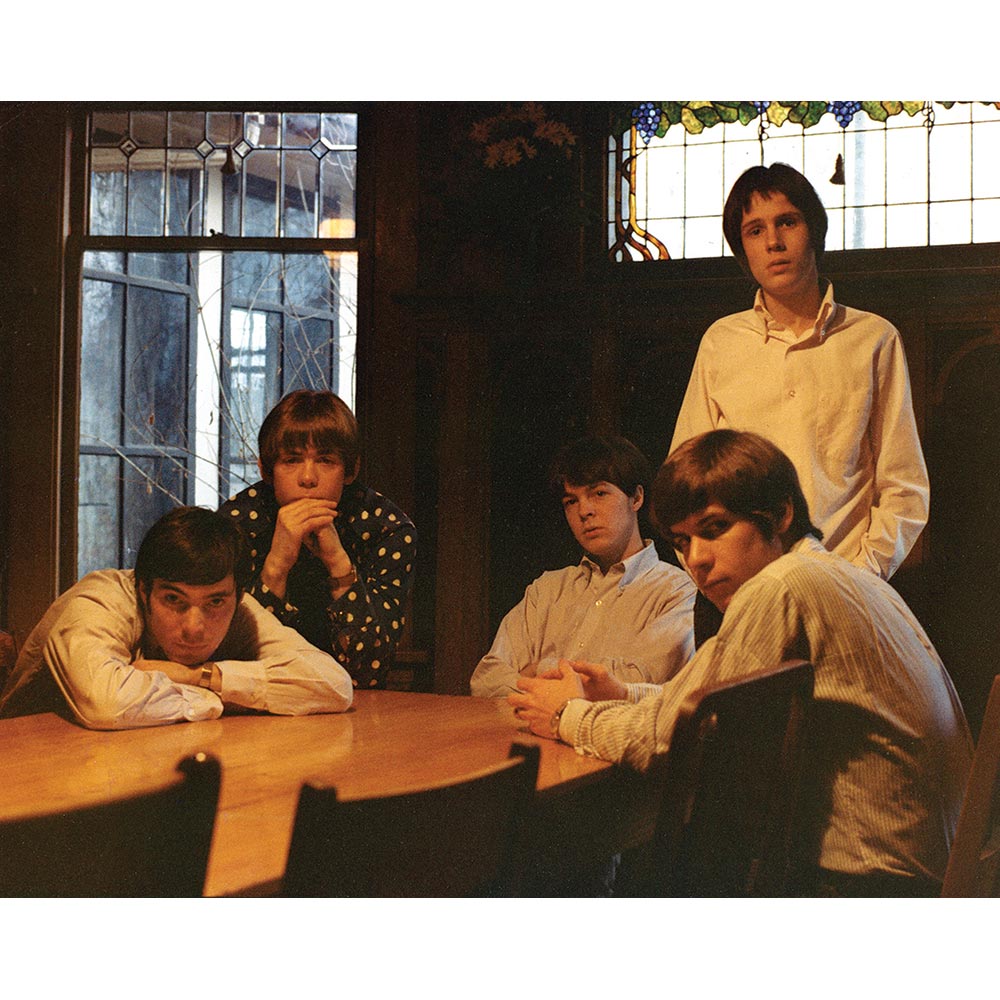

DAVE HAMILTON’S DETROIT DANCERS.
DAVE HAMILTON’S DETROIT DANCERS.
The Funk Brothers place in soul music’s history is assured. They were Motown’s studio band between 1959 and 1972, when Motown moved to Los Angeles. By then, The Funk Brothers were the most successful studio band in the history of soul music. Forty-three years later, and that’s still the case. However, there was life after The Funk Brothers.
That was the case for Marvin Gaye, Jack Ashford. Ray Parker Jr., Earl Van Dyke, Bob Babbit and Wah Wah Watson. They went on to enjoy long and successful careers after they left The Funk Brothers. So did guitarist Dave Hamilton.
Dave Hamilton was one of the original members of the The Funk Brothers. He was there in 1959, and spent three years playing guitar and vibes on early Motown recordings. Then in 1962, Dave Hamilton left The Funk Brothers and embarked on a solo career.
By then, Dave Hamilton had already released a single with Dave Hamilton and His Peppers. This was Donna’s Cha Cha, which was released on the Hi-Q label. On its release, Donna’s Cha Cha disappeared without trace. So Dave returned to The Funk Brothers. Then in 1962, Dave Hamilton left The Funk Brothers for good.
A year later, in 1963, Dave Hamilton released his debut album Blue Vibrations on the Motown jazz imprint, Workshop Jazz. Late Freight was released as the lead single from Blue Vibrations. However, neither Blue Vibrations, nor Late Freight was a commercial success. Nor was the sophomore single from Dave Hamilton and His Peppers.
Three years after the release of their debut single, Dave Hamilton and His Peppers released their sophomore single Beatle Walk. It was released on Fortune Records in 1964. Just like Donna’s Cha Cha, Beatle Walk wasn’t a commercial success. Just two years into his new career, and it looked like Dave Hamilton’s career wasn’t going anywhere. Dave Hamilton must have realised this, and decided to embark on a career as a producer.
This proved to be the best decision of Dave Hamilton’s musical career. It was as a producer, that Dave Hamilton excelled. Although he released continued to release the occasional single, Dave Hamilton is remembered a talented and successful producer. That’s why Dave Hamilton’s productions have been documented and celebrated by Kent Soul, an imprint of Ace Records since 1998.
Since Ace Records secured the rights to Dave Hamilton’s productions in 1998, four compilations of Dave Hamilton’s Detroit Dancers on have been released. The first was Dave Hamilton’s Detroit Dancers. It was released CD in 1998. Another three volumes of Dave Hamilton’s Detroit Dancers followed in 1999, 2006 and 2011. However, each of these were released on CD. Recently, however, Ace Records decided to release a compilation of Dave Hamilton’s productions on vinyl. It’s entitled Dave Hamilton’s Detroit Dancers, and is the perfect introduction the this much loved compilation series.
Why? Well, Dave Hamilton’s Detroit Dancers features some of Dave Hamilton’s finest dance tracks. This includes contributions from Little Ann, The Ravins, O.C. Tolbert, Tobi Lark, James Lately, Chico and Buddy and Priscilla Page and Rony Darrell. Fittingly, there’s even an appearance from the man himself, Dave Hamilton. Many of these fourteen tracks are real rarities.
Finding copies are almost impossible. If you were lucky enough to find a copy, they would be hugely expensive. Dave Hamilton’s Detroit Dancers, which I’ll tell you about costs only £12, €15 or $18.
Opening Dave Hamilton’s Detroit Dancers is an alternate mix of Little Ann’s What Should I Do. This is the first of two tracks from Little Ann, whose real name is Joanne Jackson. Originally, though many people thought it was Rose Valentine. That was the name on the label of version of What Should I Do being played on the Northern Soul scene around 2000. It only later came to light that it was Little Ann that recorded the single. What Should I Do, which was produced by Dave Hamilton made its debut on Dave Hamilton’s Detroit Dancers in 1998. Four years later, it was released as a single by Kent Records. Not only had a mystery been solved, but one of the hidden gems of the Northern Soul scene was available to a much wider, and appreciative audience Little Ann’s other contribution is Who Are You Trying To Fool, which was the B-Side to What Should I Do, a defiant Northern Soul stomper. Just like What Should I Do, Who Are You Trying To Fool showcases a talented and underrated singer, who never came close to enjoying the success she deserved.
Several of the artists on Dave Hamilton’s Detroit Dancers feature twice. This includes Tobi Lark, who in 1966, released Challenge My Love as a single. It was penned and produced Dave Hamilton, and released on the Topper label. It’s an uber rare single. Copies are almost I’m impossible to find. That’s because so few copies were sold. That’s surprising, given the quality of Tobi Lark’s hurt-filled vocal from Tobi Lark. On the flip side, was Sweep It Out In The Shed, which Dave Hamilton and Rony Darren cowrote and produced. Sweep It Out In The Shed features a tender, needy vocal. Just like Little Ann, Tobi Lark never enjoyed the commercial success her talent warranted.
Dottie and Millie only ever released one single, Talkin’ About My Baby, which was penned and produced by Dave Hamilton. released on the Topper label, just before Tobi Lark’s Challenge My Love. Sadly, it suffered the same fate. Talkin’ About My Baby. Accompanied by stabs of blazing horns, Dottie and Millie almost cha cha their way across the arrangement. The result is a truly irresistible and dance-floor friendly track.
O.C. Tolbert features twice on Dave Hamilton’s Detroit Dancers. His first contribution is I’m Shooting High (I Reach For The Sky). The other is You Got Me Turned Around. They’re both Dave Hamilton and Rony Darrel compositions. I’m Shooting High (I Reach For The Sky), which has a slow, but hopeful sound and made its debut on the first instalment in the Dave Hamilton’s Detroit Dancers series, which was released in 1998. You Got Me Turned Around was released as a single on the TCB label in 1969, and is a tale of hurt and heartbreak. Twenty years later, and You Got Me Turned Around featured on Dave Hamilton’s Detroit Dancers Volume 2. Just like I’m Shooting High (I Reach For The Sky), You Got Me Turned Around became a favourite on the Northern Soul scene.
The Ravines’ Your Love Is What I Want is easily one of the rarest tracks on Dave Hamilton’s Detroit Dancers. Copies just don’t change hands. Those fortunate to have a copy, aren’t for selling. When copies come up for sale, buyers exceed sellers. Your Love Is What I Want, which was released in 1965, on the short-lived Demo Ristic label, is seen by some as soul perfection.
J.T. Rhythm are responsible for what’s without doubt, one of the highlights of Dave Hamilton’s Detroit Dancers, My Sweet Baby. It was penned and produced by Dave Hamilton and Rony Darrel. They’re responsible for what’s a quite beautiful Northern Soul ballad. Originally, My Sweet Baby was the B-Side to J.T. Rhythm’s 1967 single All I Want Is You, which was released as a single by the Palmer Record Company. Sadly, the single disappeared without trace, and copies are almost impossible to find. So, in 1998, My Sweet Baby was chosen as one of the tracks to feature on the first volume of Dave Hamilton’s Detroit Dancers. At last, this beautiful, elegiac ballad was being heard by a wider audience. Seventeen years later, and My Sweet Baby returns for a welcome and overdue encore.
Danny Cobus recorded The Two Of Us is back in 1968. Sadly, it lay unreleased in Dave Hamilton’s vaults until 1999. By then, Ace Records were about to release Dave Hamilton’s Detroit Dancers Volume 2. The Two Of Us, which Dave Hamilton and Rony Darrell composed, and Dave produced, found its way onto Dave Hamilton’s Detroit Dancers Volume 2. At last this hidden soulful gem was being heard by a wider audience. Then in 2007, Kent Select released The Two Of Us as a single. On the flip side was Chico and Buddy’s You Won’t Miss The Water, which Dave Hamilton wrote and produced. It first featured on Dave Hamilton’s Detroit Dancers in 1998. Nine year later, and You Won’t Miss The Water made a welcome return on this limited edition single. Only 500 copies were pressed and quickly snapped up by eager record buyers, keen to acquire two long, lost soulful delights.
James Lately and Dave Hamilton cowrote James’ debut single, Love, Friends And Money. It was released on the Temple label in 1965. What followed was a familiar story. Love, Friends And Money, wasn’t a commercial success. That’s despite a needy, hopeful and soul-baring vocal from James. He didn’t release a followup to Love, Friends And Money, and was lost to music.
Although Dave Hamilton was spending most of his time producing other artists, he hadn’t given up on his solo career. So in 1967, Dave released Shoop Doop as a single. It was released on the Demo Ristic label, but just like Dave’s earlier singles, failed to find an audience. Sadly, it was only later, that Dave Hamilton’s music found an audience, especially within the Northern Soul scene.
Closing this special vinyl edition of Dave Hamilton’s Detroit Dancers, which was recently released by Kent Soul, an imprint of Ace Records, is Priscilla Page and Rony Darrel’s You Did. It was released on the Topper label, in 1965. You Did is another Dave Hamilton and Rony Darrel composition. They had formed a successful songwriting partnership. However, You Did was the first time Priscilla Page and Rony Darrel. Although it’s a tale of heartbreak, it’s not short of hooks. It’s a call to dance that will have dancers sashaying their way across the dance-floor.
This newly released vinyl edition of Dave Hamilton’s Detroit Dancers will appeal to both veterans of the Dave Hamilton’s Detroit Dancers series and newcomers to the series. It features a mixture of familiar faces and hidden gems. All of them have one thing in common, they’re dance-floor friendly. Some of the tracks may be fifty years old, but they’ll still fill a dance-floor. That’s partly down to one man, Dave Hamilton.
While Dave Hamilton may not have as high a profile as some soul producers, he was a successful and talented producer. He had the uncanny knack of bringing out the best in artists and groups. Sometimes, he transformed careers. Sadly, just like any producer, some of Dave Hamilton’s singles failed to find the audience they deserved. As a result, these songs are extremely rare.
That’s because very few copies of the singles sold. Despite their rarity, a few fortunate DJs and collectors picked up copies of Dave Hamilton’s productions, including those on this vinyl edition of Dave Hamilton’s Detroit Dancers. Many of these rarities were found years ago, in warehouses and basements of dusty record shops. Back then, these singles cost pennies. Nowadays, the same singles cost hundreds, if not thousands of pounds. However, fortunately, those unable to afford such exorbitant prices, can always pick up the Dave Hamilton’s Detroit Dancers compilation series.
Previously, four volumes of Dave Hamilton’s Detroit Dancers have been released. The first volume, Dave Hamilton’s Detroit Dancers was released by Kent Soul, an imprint of Ace Records in 1998. Further volumes of Dave Hamilton’s Detroit Dancers were released in 1999, 2006 and 2011. Apart from the four volumes of Dave Hamilton’s Detroit Dancers, Dave Hamilton’s Detroit City Grooves was released in 2005 and Dave Hamilton’s Detroit Funk was released in 2006 by BGP, another subsidiary of Ace Records. The latest addition to Ace Records’ Dave Hamilton portfolio, is the recently released vinyl edition of Dave Hamilton’s Detroit Dancers. Along with the six CDs, this newly released vinyl edition of Dave Hamilton’s Detroit Dancers goes some way to telling the story of Dave Hamilton’s career as a producer.
DAVE HAMILTON’S DETROIT DANCERS.
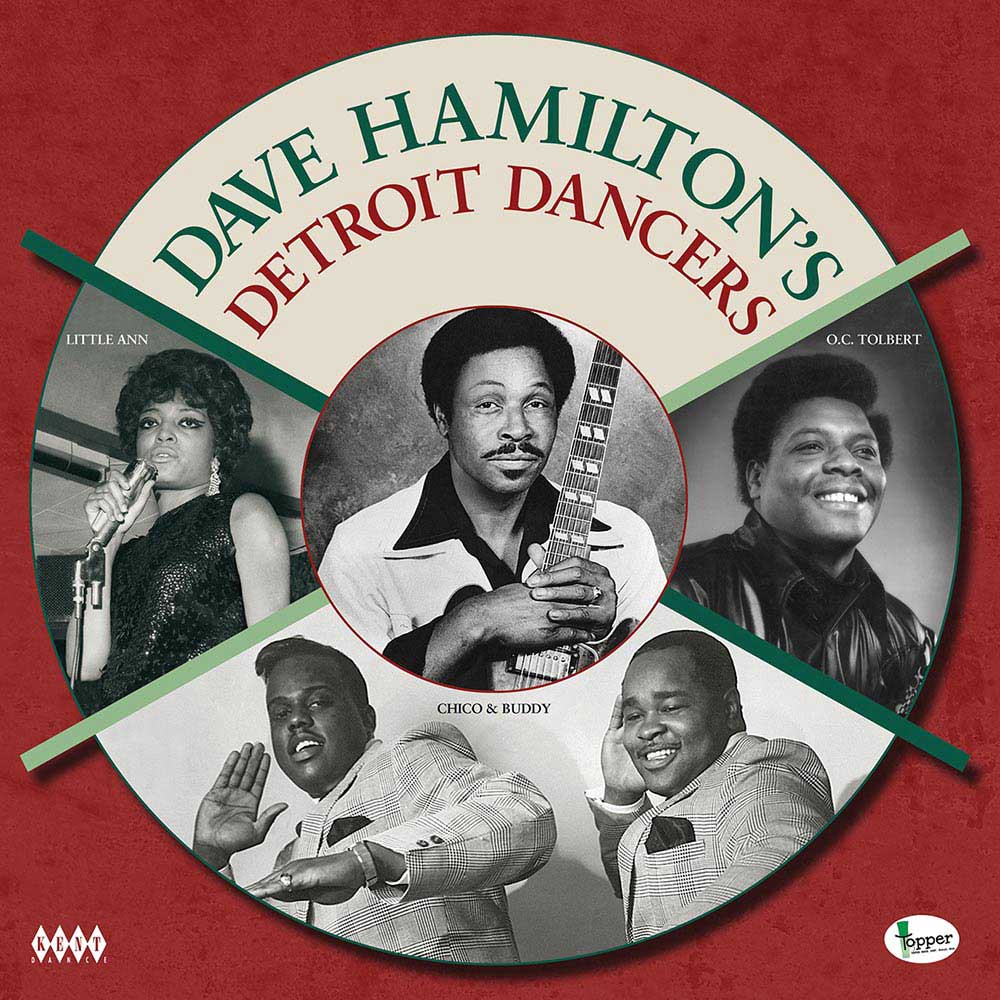
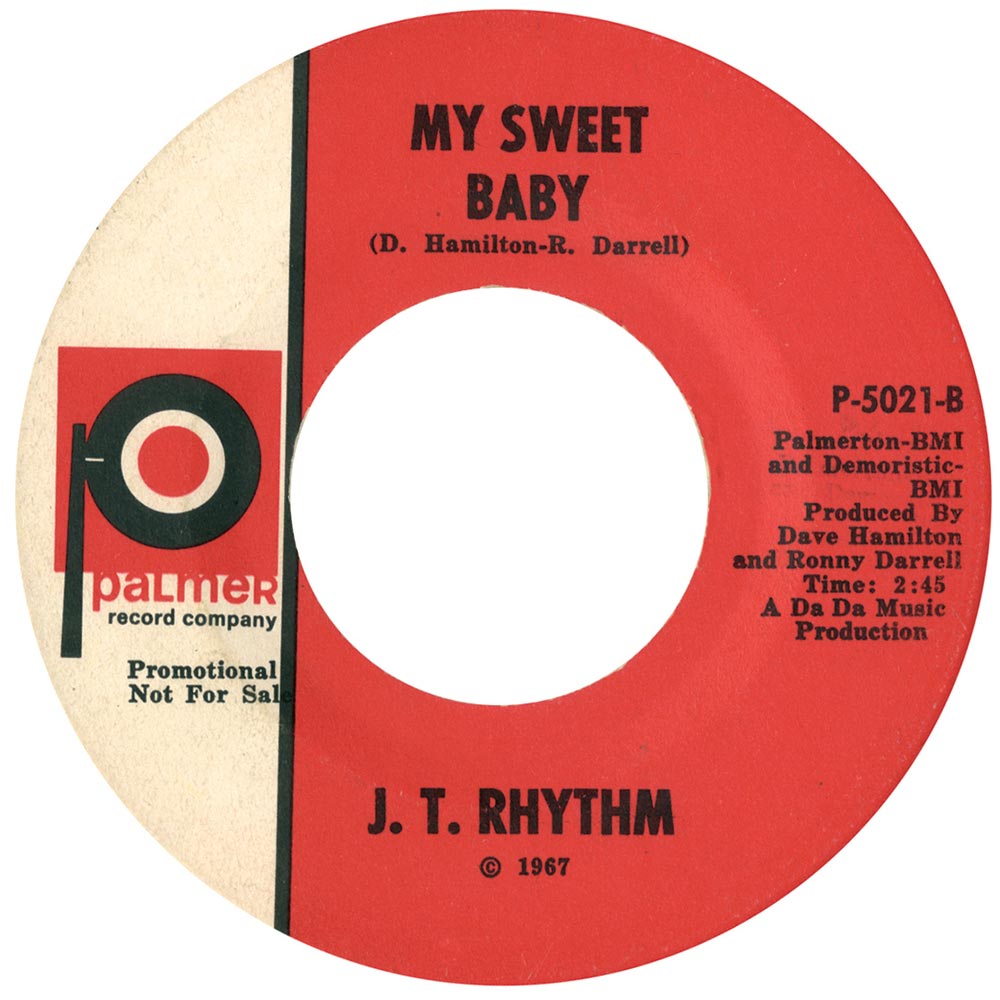
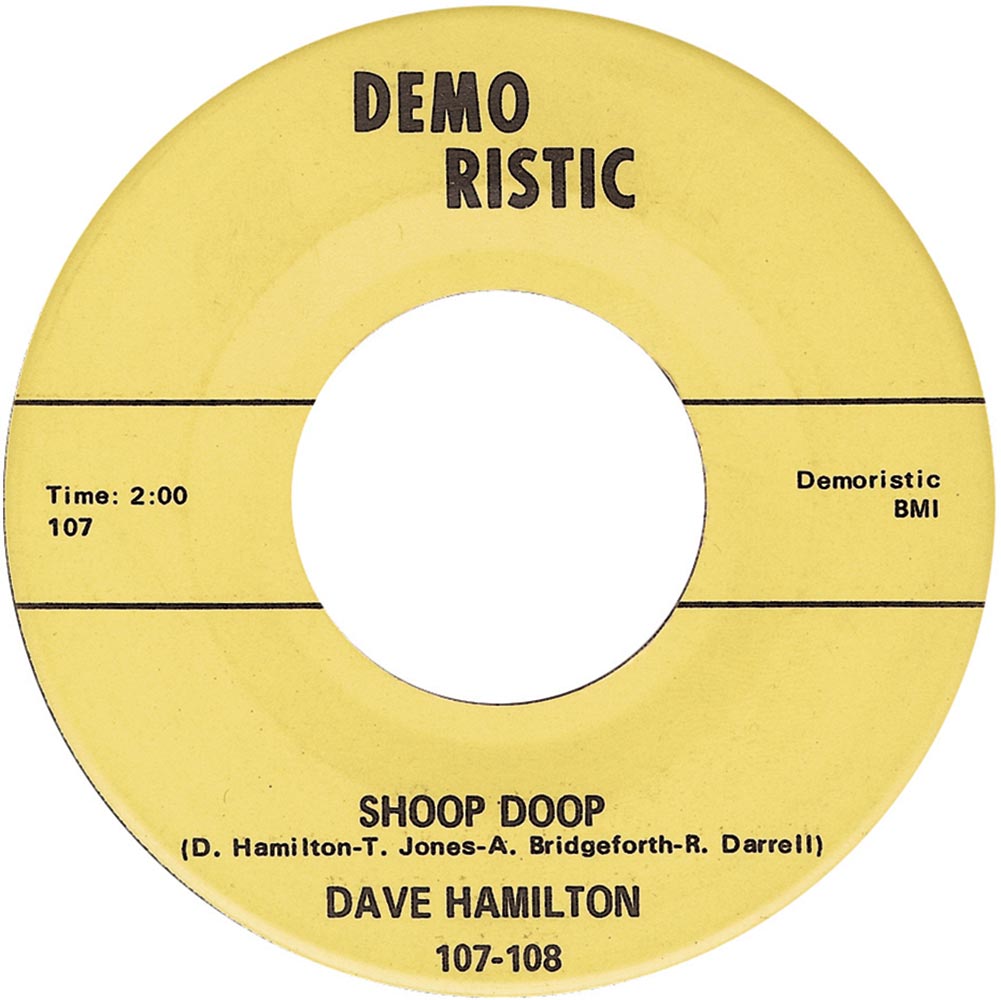
M.F.S.B.-UNIVERSAL LOVE.
M.F.S.B.-UNIVERSAL LOVE.
Unlike Motown, books haven’t been written about Philadelphia International Records. That’s a missed opportunity, as there are many stories waiting to be told. Until now, only parts of the Philadelphia International Records’ story has been told. Many of those who played an important part in the rise and rise of Philadelphia International Records, haven’t had their story told. That’s a missed opportunity. However, the other missed opportunity is failure to release loving curated reissues of the Philadelphia International Records’ back catalogue. Last year however, things looked hopeful.
On February 13th 2014, Sony Music announced that it had acquired the worldwide rights to Philadelphia International Records’ post 1975 back-catalogue. At last, one label, Sony Music now had control of the rights to the entire Philadelphia International Records’ back-catalogue. This was progress. Maybe now, a proper reissue program of Philadelphia International Records’ back-catalogue could get underway?
This would be an improvement from what has gone before. Previously, Philadelphia International Records’ back-catalogue fell into the wrong hands. It seemed that anyone with money, could license Philadelphia International Records’ back-catalogue. There seemed to be no checks into the background of the labels. What followed wasn’t pretty.
Cheap and nasty reissues of the back-catalogue made their way onto the shelves of record shops. Sometimes, the Philadelphia International Records’ back-catalogue was reduced to budget label products. Twofers were released. Occasionally, three albums were squeezed onto two discs. This meant there were no sleeve-notes and the bare minimum of details about the albums. A low point was reached when what came across what I can only describe as reissue that was a needle drop. It was obvious rather than the master tapes being sourced, a vinyl copy was used. Not a very good copy at that. What had been one of the most influential soul labels between 1972 and 1975, was reduced to this. How the mighty had fallen. Then came the news back in February 2014. This were looking better for Philadelphia International Records’ post 1975 back-catalogue.
At the time, I thought that maybe, at last, a comprehensive reissue of Philadelphia International Records’ back-catalogue would get underway. Like many people, I hoped for lavish and lovingly compiled box sets, remasters of classic albums and rereleases of some of albums that have never before released on CD before. Sadly, that’s never happened, and still any record company has licensed the Philadelphia International Records’ back catalogue has failed to do it justice.
The latest to reissue Philadelphia International Records’ back catalogue are BBR, who recently reissued a reissue of M.F.S.B.’s Universal Love. It was released at a crucial part in the Philadelphia International Records’ story. This was the end of the the golden period in the Philadelphia International Records’ story.
The history of Philadelphia International Records is separated into two parts. The first part was what I’d call Philadelphia International Records’ golden period, between 1972 and 1975 and then the second part, from 1976 onwards. There’s a good reason for doing this. Between 1972 and 1975, music released by Philadelphia International Records featured the classic lineup of M.F.S.B. They’re often referred to as Philadelphia International Records’ house-band. That however, is doing them a huge disservice.
M.F.S.B. were much more than a house-band. These musicians were also songwriters, arrangers and producers. Look at the sleeve-notes to any album released on Philadelphia International Records between 1972 and 1975, and you’ll see that among the arrangers, producers and songwriters were Vince Montana Jr, Norman Harris and Ron Baker. This dispels the myth, sometimes perpetuated by people who should know better, that M.F.S.B. were “just” Philadelphia International Records’ house band. Indeed, M.F.S.B. provided the heartbeat to the music of Billy Paul, The O’Jays, Harold Melvin and The Blue Notes, The Three Degrees and countless others. M.F.S.B. were also one of Philadelphia International Records’ most successful acts.
Love Is The Message was M.F.S.B’s debut album, released in 1973, with M.F.S.B. following later that year. During 1975, a pivotal year for both Philadelphia International Records and M.F.S.B, M.F.S.B. released two more albums. The first of these, Universal Love would prove to M.F.S.B’s penultimate album for Philadelphia International Records. Philadelphia Freedom was released later in 1975. However, when Universal Love was released, M.F.S.B. and musical auteurs Gamble and Huff were locked in a dispute.
At the heart of M.F.S.B’s dispute with Gamble and Huff was money. Although people involved aren’t keen to divulge exact details, it has been alleged that musicians were only offered a pay increase of $5, from $25 to $30 a session. Arrangers and producers were only offered an increase of $10, from $50 to $60 a session. Now this was a risky situation. After all, M.F.S.B. were Philadelphia International Records’ crown jewels. Replacing the original lineup wouldn’t be possible. Where would you find another Baker, Harris, Young rhythm section, Vince Montana Jr, Bobby “Electronic” Eli or Larry Washington? It’s not as if Gamble and Huff would be able to wander down to Manpower and hire an all-star band. Granted Philly had many talented musicians, but not as good as the original lineup of M.F.S.B. This was a high stakes poker game. Who was bluffing?
Dring 1975, while the negotiations continued, there was still music to be made, including albums by M.F.S.B. They would release two albums during 1975. The first was Universal Love.
Universal Love featured eight tracks. Gamble and Huff cowrote just three tracks, Sexy, M.F.S.B and My Mood. Three tracks prove my point about how M.F.S.B. were much more than musicians. Ron Baker cowrote Human Machine with Leon Huff, while Norman Harris and Bobby Martin cowrote T.L.C. (Tender, Lovin’ Care) and Bruce Hawkes and Cynthia Biggs cowrote Love Has No Time Or Place. Norman Harris, Ron Baker and Bruce Hawkes were all locked in the dispute with Gamble and Huff. Of the other two tracks, McFadden and Whitehead plus Victor Castarphen cowrote Let’s Go Disco with Leon Huff. Charles Heardon wrote K-Jee and would later, hit the jackpot, when the track was included on the fifteen-million selling Saturday Night Fever soundtrack. These eight tracks became Universal Love. Like previous M.F.S.B. albums, recording of Universal Love took place at Sigma Sound Studios in Philly, owned by Joe Tarsia.
The recording sessions for Universal Love proved to be the penultimate appearance of the original and best lineup of M.F.S.B. Playing on Universal Love were all the M.F.S.B. greats. Providing the album’s heartbeat were the Baker, Harris, Young rhythm section, along with guitarists Bobby “Electronic” Eli and Roland Chambers. Ron “Have Mercy” Kersey and Leon Huff played keyboards, Larry Washington percussion and Vince Montana Jr. vibes. Violinist Don Renaldo was part of the string section and alto saxophonist Zach Zachery plays an important part in Universal Love’s sound. Norman Harris, Bobby Harris and Bruce Hawkes all arranged or produced tracks, while Gamble and Huff produced five tracks. Once Universal Love was completed, it was released in 1975.
On the release of Universal Love in 1975, it reached number forty-four in the US Billboard 200 and number two in the US R&B Charts. T.L.C. (Tender, Lovin’ Care) was released as a single, reaching number fifty-four in the US R&B Charts and number four in the US Disco Singles Charts. Sexy then reached number forty-two in the US Billboard 200, number two in the US R&B Charts and number one in the US Disco Singles Charts. Given how successful Universal Love had been, surely Gamble and Huff would realize just how important M.F.S.B. were to Philadelphia International Records? Was that the case? I’ll tell you that, once I’ve told you about the music on Universal Love.
Opening Universal Love is the Gamble and Huff penned and produced Sexy, arranged by Bobby Martin. Just Norman Harris’ chiming guitar opens the track, before M.F.S.B. kick loose. Vince Montana Jr’s vibes, Bobby “Electronic” Eli’s wah-wah guitar and an uber funky Baker, Harris, Young join growling horns and lush, dancing strings. Soon, the music veers between funk, disco and jazz. One minute it’s choppy and funky, the next strings ensure it flows smoothly along. Horns blaze, strings swirl and the rhythm section provide a pulsating heartbeat. They’re augmented by vibes, percussion and wah-wah guitars as M.F.S.B. lay down a marker, showing just what they can do. In doing so, the irresistibly fuse funk, jazz and disco seamlessly and peerlessly.
Not many bands have a track named after them. M.F.S.B. did. Written by Gamble and Huff and arranged by Bobby Martin, it’s a fitting tribute to M.F.S.B’s combined talents. Stabs of keyboards, a pounding Baker, Harris, Young rhythm section and waves of Hammond organ combine, before the horns and strings get to work. Horns growl, strings dance with joy while, Vince Montana Jr, subtly sprinkles vibes. Soon, M.F.S.B. have hit their stride. The arrangement is a mass of braying horns, cascading string, while the thunderous rhythm section drive the arrangement along. While every member of M.F.S.B. play their part, it’s the horns that tug at your heartstrings. They’re crucial to the sheer beauty, emotion and drama of the arrangement, making this such a potent, powerful and moving track.
Human Machine was penned by Ron Baker with Leon Huff. It has a much more experimental sound. Given the title, this isn’t unexpected. There’s a spacious, choppy and thoughtful sound to the arrangement as it unfolds. The unmistakable sound of Bobby “Electronic” Eli’s wah-wah guitar is at heart of the arrangement. Keyboards, the Baker, Harris, Young rhythm section and grizzled horns provide the mainstay of the arrangement. When strings sweep in, they smoothen out the arrangement, which still, has a jumpy, edgy sound and feel. Although this track is quite different to the two previous tracks, it’s an innovative track, something which Philadelphia International Records were famous for.
Love Has No Time Or Place closes Side One of Universal Love. Here, backing vocalists join M.F.S.B. Strangely, it isn’t the Sweethearts of Sigma. They play their part in this grand and lush, dance-floor friendly track. Blazing horns, lush, wistful strings and elegant, crystalline harmonies sweep in while Baker, Harris, Young provide a funk, hustle style backdrop. They’re joined by vibes courtesy of Vince Montana Jr, percussion, keyboards and even synths. While this wasn’t the first time synths appeared on a Philadelphia International Records’ album, they seem out of place in the arrangement. Here’s this grand disco orchestra with all these traditional instruments. Then this slightly space-age sounding synth is added. Thankfully this doesn’t spoil the track, as it floats along, with harmonies, strings and horns key to the track’s sound and success.
T.L.C. (Tender, Lovin’ Care) opens Side Two of Universal Love. Written by Norman Harris and Bobby Martin, a curveball is thrown when a jazzy introduction unfolds. Sultry horns take you back to another era. Then it’s all change. Baker, Harris, Young take charge, combining with a Hammond organ and Bobby “Electronic” Eli’s wah-wah guitar. Next comes rasping horns and swirling strings. Norman Harris lays down some of his unique jazz-tinged guitar lines, while pensive horns, dancing strings and bursts of Earl Young’s thunderous drums play crucial roles. There’s a real hustle sound to this joyful, uplifting fusion of Philly soul, jazz, funk and disco, which quite simply, is one of the best tracks on Universal Love.
Let’s Go Disco is driven along by the Baker, Harris, Young rhythm section, piano and percussion. Chanted vocals are added before blazing horns and sweeping strings enter. With the vocals and rhythm section combining, this gives the arrangement a real hypnotic, driving sound. It’s catchy, memorable and sheer simplicity. It’s like a mantra, a call to dance, to a soundtrack provided by M.F.S.B.
K-Jee proved to be the most successful track on Universal Love. Charles Heardon who wrote K-Jee, would later, hit the musical equivalent of fifteen consecutive home runs, when the track was included on the fifteen-million selling Saturday Night Fever soundtrack. From the stabs of keyboards, percussion, urgent flourishes of strings and grizzled horns you’re transported back to disco’s heyday. M.F.S.B. seem to raise their game even higher. A myriad of percussion join Baker, Harris, Young, searing guitars and rasping horns. Strings dance, swirl and sweep and Bobby “Electronic” Eli adds wah-wah guitar. Zach Zachary’s growling alto-saxophone and a wash of wailing Hammond organ provide the icing and cherry for this delicious, cake. So good and tasty was the cake, that it sold fifteen-million slices.
Closing Universal Love is My Mood a much more mellow track. Just a subtle sprinkling of Vince Montana Jr’s vibes, percussion and Norman Harris’ sparse jazzy guitar combine before the arrangement grows. Baker, Harris, Young provide the understated heartbeat. Melancholy strings sweep and swirl, horns rasp and growl while keyboards add a warm melodic sound. M.F.S.B. resist the urge to kick loose one more time. Only the horns, drums and strings are given leeway, but don’t overdo things, bringing Universal Love to a mellow, pensive and quite beautiful close.
The standoff between M.F.S.B. and Gamble and Huff certainly never affected the quality of music on Universal Love. Quite the opposite. It’s almost as if M.F.S.B. were determined to show Gamble and Huff what they were risking losing. This was a high stakes poker game. Universal Love saw the stakes rising. M.F.S.B. upped the ante. Baker, Harris, Young, Bobby “Electronic” Eli, Larry Washington and Vince Montana raised their game, fusing Philly Soul, funk, disco and jazz. This was another impressive addition to M.F.S.B’s discography. Sadly, this reissue doesn’t really do Universal Love justice.
Despite being remastered, the sound quality isn’t as good as it could be. It doesn’t match the quality of music.This newly released version of Universal Love is described as “expanded.” However, all this means is the addition of the single version of Sexy, T.L.C., Let’s Go Disco and K-Jee. There’s nothing new from the Philadelphia International Records’ vaults added to this version of Universal Love. Even the sleeve-notes don’t do the story of this period in the Philadelphia International Records’ story justice. Still it seems, so far, no record company has done the Philadelphia International Records’ back-catalogue justice. All in all, it’s a somewhat disappointing reissue. Let’s hope that next time around, the Philadelphia International Records’ back-catalogue is given the treatment it deserves. Especially the first part in the Philadelphia International Records’ story, which Universal Love covers.
After Universal Love, the original lineup of M.F.S.B. recorded one more album for Philadelphia International Records, Philadelphia Freedom. That proved to be a prophetic title. By the time Philadelphia Freedom was released, the original lineup of M.F.S.B. had achieved their own version of Philadelphia Freedom.
Realizing their demands weren’t going to met, they called Gamble and Huff’s bluff. When no agreement could be reached M.F.S.B. headed to New York, taking their considerable talents to Salsoul Records, where they became The Salsoul Orchestra. As a result, Gamble and Huff lost some of the most talented musicians of the seventies. This included the Baker, Harris, Young rhythm section, who provided M.F.S.B.’s heartbeat, guitarist Bobby “Electronic” Eli, vibes virtuoso Vince Montana Jr, violinist Don Renaldo, percussionist Larry Washington and keyboard player Ron “Have Mercy” Kersey. By the time 1975 was over, The Salsoul Orchestra’s debut album had sold over one-million copies. The original members of M.F.S.B. had played and won what was a high stakes poker game. Following the departure of many of the original lineup of M.F.S.B. the music on Philadelphia International Records was still among the best in seventies soul, but lacked something.
That something, was the combined talents of the original members of M.F.S.B. There’s no doubt that Philadelphia International Records were affected by the loss of such hugely talented musicians. M.F.S.B. Mk II couldn’t fill the shoes of their predecessors. Not only was that a big ask, but almost impossible. Granted, their replacements were talented musicians, and Philadelphia International Records continued to release critically acclaimed and commercially successful music. However, M.F.S.B. were never the same. After all, how do you replace what many regarded as irreplaceable?
Ironically, many of the musicians that became The Salsoul Orchestra flourished. It was as if their talents were unleashed. Baker, Harris, Young, Bobby “Electronic” Eli, Ron “Have Mercy” Kersey and Vince Montana Jr. all flourished as songwriters, arrangers and producers at Salsoul. Gamble and Huff’s loss was very much Salsoul’s gain. Anyone who listens to Universal Love will realize that. Not only does Universal Love features M.F.S.B. at the peak of their powers, but whilst playing one of highest stakes poker games in musical history. The lesson to be learnt from this saga, is that “the workman is worthy of his hire.”
M.F.S.B.-UNIVERSAL LOVE.
HERE TODAY!-THE SONGS OF BRIAN WILSON.
HERE TODAY!-THE SONGS OF BRIAN WILSON.
Brian Wilson is seen by some, as the closest thing music has had to a genius. Proponents of this argument cite the Beach Boys 1966 progressive, psychedelic Magnus Opus, Pet Sounds. By then, Brian Wilson was one of the most successful singer, songwriter, and producers of his generation. Already, Brian Wilson had masterminded twenty-four hit singles, including two number one singles for the Beach Boys. It looked like Brian Wilson could do no wrong.
Sadly, Smile, the followup to Pet Sounds was cancelled. Brian Wilson had suffered the first of several nervous breakdowns. As a result of Brian Wilson’s health problems, his influence on the Beach Boys diminished. This just happened to coincide with a decrease in sales of the Beach Boys’ albums.
Following Pet Sounds, the Beach Boys albums were produced by the group. No longer was Brian Wilson the sole producer. Then in 1975, Brian Wilson produced 15 Big Ones, which was released in 1976. When it was released in July 1976, 15 Big Ones reached number eight in the US Billboard 200, and was certified gold. For many, onlookers, it looked as if Brian Wilson was back. However, that wasn’t the case.
By 1975, Brian Wilson had substance abuse problems and his health was failing. His wife Marilyn realised he needed enlisted the help of psychologist and psychotherapist Eugene Landy. He was best known for an unconventional twenty-four hour treatment program. At first, Brian was resistant to the demanding program. However, with the only alternative being admitted to a psychiatric hospital, Brian came round to Euege Landy’s program. Then in 1976, when Euegene Landy tried to double hi fees, he was sacked by the Beach Boys manager.
Six years later, with Brian’s health failing, and the Beach Boys not having released an album for two years, Eugene Landy was hired again. For the next ten years, Brian was treated by Eugene Landy. This didn’t end well.
Part of Eugene Landy’s treatment, was micromanaging his client’s lives. Usually, he did this with team of counsellors, nurses and doctors. However, in Brian’s case, Eugene Landy took a more hands on approach. Not only was he Brian’s therapist, but gradually, became his business adviser and cowrote songs with Brian. Then when Brain released his debut album Brian Wilson in 1988, Eugene Landy was credited as executive producer. Later, in 1991, Eugene Landy cowrote a memoir about Brian Wilson, Wouldn’t It Be Nice: My Own Story. However, by then people were questioning Eugene Landy’s relationship with Brian.
A year later, and the relationship was over. A restraining order was issued by the court barring Eugene Landy from contacting Brian Wilson ever again. This wasn’t the end of the story. In 1994, the state of California revoked Eugene Landy’s license to practise. There had been accusations of ethical violations and patient misconduct during his years with Brian Wilson. While the relationship ended badly, Brian Wilson was on the comeback trail.
Sadly, Brian Wilson never ever reached the heights of Pet Sounds. He released another ten solo albums, some of which, were released to critical acclaim. However, compared to Pet Sounds, they never came close. Pet Sounds was Brian Wilson’s finest hour. Incredibly, he was only twenty-four, with his whole life in front of him. Sadly, ill-health, substance abuse and the internal politics of the Beach Boys curtailed Brian Wilson’s career. He was the man who could’ve been King.
While Brian Wilson is still remembered as one of the most important successful singer, songwriter, musician and producers of his generation, to some extent, his critics say that Brian Wilson never fulfilled his early potential. That however, is an accusation that could be levelled at many musicians. However, in Brian Wilson’s case, that’s a bit harsh. If illness hadn’t interrupted his career, he would probably have fulfilled his potential.
Certainly, Brian Wilson’s music has influenced two generations of music. They’ve continued to cover his songs over the past fifty years. This includes the artists on Here Today!-The Songs Of Brian Wilson, which was recently released by Ace Records.
Here Today!-The Songs Of Brian Wilson features twenty-five cover versions of Brian Wilson songs. These songs have been covered by Darian Sahanaja, Bobby Vee, The Tokens, The Castells, Jan and Dean, The Tymes, Keith Green, Peggy March, Betty Everett, Carmen McRae and Kirsty MacColl. Among the twenty-five tracks are six cover versions of songs from Pet Sounds. That’s fitting as Pet Sounds was Brian Wilson’s Magnus Opus. However, there’s much more to Brian Wilson’s music, as you’ll discover when I pick the highlights of Here Today!-The Songs Of Brian Wilson.
There’s no better way to open Do You Have Any Regrets? opens Here Today!-The Songs Of Brian Wilson than with Darian Sahanaja’s of The Wondermints cover of Do You Have Any Regrets? This is a song from Brian’s 1990 album Sweet Insanity. Darian rolls back the years, and gives Do You Have Any Regrets? a sixties makeover. As a result, the song sounds uncannily like the Beach Boys at the peak of their power. That’s no surprise as Darian has worked with Brian Wilson during his comeback, and played an important part in his solo career.
Don’t Worry Baby is, without doubt, a Beach Boys’ classic. So anyone who decides to cover Don’t Worry Baby will have their version compared to the original. The Tokens’ cover is akin to a homage to the Beach Boys. Sonically and stylistically, The Tokens’ 1970 cover of Don’t Worry Baby is one of the best, and stays true to the original.
The original recording Help Me Rhonda featured on The Beach Boys Today!, which was released in 1964. The song was written by Brian and Mike Wilson, way before rivalries split the Beach Boys. Later in 1964, Future Beach Boy Bruce Johnston and Terry Melcher then decided to record Help Me Rhonda. However, fate intervened, when the Beach Boys rerecorded Help Me Rhonda. When it was released as a single, it became a huge hit. This lead to Bruce and Terry postponing the release of their cover of Help Me Rhonda. It wasn’t until 1998 that Bruce and Terry’s hook laden take on Help Me Rhonda was eventually released. Seventeen years later, and it makes a more than welcome return on Here Today!-The Songs Of Brian Wilson.
Just like the Beach Boys, Jan and Dean were one of the leading lights of the surf and hot rod scene. They covered The New Girl In School in 1964. This wasn’t a new song. Instead, it started life as (When Summer Comes) Gonna Hustle You, which Jan and Dean recorded in 1963. Originally, it was written by Brian and Bob Norberg. A year later, after a rewrite by Brian, Jan Berry and Roger Christian, (When Summer Comes) Gonna Hustle You became The New Girl In School. Rhis hook laden tale of teenage love was released as a single in 1964, and proved the perfect showcase for Jan and Dean’s vocal prowess.
Don’t Hurt My Little Sister is another song penned by Brian and cousin Mike Wilson. They wrote the song for The Blossoms, which featured Darlene Love. However, Don’t Hurt My Little Sister featured on The Beach Boys Today!, which was released in 1964. Then in early 1966, The Blossoms version of Don’t Hurt My Little Sister was released a single. A few months later, and The Surfaris, another mainstay of the surf scene covered Don’t Hurt My Little Sister. Their version was produced by Gary Usher, and featured on their 1977 compilation Gone With The Wave. It’s one of the highlights of Gone With The Wave, and is a reminder of one of the great groups of the surf era.
In 1964, The Hondells scored a top ten single with their udebut single, Little Honda. For the followup, Gary Usher who masterminded the rise of The Hondells cowrote My Buddy Seat with Brian Wilson. My Buddy Seat was then recorded by some of the top names in the surf scene. Among them, were Gary Usher, Brian Wilson, Bruce Johnston and Terry Melcher. So, it’s no surprise that My Buddy Seat oozes quality. What’s surprising is that My Buddy Seat wasn’t a commercial success.
Surf City was the song the first song that Brian Wilson penned to reach number one. Brian cowrote Surf City with Jan Berry, of Jan and Dean. Much to his father’s chagrin, Brian allowed Jan and Dean to record Surf City first. It gave them a number one single. No wonder. Jan and Dean’s version of Surf City is a classic of the surf era, and fifty-two years later, still sounds timeless.
Keith Green was a child prodigy. By the time he first met Gary Usher in 1965, the eleven year old was writing songs. Gary who was an experienced songwriter, wasn’t convinced at first. However, eventually, Gary signed Keith Green on a recording contract. His sophomore single was a cover of Brian Wilson’s Girl Don’t Tell Me. This Gary Usher production was released on Decca, in 1965, just after the Beach Boys version. It was was the B-Side of Barbara Ann. The main difference between the two version are Keith’s version has a quicker tempo, as Keith and Gary Usher give the song new meaning.
Soul singer Betty Everett is one of many people to cover what’s one of the Brian Wilson’s classic songs, God Only Knows. It originally featured on Pet Sounds, in 1966. Incredibly, Gold Only Knows stalled at number thirty-nine in the US Billboard 100. Nine years later, and Betty Everett covered God Only Knows on her 1975 album Happy Endings. Accompanied by gospel tinged backing vocals, God Only Knows is given soulful makeover that’s quite beautiful.
Good Vibrations, which featured on the Beach Boys 1967 album Smiley Smile, gave the Beach Boys a number one single in 1968. Not only was Good Vibrations by far the highlight of the Smiley Smile album, but one of the greatest songs Brian and Mike Love cowrote. Since 1968, Good Vibrations is perceived as one of the greatest singles ever released. Despite the original being a musical masterpiece, Hugo Montenegro covered Good Vibrations in 1969. The song lent its name to his 1969 album Good Vibrations. Without doubt. one of the highlights of the album is Good Vibrations, where Hugh pays homage to what many believe is Brian Wilson’s finest moment.
Nick DeCaro’s 1968 debut single was a cover of Caroline, No. It’s an wistful, piano lead cover of this Brian Wilson and Tony Asher composition. The addition of a sultry saxophone is a masterstroke, and is very different from the Beach Boys’ original on Pet Sounds. Here, Nick brings new life and meaning to another Beach Boys classic.
Closing Here Today!-The Songs Of Brian Wilson, is Kirsty MacColl’s cover of You Still Believe In Me, another track from Pet Sounds. Kirsty MacColl, the daughter of folk singer Ewan MacColl, had only released a quartet of singles when she released You Still Believe In Me in 1981. However, You Still Believe In Me was a game-changer. It was the finest single of her nascent career. The best way to describe Kirsty’s cover of You Still Believe In Me is understated and ethereal. This was the perfect tribute to one of Kirsty’s musical heroes.
The twenty-five tracks on Here Today!-The Songs Of Brian Wilson, which was recently released by Ace Records, is a reminder of the quality of songs Brian Wilson wrote in his heyday. He was, without doubt one of the most talented songwriters of his generation. That’s indisputable. However, Brian Wilson was much more than a songwriter.
Some people have gone as far as to describe Brian Wilson as the closest thing music has had to a genius. That is taking things to far. He was certainly one of the the most talented and successful singer, songwriter, and producers of his generation. Proof, if any is needed, are the twenty-four hit singles, including two number one singles for masterminded the Beach Boys. However, Brian’s finest hour was Pet Sounds, and of course, Good Vibrations, which was recorded at the same time.
Pet Sound, which was released in 1966 was the Beach Boys’ progressive, psychedelic Magnus Opus, Pet Sounds. They never bettered Pet Sounds. The abandoned Smile project, which was abandoned in 1967, as Brian had the first of several nervous breakdowns, onlookers believe, could’ve come close. Sadly, that wasn’t to be. Smile, the followup to Pet Sounds was cancelled.
Brian Wilson had suffered the first of several nervous breakdowns. As a result of Brian Wilson’s health problems, his influence on the Beach Boys began to diminish. This just happened to coincide with a decrease in sales of the Beach Boys’ albums.
Over the next twenty-six years, Brian Wilson’s suffered from mental health problems. During that period, he was constantly described as a troubled genius. Sadly, Brian never reached the heights he scaled between 1961 and the release of Pet Sounds in 1966.
With Brian no longer playing such an important part in the Beach Boys, their studio albums never came close to matching the Beach Boys of the sixties. The exceptions were 1976s15 Big Ones which Brian produced, and 1979s L.A. (Light Album). Bother were a return to form from the Beach Boys.
Right through to 1992, when Brian ended his association with Eugene Landy, his health problems meant he curtailed his musical career. Since then, Brian Wilson has released ten further solo albums. Some were released to critical acclaim; while others feature a fleeting glimpse of Brian Wilson’s talents. However, much of the greatest music of Brian Wilson’s career, was the music he released with the Beach Boys, between 1961 and the release of Pet Sounds in 1966. To that, I would add the musical masterpiece that is Good Vibrations, which is the work of a musical visionary.
That visionary is Brian Wilson, who has influenced two generations of music, including the artists on Here Today!-The Songs Of Brian Wilson, which was recently released by Ace Records.
HERE TODAY!-THE SONGS OF BRIAN WILSON.
FINLAND-RAINY OMEN.
FINLAND-RAINY OMEN.
Over the last ten years, the Norwegian music scene has been thriving. It’s now one of the most vibrant musical scenes in Europe. Playing an important part in the rise and rise of Norwegian music, are the members of Finland, whose debut album Rainy Omen, will be released on the 17th July 2015, by Hubro Music.
During that ten year period, Ivar Grydeland, Pål Hausken, Morten Qvenild and Jo Berger Myhre have been members of various bands. They’ve also worked with numerous artists on a variety of projects.
Given the schedules of the various members of Finland, they could be forgiven for sticking to their “day jobs.” There was no chance of that. The members of Finland love music. It courses through their veins. So in 2010, Ivar Grydeland, Pål Hausken, Morten Qvenild and Jo Berger Myhre formed Finland, who are best described as a multitalented supergroup.
That’s because Finland have an enviable musical pedigree. The four members of Finland have previously, been members of some of Norway’s most groundbreaking band. They’ve also worked alongside some of the biggest names in Norwegian music. This describes Ivar Grydeland, perfectly.
Ivar Grydeland was born in Trondheim in 1976, when was twenty, Ivar began to study at the Norwegian Academy of Music. He graduated in 2000, but returned in 2001 and graduated in 2003. Since then, Ivar has been a member of numerous groups, including Dans Les Arbres, Emo Albino, Finland, HISS, No Spaghetti Edition, Tony Oxley Project 1 and Wazahugy. However, many people will know Ivar Grydeland as Huntsville’s guitarist. He played on Huntsville’s five studio albums. On Finland’s Rainy Omen, Ivan also plays banjo, pedal steel, lap steel guitar acoustic guitar and adds vocals. This talented multi-instrumentalist is joined by an equally talented rhythm section.
The first member of Finland’s rhythm section is drummer Pål Hausken, who has been a member of many bands. This included Hilde Marie Kjersem, TUB Quartet, In The Country, Jonas H. Sjøvaag’s Navyelectre Large Ensemble, Music For A While and Sacred Hearts. Pål Hausken has also worked alongside Christer Knutsen, Ida Jenshus and Susanna Wallumrød. That’s not surprising. He’s one of Noway’s top drummers. Joining Pål Hausken in the rhythm section is another man with an illustrious musical past, bassist Jo Berger Myhre.
Describing Jo Berger Myhre as a bassist is unfair. Jo’s much more than a bassist. He also plays electric and baritone guitar. Again, Jo who has been a member of several bands, Splashgirl and Slow Motion Orchestra. Jo has previously played alongside Nils Petter Molvær and Mariam the Believer. However, for the last five years, Jo has been a member of Finland, where he’s the perfect foil for Pål Hausken. The final member of Finland is keyboard virtuoso Morten Qvenild.
Just like other members of Finland, keyboard virtuoso Morten Qvenild has been a member of numerous bands. This includes sPaceMonkey, In the Country, Susanna and the Magical Orchestra and The National Bank. That’s not all. Previously, Morten was been a member of Jagga Jazzist and The Shining. However, for the last five years, Morten Qvenild has been a member of one of Norwegian music’s rising stars, Finland.
Since 2010, the members of Finland have had to juggle their other musical commitments with that of Finland. However, when their schedules dictate, Finland play live. Finland live, and in full flight, is an impressive sight and sound.
When Finland take to the stage, four of Norway’s top musicians, fuse a disparate and eclectic selection of musical genres. The result is music that’s not just inventive, but innovative. After concerts, constantly, the members are asked when they will be releasing their debut album? Usually, the answer has been when they can find the time. However, now the time has come.
On 17th July 2015, Finland will release their debut album Rainy Omen, on Hubro Music. Rainy Omen has been a long time coming.
The sessions for Rainy Omen took place at Parachute Studio in Oslo, with technician Øystein Frantzvåg. Once the Rainy Omen sessions were complete, the album was mixed by Juhani Silvola. Since then, Rainy Omen has lain unreleased. Finland were waiting for the right time.
Partly, that was so the members of Finland could find time within their schedules. Getting everyone in the same place at the same time isn’t easy. It’s a logistical nightmare. However, eventually, everyones schedules permitted the release of Rainy Omen, which will be released on the 17th July 2015. This five track album shows why Finland are perceived as one of the rising stars of Norwegian music.
Dust Driven which opens Rainy Omen was written by Morten Qvenild. From the moment Finland are counted in, the track takes on a slightly experimental sound. Clunky drums, chiming crystalline guitars combine in the middle distance. A pizzicato guitar can be heard, while Ivan encourages Finland along. Soon, they combining quivering, shimmering, cinematic guitars with Finland’s rhythm section. A bold bass line is joined by hypnotic drums and keyboards. Washes of a lysergic, summery sounding arrangement unfold, as Finland fuse experimental, rock and surf seamlessly.
Slow and cinematic describes the introduction to George Lumineux, which is a Ivar Grydeland composition. That’s before the steel guitar and rhythm section combine to drive the arrangement along. Soon, the tempo is rising, as washes futuristic music sits above the main arrangement. By then, it’s best described as ethereal. Then Finland throw another curveball, as the arrangement rings out. That’s down to the guitars, while the rhythm section contribute the heartbeat. A muted, scrabbled bass joins the crystalline, neo Byrdsian guitars. Elements of avant garde and industrial music can be heard in this captivating, genre melting soundscape. It’s the perfect showcase for Finland, Norways fab four.
Jo Berger Myhre wrote Magnetic Sail. Straight away, it sounds like the soundtrack to a Wim Wenders film. Indeed, if Paris Texas was going to be remade in 2015, Magnetic Sail would be perfect. It’s slow, moody, but beautiful. The slow, moody sound comes courtesy of the rhythm section. Meanwhile, washes of shimmering, quivering guitars tremble provide the ethereal beauty on what’s Rainy Omen’s finest moment.
No Low Voices is a fourteen minute epic, written by Ivar and Jo. It sees Finland rock out. That’s the case from the get-go. Guitarist Ivar Grydeland, drummer Pål Hausken and bassist Jo Berger Myhre are like a power trio. While the rhythm section drive the arrangement along, a joyous jangling guitar rings out. This seems to encourage drummer Pål Hausken. Frantically, he powers his way round his kit. Bassist Jo Berger Myhre matches him every step of the way. Adding the finishing touch is Morten Qvenild’s keyboards. However, this frantic tempo can’t continue indefinitely. So, midway through the track the tempo drops and the track veers between cinematic to moody and ominous. Providing the moody, ominous sound are the drums, while guitars add a cinematic twist. Keyboards add an experimental hue, as the track becomes a dark, driving rock jam that allows Finland to showcases their considerable skills.
Rainy Omen closes Rainy Omen. This Jo Berger Myhre penned track, is very different from the previous track. It’s slow, trippy and has a darkness. The darkness comes courtesy of Ivar’s guitar. By contrast his guitars play a large part in the slow, triply and cinematic sound. Behind him, the rhythm section play slowly, adding a dramatic backdrop. By then, Finland are jamming, and into the tightest of grooves. The arrangement then takes on a moody, experimental sound. Drums provide a pounding heartbeat, while an industrial sound emerges in the background. It’s a truly innovative and atmospheric soundscape, where Finland show just why, they’re considered one of the rising stars of the Norwegian music scene.
Finland have been together since 2010, and recorded Rainy Omen in June 2011. By then, they had only been together a year. Already, they were a tight, talented band. That’s not surprising, as Finland featured four of the top musicians in Norway’s vibrant musical scene.
Ivar Grydeland, Pål Hausken, Morten Qvenild and Jo Berger Myhre had been at the heart of the Norwegian scene for over ten years. During that period, they had been part of some of the most important and innovative bands of the past decide. The members of Finland had also worked with some truly inventive and groundbreaking musicians. They’ve obviously learnt from each of these musicians, and grown and matured as musicians. By the time they formed Finland, they were vastly experienced and looking for another musical challenge. They found it in Finland.
It was like a meeting of minds. Each of the members of Finland’s musical raison d’être was to make groundbreaking music. They wanted to push musical boundaries to their limits, and sometimes, way beyond. That’s what they do on Rainy Omen. The music in innovative, inventive and genre-melting. Elements of avant garde, experimental, industrial, jazz, psychedelia and rock are combined to make music that’s veers between atmospheric and cinematic to dark and dramatic. Other times, the music on Rainy Omen flits between beautiful to ethereal, and between lysergic and trippy. Always, though, the music on Rainy Omen is captivating, and results in what’s without doubt, one of the best debut albums of 2015. So good is Rainy Omen, that I eagerly await their sophomore album.
Especially since the music on Rainy Omen was recorded in between the 4th and 6th of June 2011. Finland have come a long way in the past four years. So much so, that Finland are now regarded as one of the rising stars of Norwegian. Rainy Omen is just a tantalising taste of what Finland are capable of. The followup up to Rainy Omen could be Finland’s Magnus Opus. Only time will tell.
FINLAND-RAINY OMEN.

BOPPIN’ BY THE BAYOU-ROCK ME MAMA!
BOPPIN’ BY THE BAYOU-ROCK ME MAMA!
Asked to name America’s musical centres of excellence, and most people will come up with Chicago, Detroit, Los Angeles, Memphis, Nashville, New York and Philadelphia. Each of these cities are responsible for some of the best, and most important music of the past fifty years. To this list I would add the states of Ohio and Louisiana. Especially Louisiana.
While the music of Chicago, Detroit, Los Angeles, Memphis, Nashville, New York and Philadelphia has been celebrated and documented by compilers, the music of Ohio and Louisiana has sadly, been overlooked. Granted, there’s been compilations of the music of New Orleans. Sadly, very few compilers or record labels dig any deeper. However, one man, and one record label set about rectifying this.
That man was Ian Saddler, the compiler of the By The Bayou series. Along with Ace Records, Ian Saddler has been flying the flag for the music of Louisiana since August 2012. That’s when Ace Records released Boppin’ By The Bayou, Ian Sadler’s lovingly compiled retrospective of Louisiana’s musical past. Since then, Ian Saddler has continued to fly the flag for Louisiana’s illustrious musical past.
By January 2015, the tenth instalment in the By The Bayou series was released, Rhythm ‘N’ Bluesin’ By The Bayou-Mad Dogs, Sweet Daddies and Pretty Babies. Six months later, and Ian Saddler returns with the eleventh volume in the The Bayou series, Boppin’ By The Bayou-Rock Me Mama! This eagerly awaited compilation was recently released by Ace Records, and is a meaty reminder of Louisiana’s illustrious musical past.
There’s a total of twenty-eight tracks on Boppin’ By The Bayou-Rock Me Mama! Familiar faces and new names sit side-by-side. This includes Jeff Daniels, Warren Storm, Joe Carl, Tony Perreau, Al Ferrier, Bennie Fruge, Billy Blank, Rocket Morgan, Johnny Jano and Collay and The Satellites. These tracks are from the vaults of J.D. Miller, Eddie Shuler and Floyd Soileau, who have provided a myriad of musical delights on previous volumes in the By The Bayou series. However, Ian Saddler has dug even deeper for Boppin’ By The Bayou-Rock Me Mama! He’s dipped into Hack Kennedy’s Big Howdy and Big B labels. This is a first, and welcome first at that. Both labels are home to some great music, some of which has found its way onto Boppin’ By The Bayou-Rock Me Mama!, which I’ll pick the highlights of.
Jeff Daniels’ Switch Blade Sam opens Boppin’ By The Bayou-Rock Me Mama! This is the first of two tracks from Jeff. Switch Blade Sam was released on Hack Kennedy’s Big Howdy label in 1959. It’s an glorious slice of rockabilly, where Jeff pays homage to The Killer. His other contribution is Uh-Huh-Huh, the B-Side to Table For Two, Jeff’s 1959 single. It was released on the Big B label, and was penned by Jeff Daniels under his real name Luke McDaniel. Although Uh-Huh-Huh has a much more understated sound, it’s still truly irresistible.
Warren Storm is one of the familiar faces on Boppin’ By The Bayou-Rock Me Mama! He’s featured many time on the By The Bayou series. In the late fifties, Warren was signed to J.D. Miller’s label. During one session, J.D. Miller had Warren cut several versions of a song he had written, Mama Mama Mama (Look What Your Little Boy’s Done). It was later released on Ernie Young’s Nashville based, Nasco Records. However, the other versions lay in J.D. Miller’s vaults. That’s until Ian Saddler uncovered this accusing and rocking version of Mama Mama Mama (Look What Your Little Boy’s Done).
In 1959, Danny Winkle recorded two sides for Hack Kennedy’s Big B label. Bad Luck, which Danny had written was chosen as the single. It was released later in 1959, with Danny Winkle becoming Danny. Sadly, the single sunk without track, despite Danny’s despairing blues tinged vocal. Following the commercial failure of Bad Luck, Danny never released another single. That was music’s loss, as he was a talented singer, who was able to bring a song to life.
Johnny Jano is another of the artists who feature twice on Boppin’ By The Bayou-Rock Me Mama! He was discovered by J.D. Miller, who had high hopes for Johnny Jano. Ironically, it was J.D. Miller’s great rival, Eddie Schuler that Johnny enjoyed most success. However, Johnny’s two contributions date back to his days with J.D. Miller, who penned the two tracks. Havin A Whole Lotta Fun and Stop, Look And Listen show that Johnny Jano had the potential to be one of the stars of the rockabilly era.
A track Ken Lindsey recorded for J.D. Miller lent its title to the eleventh instalment in the By The Bayou series. That’s Rock Me Mama, which is a real hidden gem. It was written by Otis Hicks and J.D. Miller, then recorded at J.D. Miller’s studio. Sadly, it was never released until 1983, when it made its way onto a compilation. Thirty-two years later, and Rock Me Mama makes a welcome return, and is a reminder of one of the forgotten men of rockabilly, Ken Lindsey.
Al Ferrier features twice on Boppin’ By The Bayou-Rock Me Mama! That’s fitting, as Al Ferrier passed away on 6th January 2015, aged seventy-nine. When Al was just twenty-eight, he released You Win Again as a single. This was a song that Al had written. It was released on the Zynn label, and is a reminder of one of rockabilly’s great names. Twenty years after the release of She Left Me, Love Me Baby (Kiss Me Baby) featured on Let’s Go Boppin Tonight, which was released on Flyright Records in 1983, Incredibly, Let’s Go Boppin Tonight was Al’s debut album. By then, Al Ferrier was a favourite of rockabilly fans on both sides of the Atlantic. They all mourned Al’s passing earlier this year. He leaves behind a rich musical legacy including You Win Again and She Left Me, Love Me Baby (Kiss Me Baby).
Music was in Bennie Fruge’s blood. His father owned the Fruge Piano Company. While many thought he would follow in his father’s footsteps, Bernie had other ideas. He wanted to become a musician. His breakthrough came, when he got a job playing piano at J.D. Miller’s studio. Soon, he was playing on any session where a pianist was needed. However, Bernie wanted to pursue a solo career. Eventually, J.D. Miller allowed Bennie to cut Bayou and She’s Mine, She’s Yours, which feature on Boppin’ By The Bayou Rock Me Mama! These demos allow the listener to hear Bennie’s potential as he embarked upon what was an all too brief recording career. Sadly, most of the time, Bennie spent as a session musician, with his playing gracing many of J.D. Miller’s recordings.
Nathan Abshire and The Pine Grove Boys only released a quartet of singles on the Kajun label. Their debut was Popcorn Blues, which Nathan penned. It was released in 1960, twenty-five years after Nathan’s recording debut in 1935. Sadly, not long after this, the accordion fell out fashion in Cajun music. For Nathan this was a disaster. Twenty-five years later, and Nathan who sung in French, was fronting his own band. He proudly plays his accordion on this rocky slice of zydeco.
Most people won’t be familiar with Claylel Rodney Morgan. Mention Rocket Morgan, and that’s a name that will be familiar to veterans of the By The Bayou series. He’s making his fifth appearance. Rocket was signed to the Zynn label, and released You´re Humbuggin´ Me in 1958. Take Your Choice is a track that’s never been released before. It’s a a quite beautiful piano lead ballad, that’s the perfect showcase for Rocket Morgan’s heartfelt vocal.
Johnnie Allan could’ve been a contender. There is no doubt about that. His recording career began in 1960, when Johnnie released Angel Love as a single on Mercury. This lead to Johnnie Allan recording an album, South To Louisiana. One of the tracks that didn’t feature on South To Louisiana was the irresistibly rocky I’ll Be Waiting. Belatedly, I’ll Be Waiting finds the audience it deserves. Sadly, Johnnie’s music didn’t find the audience it deserves.
By 1975, Johnnie was still making music. Johnnie had never made the big breakthrough many thought. Then in 1975, Johnnie covered Chuck Berry’s Promised Land. British DJ Charlie Gillett championed the track. While it was popular in Britain, international stardom didn’t beckon for Johnnie Allan. He didn’t replicate the success of Chuck Berry. However, Johnnie recorded many a quality cut, including I’ll Be Waiting, which is the perfect introduction to man whose not just a singer and songwriter, but an author, publisher and producer.
My final choice from Boppin’ By The Bayou Rock-Me Mama! is Collay and The Satellites’ Little Girl Next Door, which closes the eleventh volume in the By The Bayou series. Allan Callais formed Collay and The Satellites when he was just sixteen. Soon, Collay and The Satellites were attracting the attention of those within the music industry. They cut Last Chance and Little Girl Next Door at Cosimo Matassa’s studio. It was then released by the Sho-Biz label in 1959. On its release, Last Chance became a favourite of DJs and record buyers. Last Chance gave Collay and The Satellites a huge hit. Sadly, they were never able to replicate Last Chance, whose blistering B-Side Little Girl Next Door shows just what Collay and The Satellites were capable of. Little Girl Next Door oozes quality, and is too good to be a B-Side. It’s also the perfect way to close Boppin’ By The Bayou-Rock Me Mama!, and whets your appetite for the next volume.
Usually, compilation series runs out of steam after four or five compilations. By then, the compiler has exhausted the supply of new music. However, as with every rule, there is an exception. The exception to this rule is Ian Saddler’s By The Bayou series.
Boppin’ By The Bayou-Rock Me Mama!, which was recently released by Ace Records, is the eleventh instalment in the By The Bayou series. Still, there’s no sign of the By The Bayou running out of steam. Far from it. That’s down to compiler Ian Saddler. His dogged determination, and in-depth knowledge of the Louisiana music scene means Ian knows where all the best music was recorded.
Previous volumes of the By The Bayou series have seen Ian Saddler dig deep in the vaults of J.D. Miller, Eddie Shuler and Floyd Soileau. They’ve provided a myriad of musical delights. However, on Boppin’ By The Bayou-Rock Me Mama!, Ian Saddler decided to dig even deeper. So, He’s dipped into the vaults of Hack Kennedy’s Big Howdy and Big B labels. Both labels have yielded some musical gold. That’s the case with all the labels that feature on Boppin’ By The Bayou-Rock Me Mama!
In total, there’s twenty-eight tracks on Boppin’ By The Bayou-Rock Me Mama! There’s contributions from familiar faces and new names. They sit side-by-side on Boppin’ By The Bayou Rock Me Mama!. This includes Jeff Daniels, Warren Storm, Joe Carl, Tony Perreau, Al Ferrier, Bennie Fruge, Billy Blank, Rocket Morgan, Johnny Jano and Collay and The Satellites, who close Boppin’ By The Bayou-Rock Me Mama!, and leave you wanting more.
Hopefully, Ian Saddler is currently working on the twelfth volume of the By The Bayou series. If it’s anywhere near as good as Boppin’ By The Bayou-Rock Me Mama!, then it too, will be a must have compilation. No wonder.
It’s no exaggeration to say that Boppin’ By The Bayou-Rock Me Mama! oozes quality. That’s the case from the opening bars of Jeff Daniels’ Switch Blade Sam, to the closing notes of Collay and The Satellites’ Little Girl Next Door. For twenty-eight tracks and sixty-five minutes, Boppin’ By The Bayou-Rock Me Mama! transports you to Louisiana, where you enjoy the soundtrack the soundtrack to eighteenth state’s illustrious musical past By The Bayou.
BOPPIN’ BY THE BAYOU-ROCK ME MAMA!

 dereksmusicblog
