YOUNG JESSIE-HIT, GIT AND SPLIT.
YOUNG JESSIE-HIT, GIT AND SPLIT.
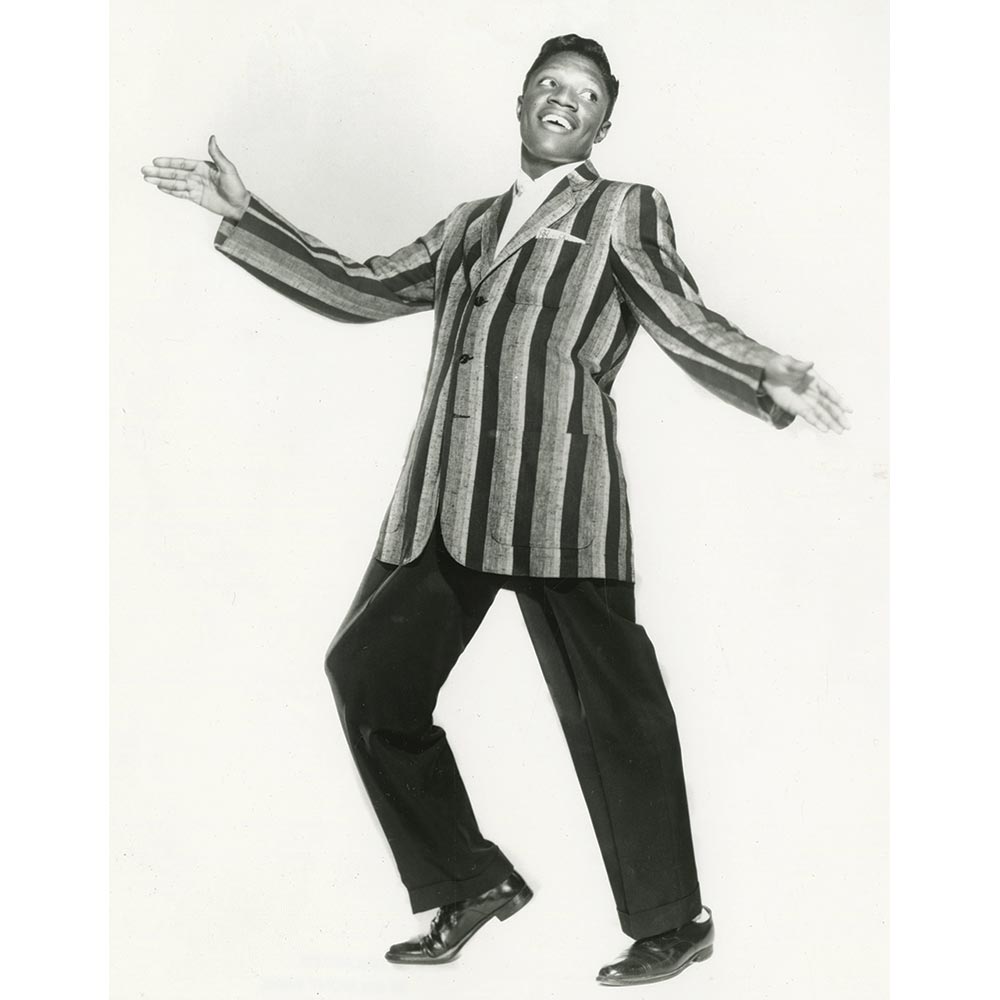
Texas has a rich musical history. That’s been the case for over a hundred years. Country legends Gene Aubry, Boxcar Willie and George Jones were from Texas. So were blues men Albert Collins, Freddie King and T-Bone Walker. Then there’s Buddy Holly, jazz drummer Buddy Miles, Janis Joplin, Sly Stone, former Eagle Don Henley, Boz Scaggs, Christopher Cross, Steve Earl, Stephen Stills and Z.Z. Top. These are just a few of the artists that called, or call, Texas home. Another artist that calls Texas home is Young Jessie. He is the nephew of another Texan musical legend, Blind Lemon Jefferson.
The name Young Jessie came later. He was born Obediah Donnell “Obie” Jessie, in Lincoln Manor, Texas on December 28th 1936. His father was a cook, while his mother enjoyed a brief musical career as Plunky Harris. She made a name playing piano, but was something of a a multi-instrumentalist. Her cousin was singer Blind Lemon Jefferson. With such a musical background, it’s no surprise that Obediah would eventually embark upon a musical career. Before that, Obie and his family left Texas behind.
From Texas, Obie and his family moved to Los Angeles in 1946. This was where Obie began studying music. Not long after this, Obie decided to form his first vocal group, The Debonaires.
Joining Obie in The Debonaires, was Richard Berry, who later, would write and record Louie Louie in 1957. Before that, Richard sung on The Debonaires’ debut single, I Had A Love. It was penned by Obie, and released in 1953. When I Had A Love was released, The Debonaires’ name was missing. Instead, the single was credited to The Hollywood Blue Jays. Despite the change of name, I Had A Love wasn’t a commercial success. So, The Hollywood Blue Jays changed their name.
Having just changed their name, The Hollywood Blue Jays became The Flairs. This change of name just happened to coincide with a change in fortune for The Flairs. They won a recording contract with Modern Records. However, The Flairs never got the chance to fulfil their potential. In 1954, Obie decided to embark upon a solo career.
Obie had been spotted by Jerry Leiber and Mike Stoller. They thought that Obie had potential, so offered him a recording contract…as a solo artist. There was a problem though…his name.
By 1954, Obie was just eighteen. However, his name Obediah Donnell Jessie made him sound much older. So it was suggested that he adopt a stage name. This was when Young Jessie was born.
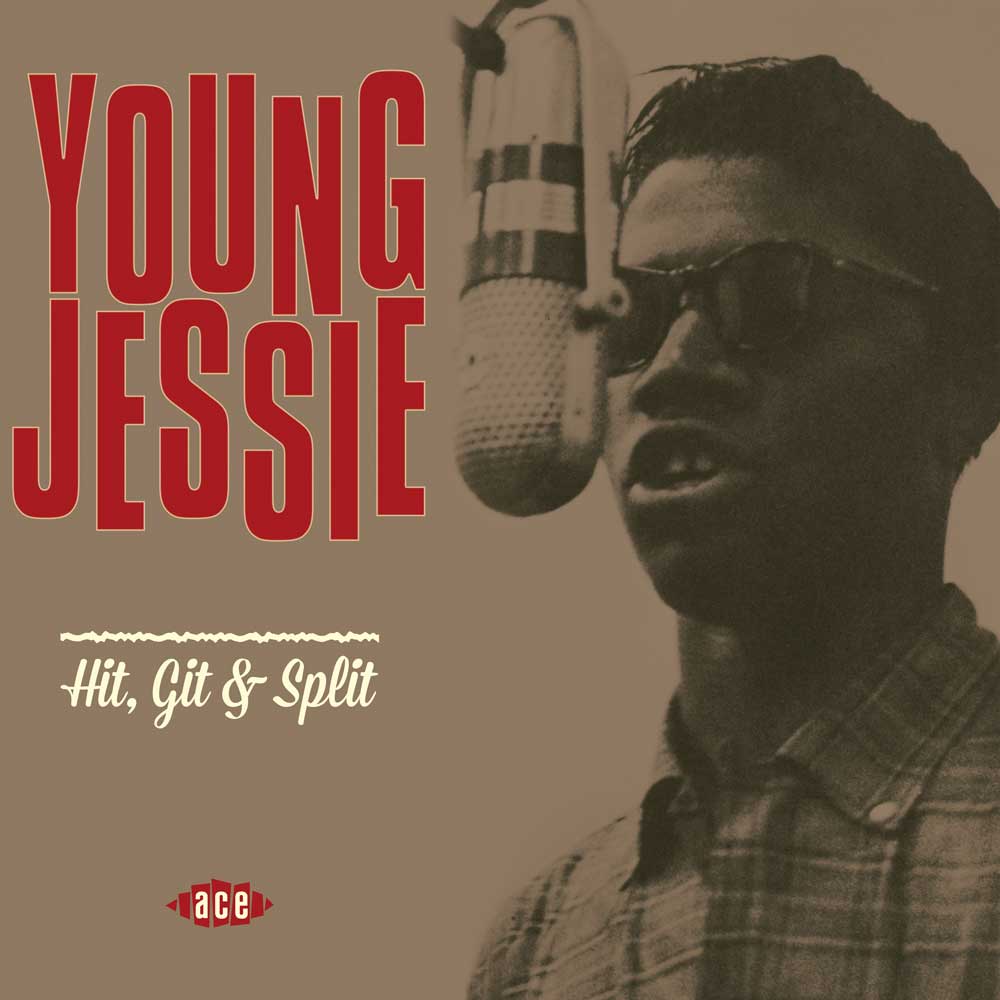
Young Jessie’s music is remembered on the recent Ace Records compilation It takes its title from Young Jessie’s 1955 single. It’s one Young Jessie’s finest and hippest cuts. There’s fourteen in total on Hit, Git and Split, including I Smell A Rat, Mary Lou, Nothing Seems Right, Oochie Coochie, Hot Dog and Rabbit On A Log. Most are penned by Young Jessie. The others were written by the legendary songwriting team. Hit, Git and Split which is available on 180 gram heavyweight vinyl or digital download, is a reminder of Young Jessie at the peak of his powers. This period began in 1954.
Just like his friend and former member of The Flairs, Richard Berry, Young Jessie was about to embark upon a solo career. He was signed a recording contract with Jerry Leiber and Mike Stoller.
With Leiber and Stoller guiding his career, Young Jessie’s solo career began in earnest. They were already well versed in the ways of the music industry. They knew what was needed to make a hit record. So they began their mission to transforming the eighteen year old Young Jessie into a star. This meant finding the write song for him.
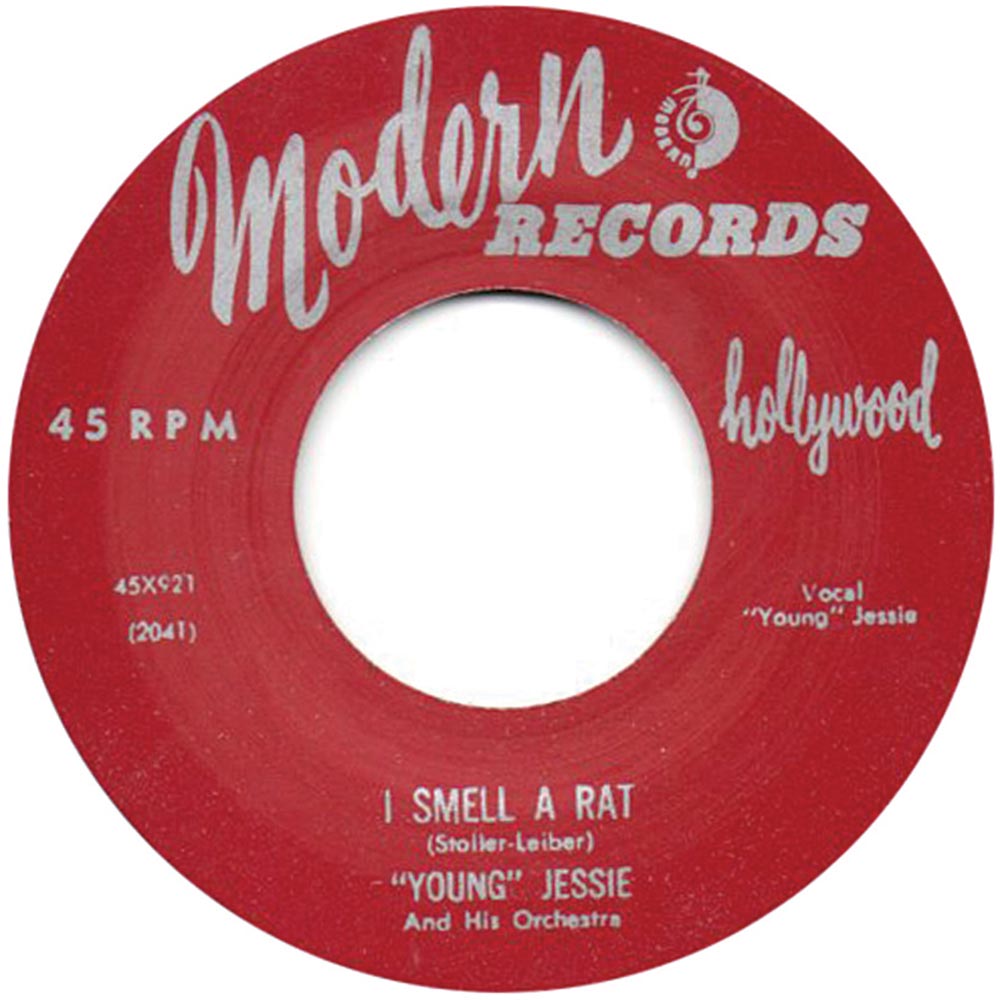
Already, Young Jessie had written a number of songs. He had penned The Hollywood Blue Jays I Had A Love. Good as Young Jessie’s songs were, Leiber and Stoller wanted their latest signing to have every chance of a hit single. So, they chose a song they had written, I Smell A Rat.
The Leiber and Stoller I Smell A Rat was destined to become Young Jessie’s debut single. On the flip side, was a Young Jessie composition Lonesome Desert. These two songs were recorded in late 1953, and were ready for release as a new year dawned.
With I Smell A Rat recorded, it was released on Modern Records. Young Jessie had previously won a recording contract with the Bihari brothers’ Modern Records. They too, were well versed in the vagaries of the music industry. Jules especially, knew how things worked. So, Young Jessie couldn’t have hoped for a better addition to his “team,” as his career began in earnest
Young Jessie’s recording career began in January 1954. That was when the Leiber and Stoller penned I Smell A Rat Was released on the Bihari brothers’ Modern Records. The Biharis thought that Young Jessie had the potential to break into the nascent rock ’n’ roll market. With his deep, baritone voice there was every possibility. Not this time though. Despite its undeniable quality, I Smell A Rat passed most people by. For Young Jessie, his management team and record company, it was a disappointing start to his career.
It wasn’t a case of getting back on the horse for Young Jessie. Far from it. There was a lengthy gap between his debut and sophomore single Mary Lou.
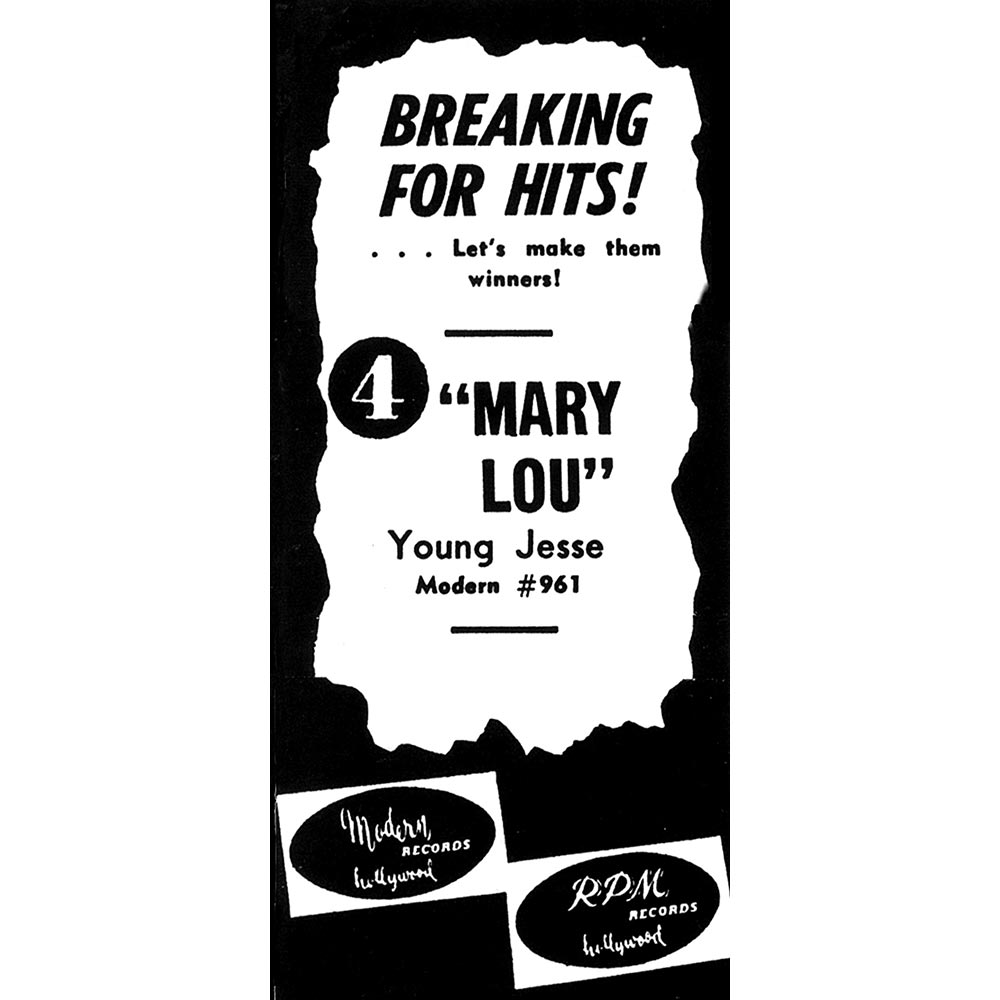
Seventeen months later, and Young Jessie was back with Mary Lou, a song he had written himself. However, Mary Lou wasn’t billed as a Young Jessie solo single. Instead, it was credited to Young Jessie and The Cadets. The B-Side, Don’t Think I Will, was credited to Young Jessie. He cowrote the single with Maxwell Davis, Joe Josea, Sam Ling and Johnny Watson. These two tracks became Young Jessie’s sophomore single.
Mary Lou was released on Modern Records in June 1955. Young Jessie had come a long way as a singer and songwriter. With his street smart lyrics, including: “clipped the judge just to pay her bail,” this captivated a generation. It still does. From the driving piano, hypnotic drums and waves of harmonies, it’s glorious fusion of rock ’n’ roll and R&B. Even sixty years after its release, it’s a timeless track from Young Jessie. He had plenty more in the tank.
Five months after the release of Modern 961, came the release of Young Jessie’s third single Nothing Seems Right. This was another Young Jessie composition. Modern Records were keen to build on Mary Lou. There was no way the Biharis were going to let the grass grow under their feet. So they sent Young Jessie into the studio. Along with Nothing Seems Right, Young Jessie cut Do You Love Me? These two tracks became Modern 963, Young Jessie’s third single.
Nothing Seems Right was released in November 1955. This ballad was very different to Young Jessie’s two previous singles. It features a soul-baring vocal full of heartbreak, and allows record buyer to hear another side to the twenty-seven year old Texan. He was maturing as a singer and songwriter. However, later in 1955 he missed out on an opportunity that could’ve transformed his career and fortune.
Following the release of Nothing Seems Right, Young Jessie recorded a cover of Leiber and Stoller’s Hot Dog in 1955. For some reason, a decision was made not to release Hot Dog as a single. It was later recorded by Elvis Presley, whose version many believe is the definitive version. However, would they still say that if Young Jessie’s version had been released? It had the potential to give Young Jessie a mainstream hit. For Young Jessie, a hit wasn’t far away.
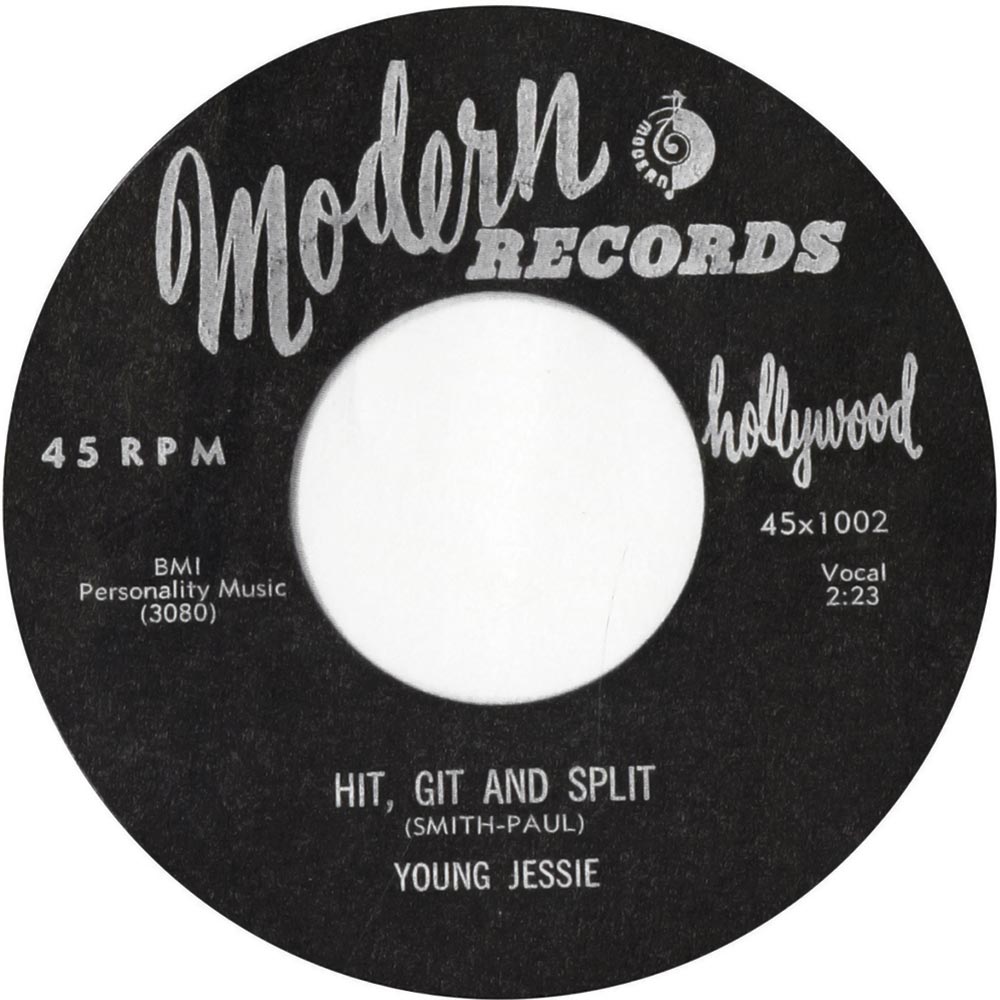
1956 was a quiet year for Young Jessie. It wasn’t until September 1956, that he released his first single November 1955. Hit Git and Split, another Young Jessie composition was chosen. On the flip side was another Young Jessie composition, It Don’t Happen No More. These two tracks became Young Jessie’s comeback single.
After ten months away, Young Jessie made a welcome return with Hit Git and Split. It was released on Modern Records in September 1956. To say it was well worth the wait is almost an underestimate. Hit Git and Split was a career defining track. It’s an irresistible hip swaying fusion of rock ’n’ roll and R&B. Some might say it’s Elvis for grownups. Just like Mary Lou, Hit Git and Split is a timeless track from Young Jessie. His stock was rising after Hit Git and Split.
Just three months after the release of Hit Git and Split, Young Jessie released his final single on Modern Records, Oochie Coochie. It was a Tony Williams composition. For the flip side, Leiber and Stoller’s Here Comes Henry was chosen. It was released in December 1956.
When Oochie Coochie was released in December 1956, it seemed to reference Little Richards and Jerry Lee Lewis. Especially with the piano driving the arrangement along, and the braying saxophone interjecting. Young Jessie’s vocal was a mixture of exuberance, enthusiasm and sass. It seemed a fitting finale to his two years at Modern Records.
As a new year dawned, so did a new chapter in Young Jessie’s career. During 1957, he added harmonies on The Searchers’ singles Searchin’ and Young Blood. Young Jessie also made guest appearances on singles by The Crescendos and Johnny Morisette. He even penned tracks for various tracks. However, what mattered was his solo career, and Young Jessie was about to make his major debut.
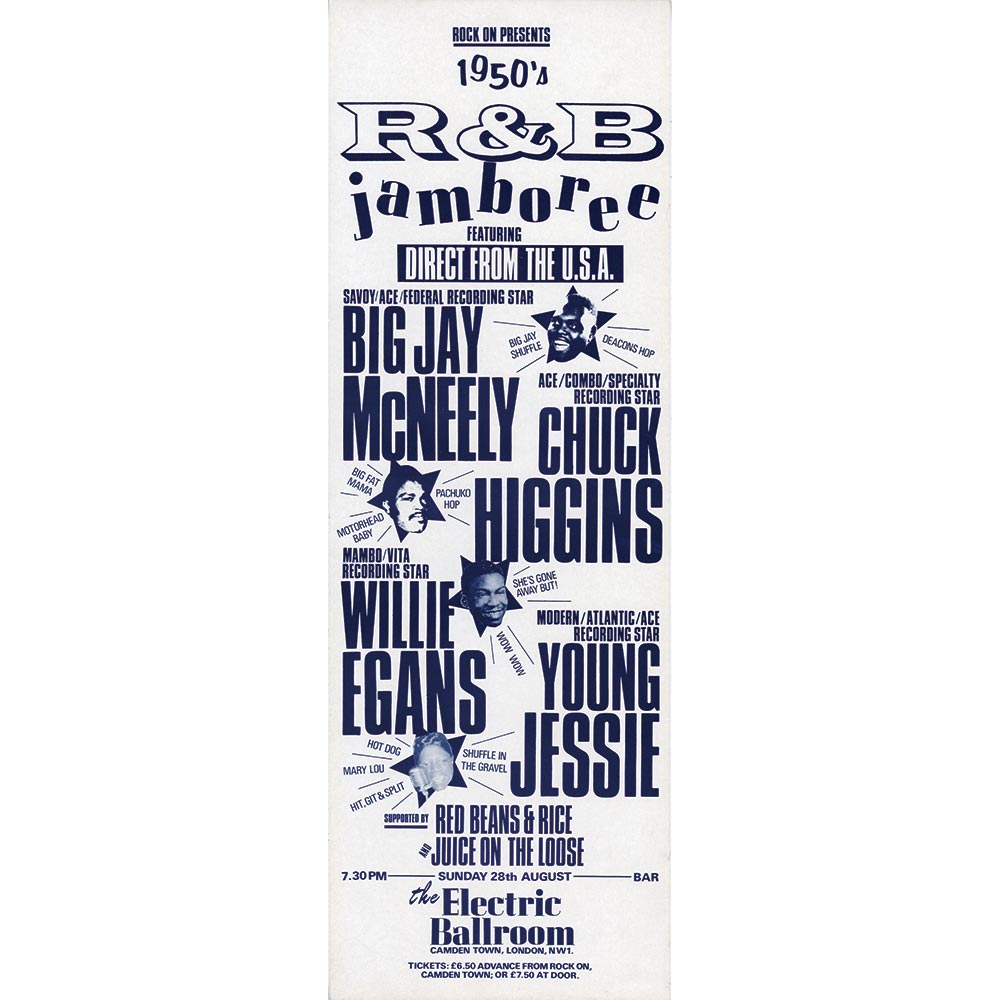
This came courtesy of a single produced by Leiber and Stoller, Shuffle In the Gravel. It’s another track from the pen of Young Jessie. Shuffle In the Gravel was released on Atco Records in 1957. At last, Young Jessie had made his major label debut. Sadly, it doesn’t feature on Hit, Git and Split. Neither does the followup, That’s Enough For Me, which was released in 1958. These two tracks comprise Young Jessie’s Atco Records’ years. After this, Young Jessie signed to another major, Capitol Records.
Young Jessie’s time at Capitol Records was even shorter than the Atco years. He released just one single Lulu Belle. That was the last single Young Jessie released for two years.
When Young Jessie returned, he was signed to Mercury Records. He released a quartet of singles. This started with 1961s Teacher, Gimme Back. A year later, Young Jessie released Be Bop Country Boy. Then in 1963, he released I’m A Lovin’ Man and a recut of Mary Lou. That wasn’t all.
Later in 1963, Young Jessie released Make Me Feel A Little Good on the Vanessa label. He also recorded an album with Chuck Jackson. Chuck Jackson and Young Jessie was released on Crown Records, in 1963. One of the tracks from Chuck Jackson and Young Jessie, the swinging, bluesy, Well Baby, features on Hit, Git and Split. It shows how Young Jessie’s music had evolved since he left Modern Records. That was only five years earlier, and ten years since his career began.
Indeed, the two other tracks from Hit, Git and Split are from early in Young Jessie’s career. They were cut in 1953, and billed as The Hunters featuring Young Jessie. Down At Hayden’s was a Young Jessie composition. Richard Berry wrote, which closes Hit, Git and Split. They showcase Young Jessie as his career was about to unfold.
That’s quite fitting. Hit, Git and Split documents a ten year period in the career of Young Jessie. It just so happens to be the most successful period of Young Jessie’s career. During this period, he cut some of his most memorable music, Mary Lou, Hit, Git and Split, Nothing Seems Right and Oochie Coochie. Then there’s the unreleased hidden gem Hot Dog. Way before that, The Hunters featuring Young Jessie had released Down At Hayden’s and Rabbit On A Log. They’re welcome additions, and are part of this important musical document, Hit, Git and Split.
Originally, Hit, Git and Split was released by Ace Records back in 1982. Since then, interest in Young Jessie’s career has continued to grow. No wonder. For over fifty years, Young Jessie was a prolific live performer. He has won over many music lovers in Britain. Even in his seventies, Young Jessie was capable of putting on a show that put artists half his age to shame. Now aged seventy-nine, Young Jessie still been performing live for eight decades. Ace Records reissue of Hit, Git and Split on 180 gram heavyweight vinyl, is a fitting tribute to veteran rock ’n’ roller Young Jessie.
YOUNG JESSIE-HIT, GIT AND SPLIT.
MIKI CURTIS-THE FIRST EAR.
MIKI CURTIS-THE FIRST EAR.
Miki Curtis made his musical debut in 1958. Back then, the twenty year old was a rockabilly singer. This was just the beginning of Miki Curtis’ musical journey.
By 1970, Miki was a member of Samurai. They released their debut eponymous album in 1970. It was well received upon its release. Nowadays, Samurai is considered a minor classic. However, there was no followup to Samurai released. Instead, Samurai split-up. For Miki Curtis, another chapter in his career was about to unfold.
This was life as a solo artist. Miki Curtis signed to the Vertigo label, and began work on his debut solo album The First Ear.
For his debut album, Miki Curtis collaborated with lyricist Michio Yamagami on nine tracks. The were a potent partnership, who together, penned the majority of The First Ear. Miki wrote the music and Michio the lyrics. Their collaborations were Duel Under The Setting Sun, The Sun Goes Down Again, The Love of Duke R’s Wife, Ruined Kingdom, World Of Mojo, Golgita The Pirate, Children On A Hilltop and The Wounded Swan and This Measure of Happiness. The lyrics to other track on The First Ear, Forty Days On A Stoned Out Camel came courtesy of John Redfearn and Mike Davis of Samurai. Again, Miki provided the music. With ten tracks written, now it was a case of recording them. So, Miki and his band made the journey to Victor Studio.
Recording of The First Ear began in October 1971. Miki had put together some top musicians for what was a hugely ambitious album. Joining the rhythm section were a horn and string section. Then there joined by banks of keyboards and synths, plus a myriad of exotic instruments. Some of the musicians played on most of the tracks. This included Yujin Harada, the drummer from Samurai, Miki’s previous band. Other musicians featured on just a few tracks. All of them however, were playing their part in what was a hugely ambitious and groundbreaking album, The First Ear. It was produced by Muki and Masaharu Honjo, and completed in January 1972.
After recording of The First Ear was complete, the album was mixed by Norio Yoshiawa. He had been part of the project since day one, and was responsible for recording The First Ear. Once Norio had mixed The First Ear, the release date was scheduled for April 1972.
That wasn’t far away. Before that, critics and cultural commentators had their say on The First Ear. They hailed the album one of the most ambitious and innovative Japanese albums of the early seventies. This genre hopping album was the latest chapter in the Miki Curtis story. The former rockabilly singer had created a career defining album, one that was variously progressive, psychedelic and sometimes, otherworldly. That was all very well, but would the record buying public get The First Ear?
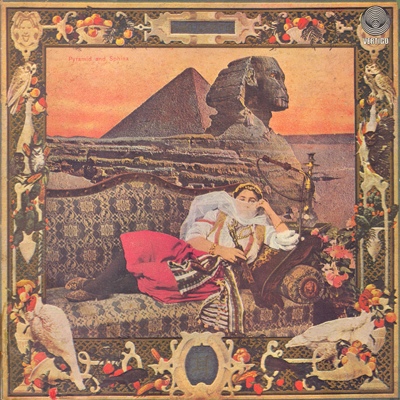
When The First Ear was released in April 1972, it didn’t sell in vast quantities. Fans of Samurai were keen to hear what Miki was doing now. Other record buyers were curious when they saw The First Ear’s distinctive ear. Its psychedelic cover offered a myriad of musical mysteries. So, they too tried The First Ear. Since then, The First Ear has become something of a cult album, which I’ll tell you about.
Opening The First Ear is Duel Under The Setting Sun. A frenzied strummed guitar is joined by stabs of piano. They’re panned left. Meanwhile, strings are panned right, bells ring out and a trumpet sounds. It’s as if a psychedelic Spaghetti Western is unfolding, and Miki is about to ride out into the desert for a Duel Under The Setting Sun. As the strings dance and rhythm section provide the heartbeat Miki delivers a dramatic vocal. Later, a quivering guitar cuts through the arrangement. Just like the other instruments, it’s dropped in at the right time. This results in a genre melting, cinematic track where Miki draws inspiration from psychedelia, soundtrack rock and pop.
A crystalline guitar creates a mellow introduction to The Sun Goes Down Again. Meanwhile a bass plays subtle and a piano adds a wistful sound. Miki’s vocal is tender and heartfelt. Nothing is allowed to overpower his vocal. It takes centre-stage as he offers hope, hope for the future. Miki optimistically sings; “if things are tough today, tomorrow will soon be here,” on this beautiful track.
The arrangement to The Love of Duke R’s Wife quivers, before a horn sounds. This is the signal for Miki’s vocal to enter. He’s accompanied by the rhythm section and piano. Occasionally, a horn interjects as Miki tells the story of a short-lived relationship between Duke Renard’s wife and a young aristocrat. As the arrangement almost waltzes along, the story unfolds. Wistfully, Miki sings of that the young aristocrat: “fell in a battle, dying on a distant field.” He brings the lyrics to life, while an organ and melancholy drive the arrangement to its dramatic and heart wrenching crescendo.
Ruined Kingdom is very different from the previous track. It has a mellow, feel good sound. That’s down to the choice of instruments. A piano, ARP synths and steel guitar join the rhythm section and acoustic guitar. This seems to inspire Miki, as he delivers one of his most effective and emotive vocals. Against an atmospheric, dreamy and almost otherworldly arrangement he tells the story of the “Ruined Kingdom.”
Just like the previous track, World of Mojo has a spacious track. However, the arrangement is much more understated. Mostly, it’s just an acoustic guitar that accompanies Miki’s wistful vocal. Later, a flute and then dulcimer interject. Adding a psychedelic twist, is Mojo The Cat, who snores gently. However, mostly, it’s just Miki and the acoustic guitar that play starring roles on this quite beautiful track.
The sound of waves breaking opens Golgita The Pirate. Soon, the rhythm section, piano, organ and bursts of horns combine. They set the scene for Miki, who sings of the hunt for “Golgita The Pirate.” As the ARP synth buzzes, the piano is panned left and the rhythm section right. Later, an organ is panned hard left as the jaunty arrangement takes shape. By then, the hunt for Golgita is in full flight. A battle takes place, and Golgita is shot. There’s a twist in the tale. When Golgita’s hat is taken off, they discover “a beautiful woman…they all prayed and tenderly laid her to rest.” So vivid is the imagery, that Golgita The Pirate is like a short story put to music.
Children On A Hilltop sees another change of style. Much of that is down to the choice of instruments. An ARP synth is deployed while the drums, bass and piano play more prominent roles. Similarly, Miki’s impassioned vocal is louder and joyous. It’s as if he’s based the “Children On A Hilltop” on his own childhood, and is happily reminiscing.
Wistful and beautiful. That’s the word that springs to mind when one first hears The Wounded Swan. It’s a slow, string drenched ballad. Just the rhythm section, piano and acoustic guitar accompany Miki. Gradually, the story takes shape of the The Wounded Swan that’s shot and left behind. It’s unable to make the journey back to its birthplace. So effective is Miki’s delivery of the lyrics, that The Wounded Swan takes on a cinematic quality. One can imagine The Wounded Swan “watching as its friends vanish into the distance.”
From the opening bars of This Measure of Happiness, it’s apparent that something special is unfolding. With just a piano and the rhythm section for company Miki delivers a truly heartfelt vocal. He seems to have reserved his best vocal for this beautiful paean.
The cosmic sounding Forty Days On A Stoned-Out Camel closes The First Ear. For many people this experimental fusion of psychedelia, avant-garde, experimental and free jazz is the high point of The First Ear. It’s certainly unlike the rest of the album. A droning, spacey sound sits above the arrangement. Meanwhile, the rhythm section play slowly. Miki’s vocal is deliberate and dramatic. So are the harmonies. When they drop out a blistering guitar solo replaces it. Along with the droning, otherworldly sound, they take centre-stage. Then the rest of the band set the scene for Miki and the harmonies. When they drop out the final forty seconds feature a myriad of bubbling, gurgling sounds. This ensures that The First Ear ends on a surreal, psychedelic and progressive high.
Forty-three years after the the original release of The Third Ear, Miki Curtis’ debut album is now a cult classic. It’s much more appreciated than it was in April 1972. Back then, this genre-defying album passed most people by. Many of the people that heard The Third Ear, didn’t know what to make of it.
Partly, that was because its such a varied, and eclectic album. Miki Curtis flits between genres on The Third Ear. There’s everything from sixties pop, psychedelia, progressive rock, jazz and rock, to elements of avant garde, experimental, free jazz. The use of synths, especially the ARP show that Miki Curtis was an innovator. He brought musicians onboard who were pioneers, and knew what instruments like the ARP were capable of. They created a myriad of disparate sound, including some that can only be described as otherworldly. It seemed that Miki Curtis was determined to challenge musical norms. Other times, he seemed quite conservative.
That’s the case on The Third Ear’s ballads. Mostly, Miki is accompanied by an understated and traditional arrangements. This allows him to breath life, meaning and emotion into Michio Yamagami’s lyrics. Ballads like The Sun Goes Down Again, Wounded Swan and This Measure Of Happiness are among The Third Ear’s highlights. Then on other tracks, Miki lets his imagination run riot.
None more so than Forty Days On A Stoned-Out Camel. It must have sounded truly innovative when The Third Ear was released in 1972. With its myriad of otherworldly sounds, it’s still a captivating track. So, is Ruined Kingdom, with its lysergic sheen. Then there’s the cinematic sounding Duel Under The Sun and Golgita The Pirate. Both are rich in imagery, and transport the listener to another time and place. This is just another reason why The Third Ear is a cult classic. That’s despite the unorthodox use of panning.
Listen carefully to The Third Ear, and the listener will hear that instruments are arranged very differently to most albums. On one track the drums were panned to the right. Usually, the drums take centre-stage. Then on other tracks, the use of panning results in what’s almost an unbalanced sounding arrangement. It takes a bit of getting used to, but adds to The First Ear’s inherent charm.
The occasional unbalance mix can be forgiven. Especially, since in 1972, the technology available wasn’t as advanced as it is today. This meant that recording an album as ambitious and innovative as The Third Ear was quite an undertaking. Somehow, recordist and mixer Norio Yoshiawa, plus producers Miki and Masaharu Honjo managed to do so.
They, and everyone involved with Miki Curtis’ genre-hopping debut album The Third Ear should be proud of an album that’s variously ambitious, innovative, progressive, psychedelic and often, beautiful. That’s why, forty-three years after The Third Ear’s release, this cult classic is finally being appreciated.
MIKI CURTIS-THE FIRST EAR.

DAVID KAUFFMAN AND ERIC CABOOR-GREETINGS FROM SUICIDE BRIDGE.
DAVID KAUFFMAN AND ERIC CABOOR-GREETINGS FROM SUICIDE BRIDGE.
Often when recording an album, an artist thinks about an album cover only once they’ve finished recording. Not David Kauffman and Eric Caboor. They put the cart before the horse, in the spring of 1983, and came up with an album cover before they had even recorded their debut album.
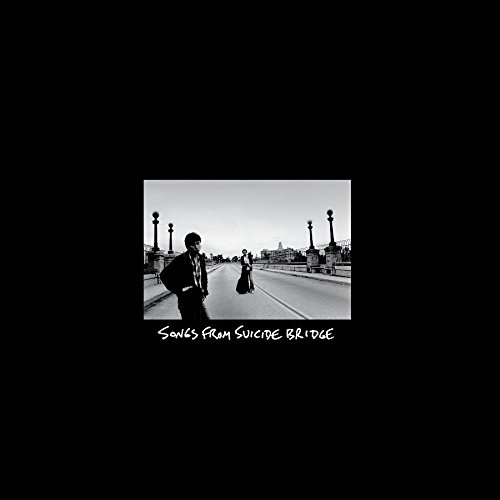
The photo shoot for the album cover took place in the spring of 1982. David Kauffman remembered the perfect place for the photo shoot, Colorado Street Bridge, which connects Pasadena to the northeast tip of Los Angeles. It wasn’t the spectacular architecture that made David remember Colorado Street Bridge. No. Far from it.
Instead, it was that every time he crossed the Colorado Street Bridge as an eight year old, it sent shivers down his spine. That’s not surprising, given its history.
Fast forward to the spring of 1983, and the Colorado Street Bridge still had a bad reputation. That had been the case since it opened in 1913. For the last seventy years, over one hundred people had killed themselves by jumping off Colorado Street Bridge. Unsurprisingly, locals took to referring to Colorado Street Bridge as Suicide Bridge. That’s where David and Eric decided to shoot the photo for their debut album.
Early one spring morning in 1983, David and Eric made their way to Suicide Bridge. Accompanying them was a photographer. They found Suicide Bridge eerily deserted. There was not a car in sight. At first, they thought the bridge was abandoned. This set their imagination running. So, they decided not to hang about. They would have their photos taken, and beat a hasty retreat. Various photos of David and Eric walking across Suicide Bridge clutching their guitar cases were taken. After that, they headed home. Only at a later date did they discover Suicide Bridge was closed for repairs.
By then, Eric had hit on a title for the album they still to record. He phoned David with the suggestion that their debut album be called Greetings From Suicide Bridge. Nervously, they laughed at the irony of the title. However, a year later, when David Kauffman and Eric Caboor released their debut album on their own label, Donkey Soul Music, the title of the album was indeed, Greetings From Suicide Bridge. However, it was as if the curse of Suicide Bridge had struck again, when the album sunk without trace.
Nothing was heard of Greetings From Suicide Bridge for some years. It was just another lost album. That was until recently, when Light In The Attic Records decided to reissue David Kauffman and Eric Caboor’s debut album, Greetings From Suicide Bridge.
At last, David and Eric’s long lost album had the opportunity to be heard by a wider audience. Maybe thirty-four years after David Kauffman and Eric Caboor first met in 1981, Greetings From Suicide Bridge would find the audience it deserved?
It was the autumn of 1981, that David and Eric first met. David arrived at The Basement club, which was situated in the basement of the Echo Park United Methodist Church. It was one of the last folk venues in Los Angeles. Singers on their way up, those on the way down and those hoping for a break made their way to The Basement. They played in front of folk fans and those sheltering from the realities of life. While it wasn’t a glamorous venue, it was full of likeminded music lovers. This included Eric Caboor.
Occasionally Eric accompanied his friend on guitar. That suited Eric fine. Eric didn’t have the confidence to take centre-stage. He was happy to stay in the background. That wasn’t the case with another singer he met one night, David Kauffman.
Just like Eric, David was also an aspiring singer-songwriter. Aspiring was the word. Try as he may, he couldn’t get a break. So, David was waiting tables. He didn’t enjoy this, but the money was good and he only had to work twenty-five hours. The rest of the time, he could spend writing songs and chasing the dream. This included turning up at The Basement one night.
With so many people wanting to play at The Basement, time was limited. Singers were only allowed three songs. Then their time was up. So when David’s time came, he didn’t bother with the banter other singers indulged in. Instead, he launched into his three songs. Literally, David poured out his soul during the three songs. The audience were captivated. Especially, Eric Caboor.
When David had packed up his guitar, he was all set to head home. Eric however, decided to introduce himself. Having complimented David on his performance, Eric said he would like to hear more of David’s music. This was the start of a firm friendship.
Straight away, David and Eric began to spend a lot of time together. The two aspiring singer-songwriters had a lot in common. They both wanted to make a career out of music.
That was why David moved to L.A. David’s dream hadn’t turned out the way he had hoped, and he was waiting tables. Eric’s luck was out too. He was still living in his parent’s home. Deep down, he wanted to make a living out of music. Eric however, was reluctant to follow his dreams. As they sympathised and empathised with each other’s plight David and Eric hatched a plan to record an album together.
That’s how, in the spring of 1983, David and Eric found themselves on Suicide Bridge. With their album cover shot, all they needed was to write and record their debut album. It didn’t even have a title. That was until David suggested the title Greetings From Suicide Bridge. Not only did they have a title, but inspiration as to what the music
After their visit Suicide Bridge the photographs that had been shot were received by David and Eric. As they looked at the shots, they gave them an idea as to how Greetings From Suicide Bridge should sound.
For Greetings From Suicide Bridge, David and Eric originally had written and recorded thirteen songs. What they had forgotten, was the time restrictions of an LP. So, Greetings From Suicide Bridge went from a thirteen song album, to one featuring just ten. They were penned by David and Eric.
Of the ten songs that made it only Greetings From Suicide Bridge, David contributed Kiss Another Day Goodbye, Life Without Love, Life and Times On The Beach, Where’s The Misunderstanding? and Tinsel Town. David also penned the lyrics to Midnight Willie, while Eric wrote the music. Eric’s other contributions were Neighbourhood Blues, Angel Of Mercy, Backwoods and One More Day (You’ll Fly Again). These ten tracks, which became Greetings From Suicide Bridge, were recorded between June and October of 1983.
As recording of Greetings From Suicide Bridge began, it wasn’t in one of L.A.’s recording studios. Instead, David and Eric recorded their debut album after they had finished work. Eric played acoustic, electric, slide and steel guitars, plus dulcimer, mandolin and vocals. David played bass, piano, acoustic and electric guitar. This complicated matters.
For their recording sessions, David and Eric only had a four-track portastudio. Eric had bought it in a music store in Van Nuys. It used just blank cassettes. However, given the wide variety of instruments the pair were using, they didn’t have enough channels.
This wasn’t going to stop David and Eric. Necessity was indeed, the mother of invention. The pair were forced to improvise, so that they could layer instruments. It was a complicated and time consuming process, but one that seemed to have worked. However, there was a problem.
When David and Eric took their cassettes to be professionally transferred onto reel-to-reel tapes, Norm Stepanski of Hillside Recordings, Encino thought that the tapes were so badly damaged that Greetings From Suicide Bridge would have to be rerecorded. David and Eric’s hearts sank. However, Norm promised to work out a way to save the project.
As David and Eric left Hillside Recordings, it was with a heavy heart. Four months’ work was at stake. It could all be for nothing. If they had to start again, they might never replicate the same sound. Especially, the way they layer had been done. They needed Norm to save the day.
And save the day he did. Somehow, Norm worked out a way to save the tapes. The thirteen tracks were transferred across. Norm had saved the day. David and Eric enjoyed the journey to Hillside Recordings, where Norm told them that if they “doing this again, ring me first.” That was the future, now David and Eric had a record to release.
It was then that they realised that the thirteen songs they had originally recorded wouldn’t fit on Greetings From Suicide Bridge. So, thirteen songs became ten. Even then, David and Eric were pushing their luck. They managed to utilise ninety-nine percent of the vinyl. With the ten songs chosen, now came the process of sequencing Greetings From Suicide Bridge. With that done, David and Eric played their forthcoming album for the first time.
The person chosen to appraise Greetings From Suicide Bridge was David’s girlfriend. Her reaction was that the album was that they had taken “their most depressing songs, and put them on one record…isn’t that a bit much?” This made David and Eric think. So, they switched the closing track. One More Day (You’ll Fly Again) closes Greetings From Suicide Bridge which was recorded in January 1984, and is the perfect counterpoint to the album opener Kiss Another Day Goodbye. With this new track listing, the record was ready to be pressed.
To press Greetings From Suicide Bridge Quiex, a company who specialised in short runs of vinyl were chosen. Partly, this was because of the sound quality they promised. There would be no erroneous clicks or crackles during Greetings From Suicide Bridge’s quiet parts. This was perfect for an album like Greetings From Suicide Bridge, which has a number of quiet parts. If the sound quality complimented the music, so did Greetings From Suicide Bridge’s album cover.
On the front cover of Greetings From Suicide Bridge, David and Eric decided that the picture should be underexposed. The back cover however, was overexposed. This results in an atmospheric, poignant, and in the case of back cover, eerie scene. It was bound to catch the eye of record buyers.
David and Eric only had enough money to print 500 copies of Greetings From Suicide Bridge. This they hoped would be the first of many pressings. With the 500 copies, David and Eric took turns at writing the album title. This took time, but the end was in sight. All that was left was to send out promos and sell the rest of the copies of Greetings From Suicide Bridge.
A total of 150 promo copies of Greetings From Suicide Bridge were sent out to college and independent radio stations. David and Eric were hoping this would garner some radio play. This wasn’t the case. The 150 promo copies of Greetings From Suicide Bridge failed to illicit any interest. Record sales weren’t doing any better.
A few copies were sold at local record shops. Then when David and Eric played at The Basement, they managed to sell some copies of Greetings From Suicide Bridge. There were even a few copies sold via mail order. Apart from these few sales, Greetings From Suicide Bridge passed most people buy. That was apart from a couple of DJs in the unlikeliest of locations.
Neither David nor Eric thought to send copies of Greetings From Suicide Bridge to DJs in Halifax, Novia Scotia, or Sitka, Alaska. However, somehow, these two DJs heard about Greetings From Suicide Bridge and requested promo copies. It seemed that an album written and recorded in L.A. had struck a nerve much further afield. That’s still the case today.
Recently, there has been a resurgence in interest in David Kauffman and Eric Caboor’s debut album Greetings From Suicide Bridge, which I’ll tell you about. Greetings From Suicide Bridge has recently been reissued by Light In The Attic Records.
Kiss Another Day Goodbye opens Greetings From Suicide Bridge. Just an understated acoustic guitar plays in the distance. Gradually, it moves to the front of the mix, and in the process, usher’s the vocal in. It’s despairing, and full of sadness at the breakup of his relationship. This heartache is apparent when he sings: “and I don’t know, how much longer I can feel the way I feel, and never cry.” Washes of guitar shimmer, complimenting the soul-baring vocal, on what’s a heartachingly beautiful song.
Neighbourhood Blues is quite different from the opening track. Elements of blues and folk combine during the track. That’s the case lyrically. Eric seems to draw inspiration from both vintage blues and the Laurel Canyon sound. As he picks his guitar, he delivers a reflective vocal. He can’t relate to his family, and his friend has moved to the suburbs. However, he needs to tell someone how he feels. His only option is to write to a stranger: “some lonesome loser, who’ll hear what I’ve got to say.”
Straight away, Life Without Love sounds as of it belongs on a Sting solo album. Again, an underrated arrangement accompanies a reflective vocal. Guitars combine with a subtle bass. They frame the vocal. Again, it’s full of despair. Then midway, through the track, a curveball is thrown. A dramatic flourish sees the guitar played with a degree of urgency, while the vocal grows in power. It veers between a scat to a despairing vocal. The cause of this despair, is the thought of Life Without Love.
Just acoustic guitars open Angel of Mercy. They set the scene for the vocal. From the opening line, “oh I should have seen it coming,” the vocal is rueful and reflective. Folk rock and country are combined on this cinematic track. It’s a song about someone whose lost their way; and spends their time drinking and making the same mistakes. Then when the vocal drops out, some of the best guitar playing can be heard. It’s neither flashy, nor overcomplicated. It is the perfect replacement for the rueful vocal. Once the vocal returns, the scene is set for the finale, and the poignant closing lines: “and I’ve never learned to pray, until today.”
Stabs of piano open Life and Times on the Beach. It sounds as if it’s a homage to Neil Young, who in 1975, recorded his On The Beach album. However, again, the vocal sounds like Sting. It’s delivered against the piano and occasional, but subtle bursts of guitar. They provide the backdrop to a vocal that’s remembering a life that’s drawing to a close. The sands of time are slowly slipping away. Then after 2.22 a mandolin proves a game changer. It injects a sense of urgency. It’s as if the realisation that time is quickly running out. As the vocal drops out, there’s a brief Celtic influence. With just over a minute to go, the arrangement becomes slow, understated and thoughtful. There’s also a beauty to this soul searching song.
Backwoods is an eight minute epic where David and Eric combine folk and country. Just like previous tracks, the folk-tinged arrangement has an understated sound. Just a guitar accompanies the vocal, before David and Eric harmonise. Then when the vocal drops out, the guitars add an element of drama. This isn’t new. It’s been used before on Greetings From Suicide Bridge, and has proved effective. That’s the case here, on this tale of a guy who came from the country seeking riches. These riches have eluded him, but still the city: “won’t let me go.” It’s a poignant and cinematic song, that many people will be able to relate to.
From the opening bars, Midnight Willie has a wistful sound. David’s lived-in vocal is perfect for the lyrics, and brings them to life. With guitars for company, the pictures of a drifter and musician, jumping trains and moving from town to town. One wonders if it was based on Mark Phillips, who organised The Basement club, where David and Eric met? He too, was a one time drifter who had dreams of making it as a musician. Who knows, maybe this is David and Eric’s homage to him? If it is, they’ve done him proud, given Midnight Willie is one of Greetings From Suicide Bridge’s best tracks.
Folk, blues and country combine on Where’s the Understanding? It’s a two minute track with a slightly experimental sounding arrangement. A blistering guitar cuts through the arrangement. Meanwhile, an urgent acoustic guitar and vocal combine. It’s as if David is tormented by the “pain that has filled me…and has drilled me.” This makes Where’s the Understanding? a powerful track.
Tinsel Town is a song about L.A. at Christmas. It’s not a song with a happy ending. Instead, it’s about broken promises and broken dreams. 3,000 miles from whatever went before and going down. Christmas in the Southland, lonely to the bone.” Desperation is omnipresent. “I’ve tried to do my best, and tried to live with nothing less, all it’s getting me is deeper in this mess.” With just washes of quivering guitar, a soul-baring Neil Young inspired vocal oozes despair.
One More Day (You’ll Fly Again) was recorded in January 1984, and replaced one of the original tracks on Greetings From Suicide Bridge. A twenty-seven second meandering acoustic guitar sets the scene for the vocal. It’s reminiscent of James Taylor, as David sings of a musician going from town to town, always hoping that the good times will return. This ensures that Greetings From Suicide Bridge ends on a positive sounding high.
Thirty-one years ago, David Kauffman and Eric Caboor released Greetings From Suicide Bridge. Only a few of the 500 copies sold. They sent more promo copies out than they sold. Some of the promos found their way into record shop bargain bins. That’s where the lucky ones found this hidden gem of an album.
Greetings From Suicide Bridge was neither a success nor appreciated upon its release. That isn’t unusual. All too often, good music fails to find an audience first time around. It’s only at later date that their music finds the audience it deserves. Hopefully, that will be the case with Greetings From Suicide Bridge, David Kauffman and Eric Caboor’s debut album, which was recently reissued by Light In The Attic Records.
The ten tracks on Greetings From Suicide Bridge find David and Eric creating music that is understated, rueful, wistful, melancholy, despairing, poignant, hopeful and beautiful. Other times, the music on Greetings From Suicide Bridge is also stark and personal. Sometimes, the music is cathartic, when David or Eric unleash their hurt and heartbreak. When this is the case, Greetings From Suicide Bridge becomes like a confessional. Always though, the music on Greetings From Suicide Bridge is captivating. Not once does the listener one think about missing a track. Far from it. On every track the listener is drawn in, just in case David and Eric throw one of their curveballs.
They do that several times on Greetings From Suicide Bridge. When this happens, the song changes totally. Often it’s totally unexpected. This is another reason why Greetings From Suicide Bridge is such a compelling album. It’s also an album where David and Eric flit between and fuse musical genres.
During Greetings From Suicide Bridge’s ten tracks, David and Eric combine elements of blues, folk rock, country and rock. Their playing is mostly subtle, and proves the perfect foil for the vocals. Each of the ten tracks features a captivating performance. The vocals breath life and meaning into the lyrics. That’s why by the end of Greetings From Suicide Bridge, one can’t help but wonder why someone, somewhere didn’t spot the potential in David Kauffman and Eric Caboor’s debut album.
Maybe if instead of mailing 150 copies to radio stations, David and Eric had sent a copy of Greetings From Suicide Bridge to a handful of record companies, maybe they would have enjoyed critical acclaim and commercial success. Sadly, that wasn’t to be. However, maybe thirty-one years after David Kauffman and Eric Caboor released Greetings From Suicide Bridge, their long lost hidden gem of an album, will find the audience it so richly deserves?
DAVID KAUFFMAN AND ERIC CABOOR-GREETINGS FROM SUICIDE BRIDGE.
DJ VADIM AND SENA-GROW SLOW.
DJ VADIM AND SENA-GROW SLOW.
Ten years ago, Sena and her band made long the journey from Accra in Ghana, to Budapest, Hungary to play at a festival. Sena never thought anything of it at the time when she agreed to the booking. Granted she was excited to be playing at such a prestigious festival. However, she never thought that that festival in Budapest would change her life.
When Sena arrived in Budapest in 2005, the festival was taking place in the centre of the city. This was fitting. Budapest has a rich and illustrious musical past. It gave the world composers Alexander Laszlo, Ignác Mihályi, Miklós Rózsa, Franz von Vecsey and Thomas Rajna. In this city steeped in musical history, a chance meeting with a modern day “composer” DJ Vadim.
By then, DJ Vadim was one of the biggest names in hip hop. He was an experienced DJ and producer. Already DJ Vadim had released five albums. However, his last album was 2002s U.S.S.R. The Art of Listening. This was the last instalment in the groundbreaking U.S.S.R. quartet. Since then, constantly crisscrossing the globe DJ-ing. It seemed DJ Vadim was concentrating on DJ-ing. He was determined to spread the hip hop gospel far and wide. Budapest was the latest date in his schedule.
Backstage, musicians and DJs mingle and network. That’s when DJ Vadim met Sena. It was the start of a ten year friendship, where the pair collaborated on various projects. The latest is DJ Vadim and Sena’s new album Grow Slow, which is out on BBE Music, on 15th June 2015. It’s the result of a ten year journey that began in 2005.
Back in 2005, Sena Dagadu called Accra, Ghana’s capital city home. That was where her career as a singer and songwriter began.
Sena had released her debut album First One in 2003. Gradually, she began spreading her wings, as she tried to make a musical breakthrough with her first collaboration.
This was in 2004, when Sena added the vocal to Endlessly’s single Anorganic. Soon, one collaboration became two.
Then a year later, Sena collaborated with Marcell Dudás on the single Change Colours Again. Sena wrote the lyrics and added the vocal. It was released on the Cookin’ Vinyl label in 2005. For many people, this was the first they had heard of Sena Dagadu. However, her future collaborator DJ Vadim was already an experienced DJ and producer.
After founding his own record company Jazz Fudge in 1994, DJ Vadim released his debut album Headz Ain’t Ready in 1995. That was the year DJ Vadim signed to Ninja Tunes, who he released four albums for, between 1996 and 2002.
Having signed to Ninja Tunes in 1995, DJ Vadim released four albums between 1996 and 2002. These albums are referred to as the U.S.S.R. quartet. The U.S.S.R. quartet established DJ Vadim’s reputation as a innovative DJ, who was constantly pushing the musical boundaries and determined to reinvent his music. His Ninja Tunes’ debut was 1996s U.S.S.R. Repertoire (The Theory of Verticality). Two years later, U.S.S.R. Reconstruction (Theories Explained) followed in 1998. Then in 1999s DJ Vadim released U.S.S.R. Life From the Other Side. After U.S.S.R. Life From the Other Side, another three years passed before DJ Vadim released another album.
During this three year period, DJ Vadim didn’t turn his back on production. He released several singles. This included 2000s Your Revolution, and then Bang Y2 and Up To Ja in 2002. Later in 2002, DJ Vadim released the final instalment in the U.S.S.R. quartet, U.S.S.R. The Art of Listening. This brought to an end what’s perceived as a groundbreaking quartet of albums. However, having released four albums in six years for Ninja Tunes, it would be another five years before DJ Vadim released another album. When he did, a new voice could be heard, Sena Dagadu.
Five years after releasing the last in the U.S.S.R. quartet, DJ Vadim returned with the Soundcatcher album Talk To Me. It was the first of DJ Vadim’s projects to feature Sena Dagadu. She played her part in album which caught the attention of critics, and Giles Peterson. For DJ Vadim and Sena, this looked like the start of a successful musical partnership. The Soundcatcher Extras following later in 2007. Then tragedy struck for DJ Vadim in 2007.
He was diagnosed with a rare form of eye cancer, Ocular Melanoma. Thankfully, DJ Vadim recovered from Ocular Melanoma. Two years later, in 2009, DJ Vadim made his comeback.
By then, Sena had released an album with her band Hungarian band Irie Maffia. Fel A Kezekkel! was released in 2007 and proved to be a genre defying album. Reggae and dancehall is combined with hip hop, funk and rock. Unfortunately, Irie Maffia didn’t have a record company behind them, so had to self-release Fel A Kezekkel!. By the time Irie Maffia released their sophomore album, they would have a record company behind them. Before that, Sena had a lot of music to make.
For the next couple of years, everyone wanted to work with Sena. She collaborated with everyone from Refractory, DJ Cadik, Realistic Crew, Lotek, Zagar, Pannonia Allstars Ska Orchestra and Nightmares On Wax. It seemed word was spreading about Sena’s vocal prowess. Meanwhile, DJ Vadim was now fully recovered.
After two years away, DJ Vadim was ready to make his a comeback with a new album, U Can’t Lurn Imaginashun. It was released on BBE Music, and was a glimpse of what hip hop had been missing for the past two years.Then two years later, after further collaborations, plenty of globe-trotting DJ-ing trips, came DJ Vadim’s ninth album. Before that, Sena had another album to release.
This was Irie Maffia’s sophomore album What’s My Name? It was released on Shiftin’ Gears Records, in 2010. Irie Maffia’s music was just as eclectic as their debut album. However, What’s My Name? surpassed the quality Fel A Kezekkel! Sena’s band were going places. So was DJ Vadim.
This was 2011s DJ Vadim Presents The Electric’s Life Is Moving. Just like U Can’t Lurn Imaginashun. It was the third album DJ Vadim released on BBE Music. DJ Vadim Presents The Electric’s Life Is Moving was a fitting followup to U Can’t Lurn Imaginashun. Critics loved the album. It was vintage hip hop from a hip hop veteran. A year later, DJ Vadim made a welcome return.
When DJ Vadim returned in 2012, he came bearing gifts. This was his tenth studio album Don’t Be Scared. It was released to widespread critical acclaim. Without doubt, Don’t Be Scared was one of the best hip hop albums of 2012. DJ Vadim had set the bar high for his eleventh album. It would be released in 2014. Before that, Sena released her sophomore album.
In 2013, Sena Dagadu released her sophomore solo album, Lots Of Trees. It was released on French Soulbeats Records. When Lots Of Trees was released, critics were impressed by Sena’s long-awaited sophomore album. Critical acclaim accompanied its release. Record buyers agreed. Soon, when Sena headed out on tour, she found herself playing sold out stadium shows. Sena has even played a Grammy Award show. Her star is very much in the ascendancy. Still though, Sena plays a part in some of DJ Vadim’s projects.
Previously, Sena was worked on some of DJ Vadim’s project. She has also toured the world with his bands One Self and The Electric. With DJ Vadim’s various bands, Sena manages to juggle touring the world and bringing up her daughter Cecile. The musical journey that began when she met DJ Vadim in Budapest was continuing apace.
In 2014, DJ Vadim re;eased the followup to Don’t Be Scared. It wasn’t a hip hop album. No. Dubcatcher ws an album of dancehall reggae. This being DJ Vadim though, means Dubcatcher isn’t just an album of dancehall reggae. There was everything from bass culture, boogie, boom bap rap, roots music, soul and UK 2 step soul. Essentially, Dubcatcher is a genre-hopping album where DJ Vadim embarks upon another musical experiment. Helping him along the way, are an extensive cast guest artists. This cast didn’t include Sena. However, Sena would play a starring role in the next album DJ Vadim released.
Just a year after the release Dubcatcher, DJ Vadim returns with another album Grow Slow. It’s not a DJ Vadim solo album. Far from it. Instead it’s a collaboration with Sena.
Both DJ Vadim and Sena receive equal billing on Grow Slow, which will be released by BBE Music on 15th June 2015. That’s only fair. Sena wrote the ten tracks and adds vocals on Grow Slow. Meanwhile, DJ Vadim adds some of his trademark raps, and produced Grow Slow, which is a genre defying musical journey.
Given their previous track records, Grow Slow is a suitably eclectic album from DJ Vadim and Sena. They bob and weave their way through musical genres and influences. All the time, they draw inspiration from their respective musical backgrounds.
That’s the case from Go Slow’s opening track, There Is A Moment. DJ Vadim combines elements of hip hop, funk, folk and reggae. Meanwhile Sena delivers a soulful vocal powerhouse. It’s a mixture of power and emotion and whets one’s appetite for the rest of Grow On.
Day By Day sees the tempo drop, and Sena find her inner diva. Behind her, synths and crispy beats create a funky, electronic backdrop. Although it’s the polar opposite of Sena’s vocal, they’re like a musical yin and yang.
DJ Vadim drops the tempo on Work Hard. He combines crunchy beats, a bounding bass and synths. They’re scene setters for Sena’s strutting vocal. Sena fuses hip hop and soul, and in doing so, creates an irresistible track.
There’s a nod to Chic as Living In The New unfolds. This funky, minimalist introduction allows Sena’s vocal to take centre-stage. As the drums provide the heartbeat, a bass meanders along. Meanwhile, Sena delivers one of her most soulful and assured vocals.
Stems ’N’ Seeds has a slow, smokey and soulful, hip hop sound. DJ Vadim provides the backdrop for Sena’s vocal. She delivers a feisty fusion of hip hop and soul. Meanwhile, electronica, funk, hip hop and soul melt into one, creating a smokey sounding anthem.
Against just a backdrop of keyboards, Sena scats on Grow Slow. Soon, she’s delivering a slow, needy and hopeful Nu Soul vocal. Accompanied by DJ Vadim’s slow, electronic arrangement Sema plays a starring role in one of Grow Slow’s highlights.
Straight away, Boneshaker has a choppy, dubby sounding arrangement. A braying horn interjects as Sena toasts her way through the arrangement. Meanwhile, elements of Afrobeat, dub, electronica, funk and hip hop are combined by DJ Vadim. Almost seamlessly, the veteran producer combines the music of four continents on this genre melting musical journey.
Gradually, Run Along’s understated arrangement unfolds. Again, the music of several continents unite. Elements of Afrobeat and Carribean music combine with hip hop. Sena’s vocal is defiant and emotive. Especially when she sings: “I’ve got no time for you, I got no time for fools, Run Along to school.”
Big bold drums beats and synths combine as Sena delivers a joyous vocal on Morning Light. Behind her, DJ Vadim creates a mellow, laid back and slightly funky backdrop. Elements of electronica, hip hop, funk, jazz and Nu Soul combine, as Sena’s vocal plays an important part in feel good, summery sounding vibe.
Give Me More Part 2 closes Grow Slow, and features guest artist Syross the Virus. He interjects as Sena delivers another of her swaggering, vocals. DJ Vadim creates another genre melting arrangement. He combines elements of funk, hip hop and reggae. It’s the perfect accompaniment to Sena’s swaggering, strutting vocal. This ensures that Grow Slow closes on a musical high, leaving the listener wanting more from DJ Vadim and Sena.
Ten years after they first met, DJ Vadim and Sena have finally found time to collaborate on an album. And what an album it is. Over Grow Slow’s ten tracks, DJ Vadim and Sena take the listener on a journey through disparate musical genres. Eerything from Afrobeat, Caribbean, dub, electronica, funk, hip hop, jazz, Nu Soul and soul have influenced Grow Slow. As a result, the music is catchy, funky, irresistible, mellow, soulful, sassy, sultry and summery sounding. Grow Slow is an eclectic sounding and captivating musical journey.
After ten tracks, DJ Vadim and Sena’s musical journey is complete. The veteran producer and Ghana’s musical First Lady have leave you wanting more. One wishes there was a couple of more tracks. It’s a like the party one doesn’t want to end. End it does though. However, hopefully, DJ Vadim and Sena will soon, begin work on the followup to Grow Slow, which was released on BBE Music on 15th June 2015. Let’s hope so.
DJ VADIM AND SENA-GROW SLOW.

BILL WELLS AND AIDAN MOFFAT-THE MOST IMPORTANT PLACE IN THE WORLD-VINYL EDITION.
BILL WELLS AND AIDAN MOFFAT-THE MOST IMPORTANT PLACE IN THE WORLD-VINYL EDITION.
Four years after the last musical sojourn, Scotland’s musical odd couple of Bill Wells and Aidan Moffat return with their long awaited sophomore album The Most Important Place In The World. It’s the followup to Bill and Aidan’s 2011 debut album, Everything’s Getting Older. It was received to widespread critical acclaim back in 2011. Since then, music lovers have been awaiting the return of the unlikeliest musical yin and yang, Bill Wells and Aidan Moffat.
The Most Important Place In The World. is an album befitting two of Scotland’s musical mavericks. That’s the perfect way to describe Bill Wells and Aidan Moffat, who between them, have been making music for over fifty years. Musically, that means they’re approaching veteran status. However, Bill and Aidan are also two of Scotland’s national treasures. Especially when they can make an album as unique as The Most Important Place In The World, which was recently released on Glasgow’s premier label, Chemikal Underground
That’s no exaggeration. After all, only Bill Wells and Aidan Moffat could create an album that features tales of devilment, domestic bliss and femme fatales. Then there’s songs about seduction West of Scotland style. Then on Any Other Mirror they become Scotland’s answer to Bacharach and David. Especially on Any Other Mirror. The pair it seems, have hidden depths. That becomes apparent throughout The Most Important Place In The World.
Throughout The Most Important Place In The World’s twelve tracks, Bill and Aidan flit between musical genres. As Aidan ruminates, and delivers a series of soliloquies, the music veers between Caledonian gospel, to soulful and thanks to Bill’s jazz-tinged piano playing. There’s also the occasional surprise on The Most Important Place In The World when whisper it, Bill and Aidan enjoy an adventure in electro pop on The Eleven Year Glitch. Aidan’s reaction to this adventure in electro pop wasn’t recorded. However, for a couple of minutes you hear the former Arab Strap front man in a new light. That’s the case throughout The Most Important Place In The World, when Bill and Aidan constantly reinvent themselves. To do this, they’re joined by a few musical friends.
As “well kent faces” within Scotland’s vibrant musical scene, Bill and Aidan know everyone that matters. So, they were able to call in a few favours. Joining them on The Most Important Place In The World were string ensemble The Cairn Quartet, saxophonist John Burgess and trumpeter Robert Henderson. Danielle Price played tuba and Aby Vulliamy, a member of Bill’s National Jazz Trio played viola. Adding to the Caledonian soul sound were the Glad Café Community Choir. Producing The Most Important Place was former Delgado Paul Savage, who previously, has produced Aidan’s former band Arab Strab. With Paul producing The Most Important Place In The World, the musical trio headed off an a journey to an exotic part of the world…Blantyre.
Their reason for doing so, is that Blantyre houses one of Scotland’s top recording studios, Chem 19. It’s where some of the best Scottish albums of the last fifteen years have been recorded. Producing many of them, has been Paul Savage. His credits range from Mogwai, Malcolm Middleton and Miaoux Miaoux, right through to Human Don’t Be Angry, King Creosote and Emma Pollock. Unlike many producers, Paul works with a wide range of artists. His ability to work with an eclectic selection of artists, made him perfect to produce The Most Important Place In The World.
At Chem 19, the twelve songs penned by Bill and Aidan were recorded. Most of the parts were laid down at Chem 19. The exception were the piano parts. They were recorded at Mogwai’s Castle Of Doom Studios by Tony Doogan. However, everything else was recorded and mixed by producer Paul Savage at Chem 19. All that was required was an album cover and a title.
That’s where Aidan Moffat’s six year old son Samuel came in. Samuel Moffat drew the album cover for The Most Important Place In The World, and hopefully, he was well rewarded for doing so. With the album cover in place, a title was needed. So, Bill and Aidan decided to borrow the advertising slogan of a Swedish retailer. Now four years after their debut album Everything’s Getting Older, Bill Wells and Aidan Moffat were almost ready to release their sophomore album The Most Important Place In The World.
Before the release of The Most Important Place In The World, critics had their say on the album. Just like Everything’s Getting Older, The Most Important Place In The World was released to critical acclaim. The curmudgeonly sage Aidan Moffat, and jazz pianist Bill Wells may have seemed like an unlikely pairing. However, they’re able to create music that’s truly captivating. You’ll realise that when I tell you about The Most Important Place In The World.
Opening The Most Important Place In The World is On The Motorway. As a journey down the motorway is replicated, Bill adds his wistful jazz flecked piano. Aidan’s soliloquouy is tinged with cynicism, frustration and bitterness. Strings sweep in, and a sultry saxophone sounds. By then Aidan closes his eyes, and lets his mind wander. Thoughts of love and lust come to mind, as “we overtake a truck,” heading home to “The Most Important Place In The World.” The result is a caustic, melodic, tragicomedy from Bill and Aidan.
As Bill plays his piano on VHS-C, memories come flooding back. Aidan remembers the couple he and his partner were, and wistfully wonders, what they might have become?
Lock Up Your Lambs has a dark, ominous cinematic sound. Screechy strings, a dark, dramatic piano and scrabbling, screeching saxophone combine. When Aidan’s vocal enters, it’s a mixture of power and frustration and anger. Aidan sings about the problem of alcohol addiction, and the thirst that can’t be quenched. It’s definitely a case of “the spirits will prevail, throw booze on the fire and raise them up, the spirits will prevail.” For three minutes, Aidan becomes Scotland’s 21st Century bard.
Bill’s piano paints a sense of melancholia on This Dark Desire. Adding to the late night sound is the braying saxophone. They’re the perfect accompaniment for the all-seeing Aidan. He watches the city at night, even when she sleeps. Aidan sees her secrets, sees its citizens “re-zip and re-button.” He’s one of the “night’s thousand eyes,” in the “city has a thousand secrets.” The voyeur like Aidan, has witnessed one of the “thousand secrets,” during this jazz-tinged, cinematic track.
From the opening bars of The Tangle Of Us, Bill’s piano has you captivated. It’s obvious that another tale of the city at night is about to unfold. It comes courtesy of Aidan’s worldweary vocal. He sings of a fleeting relationship under “a Hammer horror moon.” Soon, a tragicomedy unfolds: “they cheered us on and whistled as they fell home.” Later, Aidan riddled with guilt sings: “so walk away and let this die tonight.”
Any Other Mirror has a shuffling, sixties arrangement, as Bill and Aidan become Scotland’s alternative to Bacharach and David. Percussion and Bill’s piano combine to create a cocktail jazz backdrop. In an instant, Bill and Aidan could be transported to L.A. in 1966. Mind you, I don’t know whether the beautiful people who populate Tinseltown’s could relate to lyrics like: “and I might be a useless prick, but I feel ugly, old and thick, in any other mirror but you.” However, doubtless, a generation of less fortunate people will raise a smile and a glass to Bill and Aidan.
Thunderous drums open The Unseen Man. They’re joined by washes of synths and cascading chords from Bill’s piano. Meanwhile, Aidan tells the story of one of the macho hard men who populate the streets of certain parts of Scotland. They live to drink, snort and scuffle. Their habitat aren’t the smart clubs. No. It’s “chip shop scuffles,” where they’ll either live or die. If they return home: “the cupboard is bare.” Never mind, he’ll do it all again next week.
The introduction to Vanilla is reminiscent of a sixties art house film. That’s until Aidan’s vocal enters. That signals that it’s time for him to delivers his soul seduction supreme. Aidan isn’t exactly transformed into Barry White or Bobby Womack.” No. He’s more in touch with reality on this tale of ships that pass in the night, complete with “the usual conclusions.”
Drums pound, a hi-hat hisses and stabs of piano play their part in Street Pastor Colloquy, 3AM’s jaunty arrangement. We hear a quite different side of Aidan. He’s transformed into a Caledonian soul singer. However, his caustic wit is omnipresent. After a night carousing, he meets a street pastor. Accompanied by a sultry saxophone, Aidan’s response is “I don’t need any creed, so keep your Lord, your Bible and your flip flop.” Then when he sings “oh devil, all I need is you,” that’s the signal for the Glad Café Community Choir to enter. They unleash a glorious fusion of gospel and soul, resulting in the best track on The Most Important Place In The World.
The Eleven Year Glitch sees Bill and Paul head off for an adventure in electro pop. Accompanied by retro synths and Bill’s crystalline piano, Aidan tells the story of a couple whose marriage is over after eleven years. He’s been leading a double life, making out he’s fine, but deep down, he wants out. With a mixture of hope, hurt and Calvinist guilt, he sings: “oh just say you’ll never want me back, walk away and don’t dare come back, but be sure before you pull the trigger.”
Slowly, and thoughtfully, Bill plays the piano on Far From You. He provides a wistful backdrop for Aidan’s worldweary vocal. He’s far from the one he loves, and misses her badly. However, this being Aidan Moffat, it’s no ordinary love song. Not with lyrics like: “no snakes or snails or puppy tails, I know what you’re made of, if love’s defiled you’re it’s child, when I’m Far From You.” Having said that, it’s a quite beautiful paean from the former Arab Strab frontman.
Closing The Most Important Place In The World is We’re Still Here. It’s a story about the destruction of town centres across Scotland. As Bill deliberately plays the piano, Aidan sings: “we watched the florist wilt…the street ran out of charity…the letting agent’s lost its lease…the jewellers lost its sparkle.” While Aidan laments of how a town’s lost its heart and soul, his refrain is “We’re Still Here.” It’s as if against all odds, “We’re Still Here.”
The Most Important Place In The World has been worth the four year wait. Bill Wells and Aidan Moffat have returned with a dozen songs about Scotland’s dark underbelly. They’re songs that deserved to be turned into a short film. No wonder. The characters and scenarios are very realistic Macho men, drinkers rub shoulders with dancers, chancers and romancers. They’re responsible for fleeting fumblings, illicit romances and tales of love gone wrong. Even the loves songs have a twist in the tale.
There’s a reason for this. Bill Wells and Aidan Moffat keep it real. They write about what they know, what they’ve seen and experienced. That makes a difference. Far too many songwriters try and write about things they’ve neither experienced nor witnessed. Not Bill Wells and Aidan Moffat. Drawing upon their experiences, they combine caustic wit, cynicism and social comment with tragicomedy. Other times their lyrics are tinged with sadness, hurt and heartbreak as The Most Important Place In The World takes on a late-night sound. Other times, the music is joyous and uplifting, as seamlessly, the flit between musical genres. This they do throughout The Most Important Place In The World, which is without doubt, a fitting followup to Everything’s Getting Older.
I’ll go much further than that. The Most Important Place In The World, which was recently released on vinyl by Chemikal Underground, surpasses the quality of Bill Wells and Aidan Moffat’s debut album. Scottish music’s most unlikely yin and yang, Bill Wells and Aidan Moffat with a little help from their friends, make whats without doubt, one of the best Scottish albums of 2015, The Most Important Place In The World.
BILL WELLS AND AIDAN MOFFAT-THE MOST IMPORTANT PLACE IN THE WORLD-VINYL EDITION.

MIAOUX MIAOUX-SCHOOL OF VELOCITY.
MIAOUX MIAOUX-SCHOOL OF VELOCITY.
Following up a critically acclaimed debut album is never easy. It never has been, and never will be. That’s why many artists labour long and hard over their sophomore album. In some cases, three years pass by. During this creative struggle, an artist is said to be suffering from second album syndrome. It’s like a musical equivalent of writer’s block. Eventually though, it passes, and the long awaited sophomore album is ready for release.
Often though, by the time the album is completed, music has moved on. That genre of music is yesterday’s sound. In the pursuit of perfection, the artist has become irrelevant. They failed to notice that music was changing, while they were standing still. As a result, their career is over before it’s started; and they became a footnote in musical history, remembered for one critically acclaimed album. While that’s happened numerous times, it certainly hasn’t happened to Glasgow based Miaoux Miaoux.
Although it’s been three years since Miaoux Miaoux released their debut album Light Of The North in June 2012, it’s just that the man behind Miaoux Miaoux, Julian Corrie has been one of the hardest working men in Scottish music. He’s been playing live and much in demand as a remixer. So, it’s taken three years for Miaoux Miaoux to release their much anticipated sophomore album School Of Velocity. Just like Light Of The North, it was released on Glasgow’s premier label Chemikal Underground. School Of Velocity is the latest chapter in Miaoux Miaoux story, which began in 2012.
That’s when Miaoux Miaoux released their much anticipated, debut album Light Of The North. It was released in June 2012, to widespread critical acclaim. Miaoux Miaoux seemed to have found the missing link between Mogwai and New Order. So it’s no surprise, that critics hailed Light Of The North as one of the finest debut albums of 2012. Critics also forecast a great future for Light Of The North. They were seen as one of Scotland’s rising stars.
Record buyers agreed. They too, were also won over by Miaoux Miaoux’s debut album. Light Of The North was a spellbinding, genre hopping musical journey. Seamlessly, Miaoux Miaoux married dance music and indie pop. The finishing touch to this captivating and glossy musical concoction, was a healthy supply of hooks. This ensured that Light Of The North was an irresistible soundtrack to the summer of 2012. Soon, word was spreading about Miaoux Miaoux.
Miaoux Miaoux head out on tour to promote Light Of The North. With his myriad of instruments and effects, Miaoux Miaoux hit the road. Before long, Miaoux Miaoux’s reputation was on the rise. This was helped by some high profile appearances, plus the fact that some high profile DJs were championing Miaoux Miaoux’s music. Meanwhile, other artists were aware of Miaoux Miaoux’s music and Julian Corrie’s skills as a remixer.
Light Of The North opened doors for the man behind Miaoux Miaoux, Julian Corrie. It was like his calling card, and showed just what he was capable of musically.Suddenly, the Glasgow based singer, songwriter, multi-instrumentalist, producer and remixer was being asked to remix other artists.
The first was one of Scottish music’s rising stars, Chvrches. They were just about to release their debut single The Mother We Share in 2012. It was given a Miaoux Miaoux makeover in 2012. Then in 2013, Miaoux Miaoux was asked to remix another Glasgow band.
This time, it was one of Scotland’s biggest bands, Belle and Sebastian. They asked Miaoux Miaoux to remix Your Cover’s Blown. It too, was given a dance-floor friendly sheen. After that, Miaoux Miaoux proved that he was an equal opportunities remixer.
Miaoux Miaoux headed off on a road trip down the M8. His destination was Edinburgh, where Miaoux Miaoux was going to remix a track by the acousto-electronic quartet,Discopolis. The track in question, was their single Zenithobia. It too, was remixed by Miaoux Miaoux. Having worked his magic, yet again, Miaoux Miaoux’s thoughts eventually turned to his sophomore album.
School Of Velocity, Miaoux Miaoux’s sophomore album was, as the man said, a long time coming. Almost three years after the release of Light Of The North, School Of Velocity was released on Glasgow’s premier label, Chemikal Underground. That’s not surprising.
Recording an album like School Of Velocity is, without doubt, a complex affair. Especially considering Miaoux Miaoux a “one man band.” This means Julian Corrie, the man behind Miaoux Miaoux, had to juggle numerous roles. He’s a songwriter, singer, musician, mixer and producer.
Having written the ten tracks, Julian add vocals, played a variety of instruments on School Of Velocity. Luckily, Julian plays a variety of instruments. He’s a talented multi-instrumentalist whose equally at home playing guitar or keyboards. Then there’s the vintage analogue equipment Julian deployed on School Of Velocity. Vintage keyboards, synths, drum machines and effects have been used effectively. They’ve played their part in an album where genres melt into one. The music is melodic, poppy and hook-laden. School Of Velocity is, as you’ll see, is the perfect soundtrack to the summer of 2015.
Launch Loop opens School Of Velocity. Sci-fi sounds provide an understated backdrop before the song explodes into life. There’s a brief nod to Simple Minds’ Up On The Catwalk. It’s a big, bold, gallus Glasgow sound. That’s until the tempo drops and the vocal enters. It’s tender and accompanied by crispy drums and synths that beep and squeak. By then, comparison can be drawn to Scritti Politti. From there, the arrangement veers between a floaty, dreamy and anthemic. It’s a vintage slice of pop perfection from Miaoux Miaoux.
Choppy synths open A Flutter Echo. Soon, thunderous 4/4 beats are added. They’re joined by a vocal that sounds as of it’s been inspired by Paddy McAloon. It’s like Prefab Sprout transported to 2015. As synths bubble and squeak, drums pound and Julian delivers a heartfelt, needy vocal. Later, steel drums and sci-fi synths are added. They’re a welcome addition to this irresistible hands in the air anthem, where indie pop and dance music become one.
Synths set the scene for Julian’s wistful vocal on Star Sickness. As a bass synth and drums interject, a bank of synths add an element of drama. They reflect the pain and hurt in Julian’s vocal. It’s rueful, as he thinks about what he’s lost. Meanwhile, this tale of love lost heads to the dance-floor. Guitars chime, while a bass adds some funky licks. Filters are added, while the arrangement is driven along by the synths and drums. They’re responsible for a trance influence. However, Julian’s vocal is indie pop all the way. Together, they prove a delicious and joyous combination.
Washes of shimmering synths are scene setters as Luxury Discovery unfolds. Soon, drums are added. When Julian’s vocal enters, again, it’s too a roll of drums. Again, there’s a Paddy McAloon influence as Julain delivers a slow, heartfelt, joyful and dramatic vocal. Harmonies augment his vocal, while glistening, elegiac synths and crispy drums frame the vocal. At the breakdown, one wonders if Julian’s taken a wrong turning? He hasn’t. After this clever twist, he continues to combine a combination of drama and joyousness, as arrangement builds to a beautiful, breathtaking crescendo.
School of Velocity sounds like a lost Prefab Sprout track given a makeover by Miaoux Miaoux. Washes of almost hypnotic, glimmering synths are joined by Julian’s tender, hopeful vocal. A rolling bass line sits atop the synths. Its ominous sound provides a contrast to the of the arrangement. Then a journeys round the drum kit adds an element of drama. Ethereal harmonies provide another contrast, before the arrangement explodes into life. Everything has been building up this, and what’s sure to be a crowd pleaser and festival favourite reaches a dramatic ending.
A wash of synths and slow, plodding drums are joined by Julian’s Prince like vocal on Giga Shrug. It’s obvious that Julian is a fan of the Minneapolis born singer. As the arrangement grinds along, banks of synths and drum machines provide an electronic backdrop, as Julian delivers a slow, sultry, vampish vocal.
It’s The Quick sees Julian deploy a vocoder. As he delivers the vocal, a moody, broody, vocoded vocal responds. Meanwhile, 4/4 pounding dance-floor beats and a bass synth combine with futuristic sounding synths. They beep and squeak as they deliver a futuristic language. They’re the perfect accompaniment to Julian’s vocal, on this 21st Century dance track.
Peaks Beyond Peaks sees a complete change of style. There’s almost a Bacharach and David influence. Nearer to home, it’s as if David Scott of The Pearlfishers has influenced Julian’s vocal. As he delivers the tenderest of heartfelt vocals, the arrangement is akin to musical merry-go-round. Indie pop and dance combine before Julian toys with the arrangement. A brief reggae influence can be heard, while sci-fi synths, bounding bass and filtered drums combine. It’s akin to a magical, musical merry-go-round.
There’s a Kraftwerk influence on Unbeatable Slow Machine. Think Man Machine. Industrial and futuristic synths accompany Julian’s defiant monotone vocal. Effects are deployed as the arrangement whirrs and grinds along. Ominously, Julian warns: “you will never win, you will never win, but you keep fighting against the machine.”
Mostly Love, Now closes School of Velocity. Banks of understated synths meander along, setting the scene for Julian’s vocal. Its entrance is accompanied by slow drums and ethereal harmonies. They sit well together, and prove a perfect combination. Later, Julian unleashes his inner rock star, and adds an element of drama to this quite beautiful ballad.
It might have taken Miaoux Miaoux three years to release School of Velocity, the followup to Light Of The North. However, Miaoux Miaoux pickup where they left off on Light Of The North, seamlessly combining indie pop and dance music. To that, elements of eighties pop, electronica, funk, rock and trance are added. There’s also a nod to Kraftwerk, Prefab Sprout and Prince. Nearer, to home, Glasgow’s very own Chvrches, Simple Minds and The Pearlfishers have all influenced Miaoux Miaoux on School of Velocity. Their influence can be heard on this genre hopping musical adventure.
I say adventure, because no two tracks are the same. Granted several tracks cane be described as ballads or dance tracks. However, not all ballads and dance tracks are created equally. Far from it. Each arrangement is different. The building blocks vary from track to track. As a result, when a track unfolds, you never know where it’s heading. Sometimes, School of Velocity is like Forest Gump’s box of chocolates, “you never know what you’re gonna get.” Especially when Miaoux Miaoux throws a curve-ball, and the arrangement heads off in a totally unexpected direction. Very occasionally, one thinks that Miaoux Miaoux has blown it. That’s not the case though. It’s a case of “take a good thing and make it better.” That’s the case on Flutter Echo and School of Velocity. A brief musical detour transforms the tracks and result in two of of Miaoux Miaoux’s finest moments on School of Velocity. They’re not alone though.
School of Velocity oozes quality. Miaoux Miaoux’s long awaited sophomore album, which was recently issued by Chemikal Records, is bound to be part of the soundtrack to the sumner of 2015. Especially the hook-laden anthems. They’re plentiful, and are sure to go down a storm with DJs. Similarly, these anthems will be festival favourites when Miaoux Miaoux plays live. The ballads show another side to Miaoux Miaoux. A reflective, rueful and sometimes hopeful and needy Julian Corrie lays bare his soul. This means there’s something for everything on School of Velocity. Whether it’s indie pop or dance music that’s your bag, then there’s something for everyone on School of Velocity, Miaoux Miaoux’s magical, musical merry-go-round that you won’t want to get off.
MIAOUX MIAOUX-SCHOOL OF VELOCITY.
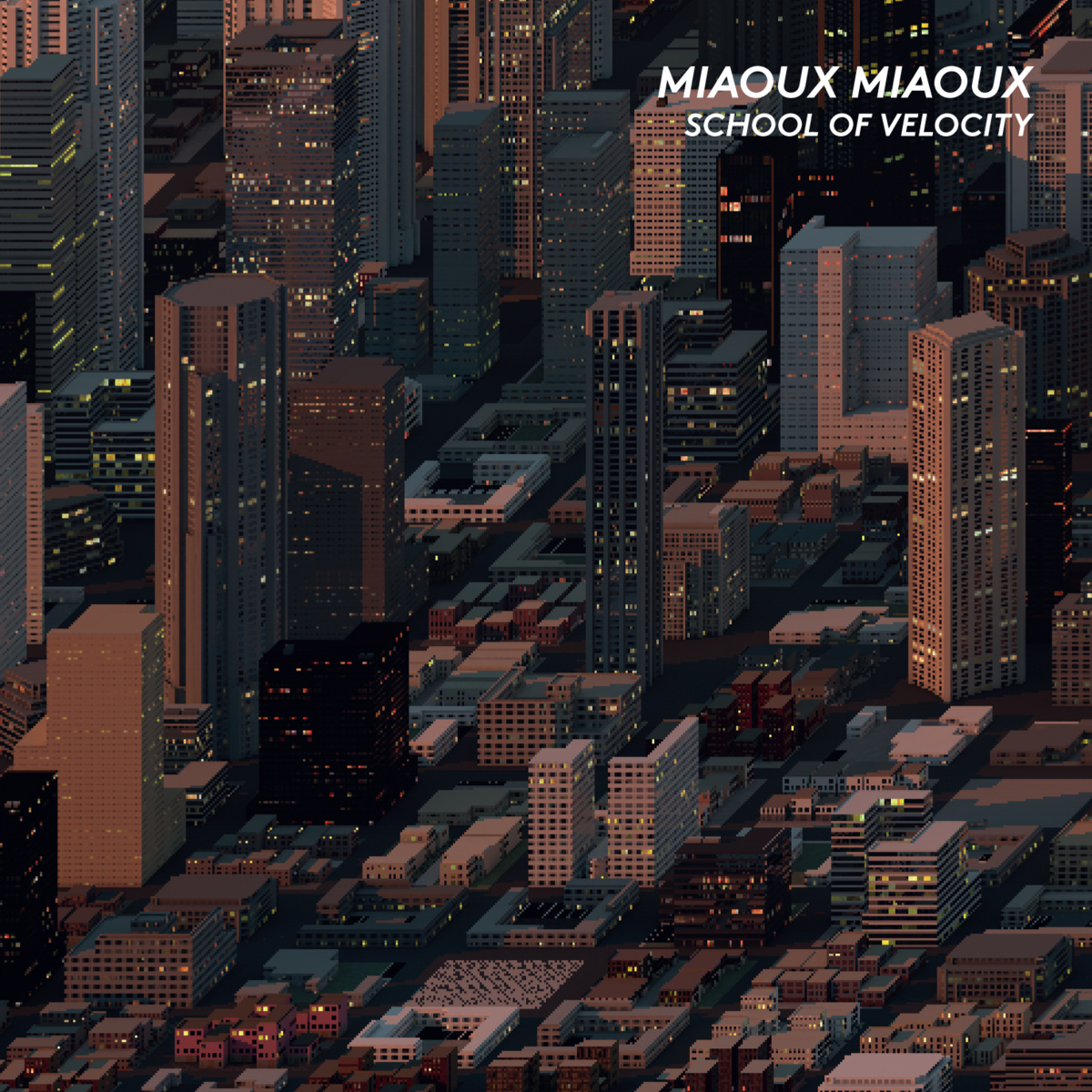
DAVID KNOWLES-CHILD SOLDIER.
DAVID KNOWLES-CHILD SOLDIER.
After the fall of Troy, Odysseus’ journey back from the Trojan War took ten years. The Trojan War had lasted ten years. In total, Odysseus had been away from home twenty years. That just happens to be same time that David Knowles’ musical odyssey lasted. It began nearly twenty years ago, when David Knowles first picked up a guitar.
Twenty years later, and David Knowles released his debut album Footsteps earlier this year. Critical acclaim accompanied the release of Footsteps. A great future was forecast for the Edinburgh based singer-songwriter.
Since then, David embarked upon his Spring tour. It criss-crossed Britain. In towns and cities, David played songs from Footsteps, including his new single Child Soldier. It’s a single with a social conscience from David Knowles, whose musical odyssey began twenty years ago.
Back in the mid-nineties, grunge was King. Nirvana, Pearl Jam, Mudhoney and Soundgarden were at the peak of their popularity. Straight away, David Knowles was hooked. Inspired by the musical vortex that was grunge, David began to explore other musical genres.
It made sense to start at what is the genesis of modern music, the blues. One of David’s earliest discoveries was Leadbelly, a giant of the blues who cheated the hangman and survived the notorious Angola prison. While other bluesmen caught David’s attention, so did some of the greatest American lyricists.
This included the “Dust Bowl Troubadour,” Woody Guthrie. He came to prominence in the thirties. This was just after the Depression, and the Wall Street Crash of 1929. Woody Guthrie started of as a folk singer. Soon, he became America’s social conscience. David appreciated, and could relate to the music of Woody Guthrie. It spoke to him. So did the music of Bob Dylan, who two generations later, followed in the footsteps of Woody Guthrie.
Just like so many aspiring singer-songwriters, Bob Dylan would go on to influence David Knowles as a singer and songwriter. Just like Woody Guthrie before him, Bob Dylan was the spokesman for a generation. He spoke to, and for them. When David discovered Bob Dylan, his music was just as relevant. Like all good music, it has a timeless quality.
The same can be said of another of David Knowles’ inspirations, Jimi Hendrix. As an aspiring guitarist, David could appreciate Jimi’s effortless talent and stagecraft. A flamboyant, virtuoso performer, Jimi, who had been inspired by T-Bone Walker, seemed to revel in the limelight. As he took to the stage, Jimi came alive. He was totally transformed, and in a tragically short career, released albums that would influence two generations. This included David Knowles. He watched and learnt. Little did he realise that when he released his debut solo album Footsteps on 9th March 2015 it would feature a Jimi Hendrix song.
Footsteps was released hot on the heels of David Knowles’ debut E.P. The Alchemist. It was released on 19th January 2015. Hailed as “mesmeric,” The Alchemist found its way onto radio playlists, where it became a firm favourite of DJs and listeners. This bodes well for Footsteps, the album David Knowles has dreamt about making for nearly twenty years.
Growing up, with hopes and dreams of making a career out music, David’s musical tastes became eclectic. As well as blues, folk and rock, David discovered proto punk pioneers The Velvet Underground. This was the latest discovery in David’s musical journey. It seemed each discovery lead to another. David was in the midst of a musical and literary awakening.
It wasn’t just music David was soaking up like a sponge. No. Before long, David was discovering literature. This included the poetry of William Blake, the doyen of the Romantic Age. From William Blake, David discovered Oscar Wilde, playwright, poet and cultural commentator. For a future songwriter, this would stand him in good stead. So would David’s love of Hunter S. Thompson, who in his own inimitable way, said: “The music business is a cruel and shallow money trench, a long plastic hallway where thieves and pimps run free, and good men die like dogs. There’s also a negative side.” Despite this, David wasn’t put off following his dream of making a career out of music. In sporting terms, David’s musical career was a career of two halves.
David’s dreams of becoming a musician became reality when he was a teenager. In the time honoured fashion, David played in a series of bands. Just like generations before him, David was serving his musical apprenticeship. That stood David in good stead. He then joined Manchester indie band Solarslide as their guitarist. This was a step up the musical ladder. By then, however, David had caught the travel bug.
This isn’t unusual. Many people enjoy a gap year. Some manage to stretch it to two or three years. After all, travel broadens the mind. So inspired by Jack Kerouac’s seminal road trip novel, On The Road, David Knowles hit the road. This was no gap year though. Far from it. David road trip took him slightly longer. Two years became three, and eventually, David returned home after twelve long years.
During this twelve year Odyssey, David’s travels took him to three continents, Latin America, Asia and Europe. This somewhat leisurely stroll round the world, certainly broadened David’s mind and provided him with a wealth of material for his new career.
On his return home to Britain, David who for twelve years, had lived a nomadic lifestyle, settled in Edinburgh, the self-style Athens of the North. There the second part of David’s career took shape. He decided to embark upon a solo career. His travels would inspire his music, including that on his debut solo album Footsteps.
Wanderlust never quite leaves someone. Once they’ve had a tantalising taste of the nomadic lifestyle it never quite leaves them. David has been there. He’s slept on beaches, with the stars as a blanket. So, settling back into to “normal” life wasn’t going to be easy. However, life as a musician is very different from that of a pen pusher or desk jockey. A musician spends much of his time on the road, travelling between concerts and festivals. The rest of the time is spent writing songs and recording them. For David Knowles, this was the perfect career.
Now living in Edinburgh, David started playing live. Soon, he was establishing a reputation as one of the rising stars of Edinburgh’s music scene. Then David discovered musical soul mates in the form of cellist Claire Schiavone and percussionist, keyboardist and producer Matt Varty. They would feature on Footsteps, David’s debut solo album.
For Footsteps, David’s debut solo album, he penned seven of the nine tracks. The other two tracks were covers of Bill Withers’ Ain’t No Sunshine and Jimi Hendrix’s classic Hey Joe. These tracks are given a makeover by David, who dawns the role of musical Alchemist. To do this, he relies upon a selection of instruments he discovered on his road trip. This includes a didjeridoo, African djembe drum and far eastern dulcimer. These instruments play a part in David Knowles Footsteps’ sound and success.
Before Footsteps was released, it was much anticipated debut album. The cat was out of the bag, David Knowles was an artist with a great future in front of him. Critics and cultural commentators agreed. This was reflected in the reviews. Plaudits and superlatives were exhausted by critics. They were impressed by David’s skills as a singer, songwriter and musician. David brought lyrics to life, breathing meaning and emotion into them. In other songs, David Knowles was following in the footsteps of Woodie Guthrie, and became music’s social conscience. This was the case on Child Soldier, which David Knowles recently released as his second single.
Child Soldier shows another side of David Knowles. Ominous drums play in the distance. In front of the drums, sits David’s guitar and vocal. A roll of drums, hissing hi-hats and grungey guitars is the signal for David to kick loose. What follows is wall of sound and social comment. Blistering, driving guitar licks and David’s staccato vocal combine. Desperately, David sings: “I want to leave this behind,” as if the horrors of the Child Soldier are burnt on his retinas.
Just three months after the release of his debut album Footsteps, David Knowles returns with his sophomore single Child Soldier. This is a truly captivating track, where David Knowles becomes music’s social conscience. It’s as if he’s witnessed the horrors and results of the Child Soldiers during his twelve year Odyssey. That becomes apparent when one listens to the lyrics.
The way David delivers the lyrics, it’s as if these images have been burnt on David’s retinas. They certainly leave a lasting impression. Especially with lyrics like: “my name is Khouy but you can call me cadre. I’m only thirteen but you listen to everything I say.” No wonder. The Child Soldier wields a gun, as they fight for something they don’t understand. Instead, it’s self preservation, and survival of the theory. This wasn’t what Charles Darwin had in mind. However, he never foresaw the gun wielding, Child Soldier. David Knowles must have; and has decided to highlight the problem on his debut album Footsteps.
Unlike many modern albums, Footsteps was a refreshingly old school album. It lasted just twenty nine minutes. That’s all many classic albums used to last. Nick Drake’s never released an album that lasted thirty minutes. By then, the reclusive genius had said all he had to say. Sadly, that’s not the case any more.
Most albums are sprawling affairs where artists are determined to fill the CD. Personally, I wish more artists would follow in David Knowles’ Footsteps. His debut album was a captivating musical journey lasting nine songs and twenty-nine minutes. The music was variously understated, beautiful, melancholy, poignant, soul-baring and cinematic. Other times, hurt and heartache is omnipresent, as David draws inspiration from everyone from Damien Rice, Nick Drake, Jimmy Hendrix, Leadbelly, Jose Gonzales and the “Dust Bowl Troubadour,” Woody Guthrie. Then there’s the literary works of William Blake, Oscar Wilde, Hunter S. Thompson and Jack Kerouac. That’s not forgetting the twelve years David spent travelling. They’ve without doubt influenced David Knowles music. Footsteps featured tales of love, love lost, road trips and of course the story of the Child Soldier; which is David Knowles new single and one of the most moving and captivating tracks you’ll hear this year.
DAVID KNOWLES-CHILD SOLDIER.

WARREN STORM-THE BAD TIMES MAKE THE GOOD TUNES-CLASSIC TEXAS RECORDINGS 1964-1986.
WARREN STORM-THE BAD TIMES MAKE THE GOOD TUNES-CLASSIC TEXAS RECORDINGS 1964-1986.
Often, an artist spends a large part of their career with the same producer. The producer just seems able to get the best out of the artist. Musical history is littered with examples. However, despite this success, there’s often the temptation to change producer. It’s as if the artist is keen to see whether the grass is greener. That can prove fatal. A previously successful artist’s career can head south, and often never recovers. That’s always the risk. It was a risk that Warren Storm wasn’t willing to take.
Warren Storm first worked with Huey Meaux in 1964. They worked together right through until 1982. However, Warren Storm had recorded so much music with Huey Meaux, that there was plenty of music left in the vaults. Right through to 1986, singles Huey Meaux produced for Warren Storm were being released. Many of these singles Huey Meaux produced for Warren Storm feature on a recent compilation released by Ace Records, The Good Times Make The Good Tunes-Classic Texas Recordings 1964-1986. It documents the most successful and productive period of Warren Storm’s career. His story began in 1937.
The future Warren Storm, was born Warren Schexnider on February 18th 1937, in Abbeville, Louisiana. Warren grew up in a musical house. His father Simon, was a talented musician and a member of the Rayne-Bo Rambler. He taught Warren to play drums and guitar. By the age of ten, Warren was already a talented musician, and as good, if not better than many older musicians.
So when Simon couldn’t make shows, he had a ready made replacement in Warren. He made his debut for The Rayne-Bo Ramblers aged ten or eleven. The audience didn’t notice. Seamlessly, Warren fitted into The Rayne-Bo Ramblers’ line-up. Soon, other bands looking for a drummer, were giving Warren a call. It seemed almost seemed inevitable that Warren was going to embark upon a career as a musician.
By the time he was sixteen, Warren was the drummer in two local bands, the Herb Landry Band and Larry Brasson’s Rhythmaires. People were soon taking notice. Warren had an impressive voice, and with rock ’n’ roll making its presence felt, he was in the right place at the right time.
So was his friend Bobby Guidry. He ahad adopted the name Bobby Charles, and was making a name for himself as a budding teen idol at Chess Records. This inspired Warren to form his own group, The Wow-Wows.
It was around the time Warren formed The Wow-Wows, that he began using the name Warren Storm. With a new name, the next step for Warren was for The Wow-Wows to release a record.
In 1957, The Wow-Wows recorded a couple of songs at the local radio station. Next step was to send out tapes to various record companies. Nothing became of these tapes. So in late 1957, Warren’s friend Cliff Le Maire drove him to audition for producer J.D. Miller, who was already an experienced and successful songwriter and producer.
Warren’s audition for J.D. Miller went well. So much so, that he was soon cutting his debut single. It was a cover of Prisoner’s Song, which gave Vernon Denhart a hit in 1928. Thirty years later, and Prisoner’s Song was given a makeover. Warren Storm’s version took on a Fats Domino influence. When J.D. Miller heard the completed song, he decided to send the song to Ernie Young at Nashboro Records, in Nashville.
Ernie Young liked what he heard, and released Prisoner’s Song on his Nasco pop imprint. This Ernie thought was the perfect label for Warren’s debut single. He proved correct. Soon, Prisoner’s Song went from a local to a national hit. It started climbing the charts, but peaked at just number eighty-one in the US Billboard charts on the spring of 1958. To promote the single, Warren played at local dances. He couldn’t travel further afield, as he was in the National Guard.
This hampered Warren’s career. His sophomore single, Troubles, Troubles, Troubles reached the Cash Box charts. However, it didn’t reach the US Billboard 100. This Warren put down to being unable to tour extensively. Personal appearances and radio play were the way singles were promoted in 1958. With Warren’s personal appearances limited, his singles weren’t able to reach a wider audience. History repeated itself when neither So Long, So Long, nor I’m A Little Boy (Looking For Love) charted. Just like Troubles, Troubles, Troubles, neither single found the audience they deserved. For Warren this was a disappointment. However, when his Nasco contract ended, J.D. Miller kept faith with Warren.
Not only did J.D. Miller continue to release Warren’s singles on his Zynn and Rocko labels, but employed him as a session player. He accompanied blues greats like Lightnin’ Slim, Lazy Lester, Slim Harpo, Lonesome Sundown and Katie Webster. At one point, Warren was so busy with session work, that his solo career was put on hold. Then in 1960, Warren decided it was time to concentrate on his solo career.
There was a potential problem. Warren was still contracted to J.D. Miller. However, J.D. Miller was content to lease Warren out.So Warren headed to Nashville, to work with producer Paul Cohen. He had put together a band featuring some of the city’s top session players. They would accompany Warren on four tracks. This included Warren’s next single Bohawk Georgia Grind. It was released on Top Rank, but didn’t sell well. Paul Cohen cut his losses, and don’t release the other two tracks. For Warren, it was another disappointment.Although Warren was down, he wasn’t out.
In 1962, Warren signed to Dot Records. J.D. Miller had cut a deal with Randy Wood at Dot Records. Under the terms of the deal, Warren would cut to singles. Sadly, neither Gotta Go Back To School, nor Warren’s cover of Take The Chains From My Heart were commercially successful. To rub salt into the wound, a few months after Warren’s cover of Take The Chains From My Heart flopped, it gave Ray Charles a huge hit. It seemed the only luck Warren had, was bad luck.
Later in 1962, things took a turn for the worse, when Warren stopped working for J.D. Miller. This meant there was no more session work. For Warren, session work provided him with an income, valuable experience and the chance to make new contacts. With his career seemingly at the crossroads, Warren had no option but to become a Shondell.
With nothing on the horizon, when Warren was asked to join The Shondells, he jumped at the opportunity. Warren became The Shondells lead single. With Warren at the helm, The Shondells recorded one album, At The Saturday Hop. The Shondells also played live, and this kept Warren busy until he met Huey Meaux.
Warren Storm and Huey Meaux first met in 1964. By then, the self-styled Crazy Cajun was the top producer in South Texas. Previously, he had transformed the career of many artists. Producer Huey Meaux was just what Warren Storm needed. It had been six years since Warren Storm had enjoyed a hit single.
At the time Warren met Huey, Warren Storm hadn’t a recoding contract. That had been the case since Warren left J.D. Miller’s employ. Luckily, Huey owned several record labels. He also owned parts of other labels. There would be no problem getting Warren’s singles released. First, though, Huey Meaux had to find the right song for Warren.
Huey Meaux managed that time and time again between 1964 and 1982. For eighteen years, Huey found the right song for Warren Storm. Many of these songs are documented on The Good Times Make The Good Tunes-Classic Texas Recordings 1964-1986. This two disc compilation was released by Ace Records, and features forty-four tracks. It includes an unreleased track, My Sinkin’ Ship and eight tracks that were released after Huey and Warren parted company in 1982. However, in 1964, Huey and Warren were just about to embark upon a musical adventure, one that lasted eighteen years.
For his first session with Warren Storm, Huey Meaux took his latest signing to Cosimo Matassa’s New Orleans’ studio. No expense was spared. The band featured some of the city’s top musicians. Mac Rebennack, the future Dr. John was bandleader and pianist. With this all-star band behind him, The Gypsy takes on a Swamp Pop makeover. It became Warren’s debut for Huey.
The Gypsy was released as a single, on Sincere, with I Walk Alone on the flip side. Both tracks feature on The Good Times Make The Good Tunes-Classic Texas Recordings 1964-1986. When The Gypsy was released, it sold well locally, but never translated into a nationwide hit. Since then, Warren’s version of The Gypsy is perceived as a Swamp Pop classic.
Following the release of The Gypsy, Warren released Love Me Cherry, with Jack and Jill on the B-Side. It was recorded in a simular Southern style, but again didn’t fare well outside the South. Neither did Warren’s next two singles. Four Dried Beans, which featured Don’t Fall In Love was Warren’s third Sincere single. Commercial success eluded Warren during the rest of 1964.
When Warren released his first single of 1965, it was a case of deja vu. Your Kind Of Love which was cut with a 2/4 time signature. On the flip side was the Warren Robb penned ballad, Memory Tree. Despite the quality of both sides, commercial success passed Warren by. Was he going to ever be more than a local success?
Slow Down was chosen for Warren’s next Sincere single. It passed record buyers by. Still, the search for a hit went on. So, Huey switched Warren to his Kingfish label.
Later in 1965, Warren released They Won’t Let Me In on Kingfish. On the flip side was probably the most left field cut of Warren’s career, Sitting Here On The Ceiling. It’s slightly psychedelic in sound. The new label didn’t result in a change of fortune for Warren.
Two years after signing with Huey Meaux, Warren cut one of his most soulful songs, The Bad Times Make The Good Times. Penned by Robert Stone, Warren delivers a tender vocal against a backing track Huey sourced from New York. At that time, Huey was determined to get Warren on a major label. Warren had the talent, but the majors didn’t bite. Then when The Bad Times Make The Good Times was released on the Pic label, in 1966. Sadly, this soulful opus didn’t find an audience. Where did Warren go now?
The answer was back to another label, Tear Drop. On Tear Drop, Warren delivered an Otis Redding inspired cover of Tennessee Waltz. On the flip side was Don’t Let It End This Way, which featured a heartfelt, needy vocal. It’s a vastly underrated song, which shows the soulful side of Warren Storm. Tennessee Waltz was distributed nationwide in 1967. Huey must have thought that Tennessee Waltz was going to give Warren his breakthrough single. Sadly, it wasn’t to be and Warren’s search for a hit continued.
By then, Huey must have been struggling to come up with a new idea. So, he suggested remaking Prisoner’s Song, which was Warren’s debut single. It gave him a minor hit in 1967. Nearly a decade later, and Prisoner’s Song was recut and issued on a newly revived Sincere label. The B-Side was a cover of Honky Tonk Song. However, despite the undeniable quality of both songs, the passed record buyers by. Psychedelia was the new kid in town. Warren’s sound was perceived as yesterday’s sound. For Warren and Huey, it was a case of stick or twist.
They decided to twist. So, Huey took Warren into the studio one more time. At the Grits ’n’ Gravy Studio, Jackson, Mississippi, Warren cut his next single Down In My Shoe. Huey sold the single to Atlantic. However, when the time came to release Down In My Shoe, Atlantic were too busy with their major artists to concentrate on Warren’s Atlantic debut. For Warren, it was a case of so near, yet so far. After this, Warren and Huey went their separate ways.
When Warren and Huey parted company for the first time, there were still plenty unreleased tracks in the vaults. They feature on disc one of The Good Times Make The Good Tunes-Classic Texas Recordings 1964-1986. Among the highlights are the ballads Don’t Let It End This Way and Mister Cupid. Then on Rip It Up, Dr Feelgood and Make It Right, Warren cuts loose, whooping, hollering and vamping his way through the lyrics. For whatever reason, Huey chose not to release them. They’re a very welcome addition to disc one of The Good Times Make The Good Tunes-Classic Texas Recordings 1964-1986. They’rea reminder of Warren’s hit making potential. It hadn’t gone unnoticed.
Following his departure from Huey’s employ, Warren returned to J.D. Miller. He cut some classy singles for J.D. The rest of the time, Warren played live and worked as a session player. Meanwhile, Huey had gone up in the world.
By 1974, Huey was a successful producer. He recorded Freddy Fender’s cover of the country standard Before The Next Teardrop Falls. It reached number one on the US Billboard 100 and US Country charts. All of a sudden, Huey Meaux’s services were highly sought after.
For the next four years, Huey was hot property. Columbia agreed to distribute Huey’s new label, Starlight. With the ink hardly dry on the contract, Huey had signed three artists to the Starlight roster, Freddy Fender, Tommy McLain and Warren Storm.
It wasn’t unexpected that Huey and Warren would renew their partnership. Warren had played on some Freddy Fender sessions. Huey wanted to record Warren again. The Starlight deal made this possible.
The first single Warren cut for Starlight, was a cover of the Gulf Coast classic, Please Mr Sandman. On the flip side was Things Have Gone To Pieces. It was released in 1979, but never found an audience. So, two months later, Huey suggested Warren cut But I Do in a honky tonk style. The B-Side was a Huey Mueax song, Think It Over. History repeated itself when But I Do failed commercially. Maybe it would be a case of third time lucky?
He’s Got Nothing On Me But You was chosen as Warren’s third single for Starlight. On the flip side was King Of The Dance Halls. When He’s Got Nothing On Me But You was released, it advertised a new album from Warren Country By Storm. This album never materialised. That’s not surprising. Warren’s third single for Starlight flopped. This proved to be the last single that Warren Storm released for Starlight. This looked like the end of Warren and Huey’s partnership?
As has been proved many times in the music industry, never rule anything out. Three years later, Warren and Huey renewed their partnership. My Heart Is Bleeding was released as a single in 1982. On the B-Side was Blue Monday. Sadly, despite its quality, it failed commercially. That proved to be the case with the followup We’ll Sing In The Sunshine, with I’ve Shed So Many Tears on the flip side. It was released later in 1982, but never realised its potential. That was the end of the road for Warren and Huey.
Never again would Warren Storm record for Huey Meaux. That didn’t mean that Huey didn’t release the odd Warren Storm single. This included (If I Ever Needed You) I Need You Now and Jealous Woman in 1983 on his Crazy Cajun label. Three years later, in 1986, The Rains Came and Sometimes A Picker Just Can’t Win were released as singles on Crazy Cajun. Huey had plenty material in the vaults. Then in 1988, Huey released (I Can’t Treat You Like A Lady)You Need Someone Who’ll Be Mean To You as a single. It failed to make any impression on the charts. By then, Warren’s recording career was continuing.
Having split with Huey, Warren signed to Jay Jackson’s South Star Records. He released two soulful singles Seven Letters and Valley Of Tears. Then when South Star Records closed its doors, Warren came full circle, when he signed to Master Trak Records, which was run by J.D. Miller’s son Mark. Warren released singles like Day Dreaming, My Girl Josephine and This Could Go On Forever. It was vintage Warren Storm, just like the music on The Good Times Make The Good Tunes-Classic Texas Recordings 1964-1986.
That’s no exaggeration. The Good Times Make The Good Tunes-Classic Texas Recordings 1964-1986, which was recently released by Ace Records features some of the best music Warren Storm released, during his long and illustrious career.
Now aged seventy-eight, Warren Storm hasn’t retired. Music is in his blood. Warren has been making music since before he went to school. It’s been a constant throughout his life. Sadly, Warren Storm didn’t enjoy the commercial success many forecast early in his career.
After the success of his debut single Prisoner’s Song in 1958, Troubles, Troubles, Troubles gave Warren Storm a minor hit. It looked like Warren Storm was about to enjoy a long and successful career. Sadly, it never worked out that way. Despite releasing a string of singles that oozed quality, Warren Storm never replicated the success of his first two single. He spent the rest of his career chasing that elusive hit single. This included three separate spells with producer Huey Meaux. Even with Huey producing Warren Storm, commercial success and critical acclaim eluded him. There was a reason for this.
Music was changing, and Warren Storm’s music was perceived as yesterday’s sound. In the sixties, the British Invasion and then psychedelia derailed Warren Storm’s career. By the time they renewed their acquaintance in 1978, disco was providing the soundtrack to America. Despite releasing a trio of quality cuts in 1979, they passed most people by. Warren Storm was out luck. It wasn’t a case of third time lucky. When Warren Storm and Huey Meaux teamed up for one last shot at the title in 1982, it was too late.
Warren Storm’s time had come and gone. A new musical era was unfolding. Boogie, hip hop, house and electronica were all part of what the hipsters considered a rich musical tapestry. Others begged to differ.
They knew that not all good music finds the audience it deserves. Instead, of becoming a national hit, singles are just local hits. That was the case with Warren Storm. He was well known in Texas and Louisiana. There he was a local hero. His music was appreciated. Now thirty-three years after Warren Storm and Huey Meaux cut their last songs together, belatedly, Warren’s music is finding a much wider audience.
No wonder. Warren Storm’s musical legacy is a rich one. Some of the best music of Warren Storm’s career was recorded with producer Huey Meaux. It’s featured on The Good Times Make The Good Tunes-Classic Texas Recordings 1964-1986, which was recently released by Ace Records. The Good Times Make The Good Tunes-Classic Texas Recordings 1964-1986 features the best music of Warren Storm’s long and illustrious career.
WARREN STORM-THE BAD TIMES MAKE THE GOOD TUNES-CLASSIC TEXAS RECORDINGS 1964-1986.
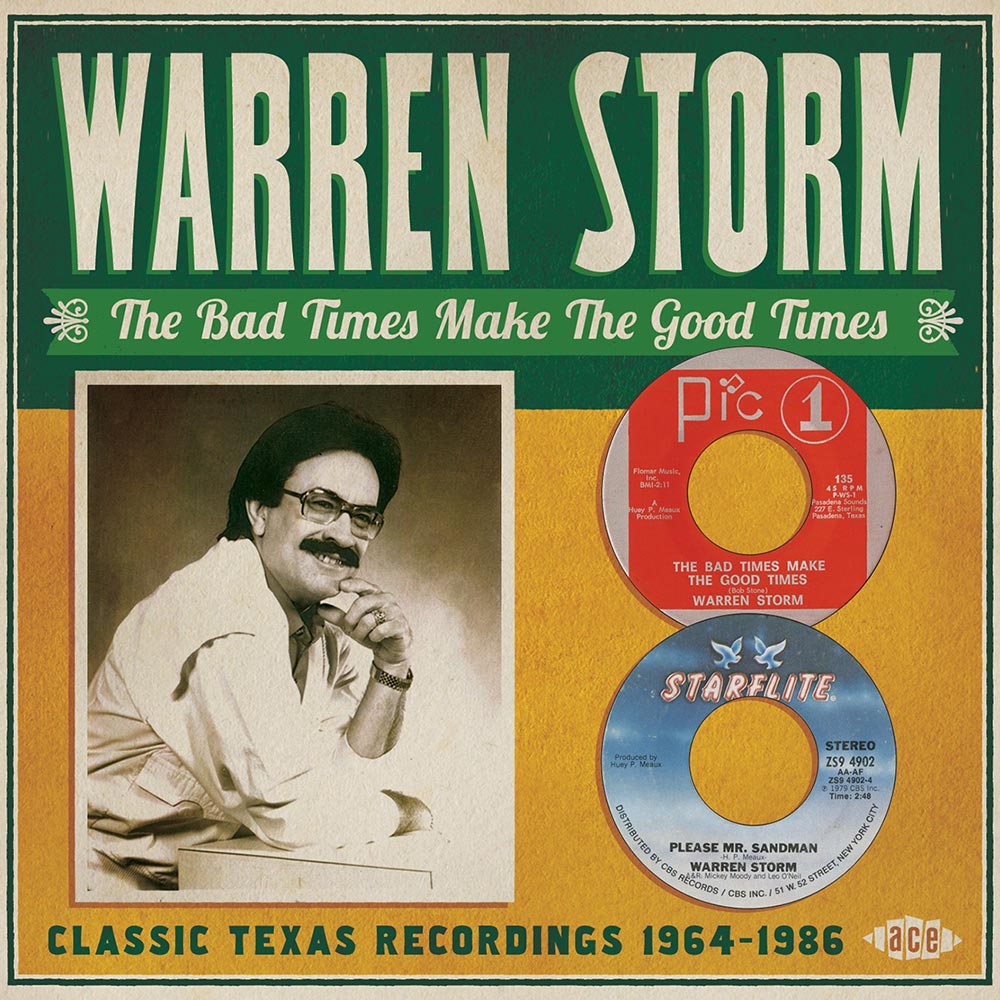

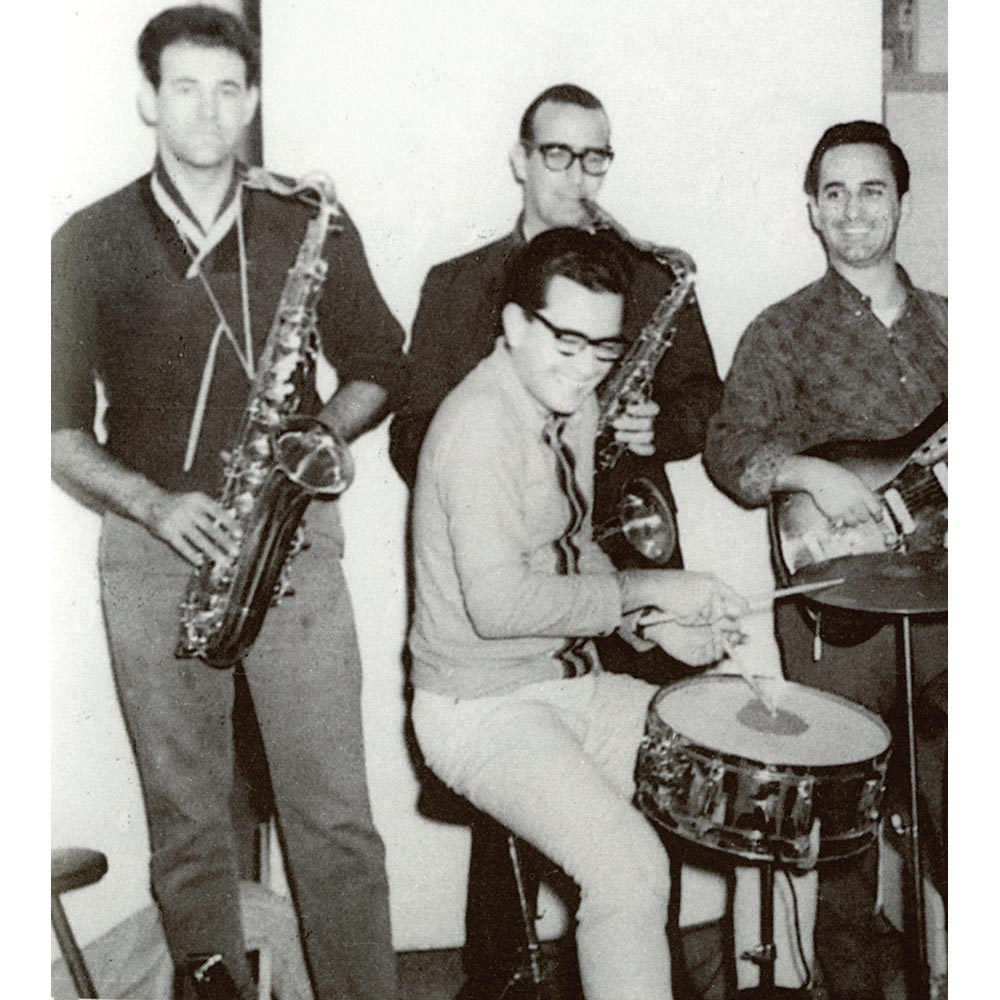
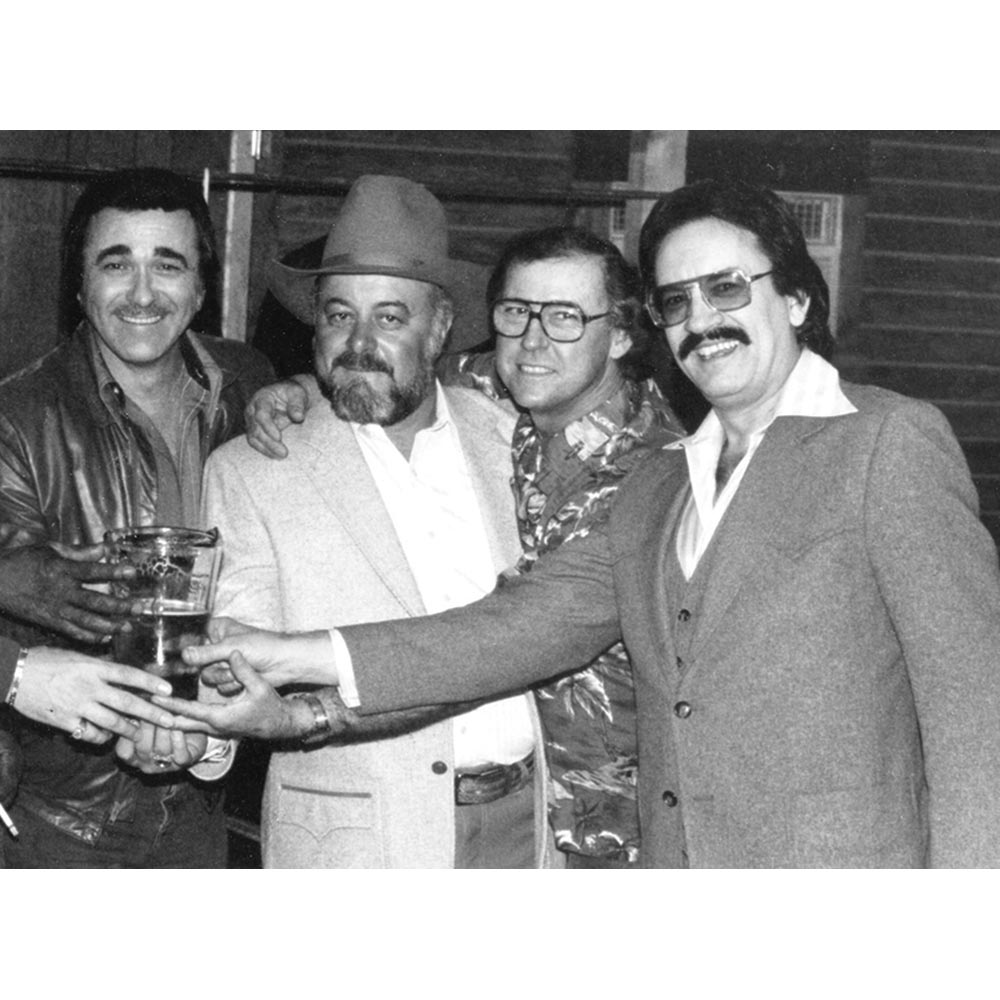
SOAPKILLS-THE BEST OF SOAPKILLS.
SOAPKILLS-THE BEST OF SOAPKILLS.
Ten years ago, that Soapkills, one of the most influential and innovative bands in Lebanese musical history split-up. Soapkills were a trailblazing band, and one of the first indie bands to emerge from the Middle East’s nascent music scene. Since then, Soapkills’ music has continued to influence a new generation of music lovers. The Soapkills story began in Beirut, in the late-nineties, and is documented on The Best Of Soapkills, which was recently released by Crammed Discs.
That’s where Yasmine Hamdan and Zeid Hamdan first met at the end of the nineties. Beirut, Lebanon’s capital city, was recovering from the Lebanese Civil War. The city was being rebuilt, and was an unlikely setting for a new band.
With Beirut being rebuilt, a new chapter in Lebanese history was about to unfold. This just happened to coincide with the rise and rise of Soapkills, one of the first indie bands in the Lebanon.
While there was a rich history of traditional folk and classical music, Lebanon didn’t have a reputation for producing indie bands. That was until Yasmine and Zeid formed Soapkills. They were at the vanguard of Lebanon’s nascent indie scene. This was the late nineties.
Yasmine Hamdan and Zeid Hamdan, who aren’t related, decided to form a band. Originally, the band was named after a song by Zeid Hamdan, which, apparently, dealt with the rebuilding of Beirut following the Lebanese Civil War. Yasmine explains: “We thought that at the time, in the context of Beirut being … you know, reborn, and all the war being wiped clean, we thought, wow, it’s shiny and it’s awful and it’s soap kills. We thought it would be a nice name for a band.” So, Soapkills was born.
By 2001, Soapkills had recorded their debut album, Bater. By then, Lebanon’s music industry was in its infancy. There were no record labels for aspiring indie band. This meant that Soapkills had no option but to self-release Bater.
Bater.
When Bater was released, Lebanese music fans discovered a captivating, genre-melting album. It struck a nerve not just in Lebanon, but further afield. Tracks like Lé Zaalen? and Yahoo!, which feature on The Best Of Soapkills, are a fusion of Western and Middle Eastern influences. They’re best described as understated, cinematic, mesmeric, haunting and enchanting. Elements of downtempo, electronica, Lebanese folk and trip hop were combined by Soapkills. It’s no surprise that music lovers were captivated by Soapskills music. Elements of downtempo, electronica, Lebanese folk and trip hop were combined by Soapkills. They were quickly winning friends and influencing people with their sound.
At the heart of Soapkills’ sound was Zeid’s Roland MC-303 Groovebox. Zeid had used this in his previous band Lombrix. He brought the Roland MC-303 Groovebox onboard, to replace musicians who had left Lombrix. This worked well, so Zeid incorporated it into Soapkills’ sound. Soon, other instruments were playing their part in Soapkills music.
Over the next four years, Soapkills’ sound expanded. Joining Soapkills’ rhythm section of bass and drums, were a flute, trumpet and saxophone. The result was music that was bold, ambitious. This became apparent on Soapkills’ sophomore album.
Cheftak.
Just like Bater, Cheftak was self-released by Soapkills in 2002. When Cheftak was released, it surpassed the quality of Bater. Cheftak was an ambitious, assured and eclectic album. Elements of electronica, trip hop and world music are combined with traditional Lebanese classical and folk music on Cheftak. Among its highlights were Aranis and Koullou Ndif, Tango, Kasdoura, Marco Slow which feature on The Best Of Soapkills. It’s a bewitching fusion of musical genres and influences. These disparate musical genres and influences are combined seamlessly, by Soapkills, who were maturing and evolving as a band.
So much so, that already, comparisons were drawn with Leftfield, Portishead and Massive Attack. Soapkills’ music was finding an audience further afield. Somehow, Beirut’s top indie band were making their presence felt in Britain and Europe.
Following the release of Cheftak, great things were being forecast for Soapkills. Their music provided the backdrop to the Lebanon’s evolving and vibrant arts scene. It had sprung up in the post war years. At the heart of the new art scene, were Soapkills. They were trailblazers, who flew the flag for the new Lebanon. Soapkills were an example to new bands, and inspired others to follow in their footsteps.
Three years after the release of Cheftak, Soapkills released their third album Enta Fen. Still, Soapkills weren’t signed to a record company. So they self-released Enta Fen.
Enta Fen.
Soapkills decision to Enta Fen independently wasn’t unusual. Many artists and bands were dispensing with record labels, and adopting a D.I.Y. attitude. This was helped no end, by the internet. It had made the world a much smaller place. The internet also increased Soapkills’ audience. While this was the case with their first two albums, Enta Fen benefited from the explosion in popularity and access to the internet.
When Soapkills released Enta Fen in 2005, it was the finest album of their career. It seemed with each album, Soapkills grew and matured as a band. Their music was haunting, beautiful, cinematic and mesmeric. Proof of this are four tracks from Enta Fen; Herzan, Galbi, Manni Zelak and the title-track. They feature on The Best Of Soapkills and feature Soapkills at their bewitching best. Playing a leading role in the sound and success is Yasmine’s vocal. Its ethereal beauty is omnipresent, while the arrangement are variously understated, sparse, smokey and cinematic. It’s a glorious fusion of ambient, electronica, trip hop and Lebanese folk and classical. Surely, Soapkills were about to become the first band from the Middle East to enjoy widespread critical acclaim and commercial success?
Between the late-nineties and early noughties, Soapkills had toured extensively. They played in Algeria, Australia, Berlin, Congo, Egypt, Jordan, Lebanon and Paris. Wherever they went, critical acclaim accompanied Soapkills. They enjoyed a degree of success. However, not as much as they might have.
The Soapkills story came to a sudden end when Yasmine moved to Paris. It was the end of an era. Soapkills could easily have replicated the success of Portishead, Leftfield or Massive Attack. Sadly, that wasn’t to be.
Now living in Paris, Yasmine began working with Mirwais to on the Y.A.S. project. They then collaborated on Yasmine’s debut solo album, Ya Nass, which was released on Crammed Discs in 2013. As for Zeid, he Zeid remained in Lebanon.
In his home country, Zeid created the Lebanese Underground collective. He also produces a number of artists based around the Middle East. His latest project is a solo album, Zeid And The Wings, which showcases one half of Soapkills, whose music is documented on The Best Of Soapkills, which Crammed Discs recently released.
The Best Of Soapkills is the perfect introduction to Soapkills. This fourteen track compilation features tracks from their three albums plus two previously unreleased tracks, the Paris Version of Cheftak and Wadih. They’re welcome additions to The Best Of Soapkills, which is a musical reminder of Lebanese indie pioneers, Soapkills. They were trailblazers, who inspired a new generation of musicians to embark upon a musical career. That’s not all. Soapkills are a hugely talented band, one who deserved to enjoy widespread critical acclaim and commercial success.
While Soapkills enjoyed a degree of critical acclaim and commercial success, their music never found the wider audience it deserved. Soapkills could’ve and should’ve been a much bigger success. Maybe, ten years after Soapkills split-up their music is about to reach a much wider audience. The Best Of Soapkills, which was recently released by Crammed Discs, is just the start of a comprehensive reissue program. After this, Crammed Discs will reissue of Soapkills three albums, Bater, Cheftak and Enta Fen. At last, Soapkills music will be heard by a much wider audience, and no longer will they be one of music’s best kept secrets.
SOAPKILLS-THE BEST OF SOAPKILLS.
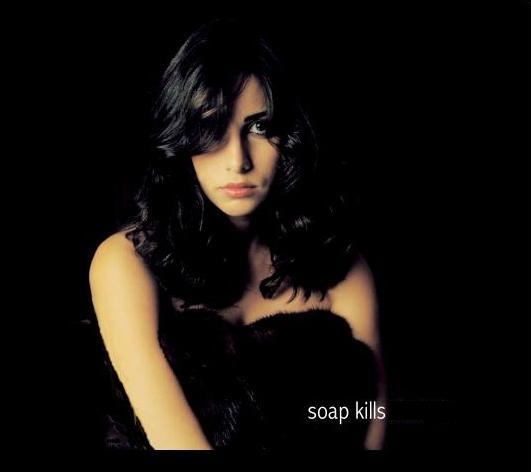
CTI RECORDS: THE COOL REVOLUTION.
CTI RECORDS: THE COOL REVOLUTION.
In 1967, producer and A&R manager Creed Taylor, decided to form his own record label Creed Taylor Incorporated. Originally, CTi Records was an imprint of Herb Albert and Jerry Moss’ A&M Records. That was the case for the next three years. Then in 1970, Creed Taylor decided to go his own way.
This was a huge risk. Music was changing, and changing fast. The Beatles had split-up, psychedelia was yesterday’s sound and later in 1970, Jimi Hendrix died. On top of that, new genres, including prog rock were emerging. It seemed nothing was immune from change, including jazz.
Certain genres were no longer as popular. Among them were blues and jazz. The problem was, the new, younger, generation of record buyers couldn’t relate to blues and jazz. They saw both genres as the music their parents or even grandparents listened to. So Creed Taylor’s decision to launch a new jazz label, was perceived as either risky, or foolhardy.
Creed Taylor was a veteran of the music industry. He had worked for numerous record labels, including Bethlehem, ABC, Verve and A&M.
At ABC, Creed founded one of jazz’s most influential labels, Impulse! signed John Coltrane in 1960. With one of the legends of jazz onboard, McCoy Tyner, Sonny Rollins, Art Blakey, Charles Mingus, Albert Ayler and Archie Shepp would then sign to Verve. Impulse! would go on to release some of the most innovative and influential jazz of the sixties. By then, Creed Taylor had moved on to Verve in 1961.
Now working for Verve Records, Creed Taylor introduced bossa nova to America. Creed signed artists like Antonio Carlos Jobim and Stan Getz. Their music caught the attention of Charlie Byrd and Dizzy Gillespie. Soon, Verve Records was one of the most successful jazz labels. However, after six years at Verve Records, Creed Taylor was on the move.
He signed to A&M in 1967. That’s where CTi Records was born. Originally, CTi Records was an imprint of A&M. A&M was responsible for distributing CTi Records’ releases. That was the case right through until 1969, when Creed Taylor left A&M. The following year, CTi Records become an independent record company.
With the music industry being at a crossroads, most people saw Creed’s decision to leave A&M as risky. Not Creed. He saw it as a calculated gamble. Fusion was born in the late sixties. Originally, it was a marriage of jazz, funk and rock and psychedelia. However, this would gradually evolve. Gary Burton, Larry Coryell and Miles Davis were among fusion’s founding fathers. He brought onboard Chick Corea, Dave Holland, Ron Carter and Herbie Hancock. With some of jazz’s big hitters joining the fusion revolution, Creed Taylor saw that a new genre was about to explode. What better time to launch a new label.
Creed Taylor’s timing was perfect. CTi Records would become one of the most innovative jazz labels of the seventies. It was home to everyone from Stanley Turrentine, Hubert Laws, Freddie Hubard, Chet Baker and Ron Carter. Then in 1971, Creed founded CTi Records’ sister label, Kudo Records. Its roster was equally impressive. Everyone from George Benson, Grant Green, Grover Washington and Johnny Hammond, to Esther Phillips, Idris Muhammad and Lonnie Smith called Kudo Records home. Year after year, CTi and Kudo Records released some of the most innovative and influential jazz of the seventies. It’s documented on the CTi Records: The Cool Revolution box set, which was recently released by Sony Music.
CTi Records: The Cool Revolution, is a four disc box set featuring thirty-nine tracks. Each disc focuses on an aspect of CTi Records sound. Disc one is entitled Straight Up, and focuses on what’s described as “straight up jazz,” while disc two features “deep grooves and big hits.” Then on disc three, The Brazilian Connection is in the spotlight. Finally, disc four is entitled Cool and Classic, and is the perfect way to round off this four disc retrospective of CTi Records’ music. It’s a reminder of CTi Records’ vintage years, and is a reminder just how many classic jazz albums Creed Taylor’s label released. That’s apparent from the first track of disc one of CTi Records: The Cool Revolution.
Disc One-Straight Up.
Opening disc one of CTi Records: The Cool Revolution is Stanley Turrentine’s Sugar. This is the title-track to his 1970 album. It epitomises the straight up sound. So does Hubert Laws’ Moment’s Notice, a track from his 1974 album In The Beginning. These two tracks are a reminder of the many delights awaiting discovery in the CTi Records back-catalogue.
This includes Ron Carter’s cover of Miles Davis’ So What. It featured on Ron’s 1975 album Spanish Blues. Stanley Turrentine’s collaborated with Milt Jackson in 1972, on their Cherry album. Cherry was recorded in May 1972, and later in 1972. It’s an oft-overlooked album from CTi Records back-catalogue. That’s not the case with the first album CTi Records released.
The first album Creed Taylor’s new label released was Freddie Hubbard’s 1970 album The Red Clay. One of it’s highlights was The Intrepid Fox. Two years later, Freddie Hubbard collaborated with another two of CTi Records’ biggest names.
Trombonist Don Sebesky made the move from Verve Records to CTi Records in 1973. His first album Giant Box, featured Freddie Hubbard and Grover Washington Jr. Giant Box was recorded in April 1973, and released that year. It was akin to a record by the CTi All-Stars, with three talented and influential musicians at the peak of their powers. That’s the case throughout disc one, and also disc two of CTi Records: The Cool Revolution.
Disc Two-Deep Grooves and Big Hits.
On disc two of CTi Records: The Cool Revolution, nine of CTi Records’ artists flit between familiar songs and the deepest of grooves. This begins with Freddie Hubbard digging deep, and unleashing The the title-track from his 1970 album Red Clay. After that, some old favourites are given a makeover.
This includes Carole King’s It’s Too Late. It’s given a makeover by Johnny Hammond on his 1971 album Breakout. It was released on Creed Taylor’s new label Kudo. Another signing was Esther Phillips. She features twice. Her first contribution is a cover of Gil Scott Heron and Brian Jackson’s Home Is Where The Hatred Is. It’s the definitive version of this track, and featured on Esther’s 1972 album From A Whisper To A Scream. Without doubt, From A Whisper To A Scream was one of Esther Phillips’ finest albums for Kudo. Another is her 1975 album Home Is Where The Hatred Is. One of its highlights was What A Difference A Day Makes, where Esther reinvents the tracks, ensuring it takes on new meaning. That’s the case with many of the “Big Hits” on disc two of CTi Records: The Cool Revolution.
An unlikely cover for George Benson was Grace Slick’s White Rabbit. However, it works well, and provided the title-track to his 1971 album for CTi Records. A year previously, Hubert Laws covered the James Taylor classic Fire and Rain. It featured on Hubert’s 1970 Afro-Classic album, and is a captivating cover. That’s also the case with Joe Farrell’s cover of Follow Your Heart, which was penned by guitarist John McLaughlin The legendary guitarist then plays a starring role on Follow Your Heart, which featured on the 1970 album The Joe Farrell Quartet. This early slice of fusion was a taste of what was to come.
The same can be said of CTi Records. In 1970 the label was in its infancy. Little did anyone, let alone Creed Taylor realise, the effect his nascent label would have. To help his label grow, Creed Taylor returned to The Brazilian Connection.
Disc Three-The Brazilian Connection.
At Verve Records, Creed Taylor had brought bossa nova to the attention of jazz fans. Still, Brazilian music was influencing jazz music. So, Creed decided to sign some of his old friends. This in turn, influenced those signed to CTi Records. Their music features on disc three of CTi Records: The Cool Revolution.
Among the Brazilian artists Creed Taylor signed to CTi Records were Antônio Carlos Jobim. He released his Stone Flower album in 1970. Two tracks from Stone Flower features on disc three. There’s the title-track and Brazil. Both are a reminder of a musical pioneer, one who helped popularise the bossa nova sound. So did Astrud Gilberto, who collaborated with Stanley Turrentine on the 1971 album Gilberto With Turrentine. Quite simply, it’s one of the highlights of disc three. Another of the Brazilian artist Creed Taulor brought to CTi Records was pianist Eumir Deodato, who released his Prelude album in 1973. Carly and Carole with its beautiful, laid-back summery vibe is another of disc three’s highlights. That’s despite there being so much more music to explore.
Freddie Hubbard’s First Light has a quite beautiful, but wistful sound. It was the title-track to Freddie’s 1971 album, and showcases the legendary trumpeter. It’s another essential album from the CTi Records’ discography. To that, I would add Stanley Turrentine’s Salt Song. The title-track to this 1971 album shows one of the great tenor saxophonists in full flight. Quite simply, it’s a joy to behold and yet again, reminds the listener of the myriad of delights awaiting discovery in the CTi Records’ vaults. This includes albums that can be described as Cool and Classic.
Disc Four-Cool and Classic.
Cool and Classic, disc four of CTi Records: The Cool Revolution. It features some of the great and good of CTi Record, including Gerry Mulligan and Chet Baker. They collaborated on the 1975 album Carnegie Hall Concert Volume 1. This albums features their cover of the classic My Funny Valentine. It’s given a makeover by the veteran jazzers. That’s the case with Joni Mitchell’s Song To A Seagull. It’s reworked by Don Sebesky featuring Paul Desmond and features on the 1974 album Giant Box. Never did Joni Mitchell envisage Song To A Seagull would be given a jazzy makeover. It was and it works. That’s the case on all the Cool and Classic tracks.
Miles Davis’ All Blues lent its name to Ron Carter 1974 album. All Blues is one of the album’s highlights, and showcases one of jazz’s great bassists. Similarly, Chet Baker was one of jazz top trumpeters. He covered the Irving Berlin classic What’ll I Do, on his 1972 album, She Was Too Good To Me. It’s flawless version of a familiar classic.
Another classic is Dave Brubeck’s Take Five. George Benson decided to cover Take Five on his 1974 Bad Benson. This was a brave decision, considering Dave Brubeck’s version is the definitive version. Despite this, George and his band give Take Five an intriguing seventies remake. Still, however, the original is the best.
Bob James’ career began at CTi Records in 1974. By 1976, he was about to release his Third album. It featured Westchester Lady, a Bob James’ composition where Bob’s accompanied by an all-star band. Drummer Harvey Mason, guitarist Eddie Gale, saxophonist Grover Washington Jr. and trombonist David Taylor accompany Bob. So, it’s no surprise that Westchester Lady oozes quality.
The final track on disc four of CTi Records: The Cool Revolution, comes courtesy of Jim Hall. It’s Concierto De Aranjuez, the closing track from Jim’s 1975 album Concierto. It was penned by trombonist Don Sebesky. Here, Jim Hall transforms the track, and ensures that CTi Records: The Cool Revolution ends on an innovative high.
Innovative is word that’s often used to describe the music CTi Records released. CTi Records was one of the most important and influential jazz labels of the seventies. It swum against the tide. Jazz music wasn’t as popular during this period. So, CTi Records went looking for jazz music that was relevant and would prove popular. They enjoyed a degree of success, and achieved a reputation as a label who released innovative, inventive and important music. That music has stood the test of time, and four decades later, is just as relevant.
That’s why a new generation of music lovers are discovering the music released by CTi Records back in the seventies. The music CTi Records released was eclectic. No wonder. Creed Taylor signed a mixture of veteran jazzers and up-and-coming musicians. Some veterans, including Esther Phillips, released some of the best music of her long career. Other veterans, including Stanley Turrentine and Chet Baker, had their careers rejuvenated. Meanwhile, George Benson began his journey to superstardom. Creed Taylor’s decision to leave A&M was vindicated.
This only worked because Creed Taylor knew what type of music would work in the seventies. Fusion’s popularity was on the rise. This had been apparent since 1967. Latin music had been popular before. Creed had helped popularise the bossa nova. It was ready for a comeback. Antônio Carlos Jobim and Astrud Gilberto were at the heart of the revival in the bossa nova’s popularity. Adding a soulful sound to CTi Records was Esther Phillips. Her career enjoyed an Indian Summer. All these different sounds and more can be found on the CTi Records: The Cool Revolution box set, which Sony Music released.
The CTi Records: The Cool Revolution has been a long time coming. However, it’s been well the wait. Let’s hope some of CTi Records classic albums are reissued again. After all, CTi Records is one of the great jazz labels. It deserves to to stand shoulder-to-shoulder with other great jazz labels, including Blue Note, Impulse and Verve Records. CTi Records: The Cool Revolution features thirty-nine reasons why.
CTI RECORDS: THE COOL REVOLUTION.

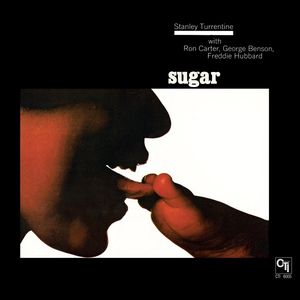
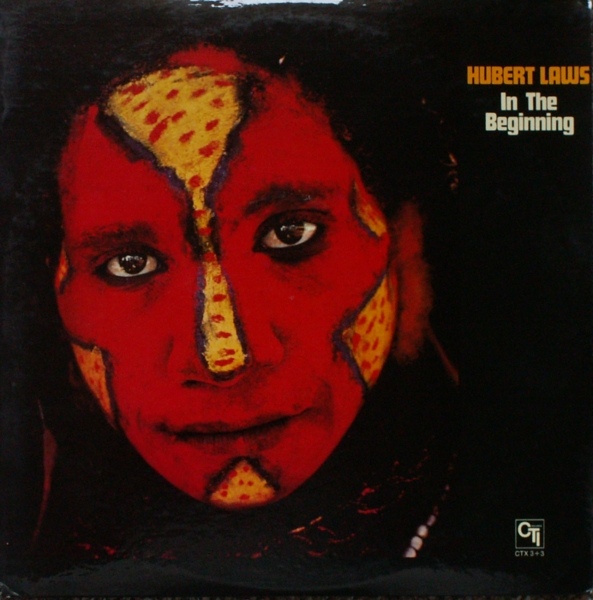


WYNONIE HARRIS-DON’T YOU WANT TO ROCK?- THE KING AND DELUXE ACETATE SERIES.
WYNONIE HARRIS-DON’T YOU WANT TO ROCK?- THE KING AND DELUXE ACETATE SERIES.
It’s been seven years since Ace Records released Good Rockin’ Brown: the King and Deluxe Acetate Series in 2008. It was the fifth instalment in the King and Deluxe Acetate series. Since then, there’s been no further instalments in the series. That’s…until recently.
On 25th May 2015, Ace Records released a two disc compilation of Wynonie Harris’ King and Deluxe recordings, Don’t You Want To Rock?-The King and Deluxe Series. This expansive compilation features twenty-seven tracks from the King Of The Blues Shouters. Disc One, entitled The Masters, features twenty-three tracks, including singles and album tracks. However, this is only half the story.
Then on Disc Two of Don’t You Want To Rock?-The King and Deluxe Series, there’s twenty-four alternate takes. None of these tracks have never been released before. Just like the tracks on Disc One, they’ve been transferred from the original masters. Mastering engineer Duncan Cowell has worked his magic. As a result, the sound quality is of the highest standard. The same goes for Tony Rounce’s sleeve-notes. They’re in-depth and informative. Tony’s enthusiasm shines through, and his sleeve-notes ensure that Don’t You Want To Rock?-The King and Deluxe Series, is a welcome addition to The King and Deluxe Series. It’s a fitting homage to the King Of The Blues Shouters, Wynonie Harris.
The future King Of The Blues Shouters was born in Omaha, Nebraska on August 24th 1915. At the time, Wynonie’s mother Mallie Hood Anderson, was only fifteen, and unmarried. Mallie later married Luther Harris, in 1920. She was twenty and Luther was thirty-five. Wynonie took Luther’s name. However, in 1931, when Wynonie was sixteen, he dropped out of school. He was soon a father.
In 1932, Wynonie became a father for the first time. His first child, Micky, was born to Naomi Henderson. Just ten months later, in 1933, Wynonie become a father for the second time. Wesley was born to Laura Devereaux. Just like Micky, Wesley was brought up by his mother. Wynonie was only eighteen.
By 1935, Wynonie was making a living as a singer. People came from neighbouring towns to hear this up-and-coming singer. This included Olive E. Goodlow. She lived in Council Bluffs, Iowa, but made the journey to Omaha to see Wynonie live. Not long after this, they began a relationship.
When their relationship began, Wynonie was twenty and Olive was only sixteen. The following year, on May 20th 1936, Olive gave birth to Pattie. This was Wynonie’s third child. He was only twenty-one. Later in 1936, on December 11th 1936, Wynonie and Olive were married. After the marriage, Olive worked as a barmaid and nurse, and Wynonie’s mother looked after Pattie. Meanwhile, By then, Wynonie was making a living as a singer.
In the early thirties, Wynonie and Velda Shannon formed a dance team. They were a popular throughout North Omaha. By 1934, they were starred at the Ritz Theatre. That however, wasn’t how Wynonie wanted to make a living. Wynonie wanted to be a singer, and was a regular in Omaha’s clubs. It wasn’t until 1935, that Wynonie was making a living as a singer. Previously he augmented his living doing various odd jobs. Not any more. Now was a popular singer.
By 1935, had recently started singing the blues. He quickly became a popular draw. In his home town of Omaha, Wynonie became a celebrity. He was the local boy made good. However, Wynonie was popular not just in Omaha, but further afield.
Already, Wynonie was making regular trips to Kansas City. That’s where he first saw blues shouters Big Joe Turner and Jimmy Rushing. Wynonie decided to model himself on the two blues shouters. This paid off. Before long, Wynonie was travelling to New York, to sing in Harlem with Velda Shannon. The pair were a popular draw in Jim Bell’s Harlem nightclub.
Quickly, Wynonie was earning a reputation as one of the best up-and-coming blues singers. However, it was in a West Coast nightclub that Wynonie got a break.
Curtis Crosby owned a nightclub in Los Angeles. He had heard about Wynonie Harris, so decided to bring him to L.A. This proved a masterstroke. Wynonie Harris was a hugely popular draw. West Coast music lovers were won over, and gave Wynonie Harris called him Mr. Blues. This stuck.
In 1940, Mr. Blues and his wife Ollie headed to New York. Four year old Pattie was left behind and was brought up be her grandmother Mallie. Things didn’t go to plan.
As soon as Wynonie Harris reached New York, he was playing live. His recording career was another matter. There was a musician’s strike between 1942 and 1944. So, Wynonie had to rely on his income from playing live. Night after night, Wynonie played live. By 1943, he was playing nearly every night. It was a punishing schedule, where Wynonie continually criss-crossed America. As 1943 drew to a close, Wynonie was spotted by bandleader Lucky Milliner in the Rhumboogie Café in Chicago.
So impressed was Lucky Milliner, that he asked Wynonie to join his band. Wynonie Harris made his debut with Lucky Millinder and His Orchestra on 24th March 1944. They had a week long residency in Chicago. During this first week, Wynonie quickly found his feet. Next stop was the Apollo Theatre in Harlem. This was Wynonie’s first appearance at the Apollo Theatre. However, he took it in his stride, debuting Who Threw the Whiskey in the Well, which later, would give Lucky Millinder and His Orchestra, their biggest hit.
Before that, Lucky Millinder and His Orchestra arrived at New York’s Savoy Ballroom, where they had a regular residency. It was at the Savoy Ballroom, that Wynonie’s old friend Preston Love replaced alto saxophonist Tab Smith. With Preston Love onboard, Lucky Millinder and His Orchestra headed to the recording studio on 25th May 1944.
For Wynonie, this was a first. He had never been near a recording studio before. That wasn’t surprising, given the two year musician’s strike. Despite his inexperience, Wynonie sang lead vocal on two of the five cuts, including Hurry, Hurry and Who Threw the Whiskey in the Well. With five songs recorded, Wynonie must have thought his first recording was about to hit the shops. It wasn’t.
There was still an embargo on the use of shellac for records. This meant that Decca couldn’t release any of the five sides that Lucky Millinder and His Orchestra had recorded. Despite the delay of the release, Wynonie’s popularity was growing.
Eventually, Who Threw the Whiskey in the Well was released in April 1945. The single reached number one on the US R&B charts, where it spent eight weeks. This surpassed Hurry, Hurry which only released number twenty-four in the US Billboard 100. In total, Who Threw the Whiskey in the Well spent five months in the US R&B charts. This helped transform not just Lucky Millinder and His Orchestra’s fortunes, but that of Wynonie Harris.
As Lucky Millinder and His Orchestra toured America, word spread about their vocalist Wynonie Harris. He was one of the biggest names in American music. This should’ve been one of the happiest times of his life. Although outwardly things looked fine, behind the scenes, it was another matter.
Problems were surfacing. At their heart was money. Wynonie saw himself as the star of Lucky Millinder and His Orchestra. He wanted a bigger slice of the pie. This came to a head in San Antonio. Lucky refused to give Wynonie more money. So Wynonie quit.
Three weeks later, and a promoter in Houston heard that Wynonie had quit the Orchestra. So, the promoter cancelled the concert. As far as the promoter was concerned, Wynonie played an important part in the Orchestra’s success. Without Wynonie, he didn’t want the Orchestra to play in Houston. This left Lucky with a problem. He had to back down, and pay Wynonie what he wanted, $100 a night. Wynonie accepted the offer, but that night in Houston was Wynonie’s swan-song with Lucky Millinder and His Orchestra.
After leaving the Orchestra, Wynonie Harris decided to embark upon a solo career. In July 1945, Wynonie Harris signed to Leo and Edward Mesner’s Philo label. Wynonie and his band recorded Around The Clock, the first of two singles Wynonie recorded for Philo. While neither replicated the success of Who Threw the Whiskey in the Well, they enjoyed a degree of success. However, Wynonie didn’t stay long at Philo. He was just passing through.
Wynonie recorded sessions for various labels, including Apollo, Bullet and Alladin. In 1946, Wynonie recorded Wynonie’s Blues with Illinois Jacquet and His All-Stars. It reached number three in the US R&B charts. Then Wynonie cut Playful Baby with Johnnie Alston and His All-Stars. Playful Baby reached number two in the US R&B charts. While Wynonie was enjoying some success, he was leading a nomadic existence, flitting from label to label. What he needed was a label he could call home. He found that in 1947, at Syd Nathan’s King Records.
On 13th December 1947, Wynonie Harris was set to make his King Records’ recording debut. Syd Nathan had put together a tight, talented band who made their way to the New York recording studio. Wynonie and his band recorded four songs that appear on Don’t You Want To Rock?-The King and Deluxe Series. This includes Love Is Like Rain, Rose Get Your Clothes and Wynonie’s Boogie. They all feature on disc one, and were mostly recorded in one take. Despite the undoubted quality of the music, Syd Nathan never released any of the tracks. They never even made it onto the flip side of a single.
The other track recorded at the session was Wynonie’s Unissued Boogie. It’s one of the alternate tracks on disc two of Want To Rock?-The King and Deluxe Series. It too, oozes quality. Sadly, it’s lain in the King Records’ vaults for sixty-eight years. This wasn’t unusual.
Not when Wynonie Harris was recording so much music. Just three days later, he was back in the studio on 16th December 1947. With the upcoming musician’s strike, record companies were stockpiling music. King Records were no different.
For this session, Syd Nathan put together a bigger band. The lineup was totally different, and included none other than saxophonist Dexter Gordon. He played four tracks, including Baby, Shame On You and Your Money Don’t Mean A Thing, which feature on disc one. The other two tracks were Snake Hearted Woman Blues and Wild Women. Of these four tracks, only Your Money Don’t Mean A Thing was ever released by King Records. That was still to come. Before that, Wynonie had much more music to record.
With the ban looming ever closer, Syd Nathan decided to record more music. He feared that the ban was going to be a lengthy one. So, Wynonie was called to King Records’ Cincinnati headquarters, where another eight songs were recorded on 23rd December 1943.
Just like previous sessions, Syd Nathan hadn’t skimped on the quality of musicians who would accompany Wynonie. The bandleader was Oran “Lips” Page. With the ban in mind, it’s as if Syd’s fears were transferred to the band. It was a stop-start session. Recording of Blow Your Brains Out, Blowin’ To California, Crazy Love (Comes Love), Bite Again, Bite Again, which feature on disc one, passed without incident. Wynonie and his band storm through the tracks. They’re flawless performances. That wasn’t always the case.
On Good Mornin’ Mr Blues, From Bad To Good Blues, Love Is Crazy (Crazy Love) and Don’t You Want To Rock, the time constraints result in the odd mistake. There’s either a false starts or missed note. Despite these occasional flaws, Wynonie and his band release a series of captivating performances, especially on the defiant Don’t You Want To Rock? With another eight tracks recorded Wynonie must have thought he wouldn’t be back in a recording studio again in 1947. He was wrong.
As 1947 drew to a close, Syd Nathan wanted Wynonie to record three more tracks in Cincinnati. This included Good Rocking Toninght, Lollipop Mama and I Believe I’ll Fall In Love. These three tracks were recorded on 28th December 1947, feature on disc one of Don’t You Want To Rock?-The King and Deluxe Series. Two of these tracks would result in two top ten hits for Wynonie.
The ban began on 1st January 1948. Record label bosses forecast a long dispute. They were ready though. Just like Syd Nathan, many labels had their artists in the studio stockpiling music. This meant if the ban lasted a year or more, they were ready.
Syd’s decision to record three more tracks on 28th December 1947 proved a masterstroke. Wynonie released Good Rocking Tonight during 1948. On the flip side was Good Morning Mr Blues. Good Rocking Tonight reached number one on the US R&B charts. This was Wynonie’s first number one single as a solo artist. The followup, Lollipop Mama, with Blow Your Brains Out on the B-Side, reached number eight on the US R&B charts. These two hit singles transformed Wynonie Harris’ fortunes.
Wynonie was well on his way to becoming one of the biggest names in a new genre that was emerging, R&B. He was proving to be much more than a blues shouter. Ballads like I Believe I’ll Fall In Love and Good Morning Mr Blues showed another side to Wynonie Harris. This would become apparent once the ban was over.
At last, the ban was over. Nearly a years after he had last set foot in a recording studio, Wynonie entered the studio in Linden, New Jersey. That day, he and his band recorded four tracks, Grandma Plays The Numbers, She Just Won’t Sell No More, I Want My Fanny Brown and I Feel That Old Age Coming On. They all feature on disc one, would give Wynonie another two hit singles.
Grandma Plays the Numbers became Wynonie’s first single of 1949. It reached number seven in the US R&B charts. Then I Feel That Old Age Coming On reached number ten in the US R&B charts. Wynonie Harris was quickly becoming one of the biggest names in blues and R&B. So, Syd Nathan took Wynonie back into the studio.
On 7th April 1949, Wynonie was joined by what can only be described as an all-star band of jazz and R&B greats. They recorded another three tracks, Drinkin’ Wine, Spo-De-O-Dee, All She Wants To Do Is Rock and the despairing I Can’t Take It No More which all feature on disc one. Two of these tracks would be released as singles.
The first was Drinkin’ Wine, Spo-De-O-Dee, which reached number four in the US R&B charts. Then All She Wants To Do Is Rock gave Wynonie his second number one US R&B single. It seemed Wynonie Harris could do wrong. Syd Nathan’s decision to sign Wynonie to King Records was beginning to look like a masterstroke. So, another session was scheduled for 19th October 1949.
At the 19th October 1949 session, Wynonie and his band recorded four tracks. Sittin’ On It All The Time, I Like My Baby’s Pudding and Baby, Shame On You feature on disc one. The other track, Triflin’ Woman, is another of the alternate tracks. Wynonie just couldn’t quite nail Triflin’ Woman first time around. It’s a case of close, but no cigar. However, after a couple of takes, he soon makes the song his own. However, this session resulted in two more hits for Wynonie in 1949.
Before that, I Want My Fanny Brown became Wynonie’s last single of the forties. It was released later in 1949, and reached number ten in the US R&B charts. This meant that 1949 was the most successful year of Wynonie Harris’ career.
As a new decade began, Wynonie Harris still hugely popular. Sittin’ On It All The Time reached number three in the US R&B charts. Then I Like My Baby’s Pudding reached number five in the US R&B charts. Good Morning Judge then reached number six in the US R&B charts. He had enjoyed three hit singles during 1950. Soon, three would become four.
Syd Nathan decided to take Wynonie Harris into the studio again. He wanted to record another single. This time, accompanying Wynonie Harris was his old nemesis Lucky Millinder.
After the pair went their separate ways, Wynonie Harris enjoyed more success than Lucky Millinder and His Orchestra. Wynonie Harris had enjoyed nine consecutive top ten singles. So on the 18th October 1950, Wynonie Harris was determined to make this ten. He cut four tracks, including Oh Babe! and Teardrops From My Eyes which feature on disc one. These four tracks would be the last tracks Wynonie Harris cut to acetate.
Fittingly, one of the tracks recorded on the 18th Octiber 195o, gave Wynonie Harris a hit single. Oh Babe! reached number seven on the US R&B charts, and was a fitting end to acetate era. From 27th October 1950, all Wynonie Harris’ sessions were recorded to tape. It was the end of an era; one which just so happened to coincide with the most successful period in Wynonie Harris’ career. It’s documented on Don’t You Want To Rock?-The King and Deluxe Series, which was recently released by Ace Records.
It’s without doubt, the definitive Wynonie Harris compilation. Don’t You Want To Rock?-The King and Deluxe Series features forty-seven tracks, spread across two discs. Disc one features tracks from the eight acetate sessions. They took place between December 1947 and October 1949. During that period, Wynonie Harris enjoyed eleven consecutive top ten singles in the US R&B charts. Ten of these singles feature in Don’t You Want To Rock?-The King and Deluxe Series. The only omission is Good Morning Judge. Apart from that, all of Wynonie Harris’ biggest hits are featured. Then on disc two of Don’t You Want To Rock?-The King and Deluxe Series, there’s twenty-four alternate tracks.
The alternate tracks include many of the tracks on disc one. Many of the hits are here, including Good Rocking Tonight, Drinkin’ Wine, Spo-De-O-Dee, All She Wants To Do Is Rock, I Want My Fanny Brown, Sittin’ On It All The Time, I Like My Baby’s Pudding and Oh Babe! Sometimes, there’s two or three versions of a track. This allows you to hear how a track takes shape. It’s a fascinating insight into Wynonie Harris’ King Records’ sessions.
His time at King Records was the most successful period of Wynonie Harris career. He joined in 1947, and went from blues shouter to one of the most successful R&B artists of the late-forties and early fifties. King Records was the musical home Wynonie Harris had been looking for. Once he found it, Wynonie Harris went on to fulfil his potential.
When Wynonie Harris left King Records, he never again reached the same heights. His continued to record right up until his death on 19th June 1969. However, it was at King Records where Wynonie Harris recorded and released the best music of his career. This music is documented on Don’t You Want To Rock?-The King and Deluxe Series, Ace Records’ lovingly compiled retrospective of Wynonie Harris King Records recordings.
WYNONIE HARRIS-DON’T YOU WANT TO ROCK?- THE KING AND DELUXE ACETATE SERIES.
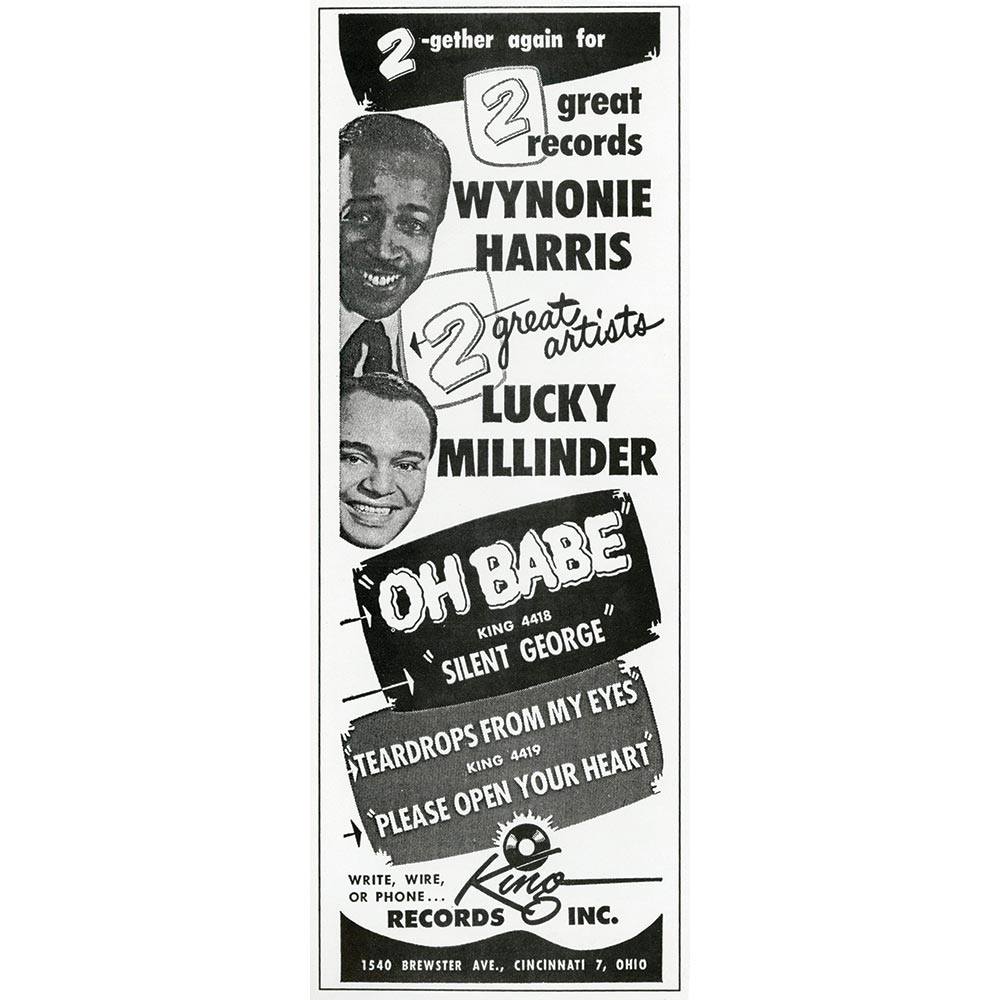
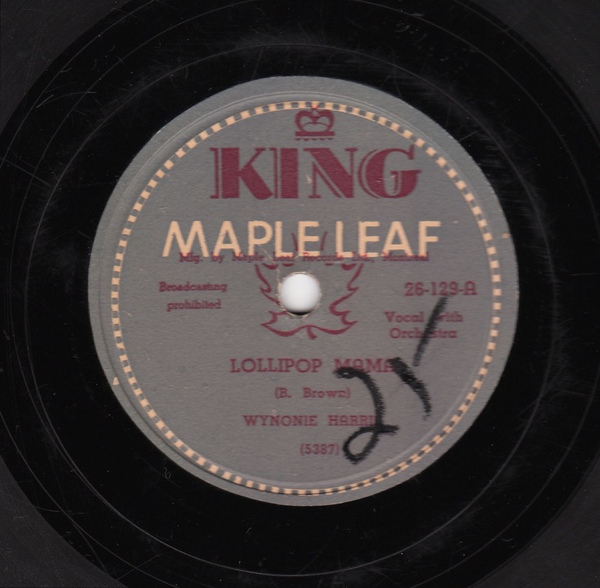

DR JOHN THE NIGHT TRIPPER-GRIS GRIS.
DR JOHN THE NIGHT TRIPPER-GRIS GRIS.
The scenario that I’m going to describe, really happened, and demonstrates that even the most experienced people in the music industry get things wrong. It was in January 1968, and Dr. John completed his debut album Gris Gris. A copy of Gris Gris was sent to Ahmet Erteghun at Atlantic Records. When he heard Gris Gris, he disliked the album so much, that he was reluctant to even release it. His response was “how can we market this boogaloo crap?” When Gris Gris was released, and just as Ahmet Erteghun forecasted, the album wasn’t a commercial success. Gris Gris failed to chart. However, since then, critics have changed their initial opinions of Gris Gris.
Since the release of Gris Gris in 1968, critics have reappraised the album. Belatedly, they’ve recognised the importance of Dr. John’s debut album Gris Gris. It’s best described as a fusion of psychedelia, blues, free jazz, R&B, soul, funk and jazz. Add to this psychedelic stew the authentic music of the melting pot that is New Orleans. The result was an album that was totally unlike anything that had been released before. Variously, Gris Gris has been described as an innovative, cerebral, mesmeric, menacing, haunting, seductive, progressive, psychedelic and lysergic. This presented a problem. Neither Ahmet Erteghun nor critics couldn’t compare it to anything. They’d no cultural reference points. For many critics, Gris Gris was an album that went over their head. However, belatedly, Gris Gris which will be reissued by Atco on 23rd June 2015 has been recognised as classic album.
Nowadays, Gris Gris is recognised as one of the most important albums ever released. Since its reappraisal, Gris Gris has been included in Rolling Stone magazine’s list of the 500 most important albums of all time. As for Dr. John, he’s become a musical legend. What Ahmet Erteghun disparagingly referred to as is “boogaloo crap,” was the start of long and illustrious career. Following Gris Gris, Dr. John has released over twenty studio albums, proving that even Ahmet Erteghun sometimes got things wrong. However, in 1968, Dr. John was still known as Malcolm “Mac” Rebennack
Before Dr John recorded his debut album, Gris Gris, he was still Mac Rebennack, an experienced session musician, songwriter and producer, who played both rock and R&B music. In 1965, he’d relocated to Los Angeles from New Orleans because of drug problems and problems with the feds. It was there that he met a group of new Orleans session musicians, with whom he joined, playing various sessions, assisted by Harold Battiste, an arranger from New Orleans. The pair worked together on sessions for the Ric and Ron labels. However, Dr John wanted to make an album, but an album with a difference.
Dr. John’s concept for the album was intriguing. The album was to combine the different styles of New Orleans music via a front man and lead singer he decided called Dr. John Montaine, who he said he was an African potentate. He chose the name because his sister knew about Dr. John Montaine. Originally, it was Ronnie Barron, a New Orleans singer, who Mac Rebennack wanted to be lead singer and take on the persona of Dr. John. His manager Don Costa felt this wasn’t right for Barron’s career, so Mac Rebennack decided to don the persona of Dr. John.
For the recording of Gris Gris, the newly named Dr. John put together of New Orleans finest musicians. The rhythm section, which produced Gris Gris’ all important heartbeat, featured bassist Bob West, drummer John Boudreaux, guitarist Richard “Didimus” Washington who also played mandolin and percussion. They were joined by Steve Mann on guitar and banjo. Plas John Johnson Jr. played saxophone, Lonnie Boulden flute and Mo Pedido congas. Dave Dixon, Jessie Hill and Ronnie Barron added backing vocals and percussion. Arranger and producer Harold Battiste played bass, clarinet and percussion. Dr. John played keyboards, guitar and added his inimitable vocals. This was the lineup that headed into the Gold Star Studios in Los Angeles to record what would become Gris Gris.
Despite being an album with a musical DNA that reads New Orleans, the seven songs that became Gris Gris were recorded in Los Angeles, at Gold Star Studios. Dr. John penned four tracks, Gris-Gris Gumbo Ya Ya, Danse Fambeaux, Jump Sturdy and I Walk On Gilded Splinters. He cowrote Danse Kalinda Ba Doom with Harold Battiste and Mama Roux with Jessie Hill. The other track was Harold Battiste’s Croker Courtbullion. Then when recording was about to begin, things didn’t get of to the best of starts.
When Dr. John and his band arrived at Gold Star Studios, straight away, there were problems. Dr. John was unprepared. After all, he’d wanted Ronnie Barron to be the lead singer. So, Dr. John was a reluctant frontman. That wasn’t the end of the problems. On their arrive at Gold Star Studios, there wasn’t a studio available for him to record in. Then fate intervened. A studio that was reserved for Sonny and Cher became free. Seizing the opportunity that came their way, the seven songs were recorded. Once Gris Gris was completed, Dr. John sent the album to his record company Atco, a subsidiary of Atlantic Records.
When Ahmet Erteghun received Gris Gris, he dismissed the album out of hand. He disliked Gris Gris so much, that he was reluctant to even release it. On hearing Gris Gris, Ahmet Erteghun said: “how can we market this boogaloo crap?” Despite Ahmet Erteghun’s reservations, Gris Gris was released.
On its release in 1968, Gris Gris failed to chart. Gris Gris’ fusion of psychedelia, blues, free jazz, R&B, soul, funk and jazz seemed to go over the head of both music lovers and critics. It was an album that was totally unlike anything that had been released before. This presented a problem. They’d no cultural reference points, nothing to compare Gris Gris. However, like so many albums, Gris Gris was reappraised and belatedly, is recognised as seminal album. You’ll realise that, when I tell you about Gris Gris.
Opening Gris Gris is Gris-Gris, Gumbo Ya Ya, a song that epitomises Dr John’s new persona perfectly. The sound is dark, really dark. It brings to mind an atmosphere where Dr John’s candles and incense, help set the scene for Dr John, resplendent in his costume of feathers, surrounded by the paraphernalia and trinkets of his grandiose new identity, before he makes his debut as newly crowned musical potentate. A guitar soars, before a husky, whispery vocal from Dr John enters, accompanied by a multitude of otherworldly sounds, percussion and backing vocalists. It’s a mixture of psychedelia and R&B, with rhythm section, percussion and horns combining to produce a sound that is spooky, eery and just a bit unsettling. You wonder what the good Dr is hoping to achieve in this nocturnal sounding journey? Is he trying to contact long forgotten spirits, or raise the dead? Whatever, he hope to achieve, he has produced an intense, atmospheric and quite brilliant track, that’s best listened to late at night, in the dark, with someone to hold your hand when these unsettling sounds emerge from your speakers.
The unsettling, eery atmosphere continues with Danse Kalinda Ba Boom, which opens with a melange of chanted vocals, dark, booming drums, and an intense combination of prominent percussion and frenzied, repetitive vocals. Together, with mandolins, flutes and whistles, congas and guitars, Dr. John takes you a walk on the dark side of New Orleans. Goodness knows what rituals are being performed in the studio given the darkness, intensity and ferocity of the music. What makes the experience even more edgy, and even dangerous, is the way the music has been separated, and different instruments and sounds can be heard from different speakers. By the end of this fascinating combination of chants, rhythms and percussive diversions, you’re hooked, in love with the music, and in awe of Dr John’s vision and bravery at releasing such and ambitious and inspirational music.
After the two previous authentic slices of the dark side of New Orleans, things change quite drastically with Mama Roux, a track that has a brighter, more traditional sound. As the track opens it’s a combination of rhythm section, guitars and percussion accompanying backing vocalists, before Dr John regales us with the tale of Mama Roux. Here, he takes on the persona of the fast talking, pseudo mythical potentate. His vocal is atmospheric, whispery, and husky, with the backing vocalists a complete contrast, their voices sweet and melodic. Behind them, a jumble of percussion, drums and guitars provide a backdrop that’s very different to previous tracks. Gone are the edgy, eery sounds and in, is a much more melodic sound. Here, Dr John demonstrates his skill as a vocalist, on a track that has a much more subtle arrangement. It’s quite simply one of the best tracks on Gris Gris, and even today, is one of Dr John’s legion of fans favourite tracks.
Danse Fambeaux begins with a mandolin playing, before some slick guitars licks join a melange of whistles, percussion and rhythm section. It’s as if they’re announcing the imminent arrival of backing vocalists and the newly appointed potentate Dr John. The backing vocalists unite against soulfully and spiritually. Then Dr John delivers one of his most haunting, otherworldly vocals. He seems to embrace his new identity. His vocal veers between haunting, otherworldly, theatrical and grandiose. It seems as if his new mysterious alter ego, is perfect for the mysterious concoction of psychedelia and R&B. Like the arrangement, which is a mixture of exotic and sometimes moody, percussion, haunting voodoo drums, bringing to mind visions of mystery, faux spirituality and darkness. Together, they combine magically, creating a song that’s a masterful concoction of haunting and otherworldly sounds and vocals.
When Croker Courtbullion opens, immediately, this dark gothic journey through the sights and sounds of New Orleans underbelly continues. Quickly, drums rumble and reverberate, more of those slick guitar licks, which soar and chime as a harpsichord melodically plays while percussion, and a dark moody bass combine. The tempo is quick, nearly frantic, with the track drifting towards a discordant destination, only to be rescued at the last minute. Vocals, a haunting, chant and an eery flute combine. They’re joined by congas. Somewhere in the distance, sounds that are almost indescribable can he heard. You can hear screaming and shrieking, dogs barking. That’s just some of the things that you hear. Quite simply it’s an intriguing piece of music, where although you find yourself at the edge of your seat, you just must hear what happens next. It’s very different, totally unorthodox and out of step with the music of 1968. Having said that, it’s alo innovative, unique, inimitable, intriguing, riveting and hugely listenable.
Distant percussion, opens the track before backing singers unite, soulfully interjecting as a banjo plays a melodic, catchy solo before Dr John sings the lyrics to Jump Sturdy. If you listen carefully, there’s a hesitancy to his vocal, with him singing his lyrics either to soon, or at the wrong time. He has to stop himself, then after regaining his composure, and go again. It’s a very much warts and all version of this track, complete with percussion and dark, moody bass. Having said that, he gives a great vocal, laden in charisma and emotion, his voice loud and confident. The track lasts just under two and a half minutes, and I’ve always felt that this track could’ve been extended, made into something even better, an epic track, like the previous track. However, it’s still a great track, one of the best tracks on Gris Gris.
Gris Gris ends with I Walk On Gilded Splinters, a track that when Dr John performs live, brings to life, injecting the sheer force of his personality and charisma into. It’s a dark, moody sound that opens the track, congas, percussion accompanied by a choir of finger-clicks that accompany Dr John’s equally mood, atmospheric vocal. When the backing vocalists enter, their voices have a distant, haunting sound, matched by a swampy, eery otherworldly arrangement. A clarinet plays, its sound haunting, while congas and percussion combine in producing one of the eeriest and moodiest arrangements on the album. However, the man that makes this the best track on the album is the former Mac Rebennack, the newly anointed potentate Dr John. Quite simply, his performance is stunning, charismatic, eery and atmospheric. This is a classic track to end a classic album.
Listening to Gris Gris, it’s a debut album like no other. It’s no exaggeration to say that Gris Gris is one of the most ambitious and innovative debut albums. With no thought for his future career, he recored a groundbreaking album, Gris Gris. It proceeded to go over everyone’s heads. This included Ahmet Erteghun at Atlantic Records.
When he heard Gris Gris, Ahmet Erteghun disliked the album so much, that he was reluctant to even release it. His response was “how can we market this boogaloo crap? However, he wasn’t alone in missing Gris Gris’ potential and brilliance in Gris Gris. It was only many years later, that a new generation of reviewers revisited Gris Gris with an open mind, and realised just how important, influential and innovative an album it really is.
Granted, when you first hear Gris Gris not the easiest album to listen to. However, after one listen, you’re hooked. Dr. John weaves his spell over you on Gris Gris, a genre-melting album. It’s best described as a fusion of psychedelia, blues, free jazz, R&B, soul, funk and jazz. Add to this psychedelic stew the authentic music of the melting pot that is New Orleans. Listen carefully to Gris Gris and layer upon layer of music can be heard. With each listen, you’ll hear something new. It’s a like a lysergic mystical mystery tour where the music is ambitious, bold, challenging, eerie, broody, moody, mesmeric, menacing, haunting, seductive, progressive and psychedelic. That’s why Gris Gris is also a truly groundbreaking album. Dr. John dared to go where no artist had gone before. Sadly, many people in 1969 didn’t understand Gris Gris which will be released by Atco on 23rd June 2015. Not any more.
When a new breed of critics reappraised Gris Gris, they hailed it a classic. So did Rolling Stone magazine. Nowadays, Gris Gris is recognised as one of the most important albums ever released. Gris Gris has been included in Rolling Stone magazine’s list of the 500 most important albums of all time and is the album that launched Dr. John’s long and illustrious career.
After the release of Gris Gris, Dr. John has released over twenty further albums. Following Gris Gris, Dr. John released a string of innovative and influential albums. This includes 1968s Babylon, 1970s Remedies and The Sun and The Moon and The Herbs in 1971. Along with Gris Gris, these are some of the best albums Dr John released. For newcomers to Dr. John’s music, these albums are a good place to start. The best of this quartet is Gris Gris, a classic album that’s a genre-melting melange of musical influences and genres, which is akin to a lysergic, mystical mystery tour.
DR JOHN THE NIGHT TRIPPER-GRIS GRIS.
JOE HOUSTON-KICKIN’ BACK.
JOE HOUSTON-KICKIN’ BACK.
Joe Houston’s career began in 1941. He was just fifteen. His breakthrough came when a saxophonist in a touring band never turned up. This presented the bandleader with a problem. However, he needn’t have worried.
From an early age, Joe Houston was determined to make a career out of music. So much so, that Joe bought a red suit with white trousers. This was what many of the touring bands wore. So, when the saxophonist didn’t show, Joe who looked the part, offered his services. He grabbed his saxophone, and took to the stage. That night, his career began. Joe had come a long way in a short time.
Joe Houston was born on 11th July 1926, in Austin, Texas. It was in school, that Joe discovered music. Originally, he played the trumpet. However, before long Joe switched to the saxophone. Soon, he was an accomplished saxophonist. Good enough to play in a touring band by the time he was fifteen. That was just the start of Joe’s career.
By 1943, Joe had joined a touring band. He spent three years touring Kansas, Chicago and the mid-west. These three years were an important part of Joe’s musical education. By the end of the Second World War, Joe was ready to rub shoulders with some of the biggest names in music.
Among the musicians Joe Houston worked with, were pianist Amos Milburn and vocalist Big Joe Turner. He was impressed by Joe Houston. So much so, that he asked Joe to put a new band together for him. In return, Big Joe Turner recommended Joe to Freedom Records.
When Joe signed to Freedom Records in 1949, he was only twenty-three. However, he had been a professional musician eight years. He had played with some big names, and learnt from each of them. This included learning what it took to be a bandleader.
So in 1951, Joe formed Joe Houston and Orchestra. His new band’s first release was Blowin’ Crazy, which was released on Macy’s Recordings. Joe hoped to build on the success of previous “blowing’” saxophone releases. Blow Joe Blow gave Joe a regional hit in the South. So the Bihari brothers bought the track, and planned to release it nationwide.
The Bihari brothers were well known within the music industry. They owned several labels, including Los Angeles’ based Modern Records. Just like Big Joe Turner, the Biharis were impressed by Joe. They made the journey to Houston to record several sides they planned to release. Before that, they released Blow Joe Blow. While it wasn’t a nationwide hit, it showed the Biharis that Joe Houston had a big future ahead of him. Their paths would cross again.
After meeting the Biharis, Joe realised that L.A. was jazz central. So he decided to relocate to tinseltown. This worked in Joe’s favour. He played on numerous sessions, and released singles on various labels, including Mercury, Combo, Modern and its subsidiary RPM. This somewhat scattergun approach paid off.
In 1952 Joe enjoyed his first hit single with Worry, Worry, Worry. It reached number ten in the US R&B charts. Later, in 1952, Hard Time Baby also reached number ten in the US R&B charts. After eleven years, Joe Houston had made a breakthrough.
Another two years passed and Joe Houston enjoyed a hit with All Night Long. It was released on John Dolphin’s Money Records in 1954. Soon, All Night Long was regarded as a South Californian classic. Joe Houston was back, and back with a hit.
Over the next couple of years, Joe Houston kept making records and working as a sideman. Then in 1956, Joe Bihari entered Joe’s life. He bought All Night Long and made it the lead track from Joe’s album Blows All Night Long. This was the first of seven albums Joe released on the Biharis labels. The other five were released on their Crown imprint. This included four albums in 1962 Rockin’ And Rollin,’ Doin’ The Twist, Twisting In Orbit and Wild Man Of The Tenor Sax. Then in 1963, Joe jumped on another bandwagon, and released Surf Rockin.’ He followed this up with Limbo. It was Joe’s last album for another fifteen years.
Over a recording career that started in 1951, Joe had watched musical genres and trends come and go. He had been there through when the twist and then surf music was popular. By 1978, another musical genre was at the peak of its popularity, disco. So with the help of his old friends the Bihari brothers, Joe Houston decided to release an album that just happened to include a couple of disco tracks.
The Biharis were keen to release new albums. For some time, they had been running reissue labels. This was profitable, but the Biharis needed a change. So they decided to launch their new label, Big Town.
Having decided to setup a new label, Jules started to look for artists. He decided to give Joe Houston a call. It would better way to launch their new label. Jules had been working with Joe for twenty-six years.
Joe however,hadn’t released an album since 1963. However, he had never stopped working. Granted his profile wasn’t as high as it once was, but music had changed over the past fifteen years. This didn’t stop Joe jumping at the opportunity to make a comeback.
For his long awaited comeback album, Joe and Jules Bihari penned eight tracks. Jules used the alias Jules Taub. This wasn’t fulling anyone. Especially the musicians who played on Kickin’ Back.
Joe had put together a tight, talented band for the recording of Kickin’ Back. The rhythm section featured drummer Ross Solomone bassist Ted Butler and Larry Johnson on bass and guitar. Bo Rhambo played alto and tenor saxophone, while Freddy Clark and Joe both played baritone and tenor saxophone. Joe also produced Kickin’ Back. It was scheduled for release in 1978.
There was no fanfare when Kickin’ Back was released in 1978. Jules Bihari didn’t go out of his way to promote Kickin’ Back. So when Kickin’ Back was released, it passed most people by. Not long after its release, Kickin’ Back was soon deleted. For Joe Houston his fusion of blues, funk and disco had neither proved profitable nor raised his profile. So he returned to playing live in L.A.’s clubs.
Since then, a new generation of music lovers have been discovering albums like Kickin’ Back. There was a problem though. Finding a copy isn’t easy. So, Ace Records have reissued Kickin’ Back, thirty-seven years after its release. Joe Houston the comeback King, is the comeback King once again.
Hawaiian Disco opens Kickin’ Back. Straight away, there’s an obvious early sixties hot rodding sound. It’s as if Joe’s been inspired by his 1963 album Surf Rockin.’ That’s no bad thing. It all starts with the drums, then the guitars and blazing saxophone join in. Soon, Joe and his band are in full flight. It’s an impressive sound. For five minutes, Joe Houston and his tight, talented band create a joyous and irresistible sounding dance track.
Not many artists would’ve have thought of fusing blues and disco T Bone Disco. Joe Houston did, and the result is T Bone Disco. Surf guitars are joined by the rhythm section and then a growling, scorching saxophone. It soars above the arrangement as the drums and piano play leading roles. By then, musical genres are melting into one. Blues, disco, R&B and surf are combined by a band of hot shot musicians. Each and every one of them have earned their stripes, and unleash peerless performances.
The tempo drops on Mr. Big, which sounds as if it belongs on an early seventies Blaxploitation soundtrack. Just a loose, spacious rhythm section and chiming guitar provide the backdrop to what can only be described as a saxophone masterclass. Joe never misses as a note, as his scorching, rasping solo steals the show. Everyone else plays a supporting role as Joe takes centre-stage.
Baby What You Want Me To Do sees Joe return to the blues. The rhythm section and crystalline guitar set the scene for Joe’s needy, lived-in vocal. Then when his vocal drops out, guitarist Larry Johnson steps up. He unleashes a glistening, shimmering solo, before replying to Joe’s vocal. Joe pleads and vamps his way through the lyrics, constantly asking: “Baby What You Want Me To Do.”
Trippin’ In sees another change of style. The tempo stays the same as Joe’s band create a chugging beat. This allows Bo Rhambo’s alto saxophone to take centre-stage. He adds a jazzy hue to the fusion of blues and R&B behind him.
Why Don’t You Rock Me bursts into life. The chugging beat makes a reappearance. Meanwhile, stabs of piano and a chiming guitar accompany Joe’s blistering saxophone solo. He doesn’t hold back. After fifteen years, Joe’s keen to showcase his skills. Joe relishes the opportunity, and again, steals the show.
Kicking Back-Part One sees Joe and his band at their funkiest. That’s the case from the get-go. Drums are joined by hissing hi-hats, wah-wah guitar and funky bass. The the band kick loose, and produce one of their best performances. Adding the final touch is a scorching saxophone solo. It’s an inspired performance, on a track that would later find favour with deep funk DJs.
Closing Kickin’ Back, is Kicking Back-Part Two. It picks up where Part One left off, and is a variation of a theme. That’s no bad thing. Joe Houston and his band are at their best, with a track that was right on trend, and even today, finds its way into many a DJs record box.
Fifteen years after releasing his last album, Joe Houston made a welcome return. Jules Bihari gave Joe the opportunity to rejuvenate his career. Joe didn’t let Jules down.
Seamlessly, Joe Houston and his all-star band switch between musical genres on Kickin’ Back. They switch between blues, disco, funk, jazz, R&B and surf. Sometimes, they fuse several genres on the same track. It all seems effortless. That’s what Joe Houston and his all-star band were capable of. They were also capable of making music that in 1978, was bang on trend.
So, Kickin’ Back could’ve and should’ve been a successful album, and maybe even featured a hit single? That wasn’t to be. Jules Bihari decided not to promote Kickin’ Back. That was the same with his new label’s Big Town’s other releases. They sunk without trace, and were soon deleted. For Joe, it must have been disappointing. He must have felt he had been let down badly. After all, why release an album and not promote it? That didn’t put Joe Houston off releasing another album.
He made a comeback in 1981, when he released Earthquake on Imperial. After that, Joe Houston continued to record and play live right until 2005.
Sadly, Joe Houston suffered a stroke in 2005, and since then, hasn’t played live. Joe, who still lives in L.A., is now approaching his eighty-ninth birthday. Kickin’ Back, which was recently reissued by Ace Records, is part of Joe Houston’s musical legacy and showcases his talent and versatility.
JOE HOUSTON-KICKIN’ BACK.
WOODENBOX-FOREIGN ORGAN.
WOODENBOX-FOREIGN ORGAN.
When Woodenbox entered Chem 19 recording studio in Blantyre back in August 2011, the Glasgow based sextet were fuelled by the sound of the Sensational Alex Harvey Band and Kayne West. They set about recording End Game.
Four years on, it was a much more subdued Woodenbox that began recording their latest album Foreign Organ, which was recently released on Olive Grove Records. The reason for the change in Woodenbox’s mood, was they, like forty-five percent of Scotland, had the post referendum blues.
18th September 2014 could’ve, and should’ve, been the most important date in Scotland’s history. It should’ve been the day that Scotland became an independent country. Sadly, the fickle, feeble and greedy had their way. Proud and progressive Scots, like Woodenbox and myself were robbed of the chance to be part of an independent country. So, it was no wonder that we had the blues.
Despite having the post-referendum blues, it was time for Woodenbox to begin work on the followup to End Game. This time, Woodenbox weren’t making the pilgrimage to Chem 19. No. Now they had their own studio. This was a game-changer
At their newly built studios, the six members of Woodenbox got to work. Vocalist Ali Downer played acoustic guitar and piano. He was joined by a rhythm section of drummer Nick Dudman, guitarist Jordan Croan and bassist and organist Fraser Mckirdy. They were joined by the horn section of trumpeter Phil Caldwell and saxophonist Sam Evans. This time, when Woodenbox entered the studio, they were free of time constraints. At last, they had built their own studio.
Over a five year period, the members of Woodenbox had transformed their rehearsal rooms into a studio. This was no mean feat. Building a recording studio is a perilous project, one that can go drastically wrong. Thankfully, that wasn’t the case with Woodenbox’s Glasgow studio. Woodenbox managed to create a state-of-the art recording studio. This allowed Woodenbox to begin work on what became Foreign Organ.
In the wake of the Referendum, recording of Foreign Organ began. Although Woodenbox had the post Referendum blues, they approached the sessions with a renewed sense of purpose. It helped that Scotland was changing. Scotland’s governing party, the S.N.P. had a new leader, Nicola Sturgeon. The baton had passed from one political generation to another. It was a masterstroke. Straight sway, Nicola Sturgeon imbued a spirit of positivity within the nation. This rubbed off on Woodenbox.
Woodenbox approached the recording of Foreign Organ in a different way. They decided to reevaluate how their songs took shape. For the next few months, Woodenbox found their own voice, and began to hone then ten songs that became Foreign Organ. Now that Woodenbox had their own studio, there was no need to rush. So they took time writing and recording the ten tracks. Some song came with a message; others offered words of advice; while others painted a picture of Scotland circa 2015. Foreign Organ was an articulate, accomplished and cerebral album from Woodenbox. It was scheduled for released on 8th June 2015 on Olive Grove Records.
It’s fitting that Woodenbox chose to release Foreign Organ on 8th June 2015. The General Election had come and gone. Scotland had been transformed. Fifty-six out of fifty-nine seats were one by the S.N.P. It was changed days from the morning of 19th September 2014. Back then, much of Scotland was in mourning. Not now. It was a joyous time. There was hope for the future. What better time for a group that represented the new Scotland to release their third album.
When critics heard Foreign Organ, they liked what they heard. The reviews called Foreign Organ Woodenbox best, and most accomplished album. They had come a long way in seven years.
Woodenbox’s roots can be traced back to 2008. Back then, they were originally called Woodenbox With A Box Fivers. What brought them together was a love of The Beatles, mariachi and spaghetti westerns. A year later, Woodenbox With A Box Fivers would release their debut album.
Home and The Wildhunt, Woodenbox With A Box Fivers’ debut album was released in 2009. It was no ordinary album. Not at all. This was part of their college project.
Just like Belle and Sebastian before them, Woodenbox With A Box Fivers had to release an album. Having written and recorded Home and The Wildhunt, it was released through the Electric Honey label, which was home to Biffy Clyro and Belle and Sebastian. What started as a college project quickly grew legs.
Critically acclaimed upon its release, Home and The Wildhunt featured a band who were certainly not lacking in talent. So a decision was made to shorten the band’s name. After all, Woodenbox With A Box Fivers didn’t exactly roll off your tongue. Now called Woodenbox, the Glasgow-based folk sextet started the next chapter of their career.
By 2010, Woodenbox’s debut album Home and The Wildhunt was being played on national radio. Mark Radcliffe, Huw Stephens, Steve Lamazq and Vic Galloway all were championing Woodenbox. Meanwhile, Woodenbox were touring throughout Scotland and further afield as they sought to hone their trademark sound. By 2011, Woodenbox were festival favourites and one of the hardest working bands.
During 2011, Woodenbox played some of Scotland’s biggest music festivals. T In The Park, The Wickerman Festival, Celtic Connections, Belladrum, Insider and The Hebridean Celtic Festival. When Woodenbox weren’t appearing at festivals, they played at venues across Scotland and England. Woodenbox also supported Gomez and The Alabama 3. Somehow, Woodenbox found time to record their sophomore album End Game.
With recording beginning in August 2011, this meant Woodenbox would have a single released to coincide with their first American tour. Everyone Has A Price was released in March 2012. After touring America, Woodenbox returned to the Britain and embarked upon a tour. After that tour was finished, End Game was completed in October 2012. Five months later, the ten-track End Game was released to critical acclaim on Olive Grove Records in March 2013.
Since then, Woodenbox have played numerous live shows, completed building their own studio and recorded a new album Foreign Organ, which should introduce Woodenbox’s music to a much wider audience. You’ll soon realise why.
Foreign Organ opens with Somewhere New. It features a philosophical Woodenbox. They wonder if utopia is the place where you live, and what would happen if the buildings were no longer there? Who and what would be left? It’s a fascinating thought. Especially when pondered against a backdrop of flourishes of piano, flute and ethereal harmonies. A lone trumpet sounds. It adds to the wistful, dreamy nature of this cinematic tracks.
Jangling, Glasgow School guitars accompany Ali Downer’s hopeful vocal on Life Decays. Straight away, you’re hooked. It’s obvious something special is unfolding. Woodenbox’s rhythm section, searing guitars and cooing harmonies unite with a rasping horns. Meanwhile, Ali warns against spending your life always wanting more. As he does, a joyous, stomping, hands in the air anthem unfolds.
On More Than A Friend, Alex Kenzel and Cat Calton from Skinny Dipper join Woodenbox. It’s like a who’s who of Olive Grove Records. All we need is Henry and Fleetwood. From, the get-go, a scorching guitar cuts across the arrangement as the rhythm section provide the arrangement’s heartbeat. Ali delivers a needy, rasping Tom Waits’ inspired vocal. He’s caught between friendship and love. He wants his friend to become his girlfriend. She’s not so sure, and doesn’t want to potentially, loose a friend. It’s like a short story played out over four melodic, and hook laden minutes. Woodenbox, aided and abetted by Alex Kenzel and Cat Calton take you on a roller coaster journey of emotions where Woodenbox and Co., showcase their considerable skills.
Amidst a wall of feedback and then searing, scorching guitar Roberto takes shape. All the time, drums pound and a pulsating bass bounds across the arrangement. It’s joined by a rasping horn. It weaves in and out of the arrangement. Meanwhile, Ali delivers a vocal that literally bristles with emotion, as he sings about the worries of financial problems. In this case, it’s a broken relationship. A despairing Ali sings: “why did you have to go away.” He literally lives the lyrics, and his despair becomes real when he sings: “I only ever feel alive when I don’t care…why did you have to go away?” The way Ali delivers the lyrics, it’s as if they’re personal. Proving the perfect foil for his vocal are Big Country styled guitars. They ensure Woodenbox combine power, emotion, hooks and a social conscience.
The spartan introduction to A9 North, briefly reminds me of Paul Buchanan’s Mid Air. Just a lone tack piano sets the scene for Ali’s vocal. He’s later joined by harmonies. That’s all that’s needed. They frame his vocal, as he remembers the journeys he’s taken up the A9 North with his partner, and the plans they made. It’s as if they’ve been reinvigorated by the journey somewhere new. Sadly, when they return home, their plans are forgotten, until the next journey up the A9 North.
Directions And My Boy is a message from father to son. Don’t ever waste your time in a job you don’t like; and don’t let money get in the way of your dream. Against, just an understated introduction, Ali delivers a heartfelt vocal. It grows in power. So does the arrangement. A thunderous, stabbing rhythm section, piano and blistering guitars accompany Ali’s impassioned powerhouse. He seems to have been inspired by Glasgow’s one and only Alex Harvey. So it seems, have the rest of Woodenbox, when later, they add singalong, chanted harmonies. Along with the horn section, they take this empowering anthem to its glorious crescendo.
Face Able sees Woodenbox breakout their guitars, as Ali delivers a strutting vocal. He sounds not unlike Phil Lynott of Thin Lizzy, as he decries the social networking, and those addicted to it. His message seems to be get out there, and meet people, like we used to do. Behind them, the rest of Woodenbox cut a rocky swathes across the arrangement. The rhythm section pound, horns soar and guitars scream, as Woodenbox pay homage to the Gods of rock, and Ali becomes The Rocker.
Carbon Mold sees Woodenbox drop the tempo, on what’s an intriguing track. Ali sings the song to Woodenbox as he existed as a man. He’s accompanied by lush strings, chiming, jangling guitars and a vortex of melancholy horns. Together, they play their part in a quite beautiful, cerebral song.
Rust is about the ability to be confident without always having to back down. Punchy horns lock horns with the keyboards and rhythm section. They set the scene for Ali’s despairing vocal. He hasn’t the confidence to do what he wants. Against a backdrop of lushest cascading strings, harmonies, braying horns and blistering guitars, lays bare his soul and shortcomings. It’s like a cathartic outpouring of emotion. When Ali’s vocal drops out, Woodenbox cut loose and jam. This allows you to hear how far they’ve progressed as a band. They’re up there with Scotland’s top bands.
Scotland, which closes Foreign Organ, was written in the wake of the referendum. Ethereal harmonies are joined by a piano. It accompanies Ali’s wistful, rueful vocal. In the first line, Ali sums up the 55% who voted against independence: “give him a choice and he’ll probably say things aren’t meant to change.” From there, Ali ponders Scotland’s past and future, against a backdrop of piano and harmonies. As the song closes, the sound of a baby can be heard. There’s an irony to this. It only brings home the selfishness of “him” in the song. His apathy affected the future of generations of Scots.
It’s two years since Woodenbox released End Game. Since then, the Glasgow based sextet have been busy. They’ve been busy playing live and built their own studio. That’s not all. Woodenbox have also recorded a career defining album, Foreign Organ. It’s without doubt, the best album of Woodenbox’s seven year career.
Woodenbox came on leaps and bounds on End Game. It was released to critical acclaim in 2013. However, Foreign Organ is a game-changer.
Foreign Organ should see Woodenbox become one of Scotland’s most successful musical exports. It showcases different sides of Woodenbox’s music. For much of Foreign Organ, Woodenbox unleash hook-laden, joyous, feel-good music. Anthems aren’t in short supply. These are bound to win friends and influence festival goers during the summer months. Then on other tracks, the music is beautiful, cerebral, dramatic, edgy, ethereal, melancholy and melodic. Ali Downer breathes life, meaning and emotion into the lyrics. That’s the case whether Woodenbox are in a reflective mood, or unleashing a hands in the air anthem.
It seems Ali, and the rest of Woodenbox have grown and matured as a band since they recorded End Game in 2011. They’re a much more assured band. That’s apparent throughout Foreign Organ. It’s the album that could, and should, introduce Woodenbox to a much wider audience. There should be no stopping Woodenbox. Woodenbox are now one of Scotland’s top bands. Surely Woodenbox are about win new friends and influence people, with their new album Foreign Organ, which showcases their unique brand of hook laden, anthemic music?
WOODENBOX-FOREIGN ORGAN.
KANAKU Y EL TIGRE-QUEMA QUEMA QUEMA.
KANAKU Y EL TIGRE-QUEMA QUEMA QUEMA.
Nearly fifty-eight years ago, on 5th September 1957, Jack Kerouac published his seminal novel, On The Road. Since then, On The Road has influenced several generations. That’s just as true today.
Nico Saba and Bruno Bellatin of Kanaku y El Tigre can relate to Jack Kerouac. They describe themselves as “Peruvian indie folk beatniks.” Kanaku y El Tigre released their debut album Caracoles back in 2010. It was released to commercial success and critical acclaim. So the modern day beatniks began work on their sophomore album.
With ten tracks recorded at Kanaku y El Tigre’s Lima studio, their sophomore album was almost ready. However, they lacked one thing…a title. So, Nico Saba and Bruno Bellatin returned to the beatnik’s bible, On The Road. They decided to choose a quote from Jack Kerouac’s landmark novel.
There was plenty of choice. Nico and Bruno had 320 pages to choose from. Eventually, the quote they decided on was “Quema Quema Quema,” which when translated from Spanish to English, meant “burn burn burn.” Now, that Kanaku y El Tigre had a title the final piece in this musical jigsaw was in place.
Quema Quema Quema, Kanaku y El Tigre much anticipated, sophomore album will be released by Tiger’s Milk on 15th June. It’s the result of two long years work. During that period, Kanaku y El Tigre have been locked away in their Lima studio, honing the ten tracks on Quema Quema Quema. They showcase Kanaku y El Tigre fusion electronica, indie folk and psychedelia,on the long-awaited followup to Caracoles. As the man said, “it’s been a long time coming.”
Five years, but hey, who’s counting. It was back in 2010, that Kanaku y El Tigre released their debut album Caracoles. However, the two members of Kanaku y El Tigre, Nico Saba and Bruno Bellatin have been collaborating for much longer.
They first met in the nineties, back home in Lima. Nico and Bruno were teenagers, and members of a punk band. This was the genesis of a lifelong friendship, and musical partnership.
Fast forward to 2015, and Nico and Bruno have spent the last three decades travelling the world and making music.Previously, Nico and Bruno have spent time living in Britain and America. They’ve spent long periods in both countries. However, when it comes to recording their albums, they return to where it all began, Lima.
That’s where Nico and Bruno recorded their debut album Caracoles. It was released in 2010, and caught the attention of critics and record buyers. Caracoles had been inspired by American folk music. When it was released, it was to critical acclaim and commercial success.
Caracoles lead single gave Kanaku y El Tigre a hit single. When the sophomore single was released, Kanaku y El Tigre hit pay dirt. It featured on two soundtracks.Then as 2010 drew to a close, Kanaku y El Tigre’s name loomed large on Peru’s album of the year lists. However, since then, word has spread about Kanaku y El Tigre.
Now, Kanaku y El Tigre are attracting a following in Britain, Europe and America. Their sophomore album Quema Quema Quema has the potential to be a game-changer, and introduce the music of Kanaku y El Tigre to a much wider audience. That’s because is Quema Quema Quema no ordinary album.
Mind you, Kanaku y El Tigre are no ordinary band. They’re musical alchemists. Over Quema Quema Quema’s ten tracks, Kanaku y El Tigre combine a captivating fusion of indie folk, electronica and psychedelia. That’s not all. Seamlessly, lead vocalists flits between Spanish and English. Meanwhile, a myriad of effects, Hawaiian slide guitar and ethereal harmonies play a walk on part on the sound and success of Quema Quema Quema. It’s ten tracks of mesmeric and melodic music.
Any one of the 95,000 people who have heard Si Te Mueres Mañana, the lead single from Quema Quema Quema will be forced to agree. It’s the perfect showcase for Kanaku y El Tigre and their sophomore album Quema Quema Quema, which as you’ll soon realise, is a musical tour de force.
Opening Quema Quema Quema, is the title-track. It’s one of two tracks where Bruno delivers the lyrics in English. That’s still to come. Musical alchemists Kanaku y El Tigre, work their musical magic. Two notes are played on a keyboard. They’re twisted and transformed. Then Bruno’s vocal enters. He’s accompanied by the rhythm section, a shimmering guitar, keyboards and punchy harmonies. Soon, a joyous, hook heavy anthem is unfolding. It’s a call to dance, that’s impossible to ignore.
Drums provide the heartbeat to Nunca Me Perdi. Meanwhile,Bruno’s vocal is thoughtful and reflective. Harmonies sweep in and out. Meanwhile, washes of keyboards and the rhythm section are augmented by various effects. They transform the arrangement, adding a psychedelic sheen. Later, a crystalline guitar glistens; as wistful harmonies play yin to Bruno’s yang on this beautiful, melancholy sounding song.
Pulpos has a much more understated sound. Just bongos play while Nico delivers a vocal that veers between heartfelt, tender and sultry. Soon, her vocal has a late-night, jazzy sound. Then a curveball is bowled. The arrangement explodes and becomes a wall of sound. Layers of sounds become one. Guitars bristle,quiver and threaten to feedback. They don’t. Instead, they combine with percussion and jittery harmonies. As the arrangement dissipates, a wistful, jazzy horn sounds and Hawaiian slide guitar lingers. From there, the arrangement builds, growing in power. Elements of avant-garde, industrial, psychedelia and rock and play their part in a glorious wall of sound. It’s cocoons Nico’s vocal, which is a mixture of emotion and beauty.
Washes of guitar are unleashed as Quien Se Queda Quien Se Va unfolds. They’re reminiscent of the soundtrack to a Spaghetti Western. Soon, percussion and drums combine with Bruno’s impassioned, pleading vocal. Cooing harmonies interject and bursts of guitar hang trail of into the distance. An atmospheric, heartfelt and beautiful song is unfolding. Crucial to the song’s success are the vocal, harmonies and a series of guitar masterclasses.
The synths that open Si Te Mueres Mañana have an eighties sound. Bruno’s vocal is deliberate and urgent. He’s accompanied by drums, percussion, a chirping guitar and joyous harmonies. Before long, it’s time to break out the effects and the musical alchemists get to work. Briefly, they toy with the arrangement. It’s highly effective. Especially, when it takes on a dubby sound. This has the effect of punctuating the arrangement, and letting the listener know when another burst of joyous, feel good music are about emerge.
Just a lone acoustic guitar opens Bubucelas. That’s until effects are added. So is a plink plonk piano. It works though. Especially as Bruno delivers a reflective vocal. In the background a walking bass, drums and shimmering guitars are joined by harmonies. Together, they transform the track, as it takes on a feel good sound. However, when the arrangement is stripped bare it’s a very different song. This has the effect of connecting with the listener in a different way. Joyous becomes thoughtful. That’s until Beach Boys’ harmonies are added. They’re a masterstroke on this emotional roller coaster.
Big, bold, chords are played on the piano as 10 Años begins. A guitar is strummed and the drums play. They drop out as Bruno delivers another impassioned vocal. Meanwhile, the arrangement literally strolls along. Washes of guitar, piano, percussion and drums play their part. Bruno ad-libs,as he lays bare his soul. At just the right time, a harmonica and ethereal harmonies are dropped in. Another masterstroke is a searing, rocky guitar. It’s the perfect way to close 10 Años.
On Hacerte Venir, Nico takes charge of the vocal. Bruno sings below her.They’re accompanied by an understated arrangement. Just an acoustic guitar and bass combine. That’s all that’s needed as Nico and Bruno duet. As the song unfolds, other instruments make a brief appearance. They take care not overpower the tender, wistful vocals, as we hear another side to Kanaku y El Tigre.
Burn Burn Burn is the second song sung in English. “Nah nah nah” harmonies are joined by a bass synth, shimmering guitar and Nico’s vocal. The arrangement is jittery, as elements of electronica, indie rock and psychedelia combine. Instruments and flit in and out, chiming and chirping. Filters mask a guitar as it cuts through the arrangement. It accompanies Bruno and Nico’s vocals on this hands-in-the-air anthem.
Fittingly, Fin, a ballad closes Quema Quema Quema. The tempo drops, and the rhythm section and keyboards set the scene for Bruno’s vocal. It veers between pensive, rueful and hopeful. Harmonies sweep in, as sci-fi synths and hypnotic drums combine. Later, washes of glistening guitars are added. They’re the perfect accompaniment to Bruno’s vocal. It literally bristles with emotion and beauty, on this hook-laden track.
Five long years after the release of their breakthrough, debut album Caracoles, “Peruvian indie folk beatniks,” Kanaku y El Tigre, return with the much anticipated followup, Quema Quema Quema. It features ten tracks of genre-melting, hook heavy anthems from Kanaku y El Tigre. This makes Quema Quema Quema well worth the wait.
It’s taken Nico Saba and Bruno Bellatin two years to record Quema Quema Quema. That’s not surprising. Kanaku y El Tigre are perfectionists. They were determined to hone and polish each of the ten tracks. To do this, they headed home to Lima, to the same studio they recorded Caracoles.
When they entered the studio two years ago, Kanaku y El Tigre’s starting point was their trademark fusion of indie folk, electronica and psychedelia. To that, they added elements of avant-garde, indie rock, jazz and rock. That’s not forgetting a generous helping of poppy hooks. Recording of the ten tracks took time. Kanaku y El Tigre were determined to record a worthy successor to Caracoles.
Caracoles had been released to widespread critical acclaim and commercial success in 2010. This saw Kanaku y El Tigre hailed as one of Peruvian music’s rising stars. However, in the intervening years, word was spreading about Kanaku y El Tigre. They had built up a fan base in America, Britain and Europe. While many groups would’ve been tempted to rush out an album, this wasn’t the way Kanaku y El Tigre worked.
They were going to release Quema Quema Quema until they were ready. They owed it to themselves and their fans. So, for two years Kanaku y El Tigre laboured in the studio. Eventually, Quema Quema Quema which will be released on Tiger’s Milk on 15th June 2015, was complete. It’s been well worth the wait.
Five years after the release of Kanaku y El Tigre have grown and matured as a group. That’s apparent when you listen to Quema Quema Quema. With its mixture of glorious, hook heavy anthems and beautiful ballads,Quema Quema Quema is a worthy successor to Caracoles. The songs on Quema Quema Quema are variously beautiful, ethereal, irresistible, joyous and melodic. Quema Quema Quema is also full of poppy hooks, as modern day beatniks Kanaku y El Tigre, take you on a musical roller coaster that’s guaranteed to toy with your emotions.
KANAKU Y EL TIGRE-QUEMA QUEMA QUEMA.
LESLEY GORE-CALIFORNIA NIGHTS.
LESLEY GORE-CALIFORNIA NIGHTS.
Lesley Gore’s rise was meteoric. Her career began in June 1963, when she burst onto the scene with her debut single It’s My Party. It reached number one in the US Billboard 100 and US R&B charts. This resulted in It’s My Party being certified gold. The following year, It’s My Party was nominated for a Grammy Award. Meanwhile, Lesley’s debut album was selling well.
Released in June 1963, It’s My Party reached number twenty-four in the US Billboard 200 charts. Lesley’s second single was Judy’s Turn To Cry, which reached number five in the US Billboard 100 and number ten in the US R&B Charts. After the success of Judy’s Turn To Cry, Lesley Gore it seemed could do no wrong.
Five months later, in October 1963, Lesley released her sophomore album Lesley Gore Sings of Mixed-Up Hearts. It stalled at number 125 in the US Billboard 200. At least the singles She’s A Fool and You Don’t Own Me reached the top five in the US Billboard 100. Maybe this was just a temporary blip?
It wasn’t. When I Don’t Know Anymore was released as a single between Lesley’s second and third album, the single failed to chart. For Lesley and her record company Mercury, this was a worrying time. Music was just about to change.
When Lesley released her third album, Boys, Boys, Boys in April 1964, things didn’t improve. They actually got worse. Boys, Boys, Boys only reached number 127 in the US Billboard 200. The only saving grace was the success of the lead single from Boys, Boys, Boys.
That’s The Way Boys Are was chose as the lead single from Boys, Boys, Boys. This proved to be an inspired choice. It reached just number twelve in the US Billboard 100. The next single didn’t fare well. I Don’t Wanna Be a Loser reached just number thirty-seven in the US Billboard 100. Lesley’s career seemed to have stalled.
On the release of Girl Talk in October 1964, it became Lesley Gore’s least successful album. Girl Talk stalled at number 146 in the US Billboard 200. Lesley Gore’s music it seemed, was neither as popular, nor fashionable.
Lesley wasn’t alone. Other high profile singers, including Bobby Vee and Neil Sedaka were struggling. They were no longer enjoying the same commercial success and critical acclaim. There was a reason for this, music was changing.
At the heart of the change was the recent British Invasion. Groups like The Beatles, Rolling Stones, The Kinks, The Small Faces and The Who would take America by storm. Then psychedelia was born. Just like the British Invasion, psychedelia derailed the career of many previously successful pop singers. Suddenly, artists who enjoyed successful careers were struggling. This included Lesley Gore.
When Lesley entered the studio to record My Town, My Guy and Me, little did she know that it would be her final album with producer Quincy Jones. He was the man who “discovered” Lesley in 1963, when he heard her demo. Since then, he had produced each of her albums.
My Town, My Guy and Me was the fifth album Quincy Jones had produced for Lesley Gore. He had guided her career through good times and bad. Sadly, there had been more of the latter, than the former. Things improved slightly with My Town, My Guy and Me.
Lesley’s fifth album My Town, My Guy and Me was released in September 1965. The followup to Girl Talk, 1965 My Town, My Guy and Me. Produced by Quincy Jones, reached just number 120 in the US Billboard 200. Despite its lowly chart number, My Town, My Guy and Me was a Lesley’s second most successful album. It was also as good as it got.
As a new year dawned, so did a new era. Quincy Jones was replaced as producer by Shelby S. Singleton Jr. This coincided with one of the worst years of Lesley Gore’s career.
1966 was Lesley’s annus horiblis. She was due to release two albums during 1966. The first was Lesley Gore Sings All About Love. When it was released, it failed to chart. For Lesley Gore, this was a first. She was shocked. Mercury her record company were equally concerned.
Despite the failure of Lesley Gore Sings All About Love, Lesley and Shelby S. Singleton Jr. returned to the studio. They began work on Off and Running. Eventually, what should’ve been Lesley’s seventh album was completed. It was scheduled for release in November 1966. However, Mercury had other ideas.
With Off and Running recorded, Lesley was working towards the November 1966 release date. Mercury however, were having cold feet. With every release, Lesley Gore’s sales were shrinking. It was a long time since Lesley was one of the company’s rising stars. Many felt her time was past, and that she was a relic of Mercury’s past. They thought the company should cut their losses on Lesley Gore, and concentrate on rock and psychedelia. That was where the money was to be made. There was a problem though. Lesley Gore was under contract.
Mercury had a get out. Just because Lesley had recorded Off and Running, didn’t mean they had to release the album. So, Off and Running’ release was cancelled. This wasn’t be the first time an album had been shelved; and it wouldn’t be the last. Certainly not for Lesley. However, for Lesley her pride was at stake. She took the cancellation of Off and Running badly.
By 1967, it looked increasingly likely that Lesley’s hit-making days were behind her. Lesley began to consider the future. She still wanted to be a singer, and had recently recorded a new single, California Nights, with producer Bob Crewe. However, given her recent track record, it didn’t look like California Nights was going to pay the bills. So, she decided to try acting.
Lesley was offered a guest appearance on Batman on an episode shown on January 19th 1967. In the episode That Darn Catwoman, Lesley was cast as Pussycat, Catwoman’s partner. This was a huge break, as Batman was one of the most popular shows on American television. Even better, Lesley would mime her latest single California Nights which was produced by Shelby S Singleton Jr.
This was a masterstroke, one that would transform Lesley Gore’s career. Within a few weeks, California Nights was climbing the charts. Eventually, it reached number sixteen in the US Billboard 100. Lesley Gore was the comeback Queen. Batman and California Nights had rescued Lesley’s career.
For Lesley Gore, this couldn’t have come at a better time. Her career was at a crossroads. She realised that many at Mercury perceived her music as yesterday’s sound. However, Mercury weren’t ready to call time on her career. Instead, following the success of California Nights, Mercury began compiling Lesley’s seventh album California Nights which was recently reissued by Ace Records. This was make or break for Lesley Gore.
There wasn’t time for Lesley to enter a studio and record a whole album of material. So, Mercury decided to look though the songs that Lesley had recorded at previous Mercury sessions. They had plenty to choose from. Previously, Lesley had worked with various producers, including Bob Crewe and Herb Bernstein, plus Jack Nitzsche and Quincy Jones. Eventually, Mercury settled on the ten tracks that became California Nights.
Previously, Lesley had worked with Bob Crewe and Herb Bernstein. This session yielded seven of the ten tracks on California Nights. Bob produced five tracks and co-produced Treat Me Like A Lady and The Bubble Broke Herb Bernstein. However, didn’t just produce much of California Nights, he cowrote five of the seven tracks he produced.
This included Treat Me Like A Lady, I’m Going Out (The Same Way I Came In) and Love Goes On Forever, which he cowrote with Gary Knight. Bob Hirschhorn and Al Kasha penned Bad, and Bob cowrote The Bubble Broke with Raymond Bloodworth and Larry Brown. The other two tracks Bob produced were Maybe Now, a Lesley and Michael Gore composition. The other track was California Nights, which Marvin Hamlisch and Howard Liebling wrote. These seven tracks would play an important part of California Nights. Still, though, they needed more tracks
So Mercury they returned to the Jack Nitzsche and Quincy Jones’ sessions. Carole Bayer Sayer and Toni Milne’s Off and Running was chosen. So was Fred Anisfield and Larry Weiss’ Lilacs And Violets. The final track was Cry Like A Baby, which was penned by Joshie Armstead with Ashford and Simpson. Now Mercury had enough material for an album, California Nights.
California Nights was released in February 1967. It reached number 169 in the US Billboard 200. Normally, this wouldn’t be anything to celebrate. However, after Lesley Gore Sings All About Love failed to chart, and the cancellation of Off and Running, Lesley felt positive about the future.
With good reason. Despite featuring tracks by various producers, California Nights it was a cohesive album. California Nights, with its eclectic selection of songs, proved the perfect showcase for Lesley Gore. There’s ballads and uptempo tracks. Similarly, Lesley flits between pop, jazz and even takes a detour via doo wop. Seamlessly, she copes with the change of style and indeed, producer. She has the listener’s attention from the opening track,
That’s Lesley’s comeback single California Nights. It’s a joyous, string drenched anthem featuring tender, hopeful vocal from Lesley. Next up is Bob Crewe and Gary Knight’s jazz-tinged ballad Treat Me Like A Lady. They also contribute the defiant I’m Going Out (The Same Way I Came In) and another ballad, Love Goes On Forever. Lesley’s heartfelt vocal sits atop the waltzing arrangement.
Maybe Now was penned by by Michael and Lesley Gore. It features a reflective, heartbroken Lesley. She lives the lyrics. That’s the case on Bad, another of California Nights’ ballads. Lesley’s at her needy and soulful best, on what’s one of the highlights of the Bob Crewe and Herb Bernstein sessions, and indeed, California Nights. The final track chosen from the Bob Crewe and Herb Bernstein session was The Bubble Broke. It’s a much more uptempo, poppy song, where Lesley combines power and emotion. In doing so, Lesley shows her versatility. That’s not the end of California Nights though.
There’s still the tracks from the Jack Nitzsche and Quincy Jones’ sessions.. Off And Running is another uptempo, poppy track. A sassy Lesley struts her way through the track. Lilacs And Violets is a string laden ballad, featuring a tender, wistful vocal from Lesley. Cry Like A Baby closes California Nights. It’s ballad, where a Lesley lays bare her broken heart on this sixties sounding track. Having said that, Cry Like A Baby has stood the test of time, and is a reminder of Lesley Gore at her best. However, that’s not the end of California Nights.
There’s still another fifteen bonus tracks on California Nights. These tracks were produced by various producers. Among them are Bob Crewe, Herb Bernstein, Jack Nitzsche and Quincy Jones. Then there’s tracks produced by Shelby S. Singleton Jr., Teddy Randazzo and Alan Lorber. These tracks cover the period between 1963 and 1967. Again, they showcase Lesley Gore’s versatility.
On California Nights’ bonus tracks, Lesley Gore veers between ballads, uptempo tracks and dance tracks. One of the most intriguing is a cover of Phil Spector’s To Know Him Is To Love Him. It’s transformed into a string-laden ballad produced by Alan Lorber. He then breaks out the strings as Lesley reinvents Goffin and King’s Will You Love Me Tomorrow. The tempo rises, and Lesley delivers this classic with a swing, finger clicks and all. In a similar vain, is Start The Party Again. It’s a Shelby Singleton Jr. production. Originally, it featured on Lesley’s 1966 album Lesley Gore Sings All About Love. This was Lesley’s only Mercury album not to chart. However, Start The Party Again is one of the album’s highlight, and makes a welcome return on California Nights.
There’s much more to enjoy in the bonus tracks. Yeah, Yeah, Yeah (That Boy Of Mine) is inspired by the “girl group” sound. It’s a slice of musical sunshine. That’s What I’ll Do oozes drama; while there’s an air of optimism on the hooky pop of Happiness Is Just Around The Corner. Hold Me Tight was penned by Lesley and Michael Gore, and was produced by Jack Nitzsche. This stomping slice of pop builds up to a dramatic crescendo, which proves the perfect way to close California Nights.
While California Nights briefly rejuvenated Lesley Gore’s career, that was the end of her career at Mercury. Lesley recorded another album, Magic Colours. It was scheduled for release in November 1969. Then lighting struck twice for Lesley Gore.
Very few artists see one of their albums cancelled. It’s almost unheard of for an artist to have two albums cancelled. Lesley Gore suffered that fate. What was due to be her eighth studio album, Magic Colours, was cancelled. Mercury then cancelled her contract. For Lesley Gore, her career at Mercury came to an inauspicious end.
California Nights proved to be Lesley Gore’s Mercury swan-song. While it wasn’t a commercial success, it’s without doubt, one Lesley Gore’s best Mercury albums. Lesley Gore was able to leave Mercury with her head held high. She was a talented and versatile singer, who could’ve and should’ve enjoyed much more commercial success. What Lesley needed, was the right label behind her.
Another label might have paired Lesley with more suitable producers. While she worked with some top producers, they weren’t necessary the right producer for Lesley Gore. Similarly, some of the material Lesley recorded at Mercury wasn’t suited for Lesley Gore. During her time at Mercury, music was changing, and changing fast. Sometimes, Lesley wasn’t able to move with the times. She was held back, as Mercury hoped that Lesley Gore would, once again, reach the heights of It’s My Party and I’ll Cry If I Want To. That was before the British Invasion. It was a game-changer. Never again, would music be the same.
As music changed around her, Lesley Gore didn’t move with the times. Quincy Jones produced her first five albums. When he was replaced by Shelby S. Singleton Jr., Lesley fortunes didn’t improve. It was only through a guest appearance on Batman, where she lip-synched California Nights, that Lesley Gore’s career got back on track. Mercury hastily put together Lesley’s “comeback” album. While California Nights wasn’t a huge commercial success, it showed just what Lesley Gore was capable of. California Nights, which was recently reissued by Ace Records, proved to one of Lesley Gore’s best albums for Mercury, and showcased a truly talented and versatile singer and songwriter.
LESLEY GORE-CALIFORNIA NIGHTS.



KEEP A HOLD ON HIM! MORE GARPAX GIRLS.
KEEP A HOLD ON HIM! MORE GARPAX GIRLS.
Nowadays, record companies don’t waste time releasing the sequel to a successful compilation. Often, only six months to a year passes, before volume two is released in a blaze of publicity. However, that wasn’t the case with Boy Trouble: Garpax Girls, which Ace Records released back in May 2004.
When Boy Trouble: Garpax Girls was released in May of 200, it was to critical acclaim. It was a twenty-six track celebration of some of Gary S. Paxton’s finest productions for various female singers. This included Beverly Williams, Diana Dawn, Doris Webb, Mary Saxton, Sandie Shore and The Rev-Lons. These tracks were released in the mid-sixties, and included some of Gary S. Paxton’s finest productions.
By the mid-sixties, Gary S. Paxton had established a reputation as one of the top producers. He was at the top of his game, and had the uncanny ability to transform an artist’s reputation and fortunes. However, there much more to Gary S. Paxton’s career than the twenty-six tracks on Boy Trouble: Garpax Girls. So critics and record buyers awaited a sequel.
It proved to be a long wait. Eleven years passed before Ace Records announced the release of Keep A Hold On Him! More Garpax Girls. At last, the sequel to Boy Trouble: Garpax Girls hit the shops at the end of May 2015. That was almost eleven years to the day since Ace Records released Boy Trouble: Garpax Girls. However, would Keep A Hold On Him! More Garpax Girls prove to be worth the wait?
Keep A Hold On Him! More Garpax Girls features twenty-four of Gary S. Paxton’s productions. They were recorded between 1960 and 1966. Thirteen were released as a single. This included singles from The Idols, Beatrice Lee, Josephine Sunday, Chris Darlin and Dorothy Berry and The Swans. Then there’s eleven previously unreleased tracks. This includes five alternate mixes and two demos. These unreleased tracks feature several hidden gems. No wonder. There’s contributions from Linda Mackey, Mary Saxton, Beatrice Lee and Beverly Williams. With so much quality music to choose from, picking the highlights of Keep A Hold On Him! More Garpax Girls won’t be easy. However, here goes.
The Idols open Keep A Hold On Him! More Garpax Girls with Just A Little Bit More. It’s the first of two tracks they contribute. Their first contribution is Just A Little Bit More, a Richard Berry composition. Richard and Gary. S Paxton produced Just A Little Bit More. It was originally released as a single on Reveille in 1961 and credited to the Idols. Later, Just A Little Bit More was leased to the Dot label. They realised the potential of the Idols trademark harmonies. Their second contribution is Why Must I Cry. This is another track Richard Berry penned and then produced with Gary. On Why Must I Cry, The Idols drop the tempo and deliver a heart wrenching ballad.
Canadian singer Mary Saxton features three times on Keep A Hold On Him! More Garpax Girls. She arrived at Gary S. Paxton’s Hollywood studios in the summer of 1966. That’s when Mary recorded enough material for several singles and an album. This includes Losing Control, which was the B-Side to her 1966 debut single, Is It Better To Live Or Die. It was released on Canadian label Pace Records and features a vocal powerhouse from Mary.
Two years later, and Mary released A Tear on another Canadian label, Quality. It had been recorded at the same sessions as Losing Control. A wistful and heartbroken Mary delivers Gary S. Paxton’s lyrics like she’s lived and survived them. The following year, 1969, Mary’s debut album was released. It consisted of tracks recorded in the summer of 1966. Mary’s debut album was released on the Birchmount label in 1969.
Even then, there were tracks from the 1966 session that hadn’t been released. This includes It’s A Lonely World. It’s a a real find. Mary combines controlled power and emotion on this Mary McAullay composition.
Texan Beatrice Lee was only fourteen when she signed to Kent in 1962. Right through until 1962, Kent was Beatrice’s musical home. Three of the songs she recorded for Kent feature on Keep A Hold On Him! More Garpax Girls. The first is Keep A Hold On Him, which Beatrice released as a single in 1962. Despite her youth, Beatrice delivers a raw, distinctive powerhouse.
The same year, Beatrice cover The Classicals’ recent hit, Help Me. It was produced by George Motola, for Gary S. Paxton. With his help, Beatrice reigns in her power, and in the process, delivers one of her most soulful offerings.
Operator Operator was penned by future O’Jay William Powell. It was recorded by Beatrice, but never released…until now. It’s something of a hidden gem, where Beatrice showcases her impressive vocal range, and in doing so, displays her potential.
Most people won’t have heard of Doris Webb. That’s unless they bought Boy Trouble: Garpax Girls, back in May 2004. Doris featured on that illustrious compilation. She makes a welcome return on Keep A Hold On Him! More Garpax Girls with Just A Little Bit More. Her contribution is her 1962 single I Was The Lonely One. Accompanied by The Rockets and strings arranged by Jimmie Haskell, Doris delivers a needy, hurt-filled vocal.
Originally, The Fashionettes started life as The Fashions, fusing surf and R&B. However, Gary decided to reinvent the Fashions. So, The Fashions became The Fashionettes. Gary S. Paxton took the newly named group into the studio to record their new single. This was the Jackie DeShannon penned Day Dreamin’ Of You. It was released as a single on GNP Crescendo, in 1964. On the flip side was William Powell’s Only Love. Both tracks brought out the best in The Fashionettes. Sadly, the wistful and dreamy sounding Day Dreamin’ Of You, failed commercially. The Fashionettes recording career was cut shot, and they failed to realise their potential. Their contributions to Keep A Hold On Him! More Garpax Girls with Just A Little Bit More are a reminder of a talented duo.
Beverly Williams is another artist who features twice on Keep A Hold On Him! More Garpax Girls with Just A Little Bit More. Her first contribution is a stereo mix of Little Girl With A Big Hurt. It was released as a single on GNP Crescendo, in 1964. It’s a tale of teenage heartbreak that was tailor-made for Beverly. She was still a teenager when she recorded the song. That’s also the case with Beverley’s demo of He’s Hurtin’ Me. Although it was recorded around 1964, it’s never been released before and makes its debut on Keep A Hold On Him! More Garpax Girls with Just A Little Bit More.
It seemed almost inevitable that Linda Mackey would go on to enjoy a career in music. Music surrounded her. Linda’s father was a booking agent, who brought some of the biggest names in blues music to Bakersfield. His love of music rubbed off on Linda. By high school, Linda was singing in talent shows and concerts. She was inspired by Etta James and later, Tina Turner. Indeed, Tina Turner wanted Linda to join The Ikettes. However, because of her age, Linda’s mother said no. This wasn’t the end of Linda’s career.
Later, Linda met Gary S. Paxton who coincidentally, had worked with Tina Turner earlier in his career. Gary realised Linda was a talented singer, so signed Linda her. He produced Linda’s debut single Merry Go Round. It was released in May 1964. On the flip side was It Just Ain’t Right. Alternate mixes of both tracks feature on Keep A Hold On Him! More Garpax Girls with Just A Little Bit More. Listening to both tracks, it’s hard to believe that they were recorded so early in Linda’s career. That’s also the case with the demo of Reap What You Sow. Linda’s vocal bristles with hurt and emotion and showcases a talented and versatile singer. Linda would later release a Norther Soul single Yours For The Asking, and then embarked upon a career as a jazz singer.
The final two tracks from Keep A Hold On Him! More Garpax Girls with Just A Little Bit More I’ve chosen, come from Josephine Sunday. This includes Josephine’s 1964 single I Won’t Be Hurt Anymore. It’s ballad that was was written by Jerry Riopelle. Josephine delivers a heartfelt vocal on this tale of love gone wrong. On the flip side is He’s Not Mine Anymore. Again, it’s another tale of love lost. Listen carefully, and it seems that it’s been influenced by the Jackie DeShannon penned When You Walk In The Room. A year earlier, in 1963, it gave The Searchers a hit single. Despite the similarities, He’s Not Mine Anymore oozes hurt and regret.
Eleven long years after Ace Records released Boy Trouble: Garpax Girls, they release the long-awaited, and much anticipated sequel, Keep A Hold On Him! More Garpax Girls. It features another twenty-four of Gary S. Paxton’s finest productions for a variety of female singers between 1960 and 1966.
During this period, Gary S. Paxton was establishing his reputation as a hotshot producer. He had the ability to transform an artists career and fortunes. So, it’s no surprise that The Idols, Beatrice Lee, Josephine Sunday, Chris Darlin and Dorothy Berry and The Swans all found their way to Gary’s Hollywood studio. With various songwriters, arrangers and producers, Gary set about making dreams come true. Sometimes it worked, and artists enjoyed that elusive hit single. Other times, commercial success eluded artists. Often that’s despite creating a single that oozed quality. That’s the case with the thirteen singles on Keep A Hold On Him! More Garpax Girls. However, there’s more to Keep A Hold On Him! More Garpax Girls than just thirteen tracks.
There’s eleven previously unreleased tracks. Among them, are numerous hidden gems from several hidden gems. No wonder. There’s contributions from Linda Mackey, Mary Saxton, Beatrice Lee and Beverly Williams. Some of these unreleased tracks are alternate takes or demos. They show a different side to a familiar track. Others fall into the category of hidden gems. They’re the ones that, for whatever reason, were never released. Who knows, this might include the one that got away? What I do know, is that Keep A Hold On Him! More Garpax Girls is a worthy sequel to Boy Trouble: Garpax Girls. It may have been eleven years in the making, but Keep A Hold On Him! More Garpax Girls has been well worth the wait.
KEEP A HOLD ON HIM! MORE GARPAX GIRLS.
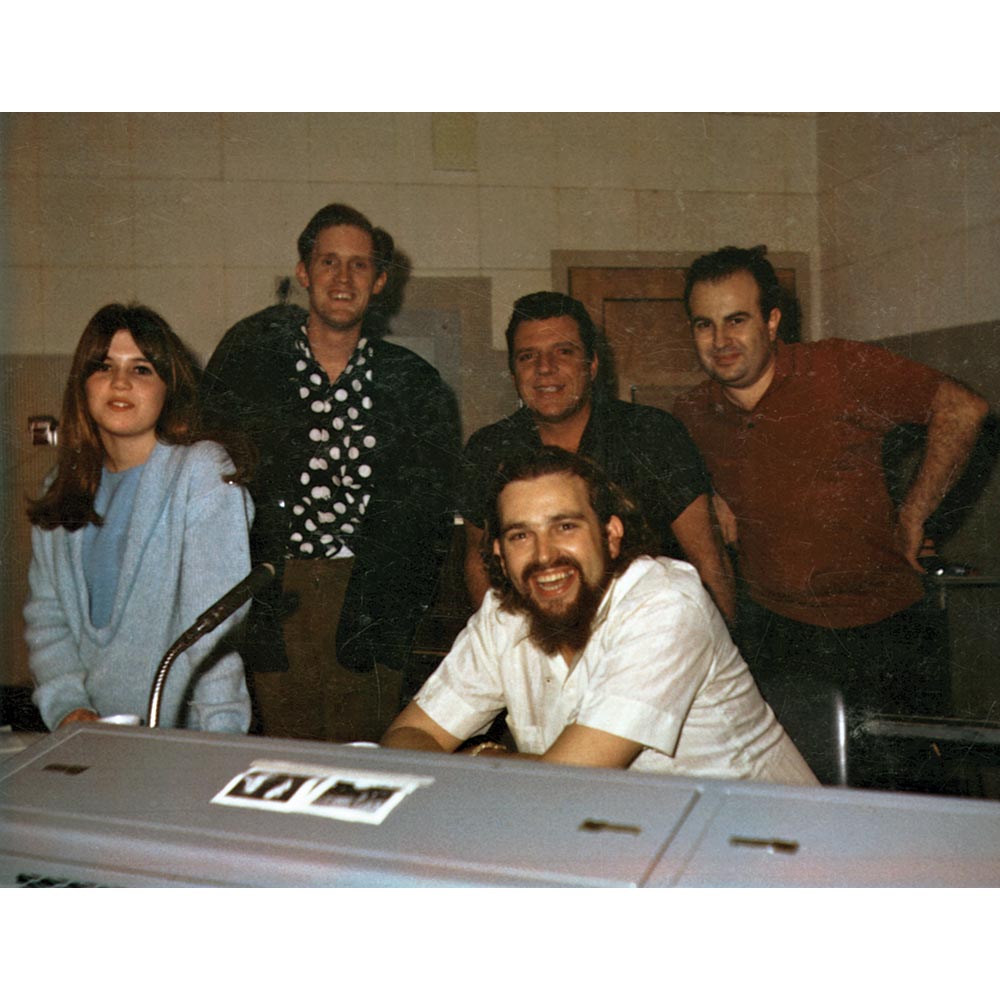
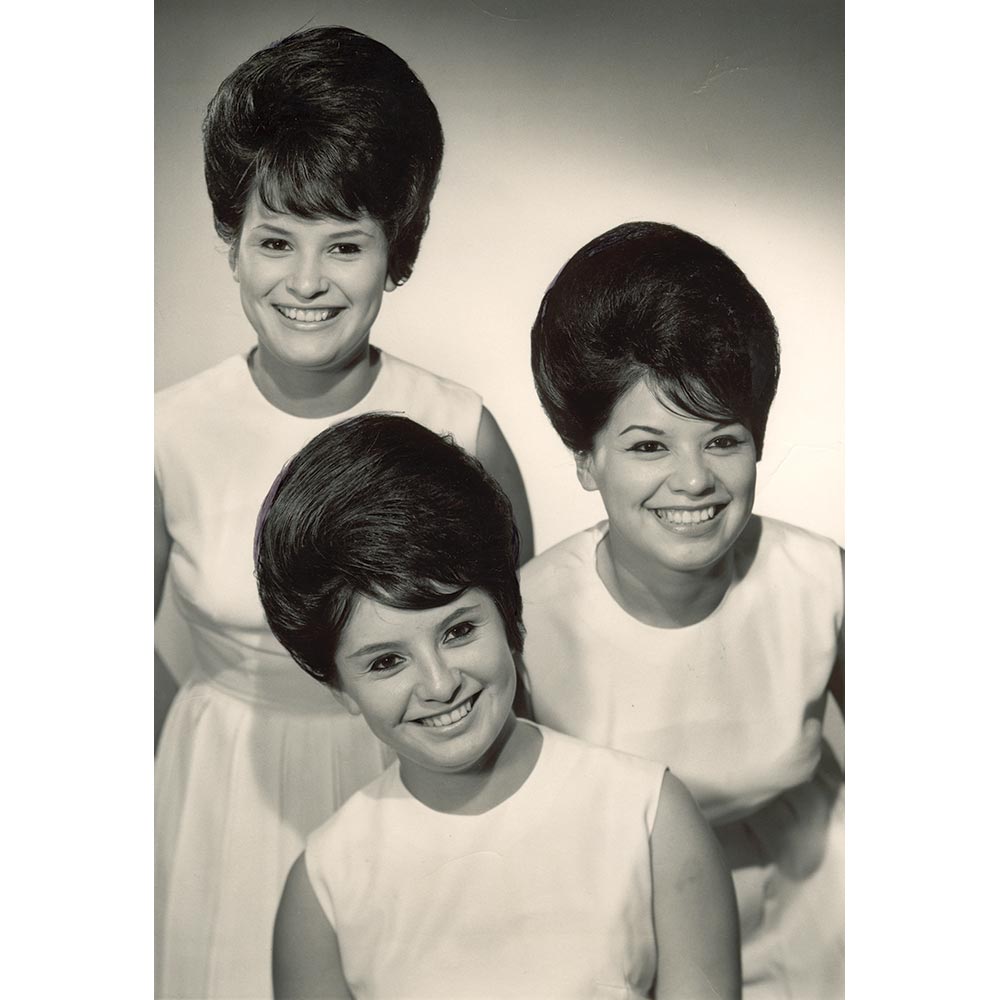
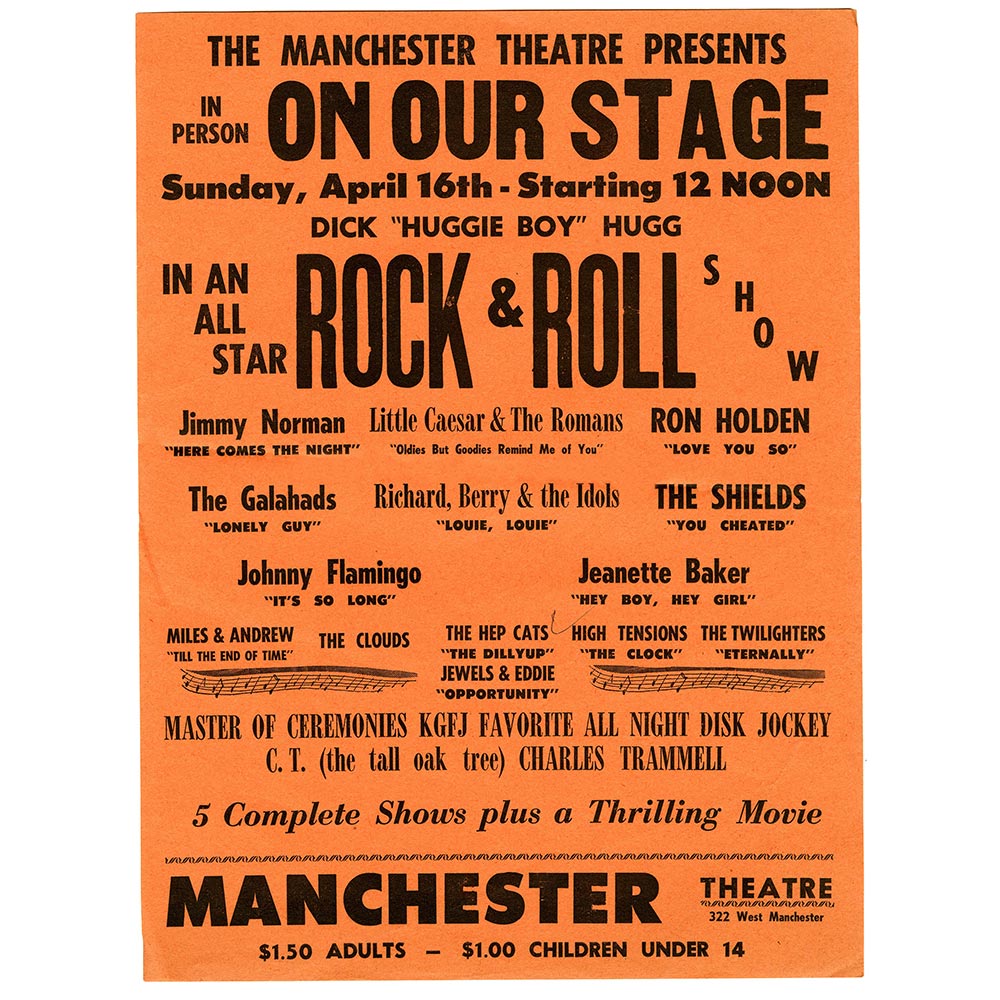
SECOND HELPINGS-SEQUELS TO THE SONGS THAT LEFT ‘EM HUNGRY FOR MORE.
SECOND HELPINGS-SEQUELS TO THE SONGS THAT LEFT ‘EM HUNGRY FOR MORE.
Nowadays, people take for granted sequels in the film industry. Most movie goers will remember the sequels to Star Wars, The Lord of the Rings: The Fellowship of the Ring and Harry Potter and the Philosopher’s Stone. However, who remembers the sequels to Carrie, The Birds, The Blair Witch Project, The Rocky Horror Picture Show, 2001: A Space Odyssey or The Sting? Creating these sequels was never going to be easy.
Many of the original films were classics. They were released to widespread critical acclaim and commercial success. Often, the sequel was an afterthought. Someone, somewhere, in Hollywood hit on the idea of a sequel to The Birds or The Sting. So, a script was commissioned, a multitalented case and a top director and producer hired. The film was shot, and then released in a blaze of publicity. Sadly, lightning didn’t strike twice. Neither the sequel to The Birds nor The Sting matched the commercial success and critical acclaim of the original film. However, it’s not just the film industry where sequels were popular.
Far from it. For a while, sequels were popular within the music industry. Often, after enjoying a hit single, someone within the record company hit upon the idea of a sequel. They decided that the sequel should tell the listener “what happened next.” So, sequels to Buddy Holly’s Peggy Sue, The Marvelettes’ Mr Postman, The Shirelles’ Soldier Boy, Paul Anka’s Diana and Booker T. and The MG’s Green Onions were released. They all feature on Second Helpings-Sequels To The Songs That Left ‘Em Hungry For More, which was recently released by Ace Records.
Second Helpings-Sequels To The Songs That Left ‘Em Hungry For More features twenty-four tracks. Some of the tracks will be familiar to most people. This includes Buddy Holly With The Fireballs, The Marvelettes, The Shirelles, Jan and Dean, Marty Robbins, Paul Anka and Booker T. and The MG’s. Then there’s contributions from Wanda Jackson, Jay and The Americans, Jimmy Dean, Claudine Clark, Robin Ward and Robin Ward. While many people will be familiar with many of these artists, they may not be aware of these sequels. So, now is the perfect opportunity to rediscover these tracks, as I choose the highlights from Second Helpings-Sequels To The Songs That Left ‘Em Hungry For More.
Opening Second Helpings-Sequels To The Songs That Left ‘Em Hungry For More, is Buddy Holly With The Fireballs’ followup to Peggy Sue, Peggy Sue Got Married. Buddy Holly had enjoyed a hit with Peggy Sue in 1957. Two years later, after Buddy’s death, his record company Coral released Peggy Sue Got Married. This version was never intended to be released as a single. It was merely a demo, or as Buddy saw it, work-in-progress. However, in 1964, the story takes a twist.
Producer, Jack Hansen decided to “beef up” Peggy Sue Got Married. He brought onboard backing musicians, while Jack added backing vocals. This was Jack’s way of trying replicate The Crickets. That wasn’t the end of the story,
Later in 1964, Buddy Holly’s original producer Norman Petty also decided to “beef up” Peggy Sue Got Married. He added backing vocals and brought onboard The Fireballs. They’re job was to try and replicate the sound of The Crickets. Their version featured on a posthumously released album released on Coral in 1966. Nearly fifty years later, and Buddy Holly With The Fireballs’ version of Peggy Sue Got Married features on Second Helpings-Sequels To The Songs That Left ‘Em Hungry For More; and shows just what the track might well have become, if Buddy Holly had lived.
It’s a case of from one great to another. George Jones was once regarded as “the greatest living country singer.” During his career, he bravely fought alcoholism. So, it’s somewhat ironic that in 1959, George enjoyed a number one country single with White Lightning, which celebrates moonshine. Three years later, George returned with the followup, Root Beer. It featured on George’s 1962 album for United Artists Records, The New Favourites Of George Jones. George literally vamps his way through the track, adopting the role of The Crown Prince Of Country Music, which was the title of his 1960 album.
Slim Harpo set the bar high when he released his debut single King Bee, in 1957. It was released on Excello, and became on oft-covered blues classic. Nine years later, and Slim released his sophomore album Baby Scratch My Back. One of the tracks on Baby Scratch My Back, was Little Queen Bee (Got A Brand New King). This was Slim’s long-awaited sequel to King Bee. Little Queen Bee (Got A Brand New King) doesn’t disappoint, and showcases the considerable talents of Slim Harpo, the former “Harmonica Slim.”
The Crests were formed in the mid-fifties, and in 1959, released their biggest hit was 16 Candles. It reached number two in the US Billboard 100 and number four in the US R&B charts, and in the process, sold over a million copies. For the next five years, they released a string of singles. Apart from a couple of top thirty singles, The Crests never came close to replicating the success of 16 Candles. So in 1964, The Crests decided to release the sequel to 16 Candles, You Blew Out The Candles. Sadly, despite the quality of this slice of soulful doo wop, it wasn’t a commercial success. You Blew Out The Candles failed to chart. That was the end of The Crests. What they didn’t realise that music had changed. Sadly, The Crests had stood still. Despite this, You Blew Out The Candles is a heartfelt, and soulful, reminder of another musical era.
Philly born, Claudine Clark’s biggest hit was Party Lights. It was released in 1962, on the Chancellor label. This just happened to be Claudine’s debut single. Party Lights shown brightly, reaching number five in 1962, and lending its name to Claudine’s debut album. After Claudine’s sophomore single Walkin’ Through A Cemetery failed commercially, it looked as if Claudine was destined to jon the ranks of the one hit wonders. So all thoughts turned to a sequel to Party Lights. Walk Me Home From The Party was released in 1963. Despite Claudine’s enthusiasm and joyousness, Walk Me Home From The Party wasn’t a commercial success. Claudine Clark proved to be a one-hit wonder, and reinvented herself as Joy Dawn.
Most people will remember Marcie Blane for her 1962 hit single, Bobby’s Girl. This was the Brooklyn born teenager’s debut single. It was released on Seville Records. The sequel to Bobby’s Girl was What Does A Girl Do, a Neil Diamond and Carl D’Errico composition. When it was released later in 1962, on Seville Records, history failed to repeat itself. Within three years, Marcie Blane had retired from the music industry. Her legacy includes her hit single, Bobby’s Girl, and the hidden gem that’s What Does A Girl Do.
Luther Dixon was partly responsible for rejuvenating The Shirelles’ career. He penned their first top twenty hit with Tonight’s The Night. That was just the start of a run of hit singles. Soldier Boy, which was released on Scepter Records, reached number one in 1962. Three years later, in 1965, and Luther Dixon was now running his own label Ludix. For The Shirelles, this presented a problem. Who would pen the followup to Soldier Boy?
The answer was Artie Wayne. He penned and produced (Mama) My Soldier Boy Is Coming Home. It was eleased on Scepter Records in 1965, and reached number twenty-two in the US Billboard 100. (Mama) My Soldier Boy Is Coming Home tells the story of the homecoming of a soldier. From the first ominous drum roll, it’s a captivating song. The Shirelles bring the lyrics to life, breathing emotion and meaning into them.
Before embarking upon a solo career, Robin Ward was a session singer. She released her debut single Wonderful Summer on Dot Records, in 1963. Later in 1963, Robin released the sequel to Wonderful Summer, Winter’s Here. It was penned and produced by Gil Garfield and Perry Botkin, Jr. Despite her tender, elegiac vocal on the wistful sounding Winter’s Here, the single failed to repeat the success of Wonderful Summer. This was the last solo single Robin released. The following year, 1964, Robin collaborated with The Rainbows on In His Car. That was the end of her career. Robin returned to session work, leaving behind two memorable singles.
Jan and Dean were giants of the surf and hot rod scene. They formed in 1959 and for the next seven years, released a string of hit singles. This included The Little Old Lady (From Pasadena), which was released on Liberty, in 1964. The sequel was The Anaheim, Azusa and Cucamonga Sewing Circle, Book Review And Timing Association. It featured on Jan and Dean’s 1964 album The Little Old Lady From Pasadena. Not only does it complete the story, but epitomises Jan and Dean’s trademark sound.
Johnny Burnette released Dreamin’ as a single in 1960. A year later, in 1961, Johnny returned with his I’m Still Dreaming E.P. It was released on London Records and featured a quartet of tracks. The highlight was the title-track I’m Still Dreaming, the sequel to Dreamin.’ It’s a beautiful and hopeful ballad from Johnny Burnette.
Little did Booker T. and The MG’s realise that when they released Green Onions in 1962, that the song would become a musical phenomenon. It’s become a standard of numerous compilations. So much so, that most people have had enough Green Onions. The sequel Mo’ Onions was released as a single in 1964. Since the, Mo’ Onions hasn’t suffered the same overexposure. Compilers have tended to overlook Mo’ Onions, and instead, reach for its big brother. That’s a great shame. Although Mo’ Onions has been heavily influenced by it’s big brother, it has a looser jazz-tinged track. Maybe that’s why I prefer Mo’ Onions?
Closing Second Helpings-Sequels To The Songs That Left ‘Em Hungry For More, is The Safaris Featuring Jimmy Stephens’ My Image Of A Girl (Is You). This was the sequel to The Safaris’ My Image Of A Girl. It was released in 1960, on Eldo Records and reached number six in the US Billboard 100. At last, The Safaris had their first hit single. This had been a long time coming. In the past few years, The Safaris had changed name changes several times, and flitted between labels. Surely, The Safaris would build on the success of My Image Of A Girl?
That wasn’t to be. The Safaris split-up shortly after the release of My Image Of A Girl. Twenty-nine years later, and doo wop was back “on trend.” So The Safaris got back together and released the sequel to My Image Of A Girl. This was My Image Of A Girl (Is You). It was released in 1989, on the Dee Jay label, and is a latter day reminder of the doo wop sound.
For record companies, coming up with a new concept for compilation isn’t easy. Nearly everything seems to have been tried. However, somehow, compiler Sam Szczepanski and Ace Records have managed to come up with something new and intriguing. That’s an album of sequels entitled Second Helpings-Sequels To The Songs That Left ‘Em Hungry For More, which was recently released by Ace Records.
Second Helpings-Sequels To The Songs That Left ‘Em Hungry For More showcases twenty-four sequels. Many of these, were sequels to well known tracks. This includes Buddy Holly’s Peggy Sue, The Marvelettes’ Mr Postman, The Shirelles’ Soldier Boy, Paul Anka’s Diana and Booker T. and The MG’s Green Onions were released. There’s also sequels from Slim Harpo, George Jones and Jan and Dean. However, other tracks aren’t so well known.
Claudine Clark, Marcie Blane, Robin Ward, The Crests and The Safaris never reached the same heights as Buddy Holly, The Marvelettes, The Shirelles, Paul Anka and Booker T. and The MG’s. However, they play their part in what’s a gloriously eclectic compilation. There’s everything from blues, country, doo wop, pop, R&B, rock, rock ’n’ roll and soul on Second Helpings-Sequels To The Songs That Left ‘Em Hungry For More. It tells the story of these twenty-four sequels, which are part of a truly eclectic and intriguing compilation, Second Helpings-Sequels To The Songs That Left ‘Em Hungry For More.
SECOND HELPINGS-SEQUELS TO THE SONGS THAT LEFT ‘EM HUNGRY FOR MORE.
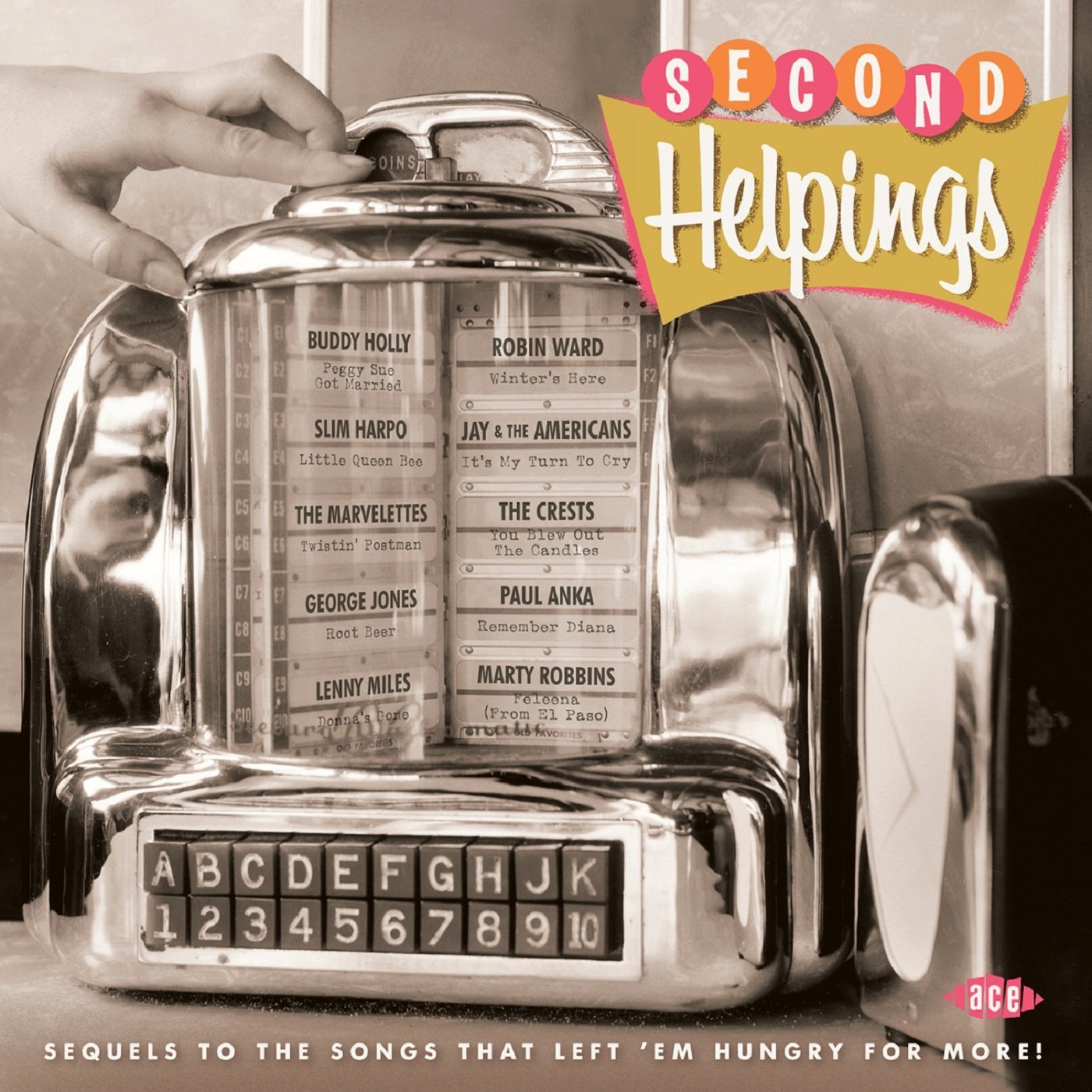


BOB MARLEY AND THE WAILERS-KAYA-VINYL EDITION.
BOB MARLEY AND THE WAILERS-KAYA-VINYL EDITION.
Back in 1978, when Bob Marley and The Wailers released Kaya, critics and fans accused Bob Marley of selling out. Kaya was a much more laid-back album, whereas previous albums had been politically charged and crammed full of social comment. Previously, Bob Marley was seen as Jamaica’s social conscience. He was someone who spoke on behalf of Jamaica’s oppressed. So when Kaya was released in 1978, critics and fans discovered a was a very different album. Unlike previous albums, Kaya didn’t feature militant and outspoken music filled with social comment. Instead, Kaya had a much more relaxed, laid-back and optimistic sound. Many of the songs were about love, while others were about marijuana. This resulted in the cries of sell-out from critics and fans. They accused Bob Marley and The Wailers of going soft, being more concerned with commercial success than political problems. Given the backlash Kaya faced upon its release in 1978, not many people would’ve forecasted that Kaya would become one of Bob Marley and The Wailers’ classic albums?
Thirty-seven years later, Kaya is indeed regarded as one of Bob Marley and The Wailers’ classic album. So, it’s fitting that a vinyl edition of Kaya will be issued by Commercial Marketing on 16th July 2015. Kaya was Bob Marley and The Wailers’ first studio album for nearly two years. It marked the next chapter in the Bob Marley and The Wailers’ story.
Ever since Bob Marley and The Wailers had signed to Chris Blackwell’s Island Records, their career had been transformed. Their first release for Island Records was their fifth album Catch A Fire. Released in April 1973, Catch A Fire proved more popular in Britain than America. It reached number 171 in the US Billboard 200 and number fifty-one in the US R&B Charts. Critically acclaimed upon its release, Catch A Fire was certified silver in the UK and is featured in Rolling Stone magazine’s list of 500 best albums of all times. Six months after the release of Catch A Fire, came the album that broke Bob Marley and The Wailers in the US.
Burnin’ wasn’t just the album that broke Bob Marley and The Wailers in the US, but was also the last album to feature Peter Tosh and Bunny Wailer. After the release of Burnin’ in October 1973, they embarked upon solo careers. At they did so, with a gold disc. On its release, Burnin’ reached number 151 in the US Billboard 200 and number forty-one in the US R&B Charts. This resulted in a gold disc in America, while it was certified silver in the UK. Featuring classics like Get Up, Stand Up and I Shot The Sheriff, Burnin’ marks the debut of the militant, confrontational Bob Marley. If Burnin’ marked the birth of a reggae revolutionary, Bob Marley picked up the baton on Natty Dread.
Natty Dread was released a year after Burnin,’ in October 1974. The wait was worthwhile though. Here was an album which featured Bob Marley at his militant and confrontational best. He was like a reggae revolutionary, protesting against injustice, on an album that’s politically charged and full of social comment. Featuring No Woman, No Cry and Them Belly Full (But We Hungry) Bob rails against poverty, while Rebel Music (3 O’Clock Roadblock) and Revolution are akin to a call to arms). On it release, Natty Dread was more popular in the UK than US. It was certified gold in the UK, but only reached number ninety-two in the US Billboard 200 and number forty-four in the US R&B Charts. Following three commercially successful and critically acclaimed albums, it would be another two years before Bob Marley and The Wailers released another studio album.
While Bob Marley and The Wailers didn’t release another studio album until 1976, they released their first live album. Released in December 1975, and simply entitled Live, this gave fans an opportunity to hear what Bob Marley and The Wailers live sounded like. Recorded on 18th and 19th July 1975, Live was a tantalising taste of one of the best live groups of the seventies. Fans and critics agreed, with Live reaching number ninety in the US Billboard 200. This resulted in Live being certified gold in the US and silver in the UK. Although Live and their three previous studio albums had been successful, their next album would surpass everything they’d previously released.
When Rastaman Vibration was released in April 1976, it became Bob Marley and The Wailers’ only album to enter the top ten in the US Billboard 200. Not only that, but Rastaman Vibration featured Bob Marley and The Wailers’ most successful single in the US. The was the Vincent Ford penned Roots, Rock, Reggae, which reached number fifty-one in the US Billboard 100. Rastaman Vibration reached number eight in the US Billboard 200 and number eleven in the US R&B Charts. Unlike previous albums, Rastaman Vibration featured synths alongside the Wailers famed rhythm section. This added a contrast to the power of rhythm section, and are part of Rastaman Vibration’s success. Good as Rastaman Vibration was, Bob Marley and The Wailers next album was a stonewall classic…Exodus.
After an attempted assassination on 3rd December 1976 in Jamaica, Bob Marley took up residence in London. Although he’d been shot in the chest, he’d been lucky. Things could’ve been much worse. So rather than record the remainder of Exodus in Jamaica, parts of it were recorded in London. When Exodus was released in June 1977, it was the album that transformed Bob Marley into a worldwide star. Side Two of Exodus is crammed full of quality music. Opening with Jamming, through Waiting In Vain, Turn Your Lights Down Low, Three Little Birds and closing with One Love/People Get Ready, this is one of the best sides of music ever. Quite simply, it’s peerless. If Side Two is peerless, Side One doesn’t disappoint with Natural Mystic, Heathen and Exodus. Critics referred to Exodus as a classic album and it features in Rolling Stone magazine’s list of 500 best albums of all times. Fans loved Exodus. It reached number twenty in the US Billboard 200 and fifteen in the US R&B Charts. This resulted in Live being certified gold in the US and UK. Having released a timeless classic album, Exodus, Bob Marley and The Wailers tried to repeat this feat with Kaya.
Much of Kaya had been recorded at the same time as Exodus. Two of the tracks, Kaya and The Sun Is Shining had featured on Bob Marley and The Wailers 1973 compilation African Herbsman, which was released on Trojan Records. When Kaya was released in March 1978, it reached number fifty in the US Billboard 200 and US R&B Charts, resulting in Kaya being certified gold in the US. Kaya reached number four in the UK, and was certified gold. While Kaya was a commercial success, it would face a backlash from critics and fans.
Rather that revolution, Kaya was an album that saw Bob Marley and The Wailers’ music evolve. Bob Marley wrote the ten tracks on Kaya with saw Jamaican and Western music combined. Kaya was a fusion of two musical cultures that Bob Marley embraced. This was similar to previous albums, going back to Burnin.’ Where things differed were with Kaya’s lyrics. Whereas previous albums were politically charged and filled with searing social comment, Kaya focused on a variety of themes, including love and marijuana. Indeed, the word “Kaya” is synonymous with marijuana in Jamaican culture. When critics heard the songs on Kaya, they accused Bob Marley and The Wailers of selling out. The music on Kaya was much more laid-back and relaxing. Soon, critics and fans accused Bob Marley and The Mailers of selling out. Was that the case though?
Not only did critics accuse Bob Marley and The Wailers of selling out on Kaya, but they accused him of penning a ten track love letter to marijuana. That’s unfair though. While much of Kaya was about love, and there were tracks about marijuana, there was much more to Kaya than that. Subjects like unity, togetherness, commonality and spirituality. SWhile the music lacked the militancy of previous albums, it had a much more laid-back, understated sound. Proof of this is the rhythmic delights of Satisfy My Soul. This showed another side to Bob Marley and The Wailers’ music, one that was captivating and appealed to a wide range of music fans. Like most Bob Marley and The Wailers’ albums, Kaya contained a couple of classics. These timeless classics, the hopeful and optimistic hopeful Easy Skanking and Is This Love. Showing another side to Kaya, was the broody, moody and thoughtful Running Away. Despite the lack of politically charged songs, there was still a spiritual side to Kaya. Similar to other albums, Bob continues to seeks help and guidance from Jah. So Kaya was much more than a ten-track love letter to marijuana. Instead, there was much more to Kaya. It touched on several themes, and in the process, demonstrated another side to Bob Marley and The Wailers’ music.
Critics and fans accused Bob Marley and The Wailers of selling out when Kaya was released. This wasn’t the case. Instead, Kaya saw Bob Marley and The Wailers music evolving. Kaya was a much more subtle album, both in its content and style of music. With themes ranging from love, marijuana, unity, togetherness and spirituality, Kaya was a much more complex album than people realized. Originally, Kaya’s accusers had said it was no more than a love letter to marijuana. How wrong they were. The ten tracks on Kaya contained intelligent, thoughtful, introspective and beautiful music. These tracks demonstrated that Bob Marley and The Wailers were a versatile band, determined not to continue releasing albums of similar music. Instead, they wanted their music to be constantly evolving. This meant their music neither risked becoming stale nor predictable.
While not as overtly militant as previous albums, Kaya’s ten tracks were all written by Bob Marley. Unlike Exodus, which featured numerous songwriters, Kaya was all Bob Marley’s own work. It offered an insight to an intelligent, complex and spiritual man. Having gained a reputation as Jamaica’s social conscience, Bob Marley’s demonstrated another side to his songwriting skills. Love songs sat side-by-side with pleas to unity, paeans to marijuana and songs about spirituality. While Kaya wasn’t immediately hailed a classic, in the intervening thirty-seven years, critics have performed a volte face.
Now Kaya thirty-seven years after critics cried sell-out, Kaya is perceived as one of Bob Marley and The Wailers classic albums. While many albums are referred to as classics, Bob Marley and The Wailers’ Kaya truly is a classic. Kaya deserves to be spoken about in the same breath as Burnin,’ Natty Dread and Exodus. Quite simply, Kaya is hugely important and potent album which feature some intelligent, thoughtful, introspective and beautiful music.
BOB MARLEY AND THE WAILERS-KAYA–VINYL EDITION.
PIED PIPER FOLLOW YOUR SOUL.
PIED PIPER FOLLOW YOUR SOUL.
In the history of soul, production partnerships have been responsible for some of the most successful music. That was the case throughout the sixties, and into the seventies. Stax Records had Isaac Hayes and David Porter, Motown had Holland, Dozier, Holland and Philadelphia International Records had Gamble and Huff. These were three of the most successful production teams in the history of soul music. However, across America, other production teams were hard at work. This included the Detroit based Pied Piper Productions. Their music is celebrated on the recently released compilation Pied Piper Follow Your Soul, which was recently released by Kent Soul, an imprint of Ace Records.
Pied Piper was founded in 1965 by Sheldon “Shelley” Haines, a music industry veteran. His first job in the music industry, was as a distributor for King Records. This was the late-forties. By, 1952, Sheldon and Jack Gale, a local DJ, formed the short-lived Triple A record label. It lasted a mere five released. After that, Sheldon became interested in Detroit’s emerging R&B scene.
Soon Sheldon was a familiar face on the Detroit R&B scene. By 1954, Sheldon and songwriter Perry Stevens found themselves working with doo wop group The Spartans, for the Capri label. A year later, Sheldon and Irving Lief formed a production partnership and several record labels. This included labels like Pix, Plaid, Sterling and Studio. Groups and artists like The Coronets, Cool Papa Jarvis and The Jet Tones. The pair also recorded The Womack Brothers, who later, became The Valentinos. Sheldon and Irving’s partnership lasted until 1960, where they recorded artists at their own studio. It wasn’t just artists signed to their own labels, but artists signed to RCA’s Groove imprint. This was a sign of how well thought of the production partnership were. Despite this, Sheldon returned to becoming a distributor in 1961.
For the next four years Sheldon was happy worked as a distributor. Occasionally, he produced artists, and in 1965, made his comeback. Ed Wingate hired Sheldon as Vice President and General Manager of Ric-Tic, Golden World and Wingate record labels. His remit was overseeing marketing, promotion and product control. For his new business venture, Sheldon called the company Pied Piper Productions. The first two single produced by Pied Piper Productions were releases by Bob Santa Marie and Frank Meadow and The Meadowlarks. While they were neither successful nor groundbreaking releases, once Sheldon put together his production team, success wouldn’t be far away.
The two men who masterminded Pied Piper Productions were Jack Ashford and Mike Terry. Jack Ashford had studied music at college. He was a vibes player and a familiar face in Philly’s jazz scene. When he was asked to become a member of Marvin Gaye’s touring band, Jack went from jazz musician to Funk Brother.
Through meeting the Motown musicians, Jack decided to base himself in Detroit. Soon, he became part of Motown’s legendary studio band, The Funk Brothers. Jack’s trademark tambourine sound became a staple of Motown recordings. However, Jack was more than a tambourine player. He studied arrangers, engineers and producer and soon, was able to learn from them. Jack was also a talented songwriter. Essentially, Jack Ashford was a musical all-rounder, which made him perfect for Pied Piper Productions. His partner would be Mike Terry.
Mike Terry played baritone saxophone first in Popcorn Wylie’s Mohawks, then with Joe Hunter’s band. Like many musicians, he gravitated to Motown, which is the sixties, was one of the most successful labels. He was part of the touring and studio bands, and his trademark sound features on numerous Motown recordings. Despite being on Motown’s payroll, Mike, like other musicians, including Jack Ashford, felt the fees they were paid weren’t enough. So the pair left Motown.
Having left Motown, Jack and Mike briefly worked for Ed Wingate’s Golden World label. Mike with George Clinton and Sidney Barnes, formed the Geo-Si-Mik songwriting and production partnership. At the same time, Jack and Mike formed a songwriting and production partnership. One of their songs, Lonely One, for The San Reno Strings album on Ric-Tic came to the attention of Sheldon “Shelley” Haines. He realised this was a partnership to watch.
He was right. Jack and Mike head to Jack’s hometown Philly, to produce I Can’t Change for The Sensations with Yvonne Baker. This was their first production, which was released on the Junior label. Later in 1965, the pair produced Joe Douglas for the Playhouse label. With Bobby Martin penning the B-Side, this was a single that was made has Philly. Ironically, it wasn’t in Philly Jack made his name as a producer. No. It was in Detroit, where Jack Ashford and Mike Terry masterminded Pied Piper Productions. Twenty-four of these productions feature on Pied Piper Follow Your Soul.
The twenty-four tracks that feature on Pied Piper Follow Your Soul. All the tracks were recorded between 1965 and 1967. However, only fifteen were released during this period. This includes tracks from Sharon Scott, The Cavaliers, The Dynamics, Harry Hester, Mikki Farrow, The Metros, Sam E. Solo and Freddy Butler. Then there’s nine previously unreleased tracks from September Jones, The Pied Piper Players, Nancy Wilcox and Lorraine Chandler. Previously, these tracks have lain in record company vaults. Not any more. Belatedly, they make a welcome debut on Pied Piper Follow Your Soul, which I’ll pick the highlights of.
Opening Pied Piper Follow Your Soul, the first of three tracks from September Jones. She enjoyed a hit with I’m Coming Home in 1966. This Pied Piper Production was released on Kapp. On the B-Side was No More Love, Jack Ashford and Mike Terry composition. It’s a beautiful tender ballad. Very different is the moody and atmospheric Voo Doo Madamoiselle. It wasn’t released until 2014, when it was released as a single on Ace Records’ Pied Piper imprint. September’s other contribution is You Had Better Know Why. It’s a real find, and featured on the flip side of a single released by Kent Records in 2014. It too, is a showcase for a talented and elusive September Jones.
Many people won’t have heard of Nancy Wilcox. Her only single was 1967s Coming On Strong. However, two of Nancy’s unreleased recordings feature on Pied Piper Follow Your Soul. He’ll Be Leaving You, which was penned by Jack Ashford, Mike Terry and Lorraine Chandler, is bound to appeal to the Northern Soul crowd. More Than A Memory is a Jack Ashford and Randy Scott composition. It’s the perfect showcase for Nancy Wilcox, one of soul’s forgotten names.
Sharon Scott released Could It Be You in 1966. It was penned by Jack Ashford and Joseph Hunter. Herbie Williams arranged and conducted Could It Be You, which was released on RCA Victor. Could It Be You proved to be Sharon Scott’s only single. However, if Sharon was only going to release one single, make it one as soulful as Could It Be You.
The Cavaliers are another group who feature on Pied Piper Follow Your Soul. Their first contribution is a previously unreleased version of Ooh It Hurts Me. Again, it’s bound to appeal to the Northern Soul crowd. So will Without Someone To Tell Me. This is another unreleased track. Given its quality, one can’t help wonder why a record label weren’t willing to take a chance on Without Someone To Tell Me?
From the opening bars, of The Dynamics’ I Need Your Love, it’s obvious that one of the highlights of Pied Piper Follow Your Soul is unfolding. Soon, it becomes apparent that hooks haven’t been spared on this irresistible dancer. It was arranged and conducted by Joe Williams. Need Your Love was released on RCA Victor, in 1967. Since then it’s been guaranteed to fill dance-floors.
The tempo drops on Harry Gates’ hopeful ballad Love Will Find A Way. It’s another of the unreleased tracks. This is a real hidden gem that was penned by Tony Hester. Belatedly, it’s being heard by a wider audience.
Two tracks from Freddy Butler’s 1967 debut album With A Dab Of Soul feature on Pied Piper Follow Your Soul. The first is They Say I’m Afraid (Of Losing You). It’s a soul-baring ballad full of emotion. Give Me Lots Of Lovin’ is a much more uptempo track. This allows Freddy to cut loose, and deliver an impressive vocal powerhouse.
Lorraine Chandler wasn’t just a singer, she was also a talented songwriter. Ironically, she didn’t write Lost Without You. It’s another of the unreleased tracks. Here, Lorraine brings the lyrics to life, as she delivers a needy, pleading vocal. What Can I Do, which Lorraine cowrote, is her debut single. It was released on Giant Records in 1966. Dance-floor friendly and truly irresistible, it’s like a call to dance.
The Hesitations were based in Cleveland, Ohio. They drop the tempo on Wait A Minute. It’s a Jack Ashford, Lorraine Chandler, Joseph Hunter and Randy Scott composition. Wait A Minute was the B-Side of The Hesitations’ 1967 single Soul Kind Of Love. Very different is That’s What Love Is. Just like Wait A Minute, this stomper featured on The Hesitations’ 1967 debut album Soul Superman. These two tracks show two sides of The Hesitations.
On the 18th July The Pied Piper Players went into the studio, and recorded Hold To My Baby. It’s a driving instrumental, replete with braying horns and surf-tinged guitar. Four days later, and The Pied Piper Players returned to the studio. This time, they recorded another instrumental Love Sick. After that, it was a case of waiting. They’ve been waiting a long time. Neither track was ever released, until now. These two instrumentals make a welcome and overdue debut on Pied Piper Follow Your Soul.
The final tracks I’ve chosen from Pied Piper Follow Your Soul, come courtesy of The Metros. It’s Now was recorded in 1967, and released in 1969. Originally, the track was credited to Joe Buckman and released on Sepia Records 3. Now, a wrong has been righted, and The Metros receive the credit for this mellow, and hopeful slice of soul. You Don’t Know Me Do You has a tougher, harder sound. As The Metros vamp their way through You Don’t Know Me Do You, it’s hard to believe it’s the same group. The Metros weren’t for standing still, and were reinventing themselves. However, You Don’t Know Me Do You was never released, and lay in the Pied Piper vaults until now, when we can hear another side to The Metros.
Two years ago, Kent Soul, a subsidiary of Ace Records released Pied Piper Presents A New Concept In Detroit Soul. It was one of the most eagerly anticipated compilations of 2013. Soul fans weren’t disappointing. Pied Piper Presents A New Concept In Detroit Soul made its way onto many end of year lists. Since then, soul fans have been wondering if, and when a followup to Pied Piper Presents A New Concept In Detroit Soul would be released. Recently, Kent Soul announced the release of Pied Piper Follow Your Soul.
Compiler Ady Croasdell returned to the Pied Piper vaults, and chosen twenty-four tracks for Pied Piper Follow Your Soul. They’re a mixture of classics, old favourites and hidden gems. Fifteen tracks have been released before. This includes contributions from Sharon Scott, The Cavaliers, The Dynamics, Harry Hester, Mikki Farrow, The Metros, The Dynamics and Freddy Butler. The other nine, make their debut on Pied Piper Follow Your Soul. This includes some soulful delights from September Jones, The Pied Piper Players, Nancy Wilcox and Lorraine Chandler. Ady Croasdell’s exquisite taste and encyclopaedic knowledge of all things soulful, shines through.
For the umpteenth time, Ady has compiled an uber soulful compilation. Whether your preference is for ballads or dance tracks, there’s plenty of both on Pied Piper Follow Your Soul. What there’s not, is filler. Instead, Pied Piper Follow Your Soul is crammed full of top quality, soulful music. This makes Pied Piper Follow Your Soul the perfect followup and companion to Pied Piper Presents A New Concept In Detroit Soul. These two compilations are the perfect introduction to the soulful delights of the Pied Piper production partnership.
PIED PIPER FOLLOW YOUR SOUL.
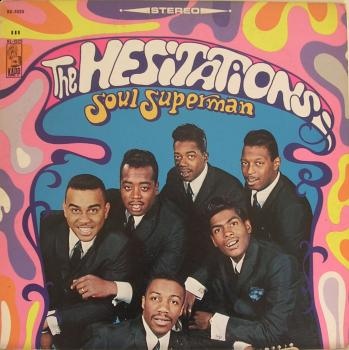
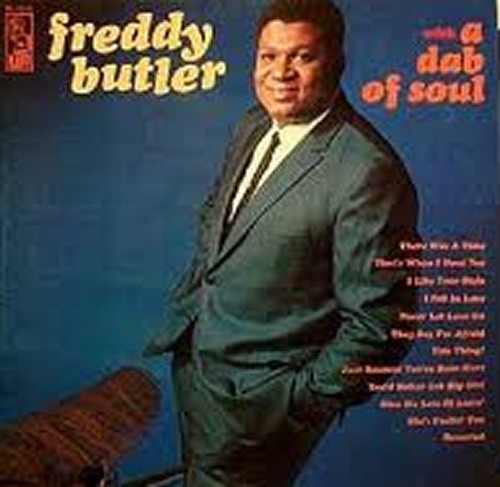
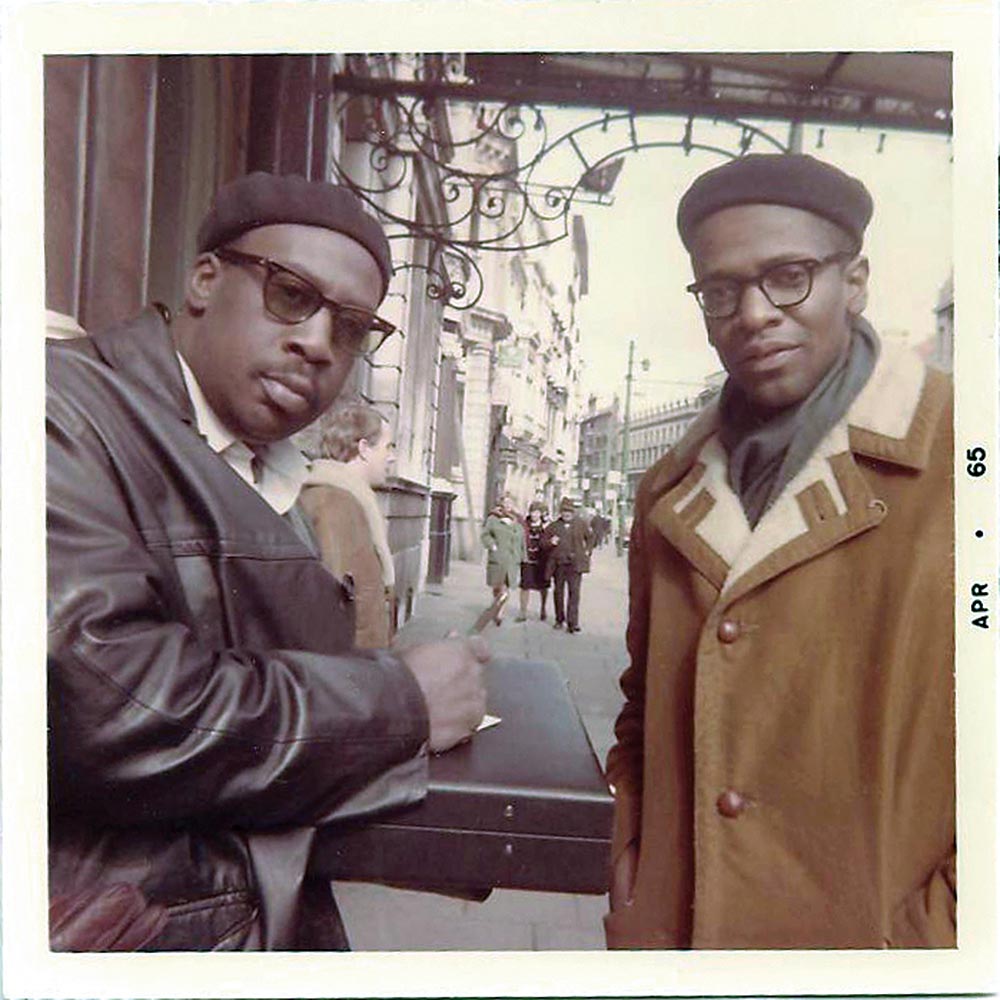
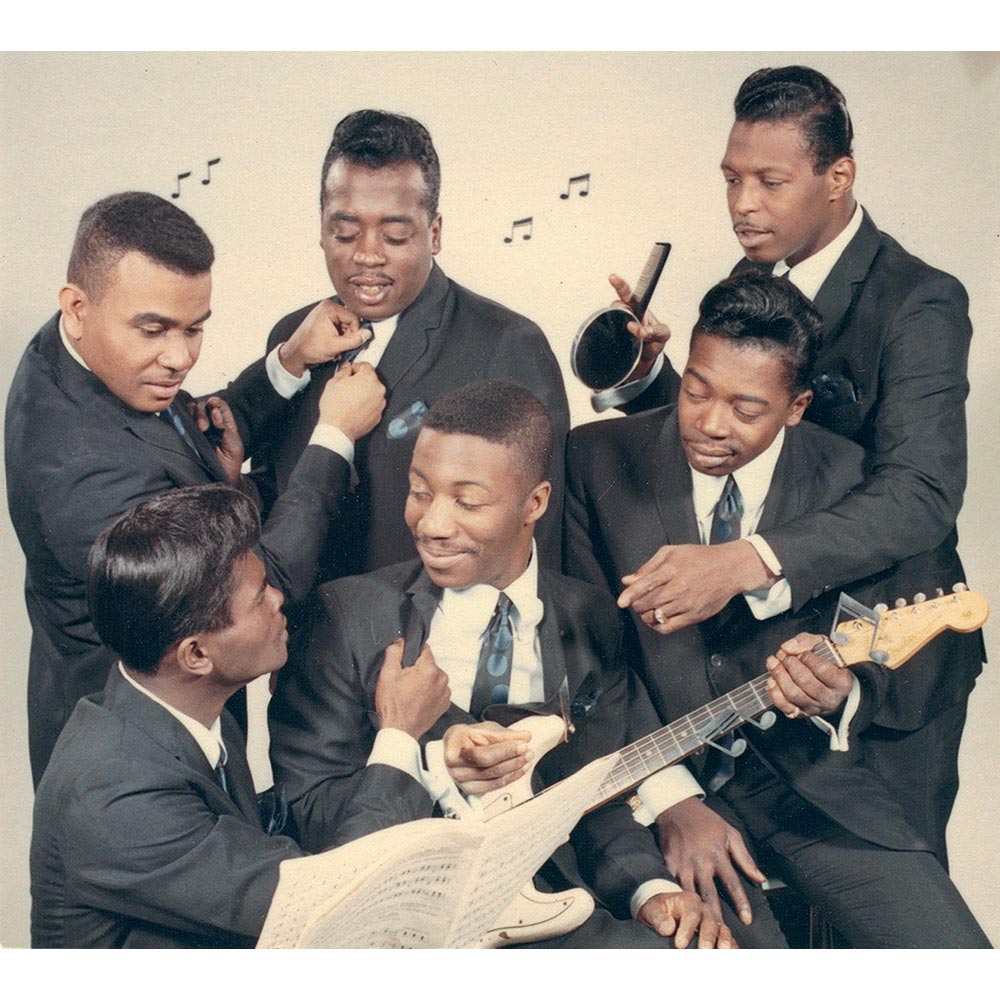
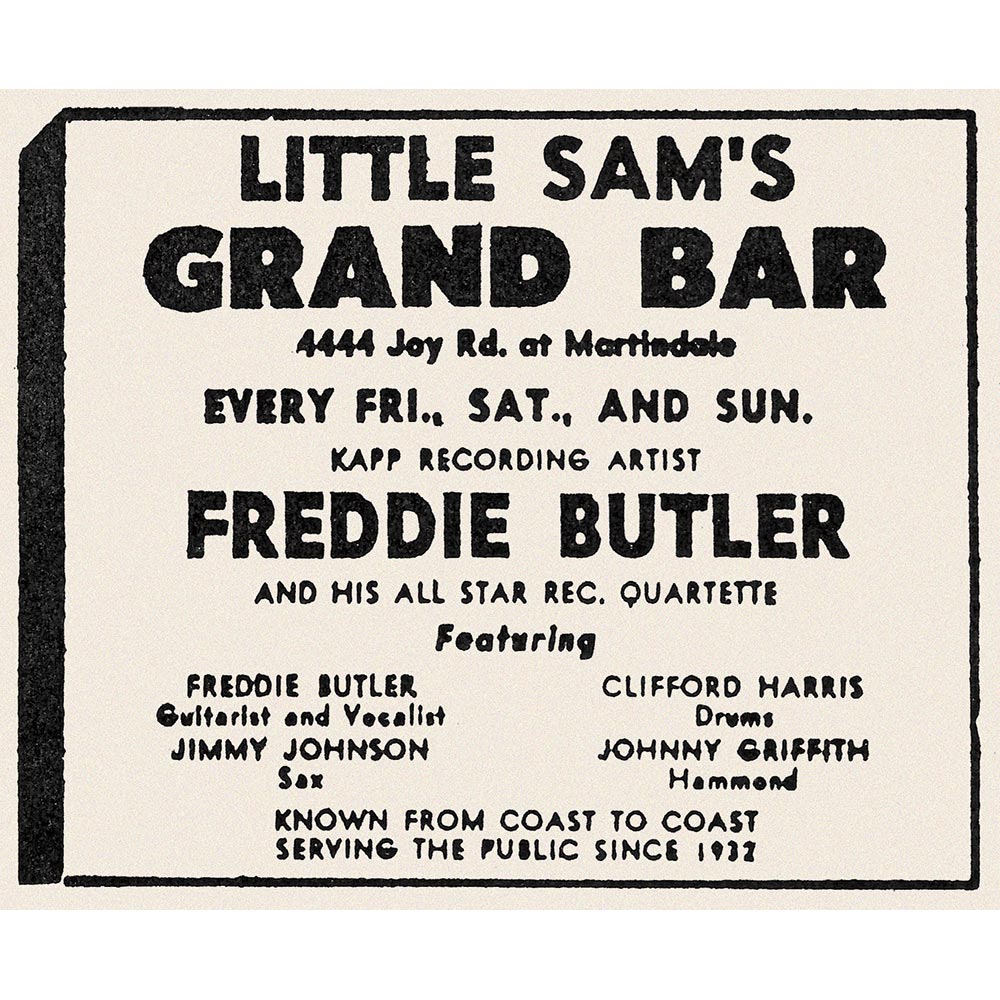
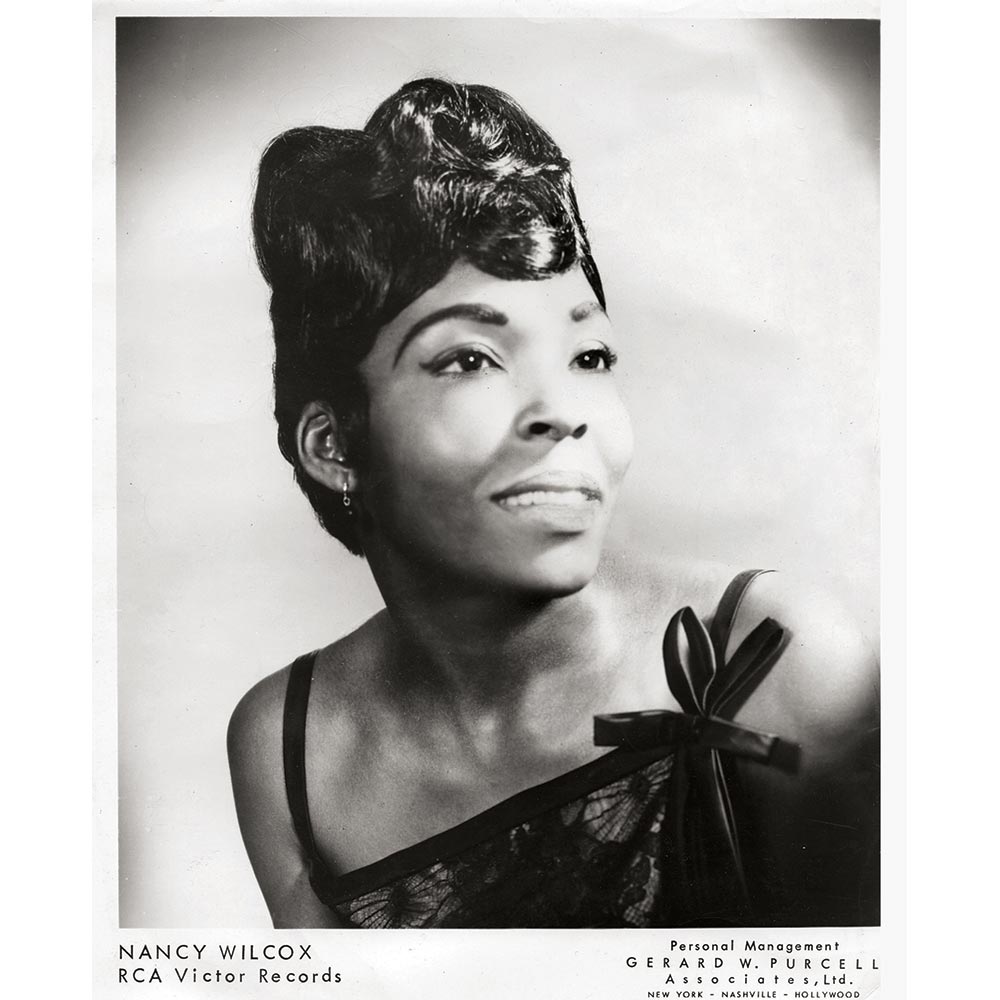
 dereksmusicblog
