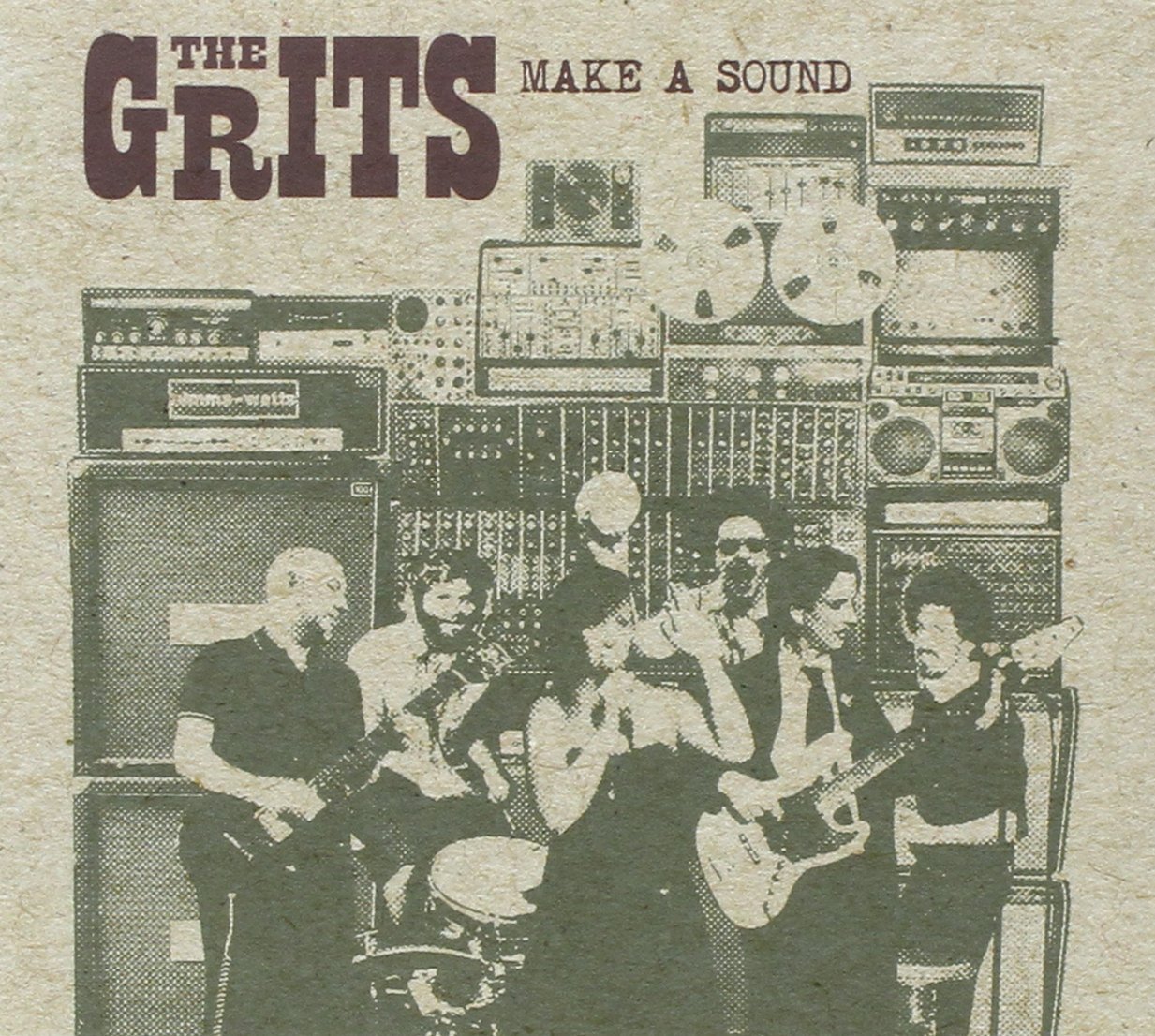
THE GRITS-MAKE A SOUND.
THE GRITS-MAKE A SOUND.
Five long years have passed since The Grits released their debut eponymous debut album. Recently, however, The Grits have released their long awaited sophomore album, Make A Sound. It essentially, is The Grits’ comeback album. As comeback albums go, Make A Sound which was recently released on BBE Music, is like no other.
After all, how many bands fuse quintessential English psychedelia with deep fried funk and soul? The Grits do. What’s more, The Grits do it their way. That’s with style and aplomb. However, who I hear you ask are The Grits?
The Grits are based in Brighton, on the South Coast of England. They’re led by multi-instrumentalist Stuart Carter. He plays everything from guitar to sitar, keyboards, synths, flute, sitar and violin. Joining Stuart are bassist James Porch, drummer Johnny Machin, percussionist Alex and vocalist Sophie. Together, The Grits have been winning friends and influencing people with their sophomore album Make A Sound, which I’ll tell you about.
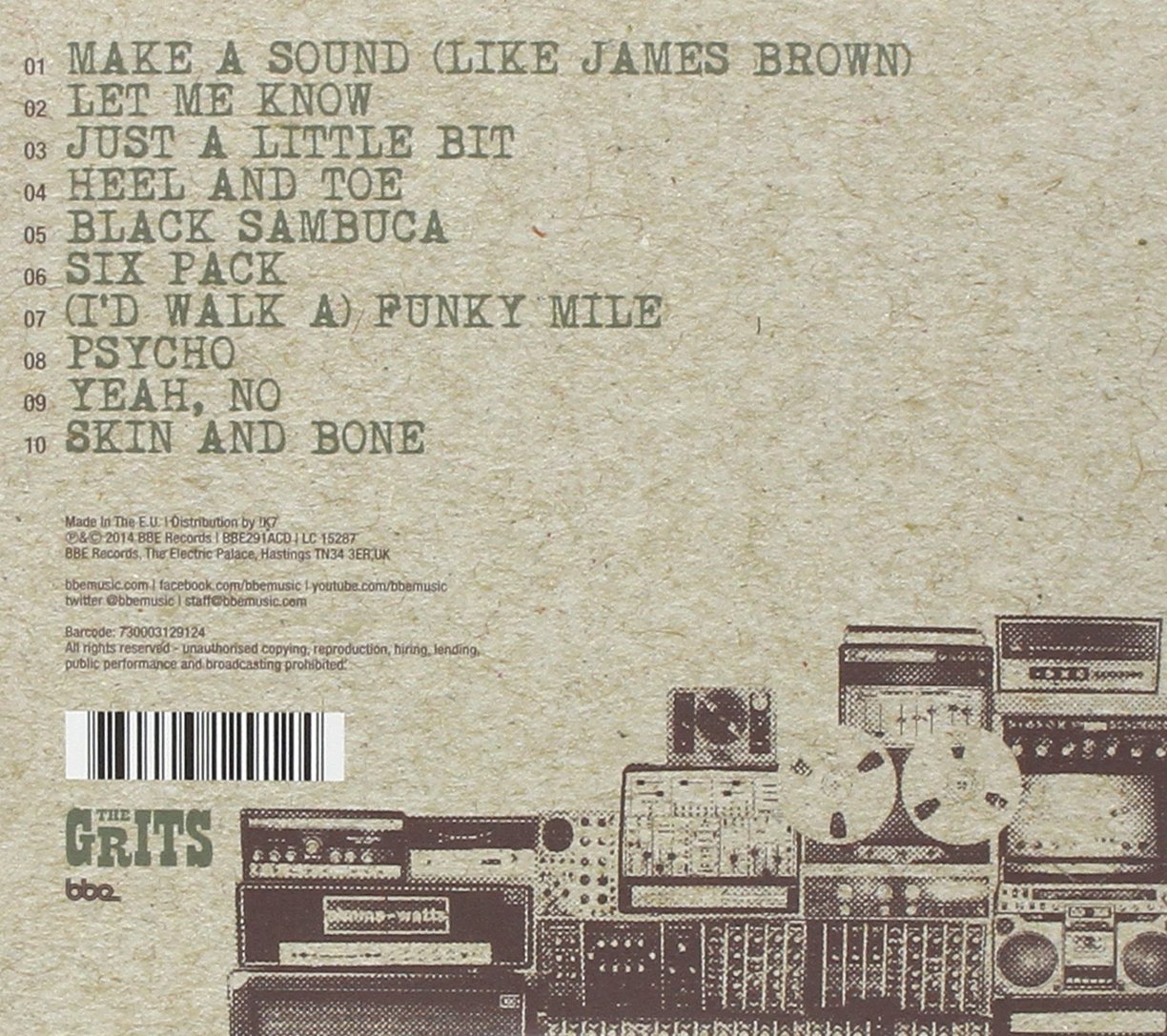
Given The Grits’ love of funk, it’s no surprise they namecheck the self-styled Godfather of Funk on the opening track Make A Sound (Like James Brown). Straight away, the drums have a raw funky sound. Soon, the rest of the rhythm section enter. A guitar chimes hypnotically, before stabs of growling horns and sci-fi synths soar above the arrangement. There they join Sophie’s vocal. Just like the ‘Godfather’ her vocal veers between soulful and vampish. She hollers and whoops her way through the arrangement. She’s joined by percussion, a Hammond organ, blazing horns and pounding drums. Together, they pay homage to James Brown, albeit with a sci-fi twist.
Johnny Machin’s drums power the arrangement to Let Me Know along. Guitars reverberate, while Sophie draws inspiration from early sixties girl groups. She sings call and response. Not only does she deliver a powerhouse of a lead vocal, but adds harmonies. Later, as echo is added, a buzzing synth is added. So is a searing guitar and a myriad of percussion. This adds to the urgency, as The Grits continue to reinvent sixties music.
Just A Little Bit is funk, but not as we know it. A futuristic synth sets the scene for Sophie’s vocal and the funky rhythm section. They’re joined by handclaps, percussion and bursts of a chiming guitar. Before long, musical genres melt into one. Electronica, funk, Latin and reggae are combined, as Sophie delivers a sultry vocal.
Heel And Toe sounds like an early sixties dance craze. It’s not. Instead, it sees The Grits return to a much more traditional funky sound. The Grits rhythm section get into a funky groove. They’re joined by percussion and a a swaggering, vampish vocal. Meanwhile, Sophie adds backing vocal and horns blaze. Later, the addition of a synth sees the track stray from its traditional funky sound. Despite this, it’s an uber funky, groove delicious track.
Black Sambuca has a slow, moody sound. That’s down to The Grits’ rhythm section. Along with percussion, they’re responsible for the Eastern cinematic sound. Then later, sci-fi synths add a futuristic twist. Later, the synths become squelchy. As this happens, the Eastern cinematic sound becomes much more predominant, resulting in The Grits writing the soundtrack to a film that’s yet to be made.
Dark. That describes the opening bars to Six Pack. They come courtesy of the piano, handclaps, rhythm section and keyboards. Then when Sophie’s vocal enters, it has a sixties influence. Again, she sings call and response. Not only does she she deliver the lead vocal, but adds backing vocals. Her vocal grows in power and urgency, giving way to a blistering guitar solo from Stuart Carter. Later, the track takes a dramatic, psychedelic twist. This seems to reinforce the track’s sixties influence, which Sophie’s vocal plays an important part in.
(I’d Walk A) Funky Mile sees The Grits’ rhythm section and a jangly piano join a stabs of a chiming guitar. They drive the arrangement along. Especially, the uber funky bass. Sharp, stabs of grizzled horns escape from the arrangement. Atop it sits Sophie’s sassy vocal. It has a real sixties influence. Later, a blistering guitar is unleashed. Just like Sophie’s vocal, it plays a starring roles as The Grits Walk A Funky Mile.
Music’s past and present unites on Psycho. The rhythm section join synths that veer between dark, moody and futuristic, with a sci-fi sound. Amidst this fusion of traditional instruments and technology, sits Sophie’s tormented vocal. Later, its drenched in reverb, adding to the drama, as The Grits combine music’s past and present.
From the get-go, Yeah, No sounds like a homage to James Brown. That’s down to the rhythm section and hypnotic, chiming guitars, They’re augmented by percussion and Sophie’s despairing, defiant vocal. Synths and strings add a cinematic sound. This results in what’s best described as cinematic funk with a soulful side.
Skin and Bone closes Make A Sound. Searing guitars, the rhythm section and synths joint with blazing horns. Soon, The Grits kick loose. A scorching guitar solo is unleashed. Meanwhile, a myriad of left-field sounds flit in and out of the arrangement. Later, a Hammond organ, discordant synths and braying horns join a raucous, singalong vocal. The finishing touch are a blistering guitar solo and stabs of grizzled horns. Not only are they the icing on this musical cake, but the cherry too.
It’s been five years since The Grits released their eponymous debut album. However, it’s always risky leaving five years between a debut and sophomore album. After all, the people who bought their debut album may have forgotten about The Grits. So to some extent, Make A Sound is a new start for the Brighton based band.
They made a funky, soulful and psychedelic return recently with Make A Sound, which was recently released on BBE Music. Make A Sound is a return to form from The Grits. They fused their own quintessential brand of English psychedelia with deep fried funk and soul. This compelling combination of musical genres, should see The Grits continue to win friends and influence people.
After all, The Grits music is funky, psychedelic and soulful. On some of the tracks, The Grits incorporate electronica and a myriad of sci-fi sounds. The result is music that’s futuristic and trippy. That’s not all. There’s a cinematic sound to Black Sambuca and Yeah, No, which is best described as cinematic funk. Indeed, so good is Yeah, No that’s I’d described Yeah, No as The Grits’ finest moment on Make A Sound. Having said that, there’s more to Make A Sound than one track.
There’s a total of ten tracks on Make A Sound, The Grits magic musical mystery tour through funk, soul, psychedelia, electronica and rock. During these ten tracks, The Grits showcase just how tight, talented and versatile a band they are. Seamlessly, The Grits fuse and flit between musical genres. The result is Make A Sound, a captivating album of funky, soulful, psychedelic music from the Brighton quintet, The Grits
THE GRITS-MAKE A SOUND
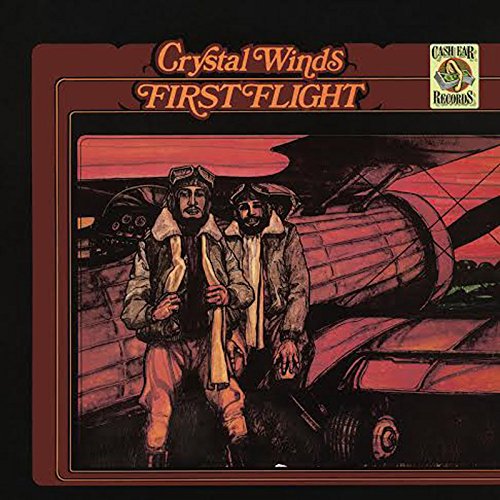
CRYSTAL WINGS-FIRST FLIGHT.
CRYSTAL WINGS-FIRST FLIGHT.
For many people, their introduction to the music of Crystal Wings was on BBE Music’s 2011 compilation, The Real Sound Of Chicago and Beyond: Underground Disco and Boogie. It featured It Ain’t Easy, a track from Crystal Wings one and only album, First Flight, which was a private pressing released back in 1982, on Chicago’s Cash Ear label. First Flight which was recently released by BBE Music, would belatedly become a cult classic.
The story behind Crystal Wings began in 1981. That’s when Crystal Wings released their debut single, Signs Of Winter’s Time. This was a Paul Coleman and Joyce Alicia Lagrone composition. It was recorded at Chicago’s Streeterville Recording Studio. Producing Signs Of Winter’s Time was Paul Gibson, Cash Ear Records’ in-house producer and artistic coordinator for modern soul productions. On Signs Of Winter’s Time’s release, its jazz-tinged beauty showcased a talented band who looked as if they had a bright future ahead of them.
Sadly, however, Signs Of Winter’s Time wasn’t a commercial success. Although it was popular within Chi-Town, that was as good as it got for Crystal Winds. However, it was obvious that Crystal Winds had potential. No wonder. Their lineup featured some experienced musicians.
The driving forces behind Crystal Winds were Paul Coleman and M.C. (Morris) Brown. Along with Crystal Winds’ drummer Frank Donaldson, they had been members of Rasputin’s Stash. They released two albums during the early-‘70s. Their debut album was 1971s Rasputin’s Stash, which was released on Cotillion, a subsidiary label of Atlantic Records. Three years later, in 1974, Devil Made Me Do It was released on Gemigo Records. Apart from their 1977 single Dance With Me, which was released on Curtis Mayfield’s Curton Records, that was the end of the Rasputin’s Stash story.
Four years later, in 1981, Paul Coleman, M.C. (Morris) Brown and Frank Donaldson had reinvented themselves as Crystal Wings. Having released their debut single Signs Of Winter’s Time, Crystal Wings pressed ahead with their debut album First Flight.
That’s not surprising. First Flight were perceived as a group with potential. So they began work on what would become First Flight. They already had recorded Signs Of Winter’s Time as a single. An instrumental version featured on the B-Side. Both tracks were Paul Coleman and Joyce Alicia Lagrone compositions. They also cowrote So Sad with Paul Coleman. He and M.C. (Morris) Brown contributed Love Ain’t Easy, Love Ain’t Easy II, It’s A Wonderous ThingRasputin’s Stash and Funk Ain’t Easy. The other track was Lovers Holiday, which Paul Coleman and M. Dunman Jr. wrote. These eight tracks became First Flight, which was recorded at Chicago’s Streeterville Recording Studio.
At Streeterville Recording Studio, Crystal Wings’s extensive lineup began recording the six new tracks. The rhythm section included drummers Wayne Stewart and E. Frank Donaldson, bassists Jimmy Allen and Tony Brown and guitarists Martin Dumas Jr, Henry Johnson and Baitsche. They were joined by Paul Coleman on congas, keyboards and percussion, while M. Cortez Brown played saxophone and percussion. Jimmy Dolan Jr. added orchestral bells and Frank Donaldson and Pennington McGhee congas. Lead vocals came courtesy Paul Coleman, M. Cortez Brown and Theresa Davis. Backing vocals were added by Paul Coleman, M. Cortez Brown, Martin Dumas Jr, Theresa Davis and Sherry Scott. Producing First Flight were Paul Coleman and M. Cortez Brown. Once the six new tracks were recorded, it was released in 1982.
On its release, First Flight passed American record buyers by. Not however, in Britain. Somehow, copies of First Flight found their way across the Atlantic. Straight away, it became a firm favourite amongst the British jazz-funk scene. To some extent, Cash Ear Records’ decision to release Crystal Wings debut album First Flight had been vindicated. First Flight, which I’ll tell you about, was well on its way to becoming a cult classic.
From the opening bars of Sad, which opens First Flight, it’s apparent that Crystal Wings’ music is very different from Rasputin’s Stash. Gone is the brash funk. Replacing it is a smooth, soulful, jazz-tinged sound. As the rhythm section create a slow, sultry heartbeat, seductive voice overlays sit atop the arrangement. They’re joined by Paul Coleman and M. Cortez Brown’s heartfelt, soulful vocal. Meanwhile, a slap bass, lush sweeping strings and harmonies flit in and out of the arrangement. It’s best described as a smooth, soulful, jazz-tinged, heartfelt paean.
Love Ain’t Easy is a two part track. Straight away, Crystal Wings’ rhythm section take the track in the direction of funk. This is early eighties funk. That’s down to the type of drums used. They’ve a slightly synthetic sound. That’s an observation, not a criticism. It was a sound of the time. Guitars chime, the bass is funky and a jazzy keyboard is joined by stabs of blazing horns. Atop the arrangement, voice overlays give way to Paul Coleman and M. Cortez Brown’s vocals and the track veers between soulful, funky and jazzy. Irresistible and hook-laden describes Love Ain’t Easy.
After the uptempo sound of Love Ain’t Easy, Love Ain’t Easy II takes on a different sound and style. It heads in the direction of a soulful jam. Crystal Wings’ rhythm section add a funky backdrop. They’re aided and abetted by keyboards and percussion. As for Paul Coleman and M. Cortez Brown’s vocals, they fill the spaces left by the rest of Crystal Wings. Their vocals are breathy, heartfelt and hopeful, soaring above this soulful jam.
Signs Of Winter’s Time was Crystal Wings’ debut single. Just a lone jazzy guitar sets the scene. It’s soon joined by the bass, keyboards and drums played by brushes. The lushest of strings sweep subtly in. By now, a beautiful, ethereal soundscape is unfolding. Then Paul and Theresa Davis deliver the tenderest of lead vocals. Chiming guitars, pizzicato strings and harmonies compliment their vocals, which grow in urgency. Later, a sultry saxophone is added. With flourishes of strings for company, this is the finishing touch to a a quite beautiful, ethereal track.
A swaggering, bravado fuelled vocal opens It’s A Wonderous Thing. Bursts of searing guitars, stabs of growling horns and Crystal Wings’ rhythm section combine. They’re responsible for a track that’s funky and soulful. That’s not all. The track has an unmistakable eighties sound. This comes courtesy of the rocky guitars, synths and drums. However, hooks haven’t been spared. Crystal Wings continue to create funky, soulful, dance-floor friendly music.
Lovers Holiday sees Crystal Winds drop the tempo, as they unleash more of their trademark, tight, smooth harmonies. They sit above a rhythm section that glides along, bursts of funky bass making its presence felt. So do the swathes of lush strings. This frames Paul and Theresa’s vocals, which sit well together. They’re akin to yin and yang, as they make the lyrics to this slice of slow, soulful music come to life.
The instrumental version of Signs Of Winter’s Time was the B-Side to Crystal Wings’ debut single. Just a lone jazzy guitar sets the scene. It’s soon joined by the bass, keyboards and drums played by brushes. The lushest of strings sweep subtly in. By now, a beautiful, ethereal soundscape is unfolding. Chiming guitars, pizzicato strings and harmonies unite. Later, a sultry saxophone is added. With flourishes of strings for company, this is the finishing touch to a a quite beautiful, elegiac ethereal track.
Closing First Flight is Funk Ain’t Easy, a short one-minute track. It’s a tantalising taste of what Crystal Wings were capable of. So much so, that you’re left wanting more. Sadly, there is no more. First Flight was Crystal Wings only album.
Just like so many private pressings, First Flight never enjoyed the commercial success and critical acclaim the album could’ve and should’ve enjoyed. The failure of First Flight was nothing to do with the music. Far from it. Crystal Wings were a band with an abundance of potential. This is apparent throughout First Flight. Seamlessly, the flit between funk, jazz, R&B and soul. There’s even a nod to eighties rock on this captivating cult classic. Sadly, upon its release First Flight passed most people by. There’s a reason for this, it was a private pressing.
Thirty-two years ago, the world was a very different place. Releasing an album on a small, independent label was much more risky. Most independent labels didn’t have the budget to properly promote an album. The best they could hope was that an album like First Flight was a local hit. Maybe then, the album would be picked up by a major label. Unfortunately, this didn’t happen with First Flight. That’s despite First Flight popularity in Britain.
Somehow, copies of First Flight made their way across the Atlantic. Some of the copies made their way into the hands of some of the leading lights of Britain’s jazz funk scene. These self-appointed tastemakers, started spinning First Flight. Soon, people picked up on the First Flight. Word was out about this little known album by Crystal Wings, a Chi-Town based band. However, soon, the self-appointed tastemakers picked up on what they thought would be the next big thing. That was the end of the First Flight story until 2003.
In 2003, I came across a review of First Flight in a soul magazine. The album was released on Escrow Records. However, nobody had asked Crystal Wings’ permission to release First Flight. For the members of Crystal Wings, this was a frustrating and worrying time. Someone was making money out of their one and only album. The bootleg reissue of First Flight was selling well. Unsuspecting record buyers however, never knew the version of First Flight was a bootleg. This meant that members of Crystal Wings didn’t see a penny. The only people who made anything were the people behind Escrow Records. The only avenue open to Crystal Wings was legal action. This however, was expensive. Frustratingly, it was a case of grin and bare it for Crystal Wings. However, eleven years later, and First Flight has been officially reissued for the first time.
Recently, BBE Music rereleased Crystal Wings’ debut album First Flight. This long forgotten cult classic makes a very welcome return. Funky, soulful and jazz tinged, Crystal Wings’ one and only album First Flight, is also ethereal, hook-laden and irresistible. First Flight is a reminder that Crystal Wings could’ve and should’ve been a contender.
CRYSTAL WINGS-FIRST FLIGHT.


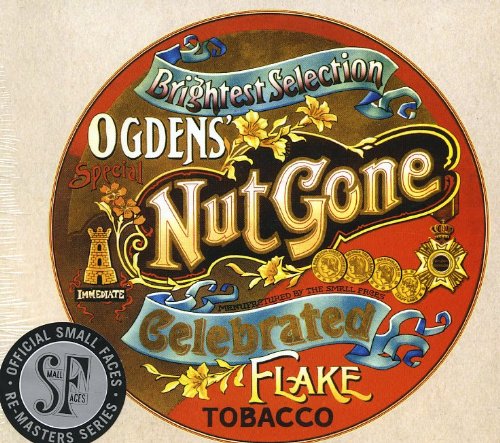
SMALL FACES-OGDENS’ NUT GONE FLAKE.
SMALL FACES-OGDENS’ NUT GONE FLAKE.
For British music, the sixties were a golden era. This golden era started with The Beatles and Rolling Stones, two of music’s most influential groups. By 1964, the British Invasion began. British groups conquered America, and influenced American music. Suddenly, aspiring American musicians became sworn Anglophiles. As the sixties progressed, the next wave of British groups made their presence stateside. In 1968 this included The Who, The Kinks and the Small Faces, who were founded in London in 1965.
When Steve Marriott, Ronnie Lane, Kenney Jones and Jimmy Winston founded the Small Faces in 1965, London was still swinging. The Small Faces were origins can be traced to the J60 Music Bar, in Manor Park, London. That’s where Ronnie Lane and Steve Marriott first met. Steve was working in the bar, and Ronnie came in one night with his father to buy a bass. Ronnie and Steve both shared a common interest, music.
Later that, night they headed back to Steve’s flat to listen to music. Not long after this, they decided to form a band. They brought onboard Kenney Jones and Jimmy Winston. The nascent band became the Small Faces, who rehearsed in Jimmy Winston’s parents pub. Once they’d honed their sound, the Small Faces began playing live.
Early on in their career, the Small Faces played around the London area. Their sets featured a mixture of soul and R&B songs. Gradually, they began to incorporate Ronnie Lane and Steve Marriott compositions into their sets. A turning point in the Small Faces’ career was when singer Elkie Brooks heard them live. She recommended them to promoter Maurice King. This was the next step in the Small Faces’ career.
Maurice King was able to get the Small Faces’ bookings outside of London. Soon, they were playing further afield, including in the North of England. However, the Small Faces got another break when they were signed to Don Arden management agency in 1965. A year later, the Small Faces released their debut album.
Small Faces.
When the Small Faces released Small Faces in 1965, the band’s lineup had changed. Keyboardist Jimmy Winston had been replaced by Ian McLagan. The new lineup featured Steve Marriott, Ronnie Lane, Kenney Jones and Ian McLagan. They made their debut on Small Faces.
Small Faces featured twelve tracks. They were a mixture of cover versions and tracks penned by members of the Small Faces. The music was a mixture of R&B and British Invasion. This was well received by critics and music lovers.
On its release, critics were won over by Small Faces. The album was released to critical acclaim. Critics forecasted a bright future for the Small Faces. They were right.
Whatcha Gonna Do About It was the lead single from Small Faces. It was released in August 1965 and reached number fourteen in the UK. By the time Sha-La-La-La-Lee was released as a single in January 1966, Jimmy Winston had been replaced by Ian McLagan.
Ian played his part the success of Sha-La-La-La-Lee. It reached number three in the UK. Small Faces, the Small Faces debut album, was also a commercial success. It was the eleventh best selling single in Britain during 1966. The critics were right, it looked like the Small Faces were about to enjoy a successful career.
From the Beginning.
In 1967, the Small Faces moved from Decca to Immediate Records. Don Arden, the Small Faces’ manager, decided to release From The Beginning, an unofficial retrospective album.
From The Beginning, just like Small Faces, was a mixture of cover versions and new songs. This included a Small Faces’ classic All Or Nothing. It reached number one in Britain. Other covers Del Shannon’s included Runaway and Smokey Robinson’s You’ve Really Got a Hold on Me. These tracks were part of the Small Faces most successful album.
On its release on 2nd June 1967, From The Beginning reached number seventeen in the UK. Just like its predecessor, From The Beginning was well received by critics. This was perfect way to close another chapter in the Small Faces’ story.
Small Faces.
Having left Decca, the Small Faces signed to Immediate Records. They didn’t waste time releasing their debut album, Small Faces. It was released on the 23rd June 1967, just three weeks after the Decca album From The Beginning.
Small Faces, the Small Faces’ sophomore album, was quite different from their debut album. Gone were the cover versions. Replacing them, were songs penned by the band. The Steve Marriot and Ronnie Lane songwriting partnership were responsible for eleven of the fourteen tracks. They also cowrote two other tracks on Small Faces and produced Small Faces.
When Small Faces was released on 23rd June 1967, it was described as a a mixture of psychedelia and British Invasion. The mod influence also shawn through. That had been the case throughout the Small Faces’ career. They were, after all, one of the top mod groups. However, their music appealed to a far wider audience.
Critics, upon hearing Small Faces, hailed the album the group’s finest hour. This was reflected in record sales. Small Faces reached number twelve on the UK charts. For the Small Faces, this resulted in them rubbing shoulders with rock royalty. However, to keep their place at rock’s top table, depended upon the followup to Small Faces. The Small Faces returned with a career defining album, Ogdens’ Nut Gone Flake.
Ogdens’ Nut Gone Flake.
After the success of Small Faces, the four members of the Small Faces regrouped. They were contemplating what direction their music should head in. Previously, their music veered between the British Invasion and Mod sound, to pop, psychedelia and R&B. Eventually, the Small Faces decided to write a psychedelic concept album, Ogdens’ Nut Gone Flake which was recently reissued by Sanctuary.
For Ogdens’ Nut Gone Flake, the Steve Marriot and Ronnie Lane songwriting partnership got to work. They wrote seven songs, including Lazy Sunday and Afterglow Of Your Love. Steve and Ronnie also cowrote The Hungry Intruder and Happydaystoytown with Ian McLagan, who contributed Long Agos and Worlds Apart. The other two tracks Ogdens’ Nut Gone Flake and The Journey were written by the four members of the Small Faces. These twelve tracks were record during November and December 1967.
Recording of Ogdens’ Nut Gone Flake took place at Olympic Studios and Trident Studios, London. Producing Ogdens’ Nut Gone were Steve Marriot and Ronnie Lane, who’d produced the Small Faces’ previous albums. Just like previous albums, the vocals on Ogdens’ Nut Gone Flake were shared. Steve added vocals and played guitar and harmonica. Ronnie played bass, guitar, added backing vocals and took charge of the lead vocal on Song Of A Baker, The Journey and Happydaystoytown. Ian played keyboards, guitar, bass guitar. He also sung backing vocals and delivered the vocals on Long Agos and Worlds Apart. Once Ogdens’ Nut Gone Flake was completed, it was released on 24th May 1968.
On its release on 24th May 1968, the Small Faces’ concept album Ogdens’ Nut Gone Flake was released to widespread critical acclaim. Critics hailed Ogdens’ Nut Gone Flake as variously ambitious, innovative and surreal. It was unlike any of the Small Faces previous albums, and much of the music released during 1968.
Even the album cover to Ogdens’ Nut Gone Flake was different from other albums. When Ogdens’ Nut Gone Flake was originally released on vinyl, in a metal replica of a giant tobacco tin, which the album cover pastiched. Inside the tin, there was a poster created with five connected paper circles. Each circle featured a member of the Small Faces. Quickly, Immediate realised that manufacturing the poster and the tin was too expensive. So, Immediate replaced the tin with a cardboard replica. As a result, the original versions of Ogdens’ Nut Gone Flake in the tin, are sought after, collector’ items. However, Ogdens’ Nut Gone Flake was also the Small Faces most successful album and featured one of their classic songs.
The lead single from Ogdens’ Nut Gone Flake, was Lazy Sunday Afternoon. It was released in April 1968, against the Small Faces’ wishes. They didn’t think the song would make a good single. How wrong they were. Lazy Sunday Afternoon became a hit single, and is now regarded as a Small Faces classic. Afterglow Of Your Love was released in March 1969. It’s another of highlights. However, despite its quality, Afterglow of Your Love stalled at just number thirty-eight in Britain. This was the last single released from Ogdens’ Nut Gone Flake released in Britain. By then, Ogdens’ Nut Gone Flake had become the Small Faces biggest selling album.
When Ogdens’ Nut Gone Flake was released on 24th May 1968,, it reached number one in Britain. It spent six weeks at number one and became the Small Faces most successful album. Over the Atlantic, Ogdens’ Nut Gone Flake stalled at number 159 in the US Billboard 200. That partly, was down to parts of Ogdens’ Nut Gone Flake being a uniquely British album.
Throughout side one of Ogdens’ Nut Gone Flake, the Small Faces move their music in a rocky direction. That’s the case from the psychedelic sounding title-track. It’s a rocky instrumental that later, takes an orchestral twist. From there, Afterglow (Of Your Love), pays a brief homage to vaudeville, before heading in the direction of rock. Steve’s vocal is best described as soul-baring and proves truly captivating. It’s one of the highlights of side one of Ogdens’ Nut Gone Flake. Long Agos and Worlds Apart veers between lysergic and rock-tinged as side one continues in a similar rocky vein. Rene, Song of a Baker and Lazy Sunday see the Small Faces pay homage to their East London roots. These three songs are best described as a fusion of rock and a cockney sing-a-long. The best of the three has to be Lazy Sunday, which became a Small Faces classic. After Lazy Sunday, Ogdens’ Nut Gone Flake moves in a different direction.
Side two of Ogdens’ Nut Gone Flake was based upon a original fairy tale about a boy called Happiness Stan. To narrate side two, the Small Faces drafted in Stanley Unwin. He spent time with the Small Faces, and heard them using modern slang. So he incorporated this into Ogdens’ Nut Gone Flake surreal narrative.
During side two of Ogden’s Nut Gone Flake, Stan sets out one night to find the missing half of the moon. He only has one night to do this. This adventure begins on Happiness Stan. It has an understated Eastern influence, before heading in the direction of art-rock, jazz, psychedelia and rock. After this, Rollin’ Over is a dramatic, rocky workout, where the Small Faces sound not unlike The Who. On The Hungry Intruder, Stan saves a fly from starving. To repay Stan, the fly tells him about someone who can answer his question and also tell him the philosophy of life itself. During The Journey, a marriage of R&B, psychedelia and rock, the fly grows, becoming so big that Stan can sit upon its back. They head off on a psychedelic journey. Eventually, they reach Mad John the hermit’s cave. However, Stan has spent so long trying to find Mad John, that the moon is now whole again. To celebrate, the Small Faces close the album with Happy Days Toy Town, a choppy, cockney sing-a-long, that’s reminiscent of much of side one. This closes what critics referred to as the Small Faces finest hour.
Forty-six years have passed since the Small Faces released their third album, Ogdens’ Nut Gone Flake, hich was recently reissued by Sanctuary. Critics hailed Ogdens’ Nut Gone Flake, as the Small Faces’ finest hour. That’s despite the album being totally different from their two previous albums.
The big difference was that Ogdens’ Nut Gone Flake was a concept album. Side one saw the Small Faces pay homage to their London roots. It was a mixture of rock and a cockney knees-up. For the Small Faces, this would be the type of music they grew up hearing. However, incorporating it into Ogdens’ Nut Gone Flake was risky. After all, many people would be unable to understand the music, with its raucous rhyming slang. This was only half of the story of Ogdens’ Nut Gone Flake.
Then on side two of Ogdens’ Nut Gone Flake, the Small Faces’ concept album, the group took the listener on a surreal, lysergic musical adventure, which was narrated by Stanley Unwin. This was very different to anything that the Small Faces had released before. It was also quite different to much of the music released during 1968. No wonder. Ogdens’ Nut Gone Flake, was an ambitious and groundbreaking piece of music. So much so, that nowadays, Ogdens’ Nut Gone Flake is perceived as one of the finest British albums ever released. Having said that, it’s debatable whether Ogdens’ Nut Gone Flake is a classic album.
To some extent, the music on Ogdens’ Nut Gone Flake doesn’t translate well overseas. Many people across the Atlantic and in Europe didn’t understand the cockney, singalong sound. Similarly, the heavily accented music didn’t endear itself to them. This was also the case with Stanely Unwin. His surreal gobbledygook confused the listener. As a result, they failed to “get” Ogdens’ Nut Gone Flake. Since then, Ogdens’ Nut Gone Flake is an album that provokes debate amongst music lovers.
Personally, whilst I can appreciate that Ogdens’ Nut Gone Flake was an ambitious, groundbreaking, concept album, I don’t consider it a classic. I would however, describe Ogdens’ Nut Gone Flake as the Small Faces’ finest hour, and one of the best British albums of the sixties.
SMALL FACES-OGDENS’ NUT GONE FLAKE.
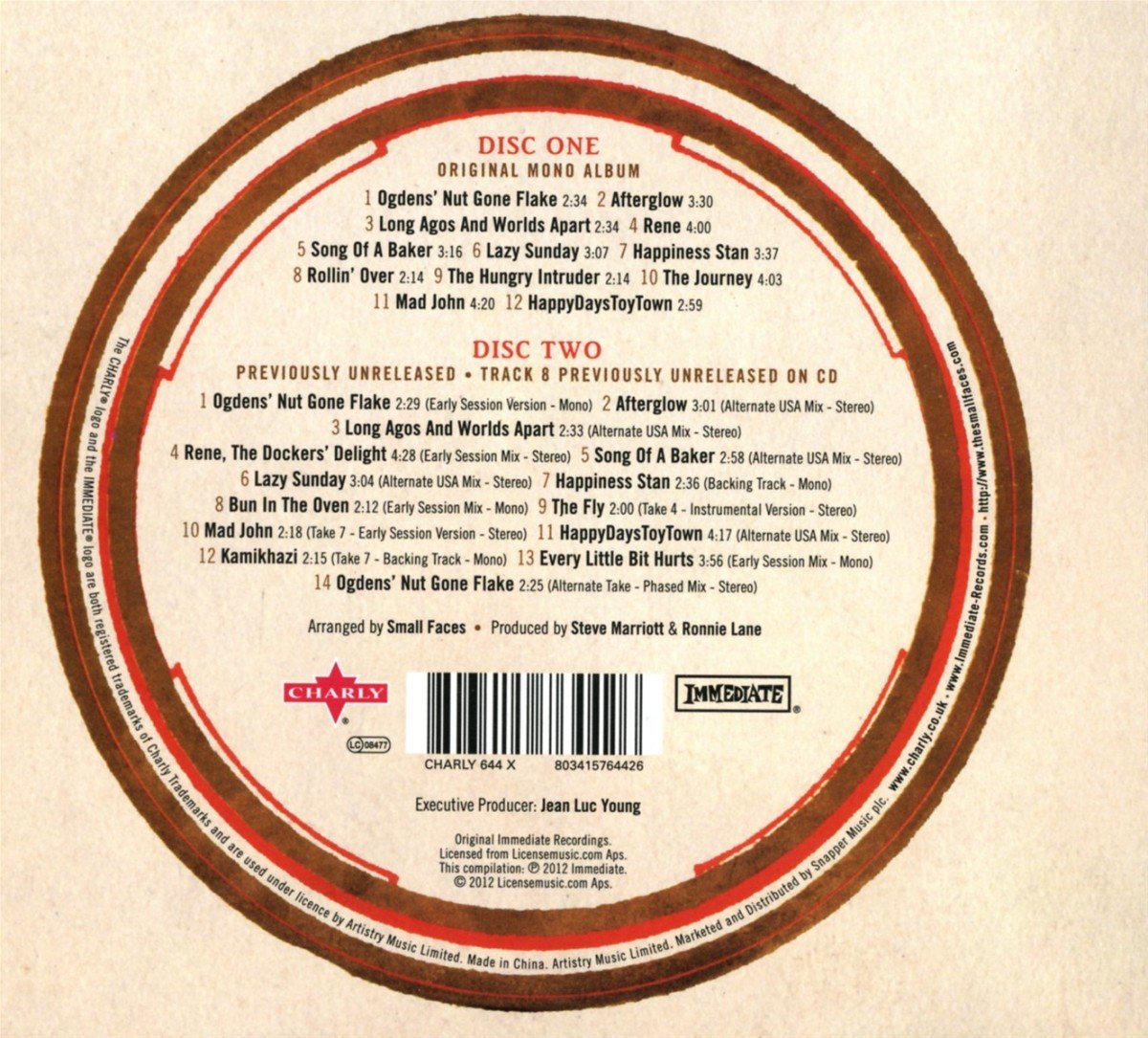
CRAIG PEYTON GROUP-PYRAMID LOVE.
CRAIG PEYTON GROUP-PYRAMID LOVE.
For Craig Peyton, the founder member of Band X, 1976 was the most important year of his nascent musical career. It was the year Band X released their debut album The Best Of Band X. However, The Best Of Band X a private pressing, wasn’t a commercial success. Instead, this innovative, genre-melting album passed record buyers, critics and cultural commentators by. Band X were left licking their wounds. They had hoped would be the start of a successful career. That wasn’t to be. Instead, Band X split-up, and its founder Craig Peyton moved on.
Craig Peyton’s next musical venture was the Craig Peyton Group, which featured bassist Victor Preston and reeds-man Al Gryzb of Band X. They were joined by guitarist Willie Upshaw and drummer and percussionist Chris Meisel. This was the lineup that recorded the Craig Peyton Group’s debut album Pyramid Love, which was released in 1977, on Broken Records.
Pyramid Love, which was rereleased in late November 2014, by BBE Music, was a very different album from Band X’s debut The Best Of Band X. Gone was the experimental sound of Band X. Replacing it was a jazzier sound. Essentially, this was a return to Craig’s roots. He’d grownup listening to, and playing fusion. Add to fusion elements of blue-eyed soul and rock, and this describes Pyramid Love, the Craig Peyton Group’s debut album, which was recorded in May 1977.
Members of the Craig Peyton Group wrote eight songs for Pyramid Love. Craig penned Snow, Pyramid Love, Marjorie and Waiting. Craig Meisel wrote Fire and Ice and Willie Upshaw Plupts 77. The other two tracks were written by former members of Band X. Bassist Victor Preston contributed Painted Desert and reeds-man Al Gryzb penned Funky Boogie. These seven tracks became Pyramid Love, the Craig Peyton Group’s debut album.
Recording of Pyramid Love took place during May 1977, with Craig Peyton producing. Two studios were used. Long View Farms was where Band X recorded The Best Of Band X. The other studio used Intermedia Sound. Craig played electric vibes, elka strings, orgasmitron and added vocals. Willie Upshaw played guitar, Chris Meisel drums and percussion and Victor Preston electric bass, string bass, trombone and trumpet. Al Gryzb added reeds, bassoon and clarinet. Once the eight tracks were recorded, Pyramid Love was released later in 1977.
Just like The Best Of Band X, Pyramid Love was an independent release. It was released in 1977, on Broken Records. Sadly, lightning struck twice for Craig Peyton. Pyramid Love suffered the same fate as The Best Of Band X. On its release, it disappeared without trace. This was the case with a plethora of independent releases during the seventies. Pyramid Love didn’t find the audience it deserved in 1977. That wasn’t the end of the story.
No. Fast forward thirty years, and belatedly, however, the Craig Peyton Group’s debut album Pyramid Love had became a collectable. Just like The Best Of Band X, Pyramid Love had been discovered by discerning record collectors. Soon, word spread about this little known album. With the Band X connection, Pyramid Love became a highly prized album. However, the problem was finding a copy. They’re real rarities, that are beyond the pocket of most music lovers. Soon, this problem was solved.
In late November 2014, BBE Music reissued the Craig Peyton Group’s debut album, Pyramid Love. This was just a few weeks after BBE Music reissued Band X’s The Best Of Band X. Belatedly, and deservedly, Craig Peyton’s music was belatedly, available to a wider audience. This includes Pyramid Love, which I’ll tell you about.
Snow, which opens Pyramid Love, allows the Craig Peyton Group to stretch their legs. Just the drums open the track, before an uber funky bass and lightning fast vibes glide across the arrangement. They’re joined by a braying horn. Soon, the Craig Peyton Group settle into a groove. The rhythm section sashay along, while guitarist Willie Upshaw unleashes a blistering guitar solo. Along with the sashaying rhythm section and Craig’s vibes, they showcase just what the Craig Peyton Group are capable of. In this case, it’s funky, dance-floor friendly music.
Pyramid Love has a much more understated sound. Just the thoughtful sound of the vibes set the scene for Craig’s needy, hopeful vocal. He sings call and response, before this slice of blue-eyed soul gets funky. That’s down to the rhythm section and a blazing horn. Stabs of urgent drums and searing guitars join the funky rhythm section and grizzled horn. Soon, the Craig Peyton Group are in full flow. The result is a track that’s veers between funky, jazz-tinged and soulful to understated and dramatic.
Straight away, Funky Boogie sounds like a musical pastiche. There’s a nod to the Charleston and an English pastoral sound. That’s down to reeds-man Al Gryzb and Craig on vibes. They play starring role, continue to do so. After that, the arrangement floats, and glides elegantly away. Later, with the rhythm section driving the arrangement along, it heads in the direction of fusion. This is no ordinary fusion. Instead, it’s a laid-back brand of fusion. Only, later do the Craig Peyton Group briefly kick loose. Briefly, the English pastoral sound returns and the Craig Peyton Group bid their farewell on this laid-back slice of fusion.
The understated arrangement to Marjorie meanders into being. Then when Craig’s vocal enter, he takes the track in the direction of blue-eyed soul. Meanwhile, the rest of the Craig Peyton Group drive the funky arrangement along. Bassist Victor Preston plays a starring role. So does guitarist Willie Upshaw. He unleashes some blistering licks. Not to be outdone trumpeter Al Gryzb and Craig on vibes joins in. By now, the Craig Peyton Group are in full flow. It’s a joy to behold, as they’re a tight, talented band. As for Craig, he delivers his best vocal. Heartfelt and emotive, this inspires the rest of the Craig Peyton Group, as they fuse blue-eyed soul, funk, jazz and rock.
Plupts 77 is the polar opposite of the previous track. It’s an adrenaline fuelled, genre-melting track. Think Weather Report and that’s a starting point. Screaming, searing, blistering guitars join the rhythm section and Craig’s vibes. Bursts of growling horns enter, as machine gun guitars are unleashed. From there, there’s diversions via jazz, fusion, rock and space funk, courtesy of the synths. What Plupts 77 shows, is that the five members of the Craig Peyton Group, individually were gifted musicians. When the solos come round, none of them are left lacking. Far from it, they revel in the opportunity to showcase their talents. Stealing the show, however, is guitarist Willie Upshaw, who delivers a series of breathtaking solos.
Waiting sees the tempo drop and a dreamy, wistful sounding track take shape. It’s the rhythm section and vibes that set the scene. Meanwhile, washes of guitar reverberate. Horns bray, drifting above the arrangement. For the time being, it becomes a dreamy, lysergic soundscape. That’s until Craig’s vocal enters. It shimmers, before becoming urgent and dramatic. The arrangement reflects the drama and urgency in Craig’s vocal. Then later, the arrangement becomes a vehicle for Al Gryzb’s braying horn and to some extent, Craig’s vibes. After the arrangement is stripped bare, it slowly and gradually rebuilds. Eventually, it becomes a droning, dramatic, futuristic epic, where reeds-man Al Gryzb becomes a sonic explorer.
Driving, dramatic, urgent and rock describes Fire and Ice. As the rhythm section provide a backdrop for the rest of the Craig Peyton Group, a marriage of funk, fusion and rock emerges. Al Gryzb’s sultry horn soars above the arrangement. Meanwhile Craig delivers a vibes masterclass. This inspires the rest of the Group. Especially, guitarist Willie Upshaw. He delivers a series of lightning fast, scorching, searing solos. With the choppy rhythm section and vibes for company, Willie more than plays his part in this musical opus.
Painted Desert closes Pyramid Love. From the get-go, the Craig Peyton Group drive the arrangement along. The rhythm section and a melancholy horn become one. Then they slow things down, before going through the gears and kicking loose. This gives them the opportunity to showcase their considerable talents. Craig adds vibes and Willie unleashes some crystalline guitar solos. After three minutes of this eight minute epic, it’s all change. A futuristic sound gives way to what’s best described as a marriage of ambient, avant-garde, experimental and modern classical. A cinematic sound emerges, before a futuristic, sci-fi inspired fusion of free jazz and space funk takes shape. It’s a truly captivating track, where the Craig Peyton Group take you in the most unexpected directions. Latterly, a much more orthodox combination of fusion and rock emerges, as the track reaches a dramatic crescendo.
Just a year after the release of Band X’s groundbreaking debut album, The Best Of Band X, Craig Peyton returned with his new group, the Craig Peyton Group. Their debut album, Pyramid Love, was a similarly ambitious, innovative album. However, this didn’t seem to matter. Still, it passed record buyers by.
The problem was, Pyramid Love was released on an independent label, Broken Records. Small labels were unable to compete with the budgets of majors. They couldn’t get their records on radio or in the racks of major record shops. Instead, the best that the Craig Peyton Group could hope for, was that Pyramid Love would be a local hit. Maybe then, Pyramid Love would be picked up by a bigger label. Then, maybe, the Craig Peyton Group would find the audience their music deserved. Sadly, that wasn’t the case. Just like Band X’s debut album The Best Of Band X, the Craig Peyton Group debut album, Pyramid Love wasn’t a commercial success. However, this wasn’t because of the music.
Far from it. Just like Band X, the Craig Peyton Group were musical pioneers. They didn’t stick to one musical genre. No. The Craig Peyton Group were musical adventurers, who combined everything from blue-eyed sound, classical, funk, fusion, pastoral, psychedelia, rock and space-funk. Elements of each and every one of these genres can be heard on Pyramid Love. It’s another album of eclectic music. That’s no bad thing.
While some bands resolutely stick by the same sound, that wasn’t for the Craig Peyton Group. They were determined to innovate and create ambitious, groundbreaking music. Back in 1977, very few bands were creating groundbreaking music. Instead, many musicians were jumping on the disco bandwagon. Not Craig Peyton.
With his new band, the Craig Peyton Group, he picked up where he left off with Band X. His new band’s music was just as ambitious, innovative and genre-melting. Just like The Best Of Band X, you never knew what direction the Craig Peyton Group were taking Pyramid Love in. It was another magical, musical, mystery tour. You jumped on and enjoyed the ride. During eight tracks, you heard musical genres melt into one. Sometimes, it was only briefly. Other times, these influences are much more obvious. That’s apparent throughout Pyramid Love, the one and only album from the Craig Peyton Group.
After Pyramid Love’s released in 1977, the Craig Peyton Group released no further albums. This was the case with Band X. However, belatedly, however, the Craig Peyton Group’s debut album Pyramid Love had became a collectable.
Fast forward thirty years, and just like The Best Of Band X, Pyramid Love was discovered by discerning record collectors. Soon, word spread about this little known album. With the Band X connection, Pyramid Love became a highly prized album. However, the problem was finding a copy. They’re real rarities. Even when a copy came up for sale, copies of Pyramid Love were beyond the pocket of most music lovers. Soon, this problem was solved.
In late November 2014, BBE Music reissued the Craig Peyton Group’s debut album, Pyramid Love. This was just a few weeks after BBE Music reissued Band X’s The Best Of Band X. Belatedly, and deservedly, Craig Peyton’s music was belatedly, available to a wider audience.
Belatedly, Pyramid Love, the Craig Peyton Group’s 1977 debut album, can now be heard by music lovers everywhere. For far too long, Pyramid Love was one of music’s best kept secrets. Not any more. The genie is out of the bottle. Now hopefully, Pyramid Love, the Craig Peyton Group’s 1977 groundbreaking, genre-defying debut album, will find the wider audience it so richly deserves.
CRAIG PEYTON GROUP-PYRAMID LOVE.

BAND X-THE BEST OF BAND X.
BAND X-THE BEST OF BAND X.
Back in 1976, musical maverick, Craig Peyton, was an up-and-coming musician, songwriter, arranger and producer. His latest musical vehicle was Band X, which he founded with Alan Grzyb, Victor Preston and Joey Bellomo. However, originally, Craig was a jazz drummer and vibraphonist. Then when synths started making inroads into music, Craig was one of the first musicians to realise their potential. So he bought a Fairlight and started experimenting with it. Before long, Craig had “tamed” the Fairlight, and was incorporating it into his music. This was the start of Craig’s interest interest in synths.
By 1976, Band X, with Craig at the helm, had established a reputation as an innovative group. They seamlessly married disparate musical genres. Their music was influenced by fusion, especially groups like Weather Report, Headhunters and Stone Alliance. However, Band X were determined to take fusion in a very different direction. So, they incorporated synths into the traditional fusion sound. The result was The Best of Band X, a genre-melting album of experimental and pioneering music, which was rereleased by BBE Music in November 2014. Originally, however, The Best Of Band X was released in 1976.
For their debut album, The Best of Band X, Band X had written seven songs. Craig wrote Afterthought, Home and Black-Hole. Victor Preston penned Trullion Alastor 2262 and cowrote Rip Van Winkle with Alan Grzyb. He contributed Red Cloud and Picking Mushrooms With Rabbit. These seven tracks would become The Best of Band X, which was recorded at Longview Farms.
Recording of The Best of Band X took place at Longview Farms on the 2nd, 3rd and 4th April 1976. Band X didn’t employ a producer. Instead, Band X produced The Best of Band X, which they recorded over three days
Craig played electric vibes, percussion and added vocals. Alan Grzyb played bassoon, tenor soprano, clarinet, keyboards and backing vocals. Victor Preston played trombone, electric bass and string bass. Joey Bellomo played synths, drums and percussion. Once The Best Of Band X was recorded, Band X took a novel approach to marketing.
Band X weren’t signed to a record label. Instead, The Best Of Band X was a private pressing. Some local record shops stocked The Best Of Band X. However, it was also possible to send $5 and fifty cents postage to Craig Peyton. In return, Craig would sent a copy of The Best of Band X. Unsurprisingly, The Best of Band X wasn’t a commercial success. It passed record buyers and critics by. This is often the case with private pressings. However, over thirty years later, The Best of Band X found a wider audience, when DJ Amir began to champion Home, one of the tracks from The Best Of Band X. This lead to the reissue of The Best Of Band X, which I’ll tell you about.
Rip Van Winkle opens The Best Of Band X. A probing bass, hissing hi-hats and floaty vibes are joined by a clarinet. Meanwhile, the rhythm section create a pulsating heartbeat. Briefly, they create a laid-back jazzy sound. That’s until Band X up the ante. A surge of power and drama grabs your attention. After that, Band X toy and tease you. They veer between the understated, laid-back sound and a much more dramatic, powerful sound. What’s apparent, is that the four members of Band X are talented musicians. Especially, reeds-man Alan Grzyb, who produces a virtuoso performance on this progressive, genre-melting track.
Straight away, there’s an element of drama and tension as Red Cloud unfolds. Strings, keyboards and rolls of drums set the scene. Stabs of keyboards, vibes and bursts of drums combine drama and tension. Having set the scene, a clarinet floats across the arrangement. It adds a sound that veers between wistful, hopeful joyous. As for the track, it’s a combination of influences. Elements of everything from classical, jazz, library music and briefly, rock can be heard on this cinematic sounding track.
Just a subtle vibes solo opens Trullion Alastor 2262. It’s joined by a melancholy clarinet, while the rhythm section ensure the arrangement glides and floats along. The focus of your attention are the vibes and the pastoral sounding horn. They take the track in the direction of prog-rock, modern classical and jazz. Again, there’s even a nod to library music on what’s a beautiful, dreamy, laid-back, wistful sounding track.
Trippy. That describes the introduction to Afterthought. After that, Afterthought reminds me of the Shuggie Otis. It has a similar psychedelic, blue-eyed soul sound. Mostly, that’s down to Craig’s vocal. It’s accompanied by a funky, bubbling bass, space-age synths, searing, rocky guitars and vibes. This results in an arrangement that’s a myriad of influences. Art-rock, jazz, prog-rock, psychedelia, rock and space funk. Add to this a healthy twist of lysergic free jazz and Craig’s blue-eyed soul vocal, and the result is Band X at their innovative, genre-melting best.
Just the wistful sound of a bassoon and vibes open Picking Mushrooms With Rabbit. Straight away, there’s an obvious classical influence. This being Band X, anything could happen. It does. Abrupt, choppy keyboards and bursts of horn join percussion and the vibes. They add a retro jazzy twist. Then it’s all change, as Band X take a diversion via military music. After that, Band X take another detour via fusion. There’s even nods to space funk and rock, on this magical, lysergic mystery tour, that’s a result of Band X Picking Mushrooms With Rabbit.
No two tracks on The Best Of Band X are the same. That’s obvious from the opening bars of Home. It’s a beautiful, heartfelt slice of blue-eyed soul. Key to its success is Craig’s soul-searching vocal. He’s accompanied by an understated arrangement. While the rhythm section create the heartbeat, a clarinet and vibes combine. They take care not overpower Craig’s vocal. Just like the backing vocals, they compliment what’s Craig’s best vocal on this beautiful, heartfelt slice of blue-eyed soul.
Black Hole closes The Best Of Band X. It has a dark, dramatic sound. That’s down to the bass and synths. They’re joined by subtle hi-hats and understated vibes. Soon, a growling horn makes its presence felt. A searing guitar is the latest addition, as gradually, the drama builds and grows. Eventually, the bass adds a funky twist and Band X kick loose. Briefly, elements of funk and fusion can be heard. Then Band X change tack. The spacious, futuristic arrangement slows down, heading in the direction of free jazz. This allows Band X to show yet another side to their music. It’s a welcome diversion. They’re true musical chameleons, who seamlessly veer between funkateers and free jazz pioneers in the space of nine minutes.
Although The Best Of Band X features only seven songs, and is thirty-eight minutes long, it’s a true hidden gem. For far too long, very few people were aware of the existence of this innovative, genre-melting album. There’s a reason for this.
Band X released The Best Of Band X in 1976, as a private pressing. With no record label behind them, The Best Of Band X received no promotion whatsoever.
Only a few record shops stocked The Best Of Band X. The only other way to buy The Best Of Band X was from Craig Peyton. So, looking back, it’s no surprise that The Best Of Band X passed most record buyers and critics by. That was the case for over thirty years.
Then some persistent and dedicated crate-diggers discovered The Best Of Band X. They realised that here was an album of groundbreaking, genre-melting music. The Best of Band X was essentially, a trip through musical genres. Everything from art-rock, blue-eyed soul, classical, funk, fusion, library music, prog-rock, psychedelia, rock and space-funk can be heard on The Best Of Band X. It’s best described as an ambitious and innovative album, where musical genres and influences melt into one.
It’s difficult to compare Band X to other artists, as their sound is quite unique. There are no real comparisons. Some people have compared Band X to Shuggie Otis and Steely Dan. However, only briefly do these comparisons shine through. Similarly, there’s a nod to Sun Ra on Black Hole. Mostly, though, Band X’s music was unique. That may have been part of the problem.
So unique was Band X’s music, that The Best Of Band X was way ahead of the musical curve. Even if it had been released on a major label, it might still have struggled. After all, it was too progressive an album for 1976. Record buyers were more interested in disco, than innovative, ambitious music. Coupled with the fact that The Best Of Band X was a private pressing, the album didn’t stand a chance.
Thankfully, thirty-eight years after its release, The Best Of Band X has found a wider audience. This started when crate-diggers discovered the delights of The Best Of Band X. Then DJ Amir began to champion Home, one of the tracks from The Best Of Band X. Since then, word has been spreading about The Best Of Band X.
For the curious crate digger, original copies of The Best Of Band X are now real rarities. Finding an original copy is almost impossible. If you do, it’ll be a lucky accident, as The Best Of Band X is now an extremely valuable album. Thankfully, BBE Music’s recently reissued The Best Of Band X. Their reissue of Band X’s debut album, The Best Of Band X, makes the album within everyone’s price-range. That’s no bad thing, as The Best Of Band X is an innovative, genre-melting album from musical pioneers, Band X.
BAND X-THE BEST OF BAND X.
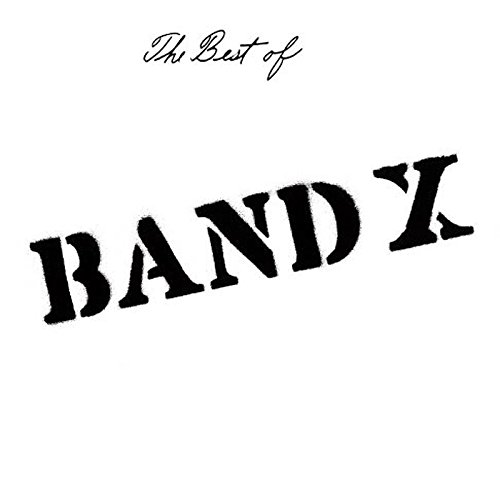
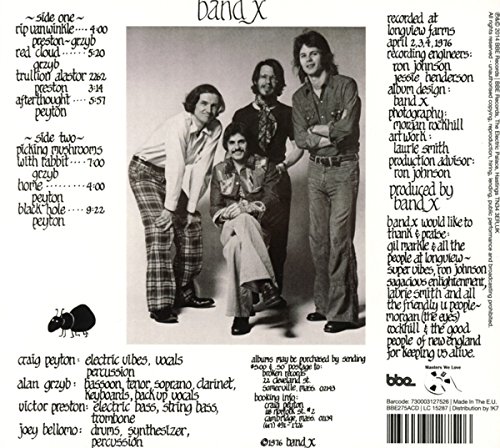
VERCKYS ET L’ORCHESTRE VEVE-CONGOLESE FUNK, AFROBEAT AND PSYCHEDELIC RUMBA 1969-1978.
VERCKYS ET L’ORCHESTRE VEVE-CONGOLESE FUNK, AFROBEAT AND PSYCHEDELIC RUMBA 1969-1978.
There’s a very good reason Georges Mateta Kiamuangana a.k.a Verckys, can remember the 5th of April 1969. It was the exact date he founded Orchestre Vévé. He’d just returned from Paris, where he suffered a life-threatening illness. At the time, Georges was a member of Congo’s most successful and influential band, Franco’s OK Jazz, and had travelled to Paris to record an album. However, in Paris, he became seriously ill.
Franco, the band’s founder, couldn’t pay for Georges’ treatment. So, Franco´s OK Jazz returned home to the Congo, leaving Georges behind. Desperately ill, Georges travelled to Paris, where he headed to Decca’s headquarters. Having secured a meeting, Georges managed to sell some recordings he’d made in Congo’s capital Kinshasa. This may well have saved Georges’ life.
With the money he made from selling his recordings, Georges managed to cure himself. However, he had some money left over. He used that to buy new clothes, two cars and have a couple of weeks holiday. Once his holiday was over, Georges headed to Antwerp, where his cars would be shipped home to the Kinshasa, in the Congo.
On his return home to the Congo, Georges was in for a surprise. The journalists who awaited his arrival told Georges he was no longer a member of Franco´s OK Jazz. He’d been fired in absentia. For many musicians this body blow could’ve derailed their career. Not Georges Mateta Kiamuangana.
He founded Orchestre Vévé, in Congo’s capital Kinshasa, on 5th of April 1969. This would allow Georges to give Congolese music what he believed was a much needed makeover. With Georges, a talented multi-instrumentalist at the helm, Orchestre Vévé would fuse Congolese merengue, rumba and soukous with funk, jazz, psychedelia and rock. This was very different to Franco’s O.K. Jazz’s approach to music.
It was ambitious, innovative and influential. Soon, Orchestre Vévé would become one of Congo’s most successful bands. They released a series of successful albums. Orchestre Vévé were also hugely popular within Kinshasa’s clubs. For much of the seventies, they provided the soundtrack to dance-floors. Forty-five years later, and Orchestre Vévé’s are still remembered fondly by connoisseurs of African music.
Recently, on 8th December 2014, Analog Africa released Verckys Et L’Orchestre-Congolese Funk, Afrobeat & Psychedelic Rumba 1969-1978. It’s an eleven track compilation that’s best described as an introduction to Orchestre Vévé’s genre-melting music. Its origins can be traced back to 1963.
That’s when Georges joined O.K. Jazz. He was only eighteen. The six years Georges spent with O.K. Jazz, was akin to a musical apprenticeship, for the multi-instrumentalist.
Georges’ introduction to music was at school. That’s where he first started to play the flute. Not long after that, he joined a church big band, and switched to the trombone. After school, Georges decided to become a musicians. This was despite his father wanting Georges to further his education. Education didn’t interest Georges. All he wanted to do was make music.
So he joined O.K. Jazz. That’s where he met saxophonist Isaac Musekiwa. He would become an important influence on Georges, who tried to copy his style. However, after a few months, Georges joined Dewayons Conga Jazz Orchestra.
This came about after Georges spent time jamming with Johnny Bokelo. Dewayons Conga Jazz Orchestra was Johhny’s brothers band. However, Dewayons Conga Jazz Orchestra was only a stepping stone.
Georges decided that now he was ready to make a living as a professional musician. So he joined George Kazembe’s Jambo Jambo Orchestra, which played twist and jazz numbers. After a while though, Georges decided to approach his musical idol, Franco about joining his band, Franco’s Ok Jazz.
One night, Georges saw Franco and some of his band in a bar. Georges plucked up the courage to go across and play the saxophone. This impromptu audition worked. A few days later, one of Franco’s band came to visit Georges. Franco, apparently, wanted to speak to Georges.
This was the start of a six year period with Franco’s Ok Jazz. During that period, Georges flourished and developed as a musician, and also, as a businessman.
Whilst playing with Franco’s Ok Jazz, Georges started improvising. The way Franco’s Ok Jazz played, they left space for individual musicians to improvise. Georges thrived as a musician. He also thrived as a businessman, setting up his own publishing company.
This resulted in Georges recording some of Franco’s Ok Jazz’s songs. These would be the ones that they’d try to sell to Decca in Paris. However, Georges reason for heading to Paris was to record albums by Franco’s Ok Jazz.
During the Paris recording sessions, Georges suffered a life-threatening illness. As if this wasn’t bad enough, the band were penniless. Franco tried to sell some music Decca/Fonoir to raise money, but to no avail. As a resuly, neither Franco, the band’s founder, nor any of the band, could afford t pay for Georges’ treatment. So, Franco´s OK Jazz returned home to the Congo, leaving Georges behind.
Desperately ill, Georges travelled to Paris, where he headed to Decca’s headquarters. Having secured a meeting, Georges managed to sell some recordings he’d made in Congo’s capital Kinshasa. This may well have saved Georges’ life.
With the money he made from selling his recordings, Georges managed to cure himself. However, he had some money left over. He used that to buy new clothes, two cars and have a couple of weeks holiday. Once his holiday was over, Georges headed to Antwerp, where his cars would be shipped home to the Kinshasa Congo.
On his return home to the Congo, Georges was in for a surprise. The journalists who awaited his arrival told Georges he was no longer a member of Franco´s OK Jazz. He’d been fired in absentia. While this was a huge disappointment, Georges founded Orchestre Vévé on 5th of April 1969.
Having founded Orchestre Vévé, Georges brought onboard singers Bovic Bondo and a trio of other singers who’d become Madjesi. Accompanying them was Georges, a true-multi-instrumentalist. Whether in the studio, or on-stage, Georges flitted between guitar, saxophone and Hammond organ. Along with the rest of Orchestre Vévé, Georges created a genre-melting sound. Orchestre Vévé fused Congolese merengue, rumba and soukous with funk, jazz, psychedelia and rock. From the get-go, this new and innovative sound proved popular.
Straight away, Orchestre Vévé enjoyed hits with Mfumbwa and Fifi Salange. This however, was just the start, of the rise and rise of Orchestre Vévé and its founder Georges Mateta Kiamuangana.
Quickly, it became apparent that Georges was much more than a musician. He was a budding entrepreneur. First of all, Georges founded his own studio. Then record label Les Editions Vévé, a distributor called Zadis, and record shop followed. It was vertical distribution at its finest. Especially, when Georges began producing up-and-coming orchestras.
One of the first orchestras George produced was Les Grands Masquisards. After that, Georges would produce Orchestre Kiam, Orchestre Bella Bella, Lipua Lipua, Les Kamale and Baya Baya. He would then send them out on tour using one of the twelve sets of equipment he’d imported from Italy.
After starting with new artists, Georges quickly progressed to producing much more experienced artist. Georges pulled off a coup by signing Tabu Ley Rochereau, one of the legends of African music. He recorded a quartet of albums, including Maze, one of Tabu Ley Rochereau’s most successful albums. Meanwhile, Orchestre Vévé were establishing a reputation as one of the Congo’s most successful and innovative bands.
During the seventies, Orchestre Vévé released a series of albums. Their debut album was Verckys and Orchestre Vévé’s 1970 album Dynamite” Verckys. It was released just a year after Georges founded Orchestre Vévé. This would be the start of a series of genre melting albums, where Orchestre Vévé innovative and influential music evolved.
By 1972, Orchestre Vévé released one of their most controversial songs, Nakomitunaka, which translates as “I Ask Myself.” In the lyrics, Orchestre Vévé ask “why are angels and god white? why is the devil black?” In deeply religious Congo, this was a step too far. Georges was expelled from his church and ostracised. However, while his spiritual life was in tatters, his career was in the ascendancy.
In 1973, Orchestre Veve and Orchestre Les Grands Maquisards released an album Verckys. It featured the controversial song Nakomitunaka, plus a trio of other tracks from Orchestre Veve, who a year later, would accompany the self-styled Godfather of Funk.
1974 saw James Brown touch down in the Congo. He’d arrived for the Rumble In The Jungle between George Foreman and Mohamed Ali. The fight was delayed for a couple of weeks, after George Foreman suffered a minor injury. James Brown took the opportunity to opportunity to hear Congolese artists. This included Orchestre Veve, who blew James Brown away. He was not alone.
As the seventies progressed, Orchestre Veve released a series of singles and albums. This included Verckys and L’Orchestre Veve, which was released in 1975. It was released on the French label Sonafric. Still, Orchestre Veve’s music continued to evolve. Genres melted into one, with African and Western music becoming one. This is apparent on Verckys Et L’Orchestre-Congolese Funk, Afrobeat & Psychedelic Rumba 1969-1978.
On Analog Africa’s recent compilation, Verckys Et L’Orchestre-Congolese Funk, Afrobeat and Psychedelic Rumba 1969-1978, the eleven tracks showcase Orchestre Veve’s eclecticism.
No two tracks on Verckys Et L’Orchestre-Congolese Funk, Afrobeat and Psychedelic Rumba 1969-1978, are the same. That may seem like the case. It’s not. Far from it. Listen carefully and subtleties, surprises and nuances unfold. Elements of Congolese merengue, rumba and soukous with funk, jazz, psychedelia, rock and soul. The music veers between jazz-tinged, soulful, psychedelic and uber funky. This is the case throughout Verckys Et L’Orchestre-Congolese Funk, Afrobeat and Psychedelic Rumba 1969-1978,
Bassala Hot, which opens Verckys Et L’Orchestre-Congolese Funk, Afrobeat and Psychedelic Rumba 1969-1978, is best described as a fusion of funk and Afrobeat. It’s followed by the sultry, scorching horn lead Cheka Sana, and then the funky, psychedelia of Cheka Sana. It sounds Doors’ inspired. Sex Veve sounds as if Orchestre Veve have combined blues, jazz, rock and soul-jazz. As they fuse musical genres, they showcase their considerable skills. Talali Talala finds Orchestre Veve at their funky best. The rhythm section and horns join forces, producing a track that wouldn’t sound out of place on a seventies Blaxploitation movie. However, Orchestre Veve don’t turn their back on Congolese music.
Ya Nini has a traditional Congolese sound. Not as much as Nakobala Yo Denise, Sisa Motema and Zonga Vonvon. They’re beautiful, understated fusions of gospel and soul. Sultry horns add the finishing touch to Nakobala Yo Denise and Zonga Vonvon beautiful, spiritual and latterly, dramatic tracks. Nakomi Paralise is another track with a traditional sound. It’s a joyous marriage of African and Western music. Again, the Orchestre Veve’s vocalists play a starring role, as Georges gives traditional Congolese music a makeover. After that, there’s only one track left.
Matinda Comono, which closes Verckys Et L’Orchestre-Congolese Funk, Afrobeat and Psychedelic Rumba 1969-1978, you think is an urgent eleven minute epic, with a twist. You’re wrong. After 2. minutes 40 seconds, the music stops. You wonder what’s happened? Is the disc faulty? After two minutes silence, the music begins. It’s joyous, uplifting and irresistible. No wonder the Orchestre Veve filled Kinshasa’s dance-floors.
They continued to do this throughout the rest of the seventies. The Orchestre Veve’s unmistakable trademark fusion of Western and African music won friends and influenced people. No wonder. How many groups could seamlessly combine Congolese merengue, rumba and soukous with funk, gospel, jazz, psychedelia, rock and soul? Georges Mateta Kiamuangana, a.k.a Verckys’ Orchestre Veve could. That’s apparent from the first time you listen to Verckys Et L’Orchestre-Congolese Funk, Afrobeat and Psychedelic Rumba 1969-1978. Their mix of African and Western music is a heady, potent and irresistible brew, one that must be experienced.
From the opening bars of Bassala Hot, right through to the closing notes of Matinda Comono, the Orchestre Veve have you hooked. This you realise, is unlike so much of the African music released during 2014. There’s two reason for that. Orchestre Veve were unlike no other band. With Georges at the helm, their raison d’être was to create music that was innovative and moderne. Congolese music needed a makeover. The man to do that was Georges Mateta Kiamuangana, an ambitious and pioneering musician. For over a decade, he took Congolese music in the most unexpected directions. As a result, Georges played an important part in the development of Congolese music. However, Georges Mateta Kiamuangana was much more than a musician and bandleader.
He was an entrepreneur Georges owned a recording studio, pressing plant, record label, distribution company and record label. This allowed him to record an orchestra, press their album, distribute it and sell it in his shop. If the orchestra wanted to tour, Georges just happened to own twelve sets of equipment. Essentially, Georges offered a one stop shop for aspiring musicians and orchestras. This included his own orchestra, Orchestre Veve.
Recently, on 8th Decmeber 2014, Analog Africa have released Verckys Et L’Orchestre-Congolese Funk, Afrobeat and Psychedelic Rumba 1969-1978. It’s an eleven track celebration of the Orchestre Veve’s music. Just as I’ve come to expect from Analog Africa, Verckys Et L’Orchestre-Congolese Funk, Afrobeat and Psychedelic Rumba 1969-1978, is a lovingly compiled compilation. It was compiled by label owner Samy Ben Redjeb. He’s dug deep into the Orchestre Veve’s vaults, and has compiled a compilation that reflects their eclecticism. As a result, Verckys Et L’Orchestre-Congolese Funk, Afrobeat and Psychedelic Rumba 1969-1978 is a fitting tribute to one of the most innovative, influential and pioneering Congolese orchestras, Orchestre Veve, which was lead by musical maverick Georges Mateta Kiamuangana,
VERCKYS ET L’ORCHESTRE VEVE-CONGOLESE FUNK, AFROBEAT AND PSYCHEDELIC RUMBA 1969-1978.

DJESSOU MORY KANTE-RIVER STRINGS: MANIKA GUITAR.
DJESSOU MORY KANTE-RIVER STRINGS: MANIKA GUITAR.
Twenty years have passed since Djessou Mory Kanté released his debut album N’na Niwalé (Merci Les Mères). Since then, Djessou Mory Kanté has established a reputation as one of the most talented African guitarists.
That’s why Djessou Mory Kanté is the go-to-guitarist for the great and good of African music. He’s accompanied Grand Papa Diabaté, Sona Diabaté, Salif Keita, and his elder brother Kanté Manfila of Les Ambassadeurs. Recently, however, Djessou Mory Kanté has played on and arranged Sékouba Bambino Diabaté’s album The Griot’s Craft. However, after eighteen years working as a session musician and arranger, Djessou Mory Kanté decided in 2012, to resume his solo career.
In May 2012, Djessou Mory Kanté, accompanied by some of Mali’s finest musicians, entered Studio Moffou and then Studio Rayle, in Mali. With his band, he recorded thirteen tracks. These were tracks that Djessou had written himself. Once the thirteen tracks were recorded, they became River Strings: Maninka Guitar. However, as is often the case, finding a label to release River Strings: Maninka Guitar took time.
That’s not surprising. Nowadays, record companies are unwilling to tie up even relatively small sums of money releasing an album on CD or vinyl. Before they do that, record companies will consider carefully the merits of each release. Often, the best an artist can hope is a digital release. Thankfully, though Djessou Mory Kanté was able to negotiate a better deal than that.
Just over two-and-a-half years later, on 8th December 2014, somewhat belatedly, Djessou Mory Kanté released his sophomore album, River Strings: Maninka Guitar on Stern’s Music. The album seemed to come out of nowhere. There was no hype. Far from it. Instead, River Strings: Maninka Guitar was just quietly released. Sadly, given the time of the year, River Strings: Maninka Guitar may be lost amidst the pre-Christmas compilations and cash-ins. That would be a great shame.
River Strings: Maninka Guitar features thirteen instrumentals, that last just over one hour. This is both traditional, beautiful and captivating African music. Its origins are in the Maninka tradition of Guinea and Mali. While this is the music Djessou Mory Kanté grew up playing, it’s the perfect showcase for one of Africa’s most talented musicians.
On River Strings: Maninka Guitar, Djessou Mory Kanté plays lead and accompanying guitars. He’s joined by multitalented band. It includes guest artist, guitarist Djelimady Tounkara, who features on Toubaka and Djandj. Other members of the band include bassist Karfala Kante and keyboardist Charly Couliba. Adding a traditional Maninka influence are Harouna Samake on kamala ngoni, Lamine Tounkara plays doumdouba, Jiby Diawara plays calabash, Bayela Dicko adds shekere and Almoudou “Mon Dieux” plays both diembe and doumbouba. This band join Djessou Mory Kanté on his long awaited, comeback album River Strings: Maninka Guitar.
The first thing that strikes you about River Strings: Maninka Guitar, is its crystal clear, clean sound. Obviously, close attention was paid when it came to capturing the sound during the sessions in Mali. It was then mixed by Ben Turner and Ian Scott in Weymouth, England. Their less is more attitude to mixing perfectly suits the music.
River Strings: Maninka Guitar’s opening track is Coucou, a Kante Manfila and Salif Keita composition. The music veers between understated and sparse, to melodic, rhythmic and joyous. That’s also the case with Harouna, Coucou and later Dounia Bara, a trio of understated, laid-back tracks. They whet your appetite, leaving you to wonder what delights are in store on River Strings: Maninka Guitar?
Nan Koura is quite different. It’s best described as thoughtful and wistful sound. This pensive, but heartachingly beautiful sound continues on Toubaka, which features guitarist Djelimady Tounkara. He also features on and Djandjo. Just like Denya, it’s dominated by a myriad of percussion, that goes toe-to-toe with Djessou’s guitar masterclass.
Earlier, I mentioned that some of the arrangements are sparse and understated. That’s not always the case. On some tracks, the arrangements have a much fuller, more developed sound. This includes Laban, where Djessou has been inspired by blues and funk.
Fakoly sits midway between the understated and fuller arrangement. That’s down to layers of guitars that interweave. As a result, there’s an element of urgency and drama. The result is a track that’s compelling and beautiful. So much so, that it’s akin to a snapshot into Djessou’s soul.
Confidently and deliberately, Djessou plays with urgency and precision on Senekela, Mbalia and Moussow. His guitar dominates the arrangement on these three tracks. He plays with fluidity and precision. Seamlessly, his fingers flitting up and down the fretboard. The guitar becomes as extension of Djessou, as he delivers three virtuoso performances. They’re a reminder why Djessou is the go-to-guitarist for the great and good of African music.
Not only does Kana Nka Kanu Sa close River Strings: Maninka Guitar, but it bookends the album perfectly. That’s down to the understated, sparse sound. Again, Djessou’s guitar plays a starring role, veering between melodic and rhythmic to tinged with melancholia and sometimes, joy.
Twenty years is a long time to wait before releasing a followup album. That, however, is how long it has taken Djessou Mory Kanté to release his sophomore album, River Strings: Maninka Guitar. It would’ve been released earlier, as it was recorded in May 2012. The problem was, one many artists experience, finding a record label to release River Strings: Maninka Guitar.
Many record labels nowadays, are risk averse. They’d rather play it safe. That’s why every week, a deluge of cash-in compilations and best of’s are released. However, not every record label is risk averse.
Stern’s Music released River Strings: Maninka Guitar on 8th December 2014. Just over two-and-a-half years after River Strings: Maninka Guitar was recorded, the album was belatedly released. Thanks goodness for that.
River Strings: Maninka Guitar is a beautiful album of stunning music. Over thirteen tracks, elements of African and Western music melt into one. last just over one hour. Elements of blues, classical, jazz and funk shine through. Mostly, though, its traditional African music that shines through on River Strings: Maninka Guitar, a truly captivating and beautiful musical journey.Its origins are in the Maninka tradition of Guinea and Mali.
This is the music Djessou Mory Kanté grew up playing. Now he’s one of Africa’s most talented musicians. He’s akin to a musical master-craftsman. That’s apparent from the opening bars of Djessou Mory Kanté’s sophomore album River Strings: Maninka Guitar, right through to the closing notes of this beautiful, captivating, elegiac and ethereal album.
DJESSOU MORY KANTE-RIVER STRINGS: MANIKA GUITAR.


SUPERTRAMP-CRIME OF THE CENTURY.
SUPERTRAMP-CRIME OF THE CENTURY.
For Supertramp, success didn’t come overnight. It wasn’t until Supertramp released their third album, Crime Of The Century, the commercial success and critical acclaim came their way. Crime Of The Century, which was recently released by A&M Records, was the start of the rise and rise of Supertramp. Their story began five years earlier, in 1969.
Back then, Supertramp’s future keyboard player, Rick Davies, was a member of The Joint. They were backed financially by Stanley ‘Sam’ August Miesegaes, a Dutch millionaire. By 1969, Stanley realised that The Joint weren’t going anywhere. However, one member of The Joint stood out, keyboardist Rick Davies. So, Stanley offered Rick the chance to form a new band, with his financial backing. Rick agreed, and soon, Daddy were formed.
With Stanley’s financial backing in place, Swindon born Rick Davies began putting together his new band. The way to do this, back in the sixties, was by putting an advert in one of the music papers. Rick chose the Melody Maker. Among the replies Rick received, were from bassist and vocalist Roger Hodgson, guitarist Richard Palmer and percussionist Keith Baker. Along with Rick they became Daddy. However, there would soon be a change in Daddy’s lineup.
Almost straight away, Keith Baker was replaced by former actor, Robert Millar. Although the group was in its infancy, they were already onto their second lineup. This new lineup of Daddy headed to Kent to hone their sound.
Straight away, the nascent group began honing their sound. They headed to a country house in West Hythe, Kent. That’s where Daddy began honing their sound. However, as the rehearsals drew to a close, it became apparent that Daddy didn’t have an extensive setlist. They only knew four songs. Two of these were cover versions and the other two were originals, penned guitarist Richard Palmer. He quickly emerged as Daddy’s songwriter in chief, as the grouped headed out on tour.
Daddy’s destination was Cologne, where they would play a series of concerts at the city’s P. N. Club. This allowed Daddy to further hone their sound. When Daddy returned home, they were a better band. There was however, a problem with their name though.
When Daddy were formed, Rick and the other members thought they were the only band with this name. That proved not to be the case. There was another band called Daddy Longlegs. This could lead to confusion. So, inspired by William Henry-Davis’ The Autobiography Of A Super-Tramp, Daddy became Supertramp. Little did anyone realise it, but one of the most successful groups of the seventies and eighties had just been born.
By 1970, Supertramp had signed to the British subsidiary of A&M Records. They were one of the first groups to sign to A&M UK. Supertramp would also become one of A&M UK’s most successful signings. Their debut album was Supertramp.
Supertramp.
For Supertramp’s eponymous debut album, Rick, Roger and Richard cowrote ten tracks. These ten tracks became Supertramp, which was recorded at Morgan Studios, in London.
At at Morgan Studios, the four members of Supertramp began work on their eponymous debut album. Although Supertramp was the group’s debut album, they were confident enough to produce it themselves. Rick sang lead vocal on six tracks. On Nothing to Show and Shadow Song, Rick shared the lead vocal with Roger. Then on Maybe I’m a Beggar and Try Again Roger and Richard shared lead vocal duties. Once the ten tracks were recorded during June 1970, Supertramp was released in July 1970.
On its release in July 1970, the reviews of Supertramp were mostly positive. Some critics spotted Supertramp’s potential. The music was described as melodic prog rock. Despite this, Supertramp was a commercial failure. This resulted in Supertramp rethinking their sound and direction.
Indelibly Stamped.
For their sophomore album Indelibly Stamped, Supertramp decided to change direction. They moved away from the prog rock of their debut album, to a much more traditional rock sound on Indelibly Stamped. This however, wasn’t the only change.
Supertramp’s lineup had changed drastically. Richard Palmer left just after the release of Supertramp. Flautist and saxophonist Dave Winthrop, bassist Frank Farrell and percussionist Kevin Currie joined. They replaced Roger Hodgson and Robert Millar. The new lineup made their debut on Indelibly Stamped.
For Indelibly Stamped Supertramp penned ten tracks. Nine of Indelibly Stamped’s ten tracks were written by the Rick Davies and Roger Hodgson. Roger also cowrote Rosie Had Everything Planned with new member Frank Farrell. These tracks were recorded at Olympic Studios, London.
The newly expanded line-up of Supertramp headed to Olympic Studios, London where they recorded Indelibly Stamped. Again, Supertramp produced Indelibly Stamped, which was recorded between April and May 1971. A mont later, in June 1971, Indelibly Stamped was released.
On the release of Indelibly Stamped, in June 1971, most critics praised Supertramp’s sophomore album. Just like their eponymous debut album, it received positive reviews. However, the only thing critics didn’t like were the lengthy instrumental parts. This to many critics weaned on the three minute pop song, was self-indulgent. However, music was changing, and Supertramp would be at the forefront of this change. The problem was, Supertramp were ahead of the musical curve.
On its release, Indelibly Stamped failed commercially. Their day was about to come though. That would be in 1974, when Supertramp released their third album, Crime Of The Century.
Crime Of The Century.
After the commercial failure of Indelibly Stamped, the group became disillusioned. Kevin Currie, Dave Winthrop and Frank Farrell left Supertramp. The last men standing were Rick Davies and Roger Hodgson. They began looking for the next lineup of Supertramp.
The new lineup of Supertramp featured bassist Dougie Thompson, drummer and percussionist Bob C. Benberg and John Helliwell, who played saxophone, woodwinds and keyboards. This was the lineup that recorded Crime Of The Century.
Before recording began, Supertramp had to choose the tracks that would feature on Crime Of The Century. This wasn’t easy. Supertramp had recorded forty-two demos. From that, eight tracks were chosen and became Crime Of The Century.
Despite their relationship faltering somewhat, the eight songs were credited to Rick Davies and Roger Hodgson. This wasn’t the case. Some tracks were written by Rick, others by Roger. However, Rick Davies and Roger Hodgson hadn’t managed to dissolve their songwriting partnership. This would be a lengthy and complicated process. Ironically, this would prove profitable for either Rick or Roger when Crime Of The Century was eventually recorded
Recording of Crime Of The Century took place at Ramport Studios, Scorpio Sound Studios and Trident Studios in London between February and June 1974. Supertramp and Ken Scott co-produced Crime Of The Century. As the sessions began in February 1974, Supertramp’s rhythm section featured Bob Siebenberg played drums and percussion, Dougie Thompson bass and Roger Hodgson vocals, guitar and piano. They were joined by Rick Davies on keyboards, harmonica and vocals, while John Helliwell played saxophone and clarinet. After four months recording, Crime Of The Century was completed in June 1974. It would be their breakthrough album.
On its release, in September 1974, Crime Of The Century received widespread critical acclaim. It was widely accepted that Crime Of The Century was by far, Supertramp’s finest album. That was reflected in sales. Crime Of The Century reached number four in Britain and number thirty-eight in the US Billboard 200 charts. This resulted in Crime Of The Century being certified gold in America and Britain. That, however, wasn’t the end of the commercial success.
Dreamer was chosen as the lead single from Crime Of The Century. It reached number thirteen in Britain, giving Supertramp their first British hit single. Bloody Well Right, the followup to Dreamer, reached number thirty-five in the US Billboard 100 charts, giving Supertramp their first American hit single. For the new lineup of Supertramp, Crime Of The Century, which I’ll tell you about, was a game-changer.
School opens Crime Of The Century. A haunting, lingering bluesy harmonica adds a melancholy sound. It floats above the arrangement as gradually, it unfolds. When the vocal enters, its heartfelt and tender. Meanwhile, keyboards and meandering guitars create an understated backdrop. Soon, the arrangement opens out and Supertramp spread their their wings. The new rhythm section join keyboards, percussion and searing guitars in creating an arrangement that veers between dramatic, understated and melancholy. During an instrumental breakdown, Supertramp take the opportunity to showcase their considerable skills, before this melodic, melancholy track reaches a dramatic crescendo.
Bloody Well Right was the second single release from Crime Of The Century. Keyboards create a jazz-tinged backdrop, while occasionally, the rhythm section interject. A wah-wah guitar climbs above the arrangement. It’s joined by keyboards and a blistering, rocky guitar. This sets the scene for Rick’s grizzled vocal. When it drops out, searing guitars and a braying horn enter. Later, their joined by Ray’s vocal. He sings call and response with the rest of Supertramp. The sultriest of saxophones proves the perfect addition to what’s one of Supertramp’s most memorable singles.
Just like many of the tracks on Crime Of The Century, Hide In Your Shell deals with the theme of loneliness and mental stability. They’re threads that run through Crime Of The Century. This makes Hide In Your Shell a soul baring track. When Roger delivers the lyrics, it’s as if he’s experienced the loneliness that he’s singing about. Behind him, Supertramp are at their melodic best. With the rhythm section providing the heartbeat, keyboards and a rasping horn combine. They’re the perfect accompaniment to Roger’s soul baring vocal.
Asylum is a song about a someone with mental health problems. They, however, don’t realise they’re ill. Pleadingly, he sings “don’t have me sent to some asylum.”Meanwhile, the arrangement builds and grows. From just keyboards, the drama builds. This frame the vocals, as it breathes, life and meaning and emotion into what are insightful, thoughtful lyrics.
Dreamer wasn’t a new song when it featured on Crime Of The Century. Roger penned the track when he was just nineteen. He wrote the song on a Wurlitzer piano, and shares the vocal with Rick. An urgent piano line accompanies the jaunty vocal. It’s accompanied by harmonies. Soon, instruments flit in and out of the track. The rhythm section, percussion and stabs of keyboards join ethereal, dreamy, then urgent harmonies. These urgent harmonies signal a change in direction. After that, the track becomes dramatic and urgent. In doing so, a Supertramp classic takes shape.
Rudy is another track where Supertramp throw a series of curveballs. Just a lone piano adds a wistful backdrop, before flourishes of piano set the scene for the vocal. It’s similarly understated, in a singer-songwriter style. Think Billy Joel. Then it becomes powerful and hopeful. Meanwhile, Supertramp unleash their trademark brand of art rock behind this vocal powerhouse. Stabs of piano, crystalline guitars and a sultry heartachingly beautiful saxophone combine with the rhythm section. Together with the vocal they create a mixture of drama, beauty and melancholy.
If Everyone Was Listening is another piano lead track. This time, Roger takes charge of the lead vocal. His tender, wistful vocal is perfectly suited to the track. He delivers the lyrics as if he’s lived them. Accompanying him are the rhythm section, piano and harmonies. They create the backdrop to his needy, hopeful vocal as he sings “oh please no, don’t let the curtain fall.”Swathes of lush strings sweep and are augmented by a clarinet and crate a quite beautiful, melancholy mini-masterpiece.
Crime Of The Century closes with the title-track. This time, Rick delivers the vocal. His vocal has a much tougher, powerful sound. It veers between a roar to understated. Behind him, stabs of piano, searing guitars and deliberate drums combine adding a dramatic backdrop. Gradually, the song unfolds, revealing its many secrets. Part of the song’s success is down to the swathes of strings. They add to the tension and drama. They’re augmented by the grizzled saxophone as Crime Of The Century, a five minute opus, reveals its considerable delights.
The Supertramp story isn’t one of overnight success. Far from it. It took Supertramp five years, and several lineups to make a breakthrough with Crime Of The Century. This was their third album. Their first two albums had failed commercially. For Supertramp, this was a huge disappointment.
Indeed, so disillusioned were three members of Supertramp, that they left the band after their sophomore album, Indelibly Stamped. For Rick and Roger this proved a blessing in disguise. It gave them the opportunity to start with a new lineup of Supertramp. This new lineup, proved to be the one that brought commercial success and critical acclaim Supertramp’s way.
Crime Of The Century was certified gold in America and Britain. Critics hailed Crime Of The Century the finest album of Supertramp’s three album career. Fast forward forty years, and Crime Of The Century is a stonewall classic. It features in Rolling Stone’s 500 best albums of all time. However, Crime Of The Century wouldn’t be the last classic Supertramp released.
Throughout the rest of the seventies, Supertramp were rock royalty. They rubbed shoulders with Genesis and Queen. Albums like 1975s Crisis? 1977s What Crisis?, Even in the Quietest Moments… and 1979s Breakfast in America saw Supertramp become one of the most successful bands in the world. This continued right into the eighties, through 1982s …Famous Last Words…, 1985s Brother Where You Bound and 1987 Free as a Bird, which was Supertramp’s last studio album for ten years. The album that started this run of commercial success and critical acclaim was Crime Of The Century, which was recently reissued by A&M Records, as a double album.
Disc one features the newly remastered version of Crime Of The Century. Then on disc two, there’s a concert recorded Live At The Hammersmith Odeon on March 9th 1975. That night, Supertramp play Crime Of The Century, augmenting it with Sister Moonshine, Just A Normal Day, Another Man’s Woman, Lady and A-You’re Adorable. These tracks feature Supertramp at the top of their game, and show just why they would go on to become rock royalty. The album that started the rise and rise of Supertramp was Crime Of The Century, an art-rock opus from a member of rock royalty.
SUPERTRAMP-CRIME OF THE CENTURY.

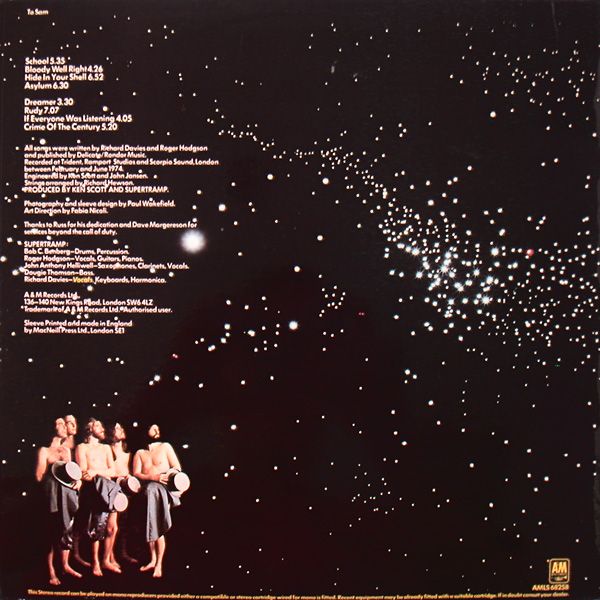
MOTORPSYCHO-DEMON BOX.
MOTORPSYCHO-DEMON BOX.
Not many groups enjoy the longevity that Motorpsycho have. This year, Motorpsycho,who are one of Norway’s most successful bands, celebrate their twenty-fifth anniversary. They’ve come a long way since were formed in Trondheim back in 1989.
Originally, Motorpsycho were alternative metal band. However, before long, Motorpsycho’s music evolved. They began to fuse grunge with heavy metal and indie rock. Having found their own sound, it was time for Motorpsycho to release their debut album
Motorpsycho’s debut album was Lobotomizer. It was released in 1991, to widespread critical acclaim. Suddenly, great things were forecast for Motorpsycho. The future looked bright for Motorpsycho.
A year later, things looked very different. In August 1992, Motorpsycho released their single 3 Songs For Rut. However, it didn’t received the same critical acclaim as Lobotomizer. That’s despite Motorpsycho adding sonic scientist Helge “Deathprod” Sten to their lineup. Deathprod’s sonic noise experiments moved Motorpsycho’s music in a different direction. So as 1992 drew to a close, Motorpsycho knew that 1993 was going to be a pivotal year in their career.
The problem was, Motorpsycho’s contract was almost at an end. They only “owed” their record company one more album. It was a case of win or bust. Motorpsycho were up against it. This brought out the best in Motorpsycho.
In December 1992, Motorpsycho headed to Bragga Studios, where they recorded one of the most ambitious Norwegian albums of the nineties. This was Demon Box, a seventeen track double album. It was released in 1993 and proved to be a career defining album. Demon Box was received to the same critical acclaim as Lobotomizer. Motorpsycho were hailed as one of the most innovative and progressive Norwegian groups. This proved to be the case.
After Demon Box, Motorpsycho became a musical institution. They’ve released over twenty-albums. That’s no mean feat. After all how many bands average an album a year? Not many. What makes this all the more remarkable, is that Motorpsycho have established a reputation as group who constantly reinvent themselves, and their music. However, Motorpsycho’s career might have been cut short had they not released Demon Box in 1993.
Given Demon Box has played such an important part in the rise and rise of Motorpsycho, it’s fitting that Rune Grammofon have just reissued Demon Box as a five CD box set. The first two discs, Demon Box Volume 1 and 2, feature 1993s landmark Demon Box album. The A and B side feature on disc one, while sides C and D feature on disc two. Disc three is entitled Demon Box Volume 3, features the Mountain E.P. and Another Ugly E.P. The fourth disc, Demon Box Volume 4, is entitled The Ones That Got Away-Rarities, Outtakes and Live Recordings. The fifth disc, Demon Box Volume 5, is a DVD, which features Motorpsycho live in concert at the Vera club, on 19th September 1993. Just like the previous Demon Box’s four discs, Demon Box Volume 5 is a snapshot of Motorpsycho evolving and maturing as a band. You’ll realise that, when I tell you about Demon Box.
Lobotomizer.
Back in December 1992, Motorpsycho’s career was at a crossroads. Their debut album Lobotomizer was released to widespread critical acclaim. Great things were forecast for the Trondheim based group.
A year later, in 1992, Motorpsycho released their single 3 Songs For Rut. It didn’t receive the same reception as Lobotomizer. Gone was the critical acclaim. For Motorpsycho, self doubt entered the equation. Everything had been going so well.
They’d been together since 1989. That’s when vocalist and bassist Bent Sæther, guitarist Hans Magnus “Snah” Ryan and drummer Kjell Runar “Killer” Jenssen formed Motorpsycho. They named the group after watching a triple bill of Russ Meyer films. A year later in Motorpsycho recorded their debut album.
Recording of six of the tracks on Lobotomizer took place in December 1990 at the Warehouse, Oslo. The two other tracks, Eternity and Lobotomizer recorded at Studentradioen, March 1991. The album was released to critical acclaim later in 1991. Motorpsycho were hailed as the future of Norwegian music.
Motorpsycho approached 1992 with a spring in their step. Sadly, things didn’t go to plan. Their single 3 Songs For Rut. It didn’t receive the same reception as Lobotomizer. Neither did Motorpsycho’s mini-album Soothe. It featured new drummer Håkon Gebhardt, who had replaced original Kjell Runar “Killer” Jenssen. Considering this was Håkon Gebhardt’s Motorpsycho debut, it was a disappointing time. However, with the addition of another new member, Motorpsycho’s career got back on track.
Sonic scientist Helge “Deathprod” Sten became the latest addition to Motorpsycho’s lineup. Deathprod’s sonic noise experiments moved Motorpsycho’s music in a different direction as they pondered their next move. This would be an ambitious double album Demon Box.
Demon Box Volume One-Sides A and B.
Motorpsycho had only one role of the dice left. Their contract with Voices Of Wonder was almost up. They owed the record company one more album. In such a situation, most groups would’ve tried to replicate Lobotomizer. Not Motorpsycho. Instead, they moved their music in a new direction creating an ambitious, innovative double album, Demon Box.
Recording of Demon Box took place in December 1992. On a number of tracks, Motorpsycho brought in a few musical friends. Their job was augmenting Motorpsycho’s sound. This eclectic selection of instruments included a sitar, violin, mellotron, ARP, synth bass, percussion, audio virus and organ. Motorpsycho it seemed, were in the process of crafting a very different, and innovative album, one that saw their music progress in new directions.
After mastering took place in January 1993, Demon Box was released later in 1993. Motorpsycho hit the jackpot. Demon Box received plaudits from critics and cultural commentators. They couldn’t praise Demon Box highly enough. It seemed Motorpsycho’s brave, ambitious plan had worked. By reinventing their music, critical acclaim came Motorpsycho’s way. Their sophomore album, Demon Box, was a career defining album.
The first thing that strikes you about the sixteen tracks on Demon Box, Motorpsycho’s 1993 double album, is its sheer eclecticism. Motorpsycho draw inspiration from a wide variety of sources. Everything from avant-garde, electronica, folk, free jazz, grunge, heavy metal, indie rock, jazz, Krautrock, psychedelia and rock shine through on Demon Box. Often, there’s only the merest of glimpses of these influences. However, they’re there, and make Demon Box a captivating, innovative and progressive album that launched the career of Motorpsycho. That’s the case from the get-go.
The folk-tinged Waiting For The One opens Demon Box. It’s a captivating and beautiful mixture of Celtic and folk music. There’s more than a nod to Canadian folk-rock legend Neil Young. Motorpsycho admit to this. This acoustic version of Waiting For The One opens Demon Box, and has you anticipating the rest of the album.
Nothing To Say has a much more rocky sound. Slow and moody, elements of classic rock, grunge and heavy metal. This continues on Feedtime, where Motorpsycho unleash their machine gun guitars, thunderous rhythm section and a vocal powerhouse from Bent. The power trio kick out the jams, and with a little help from their friends, move Demon Box in the direction of hardcore and post-grunge. This continues on Gutwrench, five minutes of feedback, power, anger and frustration. Trondheim’s angry young men unleash a dark, dramatic, opus. Then they change tack, and become a different band.
While Sunchild sees Motorpsycho continue in a similar vein, the music is much more melodic. There’s also a sixties, lysergic twist, as the track heads in the direction of psychedelia. Mountain also a has a sixties psychedelic sound. That’s still to come on this eleven minute magical mystery tour. Before that, influences and genres interweave. Blues, classic rock, heavy metal, jazz, psychedelia and rock melt into one as Motorpsycho showcase their considerable skills.
Tuesday Morning features a very different side of Motorpsyho. It’s understated, melodic, trippy, futuristic and experimental. Partly, that’s down to sonic scientist Helge “Deathprod” Sten, who helps transform Motorpsycho into Norway’s answer to early Pink Floyd. All Is Loneliness closes Volume 1 of Demon Box. It sees the understated sound continue. It’s another acoustic, folk-tinged track, where guitars drive the arrangement along and a despairing vocal soar above the arrangement. Pain and hurt shines through on this cry for help, as it reaches a dramatic crescendo.
Volume 2-Sides C and D.
Just like Volume 1, Volume 2 of Demon Box opens with another acoustic track Come On In. It has a late-sixties, early-seventies singer-songwriter sound. There’s even a Laurel Canyon influence on a beautiful, needy ballad. After that, we climb back aboard the magical mystery tour.
Dark, eerie and gothic describes Step Inside Again. It’s akin to a homage to Led Zeppelin and Alistair Crowley. Haunting, disturbing and compelling, Motorpsycho continue to throw curveballs a plenty. This continues on a Demon Box, a seventeen minute epic. Again, it’s a journey through musical genres. From understated and experimental, Motorpsycho take Demon Box in the direction of classic rock and heavy metal. Later, the track takes on a futuristic, cinematic sound. It’s as if Motorpsycho had been asked to rewrite the score to Flash Gordon. Drama descends before the track returns to its fusion of classic rock, hardcore heavy metal. Babylon is another hard rocking track. There’s shades of Black Sabbath as Motorpsycho power their way through three minutes of heavy metal and post grunge. After a couple of hard rocking tracks, it’s time for a change.
This comes courtesy of and Mr. Who. It has a lo-fi, experimental, folk tinged, innovative sound. After this intermission, Motorpsycho launch into the melodic, hook heavy, rocky track Junior. It’s an anthemic tale of love lost. By now, Demon Box is like Forest Gump’s box of chocolates, you never know what you’re gonna get.
That’s apparent on Plan #1. From an lysergic, futuristic introduction Plan #1 takes on a rocky hue. This is Motorpsycho doing what they do best, innovating. They go on to create their unique brand of heavy rock. Gradually, Plan #1 reveals its futuristic, dramatic sound and many secrets. Sheer Profoundity sees a continuation of Motorpsycho’s hard rocking sound. Here, Bent’s vocal is not unlike Primal Scream Therapy. As he unleashes a howling, despairing vocal, machine gun guitars and the rhythm section drive the arrangement to its rocky crescendo. Closing Volume 2 of Demon Box is The One Who Went Away, a another melodic tale of love gone wrong. It’s accompanied by a swaggering arrangement. When the two are combined, this is one of Motorpsycho’s most melodic and anthemic tracks. This ensures the Demon Box album closes on a high. That, however, isn’t the end of the Demon Box box set.
Volume 3-Mountain E.P. and Another Ugly E.P.
It wasn’t just the Demon Box that Motorpsycho released during 1993. No. They released two E.P.s, the Mountain E.P. and Another Ugly E.P.
The Mountain E.P. was released first. It’s a five track E.P., which showcases Motorpsycho’s eclectic and pioneering sound. Mountain, the title-track opens the E.P, and finds Motorpsycho at their hard rocking best.
From there, Flesh Harrower is a fusion of heavy metal, hardcore and post grunge. The House At Poneill Corners has a dark, broody, rocky sound. There’s a real seventies sound, as elements of classic rock and prog rock shine through. Viscount GriSnah is very different from the previous tracks. It has a much more understated, experimental and avant-garde sound, as Motorpsycho become sonic explorers. Sister Confused closes the Mountain E.P. Again, Motorpsycho become musical chameleons, as they deliver a quite beautiful acoustic ballad.
Later in 1993, Motorpsycho released their Another Ugly E.P. It featured five tracks recorded in the studio and a live version of Home Of The Brave.
Another Ugly Tune opens the Another Ugly E.P. It’s a melodic, hook heavy fusion of indie rock and classic rock. Whatching You sees Motorpsycho return to their trademark fusion of heavy metal, hardcore and post grunge. Again, hooks haven’t been spared, as blazing guitars, feedback and a thundering rhythm section accompany Hans’ blistering vocal. After this, the Another Ugly E.P. takes a few twists and turns.
She Used To Be A Twin has a much more laid back sound. Elements of country-rock and Southern Rock combine with searing guitars another of Another Ugly E.P.’s highlights. Following She Used To Be A Twin, pay homage to two of their musical inspirations.
Summertime Is Here is a cover of Uncle Larry’s 1972 hit single. It references Sgt. Peppers Lonely Hearts Club Band and Steve Harley’s Come Up and See Me. There’s even a nod to the Beach Boys and Queen on a track where Motorpsycho are at their innovative and creative best. Closing Another Ugly E.P. is Motorhead Mama, Motorpsycho’s homage to Lemmy and Co.
Volume 4-The Ones That Got Away-Rarities, Outtakes and Live Recordings
The fourth and final CD in Demon Box, the the five disc box set, is Volume 4-The Ones That Got Away-Rarities, Outtakes and Live Recordings. This will really appeal to anyone who has followed Motorpsycho’s career closely. The sixteen tracks see Motorpsycho evolving and maturing as a band.
This is apparent on unreleased tracks like Cherry Red, The Sift and You Gave It All Away, one of my favourite tracks on Volume 4. These tracks were recorded during 1992. In the case of You Gave It All Away, another version featured on Demon Box in 1993. There’s also early versions of Demon Box, Come On In and Sheer Profoundity from Demon Box. They would later become favourites of Motorpsycho and their fans.
Some of these tracks reappear later in Volume 4. Live versions of Sheer Profoundity and Demon Box sit side by side with a cover of the Grateful Dead track Manson’s Children. These are just three tracks of the four live tracks on Volume 4-The Ones That Got Away-Rarities, Outtakes and Live Recordings, which will appeal to both veterans of, and newcomers to, Motorpsycho’s music.
Volume 5-Vera 19 September 1993.
After a tantalising taste of Motorpsycho live on Volume 4, Volume 5 is a DVD of the band live. This was recorded at the Vera club in Gronigen, on 19th September 1993. It was filmed on just one camera. However, this warts and all performance captures the sound and spirit of Motorpsycho. They’re at their hard rocking best, and is a reminder of Motorpsycho four years into their twenty-five year career. After this, Motorpsycho would recored over twenty albums, and became one of Norway’s most successful bands.
Earlier this year, Motorpsycho released Behind The Sun, the latest in a long line of critically acclaimed albums. Behind The Sun shows how Motorpsycho have evolved and matured as a band. It was released twenty-one years after Motorpsycho released Demon Box. It’s a tantalising taste of what Motorpsycho would become.
Demon Box, Motorpsycho’s 1993 sophomore album, proved to be a career defining album for Motorpsycho. It was released to the same critical acclaim as their 1991 debut album Lobotomizer. On Demon Box, Motorpsycho create their own unique brand of genre-melting music. Everything from avant-garde, blues, classic rock, electronica, experimental, folk, free jazz, heavy metal, jazz, post grunge, psychedelia and rock are combined. However, for much of Demon Box, Motorpsycho are at their hard rocking best. They seem to be inspired by Black Sabbath, Led Zeppelin and Motorhead. That’s not all. Pink Floyd, Neil Young, Queen, The Beatles, Grateful Dead and Beach Boys all seem to have influenced Motorpsycho. This myriad of musical genres and influences resulted in a career defining album. After Demon Box, there was no stopping Motorpsycho.
Since the release of Demon Box in 1993, Motorpsycho have established a reputation as one of Norway’s most successful bands. Now Motorpsycho are Norwegian rock royalty. They’re a musical institution not just in Norway, but across Europe and much further afield. However, this was because Motorpsycho had the courage of their convictions.
That meant releasing a seventeen track, genre-melting double album, Demon Box. That took courage. If this gamble had backfired, Motorpsycho’s career could’ve been cut short. Thankfully, that wasn’t the case. Motorpsycho survived to tell the tale and thrive. Over twenty albums later, and Demon Box, which has just been released a five disc box set by Rune Grammofon. It was the album that launched the career of Motorpsycho. Demon Box, was an ambitious, innovative, genre-melting album; one that proved to be a career defining album for Motorpsycho; who went on to enjoy a twenty-five year career where commercial success and critical acclaim have been ever-present.
MOTORPSYCHO-DEMON BOX.
SPEAK EASY THE RPM RECORDS STORY VOLUME 2 1954-1957.
SPEAK EASY THE RPM RECORDS STORY VOLUME 2 1954-1957.
RPM Records was founded by Hollywood based, musical entrepreneur, Jules Bihari, in 1949. This was the second subsidiary of Modern Records, which Jules had founded with his brothers Saul, Joe and Lester in 1944. A year later, Modern Records enjoyed its first hit single.
This came courtesy of Hadda Brooke, who Modern Music billed as the Queen Of The Boogie. Hadda provided Modern Music with their first commercially successful single, Swinging The Boogie. Released in 1945, this paved the way for the commercial success that followed. Three years later, in 1948, Modern Music changed its name to Modern Records. By then, Modern Records had become one of the most successful independent labels.
By 1948, Modern Records were releasing so many singles that it was becoming difficult to get all their records played on radio. Radio stations were wary of playing too many records by the same label. They were scared they’d be accused of accepting payola. For labels like Modern Records, this presented a problem. So they had to work out a way round the problem.
Their way of doing this, was to setup a subsidiary company. Often this subsidiary company only released one type of music, like blues or R&B. Modern Records’ first subsidiary company was Colonial. It was founded in 1948. A year later, Modern Records founded their second imprint RPM Records.
Founded in 1949, RPM Records would release its first releases in 1950. Part of RPM Records’ success, was a talent scout called Sam Phillips. He brought RPM Records blues legends B.B. King, Howlin’ Wolf and Lightnin’ Hopkins. Sam also brought Rosco Gordon. He was part of RPM Records until 1952, when he fell out with the Biharis. After that, Sam Phillips founded his own label Sun Records. However, in 1950, RPM Records was just about to release its first singles.
RPM Records’ first releases included Austin McCoy’s cover of Jack Holmes Happy Payday. This was the start of the rise and rise of RPM Records, which back in August 2014, was documented on Ace Records’ No More Doggin’-The RPM Records Story Volume 1 1950-53. Four months later, and Ace Records have just released the followup, Speak Easy The RPM Records Story Volume 2 1954-1957.
Speak Easy The RPM Records Story Volume 2 1954-1957 is a two CD set, featuring a massive fifty-four tracks. This includes blues, R&B and rockabilly. There’s contributions from B.B. King, Johnny “Guitar” Watson, Joe Houston, Donna Hightower, Little “George” Smith, The Jacks and Don Cole. Twenty-six of the fifty-five tracks have never been released before. They make their debut on Speak Easy The RPM Records Story Volume 2 1954-1957, which I’ll tell pick some of the highlights of.
My first choice from Speak Easy The RPM Records Story Volume 2 1954-1957 is the track that opens disc one, is from the first major group to sign to RPM Records, The Meadowlarks. They contribute two tracks. Real Pretty Mamma is the first. The version included isn’t the original version. Instead, it’s Take 3 of a single, they recorded at a session on 5th December 1953. Real Pretty Mama was released as a single in 1954. So was Pass The Gin, which was recorded at the same session. Both tracks feature tenor Don Julian on lead vocals. He played an important part in The Meadowlarks’ twenty year recording career.
Pianist Connie Mack Booker’s Love Me Pretty Baby was also recorded during December 1953. However, the sessions took place in Houston, where he recorded two takes of Love Me Pretty Baby. The version included is Take 1, which features some blistering, bluesy guitar licks. This inspires Connie, who unleashes a vocal powerhouse, on what proved to be his musical swans-song.
B.B. King features eight times on Speak Easy The RPM Records Story Volume 2 1954-1957. Back then, he was billed as B.B. ‘Blues Boy’ King and His Orchestra. Most of the tracks are alternate takes. This includes his 1954 single You Upset Me Baby, which reached number one. Its B-Side You Upset Me Baby, then reached number eight. Three years later, B. B. King released I Wonder in 1957. The version on Speak Easy The RPM Records Story Volume 2 1954-1957 is the original version. It shows how B.B. King had matured as a musician in three short years. There’s also an unreleased alternate take of the B.B. King classic Every Day I Have The Blues, plus unreleased takes of Sweet Little Angel and Bim Bam. These tracks show B.B. King evolving and maturing as musician. Listening to these tracks, it no surprise that B.B. King went on to enjoy a long and illustrious career.
In December 1954, Buddy Milton and The Twilighters released the William Curry penned O O Wah as a single. This was their second single for RPM Records. Quite simply, this hidden gem is an irresistible reminder of another musical age, where elements of jazz, doo wop and R&B combine seamlessly.
Just like B.B. King, Johnny “Guitar” Watson cut his musical teeth at RPM Records. His RPM debut was Hot Little Mama, which was released in 1955. It’s delicious, driving slice of R&B. That’s apparent from the alternate take of Hot Little Mama on Speak Easy The RPM Records Story Volume 2 1954-1957. The followup to Hot Little Mama, Too Tired is also included. Again, it’s an alternate take, which features Johnny’s trademark guitar licks. There’s also alternate takes of Johnny’s first hit single Those Lonely, Lonely Nights. It was released in 1956. Six years later, RPM released Ruben. This alternate take was first released in 1962. A stomping fusion of blues and R&B, it’s a welcome addition. So is the alternate take of She Moves Me, which features a future guitar great honing his sound.
Arthur Lee Maye and The Crowns’s Truly was a released as a single in 1955. It’s a heartfelt doo wop track. Sadly, just like Arthur Lee Maye and The Crowns’ other singles, they failed commercially. Partly, that’s down to Arthur enjoying a parallel career as a baseball player. Without his “other career,” it’s thought Arthur Lee could’ve been destined for greatness.
Before signing to RPM, Little George’ Smith played harmonica in Muddy Waters’ band. After he left Muddy’s employ, Little George’ Smith signed to RPM. His RPM debut his 1955 single Blues In The Dark. It features a harmonica masterclass from the man crowned the “Harmonica King.” No wonder. He’s one of the best harmonica players of the fifties. That’s apparent on the followup to Blues In The Dark, Oopin’ Doopin’ Doopin.’ On this alternate take of Oopin’ Doopin’ Doopin,’ Little George’ Smith switches between harmonica and lead vocal, showing just why he was crowned the “Harmonica King.” A year later, George released Cross-Eyed Suzzie Lee and then Down In New Orleans as singles. They further enhanced the Harmonica King’s reputation as a rising star.
Not only did Donna Hightower enjoy a solo career at RPM, but she sang backing vocals for a number of artists. She was RPM Records’ leading lady. That’s until Etta James signed to RPM Records. After that, Donna’s career stalled when the Biharis concentrated their efforts on Etta James. That’s despite Donna being a talented singer. Three of her tracks feature on Speak Easy The RPM Records Story Volume 2 1954-1957. Dog Gone It was a single Donna Hightower recorded with Maxwell Davis and His Orchestra. It was released in 1955. Hands Off was released as a single later in 1955. An alternate take of He’s My Baby is Donna’s other contribution. It’s a reminder of RPM Records’ original first lady.
Eddy Lang delivers what can only be described as a soul-baring vocal on I’m All Alone. It was released as a single in 1956. Later that year, Eddy released You Got To Crawl Before You Walk as a single. It’s a much more uptempo slice of R&B. Two things remains the same though, the quality and Eddy’s still unlucky in love.
The Jacks’ had a dual career. They recorded for Modern as The Cadets, and for RPM Records as The Jacks. Mostly, The Cadets’ music was ballads. This was very different from the music The Jacks released. Much of it was uptempo tracks, like their 1956 single Sugar Baby. It’s irresistible and hook laden. That’s no surprise. Bass singer Will “Dub” Jones would later join The Coasters. Later in 1956, The Jacks released the heart wrenching ballad Why Don’t You Write Me? It features a vocal masterclass from lead singer Aaron Collins, whose sisters were The Teen Queens.
Rosie and Betty Collins were The Teen Queens. Their harmonies made can be heard on their debut single, Eddie My Love. It have them a hit single, reaching number fourteen in the US Billboard 200 and number two in the US R&B charts. Billy Boy was The Teen Queens’ sophomore single. The version included on Speak Easy The RPM Records Story Volume 2 1954-1957 is an alternate take. That’s the case with Rock Everybody, The Teen Queens’ third single. It sees their music head in a different direction. Sadly, Rock Everybody wasn’t a commercial success. That was the end of The Teen Queens’ commercial success. Their most memorable moments were Eddie My Love and Billy Boy.
The futuristic sounding Pat Cupp and The Flying Saucers are my final choice from Speak Easy The RPM Records Story Volume 2 1954-1957. They were discovered by Jules Bihari in Shreveport, Louisiana. He was so impressed with what he heard, that he sent signed them straight away to record some of Pat’s songs. This included Pat Cupp and The Flying Saucers’ debut single Do Me No Wrong. It was released as a single in 1956. The followup was Long Gone Daddy. Sadly, neither were the commercial success Joe expected. As a result, RPM Pat Cupp never became the rival to Elvis that Jules Bihari envisaged.
Although I’ve only mentioned thirty of the fifty-four tracks on Speak Easy The RPM Records Story Volume 2 1954-1957, there’s many more musical delights awaiting discovery. Singles and hidden gems rub shoulders on Speak Easy The RPM Records Story Volume 2 1954-1957’s two discs. This includes tracks from Don Cole, The Jewels, Richard Berry, Vido Musso and Preacher Stephens and His Orchestra. They’re just a few of the artists that were signed to RPM Records between 1954 and 1957. During that period, RPM Records was one of the most successful independent labels of that era. That’s no surprise.
Jules Bihari was able to find talented artists. He also surrounded himself with talent spotters. Some of them already had successful track records. They became Joe’s ears and had an enviable track record, signing a young B.B. King and Johnny “Guitar” Watson. Both artists would go on to enjoy long and successful careers. However, there’s much more to RPM Records than two artists.
That’s apparent when you listen to Speak Easy The RPM Records Story Volume 2 1954-1957, which was recently released by Ace Records. Just like the first volume in the series, No More Doggin’-The RPM Records Story Volume 1 1950-53, it documents the rise and rise of RPM Records, Jules Bihari’s “second” label.
SPEAK EASY THE RPM RECORDS STORY VOLUME 2 1954-1957.
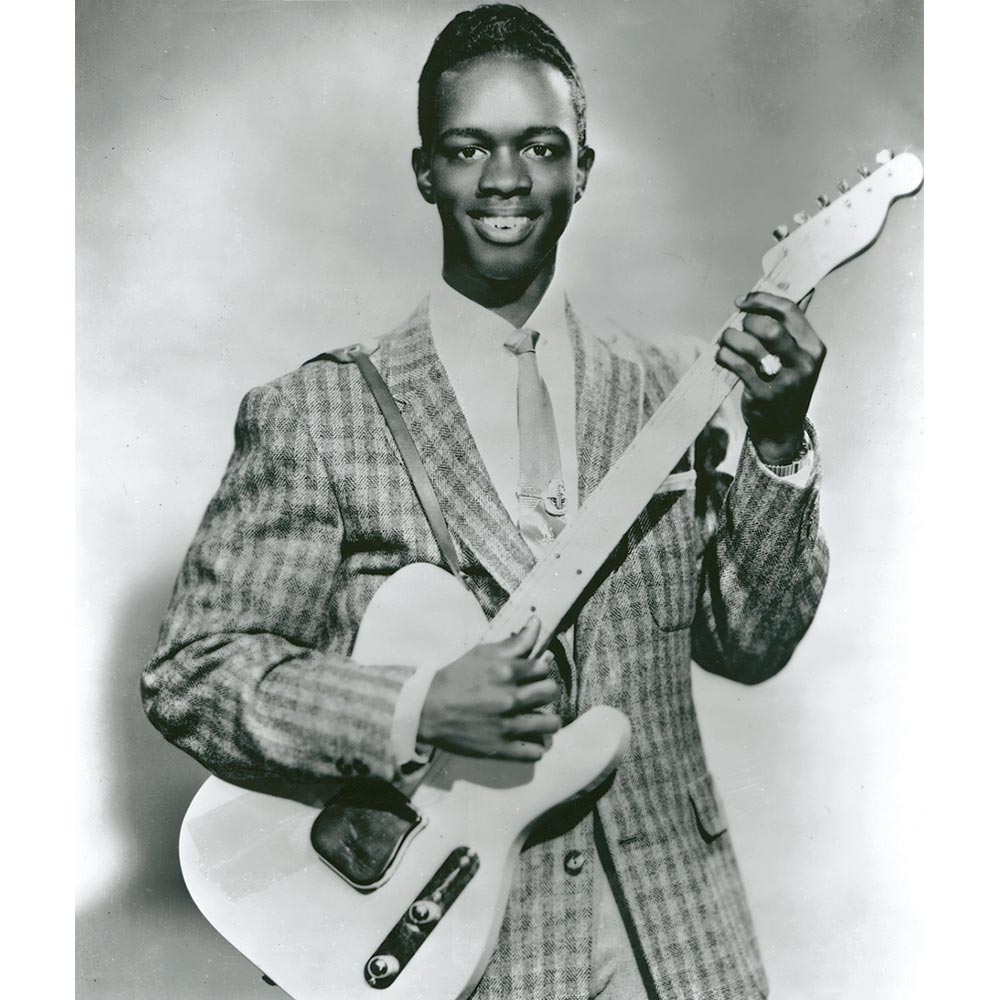
POWDER-KA POW! AN EXPLOSIVE COLLECTION 1967-1968.
POWDER-KA POW! AN EXPLOSIVE COLLECTION 1967-1968.
Usually, American music influences the rest of the world. That’s definitely been the case with British music. Where American music headed, British music tended to follow. In 1964, however, American music was influenced by British music.
The British Invasion of 1964, had a huge affect on American music. By 1964, somewhat belatedly, America “got” The Beatles and Rolling Stones. They were the first of the British groups who would influence American music. For the rest of the sixties, The Who, Cream, The Yardbirds and Led Zeppelin became flavour of the month in America. Many American musicians became Anglophiles. They listened to, and modelled their sound on British music. This included Rich and Tom Martin.
The Martin brothers started of listening to groups like The Beatles and Rolling Stones. Gradually, though, they started to dig deeper. They discovered the music of The Who, The Small Faces and The Zombies. This music influenced the music of their bands Powder and The Art Collection. Their music is celebrated on Powder-Ka Pow! An Explosive Collection 1967-1968, which was recently released by Big Beat Records, an imprint of Ace Records. Rich and Tom Martin’s story began in Ohio.
Tom Martin was born in Ohio, in 1945. Three years later, Rich Martin was born. Growing up, the Martin family moved to San Francisco. That’s where Rich discovered the music of Duanne Eddy. Soon, he was learning to play the guitar. By the time Rich was in Hillsdale High School, he was playing with The Impressions, a R&B group. Not long after this, Tom joined on rhythm guitar. The Impressions became The New Impressions, a surf band. This was the Martin brothers’ first involvement in music.
Soon, music would become the most important thing in Rich and Tom Martin’s life. They practised hard, honing their sound. This paid off, when The New Impressions gained their first residency at Big Al’s Gas House. However, by then, The New Impressions’ sound was evolving. It had been influenced by the British Invasion. Soon, The New Impressions became the Newcastle Five.
As the Newcastle Five were born, drummer Bill Schoppe, who was previously a member of The Bedouins, joined. Despite the new sound, the Newcastle Five kept their residency at Big Al’s Gas House. They combined a British Invasion sound with surf and R&B. Around this time, Lydia Pense joined as lead vocalist.
Lydia featured on the Newcastle Five’s audition for Fantasy Records. This took place in November 1965. By early 1966, Lydia had left the Newcastle Five. After that, the group’s lineup changed a number of times. So did their sound.
The Newcastle Five took to covering obscure British Invasion songs. They also took to wearing Carnaby Street clothes. It seemed that the Newcastle Five were dedicated followers of fashion. However, they didn’t seem to be taking the band seriously. Then in the autumn of 1966, Ray Columbus, a New Zealander, entered the Newcastle Five’s world.
Ray Columbus had enjoyed a successful career in Australasia. He’d enjoyed international hits with She’s A Mod and ‘Till We Kissed. However, Ray wanted to embark upon a solo career. His American wife thought that San Francisco would be a good place for his solo career to begin. The only problem was, Ray needed a backing band. That’s where the Newcastle Five came in.
Ray Arbulich arranged for the Newcastle Five to meet Ray Columbus. After discussions with Ray, and his manager Ken Roed, the Newcastle Five became Ray’s backing band. He named his new backing band The Art Collection.
The Art Collection, Ray decided, would open for him, then become his backing band. However, Ray thought it was a good idea for The Art Collection to dress up like Henry VIII. This didn’t go down well with The Art Collection. Neither did Ray’s suggestion that The Art Collection take snuff onstage. Despite these teething troubles, Ray proved to be the consummate professional, with The Art Collection learning a lot from him. This included about recording.
It was 7th January 1967, that Ray Columbus and The Art Collection entered the recording studio to record She’s A Mod and Kick Me. Of the two tracks, Kick Me was chosen as the single. Not long after the recording session, Steve Chriest left The Art Collection.
Steve was replaced by Steve Murdoch, who previously, had been a member of the Lord Jim Quintet. He made his debut at The Art Collection’s latest residency at the Donavon Reef club. The residency began on 13th January 1967, and lasted right through to early March, when Ray Columbus and The Art Collection backed The Turtles on the 3rd and 4th March 1967. However, during the residency further recording sessions took place.
It was during these sessions, that Ray Columbus and The Art Collection recorded Snap, Crackle and Pop and Kick Me (I Think I’m Dreaming), which both feature on Powder-Ka Pow! An Explosive Collection 1967-1968. These are just a couple of the tracks recorded at the session. The band had high hopes for Snap, Crackle and Pop. They felt it had a commercial sound, and had the potential to give Ray Columbus and The Art Collection their breakthrough single. During these sessions, The Art Collection took the opportunity to record some tracks.
The Art Collection had a new vocalist. Scott Arbulich, who played a part in introducing Ray Columbus and The Art Collection, made his debut at these sessions. Among the tracks recorded, were Morning, She’s My Girl, I’m a Boy and You’re a Girl and Oh So Sad About Us. These four tracks are among the seven tracks from The Art Collection on Powder-Ka Pow! An Explosive Collection 1967-1968. After the recording sessions and opening for The Turtles, The Art Collection opened for another British Invasion band.
Eric Burdon and The Animals played in the San Francisco Civic Centre on 21st March 1967. The Art Collection were booked as opening act. Midway through their set, they were told Eric Burdon and The Animals wanted to start their set. This meant The Art Collection’s set was curtailed. So was Ray Columbus and The Art Collection time together.
After playing together through part of 1967, Ray Columbus and The Art Collection went their own way. Eventually, Ray returned to New Zealand, enjoying a long and successful career. Meanwhile, The Art Collection continued as a quartet.
After a failed audition for Charlie Green, one of Sonny and Cher’s managers, Sonny Bono heard The Art Collection. He asked them to accompany them on a tour. The Art Collection agreed and looked forward to playing with such experienced musicians. However, after two shows, there was a problem.
After playing their first two shows opening for Sonny and Cher, Steve Murdoch and Steve Arbulich left The Art Collection. One of the problems was Scott Murdoch’s singing style. Danny Phay, formerly of the Chocolate Watchband became vocalist. Tom Martin moved to bass and Bill Schoppe returned as drummer. This wasn’t the end of the changes. The Art Collection became Powder.
The newly named Powder found the tour a learning experience. By the time the tour hit the East Coast, Powder were flourishing. Playing with such experienced musicians, and working with arranger Harold Baptiste inspired Powder. They’d grown and evolved as a band. So much so, that Powder were asked to audition for Mercury Records. However, instead Powder signed to Sonny and Cher’s management team. This proved not to be Powder’s best decision.
Having signed to Sonny and Cher’s management team, Harvey Gresky of the William Morris Agency, was given the job of looking after Powder. He decided they should enter the recording studios.
So Powder entered Gold Star studios on 6th October 1968. The venture was funded by Sonny, Joe and Harvey for Progress Productions. Dennis Pregnolato acted as producer, when Powder cut what’s best described as British Invasion influenced power-pop.
Thirteen of these tracks feature on Powder-Ka Pow! An Explosive Collection 1967-1968. Among the sessions highlights were Magical Jack, Grimbley Leitch, What the People Said and I Try. Flowers, Hate To See Her Go and the wistful Too Many Miles are a reminder of Powder’s potential. However, when the sessions were finished, Sonny Bono pitched the potential album to the wrong man.
Sonny choose to take Powder’s recording to Atlantic Records’ Ahmet Erteugen. However, he was better known for jazz, R&B and soul. Only later, would Atlantic Records become a rock label. Powder, however, were more a power-pop group. So, it’s no wonder Ahmet Erteugen didn’t show any interest in Powder. That however, wasn’t the only reason though.
Partly, Rich Martin believes, that’s because of the quality of sound. Powder were unfamiliar with the studio and its equipment. As a result, the recordings Powder believe, came out sounding like a demo. However, the thirteen tracks on Powder-Ka Pow! An Explosive Collection 1967-1968, are hook heavy, melodic power pop. Powder certainly weren’t lacking potential. Who knows what might have happened had Powder signed to Mercury Records, rather than Progress Productions. Maybe then, Powder’s progress might not have stalled.
Following the disappointment of the recording sessions, Sonny and Cher’s management team decided to concentrate on Chastity, a film starring Cher. Powder were meant to contribute some of the music. However, in early 1969, drummer Bill Schoppe quit Powder. He had decided to wander down the spiritual path that was proving popular in San Francisco. That proved to the beginning of the end for Powder.
Rich and Tom Martin decided to follow the sun. They headed for California, where they contemplated their future. On their return, the Martin brothers changed tack. When they returned, their music was much more thoughtful and understated. Eventually, they signed to Imperial Records and released She’s Got Love in 1969. She’s Got Love became a pop-psych classic, reaching number sixty-nine in the US Billboard 100. However, Rich and Tom’s new direction proved the end of Powder.
It had been a roller coaster ride of missed opportunities and what ifs? This had been the case since the days of The Art Collection, right through to the latter days of Powder. What if the partnership of Ray Columbus and The Art Collection had recorded more material? Would they have enjoyed that elusive hit single? Similarly, if after Ray went his own way, The Art Collection had taken a less laid back approach to their career, they might have made that long awaited breakthrough. They certainly weren’t lacking in talent. That’s apparent from the nine tracks from The Art Collection on Powder-Ka Pow! An Explosive Collection 1967-1968. These tracks show a band on the verge of a breakthrough. Sadly, it never came. That proved to be the case with Powder.
Just like The Art Collection, Powder didn’t lack talent. Far from it. Anyone who listens to the thirteen tracks from Powder on Powder-Ka Pow! An Explosive Collection 1967-1968, which was recently released by Big Beat, an imprint of Ace Records, will realise that. What hindered the potential rise and rise of Powder, was poor decision making.
Powder’s biggest mistake was turning down Mercury Records to sign for Sonny and Cher’s management team. That must have seemed like an opportunity of a lifetime. It proved not to be the case. The Progress Productions sessions are proof of this. Powder were sent into the studio without an experienced producer. Instead, Sonny and Cher’s road manager took charge. The sessions would’ve benefited from a producer. They could’ve transformed the sessions. After all, the Progress Productions’ sessions showcases a talented band. All that was needed was someone to guide them through the maze that is a debut album. Having said that, the tracks from Powder and The Art Collection on Powder on Powder-Ka Pow! An Explosive Collection 1967-1968, show that they could’ve and should’ve been contenders.
Both groups Powder and The Art Collection were capable of creating melodic, hook heavy, power pop. Lead by the Martin Brother, Powder and The Art Collection were inspired by the British Invasion. Groups like The Small Faces, The Who and The Zombies influenced Powder and The Art Collection. That’s apparent on Powder-Ka Pow! An Explosive Collection 1967-1968, which is a reminder of Powder and The Art Collective, two musical contenders who should’ve enjoyed more commercial success than they did.
POWDER-KA POW! AN EXPLOSIVE COLLECTION 1967-1968.


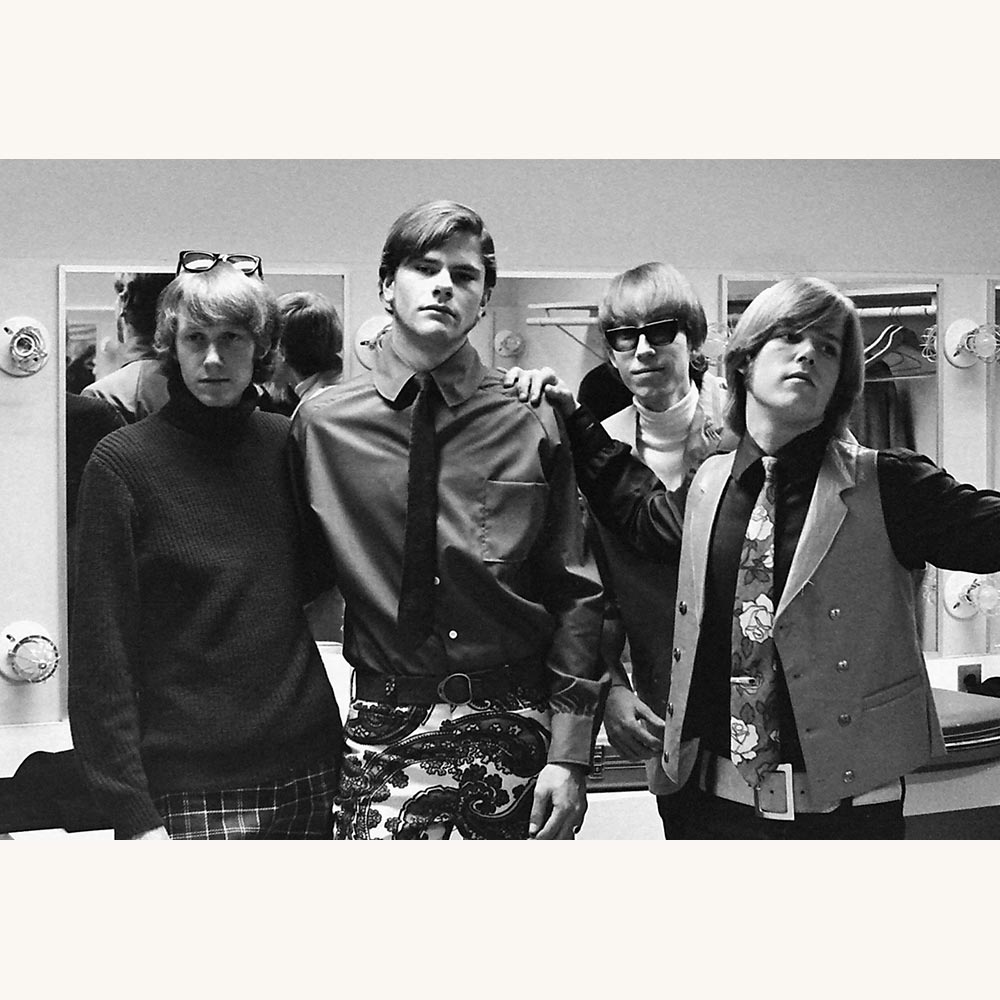
BOMBAY DISCO VOLUME 2.
BOMBAY DISCO VOLUME 2.
1979 was a landmark year in the history of disco. Suddenly, after being the musical flavour of the month for several years, disco sucked. In the space of a year, disco went from hero to zero. Disco’s downfall started on Christmas Eve 1978,
That’s when Steve Dahl was fired by Chicago radio station WDAI. It had previously been a rock station, but switched to disco. Steve wasn’t out of work long. He was hired by WLUP, a rival station. WLUP played rock, which suited Steve Dahl. He’d an inkling that disco wasn’t long for this world.
Steve wasn’t a fan of disco, and took to mocking disco on-air. Openly, he mocked WDAI’s “disco DAI.” It became “disco die” to to Steve. Soon, Steve had created the Insane Coho Lips, his very own anti-disco army. Along with cohost Gary Meier, they coined the now infamous slogan “Disco Sucks.” The backlash had begun.
From there, the Disco Sucks movement gathered momentum. Events were held all over America. This came to a head at Disco Demolition Derby, which was Steve Dahl’s latest anti-disco event. Each one was becoming bigger, rowdier and attracting even more publicity. Disco Demolition Derby, which was held at Comiskey Park, Chicago on 12th July 1979 surpassed everything that went before. WFUL were sponsoring a Chicago White Sox game at Comiskey Park. if fans brought with them a disco record, they’d get in for ninety-eight cents. These records would be blown up by Steve Dahl. An estimated crowd between 20-50,000 people attended. Quickly the event descended into chaos. Vinyl was thrown from the stands like frisbees. Then when Steve blew up the vinyl, fans stormed the pitch and rioted. Things got so bad, that the riot police were called. After the Disco Demolition Derby, disco nearly died.
Following Disco Derby Night, disco’s popularity plunged. Disco artists were dropped by major labels, disco labels folded and very few disco albums were released. Disco was on the critical list, and suffered a near death experience. It took a long time to recover. After disco’s demise, dance music changed.
No longer were record labels willing to throw money at dance music. Budgets were suddenly much smaller. Gone were the lavish productions of the disco orchestras of the seventies. This was epitomised by The Salsoul Orchestra and John Davis and The Monster Orchestra. Strings and horns were now a luxury. Music would have to go back to basics. Not in India, which was just discovering disco.
Somewhat belatedly, in 1979, India discovered disco. Bappi Lahiri had been caught up in the disco boom. However, it was the disco-lite diet of the Bee Gees, Abba and the dreaded Boney M that Bappi was weaned on. Some of this, would go onto influence him as a composer.
Bappi was a musical prodigy, who was born into a musical family. He grew up to become a songwriter, musician and musical director. Indeed, Bappi was the youngest musical director in India. He was a teenager when he started writing scores for Bengali films. His first success came with Chalte Chalte in 1975, when he was only twenty-two. Four years later, in 1979, Bappi got his big break.
By 1979, Bappi was twenty-six. He was already prolific composer, with a successful track record. That’s why the producer of Surakksha Gunmaster G9 approached Bappi. He told Bappi: “I want you to give me music like in Saturday Night Fever.” That’s what Bappi delivered. Bombay Disco had just been born.
Bombay Disco provided the soundtrack to just about ever Indian movie released during that period. Literally, Bombay disco provided the backdrop to dramas, historical epics, curry westerns and horror films. What had become known as Bombay Disco was disco, but given a unique, flamboyant twist. This meant disco that was funky, soulful and lavish, tinged with sitars, tablas and grandiose orchestras. Sometimes, the music was better than the film. Eventually, Bombay Disco became popular outside of India.
Crate diggers, DJs and record collectors discovered Bombay Disco. Before long, the music became not just popular, but collectable amongst discerning music loves. However, still, Bombay Disco, was regarded as one of music’s best kept secrets. Then in March 2014, Bombay Disco-Disco-Disco Hits From Hindi Films 1979-1985 was released by Cultures Of Soul Records. It featured thirteen slices of the finest Bombay Soul. Released to widespread critical acclaim, it’s no surprise that nine months later comes the followup, Bombay Disco Volume 2.
For Bombay Disco Volume 2, Brother Cleve has hit the crates again. He’s dug deeper than he’s ever dug before. Brother Cleve has dug deep into his record collection in search of forgotten classics and hidden gems. Eventually, Brother Cleve settled on a dozen Bombay Disco delights. This includes contributions from Sadhana Sargam, Ash Bhosle, Hridaynath Mangeshkar, Asha Bhosle and the Godfather of Bombay Disco, Bappi Lahiri. These are just a few of the artists on Bombay Disco Volume 2, which I’ll tell you about.
Opening Bombay Disco Volume 2 is Sadhana Sargam’s Saat Samundar Paar. It featured on the soundtrack to Vishwatma, which was released in 1992. By then, music was changing in India. The “traditional” Bombay Disco sound was evolving. There’s an eighties electro influence admits the fusion of funk, pop and soul. Sometimes, the track sounds like a homage to the Pet Shop Boys, as the Bombay Disco era closes.
Asha Bhosle’s Pass Aao Na was released back in 1982. It’s a track from the Sumbandh soundtrack which the the Godfather of Bombay Disco, Bappi Lahiri cowrote. The arrangement in much more understated, with hissing hi-hats reminiscent of a seventies Blaxploitation movie. After that, the track becomes dramatic, funky, soulful and sultry.
The drama continues on Aaya Sanam Aaya Deewana Tera. It comes courtesy of TeraKishore Kumar and Chorus. Released in 1982, composer Rahul Dev Burnam fuses Eastern, Indian and Western influences. To that, he adds a healthy dose of sound effects and sci-fi sounds. When all this is combined, the result is a cinematic track that’s variously dramatic, ethereal and orchestral.
Taqdeer Ka Badshah was the title-track to the 1982 soundtrack. It marks the return of the man who gave birth to Bombay Disco, Bappi Lahiri. Here, Bappi Lahiri and Chorus are responsible for a captivating eleven minute epic. It’s full of twists and turns. From an understated string laden arrangement, the track always threatens to explode into life. Having relentlessly teased and taunted the listener, this powder keg of an arrangement is unleashed, and explodes into life.
Five years after penning their first soundtrack, the Raamlaxaman partnership returned with the soundtrack to Tumhaare Bina. By 1982, Raam had died and had been replaced by Vijay Patil. Still, however, the Raamlaxaman name survived. Sweety Seventeen is a track from Behroze Chatterjee and Chorus, that featured on the Tumhaare Bina soundtrack. Jazzy, dance-floor friendly and with a nod to Abba’s Mamma Mia, Sweety Seventeen is a hidden, obscure Bombay Disco gem.
Disco, electro, funk and soul melt into one on Disco Music (Aka Are Dil Se Dil Mile). It’s a track by R D Burman, Chorus. R D Burman delivers what can only be described as a vocal powerhouse. His growling vocal sits atop a jazz-tinged vocal and is accompanied by braying horns. Then after two minutes, it’s all over. All you’re left with is the memory of this irresistible slice of Bombay Disco.
Just like the previous track, Hotel Mein Bottle, from the 1984 Pepi Petka Sawal Hai soundtrack, has a pulsating rhythm. It’s at the heart of the sound and success of this track from Sharda. Atop the arrangement, sits a wonderfully over the top vocal which is a homage to alcohol. Proof of this are lyrics like “come on have a drink, what is your spirit, Martini, Campari, Hennessey, Vodka, Champagne, Rum Sherry, Cognac.”
As Dance Music unfolds, Hridaynath Mangeshkar is responsible for an arrangement that wouldn’t sound out of place on a seventies Blaxploitation movie. Soon, it’s given a Bombay Disco twist. It’s disco, but not as we know it. Choppy drums, bubbling synths and percussion are added to the instrumental version of Idbar Aa Aa Bhi Ja. It was a huge hit single on its release in 1980. This instrumental is a genre-melting track, where Eastern, Indian and Western influences to create a dramatic, cinematic slice of Dance Music.
From the get go, Sharon Prabhakar, Parvati Khan and Ursula’s bursts joyously and melodically into life. Hooks certainly haven’t been spared. It’s taken from the soundtrack to Shart, which was released back in 1985. The pounding rhythm section, including an uber funky bass, drives the arrangement along. Searing guitar, stabs of horns and a Hammond organ join urgent harmonies from a trio of disco divas in creating one of the highlights of Bombay Disco Volume 2.
Asha Bhosle’s Jab Chaye was released back in 1980. It’s a track from the soundtrack Lootmaar. As the track unfolds, elements of classic disco and Bombay disco melt into one. Swathes of trademark strings dance sit above the rhythm section and bursts of scorching guitar. They provide the backdrop for Asha Bhosle’s diva-esque vocal, as she struts her way through the track.
Dramatic. That’s the only word that describes the introduction to Kumar Sanu, Jolly Mukherjee and Chorus’ Main Jaadugar. It sounds like the introduction to a Hollywood blockbuster. Instead, it’s from the Jaadugar soundtrack, which was released in 1989. After the dramatic introduction, neither the drama nor quality drops. Jolly Mukherjee and Chorus’ Bollywood soundtrack that’s up to Hollywood standards.
It’s fitting that a track from The Godfather of Bombay Disco, Bappi Lahiri, closes Bombay Disco Volume 2. He’s the man who founded the genre in 1979. Seven years later, in 1986, Bappi’s music was constantly evolving. He was determined not to produce formulaic music. Dance Music sees Bappi take advantage of the latest technology. Synths and drum machines are at the heart of the arrangement. So are stabs of horns, la-la-la harmonies and later, funky chiming guitars. They drive this two minute track to its glorious, dramatic crescendo.
Often, followups fail to live up to the first in a series. There’s often a good reason for this. The compiler has used their best tracks first time round. Not Brother Cleve, the compiler of Bombay Disco Volume 2. Somehow, Bombay Disco Volume 2 manages to surpass the quality of Bombay Disco-Disco-Disco Hits From Hindi Films 1979-1985. It was released back in March 2014. Nine months later, and Bombay Disco Volume 2 has been released by Cultures Of Soul Records. Quite simply, Bombay Disco Volume 2 oozes quality.
Bombay Disco Volume 2 is twelve tracks of hidden gems and long, forgotten Bombay Disco classics. Many of these tracks will be new to even the most dedicated and discerning fan of Bombay Disco. Compiler Brother Cleve has turned his back on the predictable and obvious tracks. That’s not for him. There’s a multitude of hidden gems awaiting discovery. It’s all just a matter of knowing where to dig, and having the patience and persistence. Brother Cleve has plenty patience and persistence. After all, many of the tracks on Bombay Disco Volume 2 have been long forgotten.
They were part of the soundtrack to dramas, historical epics, curry westerns and horror films. What had become known as Bombay Disco was disco, but given a unique, flamboyant twist. This meant disco that was funky, soulful and lavish. Songs were tinged with sitars, tablas and grandiose orchestras. Sometimes, the music was better than the film. Eventually, Bombay Disco became popular outside of India.
Eventually, crate diggers, DJs and record collectors somewhat belatedly, discovered Bombay Disco. Before long, the music became not just popular, but collectable amongst discerning music loves. However, still, Bombay Disco, was regarded as one of music’s best kept secrets. Not any more.
That’s thanks to labels like Cultures Of Soul Records and the two Bombay Disco compilation they’ve released during 2014. Thanks to Cultures Of Soul records, Bombay Disco is no longer one of music’s best kept secrets. Far from it. Bombay Disco-Disco-Disco Hits From Hindi Films 1979-1985 and Bombay Disco Volume 2 are the perfect introduction to what was previously, one of music’s best kept secrets.
BOMBAY DISCO VOLUME 2.
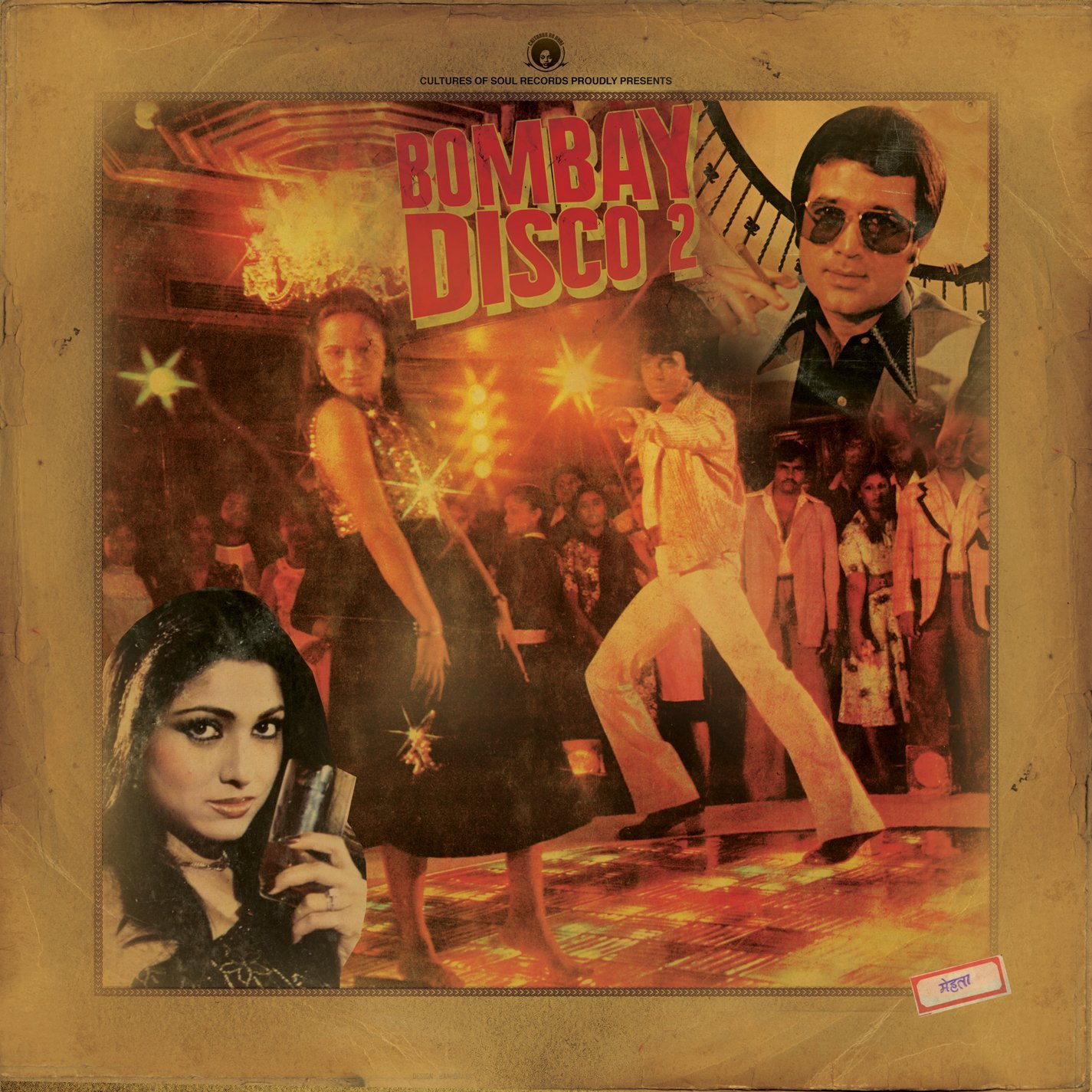

BONNIE DOBSON SINGS SHE’S LIKE A SWALLOW AND OTHER FOLK SONGS.
BONNIE DOBSON SINGS SHE’S LIKE A SWALLOW AND OTHER FOLK SONGS.
Bonnie Dobson’s career began during the early sixties folk boom. She had one of the most distinctive voices of the folk era. Clear and powerful, Bonnie’s distinctive voice breathed life, meaning and emotion into folk songs old and new. This included songs penned by Bonnie.
Amongst the best known songs Bonnie wrote are I’m Your Woman and Morning Dew, a folk rock standard. However, Morning Dew isn’t just a favourite of folk singers. No. It’s been covered by some of the biggest names in music. Everyone from Einstürzende Neubauten, Fred Neil, the Grateful Dead, Nazareth, the Jeff Beck Group, Robert Plant and The 31st of February have covered Morning Dew. It featured on Bonnie 1962 breakthrough, sophomore album Bonnie Dobson At Folk City. By then, Bonnie was well on her way to becoming one of the leading lights of the folk era. However, what looked like being a long and successful career was cut short.
As the seventies dawned, Bonnie withdrew from music. She moved to England in 1969, and retired from music. Bonnie decided to return to university, where she studied politics, philosophy and history. Academic life seemed to suit Bonnie.
Once she finished her degree, Bonnie ended up at working at the Philosophy Department of the University of London’s Birbeck College. That was home to Bonnie for the rest of her working life. By the time she retired, Bonnie was head of administration.
Now retired, Bonnie is busier than ever. She has just released her first new album for forty-five years. So, what better time for Ace Records to release Bonnie Dobson Sings Like A Swallow and Other Folk Songs. It was recently released by Big Beat, an imprint of Ace Records. Bonnie Dobson Sings Like A Swallow and Other Folk Songs is a celebration of Bonnie’s time at Prestige Records, when she was musical pioneer, who rubbed shoulders with Bob Dylan. Bonnie’s story begins in Toronto, Canada, in 1940.
It was on November 13th 1940, that Bonnie Dobson was born. Bonnie family would influence her future career. Her father was a trade unionist and Bonnie’s elder sister was a fan of folk music. By eleven, so was Bonnie.
Her first introduction to live folk music, was seeing Pete Seeger at summer camps in Ontario and Quebec. This was during the McCarthy era. Pete Seeger had been blacklisted after refusing to testify at the House Committee on Un-American Activities. He couldn’t work within America. So he headed to Canada, and soon became a popular draw. This included at summer camps. That’s where Bonnie first heard Pete Seeger.
Having attended the summer camps for a couple of years, eventually, Bonnie met Pete Seeger. This was a huge moment in her life. Pete Seeger was an important influence not just musically, but politically. Bonnie who was just thirteen, hooked. So was her sister.
Soon, Bonnie’s sister formed a folk group with her friends. They called their nascent group The Travellers. They were influenced by The Weavers and Pete Seeger, whose music was extremely political. For the daughter of a trade unionist, this struck a nerve.
Although Bonnie’s was only thirteen, she was already politically aware. Growing up, she was aware of the injustice that surrounded her. The union songs her father sung and Pete Seeger’s songs spoke to Bonnie, and for her. Soon, she would playing the folk songs she had heard other people sing.
Whilst still in high school, Bonnie was already singing in folk clubs. She accompanied herself on guitar. Then on Fridays, Bonnie would sing a folk song in school assembly. After graduating high school, Bonnie headed to university.
The University of Toronto was Bonnie destination. Despite being so politically aware, Bonnie enrolled on an English literature course. The course didn’t work out. Bonnie was deeply unhappy. Luckily, salvation came in the form of an invite to play at a folk club in Denver, Colorado.
So, in May 1960, Bonnie made her way to the Exodus Folk Club, in Denver, Colorado. This gig resulted in Bonne being offered the opportunity to support Sonny Terry and Brownie McGhee. For a relative newcomer to the folk scene, this was the opportunity of a lifetime. However, things were about to get even better for Bonnie.
It wasn’t just a case of supporting Sonny Terry and Brownie McGhee. Bonnie got the opportunity to work with blues greats Lightnin’ Hopkins, Mississippi John Hurt, Reverend Gary Davis and Big Joe Williams. For Bonnie, this was the opportunity of a lifetime. She criss-crossed America playing two shows a day, supporting some of the biggest names in folk and blues music.
Eventually, Bonnie reached what many people regarded as America’s folk capital, New York. Greenwich Village was the centre of New York’s folk scene. That is where Woody Guthrie, Pete Seeger, blues legend Leadbelly and more recently, Bob Dylan had played. The most important venue was the Folklore Centre. So, Bonnie made her way to the Folklore Centre.
At the Folklore Centre, Bonnie met the owner Izzy Young. He had booked some of the biggest names in music. Bob Dylan, Simon and Garfunkel, Emmylou Harris, Sonny Terry and Brownie McGhee had all played at the Folklore Centre. Izzy, having met Bonnie, booked her to play. However, Bonnie met some friends and missed the gig. Despite this, Bonnie would later make her Folklore Centre debut, following in the footsteps of many a musical great. She also followed in the footsteps of many a musical legend by signing to Prestige Records.
After playing a concert at Philadelphia’s Folk Song Society, Kenny Goldstein recommended Bonnie Dobson to Prestige Records. This was a huge honour. Prestige Records had been home to John Coltrane, Miles Davis, Thelonius Monk, Eric Dolphy and Sonny Rollins. These were big shoes to fill, but Bonnie Dobson relished the challenge.
Like so many albums recorded during this period, Bonnie Dobson headed to Rudy Van Gelder’s Engelwood Cliffs’ studio. Rudy’s studio was state-of-the art. He was determined to constantly improve his facilities. No expense was spared, in an attempt to capture the sound as accurately as possible. With Kenny Goldstein acting as producer, Bonnie Dobson headed Rudy Van Gelder’s Engelwood Cliffs’ studio.
Recording of what became Bonnie Dobson-She’s Like A Swallow took just four hours. During that period, fourteen songs were recorded. They were songs that Bonnie had chosen. This was unusual. Often, artists had no say in the material they recorded. Bonnie, however, chose what she wanted to record.
For her debut album, Bonnie Dobson-She’s Like A Swallow, Bonnie chose traditional folk songs. They are an eclectic selection of songs. Many of the songs are either Canadian, or French-Canadian in origin.
This includes The Cruel War Is Raging and the beautiful, love lament She’s Like A Swallow. Envoyons De L’Avant, is a paddling song that was a favourite of French-Canadian lumbermen. Frankie Slide, tells of a disaster in town of Frank, in British Columbia. Monsieur Le Cure is another French Canadian song. It tells the story of a girl who falls in love with the village priest. The Jam At Gerry’s Rock is a Canadian version, of a song that was popular in American lumbering country. Then The Road To Grandmere tells the story of Art Samuels’ trip to Grandmere, in the Quebec Province. Canada, however, wasn’t the only source of songs for Bonnie’s debut album, Bonnie Dobson-She’s Like A Swallow. So was America.
Across The Blue Mountains’ is a traditional American folk song. Mistress Bond is a Jewish-American folk song. Very different, is The First Time. This is a song that Bonnie heard Peggy Seeger sing at the Colorado Folk Festival, in Denver. She added this to her repertoire, gave it a makeover. However, it was Roberta Flack who found fame and fortune with The First Time in 1972. The Old Maid’s Lament is a song Peggy heard in California. Again, she decided to add it to her repertoire, and sings the the lyrics with a mixture of joy and defiance. From America, Bonnie crossed the Atlantic for three songs on Bonnie Dobson-She’s Like A Swallow are Britain.
Britain has a rich musical heritage. Especially when t comes to folk music. The Prickle Holly Bush is English folk song. It’s derived from The Maid Freed From The Gallow. Paisley poet Robert Tannahill is responsible for Will Ye Go Laddie Go. He penned The Braes O Balquhither. It evolved into Will Ye Go Laddie Go. Here, Bonnie changes Laddie to Lassie and breathes beauty and emotion into what is, my favourite song on Bonnie Dobson-She’s Like A Swallow. Another of my favourites is The Silkie Of Sule Skerry. Its roots can be traced to the Hebrides and Shetland Islands, where the silkies, or “seal people” are said to originate. Just like Will Ye Go Laddie Go, The Silkie Of Sule Skerry proves the perfect showcase for Bonnie Dobson’s voice.
That is the case throughout Bonnie Dobson-She’s Like A Swallow. Bonnie breathes life, meaning, emotion and sometimes, beauty into the fourteen traditional folk songs. Her voice veers between heartfelt to heartbroken, right through melancholy and wistful. She shares the hurt, hope, sadness and suffering she’s singing about. It’s as if Bonnie takes the lyrics personally. This results in what can only be described as a series of soul-baring songs. They became Bonnie Dobson-She’s Like A Swallow, and introduced Bonnie Dobson to music lovers worldwide.
While Bonnie Dobson-She’s Like A Swallow was well received, it wasn’t a huge commercial success. It was enough to set tongues wagging. Discerning folk fans knew that a new name was about to stake announce its arrival. That proved to be the case.
In 1962, a year after the release of Bonnie Dobson-She’s Like A Swallow, Bonnie released Bonnie Dobson At Folk City. This was Bonnie Dobson’s breakthrough album. It featured one of Bonnie’s best known songs, Morning Dew, which was recorded by some of the biggest names in music. By then, Bonnie would have retired.
Bonnie’s career continued right up until 1969. She released Bonnie Dobson Sings A Merry-Go-Round Of Children’s Songs in 1962, Bonnie left Prestige Records. She released albums on Mercury, RCA and Victor. However, by 1969, aged just twenty-nine, Bonnie Dobson announced she was retiring from music.
As the sixties drew to a close, Bonnie retired from music. She moved to England in 1969, and retired from music. Bonnie, who had dropped out of an a course at the University of Toronto, decided to return to university. She studied politics, philosophy and history. Academic life seemed to suit Bonnie.
After she finished her degree, Bonnie ended up working at the Philosophy Department of the University of London’s Birbeck College. That was home to Bonnie for the rest of her working life. By the time she retired, Bonnie was head of administration.
Now aged seventy-three, and happily retired, Bonnie is busier than ever. She has just released her first new album for forty-five years. So, what better time for Ace Records to release Bonnie Dobson Sings Like A Swallow and Other Folk Songs. It was recently released by Big Beat, an imprint of Ace Records. Bonnie Dobson Sings Like A Swallow and Other Folk Songs is a reissue of Bonnie’s Prestige Records’ debut album, where a musical trailblazer announced her arrival on the folk scene.
BONNIE DOBSON SINGS SHE’S LIKE A SWALLOW AND OTHER FOLK SONGS.
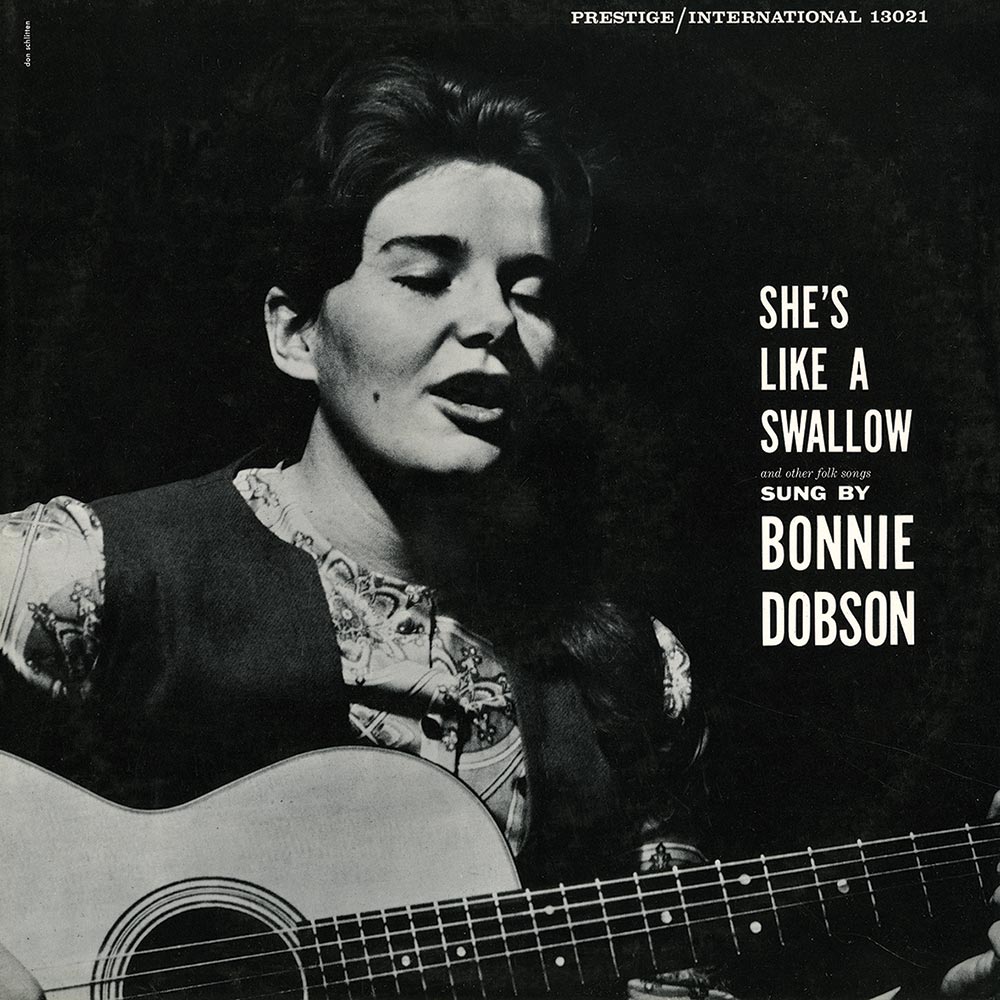
TRAMPLORD-FROM BUDDY HOLLY TO PETULANT SOUNDS.
TRAMPLORD-FROM BUDDY HOLLY TO PETULANT SOUNDS.
It was back in 2010, that the enigmatic, London based, Tramplord released their debut album Buddy Holly. Critics were won over by Tramplord’s unique fusion of jangling indie pop, psychedelia and Brit Pop. No wonder. The music on Buddy Holly was anthemic, joyous and melancholy. It was also melodic and hook laden. This was why some commentators went as far as to say that Tramplord were the future of indie pop. That was a big statement. It’s also one that’s been made many times before. However, back in 2010, many critics thought’s Tramplord’s star was in the ascendancy. What the critics didn’t realise, was that Tramplord were a band that do things their way. That’s down top Bin Raisbeck,Tramplord’s frontman and philosopher in chief.
Tramplord’s frontman and songwriter, Bin Raisbeck was born in a northern town. That northern town was Aberdeen, in the North of Scotland. Growing up, Bai survived on a steady diet of music. Some would say Bin obsessed about music.
Not knowing the theme to a seventies schools television program always annoyed Bin. He heard it when during the seventies, when was just four. Fast forward to 2007, and belatedly, was searching a website specialising in television themes. Lo and behold, Bin discovered that the song that had long haunted him, was called My World, a track by Allan Parker. By then, Bin had gone from music lover, to musician.
Music Bin realised, was his raison d’être. Making music was what he was born to do. By 2007, that’s what Bin was doing. Like many Scots before him, Bin made his way to London. Fitzrovia, became Bin’s home away from home. That’s Tramplord’s frontman and philosopher in chief’s worldview and lyrics evolved. However, there was a problem though. When Bin became part of the music industry, he was disillusioned by what he discovered.
Bin has always believed that music is an art-form. That, he discovered, is no longer the case. No longer is music about disappointment, dreams, escapism, fears, hopes, life and love. Nowadays, however, the reality, Bin discovered is very different. Music is manufactured by made for television pop stars. Tramplord are the polar opposite of these modern, manufactured bands.
Tramplord, like the bands that influence them, do things their way, or not at all. This is refreshing in an age when music seems to lack the charismatic characters of yesteryear. Bin Raisbeck, the man behind Tramplord, seems set to rectify this. That’s been the case since Buddy Holly was released to critical acclaim.
Most groups, having been tipped as the future of indie pop, would’ve headed straight back into the studio to record another album. Not Tramplord. They were in no hurry to record their sophomore album. Their enigmatic frontman Bin Raisbeck waited four years before releasing Petulant Sounds. This was a risky move that could’ve backfired on Tramplord.
A gap of four years between albums can result in people forgetting about a band. That could’ve been the case with Tramplord. Ironically, this decision proved a minor masterstroke.
For what became Petulant Sounds, Bin was joined by a few of his musical friends. Tim Whelan and Hami Mantu of Transglobal Underground) joined Jim Dale of Goldheart Assembly) and Adam Blake of Cornershop. Together, they recorded fifteen tracks where Tramplord pay homage to pop’s glorious past.
Among the artists that influenced Tramplord are the Alabama 3, Aztec Camera, Beach Boys, Big Star, Blondie, Cornershop, Fountains of Wayne, Orange Juice and T-Rex. There’s more than a nod to the classic pop of the Beach Boys on Petulant Sounds. Witness tracks like Coodbye Stations, Surfin’ USX, Help Me Find Her, Barbarian and Fin Fin Fin. Lyrically, the cerebral, cynicism of The Smiths sometimes shines through. This eclectic selection of influences played their part in Tramplord’s critically acclaimed, sophomore album, Petulant Sounds.
When Petulant Sounds was released in September 2014, critics fell in love with the album’s dreamy, wistful, nostalgic sound. Petulant Sounds was a marriage of musical genres. Elements of classic pop, indie pop, Brit pop, new wave, psychedelia and rock. The music was variously cerebral, cynical, melancholy, melodic, hook-laden, joyous, serene, uplifting and wistful. Tales of disappointment, hardship, love and love lost sit side-by-side on Petulant Sounds, which soon, became flavour of the month among tastemakers.
Critics, cultural commentators and DJs picked up on Tramplord’s sophomore album Petulant Sounds. Goodbye Stations was picked up by some of the biggest radio stations in Britain. This included BBC 6 Music and XFM. They were spreading the word about Tramplord. Gradually, Tramplord were gaining a larger fan-base. However, Tramplord want more people to hear their music. So, they’ve decided to play the modern music industry at their own game.
This means giving Goodbye Stations, one of Petulant Sounds’ best tracks, away as a free download via Soundcloud. Goodbye Stations is best described as a joyous slice of perfect pop. It’s a reminder of what music used to sound like. Dreamy, hook-laden and irresistible, Goodbye Stations is the perfect introduction to Tramplord, and their enigmatic frontman and philosopher-in-chief Bin Raisbeck.
He may always be the outsider looking in on the modern music industry, but who cares, when he’s capable of creating hook-laden, genre-melting music like that on Tramplord’s sophomore album Petulant Sounds.
TRAMPLORD-FROM BUDDY HOLLY TO PETULANT SOUNDS.
HOUSTON PERSON-HOUSTON PERSON 75 AND GET OUT’A MY WAY.
HOUSTON PERSON-HOUSTON PERSON 75 AND GET OUT’A MY WAY.
Growing up, Houston Person played the piano. Later, Houston switched to tenor saxophone. However, Houston Person never dreamt of being a musician. That wasn’t how he saw his future. Instead, Houston joined the US Army.
During his tour of duty, Houston was stationed in West Germany. That was when Houston joined the US Army service band. That’s where the soulful sound of Houston’s tenor saxophone made its debut. However, this was no ordinary service band.
The US Army service band that Houston Person joined, featured some future jazz greats. Its lineup featured Don Ellis, Cedar Walton and Eddie Harris, who Houston would later work with. For Don, Cedar, Eddie and Houston, this was part of their musical education. They would return home better musicians. Their time in the service band helped hone their sound, and prepared them for life as a professional musicians. In Houston’s case, his professional debut was on hold.
Before turning professional, Houston, who was born in Florence, South Carolina, on 10th November 1934, decided to complete his eduction. He returned to the Hartt School, at the University of Hartford, Connecticut. Only once Person had completed his studies, did he turn professional.
Over twenty years later, Houston Person released his thirteenth album Houston Person ’75 on Westbound Records. It was followed by Get Out’a My Life. Both Houston Person ’75 and Get Out’a My Way feature on Ace Records recently released two-on-one release. They’re the perfect introduction the perfect introduction to the soulful sound of Houston Person’s tenor saxophone. His career began in Boston, which Houston called home.
Boston was where Houston made his home. That’s where he worked with a series of R&B groups. He started playing small gigs and eventually, was spotted by Hammond organist Johnny “Hammond” Smith in 1963. For an up-and-coming musician, this was the breakthrough he had been looking for. Houston was with Johnny “Hammond” Smith for four years. During that period, Houston Person had signed to Prestige Records.
In the sixties, Prestige Records was one of jazz music’s most prestigious labels. It rubbed shoulders with Atlantic Records, Blue Note Records and Impulse. So, signing for a label of the stature of Prestige Records was a sign that Houston was a musician going places. His soulful tenor saxophone was winning friends and influencing people.
By 1966, Houston Person was ready to release his Prestige Records debut, Underground Soul! This was the first of twelve albums Houston released on Prestige Records between 1966 and 1973.
Underground Soul!
When Houston released his first album,1966s Underground Soul!, it received mixed reviews. Critics couldn’t seem to make their mind up about the album. Underground Soul! struggled to find an audience. Prestige Records put this down to being Houston’s debut album. Surely this was just teething problems for Houston Person?
Chocomotive.
Just a year later, in 1967, Houston released his sophomore album Chocomotive. This time, there was no doubt about the quality of music on Chocomotive. It was to released to overwhelming critical acclaim. However, sales were disappointing. This proved to be the case with Trust In Me.
Trust In Me.
Houston’s sophomore album Trust In Me was released later in 1967. A memorable album of soul-jazz, with diversions into blues and funk, Trust In Me critics, and everyone at Prestige Records, felt deserved to fare better. History would repeat itself a year later.
Blue Odyssey.
In 1968, Houston released his fourth album Blue Odyssey. It was hailed the finest album of Houston Person’s career. Despite this, Blue Odyssey Trust In Me struggled to find an audience. For Houston and Prestige Records, this was a worrying time.
The appointment of Bob Porter as the new A&R man at Prestige Records solved the problem. He realised that for Houston’s first four albums, Prestige Records had struggled to find a sound for Houston. Bob who had an intimate knowledge of the club scene, realised Houston needed to take his live sound into the studio. Surrounding Houston with some of the best session musicians, his career took off.
Soul Dance!
Houston’s first album of the Bob Porter era was Soul Dance! Released in 1969, Soul Dance! was hailed as Houston Person at his finest as he combines ballads, blues and soul jazz. Good as Soul Dance! was, Houston trumped it with Goodness!
Goodness!
Goodness! was released in 1970, and had a much more commercial sound. This didn’t please jazz purists though. However, Goodness! was a commercial success. That’s what Houston and Prestige Records wanted.
Truth!
Commercial success and critical acclaim continued with Truth! Released in 1970, it featured guitarist Billy Butler and Sonny Phillips on Hammond organ. The result was a fusion of jazz and R&B. This went down well with critics and record buyers. Bob Porter had transformed Houston Person’s sound and career.
Person to Person!
Person to Person! was Houston’s eighth album. It saw Houston’s sound continue to evolve. There was a move away from the soul-jazz sound. Replacing it, was a much more soulful sound. It came courtesy of an all-star band.
Bob Porter never shied away from bringing in the best musicians to accompany Houston. For Person to Person!, he brought in drummer Idris Muhammad, bassist Jimmy Lewis,guitarist Grant Green and Hammond organist Sonny Phillips. They played their part in the further reinvention of Houston Person.
On the release of Person to Person! in 1970, the album divided the opinion of critics. Some were surprised at the change in sound. However, Houston realised the importance of never standing still. This became even more apparent on his 1971 album Houston Express.
Houston Express.
By 1971, funk was flavour of the month. Jazz was no longer as popular as it once had been. So, on Houston Express, Houston Person and a band that included drummer Bernard “Pretty” Purdie and guitarist Billy Butler, fused musical genres.
Houston Express was essentially an album of funk, jazz and R&B. It was quite different to Houston’s previous albums. However, Houston and Bob Porter realised the importance of moving forward musically. They realised that if a musician stands still, they risked becoming irrelevant. There was no chance of this happening to Houston.
When critics heard Houston Express, they hailed it one of Houston’s finest albums. The constant reinvention of Houston Person was working. He was still commercially successful in an era when jazz’s popularity was plummeting. That took some doing. However, Houston managed to do this. Would his success last though?
Broken Windows, Empty Hallways.
Although Houston has just signed to Prestige Records in 1966, by 1972 he was already releasing his tenth album, Broken Windows, Empty Hallways. It was Houston’s usual mixture of cover versions and tracks penned by Houston. However, there was one important change in the winning formula. Producer Bob Porter had been replaced by Ozzie Cadena.
With Ozzie Cadena acting as producer, Houston began recording Broken Windows, Empty Hallways. He was joined by some of the leading jazz musicians, and…a tap dancer. This included flautist Hubert Laws, pianist Cedar Walton and guitarist Joe Beck. Probably the most surreal appearance was tap dancer Bunny Briggs. She made a guest appearance on a cover Jerry Jeff Walker’s Mr. Bojangles. Other cover versions included John Lennon’s Imagine and Randy Newman’s I Think It’s Going To Rain Today. They became Broken Windows, Empty Hallways.
Critics remarked that although Broken Windows, Empty Hallways was still jazz, it was much lighter than his earlier albums. It was as if Houston moving towards easy listening. Maybe, this was down to the change of producer. After all, Bob Porter had been replaced by Ozzie Cadena. This move towards a much more easy listening sound was maybe part of Ozzie’s vision.
This didn’t make automatically make Broken Windows, Empty Hallways a bad album. No. It was just another example of Houston Person’s music evolving. Maybe, however, Broken Windows, Empty Hallways was ahead of its time?
Nowadays, however, Broken Windows, Empty Hallways would be seen as a forerunner to smooth jazz. For some critics and record buyers, this was disappointing. Especially after the funky Houston Express. Would this be a turning point in Houston’s time at Prestige Records?
Sweet Buns and Barbeque.
After Broken Windows, Empty Hallways Houston returned with Sweet Buns and Barbeque. Unlike previous albums, Sweet Buns and Barbeque comprised only cover versions. There were no Houston Person originals on Sweet Buns & Barbeque. However, still, Prestige Records brought in some of the best musicians.
Pianist Richard Tee joined drummer Bernard “Pretty” Purdie, bassist Ron Carter and guitarist Joe Beck. Along with what seemed like a cast of thousands, they recorded the six songs that became Sweet Buns and Barbeque. It was released in 1973.
On Sweet Buns and Barbeque’s release in 1973, reviews ranged from mixed to favourable. However, Sweet Buns and Barbecue wasn’t as well received as the albums produced by Bob Porter.
It seemed the breakup of the Bob Porter and Houston Person partnership had affected Houston’s music. No longer was the music as groundbreaking. That, however, may not have been Houston’s fault. Maybe, Prestige Records were looking for music that was commercial? Sadly, we’ll never know. What we do know, is that Houston Person’s time at Prestige Records was almost at an end.
The Real Thing.
The Real Thing proved to be Houston Person’s Prestige Records’ swan-song. It was a double album of cover versions. Songs by Stevie Wonder, The Spinners and The Ohio Players that feature on The Real Thing, which features the great and good of jazz.
Just like previous albums, Houston brought onboard guitarist Grant Green, drummers Hank Brown and Idris Muhammad and Hammond organists Sonny Phillips and Brother Jack McDuff. They were joined by vocalist Etta James, who added the vocal on Don’t Go To Strangers. This was one of twelve tracks on The Real Thing, which proved to be Houston Person’s Prestige Records’ finale.
On its release in 1973, The Real Thing, Houston Person’s twelfth album wasn’t a commercial success. It was however, well received by critics. Blues, jazz and R&B sat side-by-side. However, sales were what mattered, and The Real Thing proved to be the end of Houston Person’s time at Prestige Records. It would be two more years before Houston released another album.
Houston Person ’75.
Two years after releasing The Real Thing, Houston Person was signed to Detroit based Westbound Records. Music had changed since Houston had last released an album. Now disco was flavour of the month. So was a much slicker, polished sound. Fusion was still popular, but disco was where it was at. With this in mind, Houston and Bernard Mendelson set about producing Houston Person ’75.
For Houston Person ’75, ten songs were chosen. What It Is, Mayola, Gold In My Ear, Funky Sunday Afternoon came from the pen of Belda Baine and Louis Crane. They also cowrote 500 Gin Rummy with Jimmy Scott and A Touch Of Bad Stuff with Jimmy Roach. Other covers included David Crawford and Charles Mann’s I Like To Live The Love and Stevie Wonder’s All In Love Is Fair. They became Houston Person ’75.
The ten tracks on Houston Person ’75, were recorded by some of Detroit’s best session players. These session players had featured on many of Westbound Records’ releases. This included The Fantastic Four and The Detroit Emeralds. They could now say they had accompanied Houston Person.
On Houston Person ’75’s release in 1975, the album was well received by critics. Sadly, however, Houston Person ’75 didn’t sell well. Music lovers missed a hidden gem of an album.
Houston Person ’75 is best described as journey through musical genres. During the ten tracks, Houston Person and his band take diversions via jazz, funk and R&B. The ten tracks are the perfect showcase for Houston Person’s tenor saxophone. That’s the case from the opening bars of I Like To Live The Love, which opens Houston Person ’75. From there, Houston veers between playing tenderly or powerful. It’s like a master craftsman at work. Standout performances come on the cover of Junior Walker and The Allstars’ Shotgun. Then Gold In My Hear takes on a slow, sultry sound. Smooth, soulful and funky describes 500 Gin Rummy. Funky Sunday Afternoon takes on a moody, bluesy sound. There’s a nod to B.B. King. Closing Houston Person ’75 is He’ll Fight My Battles. It features a guest appearance from Etta James. This proves a potent partnership, and the perfect way to end Houston Person ’75.
Very few people heard Houston Person ’75. When it was released in 1975, it passed most people by. The sales were nothing like Houston’s Bob Porter produced albums. That’s despite being an album of slick, polished music. Blues, funk, jazz, R&B and soul can all be heart on Houston Person ’75. It’s the perfect showcase for Houston Person. It shows how versatile the Boston based tenor saxophonist is capable of. Houston Person ’75 also shows how Houston never stood still. Constantly, he tried to reinvent his music. That was the case on his fourteenth album, Get Out’a My Way.
Get Out’a My Way.
After the commercial failure of Houston Person ’75, it was a case of back to the drawing board. The result was Get Out’a My Way, another album of cover versions. A total of eight tracks were chosen for Get Out’a My Way.
For Get Out’a My Way, Westbound staff writer Jimmy Roach supplied Disco Sax and Ain’t Nothin’ But A Funky Song. Ann Roach penned Soul Samba and Forever In Love. Belda Baine and Louis Crane contributed How Vicious and cowrote Spread It with Jimmy Roach. Other covers included My Way and The Isley Brothers’ For The Love Of You. These songs became Get Outta My Way.
When recording of Get Out’a My Way began, the production partnership of Houston and Bernard Mendelson picked up where they left off on Houston Person ’75. The backing band was The Westbound Gang, with Honey adding backing vocals. The result was another album of slick, polished music Get Out’a My Way.
Just like Houston Person ’75, Get Out’a My Way, which was released in 1976, was a slick, polished album. It was obvious that a great deal of attention had been paid to the production. It’s best described as a big, bold production. This was very much of its time. After all, 1976 was smack bang in the middle of the disco era. However, would Get Out’a My Way’s slick production prove successful?
Upon the release of Get Out’a My Way, the album sold reasonably well. Still, sales were nothing like Houston’s Bob Porter produced albums. Despite this, Get Out’a My Way was well received by critics. They enjoyed the slick, polished, contemporary sound. It was combined with elements of Houston’s musical past. That was down to the mix of music.
Again, Get Out’a My Way was a combination of musical genres. Disco, funk, Latin, R&B and soul can be heard on Get Out’a My Way. Disco Sax, which opens Get Out’a My Way, was the perfect showcase for a Houston Person masterclass. It’s best described as uber sultry. Soul Samba is a fusion of musical genres. Jazz, Latin and smooth soul rub shoulders on his dance-floor friendly track. Funky and soulful describes Ain’t Nothin’ But A Funky Song. At the start, it sounds like it’s from a long lost Blaxploitation track. After that, it’s all change as jazz meets smooth soul. That isn’t the end of this smooth, soulful sound.
It continues on a cover of May Way. It’s given a smooth, soulful and sensual makeover. The same can be said of The Isley Brothers For The Love Of You. Quite simply, it’s a beautiful, remake of this song. Ann Roach’s Forever In Love continues in a similar vein. After this, things change.
Houston remembering that the maxim, too much of a good thing, changes tack. Spread It has a funkier sound, with Houston and his band kicking loose. This funky sound continues on How Viscous. It sees Houston unleash one of his finest solos. His playing inspires the band. Just like Houston, they’re determined to close Get Out’a My Way on a funky high.
Get Out’a My Way is very much a return to form from Houston Person. He combines everything from disco, funk, jazz, Latin, R&B and the smoothest soul. Starting off with the Disco Sax and Soul Samba, Houston drops the tempo and delivers a quartet of smooth soulful, jazz. My Way and The Isley Brothers’ For The Love Of You are given a makeover. They take on new life and meaning. Then Houston showcases his versatility on Spread It and How Viscous. This closes Get Out’a My Way on a funky high. Just like Houston Person ’75, Get Out’a My Way is the perfect introduction to the soulful sound of Houston Person.
He may not have been one of the most high profile jazz musicians. However, he was hugely talented and versatile. Seamlessly, Houston flits between musical genres, showcasing his versatility. This is no surprise.
Throughout his career, Houston was constantly reinvention his sound. He realised that if he stood still, he risked becoming irrelevant. There was no way he was going to let that happen, so with each album, Houston’s sound continue to evolve. By 1975, when he released Houston Person ’75, he’d released twelve albums. Each album was different. This was testament to Houston’s determination to innovate. Houston continued to innovate on both Houston Person ’75 and Get Out’a My Way, which were recently reissued by Ace Records, on one CD.
For the newcomer to Houston Person, then Houston Person ’75 and Get Out’a My Way are the perfect introduction to a musical veteran. Now aged eighty, Houston Person continues to tour and showcase his eclectic and innovative back-catalogue. This includes Houston Person ’75 and Get Out’a My Way, the two albums Houston Person released for Detroit’s Westbound Records.
HOUSTON PERSON-HOUSTON PERSON 75 AND GET OUT’A MY WAY.


BO KIRKLAND AND RUTH DAVIS-YOU’RE GONNA GET NEXT TO ME-THE COMPLETE CLARIDGE RECORDINGS.
BO KIRKLAND AND RUTH DAVIS-YOU’RE GONNA GET NEXT TO ME-THE COMPLETE CLARIDGE RECORDINGS.
By 1976, disco was providing the soundtrack to dance-floors worldwide. Originally, however, disco was an American phenomenon. Gradually, though, the rest of the world succumbed to the disco sound. Around the world, dancers danced to the pulsating disco beat. However, disco’s popularity came at a cost.
The rise and rise of disco meant soul’s star was no longer in the ascendancy. Far from it. Soul music was no longer as popular as it had been. Even successful soul singers like Al Green and Bobby Womack career suffered. Indeed, things got so bad for Bobby Womack during the disco era, that he was dropped by his record company. Other artists tried to make the most of the disco era.
While some artists were wary of embracing disco fully, it was a case of needs must. If they didn’t climb onboard the disco bandwagon, then their career could be over. They couldn’t take that risk. So, they climbed onboard the disco bandwagon and released a string of disco singles. Some artists were reluctant disco stars. Others however, embraced disco fully. It gave them the opportunity to rejuvenate their careers. In other cases, disco launched the career of many an aspiring artist. A case in point is Ruth Davis, who in 1975, was signed to Claridge Records.
In 1975, Ruth Jean Davis was already signed to Claridge Records, but had yet to release a record for the label. Ruth however, was no newcomer to music.
Before signing to Claridge been in various girl groups, including The Sequins, who released the Northern Soul classics A Case Of Love and He’s A Flirt. Later, Ruth become a member of The Ikettes, whose lineup seemed to be in a constant state of flux. Although good for Ruth’s C.V, it wasn’t a successful time for The Ikettes. Sadly, neither was Ruth’s debut solo single.
It was in 1971, that Ruth released her debut solo single I Need Money. This Jimmy Lewis composition, which was released on Kent, but failed commercially. For Ruth, this was a huge disappointment. Ruth returned to singing in local clubs, until she signed to Claridge Records. That’s where she met Bo Kirkland. They would release an album Bo and Ruth on Claridge in 1976. Bo and Ruth features on You’re Gonna Get Next To Me-The Complete Claridge Recordings, which was released on Kent Soul, a subsidiary of Ace Records recently.
Mike “Bo” Kirkland had been involved in music since 1965, when he was nineteen. His family moved from his hometown of Yazoo, Mississippi when he was ten. It was a case of needs must. Bo’s brother had been the subject of a racially motivated attack. So, the family headed to California. Not long after that, the Kirkland family formed a gospel group.
This was Bo’s introduction to music. Soon, he was a member of his school choir. As he grew up, music dominated Bo’s life. Especially, since Sam Cooke crossed over. That was a turning point in Bo’s life. He started listening to jazz, R&B and soul. Music became Bo’s life. So much so, that he turned down an offer to play for the New York Yankees. By then, he’d formed Mike and The Censations.
By the time Mike and The Censations released their debut single Victim Of Circumstances, they were no longer a family group. Bo and Bob, who wrote Victim Of Circumstances, brought onboard Armand Postell. The new lineup of Mike and The Censations’ debut single was well received. It was played on local radio. This resulted in Mike and The Censations being signed to Highland Records.
Mike and The Censations released four more singles on Highland Records. However, commercial success eluded Mike and The Censations. Although they were popular locally, they never enjoyed widespread commercial success. As a result, Mike and The Censations released their final single for Highland Records in 1969 and signed to Decca subsidiary Uni.
Despite Uni being part of a much larger label, Decca, Mike and The Censations continued to be a successful local group. They released four more singles on Uni’s Revue imprint. None of the singles were more than local hits. This wasn’t what Decca needed. They needed Mike and The Censations to make a breakthrough nationwide. So, when Mike and The Censations deal expired in 1970, it wasn’t renewed. That’s when Bo and Bob decided to form their own label.
Bo and Bob were determined to make a living out of music. So, they decided to form their own label. Originally, it was called Yazoo, after Bo and Bob’s hometown. There was a problem though. Yazoo was the name of a reissue label. After a rethink, Bo and Bob decided to call their new label Bryan Records. It would release Mike James Kirkland’s two solo albums.
In 1971, when Bo released his debut solo single Together, on Bryan Records, he was still calling himself Mike James Kirkland. Bo Kirkland would come later. Before that, Mike James Kirkland had two albums and there more singles to release.
A year later, in 1972, he released his debut album Hang On In There, on Bryan Records. That year, Bo released two singles, Where Is The Soul Of Man and Love Is (Nothing But A Feeling). Just like his debut album, they weren’t a commercial success. Neither was the 1973 single Love Insurance. It was a case of what might have been.
Both of Mike James Kirkland’s albums and his single could’ve enjoyed commercial success and critical acclaim. The problem was, they were released on a small label, without the budget to promote his music. That’s why between 1971 and 1975, Mike James Kirkland was one of music’s best kept secrets. Maybe the disco boom would result in a change in his luck?
In 1975, the Kirklands caught a break. They had come to the attention of music veteran Frank Slay, who ran the Claridge label. He founded the label and in the sixties, but put the business on hold until 1974. Now, Frank was looking for new artists. That’s where Mike came in.
Frank decided that Mike James Kirkland wasn’t the right name. So, Frank and Mike put their heads together, and came up with the name Bo. That’s the name that featured on Bo’s Claridge debut, Grandfather Clock, which was penned by the Kirkland brothers with Frank Slay.
Grandfather Clock was released in September 1975. It sold well on the West Coast. So much so, that it reached number eighty in the US R&B charts. While this was a good start to Bo’s career at Claridge, Ruth Davis’ career looked as if it had stalled.
The problem was, finding the right song. Frank wanted Ruth to cover Freddie Hart’s Easy Loving. This, however, was a country song. Ruth wasn’t sure. Eventually, Frank persuaded Ruth to record the track. When Ruth heard the finished track, she knew it wasn’t right. So, Frank decided that Ruth should record Easy Loving as a duet with Bo Kirkland.
This was a masterstroke. Frank was known to have the Midas touch. It was said his ears never failed him. That was the case here. Easy Loving reached number thirty-eight on the US R&B chart, where it spent eighteen weeks. Six of these weeks came after the single was flipped over, and We Got The Recipe caught the attention of DJs and record buyers. Bo and Ruth, as they were billed, Frank decided, seemed like a successful pairing.
Frank decided that Bo and Ruth should put their solo careers on hold, and record a solo album. This wasn’t going to be difficult. They had already recorded Easy Loving and We Got The Recipe. Bo’s version of Grandfather Clock and Sure Got A Thing For You were included. All that was needed were six more songs.
For Bo and Ruth, the Kirkland brothers cowrote nine tracks. They cowrote I Feel Love In This Room Tonight and Can You Feel It with Charles Gentry and Hense Powell. The Kirkland brothers penned Train Of Desire, Sure Got A Thing For You and Stay Out Of My Kitchen with Hense. The trio also cowrote We Got The Recipe and You’re Gonna Get Next to Me with Ruth Davis. Charles Gentry, Mike and Bo cowrote You’re Gonna Get Next to Me and To Make You Love Me. Frank Slay only cowrote one track, Grandfather Clock which he penned with the Kirkland brothers. Easy Loving was the only cover version on Ruth and Bo, which was released in 1976.
With six new songs written, recording of Bo and Ruth got underway. Hense Powell was drafted in as arranger, while Bo produced Bo and Ruth. Once the six new songs were recorded, it was released in America in 1976 and Britain in 1977.
The lead single for Bo and Ruth was the album opener, I Feel Love In This Room Tonight. It was a ballad, with a funky twist. Given disco was at the height of its success, I Feel Love In This Room Tonight was a strange choice for lead single. As a result, I Feel Love In This Room Tonight stalled at number seventy-seven on the US R&B charts. The followup single was You’re Gonna Get Next To Me.
Straight away, Bo and Ruth realised they had struck disco gold. DJs worldwide were spinning You’re Gonna Get Next To Me. The single narrowly missed out on the US Billboard 100. It did reach number sixty-six n the US R&B charts. Considering its popularity with DJs and dancers, this must have been a disappointment. Then You’re Gonna Get Next To Me was released in Britain.
Across the Atlantic, You’re Gonna Get Next To Me surpassed the success the single had in America. It reached number twelve in Britain. Since then, You’re Gonna Get Next To Me is remembered as a club classic, and favourite of DJs and dancers. Despite the success of the singles taken from Bo and Ruth, the album was a different matter.
Bo and Ruth wasn’t a commercial success, and failed to chart. This wasn’t a reflection on the music. No. It’s a reflection on disco. Disco was very much a singles oriented genre. Successful disco artists didn’t necessary make successful albums. Obviously, artists like Gloria Gaynor and to some extent, The Salsoul Orchestra are the exception. Mostly, though, disco was about singles, Bo and Ruth, was an example of this.
I Feel Love In This Room Tonight opens Bo and Ruth, and You’re Gonna Get Next To Me-The Complete Claridge Recordings. It sees Bo and Ruth head to the soulful side of disco. The rhythm section, piano and swirling strings set the scene for Ruth’s heartfelt and hopeful vocal on this ballad. Horns bray and blaze, punctuating the arrangement. Then when Bo’s vocal enters, it’s equally heartfelt and needy. Bo and Ruth became yin and yang. Meanwhile, lush strings sweep and swirl, horns sound and the rhythm section create a sultry heartbeat. Later, a lovestruck Bo and Ruth vamp their way through what’s a soulful slice of dance-floor friendly music.
Strings dance and the rhythm section add a funky backdrop on To Make You Love Me. There’s even a Latin twist to the arrangement. As a slap bass punctuates the arrangement, Bo unleashes a soul-baring vocal. It’s a mixture of power and passion. So is Ruth’s vocal. She matches Bo every step of the way. Meanwhile, the band combine elements of disco, funk and Latin. This proves the perfect backdrop to the soulful strains of Bo and Ruth.
Train Of Desire is another ballad. Swathes of the lushest strings cascade, horns bray and flamboyant flourishes of harpsichord sit atop the rhythm section and washes of Hammond organ. They create a slow, dramatic backdrop for Bo and Ruth’s slow, soulful, sultry and needy vocals. When they drop out horns growl and strings sweep. They then sweep Bo and Ruth away as they climb onboard the Train Of Desire.
You’re Gonna Get Next to Me was the sophomore single from Bo and Ruth. This was their biggest single. It’s now regarded as a club classic. Bo and Ruth’s vocals are swept in atop a bassy arrangement. They’re the perfect foil for each other. As Bo vamps, Ruth dawns the role of disco diva. It’s a role that suits her. Especially, when accompanied by an arrangement that’s classic disco. As the rhythm section and chiming guitars combine to create a funky, dance-floor friendly backdrop keyboards join blazing horns and disco strings. Later, when Bo get’s the chance to play a starring role, he relishes the opportunity. He plays a part in a track that’s funky, soulful and dance-floor friendly.
As We Got the Recipe unfolds, strings dance and horns blaze. Just like the previous track, there’s plenty of low end courtesy of the rhythm section. Bo and Ruth are swept along by swathes of lush strings. They quiver and shiver, while horns bray and growl, sometimes adding a wistful sound. Always though, We Got The Recipe is a hook-laden dance track.
Easy Loving was Bo and Ruth debut single. The track is reinvented and suits being delivered as a duet. Partly, that’s because Bo and Ruth’s vocals sit well together. Their vocals are tender, heartfelt and hopeful. The vocals are part of the story. There’s the slow, romantic arrangement. This means slow, sweeping strings adn bursts of rasping horns. They’re joined by the funky guitars and a rhythm section that creates a slow, sultry heartbeat. When all this is combined, the result is a quite beautiful track.
Sure Got A Thing For You is one of two tracks from Bo Kirkland on Bo and Ruth. It’s a mid-tempo ballad that’s funky and soulful. Against a pulsating rhythm section, keyboards, braying horns and soaring, soulful harmonies Bo delivers a vocal heartfelt and needy. There’s even a nod to Stevie Wonder, as Bo showcases his considerable talent on the funky, soulful Sure Got A Thing For You.
Deliberate piano chords are picked out, a guitar chimes and a Hammond organ wails. Horns bray and strings sweep as Can You Feel It begins to reveal its secrets and beauty. The scene is set for Bo and Ruth’s needy, sultry and seductive vocals. Behind them, instruments are dropped in at the right time. A sultry saxophone sets the scene for the return of Bo and Ruth’s vocals. It grows in power and passion. Needy and hopeful, it’s one of Bo and Ruth’s finest hours.
Grandfather Clock is the other Bo Kirkland single. As a clock chimes, vibes replicate a clock and the rhythm section get funky. Just like other tracks, there’s no shortage of low end. The bass powers the arrangement along. It’s aided and abetted by stabs of growling horns. Accompanied by harmonies, Bo struts his way through the track, delivering an assured vocal on this funky, soulful track.
Stay Out Of My Kitchen closed Bo and Ruth, but not You’re Gonna Get Next To Me-The Complete Claridge Recordings. It’s an uptempo dance track, where elements of disco, funk and soul unite. Bursts of grizzled horns join the pounding, pulsating and funky rhythm section. They’re joined by washes of Hammond organ, harmonies and Bo’s swaggering vocal. When Ruth enters, she delivers a strutting diva-esque vocal. It’s as if she’s been inspired by Bo. The result is a joyous, slice of good time music.
That’s not the end of Kent Soul’s recently released Bo and Ruth compilation You’re Gonna Get Next To Me-The Complete Claridge Recordings. No. There’s six other tracks.
Four feature Bo and Ruth. The first is Bo and Ruth’s strings drenched, soulful cover of Thomas Jans’ Loving Arms. This is the only cover version. The three other tracks were either written or co-written by Bo.
Bo seemed to write a lot of ballads. This includes That’s the Way The Wind Blows. It was penned by Sky Keegan and Bo. Slow, tender and full of melancholia and beauty, describes That’s the Way The Wind Blows. That’s A Bet is another soulful dramatic ballad. It features a needy, hopeful vocal from Bo. It’s accompanied by swathes of strings and bursts of blazing horns. The final track from Bo and Ruth is Stay By My Side, a hook-laden dance track. That track is the last we hear from Bo and Ruth.
The two other tracks on You’re Gonna Get Next To Me-The Complete Claridge Recordings, come courtesy of Ruth Davis. Heartbreaker is a truly irresistible dance track. Lost In A Love Zone also sees Ruth embrace the role of disco diva. She delivers a sassy, strutting vocal. This shows a very different side to Ruth Davis. This is far removed from the balladry on Bo and Ruth, You’re Gonna Get Next To Me-The Complete Claridge Recordings.
For much of Bo and Ruth, balladry was the order of the day. There were a few dance-floor friendly tracks. However, mostly, Bo and Ruth delivered a series of heartfelt ballads.
These ballads proved uber soulful. That’s not all. Bo and Ruth’s vocals on the ballads were beautiful, heartfelt, hopeful melancholy, needy, tender and wistful. Easy Loving, Bo and Ruth’s debut single, showed what they were capable of. It gave them a minor hit single. Frank Slay, the owner of the Claridge label, decided Bo and Ruth to record their debut album. However, there was a problem. Disco was ruled the musical roost.
Pounding, pulsating dance tracks were flavour or the month in 1976. Granted, Bo and Ruth made a few concessions to disco on their debut album. This resulted in another minor hit single, and club classic, You’re Gonna Get Next to Me. Sadly, this was the end of Bo and Ruth’s success.
When Bo and Ruth was released, it failed commercially. It failed to chart. Soul was no longer as popular as it had been. As for disco, it was mostly a singles genre. Very few classic disco albums were ever released. Indeed, many disco artists concentrated on singles, rather than albums. Bo and Ruth however, wasn’t really a disco album.
Bo and Ruth was essentially a soul album. There were a a few dance tracks. The problem was, soul albums weren’t selling well. Far from it. They were, to some extent, yesterday’s sound. Disco was perceived as the future. Ironically, that proved not to be the case. Two years after the release of Bo and Ruth, disco’s popularity plunged.
Disco went from hero to zero in less of a year. Suddenly, disco sucked. Disco’s downfall started on Christmas Eve 1978, That’s when Steve Dahl was fired by Chicago radio station WDAI. It had previously been a rock station, but switched to disco. Steve wasn’t out of work long. He was hired by WLUP, a rival station. WLUP played rock, which suited Steve Dahl. He’d an inkling that disco wasn’t long for this world.
Steve wasn’t a fan of disco, and took to mocking disco on-air. Openly, he mocked WDAI’s “disco DAI.” It became “disco die” to to Steve. Soon, Steve had created the Insane Coho Lips, his very own anti-disco army. Along with cohost Gary Meier, they coined the now infamous slogan “Disco Sucks.” The backlash had begun.
From there, the Disco Sucks movement gathered momentum. Events were held all over America. This came to a head at Disco Demolition Derby, which was Steve Dahl’s latest anti-disco event. Each one was becoming bigger, rowdier and attracting even more publicity. Disco Demolition Derby, which was held at Comiskey Park, Chicago on 12th July 1979 surpassed everything that went before. WFUL were sponsoring a Chicago White Sox game at Comiskey Park. if fans brought with them a disco record, they’d get in for ninety-eight cents. These records would be blown up by Steve Dahl. An estimated crowd between 20-50,000 people attended. Quickly the event descended into chaos. Vinyl was thrown from the stands like frisbees. Then when Steve blew up the vinyl, fans stormed the pitch and rioted. Things got so bad, that the riot police were called. After the Disco Demolition Derby, disco nearly died.
Following Disco Derby Night, disco’s popularity plunged. Disco artists were dropped by major labels, disco labels folded and very few disco albums were released. Disco was on the critical list, and suffered a near death experience.
Only after the disco boom was over, did people start discovering soul albums they may have missed during the disco era. Many a hidden gem was discovered. This included Bo and Ruth, which was part of You’re Gonna Get Next To Me-The Complete Claridge Recordings, which was recently released by Kent Soul, a subsidiary of Ace Records. You’re Gonna Get Next To Me-The Complete Claridge Recordings, shows that there’s much more to Bo and Ruth, than their dance-floor classic You’re Gonna Get Next to Me.
BO KIRKLAND AND RUTH DAVIS-YOU’RE GONNA GET NEXT TO ME-THE COMPLETE CLARIDGE RECORDINGS.




FUNKADELIC-MAGGOT BRAIN.
FUNKADELIC-MAGGOT BRAIN.
Rumour has it, that when Funkadelic recorded their career defining album, Maggot Brain, they were on one long acid trip. Members of Funkadelic had dropped some Yellow Sunshine Acid before producer George Clinton pressed the record button. Ironically, Maggot Brain which was recently reissued on vinyl by Ace Records, was Funkadelic’s finest hour. Sadly, never again, would Funkadelic reach the same heights. Maggot Brain had come at a huge cost.
After the recording of Maggot Brain, Tawl Ross, Eddie Hazel, Billy Nelson, and Tiki Fulwood left Funkadelic. Maggot Brain became the last Funkadelic album to feature the original group. That’s not surprising.
Funkadelic had a voracious appetite for the rock ’n’ roll lifestyle. Although they were a funk band, Funkadelic liked to live life hard. Part of their lifestyle was drugs. However, their lifestyle caught up with Funkadelic. Their lineup was torn apart by drugs.
Drummer Tiki Fulwood was the first to leave Funkadelic. After that, the floodgates opened. Tawl Ross, Eddie Hazel and Billy Nelson departed. Within a year, only Bernie Worrell was left. He was the last man standing. Maggot Brain may have been their finest hour, but it came at a huge price.
The original members of Funkadelic never got to share the commercial success of the group’s two most successful albums, 1978s One Nation Under A Groove or 1979s Uncle Groove Wants You. One Nation Under A Groove sold a million copies and was certified platinum, while Uncle Groove Wants You was certified gold. By then, Funkadelic’s lineup was constantly changing. It seemed they had a revolving door policy, as far as members were concerned. This was very different to the Funkadelic’s early days.
Funkadelic’s origins can be traced back to 1964. That’s when George Clinton hired musicians Frankie Boyce, Richard Boyce and Langston Booth to back his doo wop group The Parliaments. Two years later, Frankie, Richard and Langston decided to join the US Army. This left George Clinton looking for three new musicians.
George recruited bassist Billy Bass Nelson and guitarist Eddie Hazel in 1967. Later, he added guitarist Tawl Ross and drummer Tiki Fulwood. This was the lineup of The Parliaments that headed to Detroit.
Now living in Detroit, The Parliaments found themselves in a dispute with Revilot, a record company. They owned the rights to The Parliaments. So, George’s group needed a new name. That’s when Billy Bass Nelson came up with the name Funkadelic. It stuck. Soon, in 1968, Funkadelic signed to Westbound Records.
Having signed to Westbound Records, Funkadelic’s music began to evolve. Doo woo was yesterday’s sound. The newly named Funkadelic needed a new, and much more contemporary sound. Psychedelia, rock, soul and funk were the musical flavours of the month. So were Jimi Hendrix and Sly Stone. So, it made sense for Funkadelic to fuse these musical genres and influences.
This is what Funkadelic did. However, Funkadelic were no ordinary band. This was, after all, the era of the civil rights movement. Just like many other bands, the civil rights movement inspired Funkadelic. Their lyrics were full of social and political comment. Funkadelic’s music would prove to be a heady brew, when the band released their eponymous debut album.
Funkadelic.
Before Funkadelic entered the recording studio for the first time, they’d spent two years honing their sound. They were a much more tighter band, than when they became Funkadelic. This was apparent when they released their eponymous debut album.
When Funkadelic released their eponymous debut album, on 11th May 1970, it was well received by critics. Rolling Stone magazine gave the album a positive review. Other critics followed suit. Some critics remarked upon Funkadelic’s rhythm section. The rhythm section, they said, were at the heart of everything that was good on Funkadelic. This included the lengthy jams, where Funkadelic took the opportunity to stretch their legs. George Clinton’s new band, had made a strong impression
When Funkadelic was released on 11th May 1970, it reached number 126 in the US Billboard 200 and number eight in the US R&B charts. For a debut album, by a relatively new group, the future looked bright for psychedelic, funkateers, Funkadelic.
Free Your Mind… and Your Ass Will Follow.
Just two months after the release of Funkadelic, George Clinton and Co. returned with Free Your Mind… and Your Ass Will Follow. It was unlike any album ever released.
After all, no band had tried to record an album while tripping on acid. That’s until Funkadelic tried. George Clinton had a brainwave. He wondered if Funkadelic could record an album whilst tripping on acid. The result was Free Your Mind… and Your Ass Will Follow, Funkadelic’s sophomore album.
On Free Your Mind… and Your Ass Will Follow’s release, in July 1970, the album was mired in controversy. This was down to the title-track. It was a ten minute epic, where, amidst a feedback drenched backdrop,
Funkadelic managed to offend Christians everywhere. Funkadelic’s subversive attitude towards the sacred, and specifically, The Lord’s Prayer and the 23rd Psalm, meant Funkadelic were unlikely to sell many albums in America’s bible belt. They’d make up for this elsewhere.
Following the positive reception of Funkadelic’s eponymous debut album, Free Your Mind… and Your Ass Will Follow received mixed reviews. It seemed Funkadelic couldn’t please all the critics, all the time. Record buyers however, were won over by Free Your Mind… and Your Ass Will Follow. It reached number ninety-two in the US Billboard 200 and number eleven in the US R&B charts. This made Free Your Mind… and Your Ass Will Follow Funkadelic’s most successful album. The followup, Maggot Brain, would be both Funkadelic’s finest hour, and the end of an era.
Maggot Brain.
Recording of Maggot Brain, Funkadelic’s third album took place during 1970 and 1971. This was the last album from the original lineup of Funkadelic. Partly, this was down to Funkadelic’s voracious appetite for drugs, and specifically, acid. What would become a classic album, cost not just Funkadelic, but the individual members dearly. Things were very different when work on Maggot Brain began.
For Maggot Brain, seven songs were penned. George Clinton cowrote six of them. The exception was Back In Your Minds, a Fuzzy Haskins song. Of the six songs George cowrote, he penned Can You Get to That with Ernie Harris and Maggot Brain with Eddie Hazel. They also penned Super Stupid with Billy Bass Nelson and Tawl Ross. George and Billy then wrote Hit It and Quit It with Garry Shider. You and Your Folks, Me and My Folks was written by George, Judie Jones and Bernie Worrell. Super Stupid was written by Billy, Eddie, Tawl Ross and George. He also cowrote Wars of Armageddon with Tawl, Bernie and Tiki Fulwood. These seven songs became Maggot Brain.
Maggot Brain was recorded during 1970 and 1971. The lineup of Funkadelic featured a rhythm section of lead guitarist Eddie Hazel, bassist Billy Bass Nelson, rhythm guitarist Tawl Ross and drummer Tiki Fulwood. They were joined by Bernie Worrell on keyboards and backing vocalists Hot Buttered Soul. Funkadelic, unlike many groups didn’t have a designated lead vocalist. It changed from song to song on Maggot Brain, which was released on 12th July 1971.
On its release, on 12th July 1971, Maggot Brain was well received by critics. Most critics gave Maggot Brain glowing reviews. The occasional critic wasn’t won over by Funkadelic’s genre-melting music. However, mostly, critics realised Funkadelic had released the finest album of their career. This wasn’t reflected in sales.
Music buyers weren’t convinced by Funkadelic’s dark, moody worldview. Maggot Brain stalled at 108 in the US Billboard 200 and number fourteen in the US R&B charts. For George Clinton this was a huge disappointment. Worse was to come.
After the release of Maggot Brain, Tawl Ross, Eddie Hazel, Billy Nelson, and Tiki Fulwood left Funkadelic. Maggot Brain became the last Funkadelic album to feature the original group. Maggot Brain was Funkadelic’s finest hour, and is now perceived as a classic album. You’ll realise why, when I tell you about Maggot Brain.
Maggot Brain opens with the title-track. It’s a ten minute epic. A crackling sound gives way to a dark, moody spoken word introduction. It gives way to understated, sometimes dubby arrangement. At the centre of the arrangement is Eddie Hazel’s legendary guitar solo. Soon, it’s assailing you. Producer George Clinton pans the guitar right and left. All the time, the arrangement meanders along. The longer the track progresses, the better Eddie’s blistering, screaming, rocky guitar solo gets. Later, it’s drenched in feedback, as elements of psychedelia and rock unite. After that, Eddie’s guitar playing becomes understated, triply and dubby as Eddie Hazel master craftsman, delivers a stunning solo on what’s the equivalent of Funkadelic’s A Love Supreme.
Can You Get to That has a much more traditional rocky sound. This is very different to Funkadelic’s trademark sound. Gone is the groove oriented sound. It’s replaced by a joyous fusion of rock and gospel harmonies. Garry Shider and Ray Davis share the lead vocals. They’re accompanied by what seems like a joyous choir. Together, they deliver lyrics that seem to partly, have been inspired by Dr. Martin Luther King’s I Have A Dream Speech. The result is a melodic, joyous song full of social comment.
A guitar plays its way into a groove on Hit It and Quit It. Soon, the rest of the rhythm section explode into life. They’re joined by Bernie Worrell’s powerhouse of a vocal. He also plays an organ, which adds a dramatic, almost gothic sound. Adding the finishing touches are frenzied, urgent harmonies. While everyone more than plays their part in the song’s sound and success, Bernie plays a starring role. Later, so does guitar virtuoso Eddie Hazel, as he delivers another guitar masterclass.
Dubby and funky describes the introduction to You and Your Folks, Me and My Folks. Soon, it becomes a dramatic, emotive plea for unity. Here, Funkadelic Funkadelic use their music as a platform for social comment. It’s a plea for unity among the poor. If this isn’t achieved then never, ever will equality be achieved. It’s a soulful, funky anthem, where Funkadelic’s trademark sound shines through.
Super Stupid sees Eddie Hazel take charge of the lead vocals. Here, Funkadelic combine musical genres and influences. Funk, psychedelia, rock and soul combines with Sly and The Family Stone and Jimi Hendrix. The song is about a drug addict, nickname Maggot Brain, who buys the wrong drug. It’s a truly turbocharged track. At the heart of the driving, dramatic rocky track are Funkadelic’s rhythm section. Eddie however, plays a starring role, unleashing some of his finest, blistering guitar licks.
Back in Our Minds is another song about unity. It’s story about two friends who are reunited after falling out. George and Tawl Ross take charge of the lead vocal, on what sounds like a raucous, slice of good time music. Gone is the tightness of the previous track. It sounds as if Funkadelic are in a ‘relaxed’ state of mind. Sunshine soul, meets jazz, and a loose, funky sound.A myriad of avant-garde sounds are thrown into the mix. Later, McKinley Jackson adds bursts of trombone and a piano adds to the singalong nature of the song.
Closing Maggot Brain is Wars of Armageddon. It’s very different from previous tracks. Wars of Armageddon is an innovative and futuristic fusion of left-field music, sound effects and surreal lyrics. That’s not surprising, given Maggot Brain was recorded while Funkadelic were tripping on acid. Here, Funkadelic seemed to have opened the doors to perception to its fullest. They’re determined to end the album on a high. Bernie Worrell on Hammond organ and guitarist Eddie Hazel play starring roles. Meanwhile, the rhythm section create a groove laden backdrop. Above them, sound effects and snatches of dialogue flit in and out, as the original lineup of Funkadelic take their bow, producing a post apocalyptic vision of the Wars of Armageddon.
By the time Maggot Brain was released, the original lineup of Funkadelic were no more. Recording of their Magnus Opus, Maggot Brain, had taken its toll. The reason for this, were the sessions were drug fuelled. Funkadelic’s drug de jour was acid, which can have devastating effect. That was the case after Maggot Brain was completed.
Following the recording of Maggot Brain, Tawl Ross, Eddie Hazel, Billy Nelson, and Tiki Fulwood all left Funkadelic. Maggot Brain became the last Funkadelic album to feature the original and classic lineup of the group. That’s not surprising.
Funkadelic had a voracious appetite for the rock ’n’ roll lifestyle. They liked to live life hard. Part of their lifestyle was drugs. However, their lifestyle caught up with Funkadelic. Their lineup was torn apart by drugs.
Drummer Tiki Fulwood was the first to leave Funkadelic. After that, the floodgates opened. Tawl Ross, Eddie Hazel and Billy Nelson departed. Within a year, only Bernie Worrell was left. He was the last man standing. Maggot Brain may have been their finest hour, but it came at a huge price.
When Maggot Brain was released, it was to mostly critical acclaim. Critics hailed the album Funkadelic’s finest hour. That’s still the case. Maggot Brain was, many critics, myself included, believe Funkadelic never bettered. They may have released more successful albums, but Maggot Brain which was recently reissued on vinyl by Ace Records, was a career defining album for Funkadelic.
Maggot Brain was an innovative, genre-melting album. It saw Funkadelic pushed musical boundaries to their limit. Funk, jazz, psychedelia, rock, soul and social comment all melt into one on Maggot Brain, Funkadelic’s acid fuelled Magnus Opus, where they throw open the doors of perception.
FUNKADELIC-MAGGOT BRAIN.
SARAH VAUGHAN-A TIME IN MY LIFE.
SARAH VAUGHAN-A TIME IN MY LIFE.
By 1971, when Sarah Vaughan released A Time In My Life on Mainstream Records, she had established a reputation as one of jazz’s premier vocalists. She had come a long way since winning the Amateur Night at Harlem’s Apollo Theatre, in 1942. Back then, Sarah was just eighteen. The prize might only have been ten dollars. However, more importantly, Sarah Vaughan was spotted and offered a place in Earl Hines’ band. This was the start of the rise and rise of Sarah Vaughan.
Working with Earl Hines’ band was like a musical education for Sarah Vaughan. She rubbed shoulders with some of the biggest names in jazz. This included Charlie Parker, Dizzy Gillespie and Billy Eckstine, who would become one of Sarah’s closest friends. However, by 1944, Sarah’s time with Earl Hines’ band was at an end. Sarah decided to embark upon a solo career.
After leaving Earl Hines’ band, Sarah signed with Continental Records. One of her first releases, was a version of Night In Tunisia, a Dizzy Gillespie classic. These early releases helped launch Sarah’s solo career. They also brought Sarah to the attention of George Treadwell.
He was originally a trumpeter. However, George soon became Sarah’s manager, and then, her husband. George helped mould Sarah, helping improve her presentation and stagecraft. Not long after this, she covered Tenderly. This was a game-changer. Soon, Columbia were taking an interest in Sarah Vaughan. However, there was a problem.
Sarah was already signed to the Musicraft label. Somehow, Sarah managed to escape from her contract and signed for Columbia. This was home to her for the next five years. Most of the music Sarah recorded, is best described as pop. Jazz it seemed, had lost one of its potential great female vocalists.
Her only jazz session came in 1950, when she accompanied a band that featured Miles Davis. Mostly, Sarah was recording pop. However, this didn’t satisfy Sarah. So, she had a clause written into her contract that allowed her to enjoy a parallel career as a jazz singer. Sarah released jazz albums on the Emarcy imprint. For Sarah, this was the best of both worlds. However, as the forties came to a close, Sarah’s life was changing.
While everything was going well in Sarah’s professional life, her marriage to George Treadwell came to an end. Once her divorce came through, she married Clyde Atkins. He had never been involved in music. However, Sarah appointed Clyde as her manager.
One of the first deals Clyde did, was with Maurice Levy’s Roulette Records. They signed Sarah Vaughan. For Sarah, her rookie manager had done well. Roulette had some of the best arrangers in music. This resulted in Sarah recording some critically acclaimed albums. It wasn’t just jazz Sarah enjoyed success with, but pop too. It looked as if Sarah’s time at Roulette was one of the most successful periods in her career. That wasn’t the case.
Sadly, when Sarah’s deal with Roulette ended in 1963, she discovered she had a large unpaid tax bill. Worse was to come. Roulette hadn’t paid Sarah her royalties. For Sarah, this was a disaster. The only small crumb of comfort came, when she was resigned to Mercury by Quincy Jones.
For the next four years, Sarah released several albums for Mercury. These albums saw Sarah try different styles of music. The albums were either hit or miss affairs. Sarah, however, never recaptured the same heights as her early career. So, in 1967, Sarah left Mercury.
For the next four years, Sarah Vaughan didn’t have a recording career. Then Sarah met Bob Shad, the owner of Mainstream Records. They’d first met in the fifties. While Sarah was down on her luck, Bob was flushed with success.
The sixties had been kind to Bob Shad. He made a lot of money in the sixties working in rock music. Now he decided to reinvest some of his money in his first musical love, jazz. He’d signed artists like Blue Mitchell and Hadly Caliman to Mainstream. Now he wanted to sign Sarah Vaughan. This would be a coup for Mainstream.
Sarah, who had been without a recording contract for four years, agreed. She signed to Mainstream in 1971. Before long, she was working on her Mainstream debut A Time Of My Life, which was reissued by Boplicity, an imprint of Ace Records. A Time Of My Life was an album of ten cover versions, given a unique twist by Sarah Vaughan.
This ten tracks on A Time Of My Life, included John Lennon’s Imagine, Bob Dylan’s If Not For You, John Sebastian’s Magical Connection and Marvin Gaye, and James Nyx’s Inner City Blues (Make Me Wanna Holler). Brian Auger penned Tomorrow City and cowrote On Thinking It Over and Trouble with Jim Mullen. Other tracks included a cover of Carly Simon and Jacob Brackman That’s The Way I’ve Always Heard It, and Helen and Kay Lewis’ Universal Prisoner. The other track on A Time Of My Life was Sweet Gingerbread Man which Michael Legrand cowrote with Marilyn and Richard Bergman. These ten tracks became A Time Of My Life, which was recorded in 1971.
When recording of A Time Of My Life began in 1971, the rhythm section included drummer Earl Palmer, bassist Bob Magnusson and guitarists Albert Vescovo and Joe Pass. They were joined by pianist Willy Mays and percussionists Alan Estes and Jimmy Cobb. The horn section featured trombonists George Bohanon and Benny Powell, trumpeters Buddy Childers, Gene Coe and Al Aaron and saxophonists Jackie Kelso, Bill Green and Jerome Richardson. Bill Shad produced and Ernie Wilkins arranged A Time Of My Life, which was Sarah Vaughan’s 1971 comeback album.
On the release of A Time Of My Life, it wasn’t a commercial success. Lightning struck twice for Sarah Vaughan. The same thing had happened at Mercury. However, this wasn’t her fault. No. The problem was jazz no longer as popular. Music had changed beyond recognition, and jazz was perceived by some as a relic of music’s past. That’s, you’ll realise wasn’t the case, when I tell you about A Time Of My Life.
A cover of John Lennon’s Imagine opens A Time Of My Life. The arrangement is understated and wistful. Muted horns, a chiming guitar and the rhythm section combine with percussion. They provide the backdrop for Sarah’s heartfelt, hopeful. As the bass powers the arrangement along, Sarah combines power, hope and passion, delivers the lyrics as if she means every word.
A wistful flute flutters above the arrangement to On Thinking It Over. It meanders along, just an electric piano, vibes, rhythm section and eventually, blazing horns accompanying Sarah. Her vocal veers between tender and thoughtful, to a vocal powerhouse. Her band mirror Sarah’s every move. They veer between understated to dramatic. Meanwhile, Sarah’s vocal is wistful, emotive and tinged with regret. Memories come flooding back, as Sarah ponders her hopes and aspirations.
Marvin Gaye’s Inner City Blues (Make Me Wanna Holler) is given a makeover. Horns rasp, while the rhythm section lay down a groove. Atop the arrangement Sarah scats, before breathing life and meaning into lyrics that ooze social comment. Keyboards join the rhythm section and blazing horns. They create a dramatic, funky and jazz-tinged backdrop for Sarah, as a Marvin Gaye classic takes on new meaning.
Just a bass, then keyboards and pounding drums set the scene for Sarah on Sweet Gingerbread Man. Again, Sarah reinvents the song. She literally grabs the song, and breathes new life into it. Accompanied by a mostly understated arrangement, Sarah delivers a vocal that swings. Horns occasionally add bursts of drama. They’re the perfect foil to Sarah’s vocal, as she rolls back the years.
Horns bray and blaze, fluttering above the arrangement to Magical Connection. They’re joined by an electric piano and understated rhythm section. Sarah’s vocal is suitably understated. Soon, it grows in power. Quickly, it becomes apparent that this song is perfect for Sarah. So good is her phrasing and delivery, that its as if Magical Connection was written especially for Sarah.
Dark, moody horns open That’s The Way I’ve Always Heard It. Then when Sarah’s vocal enters, it’s full of sadness and hurt. Memories come flooding back, of a sad and troubled childhood. Gradually, the arrangement unfolds. A chiming guitar, the rhythm section and bursts of horns accompany Sarah, as her sadness turns to hope, hope for the future. Her vocal becomes hopeful, then sometimes needy, on this beautiful, emotive, roller coaster.
Tomorrow City has a much more contemporary sound. It features a confused, troubled Sarah. The rhythm section and keyboards set the scene for Sarah. She’s confused and worried. “All my values are collapsing.” Everything she believed in has been turned upside down. Stabs of horns and washes of keyboard accompany her. Meanwhile, the rhythm section provide the heartbeat. Sarah’s vocal is a mixture of power, confusion and disbelief. Later, when it drops out, the best guitar solo on A Time In My Life is laid down. When it gives way, Sarah returns her vocal powerful, emotive and soulful.
Universal Prisoner sees the tempo drop, and a sultry horn float above the arrangement. When it drops out, keyboards, percussion and the rhythm section accompany Sarah. Her vocal is tender and thoughtful, gradually growing in power. As the power increases, horns blaze and drums pound, matching Sarah every step of the way. This seems to inspire Sarah. She unleashes one of her finest vocals, with the lyrics taking on new meaning.
Trouble is another track reinvented by Sarah. It’s given a jazzy makeover, and in Sarah’s hands, swings. She’s aided and abetted by her all-star band. While the rhythm section drive the arrangement along, horns growl, bray and blaze. They’re joined by a jazzy guitar, percussion and piano. They provide the perfect accompaniment to Sarah, as she ensure her version of Trouble swings, and then some.
If Not For You was penned by Bob Dylan and closes A Time In My Life. It’s an oft-covered track. This makes covering If Not For You a challenge. Especially since Bob Dylan recorded the original. Sarah decides to stay true to the original, but give it a jazzy twist. This means bursts of growling horns, stabs of piano and a jaunty rhythm section. This results in a captivating, jazzy take on a Bob Dylan classic.
After four years without a record contract, Sarah Vaughan made her comeback with A Time In My Life. Accompanied by some of the most talented jazz musicians of the early seventies, Sarah rolls back the years on ten cover versions. Tracks by John Lennon, Marvin Gaye, Bob Dylan, Bryan Auger and Carly Simon are given a makeover. They either head in the direction of pop or jazz, the two genres Sarah Vaughan made her name singing. These ten tracks took on new life and meaning. Some are reinvented, others given a twist. Sadly, despite its undoubtable quality, A Time In My Life passed record buyers by.
A Time In My Life was the wrong album at the wrong time. Jazz music, including Sarah’s brand of vocal jazz, was no longer as popular. Rock music was now King. For many music lovers, jazz was yesterday’s music. As a result, some jazz musicians were turning to fusion. That wasn’t possible for Sarah. She was a jazz vocalist.
Even singing pop wasn’t going to prove profitable for Sarah Vaughan. So, in 1971, when A Time In My Life was released by Mainstream Records, it sunk without trace. Since then, A Time In My Life has been one of the hidden gems in Sarah Vaughan’s back-catalogue. Not any more.
A Time In My Life was reissued by Boplicity, a subsidiary of Ace Records, on 1st December 2014. This is the first time A Time In My Life has been reissued since its release in 1971. Belatedly, music lovers will have the opportunity to discover, or rediscover, the delights of Sarah Vaughan’s lost album, A Time In My Life.
SARAH VAUGHAN-A TIME IN MY LIFE.


PRESTON LOVE’S OHAMA-BAR B-Q.
PRESTON LOVE’S OHAMA-BAR B-Q.
Preston Love was already forty-eight by the time he decided to climb onboard the funk bandwagon. He’d had a long and varied career. This began back in the swing era, when Preston was an assured balladeer and alto saxophonist. He played in Nat Towles, Lloyd Hunter, Snub Mosley, Lucky Millinder and Fats Waller’s bands. However, in 1945, the twenty-four year old Ohama born saxophonist caught the biggest break of his nascent career, when he joined the Count Basie Orchestra.
For the next two years, Preston was a member of the Count Basie Orchestra. He even played on Open The Door Richard, which proved to be Count Basie’s only number one record. Preston’s time with the Count Basie Orchestra proved to be the perfect schooling for the bandleader in waiting.
By the time Preston left the Count Basie Orchestra, he realised the swing era was well and truly over. So, he formed his own band. His new band would play R&B. They recorded for a number of labels, including Federal. However, Preston’s band also accompanied a number of high profile vocalists.
Lena Horne, Wynonie Harris and Billie Holliday were just three of the vocalists Preston’s band accompanied. His band were the go-to band for many vocalists. Preston, however, wasn’t content with being a bandleader. He wanted to own and run his own label.
So in 1952, Preston and his friend, songwriter Otis René formed Spin Records. It was home not just to Preston Love, but a number of other artists. Sadly, the vagaries of running a record label proved problematic, and Spin Records was a short-lived venture. Undeterred, Preston continued making music.
After the demise of Spin Records, Preston was busier than ever. By the late fifties, with R&B very much in the ascendancy, Preston’s services were highly sought after. This continued right into the sixties, when Preston met Johnny Otis.
Johnny Otis played an important part in the Preston Love story. The two men met in the early sixties. They became firm friends, and enjoyed a friendship that lasted a lifetime. Preston also became part of the Johnny Otis band. Later, Preston worked with Johnny Otis’ son Shuggie Otis. This was still to come. Before that, Preston was about to enjoy one of the most productive decades of his career.
The sixties were very much a golden era in Preston Love’s career. As the decade began, California based Preston worked with Ray Charles and Aretha Franklin. Then as the sixties progressed, Preston moved to Detroit.
In Detroit, Preston became part of Motown’s house-band. Eventually, Preston became bandleader, working with The Temptations, The Four Tops, Gladys Knight and The Pips, Tammi Tarell and Marvin Gaye. For several years, Preston was a familiar face at Motown’s headquarters. However, it wasn’t just soul acts Preston worked with during the sixties.
Later in the sixties, Preston worked with an eclectic collection of artists, including T-Bone Walker, Ruth Brown, Nichelle Nichols, Janis Joplin and the innovative and inimitable Frank Zappa on his Freak Out album. It seemed Preston had hardly stopped working during the sixties. So much so, that he hadn’t had time to release an album. That would change in 1970.
In 1969, Preston Love recorded his debut album, Preston Love’s Ohama-Bar-B-Q, which was reissued on vinyl by Ace Records. Preston Love’s Ohama-Bar-B-Q saw Johhny Otis and his fourteen year old son Shuggie, collaborate with Preston.
For Preston Love’s Ohama-Bar-B-Q, Johnny and Shuggie cowrote six tracks, Chicken Gumbo, Cool Ade, Ohama-Bar-B-Q, Hoe Cakes and Sorghum, Shuggie’s Chittlin’ Blues and Pot Likker. They also cowrote Chilli Mac and Neck Bones with Maxwell Davis. Preston cowrote Cream Dream with Johnny and Jackie Kelso. These nine tracks became Preston Love’s Ohama-Bar-B-Q.
When recording of Preston Love’s Ohama-Bar-B-Q began, Preston had put together a small band. What they lacked in numbers, they more than made up with talent. Preston played flute and alto saxophone, while Clifford Solomon played tenor saxophone. Johnny Otis played vibes and piano, and Shuggie Otis played guitar and bass. Once Preston Love’s Ohama-Bar-B-Q was completed, it was released in 1970.
On its release in 1970, on the small Los Angeles’ based, Hudson label, Preston Love’s Ohama-Bar-B-Q wasn’t a commercial success. This wasn’t down to the music. Releasing Preston Love’s Ohama-Bar-B-Q on a small label, with a limited budget meant the album was almost destined to fail. However, since then, Preston Love’s Ohama-Bar-B-Q has become a cult album. Word spread about Preston Love’s Ohama-Bar-B-Q. Fans of funk and R&B sought out copies of an album collectors spoke about in reverential tones. Quickly, original copies of the album became a collectors item. Nowadays, mint copies of Preston Love’s Ohama-Bar-B-Q can fetch over $150. For those who don’t have as deep pockets, Ace Records’ reissue of Preston Love’s Ohama-Bar-B-Q, which I’ll tell you about, costs a fraction of the price.
Chicken Gumbo opens Preston Love’s Ohama-Bar-B-Q. Searing, blistering guitar licks sit atop the rhythm section, as they drive the uber funky arrangement along. They’re joined by braying, blazing horns. When they drop out, the rhythm section and a guitar masterclass from Shuggie Otis take centre-stage. Then when the band unite, the arrangement moves up a gear. It’s as if Shuggie msucial coup d’état has inspired the funkateers. Playing as if their lives depended upon it, it’s a blistering way to start Preston Love’s Ohama-Bar-B-Q.
Panning is used on Chili Mac. The bass is panned right to left, while percussion and growling horns. Later, vibes and Preston ’s flute add to the moody, dramatic, cinematic sound. It’s reminiscent of the Blaxploitation movies soundtracks that would feature heavily during the seventies. That’s why the best way to describe Chili Mac is an innovative, proto Blaxpolitation track.
The arrangement to Cream Dream bubbles away. This bubbling sound is panned right. Meanwhile, the rest of the arrangement features just a melancholy combination of sultry saxophone, fluttering flute, vibes and understated drums. Again, they’re responsible for a broody, wistful cinematic sound, one that has a late-night, smokey sound.
Neck Bones sees Preston Love and friends mix jazz, funk and R&B seamlessly. Shuggie Otis unleashes flamboyant, confident, guitar licks. He’s accompanied by a piano that’s panned left and grizzled, jazz-tinged horns. Meanwhile, Shuggie Otis is unleashing another guitar masterclass. It’s hard to believe he was just fourteen, when he played on Preston Love’s Ohama-Bar-B-Q. He plays like a veteran, and plays in important part in the sound and success of Neck Bones.
Cool Ade sees the tempo drop, then things get more than a little funky. The rhythm section provide a funky backdrop, and Shuggie unleashes some funky guitar licks. A bass is panned left, and the guitar panned right. They’re just scene setters. This leaves the rest of the arrangement available for first, Johnny and Preston’s good natured vamp, then blazing, blistering horns. The horns are at the heart of everything that’s good about Cool Ade, with Preston’s saxophone playing a starring role.
Dramatic and funky describes Ohama-Bar-B-Q. It literally bursts into life. A driving, pounding, rhythm section, piano and a searing, chiming, blistering wah-wah guitar combine. They’re joined by a saxophone. It makes a fleeting appearance, before the piano picks up the slack. Everyone gets their opportunity to shine. When Shuggie’s turn comes, he produces a breathtaking performance. This raises the stakes, and the rest of Preston’s band ensure Ohama-Bar-B-Q is a musical tour de force.
Hot Cakes And Sorghum is a slow, bluesy track. The arrangemenmt shuffles along, with the rhythm section, piano, crystalline guitar and braying horns combining. They lock into a groove, playing as one. Preston’s grizzled horns rasps, while Shuggie lays down some licks. Meanwhile, the rest of the band, create a bluesy backdrop. Above the arrangement, sits the growling, grizzled saxophone. Preston puts to good use three decades experience, on a track where he’s got the blues.
Not many fourteen year old guitarists have a song name after them. However, there’s only one Shuggie Otis. Shuggie’s Chitlin Blues is another slow blues. He unleashes some searing, bluesy, licks, before the rhythm section create a slow, broody, bluesy backdrop. They’re joined by heartachingly beautiful horns. Along with Shuggie’s guitar masterclass, the horns play their part in a late-night sound that’s a mixture of melancholia, heartbreak and regret.
Pot Likker closes Preston Love’s Ohama-Bar-B-Q. Again, it has a dramatic, cinematic sound. It could easy be part of an early Blaxplitation soundtrack. The rhythm section and Shuggie’s chiming, crystalline guitar drive the arrangement along. They’re joined by scorching, blazing horns. Some of the time, Shuggie goes toe-to-toe with the horns. They drive the other to greater heights, as Preston Love’s Ohama-Bar-B-Q reaches a dramatic, cinematic and uber funky high.
Preston Love was forty-eight, when he released his debut album, Preston Love’s Ohama-Bar-B-Q in 1970, which was released on vinyl, on 1st December 2014 by Ace Recors. His career had already spanned four decades. It began in the forties, in the big band era. Since then, Preston watched as music evolved.
By 1969, when he recorded Preston Love’s Ohama-Bar-B-Q, funk was flavour of the month. So he put together a small, talented band. This included his friend Johnny Otis and fourteen year old Shuggie Otis. He was a musical prodigy, who could’ve and should’ve become one of the most successful musicians of his generation. Sadly, that wasn’t the case. However, back on Preston Love’s Ohama-Bar-B-Q, Shuggie made his recording debut. He oozed skill and confiednece, unleashing funky and bluesy licks. Shuggie’s licks were a huge part in the success of Preston Love’s Ohama-Bar-B-Q. Especially when combined with Preston and the rest of his uber talented band. They were resposnible for an album that should’ve been a huge comemrcial success.
Sadly, that wasn’t the case. Preston Love’s Ohama-Bar-B-Q passed critics and music lovers by. It was the age old story. Preston Love’s Ohama-Bar-B-Q was released on a small, independt label, Hudson. They didn’t have the werewithal to promote Preston Love’s Ohama-Bar-B-Q properly. As a result, Preston Love’s Ohama-Bar-B-Q became another of music’s best kept secrets.
Eventually, discerning music lovers discovered the delights of Preston Love’s Ohama-Bar-B-Q. It became a cult album. Gradually, word spread about Preston Love’s Ohama-Bar-B-Q. Original copies of Preston Love’s Ohama-Bar-B-Q started changing hands for ever increasing sums of money. Then as the internet age began, word spread like wildfire. Part of Preston Love’s Ohama-Bar-B-Q’s U.S.P. was Shuggie Otis’ guitar playing. So, it’s no surprise that Preston Love’s Ohama-Bar-B-Q was reissued. Since then, Preston Love’s Ohama-Bar-B-Q has become a minor classic.
No wonder. Preston Love’s Ohama-Bar-B-Q features a small, talented band at the peak of their powers. Over the nine tracks on Preston Love’s Ohama-Bar-B-Q, they combine blues, funk, jazz and R&B. It’s a case of all killer, no filler. Sadly, Preston Love didn’t release another album until the next millenia.
In 2001, Preston released his sophomore album Ohama Blues. Two years, later, in 2003, Preston released his eponympous album Preston Love. A year later, in 2004, Preston Love died aged just eighty-two. The veteran alto saxophonist, bandleader and songwriter had enjoyed a career that lasted seven decades. During that period, Preston only released three albums. Preston Love’s finest moment was the minor class Preston Love’s Ohama-Bar-B-Q, which introduced the world to guitar virtuoso Shuggie Otis.
PRESTON LOVE’S OHAMA-BAR B-Q.


BLUE MITCHELL-BLUE MITCHELL.
BLUE MITCHELL-BLUE MITCHELL.
Despite a recording career that spanned twenty-nine years, and over twenty albums, Florida born trumpeter, Blue Mitchell, never enjoyed the same critical acclaim that many of his contemporaries enjoyed. Blue wasn’t perceived as a groundbreaking musician. However, he enjoyed a successful career, touring widely and releasing a string of successful albums.
His debut album was The Big 6, which was released on Riverside in 1958. This was the first of seven albums Blue released on Riverside. By the time he released The Big 6, Blue was already twenty-eight.
Richard Allen Mitchell was born on March 13th 1930, in Miami, Florida. He first started playing the trumpet in high school back in Miami, Florida. That’s where he first acquired the nickname “Blue.” It stuck throughout his career, which began in 1950.
Blue was twenty when he first started working on the Southern chitlin circuit. He was hired by Paul Williams, who enjoyed a hit with The Hucklebuck. As a result, Paul Williams’ band was a popular band. They were booked all over America. So, Blue spent time criss-crossing America with Paul Williams’ band. However, in 1952, Blue headed to New York.
Now living in New York, Blue started working with Lou Donaldson. He played on one of Lou’s Blue Note sessions. Another member of the band that day, was Horace Sliver. Their paths would cross again. Before that, Blue joined Earl Bostic’s band.
For three years, Blue was a member of Earl Bostic’s band. It toured throughout America. For Blue, this was more profitable than session work. It also allowed Blue to hone his sound. However, after three years on the road with Earl Bostic’s band, Blue headed back to Florida.
That’s where Blue remained until Cannonball and Nat Adderley came calling. They wanted Blue to return to New York. Blue decided to head for the Big Apple. It proved to be a good decision. After working on a Nat Adderley session for Riverside, Blue was offered a recording contract by Riverside.
Blue’s Riverside debut was The Big 6. It was released in 1958. He released six further albums between 1959 and 1962. Out Of The Blue released in 1959, is now perceived as one of Blue’s finest albums. It wasn’t the only album Blue released in 1959. He also released Blue Soul. Then as the sixties dawned, Blue release another of his greatest albums.
As a new decade dawned, Blue released Blue’s Mood in 1960. It’s remembered as one the finest album Blue released on Riverside. Gradually, it seemed, Blue was establishing a reputation as a talented and popular artist.
The followup to Blue’s Mood was Smooth As Wind, which was released in 1961. Then in 1962, Blue released his two final albums on Riverside, A Sure Thing and The Cup Bearers. After this, Blue signed to one of jazz’s premier labels, Blue Note Records.
Having signed to Blue Note Records, Blue recorded Step Lightly in 1963. However, it wasn’t released until 1980. 1964s The Thing To Do became Blue’s Blue Note debut. It was followed 1965s Down With It. 1966 proved to be a busy year for Blue.
During 1966, Blue released two albums on Blue Note, Bring It On Home To Me and Boss Horn. A year later, he released Heads Up! in 1967. After Heads Up, Blue Note decided now was the time for Blue to change direction.
He hooked Blue up with producer Monk Higgins. They hoped that with Monk Higgins producing Blue’s next couple of albums, maybe, Blue would enjoy a crossover hit. Monk produced 1968s Collision In Black and 1969s Bantu Village. Neither however, came close to giving Blue a crossover hit. As a result, after Bantu Village, Blue was dropped by Blue Note Records. It would be two more years before he released another album.
After leaving Blue Note Records, Blue joined the Ray Charles Orchestra. He also worked on sessions by Lou Donaldson, Grant Green, Dexter Gordon, Horace Silver and Bobby Hutcherson. During this period, Blue rethought his future. He realised that jazz was changing. It had to evolve to stay relevant. If jazz didn’t change, it risked becoming irrelevant. So when Bob Shad signed Blue to Mainstream Records, his sound changed slightly.
For Blue Mitchell, Blue’s 1971 eponymous debut album, Blue penned five of the six tracks. This included Soul Village, Blues For Thelma, Queen Bey and Mi Hermano. The other track was a cover of Benny Golson and Sergio Mihanovich. These six tracks were recorded by Blue’s quintet and produced by Bob Shad.
When recording of Blue Mitchell began in 1971, Blue’s band included a rhythm section of drummer Doug Sides and bassist Larry Gales. They were joined by pianist Walter Bishop Jr, tenor saxophonist Jimmy Forest and Blue on trumpet. Once Blue Mitchell was recorded, it was released later in 1971.
On its release in 1971, Blue Mitchell passed critics and record buyers by. In retrospect, that’s not a surprise. Jazz was no longer as popular. Funk, fusion and Latin music were much more popular. As a result, many jazz musicians were struggling to make a living. Blue certainly didn’t get rich releasing Blue Mitchell, which I’ll tell you about.
Soul Village opens Blue Mitchell. Just Walter Bishop Jr’s electric piano and cymbals play. Soon, drums enter, providing the heartbeat. They’re joined by tenor saxophonist Jimmy Forest and Blue on trumpet. Stabs of braying horns unite, soaring above the arrangement. Meanwhile, the electric piano is pulled back in the arrangement. The drums are much more prominent. They’re up front with the horns. Then come the solos Blue and then Jimmy unleash braying, blazing solos. They’re best described as soulful. Later, and somewhat belatedly, Walter is allowed to showcase his skills. After the solos, Blue and his band unite, before the track reaches a dramatic crescendo.
Just a strident piano and rhythm section join drive the arrangement to Blues For Thelma along. They’re then joined by the horns. They play as one, while Larry Gales’ bass propels the arrangement along. It’s accompanied by rolls and fills of drums. Atop the arrangement, Blue unleashes a blistering solo. This seems to inspire his band. Picking up the pace, they match Blue every step of the way. Playing with a freedom and flamboyance, Blue’s band produce a breathtaking performance. Everyone plays their part. That’s apparent when the solos come round, as a seven minute hard bop Magnus Opus takes shape.
Straight away, Queen Bey has you hooked. It’s Caribbean sound very different from previous tracks. The arrangement is propelled along by a mesmeric piano and the rhythm section of bassist Larry Gales and drummer Doug Sides. They’re joined by braying horns. They veer between powerful to understated. As the arrangement swings along, its much looser, freer sound proving truly irresistible. Dance-floor friendly, it’s joyous and irresistible musical tour de force from Blue Mitchell and friends.
Originally, Are You Real was recorded by The Jazz Messengers for their 1958 album Moanin.’ Here, Blue gives the track a bossa nova makeover. This really suits the track. It literally floats along, with Blue leaving space in the arrangement. The horns are much more restrained than on previous tracks. It’s as if Blue and Jimmy are playing within themselves. They leave space, allowing the music to breath. Meanwhile, the shuffling rhythm section and piano provide a backdrop for the horns. Gradually, Blue begins to play with more power. Effortlessly, he unleashes what’s without doubt, one of his best solos. It seems to inspire the rest of the band when the solos come round. Are You Real becomes a game of daring do, with each member of the quintet trying to outdo the other. As a result they all play their part in the reinvention of a familiar track.
Mi Hermano closes Blue Mitchell. Just like the previous track, it has a Latin influence. Here, Walter Bishop Jr. returns to the electric piano. He’s joined by rolls of drums and a dark, moody bass. It adds to the drama, as they set the scene for the horns. Blue and Jimmy make their entrance, adding stabs of horns. They leave space for Walter’s piano and Doug’s drums. With Larry’s bass, they drive the arrangement along. The electric piano suits the track, adding a different texture and more contemporary, innovative sound. Later, when the solos come round, the horns have a sharper, clearer sound, ringing true as they soar above the arrangement. Meanwhile, the track veers between jazz, Latin and fusion, taking on a sound that’s variously dreamy, dramatic, wistful and innovative, before it reaching its finale.
For Blue Mitchell, signing to Bob Shad’s Mainstream Records was a new start. He’d been two years without a recording contract. This allowed him to rethink his future. He knew that if he recorded another album of straight-ahead jazz, it would sink without trace. After all, jazz was no longer as popular. The fifties and sixties had been jazz’s glory days. Now jazz was changing. Only those will to innovate would survive.
Some artists, including Miles Davis, took this as a challenge. He took to fusing jazz and rock, during his electric period. Sun Ra, meanwhile, took free jazz in previously unexplored direction. Both of these musicians were known as innovators. Blue Mitchell, however, wasn’t regarded as an innovator. However, on Blue Mitchell, which will be reissued by Boplicity, an imprint of Ace Records, on 1st December 2014, Blue decided to change direction.
He had to. His career was at stake. It was becoming increasingly difficult to make a living playing jazz. So, Blue incorporated bossa nova, Caribbean, hard bop, jazz and Latin music on Blue Mitchell’s five tracks. The result was a genre-melting album where Blue tried to defy his critics.
Critics had always accused Blue of not being an innovative musician. This accusation stung. He released some critically acclaimed albums, and enjoyed a successful career. Only now, was it becoming hard to make a living as a jazz musician. So, it was a case of needs must. Blue decided to try and innovate on Blue Mitchell. He remade The Jazz Messengers’ Are You Real, giving it a bossa nova makeover. This was part of the most eclectic album of his thirteen year recording career. Despite this, Blue Mitchell wasn’t a commercial success.
This wasn’t down to the music on Blue Mitchell. The problem was jazz was out of fashion. For musicians like Blue Mitchell, it was a case of adapt or die. Following Blue Mitchell, Blue joined John Mayall’s American touring band. After this, his music began to change. It was influenced by rock and R&B. Albums like 1972s Blues Blues and 1973s Graffiti Blues saw Blue Mitchell change direction, in an attempt to reach a wider audience. Sadly, this didn’t work. That, however, was the least of Blue’s worries.
In 1977, Blue was diagnosed with bone cancer. For the next eighteen months, Blue embarked upon life saving treatment. Sadly, Blue Mitchell died on 21st May 1979. He was only forty-nine. That day, jazz lost its most talented sons. Blue Mitchell left behind a rich musical legacy, including his eclectic 1971 eponymous album, Blue Mitchell.
BLUE MITCHELL-BLUE MITCHELL.
 dereksmusicblog
 dereksmusicblog