MAN-CALL DOWN THE MOON.
MAN-CALL DOWN THE MOON.
When Man split-up in 1976, Deke Leonard was asked whether Man would ever reform. Deke was clear about that. He said that Man “would never, ever, be one of those bands who reformed in a futile attempt to recapture past glories.” For fans of Man, that looked like the end of the road for one of Britain’s best loved and most talented bands.
Man had been formed in 1968, out of the ashes of Welsh rock harmony band The Bystanders. The newly formed Man wanted to change direction musically. So, their music headed in the direction of psychedelia and the West Coast sound. As music changed, so did Man.
They were a musical chameleon, whose music constantly changed. From psychedelia and the West Coast sound, Man toyed with progressive rock. Extended jams peppered their sets as Man became one of Britain’s biggest bands. However, the constant touring took its toll.
By 1976, Man decided to call it a day. For the past eight years, Man had worked almost nonstop. They recorded an album, toured the album and did it all again. Despite the commercial success and critical acclaim that came Man’s way, something had to give.
It hadn’t all been plain sailing. There had been controversy and changes in Man’s lineup. When touring Germany, Man were suspected of being terrorists and found themselves in a German jail. On a tour of Belgium, Man were jailed for drugs offences. Then there’s numerous changes in Man lineup.
In 1976, Man had were touring the US when Ryan Williams and John MacKenzie announced they were leaving the group. This was the beginning of the end. Arguments had been rife within the group. The atmosphere during the tour was terrible. This wasn’t conducive to making music. So, the rest of Man decided the band would split-up. There was a problem though.
Man had just signed to MCA Records and owed them three albums. Nobody wanted to record even one album. None of the members of Man wanted to contribute any songs. Cover versions were considered. However, Man this idea was soon forgotten about. Man’s attempts at cover versions floundered. It seemed that Man as a group were finished. So, Man agreed to release a live farewell album, All’s Well That Ends Well. It was recorded at the Roundhouse, London between 11th and 13th December 1976. Three days later, on 16th December 1976, Man announced they were splitting up.
After Man announced All’s Well That Ends Well was their finale, everyone thought that was the last we’d heard from Man. Especially, after all the arguments, backbiting and changes in lineup. That looked like being the case.
Then in 1983, Man announced they were reforming. Those in the know wondered how long the Man reunion would last?
The newly reformed Man headed into the studio and recorded Friday The 13th. This was their first album since 1976s The Welsh Connection. It was well received. Man’s loyal fans awaited a followup. They waited nine long years.
1992 saw Man released what was their tenth studio album, The Twang Dynasty. It had been recored back in 1983. However, Man fell out with producer Peter Kerr. He was also the promoter of the album. So The Twang Dynasty wasn’t released until November 1992. Onlookers said that this could only happen to Man. They’d shot themselves in the foot again. Hopefully, this would be the last time.
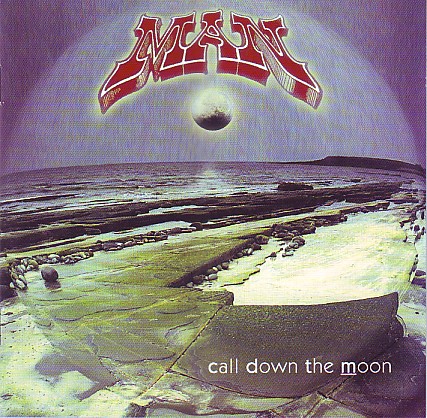
Two years later, in November 1994, Man entered the studio for the first time since 1983. Man had written nine tracks which would become Call Down The Moon, which has been rereleased by Esoteric Recordings.
At Egg Studios, Seattle, Ron Sanchez and Man produced Call Down The Moon. Man’s rhythm section included bassist Martin Ace, guitarist Micky Jones and drummer and guitarist John Weathers. Deke Leonard played keyboards and guitar. By the end of November 1994, Call Down The Moon was finished. It would be released in 1995.
On its release in 1995, Call Down The Moon was well received. Some critics didn’t seem to appreciate the lengthy tracks. Man, it seemed, were determined to take advantage of the compact disc’s length. The album opener, Call Down The Moon, lasted a mighty nine minutes. The next six tracks lasted between four and eight minutes. The penultimate track, Drivin’ Around, is a twelve minute epic. Closing Call Down The Moon, was Burn My Workin’ Clothes, which lasts a mere three minutes. For Man’s loyal fans, Call Down The Moon was a return to the past, when lengthy jams were part and parcel of their sets. However, was the music on Call Down The Moon as good as that released during Man’s glory years?
Opening Call Down the Moon is the title-track. Glistening, shimmering guitars glide across the arrangement as the rhythm section and keyboards provide moody backdrop. Man stretch their legs before a hurt-filled vocal enters. It’s tinged with sadness and regret. Meanwhile, the rest of Man add a dramatic backdrop. This comes courtesy of stabs of keyboards, bursts of blistering guitars and a rhythm section that combine rock and blues. Later, Man also add tight harmonies. They’re the perfect foil to the vocal. After that, Man bring put to good use twenty years of experience during this fusion of blues, rock and heartbreak.
If I Were You sees Man return to a late-sixties psychedelic, West Coast sound. A choppy drumbeat, jangling piano and dreamy, lysergic vocal are combined with Deke’s guitar. There’s even what sounds like a harpsichord buried deep in the mix. The more you listen to the arrangement, the more you hear. It’s a complex and multilayered. It marches along to the beat of Man’s rhythm section. Meanwhile, some scorching guitar riffs. So are layer harmonies. They all play their part in a track that’s a homage to not just Man’s musical past, but the music that inspired Man.
Dream Away is a bluesy shuffle. It’s best described as bluesy, moody and broody. As the rhythm section add the heartbeat, a slide guitar adds to this atmospheric ballad. The arrangement almost pauses when a weary, lived in vocal enters. It’s needy as it sings: “there ain’t nothing like a woman’s touch|.” All the time, the rest of Man contribute a bluesy shuffle. Stealing the show is the slide guitar. It’s the perfect foil for a vocal that’s needy and weary.
Blackout bursts into life. Man become one. Keyboards, rhythm section and a reverberating guitar combine with Deke Leonard’s choppy, urgent vocal. Try as he may, Deke can’t quite make the lyrics work. He’s almost trying too hard. Even the rest of Man can’t make the song work. They trade guitar licks while the rhythm section drive the arrangement along. Despite their best efforts, Blackout never rises above average and is a long way from classic Man.
Straight away, The Man With X Ray Eyes sounds more promising. There’s a brief nod to Chicago as keyboards take centre-stage. They’re interrupted by drums, before Man kick loose. This is much more like it. Blistering, riffing guitars and a pounding rhythm section strut their way across the arrangement. It’s one of Man’s best performances. Briefly, there’s a nod to Thin Lizzy courtesy of Man’s guitars. When the vocal enters, it’s almost tender. It carries the lyrics well, before harmonies sweep in. Meanwhile, the rest of Man are delivering a masterclass. They draw upon four decades experience, as they unleash one of their best performances on Call Down the Moon.
Gradually, chiming guitars and a pounding rhythm section join forces as Heaven and Hell unfolds. Keyboards, pounding rhythm section and riffing guitars then set the scene for the vocal. It’s mixture of power and swagger, and comes across as almost theatrical. Again, it’s a case of trying too hard. Meanwhile, stabs of dramatic, rocky guitars and keyboards are unleashed. Later, as the track metamorphosis,’ it heads in the direction of prog rock. Suddenly, the track is transformed. Man become one. Blistering guitars, pounding keyboards and a driving rhythm section join forces. Even the vocal seems to improve later. It becomes a throaty growl, as Man belatedly, recover their mojo.
Dramatic and rocky describes The Girl Is Trouble. The rhythm section provide the engine room, while bursts of machine gun guitars are unleashed. Then when the vocal enters, it’s a mixture of power and drama. It’s replaced by a guitar masterclass from Micky Jones. He lays down some of his best guitar licks on Call Down The Moon during this track. Seamlessly, his hands fly up and down the fretboard, as he dawns the role of guitar hero. Behind him Deke’s keyboards play a supporting role. To a man, Man pull out the stops on this rocky anthem.
Drivin’ Around is the longest track on Call Down The Moon. It lasts over twelve minutes and allows Man to stretch their legs musically. This is the case from the opening bars. A cymbal hisses and shimmers, before keyboards pick up the baton. After that the rest of Man make an entrance. They’re in no hurry and it takes two minutes before Micky Jones’ vocal enters. It’s a mixture of emotion, sadness, control and power. His lived-in vocal is perfect for the lyrics. It sounds as if Micky has lived, loved and survived to tell the tale. He then lays down another peerless solo. Without doubt, it’s the best solo on the album. The rest of Man are left playing a supporting role as Micky steals the show as man combine rock and blues seamlessly.
Burn My Workin’ Clothes closes Call Down the Moon. It’s a really disappointing way to end the album. Maybe Man were trying to be ironic or funny? Instead, they come across as sloppy. Man provide a bluesy backdrop for John Weathers’ mid-Atlantic vocal. He’s accompanied by slide guitar and harmonies. His vocal is distant. So much so, that it sounds as if he’s too far from the microphone. The track’s only saving grace is the slide guitar. However, even that can’t save what’s a disappointing end to Call Down the Moon.
After twelve years away from a recording studio, Man fans thought that the band would be back with a career defining album. That’s what Call Down the Moon could’ve and should’ve been. They were very wrong. Out of the nine tracks, only six at the most pass muster. The rest disappoint.
Blackout is a truly disappointing song. It’s the lyrics that let the Blackout down. Heaven and Hell is best described as a song of two parts. Part one disappoints, while part two marks a return to form from Man. However, Man saved the worst to last. That’s Burn My Workin’ Clothes. Maybe it’s an badly judged attempt at humour or irony? Ironically, things started so promisingly.
The bluesy Call Down the Moon opened the album and set the scene for If I Were You. It’s a return to the psychedelic, West Coast sound Man pioneered. After that, there’s the bluesy shuffle of Dream Away. Following the disappointing Blackout, a strutting Man return with The Man With X Ray Eyes and rocky, anthem The Girl Is Trouble. Without doubt the highlight of Call Down The Moon is Drivin’ Around, where Micky Jones steals the show. Drivin’ Around showed just what Man were capable of.
Surely, it wasn’t too much for Man to return after twelve years away from a recording studio, with nine tracks of the calibre of Drivin’ Around? If they had, then Call Down the Moon would’ve stood alongside the greatest albums Man had released. Sadly, that’s not the case.
Instead, Call Down the Moon is best described as merely above average. Call Down the Moon is far from classic Man. If that’s what you’re looking for, then I’d suggest you’d be better buying the recently released five disc box set, Original Album Series. Unlike Call Down the Moon, the five albums in the Original Album Series box set, feature Man at their very best.
MAN-CALL DOWN THE MOON.
LOUDON WAINWRIGHT III-HAVEN’T GOT THE BLUES (YET).
LOUDON WAINWRIGHT III-HAVEN’T GOT THE BLUES (YET).
Did you ever hear the story about the singer songwriter you sold his guitar to pay for yoga lessons, but still won a Grammy Award? That’s what Loudon Wainwright III did when was growing up.
Loudon was born on September 5th 1946, in Chapel Hill, North Carolina. His father Loudon Wainwright, Jr, was a columnist for Life magazine and occasional songwriter and his mother was Martha Taylor a yoga teacher. They introduced their family to music. So, it’s no surprise that Loudon would learn to play guitar. That was until he decided he wanted to learn yoga.
There was a problem. Loudon, now living in San Francisco, didn’t have any money. So he decided to sell his beloved guitar. Back then, Loudon didn’t seem to have any intention of making a career out of music. That was until he was working in a boatyard in Rhode Island.
Loudon’s grandmother got Loudon the job working in the boatyard. He was working beside an old lobsterman, Edgar. Working alongside Edgar and hearing his stories inspired Loudon to write his first song. This presented a problem. He’d sold his guitar. So, he borrowed a guitar and penned his first song Edgar. After this the floodgates opened.
Within a year, Loudon had written nearly twenty songs. Loudon gave up his job in the boatyard. Packing his bags, he headed to Boston and then New York, where he played in folk clubs. Eventually, Loudon was discovered by Milton Kramer, who became his manager. Before long, Loudon signed to Atlantic Records.
Loudon Wainwright III.
Now signed to Atlantic Records, Loudon began working on his debut album. He released his eponymous debut album in 1970 to critical acclaim. Loudon Wainwright III was an acoustic album showcases Loudon’s caustic humour. Despite failing to chart, it was a tantalising taste of what would follow. Forty-four years later, and Loudon Wainwright III has just released his twenty-second album Haven’t Got The Blues (Yet), which was by Proper Records.
Haven’t Got The Blues (Yet) marks a departure in style from one of the most underrated singer-songwriters of his generation. It sees Loudon Wainwright III belatedly, finding the blues. It’s a welcome change of style from Loudon Wainwright III who in the early seventies, was hailed as the new Dylan.
Album II.
From his eponymous debut album, it was apparent that Loudon Wainwright III had a big future ahead of him. He released his sophomore album Album II in 1971. Just like his debut, it was released to widespread critical acclaim, but failed to chart. Album II was co-produced by Loudon and his manager Milt Kramer, and has a darker worldview. It also features a mixture of Loudon’s legendary caustic lyrics and trademark humour. It was Loudon’s unique brand of humour that gave Loudon the biggest hit single of his career.
Album III.
Loudon’s first two album were acoustic albums. Not his third album. Album III was released on Columbia and saw Loudon backed by a full backing band. There was a change of producer. This time, Thomas Jefferson Kaye produced Album III. For Loudon, this worked. Not only was Album III hailed the finest album of Loudon’s career, but it was his most successful. Album III reached number 108 in the US Billboard 200, while the single Dead Skunk reached number eighteen in the US Billboard 100. For Loudon, this was the commercial breakthrough he’d been looking for.
Attempted Mustache.
For the followup Attempted Mustache, Loudon headed to Nashville. Bob Johnson produced Attempted Mustache. Although Attempted Mustache was released to commercial success in 1973, it failed to chart. Surely, this was just a blip?
Unrequited.
Unrequited was the final album Loudon released on Columbia. It was a mixture of new and live tracks. All the new tracks were penned by Loudon. Critics and music lovers appreciated Unrequited. On its release in 1975, it was well received by critics and reached number 156 in the US Billboard 200. Loudon’s luck it seemed, was changing.
T-Shirt.
This continued with his 1976 album T-Shirt. It was one of Loudon’s most eclectic album. There were acoustic tracks, a blues and then on Slowtrain, Loudon and his band kick loose. T-Shirt should’ve fared better than 188 in the US Billboard 200. Sadly, punk rock arrived. Critics turned on artists like Loudon. The reviews of T-Shirt were scathing. Rolling Stone did a hatchet job on T-Shirt. From hailing Loudon as the new Dylan, he and his peers were suddenly dinosaurs. However, Loudon’s music has outlived punk.
Final Exam.
Following the disappointment surrounding T-Shirt, Loudon returned in 1978 with Final Exam. Stylistically, it was a much more rocky album. Loudon plugged in on Final Exam. On its release, reviews were mixed and it failed to chart. However, reviews back then weren’t necessary fair. A new breed of critics were slating everything that was pre-punk. Artists like Loudon didn’t stand a chance. So, it’s no surprise that Loudon didn’t release another album until 1983.
Fame and Wealth.
During the five years between Final Exam and 1983s Fame and Wealth, Loudon spent a lot of time in Britain. He established a large and loyal fan-base. It’s thought he became more popular in Britain than America. Britain seemed to get Loudon, who was in the process of reinventing himself.
Fame and Wealth was the first album to showcase Loudon’s new sound. It was a much more pared back, folk sound. Gone was the rockier sound of Final Exam. Aided and abetted by musicians of the calibre of Richard Thompson a new Loudon Wainwright III emerged.
Critics didn’t like Fame and Wealth. It was released to mixed reviews. Loudon’s fans had mixed feelings about Fame and Wealth. On its release, Fame and Wealth failed to chart. For Loudon this was a blow. He wasn’t going to give-up though.
I’m Alright.
Two years passed before Loudon returned with I’m Alright in 1985. It was produced by Richard Thompson, and featured Danny Thompson and Paul Brady. Loudon who usually wrote all his own songs, even collaborated on Screaming Issue. He penned the track about his teenage daughter Martha, with Terre Roche. The result was an album that was well received by critics. Sadly, although I’m Alright fared well in Britain, the album failed to chart in America. This would become a pattern and Britain adopted Loudon as one of their own.
More Love Songs.
Just like I’m Alright, Loudon recorded More Love Songs in Britain. It was produced by Richard Thompson, and featured Danny Thompson and Martin Carthy. A total of thirteen tracks were recorded. The acoustic style continued. There were also a number of piano driven ballads on More Love Songs, which included some of the best music Loudon released during the eighties. Sadly, quality didn’t equate to commercial success. On More Love Songs’ release, it failed to chart. So, Loudon took a break from recording for three years.
Therapy.
By 1989, when Loudon released Therapy, much had changed in his life. During his three years away from the recording studio, he’d moved back home to America. So, Richard Thompson was replaced as producer by Chaim Tannenbaum. Along with a talented band folk, country and Americana collided. The result was a well received, but underrated album. Therapy, which, failed to chart, remains one of the hidden gems in Loudon Wainwright III’s back-catalogue. It would be Loudon’s only album until 1992s History.
History.
When Loudon released History in 1992, the three previous years had been turbulent. Loudon’s father had died and he was having problems with his own son Rufus. The death of his father provoked a myriad of emotions within Loudon. It also inspired many of the songs on History. As a result, the music on History is personal, maybe even therapeutic. Just like T-Shirt, History was an eclectic album. There was everything from folk, blues and country rock on History, which was released in 1992.
History was Loudon’s first album of the new decade. He must have been hoping for an upturn in his fortunes. After all, it had been a long time since one of his albums charted. On History’s release, critics welcome the eclectic nature of the album. Whether he was delivering a reflective ballad or rocking out, Loudon, critics said was on fine form. Sadly, this didn’t translate into sales. Again, chart success eluded him. So, Loudon took another break from the recording studio.
Grown Man.
Between 1992 and 1995, Loudon had been busy helping bring up his family. In 1993, he release his second live album Career Moves. Ironically, Career Moves, which was made-up of material from the eighties, was hailed one of Loudon’s best album. After that, Loudon continued to tour and then in 1995 with Grown Man.
Grown Man featured a different side of Loudon. It wasn’t as bleak an album. Instead, Loudon’s humour shawn through. Reviews were mixed and Grown Man wasn’t a commercial success. Long gone was chart success and hit singles.
Little Ship.
After a gap of two years, Loudon returned in October 1995, with Little Ship. Despite the title, Little Ships was a group of songs that focused on relationships. Not for the first time, did a Loudon Wainwright III album divided opinion amongst critics and music lovers. That was the case with Little Ship. Some people loved and “got” Little Ship. Other, well it sailed past them. So, it’s no surprise that Little Ship sunk without trace.
Social Studies.
Loudon had never been a singer to write inane songs. His songs were cerebral, full of social comment and caustic wit. That was the case with 1999s Social Studies. Many of the songs had been written for National Public Radio and looked at the Tonya Harding scandal, the O.J. Simpson trial and the advent of the millennium. These tracks allowed Loudon to combine social comment and humour.
Essentially, Loudon was following in his father’s footsteps. While his father wrote for Time magazine, Loudon’s “columns” were put to music. Fifteen of these columns featured on Social Studies, which was released in 1999.
On its release in 1999, reviews of Social Studies ranged from good to outstanding. Loudon seemed to have caught the critics imagination. Sadly, Social Studies didn’t come close to troubling the charts. Yet again, another of Loudon’s albums failed to find the audience it deserved. Despite that, he was still a hugely popular artist live. Especially in his second home Britain, where his albums found an appreciative audience. That was the case with his next album Last Man on Earth.
Last Man on Earth.
When Loudon released Last Man on Earth in September 2001, he’d been through another traumatic time. His mother had died and a relationship had ended. Music was Loudon’s way of expressing his feelings and grieving.
Last Man on Earth found Loudon lonely and grieving. He’d laid bare his soul. On other tracks, Loudon continued to examine his troubled relationship with late father. All this made Last Man on Earth one of the most personal and introspective albums Loudon had released. It was akin to a snapshot into his weary, troubled soul. How would critics and music lovers react to Last Man on Earth?
On the release of Last Man on Earth, it didn’t chart in the US Billboard 200. It did reach number forty-four in the US Top Independent chart. Belatedly, Loudon’s music was receiving the recognition it deserved. Would this continue?
Here Come The Choppers.
Four years passed before Loudon released his next studio album, Here Come The Choppers. Since Last Man On Earth’s release, the world was a very different place. The world was at war. Ironically, this gave Loudon inspiration.
Loudon wrote an album based upon the Iraq war. Instead of Iraq, the war was taking place in the Miracle Mile district of Los Angeles. Here Come The Choppers saw Loudon unleash his acerbic wit and dark humour.
Released in 2005, Here Come The Choppers received mixed reviews and failed to chart. The commercial success Loudon had enjoyed proved fleeting.
Strange Weirdos.
Loudon released his first soundtrack album in 2007. This was Strange Weirdos, the soundtrack to Judd Apatow’s Knocked Up. It was co-produced by Joe Henry and Loudon. Guest artists included Van Dyke Parks, Richard Thompson and Greg Leisz. They played their part in what was one of Loudon’s most successful albums.
On the release of Strange Weirdos in 2007, it peaked at number thirty-two in the Billboard Heatseekers and number 22 on the Top Soundtracks chart. For Loudon, this was a welcome change in his fortunes.
Recovery.
Recovery saw Loudon return to his first four albums for inspirations. Having chosen thirteen tracks, Loudon reinvented them. Accompanying him, was a tight and talented band.
They help Loudon to breath new life and meaning into what’s without doubt, classic Loudon Wainwright III. After all, Loudon’s first four albums feature some of the best music of his forty-four year recording career. Despite being crammed full of classic tracks, reviews were mixed and the album failed to chart. Maybe what was the one of the most ambitious albums of Loudon’s career would mark a change in his fortunes?
High Wide and Handsome: The Charlie Poole Project.
That was High Wide and Handsome: The Charlie Poole Project. This was the twentieth album of Loudon’s career. It sees him pay homage to country musicians and banjo player, Charlie Poole. His music may not have been familiar to many people. Loudon was determined to rectify this. While this is admirable, it wasn’t exactly the most commercial project. That’s until he brought onboard a few friends.
This includes Loudon’s daughter Martha, son Rufus and sister Sloan Wainwright. The Roche sisters, Maggie, Suzzy and Terre added backing vocals and Geoff Muldaur, a former member of Paul Butterfield Blues’ Band played banjo. They’re just a few of the many musicians who played their part in High Wide and Handsome: The Charlie Poole Project sound and success.
At last, Loudon Wainwright III was on the verge of receiving the recognition his music deserved. On the release of High Wide and Handsome: The Charlie Poole Project in 2009, it was released to critical acclaim and reached number two in the Bluegrass’ charts. Then to top it all, High Wide and Handsome: The Charlie Poole Project won a Grammy Award for best folk album. After thirty-nine years and twenty albums, Loudon Wainwright III was receiving the commercial success and critical acclaim his music deserved. However, Loudon wasn’t one for resting on his laurels.
10 Songs for the New Depression.
Straight away, Loudon began penning 10 Songs for the New Depression. The songs were inspired by the global financial crisis and the recession. Loudon went back to basics, accompanying himself on banjo, guitar and ukelele.
On the release of 10 Songs for the New Depression, it received mostly, positive reviews. Especially in Britain, where critics lauded Loudon’s analysis of the situation. He combine analysis with wit and wisdom. The result was a fitting followup to High Wide and Handsome: The Charlie Poole Project. Especially when 10 Songs for the New Depression reached number number thirty-eight in the Top 40 Independent Albums charts. Loudon’s career, it seemed was enjoying an Indian Summer.
Older Than My Old Man Now.
April 17th 2012 was when Loudon released his previous album, Older Than My Old Man Now. It found Loudon in a reflective mood. He was posing questions about the big subjects in life. This included growing old and dying. Loudon was also thinking about childhood, family and family history. It seemed Loudon was at the stage in his life when he realised that, none of us are invincible. Partly, this was down to Loudon having outlived his father, who died aged just sixty-three. So, it’s no wonder Loudon was in a reflective mood. Ironically, when Loudon’s in a reflective mood, he’s at his best.
Especially when accompanied by Martha and Rufus Wainright and Suzzy Roche. Produced by Dick Connette Older Than My Old Man Now was released to widespread critical acclaim. Many of the critics had been around since Loudon released his 1970 eponymous debut. For them, Older Than My Old Man Now was a sobering album. They realised that they too were no longer invincible. That made Older Than My Old Man Now all the more personal and pertinent. It seemed that Older Than My Old Man Now struck a note with many people and it reached number seven in the US Top Heatseekers charts. For Loudon, this was proof that he was at his best when he was in a reflective mood, giving something of himself. However, on his twenty-third album, Haven’t Got the Blues (Yet), Loudon changes tack.
Haven’t Got the Blues (Yet).
For Haven’t Got the Blues (Yet), Loudon penned fourteen tracks. He was then joined by a tight, talented band. Their lineup changes throughout Haven’t Got the Blues (Yet). However, there are some musicians who play an important role.
Especially drummer David Mansfield. He’s like a one man band, playing guitars, mandolin, Roksichord, mandodello, percussion, ukelele, fiddle, drums, spoon, viola, violins, tin whistle, pedal steel and electric sitar. He also takes care of programming the upright bass, drums and horn section.
Other musicians who play a starring role are Martha Wainwright, Tim Luntzel on upright bass, organist Glen Patscha and pianist Andy Burton. So good are the horn section, it would be unfair to single anyone out. They’re at the heart of sound and success of tracks like Brand New Dance, Spaced and Haven’t Got the Blues (Yet). This trio of tracks are just a taste of what’s one of Loudon Wainwright III’s best albums in a a long time, Haven’t Got the Blues (Yet).
Haven’t Got the Blues (Yet) literally bursts into life with Brand New Dance. It sounds like a blistering homage to early Elvis. Especially with blazing horns, Jerry Lee Lewis like piano and a driving rhythm rhythm section for company, Loudon vamps his way through the lyrics. They’re a mixture of social comment and Loudon’s caustic wit. Later, add in scorching guitar solo and what a storming way to open Haven’t Got the Blues (Yet), which is a musical roller coaster.
Very different is Spaced, which has a tango sound. The tempo drops and a much more understated and moody arrangement unfolds. This comes courtesy of wistful violins, a clarinet, bursts of tuba and an accordion. They provide the backdrop for Loudon’s melodramatic vocal.
In A Hurry sees Loudon return to the acoustic sound of his early career. His vocal is full of emotion, concern and sadness, as he sings about someone he sees in the station each day. He doesn’t know them, but can see they’re tired and stressed. Loudon paints pictures. So much, that you can see the scenes unfolding before your eyes during this beautiful ballad.
From ballads, Loudon turns his attention to the blues on Depression Blues. This isn’t a first. Over the years, Loudon’s included a blues song on a number of songs. Depression Blues is one of Loudon’s best. Especially, with the slide guitar accompany Loudon’s melancholy vocal. He sings about suffering from depression and struggling to find a cure. They’ve tried everything, but nothing seems to work. That’s why there’s a sense of despair in Loudon’s vocal.
Morgue is another track that revisits America’s rich musical past. It draws inspiration to the early days of country music. With an authentic country backdrop, of fiddles, banjo, accordion and washtub, Loudon sings about having to identify the woman who broke his heart. The payoff is truly caustic as he sings: “you sure got your comeuppance for your crimes, a guilty conscience and a frozen broken heart.”
Harmless is another track with a country influence. Loudon accompanied by just his acoustic guitar and fiddle, sings about how he’s harmless. He’d never kill an insect, he’s thrifty and “there’s never no trouble from me.” As he sings this, there’s a sense of sadness in his voice. Especially when he sings” “there’s one or two lads who I could call my chums.” As he sings this, Loudon paints a picture of a life never lived and finally, the character in the song has realised this. Especially when he sings: “nobody would notice if I wasn’t there, if I didn’t come home for me tea.” A truly poignant and beautiful track.
The next few tracks continue the country sound. Man and Dog is typical Loudon Wainwright III. There’s a nod to Neil Young and C.S.N.Y, as the track unfolds. Soon, Loudon combines social comment and humour. However, try as he may Loudon can’t quite make Man and Dog work. It’s a disappointing track. Things improve slightly on Harlan County, as a despairing Loudon sings: “I can’t get a drink in Harlan County.” Later, swirling fiddles drive the arrangement to a crescendo.
I Knew Your Mother is a laid-back,country-tinged track. There’s a brief nod to Neil Young’s Harvest, as the song unfolds. Pedal steel and clarinet play leading roles as the rhythm section drive the arrangement along. Loudon delivers some of his finest lyrics, via a vocal that’s wistful and melancholy.
Rocky describes Looking at the Calendar. It’s totally different from the previous tracks. You hope Loudon and his band kick loose. They come close on this country rock track, but never quite do. Regardless of this, Loudon and his band are at their best.
Only Loudon could use the words killing and Christmas in a song title. That’s the case on I’ll Be Killing You This Christmas, where Loudon turns his sights on the pro gun lobby. He does this against a subtle, old fashioned, jazz-tinged backdrop.
God and Nature sees Loudon combine elements of blues, country and folk. He’s accompanied by an understated backdrop. This allows his vocal to take centre-stage. When, it drops out, his band enjoy their moment in the sun, combining blues and country, on this poignant and powerful ballad.
Loudon protest too much I think. That’s apparent on Haven’t Got the Blues (Yet). It’s a gloriously bluesy track. It’s driven along by the bass. That’s until growling, rasping horns enter. They’re the perfect foil to Loudon’s weary vocal as he claims I “Haven’t Got the Blues (Yet).” Not much.
The melancholy Last Day of the Year closes Haven’t Got the Blues (Yet). It’s akin to a lament to the days that have passed. Just accordion, banjo, mandolin, harmonium and harmonies accompany Loudon on this wistful lament.
Despite having released twenty-two studio albums, Loudon Wainwright III is still one of music’s best kept secrets. In a career lasting forty-four years, commercial success has eluded Loudon. No wonder, on several occasions Loudon has taken a break from recording albums. He’s always comeback for more.
There’s a reason for that. He’s a prolific songwriter with plenty to say about the world. On his twenty-two studio albums, Loudon has combined social comment and his caustic humour. Yet it took twenty albums before Loudon Wainwright III received the commercial success and critical acclaim his music deserved. That came when he released
High Wide and Handsome: The Charlie Poole Project. This resulted in a hit album and a Grammy Award. Belatedly, Loudon music was rubbing shoulders with the greats. It marked the start of an Indian Summer for Loudon.
Since then, Loudon has continued to release quality music. The latest instalment in a run of critically acclaimed albums is Haven’t Got the Blues (Yet). It sees Loudon pay homage to America’s rich musical past. Americana, blues, country, folk and rock can be heard on the fourteen tracks on Haven’t Got the Blues (Yet). Mostly, it’s an album full of quality music. The only disappointment is Man and Dog, which doesn’t come up to the standard of the rest of Haven’t Got the Blues (Yet). Mind you, Loudon set the bar high on Haven’t Got the Blues (Yet).
Haven’t Got the Blues (Yet) is, without doubt, one of the finest albums Loudon Wainwright III has released in a long time. Loudon Wainwright III’s Indian Summer continues with Haven’t Got the Blues (Yet), which was recently released by Proper Records.
LOUDON WAINWRIGHT III-HAVEN’T GOT THE BLUES (YET).

DISCO RECHARGE-JOHN DAVIS AND THE MONSTER ORCHESTRA-AIN’T THAT ENOUGH FOR YOU AND THE MONSTER STRIKES AGAIN.
DISCO RECHARGE-JOHN DAVIS AND THE MONSTER ORCHESTRA-AIN’T THAT ENOUGH FOR YOU AND THE MONSTER STRIKES AGAIN.
By 1978, John Davis had established a reputation in music as a successful songwriter, arranger and producer. Ever since the early seventies, he’d been working in Philly, with groups like First Choice, The Intruders, The Soul Survivors and artists like William DeVaughn. Then when he joined the nascent SAM Records, John began developing a reputation as one of disco’s pioneers.
John was playing his part in making SAM a label to challenge Salsoul as disco’s premier label. To do this, John had formed his own disco orchestra, John Davis and The Monster Orchestra, to rival the legendary Salsoul Orchestra. Not only had , John Davis and The Monster Orchestra played on most of SAM Records’ releases, but they’d released two albums.
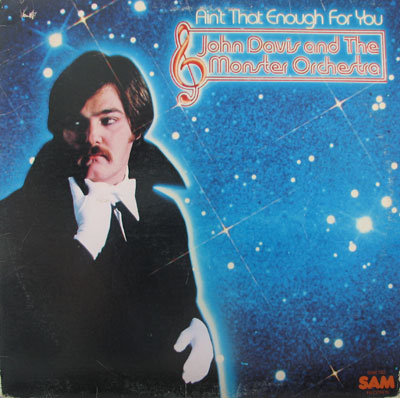
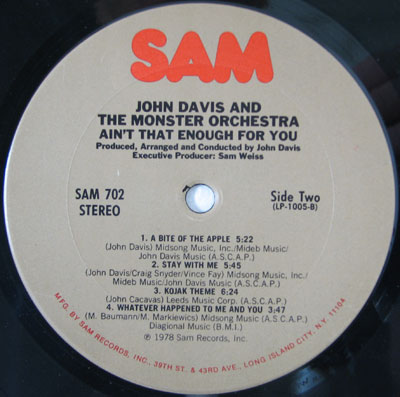
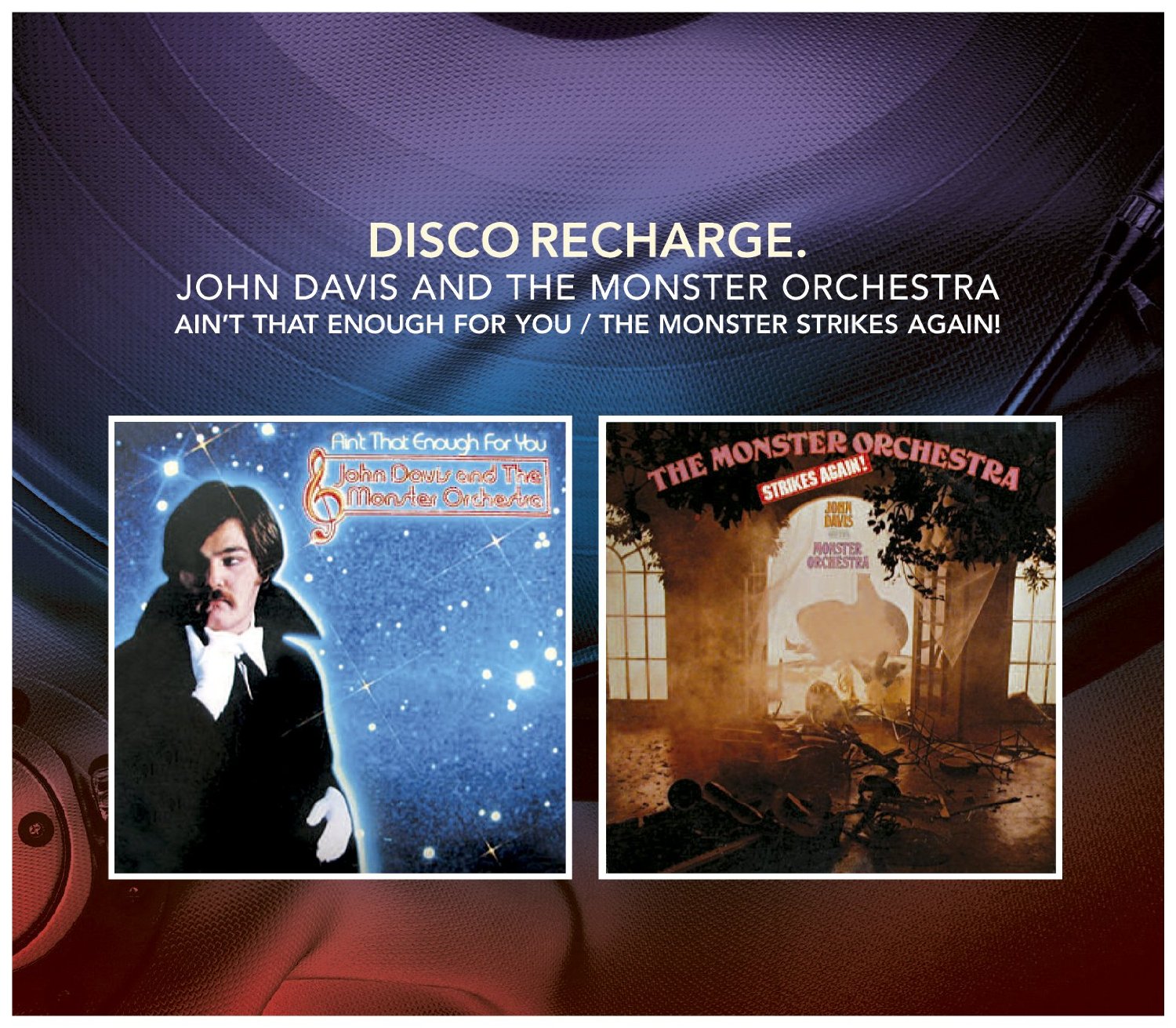
They were 1976s Night and Day and 1977s Up Jumped The Devil. Soon, John Davis and The Monster Orchestra would release their third album, Ain’t That Enough For You in 1978. Ain’t That Enough For You was the most important album John Davis and The Monster Orchestra would release. The reason for this was that The Salsoul Orchestra had lost Vince Montana Jr, its founder, leader, conductor and driving force, the title of disco’s greatest orchestra was up for grabs. Could John Davis and The Monster Orchestra snatch their crown with Ain’t That Enough For You which along with The Monster Strikes Again, has been rereleased by Harmless Records as part of their Disco Recharge series?
Ain’t That Enough For You.
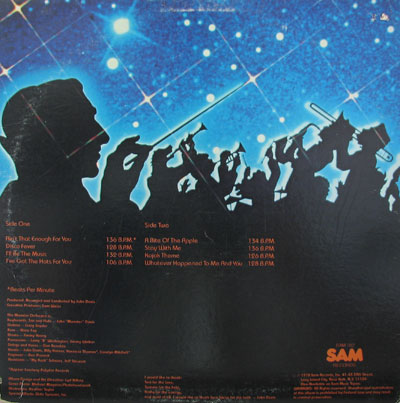
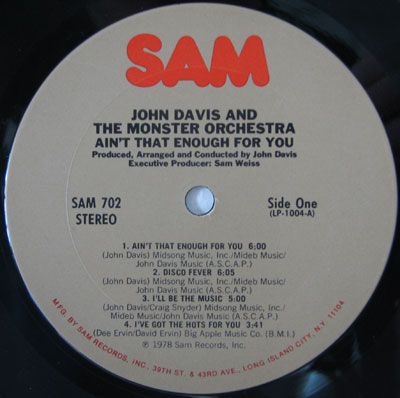
With the title of disco’s premier orchestra up for grabs, John Davis and The Monster Orchestra got to work on Ain’t That Enough For You. John wrote the title-track Ain’t That Enough For You, Disco Fever and A Bite Of The Apple. With guitarist Craig Snyder he cowrote I’ll Be The Music. They also cowrote Stay With Me with Vince Fay. David and Dee Ervin cowrote I’ve Got The Hots For You, while Mark Bauman and Marty Markiewicz wrote Whatever Happened To Me and You. The other track might not have seemed like a controversial choice, but it was.
It was a cover of the Kojak Theme. Covers of tracks like this, plus novelty songs, were providing ammunition for the anti-disco bandwagon. It was beginning to gather pace. According to them, this was proof that disco was lacking in direction and imagination. Disco they believed, was about to implode. This would prove prophetic in 1979. That was still to come. Before that, John Davis and The Monster Orchestra began recording Ain’t That Enough For You.
When recording of Ain’t That Enough For You began, many of the musicians that featured on Up Jumped The Devil were there. This included guitarist Craig Snyder, bassist Vince Fay, percussionists Larry Washington and Jimmy Walker, while Don Renaldo provided the strings and horns. John Davis played flute, keyboards, saxophone and took charge of vocals. Absent were The Sweethearts of Sigma, who’d played a big part in the success of Up Jumped The Devil. Instead, adding vocals were Billy Harner, Carolyn Mitchel and Vaneese Thomas, daughter of Rufus Thomas. Once Ain’t That Enough For You was completed, it was released in 1978.
Ain’t That Enough For You was released in 1978, but wasn’t a commercial success. The title-track, Ain’t That Enough For You was the lead single, and proved popular in clubs. In the UK, it reached number seventy. Released as the second single, was the Kojak Theme. This may have been to cash-in in the program’s popularity. However, it seemed a strange choice for a single. After all, there were much better tracks on Ain’t That Enough For You, as you’ll realise, when I tell you about. Ain’t That Enough For You.
Opening Ain’t That Enough For You, is the title-track, which was one of two singles released from the album. It’s a six-minute epic that explodes into life. A pulsating rhythm section and percussion drive the arrangement along. Then searing, rocky guitars, dramatic keyboards and horns join the fun. Next, the lushest of strings dance in. They dance joyously, above the pulsating arrangement. When a female vocal enters, her vocal is equally joyous, filled with enthusiasm and emotion. Her vocal is swept away, on top of the lushest strings. By now, the track takes on a Euro Disco sound, which when combined with disco and elements of Philly Soul, funk and rock, is a delicious, and heady brew that’s truly dance-floor friendly.
Rolls of drama open Disco Fever, which has a heavier, funkier sound. Tight, urgent and soulful harmonies join the funky rhythm section, percussion, keyboards and chiming guitars. Flourishes of strings and stabs of horns join bursts of dramatic drums. While the arrangement is crucial to the song’s success, so are the harmonies, which are delivered with power and emotion. Later, a growling saxophone solo proves to be the finishing touch, as funk soul and disco unite.
That seems to set John Davis and The Monster Orchestra on their way. Spurred on, they continue spreading hooks and happiness aplenty, on this infectiously catchy, soulful and funky slice of classic disco.
Like the previous tracks, I’ll Be The Music just bursts into life, grabbing your attention and taking you on a musical journey. You float along amidst the lushest of strings, while harmonies serenade you and horns rasp. Meanwhile the rhythm section provide this joyous, uplifting track’s heartbeat. Horns growl and kick, drums pound and horns swirl and cascade, as John Davis and The Monster Orchestra demonstrate just why they were one of the best disco orchestra’s and challenging for The Salsoul Orchestra’s crown.
I’ve Got The Hots For You is a quite different track. It’s slower, funkier and has a much tougher sound. Vaneese’s sassy, feisty and snarled vocal is accompanied by a P-Funk influenced arrangement. The rhythm section and guitars provide an uber funky backdrop. They’re joined by keyboards and blazing horns. Together, they play their part in a track that’s very different from what’s gone before, but demonstrates there’s much more to John Davis and The Monster Orchestra than disco.
A Bite Of The Apple was written by John Davis. He appears to have found biblical inspiration. A pounding, pulsating disco beat is joined by a Spanish guitar as the arrangement becomes jaunty and funky. Flourishes of strings sweep and swirl above the sweet, punchy harmonies as the arrangement gallops away. Spanish horns sound, while percussion and the pulsating beat combine with cascading strings. As Euro Disco and disco are combining, a growling saxophone solo adds a jazzy twist. For five-minutes the track gallops along teasing and tempting, daring you take A Bite Of The Apple, which is quite delicious.
As Stay With Me begins, you sense something is about to unfold. There’s this sense of anticipation when percussion and rhythm section combine. Then flourishes of strings and rasping horns join the punchy, pounding beat. That’s a clue that something is about to make a grand entrance. What it is, is a strutting, soaring vocal. Urgent and dramatic, it joins the swathes of swirling strings, stabs of horns and pounding beats. It’s the missing link. Now everything falls into place. You just sit back and luxuriate in this track where elements of Earth, Wind and Fire, disco and Philly Soul combine. The next six minutes fly by. When the track ends, you can’t resist the temptation to play it again SAM.
Earlier, I mentioned that the inclusion of the Kojak Theme was controversial for many people. However, they’ve probably never listened to this string-drenched fusion of funk and disco. It features the lushest of strings, a funky rhythm section and sassy, sensual harmonies. It’s orchestral, dance-floor friendly, dramatic and funky. If it didn’t happen to be the theme from a popular television show, it would’ve been hailed as a musical triumph.
Whatever Happened To Me and You closes Ain’t That Enough For You. This is four minutes of soulful, disco. The sweetest of harmonies sweep in, accompanied by lush strings, while the rhythm section march the arrangement along. It’s the bass that leads the way, before Craig Synder’s rocky guitar add to the heartache and drama of the lyrics. Later, John Davis unleashes a saxophone solo, as he takes centre-stage. When his solo is over, he passes the baton to the harmonies. They’re at the heart of this beautiful and heartbreakingly sad fusion of disco and soul. This seems the perfect way to close Ain’t That Enough For You, with John Davis and The Monster Orchestra proving whether it’s disco, funk, Philly Soul or Euro Disco, they’re equally at home.
Just like Night and Day, then Up Jumped The Devil, John Davis and The Monster Orchestra’s third album Ain’t That Enough For You continued their ascendancy to the towards becoming disco’s greatest orchestra. Good as Ain’t That Enough For You was, and it’s one of the finest albums by a disco orchestra, John Davis and The Monster Orchestra didn’t quite take the crown from The Salsoul Orchestra. They were still the best disco orchestra. John Davis and The Monster Orchestra were a close second with their fusion of disco, funk, Philly Soul and Euro Disco. It was a close run thing though.
During the eight tracks on Ain’t That Enough For You they demonstrate why. Not only were they capable of creating some of the most soulful and dance-floor friendly music, but seamlessly, they could switch between musical genres. There’s no way you could describe John Davis and The Monster Orchestra as a one-trick pony. Not at all. Instead, you could describe them as versatile and multitalented. The eight tracks on Ain’t That Enough For You demonstrates this. Even the Kojak Theme works in the hands of John Davis and The Monster Orchestra. This refuted the accusations that disco lacked direction and imagination. Instead, the hook-laden, soulful and dance-floor friendly Ain’t That Enough For You proved beyond all reasonable doubt that John Davis and The Monster Orchestra were one of the most innovative, influential and multitalented disco orchestras. Sadly, despite this, John Davis and The Monster Orchestra would only release one further album, The Monster Strikes Again.
The Monster Strikes Again.
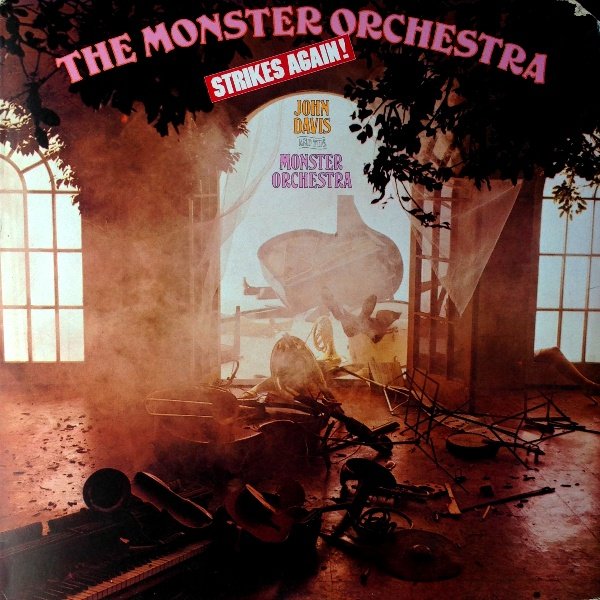
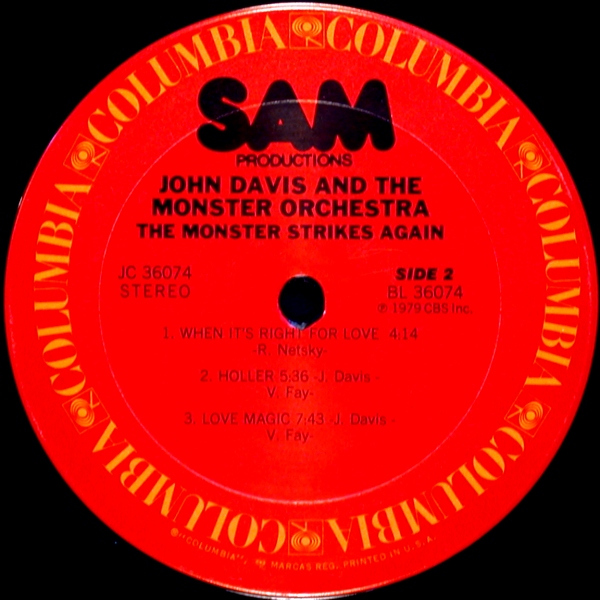
By 1979, John Davis and The Monster Orchestra had cemented their reputation as one of the most successful disco orchestras. Like two prize fighters, John Davis and The Monster Orchestra and The Salsoul Orchestra were going toe-to-toe for the title of disco’s best orchestra. By 1979, The Salsoul Orchestra were on the ropes. They’d lost Vince Montana Jr. year earlier and some of The Salsoul Orchestra’s stars had been sideline. Among them were Norman Harris. So, the title was up for grabs. So, John Davis and The Monster Orchestra returned to the studio and recorded The Monster Strikes Again.
For their fourth album, 1979s The Monster Strikes Again, two singles, Love Magic and a cover of Ashford and Simpson’s Bourgie Bourgie saw John Davis and The Monster Orchestra revisit the commercial success of their earlier albums. Considering The Monster Strikes Again proved to be John Davis and The Monster Orchestra’s final album, this seemed a fitting end to their recording career. However, what made The Monster Strikes Again such a successful album? That’s what I’ll now tell you.
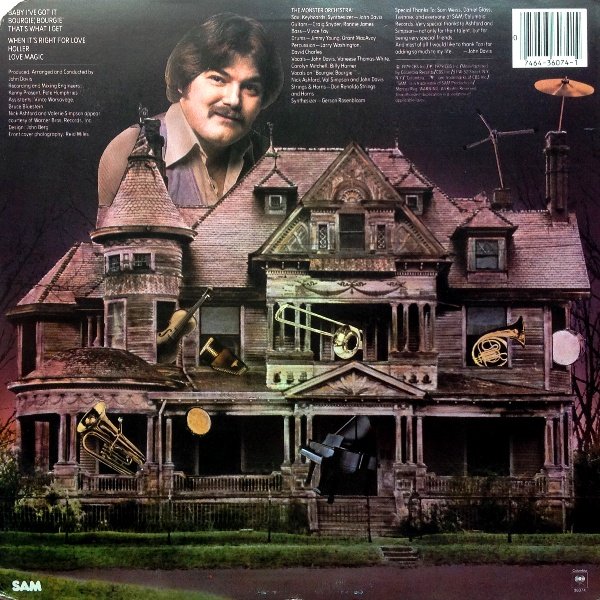
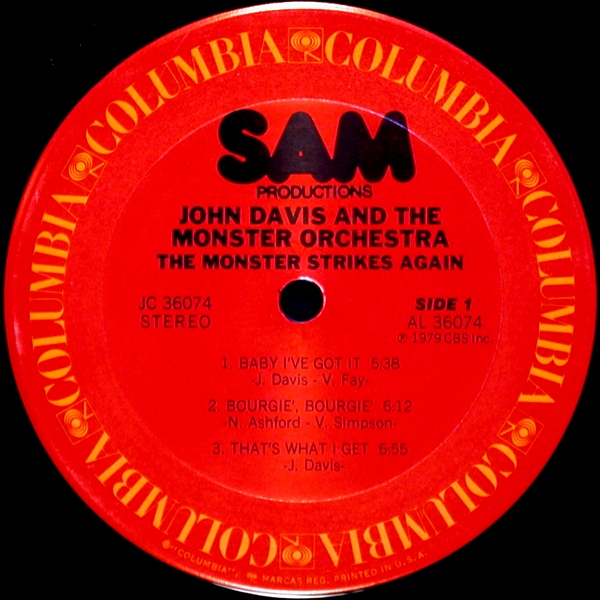
For The Monster Strikes Again, John Davis wrote That’s What I Get, and penned Baby I’ve Got It, Holler and Love Magic with Vince Fay. Ron Netsky wrote When It’s Right For Love and the other tracks was a cover of Ashford and Simpson’s Bourgie Bourgie. When it came to recording The Monster Strikes Again, many of the same musicians that had played on previous John Davis and The Monster Orchestra albums were joined by some new faces.
When recording of The Monster Strikes Again began, a mixture of familiar and faces gathered. The rhythm section included guitarists Ronnie James and Craig Snyder, bassist Vince Fay and drummers Grant MacAvoy and Jimmy Young. They were joined by percussionists Larry Washington and David Waker, while Gerson Rosenbloom played synths. Taking charge of strings and horns was Don Renaldo. John Davis played flute, keyboards, synths, saxophone and took charge of vocals. Adding vocals were Billy Harner, Carolyn Mitchel and Vaneese Thomas-White, daughter of Rufus Thomas. Once The Monster Strikes Again was completed, it was released in 1979.
On the release of The Monster Strikes Again in 1979, it was more successful than its predecessor Ain’t That Enough.The two singles, Love Magic and Bourgie Bourgie surpassed this success. Not only were they commercially popular, but gave John Davis and The Monster Orchestra two massive club hits. Considering The Monster Strikes Again would prove to be John Davis and The Monster Orchestra’s final album, this seemed a fitting finale from one of disco’s greatest orchestras, which I’ll now tell you about.
Opening The Monster Strikes Again is Baby I’ve Got It, one of three songs penned by John and Vince Fay. A rocky rhythm section and percussion combine to drive the arrangement along. before synths and chiming guitars enter. When sassy, feisty harmonies enter, they prove to be a game-changer. They prove to be crucial to the track’s success. They’re soulful, but give the track a noticeable Euro Disco influence, joining the pounding rhythm section, synths and searing guitars. By now,
elements of soul, disco, Euro Disco have been combined. Unlike earlier John Davis and The Monster Orchestra albums, synths play a bigger role in this track. However, they work well and their sound has aged well. What really makes the track are the choppy, confident and often sassy harmonies. Adding the finishing touch is a growling sax solo, which adds to the drama of this hook-laden slice of disco, where disparate musical genres and influences are seamlessly fused.
Bourgie Bourgie, which was written by Ashford and Simpson, was one of two singles released from The Monster Strikes Again. Not only is this one of John Davis and The Monster Orchestra’s best tracks, but a true disco classic. As the arrangement gradually unfolds, you realize something special is about to reveal its secrets. This is case from the entrance of the pounding drums and percussion. They’re joined by a pensive piano, elegant gliding strings and blazing horns. Everything adds to the sense of anticipation. Heartfelt, soaring harmonies add a sense of urgency, while the rhythm section add bursts of dramatic funk. What then follows is true disco perfection. Everything falls into place at the right time. Elements of soul, funk and drama combine, while drama, beauty and elegance are ever-present. For just over six-minutes, producer John Davis produces a soulful and funky disco Magnus Opus which is truly timeless and worthy of being called a disco classic.
Percussion and the rhythm section join urgent guitars and stabs of keyboards before horns blaze and strings dance on That’s What I Get. Here, the guitars have a real Chic sound. This is quite unlike previous albums, but works well. The choppy sensual vocals are needy and filled with emotion. The vocals are swept away atop the lushest of strings that quiver and shimmer. By now, the arrangement is combining elements of soul, funk, disco and Euro Disco. However, the Euro Disco influence is much stronger than on earlier albums. It’s really apparent in the strings, harmonies and thunderous drums. in many ways that brings out the emotion and sense of neediness in the lyrics, on what is one of the highlights of The Monster Strikes Again.
There’s a slight moody, dramatic sound to When It’s Right For Love, as the arrangement begins reveals its secrets. You can hear this from the entrance of the rhythm section, chiming guitar and swathes of lush strings. When the harmonies enter, they’re veer between tender and impassioned to tight and urgent. One thing never changes, their soulfulness. They’re a perfect foil to the arrangement that takes as its reference points disco and Euro disco. Gradually the drama builds and builds, with horns growling, strings dancing, rocky guitars screaming and Larry Washington adding his trademark percussion. Like the other tracks, producer John Davis brings everything together seamlessly. The arrangement reaches a dramatic crescendo, one that’s melodic, soulful and dance-floor friendly. In short, it’s another classic slice of disco courtesy of John Davis and The Monster Orchestra.
Straight away, you realise Holler has a harder, funkier sound. This is very different to previous tracks. Key to this are the keyboards and rhythm section that drive the arrangement along. The soulful, cascading harmonies and braying horns provide a contrast. They’re the perfect foil to this tougher, funkier sound. Later, the arrangement heads in the direction of Euro Disco, which has been one of the themes of The Monster Strikes Again. Having said that, this was the direction disco was heading by 1979. Many producers had been influenced by the popularity of Euro Disco. Here, John Davis and The Monster Orchestra seamlessly switch from their trademark disco sound to incorporate this harder, funkier sound. In doing so, they demonstrate their versatility as musicians.
Closing The Monster Strikes Again is Love Magic, which sees John Davis and The Monster Orchestra determined to end their fourth album on a high. Chiming guitars and thunderous drums combine before percussion, an uber funky bass and swathes of cascading strings combine. When the harmonies enter, they’re choppy and urgent, and accompanied by dancing strings. Again, there’s a Euro Disco influence to parts of the arrangement, especially the drums, strings and harmonies. Apart from Euro Disco, funk and jazz have influenced other parts of the arrangement. The bass has been influenced by funk, while the keyboards have been influenced by jazz. Mostly, the arrangement has been influenced by Euro Disco, and it’s in that direction it heads. Nearly eight minutes it arrives at its destination, closing The Monster Strikes Again on a dance-floor friendly, funky high.
After just four albums, The Monster Strikes Again brought John Davis and The Monster Orchestra’s career to a close. Granted they released one more 12” single, Hanging Out in 1981, but The Monster Strikes Again was their final album. At least The Monster Strikes Again ended their career with a commercially successful album. Not only that, but The Monster Strikes Again featured two hit singles Love Magic and Bourgie Bourgie. This meant a return to the commercial success and critical acclaim that John Davis and The Monster Orchestra enjoyed earlier in their career. However, by then, their music had changed.
Indeed, what’s noticeable about The Monster Strikes Again is the shift towards Euro Disco. This was a common occurrence among disco producers. Whereas previously American disco producers stuck to the classic American disco sound, they started to move towards the sound favored by European producers. This sound had proved commercially successful for Boris Midney and Giorgio Moroder. While this changed of sound might have prolonged the career of many disco producers, nothing could save disco from what happened on 12th July 1979, Disco Demolition Night.
Having provided the musical backdrop to the second half of the seventies. disco went from hero to zero in the space of a year. Suddenly, disco sucked. Disco’s downfall started on Christmas Eve 1978, That’s when Steve Dahl was fired by Chicago radio station WDAI. It had previously been a rock station, but switched to disco. Steve wasn’t out of work long. He was hired by WLUP, a rival station. WLUP played rock, which suited Steve Dahl. He’d an inkling that disco wasn’t long for this world.
Steve wasn’t a fan of disco, and took to mocking disco on-air. Openly, he mocked WDAI’s “disco DAI.” It became “disco die” to to Steve. Soon, Steve had created the Insane Coho Lips, his very own anti-disco army. Along with cohost Gary Meier, they coined the now infamous slogan “Disco Sucks.” The backlash had begun.
From there, the Disco Sucks movement gathered momentum. Events were held all over America. This came to a head at Disco Demolition Derby, which was Steve Dahl’s latest anti-disco event. Each one was becoming bigger, rowdier and attracting even more publicity. Disco Demolition Derby, which was held at Comiskey Park, Chicago on 12th July 1979 surpassed everything that went before. WFUL were sponsoring a Chicago White Sox game at Comiskey Park. if fans brought with them a disco record, they’d get in for ninety-eight cents. These records would be blown up by Steve Dahl. An estimated crowd between 20-50,000 people attended. Quickly the event descended into chaos. Vinyl was thrown from the stands like frisbees. Then when Steve blew up the vinyl, fans stormed the pitch and rioted. Things got so bad, that the riot police were called. After the Disco Demolition Derby, disco nearly died.
Following Disco Derby Night, disco’s popularity plunged. Disco artists were dropped from labels, disco labels folded and no further disco albums were released. Disco was on the critical list, and suffered a near death experience. It took a long time to recover. After disco’s demise, dance music changed.
No longer were record labels willing to throw money at dance music. Budgets were suddenly much smaller. Gone were the lavish productions of the disco orchestras of the seventies. This is epitomised by The Salsoul Orchestra and John Davis and The Monster Orchestra. Strings and horns were now a luxury. Music would have to go back to basics. For John Davis and The Monster Orchestra, this was the end of the road.
Disco Demolition Night almost destroyed disco. After that, disco artists, records and labels were hugely unpopular. So it’s no surprise that John Davis and The Monster Orchestra didn’t release any more albums. Instead they released just four albums of almost flawless disco. The Monster Strikes Again, with its fusion of disco, Euro Disco, soul, funk and Philly Soul, brought John Davis and The Monster Orchestra’s career to a close, with one of their finest albums of their four album career which at last, have bee reissued.
For way too long, the four John Davis and The Monster Orchestra have been out of print. Not any more. They’ve been released by Harmless Records as part of their Disco Recharge series. The second volume in this series features Ain’t That Enough For You and The Monster Strikes Back. This brings to a close the John Davis and The Monster Orchestra story who without doubt, were one of the greatest disco orchestras. Proof of that is John Davis and The Monster Orchestra’s fourth album The Monster Strikes Again.
DISCO RECHARGE-JOHN DAVIS AND THE MONSTER ORCHESTRA-AIN’T THAT ENOUGH FOR YOU AND THE MONSTER STRIKES AGAIN.
JOHN HIATT-TERMS OF MY SURRENDER.
JOHN HIATT-TERMS OF MY SURRENDER.
Recently, some of music’s elder statesmen have made a welcome return. During the last couple of weeks, Eric Clapton, Richard Thompson, Loudon Wainwright III and Tom Petty and The Heartbreakers. That’s not all. Another musical veteran on the comeback trail is John Hiatt.
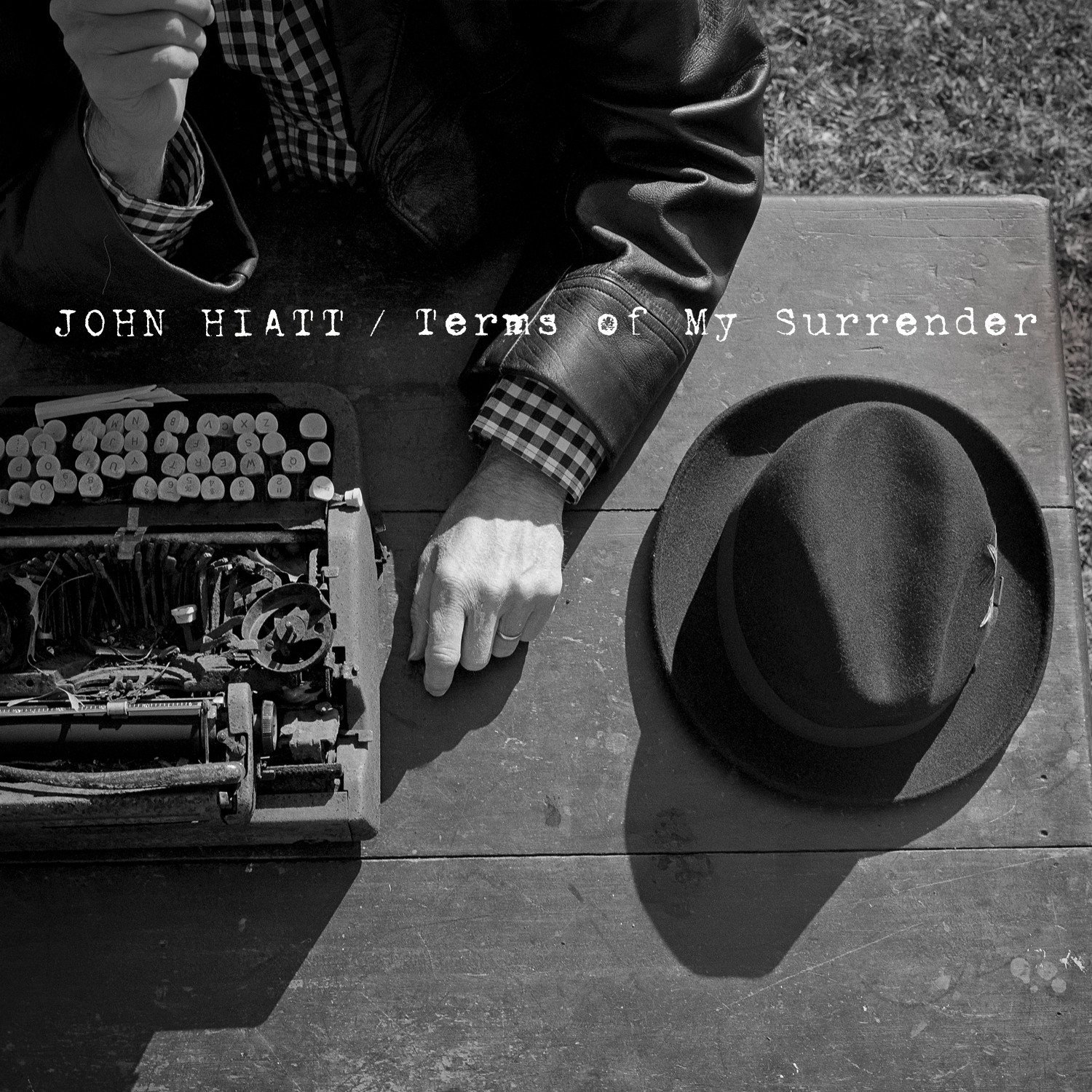
John’s new album Terms Of My Surrender, is his twenty-third studio album. It’s a double album, which was released on New West Records, on 21st July 2014. That’s forty years after John released his debut album Hangin’ Around The Observatory in 1974. Since then, John Hiatt has established a reputation as one of America’s finest singer-songwriters. That’s apparent on Terms Of My Surrender.
When John Hiatt began recording Terms Of My Surrender, he was sixty-one. He was born in Indianapolis, on 20th August 1970. John, who is one of seven children. Tragedy touched his life early on. His older brother committed suicide and his father died two years later, after a lengthy illness. To escape the tragedy that had touched his life, John spent his time listening to the blues, Bob Dylan and Elvis Presley. Along with Indy Car racing, this was how John to spent his early years. Then John picked up a guitar for the first place.
He was only eleven when he first picked up a guitar. Before long, John was playing in bands around Indianapolis. This included some of the city’s clubs. Little did John, or anyone who saw him in clubs like the Hummingbird, know that John would make a living as a musician.
Aged eighteen, John left Indianapolis and headed to Nashville. His first job w as a songwriter for the Tree-Music Publishing Company. John was paid just twenty-five dollars a week. Despite being unable to read music, John penned 250 songs. At the same time, John joined White Duck.
Unlike most groups, White Duck had three singer-songwriters within the group. John featured on their 1972 sophomore album In Season. He wrote and sang two tracks on In Season. This proved to be start of his career.
It was around this time that John made his solo debut. He was splitting his time between White Duck and his solo career. Then in 1973, John met Don Ellis of Epic Records and signed his first solo deal. His debut single was We Make Spirit. The followup was Sure As I’m Sitting Here, which would later give Three Dog Night a hit single. A year later, John Hiatt released his debut album.
John released Hangin’ Around the Observatory in 1974, on Epic Records. It failed to chart. Neither did his 1975 sophomore album Overcoats. This resulted in John being dropped by Epic Records.
Next stop was MCA. Sadly, John’s fortunes didn’t improve. Neither 1979s Slug Line nor Two Bit Monsters entered the US Billboard 200. So, John changed label again.
Stll success failed to come John’s way. He released a trio of albums on Geffen. These albums, 1983s All Of A Sudden and 1985s Riding With The King and Warming Up To The Ice Age failed to chart. After Warming Up To The Ice Age John left Geffen. However, success came his way when he signed to A&M.
One of the most successful periods of John’s career began in 1987. That’s when John released his A&M debut Bring The Family in 1987. It transformed his fortunes, reaching number 107 in the US Billboard 200 charts. Things got better when 1988s Slow Turning reached number ninety-eight in the US Billboard 200 charts. Then in 1990, John released the tenth album of his US Billboard 200 charts. This was the most successful album of John’s career. He surpassed this with 1993s Perfectly Good Guitar, which reached number forty-seven in the US Billboard 200 charts. Perfectly Good Guitar was John’s last album before he headed to Capitol.
At Capitol, John’s fortunes were mixed. 1998s Walking On reached number forty-eight in the US Billboard 200 charts. However, 1997s Little Head wasn’t a commercial success, stalling at number 111 in the US Billboard 200. For John this must have proved hugely disappointing. Just when he looked like becoming one of the most successful singer songwriters, his career took a wrong turn. Getting back to where he’d been was a long, hard road.
Following the commercial failure of Little Head, John left Capitol. He signed for Vanguard and released two albums. 2000s Crossing Muddy Waters stalled at 110 in the US Billboard 200 charts. Things improved slightly when 2001s The Tiki Bar Is Open reached number eighty-nine in the US Billboard 200 charts. The Tiki Bar Is Open proved to be the final album John released for Vanguard. After that, he signed to New West Records, the label he’s still signed to.
Beneath This Gruff Exterior was John’s seventeenth album and his first release for New West Records. Released in 2003, it marked an upturn in John’s fortunes, reaching number seventy-three in the US Billboard 200 charts. Two years later, in 2005, John released Master Of Disaster, which featured The North Mississippi Allstars. It stalled at a disappointing number 126 in the US Billboard 200 charts. There was a gap of three years until John released his next album, Same Old Man. This marked the start of an Indian Summer in John’s long career
The Indian summer began with 2008s Same Old Man, which reached number seventy-eight in the US Billboard 200 charts. 2010 saw release of The Open Road, which reached number seventy-two in the US Billboard 200 charts. Then in 2011, John released his most successful album in seventeen. This was Dirty Jeans and Mudslide Hymns, which number fifty-nine in the US Billboard 200 charts. However, John surpassed its success with his previous album Mystic Pinball, which reached number thirty-nine in the US Billboard 200 charts. Incredibly, Mystic Pinball was the most successful album of John’s five decade career. Would Terms Of My Surrender surpass the success of Mystic Pinball.
For Terms Of My Surrender, John penned eleven new tracks. He headed to the studio with a tight, talented band and producer Doug Lancio. John played guitar, harmonica and sang lead vocals. The rhythm sectio included bassist Nathan Gehri, drummer and percussionist Kenneth Blevins and Doug Lancio on guitar, banjo and mandolin. Jon Coleman played keyboards and Brandon Young sang backing vocals. When Terms Of My Surrender was recorded, it was released on 21st July 2014.
On the release of Terms Of My Surrender, critics welcomed the more organic sound of the album. They remarked that John’s voice had aged well. Its smokey, lived-in sound suits the fusion of blues, roots and rock. Mostly, John plays acoustic guitar, saving his electric guitar for special occasions, which hopefully, there will be many on Terms Of My Surrender. Will that be the case? That’s what I’ll tell you.
Opening Terms Of My Surrender is Long Time Comin.’ It’s a slow, heartfelt ballad. When it begins to unfold, the arrangement is understated. John plays an acoustic guitar. It combines with slow, thoughtful drums and percussion. They leave space for John’s worldweary vocal. Hurt and pain fill his vocal, on this song about love lost. Midway through the track, a soaring glistening guitar joins washes of Hammond organ and drums. They’re the perfect backdrop for John’s vocal. After that, the track returns to its acoustic roots and heads to its wistful ending.
Confidently, John strums his guitar on Face Of God. Along with the rest of his band, he creates a bluesy backdrop. This includes short, sharp bursts of harmonica and Hammond organ. Even John’s weary, lived-in vocal has a bluesy hue. Especially when he asks “how much more suffering, before you see the face of God.” Frustration, anger and despair fill his voice on a track that’s the perfect showcase for John Hiatt singer-songwriter.
Marlene sees a change of sound. It’s a much more upbeat sounding track. That’s down to John’s tender, lovestruck vocal. Especially when he sings the lines “Marlene, Marlene, like a summer rain, like the honey dew, drippin’ all in my brain, Marlene, Marlene, I’m in love with you.” Meanwhile, the band provide an understated backdrop. Elements of country, folk and blues are combined with poppy hooks.
On Wind Don’t Have To Hurry, a banjo accompanies John’s husky vocal. He’s accompanied by percussion and scatted harmonies. They deliver the constant chorus of “Na Na Na Na.” This lets the song down. Especially given the quality of the rest of the lyrics, which are full of social comment. Midway through the track the arrangement fills out. Drums, harmonies and handclaps unite. After that, it’s a return to the understated, banjo drive arrangement. By the end of the track, it’s apparent this track doesn’t work, and shouldn’t have made the cut.
Nobody Knew His Name sees a continuation of the understated arrangement. John strums his trusty guitar while the rhythm section provide the heartbeat. A slide guitar is sprayed across the arrangement. John’s live-in, country-tinged vocal is perfect for this track. Sometimes, he’s accompanied by a female vocals. She’s yin to John’s yang. Together, they bring the mystery in the lyrics to life. You’re left wondering who is this mysterious man who Nobody Knew His Name? Whoever he was, he provided the inspiration for one of Terms Of My Surrender’s highlights.
Baby’s Gonna Kick sees a return to earlier the bluesy sound. It’s a slow, moody, bluesy sounding track. While the rhythm section lock into a groove, a bluesy harmonica accompanies John’s vocal. So, do harmonies, keyboards and guitar. Seamlessly, everything fits into place. This includes the lyrics, John delivery of them. Not only does John deliver one of his best vocals, but delivers a masterclass in how to play blues harmonica. Aided and abetted by his tight, talented band they deliver a slow, sultry, moody bluesy track that’s truly glorious.
Nothin’ I Love marks a return to the understated arrangement. Not for long though. At the start, John’s accompanied by just the guitar. That’s until washes of Hammond organ sweep in. Then your patience is rewarded. Another bluesy track unfolds. High kicking guitars signal the changing of the guard. From there, the guitars prove the perfect foil for John’s heartbroken, desperate vocal.
Terms Of My Surrender sees John drop the tempo and deliver a jazz-tinged vocal. His vocals are tinged with humour and some of the best on Terms Of My Surrender. One of the funniest and most disturbing is “sometimes love can be so wrong, like a fat man in a thong.” Not a pleasant thought. Accompanying John are just a guitar, drums and cooing harmonies. Add all is together and the result is an understated, jazz-tinged paean.
Following up Terms Of My Surrender wasn’t going to be easy. It was, one of the best tracks on Terms Of My Surrender. So, John John changes tack on Here To Stay. He’s got the blues again. Washes of guitar, handclaps and harmonies accompany John’s soul-baring vocal.
Old People sees a return of John’s legendary wit. He doesn’t much care whether the lyrics are P.C. From the get-go, we’re privy to the wit and wisdom of John Hiatt. Especially when he sings: “old people are pushy, they don’t have much time, they’ll shove you at the coffee shop, cut ahead in the buffet line.” John and his band turn this track into a bluesy sing-along. Full of slick hooks and infectiously catchy, you’ll not forget this song in a hurry.
Closing Terms Of My Surrender is Come Back Home , a guitar driven track. That guitar accompanies John’s needy vocal. He’s missing the woman who left him alone. Despair and loneliness fill his vocal, as the piano enters. His hurt shines through as the arrangement opens up, fusing country, blues and rock. The finishing touches are washes of Hammond organ, harmonies and stabs orb blistering guitar. Along with John’s needy, hurt-filled vocal, they ensure Terms Of My Surrender ends on a high.
Just like you’d expect from a musical veteran, John Hiatt knows to always leave the audience wanting more. That’s the case with Terms Of My Surrender. It features eleven tracks. He doesn’t make the mistake so many young musicians make, and release sprawling albums. Instead, Terms Of My Surrender is a reminder of the age of the vinyl album.
Back then, an album featured only an artist’s best work. That’s almost the case here. The only time John makes a wrong turning is the banjo driven Wind Don’t Have To Hurry. It just doesn’t work. Why neither John nor Doug Lancio realised this seems strange. Without Wind Don’t Have To Hurry, Terms Of My Surrender would be a return to the golden age of the album. Despite that, Terms Of My Surrender sees John Hiatt’s Indian Summer continue.
John Hiatt seems to have found his musical home at New West Records, who recently released Terms Of My Surrender. His last few albums have seen a return to the commercial success and critical acclaim John Hiatt enjoyed earlier in his career. Just like a fine win John’s matured as a singer and songwriter. He’ll be sixty-two next month and is putting his age and experience to good use.
That’s apparent on Terms Of My Surrender. Songs of love and love lost, sit side-by-side side with songs full of social comment and John’s trademark humour. The result is a welcome return to form on Terms Of My Surrender, which seesJohn Hiatt’s comeback continue apace.
JOHN HIATT-TERMS OF MY SURRENDER.
ANALOG DREAMS.
ANALOG DREAMS.
Every week, an average of a thousand albums are issued. They’re a mixture of new albums, reissues, box sets and compilations. Then there’s albums that are only released as a download. As you can see, competition is for the record buyer’s pound is fierce. That’s an understatement.
Never before, has so much music been released. Partly, that’s because no longer is it so expensive to record an album. That’s no bad thing. It’s democratised the making of music. No longer do you need either a huge budget or a record company behind you.
Instead, it’s possible to record an album in the comfort of your own home. All you need is a computer and digital audio workstation. You don’t even need to be able to play an instrument or sing. Instead, you can sample and use loops. After you’ve recorded your album, it’s possible to release it on your own label. It’s a return to punk D.I.Y. ethos. That’s all very well. However, for music lovers, all this music presents a problem.
Whether you make a weekly exodus to your favourite record shop, or shop online, this proliferation of music presents a problem. How you separate the wheat from the chaff? After all, not all music is equal. The music released on a weekly basis can be described as the good, the bad and the ugly. So how do you find the best music?
The best place to start are reviews. Blogs like this one, are constantly searching the best in new music and reissues. Then there’s weekly and monthly music magazines and some newspapers. Some radio shows take pride in breaking the best new music. Other radio shows seek out the best in new music and reissues. They’re often presented by DJs who see it as their raison d’être to educate their listeners. However, just like bloggers and journalists, even the most dedicated DJ can’t review all the music released every week.
Sadly, many albums released each week aren’t even released. Nothing whatsoever is written about them. These albums could be crammed full of quality music. However, they still find their way into some people’s record collection. The reason for this, is the album cover.
Often, a bold, striking or imaginative album cover has resulted in me buying an album. Sometimes, I’ve discovered some incredible, sometimes, life-changing music. Other times, the cover proved to be the best thing about an album. These albums are in the minority. Thankfully, I’ve a high success. That may change though.
Recently, I noticed a compilation entitled Analog Dreams was due to be released by DAT Records on 28th July 2014. I saw it advertised in an online record store. What drew me to Analog Dreams was the psychedelic cover.
I knew nothing about the music on Analog Dreams. There was no description of the music on the record shop website. So, I tried to find out more about the compilation. Despite my best efforts, I couldn’t find any details of Analog Dreams. So, I decided to take the plunge. I paid my money and the next day, a copy of Analog Dreams dropped through my letterbox.
I was like a kid on Christmas Day, desperate to discover the delights within Analog Dreams. Would it be a compilation of rare sixties psychedelia? Secretly, I hoped it would be. When I opened the parcel, I was greeted by a lurid green CD box. Strangely, it seemed to setoff the psychedelic cover. Opening the box up, I discovered that Analog Dreams was an album of psychedelic trance. Okay.
As regular readers know, I’ve a pretty eclectic musical taste. I’ll listen to anything from ambient to zydeco, and anything in-between. That includes trance. However, that was a long time ago. Back then, the whole dance music scene was in its infancy. Since then, I’ve heard a lot of music. That includes psychedelic trance.
Looking at the track listing to Analog Dreams, I recognised some of the tracks. There’s contributions from Hallucinogenic, Space Tribe, Doof, Slinky Wizard, Total Eclipse, Etnica, Prana and Nervasystem. Some of the tracks aren’t the original version. Instead, there’s remixes, extended mixes and evan a live versions of Total Eclipse’s Free Lemonade on Analog Dreams. In total, there’s nine tracks on Analog Dreams, which I’ll tell you about.
Hallucinogenic’s LSD ’93 opens Analog Dreams. LSD was the first Hallucinogenic track produced by Simon Posford. Recording took place at Butterfly Studios in 1993. The following year, LSD was released on the Dragonfly label. For sample spotters, it’s a sample of Ken Kesey talking about LSD that opens futuristic, trippy sounding track. After fifty seconds, the track explodes into life, and pounding drums and hissing hi-hats propel this anthem along. For the next five minutes, the sound of LSD assails you.
The original mix of Space Tribe’s The Great Spirit was produced around 1994 or 1995. Again, it was co-produced by Simon Posford at Butterfly Studios. The hallucinogenic remix if The Great Spirit then featured on Sonic Mandala, Space Tribe’s 1996 debut album. However, the original version was never released, Until now. With a thunderous kick drum at the heart of the track, it’s a relentless and mesmeric assault on your senses. Having said that, there are similarities with the previous track.
It was in 1995, that the original mix of Doof’s We Are Free was first released. It featured on the Return To The Source’s very first compilation of Deep Trance and Ritual Beats. The version on Analog Dreams is the desk mix. It has a futuristic, moody and hypnotic sound.
Many people won’t have met a Slinky Wizard Before. They didn’t go to Hogwarts. More likely a rave, where they’d provide tracks like Funkus Mukus. Slinky Wizard recorded Funkus Mukus at Butterfly Studios in January or February 1996. One of the samples allegedly features a US Army or Air Force Press Officer, discussing Area 51. That’s fitting. Again, there’s a robotic, futuristic sound before thunderous drums pound. They propel the arrangement along at 143.8 beats per minute. Sci-fi synths bubble above the arrangement before the big, bouncy trance chords enter. By now a 21st Century hands in the air, lysergic anthem has began to unfold.
Green Nuns Of The Revolution sounds like a character from a sci-fi B-movie. Their contribution is the extended version of Ring Of Fire. It bares no resemblance to Johnny Cash. Ring Of Fire was released on the B-Side of the Flying Rhino’s Afterburner E.P. A high energy, atmospheric track, the TR-303 is omnipresent throughout the track. At the start, the track builds and builds. That’s until the arrangement is almost ready to explode into life. When this happens, banks of synths are at the heart of this epic.
Total Eclipse’s live mix of Free Lemonade, is something of a first. It’s not live tracks feature on a compilation. The track was recorded at a Trance Body Express party in 1993. Free Lemonade which would later feature on their 1995 album Delta Aquarids, was the finale to what’s remembered as a memorable set.
Ethica showcased Full On at the Voov festival in the summer of 1995. It gave Ethica the opportunity to make use of their SH-101 synth. After the festival, the track was extended. When it was recorded, Ethica decided to make use of their newly acquired JD800 synth. Just like the SH-101 synth, it features on Full On, which was released by Blue Room. Although several mixes of Full On were released, the original, acid-tinged version which features on Analog Dreams is the best.
Prana released Voyager 2 in 1993, on the POF label. The track was recorded by what was the first lineup of Prana. This included Nick Taylor and Tsuyoshi Suzuki and Chris Deckker on percussion. Together they combine an Eastern influence with analog synths. There’s even a sample Om Namah Shivayah included. This is the perfect accompaniment to the ethnic influence. When all this combined, the result is a ethnic tinged track with a spacey, lysergic influence.
Closing Analog Dreams is Nervasystem’s Whirling Dervish. The version included is the kaleidoscope mix. It was released on Matsuri’s 1996 compilation The Truth Of Communication. This version if much more understated and laid back than the original version. There’s even an ambient influence to this atmospheric, haunting and moody track.
So that’s the story behind Analog Dreams, a compilation I bought without even knowing anything about. It wasn’t the psychedelic compilation I’d expected. Instead, Analog Dreams features nine psychedelic trance tracks. Many connoisseurs of psychedelic trance will remember these tracks fondly. However, some of the tracks haven’t stood the test of time.
Instead, they sound dated. That’s especially the case with Hallucinogenic’s LSD ’93, Space Tribe’s The Great Spirit and Total Eclipse’s live mix of Free Lemonade. In their day, both tracks sounded fresh and innovative. Twenty years later, they’re a reminder of part of electronic’s past and its music rich musical history. That some of the tracks on Analog Dreams haven’t aged well isn’t not unusual.
Many dance tracks haven’t aged well. Far from it. That’s also the case with many tracks from the Acid House era. Maybe we shouldn’t be surprised. The tracks on Analog Dreams were made to dance to, not listen to at home on a stereo. Instead, they were meant to be listened to at high volumes in hot, sweaty nightclubs. Nobody expected the music to be remembered twenty years later. Not even the producers who made the tracks. Instead, they believed the music would be almost disposable, part of an evening’s soundtrack. Soon, it would be replaced by another track. However, that’s not the way things have worked.
Nowadays, nostalgia is a profitable business. People want to remember the music they danced to in clubs twenty years ago. They want to relive their memories and relive their youth. That’s what Analog Dreams, which was released by DAT Records is an opportunity to do.
The nine slices of psychedelic trance will bring memories flooding back. Twenty years will fall from your shoulders. Instantly, you forget your forty not twenty. You forget that the music isn’t timeless. It never was meant to be.
Instead, the music on Analog Dreams was the soundtrack to your weekend when anything was possible. Not any more. You’re older, wiser and supposedly grownup. Long ago did you retire from the raving scene. You leave that to another generation. However, if you want to relive your youth, then Analog Dreams will bring back memories of another musical era come flooding back.
ANALOG DREAMS.
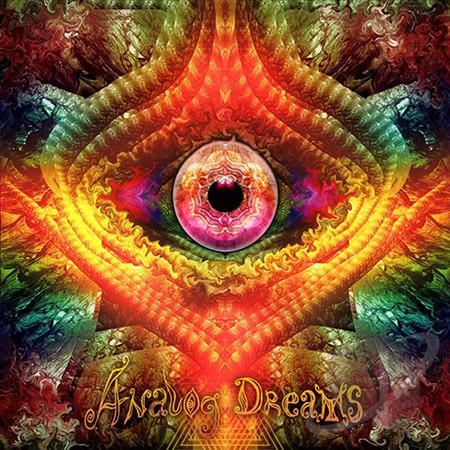
DJIVAN GASPARYAN-I WILL NOT BE SAD IN THIS WORLD AND MOON SHINES AT NIGHT.
DJIVAN GASPARYAN-I WILL NOT BE SAD IN THIS WORLD AND MOON SHINES AT NIGHT.
The first time that Brian Eno heard Djivan Gasparyan perform was in Moscow, in 1988. Straight away, Brian was captivated by Djivan Gasparyan’s haunting music. So much so, that Brian decided to track down Djivan Gasparyan’s previous album I Will Not Be Sad In This World, which was been rereleased by All Saints Records.
I Will Not Be Sad In This World and Moon Shines At Night feature on a lovingly compiled double album of Djivan Gasparyan’s music. It was recently rereleased by All Saints Records. Both albums are a welcome reminder of a hugely talented musician, who was first discovered by Brian Eno. He first tracked down a copy of I Will Not Be Sad In This World in 1988.
Before long, Brian found a copy of I Will Not Be Sad In This World. It had been released five years before, in 1983, by Melodiya, the Russian state owned record company. When Brian Eno first heard I Will Not Be Sad In This World he referred to the album as: “without doubt, one of the most beautiful and soulful recordings I have ever heard.” Coming from a musical luminary like Brian Eno, this was high praise indeed. Before long, Brian was championing the music of Armenian born duduk player, Djivan Gasparyan in the West.
Brian Eno decided that Djivan Gasparyan’s music deserved to be heard by a much wider audience. No longer would be one of music’s best kept secrets. So Brian set about negotiating the release of I Will Not Be Sad In This World on his own label Opal/Land Records. This took some time. Eventually, I Will Not Be Sad In This World was released in 1989. By then, a tragedy had struck Armenia.
When I Will Not Be Sad In This World was released in 1988, what should’ve been a joyous occasion, was tinged with sadness. A devastating earthquake had struck Armenia on 7th December 1988. The effects of the earthquake in Armenia were still being felt. Many people died and were left homeless. Djivan shared their pain and suffering. After all, Armenia was where Djivan Gasparyan was born on October 12th 1928.
Djivan first learnt to play the duduk when he was six. His father was an talented duduk player. So, it was only natural that Djivan became his apprentice. His father taught Djivan how to master the duduk. He taught his son well.
By the time he was twenty, Djivan was a soloist of the Armenian Song and Dance Popular Ensemble and the Yerevan Philarmonic Orchestra. This resulted in Djivan touring the world. He visited Europe, Asia, America and Middle East with the Yerevan Philarmonic Orchestra. After this, success would come his way as a soloist.
Djivan was a regular competitor at the UNESCO worldwide competitions. He won four medals in four separate decades. His first win came in 1959. Further wins came in 1962, 1973 and 1980. When he won his third medal in 1973, Djivan was awarded the honorary title of People’s Artist of Armenia. Then by the time he won his final UNESCO medal, Djivan was Professor at the Yervan Conservatoire. He’s held this position for over forty years. During this period, Djivan became one of Armenia’s most successful musical exports.
So, it’s no surprise that eventually, he was awarded the honorary title of People’s Artist of Armenia. Sixteen years later, Djivan Gasparyan’s music was about to be heard by the wider audience it deserved.
I Will Not Be Sad In This World.
On its release in 1989, I Will Not Be Sad In This World was dedicated to the victims and survivors of the Armenian earthquake. One of Armenia’s most talented son’s was helping to publicise the continuing plight of the Armenian people. He did this through his music.
I Will Not Be Sad In This World was released in 1989, to widespread critical acclaim. Worldwide, critics were won over. No wonder, given the quality of the music
Listening to I Will Not Be Sad In This World the seven tracks are variously ethereal, haunting, atmospheric and beautiful. The music might be minimalist, but it’s truly timeless. From opening bars of A Cool Wind Is Blowing, the music is captivating and haunting. Here, Djivan is accompanied by just Vachagan Avakian. His duduk drone is omnipresent, as Djivan’s duduk quivers and shivers, emotively.
Several tracks on I Will Not Be Sad In This World have a cinematic sound. This includes Brother Hunter and The Ploughman. Both tracks would perfect for cinematographers everywhere. Each song paints pictures in your mind eye. Especially the Eastern tinged The Ploughman. It conjures up pictures of hot nights under the Arabian sun. Surely, a filmmaker somewhere will discover this hidden gem. They have in the past. Djivan’s music has previously featured in The Gladiator and The Last Temptation of Christ.
Look Here My Dear sounds like a heartfelt plea. Its ethereal beauty is truly memorable. Little Flower Garden has a haunting and spiritual sound. Evocative and poignant describes Your Strong Mind. You find yourself shutting your eyes and letting the music wash over you. You wallow in its beauty, allowing it to cleanse your soul.
Dle Yaman proves a perfect way to close I Will Not Be Sad In This World. It’s a truly haunting and atmospheric track. Again, it washes over you. The duduk drone is panned right as Djivan Gasparyan delivers a soul-baring performance. This proves a heartbreakingly beautiful way to close I Will Not Be Sad In This World.
Earlier, I described I Will Not Be Sad In This World as ethereal, haunting, atmospheric and beautiful. That’s an understatement. The music is also atmospheric, cinematic and evocative. Djivan Gasparyan’s music is also minimalist and timeless. It benefits from eternal beauty. That’s not all.
Another way to describe I Will Not Be Sad In This World is spiritual. So much so, that you can’t help but close your eyes and wallow in the music’s inherent beauty. It cleanses your soul. Having heard the music on I Will Not Be Sad In This World, you want to hear more from Djivan Gasparyan.

Moon Shines At Night.
Sadly, despite the critical acclaim that followed the release of I Will Not Be Sad In This World, it took another four years before Djivan Gasparyan released his sophomore album Moon Shines At Night.
Eventually, Brian Eno managed to bring Djivan Gasparyan to London in 1993. Brian decided to bring onboard Michael Brook. He’d regularly worked with Brian Eno on the past. The Canadian guitarist and producer, Brian thought, would be the perfect collaborator for Djivan and his band.
Accompanying Djivan were a small band consisting of damkash player Vachagan Avakian plus Levon Arshukuna and E. Oganesyan. They arrived at Church Studios, London and started recording the album on a two-track recorder. It was recorded live. There were no overdubs. Even when Djivan sung for the first time on an album. This was on Mother Of Mine and the hugely poignant 7th December 1988 which refers to the Armenian earthquake. Djivan and his band were consummate professionals throughout the recording session. After just three just hours, what would become Moon Shines At Night was completed.
Again, critical acclaim came the way of Moon Shines At Night. Indeed, the response to Moon Shines At Night surpassed that of I Will Not Be Sad In This World. Partly, that was down to Brian’s decision to bring Michael Brook onboard as producer. It’s not that Michael Brooks’ adds to Moon Shines At Night. Instead, he allows the musicians to shine. They’re allowed to take centre-stage and play starring roles on another critically acclaimed album, Moon Shines At Night.
The hopeful sounding Lovely Spring opens Moon Shines At Night. Tenderly, Djivan caresses the duduk, coaxing beauty from its midst. This results in an almost mystical sound. Sayat Nova may have a slightly wistful sound. There’s a sense of loss and longing in the music. Despite that, beauty is omnipresent.
Very different is 7th December 1988, a song that deals with the tragic Armenian earthquake. It features a vocal from Djivan full of hurt, heartbreak and sadness. Memories come flooding back. People who died, and others who lost everything. His pain and hurt is almost tangible in what’s an outpouring of grief and loss.
Slowly the soul-searching Don’t Make Me Cry unfolds. It’s without doubt, one of the most beautiful songs on Moon Shines At Night. Djivan having been hurt before, can’t stand for it to happen again. So, he pleads Don’t Make Me Cry.
You Have To Come Back To Me floats hopefully along. There’s a sense of hope as you loose yourself within the music. It carries you along, taking taking you on a journey where hope and joy are constant companions.
As Tonight unfolds, there’s an element of drama. The arrangement quivers and shimmers. It’s louder and much more powerful. There’s also a sense of melancholy and sadness. This continues on the wistful, but beautiful They Took My Love Away. A tale of love lost it’s a deeply moving track. Moon Shines At Night is best described as haunting and cinematic. One of the most beautiful tracks on Moon Shines At Night is Apricot Tree, a ten minute epic. From the get-go it’s a truly captivating and sometimes, haunting. You loose yourself in the track. It sweeps you along, revealing a shimmering, sometimes spiritual sound.
Mother Of Mine closes Moon Shines At Night. It features another heartfelt, emotive vocal from Djivan. His vocal takes centre-stage, as the drone sits subtly in the background. Meanwhile, Djivan’s vocal is akin to a window into his soul.
Ten years passed between the recording of I Will Not Be Sad In This World and Moon Shines At Night. During that period, Djivan Gasparyan had matured as a songwriter and musician. That’s not all. By the time he recorded Moon Shine Bright At Night, Djivan had discovered his voice. He proved to be a talented vocalist, who had the ability to breath life, meaning and emotion into lyrics. That’s apparent on the poignant 7th December 1988 and the heartfelt Mother Of Mine. Just like the rest of Moon Shines At Night these two tracks ooze quality. That’s the same as I Will Not Be Sad In This World which was recently rerelease.
I Will Not Be Sad In This World and Moon Shines At Night feature on a lovingly compiled double album of Djivan Gasparyan’s music, which was recently rereleased by All Saints Records. Both albums are a welcome reminder of a hugely talented musician, whose music belatedly, found the audience it deserved.
By the time Brian Eno’s record company, Opal/Land Records, rereleased Djivan Gasparyan’s debut album I Will Not Be Sad In This World in 1989, he was already sixty-one. He’d been playing the duruk
for fifty-five years. He was a master musician, who when a member of the Yerevan Philarmonic Orchestra, toured the world. However, it wasn’t until Brian Eno discovered Djivan Gasparyan that his music was heard by a wider audience. After that, many artists collaborated with Djivan Gasparyan.
This included everyone from Peter Gabriel, Sting, Brian May, Lionel Ritchie and Hans Zimmer. Djivan Gasparyan’s music has also featured in a number of films, including The Gladiator and The Last Temptation Of Christ. Belatedly, Djivan Gasparyan’s music found the wider audience it deserved. Hopefully, after the release of I Will Not Be Sad In This World and Moon Shines At Night, even more people will discover the delights of one of the man they call the “master of the duduk.”
DJIVAN GASPARYAN-I WILL NOT BE SAD IN THIS WORLD AND MOON SHINES AT NIGHT.
CALYPSO -MUSICAL POETRY IN THE CARIBBEAN 1955-1969.
CALYPSO -MUSICAL POETRY IN THE CARIBBEAN 1955-1969.
Even today, calypso’s origins are still disputed by historians. Depending upon which historian you ask, they’ll tell you that calypso’s origins are in France or Spain. Others will suggest calypso’s origins are in West Africa, and specially, Nigeria.
Calypso in the language of the Ibildilio people, of West Africa, is translated as kaiso. Ka means go, and iso, means forward. So essentially, kaiso is a word to encourage the musician or performer to move forward. One of the first singers to have heard the word kaiso, was Raymond Quevedo. He was Attila the Hun, the Trinidadian calypso singer.
When he first started singing in 1911, Attila the Hun remembers the word kaiso being used to describe a song and dance routines. If Attila the Hun had performed really well, his audiences described his performance as an excellent kaiso. However, despite kaiso being replaced by calypso in the pervious hundred years, some people still use the word kaiso.
Especially when they’re describing calypso in its rawest, most basic form. However, calypso is the anglicised version of kaiso. Calypso-Musical Poetry In The Caribbean 1955-1969, is also the title of a recent Soul Jazz Records compilation. It features nineteen tracks from the period when calypso was at the height of its popularity in the Caribbean.
Calypso had been popular from 1912, when Lovey’s String Band headed to New York to record Mango Vert for Columbia Records. Two years later, in 1914, the first vocal calypso recordings were made. This included Julian Whiterose’s Iron Duke In The Land and Julian Sims’ Native Trinidad Kalenda. Then in 1914, the War interrupted calypso’s evolution. No calypso recordings were made during the War.
As the twenties dawned, calypso was about to enter its golden era. This lasted through until the thirties. What made this so important was that at last, Calypso has a standard structure, style and vernacular. This was hugely important. Before that, different artists approached calypso in different ways. Not any more.
With ground rules established, calypso’s popularity exploded. Artists like Attila the Hun, Lord Beginner, Roaring Lion, Growling Tiger, King Radio, Wilmoth Houdini and Lord Executor became some of the biggest names in Calypso. They also became champions of calypso. It was a way people within the Caribbean could express themselves.
Soon, lyrics were being written about everything from social problems, politics, politics and relationship humour. Humour played an important part in calypso lyrics. The calypso singer became known as part poet, politician, philosopher, romantic and comedian. However, the government took to censoring records. Not only did the fear political unrest, but moral outrage. Despite the censoring of calypso records, some of the best calypso singers became huge stars, travelling to New York where they play live. So, it’s no surprise that American record labels looked enviously at calypso.
In 1925, Columbia became musical pioneers. They were the first American record label to release calypso records. Okeh followed suit in 1934. Okeh came late to the party, and although they benefited financially, calypso’s golden era was interrupted by the War.
Unlike during World War I, calypso records were released during World War II. Some calypso singers released records in support of the War effort. Many of these records fell into the hands of American G.I.s. They were stationed in Trinidad, and many came across Calypso for the first time. This resulted in the American G.I.s spreading the word about calypso.
Previously, only a small number of people were aware of calypso. This included a coterie of middle class intellectuals, whose natural habitat was Greenwich Village. No longer was calypso just a music for a minority in America.
Instead, calypso became almost mainstream. Roaring Lion’s Ugly Woman featured in the 1944 movie Happy Go Lucky. Even The Andrews Sisters jumped on the Calypso bandwagon. They covered Lord Invader’s Rum and Coca Cola. Calypso’s move to the mainstream continued in the post-war years.
In 1946, Ella Fitzgerald covered Wilmouth Houdini’s 1939 Calypso hit He Had It Coming. Accompanied by Louis Jordan and The Hot Tympany Five, He Had It Coming reached number one in the US R&B charts. Then a year later, Calypso Carnival became “the first calypso musical ever presented.” Over in Trinidad, a new calypso superstar was born.
His story began back in 1942. That’s when Aldwyn Roberts dawned the persona of Lord Kitchener and recorded his first hit Green Fig. He was championed by a calypso veteran, Crouching Tiger, as the man who would take calypso in a new direction. Lord Kitchener introduced jazz and R&B influences into Calypso. This was vital. By then, Calypso was risking going stale. Not any more. The man hailed as the “Grandmaster of calypso” had revitalised the genre. His popularity soared. So much so, that Lord Kitchener performed in front of US President Harry Truman, when he visited Trinidad. After that, Lord Kitchener toured the Caribbean, and then headed to Britain, where he helped popularise calypso.
Lord Kitchener set sail on the HMS Windrush in 1948. Onboard were Lord Beginner and Lord Woodbine, two other calypso singers. Their destination was Britain, where like the rest of the Windrush generation on the boat, a new life awaited. They believed they were heading to a country which was prosperous and they’d be welcomed. Sadly, they were very wrong.
Many of the Windrush generation weren’t welcomed with open arms. At best, they were treated with indifference. Many British people were far from friendly. Instead, they were downright hostile. For The West Indians who’d arrived with great hopes and dreams, the dream had gone sour. A small consolation was that they’d brought a reminder of home, calypso.
New songs were written that reflected the hardship and disappointment of their new life. The lyrics were full of scathing social comment. This was their outlet to give voice to their disappointment. Sometimes, though the lyrics were joyous, hopeful and tinged with humour. Before long the genesis of a Caribbean music scene was taking place in Britain. Its popularity would eventually explode. Sadly, some Calypso veterans fed up with their new home, returned to Jamaica.
Soon, a new generation of singers were making a name for themselves. Especially with Lord Kitchener and other Calypso singers heading home. When they arrived home in Jamaica, a new type of Calypso was becoming popular, mento.
Mento was the music of the rural Jamaica. It featured instruments that were mostly used in rural locations. This meant a banjo, acoustic guitar, flute, saxophone, hand percussion and even, handmade instruments. These instruments were responsible for a proto-reggae beat. One of the biggest names of the Mento scene was Lord Flea.
Lord Flea became a huge star in Jamaica. Especially in the island’s nightclubs and hotels. By then, Calypso was a huge musical phenomenon. It was sweeping Britain and America by storm. ironically, the man who’d become one of the biggest names in calypso wasn’t even Jamaican.
That was Harry Belafonte. He was born in Harlem, to Jamaican and Martiniquan parents. Harry started off as a folk singer in the forties, and eventually, incorporated Calypso into his act. His first calypso release was his 1953 cover of King Radio’s Matilda. Three years later, in 1956, Harry Belafonte released his album Calypso. A fusion of Jamaican mento and traditional mento, Calypso seemed to catch the imagination of the American record buying public. It became a huge commercial success, resulting in the Calypso craze sweeping America. However, the calypso craze bore very little similarity to authentic calypso.
For authentic calypso, there was only one place to go, the Caribbean. Whilst Harry Belafonte was conquering America with his sanitised version of calypso, some of the finest calypso ever, was being released in the Caribbean. Especially between 1955 and 1969. This is the period covered by Soul Jazz Records’ recent compilation Calypso-Musical Poetry In The Caribbean 1955-1969. It features nineteen tracks from another of calypso’s golden eras.
On Calypso-Musical Poetry In The Caribbean 1955-1969, there’s a total of nineteen tracks. They’re a mixture of calypso and mento. There’s contributions from some of the biggest names in calypso. This includes Lord Flea and Lord Kitchener. Then there’s contributions from Young Growler, Lord Hummingbird, Mighty Dougla, Viper, JB Williams Band, Brownie, Charlie Binger and His Quartet and Lord Byron and Orquesta Nueva Alegria. Several generation of calypso singers contribute to Calypso-Musical Poetry In The Caribbean 1955-1969. It’s best described a a veritable feast of calypso.
There’s a mixture of we’ll known tracks, hidden gems and rarities on Calypso-Musical Poetry In The Caribbean 1955-1969. During this period, lyrics were being written about everything from social problems, politics, politics and relationships. Humour played an important part in calypso lyrics. The calypso singer became known as part poet, politician, philosopher, romantic and comedian. No longer were the government censoring records. The fear political unrest, but moral outrage seemed to have passed. That’s just as well.
Some of the lyrics are full of social comment and sexual innuendo. There’s no way these tracks would pass a censor. Having said that, the music is also full of poppy hooks and is dance-floor friendly. Some of the tracks are akin to a call to dance. Resistance is futile as you submit to its charms and delights. Other tracks have a much more laid-back, languid sound.
Sitting side-by-side with calypso and mento on Calypso-Musical Poetry In The Caribbean 1955-1969, is proto reggae. During this fourteen year period, Caribbean music was constantly evolving. It wasn’t going to risk standing still. That had happened before. It took mento to rejuvenate Caribbean music.
You may wonder why I keep saying Caribbean music. There’s a reason for this. The music on Calypso-Musical Poetry In The Caribbean 1955-1969 isn’t just the music of Jamaica. No. Instead, it’s the music of all the islands in the Caribbean. They played their part in the sound and success of calypso revolution, whose second golden period is documented on Soul Jazz Records’ recent compilation Calypso-Musical Poetry In The Caribbean 1955-1969.
For the newcomer to calypso, then Calypso-Musical Poetry In The Caribbean 1955-1969 is the perfect starting place.
CALYPSO -MUSICAL POETRY IN THE CARIBBEAN 1955-1969.
LED ZEPPELIN-LED ZEPPELIN II.
LED ZEPPELIN-LED ZEPPELIN II.
On 12th January 1969, the lives of the four members of Led Zeppelin were transformed. Their debut album Led Zeppelin reached number ten in the US Billboard 200 and number six in the UK. Led Zeppelin was certified platinum in the US eight times over. In the UK and Australia, Led Zeppelin was certified double platinum. Across the world, Led Zeppelin was a huge commercial success. It was certified diamond in Canada and platinum in Spain. Gold discs came Led Zeppelin’s way in Holland, Switzerland and France. Suddenly, Led Zeppelin was one of the most successful albums of the late-sixties.
Considering Led Zeppelin had only been formed In October 1968, made their success even more remarkable. Led Zeppelin rose out of the ashes of The Yardbirds. Guitarist Jimmy Page was the last remaining member of The Yarbirds. He also owned the rights to The Yarbirds’ name. However, he was also under contract to play several concerts in Scandinavia. So Jimmy began putting together a new band.
For his new band, The New Yarbirds, Jimmy Page brought onboard the rhythm section of bassist John Paul Jones and drummer John Bonham. Robert Plant became the vocalist. This was essentially a new band that toured Scandinavia. They honed their sound during that tour. After the tour, the newly named Led Zeppelin entered the studio, and recorded their eponymous debut album. Little did they realise how successful it would be.
Especially after the critics were less than impressed by Led Zeppelin. Their reviews were negative. Some of the highest profile critics rounded on Led Zeppelin. They felt Led Zeppelin offered nothing new. It had all been done before, and done better. Led Zeppelin had the last laugh though, when the album sold over eleven-million copies. There was only one problem, surpassing such a successful album.
For what became Led Zeppelin II, which was recently rereleased by Atlantic Records as a two CD deluxe edition, nine songs were chosen. There was only one cover version on Led Zeppelin II, Bring It On Home, which was made famous by Sonny Boy Williamson II. The other eight tracks were penned by the band. Jimmy Page and Robert Plant cowrote What Is and What Should Never Be, Thank You, Living Loving Maid (She’s Just a Woman) and Ramble On. They cowrote Moby Dick With John Paul Jones. The four members of Led Zeppelin wrote Heartbreaker. Two other songs Led Zeppelin wrote proved controversial, and expensive financially.
The four members of Led Zeppelin wrote Whole Lotta Love. They were forced to give a credit to Willie Dixon in 1985. He felt there was a similarity to You Need Love, which had been recorded by Muddy Waters in 1962. There was a similar problem with The Lemon Song.
Written by Led Zeppelin, The Lemon Song was alleged to have borrowed from Howlin’ Wolf’s Killing Floor. Ironically, Killing Floor borrows from Robert Johnson’s Travelling Riverside Blues. It in turn borrowed from Arthur McKay’s She Squeezed My Lemon. However, only Howlin Wolf was credited, under his real name Chester Burnett. This controversy was still to come. Before that, Led Zeppelin recorded their sophomore album Led Zeppelin II.
Recording of Led Zeppelin II took place at various studios in the UK and USA. Rather than record the album in one go, sessions took place between January and August 1969. In between, Led Zeppelin toured their eponymous debut. They were, after all, on their way to becoming one of the biggest rock bands of the first half of the seventies. The constant touring helped further hone Led Zeppelin’s sound when they entered the studio.
Jimmy Page played acoustic, electric and theremin on Whole Lotta Love. The rhythm section included bassist and organist John Paul Jones and drummer John Bonham who also played percussion and timpani. Robert Plant delivered a series of vocal powerhouses and played harmonica on the album that became Led Zeppelin II. It was released in October 1969.
Before Led Zeppelin II was released, Atlantic Records embarked upon a heavy promotional campaign. The advertising slogan Led Zeppelin-The Only Way To Fly and Led Zeppelin II Now Flying worked wonders. Advance orders of 400,000 in the US alone were place. So, it’s no surprise Led Zeppelin II reached number one on the US Billboard 200 charts, knocking Abbey Road off the top spot. It spent seven weeks at number one and was in the US Billboard 200 for 130 consecutive weeks. By April 1970, three million copies of Led Zeppelin II had been sold. Eventually, Led Zeppelin II was certified platinum twelve times over in the US and four times platinum in the UK and Australia. The albums was certified nine times platinum in Canada. Across Europe, Led Zeppelin II was a huge success. Gold discs came the way of Led Zeppelin. This was helped by Whole Lotta Love.
Led Zeppelin had a strictly no singles policy. That was until Whole Lotta Love. The song was shortened and released as a single. This didn’t please Led Zeppelin. It did reach number four in the US Billboard 100 and was certified gold. Since then, it’s been remembered as stonewall Led Zeppelin classic. That’s the same as Led Zeppelin II. However, in 1970, critics took a different viewof Led Zeppelin II.
Just like Led Zeppelin, Led Zeppelin II was released to mixed reviews. Rolling Stone magazine panned Led Zeppelin II. Many critics failed to realise that Led Zeppelin II was the template for heavy metal. Here was an album that gave birth to a new musical genre. Instead, critics accused Led Zeppelin of ripping off old blues’ singers. It was nothing new. They said the same about Led Zeppelin. Just like the did with Led Zeppelin, history would be rewritten by music critics.
Critics have managed to rewrite history over the next thirty-four years. Suddenly, Led Zeppelin II was a being hailed a classic album. Every critic was suddenly claiming to have realised that all along. Even Rolling Stone magazine, which wasn’t originally a fan of Led Zeppelin, put the album at number twenty seventy-five in their list of 500 greatest albums of all time. Nowadays, Led Zeppelin II, which I’ll tell you about, is perceived as a stonewall classic by the same critics who panned the album originally.
The unmistakable Whole Lotta Love opens Led Zeppelin II. A loose blues riff opens the track. It comes courtesy of Jimmy Page’s 1958 Les Paul Standard guitar. Before long, the rhythm section join in, creating a chugging, pounding rhythm. Washes of guitar are panned from left to right. Then at 1.24 the track heads in the direction of free jazz and psychedelia. A theremin and drums combine with Robert’s orgiastic vocal. That’s until bursts of blistering guitar solos mix blues and heavy rock. They and the rhythm section drive the arrangement along. Meanwhile Robert Plant vamps, pants and hollers as he unleashes a vocal powerhouse during five-and-half minutes of musical perfection.
Very different is the introduction to What Is and What Should Never Be. It has a much more understated sound. Robert’s vocal is tender and seductive. He sings unaccompanied. When the arrangement sweeps in it’s subtle. Then it explodes into life. Robert’s vocal is a mixture of power and passion, as scorching guitars and driving, stomping rhythm section lock horns. Later, guitars are panned. They assail and surround you. By then, Robert unleashes another powerful vamp, as his vocal becomes a needy plea full of longing. The result is a rock ’n’ roll love song Led Zeppelin style.
The Lemon Song was one of two tracks that caused a lot of problems for Led Zeppelin. They were accused of borrowing from Howlin’ Wolf’s Killing Floor. It proved a costly mistake. However, it resulted in a stunning marriage of blues and rock which was recorded in a room measuring sixteen foot square. This proves perfect for what Led Zeppelin were trying to achieve. From the get-go, the music is moody, broody, dark and dramatic. Blistering guitars and a thunderous, pounding rhythm section provide the backdrop for Robert’s blues’ tinged vocal. He mixes emotion and poses as he delivers the innuendo laden lyrics. Meanwhile, John Paul Jones lays down some of the best and most intricate bass lines on Led Zeppelin II. It’s just another reason why it’s one of Led Zeppelin finest fusions of blues and rock.
Thank You is another track from the pen of Jimmy Page and Robert Plant. Even though this was only their second album, they were forming a successful songwriting partnership. Here, they fuse folk, rock and psychedelia. It’s a slower love song, which Robert wrote for his then wife Maureen. A Hammond organ, meandering acoustic guitar and the rhythm section combine. Mostly, Led Zeppelin resist the urge to kick loose. Sometimes, drums pound, guitars scream and Robert’s vocal soars. However, before long the track returns to its much more understated, beautiful sound.
Blistering machine gun guitar licks are unleashed as Heartbreaker unfolds. Before long, the rhythm section enter. Then Robert’s swaggers in. Like a musical outlaw, he struts his way through the track. Sometimes, he’s marching to the beat of John’s drum. As he delivers a swaggering vocal, the rest of Led Zeppelin become a power trio. Then later, Jimmy Page steals the show. He delivers a guitar masterclass. Remarkably, it’s totally improvised. It takes centre-stage before the rest of the band join in, and provide an explosive, dramatic, driving, performance which epitomises everything that’s good about Led Zeppelin.
Living Loving Maid (She’s Just a Woman) is a song about a groupie who annoyed the band. Strangely, it’s smeant to be Jimmy’s least favourite Led Zeppelin song. He dawns a twelve-string guitar for the track. Enveloped by searing guitar riffs, pounding drums and crashing cymbals Robert vents his spleen about the Living Loving Maid. Frustration and anger fills his voice. Then Jimmy unleashes his twelve-string guitar. It quivers and shimmers, during this slice of good time rock ’n’ roll.
Just a lone guitar, drum and then bass open Ramble On. Robert’s vocal is tender and wistful. “It’s time for me to go” he announces as his vocal grows in power. Soon, he’s delivering one of his trademark vocals. It’s a mixture of melancholia, memories and power. Meanwhile, the rest of Led Zeppelin veer between power and drama to understated and wistful. All the time, Robert’s laying bare his soul before he sings I guess I’ll “Ramble On.”
Moby Dick is an instrumental and sees Led Zeppelin’s rhythm section lock into a blues rock riff. This allows Jimmy’s guitar to play the starring role. After that, it’s John’s drums that take centre-stage. He than plays the starring role, demonstrating why he was without doubt, one of the greatest rock drummers of the late-sixties seventies. When it’s time Jimmy’s guitar and John Paul Jones’ bass return as the track reaches its dramatic ending.
The bluesy Bring It On Home closes Led Zeppelin II. A bluesy harmonica joins the rhythm section before Robert’s vampish, theatrical vocal enters. Then midway through the song, Led Zeppelin kick loose. Sometimes, they briefly draw inspiration from Whole Lotta Love. After that, blistering, searing and scorching guitars and the rhythm section provide the backdrop for Robert’s vocal powerhouse. Then with just over twenty seconds remaining, there’s a return to the song’s bluesy roots. This seems fitting, as Bring It On Home showcases the blues rock roots of Led Zeppelin.
That’s not the end of Led Zeppelin II. Atlantic Record’s recently rereleased version of Led Zeppelin II. Not at all. Instead, it’s a two CD deluxe edition. Disc two features eight tracks. This includes a rough mix of Whole Lotta Love. There’s rough mixes with a vocal of What Is and What Should Never Be, Heartbreaker and Ramble On. Other tracks include the backing track to Thank You, Living Loving Maid and Moby Dick. The other track is La La, the intro/outro rough mix. These tracks are interesting as they show how Led Zeppelin II evolved. Especially when you then listen to what Led Zeppelin II became.
Atlantic Records’ recent release of Led Zeppelin II has been newly remastered. The music seems to comes alive. Compared to my other version of Led Zeppelin II, there’s no comparison. Anyone thinking of buying Led Zeppelin II for the first time, then the 2014 2CD Legacy Edition of Led Zeppelin II is the one to buy. A classic album takes on new life.
Although Led Zeppelin had only been together two years, they’d grown and matured as a band since their 1969 debut. They’d improved as musicians and songwriters. So much so, that it’s hard to believe that Led Zeppelin II was only their sophomore album. What’s even more incredible, is that Led Zeppelin had managed to surpass the commercial success of their eponymous debut album.
Having sold eleven million copies of Led Zeppelin worldwide, Led Zeppelin II surpassed this. It sold over twelve-million copies in America. In total, Led Zeppelin II shipped nearly fourteen million copies worldwide. Led Zeppelin were now one of the biggest rock bands in the world. Incredibly, neither of Led Zeppelin’s first two albums had been well received by critics.
Many music journalists, including those at Rolling Stone magazine failed to realise that Led Zeppelin II would become a classic album. According to them, Led Zeppelin II was nothing new. It was a fusion of old blues’ licks and rock. This wasn’t the first time cynical critics got it wrong. It certainly wouldn’t be the last time. So, they developed a dose of collective amnesia.
Time and time again, collective amnesia struck music critics. Many of the critics that panned Led Zeppelin II, wrote fawning articles praising the album. What they wrote was what fourteen million music fans already knew. Since 1970, music critics have been frantically backtracking. Now, when they mention Led Zeppelin II, they make sure to call it a classic album. Belatedly, they were right.
Led Zeppelin II is a glorious fusion of blues, folk, psychedelia and rock. Just like many classic albums, Led Zeppelin II is almost flawless. It would provide the template for heavy metal. That’s apparent on Led Zeppelin II. The power trio of guitarist Jimmy Page, bassist John Paul Jones and drummer John Bonham prove the perfect foil for Robert Plant’s vocal powerhouses. In full flight, Led Zeppelin are peerless. They’ve no equal. They may have spawned a thousand imitators, but not one came close to Led Zeppelin in their pomp.
Back in 1970, when Led Zeppelin II was released, Led Zeppelin are the original hard rocking, hard living band. Led Zeppelin were living the dream. Just two years earlier, they were living in obscurity. Not any more. Now, Led Zeppelin had joined rock ’n’ roll royalty. Life they realised, was for the living. So, they lived life to its fullest. Soon, they became known as one of the hardest living bands in the history of rock. Wine, women, song and narcotics were constant companions. Life was one long party. They owed it to their fans to live the dream. Throughout that party, Led Zeppelin recorded some of the greatest rock music of the seventies and all time. This includes Led Zeppelin and Led Zeppelin II, which belong in any self-respecting record collection.
LED ZEPPELIN-LED ZEPPELIN II.
MILES AT THE FILMORE-MILES DAVIS 1970: THE BOOTLEG SERIES VOLUME 3.
MILES AT THE FILMORE-MILES DAVIS 1970: THE BOOTLEG SERIES VOLUME 3.
Throughout his career, Miles Davis was a musical innovator and chameleon. He constantly sought to reinvent himself and his music. This had been the case throughout his career. Miles wasn’t the type of musician who could stand still. No. So, in 1968, Miles changed direction musically and his electric period began. Miles’ electric period is celebrated on Miles At the Filmore-Miles Davis 1970: The Bootleg Series Volume 3, a four disc box set recently released by Sony Music.
Miles’ electric period began in 1968. He was influenced by psychedelia, rock, soul and funk. These musical genres were hugely popular and influential. Especially artists like Jimi Hendrix, Sly Stone and James Brown. Many of these artists Mile met through his latest girlfriend, Betty Mabry.
Betty Mabry was a twenty-three year old funk singer, songwriter and model. Having dated Miles Davis, Betty married Miles in September 1968 and became the second Mrs Davis. Their relationship didn’t last long. While Miles was forty-two, Betty was only twenty-three. They moved in different circles.
When Betty arrived in New York, from Pittsburgh, she enrolled in the Fashion Institute of Technology. In the early sixties, Betty became part of the Greenwich Village folk scene. As the sixties unfolded, Betty’s musical taste changed. She met soul singer Lou Courtney, who produced Betty’s debut single, The Cellar. Before long, Betty’s reputation as a singer and songwriter grew. She became friends with Jimi Hendrix, Lou Courtney and Sly Stone. It was Betty who introduced Miles to these artists. The would inspired Miles to plug-in and go electric.
The period between1968 and 1975 became known as Miles’ “electric period.” It saw Miles at his most creative and inventive. He managed to combine jazz, funk, psychedelia and rock. This wasn’t easy.
Despite Miles Davis’ band featuring some of the top jazz musicians, the transition to electric instruments wasn’t straightforward. It took time and planning. This became apparent at the start of Miles’ “electric period.” By the time Miles recorded his first album of his Miles’ “electric period,” In A Silent Way, it was a case of problem solved.
In A Silent Way.
Recording of In A Silent Way took place at CBS 30th Street Studio, Studio B. Miles and his band only took one day to record In A Silent Way. That was 28th February 1969. That day, an all-star band would record six tracks Shhh, Peaceful, Shhh, In a Silent Way, “It’s About That Time and In a Silent Way.
Miles played trumpet and Wayne Shorter soprano saxophone. The rhythm section featured drummer Tony Williams, double bassist Dave Holland and John McLaughlin on electric guitar. Joe Zawinul played organ, while Chick Corea and Herbie Hancock played electric piano. Here was a meeting of music’s past, present on future on what would be hailed a groundbreaking album, In A Silent Way.
In A Silent Way was a truly landmark album. Not only was it the start of Miles’ “electric period,” but saw Miles fully embrace fusion. Another first was the way producer Teo Macero edited and arranged In A Silent Way. He incorporated elements of the classical sonata form into In A Silent Way. This is apparent in that the album consists of two extended tracks which feature three distinct parts. The other first was the appearance of John McLaughlin on electric guitar. His playing would play an important part in a groundbreaking and successful album.
It had been four years since a Miles Davis album charted. In A Silent Way reached number 134 in the US Billboard 200 and number forty in the US R&B charts. It also reached number three in the US Jazz charts. Despite the commercial success of In A Silent Way, it divided the opinion of critics.
On its release on 30th July 1969, In A Silent Way divided the opinion of critics. Its experimental nature seemed to be the problem. Critics didn’t seem to get the album. That’s not unusual. Often, a groundbreaking album is way ahead of its time. That was the case with In A Silent Way. It divided the opinion of critics. Not any more.
Since its release in 1969, it’s perceived as a classic album. Without doubt, In A Silent Way is one of Miles Davis’ greatest albums. Both critics and music lovers have belatedly realised this marriage of jazz, fusion, psychedelia and rock was classic album. No wonder. The music is truly futuristic, experimental and innovative. Here was an album that’s been described as for jazz fans who didn’t particularly like rock, and an album for rock fans who who didn’t particularly like jazz. In A Silent Way was all things to all music lovers. The same could be said of Bitches Brew.
Bitches Brew.
Just a few weeks after the release of In A Silent Way, Miles Davis and his band entered the studio to record the followup, Bitches Brew. Between 19th and 21st August 1969, six songs, Pharaoh’s Dance, Bitches Brew, Spanish Key, John McLaughlin, Miles Runs the Voodoo Down and Sanctuary were recorded. They would become a sprawling, ambitious and genre-melting album.
Many of the same musicians returned to CBS 30th Street Studio, in New York. Miles played trumpet and Wayne Shorter soprano saxophone. Dave Holland played double bass, John McLaughlin electric guitar, Joe Zawinul played organ, while Chick Corea and Herbie Hancock played electric piano. New faces included Bennie Maupin on bass clarinet, bassist Harvey Brooks, drummers Larry White and Jack DeJohnette. Adding percussion were Don Alias on congas and Juma Santos on shakers and congas. Producing Bitches Brew was Teo Macero, who heavily edited the album before its release in which was released in April 1970,
Deja Vu. That must have been Miles’ thoughts when Bitches Brew received mixed review. The critics didn’t get what was a revolutionary album. Nor did critics appreciate the looser, improvisational style of Bitches Brew. Another thing critics, especially jazz critics didn’t like, was Miles had apparently turned his back on jazz rhythms. Those critics that “got” Bitches Brew realised that here was an album that was about to revolutionise music.
Miles married avant garde, experimental, fusion, jazz, psychedelia and rock on Bitches Brew. Here was an album that was unorthodox, unconventional, revolutionary and innovative. Part of Bitches Brew’s innovative sound was the rhythm section. It featured two bassists double bassist Dave Holland and Harvey Brooks on electric bass. Two, sometimes three drummers and electric pianist would also play on Bitches Brew. Add to this a myriad of percussionist and and Bitches Brew was a musical pot pourri of sounds, layers and textures. This resulted in Bitches Brew giving birth to a musical genre, fusion.
Fusion would become one of the most successful musical genres of this seventies. This began with the album that gave birth to the genre, Bitches Brew. On its release in April 1970, Bitches Brew reached number thirty-five in the US Billboard 200 and number one in the US Jazz charts. Bitches Brew was certified double-platinum. It became the most successful album of Miles’ career. So, given this success it was only fitting that Miles’ showcase some of Bitches Brew at one of New York’s legendary venues, the Fimore East.
Miles At the Filmore-Miles Davis 1970: The Bootleg Series Volume 3.
Between the 17th and 20th June 1970, Miles Davis and his band took the stage at the Filmore East. To a packed and appreciative audience, Miles and his all-star band set about showcasing the third genre Miles had invented.
Previously, Miles had been credited with being one of the musicians who pioneered cool jazz and then modal jazz. While Miles’ role in the birth of these two genres may be disputed, Miles role in the birth of fusion is indisputable. He was there when fusion was born. Now was his opportunity to showcase his latest sound, fusion.
Whilst Bitches Brew saw Miles accompanied by a large band with two bassists and two or three drummers and pianists, he slimmed the lineup down for the four nights at the Fimore.
It was a very different band that featured at the Fimore East. The rhythm section featured bassist Dave Holland and drummer Jack DeJohnette. There was no guitarist. There were only electric piano. Chick Corea’s piano was pugged into the left channel. Keith Jarrett’s organ and tambourine was plugged into the right channel. Steve Grossman played soprano and tenor saxophone. Airto Moreira played percussion, flute and added vocals. The band that took to the stage on 17th June 1970 was a mixture of new faces and old friends.
Disc One.
On 17th June 1970, Miles and his band took to the stage. After a brief introduction, the band launch into Directions. The Mask then becomes an eleven minute epic. After that, Miles returns to his fusion debut In A Silent Way, and showcases It’s About That Time. From there, Miles and his band deliver a show stealing version of Bitches Brew. It lasts fourteen magnificent minutes. It’s truly spellbinding. There’s nowhere to go after that, and the show closes with forty seconds of The Theme.
Back in 1970, these five tracks would become the first side of Miles Davis At the Filmore. The tracks were heavily edited to fit onto one side of vinyl. With the advent of CD, there’s no longer the same time restrictions. We can hear the same tracks the way the audience did in 1970. There’s even room for two bonus tracks Paraphernalia from 1968s Miles In The Sky and Footprints from 1966s Miles Smiles. Just like the five tracks from Miles Davis At the Filmore, the music is totally transformed.
Good becomes great, as Miles and his band of pioneering musicians combine musical genres. They combine elements of avant garde, experimental, funk, fusion, jazz, psychedelia and rock. As musical genres melt seamlessly into one, becoming a musical tapestry Miles freewheeling band innovate and create groundbreaking music. That was the case the next three nights.
Disc Two.
The following night, 18th June 1970, Miles and his band played seven tracks. Six of the tracks were the same. Directions opened the show, before The Mask, It’s About That Time, Bitches Brew and The Theme. As an encore, Spanish Key became a ten minute epic, before a snippet of The Theme closed the show. Despite the same songs being played, the songs headed in a totally direction. There were twists and turns as songs took on new life and meaning. Songs were reinvented and Miles and his multitalented band captivated and compelled. Then they did the same the next night.
Disc Three.
As Miles Davis and his band took the stage on 19th June 1970, the audience wasn’t like he was used to. Many of the audience were rock fans, who’d been won over by In a Silent Way and Bitches Brew. Whilst he may have alienated some jazz fans, there were many more rock fans than jazz fans. They’d never been to a jazz concert before. That night on 19th June 1970, they popped their jazz cherry.
Just like the previous night Directions opened the show. It was followed by The Mask and It’s About That Time. Then Miles threw a curveball, with a beautiful, haunting cover I Fall In Love Too Easily. Never before had the track sounded like this. It was a mixture of Miles’ old and new. he breathed new life into a familiar track. After that a trio of tracks from Bitches Brew close the show. The ethereal beauty of Sanctuary gives way to a pulsating, dramatic version of Bitches Brew. Literally, it explodes into life as free jazz, funk, fusion, modal, psychedelia and rock combine. It’s a transformation par excellence. So is the bonus track, Miles Runs the Voodoo Down and Sanctuary, another track from Bitches Brew. Of the first three nights featured on Miles At the Filmore-Miles Davis 1970: The Bootleg Series Volume 3, the 19th June 1970, is without doubt the best.
Disc Four.
For his final night at the Filmore East, 20th June 1970, mostly, Miles Davis stuck to the same songs as the previous night. This meant Directions opened the show and The Mask gave way to It’s About That Time. Then came a slow and hauntingly wistful I Fall In Love Too Easily. The beauty continued with Sanctuary. Miles and his band kicked loose on Bitches Brew. The funk factor is upped on the nine minute version of Willie Nelson follows. It’s a blistering slice of uber funky music, where the rhythm section and horns become yin and yang. There’s no way Miles could’ve topped this, so just like each night, a brief version of The Theme closes the show.
Six months after the fourth and final show at the Fimore East, Miles Davis At Filmore: Live At The Fimore East was released in December 1970. It reached number 123 in the US Billboard 200 and number one on the US Jazz charts. Miles Davis’ career had been rejuvenated. He was enjoying commercial success, which for four long years, had eluded him. Now, into the fourth decade of his career, Miles was back.
Despite Miles being just forty-four, his career had lasted twenty-six years. He made his professional debut when he left high school as an eighteen year old. Since then, Miles Davis had proved to be one of the most innovative jazz musicians of his career. He was perceived as the Godfather and founding father of cool jazz and modal jazz. He’d been at the forefront of these musical genres. Twenty years later, Miles made musical history again.
Now he was the Godfather and founding father of fusion. He brought together jazz, funk, psychedelia and rock. To that, he added elements of avant garde, experimental, free jazz and modal jazz. However, mostly, it was jazz, funk, psychedelia and rock that inspired Miles as he sought to reinvent himself and his music. Miles had been inspired by artists like Jimi Hendrix, Sly Stone and James Brown. He met these artist through his second wife Betty Mabry. Having been inspired by these disparate influences, Miles fused them together on two classic albums In A Silent Way and Bitches Brew. They’re two of the best albums of Miles Davis’ “electric period.”
Tracks from In A Silent Way and Bitches Brew feature on Miles At the Filmore-Miles Davis 1970: The Bootleg Series Volume 3, a four disc box set recently released by Sony Music. It’s essentially Miles Davis At Filmore: Live At The Fimore East, which was released in 1970. The main difference is the tracks haven’t been edited. They can now be heard in all their glory. There’s even three bonus tracks on Miles At the Filmore-Miles Davis 1970: The Bootleg Series Volume 3. All this means that Miles At the Filmore-Miles Davis 1970: The Bootleg Series Volume 3, is the equivalent to having front row seats for the four nights as Miles Davis and his band make musical history.
MILES AT THE FILMORE-MILES DAVIS 1970: THE BOOTLEG SERIES VOLUME 3.
DISCO RECHARGE-JOHN DAVIS AND THE MONSTER ORCHESTRA-NIGHT AND DAY AND UP JUMPED THE DEVIL.
DISCO RECHARGE-JOHN DAVIS AND THE MONSTER ORCHESTRA-NIGHT AND DAY AND UP JUMPED THE DEVIL.
One of the phenomenon’s of the disco era, was the arrival of the disco orchestra. Obviously, the best known and without doubt, best, and most successful was The Salsoul Orchestra. It was founded by Vince Montana Jr, in 1975 and played an important part in making Salsoul Records disco’s most successful label. Following the success of The Salsoul Orchestra’s 1975 eponymous album, a whole host of disco orchestras were formed.
This included the THP Orchestra, the Mike Theodore Orchestra and the Charlie Calello Orchestra. Soon, they were signed to record companies and were releasing singles and albums. Sam Weiss, a veteran of the music industry, had just founded his own record label in 1976 and wanted his own own disco orchestras.
There was a reason for this. Sam Weiss’ newly founded record label, SAM Records, had been setup to cash in on disco’s popularity.
Sam Weiss founded SAM Records in Long Island City, New York in 1976. He was something of a veteran of the music industry. He’d been involved in the music industry since the late forties, when he and his brother Hy, founded Parody Records. Although the company wasn’t a commercial success, and soon folded, the Weiss brothers persevered.
Eight years later, in 1954, the Weiss brothers founded Madison Records. It was primarily a vehicle for releasing R&B records. Soon, Madison was releasing soul, doo wop, pop, rock, soul and gospel. Madison continued right through until the late seventies. By then, Sam Weiss had founded Sam Records.
Realising that disco was about become hugely popular, Sam setup SAM Records. He made no bones about it. SAM Records was specifically setup to cash in on disco’s popularity. So he set about signing artists to SAM Records’ roster. One of SAM Records first signings was the disco orchestra Sam wanted.
It was founded by John Davis, a Philly born musician, producer and bandleader. He’d recently formed his own disco orchestra, John Davis and The Monster Orchestra. Sam signed John Davis and The Monster Orchestra to SAM Records.
John Davis and The Monster Orchestra featured many of Philly finest musicians. Some of them were also part of The Salsoul Orchestra. This would continue to be the case. That’s why when John Davis and The Monster Orchestra released their 1976 debut album Night and Day, people would remark upon the similarities between the two orchestra’s sound.
Night and Day was released in 1976. It’s one of two albums to feature on the recently released volume of Disco Recharge, John Davis and The Monster Orchestra-Night and Day and Up Jumped The Devil. This is one of two double albums recently released by Harmless Records in their occasional Disco Recharge series.
As regular readers will remember, the Disco Recharge series was a regular occurrence. Mr. Pink dug deep into his disco vaults and rediscovered some hidden disco gems. The all of a sudden, the releases dried up. Releases were scheduled and cancelled. This became a regular occurrence. I was constantly asked by readers what was going on with the Disco Recharge series. All my attempts to find out what was going on fell on deaf ears.
After that, very few volumes of Disco Recharge were released. When they were released, many of my readers told me that trying to get a copy wasn’t easy. One of my regular readers who managed to get copies of the John Davis and The Monster Orchestra CDs. They kindly sent me copies of them as a belated birthday present. Disco one features Night and Day and disc two, Up Jumped The Devil. There’s also a variety of singles and remixes. These two albums played an important part in the SAM Records story, which began in 1976.
Having founded SAM Records in 1976, the nascent label released it’s first release, Doris Troy’s Woman and The Ghetto. Later in 1976, John Davis and The Monster Orchestra released their debut album Night and Day.
Night and Day.
John Davis and The Monster Orchestra’s debut album Night and Day was a mixture of six cover versions of Cole Porter songs and two original tracks. Tell Me How You Like It was written by John Davis who cowrote I Can’t Stop with guitarist Craig Snyder. These two tracks joined covers of I Get A Kick, Night and Day, I’ve Got You Under My Skin, In the Still of the Night, You Do Something To Me and It’s D’lovely. This was Cole Porter, but given a disco twist by John Davis and The Monster Orchestra on Night and Day. Helping John Davis do this, were some legendary Philly musicians.
Most of the musicians that played on Night and Day were members of The Salsoul Orchestra. They would also become members of John Davis and The Monster Orchestra. This includes the rhythm section of bassist Michael “Sugar Bear” Foreman, drummer Charles Collins and guitarists Bobby “Electronic” Eli and Roland Chambers. Other members of The Salsoul Orchestra included percussionist Larry Washington, Don Renaldo who supplied the strings and horns and backing vocalists the Sweethearts of Sigma, Carla Benson, Evette Benton and Barbara Ingram. Only guitarist Craig Snyder and John Davis, who played keyboards, flute and saxophone. He conducted the orchestra and produced Night and Day, which was released in 1976.
Before the release of Night and Day, John Davis and The Monster Orchestra’s first single I Can’t Stop, became SAM Records’ first ever twelve inch single. It reached number eight in the Dance Music/Club Play Charts. Much more successful was the other single, Night and Day. Not only did it reach number four in the Dance Music/Club Play Charts, but reached number one in the Disco charts. Despite this, the single Night and Day stalled at number 100 in the US Billboard 100 charts. That’s better than the album Night and Day did. On its released, Night and Day failed to chart. This was disappointing for Sam Weiss. He’d hoped to jump onto disco bandwagon with Night and Day, which I’ll tell you about.
Opening John Davis and The Monster Orchestra’s debut album Night and Day, is the John Davis penned Tell Me How You Like It. Charles Collins drums and Michael “Sugar Bear” Foreman bass open the track, driving the arrangement along. They’re joined by Bobby “Electronic” Eli’s searing, guitar, layers of strings, percussion and punchy horns. This combination provides a funky, musical powerhouse. The Sweethearts of Sigma’s light, tender harmonies float in and out. They grow punchy, taking on an urgency. Soon, the arrangement becomes a musical juggernaut, driven along by Charles’ drums, Michael’s bass and Bobby’s guitar. Having got your attention, the Sweethearts of Sigma’s delicious harmonies continue to hold it as, their soulfulness proves the perfect foil to the orchestra’s fusion of disco and funk.
When Cole Porter wrote I Get A Kick Out of You, he would never expect it to be given a disco twist. Cascading strings, a pounding rhythm section and high kicking horns unite before The Sweethearts of Sigma ensure the song swings. Their harmonies are tender and soulful, but grow in power and funkiness. Swathes of the lushest strings join their harmonies, which grow punchy, lick the horns. Bobby “Electronic” Eli adds a funky wah-wah guitar as the rhythm section provide a relentless and furiously, funky heartbeat. When this is combined with the Sweethearts of Sigma’s harmonies, the result is Cole Porter, but not as we know it. Instead, his music is given a delicious makeover, where funk, Philly Soul and disco unite.
Night and Day is the second of six Cole Porter songs. Percussion, wah-wah guitars and the rhythm section unite, before dancing strings and blazing horns enter, mixing funk and disco. Then, with a holler, the soulfulness arrives. It comes courtesy of the Sweethearts of Sigma. They add tight, impassioned harmonies, which grow punchy and powerful. With a whoop they take their leave, but you hope it’s not for long. Soon, they’re back, proving the perfect contrast the power and majesty of the orchestra. Like other disco orchestras, the sound is grand, laden in strings and horns, with a pounding, dance-floor friendly heartbeat. For me, the Sweethearts of Sigma provide a contrast and what is the finishing touch. This is the icing on a very moreish cake, one that’s delicious, one you long to eat at once, but instead, decide to savour its delights and subtleties slowly. After each listen, some subtlety or secret reveals itself and only then, do you discover just how rich a musical cake this truly is.
I’ve Got You Under My Skin is given a similar treatment to I Got A Kick Out of You. Layers of lush strings sweep and swirl, horns rasp and the rhythm section add a pounding, funky beat complete with Bobby “Electronic” Eli’s wah-wah guitar. At breakneck speed the arrangement unfolds, revealing elements of soul and jazz, plus plenty of funk and disco. When the Sweethearts of Sigma’s harmonies enter, they’re soulfulness personified. Their tight, impassioned harmonies are joined by percussion aplenty, braying horns, cascading strings and a funky Philly rhythm section. Sometimes, the harmonies become punchy and dramatic, highlighting and accentuating Cole Porter’s lyrics, It’s like the Sweethearts of Sigma are paying homage to Cole Porter’s genius, their delivery soulful and jazzy. Indeed, without their contribution this wouldn’t be anything like as good. So good is this track, that’s one of the real highlights of Night and Day.
I Can’t Stop is a track John Davis cowrote with guitarist Craig Snyder. The song almost explodes into life. A thunderous, funky rhythm section, searing guitar, growling horns and the lushest strings combine. With a flourish of strings, Philly songbirds the Sweethearts of Sigma add soulful and heartfelt, then sassy and breathy harmonies. Their harmonies are replaced by washes of wailing Hammond organ, punchy grizzled horns and dancing strings. Later, the Sweethearts of Sigma add soaring, dramatic and punchy harmonies, before the rhythm section give a musical masterclass, fusing funk and disco. Bassist Michael “Sugar Bear” Foreman and drummer Charles Collins add a pounding, funky backbeat, while guitarist Bobby “Electronic” Eli’s playing is funky, flashy and confident. He uses his trademark effects well, as John Davis and The Monster Orchestra get Side Two of Night and Day off to an explosive, funky and electric start.
Bursts of dramatic horns open In the Still of the Night, before percussion, keyboards and luscious strings float in. Although still funky, thanks to horns and rhythm section, there’s a slightly more understated sound. The Sweethearts of Sigma’s harmonies are heartfelt and tender, floating in and out. Later, Bobby “Electronic” Eli shows how he got his nickname. He puts his effects and trickery to good use, before Sweethearts of Sigma float back in atop swirling strings. Then Bobby’s guitar, keyboards and the rhythm section give another musical masterclass, against a sensual, backdrop, complete with moans and groans. From there, the track heads to its dramatic climax.
Like other Cole Porter songs on Night and Day, You Do Something To Me is given a complete makeover. Staying true to the song’s heritage are layers of the lushest strings. They’re joined by growling horns, a pounding, thunderous rhythm section that provides the funk quotient. When the Sweethearts of Sigma harmonies enter, they’re light, tight, tender and timeless. You can imagine them singing the song in a jazzy style just as well. These harmonies float amidst the strings, taken on a journey where musical genres unite. Later, the harmonies become sassy and feisty, as funk, disco, Philly Soul and jazz unite. This seamless fusion of genres results in a track that’s dance-floor friendly, beautiful and laden with hooks. Thirty-six years later, the song still has a truly timeless sound.
Closing Night and Day is It’s D’lovely, which open with a Charleston sound, courtesy of the Sweethearts of Sigma’s harmonies. Woodwind, muted horns, lush strings and the rhythm section roll back the years, mixing delicious old time jazz sound with a dance-floor friendly sound. Rather than disco dancers, you think of flappers dancing in art deco dance-halls to an orchestra of musicians wearing dinner suits. It’s a musical trip down memory lane, complete with sound effects and the Sweethearts of Sigma’s harmonies give a thirties makeover. It allows the John Davis Monster Orchestra to close their debut album Night and Day with a vintage sound, that pays homage to Cole Porter, but with a subtle twist. In doing so, they paint vivid pictures of yesteryear, when Cole Porter was in his pomp. This seems a fitting tribute to one of America’s great composers.
Given the similarities with the personnel involved in both The Salsoul Orchestra and the John Davis Monster Orchestra, it’s no surprise that there are many similarities in the quality of music and the sound of Night and Day. This was very similar to what was going on with The Salsoul Orchestra. All that John Davis was missing was the Baker, Harris, Young rhythm section and vibes virtuoso Vince Montana Jr. Instead, John Davis had a rhythm section of bassist Michael “Sugar Bear” Foreman, drummer Charles Collins and guitarist Roland Chambers. They all played in The Salsoul Orchestra, alongside Bobby “Electronic” Eli, percussionist Larry Washington, Don Renaldo’s Strings and Horns and the Sweethearts of Sigma, Carla Benson, Evette Benton and Barbara Ingram. With so many of the same personnel, involved in The Salsoul Orchestra and the John Davis Monster Orchestra, what was needed was someone who was a visionary and innovator like Norman Harris or Vince Montana Jr. That’s where John Davis came in.
He brought everything together, resulting in an innovative combination of two new songs and six cover versions Cole Porter songs. This became Night and Day, which marked the debut of the John Davis Monster Orchestra.
Of all the Philly musical legends, three vocalists played a huge part in Night and Day’s success. They were the Sweethearts of Sigma. Their harmonies were key to the sound and success of Night and Day. Without their harmonies, Night and Day wouldn’t have been as good an album. Add to musical equation Don Renaldo’s Strings and Horns, plus the combined talents of musicians like Bobby “Electronic” Eli, Roland Chambers and Larry Washington, then Night and Day proved to be a majestic fusion of disco, funk, Philly Soul and jazz. Thirty-eight years later, and Night and Day, the debut album from the John Davis Monster Orchestra is one of the best albums released by a disco orchestra. No wonder. Night and Day is blessed with a truly, timeless sound.
Following Night and Day, John Davis and The Monster Orchestra went on to release three further albums between 1977 and 1979. The first of these was 1977s Up Jumped The Devil.
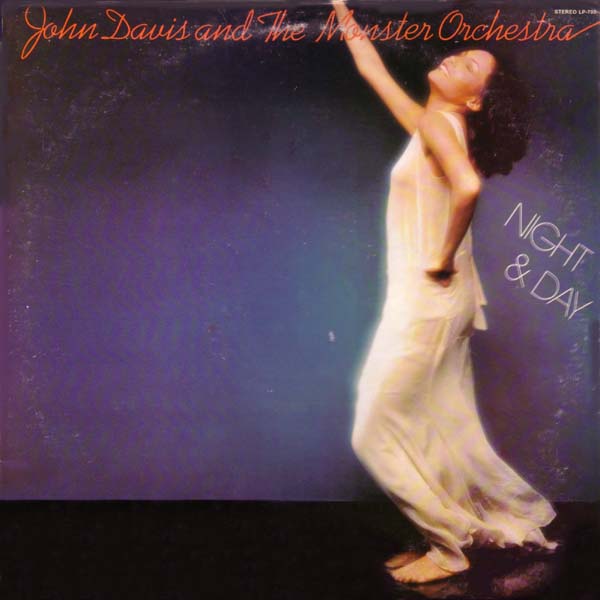
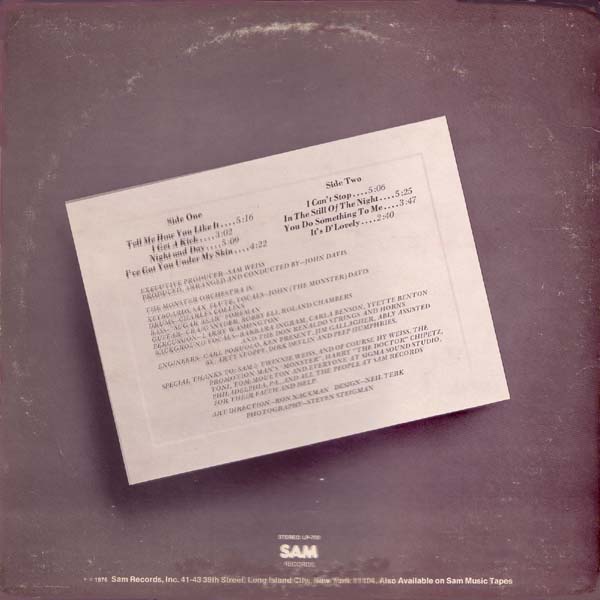
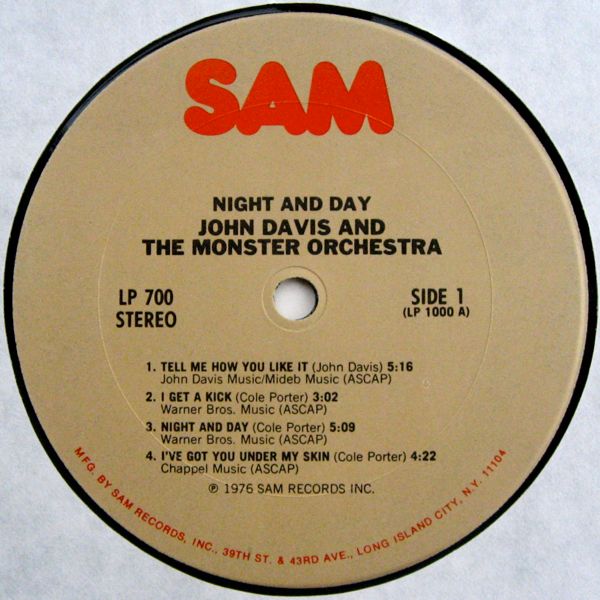
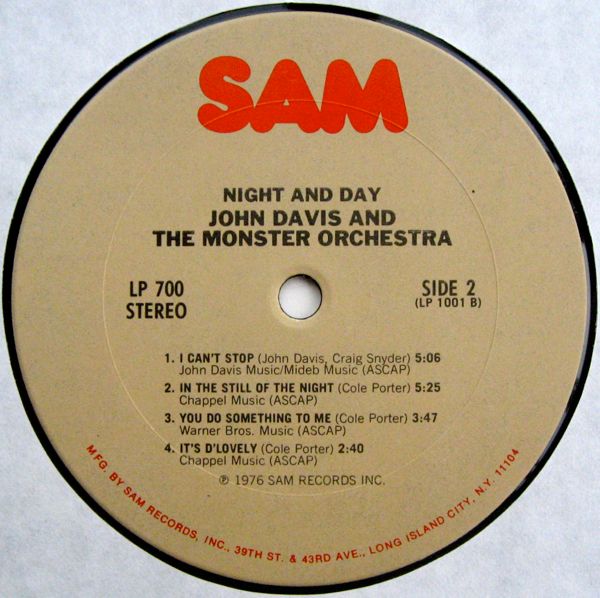
Up Jumped The Devil.
For John Davis and The Monster Orchestra’s sophomore album, Up Jumped The Devil, John decided to change tack from their debut album Night and Day. While Night and Day had been six cover versions of Cole Porter songs and two original tracks, Up Jumped The Devil featured original songs. John wrote five of the seven songs and cowrote You Gotta Give It Time and Once Upon A Time with guitarist Craig Synder. These seven songs became Up Jumped The Devil, John Davis and The Monster Orchestra’s sophomore album. These songs were recorded at Philly’s Sigma Sound Studios by some familiar faces.
When recording of Up Jumped The Devil got underway, many of the same personnel that featured on Night and Day were present. They would also feature on albums by The Salsoul Orchestra. This includes the rhythm section of bassist Michael “Sugar Bear” Foreman, drummer Charles Collins and guitarist Dennis Harris. Larry Washington played percussion, while strings and horns came courtesy of Don Renaldo and backing vocals from The Sweethearts of Sigma, Carla Benson, Evette Benton and Barbara Ingram. Only guitarist Craig Snyder, bassist Vince Fay and drummer Jimmy Young hadn’t played with The Salsoul Orchestra. John Davis, played keyboards, flute and saxophone and sang the lead vocals. He conducted the orchestra and produced Up Jumped The Devil, which was released in 1977.
On the release of Up Jumped The Devil in 1977, John Davis and The Monster Orchestra’s sophomore album wasn’t a commercial success. It failed to chart. Only the title-track, Up Jumped The Devil was released as a single, but it never troubled the charts. Disco wasn’t proving as lucrative as Sam Weiss had hoped. Should Up Jumped The Devil Have been a commercial success though? That’s what I’ll tell you, when I tell you about the music on Up Jumped The Devil.
Up Jumped The Devil opens with the title-track, and single, Up Jumped The Devil. A pounding, uber funky, rhythm section, growling horns and percussion before John takes charge of the lead vocal. With The Sweethearts of Sigma, shakers, riffing, searing guitars and blazing horns for company, a dramatic slice of funk-tinged disco unfolds. Thunderous drums, sizzling guitars and grizzled, riffing horns prove the finishing touch and the perfect accompaniment to John and The Sweethearts of Sigma dramatic vocals. Having gotten your attention, you sense John Davis and The Monster Orchestra won’t let go.
We Can Fly sees disco combined with Philly Soul. Key to this, is his orchestra’s background. Many members of the orchestra and The Sweethearts of Sigma are from Philly. So, it’s no surprise the track’s Philly Sound, as the arrangement unfolds. The rhythm section and lush strings accompany John’s tender, soulful vocal. The Sweethearts of Sigma’s equally tender, soulful harmonies provide a perfect foil. Then chiming guitars, dancing strings, flourishes of keyboards and a pulsating rhythm section take charge, sweeping the arrangement along. Later, acoustic guitars weave their way across the arrangement. From there, the vocal drops in and out, teasing and tantalising, as disco and Philly Soul are combine seamlessly.
A thunderous, funky rhythm section opens You Gotta It Up. Then blazing horns, searing guitars and slap bass combine to create funk-laden backdrop. Urgent, sassy vocals from John and The Sweethearts of Sigma add to the tough, funky arrangement. Hollers, whoops and handclaps punctuating the arrangement. Then chiming guitars, percussion, high, kicking grizzled horns and the funkiest of rhythm section are unleashed. An added bonus is a searing, riffing guitar solo that dances across the funk laden arrangement, as John Davis and The Monster Orchestra demonstrate another side to the their music, one I’d love to hear much more of.
Once Upon A Time soulfully and dramatically, closes Side One of Up Jumped The Devil. The arrangement is driven along by a funky, thunderous rhythm section, dancing strings and rasping horns. A flourish of keyboards signals the soulful entrance of John and The Sweethearts of Sigma. When they exit stage left, this is the signal for the drama to build. Blazing horns and the rhythm section take charge. Having taken the arrangement to a dramatic crescendo, the vocal returns. Then during a breakdown, percussion, horns and the rhythm section combine with breathy harmonies, before the arrangement bursts back into life, bringing the track to a soulful, dramatic close.
What was originally side two of Up Jumped The Devil is a three part disco medley. These medleys were hugely popular during the disco era. The Magic Is You (Main Theme) is the first movement of three. Hissing hi-hats, sharp, dramatic bursts of horns and flourishes of strings unite with percussion. Driving the arrangement along is the funky rhythm section and sizzling guitars. John’s vocal is powerful and joyous, with swathes of lush strings, growling horns and later, pizzicato strings for company. Providing the pulsating, uber funky heartbeat is a Philly rhythm section. They build the drama as a dance-floor classic unfolds. Adding to the drama are testifying harmonies from The Sweethearts of Sigma, sweeping, swirling strings and glorious riffing horns. What makes this medley even better, is there are two more parts to enjoy.
You’re The One picks up where the previous track left off. Percussion, congas, keyboards and the rhythm section combine. Choppy, wha-wah guitars and layers of strings join the fun, before the unmistakably, sweet and soulful sound of The Sweethearts of Sigma enters. They add urgent, then cooing harmonies, before John Davis vocal enters. He’s quite happy to play second fiddle to The Sweethearts of Sigma, given their sheer soulfulness. They play a crucial role in the track, making this pulsating tracks one of the most soulful on Up Jumped The Devil,
Closing Up Jumped The Devil is Recapitulation, the last track in the three part medley. This is one of the five tracks penned by the orchestra’s innovative leader. Horns growl, lush strings sway, sweep and swirl and the rhythm section provide a thunderous, pounding and pulsating beat. It’s as if John Davis and The Monster Orchestra are determined to close the album on a high. This they do. The Sweethearts of Sigma add their soulful, joyous contribution. Their harmonies soar and quiver, as they accompany John’s vocal. Again he seems content to let The Sweethearts of Sigma take centre-stage. So too do his orchestra. They provide a dramatic, funky and dance-floor friendly arrangement. Urgent bursts of horns, wah-wah guitars, flourishes of dancing strings and the pulsating arrangement combine to create a soulful, funky and dance-floor friendly dramatic high to Up Jumped The Devil.
That Up Jumped The Devil wasn’t a huge commercial success seems almost unjust. After all, here was John Davis and The Monster Orchestra, one of the greatest disco orchestra’s in full flight. It’s a joy to behold. Only The Salsoul Orchestra bettered the sound of John Davis and The Monster Orchestra in full flight. What made John Davis and The Monster Orchestra such a success was that John was a musical innovator and pioneer, just like Vince Montana Jr, who’d founded The Salsoul Orchestra and Norman Harris. Another part of John’s success was that he surrounded himself with hugely talented musicians and backing vocalists.
Many of these musicians and backing vocalists were from Philly, and played an important part in the success of Philadelphia International Records and later, Salsoul Records. They’d also feature on albums by The Salsoul Orchestra. Crucial to the success of John Davis and The Monster Orchestra musicians like the rhythm section of bassist Michael “Sugar Bear” Foreman, drummer Charles Collins and guitarist Dennis Harris. Then there’s percussionist Larry Washington, Don Renaldo and The Sweethearts of Sigma.
It was The Sweethearts of Sigma who transformed a good album into a great album. The Sweethearts of Sigma were the voice of The Salsoul Orchestra and The Salsoul Strings. Their backing vocals feature on every great album of the Philly Soul era. So, their contribution was crucial. Indeed, they were the perfect foil for John Davis, who wasn’t the greatest vocalist. He was a good, but not great vocalist. However, with The Sweethearts of Sigma accompanying him, his deficiencies were well hidden. They took charge, adding The Sweethearts of Sigma provided the finishing touch to Up Jumped The Devil. Not only did The Sweethearts of Sigma play an important part in the success of Up Jumped The Devil, but made it one of John Davis and The Monster Orchestra’s greatest albums and indeed, a real hidden gem and timeless classic of the disco era.
DISCO RECHARGE-JOHN DAVIS AND THE MONSTER ORCHESTRA-NIGHT AND DAY AND UP JUMPED THE DEVIL
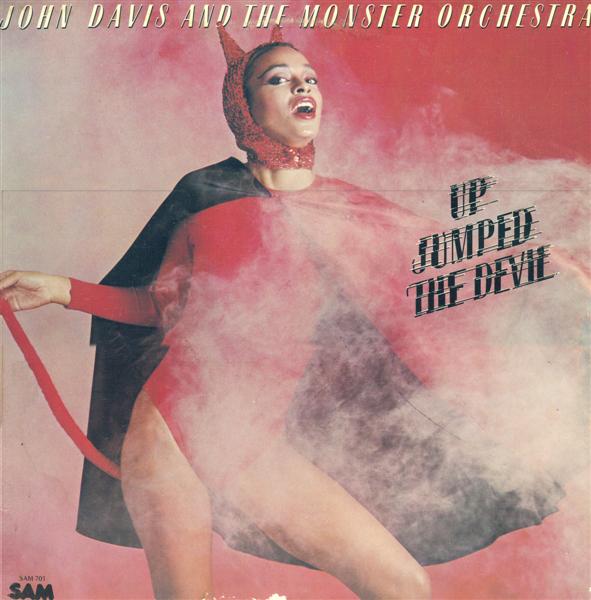
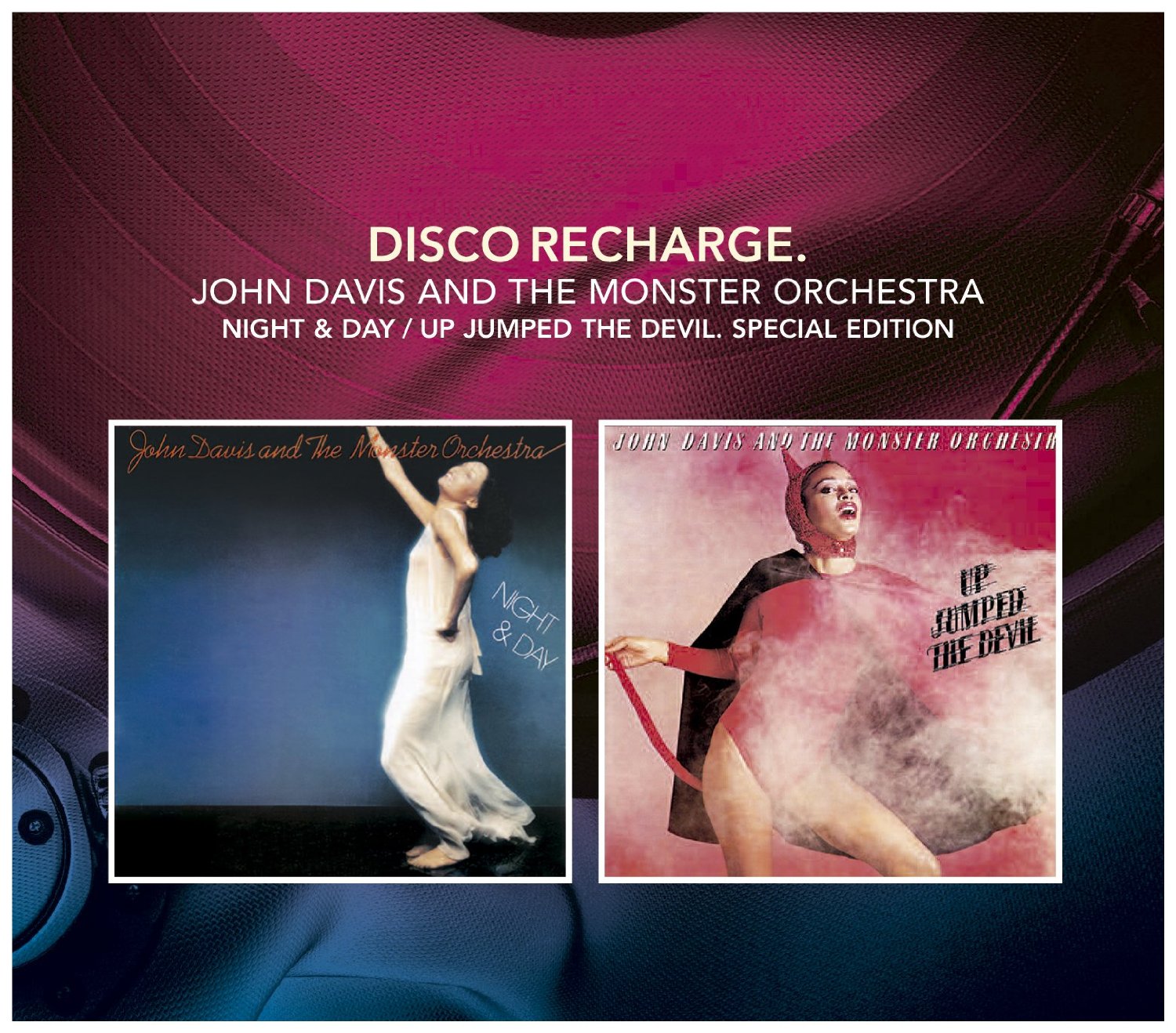
CAN-SOON OVER BABALUMA.
CAN-SOON OVER BABALUMA.
Forty years ago, in November 1974, Can released the sixth album of their career, Soon Over Babaluma. This marked the end of an era for Can. Soon Over Babaluma was the end of Can’s golden period. This golden period began with their debut album, 1969s Monster Movie and 1974s Soon Over Babaluma which like all of Can’s back-catalogue, is being rereleased on vinyl by Mute Records. For six albums, Can were one of the most innovative bands in musical history. They established a reputation as one of the most influential bands in musical history. Even today, forty-five years after Can released their debut album, Can’s influence is can be heard in music.
Founded in 1968, Can went on to become one of the most innovative, influential and groundbreaking groups in musical history. Their music is best described as a fusion of ambient, avant-garde, electronic, experimental, industrial, jazz, prog rock, psychedelia and rock. Known for their ability to improvise, Can became famous for what they referred to as spontaneous composition.
When Can headed into the studio they improvised. Feeding off each other, genres and ideas melted into one. It was spontaneous and off-the-cuff. Can played with freedom and in doing so, pushed musical boundaries to their limits and sometimes, beyond. Afterwards, the results would be edited and the result would be some of the most exciting music released between 1969 and 1979, when Can split-up.
In total, Can released eleven albums between 1969s Monster Movie and 1979s Can. During this period, Can released classic albums like Tago Mago, Ege Bamyasi, Future Days and Soon Over Babaluma. This was music that’s bold, challenging, innovative, inventive and influential. Expecting the unexpected, a new Can album featured exciting, innovative and progressive music, where a fusion of musical influences and genres became one. For ten years and eleven albums, Can released cutting-edge music. Sadly, in 1979, Can split-up. Thankfully, they reconvened in 1989 for Rite Time. However, five years before Rite Time, Can released Soon Over Babaluma the album which marked the end of Can’s golden period. Before I tell you about Soon Over Babaluma, I’ll tell you about Can’s career up until then.
For a three year period between 1963 and 1966, Holger Czukay and Irmin Schmidt were privileged to study music under the legendary Karlheinz Stockhausen. A true pioneer, Karlheinz Stockhausen was way ahead of time. He wasn’t just a visionary in terms of electronic music, but was fascinated by aleatoric music, where some element is left to chance. Granted there will only be a certain number of outcomes, but the musician has to choose the outcome they believe is correct. Serialism was another subject Karlheinz was interested in. With serialism, a series of values are used to manipulate musical elements. This form of composition fascinated Karlheinz. So did musical spatialism, which would influence Can. Karlheinz was an evangelist, encouraging his pupils to investigate, examine and scrutinise each of these subjects. So it’s no surprise that once Holger Czukay and Irmin Schmidt had finished studying, Holger became a musical teacher.
Having settled into life as a music teacher, Holger was enjoying life as a teacher. Then when he heard The Beatles’ I Am A Walrus in 1967, he was captivated by this psychedelic rock single. With the innovative use of bursts of radio and the experimental sound and structure, Holger went in search of similar music. Soon, Frank Zappa and Velvet Underground became favourites of Holger. Inspired by what he’d heard, Holger decided to form his own band in 1968…Can.
After his time studying under Karlheinz Stockhausen, Irmnin headed to New York, where he spent time with avant-garde musicians like Steve Reich, Terry Riley and La Monte Young. Soon, Irmin was aware of Andy Warhol and Velvet Underground. This inspired him to form his own band when he returned home to Cologne.
In Cologne, Irmin a pianist and organist formed Can with American flautist David C. Johnson and bassist Holger Czukay. Up until then, the trio had exclusively played avant-garde classical music. Now their ambitions lay beyond that. Their influences included garage, rock, psychedelia, soul and funk. So they brought onboard three new members of the group which started life as Inner Space, and then became The Can. Eventually, they settled on Can, an acronym of communism, anarchy, nihilism
The first two new additions were guitarist Michael Karoli and drummer Jaki Liebezeit. Vocalist and New York-based sculptor Malcolm Mooney joined the band midway through 1968. By then, they were recording material for an album Prepare To Meet Thy Pnoom. Unfortunately, record companies weren’t interested in the album. So the group continued recording what would become their debut album Monster Movies. However, David C. Johnson left the group at the end of 1968. He was disappointed at the change in musical direction. Little did he realise he’d lost the chance to be part of a groundbreaking band Can.
Monster Movie.
Monster Movie was the start of the Can story. It was recorded in Schloss Nörvenich, a 14th-century castle in North Rhine-Westphalia. Can recorded Monster Movie between 1968-69. It was the released in August 1969. This marked the debut of Can. Their career started as they meant to go on, creating a groundbreaking, genre-melting fusion of blues, free jazz, psychedelia, rock and world music. Monster Movies has a Velvet Underground influence. It’s as if Can have been inspired by Velvet Underground, but pushed musical boundaries to their limits.
Throughout Monster Movie, Can improvised, innovated and experimented. Multilayering and editing played an important part in Monster Movie’s avant garde sound. So did spontaneous composition, which Can pioneered.
Spontaneous composition was hugely important in Can’s success. Holger remembers “that the members of Can were always ready to record. They didn’t take time to think. It was spontaneous. The music flowed through them and out of them.” Holger remembers that he was always “given the job of pressing the record button. This was a big responsibility as the fear was failing to record something we could never recreate.” In some ways, Can were an outlet for this outpouring of creativity, which gave birth to a new musical genre.
This new musical genre was dubbed Krautrock by the British music press. So not only was Monster Movie the album that launched Can’s career, but saw a new musical genre, Krautrock coined. The founding father’s of Krautrock were Can, lead by Holger Czukay.

Soundtracks.
Released in 1970, Soundtracks, was Can’s sophomore album. Essentially, Soundtracks is a compilation of tracks Can wrote for the soundtracks to various films. It’s the album that marked the departure of vocalist Malcolm Mooney. Replacing him, was Japanese busker, Kenji Damo Suzuki. He features on five of the tracks, contributing percussion and vocals. The addition of Damo wasn’t the only change Can were making.
Soundtracks was a coming of age for Can. It marked a move away from the psychedelic jams of Monster Movie and a move towards their classic sound. That saw the music becoming much more experimental and avant-garde. The music took an ambient, meditative, mesmeric and thoughtful sound. This marked the beginning of what became known as Can’s classic years, when albums like Tago Mago, Ege Bamyasi and Future Days were released.

Tago Mago.
The first instalment in the golden quartet was Tago Mago. This was the first album where Kenji Damo Suzuki was a permanent member of Can. He and the rest of Can spent a year in the castle in Schloss Nörvenich. It was owned by an art collector named Mr. Vohwinkel. He allowed Can to stay at Schloss Nörvenich rent free. For what Holger described as “a poor man’s band,” this was perfect.
Holger remembers Can during this year as “just jamming and seeing what took shape. Songs started as lengthy jams and improvised pieces.” This Holger remembers is “how Can always worked” After that, Holger worked his magic. He edited them and these mini masterpieces featured on Tago Mago, which was four months in the making.
For four months between November 1970 and February 1971, Can recorded what would become one of their most innovative and influential albums, Tago Mago.
A double album, Tago Mago featured seven groundbreaking tracks. Tago Mago was released in February 1971. Straight away, critics realised the importance of Tago Mago. Here was a game-changer of an album. It has an intensity that other albums released in 1971 lacked. Jazzier with an experimental sound, the music is mysterious, mesmeric and multilayered. It’s innovative, with genres and influences melting into one. Nuances, subtleties and surprises reveal themselves. No wonder. Can deliver an avant garde masterclass.
This comes courtesy of jazz-tinged drumming, improvised guitar playing and showboating keyboard solos. Then there was Kenji Damo Suzuki’s unique vocal style. All this, resulted in an album that was critically acclaimed, influential and innovative.
Released to widespread critical acclaim in 1971, Tago Mago was the start of a golden period for Can. Their reputation as one of the most innovative groups of the seventies started to take shape. Can had released one of the most innovative albums, Tago Mago. Holger remembers the reaction to Tago Mago. “I knew Tago Mago was an innovative album, but I never realised just how innovative an album it would become?
On Tago Mago’s release, it was hailed as Can’s best album yet. However, not in Holger’s opinion. “Tago Mago is a classic album, but I much prefer Future Days.” Despite Holger’s preference, several generations of musicians have been inspired by Tago Mago, a true Magnus Opus, that belongs in every record collection. So does the followup Ege Bamyasi.

Ege Bamyasi.
Can were on a roll. It seemed they could do no wrong. They released Spoon as a single in 1972. It reached number six in Germany, selling over 300,000 copies. That was helped no end, by the single being used as the theme to a German thriller Das Messer. It seemed nothing could go wrong for Can. The money the made from Spoon, allowed Can to hire disused cinema to record what became Ege Bamyasi.
Can advertised for a space to record their next album, Ege Bamyasi. Recording began in a disused cinema, which doubled as a recording studio and living space. The sessions at Inner Space Studio, in Weilerswist, near Cologne didn’t go well. Irmin Schmidt and Kenji Damo Suzuki took to playing marathon chess sessions. As a result, Can hadn’t enough material for an album. This resulted in Can having to work frantically to complete Ege Bamyasi. Despite this, Can were still short of material. So Spoon was added and Ege Bamyasi was completed.
Ege Bamyasi was a fusion of musical genres. Everything from jazz, ambient, world music, psychedelia, rock and electronica melted into one. When it was Ege Bamyasi released in November 1972, it was to the same critical acclaim as previous albums. Critics were won over by Can’s fourth album. It was perceived as a more accessible album than its predecessors. Just like Can’s previous albums, the quality of music was consistent.
Critics hailed Can as one of the few bands capable of creating consistent and pioneering albums. They were one of the most exciting bands of the early seventies. Can were continuing to innovate and influence musicians and music lovers alike. Just like its predecessor, Tago Mago, Ege Bamyasi is an essential part of any self respecting record collection. Having released two consecutive classic albums and their first single, it seemed nothing could go wrong for Can.

Future Days.
Despite Tago Mago and Ege Bamyasi being referred to as two of the most influential albums ever released, Holger Czukay prefers Future Days. This is the album he calls “my favourite Can album.” It was the third in Can’s golden quartet, and marked a change in direction from Can.
Future Days saw Can’s music head in the direction of ambient music. The music is atmospheric, dreamy, ethereal, melancholy, expansive and full of captivating, mesmeric rhythms. It’s also pioneering and progressive, with elements of avant garde, experimental, psychedelia and rock melting into one. Rather than songs, soundscapes describes the four tracks. Future Days and Bel Air showcase Can’s new sound. Bel Air was the Future Day’s epic. It lasted just over nineteen minutes, and sees can take you on an enthralling musical journey. Just like the rest of Future Days, critics hailed the album a classic.
On its release in August 1973, Future Days was hailed a classic by music critics. The move towards ambient music may have surprised some Can fans. However, Brian Eno was just one artist pioneering ambient music. This move towards ambient music must have pleased Holger’s guru Karlheinz Stockhausen. He must have looked on proudly as Can released the third of a quartet of classic albums. The final album in this quartet, Soon Over Babaluma was released in 1974.
Soon Over Babaluma.
The final album in Can’s golden quartet was released in November 1974. This was Soon Over Babaluma, which was recorded at Inner Space Studios, Munich.
Soon Over Babaluma features five tracks penned and produced by Can. It marked a change in direction for Can. This was their first album without a lead vocalist. During this period, Can had released some of the most groundbreaking music of the late-sixties and early seventies. This continued with Soon Over Babaluma.
Can released Soon Over Babaluma in November 1974. It featured the ambient sound that Can pioneered on their previous album, Future Days. Critically acclaimed, and featuring a myriad of beeps, squeaks and sci-fi sounds, Soon Over Babaluma is like musical journey into another, 21st Century dimension. A musical tapestry where layers of music are intertwined during five tracks, Soon Over Babaluma, which I’ll tell you about, brought to a close the most fruitful period of Can’s career.
Dizzy Dizzy opens Soon Over Babaluma. Moody and atmospheric describes the arrangement. A whispery scat, scratchy strings and drums combine with crystalline, sometimes, wah-wah guitar. Soon, Can are in the groove. From this groove, the song emanates. It’s as if this is an example of Can’s spontaneous composition. Through jamming, then with Holger editing the end result the song evolves. When he’s finished this is the result, an innovative fusion of musical genres. Everything from ambient, country, electronica, folk, funk, jazz, Kraturock and rock is combine as Can continue their quest to reinvent themselves.
Can spring a series of surprises on Come Sta, La Luna. Driven along by the rhythm section, the arrangement is slow and moody. Harmonies interject, and with the piano add drama. Then there’s the return of the sinister scat. It’s as if we’re eavesdropping on someone unravelling. Meanwhile sound effects, piano and the broody vocal combine with a myriad of percussion as the arrangement takes on a jazz-tinged, ambient sound. Other times, the music is dramatic, discordant and veers towards folk, jazz and rock. Gypsy violins, melancholy horns and percussion are all thrown into the melting pot, as the music becomes cinematic and theatrical. Multilayered, full of nuances and subtleties, it’s a pioneering, groundbreaking piece of art. Describing this track as just music, doesn’t do it justice.
Splash explodes into life, allowing Can the chance to showcase their versatility. Seamlessly and peerlessly, they combine musical genres. A myriad of musical influences unite. So do a multitude of instruments. Some are transformed. In the hands of Can, their sonic possibilities seem infinite. Instruments are reinvented as Can maraud their way across the arrangement. Driven along by a thunderous rhythm section, grizzled horns, screeching strings, blistering guitars and percussion Can push musical boundaries. Avant-garde, experimental and free jazz join forces with Krautrock and Latin are added to this lysergic, musical pot pourri. Groundbreaking, defiant and bold, Can go where no group dared go before.
Chain Reaction is best described as an eleven minute epic. With a sci-fi, cinematic sound, it’s as if we’re heading on a musical journey to another dimension. Drums pound, synths bubble and searing guitars herald the start of this journey. Can lock into a groove and explore it to its fullest. Crystalline guitars chime, while the drums provide the thunderous heartbeat. Percussion and sci-fi synths augment the arrangement as the arrangement makes fleeting visits to musical genres. Funk, jazz, Krautrock, ambient and rock are all combined. As Can maraud their way through musical genres, blistering mating gun guitar licks are unleashed. Groove laden, edgy, funky, jazz-tinged, pioneering and cinematic, Chain Reaction is all this more.
Quantum Physics closes Soon Over Babaluma. Broody, moody and haunting, it’s akin to a track from a movie soundtrack. Over nine minutes, washes of eerie, haunting synths, ethereal, chilling vocals, crashing cymbals and dramatic drums play their part in the track’s cinematic sound. This could easily be the soundtrack to a film. The music conjures up pictures, that unfold before your eyes. They’re chilling, haunting, eerie, atmospheric and sometimes, sinister. Ambient, minimalist, experimental and post modern describes this track’s cinematic 21st Century sound. This seems a fitting way to end not just Soon Over Babaluma, but Can’s golden period, when they could do no wrong.
When it was released in November 1974, Soon Over Babaluma was released to critical acclaim. Sadly, it wasn’t a commercial success. Granted it found an audience, but not the audience it deserved. Like most of Can’s albums, Soon Over Babaluma was more of an underground album, rather than a widespread commercial success. It seemed that history was repeating itself all over again. Can, didn’t enjoy the commercial success their music deserved. They weren’t alone.
Can followed in the footsteps of a whole host of innovative artist who didn’t enjoy the commercial success their music enjoyed. Among them are Velvet Underground and Frank Zappa, two artists who influenced Can. A small crumb of comfort for Can was that they went on to influence several generations of musicians. There’s a reason for this.
The music Can released was pioneering. Inventive, influential and innovative, although it was only twelve years since The Beatles released Love Me Do, this was a musical revolution. Rather than evolution, Can believed in revolution. The revolution began in 1969, with Monster Movies. Through Monster Movie, Tago Mago, Ege Bamyasi and Future Days Can pushed musical boundaries to their limits. Sometimes, they were pushed to breaking point and beyond. The result was music whose influence has been far reaching.
A fusion of ambient, avant-garde, electronic, experimental, funk, industrial, jazz, psychedelia and rock, Can’s music went on to influence several generation of musicians. They were won over by Can’s genre-melting music. That’s the case on Soon Over Babaluma, which is being rereleased on vinyl by Mute Records. The music is bold, challenging, innovative, inventive and influential. As always, it’s a case of expect the unexpected. Can after all, are no ordinary band. No way. Their music is exciting, innovative and progressive, where a fusion of musical influences and genres became one. That’s how I’d describe Soon Over Babaluma, Can’s sixth album, which marked the end of their golden period of creativity and innovation.
CAN-SOON OVER BABALUMA.
KEV BEADLE PRESENTS PRIVATE COLLECTION VOLUME 2.
KEV BEADLE PRESENTS PRIVATE COLLECTION VOLUME 2.
Back in the seventies and eighties, major record labels were reducing the money the were spending on jazz. No longer was jazz seen as a priority. In the eyes of many record label executives, it was yesterday’s music. So, they weren’t willing to risk scarce resources on new jazz music. However, they were happy to reissue classic jazz albums and fusion. The lack of spending on new and innovative jazz artists would prove ironic.
During the seventies and eighties, there was an explosion in interest in jazz music. In American schools and colleges, a record number of students were playing jazz. They went home, and listened to the new jazz stations that were springing up across America. These radio stations were community based and part of the democratisation of jazz music.
One of the effects of the civil rights movement of the sixties and early-seventies was that black Americans reclaimed jazz music. It had proved an important part of the fight for equality. Many jazz legends played an important part in the civil rights movement. This included Duke Ellington, John Coltrane, Max Roach, Charles Mingus, Charlie Haden and Nina Simone. They inspired a generation of black Americans to become involved in jazz.
Some black Americans became jazz musicians, DJ and promoters. Some black Americans were inspired to found radio stations and record labels. Many of these independent record labels would release privately pressed singles and albums.
These privately pressed singles and albums were recorded by artists whose career was beginning. They sold their new releases at concerts. Sometimes they were played on the newly founded radio stations. It was like an underground musical revolution. Sadly, much of the music released during this musical revolution went almost unnoticed. Not any more.
A generation of DJs, record collectors and music lovers have dedicated themselves to discovering the best of these private pressings. This includes DJ, record collector,compiler and crate-digger extraordinaire Kev Beadle. Kev has dedicated his life to the pursuit of the hidden musical gem. As a result, Kev has an enviable record collection. A tantalising taste of his record collection can be found on Kev Beadle Private Collection Volume 2, which will be released by BBE Music on 28th July 2014.
Kev Beadle Private Collection Volume 2 is the followup to the critically acclaimed Kev Beadle Private Collection. It was released back in March 2013, on BBE Music. This wasn’t Kev’s first compilation. Far from it. He’s a musical veteran, whose career began back in the eighties.
Ever since the eighties, Kev Beadle’s life has revolved around music, especially jazz and soul. Since then, Kev has worked in many roles within the music industry. Kev’s worked in A&R, promotion, managed labels and run his own, sadly missed label Clean Up. Like many DJs, Kev has added production to his ever expanding CV, under the pseudonym Messengers. Then there’s compilations.
During Kev’s career, he’s compiled compilations for Blue Note, Cadet and of course BBE Music. For Cadet, Kev compiled The Best of Terry Callier On Cadet, plus five of Cadet Grooves. Kev was also the man behind three volumes of Blue Note’s Capitol Rare. Then there was Kev’s BBE Msuic debut.
This was Nu Jazz Generation II, which was released on BBE Music, back in 2000. Thirteen years later, Kev made his BBE Music comeback with Kev Beadle Presents Private Collection. There’s more to Kev Beadle than a compiler. This includes DJ-ing, which has been a mainstay of Kev’s career.
Whether it’s DJ-ing on radio, or in clubs, Kev’s just as comfortable. Kev’s one of the longest serving DJs on Solar Radio, having spent thirteen years on the station. It’s club DJ-ing that many people will know the name Kev Beadle. Since the eighties, Kev has been spinning soul and jazz. However, he’s never afraid to investigate other musical genres, Kev will spin music from past, present and sometimes, the future side-by-side. Mind you, Kev’s musical influences prepared him for an appreciation of an eclectic selection of music.
For Kev Beadle, some of his earliest musical memories are heading to London clubs like The Horseshoe, on Tottenham Court Road, where Paul Murphy DJ-ed. After that, Kev would head on a voyage of discovery, tracking down hard-to-find tracks. Soon, Kev was on the other side of the decks, spinning the wheels of steel.
Soon, Kev was spinning at London’s legendary Wag Club. There he met Giles Peterson, Bob Jones, Chris Bangs. For Kev, this was the next step in his musical education. They enjoyed a good-natured rivalry, seeing who could break tracks. Then the next night Kev would be involved in, would make musical history.
Giles Peterson, Bob Jones and Kev started the Talkin’ Loud sessions at Dingwalls, on Sunday afternoons. The Talkin’ Loud sessions were the place to go to hear soul and jazz rarities. New tracks were discovered and soon, the Acid Jazz scene exploded.
Out of this came the Acid Jazz label, which in 2012, celebrated its twenty-fifth anniversary. These Sunday afternoons at Dingwalls would become legendary. Open-minded, music hungry music fans, heard and enjoyed, old soul and jazz tracks being unearthed almost on a weekly basis. Out of these afternoons, a whole scene was born, with Kev Beadle at its heart.
Since then, Kev Beadle has remained at the heart of London’s music scene. Although DJ-ing takes up most of Kev’s time, he still finds time to compile compilations. His latest compilation is the eleven track Kev Beadle Presents Private Collection Volume 2.
There’s no better way to open Kev Beadle Presents Private Collection Volume 2 than with Archie Shepp’s Song For Mozambique. It’s an introduction to one of the most innovative free jazz musicians of his generation, Archie Shepp. Song For Mozambique is a track from his 1975 album A Sea Of Faces. It was recorded in Milan on the 4th and 5th August 1975. By then, major labels weren’t interested in artists like Archie. European labels were. They recognised that he was a groundbreaking music. That’s apparent here as he combines elements of avant garde, free jazz, spiritual jazz and social comment.
Pianist Stanley Cowell’s career began back in the sixties. His debut album was 1969s genre-melting Blues For The Viet Cong. Twelve years and six solo albums later, Stanley was about to release his eighth album New World. It was released on Galaxy, an imprint of Fantasy in 1981. One of New World’s highlights was I’m Tryin To Find A Way. It has a joyous, dramatic and uplifting sound. Jazz-tinged, soulful and funky, it’s a hidden gem with a summery vibe.
The Janet Lawson Quintet only released two albums. Their debut was their 1981 eponymous album. Three years later, they returned with Dreams Can Be. It was released in 1984, on the Omnisound label. It’s the perfect showcase for Baltimore born scat singer. She was born into a family of professional musicians and made her debut on Eddie Jefferson’s 1977 album Main Man. This lead to her releasing a cover of Jon Lucien’s Dindi. Just like Dindi, Dreams Can Be is one of the real highlights of Janet’s discography.
Tenor saxophonist Chico Freeman released his debut album Morning Prayer in 1976. Six years later, in 1982, Chico released his eighth album Destiny’s Dance on Contemporary Records. Destiny’s Dance features Wilpan’s Walk, a nine-minute workout. It sees Chico accompanied by some top session players. This includes trumpeter Wynton Marsalis, bassist Cecil McBee, percussionist Paulhino DeCosta and Bobby Hutcherson on vibes. Being accompanied by such a star studded lineup seems to inspire Chico. He delivers a series of blistering saxophone solos, as his band kick loose, matching him every step of the way..
Flautist, saxophonist and piccolo player Kathryn Moses only ever released two albums. Her debut album was her 1976 eponymous album. Three years later, in 1979, Kathryn returned with Music In My Heart. One of the most beautiful tracks on Music In My Heart is the title-track. An understated arrangement accompanies the ethereal beauty of Kathryn’s tender vocal. When her vocal drops out she plays flute. It floats above the Latin-tinged arrangement. Just the like the flute, it grows in power and drama. Later, Kathryn’s vocal makes a welcome return. She scats as this joyful fusion of jazz and Latin heads towards its crescendo, leaving you wanting more.
Originally, Seawind were called Ox and based in Hawaii. In 1976, they made the decision to move to Los Angeles. Partly, this was because of drummer Harvey Mason. He got them a regular gig playing at the Baked Potato in Studio City. Before long, they came to the attention of CTi Records who signed Seawind. They quickly released two albums, 1976s Seawind and 1977s Window Of A Child. After that, the left CTi Records. One of their finest moments at CTi Records was He Loves You, a track from their debut album. Elements of smooth jazz, fusion and soul melt into one during this beautiful ballad.
Unlike the previous artists, Paz are a British group. They released their debut album Kandeen Love Song in 1978. Released on Spotlite Records, Kandeen Love Song was produced by Dick Crouch, one of the founding members of Paz. He played his part in one of the finest British jazz funk albums. One of Kandeen Love Song’s highlights is Yours Is The Light. It’s a fusion jazz funk and Latin which even today, connoisseurs of British jazz fusion remember fondly.
From Britain we head to Brazil. That’s where Grupo Medusa were from. They released two albums in the early eighties. Their debut was Grupo Medusa, which was released in 1981. Ferrovias was released two years later in 1983. It’s another eclectic album. That’s apparent on the title-track Ferrovias. Elements of bossa nova, funk, jazz and even smooth jazz are combined beautifully by Grupo Medusa to create a laid back, Latin vibe.
It was in 1981, that Hungarian jazz group Dimenzio released their eponymous album. It featured Bamba (The Fool). Dimenzio take a different approach They deploy synths before taking the track in the direction of jazz. Not just any type of jazz. No. Fusion is combined with smooth jazz. There’s also hints of funk and Latin. It’s a genre-melting musical adventure. Dimenzio innovate and create a groundbreaking slice of dramatic, futuristic and haunting 21st jazz.
1973. That was the year that Cortijo and His Time Machine released their one and only album, Y Su Maquina Del Tiempo. It features Carnaval a pulsating salsa that’s akin to a call to dance.
Eight years after releasing his 1962 debut album, Miles Of A Genius, Barry Miles released his eponymous sophomore album. Released on Poppy Music in 1970, Barry Miles featured Hijack. Barry’s tight and talented band deliver a series of masterclasses during this early example of fusion. Stealing the show are Barry on piano and guitarist Jack Wilkins. Both play successful roles during this Hijack.
Closing Kev Beadle Private Collection Volume 2 is Appendix’s Autumn Song. Appendix are a Swedish group that most people won’t be familiar with. That’s unless you’re a fan of fusion. They were around during the seventies and eighties. Their only album was 1973s Space Trip, which featured Autumn Song. It was released in 1973, on the Amigo label. Although a fusion group, Autumn’s music focused more on jazz, than rock. That’s apparent on Autumn Song, an understated and beautiful, jazz-tinged ballad. Later, the music briefly becomes funky and futuristic thanks to a wah-wah guitar. When it drops out, the rest of Appendix create the minimalist arrangement that accompanies a heartfelt, soul-baring vocal.
Recently, there haven’t been many compilations of private pressing released. When there have been, they tend to focus on boogie, funk and soul. Sadly, there haven’t been any compilations of private pressings of jazz. That’s until Kev Beadle Private Collection Volume 2. It will be released by BBE Music on 28th July 2014.
Kev Beadle Private Collection Volume 2 is the followup to Kev Beadle Private Collection. That was the first compilation Kev had compiled in sixteen years. He hadn’t lost his Midas touch. Kev knew where the hidden gems, lost classics and rarities lay.
That’s within Kev’s enviable and ever expanding record collection. Kev Beadle you see, is a prolific record collector. He’s been collecting records all his life. Just like DJ-ing, it’s been a labor of love for him. It allows Kev to introduce people to music that they might never hear. That’s the case on Kev Beadle Private Collection Volume 2. It’s a compilation that literally oozes quality. That’s the case from the opening bars of Archie Shepp’s Song For Mozambique right through to the closing notes of Appendix’s Autumn Song. In between, we hear a collection of lost classics, hidden gems and rarities. Kev has dug deep into his record collection to discover the dozen delights on Kev Beadle Private Collection Volume 2.
Compiling a compilation like Kev Beadle Private Collection Volume 2 takes time. It also tales persistence and dedication. In Kev’s case, his persistence and dedication has paid off. Originally, Kev would start with a long list of tracks from his record collection. Gradually, he whittled that list down to just twelve tracks. That can’t have been easy. I’m sure deciding which tracks to include and exclude gave Kev many a sleepless night. Eventually, Kev settled on the twelve tracks that became Kev Beadle Private Collection Volume 2.
The twelve tracks on Kev Beadle Private Collection Volume 2 are a mixture rarities and hidden gems. Each track oozes quality. Kev’s taste is impeccable as he introduces us to jazz from America, Brazil, Britain, Hungary and Sweden. Many of these tracks you won’t have heard before. That’s until now. You certainly won’t forget them in a hurry. Not given the quality of music that you’ll find on Kev Beadle Private Collection Volume 2, which is another journey into the world private pressings, with Kev Beadle as your musical guide.
KEV BEADLE PRESENTS PRIVATE COLLECTION VOLUME 2.
MOGWAI-COME ON DIE YOUNG.
MOGWAI-COME ON DIE YOUNG.
It’s hard to believe that fifteen years have passed since Mogwai released their sophomore album, Come On Die Young, in March 1999. Back then, Glasgow-based Mogwai were one of the best up-and-coming bands not just in Scotland, but Britain. Since then, Mogwai have established a reputation as one of Britain’s top bands. They’ve also established a large and loyal fan-base overseas. This includes in America.
Since 2003s Happy Songs For Happy People, Mogwai have been making inroads into the lucrative American market. Their most recent album Rave Tapes, which was released in January 2014, reached number fifty-five in the US Billboard 200. It was Mogwai’s ninth studio album.
Rave Tapes is one of six studio albums and a three soundtracks Mogwai have released since Come On Die Young, which was rereleased by Chemikal Underground on 21st July 2014.
The recently rereleased version of Come On Die Young is available in various formats. There’s the box luxury edition vinyl box set. It also features a variety of “goodies.” There’s rarities, unreleased tracks, an E.P. and a limited edition poster. Compiled by Mogwai, the Come On Die Young box set, which will be released on 4th August 2014, looks like a veritable feat. The version of Come On Die Young I’m reviewing is the Deluxe Edition, which features two CDs.
Disc one features Come On Die Young in all its glory. The there’s disc two. It features a veritable musical feast, which opens with Nick Drake. The next courses in this musical feast include demos, an E.P, live tracks and The The Cava Sessions. There’s even a homage to a football referee.
Next up are demos like Waltz For Aidan and Rollerball. A welcome inclusion is The Cava Sessions. They includes Ex-Cowboy, Spoon Test and Punk Rock. Then the Travels In Constants E.P. is a reminder of Mogwai as their career unfolded. Kappa, Quiet Stereo Dee and Arundel. These tracks are a reminder that even in the early days of their career, Mogwai were a band who seemed destined for commercial success and critical acclaim. That’s not all.
There’s also a live version of Cava, Helicon 2 and Satchel Pantzer. Then there’s Mogwai’s homage to the only man who could unite an already divided city, Hugh Dallas. Hugh for those unfamiliar with the vagaries of Scottish football, was a football referee. Mogwai’s homage to Hugh Dallas closes disc two of Come On Die Young, which I’ll tell you about. Before that, I’ll tell you about Mogwai’s career up until Come On Die Young.
Mogwai’s roots can be traced to Glasgow in April 1991. That’s where guitarist Stuart Braithwaite and Dominic Aitchison first met. Four years later, they met drummer Martin Bulloch and formed Mogwai, which film buffs will remember, is a character from the movie Gremlins. Mogwai was always meant as a temporary name, but it stuck and was on the label of their 1996 debut single Tuner. It was released to critical acclaim and the NME awarded it their single of the week award. Two other singles were released during 1996 Angels v. Aliens and Summer. By then Mogwai were a quartet.
Guitarist John Cummings joined the band in 1995. He’s also something of a maestro when it comes to all things technical and is described as playing “guitar and laptop.” He was part of one of the hottest bands of the late nineties, Mogwai who released two more singles in 1997.
These two singes were New Paths To Helicon Pt. 1 and Club Beatroot. Just like their debut single Tuner, New Paths To Helicon Pt. 1 was won NME’s single of the week award. This was the perfect time for Mogwai to record their debut album, Mogwai Young Team.
Mogwai Young Team.
For Mogwai Young Team, Mogwai brought onboard Brendan O’Hare the Teenage Fanclub’s drummer. Another guest artist was Aidan Moffat of Falkirk based band Arab Strap. He added the vocal to R U Still In 2 It. The rest of Mogwai Young Team consisted of instrumentals. Mogwai Young Team was recorded at Chem 19 studios and produced by ex-Delgado Paul Savage and Andy Miller, one of Scotland’s top producers. Once Mogwai Young Team was completed, it was released on Scotland’s biggest record label, Chemikal Underground.
On its release in October 1997, critics were one over by Mogwai Young Team. Mogwai were hailed Mogwai as a band with a big future. Mogwai Young Team was a groundbreaking album of post-rock, which sold over 30,000 copies and reached number seventy-five in the UK. The Mogwai Young Team were on their way. However, a few changes were about to take place.
Come On Die Young.
A year later, Mogwai were back in the studio recording their sophomore album Come On Die Young. Much had changed. A new member had joined the band. Barry Buns a flautist and sometimes pianist, had played a few gigs with the band. They then asked him to become the fifth member of Mogwai. Violinst Luke Sutherland joined Mogwai, but not on a full-time basis. This wasn’t the only change.
Recording was split between New York and Glasgow.This time, they’d forsaken Chem 19 in Blantyre and recorded parts of the album in Rarbox Road Studios, New York. Some sessions took place in Glasgow’s Cava Studios. Producing Come On Die Young was Dave Fridman. When the recording of Come On Die Young began, it was a new look Mogwai.
Founding member Stuart Braithwaite played guitar and sang the vocal to Cody. Joining Stuart in the rhythm section were bassist Dominic Aitchison, drummer and guitarist Martin Bulloch. New members Luke Sutherland played violin and Barry Burns played piano, keyboard, guitar and flute. A few session players were called upon. Richard Formby played lap steel on Cody and Wayne Myers played trombone on Punk Rock/Puff Daddy/Antichrist. Producer Dave Fridmann played on a few tracks. When Come On Die Young was finished, it would be released in March 1999.
On its release, in March 1999, Come On Die Young was released to widespread critical acclaim. Mogwai had overcome “the difficult second album syndrome.” However, as is always the case, there were a few dissenting voices. Some critics felt his production style resulted in a much more orthodox sounding album. However, I’d argue that Come On Die Young was part of Mogwai discovering their “sound” and direction. Come On Die Young is a much more understated, but also ambient, experimental, multi-textured and melodic album. There’s a fusion of ambient, grunge and post rock on Come On Die Young. Given the minor spat between critics, record buyers had the casting vote.
Released in March 1999, Come On Die Young reached number twenty-nine in the UK. Record buyers welcomed the change in direction from Mogwai. Come On Die Young had surpassed the commercial success of their debut album Mogwai Young Team. Mogwai it seemed were now on their way to finding their sound and fulfilling the potential evident on their debut album on Come On Die Young, which I’ll tell you about.
Punk Rock opens Come On Die Young. A lone crystalline guitar meanders along, while a sample of Iggy Pop plays in the background. It’s an excerpt from an interview he gave on CBS on 11th March 1977, where Iggy talks about punk. Mogwai allow Iggy to take centre-stage, while they create an understated backdrop. However, it won’t be long before Mogwai take centre-stage.
Cody, like much of Come On Die Young has an understated, mellow sound. Stuart’s vocal is whispery, while chiming guitar, pensive drums and crashing cymbals combine ambient, indie rock, post rock. Adding the finishing touch is Richard Formby’s lap steel guitar. It shimmers and quivers, during this haunting, hypnotic opus.
Originally, Helps Both Ways featured John Madden’s commentary from a A.F.N.L. game between the San Francisco 49ers and the Green Bay Packers. Unfortunately, the sample hadn’t been cleared, so had to be replaced by a sample of another commentary. Just like with the Iggy Pop sample, it provides the backdrop for Mogwai as they create a maudlin, wistful backdrop. Drums crack, guitars chime and bass sits way down in the mix. Adding to the wistful, mesmeric sound is a flute. It floats in and out as this moody soundscape unfolds.
A brief snippet of a sample opens Year 2000. After that, the track is a fusion of musical genres with a futuristic, sci-fi influence. That comes courtesy of the feedback, synths and sound effects. Meanwhile, Mogwai rediscover their indie rock roots, as they drive the slow, broody arrangement along. Searing guitars join the rhythm section. They get into the groove and sometimes, unleash a spray of feedback during this genre-melting track. Seamlessly, Mogwai combine everything from avant garde, electronica, experimental, indie rock, Krautrock, psychedelia and post rock to create an innovative and futuristic soundscape that’s adventurous, bold and dark
Subtle, chirping guitars open Kappa. After that, bursts of thunderous drums interject. So do stabs of keyboards and driving guitars. Waves of music overpowers the rest of the arrangement. That’s no bad thing, because soon, Moqwai will be in full flight. It’s a joy to behold. There’s even a nod to Pink Floyd. Mogwai the strip the arrangement bare. Just the drums and chirping guitars combine. Soon, waves of dramatic music return. Bursts of feedback escape from the arrangement as Mogwai combine power, drama and subtle hooks.
Waltz For Aidan sees Mogwai dedicate the song to another Scottish musician, Aidan Moffat of Arab Strap. It’s their way of thanking Aidan. He contributed vocals on Mogwai’s debut E.P. and debut album 1997 Mogwai Young Team. A guitar chirps before the pounding rhythm section and crystalline guitar combines. Mogwai keep the tempo slow. The melodic and melancholy music floats along allowing you to hear its ethereal beauty.
May Nothing But Happiness is an epic track, nearly nine minutes long. Just like many tracks on Come On Die Young the introduction is understated. Chiming guitars set the scene. They’re joined by the rhythm section who create a dreamy, lysergic and mesmeric backdrop. Later, washes of keyboards sweep in and out, as Mogwai explore the song’s subtleties. There’s a strong Can influence. Just like Can, Mogwai seem at their best jamming. Things change when a driving guitar enters. It adds an element of drama, as Mogwai threaten to kick loose. Cymbals crash and there’s even a drum roll thrown in for good measure. Before long, normality returns and the track becomes a haunting, ambient soundscape.
Avant garde. That’s the best way to describe Oh! How The Dogs Stack Up. Mogwai replicate the sound of crackly vinyl. A spoken word sample is combined with deliberate stabs of piano. Bells chime and then a myriad of sound effects are unleashed by Mogwai. This adds an avant garde, experimental influence to a track that’s truly compelling.
Ex-Cowboy is another lengthy track. It’s nine minutes long. This allows Mogwai to experiment. Just like previous tracks, the introduction is understated. A searing guitar and bass combine before plodding drums enter. So do violins. They sweep back in forth. Cymbals crash as the drama builds and Mogwai head in the direction of grunge and post rock. Machine gun guitars, pounding drums and wailing feedback are combined with discordant strings. Then all of a sudden, it’s as if the storm is over. There’s a return to the understated, mellow sound. From, there, the two sides of Mogwai make reappearances during what’s a musical Magnus Opus.
A rumbling introduction opens Chocky. The drama builds and grows. You wonder if it’s about to explode. It never happens though. Instead, the buzzing, rumbling sound is joined by a lone, wistful piano. They may seem like strange bedfellows, but work well together. So do the rhythm and chirping, chiming guitars. Then there’s a spoken word sample that sits atop the arrangement. It adds a space-age influence. By now, the arrangement is being driven along by the guitars. Slow, melodic and melancholy, there’s a nod to Brian Eno and Pink Floyd, as Mogwai fuse elements of ambient, avant garde, experimental and post rock. In doing so, they create another genre-melting epic.
A lone crystalline guitars meanders along as Christmas Steps begins to unfold. Understated with an ethereal beauty, the music washes over you cleansing your soul. However, the driving guitars and buzzy bass signals a change in direction. Is it time? Will Mogwai kick out the jams? They threaten to do so. Guitars and bass lock horns. Before long, drums pound and cymbals crash. Eventually, it happens Mogwai rediscover their inner rocker. When they slow things down, the violins make an entrance. After that, the track’s ethereal beauty returns and you’re wallow in its midst for the remainder of the track.
Punk Rock/Puff Daddy/An Chris closes Come On Die Young. It’s just two minutes long. Here, Wayne Myers unleashes washes of his haunting trombone. They sit atop the arrangement’s eerie, sci-fi sound.
Sophomore albums are notoriously difficult. Many bands have realised that. Some bands spend years and fortunes trying to record their sophomore album. A prime example of this were The Stone Roses. It destroyed them. Not Mogwai though.
Far from it. They didn’t struggle with the notorious “second album syndrome.” Instead, they rose to the challenge and created one of the greatest albums of their career.
Come On Die Young saw Mogwai discover their “sound” and direction. It’s a much more reserved and understated album than their debut album, Mogwai Young Team. The music is also melodic, melancholy, dramatic, dreamy, wistful, lysergic and haunting. It’s the type of album where you need to let the music wash over you and discover its beauty, nuances, subtleties and secrets. With every listen, you hear something new and fresh. That’s the case even after fifteen years.
On Come On Die Young, Mogwai combined musical genres and influences. Listen carefully and you’ll hear Mogwai combine everything from ambient, avant garde, electronica, experimental, grunge, indie rock, Krautrock, post rock and psychedelia. Mogwai have been influenced by a number of bands and artists. There’s a nod to Brian Eno, John Hopkins, Neil Young, Nirvana and Pink Floyd. Closer to home, I’d suggest the Cocteau Twins ethereal, fuzzy soundscapes influenced Mogwai when they were making Come On Die Young back in 1998 and 1999. A lot has happened since then.
Since the release of Come On Die Young, Mogwai have established a reputation as one of Britain’s top bands. They’ve also established a large and loyal fan-base worldwide. This includes in America.
Since 2003s Happy Songs For Happy People, Mogwai have been making inroads into the lucrative American market. Their latest album Rave Tapes, which was released in January 2014, reached number fifty-five in the US Billboard 200. That was Mogwai’s ninth studio album.
Rave Tapes is one of six studio albums and a three soundtracks Mogwai have released since Come On Die Young, which was rereleased by Chemikal Underground on 21st July 2014.
Chemikal Underground’s newly rereleased Deluxe Version of Come On Die Young is a welcome reminder of Mogwai, as they embarked upon the musical adventure that’s their career. Come On Die Young is one of the finest albums Mogwai have released, so far. The sound quality on the two discs is outstanding, and the music seems to come alive. That’s not surprising. Come On Die Young is a timeless albums. I’d go as far as say that it’s one of the best Scottish albums of the last forty years.
For a newcomer to Mogwai’s music, then Come On Die Young is the perfect introduction to their music. Two other albums would be a fitting companion to Come On Die Young. They’re Les Revenants, Mogwai’s 2013 soundtrack album and their most recent album, Rave Tapes. These three albums, Les Revenants, Rave Tapes and Come On Die Young are the perfect introduction to Mogwai and show very different sides to their music.
MOGWAI-COME ON DIE YOUNG.
LEWIS-A MUSICAL RIDDLE, WRAPPED IN A MYSTERY, WRAPPED INSIDE AN ENIGMA.
LEWIS-A MUSICAL RIDDLE, WRAPPED IN A MYSTERY, WRAPPED INSIDE AN ENIGMA.
Back in May 2014, Light In The Attic Records rereleased an album that mystery and conjecture continues to surrounds. Thirty-one years after Lewis released L’Amour, nobody was any the wiser who Lewis was. It remained one of the great musical mysteries. To coincide with the release of L’Amour, I’d been researching the mystery surrounding Lewis and his hidden gem of an album, L’Amour. Finally, I thought that maybe, just maybe the mystery was over. This mystery started back in 1983.
This was when Lewis released L’Amour.Very little was known about Lewis. Even his real name. Back then, Lewis was calling himself Randall Wulff. Nobody knew if this was his real name. No-one thought to ask. All that was known is Randall arrived in Los Angeles in 1983.
When he swept in to town, Randall was sporting perfectly coiffured blonde hair and movie star looks. The man who called himself Lewis, lived the playboy lifestyle. Randall drove a white convertible Mercedes and booked into the Beverley Hilton. Randall dated a string of beautiful women. Models and movie stars accompanied Lewis to the smartest parties in Los Angeles. He lived the playboy lifestyle. Wine, women and song were constant companions for Randall. However, before long, the party was over.
Randall had arrived in Los Angeles with L’Amour already recorded. Not that anyone knew where L’Amour had been recorded. The sessions took place in the Fiasco Brothers Recording Studios in Vancouver. Randall had recorded there before. After that, Randall headed to Los Angeles. That’s where he readied himself for release Lewis’ debut album, L’Amour. Rather than using his own name, Randall used the alias Lewis. This added to the air of mystery. So did the album cover.
For the album cover, Randall called one of the most famous photographers in music, Ed Colver. He’d made his name photographing punk bands. That was the past. By 1983, Ed was expanding his musical portfolio. So when Randall called, Ed agreed to meet him in the Beverley Hilton.
When the two met, Ed wasn’t suspicious of Randall. Why should he be? After all, Randall was living in the Beverley Hilton, driving a Mercedes convertible and had a beautiful, model girlfriend. He’d also just recorded his debut album and was looking for someone to shoot some photographs for the cover of L’Amour. That would be Ed. Randall agreed to pay Ed $250 for the photo shoot and wrote a cheque for $250.
Ed shot thirty different versions of the photo that agreed on the cover of L’Amour. It was a head and shoulders photo of Randall. That photo epitomises eighties fashion and attitudes. Looking like the atypical eighties playboy, Randall looks mysteriously into the distance. However, just like everything else about Randall, this was all a facade.
When Ed went to cash the cheque for $250 it bounced. The cheque had been drawn on an account in Malibu. This was no help to Ed. So he headed to where Ed had met Randall, the Beverley Hilton. Staff at the Beverley Hilton told Ed that Randall had left. Randall, they told him, had headed to Las Vegas and then Hawaii. They didn’t have a forwarding address. For Ed this was a disaster. $250 was lot of money. So much, it took him four months to repay his bank. As security, Ed held on to the negatives to the photos for L’Amour, which was released in 1983. Two years later, came Lewis’ recently discovered sophomore album Romantic Times.
Romantic Times was released by an artist calling himself Lewis Baloue. It was recorded in the same studio as L’Amour and released on R.A.W. Records. The contact details given as R.A.W. Corp. in Beverley Hills. Anyone buying Romantic Times must have thought R.A.W. Corp was a multinational company. It wasn’t. Instead, it was merely a P.O. Box, where people picked up their mail. This had to be the work of Lewis? Especially given the name of the record company and its parent company.
R.A.W. just so happens to be an acronym of Lewis’ real name. On its release in 1985, Romantic Times flopped. After that, most people forgot about Lewis.
Even Ed Colver. Despite being burned, Ed managed to recover from what was a crushing blow. The $250 he lost was $250 he could ill afford. Thirty-one years later, the story about Lewis was just a distant memory. That’s until people tried to solve the mystery of Lewis.
Ed was contacted in connection with the Lewis mystery. So were the engineers at the recording studio in Vancouver. Then someone claiming to be Randall Wulff’s nephew threw a spanner in the works. He claimed that he was able to throw some light on who Randall Wuiff was.
He claimed that Randall was the nephew of heiress of Doris Duke. She was heir to the Duke Power fortune and a legendary philanthropist. Growing up, Ralph’s nephew claimed, Randall lived with his Aunt Doris in Hawaii. However, the nom de plume Lewis, was a reference to his grandmother. At last, thirty-one years after the mystery began, Lewis had been unmasked. Or so we thought. Wrong.
Not long after I posted my review of L’Amour, I was contacted by Lewis’ ex-girlfrind, Donna. The story she told me was very different.
“I met Randall Aldon Wulff in the summer of 1975 or 1976 on the Oregon coast. He was on a motorcycle trip and I was on a beach camping trip with my sister. He was a Canadian, the son of Gladys and Earl Wulff of Calgary, Alberta. In the winter of 1976, Randy and I lived with Gladys and Earl in their home while we did painting jobs around Calgary trying to get enough money to get to Hawaii. His mother, Gladys Wulff was a clerk in the Hudson Bay Dept store in Calgary, and his father, Earl, was a building contractor, who had recently been disabled by a stroke. I believe Randy was about 23, at the time and I was about 30 yrs old. We went to Maui, Hawaii for about a month, ran out of money, and my father paid for our transport back to Calgary. We soon left Calgary and moved to Victoria, BC Canada, where we lived on St Ann Street i,n a rented house in Oak Bay. Then after 6 months to a year, we moved to a rental house on Hollywood Crescent in the Fairfield neighbourhood of Victoria.
We were constantly broke. Randy was collecting unemployment and I was unable to work legally because I was an American without a Canadian SI number. What kept us together was our mutual quest for sex, drugs and rock and roll… Randy was an attractive, sweet, artistic soul but uninterested in persuing an income through the construction trades and unable to make any money softly singing his original songs and playing his guitar. He was a good person but he was not well educated or very bright. Unable to tolerate our precarious financial situation any longer, I split up with him in 1977 or 1978 and he left Victoria. I saw him again around 1980 when he returned to Victoria and called me. We met for dinner. He was with his older brother, Larry Wulff, who had been living “up island” on Vancouver Island and they were travelling in a limousine and seemed to have lots of money. When I questioned him about the source of his new found wealth, he gave me vague answers about “silver futures”…the stock market, etc. I did not believe him and think there was an illegal source of new wealth…. Later in the 80s he sent me a vinyl copy of his LP L’Amour which I have since lost and I never saw him again.”
Later, Donna says “I came across the 2010 obituary of his mother, Gladys, who had remarried someone named Camden after Earl died… the Calgary newspaper obituary… listed “his surviving brothers, Gary and Larry and his sister, Maureen and significantly, Randall is not mentioned… which leads me to believe he is dead.”
Is that the case? Are we any closer to discovering what happened to Randall Wulff? He’s the man who in 1983, sporting perfectly coiffured blonde hair and movie star looks, swept into Los Angeles and took the town by storm. He lived the playboy lifestyle. Randall drove a white convertible Mercedes, lived in the Beverley Hilton and dated a string of beautiful women. Models and movie stars accompanied Lewis to the smartest parties in Los Angeles. Wine, women and song were constant companions for Randall. However, before long, the party was over.
After the cheque Randall wrote Ed Colver bounced, nothing was heard of the man who called himself Lewis. Since 1983, the mystery and conjecture surrounding Lewis has grown. Everyone has their own opinion into who Lewis was and what happened to him. Earlier this year, it looked like the mystery had been solved. Sadly, that proved to be the case. At the time I wrote my review, I wondered if there wasn’t a twist in the tale. That proved to be the case, when Donna contacted me.
She knew Randall before he adopted his Lewis persona. Donna was able to confirm that Randall and Lewis were one and the same. Sadly, she was unable to shine any light on what happened to Lewis following the release of L’Amour. Maybe Donna is right, and Randall, the man who became Lewis is dead? However, we may never know what became of Lewis? Maybe, mystery and conjecture will continue to surrounds Lewis and his hidden gem of an album, L’Amour? Especially given the latest twist in the tale.
Mystery surrounds what actually happened next. Two versions of the story have been told to me. The first is that a Canadian record collector found a copy of Romantic Times, an album released by Lewis Baloue in 1985 and sold it to Light In The Attic Records. That sounds the most likeliest outcome. After all, dedicated crate diggers who look long and hard enough, will always have the opportunity to discover that elusive rare albums. After all, surely it’s not as easy as finding a copy of Romantic Times on Ebay?
That’s the second version of the story behind Romantic Times. Allegedly, a copy of Romantic Times was offered for sale on eBay. To say a bidding frenzy followed is to put it mildly. The price reached $1,725. This is similar to what happened when copies of L’Amour were discovered.
Within a space of a few months, several copies of L’Amour materialised in Alberta, Canada. This surely, was too big a coincidence? A number of people thought that. They suggested to me to try and trace where these copies of L’Amour came from? Maybe then, we’d be nearer solving the mystery of the man who calls himself Lewis.
Many people would like to finally solve the mystery of Randall Wulff. Especially Donna. She once loved, lived with and eventually left Randall. Donna would like to know what became of Lewis. She hopes that at last, finally, we “can learn about the life and perhaps, death, of” who Donna refers to as “Randall Aldon Wulff a.k.a. Randy a.k.a. Lewis.” So would I. For Donna’s sake. I’d also like to belatedly, solve one of music’s longest running mysteries, and discover what became of Randall?
Donna it appears, was wrong. She’ll be pleased. Lewis isn’t dead. He’s just been living quietly in Hawaii under the name Randy Duke. Randall’s mother’s obituary was a curveball. He’d disappeared deliberately and was living in Hawaii with his girlfriend. That solves one part of the mystery. However, did he record L’Amour?
It had been a remarkable transformation. In the mid to late seventies, Randall was broke and struggling to make ends. By 1983, he was a a bon vivuer, playboy and seducer-in-chief who called himself Lewis, had lived the playboy lifestyle. He drove a white convertible Mercedes and called the Beverley Hilton home. Lewis dated a string of beautiful women. Models and movie stars accompanied Lewis to the smartest parties in Los Angeles. They fell for his charms and charisma. Little did they know that a few years earlier, Lewis was painting houses to make a living. That was far from the playboy lifestyle he would later live.
Back in the seventies, Lewis was just a dreamer. Nobody thought he’d ever amount to much. He was charming and charismatic, but he could also frustrate people. That’s still the case. The reason for that is L’Amour, the album Lewis released in 1983.
Mystery, conjecture and speculation surrounds L’Amour. It started when Lewis the playboy and seducer-in-chief swept into Los Angeles. In a city populated by beautiful people, Lewis, the man with the movie star looks fitted in perfectly. Every night a beautiful woman accompanied him to the smartest parties. All this was a front.
Things came to a head when Lewis’ cheque to photographer Ed Colver bounced. Lewis shot through. Nothing was heard of Lewis after for a couple of years.
Then in 1985 Romantic Times was released by a Lewis Baloue. This was the latest alias adopted Randall Aldon Wulff had adopted. Lewis adopted a much lower profile. Still he sported movie star looks and enjoyed his love of the finer things in life. Romantic Times features Lewis standing nonchalantly beside a sport’s car and private jet. This was the lifestyle Lewis always wanted.
Rumours surrounding Lewis’ newly found wealth started doing the rounds. Was it really silver futures and the stock market? My sources have their doubts. Nothing can be proved though. That’s the case with so much about Lewis.
Later, rumour has it that Lewis became addicted to Quaaludes. After that, Lewis found religion. It’s even been suggested to me that he recorded an album of religious music. Lewis’ supposed involvement with religion adds to the mystery surrounding Lewis. He would certainly have made a charismatic preacher. Charisma is something Lewis certainly didn’t lack. Lewis would’ve enjoyed the mystery that surrounds his whereabouts.
Finally, it seems, the mystery surrounding Lewis is over. It appears the man born Randall Aldon Wulf is alive, well and living in Hawaii under the name Randy Duke. He’s living happily with his girlfriend and two kittens. However, did he record L’Amour and Romantic Times? That’s said to be the case, but who knows? Hype, hyperbole and suspicion surrounds the Lewis story. I wonder if Lewis was ever missing? Maybe it suited certain people’s pockets that he’s disappeared briefly? After all, plenty private pressings were released in the eighties, Many like L’Amour hardly sold any copies. However, throw in some smoke and mirrors and copies will fly of the shelves. Maybe I’m being cynical?
Maybe now that the mystery surrounding Lewis’ whereabouts has been solved, people will remember him for his music. His debut album L’Amour is a variously beautiful, ethereal, haunting, minimalist, poignant and powerful album. Lewis sings about heartbreak, hope and hurt. He delivers lyrics like he’s lived, loved and survived them. His vocal ranges from emotive, hopeful, needy and seductive. Other times his vocal is rueful, as he sings about love lost and the woman who broke or stole his heart. L’Amour and Romantic Times are reminder of a truly talented singer, songwriter and musician who could’ve and should’ve been huge star.
LEWIS-A MUSICAL RIDDLE, WRAPPED IN A MYSTERY, WRAPPED INSIDE AN ENIGMA.

NIGHT WALKER-THE JACK NITZSCHE STORY VOLUME 3.
NIGHT WALKER-THE JACK NITZSCHE STORY VOLUME 3.
The name Jack Nitzsche means different things to different people. To some people, Jack Nitzsche is a remembered as a critically acclaimed producer and arranger. Others remember Jack as a singer and songwriter. Film fans remember Jack for the film soundtracks he composed. Then there’s a generation who remember Jack as Phil Spector’s right hand man. For some music lovers, Jack Nitzsche is synonymous with his work with the legendary Wrecking Crew. This isn’t surprising, given how prolific Jack Nitzsche was.
That’s why Ace Records recently released Night Walker-The Jack Nitzsche Story Volume 3. It’s the third volume in Ace Records Producer Series dedicated to the man born Bernard Alfred Nitzsche Volume 3,on 22nd April 1937, in Chicago. Mostly, Night Walker-The Jack Nitzsche Story Volume 3 concentrates on the sixties and seventies. This was the most prolific period in the career of the man who became known as Jack.
Mention the name Jack, and immediately, people knew who your were talking about, Jack Nitzsche. His career began in 1957, when he moved to Los Angeles. He’d moved to L.A. dreaming of becoming a jazz saxophonist. Instead, he found himself copying musical stores. It was during this period, that Jack met Sonny Bono.
The first song that Jack and Sonny wrote was a stonewall pop classic, Needles and Pins. They wrote the song with Jackie DeShannon in mind. It gave Jackie a minor hit single in the US, reaching number eighty four in the US Billboard 100. Over in Canada, Needles and Pins reached number one. That was the start of the commercial success Jack Nitzsche would enjoy.
By 1963, Jack had enjoyed the first hit single of his solo career. This was Lonely Surfer, an instrumental track. His next hit single was a remake of Link Wray’s Rumble. It was given a big band, swing sound. Not for the last time, would Jack take a track in a direction most other producers would never have envisaged.
Especially, when he started working with another maverick producer, Phil Spector. Together, they pioneered the Phil Spector’s legendary Wall Of Sound. One of Jack’s finest moments with Phil Spector was arranging, conducting and orchestrating Ike and Tina Turner’s 1966 single, River Deep, Mountain High. Incredibly, River Deep, Mountain High failed to chart in the US, but reached number three in the UK. Phil Spector took River Deep, Mountain High failure to chart in the US as a personal affront. He withdrew from the music industry for two years, and many people believe that’s when his decline. Tragically, Jack’s career would undergo a similar decline in 1974, when two decades of constant hard work would take its toll. In the early sixties, where Night Walker-The Jack Nitzsche Story Volume 3 begins, Jack looked like being one of the most successful men in music.
Arranger, producer, singer and songwriter. Jack was all these things. That’s demonstrated on Night Walker-The Jack Nitzsche Story Volume 3, which features twenty-six tracks. Twenty-four are from the sixties and seventies. This includes contributions from Merry Clayton, Buffalo Springfield, The Crystals, Mink Deville, The Ronettes, The Everly Brothers, Jackie DeShannon, Michelle Phillips and Jack himself. There’s also two tracks from later in Jack’s career. The first is a track from C. C. Adcock.
Opening Night Walker-The Jack Nitzsche Story Volume 3 is C. C. Adcock’s Castin’ My Spell. This was a track that Jack recorded in 1999, a year before his death. Written by Alvin and Edwin Johnson, this was one of two tracks Louisiana rocker C.C. released. Castin’ My Spell featured on the 2001 compilation Young Guitar Slingers: Texas Blues Evolution. When C.C. recorded with Jack he was only twenty eight. He’d only released one album, C.C. Adcock in 1994, on Island Records. Five years later, C.C. was back fusing blues and rocky licks, while delivering a voice that sounds as if it’s been aged with bourbon and Marlboro. Why C.C. didn’t enjoy more commercial success seems strange, given his indisputable talent.
Poor White Hound Dog was a collaboration between Jack and Merry Clayton, who contributes a powerhouse of a vocal. The track was part of the soundtrack for the Performance soundtrack. It featured an all-star cast. James Fox, Mick Jagger and Anita Pallenberg starred in Performance, which was directed Donald Cammell. Jack arranged, penned and produced the track, which features some glorious slide guitar. Then there’s a vocal from one of soul’s best kept secrets, Merry Clayton. It’s dropped in when the slide guitar drops out and proves a worthy and captivating replacement. Glorious.
Darlene Love recorded the Gerry Goffin and Carole King penned A Long Way To Be Happy in 1965. Arranged by Jack and produced by his mentor Phil Spector, it epitomises the music coming out of Phil’s studio in the first half of the sixties. So much so, that it sounds as if it was recorded back then. Once the song was cut, it was left in the vaults until 1976, when it was released on the compilation Rare Masters Volume 2. It’s a poignant reminder of the Phil Spector and Jack Nitzsche in full flow.
Buffalo Springfield were one of the most important groups of the late sixties. That’s despite releasing just three albums. Their sophomore album was 1967s Buffalo Springfield Again. It’s an album that oozes quality. One of the highlights is Expecting To Fly, which was written by Neil Young who plays guitar on the track. Jack arranged and produced Expecting To Fly which is the perfect introduction to the ethereal and lysergic beauty of Buffalo Springfield.
Follwing the success Jack enjoyed as a producer and arranger, he secured a recording contract with Reprise. He released Night Walker as a single in 1965. As we’d expect from an innovator like Jack, he fuses the unlikeliest of instruments. This means a bursts of a surf guitar sits atop an orchestral arrangement. Quite simply, it’s delicious combination of contrasts.
Jack made his name working with Phil Spector in the early sixties. He arranged many of the tracks Phil produced. These track epitomise the Phil Spector sound. That’s the case with two tracks on Night Walker-The Jack Nitzsche Story. The first is The Crystals’ 1964 single Little Boy. It was written by Ellie Greenwich, Jeff Barry and Phil Spector. Featuring LaLa Brooks on lead vocal, the single stalled at just number ninety-two in the US Billboard 100. Sonny Bono foresaw this, saying their was too much echo on the single and it wouldn’t get played on radio. Phil disagreed, saying “there was no such thing as too much echo.” Despite its commercial failure, thes track epitomises the Phil Spector sound
This is also the case with The Ronettes’ 1965 single Is This What I Get For Loving You. A haunting tale of heartbreak and hurt, it was written by Gerry Goffin and Carole King. On its release, it stalled at just number seventy-five in the US Billboard 100. Phil Spector’s sound had almost run its course. However, he remains one of the most innovative producers in musical history.
Three years after they formed in San Francisco in 1974, Mink Deville released Just Your Friends as a single in 1977. This isn’t a new track. Karen Verros and Crazy Horse had both recorded the song. Mink Deville transform Just Your Friends into a heartfelt blues rock track. It featured on their sophomore album Return To Magenta, which reached number 126 in the US Billboard 200 in 1978. Despite Jack arranging and producing Return To Magenta, Mink Deville never enjoyed the commercial success their talent deserved.
During the fifties and early sixties, The Everly Brothers enjoyed a string of hit singles and albums. The Marge Barton penned June Is As Cold As December, is a track from their 1966 album In Our Image. This country-tinged ballad failed to chart. This wasn’t new. For the last few years, commercial success had eluded Don and Phil Everly. Even Jack’s production skills couldn’t revive their flagging fortunes. He did produce a true hidden gem, June Is As Cold As December.
The first song Jack cowrote, was Needles In Pins. He cowrote the track with Jackie DeShannon in mind. That was in 1963. Two years later, in 1965, Jack arranged Try To Forget him, which was a track from her 1965 album You Won’t Forget Me. Written by Jackie and produced by Dick Glasser, it’s the perfect showcase for Jackie’s needy, hurt-filled vocal.
After the demise of the Mamas and Papas, Michelle Phillips embarked upon a solo career. In 1977, she released Victim Of Romance as a single. It was written by Moon Martin and arranged and produced by Jack. Victim Of Romance was the title-track to her debut album. It’s a delicious reminder of the early sixties girl group, that’s full of slick poppy hooks.
In 1964, The Righteous Brothers were about to cover Nino Tempo’s I Still Love You. Jack was called in to arrange and conduct the track. It would feature on their 1965 album This Is New! Sadly, I Still Love You wasn’t a commercial success. Their world would change later in 1964, when they recorded their classic You’ve Never Lost That Loving Feeling, which reached number one in the US and UK. Although I Still Love You wasn’t as successful as You’ve Never Lost That Loving Feeling, it has one thing in common, its quality.
Originally, The Rip Chords consisted of Phil Stewart and Ernie Bringas. Later, producer Terry Melcher and co-producer Bruce Johnston joined the group, who became synonymous with the surf and hot rod genres. That’s apparent on Here I Am, which was produced by Terry Melcher, the son of Doris Day. He needed an arranger and conductor, so got in touch with Jack, who at that time, was working with Phil Spector. Jack’s first Rip Chords’ single was Here I Stand. Featuring tight, heartfelt harmonies, surf guitars and rasping horns it’s a tantalising taste of The Rip Chords as they embarked upon their musical adventure.
My final choice from Night Walker-The Jack Nitzsche Story is Preston Epps’ Bongo Bongo Bongo. It’s the earliest track that Jack worked on. The instrumental Bongo Bongo Bongo was recorded in 1959, and released in 1960. It was a huge hit, and gave Jack his first hit single. Infectiously catchy, it’s the perfect way to close Night Walker-The Jack Nitzsche Story Volume 3.
Although I’ve only mentioned fourteen of the twenty-six tracks on Night Walker-The Jack Nitzsche Story Volume 3, I could easily have chosen any track. That’s testament to the quality of music Jack Nitzsche arranged, composed, conducted, produced, sang and wrote. That’s no surprise, growing up, Jack dreamed of making a career as a jazz saxophonist. Although his dreams didn’t quite work out, Jack lived the dream.
His career lasted five decades. It began in 1959 and Jack was working until just before he died. One of the final artists he was working with, was C.C. Adcock. So, it’s fitting C.C. Adcock’s Castin’ My Spell opens Night Walker-The Jack Nitzsche Story. After that, there’s contributions from Merry Clayton, Buffalo Springfield, The Crystals, Mink Deville, The Ronettes, The Everly Brothers, Jackie DeShannon and Michelle Phillips. They’re just a few of the many artists Jack worked with during the most prolific years of his career.
That’s the sixties and seventies. During that period, Jack was working nearly non-stop. That’s why he has over 900 credits to his name. Sadly, his heavy workload took its toll. Jack suffered from depression and struggled valiantly with drug abuse. Between 1974 and the late-seventies, Jack kept a low profile. When he made a comeback, Jack hadn’t lost his Midas touch. Proof of that is Michelle Phillips’ 1977 single Victim Of Romance. Full of slick poppy hooks and with a nod to his early career, it was as if Jack had never been away. After that, his career lasted another twenty years.
Sadly, Jack passed away on 25th August 2000. He was only sixty-three years old. That’s no age at all. His legacy are 900 tracks he arranged, composed, conducted, produced, sang and wrote. So it’s no surprise that Ace Records have had to release three volumes of Jack Nitzsche’s music to do his musical legacy just. The latest instalment in Ace Records’ homage to Jack Nitzsche is Night Walker-The Jack Nitzsche Story Volume 3, which was recently released by Ace Records.
NIGHT WALKER-THE JACK NITZSCHE STORY VOLUME 3.


HOLGER CZUKAY-DER OSTEN IST ROT/ROME REMAINS ROME.
HOLGER CZUKAY-DER OSTEN IST ROT/ROME REMAINS ROME.
Recently, I was fortunate enough to interview one of the most innovative musicians of his generation, Holger Czukay. I spend forty minutes talking about Can and Holger’s solo career. It was a truly fascinating insight into a musical legend. Two of the albums we discussed were Der Osten Ist Rot and Rome Remains Rome. There’s a reason for that.
Berlin based Groenland Records today release a selection of ten tracks from Der Osten Ist Rot and Rome Remains Rome. They’ll be released on two 10” albums and as a digital download. As an added bonus, previously unreleased remixes versions are included on the album. For Can fans, this is the latest course in what’s veritable feast. Each of these albums showcase the talents of one of the most innovative and progressive musicians of his generation, Holger Czukay whose solo career began in 1979.
That was the year Can split-up. It had been on the cards since 1978. That’s when Rosko Gee and Rebop Kwaku Baah joined Can. They made their debut on Out Of Reach, which Can eventually disowned.
Out Of Reach, Can’s tenth album, was released in July 1978. The title proved to be a prophetic. After all, commercial success always seemed to elude Can. Not only did Out Of Reach fail commercially, but the Out Of Reach proved to be Can’s most controversial album.
So much so, that they disowned Out Of Reach. On Out Of Reach, Holger was “sidelined.” When I asked him what he meant by this, he said “During the recording of Out Of Reach, I felt an outsider in my own group. I was on the outside looking in. I was on the margins. All I was doing was adding sound-effects.” For Holger, he felt his group had been hijacked by Gee and and Baah. Things got so bad, that Holger quit Can.
The critics rounded on Out Of Reach. They found very little merit in Out Of Reach. Gee and Baah were rightly blamed for the album’s failure. Even Can disliked Out Of Reach. They later disowned Out Of Reach. For the followup, Can Holger’s role was minimal.
Following the failure of Out Of Reach, the members of Can began recording what became Can. Remarkably, Gee and Baah were still part of Can. Sadly, Holger was not longer a member of Can. He’d left during the making of Out Of Reach. His only involvement was editing Can.
Even Holger’s renowned editing skills couldn’t save Can. Try as he may, he could only work with what he was given. Can, which is sometimes referred to as Inner Space, was released in July 1979. Again, critics weren’t impressed by Can. It received mixed reviews. They agreed one one thing, that Holger was sadly missed. However, little did anyone realise how bad things were within the Can camp.
Can split-up after the release of Can. That was their swan-song. However, even before that, Holger “felt marginalised, this had been the case since he Gee and Baah became part of Can. They’d hijacked Can.” Now, Holger would embark upon his solo career.
Holger hadn’t really been making music since 1976. The last two Can albums saw Holger editing the music. So, Holger set about finding “his own sound again.” He’d “been through this with Can,” Now he’d have to do so again. It would be worth it though, when he released his first solo album since 1969s Canaxis 5, Movies.
Recording of Movies took place at Inner Space Studio, Cologne. This was where Can had recorded the best music of their career. It was like a Can reunion. Jaki Liebezeit played drums on Movies. Irmin Schmidt and Michael Karoli played on Oh Lord, Give Us More Money. Even Baah was drafted in to play organ on Cool In The Pool. Holger threw himself into the project. He recorded Movies and played guitars, bass, keyboards and synths. Then when the four songs that became Movies were completed, Holger mixed and produced the album. Movies saw Holger hailed the comeback King.
Released to critical acclaim, Movies was hailed as one of the best albums of 1979. Holger’s decision to embark upon a solo career had been vindicated. He was back doing what he did best, creating ambitious, groundbreaking and pioneering music. That would continue in 1981, when Holger released On The Way To The Peak Of Normal.
When I spoke to Holger, he said “one of the albums I’m most proud of, is 1981s On The Way To The Peak Of Normal. It was Holger’s first collaboration with Conny Plank.
Working with Conny Plank Holger remembers, was a revelation. Holger felt Conny was a consummate professional. “Here was someone who understood what I was trying to achieve.” He ensured that I never made music people neither understood, nor wanted to buy. The sessions were organised and disciplined, very difference from the indiscipline of late Can albums.”
Recording took place in the familiar surroundings of Inner Space Studios, Cologne. The only member of Can were present was Jaki Liebezeit. Other members of the band included Conny Plank and Jah Wobble, who Holger and would collaborate with on the 1982 E.P. Full Circle and the 1983 Snake Charmer E.P. They’re two of many collaborations Holger would be involved with. That was still to come.
Before that, Holger released On The Way To The Peak Of Normal in 1981. Just like the early days of Can, Holger was the critic’ darling. They were won over by one of the most inventive albums of 1981. Although Holger had been making music for three decades, he still had plenty to say musically. That would continue throughout the eighties, with his various collaborations and his 1984 album Der Osten ist Rot.
Sadly, neither Der Osten Ist Rot, nor Rome Remains Rome have been released before. There’s a good reason for this. Sadly, previously, the master-tapes were damaged and several songs lost for good. So, unless you’re fortunate enough to own a copy of the original albums, then Groenland Records’ rerelease will be a tantalising taste of a musical pioneer at the peak of his powers.
Der Osten Ist Rot.
When recording of Der Osten ist Rot began at Inner Space Studios, Cologne, there was still a Can influence. Holger had written six songs and cowrote three with Jaki Liebezeit of Can. Jake also played drums, piano, trumpet and organ. Conny played synths and Michy took charge of vocal duties. Together, they played their part in another groundbreaking album from Holger Czukay.
Released in 1984, critics welcomed another ambitious and groundbreaking album. The combination of Holger, Conny Plank and Jaki Liebezeit had proved a powerful partnership. This is apparent when you listen to Der Osten Ist Rot, which remarkably, was released thirty years ago.
Only four tracks from Der Osten Ist Rot feature on Groenland Records’ rerelease. The first is Music In The Air. It’s best described as haunting and ethereal. Here, Holger fuses ambient, electronica and experimental. The result is minimalist music. It comes courtesy of hypnotic drums and an ethereal synth choir. Waves of music wash over you. You’re enchanted by its understated, ethereal beauty.
Rather than the original version of Sudetenland, a remix has been chosen. It’s another genre-melting, innovative track. Drums and a pulsating bass combine before a half-spoken vocal enters. By then, guitars chime and then a joyous choir enters. They’re accompanied by a rasping horns and bursts of vocal. The combination is joyous and melodic. Sometimes, there’s a sense of urgency as the frantic drums pound. Seamlessly, musical genres melt into one. Everything from ambient, classical, electronica, experimental, jazz, rock and world music are combined to create a track that’s variously beautiful, ethereal, joyous and urgent.
Der Osten Ist Rot is another remix. It takes on a much more avant garde sound. That’s due to rolls of thunderous drums, crashing cymbals, steel drums, chiming guitars and washes of synths. A myriad of sounds assail you. Holger springs a series of surprises. Especially when a trumpet sounds and brass band plays. From there, the track veers between a traditional German brass band and a somewhat futuristic avant garde sound. Later, bursts of riffing rock guitars and a rasping horns interject. They add another layer of music. It’s compelling collection of sounds and influences. Not many people could make this musical dichotomy work, but innovator extraordinaire Holger Czukay can.
Traum Mal Wieder is the final track from Der Osten Ist Rot. Again, it’s a remix. It has an understated, ethereal sound. It gives way to a futuristic sound, before cymbals and drums sound. They’re played repeatedly, resulting in a hypnotic sound. Bursts of vocal escape from the arrangement. So do an organ. Just like the vocal, it adds to the sense of foreboding. Very different are the ethereal harmonies that sweep in, during this futuristic symphony.
Rome Remains Rome.
Rome Remains Rome saw Holger joined by some familiar faces. This included two of Holger’s old friends from Can, guitarist Michael Karoli and drummer Jaki Liebezeit. Bassist Jah Wobble completed what was a fearsome rhythm section. They provided the heartbeat to Rome Remains Rome, which was released in 1987.
On its release in 1987, Rome Remains Rome saw the continued reinvention of Holger Czukay. He was a musical chameleon. No two albums were the same. Holger’s music continued to evolve. That’s what you’d expect from one of the most innovative musicians of his generation, Holger Czukay.
Blessed Easter is the first of six tracks from Rome Remains Rome. It sounds like a hymn. The band play slowly. Just the rhythm section, organ and piano provide a slow, mesmeric backdrop. That sets the scene for Holger’s heartfelt vocal. He’s accompanied by another vocalist, who delivers a spiritual vocal. A choir sweep in, adding to the beauty of the music. By then Holger and his band are in the groove. Things only change with a couple of minutes to go. It’s as if Holger’s decided to stretch his legs musically and improvise. Still, his band are in the tightest of grooves. His choir sweep in and Holger gives thanks, during this glorious fusion of blues, jazz, rock and classical musical.
Esperanto Socialisteis a fusion of avant garde, minimalist and classical music. It lasts just under two minutes . A crackly, understated backdrop sees harmonies sweep in and out while a church organ plays. There are religious overtones during a track where Holger and his band continue to push musical boundaries.
Words like minimalist, eerie and haunting spring to mind as Das Massenmedium unfolds. Straight away, the music sounds timeless. There’s a nod towards Kraftwerk. That’s down to the mesmeric vocals. They repeat the same phrase, while percussion, crunchy drums and crashing cymbals combine with a myriad of avant garde sounds. There’s even a hint of techno and a Can influence, as the remix takes on a mesmeric, hypnotic sound. Holger drawing inspiration from the music of the past and present, creates a timeless track.
A variety of sound effects and snippets of conversation open the experimental sounding Schaue Vertrauensvoll In Die Zukunft. There are no lyrics. Instead, Holger combines sound effects with parts of one half of a telephone conversation. It’s a compelling combination that results in cinematic sound. You’re left to let your imagination run riot and work out what’s happening during this captivating track.
Just a lone, jaunty piano plays during Rhoenrad. Bursts of a vocal threaten to burst through, but never quite do. Together, they create a lo-fi sound. It’s as if Holger is attempting to replicate an old 78 record. Either that, or the accompaniment to the old talkie pictures, where a pianist accompanied the pictures. That’s the pictures this track paints.
Michi is the last selection from Rome Remains Rome. Again, it has an understated sound. Just pensive drums and a throbbing bass combine to accompany a heartfelt vocal. The minimalist arrangement means the vocal takes centre-stage and deservedly, plays a starring role in this track.
The ten tracks from Der Osten Ist Rot and Rome Remains Rome are a tantalising taste of two of Holger Czukay’s greatest solo albums. He released Der Osten Ist Rot in 1984 and Rome Remains Rome in 1987. Since then, sadly, neither album has been released. There’s a reason for this.
Previously, the master-tapes to Der Osten Ist Rot and Rome Remains Rome were badly damaged. So badly damaged that several songs have been lost for good. This means that never again, will the full albums be heard in all their glory. That’s unless you’re fortunate enough to own a copy of the original albums. If you’re not, you can still enjoy some of the music from Der Osten Ist Rot and Rome Remains Rome.
Today, Berlin based Groenland Records today release a selection of ten tracks from Der Osten Ist Rot and Rome Remains Rome. They’ll be released on two 10” albums and as a digital download. As an added bonus, previously unreleased remixes versions are included on the album. For Can fans, this is the latest course in what’s veritable feast that’s seen both Holger Czukay’s solo albums and Can’s back-catalogue released. They’re a reminder of one of the most innovative and progressive musicians of his generation, Holger Czukay.
Although innovative is an overused word, that’s the perfect description of Holger Czukay. He truly is an innovative and pioneering musician. Whether it was with Can, or as a solo artist, Holger Czukay wasn’t afraid to push musical boundaries to their limits, and sometimes, way beyond. That’s apparent on the selection of tracks from Der Osten Ist Rot and Rome Remains Rome.
No wonder. Holger is best descried as a musical maverick and adventurer. On Der Osten Ist Rot and Rome Remains Rome he seems determined to spring a series of surprises. He bowls a series of curveballs as tracks head off in the unlikeliest of directions. It’s truly compelling, as musical influences and genres melt into one.
Everything from ambient, avant garde, blues, classical, choral, electronica, experimental, jazz and rock are fused by Holger Czukay and his band on Der Osten Ist Rot and Rome Remains Rome. They’re a reminder of a maverick musicians at his creative best.
Throughout his long and successful career, Holger Czukay released some of the most ambitious, innovative, inspiring and influential music of the past fifty years. Much of that music is timeless and unique. That’s apparent on Holger Czukay on two of his finest solo albums, Der Osten Ist Rot and Rome Remains Rome.
HOLGER CZUKAY-DER OSTEN IST ROT/ROME REMAINS ROME.

TRUE INGREDIENTS-THROUGH THE LENS.
TRUE INGREDIENTS-THROUGH THE LENS.
Over the last few years, the music industry has been forces to reinvent itself. There’s many reasons for this. This includes the way people consume and buy albums.
Gone are the days of the vinyl, when it was a case of immersing yourself in the music. You sat and studied the artwork and read the lyrics. Not any more.
Many people don’t even buy albums. Instead, they buy and download individual tracks. They listen to them on iPods, laptops or docks. Stereos, nowadays, are a relic of a past. Even the way music is delivered has changed.
Nowadays, a generation of artists are releasing their own music. No longer, is it their ambition to be signed to a record label. As a result, more music than ever is being released. This presents a problem. Music has to stand out. True Ingredients realised this when they released debut album in 2008, Prepare and Assemble.
When True Ingredients released Prepare and Assemble it became the world’s first album to be released in the form of a pair of sunglasses. Instead of releasing CD or vinyl album, True Ingredients created their own sunglasses. They featured their own logo, and had their website address printed on them In addition, a unique download code allowed the owner to digitally download the album’s MP3s. This caught the imagination of music lovers, including some high profile names. Soon, Coolio, Sean Paul, Mischa Barton, Kaya Scodelario and sometime insurance salesman Snoop Dogg, took to wearing the True Ingredients’ sunglasses. What became known as a the Sunglasses Album was a masterstroke.
True Ingredients were formed in 2003. Two years later, they released their debut single All Out, in 2005. 2008s Prepare and Assemble proved a game-changer. Suddenly, everyone was talking about True Ingredients. After that, True Ingredients headed out on a series of gruelling tours. As if that’s not impressive enough, True Ingredients have found time to record their sophomore album Through The Lens, which will be released by BBE Music on 21st July 2014. Just like Prepare and Assemble, Through The Lens is no ordinary album.
No way. True Ingredients have a musical philosophy. They believe that there’s more to a timeless album than its songs. It’s about a story that evolves from the moment you buy the album. Everything about Through The Lens is important. This starts with the artwork. It’s meant to inspire the listener and capture their imagination. As for the music, True Ingredient are determined to inspire, energise and captivate, through music that’s described as “socially responsible rebelliousness.” That’s not all.
Through the Lens is another world first from True Ingredients. It’s the world’s first Immersive album. This is possible through the advent of groundbreaking, innovative technology. Now, listeners are able to become part of the music. They can embark on a journey into the music. All they need to do this, is any digital device or platform. This allows listeners to interact with 3D scenes and videos. They can even remix tracks and manipulate the imagery around each track. It’s a truly hands-on multimedia experience. For a new generation of technology savvy music lovers, the immersive experience of Through The Lens is sure to captivate and compel. So will the music.
That’s no surprise. True Ingredients have been around since 2003. They’re a London-based hip hop collective. Their current lineup includes vocalists Mr. Milk, Mireilla Sings, Angela, keyboardist Fenna, guitarist Josh Wah, bassist Millzy and drummer Steve O’Gallagher. Two years later, they released their debut single.
True Ingredients debut single was All Out. It was released in 2005. This brought True Ingredients to the attention of music lovers. Soon, they were playing live all over the Britain. Their breakthrough came in 2008.
This was when True Ingredients released their groundbreaking album Prepare and Assemble. It was released in form of a pair of sunglasses, with True Ingredients website address and a unique download code attached. Soon, many high profile names were wearing True Ingredients’ sunglasses. Suddenly, they were the must have musical and fashion accessory of 2008. This catapulted True Ingredients into the public eye.
Since 2009, True Ingredients have played well over 300 concerts. This includes some of the biggest festivals in Europe. In 2009, True Ingredients played at the Glastonbury Festival and London’s Week of Peace in Trafalgar Square 2009. Then in 2010, True Ingredients played at Bucharest’s Jam Festival and the Access All Areas Festival in Étampes, France. By 2011, the gruelling touring schedule continued, with appearances at Manchester’s Parklife Festival and the Lovebox Festival. Since 2009, True Ingredients have been familiar faces at festivals throughout Europe. Whether it’s Austria, Belgium, France, Germany, Italy, Romania or Switzerland, True Ingredients have won friends and influenced people. Still, though, True Ingredients have found the time to record their sophomore album Through The Lens, which I’ll tell you about.
The sunshine sound of Smile opens Through The Lens. It’s the perfect track to open the album. A Nu Soul female vocal combines with stabs of piano and chiming guitar. Before long, it’s all change. A swaggering rap replaces the vocal. Meanwhile, a female vocal answers the call. Big, bold drums, percussion and stabs of rasping horns combine as the arrangement explodes into life. By then, the rap becomes a vocal and a joyous, anthemic track is unfolding. There’s even a Latin influence, as everything from funk, hip hop, Nu Soul, reggae and soul melts into one, to create a hook-laden dance track.
Crispy beats and a wistful piano combine with a thoughtful acoustic guitar on Through The Lens. They set the scene for the vocal. It has a spiritual and poetic quality. Before long, it changes hands and becomes dreamy and despairing. Then when a strutting female vocal enters, things get soulful, funky and urgent. It’s a game-changer, and the track swings. Then, the tempo drops. An impassioned rap takes charge, before a sweet, soulful sets the scene for another strutting vocal. After that, True Ingredients mix musical genres, social comment and hooks seamlessly.
Feels Right sees the tempo drop and an an acoustic vocal accompanying a powerhouse of vocal. It’s gloriously soulful, as it soars above the arrangement. Just like previous tracks, the vocal changes hands and becomes a rap. This coincides with the arrangement unfolding and taking on a rocky hue. Strummed guitars and crunchy beats provide the backdrop as True Ingredients combine their vocal talents to create an anthemic track.
Just a lone acoustic guitar and bongos combine on Boom Time. Soon, a pulsating beat provides the backdrop for an impassion rap. The lyrics are full of social comment. They’re a plea not just for social responsibility during this “Boom Time” in Africa, but an end to poverty. As Mr. Milk takes charge of the vocal, he’s accompanied by harmonies and a pulsating, pounding Afro-beat arrangement. He becomes the hip hop’s social conscience pleading for an end to poverty, racism and inequality.
Atmospheric, dramatic and rocky describes the introduction to Flying High. This rocky arrangement soon returns. That’s after a vocal masterclass unfolds. It comes courtesy of a heartbroken, frustrated female vocal. It’s truly compelling. You want to hear her story. She’s accompanied by crystalline guitars, hypnotic drums and a buzzing bass. That’s until True Ingredients kick loose. They provide a thunderous rocky backdrop. It’s interspersed by a rap. However, it’s the vocal powerhouse that steals the show and results in Flying High being one of the highlights of Through The Lens.
The sound or a helicopter is accompanied Cease Fire a meandering piano and rocky guitar. Drums signal the introduction of another impassioned rap. It rails against the wanton destruction caused by war. Especially, the loss of an innocent bystander’s life. The rap is a fusion of anger, despair and frustration. Other members of True Ingredients holler “Cease Fire,” as another stabs of piano, blistering guitars and pounding rhythm section combine to create a dramatic, rocky arrangement.
From the get-go So Soul sees True Ingredients combine funk and soul. side. Bubbling synths, a funky rhythm section and chiming guitars provide the backdrop for a rap. It’s delivered at breakneck speed, and accompanied by cooing, soulful harmonies. At the heart of the track’s success are one of the best baselines and glistening, shimmering guitars. They provide a 21st Century disco backdrop that’s akin to a homage to Chic.
Straight away, Left The Hood reminds me of Tom Waits and Chuck E. Weiss. That’s down to the vocal, which sounds as if it’s been honed by a regular diet of cigarettes and whiskey. The arrangement, it’s a fusion of blues, hip hop and rock. A worldweary, lived-in rap is accompanied by guitar, bass, handclaps and harmonies. They veer between doo wop, sixties girls groups and soul. Later, there’s even a nod to Steve Harley and Cockney Rebel’s Come Up And See Me. A blistering, searing rocky guitar is unleashed and proves to be the finishing touch to this mini masterpiece.
Shimmering synths open Wrong War. It’s another song about war. A dubby, impassioned vocal hollers “ignorance, strength you’re the soldier in the wrong war, couldn’t remember what it was for.” This is just a taste of what are some of the most powerful lyrics on Through The Lens. Especially when accompanied by an arrangement that’s a fusion dub, reggae and hip hop. It’s the perfect backdrop for the thought-provoking lyrics.
A pulsating arrangement on Bottleneck provides the perfect accompaniment for another swaggering female vocal. It’s a mixture of power and passion. Accompanying it is another thunderous, rocky hooky, arrangement. Scorching guitars and a driving rhythm section accompany the vocal. Later, a rap replaces it and delivers lyrics full of scathing social comment. After that, True Ingredients combine their unique brand of social comment, hip hop, hooks and stomping rock.
Me I Am has a sense of foreboding. That’s until finger clicks and rap signal the arrival of a powerhouse of a soulful vocal. It’s accompanied by a pulsating bass. Then when it drops out, the rap returns. Accompanying it are a piano, finger clicks, guitar licks and pounding bass. Add to that searing guitars, a stomping beat and that gloriously soulful, vampish vocal. Combine this and the result is a joyous fusion of hip hop, rock and soul.
World’s Gone Mad closes Through The Lens. The arrangement builds slowly. Instruments are dropped in carefully. They provide the backdrop for the vocals and then another impassioned rap. It delivers lyrics full of social comment. Harmonies answer, “that ain’t right, the World’s Gone Mad.” This seems to spur Mr. Milk on, in his never ending quest for social justice. Eventually, the arrangement explodes. There’s a nod to drum ’n’ bass, U2 and even Deadau 5’s Brazil as True Ingredients combine passion, drama and musical genres in their pursuit for social justice.
Through The Lens, which is True Ingredients sophomore album, is no ordinary album. Far from it. It has been described as an immersive musical experience. That wouldn’t have been possible a few years ago. Nowadays, it is. That’s thanks to the advent of groundbreaking, innovative technology. Now, listeners are able to become part of the music. They can embark on a journey into the music. All they need to do this, is any digital device or platform. This allows listeners to interact with 3D scenes and videos. They can even remix tracks and manipulate the imagery around each track. It’s a truly hands-on multimedia experience. For a new generation of technology savvy music lovers, the immersive experience of Through The Lens is sure to captivate and compel. However, the most important thing about Through The Lens, is the music.
The music on Through The Lens is akin to True Ingredients’ musical manifesto. Their songs are full of social comment. They’re determined to make the world a better place. True Ingredients are frustrated by poverty, racism, war, famine and inequality. They want to highlight these issues. By doing so, maybe, just maybe they’ll make people think about the world’s problems. After all, this generation isn’t as political as previous generation. It’s a long way from the late-sixties and early-seventies. Sadly, nowadays, the world is a much more apathetic place. That’s why musicians like True Ingredients need to highlight these problems.
Their way of doing this is by mixing musical genres. Ostensibly a hip hop album, Through The Lens veers off in the direction of doo woo, dub, funk, Nu Soul, pop, reggae and rock. The best way to describe Through The Lens, which will be released by BBE Music on 21st July 2014, is musical tapestry. It’s full despair, drama, emotion, frustration, passion and poppy hooks. True Ingredients also ensure that the music is funky, soulful and rocky. Through The Lens is also a swaggering slice of hip hop with a social conscience that marks the return of True Ingredients.
Through The Lens has been a long time coming. Six years to be precise. It’s been worth the wait though. Especially with True Ingredients combining their unique brand of soul, social comment, hip hop, hooks and stomping rock on their sophomore album Through The Lens.
TRUE INGREDIENTS-THROUGH THE LENS.

THE CONTOURS AND DENNIS EDWARDS-JUST A LITTLE MISUNDERSTANDING-RARE AND UNISSUED MOTOWN 1965-68.
THE CONTOURS AND DENNIS EDWARDS-JUST A LITTLE MISUNDERSTANDING-RARE AND UNISSUED MOTOWN 1965-68.
Three years after The Contours were founded in 1959, they were one of the biggest soul groups. Their 1962 single, Do You Love Me, reached number one and sold over one million copies. The Contours had come a long way in the two years since they signed to Motown. This was ironic, given Berry Gordy originally turned the group down.
That was in 1960, a year after Joe Billingslea and Billy Gordon founded The Blenders in Detroit. They then added Billy Hoggs and Billy Rollins, who responded to Joe’s newspaper advert. This wasn’t the end of the changes. No. Leroy Fair replaced Billy Rollins. The final piece in the musical jigsaw was Hubert Johnson. This coincided with The Blenders changing their name to The Contours.
Now called The Contours, they auditioned for Berry Gordy’s Motown in the Autumn of 1960. Berry Gordy wasn’t impressed and turned The Contours down. The Contours didm’t give up though.
They visited Hubert Johnson’s cousin Jackie Wilson. He just happened to be a friend of Berry Gordy. Jackie Wilson got The Contours a second audition. At the audition, The Contours sang the same songs and in the same way. This time though Berry Gordy decided he liked The Contours. They were rewarded with a seven year contract.
Their debut single was Whole Lotta Woman. Released in January 1961 Whole Lotta Woman failed to chart. This was an inauspicious start to their career. It would get worse before it got better.
Not long after this, Leroy Fair left The Contours. His replacement was Benny Reeves, the brother of Martha Reeves. His time with The Contours was curtailed, when Benny headed of to join the US Navy. Benny’s replacement was Sylvester Potts. He made his debut on The Contours’ sophomore single The Stretch. Just like their debut single, it failed to chart. However, The Contours’ career was about to be transformed.
Early in 1962, The Contours released their third single Do You Love Me. It reached number one in the US Billboard R&B charts and number three in the US Billboard 100 and sold over one million copies. This was the start of a run of three singles The Contours released between 1963 and early 1964. However, by June 1964 things weren’t going well for The Contours.
Two years later, in June 1964, The Contours weren’t happy. They weren’t happy with what Motown were paying them. Nor were they happy about their conditions. Discussions with Motown President Berry Gordy were going nowhere. After a lengthy discussion, the members of The Contours decided there was only one thing way to resolve the situation, by going on strike.
This backfired on four members of The Contours. Lead singer Billy Gordon changed his mind about going on strike. Billy and guitarist Huey Davis were kept on by Berry Gordy. However, he sacked the other members of The Contours. In came Council Gay, Jerry Green and Alvin English. Three months later Alvin English left The Contours and Sylvester Potts rejoined the group. This new lineup of The Contours made their debut on Can You Jerk Like Me? It gave The Contours a hit single, reaching number forty-seven in the US Billboard 100 and number fifteen in the US R&B charts. Things looked good for the new lineup of The Contours, who feature on Just A Little Misunderstanding-Rare and Unissued 1965-1968, which was recently released by Kent Soul, an imprint of Ace Records.
Just A Little Misunderstanding-Rare and Unissued 1965-1968 features twenty-six tracks. This includes a mixture of singles and fourteen unreleased tracks. This makes Just A Little Misunderstanding-Rare and Unissued 1965-1968 the perfect companion to Kent Soul’s previous compilations of The Contours’ music. It also documents the next chapter in The Contours’ career.
Following the release of Can You Jerk Like Me, there was some debate about what The Contours’ next single would be. Eventually, First I Look At The Purse was released in June 1965. A mid-tempo stomper with a powerhouse of a vocal, it reached number fifty-seven in the US Billboard 100 and number twelve in the US R&B charts. Things had started well for the new lineup of The Contours. The success continued.
Just a Little Misunderstanding, which was written by Stevie Wonder, was chosen as The Contours next single in 1966. It doesn’t feature Billy Gordon on lead vocal. Instead, Levi Stubbs’ brother Joe took charge of lead vocal on this horn driven stomper, which would later prove popular among within the Northern Soul scene. Although Just a Little Misunderstanding reached just number eighty-five in the US Billboard 100, it reached number eighteen in the US R&B charts. Over the Atlantic, in the UK, The Contours enjoyed their first hit single, when Just a Little Misunderstanding reached number thirty-one. Tucked away on the B-Side was Determination, which is something of a hidden gem. A dramatic, soulful ballad, it’s nearly as good enough as the single. These weren’t the only tracks where Joe sung the lead vocal.
There are seven other tracks on Just A Little Misunderstanding-Rare and Unissued 1965-1968 where Joe takes charge of the lead vocal. This includes Determination, which was released as a single in April 1966. It failed to chart. Other tracks include the previously unreleased A Weak Spot In My Heart, Need Your Lovin’ (Want You Back), I Grow Deeper In Love Every Day and Come See About Me. The stomping I Can’t Help Loving You Baby wasn’t released until 2007. It features one of Joe’s best lead vocals. He was after all, a talented vocalist. That’s why Joe was asked to join a new Motown group The Originals. As Joe’s career was in the ascendancy, Billy Gordon’s career was spiralling out of control.
One of the reason for this was the loss of Billy Gordon. He left The Contours for good around this time. Billy had left before in 1965, but returned. Now this was for good. This was a disaster for The Contours. It was even worse for Billy. His life seemed to spiral out of control. In 1968, he was arrested for attempted burglary. He was put on probation. After that, things got worse for Billy. Billy spent much of the seventies and eighties in prison. Worse was to come for Billy.
in 1987, Dirty Dancing featured Do You Love Me. For The Contours this was a huge bonus. Especially Billy, who had sung the lead vocal. So, he decided to try and rejuvenate his career. Things didn’t work out. Nobody would hire Billy. For the next twelve years, his life spiralled further out control. So much so, that in 1997, Billy was reduced to living on the streets. He died later in 1999. Back then, nobody had any idea how bad things would get for Billy Gordon. For The Contours, their career began to stall.
When The Contours entered the studio to record Sometimes I Have To Cry and Our Last Rendezvous, Joe didn’t take charge of the lead vocal. Instead, the songs feature Jerry Green. Sometimes I Have To Cry failed to chart. It saw a return to the familiar Motown sound. On Our Last Rendezvous, it seems as if The Contours have been inspired by The Drifters. A delicious slice of soulful music, it features a new side of The Contours. Other tracks to feature Jerry was Baby Hit And Run and When A Man Loves A Woman, two of the unreleased tracks. It featured what was The Contours’ third lead vocalist. Not long after this, Dennis Edwards would become The Contours’ fourth vocalist.
After Joe Stubbs left The Contours, the hunt began for a new vocalist. Motown knew just the man, Detroit based Dennis Edwards, who just so happened to be signed to Motown.
Dennis had been forging a career as a singer before he was drafted. When he returned home, he began his career all over again. Before long, he found himself signed to Motown. This seemed a good move. Then he was left in limbo for several month. He was just about to ask to be released from his contract when he was asked to become The Contours’ new lead vocalist.
His debut single with The Contours was It’s Just So Hard Being A Loser. Released in 1967, it stalled at number seventy-nine in the US Billboard 100 and number thirty-five in the US R&B charts. Ironically, it’s one of The Contours best singles. That’s because it marks a move away from the trademark Motown sound. It marks a coming of age from The Contours. They’re at their soulful best. Accompanied by swirling strings, they deliver a vocal full of heartache and despair. The heartache and despair continues on You’re Love Grows More Precious Everyday. A soul-baring ballad, it’s a glimpse of what The Contours were capable of. After that, Dennis became The Contours full-time lead vocalist.
Unfortunately, It’s Just So Hard Being A Loser was The Contours’ last US single. It wasn’t the last recording Dennis made with The Contours. Far from it. There’s another twelve tracks featuring The Contours’ with Dennis at the helm.
Most of the twelve tracks haven’t been released before. Growing, a smooth and soulful ballad featured on The Contours’ 1974 album Baby Hit and Run. The unreleased tracks include Girl Come On In and the heartfelt I’m Here Now That You Need Me.
New life and meaning are breathed into three cover versions. The first What Becomes Of The Broken Hearted. Sunny then takes on a laid-back, understated and soulful sound. Turn To Stone is the best of the covers. It’s a perfect showcase Dennis and The Contours. They feed off each other as they reinvent a familiar track.
Two of Dennis’ finest moments are What’s So Good About Goodbye and You’re Love Grows More Precious Everyday. These track are a taste of what would follow from Dennis. After this, the tempo rises.
Keep On Tryin’ (‘Til You Find Love) is a joyous hidden gem where The Contours, accompanied by dancing strings and handclaps kick loose. Ain’t That Peculiar is driven a rasping horns, cooing harmonies, swirling strings and a stomping beat. There’s no drop in the tempo on the needy I Like Everything About You and Can’t Do Without Your Love and then Which Way To My Baby, which features a heartbroken Dennis. Each of these tracks demonstrate how important a part Dennis Edwards played in The Contours’ story.
Despite Dennis Edwards’ contribution, The Contours never again replicated the commercial success they’d previously enjoyed. The highpoint of their career was their 1962 single, Do You Love Me. It reached number one and sold over one million copies. Never again, would The Contours enjoy the same commercial success.
Instead, The Contours enjoyed eight further singles after Do You Love Me. These singles never replicated Do You Love Me. That’s despite the undoubted quality of The Contours’ singles. Maybe part of the problem was the changes in The Contours’ lineup.
Maybe part of the problem was they never settled on one vocalist. The loss of Billy Gordon was a big blow. Although three talented vocalists filled Billy’s shoes, this meant that The Contours never quite established their own sound. After all, the four vocalists were very different. Ironically, when The Contours found Dennis Edwards, the vocalist who could revive their fortunes, their career stalled.
When The Contours added Dennis Edwards to their lineup, their success dried up. They only released one further single. That was an opportunity lost. Dennis was a hugely talented vocalist. He could bring lyrics to life, and breath meaning and emotion into them. However, by then, The Contours had slipped down the Motown pecking order.
Sadly, he came to the party too late. By the time Dennis joined The Contours, and took charge of the lead vocal on It’s Just So Hard Being A Lose, other groups were getting priority from the Motown hierarchy. Five years after they’d released their number one single Do You Love Me, The Contours’ career was at a crossroads. Rumours that they were about to release their debut album came to nothing. A year later, The Contours were history.
During the rest of 1967, Dennis split his time between The Contours and his solo career. He recorded a number of vocals. It hadn’t been decided if they should be released by Dennis or The Contours. The Contours final recording was Which Way To My Baby. It wasn’t released until 1996. However, not long after the recording of Which Way To My Baby, The Contours were history.
The end came in 1968, when The Contours were playing a concert in Baltimore. After the concert, Dennis retired to his room, while the rest of The Contours enjoyed some R&R. Then during the night, Dennis was awakened by the police and arrested.
After Dennis went to his bed, The Contours party got out of hand. Someone was stabbed in the bar. He and the rest of The Contours were arrested and spent a night in the cells. That was the end. When he returned home to Detroit, Dennis told the rest of The Contours he was leaving the group. He went on to join The Temptations. This marked the end of the road for The Contours.
After nine years and four lead singers, The Contours were no more. They were a hugely talented and soulful group who could’ve and should’ve enjoyed much more commercial success than they did. A reminder of this is Just A Little Misunderstanding-Rare and Unissued 1965-1968, which was recently released by Kent Soul, an imprint of Ace Records.
THE CONTOURS AND DENNIS EDWARDS-JUST A LITTLE MISUNDERSTANDING-RARE AND UNISSUED MOTOWN 1965-68.


EMERSON. LAKE AND PALMER-BRAIN SALAD SURGERY.
EMERSON. LAKE AND PALMER-BRAIN SALAD SURGERY.
For their fourth album, Brain Salad Surgery, Emerson, Lake and Palmer set about recording an album they could replicate live. That hadn’t been the case with their their three previous albums. Something had to change, they realised. So, Brain Salad Surgery, which was recently released by Sony as a three disc box set, marked the start of a new era for Emerson, Lake and Palmer, whose career career began in 1970.
The Emerson, Lake and Palmer story begins in 1970. That was the year Emerson, Lake and Palmer was founded and they released their eponymous debut album.
Keith Emerson and Greg Lake first met at the Filimore West, in San Francisco. Both of them were at a musical crossroads. Keith was a member of The Nice, while Greg Lake was a member of King Crimson. Nether Keith nor Greg felt fulfilled musically. So, the decided to form a new band.
This new band would feature Keith on keyboards, Greg on bass and a drummer. Their first choice for a drummer was Mitch Mitchell, who was without a band, after The Jimi Hendrix Experience split-up. They agreed to jam together. Then the music press heard about this jam session.
Rumours started doing the rounds that Jimi Hendrix was going to join this new supergroup. That put an end to the jam session. It never took place. Jimi Hendrix had never been asked to join the supergroup. Mitch Mitchell meanwhile, lost interest in the project. This presented a problem. Keith and Greg still didn’t have a drummer. Then Robert Stigwood, who was then the manager of Cream, suggested Carl Palmer’s name.
Carl Palmer was another experienced musician. He’d previously been a member of The Crazy World Of Arthur Brown. At that time, he was a member of Atomic Rooster. So Carl was approached. He was, at first, reluctant to leave Atomic Rooster, which he’d cofounded. However, when he spoke to Keith and Greg he realised that he could be part of something special.
Having left Atomic Rooster, he became the third member of the newly formed supergroup Emerson, Lake and Palmer. They made their debut at The Guildhall, Plymouth, on 23rd August 1970. Then on 26th August 1970, Emerson, Lake and Palmer stole the show at the Isle Of Wight Festival. This resulted in Emerson, Lake and Palmer being offered a recording contract by Atlantic Records.
Ahmet Ertegün the President of Atlantic Records realised the potential in Emerson, Lake and Palmer. Here was a band who wouldn’t just sell a huge amount of records, but could fill huge venues. So, not long after signing Emerson, Lake and Palmer, Ahmet Ertegün sent them into Advision Studios, London.
Emerson, Lake and Palmer.
At Advision Studios, Emerson, Lake and Palmer recorded ten tracks. They became Emerson, Lake and Palmer. Although this was meant to be the birth of a supergroup, the ten tracks on Emerson, Lake and Palmer came across as a series of solo pieces. However, Emerson, Lake and Palmer were a new band, who’d just recorded an eclectic and innovative album.
Although many people refer to Emerson, Lake and Palmer as prog rock band, they’re much more than that. Their music is eclectic. They draw inspiration from a variety of sources. This includes classical, folk rock, jazz, psychedelia and rock. Some of the music is futuristic. That’s in part to Keith Emerson’s use of the Moog synth. The result was a pioneering, innovative album that would launch Emerson, Lake and Palmer’s career.
When critics heard Emerson, Lake and Palmer, they hailed the album as innovative and influential. On its release in the UK in October 1970, i Emerson, Lake and Palmer reached number four. Three months later, on New Year’s Day 1970, Emerson, Lake and Palmer was released in the US. It reached number eighteen in the US Billboard 200 and was certified gold. Ahmet Ertegün, the President of Atlantic Records had been vindicated. Emerson, Lake and Palmer were on their way to becoming rock royalty.
Tarkus.
It was a case of striking when the iron was hot for Emerson, Lake and Palmer. They returned to Advision Studios, in London to record what became their sophomore album Tarkus. It was much more of a “band” album. Emerson, Lake and Palmer were now a tight, musical unit. This was very different from Emerson, Lake and Palmer, which was more like an album of solo pieces. Tarkus saw the birth of Emerson, Lake and Palmer as one of the giants of prog rock.
Tarkus was released in June 1971. That wasn’t originally the plan. Instead, Pictures At An Exhibition was meant to be Emerson, Lake and Palmer’s sophomore album. This was a live album which was recorded in March 1971. It saw Emerson, Lake and Palmer interpret Modest Mussorgsky’s opus Pictures At An Exhibition. it was a groundbreaking album. There was a problem though. Emerson, Lake and Palmer’s management didn’t agree. They weren’t sure that what essentially a interpretation of a classical suite was the direction Emerson, Lake and Palmer should be heading. So, Tarkus became the followup to Emerson, Lake and Palmer.
On its release in June 1971, critics realised that Tarkus marked a much more united Emerson, Lake and Palmer. They were well on the way to finding their trademark sound. Gone were ballads and jazz-tinged tracks. Instead, it was prog rock all the way. Record buyers loved Tarkus. It reached number one in the UK. Over the Atlantic, Tarkus reached number nine in the US Billboard 200 and was certified gold. Following the commercial success of Tarkus, Pictures At An Exhibition was released later in 1971.
Pictures At An Exhibition.
Pictures At An Exhibition was released as a budget priced album in November 1971. It reached number three in the UK. In America, Pictures At An Exhibition reached number ten in the US Billboard 200. This resulted in Emerson, Lake and Palmer’s third consecutive gold album. A year later, three became four.
Trilogy.
Just like previous albums, Emerson, Lake and Palmer were determined to push musical boundaries on Trilogy, their third studio album. Just like their two previous albums, Trilogy was recorded at Advision Studios, London. Emerson, Lake and Palmer were at their innovative best, recording progressive rock, but with a twist.
An example of this was the inclusion of Abaddon’s Bolero on Trilogy. Rather than the usual 3/4 rhythm a Bolero would have, it was turned into a march by using a 4/4 rhythm. Emerson, Lake and Palmer also pioneered the beating heart sound on Trilogy. Pink Floyd would use it to such good effect on Dark Side Of The Moon. So would Jethro Tull on A Passion Play and Queen on Queen II. This sound was first heard on Endless Enigma Part One. It came courtesy of Carl Palmer’s Ludwig Speed King bass drum pedal. Once again, Emerson, Lake and Palmer were demonstrating that they were one of the most innovative progressive rock bands. Their efforts were rewarded.
On its release in January 1972, Trilogy reached number two in the US. As usual, Emerson, Lake and Palmer enjoyed more success in the US. Trilogy reached number five in the US Billboard 200. This resulted in another gold disc for Emerson, Lake and Palmer. Things were about to get better for Emerson, Lake and Palmer though.
Of the three previous studio albums Emerson, Lake and Palmer had recorded, they complex, innovative, genre-melting affairs. Emerson, Lake and Palmer embraced the latest technology in what seemed like their quest for musical perfection. They also made use of overdubbing. This made their music difficult to replicate live. The band always felt they came up short live. So Emerson, Lake and Palmer set about recording an album they could replicate accurately live. This was Brain Surgery Salad, which Sony recently released as a three disc box set.
Brian Surgery Salad.
Recording of Brian Surgery Salad took place between June and September 1973. Brain Salad Surgery was a fusion of prog rock and classical music. This is obvious straight away.
Emerson, Lake and Palmer adapted William Blake and Hubert Parry’s hymn Jerusalem and then Alberto Ginastera’s Toccata. Greg Lake wrote Still…You Turn Me On and then cowrote Benny The Bouncer and Karn Evil 9: 3rd Impression with Keith Emerson and Peter Sinfield, one of the founding members of King Crimson. Keith Emerson penned Karn Evil 9: 2nd Impression and cowrote Karn Evil 9: 1st Impression, Part 1 with Greg Lake also penned Karn Evil 9: 1st Impression, Part 1. These tracks were brought to life by Emerson, Lake and Palmer at their inventive best.
On Brain Salad Surgery, Keith Emerson played Hammond organ, piano, accordion and a myriad of synths. Greg Lake took charge of vocals, acoustic, electric, and twelve-string guitars. He also played bass guitar. Carl Palmer played drums, percussion, percussion synthesizers, gongs and timpani. Greg Lake produced Brian Surgery Salad, which was released in November 1973.
When Brain Salad Surgery, was released in November 1973, it became Emerson, Lake and Palmer most successful album. It reached number two in the UK and number eleven in the US Billboard 200. This resulted in two more gold discs to add to Emerson, Lake and Palmer’s collection. They were well deserved though.
There’s no doubt that Brain Salad Surgery was the finest hour of Emerson, Lake and Palmer’s four album career. Brian Surgery Salad featured Emerson, Lake and Palmer at their tightest and loudest. Here was a tight, visionary band fusing prog rock, jazz and classical music. It was an ambitious, powerhouse of an album. Emerson, Lake and Palmer were at the peak of their creative powers.
This was obvious from the get-go. Brian Surgery Salad begins with the reinvention of Jerusalem and Toccata. Jerusalem becomes a dramatic marriage of electronics and rock, before heading back to its religious roots. However, Emerson, Lake and Palmer can’t resist the theatre and the track becomes almost wonderfully overblown. This continues on Toccata, another dramatic fusion of rock and electronics. It’s grandiose, futuristic, dramatic and features prog rock royalty at their visionary best. How many groups would have had the vision and bravery to open an album with a take on a hymn and then a classical piece? After that, Emerson, Lake and Palmer change tack.
Still You Turn Me On is a beautiful, heartfelt, soul-baring ballad. It’s reminiscent of Pink Floyd and shows another side to Emerson, Lake and Palmer. This was absent on Trilogy and makes a welcome return on Brain Salad Surgery.
Very different is Benny The Bouncer. It shows that Emerson, Lake and Palmer have a sense of humour. A fusion of vaudeville, pomp rock and pub rock, it teaches you to expect the unexpected as far as Emerson, Lake and Palmer are concerned.
The centrepiece of Brain Salad Surgery is Karn Evil. It’s four separate pieces that make up an prog rock epic. Originally, Karn Evil 9: 1st Impression, Part 1 and 2 were meant to be one song. The time limits of vinyl put paid to that. So, the song became two parts.
Emerson, Lake and Palmer kick loose from the get-go. They produce a virtuoso permanence, combining drama with flamboyance to create a prog rock powerhouse. Crucial to the song’s success are the bleak lyrics and Greg’s vocal. It’s that’s an outpouring of despair and disbelief. Then there’s a series of musical masterclasses. Keith pounds at his Hammond organ as if in frustration, while Greg Lake seems to have tapped into the spirit of Hendrix. His performance is otherworldly. So is the music. It’s sometimes futuristic, with a dramatic 21st Century sound. As for Carl Palmer, he won’t be outdone and adds a thunderous heartbeat. The result is a thirteen minute epic, that showcases Emerson, Lake and Palmer at their inventive, innovative best.
There’s another change in style on Karn Evil 9: 2nd Impression. It sees Emerson, Lake and Palmer turn their back on the progressive, sci-fi rocky sound. It’s replaced by a seven minute jazz instrumental. Emerson, Lake and Palmer manage to make this work. They’re versatile and talented musicians who are just as happy playing jazz as rock. Later, they take a detour via Latin and rock music, as they showcase their versatility and undeniable talent.
Gone is the jazz of the previous track on Karn Evil 9: 2nd Impression, which loses Brain Salad Surgery. It sees a return to Emerson, Lake and Palmer’s usual prog rock sound. It’s as if everything was building up to this track. Banks of synths and the distorted bass play important parts. Their raison d’être us providing a backdrop for Greg’s powerhouse of a vocal. Again, the lyrics are bleak. He’s like a seer, whose seen the future and doesn’t like it. Dread and despair fills his vocal, at what the future holds. Effects are added to the vocal, as if someone is trying to silence Greg during a track that’s a potent mixture of drama, emotion, music and theatre.
Having said that Karn Evil 9: 2nd Impression marks an end to Brain Salad Surgery, that’s not quite correct. Not if you’re holding a copy of Brain Surgery Salad box set, which was recently released by Sony.
Disc two is entitled The Alternate Brain Salad Surgery. It features twelve tracks. This includes alternate versions, B-Sides, first mixes and backing tracks. Some of the tracks have never been released before. They’re a window into the inventive and innovative world of Emerson, Lake and Palmer. During these twelve tracks, Emerson, Lake and Palmer take the tracks in a variety of directions. Sometimes, Emerson, Lake and Palmer bowl a series of curveballs. You never foresaw what follows. Mind you, that’s what you expect from one of the most groundbreaking groups of the seventies, Emerson, Lake and Palmer. That’s apparent on disc three.
On disc three, which is a DVD, there’s two versions of Brain Salad Surgery.. The first is original album remastered. There’s also a new 2014 stereo mix. Both these new version allow you to hear new subtleties and nuances. They shine through on the two versions of Brain Surgery Salad, which seems to breath new life and meaning into what was the most successful album of Emerson, Lake and Palmer’s career.
Although Emerson, Lake and Palmer’s career continued after Brain Salad Surgery. they never released as successful an album. They released five further albums. 1977s Works Volume 1 were certified gold in the UK, Canada and US. Later in 1977, Works Volume 2, was certified gold in the US. Then 1978s Love Beach was certified gold in the US and silver in the UK. Neither 1992s Black Moon nor In The Hot Seat. However, Brain Salad Surgery. remains Emerson, Lake and Palmer enjoy biggest selling album. No wonder.
Brain Salad Surgery demonstrates Emerson, Lake and Palmer at their innovative and groundbreaking best. Here were Emerson, Lake and Palmer at their tightest and loudest. It was as if everything had been building up to Brain Salad Surgery. So when Emerson, Lake and Palmer released Brain Salad Surgery they were a tight, visionary band. Their fusion of prog rock, jazz and classical music resulted in an ambitious, powerhouse of an album, Brain Salad Surgery which features Emerson, Lake and Palmer were at the peak of their creative powers.
EMERSON. LAKE AND PALMER-BRAIN SALAD SURGERY.
CROSBY, STILLS, NASH AND YOUNG-C.S.N.Y. 1974.
CROSBY, STILLS, NASH AND YOUNG-C.S.N.Y. 1974.
Forty years ago, in 1974, Crosby, Stills, Nash and Young put their differences aside, and embarked upon what was the first ever outdoor stadium tour. Crosby, Stills, Nash and Young had been on hold for nearly three years. It had been four years since Crosby, Stills, Nash and Young released their sophomore album Deja Vu in March 1970.
Deja Vu was the first album since the band became a quartet. It reached number one in the US and was certified platinum seven times over. This vindicated the decision to bring Neil Young onboard.
When Crosby, Stills and Nash was released in May 1969, a year after the band was formed, it reached number six in the US Billboard 200. This resulted in Crosby, Stills and Nash being certified platinum four times over. Good as Crosby, Stills and Nash was, with Neil Young onboard they were transformed. They became a supergroup, who the skies were the limit. That was until Crosby, Stills, Nash and Young embarked on their 1970 tour.
Following the success of Deja Vu ,and its two top twenty singles, Woodstock and Teach Your Children, Crosby, Stills, Nash and Young headed out on tour. At first things went well. Then the problems started. Arguments, backbiting and disagreements were commonplace. Then bassist Greg Reeves began behaving erratically. So Stephen Stills fired him. He was replaced by Calvin “Fuzzy” Samuels. Not long after that, the Kent State shootings happened.
Disgusted at what he saw, Neil Young wrote Ohio is response to the shooting of unarmed college students by the Ohio National Guard on 4th May 1970. The song was hurriedly recorded and released as a single. It gave Crosby, Stills, Nash and Young another hit single. Little did anyone realise Ohio would prove to be Crosby, Stills, Nash and Young last recording for seven long years.
Despite all the commercial success and critical acclaim Crosby, Stills, Nash and Young were enjoying, the band weren’t getting on well. Relationships were strained at best. It was always going to come to a head. That happened after the tour ended in the summer of 1970. Literally, Crosby, Stills, Nash and Young imploded.
It looked like the end of the road for Crosby, Stills, Nash and Young. By the end of tour, relationships were at an all time low. Many people thought they’d never record again. Even the record company, Atlantic, must have thought this. They released 4 Way Street in April 1971. Just like Deja Vu, 4 Way Street reached number one on the US Billboard 200. Having sold over four million copies, 4 Way Street was certified four-times platinum. For Atlantic Records and everyone connected to the band, it must have been hugely frustrating. Here was a supergroup who could go on to become one of the most successful groups of the seventies. Despite this, there would be no turning back. Crosby, Stills, Nash and Young were no more. The four members of the band embarked upon solo projects.
These solo projects had proved hugely successful. Especially Neil Young’s 1972 critically acclaimed classic album Harvest. It reached number one in the UK and US Billboard 200. This resulted in in Harvest being certified triple platinum in the UK and four-times platinum in the US. A year later, Neil’s first live album, Time Fades Away was certified gold in the US. With this sort of commercial success and critical acclaim coming his way, there wasn’t much incentive to reform Crosby, Stills, Nash and Young. The same could be said of Stephen Stills.
Back in July 1971, he’d released his sophomore album Stephen Stills 2. Although it wasn’t as well received as his eponymous debut album, Stephen Stills 2 reached number eight in the US Billboard 200 and was certified gold. So was David Crosby’s 1971 debut album.
This was If I Could Only Remember My Name. Released in February 1971, If I Could Only Remember My Name reached number twelve in the US Billboard 200 and was certified gold. The last member of Crosby, Stills, Nash and Young was also enjoying commercial success.
Graham Nash released Songs For Beginners in May 1971. It reached number fifteen in the US Billboard 200 and was certified gold. His sophomore album Wild Tales was released in December 1973, but stalled at number thirty-four in the US Billboard 200. However, despite that Graham Nash hadn’t much incentive to reform Crosby, Stills, Nash and Young.
By 1974, Crosby, Stills, Nash and Young hadn’t set foot in a studio since they recorded Ohio in 1970. They wouldn’t set foot in a recording studio again until 1977s C.S.N. By then the band would be reduced to a trio, with Neil Young concentrating on his solo career. It wasn’t until 1988s American Dream that Crosby, Stills, Nash and Young would record another album. They did set aside their differences to tour in 1974, when promoter Bill Graham persuaded Crosby, Stills, Nash and Young to embark upon what would become the first ever outdoor stadium tour. That legendary tour is documented on the recently released Crosby, Stills, Nash and Young live album C.S.N.Y. 1974, which was recently release by Rhino.
Bill Graham had made his name as a promoter and musical impresario in the 1960s. He also owned Filmore Records between 1969 and 1976. By 1974, he’d promoted the great and good of music. Everyone from The Grateful Dead, Janis Joplin, The Band, The Allman Brothers, The Doors, Jefferson Airplane, Jimi Hendrix, Hot Tuna, Neil Young and Bob Dylan had been promoted by Bill Graham. The one group Bill Graham hadn’t promoted was Crosby, Stills, Nash and Young.
That didn’t look like it was going to happen. Crosby, Stills, Nash and Young were on a hiatus. It had been nearly three years since they last played together. As a music fan, this saddened him. However, as a businessman, Bill saw a massive lost opportunity.
Here were a band that had released just two studio albums and one live album. However, their album sales in the US were over fourteen million. Then there was the rest of the world. Australia, Canada, Europe and the UK had all been won over by Crosby, Stills, Nash and Young. If only he could get them to put aside their differences, they could make a lot of money, thanks to a new type of tour, the outdoor stadium tour.
Bill Graham had used this when Bob Dylan and The Band played ten dates in New York, Los Angeles, Seattle and Oakland. Twenty-one tracks recorded on that tour became Before the Flood, Bob Dylan and The Band’s 1974 live album. Realising that this was only the tip of a musical iceberg, Bill Graham decided to take this idea further. To do this, he had to get Crosby, Stills, Nash and Young onboard.
Somehow, Bill managed to persuade Crosby, Stills, Nash and Young that here was the future of touring. They put aside their differences and grievances to to embark on a thirty-one date tour, where they’d play in twenty-four American cities. They even flew across the Atlantic to play in London’s Wembley Arena. Little did Crosby, Stills, Nash and Young know, but they were musical pioneers. This was the future of touring.
For their 1974 tour, Crosby, Stills, Nash and Young brought onboard bassist Tim Drummond, drummer Russ Kunkel and percussionist Joe Lala. They would embark upon one of the most ambitious concert tours ever.
Over two months, Crosby, Stills, Nash and Young played thirty-one concerts in twenty-four American cities. This required a small army of road crew, truck drivers and tradesman. They ensured several tons of instruments, equipment and a fully equipped recording studio were ready go each night. Especially ten nights in particular.
These ten nights were when 1974 was recorded. The first two dates took place at Nassau County Coliseum Hempstead, NewYork on the 14th and 15th August 1974. Four nights later, Crosby, Stills, Nash and Young played three nights at the Capital Centre, Landover, Maryland between the 19th and 21st August 1974. From there they headed to the Windy City. At the Chicago Stadium, Crosby, Stills, Nash and Young played three concerts between the 27th and 29th August 1974. After that, the band headed to the UK.
On September 14th 1974, Crosby, Stills, Nash and Young played Wembley Stadium. Crosby, Stills, Nash and Young came and conquered. It was obvious, that if they could set aside their respective egos, Crosby, Stills, Nash and Young could become one of the biggest bands in musical history. That was a big if though.
By December 14th 1974, when Crosby, Stills, Nash and Young arrived at the San Francisco Civic Auditorium, to play a benefit concert in aid of the Farmworkers Union and Project Jonah. That night, Crosby, Stills, Nash and Young produced one of the best performances of the tour. That was fitting, given the 1974 was drawing to a close. It had been some tour.
Each night, Crosby, Stills, Nash and Young walked onstage and proceeded to play for three-and-a-half hours. The songs were a mixture of old favourites and new songs. Many of the songs would never have been heard if Crosby, Stills, Nash and Young were onstage for just a a couple of hours. Instead, the lengthy sets allowed them to stretch their legs musically. That’s apparent on the recently released 1974 album.
Just like many releases, C.S.N.Y. 1974 is available in various formats. There’s the four disc box set. It features three CDs and a DVD. The other version is the single disc edition which I’m reviewing. It features sixteen tracks. None of them have been released before.
The sixteen tracks on 1974 are a mixture of tracks from Crosby, Stills, Nash and Young two studio albums and their solo albums.
Four tracks are taken from Crosby, Stills and Nash 1969 eponymous debut album. Back then, they were just a trio. Now a quartet, new life and meaning is breathed into Wooden Ships, Long Time Gone the wistful Guinevere and the beautiful poignant Suite: Judy Blue Eyes.
Only three tracks from Crosby, Stills, Nash and Young’s sophomore album Deja Vu feature on 1974. They’re Our House, the heartfelt Teach Your Children, and despairing Helpless. The other Crosby, Stills, Nash and Young song to feature on 1974 is Ohio. Written by Neil Young’s it’s a timeless protest song from one of the most talented songwriters of his generation. That’s not the only example of this.
Only Love Can Break Your Heart is a track from Neil’s third studio album After The Gold Rush, which was released in August 1970. Released as a single, it gave Neil his first top forty single. An outpouring of grief and heartache, Neil is meant to have written the song after Graham Nash split-up with Joni Mitchell. Neil’s other contribution was Old Man, a track from his 1972 sophomore album Harvest. It’s a classic album and one of the finest albums ever recorded. On 1974, Crosby, Stills, Nash and Young breath new life and beauty into a familiar song. They do the same with a song that’s become synonymous with Stephen Stills.
That’s Love The One You’re With. It’s a track from Stephen’s eponymous 1970 debut album. It gave Stephen number fourteen hit in the US Billboard 100 in 1970. With its rousing, anthemic sound, it’s the perfect way to open 1974. Change Partners is a track from Stephen Stills 2. It features a vocal tinged with hurt. It’s also rueful and full of regret. Just like Stephen’s other contribution, Johnny’s Garden, these tracks are reinvented by Crosby, Stills, Nash and Young. They take on new life when accompanied by the harmonic delights of Crosby, Stills, Nash and Young. That’s the case with David Crosby’s contribution.
David was a talented songwriter. Of the Crosby, Stills, Nash and Young songs on 1974, David wrote two tracks cowrote another. He also contributed The Lee Shore. It hadn’t been recorded before and made its debut on the 1974 tour. Another song from the pen of David Crosby was Immigration Man. This was a collaboration between David and Stephen Stills. They released Immigration Man as a single in 1972. Just like David Crosby there was only one song from Graham Nash’s solo career on 1974.
That’s Chicago, a track from Graham’s 1971 solo album Songs for Beginners. It’s another track oozing social comment. It tells the story of the riots at the 1968 Democratic National Convention. Graham, just like Neil Young, David Crosby and Stephen Stills, is a talented and experienced songwriter. He has the ability to paint pictures with words. In the hands of Crosby, Stills, Nash and Young they take on a new significance. Frustration, anger and drama shines through as the lyrics are almost spat out. Listening to Chicago, it’s as if the frustration and anger is getting the better of Graham. A powerful song from the pen of Graham Nash, It’s apt that’s it’s followed by Ohio, which closes C.S.N.Y. 1974.
Ohio is another track that deals with political unrest and violence. Written by Nell Young, it’s another powerful, poignant song that proves the perfect way to close 1974. It’s a reminder of Crosby, Stills, Nash and Young’s first outdoor stadium tour.
Looking back it’s remarkable that the 1974 tour ever finished. Despite Crosby, Stills, Nash and Young telling the world everything was well, and they were getting along fine, that was far from the case.
Just like before, arguments, backbiting and excesses were omnipresent. Crosby, Stills, Nash and Young weren’t getting on well. The arguments that caused the group to split in late 1970, were back. If the truth be known, they never went away. Then there was the rock ’n’ excesses and strange behaviour.
Excesses are nothing new on a rock ’n’ tour. Especially in 1974. It was almost expected. Fans would be disappointed if a band weren’t drunk, wasted or wrecking hotel rooms. Drink and drugs were commonplace on tours in the seventies. They kept the show on the road. For some members of Crosby, Stills, Nash and Young this was the case.
David Crosby seemed to be living the life. He was said to have a healthy appetite for excess. Drink and drugs were constant companions. He was also embracing the polyamorous’ lifestyle. This had been the case since the death of companion Christine Hinto in 1969. On the 1974 tour, he had two “companions” who constantly vied for his attention. Even just before a show. After that, he’d dawn his familiar garb of fatigues and American football tops and hit the stage. Not everyone embraced the rock ’n’ roll lifestyle.
Neil Young was enjoying the most productive period of his career. On tour, he kept himself away from the rest of the band. He wanted no part of the excess. No wonder. The success he was enjoying surpassed what his three colleagues enjoyed. On the 1974 tour, the happily married Neil Young wrote a dozen new songs. He showcased them on the 1974 tour. They would go on to feature on albums like 1974s On The Beach, 1975s Zuma, 1977s American Stars and Bars, 1978s Comes A Time and Bars and 1980s Hawkes and Doves. A taste of these albums were heard during the 1974 tour.
During the 1974 tour, Neil Young was in fine voice. So were the three other band members of Crosby, Stills, Nash and Young. That’s apparent when they each take charge of the lead vocal. The other three add their trademark harmonies. Bill Graham had been right. Crosby, Stills, Nash and Young were still a huge draw.
They filled each of the twenty-four venues. As soon as Crosby, Stills, Nash and Young walked onstage, they raised the roof. Each night, they played for three-and-a-half hours. The songs were a mixture of old favourites and new songs. Many of the songs would never have been heard if Crosby, Stills, Nash and Young were onstage for just a a couple of hours. Instead, the lengthy sets allowed them to stretch their legs musically. That’s apparent on Crosby, Stills, Nash and Young’s live album 1974, which was recently released by Rhino.
1974 is a reminder of a Crosby, Stills, Nash and Young at the peak of their powers. They were one of the biggest supergroups. However, they should’ve been a much bigger group than they were. They never really fulfilled their potential.
Differences, grievances and excesses meant that between 1969 and 1999, Crosby, Stills, Nash and Young only released eight albums. Neil Young, who featured on 1970s Deja Vu, didn’t return until 1988s American Dream. It was certified platinum. After that, Crosby, Stills, Nash and Young only released three further albums. Sadly, they never matched the success of Crosby, Stills, Nash and Young’s first five studio albums.
Of the first five albums Crosby, Stills, Nash and Young released, their first two albums were their finest. 1969s Crosby, Stills and Nash and 1970s Deja Vu feature Crosby, Stills, Nash and Young at their very best. That was before the backbiting, differences, grievances and excesses got in the way of the music in 1970. Four years
In 1974, these differences were put aside for a thirty-one date tour. It saw Crosby, Stills, Nash and Young roll back the years. They revisited old favourites and showcased new songs during Crosby, Stills, Nash and Young’s 1974 tour. It saw Crosby, Stills, Nash and Young, the original supergroup, put aside their differences, and showcase their considerable talents over the sixteen songs on C.S.N.Y. 1974.
CROSBY, STILLS, NASH AND YOUNG-C.S.N.Y. 1974.


 dereksmusicblog
 dereksmusicblog