AL KENT-THE BEST OF DISCO DEMANDS.
AL KENT-THE BEST OF DISCO DEMANDS.
Now previously, I’ve written about quite a few disco compilations, but never one like this. This is something quite different and very special. The other disco compilations I’ve reviewed were good, very good, but this takes disco compilations to a new level. Whereas the other compilations had either one or two discs, The Best of Disco Demands has five, yes five discs of brilliant disco music. However, this is disco music with a difference. Not for Al Kent a Glasgow born DJ the usual tracks from the usual labels, no way. Instead, Al’s eschewed labels like Salsoul, West End and Prelude Records which are all great labels with so much great music to offer, but in all honestly, have been covered widely so many times before. So instead, Al dug deeply into the disco vaults looking for tracks that are new, fresh and different, deserving to find their way onto his compilation. As if this isn’t enough, of the forty-five tracks, Al decided to reedit forty-eight of the tracks. No wonder that this compilation took so long to compile, with so many tracks to reedit. Of these reedits, many have a house sound and feel, due to the way Al’s reedited them. Many of the reedits have been heavily looped, fitting in with the style of music Al plays in his DJ sets. Eventually, The Best of Disco Demands was released on 9 January 2012, on BBE Records, resulting in the perfect soundtrack for the new year. So having had a couple of weeks to wallow in the genius of Al Kent’s disco Magnus opus, now is the time to tell you about Al Kent, and then his labor of love, The Best of Disco Demands.
Not only is Al Kent one of busiest men in dance music, but he’s also a multitalented man as well. As well as DJing all over the UK and around Europe, he’s also a promoter, record label owner and host of his Million Dollar Disco parties in Glasgow. Add to that, he’s a fanatical record collector, who is the proud owner of one of the largest collection of rare disco records in the world, and you realize that there’s more than one string to his bow. His talents also extend to production and reediting, which he’s been doing plenty of for his latest compilation on BBE Records, The Best of Disco Demands, thirty-nine to be exact.
However, Al’s no stranger to the music industry, having released numerous edits on a variety of labels. Then in January 2008, Al released his debut album. Al Kent presents The Million Dollar Orchestra. Entitled Better Days and released on BBE Records this is Al’s first artist album. A year later in 2009, Al released Secret Sounds before the first of two compilations of Disco Love on BBE Records. The first volume of Disco Love was released in February 2010, with Volume two released in April 2011. This brings us round to his latest album The Best of Disco Demands, which I mentioned earlier. Really, it’s no exaggeration to refer to The Best of Disco Demands as a true labor of love, wIth forty-five tracks stretching over five discs. Although the year is but young, The Best of Disco Demands must be one of the compilations of the year, and to help you decide whether to buy this box of disco delights, I’ll tell you about it.
DISC ONE.
Looking through the nine tracks on Disc One of The Best of Disco Demands, this definitely isn’t the usual type of music you find on most disco compilations. This is a quite leftfield collection of tracks. However, like each of the five discs of The Best of Disco Demands, each of the nine tracks are of the highest quality. Straight away, the quality of music on The Best of Disco Demands is apparent. With tracks like Cheryl Berdell’s Giving It All To You from 1978 and Disco Warriors’ Cambaya Disco 1977 sitting side by side with TC & Company’s Let’s Do Disco and Curtis’ How Can I Tell Her from 1979, this looks like nine tracks of quality disco music. On Omni’s Disco Socks, Al pokes fun at the Disco Sucks movement which nearly killed off disco music. So not only is Al Kent a DJ and compiler with great taste in music, but one with a sense of humor. Having mentioned just five of the nine tracks, that’s not to say that there’s anything wrong with the other four, far from it. Like most things, music is all about taste and these are the ones I like best. However, three tracks in particular, deserve closer scrutiny.
My first choice is the track that opens Disc One of The Best of Disco Demands is Cheryl Berdell’s 1978 track Giving It All To You. Originally released on Mandingo Music and arranged and produced by Tom Tom 84, this track is reedited by Al and is disco with a twist. It opens with the sultriest of saxophones combining with lush strings, making you wonder where’s this is heading? Then crunchy drumbeats enter, while Cheryl’s sweet vocal sits atop the arrangement. From there on, Al’s reediting skills are put to good use. He extends the best parts of the track, and in doing so, not only builds up the drama, but proves you can’t have enough of a good thing. Having decided to unleash the wave of music, strings swirl and sweep, while blazing horns punctuate the track. By now Cheryl’s vocal grows in strength, while retaining that sweet sound. It’s the perfect track to open The Best of Disco Demands, one chock full of lush strings, horns a plenty and a driving beat, on top of which sits a great vocal from Cheryl Berdell.
Quite different from the previous track is Disco Warriors Cambaya Disco, released in 1977 on Remy and produced by Ben Remenick. It’s a percussive heavy track, with a driving beat and breathless vocals sitting above the arrangement. There’s a Latin feel to this track, one that takes a while to reveal its delights. Hugely catchy and gloriously repetitive thanks to Al’s reediting skills, it takes all of two minutes before the track unfolds. With braying horns combining with the vocals and percussion that plays a major part in the arrangement, this is very different style of track to Cheryl Berdell’s track. However, you can’t help but get caught up and swept away by this percussion heavy track that combines elements of Latin and disco magically.
Very different from the other two tracks is Curtis’ How Can I Tell Her. This is my favorite track from the first disc and one of my favorites from the compilation. Originally released in 1979 on Vinyl Charm Records, the track sees disco and funk combining brilliantly. With crunchy drumbeats combining with percussion, the funkiest of bass lines you could hope to hear winds its way through the arrangement. It’s joined by chiming guitars which help drive this epic eight and a half minute track along. Eventually, after two minutes, Curtis’ vocal accompanied by handclaps and backing vocalists enters. His vocal sits above the joyous arrangement, while he vamps his way through the vocal. Still the arrangement sweeps along catchy and hook laden, giving the track an anthemic quality. It’s just an absolutely stunning irresistible track, one that will immediately win you over. This is the perfect way to end Disco One of The Best of Disco Demands.
Of the nine tracks on The Best of Disco Demands, there’s a variety of styles of disco music here. Whether it’s track with great vocals, percussion heavy, or ones that have a Latin or funk influence, they’re all here. There’s something for all tastes, but most importantly they’re all guaranteed to get any party started and fill any dance-floor. This is a welcome change from the usual suspects that fill all too many disco compilations, and many of these tracks are welcome additions to The Best of Disco Demands. After just the first disc, things are looking good for Al Kent’s labor of love The Best of Disco Demands, will the other four discs keep up the quality?
DISC TWO.
Peruse the delights of Disc Two of The Best of Disco Demands and you’ll see a few tracks that you’ll be familiar with sitting next to a few new and unfamiliar faces. Of the nine tracks on Disc Two, I was really pleased to see Silver, Platinum and Gold’s 1976 tracks Just Friends, along with Universal Robot Band’s Disco Boogie Woman featuring. Both are welcome additions to any disco compilation. Apart from these two tracks, Living Proof’s The Theme From Living Proof, Chocolate City Connection’s Take the Music To the Party and Cordial’s Wave are a trio of great tracks. Choosing just three tracks to highlight isn’t easy, as there’s so many quality tracks to choose, but somehow, I’ve managed to do so.
Of the nine tracks, my favorite has to Silver, Platinum and Gold’s Just Friends. Originally released in 1976, this is a track with a classic disco sound, that reminds me of a number of Salsoul tracks. This is no bad thing, as anything that compares favorably with Salsoul must be a quality slice of disco. Here, the track hasn’t been reedited, instead we hear the original track. When the track opens, with a full sounding arrangement, where the rhythm section, percussion, swirling strings and rasping horns unite. Meanwhile it sounds as if delay has been used to soften the arrangement’s sound. Joining the arrangement is a female vocalist, accompanied by female backing vocalists. Together, they combine brilliantly, adding energy and drama to this joyous and uplifting track. Adding to the disco sound are stabs of organ, piano a proliferation of horns and percussion. Arranged and produced by Herbert Heard, this track is not just a highlight of Disc Two, but of The Best of Disco Demands. It’s also proof that disco never did suck.
Quite different from the previous track is the Universal Robot Band’s Disco Boogie Woman. It opens with a somewhat understated, yet funky sound, that’s nicely repetitive. With just the rhythm section and keyboards combining, the track seems shy about revealing its delights. However, when it does, blazing horns nicely liven up this funk laden track. A combination of wah-wah guitars, rhythm section and horns drive the track along nicely, mixing funk, with elements of Latin and disco. Although, very different from the previous track, it’s hugely catchy, proving that there’s more than one way to make a track that’s guaranteed to fill a dance-floor.
One track that has a real house sound and feel is Puff’s In the Mood, which was originally released back in 1979, on Willpower Records. Produced by Don Oriolo, the track sees percussion and crisp, crunch beats combine with a funk drenched bass line, before lush, swirling, sweeping strings enter. They’re accompanied by punchy, rasping horns which give way to a female lead singer. With an arrangement that combines funk and disco, the this gorgeous vocal drops out, being replaced by handclaps, percussion and plenty of crisp beats. Here, Al’s reediting skills really improve an already excellent track, highlighting and extending the best parts of the original track and adding just a little of his disco magic. This helps give the track a really contemporary sound, one that’s almost timeless, hugely catchy and full of hooks.
Having wondered aloud whether the quality found on Disc One of The Best of Disco Demands would continue, I needn’t have wondered. If anything, the music just gets even better, with one great track seemingly following another. Starting with Silver, Platinum and Gold’s Just Friends, and continuing through a journey of another eight tracks that ends with Cordial’s 1979 track Wave, you’re not disappointed. You never get the urge to skip a track, or even decide that you’ve heard enough of a track. Instead, you enjoy each of the nine tracks every second. To be able to hold the listener’s attention for so long is pretty impressive, but can Al Kent keep sprinkling his magical disco dust for five discs? I for one would hazard a guess that he could.
DISC THREE.
Now when I first played Disc Three of The Best Of Disco Demands, you can imagine my joy at finding a track by the Don Renaldo Strings Fiddlin’ Around opening the disc. What’s so exciting about this I hear you ask? Well Don was responsible for so many of the string and horn arrangements on the class Philadelphia International tracks. So to find one of his tracks is a welcome addition. Apart from The Don, Jimmy Sabater’s string laden To Be With You, Crosstown Traffic’s Party People and Ike Noble’s funk drenched Dance, Dance, Dance To the Music all feature. Joining these delights are The Legal Defense’s percussive heavy The Disco Stomp and Allan Harris and Perpetual Motion’s Get Ready. Really, I’m absolutely spoilt for choice on a disc where there’s neither any filler or poor tracks. This is testament to Al Kent’s choice of music and editing skills. Somehow though, I’ve managed to choose three.
I had to pick the Don Renaldo Strings track Fiddlin’ Around, because of Don’s work at Philadelphia International. It’s only a short unedited track lasting about two and a half minutes, but has a lovely lush sound with strings, rhythm section and percussion creating waves of music that rise and fall throughout the track. Although very different from the rest of the songs on Disc Three, this style of track would’ve featured in so many discos during the seventies, and is like a very welcome and beautiful trip back in time to the golden age of disco.
After that trip back in time, there seems to be a theme developing here with the string laden sound of Jimmy Sabater’sTo Be With You. When the track opens, the tempo is quick, the rhythm section and percussion driving the track along, before the shimmering, shivering strings join the mix. They sit high above the funky rhythm section offering a quite musical contrast. Together, they provide a compelling combination, two very different sounds suggesting two different styles of music. Then, rasping horns add another musical texture, while a female vocalist, floats in and out of the track. All of this fits together perfectly, and with Al Kent’s reediting skills helping give the track a contemporary sound, it’s a track from the past that’s perfect for today, oh and tomorrow.
Having been spoilt for choice, such is the quality of Disc Three of The Best Of Disco Demands, I decided to choose the final track on the disc Allan Harris and Perpetual Motion’s Get Ready, which isn’t reedited. The tempo is quick 135 beats per minute, when piano, horns, synths and crispy beats combining with Allan’s emotive vocal. Lush strings swirl, before percussion enters, as the song sweeps quickly along, the drama of the pulsating arrangement building up. Equally joyous backing vocalists, bursts of synths and swirling strings accompany Allan’s passionate vocal. Full of energy, the arrangement and vocal sweep along, until the song reaches its dramatic climax after six stunning minutes. Not only is this one of the highlights of Disc Three, but it finishes the disc on a high note, the listener craving more of the same.
Remarkably, Disc Three of he Best Of Disco Demands doesn’t see a fall in the quality of music. Usually, compilers are struggling to fill two discs of a compilation with quality music, and by now would be resorting padding out the disc with some filler and a few tired and predictable tracks. Similarly, this reviewer would be bringing this to your attention. However, not here, Al Kent’s The Best Of Disco Demands is still going strong with each disc seeming to better the previous one. One wonders how Al manages to find all this great music? Is he constantly crate digging in dusty corners of record shops and warehouses, or is he just blessed with a stunning record collection and impeccable taste in music? If so, he’s probably the envy of everyone whose bought the compilation and is reading this review. Whatever, one can only hope that the two remaining discs keep up the same quality of music.
DISC FOUR.
Straight away, when you look at the track listing for Disc Four of The Best Of Disco Demands, you find yourself thinking, well Al Kent does it again. Strength in depth is what Disc Four is about, with tracks like Hot Ice’s Dancing Free, Volstarr’s Dancing Free and Gordon’s War The Rock Is Gonna Get You providing a trio of tasty treats for the discernible disco connoisseur. Meanwhile, Alice Street Gang’s Bahia and The Live Experience’s Disco Joint are both worthy of a mention. Overall, the quality of music is stunning, as you’d forgive the odd poor track after four discs of top class music. Like before, I’m torn between which track to mention, but have decided on three of the discs highlights.
Crisp and crunchy drumbeats, percussion and then a funky a bass line combine as Hot Ice’s Dancing Free opens. Then chiming guitars, keyboards and blazing horns enter as the track gradually starts to reveal its hidden delights. Bursts of organ that could belong on a seventies Blaxploitation soundtrack augment the arrangement, while Al’s reediting skills allow him to loop some parts of the track, that are crying out to be repeated. By now, the track is a musical stew of sounds and styles, with funk, soul, Latin and even Blaxploitation influences all converging to make this a track that’s just hugely catchy, wonderfully repetitive and forever revealing another of its many subtleties and charms. The result is an absolutely brilliant track, one of the best on Disc Four.
With bursts of horns combining with crunchy beats and percussion, while guitars chime Volstarr’s Dancing bursts into life. It’s a combination of funk, Latin and disco with even a vocoder thrown into the mix. Female backing vocals add breathy vocals, before panning is introduced, which moves the track from side to side. Later, a breakdown sees a lengthy percussive solo, accompanied only by the crisp beats. This gives way to the reintroduction of the vocal, while the constant driving beat provides a crunchy and regular backdrop. Although it’s only four minutes long, it’s a track that I really enjoyed and found catchy with a contemporary sound.
The Live Experience’s Disco Joint must be the only track that sees a Hammond organ playing a major part in the arrangement. Played by what I can only describe as the Jimi Hendrix of the Hammond organ, they combine with a funk drenched combination of the rhythm section, blazing horns and percussion. Together, they combine to demonstrate just how funk music should be played. A vocal drifts in, before another masterclass on the Hammond organ. Now I’ve heard many people play the Hammond, but never like this, to say it’s a virtuoso performance is an understatement. With pounding drums and blazing horns accompanying the Hammond, the track reaches its grand finale. All I can say is, whoever played the Hammond on that track, I’d tip my hat to you, if I had one.
The variety and sheer quality of music on Disc Four of The Best Of Disco Demands, really is quite astounding. This isn’t just nine tracks where the music is all the same, not at all. There’s a variety of styles and influences throughout the track, from funk, Latin and even jazz, with a few rocky guitars thrown in for good measure. During this disc, Al Kent throws a few curveballs just to keep the listener’s and I dare say, reviewers on their toes. You just can’t bear to miss a track, for fear of what you might miss. After all, it might be that one track that changes your life, or one you’ve never heard for half a lifetime. Personally, after nearly six hours of the delights of The Best Of Disco Demands, I’m still going strong and ready to hear the last installment, Disc Five. By now I find myself will Al Kent, just to keep the quality up. Like a football team is ninety minutes from glory, Al Kent is nine tracks away from disco perfection, almost Disco Heaven 127.
DISC FIVE.
Now Disc Five can’t go wrong opening with Bobby Saunders and Magic’s Strung Out, The Good Life Ltd’s I Got It and going on to include Arthur King’s Fear, Mr Q’s Party Party while closing with Brooklyn Express’ Back In Time. It’s as if Al Kent is revealing a selection of the delights that can be found during the peak time of one his legendary DJ sets. The tempo is quick, the music joyous, catchy and just full of hooks. It seems that this is just the finishing touch to a musical marathon of disco delights, where five discs and forty-five tracks make up The Best Of Disco Demands. Al Kent, disco lovers everywhere salute you, for giving them a stunning soundtrack to their next house party. Having managed to pick just a trio of tracks to tell you about, I’ll tell you about my favorite tracks from Disc Five of The Best Of Disco Demands.
What better track to start with is Bobby Saunders and Magic’s Strung Out. From an understated opening, where a lone piano plays, before being joined by subtle strings, wah-wah guitar and percussion, before backing vocalists give way to a tender and beautiful vocal from Bobby. It’s enveloped by lush strings, chiming guitars, percussion and backing vocalists that add to the soulfulness of the sound. Then, when you least expect it, the drums kick in, and the tempo increases. Strings, rasping horns and guitars all accompany Bobby, as the track now reveals its direction. Soulful soaring backing vocalists unite, while Bobby’s vocal is high and emotive. It’s a beautiful track, with hidden charms aplenty, and is the perfect way to open the final disc. Unlike most tracks, this is an unedited version, so Al doesn’t get the chance to work his magic. One wonders what he could’ve done to this track though?
Instead of heading for 127 Disco Heaven, Arthur King’s track Fear, released on New Wave Records, goes further. Instead, it reaches 132 beats per minute, truly peak time stuff indeed. Here, crisp beats drive the track along, before percussion and handclaps combine. Then, comes swirling strings, bursts of synths and a funky bass. Gradually, the track reveals what it has to offer. Synths get their chance to take centre-stage, while the beats and handclaps drive the track along. For seven minutes, Arthur King takes us on a journey where a variety of sounds and instruments can be heard. What sounds like a party in the studio seems to be taking place, and later, Arthur’s vamping vocal is accompanied by crisp beats, strings, percussion and handclaps. It’s a stomping track, catchy and compelling and one that sounds quite brilliant.
My final choice is Mr Q’s Party Party, the title which to me, epitomises just what disco music was and is all about, having fun with friends while hearing some great music. This is a slower track, 117 beats per minute, where s combination of percussion, rhythm section and keyboards open the track. They create a fast, funky and catchy vibe, before later horns enter. Together, they merge a mixture of almost jazz funk and disco, which sounds strange, but is actually really catchy and hook laden. Throughout the track, they exploit a series of grooves to the full. With strings and horns augmenting the sound, the rhythm section, keyboards and percussion drive the track along. Later, the strings kick in, combining with horns as you think the track is heading to a dramatic conclusion. Mr Q and Al Kent postpone the ending, deciding to make you wait, building up the level of anticipation. However, eventually, it’s well worth the wait, with the listener’s patience rewarded on what’s just the latest in a long line of great tracks, guaranteed to either get the party started or fill any dance-floor.
Thankfully, Al Kent manages to achieve disco perfection, managing to pull of the remarkable feat of compiling the fifth disc of disco delights. Here, the tempo is quick, the beats crisp, each track catchy and plenty of hooks throughout the nine tracks. There’s neither a track that disappoints, nor a track that’s just so-so, with each capable of filling a dance-floor or getting a party started. From artists that you might be familiar with, to others that you might not, they provide nine slices of quality disco. This is thanks to the original artist, and of course, Al Kent’s skill as a re-editor.What he does, is extend the best bits of a track, remove other parts and then add either loops or some of his of magical disco dust. With a combination of the old and new, a new track is born, the ones that you hear on The Best of Disco Demands. I’m pleased that Disc Five of The Best of Disco Demands is as good as the other four, and that the quality didn’t decline on Disc Five, given that this was a labor of love for Al Kent. Somehow, Al Kent managed to keep up the quality over a gargantuan five disc set. This is through a combination of great music and clever reediting.
So, if you’re still in any doubt about whether to buy Al Kent’s The Best of Disco Demands or not, then all I can say is of course you should. It’s a trip back to the seventies with a twist. On The Best of Disco Demands, Al Kent reedits most of the tracks giving them the flavor of one of Al’s DJ sets. Many of the tracks have a house flavor, reflecting one of his DJ sets. With this irresistible combination of disco and house music, interspersed with elements of Latin, funk and even jazz music, then you’ve the perfect soundtrack to any house party. If having bought The Best of Disco Demands you want to hear more of Al’s music, then Al has previously released two other compilations, Disco Love and Disco Love Volume 2 both on BBE Records. These two compilations will keep you going until Al Kent’s next album is released. Alternately, you could see Al Kent in action during one of his legendary DJ sets, or if you ever find yourself in Glasgow, see Al in his home city, when he hosts his Million Dollar Disco party. However, if that’s not possible, why not just buy The Best of Disco Demands and transform your house into your very own seventies disco, with an Al Kent twist.
LINKS: http://bbemusic.com/
AL KENT-THE BEST OF DISCO DEMANDS.

|

L.T.D.-SOMETHING TO LOVE.
L.T.D.-SOMETHING TO LOVE.
I’ve always been one of these people who studies sleeve notes on albums carefully, to see which musicians played on an album, or even who arranged or produced the album. Sometimes this pays off, because you end up finding some great music. Often, I buy an album blind, having never heard it before because I recognize either a musician, arranger or producer. About twenty years ago, I came across an album that I wasn’t familiar with, but having always admired Bobby Martin the producer’s work on Philadelphia International Records, decided buy the album. After all, if it was as good as Bobby’s work on Philadelphia International Records, then I couldn’t go wrong. The album was L.T.D. fourth album from 1977 Something To Love. Having bought the album, I wasn’t disappointed and grew to love the music of L.T.D., which features some great production from Bobby Martin, who arranged and produced many great tracks on Philadelphia International. However, you may be unfamiliar with L.T.D.’s music, so I’ll briefly tell you them and their music.
L.T.D., which means Love, Togetherness and Devotion, were formed in 1968, in Greensboro, North Carolina. The group was formed by former members of the Fantastic Soul Men, who’d previously backed Sam and Dave. With multi-instrumentalist Arthur “Lorenzo” Carnegie, who played alto and tenor sax, flute and guitar, trombonist Jake Riley, Carle Wayne Vickers playing trumpet, flute and soprano sax joining with tenor saxophonist and vocalist Abraham “Onion” Miller they headed to New York. Once there, they hooked up with baritone saxophonist Toby Wynn. Now the newly formed group started performing, and it was whilst playing a concert in Rhode Island, that they met drummer and lead vocalist, Jeffrey Osborne. For two years, the group played around the New York area, before two years later, heading on a road trip where they’d record even more members.
Having headed to Los Angeles with all their worldly possessions in two cars and a trailer, Billy Osborne, Jeffrey’s brother was recruited into the band. Billy, a talented musician, played organ, drums, keyboards and became co-lead vocalist. Also joining the band were vocalist Celeste Cole, bassist and vocalist Henry E. Davis and conga player and percussionist Henry Santiel joined L.T.D. This was the line-up of L.T.D. that signed with A&M Records in 1974, the year they recorded their debut album.
Love, Togetherness and Devotion was recorded and released in 1974, with Calvin Carter producing the album. On its release, it reached number fifty-four in the US R&B Charts.
Their second album was Gittin’ Down, recorded at the A&M Studios in Los Angeles and produced by L.T.D. On the album’s release, it fared better than its predecessor, reaching number forty in the US R&B Charts. However, a change of producer for their third album saw an improvement in the group’s fortunes.
As well as a new producer, L.T.D. had a new member, guitarist Johnny McGhee. With Larry and Fonce Mizell producing what became Love To the World, the album was produced at The Sound Factory in Los Angeles. The album reached number fifty-two in the US Billboard 200 and number seven in the US R&B Charts. Love Ballad, the first of two singles released from Love To the World, reached number one in the US R&B Charts and number twenty in the US Billboard 100. However, with another new producer on board, the group would see a huge upturn in their fortunes.
This new producer was Bobby Martin, who previously, had arranged and produced so many great tracks for Philadelphia International Records. L.T.D. headed into the recording studios in 1977, and released Something To Love later in 1977. On its release, Something To Love reached number one in the US R&B Charts and number twenty-one in the US Billboard 200. This resulted in the first of two gold discs for L.T.D. When (Every Time I Turn Around) Back In Love was released as a single, it too, reached number one in the US R&B Charts and number four in the US Billboard 100. It seemed that Bobby Martin had sprinkled some of his magic over L.T.D.’s music, like he’d done so often at Philadelphia International, as this was the most successful album of the group’s career so far. In total, Bobby Martin produced a trio of albums for L.T.D., with 1978s Togetherness reaching number three in the US R&B Charts and number eighteen in the US Billboard 200, resulting in a platinum disc for L.T.D. The final album Bobby Martin produced was Devotion, released in 1979. It reached number five in the US R&B Charts and number twenty-nine in the US Billboard 200. However, the first of this trio of commercially successful and critically acclaimed albums was Something To Love, which I’ll now tell you about.
Something To Love opens with Age of the Showdown, which has a sweeping, swirling introduction that has a Philadelphia feel, the way the strings and horns combine. They combine with a funky rhythm section, percussion and guitars, while Billy Osbourne’s lead vocal is strong and joyous. Bobby Martin’s arrangement is excellent, with strings playing an important part, before dropping out to be replaced by a punchy rhythm section, percussion and searing guitars. Later, equally joyful backing vocalists and horns augment the sound, before they too drop out, being replace by Billy’s almost growling lead vocal. It’s an impressive and joyous sounding track, played and sung by a group of hugely talented musicians and singers.
There’s a change in the sound and style on (Won’t Cha) Stay With Me which sees a more soulful sound replace the funk of the previous track. The arrangement is slow and subtle, keyboards and rhythm section combining before Billy’s quite beautiful, thoughtful vocal. Again, Bobby Martin’s influence shines through, with strings and horns joining the meandering arrangement. They add to the beauty of the arrangement, augmenting and highlight the tender and impassioned vocal from Billy Osbourne. Of the nine tracks on the album this is one of the best, displaying the soulful side of L.T.D.
The funk returns on (Every Time I Turn Around) Back In Love Again, where a funk laden rhythm section exploit a hugely catchy groove, repeating it over and over. Here, you certainly can’t have too much of a good thing. Billy’s vocal is strong, powerful and passionate, while blazing horns punctate the funky arrangement along with sweet backing vocalists. As Billy’s almost growls, the rhythm section, guitars and horns contribute to this hook laden arrangement, while the backing vocalists add just the finishing touches. If you like funk music, well played and hugely catchy, complete with an impassioned vocal, you’ll love this track, like I do.
It seems to be a case of one track’s funky, the next is soulful, with You Come First At Last being the next of the soulful tracks. The tempo is quicker, with chiming guitars and rhythm section combining before Jeffrey Osbourne’s emotive and joyful vocal enters. After this, strings sweep in, accompanied by backing vocalists. This arrangement has Bobby Martin’s name written all over it, especially when the arrangement starts to grow quicker, building and building, becoming slightly more dramatic. As the track progresses, Jeffrey’s vocal gets even better, the emotion and passion shining through in this love song. With backing vocalists accompanying him, this really helps the track, and is like just the finishing touch to a beautiful, uplifting track, that’s one of the album’s best tracks and is a great way to close Side One of Something to Love.
Side Two of Something to Love opens with the fantastically funky We Party Hearty. It opens with percussion and the rhythm section combining with Billy’s enthusiastic vocal, where he encourages everyone to “Party Hearty.” Getting in on the act are backing vocalists, before the track unfolds, with the rhythm section, percussion and horns driving the track along. With Billy’s enthusiasm and joyful vocal augmented by backing vocalists who sound as if they’re having a party in the studio, searing guitars, blazing horns and the funkiest of rhythm section all give a funk drenched masterclass, above which sits Billy Osbourne’s vocal.
A piano hesitantly opens If You’re In Need, while Jeffrey Osbourne’s vocal is a mixture of drama and emotion. Eventually, the track reveals itself, with the rhythm section, piano and lush strings combining to provide a subtle, but sometimes dramatic backdrop for his vocal. The vocal grows in emotion as the track progresses, with sweeping strings, chiming guitars, rhythm section and the piano all playing important roles. Later, a horn subtly augments an arrangement, where Bobby Martin’s skills as arranger shine through. Here, he uses all the experience gained at Philadelphia International to arrange and produce a track that combines emotion, drama and beauty wonderfully.
There’s a real Philly Sound influence on Never Get Enough of You, an uptempo track with an uplifting sound. Here rasping horns combine with swirling, sweeping strings, keyboards and a punchy rhythm section before Billy’s vocal enters. Straight away, the similarities with the Philly Sound are apparent in the arrangement. Meanwhile, Billy’s vocal is perfect for this track, with his voice full of emotion and passion, as the arrangement sweeps along, with punchy drums punctuating the track, while lush strings swirl above. It’s a hugely catchy, hook laden track, one that features an excellent arrangement from Bobby Martin and uplifting vocal from Billy Osbourne.
Make Someone Smile, Today! is a slow ballad with a meandering, but impressive arrangement. Strings sweep slowly in, while a piano combines with rasping horns and the rhythm section. Above sits a vocal from Billy that’s laden in emotion, demonstrating his talent as a vocalist. Here his delivery is a mixture of sincerity and emotion against an arrangement that starts of subtly, building and building until it has grown into a climax of strings, horns, piano and rhythm section, with gospel tinged backing vocals accompanying Billy’s vocal. From what was just a quite subtle introduction, an uplifting and quite joyful track developed, during which the listener is taken on a majestic and almost spiritual musical journey.
The final track on Something To Love is Material Things. It sees a return to the funky side of L.T.D., with the rhythm section, searing guitars, percussion and blazing horns combine with Billy’s vocal. Again, backing vocalists accompany him, the interplay between the two almost in a call and response style. However, what I really like about the track is the standard of playing on the track. In L.T.D. were some really talented and versatile musicians. They were as happy playing funky tracks like this as the more soulful tracks. During this track, the rhythm section play quickly and with real skill, while the horns and percussion augment their sound. When this is combined with Billy Osbourne’s vocal, the result is a fantastically funky track that’s a good way to close the album.
Although L.T.D. were gradually becoming a successful group, with the Mizell Brothers producing their previous album Love To the World, it took the introduction of Bobby Martin to transform the group’s fortunes. Before that they’d had three separate producers for their first three albums, including producing their second album Gittin’ Down themselves. While the Mizell’s gave them a top ten album, with Bobby Martin’s help they went on to receive two gold and one platinum album for the trio of albums he produced. He was an experienced arranger and producer who’d worked with some big artists, and helped harness the group’s talent as well as offering continuity to them. For three albums Bobby worked with L.T.D. transforming their fortunes and bringing out their potential as musicians and singers. Something To Love was just the start of a journey where they’d achieve fame and become one the most successful soul and funk bands of that time. It was an album where funk and soul sat happily side by side. Some people believe the band at their best delivering the more soulful songs, whereas others prefer their funky side. It’s all about which side of the band you like best. Personally, the soulful side appeals more to me, but I did enjoy the funkier side of L.T.D. Regardless of which side of L.T.D. you prefer, you’ll be able to hear both sides of the band on Someone To Love, one of their best ever albums. Standout Tracks: (Won’t Cha) Stay With Me, You Come First At Last, If You’re In Need and Never Get Enough of You.
L.T.D.-SOMETHING TO LOVE.

ETTA JAMES-AT LAST!
ETTA JAMES-AT LAST!
As someone who has always loved soul music, I’ve long been a fan of Etta James music. Miss Peaches had one of the most recognizable, charismatic and soulful voices you’ll ever have privilege of hearing. From 1954, until her final album The Dreamer, released in November 2011, her music touched the hearts of millions of people. Like many people, over the years, I’ve collected so many of Etta’s albums, with her Chess era albums the ones I’ve loved most of all. Previously, I’ve written reviews of two of these albums 1966s Call My Name and 1968s Tell Mama, two of my favorite albums. However, as a tribute to Etta James who passed away on January 20 2012, I thought I’d revisit her debut album At Last! which features a quartet of her best known tracks, A Sunday Kind of Love, I Just Want To Make Love To You, At Last and Stormy Weather. At Last! was the first album in a career that lasted fifty-eight years and was the first of twenty-nine studios Etta would record. However, the first of these albums was recorded fifty-two years ago, in 1960, and would become At Last!
Back in 1960, between January and October of 1960, Etta James headed into the recording studio to record what was her debut album. The songs chosen for what would become At Last!, were a combination of R&B, jazz and blues standards. This included a trio tracks that would become almost synonymous with Etta A Sunday Kind of Love, I Just Want To Make Love To You and Stormy Weather. With an orchestra arranged and conducted by Riley Hampton, and Phil and Leonard Chess producing the album, ten tracks in total were recorded. Now that At Last! was recorded, the album was scheduled for release in 1961.
On At Last’s release on Argo Records, a subsidiary of Chess Records in 1961, the album was well received by critics, who were hugely impressed by Etta’s ability to handle a variety of songs, with everything from R&B and blues, to jazz and pop. At Last! reached number sixty-eight in the US Billboard 100, while four singles were released from the album. The first two, All I Could Do Was Cry and My Dearest Darling preceded At Last’s release. All I Could Do Was Cry reached number thirty-three in the US Billboard 100 and number two in the US R&B Charts, while My Dearest Darling reached number thirty-four in the US Billboard 100 and number five in the US R&B Charts. in 1961, the title track At Last! was released as a single reaching number forty-seven in the US Billboard 100 and number two in the US R&B Charts. Trust In Me was the fourth and final single released from At Last!, reaching number thirty in the US Billboard 100 and number four in the US R&B Charts. Amazingly, neither of A Sunday Kind of Love, I Just Want To Make Love To You and Stormy Weather were released as a single. Looking back, this seems strange, given how they’ve become some of Etta’s best known and best loved tracks. However, maybe this was a reflection of the quality of music in At Last!. If this is the case, then At Last! will prove to be a stunning album, which I’ll now tell you about.
At Last! opens with Anything To Say You’re Mine, written by Sonny Thompson. With a full orchestra accompanying her, Etta’s voice is full of sadness and hope, as she longs to here from the man she loves. Strings play a part in the hugely sad arrangement, while a bass, guitar and piano all play minor parts. What’s noticeable about the arrangement is its lovely old-fashioned sound, that’s very different from arrangements on the other Etta James albums I’ve reviewed. Considering Call My Name and Tell were recorded in 1966 and 1968 respectively, there’s a huge change in Etta’s music. However, it’s Etta’s powerful and emotive voice that steals the show, bringing out the pain and heartache in the song’s lyrics.
Rasping horns and shimmering strings open My Dearest Darling, before Etta’s thoughtful vocal enters. She’s accompanied by the rhythm section enter, her voice enveloped in swathes of strings, while brief bursts of horns punctuate the arrangement. As the song progresses, Etta’s vocal grows in power and passion, displaying her wide vocal range. Sometimes, the sound almost distorts, which is through no fault of Etta’s, more the equipment that was being used. This track demonstrates perfectly both the power and passion that that would become trademarks of Etta’s music.
Trust In Me has a much more gentle sound, with a piano, subtle rhythm section and quivering strings combining with Etta’s vocal. Etta pleads with her man to trust, as her voice grows stronger. Meanwhile, the arrangement has a lovely jazzy sound, just meandering along, while Etta’s voice grows in strength, power and emotion as the song heads to its impressive climax.
One of the best known tracks on At Last! is A Sunday Kind of Love. Etta sings slowly and thoughtfully, her voice full of loneliness and longing. Meanwhile a standup bass, guitar, drums and lush strings accompany her. As Etta sings of her loneliness, and longing for someone to love, her delivery is so impassioned that you almost believe that this song is personal for her. Combined with that beautiful, slow and string laden arrangement, this is easily one of the album’s highlights, and became a song synonymous with Miss Peaches.
Closing Side One of At Last! is Tough Mary, a Lorenzo Manley song. It has a very different almost poppy sound, probably to give Etta crossover appeal in the pop charts. With a quick tempo, backing vocalists accompany Etta’s powerful, roaring vocal, while the rhythm section drive the track along. A flute, and later, blazing saxophone augment the quick-fire, populist arrangement. This track sounds out of place on the album, and although it’s a decent enough track seems a strange choice for Etta’s debut album.
Opening Side Two is a much better, classic Etta James’ track, which is instantly recognizable, I Just Want To Make Love To You, written by Willie Dixon. With those familiar rasping horns, opening the swinging arrangement, the rhythm section, piano and swirling, sweeping strings accompany a sassy, confident and powerful vocal from Etta. Her voice soars, laden with power, passion and emotion. When the rasping horn solo enters, things just get even better, as the arrangement swings along brilliantly, resulting in a true classic from Etta. During this track, she delivered and outstanding, sassy, strutting vocal, and was fortunate to have such an excellent arrangement accompanying her. Even fifty-one years later, the track is a true, timeless classic.
Of the four singles released from the album, the title track, At Last is easily the best. Like the previous track, it’s one of Etta’s great track. Against a jazz tinged arrangement where a standup bass and slow sweeping strings play important parts, Etta’s voice veers between a tenderness and an impassioned, powerful style, as she sings about meeting someone to love. It’s a quite beautiful track, with a slow, subtle and gorgeous arrangement, that’s from another era. However, it still sounds stunning, and has aged gracefully, much like Etta did.
All I Could Do Is Cry was the first single released from At Last! and is a slow, sad song. With the rhythm section, woodwind and shivering strings accompanying Etta, her voice is full of sadness and regret, the man she loved have married another woman. Here, backing vocalists accompany Etta, adding to the sense of sadness in the song. Later, the rhythm section inject some drama into the arrangement, as Etta’s voice soars full of sadness and loneliness. Like so many other tracks on the album, Etta can bring the lyrics to life, making you believe in the story behind the lyrics. Not many singers have ability to do this, but Etta could.
The last of the quartet of tracks synonymous with Etta is Stormy Weather, written by Harold Arlen and Ted Koehler. With a shuffling beat, where the rhythm section and sad sounding strings combine, Etta’s vocal is tinged with sadness and regret at the break-up of her relationship, and the loss of her partner. While the arrangement meanders along, a piano plays its part in the sad arrangement, while Etta delivers one of her most emotive, yet beautiful vocals, where a combination of sadness, regret and power result in another classic track.
Closing At Last! is another track with a poppy sound, Girl of My Dreams. With piano, rhythm section and backing vocalists accompanying her, Etta gives an impassioned delivery of the lyrics. Her vocal is a combination of passion and power, delivered against an arrangement where piano and backing vocalists play important roles in the arrangement. Like the other tracks on the album, Etta throws herself into the song, even though it’s not one of the album’s highlights, and the result is a good, but not great song. There’s nothing wrong with Etta’s vocal, it’s just the song isn’t as good as others on the album.
At Last! was a great debut album for Etta James, full of quality songs, some of which would become synonymous with Etta. Her voice displays a combination of emotion, passion and power. During each song, she almost seems to have lived the lyrics, getting across the heartache and pain, loneliness and longing. This is something she’d do throughout her career, bring a song alive with a credible and believable interpretation of its lyrics. On At Last!, Etta didn’t choose the material, instead the record company chose each of the ten songs. That’s why two of the songs Tough Mary and Girl of My Dreams don’t really suit Etta’s voice or style. Chess were trying to give Etta popular appeal, which in a way worked, given the relative success of the four singles. Although At Last! was only recorded in 1960, by the time Call my Name was released in 1966, there was a huge change not only in Etta’s music, but music itself. Out were orchestrated albums like At Last!, in was a very different Southern Soul style, with Rick Hall and the Muscle Shoals Rhythm Section accompanying Etta. This demonstrates how Etta’s music was constantly changing and evolving. Over twenty-nine studio albums, Etta honed and refined her sound, becoming one of the most popular and celebrated soul singers. Not only did she sing soul, but could handle jazz, blues and even funk music. Her talent new no bounds and was a hugely versatile and talented singer. Even until just a few months before her untimely death, Etta was recording music, with The Dreamer what would be her final album, released in November 2011. After this, Etta announced her retirement from music. Tragically, even then, Etta was in poor health, and she didn’t get either the chance or time to enjoy her retirement. Instead, she died on January 20 2012, aged seventy-four. Her loss is a huge loss to music, and her many millions of fans mourn her loss. However, she leaves behind a wonderful legacy, her music. From her debut album At Last!, to her final album The Dreamer, this is music that we can all enjoy, including future generations, who like this generation and the previous one, will love the music of the woman they called Miss Peaches. Standout Tracks: A Sunday Kind of Love, I Just Want To Make Love To You, At Last! and Stormy Weather.
ETTA JAMES-AT LAST!

SADE-LOVE DELUXE.
SADE-LOVE DELUXE.
Now when you buy as many albums as I do, you tend to end up listening to the music you’ve just bought, at the expense of some of the older music that lurks in the corners of my music collection. With fifteen-hundred or more albums to choose from, then finding just the right album can be both tricky and time consuming. You end up spending time looking through piles of albums at the expense of actually listening to music. What do I want to listen to I find myself asking? Do I want to listen to soul? If so, do I want to listen to deep soul, Southern Soul or the Philly Sound? Maybe I decide that I want to listen house, but will I listen to soulful, funky or tech house. Then again, what about US Garage, but will I listen to eighties of nineties US Garage? For a hobby, music isn’t quite as simple or restful hobby as it seems, especially when I’m in an indecisive mood. What’s the solution to this then? Well, what I either find myself doing is either putting my laptop of iPod on shuffle and see where the musical journey takes me. Sometimes this can take you on a really unusual musical journey, where you end up hearing tracks from albums that you’ve not heard for ages. Other times, you end up hearing those hidden gems that are just waiting to be discovered on a long forgotten album. However, sometimes, your musical journey isn’t as exciting, and becomes predictable, making me wonder just how random the journey is, after three tracks in quick succession by the same artists. The last time I decided to allow my iPod to take me on a magical musical mystery tour it truly was a magical experience. I was taken on a journey where I heard some of my favorites, with a few hidden gems and tracks I’d long forgotten about. One of the tracks I came across was Sade’s I Couldn’t Love You More, a quite beautiful track from her 1992 album Love Deluxe. After hearing this gorgeous track again, I decided to have a listen to Love Deluxe and reacquaint myself with one of Sade Adu’s finest albums. Having thoroughly enjoyed revisiting Love Deluxe, I thought I’d review an album that’s unbelievably, is now twenty years old.
Love Deluxe was the fourth album by Sade, and was released in November 1992, four years after 1988s Stronger Than Pride. The album was recorded in a variety of studios in England, Italy and Los Angeles. With sessions taking place at both Ridge Farm and The Hit Factory in England, Studio Condulmer in Venice and Image Recording in Los Angeles, while remastering took place at Sterling Sound in New York. In total, nine songs were recorded by Sade, with each of the nine track co-written by Sade Adu and a variety of songwriting partners. The album was arranged and co-produced by Sade and Mike Pela, who co-produced 1985s Promise and 1988s Stronger Than Pride. With Love Deluxe finished, the album was scheduled for release in October 1992 in the US and November 1992 in the UK. Would Love Deluxe match the success of its predecessor Stronger Than Pride which had reached number three in the UK, number seven in the US Billboard 200 and number three in the US R&B Charts?
On the release of Love Deluxe, it reached number ten in the UK and was certified gold. Over in the US, the album fared much better, reaching number three in the Billboard 200 and number two in the R&B Charts, resulting in Love Deluxe being certified platinum four times. This meant Love Deluxe had sold over four million copies and was even more successful than its predecessor which sold over three million copies.
In total, four singles were released from Love Deluxe, with No Ordinary Love the first of these released in October 1992. The track reached number twenty-six in the UK, but when it was released in June 1993 reached number fourteen. No Ordinary Love won a Grammy Award for the best R&B performance by a duo or group with vocals in 1994. Feel No Pain was released in November 1992, reaching number fifty-six in the UK, while it reached number fifty-nine in the US R&B Charts. Kiss of Life was the third single released from Love Deluxe, reaching number forty-four in the UK, number seventy-eight in the US Billboard 100 and number ten in the US R&B Charts. Cherish the Day was the final single, released in July 1993, reaching number fifty-three in the UK and number forty-five in the US R&B Charts. Overall, Love Deluxe had been a huge commercial success and critically acclaimed upon its release, but what does it sound like? That’s what I’ll now tell you.
Love Deluxe opens with the Grammy winning single No Ordinary Love, co-written by Sade Adu and Stuart Matthewman. Crisp drumbeats, keyboards and percussion combine with a moody bass line, before Sade’s beautiful, heartfelt vocal, tinged with sadness enters. Acoustic and later, electric guitars accompany Sade,with the electric guitars later growing in power when they soar, almost growling. With backing vocalists augmenting her vocal, this mid-tempo track sometimes has a slightly overpowering, dramatic sound, that works well with the lyrics about a relationship breaking up. The use of effects on the vocal and drums, namely delay and echo also works well. As the song progresses, Sade combines a emotion with sadness and regret on this beautiful epic track lasting nearly seven and a half minutes.
Like the previous track, Feel No Pain was released as a single. It has a quite different slightly Jamaican sound and influence, especially in the drum and bass sound that opens the track. After that, Sade’s vocal enters, with keyboards and guitars accompanying her. As Sade sings lead vocal, her vocal is multi-tracked so that she also sings backing vocals. Her vocal is impassioned, full of frustration at the poverty, unemployment and lack of a future for people in the ghettoes. As the arrangement is pared back to just the rhythm section and occasional bursts of guitar, Sade asks “why, why, why,” with a mixture of frustration and anger. Although quite different from the previous track, it’s hugely powerful and even more relevant today than twenty-years ago,
I Couldn’t Love You More is the track that made me write this review, and I loved the subtle, understated arrangement that accompanies Sade’s gorgeous vocal. It’s just simple chord changes on an electric piano, with handclaps and a gentle rhythm section that accompany Sade’s tender and beautiful vocal. The tempo is really slow, with synths bubbling under the arrangement, like the bass and drums. Nothing is allowed to overpower the vocal, and even the saxophone solo has subtlety. For just under four minutes, the arrangement meanders along with Sade’s sultry, almost sensuous vocal sitting above it.
Like A Tattoo has a similar understated sound to the previous track. This is a style of music perfectly suited to Sade. Her voice is really effective singing gently and tenderly. It makes you focus even more on her vocal. Again, the arrangement is slow and subtle, with an acoustic guitar, keyboards and even strings combining. Meanwhile the rhythm section play with a similar subtly to Sade’s vocal. The result is beautiful, yet sad song, that’s one of Love Deluxe’s highlights.
After two songs with a really subtle arrangement, Kiss of Life follows in a similar vein. The arrangement sees keyboards, rhythm section and subtle strings combine with occasional bursts of horns. Again, the chord changes are simple and effective, while there’s a tenderness in Sade’s vocal as she sings of finding someone she loves, whose made her life so much better. Later, as the arrangement meanders along, Sade’s breathy vocal drops out and is replaced by a sultry saxophone played by Stuart Matthewman. This is just the finishing touch to another quite beautiful track, with a lovely understated arrangement.
Cherish the Day was the final single released from Love Deluxe. It’s another track where the arrangement has a subtle sound, with the spacey drums most prominent in the arrangement, while strings sweep in and out and keyboards augment the sound. Like the strings, Sade’s thoughtful, emotive vocal drops in and out of the arrangement as she longs for the day when the man she loves will be with her. Later, brief bursts of guitar join the arrangement, and as are played with care and subtlety as if fearful of overpowering or spoiling this excellent arrangement. Similar to the arrangement, Sade’s vocal is of the highest quality, a combination of emotion and longing.
Sade Adu and Andrew Hale cowrote Pearls which opens with sad sounding strings, sweeping slowly in. They give way to a thoughtful vocal full of sadness as she sings of people starving and dying in Somalia under the scorching hot sun. A cello joins the arrangement, adding to the sadness of the arrangement, while Sade’s vocal is heartfelt and impassioned, frustrated and angry at the unfairness and poverty she’s singing about. When this simple and uncomplicated arrangement is combined with the sadness and frustration in Sade’s voice the result is a hugely powerful and moving track.
Bullet Proof Soul has a slow tempo, and an arrangement that sees keyboards, rhythm section and a wailing horn combining. This provides the perfect backdrop for Sade’s vocal, about how she loved a man and would’ve done anything for him, but ultimately, he let her down and left her. Here, the arrangement is slightly fuller, but is by now means overpowering. Similarly, Sade’s vocal is louder, due to the emotion, sadness and regret in her voice. Bursts of guitar, join the sad sounding horn, keyboards and slow spacious drums in accompanying Sade on this emotive and sad song. This song perfectly demonstrates not only the quality of musicians playing on Love Deluxe, but the standard of songwriting too. Both are of the highest quality making this a hugely satisfying and beautiful album.
The closing track on Love Deluxe is Mermaid, which opens with a sound that’s reminiscent of the beach, while a guitar plays slowly and thoughtfully. It’s joined by keyboards, percussion and saxophone. Drums join the percussion, as the saxophone sails above the arrangement. Gradually, this instrumental track reveals its beauty. Although, it’s an unusual way to end Love Deluxe, it has a lovely ambient quality, and is much more like a soundscape than the rest of the tracks. However, it’s a welcome surprise to close the album, including the various sound effects towards the end of the track.
Love Deluxe was the fourth album of Sade’s career and to me, is the best album of her near thirty year career. It matched the commercial success of 1984s Diamond Life, 1985s Promise and her previous album 1988s Stronger Than Pride. Not only that, but Love Deluxe was critically acclaimed upon its release. What I love about Love Deluxe is the subtle, understated sound of many of the tracks. The arrangements just sit in the background, neither threatening nor daring to overpower the beauty of Sade’s vocal, which is a combination of tenderness, thoughtfulness and emotion. She can bring a song to life, getting across the emotion portrayed in the lyrics. Whether this be love songs like Couldn’t Love You More and Kiss of Life, or the hugely powerful and moving Pearls, Sade manages this with aplomb. Many of the songs benefit from lovely, understated arrangements played by a band full of really talented musicians, who also cowrote the songs on Love Deluxe. Each of the nine tracks on the album are flawless, there’s neither a song that you’d call filler, nor a track that you’re tempted to skip past. This makes Love Deluxe something of a rarity, as usually, there’s an average track on even the best albums. Another thing I like about Love Deluxe is its timeless sound. Even twenty years after its release, the album has a contemporary sound and the lyrics are just as relevant in 2012, as in 1992. It hard to believe that twenty years have passd since I first heard Love Deluxe, and in that period, Sade has only released two further albums, Lovers Rock in 2000 and Soldier of Love in 2010. However, given the quality of both albums, i’m sure her next album will be worth the wait, especially if it’s anywhere near as good as the beautiful and quite brilliant Love Deluxe. Standout Tracks: No Ordinary Love, Couldn’t Love You More, Like A Tattoo and Kiss of Life.
SADE-LOVE DELUXE.


THE STYLISTICS-CLOSER THAN CLOSE.
THE STYLISTICS-CLOSER THAN CLOSE.
What never ceases to amaze me is how sometimes, a group can go from being one of the biggest and most successful groups in soul music, to almost the forgotten men of soul music. It seems that fame is indeed temporary. Some people may say that form is also temporary, and that a group can easily go from having top ten US R&B albums that are certified silver and gold to albums that fail to even trouble the lower reaches of the charts. However, there are any amount of explanation for a loss of form, much of which is out-with the artists control. It can be something simple, like losing a key member, like Harold Melvin and The Blue Notes lost Teddy Pendergrass. Other possible causes are changing record labels or producers which can result in a group’s fortunes changing quickly. To back up my argument, various groups left Philadelphia International Records, and in doing so, lost access to some of the best musicians, songwriters, arrangers and producers, including the legendary Gamble and Huff. One group who experienced this was The Stylistics, who had a run of hugely successful albums on Avco Records, with Thom Bell producing their albums. This included three US gold discs, one UK gold discs and four silver discs in the UK. After The Stylistics changed labels so did their fortunes, until Gamble and Huff resurrected their career briefly.
This run of successful albums started with their eponymous titled album The Stylistics, produced by Thom Bell and released in November 1971. It reached number twenty-three in the US Billboard 200 and number three in the US R&B Charts, resulting in the album being certified gold.
Their next album Round 2, release in October 1972, was also produced by Thom Bell. It reached number thirty-two in the US Billboard 200 and number three in the US R&B Charts, resulting in gold disc number two.
By their third album Rockin’ Roll Baby released in November 1973, The Stylistics were becoming hugely popular in the UK, as well as the US. Although it only reached number sixty-six in the US Billboard 200, but number five in the US R&B Charts, the album proved popular in the UK. This lead to their first silver disc in the UK, where the album reached number forty-two. This would be the last Stylistics album produced by Thom Bell alone, as Hugo and Luigi, who produced albums for Sam Cooke would co-produce their next album with Thom.
With Hugo and Luigi co-producing Let’s Put It All Together with Thom Bell, The Stylistics fourth album was released in May 1974. This album saw an upturn in their fortunes, reaching number fourteen in in US Billboard 200 and number four in the US R&B Charts, giving The Stylistics a trio of gold discs. With their popularity growing in the UK, the album reached number twenty-six, giving them their second silver disc in the UK. Heavy was The Stylistics second album of 1974, reaching number forty-three in the US Billboard 200 and number eight in the US R&B Charts. Meanwhile it proved popular in the UK reaching number twenty-six and resulting in their third silver disc.
1975 saw The Stylistics release two albums, the second of which was their final album for Avco. Thank You Baby reached number seventy-two in the US Billboard 200 and number nine in the US R&B Charts. However, it proved to be their most popular UK album, reaching number five in the UK, giving The Stylistics their only UK gold disc. The final album released by The Stylistics on Avco was You Are Beautiful, which reached number ninety-nine in the US Billboard 200 and number twelve in the US R&B Charts. Again, the album proved popular in the UK, reaching number twenty-six, giving the group their fourth silver disc in the UK.
Having left Avco, The Stylistics headed for the H&L label. Quickly, The Stylistics run of successful albums dried up. Dyring 1976 and 1977, the group released a quartet of albums, with only 1976s Fabulous and Once Upon A Jukebox charting. Even then, Fabulous only reached number 117 in the US Billboard 200 and number thirty-two in the US R&B Charts, while Once Upon A Jukebox only reached number 209 in the US R&B Charts and number forty-five in the US R&B Charts. The two albums released in 1977 Sun and Soul and Wonder Woman both failed to chart. After this disappointment, The Stylistics headed for Mercury Records.
Even then, they didn’t trouble the upper reaches of the charts. Then in 1978, The Stylistics changed labels again, heading for Mercury where they released just two albums. These were In Fashion, released in 1978, which reached number forty-three in the US R&B Charts and 1979s Love Spell which failed to chart. After this, The Stylistics headed to Philadelphia International Records where Gamble and Huff would briefly resurrect their career.
Now signed to Philadelphia International Records, Gamble and Huff set about resurrecting The Stylistics career. The first Stylistics album released on Philadelphia International was Hurry Up This Way Again, released in 1980. It reached number 127 in the US Billboard 200 and number eleven in the US R&B Charts. This was the group’s most successful album since 1976s’ Fabulous. Could their next album Closer Than Close build on this success?
Closer Than Close was released in 1981, and was The Stylistics fourteenth album in ten years. Eights songs were recored at the legendary Sigma Sound Studios, with the usual stellar cast of musicians, arrangers and producers trying to continue the revival of The Stylistics career. Of the eight songs on Closer Than Close four were produced by Thom Bell, who also cowrote them with Linda Creed his songwriting partner. This saw The Stylistics reunited with their old producer, who was with the group during their most successful period. Dexter Wansel arranged and produced three tracks, and co-wrote three songs with his songwriting partner Cynthia Biggs. He also co-produced a track with Darnell Jordan and Joel Bryant. Gamble and Huff didn’t write or produce any of the tracks, instead, leaving this their most successful songwriters, arrangers and producers. With the eight tracks that would become Closer Than Close recorded, then the album was ready for release later in 1981.
On Closer Than Close’s release, the album failed to match the success of its predecessor Hurry Up This Way Again, reaching just number 210 in the US R&B Charts and number forty-four in the US R&B Charts. This was a disappointment for both The Stylistics and everyone at Philadelphia International, who’d tried so hard to make this the next step on The Stylistics rehabilitation into the soul superstars that they previously were. However, the album’s lowly chart position is no reflection on the quality of music on offer on Closer Than Close. Of the eight tracks, although the four Thom Bell and Linda Creed tracks standout, that’s doing the other tracks a disservice. They too, are good quality songs, well written, arranged and produced. Maybe, however, the problem was that soul groups like The Stylistics were out of fashion. Times and tastes had changed musically in the past ten years, and although the music was still good quality. Although Closer Than Close wasn’t a hugely successful album, it still features some great music that I’ll now tell you about.
Closer Than Close opens with the first of a trio of Dexter Wansel and Cynthia Biggs penned tracks What’s Your Name?, which Dexter arranged and produced. Straight away, I can tell this is a Dexter Wansel arrangement and production because of the use of synths and drum sound. There’s a real disco sound to the track, with a funky rhythm section combining with synths and guitars, augmented by handclaps. As the arrangement speeds along at 119 beats per minute, Russell Thompkins Jr.’s sweet lead vocal enters. With the rest of the group singing harmonies, this disco style track unfolds, with sweeping strings and chiming guitars joining the funk laden bass and synths. Although it’s very different from vintage Stylistics, Russell’s vocal is still quality, and the Dexter’s funky disco arrangement is catchy.
It’s a very different sound on the Thom Bell and Linda Creed penned I’ve Got This Feeling. Reunited with their mentor, The Stylistics try to roll back the years on this beautiful track. With shivering string, a slow rhythm section and percussion combining to produce a lovely slow arrangement. This is the perfect backdrop for Russell’s beautiful, thoughtful vocal. It’s track that’s much better suited to The Stylistics’, allowing them to demonstrate just what made them one of the best soul groups of the seventies. As this string drenched song progresses, the arrangement and vocal gets so much better. Strings sweep in combining with the rhythm section and Russell’s soaring lead vocal, and of course, those gorgeous harmonies. Together, a combination of emotion and drama results in one of the album’s highlights from The Stylistics and producer Thom Bell.
Mine All Mine sees Dexter Wansel arrange and produce the track. What’s noticeable is the way the two producers and arrangements styles differs. Dexter seems to use a lot of synths, which is okay, but can sound a bit dated sometimes. He also seems to prefer a more “bouncy” drum sound. Both find their way into his mid-tempo arrangement, along with chiming guitars and keyboards. This arrangement is better than his previous one, and is more suited to The Stylistics music and style, than the disco of I’ve Got This Feeling. The slower arrangement allows Russell’s vocal to shine, as it soars above the arrangement. Sometimes, the synths do sound somewhat dated, but this can be forgiven because of the quality of Russell’s powerful and emotional vocal. With the other Stylistics contributing subtle backing vocals, the track has the same catchy quality of I’ve Got This Feeling, but altogether sounds much better. Much of this is down to Russell’s vocal and the slower arrangement, which is more suited to their style of music.
Closing Side One of Closer Than Close is the second of a quartet of Thom Bell and Linda Creed tracks Habit. Here, the track has a real Philly Sound arrangement as the track opens. It’s a big introduction where sweeping, swirling strings, a punchy rhythm section and guitars are augmented by subtle harmonies, before Russell’s thoughtful lead vocal. With the rest of the group contributing swooning harmonies, and the arrangement sweeping along, with swathes of strings and punchy drums adding a touch of drama, Russell sings of the habit he needs to break. This habit is the relationship he’s in and can’t break. Like the other Thom Bell and Linda Creed song, I’ve Got This Feeling, this is another of the album’s highlights, with this track having a stunning, drama laden and emotive arrangement from Thom Bell. With his help, The Stylistics prove that they still were capable of producing some great music.
Side two of Closer Than Close opens with Searchin’ which features an excellent Jack Faith arrangement. The track has a really uptempo and uplifting sound, which demonstrated that The Stylistics were very definitely still a musical force. Jack Faith deploys plenty of sweeping, swirling strings, augments this with bursts of blazing horns and a rhythm section that drive the track along. This is the quickest track on the album, and features some great interplay between Russell and the other Stylistics. As Russell’s vocal soars joyously, it’s accompanied by some equally joyful harmonies. Although the track maybe wasn’t purposely arranged or produced for a dance-floor, this track with its quick tempo, strings laden sound and bursts of drama would fill any dance-floor. Not only that, but it has a real Philly Sound, proving that that the Philly Sound lived on into the eighties. Much of the credit for the track goes to Jack Faith, whose arrangement is flawless and stunning.
The last Dexter Wansel produced track is It’s Only Love, a much slower track, that he cowrote with Cynthia Biggs. It opens with chiming guitars combining with keyboards and the rhythm section, who play slowly and carefully. When Russell’s vocal enters, it’s full of emotion and sadness, at the sudden break up of his relationship. As the arrangement meanders behind him his voice soars high, full of sadness and regret. An organ cuts in adding to the sense of sadness and regret. Of the trio of tracks arranged by Dexter Wansel this is by far the best. Here, he plays to The Stylistics strengths, the understated slow arrangement combining perfectly with Russell’s beautiful and heartfelt vocal. The result is a gorgeous track, demonstrating Dexter’s talent as an arranger and producer.
Two Thom Bell and Linda Creed close the album, with the title track Closer Than Close, the first of them. Again, Thom uses a a fuller, dramatic arrangement, with quivering strings and a punchy, rhythm section adding drama, before Russell’s vocal enters. It’s almost as if the strings are shivering as his vocal grows in strength and emotion, while the other Stylistics add subtle harmonies. Meanwhile, the punchy, string laden arrangement grows, bursts of drama punctuating the lush mid-tempo arrangement. Like Thom Bell’s two previous arrangements, this arrangement has all the similar qualities. He combines emotion of the vocal with the drama of the arrangement, and when taken together, the result is a fantastic track, that rolls back the years for The Stylistics to their seventies heyday.
Closing Closer Than Close is Almost There, the last of the four Thom Bell and Linda Creed tracks. It’s a slower track than the previous one, with shimmering strings, combining with a piano, rhythm section and woodwind, before a lovely vocal from Russell. The lead vocal changes hands, with each of The Stylistics taking the over the lead vocal, against the string drenched arrangement. Augmenting the arrangement which grows in drama as the track progresses, is a piano which plays an important part in the arrangement. When the drama increases, sweet harmonies enter, before the lead vocal changes hands again. The Stylistics seem to raise their game on this track, as if trying to prove that they’re still a force to be reckoned with. With music of the quality of this track, they should’ve been, but sadly, the album wasn’t a commercial success. What’s ironic about this, is that people missed out on some great music, including a beautiful love song Almost There, which closes album number fourteen for The Stylistics.
In what seems a recurring theme for me, quality music doesn’t always equate to commercial success. Closer Than Close proves this. On the album were some fantastic tracks, including the quartet of Thom Bell and Linda Creed tracks. Add to this, the Jack Faith arranged Searchin,’ and the Dexter Wansel produced tracks Mine All Mine and It’s Only Love, and you’ve got six quality tracks. That’s not to say that the opening track the disco tinged What’s Your Name? is a poor track, just very different from what you’d expect from The Stylistics. However, overall Closer Than Close is an album full of some great music. Being reunited with Thom Bell seemed to bring out the best in The Stylistics, like he did during the early seventies. Dexter Wansel also played his part in the album, although his music has a very different sound to that of Thom Bell’s. An example of this is his preference for using synths on a couple of his tracks. Sometimes, this synth sound doesn’t age well. Proof of this is Mine All Mine, but thankfully, the quality of the vocal makes up for this dated synth sound. Jack Faith, one of Philadelphia International’s best arrangers plays his part on the excellent Searchin’, the quickest track on the album, and one that’s very definitely dance-floor friendly. This is an example of how the Philly Sound wasn’t just about songs for the heart, but songs for the dance-floor. Some of the tracks on the album are vintage Philly Sound, thanks to Thom Bell and Jack Faith, proving that the Philly Sound was still going strong into a new decade, the eighties. Why Closer Than Close wasn’t a commercial success seems strange, as there’s some excellent music on the album. If you’re a fan of either The Stylistics or the Philly Sound, then Closer Than Close is an album that’s really underrated and proves that The Stylistics were still a creative force, capable of producing some great music long after the commercial success of the early to mid-seventies heyday. Standout Tracks: I’ve Got This Feeling, Habit, Searchin’ and Closer Than Close.
THE STYLISTICS-CLOSER THAN CLOSE.

LIVIN’ THE NIGHT LIFE AND SATURDAY HOUSE FEVER.
LIVIN’ THE NIGHT LIFE AND SATURDAY HOUSE FEVER.
While disco provided the soundtrack to the seventies, garage was one of the genres of music that provided the soundtrack to the eighties. Like disco in the seventies, garage in the eighties and nineties both feature on a Backbeats compilations. Whereas seventies disco featured on Yowsah, Yowsah, Yowsah, eighties garage features on Livin’ the Nightlife, while Saturday House Fever features nineties garage anthems. Both of these compilations are part of the now thirty strong Backbeats compilation series, which started in 2010. This is just the latest in the long line of successful compilation series’ released by Harmless. After successful compilations like Pulp Fusion, Backbeats is a popular series, with each of the thirty releases costing less than £4, $6 or €5. Starting with the eighties, I’ll tell you about the first of Backbeats’ garage compilations, Livin’ the Nightlife.
LIVIN’ THE NIGHT LIFE.
Livin’ the Nightlife was the very first of the Backbeats compilations, released back in 2009. On Livin’ the Nightlife are eleven New York Garage classics from the eighties. Each of the eleven tracks are the original 12 inch mix, which I like, as it allows you to hear the original track as it was meant to be. Much as I like remixes, many people buying this compilation won’t be familiar with this genre of music, so it allows them to hear the original track. This may even be the first time they’ve bought such a compilation, so it’s good to hear a new track in its original form. If there anything like me, then having bought most of the compilations, they’ll want to complete the set. The good thing about this, is having bought this compilation, they may grow to love the music like I do. On the album, are tracks by Young and Company, Class Action, Colonel Abrams and Dinosaur L. These tracks are from a variety of labels including Sleeping Bag Records, Easy Street Records and The International Music Network. So having told you about Ian Dewhirst’s compilation, what does Livin’ the Nightlife sound like?
Opening Livin’ the Nightlife is Young and Company’s I Like (What You’re Doing To Me), released on Brunswick Records in 1980 is one of the best tracks on the album. It has a really uplifting sound, with crunchy beats, percussion and the sweetest of vocals sitting atop the arrangement. The tempo is 118 beats per minutes, perfect for any dance-floor, which I’m sure this track would still fill.
Often on lesser compilations, the compiler puts the best tracks at the start of the compilation, leaving the filler until later in the album. Here, there’s no filler just great music, that takes you back to the eighties, but in a good way. Class Action’s Weekend is just the second track, with a vamping, sassy vocal set against an arrangement full of drumbeats, synths and percussion. It’s an impressive sounding track, with a great vocal, full of power and emotion, released back in 1983 on Sleeping Bag Records who also contribute a track by Dinosaur L. This track brings back good memories, and proves that there really was some great dance music around in the eighties, a decade that isn’t remembered for its great music.
Although The Paul Simpson Connection’s track Treat Her Sweeter is slightly slower than the two previous tracks, it sounds deceptively fast. In reality, it’s only 116 beats per minute, and features some great interplay between Paul’s lead vocal and his backing vocalists, sung against arrangement that has a slightly harsher, harder arrangement. During the track, there are some stunning divaesque backing vocalists that soar above the synth heavy arrangement. Listening to the track, you could almost date its release date to 1985, when it was released on Easy Street Records. However, although the arrangement has this harder, harsher sound, reminiscent of the mid-eighties, the track isn’t short of hooks, and is really catchy.
Proving that there’s quality throughout the compilation, the penultimate track Cuba Gooding’s Happiness Is Just Around the Corner, released in 1983 on Streetwise Records. This is an eight minute epic track that’s 120 beats per minute, perfect for any dance-floor. With a chugging synth heavy arrangement, where drumbeats and backing vocalists play a vital part in the arrangement this familiar sounding track gets underway. Sitting above the arrangement is the near falsetto lead vocal, with sweet sounding backing vocalists and percussion providing an accompaniment. Although synths play a large part in the arrangement, this sound has dated well, unlike so many eighties tracks where synths played such an important part in the sound.
These tracks are just four of the album’s highlights. Livin’ The Night Life has many more highlights. These include Colonel Abrams Music Is the Answer, released on 1984 Streetwise Records. With synths and crunching drumbeats accompanying the Colonel’s dramatic, vamping vocal this a great track just takes off, full of energy.
Adeva’s In and Out of My Life released in 1988 on Easy Street Records, has a very different sound. Unlike Colonel Abrams contribution, the arrangement doesn’t have the same harsh arrangement, but is just as full of energy and features a real diva style vocal, set against the quick reverberating arrangement that sweeps along. The final track I’ll mention is Serious Intention’s You Don’t Know, released in 1984 on Easy Street Records. Again, synths play a major part in the arrangement, combining with crisp drumbeats, while stabs of echoey synths are accompanied by a similarly echoey vocal. Effects are used heavily throughout the track, with delay and echo arranger and producer’s weapon of choice. This works well, even when the vocal is given the same treatment on this electronic slice of garage music.
Livin’ The Night Life is a nostalgic trip back to the eighties and proves that after the classic disco of the seventies, there was some good quality dance music during the eighties. On the compilation are eleven quality garage tracks, from a variety of artists and labels which are very different from the disco era. Why I hear you ask? Well, by the eighties, synths and drum machines were used much more on dance tracks, and this lead to a very different sound. No longer did producers require session musicians like the Salsoul Orchestra for a session, instead, all they needed were synths and drum machines and they had the basis for a track. By then, the synth sound was much better than that of seventies. However, this lead to a harsher sound, while the drumbeats sounded much crisper. One thing that hadn’t changed was the use of a vocalist on the tracks. Whether it was a male vocalist or a sassy, strutting diva, they were still needed, as back then, they’d not yet been replaced by samples. Although the music sounded different, it was still good quality, but how would the garage music of the nineties that’s found on Saturday Night Fever, Backbeats compilations of nineties garage anthems compare? Would it compare favorably to the music found on Livin’ The Night Life, which contains some great music. Standout Tracks: Young and Company’s I Like (What You’re Doing To Me), Class Action Weekend, The Paul Simpson Connection Treat Her Sweeter and Cuba Gooding Happiness Is Just Around the Corner.
LIVIN’ THE NIGHT LIFE.


SATURDAY HOUSE FEVER.
By the nineties dance music was changing, and changing fast. On Saturday House Fever, the music proves this. Gone are the slightly harsh arrangements of eighties garage, in is music which is much more joyous and uplifting. The music has a softer sound which is partly to do with a combination of things. Now, the synths and drum machines were improving in quality, and some producers had decided to start using “proper musicians.” One thing that was still needed was a quality vocal, and on Saturday House Fever there are some stunning vocalists, none better than Kathy Brown on Happy People, an absolute timeless classic. Other divas included Keisha Jenkins, Leisha Moore and Debbie Pender, who all contribute some great tracks to Saturday House Fever. This is an album of tracks originally released on Easy Street Records compiled by Ian Dewhirst and released in 2009. It’s that compilation, Saturday House Fever that I’ll now tell you about.
Although Kathy Brown’s track Happy People is the penultimate track on Saturday House Fever, it’s easily the compilation’s highlight and that’s why I’ve chosen to review it first. Released in 1999 on Easy Street Records, it’s a track that thirteen years later still sounds just as good, and has a timeless quality, like all good music. Starting with Kathy just scatting over a gentle piano and lush strings, the track literally bursts into life. With crisp drumbeats and handclaps joining the piano, Kathy is transformed into a diva, her voice soaring, powerfully while backing vocalists sweetly accompany her. It’s a true classic garage track, so good that it alone, almost makes buying this compilation worthwhile.
Keisha Jenkins’ Goin’ Through the Motions was released in 1993. Like Kathy Brown’s track Happy People, this is another real garage classic. With keyboards, percussion and drumbeats combining, the track begins. It has a really catchy sound, even before horns blaze in at the same time as Keisha’s vocal. After that, the track just gets even better, with Keisha delivering the lyrics beautifully, while backing vocalists accompany her. Like the previous track, the track lacks the harshness of some of the eighties tracks, and has a much more soulful sound that has dated much better and has a contemporary sound. Again, this is one of Saturday House Fever’s real highlights.
Another of the great female vocalists that features on this compilation is Leisha Moore, with her contribution being Damn, What A Feeling. Like the two previous tracks, this was released on Easy Street Records, this time in 1995. The arrangement has a slightly harsher sound and quicker tempo, with crisp drumbeats, synths and percussion playing important parts in the pumping arrangement. Atop that arrangement sits Leisha’s confident, powerful vocal, while backing vocalists accompany her soaring vocal. Although it has a slightly different sound, it has one thing in common with the other two tracks quality.
The quickest track on Saturday House Fever is Debbie Pender’s Movin’ On, released in 1997. Her sultry vocal sits on top of a quick arrangement, where drumbeats, synths and percussion combine, while backing vocalists accompany Debbie’s sultry, sassy vocal. Like the previous track, the arrangement has a slightly harsher, harder sound, although neither as harsh or hard as the eighties tracks. However, it doesn’t take away from the uplifting and joyous sound of this hugely catchy, hook laden track.
Although I’ve mentioned four tracks by female singers, they just happen to be some the best tracks on Saturday House Fever. I could just as well have mentioned Bobby Blackwell’s 1994 track Let Love Through. Bobby proves that there are some great tracks on the compilation that feature a male vocalists. Here, synths, drums and percussion accompany Bobby’s uplifting vocal, which sometimes gives way to a vamp. The sweet sounding, gospel tinged backing vocalists provide a contrast to the sound of the arrangement. Overall it’s a track that’s among the compilation’s best.
Cassio’s Baby Love (Asja Iman) is one of a quartet of tracks that were recorded and released in the eighties. Released in 1982, this track has a much more nineties garage sound, and deserve its place on the compilation. The only artist who has more than one track on the album is Alexander Hope, whose two tracks Saturdays and Let the Music Take You, were both released in 1984. Again, both tracks have a much more nineties sound, and sit better on Saturday House Fever rather than the eighties garage compilation Livin’ the Night Life. Similarly, both tracks prove that there are quality tracks from male vocalists on the compilation. Of the two tracks, Let the Music Through is my favorite, with crunchy drumbeats, synths and backing vocalists providing the backdrop for Alexander’s soulful vocal. This is just the latest in a long line of quality tracks that can be found on Saturday House Fever.
Saturday House Fever has a very different sound to Livin’ the Night Life which featured the eighties garage sound. Personally, the nineties garage sound was a bit more soulful, than its eighties counterpart. Having said that, I’m a huge fan of all types of dance music and partial to both eighties and nineties garage. One thing I would say though, is while I’ve referred to the music on the compilation as garage, many people would refer to the tracks as house music. However, I think the music really is garage music, and have referred to it as such. Regardless of what genre of music is on the music, it all has one thing in common, quality. For anyone wanting to hear some nineties garage music, then this is a good introduction. This is one of great things about the Backbeats’ series, that if you buy the thirty compilations, you’ve only spent £120, $180 or €150 and have your own library of music covering everything from Northern Soul, Southern Soul and Deep Soul to Disco garage and house music. Of these thirty compilations, two of my favorites are Livin’ the Night Life and Saturday House Fever, which feature some fantastic garage music, spanning two decades, the eighties and nineties, both hugely important decades in the history of dance music. Standout Tracks: Kathy Brown Happy People, Keisha Jenkins Goin’ Through the Motions, Leisha Moore Damn, What A Feeling and Debbie Pender Movin’ On.
SATURDAY HOUSE FEVER.

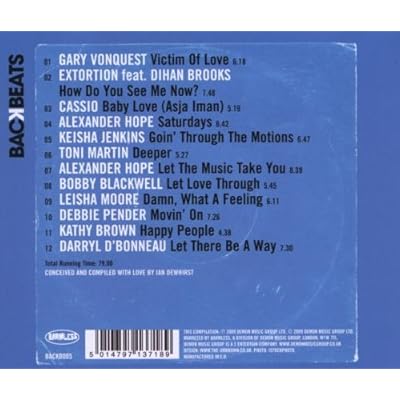
YOWSAH, YOWSAH, YOWSAH.
YOWSAH, YOWSAH, YOWSAH.
Dance, Dance, Dance, (Yowsah, Yowsah, Yowsah) sang Chic in 1977, on what became one of their classic tracks. That track became one of the classic tracks of the disco era. However, Yowsah, Yowsah, Yowsah is also the title of an excellent compilation of 70s New York Disco released as part of the Backbeats series. The Backbeats series now thirty compilations and is the latest in a long line of successful compilation series released by Harmless. Previously, I’ve written reviews of several of the Backbeats’ series, including their Philly Soul and Southern Soul compilations. On Yowsah, Yowsah, Yowsah Backbeats takes us to destination 127 Disco heaven. This was the tempo of many of the great tracks of the disco era. On the compilation are eleven tracks, a combination of classics, familiar faces and hidden gems that I’ll now tell you about.
One of the best tracks on Yowsah, Yowsah, Yowsah is Lucy Hawkins Gotta Get Out of Here, released in 1978 on Sam Records. It’s just under six minutes of classic disco, with a stunning vocal from a diva of disco. Add to that an arrangement full of energy with a funky bass line, blazing horns and backing vocalists augmented by percussion and you get the idea. Lucy vamps and struts her way through the horn heavy track. This track alone, almost makes buying the compilation worthwhile.
A true diva of disco who features on the compilation is Loleatta Holloway, with one of her Salsoul classics Hit and Run. Released in 1977 on Salsoul, Hit and Run features the sound of the Salsoul Orchestra. They were formed when M.F.S.B. left Philadelphia International Records to form the Salsoul Orchestra. With the Baker, Harris and Young rhythm section gracing their recordings, they went on to record some of the best tracks of the disco era. Along with Dreaming, Runaway and Hit and Run, Loleatta Holloway was the greatest diva of the disco era. Here, her powerful and sassy vocal along with the multi-talented Salsoul Orchestra, make this one of the greatest tracks of the disco era, a track that’s still a staple of many a DJ’s sets.
First Choice contribute The Player to Yowsah, Yowsah, Yowsah. This was originally released in 1974 on Philly Groove and is a track that straight away, bursts dramatically into life, the arrangement sweeping along, before giving way to fantastic ballsy vocal, augmented by some sweet backing vocals. The track is arranged by Norman Harris guitarist in M.F.S.B. and later the Salsoul Orchestra. He Co-produced the track with Stan Watson. This is just one of the many great tracks that came out of Philadelphia during the seventies.
Another track from the Salsoul label is Eddie Holman’s This Will Be A Night To Remember released in 1977. It’s produced and arranged by Ron Baker in both M.F.S.B. and the Salsoul Orchestra. This is the fastest track on the compilation, at 136 beats per minute, but has really catchy string laden arrangement, with flourishes of piano accompanying the Baker, Harris and Young rhythm section. Atop that arrangement sits Eddie’s joyous vocal. Together, they combine to create another great track from the Salsoul label.
Other tracks that deserve a mention include The Players Association great track I Like It, which was the B-side of a 1977 single Love Hangover, on Vanguard. Add to this Jackie Moore’s 1979 percussion heavy track This Time Baby on Columbia, which also features a fantastic vocal and you realize just how much quality is on the album. One last track that I must mention is from the Tom Moulton, often credited as the godfather of the twelve inch mix. Here, using the guise of TJM he contributes Am I Dreaming, released on Casablanca in 1979. This eight minute epic features a lengthy introduction full of percussion, sweeping strings and a funky rhythm section, gives way to an dramatic vocals, augmented by swooning backing vocals. It’s a hugely catchy track laden with drama throughout the eight minutes.
These are just a few of the highlights of Yowsah, Yowsah, Yowsah, an excellent compilation of 70s New York Disco. As you can see, it’s a mixture of some real classics including Loleatta Holloway’s Hit and Run. Although that track may feature on other compilations, this is the original 12 inch version, not a remix. You hear the track the way it was meant to be heard. Indeed, none of the eleven tracks are anything other than the original album version of original 12 inch version. This is quite refreshing, as usually, you get a remix, often from a DJ you’ve never heard of, who ends up ruining a classic track. Not here, where the tracks can be heard in their original form. Apart from Loleatta Holloway, other divas of disco feature here as well, including Lucy Hawkins and Jackie Moore. Tracks like Eddie Holman’s This Will Be A Night To Remember, The Players Associations I Like It and Ultra High Frequency’s We’re On the Right Track are a trio of welcome additions on Yowsah, Yowsah, Yowsah. Overall, this an album full of classic disco music, from the heyday of disco. Compiler Ian Dewhirst deserves credit for managing to compile an album full of such great music. He resists the temptation to resort to including some of the predictable choices that you find on many similar compilations. Indeed rather than resort to these predictable tracks that everyone has heard so often, he compiles an album where classics sits happily next to hidden gems. When taken together, this a an excellent combination, that makes Yowsah, Yowsah, Yowsah a disco compilation that deserves to find its way into your collection. After all, at less than £4, it’s some of the best value for money you’ll come across. So, treat yourself, and enjoy some excellent 70s New York Disco on Yowsah, Yowsah, Yowsah. Standout Tracks: Lucy Hawkins Gotta Get Out of Here, Loleatta Holloway’s Hit and Run, First Choice The Player and Eddie Holman’s This Will Be A Night To Remember.
YOWSAH, YOWSAH, YOWSAH.


SAM COOKE-NIGHT BEAT.
SAM COOKE-NIGHT BEAT.
Like many so many people, one of my favorite soul singers of all time has to be Sam Cooke. When in November 2011, I saw that RCA were releasing an eight disc box set of some of Sam Cooke’s greatest albums, I just had to have a copy. It’s a good way to replace much loved vinyl and at £24, $36 or €30, represents great value for money. Since I got the RCA Albums Collection, to give the box set its correct title, I’ve been absorbed my the music of Sam Cooke. Now I’m not going to say that each and every one of the albums is outstanding, because that isn’t the case. Some are better than others, but of the eight albums, one stood out for me. That album is the bluesy sounding Night Beat, released in 1963.
Night Beat was released by Sam Cooke in August 1963, and remarkably, was the thirteenth album he’d released since 1957, not counting 1962 Best of Sam Cooke. Compared to modern day artists, this is an amazing statistic, because nowadays, few artists will even get to album number thirteen. Today, many artists will struggle to release an album every other year, never mind annually. As if thirteen albums in seven years isn’t an impressive statistic, Night Beat only took four days to record. Recording took place between 22-25 February 1963, at the RCA Studios in Hollywood, California. With Hugo and Luigi producing what would become Night Beat, and Rene Hall the guitarist and arranger acting as conductor, what was an all-star band was assembled. Accompanying Sam on Night Beat was a sixteen year old Billy Preston, whose organ playing is stunning, and befitting on an older, much more experienced and mature musician. Billy Preston is one of the few musicians who deserves the accolade of musical prodigy. Another well known name who played on Night Beat is Hal Blaine, who played in Elvis Presley’s band, was one of the Wrecking Crew, and played on hits by The Ronettes and The Beach Boys. Joining this duo was jazz guitarist Barney Kessel, bassist and drummer Edward Hall, guitarist Cliff White and bassist Clifford Hills. Over four days, twelve tracks were recorded, and what became Night Beat would be released later in 1963.
August 1963 was chosen as the release date for Night Beat. On Night Beat’s release on the RCA Victor label, it reached number sixty-two in the US Billboard 200. This seems a somewhat disappointing chart position, given the album’s quality. However, since then, Night Beat is seen as one of Sam Cooke’s greatest albums, which I’ll now tell you about.
Night Beat opens with Nobody Knows the Trouble I’ve Seen, a traditional song, arranged by Sam Cooke himself. It’s just a slow moody bass that precedes Sam’s really emotive vocal. With just cymbals gently hissing joining the arrangement, Sam demonstrates his talent as a vocalist, singing almost unaccompanied. He delivers the lyrics perfectly, as if he can relate to the loneliness and loss caused by his girlfriend that he’s singing about. Although very different to other tracks on Night Beat, it’s hugely powerful and emotive.
Lost and Lookin’ has a similar introduction, with just the bass and cymbals accompanying Sam. Again, the lyrics deal with a girlfriend leaving a guy, and the pain and heartache he feels. Like the previous track, Sam gets across the sense of despair and loneliness in the lyrics, delivering James W. Alexander and Lowell Jordan’s lyrics thoughtfully and beautifully.
There’s a real change in the sound on Mean Old World, written by Sam Cooke, which opens with Ray Johnson playing piano before Billy Preston makes his debut on organ. Billy’s playing adds to the sense of sadness and loneliness of Sam’s vocal, while the rhythm section play slowly and carefully. As Sam’s forlorn vocal soars, the organ adds an atmospherics sound, while the piano plays a leading role in the arrangement. Together, Sam and his band combine perfectly, the result being a song that although is full of sadness, is sung and played beautifully, resulting in one of Night Beat’s highlights.
Many of the tracks on Night Beat deal with relationships, and specifically the break up of them. Please Don’t Drive Me Away, is another example of this. The track has a real bluesy feel and sound, with piano and rhythm section combining to create a shuffling beat. Atop the arrangement sits Sam’s vocal, as he pleads with his girlfriend not “to drive him away.” Adding to this sound is Billy Preston’s wailing Hammond organ, with stabs of it dropping in and out of the track, adding to the emotion and desperation in Sam’s voice. This bluesy track is very different to many of Sam’s best known tracks, and displays another, and very welcome, side to his music.
Continuing the bluesy sound is I Lost Everything, which features a desperate vocal from Sam, whose lost the woman he loves. With searing guitars and the rhythm section combining, the Hammond organ adds a sympathetically sad sound to the slow arrangement. Later, a piano joins, seemingly adding just the finishing touch to the arrangement as a desperate Sam gives a realistic portrayal of a man has indeed, lost everything.
Closing SIde One of Night Beat is Get Yourself Another Fool, another slow bluesy track. With piano and bass combining brilliantly to open the track before Sam’s vocal enters. His vocal is drenched in sadness and regret, while the Hammond organ subtly adds to track’s sadness. It’s the piano that leads the track, with searing guitars chiming sadly when Sam’s vocal drops out. This too, adds to the sadness and emotion of the track, and when combined with Sam’s forlorn vocal, is a stunning track, one of Night Beat’s best.
Side two of Night Beat opens with a track written by Willie Dixon, Little Red Rooster, which gives Sam’s band the chance to demonstrate their considerable talents. With Billy Preston on Hammond organ and Ray Johnson on piano combining to create a fantastic sounding backdrop, Sam delivers Willie’s lyrics slowly. Billy Preston’s organ playing is just outstanding, and when combined with the piano playing of Ray Johnson, things really start to swing. Even Sam seems impressed by the virtuoso skills of the then sixteen year old Billy Preston, who easily holds his own with experience musicians like Ray Johnson. Both Ray and Billy drive the track along, each encouraging the other to new heights, making Willie Dixon’s classic swing. Add to this a great vocal from Sam, and it’s an impressive and very different track to anything on Side One.
Sam Cooke wrote a trio of tracks on Night Beat, with Laughing and Clowning the second of the trio. Many people forget that apart from being a hugely talented singer, Sam was also a talented songwriter. It’s Ray Johnson’s piano playing that opens this bluesy sounding track. When Sam’s vocal enters, there’s a sense of despondency in his vocal, at the loss of his girlfriend, and yet people expect him to be the “life of the party.” Here, it’s a case of “the tears of a clown when no-one is around.” As the arrangement meanders along, Ray Johnson’s piano plays a vital part in the blues tinged arrangement, and later, is joined by Billy Preston’s Hammond organ. Like so many other tracks like this, Sam was a master of being able to deliver songs about relationships and emotions with a gritty realism, that many singers just can’t achieve. When he does this, there’s a real beauty in his voice, even though he’s singing about heartache and despair.
As Trouble Blues opens, Sam just hums slowly, while the rhythm section play, before his downcast and despondent vocal enters. It’s joined by the piano as he sings of his heartache, caused by his relationship breaking up. However, there’s positivity in the vocal too, as he sings that someday soon, he’ll get over her. Later, adding it’s atmospheric and sad sound is the Hammond organ, which adds to the sadness of Sam’s version of Charles Brown’s. This seems to be the missing ingredient, one that turns a good version of this track into a truly great one.
You Gotta Move is the last of the trio of Sam Cooke penned tracks on Night Beat. Again, it’s a track with a lovely bluesy sound, where the piano and Hammond organ are vital to the track’s ultimate success. With just the rhythm section accompanying the piano and Hammond organ accompanying him, Sam delivers his lyrics with a combination of enthusiasm, emotion and passion. Delivering the lyrics with a swing, against another great arrangement from a really tight and talented band, you can’t help but love a track that sounds as good as this one does.
When Fools Paradise opens, the tempo is slow, with just the rhythm section and piano accompanying Sam’s vocal. He’s full of regret at the things he’s done, the time he’s wasted “drinking and gambling, staying out all night.” As he sings how, he’s “learned his lesson,” Billy Preston’s Hammond organ cuts in, adding to the emotion of a man almost seeking forgiveness and redemption. This works really well, adding to the power and emotion of this really moving, dramatic and quite beautiful track.
Night Beat closes with Sam’s version of a track written by Charles Calhoun, Shake, Rattle and Roll. After an album full of bluesy sounding tracks, Sam decides to end the album with a real swing. Here, his band raise their game for an old classic track, even singing backing vocals in a call and response style. Driven along by a rhythm section of bassist Cliff Hills and drummer Hal Blaine, they combine with guitarists Rene Hall and Clifton White, while Ray Johnson on piano and Billy Preston all play their part in ensuring Night Beat ends with a satisfactory swinging sound. Sam delivers his vocal joyously, enjoying the track’s good-time sound, provided by his band. Even though this track is nearly fifty years old, it still sounds great, and has an almost timeless sound, like all good music. What better way is there to close Night Beat?
Tragically, just over a year after Night Beat was released in August 1963, Sam Cooke died in December 1964 aged just thirty-three. After this he only released one further album, Ain’t That Good News in March 1964. It too, was a stunning album, a fitting finale to a career that was tragically cut short. In some ways, it seems fitting that Sam Cooke released the two best albums of his career just prior to his death. Although Ain’t That Good News is an excellent album, I much prefer the bluesy sound of Night Beat. On that album were some great bluesy tracks, which Sam delivered with a combination of emotion, sadness and regret. Many of these songs are about relationships and the break up of them, and Sam delivers these songs with a gritty, realism. Backed by a hugely talented band which included organist Billy Preston, pianist Ray Johnson and drummer Hal Blaine, they helped Sam create an album that nearly fifty years later still sounds stunning and has a timeless quality. Although it’s quite different to many of Sam’s other albums, it has strength in depth, with twelve quality tracks, one following the other. Of the eight albums that can be found in the RCA Albums Collection which contains eight of Sam’s album Cooke’s albums, this is the best. So, if you either like soul music, or love the music of Sam Cooke, then Night Beat is an album that belongs in your music collection. Standout Tracks: Mean Old World, Get Yourself Another Fool, Trouble Blues and You Gotta Move.
SAM COOKE-NIGHT BEAT.


PHILADELPHIA INTERNATIONAL: THE RE-EDITS.
PHILADELPHIA INTERNATIONAL: THE RE-EDITS.
Sometimes, once you’ve heard that a new album will be due out soon, then you can’t wait to get your hands on to review. That’s how I felt about Harmless’ latest compilation, Philadelphia International: The Re-Edits, which I’ve waited to hear for a number of weeks. This is just the latest compilation that will be released during 2012, which is the fortieth anniversary of Philadelphia International Records. As if this latest compilation isn’t enough, then fans of the Philly Sound will soon be able to enjoy a four disc box set entitled Philadelphia International Classics: The Tom Moulton Remixes which is due for release in February 2012 on Harmless. Now if that isn’t enough to whet your appetite, then how a ten, yes ten disc box set which will be released later in 2012. However, getting back to the Philadelphia International: The Re-Edits compilation, this is an interesting concept which I’ll now tell you about.
Now, most similar albums of re-edits or remixes see many of the same familiar names used to either re-edit or remix classic tracks like this. Not here though. Instead, what we have is a number of re-edits from DJs who’ve been fans of the music, and maybe aren’t the highest profile DJs. This is quite refreshing, as on many albums, the usual suspects are dragged out to give their “take” on a track. So what we have here, are twenty-one re-edits from DJs who maybe wouldn’t usually find their music on such an esteemed compilation. To me, this is part of the attraction to the compilation, hearing fresh takes on the music by fans of the music. These DJs come from not quite the four corners of the globe, but pretty close. There are DJs from San Francisco to Sunderland, Brooklyn, Brescia and Bristol, not forgetting Glasgow, Chicago and New York. Truly, it’s a cosmopolitan mix of DJs who contribute to the album. However, four other people who made this compilation possible, are compilers Ian Dewhirst and Jay Negron, as well as Gamble and Huff who brought us this majestic music.
Now before I tell you about the music however, I’ll explain the idea behind a re-edit, and how this differs from a remix. This should allow you an insight into how the various DJs on this compilation came up with the various re-edits. With the re-edits on this compilation, none of the DJs had access to the master tapes or any of the raw parts of the song. This is always the case with re-edits. What happens is that the DJ takes the song, and basically takes pieces out of the track, maybe adds drum beats, sometimes a keyboard line and often a number of effects. Quite often, the DJ will look to extend parts of a song, make it longer, more suitable for the dance-floor. Often, this will mean adding additional drum beats, extending the introduction and extending the best bits of the track. This can build up the dramatic effect of a track and turn it into something much more dynamic and energetic. However, who does the DJ manage to do this? Well there are a number of software editing packages available, with prices suiting every budget. You can get packages that are free, up to packages that run into hundreds of pounds. Although the best packages are quite expensive, if you want to try making your own re-edit, then a free or cheap package will allow you to try this. It’s possible to make your own re-edit using just a basic laptop or desktop and some free or cheap software. Many DJs do re-edits to put into their DJ sets, and this allows them something unique, that may become one of their signature tracks. Having told you about re-edits, what is a remix?
A remix is totally different as the remixer has access to the original master tapes, or nowadays, the computer files. This means the track is divided into different parts, for example, the drums, bass, guitars and vocals. The remixer can choose to use all, some or even just a few. Then, various loops can be added and new parts old replacing parts of the track. Sometimes, this is just a few things added and changed, and sometimes, the track is rebuilt totally. It depends on what the remixer is trying to do.
Usually, the master tapes are played through a mixing desk, and the various sound levels are adjusted, maybe boosting the bass, loosing some high end. Then the remixer starts to add and remove parts of the track. Often, they’ll extend some parts, maybe adding some drumbeats, add effects, maybe filters and panning, ideal for the dance-floor. Often, these remixes are trying to make a track fit a dance-floor, that originally, were never conceived as a dance track. Some remixers like Masters At Work have worked with a number of artists whose music wouldn’t usually be considered dance music. Nowadays, the remix is an important tool for many artists in adding to their “crossover” appeal, and is a lucrative sideline for DJs who are also remixer. Now that I’ve explained the difference between re-edits and remixes, we get to the important part, the music. Just what does, Philadelphia International: The Re-Edits sound like? That’s what I’ll now tell you, highlighting some of the compilations best tracks.
Philadelphia International: The Re-Edits has two discs, separated into two themes. Disc One is entitled Uptempo Good Time Philly, while the second disc is Mellow Slinky Philly. Now, the compilers have decided sensibly, to open Disc One with a bang. To do this, they’ve chosen one of my favorite re-edits from the whole compilation, Morning Star’s 2004 re-edit of Harold Melvin and The Blue Notes Satisfaction Guaranteed (Or Take Your Loving Back). Originally from Harold Melvin and The Blue Notes’ platinum certified 1973 album Black and Blue, which reached number one in the US R&B Charts and number nine in the US Billboard 200. When released as a single in 1974, it reached number fifty-eight in the US Billboard 100 and number six in the US R&B Charts. It’s a much longer track than the original, which only lasts three and a half minutes. Here, the track is extended to seven and a half magical and energetic minutes. From the moment the track opens, the re-edit is just full of energy, building and a building and never running out of steam, The principle is take the best bits and extended them. It seems Morning Star have decided that you can’t get enough of a good thing, which in the case of Harold Melvin and The Blue Notes and Gamble and Huff, is certainly the case. The result is a dynamic track, laden with energy that’s perfect for any dance-floor.
The only Billy Paul track on Disc One, is Only the Strong Survive, the title track from his 1977 album Only the Strong Survive. This is a very different re-edit, with Jay Negron in his guise as J’Ski providing this track. Unlike the opening track, the track takes a while to unfold, with J’Ski almost teasing the listener, as he seeks to build up the track’s drama. He succeeds in achieving this, and uses filters effectively. They’re used sparingly, whereas sometimes, they can be overused. Even the saxophone solo which in the original is later earlier in the original track is extended and is one of the highlights of the track. Its sultry sound just goes on and on, the dramatically, seems to last forever. This is a very welcome addition, and what I also like about the track is the way the vocal has been rearranged. In the original it’s a track that slowly builds and builds. Here, parts of the vocal are used as a breakdown, and then used to rebuild the track’s drama. Like Harold Melvin and The Blue Notes’ track, it’s a track that would sound great on any dance-floor, and would be a new and novel way to introduce a new generation of music lovers to Billy Paul’s music.
A Jean Carn track that I’ve always enjoyed is Free Love, and it’s a welcome addition to Philadelphia International: The Re-Edits. This was from Jean’s eponymous album Jean Carn, released in 1976. Free Love was released as a single, reaching number twenty-three in the US R&B Charts. Here, Victor Rosado takes a track that was originally lasted four minutes and transforms it into a seven minute epic, subtly taking the best parts of the track extending them, and carefully using filters. With plenty of lush swirling strings augmented by crisp beats, a great bass line and of course Jean’s sassy vocal sassy vocal sitting atop the arrangement, that even features rocky guitars it’s an excellent re-edit of a classic Philly dance track.
Although The Trammps were formed in 1972, the genesis for the group was back in the sixties and a group called The Volcanoes. Their most successful period was when Earl Young and Norman Harris of M.F.S.B. joined the group. The Trammps contribution to Philadelphia International: The Re-Edits is Save A Place, again re-edited by J’Ski. His re-edit has the same qualities as his Billy Paul re-edit, turning the track into a six and a half minutes Magnus Opus. This track is from The Trammps 1975 album Trammps. Here, the track has a lengthy string laden introduction, which is full of energy, even before the vocal enters. Once it enters, the track gets even better, with the anticipation matching the delivery. You just can’t fail to be drawn into this track, which is hugely catchy and hook laden. J’Ski uses filters again, but does so with subtlety. What makes this such a great track, is that the original track features some really talented musicians, with Earl Young’s drumming and Norman Harris’ guitar playing stunning. Thankfully, J’Ski is able to pay homage to their genius with an excellent re-edit, one of the compilation’s highlights.
One track that I’ve always loved and was really pleased to see on Philadelphia International: The Re-Edits, was McFadden and Whitehead’s Ain’t No Stopping Us Now. Now previously, I’ve heard a number of versions of the track over the years, but this is quite different. Here, this track could divide opinion, as The Noodleman deploys plenty of effects as the track opens, with filters and delay his weapon of choice. He’s seeking to heighten the drama, extending the introduction, letting the anticipation of those joyous vocals enter. With percussion joining his armoury and the drumbeats sounding crunchier, he again uses effects to increase the drama. This works and works well, and will sound quite spectacular in a large club with a large PA. My only concern is that sometimes, effects can be overused and here, the Noodleman treads a fine line. However, after a few listens, I’m pleased to say that I’ve grown to enjoy the track.
The final track I’ve chosen from Disc One is The O’Jays classic, Message In Our Music. This was the title track from their 1976 album Message In Our Music which reached number three in the US R&B Charts and number twenty in the US Billboard 200, resulting in the second of their albums being certified gold. On its release as single, it gave the group another US R&B number one single, while only reaching number forty-nine in the US Billboard 100. Here a UK DJs edit is chosen, Jimmy the Twin’s and it’s a lovely version of the track, with a prolonged introduction building up to the vocal, while percussion, guitar and strings all play their part in the track. It’s a track that has a Latin a feel and mixes this with bursts of drama later in the track. Like his earlier re-edits, this is another quality re-edit from J’Ski.
Two other tracks that also deserve a brief mention are J’Ski’s re-edit of M.F.S.B.’s Mysteries of the World which combines a lovely lush string laden sound with bursts of funk. J’Ski’s re-edit stays true to the original and with some subtle tweaks and additions, the track is complete and sounds great. Be For Real by Harold Melvin and The Blue Notes from their debut album I Miss You, released in 1972 and reached number four in the US R&B Charts and number fifty-three in the US Billboard 200. Here, quick, crunching drumbeats are added to the track, giving it a house sound and feel, especially when the percussion enters. When Teddy’s vamping vocal enters at the start, you realize this is something special that’s unfolding. Thankfully, you’re far from disappointed, and the result is magnificent, indeed it’s a case of Satisfaction Guaranteed.
Having spent some time listening to Disc One of Philadelphia International: The Re-Edits, I’m pleased to report that of the eleven tracks on the disc, there isn’t a bad one. Of the eleven tracks, their re-edited with love and care, resulting in some interesting takes on some of the Philly Sound’s best known and best loved tracks. The only track I wasn’t sure about was the re-edit of McFadden and Whitehead’s classic Ain’t No Stopping Us Now. When I first heard it, I thought that maybe, the effects had been overused. However, after listening to the track, The Noodleman’s re-edit has grown on me. However, he treads a fine line, and could’ve ended up spoiling the original and his re-edit, but thankfully this isn’t the case…just. Apart from that, the other ten tracks feature some great re-edits, but will Disc Two Mellow Slinky Philly keep up the same high standards?
Now Disc Two, of Philadelphia International: The Re-Edits is entitled Mellow Slinky Philly, only has ten tracks on it, and I’ll pick the best tracks from this disc. My first choice is another Jean Carn track, If You Want To Go Back, from her debut album on Philadelphia International Records Jean Carn, released in 1976. When I first heard the Morning Star re-edit, I felt the track had been slowed down slightly at the start. Having checked the beats per minute, both the original and re-edit are 127 beats per minute. Straight away, the introduction is looped several times, building the tension, and highlighting a fantastic introduction. After that, with swathes of strings surrounding Jean’s vocal, and flourishes of piano and bursts of horns accompanying her, this excellent re-edit unfolds. What you hear is a track that when it was released, became a true dance-floor classic, and thirty-five years is given a subtle makeover by Morning Star. The result is a flawless re-edit, one of the compilation’s best tracks.
Like the re-edit of McFadden and Whitehead’s classic Ain’t No Stopping Us Now, it took me a good few listens to grow to enjoy JKriv’s aka Deep and Disco’s Re-Work of The O’Jay’s Darlin, Darlin’ Baby, their number one US R&B single from 1976, that also reached number seventy-two in the US Billboard 100. Again, Darlin, Darlin’ Baby was from The O’Jays 1976 album Message In Our Music.This is one of their best known track, from The O’Jays and reworking a track like this requires great care. Why, well this is a true Philly classic, and re-editing this is a bit like asking a modern artist to rework a Constable or Picasso. However, after a few listens I grew into the track, which sounds great on a high end hi-fi. With crunchy drumbeats, filters and delay used throughout the track, this Philly classic is reworked into something very different. There’s a house feel and sound to the track because of the drums, which also have a spacey sound. The track combines space, effects and drama, and even sees dramatic pauses used during the track. Having grown to really enjoy this track, I wonder how Philly purists will view the track? After all, The O’Jays quite rightly, are like Philly royalty.
Having been undecided about which of The Jones Girls’ tracks to choose, then I thought I’d mention two of the three tracks on Disc Two. In total, Shirley, Brenda and Valerie feature on three tracks in total. They’re Dance Turned Into Romance on Disc One, while the pulsating You’re Gonna Make Me Love Somebody Else and the classic Nights Over Egypt feature on Disc Two. Of the two tracks, Henry Greenwood contributes a fantastic re-edit of You’re Gonna Make Me Love Somebody Else which is from their 1979 self-titled debut album The Jones Girls. When the bass line cuts in as the track opens combining with bursts of synths and crisp drumbeats, the track has an understated yet pulsating sound. It’s as if the track has been pared down, stripped of anything unnecessary. Then, when the vocal enters, Shirley’s vocal sits atop the arrangement which starts to builds up now, and later synths and effects join that brilliant bass line. The track just pulsates along, for nearly eight and a half magnificent minutes, resulting in one of my favorite tracks on the album.
Nights Over Egypt is the other track by The Jones Girls and is from their 1981 album Get As Much Love As You Can and is re-edited by Womack and TOT. This is quite different from other versions I’ve heard. Filters are used to transform the sound, and the drumbeats are pounding, ready to punish your speaker’s bass bins. The vocal only enters after ninety-seconds, but still the rest of the track has effects transforming the sound, and making you anticipate the revealing of the rest of the arrangement. That never happens though, and the way the effects almost guard the arrangement works well. To me, it’s all about anticipation, anticipating something that never quite happens. However, the advantage this has is that it allows you to focus on the glorious vocal from Shirley. Overall, it’s a great version of a classic track.
Another of the Philly ladies to feature is Dee Dee Sharp Gamble, and here, she contributes Easy Money from her 1980 album Dee Dee. This re-edit is by Todd Terje, and sees him slow the track down as the track starts. Then, bursts of synths briefly punctuate the track, before a funky bass line plays vital part in a very different sounding arrangement. Effects are deployed, handclaps used and the drumbeats rearranged, so much so, that just after midway through the track, there’s a mini breakdown, before sound effects or samples are added. However, all this works, as Todd Terje builds up the momentum again, using a combination of handclaps and additional drumbeats, as the momentum slows just before the track’s ending. The result is an interesting twist on old track and one that like me, after a few listens, I’m sure you’ll grow to love it too.
Now there are two other tracks I’d like to mention, the first of which is Billy Paul slice of soul with a social conscience Let the Dollar Circulate, from his 197t album, When Love Is New. This is the Scratch ‘N’ Sniff Extended Re-Rub, where the the drama builds and builds before the vocal enters. Eventually, after two and a half minutes of anticipation, the wait is over, and Billy’s vocal enters. Even then, delay is used sparingly on the vocal. Here, the best bits are taken and extended to make this into an epic track, one that I’ve always loved. The final track that I’d like to mention is Harold Melvin and The Blue Notes’ Wake Up Everybody, the title track from their platinum certified US R&B number one album Wake Up Everybody, which also reached number nine in the US Billboard 200. When released as a single this track reached number one in the US R&B Charts and number twelve in the US Billboard 100. DJ Apt One’s re-edit is a starts of with Teddy Pendergrass’ voice reverberating against subtle drumbeats and piano, and quickly, is transformed into an uplifting hook laden, slice of soul with a message and a feel-good sound. Gradually, the track unfolds, revealing its brilliance and beauty, and is the perfect way to end the compilation.
After Disc One of Philadelphia International: The Re-Edits proved to be full of quality Philly Soul I wondered whether Disc Two would’ve the same high standard of music on it. I needn’t have worried because after one great track comes another. Indeed, many of my favorites feature on the album so it has been a labor of love for me reviewing Philadelphia International: The Re-Edits. If having read this review you’re still wondering should I or shouldn’t I buy this compilation, all I can say is of course you should. It’s full of some wonderful interpretations of classic Philly Soul songs. Each of the twenty-one re-edits have been done with care and love, from people who are basically fans of this wonderful music, music that’s timeless and very special to many people, including me. I will say that when I first heard of this compilation, I was worried how the tracks would sound, because of the memories they have for me and what they mean to me. However, I needn’t have worried, the twenty-one tracks have been re-edited sensitively, carefully and with love. It’s almost as if the various re-editors are paying homage to the two creative geniuses who made this music wonderful music possible, Kenneth Gamble and Leon Huff. That’s what makes Philadelphia International: The Re-Edits such a great album, one that belongs in the collections of anyone who loves either soul or Philly Soul.
PHILADELPHIA INTERNATIONAL: THE RE-EDITS.
|

SHATTERED DREAMS-FUNKY BLUES 1967-1978.
SHATTERED DREAMS-FUNKY BLUES 1967-1978.
Over the many years I’ve been collecting first vinyl, even tapes and now CDs, I’ve lost count of the number of compilation albums I’ve bought. I won’t admit to what the total must be, all I’ll say is that it’s into four figures, so you can speculate to your hearts content. These albums fall broadly into three categories the good, the average and totally forgettable. Occasionally, I’ve been forced to add a fourth category, the unmissable, must have compilation. This rarity, is a compilation that features one great track after another. This is real rarity and very few compilations fall into this category. However, last year, in March 2011, BGP, one of the Ace Records’ labels released an album that deserves entry into this exclusive club, Shattered Dreams-Funky Blues 1967-1978. Since I got this compilation, I’ve played it so often that I’ve almost worn away the disc. Of the twenty-one tracks on the album there’s neither any filler nor poor tracks, just some stunning slices of funky blues.
The music on Shattered Dreams-Funky Blues 1967-1978 comes from a time when soul music became the most popular music in black America, with blues music, previously the most popular music sidelined. By the late sixties, many blues musicians were struggling to make a living, and were finding it tough to adapt to the changes in musical tastes. While soul singers and rock groups played huge venues, blues players were relegated to playing some of the many smaller, run-down clubs that could be found in every part of America. Many of these musicians raised on the blues, stubbornly refused to change their style of music. However, they had to adapt to survive, so many of them started throwing in some funky licks and soulful hollers and screams into their music. This became hugely popular with their audiences, and since then, with crate diggers and collectors of funk music. So, to save you the time and expense of searching out these hidden gems of funky blues, BGP have saved you the time and expense, collecting twenty-one of these masterpieces onto one disc, Shattered Dreams-Funky Blues 1967-1978.
Of the twenty-one tracks that can be found onShattered Dreams-Funky Blues 1967-1978, many of the names will be familiar to even the casual lover of blues music. Lowell Fulson, Albert King, Buddy Guy and The Johnny Otis Show are some of the better known artists, while some people will be familiar with the music of Smokey Wilson and Freddie Robinson. If you’re not, then after hearing this compilation you will be, and I can assure you that you’ll want to hear much more of their magical music. These are just a few of the artists that feature on this stunning compilation.
On the album, are tracks drawn from some stellar and well known labels including Stax, Jotis and Modern. Now, many people may not be aware that Stax released some quality blues music, including releases by Albert King, Little Milton and Little Sonny. Al Bell at Stax had ensured that Stax had a variety of artists over the range of musical genres, so that all tastes were catered for. It was his idea to sign blues artists like Albert King who contributes the excellent Playing On Me, the B-side of his 1973 single The High Cost of Living. It’s a moody sounding track where a Hammond organ, chiming guitars braying horns come together with Albert’s frustrated vocal, which features hollers and whoops. The other Stax artist who features on the compilation is Little Milton, with a track that was a single released in 1971, That’s What Love Will Make You Do which features searing guitars, blazing horns and throaty vocal from Little Milton on a track that brilliantly combines elements of funk and the blues.
Some artists contribute more than one track, with Lowell Fulson contributing a duo of tracks, Mellow Together and Welcome Home. Mellow Together was the B-side of a 1968 single Blues Pain. Mellow Together was previously unreleased, until they released the track on a compilation of Lowell’s entitled Black Nights: The Early Kent Sessions. Although both are quality tracks, the driving Mellow Together is the best of the duo. Full of energy with guitars and horns combining with Lowell’s thoughtful vocal. These two tracks give the listener a taster of Lowell Fulson’s music, music which is just waiting to be discovered.
Like Lowell Fulson, The Johnny Otis Show contribute two tracks. The first is Country Girl, a 1969 single released on Kent, while the other track has never previously been released, Comin’ At Ya Baby Pt. 2. Of these two tracks, Comin’ At Ya Baby Pt. 2 is a fantastically funky, slice of the blues, with harmonica and horns featuring throughout.
Another artist who has two tracks on the album is Smokey Wilson, whose music many people won’t be familiar with. That’s more the pity, as he’s a versatile and talented musician. These two tracks are quite different with You Shattered My Dreams, a single on Big Town from 1978, that’s a slow, sultry horn heavy track with chiming guitars accompanying the saddest of vocals from Smokey. His other contribution High Time has never been released and is quite different. It’s a good-time slice of funk drenched blues that’s hugely catchy. If you’ve never heard of Smokey Wilson, then an album like this gives you the opportunity to discover and acquaint yourself with some artists who you’re unfamiliar with. This can lead to a journey of discovery of much more, magical music.
Similar to Smokey Wilson, many people will never have heard of Finis Tasby. That is until now. He too, contributes a duo of tracks It Took A Long Time, a 1977 track that’s never been released before. Neither has his other contribution Cloudy Day, also recorded in 1977. It Took A Long Time is a seriously funky bluesy number with a Hammond organ and the rhythm section driving the track along, while Finis’ vocal is full of emotion. Cloudy Day has a much more traditional blues sound, but still has a funky side. I love arrangement, especially the harmonica that punctuates the track, and wonder why it took thirty-four years to release this track? One wonders what other goodies are just waiting to be unearthed?
My two final picks from Shattered Dreams-Funky Blues 1967-1978 are Icewater Slim’s funk laden Your Love Is Good Enough, which features wah-wah guitars and a powerful vocal. This track was the B-side to his 1974 single the amazingly titled Supersonic Megatonic Flash on Hawk Sound Records. The last track I’ll mention is from a veteran blues musician Buddy Guy, entitled I’m Not the Best, which was the B-side of his single Fever. It’s a live track which gives the flavor of the kind of clubs he was playing during this period. After whipping the crowd into a frenzy, Buddy and his band deliver a stunning blues track, complete with searing, soaring guitars, blazing horns and handclaps provided by the audience. Add to this Buddy’s roaring, passionate vocal and this is just a fantastic track, which is just another reason to buy the compilation.
So, now I’ve told you about some of twenty-one tracks onShattered Dreams-Funky Blues 1967-1978, what was in my opinion one of the best compilations of 2011 you’ll be maybe still be wondering why should I buy this album? Well, if like me you enjoy both blues and funk music, and would enjoy hearing both genres combined then this is well worth buying. To me, part of the fun of buying these compilations is discovering music from artists I’ve never heard before, or tracks from familiar artists that are new to me. For example, I’ve heard many a track by The Johnny Otis Show, and Buddy Guy, but never heard two of the tracks that feature here. If you’re anything like me, you’ll get a real kick out of finding a brilliant new track, and it often leads you on a voyage of discover. You find yourselves buying albums by an artists you’ve never heard before, and quickly, you realize you’ve bought most of their back catalogue. That’s part of what I love about music, constantly discovering old music, music that’s often gone unnoticed and has long been forgotten about. Much of the music on Shattered Dreams-Funky Blues 1967-1978 falls into that category. Compiler Dean Rudland deserves credit for rediscovering, and almost rescuing this music from the dusty vaults of the various record companies and sharing it with us. This gives us the opportunity to wallow in the hidden gems and familiar faces that feature on the this excellent compilation. If you like blues and funk music, then you’ll love the music on Shattered Dreams-Funky Blues 1967-1978 which to me, is one of the best compilations of 2011.
SHATTERED DREAMS-FUNKY BLUES 1967-1978.
|

BILLY PAUL-FIRST CLASS.
BILLY PAUL-FIRST CLASS.
First Class was Billy Paul’s ninth and final album for Philadelphia International Records, released in 1979. After some hugely successful singles and albums, including Billy’s 1972 album 360 Degrees of Billy Paul and Let ‘Em In, and singles like Let ‘Em In and Mr and Mrs Jones, Billy had decided to retire from music. However, there was much more to Billy’s career than just a couple of albums and singles. Albums like Only the Strong Survive and When Love Is New combined soul with a social conscience and stunning love songs. Now after nine years with Philadelphia International Billy decided to seek new challenges. Would his final album see Billy’s career with Philadelphia end on a high?
Sadly, of Billy’s nine albums First Class was his least successful album for Philadelphia international, although the title First Class, is an apt description of the music on the album. In truth, there isn’t a bad song on the album which contains nine tracks. Of these nine tracks, Gamble and Huff cowrote three, with Carl Gamble co-writing False Faces, while Glad To See You Again, is easily one of the album’s highlights. Their other contribution Treasure of My Life, demonstrates that the duo were still writing quality songs. Another of the albums highlights was the gorgeous ballad What A Way To Love, co-written by Phillip Pugh and Phillip Terry, who also produced the track. Billy contributed one song, co-writing It’s Critical with William Hatcher and C.J. Clark. Not only was Billy involved in the writing process, but he produced one track and co-produced two others. One wonders if Billy was looking ahead to a career as a producer? However, with a variety of writers contributing songs to First Class, and having recorded nine tracks at Philadelphia’s Sigma Sound Studios, the album was released, but failed to chart. This was hugely disappointing given it was Billy’s farewell to Philadelphia International Records and given the quality of music on the album. Would the singles released from First Class fare any better?
Of the three singles released from the album, Bring the Family Back was the first, reaching just number ninety in the US Billboard 100. Meanwhile, the album fared better in the UK, reaching number fifty-one, where it became a popular track at clubs. Having only spent three weeks in the American charts during spring 1979, the single dropped out the chart. The second single was the funk laden False Faces, but remarkably, it failed to chart. What was Billy’s final single for Philadelphia International was You’re My Sweetness, which reached number sixty-nine in the US R&B Charts during its five week chart sortie. After this, Billy left Philadelphia International, and didn’t release another album until Lately in 1985. However, his final album Philadelphia International was First Class in title and quality, and I’ll now tell you about that album.
First Class opens with False Faces, co-written by Gamble and Huff with Carl Gamble. With John L Usry Jr. arranging the track and Gamble and Huff producing the track, some of Philadelphia International’s most creative people collaborate with Billy. A funky bass line, drums and chiming guitars open this funk drenched track. Billy’s vocal is slow, laden in emotion and passion, as stabs of Hammond organ, and bursts of horns join the arrangement. Strings sweep in, combining with the horns, rhythm section and female backing vocalists as the arrangement just gets better and better. Later, an alto saxophone drifts above the arrangement, while drums add drama. It’s one of these tracks that grows and grows, ultimately resulting in a hugely satisfying and catchy funk laden track.
Bring the Family Back was one of the trio of singles released from First Class. It’s a very different track to the previous one, and features a stunning arrangement from John Usry Jr. Not only has the track a really lovely uptempo and uplifting sound, but is a song with a social conscience, about the breakdown of family life and how society would be better with a return to family. With sweeping, swirling strings, and piano that plays a huge part in the arrangement, along with the rhythm section, handclaps and rasping horns, the arrangement flows beautifully along. Adding to the arrangement is an excellent bass line which is ever-present throughout the track. Also ever-present, are the female backing vocalists who accompany Billy’s tender and thoughtful vocal, which grows in power and passion as the song progresses. Overall, a stunning arrangement and passionate vocal from Billy make this one of this one of First Class’ highlights.
After what’s easily one of First Class’ best tracks, comes Game of Life, which sees a real change in sound and style. Again, it’s a song with gritty lyrics, about the hardships faced by many people in the “Game of Life.” While synths reverberate above the arrangement, a piano dramatically plays and guitars chime, before Billy’s half-spoken vocal enters. After that, he delivers the lyrics accompanied by female backing vocalists, with a combination of tenderness and frustration. The arrangement sees the rhythm section, piano and female backing vocalists key to song’s sound. Synths are deployed occasionally, but not overused. Later, Billy’s voice grows in power, with frustration creeping into his voice at the hardships ordinary people face. With a sympathetic arrangement that’s redolent of the drama and hard times faced by many ordinary people during late-seventies America, Billy Paul delivers another slice of soul with a social conscience.
Billy co-wrote It’s Critical with William Hatcher and C.J. Clark and arranged and produced the track. Having spent so long working with some of the most talented arrangers and producers, did some of their magic rub off on Billy? When blazing horns open the track, and go on to punctuate the tracks with burst of their rasping sound. Billy’s vocal is quick, full of emotion and passion accompanied by the rhythm section, percussion and searing guitars and of course blazing horns. It’s a very different sound, the tempo almost frantic, while Billy’s voice is full of frustration and heartache as he desperately seeks to get his girlfriend back. Here, Billy’s arrangement is perfect for the lyrics, as the fast tempo and blazing horns aping his desperation and frustration. Although very different from other arrangements and productions, it proves Billy had indeed learnt from the likes of Gamble and Huff, Jack Faith, Bobby Martin and John L Usry Jr.
Side one of First Class closes with a track co-written by Billy Paul with Frank Smith Thank You (For This Blessing). Of the track Billy wrote or cowrote, this is easily the best, with lovely spiritual lyrics, where Billy gives thanks to everything he’s got. Here, you tell this is a John L. Usry Jr arrangement straight away. It has his sound and style, and is perfect for the song. WIth a piano and percussion combining with guitars, rhythm section and backing vocalists, Billy’s voice soars above the arrangement, before his beautiful, heartfelt vocal enters. Almost breathless female backing vocalists combine with the rhythm section, chiming guitars and flourishes of piano. With a combination of beauty and sincerity Billy gives thanks to God on this beautiful track.
The jazz tinged sound of What A Way To Love opens side two of First Class. Here, the tempo is slow, with a meandering piano, flute, chiming guitars and muted horns opening the track. They give way to a slow, thoughtful vocal from Billy, accompanied by the rhythm section and piano. Co-written by and co-produced by Phillip Pugh and Phillip Terry, this gorgeous love song is delivered with a combination of tenderness and care by Billy. This he does against a slow, yet beautiful John L. Usry Jr. arrangement, augmented by subtle, female backing vocalists and muted horns. Like the previous track, it’s delivered beautifully and thoughtfully by Billy, against another excellent arrangement.
Gamble and Huff contribute three songs on First Class, and So Good To See You Again is the second of them. It has the quality you’d expect from the maestros, who also produce the track. It’s a tale of meeting an old girlfriend after a long time, delivered with passion by Billy against a mid-tempo, catchy and dramatic arrangement. Here, flourishes of organ, chiming guitars and rhythm section combine with Billy’s vocal. Putting on a brave face, he sings with joyfully about meeting his old flame, but secretly, still has feelings for her. To make things worse for Billy, she’s now married. Reminiscing about the old times, guitars chime, backing vocalists accompany Billy, while stabs of organ and sweeping strings all play their part in John L. Usry Jr.’s arrangement. Drums add occasional bursts of drama, as Billy’s vocal grows in power and passions. As the song progresses, the arrangement builds and builds, getting even better, as does Billy’s vocal. By the end of the track, Gamble and Huff demonstrate that by 1979, they were still writing great songs, and with Billy Paul passionately delivering their lyrics does it get any better than this?
How do you follow one great Gamble and Huff track? Quite simply, with another. This is their third and final contribution to First Class and their final collaboration with Billy Paul after nine years. Fittingly, they’ve contributed another quality song, Treasure of My. Here, the arrangement swings along, with a really jazzy sound, thanks to John L. Usry Jr. A piano dramatically opens the track, before the bass and chiming guitars combine before Billy’s jazzy vocal enters. Sweeping, swirling strings, blazing horns and piano drive the track along in a direction marked jazz, before drums briefly punctuate the track dramatically. It’s a glorious sounding track, with a really authentic jazz sounding arrangement, combining with Billy’s powerful, passionate voice which is augmented by female backing vocalists. Although quite different from much of Gamble and Huff’s music, this has their trademark quality from the opening bars to closing notes.
First Class closes with I Gotta Put This Life Down which opens with woodwind, piano and rhythm section playing slowly, before Billy’s vocal enters. He sounds sad and downhearted as strings sweep in, woodwind and a piano meanders along. Quickly, his voice grows in power and frustration, while the arrangement slowly unfolds. Again, there’s a real jazz influence here, with wave upon wave of the arrangement rising and falling, the emotion and drama building. During the arrangement, the piano, woodwind and strings all play their part in the arrangement by Ed Green, while Billy and Ed Green produce the track. There’s a real melancholy sound to this quite beautiful track that closes First Class.
After nine years and nine albums, First Class brought Billy Paul’s career with Philadelphia International to a close. Although First Class wasn’t a commercial success, it was an album full of some wonderful music. Obviously, Billy would’ve liked to end his time at Philadelphia International on a high, but it must have been important to him to release an album full of usual quality music. Unlike other similar artists, Billy didn’t try to change his music to suit the changing musical tastes. Rather than release an album full of music that was dance-floor friendly, Billy concentrated on quality music. Now thirty-three years later, First Class still stands up as an album, and has dated well. From the first track False Faces until Gotta Put This Life Down, the music sounds great. With some talented musicians, arrangers and producers all working on First Class, it was an album that deserved to do much better. Sadly, by the time it was released, musical tastes had changed. Of all the people who worked on the album, a few people deserve credit. Obviously, Gamble and Huff who did so much for Billy’s career deserve credit, for writing and producing a trio of tracks, which include some of album’s highlights. The other person who did so much to make this album sound so good, is John L. Usry Jr. who arranged five of the tracks on First Class. He is one of the finest arrangers at Philadelphia International, along with Bobby Martin and Jack Faith. On this album, his work is of the highest standard, and really helps make this such a great album. After First Class, Billy Paul only released two further albums, 1985s Lately and Wide Open in 1988. However, his 1979 album First Class, which was his farewell to Philadelphia International Records, was aptly titled, because the music itself was indeed First Class. Standout Tracks: Bring the Family Back, Thank You (For This Blessing), What A Way To Love and So Good To See You Again.
BILLY PAUL-FIRST CLASS.

THE DETROIT SPINNERS-NEW AND IMPROVED.
THE DETROIT SPINNERS-NEW AND IMPROVED.
After their two previous albums 1973s Spinners and Mighty Love released in 1974, had reached number one in the US R&B Charts, resulting in both albums being certified gold, when The Detroit Spinners released New and Improved, in December 1974, they hoped to make this a trio of US R&B number one albums. Since Thom Bell had been guiding the group’s career, there had been an upturn in their fortunes. Now they were on a hot streak, where seemingly nothing could go wrong for them. Could what was their fifth album, New and Improved, continue the run of US R&B number one albums?
New and Improved was recorded at the Sigma Sound Studios in Philadelphia, where so many hit singles and albums were recorded. A total of eight tracks were recorded, with Dionne Warwick joining the group on Them Came You. Joseph B. Jefferson cowrote three songs on the album with Bruce Hawkes and Charles Simmons, while the Linda Creed and Thom Bell songwriting partnership contributed two songs. One of these was Living A Little, Laughing A Little which was the second single released from New and Improved. Backing The Detroit Spinners were members of M.F.S.B., Bob Babbit bassist of the Funk Brothers, Jack Faith arranger and producer at Philadelphia International who played flute and alto saxophone. With such a stellar band of musicians backing them, Billy Henderson, Bobby Smith, Phillipe Wynne, Henry Fambrough and Pervis Jackson soon completed their fifth album. Would New and Improved match the success of its two predecessors?
New and Improved was released in December 1974, reaching number nine in the US Billboard 200 and number one in the US R&B Charts and was certified gold. This was the group’s first album to enter the US Billboard 200. Three singles were released from the album. Then Came You, which features Dionne Warwick the first single released from New and Improved, reaching number one in the US Billboard 200 and number two in the US R&B Charts. Living A Little, Laughing A Little was the second single, reaching number thirty-seven in the US Billboard 100 and number seven in the US R&B Charts. The final single was Sadie, which reached number fifty-four in the US Billboard 100 and number seven in the US R&B Charts. So, New and Improved was not only a critically acclaimed, but a huge commercial success, matching the success of their two previous albums. However, does it sound as good as its two predecessors Spinners and Mighty Love?
Sitting On Top of the World is the track that opens New and Improved. This is the first of a trio of tracks co-written by Joseph B. Jefferson, Bruce Hawkes and Charles Simmons. Shivering, swirling strings, piano and rhythm section combine to create a dramatic and powerful introduction. After this, the tender and thoughtful lead vocal from Bobby Smith enters, while the rest of the group sing harmonies. While the drums provide the track’s heartbeat, flourishes of piano combine with strings to create a dramatic backdrop for the vocal. Later, subtle and gentle backing vocalists that include Linda Creed, Barbara Ingram Carla Benson and Evette Benton enter, providing a musical contrast, and combining beautifully with the lead vocal and accompanying harmonies, resulting in a beautiful song bathed in emotion, that evokes a sense of pathos.
Smile While We Have Each Other in the second of the trio of Joseph B. Jefferson, Bruce Hawkes and Charles Simmons penned tracks. This songwriting partnership contributed six of the eight tracks on their previous album Mighty Love. Here, they contribute another quality track. It opens with just piano, then bass and harp before the drums and sad strings enter. When Billy’s vocal enters, it’s a pensive, thoughtful delivery of the lyrics he gives. Then, when the harmonies enter and combine with the quivering strings this highlights this only seeks to amplify the underlying sense of sadness in the song. The lyrics focus on the temporary sense of a relationship, one that’s struggling, where mistrust and suspicion are prevalent, with one partner not knowing what the other is doing. Thom Bell’s use of slow, drums, where dramatic pauses are used adds to an stunning arrangement, made all the better by a vocal where sadness and emotion are prevalent throughout the track.
Then Came You sees Dionne Warwick join The Detroit Spinners and sings a duet with Bobby Smith. Against an arrangement that combines elements of Philly Soul with a sprinkling of funk that track is quick, joyful and hook laden. With searing wah-wah guitars, swirling, sweeping strings and piano, the track literally bursts into life, with Bobby and Dionne delivering Sherman Marshall and Phillip Pugh’s lyrics with a combination of emotion, joy and passion. Here, the drumming is stunning, a combination of power and drama, and when combined with bursts of rasping horns, lush strings and piano, this is easily, one of the best arrangements on New and Improved. Meanwhile, Dionne rolls back the years, delivering a vintage vocal, while Bobby Smith is spurred on to even greater heights, combining beautifully, and quite brilliantly, with Dionne and a stunning Thom Bell arrangement on one of the album’s highlights.
Closing side one of New and Improved is There’s No One Like You, which has a beautiful introduction when chiming guitars, combine with piano, harp and rhythm section before lush strings sweep in. Then, when Bobby’s tender and gentler vocal enters, it’s accompanied by backing vocalists and the rest of the group. The lead vocal changes hands, while the subtle harmonies are gorgeous. Drums add bursts of drama, while strings and harp combine effectively, and are augmented by short bursts of horns. When combined with Bobby’s beautiful gentle vocal, the result is a gorgeous track, and the perfect way to close side one of the album.
Side two of New and Improved opens with the first of two Thom Bell and Linda Creed tracks Living A Little, Laughing A Little, which was the second single released from the album. A piano plays slowly and slightly dramatically, before guitars, a flourish of harp and rhythm section enter. They give way to sad strings and brief bursts of horns. It’s only then that Bobby’s lead vocal enters, before changing hands quickly. Quickly, the song starts to build, while backing vocalists, quivering strings and harp combine behind them. However, when the song starts to move up a gear that you realize how good a track this is. It takes a while to get going, but when it eventually unfolds and reveals itself, it’s a track full of emotion and drama.
Guitars chime, before the piano enters, as Sadie begins. It’s another song laden with emotion and featuring a lovely understated Thom Bell arrangement. While guitars reverberate, the rhythm section plays thoughtfully while a piano plays a vital role in the arrangement. With backing vocalists sympathetically accompanying Bobby’s heartfelt vocal, guitars almost weep in sadness at the song’s beautiful lyrics. Although the arrangement is the most complex on the album, it’s a fitting and sympathetic accompaniment to the vocal. It allows the vocal and therefore the lyrics to shine and take centre-stage.
The second Thom Bell and Linda Creed track is Lazy Susan, which sees piano and chiming guitars combine, before the arrangement quickly grows. Drums dramatically punctuate the track, combining with blazing horns and swirling strings. They give way to the lead vocal about a beautiful, free-spirited woman, whose voice and beauty almost mesmerises and hypnotizes men. Meanwhile, Bobby delivers the lead vocal with passion and enthusiasm, the rest of the group contribute tight harmonies. This they do against a backdrop where dramatic drums, strings and horns all play vital roles in Thom Bell’s excellent arrangement.
New and Improved closes with I’ve Got To Make It On My Own, an uptempo track. It has a classic Thom Bell arrangement, where sweeping, swirling strings, rhythm section and piano, combine with guitars and rasping horns, before Bobby’s thoughtful yet determined lead vocal enters. He’s unwilling to rely on anyone to help him, instead wants to make his own way in life. With backing vocalists augmenting the group’s harmonies, the lush swirling strings are key to the track’s hugely catchy arrangement. Bursts of rasping horns, a tight rhythm section and flourishes of harp all play their part on one of the best arrangements on the album. This joyful, uplifting and uptempo arrangement is Thom Bell at his very best. He brings out the very best in the Detroit Spinners, on a fantastic track laden with emotion and passion.
Like their two previous albums, Spinners and Mighty Love, New and Improved, saw The Detroit Spinners fifth album, reach number one in the US R&B Charts and saw it certified gold. Not only that, but it became their first album to enter the top ten in the US Billboard 200. Sadly, this run of number one US R&B albums was broken with their next studio album Pick of the Litter, which only reached number two. However, it still sold enough copies to be certified gold, like Happiness Is Being With The Spinners. During this incredible spell, The Detroit Spinners were one of the most successful groups in soul music. This isn’t surprising given how talented a group they were, the quality of songs they had available to them and the musicians who accompanied them. The other factor was producer Thom Bell. One wonders what would’ve happened if The Detroit Spinners hadn’t teamed up with Thom Bell? Would they have found anything like the success they did, or would they have continued to struggle like they had before meeting him? Personally, I think Thom Bell was vital to The Detroit Spinners success, and although they may have had some success, it took Thom Bell to transform them into multi-million selling soul superstars. New and Improved was just the latest in a series of stunning albums from The Detroit Spinners. This started with Spinners took in Mighty Love, New and Improved, Pick of the Litter and Happiness Is Being With The Spinners. Each of these five albums feature some of the best music The Detroit Spinners ever recorded in their long and illustrious career. Standout Tracks: Then Came You, There’s No One Like You, Lazy Susan and I’ve Got To Make It On My Own.
THE DETROIT SPINNERS-NEW AND IMPROVED.

MITTY COLLIER-SHADES OF A GENIUS.
MITTY COLLIER-SHADES OF A GENIUS.
When I was writing my review of The Fame Records Story-1961-1973, one of the tracks I mentioned was Mitty Collier’s Take Me Just As I Am which she recorded at the legendary Fame Studios in 1968. Until the box set was released last year in 2011, this excellent track had never been released. Back in 1968, Mitty’s career was struggling, and she’d been sent to Rick Hall at Fame in an attempt to revitalize her career. However, four years previously, in 1964, Mitty had recorded the track that most people will remember her by, the stunning I Had A Talk With My Man Last Night, the secular version of I Had A Talk With God Last Night. This was the biggest single of Mitty’s career, reaching number forty-one in the US Billboard 100 and number three in the US R&B Charts. A year later, in 1965, Mitty released her debut album, Shades of A Genius.
When Mitty recorded I Had A Talk With My Man Last Night, she was just twenty-three years old, and blessed with the most soulful of voices. She could bring songs to life, inject emotion and passion, as well as make a song swing. Since she’d been a teenager, she’d been singing in church, joining gospel groups The Hayes Ensemble and The Lloyd Reese Singers. Later, when she was at college, she started singing in the local rhythm and blues clubs to pay her way through college. Then, while spending time in Chicago in 1959, Mitty entered disc jockey Al Benson’s talent show at the Regal Theatre. Amazingly, she won the show six consecutive weeks, resulting in her winning a chance to perform at a concert where Etta James and B.B. King were topping the bill. It was at this concert that Ralph Bass first became aware of Mitty Collier. He was so impressed with Mitty that he offered her a recording contract with Chess Records.
Having signed for Chess in 1961, Mitty spent the next eight years releasing fifteen singles and one album, Shades of A Genius. Although her debut single Gotta Get Away From It in 1961 failed to chart, by 1963 Mitty had her first hit single I’m Your Part Time Love, which reached number twenty in the US R&B Charts. Her next big hit was a secular version of James Cleveland’s gospel song I Had A Talk With God Last Night, which was changed to I Had A Talk With My Man Last Night. This reached number forty-one in the US Billboard 100 and number three in the US R&B Charts. After the success of I Had A Talk With My Man Last Night, Mitty released her next single No Faith, No Love also written by James Cleveland. On its release in 1965, it reached number ninety-one in the US Billboard 100 and number nineteen in the US R&B Charts. Having had two successful singles, Chess decided that Mitty should record her debut album, Shades of A Genius.
Shades of A Genius was released in 1965, and featured twelve tracks. Three of the tracks were written by Ray Charles, while James Cleveland, Willie Dixon and Henry Glove contribute one apiece. The album was produced by Roquel Davis, while Riley Hampton, Bert Keyes and Phil Wright arranged the tracks. Sadly, Shades of A Genius wasn’t a commercial success, although there’s some wonderful music on the album. After this, Mitty had only one further hit single on Chess, Sharing You in 1966, which reached number ninety-seven in the US Billboard 100 and number ten in the US R&B Charts. Other singles were released, but failed to chart and after Mitty visit to Fame in 1968, where she worked with Rick Hall, rerecording Gotta Get Away From It All. However, this failed to revitalize her career, and shortly afterwards, Mitty left Chess.
Having left Chess, Mitty recorded five further singles and an album William Bell’s Peachtree label based in Atlanta, Georgia. However, tragedy would strike in 1971, when Mitty developed polyps on her vocal cords. She lost her ability to sing, and decided to end her secular singing career, instead devoting her life to Christianity. Having regained her voice, she recorded the first of a series of gospel albums in 1972, The Warning. This was followed by 1977s Hold the Light and I Am Love. Later, Mitty devoted more and more of her time and energies to religion and her community. Eventually she became a preacher and then a pastor in Chicago, where she still sings gospel music. Since then, Mitty has received a number of honors and awards for her work in her community, including being given the key to the city of Birmingham in 1987 and receiving the National Council of Negro Women of Wonder Award in 2000. All of this is far removed from her previous secular music career, when she released a series of highly regarded singles and her 1965 album Shades of A Genius which I’ll now tell you about.
Shades of A Genius opens with a song written by Ray Charles, Come Back Baby. It’s just the rhythm section and piano that accompany Mitty’s sad and powerful vocal. As the strings sweep in, she pleas with her lover to come back so “they can talk things over one more time.” Adding to the emotive and moving arrangement are the rasping horns, which cut in, punctuating the track, as Mitty’s voice soars, drenched in emotion and desperation. It’s a hugely moving track to open the album, demonstrating Mitty’s ability to bring lyrics to life, so much so that you almost become spellbound in her delivery.
Probably the best known track Mitty ever recorded was I Had A Talk With My Man Last Night, written by James Cleveland. From the first time I ever heard the track, I was smitten by both Mitty’s delivery and the arrangement. With an organ opening this beautiful ballad, while the rhythm section play subtly and a piano accompanies Mitty’s stunning vocal. Her vocal marries power, passion and emotion, while the arrangement floats along, at almost like a waltz. The track works as either a secular or gospel track, and of the two versions, I much prefer the secular version. Here, Mitty’s delivery is powerful, adding a combination of drama and passion to this love song. However, what really helps the track is the arrangement, which builds and builds, reaching a dramatic, spectacular and stirring crescendo, where Mitty’s delivery is totally peerless. Of all the songs she recorded, this will forever be synonymous with Mitty Collier. You only need to hear the song once to be uplifted, and become smitten with its beauty.
Lush strings dramatically sweep in as Would You Have Listened opens, while the rhythm section and subtle backing vocalists accompany Mitty. A combination of anger and frustration fill her voice, at the hurt caused to the man she loves, by “the other woman.” Adding to the sadness and drama of the track, are horns which blaze in, while the strings sadly sweep in and out of the track. As the track progresses, Mitty’s vocal grows in power, with a hint of defiance combining with the frustration, while a piano, strings and horns combine with Mitty as the song reaches its dramatic and powerful climax.
I Gotta Get Away from It All was the song that Mitty would later rerecord with Rick Hall at Fame Studios in 1968, when she tried to reignite her career. However, this is the original version of the Lloyd Reese song. Shivering, quivering strings subtly enter adding a sense of sadness, as Mitty desperate vocal sings of a mistreating man, who “beats and scolds” her. She has to get away from him, she sings, against an arrangement where the rhythm section, chiming guitars, piano and shimmering strings create a sad and sympathetic backdrop. Later, they combine to create a dramatic ending to the track, as Mitty’s vocal soars, full of heartache, hurt and even hope for the future. As I said before, Mitty draws you into the story behind the song, so much so, that you become caught up in the drama, which becomes very realistic, no more so than right here.
Willie Dixon wrote was a prolific songwriter, whose songs were covered by so many of the on Chess Records. This includes My Babe, which Mitty covers here. The track just bursts into life with a swing. Horns rasp, cooing backing vocalists and the rhythm section are responsible for this, and we hear a very different Mitty hear. With the backing vocalists providing a contrast to her powerful vocal, Mitty takes the song by the scruff of its neck and makes it swing. While horns rasp and blaze, the rhythm section drive the track along, Mitty gives a joyful, swinging vocal, that demonstrates her versatility as a vocalist.
Of all the Ray Charles songs there are to cover, what could be better that the joyous and uplifting Hallelujah (I Love Him So) to close side one of Shades of A Genius. With bursts of horns punctuating the track, strings sweeping in and a drums and piano playing an important part in the arrangement, Mitty’s gives a joyous rendition of Ray’s uplifting lyrics. With bursts of drums and horns adding drama, while flourishes of piano and strings add to the beauty of the arrangement, Mitty makes sure the track swings along beautifully, bringing side one of the album to a close.
Side two of Shades of A Genius opens with the Henry Glover penned Drowned In My Own Tears. Horns play slowly, adding drama, before a hugely emotive vocal from Mitty enters. The reason for her unhappiness and despondency is her partner has left her. As strings sweep in, adding to the sadness, the rhythm section add to the song’s drama. Flourishes of piano add hope to Mitty’s vocal, while despairing horns rasp, accompanying Mitty’s distraught vocal to the song’s finish.
No Faith, No Love was another of Mitty’s hit singles, reaching number ninety-one in the US Billboard 100 and number nineteen in the US R&B Charts. As shimmering strings, horns and the rhythm section combine to create a dramatic and powerful opening, they give way to Mitty’s vocal, which is accompanied by piano, horns and sweeping strings. Quickly, her vocal grows in power, matching the power and drama of the arrangement. It’s a string laden arrangement, with piano, horns and rhythm section all playing vital roles. Here, emotion and drama go hand in hand, while waves of the arrangement reveals itself. This is the perfect accompaniment for Mitty’s emotional and powerful delivery of the lyrics.
Roquel Davis who produced Shades of A Genius wrote Together using his nickname Billy Davis. This wasn’t the only track he wrote on the album, co-writing No Faith, No Love and Little Miss Loneliness. This is another track that allows Mitty to demonstrate her versatility and talent as a vocalist, while the arrangement, adds to the song. Producer Roquel Davis is able to coax the best out of Mitty, getting her to deliver the song he wrote with right combination of emotion and passion. Let Them Talk was written by Sonny Thompson and is a slow track, where rasping horns and rhythm section open the track, giving way to Mitty’s deep and emotive vocal. It’s a defiant vocal from Mitty, who doesn’t care who knows that she loves her man. With strings sweeping in, backing vocalists singing subtly, and horns and drums adding a dramatic element, which matches the power and passion in Mitty’s voice. This is an impressive, dramatic and quite beautiful song, sung with defiance and passion by Mitty.
Little Miss Loneliness opens with a slight, moody and dramatic combination of rasping horns and drums accompanying a thoughtful, sad vocal from Mitty. The cause of her sadness and loneliness is her partner leaving her. While she delivers the lyrics with a more tender style, the drums and horns accompany her, driving the song along. As the song progresses, her vocal grows in power, as emotion and sadness takes over. It’s a heartfelt delivery of the lyrics from a heartbroken and distraught Mitty.
Shades of A Genius closes with Ain’t That Love written by Ray Charles. This is the third Ray Charles track on the album. However, given the quality of songs he wrote, this is no bad thing. Swirling strings, piano and rhythm section accompany Mitty’s vocal, as horns punctuate the arrangement. Mitty delivers the song with aplomb, delivering the lyrics with a swagger, allowing the song to almost swing along. Later, a trumpet plays a solo, as Mitty’s vocal drops out. When it rejoins, the strings sweep in, as Mitty’s voice soars powerfully, as the song heads to its dramatic conclusion. This seems a good way to end what has been an album full of some wonderful music.
It seems remarkable that during the eight years Mitty Collier was with Chess Records, that she only released one album Shades of A Genius. This seems strange, given that Etta James released seven albums between 1961 to 1968. Maybe Chess wasn’t the right label for Mitty, as other artists, including Marlena Shaw discovered. She recorded some of her best music after leaving Chess. Mitty however, stuck with Chess for eight years, and during that time, released just fifteen singles and one album. Whether Mitty had changed labels she’d have found the success her talent deserved, we can only speculate. Sadly, after she left Chess, her career was cut short in 1971, when she developed polyps on her vocal chords. After this, her life took a new direction, when she went on to devote her life to her Christian faith. However, the one album secular album she did record, Shades of A Genius, is just a glimpse at the sheer talent and versatility of Mitty Collier as a singer. She could inject emotion and passion into a song, and whether it was singing a song with sadness or a swing, then Mitty could carry it off with aplomb. Three years after the release of Shades of A Genius, Mitty was sent to Rick Hall at Fame Studios, in an attempt to revitalize her career. One wonders if Rick Hall could’ve got much more out of Mitty Collier than those at Chess did. Can you imagine Mitty Collier backed by the Muscle Shoals Rhythm Section and Muscle Shoals Horns? Sadly, by the time Rick got the chance to record with Rick, it seems her career at Chess was all but over. Maybe if he’d gotten a chance to record a follow-up album to Shades of A Genius then the Mitty Collier story would’ve been very different. That however, is all supposition and speculation. What i do know, however, is that Shades of A Genius is an album full of some wonderful music, from one of the most underrated and hugely talented soul singers Mitty Collier. Standout Tracks: I Had A Talk With My Man Last Night, Would You Have Listened, Hallelujah (I Love Him So) and No Faith, No Love.
MITTY COLLIER-SHADES OF A GENIUS.

THE FAME RECORDS STORY-1961-1973.
THE FAME RECORDS STORY-1961-1973.
Over the years I’ve accumulated many boxed sets, some of which are stunning, some merely good and a few that were to put it politely a rip-off. Three box sets that fall into the stunning category are the trio of Stax box sets which document every single the label ever released. They’re among my favorite box sets of the many I own. Another box set which joined the first category back in 2008 was Take Me To the River: A Southern Soul Story 1961-1977, an excellent three disc set released by Kent. Since I first bought that box set, it’s been one I’ve cherished, and patiently, I awaited the next box set from Kent. Then, back in November 2011, Kent released another three disc box set The Fame Records Story 1961-1973, documenting the story of one of the most influential record labels in the history of Southern Soul. Since then, The Fame Records Story has been on heavy rotation, as I’ve immersed myself in its beauty. Now I thought I’d share with you my thoughts on what is an unmissable box, one that’s vital for anyone like myself who adores Southern Soul.
There aren’t many recording studios that play such an important part in their town’s history, that they’re added to the list of local landmarks and designated part of the town’s heritage. That’s what happened to the Fame Recording Studios in December 1997, when the recording studios were added to the Alabama Register of Landmarks and Heritage. Now if you’re not familiar with the history of Southern Soul, you may be wondering what makes this particular studio so important?
The story starts during late fifties when Rick Hall, Tom Stafford and Billy Sherill founded their record label, and built their first studio above the City Drug Store in Florence, Alabama. However, by the early sixties, this nascent partnership would split-up, resulting in Tom Stafford and Rick Hall needing a new studio. They decided to move to what had been a tobacco warehouse in Muscle Shoals, Alabama. As if by magic, Rick Hall soon recorded what would be his first hit single, Arthur Alexander’s You Better Move On. Wisely, he decided to invest the profit in a better studio, and moved to their current location Avalon Avenue in Muscle Shoals, Alabama. The first hit single Rick Hall recorded in his new studio was Jimmy Hughes’ Steal Away. Little did Rick Hall know it back then, but soon his new studio would see artists coming from far and wide to record at Fame.
After Rick’s success with Jimmy Hughes, word got out that Fame was the place to go to record a new single or album. Quickly, everyone from Tommy Roe to The Tams, and from Joe Tex, Joe Simon, Wilson Pickett, George Jackson and Clyde McPhatter to Irma Thomas, Etta James, Mitty Collier and even Aretha Franklin arrived at Muscle Shoals. It was at Muscle Shoals that Jerry Wexler brought Aretha Franklin, to record her 1967 album I Never Loved A Man the Way I Loved You. However, why did all these artists choose to head to Muscle Shoals to Fame?
Part of the reason was the session musicians that worked with Rick Hall. This included the legendary Muscle Shoals Rhythm Section and Muscle Shoals Horns. They were some of the hottest and tightest musicians of that era, and when they recorded together, they were one of the finest backing bands ever. Between 1961 and 1969, when they departed from Fame to found the rival studio Muscle Shoals Sound Studio. However, their sound graced numerous hit singles and album, many examples of which can be found on The Fame Records Story 1961-1973 box set which I’ll now tell you about.
The Fame Records Story 1961-1973 box set is enclosed in a slipcase and once you’ve taken it out the case, you’re greeted with what can only be described as a lavish eighty-four page book. This gives you an in-depth history of Fame Records and the numerous artists that recorded at the famous studios. Included in the book are a variety of photographs which transport you back to Fame’s heyday. Once you’ve worked your way through the label’s history, you come to the track-by-track commentary of the seventy-five sumptuous slices of Southern Soul that are included on the three discs. The tracks are presented in chronological order, complete with a description of the track and photographs, including copies of the original single. This is truly an in-depth and hugely informative historical document that gives an insight into the music and personnel involved. Compilers Tony Rounce and Dean Rudland must be praised for what seems like a labor of love for both of them. After the eighty-four page book comes the music, with each of three discs having a title. Disc One is entitled Steal Away, while Disc Two is Slippin’ Around and Disc Three Get Involved. However, who features on each disc, and what are the box set’s highlights?
DISC ONE STEAL AWAY.
Disc One of The Fame Records Story 1961-1973 box set features music from the early years of the studio’s history. The first track on the album is Arthur Alexander’s You Better Move On, the first recording after Rick Hall and Tom Stafford had split with his former partner Billy Sherill. Tom Stafford knew Arthur Alexander, and had a song in mind for him. With a group of musicians who hung around the City Drug Store backing Arthur, You Better Move On was recorded. This gave the label it’s first hit, when the single was released on Dot Records. With the profit they made from the Jimmy Hughes’ single being reinvested in building a new studio, the Fame story was just beginning.
However, this isn’t the only Arthur Alexander track on Disc One, with I Hope They Get Their Eyes Full a previously unreleased track found while the box set was being researched. It was recorded while Arthur was signed to Dot Records who’d released You Better Move On.
Jimmy Hughes contributes two tracks to Disc One, Steal Away which was a hit on the Vee Jay label. Again the profits from the track were reinvested by Rick Hall, and used to buy new studios, which are still in use today. The other track Jimmy Hughes contributes is Neighbor, Neighbor which was released as a single in May 1966. This Alton Vallier penned track gave Jimmy a US R&B hit in May 1966, and like Steal Away, is one of Disc One’s highlights.
Arthur Conley is an artist whose music I’ve always loved, and the addition of I Can’t Stop (No, No, No) is a welcome one. Written by Dan Penn and Roger Hawkins, and produced by Rick Hall, this track was recorded in 1966 and is one of my favorite tracks on this disc.
One track many people will be familiar with is I’m Your Puppet, which has been recorded by many people over the years. When Dann Penn who cowrote the track with Spooner Oldham released the original version, the single failed to chart. However, when it was recorded by James and Bobby Purify and released on Bell Records, it reached number six in the US Billboard 100. This is one of the best recordings of the track, and still sounds as good forty-six years after it was released.
My final choice from Disc One is one of Wilson Pickett’s best known and most successful singles. Land of A Thousand Dances was recorded at Fame on 11 May 1966, and can be found on his The Exciting Wilson Pickett album, released on Atlantic Records. When released as a single, Land of A Thousand Dances reached number six in the Billboard 100 and number one in the US R&B Charts. This gave Wilson his biggest ever pop hit and third number one US R&B Single. With such a pedigree it’s a deserved addition to the album.
These are just a few of the twenty-five tracks on Disc One. Other tracks worth mentioning are a track written and recorded by Joe Tex’s in 1964 Hold What You’ve Got. Bobby Marcham’s Funny Style, recorded in early 1965, and was released on the Dial label. Finally, Joe Simon’s Let’s Do It Over released in 1965 on the Vee Jay label. These tracks are just some of the many highlights of Disc One, which features a total of twenty-five tracks, where well known tracks sit side-by side with hidden gems. Will Disc Two have such strength in depth?
DISC TWO-SLIPPIN’AROUND.
Like the first disc, it’s very much a case of being spoiled for choice on Disc Two. How can I just choose six or seven tracks? However, one of the best tracks on this disc in Otis Redding’s You Left the Water Running. This version is an unedited demo version from 1967, which was recorded when Arthur Conley was recording the stupendous Sweet Soul Music. What I love about the track is the spartan arrangement, with just simple percussion accompanying Otis, allowing his vocal to take centre-stage. During the track, he sings the song twice, complete with ad-libs. Quite simply, it’s a magical, spine-tingling track.
It’s thought that Otis recorded You Left the Water Running at the same time as Arthur Conley’s Sweet Soul Music. When Otis produced the track written by Arthur, Otis and Sam Cooke, he probably never realized that Arthur Conley was recording one of the biggest hits in the history of soul music. On its release on Atco, the track reached number two in the US Billboard 100 and US R&B Charts, eventually selling over one million copies, and reaching the top ten throughout Europe. Sadly, eventually, Arthur grew to really dislike this classic track, one that helped launch Fame as soul music’s centre of excellence and where some of the biggest hits were recorded.
Just before Arthur Conley recorded Sweet Soul Music, Aretha Franklin had recorded I Never Loved A Man (the Way I Loved You) and parts of Do Right Woman-Do Right Man. Included on Disc Two is I Never Loved A Man (the Way I Loved You). This gave Aretha her first US R&B number one single, and reached number nine in the US Billboard 100. Quite simply this is a stunning track from Aretha Franklin, The Queen of Soul. it would’ve been nice to have Do Right Woman-Do Right Man also on the album, which was the B-side to Never Loved A Man (the Way I Loved You).
Two other female soul singers whose music I love also feature on this disc. They are Etta James and Irma Thomas. Etta’s contribution is Tell Mama, the title track from seventh studio album Tell Mama, released in August 1968. Fame was familiar territory for Etta, having recorded there previously. It was at Fame that she recorded the seminal I’d Rather Go Blind, one of Etta’s greatest ever tracks. However, Leonard Chess’ decision to send Etta to Fame worked out, as Tell Mama became Etta’s first album since 1963 to chart, reaching number twenty-one in the US R&B Charts and number eighty-two in the US Billboard 200.
Irma Thomas contribution is Cheater Man released on Chess in 1967. Rick Hall recommended Chess sign Irma, and this was the first track for her new label. This should’ve kick-started her career, and made her as popular as Aretha, Gladys Knight and Dionne Warwick, but somehow, this wasn’t to be. After a hurricane devastated New Orleans in 1969, Irma ended up working in retail in Los Angeles until in 1973, Swamp Dogg signed her to the Fungus label and she recorded her comeback album In Between Tears. However, back in 1967, the future looked bright for Irma when she recorded the excellent Cheater Man.
Otis Clay is another Southern Soul singer whose music I’m a huge fan of. Back in 1968, Otis recorded his interpretation of Do Right Woman, Do Right Man for the Cotillion label. Produced by Rick Hall and Staff, this is one of the best version of this song, its sheer soulful sound hugely moving and quite beautiful. After recording several singles at Fame, Otis would later sign with Hi Records and release a duo of underrated albums I Can’t Take It and Trying To Live My Life Without You.
On Disc Two are a duo of previously unreleased tracks that I must mention. One is by Mitty Collier entitled Take Me As I Am. This was recorded in 1968 when Mitty was signed to Chess, Records. Four years previously, in 1964. she’d recorded I Had A Talk With My Man Last Night, the secular version of the gospel song I Had A Talk With God Last Night. However, by 1968 Mitty’s career was struggling and it was up to Rick Hall to bring out the best in Mitty. This he did, with the resulting album Shades of A Genius released later in 1968. One track that didn’t make it onto Shades of A Genius was Take Me As I Am. Remarkably, this track lay unreleased until this box set was released, and I for one am grateful that it’s at last seen light of day.
My final choice from Disc Two is another unreleased track that deserves mentioning, George Jackson’s track Search Your Heart. This was just one of the many tracks written or co-written by George. Here he co-wrote the track with Raymond Moore. It seems almost incredible that a track of such quality was never released, but thankfully, it features both here and on Don’t Count Me Out-The Fame Recordings Volume 1, which features some of his best songs.
Two other songs worth mentioning are Clyde McPhatter’s A Shot of Rhythm and Blues which he recorded for Stateside in 1966, when his career was going through a fallow period. Produced by Rick Hall and Bob Montgomery, the duo try their best to revitalize Clyde’s career. However, although the track hasn’t dated as well as other tracks, it demonstrates that Clyde McPhatter was still a talented and versatile singer. Laura Lee, like Etta James and Mitty Collier was another artist signed to Chess who’d been sent to Fame. It was here that she cut As Long As I Got You In 1968, which gave Laura a US R&B hit single. It seems that like Disc One, Disc Two is blessed with a similar quality of music. On this disc are some of the biggest names in the history of soul music, along with a few names you may not be familiar with. There are even a few previously unreleased tracks that make you wonder just why they’ve never been released. One of the best examples is George Jackson’s Search Your Heart. Can Disc Three even come close to matching the quality of its two predecessors? Here’s hoping.
DISC THREE-GET INVOLVED.
Although Lowell Fulson was a blues singer, he like other artists from the Jewel label recorded at Fame. Recorded in 1969, Lady In the Rain was one of the last recordings to feature the original Muscle Shoals Rhythm Section. This track was from Lowell’s In A Heavy Bag album, which is one of his finest albums.
One of my favorite tracks from the whole box set is Another Man’s Woman, Another Woman’s Man which is credited to Unknown Female, because the singer’s name is unknown. That’s a shame because this is a stunning, emotive track whose singer deserves credit. The first time I heard it, I just pressed replay three or four times and let the song wash over me. I reveled in the raw emotion and passion displayed by the singer and would love to know who recorded this fantastic track.
Candi Staton contributes two tracks to this disc, with I’m Just A Prisoner (Of Your Good Lovin’) from Candi’s 1969 album I’m Just A Prisoner. When released as a single, the track reached number fifty-six in the US R&B Charts. What made this such a great track was the heartache and pain in Candi’s voice, which sounded very real. The other of Candi’s is The Thanks I Get For Loving You, from her 1972 album Candi Staton. By then, Candi was Fame’s biggest artist, inheriting the mantle from Clarence Carter who’d soon become her ex-husband. Here, Candi’s vocal is full of frustration and anger, while sweet sounding backing vocalists accompany her. It’s Southern Soul at its very best.
Another Southern Soul belle to record at Fame was Bettye Swann, who recorded I Can’t Let You Break My Heart in 1971. George Barton and Capitol Records prompted Bettye to head to Fame, after her 1969 album Don’t You Ever Get Tired of Hurting Me had seen a country style creep into her music. At Fame, Rick Hall and Phil Wright produced recorded I Can’t Let You Break My Heart an emotive and moving horn heavy track. Of the seventy-five tracks on the box set, Bettye’s track is one of my favorites.
Clarence Carter contributes two tracks to this disc, Snatching It Back recorded in 1969, for Atlantic Records. It took a number of takes before the definitive version of the track was cut. However, it was well worth the wait, with the final take an uplifting, driving slice of soul. The other Clarence Carter track Put On Your Shoes and Walk is from March 1973. By then, his career was going through a fallow period, but with Rick Hall producing the track, it gave Clarence a minor chart hit. After this, he’d release two singles which would enter the top twenty, giving his career a welcome boost.
Of the other tracks on the disc, a couple of others deserve credit. One of these is a demo version of George Jackson’s entitled Double Lovin’. Like Search Your Heart, it seems incredible that this track lay unreleased for nigh on forty years. This demonstrates the quality of music that was being released by Fame during this period. The other track is Lou Rawls’ fantastic version of Sam Cooke’s Bring It On Home To Me. Produced by Rick Hall and David Axelrod, Bring It On Home was the title track from Lou’s 1970 album, and the last single of Lou’s ever to reach the top forty. On the track, Lou, who sang backing vocals on Sam Cooke’s original version, brings the song to life, throwing himself into the song, as if wanting the track to pay homage to his musical idol. These tracks are just a few of the great tracks on the album. Although most of the songs are Southern Soul, there are a few examples of artists who weren’t soul singers on the album. One example of this is One Bad Apple by the Osmonds. This may seem like a strange choice, but the Osmonds were just one of many pop singers and groups including Liza Minnelli and the Righteous Brothers who recorded at Fame in the late sixties and early seventies. It was at Fame that the Osmonds recorded their first number one single, in February 1971, where it stayed for five weeks. However, the majority of music recorded at Fame was some sumptuous Southern Soul, like many of the tracks on Disc Three and the two preceding discs.
So, having read this article, you’ll be wondering whether you should buy this box set? My answer to that is without a doubt. Although it’ll cost you about £25, $38 or €32, for that you get a lavishly illustrated, highly informative and comprehensive sleeve-notes from Tony Rounce and Dean Rudland. They take you through the seventy-five tracks on the album, telling you the story behind this wonderful music. This brings the music to life, and allows you to know more about the majestic music that can be heard on the three discs. A total of seventy-five tracks over the three discs await you, some of which you’ll have heard before, others that will be new to you. Most of them have one thing in common, they’re some scintillating slices of Southern Soul, some of the best you’ll ever hear. If you do decide to invest in this box set, then like me, The Fame Records Story 1961-1973 will never be far from your hi-fi, as you revisit The Muscle Shoals Sound, time and time again.


SHUGGIE OTIS-FREEDOM FLIGHT.
SHUGGIE OTIS-FREEDOM FLIGHT.
What’s the best way to describe Shuggie Otis? Prodigious, musical virtuoso and vastly underrated is a good start. Certainly Shuggie was something of a child prodigy, first playing the guitar aged two, and playing with his father Johnny’s band from the age of twelve. As if that wasn’t impressive enough, Shuggie released his debut solo album aged seventeen. It’s certainly no exaggeration to call Shuggie a musical virtuoso, after all, once you’ve heard him play guitar, you’ll realize that this is almost an understatement. However, it isn’t just guitar he plays, he’s a true multi-instrumentalist, who can play bass, drums, organ and piano, all with aplomb. Sadly, Shuggie’s music is vastly underrated, partly because as yet, he’s still not made a commercial breakthrough. The music he makes is best described as a fusion of R&B, soul, funk, jazz and blues, which when combined, sounds quite incredible.
Back in 1971, aged just nineteen, Shuggie released his second album, Freedom Flight, the follow-up to 1969s Here Comes Shuggie Otis. Among the musicians accompanying Shuggie on Freedom Flight are keyboard player George Duke, drummer Aynsley Dunbar, bassist Wilton Felder and Johnny Otis, Shuggie’s father. Johnny played drums, piano and tambourine, as well as singing backing vocals. Together with Shuggie and the rest of his band, seven tracks were recorded, which became Freedom Flight. Of the seven tracks on the album, Shuggie wrote four, and cowrote two others.
Probably the best known track from Freedom Flight is Strawberry Letter 23, which was later covered by The Brothers Johnson in 1977. Their version was produced by Quincy Jones and reached number five in the US Billboard 100 and number one on the US R&B Charts. This eclipsed the success of both Shuggie’s original version of Strawberry Letter 23, which entered the US Billboard 100, but didn’t scale the heights of The Brothers Johnson’s version.
On Freedom Flight’s release in September 1971, it reached number twenty-three in the US Billboard 200, becoming Shuggie’s most successful album. Sadly, this was as close as Shuggie’s music got to being a commercial success. Three years after the release of Freedom Flight, came the release of Inspiration Information in October 1974. This was the last solo album Shuggie released, reaching number 181 in the US Billboard 200 and number fifty-six in the US R&B Charts. Again, commercial success eluded Shuggie, and after this no further albums by Shuggie were release. However, by the nineties interest in his music was growing, with Shuggie gaining a cult following. This was helped by artists like Lenny Kravitz and Prince praising his music. Then in 2001, David Byrne rereleased Inspiration Information on his Luaka Bop label. Since then, all of Shuggie’s albums have been rereleased, including Freedom Flight, which I’ll now tell you about.
Freedom Flight opens with Ice Cold Daydream, one of the four tracks written by Shuggie. With wah-wah guitars and rhythm section and organ combining elements of funk with soul, R&B and blues, the track literally bursts into life. As Shuggie’s vocal enters, it’s noticeable that his voice has a soft, youthful sound, that’s a contrast to much more powerful arrangement that’s unfolding behind him. Meanwhile, behind him, the arrangement is fast, with a fuller sound. Searing, soaring, rock guitars compete with the rhythm section and organ for your attention. However, it’s Shuggie that wins the day, demonstrating his virtuoso skills as a guitarist, dominating the sound and stealing the show from a group of much more experienced and seasoned musicians. Quite simply, it’s an astonishing display of guitar playing from a nineteen year old, who plays like a veteran.
Strawberry Letter 23 is by far, the best known track on Freedom Flight. As good as The Brother Johnson’s version was, this is quite simply the definitive version of this beautiful slice of sunshine pop. It’s almost impossible not to feel uplifted after hearing this track. It’s four minutes of pop perfection, and very different from the opening track. WIth its’ psychedelic lyrics, lovely laid back vibe and beautiful arrangement, it’s easily the best track on Freedom Flight. A piano, percussion, guitar and rhythm section combine with Shuggie’s emotive, thoughtful vocal as the song meanders along beautifully. Backing vocalists accompany Shuggie’s subtle vocal, while percussion and acoustic guitar combine. After two minutes twenty seconds, the sound changes, filters used to blur the sound when guitars chime and sear, climbing and climbing, repeating same notes. They combine with understated, lilting backing vocalists and this glorious combination continues for over a minute, until the song’s dramatic climax. It really is four magical minutes, pop perfection at its very best.
Sweet Thang sees another change in sound and style. Shuggie combines with his band to create a real rootsy, bluesy sound. It’s a combination of soaring, chiming guitars, piano, wailing Hammond organ and rhythm section. During the track, there’s some stunning guitar and piano playing, with occasional haunting backing vocals. Add to this the atmospheric sound of the Hammond organ and some exotic sounding percussion and the result is a very different sounding track to Strawberry Letter 23, but one that demonstrates Shuggie’s versatility as a musician and his varied and many musical influences.
The only track on Freedom Flight not written or co-written by Shuggie is Me and My Woman, written by Gene Barge, closes side one of the album. Again, there’s a bluesy sound to the track, with Shuggie’s chiming guitar accompanied by flourishes of piano and rhythm section, before a similarly bluesy vocal from Shuggie. It’s an irresistible sounding track, one where Shuggie’s voice sounds stronger and much more mature. Driven along by the rhythm section and guitar, and augmented by the subtle piano, Shuggie’s talent shines through, contributing slick licks aplenty on this authentic sounding electric blues track.
Side two of Freedom Flight opens with Someone’s Always Singing a slow, moody sounding track, where a distant, wailing Hammond organ, slow rhythm section and searing guitar accompany Shuggie. It’s a very different sounding track from its predecessors, one with a slight gospel influence, because of the backing vocalists. Mostly though, it’s just Shuggie’s soaring, chiming guitar combining with the Hammond organ, percussion and rhythm section. The track sees Shuggie the free spirit wanting to live “from day to day,” without ties nor commitments. However, it’s a slightly disappointing track, not up to the standards of its predecessors. It almost lacks a musical direction. Throughout the track, you wonder what direction it’s heading in? This is neither a full on bluesy track nor the sunshine pop of Strawberry Letter 23. Instead, it almost has an unfinished sound, with an arrangement that’s neither as full or good as its predecessors. Similar to Shuggie’s third album Inspiration Information, there’s just the one track that disappoints from another-wise great album.
Purple sees the quality return on a slow, bluesy sounding track. Here, Shuggie’s crystalline guitar, chimes and sears, as the rhythm section combine to play a shuffling blues. Augmenting the sound are piano and atmospheric sounding Hammond organ. However, like other tracks, Shuggie’s guitar playing takes centre-stage. It has an almost mesmerizing sound, as the track chugs along. Adding to the authenticity of the bluesy sound, is a stunning harmonica solo, which almost competes with Shuggie’s guitar playing. This adds to the track’s slightly dramatic sound. Later, the Shuggie plays bass and show-cases his versatility, before returning to guitar for the rest of track’s seven brilliant, bluesy minutes.
Freedom Flight closes with the album’s epic title track Freedom Flight. It’s just Shuggie’s guitar that opens the album, his fingers nimbly meandering up and down the fretboard. After nearly two minutes, dramatic drums, crashing cymbals and a wailing saxophone combine with Shuggie. Together, they combine to create a sound that has almost a free jazz sound. Eventually, Shuggie and his band come together for a prolonged jam lasting twelve memorable minutes. The track has a much fuller yet, spacious sound. For the remainder of the track, a rasping, wailing, soaring saxophone, keyboards and percussion, combine with the rhythm section and of course, Shuggie’s masterful guitar playing. Having vied with the saxophone for prominence, Shuggie’s guitar goes on to dominate the track, chiming, searing and soaring until the end of this absolutely magical, epic track that closes the album.
Although Shuggie was just nineteen when he released Freedom Flight, it was a really mature sounding album, that combined a variety of styles. From blues to R&B and rock to jazz, funk and sunshine pop there’s a bit of everything on the album. With just seven tracks, lasting only thirty-nine minutes Shuggie takes you on a tour of musical styles and his musical influences. Not only does he play guitar, but plays bass and organ. However, it’s his guitar playing that dominates the album throughout. Too often, the word virtuoso is overused, but when applied to Shuggie Otis this title is fully deserved. He truly is a guitar virtuoso, playing every note with passion, bringing the music to brilliantly to life. Apart from Someone’s Always Singing, which is a slightly disappointing track, the other six tracks feature some wonderful music, none better than the stunning Strawberry Letter 23, a slice of sunshine pop with a twist. On this track, like the six others Shuggie and his hugely talented band play with emotion, passion and aplomb. If you’ve let to hear the wonderful music of Shuggie Otis, then you’re very definitely in for a treat. Just this week, a trio of Shuggie Otis have been rereleased by Sony as part of their Original Artists series. This includes his only three albums Here Comes Shuggie Otis, Freedom Flight and Inspiration Information. Although Shuggie only released a trio of solo albums, they feature some excellent music including Freedom Flight, which features some of Shuggie’s best music. Standout Tracks: Ice Cold Daydream, Strawberry Letter 23, Me and My Woman and Purple.
SHUGGIE OTIS-FREEDOM FLIGHT.

LOVE AND JEALOUSY AND BACK TO MY PLACE BABY.
LOVE AND JEALOUSY AND BACK TO MY PLACE BABY.
If I was to say the words Southern, Deep, Crossover, Modern and Northern what would you say? Many people would immediately say soul. They would be correct, but they’re also the themes for some of the Backbeats compilations that have been released since 2009. In total, thirty compilations have been released, all priced at under £4, $6 or €5. These compilations feature some fantastic music, but also represent great value for money. So to follow up my previous article which reviewed the two recent Philly Soul compilations, Philly Busters and Smooth Grooves, I’ll review two more of these great compilations Love and Jealousy and Back To My Place Baby.
LOVE AND JEALOUSY.
Love and Jealousy was released in 2010, and is described as featuring “The Deeper Side of Southern Soul.” Compiled by Sean Hampsey, the album features twenty-four tracks, from some of the biggest names in Southern Soul. On the album are tracks from Barbara Lynn, Al Green, Syl Johnson, Otis Clay, O.V. Wright and Don Bryant. Now the observant among you will have realized that apart from Barbara Lynn, the rest of the names I’ve mentioned, all recorded for Hi Records. Indeed, out of the twenty-four tracks, Hi provide sixteen of them. Of these sixteen tracks, you hear some stunning music from one of Southern Soul’s great labels. The non-Hi tracks are of similar quality, with Barbara Lynn, Fontella Bass, Oscar Perry, Bobby Patterson and Bobby Powell all providing quality Southern Soul.
One of my favorite tracks on the album is the opening track, the hugely emotive Do You Love Me by Quiet Elegance. They were an all-girl group signed to Hi Records by Willie Mitchell in 1972 and comprised two former members of The Glories and a former Vandella. Quiet Elegance contribute a second track Will You Be My Man (In the Morning), a powerful yet pensive, slice of Southern Soul. This trio of soul sisters provide two stunning tracks, and with talent like this, one wonders why they weren’t a much bigger success?
Another Hi Records star that provides another of the Love and Jealousy is Syl Johnson. He too contributes two track, the heart-achingly beautiful Could I Be Falling In Love with you from his 1974 album Diamond in the Rough. His other contribution is Anyway the Wind Blows is from his 1973 album Back For A Taste of Your Love. It features a downcast and almost defiant Syl, with The Memphis Horns and Memphis Rhythm Section at their very best on a track that reminds of Ann Peebles I’m Gonna Tear Your Playhouse Down. Listen to both tracks and you’ll see what I mean.
One of the artists on Love and Jealousy that many people possibly won’t have heard of is Otis Clay. He recorded two great albums for Hi, 1972s Trying To Live My Life Without You and I Can’t Take It in 1977. The Otis Clay track chosen, is I Die A Little Every Day where emotion and passion are displayed in equal measure. This track was taken from Otis’ debut album for Hi Trying To Live My Life Without You. If you’ve never heard Otis Clay’s music, then this is the perfect opportunity to hear one of his best tracks.
Like Otis Clay and Syl Johnson who I’ve written about before, O.V. Wright is another Southern Soul great. On Love and Jealousy compiler Sean Hampsey has chosen Let’s Straighten It Out, from his 1978 album The Bottom Line. This was one of a trio of albums O.V. recorded for Hi, with Into Something I Can’t Shake Loose released in 1971 and 1977s The Wright Stuff. These were three vastly underrated albums, from an artist who had a tragically short career, dying aged just forty-one in 1980. Again, this compilation will hopefully encourage people to rediscover O.V.’s wonderful music.
Ann Peebles was the biggest female star on Hi Records, releasing seven albums between 1969 and 1978. On Love and Jealousy is the slow and sultry Give Me Some Credit, from her 1969 album This Is Ann Peebles. This was Ann’s debut album from Ann and gave her a number forty-five US R&B hit.
Of the non-Hi Records tracks Barbara Lynn’s This Is the Thanks I Get is a heart-wrenching track, laden with emotion. Ronnie Lovejoy’s Until You Get Enough of Me is an excellent track, from another underrated singer and is a welcome and worthy addition. The slow, dramatic arrangement with rasping horns and female backing singers accompanying Ronnie is fantastic, and makes me want to hear more of Ronnie’s music. My final choice from Love and Jealousy is Oscar Perry’s I’ll Take Care of You. This is three and a half minutes of slow, seductive and irresistible soul from 1972 and is a track with a lovely understated arrangement, but a heartfelt vocal.
Overall, Love and Jealousy is an excellent compilation that’s is a must have for anyone who either loves Southern Soul or just soul music in general. It features a combination of tracks from well known artists and others that you may not be familiar with. This isn’t one of these compilations where there are a handful of good tracks, and the rest is filler. Quite the opposite, from the first track until the last, the quality is consistent. The album acts as both an introduction to the deeper side of Southern Soul, and an introduction to the wonderful music of Hi Records, which you can then explore. Hi was one of the best know Southern Soul labels, and there’s a multitude of majestic music waiting to be discovered.
LOVE AND JEALOUSY.


BACK TO MY PLACE BABY.
Back To My Place Baby features “70s and 80s seductive soul” and is another album of quality music from the Backbeats team. Compiled by Ian Dewhirst, and released in 2009, the album features some of the biggest names in soul music. The music of Al Green, Ann Peebles, The Chi-Lites, Teddy Pendergrass, The O’Jays, The Jones Girls, Dee Dee Sharp Gamble and Harold Melvin and The Blue Notes can all be found on the album. Tracks from labels that include Hi Records, Philadelphia International Records and Brunswick can all be found on Back To My Place Baby. Such is the strength and depth of the music on the album, that picking just a few tracks is a tough choice. However, here are a few of the album’s highlights.
Opening the album is Al Green’s I’m Still In Love With You, one of Al’s finest singles on Hi Records. It’s features a beautiful and tender vocal from Al on a track that reached number three in the US Billboard 100 and gave him US R&B his second number one hit single. This was the title track from his 1972 platinum album I’m Still In Love With You, which reached number four in the US Billboard 200 and number one in the US R&B Charts. Quite simply this is vintage Al Green.
Another Hi Records’ artist Ann Peebles, provides another of the compilation’s highlights I Can’t Stand the Rain, the title track from Ann’s 1974 album I Can’t Stand the Rain. This powerful and memorable track was Ann’s biggest hit single, reaching number six in the US R&B Charts and number thirty-eight in the US Billboard 100. Similarly, I Can’t Stand the Rain was Ann’s most successful album, reaching number twenty-five in the US R&B tracks. Of all the singles Ann Peebles recorded during her career, I Can’t Stand the Rain will forever remain synonymous with Ann Peebles.
During their career, The Chi-Lites recorded many great singles, but one of the best was Have You Seen Her, which reached number three in the US Billboard 100 and number one in the US R&B Charts. Written by Barbara Acklin and Eugene Record, this heartbreaking but beautiful track, was from their critically acclaimed 1971 album (For God’s Sake) Give More Power To the People, which reached number twelve in the US Billboard 200 and number three in the US R&B tracks. This was the first in a series of hugely successful albums the group recorded on Brunswick.
You Know How To Make Me Feel So Good is a track from Harold Melvin and The Blue Notes 1975 platinum certified album Wake Up Everybody, which reached number nine in the US Billboard 200 and number one in the US R&B Charts. This was the group’s second consecutive number one album, and most successful album. It was also the last album to feature Teddy Pendergrass’ as lead vocalist. After this, he’d leave the group to become a solo artist. On this track, Sharon Paige joins the group, her beautiful vocal adding to the seductive sound. Although it wasn’t released as a single, it’s a classic Gamble and Huff track, and demonstrates just what made the Philly Sound loved worldwide.
Having left Harold Melvin and The Blue Notes, Teddy Pendergrass continued on Philadelphia International Records, while his former group left the label. Two of his singles feature on Back To My Place Baby. His second single was The Whole Town’s Laughing At Me, which reached number 102 in the US Billboard 100 and number sixteen in the US R&B Charts. This was from Teddy’s debut solo album Teddy Pendergrass, which reached number seventeen in the US Billboard 200 and number five in the US R&B Charts. Although the single wasn’t a huge success, this emotive track has since become a firm favorite of Teddy’s many fans. The other Teddy Pendergrass track on the compilation is Close the Door, Teddy’s third single, from his second album Life Is A Song Worth Singing, which reached number eleven in the US Billboard 200 and number one in the US R&B Charts, resulting in the album being certified platinum. Not only did the album reach number one in the US R&B Charts, but this brilliant bedroom ballad, Close the Door, reached number one in the US R&B Charts, while reaching number twenty-five in the US Billboard 100.
Like Harold Melvin and The Blue Notes and Teddy Pendergrass, The O’Jays recorded for Philadelphia International Records. The O’Jays’ contribution to this compilation is Brandy, from their platinum certified album So Full of Love. It reached number six in the US Billboard 200 and number one in the US R&B Charts. Although the album sold well, when Brandy was released as a single, it only reached number seventy-nine in the US Billboard 100 and number twenty-one in the US R&B Charts. Written by Joseph B. Jefferson and Charles B. Simmons, this heartbreaking but beautiful track deserved to do so much better, and hopefully, its inclusion on this compilation will introduce this gorgeous track to a wider audience.
It wasn’t just the Philadelphia International men that provide some great tracks on this compilation, as The Jones Girls, Jean Carn and Dee Dee Sharp Gamble all contribute a trio of quality Philly Soul tracks. The Jones Girls contribution is Eternally, which features an emotive and thoughtful vocal from Shirley, while Valerie and Brenda contribute beautiful backing vocals. This track demonstrates just how talented a group The Jones Girls are.
The Jean Carn track chosen for this compilation is Don’t Let It Got To Your Head, which gave Jean a number fifty-four in the US R&B Charts. It’s a track with a big production and dramatic arrangement. Combine this with a powerful and vocal from Jean and you’ve a very welcome addition to the compilation. This track was from Jean’s 1978 album Happy To Be With You, the second of four albums Jean recorded for Philadelphia International Records.
Dee Dee Sharp Gamble is the last of the trio of Philadelphia International women to feature on Back To My Place Baby. Her contribution is Just As Long As I Know You’re Mine from the second of three albums Dee Dee recorded for Philadelphia International, 1977s What Color Is Love. On this track the arrangement and Dee Dee’s vocal grow in power and drama, resulting in a track that’s also hugely catchy, and sounds great.
If you’re considering buying Back To My Place Baby, I can thoroughly recommend the compilation. It features some excellent music from some of the biggest names in soul music. With Philadelphia International Records contributing Teddy Pendergrass, The O’Jays, The Jones Girls, Dee Dee Sharp Gamble and Harold Melvin, as well as Dexter Wansel, while Hi Records contribute Al Green and Ann Peebles and Brunswick contributing The Chi-Lites, this an album that is full of quality soul music. There’s a combination of well known artists, and a few artists that many people will be unfamiliar with. However, regardless of whether they’re household names or lesser known artists, they all provide one thing, some sumptuous slices of soul music.
BACK TO MY PLACE BABY.


BOBBY WOMACK-COMMUNICATION.
BOBBY WOMACK-COMMUNICATION.
Recently, I was reading an article about Bobby Womack collaborating with Damon Albarn for Bobby’s forthcoming album The Bravest Man In the Universe. Bobby had chosen Damon to produce his new album, which will be his first secular album since 1994s Soul Seduction Supreme, a stunning live set. Since then, Bobby hasn’t produced much in the way of music, just the occasional gospel album. Now you may be wondering how the former Blur frontman became involved with Bobby Womack, after all their music is very different. Well, that may be the case, but Damon and Bobby having previously collaborated, on Gorillaz’s 2010 album Plastic Beach. On that album Bobby provided the vocals for two of the tracks. That’s where the connection came about. Now having read that article, I decided to revisit some of Bobby’s earlier music, and what was just his third solo album 1971s Communication.
Communication was released in September 1971, and was Bobby’s third solo album. His two previous album had been 1968s Fly Me To the Moon released on Minit Records, which reached number 174 in the US Billboard 200 and number thirty-four in the US R&B Charts. Like his debut album, My Prescription was released in 1969, on Minit and reached number forty-four in the US R&B Charts.
However, by the time Bobby came to release Communication in 1971, he was now signed to a major label, United Artists. Recording of Communication took place earlier in 1971, with eight tracks being recorded with the Muscle Shoals Rhythm Section, who played on so many great albums backing Bobby. They were a combination of cover versions and three original tracks, written or co-written by Bobby. One of these was That’s the Way I Feel About Cha, co-written by Bobby with Jimmy Grisby and Joe Hicks. It was chosen as one of the two singles released from the album. The first was the title-track Communication, which reached number forty in the US R&B Charts. When That’s the Way I Feel About Cha was released, it fared much better, reaching number twenty-seven in the US Billboard 100 and number two in the US R&B Charts. On the album’s release, it reached number eighty-three in the US Billboard 200 and number seven in the US R&B Charts, much better than his two previous albums. It seemed that life on a major label suited Bobby Womack, with a top ten US R&B single and album under his belt. However, what did his major label debut Communication, sound like? Was this classic Bobby Womack? That’s what I’ll now tell you.
Communication opens with the title track Communication, one of the singles released from the album and a track written by Bobby himself. It’s a slow and dramatic opening with searing guitars, rhythm section and rasping horns giving way to Bobby’s holler, then vocal. With his backing vocalists and blazing horns, Bobby sings and roars his way through the song, almost preaching, against a backdrop of chiming guitars, punchy drums and horns. Later, a wailing Hammond organ enters, adding to the atmospheric arrangement, as Bobby delivers his lyrics with a combination of emotion and passion.
There’s a much more uptempo and uplifting sound on Come L’Amore. written by Bob Hilliard and Leon Ware. This sees Bobby accompanied by sweeping strings, rhythm section and searing guitars, while female backing vocalists gently accompany him. Later, horns punctuate the arrangement, adding just the finishing touch to a hook laden, catchy arrangement, on this beautiful track, which is one of the album’s highlights.
On Communication Bobby covers five tracks, with one of them, a lovely thoughtful cover of James Taylor’s Fire and Rain. It’s a very different version from the orginal, with guitars giving way to a short monologue from Bobby, before he thoughtfully and tenderly delivers the lyrics against a backdrop of rhythm section, organ and chiming guitars. With backing vocalists accompanying Bobby during the track, in almost a call and response style, this works well and is really effective. Later, the arrangement grows slightly, becoming slightly more dramatic, with bursts of swirling strings joining the rhythm section, guitar and organ combo. Similarly, Bobby’s style grows more powerful, and becomes a bit more dramatic as the song progresses. As the song closes, I realize that this is a quite beautiful and brilliant cover of James Taylor’s songs, adding something that was lacking….soul.
Probably one of the best known and best tracks on Communication is the final song on side one, (If You Don’t Want My Love) Give It Back. It’s only rival for than honor is That’s the Way I Feel About Cha. However, this is an irresistible slice of the finest soul from Bobby, with one of his best vocals on Communication. Set against an excellent hooky arrangement with chiming guitars, atmospheric Hammond organ and driving, punchy rhythm section, Bobby tenderly sings, then hollers his way through the track. With female backing vocalists Patrice Holloway, Pam Grier and Janice Singleton accompanying him, Bobby pleas with his lover to give his love back, “to set him free and get out of his life.” These heartfelt and emotive pleas are sung against one the best and catchiest arrangements on the album and are vintage Bobby Womack.
Side two of Communication opens with a medley where a spoken word monologue is sung against a meandering arrangement, where chiming shimmering guitars and rhythm section combine, before giving way to a version of They Long To Be Close To You, written by Bacharach and David. With strings sweeping in, their lush sound combining beautifully with Bobby’s tender vocal, chiming guitars and rasping horns. Bobby’s version of Bacharach and David’s classic is gorgeous, with the lushest of strings, combining perfectly with gently rasping horns and shimmering guitars, as he delivers the lyrics thoughtfully and carefully. His phrasing is perfect, as he adds emotion and passion, his voice growing in strength and power as the songs heads to the finish, with backing vocalists accompanying him. Although this song has been recorded by many people, how many people will have given such a gorgeous, passionate and thoughtful rendition of the track?
From Bacharach and David to a song previously recorded by Ray Charles, Everything Is Beautiful. Bobby doesn’t try to copy Ray’s seminal version, instead, delivering the song in his own unique way. With an organ, driving rhythm section, lush strings and rasping horns, augmented by backing vocalists, the track swings along beautifully, the arrangement having a real gospel feel to it. The song is suited to Bobby’s husky, rasping vocal, and he throws himself into the track, wanting to record a fitting follow-up to Ray Charles’ version. This he does, delivering the song with aplomb, combining passion and power perfectly.
That’s the Way I Feel About Cha is the track that vies for the title of Communication’s best track with (If You Don’t Want My Love) Give It Back. It’s a close call, these two great tracks running the other close. Co-written by Jimmy Grisby and Joe Hicks with Bobby, the track meanders into life, with Bobby’s half-spoken vocal accompanied by searing, soaring chiming guitars and the rhythm section. With strings sweeping in, Bobby gives a heartfelt and emotional delivery of the lyrics, while the rhythm section play thoughtfully and subtly. Almost ever-present are the chiming guitars, which add to the track’s sound. As the track progresses, Bobby’s voice becomes stronger and louder, with backing vocalists and an organ entering. By now, the arrangement has grown, and so does the emotion and drama thanks to Bobby’s heartfelt delivery of the lyrics.
Communication closes with a traditional gospel song, Yield Not To temptation. This takes Bobby back to his gospel roots, and he sings the song with a tenderness, accompanied by his trio of female backing vocalists, while the Muscle Shoals Rhythm Section and an organ combine to produce a lovely understated arrangement that’s perfect for the track. Although very different to the rest of the album, it’s still a very beautiful track and a thoughtful way to close the album.
Although this was Bobby’s third album, Communication was Bobby’s debut for a major label, United Artists. On Communication, Bobby was backed by some of the best musicians of that era, the Muscle Shoals Rhythm Section. With such talented musicians accompanying him, it’s no wonder that the album sounds so good. Of the eight songs on the album, five covers and three original tracks there’s not one weak track. Even cover versions of tracks ranging from James Taylor’s Fire and Rain, Bacharach and David’s (They Long To Be) Close To You and Everything Is Beautiful, written by Ray Stevens and made famous by Ray Charles, Bobby Womack gives each song his own unique twist, interpreting each thoughtfully and with the requisite combination of emotion, passion and if required, power. Not only did Bobby play guitar, organ and arranged the strings, but he also produced the album. This was a brave decision given it was his major label debut. However, his gamble payed off, resulting in a top ten US R&B album and single. Since then, Communication is regarded as one of Bobby’s best albums. This is just one of many great albums that Bobby Womack has recorded during his long career, which will soon see a new addition The Bravest Man In the Universe, Bobby’s forthcoming album produced by Damon Albarn. If it’s anywhere near as good as Communication, then it’ll be a welcome addition to Bobby Womack’s back catalogue, which is brimming with quality waiting to be discovered. Standout Tracks: Come L’Amore, (If You Don’t Want My Love) Give It Back, They Long To Be Close To You and That’s the Way I Feel About Cha.
BOBBY WOMACK-COMMUNICATION.
|

LOU RAWLS-UNMISTAKABLY LOU.
LOU RAWLS-UNMISTAKABLY LOU.
Unmistakably Lou was Lou Rawls second album for Philadelphia International Records. Released in May 1977, it was the follow-up to All Things In Time, released in June 1976. All Things In Time would be a hard act to follow for Lou, as it had reached number seven in the US Billboard 200 and number one in the US R&B Charts. The album also featured a number one US R&B single You’ll Never Find Another Love Like Mine, which reached number two in the US Billboard 100. With a commercially successful album and one critics loved, All Things In Time had been a memorable Philadelphia International debut album from Lou. The question was, would Unmistakably Lou match its predecessors success?
Like all the Philadelphia International albums, Unmistakably Lou was recorded at Sigma Sound Studios in Philadelphia. Recording of the album took place during 1976 and 1977 with M.F.S.B. Mk 2 backing Lou. Six of the nine songs on the album came from the Gamble and Huff partnership, who produced these six tracks, with Jack Faith, Bobby Martin and Dexter Wansel producing a track apiece, it seemed that Philadelphia International’s most creative minds were working on the album. This was the case when it came to the arrangers, with Jack Faith arranging six tracks and Bobby Martin three. Surely with such talented people working on Unmistakably Lou, the album couldn’t fail?
When Unmistakably Lou was released in May 1977, it was an album that didn’t disappoint, featuring some stunning music. Older soul fans wallowed in Lou’s balladry, his distinctive voice mellowing with age like a fine wine. The standout track wasn’t a ballad though, it was the uptempo gem See You When I Git There. When it was released as a single, reaching number sixty-six in the US Billboard 100 and number eight in the US R&B Charts. This was the only single released from Unmistakably Lou. The closing track on Unmistakably Lou was something very different, and saw Lou revisit one of Frank Sinatra’s classic tracks All the Way which Lou sang with a swing, complete with a big band arrangement. However, despite quality running through Unmistakably Lou from the opening bars to run out groove on side two, the album only reached a somewhat disappointing number forty-one in the US Billboard 200 and number fourteen in the US R&B Charts. After all, an album of such quality music deserved to do much better. What had gone wrong, was it the jazzy influence on Unmistakably Lou that put people off buying it? Whatever it was, Unmistakably Lou is undoubtedly a fine album, which I’ll now tell you about.
Unmistakably Lou opens with the first of the six Gamble and Huff penned and produced tracks, See You When I Git There, the only track released from the album. This is an uptempo track with a real feel-good sound, with an organ, drums and chiming guitars giving way to a husky spoken word introduction from Lou. After this, the track quickens up, a lovely lush sound string laden sound, combining with percussion, rasping horns, rhythm section and guitars. Lou’s vocal is full of love and emotion, with female backing vocalists accompanying him. His vocal about going home to the woman he loves in beautiful, especially when sung against Bobby Martin’s stunning arrangement. The lush strings, rhythm section and guitars combine beautifully with the keyboards, and occasional bursts of horns. When combined with Lou’s vocal and Gamble and Huff’s production, the result is the album’s best track.
Spring Again sees the Gamble and Huff partnership strike gold again, this time with Jack Faith’s mid-tempo string heavy arrangement. Lou’s vocal is strong and thoughtful, as he sings about the beauty of the coming of spring. This he does against an arrangement where slow sweeping strings provide a beautiful lush sound, while the rhythm section, chiming guitars and gentle rasping horns combine with a wailing Hammond organ. Occasional bursts of drama from the drums punctuate the arrangement, while backing vocalists augment Lou’s vocal, while this beautiful string laden arrangement gradually reveals itself, much like spring itself.
It’s a mid-tempo arrangement with gentle chiming guitars, slow strings and a thoughtful rhythm section that opens Early Morning Love. They give way to Lou’s somewhat dramatic, slow vocal. The arrangement, like Lou’s vocal is spacious, as if this space has been left for dramatic effect. This works well, as does the use of the most beautiful strings, during this romantic ballad about early morning love. Here, Lou demonstrates how well he can deliver a ballad, his phrasing and timing just perfect, combining emotion, drama and passion brilliantly. Behind him, rasping horns punctuate the arrangement, while drums add drama and guitars chime and shimmer. His voice grows in strength and passion as the track develops. Adding to the emotion and drama of the track are the slow strings, which play such an important part in Jack Faith’s spacious and dramatic arrangement. However, it’s Lou that’s central to the track’s success, proving he’s truly a master of balladry with very few equals.
The tempo increases on Some Folks Will Never Learn, the fourth track written and produced by Gamble and Huff, again with Jack Faith arranging the track. A combination of rhythm section, sweeping, swirling strings, piano and backing vocalists open the track, before Lou’s vocal enters. It’s a hugely catchy, hook laden track with a really smooth sounding production, typical of Gamble and Huff classic style. While horns rasp, strings swirl and backing vocalists unite soulfully, Lou’s voice is deep and strong, as he brings the lyrics to life, warning how some people never learn about love, and destined to be disappointed and heartbroken. By now the arrangement is full, strings, female backing vocalists and the rhythm section all playing their part in this fantastic arrangement, with horns playing a minor, but still vital role. Together, they all combine brilliantly with Lou, on a track that would’ve made a great single. With such an excellent track, this seems a fitting way to end side one of Unmistakably Lou.
There’s a real change in style on the first track on side two of Unmistakably Lou, the jazz drenched Someday You’ll Be Old. Although Gamble and Huff wrote and produced the song, this isn’t typical of their production style. Lou delivers their lyrics against a swinging, big band arrangement from Bobby Martin. Here blazing horns, sweeping strings, standup bass and chiming guitars combine with the piano and drums. Together, they produce a really swinging jazzy sound that sounds quite brilliant, and allows Lou to demonstrate his talents as a jazz vocalist. Although the horns are central to the arrangement, there are important contributions from the piano, bass and drums. The drums combine with the horns to create dramatic bursts, that punctuate this swinging slice of jazz. Regardless of how great a track this is, maybe fans of Philadelphia International didn’t want to hear swinging, big band jazz arrangements, with Lou Rawls rolling back the years to his jazz tinged past.
A solitary trumpet plays as Secret Tears reveals itself. Joining the trumpet are the rhythm section, guitars, harp and piano. When Lou’s thoughtful and considered vocal enters, the piano meanders, while horns gently rasp and strings sweep in sadly. They play an important role in this Jack Faith and Phillip Terry penned track, which is arranged and produced by Jack Faith. It has a really jazzy feel and sound when horns and strings unite powerfully, to give the track an emotive and dramatic sound. With Lou’s husky vocal slower, this suits the arrangement, which is sympathetic to his vocal style. However, again, as much as I love this style of music, maybe people used to the balladry of Billy Paul, Teddy Pendergrass and Lou’s debut album, would find this type of track very different, and not what they’d expect from an album released by Philadelphia International.
We Understand Each Other is the final song written and produced by Gamble and Huff on Unmistakably Lou. Like the previous track, it’s a really slow song, with a lovely arrangement from Jack Faith and equally stunning production from the maestros Gamble and Huff. The arrangement is slow, meandering as it reveals its beauty and drama. With female backing vocalists accompanying Lou’s heartfelt vocal, the rhythm section, lush sweeping strings and rasping horns combine with flourishes of piano as the track slowly, and gently reveals its hidden beauty as the track builds and builds. Flourishes of harp, chiming guitars and punchy drums all play their part in the track, as horns and drums add drama. However, it’s the strings, rhythm section and piano that play leading roles in making this such a stunning track, while the subtle backing vocalists add to the track’s beauty and provide a contrast to Lou’s much stronger and dramatic vocal.
Again, there’s a change of style on It’s Our Anniversary Today, a a jazz tinged track with a sad, lush sound. Strings play their part in creating this sound, while guitars chime, a piano plays and horns rasp. While Lou sings about the anniversary of the end of his relationship, asking how his children are, the band decide to take the track in a direction marked jazz. The rhythm section, horns and strings, combine with jazz guitars, to create a sound that’s both emotive, heartfelt and jazz tinged. With Jack Faith arranging the track, and Dexter Wansel producing they manage to produce a track that’s not as obviously jazzy as either Someday You’ll Be Old or Secret Tears. It’s a good enough track, but not as good as either of the two aforementioned tracks.
Unmistakably Lou closes with a swinging big band version of All the Way, made famous by Frank Sinatra. With horns blazing and and the rhythm section combining brilliantly to make the song go with a swing, this is much more like things. Lou delivers the lyrics in a swinging style, demonstrating just how talented a jazz vocalist he is. Later strings sweep in, and together with a standup bass, the track has a real authentic sound and feel. Never before, had M.F.S.B. been asked to provide a big band accompaniment, but like Lou they handled the song with aplomb, bringing the song to life and giving it a lovely old fashioned sound and feel. This seems a fitting way to end an album that sees a combination jazz and Philly Soul comfortably sit side by side.
Although Unmistakably Lou was a commercial success. it failed to match the huge success of its predecessor All Things In Time. Possibly the explanation lay in four tracks, where Lou’s jazzier side shawn through. This maybe wasn’t what fans of The Philly Sound expected to hear on a record on the Philadelphia International label. However, this was a great shame, as the music is of the highest standard. Of the album’s nine tracks, the six written by Gamble and Huff are the strongest, and even Someday You’ll Be Old is jazz tinged. Many of the other tracks are what you’d expect from Gamble and Huff, with the album’s opener See You When I Git There a stunning uptempo track. From there, Spring Again, Early Morning Love and Some Folks Will Never Learn, continue with the same quality of the opening track. On side two, things change, and the jazz influence shines through on Someday You’ll Be Old, Secret Tears and the big band sound of All the Way. Personally, it’s an album where one great track follows the previous one, but maybe my musical tastes are wider than most people. Other people may have more conservative or narrow tastes in music, but Unmistakably Lou was an album where Lou mixed the old with the new. The old was his jazz influence, the new The Philly Sound. Now thirty-five years after it was first issued, revisiting Unmistakably Lou is a pleasure. Maybe those who didn’t enjoy the album the first time around, will have seen their taste in music mature, and will decided to revisit this wonderful album again. if they do, it has been rereleased along with Lou’s previous album All Things In Time on one disc by Demon in 2005. So this allows you the privilege of hearing two great albums from one of the most versatile and talented vocalists of his generation, Lou Rawls. Standout Tracks: See You When I Git There, Spring Again, Early Morning Love and Someday You’ll Be Old.
LOU RAWLS-UNMISTAKABLY LOU.

ETTA JAMES-CALL MY NAME.
ETTA JAMES-CALL MY NAME.
During the sixties, Etta James released a number of critically acclaimed albums for the Cadet label, which was a subsidiary of Chess Records, one of which was Call My Name, released in 1967. It was Etta’s sixth album for Cadet, and was recorded at Chess’ Ter Mar Studios in Chicago. This was the first album where Etta had recorded all the tracks in one session. Previously, her albums were the result of the various sessions she’d recorded over the years, with a selection forming the basis for an album. However, Call My Name was different, and saw Etta enter the studio towards the end of 1966, with co-producers Monk Higgins and Ralph Bass. Ralph was well known to Etta, having worked for Chess since 1960, and been there when she recorded her first sessions for her new label. Monk Higgins was a veteran of the music industry, having worked with Junior Wells, Otis Clay and Betty Everett. With Monk and Ralph producing the sessions, twelve tracks were recorded, seven of which were co-written by Monk, with a variety of songwriting partners. As well as co-writing and co-producing Call My Name, Monk also played piano on the album. Now the album was recorded, it was set for release in 1967, but the question was, would it be more successful than her previous albums?
Of Etta’s five previous albums, only her debut album 1960s At Last! and 1963s Etta James Top Ten had charted. At Last! reached number sixty-eight in the US Billboard 200, while Etta James Top Ten reached number 117 in the US Billboard 200. Her other four albums all failed to chart. This included 1961s The Second Time Around, Etta James Sings For Lovers released in 1962 and 1965s The Queen of Soul. Would Call My Name prove more successful?
On Call My Names’ release in 1967 on Cadet Records, the album failed to chart. Three singles were released from the album, with I Prefer You released in February 1967, reaching number forty-two in the US R&B Charts. The other two singles Don’t Pick Me For Your Fool and the title track, Call My Name both failed to chart. This was a huge disappointment for everyone concerned, and for Etta’s next album Tell Mama, she headed to Muscle Shoals to record with Rick Hall and his legendary Muscle Shoals Rhythm Section. That, however, was still to come and I’ll now tell you about the album that preceded it Call My Name.
Call My Name opens with Happiness, co-written by Vee Pea Smith and Maurice Dollison. It’s a dramatic introduction with rasping horns, rhythm section and guitars combining, before Etta’s vocal soars powerfully in. She’s accompanied by gentle backing vocalists, a contrasts to the drums and horns that combine powerfully and dramatically, to accompany Etta as she sings about being happy to be in love. The arrangement is full, laden with drama, emotion and passion from the opening bars to the final notes, with Etta’s vocal a mixture of clarity, emotion and power.
Straight away, That’s All I Want From You swings into being with horns and the rhythm section accompanying Etta. Her vocal veers between raw power and a slightly more restrained style, but never lacks neither emotion nor passion. Throughout this faster track, rasping horns punctuate the arrangement, combining with the rhythm section. Together the horns and drums unite, to provide a swinging backdrop for the impassioned pleas from Miss Peaches.
Have Faith In Me sees moody, growling horns, piano and rhythm section combine with chiming guitars, as Etta’s vocal enters. She’s angry and frustrated at her cheating partner, whose neglecting and mistrusting her. Quickly, her vocal grows, revisiting the raw power of the two preceding tracks. With gentle backing vocalists accompanying her, while the horns blaze dramatically throughout the track, almost as if competing with Etta’s vocal. They’re augmented by the rhythm section and guitars, which help drive the track along to its impressive crescendo. However, regardless of the drama they create, they’ve nothing on Etta, with the frustration in her voice almost tangible. This demonstrates her ability to make a song her very own, with her unique interpretation.
Again, I’m So Glad I Found My Baby sees blazing horns open the track, before giving way to a grateful Etta whose found love. Together with the rhythm section, the horns drive the song along, while gospel tinged backing vocalists accompany Etta’s thankful and passionate vocal. She almost roars and hollers her way elatedly through the second Vee Pea Smith and Maurice Dollison penned track on Call My Name. With such a heartfelt and almost frenzied delivery of the lyrics, against another horn drenched backdrop, it’s no wonder this track was chosen as a single. However, on its release as a single, it failed to chart.
One of the best known tracks on Call My Name is You Are My Sunshine, which is given a very different twist. With her band and backing vocalists, Etta transforms this into a track that combines a swinging, jazzy sound with elements of blues and gospel music. Etta’s vocal is strong and powerful, as she helps the song swing, as she sings call and response with her backing vocalists. Horns play a huge and vital part in swinging jazzy element of the track, while the rhythm section and searing guitars complete the line-up. Together with one her brilliant band, a sassy vocal from Etta ensures the track goes with a swing. The result is one of the best tracks from the album, and although it may be an old song recorded many times, but never quite like this.
Side one of Call My Name closes with It Must Be Your Love, one of the seven tracks co-written by Monk Higgins. This time, his writing partners are Chuck Bernard, Maurice Dollison and Billy Foster. Foster was Etta’s then partner, and although his name was given a songwriting credit, it’s thought that Etta cowrote the song. This was allegedly a ploy to outwit the inland revenue who were chasing Etta for unpaid back-taxes. This is a slower song, with searing guitars and rasping horns opening the track, before Etta’s thoughtful vocal enters. As her vocal grows in power the horns reenter, adding to the guitar and rhythm section. Together, they add an element of drama and emotion, as Etta, almost roaring, drives the song to its emotive and dramatic conclusion.
The second side of Call My Name opens 842-3089 (Call My Name). It’s another track with an impressive introduction, where growling horns, driving rhythm section and chiming guitars combine, with a sassy vocal from Etta. Throughout the track, the horns punctuate the track, while Etta almost screams and hollers. Subtle backing vocalists provide a contrast to Etta’s frenzied vocal, as she wills her partner to “pick up the telephone and call me.” With such passion present in her voice, you can only help that her partner or suitor did “pick up the telephone” and called Etta.
Don’t Pick Me For Your Fool was another of the singles released from the album, but like Call My Name, failed to chart. It’s a track with a hugely dramatic introduction, horns almost snarling sympathetically for Etta, whose man is cheating on her and generally mistreating her. They combine with searing guitars, rhythm section and flourishes of piano as Etta angry and frustrated howls and hollers her way through the track, combining raw power with emotion masterfully.
I Prefer You was the only one of three singles that charted, reaching number forty-two in the US R&B Charts. Here, the interplay with Etta and her backing singers really makes the track. Their soaring gospel tinged tones a contrast to Etta’s much more powerful voice. Again, Etta unleashes her vocal, against a sultry backdrop of constant rasping horns, rhythm section and guitars. Repetition is key to the arrangement, with the horns locking into a great sounding groove and almost exhausting it, as they ring every last ounce of energy out of it. When this is combined with the rhythm section, backing vocalists and Etta’s vocal, this results in one of the album’s best tracks.
Guitars and rhythm section combine, before muted horns enter to accompany a lonely and loveless Etta on Nobody Cares. With her vocal full of heartache and pain, the arrangement has a sympathetic sound. Sad sounding horns combine with a soaring guitar and drama laden rhythm section, to provide the perfect backdrop for Etta’s vocal. Together, they provide an arrangement that reflects the despair and loneliness in her life, as heartbroken and lonely she emotively delivers the lyrics.
Curtis Mayfield wrote It’s All Right, another track many people will be familiar with. With horns drenching the uptempo introduction, Etta and her backing singers help the song swing along. Etta doesn’t hold back, throwing herself into one of Curtis’ most famous tracks. The backing vocalists help add the “soul” required in the lyrics. However, Etta demonstrates that she has more than enough for the track, delivering it with a confident style, against an arrangement where horns growl and rasp throughout. Not only is the song hugely catchy, but swings throughout and has more than a little of that magical ingredient…soul.
Call My Name closes with Nobody Like You a track that opens with just the rhythm section and guitars, before the horns enter. Their punchy sound punctuates the track, and accompanies Etta’s passionate vocal. With soulful backing vocalists accompanying her throughout the track, they, like the horns, play an important part in the track. Meanwhile, Etta almost screams that there’s “Nobody Like You,” the you being the man in her life, who she loves so much. As the drama and passion builds and builds, so too, does the emotion and passion in Etta’s voice, ultimately reaching a powerful and impressive crescendo, that seems a fitting way to close the album.
Having spent some time revisiting Call Me Name, and some of Etta James other Cadet era albums, I’ve thoroughly enjoyed listening to what is a very good album. On the album, Etta sings with a combination of power, passion and emotion, accompanied by a really tight backing band and some hugely soulful backing vocalists. Of the twelve songs on the album, each of the twelve songs features a horn section. Instead of using the horn section sparingly, the co-producers have chosen to drench the album in rasping, growling horns. This might not sit well with some people, although I’m a big fan of horn sections on albums. Similarly, the way Etta sings each song with a combination of power and raw emotion might not please everyone. Here, she unleashes her hugely powerful on every track on Call My Name. Although she sings with power, she combines this with emotion and passion on every track. However, as good an album as Call My Name was, the next album Etta recorded Tell Mama, was a much better album. It was recorded in Muscle Shoals, with producer Rick Hall and his legendary Muscle Shoals Rhythm Section. Rick Hall and his team of musicians brought out the very best in Etta James, and it’s just a pity that Etta never recorded more material like this. Both Call My Name and Tell Mama are great examples of the magnificent music of the Etta James, the lady whose fondly known to many people as Miss Peaches. If you’re a fan of her music, both Call My Name and Tell Mama have been rereleased by Kent Soul, along with Losers Weepers, Etta’s 1971 Cadet album. Standout Tracks: That’s All I Want From You, You Are My Sunshine, Don’t Pick Me For Your Fool and It’s All Right.
ETTA JAMES-CALL MY NAME.

THE DRAMATICS-A DRAMATIC EXPERIENCE.
THE DRAMATICS-A DRAMATIC EXPERIENCE.
Some time ago, I reviewed The Dramatics debut album Whatcha See Is Whatcha Get, which had recently been rereleased and remastered. What many people didn’t realize was that included on the album was their second album A Dramatic Experience. Their first album Whatcha See Is Whatcha Get had been a huge commercial success reaching number twenty in the US BIllboard 200 and number five in the US R&B Charts. The album had featured three top twenty US R&B singles, Whatcha See Is Whatcha Get, which reached number nine in the US Billboard 100 and number three in the US R&B Charts, while Get Up and Get Down reached just number seventy-eight in the US Billboard 100 and number sixteen in the US R&B Charts. The most successful single was In the Rain, which reached number five in the US Billboard 100 and number one in the US R&B Charts. This was quite a remarkable turn in fortune for a group who’d waited ten years before recording their debut album. However, would their second album A Dramatic Experience match the success of Whatcha See Is Whatcha Get?
By February 1973 when The Dramatics recorded their second album for Stax, Tony Hester was back producing the band. However, there had been a couple of changes in the group’s line-up, with Willie “Wee Gee” Howard and Elbert Wilkins leaving The Dramatics, to be replaced by L.J. Reynolds and Leonard “Lenny” Mayes. With the new members onboard, the pressure was on The Dramatics to record a successful follow-up album to Whatcha See Is Whatcha Get. Eight tracks in total were recorded, with Hey You! Get Off My Mountain and I Fell two of the album’s best tracks. However, as regular readers of this blog are well aware, good music doesn’t always equate to commercial success.
Sadly, as good an album as A Dramatic Experience was, it didn’t match its predecessors success. This doesn’t mean it’s a bad album, quite the opposite, It’s just The Dramatics set the bar high with Whatcha See Is Whatcha Get. For a debut album, it had been hugely successful, and it isn’t easy to either match, or better. On the release of A Dramatic Experience, it reached just number eighty-six in the US Billboard 200 and number eleven in the US R&B Charts. Two singles were released from the album, Hey You! Get Off My Mountain which reached number forty-three in the US Billboard 100 and number five in the US R&B Charts. The second single was Fell For You, which reached number forty-five in the US Billboard 100 and number twelve in the US R&B Charts. After A Dramatic Experience, The Dramatics would record just one further album for Stax/Volt And I Panicked. However, what did their second album A Dramatic Experience sound like? That’s what I’ll now tell you.
A Dramatic Experience opens with The Devil Is Dope which opens with an almost sinister spoken word vocal, accompanied by a searing guitar, swirling strings and rhythm section. It’s only then that the powerful vocal enters, with the other members of the group singing harmonies, about the evils of drugs, comparing drugs to the devil. A contrast to the passionate and powerful vocal and sinister sounding sound effects, are the lush swirling strings, that are almost ever-present throughout, this anti-drugs song, Together with the sinister spoken word vocal, sound-effects and some tight harmonies, The Dramatics finish off where they left off on Whatcha See Is Whatcha Get, with another stunning track.
When You Could Become the Heart of Me opens, you think that L.J. is going to sing the song tenderly, but you’re wrong. Quickly, his voice grows in emotion and passion,. Meanwhile, the interplay between the other Dramatics sees them play their part in the track, while the arrangement features quivering strings, chiming guitars and braying horns, as a bass meanders along. It’s a really catchy sounding track, made all the better by the inclusion of some subtle, muted horns and swirling, shimmering strings that combine perfectly, with the guitars and rhythm section. However, regardless of how good the arrangement is, it would’t count for anything without a standout vocal from L.J. that’s neither short of emotion nor passion.
Now You Got Me Loving You is a very different, much more tender track, with rasping horns, a wandering bass line and piano accompanying a beautiful, gentle vocal. With lush strings slowly sweeping in, combining with the horns that occasionally punctuate the track, the rest of the arrangement has a lovely understated sound in parts. Once the track grows, this is lost, but the beauty is omnipresent, the emotion in the vocal growing similarly, while a chiming guitar shivers across the track, and the rest of the group contribute backing vocals. This is a very different, soulful track and one that’s quite beautiful.
One of the singles was Fell For You which reached number forty-five in the US Billboard 100 and number twelve in the US R&B Charts. When Wee Gee quit the group, L.J. Reynolds had to rerecord the vocal, which was shared with Ron Banks. Their shared vocals come together perfectly, while the rest of the group song stepped harmonies. This they do against a gorgeous arrangement, where bursts of drama from the drums and horns and combined with flourishes of piano and some of the sweetest, lushest strings on the album. With new members having joined The Dramatics, this neither hindered the group, nor spoil their sound and dynamics. It could be that the addition of L.J. Reynolds’ vocals on this track helped lift this song, and transformed it into a tender and thoughtful track, with some of the best harmonies on A Dramatic Experience.
A bass line, shivering strings, piano and wah-wah guitar all enter before Jim, What’s Wrong With Him opens. The track is a combination of soul and funk, with blazing horns joining the rhythm section, chiming guitars and strings as a dramatic vocal unfolds. Again, the track is about drugs, with the character in the song Jim, a drug addict. While L.J. Reynolds passionately sings and howls the lead vocal, the other Dramatics provide harmonies, against a fast, furiously funky arrangement that builds and builds. With wah-wah guitars, funky rhythm section and horns combining with sweeping, swirling strings, this is nearly five minutes of heartfelt, passionate music, so much so, that it almost sounds personal for The Dramatics.
One of the best songs on A Dramatic Experience is Hey You! Get Off My Mountain, another of the singles from the album. It’s a track that’s drenched in drama, from the opening bars onwards. Horns gently rasp, combining with grand shivering strings and a hugely powerful, dramatic vocal, that quickly becomes tender when it changes hands. The rest of The Dramatics contribute backing vocals that veer between tender and thoughtful to passionate and powerful. As this soulful, dramatic track progress, the arrangement grows, just like the vocal, with strings and the rhythm section playing important parts in what must be the album’s best track.
Beautiful People is the title of the song, but the song is also beautiful. A combination of piano, rhythm section and chiming guitars combine with gentle, rasping horns and sad sounding strings. Add to this a heartfelt vocal and some thoughtful backing vocals, and can the track get any better? It can. After a short spoken word vocal, a gentle vocal enters, before the arrangement starts to grow again. Muted horns and drums add drama, while the strings and guitar combine to add subtly and beauty, a suitable accompaniment for such heartfelt, yet gorgeous vocals.
A Dramatic Experience closes with the last of the three anti-drugs songs, Beware of the Man (With the Candy In His Hand). This track was a reaction to the drugs problem that reeked havoc with inner city America. The man with the candy in his was the drug dealer who wrecked the lives of many young Americans. For this track, The Dramatics muster up as much drama as they can, and have reserved a fuller, drama laden arrangement. Straight away strings swirl and sweep, while wah-wah guitars and dramatic rumbling drums combine, before an otherworldly scream gives way to soul with a social conscience. L.J’s angry, frustrated vocal sits atop the arrangement as the track quickens, the arrangement growing fuller and more powerful. It’s as if this reflects the anger and frustration felt by The Dramatics, at the waste of a generation. By now, the arrangement sees the strings, drums and horns add to the track’s drama, with bursts of horns and pounding drums accompanying the roaring, hollering vocals, as The Dramatics desperately seek to get their message across. This they do, their impassioned pleas warning of the pitfalls and dangers to be found in the candy man’s hand.
Having listened to both Whatcha See Is Whatcha Get and A Dramatic Experience back to back, I’ve always thought that although A Dramatic Experience was a much better album. Each of the eight tracks on the album are of the highest quality, with the album an excellent combination of funk and soul with a social conscience. The trio or anti-drugs songs The Devil Is Dope, Jim, What’s Wrong With Him and Beware of the Man (With the Candy In His Hand) all are a reflection on the drugs problem that was sweeping inner city America, and these songs warn of the pitfalls and problems. Of the other five tracks, they’re a combination of beauty, emotion and drama, with Now You Got Me Loving You and Fell For You emotive and beautiful, while Hey You! Get Off My Mountain provides the drama. With quality like this running through the album, A Dramatic Experience deserved to do much better than number eighty-six in the US Billboard 200 and number eleven in the US R&B Charts.
After the success of Whatcha See Is Whatcha Get, this was something of a disappointment, given the standard of music on the album. In the sleeve-notes to the album, it’s quite obvious that The Dramatics and producer Tony Hester also thought the album should’ve been a bigger commercial success, talking in terms of the album being their masterpiece. Personally, A Dramatic Experience joins the list of albums that are hidden gems of funk and soul, awaiting discovery by a new generation of music fans. Maybe they’ll see what the previous generation failed to see, that A Dramatic Experience is a stunning album, one full of some incredibly powerful music, one that deserved to fare much better than it did, when released in 1973. However, now you can revisit both Whatcha See Is Whatcha Get and A Dramatic Experience. Both feature on the newly rereleased and remastered version of Whatcha See Is Whatcha Get. So not only do you get to hear Whatcha See Is Whatcha Get, but you also get to hear A Dramatic Experience. This lets you hear two great albums from The Dramatics. These are the groups the two best albums, wonderfully remastered by Joe Tarantino, allowing you to hear The Dramatics at their very best. Standout Tracks: Now You Got Me Loving You, Hey You! Get Off My Mountain, Fell For You and Beautiful People.
THE DRAMATICS-A DRAMATIC EXPERIENCE.

 dereksmusicblog
 dereksmusicblog