THE OVATIONS-HOOKED ON A FEELING.
THE OVATIONS-HOOKED ON A FEELING.
Many years ago, when I first heard The Ovations album Hooked On A Feeling, I was instantly struck by the likeness of Louis Williams voice to the late Sam Cooke’s. It was almost uncanny hearing the album, and hearing a voice so similar to Sam Cooke. This was even more so, when they launched into a medley of two songs, the second of which was Touch the Hem of His Garment, a classic track of Sam Cooke’s. I was totally mesmerised by then, hooked not just by the similarity, but the beauty of their music. Since then, it’s an album that I’ve cherished and returned to many times. Then, when I was listening to the album the other night I decided that it was time to right a review of The Ovations 1972 Hooked On A Feeling, and tell other people about this beautiful music.
A year before The Ovations released what was their first album of the seventies, they’d signed for a new record label, Sounds of Memphis. Their first single for their new label was Touching Me, which reached number nineteen in the US R&B Charts. This success must have pleased Sounds of Memphis owner Gene Luchcessi, who’d wanted The Ovations on his new label, given their previous success with Goldwax Records. Touching Me was the first of six singles The Ovations released on Sounds of Memphis during the next year. The next two singles were So Nice To and Be Loved By You, neither of which charted. Although none of the other singles replicated the success of Touching You, it was decided that The Ovations should release their debut album for their new label Sounds of Memphis, which would be Hooked On A Feeling.
When Hooked On A Feeling was released, it featured the six singles that had been released on Sounds of Memphis, three B-sides which were written by Dan Greer and The Soul Stirrers medley of Were You There? and Touch the Hem of His Garment. Backing The Ovations on the six singles were the legendary Hi Rhythm Section, who featured on so many great albums on Hi Records, including Al Green, Otis Cay, O.V. Wright and Ann Peebles. They helped create a wonderful Southern Soul vibe, which was perfect for The Ovations vocals. However, the Hi Rhythm Section didn’t feature on the other four cuts that complete the album. Instead, The Trademarks, who all played at another legendary studio, Fame, played on these sessions. Once the album was released, it wasn’t a commercial success. The lack of success puzzled many people at the Sounds of Memphis label, after all, the album was a delicious slice of Memphis soul, featuring some great vocals and talented musicians. Whether the lack of new material on the album put some people of buying the album, one can only speculate. After all, if you’d bought all six singles, you were only getting one new track on the album. Whatever the reason for the Hooked On A Feeling’s failure, it’s still an album full of some wonderful music, which I’ll now tell you about.
Hooked On A Feeling opens with the title track Hooked On A Feeling, a Mark James penned track, arranged by Dan Greer and Mabon Hodges. Straight away, the track has a really beautiful, uplifting sound and arrangement. Louis Williams soaring vocal sitting atop the lush sounding arrangement which features a combination of chiming guitars, rhythm section and blazing horns. Together, they combine to produce an infectious, hook-laden backdrop for Louis’ joyous vocal. Behind him, Nathan Lewis and Billy Boy Young provide equally joyous backing vocals, singing harmonies. As the song progresses, you’re enveloped by its beauty and brilliance, unable to resist its sweet charms. It’s one of these catchy tracks that regardless of how often you hear it, you just want to hear it again. The reason for this is simple, it’s an outstanding, catchy and uplifting track, with hooks aplenty. Strangely, Louis Williams doesn’t sound as like Sam Cooke on this track as on others.
Having just said that Louis didn’t sound so like Sam Cooke on Hooked On A Feeling, the similarity is apparent on I Can’t Be Satisfied. It’s a much slower track, with an arrangement that has a slightly moody and sad sound. This is the result of chiming guitars, keyboards and the rhythm section combining, before Louis’ vocal enters. Straight away, it’s impossible not to notice the similarities with Sam Cooke. His delivery is slow and heartfelt, while Nathan and Billy Boy provide harmonies, after Louis sings the lead. When the trio unite, their vocals combine perfectly, the result a deeply satisfying and beautiful sound. Meanwhile, the arrangement has a dramatic sound, drenched in sadness, reflecting the lack of love satisfaction in the relationship Louis sings about. This is the result of the slower tempo, and the addition of horns to augment the rhythm section, guitars and keyboards. These horns sprinkle a sense of sadness over the arrangement. By the end of what’s a very different song to its predecessor, you can’t help but be impressed by Louis’ emotive lead vocal, augmented by some tight harmonies throughout the song and an arrangement drenched in drama and sadness by Dan Greer and Mabon Hodges.
The tempo increases on One In A Million, and the arrangement builds and builds before the vocal enters. It’s a driving rhythm section, braying horns, chiming guitars and sweeping strings that are responsible for this. When Louis sings, his voice is powerful and joyful, while Nathan and Billy Boy provide sweet harmonies. Behind them, the arrangement is fast and fulsome, with swirling, sweeping strings, rasping, blazing horns and the rhythm section driving it along. The result is one of the best arrangements on the album, one that sweeps along, but is punchy and sounds fantastic. When you combine Louis’ strong, joyous vocal the result is an excellent track.
Take It From Someone Who Knows is a very different sounding track from the previous one. It’s a track that’s laden in sadness, emotion and drama, with a much slower tempo. Louis’ voice has the Sam Cooke sound that wasn’t so obvious on both Hooked On A Feeling and One In A Million. He sings the song dramatically about being a loser in love, while Nathan and Billy Boy augment his vocal with soaring harmonies, while horns drench the track dramatically, and the rhythm section, guitars and grand swirling strings provide a backdrop that can’t fail to tug at your heartstrings. Although a hugely sad and emotional track, it features a beautiful vocal from Louis, made all the better by the soaring harmonies, which combine well with the horns and strings.
It seems fitting that given the similarities between Louis Williams’ voice and the late Sam Cooke, that The Ovations pay homage to him, on a medley of two of The Soul Stirrers songs, Were You There? and Touch the Hem of His Garment. These tracks are sung in a gospel style with a very understated arrangement, allowing Louis’ vocal to take centre-stage. It’s just the rhythm section, guitars and piano, that accompany handclaps and harmonies from Nathan and Billy Boy. The similarity to Sam Cooke’s vocal is striking, and the medley is sung with emotion and passion.
Following The Ovations homage to The Soul Stirrers is So Nice To Be Loved By You. It’s a track with a Philly Sound influence as the song opens, the way the drums, piano and horn combine. After that, a lovely combination of chiming guitars, piano and rhythm section combine before Louis’ vocal enters. Again, the Sam Cooke influence is present, while Nathan and Billy Boy add their distinctive backing vocals and harmonies, against a punchy, dramatic arrangement. Later, rasping horns and lush sweeping horns are added to the arrangement, resulting in an beautiful arrangement that sometimes, pays homage to The Sound of Philadelphia. Add to this joyous, passion drenched vocal from Louis whose happy and grateful to be loved by someone special, and the result is an excellent track, that draws its influence from a variety of sources.
When Touching Me bursts dramatically into life, it’s a track that promises much. The question is can it deliver? After a dramatic combination of blazing horns, piano, rhythm section and sweeping strings, accompany harmonies from Louis, Nathan and Billy the track opens out, with chiming guitars, joining the slow, dramatic arrangement. Bursts of rasping horns, lush strings and a piano are all key to the track’s success. Meanwhile, Louis has launched himself enthusiastically into the song, delivering the lyrics with a combination of passion and emotion, as he sings about how he’s fallen in love with a woman, who mesmerizes him. He breathes life into Dan Greer’s lyrics, accompanied by a dramatic, moving and emotive arrangement, that helps the song live up to its early promise.
Don’t Break Your Promise opens with a combination of piano and rasping horns, that accompany The Ovations tight vocal harmonies. The rhythm section and guitars accompany Louis, as Nathan and Billy Boy sings some lovely backing vocals. This they do against a great arrangement, that flows along beautifully, complimenting their vocals. Lush sweeping, swirling strings, rasping horns and piano all play their part in making this such a dramatic, emotive and sweeping arrangement, the perfect accompaniment for Louis, Nathan and Billy Boy to showcase their considerable vocal talents. What makes this such a great track is Louis’ heartfelt delivery of the lyrics, augmented by the emotional backing vocals from Nathan and Billy Boy, delivered against a smooth sounding, sweeping arrangement, laden in drama and emotion.
Mr River sees a change in sound and style. It doesn’t have the flowing, sweeping sound of the previous track. Instead, it reminds me slightly of Sam Cooke’s Chain Gang because of the similarities in both Sam and Louis’ vocals and the interplay between Louis’ lead vocal and the harmonies from Nathan and Billy Boy. This dissipates quickly, and the track opens up. As the song opens, it’s a quickly strummed acoustic guitar and chiming guitars that combine, before the rhythm section enter. It’s then the similarities between Sam and Louis are apparent. When the disappear, the strummed acoustic guitar plays an important role in the arrangement, as Louis’ vocal soars powerfully, accompanied by a punchy arrangement and tight harmonies from Nathan and Billy Boy. By the end of the track, you realize how different a track this is from all that’s gone before. However, it’s still a good track, one with an intriguing arrangement and some powerful, soaring vocals from Louis.
Hooked On A Feeling closes with a beautiful track You’ll Never Know, that reinforces that The Ovations were much more than just Louis Williams lead vocals. Instead, they were about the three members, with Nathan Lewis and Billy Boy Young’s contributions just as important. Without them, The Ovations wouldn’t have sounded as good. Straight away, when the track opens, I can see a similarity between the sound on this track and that of The Chi-Lites as the song opens. The tempo is slow, with subtle harmonies sitting above an arrangement that features piano, the rhythm section, sweeping, swirling lush strings and rasping horns. Louis’ delivery of teh lyrics is thoughtful, full of emotion and drama. Behind him, the arrangement flows along beautifully as Nathan and Billy Boy contribute subtle, tight harmonies. Meanwhile, a combination of piano, rasping horns and grand, lush strings combine with a slow, rhythm section contributing another gorgeous arrangement, that’s a fitting accompaniment to Louis’ emotive and drama laden vocals. Together, they combine to produce an excellent and fitting track to close Hooked On A Feeling.
Listening to Hooked On A Feeling you’re struck by the sheer quality of the music on it. It seems a shame that the album wasn’t a commercial success on its release. To me, it’s a hidden gem of a soul album, one that’s quite different from many similar Memphis soul albums, because of the really polished arrangements on the album. They provide the perfect backdrop for Louis Williams’ lead vocals and Nathan Lewis and Billy Boy Young’s backing vocals and harmonies. Together, the three of them played equally important roles on this album. Although Louis sung lead on each track, without the backing vocals and harmonies of Nathan and Billy Boy, the music wouldn’t have sounded as good as it does. They seem to compliment each other perfectly, especially on tracks like Hooked On A Feeling and I Can’t Be Satisfied. On other tracks the similarities between Sam Cooke and Louis Williams is almost uncanny. Play this album to someone who likes Sam Cooke’s music, but hasn’t heard The Ovations, and watch the puzzled look on their faces. They’re wondering is it Sam Cooke or not? However, on certain tracks, the similarity isn’t as noticeable. Two examples are Hooked On A Feeling and I Can’t Be Satisfied. On these tracks, Louis seems to sing in a different style, and sounds very different. Whether it’s a coincidence or not, these two songs are my favorites from the album. Hooked On A Feeling is a catchy, hook-laden, uplifting and almost infectious track, and to me, is the album’s best track. It just sweeps you along and lifts your spirits, putting a smile on your face. Overall, Hooked On A Feeling is a great album, one that I’d recommend thoroughly. Should you want to buy it, the best way to do so, is by buying The Ovations’ The Complete Sounds of Memphis albums, which features both Hooked On A Feeling and Having A Party on Kent Soul. Two great albums for the price of one, that will introduce you to the majestic music of Louis Williams, Nathan Lewis and Billy Boy Young, who were The Ovations. Standout Tracks: Hooked On A Feeling, I Can’t Be Satisfied, So Nice To Be Loved By You and You’ll Never Know.
THE OVATIONS-HOOKED ON A FEELING.

WILLIE HUTCH-ODE TO MY LADY.
WILLIE HUTCH-ODE TO MY LADY.
Although Willie Hutch’s career spanned five decades, during which time he released a number of successful, influential and innovative albums, there are two albums that many people remember him best for. These two albums are The Mack, released in 1974, and Foxy Brown released in 1975, which were both soundtracks for Blaxploitation films. Both were successful albums with The Mack reaching number seventeen in the US R&B Charts and 114 in the US Billboard 200. A year later, in 1975, Foxy Brown reached number thirty-six in the US R&B Charts and 179 in the US Billboard 200. However, what people forget is that Willie Hutch released another fifteen albums, including Ode To My Lady, which is widely regarded as Willie’s best album. It was his seventh album, and his fifth for Motown, for whom he wrote, recorded arranged and produced music. However, before I tell you about Ode To My Lady, I’ll tell you about Willie Hutch’s career.
Willie Hutch was born Willie McKinley Hutchison in 1944 in Los Angeles, and was brought up in Dallas, Texas. His music career started when he joined The Ambassadors, a doo-wop group, whilst still a teenager. Once he’d graduated from Booker T Washington High School, Willie adopted the name Willie Hutch and signed for the Soul City label, where he released his debut single Love Has Put Me Down. After this, Willie decided to return to the city where he was born, Los Angeles, to continue his career in the music industry.
Once he’d returned to Los Angeles, he was soon writing, arranging and producing songs for The 5th Dimension, who were a soul and R&B group. After that, Willie signed for RCA Records, releasing two albums for the label Soul Portrait in 1969, and Seasons For Love in 1970. Having released these two albums, Hal Davis a producer at Motown, discovered Willie just at the time when he was needing lyrics for a track he was recording for The Jackson 5. This was I’ll Be There, which was recorded the day after Willie received the phone call from Hal Davis and became a number one single. Not long after this, Berry Gordy signed Willie to Motown where be was a staff-writer, musician, arranger and producer.
As well as collaborating with The Jackson 5, Michael Jackson, Smokey Robinson, Marvin Gaye and The Miracles, Willie released a number of albums on Motown. The first of these was Fully Exposed in 1973, which reached number fifteen in the US R&B Charts and 183 in the US Billboard 200. This was followed by the two Blaxploitation soundtracks, The Mack and Foxy Brown. Mark of the Beast was Willie’s next release in 1974, reaching number forty-one in the US R&B Charts. The next album Willie released was Ode To My Lady, probably the best album he ever released.
When Ode To My Lady was released in 1975, it reached number twenty-four in the US R&B Charts and 150 in the US Billboard 200. On its release, the album was well received, with critics realizing that this was a great album from Willie Hutch. Although the album was well received, sales were slightly disappointing. However, when two singles were released from the album, the sold well. Love Power reached number eight in the US R&B Charts and number forty-one in the US Billboard 200. It was followed by Party Down, which reached number nineteen in the US R&B Charts. Since the release of Ode To My Lady, it’s regarded as Willie Hutch’s best album, although he released eleven further albums after Ode To My Lady.
Five further albums were released on Motown, with Color Her Sunshine, released in 1976 reaching number fifty-four in the US R&B Charts. Later in 1976 Willie released a live album Concert In Blues, which reached number twenty-two in the US R&B Charts and 163 in the US Billboard 200. After the release of Havin’ A House Party in 1977, which reached number twenty-six in the US R&B Charts, Willie left Motown, releasing two albums for former Motown songwriter and producer Norman Whitfield’s Whitfield Records.
The two albums Willie Hutch released for Whitfield Records were In Tune in 1978 and Midnight Dancer in 1979. Of these two albums, only In Tune charted, reaching number sixty-three in the US R&B Charts. Following these two albums, there was a four year gap until Willie released another album, returning to his old label Motown.
Sadly, neither In and Out released in 1983, nor Making A Game Out of Love charted. After this, Willie released just four further albums, none of which charted. These were The Last Dragon in 1985, From the Heart in 1994 and the Mack Is Back in 1996. Six years later, Willie released the final album of his career Sexalicious in 2002. Three years later, in September 2005, Willie Hutch died aged just sixty-one. He left some wonderful music which he’d recorded during his long career, including Ode To My Lady which I’ll now tell you about.
Ode To My Lady opens Party Down, which was a successful single released from the album, reaching number nineteen in the US R&B Charts. It’s a funk laden combination of keyboards, percussion, rhythm section and chiming, soaring guitars that accompany a Willie’s griity, raw vocal. Quickly blazing horns and grand sweeping, swirling strings enter, as Willie hollers and roars his way joyously through the lyrics. This he does to a fast, full, sweeping and sometimes punch arrangement. Together, the arrangement and vocal combine to create a good time sound and catchy slice of soul and funk.
The Way We Were is a cover of a track by Gladys Knight and The Pips, which gave Gladys a number a number eleven hit in the US and number four hit in the UK. Much as I’ve always loved Gladys’ version, Willie Hutch transforms the track. The tempo is slow, with Willie delivering a heartfelt and emotive vocal, against a backdrop which is both hugely soulful and dramatic, almost grandiose. As the song opens, it’s an understated combination of just keyboards and a gentle rhythm section that combine to produce an understated sound. Before long, chiming guitars, bursts of horns and lush strings combine with Willie’s powerful and emotive vocal. However, his vocal becomes tender, as he gives a beautiful, thoughtful and heartfelt delivery of the lyrics. Against a backdrop of a punchy rhythm section, wah-wah guitars, sweeping strings and rasping horns, using a mixture of drama and emotion, Willie relives a relationship, remembering the good times, when things were different, remembering the way they were back then. Behind him, arrangement matches the drama and emotion of Willie’s vocal. By the end of the track, you realize that of the many versions of this song, Willie’s version is right up there with the best. Why is this? Quite simply because of his heartfelt, emotional and dramatic delivery of the song against an outstanding arrangement.
After the excellent The Way We Were, comes another of the album’s best tracks Since I Found You. It’s a lovely slow track, featuring a Willie’s gritty, yet soulful voice and an arrangement steeped in emotion and drama. This is apparent from the opening bars, when a burst of rasping horns, a slow rhythm section, keyboards and guitars combine with Willie’s joyful vocal. He’s happy now that he’s found someone to love, and someone who loves him back. You can tell this from the joy and happiness in his vocal, which sits atop a slow, meandering arrangement where keyboards, chiming guitars, the lushest strings and occasional rasping horns provide the perfect backdrop for the emotion and passion of his vocal. They combine beautifully with one of Willie’s best vocals on Ode To My Lady.
There’s a change in style on I’m Gonna Hold On which has a Marvin Gaye influence in the vocal and arrangement as the track opens. However, that’s where the similarities ends. What follows is an infectious track that fuses soul and funk. A quick, punchy, funky rhythm section, wah-wah guitars and lush sweeping strings combine with blazing horns on this beautifully, joyful sounding track. Willie’s gritty, gravelly voice sits on top of the arrangement as it flows beneath him, wave upon wave of funk drenched music cascading along, while the strings provide a soulful sound. Together with Willie’s vocal the result is a catchy, hook laden track that can’t fail to sweep you along in its wake.
A fuller, grand arrangement can be heard on the title track, Ode To My Lady. A combination of chiming guitars, gorgeous lush strings, bursts of braying horns and the rhythm section are responsible for this. The arrangement has a fuller, grand sound, with parts of it reminding me of Barry White’s Love Unlimited Orchestra, especially the layers of strings. They provide a lovely contrast to other parts of the arrangement, with their sound sitting proudly at the front of parts of the mix. Unlike the previous tracks, this is an instrumental, and although quite different to other tracks, works well, acting as the perfect end to side one of the album. After the variety of music on side one, with slow ballads, two-steppers, funky tracks and now a sumptuous instrumental sitting side-by-side, one wonders what greets the listener on side two?
Love Power opens side two of Ode To My Lady, and was the track that gave Willie Hutch the biggest chart hit of his career, reaching number eight in the US R&B Charts, number forty-one in the US Billboard 200 and number five in the Disco Charts. It’s an uptempo, joyous sounding faster track, with a proliferation of horns and some lovely melodies. As the track opens, a combination of interplay between chiming guitars and rhythm section gives way to Willie’s vocal, before swirling, sweeping strings and rasping, blazing horns complete the lineup. A totally joyous Willie spreads the word about the power of love, while horns serenade him, guitars chime and shimmer and a punchy rhythm section punctuate the track. Adding the finishing touch are a piano and the strings which sweep in completing what is a fantastic arrangement, perfect for the joy and happiness in Willie’s throaty vocal.
Although the style changes on Just Another Day, with the tempo falling, the track features another lovely string lead arrangement and a thoughtful vocal from a sad and lonely Willie Hutch. Against a backdrop of chiming guitars, braying horns, swirling, sweeping lush strings and rhythm section, Willie’s voice is tender, drenched in sadness, having lost his girlfriend. She’s left him, leaving Willie unable to find happiness, with everyday seeming the same, and empty without her love. As his vocal grows in emotion, the arrangement grows and quickens, with bursts of drama provided by the rasping horns, chiming guitars and sweeping strings. Together, they reflect the sadness and emptiness of the lyrics, which Willie delivers perfectly. With such an emotive sounding track, the result is one of the album’s highlights.
Bursts of rasping horns, the lushest of sad, sweeping strings, chiming, shimmering guitars, rhythm section and keyboards open Talk To Me, before Willie’s desperate pleas enters. He’s at a loss, his relationship is in trouble, so he pleads for his partner to talk to him. His vocal is heartfelt, desperate and full of sadness, as it soars, emotively above the arrangement. Meanwhile, strings are at the heart of the arrangement, with repeated bursts of braying horns and rhythm section punctuating the sweeping, flowing arrangement. By the end of the track, you can’t help but empathise and sympathize with Willie’s pleas, on what’s a hugely emotive, yet beautiful sounding track.
When Love Me Back opens, it’s a dramatic and stirring introduction that greets the listener, before giving way to a funk drenched sound. A combination of screaming, soaring wah-wah guitars, funk laden rhythm section, blazing horns and swirling strings that accompany Willie’s powerful, gritty vocal. The fulsome arrangement sweeps along quickly for four minutes, with the funky rhythm section, soaring guitars, braying horns and those lovely swirling strings combining elements of rock, funk and soul magnificently. Although it’s quite different from most of the tracks on the album, it demonstrates not just Willie Hutch’s versatility as a singer, musician, arranger and producer, but also his ambition and bravery at producing such a variety of music on the one album including this two-step classic.
Ode To My Lady closes with You Gotta Give Love Up, another quicker track which features another great arrangement. Like many tracks on the album, swirling strings and rasping horns are at the heart of the arrangement, augmented by the rhythm section, guitars and keyboards, who all combine to produce a sound that combines a lovely soulfulness with a smattering of funk. It’s a catchy, infectious sound, made all the better by a looser sounding vocal from Willie which drops in and out of the track. Although his vocal is really good, it’s surpassed by an excellent sounding arrangement which sweeps proudly along, all eddies and swirls. When the arrangement and vocal are combined the result is a really great track, that finishes the album on a satisfactory high.
I’ve been meaning to write an article on Willie Hutch’s music for some time, but couldn’t decide which album to choose. In the end, I opted to choose his best album Ode To My Lady. It’s an album that from beginning to end is packed full of great music. Not once does Willie Hutch let you down, continually following one great song with another. Although the album is mainly soul music, other influences sometimes shine through. The predominant one is funk music, which is sprinkled throughout several tracks on the album. On Love Me Back, rock influenced guitars make a brief appearance, and sit well with the rest of the arrangement. During the album, while Willie sings each song with a mixture of emotions, he always injects passion into the lyrics. Then when he dons the mantle of arranger and producer, he favors a much fuller sounding arrangement, deploying a proliferation of rasping horns and the lushest of strings. This is guaranteed to tug at your heartstrings, and works beautifully. Overall, Ode To My Lady is a fantastic album, one that I can recommend to anyone and would suggest that you add it your record collection. Recently, it was remastered and rereleased by Soul Brother Records, who are releasing a trio of Willie Hutch’s best albums which also includes Fully Expressed and The Mark of the Beast. This allows you to hear some of the greatest music Willie Hutch’s recorded for Motown, which sadly, has been unavailable until now. Standout Tracks: The Way We Were, Since I Found You, Just Another Day and Talk To Me.
WILLIE HUTCH-ODE TO MY LADY.

MILLIE JACKSON-STILL CAUGHT UP.
MILLIE JACKSON-STILL CAUGHT UP.
I’ve always thought that there’s nothing worse than not hearing how a story ends. That’s how I felt after I reviewed Millie Jackson’s 1974 album Caught Up, which launched her musical career. The album is like a musical soap opera, with side one featuring Millie playing the role of “the other woman,” and on side two she assumes the role of a wife whose husband has cheated on her. When the album finished, there seemed no conclusion, no real ending. It was one of these cliffhangers where you wondered what happened? Did he husband leave her, or did they stay together, and if so, what became of them? During Caught Up, Millie plays both roles brilliantly, bringing them to life with a hugely realistic portrayal, resulting in critical acclaim for the album. Not only did the album reach twenty-one in the US Billboard 200 and number four in the US R&B Charts, but it featured three successful singles, If (Loving You Is Wrong) I Don’t Want To Be Right, The Rap and I’m Through Trying To Prove I Love You. A year later, in June 1975, Millie decided to bring the story to its conclusion, on her next album Still Caught Up.
When Still Caught Up was released, it failed to match the huge commercial success of Caught Up, reaching just number 112 in the US Billboard 200 and number twenty-seven in the US R&B Charts. Unlike Caught Up, Still Caught Up neither garnered the critical acclaim of its predecessor, nor spawned any successful singles. Only the Philip Mitchell penned Leftovers charted, reaching just eighty-seven in the US R&B Charts. However, although not as successful as its predecessor, Still Caught Up allowed people to hear how Millie’s ill-fated love triangle ended.
Still Caught Up opens with Making the Best of A Bad Situation, which opens with a short monologue, Millie’s ex-husband knocking her door, reminding her its their anniversary. From there, Millie launches into the vocal, sounding weary and browbeaten, against a backdrop of lush strings, piano, rhythm section and guitars. The tempo is slow, the arrangement full of sadness and drama, reflecting how Minnie feels. As the arrangement sweeps along, there’s a dramatic sound and feel to the arrangement, perfect for Minnie to get across how she misses her husband, and although free, is at a loss without him to share her life. Later the strings combine with chiming guitars, piano and soaring backing vocalists brilliantly. When this is combined with the emotion and sadness of Minnie’s vocal, it’s compelling and quite brilliant combination.
As Making the Best of A Bad Situation closes, it quickly segues into The Memory of A Wife, a very different sounding track, which starts with another short monologue, set against a booming, drama drenched arrangement punctuated by the rhythm section. Rasping horns, swirling strings, guitars and a piano combine to produce a punch, melodramatic almost overblown arrangement, on top of which sits Millie’s angry, snarling vocal. Midway through the track, calmness descends, the arrangement settling down, just twinkling keyboards, rhythm section and slow strings accompanying Millie’s monologue. It’s almost a warning shot fired across the bows of her husbands new lady, warning her about the pitfalls of their relationship. She also dispenses marital advice, on how to spot a straying husband, and the pitfalls of being the “other woman.” This she does against a meandering arrangement, from which rasping horns occasionally escape. After about ninety seconds, the monologue enters, and the song heads it’s dramatic conclusion, a melange of blazing horns, piano, rhythm section and guitars, with Minnie almost roaring with a mixture of anger and frustration. Overall, this series of two monologues and music works well, and while maybe not of the standard of music on Caught Up, is still an emotional roller coaster of a journey into cheating, mistreating relationships.
An acoustic guitar and rhythm section and electric guitar accompany Millie’s monologue as Tell Her It’s Over begins. Quickly, Millie instructs her ex-husband to tell his new girlfriend to tell her it’s over. As Millie’s vocal progresses, her voice grows both in strength and emotion, while short, sharp bursts of backing vocalists accompany her, guitars chime and soar, combining with keyboards and the rhythm section. Later, while horns rasp, and an organ wails, Minnie’s vocal dominates the track, displaying confidence and just a touch of aggression, as she lets her husband know just who is in charge. By now it seems, Millie has gained the upper hand in the relationship, during this emotionally charged track, but how long will this last?
Do What Makes You Satisfied has a beautiful introduction with chiming guitars and slow sweeping strings combining with a piano and the rhythm section. It’s such a beautiful combination that you wish it would go on for much longer. However, it’s interrupted by a ballsy, confident vocal from Millie. Behind her, hugely soulful backing vocalists accompany her, while a piano, slow, moody bass and strings bathed in sadness are key to the arrangement’s success. Meanwhile, horns rasp and guitars chime as Millie tells her husband to do what makes him satisfied, and if that means leaving her, so be it. She knows that it won’t last, because his new lover, isn’t the faithful kind, and that will hurt his ego. As Millie sings this, it’s with a mixture of bravado and resignation. There’s a weariness in her voice, as if she’s worried, that she might be wrong, and he won’t come back. It’s such a good portrayal of this role that makes this one of the album’s best tracks, that and an outstanding arrangement.
After the false bravado of the previous track, it’s a much more confident Millie that opens You Can’t Stand the Thought of Another Me as it bursts into life. The tempo is quicker with the rhythm section, piano, wah-wah guitars, lazing guitars and cooing backing vocalists accompanying a defiant Millie. She sings that her husband can’t stand the thought of another man now loving her. Later, the track gets even better when strings swoop in, accompanying the punchy rhythm section and braying horns adding to the emotion, drama and defiance of what’s a brilliant track.
Just when it seems Millie seems to have the upper hand in the situation, things take a turn for the worse on Leftovers, when Millie’s new man announces he’s leaving, going back to his wife. He’s not for changing his mind, and Millie reveals that she knows that he’s been cheating on her with his wife. This monologue between Millie and her lover is set against a backdrop of keyboards, rhythm section, chiming guitars and blazing horns. Then when you think things can’t get any worse for Millie, the doorbell rings and whose their but her lover’s wife. You get the feeling that this isn’t going to end well. In the end, Millie throws everyone out, and her vocal begins, as she asks her love rival how she could stand being second best to her. By now Millie’s vocal is powerful, full of emotion and anger. Behind her, rasping, blazing horns punctuate the sound, while sweeping strings, keyboards and chiming guitars combine beautifully. What makes this such a great sounding track is a much fuller and bigger arrangement which matches the dynamic, energetic vocal from Millie.
By the closing track of Still Caught Up, you’re on tender-hooks, desperate to hear how this love triangle works out. However, in the back of your mind is the feeling that this isn’t going to end well. You feel something bad is round the corner as I Still Love You (You Still Love Me) opens. That’s what happens, as Millie’s husband has left her, and it seems she’s slowly unravelling. After the monologue, the track opens out, and a lovely sad arrangement unfolds. Strings are at its heart, while the rhythm section, guitars and keyboards combine to accompany Millie, who now is sad, lonely and lost. Backing vocalists accompany her, as a flute floats high above the arrangement. While the arrangement meanders along, you fear a twist in the tale, and that all isn’t well with Millie. Her voice is full of sadness and regret, with almost a sense of grief in her voice caused by the loss of her husband. Towards the end of the track, Millie unravels, becoming unstable, becoming mentally ill, which is portrayed all too graphically in the track, and not in the best taste. For me, this slightly takes the edge of the track. A much more sympathetic portrayal of the situation would’ve been a much more satisfactory conclusion to what was, up until then, an excellent track. This ending was in poor taste, and leaves a bad taste in the mouth, and spoiled the ending of what was a compelling and intriguing love triangle.
Although Still Caught Up didn’t match the commercial success of its predecessor Caught Up, it’s still a really good album that’s well worth hearing. While the music may not match the standard of that found on Caught Up, it’s a compelling and intriguing piece of music. The drama being played out in front of you is very realistic, so much so that you end up feeling sorry for the characters and taking sides in the various scenarios. Of the seven songs on Still Caught Up, there aren’t any poor tracks on it. Each are of a good standard, and the combination of monologues and music works well, During the album, we meet a variety of “Millie’s,” from the heartbroken to defiant and angry, a whole gambit of human emotions are portrayed by Millie Jackson. She plays each character perfectly, from the wronged woman, to the defiant newly in love, and ultimately, to a woman unravelling emotionally. Each of these characters are played against some excellent arrangements which sympathetically reflect the emotions and drama Millie is portraying. My only gripe is how the album ended. Although the music on I Still Love You (You Still Love Me) is quite brilliant and a fitting ending to the scenario, the unravelling of Millie could’ve been handled in a much more sympathetic and tasteful way. However, apart from that Still Caught Up, Like its predecessor Caught Up, is a totally compelling, almost spellbinding piece of music, which plays out the love triangle that Millie has been caught up in. If you’ve never heard either Caught Up and Still Caught Up, then I recommend you do. Both albums are available on one disc on Hip-O Records, which means you can hear the drama, emotion and turmoil of this three way love affair from beginning to end. Standout Tracks: Making the Best of A Bad Situation, Do What Makes You Satisfied, You Can’t Stand the Thought of Another Me and Leftovers.
MILLIE JACKSON-STILL CAUGHT UP.


GLADYS KNIGHT AND THE PIPS-NEITHER ONE OF US.
GLADYS KNIGHT AND THE PIPS-NEITHER ONE OF US.
I’ve always though that Gladys Knight and the Pips were one of the most underrated acts on Motown. During their time on Motown, it seemed much of the focus was on Diana Ross, and as a result, Gladys Knight’s music was somewhat overlooked. That to me is a huge shame, because during this period, Gladys Knight and the Pips recorded some wonderful music. Ironically, their most successful album on Motown was their final album for the label Neither One of US.
During the six years that Gladys Knight and the Pips spent on Motown, they released eight albums. Of these eight albums, not only did Neither One of Us prove to be their most successful, but it featured one of their most successful singles Neither One of Us (Wants To Be the First To Say Goodbye). Neither One of Us had been recorded during 1972 and 1973, and was released in March 1973. When it was released, it reached number nine in the US R&B Charts and number one in the US R&B Charts. Two singles were released from the album in 1973. The first was Neither One of Us (Wants To Be the First To Say Goodbye) which reached number two in the US Billboard 100 and number one in the US R&B Charts. It was followed by Daddy Could Swear, I Declare which reached number nineteen in the US Billboard 100 and number two in the US R&B Charts. Such a successful album and two singles must have proved satisfying for Gladys Knight as she signed for her new label Buddah Records where she would have two number one US R&B albums and receive three gold discs. Not only that, but she’d record classic tracks like Midnight Train To Georgia, I’ve Got To Use My Imagination and Best Thing That Ever Happened To Me, all of which reached number one in the US R&B Charts. All of this was still to come for Gladys Knight and the Pips, who’d just released Neither One of Us which I’ll now tell you about.
Neither One of Us opens with Neither One of Us (Wants To Be the First To Say Goodbye), which gave Gladys Knight and the Pips one of their biggest hits at that stage of her career. It has a lovely understated sound as the track opens, keyboards, piano, guitars and rhythm section combining before Gladys’ tender and heartfelt vocal enters. Behind her, the lushest of strings sweep in as The Pips sing subtle backing vocals. As the song progresses, the slow tempo and beautiful understated string drenched arrangement provide the perfect backdrop for a stunning vocal from Gladys. It’s laden in emotion, sadness and regret as she sings about a relationship ending and neither person wanting to be the person that ends it. Gladys delivers the song beautifully, while The Pips subtle backing vocal and the arrangement compliment her vocal perfectly. No wonder this track was such a huge success when released as a single, as it’s a stunning track.
A piano and rhythm section accompany an emotive vocal from Gladys as It’s Gotta Be That Way opens. Slow strings enter, accompanied by guitars combining to provide an arrangement that’s both full of sadness and drama. As Gladys’ vocal grows in strength and emotion, The Pips sing gentle backing vocals before horns gently rasp. Drums and piano punctuate the track with short, sharp bursts of drama, while the strings add to the sense of sadness in Gladys’ voice. While the strings swirl, guitars chime and horns rasp, providing a dramatic, backdrop laden in sadness and regret that reflects the pain and turmoil Gladys vocal. Like the previous track, Gladys gets across the heartache and emotion beautifully, and producer Johnny Bristol provides the perfect backdrop for her vocal.
For Once In My Life is a cover of a song made famous by Stevie Wonder, Whereas Stevie’s version was a quick, joyous version of the song, Gladys’ version is really slow, hugely emotional and dramatic version. A fuller arrangement with strings at its heart opens the track, while the rhythm section and chiming guitars complete the sound. When Gladys sings, she delivers the lyrics slowly and thoughtfully, adding emotion and drama to song, While she sings, strings envelop her, adding to the lovely melancholy string lead sound. The longer the song progresses, the stronger Gladys’ voice gets, and she turns the song into a statement of pride, proud that now she’s found someone who needs her. Compared to the Stevie Wonder version of the song, I much prefer Gladys’ almost overblown, drama laden version, which is swathed in the lushest of strings.
As This Child Needs Its Father opens, swirling strings punctuate the sound, while the rhythm section and guitars combine to provide a slow, moody sound. Atop the arrangement sits a very different vocal from Gladys. Here her vocal is much more considered and deliberate, but still full of drama and emotion. When she sings about her child needing its father, and being unwilling to share her bed with another man, it almost seems real, so strong and heartfelt is her delivery of the lyrics. Behind her, The Pips add punchy backing vocals, while a guitar solo combines with the swirling, shimmering strings and punchy rhythm section to provide an arrangement that reflects the emotion and drama in the song. What makes this such a great song is a combination of three things, great lyrics, a sweeping, dramatic arrangement and Gladys’ heartfelt, emotive delivery of the song.
When Who Is She (and What Is She To You) opens, the change in sound is immediately noticeable. There’s a funk influence in the track, with the rhythm section, guitars and keyboards combining to produce a repetitive, funky backdrop for Gladys slow moody vocal. Meanwhile, The Pips contribute backing vocals, as brief bursts of horns accompany the funk laden rhythm section. A rubbery bass line, pounding drums and chiming guitars are key to the sound, on top of which sits Gladys powerful, frustrated vocal. However, good as Gladys vocal and arrangement are, the song doesn’t quite work. For me, it was the wrong type of song for Gladys. She’s much more suited to ballads, and songs with a stronger narrative, not funky tracks like this.
A combination of sweeping, swirling strings, punchy rhythm section and chiming guitars combine with Gladys’ emotive vocal as And This Is Love begins. It’s a much better track, a sweeping, dramatic song that builds and builds. Horns rasp, while the lush strings sweep and the rhythm section inject brief bursts of drama. Gladys voice soars powerfully and joyfully, as she reflects on her love affair and everything she and her partner have endured. This is a much more suitable song for Gladys, it’s a sweeping and dramatic, allowing Gladys to demonstrate not only how her talent as a vocalist, but how she can bring a song to life, almost as if she’s lived and experienced the story behind the lyrics.
The second single from Neither One of Us was Daddy Could Swear, I Declare, a track that briefly reminds me of Papa Was A Rolling Stone when you listen to the track carefully. However, it’s neither as good a track as that classic song, nor as good as the first single released from the album Neither One of Us (Wants To Be the First To Say Goodbye). Having said that, it isn’t a bad song, just slightly derivative. When the track opens, it’s just Gladys and an acoustic guitar, before the rhythm section and percussion enter. Like the arrangement, Gladys’ vocal is quick, with The Pips contributing soaring backing vocals. Later, blazing horns enter, as percussion, a lightning fast bass and searing guitars combine. By the end of the track, the song has grown on me slightly, but sadly, although it isn’t a bad track, it isn’t one of the best ones either.
Can’t Give It Up No More opens with gentle piano slowly playing before a powerful and emotive vocal from Gladys enters. Quickly, the track changes, with a punchy rhythm section and chiming guitars joining, while The Pips almost sing call and response with Gladys. She sings about how she doesn’t need her man now, even though he needs and wants her, because she’s too strong. As the song progresses, the arrangement fills out, becoming as emotionally charged as Gladys’ vocal. Although soaring guitars, the rhythm section and keyboards all play an important part in the success of this track, it’s Gladys who steals the show, with a powerful, ballsy vocal full of pride.
Neither One of Us closes with Don’t It Make You Feel Good opens with keyboards, rhythm section and chiming guitars accompanying a half-spoken vocal from Gladys. When her vocal proper enters, it’s a much more restrained and considered vocal from Gladys, while The Pips sing subtle backing vocals. As the arrangement shuffles beautifully along, Gladys’ vocal grows in strength and passion, while The Pips provide the perfect accompaniment. Meanwhile, the arrangement features just guitars, the rhythm section and keyboards, who combine to produce a sound that’s deeply soulful, but has a slight funk influence. When this merges with Gladys’ vocal, the result is a winning combination, resulting in a great fantastic, and a great way to end the album.
Listening to Neither One of Us closely, it seems that Gladys Knight and The Pips had matured into one of the best groups on Motown at this time. However, they wouldn’t be on Motown much longer, leaving the label to join Buddah Records, where there talent was much more appreciated, and they didn’t have to play second fiddle to any other acts. In some ways, Motown missed an opportunity with Gladys Knight and The Pips, because their transformation into such a great group seemed to pass by many of the people on the label. While they were giving all of their attention and support to other acts, Gladys Knight and The Pips were on the verge of becoming one of the biggest soul groups of the seventies. After leaving Motown, they released some of the biggest tracks of their career in Midnight Train To Georgia, I’ve Got To Use My Imagination and Best Thing That Ever Happened To Me. It seemed that whilst they maybe weren’t as appreciated as their talent warranted on Motown, Buddah Records recognized their potential and treated them in such a way that their potential was allowed to flourish, the result being worldwide success. If you listen to Neither One of Us carefully, you can hear a group that’s matured, and are ready to take the next step in their career. On Neither One of Us, there are some great tracks including the outstanding Neither One of Us (Wants To Be the First To Say Goodbye), It’s Gotta Be That Way, Gladys’ brilliant version of For Once In Your Life and the heartbreaking This Child Needs Its Father. Apart from these four tracks, And This Is Love and Don’t It Make You Feel Good are both great tracks. There aren’t any bad tracks on the album, although I wasn’t hugely taken by either the funky Who Is She (and What Is She To You) nor the slightly derivative sounding Daddy Could Swear, I Declare. That’s just a matter of opinion and other people may enjoy these tracks. Of all the the albums Gladys Knight and The Pips released on Motown, this is by far the best. It demonstrates just how hugely talented a vocalist Gladys Knight was, and how she could transform a song totally. The best example of this is her brilliant version of For Once In Your Life. What’s all the more remarkable about the story of Gladys Knight and The Pips, is that the best was still to come. Once they signed for Buddah Records, they released some of the best music in their career. I’m sure once that happened, someone, somewhere at Motown was wishing that they’d paid more attention to Gladys Knight and The Pips, rather than focusing all their attention in the direction of just a few artists. Standout Tracks: Neither One of Us (Wants To Be the First To Say Goodbye), It’s Gotta Be That Way, For Once In Your Life and This Child Needs Its Father.
GLADYS KNIGHT AND THE PIPS-NEITHER ONE OF US.


LOU RAWLS-ALL THINGS IN TIME.
LOU RAWLS-ALL THINGS IN TIME.
By the time Lou Rawls signed for Philadelphia International Records, he’d already had a long and successful career in the music industry. He’d released his debut album Stormy Monday on Blue Note Records back in 1962, and since then, had released over twenty-five albums for a various record companies including Capitol and MGM. However, when he arrived at Philadelphia International, his career was going through something of a lull, with his earlier success eluding him. With the help of Gamble and Huff, and everyone at Philadelphia International, Lou Rawls career was to be rejuvenated, resulting in a number of commercially successful albums, the first of which was All Things In Time.
During parts of 1975 and 1976, Lou Rawls spent time in the famous Sigma Sound Studios in Philadelphia, recording nine tracks that would be his debut album on Philadelphia International All Things In Time. As well as Gamble and Huff, Some of Philadelphia International’s biggest and best arrangers and producers worked on All Things In Time. This included Thom Bell, Jack Faith, Bobby Martin, Dexter Walnsel and Bunny Sigler. To help Lou get his career back on track, the equivalent of Philadelphia International royalty worked on the album. Gamble and Huff contributed four songs, one of which was something very special. You’ll Never Find Another Love Like Mine is probably the best known track Lou Rawls ever recorded for Philadelphia International, and it seemed that the song was a perfect fit for his voice. With nine songs recorded, the album was scheduled to be released in Jun 1976. Would All Things In Time get Lou Rawls career back on track?
When All Things In Time was released in June 1976, the album was a huge success, reaching number seven in the US Billboard 200 and number one in the US R&B Charts. The album was certified gold, having sold over 500,000 copies. Not only did the record buying public love the albums, but so did critics. It wasn’t just Lou’s vocals they loved, but the the slick production. Since then, All Things In Time Is regarded as the best album Lou released on Philadelphia International, and is regarded as one of the best ever albums of his career. Having had a hugely successful album, Lou’s career was to get a further boost when four singles were released from the album.
The first single released from All Things In Time was Time, released in 1976. Time reached number eight in the US Dance Charts, but would be surpassed by the second single of 1976, You’ll Never Find Another Love Like Mine. When it was released as a single, it was a huge success, reaching number two in the US Billboard 100, and number one in the US R&B Charts and US Dance Charts. This was the biggest single of Lou’s career, and remains one of his most popular songs. 1977 saw two more singles released from the album, with Groovy People the first of these. It only reached number sixty-four in the US Billboard 100 and nineteen in the US R&B Charts. This Song Will Last Forever was the final single released from All Things In Time, reaching just number seventy-four in the US R&B Charts. However, All Things In Time had rejuvenated Lou Rawls’ career, resulting in a number one album and single in the US R&B Charts, and top ten US Billboard album and single. It’s that album All Things In Time, that I’ll now tell you about.
All Things In Time opens with You’re the One, the first of four Gamble and Huff penned tracks. A dramatic flourish of piano gives way to Lou’s charismatic vocal, backed by jazzy horns that help the track swing along beautifully. Add to that a standup bass, drums and the piano and you’ve got what sounds like the tightest of jazz bands backing Lou. Later, a prolonged piano solo takes centre-stage, as the horns gently rasp. Mostly, though the horns drench Lou’s strong, emotive voice. Adding to the jazz tinged hues of the track are a chiming guitar solo, crashing, jazzy drums and drama laden flourishes of piano. By the end of the track, it’s almost impossible not to be swept away by this brilliant jazzy track, that features a charismatic and joyful vocal from Lou, and an outstanding arrangement and production by Jack Faith.
After the jazz tinged hues of You’re the One, comes the hugely successful single, You’ll Never Find Another Love Like Mine. What makes the track work so well is the way Bobby Martin’s arrangement and Lou’s vocal unite perfectly. They compliment each other perfectly. Piano, the rhythm section, chiming guitars combine before Lou’s slow, smooth, sensuous vocal enters. As Lou sings, it’s almost call and response between Lou and the piano. He leaves a space which the piano fills dramatically. Then when the tempo increases, with drums, rasping horns and the piano adding brief flourishes of drama. When this happens, Lou’s voice rises, becoming stronger, full of emotion and passion, as he tells his lover that she’ll never find another lover like him, and she’s going to miss his loving. Meanwhile, female backing vocalists cut in, their gentle voices a contrast to Lou’s powerful vocal. What makes this track so great is the arrangement, it builds and builds, layer upon layer of sumptuous music reveals itself, with the rhythm section and piano key to success of the track, with the horns adding just the finishing touch. Add to this Lou’s fantastic vocal, and the result is one of the best songs Lou Rawls ever recorded. However, credit must be given to Bobby Martin for his arrangement, and Gamble and Huff for their production.
When you’re in the recording studio and have cut such an outstanding track as You’ll Never Find Another Love Like Mine, the problem must be which track do you follow it with? The one chosen was Time, which was the first single released from the album. Sweeping strings, a gentle piano and a clarinet combine to create a slightly dramatic sound before Lou enters, His voice is strong, thoughtful and laden with emotion as it soars high, singing lyrics that are thoughtful and sad. Behind him, a slow arrangement unfolds, with a piano, lush strings, bass and clarinet combining to create a beautiful, meandering arrangement. It’s a totally different track from anything else on the album, and quite unlike a Philadelphia International track. Having said that, it’s a lovely, pensive sounding track, with lyrics that’ll set you thinking.
Groovy People sees the tempo increase, on this Gamble and Huff penned track. It’s a track that combines soul with elements of soul and jazz, and bursts into life with blazing horns, the rhythm section, swirling strings, chiming guitars before Lou’s vocal swings in. The horns drench the arrangement with their jazzy sound, while a piano, the rhythm section and chiming guitars are key to the arrangement’s success. Meanwhile, Lou grabs the songs, and makes it swing, singing about how he dislikes nosey and intrusive people, but likes groovy people. Backing vocalists soulfully accompany Lou, while drums add brief, dramatic flourishes. For just over three minutes, Lou and M.F.S.B. take Gamble and Huff’s track, combine jazz and soul together, the result being a majestic, swinging, groovy track for Groovy People.
Guitars chime, a Hammond organ adds atmosphere, before drums add drama, strings sweep in and Lou gives a vocal that reminds me of Billy Paul. His vocal on Need You Forever is slow, full of emotion and drama, sung against a slow arrangement. Horns rasp, while the arrangement builds and builds, while backing vocalists accompany Lou. As he sings how he needs and loves the woman he’s just met, drums punctuate the arrangement, adding a sense of drama, reflecting his pleas and neediness. The longer the track progresses, the better it gets, with Lou’s vocal heartfelt and needy, accompanied by punchy drums, a floaty flute and rasping horns. Apart from You’ll Never Find Another Love Like Mine, this is the best and most emotive vocal from Lou, set against a fantastic arrangement from Richard Rome.
When From Now On opens, Lou half speaks the vocal, promising to change his ways, become a new man. This he does against an arrangement that combines a smattering of funk with a sweeping, soulful arrangement from Richard Rome. A flute, gentle wah-wah guitar and lush strings accompany Lou’s half spoken vocal before the arrangement and vocal unfold. A combination of rhythm section, sweeping strings, chiming guitars and keyboards combine beautifully, with Lou’s joyous, thankful vocal. While the arrangement sweeps along, you realize that there’s only one place that this track could be made, Philadelphia, and only by just one label, Philadelphia International. This arrangement is one of the best on the album, it’s faster, fuller and has a lovely lush, joyous sound. Atop that arrangement sits Lou’s vocal, while searing, chiming guitars, punchy drums and the lushest of strings accompany him. By the end of the track, you realize that this is one of the best tracks on the album, with Lou and M.F.S.B. combining to produce a brilliant track.
Following on from the previous joyous and brilliant track, comes Pure Imagination, co-written by Leslie Bricusse and Anthony Newley, and a song that would become a live favorite of Lou’s for many years. Keyboards accompany Lou’s strong, smooth voice as the track opens. A combination slow lush strings, a flute, rasping horns and the rhythm section combine as the song quickens slightly. Blazing horns and chiming guitars combine with lush strings when Lou’s vocal drops out. Then when it returns, it’s hugely powerful but still retains his trademark silky, smooth style. When this vocal is combined with Dexter Wansel’s faster, fuller and jazz tinged arrangement, the result is another good track, albeit one that reminds me somewhat of a show tune.
A piano, chiming guitars and rhythm section combine with backing vocalists as This Song Will Last Forever begins. When Lou’s thoughtful vocal enters, it’s against a faster, sweeping arrangement arranged by Bobby Martin and produced by Gamble and Huff. There’s a lovely understated, sound to the arrangement as it flows beautifully along. Lush strings enter swirling high above, while the rhythm section, chiming guitars and piano combine beautifully, as Lou delivers the song beautifully. By now, it features a trademark Gamble and Huff production, and you’re swept along by its gorgeous sound. Bursts of rasping horns punctuate the track, complimenting the rest of the track, and providing a contrast to the strings. As the song closes, it seems everyone concerned have combined brilliantly, to produce one of the album’s highlights. Lou reserved one of his best vocals for the song, and Gamble and Huff and arranger Bobby Martin have provided the perfect backdrop for Lou’s vocal.
All Things In Time closes with Let’s Fall In Love Again, a sultry sounding track, arranged and produced by Bobby Martin. Rasping horns, chiming guitars, keyboards and rhythm section combine to produce a slow, sultry jazz tinged arrangement for Lou’s heartfelt and sad vocal. He’s going through a bad time, and with his relationship failing, he decided he and his partner must fall in love again. As Lou sings the lyrics, you can almost sense his hurt and sadness, and the pain he’s feeling. When he sings, he gets this across, while lush strings join the arrangement, merging with rasping horns, guitars and rhythm section. Bursts of dramatic drums and horns punctuate this beautiful sounding track, helping reflect the pain and anguish of Lou’s vocal. Adding the finishing touch are angelic sounding female backing vocalists, who add to the sadness of the track, and provide a contrast to Lou’s stronger voice. When this lovely track ends, it seems like the perfect track to end the album with. It’s always the case when you end the album with such a good track, that you experience a feeing of satisfaction. That’s what I felt when this track ended, satisfied at such a good track and good album.
When you listen to Lou Rawls album All Things In Time, you’re immediately struck by how different sounding this album is compared to many albums on Philadelphia International Records. The difference is the obvious jazz influence on the album. Not many albums on Philadelphia International feature such a jazzy influence. However, Lou Rawls was famous for jazz, soul and blues music. On this album, you hear him singing a magical combination of jazz and soul music. This he does against some brilliant arrangements from Bobby Martin, Jack Faith and Richard Rome. They provided some fantastic arrangements, some of which were jazz drenched, others soul music. With producers including Gamble and Huff, Dexter Wansel, Jack Faith and Bobby Martin, Philadelphia International deployed all of their best producers and arrangers to help rejuvenate Lou’s career. With songs of the quality of You’ll Never Find Another Love Like Mine, Groovy People. From Now On and This Song Will Last Forever, it’s no wonder that this was such a successful album, reaching number two in the US Billboard 200 and number one in the US R&B Charts. Add to this a number two single in the US Billboard 100 and number one in the US R&B Charts, with You’ll Never Find Another Love Like Mine, Lou Rawls career was rejuvenated. After this, he’d release six further studio albums and one live album on Philadelphia International. These albums featured some wonderful music, and saw Lou Rawls career rejuvenated and reach the highs of his earlier career. If you’ve never heard All Things In Time, it’s an excellent album, full of some great jazz and soul music. It’s now available along with Unmistakably Lou, as part of a two albums on one disc on Edsel Records. This will allow you to hear what happened when Gamble and Huff transformed Lou Rawls career back in 1976, resulting in a number one single and album in the US R&B Charts. Standout Tracks: You’ll Never Find Another Love Like Mine, Groovy People. From Now On and This Song Will Last Forever.
LOU RAWLS-ALL THINGS IN TIME.

MARLENA SHAW-SWEET BEGINNINGS.
MARLENA SHAW-SWEET BEGINNINGS.
During a career that began in 1967, Marlena Shaw has recorded albums for some of the biggest and most famous, record labels. Her first label was Cadet Records, a subsidiary of Chess Records, where she released two albums Out of Different Bags in 1967 and Spice of Life in 1969. From there, she headed to Blue Note, one of the legendary jazz labels where she released four studio albums between 1972 and 1976. These were Marlena in 1972, From the Depths of My Soul in 1973, 1974s Who Is This Bitch, Anyway? and Just A Matter of Time in 1976. Her next label was Columbia, where she released three albums, including the album this article is about Sweet Beginnings in 1977. This was followed by Acting Up in 1978 and Take A Bite in 1980. In total, Marlena had released nine albums during a thirteen year period for three of the biggest, and best known record labels in music. Although many people who love jazz and soul will know Marlena Shaw, many people will be unaware of her and her music, which I’ll now tell you about.
Marlena Shaw was born Marlena Burgess in September 1942, in Rochelle, New York. She was the niece of Jimmy Burgess, the jazz trumpeter, who introduced Marlena to the music of jazz greats like Miles Davis and Dizzie Gillespie. Another type of music Jimmy introduced Marlena to was gospel music, inluding Al Hibbler, who was famous for his phrasing of a song. This must have made a deep impression on Marlena, who later in her career, was able to phrase a song perfectly. By 1952, aged ten, Marlena joined Jimmy Burgess on stage at the Harlem Apollo Theater, where she sang with his band. Later, Jimmy wanted Marlena to go on tour with his band, but Marlena’s mother wasn’t in favor of this, and instead, she enrolled in the New York State Teachers’ College. She didn’t finish her studies, having gotten married, and subsequently having five children. However, Marlena didn’t let family life get in the way of her musical career.
Having started singing in jazz clubs, in 1963 she started working with Howard McGhee, a jazz trumpeter. It was with Howard McGhee’s band that Marlena was meant to sing at the Newport Jazz Festival. However, after a disagreement with one of his band, she left the band.
Later in 1963, John Hammond spotted Marlena, and asked her to audition for Columbia Records. Unfortunately, she was nervous during the audition and didn’t do herself justice. Undeterred, Marlena continued singing in clubs, but her break came when singing at the Playboy Club in Chicago. In the audience were people representing Chess Records. Impressed with Marlena’s show, they met with her, and soon, she’d been signed to Cadet Records, a subsidiary of Chess Records. On Cadet she released two albums, Out of Different Bags in 1967, and The Spice of Life in 1969. On The Spice of Life were two songs that have since became synonymous with Marlena Shaw, Woman of the Ghetto and California Soul. Of all the songs Marlena has recorded in her career, these two songs are by far, the songs she’ll be remembered for. Both are hugely powerful pieces of music, featuring outstanding, emotive vocals from Marlena. After releasing two albums for Cadet, Marlena was signed to Blue Note, one of the biggest labels in jazz music.
Now on Blue Note, Marlena released four studio albums and one live album. The first studio album was Marlena, released in 1972. It had been recorded in just three days in August 1972. Marlena’s second album on Blue Note was 1973s From the Depths of My Soul. Like it’s predecessor, it only took three days to record, and featured a much smaller personnel on the album. 1973 was a busy year for Marlena, with Marlena Shaw Live At Montreux recorded in July of 1973, and released later that year. Instead of the bigger bands of her first two albums on Blue Note, the album featured Marlena singing with just a trio accompanying her. On the album is a mammoth, near ten minute version of Woman of the Ghetto, which is one of the album’s highlights. Who Is This Bitch, Anyway released in 1975, was a departure in style and subject matter for Marlena. The album was an exploration of feminism, politics and sexual identity, set against a funk drenched backdrop. Of all the albums Marlena released on Blue Note, this is her best album, the most critically acclaimed and commercially successful. Her final album on Blue Note was Just A Matter of Time, released in 1976. Ironically, it was the most commercial of all the albums Marlena released on Blue Note. Having been with Blue Note for four years and five albums, Marlena signed to Columbia, over a decade after failing an audition for them.
The first album Marlena released for Columbia was Sweet Beginnings, which this article is about. Sweet Beginnings saw Marlena again work with Bert De Coteaux, who’d produced Marlena’s 1976 Blue Note album Just A Matter of Time. He was able to bring together all of Marlena’s musical strengths on Sweet Beginnings, the result being an album that combined soul, jazz, R&B and even disco. When the album was released in February 1977, Sweet Beginnings reached number fourteen in the US R&B Charts and number sixty-two in the US Billboard 200. Two singles were released from the album, the first of which was Yu-Ma/Go Away Little Boy in March 1977. It reached number twenty-one in the US R&B Charts, while Pictures and Memories released in May 1977, reached number twenty-four in the Disco Charts. After Sweet Memories, Marlena released two further albums on Columbia, Acting Up in 1978 and Take A Bite in 1980, both of which were produced by Bert De Coteaux.
Following Take A Bite, Marlena left Columbia, and since then, has released just five further studio albums. The first of these was Let Me In Your Life, released in 1982. This was was followed by two albums on the Verve label, It Is Love released in 1986 and 1988s’ Love Is In Flight. After a gap of eight years, Marlena released Dangerous in 1996 on Concord Jazz and Essential Soul in 1977. Since then, Marlena hasn’t released a studio album, but her music still remains hugely popular and she continues to make occasional concert appearances.However, of the fourteen studio albums Marlena has released since 1967, Sweet Beginnings is one of her best loved and most popular, and it’s that album I’ll now review.
Sweet Beginnings opens with Pictures and Memories, the second single released from the album. Straight away, the disco influence in the track is apparent, with crisp, quick drums, sweeping strings, chiming guitars and the bass combining before sweet sounding backing vocalists enter. Their soft, sweet voices are a marked contrast to the power and confidence of Marlena’s vocal. Behind her, the tempo is quick, swirling, shimmering strings, chiming guitars and the rhythm section key to the tracks success. Similarly, the backing vocalists contribution is an important part of the track’s sound and success. For the last ninety-seconds, Marlena improvises, vamping it up, atop the the disco stylings of the arrangement. However, without a somewhat ballsy, confident and powerful vocal from Marlena, this lush sounding, hook-laden disco track wouldn’t be half as good. Here, Marlena is transformed into a disco diva extraordinaire, carrying the role off brilliantly.
Yu-Ma/Go Away Little Boy was the first single taken from the album, and gave Marlena a R&B hit. When this jazzy track opens, you’re immediately struck by how different in sound and style it is. It’s a much more downtempo jazz sound, with Marlena catting, before half-speaking the introduction, while behind her, rasping horns, the rhythm section, chiming guitars and piano combine to create an understated sound. Marlena sings about how happy she is, in her new relationship, that is, until he quits his job, expecting Marlena to keep him. At that point, the song changes, and Marlena sings the vocal “proper,” telling him to go away, unless he changes, gets a job. However, by the track’s end, Marlena has fallen for his charms again. From here, a really jazzy sounding track unfolds, with lush strings, piano a slow rhythm section, chiming guitars and rasping horns combining magnificently with Marlena’s emotive and charismatic vocal. Together, they create an irresistible track, one that I’ve always loved. No wonder it was released as a single, not only does it sound great, but it’s laced humor, emotion and passion.
There’s a real Latin feel and sound to The Writing’s On the Wall, which is combined with elements of Southern Soul. When the track opens, a piano, the bass line and percussion combine to create a Latin sounding backdrop, before rasping horns and drums enter. Then when Marlena enters, she gives a powerful, emotive vocal, while backing vocalists soulfully unite to help her create a track that desperately wants to be a Southern Soul track. However, it’s having to fight against the Latin backdrop that’s a constant throughout the track. Two musical styles combine, with the Latin sounds winning out when the vocal drops out. When the vocal returns, Marlena and her backing vocalists give outstanding performances, and by now, I’ve been won over by the track, mostly because of the drama and emotion of the vocal. Although it’s the vocal I like best, there’s a catchy, infectiousness in the Latin sounds of the arrangement. As the track ends, I’ve been won over by the Latin influence, but I’m left wondering just what the song would’ve sounded if transformed into a real slice of Southern Soul? Just what would Willie Mitchell or Rick Hall have made of this track?
Keyboards and percussion combine, before the rhythm section enter, as Marlena gives a much more restrained vocal on Walk Softly. Her voice is much more gentle, with a softness in it as she sings the lyrics. They’re about a relationship that’s broken up, and how the character in the song is coming to terms with her loss. Meanwhile, the arrangement meanders slowly along, with the sound having a lovely understated sound, that seems to borrow part of its sound from country music, especially the way the keyboards, rhythm section and backing vocalists are used. Later, strings sweep in, adding further to the emotion and sadness of the song, which Marlena brings to life wonderfully, Although quite different from the previous tracks, it’s a track with a lovely understated sound.
The title track Sweet Beginnings was co-written by Leon Ware and John Bettis, and marked another change in style, funk with disco. A combination of the funkiest of bass lines, piano, punchy drums, a floaty flute and blazing horns combine before Marlena’s lilting vocal enters. Later, wah-wah guitars and layer upon layer of the lushest strings are joined by Maxine and Julie Walters singing cooing, breathy backing vocals. The arrangement is fuller, combining a disco beat drenched in funk. Like Pictures and Memories, it’s a hook-laden, catchy, dance-floor friendly track, that still sounds fresh nearly twenty-five years later. Credit must be given to producer Bert De Coteaux, for this arrangement. Not only is it complex, featuring multiple layers of strings, but successfully fuses elements of funk with disco.
Look At Me, Look At You (We’re Flying) is a song with a deeper meaning. Rather than just look at a person briefly, and forming an opinion straight away, you should instead look at them in a much deeper, spiritual way. Against a mid-tempo arrangement where a strong bass line plays an important part in the arrangement. It combines with chiming guitars, tinkling keyboards, drums, lush sweeping string and a flute. Atop the arrangement sits Marlena’s strong thoughtful, searching vocal. As the arrangement sweeps along, subtle backing vocalists accompany Marlena, their voices a contrast to Marlena’s vocal. This faster, floaty arrangement suits the lyrics which Marlena delivers thoughtfully and with care. As the track ends, you’re still thinking about the song’s message, proving the power of good lyrics that are delivered carefully and thoughtfully by a hugely talented singer.
A piano, rhythm section and blazing horns open No Deposit, No Return before Marlena sings. It’s a track that swings along in a jazzy style, with braying horns and piano key to the arrangement’s sound and success. Behind it, is Marlena jazz styled vocal, as she sings about how to get love, you’ve got to give love. This she does brilliantly, against a much simpler sounding arrangement. Here, there’s no wah-wah guitars or multilayered strings, just a really tight band playing a brilliant swinging, jazzy arrangement that’s perfect for Marlena’s joyous, emotive vocal. This results in one of the album’s highlights written by Marlena herself.
Johnny is another slow track, sung against a slow, string drenched backdrop which features the rhythm section, keyboards and chiming guitars. They provide a beautiful, slow and thoughtful backdrop for Marlena’s much gentler, thoughtful vocal. Both the arrangement and Marlena’s vocal have a lovely, dreamy sound to them, that draws you in and holds your attention. By the end of the track, you’ve been smitten by the dreamy nature of the track, and been won over by this slower track.
Sweet Beginnings closes with I Think I’ll Tell Him, another jazzy track. Rasping horns, a punchy rhythm section and guitars open the track, combining to create a joyous sound. It’s against that backdrop, that a stronger, emotional, jazzy vocal from Marlena enters. Again the track swings along, with rasping horns key to the track’s success, while drums provide brief bursts of drama. Meanwhile, Marlena decides it’s time to tell her husband she no longer loves him, but loves someone else instead. As she vamps up her vocal, she does so against a an excellent jazz arrangement. Not only is this a great track, one of the best on the album, but it’s a good way to end the album, on a musical high.
When I first heard Sweet Beginnings, two things struck me, firstly, the sheer quality of the music on the album. Each of the nine songs are of the highest quality, with not a bad track on the album. The other thing that struck me, was the wide range of musical styles on the album. There’s everything from disco, funk, soul and jazz, and even a smattering of country music. On the disco tracks, Pictures and Memories and Sweet Beginnings Marlena comfortably assumes the role of disco diva, carrying the role of with aplomb. Then, when the style changes to jazz, Marlena flourishes on Yu-Ma/Go Away Little Boy, No Deposit and I Think I’ll Tell Him. Among the best of the other tracks, the country influence of Walk Softly is a lovely song, with a perfectly understated arrangement. Overall, Sweet Beginnings is an excellent album from Marlena Shaw that I’d recommend to anyone. If you’ve never heard Marlena’s music, I’d recommend Sweet Beginning and Anthology, released by Soul Brother Records as a starting point. These two albums would provide you with the perfect introduction Marlena Shaw and her magical and wonderful music. Standout Tracks: Pictures and Memories, Sweet Beginnings, No Deposit and I Think I’ll Tell Him.
MARLENA SHAW-SWEET BEGINNINGS.

ETTA JAMES-TELL MAMA.
ETTA JAMES-TELL MAMA.
When I was recently reading a review of Etta James new album The Dreamer online, I was saddened to discover that because of health reasons, this would be the final album she’d release. Etta now seventy-three, has had a long and illustrious career, recording her debut album At Last! fifty years ago in 1961. Since then, she has released over twenty-five albums, releasing them on some of the biggest labels in music. These labels have included Cadet, an imprint of Chess Records, the Chess label itself, Island, Elektra and RCA Victor. I first discovered Etta’s music through the music she recorded for Cadet and Chess, which in my opinion, was the finest music Etta recorded.
One of these albums was Tell Mama, the second album Etta released on Cadet Records. Released in August 1968, it was Etta’s seventh studio album and became the first album she’d released since 1963 to enter the Billboard 200 reaching number eighty-two. The album fared better in the US R&B Charts, reaching number twenty-one. On the album were Etta’s first top ten and top twenty singles since back in 1963. Both singles had been released in 1967, with the Tell Mama, the title track of the album reaching number ten in the US R&B Charts and number twenty-three in the US Billboard 100. Tell Mama is still Etta’s biggest selling single in the Billboard charts, and is regarded as one of her classics, and among the best songs she has ever recorded. The second single was Security, previously a hit for Otis Redding. When it was released, it reached number eleven in the US R&B Charts and number thirty-five in the US Billboard 100.
It wasn’t just the record buying public that loved the album, so did critics. They all thought that this was one of Etta’s best ever albums, with tracks like I’d Rather Go Blind, Love of My Man and Watch Dog among the albums highlights. Maybe the change in fortune was down to a change in producer and using some of the best musicians in America at the time. Whereas Etta’s first album for Cadet 1967s Call My Name had been released by Leonard Chess, Tell Mama had been produced by Rick Hall at the Fame Studios in Muscle Shoals, Alabama. This had been Leonard Chess’ idea, and he encouraged Etta to head to Alabama, and let Rick Hall produce the album. Once at the Fame Studios, Rick Hall and a crack team of musicians set about recording Tell Mama.
Once the recording sessions started, Rick Hall started mixing Etta’s voice so it sounded stronger when she hit the high notes. On previous albums, her voice sounds distorted on the higher notes, but not on Tell Mama. On the album, her voice sounds much stronger and clearer when she hits the high notes. Using the Muscle Shoals Rhythm Section which included bassist David Hood, drummer Roger Dawkins, guitarist Jimmy Ray Johnson and Barry Beckett and Dewey Oldham on organ. Add to this musicians like trumpeter Gene “Bowlegs” Miller, saxophonist Floyd Newman and pianist George Davis, and Rick Hall had assembled some of the finest musicians available. Together, they provided the musical backdrop on twelve songs which Rick Hall produced. The result was one of Etta James finest ever albums Tell Mama, which I’ll now tell you about.
Tell Mama opens with the title track Tell Mama, the first single released from the album. This gave Etta her most successful single in the US Billboard charts, and from the opening bars, you realize why. A combination of driving rhythm section, guitars and blazing horns open the track before a hugely powerful, sassy vocal from Etta enters. After that, there’s no let up in the power and passion she displays as she almost roars her way through the song. Rick Hall’s production meant that when Etta hit the high notes, there was no distortion in her voice. Throughout the track interplay between the guitars of Jimmy Jay Johnson and Albert Lowe Jr. and bassist David Hood, plus the rasping, braying horns is key to the success of the track. Similarly, Roger Dawkins drumming drives the track along, as it sits in front of the mix. However, as good as the Muscle Shoals Rhythm Section were, Etta’s dynamic and energetic vocal steals the show, resulting in a brilliant track.
Over the years, I’ve heard many artists sing I’d Rather Go Blind. Some have been good, some bad, while others have been crimes against music. However, one of my favorite versions has always been Etta’s on Tell Mama. She seems to live the song, bring the lyrics to life unlike many other artists have been able to do. Maybe the combination of such great musicians and a talented producer in Rick Hall helped her, but you get the feeling that if she sung it with a pick-up band she’d still nail the track. A slow and moody combination of guitars, rhythm section accompany Spooner Oldham on Hammond Organ as they accompany Etta. Straight away, she gives a heartfelt and emotive rendition of the lyrics, accompanied by subtle backing vocalists. David Hood’s slow, meandering bass sits at the front of the mix, as Etta gives one of the greatest performances of her career. Etta gets across heartache and despair of the potential loss of her partner, who has been cheating on her. Although he’s strayed, she still loves him, can’t stand to lose him. A combination of an outstanding vocal and slow, thoughtful arrangement combine beautifully, with the result one of the best songs of Etta’s long and illustrious career.
Watch Dog is a fast paced Don Covay penned track that sees the rhythm section, guitars and rasping horns accompany Etta’s swinging vocal. Again, soulful female backing vocalists are cooing and wooing throughout the track, while Etta’s sings about an overprotective, suspicious partner. Later, a soaring guitar solo dances on top of the arrangement, as the rhythm section and rasping horns combine to drive the track along. By the end of the track, you can’t resist Etta’s swinging vocal and the fast and frantic driving arrangement, on what’s a very different track from the previous two.
The tempo drops way down on The Love of My Man a slow, emotive sounding track. A piano, organ, slow thoughtful rhythm section and guitars combine with Etta’s strong vocal. It’s a joyous and grateful Etta, thankful for the love of her man that we hear. Accompanying her are equally joyous female backing vocalists, while chiming guitars, piano and a moody sounding organ combine behind her. Together with the rhythm section they play thoughtfully and subtly, allowing a joyous Etta and her backing vocalists to take centre-stage on this deeply moving track.
I’m Gonna Take What He’s Got is the second Don Covay penned track on Tell Mama. Of the two tracks, I’ve always preferred this track to Watch Dog. Maybe it’s Rick Hall’s slow moody arrangement with a Hammond organ, chiming guitars and rasping horns at its heart that accompany Etta’s vocal. There’s a rawness, as well as anger and frustration, in her vocal as she sings about how badly her man treats her, and regardless of this, she still loves him and can’t give him up. Behind her, the tempo is slow, the arrangement again having a subtly, with horns and drums adding drama and the organ adding emotion. As the track ends, you’re almost willing Etta to realize that her man’s a loser, abuser and cheater, and walk away. This is how realistic her vocal is, that you almost think that the song’s real life. Not many singers could make you think this, but Etta James could.
The final song of side one was The Same Rope a slightly quicker track, that opens with the rhythm section, organ and guitars. They accompany an angry Etta who gives a hugely emotive performance, angry that her lover has cheated on her, warning him that the same thing could happen to him. Meanwhile, rasping horns punctuate the track, and the organ, guitars and rhythm section are key to tracks success. Later, a piano enters, combining well with the rhythm section and horns. Backing vocalists confidently accompany Etta, as the track swings along, with Etta sounding as if she almost hopes the same fate befalls her errant lover. What I’ve always liked about the track is the swaggering way Etta delivers the lyrics, against a sympathetic swinging arrangement.
Side two of the album opens with Security a track Otis Redding co-wrote with Margaret Wessen. A burst of blazing horns opens the track, before Etta’s voice soars. After another burst of horns, Etta’s vocal begins, against a driving, yet punchy backdrop of rasping, swirling horns, driving rhythm section and guitars. Brief but regular bursts of punchy female backing vocalists accompany Etta, as she sings about wanting the security of a relationship. Behind her, Rick Hall’s arrangement stays true to the original song, sounding like something from one of Otis Redding’s own albums. Rick provides the perfect backdrop for Etta’s pleading vocal on this excellent song, written by one of the greats of soul music, and sung by another.
Jimmy Hughes who recorded three albums with Rick Hall at the Fame Studios, wrote Steal Away. I’ve always loved Jimmy’s version, but Etta’s version runs it pretty close. When the track opens, it’s a hugely emotive, pleading Etta we hear, as she sings across a drama drenched arrangement that features Dewey Oldham on piano, a slow, careful and short bursts of rasping horns at its heart. Combine this with Etta’s needy vocal as she pleas for her lover to steal away and meet her, and the result is one of the album’s best tracks. Although most of the success is down to Etta, Dewey Oldham’s piano playing, the rasping horns and producer Rick Hall, all deserve credit for their contributions.
My Mother In Law sees the tempo rise on this quick driving track, with chiming guitars, driving rhythm section, piano and blazing horns combining with Etta’s frustrated vocal. Etta’s fed up and frustrated by her interfering mother-in-law, as she decides it’s either her or me. As she sings, the frustration and near anger in her voice she’s accompanied by another great Rick Hall arrangement. Horns, piano, guitars and rhythm section all play their part in making this such an irresistible track, where Etta’s frustration seems almost realistic.
Rick Hall wrote Don’t Lose Your Good Thing, which opens with a combination of braying horns, bass and piano, before Etta’s strong and slow vocal enters. Guitars and drums enter, as does a moody sounding Hammond organ. There’s a real Southern Soul sound to the slow arrangement now, as Etta sings how she doesn’t want to lose her man, but if he doesn’t stop she’ll leave him. Behind her, the arrangement has a lovely atmospheric sound, helped by the addition of the Hammond organ and plenty of rasping horns. When this slow, atmospheric arrangement is combined with the anger, frustration and regret of Etta’s vocal, the result is a moving and passionate slice of the finest Southern Soul.
It Hurts So Much features one of the most emotive and passionate vocal from Etta on Tell Mama. Against a slow, understated arrangement with a piano, gentle organ, guitars thoughtful rhythm section, Etta sings about her love for a man, but he’s married, and unwilling to be unfaithful. The sadness and regret in Etta’s voice is reflected in the slow, spartan arrangement where chiming guitars and rasping horns escape from, adding drama, while the piano and organ add to emotion of the song. This is perfect for Etta’s nearly dramatic, powerful and emotive vocal, allowing it to take centre-stage, and the listener to revel in her pain and regret.
Tell Mama closes with Just A Little Bit, which opens with bursts of rasping horns, before a howl from Etta gets the song underway. While horns rasp, the bass is quick, guitars chime and drums provide the track’s heartbeat, Dewey Oldham’s Hammond organ adds an atmospheric yet melodic sound. Together, they provide a backdrop for Etta’s sassy vocal, as she sings about wanting just a little bit of her man’s loving. Both Etta’s vocal, and the arrangement with rasping horns and the organ key to its success merge magnificently, resulting in a track that combines jazz and soul masterfully.
Of all the Etta James’ albums I’ve heard over the years, Tell Mama remains my favorite. On Tell Mama, Etta is on irresistible form, delivering each track with a variety of emotions, bringing each one to life brilliantly. The material on the album was some of the strongest Etta had recorded in her career, including Tell Mama, the seminal I’d Rather Go Blind, I’m Gonna Take What He’s Got, Security and Just A Little Bit. These songs were written by some great songwriters, including Don Covay, Jimmy Hughes, Otis Redding and Ellington Jordan and Billy Foster who cowrote the classic I’d Rather Go Blind. Add to the great songs that Etta had available, one of the best producers of the time, Rick Hall, and some hugely talented musicians, and the result was a brilliant album. Not only was it Etta’s biggest selling album, resulting in her highest US chart placing, but it was critically acclaimed upon its release. Since then, many people, myself included believe that Tell Mama was Etta James greatest ever album. For anyone wanting to hear a good introduction to her music, I’d recommend Tell Mama and The Genuine Article, The Best of Etta James as a good introduction to her music. Tell Me Mama was recently remastered and rereleased, and I can thoroughly recommend it, because as well as the album, there are ten bonus tracks, all of which Etta recorded with Rick Hall. One of the best of these tracks is a hugely moving and passionate version of Do Right Woman, Do Right Man, the Chips Moman and Dan Penn classic. So, if having read this review, you want to hear some brilliant music from Etta James, then Tell Mama is well worth buying, because you’ll hear Etta at her very best. Standout Tracks: Tell Mama, I’d Rather Go Blind, Steal Away and Just A Little Bit.
ETTA JAMES-TELL MAMA.
|

JEAN CARN-HAPPY TO BE WITH YOU.
JEAN CARN-HAPPY TO BE WITH YOU.
Recently I was listening to a compilation entitled Philly Disco, released on the Bac Beats label when I heard one of my favorite Jean Carn tracks If You Want To Go Back. That made me think that it was time that I wrote another article on Jean Carn’s music. Jean Carn arrived at Philaelphia International in 1975, and would released four albums on the label. Sadly, none of these albums would give Jean the commercial success her music deserved. Although she may not have been one of the biggest names on Philadelphia International, she recorded some great music on the four albums she released.
Jean’s debut album Philadelphia International Records was Jean Carn, which I’ve previously reviewed. It which was released in 1977 and produced by Gamble and Huff. On the album were If You Want To Go Back and the single Free Love which reached number twenty-three in the US R&B Charts. Hoping to build on the success of the single and album, Jean set about recording her second album, Happy To Be With You, which this article is about.
Happy To Be With You was released in June 1978, and was a very different sounding album, much more dance-floor orientated. However, it failed to build on the success of her debut album Jean Carn. It only reached a somewhat disappointing number fifty-four in the US R&B Charts, and deserved to do much better considering the music on the album. On the album was the single, Don’t Let It Go To Your Head. Like the album, it only reached fifty-four in the US R&B Charts. However, as anyone who reads this blog regularly will know, commercial success doesn’t necessarily equate to quality music. After Happy To Be With You, Jean recorded just two more albums for Philadelphia International. The
The first of these two albums was 1979s’ When I Find You Love, which was much more like the sound of her debut album Jean Carn. The album was produced by Gamble and Huff, Dexter Wansel and Jerry Butler. One of the tracks from the album was Love Don’t Come Easy, which was released as a single. It reached number forty-three in the US R&B Charts.
When Jean’s final album Sweet and Wonderful was released in 1981, it was on a subsidiary of Philadelphia International TSOP. The saw Jean interpret The Spinners’ hit Love Don’t Love Nobody. On this track, Jean not only sang the lead vocal, but contributed all the backing vocals. This was released as a single, reaching number thirty-five in the US R&B Charts. Another of the standout tracks was the title track Sweet and Wonderful, a stunning duet with Glenn Jones. Sweet and Wonderful was Jean’s final album for Philadelphia International, before she left to join Motown in 1982. Although her time on Philadelphia International only spanned six years and four albums, they included some great music, including her 1978 album Happy To Be With You which I’ll now tell you about.
Happy To Be With You opens with There’s A Shortage of Good Men, which sees a combination of funky rhythm section and swirling strings open the track before Jean’s powerful vocal enters. The tempo is quick, perfect for the dance-floor at 126 beats per minute. Having nearly reached Disco Heaven 127, the arrangement sweeps along rasping horns, chiming guitars and percussion joining the mix. They combine perfectly with the seeping, swirling strings and funk drenched rhythm section. On top of John Usry Jr.’s arrangement sits Jean’s powerful and joyous vocal. Together combine to produce a quick, joyous and dance-floor friendly track that features some great production from Gamble and Huff.
The tempo drops slightly on the piano lead Together Once Again. As the track opens, it’s just the piano that plays, before a punchy, dramatic rhythm section and chiming, soaring guitars enter before a much more thoughtful and gentle vocal from Jean. She sings about how she still loves her estranged partner and wants them to be together again. This she does against an arrangement that now features a harp, lush strings and occasional soaring, rocky guitars. Horns gently rasp, as Jean’s vocal soars, laden with emotion and longing. By the end of the track you realize that’s this much more like you’d expect from Jean, a much slower, emotive vocal sung against a beautiful sometimes dramatic arrangement.
After bursts of horns, rhythm section, chiming guitars and keyboards combine as (No No) You Can’t Come Back Now opens, I’m immediately struck by a brief likeness to Minnie Riperton as her voice soars high. After that, her voice falls, and she gives a quicker vocal against a backdrop of blazing horns, punchy rhythm section, keyboards and guitars. A confident Jean tells her ex-partner he can’t come back now, she’s moved on. By now the arrangement has a real jazz influence, added to by the addition of the backing vocalists, who unite to accompany Jean, who later adopts a jazz style. Their voices are much more gentle, while Jean’s vocal is strong and powerful. Later, blazing horns drench the arrangement beautifully, as this fantastic song swings beautifully along towards the end. Not only does Jean give a powerful and energetic vocal, but Jack Faith’s jazzy arrangement is excellent.
Revelation/Infant Eyes opens with a combination of a punchy rhythm section, sweeping, swirling strings, harp, synths, braying horns and guitars. After a lengthy arrangement, Jean’s vocal enters. It’s quick, laden with feeling and power, against an arrangement with strings, percussion, rhythm section and synths at its heart. However, just as you’re starting to get swept along by the track, it grinds to a halt. This gives way to a gentle piano lead introduction on Infant Eyes the second part of the track. Synths sweep in, giving an eerie, space age sound, before Dee Dee’s gentle vocal. She’s joined by a slow rhythm section who accompany the piano and strings. It’s a very beautiful sound, especially when chiming guitars join. Although very different to Revelation, the first part of the song, it’s just as good, and provides an effective contrast to it.
After the slow, thoughtful sound of Infant Eyes, the tempo increases on Happy To Be With You, another dance-floor oriented track with joyful sound. Against a combination of rhythm section, sweeping strings, percussion, guitars and keyboards, Jean gives a joyous vocal. Together, her vocal combines perfectly with the arrangement. The use of strings that sweep and swirl, a punchy driving rhythm section, guitars and percussion are key to the track’s success. Again, Jack Faith arranges this track, and does a great job in helping create a track that’s uptempo, catchy and hook laden with a joyful sound. Jean’s vocal is a mixture of power, charisma and joy. Sherman Marshall also deserves credit for his production on this track. Together with Jack Faith and Jean, they create a track that will still fill a dance-floor thirty-three years later.
Don’t Let It Go To Your Head opens with a slower, spacious combination of rhythm section, keyboards, guitar and percussion, before shimmering strings enter. After that, Jean’s thoughtful vocal enters. As she sings, waves of lush strings rise and fall, while the rhythm section, guitars and rasping horns combine. Throughout the track, the tempo rises and falls, and sometimes, drums and horns dramatically punctuate the arrangement. Meanwhile, Jean pleads with her lover not to break her heart, now that she’s told him how she feels. This she does, against an arrangement that although it mostly sweeps along, isn’t short of drama thanks to Jack Faith. He provides the perfect backdrop for Jean’s heartfelt vocal on what is another great track.
Chiming guitars, punchy rhythm section, whispering, breathless backing vocals and chiming guitars combine before lush sweeping strings and rasping horns enter as I Bet She Won’t Love You Like I Do begins. After that, an emotional vocal full of pride from Jean enters, accompanied by stunning backing vocals. Jean proudly sings how her partner’s new woman won’t love him like she does. Jack Faith’s arrangement literally rolls back the years to the vintage Gamble and Huff tracks of the early to mid-seventies, helped by an outstanding vocal from Jean and equally great performance from M.F.S.B. Mk 2. Together, the lush strings, rasping horns, chiming, shimmering guitars and punchy rhythm section combine with Jean to create one of the album’s best tracks.
Happy To Be With You closes with You Light Up My Life, produced and arranged by Dexter Wansel. Bursts of braying horns, a slow jazzy piano and rhythm section combine before Jean’s vocal enters. It’s slow, full of sadness, perfect for the arrangement. She sings this familiar song, with dramatically and with feeling, while sweeping strings, piano and rhythm section combine behind her. During the track she puts to good use her previous experience as a jazz vocal. The arrangement sees a combination of jazz and gentle funk combine perfectly, the arrangement becoming sparse as Jean scats. Although this is a very different track to the rest of the album, it’s one that features a powerful, emotive vocal from Jean, and a thoughtful arrangement and production from Dexter Wansel.
Jean Carn’s second album Happy To Be With You was very different from her debut album Jean Carn. The album features a combination of faster dance-floor friendly track, slower ballads and the jazz tinged You Light Up My Life. It demonstrates Jean’s versatility as a vocalist, and how she was comfortable singing a variety of different styles of music. On the eight songs on the album, she sings with a combination of power and emotion, but sometimes displaying a fragility and thoughtfulness. She brings the lyrics to life on each song with the help of some hugely talented arrangers and producers. Of the numerous producers and arrangers who worked on this album, credit must be given to Jack Faith, whose arrangements are some of the best on the album. He worked with Gamble and Huff on some of the most successful and most important albums released on Philadelphia International. Along with Dexter Wansel and of course, Gamble and Huff, who produced Don’t Let It Go To Your Head, Happy To Be With You was a combination of the hugely talented people who worked for Philadelphia International, and made it one of the most famous labels in music. Another group of people who played a huge part in making this such a great album were M.F.S.B. Mk 2, who provided a fantastic backdrop for Jean’s vocal. Although Happy To Be With You was quite different from Jean Carn, and as a result, divided opinion of critics and fans, I love this album. There’s some great music on the album, everything from dance-floor friendly tracks, to ballads and even jazz music. Of Jean’s first two albums, I prefer Happy To Be With You. If you’ve never heard the album, it’s well worth buying. It can be found as part of a two albums on one disc set released by Edsel in 2004. If you do, you’ll hear some fantastic music, from a hugely talented vocalist Jean Carn. Standout Tracks: There’s A Shortage of Good Men, (No No) You Can’t Come Back Now, Don’t Let It Go To Your Head and I Bet She Won’t Love You Like I Do.
JEAN CARN-HAPPY TO BE WITH YOU.

DEE DEE SHARP-DEE DEE.
DEE DEE SHARP-DEE DEE.
During the last few months, I’ve been writing a series about some of the great music released by Philadelphia International Records. This series has featured some of the labels biggest stars like The O’Jays, Harold Melvin and The Blue Notes, Billy Paul and The Three Degrees. Many of these artists released hugely successful and albums that are among some of the best soul music ever recorded. However, it’s not only artists whose music that was commercially successful that I’ve reviewed, because as regular readers of this blog will realize, many really good albums aren’t commercially successful. One of these albums was Dee Dee Sharp’s 1977 album What Color of Love, which I reviewed previously. It took its title from a Terry Callier track that Dee Dee covered beautifully on the album. What Color of Love was Dee Dee’s second of three albums on Philadelphia International, released two years after her debut album Happy Bout the Whole Thing. Sadly, although both of these albums weren’t huge sellers, they featured some wonderful music. The last album Dee Dee released on Philadelphia International was entitled Dee Dee, and featured a track that would give her a number one single on the Hot Dance Club Play Charts, Breaking and Entering/Easy Money. Before I tell you about the album, I’ll give you some background to what would be the final album Dee Dee Sharp released.
By 1980 when Dee Dee Sharp released her final album on Philadelphia International, Dee Dee’s life was undergoing a series of changes. Dee Dee Sharp had just been divorced her husband Kenneth Gamble, who she’d married in 1967. When the album was released, it failed commercially. Like her two previous albums, it featured some great music, but just didn’t garner enough sales. After this, Dee Dee decided to take another break from music. She enrolled in a psychology course at Columbia University where she gained an MSc in psychology. After that, she took a PhD in psychology at the University of Pennsylvania, eventually becoming a clinical psychologist. However, by 1981, one of the tracks from Dee Dee had become a huge hit in American Clubs. This was Breaking and Entering which featured Easy Money on the b-side. So successful was the track that it reached number one Hot Dance Club Play Charts, where it stayed for four weeks. This belated success for the music Dee Dee had recorded on Philadelphia International must have come as a welcome surprise for Dee Dee, now studying at Columbia University. However, the three albums she recorded for Philadelphia International deserved to do much better, including Dee Dee which I’ll now tell you about.
Dee Dee opens with Breaking and Entering the track that gave her a belated hit on the Hot Dance Club Play Charts, where it spent four weeks. A siren opens the track, before a funk drenched rhythm section and blazing horns combine with percussion and chimingguitars before a strong, emotive vocal from Dee Dee. Her voice is loud and powerful, accompanied by backing vocalists, while the blazing horns punctuate the track, and M.F.S.B. Mk 2 give a funk masterclass. The tempo is quick, the track hook laden and catchy, perfect for any dance-floor. On the track, Dee Dee is transformed into almost a disco diva, with the track heading towards 127 Disco Heaven, stopping just three beats per minute short. Produced by Jerry Butler and Paul Wilson, and arranged by Paul Wilson, it’s a brilliant track from Dee Dee, featuring an outstanding funk drenched, full arrangement.
Chiming guitars and the rhythm section open Let’s Get This Party Started before Dee Dee’s vocal enters. It’s not as powerful as the previous track as the track begins, and the tempo isn’t quite as fast. However, against a funky backdrop, where the rhythm section, chiming, shimmering guitars and percussion combine, Dee Dee’s vocal grows in strength and passion. Backing vocalists soulfully unite to accompany Dee Dee, with handclaps helping start what sounds like a party in the studio, By now, Dee Dee’s vocal is full of energy and enthusiasm, while the arrangement combines elements of funk, soul and disco. Although it’s only a short track, it’s a joyous three minutes that’s begging to be remixed, into a much longer even more joyous version.
I Love You Anyway sees Dee Dee return to much more familiar territory, on a slow love song. It’s a combination of keyboards, rhythm section, horns and lush strings that open the track before Dee Dee’s gentle, yet sad vocal enters. Chiming guitars and percussion enter, as have backing vocalists, while Dee Dee struggles to understand why her man doesn’t love her, and they can’t be together. Her vocal has a fragile beauty in it, that combines perfectly with Dexter Wansel’s arrangement. Bursts of subtle horns, combine with the sweeping strings and keyboards brilliantly. When this is combined with Dee Dee’s beautiful vocal, the result is one of the album’s best tracks, brilliantly produced by Kenneth Gamble and Dexter Wansel.
The B-side of Dee Dee’s dance hit Breaking and Entering was Easy Money, a track that’s the equal of the A-side. It features a powerful and charismatic vocal from Dee Dee and a great arrangement from Dexter Wansel. A combination of the rhythm section, chiming guitars, swirling strings, keyboards and percussion opens the track, before Dee Dee enters. The quicker tempo and fuller, drama laden arrangement combine brilliantly. As strings swirl, guitars chime, backing vocalists unite, passionately and a subtle but funky rhythm section combine, while Dee Dee’s vocal soars powerfully. Again, Dee Dee is transformed into a diva, the Queen of the Dance-floor, where she seems to welcome this new role. Having thrown herself into her new role, the result is a energetic and passionate performance that’s one of the album’s highlights. However, credit must be given Phillip Terry who produced the track and arranger Dexter Wansel, who helped Dee Dee assume her new identity as dance-floor diva.
Following on from the passion and energy of Easy Money, is another of the slower tracks on the album, Invitation. Dee Dee’s vocal is much more subtle, but full of emotion, as she sings against a backdrop of keyboards, rhythm section and guitars as the track opens. As the song unfolds, her voice grows stronger, the emotion increasing as Dee Dee sings about how she tried in vain not to fall in love, but ended up accepting the invitation for romance. Lush, strings sweep in, and later, the arrangement grows in drama when the strings, keyboards and rhythm section combine. This is highly effective, reflecting the passion and drama in Dee Dee’s vocal. Horns cut in, as Dee Dee half-speaks the lyrics, against a slow, drama laden arrangement that builds and builds until its ultimate crescendo. As the track ends, you can’t help be swept away be the emotion and passion of Dee Dee’s vocal, made all the better by the slow, dramatic arrangement.
Everyday Affair is a mid-tempo duet with Jerry Butler. Against a backdrop that includes dramatic swirling strings, chiming guitars, rhythm section and keyboards, Jerry’s vocal opens the track. When Dee Dee’s vocal enters, it’s strong and emotive, as she sings lyrics about how sometimes, couples take each other’s love for granted. Meanwhile, the arrangement sweeps along with strings at its heart. Later, it slows down, allowing the vocal to take centre-stage, but speeds back up, with drums adding a punchiness to the arrangement. When a horn floats above the arrangement, it doesn’t seem to add anything to the arrangement, and slightly takes away from the rest of the arrangement. Overall, it’s a good track, featuring some emotive, vocals and a sweeping, punchy arrangement.
Keyboards and synths open If We’re Gonna Stay Together a much slower track featuring a gentle, thoughtful vocal from Dee Dee. The rhythm section and guitars combine with the keyboards, before strings sweep in. Dee Dee’s vocal is full of emotion and feeling, with sadness as she sings how there must be love within their relationship of they’re to stay together. Her vocal is augmented by gentle backing vocalists, whose voices are beautiful. Strings play an important part in the arrangement, adding a sense of sadness with their lush sound. Mostly the arrangement is really good, with the use of synths my only gripe. They don’t seem to suit the arrangement. Apart from that, it’s a lovely track, featuring a hugely emotive vocal from Dee Dee.
Dee Dee closes with See You Later, which I wonder if was significant, in that after this, Dee Dee said a temporary farewell to the music industry, becoming a psychology student. Swirling strings, punchy drums, chiming guitars and bass are at the heart of the arrangement before Dee Dee’s vocal enters. It has a gentle sound, as she anticipates seeing her lover later. Backing vocalists sweetly accompany her vocal, as the string lead arrangement sweeps along. Horns rasp, punctuating the track as Dee Dee’s gentle yet passionate vocal sits atop the arrangement. The tempo is quicker, the arrangement and production in the capable hands of Dexter Wansel, who produces a great track. It features a beautiful vocal from Dee Dee on what was the last album she recorded for Philadelphia International.
Having spent some time listening to Dee Dee, I’m struck by how it was a strong album from her, featuring a combination of some great dance-floor friendly tracks and some beautiful slow tracks. It deserved to do much better than it actually did, featuring as it did the faster tracks Breaking and Entering and Easy Money, and the slower tracks I Love You Anyway, Invitation and If We’re Gonna Stay Together. With tracks of this quality, it should’ve sold many more copies than it did. However, that wasn’t the case, and after this, Dee Dee Sharp took a break from the music industry, studying psychology at Columbia University. Around this time, things had been tough for Dee Dee, her marriage to Kenneth Gamble had ended in divorce, after thirteen years and her albums weren’t commercially successful, even though they featured some great music. The only crumb of comfort was when Breaking and Entering/Easy Money, reached number one in the dance charts in 1981. After the released of Dee Dee, no further albums were released by Dee Dee Sharp, although she makes occasional concert appearances. Her loss to music is a great shame, as she was blessed with so much talent and a great voice. Thankfully, the three albums she recorded for Philadelphia International have been rereleased by Edsel in 2010. as part of a two disc set. Each of the three albums feature some great music, including Dee Dee, which this album is about. Three great albums for less than the price of one, what more can you ask for? Standout Tracks: Breaking and Entering, I Love You Anyway, Easy Money and See You Later.
DEE DEE SHARP-DEE DEE.

CHARLIE WHITEHEAD-RAW SPITT.
CHARLIE WHITEHEAD-RAW SPITT.
For many years, I’ve been a huge fan of Swamp Dogg’s productions, and recently, reviewed Doris Duke’s seminal album I’m A Loser. During his career, Swamp Dogg, aka Jerry Williams worked with many artists, including Gary US Bonds, Patti La Belle, Arthur Conley and ZZ Hill. One of the lesser known artists Jerry worked with, was Charlie Whitehead. Sadly, like many other artists, Charlie didn’t get the breaks his talent deserved, and commercial success eluded him and during his career. However, may people won’t have heard of Charlie, so I’ll now tell you about his career, which spans just three albums.
Charlie Whitehead was born in September 1942, from Franklin, Virginia. Aged twenty-six. Charlie decided to move to New York, and once there, was signed by Charlie Foxx to Dynamo Records, a subsidiary of the Musicor label that specialized in R&B music. It was there that Charlie first encountered Swamp Dogg. Together, the duo wrote songs for Dee Dee Warwick and Doris Duke. One of these songs were Dee Dee Warwick’s 1970 hit single She Didn’t Know (She Kept On Talking). Another artist Charlie and Swamp Dogg collaborated with was Gary US Bonds, who they sometimes wrote songs with. Later in his career, Swamp Dogg produced Gary US Bonds. Having only released one single for Dynamo, How Can I Forget, Charlie decided to switch labels. By then, Charlie felt Dynamo started to lose interest in his career. He decided to join Swamp Dogg who had also left Dynamo.
Having left Dynamo, Charlie moved to Canyon Records where he hooked up again with Swamp Dogg. It was on Canyon that Charlie released Raw Spitt in 1970. Using the pseudonym Raw Spitt, Charlie collaborated with Swamp Dogg, who wrote or cowrote eight of the songs on the album. Having written most of the songs on the album, Swamp Dogg produced the album. The music on the album is a gritty combination of soul, funk and even rock music. Although there’s an element of humor in some of the lyrics, Charlie’s music has a social conscience. On the album, he sings about the race and the African-American identity, injustice and sex. Overall, it’s a compelling album, featuring some great Southern Soul. When the album was released, it wasn’t a commercial success. Worse was to come when Canyon folded, having encountered financial problems. After this, Charlie would only release two further albums.
Charlie’s next label was Stone Dogg, who he signed for in 1972. Stone Dogg was a Miami label that was a joint-venture between Swamp Dogg and Henry Stone. However, their partnership was short lived with when the pair fell out. During this period, distribution problems meant that not many people were able to hear any of the labels released, never mind anything by Charlie Whitehead. After the demise in Swamp Dogg and Henry Stone’s partnership, Charlie had to find a new label.
It was on the Fungus label that Charlie’s second album was released. This was Charlie Whitehead and the Swamp Dogg Band, released in 1973. There are just six longer tracks on the album, a combination of vocals and instrumentals. Like his debut album Raw Spitt, success eluded Charlie. There was very little interest in the album, and shortly after, the Fungus label folded, being wound up.
After that, Charlie seemed to change labels regularly, first singing to Sweetheart, a short lived label. Then when Swamp Dogg signed with Island Records, Charlie signed for them. Only two of his singles were ever released. Here in the UK, these singles were released by United Artists. Following on from this, Charlie continued to record for various labels, including Vee Jay, Takoma and Musicor. Then when Swampp Dog started the Atomic Art label, Charlie was the first artist signed. It was there that he released his last album Whitehead At Yellowstone in 1976, which was released on the WIzard label. Sadly, the album failed to chart, and was the final album Charlie recorded. Although commercial success eluded him, he’s a hugely talented artist, who sadly, during his career released just three albums. It’s the first of these albums Raw Spitt that I’ll now tell you about.
Raw Spitt opens with Put A Little Love In Your Heart, co-written by Jimmy Holiday, Jackie DeShannon and Randy Myers. Many people whose children like the film Stuart Little 2, will be familiar with this track, albeit not this version. This to me is the definitive version of the track. It opens with piano, rhythm section and chiming accompanying Charlie strong, throaty vocal. Backing vocalists accompany Charlie, their voices a contrast to Charlie’s. Rasping horns enter, their addition really lifting the track, which features a really prominent bass line and some great guitar playing. As the song progresses, Charlie makes the song his own, delivering the lyrics with feeling and power. When his vocal is combined with Swamp Dogg’s arrangement, the result is an excellent track. Hopefully, the rest of the album will be just as good.
The title track Raw Spitt a track with some gritty lyrics, that opens with rasping horns, a driving rhythm sections, guitars and a wailing Hammond organ. The tempo is quick, the arrangement fuller, on this song about poverty and having to leave home to escape it, and seek a better life, away from temptation and trouble. Charlie’s voice is emotive, full of frustration and anger at the injustice he’s describing. Blazing horns reflect his anger and frustration, as the rhythm section drives along, keeping pace with Charlie’s vocal. Key to the track’s success are the horns, piano and Hammond organ. They add to the drama and energy of the track. Charlie gives an impassioned rendition of Jerry Williams Jr. and Troy Davis lyrics, bringing to life the hardship, poverty and social injustice they highlight.
Jerry Williams Jr. wrote Call Me Nigger, a song that describes the pride felt in being black and the African-American heritage. Against a backdrop of braying horns, rhythm section, Hammond organ and guitars Charlie sings with pride about his color and heritage. Later, a piano enters, as the arrangement drives along, with blazing horns, a driving rhythm section and chiming guitars at the heart of the arrangement. Backing vocalists occasionally accompany Charlie, their soulful contributions celebratory. However, it’s Charlie’s vocal that steals the show. It’s joyful, full of pride and passion, and made all the better by a fast paced, celebratory arrangement courtesy of Swamp Dogg.
When The Freedom Under Certain Konditions Marching Band opens, you’re caught unaware. The last thing you expect to hear is a military sounding drum beat. You almost expect Charlie to lead the listener into battle. By now you’re intrigued, unsure what to expect. The drums having returned to a normal beat, are then joined by bass, guitars, piano and percussion, on top of which sits Charlie’s passionate vocal. After an unusual start, the song improves, an arrangement that combines elements of funk and soul unfolding. By now the arrangement has grown, as has Charlie’s voice. However, the song isn’t quite as good as the three that have preceded. Having said that, it isn’t a bad song, just not up to the high standard of the other tracks.
Midnight Driver sees a return to form for Charlie, on a track has a punchy introduction where the tight rhythm section and guitars combine before Charlie’s strong, almost angry and frustrated vocal enters. He’s singing about the inequity and persecution of the character in the song, who’s run out of town. Like other songs on the album, this is music with a social conscience, albeit set against a punchy, driving beat. His vocal is quick, and full of emotion as he tries to keep up with the arrangement. Punchy drums, a quick, fluid bass line and guitars are at its heart, with percussion making occasional contributions, before blazing horns enter. They reflect the frustration and anger that Charlie’s vocal displays. When set against an energetic, punchy arrangement, this allows both the vocal and lyrics to shine.
Like the previous track, Who Do They Think They Are is another Jerry Williams Jr. and Troy Davis penned track. It’s a slightly slower track with chiming guitars, rhythm section, piano and Hammond organ providing the backdrop for the vocal. Charlie is joined by Swamp Dogg on the vocal, as the track opens. It’s when Charlie takes over vocal duties that the song takes off. His vocal suits the questioning nature of the song, as he asks who are people to judge him or ask him or tell him what to? What gives them that right. Guitars chime and scream, horns blaze in, while the rhythm section and piano play an important part in the track’s sound. However, it’s the raw passion and anger of Charlie’s vocal that makes this such a great track. It truly is a hugely impassioned and irresistible vocal from him.
I Dig Black Girls opens with braying horns, rock influenced guitars, a Hammond organ and rhythm section combining before Charlie’s joyous vocal enters. Against this backdrop Charlie sing the praises of the black girls he knows and loves. As he gives his celebratory vocal, a soaring, screaming rock guitars dances atop the arrangement. This is totally out of keeping with the rest of the arrangement, especially the Hammond organ and rhythm section. However, this is just a matter of taste, and I’m no lover of this style of guitar besmirching a soul track. My problem with the guitar solo is it totally dominates the arrangement, meaning you tend to focus on it throughout the track. Apart from that minor gripe, the rest of the track works well, especially a truly celebratory vocal from Charlie.
There’s a real funk influence to This Old Town when it bursts into life. A combination of funk drenched rhythm section, chiming guitars and piano combine before Charlie sings about the problems of small mindedness in towns. His voice is strong, laden of anger and despair. By now it’s a frantically, fast and funky arrangement that now features blazing horns, that reflect Charlie’s energy and frustration. It’s a hugely catchy, driving track, with some great lyrics from William Stevenson, Wilson Pickett and Don Convay and an upbeat, funky arrangement that’s the perfect backdrop for Charlie’s social conscience.
Sweet Bird of Success sees the tempo drop slightly, but the energy and passion in Charlie’s voice is a constant. Against a soulful backdrop featuring a tight rhythm section, chiming guitars, piano and braying horns, Charlie demonstrates just how hugely talented a vocalist he is. Swamp Dogg’s arrangement is excellent, its just a compliments it perfectly. There’s an element of subtlety as the arrangement sits snugly behind the vocal, gently enveloping it. The subtlety of the arrangement and the energy and passion of Charlie’s vocal are a perfect fit for one another, resulting in one of the album’s best tracks.
Raw Spitt closes with Excuses another of the album’s highlights. A slow combination of piano, chiming guitars and rhythm section accompany a much more subtle, gentle vocal from Charlie. Quickly, an understated rasping saxophone enters, drenching the arrangement with its beauty. Meanwhile, Charlie sings about the unfairness of life and the system, and how things just never change. Beneath his gentle vocal, frustration and unfairness is eating away at him. However, it never gets the better of him, as he sings one of his best vocals on the album, against one of the best arrangements on the album. Overall, it’s the perfect way to close what has been, a great album from one of Southern Soul’s unsung heroes.
During the time I’ve been writing this blog, I’ve written many times about how a particular artist or album deserved to do much better. Charlie Whitehead is just the latest in a long line of artists I’ve written this about. He’s blessed with a huge talent and a great voice. On Raw Spitt, he sings with a combination of emotion, joy and passion, and sometimes, anger and frustration. Backed by a great band, and with Swamp Dogg producing the album, Raw Spitt is a compelling album featuring some great vocals from Charlie. On the ten songs on this album, he sings about race, social problems, injustice and love. How the album didn’t do much better is a great shame. Maybe if it had been released on a bigger label and been promoted more, it would’ve fared much better. After this, Charlie Whitehead released just two more albums Charlie Whitehead and the Swamp Dogg Band released in 1973 and Whitehead At Yellowstone in 1976. Sadly these are the only albums Charlie ever released. Instead of having the hugely successful career his talented deserved, Charlie Whitehead remains one of Southern Soul’s unsung heroes. Thankfully, you can now hear two of his albums again, Raw Spitt and Charlie Whitehead and the Swamp Dogg Band. They’re both part of Songs To Sing-The Charlie Whitehead Anthology 1970-1976 on Kent Soul. This allows those who have never heard Charlie’s music before to hear some of the brilliant music he recorded with Swamp Dogg. Standout Tracks: Put A Little Love In Your Heart, Midnight Driver, Sweet Bird of Success and Excuses.
CHARLIE WHITEHEAD-RAW SPITT.

THE O’JAYS-SO FULL OF LOVE.
THE O’JAYS-SO FULL OF LOVE.
Since I first started collecting vinyl in the early seventies, I’ve noticed that with the advent of new mediums like the compact disc, that albums nowadays are much longer. Now albums are sprawling affairs, lasting up to eighty minutes. This new development isn’t necessary a good development. Back when The O’Jays released So Full of Love, it featured just eight songs, and lasted just thirty-nine minutes. This was about all you could fit on one album. So, what you had back then was just one great song after another. If you look back at other similar albums, their brevity equated to quality. Nowadays, artists think that they need to fill the whole eighty minutes. Often, they don’t do this wisely, with the dreaded “bonus track” or “alternate mix.” These additions aren’t necessary welcome additions, and may have been best left on the cutting room floor. Maybe someone should these artists that brevity can equate to quality, After all, how many artists can regularly come up with eighty minutes worth of quality music? Having said that, maybe a group so hugely talented as The O’Jays could’ve managed this, back when they were guided by the legendary Gamble and Huff.
By 1978, The O’Jays were one of the most successful acts on Philadelphia International Records. Since their first album for the label Back Stabbers in 1972, they’d released six albums, four of which had been certified gold and two certified platinum. Three of these albums, Ship Ahoy, Survival and Family Reunion had reached number one in the US R&B Charts. As if this wasn’t impressive enough, seven of their singles had reached number one on the US R&B Charts. However, although The O’Jays were hugely successful, they’d lost one of their original members Bill Powell in 1977. He was terminally ill, and was replaced by Sammy Strain whose first album was 1977s’ Travellin’ At the Speed of Thought. The album had sold well, reaching number twenty-seven in the US Billboard 200 and number six in the US R&B Charts. Having sold over 500,000 copies, the album was certified gold. What the group couldn’t realize was that their next album So Full of Love would eclipse the success of all their previous albums.
Like before, The O’Jays headed to the famous SIgma Sound Studios in Philadelphia, where so many of the Philadelphia International albums were recorded. In total, six of the songs were recorded at Sigma, with Brandy and This Time Baby recorded at the Kaye-Smith Studios in Seattle. During 1977 and 1978, the group recorded eight songs with Gamble and Huff the album with the help of a number of other people, including Thom Bell and Bunny Sigler. Of the eight songs, Gamble and Huff wrote three of them, including the best track on the album Used Ta Be My Girl. It was the second single released from the album, and reached number one in the US R&B Charts and number four in the US Billboard 100. The first single was Brandy, another of the album’s highlights, penned by Joseph Jefferson and Charles Simmons. When it was released, it only reached number twenty-one in the US R&B Charts and number seventy-nine in the US Billboard 100. However, when So Full of Love was released, it reached number one in the US R&B Charts and number six in the US Billboard 200. This was the group’s fourth number one album, and their highest chart placing in the US Billboard 200, eclipsing the number seven Family Reunion reached in 1975. As if that wasn’t enough, So Full of Love also gave the group their fourth platinum album, having sold over one million copies. Now that I’ve told you the background to So Full of Love, I’ll tell you just what it sounds like.
So Full of Love opens with Sing My Heart Out, the first of the three Gamble and Huff penned tracks. It’s a slow, dramatic sound that opens the track, with a piano and horns combining, before the vocal enters. It too is slow, heartfelt and laden with emotion. It’s accompanied by the rest of the group singing tight vocal harmonies, while the rhythm section enter, playing with a subtly. In doing so, they help to achieve a hugely dramatic sound, which is added to by chiming, shimmering guitars and the lushest of slow strings. Later, when the lead vocal changes hands, it grows in power and emotion, with the whole group contributing to a deeply moving performance. So does the arrangement grow in power and drama, with the rhythm section providing the song’s heartbeat, while a piano and rasping horns add to the sense of drama. When combined with the vocal, it’s a drama laden, emotive opening to the album, demonstrating just why The O’Jays were one of the best soul groups back then in 1978.
She Used Ta Be My Girl is a song I’ve loved since the single was first released. It has a very different sound and tempo to the opening track. Whereas Sing My Heart Out was slow and dramatic, She Used Ta Be My Girl is quicker and joyous sounding. This is apparent from the chiming guitars that open the track. They combine with the rhythm section and sweeping strings while The O’Jays sing sweet, tight harmonies. Then when the lead vocal enters, it’s strong, full of emotion and regret, at the loss of the girl he once loved, but lost. The interplay between lead vocal and the rest of the group in brilliant, they seem to feed of one another, encouraging the other to greater things, resulting is one of the best songs they ever recorded. Meanwhile, punchy drums add a sense of drama and highlight the loss he’s feeling, while strings sweep in and horns rasp. All of this, and the quicker tempo works perfectly, resulting in one of The O’Jays most successful and best loved songs. However, this wouldn’t have been possible without Gamble and Huff who wrote and produced the track, and Jack Faith who arranged it.
I always think that the track that follows a truly brilliant song like She Used Ta Be My Girl, will always end up being judged unfavorably, because the natural thing is to compare it with what’s preceded it. That’s something I avoid doing, and judge each song on its merits, like Cry Together, the third Gamble and Huff penned track. It’s about a relationship that hasn’t been working and they’ve not been talking about their problems. Having realized that by talking about things, eventually, things will get better. Like many Gamble and Huff songs, there’s a story to the song, and a message within the song. Choosing The O’Jays to sing the song was a masterstroke. When the track opens, the tempo is slow, the sound understated, just sweeping strings, drums and chiming guitars, providing the backdrop for the half-spoken vocal. This gives way to a sweet, then hugely emotive, sad vocal, sung against a backdrop that now includes keyboards. It’s a hugely powerful track, one that’s drenched in emotion and sadness, sung with passion and feeling by The O’Jays against a classic Gamble and Huff arrangement. Although very different from the previous track, it’s another fantastic track from The O’Jays.
The final song of side one is This Time Baby, arranged and produced by Thom Bell. A combination of swirling, sweeping strings, driving rhythm section, piano and guitars open the track, before a flourish of drums and strings signals the entrance of the vocal. Against a fast moving arrangement, Eddie promises that this time their love will work. Meanwhile, Walt and Sammy contribute backing vocals, while blazing horns, swirling strings funky guitars and a punchy rhythm section combine to create a fast, fulsome and driving arrangement. Combined with the powerful vocal, it’s a winning combination that sees Thom Bell successfully mix elements of soul and funk to create a magnificent and memorable track.
Side two opens with Brandy, which was released as a single, but somehow, only reached number twenty-one in the US R&B Charts and number seventy-nine in the US Billboard 100. This has always struck me as strange, given how good a track it is. Written by Joseph Jefferson and Charles Simmons and produced and arranged by Thom Bell it had everything going for it, a slow tempo, full of slow, lush strings and a vocal laden with regret and sadness. From the start, when keyboards, a slow rhythm section, guitars and shimmering, sweeping strings combine slowly and dramatically, the scene is set for the vocal. It too, is full of sadness and regret, struggling to get over his girlfriend leaving him. Subtle backing vocals cut in, while the strings and keyboards are key to the tracks success. Later a harp enters, adding just the final touch to what’s a heart-achingly beautiful, sad track. Thirty-four years after its release, like a good wine, Brandy matures with age, into a vintage O’Jays track.
As Take Me To the Stars opens, various space-age noises give way, to a dance-floor friendly arrangement of a pounding rhythm section, dramatic keyboards, chiming guitars and percussion. In front of that, sits Eddies’ charismatic, joyful vocal with Walt and Sammy providing backing vocals. Braying horns join the mix, while strings sweep, on what’s a very different sounding track. It’s neither the tempo nor style that’s different, but the lyrics and their cosmic references. Having said that, it isn’t a bad song, quite the opposite. It’s a hook-laden, driving, dance-floor friendly track, produced by Eddie Levert, Walt Williams and Dennis Williams, and arranged by Dennis Williams. Together, they give us a glimpse of a very different, but catchy, hooky side of The O’Jays.
After the quite different sound of the previous track, The O’Jays are back on familiar territory on Help (Somebody Please), a slow ballad. It opens with the rhythm section and guitars combining with shimmering strings. A lengthy introduction gives way to vocal full of sadness and regret, caused by the break of a relationship. Key to the success of the track is a slow, thoughtful bass line, drama drenched sweeping strings and a hugely emotive vocals and backing vocals. Like the previous track, it’s produced by Eddie Levert, Walt Williams and Dennis Williams, and arranged by Dennis Williams. However, it’s the complete opposite of that track, being slow, emotive and hugely moving. The arrangement is pretty special, with the addition of a piano complementing the strings, rhythm section and vocals perfectly. By the end of the track, it’s almost impossible to be moved by the sheer gut-wrenching emotion of this hugely moving track.
So Full of Love closes with Strokety Stroke, a Bunny Sigler penned and produced track, arranged by Jack Faith, one of Philadelphia International’s best arrangers. With personnel like this writing, producing and arranging the track, this is the recipe for yet another great track. It doesn’t disappoint when the track bursts into life, a gruff, throaty vocal sung against a quick arrangement that combines soul and funk. There’s almost a later period Temptations sound and feel to the track. A driving, punchy rhythm section and guitars provide a funk influence which is added to when horns blaze in. Meanwhile the vocal has a soulful sound, with just a hint of funk sneaking through. Keyboards and percussion complete what is a fast, furious and funk drenched track that never forgets it soulful roots. Although quite different from other tracks on the album, you can’t fault the emotion and passion displayed by Eddie, Walt and Sammy during this track.
Although The O’Jays would released seven further albums on Philadelphia International, only Identify Yourself would match the success of So Full of Love and their earlier albums. It reached number sixteen in the US Billboard 200 and number three in the US R&B Charts, and was certified platinum. After that, although their albums were still popular, especially in the US R&B Charts, they never hit their earlier heights. So Full of Love was The O’Jays most successful album, eclipsing the success of classic albums like Back Stabbers, Ship Ahoy and Family Reunion.
On So Full of Love were some brilliant tracks including the two singles She Used Ta Be My Girl and Brandy. However, there was much more to So Full of Love than the two singles, with tracks like Cry Together, This Time Baby and Help (Somebody Please) all featuring the trademark O’Jays sound. All of these tracks combine to create an excellent album, and is one of the albums that made The O’Jays one of the most successful and popular soul groups ever. Even today, their music is still loved and cherished by millions of people worldwide. Thanks to Gamble and Huff the group from Canton, Ohio had come a long way since they formed in 1963. After all, how may other groups had four number one US R&B albums, four gold albums and four platinum albums? Standout Tracks: She Used Ta Be My Girl, Cry Together, Brandy and Help (Somebody Please).
THE O’JAYS-SO FULL OF LOVE.

EVELYN “CHAMPAGNE” KING-GET LOOSE.
EVELYN “CHAMPAGNE” KING-GET LOOSE.
Imagine your a seventeen year singer, who has just released your debut album, and suddenly, your world is turned upside down when it sells over 500,00 copies. The album reaches number fourteen in the US Billboard 200 and number eight in the US R&B Charts. As a result, you receive your first gold disc. This really happened, to Evelyn “Champagne” King, who aged seventeen, released her debut album, Smooth Talk in August 1977. It was the first in a series of highly successful albums recorded for RCA during the late seventies and early eighties. What’s even more amazing about her story, is the way she was discovered.
Although Evelyn was born in the Bronx in New York, in July 1960, she was brought up in Philadelphia. It was while helping her mother as a cleaner in the legendary Philadelphia International Records that Theodore T Life first heard Evelyn singing. Recognizing that the young Evelyn was a talented singer, Theodore started coaching her. This lead to Evelyn signing a production deal with Life’s Galaxy Production’s and ultimately, a recording contract with RCA Records. It was on RCA that Evelyn had the most successful period of her career. After just six albums, Evelyn had amassed three gold albums. The first came for her debut album Smooth Talk, which featured one of her best know songs Shame. When it was released in 1978, it reached number nine in the US Billboard 100, number eight in the US Disco Charts and number seven in the US R&B Charts. Following on from the success of Shame and her debut album Smooth Talk, was her second album Music Box.
Music Box was released in March 1979, and although it didn’t reach do quite as well in the charts, reaching just number thirty-five in the US Billboard 200 and number twelve in the US R&B Charts, it sold over 500,000 copies. This resulted in gold disc number two for Evelyn.
Evelyn’s next album Call On Me released in September 1980, failed to reach the heights of her first two albums. It only reached number 124 in the US Billboard 200 and number fifty-eight in the US R&B Charts. Had Evelyn lost her magic touch people asked? When she released I’m In Love in June 1981, she proved that wasn’t the case. Featuring four hit singles, the number one single on the US R&B Charts and the US Dance Charts I’m In Love and If You Want My Lovin’ which reached number forty-three in the UK. The album was a huge success, reaching number twenty-eight in the US Billboard 200 and number six in the US R&B Charts, This album proved that Evelyn hadn’t lost her magic touch. She would reinforce this with her next album, Get Loose, which saw her receive gold disc number three.
Get Loose was released in August 1982, and gave Evelyn her only number one US R&B album. The album also reached number twenty-seven in the US Billboard 200 and became the first of Evelyn’s album to chart in the UK, reaching number thirty-five. On the album were three singles, the first being Love Come Down released in July 1982. It gave Evelyn her second number one single in the US R&B and Dance Charts and reached number seventeen in the US Billboard 100 and seven in the UK. This was the single that really broke Evelyn in the UK. Before, she was known by a small coterie of fans, but now, the wider public had been introduced to her music. When Betcha She Don’t Love You was released as the second single in October 1982, it reached number two in the US R&B Charts and number forty-nine in the US Billboard 100. March 1983 saw Get Loose released as the final single from the album, it reached number sixty-one in the US R&B Charts and forty-five in the UK. All in all, Get Loose had been a hugely successful album, not only in the US, but breaking Evelyn in the UK.
Sadly, after this, none of her albums ever matched the heights of Get Loose. She released three further albums for RCA, Face To Face in November 1983, which only reached number ninety-one in the US Billboard 200 and number twenty-four in the US R&B Charts. So Romantic was released in October 1984, but was Evelyn’s first album not to enter the US Billboard 200, reaching just number 203 and number thirty-eight in the US R&B Charts. Her final album on RCA Long Time Coming (A Change Is Gonna Come) was released a year later, in October 1985. Again, it failed to enter the US Billboard 200, but reached number thirty-eight in the US R&B Charts.
Eight years and three gold albums after joining RCA, Evelyn left the label, joining EMI Manhattan where she released two albums Flirt in 1988 and The Girl Next Door in 1989. Only Flirt charted reaching just 192 in the US Billboard 200 and number twenty in the US R&B Charts. She released two further albums, I’ll Keep A Light On in 1995 on Expansion and 2007s’Open Book on RNB Entertainment. Sadly, neither charted, and since then, Evelyn hasn’t released any further albums. However, she had a hugely successful career, releasing some great music along the way. One of the best albums she released was Get Loose, which I’ll now tell you about.
Get Loose opens with Love Come Down, Evelyn’s second US R&B single. Written by Kasif Saleem who was Assistant Producer of Get Loose was a hugely successful single, with a joyful, feel-good sound. Keyboards, rhythm section and guitars combine to create that familiar opening, before a piano enters. Sweet sounding, joyful backing vocalists give way to Evelyn’s vocal. It too, has a joyous sound, full of emotion and happiness. Against a dance-floor friendly backdrop created keyboards, rhythm section and guitars Evelyn’s vocal grows in strength and power. Together with the arrangement, a catchy, hook laden and infectious dance classic unfolds. Although twenty-eight years old, there’s still a freshness to the track. Like all good music, Love Come Down has a timeless quality and could still pack a dance-floor today.
I Can’t Stand It opens with a funk drenched bass, drums and chiming guitars combining with keyboards before Evelyn’s vocal enters. Like the previous track, the tempo is quick, the arrangement catchy, with hooks aplenty. Evelyn’s voice is higher, with a sweetness to it. She’s accompanied by backing vocalists throughout the track, whose voices are a perfect fit for Evelyn’s. Key to the success of the track is the rhythm section, especially the fast, funky bass line and crisp beats. They combine well with keyboards and guitars, creating the perfect backdrop for Evelyn’s vocal. Towards the end of the track, an assortment of voices can be heard creating what sounds like a party atmosphere. They seem to be really enjoying themselves, maybe the soundtrack for their party was this joyous track.
When Betcha She Don’t Love You was released as a single, it reached number two in the US R&B Charts and number forty-nine in the US Billboard 100. It has a quite different sound, and there’s almost an edginess to the sound. This is apparent when the track opens, with an electronic sounding combination of drums and keyboards. The tempo is slower, the track is far from the dance-floor friendly sound of the previous tracks. There’s none of the hooks of these tracks, instead this darker, edgy sound prevails. Neither does Evelyn’s voice have the same joy and emotion in it. Instead, it’s a much more thoughtful sounding vocal sung against an arrangement that’s heavily reliant on keyboards, rhythm section and guitars. Having said that, it isn’t a bad song, quite the opposite, just a very different sounding one. However, I much prefer the previous tracks to the electronic sound of Betcha She Don’t Love You.
The title track Get Loose has a sound that combines some of the electronic influence of the previous track with funk music. The electronic influence is apparent when keyboards and drumbeats combine, before a funk laden bass enters. Atop that sits a much better vocal from Evelyn. There’s much more emotion and happiness in her voice, with backing vocalists accompanying her. Chiming guitars join the track, combining well with the bass and beats creating a succession of intriguing rhythms. Later in the track, a lovely melody reveals itself, which combines well with Evelyn’s vocal. When all of this is combined, the result is a really good song, one I much prefer to the previous track.
Back To Love was chosen as a single in Europe instead of Betcha She Don’t Love You. Of the two tracks, I much prefer this track. It has a much more appealing, feel-good sound, where hooks are plentiful. From the opening bars of the track, when the rhythm section, chiming guitars and keyboards combine this is apparent. There’s a combination of soul and funk in the track, with Evelyn’s vocal having a restrained soulfulness, while the rhythm section and guitars add a touch of funk. Again, backing vocalists accompany Evelyn, their voices combining beautifully with Evelyn’s. The lyrics are good too, written by Kasif Saleem, they’ve a feel-good sound. Later in the track, a saxophone drenches the arrangement, it’s addition just the finishing touch on what is one of the best tracks on the album.
As Stop That opens, a combination of keyboards, the rhythm section and chiming, shimmery guitars combine to create a lengthy introduction that veers between light and shade. Sometimes, the bass and drums add a darker sound, while the rest of the arrangement has a lighter, more melodic sound. When Evelyn’s vocal enters, it goes from a more restrained style, to a much more powerful style. Behind, her strings sweep in, joining the rhythm section, guitars, keyboards and backing vocalists. Together, they create a lovely, melodic, mostly light sounding arrangement. Combine that with Evelyn’s vocal and the result is a great sounding track, made all the better by the addition of shimmering, sweeping strings.
Get Up Off Your Love has a driving arrangement, with squelchy keyboards, funk influenced rhythm sections, piano and guitars combining. Evelyn’s vocal is stronger, laden with emotion sitting above an arrangement that mixes funk with an electronic sound. This works really well, and the result is a catchy, fulsome sound, which has an almost prototype house sound. Even as the track opens, it brings to mind some of the early house tracks, with their reliance on keyboards or piano, and their love of squelchy synths. Maybe that’s why I really liked this track, not only was it catchy with a great arrangement and powerful, emotive vocal from Evelyn, it reminded me of some of the great house tracks that were still to come.
Get Loose closes with I’m Just Warming Up a much slower track, where Evelyn’s sings backing vocals against a slow combination of rhythm section, keyboards and guitars. When her vocal enters, it’s a very different Evelyn we hear. She’s transformed into a soul singer giving a very beautiful, heartfelt vocal in an almost Anita Baker influenced style. Lush strings enter, joining with the rest of the arrangement, which has slow drums and keyboards at its heart. With the strings they combine with backing vocalists to create not only one of the best arrangements on the album, but a a hugely beautiful backdrop for Evelyn’s thoughtful, subtle and gorgeous vocal. Listening to this brilliant track, I’d love to hear Evelyn sing an album of songs like this. I think she could carry this of brilliantly, and could reignite her career. If it was as good as this track, it would be a huge success.
Listening again to Get Loose was a chance to remind myself just how good an album this really is. There are no bad tracks on the album, although I’m not a huge fan of the slightly edgy sounding Betcha She Don’t Love You. It isn’t a bad track, it just isn’t to my taste. I preferred the two tracks that preceded it Love Come Down and I Can’t Stand It, which had a much more uptempo, joyous sound. The rest of the album is just as good, with one good track following another. On the album there’s a combination of soul, funk and early electronic music. This combines well, resulting in one of Evelyn’s best albums. Of all the tracks on the album, my personal favorites are the classic dance track Love Come Down, the beautiful Back To Love and the very different soulful strains of I’m Just Warming Up. These three tracks are the best on the album, with Stop That another of the tracks highlights. Sadly, Get Loose was Evelyn “Champagne” Kings last really successful album. However, how many artists have their first hit album aged seventeen, never mind one that’s gold selling. In total, she received three gold discs and had three albums that reached the US R&B top ten, with Get Loose reaching number one. Not only that, but Evelyn became a huge star worldwide, becoming a favorite of UK record buyers. Now Get Loose has been rereleased and remastered by BBR Records, giving people who loved Evelyn’s music to hear it again, and new fans to hear some wonderful music from a hugely talented singer Evelyn “Champagne” King. Standout Tracks: Love Come Down, Back To Love, Stop That and I’m Just Warming Up.
EVELYN CHAMPAGNE KING-GET LOOSE.


ASHFORD AND SIMPSON-STREET OPERA.
ASHFORD AND SIMPSON-STREET OPERA.
Back in 1963, when Nikolas Ashford and Valerie Simpson met, they probably never envisaged that their musical partnership would last six decades, and see them write songs for some of music’s biggest names and record four albums that were certified gold. Husband and wife duo Ashford and Simpson had met in the White Rock Baptist Church in Harlem, in 1963, and started their recording career as a duo. However, lack of success saw them hook up with Joshie Jo Armstead, a former member of the Ikettes, Ike and Tina Turner’s band at the Scepter and Wand label. Together, the trio wrote songs for a number of artists including Chuck Jackson, Maxine Brown and Ray Charles. Let’s Get Stoned, which was recorded by Ray Charles, gave the trio their first number one US R&B hit in 1966. That year, Ashford and Simpson moved to one of the most famous record labels in America at that time, Motown.
At Motown, Ashford and Simpson wrote some huge hits for a number of artists. Marvin Gaye and Tammi Terrell were the beneficiaries of three of Ashford and Simpson penned tracks, Ain’t No Mountain High Enough, You’re All I Need To Get By and Ain’t Nothing Like the Real Thing. This trio of tracks gave the duo three of their biggest hits. Another of the biggest names at Motown Diana Ross, recorded Reach Out and Touch (Somebody’s Hand) as her debut solo single, after leaving the Supremes. This single sold over 500,000 copies, reaching number twenty in the US Billboard 100 and seven in the US R&B Charts, and became one of Diana’s most popular an important songs. Ashford and Simpson also wrote and produced most of the tracks on Diana’s debut solo album Diana Ross, and produced her next two albums including 1971s’ Surrender. Among the other Motown artists who recorded Ashford and Simpson songs were Gladys Knight and the Pips. They recorded The Landlord, The Taste of Bitter Love and Bourgie Bourgie. Smokey Robinson and the Miracles, The Marvelettes and The Supremes.
Whilst on Motown, Valerie Simpson recorded a trio of solo albums, Exposed in 1971, Valerie Simpson in 1972 and Keep It Coming in 1977. By 1973, Ashford and Simpson had released their debut album Gimme Something Real. Their fifth album Send It, was reached number ten in the US R&B Charts and number fifty-two in the US Billboard 200. It was certified gold, having sold over 500,000 copies. After this, they embarked on a series of highly successful albums, with 1977s’ Is It Still Good To Ya and 1978s’ Stay Free both being certified gold. During this period, they were still working with other artists, including artists like Quincy Jones, Teddy Pendergrass, Chaka Khan and Diana Ross. Among the tracks they wrote during this period were Chaka Khan’s huge hit and feminist anthem I’m Every Woman in 1978.
During the eighties, Ashford and Simpson recorded seven albums, but two of these albums stand out. The first of these is Street Opera, released in 1982, which is regarded as one of Ashford and Simpson’s best albums of the eighties. The other album is Solid, released in 1984. It featured their huge hit Solid, and reached number one in the US R&B Charts and twenty-nine in the US Billboard 200. It became the fourth and final Ashford and Simpson album to be certified gold.
Street Opera was a concept album released by Ashford and Simpson in May 1982, at a time when the US was going through a really tough time economically. Back then, unemployment had soared to 10.7 million people, 9.7% of the US workforce. Families and couples alike, were struggling financially. Ashford and Simpson decided to record an album that dealt with the problems facing couples when money is tight. How do you keep your love alive when money is tight, was one of the problems they dealt with on the album. The idea behind the album was an ordinary working man, doing his best to support his wife and family, during the hard times. On the second side of the original album, was Street Opera, a four part suite, exploring the themes of life, love and relationships, against a mixture of funk and soul. It’s a powerful suite of music, very different to what other artists were doing in 1982, but very relevant to the problems facing not only the US, but the world in 2011, where unemployment and poverty are rife. However, when the album was released, would this concept album be well received?
When Street Opera was released in May 1982, it reached number forty-five in the US Billboard 200 and five in the US R&B Charts. Three singles were released from Street Opera, the first being Street Corner in March 1982. It reached number fifty-six in the US Billboard 100, number nine in the US R&B Charts and number eleven in the Dance Charts. In July 1982, Love It Away was released as a single, reaching number twenty in the US R&B Charts. The third and final single was I’ll Take the World On, released in October 1982, but failed to chart. Although the singles taken from the album weren’t hugely successful, Street Opera is seen as one of Ashford and Simpson’s best albums, which I’ll now tell you about.
Street Opera opens with Love It Away, which has a lovely laid back, yet funky sound, with the rhythm section providing some gentle funk, while subtle horns, keyboards and guitars combine before Valerie’s vocal enters. It too, has a lovely understated, yet laid back sound. Nick’s voice, when it enters, is stronger and louder as a piano sits at the front of the mix. Behind them, the combination of funky rhythm section and blazing horns are at the heart of the arrangement. The interplay between Nick and Valerie is laden with emotion and passion, and when combined with an subtly funky, almost understated and soulful arrangement it’s an excellent track, perfect for opening the album. However, with such a lovely sound, it deserved to do much better than just number twenty in the US R&B Charts.
Make It Work Again is a song about love and relationships. It’s about a relationship that’s failed, but having got back together, they believe they can get their relationship to work. This is sung against an arrangement that begins with a Nick and Valerie singing against a backdrop of subtle keyboards and rhythm section. Chiming guitars join the arrangement, and as the song progresses, Nick and Valerie’s vocal grows in power, emotion and drama. Like the vocal, the arrangement grows in drama, thanks to waves of guitars, rhythm section and keyboards. However, these waves of drama, quickly give way to calm, but regardless of this, the emotion and drama in the vocal never drops. As a result, it’s a hugely dramatic, emotive and quite beautiful track.
When Mighty Mighty Love opens, two styles of music combine from the opening bars, funk and soul. Elements of funk combine with elements of soul. The funk element is immediately apparent when the track opens, with the funky rhythm section, chiming guitars and keyboards combining with another emotive, yet soulful vocal. Against this backdrop, they sing about the difficulties of keeping a relationship going, and your love alive. Their voices unite, soaring high, full of emotion and passion. Later in the track, strings sweep in, swirling and shimmering, providing the perfect contrast to the funk influence. This mid-tempo track, is not only one has an infectious, hook laden sound, but would work well on any dance floor, because of the tempo and timeless quality of the track.
The final track on side two of Street Opera was I’ll Take the Whole World On. It’s a beautiful combination of slow, sweeping strings and piano that accompany the vocal. During the track, there’s some of the best interplay between Valerie and Nick, on this lovely slow track, that gets across the feeling on invulnerability that people have when deeply in love. Their voices are a combination of passion and power, sung against an arrangement that features just the rhythm section, chiming guitars, piano and lush sweeping strings. This is not only hugely effective, but deeply moving and quite beautiful. If side two is as good as side one, and tracks like this, it’ll be a most enjoyable musical journey.
Side two of the album, features the Street Opera suite of songs, with Part 1-Working Man, the opening track. It’s sung from the perspective of a man trying to support his wife and family, in the face of some economically tough times. During this track, Nick brings the lyrics to life, getting across the hardship, worry and despair that’s felt in such a situation. He feels his only solution is to leave his family temporarily, until things improve. Valerie sings her part from the wife’s perspective. They sing with a combination of emotion, concern and love for the other, against a slow, dramatic backdrop. A saxophone opens the track, adding to the emotion of Nick’s vocal. The slow tempo and spacious arrangement adds to the emotion, as does the way the rhythm section, keyboards and guitars combine. Valerie’s voice is tender, while Nick’s is full of concern and sadness. As the track progresses, the sense of drama increases, with the rhythm section, piano and saxophone responsible for this. As Part 1 ends, you can’t help but feel for the couple, you become caught up in their problems and torment they must be going through.
When Part 2-Who Will They Look To opens, Valerie sings with tenderness, but sadness and regret that she thinks that it’s right her husband leaves against an understated piano led arrangement. It gives way to an almost jaunty, funky arrangement. It’s a combination of the rhythm section, guitars and keyboards that are responsible for this, with backing vocalists accompanying Valerie’s vocal. Then when Nick’s vocal enters, he gets across the frustration, lack of self-worth and worry that a man feels in such a situation. This and Valerie’s response, are sung against the dramatic climax of the song, as she implores him not to go, because as she reminds him, there are two of them in the relationship. By the end of Part 2, both Nick and Valerie have created in music a very realistic scenario that brings to life what people caught up in this scenario must experience.
As Part 3-Street Corner opens, with a funk drenched arrangement that’s created by a combination of the rhythm section, piano, guitars, burst of backing vocals and blazing horns. This sound is meant to portray the urban sights, sounds and experiences of people hanging around on the corner, because they’re without work, money and sometimes, even hope. When Valerie sings, she sings about how she isn’t the kind of girl who’ll stand on the corner selling herself for money. Then Nick sings from the perspective of a potential street corner hustler, but backs away from selling drugs. Meanwhile, the arrangement sees a combination of soul and funk combine masterfully. Blazing horns, the funkiest of rhythm section, chiming guitars and piano are accompanied by a myriad of handclaps. Together, they combine to create a funk laden arrangement, which is perfect for Nick and Valerie vocal’s of urban despair, and how they escaped with their pride in tact. Not for them, turning tricks or selling wraps, even though times were bad. Like the first two parts of Street Opera, Part 3 is just as good, hugely funky, yet still soulful.
The final part of the Street Opera suite is Part 4-Times Will Be Good Again, when Nick sings optimistically, that things will improve, and they’ll be able to return to their previous lives, but for the time being, he’s got to go away. Valerie tenderly urges him to “take good care of yourself.” This track features a hugely emotive vocal from Nick, as the realization that it’s his only option. It’s sung against a hugely dramatic, slow, backdrop of the the rhythm section, keyboards and guitars. In response, Valerie’s vocal is tender, caring and full of concern and worry. As the track reaches this point, it’s a hugely emotive, dramatic and moving climax to the suite.
As Part 4-Times Will Be Good Again, gives way to a short reprise of Working Man, the emotions and drama carries on, as Nick sings the lyrics, slowly but with a huge amount of feeling. Valerie tenderly accompanies him, her voice a thoughtful and concerned contrast, while a saxophone drenches the arrangement with its sad sound. As if that isn’t enough, the rhythm section, keyboard and guitars combine wonderfully, with a piano gently closing the track. By then, you can’t fail to hugely moved by what has been one of the most sad and emotive suites of music you’ll ever hear, one that in 2011 is even more relevant than in 1982.
Street Opera is one of these albums where it pays to listen intently to the words of each song. If you do, you’ll be transported on a hugely emotive, moving and desperately sad musical journey. It’s the nearest thing you’ll ever hear to a soul opera. Drama and sadness, emotion and love, all these things and more can be heard on this album. It follows the journey of an ordinary family when life gets tough, and the husband can no longer support his family. During the album, the feelings of despair, worry and damage to self-esteem are apparent. You hear how this not only affects him, but his family. They avoid taking desperate measures, and instead, retain their dignity. All he wants to do is support his wife and family who he loves dearly. He’s willing to do an honest day’s work for an honest day’s pay, but through no fault of his, isn’t able to do so. This albums tells the story of many millions of people not only in America, but worldwide, not just in 1982, but in 2011. Through no fault of their own, they’ve been plunged into poverty, sometimes through the greed and avarice of others. Ashford and Simpson brilliantly brought these people’s story to life, gave their problems, worries and despair a voice. In doing so, they created a musical masterpiece, one of the most moving and quite beautiful albums you’ll ever hear. If you’ve never heard it, you must do so. Recently, it was rereleased and remastered by BBR Records. They’ve done a good job with this album, the remastering of the album is good, and allows you to hear this wonderful album again. Should you be one of the many people who only know Ashford and Simpson for their huge and joyous hit Solid, here’s your opportunity to hear one of their best ever albums, Street Opera, a deeply moving, emotive and dramatic soul masterpiece. Standout Tracks: Love It Away, Make It Work Again, Mighty Mighty Love and Street Opera Parts 1-4.
ASHFORD AND SIMPSON-STREET OPERA.

GLORIA GAYNOR-NEVER CAN SAY GODBYE.
GLORIA GAYNOR-NEVER CAN SAY GODBYE.
The story of Gloria Gaynor is a fascinating one, how Gloria Fowles, born in New Jersey, in 1948, was transformed into a disco diva who recorded some of the biggest disco hits of the seventies and eighties. Probably, the two best known of her singles were 1974s’ Never Can Say Goodbye and Honey Bee and of course, 1979s’ I Will Survive. However, when Gloria began her musical career it was part of The Soul Satisfiers, a jazz and pop group. By 1965, she released her debut solo single, She’ll Be Sorry. Back then, she’d no idea that the seventies would see her become one of the recognisable and biggest selling female artists of that decade.
Gloria Gaynor’s big break when her 1975 album Never Can Say Goodbye was released. On that album, she worked with Tom Moulton, the Godfather of the 12 inch remix. On that album, Tom took the first three songs on side one of the album and transformed them into a nineteen minute suite of songs. These were Honey Bee, Never Can Say Goodbye and Reach Out I’ll Be There. This nineteen minute musical suite became so popular within clubs, that the decision was made to release each track as a single. Radio edits were made of each track and released as singles. Honey Bee was the first of the tracks to be released as a single. When it was released in December 1973, it failed to chart. When it was released in April 1974, it reached number fifty-five in the US R&B Charts. After this somewhat disappointing chart placing, little did Gloria know that seven months later, her world would be turned upside down.
Never Can Say Goodbye was released as a single in November 1974, reaching number nine in the US Billboard 100 and thirty-four in the US R&B Charts. However, in the US Dance Charts, the single reached number one. Quite simply, Never Can Say Goodbye was a huge success. Record buyers loved it and clubbers too. It wasn’t just in the US that Never Can Say Goodbye was a huge success. In the UK it reached number two in the singles charts. Hoping to build on the success of its predecessor, Reach Out and I’ll Be There was released as a single in March 1975. It failed to match the success of Never Can Say Goodbye, reaching just number sixty in the US Billboard 100 and fifty-six in the US R&B Charts. Similarly, the single didn’t fare as well in the UK as its predecessor, only reaching number fifteen. However, by then, Gloria had released her debut album Never Can Say Goodbye, which gave her her first hit album.
When Never Can Say Goodbye was released, it was very much an album of two sides. The first side was taken up by the nineteen minute Tom Moulton mix of Honey Bee, Never Can Say Goodbye and Reach Out I’ll Be There. Side two was very different, given over to five slower soul songs. Of the five songs, Gloria cowrote False Alarm with Don Coan and wrote Real Good People herself. The album was produced by The Disco Corporation of America, otherwise known as Paul Leka, Tony Bongiovi, Meco Monardo and Jay Ellis. Like Gloria, they must have been really pleased at the success of the album when it was released in January 1975. It reached number twenty-five in the US Billboard 200 and twenty-one in the US R&B Charts. Meanwhile, it reached number thirty-two in the UK. This was Gloria’s most successful album until Love Tracks released in 1978, an album which featured I Will Survive. Love Tracks reached number four in both the US Billboard 200 and US R&B Charts. That may have been Gloria Gaynor’s most successful album, but Never Can Say Goodbye is seen by many people as her best album, and an important album in helping popularize disco, by introducing it to a more mainstream audience. Having told you about the background to Never Can Say Goodbye, I’ll now tell you what it sounds like.
Never Can Say Goodbye opens with Honey Bee, the first single released from the album. When the track opens, you’re not immediately impressed, you hear someone say “take three,” with song counted in. This is something that could’ve been left out, in the production process. Following this, a soaring guitar accompanies bursts of vocal, before the track opens out properly. When it does, immediately, you realize that a great disco track is starting to unfold. Against a backdrop of the rhythm section, sweeping, swirling strings, chiming guitars, percussion and blazing horns, Gloria joyously sings the lyrics. Her voice is strong, surrounded by a punchy, driving arrangement. Key to this arrangement are the swirling strings and constant bursts of blazing horns, add to this the backing vocalists who accompany Gloria, and this is very much a winning formula. Tom Moulton’s extended mix works really well. He takes the best of the original track, and extends it. Hence there are extended instrumental parts where the track sweep joyfully along. For six magnificent minutes you’re in disco heaven, thanks to Gloria, Tom Moulton and The Disco Corporation of America.
When Never Can Say Goodbye opens, you’re transported to “127 disco heaven.” For anyone unfamiliar with this saying, 127 beats per minute was the speed of many of the greatest disco track, including Never Can Say Goodbye. For me, this is Gloria’s greatest disco track, far better than the karaoke favorite I Will Survive. It’s a fuller combination of swirling strings, punchy rhythm section, chiming guitars and braying horns that accompany Gloria’s vocal. On this track, her transformation to disco diva is complete, her destination 127 disco heaven. Here, she gives her best vocal on the album, a mixture of power, emotion and joy. Although her vocal is really good, the arrangement plays just as important a part, especially the rhythm section, strings and horns. Together, they’re key to the sound’s success. The same can be said of Tom Moulton’s extended mix. Again, he takes the best part and extends it, with prolonged instrumental passages just disco heaven.
Following on from the classic Never Can Say Goodbye, Reach Out and I’ll Be There is the last track on side one, and the last of the Tom Moulton mixes. Immediately, the track bursts into life, drums and horns opening the track. It features another great vocal from Gloria. Joining the horns are guitars, percussion, sweeping strings and soaring, soulful backing vocals. Together, they help Gloria to create a joyous take on the Holland-Dozier-Holland classic. Key to the sound is the punchy beats, braying horns, chiming, shimmery guitars and lush strings. They combine brilliantly, with Gloria, creating a new take on an old song.
After Gloria’s disco diva of side one, we hear a very different Gloria on side two. This time, we hear the soulful side of Gloria Gaynor. The first of the five tracks on side two is All I Need Is Your Good Loving, which has a quicker tempo, with the rhythm section, chiming and soaring guitars joined by sweeping strings before Gloria’s vocal enters. When it does, it’s laden with emotion, accompanied by backing vocalists, while the arrangement drives along at 116 beats per minutes. There’s a punchy sound to the arrangement, thanks to the rhythm section, while sweeping strings and rasping horns combine to produce important parts of the arrangement. Their sounds produce musical contrasts, the strings a lushness, while the rasping horns produce a harshness, but combine well. Although slightly slower than the trio of tracks on side one, this emotive and joyful track would still sound good on any dance-floor.
Searchin’ sees the tempo increase, this time to 121 beats per minute. The track opens with drama laden, swirling strings, driving rhythm section, percussion and chiming guitars. Gloria’s voice is high, full of feeling and emotion, as she searches for the right man for her. The longer the track progresses, the better it gets. Gloria’s accompanied by backing vocalists, they unite with her during the track, their voices a perfect foil for hers. Similarly, after the dramatic opening, the arrangement is transformed into a swirling, driving and punchy track, with horns, strings and the rhythm section at it’s heart.
We Belong Together is a track that maybe owes a debt of gratitude to Northern Soul for its sound rather than disco. Throughout the track, there’s a real Northern Soul influence to the track. A piano, percussion, rhythm section and rasping horns open the track, before Gloria and a male vocalist sing the song as a duet. Their voices are a good fit, complimenting each other on this love song. Chiming guitars and swirling strings enter, helping to create a very different sounding track, one with a slightly darker sound. Sometimes, the song heads towards the stomper territory, but is whisked away at the last minute by swirling strings and rasping horns. Of the tracks on side two so far, this is my favorite track. Mind you, I’m quite a fan of Northern Soul, so this Northern Soul influenced track would appeal to me.
The penultimate track on the album is False Alarm, which Glora cowrote with Don Coan. Again, there’s a combination of dramatic swirling strings, blazing horns, driving rhythm section and chiming guitars that open the track. When Gloria sings the lyrics, it’s apparent the inspiration for them was a children’s nursery rhyme. Now that may not sound particularly appealing, and I’ll admit they’ve a throwaway, bubblegum pop quality, but this is more than made up by the chorus. The chorus, and its arrangement is excellent, full of hooks, and with the potential to have been hit number four from the album. It has a catchiness that results in the song getting stuck in your head for days. Add to this an excellent joyful, dance-floor friendly arrangement full of rasping horns, swirling, sweeping strings, chiming guitars and percussion and you’ve got a brilliant track. Why it wasn’t released as a single puzzles me.
Never Can Say Goodbye ends with the only track written by Gloria herself, Really Good People. The track nearly ends up in destination 127 Disco Heaven, stopping just a beat per minute short at 126 beats per minute. However, it’s still another disco flavoured track with rasping horns, percussion, driving rhythm section and guitars accompanying Gloria. Back vocalists joyfully accompany Gloria whose voice os fast, powerful and full on happiness, as it again, sits in the right hand channel. The backing vocalists add handclaps to an already full arrangement, with rasping horns and a driving, punchy rhythm section key to the success of the track’s sound. Although not as good as the two previous tracks, it’s still a good enough track, adding a sense of symmetry to the album. It opened with a fulsome disco track and ends with one too.
Before I started listening to Never Can Say Goodbye I was looking forward to reviewing it and wasn’t disappointed. This is Disco Heaven 127 thanks to Gloria Gaynor and the Godfather of the remix Tom Moulton. From the opening track Honey Bee, right until Really Good People, there’s no let up in quality, on an album that truly, is deserving of being called a disco classic. With Side One of Never Can Say Goodbye, the first three songs on side one of the album and transformed them into a nineteen minute suite of songs by Tom Moulton. Honey Bee, Never Can Say Goodbye and Reach Out I’ll Be There became popular in discos worldwide, thanks to Tom’s genius in transforming them into a suite of songs. On Side Two, we see a different side of Gloria, with the five songs slower, demonstrating her soulful side. These songs prove that there’s more to Gloria Gaynor than a disco diva. Overall, Never Can Say Goodbye is an excellent and important album. The music on it is of the highest standard, capturing Gloria Gaynor at her very best. She was fortunate to work with some hugely talented people on the album, including the musicians, Tom Moulton and producers The Disco Corporation of America. Together, they combined to create some wonderful music, music that helped popularize disco music, helping it crossover to the mainstream. You too, can hear the great disco music again, on BBR Records remastered rerelease of Never Can Say Goodbye, the album that transformed Gloria Gaynor’s career and which contains the best music she ever recorded. Standout Tracks: Honey Bee, Never Can Say Goodbye, Reach Out I’ll Be There and All I Need Is Your Good Loving.
GLORIA GAYNOR-NEVER CAN SAY GODBYE.

TEDDY PENDERGRASS-LIFE IS A SONG WORTH SINGING.
TEDDY PENDERGRASS-LIFE IS A SONG WORTH SINGING.
In a previous article I reviewed Teddy Pendergrass’ debut solo album, entitled Teddy Pendergrass. This was his first album since leaving Harold Melvin and The Blue Notes, where he’d been the lead singer. His debut solo album, Teddy Pendergrass was released in June 1977, reaching number seventeen in the US Billboard 100 and number five in the US R&B Charts. The album was certified platinum, having sold over a million copies. So, his next album had a lot to live up to.
During 1977 and 1978, Teddy spent time in the legendary Sigma Sound Studios in Philadelphia, where so many Philadelphia International Records recordings were made. During that time, some of the best arrangers and producers were enlisted to help record what would become Life Is A Song Worth Singing. Apart from Gamble and Huff, Gene McFadden, John Whitehead, Victor Castarphen and Sherman Marshall all produced tracks. Arrangers like Jack Faith, Thom Bell, John Usry Jr. and Dexter Wansell were called upon by Gamble and Huff. Add to this M.F.S.B. and it was a hugely talented cast of producers, arrangers and musicians that all combined to record Life Is A Song Worth Singing.
When Life Is A Song Worth Singing was finished, there were seven songs on the album, with two of them, Only You and Close the Door released as singles. The first single released from the album was Close the Door. It was a huge hit, reaching number twenty-five in the US Billboard 100 and number one in the US R&B Charts. Similarly, when Life Is A Song Worth Singing was released in June 1978, it gave Teddy a number one US R&B album. The album also reached number eleven in the US Billboard 200. This meant Teddy received his second platinum album of his solo career.
The second single taken from the album was Only You. Unlike its predecessor, it failed to enter the US Billboard 100, but reached number twenty-two in the US R&B Charts. However, it reached number twenty-nine in the US Dance Charts, giving Teddy his first hit single on the Dance Charts. Although Only You never matched the success of Close the Door, 1978 had been a good year for Teddy. Two hit singles, and a platinum selling album, Life Is A Song Worth Singing, which I’ll now tell you about.
Life Is A Song Worth Singing opens with the title track, Life Is A Song Worth Singing, a Thom Bell and Linda Creed penned track. A slow rhythm section, rasping horns, keyboards, lush sweeping strings and guitars combine during the lengthy introduction, The tempo quickens before Teddy, accompanied by soulful backing vocalists enter. His voice is strong and emotive, while behind him a sweeping, swirling and dramatic arrangement unfolds. Lush strings, punchy drums and braying horns are key to the track’s success, providing the perfect dance-floor friendly backdrop for Teddy’s vocal. It demonstrates how Philadelphia International moved with the times, embracing disco, rather than ignoring its growing popularity and importance. However, by 1978, disco was experiencing a backlash, so this album is about more than great dance-floor friendly tracks like this.
When Only You opens, there’s a funk influence apparent from the opening bars. Soaring, chiming guitars combine with a funky rhythm section and percussion, before bursts blazing horns give way to Teddy’s joyful vocal. He sings about how only one woman, is the woman for him. This he against Dexter Wansell’s arrangement that’s fast, funky and dance-floor friendly. The beat pounds, while waves of drama drenched horns and drums combine with a funk laden bass and shimmering guitars. The pace is relentless, horns blazing, while Teddy’s voice is laden with passion and desire. For just over five minutes, M.F.S.B. combine with Teddy to produce a track that combines funk and soul masterfully, thanks to Gamble and Huff’s mastery of mixing desk when producing the track.
It’s a very different sound and style that opens Cold, Cold World a slow, ballad where Teddy passionately sings about not letting things get you down, regardless of how tough times get. He does this against an arrangement that sees lush, slow strings, chiming guitar and thoughtful rhythm section, combine with bursts of rasping horns. Mostly, they produce a backdrop that has an almost understated sound, but sometimes, drums and horns add a sense of drama. This effectively matches the sense of sadness, desperation and even, drama in Gene McFadden, John Whitehead and Victor Castarphen’s lyrics. Although this is a very different style of song, this to me, is one of the best songs on the album. Teddy I’ve always thought, is best when he’s singing slower, emotive songs.
Get Up, Get Down, Get Funky, Get Loose, sees Teddy enter James Brown territory on this delicious slice of good time funky music. Blazing horns open the track, before the rhythm section, chiming, shimmering guitars and keyboards drive the song along. Teddy sings how after the Monday to Friday grind, it’s time to party and have a ball. Together with M.F.S.B. he combines to produce an infectious, punchy good time song, catchy and laden with hooks. Much of the track’s success is down to the addition of horns and the backing vocalists whose joyous contributions really lifts the track. They whoop, shriek and holler in response to the energy and enthusiasm Teddy puts into the song. In the hands of another singer and band this wouldn’t be the same track. However, when you combine Teddy Pendergrass with M.F.S.B., add John Usry Jr.’s arrangement and Gamble and Huff’s production you end up five and a half minutes of joyous, uptempo good-time party music.
The standout track from the album is Close the Door, which gave Teddy a number one US R&B single. It’s a beautiful, sensuous and seductive track. It’s one of these tracks that should carry a government health warning, that prolonged exposure to the track can see two become three. A slow, string drenched arrangement sees bursts of braying horns combine with chiming guitars and considered, rhythm section. Later a piano is added to arrangement, combining beautifully with the swirling, sweeping horns and the drama laden, blazing horns. Both Teddy’s irresistible, seductive pleas and Thom Bell’s equally beautiful arrangement unite as one perfectly. Together, they create the best song on the album, and a love song so good that it’s almost peerless.
After such a brilliant previous track, It Don’t Hurt Now has a hard act to follow, However, It Don’t Hurt Now is another good track, with Teddy singing about the sadness he felt when his relationship ended, having met someone new he loves. This is sung against a slow arrangement with strings, gentle rasping horns and a slow, thoughtful rhythm section. Backing vocalists subtly accompany Teddy, their sweet, soulful voices reminding me of Rhodes, Chalmers and Rhodes, on many of the Hi Records albums. A prolonged piano solo combines beautifully with chiming guitars and subtle, rasping horns. Together with Teddy’s vocal they provide a beautiful, fitting and worthy track to follow the brilliant Close the Door.
Life Is A Song Worth Singing closes with When Somebody Loves You Back, a slower track, but slightly faster track than the previous two tracks. It has a fuller, swirling introduction. Strings are key to this, swirling and sweeping, while chiming guitars, rhythm section and keyboards combine with understated rasping horns. Teddy’s vocal has a joyousness, thankful for the love he’s found. Behind him, the arrangement still has the same swirling, dramatic sound, strings at its heart while horns make subtle, yet important, repeated contributions. Wave after wave of beautiful lush music makes its presence felt, sweeping you along in it wake. Again, backing vocalists accompany Teddy, reflecting the joyousness in his voice. Following on from two great tracks that featured Teddy singing in a slower style, this is the third similar track, proving my earlier point that this is what Teddy did best, singly slow, emotive love songs. This is a fitting end to a second great album from Teddy Pendergrass.
Although Life Is A Song Worth Singing was only Teddy’s second solo album, he was a hugely experienced singer by this time, having previously been lead singer of Harold Melvin and The Blue Notes. However, his solo career saw his career becoming even more successful, with this the second of four platinum and three gold albums he released. Apart from two gold albums for 1984s’ Love Language and 1988s’ Joy, the rest of this success was when he was on Philadelphia International Records. Of the seven albums he released on Philadelphia International four were certified platinum and one gold. That was the benefit of being on Gamble and Huff’s label, working with such talented songwriters, arrangers, producers and musicians. Where else could he have worked with such a hugely talented group of people. Together, they helped Teddy harness the huge talent he had as a singer. They provided him with some great songs for Life Is A Song Worth Singing, including the three slow tracks Close the Door, It Don’t Hurt Now and When Somebody Loves You Back. Add to this the joyous Get Up, Get Down, Get Funky, Get Loose and the dance-floor friendly Life Is A Song Worth Singing then you can see that this album features just one great song after another. Of the seven tracks on the album, there’s neither a poor track nor any filler. Like its predecessor Teddy Pendergrass, this is an excellent album, one I’d recommend to anyone. If you love soul music this is an album that deserves a place within your collection. After all, does soul get any better, than Teddy Pendergrass at his very best? Standout Tracks: Get Down, Get Funky, Get Loose, Close the Door, It Don’t Hurt Now and When Somebody Loves You Back.
TEDDY PENDERGRASS-LIFE IS A SONG WORTH SINGING.

DORIS DUKE-I’M A LOSER.
DORIS DUKE-I’M A LOSER.
Mention Doris Duke’s 1970 album I’m A Loser, and many lovers of soul music will nod approvingly. Since its release, I’m A Loser has become regarded as one of the greatest Deep Soul albums ever released. However, who was Doris Duke, and how did she go from voice for hire to Deep Soul diva in the space of five years, and what became of her afterwards?
Doris Curry was born in Sandersvile, Georgia in 1945. Having started as a gospel singer, aged eighteen she moved to New York, becoming a session singer and backing vocalist at the legendary Apollo Theatre. By 1966, Doris was married, and cut her debut single Running Away From Loneliness, released on the Hy-Monty label as Doris Willingham. Her follow-up single You Can’t Do That was released two years later on the Jay Boy label. Like her debut single, it garnered good reviews, but wasn’t a commercial success. After that, Doris returned to Philadelphia, hooking up with the legendary production team of Kenneth Gamble and Leon Huff, contributing backing vocals to some of their early work.
1969 was an important year in Doris’ career. During 1969, Doris worked with one of the biggest names in music, Nina Simone. Doris was a backing vocalist on Nina’s live album A Very Rare Evening, which was recorded in Germany. Later in the year, she met Swap Dogg, producer Jerry Williams Jr. He had split with Atlantic Records, leaving his job as their A&R man. He was much more than an A&R man though, he was one of the most innovative people in soul music, working as a songwriter, musician and producer. Deciding that Doris needed a new identity, the now divorced Doris Willingham became Doris Duke, who confusingly, was also the heir to her family’s tobacco fortune. Using her “borrowed” name, Doris recorded her debut album, with Swamp Dogg producing it.
That album was the legendary I’m A Loser, which was released on Wally Roker’s Canyon Records. Little did they know it then, but Canyon was going to be a short lived enterprise, that ultimately, would cause problems when it folded. However, that was still to come. Things looked good when the first single from the album was released. When To the Other Woman was released, it reached number seven in the US R&B Charts and number fifty in the US Billboard 100. Then, when the follow-up single Feet Start Walking was released, it too made the charts, but only reached number thirty-nine in the US R&B Charts. However, just as Doris must have thought her career was going places, disaster struck. Canyon Records collapsed. The result of this was Doris didn’t receive any royalties.
Down but not out, Doris recorded another album with Swamp Dogg in 1971, A Legend In Her Own Time. It was released on the Mankind label. Sadly, it wasn’t a commercial success. Around this time, another problem occurred, when the “real” Doris Duke started singing with a choir of children in New Jersey. This caused confusion, with the two Doris Duke’s getting mixed up. By now, Doris had remarried, and was Doris Logan. She decided to retire temporarily, to bring up her young family.
1974 saw Doris make a brief comeback, recording her album Woman, for the British Contempo label. The album was well received by critics, but failed commercially. After that, Doris retired from music, releasing one further single eight years later, That was I’ll Make A Sweet Man (Out of You), for the Boston based Beantown label. Since then, Doris has been content to keep a low profile, neither seeking publicity nor wanting to be rediscovered. Instead, she’s content to have recorded what Dave Godin called the greatest deep soul album of all time, I’m A Loser, which I’ll now tell you about.
I’m A Loser is one of soul music’s first concept albums, its subject matter relationships, love and sometimes, betrayal. Opening the album is he’s gone, about a woman whose partner has left them. Doris uses her incredible voice to get over the sense of loss, betrayal and heartache in the lyrics. She does this, against a slow, moody backdrop of piano, drums chiming guitars. Her voice is laden with power and emotion, totally distraught, as strings sweep in, a bass sitting at the front of the mix. Later a Hammond organ enters, its sound slow, moody and adding to the sense of sadness. Together, Doris and Swap Dogg’s arrangement unite perfectly to produce a track that’s a combination of raw emotion, sadness and drama.
I Can’t Do Without You has a more uptempo, jaunty arrangement that sometimes, almost takes a diversion into funk territory. Doris’ desperate, needy vocal is sung against a quicker arrangement that features just the rhythm section, guitars and piano combining. They combine to create a catchy backdrop for Doris, who desperately pleads for her lover to set her free from her loneliness and neediness. She can’t live without him, needing him to survive and go on. What I’ve always liked about the song is the combination of the catchy, hooky arrangement and Doris’ quicker, yet desperate vocal. Both are excellent, but it’s the sheer emotion and desperation of Doris vocal that sets the song apart. It turns a great song into an outstanding one.
When Feet Start Walking opens, there’s a sense of drama created by the combination of piano, guitars and rhythm section that accompany Doris. Straight away, her voice is full of power, anger and frustration, at the betrayal she’s experienced having caught her lover in the throes of passion with another woman. Having been humiliated, Doris vents her anger at her disloyal lover, and heads for the door, promising never to return. A combination of a dramatic piano lead arrangement, and Doris’ angry, frustrated and passionate vocal unite to produce one of the most emotionally charged tracks on I’m A Loser.
A Hammond organ combines with a bass and piano, as Ghost of Myself opens, before a slow and thoughtful vocal from Doris enters. Slow spacious drums and soaring electric guitars join the arrangement, keeping the tempo slow, yet adding a sense of drama. Doris one down on her luck, not the woman she once was, having lost her love of life, after a relationship has ended. Doris gets across the sadness and desperation of the situation. So does the arrangement, but the screaming soaring guitars slightly spoil the sound for me. They lack the subtlety of the rest of the arrangement. Having said that, it’s a emotive song with Doris’ performance stealing the show.
Your Best Friend sees a combination of Hammond organ, rhythm section and chiming guitars accompany Doris. She’s discovered that her partner, is using her, she doesn’t mean anything to her, so his best friend tells her. It’s a one-way love affair, with Doris doing the loving. Doris gives a heartfelt rendition of Larry Harrison and Jerry Williams Jr.’s lyrics against a slow, moody arrangement that’s laden in emotion and sadness. It has the Hammond organ, rhythm section and guitars at its heart. They provide the perfect backdrop for a heartbroken Doris, resulting in a hugely moving, track full of frustration and betrayal.
The final song on side one of the album is The Feeling Is Right. It’s much quicker track, with piano, rhythm section and guitars combining with Doris’ powerful yet joyous vocal. As if the arrangement isn’t good enough, a Hammond organ and sweeping strings cut in. Swamp Dogg chooses just the right moment to deploy what are almost his secret weapon. The strings shimmer, behind the rest of the arrangement adding to its sweeping beauty. When combined with Doris’ power laden, joyful combination this is a winning combination, ending side one on a high.
Side two of the album sees a much slower tempo and understated sound open I Don’t Care Anymore. It’s just an acoustic guitar that opens the track, with a tambourine, rhythm section and sad strings combining before Doris’ desperate vocal. The song is about a woman coming from the Deep South to find work, and her descent from having a job, getting married to prostitute and nearly destitute. It’s a hugely moving gritty tale of a life gone wrong, with Doris bringing the lyrics to life. Behind her, the arrangement has an understated, yet melodramatic sound, perfect for the sadness and despair of the track.
Congratulations Baby sees the tempo increase, a combination of the driving rhythm section, guitars, piano and Hammond organ are responsible for this. When Doris’ vocal enters, there’s a sense of anger, frustration and betrayal in her voice, as she sings about her lover marrying another woman. This anger and frustration in her voice combines perfectly with Swap Dogg’s quicker, driving arrangement. This “marriage” of the arrangement and vocal results in track where the sense of anger, bitterness and frustration is palpable.
A slow moody bass opens We’re More Than Strangers, giving way to chiming guitars and piano, before a hugely emotional vocal from Doris enters. The track is a combination of Southern Soul with a blues influence present. Here, the Muscle Shoals rhythm section give one of their best performances on the album, combining with slow, sad strings and a wailing Hammond organ. They provide the perfect backdrop for Doris’ vocal about a relationship gone wrong, and she wants to end. It’s hugely emotive, full of pain and sadness. Together with the slow emotive, arrangement, it’s one of the albums best tracks.
Divorce Decree sees a newly divorced woman, free but not happy. She’s still got hopes and feelings for her ex-husband, missing him, wanting him back. An emotion drenched vocal from Doris, is sung against a drama laden arrangement. Drums and guitars add drama, the drums loud and punchy throughout the track, while the lushes of strings represent the loss and sadness in Doris vocal. Although just two and a half minutes long, the song is an emotionally charged and dramatic mini-drama thanks to Jerry Williams Jr. and Maurice Gimblel lyrics, brought to life magnificently by Doris.
A swirling, stirring and punchy, dramatic introduction opensHow Was I To know You Cared. A combination of swirling, sweeping strings, punchy rhythm section, piano and guitars combine before a much more restrained vocal from Doris. She discovers that her former partner cares and loves for her, but can’t bring herself to leave her new partner. Backing vocalists subtly accompany her, as she sings with a mixture of frustration, regret and temptation, at what she’s just discovered. Although it’s a good enough song, it doesn’t quite live up to the expectation created by the drama laden introduction.
I’m A Loser closes with To the Other Woman (I’m the Other Woman). The track has a slow, spacious arrangement, with the rhythm section, chiming guitars and piano combining as Doris’ vocal enters. She’s discovered her partner is cheating on her, but seems to have accepted this, with it not coming as a surprise to her. Her voice is strong and emotive, but with a sadness and sense of betrayal coming across. Backing vocalists accompany her, their tender voices a contrast to her power. Strings cut in, they’re slow full of sadness, matching the rest of the tender, understated arrangement. A Hammond organ, adds the final touch to a brilliant arrangement. It’s the perfect accompaniment to Doris’ vocal, on this excellent track, which is one of the album’s highlights.
Over the years I’ve heard probably thousands of soul albums, but one I always return to is Doris Duke’s I’m A Loser. Of all the albums I’ve heard this is one of the best. It’s a hugely emotive concept album that brings to life the complicated subjects of relationships. During the album, there’s twelve dramatic stories of love, betrayal and broken promises. On each of these tracks, Doris is transformed into a master storyteller, as she throws herself headlong into each story. Her portrayal of each story makes you forget that this is only “make believe.” She delivers the lyrics so realistically that you think that Doris has lived each track. Not many singers have the ability and talent to do that. Doris Duke did, she brought lyrics to life, whereas other singers just sung them, but gave nothing of themselves. That the album wasn’t a huge success was a mixture of bad luck and possibly not being on a major label. If Swamp Dogg had signed Doris to Atlantic Records, his old label, maybe she would’ve been a huge star. Instead, he signed her to the ill-fated Canyon label, not knowing its perilous state. Sadly, although the album was well received by critics, commercially it wasn’t a success. However, as regular readers of my blog will know, this has happened to many other artists, time after time. Thankfully, in 2005, Ace Records rereleased I’m A Loser. On the album is also Doris’ second album A Legend In Her Own Time. This allows you to hear not only the brilliant I’m A Loser, but another great album from one of soul music’s best voices. Standout Tracks: I Can’t Do Without You, I Don’t Care Anymore, We’re More Than Strangers and To the Other Woman (I’m the Other Woman).
DORIS DUKE-I’M A LOSER.

JON LUCIEN-PREMONITION.
JON LUCIEN-PREMONITION.
Recently I wrote a review of Jon Lucien’s first album for Columbia, Song For My Lady. This was the first of two albums he recorded for Columbia after leaving RCA, for whom he recorded three album. These three albums I Am Now in 1970, Rashida in 1973 and Mind’s Eye in 1974, were all good albums, but weren’t commercially successful. Sadly, Jon’s first album for his new label failed to do any better, and when Premonition was released in 1976, he must have been hoping for a change in his fortunes. His music was popular on jazz stations in parts of the US, and previously, he’d been nominated for two Grammy Awards, but still, he was trying to make a breakthrough into the highly lucrative US market.
By now, both Jon and his music had matured, and it was very different from his debut album I Am Now, when record company executives thought that in Jon Lucien, they’d discovered a new crooner. Over the past six years, Jon had been honing his sound, and maturing as a singer, songwriter and arranger. On Premonition, Jon wrote or cowrote five of the songs, and produced the album. The sound on the album is uniquely Jon’s. Premonition saw Jon enlist the help of huge number of East and West Coast musicians. Among them were Ray Parker Jr, and Wah-Wah Watson playing electric guitar, Dorothy Ashby harp, Herbie Hancock piano and Harvey Mason drums. In total, over forty musicians played on Premonition.
At the time the album was being recorded, Jon was becoming disillusioned with the music industry, He knew that he was producing one great album after another, but was fed up not getting either credit or sales his music deserved. He realized that Premonition was possibly his last chance to make the breakthrough he so wanted. What didn’t help matters, was that Jon felt that he wasn’t getting the support he needed from his record company Columbia when it came to promoting his albums. Like other artists, he realized that a great album requires some promotion to bring it the public’s attention. However, something else was going on in Jon’s life that wasn’t conducive to a successful music career, drugs.
Previously, Jon had been very anti-drugs, not comfortable around them. His only exposure previously to drugs had been the odd joint. This changed however, around the time Premonition was being recorded. With people around him using drugs, he succumbed, letting them enter his life. This wasn’t the last time drugs entered his life, but by the late eighties, he was drug free, after he met his second wife Delesa. So it was against a backdrop of disillusionment and drugs, Jon’s fifth album Premonition was released in 1976.
When the album was released, it failed to enter either the US Billboard 200 or US R&B Charts, but reached number seventeen in the US Jazz Charts. This must have been hugely disappointing for Jon, who had feared this might happen. Making matters worse, Columbia released him from his recording contract. Although other record companies tried to sign Jon, he turned down their offers. Instead, he made guest appearances for groups like Weather Report, the jazz fusion group which featured Herbie Hancock.
The rest of the seventies were tough and tragic times for Jon. His marriage broke down, resulting in divorce and one of his children drowned in a boating accident. Still he continued to make music, recording his compositions onto a four-track tape recorder. Six years passed before his next album Romantico was released. It was released on the Precision label, but because of problems with distribution, the album didn’t fare well, although Jon made money out of it.
Sadly, Premonition was Jon’s last release on a major label. After that, he continued to release the occasional album, but none of them were on a label like RCA or Columbia. Jon’s comments before Premonition was released that his music was getting neither the attention nor sales it deserved, was almost like a self-fulfilling prophecy. Both Jon and music fans suffered. Jon’s music didn’t gain the recognition and commercial success, and music fans missed hearing some wonderful music which I’ll now tell you about.
Premonition opens with Hello Like Before, a track written by Bill Withers and John Collins. It has a lovely laid back sound, with an acoustic guitar accompanied by the rhythm section, Dorothy Ashby on harp, piano and percussion before Jon’s subtle, restrained vocal enters. Quickly, the arrangement gets even better, with lush strings and a saxophone entering. They’re addition works beautifully, the arrangement combining with Jon’s passionate vocal. He sings the song to an old girlfriend he’s just met, at first regretting the encounter, but quickly welcoming their chance meeting. Jon brings the lyrics to life, getting across the awkwardness of the initial meeting, and how, suddenly their drawn to each other, nostalgia giving way to attraction. The lyrics are beautiful, and Jon sings them with feeling and passion, against a similarly, beautiful, almost lush sounding arrangement. This is an outstanding track, one of the best on the album.
If I Could is a track with a much more gentle arrangement, with Jon’s vocal multi-tracked. When the track opens the tempo is quicker, a jaunty combination of percussion, piano, rhythm section and guitar combining as Jon scats. This gives way to his vocal, with the use of multi-tracking seeing Jon’s harmonies accompanying his lead vocal. It’s effective, used throughout the track. Although the arrangement is gentle, it’s a complex combination of instruments that’s used. Synths, a Fender Rhodes blazing horns and congas are all used, combining with Jon’s emotive vocal. Together they produce a quite different track to Hello Like Before. Although different, Jon’s vocal and the arrangement combine to produce an emotive, gentle song.
Swirling strings and a harp open Spring’s Arrival, before keyboards, rhythm section and guitar enter, giving way to a gentle, thoughtful vocal from Jon. The addition of the lushest of swirling, shivering, strings that play throughout the track, are at the heart of the song’s success. When they’re combined with Jon’s tender vocal and his beautiful lyrics, you’re transfixed by the song’s beauty. Time stands still as you focus on both the vocal and the lyrics. Each match the beauty of the other, with wave upon wave of slow, beautiful music unfolding. Jon’s lyrics are some of the best on the album. By the end of the track, you find yourself wondering why, with fantastic songs like this on Premonition, the album didn’t do much better?
After the beauty of the previous track, the quicker, fuller sounding Mi Vida is a very different sounding track. There’s a Latin feel to the track, with percussion, congas and bells, combining with the rhythm section, saxophones and keyboards. The tempo is quicker, with an exotic and energetic sounding arrangement, accompanying Jon’s vocal. Backing vocalists accompany Jon, their enthusiasm and energy including various shrieks and yelps, that combine well with the bells, congas and percussion. Although the complete opposite to the previous track, I like the energy and use of traditional instruments. This results in a quite joyous sounding track.
Strings open the track, their sound has a sense of sadness as Laura begins. Jon half-speaks the vocal, against the backdrop of strings and flute. The arrangement has been almost stripped bare, so that it’s just the strings that feature. This is effective, allowing Jon’s vocal to take centre-stage. Occasionally, subtle horns cut in, but their appearance is brief. What helps the track is the space left within the music, which allows it to breathe. This allows you to focus on Jon’s vocal and the beauty of his lyrics. They’re about a beautiful and magical woman he’s dreamt about. Like this mystical woman, the song is tender and beautiful, thanks to Jon’s vocal and a pared down arrangement.
Gaku is another track where Jon leaves space within the music. Again this is highly effective and the result is a track that combines elements of jazz with funk, world music and sixties psychedelia. It’s an impressive combination that works well, but may not be to everyone’s taste. Jon scats as the song opens, his vocal fast, sung against a myriad of rhythm section, percussion and wah-wah guitar, reverberating heavily. Congas and percussion combine with the Fender Rhodes, producing a sound that’s melodic and jumpy, awkward even. This becomes infectious, and when horns blaze in, it lifts the track. Jon’s bass is prominent in the mix, while his vocal is improvised, with a variety of shrieks and yelps thrown in for good measure. By the of the track, you’re struck by how good, yet how different from the rest of the album this track really is. That’s what makes this such a good album, the sheer variety of the music on it.
Chiming guitars open You Been Away Too Long, a much more traditional sounding track. It’s a lovely ballad, one that sees Jon’s strong, emotive vocal accompanied by female backing vocalists. During the track, swirling strings and bursts of braying horns accompany Jon. When a saxophone solo takes over from Jon’s vocal, there’s a fluidity about the transition. Beauty replaces beauty. The addition of the saxophone is a masterstroke, as is the use of the backing vocalists. Their gentle, soulful voices unite dramatically, providing a contrast to Jon’s vocal. That’s just the finishing touch in what’s a beautiful ballad, one about missing the one you love.
The tempo increases on And It All Goes Round And Around, with the arrangement also having a much fuller, almost frantic sound. Atop the arrangement is Jon’s vocal, strong, emotive and laden with passion. Behind him, blazing horns, a myriad of percussion, driving rhythm section and guitars accompany Jon. On guitar is Ray Parker Jr, with Harvey Mason on drums and Chuck Rainey on bass. This trio are key to the driving, fulsome arrangement, providing its energy and heartbeat. Together, their experience and talent, result in an arrangement that combines jazz and funk. This is perfect for Jon’s quick, jazz influenced vocal. They fuse together perfectly, resulting in yet another different style of music.
Child of Love closes Premonition, and is another track written by Jon. It features his lovely lilting vocal, siting above a melodic, jazz tinged arrangement. The tempo is slower than the previous track, and features and features instruments that provide contrasting sounds. This ranges from the melodic sounding acoustic piano, to blazing horns. In between, sit the rhythm section and acoustic guitar, who combine to keep the tempo slow, providing an understated sound that works really well with Jon’s much more restrained, yet joyful vocal. As the song heads towards its conclusion, the arrangement and vocal grow in strength. Jon revisits his scatting style briefly, on what is a lovely track to end the album. Like the opening track, it has a lovely laid back sound and feel, something Jon was able to do so well.
In my previous articles about Jon Lucien, I’ve always said how unfair it was that Jon’s music wasn’t heard by more people. Sadly, between 1970 when he released his debut album I Am Now, and 1976, when he released Premonition, his music was loved and appreciated by a few, and unknown to many. This is similar to many other artists, including Terry Callier. For whatever reason, whether lack of promotion, being on the wrong record label, musical tastes or just sheer bad luck, Jon’s music never found a wider audience. The sad thing is that, now Jon’s music is being rediscovered by a wider audience, he’s no longer around to see this. He died in August 2007. However, now, the three albums he recorded for RCA, I Am Now, Rashida and Mind’s Eye, plus the two he recorded for Columbia, Song For My Lady and Premonition have all been rereleased, allowing a new generation to hear Jon’s music. Of these five albums, Premonition is one of the best. It’s my favorite of the two he recorded for Columbia. One of the reasons for that, is the sheer variety of music on the album. No two tracks are the same. Ballads follow lazz tinged, while one track that combine funk, world music and psychedelia. For anyone who hasn’t heard Jon’s music, this is an album I can thoroughly recommend. It was recently rereleased on BBR Records, along with 1975s’ Song For My Lady. Both are great albums, and show how Jon Lucien’s music had matured from his debut album I Am Now. They’re a good starting point for anyone who wants to discover the magical music of one of the most underrated, but talented artists, Jon Lucien. Standout Tracks: Hello Like Before, If I Could, Laura and Child of Love.
JON LUCIEN-PREMONITION.

MEL AND TIM-MEL AND TIM.
MEL AND TIM-MEL AND TIM.
Every artist dreams about having a hugely successful hit single, selling so many copies that they get a gold disc to hang on their wall. This happened twice to cousins Mel Hardin and Tim McPherson. Recording as Mel and Tim, their demo tape had so impressed soul singer, Gene Chandler that he’d immediately signed them to his Bamboo label. Their debut single Backfield In Motion reached number ten in the US Billboard 100 and number three in the US R&B Charts in 1969. This lead to an album entitled Good Guys Only Win In Movies being released to build on the success of the single. The album title turned out to be an accurate forecast for Mel and Tim’s future, with the Bamboo label experiencing financial problems, and the duo having to sit out the remaining years of their contract.
Three years later, in 1972, Barry Beckett and Roger Hawkins of Muscle Shoals Sounds were given a demo tape by a deejay friend. On the tape were Mel and Tim. Liking what they heard, the two former members of Rick Hall’s legendary rhythm section, realized that they’d the perfect song for Mel and Tim. Starting All Over Again was a Phillip Mitchell penned track, that had originally, meant for Sam and Dave. They had never recorded the track, so instead, Mel and Tim were given the track. Using The Chi-Lites sound as their template, Barry and Roger recorded the song with Mel and Tim. This resulted in another gold disc for Mel and Tim, when the song reached number nineteen in the US Billboard 100 and number four in the US R&B Charts. An album also entitled Starting All Over Again was released, but it didn’t fare as well as the single. Neither were there any other big hit singles on the album. However, this didn’t put of Barry and Roger, they decided to record another album with Mel and Tim.
This was the album this article is about Mel and Tim. It was recorded in Muscle Shoals with overdubbing taking place in the Criteria Studios in Miami. Like before, Barry Beckett and Roger Hawkins produced the album. Of the ten songs on the album, Phillip Mitchell wrote or cowrote eight of them. When the album was released on Stax in 1972, the album sold really badly. So few copies were originally sold, that the album is now a rare record. However, poor sales don’t always equate to a poor album. Sometimes it’s quite the opposite, with an album that sold badly being one of these hidden gems that you’re delighted to discover. That was the case when I first heard Mel and Tim, which I’ll now tell you about.
Mel and Tim opens with Keep the Faith one of the two songs not written by Phillip Mitchell. Instead it was penned by Mark James. This is a beautiful track to open any album, possessing one of the best string arrangements you’ll ever hear. Add to that a smattering of subtle horns and it’s a potent combination. Those lush, grand strings sweep and swirl in the background, with bursts of horns making occasional, subtle contributions, while the vocal is strong, emotive and thoughtful. Behind the vocal, backing vocals combine with the strings, creating a heavenly almost transcendental groove, that grabs your attention, transfixing you, transporting you to somewhere serene and beautiful. Although the vocal is really good, what really transforms the track is an outstandingly beautiful arrangement. After this, can it get any better?
When The Same Folk opens, there’s a noticeable similarity between the guitar sound on Starting All Over Again and this track. After that, the track starts to sound a bit like Starting All Over Again’s younger cousin. The tempo and arrangement are similar, with the same instruments used. Although this could be seen as a lack of originality, other people may see it as trying to use a winning formula. Strings lush and slow, accompany the guitar and tight vocal harmonies, before the lead vocal enters. Again the combination of strings and backing vocals combine beautifully, with subtle, rasping horns, piano and a Hammond organ all playing important part in a track that veers between a slow lush sound, to a grand dramatic sound. Newly successful musicians should heed Phillip Mitchell’s lyrics, that the same people who helped them achieve success, can just as easily put them in their place. They’re tenderly sung against another great arrangement, albeit one that’s closely resembles Starting All Over Again.
Oh How I Love You is a track with its own unique sound, one that’s got a joyful, feel-good sound. Against a backdrop of keyboards, rhythm section, sweeping strings and horns, backing vocalists joyously combine, before the vocal enters. It too, has a powerful, joyful sound, which is magnified by the arrangement behind it. Chiming guitars join the blazing horns and sweeping strings, while the vocal is augmented by backing vocals. This results in a hook laden, celebratory sound that can’t fail to lift your spirits.
It’s a very different sound that opens Yes We Can-Can. There’s a rock influence in the guitar sound, while an almost cluttered combination of organ, driving rhythm section and blazing horns accompanies the vocal. Straight away, it’s apparent this track doesn’t quite work. Written by New Orleans songwriter Allen Toussaint, it’s meant to be paean to positivity, togetherness and acceptance. Instead, it comes across as stilted, giving of the impression he was trying to hard to write a hit record. Even the tempo and arrangement seems out of synch with the rest of the album. In the end, it’s one of these songs that just doesn’t work. Regardless of how hard Mel and Tim try, and how much energy they put into the track, even they can’t make a silk purse out of a sow’s ear.
After the extremely disappointing previous track, Mel and Tim get things back on track with I’d Still Be There. It’s a track that’s about a man who was down on his luck, who meets a woman who transforms his life. Without her, he’d still be there. The song’s sung against a backdrop of slow, lush strings, chiming guitars and backing vocalists. They combine with the vocal to create a track laden with emotion, sadness and joy. The sound is “big,” with the backing vocalists, strings and gently, rasping horns achieving this with aplomb. Following on from Yes We Can-Can, this proves that it was just a blip, with I’d Still Be There a welcome return to their previous best.
A spacious funk tinged combination of rhythm section, percussion and flute open Making Love Is My Thing, another Phillip Mitchell song. As the song opens, it gives no indication of the direction it’s heading. What follows is a funk drenched track with a spacious arrangement, that quickly gets fuller. Strings sweep in, with female backing vocalists sweetly and soulfully unite, as the track heads in a direction marked funk. The track has an early seventies funk sound, and would sit nicely in the soundtrack for a Blaxploitation soundtrack. By now, keyboards have cut in, with blazing horns and a flute accompanying the confident, even boastful lead vocal. When the track ends, you realize that there’s a lot more to Mel and Tim than slow, lush, dramatic ballads. They can get down and get funky with the best of them.
It’s Those Little Things That Count sees Mel and Tim return to a much more familiar sound, after their excursion into planet funk. The tempo is slow, the arrangement string laden, with percussion, rasping horns and backing vocalists key to the tracks lovely, lush sound. Meanwhile, the vocal is restrained, full of emotion, made all the better by the swooning, sweeping backing vocalists. They combine perfectly with the vocal, and when you factor in the slow, lush arrangement, it’s the recipe for another great song.
Like the previous track, Ain’t No Love In My Life has a slow tempo, but a much fuller arrangement. Keyboards and percussion combine before the vocal enters, with backing vocalists and sweeping strings combining with the vocal. As the song progresses, the vocal grows stronger, full of the frustration and sadness of the lyrics. They’re about an unlucky, loveless man who can’t seem to do anything right or meet the woman he longs for. Meanwhile, the arrangement has grown fuller, with the backing vocals and strings partly responsible for this. Atop the arrangement, sits a floaty flute, which provides a contrast to the keyboards and strings. Although the lyrics are sad, with the vocal reflecting this, there’s an almost joyous sound to the arrangement, one with a slight gospel influence. This may seem at odds with the lyrics, but it works well, resulting in a track that’s laden with emotion and frustration, but still allows joy to shine through, proving every cloud has a silver lining.
People Get Ready, that’s what I thought when blazing horns, percussion and slow, sad string combine dramatically, to open That’s the Way I Want To Live My Life, After the introduction, the similarities end. What follows, is one of the most emotive tracks on the album. This is because of hugely emotive, nearly desperate vocal sung against a drama drenched arrangement. At its heart are braying horns, lush sweeping strings and a slow thoughtful rhythm section. As if that’s not enough, backing vocalists and a Hammond organ are added, and together, with rest of the arrangement, they unite with the vocal to produce an outstanding, emotive and dramatic track.
Mel and Tim closes with Forever and A Day, a very different sounding track. It’s a much quicker, prototype disco track, with swirling strings, funky, dramatic rhythm section and chiming guitars at its heart. Above the arrangement sits the vocal, loud and full of feeling, with backing vocalists and blazing horns adding drama and a soulfulness to the track. As the track progresses, it sweeps you along in its hook laden wake. You’re caught up in the joyousness of the sound of this brilliant track, one that’s an absolute hidden gem. I’m sure that this track would fill a dance-floor even today, thirty-nine years after it was recorded. What a way to end any album, never mind this great album.
Before I bought this album last year, when it was rereleased by Ace Records, I’d only heard a few tracks. What I’d heard I loved, and couldn’t wait to get my own copy. When it was rereleased I wondered whether the rest of the album would be as good as the tracks I’d heard, or whether I’d heard the best the album had to offer. Well, from the first play, I realized that this was an outstanding album I’d just bought. It truly is a rare hidden gem, full of nine great songs. The only poor song is Allen Toussaint penned Yes We Can-Can. That is a mere blip, with every other song making up for that. From the opening strains of Keep The Faith to the closing notes of Forever and A Day, Mel and Tim cast a spell over me. Since then, I’ve listened to the album more times than I care to remember. Every time, I ask myself why the album wasn’t a huge success. It was an album that had everything going for it. Two great vocalists in Mel and Tim, experienced and talented producers in Barry Beckett and Roger Hawkins and Phillip Mitchell writing eight of the albums songs. Add to that some hugely talented musicians, and you’ve a formula for success you’d think. Sadly that wasn’t the case. However, since the album was rereleased, many people have discovered the magical music on Mel and Tim, and like me, they’ve been swept along by the music and caught in its spell. As usual, Ace have done an excellent job in remastering the album, although the sleeve notes could be better. They’re not as in depth as you find on some albums. At least they do tell you what musicians played on the album. Reading them, it’s like a who’s who of Muscle Shoals sessions players. Barry Beckett on keyboards, Roger Hawkins on percussion, bassist Jerry Masters and Jimmy Johnson on rhythm guitar, are just some of the musicians who together with Mel and Tim, made Mel and Tim such an excellent album. Standout Tracks: Keep the Faith, Oh How I Love You, That’s the Way I Want To Live My Life and Forever and A Day.
MEL AND TIM-MEL AND TIM.

LOLEATTA HOLLOWAY-THE AWARE YEARS: LOLEATTA AND CRY TO ME.
LOLEATTA HOLLOWAY-THE AWARE YEARS: LOLEATTA AND CRY TO ME.
Although one of the most recognizable voices in music is Loleatta Holloway, many people are unaware of the two legendary soul albums she recorded for Michael Thevis Aware Records in the seventies. These were Loleatta in 1973 and Cry To Me in 1975. Instead, many people are more familiar with the music she recorded when transformed into a disco diva, releasing classic tracks like Runaway, Dreamin’ and Hit and Run. However, back in the early seventies, when Michael Thevis first spotted Loleatta on tour, all this was still to come.
Loleatta Holloway was born in Chicago in 1946, and like many future successful soul singers, including Minnie Ripperton, her talent was noticeable from an early age. Like many other soul singers, her first involvement in music was singing gospel music. She followed in the footsteps of artists like Sam Cooke, Aretha Franklin and O.V. Wright, becoming a member of her mother’s gospel group The Holloway Community Gospel Singers. During her time singing gospel music, Loleatta met a young Aretha Franklin who later, would influence her vocal style and phrasing. It was during her gospel career, that Loleatta first entered a recording studio, recording albums for the Gospel and Heb label. One of her recordings that gained praise and became popular was Help Is On the Way.
After her early success as a gospel singer, Loleatta formed her own musical company Loleatta Holloway and Her Review, with which she toured for a few years. The next stage in her career was acting, when she took a part in the play Don’t Bother Me I Can’t Cope. It was during this time, that her future husband and manager Floyd Smith arranged for Loleatta to record her first secular tracks. This was a cover of a Gene Chandler song Rainbow 71. The track was released on the Apache label, who leased the record from the couple. Later, it was released by Galaxy, who were able to distribute the single nationwide. Her next single was Bring It On Up, originally the b-side to Sentimental Reasons. It was around this time that Michael Thevis became aware of Loleatta Holloway, who he signed for his new Atlanta based Aware label.
Once Loleatta had signed to Aware, Michael Thevis wasted no time recording her first single for the new label. This was Mother of Shame, which reached number forty-three in the US R&B Charts. The success of the single prompted the recording of Loleatta’s debut secular album Loleatta, released in 1973 and produced by Floyd Smith. On the album were a number of cover versions including the excellent Sam Dees track So Can I, Tyrone Davis’ classic song Can I Change My Mind and Syl Johnson’s We Did It. However of the ten tracks on the album, Part Time Love, Full Time Full was by far the best. Floyd Smith’s cheating tale is brought to life by Loleatta, when she gives an emotive and impassioned performance. Sadly, neither the album nor he single Help Me My Lord were a huge commercial success.
In early 1975, Cry To Me written by Sam Dees, was released as a single. It reached number ten in the US R&B Charts and number sixty-eight in the US Billboard 100. Sadly, this was Loleatta’s only top ten US R&B single. The success of Cry To Me must have seemed like a good omen when the album Cry To Me was released later in 1975. Again it was produced by Floyd Smith and featured tracks penned by some of the most talented songwriters of the time. Sam Dees wrote or co-wrote five or the tracks on the album, including Cry To Me, The Show Must Go On and Help Me My Lord. Loleatta wrote one track, I’ll Be Gone, while the album’s best track was Casanova, an Armstead and Middlebrook penned track. With tracks of this quality on the album, hopes were high for the album’s success. However, neither the album, nor the second single I Know Where You’re Coming From, matched the success of Cry To Me. This was a huge disappointment for Loleatta, on what would be her final album for Aware.
After this, Loleatta only released one more single on Aware, Only A Fool towards the end on 1975. Like its predecessor, I Know Where You’re Coming From, the single wasn’t a commercial success. As if this wasn’t bad enough, worse was to come when Michael Thevis became a wanted man. The FBI wanted to speak to him, but he decided to go on the run. Not long after this, the Aware label collapsed, and Loleatta signed to Gold Mine Records.
Having signed for Gold Mind Records, a subsidiary company of the famous Salsoul Records, Loleatta recorded some of her best known tracks Runaway, Dreamin’ and Hit and Run. On these tracks, she was fortunate to work with The Salsoul Orchestra. Three of their most important members were the legendary Baker-Harris-Young rhythm section. Previously, they’d been part of the legendary M.F.S.B., playing on many of Philadelphia International’s biggest singles and albums. This included The O’Jays and Harold Melvin and The Blue Notes, as well as working with The Delfonics and founding The Trammps. Together with The Salsoul Orchestra, Loleatta entered one of the most successful and productive periods of her career. Today, tracks like Runaway and Dreamin’ are considered classic tracks, that still fill dance-floors today.
Later, in Loleatta’s career, she reinvented herself, singing on house tracks like Crash Goes Love and So Sweet. Another hugely successful house track controversially featured Loleatta’s vocal. Black Box’s Ride On Time was the biggest selling single in the UK in 1989, reaching number one. It featured a sample of Loleatta’s vocal on Love Sensation. This lead to Loleatta’s having to successfully sue the group to receive her share of the royalties. Two years later, in 1991, Loleatta had her first ever number one US single, with Marky Mark and the Funky Bunch’s single Good Vibrations featuring samples of Loleatta’s vocal on Love Sensation. Having sold over 500,000 copies, the single was certified gold, resulting in the only gold record of Loleatta’s career.
Sadly, in March 2011, Loleatta Holloway died aged just sixty-four. Music lost one of its most recognizable voices and a hugely talented singer, whose music had crossed the musical genres. From soul to disco and house, Loleatta Holloway’s vocal graced a huge number of records, loved by many and even today, filling dance-floors the world over.
Having told you about Loleatta’s career, I will now revisit Loleatta’s two albums on Aware Loleatta and Cry To Me, picking my favorite four tracks from each album, and tell you just what made them such great slices of what became known as the Hotatlanta Sound.
LOLEATTA-LOLEATTA (AWARE RECORDS 1973).
One of my favorite tracks from Loleatta is We Did It, a track written by Syl Johnson, who recorded a number of albums for Hi Records in the seventies. It’s a fast paced groover of a track, with blazing horns accompanying the rhythm section and guitars before Loleatta’s powerful and joyful vocal enters. She’s accompanied by female backing vocalists, whose voices soar emotively in unison. Behind her, chiming guitars, a driving rhythm section and occasional bursts of braying horns complete an arrangement that’s fast and dance-floor friendly, and perfect for Loleatta’s emotionally charged rendition of Syl’s lyrics. However, what makes this such a great track is Loleatta’s emotive and explosive vocal, made all the better by the addition of the backing vocalists.
Only A Fool is a much slower, but hugely atmospheric track. The growling introduction sees a mixture of the rhythm section and dual guitars combine slowly and moodily before Loleatta’s vocal enters. When it does, its a powerful and defiant vocal, accompanied by rasping horns. They combine with the guitars and rhythm section to provide a wonderfully, repetitive, moody and atmospheric backdrop for Loleatta to sing about her dysfunctional relationship. Again, female backing vocalists accompany her, their voices providing a contrast to Loleatta’s much stronger vocal. The success of the track is due to the arrangement and Loleatta’s vocal which is full of emotion, frustration and defiance.
Sam Dees provided a number of songs for Loleatta during her time on Aware. He wrote So Can I a lovely slow track, with a lush string lead arrangement. It’s chiming guitars, piano and lush strings that open the track before a much more restrained from Loleata enters. Her vocal is full of emotion and pride at being able to live without her cheating partner. Meanwhile, the arrangement isn’t without an understated sense of drama, provided by the strings, guitars, piano and rhythm section, either separately, or together, during the song. As the song progresses, Loleatta’s vocal grows in strength and passion, as she brings Sam Dees’ brilliant lyrics to life during one of her best performances on the album. Add to this a stunning arrangement from Floyd Smith that’s a melodic masterpiece and it’s easily one of the best tracks on Loleatta.
The only track that surpasses So Can I, is Part Time Love, Full Time Full, written by Floyd Smith. It’s a track that combines one of the most impassioned, emotive reading of lyrics you’ll ever hear with an arrangement that’s drenched in emotion and atmosphere. Against a slow backdrop of wailing organ, piano, rhythm section, guitars and gently, rasping horns Loleatta gives a realistic rendition of the lyrics about a cheating husband. Female backing vocalists subtly accompany Loleatta, their addition just the finishing touch on what’s not only a hugely, moving track, but one of Loleatta’s best recordings on Aware.
Listening to Loleatta, it seems strange that the album wasn’t a much bigger success. The album featured some excellent tracks penned by a number of hugely talented songwriters. Ashford and Simpson, Sam Dees and Van McCoy either wrote or co-wrote tracks on the album. Loleatta brought these tracks to life using a combination of emotion, passion and power. Her manager and husband Floyd Smith produced the album, with his arrangements of the Sam Dees penned So Can I and Part Time Love, Full Time Full which Floyd wrote himself, being two of the best arrangements on the album. One wonders whether Aware was maybe the wrong label for Loleatta Holloway, and whether she might have been better on another label who could’ve promoted her music much better and more effectively. After all, Loleatta was a hugely talented singer and songwriter whose music deserved to be heard by a much wider audience. Standout Tracks: We Did It, Only A Fool, So Can I and Part Time Love, Full Time Full
LOLEATTA-LOLEATTA (AWARE RECORDS 1973).
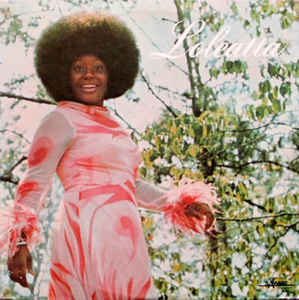
LOLEATTA HOLLOWAY-CRY TO ME (AWARE RECORDS 1975).
One man who played an important role in Cry To Me, was Sam Dees. he wrote or co-wrote five of the tracks on the album, including the opening track Cry To Me, which was Loleatta’s most successful US R&B single, reaching number ten. A piano plays slowly as Loleatta’s half-spoken vocal enters, accompanied by chiming guitars and rhythm section. Her vocal is devastatingly sad, as she sings about her relationship breaking up, her man packing his bag and heading for the door. As he leaves, she sings if he needs a friend he’s got her. By now both her vocal and the arrangement have grown in power and drama. Strings sweep in, while the rhythm section add drama and backing vocalists accompany Loleatta hugely powerful, emotive vocal. Over nearly six minutes, Loleatta sings her heart out, accompanied by one of the best arrangements on the album. It’s almost impossible to listen to the track without getting caught up in the emotion and sadness of Sam Dees excellent lyrics. A quite brillant track.
The Show Must Go On is another slow, Sam Dees track that has similarities to Cry To Me. There’s a half-spoken drama laden introduction where chiming, shimmering guitars, swirling strings and the rhythm section combine before Loleatta’s dramatic, powerful vocal enters. Like before, she’s accompanied by gospel tinged backing vocalists as she sings about her turbulent relationship and the pain and sadness it’s caused her, but vows that the show must go on. The interaction between Loleatta and her backing vocalists works really well, so does the applause that cuts in, while lush strings sweep and swirl and horns blaze. Together, the combine brilliantly to help create a dramatic backdrop for Loleatta’s defiant and dramatic vocal.
Curtis Mayfield wrote Just Be True To Me, another slow, drama laden track, with strings at the heart of the introduction. They swirl grandly, while flourishes of drums, braying horns and guitars combine, to accompany a thoughtful vocal from Loleatta. Her voice is a bit more restrained, while behind her a full, dramatic arrangement unfolds. Stabs of keyboards, swirling strings and percussion play important parts in the arrangement’s success.

JOHN GARY WILLIAMS-JOHN GARY WILLIAMS.
JOHN GARY WILLIAMS-JOHN GARY WILLIAMS.
Sometimes, an otherwise good album is released at just the wrong time, and as a result, the album fails to do as well commercially, as it should’ve done. This was the case with John Gary Williams self-titled debut album John Gary Williams. His album was released just as Stax was experiencing financial problems that would result in the label folding. Sadly, this meant that the two times the album was released, it never received the promotion or attention it deserved. The album was first released in 1974 on the main Stax label, but failed commercially. John’s album wasn’t the only album to suffer at this time. Shirley Brown’s album Woman To Woman suffered much the same fate. She’d just had a number one US R&B single, and Stax decided to release an album of the same name. However, when it was released, it wasn’t a huge success, stalling at number eleven in the US R&B Charts and number ninety-eight in the US Billboard 200. Part of the problem was the lack of marketing and promotion of the album. Unfortunately, the same problem affected John’s album. A year later, in 1975, John Gary Williams was rereleased, this time on the Truth label, a subsidiary of Stax that released gospel music. Essentially, it was the same album with the Stax logo on the album, and a Truth label on the album cover. Like the release on Stax, the album failed commercially. By this time, Stax’s financial problems were almost critical, and even managing to find the funds to release a new single on Truth to accompany the rerelease of the album was a struggle. Eventually, Come What May was released as a single, which John regarded as his best single on Stax. It was destined to go the way of the album, failing commercially. By the end of 1975, Stax was no more, and the once great label folded. That was the end of John’s solo career, and saw him returning to his old group The Mad Lads.
John had been a member of The Mad Lads since signing for Stax in 1964. He had formed the group, then know as The Emeralds in high school. Along with William Brown, Robert Phillips and Julius Green, the group specialised in singing harmonies, in the same vein as The Impressions. Their sound was somewhat at odds with the much more gritty sound that Stax specialised in. There was a huge change in the group’s circumstances, when in 1966, John was drafted. By the time he returned home, he too had changed, becoming radicalized whilst in Vietnam. He started to get involved with The Invaders, a group connected to The Black Panthers. At this time, The Mad Lads’ music was hitting its peak, the group releasing some of their best music. However, around 1972, the group split, because of friction within the group. John’s career was also changing, with him wanting to become a solo artist.
Two years later, with the help of some of Stax’s musicians, including Michael Toles on guitar, Marvell Thomas on keyboards and Hot Buttered Soul on backing vocals, John’s solo album John Gary Williams was complete. Of the eight songs on the album, John wrote two and cowrote three others. He also produced five of the tracks and co-produced the other three with Willie Hall. So, with a cast of hugely talented musicians, John had produced his only solo album, which I’ll now tell you about.
John Gary Williams opens with I See Hope, a track with a lovely lush arrangement and a positive message. Swirling, sweeping strings accompany a funky rhythm section, The South Memphis Horns and chiming guitars which accompanies John’s tender vocal. Behind him, subtle, equally tender, backing vocals are provided by Hot Buttered Soul as the arrangement unfolds into a combination of sweeping, funk laden music, with Gary’s fragile voice sitting atop the arrangement. John and Carl Smith’s lyrics are a message of positivity and hope, about peace and equality. Together with John’s tender vocal and an arrangement that’s both lush and funky, it’s an irresistible and outstanding track. Hopefully, the rest of the album will be just as good.
There’s a change in tempo and style on I’m So Glad Fools Can Fall In Love. It’s a slow, tender ballad which John co-wrote with Lester Snell. This love song opens with John singing tight and gentle harmonies, which must take him back to his days with The Emeralds and Mad Lads. Behind him, the arrangement has an understated sound, which opens out to reveal piano, percussion, lush strings and a slow rhythm section. Guitars chime and shimmer, accompanying a harp while John’s vocal is slow and gentle, full of emotion and drama. He sings about being in love and how he came so close to loving the one he loves. Backing vocalists veer between a tender style to an emotive dramatic style. Add to that a thoughtful bass line that sits at the front of the arrangement, and it’s a hugely sad yet joyous track, one full of emotion and drama.
Honey is another of the slower tracks on the album, and is the first cover version, written by Bobby Russell and originally recorded by Bobby Goldsboro. John transforms Goldsboro’s saccharine pop hit, turning it into a quite beautiful slow, sad song, drenched in emotion and drama. The arrangement opens with chiming guitars reverberating before strings sweep in, accompanied by the rhythm section, piano and percussion. Against this slow and understated backdrop, John gives a heartfelt delivery of the lyrics. Throughout the arrangement there’s plenty of space within the music which suits John’s vocal and the sadness in the lyrics about a girlfriend who died suddenly. The longer the arrangement progresses, the better it gets, with a harp, piano and the lushest of sweeping strings helping to create the perfect backdrop for John’s tender and thoughtful vocal. By the end of the track, John has transformed the track, turning it into a quite beautiful saccharine free song.
The final track on side one of the original album was Loving You It (Ain’t Easy) sees the tempo increase slightly, on a track John wrote himself. It’s a song about the difficulties of being in a relationship and the betrayal that sometimes happens. When the track opens, there’s a dramatic and lush sound present, when the rhythm section combine with braying horns, before strings sweep in. Later, a piano, guitars and harp enter, accompanying John’s emotional, slightly sad vocal. He’s sad because his girlfriend is cheating on him, but still loves her. Guitars chime and shimmer, soaring, as they add a touch of drama, while lush strings add a sense of sadness, their sound matching the tenderness and fragility of John’s vocal. Overall, it’s another beautiful track, thanks to an arrangement that combines sadness, emotion and drama. Add to that John’s emotive, disconsolate vocal, and it’s a winning combination, resulting in one of the albums best tracks.
Side two of the album opens with Ask the Lonely, the second of the cover versions on the album. The song is written by William Stevenson and Ivy Joe Hunter and features another atmospheric vocal from John and slow, lush arrangement. Chiming, shimmering guitars and fluglehorn combine with percussion and rhythm section before John’s slow, emotive, voice briefly soars. After that, he give a heart breaking delivery of the lyrics about loneliness and broken relationships. Above the arrangement, floats a fluglehorn and flute, which together with shimmering guitars and slow drums create an arrangement drenched in emotion and sadness. This is the perfect backdrop for John’s deeply moving vocal, which is one of his best vocals on the album. Not only that, but it’s one of the most moving tracks on the album.
The third and final cover version of the album was Yvette Davis’ track How Could I Let You Get Away. It opens with grand, slow strings that swirl combining with the rhythm section, keyboards and guitars. They accompany John’s half-spoken introduction which gives way to the vocal proper after a dramatic flourish of drums. After that, John’s almost sweet, slow vocal is full of regret, having let the one he loved slip through his fingers. Later, his voice grows in strength, the pain and loss apparent, as his voice soars, sadness and regret never far away.Matching the regret and sadness in his voice is the arrangement. It’s slow and full of lush, sweeping strings, rasping horns and dramatic rhythm section. This combines beautifully with John’s vocal, resulting in a hugely emotive track, drenched in sadness and regret at the love he lost.
Open Your Heart (and Let Love Come In) opens with a slow and full arrangement, which sees slow, sweeping strings, piano, rhythm section and guitars combining with subtle woodwind before John’s vocal enters. His voice soars high, full of emotion, while backing vocalists accompany him, on this love song. Here the lyrics are quite beautiful, John wanting to fall in love with a woman, and help her to forget the pain and hurt of her past. Behind him, the arrangement is complex, with layer upon layer of sounds revealing themselves. Like other tracks, lush sweeping strings play an important part in “setting the scene,” while subtle horns, the rhythm section, piano, harp and chiming guitars fill out the sound. They create an arrangement that’s slow, laden in emotion and ultimately, designed to tug at your heartstrings. When you add John’s gentle, tender vocal to this, it’s a stunning combination, and a gorgeous song about love.
John Gary Williams closes with The Whole Damn World Is Going Crazy. Whether the lyrics were influenced by John’s experiences in Vietnam, is open to speculation. Certainly, the world he returned to, was very different, and this continued to be the case into the mid seventies, with the faux peace and love of the sixties long gone. When the track opens, the tempo is quicker, the rhythm section and swirling strings accompanying John’s vocal. They’re joined by rasping horns, guitars and backing vocalists as the track progresses. Meanwhile, John’s voice is tender, but full of disbelief at the things he’s witnessing. Neglect, cruelty, violence and hate are just some of the things that’s lead John to this conclusion. Although it’s a quite different track, because of the tempo and subject matter, it features a good vocal from John and a stirring, sweeping arrangement. They combine to create a song with a social conscious that seems a fitting way to end the album.
Before I bought this album, my only exposure to John Gary Williams’ music was through his work with The Mad Lads and hearing three of his singles on The Complete Stax Volt Soul Singles 1972-1975 box set. When I heard these songs, I realized that John was a hugely talented artists although I wasn’t sure of his cover of My Sweet Lord, a track I’m far from a fan of. I much preferred the other two tracks Come What May and The Whole Damn World Is Going Crazy. Then last year, I noticed that BGP had rereleased John’s only solo album. This I knew was a must have, and from the first time I heard it, I was smitten. It’s one of these albums where one great track follows another. There aren’t any bad tracks on the album, just winners and no filler. Since then, it’s been an album I’ve played many times, each time, loving the album even more. To me, it’s one of these hidden gems of an album that you sometimes discover. Previously, many albums have been described as “lost albums” and “previously unreleased,” and often, there’s a very good reason for this, they aren’t very good. This is far from the case here. It’s an excellent album, full of some lush arrangements and tender, emotive vocals. If you’ve never heard the album, it’s one that’s well worth buying, and will quickly, become one of your favorites. That was the case when I bought this album, a hidden gem by John Gary Williams, singer, songwriter and producer. Standout Tracks: I’m So Glad Fools Can Fall In Love, Loving You It (Ain’t Easy), Ask the Lonely and Open Your Heart (and Let Love Come In).
JOHN GARY WILLIAMS-JOHN GARY WILLIAMS.

 dereksmusicblog
