SOHO SCENE ’66 ‘67-JAZZ GOES MOD.
Soho Scene ’66 ’67-Jazz Goes Mod.
Label: Rhythm & Blues Records.
During 1966, the mods with their carefully cultivated image were still a familiar sight and sound in towns and cities the length and breadth of Britain as they rode around on their Lambretta or Vespa scooters. They still sported tailor-made suits, button-down collar shirts, thin ties, wool and cashmere jumpers which were protected by fishtail parkas and continued to wear desert boots, Chelsea boots and bowling shoes. However, by 1966 the mods had also started to wear Beatle boots, Fred Perry polo shirts and were growing their hair longer while some even experimented with makeup, as their image started to change. It seemed nothing stayed the same, not even the music that the mods listened to.
Musically, mods had eclectic taste in music by 1966, and had embraced American R&B and soul music in the early sixties, and especially singles that were released on Stax, Atlantic Records and Tamla Motown. Soon, mods were investigating some of the smaller American soul labels looking for oft-overlooked hidden gems during their regular trips to local record shops where they ordered imports and discovered new musical genres.
This included ska and reggae, which the mods had discovered whilst looking through the racks of new arrivals and imports. While the mods enjoyed soul, R&B, reggae and ska, they didn’t turn their back on British music and enjoyed pop and rock music and especially the Rolling Stones, The Who, Small Faces and The Kinks, who were perceived as “mod” groups. These future giants of British music were part of the new and eclectic soundtrack that the mods were listened to during 1966.
1966 was also an important year year for Britain. The Labour government had been reelected on the ‘31st’ March and increased its majority to 96 seats. This led to a renewed sense of hope, and on the ‘15th’ of April, Time magazine used the phrase “Swinging London” for the first time. It was the perfect description of what was then one of the most vibrant and exciting cities in the world. For mods living in the Britain’s cultural capital this was an exciting time and they frequented the new clubs that had opened and embraced the changes in fashion and music.
By 1966, Manchester’s music scene was thriving, and many mods made their way to the Twisted Wheel nightclub where they were able to listen to soul music and from 1965, were enjoying what were initially billed as an “All-Niter.” Many mods made their way to the various venues to watch the local groups whose star was in the ascendance and the major names who played in the city. Some may have been at the Manchester Free Trade Hall on the ‘17th’ of May when Bob Dylan made history when he plugged-in. This prompted a cry of “Judas” from a member of the audience. They couldn’t understand that Bob Dylan’s music and the times they were a changing.
On the ‘30th’ of July Swinging London and the rest of England came to a standstill as England played West Germany in the World Cup Final. After extra-time, England won 4-2 and history was made. That night Londoners, including many sharp dressed mods celebrated this historic victory.
Six days later The Beatles released their classic album Revolver on the ‘5th’ of August. It was a landmark album as it marked the start of the group’s psychedelic period. This cerebral and thought-provoking album reflected their interest in LSD, the avant-garde and Eastern philosophy and dealt with subjects like death and transcendence from material concerns. Revolver was also a much more ambitious and experimental album because The Beatles had decided to stop playing live. They knew they wouldn’t need to replicate Revolver live and played their last concert at Candlestick Park, San Francisco, on the ‘29th’ of August. It was the end of era for The Beatles and their fans. However, their music and music in general continued to evolve and the psychedelic revolution was underway.
1966 was an the year of the Mini Cooper, miniskirts, a World Cup Win and saw homegrown British groups provide the soundtrack to Swinging London which was about to embrace fully the psychedelic revolution.
As 1966 game way to 1967, the mods were still interested in soul, ska, R&B, reggae, rock and pop and passionate about modern jazz. However, the psychedelic revolution was well underway and it wasn’t long until the Summer of Love in Britain and America. By then, the mods had already embraced a number of aspects of the new culture. Some mods even grew their hair and embraced the avant-garde while others experimented with psychedelic drugs including LSD. The other change was the music they were listening to.
This included jazz, which had been , and was still such an important part in their lives. Especially British jazz which spoke to the sharp dressed mods and helped define them. By 1967, many top British jazz musicians and bandleaders decided it was time for their music to change and they needed to loosen their collective collars. They realised that if their music didn’t evolve it risked becoming irrelevant and decided to incorporate different genres into their music. This included everything from R&B, Latin and avant-garde to psychedelia. The majority of top British jazz musicians embraced the changes in jazz and enjoyed the next chapter in their musical career. Those that didn’t watched as their career stalled. However, for the majority of British jazzers 1967 was another important year for them.
Meanwhile, happenings grew in popularity across Swinging London where there was an increase in interest in the avant-garde, Eastern culture and LSD. Free love was the order of the day and hippies shunned materialism and their slogan was peace and love. Two of the most important albums of 1967 The Beach Boys’ Pet Sounds and The Beatles’ psychedelic masterpiece Sgt. Pepper’s Lonely Heart Club Band. Music was changing fast.
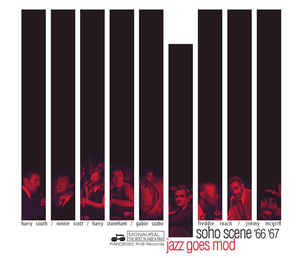
And this included jazz. Proof of this is Soho Scene ’66 ’67-Jazz Goes Mod which is a new four disc box set that has just been released by Rhythm & Blues Records. It looks back at what was an important time for British jazz.
By 1966, many of the original modernists had just turned forty and perfectly placed to enjoy what was a golden year for British modern jazz. Venues were packed and some of the top British jazz musicians returned with new albums that found their music evolving. These familiar faces feature on disc one of Soho Scene ’66 ’67-Jazz Goes Mod and are joined by what will be new names to those who aren’t so well versed in British jazz.
Disc One-British Jazz 1966.
There’s eighteen tracks on disc one of Soho Scene ’66 ’67-Jazz Goes Mod which opens with Humphrey Lyttelton’s The Men From Auntie which made its debut on Soho Scene ’66 Vol 2. Welcome additions include the Mike Carr Trio’s Cox’s Pippin, the Tubby Hayes Quartet’s Change of Setting and The Don Rendell / Ian Carr Quintet’s Tootin’ And Flutin’. These tracks will be new to many jazz fans. So will the Stan Tracey Quartet’s Pig and Pepper, Michael Garrick’s Shiva and John Surman Quartet’s Blues Da Camera which show the changing face of British jazz in 1966. It’s a similar case with Alex Welsh’s Bluesology and Neil Ardley’s Big P. These tracks show how British jazz music was changing and some of its leading lights were combining other genres of music to their usual sound and had been inspired by the changes in wider culture. It was a similar case in America.
Disc Two-American Jazz 1966.
The twenty-two tracks on disc two are eclectic selection and opens with the soul-jazz of Freddie MCoy’s Lonely Avenue. There’s more soul-jazz from the Charles Earland Trio’s The Dozens, Richard “Groove” Holmes’ Boo-D-Doo, The Three Sounds’ Mohair Sam, Freddie Roach’s One Track Mind and Jimmy McGriff’s Hallelujah. Hungarian jazz guitarist Gabor Szabo contributes Mizrab and is joined by South African reed player Hugh Masekela whose Unhlanhla featured on his The Americanization Of Ooga Booga album in 1966. Disc two features a couple of hidden gems including Eric Kloss’ Just For Fun-K from his album Love and All That Jazz and the Milt Sealey Trio’s Black Diamond. They’re a reminder of some of the jazz that was being released in America during 1966 and was part of the soundtrack to British modernist’s lives.
Disc Three-British Jazz 1967.
By 1967, British jazz continued to evolve and some of its biggest names returned to the studio. This included English jazz pianist, composer, arranger and bandleader Harry South went on to record library music. However, in 1967 the Harry South Big Band recorded Limited Freedom which is a reminder of one the giants of jazz at the peak of his powers. He’s not alone.
Other notable contributions on disc three from some British jazz’s leading lights including from The Mike Carr Quartet’s Nico’s Dream, the Tubby Hayes Quartet’s Finky Minky, the Joe Harriott Quintet’s Strollin’ South and Everywhere Derriere by the Stan Tracey Quartet. They’re a reminder of how healthy British jazz was in 1967 and how its leadings lights were continuing to make ambitious and innovate music which the modernists embraced and enjoyed.
Disc Four-American Jazz 1967.
Across the Atlantic, American jazz was changing and changing fast. Fusion was the new kid on the block and rode to the rescue of jazz whose popularity had been declining. That was despite many American jazz musicians continuing to release exciting and ambitious releases. Many of these albums drew inspiration from other genres and other combined disparate genres.
That was the case with Curtis Amy’s album Mustang which featured bop and modal jazz. One of the highlights was the cover of Mustang which was a perfect showcase for the Houston-born saxophonist’s skills.
When Jerome Richardson covered Sunny for his Groove Merchant album in 1967 he combined funk, fusion and even easy listening to create a truly memorable track. Then Chico O’Farrill and His Orchestra’s Hip Hug Her heads in the direction of Latin jazz while Byrdie Green’s In The Dark from her The Golden Thrush Strikes At Midnight combos R&B and soul-jazz. Both are underrated tracks and welcome additions to Soho Scene ’66 ’67-Jazz Goes Mod. The can be said of Johnny “Hammond” Smith’s hidden soul-jazz gem Dirty Apple which was the B-Side to his single N.Y.P.D.
Other welcome additions included Johnny Lytle Quintet’s Gonna Get That Boat and the Harold Johnson’s single Sorry ‘Bout That where jazz, Latin, funk and soul melt seamlessly into one to provide a dancefloor filler. Closing this seventy-eight track box set is the Soul Society’s cover of the Lee Morgan classic The Sidewinder. It’s the perfect way to close this look back at two important years in not just the history of jazz, but music, culture and modernism which was still going strong.
By 1966, it was no longer just modern jazz that provided the soundtrack to the modernists daily lives. They had also discovered and embraced soul, ska, R&B, reggae, rock and pop. Still, though, the mods were still passionate about modern jazz during 1966 which in Britain was a golden age for the genre.
Meanwhile, music was changing and it was official trad jazz was yesterday’s sound, with modern jazz surpassing its one time rival in the popularity stakes. Some trad jazz musicians had turned their back on trad jazz and embraced modern jazz. They had watched as music changed and knew that they couldn’t rest on their laurels.
In Britain’s cultural capital Swinging London the psychedelic revolution was underway and 1967 was the Summer of Love in America and Britain. By then, jazz music just like the mods would have changed.
Everything from the clothes that the mods wore, to they way they wore their hair and even the drugs that they took started to change. So did the music that they listened to, but still their passion for modern jazz remained. That was the case during 1966 and 1967 the period that Soho Scene ’66 ’67-Jazz Goes Mod box set covers when the sharp dressed modernists embraced the cultural revolution in Britain.
Modernism was popular until the late-sixties and there was a mod revival in the late-seventies in Britain, and the early eighties in America. The mods with their carefully cultivated image and their discerning taste in music including the seventy-eight tracks on the Soho Scene ’66 ’67-Jazz Goes Mod box set are without doubt one the one of the most enduring and influential youth cults in British cultural history, and their influence continues to make its presence felt even today.
Soho Scene ’66 ’67-Jazz Goes Mod.
MOTORPSYCHO-THE ALL IS ONE.
Motorpsycho-The All Is One.
Label: Rune Grammofon.
Format: 2CD.
Motorpsycho was formed in Trondheim, in October 1989 and released their debut album Lobotomizer in 1991. Since then, they’ve been one of hardest working and prolific bands in Norway.
Last year, the Norwegian rockers released two albums and toured Norway and Europe twice. That would’ve been more than enough for most bands. However, Motorpsycho aren’t most bands and somehow, they managed to find time to record three more albums. This includes The All Is One, which was recently released by Rune Grammofon and is the third and final instalment in what Motorpsycho lightheartedly and affectionately call their Gullvåg Trilogy.
The first instalment in the critically acclaimed Gullvåg Trilogy was The Tower, which was released in 2017. On the album cover was a painting by Trondhein-born artist Håkon Gullvåg. So powerful was the imagery that it inspired and affected Motorpsycho’s music on The Tower. So would the paintings that adorn the next two instalments in the Gullvåg Trilogy.
In 2019, Motorpsycho celebrated their thirtieth anniversary and released The Crucible. This was the much-anticipated second instalment in the Gullvåg Trilogy. It was released to plaudits and praise and later in 2019 work began on the followup and final instalment in the Gullvåg Trilogy The All Is One.
The first session took place in Studio Black Box, in France during September 2019. For the recording Reine Fiske joined forces with Motorpsycho. The tracks that were recorded were relatively concise and there was a traditional structure to the music. There songs didn’t have a theme that ran through them, but have the same type of concepts that feature on Motorpsycho’s last few albums.
This includes living in a much more polarised society than previously, and how many people throughout the world have lost faith in democracy and in civic institutions. Motorpsycho believes that some of the world’s “strong leaders” are reminiscent of those who led previous totalitarian regimes. They also believe that the album is their soapbox and allows them to voice their opinion on the state of the world. It’s a privilege that very few people have, and Motorpsycho realise this, and use their albums to provide a voice for those who sadly have none. They look at the bigger picture and important issues that are affecting society and realise the importance of contrast. This is no different to their music and the scales music and lyrics they use when they record an album like The All Is One.
The second main recording session for Motorpsycho’s third instalment in their Gullvåg Trilogy took place at Ocean Sound Recording in Norway. This was where they recorded a forty-two minute five piece suite entitled N.O.X. It’s a piece of that Motorpsycho were commissioned to write and performed at the St. Olav Festival in Trondheim during the summer of 2019. They were joined onstage with two of their favorite Norwegian musicians, Lars Horntveth of Jaga Jazzist and Amgala Temple and Ola Kvernberg of Steamdome.
N.O.X. is an impressive suite that was inspired after a discussion with artist Håkon Gullvåg and celebrates the themes in his work. Motorpsycho can relate to his art and they also realise it’s not often a group finds the kind of affinity they’ve have found with his art. That’s why it’s no surprise that the size, scope and lyrical contents of N.O.X. have been inspired by Håkon Gullvåg’s work.
Motorpsycho decided not give a clear and concise explanation of the meaning of what of N.O.X. is about. However, they’ve left clues throughout this epic piece and believe that they should allow the listener to solve this musical mystery.
The remainder of the tracks on The All Is One were recorded by Motorpsycho at home at Kommun’ in Trondheim. What these lack in subtlety and intricacy they more than make up for in the mood they create. They offer a contrast to the large and luxurious sound. In a way, it’s quite sobering which is fitting.
With recording of The All Is One completed, all that was left was for the album to be mixed and mastered. This meant that the album release was pencilled in for the spring of 2020. However, the “global pandemic” put paid to this. While the mix process and mastering wasn’t affected, it was decided to push back the album release until late August 2020.
Meanwhile, Håkon Gullvåg had offered to paint the album cover to The All Is One. This was an honour for Motorpsycho given how his artwork has inspired their music. That includes Motorpsycho’s latest album The All Is One.
The best way to describe the genre-melting music on this epic album is intense, dense and cerebral. Some listeners might find the music challenging, but if they’re patient and stick with the album they will be richly rewarded. It’s like many albums the more one listens to The All Is One the more one understands the music on this ambitious album of innovative and intriguing music. Seamlessly Motorpsycho switch between and fuse disparate musical genres on an album that gradually reveals a myriad of subtleties and nuances on this cerebral and thought-provoking album. It deals with various environmental, moral, political and social issues facing the world today.
The All Is One shows two different sides to Motorpsycho. One of them is them is the N.O.X. suite, a forty-two minute opus that is the centrepiece of the album. It’s quite different to what Motorpsycho have done in the past.
N.O.X. suite opens with Circles Around the Sun, Part 1 and Motorpsycho’s decision to add strings is a masterstroke and the arrangement becomes lavish and luxurious. It’s also beautiful, intricate, intriguing, jazz-tinged and melodic. Later, the track becomes dissonant during a voila solo and briefly chaotic before the listener is rewarded when the instrumental jam Ouroboros (Strange Loop) is ushered in. It veers between beguiling and dreamy to creepy and unsetting and at times has a cinematic sound. Then there’s the sun-kissed psychedelia of Ascension which is one of the highlights of the suite and the album. Very different is Night Of Pan where Motorpsycho paint pictures with music and toy with the listener’s emotions. Soon, though, the darkness descends and the nightmare begins as the music becomes unsettling and at times otherworldly and filmic. The nightmare continues on Circles Around the Sun, Part 2 despite the inclusion of choral vocals and strings. However, the nightmare is nearly over as the acoustic track A Little Light offers a contrast as it closes the suite which has been an epic adventure.
Motorpsycho use their trademark sound as the building block for the N.O.X. suite. This includes classic rock, folk, jazz, psychedelia and progressive rock. Listen carefully and the influence of Genesis’ early albums, Pink Floyd, Yes in their pomp and Magma during their heyday can be heard. There’s even a free jazz influence during this stunning suite which is one of the most ambitious pieces of music that Motorpsycho have recorded since the group were formed in 1989. However, there’s more to The All Is One than the N.O.X. suite.
There’s the shorter tracks that were recorded during separate sessions. Motorpsycho were joined by their friend Reine Fiske of Dungen who they’ve collaborated with on a number of albums. Together, they recorded tracks that range from alt-rock to folk-tinged, hard rocking and progressive rock. This allows the band to showcase their considerable skills and versatility.
Among the highlights are the meandering title-track with its jangling chords and blistering lead guitar and a powerhouse of a vocal. Quite simply, it epitomises everything that is good about Motorpsycho. Then there’s Dreams of Fancy with its undulating groove where a mellotron plays a starring tole and the track benefits from occasional acoustic interludes. The tempo rises on The Same Old Rock (One Must Imagine Sisyphus Happy) and The Magpie which are much more straightforward rocky tracks. Like Chrome which closes The All Is One is one of the most melodic tracks on the album. It ebbs and flows, builds and rebuilds and takes a number of twists and turns. Resistance is impossible as Motorpsycho have kept one of the best until last on the track that brings to a close their Gullvåg Trilogy.
It began three years ago with the release of The Tower in 2017. The second instalment in the critically acclaimed Gullvåg Trilogy was The Crucible which was released in 2019 as Motorpsycho celebrated their thirtieth anniversary. A year later, they make a welcome return with The All Is One which is the last instalment in the Gullvåg Trilogy. It’s also the most ambitious of the three albums. That’s no surprise as the centrepiece of the album is the N.O.X. suite, a forty-two minute progressive opus.
Just like the rest of this genre-melting album the music was insprired by Håkon Gullvåg’s artwork. His artwork like Motorpsycho’s music during the Gullvåg Trilogy is powerful and poignant. Especially on The All Is One where they fuse disparate musical genres with searing social comment.
Motorpsycho admits that their albums are there soapbox, and also provides a voice for those who have none. That is the case with The All Is One where they deal with various environmental, moral, political and social issues that affect the world today. It’ll certainly be interesting to hear Motorpsycho’s post-pandemic album. Hopefully, it’ll help expose the charlatans, cheats and power-hungry politicians with secrets to hide and blood on their hands that currently rule and have ruined once proud nations.
Meanwhile, The All Is One brings to an end Motorpsycho’s critically acclaimed Gullvåg Trilogy and they’ve saved the best until last. It’s an ambitious, cerebral, innovative and thought-provoking musical odyssey from Motorpsycho with the epic N.O.X. suite as The All Is One’s centrepiece.
Motorpsycho-The All Is One.

CULT CLASSIC: TERRY REID-THE OTHER SIDE OF THE RIVER.
Cult Classic: Terry Reid-The Other Side Of The River.
For many people, Terry Reid is music’s nearly man. He could’ve been the lead vocalist of two of the biggest rock bands in musical history. Sadly, that wasn’t to be, and instead,Terry Reid decided to concentrate on his solo career.
He went on to release six studio albums between 1968s Bang, Bang You’re Terry Reid and 1991s The Driver. Each of these albums were well received by critics but despite this, didn’t enjoy the commercial success that his considerable talents deserve. So in 1981, Terry Reid called time on his solo career. By then, he was only thirty-seven and had released just five solo albums.
Without doubt, one of Terry Reid’s finest albums is River, which was released on Atlantic Records in 1973. River had been recorded by Terry and his band during lengthy sessions in London and Los Angeles. Seven tracks found their way on to River. That was only part of the story.
Ever since the release of River in 1973, rumours began to do the rounds about other tracks that had been recorded during the River sessions. Since then, these rumours have grown legs.
Some people however, weren’t convinced. Surely, if Terry Reid had recorded more songs during the River sessions they would’ve been released? In 2016, the sceptics were proved wrong, when The Other Side Of The River was released and is a reminder of one of British music’s most underrated singer, songwriter and musicians, Terry Reid, whose affectionately known as superlungs. His career began in 1965.
By then, Terry Reid was just sixteen. He had been born in Huntingdon, on 13th November 1949. Growing up, Terry attended St. Ivo School, St.Ives, Cambridgeshire. That was where he joined a local band, The Redbeats.
It was when platting with The Redbeats, that Peter Jay, the drummer from a rival group, Peter and The Jaywalkers first spotted Terry Reid in action. Straight away, he realised he would be the perfect addition to Peter and The Jaywalkers. Peter Jay convinced Terry Reid to join his band, and soon, Terry was a Jaywalker.
Soon, Peter and The Jaywalkers’ star was in the ascendancy, when they were named as the support act for the Rolling Stones, when they played at the Royal Albert Hall. This was where Graham Nash of The Hollies first met Terry Reid.
The two musicians soon became firm friends, and Graham Nash suggested that Peter and The Jaywalkers should sign to the UK division of Columbia Records. Peter and The Jaywalkers didn’t have to think twice, and soon, were signing on the dotted line.
At Columbia Records, Peter and The Jaywalkers worked with producer John Burgess on their debut single, The Hand Don’t Fit the Glove. It was released by Columbia in 1967, and gave the band a minor hit. Unfortunately, by then, Peter and The Jaywalkers had split-up. After this, Terry Reid decided to pursue a solo career.
Fortunately, he come to the attention of producer and music impresario, Mickie Most. He produced Terry Reid’s debut single Better By Far. On its release in 1968, it found favour amongst DJs, who soon, began to play the single on their radio shows.
That was when Mickie Most decided to take Terry Reid into the studio to record his debut album, Bang Bang, You’re Terry Reid. When it was released later in 1968, it was to widespread critical acclaim. However, unfortunately the album passed record buyer by. Soon, so did the opportunity of a lifetime.
Terry Reid had come to the attention of Jimmy Page, who had just disbanded The Yarbirds. He was in the process of putting together a new band, The New Yarbirds, and was looking for a vocalist. Jimmy Page had set his sights on Terry Reid, and decided to recruit him for his new band. There was a problem though.
It turned out that Terry Reid had agreed to tour America with Cream. Terry was the opening act, and as part of the tour, would play the prestigious Miami Pop Festival. Everything was agreed, and Terry was a man of his word. There was no way he could back out at the this late moment. So Terry recommended Robert Plant, a Birmingham based vocalist, as The New Yarbirds to Jimmy Page. Terry’s recommendation, changed musical history. He could’ve been part of one of the most successful rock bands ever, Led Zeppelin. Incredibly, lightning struck twice for Terry Reid.
1969 found Terry Reid’s star in the ascendancy. The American tour and his appearance at the Miami Pop Festival resulted in him becoming popular in America. Terry was also a familiar face in Britain during 1969. He opened for Fleetwood Mac and Jethro Tull, and released his sophomore eponymous album Terry Reid. Although it received positive reviews from critics, the album failed to find an audience. So later in 1969, Terry headed stateside where he opened for the Rolling Stones on their American tour.
By then, Terry Reid a familiar face in America, and already built up a loyal fan-base. So touring America with the Rolling Stones allowed Terry Reid’s music to be heard by a much wider audience. Night after night, Terry opened for the Rolling Stones as they played sold-out shows coast to coast. The only Rolling Stones Terry Reid didn’t play at, was their biggest and most controversial, Altamont Music Festival.
Fortunately, Terry Reid wasn’t booked to appear on the bill of the hastily organised Altamont Music Festival. This meant he avoided the bloodshed, chaos and violence. Terry Reid had a lucky escape. However, he might not have been on the Rolling Stones’ tour if things had turned out differently with Deep Purple.
During their 1969 American tour, Deep Purple decided to change direction, and move towards a heavier, rockier sound. Vocalist Rod Evans the other members of Deep Purple though, wasn’t suited to this style. It was decided that Rod Evans would be replaced. He was already contemplating an alternative career as an actor. So Deep Purple went looking for a replacement. The man Richie Blackmore set his sights on was Terry Reid.
Unfortunately, Terry Reid was still contracted to Mickie Most and had signed an “exclusive recording contract.” Mickie Most had two options. He could let him join Deep Purple, or hold him to his contract. Rather than letting him join Deep Purple, Mickie Most held him to his contract. After all, Mickie Most had plans for Terry Reid.
Musical impresario Mickie Most decided to reinvent Terry Reid, the man who would be known as superlungs as a balladeer. This didn’t go down well with Terry Reid who fell out with Mickie Most in December 1969. Again, Mickie Most reached for the “exclusive recording contract.”
The “exclusive recording contract” that Terry Reid had signed with Mickie Most didn’t expire until 1973. Things had deteriorated to such an extent, that Terry Reid was unwilling to record with Mickie Most and headed to California to take some time out.
Over the next few years, Terry Reid only played a few live shows. This included the Isle of Wight Festival 1970 and later that year, the second Atlanta Pop Festival. Then in 1971, Terry returned to play at the Glastonbury Fayre. Apart from that performance, Terry Reid kept a low profile as he ran down Mickie Most’s “exclusive recording contract.” By 1973, Terry Reid was free at last.
River.
This left Terry Reid free to sign to Atlantic Records. Soon, he began work on what became River.
For River, Terry had penned Dean, Things To Try, River and Dream. He cowrote Avenue with John Abercrombie; Live Life with Ray Davies and put lyrics to Miles Davis’ Milestones. These tracks Terry Reid recorded with his own band.
Recording began at Advision Studios, in London, with Eddy Offord producing the River sessions. Eddy Offord who went on to produce Yes and Emerson, Lake and Palmer, was regarded as a perfect fit for Terry Reid. He was no stranger to electric blues, and had produced two albums for Taste, a trio which featured Rory Gallagher. The two albums 1969s Taste and On The Boards had turned out well. So given his track record, surely, the partnership of Eddy Offord and Terry Reid would work out well?
That should’ve been the case. So, with Eddy Offord booked to produce the River sessions, Terry Reid and his band arrived at Advision Studios. He added vocals and guitar during what were long, drawn-out and frustrating sessions at Advision Studios.
For whatever reason, Terry Reid and his band didn’t hit the ground running. Usually, recording sessions ran smoothly, and weren’t long, drawn-out affairs. The River sessions was a frustrating time, with recording of what was meant to be the River a time-consuming and ultimately fruitless. There was a problem, but nobody seemed to know what? Maybe Eddy Offord was the wrong producer? That’s never became clear. What became clear, is that Terry Reid wasn’t happy with River. He decided to scrap the album, and head to Los Angeles to rerecord River.
Terry Reid and his band arrived at Wally Helders, in Los Angeles. This time around, the band featured drummer Conrad Isidore, bassist Leo Miles and David Lindley on electric guitar, slide guitar and steel guitar. Willie Bobo added percussion on just the one track, River. Engineer Ed Barton acted as a de facto producer. Despite that, Tom Dowd was credited as producing five tracks that made it onto River. Once the sessions were completed at Wally Helders in L.A, Terry headed over to Miami, clutching the master tapes.
At Criteria Studios, the final master tapes were assembled. Only two songs produced by Eddy Offord, Dream and Milestones made it onto River. Five Tom Dowd productions made it onto the River, including Dean, Avenue, Things To Try, Live Life and River. These seven tracks became River.
Once River was complete, Terry Reid delivered the completed album to his new label Atlantic Records. They scheduled the release of River for later in 1973. Maybe after two false starts during the Mickie Most years, it would third time lucky for Terry Reid?
That looked like the case when critics heard River. They were hugely impressed by Terry Reid’s comeback album. After four long years, Superlungs was back, with album that married elements of blues rock, folk rock, Latin and rock. It was impressive fusion of styles, with Terry picking up where he left off on Terry.
Just like previous albums, Terry Reid eschewed the tightness many musicians preferred. Instead, his style was looser, and prone to improvisation on what was essentially an album of jams. They found him thinking on his feet musically, as he switched between and combined musical genres. Four of the songs found Terry Reid and his band lock into languid, laid back, blues rock grooves. Then it’s all change, as River takes on a Latin sound. Dream and Milestone the find Terry Reid trades his electric guitar for an acoustic, as he dawns the role of troubadour on two beautiful, but wistful songs.
Critics were won over by what was, without doubt, Terry Reid’s finest hour. As a result, critical acclaim accompanied the release of River. This bode well for River.
Alas, commercial success eluded River, and Terry Reid continued to be one of music’s best kept secrets. Following the commercial failure of River, Atlantic Records cut their losses, and Terry Reid left the label.
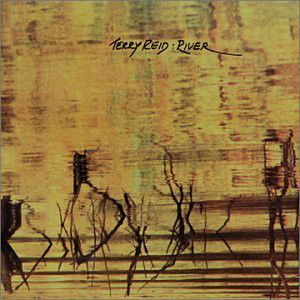
Terry Reid continued to search for a winning formula which would bring him both commercial success and critical acclaim. While he often enjoyed critical acclaim, commercial success seemed to elude him. That was the case with the Graham Nash produced Seed Of Memory. It found Terry backed by an all-star band. Seed Of Memory was released by ABC Records in 1976. Although critics were won over by Seed Of Memory, commercial success eluded Terry Reid. This became a familiar story.
Two years later, and Terry Reid returned with Rogue Waves. It was released on Capitol Records. Terry combined hard rocking numbers with soulful songs. Maybe this would be that elusive winning formula that Terry had been seeking for a decade? Sadly, that wasn’t the case. While the album was well received by critics, Rogue Waves passed record buyers by. For Terry, this was almost the end of the road.
Three years later, in 1981, Terry Reid called time on his solo career. He retired aged just thirty-seven. By then, he had released just five solo albums. Terry decided to concentrate on working as a session musician.
For the next ten years, Terry Reid made a living as a session musician, accompanying some of the biggest names in music. Then in 1991, Terry, like many retired musicians, decided to make a comeback. He signed to Warner Bros. and released The Driver in 1991. Many critics welcomed the return of Superlungs. Other critics felt The Driver wasn’t Terry’s best album. With no consensus, record buyers had the casting vote.
It was a familiar story, with The Driver failing to find an audience. For Terry Reid, this was a huge blow. Never again would Terry return to the studio.
Instead, the only album Terry Reid released was Alive! in 2004. It featured a concert recorded a decade earlier in live in California in 1994. Alive! was a reminder that Terry Red was a truly talented singer, songwriter and musician. So was another live album released during 2004.
Later in 2004, another live album was released, Silver White Light-Live At The Isle Of Wight 1970. This was recorded during the three year standoff between Terry Reid and Mickie Most. It’s a tantalising taste of what should’ve been the formative years of Terry Reid’s career. He was only twenty-six and could’ve and should’ve been enjoying successful albums and playing sellout shows. Instead, he was running his contract with Mickie Most down. These were three wasted years for Terry, which must have been hugely frustrating for him. The three years out of the musical spotlight most likely, damaged Terry’s career. When he returned in 1973, it was almost like starting over.
By 31st August 2010, Terry Reid was back in London, where his career began forty-five years earlier. He was due to play at Ronnie Scott’s. That concert was recorded, and two years later, was released as a double album, Live In London. It showed that although Terry Reid was sixty-six, he still was a hugely talented singer and musician. That night, Terry’s set featured fourteen songs. This included eleven songs penned by Terry, and covers of John David Souther’s Leaving and Gone; Brian Wilson’s Don’t Worry Baby and Bob Hillard and David Mann’s Wee Small Hours. They were part of a captivating show from Terry Reid, and were a welcome addition to his back-catalogue. So is The Other Side Of The River.
The Other Side Of The River.
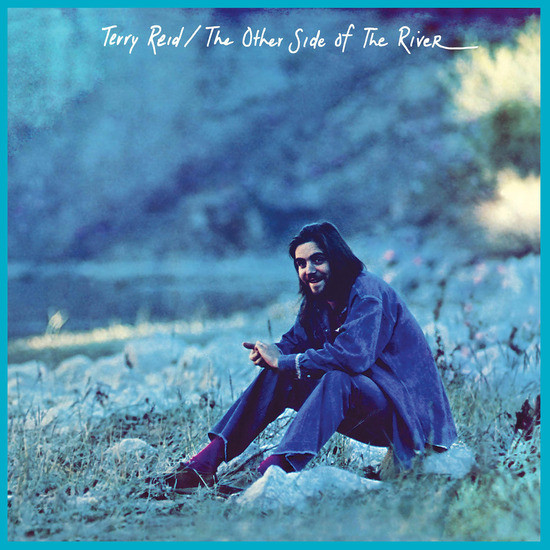
After forty-three years of rumour and speculation, an album consisting of songs recorded during the River sessions were released. These eleven songs were billed as The Other Side Of The River.
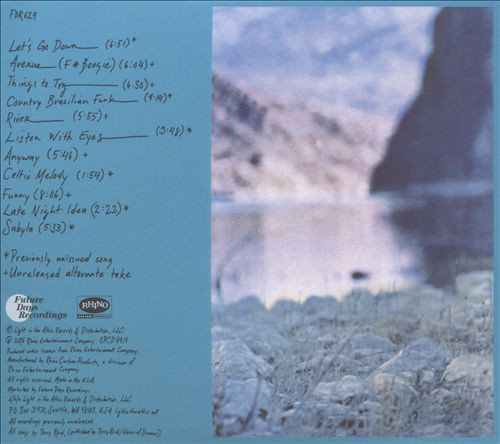
At last, here was confirmation that the rumour and speculation was true. Eleven songs recorded during the River sessions feature, and show The Other Side Of The River. This includes Let’s Go Down, a jam which opens the album. Terry Reid and his band play with a looseness and spontaneity. That’s the case on an alternative version of Avenue (F# Boogie), where Terry and his band head in the direction of blues rock. Avenue isn’t the only alternate take on The Other Side Of The River.
Things To Try and River are both alternate tacks. Terry remembers Things To Try as a song the band couldn’t quite nail. It took several takes, and this is one of them. Just like the alternate take of River, it shows another side to the song, and it’s interesting to compare and contrast. Both songs would be worthy of featuring on any album.
Country Brazilian Funk shows another side to Terry Reid. They play with speed, accuracy and passion, combining country, Latin, funk and even a hint of blues. It’s all change on Listen With Eyes, a beautiful, tender and understated sounding ballad. Anyway is another alternate track, is a piano lead track where Terry’s scats softly on a dreamy and beautiful track. There’s a hesitancy as the guitar opens Celtic Melody, as if the band are looking for an in. Eventually, Terry Reid scats his vocal growing in power and passion. Alas, after just two minutes, the song is but a memory. Soon, though, Terry changes direction.
Funny which is another of the alternate takes, is a eight minute meandering jam, that gradually reveals its secrets, subtleties and beauty. After six minutes, Terry Reid unleashes one of his most soulful, impassioned vocals. Late Night Idea was recorded late one night, at Wally Helder’s Studio and features Terry playing piano and scatting. With neither an audience in the gallery, nor studio, Terry plays with freedom. It’s a poignant moment. Closing The Other Side Of The River, is Sabyla another instrumental. After a hesitant start, Terry Reid and his band hit their stride. The rhythm section and piano provide the backdrop as he unleashes a blistering guitar solo on this instrumental. It’s one of the finest moments on The Other Side Of The River.
After forty-three years of rumour and speculation, now further songs recorded during the River session are available. This includes new songs and alternate takes. Among the new songs, are instrumentals, including Sabyla. Listen With Eyes and Anyway are beautiful, understated ballads. A couple of songs are work in progress, and it would’ve been interesting to see what they might have become if Terry Reid had developed them further. They’ve bags of potential. Then on other tracks, including Let’s Go Down and Avenue (F# Boogie), Terry Red plays with his trademark looseness and spontaneity. When Terry plays like this, it’s as if at any given time, he could lead the band on a musical detour where they improvise, switching between and combining disparate musical genres. That’s what Terry does on Country Brazilian Funk, where he and his band showcase their considerable talents. They continue to do this throughout The Other Side Of The River.
This much anticipated album is the perfect companion to Terry Reid’s 1973 album. The Other Side Of The River shows what Terry and his band were doing throughout other parts of the sessions. Doubtless, there’s still much still to be released. Who knows though, maybe the music on The Other Side Of The River is the best of the River sessions?
What I do know, is that for anyone who enjoyed Terry Reid’s finest hour, River then The Other Side Of The River will be a welcome addition to their music collection. For newcomers to Terry Reid, then I would suggest buying both River and The Other Side Of The River. First familiarise with the delights of River, and then let Terry Reid take you to The Other Side Of The River and enjoy this mixture of new songs, familiar faces and hidden gems.
Cult Classic: Terry Reid-The Other Side Of The River.
LOST CLASSIC FOUND: THELONIOUS MONK-MONK.
Lost Classic Found: Thelonious Monk-Monk.
Over the last few years, the fashion has been for a minimalism within the hipper home, and it has been fashionable to declutter and adopt a less is more look. Some people have been so keen to declutter that they don’t seem to care about what they thrown away. However, it’s not just the hipper home where scant regard is paid to what’s being discarded.
The same thing happened twenty years ago when someone was on a decluttering mission at the Danish Broadcasting Corporation in Copenhagen, and threw away a Scotch Broadcast Tape that featured recording of Thelonious Monk from 1963. Fortunately, when the master tape was lying in a skip it was spotted by a producer who realising the importance of the tape, rescued it. Twenty years later, that tape of Thelonious Monk’s classic quartet was reissued as Monk and features the pianist at the peak of his powers.
Although Thelonious Monk is now regarded as one of the great jazz pianists, he wasn’t without his critics with poet and jazz critic Phillip Larkin dismissing him as: “the elephant on the keyboard.” Sadly, it seemed not everyone appreciated Thelonious Monk’s innovative approach to jazz music.
That is despite Thelonious Monk as now being the second-most covered jazz composer of all time. That is pretty good going as Thelonious Monk composed only seventy pieces. These compositions and improvisations featured dissonances and what are best described as angular melodic twists, which are an accurate representation of his unique approach to the piano. Initially, it was described as hard swinging, but evolved over the next twenty years.
Those that had followed Thelonious Monk career watched his style evolve, and his extremely percussive attack which featured abrupt and dramatic use of switched key releases, silences, pauses and hesitations, which divided the opinion of jazz critics and fans. What they forgot, was that Thelonious Monk was a relative latecomer to jazz, and had started his career accompanying a touring evangelist on an old church organ. In some ways, Thelonious Monk was making up for lost time, as he was already twenty-four before he first started playing jazz.
Despite arriving to the party late, Thelonious Monk was soon making up for lost time, and from the early fifties, was working as bandleader, sideman and collaborating with other future giants of jazz. He had started off at Blue Note Records between 1948 and 1952, before moving to Prestige Records where he spent two years between 1952 and 1954. After that, Thelonious Monk moved to Riverside Records which was his home between 1955 and 1961, and by then, his star was in the ascendancy.
This was quite remarkable given everything that Thelonious Monk had been through since the early fifties. He had his New York cabaret card revoked in 1951, when he became the latest victim of a trumped up narcotics charge. This meant that Thelonious Monk was unable to play in New York’s club’s for six long years. During that time, Thelonious Monk signed to Riverside Records in 1955, which was his home until 1961.
Although Thelonious Monk was held in high regard by critics and commentators, sadly, for someone so talented, his records weren’t selling well. In 1955, he agreed to release an albums of jazz standards, Thelonious Monk Plays Duke Ellington in the hope that this would increase his profile and record sales. However, later in 1955 tragedy struck for Thelonious Monk.
Towards the end of 1955, Thelonious Monk’s mother passed away, and the following year, 1956, a fire destroyed the pianist’s apartment in West ‘63rd’ Street, New York. Thelonious Monk and family were left destitute, and his family of five had no option but to stay with friends for several months, with fifteen people shoehorned into a three room apartment. Meanwhile, Thelonious Monk continued to live with an undiagnosed bipolar disorder which nobody was aware of at the time. Despite this, he released Brilliant Corners an album of hard bop in late 1956, which was one of the finest albums he released for Riverside Records.
In 1957, Thelonious Monk’s run of bad luck continued when he was involved in a car accident, and when the police discovered him unresponsive, took him to Bellevue Psychiatric Hospital, where he spent three weeks. By then, Thelonious Monk was unaware that his father had been living in a psychiatric hospital for the past fifteen years
Things got worse for Thelonious Monk in May 1957, when his wife Nellie became ill, and required a thyroidectomy. After the operation, she became frail and depressed, which affected Thelonious Monk’s wellbeing. The last two years had been hard on the couple, but at least Thelonious Monk was about to get his New York cabaret card back, and could start playing live in the Big Apple.
By then, Thelonious Monk had a manager, and started a six-month residency at the Five Spot Café, and had formed a friendship with John Coltrane. This was a coincidence as many of John Coltrane’s band had served their music apprenticeship Five Spot.
During Thelonious Monk’s residency at the Five Spot Café during 1957 and 1958, the sharp dressed and sartorially elegant pianist took to the stage with his carefully cultivated look. Thelonious Monk wore suits, hats and had taken to wearing sunglasses which hid the window to his troubled and weary soul. Still, he dazzled patrons with his unique playing style as he switched between standards and his own compositions. Thelonious Monk was back in the Big Apple, after a six-year absence.
With Thelonious Monk’s albums still not selling well by 1958, he was asked to release a second album of jazz standards. It was hoped that The Unique Thelonious Monk would increase his profile and record sales. Ironically, later, in 1958, Thelonious Monk’s face was all over American newspapers, after his latest brush with the law.
Thelonious Monk had been hired to play for a week at the Comedy Club, in Maryland, and on his way to the gig, he and Nica De Koenigswarter were stopped by the police in Wilmington, Delaware. When Thelonious Monk refused to answer or cooperate with the police officer, who beat him with a blackjack. During an authorised search the car drugs were found, and suddenly Thelonious Monk was looking at some serious jail time. Fortunately, Judge Christie of the Delaware Superior Court ruled that the pair had been unlawfully detained, and that the beating of Thelonious Monk meant that the consent to the search void as given under duress. Forty-one year old Thelonious Monk survived to fight another day.
As the fifties gave way to the sixties, Thelonious Monk’s relationship with Riverside Records had gone south, after a disagreement over royalty payments. While Riverside Records released two live albums recorded in Europe, Thelonious Monk hadn’t recorded a studio album since 5 By Monk By 5 in June 1959. Fortunately, Columbia Records one of the four major labels were keen to sign Thelonious Monk.
The negations between Thelonious Monk and Columbia Records, were protracted, and it wasn’t until 1962 that a contract was signed. At last, Thelonious Monk could get back into the studio and do what he did best…make music
In 1963, Thelonious Monk released Monk’s Dream, which was his Columbia Records debut. Critical acclaim greeted the release of Monk’s Dream, and it was a similar case with the classic Criss-Cross. By then, Thelonious Monk was on a roll, and recorded Monk In Tokyo which was released in 1973. Miles and Monk At Newport, Big Band. Quartet In Concert and the critically acclaimed Monk’s Time were all released in 1964. However, another recording from 1963 wasn’t released for fifty-five years.
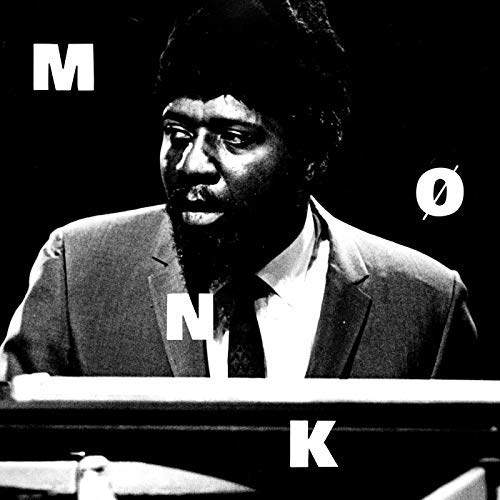
Monk.
This is Monk, which features a live recording of Thelonious Monk’s classic quartet that took place in Copenhagen, Denmark,on March the ‘5th 1963 during a European tour. That night in Copenhagen. pianist Thelonious Monk was joined by tenor saxophonist Charlie Rouse, drummer Frank Dunlop and bassist John Ore as they took the stage.
Opening the set is Thelonious Monk’s composition Bye Ya, where drummer Frank Dunlop plays an energetic solo, before the classic quartet play with enthusiasm as they innovate and unleash a myriad of musical ideas. Nutty is another Monk composition, and at one point the bandleader having built-up the momentum descends the piano keyboard leaving the stage set for Charlie Rouse’s baying tenor saxophone to soar and take centre-stage. Very different is beautiful is the tender reading of I’m Getting Sentimental Over You. It gives way to a heart-achingly beautiful and moving version of Body and Soul where the loneliness seems very real. Closing the set is the swinging Monk’s Dream which careers along, and closes Monk on a high,
Thelonious Monk recorded the music that features on Monk Danish Broadcasting Corporation in Copenhagen on the ‘5th’ of March 1963 and four days later, the concert was broadcast on the ‘9th’ of March 1963. Fifty-five years later, Monk was belatedly released. It’s a hidden gem that features Thelonious Monk’s classic quartet at the peak of their considerable powers.
Crucial to the success of the classic quartet was the interaction between Thelonious Monk and Charlie Rouse, with the two men constantly on the same wavelength, and anticipating their every move. That was the case throughout Monk, which is welcome and almost flawless reminder of Thelonious Monk’s classic quartet live in concert.
Lost Classic Found: Thelonious Monk-Monk.
CULT CLASSIC: MARIANNE FAITHFUL- LOVE IN A MIST.
Cult Classic: Marianne Faithful-Love In A Mist.
By March 1964, it was apparent that pop music wasn’t just a passing fad. By then, The Beatles were a global phenomenon and the British Invasion of the American charts had just begun. Britain was a now musical powerhouse that the world envied. Despite this, many labels weren’t resting on their laurels.
Record companies in Britain were constantly on the search for ‘the next big thing.’ Surely they reasoned, there was another Fab Four somewhere in Britain? It was all a matter of finding them. Some labels put more effort into this than others.
Decca Records had an enviable network of A&R executives and talent scouts across Britain. Their finger was on the pulse of the local music scene. Night after night, talent scouts headed out to local pubs and clubs, where they listened to new bands and singers. Promising artists were signed to contracts before other labels even had a chance to hear them. Helping Decca Records add to their already enviable roster were various producers and music ‘impresarios.’
They were the trusted ears of some record companies. This included the Rolling Stones manager Andrew Loog Oldham. He was by 1964, was managing the second biggest band in the world. The Rolling Stones only rivals were The Beatles. So when Andrew Loog Oldham recommended a new, unknown artist to Decca Records they took notice.
The artist Andrew Loog Oldham was unlike any he had come across. Even her background was unlike that of any artist he had encountered. Sh was an eighteen year old former convent girl who the daughter of an Austrian aristocrat and a former British Army officer, who was now a professor of psychology and Italian literature at Bedford College of London University. They had met in Vienna, and were living in Hampstead when Marianne Faithful was born on 29th December 1946. However, this would soon change.
The Faithful family had to move to Ormskirk in Lancashire, while her father finished his doctorate at Liverpool University. Later, the Faithful family lived at the commune and institution for social research in Braziers Park, a Grade II listed building at Ipsden, Oxfordshire. This must have seemed an idyllic place to grow up. However, when Marianne Faithful was six her parents divorced.
For Marianne Faithful the Reading years weren’t exactly happy ones. She lived with her mother in Milman Road which she refers to as the “Reading Gaol.” No wonder. It was a far cry from the early years of her life.
Now, money was tight, and Marianne Faithful and her mother were reduced to living in suburbia. To make matters worse, she suffered from tuberculosis and was a subsidised pupil at St Joseph’s Convent School where she was a weekly boarder. It was at school, that Marianne Faithful first took to the stage.
It wasn’t as a singer though. Instead, she was part of the school’s Progress Theatre group. Little did anyone realise, that when Marianne Faithful left St Joseph’s Convent School, she spend much of her life on the stage. Before that, she escaped the drudgery and boredom of suburban Reading.
Very different was London’s social scene, which Marianne Faithful threw herself into. It was as if she was making up for the Reading years. London was different from small-town Reading. Marianne enjoyed the constant round of parties, record launches and gallery openings. She even travelled to Cambridge to attend a University ball, where she met her future husband John Dunbar. By then, she was regular in London’s folk circuit.
For some time, Marianne Faithful had been playing coffee shops, including Cafe Au Lait and Shades. Her career was in its infancy, but through John Dunbar, Marianne Faithful met Peter Asher of Peter and Gordon. They were enjoying a successful career. Not as successful as the two men Peter Asher introduced Marianne Faithful to at a party in March 1964.
Marianne Faithful went along to a party with John Dunbar in March 1964. That was where she was introduced to the leaders of the two biggest groups in the world. First Marianne met Paul McCartney, and then she was introduced to Mick Jagger. Little did she realise the effect this meeting would have on her career.
Through Mick Jagger, Marianne Faithful was introduced to Andrew Loog Oldham. Straight away, he signed Marianne Faithful to Decca Records. Soon, work began on Marianne’s debut single.
For Marianne Faithful’s debut single, As Tears Go By, which was penned by Mick Jagger and Keith Richards was chosen. It was produced by Mike Leander, and released in the summer of 1964. As Tears Go By reached number nine in Britain; twenty-two in the US Billboard 100 and thirty-five in Australia. The eighteen year old had enjoyed a hit single on three continents. However, the followup single wasn’t as successful.
Having chosen to cover a Jagger-Richards song for her debut single, Marianne Faithful decided to cover Bob Dylan’s Blowin’ In The Wind for her sophomore single. When it was released later in 1965, it failed to chart on both sides of the Atlantic. Surely Marianne Faithful wasn’t a one hit wonder?
Decca Records didn’t think so, and decided that Marianne Faithful should begin work on not just one album, but two albums.
Come My Way.
It was a case of striking while the iron was hot. Many artists weren’t didn’t enjoy a long shelf life. So as soon as they had a single under their belt, they were sent into the studio to record an album. Decca Records decided that Marianne Faithful should record two quite different albums, Come My Way and Marianne Faithful. Of the two albums, Come My Way would only be released in Britain.
For Come My Way, Marianne Faithful chose fourteen tracks. Many of the tracks were traditional songs. This included Come My Way, Jaberwoc and Spanish Is The Loving Tongue, Fare Thee Well, Down In The Salley Garden, Full Fathom Five and Bells Of Freedom. Other tracks included Lee Hayes’ Lonesome Traveller and Ian Tyson’s Four Strong Winds. These songs were recorded at IBC Studio, London with producer Tony Calder.
On Come My Way, Marianne Faithful concentrated purely on folk music. This was what Marianne had been singing up until then. She sang and played her acoustic guitar against John Mark’s spartan arrangements. This would prove successful when Come My Way was released.
It wasn’t until 15th April 1965 that Marianne Faithful released Come My Way. The album was well received by critics, and reached number twelve in Britain. However, Come My Way wasn’t released in America. Instead, Marianne Faithful’s eponymous sophomore was released on both sides of the Atlantic the same day as Come My Way.

Marianne Faithful.
Marianne Faithful was recorded at the same time as Come My Way, and would be released in America and Britain. However, Marianne Faithful was a very different album to Come My Way. Gone was the folk sound of her debut album which was replaced by pop, chanson and ye-ye. Already, she was showing that she was a versatile singer.
For Marianne Faithful, fourteen pop covers had been chosen. This included Jackie DeShannon’s Come and Stay With Me; Bacharach and David’s If I Never Get to Love You; Tony Hatch’s Downtown; Jagger and Richards’ As Tears Go By; Jackie DeShannon and Jimmy Page’s In My Time of Sorrow; and Lennon and MCartney’s I’m A Loser. Marianne Faithful also made her songwriting debut, cowriting Time Takes Time with Barry Fantoni. These songs were recorded in two London studios.
At Lansdowne Studios and Decca No. 2 Studio, London, Marianne Faithful recorded another fourteen songs with producer Tony Calder. This time, a band accompanied Marianne, as she flitted between musical genres. Then Plaisir D’Amour became one of the first songs that Marianne would record in French. The London born chanteuse was about to become one of the ye-ye girls, while enjoying commercial success on both sides of the Atlantic.
Just like Come My Way, Marianne Faithful was released on 15th April 1965. Reviews of the album were positive, with critics remarking that some of the song’s were perfectly suited to Marianne Faithful. She brought life and meaning to the songs. So it wasn’t a surprise that Marianne Faithful reached fifteen in Britain, and twelve in the US Billboard 200. This wasn’t the end to the success.
Come And Stay With Me was released as a single from Marianne Faithful. It reached number four in Britain, and twenty-six in the US Billboard 100. Then This Little Bird was released later in 1965, and reached number six in Britain, and thirty-two in the US Billboard 100. For Marianne, this was a fairytale. A year after signing to Decca Records, she was a star on both sides of the Atlantic.
Less than a month after the release of Come My Way and Marianne Faithful married John Dunbar on the 6th of May 1965, in Cambridge. After the wedding, the pair lived in a flat in Belgravia, in London. What looked like a fairytale continued.

Go Away From My World.
Although newly married, and expecting her first child, Marianne Faithful had to record a new American album. It featured twelve tracks, which were a mixture of traditional songs and cover versions.
Among the traditional songs were Come My Way, Mary Ann, Scarborough Fair and North Country Maid. Cover versions included Lennon and McCartney’s Yesterday and Tom Paxton’s The Last Thing On My Mind. Marianne also decided to cover Francis McPeake’s Wild Mountain Thyme and Cyril Tawney’s Sally Free and Easy. These songs were produced by Mike Leader, and scheduled for release in November 1965.
Reviews of Go Away From My World were mainly positive. However, looking back with the benefit of hindsight, it’s an album that’s appealing to everyone. There’s songs for people who like folk and pop music; while Marianne Faithful had been a much more pop oriented album. Maybe Go Away From My World fell between two stools?
After the success of Marianne Faithful in America, Go Away From My World reached a disappointing eighty-one on the US Billboard 200. The only crumb of comfort was that when Summer Nights was released as a single, it reached number ten in Britain and number twenty-four in the US Billboard 100. Then Marianne’s cover of Yesterday reached number thirty-six in Britain. Her last single from Go Away From My World was the title-track, which reached a lowly eighty-nine in the US Billboard 100. Little did Marianne know, that Go Away From My World would be her last American hit. That would’ve been the least of her worries.
In December 1965, Marianne Faithful left her husband of seventh months, and went to live with the Rolling Stones’ frontman Mick Jagger. Little did she realise this decision would change her life, and people’s perception of her forever more. That was still to come. Before that, Marianne Faithful began work on her next album North Country Maid.

North Country Maid.
As 1966 got underway, Marianne Faithful and Mick Jagger through themselves headfirst into swinging London’s social scene. They epitomised swinging London, and were seen at the smartest parties. Soon, it was time for Marianne Faithful to return to the studio.
North Country Maid would become her third British album. However, six of the songs had featured on the now ironically titled American album Go Away From My World. This included traditional songs like Scarborough Fair; How Should I Your True Love and North Country Maid. The other tracks included Cyril Tawney’s Sally Free and Easy; Jon Mark’s Lullabye and Francis McPeake’s Wild Mountain Thyme. This left Marianne to record six new songs.
They were a mixture of traditional song and cover versions. The traditional songs included Cockleshells; She Moved Through The Fair and How Should I Your True Love Know. Other tracks included covers of Tom Paxton’s Last Thing On My Mind; Ewan McColl’s The First Time Ever I Saw Your Face and Donavon’s Sunny Goodge Street. These tracks were recorded with producer Mike Leander.
When the recording the six songs began, Marianne Faithful was joined by guitarists Big Jim Sullivan and Jon Marks. He had worked on all of Marianne’s albums, arranging the tracks. Joining them in the studio was an up-and-coming engineer, Gus Dudgeon. Soon, the six songs took shape, and the release of North Country Maid was scheduled for spring 1966.
Before the release of North Country Maid on 1st of April 1966, critics had their say on Marianne Faithful’s third album. The consensus was, that North Country Maid was the finest album of her nascent career. That however, was no surprise.
Great care had gone into choosing the twelve songs that became North Country Maid. These songs seem tailor made for Marianne, as she flits seamlessly between musical genres. Although primarily an album of folk music, blues, country, acid folk and even pop can be heard on North Country Maid. It’s the perfect showcase forMarianne Faithful’s versatility as a singer.
Playing an important part in the success of North Country Maid, were Mick Taylor and Jon Mark’s arrangements. Jon Mark and Big Jim Sullivan accompany Marianne Faithful on arrangements that although they’re mostly understated and spartan, allow her vocals to take centre-stage. She’s equally comfortable singing traditional songs and cover versions.
Despite the undoubted quality of the album and the positive reviews North Country Maid failed to chart when it was released on 1st April 1966. For Marianne Faithful this was a huge blow. Her two previous albums had sold well in Britain, and she had enjoyed several hit singles. However, the warning signs were there when Go Away From My World failed to chart. This made her next album a crucial one.
 Love In A Mist.
For her fourth British studio album, Love In A Mist Marianne Faithful decided to change tack. It was a case of needs must. Not only had her career stalled, but acoustic folk music was no longer as popular. Even Bob Dylan had plugged in, and gone electric in 1966. So Marianne Faithful decided to reinvent herself on Love In A Mist.
She had started to reinvent herself on her American album, Faithful Forever. It was released in September 1966, but failed to chart. Despite this, half of the tracks that featured on Faithful Forever, found their way onto Love In A Mist. Along with the other seven songs, a total of fourteen tracks found their way onto Love In The Mist.
Among the tracks on Love In The Mist were a trio of tracks from Donovan, In the Night Time, Young Girl Blues and Good Guy. Marianne Faithful covered Jackie DeShannon’s You Can’t Go Where the Roses Go and With You In Mind. She also covered Tim Hardin’s Don’t Make Promises and Reason To Believe. Other tracks included Lennon and McCartney’s Yesterday; John D. Loudermilk’s; This Little Bird; Bob Lind’s Counting and Bernstein and Sondheim’s I Have A Love. Ne Me Quitte Pas and Coquillages allowed Marianne Faithful to show her versatility on a couple chanson songs. Love In The Mist was shaping up to be her most eclectic album.
With seven tracks to record, Marianne Faithful entered the studio with a band. This was a first. They played on Love In The Mist but took care not to overpower her vocals. They veer between elegiac and ethereal to melancholy and wistful. Sometimes they sound hopeful, but often sound worldweary. Marianne it seemed, had lived some of the lyrics. On several tracks, there’s a return to the understated sound of previous albums. However, Mike Leander decided to orchestrate parts of Love In The Mist. He even added subtle horns on several tracks. They work well, and should’ve played an important part in the reinvention of Marianne Faithful.
Melancholy describes Marianne Faithful’s rendition of Yesterday. She’s accompanied by elegiac harmonies and doesn’t so much deliver the lyrics but lives them. It’s followed by the wistful sounding You Can’t Go Where The Roses Go that heads in the direction of baroque pop. Then Our Love Has Gone is a tale of a love lost with a beautiful orchestrated arrangement that’s punctuated by a French horn. In The Night Time head in the direction of baroque pop before Marianne Faithful’s transformation to baroque chanteuse is complete on This Little Bird. Then on Ne Me Quitte Pas and Coquilages Marianne Faithful turns her attention to chanson pop.
Counting is one of the highlights of Love In A Mist, and features a vocal that’s deliberate and a mixture of theatre and drama. Delivered against a dramatic, orchestrated backdrop it’s a potent mix. Marianne Faithful combines folk and pop on Reason To Believe which features a lush orchestrated arrangement. The lyrics are poignant and take on a new meaning as if she can’t find a Reason To Believe. With You In Mind is a quite beautiful but wistful mixture of theatre and baroque pop. Equally beautiful, thanks to the orchestrated arrangement and a vocal that wistful, thoughtful and sometimes almost despairing is Young Girl Blues. Then on Good Guy, Marianne Faithful breathes life and meaning into the lyric while the arrangement where blues, country, folk and pop melt into one. It’s without doubt one of her finest hours. She closes Love In A Mist with I Have a Love, which becomes a lush, heartfelt ballad and shows yet another side to Marianne Faithful.
Sadly, by the time Love In The Mist was released Marianne Faithful was embroiled in a scandal that made front page news across the world. Her decision to befriend the Rolling Stones had backfired on her badly. This could be traced back to 1965, when she left husband John Dunbar in December, and moved in with Mick Jagger not long after this. By 1965, she had befriended another member of the Rolling Stones’ inner circle…Anita Pallenberg.
They became friends in 1965 and soon they were smoking marijuana together. Then in 1966, Marianne Faithful decided to take her son to stay with Anita Pallenberg and Brian Jones. By then, she was a familiar face with Mick Jagger at swinging London’s smartest and wildest parties. The time they spent with with Anita Pallenberg and Brian Jones passed off without incident. If only the same could be said of the events of 12th February 1967.
By then, it was less than a month before Marianne Faithful would release her fourth album. On Sunday 12th February 1967, she was relaxing with members of the Rolling Stones’ inner circle at Redlands, Keith Richards country estate. That night, the Sussex police raided Redlands looking for drugs. The claimed to have been tipped off that a drug were being consumed on the premises When they entered Redlands, they discovered Marianne Faithful covered by just a fur rug. This would come back to haunt her.
After a search of Redlands, various tablets and substances, including amphetamine and cannabis were discovered. This lead to the arrest of Mick Jagger and Keith Richards. They were charged, and were facing imprisonment. However, as the story became front page news, so did the details of how the police discovered Marianne Faithful . This shocked many little Englanders, who viewed not just Mick Jagger and Keith Richards with distaste, but Marianne Faithful too.
Suddenly, the press were raking over her private life, serving up every salacious piece of petty gossip for the titillation of the little people in their two up, two downs. They stood in judgment of Marianne Faithful who was about to release a new album.
Love In A Mist was a genre hopping album where Marianne Faithful flitted between folk, chanson and pop to country, acid folk, baroque pop and blues. It was captivating emotional roller coaster where the music was melancholy, rueful and poignant. Other times, the music was full of hurt and sadness as Marianne Faithful lays bare her soul. Under normal circumstances it would’ve transformed her career.
Just over three weeks later, Marianne Faithful released her fourth album, Love In A Mist on the 2nd of March 1967. Despite the quality of the music on Love In A Mist, the album never came close to troubling the charts. Sadly, very few people heard the album when it was released in 1967. Whether the unwanted publicity affected sales of Love In A Mist is a matter of speculation?
Following the release of Love In A Mist in 1967, Decca Records and Marianne Faithful parted company. By then was just twenty-one and had already released four albums in the UK for Decca. The genre-hopping North Country Maid is the finest album of her Decca Records and a reminder of the early part of Marianne Faithful’s career. North Country Maid is the finest album of her Decca years. It’s an underrated hidden gem that’s one of the most accomplished and eclectic albums of Marianne Faithful’s career and nowadays is a cult classic that is gradually starting to find the audience it so richly deserves.
Cult Classic: Marianne Faithful-Love In A Mist.

CULT CLASSIC: EJI OYEWOLE-CHARITY BEGINS AT HOME.
Cult Classic: Eji Oyewole-Charity Begins At Home.
During the sixties and seventies, the Nigerian music scene was thriving and new bands were being formed on a daily basis. Similarly, many new artists were making an impression on Nigerian music during this period. This included flautist, saxophonist and future bandleader Eji Oyewole.
He was born in Ibadan, the city on edge of the savannah. Ibadan was capital of Oyo State, which was the third largest metropolitan area in Nigeria. In the city, Eji Oyewole’s family were held in high regard because they were descended from royalty. This meant that Eji Oyewole was really Prince Eji Oyewole. Despite this, he was determined to forge a career as a musician.
He succeeded in doing so, but only ever released one solo album, Me and You which was released on the Nigerian label Top Records in 1985. However, Me and You should’ve been Eji Oyewole’s sophomore album.
Towards the end of the seventies, Eji Oyewole had recorded Charity Begins At Home for EMI Nigeria. However, Charity Begins At Home lay unreleased until October 2015 when this long-lost highlife classic was belatedly released. By then, Eji Oyewole was still occasionally playing live. This was no surprises as music has been a constant in his life.
Prince Eji Oyewole was born in Ibadan, and growing up, discovered music. At last, the young Prince knew what he wanted to do with his life. When he told his parents they were horrified. Eji explains “My family rejected it initially. They wanted me to study professional courses such medicine or law. They even asked if I had started smoking Indian hemp already?” He was able to reassure them that wasn’t the case and that he was determined to make a living as a musician.
The defiant young prince got his breakthrough at the Paradise Club in Ibadan when he became a member of Eddy Okonta’s highlife band. Initially, Prince Eji Oyewole played the flute before deciding he wanted to play the saxophone.
Most people would’ve taken lessons from a music teacher. Not Prince Eji Oyewole. Instead, he bought some text books and with his basic knowledge of music taught himself to play the saxophone. That wasn’t the end of Prince Eji Oyewole’s musical education. Not by a long chalk.
Just before Prince Eji Oyewole decided to move to Lagos he met Chris Ajilo, and the legendary tenor saxophonist taught him the basics of music. As they spoke and played, little did Prince Eji Oyewole realise he was receiving a musical masterclass. When he left for Lagos he was already a much better musician.
Having moved to Lagos, the Nigerian capital, Prince Eji Oyewole found himself playing at the Lido Club and Empire Hotel. Soon, he was a familiar face at both venues. Not long after this he got the chance to join another band.
This was Bobby Benson’s Band which had a residency at the Caban Bamboo Club. Joining Bobby Benson’s Band had lifted Prince Eji Oyewole’s profile. People heard about the young Prince playing in the band and came to hear him play. So did a friend of Prince Eji Oyewole’s who came with his employer.
This was Isaac Olashugba, the alto saxophonist in Fela Ransome-Kuti’s first band, Koola Lobitos. They were an innovative group who fused jazz and highlife and were a popular draw. However, when they weren’t playing, Isaac Olashugba came to see his friend the Prince play. On a number of occasions he brought Felt Kuti along and he liked what heard. So much so, that on numerous occasions Fela Kuti and Isaac Olashugba tried to get him to join Koola Lobitos. However, Prince Eji Oyewole was loyal and decided to stay with Bobby Benson’s Band.
Despite staying with Bobby Benson’s Band, Prince Eji Oyewole often got on stage with Koola Lobitos and even joined them when they played on radio. However, by the mid-sixties he must have regretted not joining Koola Lobitos.
Following a military coup d’etat in 1966, Nigeria was a dangerous place to live. Especially for someone with royal blood. Things got worse for Prince Eji Oyewole when the Premier of the Western Region, Chief Akintola was assassinated. Now was the time for him to leave Nigeria behind.
The early days of his life in exile was tough for Prince Eji Oyewole because much of West Africa spoke French. His life in Cotonou and Lome wasn’t easy and it wasn’t long until he was on the move again.
Next stop was Accra and in the Ghanian capital Prince Eji Oyewole hooked up with one of the city’s top highlife bands, Black Santiago. For a while, he was happy but after a while his wanderlust kicked in.
From Accra, Prince Eji Oyewole made his way to the Ivory Cost and this wasn’t his finest hour as he ended up playing on the cabaret circuit. For a Nigerian Prince, this was quite a comedown. Ironically, he was rescued from obscurity by President Houphouet Boigny.
The Ghanian President asked Prince Eji Oyewole to joined his Presidential Band. By then, he was tiring of the cabaret circuit and job offers were in short supply. Prince Eji Oyewole joined the Presidential Band which resulted in him being offered to join another prestigious band.
It was whilst playing with the Presidential Band that Prince Eji Oyewole came across Franco, who was the leader and guitarist of OK Jazz Of Congo. They were looking for a saxophonist and Prince Eji Oyewole who also played the flute fitted the bill. He joined OK Jazz Of Congo’s tour of West Africa. However, after the tour, Prince Eji Oyewole and OK Jazz Of Congo went their separate ways. The nomadic Prince was on the move again.
His nomadic lifestyle took him to France and and he headed to the capital, Paris. It was there he first encountered Johnny Halliday and soon they were sharing the same stage. This led to Prince Eji Oyewole being booked at Trois Mallez, which in the late-sixties, was a prestigious cabaret and jazz club. However, as was the norm, Prince Eji Oyewole didn’t stay around long.
Next stop on what was like the modern day equivalent of a Grand Tour was Geneva, in Switzerland. Prince Eji Oyewole had been booked to play at the city’s Club 7. For the next month, this was home to the wandering Prince. After this, he decided to further his education.
Prince Eji Oyewole couldn’t have chose a better place than Germany. The country’s music scene was thriving, and featured some of the most innovative musicians in the world. Many had studied the Musik Hochschule, under the tutelage of the great Professor Roland. While he studied by day, Prince Eji Oyewole played at venues around the city. One of the venues Prince Eji Oyewole played was The Star Club, where The Beatles had honed their sound. However, before long the Prince, was on the move again.
No wonder as West Berlin was home to some of the greatest creative minds. Writers, poets, philosophers and musicians called the city their home. This included innovative groups like Can, Kluster, Tangerine Dream, Ashra and Neu! who all congregated at The Zodiak Free Arts Lab. This was the city’s creative hub and where the best musical minds met. Prince Eji Oyewole however, was in West Berlin for saxophone lessons with Professor Lampart at the West Berlin Musik Hochschule. It was during this period of his life that Prince Eji Oyewole caught a break.
During his time West Berlin, he was asked to join Billy Brooks, who at that time, was a European ambassador of jazz. Soon, Prince Eji Oyewole, who had come to city for saxophone lessons, was playing at Berlin’s Jazz Galerie and a the Berlin Jazz Festival. Not long after becoming the first Nigerian artist to play at the Berlin Jazz Festival, the nomadic Prince had been talked into moving to London.
This happened when Fred Schwartz met Prince Eji Oyewole at Berlin’s Jazz Galerie. Keyboardist Fred Schwartz was a member of The Gasoline Band and they were heading to London to record their eponymous debut album. The keyboardist convinced the Prince to join The Gasoline Band just before they headed to London.
When The Gasoline Band arrived in London, the fusion band made their way to Morgan Studios. That was where The Gasoline Band recorded what was their only album. Prince Eji Oyewole was meant to have played on the album but here’s no sign of his name on the credits, unless he played under an alias? After the album was recorded, The Gasoline Band headed off on a Europeand tour with Prince part of the band’s horn section. Once the tour was complete the Prince returned to the world of academia.
He returned to London, where he decided to complete his musical studies at the prestigious Trinity College. Once his education was complete Prince Eji Oyewole decided to become a session player.
Prince Eji Oyewole found himself working as the musical equivalent of a hired gun. As a session musician he played on everything from rock and pop to funk and soul. However, he was a versatile musician who was able to switch seamlessly between disparate genres.
In January 1976, Prince Eji Oyewole found himself in Nova Studios and was using the alias Joe Oye. That’s the name that’s on the session sheets when he was part of the horn section that accompanied The Real Thing. Their star was in the ascendancy but they weren’t as popular as the next artist he worked with later that month.
Later in January 1976, Vangelis were due to play at the Festival Hall. The previous year, 1975, Vangelis had released the soundtrack to Do You Hear the Dogs Barking? and his fifth solo album Heaven and Hell. Then in December 1975, Vangelis had recorded one of the most ambitious and innovative albums of his career, Albedo 0.39 which was released later in 1976. It was a concept album based around space and space physics. This was the calibre of musician that Prince Eji Oyewole was about to share a stage with. Vangelis was the real thing. So was another artist Prince Eji Oyewole would later share a stage with.
This was Bob Marley. The three years that Prince Eji Oyewole spent in Bob Marley’s employ was still to come. Before that, Prince Eji Oyewole decided to record his debut album, Charity Begins At Home.
For Charity Begins At Home, Prince Eji Oyewole penned four tracks. Charity Begins At Home, Gele Odun (Oil Boom), Lagos Complex-Lagos Highways and Unity in Africa (Kasowopo Kasekan) were full of social comment. These tracks were recorded by Prince Eji Oyewole and a group of African musicians.
Joining Prince Eji Oyewole for the recording of Charity Begins At Home, were a group of Nigerian musicians. The rhythm section featured just drummer Sunny Adefadugba and guitarist John Medua. They were augmented by Abu Ismail on congas, Kayode Dosunmo on bongos and Ayan on talking drum. Tende Mugbadu played second tenor saxophone. Prince Eji Oyewole played tenor and soprano saxophone, piano, flute, percussion and added vocals. He also co-produced Charity Begins At Home with Emmanuel Odenusi. Once the album was completed, Charity Begins At Home was meant to be released by EMI Nigeria.
When EMI Nigeria heard Charity Begins At Home they decided not to release the album. Why remains a mystery? One school of thought was that Eji Oyewole had taken the highlife ball and run with it, but run too far.
While most highlife bands had guitars at the heart of their sound, Eji Oyewole decided to replace the guitars with horns. Their big, brash, harsh sound took centre-stage, while one lone guitar features on Charity It Begins At Home. With horns to the fore, Eji Oyewole seemed to have drawn inspiration from funk, especially American funk. This shines through throughout Charity It Begins At Home’s four tracks. They’re different to the music found on most highlife albums towards the end of the seventies.
Gone were short, three or four minute, radio friendly songs. Replacing them on Charity It Begins At Home were four lengthy tracks. They lasted between six and nine minutes. This wasn’t what executives at EMI Nigerian had been expecting. However, it was a case of being unable to see the wood from the trees.
Eji Oyewole had decided that highlife had to evolve. If it didn’t, it could risk becoming stale, and eventually, irrelevant. So, he set about reinventing highlife. To do this, he combines a generous supply of funk with jazz, highlife, Afrobeat and even rock. Seamlessly, these musical genres combine over the four tracks. The other ingredient is searing social comment. The man who was born a Prince wasn’t shy about sharing his opinion on not just what was wrong with not just with Nigeria, but the continent of Africa. This was another reason why executives at EMI Nigeria must have been reluctant to release Charity It Begins At Home.
The title-track Charity It Begins At Home opens the album. Understated soon becomes dramatic. Soon, the man who was born Prince Eji Oyewole is suggesting that Nigerians should unite, and look after each other. Behind him stabs of brash, blazing horns, a funky rhythm section and chiming guitars combine with percussion. They propel the arrangement along. Unity is Eji’s theme. He sings about “understanding” and ask Nigerians to “come together.” His sincerity can’t be faulted and neither can the quality of his band. Over six minutes, Eji and his tight talented band showcase their considerable skills. Whether playing together or when the solos come round they create an irresistible and funky track that starts off the reinvention of highlife.
Prince Eji Oyewole flute opens Gele Odun (Oil Boom) and otherworldy percussion joins a crystalline, chiming guitar and a rhythm section that errs on the side of funk rather than highlife. This the co-producers must have thought would give song a much more contemporary sound. There’s a still more than a nod to the old, as he sings of the recent oil boom that transformed Nigeria. Dramatic bursts os braying horns joins the chiming guitar and a myriad of percussion. Together they create a churning, swampy and funky arrangement. It’s a glorious fusion of funk, highlife and courtesy of the impassioned vocal, soul.
With the oil boom, Lagos in the late-seventies was expanding. Prince Eji Oyewole and the band sing about this on Lagos Complex-Lagos Highways. The growling horns unite with the rhythm section and a mass of percussion and this is what one expects on a highlife album. Chiming guitars are panned right and left. They seem to surround the listener and that’s no bad thing. By then, the band are in the groove. Later, they almost chant the lyrics giving it a mesmeric, hypnotic quality. This is a contrast to the arrangement which flows freely and joyously. Playing a starring role is the Prince’s vocal and saxophone. He unleashes a blistering solo before the hypnotic harmonies return. Later, another of grandstanding saxophone solo steals the show on another track full of social comment.
Unity in Africa (Kasowopo Kasekan) closes Charity Begins At Home. A scorching saxophone solo and rolls of dramatic drums combine before the rhythm section join the horns as the band kick loose. They play as one and never miss a beat. Then when horns drop out the rhythm section briefly showcase their skills. Then Prince Eji Oyewole delivers an urgent and impassioned vocal. His message is clear: “Unity in Africa.” Later, the rhythm section and guitar sound as if they’ve walked off the set for Blaxploitation movie while percussion and dramatic, blazing horns remind you that this is actually a highlife album. However, it’s highlife, but not as we know it. Instead, it’s Eji Oyewole as he set about reinventing highlife. It was a gamechanger of an album.
Despite this, EMI Nigeria chose not to release the album. Maybe Eji Oyewole’s lyrics were seen as too controversial? The Nigerian economy was booming, and inward investment was at an all-time high and many people were getting rich. However, this didn’t include many ordinary, working class Nigerians. They were living in abject poverty and if they had heard Prince Eji Oyewole’s message of unity and togetherness they could’ve rebelled. That couldn’t be allowed to happen and maybe that’s why Charity Begins At Home was pulled? If that is the case, then Nigerian musical history changed.
Highlife could’ve evolved, and gone in a new direction. It would’ve taken on a funk fuelled sound. That wasn’t to be. Instead, the status quo remained. However, nothing stays the same not even highlife. Eventually, highlife began to evolve and musically become more relevant. By then, Prince Eji Oyewolewas part of a band that had a record released.
Eji Oyewole was part of the short-lived band Piliso, who released their one and only album, Thumela, in 1983. Although the Prince was just part of the horn section he made his presence felt. By then, he was rubbing shoulders with a true musical great, Bob Marley.
For three years Prince Eji Oyewole worked with Bob Marley and The Wailers. He can be heard on Buffalo Soldier which was released in 1983. Later, he went on to work with one of then giants of jazz Miles Davis. Sadly, Prince Eji Oyewole’s time with Bob Marley and The Wailers and Miles Davis is often overlooked. This is testament to how highly regarded a musician the wandering Prince was.
Despite that, he decided to return home to where the story started, Ibadan, the city on edge of the savannah. That’s where Prince Eji Oyewole was born and it’s where he has called home for the last twenty years. Still, the man who was born a Prince continues to make music and he has recorded an album of new material with his new band, The Afrobars. He’s also part of Faaji Agba, a Nigerian supergroup who have been compared to Buena-Vista Social Club. Still, there’s no sign of Prince Eji Oyewolee losing his insatiable appetite for music.
Far from it. He’s at the heart of Ibadan’s thriving music scene and continues to collaborate with and encourage the latest generation of musicians. And somewhat belatedly, Prince Eji Oyewole can show Ibadan’s latest generation of musicians his long lost album, Charity Begins At Home which he recorded five decades ago and is one of the most important chapters in his action packed fifty year career.
Cult Classic: Eji Oyewole-Charity Begins At Home.
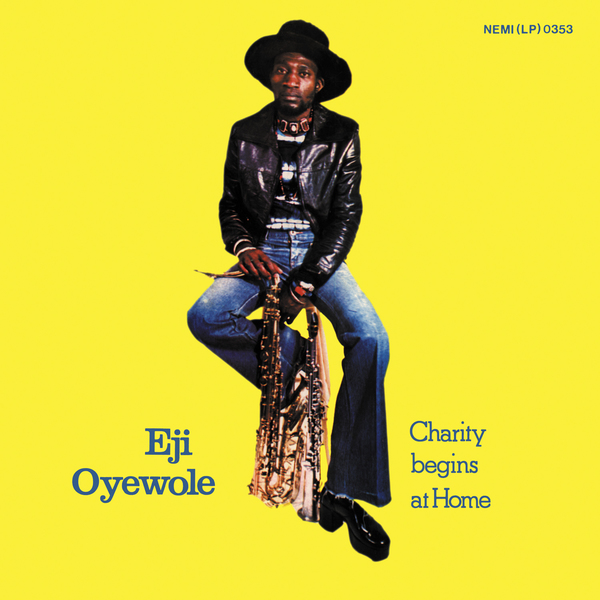
DIRTY WORK GOING ON-KENT AND MODERN RECORDS BLUES INTO THE 60s VOL 1.
Dirty Work Going On-Kent and Modern Records Blues Into The 60s Vol 1.
Label: Ace.
Format: CD.
As the fifties gave way to the sixties, musical tastes were changing and soul music’s popularity started to grow. By then, new labels were being launched across America and labels like Stax, Atlantic and Motown were among the most successful soul labels. They were hit-making machines and also released countless classic albums during what was a golden era for soul.
By the end of the sixties, soul was more popular than blues music. This had been unthinkable a decade earlier as it had been part of the soundtrack to the fifties and many blues records were big sellers. That was no longer the case and soul had overtaken blues in the popularity stakes. The times they were a changing and so was music.
Despite this, there was a still an audience for the blues during the sixties and labels like ABC-Paramount and their imprint Bluesway plus Chess, Kent and Modern were home to some of the giants of the blues. However, the singles and albums they released sold in smaller amounts or passed many record buyer’s by. Some critics thought that the blues music was no longer relevant and it was destined to become a footnote in musical history.
That never happened and fifty years the blues is alive and kicking. New blues albums are being released each and every week. Some labels are reissuing blues albums from the sixties and early seventies which may have passed record buyers first time round. Other record companies are releasing blues compilations and this includes Ace. Their latest compilation Dirty Work Going On-Kent and Modern Records Blues Into The 60s Vol 1 which has been released to mark an important anniversary.
In 1999, the Japanese label P-Vine released the first instalment in its Modern/Kent Blues Treasures CD series. This was the first of four volumes which were limited editions of 300. Each of the compilations featured West Coast blues obscurities from the vaults of the Bihari Brothers’ labels. For some people this was the first time they had heard these tracks and was the start of a voyage of discovery.
Twenty-one years later and Ace have just released another compilation of blues that was recorded or released by the Bihari Brothers’ labels. This is Dirty Work Going On-Kent and Modern Records Blues Into The 60s Vol 1. It looks back at the West Coast blues between 1958 and 1970 and features twenty-six tracks. This include seven previously unissued tracks and eight that featured on the P-Vine compilations in 1999. There’s contributions from B.B. King, Big Jay McNeely, Billy Ray aka Fillmore Slim, Flash Terry, King Solomon, Larry Davis, Little Joe Blue, B.B. King and T-Bone Walker. They provide a reminder of the blues music being recorded by the Bihari Brothers’ labels during this period.
It’s best described as largely a mixture of B.B. King, funk, R&B and the social comment in the lyrics. By the time the music was being recorded the civil rights movement was trying to bring about change during what was one of the most turbulent times in American history Some of the blues being recorded for the Bihari Brothers’ labels reflects this. This includes some of the music on Dirty Work Going On-Kent and Modern Records Blues Into The 60s Vol 1.
Texan bluesman Billy Ray aka Fillmore Slim opens the compilation with the first of the unreleased track. This is a soul-baring version of Go Ahead (Take 3) which was recorded in 1962. So was his horn driven and swaggering cover of Fast Gun Annie which featured on the P-Vine compilation West Coast Modern Blues 1960’s in 1999.
King Solomon had been on serval smaller labels before signing to Kent. During 1966 he released New Figure as a single Dear Mr President which deals with the subject of conscription. On the B-Side was Mr. Bad Luck where he lives the lyrics.
Little Joe Blue recorded Understanding for Kent in 1967. However, this rueful look at the human condition wasn’t released until 1999 when it featured on the P-Vine compilation West Coast Modern Blues 1960’s. So was Jimmy’s Special an uplifting dance track that was recorded in 1967.
T-Bone Walker was one of the most important and innovative blues guitarists. He pioneered the electric guitar and was a flamboyant showman who inspired Jimi Hendrix. He wrote and released Hey Hey Baby on Modern in 1965 which features an impassioned vocal and showcases his skills as a guitarist. On the B-Side was another of his compositions, Should I Let Her Go? It’s slow and moody and his vocal is a mixture of doubt, sadness and hurt. Then there’s Jealous Woman which was recorded in 1964 and features a hurt-filled vocal. Despite its quality it wasn’t released until 1992 on the Cascade Records’ box set 60 Great Blues Recording. Another recording from 1964 was Love Will Lead You Right which was s only released on the Ace compilation Blues Around Midnight in 1988. Belatedly this underrated blues returns for a well deserved encore.
Larry Davis like many blues guitarists had been heavily influenced by B.B. King. However, unlike many blues guitarists he used a lot of effects. He contributes It Can Only Hurt For So Long which was recorded in 2020 and has never been released before. It’s a similar case with the beautiful paean Something About You Baby (Take 7). Both were recorded at the same session and are a reminder of a talented bluesman whose music is often overlooked.
Flash Terry’s first contribution is a slower alternate take of On My Way Back Home. It’s never been released before and is a welcome addition to the compilation. So is One Thing We Know which was written by Flash Terry and released as a single on Kent in 1958.
Stacy Johnson recorded an extended version of Duke Coleman’s Consider Yourself for Kent. However, it was another track that lay unreleased until 1999 when it made a belated debut on the P-Vine compilation West Coast Modern Blues 1960’s.
Saxophonist Big Jay McNeely wrote Blues In G Minor (Blues Guitar) which was on the B-Side of Deacon’s Hop when it was released by Modern in 1969. He plays a starring role as he unleashes a blazing solo on this glittering hidden gem.
B.B. King is the other bluesman on Dirty Work Going On-Kent and Modern Records Blues Into The 60s Vol 1. He contributes Down Now (Take 3) another of the unreleased tracks on the compilation and a reminder of one of the most popular bluesmen.
For anyone with even a passing interest in blues music Dirty Work Going On-Kent and Modern Records Blues Into The 60s Vol 1 is a compilation that’s well worth buying. The twenty-six tracks were recorded between 1958 and 1970 and there’s seven previously unissued tracks and eight that featured on the P-Vine compilations in 1999. Most of these tracks were recorded during a time when blues music’s popularity was on the decline. However, one thing that wasn’t declining and that’s the quality.
Proof of that is the music on Dirty Work Going On-Kent and Modern Records Blues Into The 60s Vol 1 and especially the tracks by Billy Ray aka Fillmore Slim, King Solomon, T-Bone Walker, Larry Davis, Big Jay McNeely and B.B. King. They’re part of what’s one of the best blues compilations of 2020 and later this year Ace will release the second volume If I Have To Wreck LA which features Texan blues. It’s got a lot to live up to given the quality of music on Dirty Work Going On-Kent and Modern Records Blues Into The 60s Vol 1, which is also the perfect primer to West Coast blues.
Dirty Work Going On-Kent and Modern Records Blues Into The 60s Vol 1.
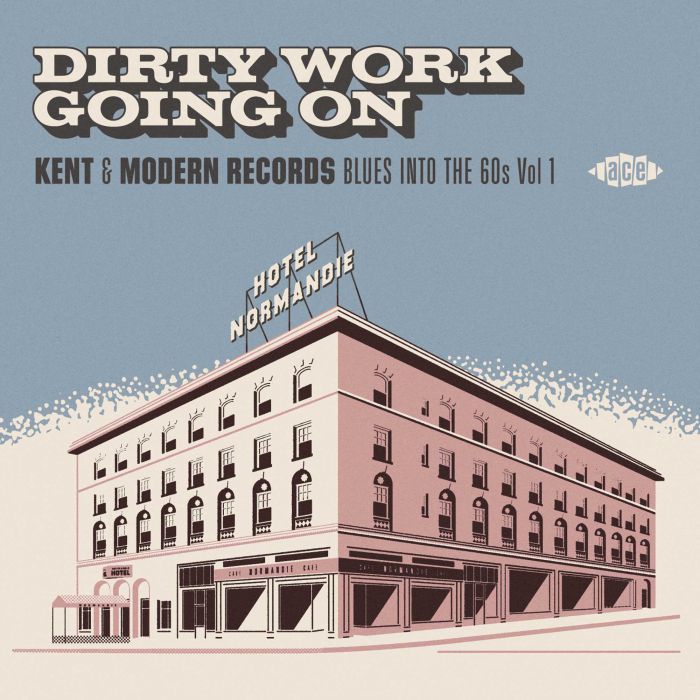



NEW BREED R&B-SATURDAY NIGHT SPECIAL.
New Breed R&B-Saturday Night Special.
Label: Kent Dance.
Format: CD.
In 2001, Ady Croasdell coined the phrase New Breed R&B when he was compiling a new compilation for Kent Dance. This was New Breed R&B: Soulful 60’s Blues For Today’s Dancers, which featured a selection of songs from the original Kent and Modern labels. When it was released in the summer of 2001, little did compiler Ady Croasdell realise that this was the first instalment in another long-running and successful series.
Nineteen years later Kent Dance have just released New Breed R&B-Saturday Night Special, which is the seventh instalment in the series. It was compiled by Ady Croasdell and features another twenty-four dance floor fillers. Seven of the tracks have never been released before, while another six were made their debut on previous Ace Records’ compilations. They return for a well deserved encore on New Breed R&B-Saturday Night Special.
Just like previous instalments in the series there’s contributions from familiar artists and groups. They’re joined by some new names. There’s also some rarities and hidden gems on New Breed R&B-Saturday Night Special. It features contributions from Aaron Collins and The Teen Queens, The Corvairs, Prince Conley, Freddie Williams, Margaret Lewis, Johnny “Guitar” Watson, King Solomon, Pee Wee Foster, Jarvis Jackson, Tony Clarke and Curly Mays. They recorded tracks for labels like Arock, Carnival, Chant, Cleveland, Fascination, Galaxy, Graham, Modern, Stax and Sylvia. For fans of the New Breed R&B series it’s a welcome release.
Opening New Breed R&B-Saturday Night Special is Every Saturday Night by Aaron Collins and The Teen Queens. It’s one of the unreleased tracks and was recorded in 1966 for Modern. By then, Aaron Collins had been a member of the LA group The Flares and had established himself as a songwriter. This was his last session with The Teen Queens, which featured his sisters Rosie and Betty. Tragically they both died just a few years later. They add punchy harmonies that play a part in the sound and success of this hidden gem of a dancer, that was covered by Ray Charles in 1972.
In 1961, Memphis born bluesman Prince Conley had a session booked at Stax. Taking charge of production that day was Chips Moman and it was guitarist Steve Cropper’s first session for the label. Four tracks were recorded but they were all shelved. This included Ain’t That Good which made its debut on 4,000 Volts Of Stax in 1995. Twenty-five years later and this underrated bluesy dancer from Prince Conley returns for a well deserved encore.
Henry “Hank” Graham already owned and ran a successful restaurant and club in LA when he decided to launch his own record label. His first signing to the Hangra Records was Esko Williams who released Sneaking and Cheating in 1962. It was the only single the label released and the Graham label was launched in 1963. Tucked away on the B-Side to I Don’t Think (There Could Be Another You) was another underrated R&B dancer Triple Zero. It’s a great find and a welcome addition to the compilation.
Margaret Lewis was just eighteen when she released her debut single No No Never on Myra Smith’s LA-based RAM Records. Two years later she travelled to Nashville and backed by some top session players cut a cover of Melvin Underwood’s Something’s Wrong Baby. They play their part in a tough, swinging slice of R&B that features a vocal powerhouse from Margaret Lewis. Despite its quality it failed to find an audience when it was released in 1961.
Paso Records was founded in the Windy City of Chicago by musical entrepreneur Richard Stamz. One of his signing was a local singer Flora D who recorded You Gonna Cry as a single in 1961. Hidden away on the B-Side was Way Out Baby where Flora D is transformed into a blues shouter on a mid-tempo track that features guitarist Freddy Robinson.
Big Charley and The Romans recorded You’re Gonna Need Me for the Hilltop label in 1961. It was produced by Shelley Haims at Audio Recording, in Cleveland, but the song lay unreleased until 2016. That was when Hilltop Records released Can’t Even Enjoy My Home as a single. On the B-Side was You’re Gonna Need Me which makes a welcome return on New Breed R&B-Saturday Night Special.
Johnny “Guitar” Watson is remembered as one of the great R&B and electric blues guitarists. His career began in the fifties and in 1964 he wrote and recorded Wait A Minute. It was released later that year on the Highland label but wasn’t a commercial success. Despite that, it’s a reminder of a legendary guitarist and showcases his vocal prowess which is often underrated.
By November 1966, King Solomon was signed to Kent and entered the studio and recorded several takes of Almost Midnight. After the session the track was shelved and King Solomon left the label. In 1999, Almost Midnight featured on the P-Vine compilation West Coast Modern Blues 1960’s Volume 3. However, this time around, it was Take 3 of this moody and bluesy hidden gem that was chosen and features on New Breed R&B-Saturday Night Special.
Pat Garvis recorded the Zelda Saunders composition Turn The Lamps Down Low for the Freida label in 1963. It features an impassioned vocal and an arrangement that epitomises everything that’s good about early sixties R&B. It’s also one of the rarest singles on the compilation.
When Jarvis Jackson released his debut single Head Doctor on Chant, in 1963, he was known as Gay Meadows. His manager Bill Haney felt he needed a more soulful sounding name and Gay Meadows became Jarvis Jackson. In 1966 he was meant to release The Long John on the Sims Records but it was mistakenly pressed as The Long Dog. This was eventually corrected and much later, The Long John resulted in a new dance craze that filled dancefloors across Europe.
Way before Tony Clarke signed to Chess Records, he was signed to Fascination, and recorded Cry which was released as a single in 1961. On the B-Side was the slick and soulful dancer Love Must Be Taboo.
Curly Mays is often described as Clarence “Gatemouth” Brown’s nephew. However, just like his uncle he was a talented guitarist. He also unleashed an array of impressive tricks when he played live. This included playing his guitar with his toes as he read a newspaper. In 1964 he sent five tracks to the Carnival label, including three instrumentals. The label decided to release one of the vocal sides as a single. This was I’m Walking On, a soulful slice of R&B that also showcases Curly Mays’ guitar playing. However, one can only wonder what would’ve happened if one of the flamboyant showman’s instrumentals had been released as a single?
It’s never easy for the compiler of a long-running and successful compilation series to keep finding tracks that are as good as the ones on the previous volumes. Often, the first few volumes have used up the best tracks and it’s downhill after that. That isn’t the case with the New Breed R&B series.
Compiler Ady Croasdell knows where to look for the best in New Breed R&B. However, he has to dig deep to find singles, B-Sides, alternate takes and unreleased tracks that were released between 1961 and 1966. There’s contributions from some old friends, familiar faces and new names. Just like previous instalments in the series Ady Croasdell has unearthed some hidden gems and rarities. When all this is combined the result is New Breed R&B-Saturday Night Special, which is another veritable musical feast and the latest instalment in a compilation series that looks likes it’s going to run and run.
New Breed R&B-Saturday Night Special.

GIRLS WITH GUITARS KNOW WHY!
Girls With Guitars Know Why!
Label: Ace Records.
Format: LP.
There are very few compilation series that are still going strong after thirty-one years. Often, the compiler has run out of material or musical tastes have changed. However, Ace Records’ Girls With Guitars compilation series is still going strong after thirty-one years and six volumes. The most recent instalment in this long-running and successful series Girls With Guitars Know Why! It has just been released on transparent violet vinyl and features fourteen tracks from the golden age of girl groups and she pop.
This golden age began around 1964 and continued right through to the dawn of the seventies. The fourteen tracks on Girls With Guitars Know Why! were recorded between 1965 and 1970 in Britain, America and New Zealand by guitar-wielding groups like Goldie and The Gingerbreads, The Belles, The Chymes, The Chicks, The Bea’s, The Debutante, She and Girls Take Over. They’re joined by Glenda Collins, Sandy Edmonds and Denise on a compilation that includes everything from frat rock and she pop to garage rock. On each track that compiler Mick Patrick has chosen guitars are to the fore on Girls With Guitars Know Why!
Opening the compilation is Look For Me Baby by Goldie and The Gingerbreads. They were formed in New York in 1962, and released their debut single Skinny Vinnie in 1964. When they travelled to the UK they signed to Decca and in January 1965 had a hit with Can’t You Hear My Heartbeat. After this, Shel Talmy became their producer and the group recorded a number of songs that were never released. This included their cover of the Ray Davies composition Look For Me Baby. It was belatedly released on the Kinked! (Kinks Songs and Sessions 1964-1971) compilation in 2016 and this oft-overlooked dancer makes a welcome return on Girls With Guitars Know Why!
Side One.
The Belles were formed in South Florida by fourteen year old guitarist Debbie Teaver. She was joined by drummer Pat Hunt and sisters May and Marina Perez who also played guitar. Soon, the nascent group was playing at the local air force base and at dances for teenagers. When the group recorded a demo, it was heard by Mana Productions who asked the group to record a single. They recorded a Melvin which is a feminised cover of Van Morrison’s Gloria. It’s without doubt the rarest record on the compilation and nowadays, changes hands for upwards of $500.
Glenda Collins recorded her cover of John D. Loudermilk’s Thou Shalt Not Steal with Joe Mme who arranged and accompanied her. Part of his band was a young guitarist called Richie Blackmore. His guitar plays an important part in this driving, stomping anthem that was released on HMV in 1965. It’s one of the highlights of the compilation.
The Chymes were a short-lived girl group from Santa Barbara that featured three sisters. In 1966 they released their one and only released single on Ruth Conte’s Chattahoochee Records. This was the double-A side He’s Not There Anymore and Quite A Reputation which has been included on the compilation. It’s a welcome addition with jangling guitars, a swirling Hammond organ and the cascading harmonies accompanying Candice’s lead arrangement.
Closing side one is Come See Me by Sandy Edmonds who was born in Ormskirk, Lancashire, England and emigrated to Takapuna, New Zealand when she was fifteen. Just a few months later she was discovered by Eldred Stebbing the owner the Zodiac label singing in a youth club. He signed her to his label and she opened for The Beatles at Auckland Town Hall in 1964. Two years later, in 1966, Sandy Edmonds reinvents The Pretty Things’ Come See Me and swaggers her way through this fuzzy makeover of a familiar song.
Side Two.
Many people will know Denise Kaufman as Mary Microgram, who was one of Ken Kesey’s Merry Pranksters. She studied at Berkeley College and was originally a folk singer. Her career was transformed when she met jazz musician Lonnie Hewitt. That was when she wrote a song about her ex-boyfriend Jann Wenner, who went on to cofound Rolling Stone magazine. Denise as she was billed snarls her way through Boy, What’ll You Do which was released as a single on the Wee label in 1966. A year later, she cofounded Ace Of Cups which nowadays is regarded as one of the first all-female rock bands.
Between 1965 and 1970 The Chicks enjoyed a number of hit singles in their native New Zealand. They released a defiant cover of Lee Hazelwood’s The Rebel Kind on Impact Records in 1966. It was the only single they released for the label. Despite that, it’s one of the hidden gems in the group’s back-catalogue.
Ruth Conte signed a number of girl groups to her label Chattahoochee Records. Some of them were more successful than others. Great things were forecast for The Bea’s 1966 single Nothing Can Go Wrong. Sadly, success eluded what’s one of the finest examples of she pop on the compilation, and it was the only single they released on the label.
The Debutantes were formed in Detroit, Michigan in 1964 by fourteen year old singer Jan McClellan. She was a student at Detroit High School, which was where she met Ted Nugent. His opening words were: “girls can’t play.” Two years later, in 1966, The Debutantes had released their debut single Shake A Tail Feather. By the time they recorded a cover of Barry Mann and Cynthia Weil’s We Gotta Get Out Of This Place in 1968 there had been a number of changes in the group’s lineup. Sadly, the song was never released until 2018 when it featured on a compilation released by BeatRocket entitled The Debutantes. It’s proof that girls can play and Ted Nugent was wrong, very wrong.
Closing Girls With Guitars Know Why! is Stardust Come Back by Girls Take Over. Initially, the group featured Rinie, Wendy and Cindy Wilhemis from Wisconsin. Later, they were joined by bassist Geri Gibson. This was the lineup of the group that recorded and released Stardust Come Back on Pentagon Records in 1969. It’s a quite magical and beautiful way to close the album and a fitting tribute to Cindy Wilhemis who passed in 2017 just before the release of Girls With Guitars Take Over!
Thirty-one years after the released of the first instalment in the Girls With Guitar series Ace Records recently released the sixth volume in this long-running and successful series. This was Girls With Guitars Know Why! which has been released on transparent violet vinyl. It’s definitely an album that stands out from the crowd. Especially given the quality of music. There’s a reason for this.
Rather than making the Girls With Guitar series an annual occurrence, Ace Records have decided to concentrate on quality rather than quantity. It’s nearly three years since the previous volume Girls With Guitars Take Over! was released. Just like its predecessor the latest instalment in the series doesn’t disappoint. No wonder, as Girls With Guitars Know Why! features fourteen songs from the golden age of the girl group and she pop. They feature familiar faces, new and a sprinkling of hidden gems in what’s another welcome addition to the Girls With Guitars’ series.
Girls With Guitars Know Why!
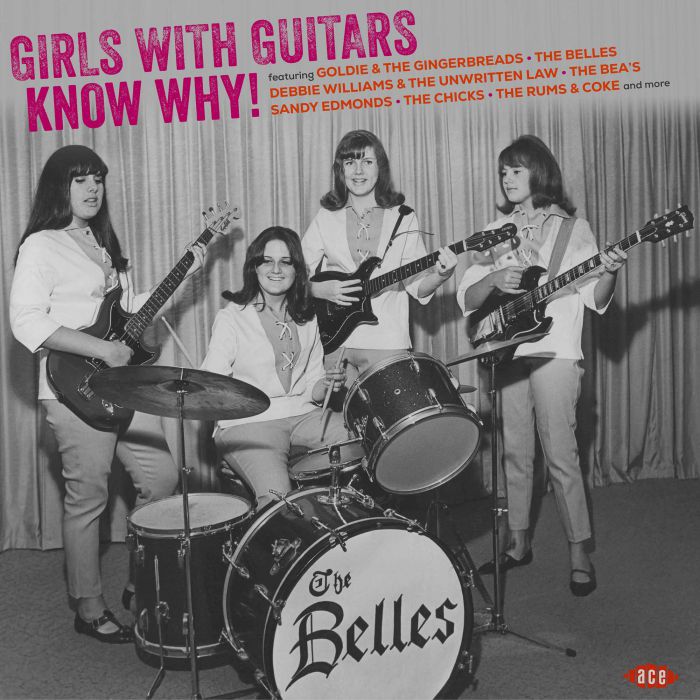
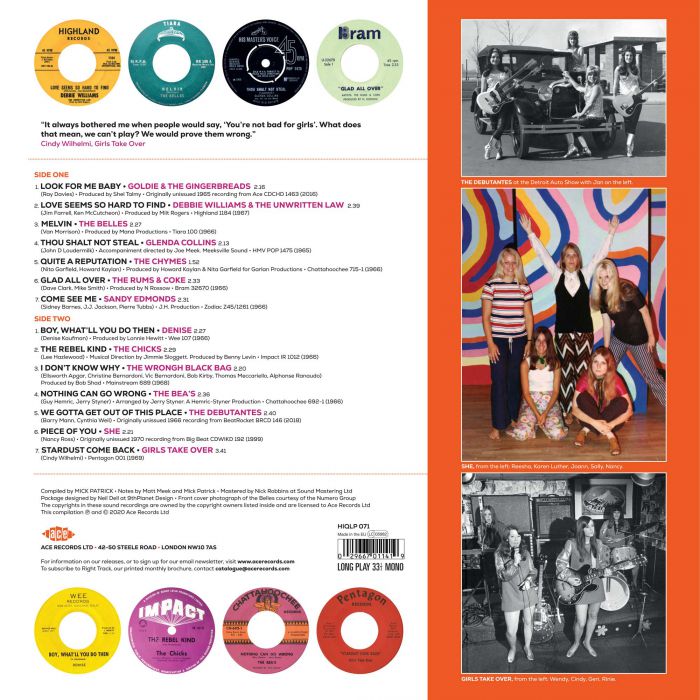
SAINT ETIENNE PRESENT SONGS FOR THE FOUNTAIN COFFEE ROOM.
Saint Etienne Present Songs For The Fountain Coffee Room.
Label: Ace Records.
Format: CD.
Recently, Ace Records released the much-anticipated third instalment in the “Saint Etienne Present” series which are best described as soundtracks for places which are either real and imaginary. This time around, Sarah Cracknell, Bob Stanley and Pete Wiggs have compiled Saint Etienne Present Songs For The Fountain Coffee Room which is their soundtrack to an imaginary bar in mid-seventies LA. However, it’s no ordinary bar and is one that is frequented by the great and good and the glitterati in mid-seventies LA.
The Fountain Coffee Room is the perfect place for LA’s beautiful people to meet away from the public eye. Each day, the staff watch as stars of the small and silver screen scurry in hoping not to be seen by Tinseltown’s gossip writers. They hide away amid the impressive array of potted drinking cocktails and for the first time in a long time hope not to be seen. Sometimes it was actors and actresses meeting while they enjoy a break from filming a new television show or film. Other times, it was singers-songwriters from Laurel Canyon who have been recording a new album and were meeting a writer or poet. It was more a case of who hasn’t spent time in The Fountain Coffee Room. There’s a reason for that. They can be themselves away from the public eye and enjoy the music that plays in the background.
Nobody knows where the music comes from and they don’t like to ask? Some believe it’s a little-known FM radio station high above LA that plays a mix of mid-tempo blue eyed soul, Laurel Canyon singers-songwriters, top-down soul, vanilla funk and yacht rock. Others believe that the barman spends his spare time making mix-tapes which provide the soundtrack to countless rendezvous’ in The Fountain Coffee Room. Nobody knew and everybody was too cool to ask.
Now over forty years later the music on Saint Etienne Present Songs For The Fountain Coffee Room recreates that magical mid-tempo soundtrack that will transport the listener back in LA in the mid-seventies. No wonder with tracks from Bill Quateman, Marvin Gaye, Seals and Crofts, Daryl Hall and John Oates, Utopia, Delegation, Millie Jackson, Bobbie Gentry, Stephen Bishop, Boz Scaggs. Tamiko Jones and Dr Buzzard’s Original Savannah Band.
Opening Saint Etienne Present Songs For The Fountain Coffee Room is Only Love which was a hit for Bill Quateman in 1972. It featured on his 1973 eponymous debut album, which sold over 100,000 copies when it was released by Columbia. That’s no surprise given the quality of songs like Only Love. It’s melodic with a strong hook and slick arrangement with dancing strings and was one of the highlights of the album.
When Seals and Crofts released their eighth studio album Get Closer on Warner Bros in 1976 it reached thirty-seven in the US Billboard 200 and was certified gold. By then, the title-track had been released as a single and reached number six on the US Billboard 100. It features the vocals of Carolyn Willis formerly of Honey Core. She plays her part in this laid-back and soulful song which was sampled by Busta Rhymes in his 1997 hit Put Your Hands Where My Eyes Could See.
When Daryl Hall and John Oates released their debut album Whole Oats on Atlantic in 1972 it featured Lilly (Are You Happy). This was a tantalising taste of the blue-eyed soul the Philly-based duo would go on to release over the next few years.
Delegation were formed in Birmingham in 1976 and signed to State Records. Two years later released one of their finest singles Oh Honey which was produced by Ken Gold. It’s a slow, smooth and romantic jam that gave the group a top ten hit in the UK.
For her 1976 album Free and In Love Millie Jackson covered Homer Banks and Carl Hampton’s House For Sale. It’s given a dancefloor friendly makeover and comes complete with handclaps. It was released as a single in 1976 but just in the UK and is an oft-overlooked track from Millie Jackson’s discography.
By the mid-seventies Bobbie Gentry was signed to Warner Bros. That’s when she recorded Thunder In The Afternoon which features a coquettish and sensuous vocal. Sadly, the song never found its way onto an album and made its debut on a Best Of compilation. This hidden gem returns for a well deserved encore on Saint Etienne Present Songs For The Fountain Coffee Room.
When Stephen Bishop recorded Save It For A Rainy Day Eric Clapton played lead and rhythm guitar while Chaka Khan added backing vocals. It was released by ABC Records as a single and reached twenty-two in the US Billboard 100 in 1976. This was the first of two hit singles from Stephen Bishop’s debut album Careless which was certified gold. The highlights of the album were the blue-eyed soul of Save It For A Rainy Day and the followup On and On.
In 1977, Boz Scaggs released his eighth album Down Two Then Left on Columbia. It reached number eleven in the US Billboard 200 and was certified gold. The second and final single from the album was Hollywood which stalled at forty-nine in the US Billboard 100. Despite this, it was the biggest single from the album, and is a carefully crafted and memorable moment from Boz Scaggs’ million-seller.
Sultry and sensuous describes Tamiko Jones’ 1975 hit single Touch Me Baby (Reaching Out For Your Love). It was produced by Tamiko Jones and released on Arista reaching sixty on the US Billboard 100 and twelve on the US R&B charts. This was the biggest hit of a career that spanned three decades.
Closing Saint Etienne Present Songs For The Fountain Coffee Room is Sunshower by Dr Buzzard’s Original Savannah Band. It’s taken from their 1976 eponymous debut album released on RCA Victor. This atmospheric and mellow slice of musical sunshine is the perfect way to close the compilation.
For the much-anticipated third instalment in the “Saint Etienne Present” series, Sarah Cracknell, Bob Stanley and Pete Wiggs have dug deep into their respective record collection and come up with twenty tracks from familiar faces, old friends and new names. These artists, duos and groups from America and Britain contribute the hits, misses, album cuts, hidden gems and oft-overlooked tracks that became Saint Etienne Present Songs For The Fountain Coffee Room. This lovingly curated compilation was recently released by Ace Records and is one of the best compilations of the summer of 2020. The reason for that is simple, the music.
Saint Etienne Present Songs For The Fountain Coffee Room features a magical mix of mid-tempo blue eyed soul, Laurel Canyon singers-songwriters, top-down soul, vanilla funk and yacht rock that is sure to bring back memories, and is akin to a journey back in time to LA in the mid-seventies.
Saint Etienne Present Songs For The Fountain Coffee Room.


CULT CLASIC: SUPER ELCADOS-TOGETHER IS ALWAYS A GOOD VENTURE-TAMBOURINE PARTY VOLUME 2.
Cult Classic: Super Elcados–Togetherness Is Always A Good Venture-Tambourine Party Volume 2.
During the early sixties, a musical revolution took place in Ghana, when musicians started combining elements of West African musical genres including highlife and fuji music which they fused with American funk and jazz. Playing an important part important part in this new genre which later, became known as Afrobeat, were chanted vocals, percussion and complicated converging rhythms. The result was an irresistible, potent and heady musical brew that later, would spread across West Africa.
By the early seventies, Fela Kuti and his band had just returned to Nigeria after a brief stay in America, where they had hurriedly recorded what later became The ’69 Los Angeles Sessions. The album had been recorded quickly, as a promoter had informed the Immigration and Naturalization Service that Fela Kuti and his band had no work permit. Fela Kuti was tipped off that the Immigration and Naturalization Service was about to swoop and decided to head home to Nigeria.
When Fela Kuti and his band arrived back in Lagos, Nigeria, he decided to rename his group The Afrika ’70. Fela Kuti’s next move was to found the Kalakuta Republic, which was a commune which soon, became home to the many people connected to The Afrika ’70. It also meant that Fela Kuti and The Afrika ’70 were always ready to practise and record music.
Within the Kalakuta Republic was a recording studio where Fela Kuti and The Afrika ’70 could work. By then, Fela Kuti was writing song were the lyrical themes ranged from love right through to the various social issues affecting Nigeria. Despite his concern for his fellow Nigerians, Fela Kuti, who was the leader of Kalakuta Republic, declared independent from the Nigerian State. That was still to come.
Having established the Kalakuta Republic, Fela Kuti and The Afrika ’70 began experimenting musically. They regularly incorporated disparate musical genres into their This new sound was innovative, and also proved to be influential, when Fela Kuti established a new club that he called Afrika Shine.
That was where Fela Kuti and The Afrika ’70 first introduced Afrobeat to Nigeria in 1970. Between 1970 and 1975, Fela Kuti and The Afrika ’70 had a residency at Afrika Shine, in Lagos, and people from all over Nigeria flocked to the club. This included many Nigerian musicians who were inspired by Fela Kuti and The Afrika ’70.
During Fela Kuti and The Afrika ’70 five year residency at Afrika Shine, Afrobeat grew in popularity as bands were formed all across Nigeria. This included Super Elcados, who a year after Fela Kuti and The Afrika ’70 residency at Afrika Shine ended, released their debut album Togetherness Is Always A Good Venture-Tambourine Party Volume 2 on EMI Nigeria.
Just like many groups that were formed during the first half of the seventies, Super Elcados had been inspired by Fela Kuti and The Afrika ’70 and the first wave of Nigerian Afrobeat pioneers. However, Super Elcados weren’t content to blindly follow other bands, and were determined to take Afrobeat in a new direction.
This Super Elcados did as they started to play live and hone their unique and inimitable sound. While the basis for their music was Afrobeat, it also funky, percussion, feel-good music. Super Elcados were soon a popular live band capable of making music that would get any party started.
With Super Elcados proving popular wherever they played live, it wasn’t long before their irresistible, potent and heady musical brew caught the attention of record companies. This included EMI Nigeria, who managed to secure the signature of Super Elcados.
Having secured the signature of Super Elcados, executives at EMI Nigeria were keen that the band began work on their debut album. This became Togetherness Is Always A Good Venture-Tambourine Party Volume 2.
The eight tracks that Super Elcados decided to include on Togetherness Is Always A Good Venture-Tambourine Party Volume 2 were a mixture of songs full of social comment, feel-good music, paeans and the poignant Tribute To Murtala Mohammed. These eight tracks were recorded by the nine members of Super Elcados.
When Super Elcados began recording the album, their rhythm section featured drummer and percussionist Baba Mustapha, bassist Tony Nosika and guitarist and organist Geoffrey Johnson. They were joined by lead guitarist Frank Martins, Dave Crown Olugbade who played electric piano and tenor saxophone and percussionist conga player Joe Edem Bassey Edet. Super Elcados’ horns came courtesy of trumpeter Bola Adex and valve trombonist Effiong Jarrett. Meanwhile, lead vocalist Christe Black was accompanied by the other members of Super Elcados. Gradually, Togetherness Is Always A Good Venture-Tambourine Party Volume 2 started to take shape, and was ready for release in 1976.
When Togetherness Is Always A Good Venture-Tambourine Party Volume 2 was released, the album sold steadily, but wasn’t the huge success that EMI Nigeria had hoped. Record buyers had missed out on what was a funky and sometimes soulful album of Afrobeat. For the members of Super Elcados this was a disappointment.
Especially given the quality of music that features on Togetherness Is Always A Good Venture-Tambourine Party Volume 2. The album opener Tambourine Party finds Super Elcados at their funkiest and melodic, as the track takes on a party atmosphere. Afro Funk finds Super Elcados locking into a groove during this glorious and memorable fusion of Afrobeat and funk, that sometimes, becomes jazz-tinged and rocky. Straight away, Xray Gun sound as if it’s been inspired by James Brown as a funky, soulful dancefloor filler takes shape. Super Elcados drop the tempo on the beautiful, soulful paean How Much I Love You. Horns and harmonies accompany a heartachingly beautiful vocal.
It’s all change on Ejole, which starts hesitantly before a funky, and later soulful, joyous and rocky slice of Afrobeat starts to take shape. Tribute to Murtala Mohammed is a poignant and soulful track that sounds as if it has been inspired in part by Gil Scott-Heron. Super Elcados change things around on Get up and Do It Good where their rhythm and horn section playing leading roles on a funky, soulful song that is one of the album’s highlights. The tempo drops on Price Of Fame, a thoughtful but funky Afrobeat instrumental that closes Togetherness Is Always A Good Venture-Tambourine Party Volume 2.
When Super Elcados released Togetherness Is Always A Good Venture-Tambourine Party Volume 2 in 1976, their carefully crafted and accomplished genre-melting album failed to find the wider audience it so richly deserved. That was a great shame as it was an album without a weak track.
Super Elcados took Afrobeat and funk as their starting point, and combined elements of jazz, rock and soul on Super Elcados released Togetherness Is Always A Good Venture-Tambourine Party Volume 2. In doing so, they created eight tracks that veered between feel-good that was joyous, uplifting and irresistible to beautiful, poignant and soulful. The members of Super Elcados had combined Afrobeat with the best of American music and in doing so, created an album that was funky, soulful, melodic, memorable and guaranteed to get any party started. If only record buyers had given the album a chance.
Three years later, and Super Elcados returned in 1979 with This World Is Full Of Injustice on EMI. It was another quality album which failed to find the audience it deserved. The album proved to be Super Elcados’ swansong.
Later in 1979, a new group Elcados released their debut album What Ever You Need. Sadly, that was the only album this short-lived group released.
Forty-four years after the release of Togetherness Is Always A Good Venture-Tambourine Party Volume 2 has a cult following among some DJs, record collectors and connoisseurs of Afrobeat. Especially, anyone who likes their Afrobeat funky, soulful, melodic and memorable. If they do, then Super Elcados’ album Togetherness Is Always A Good Venture-Tambourine Party Volume 2 won’t disappoint and is guaranteed to get any party started.
Cult Classic: Super Elcados–Togetherness Is Always A Good Venture-Tambourine Party Volume 2.
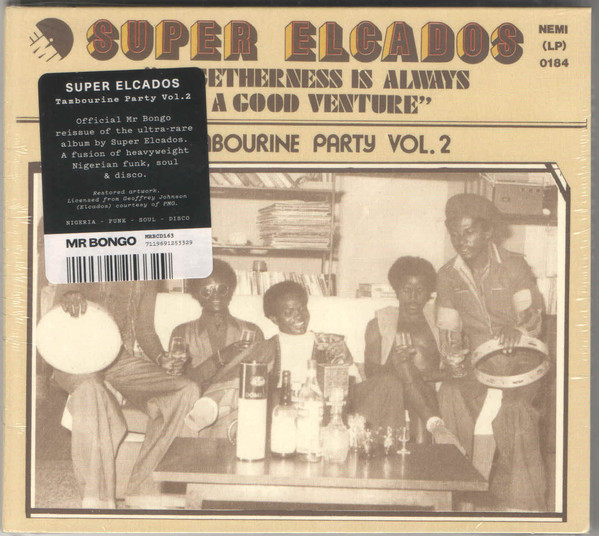
EL POLEN-CHOLO (MUSICA ORIGINAL DE LE BANDA DE SONIDO).
El Polen-Cholo (Música Original De La Banda De Sonido).
When El Polen was formed by brothers Juan Luis and Raul Pereira in 1969, little did anyone realise that their new band would become one of the most important and influential in the history of Peruvian music. That was until El Polen released their genre-melting debut album Cholo in 1972 where they fuse Andean music, folk and psychedelia. This new genre-melting was ambitious and groundbreaking and would influence a new generation of bands in the future. By then, El Polen had come a long way in just three short years.
The El Polen story began three years earlier in 1969 when brothers Juan Luis and Raul Pereira decided to form a new band. They had decided that their new band would head in a new direction and make music that was different to their previous band. By then, the Pereira brothers realised that Peruvian music was about to change.
By 1969, the first wave of new Peruvian bands were combing beat music and surf sounds, which they played at Matinales, where concerts that took place on a Sunday morning. These concerts were always popular, and so were the bands that took to the stage. However, the music was starting to sound tired and like yesterday’s sound. What Peruvian music needed was a revolution.
Juan Luis Pereira was part of the burgeoning hippy movement and realised this, he and his brother Raul formed El Polen, and set about reinventing music in the new Peru. It was a very different country since 1968, and it was an exciting time for the Pereira brothers as they started their new band.
Peru was transformed in 1968, when a nationalist government was established by Juan Velasco Alvarado. This brought to an end the oligarchic state, which had previously ruled Peru. Suddenly, many people started to migrate from the country to the city, seeking a new life in the new Peru.
This coincided with new Andean singers and bands playing concerts in a coliseum located on the outskirts of a city. Many within the audience were those who had migrated from the country to the city, and they enjoyed the concerts that they attended.
Meanwhile, their was an upsurge of interest in Andean music, and sales of new recordings increased. The Andean sound which had first been recorded and promoted by Jose Maria Arguedas by the late-forties was growing in popularity. Soon, new bands were being formed and Andean sound became more popular than ever and the Peruvian musical industry expanded. However, Juan Luis and Raul Pereira had their own plans for Peruvian music.
As the sixties, gave way to the seventies, Juan Luis and Raul Pereira realised that the fusion of beat music and surf sounds many bands had been playing was yesterday’s sound and no longer as popular as it had once been. It was time for Peruvian music to change. The Pereira decided to fuse the sound of today with some of the music that they had heard growing up.
This included classical music, Peruvian waltzes and huaynos which had influenced and moulded the Pereira brothers in their formative years. So did Andean folklore music which would become part of El Polen’s sound. They were about to combine Andean music, folk psychedelia and rock, and this new genre-melting was groundbreaking. Nobody had ever tried this before and the members of El Polen were about to become musical pioneers.
By then, the members of El Polen had been on a journey which would help them improve as musicians and spiritually. El Polen had traveled to Cusco, where they learned more about Andean instruments and musical traditions. This was they saw as part of their continuing musical education, and having gathered new knowledge, El Polen began the next part of this two-part journey.
It took El Polen to Santa Eulalia high in the mountains above Lima, where they examined their burgeoning spirituality. After this, the members of El Polen were ready to change Peruvian music forevermore.
By then, the hippy movement had exploded in popularity as Peruvian music fans embraced psychedelia and sought altered states of consciousness. With the new hippy generation enjoying and embracing the new, alternative lifestyle and psychedelic music El Polen had a captive audience.
The members of El Polen had much in common with the people who they hoped would embrace their music. They had lived in a community, and shared many of the same values and beliefs. El Polen also hoped that the new hippy generation would embrace their music.
When El Polen took to the stage, they sought to eliminate the boundaries between rock and huayno. To do this, they deployed acoustic guitars, a cello, mandolin, percussion and quenas, as they combined Andean music, folk rock and psychedelia. This proved popular, and soon, El Polen was at the forefront of a new musical movement that was blossoming in Peru.
Given their popularity, it was only a matter of time before El Polen came to the attention of one of the Peruvian record companies. Virrey won the signature of El Polen who soon, began work on their debut album.
Cholo (Música Original De La Banda De Sonido).
For their debut album, El Polen was asked to write the soundtrack to the film Cholo (Música Original De La Banda De Sonido), which was based on the life of the famous Peruvian Soccer Player Hugo Sotil.
For Cholo (Música Original De La Banda De Sonido), El Polen wrote six new tracks, and covered Cholito Pantalion Bianco which was written by singer and songwriter Luis Abanto Morales. These seven tracks were recorded by the six members of El Polen.
As recording of Cholo (Música Original De La Banda De Sonido) began, El Polen’s lineup featured guitarist Juan Luis Pereira and his brother Raul who played guitar and took charge of the vocals. They were joined by cellist Juan Sebastián Montesinos, violinist Fernando Silva, percussionist Ernesto Pinto and Carlos Martínez who played mandolin. As Cholo (Música Original De La Banda De Sonido) took shape the six members of El Polen had no idea that they were about to make musical history.
Prior to the release of Cholo (Música Original De La Banda De Sonido) critics had their say on El Polen’s debut album. While El Polen’s debut album was well received and hailed as an ambitious and exciting release, it was only later that critics realised the importance of Cholo (Música Original De La Banda De Sonido).
It was a game-changer of an album, and Cholo (Música Original De La Banda De Sonido) proved not just to be innovative, but also influential. El Polen paved the way for other bands to fuse Andean music and rock and would influence several generations of bands and musicians.
Nowadays, Cholo (Música Original De La Banda De Sonido) is regarded as a landmark album in the history of Peruvian music. That is no surprise as El Polen was the first band to fuse traditional Andean music with folk and psychedelia and rock. They were also the first group to combine traditional Andean instruments with Western instruments.
This they do effectively from the opening bars of the near twelve-minute epic La Flora (tema De Cholo). It showcases El Polen’s considerable musical skills as they seamlessly combine disparate musical genres on what’s a tantalising taste of a truly talented group. So too does upbeat and joyous Cholito Pantalion Bianco.
Quite different is the dramatic, cinematic and emotive Paisajes De Quenas which features traditional Peruvian instruments. They combine with the swirling strings as the cello and violin combine during the evocative and irresistible Valicha.
Sitting Dreaming is genre-melting lysergic track that has obviously been influenced by Western psychedelia. There’s even a nod to The Beatles midway through the track, which is one of the highlights of Cholo (Música Original De La Banda De Sonido). Tondero is another carefully crafted, genre-melting track where elements of classical music, folk, psychedelia and rock combine as Raúl Pereira delivers soul-baring vocal. Closing El Polen’s debut album is Secuencias De Organillo Y Poliphon, which is a short track where plink plonk sounds are part of track that is both cinematic and psychedelic and close the album on a high.
Cholo (Música Original De La Banda De Sonido) was a groundbreaking album that featured genre-melting music from musical pioneers El Polen. They had spent the best part of three years honing their sound and were more than ready to record an album.
Led by the Pereira brothers they recorded what was a landmark album where they fuse traditional Andean music with classical music, folk, psychedelia and rock. This had never been done before, and the members of El Polen were pioneers who were breaking new ground.
Soon, many bands would follow in their footsteps, during the next few years. However, nowadays, El Polen and their debut album Cholo (Música Original De La Banda De Sonido) is regarded as a turning point for Peruvian music. They had changed music forevermore and revolutionised Peruvian music in the process.
Sadly, El Polen only released one more album during the seventies, Fuera De La Ciudad in 1973, which was another innovative, landmark album. Just two years later, El Polen split-up in 1975, and that was the last that was heard of the band for twenty-one years.
In 1996, El Polen made a comeback, and three years later, self-released their third album Signos E Instrumentos. Sadly, not long after releasing their first album in twenty-six years El Polen split-up once again.
Fifteen years later, in 2014, there was an El Polen reunion, as they rolled back the years. Sadly, that was the last that was heard from one of the most important groups in the history of modern Peruvian music.
El Polen certainly made their mark on Peruvian music during the six-year period between 1969 and 1975. This began when they released their genre-melting landmark debut album Cholo (Música Original De La Banda De Sonido) in 1972, and followed this up with another classic album Fuera De La Ciudad which are El Polen’s finest releases.
El Polen-Cholo (Música Original De La Banda De Sonido).
CULT CLASSIC: BARIS MANCO AND KURTALAN EXPRES-ESTAFURULLAH…NE HADDIMIZE!
Cult Classic: Barış Manço-Estağfurullah…Ne Haddimize!
Even some twenty-one years after his sudden and tragic death, Barış Manço is still remembered as one of the pioneers of modern Turkish music. His career began in 1958, and continued right up until his death in 1999. During his long and illustrious career, Barış Manço was one of the founding fathers of Anatolian rock and helped popularise this hybrid of Turkish folk and rock. Soon, other artists were following in the footsteps of Barış Manço and Anatolian rock’s popularity was growing.
It helped that at the vanguard of this new musical movement was a musician that was a pioneer and was capable of creating ambitious and innovative music. That was the case throughout Barış Manço’s thirty-seven year recording career.
Throughout his career, Barış Manço was a truly prolific artist. That was the case since the early days when he recorded and collaborated with wide variety of groups and artists. This included Harmoniler, Jacques Denjean Orchestra, Les Mistigris, Kaygısızlar, Barış Manço Ve, Moğollar and Kurtalan Ekspres, who he first collaborated with in 1972.
Eleven years later, and Barış Manço and Kurtalan Ekspres recorded the album Estağfurullah…Ne Haddimize! which was released later in 1983. By then, Barış Manço was one of most successful Turkish musicians. His rise to the top had taken quarter of a century and it was changed days from the early days of Barış Manço’s career.
Barış Manço was born in Üsküdar, Istanbul, Turkey on the ‘ nd’ of January 1943 into a musical family. His mother Rikkat Uyanık has been a successful singer. Little did she realise that her son would later follow in her footsteps.
By the time Barış Manço was a pupil at Galatasaray High School he had already founded his first band, Kafadarlar. They mainly played to the students at nearby schools but this was enough to give him a taste of life as a musician.
Harmoniler.
When Barış Manço was nineteen, he formed a new band, Harmoniler and they accompanied him when he recorded his debut single, Twistin USA. It was released in 1962 with Do The Twist following later that year. The third and final single Barış Manço released with Harmoniler was Cit Cit Twist in 1963. These three singles were among the first Anatolian rock releases. Nowadays, Barış Manço is regarded as one the genre’s founding fathers.
After Barış Manço graduated from high school he decided to spend some time travelling across Europe.Initially, Barış Manço headed to France and spent some time in Paris. This was where he recorded a single with the Jacques Denjean Orchestra, Baby Sitter. It was released in 1964, but soon, Barış Manço was on the move again.
He then moved to Liege in Belgium where he enrolled and studied at the Royal Academy of Fine Arts in Liège, Belgium. This was where Barış Manço encountered the other members of Les Mistigris.
Les Mistigris.
Before long, Barış Manço had joined the band and they released three singles while he was a member. The first was Il Arrivera in 1966 with Bien Fait Pour Toi followed later that year. A third single Bizim Gibi was released in 1967 and by then, Les Mistigris’ popularity was growing and the band were playing much further afield. Les Mistigris were playing not just in Belgium but in France, Germany and Turkey. However, Barış Manço time with Les Mistigris came to an end in 1967.
Later in 1967, Barış Manço was badly hurt in a car crash. That was then that he decided to grow a moustache to hide a scar and this would eventually become one of Barış Manço’s trademarks and a familiar sight to music fans when commercial success and critical acclaim came his way. Before that, he formed a new a new band later in 1967, Kaygısızlar.
Kaygısızlar.
Unlike the last couple of bands Barış Manço had been a member of Kaygısızlar featured just Turkish musicians. During his travels, Barış Manço had worked with musicians from different countries and this hadn’t been easy, given the language barrier. This time, Barış Manço was joined in Kaygısızlar by Mazhar Alanson and Fuat Güner and they would spend the next two years together.
Kaygısızlar’s debut single Kol Düğmeleri was released in later 1967 and was followed in 1968 by Kızılcıklar, Bebek, Karanlıklar İçinde and Bogaziçi. By the end of the 1968, Kaygısızlar’s popularity had grown and they had graduated from playing in venues in Turkey to touring internationally. Barış Manço’s new band had come a long way in a short space of time.
As 1969 danwed, Kaygısızlar released Runaway and followed this with Aglama Değmez Hayat and Kağızma. This proved to be Kaygısızlar’s swan-song. The band split-up in 1969 when Mazhar Alanson and Fuat Güner told Barış Manço that they didn’t want to move and live abroad. After eight singles, Kaygısızlar were no more. However, as the sixties gave way to the seventies, Barış Manço founded a new band, Barış Manço Ve.
Barış Manço Ve.
The newly founded Barış Manço Ve headed into the studio to record their debut single during early 1970. This multinational group’s debut single was Dağlar Dağlar (Mountains, Mountains)! When it was released later in 1970, the single sold in excess of 700,000 copies.
Buoyed by the success of their debut single, Barış Manço Ve released their debut album Dünden Bugüne…in 1971. Alas, it was the only album Barış Manço Ve would release. Despite being a successful band its founder was ready to move on.
Moğollar.
Next stop for Barış Manço was Moğollar who were one of the pioneers of Anatolian rock. They were formed in 1967 and were still growing strong when Barış Manço joined in 1971 and he featured on their 1971 single İşte Hendek İşte Deve. However, after this, Barış Manço decided to rejoin Kaygısızlar.
Kaygısızlar.
After reforming, Kaygısızlar only released one more single, Fil ile Kurbağa. It was released in 1972. However, after this, the members of Kaygısızlar moved on to new projects. Mazhar Alanson and Fuat Güner went on to form MFÖ. Meanwhile, Barış Manço formed another new band. This was Barış Manço and Kurtalan Ekspres.
Barış Manço and Kurtalan Ekspres-The Seventies.
Barış Manço’s latest band wasted no time beginning work on their debut single and Ölüm Allah’ın Emri was released in 1972. Little did anyone know that this fusion of Anatolian rock and psychedelia marked the debut single by one of the most innovative and influential Turkish bands of the seventies. They pioneered Anatolian rock and took the genre in new directions.
Initially, Barış Manço and Kurtalan Ekspres combined Anatolian rock and psychedelia. By 1973, Anatolian rock was evolving as Barış Manço and Kurtalan Ekspres moved the genre towards progressive rock. This became apparent when they released their first single of 1973, Lambaya Püf De. It was followed by Gönül Dağı later that year. Sadly, Barış Manço and Kurtalan Ekspres’ singles failed to find the audience they deserved. However, their music continued to be innovative and influence other bands.
This continued as Barış Manço and Kurtalan Ekspres released two new singles released during 1974. The first was Nazar Eyle which showcased a folk-tinged sound. Then Bir Bahar Akşamı took on a psychedelic sound. Each single was different from its predecessor. Despite this, commercial success continued to elude Barış Manço and Kurtalan Ekspres as 1974 gave way to 1975,
As a new year dawned, Barış Manço turned forty-two in 1975 and was hoping commercial success was just around the corner. Alas, when Barış Manço and Kurtalan Ekspres released Ben Bilirim as a single in 1975 the single failed commercially. However, Barış Manço had a plan and was ready for one last throw of the dice.
Later in 1975, Barış Manço and Kurtalan Ekspres were about to release their debut album, 2023. It was a genre-melting concept album where songs rubbed shoulders with instrumentals. 2023 was an album of groundbreaking music and when it was released in 1975 it was hoped that it would transform the fortunes of Barış Manço and Kurtalan Ekspres. Alas, the only countries where 2023 sold well were Romania and Morocco. The album topped the charts in both countries. Elsewhere, 2023 failed to find the audience it so richly deserved and for everyone involved it was a frustrating time. Sadly, things didn’t get any better for Barış Manço and Kurtalan Ekspres.

When Kurtalan Ekspres’ released Çay Elinden Öteye Rezil Dede as a single in 1976, it too failed commercially. By then, Barış Manço and Kurtalan Ekspres’ career was at a crossroads.
As a result, Barış Manço took stock of his and Kurtalan Ekspres’ career during 1977. The band had been together for nearly five years, but still hadn’t made a breakthrough. To buy themselves time, Barış Manço and Kurtalan Ekspres released a career retrospective Sakla Samanı Gelir Zamanı in 1977. They hoped that this would introduce a new audience to the band’s music while they completed their next album.
Two years later and Barış Manço and Kurtalan Ekspres returned with Yeni Bir Gün. It was released in 1979, and sonically and stylistically, followed in the footsteps of 2023. Sadly, it was an all too familiar story. Despite featuring ambitious and innovative music the album passed record buyers by. It was a similar story when Barış Manço and Kurtalan Ekspres released their first album of the eighties.
Barış Manço and Kurtalan Ekspres-The Eighties,
As the new decade dawned, Kurtalan Ekspres’ thoughts turned to their first album of the eighties. This was 20, another album that sonically and stylistically followed in the footsteps of 2023. The music was ambitious, crossing and combining disparate musical genres and influences. Despite that, the album failed commercially. However, commercial success was just around the corner for Kurtalan Ekspres.
After the disappointment of 20, Barış Manço and Kurtalan Ekspres began work on their second album of the eighties, Sözüm Meclisten Dışarı. It was the album which transformed the group’s fortunes.
When Sözüm Meclisten Dışarı was released in 1981 it was to widespread critical acclaim and it became Barış Manço and Kurtalan Ekspres’ most successful album. That was no surprise as it featured five hit singles, Alla Beni Pulla Beni, Arkadaşım Eşek, Gülpembe, Halhal and Dönence. After nine long years, Barış Manço and Kurtalan Ekspres were belatedly enjoying the commercial success that their music deserved.
The success of Sözüm Meclisten Dışarı and its singles resulted in music fans reevaluating Barış Manço and Kurtalan Ekspres’ earlier music. Before long, their popularity was soaring and they were one of the biggest names in Turkish music. However, Barış Manço and Kurtalan Ekspres couldn’t rest on their laurels and had to start work on their next album. This would become Estağfurullah…Ne Haddimize!.

Estağfurullah…Ne Haddimize!.
For the followup to Sözüm Meclisten Dışarı, Barış Manço began writing what eventually became Estağfurullah…Ne Haddimize! He wrote seven of the album’s eight tracks including Halil İbrahim Sofrası, Geçti Dost Kervanı Kazma, Balsultan, Aman Yavaş Aheste, Kol Düğmeleri and Eski Bir Fincan. Barış Manço also wrote the music to Selahaddin Eyyübinin Yeğeni Aslan Yürekli Rişarın Kızkardeşine Karşı. These songs were recorded in Istanbul during the summer of 1983.
Recording of Estağfurullah…Ne Haddimize! took place during July 1983. Barış Manço took charge of production, and played piano, organ, clarinet and synths. Among his array of synths, were an Omni 2, Minimoog and Prophet 5. Meanwhile, the members of Kurtalan Ekspres played a mixture of traditional and modern instruments. This included flautist Serdar Ertürk, and Caner Bora who played the davul, a type of bass drum. Bassist Ahmet Güvenç also played piccolo and added backing vocals. So did guitarist Bahadır Akkuzu and percussionist Celal Güven. Together, they recorded the eight songs during July 1983 that would become Estağfurullah…Ne Haddimize!.
Later in 1983, Estağfurullah…Ne Haddimize! was released and just like Barış Manço and Kurtalan Ekspres’ previous album sold well enough to reach the upper reaches of the charts. Estağfurullah…Ne Haddimize! also featured two hit singles, Halil İbrahim Sofrası and Kol Düğmeleri. The latter was a new version of Barış Manço’s first single Halil İbrahim Sofrası and was another song with an important moral message. This was a feature of many of Barış Manço’s songs by 1983, which was another successful year for Barış Manço.
Barış Manço had written another successful album Estağfurullah…Ne Haddimize!. Commercially and stylistically, it picked up where Sözüm Meclisten Dışarı left off, and ensured that Barış Manço and Kurtalan Ekspres’ success continued. Given the quality of music on Estağfurullah…Ne Haddimize! that was no surprise.
Halil İbrahim Sofrası opens Estağfurullah…Ne Haddimize!, and bursts into life. Guitars join the rhythm section as the arrangement flows smoothly and almost joyously along. Already it’s hard to resist the song’s charms. All of sudden it’s all change as an element of drama is injected when the organ and vocal enters. Soon, Barış Manço’s impassioned vocal delivers his moral message and harmonies accompany him. They prove the perfect foil and add to the drama. As they drop out, the arrangement continues to flow and glides along. Synth strings sweep joining with washes of Hammond organ as the piano plays and the rhythm section provide the heartbeat. Together they create music with a moral message where beauty and drama are omnipresent as folk and progressive pop are combined seamlessly.
The tempo drops on Geçti Dost Kervanı, drums are joined by a flute and soon, keyboards and percussion. They create the backdrop for Barış Manço’s heartfelt, emotive vocal. Meanwhile, the rhythm section play slowly and deliberately while a melancholy flute drifts in and out. It helps frame the vocal which oozes emotion in what’s a beautiful song.
Kazma is mixture of disparate and unlikely genres where everything from traditional folk to funk and even a hint of disco are combined with rocky guitars. It’s a potent and heady brew from the opening bars. That’s when folk gives way to funk which comes courtesy of the rhythm section and later, a clavinet. Meanwhilem synths strings sweep and provide part of the backdrop for a swaggering, powerful folk-inspired vocal. The next ingredient are blistering rocky and later funky guitars. They enjoy their moment in the sun as this irresistible genre-melting song takes shape and makes perfect musical sense. It’s a truly timeless dance track.
Balsultan finds the tempo dropping as a melancholy song begins to share its secrets. Keyboards and elegiac synths combines with the rhythm section and guitar. They play slowly as synths shimmer and glisten as the bass and guitar resonate. Barış Manço’s vocal is deliberate and has a tenderness. Even when the tempo increases and guitars, synths and the rhythm section combine. The arrangement briefly becomes funky before meandering along. From there, the arrangement ebbs and flows and continues captivating as it shows its different sides. Then at 4.50 the bass takes the track in the direction of funk. Synth strings sweep as the meandering arrangement becomes smooth and funky.
Chic inspired chiming guitars open Aman Yavaş Aheste before the rhythm section increase the funk factor. Soon, they’re joined by backing vocalists and then synths. By then the rhythm section and guitars have locked into the tightest of grooves. Handclaps synth horns are added, and augment the backing vocals. Meanwhile, everything falls into the place on this glorious and irresistible fusion of boogie, disco and funk. For anyone interested in either genre, this makes Estağfurullah…Ne Haddimize! a must have album.
Wistful flutes floats combine with keyboards and piano on Kol Düğmeleri. They’re joined by the rhythm section, as the arrangement slowly and deliberately meanders melodically along. Then when Barış Manço’s vocal enters, it’s tender, heartfelt and full of emotion. Behind him, the tempo quickens and the drama builds as he lays bare his soul on this beautiful ballad.
From the opening bars of Eski Bir Fincan, it’s obvious something special is about to unfold. It does, another beautiful ballad. The rhythm section and scrabbled guitar combine create the heartbeat, while percussion, keyboards and synths prove a beautiful backdrop. Again Barış Manço delivers the lyrics with feeling and then when his vocal drops out an effects laden guitar takes centre-stage. When the vocal returns, the arrangement flows, glides and glistens along, as elements of pop, funk and rock combine to create a beautiful, melodic and memorable ballad.
As Selahaddin Eyyübinin Yeğeni Aslan Yürekli Rişarın Kızkardeşine Karşı closes Estağfurullah…Ne Haddimize! it’s a case of all change. Percussion is to the fore before a shimmering flute is panned. Soon, it’s joined by a Hammond organ, synths and the rhythm section join the fray. They become part of a meandering, mesmeric genre-melting groove. The ebbs and flows, as instruments appear, disappear and later reappear. So do elements of folk, funk, progressive pop and rock. Later, electronica combines with the sound of a traditional marching band. Contrasts abound in this multilayered musical potpourri, which results in a captivating Oriental groove-jam. What better way to showcase the considerable talents of Barış Manço and Kurtalan Ekspres?
For anyone yet to discover the delights of Barış Manço and Kurtalan Ekspres, then Estağfurullah…Ne Haddimize! is the perfect starting place. It’s the perfect showcase for the combined and considerable talents of Barış Manço and Kurtalan Ekspres. They combine beautiful, heart-wrenching ballads with dance tracks. This includes the irresistible fusion of boogie, disco and funk that’s Aman Yavas! Aheste. Then there’s the album closer Selahaddin Eyyübi’nin, which is an Oriental groove-jam par excellence. Once it draws to a close, one can’t help but pressing play once again, and revelling in Estağfurullah…Ne Haddimize!’s delights all over again. No wonder.
It’s without doubt, one of Barış Manço and Kurtalan Ekspres’ finest albums. It finds Barış Manço deploying his dazzling array of analog synths which play an important part in the sound and success of Estağfurullah…Ne Haddimize! So does Kurtalan Ekspres’ mixture of traditional and modern instruments. They contribute to another groundbreaking album of genre-melting music.
Barış Manço and Kurtalan Ekspres take as a starting point Anatolian rock, which is a hybrid of Turkish folk and rock. To this they add elements of boogie, disco, electronica, folk, funk, Oriental and progressive pop. To this they add elements of jazz, progressive rock, psychedelia and rock. This groundbreaking musical potpourri became Estağfurullah…Ne Haddimize! which when it was released in 1983 became Barış Manço and Kurtalan Ekspres’ most successful album. However, the album failed to find an audience outside of Turkey and nowadays is regarded as a cult classic.
The success of Estağfurullah…Ne Haddimize! ensured that Barış Manço and Kurtalan Ekspres remained at the top of Turkish music. That was where he remained for the rest of his career until his sudden and tragic death in 1999. Since then, Barış Manço’s music has continued to influence and inspire a new generation of musicians. That’s no surprise.
Especially given the quality of music on Estağfurullah…Ne Haddimize! Not once do Barış Manço and Kurtalan Ekspres put a foot wrong musically on what’s without doubt, one of their finest albums, Estağfurullah…Ne Haddimize! It’s a truly irresistible and heady musical brew that features Barış Manço and Kurtalan Ekspres at their best on what was their Magnus Opus, Estağfurullah…Ne Haddimize!
Cult Classic: Barış Manço-Estağfurullah…Ne Haddimize!
DAWAN MUHAMMAD-DEEP STREAM.
Dawan Muhammad-Deep Stream.
Label: High Jazz.
Format: LP.
By 1979, jazz wasn’t as popular as it was during the fifties and early sixties. That was the golden age for jazz, and saw countless classic albums released on labels like Blue Note, Verve and Impulse! These albums sold in large quantities and were profitable for the record companies that released them. However, by the mid-sixties, jazz was no longer as popular as it had been. Musical tastes were changing and jazz like the blues had to evolve or risk becoming irrelevant.
By the time of John Coltrane’s death in 1967 rock was by far the most popular musical genre in America. A headline in Downbeat magazine warned that: “Jazz as We Know It Is Dead.” The future for jazz looked bleak.
Fortunately, fusion rode to the rescue of jazz in the late-sixties, and suddenly, there was a resurgence of interest the genre which began to grow in popularity. Some of the most important, influential and innovative fusion albums were released between 1968 to 1974. That was a golden period for fusion which was still popular right up to 1979. However, it wasn’t as popular as it once had been. Jazz was changing and so was the way albums were being released.
By 1979, many American jazz musicians had realised that they didn’t need to sign to a major labels to realise an album. There was another way. All across America small local labels had sprung up and were releasing private presses. Some of these labels were formed by an artist to release an album. That was the case with Evidence Artistic Records which was founded by Dawan Muhammad in 1979 to release his debut album Deep Stream.
Composer, arranger, producer and multi-instrumentalist Dawan Muhammad was thirty-three when he began work Deep Stream.
He composed five of the tracks on the album, and wrote the music to Deep Stream and Is That You which featured lyrics by Delores Pierce. She was part of the band that recorded Deep Stream.
Fifteen musicians and vocalist Delores Pierce joined bandleader Dawan Muhammad who played bass clarinet, flute, saxophone, Fender Rhodes, piano, chequere, congas, drums, dumbek and pandeiro on Deep Stream. He was joined by a rhythm section included drummer and percussionists Daniel Sabanovich and Prince H. Lawsha; Christopher Amberger and Stan Poplin on acoustic and electric bass plus guitarist Chris Cooper who also played violin. They were joined by Paul Nagle on Fender Rhodes and piano; Luis Raul Rivera on congas; flautist Jimmy Johnson while Oscar Williams switched between trumpet and flugelhorn. The strings came courtesy of cellists Deborah Ciremeli and Kenneth Johnson; violists Gordon Thrupp and Judith Hobbs plus violinists Philipp Kashap and Ron Paul. This was the band that accompanied Dawan Muhammad as he recorded the seven tracks that eventually became Deep Stream.
With his debut album complete, Dawan Muhammad decided to release the album as a private press via Evidence Artistic Records. He had enjoyed complete artistic freedom when he recorded Deep Stream and could oversee and micromanage every aspect of the release if he wanted. That was the upside of releasing a private press.
The downside was that a small label like Evidence Artistic Records neither had the financial muscle nor marketing expertise required that the bigger labels had. Many of the small labels releasing private presses didn’t even have a distributor. This meant that the label owner or even the artist had to drive around town with boxes of albums trying to convince owners of record shops to stock the album. Often the best they could hope was on a sale or return basis. It was a long way from Blue Note, Verve or Impulse!
When Dawan Muhammad released Deep Stream in 1979 sadly, it passed the majority of jazz fans by. Only a few lucky record buyers heard what was a stunning and timeless album of spiritual jazz. It finds the multitalented bandleader and his extended ensemble showcasing their considerable skills and versatility. They switch between and incorporate elements of funk, fusion, hard bop, Ethio-jazz and even free jazz during this seven track set.
Deep Stream opens with Anxiety a driving, dramatic and genre-melting jam that ebbs and flows veering between urgent and understated. Contrasts are everywhere from stabs of piano, drumrolls and bursts of shrill flugelhorn to a fluttering funky bass and shimmering Fender Rhodes. Later, the piano takes centrestage and plays a leading role before joining forces with the horns and Fender Rhodes for the remainder this captivating roller coaster journey.
As Deep Stream meanders and breezes along a deliberate piano and rhythm section accompanies Delores Pierce’s tender, heartfelt and emotive vocal. When it drops out, the piano and rhythm section stretch their legs and create a slinky arrangement that’s a reminder of jazz’s past. Later, a flute flutters high above arrangement but it’s still the vocal that plays a starring role in the sound and success of one of the album’s highlights. It’s a similar case on the beautiful slow, string-drenched ballad Is That You where Delores Pierce make a welcome return.
Sun, Moon, Stars is an eight-minute epic that allows Dawan Muhammad and his band to stretch their legs and showcase their considerable talent. Christopher Amberger adds a walking bass while braying, sultry and scorching horns accompany pianist Paul Nagle who plays some of his finest solos during this joyous and uplifting opus that will have you reaching for the sky.
Cataclysmic Decision is quite different from what’s gone before. Thunderous drum rolls add a degree of urgency. So does the the flugelhorn which like the strings are almost dissonant. It’s as if the track is heading in the direction of free jazz. It’s a much more avant-garde and experimental sounding track that shows another side to Dawan Muhammad.
East Wind is a much more understated and melodic track. It sashays along as braying horns, Fender Rhodes and percussion combine while the rhythm section provide the heartbeat. Dawan Muhammad and his band paint pictures on this cinematic track that’s akin to a seven minutes of musical sunshine.
Closing Deep Stream is the uber percussive Ethio-jazz of Tambu. It may be short and sweet but it ensures the album closes on a high.
It’s forty-one years since multi-instrumentalist Dawan Muhammad put together a band of talented and versatile jazz musicians to record his debut album Deep Stream. It was released as a private press later in 1979 and is stunning and timeless album of spiritual jazz. Dawan Muhammad also takes detours via fusion, vocal jazz, funk, free jazz and Ethio-jazz during this seven track set.
Sadly, like so many private presses Deep Stream never found an audience. It was only much later that jazz fans discovered Deep Stream which nowadays, is a much-prized album amongst collectors. By then, original copies of the album were extremely rare and changing hands for ever-increasing amounts of money. This meant that Dawan Muhammad’s debut album Deep Stream was beyond the budget of many jazz fans.
Thankfully, that’s no longer the case because the Swiss label High Jazz recently reissued Deep Jazz, and Dawan Muhammad’s spiritual jazz much-prized cult classic is available once again and a new generation of record buyers can discover its delights.
Dawan Muhammad-Deep Stream.
BRAINCHILD-HEALING OF THE LUNATIC OWL.
Brainchild-Healing Of The Lunatic Owl.
Label: Magic Box.
Format: LP with CD.
Progressive brass rock pioneers Brainchild were formed in Somerset in the late-sixties, and by the 1970 the septet had signed to A&M. This was perfect timing as the brass rock boom began in 1969 and continued until 1972. By then, Chicago, Blood, Sweat and Tears and The Electric Flag were amongst the highest profile brass rock bands stateside. However, it wasn’t just an American phenomenon.
In Britain, a number of brass rock bands were making waves. However, Brainchild were different to the rest as they combined progressive rock and brass rock. It was impressive sight and sound as the septet took the stage and like well oiled machine worked their way through their set. As they did, the audience realised that here was a band that was a cut above the competition.
Not many bands could seamlessly switch between time signatures and combine disparate musical genres like Brainchild. They took as a starting point progressive brass rock and incorporated elements of fusion, funk, psychedelia, pop, rock and blues. Their music was quite different to the majority of the bands playing live in 1970 and it was no wonder they had been signed by A&M and were en route to the studio to record their debut album Healing Of The Lunatic Owl which has just been reissued on vinyl by Magic Box with a CD.
Brainchild’s detonation was Wessex Sound Studios in West London, where they were about to record their debut album with producer Lennie Wright who had been a member of The Web.
Three of the members of the group had written the eight tracks they were about to record. Bill Edwards contributions were Autobiography and Two Bad Days, while Brian Wilshaw had penned Healing Of The Lunatic Owl, Hide From The Dawn and To “B”. Harvey Coles had also written three tracks, She’s Learning, A Time A Place and Sadness Of A Moment. These eight tracks were about to be recorded by Brainchild and would be their debut album Healing Of The Lunatic Owl.
The band’s lineup for the session included drummer Dave Muller, bassist and vocalist Harvey Coles, vocalist Bill Edwards who switched between electric and acoustic guitar plus organist and pianist Chris Jennings. Adding the brass rock sound were trumpeter Lloyd Williams, saxophonist and flautist Brian Wilshaw and trombonists Ian Goss and Pat Strachan. With Lennie Wright taking charge of production and Robin Thompson engineering the session Brainchild recorded their debut album. Unlike modern albums
With Healing Of The Lunatic Owl completed, A&M scheduled the release of Brainchild’s debut album for later in 1970. By then, the popularity of both progressive rock and brass rock were growing. Marketing executives at A&M must have thought that this was the perfect time to release an album of progressive rock brass rock. Sadly, that wasn’t the case when Healing Of The Lunatic Owl was released the album sunk without trace. It must have been hugely disappointing for a group as talented and versatile as Brainchild. Sadly, record buyers weren’t ready for their unique take on progressive brass rock. Maybe the album was ahead of its time?
Brainchild had incorporated elements of fusion, funk, psychedelia, blues, rock, poppy hooks and theatre into progressive brass rock during Healing Of The Lunatic Owl. Lead vocalist Bill Edwards is responsible for the poppy hooks and the slight theatrical sound. There’s a lounge influence on the title-track where Brainchild combine jazz, rock and seem to have been inspired by Chicago and Blood, Sweat and Tears. It’s one of the highlights of the album. So is the nine minute epic A Time A Place which is Brainchild’s finest moment.
Sometimes, the album heads in the direction of psych-prog and even Krautrock which was in its infancy in 1970. Later in the album dissonant horns on To B take the album in the direction of free jazz. However, the structure of the songs are unmistakably progressive rock and seamlessly Brainchild spring a surprise with unexpected changes in time signature. Add to that the psychedelic influence and Healing Of The Lunatic Owl was an album with the past, the present and the future.
Playing an important role is Harvey Coles’ elastic and probing bass which takes the album in the direction of progressive funk. The progressive funkateer forms a potent partnership with drummer Dave Muller in the rhythm section. Given their versatility they’re one of Brainchild’s secret weapons.
Then there’s the horn section that take progressive rock in a new direction. Brainchild may not have been the first progressive rock to add a horn section but how many combined a trumpet, two trombones and a saxophone? They take the this impressive sounding album to the next level.
Despite the undeniable quality of Healing Of The Lunatic Owl it is one of the many albums released in the early seventies that failed to find the audience it deserved. It was an ambitious and innovative album where Brainchild took progressive brass rock in a new direction. They were musical pioneers who rather than follow in the footsteps of others, decided to forge a new sound. Sadly, Healing Of The Lunatic Owl was ahead of its time and passed the record buying public by in 1970.
This was hugely disappointing for Brainchild who split-up not long after releasing their debut album. Sadly, by then the dream was over for Brainchild. Healing Of The Lunatic Owl was Brainchild’s one shot at the title and for this groundbreaking group and sadly, it was a case of what might have been?
Brainchild-Healing Of The Lunatic Owl.

IDRIS ACKAMOOR AND THE PYRAMIDS- SHAMAN!
Idris Ackamoor and The Pyramids-Shaman!
Label: Strut.
Nowadays, not many groups are still together after forty-seven years. Many groups call time on their career after three or four albums citing “artistic differences” but are keen to reassure their fans that they’re “still friends” and that the band had “run its course.” This has happened to some of the and most successful and influential bands of the past fifty years. They may eventually consider making a comeback if there’s enough noughts on the cheque but often there’s no chance of that. The damage has been dome and friendships fractured.
Meanwhile, there are still a few bands founded in the seventies that have continued to make music through good times and bad. Some didn’t enjoy the success that their music deserved and it was only later that their music started find a wider audience. This includes cosmic spiritual jazz pioneers Idris Ackamoor and The Pyramids who were founded in 1973 and recently, recently released their much-anticipated seventh album Shaman! It’s the latest chapter in a story that began in 1951.
Bruce Baker in was born in 1951, and grew up in Chicago, before moving to Ohio, where he studied at Antioch College, which was where he first encountered jazz pianist Cecil Taylor and became part of his Black Music Ensemble. Cecil Taylor also mentored Idris Ackamoor and watched as his young prodigy dawned the moniker Idris Ackamoor in the early seventies and embarked upon a pan-African adventure as the leader of the Idris Ackamoor and The Pyramids.
The newly christened Idris Ackamoor was a flamboyant musical showman who with The Pyramids who combined music and theatre, and each night, dawned a pharaonic headdress before he took to the stage. What followed was a groundbreaking and genre-melting mixture of music from the cosmic jazz pioneers who played with a freedom and invention as they pushed musical boundaries to their limits.
Lalibela.
In 1973, Idris Ackamoor and The Pyramids released their debut album Lalibela, on their own label Pyramid Records. By then, the members of Idris Ackamoor and The Pyramids were still students at Antioch College when they wrote and recorded Lalibela, which was an ambitious and innovative concept album that documented Idris Ackamoor, Margaux Simmons, and Kimathi Asante’s nine-month African adventure. Lalibela was an innovative fusion of Afrobeat, free jazz, funk and soul which ebbed and flowed as it revealed its many secrets.
Lalibela included driving rhythms, ritualistic chants, energetic modal jams, meditative tone pieces and improvisations played using traditional African instruments which were augmented by woodwind and horns on an album that was way ahead of its time. Sadly, Lalibela passed critics and record buyers by and it was only much later that critics and record buyer realised the importance of the album.

King Of Kings.
Despite the commercial failure of their debut album Lalibela, Idris Ackamoor and The Pyramids returned with their sophomore album King Of Kings in 1974. Just like its predecessor, it was an ambitious album and had been inspired by Idris Ackamoor and The Pyramids’ love affair with Africa and African history. There’s also a spiritual quality to the music on King Of Kings, where chants are delivered in a call and response style and hypnotic horns join with traditional African instruments, woodwind and piano to create another groundbreaking album.
During King Of Kings, Iris Ackamoor and The Pyramids fuse Afrobeat, free jazz, funk, jazz-funk and soul as they push musical boundaries and create an ambitious and spiritual album. Sadly, history repeated itself and King Of Kings failed to find the audience it deserved.
While this must have been a disappointment for Idris Ackamoor and The Pyramids, their label Pyramid Records neither had budget nor the PR expertise to promote the band’s albums and get them into shops. Instead, Idris Ackamoor and The Pyramids relied on playing live to spread the word about their music, and introduce it to a new audience. As a result, Idris Ackamoor and The Pyramids continued to tour widely in the mid-seventies, and by then, they had already toured Africa. However, by then, things were changing for Idris Ackamoor and The Pyramids.
By the mid-seventies, Idris Ackamoor and The Pyramids’ lineup was fluid, and new musicians were often recruited by the band. The other change was the instruments that Idris Ackamoor and The Pyramids played. They had played African instruments on their first two albums, but by November 1975 when Idris Ackamoor and The Pyramids began recording Birth/Speed/Merging, they were playing instruments from all over the world.
Birth/Speed/Merging.
Two years passed before Idris Ackamoor and The Pyramids returned in 1976 with their third album Birth/Speed/Merging. It was recorded in November 1975, and side one featured the three-part, twenty-minute Birth/Speed/Merging suite, which was one of the most ambitious pieces of music from Idris Ackamoor and The Pyramids had recorded.
On Birth/Speed/Merging there’s a celebratory, carnival sound as Idris Ackamoor and The Pyramids combined the cosmic sounds and free jazz of Sun Ra with Afrobeat, funk, psychedelia and a much more progressive sound. Birth/Speed/Merging was an ambitious, innovative and genre-melting album where Idris Ackamoor and The Pyramids played with freedom, fluidity and invention on a carefully crafted album. Sadly, when Birth/Speed/Merging was released the album failed to find the audience it so richly deserved.

In 1977, Idris Ackamoor and The Pyramids split-up after releasing a trio of underrated and innovative albums that had passed critics and record buyers by. Idris Ackamoor and The Pyramids were one of music’s best kept secrets and it looked as if it would stay that way.
Just like many other artists and groups before them, it took a while before the record buying public somewhat belatedly discovered Idris Ackamoor and The Pyramids’ music. It took twenty years before a small but appreciative audience discovered the three albums that Idris Ackamoor and The Pyramids had released between 1973 and 1976. Soon, Idris Ackamoor and The Pyramids had a cult following, and there was a resurgence on interest in their music.
By then, Idris Ackamoor had released two solo albums 1998s Portrait and 2000s Centurian. This was followed in 2004 by Homage To Cuba in 2004, which was the debut album from the Idris Ackamoor Ensemble. However, the big question was would Idris Ackamoor and The Pyramids reunite?
They would, but not until 2010, and soon, Idris Ackamoor and The Pyramids were making up for lost time. By then, the group’s popularity was growing after the reissue of Lalibela, King Of Kings and Birth/Speed/Merging in 2009. With a new audience discovering Idris Ackamoor and The Pyramids’ music, embarked upon their comeback tour.
Little did Idris Ackamoor and The Pyramids realise that they would be spending much of the next couple of years on the road, as their popularity grew. With interest in Idris Ackamoor and The Pyramids in growing, it was no surprise when they released their comeback album Otherworldly in 2012.
Otherworldly.
Otherworldly was released by Cultural Odyssey as part of the Living Legacy Project, and just like the triumvirate of albums Idris Ackamoor and The Pyramids had released between 1973 and 1976 was a pioneering and experimental album. Elements of avant-garde, free jazz and space-age featured on Otherworldly which was released to plaudits and praise and was Idris Ackamoor and The Pyramids’ first album in thirty-six years.
We Be All Africans.
Despite releasing their comeback album and continuing to tour, Idris Ackamoor and The Pyramids didn’t release another album for four long years. However, Idris Ackamoor was still recording and releasing albums with two new musical projects. In 2014, the Idris Ackamoor Paris Quartet’s released their debut album The Periphery Of The Periphery and The Collective released Idrissa’s Dream. However, two years later, Idris Ackamoor and The Pyramids were back with a new album.
This was We Be All Africans which was Idris Ackamoor and The Pyramids’ fifth album, and their first album for Strut. We Be All Africans was released in May 2016 and was a quite different album from Otherworldly. It was a fusion of Afrobeat, free jazz and jazz-funk from the spiritual cosmic jazz pioneers, which was released to critical acclaim and set the bar high for the followup.

An Angel Fell.
Two years later, in May 2018 Idris Ackamoor and The Pyramids returned with their much-anticipated sixth album An Angel Fell. The eight tracks on An Angel Fell were penned by bandleader Idris Ackamoor and were produced by Malcolm Catto of The Heliocentrics. However, it was a very different lineup of The Pyramids that accompanied Idris Ackamoor during the recording of An Angel Fell at Quatermass studios in London.
Just one member of The Pyramids returned for the recording of An Angel Fell. This was violinist Sandra Poindexter who made her debut on We Be All Africans. She was joined by a new lineup of The Pyramids. They spent just one week recorded An Angel Fell and were the perfect foil for Idris Ackamoor on this thought-provoking album.
Idris Ackamoor explains: “I wanted to use folklore, fantasy and drama as a warning bell…“The songs explore global themes that are important to me and to us all: the rise of catastrophic climate change and our lack of concern for our planet, loss of innocence and separation…but positive themes too, the healing power of music, collective action and the simple beauty of nature.” These songs are part of what’s one of the most eclectic albums of Idris Ackamoor and The Pyramids’ long career.
Just like Idris Ackamoor and The Pyramids’ previous albums, free jazz is at the heart of An Angel Fell. Especially the free jazz of two of its founding father’s Pharaoh Sanders and Sun Ra which seems to have influenced Idris Ackamoor as a saxophonist and bandleader. There’s also elements of Afro-Cuban, dub reggae, hip hop, psychedelia and rock on An Angel Fell, which ebbs and flows revealing everything from beautiful ballads to soul-baring vocals and intrepid free jazz workouts.
An Angel Fell finds the latest lineup of Idris Ackamoor and The Pyramids rolling back the years on what was tthe most eclectic album of their forty-five year career. It features music that is beautiful, poignant, and ruminative, and Idris Ackamoor and The Pyramids incorporating folklore, fantasy, drama and social comment on this thought-provoking album

Idris Ackamoor and The Pyramids-Shaman!
Buoyed by the success of An Angel Fell, Idris Ackamoor began work on the followup which would eventually become Shaman! He decided that Idris Ackamoor and The Pyramids’ seventh album would be very different to its predecessor.
Idris Ackamoor decided to move away from the political and social commentaries that featured on An Angel Fell. This time, the music would be much more personal and introspective: “I wanted to use this album to touch on some of the issues that we all face as individuals in the inner space of our souls and our conscience…The album unfolds over four Acts with personal musical statements about love and loss, mortality, the afterlife, family and salvation.”
These four acts feature nine tracks, and eight of them written were by Idris Ackamoor. Act I: Fire Rites Of Penance features Shaman! and Tango Of Love while Act II: A Glimpse Of Eternity included Eternity When Will I See You Again? Then Act III: Upon Whose Shoulders We Stand includes Salvation and Theme For Cecil while Act IV: 400 Years: The Clotilda includes Virgin, The Last Slave Ship and Dogon Mysteries which was written by Pyramids’ guitarist Bobby Cobb. He was part of another new lineup of The Pyramids when recording of Shaman! began.
Joining The Pyramids’ were drummer Gioele Pagliaccia, bassist Ruben Ramos Medina and percussionist Jack Yglesias. They were joined by guitarist Bobby Cobb, violinist and vocalist Sandra Poindexter who had played on An Angel Fell. Making a welcome return was one of the original members of The Pyramids flautist Dr. Margaux Simmons. Idris Ackamoor played synths, alto and tenor saxophone during the sessions at Quatermass Studio which was owned by producer Malcolm Catto who also mixed the album. When it was completed it was scheduled for release during the summer of 2020.
Just like previous albums, a central feature of Shaman! is Idris Ackamoor’s intricate compositions. He showcases his compositional skills on an album that features nine expansive and lengthy pieces where Idris Ackamoor and The Pyramids fuse Afro-funk, free jazz and muscular funk with jazz, soul and even elements of Afrobeat, blues, dub, fusion, hip hop, jazz-funk, Latin and rock as they take the listener on a journey where they experience powerful, poignant, ruminative and thought-provoking music. It’s music that will toy with the listeners emotions and moods during a four act, nine song journey that lasts seventy-six captivating minutes and is a mixture of music and theatre.
Opening the album is Shaman! a twelve minute epic about a failed love affair. A chiming guitar, cooing, soulful harmonies and wistful flute accompany Idris Ackamoor’s hurt-filled soliloquy. There’s a great deal of soul-searching as he ruminates and reflects wondering what went wrong? Later, gypsy violins briefly combine with a sultry saxophone as the arrangement heads in the direction of jazz-funk, fusion, Afrobeat and free jazz. Angst and masculine vulnerability are there for all to see and hear during this soul-baring, genre-melting opus which sets the bar high for the rest of the album.
The second part of Act I: Fire Rites Of Penance is Tango Of Love. Initially, it’s very different from the opening track as it breezes and dances along before becoming dark, dramatic and ruminative as if love has gone wrong again.
On Eternity the band explore the subject of timeless existence. While the saxophone and flute play an important parts, it’s Sandra Poindexter’s violin that plays a starring role. It veers between emotive, haunting, beautiful and ruminative during this powerful and thought-provoking track.
Idris Ackamoor was inspired to write When Will I See You Again? after mass shootings in America. The lyrics deal with the subjects of mortality and the danger of being “in the wrong place at the wrong time.” It’s a powerful and poignant track especially the way Idris Ackamoor combines drama and emotion as he sings: “young and old die before their time a smile turns to grief…a mother’s gone a sister too a brother a father a dear friend who you saw one moment next one gone.” Since the onset of the Covid 19 virus the title and some of the lyrics to this powerful song have taken on new meaning and poignancy.
Then on Salvation Idris Ackamoor pays homage to his ancestors as he plays his tenor saxophone with power, passion and emotion. Initially, he’s accompanied by the flute but soon takes centrestage as he unleashes a powerful and impassioned performance. Later, and like all good bandleaders he lets others shine and violinist Sandra Poindexter gives a virtuoso performance and play a part in the sound and success of this poignant homage.
Theme For Cecil is Idris Ackamoor’s homage to the man who was musical mentor, Cecil Taylor. He met the pioneering free jazz pianist when he was studying at Antioch College and became part of his part of his Black Music Ensemble. There’s no doubt that Cecil Taylor has been a major influence on Idris Ackamoor and proof if any is needed is the angular Theme For Cecil a stunning tribute to a giant of free jazz. It features some of Idris Ackamoor’s finest saxophone playing and Dr. Margaux Simmons’ flute provides the perfect foil.
Virgin is best described as an anthem of forgiveness, and deals not just with new beginnings but also self healing. It’s also a musical journey that gradually reveals its secrets, subtleties and nuances. The arrangement is slightly dubby, jazz-tinged, percussive and mesmeric as it meanders along the tempo rising and becoming soulful and celebratory.
On The Last Slave Ship Idris Ackamoor remembers The Clotilda which was the last ship to transport slaves from Africa to America. This was in 1860 just 160 years ago. It’s tragic to think that people were bought and sold and transported halfway around the world to a foreign country faraway from their family and friends. This is a sobering reminder of a what was a shameful period in history.
Dogon Mysteries closes Shaman! and it’s a case of saving one of the best tracks until last. That’s apparent from the opening bars. What follows is a hypnotic, hook-laden track where blues and jazz combine seamlessly. It’s the perfect way to close the album.
Shaman! finds Idris Ackamoor and The Pyramids have picking up where they left off on An Angel Fell. It’s another carefully crafted album of genre-melting music where the latest lineup of the band switch between and fuse Afro-funk, free jazz and muscular funk, jazz, soul and even elements of Afrobeat, blues, dub, fusion, hip hop, jazz-funk, Latin and rock. This they do seamlessly on what’s the seventh album of Idris Ackamoor and The Pyramids’ career.
I
Just like previous albums, a central feature of Shaman! is Idris Ackamoor’s intricate compositions. He showcases his compositional skills on an album that features nine expansive and lengthy pieces where Idris Ackamoor and The Pyramids fuse Afro-funk, free jazz and muscular funk with jazz, soul and even elements of Afrobeat, blues, dub, fusion, hip hop, jazz-funk, Latin and rock as they take the listener on a journey where they experience powerful, poignant, ruminative and thought-provoking music. It’s music that will toy with the listeners emotions and moods during a four act, nine song journey that lasts seventy-six captivating minutes and is a mixture of music and theatre.
Opening the album is Shaman! a twelve minute epic about a failed love affair. A chiming guitar, cooing, soulful harmonies and wistful flute accompany Idris Ackamoor’s hurt-filled soliloquy. There’s a great deal of soul-searching as he ruminates and reflects wondering what went wrong? Later, gypsy violins briefly combine with a sultry saxophone as the arrangement heads in the direction of jazz-funk, fusion, Afrobeat and free jazz. Angst and masculine vulnerability are there for all to see and hear during this soul-baring, genre-melting opus which sets the bar high for the rest of the album.
The second part of Act I: Fire Rites Of Penance is Tango Of Love. Initially, it’s very different from the opening track as it breezes and dances along before becoming dark, dramatic and ruminative as if love has gone wrong again.
On Eternity the band explore the subject of timeless existence. While the saxophone and flute play an important parts, it’s Sandra Poindexter’s violin that plays a starring role. It veers between emotive, haunting, beautiful and ruminative during this powerful and thought-provoking track.
Idris Ackamoor was inspired to write When Will I See You Again? after mass shootings in America. The lyrics deal with the subjects of mortality and the danger of being “in the wrong place at the wrong time.” It’s a powerful and poignant track especially the way Idris Ackamoor combines drama and emotion as he sings: “young and old die before their time a smile turns to grief…a mother’s gone a sister too a brother a father a dear friend who you saw one moment next one gone.” Since the onset of the Covid 19 virus the title and some of the lyrics to this powerful song have taken on new meaning and poignancy.
Then on Salvation Idris Ackamoor pays homage to his ancestors as he plays his tenor saxophone with power, passion and emotion. Initially, he’s accompanied by the flute but soon takes centrestage as he unleashes a powerful and impassioned performance. Later, and like all good bandleaders he lets others shine and violinist Sandra Poindexter gives a virtuoso performance and play a part in the sound and success of this poignant homage.
Theme For Cecil is Idris Ackamoor’s homage to the man who was musical mentor, Cecil Taylor. He met the pioneering free jazz pianist when he was studying at Antioch College and became part of his part of his Black Music Ensemble. There’s no doubt that Cecil Taylor has been a major influence on Idris Ackamoor and proof if any is needed is the angular Theme For Cecil a stunning tribute to a giant of free jazz. It features some of Idris Ackamoor’s finest saxophone playing and Dr. Margaux Simmons’ flute provides the perfect foil.
Virgin is best described as an anthem of forgiveness, and deals not just with new beginnings but also self healing. It’s also a musical journey that gradually reveals its secrets, subtleties and nuances. The arrangement is slightly dubby, jazz-tinged, percussive and mesmeric as it meanders along the tempo rising and becoming soulful and celebratory.
On The Last Slave Ship Idris Ackamoor remembers The Clotilda which was the last ship to transport slaves from Africa to America. This was in 1860 just 160 years ago.
It’s tragic to think that people were bought and sold and transported halfway around the world to a foreign country faraway from their family and friends. This is a sobering reminder of a what was a shameful period in history.
Dogon Mysteries closes Shaman! and it’s a case of saving one of the best tracks until last. That’s apparent from the opening bars. What follows is a hypnotic, hook-laden track where blues and jazz combine seamlessly. It’s the perfect way to close the album.
Shaman! finds Idris Ackamoor and The Pyramids have picking up where they left off on An Angel Fell. It’s another carefully crafted album of genre-melting music where the latest lineup of the band switch between and fuse Afro-funk, free jazz and muscular funk, jazz, soul and even elements of Afrobeat, blues, dub, fusion, hip hop, jazz-funk, Latin and rock. This they do seamlessly on what’s the seventh album of Idris Ackamoor and The Pyramids’ career.
It features four acts that deals with subjects that include: “love and loss, mortality, the afterlife, family and salvation.” They’re part of Shaman! a musical journey that affects the listener’s mood and emotions. That isn’t surprising as the music is powerful and poignant and sometimes is ruminative and encourages reflection. Other times it is beautiful, soulful and celebratory and offers hope for the future. However, Shaman! is also an album of cerebral and thought-provoking music and is an emotional roller coaster from the latest lineup of Idris Ackamoor and The Pyramids who once again reach new heights with their latest opus.
Idris Ackamoor and The Pyramids-Shaman!
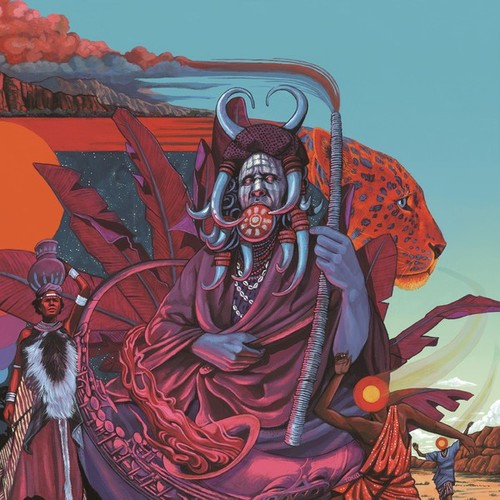
LUIZ CARLOS VINHAS-O SOM PSICODELICO DE L.C.V
Luiz Carlos Vinhas-O Som Psicodélico De L.C.V.
Label: Mad About Records.
Format: LP.
Within his native Brazil, Luiz Carlos Vinhas is remembered and regarded as one of the greatest pianists of the Bossa Nova movement. He was one of the genre’s founding fathers and was a founder member of Bossa Três in 1961. They became one of the most important groups of the Bossa Nova era and released eight albums between 1963 and 1966.
By 1968, Luiz Carlos Vinhas had embarked upon a solo career and released O Som Psicodélico De L.C.V.. This genre-melting cult classic has been released by the Mad About label and shows another side to Luiz Carlos Vinhas’ music.
Luiz Carlos Vinhas was born in Rio de Janeiro on May the ‘19th’ 1940. Growing up, he learnt to play the piano and by the time he was a teenager, he had already decided that he wanted to make a career out of music.
His career began when he was seventeen year old.The following year, 1958, a new musical genre was born in the South Zone of Rio de Janeiro, Bossa Nova. By then, Luiz Carlos Vinhas was already working as a session musician and was determined to be at the forefront of this new and exciting urban musical movement.
By 1961, Bossa Nova’s popularity had grown and Luiz Carlos Vinhas had been part of the new musical movement since the beginning. However, he wanted to be more than a session musicians and cofounded Bossa Três with drummer Edison Machado and double bassist Tião Neto. This was the first ever instrumental Bossa Nova group, and they would go on to write their names into Brazilian musical history.
In the early days, Bossa Três played mostly Luiz Carlos Vinhas’ compositions. He was the nascent group’s songwriter-in-chief when they played in the nightclubs of Beco das Garrafas, in Copacabana, where they accompanied dancers Joe Benett , Lennie Dale and Martha Botelho. However, it wasn’t long before Bossa Três got the chance to travel further afield.
With the dancers, they traveled to America after being invited to appear on the Ed Sullivan Show. By then, it was one of the most popular American television shows and they were about to play in front of a huge audience. This launched their career and the group decided to stay in America.
During the next few years, Bossa Três played in New York’s jazz clubs and recorded three albums. This included their finest American album Bossa Três 3. It was also the final album he group released in America.
Although Luiz Carlos Vinhas enjoyed his time in America, he missed Brazil and decided to head home in 1963. However, the other two members of the group stayed in America.
On his return home, Luiz Carlos Vinhas started looking for new band members. Eventually, he recruited drummer Ronie Mesquita and bassist Octavio Bailly Júnior for the new lineup of Bossa Três.
1964 was an important year for twenty-four year old Luiz Carlos Vinhas. He had signed to the Forma label and released his debut solo album Novas Estruturas. Nowadays, it’s regarded as a Bossa Nova classic and one of Luiz Carlos Vinhas’ finest releases.
The same year, 1964, he was a member of Meirelles E Os Copa 5 when they released their debut album O Som. This future classic was followed up by O Nôvo Som in 1965. It was one of the busiest years of Luiz Carlos Vinhas’ career.
By 1965, the new lineup of Bossa Três were dividing their time between playing live and recording new albums. They released three albums during 1965 and a further two during 1966. This includes Os Reis Do Rítmo in 1966 which is regarded as Bossa Três Mk II’s finest album and is anther Bossa Nova classic.
Later in 1966, Luiz Carlos Vinhas formed The Gemini 5 who soon, began work on their debut album. This was Gemini 5 which was released in Mexico in 1967 when the group toured the country. It was the latest chapter in the Luiz Carlos Vinhas story.
In 1968, Luiz Carlos Vinhas had signed to CBS and began work on his long-awaited sophomore album. By then, four years had passed since the release of his debut album Novas Estruturas. However, he was about to record a very different album and one that reflected the music of 1968.
By then, the psychedelic era was well underway and Luiz Carlos Vinhas had been influenced by this new genre of music. It would influence O Som Psicodélico De L.C.V.. However, the starting point for the album was his first musical love Bossa Nova. To this, Luiz Carlos Vinhas added elements of Afro-Brazilian, tropicalia, easy listening, jazz, pop and rock. This was all part of his plan to record an ambitious album befitting the new musical era.
For the album that eventually became O Som Psicodélico De L.C.V. he wrote Tanganica and cowrote Yê-Melê and Zizê Baiô with Chico Feitosa who features on the album. Luiz Carlos Vinhas also covered some familiar tracks including Horace Silver’s Song For My Father. It was joined by Chatanooga Choo-Choo and Can’t Take My Eyes Off You which were part of two suites on the album. In total, ten tracks were recorded by Luiz Carlos Vinhas for O Som Psicodélico De L.C.V. which was scheduled for release later in 1968.
Record buyers discovered an album that was quintessentially Brazilian. Luiz Carlos Vinhas combined Bossa Nova with elements of tropicalia and Afro-Brazilian with jazz, psychedelia, pop and rock. Sampling was used on O Som Psicodélico De L.C.V. which featured bursts of birdsong, animal sounds, vocal riffing and onomatopoeia. It was an ambitious and innovative album that sometimes, seemed ahead of its time.
O Som Psicodélico De L.C.V. was the perfect showcase for Luiz Carlos Vinhas’ skills. It featured the deft touch that had served him so well since he made his professional debut in 1957. During the album his playing was delicate and intricate as he takes the listener on a captivating journey.
Side One.
Joao Donato’s classic Amazonas opens the album and Luiz Carlos Vinhas forever the showman reinvents this familiar track. His fingers glide and sometimes dance across the keyboard his playing smooth and inventive as he joins forces with the horns, percussion and rhythm section to ensure that this uplifting and joyous slice of musical sunshine swings. It’s a similar case on Song For My Father where Luiz Carlos Vinhas pays homage to jazz legend Horace Silver.
Among the highlights of the album are Luiz Carlos Vinhas’ own compositions. This includes Tanganica where birdsong and animal sounds are combined with the guitar and horns. They combine with the vocals and play a leading role in sound and success of this soulful track. Then Yê-Melê is a homage to the water goddess Yoruba where blazing horns, percussion and piano drive the arrangement along. Later, drums pound, cymbals crash and a female vocalist adds umbandista chants which add a contrast to the urgency of this genre-melting track. Zizê Baiô then sashays along as braying horns punctuate this fusion of Bossa Nova, psychedelia and lo-fi sounds.
The tempo drops on Un Jour Christine as Luiz Carlos Vinhas is transformed into a balladeer. The arrangement is understated with a late-night jazz sound that occasionally becomes lysergic and features lo-fi sounds on what’s one of the most beautiful songs on the album.
Side Two.
Opening the second side is the first of three short suite. It opens with remakes of the jazz standards Chatanooga Choo-Choo and Don’t Be That Way and then closes with Wilson Simonal’s Tributo A Martin Luther King. Then Luiz Carlos Vinhas and his band work their way through Pourquoi, Arrasta A Sandália, Morena, Boca De Ouro and Rosa Morena. For nearly eight minutes the band and vocalists transport the listener to Rio De Janeiro as Bossa Nova, soulful vocals and high kicking horns combine. The third suite opens with celebratory sound of Birthday Morning before giving way to the easy listening classic Can’t Take My Eyes Off You which is given a makeover as Bossa Nova, soul and jazz combine seamlessly. It’s one of the highlights of side two.
Closing O Som Psicodélico De L.C.V. is O Dialogo which features Chico Feitosa on a track that includes elements of spoken word, vocal riffing and onomatopoeia. It’s without doubt one of the most innovative tracks on the album and shows that Luiz Carlos Vinhas was way ahead of his time.
When Luiz Carlos Vinhas released O Som Psicodélico De L.C.V. in 1968, this groundbreaking genre-melting album was nowhere near as successful as his debut Novas Estruturas. It may have been that the music was too adventurous and avant-garde for fans of Bossa Três and his debut album? For Luiz Carlos Vinhas this must have been hugely disappointing.
It was only much later that O Som Psicodélico De L.C.V. started to find an audience when it was rediscovered by collectors and crate-digging DJs. Belatedly, Luiz Carlos Vinhas’ oft-overlooked and vastly underrated sophomore album O Som Psicodélico De L.C.V. started to find an audience and fifty-two years after its release is receiving the plaudits and praise it so richly deserves.
Luiz Carlos Vinhas-O Som Psicodélico De L.C.V.
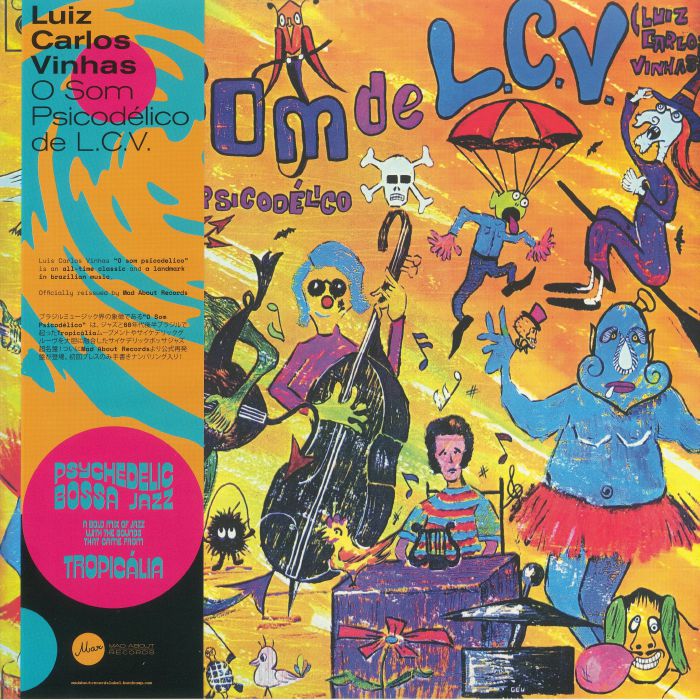
HELEN SHAPIRO-FACE THE MUSIC: THE COMPLETE SINGLES 1967-1984.
Helen Shapiro-Face The Music: The Complete Singles 1967-1984.
Label: Ace Records.
Format: CD.
By the time Helen Shapiro celebrated her twenty-first birthday in 1967 the London-born singer realise had already enjoyed the most successful period of her career. Her rise had been meteoric and was like the script to a Hollywood film.
Helen Shapiro was born in Bethnal Green Hospital in the East End of London on the ’28th’ of September 1948, and spent the early part of her childhood living in a council flat in Clapton, in the borough of Hackney. She attended Northwold Primary School which was where her musical career began.
By then, Helen Shapiro had discovered music and bought her first single. However, her parents were unable to afford their own record player and she had to borrow a neighbour’s player to hear her new single. This was just the start of Helen Shapiro’s love of music.
She began to play the banjo ukulele and sometimes, joined her brother Ron when he sang in the skiffle group at the local youth group. Even then, Helen Shapiro had a deep voice and her school friends started to call her “foghorn.” However, she would have the last laugh.
Aged ten, Helen Shapiro became joined Susie and the Hula Hoops’ lead vocalist. The group also included her cousin Susan Singer who would embark upon a career as a vocalist during the sixties and guitarist Mark Field who later, changed his name to Mark Bolan. This was the start of Helen Shapiro’s career.
Helen Shapiro enrolled at The Maurice Burman School of Modern Pop Singing, in Baker Street, London, which was the alma mater of Alma Coogan. One of Maurice Burman’s contacts was John Schroeder a songwriter and A&R executive at Columbia. He recorded a demo of Helen Shapiro singing Birth Of The Blues, and not long after this the thirteen year old was signed to Columbia.
By the time Helen Shapiro released her debut single Don’t Treat Me Like A Child in February 1961 she was fourteen. It reached number three in the UK, six in Ireland and topped the charts in New Zealand. The single launched Helen Shapiro’s career.
The followup was You Don’t Know which was released on the ‘29th’ June 1961 and reached number one in the UK and was certified gold. Elsewhere the single topped the charts in Ireland and New Zealand and was a top ten single in Denmark, Norway, France, Israel and Japan.
The day after her fifteenth birthday Walkin’ Back to Happiness was realised as single on the ‘29th’ of September 1961. The topped the UK chart gave Helen Shapiro her second gold disc. This was just part of the story. Walkin’ Back to Happiness reached number one in Ireland, New Zealand, Israel and South Africa and reached the top ten in Austria, Australia, France, Holland, Norway and Sweden. It was the biggest hit single of Helen Shapiro’s nascent career. She was enjoying success beyond her wildest dreams.
When Helen Shapiro released her fourth single Tell Me What He Said in early 1962 it “only” reached number two in the UK. This was her fourth consecutive top ten single. Elsewhere, it reached number one in India and gave her a top ten single in Ireland, Israel, New Zealand and Norway.
The followup Let’s Talk About Love stalled at twenty-three later in 1963. This was a disappointment for Helen Shapiro, who had made her acing debut.
By the spring of 1962 she had appeared as herself in the Billy Fury film Play It Cool and played the female lead in the British musical comedy It’s Trad, Dad! which featured performances by a variety of dixieland jazz bands and rock-and-roll singers. However, after her appearances in the two films Helen Shapiro decided to concentrate on her musical career.
Later in 1962, Helen Shapiro released her sixth single Little Miss Lonely which peaked at number eight in the UK charts. Little did she realise that this was the last top ten single of her career.
Despite that, there was still more success to come for Helen Shapiro when was voted Britain’s “Top Female Singer” before her sixteenth birthday. This was just the latest award to come her way during a two year period where she was one of the biggest names in British music.
In 1963, Helen Shapiro embarked upon a British tour and one of the groups that had been booked to support her were The Beatles. They had just enjoyed their first hit single and she witnessed firsthand the early outbreaks of Beatlemania. However, during the tour unbeknown to Helen Shapiro The Beatles also wrote a song for her.
This was Misery which was turned down by Norrie Paramor who was Helen Shapiro’s producer. She wasn’t told about the song never mind allowed to hear it Misery. It was only later that Helen Shapiro was told about his decision to turn down Misery. By then, it had featured on The Beatles’ debut album Please Please Me. For Helen Shapiro it was a case of what might have been as the song might have transformed her ailing fortunes.
None of the singles that Helen Shapiro released during 1963 troubled the top thirty in the UK. Queen For Tonight Reaches thirty-three, Woe Is Me thirty-five and Look Who It Is stalled at forty-seven. Worse was to come when No Trespassing failed to chart in the UK, although it topped the charts in Australia. This was a small crumb of comfort for the seventeen year old singer.
1964 was another disappointing year for Helen Shapiro with hit singles again proving elusive. None of her singles troubled the top thirty in the UK. Her most successful release was a cover of Fever which stalled at a lowly thirty-eight. This was a far cry from 1961 when Helen Shapiro had enjoyed two number ones and two other top ten singles. That must have seemed like a long time ago.
Things went from bad to worse in 1965 when none of the singles that Helen Shapiro released came close to troubling the charts. It was a similar case in 1966 and as 1967 dawned executives at Columbia were wondering if Helen Shapiro’s hit making days were behind her?
She would only release two more singles on Columbia. These singles and the B-Sides feature on a new Helen Shapiro compilation which has been released by Ace Records. It’s entitled Face The Music: The Complete Singles 1967-1984 and features twenty-five tracks including many that make their debut on CD.
By March 1967, John Schroeder who had discovered Helen Shapiro had left Columbia and so had her producer Norrie Paramor. He had been replaced by Norman Smith who produced the final two singles Helen Shapiro released for the label.
Her first single of 1967 was a cover of Billy Vera and Chip Taylor’s Make Me Belong To You which featured the Helen Shapiro composition The Way Of The World on the B-Side. It was recorded in 1966 and featured an impassioned and emotive vocal. It’s a stronger song and would’ve made a better single as Make Me Belong To You never troubled the charts.
It was a similar case when the cerebral sounding She Needs Company, a Paul Jones composition was released as a single with Stop and You Will Become Aware on the flip-side. Sadly, when the single was released on the ‘25th’ of August 1967 Helen Shapiro’s Columbia swansong failed to chart. However, the B-Side went on to become a favourite on the Northern Soul scene. By then, it was all change for Helen Shapiro.
After leaving Columbia, Helen Shapiro signed to Pye which was home to two of Petula Clark and Sandie Shaw. The label now had three of the top British female vocalists signed to the label.
Helen Shapiro’s debut for Pye was the ballad You’ll Get Me Loving You which was released in 1968 and featured the faux-Motown of Silly Boy (I Love You) on the B-Side. Both sides were written by Anthony King and John Schroeder who had penner her early hits and many of the songs she recorded at Pye. However, the single failed to trouble the charts and the search for a hit continued.
In 1969, the Latin-tinged Today Has Been Cancelled was released as a single and failed to chart in the UK. However, it was a commercial success in Australia where Helen Shapiro had enjoyed a string of hit singles. On the B-Side was vastly underrated and radio friendly Face The Music which was penned by Anthony King and John Schroeder.
They didn’t write the followup You’ve Guessed which was released as a single later in 1969. It failed to find an audience although the stomping B-Side Take Me for A While with its dancing strings was another of Helen Shapiro’s songs to become a favourite on the UK Northern Soul scene.
As 1970 dawned, eight years had passed since Helen Shapiro last enjoyed a hit single with Little Miss Lonely. Her time at Pye had been unsuccessful partly because the label weren’t promoting the singles as effectively as other releases. To make matters worse John Schroeder moved to Polydor. He had cowritten many of the songs she recorded and championed Helen Shapiro at Pye. Things weren’t looking good for her.
Especially when her first single of 1970 failed to chart. This was Take Down A Note Miss Smith with Couldn’t You See on the B-Side. The followup later in 1970 was Waiting On The Shores Of Nowhere which featured the hurt-filled ballad Glass Of Wine on the flip-side. It was the last single Helen Shapiro would release for Pye in the UK and is one of the hidden gems in her back-catalogue.
Just before Helen Shapiro was dropped by Pye, she released Das Ist Nicht Die Feine Englische Art on their German imprint. After that, the thirty year old singer left the label and her search for a hit continued.
Two years after leaving Pye, Helen Shapiro recorded The Prophet for the Phoenix label. When the single was released in 1972, Helen Shapiro used the moniker Ella Stone and Moss. However, the single failed to trouble the charts and doesn’t feature on the Face The Music: The Complete Singles 1967-1984 compilation .
By 1975, Helen Shapiro had signed to DJM and released the tender, heartfelt ballad You’re A Love Child as a single. On the B-Side was That’s The Reason I Love You where pop, rock and soul melt into one on what’s another hidden gem. Sadly, the single failed to find and audience and Helen Shapiro left DJM.
Later in 1975 she headlined Ronnie Scott’s jazz club as she continued to pursue a career as a jazz singer. It was a new chapter in her career.
In 1976 she returned to the studio with producer Bill Kimber and arranger Colin Frechter and recorded If You Feel He Cares and It Only Hurts When You Love. The songs were sold to the Magnet label who seeing the potential in them spent money on PR before releasing them using the Swing Thing moniker later in 1976. Sadly, for Helen Shapiro it was another disappointment when the single sunk without trace.
Despite that, she continued to work with Bill Kimber and Colin Frechter. They recorded the Russ Ballard’s Can’t Break The Habit for the next single. On the B-Side was the Ron and Helen Shapiro composition For All The Wrong Reasons on the B-Side. Despite its slick, uptempo and hook-laden sound the single failed to chart when released in 1977. That was despite being heavily promoted by Arista and being played on local and national radio. It was the one that got away for Helen Shapiro who had now gone fifteen years without a hit.
Helen Shapiro’s second single for Arista was a soulful cover of Every Little Bit Hurts with Touchin’ Wood on the flip-side. Sadly when the single was released in 1978 it failed to trouble the charts. This resulted in Helen Shapiro and Arista parting company.
The next single she released in the UK was on Oval which was co-owned by DJ and writer Charlie Gillett. He approached Helen Shapiro to make the album which eventually became Straight Up and Fly Right. Before this, they released a cover of Irving Berlin’s Let Yourself Go was released as a single with Funny on the B-Side. It showed another side to Helen Shapiro who by now had reinvented as a jazz singer.
Despite that, the following year, 1984, she returned to her pop roots with cover of Allen Toussaint’s Brickyard Blues. It was released with Just Another Weekend on the flip-side. This was the final pop single of Helen Shapiro’s career which began twenty-three years earlier in 1961.
Incredibly, the first two years of Helen Shapiro’s career proved to be the most successful. In the UK she enjoyed five top ten singles between 1961 and 1962 and two of these topped the charts. During this period, Helen Shapiro enjoyed hit singles as far afield as Australia, Europe, India, Israel, Japan, New Zealand and South Africa. Sadly, never again did she scale these heights and by 1967 her time at Columbia where the label she signed to six years earlier was almost at an end.
Face The Music: The Complete Singles 1967-1984 features the last two singles Helen Shapiro released for Columbia and documents her career as a solo artist right through until 1984. The compilation shows different sides to Helen Shapiro a talented singer who showcases her versatility during the twenty-five tracks Face The Music: The Complete Singles 1967-1984. It shows that there’s more to Helen Shapiro than Walkin’ Back to Happiness, much more.
Face The Music: The Complete Singles 1967-1984.
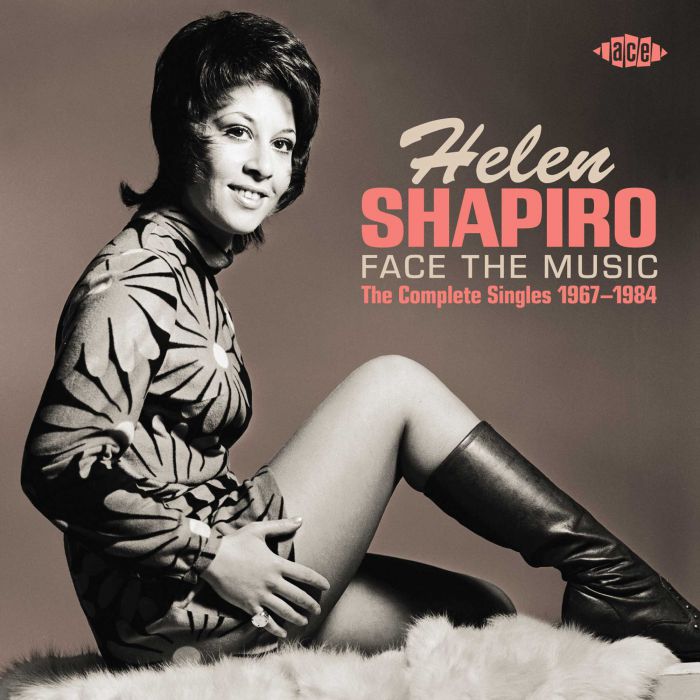
CULT CLASSIC: SIDIKU BUARI-DISCO SOCCER.
Cult Classic: Sidiku Buari-Disco Soccer.
There are very few people who manage to forge a career in both sport and music, but Ghanian born Sidiku Buari managed to do just this. He was a silver medallist in the 400 metres at the 1963 All-Africa Games held in Dakar, Senegal. Two years later, in 1965, Sidiku Buari was a member of the 4×400 relay team at the All-Africa Games in Brazzaville, when the Republic Of Congo won a bronze medal.
A year after his second appearance at the All-African Games, Sidiku Buari emigrated to America in 1966, and studied music at the New York School of Music. After that, Sidiku Buari studied interior design at the La Sale University in Chicago, Illinois. By then, Sidiku Buari’s musical career was underway, but his love of sport saw him playing baseball to a reasonable standard during his three decade stay in the United States. However, while Sidiku Buari was a talented and successful athlete he enjoyed more success as a musician.
Sidiku Buari was a prolific artist, arranger, composer and producer who during his long and illustrious career, released in excess of twenty-five albums.
He released his debut album Buari, on RCA in 1975. It featured legendary jazz drummer Bernard ‘Pretty’ Purdie who plays a starring role on this über rare fusion of Afrobeat, disco, funk and soul. This genre-melting album launched the career of this truly innovative artist who successfully fused African and Western music.
That was the case four years later in 1979, when Sidiku Buari released his sophomore album Disco Soccer. He was joined by an all-star cast when he recorded this future cult classic.
When Sidiku Buari was recording the eleven tracks that became Disco Soccer, he was joined by what was the creme de la creme of session musicians. This included two of the go-to horn players, The Brecker Brothers saxophonist Michael and trumpeter Randy. They were joined by trumpeter Jon Faddis, saxophonist George Young, trombonist Barry Rogers while Christine Snyder and Valerie West played French horn. The string section featured violinists Danny Reed , Lucy Corwin, Paul Scales, Bob Rozek and Stan Curtis plus cellist John Reed. Completing the lineup was percussionist Errol ‘Crusher’ Bennett. Together this multitalented band combined the music heard in Accra and New York in 1979.
Disco Soccer was released on Polydor later in 1979, and just like Sidiku Buari’s debut four years earlier, combined a myriad of disparate musical genres. The Ghanian bandleader and multi-instrumentalist backed by his all-star band, fused elements of Afrobeat, late-seventies disco, boogie, funk and soul. This was combined from the opening bars of Koko Si right through to the closing notes of Games We Used To Play. For forty-three majestic minutes the music veers between slick and sharp to soulful, funky and dancefloor friendly as Disco Soccer heads in the direction of traditional Ghanian music.
This is Ghanian music with a difference. Listen carefully and the sound of Southern Soul, and especially the Stax can be heard. There’s also a Motown influence on Disco Soccer as African and Western music combine to create irresistible genre-melting music.
It’s a captivating combination where one minute, the listener is enjoying what could be the soundtrack to an evening in Studio 54, in New York, before being transported to the Ghanian capital as they hear they other side to this cult classic, Disco Soccer.
Despite the quality of the music the album that wasn’t a huge success upon its release. It was only much later when it was rediscovered that the album started to be be heard by a wider and appreciative audience. They also discovered the album’s secret.
This was what Sidiku Buari called the Disco Soccer dance. It was: “a brand new dance-also called The Spirit Of Sports Dance. The most important part of this dance is the footwork of the steps. Just Remember, the “Soccer ball” is the drum beat of every disco beat, as well as this new dance-so, follow the drum beat and you will find it easy to dance. Hand swinging, head shaking, body moving, slightly kicking, jumping and stepping is a part of this dance.”
Given the irresistible, genre-melting music on Sidiku Buari’s sophomore album Disco Soccer, even those lacking in coordination will soon be moving and grooving and enjoying The Spirit Of Sports Dance, and recreating the spirit of 1979, when this oft-overlooked cult classic was originally released.
Cult Classic: Sidiku Buari-Disco Soccer.
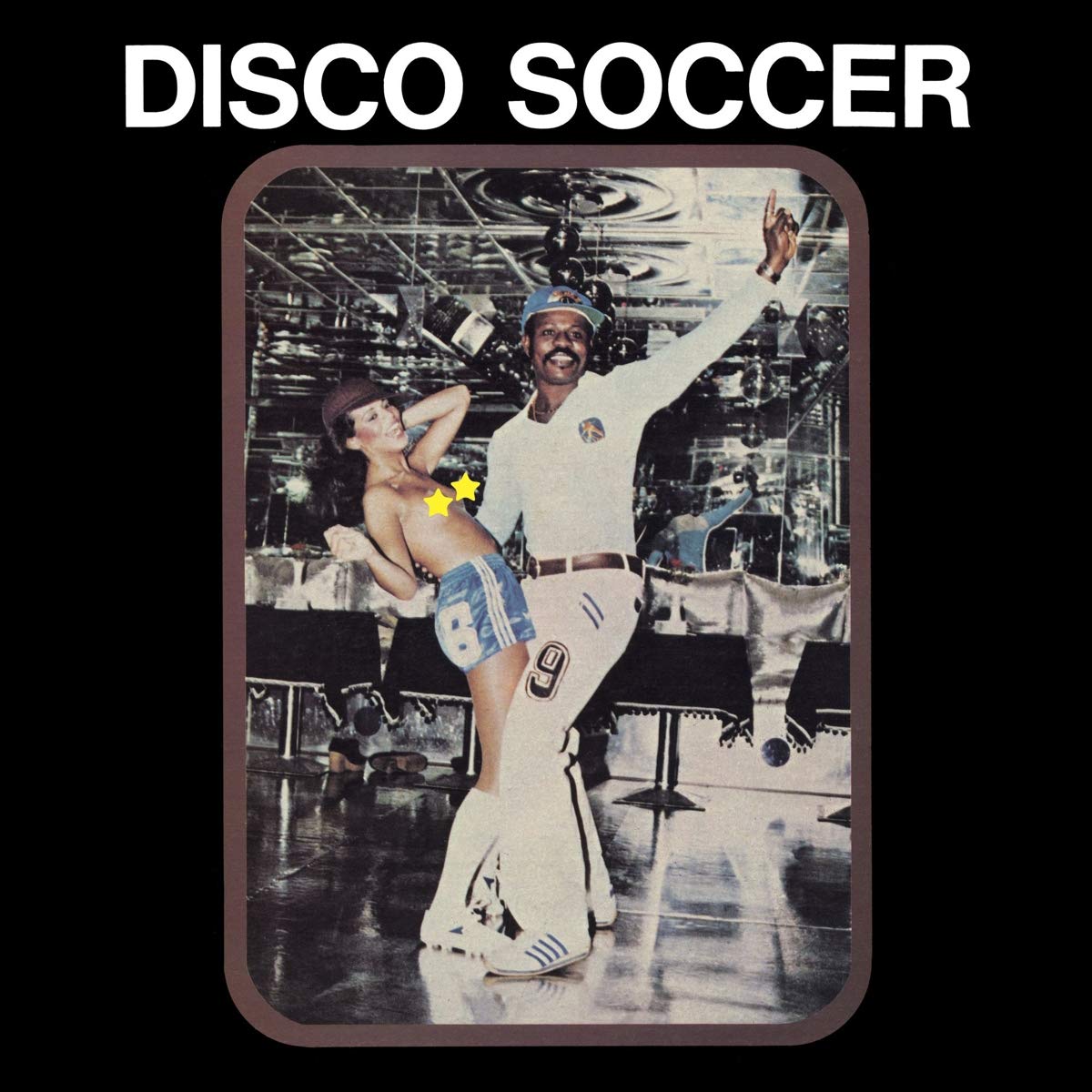
KLAUS SCHULZE-THE DARK SIDE OF THE MOOG YEARS.
Klaus Schulze-The Dark Side Of The Moog Years.
By 1994, Berlin School pioneer Klaus Schulze was a veteran of German music and had been making music for twenty-five years. His recording career began back in October 1969, when Klaus Schulze played on Tangerine Dream’s debut album Electronic Meditation.
Eight months later, Electronic Meditation was released by Ohr Records, in June 1970. It was an ambitious album of groundbreaking and genre-melting music that would later be regarded as Berlin School classic. Despite this, Electronic Meditation initially failed to find an audience. For Tangerine Dream this was a huge disappointment. Despite this, rhe group continued albeit without Klaus Schulze.
He left Tangerine Dream to cofound Ash Ra Temple with Hartmut Enke and Manuel Göttsching. The new group recorded their debut album on 11th March 1971. Three months later and Ash Ra Temple was released by Ohr Records in June 1971. It was an innovative fusion of progressive rock and ambient music that later, would be regarded as a Krautrock classic. However, when Ash Ra Temple was released it failed commercially. This resulted in Klaus Schulze embarking upon a solo career.
Just over a year later, in August 1972, Klaus Schulze released his debut album Irrlicht. Although it was a groundbreaking album, Irrlicht failed to find the audience it deserved. Irrlicht was ahead of its time and nowadays regarded as a Berlin School classic. So is the followup Cyborg, which was released in October 1973.
It was a familiar story when Cyborg was released. It was another album that was way ahead of its time and record buyers failed to understand the music or recognise its importance. Nowadays, it’s regarded as an that helped shape and define the Berlin School of electronic music.
Although Klaus Schulze’s first two solo albums had failed to find an audience he continued to release pioneering music. Gradually, Klaus Schulze’s music began to find a much wider and appreciative audience. That was the case throughout the rest of the seventies, eighties and right up until the early nineties. By then, Klaus Schulze was one of the most prolific German artists.
That had been the case throughout Klaus Schulze’s career. He often released two and sometimes three albums in a year. Then there were a myriad of collaborations and the albums Klaus Schulze released under his Richard Wahnfried moniker. However, one of the most productive years of Klaus Schulze’s career was 1993.
During 1993, Klaus Schulze released the live album The Dome Event and Silver Edition, a ten disc box set. Surely, this meant that Klaus Schulze was one of the most prolific European recording artists?
Despite his prolificacy, Klaus Schulze wasn’t about to rest on his laurels as 1994 dawned. He was already working on two solo album, two live albums, the Richard Wahnfried album Trancelation and was about to release a new collaboration with Pete Namlook, Dark Side Of The Moog.
Little did Klaus Schulze realise that the Dark Side Of The Moog project he was working on would become a long running and successful series. Eleven volumes of the Dark Side Of The Moog series were released between 1994 and 2008.
Initially, Klaus Schulze was reluctant to collaborate with Peter Kuhlmann a.k.a. Pete Namlook when he first approached him about potentially working on a project. Back then, Klaus Schulze was constantly busy working on a variety of projects. He had embraced both digital technology and sampling and since then, had been putting the new technology to good use. This had resulted in albums like Beyond Recall; The Royal Festival Hall Recordings and The Dome Event. Digital technology and sampling had opened up a new world of opportunities for Klaus Schulze, and he was keen to utilise this on further projects.
Most likely this would be solo albums but could be a collaboration with another artist. It would have to be the right artists though. Klaus Schulze wasn’t sure that Pete Namlook was the right person for him to collaborate with.
That was despite Klaus Schulze being aware of Pete Namlook’s music and the Fax +49-69/450464 record label he founded in 1992. Pete Namlook regarded the label as a vehicle to release: his own recordings; his collaborations with other musicians and albums by like-minded musicians. Since its formation in 1992, Fax quickly established a reputation for releasing ambitious and inventive music. This included some of the music Pete Namlook had released.
Over the years, Pete Namlook released music using a myriad of aliases. This included Air, who would release the sophomore album Air II in 1994. It featured Travelling Without Moving which featured eleven trips. Pete Namlook took the album to let Klaus Schulze hear. When he heard the spacey sound of Travelling Without Moving, he was won over by Pete Namlook’s music. So much so, that Klaus Schulze suggested that he and Pete Namlook collaborate on a project. That project would become The Dark Side Of The Moog.
The Dark Side Of The Moog Volumes 1-4.
Part 1-Wish You Were There.
Now that the Klaus Schulze and Pete Namlook had agreed to collaborate on a project, they began working on what would be the as yet unnamed project’s debut album.
In later years, as musical technology improved, the men would exchange ideas for tracks via email. However, for what would be their debut album the men headed to the studio in September 1993. The two me wrote and recorded a total of ten tracks where laus Schulze and Pete Namlook put the latest in musical technology to good use. The result was a captivating album from the two musical pioneers.
The ten tracks which veered between understated, atmospheric and dreamy to pulsating, anthemic and dance-floor friendly. To create these tracks, Klaus Schulze and Pete Namlook had created elements of ambient, avant-garde, electronica and techno With the album complete, now Klaus Schulze and Pete Namlook had to think of a name for their new musical vehicle.
After some thought, they came up with Dark Side Of The Moog. This wasn’t a homage to Pink Floyd. Instead, it was a reference to the man who invented an instrument that played an important part on Dark Side Of The Moog, Bob Moog. He had the Moog synths. However, Pink Floyd would provide some inspiration for Dark Side Of The Moog.
With the album complete, Klaus Schulze and Pete Namlook began trying to think of a title for the ten tracks. The two men were struggling. It was a problem that Klaus Schulze had encountered before. This was solved when they hit on the idea of picking a Pink Floyd title and changing it to something that didn’t exist. So Pink Floyd’s classic album Wish You Were Here became Wish You Were There. This became a tradition after recording each volume of Dark Side Of The Moog.
The first instalment in the Dark Side Of The Moog series was released by the Fax label on 17th October 1994. It was a limited edition of just 1,000 CDs. So successful was the album, that it was reissued in 1995. By then, Volume 2 had been released.

Part 2-A Saucerful Of Ambience.
Just a month after recording the first volume in the Dark Side Of The Moog series, Klaus Schulze and Pete Namlook returned to Sonic Studio in October 1993. They recorded twelve tracks that would become A Saucerful Of Ambience.
Just like Wish You Were There, the music on A Saucerful Of Ambience started off with an understated, atmospheric and ambient sound. Sometimes, there’s a lysergic sound to the spacious soundscapes. This is a result of ambient, avant-garde and electronica are being combined However, by A Saucerful of Ambience, Pt. 8 the mesmeric drumbeats have made an appearance and the music changes. Soon, it takes on a pumping, pulsating sound as techno makes an appearance on A Saucerful of Ambience, Pt. 9. This is only briefly. By A Saucerful of Ambience, Pt. 10 takes on a ruminative, pastoral and wistful sound, and this continues throughout the rest of A Saucerful Of Ambience.
A mere five months after the release of The Dark Side Of The Moog, The Dark Side Of The Moog II was released by Fax on 20th March 1995. Again, it was initially a limited edition of 1,000 CDs. However, four months later The Dark Side Of The Moog II would be released by the Ambient World label.
By then, the first instalment was a favourite among DJs who were playing chill out sets. This introduced Klaus Schulze and Pete Namlook’s music to a wider audience, They would embrace The Dark Side Of The Moog II, which find its way into many a DJs’ box. So it was no surprise that a third volume in the The Dark Side Of The Moog was in the pipeline.
Part 3-Atom Heart Brother Part I-VI.
Following the success of the first two volumes of The Dark Side Of The Moog, Klaus Schulze and Pete Namlook returned to Sonic Studio, in Frankfurt in 1995. They wrote and recorded six further soundscapes. Drawing inspiration from Pink Floyd’s Atom Heart Mother, they became Atom Heart Brother Part I-VI.
Later in 1995, the six tracks were released as The Dark Side Of The Moog III. Record buyers discovered that Klaus Schulze and Pete Namlook had continued to reinvent their sound. While there were still elements of ambient, avant-garde and electronica, there was a move towards first abstract and then trance. This was a first. However, Klaus Schulze and Pete Namlook were determined that their music would never become predictable. Instead, it was a case of expect the unexpected as the Dark Side Of The Moog series continued.

Part 4-Three Pipers At The Gates Of Dawn.
What very few people expected was that Klaus Schulze and Pete Namlook would bring onboard a third musician to work on the Dark Side Of The Moog series. That was what they did.
The man in question was American bassist, songwriter and producer Bill Laswell. He was another prolific artist, who had worked on literally, hundreds of recordings with musicians from all over the globe. Klaus Schulze and Pete Namlook were the latest musicians he was about work with.
Bringing onboard Bill Laswell resulted in a change in the way the album was made. This time, the recording sessions took place three studios in two countries. Klaus Schulze and Pete Namlook recorded their parts at Klanglabor Frankfurt, Moldau Musik Studio, Hamburg. Meanwhile, Bill Laswell recorded his parts at Greenpoint Studio in Brooklyn. Gradually, the nine parts in the Three Pipers At The Gates Of Dawn suite.
While Klaus Schulze and Pete Namlook usually wrote every part of a suite, this time around, they only wrote four tracks. Bill Laswell contributed 1.1-13, 1.5 and 1.8. However, as usual, Pete Namlook took charge of producing what was a quite different album.
The nine parts of the Three Pipers At The Gates Of Dawn suite was a fusion of ambient, electronica, modern classical and techno. Just like previous instalments in the series, the music continued to evolve. It was an album that DJs would embrace and that would stand the test of time.
As 1996 dawned, The Dark Side Of The Moog IV was released by Fax on 12th February 1996 as a limited edition. Soon, The Dark Side Of The Moog IV had sold out. Four months later, The Dark Side Of The Moog IV released on CD by Ambient World on 10th June 1996. It continued the success story that was The Dark Side Of The Moog.
This was somewhat ironic, given Klaus Schulze’s reluctance to collaborate with Pete Namlook. Two years later, their project was enjoying critical and commercial success. Part of the success of The Dark Side Of The Moog series was how the music continued to evolve. The result was music that’s stood the test of time and gives the listener a taste of what’s to come in The Dark Side Of The Moog series.

The Dark Side Of The Moog Volumes 5-9
Part 5-Psychedelic Brunch.
Following the success of the reissue of The Dark Side Of The Moog Volumes 1-4 box set, MIG released The Dark Side Of The Moog Volumes 5-8. It continued a story that began in 1994. However, work on the sixth instalment in The Dark Side Of The Moog began later in 1996.
Just like The Dark Side Of The Moog Volumes 5, the recording sessions took place three studios, Klanglabor Frankfurt, Moldau Musik Studio, Hamburg and Greenpoint Studio in Brooklyn. Gradually, the eight parts in the Psychedelic Brunch suite. Six of them were penned by Klaus Schulze and Pete Namlook. The exceptions were 1.3 and 1.7 which were written by Bill Laswell. He continued to make an important contribution to Dark Side Of The Moog series. So did the man who had inspired the name.
Having introduced the album, Bob Moog’s spoken vocal featured on 1.2. He played his part on what was another eclectic album. Everything from ambient, abstract and avant-garde rubbed shoulders with elements of the Berlin School, electronica, modern classical. It was a captivating combination and one of the finest instalments in the series.
The Dark Side Of The Moog V was released by Fax on the 9th of December 1996. It was now a much-anticipated series, that was a favourite of chill out DJs and record buyers. This would continue to be the case throughout The Dark Side Of The Moog series.

Part 6-The Final DAT.
Buyoed by the continuing success of The Dark Side Of The Moog series, the three members of The Dark Side Of The Moog began work on the next instalment in the series.
By then, technology had progressed sufficiently that Klaus Schulze, Pete Namlook and Bill Laswell were able to email each other parts that of tracks that they had been working on. No longer did each member of The Dark Side Of The Moog have to be in the same studio. They didn’t even have to be in the same country. Instead, the three members of The Dark Side Of The Moog used the same three studios as before.
Recording took place at Klanglabor Frankfurt, Moldau Musik Studio, Hamburg and Greenpoint Studio in Brooklyn. That was where The Final DAT was recorded. It was a six part genre-melting suite, Bill Laswell wrote Part I and Part IV. Klaus Schulze and Pete Namlook wrote the rest of The Dark Side Of The Moog VI. As usual, it was produced by and was ready for release in autumn 1997.
On The Dark Side Of The Moog VI, elements of abstract ambient and avant-garde were combined Berlin School, electronica and trance. It was a captivating, imaginative and cinematic and genre-melting album. The music was understated, beautiful, ethereal and mesmeric as it took the listener on a musical journey. Just like previous volumes in the series, the music had a timeless quality. The three members of The Dark Side Of The Moog had surpassed their previous efforts.
It was no surprise that when the The Dark Side Of The Moog VI was released by Fax as a limited edition of 2,000 on the 29th of September 1997, that the album sold out. DJs and record buyers went in search of what was one of the most sought after releases. Incredibly, considering the success of the album and indeed the series, The Dark Side Of The Moog VI wasn’t rereleased until 2003. By then, three further instalments The Dark Side Of The Moog would’ve been released.

Part 7-Obscured By Klaus.
The first of this trio of releases was The Dark Side Of The Moog VII. It was a fifty minute, seven part suite entitled Obscured By Klaus. This time though, Bill Laswell wrote just Part 3 of the suite and recorded his parts in New York during the first half of 1998.
Meanwhile, Klaus Schulze and Pete Namlook recorded their part at Klanglabor in Frankfurt, Moldau Musik Studio, Hamburg and at Traben-Trarbach. During the recording sessions, the three members of The Dark Side Of The Moog emailed each other their parts. Gradually, the album came together and eventually, Obscured By Klaus was ready for release.
Obscured By Klaus was much more like the first three albums in The Dark Side Of The Moog series. Much of the album had an ambient sound, with the music veering between dreamy, ethereal and ruminative and understated. Later, the tempo increases as a pulsating bass synth plays a leading role as ambient and electronica meet techno. Soon, though, the ambient sound returns as The Dark Side Of The Moog revisit and reinvent their earlier elegiac sound. There’s even elements of modern classical music to what was The Dark Side Of The Moog’s finest hours.
The Dark Side Of The Moog VII was released on 23rd November 1998 by Fax. This time, Fax had released an extra 1,000 copies of the album making it a limited edition of 3,000. Still though, supply outstripped demand as DJs and record buyers sought copies of The Dark Side Of The Moog VII, which was Bill Laswell’s swan-song.
After recording four volumes in The Dark Side Of The Moog series, Bill Laswell decided to concentrate his efforts on other musical projects. This meant that The Dark Side Of The Moog returned to a due on The Dark Side Of The Moog VIII.

Part 8-Careful With The AKS, Peter.
After releasing four albums as a trio, The Dark Side Of The Moog returned to a duo for the The Dark Side Of The Moog VIII. It featured an eight part suite Careful With The AKS, Peter. This was a very different recording.
Unlike the previous Dark Side Of The Moog albums, the eight part suite Careful With The AKS, Peter wasn’t recorded in the studio. Instead, it was recorded live at the 23rd Jazz Festival Hamburg on 23rd April 1999. After the recording, Pete Namlook who had produced The Dark Side Of The Moog series, edited some parts of the recording. Only then was The Dark Side Of The Moog VII ready for release.
Later in 1999, Fax released The Dark Side Of The Moog VIII. It featured a performance that lasted nearly seventy-seven minutes. During that performance, The Dark Side Of The Moog switched between and combined elements of ambient with electronica and experimental with dub and drum ’n’ bass. The Dark Side Of The Moog VIII was an ambitious album. Especially since it had been recorded live. Despite using a myriad of complex equipment that could be temperamental when used live it was an almost flawless album and The Dark Side Of The Moog VIII was a success critically and commercially.
After eight volumes of The Dark Side Of The Moog series, it was still going strong. Partly, that was because Klaus Schulze and Pete Namlook constantly sought to reinvent their music. This was something they would continue to do during future volumes in the series.

The Dark Side Of The Moog Volumes 9-11.
Part 9-Set The Controls For The Heart Of The Mother.
Three years passed before Klaus Schulze and Pete Namlook returned with the ninth instalment in the The Dark Side Of The Moog series. This was the longest gap between albums. However, The Dark Side Of The Moog returned in 2002, with Set The Controls For The Heart Of The Mother, a six part suite.
It had been written and recorded at Pete Namlook’s Klanglabor Hödeshof studio during early 2002. Later that year, The Dark Side Of The Moog IX was released by Fax on 10th May 2002. Again, the album was a limited edition of 3,000. Just like previous albums, it was a popular album amongst DJs and record buyers.
They were won over by The Dark Side Of The Moog IX’s genre-melting sound. Elements of ambient music and avant-garde were combined with electronica and experimental music. The music ebbs and flows as subtleties and surprises unfold. Mostly, though, the six part suite glides effortlessly along showcasing an understated, dreamy, ethereal and melancholy sound. Just like previous albums, The Dark Side Of The Moog IX has a truly timeless sound. Despite three years away, The Dark Side Of The Moog’s music was still relevant.

Part 10-Astro Know Me Domina.
Following the success of The Dark Side Of The Moog IX, nothing was heard of group until 2005. During that period, Klaus Schulze and Pete Namlook were both busy on other projects. Eventually, they found time to record an album in early 2005.
This became The Dark Side Of The Moog X, which featured Astro Know Me Domina, a six part suite lasting fifty minutes. It had been written and recorded at Pete Namlook’s studio Klanglabor Hödeshof. Once The Dark Side Of The Moog X was completed, it was released in spring of 2005.
The Dark Side Of The Moog X was released as a limited edition by Fax on 15th March 2005. This time, only 2,000 copies of were released of an album which took ambient music as its starting point. Elements of Berlin School and electronica are added to the mix as an album of atmospheric soundscapes begins to unfold. They’re variously dark, dreamy, elegiac, melancholy moody and ruminative. Sometimes, a pulsating bass synth is added, as the tempo rises slightly. Mostly though, it’s a ambient describes The Dark Side Of The Moog X. It marked the welcome return of what this long running collaboration. Sadly, it was almost at an end.
Part 11-Astro Know Me Domina.
Another three years passed before The Dark Side Of The Moog XI was released. It featured a seven part musical suite, The Heart Of Our Nearest Star. Just like previous albums, it had been written and recorded at Pete Namllok’s Klanglabor Hödeshof studio during early 2008.
In the spring of 2008, The Dark Side Of The Moog XI was released by Fax on 15th April 2008. Again, the album was a limited edition of 2,000. However, this time, the album was a double album. This wasn’t because the music wouldn’t fit on one album. Instead, Klaus Schulze and Pete Namlook wanted The Dark Side Of The Moog XI to release both stereo and surround sound versions of this album.
It’s another genre-melting album where lements of abstract and ambient music combine with avant-garde, Berlin School and electronica as The Dark Side Of The Moog take the listener on their final journey.
For part of the journey drums provide the heartbeat and add a hypnotic backdrop. Meanwhile, the music veers between atmospheric to futuristic and dark and mesmeric. Later a glistening ambient sound begins to unfold. It’s variously dreamy, elegiac, thoughtful and wistful as the arrangement glides along; Later, the earlier sound returns before The Dark Side Of The Moog take their bow.
The Dark Side Of The Moog XI proved to be the final instalment in what had been a long-running and successful series. Four years later Pete Namlook passed away four years on 8th November 2012. That day, German music lost a true pioneer.
Proof of that are the eleven instalments in The Dark Side Of The Moog series. These eleven albums were released over a fourteen year period. During that period, the music on The Dark Side Of The Moog continued to evolve and ensured that music stayed relevant. That had been the case since the first instalment in the series.
That is no surprise. The Dark Side Of The Moog featured two musical pioneers, Klaus Schulze and Pete Namlook. For three albums, they were joined by Bill Laswell, Mostly, though, The Dark Side Of The Moog series was the brainchild of two pioneering musicians, Klaus Schulze and Pete Namlook.
They recorded eleven genre-melting albums over a fourteen year period. Each of these albums have stood the test of time. That is because constantly, Klaus Schulze and Pete Namlook reinvented their music. While ambient music was usually the starting point, different ingredients were used throughout the series. This ranged from abstract and avant-garde to Berlin, electronica and experimental music. Other times, elements of drum ’n’ bass, psychedelia, rock and techno were added combined by Klaus Schulze and Pete Namlook as they continued to push musical boundaries, The result was music that’s not only innovative, but influential and truly timeless.
That’s despite the first volume in The Dark Side Of The Moog being released back in 1994. However, the music has stood the test of time. Twenty-six years later and it sounds as if it could’ve been released yesterday. It’s a similar case with the music on each of the eleven volumes of Dark Side Of The Moog.
These timeless albums feature genre-melting music that is ambitious, innovative and even today, continues to influence a new generation of electronic musicians. That’s no surprise as Klaus Schulze is one of the giants of German music and has spent a lifetime creating groundbreaking music. So did his collaborator on the Dark Side Of The Moog series Pete Namlook. Sadly, he passed away in 2012 aged just fifty-one. However, the eleven critically acclaimed volumes of Dark Side Of The Moog are part of his musical legacy and a reminder of his long-running and successful partnership with the prolific musical pioneer Klaus Schulze.
Klaus Schulze-The Dark Side Of The Moog Years.
 dereksmusicblog
 dereksmusicblog