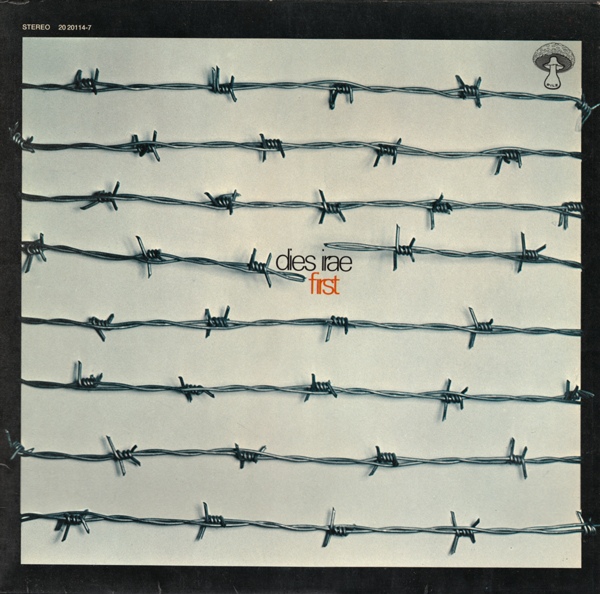
CULT CLASSIC: DIES IRAE-FIRST.
Cult Classic: Dies Irae-First.
For many new bands, their main objective is to release an “album” and they want to do this as quickly as possible. This will be a sign that they’ve “arrived” and have one foot on the musical ladder. Sadly, for some bands, that’s as far as it goes. The album fails to sell and that’s the last that’s heard of them. Sadly, they’re in the majority as musical history is littered with bands that “could’ve been contenders.”
What many people fail to realise, is that the difference between success and failure is often, akin to a toss of coin. Many bands could’ve gone on to have a glittering career, or influence future generations of musicians. That was the case with Dies Irae, one of the earliest bands of the Krautrock era.
Dies Irae could’ve and should’ve reached far greater heights. They were founded in 1968, and by the time they released their debut album First in 1971, the band looked like they were destined for greatness.
By then, Dies Irae were a popular band on the live circuit. Regularly, they shared the bill with bands that would become some of the biggest names in Krautrock history. Night after night, they held their own agains future Krautrock greats and critics embraced Dies Irae’s psychedelic-progressive sound. So did concert goes. It looked as if they had a bright future in front of them when they were about to release their debut album First in 1971.
When First was released in 1971, there was a problem. The lyrical content of First was controversial. So much so, that the majority of West German radio stations promptly banned the album. With little or no radio play, First failed to find the audience it deserved. For the members of Dies Irae, this was a huge disappointment. This hadn’t been part of their hopes and dreams when they founded the band in 1968.
That’s when Rainer Wahlmann, Andreas F. Cornelius, Harald H.G. Thoma and Robert J. Schiff founded Dies Irae. However, Rainer Wahlmann can trace roots of the band can be traced back to the late-fifties and early sixties.
That’s when Rainer Wahlmann first remembers listening to the music of Elvis Pressley, Eddie Cochran, Buddy Holly, Little Richard and Bill Haley. This was to all intents and purposes his musical education. However, his music didn’t go well with everyone. His father and other adults in the village were angry that he and his friends were listening to American music. For Rainer Wahlmann this made the music all the more appealing.
“I was honestly impressed. This kind of weird music really disturbed the adult world so much, and was able to make them really angry!” This resulted in Rainer Wahlmann’s father deciding to teach his son a musical lesson. “My father played the guitar and he always tried to teach me the songs he used to sing. I hated those songs and as a result I never really learned to play the guitar.” Despite this he made a career out of music. Before that, his musical tastes began to change.
“Later, about 1963/64, I started to listen to early British beat bands like The Searchers, The Kinks, The Animals and The Who.” By then, British groups were popular in America and Europe. However, his father wasn’t a fan. “My first records were of the Rolling Stones and my record player got thrown out the window by my father.” For Rainer Wahlmann this was the last straw.
“I decided to fight with music for freedom of thought and against intolerance. With some schoolmates we began practicing. I couldn’t play anything, but I thought I had something to say. I pretended to be the singer.” Soon, what started out as a protest and act of defiance, inadvertently launched Rainer’s musical career.
By 1968, a new wave of bands were being formed across West Germany. Many were inspired by psychedelia, which was popular on both sides of the Atlantic. However, Dies Irae would be more like Amon Düül and Guru Guru, with a darker sound.
The four men behind Dies Irae’s darker sound were harmonica player and vocalist Rainer Wahlmann, drummer Andreas F. Cornelius, bassist Robert J. Schiff and guitarist Harald H.G. Thoma. They cofounded Dies Irae in 1968, began working on honing their sound.
Over the next weeks and months, Dies Irae gradually honed and refined their sound. It became much more closely aligned with Amon Düül and Guru Guru. Dies Irae’s music had a similar darkness. However, unlike many bands who were pioneers of the nascent Krautrock scene, Dies Irae didn’t reject American musical influences.
As the Krautrock era began in 1969, many groups turned their back on American music. Especially the influence blues had had on music. That for many Krautrock pioneers was the music of the past. They were determined to reinvent music and many bands, including Amon Düül and Can pioneered improvisation. However, Dies Irae didn’t turn their back on the blues influence and instead, decided to keep their options open.
As the sixties became the seventies, Dies Irae were a favourite of the live scene and they shared concert and festival bills with future Krautrock favourites. Audiences were won over by Dies Irae’s crowd pleasing fusion of psychedelia, progressive rock, blues and rock. Their music seemed to appeal to a wider audience than some bands. This augured well for Dies Irae who were preparing to release their debut album First.
For their debut album, nine tracks were penned. Seven were written by Rainer Wahlmann and the other three members of Dies Irae. Salve Oimel and Run Off were credited to the four members of Dies Irae. These tracks would become First, which was recorded in Hamburg, with a legend of German music.
Recording of what what became First took place at the Star Studio in Hamburg. The engineer was none other than Conny Plank. He had already worked with some of the most innovative groups of the Krautrock era. By the time the Krautrock era drew to a close in 1977, Conny Plank would’ve played a leading role in recording and producing everyone from Kraftwerk and Cluster, to Guru Guru, Neu!, Lava, Kollectiv, Harmonia and Grobschnitt. The man that Michael Rother would later call “the genius,” would’ve more than played his role in the Krautrock era. However, for the recording of First, Conny left the production to Jürgen Schmeisser.
He was an experienced producer, who initially, ran the Pliz label, which was a subsidiary of the BASF corporation. Already, Jürgen Schmeisser had produced Ardo Dombec, Blackwater Park, McChurch Soundroom and Virus for the label. Now he was set to work with Dies Irae.
Dies Irae arrived at Star Studio Hamburg on the 3rd of June 1971. Harmonica player and vocalist Rainer Wahlmann watched as the rhythm section of drummer Andreas F. Cornelius and bassist Robert J. Schiff setup. They were joined by guitarist Harald H.G. Thoma. Once the equipment was setup, the members of Dies Irae realised that now was the moment they had spent three years working towards and the next two days could make or break their career.
After two days recording the nine tracks, First was completed and now, their debut album would be released on the Pliz label. They were about to follow in the footsteps of Ardo Dombec, Blackwater Park, McChurch Soundroom and Virus.
Later in 1971, First was released on the Pliz label. While the album was well received by critics, there was a problem. Rainer Wahlmann’s lyrics were deemed too controversial to be played on West German radio stations. They banned the album which was a huge blow for the members of Dies Irae.
Without radio play, people how were people going to hear about First? To make matters worse, Pliz, a subsidiary of BASF wasn’t like other record labels.
Part of the problem was, by 1971, BASF was a vast conglomerate and the record company was just part of its business portfolio. BASF didn’t seem to have the personnel to run what was a pan European record company. That was only part of the problem.
To make matters worse, they seemed to lack the expertise to promote First. That essentially killed the album. Especially since BASF seemed to lack a proper distribution network that would ensure that the album found its way into shops. That was the last straw.
Just like other albums released by BASF’s record label, First failed commercially. Albums were lucky to sell even a couple of thousand copies if they were really lucky. It seemed Dies Irae had signed to the wrong label. Things could’ve and should’ve been very different. After all, First was album that deserved to reach a much wider audience.
Lucifer literally bursts into life, opening First. There’s a blues-rock sound as Rainer Wahlmann’s harmonica and the rhythm section drive the arrangement along. That’s until he dawns the role of psychedelic preacher. With chiming guitars for company, his languid, lysergic vocal begins to delivers his message. Then the blues rock arrangement explodes, and Dies Irae cut loose and his vocal becomes an impassioned roar, that surely, influenced the punk generation? Meanwhile, the rhythm section provide the pounding heartbeat, and sometimes, produce a proto-punk sound. Harald H.G. Thoma’s blistering, searing guitar plays a starring role. When it’s panned, it adds to the trippy, freakbeat sound. With less than a minute to go, the psychedelic preacher proclaims: “theirs is the dawn of the new era,” on what’s a truly memorable start to First.
Another Room is best described as a spoken word, lysergic sketch lasting just thirty seconds. It sounds as if one of Dies Irae has taken a Trip, as he giggles uncontrollably.
Straight away, classic rock and blues combines on Another Room. There’s a nod to Led Zeppelin as the rhythm section and guitar combine and set the scene for Rainer Wahlmann as he sings: “ I moved away some days ago, away from my home town, into the bright city lights.” Then when the vocal drops out, the rest of the band fuse elements of psychedelia and progressive rock. By then, it’s apparent just how tight and talented a group Dies Irae are as they showcase their considerable skills. Then with a minute to go, the vocal returns and it’s a mixture of power, passion and emotion. Then the baton to the rest of the band, as the song reaches a blistering, rocky crescendo.
As Rainer Wahlmann advises “tune in,” the arrangement to Trip heads in the direction of avant-garde, psychedelia and free jazz. Dies Irae jam for just over a minute, before the arrangement almost dissipates. All that’s left is a whispery vocal, which is accompanied by what’s an eerie, cinematic and lysergic backdrop. A guitar weeps, a bass bounds in the distance and drums are caressed as what’s easily the most psychedelic track on First unfolds. Rainer Wahlmann seems to pickup where the Lizard King left off. As a guitar shimmers across the arrangement, the rhythm section play subtly. Later, avant-garde, psychedelia and free jazz combine on this magical, mesmeric and lysergic Trip.
Harmagedon Dragonlove finds Dies Irae at their hard rocking best. They sound like one of the unholy trinity of rock, as the rhythm section drive the arrangement relentlessly along. Then there’s a brief, dreamy burst of what sounds like mid-seventies Pink Floyd. Then Dies Irae are off and running. Rainer Wahlmann sounds every inch the strutting frontman of a rock ’n’ roll band. Behind him, the rest of Dies Irae are at their hard rocking best. That’s apart from the brief bursts of dreamy, lysergic music, and a diversion via progressive rock. Mostly, though Dies Irae are kicking loose and a blistering, searing guitar and the thunderous rhythm provide the perfect backdrop to the swaggering vocal.
Tired was one of the songs on the album that attracted controversy. Initially the track has an understated introduction as the bass and guitar combine with a bluesy harmonica before the drums drive the arrangement along. Soon, Rainer Wahlmann’s singing: “start living in your dreams, fly a dovetail joint, get on a trip” which was regarded as a controversial lyric in conservative West Germany in 1971. Then in the next verse, he adds to the controversy with an attitude filled vocal and sings: “get rid of those mindfuckers, fuck you too.” Later, it’s just the harmonica that plays, before the rest of Dies Irae return. Rainer Wahlmann and guitarist Harald H.G. Thoma play call and response, while the rhythm section power this bluesy jam along.
Witches’ Meeting is a nine minute epic, has a jazz-tinged introduction. The bass walks the arrangement along while a blistering guitar and drums combine. The vocal has a jazz influence, before it drops out. Then Dies Irae jam, combining jazz with elements of blues, classic rock and progressive rock. At 2.10 the song literally grinds to a halt, before the bass continues to walk the arrangement along. Later, washes of shimmering, effects laden psychedelic guitar join rumbling drums as Dies Irae jam and improvise. Again, this gives them the opportunity to show that they belonged in the musical Bundeslegia. It’s another stunning genre-melting jam.
Red Lebanese is another of the songs that attracted controversy in 1971. With its references to smoking hash, this was just another reason for the authorities to ban the album from being played on radio. The decision of West Germany’s moral guardians meant that a wider audience were denied the opportunity of hearing First on radio stations.
That was a great shame, as Red Lebanese finds Dies Irae at their hard rocking best. That’s the case from the get-go as bursts of blistering guitars join the driving rhythm section. The vocal fills left the gaps by the rest of the band. Then when it drops out, the arrangement takes on a bluesy hue and later, became jazz-tinged before bursts of guitar are panned right and left. Then at 2.38 the arrangement almost grinds to a hal before Dies Irae rebuild and a crystalline acoustic guitar adds a sunshine sound. Later, lysergic guitars give way to a choppy, hard rocking rocking arrangement before the band veer between blues and rock. Seamlessly, they switch between genres, and in the process, showcase their versatility and considerable skills.
Closing First is Run Off which starts offs a jam before Dies rie throw a curveball. The tape speed is increased producing a cartoonish sound. This they must have thought would leave a smile on the listeners’ faces until the next time.
Sadly, there wasn’t a next time for Dies Irae and First was their one and only album. They left the Pliz label shortly after the release of the album. This was disappointing and a case of what might have been for Dies Irae.
Rainer Wahlmann left Dies Irae in 1972, and this was a huge loss for the band. He wasn’t just the frontman and harmonica player, he was Dies Irae’s lyricist. Without him, Dies Irae weren’t the same band. That’s despite Andreas F. Cornelius, Harald H.G. Thoma and Robert J. Schiff being hugely talented musicians. However, without their frontman and lyricist, it was just about the end of the road for Dies Irae.
They continued until 1973, when eventually, they called time on their five year career. It was yet another case of what if?
Dies Irae are another band from the Krautrock era who should’ve enjoyed widespread critical acclaim and commercial success. The band featured four hugely talented musicians, who seamlessly, could switch between genres.
Although referred to as a band who combined psychedelia and progressive rock, there’s much more to Dies Irae’s music than that. They combine elements of avant garde, blues, classic rock, experimental, free jazz and jazz on First. Sometimes, though, when Dies Irae combine blues and rock, they sound not unlike Led Zeppelin. Sadly, Dies Irae didn’t enjoy the same success. .
The problem was, Dies Irae signed to the wrong label. Pliz in 1971, seemed to a be somewhat dysfunctional record company and wasn’t equipped to promote new artists. Despite being part of a multinational company, Pliz wasn’t able to promote and distribute the album properly. Things might have been different if Dies Irae had signed to Ohr or Liberty Records? Maybe they would’ve promoted First more effectively? Sadly, that wasn’t the case. However, Dies Irae weren’t alone.
In the early seventies, countless German bands were in a similar situation to Dies Irae. Many were also releasing groundbreaking albums which also sunk without trace. Often, it was through no fault of the band. Many had signed to the wrong label and often they lacked the knowledge, nous or funds to promote an album. As a result, albums that could’ve played an important part in German musical history were lost for a generation.
It was no surprise that after the failure of First, and the demise of Dies Irae that Rainer Wahlmann was bitter about the failure of First. He had been part of a group that should’ve enjoyed a long and successful career. Instead, they only released one album, which West Germany’s moral guardians banned from the radio. For Rainer Wahlmann and the rest of Dies Irae the dream was over and they weren’t going to rub shoulders with the leading lights of German music.
Given what happened, it’s no surprise that Rainer Wahlmann turned his back on music and returned to the ‘real world.’ With the dream over, he found a steady job and settled down. While it wasn’t the rock ’n’ roll lifestyle he had dreamed of, he enjoyed the security the 9-5 slog brings. However, like many musicians he still loved music and performing. It was in his blood.
It was almost inevitable that Rainer Wahlmann would make a comeback. When he formed his new band Green Wave he decided that this time around, music was going to be a hobby for him. He was making music on his terms and enjoying himself.
Nowadays, First is regarded as a cult classic that somewhat belatedly is starting to find the wider audience it deserved, and Dies Irea the nearly men of German music are receiving the recognition they so richly deserve.
Cult Classic: Dies Irae-First.
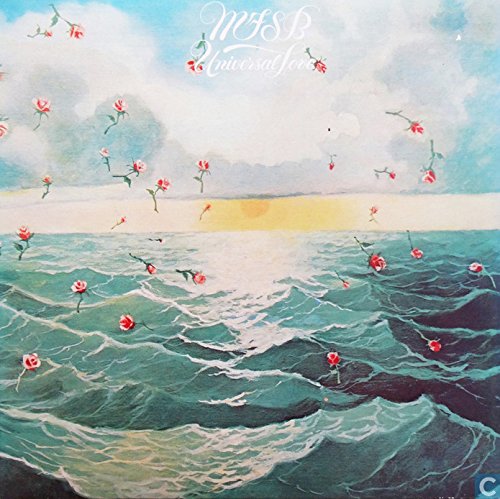
CULT CLASSIC: M.F.S.B.-UNIVERSAL LOVE.
Cult Classic: M.F.S.B.-Universal Love.
Unlike Motown, countless books haven’t been written about Philadelphia International Records. That’s a missed opportunity, as there are many stories waiting to be told. Until now, only parts of the Philadelphia International Records’ story has been told. Many of those who played an important part in the rise and rise of Philadelphia International Records, haven’t had the opportunity to tell their story. This is a missed opportunity as Philadelphia International Records is one of the most important labels in the history of soul music.
The history of Philadelphia International Records can be separated into two distinct periods. In 1971, the label was founded by Kenneth Gamble and Leon Huff within a year they were enjoying commercial success and critical acclaim. This was the start of the label’s first period, a golden era which lasted between 1972 and 1975.
From 1976 onwards was Philadelphia International Records’ second period.The label still released the a number of classic soul albums, and some of their releases enjoyed commercial success and critical acclaim. However, by the late-seventies through to the early eighties, there sometimes seemed to be a lack of quality control at the label, and the albums released were a mixed bag. Some of the artists just weren’t good enough to be signed to Philadelphia International Records. It was a very different label to the one that released some of the finest soul music between 1972 and 1975.
During that period, Philadelphia International Records released a string of classic soul albums. Playing their part in the sound and success of these albums was the original and classic lineup up of M.F.S.B. They’re often referred to as Philadelphia International Records’ house-band. That however, is doing them a huge disservice.
M.F.S.B. were much more than a house-band. These musicians were also songwriters, arrangers and producers. Look at the sleeve-notes to any album released on Philadelphia International Records between 1972 and 1975, and members of M.F.S.B. like Vince Montana Jr, Norman Harris and Ron Baker were arrangers, producers and songwriters. This dispels the myth sometimes perpetuated by people who should know better, that M.F.S.B. were “just” Philadelphia International Records’ house band. Instead, they provided the heartbeat to the music of Billy Paul, The O’Jays, Harold Melvin and The Blue Notes, The Three Degrees and countless others. M.F.S.B. were also one of Philadelphia International Records’ most successful acts.
Love Is The Message was M.F.S.B’s debut album, released in 1973, with M.F.S.B. following later that year. During 1975, which was a pivotal year for both Philadelphia International Records and M.F.S.B, they released two more albums.
The first of these, was Universal Love, which would prove to be M.F.S.B’s penultimate album for Philadelphia International Records. Philadelphia Freedom which proved to be M.F.S.B’s swansong for Philadelphia Freedom was released later in 1975. However, by the time Universal Love was released, M.F.S.B. and musical auteurs Gamble and Huff were locked in what was a bitter dispute.
At the heart of M.F.S.B’s dispute with Gamble and Huff was money. Although people involved aren’t keen to divulge exact details, it has been alleged that musicians were only offered a pay increase of $5, from $25 to $30 per session. Arrangers and producers were only offered an increase of $10, from $50 to $60 per session. This was a risky situation as M.F.S.B. were Philadelphia International Records’ crown jewels and featured on every album.
Replacing the original lineup wouldn’t be possible. Where would you find another Baker, Harris, Young rhythm section, Vince Montana Jr, Bobby “Electronic” Eli or Larry Washington? It’s not as if Gamble and Huff would be able to wander down to Manpower and hire an all-star band. Granted Philly had many talented musicians, but not as good as the original lineup of M.F.S.B. This was a high stakes poker game ad onlookers wondered which side was bluffing?
During 1975, while the negotiations continued, there was still music to be made, including albums by M.F.S.B. This included Universal Love.
It featured eight tracks, with Gamble and Huff contributing just three, Sexy, M.F.S.B and My Mood. Leon Huff joined forces with McFadden and Whitehead plus Victor Castarphen to write Let’s Go Disco. One of the best know racks on the album was K-Jee which was written by Charles Heardon and later, was included on the fifteen-million selling Saturday Night Fever soundtrack.
The three other tracks that would feature on Universal Love prove that M.F.S.B. were much more than musicians. Ron Baker cowrote Human Machine with Leon Huff, while Norman Harris and Bobby Martin cowrote T.L.C. (Tender, Lovin’ Care). Bruce Hawkes and Cynthia Biggs cowrote Love Has No Time Or Place. Just like previous M.F.S.B. albums, recording of Universal Love took place at Sigma Sound Studios in Philly, which was owned by Joe Tarsia.
By the time the recording sessions began, Norman Harris, Ron Baker and Bruce Hawkes were still all locked in the dispute with Gamble and Huff. The members of M.F.S.B. were professionals and didn’t let the dispute affect their performances during the session. Sadly, the recording sessions for Universal Love proved to be the penultimate appearance of the original and best lineup of M.F.S.B.
Playing on Universal Love were all the M.F.S.B. greats. Providing the album’s heartbeat were the Baker, Harris, Young rhythm section, along with guitarists Bobby “Electronic” Eli and Roland Chambers. Ron “Have Mercy” Kersey and Leon Huff played keyboards and were joined by percussionist Larry Washington and vibes virtuoso Vince Montana Jr. Violinist Don Renaldo was part of the string section and alto saxophonist Zach Zachery plays an important part in Universal Love’s sound. Norman Harris, Bobby Harris and Bruce Hawkes all arranged or produced tracks, while Gamble and Huff produced five tracks. Once Universal Love was completed, it was released later in 1975.
On the release of Universal Love in 1975, it reached number forty-four in the US Billboard 200 and number two in the US R&B Charts. When T.L.C. (Tender, Lovin’ Care) was released as a single, it reaching number fifty-four in the US R&B Charts and number four in the US Disco Singles Charts. Sexy then reached number forty-two in the US Billboard 200, number two in the US R&B Charts and number one in the US Disco Singles Charts. Surely now Gamble and Huff would realise just how important M.F.S.B. were to Philadelphia International Records? They were responsible for a successful album that had won over critics and has stood the test of time.
Opening Universal Love is the Gamble and Huff penned and produced Sexy, arranged by Bobby Martin. Just Norman Harris’ chiming guitar opens the track, before M.F.S.B. kick loose. Vince Montana Jr’s vibes, Bobby “Electronic” Eli’s wah-wah guitar and an uber funky Baker, Harris, Young rhythm section join growling horns and lush, dancing strings. Soon, the music veers between funk, disco and jazz. One minute it’s choppy and funky, the next strings ensure it flows smoothly along. Horns blaze, strings swirl and the rhythm section provide a pulsating heartbeat. They’re augmented by vibes, percussion and wah-wah guitars as M.F.S.B. lay down a marker, showing just what they can do. In doing so, the irresistibly fuse funk, jazz and disco seamlessly and peerlessly.
Not many bands have a track named after them, but M.F.S.B. did. It was written by Gamble and Huff and arranged by Bobby Martin, and is a fitting tribute to their considerable talents. Stabs of keyboards, a pounding Baker, Harris, Young rhythm section and waves of Hammond organ combine before the horns and strings get to work. Horns growl, strings dance with joy while Vince Montana Jr, subtly sprinkles vibes across the arrangement. Soon, M.F.S.B. have hit their stride and the arrangement is a mass of braying horns and cascading string as the thunderous rhythm section drive the arrangement along. Here, every member of M.F.S.B. play their part, but it’s the horns that tug at your heartstrings. They’re crucial to the sheer beauty, emotion and drama of the arrangement and make this such a potent, powerful and moving track.
Human Machine was penned by Ron Baker with Leon Huff and has a much more experimental sound. Given the title, this isn’t unexpected. There’s a spacious, choppy and thoughtful sound to the arrangement as it unfolds. The unmistakable sound of Bobby “Electronic” Eli’s wah-wah guitar is at heart of the arrangement. Keyboards, the Baker, Harris, Young rhythm section and grizzled horns provide the mainstay of the arrangement. When strings sweep in, they smoothen out the arrangement, which still, has a jumpy, edgy sound and feel. It’s quite different to the two previous tracks, and is best described as innovative track, something which Philadelphia International Records were famous for.
On Love Has No Time Or Place backing vocalists join M.F.S.B. Strangely, it isn’t the Sweethearts of Sigma who were also such an important part in Philadelphia International Records’ sound and success. The backing vocalist play their part in this grand, lush dance-floor friendly track. Blazing horns, lush, wistful strings and elegant, crystalline harmonies sweep in while Baker, Harris, Young provide a funk, hustle style backdrop. They’re joined by vibes courtesy of Vince Montana Jr, percussion, keyboards and even space-age synths. While this wasn’t the first time synths appeared on a Philadelphia International Records’ album, and they seem out of place in the arrangement. Thankfully this doesn’t spoil the track as it floats along with harmonies, strings and horns key to the track’s sound and success.
T.L.C. (Tender, Lovin’ Care) was written by two legends of Philly Soul, Norman Harris and Bobby Martin. Straight away, a curveball is thrown when the jazzy introduction unfolds and sultry horns take you back to another era. Then it’s all change. Baker, Harris, Young take charge and join forces with a Hammond organ and Bobby “Electronic” Eli’s wah-wah guitar. Next comes rasping horns and swirling strings before Norman Harris lays down some of his unique jazz-tinged guitar lines. Meanwhile, pensive horns, dancing strings and bursts of Earl Young’s thunderous drums play crucial roles. There’s a real hustle sound to this joyful, uplifting fusion of Philly soul, jazz, funk and disco which quite simply, is one of the best tracks on Universal Love.
Let’s Go Disco is driven along by the Baker, Harris, Young rhythm section, piano and percussion. Chanted vocals are added before blazing horns and sweeping strings enter. With the vocals and rhythm section combining, this gives the arrangement a real hypnotic, driving sound. It’s catchy, memorable and sheer simplicity. It’s like a mantra, a call to dance, to a soundtrack provided by M.F.S.B.
K-Jee proved to be the most successful track on Universal Love. Charles Heardon who wrote K-Jee, would later, hit the musical equivalent of fifteen consecutive home runs, when the track was included on the fifteen-million selling Saturday Night Fever soundtrack. From the stabs of keyboards, percussion, urgent flourishes of strings and grizzled horns you’re transported back to disco’s heyday. M.F.S.B. seem to raise their game even higher. A myriad of percussion join Baker, Harris, Young, searing guitars and rasping horns. Strings dance, swirl and sweep and Bobby “Electronic” Eli adds wah-wah guitar. Zach Zachary’s growling alto-saxophone and a wash of wailing Hammond organ provide the icing and cherry for this delicious, cake. So good and tasty was the cake, that it sold fifteen-million slices.
Closing Universal Love is My Mood a much more mellow track. Just a subtle sprinkling of Vince Montana Jr’s vibes, percussion and Norman Harris’ sparse jazzy guitar combine before the arrangement grows. Baker, Harris, Young provide the understated heartbeat. Melancholy strings sweep and swirl, horns rasp and growl while keyboards add a warm melodic sound. M.F.S.B. resist the urge to kick loose one more time. Only the horns, drums and strings are given leeway, but don’t overdo things, bringing Universal Love to a mellow, pensive and quite beautiful close.
The standoff between M.F.S.B. and Gamble and Huff certainly never affected the quality of music on Universal Love. Quite the opposite. It’s almost as if M.F.S.B. were determined to show Gamble and Huff what they were risking losing. This was a high stakes poker game, and Universal Love saw the stakes rising.
Baker, Harris, Young, Bobby “Electronic” Eli, Larry Washington and Vince Montana Jr. had raised their game on Universal Love fusing Philly Soul, funk, disco and jazz. M.F.S.B. had upped the ante with another commercially successful and critically acclaimed album. It was another impressive addition to their discography.
After Universal Love, the original lineup of M.F.S.B. recorded one more album for Philadelphia International Records, Philadelphia Freedom. That proved to be a prophetic title. By the time Philadelphia Freedom was released, the original lineup of M.F.S.B. had achieved their own version of Philadelphia Freedom.
Realising their demands weren’t going to met, M.F.S.B. called Gamble and Huff’s bluff. When no agreement could be reached M.F.S.B. headed to New York, taking their considerable talents to Salsoul Records, which had been founded by the Cayre brothers. The members of M.F.S.B. became The Salsoul Orchestra who nowadays, are regarded as the greatest of the disco orchestras. They played their part in the rise and rise of Philadelphia International Records.
This included the Baker, Harris, Young rhythm section who provided M.F.S.B.’s heartbeat, guitarist Bobby “Electronic” Eli, vibes virtuoso Vince Montana Jr, violinist Don Renaldo, percussionist Larry Washington and keyboard player Ron “Have Mercy” Kersey. This was a huge loss for Gamble and Huff. They couldn’t replace the irreplaceable.
By the time 1975 was over, The Salsoul Orchestra’s eponymous debut album had sold over one-million copies. The original members of M.F.S.B. had played and won what was a high stakes poker game.
Following the departure of many of the original lineup of M.F.S.B., Philadelphia International Records still released a number of classic soul albums that were commercially successful. However, by the late-seventies and into the early eighties there seemed to be a lack of quality control at Philadelphia International Records. Some of the artists and groups that were signed weren’t good enough, and others were living on past glories. The albums they released were mixed bags at best and destined for the dollar bins after failing to excite critics or record buyers. It was changed days for Gamble and Huff
By the mid-eighties, Philadelphia International Records was no longer as successful as it once was. Gone were the days when albums would sell a million copies, and a roster included legends of Philly Soul like Billy Paul, The O’Jays, The Three Degrees, Harold Melvin and The Blue Notes and later, Teddy Pendergrass. Long gone were the original lineup of M.F.S.B. who had played such an important part in the Philadelphia International Records’ story.
There’s no doubt that the loss of the combined talents of the original members of M.F.S.B. affected Philadelphia International Records. They were hugely talented musicians, arrangers, producers and songwriters and played an important part in the success of Philadelphia International Records between 1972 and 1975. M.F.S.B. Mk II couldn’t fill the shoes of their predecessors. That was almost impossible and while they were talented musicians, the music Philadelphia International Records never sound the same. It was the end of an era.
Ironically, many of the musicians that became The Salsoul Orchestra flourished. It was as if their talents were unleashed. Baker, Harris, Young, Bobby “Electronic” Eli, Ron “Have Mercy” Kersey and Vince Montana Jr. all flourished as songwriters, arrangers and producers at Salsoul. Gamble and Huff’s loss was very much Salsoul’s gain.
Anyone who listens to Universal Love will realise that. Not only does Universal Love features M.F.S.B. at the peak of their powers, whilst playing one of highest stakes poker games in musical history. The lesson to be learnt from this saga, is that “the workman is worthy of his hire.” Especially if they’re as talented as the original and classic lineup of M.F.S.B.
Cult Classic: M.F.S.B.-Universal Love.
ATA RECORDS: THE LIBRARY ARCHIVE VOLUME 1.
ATA Records: The Library Archive Volume 1.
Label: ATA Records.
Format: CD.
Release Date: ‘10th’ July 2020.
Nowadays, library music is highly collectable, especially the albums released by KPM, De Woife, Amphonic, Conroy and Sonoton from the sixties, seventies and early eighties. That is regarded by many collectors as a golden age for library music. This is ironic, as the albums of library music were never meant to fall into the hands of collectors.
Originally, library music was meant to be used by film studios or television and radio stations, and was never meant to be commercially available. The music was recorded on spec by music libraries who often hired young unknown composers, musicians and producers. This ranged from musicians who were known within publishing circles, to up-and-coming musicians who later, went onto greater things, and look back fondly at their time writing, recording and producing library music. This they now regard as part of their musical apprenticeship.
For the musicians hired to record library music, their remit was to music libraries with a steady stream of new music, which was originality referred to as production music. During some sessions, the musicians’ remit was write and record music to match themes or moods. This wasn’t easy, but after a while they were able to this seamlessly. Soon, the musicians were able to enter the audio and write and record a piece of music that matched a theme or mood for a film or television show.
Once the library music was recorded, record libraries sent out demonstration copies of their music to advertising agencies, film studios, production companies, radio stations and television channels. If they liked what they heard, they would license a track or several tracks from the music libraries. That was how it was meant to work.
Sometimes, copies of these albums fell into the hands of record collectors, who realising the quality of music recorded by these unknown musicians, started collecting library music. That is still the case today, and nowadays, many original albums of library music are highly collectable. Often, though, these albums are beyond the budget of most record buyers. Luckily, many independent record labels are reissuing library music.
Hardly a week goes by without a new library music compilation hitting the shelves of record shops. Then there’s the reissues of classic albums of library music from the golden age. Sometimes, new albums of library music are released by a new generation of musicians. This happened recently.
This includes Neil Innes and Pete Williams who run ATA Records, and decided to try their hand at writing library music. The tracks they wrote and recorded at their studio in a lock up garage in Leeds, in Yorkshire, were one-offs and lay unreleased until recently. By then, they had an album’s worth of material and the eleven tracks have just been released on the compilation ATA Records: The Library Archive Volume 1. It’s sure to appeal to anyone interested in library music.
The music on ATA Records: The Library Archive Volume 1 is atmospheric, cinematic, emotive, evocative funky, haunting, weird and it’s also wonderful. It sounds as if Neil Innes and Pete Williams have been channeling the spirit of KPM, De Woife, Amphonic, Bruton, Conroy and Sonoton as they recorded the eleven tracks on the compilation. This has been the case for other albums released by the label.
This includes The Sorcerers’ haunting soundtracks, the big band brass of The Yorkshire Film and Television Orchestra and those purveyors of the finest soul-jazz. The Lewis Express who many people will remember for the Theme From ‘The Watcher’ on their eponymous debut album. Library music has influenced many of the albums released by ATA Records, and Neil Innes and Pete Williams have both played their part in these releases. They were also recording library music in their spare time over the last few years.
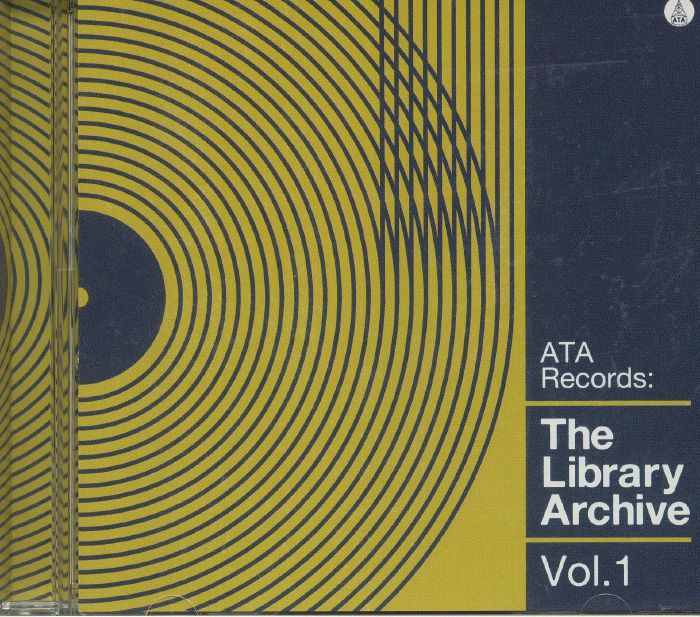
Eventually, there was enough for the first compilation in what they play to a series of releases The Library Archive. The first is ATA Records: The Library Archive Volume 1. It was recorded using the same recording techniques and equipment that was used to create the albums released during the golden age of library music. Even the minimalist cover is a nod to the legendary KPM releases of the sixties and seventies which Neil Innes and Pete Williams have been inspired by.
That is apparent throughout ATA Records: The Library Archive Volume 1. It opens with the Slap, Whack and Blow, which is a horn driven slice of cinematic funk that sounds as if it was inspired by Keith Mansfield’s KPM recordings. This retro recording transports the listener back to the seventies when this was the type of music that could regularly be heard on British television.
Duck Strut is driven along by the bass and combine with drums and percussion to create the groove. They’re joined by stabs of keyboards while the understated horns and flute sound as if they’ve been influenced by Quincy Jones on what’s best described as Brit-funk. Don’t be surprised to hear this track used on film or television in the future.
The Needle Nose is dramatic and cinematic and sounds as if it belongs in an episode of The Sweeney just before the blag goes down. Wiretap is another moody and atmospheric track with a cinematic sound. It would be perfect for a film shot in the seventies during the Cold War.
Wigged Out sounds like a homage to Italian library legends I Marc. Especially the organ which was one of their trademark sounds.
On Nuclear Wind I and II, Neil Innes and Pete Williams deploy a mellotron and Moog which were often used on classic library music albums. Here, their role is to provide the counterpoint to the tender, otherworldly vocals on these atmospheric and thought-provoking tracks.
Kaye Okay is another that sounds as if it was inspired by Keith Mansfield’s KPM recordings. It’s also a track that will be familiar to anyone who grew up in Britain the seventies. Tracks like this have a nostalgic sound as they were often used by television producers for light entertainment shows and will bring back memories for many people of a certain age.
Siren’s Sea is an acoustic track with a haunting and beautiful ethereal vocal. It washes over the listener as they imagine the scenes folding in front of their mind’s eye.
Very different is Midnight Heist, a jazz-funk track which wouldn’t sound out of place on a seventies cop show. Closing the album is the experimental sci-fi sounds of Planet Nine. It shows another side to the library music that Neil Innes and Pete Williams have been making.
Hardly a week goes by without the release of a new library music compilation, the reissue of a classic album or new album that has been inspired by the genre’s golden era. Some of the new albums of library music are often a mixed bag, but ATA Records: The Library Archive Volume 1 is one of the best.
It sounds as if it was recorded during the golden age of library music. This is no surprise as Neil Innes and Pete Williams use the same recording techniques and the same equipment. What is remarkable is that the music on the compilation was recorded in a lockup garage in Leeds. That is something Keith Mansfield, Syd Dale, Alan Hawkshaw and Johnny Hawksworth never did.
These great names and the legendary labels like have also inspired Neil Innes and Pete Williams as they begin their journey with ATA Records: The Library Archive Volume 1, and hopefully they will go “marching on together” and create future instalments in the series.
ATA Records: The Library Archive Volume 1.
CULT CLASSIC: ERIC ANDERSEN: SWEET SURPRISE.
Cult Classic: Eric Andersen: Sweet Surprise.
In 1975, thirty-two year old folk singer and songwriter Eric Andersen moved to Greenwich Village, New York, where it had all started for him in the early sixties. Back then, Eric Andersen was part of the folk scene, and as a twenty-one years in 1964, had auditioned for Vanguard Records at Gerdes Folk City, a well known music venue in the East Village. The audition was successful, and Eric Andersen was signed to Vanguard Records.
The following year, 1965, Eric Andersen released his debut album Today Is The Highway on Vanguard Records. It was well received by critics, and launched Eric Andersen’s nascent career.
1966 was one of the most important years of Eric Andersen’s career. He made his debut at the Newport Folk Festival, and released his sophomore album ‘Bout Changes ‘N’ Things. Songs like Violets Of Dawn, Thirsty Boots,I Shall Go Unbounded and Close The Door Lightly When You Go showcased a hugely talented songwriter who many critics believed had a big future ahead of him. Just like his debut album, ‘Bout Changes ‘N’ Things was released to plaudits and praise, and Eric Andersen was seen as one of the rising stars of the vibrant folk movement.
When Eric Andersen released ‘Bout Changes ‘N’ Things 2 in 1967, it had much in common with ‘Bout Changes ‘N’ Things. The same songs featured on the album, but they had been rerecorded and Eric Andersen had used different instruments. The songs were resequenced, and When ‘Bout Changes ‘N’ Things 2 was released, it showed another side to these familiar songs as Eric Andersen’s music evolved and moved towards folk rock.
The reinvention of Eric Andersen’s music continued on his fourth album More Hits From Tin Can Alley, which was released in 1968. It was the most eclectic album of Eric Andersen’s career.
When it came time for Eric Andersen to record his fifth album for Vanguard Records, A Country Dream, he was following in the footsteps of many folk singers who had also made the journey to Nashville. Joining Eric Andersen was a band that featured top session players. They played their part in Eric Andersen’s first album of country rock which featured a cover of Otis Redding’s Sittin’ On The Dock Of The Bay. It was given a makeover and was one of the talking points of A Country Dream when it was released in 1969. Despite being well received, A Country Dream was Eric Andersen’s swan-song for Vanguard Records. He was about to go up in the musical world.
After releasing five albums for Vanguard Records, Eric Andersen signed to Warner Bros. Records. Later in 1969, Eric Andersen released Avalanche where he flits between country-rock and his now familiar folk rock sound. Some of the songs are cerebral, while others feature a reflective, introspective Eric Andersen as he sings of roller coaster romances. However, on It’s Comin’ and It Won’t Be Long, Eric Andersen sounds like Bob Dylan right down to his phrasing. Other songs are understated and allow Eric Andersen’s emotive vocal to centre-stage as this new chapter to his career began.
This new chapter continued with the release of Eric Andersen in 1970. It was Eric Andersen’s second album for Warner Bros. Records, and saw him continue to mature as a singer and songwriter. He had written then entire album which saw Eric Andersen continue to combine country rock and folk rock and on occasions move towards a pop rock sound. Despite being one of his finest albums of recent years, Eric Andersen failed commercially. For Eric Andersen this was the end of his time at Warner Bros.
Later in 1970, Eric Andersen joined Janis Joplin, the Grateful Dead and country rockers The Speckled Hen on the Festival Express Tour. It wound its way across Canada and introduced Eric Andersen’s music to a new audience. However, it would be two years before Eric Andersen returned with a new album.
By 1972, Eric Andersen had signed to Columbia and began work on Blue River which was produced Norbert Putnam and features The Jordanaires and Joni Mitchell on backing vocals on the title-track. When Blue River was released later in 1972, it was to overwhelming critical acclaim. Record buyers were also won over by an album the featured elements of AOR, country rock, folk rock, pop and rock, and Blue River reached 169 in the Us Billboard 200. This meant that Blue River was Eric Andersen’s most successful album. It had taken seven years and eight albums, but somewhat belatedly, Eric Andersen had made a commercial breakthrough.
Buoyed by the success of Blue River, Eric Andersen returned to the studio and began work on the followup, which was going to be called Stages. Eric Andersen completed the album, but before it could be released, the master tapes disappeared. This was almost unheard of, and despite searching high and low for the master tapes, there was no sign of it. For Eric Andersen this was a devastating blow, as he had just made a commercial breakthrough.
The loss of the Stages’ master tapes affected Eric Andersen badly, and he decided to take a break from recording. Little did anyone realise that this break would last two long years.
It wasn’t until 1974 that Eric Andersen decided that he was ready to return to the recording studio. This was perfect timing as Clive Davis, who signed Eric Andersen to Columbia, had founded a new label Arista earlier in 1974 and was looking to add artists to the roster. One of the artists he wanted to sign was Eric Andersen, who signed to Arista in 1974, and began work on Be True To You. It’s the first of two albums that Eric Andersen released for Arista as he hit the comeback trail.
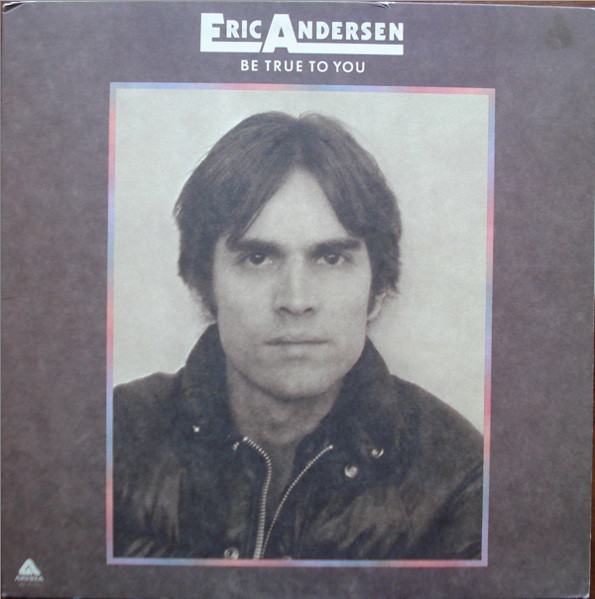
Be True To You.
Having signed to Arista, Eric Andersen began writing the ten songs that eventually became Be True To You. This was the much-anticipated followup to the album that was regarded as his masterpiece, Blue River. Be True To You was an album Eric Andersen’s fans had waited patiently for. They had heard about the loss of the master tapes to Stages, and Eric Andersen’s two year absence from the recording studio.
Some of the songs on Be True To You had originally featured on Stages, while others were new songs that Eric Andersen had just written. There was also one cover version Ol 55 on Be True To You. These songs became part of an album that focused on the subject of love and various events that happened during life. However, there was more to Be True To You than that. The album also dealt with how love had affected other people. Be True To You featured two themed sides, with side one entitled I’m Weary Of These Petty Wars while and side two Lovers They Make Promises, But Lovers They Tell Lies.
Recording of Be True To You began at Eric Andersen’s comeback album began at Wally Heider’s in August ’74, when Keep Fallin’ Like the Rain was recorded with producer Tom Sellers who was joined in the control room by John Florez. The pair co-produced the song with Eric Andersen before moving to another of LA’s top studios.
Four months later, in November 1974, Eric Andersen arrived at The Sound Labs, where he once again joined by a band that featured some of city’s top musicians. Some of the musicians were part of the core band, while others were drafted in to play on one or two tracks on Be True To You. The rhythm section alone included drummers Dennis St John, John Guerin, and Russ Kunkell; bassists Emory Gordy, Scott Edwards and Mark Sporer and guitarists Dean Parks and Chris Bond. They were joined by pianist Allen Lindgren, flautist Ernie Watts, cellist Jesse Ehrlich, tenor saxophonist Tom Scott and Richard Bennett who played acoustic guitar and steel guitar. Among the backing vocalists were Maxine and Julia Waters, Jackson Browne, Hern Pedersen and Maria Muldaur. Meanwhile, Tom Sellers took charge of production, except on Ol 55 Tom Sellers which was co-produced by John Florez. By December 1974, Be True To You was completed and ready for release in 1975.
Before the release of Be True To You in 1975, critics had their say on what was the belated followup to Blue River and essentiality, Eric Andersen’s comeback album after three years away. Just like Blue River, critics dissevered that Be True To You was a carefully crafted album where featured folk rock, country rock and pop rock. Critics hailed Be True To You a fitting followup to Blue River, and welcomed the return of Eric Andersen. His partnership with producer Tom Sellers was success.
Tom Sellers was responsible for a slick, polished production with woodwind and strings sweetening the country rock ballad Moonchild Riversong which open the album. It gives way to the beautiful heartfelt ballad Be True To You where again strings sweetens the sound and harmonies add the finishing touch. Very different is Wild Crow Blues where the tempo increases and Eric Andersen showcases a tougher country rock sound. The tempo drops on Ol 55, an anthemic country rock ballad where a weeping steel guitar provides the perfect foil to Eric Andersen’s vocal. Time Run Like A Freight Train features an understated arrangement and a tender, soul-baring vocal from Eric Andersen who sometimes sounds like James Taylor. This beautiful ballad closes side one, which was entitled I’m Weary Of These Petty Wars.
Side two was entitled Lovers They Make Promises, But Lovers They Tell Lies and opened with the hurt-filled folk rock ballad Liza, Light The Candle. It’s followed by Woman, She Was Gentle where backing vocals accompany Eric Andersen’s vocal which is akin to a confessional. Can’t Get You Out Of My Life features another emotive, hurt-filled vocal which is delivered against a jaunty arrangement where harmonies and a sultry saxophone play starring roles. It’s all change on The Blues Keep Fallin’ Like The Rain, where blues and jazz combine as Eric Andersen accompanied by drums played with brushes, subtle harmonies, a Wurlitzer and saxophone delivers a vocal full of sadness and despair. Closing the album is Love Is Just A Game, another beautiful ballad where a piano, lush strings and backing vocals accompany a rueful vocal full of hurt. It closes Be True To You on a high, and is one of many highlights on the album.
Just before the release of Be True To You, Eric Andersen and Arlen Roth played at the opening show of Bob Dylan’s Rolling Thunder Revue. This was a huge coup, and great publicity for his forthcoming album Be True To You.
Sadly, when Eric Andersen released Be True To You in 1975, his Arista debut failed to trouble the charts. This was a huge disappointment for Eric Andersen, who maybe, had been away too long? Three years had passed since Blue River, and many record buyers had short memories and may have forgotten about Eric Andersen. Music was also changing by 1975, and record buyers had moved on to different genres. However, despite the commercial failure of Be True To You, Eric Andersen decided to begin work on the followup Sweet Surprise.
Sweet Surprise.
For Sweet Surprise, Eric Andersen wrote eight new songs whist living in one room high in the mountains of Montana. This backdrop provided the inspiration for Eric Andersen to write Sweet Surprise, where he would renew his partnership with producer Tom Sellers.
Just like on Be True To You, Tom Sellers took charge of production on Sweet Surprise. This time, it was a much smaller band who joined Eric Andersen when recording of Sweet Surprise and they used a different selection of instruments to those that featured on Be True To You.
This time around, Eric Andersen’s band included a rhythm section of drummer Chris Parker, bassist Tony Brown and guitarists Sister Joon Millington who also played acoustic guitar and Arlen Roth who played lead acoustic guitar. They were augmented by David Mansfield who played steel guitar and fiddle, percussionist Antonio Ramos, keyboardist Tom Sellers and Richard Bell who keyboards and ARP synth. Additional musicians included Jennifer Condos acoustic guitarist Paul Horan, Happy Traun on concertina and mandolin, cellist Wacky Jacky Robbins, steel guitarist Ben Keith and saxophonist Tom Scott. They provided the backdrop for Eric Andersen on Sweet Surprise which was released in 1976.
Just like Be True To You, Sweet Surprise was a slick, polished album that veered between country rock, folk rock and even pop rock. That was the case on the album opener Lost In A Song, where country rock and pop rock melt into one in this beautiful ballad. How It Goes is country rock all the way as a weeping guitar accompanies Eric Andersen’s vocal which sounds like Bob Dylan. Eric Andersen showcases his “own” vocal on the understated ballad Dreams Of Mexico which gives way to San Diego Serenade. It features saxophonist Tom Scott and a weeping guitar on this jazz-tinged, country rock ballad that closes side one.
Sweet Surprise opens side two and is another country rock ballad where Eric Andersen delivers a heartfelt vocal. The balladry continues on the ballad Down At The Cantina which features a hopeful vocal from Eric Andersen. It’s a similar case on Crazy River which features a country rock arrangement. Closing Sweet Surprise is another beautiful ballad where Eric Andersen delivers a tender vocal against an understated but effective carefully crafted arrangement. This ensures that Sweet Surprise closes on a high.
Sweet Surprise was scheduled for release later in 1976. Before that, the critics sat in judgment, before having their say on the followup to Be True To You. The majority of critics were impressed by Sweet Surprise, which should’ve found an audience within the country music community.
When Sweet Surprise was released in 1976, the album failed to even trouble the charts. This was another disappointment for Eric Andersen, who wound’t release another album for Arista.
Eric Andersen’s Arista years lasted two just two years, and during that period he released Be True To You and Sweet Surprise. It was the end of another chapter in a story that began in 1964 when Eric Andersen auditioned for Vanguard Records at Gerdes Folk City.
Twelve years later, and Eric Andersen’s time at Arista had come to a close after releasing just two albums in two-year. During his short stay at Arista, Eric Andersen released Sweet Surprise, which is best described one of the hidden gems in his back-catalogue. It showcases a talented singer, songwriter and guitarist whose music didn’t find the audience it deserved. Sadly, Sweet Surprise slipped under the musical radar on an album where Eric Andersen embraces country rock on his second set for Arista. After the commercial failure of Sweet Surprise, Eric Andersen didn’t release another album in America for eighteen years.
By the late seventies, Eric Andersen found himself without a record company, and for nearly two decades he fell into obscurity. During that period, Eric Andersen moved to Europe, and released 1980s Midnight Son, 1984s Tight Is The Night and Istanbul in 1985. Things changed in 1988 when Eric Andersen released Ghosts Upon The Road which sold well and caught the attention of critics in Europe. Still though, Eric Andersen was a forgotten man in America, despite producing albums of the quality of Sweet Surprise a carefully crafted hidden gems that is a reminder of his Arista years.
Cult Classic: Eric Andersen: Sweet Surprise.

NEIL YOUNG-HOMEGROWN.
Neil Young-Homegrown.
Label: Reprise Records.
Format: CD.
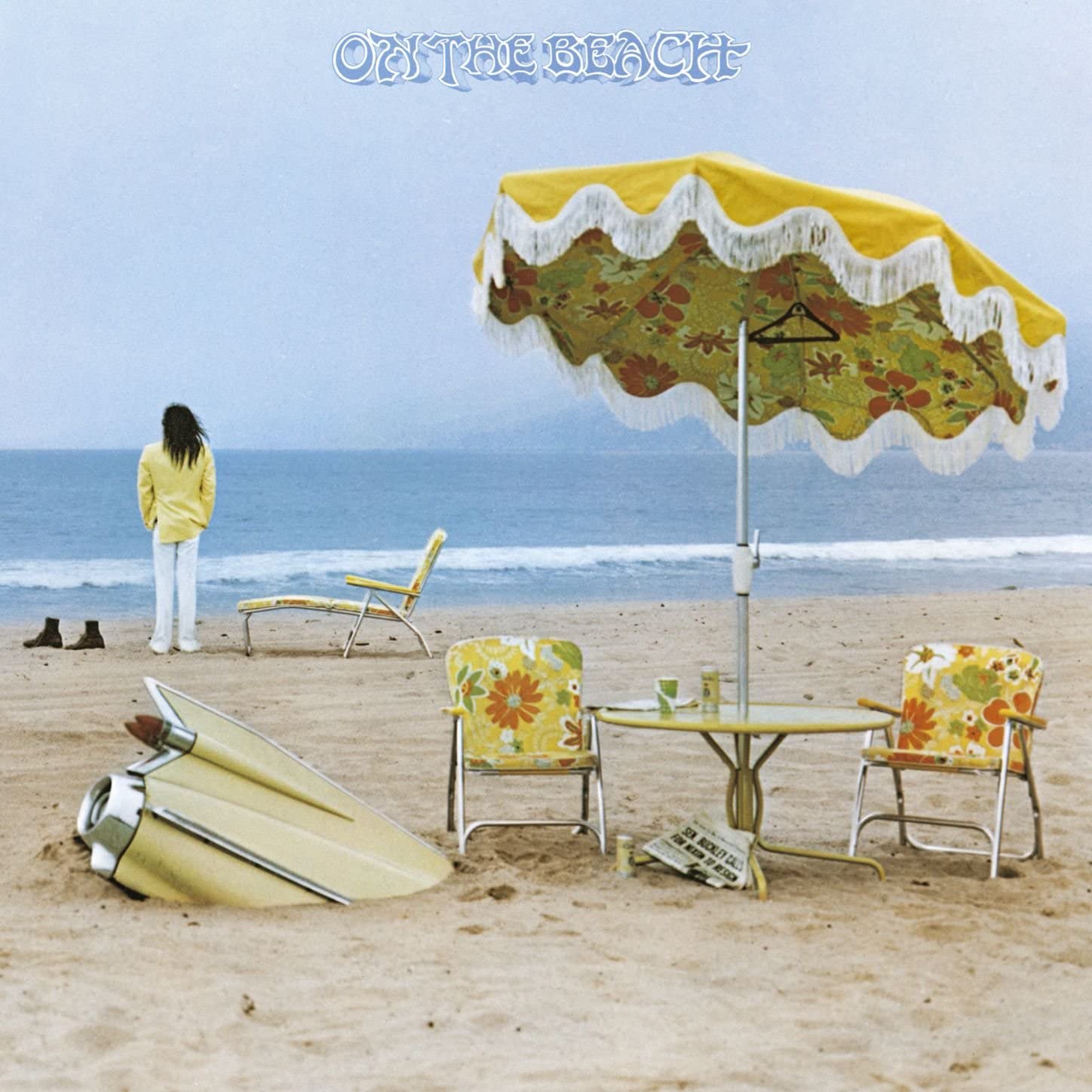
By June 1974, Neil Young was twenty-eight and was preparing to begin work on a new album Homegrown, which would’ve been the sixth album of his career, and the followup to On The Beach which was scheduled for release on the ‘19th’ of July.
It was the much-anticipated followup to his classic album Harvest, which was released to commercial success and critical acclaim on the ‘1st’ of February 1972. Harvest had topped the US Billboard 200 charts for two weeks and was the best selling album of 1972 in America where it eventually sold in excess of over four million copies. On The Beach had a lot to live up to.
While Neil Young’s career was going from strength-to-strength, his longterm relationship with actress Carrie Snodgress was deteriorating. They had met after her award-winning role in the 1970 film Diary Of A Mad Housewife. She was the inspiration for A Man Needs A Maid, which Neil Young wrote about contemplating starting a new romantic relationship. This was the first of a number of new songs he wrote about his relationship with Carrie Snodgress.
The next was Motion Pictures which Neil Young wrote for On The Beach which was recorded between February and April 1974. Two months later, in June 1974, Neil Young began work on Homegrown, which featured a number of songs that were inspired by his relationship with Carrie Snodgress.
The recording of Homegrown began in earnest on the ‘16th’ of June 1974, which was the day before a Crosby, Stills, Nash and Young session. They were planning to record a few songs before heading out on a lengthy summer stadium tour. However, with a day free, Neil Young took the opportunity to record a new song he had written.
This was Love Is A Rose, which was essentially a reworking of Dance, Dance, Dance which Crazy Horse had recorded on their 1971 eponymous debut album. Despite being recorded in 1974, Love Is A Rose sounds as if Neil Young was picking up where he left off on Harvest. Linda Ronstadt saw the potential in the song which gave her a country hit in 1975. It would also eventually find its way onto Homegrown.
On The Beach.
Before that, On The Beach was released on the ‘19th’ of July 1974. It was a very different album to Harvest and not what critics and record buyers expected. Some critics were surprised by the underproduced sound and felt that it was an album full of darkness and despair. That wasn’t strictly true.
On The Beach was recorded after Tonight’s The Night which found Neil Young expressing his grief following the deaths of Crazy Horse guitarist Danny Whitten and roadie Bruce Berry. By the time On The Beach was recorded, Neil Young was ridding himself of much of the despair he had been feeling when he recorded Tonight’s The Night. While there’s still darkness and despair there’s also pessimism and hope.
Record buyers didn’t seem to “get” On The Beach, which stalled at sixteen in the US Billboard 200 but was still certified gold. Across the Atlantic, the album was certified silver. On The Beach was nowhere near as successful as Harvest, and it would only be much later that the album received the recognition that it deserved.
Homegrown Continues.
Nearly three months later, on the ‘12th’ of September 1974, Crosby, Stills, Nash and Young stadium tour were about to play a concert at Wembley Stadium, in London, that evening. The opening act was The Band, and with time on their hands before the concert Neil Young and Robbie Robertson made their way to Ramport Studios to record a track together for Homegrown. That day, they recorded the bittersweet acoustic duet White Line. It was time well spent.
After the Crosby, Stills, Nash and Young stadium tour was over, the next session for Homegrown began on the ‘11th’ of December and lasted two days. The session included Band drummer Levon Helm and Ben Keith on pedal steel guitar. Both play a crucial part in the sound and success of the album opener Separate Ways, where Neil Young delivers a vocal full of loneliness, hurt and heartbreak. During the same session, he recorded the hopeful sounding Try, which features Emmylou Harris on backing vocals. It’s the polar opposite of Separate Ways which it follows on Homegrown.
The next day, the ‘13th’ of December the band reassembled and recorded two more tracks. This included Homegrown, a tongue-in-cheek tribute to hemp. Neil Young rerecorded the song with Crazy Horse and it featured on the 1977 album American Stars ‘N’ Bars. So was the other song recored that day, the acoustic ballad Star Of Bethlehem which features beautiful harmonies from Emmylou Harris. It’s one of the highlights of Homegrown and the perfect way to close the album.
There was no rest for the band over the festive season, and on New Year’s Eve they were back in the studio. They sound as if they’re in good spirts on the bluesy vamp We Don’t Smoke It No More. It has a looser sound and is reminiscent of the 1975 album Tonight’s The Night. However, the song which was the last Neil Young recorded during 1974 deserves its place on Homegrown.
Four days later, on the ‘4th’ of January 1975 the band were reunited and Neil Young recorded Vacancy. He switches between guitar and harmonica and delivers an impassioned vocal where he probes and questions: “who are you…what’s your name?” on one of the hidden gems on Homegrown.
Just seventeen days later, on the ‘21st’ of January 1975, Neil Young and his band entered the Sound Recorders, in LA, and recorded the four other tracks that feature on Homegrown. The piano lead Mexico and Kansas are solo performances by Neil Young and both are best described as short, lysergic sounding songs.
Florida which was recorded the same day, and is a surreal sounding spoken word dream that is akin to a stream of consciousness.
The other track recorded that day was Little Wing where Neil Young plays harmonica and guitar as he delivers a rueful vocal. It’s the best of the tracks recorded during the final session and was released on the Hawks and Doves album in 1980.
These twelve tracks would eventually make their way onto Homegrown. However, that is only part of the story. Around thirty tracks were recorded over a seven month period. Many of them were solo performances and many were acoustic recordings with just Neil Young his guitar and harmonica. With so many tracks to choose from, there should’ve been no problems choosing the tracks that would make it onto Homegrown. Several track-listings were compiled and they were being considered when word came through that the album had been cancelled by Neil Young.
By then, Homegrown’s album cover had been designed and Reprise were preparing for the release. It was totally unexpected and through their plans into disarray. What had happened?
Neil Young had decided to hold a listening party to let some of his friends hear Homegrown. This included members The Band and Crazy Horse who partied into the early hours. Having heard Homegrown, Neil Young played the other side of the tape which featured Tonight’s The Night. When Rick Danko heard it he said: If you guys don’t release the fuckin’ album, you’re crazy.’” It was enough to make Neil Young change his plans.
This in a way is not surprising, as the songs are very personal, and reveal his feelings about his failing relationship with actress Carrie Snodgress. Later Neil Young said about releasing Homegrown: “It was a little too personal…it scared me.” It was shelved and Tonight’s The Night released instead.
When Tonight’s The Night was released on June the ’20th’ 1975, Neil Young’s expression of grief was well received by the majority of critics. However, it stalled at just twenty-five in the US Billboard 200 and failed to sell as many copies as On The Beach. However, Tonight’s The Night was certified silver in the UK and gold in Australia. This was a small crumb of comfort.
Since Homegrown was shelved in 1975, the album lay unreleased in Neil Young’s vaults, and has taken on an almost mystical quality. His fans hoped that one day, the album would be released. This was due to happen on It Record Store Day 2020 as part of Neil Young’s Archives’ series. When the date of Record Store Day 2020 was changed due to the coronavirus pandemic Reprise decided to release Homegrown on the ‘19th’ of June 2020. This was forty-five years after its intended released date.
Rather belatedly Neil Young’s many fans got to hear Homegrown which is one of his most personal albums. It’s a soul-baring album where he reveals his feelings about his failing relationship with Carrie Snodgress, the mother of his young son Zeke. Sadly, their relationship came to an end in 1974, during the recording of the album. Maybe completing the album proved cathartic for Neil Young, although when it came to release Homegrown he was reluctant to do so.
Homegrown has a confessional quality and with its intimate arrangements and an understated and minimalist production style, it’s a very personal, poignant and powerful album from Neil Young where he lays bare his hurt and heartbreak after the breakup of his relationship with Carrie Snodgress on what’s akin to a diary that he never expected anyone to read.
Neil Young-Homegrown.
KENNY DORHAM-TROMPETA TOCCATO.
Kenny Dorham-Trompeta Toccato.
Label: Blue Note Records.
Format: Vinyl.
On December the ‘15th’ 1953, twenty-nine year old Texan trumpeter Kenny Dorham had already been a member of Dizzy Gillespie, Billy Eckstine and Lionel Hampton big bands and had joined Charlie Parker’s Quintet in December 1948. Less than five years later, and the sideman embarked upon a solo career when he signed the Debut label, which was founded by Charles Mingus and his wife Celia, with drummer Max Roach. This was a new chapter in Kenny Dorham’s career.
He journeyed to the Van Gelder Studio, at 25 Prospect Avenue, Hackensack, New Jersey, to record his debut album as leader, Kenny Dorham Quintet. It was well received upon its release in 1954, and this should’ve been the start of a long and illustrious career for the bandleader, composer and trumpeter.
By 1955, Kenny Dorham had signed to Blue Note Records, and in October released one of his finest albums for the label, Afro-Cuban. This was first of start five albums that he released for Blue Note Records over a ten year period.
1956 was an important and sometimes frustrating year for Kenny Dorham. He was one of the charter members of The Jazz Crusaders, although his involvement was relatively short-lived. When drummer and fellow cofounder Art Blakey took over The Jazz Crusaders’ name he decided to found a new band The Jazz Prophets. They played on his second album for Blue Note Records.
This was ‘Round About Midnight At The Cafe Bohemia which was recorded on the ‘31st’ of May 1956. Later that year, the same lineup recorded another album together, and Kenny Dorham And The Jazz Prophets Volume 1 was released on ABC-Paramount. Still, Kenny Dorham found time tow work with two giants of jazz.
He had recorded with Sonny Rollins, and then joined the Max Roach Quintet after the death of Clifford Brown. 1956 was an important year in the career of Kenny Dorham.
As 1957 dawned, ‘Round About Midnight At The Cafe Bohemia on. This sextet recording was released to plaudits and praise in January 1957. However, it would another four years before Kenny Dorham released another album on Blue Note
Over the next four years, he released albums on the Riverside, New Jazz and Time labels. Then on the ‘15th’ of January 1961 Kenny Dorham recorded Whistle Stop for Blue Note Records with an all-star band.
Five months later, Whistle Stop was released and hailed as his finest album Blue Note Records. Kenny Dorham was the comeback king, and “in 1975 five British critics picked Whistle Stop as one of 200 albums that belonged in a basic library of jazz recorded after World War II.”
Buoyed by the response to Whistle Stop, Kenny Dorham released the live album Inta Somethin’ on Pacific Jazz in March 1962. Reviews of the album were mixed, although Matador which was released by United Artists in April 1962 was a return to form from Kenny Dorham.
He returns to Blue Note Records and Una Mas (One More Time) on the ‘1st’ of April 1963. Little did any of the Quintet realise that this would be the penultimate album that Kenny Dorham would record. By then, he was frustrated that he still wasn’t well known within the jazz scene and that his music wasn’t receiving the recognition he deserved.
In an interview for the album’s liner notes he said: “All I can say is that if it’s going to happen, it’ll happen. But it’s going to have to happen within a reasonable time. After all, I’ll soon be into my ‘25th’ year on the trumpet. Anyway, however it goes, I’ll just keep playing. That’s where the basic satisfaction is at”
When Una Mas (One More Time) was released in January 1964, the majority of the reviews were positive. However, just like his previous albums, it wasn’t a particularly successful release. Still his music was being heard by a small group of discerning jazz lovers. For Kenny Dorham it was a disappointing and frustrating time.
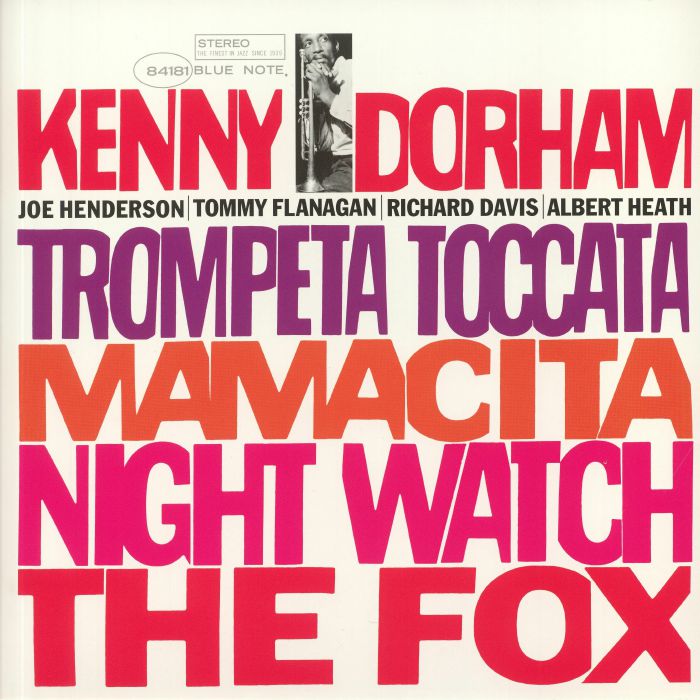
On September the ‘14th’ 1964, nearly eleven years after he made his debut as bandleader, Kenny Dorham journeyed to the Van Gelder Studio with his quintet. They were about to record Trompeta Toccat. It turned out that this was the last time he would make the journey as a bandleader.
That day, his band featured drummer Albert Heath, double bassist Richard Davis and pianist Tommy Flanagan. They were joined by tenor saxophonist Joe Henderson who wrote Mamacita, while bandleader Kenny Dorham played trumpet and wrote the other three new compositions. Producing Trompeta Toccato was recorded by Rudy Van Gelder and produced by Alfred Lion. Just like so many Blue Note Records’ sessions, the album was recorded in one day, but wasn’t released until 1965.
By the time Trompeta Toccato was released in July 1965, Kenny Dorham was working as a sideman. It was also his swansong, and he would never record another album of new material. That was a great shame as Trompeta Toccato was one of the finest albums of his career. Sadly, it failed to find the wider audience it so richly deserved.
Trompeta Toccato opens with the title-track which is played in 6/8 time. Just Kenny Dorham’s trumpet and then the piano play slowly leaving space on what seems like a melancholy sounding track. Then it’s all change as the rhythm section, piano and a blazing, braying horns that are like a tag team as they bobs and weave their way across the arrangement which has taken on an Afro-Latin feeling. Later, pianist Tommy Flanagan plays a lengthy ruminative solo that invites refection before passing the baton to Richard Davis’ slow deliberate and thoughtful bass. Latterly the band unite and Joe Henderson’s trumpet soars about the rest of arrangement to this ambitious and complex twelve minute modal epic.
“Night Watch is a bluesy, cinematic track with a strong and memorable hook, where the Quintet are at their tightest and paint vivid pictures. Kenny Dorham described the scene as: ”It’s very late at night, and the mood is what comes when you’re alone at that time”. That describes it perfectly and many people will have experienced that feeling and be able to relate to it. Again the horns are to the fore as the band play as one. Then when the solos come round bandleader and trumpeter Kenny Dorham blows hard but is always in control and his playing melodic as the rhythm section ensure the track swings. Tenor saxophonist Joe Henderson then takes charge and plays his solo effortlessly. So does pianist Tommy Flanagan, who adds to the late night sound with one of his finest solos as the rhythm section provide the heartbeat. Then the horns take charge and add a sense of melancholia that many people will have experienced when they find themselves along late at night.
Mamacita is a twelve bar Bossa Nova written by Joe Henderson that came to life during the recording at the Rudy Van Gelder Studio. The band knew they were on the right road when they got producer Alfred Lion and photographer Francis Wolff moving to the rhythm. That’s sure to be the case from the opening bars as the piano and drums combine and then the trumpet and tenor saxophone enter. By then, toes are sure to be tapping and hips are swaying. This is just the start as the solos are still to come. First up is tenor saxophonist Joe Henderson whose playing is flawless and he sets the bar high. Kenny Dorham matches him every step of the way and so does pianist Tommy Flanagan. Then when the band reunite, the horns take the lead as the track swings as this Bossa Nova transports the listener to the Copacabana Beach in Rio De Janeiro.
Closing Trompeta Toccato is The Fox which bursts into life and has a 12-8-12 bar structure. It’s driven along by the rhythm section as Kenny Dorham plays with speed, power, urgency and a fluidity putting his twenty-five years of experience to good use. Then he bass the baton to Joe Henderson and his braying, rasping tenor saxophone scampers along as if the hounds are on the heels of The Fox. Tommy Flanagan replicates that urgency on the piano as his fingers flit up and down the keyboard. Later the band become one and the urgency increases before reaching a crescendo and Kenny Dorham takes a bow.
Sadly, Trompeta Toccato was Texan trumpeter Kenny Dorham’s swansong as bandleader. However, he had saved one of his finest albums until last, and combines hard bop, Afro-Latin, modal jazz and Bossa Nova on Trompeta Toccato. That comes as no surprise.
He’s backed by a hugely talented and versatile Quintet, with pianist Tommy Flanagan and tenor saxophonist Joe Henderson playing starring roles on the album. Just like Kenny Dorham they showcase their considerable skills when the solos come around their playing is variously tight, inventive, expressive, urgent and fluid as they feed off each other and drive each other to greater heights. They played their part in an album that should’ve been a turning point in Kenny Dorham’s career.
When Trompeta Toccato was released in July 1965 it failed to find the audience it deserved. This was a huge disappointment for Kenny Dorham. By then, he was already disillusioned as even his finest albums, including Trompeta Toccato, weren’t selling well and he he wasn’t receiving the recognition from critics and the jazz establishment that he felt he deserved. That was why Kenny Dorham decided to call time on his solo career after Trompeta Toccato.
After that, he continued to work as a sideman, but latterly only sporadically. By then Kenny Dorham was writing for Downbeat magazine as he was suffering from kidney disease and was unable to make a living as a musician. Tragically, this truly talented and vastly underrated bandleader, composer and trumpeter passed away on December the ‘5th’ 1972 aged forty-eight in New York. Jazz was in mourning at the loss of Kenny Dorham.
While he may not have been as prolific as other artists or enjoyed such a lengthy career, Kenny Dorham released some vastly underrated albums that somewhat belatedly are starting to find a wider audience. This includes Trompeta Toccato, which was one of his finest albums, and what was sadly his swansong, but along with Whistle Stop is the perfect introduction to the late, great Kenny Dorham.
Cult Classic: Kenny Dorham-Trompeta Toccato.
HEDVIG MOLLESTAD-EKHIDNA.
Hedvig Mollestad-Ekhidna.
Label: Rune Grammofon.
Format: CD.
In May 2018, award-winning Norwegian guitarist, vocalist, bandleader and composer Hedvig Mollestad was thirty-six and one of the leading lights of the vibrant Nordic music scene. Her band the Hedvig Mollestad Trio had already released five albums and had already recorded their sixth album Smells Funny. Despite the commercial success and critical acclaim that that the Trio were enjoying, Hedvig Mollestad was starting to think about writing for a larger group. She wanted to expand her musical horizons, and a letter she received allowed her to do that.
When Hedvig Mollestad opened the letter it as from the organisers of the long-running and prestigious Vossajazz festival which was established in 1973. The organisers wanted to commission a work for 2019 festival. This was the perfect opportunity to do what she had been thinking about, and write for a bigger group. She accepted the invitation and began working on the commission.
Hedvig Mollestad called the completed commission Ekhidna, which is a figure from Greek mythology that is half woman, half snake. She said the commission featured loosely tied themes about “human struggle and being a mother in times when our increasing inability to live in harmony with nature paints a bleak picture.”
With the commission complete, Hedvig Mollestad began putting an expanded band together. This was no ordinary band and featured some top musicians, and it was akin to a nascent supergroup.
Joining bandleader and guitarist Hedvig Mollestad were Elephant9 drummer Torstein Lofthus, and percussionist Ole Mofjell who was the youngest member of the band but had plenty of experience within the European improv scene. They were joined by Marte Eberson who spent five years of her career with Highasakite, and Erlend Slettevoll of The Core and Grand General who both switched between keyboards and synths. The final member of the band was Portuguese trumpeter Susana Santos Silva who Hedvig Mollestad played alongside in Mats Gustafsson´s Nu-Ensemble. This was the lineup that would appear at the Vossajazz festival.
Billed as the festival by the lake, Vossajazz took place in April 2019 and three works had been commissioned. However, Hedvig Mollestad was the guest of honour and with her band played her new work Ekhidna, which lasted seventy-five minutes. It was a spellbinding performance of a genre-melting piece that won over critics at Vossajazz.
After the success of the performance at Vossajazz, it was decided to release Ekhidna as an album. To make it suitable for album release, the full festival version was edited, tightened up in places, and then the band recorded Ekhidna earlier in 2020 at Amper Tone studio in Oslo with Hedvig Mollestad taking charge of production. Once the album was complete, it was scheduled for release in the summer of 2020.
Hedvig Mollestad’s much-anticipated solo album Ekhidna was recently released by Rune Grammofon, and marks another chapter in her distinguished career. On Ekhidna she leads a a multitalented and versatile sextet which features six soundscapes that last just forty minutes. This is much shorter than the original work premiered at Ekhidna lasted seventy-five minutes.
Ekhidna opens with No Friends But The Mountains which lasts just under two minutes. It is atmospheric, moody and cinematic with the guitar and trumpet playing starring roles on a track that sounds like it’s part of the score to a Norwegian Western.
Very different is A Stone’s Throw which combines elements of heavy rock, fusion, progressive rock and metal. Again, Hedvig Mollestad’s blistering, riffing guitar plays a leading role as Torstein Lofthus’ drums power and drive the arrangement along. Then from 1.46 to 3.03 it’s all change and it’s as if Dave Gilmour circa Dark Side Of The Moon has made a guest appearance, as the guitar glistens and shimmers during an interlude that is best descried as pastoral fusion. However, normal service is the resumed as the band explode out of the blocks with machine gun riffs sprayed across the driving arrangement. It gathers speed and become urgent and frenzied before a detour via the earlier hard rocking sound and then fusion on this seven minute genre-melting opus.
The searing guitar that opens Antilone is a mere amuse bouche before this pile driver of an arrangement explodes into life. Soon, the band fuse elements of progressive rock, fusion, math rock and draw inspiration from King Crimson, the Mahavishnu Orchestra, Jimi Hendrix and Frank Zappa’s Mothers of Invention. This is given a ‘21st’ Century makeover by producer and bandleader Hedvig Mollestad. She unleashes one of her finest solos wielding her guitar like a musical Merlin as she unleashes a blistering, searing and scorching solo where she plays with speed, power and invention before the track reaches a crescendo after ten magical minutes. It’s been a truly breathtaking performance.
Slightly Lighter has a much more understated sound as a shimmering, glistening and rippling guitar glides across the spacious arrangement. It’s very different to much of what’s gone before and is melancholy ruminative and invites reflection.
On Ekhidna Hedvig Mollestad swaggers centrestage and unleashes a Hendrix-inspired guitar solo as the drums add a degree of drama, trumpet brays and the rest of the band join the frae. As Hedvig Mollestad unleashes another virtuoso performance she deploys an array of effects before exiting stage left. Trumpeter Susana Santos Silva then unleashes an improvised solo playing with speed, power and urgency, as the interplay between the two drummers add to the drama and intensity. So does the guitar when it returns, Hedvig Mollestad channels the spirit of Hendrix before this improvised epic reaches a crescendo.
One Leaf Left closes Ekhidna and as it unfolds, it has an understated sound. The guitar takes centrestage before the trumpet and keyboards add to the wistful, melancholy and filmic sound. At 5.20 the searing, scorching guitars cuts through the arrangement and at one point the band seem to draw inspiration from Santana. By now, it’s rocky and dramatic and a very different soundscape thanks to Hedvig Mollestad’s intoxicating and breathtaking guitar riffs. It’s a case of keeping one of the best until last on Ekhidna.
Hedvig Mollestad’s new Ekhidna which was recently released by Rune Grammofon, and is an album with its roots in the past and present. It’s an album that has been influenced by classic and hard rock, fusion, improv, math rock, metal, progressive rock and psychedelia. Then there’s the influence of Black Sabbath, Led Zeppelin, Frank Zappa’s Mothers Of Invention, Jimi Hendrix, King Crimson, Pink Floyd and Santana as well as Miles Davis and Mahavishnu Orchestra. All these disparate genres and influences play their part in the sound and success of Ekhidna.
It finds Hedvig Mollestad leading her new supergroup from the front and plays a starring role throughout the six soundscapes on Ekhidna. They seamlessly switch between and combine different musical genres, and sometimes, Hedvig Mollestad throws a curveball and the soundscapes on Ekhidna heads in a new direction and it becomes a magical mystery tour. This the cerebral supergroup take in their stride on Ekhidna, which is an intoxicating epic and features Nordic guitar wielding riff-meister Hedvig Mollestad at the peak of her considerable powers as she embarks on a new chapter in her glittering career.
Hedvig Mollestad-Ekhidna.

CULT CLASSIC: MAYNARD FERGUSON-M.F HORN 4 AND 5: LIVE AT JIMMY’S.
Cult Classic: Maynard Ferguson-M.F. Horn 4 and 5:Live At Jimmy’s.
The first time many jazz fans heard Canadian jazz trumpeter Maynard Ferguson, was when he joined the when the twenty-four year old joined Stan Kenton’s new Innovations Orchestra in 1949. This was home for Maynard Ferguson for the next four years and was where he first came to prominence.
Suddenly, Maynard Ferguson’s star was in the ascendancy and this resulted in him winning the prestigious Down Beat reader’s poll for best trumpeter in 1950, 1951 and 1952. This was quite a feat as he was up against many top trumpeters, including Chet Baker, Dizzy Gillespie, Miles Davis and Louis Armstrong. However, a year after winning his third Down Beat award, Maynard Ferguson left Stan Kenton’s employ and became a session musician at Paramount Pictures.
At Paramount Pictures, Maynard Ferguson soon became their first choice trumpeter and featured on forty-six soundtracks, including The Ten Commandments in 1956. However, his work at Paramount Pictures didn’t take up all of Maynard Ferguson’s time and he was still able to record with other artists. This offered another lucrative source of income for him. However, his contract with Paramount Pictures stated that he wasn’t allowed to play in jazz clubs.
Some nights, Maynard Ferguson circumvented this band by using an alias, and playing in clubs under the moniker Tiger Brown or Foxy Corby. However, by then, he was becoming increasingly unhappy about his lack of live performances and gradually became disillusioned with life at Paramount Pictures. As a result, he left Paramount Pictures in 1956.
Having spent February and March of 1956 recording Havana 3 A.M. with the Pérez Prado Orchestra, Maynard Ferguson was installed by Morris Levy as the bandleader of the Birdland Dream Band. This was a fourteen-piece all-star band that played at Morris Levy’s Birdland jazz club in New York. Alas, the Birdland Dream Band was a short-lived venture and only recorded two albums over the next year. After recording the two albums, Morris Levy’s dream of an all-star jazz band came to an end. However, many members of the Birdland Dream Band joined the new band that Maynard Ferguson formed in 1957.
Having spent much of last few years working at Paramount Pictures, and a sideman, and then with the Pérez Prado Orchestra and the Birdland Dream Band, Maynard Ferguson decided that from now on, he was going to concentrate on his own band. While he made the occasional guest appearances as a sideman, Maynard Ferguson concentrated his efforts on his new band
Over the next three decades, Maynard Ferguson’s band featured some of the top jazz musicians of the day, and also, some the best up-and-coming musicians. When he came across one of jazz’s rising stars, he was more than willing to give them an opportunity to showcase their skills. They had plenty of opportunity to do so, and between 1957 and 1973 Maynard Ferguson’s band had released over twenty albums and once again, the bandleader’s star was in the ascendancy.
By Tuesday the ‘10th’ of July 1973, forty-five year old Canadian bandleader Maynard Ferguson was regarded as one of the top jazz trumpeters, and was able to hold his own with the best in the business. That was despite fierce competition from Miles Davis, Freddie Hubbard, Don Cherry, Donald Byrd, Jack Johnson, Woody Shaw and Art Farmer. However, Maynard Ferguson had been around since the late-forties and had a wealth of experience and planned to put to good use at a very special lunchtime gig on Tuesday the ’10th’ of July 1973.
The concert was part of the 1973 Newport Jazz Festival, which had relocated to New York a year earlier, in 1972. Maynard Ferguson had been booked to play a series of gigs at Jimmy Ryan’s jazz club on West ‘52nd’ Street during the 1973 Newport Jazz Festival. Although Maynard Ferguson was always busy recording and playing live, he was able to find time to play at the prestigious Newport Jazz Festival. However, what Maynard Ferguson hadn’t planned on doing was recording a live album at Jimmy Ryan’s jazz club on the ’10th’ of July 1973. That wouldn’t have happened if some very special visitors hadn’t come to see him play live.
One of the hottest tickets of the 1973 Newport Jazz Festival was Ella Fitzgerald concert at the Carnegie Hall. Many jazz fans struggled to find a ticket and the scalpers were doing a roaring trade that night. However, many within the music industry were fortunate enough to have a ticket. However, saxophonist, composer and producer Teo Macero was on business, and was at the Carnegie Hall to record the concert. He was joined by music critic Mort Goode and they witnessed a peerless performance from the Queen of Jazz that was one of the highlights of the 1973 Newport Jazz Festival. After the concert, Teo Macero and Mort Goode decided to head to Jimmy Ryan’s jazz club on West ‘52nd’ Street where they wanted to see Maynard Ferguson live.
Maynard Ferguson was now signed to Columbia, and had already recorded and released five albums for the label. That number would soon rise to six. When Teo Macero and Mort Goode arrived at Jimmy Ryan’s jazz club they met a handful of Columbia executives, and got talking before Maynard Ferguson and his band took to the stage. They were spellbound during what was a barnstorming performance.
That night, everything just fell into place during an almost flawless performance. Jimmy Ryan’s jazz club had brought out the best in Maynard Ferguson and his band.
After the performance, Teo Macero, Mort Goode and the Columbia executives and went backstage to see Maynard Ferguson, and congratulate him on his performance. Soon, the talk turned to Maynard Ferguson recording a live album at Jimmy Ryan’s jazz club during the 1973 Newport Jazz Festival. While that was a good idea, the logistics made this impossible.
Maynard Ferguson explained that he was only playing two more nights at Jimmy Ryan’s jazz club, and then, had to move on. He had a busy schedule and couldn’t even stay for an extra day to record a live album. This was a huge disappointment for everyone in the room. When Maynard Ferguson checked his diary, he realised that he could return a couple of days later on Tuesday the ’10th’ of July 1973. Was this any use to Columbia Maynard Ferguson wondered?
Eventually, it was decided to grab the bull by the horns and record a live album at lunchtime at Jimmy Ryan’s jazz club on Tuesday the ’10th’ of July 1973. It was the perfect venue for Maynard Ferguson to record a live album. That album became M.F. Horn 4 and 5: Live At Jimmy’s which was released in 1974..
Having made the decision to record the live album that became M.F. Horn 4 and 5: Live At Jimmy’s, the Columbia executives had to work out the logistic of recording the album. They needed the personnel with the knowledge and skills to record a live album. Teo Macero was given the job of producing the concert, and the necessary equipment would be in place for the recording of M.F. Horn 4 and 5: Live At Jimmy’s at lunchtime at Jimmy Ryan’s jazz club on Tuesday the ’10th’ of July 1973. There was one more thing that was needed for a live album, an audience.
Selling tickets at short notice was impossible for the executives at Columbia. Ideally, they wanted the same type of audience that had been at Jimmy Ryan’s jazz club the first night they saw Maynard Ferguson. They were enthusiastic and excited but respectful of Maynard Ferguson and his band. That would’ve been the perfect backdrop for Maynard Ferguson’s live album M.F. Horn 4 and 5: Live At Jimmy’s. However, after some thought Columbia executives came up with a ready-made alternative audience. The press and record company executives were invited to hear Maynard Ferguson and his band play a special two-hour concert that started at midday.
On Tuesday the ’10th’ of July 1973, trumpeter Maynard Ferguson was joined by the twelve members of his band on the stage of Jimmy Ryan’s jazz club on West ‘52nd’ Street. It was a multitalented band that featured a mixture of top musicians and also a number of up-and-coming players that was drawn from three continents.
Maynard Ferguson’s band featured three British musicians, including drummer Randy Jones, Pete Jackson who played electric piano and saxophonist and flautist Andy MacIntosh. They were joined by flautist and baritone saxophonist Bruce Johnstone from New Zealand, while Ferdinand Povel from the Netherlands was a flautist and tenor saxophonist. The remainder of the twelve strong band were American.
This included Rick Petrone who switched between acoustic and electric bass. In the horn section were Lin Biviano, Danny Cahn, John de Flon and Bob Summers who played trumpet and flugelhorn. They were joined by trombonists Randy Purcell and Graham Ellis, while Andy MacIntosh played alto and soprano saxophone and flute. This all-star band would accompany Maynard Ferguson during his two-hour session which was being recorded by Teo Macero.
As Maynard Ferguson and his big band took to the stage, they opened the show with a six-minute version of Pete Jackson’s Teonova which he had dedicated to Teo Macero who was sitting just off the stage recording the concert. As he watched on, Maynard Ferguson and his big band were soon showcasing their considerable skills during solos, vamps and when they played as one. Already, there’s an energy and intensity, especially when Maynard Ferguson plays with power as he unleashes a blazing and dazzling solos. Other times, his playing is slightly more restrained, but still full of emotion, as he and his big band set the bar high for the rest of the album.
Maynard Ferguson and his big band then cover Jimmy Webb’s MacArthur Park. Initially they stay true to the original, before Maynard Ferguson’s trumpet adds a rueful, emotive sound. However, when the tempo increases, the track is transformed as it heads in the direction of jazz-funk, fusion, funk, Latin and rock. Bandleader Maynard Ferguson allows his band to shine as the track takes a series of twists and turns and enthusiastic audience enjoy this masterful reinvention of a classic track.
Pete Jackson’s genre-melting Left Bank Express bursts into life, and is six minutes of majestic rock-swing that is partly built around a pulsating Bossa Nova vamp. Whether it’s during the solos or when they play as a big band, the all-star ensemble reach new heights. After that, there’s no stopping Maynard Ferguson’s big band. Especially during a cover of the standard I’m Getting Sentimental Over You. It takes on a beautiful, rueful, late-night sound, before giving way to a fast and furious swinging bebop inspired version of Don Menza’s Two for Otis. Following hard on its heels is the Maynard Ferguson composition Stay Loose For Bruce. It’s memorable bluesy, mid-tempo track that certainly swings. So does Nice ‘n Juicy which heads in the direction of jazz-funk and fusion as Maynard Ferguson takes the big band sound in a new direction.
Mike Abene’s The Fox Hun is a breathtaking example of bebop where Maynard Ferguson and his big band play at breakneck speed. It’s followed by the bluesy Got The Spirit, a near ten minute track where Bruce Johnstone on baritone saxophone plays a leading role. There’s also a hint of fusion before the tempo rises and the big band stretch their legs. When they’re in full flight it’s a joy to behold and it’s no surprise that the enthusiastic audience make their appreciation felt. Closing the show was Blue Birdland where the horns swing, and Maynard Ferguson introduces the band before bidding the audience farewell.
The following year, 1974, Maynard Ferguson released his sixth album for Columbia, M.F. Horn 4 and 5: Live At Jimmy’s to critical acclaim. It was a double album that featured ten tracks that lasted sixty-three minutes. M.F. Horn 4 and 5: Live At Jimmy’s was an irresistible reminder of Maynard Ferguson and his all-star big band at the peak of their powers.
The big band was led by composer, trumpeter and bandleader Maynard Ferguson, who in 1973 was one of the top jazz trumpeters. He led a multinational big band that featured familiar faces and new names who were talented and versatile musicians. This is apparent throughout M.F. Horn 4 and 5: Live At Jimmy’s and finds the big band switching seamlessly between and combing musical genres. This included bebop, blues, funk, fusion, jazz, jazz-funk, Latin and rock. However, always, though, Maynard Ferguson returns to the big band sound which he reinvents throughout M.F. Horn 4 and 5: Live At Jimmy’s.
Nowadays, M.F. Horn 4 and 5: Live At Jimmy’s is regarded as one of the finest albums that Maynard Ferguson released during his Columbia years, and this cult classic is the perfect introduction to that period of the jazz superstar’s long and illustrious career
Cult Classic: Maynard Ferguson-M.F. Horn 4 and 5:Live At Jimmy’s.

CULT CLASSIC: LONNIE LISTON SMITH AND THE COSMIC ECHOES-ASTRAL TRAVELLING.
Cult Classic: Lonnie Liston Smith and The Echoes-Astral Travelling.
Sometimes, a record company proves to be the perfect fit for an artist. That was the case with Bob Thiele’s Flying Dutchman Productions which was the perfect label for Lonnie Liston Smith and The Echoes’ unique brand of cosmic jazz.
Through working with some of the most innovative and creative musicians in the history of jazz, Bob Thiele had realised that often, large record companies aren’t the best environment for innovative and creative musicians. He realised that these musical mavericks didn’t thrive within such an orthodox environment because their creativity is restricted. This meant that they were unable to experiment and innovate like they would like to.
That was why when Bob Thiele parted company with Impulse, who he had transformed into one of jazz’s pioneering labels, he founded Flying Dutchman Productions. This was the label that Lonnie Liston Smith and The Echoes signed to, and released a quintet of groundbreaking albums. Their debut was the cosmic jazz classic Astral Travelling, which was the latest chapter in Lonnie Liston Smith’s career.
It was almost inevitable that Lonnie Liston Smith would become a musician. He was born in December 1940, into a musical family. His father was a member of Richmond Gospel music group the Harmonising Four and members of The Soul Stirrers and Swan Silvertones often visited the Smith household.
Growing up, Lonnie Liston Smith inherited his father’s love of music and learned to play piano, tuba and trumpet in High School and college. Next stop was Morgan State University.
Inspired by Trane, Bird and Miles Davis, Lonnie Liston Smith embarked upon a degree in musical education. Throughout his time at University, he continued playing the pianist in local clubs and singing backing vocals. He played with alto saxophonist Gary Bartz and trombonist Graham Moncur. This was all part of his musical eduction. Having completed his BSc in musical education at Morgan State University, Lonnie Liston Smith walked straight into a job.
On leaving Morgan State University, he got a job with the Royal Theatre’s house band. For a young musician, this was would help turn them into a musical all-rounder as had to be able to accompany a wide range of artists. For Lonnie Liston Smith this was the next stage in his musical education. After this he moved to the New York.
Having moved to the Big Apple, he was luck enough to get a gig playing piano in Betty Carter’s band. This helped Lonnie Liston Smith get his name known in New York. Then in early 1965, Lonnie caught a break when he joined Roland Kirk’s band.
He made his recording debut on March 14th 1965 on Here Comes The Whistleman, which was recorded live in New York. However, Lonnie Liston Smith only played on the title-track, Making Love After Hours, Yesterdays and Step Right Up. Thenhe featured on Roland Kirk and Al Hibbler’s 1965 live album A Meeting Of The Times. This enhanced his reputation and after this, Lonnie Liston Smith joined one of jazz’s top bands.
Over the last few years, The Jazz Messengers had established a reputation for hiring young musicians looking to make a name for themselves. Lonnie Liston Smith joined in 1965 and shared the role with Mick Nock and Keith Jarrett. However, with The Jazz Messengers ever evolving lineup, he only played three in concerts. These three concerts just so happened to be at the legendary Village Vanguard. Despite that, the lack of gigs made this frustrating and disappointing time for Lonnie Liston Smith. Luckily, he was rehired by Roland Kirk.
He rejoined Roland Kirk’s band in time to play on his 1968 album Now Please Don’t You Cry, Beautiful Edith. This established his reputation as the go-to-guy for a pianist and it was the start of period where he worked with some of the most innovative and inventive jazz musicians. Especially when he joined Pharaoh Saunders’ legendary free jazz band.
Pharaoh Saunders had worked closely with John Coltrane right up to his death in 1967. The following year, he decided to form a new band. Its music is best described as free jazz and musical boundaries were pushed to their limits and beyond. Recognising a fellow believer in free jazz, Pharaoh Saunders asked Lonnie Liston Smith to join his band and went on to play on four of his finest albums.
This included Karma which was released in 1969. It was followed in 1970 with Jewels Of Thought and Summun Bukmun Umyun. Completing the quartet was 1971s Thembi which was another groundbreaking album.
During this period, Pharaoh Saunders and his band were constantly pushing boundaries and rewriting the musical rulebook. Their music was truly innovative and ambitious and even Lonnie Liston Smith was challenged. On Thembi, he was asked to play the Fender Rhodes and this was the first time that Lonnie Liston Smith had came across an electric piano. However, he rose to challenge and wrote Thembi’s opening track Astral Travelling. Later, it would become synonymous with Lonnie Liston Smith and The Echoes. Before that, he would play with some of jazz’s mavericks.
One of these mavericks was Gato Barbieri who had just signed to Bob Thiele’s nascent label Flying Dutchman Productions. It was already establishing a reputation for providing musicians with an environment where innovative and creative musicians could thrive.
Lonnie Liston Smith played on Argentinian saxophonist Gato Barbieri’s 1969 debut album The Third World. Bob Thiele’s next signing was Leon Thomas and he played on his debut album Spirits Known and Unknown. Soon, Lonnie Liston Smith was a regular at Flying Dutchman sessions.
When the time came for Gato Barbieri to record his sophomore album Fenix in 1971, he called Lonnie Liston Smith. After playing the album he joined Gato Barbieri’s band and played on his 1972 album El Pampero. He also toured throughout Europe with Gato. Then came the opportunity of a lifetime when Lonnie Liston Smith got the chance to work with another jazz legend.
He was still a member of Gato Barbieri’s band when Miles Davis got in touch, and wanted Lonnie Liston Smith to join his band. This was too good an opportunity to turn down.
Having been one of the pioneers of fusion, Miles Davis music was starting to evolve and change direction again. He was experimenting with funk, and continuing to explore the possibilities of electronic instruments which were the flavour of the month. However, he was doing this outside the studio environment. That’s why there are very few recordings of Lonnie Liston Smith playing alongside Miles Davis at that time. That came later, when the pair were reunited. Before that, Lonnie Liston Smith decided to move on and embark upon his solo career, and recorded his debut album Astral Travelling.
For Astral Travelling, Lonnie Liston Smith wrote four new tracks. The other track was Astral Travelling, which Pharaoh Saunders had recorded on Thembi. These five tracks were recorded by an all-star jazz band, who were christened The Cosmic Echoes.
When recording of Astral Travelling began, Lonnie Liston Smith had put together some of the most talented and innovative musicians. The Cosmic Echoes’ rhythm section included bassist Cecil McBee, drummer David Lee and guitarist Joe Beck. Sonrily Morgan and James Mtume played percussion and conga, Gee Vashi tamboura and Badal Roy tabla. George Barron played tenor and soprano saxophone and Lonnie played piano and electric piano on Astral Travelling. Bob Theile produced Astral Travelling, which was released in 1973.
On its release in 1973, Astral Travelling was critically acclaimed. It was as if Lonnie had drawn upon all his experience working as a sideman. He’d worked with Pharaoh Saunders, Gato Barbieri, The Jazz Messengers, Leon Thomas, Stanley Turrentine and Miles Davis. He was no ordinary musician and was an innovator, who was determined to push musical boundaries to their limits and beyond. This is apparent on Astral Travelling.
Opening Astral Traveling is the title-track, which first featured on Pharaoh Saunders’ Thembi album. Lonnie Liston Smith’s Fender Rhodes sets the scene for a myriad of percussion. Above the languid, meandering arrangement sits the alto saxophone. It’s played with power, passion and control. When it drops out the Fender Rhodes and probing bass intermingle with the percussion. The percussion provides an exotic Eastern sound. It’s a case of East meets West on this beautiful, languid, mellow and spiritual opus which showcases Lonnie iston Smith’s unique brand of cosmic jazz.
A blistering, explosive dissonant saxophone and flourishes of piano combine as Let Us Go Into The House Of The Lord unfolds. Meanwhile, percussion provides the perfect accompaniment to the piano. Together they provide flourishes of ethereal beauty. Especially when bells chime. As for the saxophone, it’s slow and soul searching. When it drops out, the piano and percussion take charge. Then later, bursts of frenzied saxophone make their presence felt. While waves of ethereal music unfold in waves, the husky saxophone is akin to an unburdening of the soul. The result is cathartic, beautiful and emotive.
Rejuvenation sees Lonnie Liston Smith’s band join forces to create a track that’s dramatic and emotive. That’s the case from the opening bars. The rhythm section, piano and saxophone join forces. Lonnie iston Smith boldly and flamboyantly plays the piano, while a bright, airy saxophone solo soars above the arrangement. It’s powered along by the rhythm section and percussion. However, it’s the piano and George Barron’s saxophone that play starring roles. Everything else plays a supporting role. They seem to bring out the best in each other and both reach new heights producing virtuoso performances.
Slow and dramatic describes I Mani (Faith). Playing starring roles are flamboyant flourishes of Lonnie’s piano and heartachingly beautiful saxophone solo. They’re augmented by the rhythm section and percussion. Again, they’re playing supporting roles. Later, Lonnie Liston Smith plays a supporting role to tenor saxophonist George Barron. He unleashes a blistering, scorching, searing saxophone solo. Unleashing power, passion and emotion, pushing the saxophone to its limit. Inspired, the rest of the band join in. What follows is a frenzied jam session. Having reached its dramatic, explosive crescendo, a calm descends. There’s a return to the spellbinding beauty of earlier. It’s augmented by a flamboyance and drama as Lonnie Liston and The Cosmic Echoes on what’s been a captivating performance.
In Search Of Truth has a much more tranquil and spiritual sound. Lonnie unleashes flourishes of piano while percussion and the rhythm section provide a slow, thoughtful accompaniment. George Barron adds a sultry, soul searching saxophone solo. Quickly, it drops out, the piano and plucked bass asking a series of question. You can sense their frustration, that their questions aren’t being answered. As the track progresses, this frustration grows. Later, this frustration turns to a sense resignation that they’ll forever be In Search Of Truth. This results in thoughtful, cerebral track that’s still relevant today.
Aspirations closes Astral Travelling. It’s not just slow and serene, but melodic and thoughtful. Lonnie Liston Smith’s Fender Rhodes reverberates, producing a melancholy sound. Percussion accompanies him, adding to the already wistful sound. Space is left within the arrangement, allowing it to breath. Flourishes of Fender Rhodes add a sense of drama to this poignant, spiritual opus where pathos is ever-present.
Innovative, influential and way ahead of the musical curve, describes Lonnie Liston Smith. So does serene and spiritual. Proof of this is the music on Astral Travelling. It shows that Lonnie Liston Smith was way ahead of his time. Here was a musician determined to push musical boundaries to their limits, and sometimes, beyond. That describes what Lonnie Liston Smith was trying to achieve on Astral Travelling, where he drew inspiration from all the jazz greats he’d worked with.
This includes Pharaoh Saunders, Gato Barbieri, The Jazz Messengers, Leon Thomas, Stanley Turrentine and Miles Davis. He borrowed from each of these artists and the result was his unique brand of cosmic jazz that has gone on to influence several generations of musicians and music lovers. Despite this, Lonnie Liston Smith’s albums weren’t the huge success it deserved to be.
With its fusion of avant garde, experimental, free jazz and orthodox jazz, Lonnie Liston Smith’s music never found the wider audience it deserved. Maybe the problem people didn’t understand Lonnie Liston Smith’s music? That’s why his music has only enjoyed a cult following and he never enjoyed the critical acclaim and commercial success enjoyed that came John Coltrane and Miles Davis’ way. That’s a great shame, given the quality of Lonnie Liston Smith’s back-catalogue.
Between 1973s Astral Travelling and 1976s Reflections Of A Golden Dream, Lonnie Liston Smith released a quintet of outstanding albums for Bob Thiele’s Flying Dutchman Productions. His debut was Astral Travelling, a true cosmic jazz classic, which is a tantalising taste of what Lonnie Liston Smith was capable of and the perfect introduction to a groundbreaking and pioneering musician and one of music’s mavericks.
Cult Classic: Lonnie Liston Smith and The Echoes-Astral Travelling.
MARTIN FREEMAN AND EDDIE PILLER PRESENT JAZZ ON THE CORNER TWO.
Martin Freeman and Eddie Piller Present Jazz On The Corner Two.
Label: Acid Jazz.
Anyone with even a passing interest in the Acid Jazz will have heard of Eddie Piller. He has been a stalwart of the scene for over thirty years, and during that time, the fifty-six year old has been a DJ, promoter and founded the Acid Jazz record label in 1987. This was the start of new chapter in Eddie Piller’s career.
Over the next few years, the Acid Jazz scene blossomed, and in 1992. Eddie Piller found himself writing, remixing and playing flute on Mother Earth’s album Stoned Woman which he also produced. By then, Eddie Piller was an experienced producer and his career continued apace.
So would Eddie Piller’s career as a compiler, which began in 1989 when he and Giles Peterson compiled Totally Wired (A Collection From Acid Jazz Records).
Since then, Eddie Piller has compiled numerous compilations for a variety of labels, including critically acclaimed compilations for Blue Note, BGP Records and Acid Jazz. Nearly thirty years later, and he’s still compiling new compilations.
By 2016, Eddie Piller was about to add a new role to his impressive CV, when he asked his friend and fellow musical aficionado Martin Freeman to join him in hosting a jazz radio show. Little did they know how popular that show would when they started playing some of their favourite jazz cuts.
It was a case of anything goes during On The Corner, with the hard bop of Lee Morgan and Art Blakey, followed by soul-jazz, jazz-funk and the original acid jazz to the post modern spiritual jazz of Kasami Washington. The new radio show proved hugely popular, and week after week, the pair were inundated with emails and tweets. That was when they knew that they couldn’t leave things there, and began thinking of where they went next?
Eventually, they decided to release a compilation with each of them choosing eleven cuts each on Martin Freeman and Eddie Piller Present Jazz On The Corner which was released by Acid Jazz in April 2018. The compilation was such a success that the pair began working on the followup, which has just been released.
Martin Freeman and Eddie Piller Present Jazz On The Corner Two, which has just been released by the Acid Jazz label and is a two CD set. The two compilers have each chosen twelve of their favourite tracks. Disc one features Martin’s Picks and disc two features Eddie’s Choices. The twenty-four tracks on Martin Freeman and Eddie Piller Present Jazz On The Corner Two feature contributions from familiar faces, old friends and new names and choosing the highlights isn’t going to be easy.
Disc One-Martin’s Picks.
Opening the compilation is The Magilla a track from Stanley Turrentine’s 1967 album for Blue Note Records, The Spoiler. This Duke Pearson composition was one of the highlights of what was an eclectic album, and showcased one of the most distinctive tenor saxophonists in sixties jazz.
In 1966, Nina Simone released I’m Gonna Leave You as a single on Phillips. It was taken from the album High Priestess Of Soul which was arranged and produced by Hal Mooney. Accompanied by a big band, she delivers an impassioned and swinging version of Rudy Stevenson’s song that is truly timeless.
Lonnie Liston Smith and The Cosmic Echoes released Expansions on Bob Thiele’s Flying Dutchman label in 1975. One of the highlights of the album was Summer Days. It’s a slice of funky soul-jazz that breezes along and is a reminder of those long carefree Summer Day of yesteryear.
Roy Ayers Ubiquity released the album A Tear To A Smile on Polydor in 1975. Sadly, the album wasn’t as successful as previous albums. However, it featured the title-track with its tough, funky sound and a peerless vibes solo from Roy Ayers. It was easily the standout track on this album. Despite this, it’s often overlooked by compiler and is a welcome addition to the compilation.
Much of Horace Silver’s career was spent signed to Blue Note Records who released his album Silver ’N’ Wood in 1976. It was an album of hard bop that featured two four part suites. This included Tranquilizer Suite Part 4: Perseverance and Endurance. It’s one of the highlights of what wasn’t one of Horace Silver’s strongest albums but is a reminder of one the great jazz pianists of his generation.
Closing side one of Martin Freeman and Eddie Piller Present Jazz On The Corner Two is Chico Hamilton’s Conquistadores (The Conquerors). It’s taken from his 1965 album album El Chico, which was predicted by Bob Thiele and released on Impulse. It finds sextet fusing elements of Latin jazz, Bossa nova, and avant-garde on this oft-overlooked genre-melting track.
Side Two-Eddie’s Choices.
Emanuel K Rahim and The Kahliqs open disc two with Al Amin (The Knower), a track from their 1972 album Total Submission. It was released on Joe Fields’ Cobblestone label and features an impassioned and emotive vocal from Ralph Sawyer.
Gene Ammons’ Jungle Strut is a favourite of many compilers and has appeared on a number of compilations over the years. It was released as a single by Prestige in 1970, and featured on the album Brother Jug! It’s a soul-jazz classic and Jungle Strut is the highlight of the album.
In 1968, George Benson signed to A&M Records and released Shape Of Things To Come which was his first album produced by Creed Taylor. Most of the tracks on the albums were cover versions, including the title-track which was written by Barry Mann and Cynthia Weil. It’s reinvented by this all-star band and George Benson adds fleet fingered flamboyant flourishes on his guitar.
Leaving This Planet which was released on Prestige in 1974, is regarded as one of Charles Earland’s finest albums. It was an ambitious double album where the bandleader and producer switched between Hammond organ, keyboards and synths. Charles Earland’s finest moment on this groove-oriented soul-jazz album was the title-track, which not only showcases his skills as a keyboardist but a vocalist as he combine passion and emotion.
The Lyman Woodard Organisation released their debut album Saturday Night Special, on Strata Records in 1975. It featured Creative Musicians, an uplifting song about self determination where jazz, funk and Latin music melt into on a track from this contemporary jazz album everyone should hear once in their life.
Closing Martin Freeman and Eddie Piller Present Jazz On The Corner Two is Patrice Rushen’s Haw-Right Now. It’s taken from her debut album Prelusion, which was released on Prestige in 1974 when she was just twenty. It was an instrumental album that combines post bop with elements of fusion and one of the highlights was Haw-Right Now which closes the album on a high.
Martin Freeman and Eddie Piller Present Jazz On The Corner Two will be of interest anyone who has listened to their radio show over the last few years. It features the type of music that the two tastemakers have been playing over the last few years. There’s twenty-four tracks from familiar faces and new names.
This includes contributions from giants of jazz like Stanley Turrentine, Nina Simone, Horace Silver, Roy Ayers Ubiquity, Chico Hamilton and George Benson. Then there’s tracks by Lonnie Liston Smith and The Cosmic Echoes, Gene Ammons and Charles Earland who sadly, didn’t enjoy the widespread success that their considerable talent deserved. However, their music is appreciated by many music fans and the inclusion of their tracks will hopefully introduce their music to a wider audience. That’s the case with hidden gems from Emanuel K Rahim and The Kahliqs and The Lyman Woodard Organisation which are welcome additions to the compilation.
Just like the first instalment in the series, Martin Freeman and Eddie Piller Present Jazz On The Corner Two combine familiar tracks, deep cuts, hidden gems and cosmic jazz rubbing shoulders on this latest lovingly curated compilation which is one of the finest jazz compilations of 2020 so far.
Martin Freeman and Eddie Piller Present Jazz On The Corner Two.
ANDREW HILL-SMOKE STACK.
Andrew Hill-Smoke Stack.
Label: Blue Note Records.
Format: Vinyl.
By the time Chicago-born pianist Andrew Hill released his sophomore album Black Fire on Blue Note Records in 1964, he was already thirty-two, and was making up for lost time. He had only started to play the piano when he was thirteen but made rapid progress. Earl Hines spotted the young pianist’s potential and encouraged him, and so did German composer, conductor, musician and teacher Paul Hindemith who he studied with until 1952. This paid off, and just two years later, Andrew Hill began working as a sideman. It was a rapid rise for someone who only took up the piano eight years earlier.
Andrew Hill was born in Chicago on the ‘30th’ of June 1941, and was brought up by his parents William and Hattie alongside his brother Robert, who was a singer and classical violinist. As a child, the future jazz great attended the University of Chicago Laboratory Schools. However, he didn’t start playing the piano until he was thirteen.
It turned out that he was a natural and his potential was spotted by another Chicago-born jazz pianist Earl Hines. He encouraged Andrew Hill, which may have changed the course of his career.
He had started out as a boy soprano, singing, playing the accordion and tap dancing. This was all part of an act that Andrew Hill had developed, and between 1943 and 1947 he was a familiar face at talent shows in the Windy City, and won two Thanksgiving parties at the Regal Theatre, which were sponsored by the local newspaper, the Chicago Defender. This was ironic because a few years earlier, he was selling the paper on the city streets. The same paper would later document Andrew Hill’s career.
Before that, Chicago-born composer, arranger and musician Bill Russo met Andrew Hill and referred him to Paul Hindemith. The high respect German composer, conductor, violist and violinist was teaching at Yale and taught Andrew Hill on an informal basis until 1952. By then, his career was well underway.
Andrew Hill had been playing in local R&B bands and alongside touring jazz musicians since he was a teenager. He had already shared the stage with Charlie Parker and Miles Davis, and the future looked bright for the young pianist. However, he was still learning about music.
In 1950, saxophonist Pat Patrick taught Andrew Hill his first blues changes on the piano. This was a revelation for the nineteen year old, who three years later, would make his professional debut.
This was with the Paul Williams’ band and much later, Andrew Hill remembered: ”At that time, I was playing baritone sax as well as piano. However, he settled on the piano which was the instrument he eventually made his name playing.
The following year 1954, Andrew Hill made his recording debut as a sideman. Within a decade he had embarked upon a solo career. That was all in the future.
Over the next few years Andrew Hill worked as a sideman and established a reputation as an up-and-coming pianist. He also met two men who would influence him stylistically, Barry Harris and Joe Segal.
In the late-fifties, Andrew Hill started to work as an accompanist for jazz singer Chicagoan Dinah Washington. Her popularity had soared during the fifties and she was enjoying the most successful period of her career. Working with the Queen of the Blues was a prestigious gig for Andrew Hill who also embarked upon a solo career whilst in her employ.
He signed to Warwick Records which had been established by Morty Craft in New York, in 1959. The new label released everything from rock ’n’ roll by Johnny and The Hurricanes to jazz albums by Pepper Adams, Curtis Fuller, Teddy Charles and Andrew Hill. His debut album was So In Love, a hard bop album which was produced by Fred Mendelsohn and released in 1960. However, the album wasn’t a commercial success and Andrew Hill continued to accompany Dinah Washington.
This he continued to do until 1961. By then, the nomadic life as a sideman and years spent touring had taken their toll, and Andrew Hill was ready to settle down.
He was thirty in 1961, and decided to move to New York which became his new home. This made sense as the Big Apple was the jazz capital of America and home to many of the top jazz clubs. It was also where he worked with Al Hibbler and Johnny Hartman. Living in New York seemed to suit Andrew Hill. Despite that, he decided to move to Los Angeles.
This came about after he got the chance to work with Roland Kirk’s quartet who were playing at the Lighthouse Café, in Hermosa Beach. However, it wasn’t long before Andrew Hill was heading home having also played on Roland Kirk’s album Domino. It was released in November 1962, and was the second album he had played on that year.
The other was Walt Dickerson’s To My Queen. It was also released in 1962 and was a showcase for Andrew Hill’s piano playing. However, 1963 would be the busiest year of his career.
For part of 1963, Andrew Hill worked as sideman playing on Jimmy Woods’ Conflict and then on Hank Mobley’s No Room For Squares and Joe Henderson’s Our Thing which were released by Blue Note Records. This was the label that Andrew Hill had signed to, and in November 1963 would record his sophomore album.
Three years had passed since the release of So In Love, and Andrew Hill was keen to kickstart his solo career. There was no better place to do so, that at Blue Note Records which was jazz’s premiere label. He would be working with some of the biggest names in jazz as well as recordist Rudy Van Gelder and producer Alfred Lion.
Black Fire.
On the ‘8th’ of November 1963, Andrew Hill and his band travelled to the now familiar environs of Van Gelder Studio, which was situated at 445 Sylvan Avenue, Englewood Cliffs, New Jersey. The band that arrived at the studio wasn’t the one that was meant to record the album. Drummer Philly Joe Jones had to drop out because of scheduling problems and was replaced by Roy Haynes. He was joined by in the rhythm section by bassist Richard Davis who later played on Van Morrison’s classic album Astral Weeks. Completing the lineup were saxophonist Joe Henderson and bandleader Andrew Hill who wrote the seven tracks on Black Fire.
Unlike many Blue Note Records’ albums which were recorded in a day, Black Fire took two days to record. The band made the return journey to New Jersey and recorded the rest of the album ‘9th’ of November 1963. Now Andrew Hill’s Blue Note Records’ debut was ready to release.
When Black Fire was released to critical acclaim in the spring of 1964, it was hailed as a powerful and impressive album that was unique. Here was an album that stood out from the crowd. The music was adventurous and innovative and borrowed from avant-garde and combined this with hard bop, Afro-Cuban rhythms and modal harmonics. While the music on the album was complex and sometimes challenging it was rewarding and Black Fire was later heralded as a timeless modern jazz classic. Andrew Hill had set the bar high with his Blue Note Records’ debut. How would he follow this up?
Smoke Stack.
While many record labels would’ve waited until Black Fire has been released before sending Andrew Hill back into the studio, that wasn’t the way Blue Note Records operated. Alfred Lion decided that his new signing should return to the Van Gelder Studio n the ’13th’ of December 1963 and record the followup to Black Fire, Smoke Stack.
Just like Black Fire, Andrew Hill had written the seven tracks that would become Smoke Stack. It was going to be a very different album from Black Fire as it would feature two bassists.
Joining Andrew Hill at Van Gelder Studio were drummer Roy Haynes and bassists Richard Davis and Eddie Khan. They worked their way through seven compositions and this time, the session lasted just the one day. However, Smoke Stack wasn’t released until August 1966.
By then, Andrew Hill played on Bobby Hutcherson’s 1965 album Dialogue and recorded six more solo albums. He released Judgment! in September 1964, which was followed by Point Of Departure in April 1965. After this, Blue Note Records decided the time was right to release Smoke Stack.
Nearly three years had passed by the time Smoke Stack was released in August 1966 and often, an album can sound dated. That wasn’t the case when it was released to mostly critical acclaim and hailed as a cerebral and innovative album which was a showcase for Andrew Hill’s enviable compositional skills and one of the leading pianists of the early-sixties. However, despite the reviews of Smoke Stack the album failed to match the success of Black Fire. It was the album that got away for Andrew Hill.
Looking back, Smoke Stack found Andrew Hill’s music evolving, and it was quite different to the previous album he had recorded in 1963, Black Fire and featured what were akin to seven impressionistic tone poems. They showcased a talented composer who was confident enough to eschew conventionally structured compositions and encourage spontaneity and allowed his band to improvise and play with freedom and fluidly. This was something that Andrew Hill explored on future albums, especially Point Of Departure.
On Smoke Stack, gone was much of the obvious Afro-Cuban rhythms on what was another ambitious, adventurous, complex cerebral album of post-bop. It was an album where Andrew Hill was the midpoint between hard bop and free jazz. Having said that, Smoke Stack eschewed much of the looseness and dissonance of free jazz. However, the lengthy and sinuous modal improvisations made it a challenging album for some listeners. Those who understood and embraced the album found it was a rewarding experience.
That was despite some of the music being dark, broody and ruminative. It was also subdued and sometimes slightly discordant. However, the loose and nebulous song structures of the seven tone poems allowed the quartet to shine.
Andrew Hill came into his own on the angular modernist piano structures, and during the improvised solos his playing borders on provocative. Some critics described his playing insular and cerebral and a few as challenging. However, by 1963 when the album was recorded jazz was evolving and not everyone understood the direction the music was heading or what he was trying to achieve. On Smoke Stack Andrew Hill and his band play with an unbridled freedom and the constantly changing combination of two bassists made it a unique and innovative album that stood out from the crowd.
Among the album’s highlights are the beautiful, gossamer ballad Verne, which was dedicated to Andrew Hill’s first wife, Laverne Gillette. It’s haunting and poignant. Another highlight is the understated and blues-tinged 30 Pier Avenue. Then there’s Ode To Von which Andrew Hill dedicated to saxophonist Von Freeman. These three tracks are part of what was the most ambitious and innovative album that Andrew Hill had recorded during his career. Incredibly Smoke Stack was recorded in 1963 and was without doubt an album that was way ahead of its time.
The cerebral Chicagoan bandleader, composer and pianist was an innovator and pioneer and Smoke Stack is an oft-overlooked and underrated album. Partly because it wasn’t as successful as Black Fire and maybe because some critics and record buyers didn’t understand what Andrew Hill was doing or like the direction his music was heading.
That was a great shame given the quality of music on Smoke Stack. It veers between broody and ruminative to beautiful, delicate, expressive, emotive and haunting on what’s an ambitious, innovative and complex album that captivates, challenges and ultimately is rewarding for those who embrace and understand Andrew Hill’s vision on Smoke Stack, which was recently reissued on vinyl by Blue Note Records.
Andrew Hill-Smoke Stack.
STARLESS-EARTHBOUND.
Starless-Earthbound.
Format: CD.
Label: Last Night From Glasgow.
Just over four years after Starless released their critically acclaimed eponymous debut album, the Scottish supergroup make a welcome return with their long-awaited and much-anticipated sophomore album Earthbound, which was recently released on the Last Night From Glasgow label. It’s the latest chapter in the Starless story, and is an album that was nearly two years in the making.
After the success of the group’s eponymous debut album, work began on the followup. By then, Paul McGeechan who “conceived, produced and realised” the Starless’ concept, was a veteran of the Scottish music scene.
His career began in 1982, when he cofounded Friends Again, which also included future Bathers’ lead singer Chris Thompson and James Grant, later of Love and Money. The group only released one album, the cult classic Trapped and Unwrapped in 1984. However, when the group split-up in 1984 a new group was born.
This was Love and Money which included three former members of Friends Again, Chris Kerr, James Grant and keyboardist Paul McGeechan. They released four albums to plaudits and praise between 1986 and 1993, including Strange Kind Of Love, and became one of the most successful Scotland’s most successful musical exports during this period. Sadly, the group split-up in 1994 and it was a case of starting over for Paul McGeechan.
Later in 1994, he joined a new band, Cowboy Mouth which featured Douglas MacIntyre, Gordon Wilson, Grahame Skinner and Michael Slaven. The new group released two albums 1994s Life As A Dog and Love Is Dead in 1995. Sadly, commercial success eluded both albums and Cowboy Mouth proved to be a short-lived venture.
By then, Douglas MacIntyre, Gordon Wilson and Paul McGeechan had already formed a new group, Sugartown who released their debut album Swimming In The Horsepool in 1995. Although it was well received by critics, the album failed to find the audience it deserved. This was another disappointment for Paul McGeechan, and not long after this he decided to move in a different direction.
He decided to concentrate on production which made sense as he had worked with some of the best in the business, including Tom Dowd and Gary Katz during his time with Love and Money.
Over the next few years, he worked with the great and good of Scottish music not just as producer, but also as a mixer recordist, remixer, and sideman. It seemed that artists across Scotland had Paul McGeechan’s number on speed-dial and he worked with Ricky Ross, Isobel Campbell, The Pearlfishers, James Grant, Justin Currie, the BMX Bandits, Emily Smith and Kris Drever. Paul McGeechan’s decision to reinvent himself had paid off. Then came a phone call out of the blue in 2011,
It was totally unexpected and was the phone call he never expected to receive. Love and Money had decided to reform to for what was billed as “one night only.” Love and Money were going to play at the Glasgow Royal Concert Hall as part of Celtic Connections 2011. Soon, the show sold out, and when Love and Money made their comeback in their hometown, they received a rapturous reception as they worked their way through two entire albums, Strange Kind Of Love and Dogs In The Traffic. When Love and Money left the stage that night, a seed had been planted.
In December 2011, Love and Money’s comeback continued. This time, they played another hometown show, but chose the Clyde Auditorium. So successful was the show, that Love and Money decided to record their fifth solo album, and first since 1993.
This was The Devil’s Debt, which was released in October 2012 and received positive reviews from critics. It was the first Love and Money album in nineteen years and was welcomed by fans old and new. However, not long after this, Paul McGeechan’s thoughts turned to a project he had been contemplating for several years, Starless.
Starless.
The new group was the brainchild of Paul McGeechan, and a project he first contemplated a couple of years before the Love and Money reunion. It was only after the reunion, that he decided to return to songwriting and his new songs found their way onto what became Starless eponymous debut album.
For his new project, Paul McGeechan had a wish-list of well known names from Scottish music. He knew it wasn’t going to be easy to persuade everyone to take part in the project.
Apart from former Cocteau Twin Liz Fraser, everyone agreed to take part and Paul McGeechan was joined in the studio by some of the great and good of Scottish music for the recording of Starless. This included The Blue Nile’s Paul Buchanan, The Bathers’ Chris Thomson, former Capercaillie vocalist Karen Matheson and folk singer Julie Fowlis. They were joined by Lau’s Kris Drever and Ewan Vernal who was by Paul McGeechan’s during much of the recording of Starless. Eventually, the album was completed and his dream had become reality.
When Starless was released in May 2016, it was to critical acclaim. Critics heaped praise on an album where the Scottish supergroup incorporated elements of Scottish-Gaelic traditional music, pop, rock, an element of theatre and were joined by The Prague Philharmonic Orchestra. It was an album full of ethereal beauty where troubled troubadours with worldweary vocals join lush strings in producing what was an almost flawless album. The big question was would there be a followup?
Earthbound.
There was, and just like its predecessor Starless, the much-anticipated followup Earthbound was a star-studded affair that took the best part of two years to record. Joining Paul McGeechan this time around were some old friends from his musical past, including some of the cast from Starless.
This included his old friend from Friends Again, and Bathers frontman Chris Thompson and folk singer Julie Fowlis, who made a welcome return on Earthbound. They were joined by Hipsway’s Grahame Skinner, former Big Dish frontman Steven Lindsay, onetime Delgado Emma Pollock and Jerry Burns. There’s also contributions from Marie Clare, Karliene, Silvia Ramón Gérard and The Prague Philharmonic Orchestra who played such an important part in the sound of Starless.
Recording of Earthbound took place in three studios in Scotland, Waterside Productions, Chem 19 and UWS. Then producer Paul McGeechan travelled to Smecky Studios in the Czech capital where he recorded the Prague Philharmonic Orchestra’s contribution. By then, he knew he had almost completed the project that was conceived nearly two years earlier. After nearly two years of hard work, Earthbound, the much-anticipated followup to Starless was complete.
Eventually, in late-May 2020, Starless received their long-awaited sophomore album Earthbound. The band’s eponymous debut album had set the bar high, and it wasn’t going to be easy to match never mind surpass the quality of Starless. However, if anyone could do it, it was Paul McGeechan and his all-star band Starless on Earthbound.
Opening Earthbound is Long Bhriseadh (Shipwreck). It’s an emotive instrumental full of drama that paints pictures as strings sweep and the piano plays. Later, the sound of waves break on the deserted shore and in the distance a piper plays, adding to the heartbreak and drama on this cinematic sounding track.
The traditional Gaelic lament Ailein Duinn features a heartfelt and impassioned vocal from Karliene. Meanwhile, strings sweep, the piano plays and drums provide the heartbeat. Then later, the sound of waves lapping on the beach is added and is the finishing touch to what’s a truly beautiful track.
Paper is a piano lead track that features a tender, thoughtful vocal from former Delgado Emma Pollock. As the understated arrangement unfolds and evolves there’s a nod to trip hop pioneers Portishead. Later, strings sweep, swirl and dance as the Castle Douglas-born singer delivers a tender, soul-baring vocal on one of Earthbound’s highlights.
Breakdown marks the Starless debut of former Big Dish frontman Steven Lindsay. He delivers an impassioned and bittersweet vocal that’s akin to a confessional. Meanwhile, drums, crack, strings cascade and along with the piano set the scene and add an element of drama to this four minute mini-drama.
Making a welcome return on Spellbound is Chris Thompson of The Bathers. A distant piano and strings set the scene on this understated and spacious. Just a lone piano accompanies the troubled troubadour as he enters and takes centrestage. Soon, he’s painting pictures with his lived-in, worldweary vocal and breathing life and meaning into the lyrics. Meanwhile, drums provide the heartbeat and strings sweep and later quiver and shiver. They frame the wistful vocal during a spellbinding performance from one of Scotland’s finest vocalists.
There’s a sense of melancholy from the opening bars of Glittering Light as a piano plays and the arrangement gradually reveals its secrets. This includes cinematic strings and a tender, heartfelt vocal from one of Scottish music’s best kept secrets Jerry Burns. She’s accompanied by an arrangement that shimmers and glistens as strings sweep and later with a voice full of emotion, asks: “where are you now?”
The sound of Morse code opens Settling Mist before a lone piano plays and is joined by strings. They sweep majestically and later are joined by pipes in creating a cinematic track that latterly, has a quintessentially Scottish sound.
The ethereal sounding Marie Clare Lee featured on Starless’ eponymous debut album. She makes a welcome return on Chase The Devil, where she lays bare her soul on a widescreen symphonic epic.
Very different is Cridhe Aingeal, an eerie, atmospheric and filmic interlude that lasts just twenty-five seconds.
Seesaw and sweeping strings add a melancholy hue on Somewhere In The Night as they accompany Steven Lindsay’s impassioned vocal. It’s joined by drums and synths as the drama builds on an arrangement that in parts, harks back to the eighties. Meanwhile, the vocal is mixture of power and passion as he sings: “so pray for me and shield me from the light, and wait for me.” Framing his needy pleas is a stirring, string drenched arrangement that proves to be the perfect accompaniment.
Another of the highlights of Earthbound is Sea Shanty No.2 (Wish You Were Here) Hipsway frontman Grahame Skinner delivers a vocal full loneliness, longing and hurt. He sounds as if he’s lived the lyrics as the strings sweep and swirl and a backing vocalist adds to the sense of longing.
Chris Thompson returns Calvary which initially has an understated arrangement. Soon, its beating heart is joined by a guitar and strings that add a degree of urgency. Meanwhile his vocal takes on a confessional quality as the genre-melting arrangement builds and becomes dramatic. This is perfect backdrop for a vocal that’s akin to a cathartic unburdening from The Bathers’ frontman.
Closing Earthbound is the lament Ailein Duinn (1957) which was written in Gaelic for sea captain for Alan Morrison by his fiancée Annie Campbell. They set sail to Lewis in 1788, and sailed into a storm and the vessel sank with only Annie Campbell surviving. She was broken hearted and wrote this lament for her lost love. Sadly, she died a few months later having wasted away because of the grief and heartbreak and her lasting legacy is this lament.
Starless reinvent Annie Campbell’s lament and give it a ‘21st’ Century makeover. It opens with the sound of waves breaking on the shore and claps of thunder as Julie Fowlis’ vocal enters. It’s replaced by melancholy strings before she returns and continues to deliver a tender, heartfelt and emotive vocal. Then when it drops out the sound of waves crashing and gently breaking on the beach can be heard. They’re accompanied by a harpsichord and later, replaced by what’s meant to be a ship using Morse Code to tell of the shipwreck that they’ve discovered after the storm. It’s a sobering and heart-wrenching way to close the album with such a tragic story that is guaranteed to tug at the heartstrings.
Nearly four years after the release of their eponymous debut album, Starless make a welcome return with the long-awaited and much-anticipated sophomore album Earthbound. Just like its predecessor, Starless founder Paul McGeechan was joined by an impressive all-star lineup. However, this time around, he’s shuffled the pack and some new names join the cast. This includes Emma Pollock, Grahame Skinner and Steven Lindsay. They joined Chris Thompson, Julie Fowlis and Marie Claire Lee who featured on Starless, and play their part in the sound and success of the followup Earthbound. So do the Prague Philharmonic Orchestra whose contribution to the album can’t be underestimated.
They play their part in sweeping, widescreen arrangements that provide the perfect backdrop to songs that are variously atmospheric, beautiful, cinematic, dramatic. elegiac and ethereal. Other songs are haunting or full of hurt, loneliness, longing and melancholia and are brought to life by some of Scotland’s finest vocalists who breath life, meaning and emotion into the lyrics. They play their part in a near flawless opus that marks the welcome return of Paul McGeechan’s all-star band Starless, on their near flawless epic Earthbound.
Starless-Earthbound.


CULT CLASSIC: JOE HOUSTON-KICKIN’ BACK.
Cult Classic: Joe Houston-Kickin’ Back.
Joe Houston’s career began in 1941 when he was just fifteen, and a saxophonist in a touring band never turned up. This presented the bandleader with a problem. However, he needn’t have worried as Joe Houston was in the audience and this was the breakthrough the young saxophonist had dreamy about.
From an early age, Joe Houston was determined to make a career out of music. So much so, that he bought a red suit with white trousers which was what many of the touring bands wore. One night, when the saxophonist didn’t show, Joe Houston who looked the part, offered his services. He grabbed his saxophone, and took to the stage and that night, his career began in earnest. By them, he had come a long way in a short time.
Joe Houston was born on 11th July 1926, in Austin, Texas and it was in school, that Joe discovered music. Originally, he played the trumpet but before long he switched to the saxophone. Soon, he was an accomplished saxophonist and good enough to play in a touring band by the time he was fifteen. That was just the start of his career.
By 1943, Joe Houston had joined a touring band and spent three years touring Kansas, Chicago and the mid-west. These three years were an important part of his musical education and by the end of the Second World War, Joe Houston was ready to rub shoulders with some of the biggest names in music.
Among the musicians Joe Houston worked with, were pianist Amos Milburn and vocalist Big Joe Turner. He was impressed by the young saxophonist that he asked Joe to put a new band together for him. In return, Big Joe Turner recommended Joe Houston to Freedom Records.
When Joe Houston signed to Freedom Records in 1949, he was only twenty-three. However, he had been a professional musician eight years. He had played with some big names, and learnt from each of them. This included learning what it took to be a bandleader.
In 1951, he formed the Joe Houston and Orchestra and their first release was Blowin’ Crazy, which was released on Macy’s Recordings. He hoped to build on the success of previous “blowing’” saxophone releases and Blow Joe Blow gave him a regional hit in the South. This lead to the Bihari brothers buying the track which they planned to release nationwide.
The Bihari brothers were well known within the music industry and owned several labels, including Los Angeles’ based Modern Records. Just like Big Joe Turner, the Biharis were impressed by Joe Houston. They made the journey to Houston to record several sides they planned to release.
Before that, they released Blow Joe Blow. While it wasn’t a nationwide hit, it showed the Biharis that Joe Houston had a big future ahead of him. Their paths would cross again.
After meeting the Biharis, Joe realised that L.A. was jazz central. So he decided to relocate to tinseltown. This worked in Joe’s favour. He played on numerous sessions, and released singles on various labels, including Mercury, Combo, Modern and its subsidiary RPM. This somewhat scattergun approach paid off.
In 1952 Joe enjoyed his first hit single with Worry, Worry, Worry. It reached number ten in the US R&B charts. Later, in 1952, Hard Time Baby also reached number ten in the US R&B charts. After eleven years, Joe Houston had made a breakthrough.
Another two years passed and Joe Houston enjoyed a hit with All Night Long. It was released on John Dolphin’s Money Records in 1954. Soon, All Night Long was regarded as a South Californian classic. Joe Houston was back, and back with a hit.
Over the next couple of years, Joe Houston kept making records and working as a sideman. Then in 1956, Joe Bihari entered Joe’s life when he bought All Night Long and made it the lead track from his album Blows All Night Long. This was the first of seven albums Joe Houston released on the Biharis labels.
The other five were released on their Crown imprint. This included four albums in 1962 Rockin’ And Rollin,’ Doin’ The Twist, Twisting In Orbit and Wild Man Of The Tenor Sax. Then in 1963, Joe Houston jumped on another bandwagon, and released Surf Rockin.’ He followed this up with Limbo. It was his last album for another fifteen years.
Over a recording career that started in 1951, Joe Houston had watched musical genres and trends come and go. He had been there through when the twist and then surf music was popular. By 1978, another musical genre was at the peak of its popularity, disco. So with the help of his old friends the Bihari brothers, Joe Houston decided to release an album that just happened to include a couple of disco tracks.
By then, the Biharis were keen to release new albums. For some time, they had been running reissue label and while this was profitable they needed a change and decided to launch their new label, Big Town.
Having decided to setup a new label, Jules Bihari started to look for artists and decided to give Joe Houston a call. They knew each other well and had first worked together twenty-six years previously.
The only problem was that Joe Houston hadn’t released an album since 1963. However, he had never stopped working during that period. He knew that his profile wasn’t as high as it once was, and that music had changed since he last released an album, but he was a versatile musician and jumped at the opportunity to make a comeback.
For his long awaited comeback album, Joe Houston and Jules Bihari penned eight tracks. Jules used the alias Jules Taub. This wasn’t fooling anyone especially the musicians who played on Kickin’ Back. They realised that Jules Taub was Jules Bihari.
Joe Houston decided to produce his comeback album and put together a tight, talented band for the recording of Kickin’ Back. The rhythm section featured drummer Ross Solomone, bassist Ted Butler and Larry Johnson on bass and guitar. Bo Rhambo played alto and tenor saxophone, while Freddy Clark and Joe Houston both played baritone and tenor saxophone on Kickin’ Back. It was scheduled for release in 1978.
There was no fanfare when Kickin’ Back was released in 1978, and Jules Bihari didn’t go out of his way to promote Joe Houston’s long-awaited comeback album. When it was released the album passed most record buyers by. Adding insult to injury, Kickin’ Back was soon deleted by the Big Town label.
For Joe Houston his fusion of blues, funk and disco had neither proved profitable nor raised his profile and he returned to playing live in LA’s clubs. Kickin’ Back was a case of what might have been for the veteran saxophonist. If only the album had been promoted properly a wider audience might have discovered an eclectic album.
Hawaiian Disco opens Kickin’ Back and straight away, there’s an obvious early sixties hot rodding sound. It’s as if Joe Houston has been inspired by his 1963 album Surf Rockin.’ That’s no bad thing. It all starts with the drums, then the guitars and blazing saxophone join in. Soon, they’re in full flight and it’s an impressive sound and for five minutes, Joe Houston and his tight, talented band create a joyous and irresistible sounding dance track.
Not many artists would’ve have thought of fusing blues and disco. Joe Houston did, and the result was T Bone Disco. Surf guitars are joined by the rhythm section and then a growling, scorching saxophone. It soars above the arrangement as the drums and piano play leading roles. By then, musical genres are melting into one. Blues, disco, R&B and surf are combined by a band of hot shot musicians. Each and every one of them have earned their stripes, and unleash peerless performances.
The tempo drops on Mr. Big, which sounds as if it belongs on an early seventies Blaxploitation soundtrack. Just a loose, spacious rhythm section and chiming guitar provide the backdrop to what can only be described as a saxophone masterclass. Joe Houston never misses as a note, as his scorching, rasping solo steals the show. Everyone else plays a supporting role as the veteran saxophonist takes centre-stage.
Baby What You Want Me To Do sees Joe Houston return to the blues. The rhythm section and crystalline guitar set the scene for his needy, lived-in vocal. Then when his vocal drops out, guitarist Larry Johnson steps up and unleashes a glistening, shimmering solo, before replying to Joe’s vocal. He pleads and vamps his way through the lyrics, constantly asking: “Baby What You Want Me To Do.”
Trippin’ In sees another change of style. The tempo stays the same as the band create a chugging beat. This allows Bo Rhambo’s alto saxophone to take centre-stage as he adds a jazzy hue to the fusion of blues and R&B behind him.
Why Don’t You Rock Me bursts into life and the chugging beat makes a reappearance. Meanwhile, stabs of piano and a chiming guitar accompany Joe’s blistering saxophone solo. He doesn’t hold back and used the track to showcase his considerable skills. In doing so, he once again steals the show.
Kicking Back-Part One sees Joe and his band at their funkiest. That’s the case from the get-go when drums are joined by hissing hi-hats, wah-wah guitar and funky bass. The band kick loose, and produce one of their best performances. Adding the final touch is a scorching saxophone solo. It’s part ofwhat’s an inspired performance on a track that would later find favour with deep funk DJs.
Closing Kickin’ Back, is Kicking Back-Part Two. It picks up where Part One left off, and is a variation of a theme. That’s no bad thing as Joe Houston and his band are at their best, with a track that was right on trend, and even today, finds its way into many a DJs record box.
Fifteen years after releasing his last album, Joe Houston made a welcome return. Jules Bihari gave him the opportunity to rejuvenate his career and Joe Houston didn’t let him down.
Seamlessly, Joe Houston and his tight, talented band switch between blues, disco, funk, jazz, R&B and surf throughout Kicking Back. Sometimes, they fuse several genres on the same track and it all seems effortless. That’s what Joe Houston and his band were capable of. They were also capable of making music that in 1978, was bang on trend.
That’s why Kickin’ Back could’ve and should’ve been a successful album, and maybe even featured a hit single? Sadly, that wasn’t to be because Jules Bihari decided not to promote Kickin’ Back. That was the same with his new label’s Big Town’s other releases. They sunk without trace, and were soon deleted.
For Joe Houston it must have been a disappointing experience. He must have felt he had been let down badly by a man who was supposedly one of his friends. After all, why release an album and not promote it? Thankfully, this didn’t put Joe Houston off releasing another album.
He made a comeback in 1981, when he released Earthquake on Imperial. After that, Joe Houston continued to record and play live right until 2005.
Sadly, Joe Houston suffered a stroke in 2005, and wasn’t able to played live again. He lived in Los Angeles until he passed away after suffering from a stroke on December the ‘28th’ 2015. However, Joe Houston left behind a rich musical legacy including his cult classic Kickin’ Back showcases his considerable talent and versatility.
Cult Classic: Joe Houston-Kickin’ Back.
CULT CLASSIC: BROTHERS AND SISTERS-DYLAN’S GOSPEL.
Cult Classic: Brothers and Sisters-Dylan’s Gospel.
For too long, backing singers have been the forgotten heroes of music and that has been the case since the sixties. Mostly, they were largely anonymous figures and their raison d’être was to make the stars sound good. Backing singers, like session musicians, were hired guns and everyday, they found themselves working with different artists. So they had to be versatile and able to adapt. They could be singing soul today jazz tomorrow working on a rock album the next again day. The best back vocalists took this in their stride and often, were called upon time and time again by producers.
This included The Sweethearts of Sigma and The Sweet Inspirations who were among the creme de la creme of backing vocalists. So were Merry Clayton, Gloria Jones, Sherlie Matthews, Ed Wallace and Fred Willis who during the sixties, all worked with songwriter and producer Lou Adler.
He had established a reputation as one of Los Angeles’ top producers and worked with the great and the good of music. Who Lou Adler didn’t know, wasn’t worth knowing. This also included the best session musicians and backing vocalists LA had to offer.
When producing a session he always called upon the same backing vocalists who he had formed a good relationship with. So much so, that Lou Adler decided he wanted to make an album where the backing vocalists would play a starring role. The only problem was, by 1969, the songwriter, producer and artist manager was without a record label. Despite that, he decided now was the time to make the album with backing vocalists. He knew he would find a record company willing to release the album.
The result was Dylan’s Gospel the debut album from Brothers and Sisters, which featured some of the LA’s top backing vocalists. In total, twenty-seven session singers appeared on Dylan’s Gospel. Among them are Merry Clayton, Ruby Johnson, Shirley Matthews, Clydie King, Patrice Holloway, Julia Tillman. So too did Edna Wright of The Honeycones and Gloria Jones who recorded the original version of Tainted Love in 1965. It was an all-star lineup that gathered at Sound Recorders Studios.
When the recording sessions at Sound Recorders Studios in L.A, Lou had drafted Gene Page, who arranged Dylan’s Gospel. Ten of Bob Dylan’s finest songs were chosen to be recorded by Brothers and Sisters. Accompanying Brothers and Sisters were some of L.A’s best session players. The rhythm section included bassist Jerry Scheff and drummer Gene Pello. Evelyn Freeman played organ, Gene Page piano and percussionist Joe H. Vaerga. Producing Dylan’s Gospel was Lou Adler. The Dylan’s Gospel sessions weren’t like most other sessions Lou Adler had produced.
Looking back, many who were present at the recording sessions at Sound Recorders Studios in Hollywood, remember the sessions as akin to a four-day party. The great and the good of music swung by. Carole King came to hear the Brothers and Sisters. So did Peggy Lipton and Papa John Phillips. Then there cousins, mothers, partners and friends of the Brothers and Sisters. They ate, drank and enjoyed listening to what was gospel rock ’n’ style. The sessions were like a four day party where the Brothers and Sisters transformed ten Bob Dylan tracks.
Sadly, when Dylan’s Gospel was released on Ode Records in 1969, the album passed most people by. This unique album wasn’t a commercial success. For once, Lou Adler’s Midas touch failed him. Dylan’s Gospel joined the ranks of great albums never to be heard by a wider audience.
The Times They Are A Changing opens Brothers and Sisters’ debut album Dylan’s Gospel. Just an organ and piano combine to create an authentic gospel backdrop for Merry Clayton’s vocal powerhouse. She unleashes a vocal that’s equal parts power, passion and emotion. She brings hope to the lyrics that “The Times They Are A Changing.” Meanwhile, harmonies, coo, sweep and soar while the drums add to the drama. Seamlessly, a Bob Dylan classic is transformed into a hopeful, stirring, gospel track.
Just a lone piano opens I Shall Be Released. It’s joined by a rumbling bass and a heartfelt soaring vocal. Backing vocalists reply to the vocal. Meanwhile a wailing Hammond organ, piano and subtle drums provide the perfect backdrop. It never overpowers the vocal or harmonies. They’re at the heart of the track’s success. The vocal is a fusion of sincerity and emotion. So much so, that the lyrics take on a new meaning. Joyous describes the swaying, soaring harmonies which are the finishing touch to this reinvention of I Shall Be Released.
Edna Wright takes charge of lead vocals on Lay Lady Lay. A bubbling bass, drums played with hands and harmonies accompany her tender vocal. Soon, a piano enters as the Brothers and Sisters kick loose. Soulful and needy describes Edna’s vocal. She’s accompanied by cooing harmonies. They soar above the arrangement and later she combines gospel, soul and jazz and as she kicks loose her vocal becomes sultry and sensual, as she delivers a vocal masterclass.
Distant harmonies and a gospel tinged piano make their way towards you. Then a rousing, stirring version of Mr. Tambourine Man unfolds. The song is totally transformed. Partly that’s down to the lead vocal which ensures the song swings. Then there’s the rousing harmonies and the tight talented band who transform this Bob Dylan classic which becomes a stirring, rousing celebration.
All Along The Watchtower is right up there with the best songs Bob Dylan has written. Here, new life and meaning is breathed into a familiar song. Atmospheric and dramatic describes the arrangement as the rhythm section, stabs of piano and washes of Hammond organ accompany soaring, swaying harmonies and handclaps. The lead vocal is a combination of controlled power, emotion and passion. This inspires the rest of the Brothers and Sisters as they clap their hands, stomp their feet and unleash some of their finest harmonies as they reach new heights on the album.
Of all the songs on Dylan’s Gospel, The Mighty Quinn is the one that really takes on new life having been given a gospel makeover. The Brothers and Sisters throw themselves into the song and their rousing harmonies and handclaps are joined by a wailing Hammond organ, rhythm section and rasping horn. Then there’s Merry Clayton’s joyous and celebratory vocal, which later becomes a vamp. It takes the song to new places and results in the song Bob Dylan had always hoped for.
Ethereal harmonies open Chimes Of Freedom and heavenwards. Then when they drop out, an impassioned lead vocal enters. It oozes emotion and so does the female vocal that picks up the baton. When they join together, they’re accompanied by a gospel piano, probing bass and washes of Hammond organ. They add to the spiritual sound of a track that Bob Dylan started and the Brothers and Sisters finished.
For many people, Gloria Jones’ name will be forever synonymous with Tainted Love. That’s until they’ve heard her vocal tour de force on I’ll Be Your Baby Tonight. As she kicks loose, swaying, soaring and joyous harmonies join a jangling piano that accompanies Gloria as she lays claim to the song, her vocal a mixture of sass and neediness.
Piano and drums combine as My Back Pages unfolds and a tender, wistful vocal is accompanied by rousing gospel harmonies. They coo above the arrangement, while the unmistakable sound of a Hammond organ is dropped in. Lou Adler’s timing is perfect and it adds to the emotion and is the perfect accompaniment to the Brothers and Sisters on this emotive opus.
Without doubt, Just Like A Woman is one of Bob Dylan’s finest hours. That’s why it’s a fitting way to close Dylan’s Gospel. Replacing the familiar harmonica in the introduction is a church organ. This sets the scene for the massed ranks of Brothers and Sisters. They throw themselves into the song. The twenty-seven Brothers and Sisters become one and it’s an impressive and powerful combination that is emotionally overpowering. In the midst of Brothers and Sisters, someone hollers “Yes She Should” while spontaneous vamps are unleashed. It sounds as if the Brothers and Sisters are having the time of their lives while making some of the best covers of Bob Dylan songs you’ll ever hear.
That’s no exaggeration. Bob Dylan songs are some of the most covered in the history of popular music. However, Brothers and Sisters’ ten covers of Bob Dylan songs are some of the best you’ll ever hear. The ten tracks ooze emotion, meaning, joy, hope and happiness. That’s thanks to some of the finest backing vocalists of the sixties.
They reinvent some of the tracks, especially The Mighty Quinn, Chimes Of Freedom and My Back Pages. These are tracks that Bob Dylan started and the Brothers and Sisters finished. They made this trio of tracks their own and their unique brand of gospel is tailor made for these songs. That’s the case with the rest of the ten tracks on Dylan’s Gospel. The songs literally, take on new meaning in the hands of the Brothers and Sisters. As a result, the music is rousing, stirring, joyous, celebratory and emotive. It was a session that nobody who witnessed it would ever forget.
It’s been described as a four-day part, where the great and the good of music swung by to hear the Brothers and Sisters. Carole King, Peggy Lipton and Papa John Phillips were present and so were countless cousins, mothers, partners and friends of the Brothers and Sisters. They ate, drank and were merry as they witness gospel rock ’n’ style. The sessions were like a four day party where the Brothers and Sisters transformed ten Bob Dylan tracks. During the sessions, the onlookers must have thought that Dylan’s Gospel was bound to be a commercial success.
Sadly, when Dylan’s Gospel was released on Ode Records, in 1969, it wasn’t a commercial success. There was absolutely nothing wrong with the music which oozes quality. Maybe the problem was that Lou Adler signed the Brothers and Sisters to the wrong label? Ode Records was too small and didn’t have the funds and personnel to promote Dylan’s Gospel. A major label like Columbia Records or A&M would. If either of these labels had released Dylan’s Gospel, it would’ve been a huge commercial success and the album would’ve been hailed an innovative, modern classic. Sadly, that wasn’t the case and it was a case of what might have been the for Brothers and Sisters’ debut album Dylan’s Gospel.
Belatedly, Brothers and Sisters’ cult classic Dylan’s Gospel is starting to find a wider audience, and a now new generation of record buyers are hearing some of the finest Bob Dylan covers ever recorded.
Cult Classic: Brothers and Sisters-Dylan’s Gospel.
CULT CLASSIC: HOT PEPPER-SPANGLISH MOVEMENT.
Cult Classic: Hot Pepper-Spanglish Movement.
By 1977, it looked as if the disco bubble would never burst as it provided the soundtrack to danceflooors in Britain, Europe and North America. DJs and dancers had been won over by disco which had grown in popularity over the previous few years. Initially, disco was an underground movement that eventually moved into the mainstream. However, in late-1977 disco’s popularity exploded.
The first hint of what was about to happen was when the Saturday Night Fever soundtrack was released a month earlier and on November the ‘15th’ 1977. It featured a disco-lite soundtrack that included Bee Gees, Yvonne Elliman, Kool and The Gang and The Trammps that eventually sold sixteen million copies in America alone.
Just a month later, the Robert Stigwood produced movie Saturday Night Fever was released on December the ’14th’ 1977. The film that cost just $3.5 million to make grossed $237.1 million in America, and played a huge part in introducing disco to an even wider audience.
They were a captive audience for the myriad of disco singles that were released during the first few months of 1978. Week after week, the charts were full of disco singles which were selling in vast quantities. Disco was proving profitable for some record companies, but other record companies were late to the party.
When they saw the success that other labels were enjoying, they wanted to add disco artists and groups to their roster. Some labels started signing anything that was vaguely disco related, while other labels gave artists and groups on their roster a disco makeover. Meanwhile,artists whose career had stalled were jumping on the disco bandwagon, hoping to kickstart their career. Even some television and movie stars were jumping on the disco bandwagon in an attempt to give their profile a much-needed boost. Soon, though, the quality of music was starting to suffer.
Ironically, in their quest for short-term gain, many A&R executives at major labels were overlooking some talented producers who were producing groundbreaking disco singles and albums in America, Canada and Mexico. This included the man many within the Mexican music referred to as Tilico, who had just masterminded the new project by Hot Pepper, Spanglish Movement who was released as a private press in 1978. Sadly, this innovative cosmic disco cult classic passed A&R executives and record buyers by when it was released. That was a great shame and Tilico and Hot Pepper a case of what might have been.
Tilico was born Jose de Jesus Munoz Lopez in Compostela, in the Mexican state of Nayarit, on the ‘28th’ of October 1936. When he was growing up, Tilico discovered music and started playing the drums. Little did anyone realise that he would go on to play an important part on modern Mexican music.
This included working with some of the top Mexican conductors and producers, including Chucho Ferrer, Mario Patrón, Nacho Méndez and Raúl Lavista. Many of the recordings Tilico played on, were recorded at Estudios Churubusco. That was where Tilico played on recordings by Jose Jose, Juan Gabriel, Jose Luis Gabriel, Lanny Hall, Perez Prado and Perry Como. They’re just a few of the artists Tilico accompanied whilst working as a session musician.
He was also the official drummer for the OFI International Festival and backed Carl Tjader, Paul Mauriat and Ray Conniff when they played live. Tilico also worked with Jorge Neri when he worked with the Teatro de los Insurgentes when they performed a variety of plays and musicals, including Cabaret and Una Eva y Dos Patanes. This was all good experience for Tilico who was a well known face on the Mexican music scene.
Especially when Tilico started writing songs. Soon, they were being recorded by the likes of Alberto Vazquez, Carlos Campos, Carmen Del Valle, Jose Jose, Los Dandys, Perez Prado and Sophy. With the great and good of Mexican music recording Tilico’s songs, his career as a songwriter was blossoming by 1977.
Buoyed by the success of his newfound success as a songwriter, and the popularity of disco, Tilico decided to embark upon a new project in 1977. He would write, record and produce Hot Pepper’s disco album Spanglish Movement.
For Spanglish Movement, Tilico wrote the lyrics and music to four lengthy tracks Deja Que El Mundo Sea Feliz Otra Vez (Let The World Be Happy Again), Camino Equivocado (Wrong Way), No Me Presiones (Don’t Push Me) and Cancion Ritual (Ritual Song). These songs were recorded by some of the top Mexican session musicians and vocalists, which included Tilico’s wife.
Although Tilico had decided to play drums and percussion on Spanglish Movement, he was also taking charge of production. He let his imagination run riot during four lengthy tracks which were punctuated by everything from funky and fuzzy guitars to stabs of Latin horns, spacey synths, thunderous drums, congas and myriad of percussion. There provided the backdrop for the soulful male and female vocals on an album that married elements of Afrobeat, disco, funk, Latin, proto-boogie and soul. Spanglish Movement was disco with a difference.
Spanglish Movement was a groundbreaking album of funky cosmic disco that oozed quality. That was apparent from the opening bars of Deja Que El Mundo Sea Feliz Otra Vez (Let The World Be Happy Again) which opens the album. It sounds as if The Salsoul Orchestra have been transported to Mexico and Vince Montana Jr is taking charge of production on this soulful and memorable fusion of disco, funk and proto-boogie.
Camino Equivocado (Wrong Way) explodes into life, and initially, sounds as if it belongs on a Blaxploitation soundtrack. That is until Hot Pepper head in the direction of proto-boogie, while blazing horns punctuate the funky, cosmic disco arrangement. There’s even a Spanish guitar solo and soulful cooing vocals during this club classic that sounds as good today as it did in 1978.
No Me Presiones (Don’t Push Me) is another fusion of cosmic disco, funk and proto-boogie where a sassy vocal, synths, stabs of horns and handclaps play their in the sound and success of the track.
The funky and soulful comic disco of Canción Ritual (Ritual Wrong) incorporates elements of African, Latin and proto-boogie to create a timeless track. This closes Spanglish Movement on a dancefloor friendly high.
Spanglish Movement was very different and much more innovative album than much of the formulaic and third-rate disco that was being released in America and Britain in 1978. Back then, many artists were jumping on the disco bandwagon in the hope of kickstarting or launching their career. Meanwhile, Tilico was preparing to release Hot Pepper’s debut album Spanglish Movement.
Rather than shop the album to some of the bigger Mexican labels, or the major labels in America, Tilico decided to release Spanglish Movement as a private press. He approached the Discos label which was a relatively small label, who agreed to release the album later in 1978 as a private press.
Only a relative small number of Hot Pepper’s debut album Spanglish Movement were released by Discos 1978. Just like many small labels who released private presses, Discos neither had the budget, nor the expertise to promote Spanglish Movement. If they had, maybe a bigger label would’ve heard Spanglish Movement and offered to license what was a groundbreaking, genre-melting album of funky cosmic disco. Sadly, Spanglish Movement failed to find the wider audience it deserved when it was released in 1978.
Just a year later, the disco bubble burst in spectacular style on the ‘12th’ of July 1979. Disco had gone from her to zero in the space of two years, and was now a musical pariah. Record companies dropped disco artists, and DJs started looking for new music to play in clubs in Britain and America.
Some DJs started spinning boogie which became flavour of the month in the post-disco era. Boogie rubbed shoulders with Italo disco, funk and New York sound as some DJs started playing much more eclectic sets. They dug deeper for floorfillers, and some launched onto the Hot Pepper single Deja Que El Mundo Sea Feliz Otra Vez. However, other DJs who had belatedly come across a copy of Spanglish Movement took to spinning Ritual Song, which became an underground classic. Somewhat belatedly, Hot Pepper’s debut album Spanglish Movement was starting to find an audience.
Since then, Spanglish Movement has become a cult classic. The only problem was that original copies of the album were becoming almost impossible to find. Anyone who is lucky enough to find a copy or will discover the delights of Hot Pepper’s carefully crafted groundbreaking and genre-melting album Spanglish Movement.
It was masterminded by drummer, producer and songwriter Tilico, and with the help of some of Mexico’s top session musicians, fused cosmic disco, electronica, funk, proto-boogie and soul on what was Hot Pepper’s one and only album Spanglish Movement. However, what an album Spanglish Movement was. Hot Pepper’s 1978 debut album Spanglish Movement is an oft-overlooked funky cosmic disco cult classic, that features four floorfillers including the underground club classic Ritual Song.
Cult Classic: Hot Pepper-Spanglish Movement.
CULT CLASSIC: BILLY COBHAM-MAGIC.
Cult Classic: Billy Cobham-Magic.
By 1977, Panamanian-American jazz and fusion drummer Billy Cobham had only been a solo artist since 1973, but he already accumulated a wealth of experience since his discharge from the US Army in 1968. Soon, he had joined Horace Silver’s Quintet, then became the house drummer at Atlantic Records and a session musician at CTi Records and Kudu Records. All this was good experience for Billy Cobham.
Especially when he cofounded the fusion group Dreams with John Abercrombie and The Brecker Brothers, Michael and Randy. They only released two albums Dreams in 1970 and Imagine My Surprise in 1971. After that, Billy Cobham’s interest in fusion grew when he joined Miles Davis’ band and played on the 1970 classic Bitches Brew and A Tribute to Jack Johnson in 1971. After that, Billy Cobham and guitarist John McLaughlin left Miles Davis employ and cofounded one of the legendary fusion bands, the Mahavishnu Orchestra.
The first incarnation of the Mahavishnu Orchestra was relatively short-lived and was together for just three years. However, Billy Cobham was only a member until 1973 only played on their first two studio albums 1971s The Inner Mountain Flame, 1973 Birds Of Flame and the live album Between Nothingness and Eternity which was released in November 1973. By then, Billy Cobham had signed to Atlantic Records and embarked upon a career as a solo artist.
When he released his self-produced debut album Spectrum on October the ‘1st’ 1973, it was to widespread critical acclaim. Critics noticed the influence of Miles Davis and the Mahavishnu Orchestra on a genre classic that set a new standard for fusion. Spectrum topped the US Jazz charts and reached number twenty-six in the US Billboard 200. This was the perfect start to Billy Cobham’s solo career.
Following the success of Spectrum, Billy Cobham returned in 1974 with his sophomore album Crosswinds which enjoyed the same critical acclaim, but didn’t replicate the success as his debut. However, Total Eclipse came close later in 1974 when it reached thirty-eight in the US Billboard 200 and twelve in the US R&B charts. By then, Billy Cobham was one of the leading lights of the fusion scene and one of its most successful practitioners.
In 1975, Billy Cobham returned with two more albums including his first live album Shabazz which was recorded in Europe. Later, in 1975 he returned with A Funky Thide Of Sings where his music moved from fusion to jazz funk. However, when Billy Cobham returned with 1976s Life and Times, he had returned to his first love, fusion. This would continue as a new chapter began in the life of Billy Cobham.
After releasing six albums for Atlantic, Billy Cobham’s recording contract had come to an end, and to complicate matters, The Billy Cobham/George Duke Band a quartet which also featured Alphonso Johnson and was no more. It was a relatively short-lived band that released just one the album Live On Tour In Europe, in 1976. However, after its release, Billy Cobham decided to sever all ties with the band and its members. In doing so, this left him free to concentrate on his solo career.
By then, he had been offered a recording contract by CBS who had a stellar and enviable roster of jazz and fusion artists. Given Billy Cobham’s track record, especially during the early days of his career at Atlantic Records, CBS were keen to add him to their roster. He realised that this was the perfect opportunity to rebuild career which had stalled in recent years signed to CBS, and soon, began work on his new album Magic which was the next chapter in Billy Cobham’s career.
Magic.
Having signed to CBS, Billy Cobham was determined to make the most of what was a new start. He needed to kickstart his career after a couple of albums that failed to replicate the commercial success of his earlier albums. Billy Cobham also knew that the executives at CBS were looking for successful albums, when he began work on an Magic, which he hoped would reach the heights of Spectrum and Total Eclipse. If not, he knew his time at CBS could be short-lived that, and that didn’t bare thinking about.
Magic which was Billy Cobham’s seventh album overall, saw the drummer and percussionist write On A Magic Carpet Ride, AC/DC, Leaward Winds, Puffnstuff, “Anteres” The Star and the three cart suite Magic. These tracks were written by Billy Cobham and would be recorded with a band that featured some of the top musicians of the day.
Electric Lady Studios, New York had been booked for the recording of Magic, and Billy Cobham had decided to produce his CBS debut. He was no stranger to production having co-produced Shabazz and A Funky Thide Of Sings. However, this time around, he was taking charge of production on Magic.
It was recorded by a core band featured a rhythm section of drummer and percussionist Billy Cobham, bassist Randy Jackson and guitarist Peter Maunu. They were augmented by clarinetist Alvin Batiste, conga player Sheila Escovedo and her brother Pete Escovedo who played timbales and added vocals on Magic alongside Kathleen Kaan. Meanwhile, Joachim Kühn played piano, Fender Rhodes and synths while Mark Soskin switched between piano, keyboards and synths. When it came to recording the vocals on Puffnstuff, Billy Cobham left his drum kit and stepped up to the microphone. By then, Magic which was being produced by Billy Cobham, was starting to shape and it wasn’t long before the album was ready to be mixed and mastered.
After Magic had been mixed and mastered, CBS scheduled the album’s release for later in 1977. This allowed CBS’ PR department plenty of time to promote Billy Cobham’s new album Magic.
Executives at CBS had been impressed by Magic from the first time they heard the album. It was slick, polished album where all the rough edges had been smoothed away by Billy Cobham who produced the album. This was the fashion circa 1977, as his all-star band unleash a series of spellbinding performances as they combine fusion, funk and jazz on Magic.
Magic opens with On A Magic Carpet Ride which features a fleet fingered and sometimes skink piano solo by Billy Cobham that takes centre-stage. He switches to drums and powers this fusion jam along as guitarist Peter Maunu comes close to stealing the shows with lengthy blistering guitar solo. In doing so, he plays his part in a track sets the bar high for the rest of the album.
Billy Cobham rises to the challenge on AC/DC which is built around a tight Latin rock groove as the rhythm section showcase their considerable skills. Especially guitarist Peter Maunu who again takes centre-stage with a scorching guitar solo. Meanwhile Billy Cobham unleashes his secret weapons…his Octoban drums as the Escovedos add a percussive backdrop while synths and even a clarinet are added to the mix as it continues to build, and Billy Cobham’s comeback continues.
Then the summery and melodic sounding Leaward Winds breezes along with Peter Maunu’s guitar and slinky keyboards playing starring roles during a track veers between jazz and fusion.
Puffnstuff is one of the most complex tracks on Magic, but Billy Cobham’s band cope admirably during this six-minute workout and seamlessly cope with the changes in tempo as they switch between fusion, funk and jazz. Later, Billy Cobham almost raps his anti-drug message before guitarist Peter Maunu steps in and unleashes another blistering solo. He’s without doubt one of the stars not just of Puffnstuff, but of Magic.
“Anteres” The Star is another track built around a Latin rock groove which comes courtesy of the rhythm section and the Escovedos’ percussive skills. Meanwhile, the clarinet, Fender Rhodes and Peter Maunu’s guitar all play leading roles during this irresistible track.
Magic was an ambitious three-part suite that lasted just over thirteen minutes, and literally explodes into life with rhythm section driving it along. This allows Peter Maunu’s guitar to enjoy its moment in the sun, while later, Billy Cobham’s thunderous drums match him every step of the way. This gives way to the finger clicking swing section which is followed by (Reflections In The Clouds) where Kathleen Kaan and Pete Escovedo share the lead vocal. They’re accompanied by a piano which later, moves centre-stage before (Magic-Recapitulation) closes the suite and indeed the album.
When Magic was released, the album was well received, especially by the jazz critics who had documented Billy Cobham’s solo career since his 1973 debut Spectrum. Magic which was his seventh album, should’ve been the album that rejuvenated Billy Cobham’s career. Sadly, Magic wasn’t the success that Billy Cobham and CBS had hoped. However, it was hoped that a tour would stimulate interest in the vastly underrated and overlooked album, Magic.
As Billy Cobham embarked upon the tour, he was hoping that it would help sales of his CBS debut Magic. Sadly, the tour wasn’t the success that Billy Cobham and CBS had hoped, and some of the concerts weren’t well received by critics. So much so, that when Billy Cobham reached Minnesota, a decision was made to cut the tour short. This meant that there would be no West Coast leg, and to make matters worse, the live album that Billy Cobham was meant to record in Minneapolis fell through. By then, Billy Cobham must have felt that the world was against him, as nothing seemed to be going to plan. However, Billy Cobham’s luck was about to change.
By 1978, Billy Cobham had released his seventh solo album Magic, which is one of the hidden gems of his back-catalogue. It’s an oft-overlooked album, partly because the polished production style which divided the opinion of many record buyers. However, forty-two years later, and Magic has stood the test of time and showcases the combined and considerable talents of Billy Cobham’s all-star band. This includes guitarist Peter Maunu and keyboardist Mark Soskin who play leading roles on Magic, as Billy Cobham’s band seamlessly switch between and combine musical genres during the eight tracks on the album.
It finds Billy Cobham leading an all-star band who unleashed a series of electrifying performances on Magic, which is an oft-overlooked album. It was his seventh solo album and the one that got away for Billy Cobham. Magic failed to find the audience it deserved and it was a disappointing way start to Billy Cobham’s career at CBS.
He only released two more albums during for CBS, Alivemutherforya and BC. Commercial success eluded both albums, and after the release of BC, Billy Cobham parted company with CBS after releasing three albums in two years. It was a case of what might have been for Billy Cobham who by then, was regarded as an influential, innovative, inventive and progressive drummer as his cult classic Magic shows. It’s a reminder of the man many jazz critics believe was fusion’s finest drummer Billy Cobham.
Cult Classic: Billy Cobham-Magic.

CULT CLASSIC: THE BLACK HIPPIES-THE BLACK HIPPIES.
Cult Classic: The Black Hippies-The Black Hippies.
One of Nigerian music’s best kept secrets, are The Black Hippies who only ever released two albums. Their finest moment was their 1977 eponymous which was released in 1977, on EMI. Sadly, by then, disco and funk were flavour of the month and The Black Hippies were a year too late releasing their debut album. It was a case of what might have been.
If The Black Hippies had been released in 1976, commercial success and critical acclaim would’ve come their way. Instead, the album disappeared without trace. It was a case of the wrong album at the wrong time. However, since then, a new generation of record buyers have discovered The Black Hippies and it’s now regarded as a lost classic and is without doubt their finest hour.
The Black Hippies story began back in 1973. Founding member Joseph “Pazy” Etinagbedia was a member of The Fire Flies, one of the top bands in Warri. They played a mixture of American and European pop hits, highlife, jazz and rock. Soon, The Fire Flies were one of Nigeria’s biggest bands, especially amongst the expats.
Many expats had arrived in Nigeria from America and Europe. Nigeria was in the throes of an oil boom. It was akin to a gold rush, albeit of the liquid variety. At night, expats far from home, had money to spend so headed to Warri’s clubs, where The Fire Flies held court. They played an eclectic selection of music and much of that music reminded the expats of home. For a while, Joseph “Pazy” Etinagbedia was happy playing with The Fire Flies. Then eventually, he became restless and decided to form his own band, The Black Hippies.
His reason for forming The Black Hippies was he wanted to change direction musically. He wanted to play hard rock. This type of music was popular amongst Nigerian youths and at the time, there was a ready made market for The Black Hippies’ unique brand of fuzzy rock.
Soon, The Black Hippies were the toast of the Warri music scene. The trio led by Joseph “Pazy” Etinagbedia were soon one of the city’s biggest bands and were soon playing alongside some of Warri’s biggest names including vocalist Tony Grey. Before long, The Black Hippies were spotted by EMI and their legendary producer producer Odion Iruoje. The Black Hippies were signed to EMI and entered the studio in 1976.
The Black Hippies recorded five songs for their eponymous debut album. It was released in 1977, on EMI and is a captivating fusion of Afro-beat, fuzzy rock, psychedelia and voodoo funk. However, by the time The Black Hippies was released, music had changed.
Disco and funk were now flavour of the month and when The Black Hippies was released their eponymous debut album, it was a year too late. Sadly, the album wasn’t a commercial success and disappeared without trace. It was a huge disappointment for the group, producer Odion Iruoje and EMI who thought the group were the “next big thing” in Nigerian music. That’s no surprise given the quality of music on this lost classic.
Opening The Black Hippies is Doing It in the Street. Pounding drums, hissing hi-hats and percussion lock into a groove. They’re joined by stabs of a dusty Hammond organ and a blistering wah-wah guitar. An urgent, impassioned vocal enters and then when it exits stage left, The Black Hippies kick loose. It’s a joy to behold. Searing, sizzling guitars combine voodoo funk with rock and psychedelia. Meanwhile, the rhythm section, percussion and Hammond organ create a mesmeric, hypnotic backdrop on this genre-melting hidden gem.
I Have The Love On You bursts into life. Here, the rhythm section, percussion swathes of Hammond organ and blistering rocky guitars driving the arrangement along. Joseph “Pazy” Etinagbedia’s emotive vocal sounds as if he’s been inspired by soul and reggae. When his vocal drops out, it’s time for some grandstanding. Wah wah guitars, funky bass, pounding Afro-beat drums, a myriad of percussion and the unmistakable sound of the Hammond organ combine. Each of The Black Hippies seems determined to outdo the other. It’s akin to a game of daring do. This has the effect of driving each of The Black Hippies to greater heights as they unleash a blistering, joyous slice of irresistible music.
There’s no let up in the tempo on the joyful, funky Love. From the get-go, The Black Hippies kick loose. Chiming, funky guitars join the rhythm section and Hammond organ in propelling the arrangement along. They’re joined by percussion and blistering, scorching wah wah guitars. Then there’s a needy, heartfelt vocal which oozes emotion. It’s enveloped by the wall of uber funky guitars, hissing hi-hats and a wailing Hammond organ. Genres melt seamlessly into one including everything from Afrobeat, fuzzy rock, jazz, psychedelia and voodoo funk on this dancefloor friendly paean which is one of The Black Hippies’ greatest songs.
The Black Hippies drop the tempo slightly on the celebratory The World Is Great. A riffing Hammond organ sets the scene for the vocal. Meanwhile, the rest of teh group provide the arrangement’s pulsating heartbeat. They combine a myriad of percussion with the rhythm section and wah wah funky guitar. Before long, they kick loose. It’s as if they can’t contain themselves and soon, another dancefloor friendly epic unfolds. Resistance is impossible when The Black Hippies unleash their uber funky music.
Closing The Black Hippies is You Are My Witness. Drums, hissing hi-hats and the percussion combine and before long, bursts of guitar and stabs of Hammond organ make their presence felt. They lock into the tightest of hypnotic grooves. This is the perfect backdrop for the vocal. It’s akin to a confessional and is delivered with power and passion, sometimes, briefly becoming a vamp. As the vocal drops out, blistering, searing guitars enter. They veer between funky and rocky and briefly steal the show. Then later, they join the rest of The Black Hippies in driving the arrangement to it’s dramatic, funky crescendo.
Although The Black Hippies features just five songs, it’s an album that oozes quality. From the opening bars of Doing It in the Street, right through to the closing notes of You Are My Witness, you’re hooked. Seamlessly, The Black Hippies fuse musical genres and influences. This includes everything from Afro-beat, fuzzy rock, jazz, psychedelia, reggae, soul and voodoo funk. Sadly, by the time The Black Hippies was released, musical tastes had changed.
The Black Hippies were a victim of circumstances. If disco and funk hadn’t become the most popular genres in Nigeria, the album would’ve been a huge commercial success. Sadly, that wasn’t the case and commercial success and critical acclaim eluded The Black Hippies. Their debut album disappeared without trace. So, Joseph “Pazy” Etinagbedia decided that The Black Hippies should change direction musically.
For their sophomore album Wa Ho Ha, Pazy and The Black Hippies drew inspiration from a variety of sources. This included disco and reggae. Just like many artists, The Black Hippies had jumped onboard the disco bandwagon. However, Wa Ho Ha didn’t come close to replicating the quality of The Black Hippies.
Not by a long shot. The Black Hippies finest hour was their genre-melting eponymous debut album which sadly passed most people by. Since then, a small number of enthusiasts have been flying the flag for one of Nigeria’s forgotten bands The Black Hippies, and their eponymous debut album which is a lost classic that after one listen you’ll be smitten.
Cult Classic: The Black Hippies-The Black Hippies.
CULT CLASSIC: THE DEADBEATS-ON TAR BEACH.
Cult Classic: The Deadbeats-On Tar Beach.
There aren’t many teenagers who dream of leaving the Florida sunshine to head to London, and form a band. That’s what Suzie May did in 1979.
She left her home in the Florida suburbs, and arrived in Camden Town, London. Already Suzie May was halfway towards fulfilling her dream. That was to form a band whose music was a combination of sixtes girl groups like The Ronettes, Motown and Merseybeat sound Just over a year later, she achieved her dream.
The story began after Suzie May placed an advert in Melody Maker saying singer “seeking musician with quiffs.” This was the first chapter in The Deadbeats story which began after Suzie May arrived in London, and quickly settled in to Camden Town’s thriving music scene. She quickly made friends with local musicians and got a job as a waitress in Dingwalls, one of Camden’s many music venues. After work, Suzie May headed home to the squat she was living in where she wrote songs on a guitar she had bought in a charity shop. All the time, she was determined to form a band and before long, her dream would become a reality.
Two exiled Nottingham musicians, bassist Kevin Green and guitarist Tony Berrington saw the advert in Melody Maker. They couldn’t miss an advert that only said singer “seeking musician with quiffs.” Intrigued, the two former members of the GTs answered the advert.
Unlike Suzie May, Kevin Green and Tony Berrington were both experienced musicians and the GTs had contributed two tracks to the punk album Raw Deal and after this, they were asked to join The Favourites, which consisted of former members of Plummet Airlines. Then in December 1980, the pair answered Suzie’s advert.
When Suzie May met Kevin Green and Tony Berrington it was a meeting of minds. They had similar musical tastes, including The Beatles, Phil Spector’s Wall of Sound, Brill Building pop and Gene Vincent. Given they shared the same musical tastes, the trio decided to form a band. All they needed was a drummer.
This was where Parker Semmons came in. Previously, he had been a drummer in rockabilly bands. Suzie, Kevin and Tony approached Parker and he agreed to come along to a rehearsal. After just one rehearsal, Parker realised this was a band going places. He agreed to join the band which became The Deadbeats.
Before long, The Deadbeats were playing around London. During this period, The Deadbeats started writing their own material. Suzy was the main songwriter and used the music of her childhood as a basis for her songs. Suzie drew inspiration from an an eclectic range of sources including everything from sixties girl groups, The Beatles, adverts and jingles. What they each had in common was they were melodic. That was key for Suzie and the rest of The Deadbeats, who were part of London’s burgeoning rockabilly scene.
Although Suzie was the principal songwriter, the rest of The Deadbeats helped shape a new song. They moulded it into shape. Gradually, during practise sessions and concerts, The Deadbeats were honing their sound. They had firm ideas about how their music should sound. That meant when The Deadbeats recorded a demo, they knew what they were trying achieve.
Recording of The Deadbeats’ demo took place at EMI’s Manchester studios. Taking charge of the sessions was former Babe Ruth guitarist Alan Shatlock. For a while, there was talk that The Deadbeats were about to sign for EMI. However, sudden “budget cuts” resulted no contract being forthcoming. It was after this, that drummer Parker Semmons left. Not long after this, The Deadbeats’ luck changed.
Peter Jenner and Blackhill Enterprises approached The Deadbeats about managing the band. As an added incentive, they offered The Deadbeats the chance to record at Workhouse Studios. Tenpole Tudor drummer Gary Long would play drums. The result was The Deadbeats’ first single.
Crazy Hound Dog, Crazy When I Hear That Girl and New Girl were recorded at Workhouse Studios in 1982. Producing the sessions was Laurie Latham. He came up with the idea of giving Crazy Hound Dog a Spector-esque makeover. He was preaching to the converted as The Deadbeats were huge Phil Spector fans and were excited that New Girls would be their homage to their idol.
Unfortunately, New Girls wasn’t released a single, and instead, Crazy Hound Dog was. On the B-side was Crazy When I Hear That Girl. Releasing their debut single should’ve been one of the most exciting periods of The Deadbeats’ career. However, it was and it wasn’t.
For any band, the release of their debut single is a cause for celebration. This was the case for The Deadbeats. The release of Crazy Hound Dog in 1982, was landmark in The Deadbeats’ career. Unfortunately, not long after the release of Crazy Hound Dog, Blackhill Enterprises became insolvent and went into receivership. It was one step forward and two steps back for The Deadbeats.
Things improved in early 1982. The Deadbeats found the drummer they’d been looking for. This was ex-Meteors drummer Mark Robertson. His addition to The Deadbeats’ lineup proved to be a blessing in disguise.
Not only was he a talented drummer, but a Francophile who could see beyond the White Cliffs of Dover. The country he loved most was France and he spoke fluent French. This came in useful when The Deadbeats met Jiri Smetena, who owned a club in Paris, Le Gibus. He helped organise a lengthy tour of France for The Deadbeats and even better, helped arrange a record deal with Frech record label, New Rose Records.
Now signed to New Rose Records, The Deadbeats headed to Jackson’s Studio, in Rickmansworth, where they would record ten songs. Nine of the songs were penned by Suzie May. The other was a version of Tchaikovsky’s Swan Lake. It was arranged by The Deadbeats. Producing what became On Tar Beach was Vic Maile, who previously, had produced The Animals’ single We’ve Got To Get Out of This Place and Motorhead’s 1980 classic album Ace Of Spades. Vic had also worked with Led Zeppelin, The Kinks, Jimi Hendrix, The Small Faces and Eric Clapton. So having Vic produce On Tar Beach, was something of a coup for The Deadbeats.
Especially since Vic’s mixer at Jackson’s Studio was a vintage, all-valve desk. This fitted in with The Deadbeats’ policy of only using vintage instruments. The Deadbeats believed this helped them to recreate an authentic early sixties sound. However, this came at a price. Bassist Kevin Green and guitarist Tony Berrington only played vintage Harmony and Gretsch guitars and basses. Similarly, drummer Mark Robertson used a 1963 Gretsch drum kit. Instruments like those used by The Deadbeats were expensive, particularly instruments in good condition. However, The Deadbeats believed this was important to creating an authentic sixties sound to their as yet, unnamed album.
Having recorded their debut album, the only thing it lacked was a name. Then a friend of Suzy’s, Scurvy D. Bastard just happened to mention that when he grew up in New York in the early sixties, people escaped the oppressive heat by sleeping on the roof. This Scurvy said was spending time “on tar beach.” Straight away, everyone realised this was the perfect title for The Deadbeats’ unnamed album.
On Tar Beach was released in 1985. Originally, On Tar Beach was meant to be released only in France. Then Andy Hurt, a reviewer for Sounds wrote a review. He gave the album five stars. This was the highest accolade any album could receive. However, On Tar Beach wasn’t really promoted in Britain. The only promotion On Tar Beach received was a short promotional film.
Despite this, The Deadbeats ended up supporting The Pogues on a tour of the North of England. Sadly, On Tar Beach wasn’t a commercial success in Britain. Things were very different in Mark Robertson’s beloved France.
Over in France, The Deadbeats were a hugely popular band. Night after night, The Deadbeats played to sold out crowds. This included some of France’s premier venues, including Chez Paulette in Roul, The Rex in Paris and Heartbreak Hotel in Sete. Throughout that 1985 tour, The Deadbeats were winning friends and influencing people coast-to-coast. This translated into record sales and On Tar Beach was New Rose Records’ second biggest selling album. Only The Cramps outsold The Deadbeats. On Tar Beach was a huge success.
Fall In Love Tonite opens On Tar Beach. Suzie hollers, as the rhythm section provide a sixties-inspired heartbeat. She literally swaggers her way through the lyrics. Surf style guitars reverberate into the distance, as harmonies answer Suzie’s feisty vocal. When all this is combined, the result is a strutting slice of rocky, raunchy music with a vintage sound.
As Crazy When I Hear That Beat unfolds, there are similarities to Dick Dale and the original Batman theme. There’s even a nod to Gene Vincent. Soon, the arrangement is akin to a wall of sound. Key to this wall of sound are the surf guitars. Suzie’s vocal sounds not unlike Debbie Harry. She combines a similar mixture of sass and confidence. Good as Suzie’s vocal is, Tony Berrington’s glorious guitar solo proves show stealer. He sounds as if he was weaned on surf music, as he unleashes a blistering solo and adds the finish touch to this hidden gem.
Straight away, it’s hard to believe the wistful New Girl wasn’t recorded in 1963.. That’s down to the rhythm section, Tony Berrington’s Shadow-esque guitar and Suzie’s vocals which is full of heartache and hurt. Meanwhile, the bass helps drive the arrangement along. A strummed acoustic guitar is panned left, drums pound and chimes add to the Spector-esque wall of sound. Suzie adds the final touch to this homage to Phil Spector and his early sixties girl groups with her heartbroken vocal.
Bobby shimmers, before the arrangement gallops along. When Suzie’s vocal enters, it’s dramatic, and full of sadness and regret. Gradually, the story unfolds. Drums are at the heart of the galloping arrangement. They’re joined by harmonies, a Hammond organ, surf guitars and chimes. They add a Spector-esque twist to a song that’s full of pain and pathos. It sounds as if it should’ve been recorded by The Shangri-Las or The Ronettes.
Suzie’s vocal is full of drama on Delilah. No wonder. She’s about to confront her cheating man. The arrangement is jazz-tinged and understated. That’s before it reveals its secrets. Soon, Suzie is accompanied by standup bass, hissing hi-hats and piano. The bass also helps power the arrangement along and later, so does Tony’s searing, chiming crystalline guitar. As usual, it plays an important roll in The Deadbeats’ sound. So do the bass and pounding drums. Together, The Deadbeats join forces to create an atmospheric, dramatic and cinematic backdrop to Suzie’s feisty vocal.
Don’t Tell Joe sees The Deadbeats kick out the jams. Scorching, blistering guitars are responsible for a rockier sound. Suzie’s vocal is edgier. She mixes power, with fear and frustration. Meanwhile, the rhythm section provide the heartbeat. Later, Tony unleashes another guitar masterclass. His scorching solo is spellbinding. The same can be said of Suzie’s vocal. She delivers the lyrics as if she’s lived them. As she does this, a breathy, whispery vocal is panned left and finger clicks are panned right. They’re finishing touches to this rocky kitchen sink drama.
A quivering guitar sets the scene for Suzie’s dramatic vocal on Sexy Sadie. Soon, The Deadbeats kick loose. The rhythm section lock into a tight groove. A punchy bass is a perfect foil for Tony’s shimmering, surf guitar. He unleashes some blistering licks. Suzie swaggers her way through the track. Sassy harmonies, handclaps and another guitar masterclass provide the perfect accompaniment to Suzie’s vocal.
Stabs of drums and guitar are joined by an organ that provides an authentic sixties sound on When You Dance. Suzie mixes confidence and sass, as the track swings. Again, The Deadbeats sound as if they recorded this track back in the sixties. It’s not just the style of music, but their use of vintage equipment. All this plays its part in a rollicking slice of sixties inspired, hook-laden music.
Never before will you have heard Swan Lake like this. The Deadbeats take what’s a seminal piece of music and give it a rousing makeover. Expect whoops, hollers, twangy, jangling, surf guitars and pounding rhythm section. What follows is a musical roller coaster that you won’t want to get off.
Closing On Tar Beach is Johnny Reb. Here, Suzie sounds not unlike Chrissie Hynde of The Pretenders. Jangling guitars join the rhythm section in providing the backdrop for Suzie’s vocal. It’s a mixture of drama, emotion and sadness. Her vocal, like the arrangement, grows in power. Then as if to reinforce the drama and pathos, the tempo slows, before increasing. Later, the arrangement marches along, as it becomes a homage to The Shangri La’s Leader Of The Pack. Drama, emotion and pathos are combined to create a poignant track to close On Tar Beach.
Released in 1985 to critical acclaim, On Tar Beach could’ve been the start of the rise and rise of The Deadbeats. It wasn’t. Instead, 1985s On Tar Beach proved to the only album The Deadbeats recorded. It’s a hidden gem of an album that is a reminder of another era.
On Tar Beach is akin to a love story to the music that inspired The Deadbeats. This was what Suzie May had hoped when she flew from Florida to London. She fuses not just sixtes girl groups like The Ronettes and The Shangri Las with Motown and Merseybeat, but surf music, perfect pop, rockabilly and rock. There’s even a nod towards psychedelia, Blondie, The Stray Cats and The Pretenders. On Tar Beach is a glorious melange of musical influences and genres by one of music’s best kept and most melodic secrets, The Deadbeats.
Cult Classic: The Deadbeats-On Tar Beach.


PYRAMID PIECES 1:MODAL AND ECO JAZZ FROM AUSTRALIA 1969-1979.
Pyramid Pieces 1: Modal and Eco Jazz From Australia 1969-1979.
Label: Roundtable.
Over the last few years, independent and major record labels have released compilations of American, British, European and Japanese jazz. They’ve focused on everything from bebop and hard bop to modal and modern right through to avant-garde, free and spiritual jazz. It’s been a veritable feast for jazz lovers. However, despite the release of all these lovingly curated compilations there was still, until very recently, one omission…Australian jazz.
For some reason compilers overlooked one of the most important periods in Australian jazz, when the scene was vibrant and thriving, This was between the late-sixties and late-seventies. During this period modern jazz in Australia was flourishing.
Across the country, many talented and innovative musicians and groups were releasing ambitious albums of modern jazz that was as good, if not better than anything their American, British, European and Japanese counterparts were releasing. These albums should’ve found a wider audience.
Sadly, the albums failed to find the audience they so richly deserved. There were several reasons for this. Sometimes the bigger record labels didn’t know how to market jazz artists, and other times they failed to support the artist they had signed. Sometimes it was as simple as the record label failing to promote an album properly, and when it was released it sunk without trace. It was a case of what might have been.
That was why some artists thought that there had to be another way? An alternative was to found small, independent labels which specialised in releasing jazz. During the time that modern jazz was flourishing, independent record labels such as Jazznote and Horst Liepolt’s 44 Records were founded. They became part of what was a new, underground movement when modern jazz was thriving between the late-sixties and late-seventies.
The only problem with releasing albums on small, independent record labels was that they often lacked the expertise, budget and marketing muscle. Often the albums they release were discovered by a small discerning group of jazz connoisseurs. Other times, the album failed the audience it deserved. It was a familiar story.
Sadly, many of the musicians and groups that were around during this golden era for Australian modern jazz are almost unknown in their own country. The albums they released failed to find an audience and commercial success and critical acclaim eluded them.
Ironically, some of these musicians and groups went on to enjoy successful career in Britain and America. Despite that, they’re largely unknown in Australia. It’s another case of talent not guaranteeing commercial success. Sadly, it only gets an artist so far and often hugely talented artists can release groundbreaking albums that are overlooked for forty or fifty years.
Sometimes, though, the inclusion of a track on a compilation can relaunch or rejuvenate an artist’s career, or has introduced their music to a new audience. Hopefully, that will be the case with the six artists and groups on a new compilation that has just been released by the Australian label Roundtable. It’s entitled Pyramid Pieces 1: Modal and Eco Jazz From Australia 1969-1979, and takes its title from an infamous Australian jazz composition by the Jazz Co-Op.
Side One.
Opening side one of Pyramid Pieces 1: Modal and Eco Jazz From Australia 1969-1979 is Jazz Co-Op’s A La Coltrane which is from the group’s 1974 eponymous debut album. It was written by pianist Roger Frampton who had played alongside Don Rendell and Joe Harriott in Britain, before emigrating to Australia. By the time Jazz Co-Op was recorded he was head of jazz studies at Sydney Conservatorium of Music where saxophonist also Howie Smith worked. They were part of what was an important albeit short-lived collective of composers and improvisers which also included a rhythm section of drummer Phil Treloar and bassist Jack Thorncraft. They all play their part in the success of an eight minute modal jazz opus that is a fitting homage a to a giant of jazz, John Coltrane.
Nowadays, Alan Lee is regarded as Australia’s greatest ever jazz vibes’ player. His career began in the sixties, and he was heavily influenced by Milt Jackson. By 1973, he had led several bands and had founded The Alan Lee Quartet who released their eponymous debut album on the Jazznote label. It features a summery sounding cover of Freddie Hubbard’s spiritual jazz standard Sunflower which showcases the considerable talents of the Quartet and especially its leader Alan Lee.
During his career, John Sangster had a reputation as a musician who was will to embrace the new and experiment musically. During his career, the bandleader also worked as a session musician. A talented and versatile musician he recorded everything from psychedelia and soundtracks to Musique Concrete. He was also a pioneer of the Australian Eco-Jazz movement, which was influenced by the natural environment and a feature of the recordings is the unusual instrumentation. An example of this is Exploration Of The Sun an unreleased track by The John Sangster Quartet from the 1969 soundtrack Once Around The Sun.
Side Two.
Galapagos Duck were formed in 1969 and named after a Spike Milligan sketch. They were for a time the house band at The Basement, the famous Sydney jazz club. Although they released a number of albums, their finest recording was their 1974 sophomore album The Removalists, which was the soundtrack to the adaptation of playwright David Williamson’s urban crime melodrama. One of its highlights of the soundtrack was the mesmeric Kate Did, which was written by pianist Dave Levy and is played in 6/8 time.
Just like John Sangster, Brian Brown is regarded as a modernist and one of the most progressive Australian jazz musicians of his generations. After recording a cover of Miles Davis’ modal classic Milestones for an EP in 1958, he decided he would only record his own music in the future. That was the case, and in the seventies, Brian Brown was one of he pioneers of Eco-Jazz and one of the first Australian musicians to use synths in jazz music. However, his contribution to this compilation is one own composition Wildflowers which was recorded by The Brian Brown Quintet for their 1979 album Bells Make Me Sing.
Closing Pyramid Pieces 1: Modal and Eco Jazz From Australia 1969-1979 is People Make The World Go Round which was covered by Peter Gaudion’s Blues Express on their 1979 eponymous album. Philly Soul classic. However, this jazzy remake is full of emotion and beauty and brings something new to what’s a familiar and much Philly Soul classic made famous by The Stylistics in 1971.
Pyramid Pieces 1: Modal and Eco Jazz From Australia 1969-1979 is a tantalising taste of the various sub-genres of modern jazz that were part of what was a new, exciting and vibrant scene. This included everything from deep spiritual jazz to ‘Eco Jazz, modal and avant-jazz film soundtracks that were popular during this period.
These sub-genres were part of a scene that was populated by future icons of Australian jazz including John Sangster and Alan Lee, through to the sadly oft-overlooked Jazz Co-op and The Brian Brown Quintet. Their music should’ve been discovered by a much wider audience but sadly, that wasn’t the case. Maybe their inclusion on Pyramid Pieces 1: Modal and Eco Jazz From Australia 1969-1979 will introduce their music to the wider audience and there will be a resurgence of interest in the one of Australian music’s best kept secrets, modernist jazz.
Pyramid Pieces 1: Modal and Eco Jazz From Australia 1969-1979.
CULT CLASSIC: BARIS MANCO-NICK THE CHOPPER
Cult Classic: Barış Manço-Nick The Chopper.
Some twenty-one years after his sudden and tragic death, Barış Manço is still remembered as one of the pioneers of modern Turkish music. His career began in 1958, and continued right up until his death in 1999.
During his career, Barış Manço was one of the founding fathers of Anatolian rock. He helped popularise this hybrid of Turkish folk and rock. Soon, other artists were following in his footsteps and Anatolian rock’s popularity was growing.
It helped that at the vanguard of this new musical movement was a musician that was a pioneer and was capable of creating ambitious and innovative music. That was the case throughout Barış Manço’s long and illustrious recording career.
Throughout his career, Barış Manço was a truly prolific artist. That was the case since the early days, when he recorded and collaborated with wide variety of groups and artists including Harmoniler, Jacques Denjean Orchestra, Les Mistigris and Kaygısızlar, Moğollar and Kurtalan Ekspres. However, this was just part of the Barış Manço story.
Barış Manço was also a solo artist, and by 1977 was still to make a commercial breakthrough. When he came to record his sophomore album Nick The Chopper, he thought that this was the last roll of dice for him and the most important album of the thirty-four year old’s career.
Barış Manço was born in Üsküdar, Istanbul, Turkey on the ‘2nd’ of January 1943, into a musical family. His mother Rikkat Uyanık has been a successful singer, and as she watched her son grow-up, little did she realise that her son would later, follow in her footsteps.
By the time Barış Manço was a pupil at Galatasaray High School, he founded his first band, Kafadarlar. They mainly played to the students at nearby schools,but this was enough to give Barış Manço a taste of life as a professional music.
When Barış Manço was nineteen, he formed a new band Harmoniler. They accompanied Barış Manço when he recorded his debut single, Twistin USA, which was released in 1962, with Do The Twist following later that year. The third and final single Barış Manço released with Harmoniler was Cit Cit Twist in 1963. These three singles were among the first Anatolian rock releases. Barış Manço was part of a new musical movement. Despite this, after graduating from high school, he decided to spend some time travelling across Europe.
Initially, Barış Manço headed to France, and spent some time in Paris. This was where he recorded a single with the Jacques Denjean Orchestra, Baby Sitter. It was released in 1964, but soon, Barış Manço was on the move again.
He then moved to Liege in Belgium, where enrolled and studied at the Royal Academy of Fine Arts in Liège, Belgium. This was where Barış Manço encountered the other members of Les Mistigris.
Les Mistigris.
Before long, Barış Manço joined the band, and they released three singles while Barış Manço was a member. The first was Il Arrivera in 1966, with Bien Fait Pour Toi following later that year. A third single Bizim Gibi was released in 1967, and by then, Les Mistigris’ popularity was spreading, and the band were playing much further afield.
Les Mistigris were playing not just in Belgium, but France, Germany and Turkey. However, Barış Manço time with Les Mistigris came to an end in 1967.
Later in 1967, Barış Manço was badly hurt in a car crash. It was then that he decided to grow a moustache to hide a scar. This would eventually become one of his trademarks, and a familiar sight to music fans when commercial success and critical acclaim came his way. Before that, Barış Manço would form a new a new band, Kaygısızlar later in 1967.
Kaygısızlar.
Unlike the last couple of bands Barış Manço had been a member of Kaygısızlar featured just Turkish musicians. During his travels, Barış Manço had worked with musicians from different countries. This hadn’t been easy, given the language barrier. This time, Barış Manço was joined in Kaygısızlar by Mazhar Alanson and Fuat Güner and they spent the next two years together.
Kaygısızlar’s debut single Kol Düğmeleri was released later in 1967, and was followed in 1968 by Kızılcıklar, Bebek, Karanlıklar İçinde and Bogaziçi. By the end of the 1968, Kaygısızlar’s popularity had grown. They had graduated from playing in venues in Turkey to touring internationally. Barış Manço’s new band had come a long way in a short space of time.
As 1969 dawned, Kaygısızlar released Runaway, and followed this with Aglama Değmez Hayat and Kağızma, which proved to be Kaygısızlar’s swan-song. The story came to an end later in 1969 when Mazhar Alanson and Fuat Güner told Barış Manço that they didn’t want to move, and live abroad. After eight singles, Kaygısızlar were no more. However, as the sixties gave way to the seventies, Barış Manço founded a new band, Barış Manço Ve.
Barış Manço Ve.
The newly founded Barış Manço Ve headed into the studio to record their debut single during early 1970. This multinational group’s debut single was Dağlar Dağlar (Mountains, Mountains!), and when it was released later in 1970, the single sold in excess of 700,000 copies.
Buoyed by the success of their debut single, Barış Manço Ve released their debut album in 1971 Dünden Bugüne…Alas, which was the only album the band released. Despite the success of Barış Manço Ve, its founder was ready to move on.
Moğollar.
Next stop for Barış Manço was Moğollar, who were one of the pioneers of Anatolian rock. They had been formed in 1967, and were still growing strong when Barış Manço joined in 1971. He features on their 1971 single Bin Boğanın Kızı, but after this, Barış Manço decided to reform Kaygısızlar.
Kaygısızlar.
After reforming, Kaygısızlar only released one more single, Fil ile Kurbağa. It was released in 1972 and after this, the members of Kaygısızlar moved on to new projects. Mazhar Alanson and Fuat Güner went on to form MFÖ. Meanwhile, Barış Manço formed another new band, Kurtalan Ekspres.
Kurtalan Ekspres.
Barış Manço’s latest band wasted no time beginning work on their debut single Ölüm Allah’ın Emri, which was was released in 1972. Little did anyone know that this fusion of Anatolian rock and psychedelia marked the debut single by one of the most innovative and influential Turkish bands of the early seventies. They pioneered Anatolian rock, and took the genre in new directions.
Initially, had Kurtalan Ekspres combined Anatolian rock and psychedelia. By 1973, Anatolian rock was evolving as Kurtalan Ekspres moved the genre towards progressive rock. This became apparent when they released their first single of 1973, Lambaya Püf De. It was followed by Gönül Dağı later that year. Kurtalan Ekspres were musical chameleons, whose music continued to be innovative and influential.
This continued as Kurtalan Ekspres released two new singles released during 1974. The first was Nazar Eyle, which showcased a folk-tinged sound,wiyh the followup Bir Bahar Akşamı showcasing a psychedelic sound. Each single was different from its predecessor as Kurtalan Ekspres’ music evoked and they ensured that their music stayed relevant. Despite this, commercial success continued to elude Kurtalan Ekspres as 1974 gave way to 1975.
The last two years had been frustrating for Barış Manço, who had just spent two years in the Turkish military. There was no getting round this as national service was mandatory.
At least Barış Manço’s college education meant that he entered as an officer, which made the two years that bit more bearable. During that period, he was regularly pictured in the Turkish teen magazines in his uniform with his head shorn of his long hair. However, eventually the two years were over and Barış Manço returned home, to continue his musical career.
By then, Barış Manço was thinking about where his career was going? He had experienced commercial success with Barış Manço Ve, and knew that Kurtalan Ekspres was a talented group, but time was beginning to run out for them. Barış Manço was forty-two in 1975. So he was hoping commercial success was just around the corner.
Alas, when Kurtalan Ekspres released Ben Bilirim as a single in 1975, the single failed to find an audience. Barış Manço however, had a plan and was ready for one last throw of the dice.
Later in 1975, Kurtalan Ekspres were about to release their debut album. It was a genre-melting concept album where songs rubbed shoulders with instrumentals. This became 2023, which was released in 1975. 2023 with its groundbreaking and futuristic music that was meant to transform the fortunes of Kurtalan Ekspres. Sadly, the only countries where 2023 sold well, were Romania and Morocco with album topping the charts in both countries. Elsewhere, 2023 failed to find the audience it deserved, and for everyone involved it was a frustrating time.
Especially when Kurtalan Ekspres’ 1976 single Çay Elinden Öteye Rezil Dede failed commercially.By then, Barış Manço’s career was officially at a crossroads.
Barış Manço’s career received a boost when he starred in the movie Baba Bizi Eversene. Buoyed by the success of the movie, he decided to travel to Belgium where he hoped to find a label that would transform his fortunes.
By then, Barış Manço knew that CBS in Belgium had a successful track record and had recently released a string of singles and albums. The man behind the success of CBS in Belgium was Jean Huysmans, who had been involved in music for two decades. He had joined Les Cousins in 1961 and played an important part in the band’s success. That was Jean Huysmans’ past, and by 1976 he was running CBS in Belgium when he met Barış Manço.
Jean Huysmans already knew Barış Manço who was a member of Moğollar when they were signed to CBS in the early seventies. The head of CBS in Belgium also knew that Barış Manço was a hugely talented, versatile and innovative musician. Soon, Jean Huysmans had drawn up a three-year contract which Barış Manço was more than happy to sign. After that, work began on Barış Manço’s sophomore album Nick The Chopper.
Nick The Chopper.
Barış Manço and Jean Huysmans wasted no time, and soon had hired twenty-nine musicians to record Nick The Chopper. This included three drummers, two bassists, two guitarists, two string quartets, two pianos, a nine piece horn section, backing singers Heart Of Soul and Turkish musicians Ohannes Kener and former roadie turned percussionist Cetal Guven. The band recorded the ten songs that became Nick The Chopper in two Brussels’ studios.
This included Studio Katy and Morgan Studios, Brussels where Jean Huysmans took charge of production on Barış Manço’s sophomore album Nick The Chopper.Barış Manço wrote Little Darlin’ (We’ll Be Kissing), Nick The Chopper and Ride On Miranda. He penned six other songs with various songwriting partners including Jonathan Glemser, who wrote album closer Old Paulin’.
When Barış Manço’s sophomore album was released by CBS in 1976, the title was Barış Manço.It was released as part of series that included Kansas, Phoebe Snow and even Johnny Mathis.Sadly,Barış Manço was the album that failed to find an audience in Belgium.
Record buyers who didn’t speak Turkish found the lyrics unwieldy. At least exiled Turks were familiar with the melodies. The only problem was that the exiled Turks either wanted heavier sounding songs or folk-tinged songs. Barış Manço had taken as a starting point Anatolian rock, which is a hybrid of Turkish folk and rock and added elements of blues, electronica, folk, funk, progressive rock and psychedelia. The result was a genre-melting album that oozes quality,
From the opening bars of Little Darlin’ (We’ll Be Kissing), through Lonely Man and Old Paulin’ the versatile, charismatic and talented Barış Manço leads his twenty-nine piece band on Lucky Road, Emerald Garden and Nick The Chopper, which tells the story of a homeless woodcutter. On each of these songs Barış Manço puts three decades of experience to good use. That is the case on Tell Me Old Man, which gives way to Blue Morning Angel and Lady Of The Seventh Sky which are highlights of the album. It closes with the memorable Ride On Miranda.
Sadly, Nick The Chopper was released commercial success eluded Barış Manço’s sophomore album. It was a huge disappointment for everyone involved in the project.
Undeterred, Barış Manço headed home to Turkey where he embarked upon a forty-five date to promote his sophomore album which was retitled Nick The Chopper. The tour was a success until they played in Balikesir, where Kurtalan Ekspres were attacked by right-wing protesters and two band members were hospitalised. Despite this, the tour continued.
In December 1977, Barış Manço played a concert in London, and afterwards was hospitalised. He was diagnosed with a liver infection and had to have a tumour removed. It was a worrying end to a year that had promised much.
Especially after the release of his genre-melting sophomore album Nick The Chopper which should’ve transformed his career. Sadly, that wasn’t to be and it was case of what might have been. However, forty-four years later and the cult classic Nick The Chopper is a a truly irresistible and heady musical brew, and one of the hidden gems in Barış Manço’s back-catalogue.
Cult Classic: Barış Manço-Nick The Chopper.
 dereksmusicblog
 dereksmusicblog