CULT CLASSIC: GURU GURU-UFO.
Cult Classic: Guru Guru-UFO.
By the late sixties, the members of many British and American bands were well on their way to becoming multi-millionaires. Especially groups like The Beatles and Rolling Stones who had been at the top for the best part of a decade, and were now enjoying wealth beyond their wildest dreams.
To look after their wealth, these groups employed accountants, investment companies and tax advisers. They ensured that their clients minimised their tax liability and became even wealthier. It was changed days. No longer were they angry young men angry. Instead, they were affluent and aspirational and many critics and cynics asked where had the spirit of rock ’n’ roll gone?
It was alive and well, and living in Heidelberg, Germany. That’s where The Guru Guru Groove, who later became Guru Guru, had been formed in 1968 by drummer Mani Neumeier, bassist Uli Trepte and guitarist Eddy Naegeli. However, even The Guru Guru Groove hadn’t started off as a rock ’n’ roll band.
Instead, The Guru Guru Groove’s roots were in the German free jazz scene. Initially, they had worked with Swiss pianist Irène Schweizer. who like drummer Mani Neumeier was a stalwart of the German free jazz scene, and already, had won a several prizes. However, by 1968, when The Guru Guru Groove was born, its members were embracing psychedelic rock.
The three members of The Guru Guru Groove had been won over by American and British psychedelic rock. Jimi Hendrix and Franz Zappa had inspired Mani Neumeier, Uli Trepte and Eddy Naegeli. So had The Crazy World of Arthur Brown, the Rolling Stones and Pink Floyd. These bands inspired not just The Guru Guru Groove, but Amon Düül, Can and Xhol Caravan. They would play an important part in the nascent, but burgeoning German music scene of the late sixties.
Unlike the American and British rock scenes, commune culture played an important part in the German music scene at that time. The three members of The Guru Guru Groove lived in a commune in the Odenwald region, where they experimented with various hallucinogenic drugs. Many of The Guru Guru Groove’s early concerts took place in communes. Soon, though, The Guru Guru Groove were a familiar face on they university circuit.
The Guru Guru Groove organised concerts with the Socialist German Student Union. This wasn’t surprising. Like many German bands of this period, The Guru Guru Groove were politically to the left. They were essentially a socialist band, who unlike many of their American and British counterparts, had a social conscience. This became apparent during concerts.
Concerts organised by The Guru Guru Groove and the Socialist German Student Union were spectacles. The band didn’t just take to the stage, play a few songs then say their goodbyes. Instead, members of The Guru Guru Groove read political texts between the songs. Sometimes though, the concerts descended into near anarchy. This didn’t seem to matter. All that mattered was the music.
It was a fusion of free jazz, avant garde, psychedelia and rock with the three musical alchemists combining elements of these disparate genres, wherever they played. Sometimes, this included prisons, where The Guru Guru Groove introduced inmates to their mind bending sound. By then, they were well on their way to becoming one of the leading groups in the German underground scene.
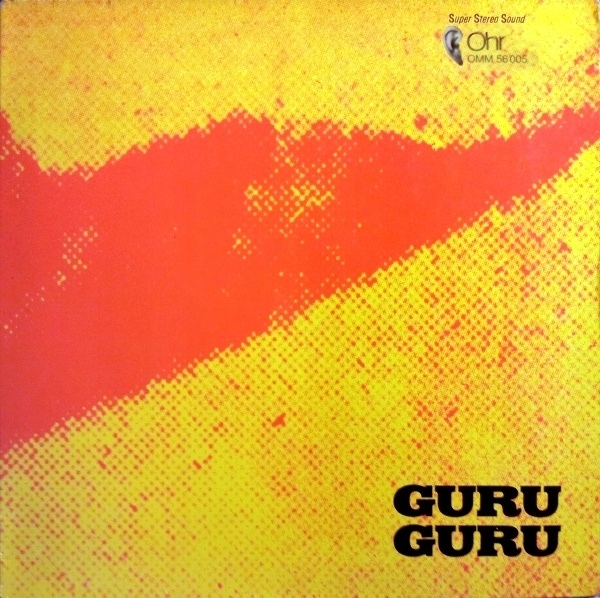
It wasn’t all smooth sailing though. Change was afoot. The Guru Guru Groove became Guru Guru, who would become one of the leading lights of German music. Guru Guru’s lineup would also change twice. Guitarist Eddy Naegeli was replaced by American Jim Kennedy. Then Ax Genrich was drafted in to replace Jim Kennedy. By then, Guru Guru’s lineup featured drummer Mani Neumeier, bassist Uli Trepte and guitarist Ax Genrich. This is regarded as the classic lineup of Guru Guru, and the one that recorded their debut album UFO in June 1970.
When Guru Guru entered the studio for the first time, Julius Schittenhelm who was a producer for the Ohr label, and his wife Doris must have realised that they were about to record what was, no ordinary band. Guru Guru were far from a power trio, featuring drums, bass and guitar.
The three members of Guru Guru unpacked, and setup a wide array in instruments and electronics. Drummer and vocalist and Neumeier added cymbals, gongs and a tape to his setup. Bassist Uli Trepte added various electronic items, including a transistor radio, mixer and intercom. New guitarist Ax Genrich added an array of effects pedals, including an Echogerät Pedal. Ax and the rest of Guru Guru were determined to record a debut album nobody would forget.
So it proved to be. Guru Guru released UFO on the Ohr label, later in 1970. It was released to almost overwhelming critical acclaim, and hailed as a groundbreaking fusion of genres and influences. These growing reviews lead to UFO selling reasonably well, and launched Guru Guru’s career. They’ve released over forty studio and live albums over a career that has spanned six decades. The first of these albums was UFO.
Stone In opens UFO. Ax’s searing, Hendrix inspired psychedelic guitar cuts through the arrangement. Its effects laden sound dominates the arrangement. The rest of rhythm section are left playing supporting roles. Briefly, Mani’s improvised vocal flits in and out. By then, Guru Guru are in full flow. Mani’s urgent drums join with Uli’s bass in driving the arrangement along. They’re still not equal partners. Not when Ax is unleashing a mesmeric, spellbinding solo as his fingers fly up and down the fretboard, delivering a guitar masterclass. It’s a stunning start to UFO, which showcases the combined talented of the classic lineup of Guru Guru, as they make their recording debut.
Sci-fi sounds arrive from the distance, before Girl Call bursts into life. Ax’s bristling guitar, a buzzing bass and crashing cymbals join with pounding drums. There’s even a burst of feedback. Quickly, Ax tames the tiger, before taking centre-stage. He unleashes another scorching, psychedelic solo. Then the baton passes to Mani, who showcases his trademark drumming style. Uli’s bass matches him every step of the way. As the rhythm section power the arrangement among, the Ax man returns. Soon, he’s spraying blistering, machine gun licks above the rhythm section. Seamlessly, Ax combines speed and accuracy, as the musical shaman works his magic on a psychedelic, rocky opus.
Literally, Next Time See You At The Dalai Lhama explodes into life. Guru Guru dive feet first into the track, with Mani and Uli creating a hypnotic, mesmeric groove. This allows Ax to unleash another barnstorming solo. Mani’s determined not to be outdone, and powers his way round his kit. Neither is Uli. The three members of Guru Guru raise their game. Elements of Led Zeppelin and Black Sabbath shine through. So do elements of avant garde, free jazz, psychedelia and progressive rock. Guru Guru play with confidence, swaggering their way through this genre-melting soundscape.
UFO finds Guru Guru at their most inventive. They utilise the array of electronic that they took into the studio. The briefest bursts of guitar make an appearance as Guru Guru improvise. Elements of avant garde, experimental and musique concrète shine through, as Guru Guru eschew traditional song structure. What follows is a cinematic soundscape, where the listener supplies the script to what sounds like a journey. That journey is on Guru Guru’s UFO, as they take the listener to an unknown destination.
A droning sound arrives from the distance on Der LSD-Marsch, which closes UFO. Like the previous track, Guru Guru improvise. This time, they create a lysergic soundscape. It’s dark, moody, eerie and ominous. Washes of guitar shimmer, while otherworldly noises squawk. Later there’s a series of beeps, as if Guru Guru’s UFO has landed, and is about to be impounded at. After that, Guru Guru return to a much more traditional song structure. Ax’s guitar references both blues and psychedelia. Mani’s pounds and powers his drums, while Uli’s bass runs match him every step of the way. However, stealing the show is Ax, who was the final piece of the jigsaw. His addition was a masterstroke. Not to be outdone, Mani unleashes another solo where his jazz roots are apparent. Later, Guru Guru become one, as they bring to a close their debut album. It’s Ax who steps forward and delivers another psychedelic solo, as Guru Guru close UFO with a flourish, and in the process, make their mark in German musical history.
UFO was one of the best debut albums of the nascent Krautrock era. Nowadays, UFO is still regarded as a Krautrock classic, and is, without doubt, one of Guru Guru’s finest albums. That’s no surprise.
The lineup of Guru Guru that played on UFO, is regarded as the classic lineup of the band. This lineup were together until 1975, when former Kollective guitarist Jürgen “Jogi” Karpenkiel replaced Ax. However, between 1970 and 1975, Guru Guru released eight albums. This includes 1971s Hinten, 1972s Känguru and 1973 Guru Guru and Don’t Call Us, We Call You. By then, Guru Guru were on a roll, and releasing some of the finest music of the Krautrock era. This music found a wider audience that many other Krautrock bands.
That’s why Guru Guru were still going strong after six decades and several changes in lineup. The one constant was drummer and vocalist Mani Neumeier, who nowadays, is regarded as one of the finest German drummers of his generation. He’s made a lot of music since UFO in 1970.
UFO is a timeless Krautrock classic, which features the classic lineup of Guru Guru. Seamlessly, the three musical alchemists fuse avant garde, blues rock, free jazz, musique concrète, progressive rock, psychedelia and rock. The result is a truly groundbreaking journey, where gradually, Guru Guru show their inventiveness.
Rather than dive in feet first with one of the more experimental tracks, Guru Guru showcase their considerable psychedelic talents on Stone In, Girl Call and Next Time See You At The Dalai Lhama. It’s only then that they introduce the listener to their most experimental music on UFO, and the the first half of Der LSD-Marsch. Guru Guru it seems, have been breaking the listener in gently, and educating them. Only then, are they ready to hear Guru Guru at their music inventive and innovative on two groundbreaking soundscapes. These two tracks show another side to Guru Guru, which references the group’s free jazz roots. UFO particularly, finds Guru Guru improvising, and pushing musical boundaries to their limits. In doing so, Guru Guru proved pioneers.
Even today, Guru Guru’s influence an be heard on the latest generation of Norwegian musicians. Many of them, seem to have been influenced by groups like Guru Guru, and are picking up where they left off. It seems that Guru Guru’s music lives on through a new generation of musicians; and through a new generation of music lovers who have discovered their music
Many of those who are discovering albums like UFO, weren’t even born when the classic lineup of Guru Guru made their first tentative steps into the recording studio. They recorded what became a timeless Krautrock classic, UFO. Part of its success is down to Guru Guru’s latest recruit, Ax Genrich. His addition to Guru Guru was a masterstroke, in what was a musical marriage made in heaven, that resulted in UFO which is lysergic and a captivating and groundbreaking cult classic.
Cult Classic: Guru Guru-UFO.
CULT CLASSIC: SKID ROW-34 HOURS.
Cult Classic: Skid Row-34 Hours.
By late 1967, Dublin’s vibrant rock scene was thriving with many newly founded bands playing in universities and clubs around the city. Some were already spreading their wings, and heading further afield taking their music to other parts of the Republic of Ireland. Its music scene had come a long way since the mid-sixties, when it started to take shape.
Since then, two recent graduates of the Dublin music scene had gone on to greater things, and were well on their way to becoming international stars. This included Ian Whitcomb and Bluesville and Van Morrison, the former lead singer of Them who had just embarked upon a solo career and released his debut album Blowin’ Your Mind! in September 1967. It charted on both sides of the Atlantic and gave Van Morrison a tantalising taste of the commercial success and critical acclaim that he would enjoy over the next fifty years. Meanwhile, a new group was already making waves on the Dublin music scene, and looked like it would be the next to graduate from the Irish music scene…Skid Row.
Skid Row had only been formed in August 1967 by formed The Uptown Band]s former bassist Brendan ‘Brush’ Shiels, drummer Noel ‘Nollaig’ Bridgeman, guitarist Ben Cheevers and vocalist Phil Lynott. They were all experienced musicians, and were veterans of numerous groups. Two members of Skid Row had been in a number of bands together, Brendan ‘Brush’ Shiels and Ben Cheevers. Skid Row they hoped was the band that would transform their fortunes.
Given Skid Row comprised experienced musicians, it wasn’t long before the newly founded Skid Row made their debut in September 1967. This took place at basement club in Lower Abbey Street in the centre of Dublin. Little did those that were present that night, realise that they had witnessed history being made and that Skid Row were in the process of writing their way into rock history.
By September 1968, Skid Row’s lineup started to change. First to leave was guitarist Ben Cheevers, who decided to continue working full-time in the electrical industry. There was a problem though. Skid Row didn’t have a suitable guitarist lined up to replace him. However, waiting in the wings was sixteen year old virtuoso guitarist Gary Moore who stylistically, modelled himself on his hero Peter Green.
Before Ben Cheevers’ departure, Gary Moore joined Skid Row and briefly, they became a five piece band. The two guitarists played together during what was hand over period. When Ben Cheevers left the band in September 1968, Gary Moore stepped out of the shadows and a star was born.
Meanwhile, Robbie Brennan temporarily replaced original drummer Noel ‘Nollaig’ Bridgeman until June 1969. Robbie Brennan featured on Skid Row’s debut single New Places, Old Faces which featured Misdemeanour Dream Felicity on the B-Side. The single was released on Song Records, an Irish label in mid-1968 and featured Gary Moore’s recording debut. Skid Row’s debut single was the only recording to feature vocalist Phil Lynott.
Later in 1968, Phil Lynott was dropped from Skid Row’s lineup after a bout of tonsillitis. During his absence, Brendan ‘Brush’ Shiels took charge of lead vocals. This spelt the end of end of the Phil Lynott. During his absence, Phil Lynott spent his time learning to play the bass. This was just as well, as his days with Skid Row were numbered.
When Phil Lynott returned from his illness, he was told that Skid Row were about to become a power trio. To compensate the disappointed Phil Lynott, Brendan ‘Brush’ Shiels gave him a bass that he had purchased from former musician Robert Ballagh for £49. Brendan ‘Brush’ Shiels also taught Phil Lynott how to play the bass, which he would put to good use when he formed Orphanage and then Thin Lizzy. However, little did Phil Lynott realise that his sacking from Skid Row was the best thing that happened to him.
Not long after this, Skid Row released their sophomore single Saturday Morning Man, which featured Mervyn Aldridge on the B-Side. Saturday Morning Man was released on Song Records. This was the last recording before Skid Row’s classic era began.
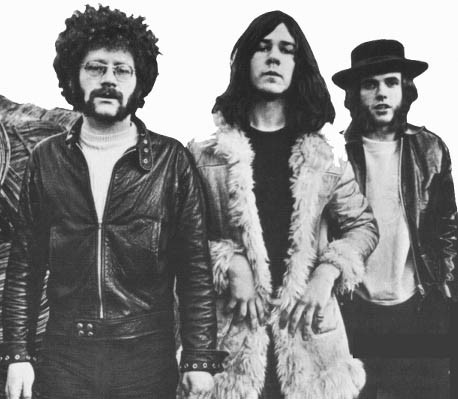
There was just one more change to Skid Row’s lineup before their classic era began. This was the return of Noel ‘Nollaig’ Bridgeman in June 1969. With drummer Noel ‘Nollaig’ Bridgeman, bassist Brendan ‘Brush’ Shiels and guitarist Gary Moore, the classic lineup of Skid Row would soon emerge as one Ireland’s leading bands.
During the remaining of the sixties, and into 1970, Skid Row’ emerged as one of Ireland’s best unsigned bands. They opened for the great and good of rock, including Fleetwood Mac. Peter Green was so impressed by Gary Moore’s guitar playing that he introduced him to Fleetwood Mac’s manager Clifford Davis and executives at the Columbia/CBS Records. This was the break that Skid Row had been looking for.
Skid.
Not long after this, Skid Row signed to CBS, and began working on their debut album Skid with producer Mike Smith. Nine songs were recorded during the session, including a new version of New Places, Old Faces. However, the session wasn’t the most fruitful of Skid Row’s career. Only two tracks were released by CBS, when Sandie’s Gone (Part 1)and Sandie’s Gone (Part 2) became Skid Row’s third single in April 1970.
By then, a decision had been made by Clifford Davis that Skid Row should re-record their debut album, and change some of the songs. The other change was the producer.
While some of the Mike Smith sessions were well recorded, he had failed to capture what was an innovative and vivacious band at the peak of their powers. They had honed their sound during their US tour, and in the process, changed rock critics’ perception of what a power trio was capable of. Skid Row’s music had been inspired and influenced by a fusion of country rock and angular progressive rock that headed in the direction of jazz. These songs featured complex arrangements, but Skid Row were a versatile and talented band who were capable of producing virtuoso performances and making it sound easy. To capture Skid Row’s sound would take a special producer, and one who understood what the band were about. Clifford Davis’ suggestion was that Peter Green of Fleetwood Mac produced Skid Row.
Skid Row added four new songs to their debut album Skid. By then, Brendan ‘Brush’ Shiels had emerged as the band’s songwriter-in-chief writing Mad Dog Woman, Virgo’s Daughter, Heading Home Again, An Awful Lot Of Woman and After Im Gone. Gary Moore contributed Felicity and the three members of Skid Row penned Unco-Up Showband Blues, For Those Who Do and The Man Who Never Was. These songs were produced by Peter Green.
As the sessions for Skid began, Gary Moore arrived with his favourite guitar, a maple Les Paul Standard which Peter Green had sold him not long after the pair first met. While it had been well used, it quickly became Gary Moore’s favourite guitar. He put it to good use on Skid Row, which was just another recording session for the band. They took recording Skid in their stride. For Skid Row it was another day at the office.
Skid Row had already recorded a number of live sessions for the BBC Radio and a number of studio sessions. This was all good experience for the band. Especially, when Skid Row went into the BBC studios, which was home to some of the best engineers in London. They took pride in getting the best performance out of the bands that they were recording, including Skid Row.
With Skid recorded, Skid Row prepared for the release of their debut album in October 1970. Skid was hailed as a groundbreaking debut album and was quite unlike the majority of albums produced by power trios. It was a cerebral album, that married disparate and unlikely musical genres, while drawing inspiration from all manner of sources during what was akin to a musical roller coaster.
Skid Row flit between and combine elements of various musical genres. This includes blues rock and hard rock, which were important components in their sound. That was only part of the story, as Skid Row were very different to the many blues rock and hard rock bands that were around in 1970. Their sound was much more sophisticated and cerebral as Skid Row take occasional diversions via blues, country, fusion, jazz and skiffle on their genre-melting debut album. It finds Skid Row playing with as one, as they combine speed, accuracy and power on what’s a breathtaking debut album. The music is complex and urgent, as musical butterflies Skid Row flit seamlessly between musical genres.
When Skid was released in October 1970, the album reached number thirty in the British charts. Considering this was Skid Row’s debut album, this was a good start to their recording career.
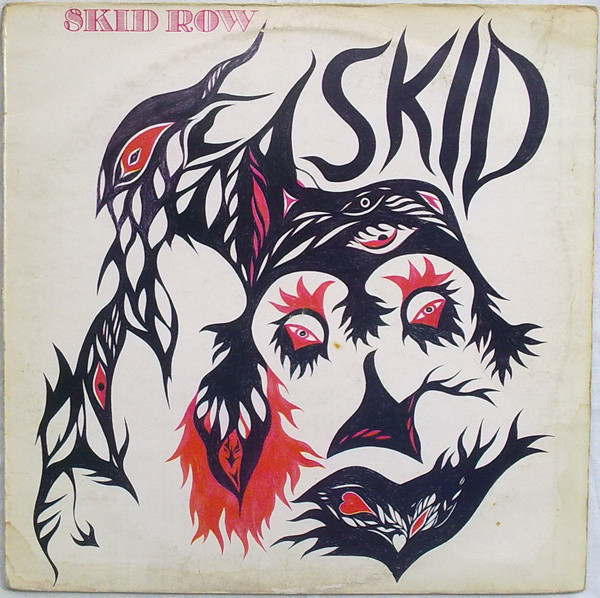
By then, Skid Row had moved to London, where they lived in two houses in Belsize Park. However, much of Skid Row’s time was spent touring, and opening for groups like The Allman Brothers, Santana, Ten Years After, Jethro Tull and Frank Zappa and The Mothers of Invention. The constant touring helped to spread the word about Skid Row, whose star was definitely in the ascendancy. However, after tours of America, Britain and Germany, Skid Row returned home to record their sophomore album 34 Hours.
34 Hours.
For 34 Hours, Skid Row penned Night Of The Warm Witch, First Thing In The Morning, Lonesome Still and Love Story, Pt. 1. Songwriter-in-chief Brendan ‘Brush’ Shiels wrote Mar and Go, I’m Never Gonna Let You, Parts 1 to 4. These songs became 34 Hours.
When recording of 34 Hours began, Clifford Davis took charge of production. Watching and learning, was nineteen year old Gary Moore. He and the rest of Skid Row spent just 34 Hours recording the band’s debut album.
Critics on hearing 34 Hours realised that it was a much tighter album. It received the same plaudits and praise as Skid, and a great future was forecast for Skid Row.
This was proof that the weeks and months spent touring was time well spent. Skid Row had honed their sound through constantly playing live, and on 34 Hours showcased a much heavier, progressive rock sound. It featured two nine minute epics, Night Of The Warm Witch and Go, I’m Never Gonna Let You, Parts 1 to 4. They allowed Skid Row to stretch their legs musically. By then, Skid Row had matured into a much tighter, accomplished and assured band. Still, the music on 34 Hours was groundbreaking, complex and cerebral. There was still a spontaneity to Skid Row’s playing as they continued to combine speed, accuracy, power on 34 Hours
The result was 34 Hours, an album of music that veered between, caustic, cerebral, challenging and complex to energetic and explosive to forceful, urgent and vigorous. Still, Skid Row combined elements of blues rock, country, fusion and progressive rock on 34 Hours. Apart from the country sound of Lonesome Still, 34 Hours is hard rocking album of progressive rock that incorporates elements of fusion. This is a potent and heady brew, and should’ve found favour with record buyers in 1971.
Sadly, when 34 Hours was released by CBS in early 1971 the critically acclaimed album failed to find the audience it deserved. For Skid Row, this was a huge disappointment.

Throughout the rest of 1971, Skid Row continued to tour. However, in December 1971, Gary Moore left Skid Row. Thin Lizzy’s Eric Bell briefly filed the void on a temporary basis. Ironically, Gary Moore would later replace Eric Bell in Thin Lizzy.
Paul Chapman then became Skid Row’s new full-time guitarist. However, his time with Skid Row proved brief, and the band split-up in August 1972.
While Skid Row reformed in 1973, the original lineup never took to the stage again. Over the next three years, Skid Row’s lineup continued to change, until they split-up for a second time.
That was the end of the Skid Row story until 2012, when the band reformed and released their first new album in forty-one years Bon Jovi Never Rang Me. By then, the only original member of Skid Row was Brendan ‘Brush’ Shiels. While many welcomed the Skid Row’s new album, many couldn’t help but compare them to the two cult classics they released between 1970 and 1971. Skid and 34 Hours and feature Skid Row at the peak of their considerable powers.
On Skid and 34 Hours, Skid Row rewrite the rules for future power trios. They created music that was cerebral, complex, hard rocking, innovative and progressive. Skid Row also fused and flitted between disparate and unlikely musical genres during their debut album Skid.
That was the case on the much anticipated followup 34 Hours, which nowadays is regarded as a cult classic. 34 Hours, just like Skid, is a reminder of one Ireland’s greatest musical exports during what was a short but memorable musical career. Between 1967 and the the release of 34 Hours in 1971, Skid Row’s light was shining bright and their star was in the ascendancy as they looked like becoming one of the great bands of the seventies. Sadly, that wasn’t to be and they split-up before they could realise their potential and the Skid Row story is a case of what might have been?
Cult Classic: Skid Row-34 Hours.
CULT CLASSIC: SYLVIAN AND CZUKAY-PLIGHT AND PREMONITION.
Cult Classic: Sylvian and Czukay-Plight and Premonition.
By early 1986, former Can bassist Holger Czukay was now a successful solo artist, and was working on his fourth solo album was eventually released in 1988 as Rome Remains Rome. It was being recorded at Can Studio, in Cologne, and Holger Czukay was joined by drummer Jaki Liebezeit and guitarist Michael Karoli who had both been members of Can. They were joined by a new generation of musicians of who had been influenced by Can’s music, including Jah Wobble and former Japan frontman David Sylvian who flew in to Cologne to record the vocal to Music In The Air.
After leaving Cologne airport, David Sylvian was driven to the Can Studio in on of the city’s many taxis. However, that day, he never saw the best of Cologne. The leaves had long fallen from the trees, and pavements were covered in snow and it was cold, bitterly cold. Cologne looked like the backdrop to a Cold War movie, but that didn’t matter to David Sylvian who was about to work with Holger Czukay, who was a pioneering musician who had been pushing musical boundaries to their limits and beyond for three decades. Eventually, the taxi arrived and David Sylvian made his way into the Can Studio.
David Sylvian’s destination had once been a cinema in a former life, but had been converted into a recording studio by Can. The Can Studio was where the group had recorded many of their albums, and was where Holger Czukay recorded his previous album Der Osten Ist Rot.
After meeting Holger Czukay, David Sylvian was introduced to the rest of the musicians who were working on Rome Remains Rome and looked around the famous Can Studio. He noticed that there were mattresses were scattered on floor, but what he was pleased to see was a pump organ in the studio. Twenty-eight year old David Sylvian hoped that he would get the opportunity to play the pump organ during his stay in Rome.
Plight and Premonition,
Little did David Sylvian know that when he got the opportunity to play the pump organ against a soundtrack of orchestral samples provided by Holger Czukay. Meanwhile, Holger Czukay who was watching from the control room had the tapes running and was recording the former Japan frontman’s performance. He was in a trancelike state and was enjoying playing the pump organ. Music flowed through and out of him, and it was as if it was being channeled through David Sylvian. In the control room, Holger Czukay watched and listened, realising that something special was unfolding.
After David Sylvian stopped playing the pump organ, he stood up and moved across to the piano and sat down. As airy, ethereal sounds filled the Can Studio soon, music was flowing through David Sylvian as he continued to improvise. However, after just ten or fifteen minutes, Holger Czukay told David Sylvian via the talkback system to move on to something new, a different concept.
This was the pattern for the remainder of the remainder of the evening, with Holger Czukay coaxing and cajoling a series of performances out of David Sylvian. Later, as they listened back to the performances, the ambient, avant-garde music was atmospheric and spartan and seemed to reflect winter in Cologne in early 1986. However, although both musicians were happy with what they had recorded, they realised that although they had the basis for an album, they knew that there was still a lot of work to be done.
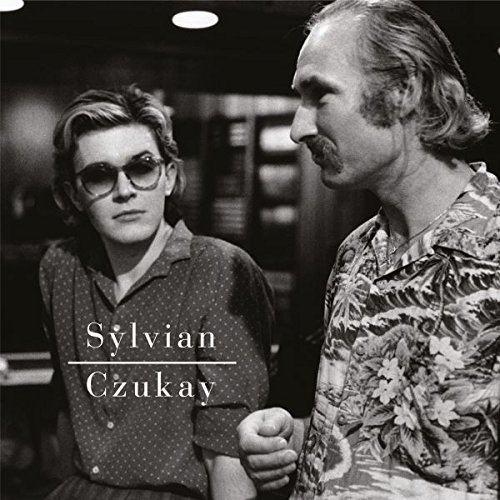
The music that David Sylvian and Holger Czukay had recorded that night, formed the basis for their first collaboration Plight and Premonition It’s a collaboration between two musical pioneers that began by chance.
After reviewing the recordings made during the all-night session at Can Studio, David Sylvian and Holger Czukay continued to work on their first collaboration. Holger Czukay who had collaborated on several albums took charge of production on what later became Plight and Premonition.
Holger Czukay wasn’t just the producer, and was soon playing an important part in the recording process. One of his earliest and most important contributions was the piano motif he added to Plight. After that, Holger Czukay added flute samples. Elsewhere, he used orchestral and piano samples, environmental treatment and deployed his trusty short wave radio. However, his musical partner took a different approach to making music.
Meanwhile, David Sylvian who was a talented multi-instrumentalist played piano, harmonium, vibraphone synths and guitar. They were recorded and manipulated by producer Holger Czukay.
He was joined by his old friend and former Can drummer Jaki Liebezeit who added infra-sound effects. His drums weren’t necessary for the recording of Plight and Premonition which was a beat free zone.
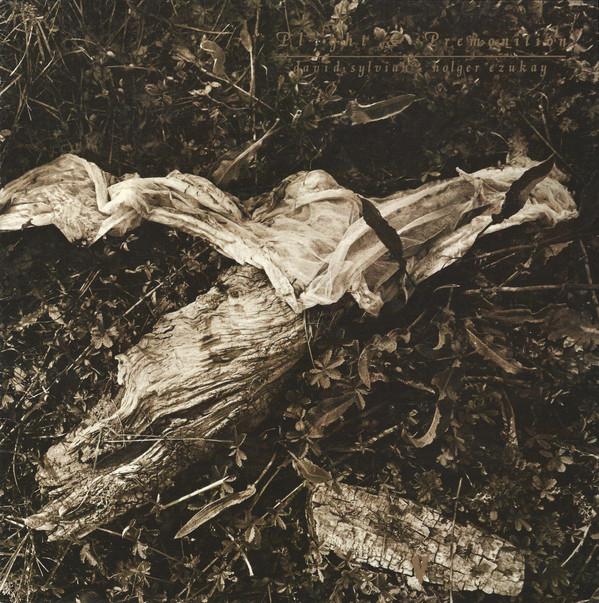
When David Sylvian and Holger Czukay completed recording and Plight and Premonition, they mixed their first collaboration in 1987. It featured two lengthy tracks Plight (The Spiralling Of Winter Ghosts) featured on the first side, with Premonition (Giant Empty Iron Vessel) featuring on the second side of this what was an ambient classic in waiting.
With Plight and Premonition completed, David Sylvian and Holger Czukay began looking for a record company who were willing to release their first collaboration. Record companies were reluctant to release such an ambitious and innovative album. The problem was it wasn’t commercial album, and Plight and Premonition would likely only appear to connoisseurs of ambient, avant-garde and leftfield music, and maybe, fans of Can and Japan.
Eventually, Plight and Premonition was released to critical acclaim by Virgin Records in March 1988. Ironically, both David Sylvian and Holger Czukay were signed to as solo artists to Virgin Records. Somewhat belatedly, David Sylvian and Holger Czukay’s first collaboration Plight and Premonition was released and sold well enough to reach seventy-one in the UK album charts.
David Sylvian and Holger Czukay had combined elements of ambient, avant-garde, experimental and musique concrète on Plight and Premonition. The music was variously atmospheric, beautiful, elegiac, ethereal, futuristic, haunting and otherworldly. However, much of the music that David Sylvian and Holger Czukay recorded was cinematic.
Plight and Premonition’s cinematic sound transports the listener back to the bitterly cold Cologne winter in early 1986. Other times, it’s like listening to excerpts from a lost sci-fi soundtrack as a myriad of otherworldly sounds chatter as found sounds and samples interject during the two lengthy soundscapes. For much of Plight and Premonition, the music sets the listener’s imagination racing.
Sometimes, though, when David Sylvian plays the piano, beautiful music seems to flow through and out of him. However, other times the multilayered soundscapes meander along and seem almost reluctant to reveal their secrets which is the result of the first collaboration between two musical pioneers.
Buoyed by the success of Plight and Premonition, David Sylvian and Holger Czukay’s thoughts turned to a second collaboration. This eventually became Flux and Mutability.
Flux and Mutability.
After David Sylvian returned from his 1988 solo tour, which was neither the most successful nor memorable of his career, he returned to Can Studio, in Cologne in 1989, to record a new album with his friend Holger Czukay. When David Sylvian arrived at Can Studio, he realised that the old studio had received a makeover.
David Sylvian noticed that a new mixing console had been installed in the Can Studio since his last visit. There was even new lighting and a new recording engineer in the Can Studio which seemed brighter and more modern. This would make recording David Sylvian and Holger Czukay’s new album much easier, which they made with a little help from their friends.
Just like their first collaboration at the Can Studio, David Sylvian and Holger Czukay played many of the instruments themselves. David Sylvian played guitar and keyboards, while Holger Czukay played bass, guitar and added vocals. He also took charge of electronics and used a Dictaphone as a makeshift instrument. Meanwhile, former can guitarist Michael Karoli and Jaki Liebezeit who played flute and a high-pitched hand-held drum played on Flux and Mutability. Other guest artists included vocalist Michi and Markus Stockhausen who played flugelhorn. For Holger Czukay this seemed fitting as he had had studied under Marcus’ father Karlheinz Stockhausen who was one of the most important and influential composers of the ‘20th’ and early ‘21st’ centuries.
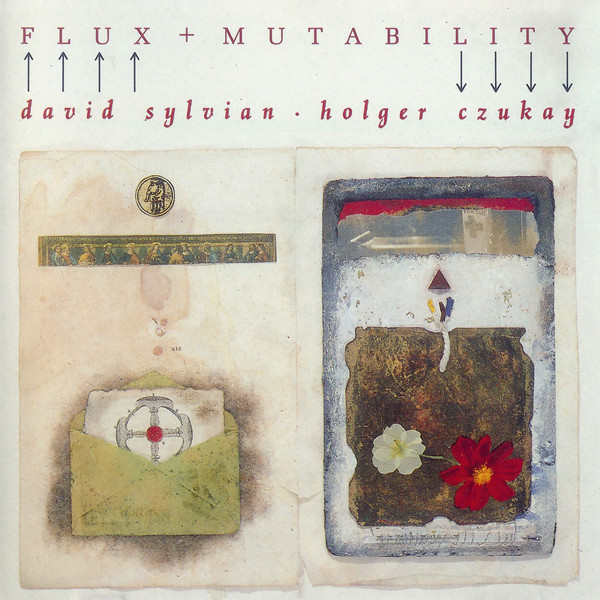
Again, David Sylvian and Holger Czukay recorded two lengthy ambient soundscapes Flux (A Big, Bright, Colourful World) and Mutability (“A New Beginning Is In The Offing”). Both were written and produced by David Sylvian and Holger Czukay. Later, they mixed Flux and Mutability, which was delivered to Virgin Records.
Flux and Mutability which was the much-anticipated followup to Plight and Premonition, was released later in 1989. Just like their first collaboration, Flux and Mutability was released to widespread critical acclaim. Critics heaped praise upon the two lengthy and carefully crafted soundscapes.
Just like on Plight and Premonition, the soundscapes on Flux and Mutability are atmospheric and cinematic. Flux which is cinematic and benefitted from a widescreen sound, where David Sylvian and Holger Czukay were keen to portray a brave new world where everything was “big, bright and colourful.” That was the case as the listener basked in Flux’s feelgood sound as the multi-layered arrangement meanders melodically along with weeping guitars and Eastern sounds playing leading roles in this seventeen minute opus.
Although sonically and stylistically Mutability had much in common Flux, David Sylvian and Holger Czukay took a different approach to recording this soundscapes. It’s akin to a musical tapestry which is woven by the two sound designers. Rather then thread, they weave using weeping guitars, electronics, samples and found sounds, and also deploy all sorts of effects and processing and result is impressive.
Together, David Sylvian and Holger Czukay create anther beautiful, cinematic ambient soundscape. It’s a case of less is more as it once again, the soundscape meanders melodically along, as the listener basks in the beauty that is omnipresent during this musical tour de force.
After the release of Flux and Mutability, David Sylvian and Holger Czukay never recorded another album together. Flux and Mutability wasn’t as successful as Plight and Premonition, which had only released seventy-one in the UK charts. That was the end of what could’ve been a long and fruitful partnership from two musical pioneers.
Despite that, David Sylvian and Holger Czukay went on to enjoy long and successful careers. Sadly, Holger Czukay passed away on the ‘5th’ of September 2017, seventy-nine. Holger Czukay was one of music important, influential and innovative German musicians of his generation. He recorded and released several classic albums with Can, and then went on to enjoy a successful solo career and collaborated on several albums. They’re all part all part of Holger Czukay’s rich musical legacy.
Nowadays the two albums that David Sylvian and Holger Czukay collaborated were released to critical acclaim and regarded as ambient classics. This doesn’t mean that they were both commercially successful. Plight and Premonition reached seventy-one in the UK and passed most record buyers by while Flux and Mutability failed to find the audience it so richly deserved. However, Flux and Mutability is a cult classic, and just like its predecessor Plight and Premonition features beautiful, atmospheric and cinematic music that makes the world seem a better place.
Cult Classic: Sylvian and Czukay-Plight and Premonition.
CULT CLASSIC:JOE TURNER-THE REAL BOSS OF THE BLUES.
Cult Classic: Joe Turner-The Real Boss Of The Blues.
After enjoying a renaissance in its popularity during the early sixties, blues music was in doldrums. Soul had replaced the blues in popularity, and Stax, Atlantic and Motown were among the most successful labels. However, many of the new breed of rock bands had been inspired by the blues. This included Cream, The Yardbirds, The Animals, Led Zeppelin and Jimi Hendrix. Despite their patronage, interest in blues music was at its lowest in a longtime. This was why the late-sixties seemed a strange time to found a new blues label? However, that’s what Bob Thiele did.
For eight years, Bob Thiele ran Impulse, ABC’s jazz label and then when the jazz revival began, he convinced his bosses to let him found a blues label. This was Bluesway. However, he left ABC’s employ after a coup d’état at Impulse. The next step for Bob was forming his own labels.
When he left ABC’s employ, he decided to form a new label. Through working with some of the most innovative and creative musicians in the history of jazz, Bob Thiele realised that often, large record companies aren’t the best environment for innovative and creative musicians. Often, these musical mavericks didn’t thrive within such an orthodox environment. Their creativity is restricted, and they’re unable to experiment and innovate like they’d like. So, Bob Thiele decided to create an environment where this would be possible. This was Flying Dutchman Productions and its blues subsidiary Bluestime.
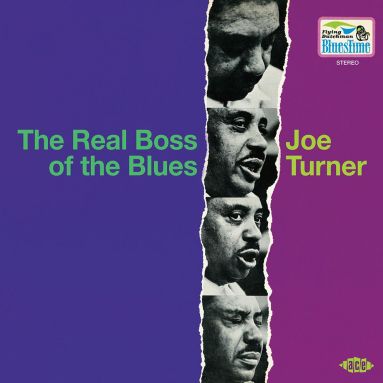
Before long, Bluestime became home to many of the artists formerly signed to Bluesway. This included one of Bob Thiele’s favourite blues players, Joe Turner. The man the called The Boss Of The Blues was approaching veteran status. Now fifty-nine, he’d been signed to ABC’s blues subsidiary Bluesway. Joe Turner would become Bob’s latest signing to Bluestime, where he recorded The Real Boss Of The Blues. It was a very different album and saw the veteran bluesman’s music given a makeover.
Bob Thiele realised that with many artists and bands name checking blues artists who’d influence them, some of the people buying their records would decided to find out what blues music was about. There was a problem though. Blues music hadn’t really moved with the times. The music was still the same as it had been twenty-years before, when the blues went electric. Back them, this was a step too far or many blues purists. What would record buyers and fans of Joe Turner think of Bob Thiele’s decision to turn his new label Bluestime into a contemporary blues’ label?
Joe Turner had spent a lifetime playing the blues. He was born Joseph Vernon Turner Jr, in Kansas City, Missouri. When Joe was four, his father died in a train accident. However from an early age, music was a constant in Joe’s life. He sang at church and later, sang on street corners. Then in 1925, fourteen year old Joe Turner quit school and inadvertently, his career began.
His first job on leaving school was a chef. He then moved on to working as a barman. During his time working in the bar, Joe gained the reputation as The Singing Barman. Soon, he and pianist Pete Johnson were making a living working in Kansas City clubs. One of the clubs was run by Piney Brown, who inspired one of Joe’s best known songs, Piney Brown Blues. During this period, Joe and boogie woogie pianist Pete Johnson were making a name for themselves.
So much so, that they headed to New York and appeared on the same bill as Benny Goodman. After that, Joe and Pete returned to Kansas City. New York weren’t quite ready for Joe and Pete. They were ahead of their time. It took until 1938, when talent scout John H. Hammond realised their potential. He asked them back to New York to play at his From Spirituals to Swing concerts. The bill featured everything from gospel, blues and swing. These concerts featured integrated audiences and helped bring jazz and blues to a wider audience. For Joe and Pete, success was just round the corner. This started with the hit single Roll ‘Em Pete.
After that, Joe became resident at the New York nightclub Cafe Society in 1939. Then in 1941, Joe took part in Duke Ellington’s revue Jump For Joy. This meant a Hollywood debut for Joe. Three years later, Joe was back in L.A. providing the vocals for Meade “Lux” Lew’s silent movies. Then two years later, Joe and Pete founded their bar The Blue Moon Club in Los Angeles. That year, he signed to National Records.
At National Records, Joe worked with Herb Abramson. Soon, Joe was enjoying hits with S.K. Blues, My Gal’s A Jockey and Around The Clock. He then duetted with blues shouter Wynonie Harris on Battle of the Blues. While the singles sold well locally, this didn’t translate to national success. However, in 1947, Joe signed to a new label that Herb Abramson co-founded with Nesuhi and Ahmet Ertegun…Atlantic Records.
During his time at Atlantic, Joe Turner released both blues and rock ’n’ roll. However, it was rock ’n’ roll that Joe made his name releasing. Between 1950 and 1956 and he enjoyed fourteen top ten US R&B singles. This included two US R&B number ones, 1953s Honey Hush and Joe’s biggest hit Shake, Rattle and Roll. This fusion of twelve-bar blues and rock ’n’ roll helped transform Joe into a huge star. It was also during this time Joe released his debut album.
Whilst at Atlantic Records that Joe Turner released his debut solo album, 1956s The Boss of the Blues. The Boss Of The Blues Sings Kansas City Jazz followed later in 1956. Soon, Joe was releasing at least one album a year. Rock and Roll followed in 1957. Then in 1958 Joe released Rockin’ The Blues. 1959 was the end of what was a golden period in his career.
After leaving Atlantic, Joe turned his back on rock ’n’ roll. No longer was popular music for him. Maybe it was a case of returning to what he loved. Unfortunately, this coincided with a downturn in his career.
For much of the sixties, Joe combined playing live with recording a series of albums. This included Joe Turner With Pete Johnson’s Orchestra’s Jumpin’ The Blues, which was released in 1962 on Arthoolie. During this period, Joe’s albums didn’t sell well. Then in 1967, Joe recorded Singing The Blues for ABC’s jazz label Bluesway. Sadly, there was no followup. By then, Bob Thiele who ran Bluesway had been ousted. He founded Bluestime, which signed Joe Turner in 1969.
The newly founded Bluestime was trying to give blues music a more contemporary sound. For too long, many people felt, the blues had stood still. It was almost resistant to change. Not any more. Bob Thiele introduced fatback drumming, bubbling bass and rocky riffing guitars. This would all feature on the eight tracks that became The Real Boss Of The Blues.
For The Real Boss Of The Blues, a combination of old favourites and new tracks were chosen. Joe covered Charles Calhoun’s Shake, Rattle and Roll, Lou Turner’s Honey Hush, Carless Love and Leroy Carr’s How Long, How Long Blues. There was also a cover of Teddy McRae and Charles Singleton’s Lonesone Train and Joe’s Corrine, Corrina. Ted Murrell’s Two Loves Have I and Len Chandler’s Plastic Man completed The Real Boss Of The Blues. These eight tracks were arranged by Gene Page, produced by Bob Thiele and featured some top blues players.
When the band entered the studio to record The Real Boss Of The Blues, Bob Thiele had put together a crack band. The rhythm section included drummer Paul Humphrey, bassist Max Bennett and guitarist Louie Shelton. Tom Scott added tenor saxophone. Joe sang lead vocals, while Bob Thiele produced The Real Boss Of The Blues, which was released in 1969.
Despite Joe Turner’s music being given a makeover, The Real Boss Of The Blues wasn’t a commercial success. It passed both critics and music lovers by. Since then, The Real Boss Of The Blues has become a real rarity among blues fans. At last, this blues rarity has been release by Joe Turner and features the blues veteran doing what he spent a lifetime doing, singing the blues. That’s what The Real Boss Of The Blues does well.
Horns blaze, guitars chime and a wandering bass combines with a piano. They set the scene for Joe’s vocal on Shake, Rattle And Roll, which opens The Real Boss Of The Blues. Straight away, the years roll back for Joe. Fifteen years to be precise, when this gave him a number one single. Joe ensures the songs swings. Stabs of horns, pounding piano and riffing guitars accompany Joe. At the heart of the arrangement’s success are the horns and Joe’s despairing vocal as he gives a classic track a modern makeover.
Straight away, there’s a melancholy sound to Lonesome Train. Accompanied by rasping horns, rumbling bass and searing, blistering guitars, blues and rock combines. Heartache and hurt fills Joe’s vocal. It’s slow and oozes emotion. Enveloping Joe’s vocal is an arrangement that’s a fusion of power, drama and sadness. This results in one of the album’s highlights from The Real Boss Of The Blues.
Corrine, Corrina bursts into life, and is driven along by a harmonica, piano and rhythm section, complete with bubbling bass. Joe grabs the song, breezes life and emotion into it. It becomes a joyous celebration where Joe and his all-star band create a blistering slice of electric blues that truly, deserves a wider audience.
Slow, moody and bluesy describes Joe’s take on How Long, How Long Blues. Just a plodding bass, crystalline guitar and stabs of piano enter, before Joe’s lived-in vocal enters. It sounds as if he’s lived and survived the lyrics. At just the right moment, Bob Thiele drops the horns in and they’re the perfect accompaniment to Joe’s needy, pleading vocal.
From the get-go, the tempo rises on Careless Love. The rhythm section take charge, driving the arrangement along. Meanwhile, Joe’s vocal is frustrated and angry. With his band lock into a tight groove, horns are unleashed. They blaze above the arrangement, and really lift the track. It’s a transformation, as the song swings. That’s still the case when a flute enters. Accompanied by the horns, Joe heads for the finishing line doing what he does best, singing the blues.
Two Loves Have I has a much more contemporary sound. That’s down to the horns. They seems to have been influenced by soul music, that was popular during 1969. Having said that, Joe’s vocal is is reminiscent of Van Morrison as he grabs the song and lives it. Meanwhile, horns bray and the rhythm section provide the heartbeat to the arrangement. With its much more contemporary sound, it’s another of the highlights of The Real Boss Of The Blues. Bob Theile, it seems, achieved what he set out to do, give the blues a musical makeover.
Honey Hush is a cover of Joe’s first number one US R&B single. That was in 1953. Here, the song takes on new life. A blues harmonica and meandering helps propel the arrangement along. The rest of the band provide the heartbeat. It’s the harmonica, Joe’s vocal and later, a blistering saxophone solo that are at the heart of the reinvention of one of Joe’s best known songs. His high kicking vocal sees Joe Turner roll back the years.
Plastic Man, an eleven minute contemporary blues track closes The Real Boss Of The Blues. A blistering bluesy harmonica and riffing guitars envelop Joe’s heartbroken vocal. The drums and pulsating bass provides the heartbeat to a track that’s slow, moody and bluesy. Riffing guitars soar above the arrangement, while bursts of boogie woogie piano add to this blues epic. It’s as if Joe and his band are enjoying the opportunity to stretch their legs musically on this glorious blues jam. Later, growling horns are unleashed, soaring above the arrangement. Just like the jazz bands Joe played in earlier in his career, everyone gets the chance to shine. There’s no passengers in this band, just top class musicians, who Joe inspires to even greater heights. This modern blues Magnus Opus proves the perfect way to close The Real Boss Of The Blues.
Bob Thiele’s decision to give blues music a makeover was as you’d expect, from a musical pioneer, an astute one. He realised that the blues had to change. It had stood still since the blues went electric. It it didn’t change, blues music risked becoming irrelevant. Should that happen, blues music could’ve ended up as just part of musical history, rather than a musical genre that evolved and continued to be relevant. The problem was, America didn’t seem to cherish the blues. Ironically, it took a group of British musicians to remind America of the importance of the blues.
Groups like John Mayall and The Bluesbreakers, Cream, The Yardbirds, The Animals, Led Zeppelin and The Rolling Stones realised the importance of the blues. It was their inspiration. That’s why when artists like Joe Turner toured Britain, they received a hero’s welcome. They were held in a higher esteem in Britain than America. These musicians, realised, that without the blues, there would be no rock ’n’ roll. Essentially, they owed their careers to artists like Joe Turner. So British artiest were keen to promote blues legends. Sadly, many of them were eking out a living. Even with the patronage of some of the most successful groups of the sixties, Joe Turner wasn’t enjoying the popularity he once enjoyed. There was no option, the blues had to change.
Artists like Muddy Waters and B.B. King realised this. When Muddy recorded Electric Mud for Chess, he changed direction. Electric Mud was a fusion blues, rock and psychedelia. It’s one of the most groundbreaking blues albums ever. Meanwhile, B.B. King was the most successful blues player. He’d opened for some of the biggest rock bands and his music was heard by a wider audience. Joe Turner wasn’t as successful which was why he had to change direction.
On The Real Boss Of The Blues, Joe Turner rolls back the years. It’s a vintage performance from the blues veteran. Accompanied by an all-star band, his music is given a modern makeover. Blues, jazz and rock combines. Drawing inspiration from rock music, fatback drums, riffing guitars and a bubbling bass feature on each of the eight tracks. Then there’s the horns. They variously blaze, soar and sound sultry. Add to this some stabs of piano and even some boogie woogie and the result is Joe Turner back to his best. Producer Bob Thiele and arranger Gene Page transformed Joe. The years rolled back and suddenly, Joe was producing some of the best music he recorded since leaving Atlantic. Sadly, not many people heard the music on The Real Boss Of The Blues.
Sadly, not many people heard the second coming of Joe Turner. The Real Boss Of The Blues was back, and back to his best. However, very few people heard The Real Boss Of The Blues which wasn’t a commercial success. However, since then, a number of blues aficionados have championed The Real Boss Of The Blues, which finds Joe Turner, The Real Boss Of The Blues back to his very best on this oft-overlooked cult classic.
Cult Classic: Joe Turner-The Real Boss Of The Blues.
CULT CLASSIC: CROMWELL-AT THE GALLOP.
Cult Classic: Cromwel-At The Gallop.
By 1975, Dublin had an eclectic and vibrant music scene , and there literally was something for all musical tastes. This ranged from the traditional showbands that had long been part of the Irish music scene, right through to traditional Irish music and sentiment-laden pop music. However, this was only part of the story.
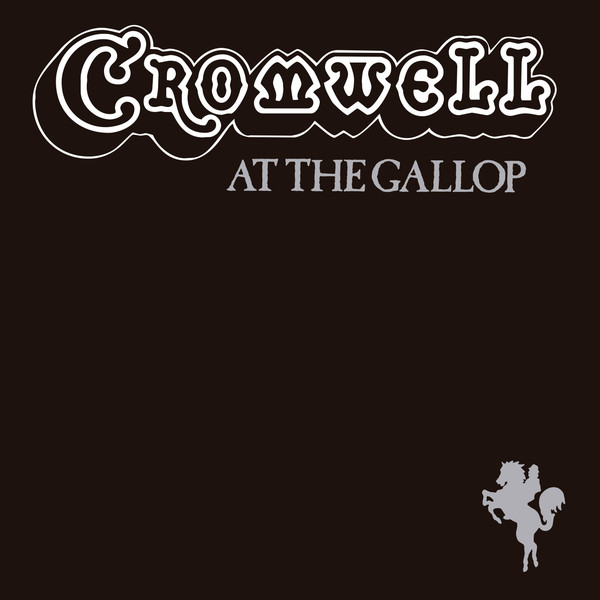
At the other end of the musical spectrum was Dublin’s most successful music export, Thin Lizzy. Lead by the inimitable Phil Lynott, Thin Lizzy’s hard rocking sound won them fans the world over. Then there was Horslips, the founding fathers of the Celtic rock sound. They had just released their fourth album and were one of Ireland’s most successful bands. Meanwhile, another Dublin based band Cromwell were about to release their debut album At The Gallop on their now Cromwell label.
The local critics who had heard At The Gallop, forecast a bright future for Cromwell. They had honed their hard rock sound over the last few years. Now that Cromwell had come of age musically, surely it was only a matter of time before they made the journey over the water, where they would sign for one of the London based major labels. Maybe then, Cromwell would follow in the footsteps of Ireland’s most famous sons like Thin Lizzy and Rory Gallagher?
Alas, that wasn’t the case. Cromwell’s debut album wasn’t the success that critics had forecast. Neither did Cromwell make the Journey to London to sign for a major label. Nor did Cromwell release a followup to At The Gallop. After releasing five singles and one album, the Cromwell story was at an end. Sadly, Cromwell’s discography consists of five singles and one album and their story began in Dublin 1970.
As a new decade dawned, a new band was born in Drumcondra, in Dublin in 1970. Originally, Cromwell was a quintet, based around the three Kiely brothers who previously had been members of Julian’s Heirs. Cromwell was a new start for the Kiely brothers. Dave Kiely became Cromwell’s frontman, while Desmond became the bassist and Michael the rhythm guitarist. They were joined drummer Derek Dawson and lead guitarist Patrick Brady. With the lineup complete, Cromwell were soon making their first tentative steps onto the local live circuit.
Cromwell made their live debut at an open air concert, in Swords, just north of Dublin. This was the start of a period where Cromwell were constant features of the local live circuit. They played pubs, clubs and dance halls, which allowed Cromwell to hone their sound. However, by November 1971, Cromwell were reduced from a quintet to a trio when Dave and Demond Kiely Kiely exited stage left. The two brothers had decided to pursue other opportunities.
Now that Cromwell were reduced to a trio, there were some changes. Michael Keily switched from rhythm guitar to bass and Cromwell’s sound became heavier and rockier. This was more in keeping with the sound that was popular on both sides of the Atlantic. For Cromwell, they were one step nearer to finding their true sound.
Meanwhile, when Cromwell played live, their setlist included covers of songs The Who, Rolling Stones and Granny’s Intentions. To this, Cromwell added covers of twelve-bar blues. Gradually, it seemed Cromwell were moving towards what would become their trademark sound. Maybe the addition of a new vocalist would prove to be the finishing touch?
When Cromwell went looking for a new vocalist, their luck was in. They managed to secure the services of Droghedaean born vocalist Mick O’Hagan. He had an impeccable musical pedigree. His father was famous Irish tenor Patrick O’Hagan, and his brother was Johnny Logan who would later, win the Eurovision Song Contest. However, when Mick O’Hagan joined Cromwell, he was regarded as Ireland’s premier blues and rock vocalist. Surely, he was the final piece in the jigsaw?
That should have been the case. The new lineup of Cromwell began playing live. By then, drummer Derek Dawson, bassist Michael Kiely and lead guitarist Patrick Brady were just nineteen. However, they played like seasoned veterans. With Mick O’Hagan as Cromwell’s new frontman, it looked like Cromwell were heading for bigger and better things.
Local hero Rory Gallagher certainly thought so, and booked Sleepy Hollow and Cromwell to open for him on his 1972 Irish tour. This was the opportunity of a lifetime. Cromwell’s music would be heard by a much wider audience, and maybe, A&R men would be in the audience?
If they were, they didn’t see Mick O’Hagan. He quit Cromwell just before the band headed out on tour with Rory Gallagher. Despite this disappointment, Cromwell headed out on tour with lead guitarist Patrick Brady taking charge of lead vocals. This continued when Cromwell returned from touring with Rory Gallagher.
Cromwell continued to play live. By now, Cromwell were heading much further afield. They were now touring the Emerald Isle and were regarded as one of the rising stars of the Irish music scene. So it made sense for Cromwell to record their first demo.
To record the demo, this necessitated a trip to Belfast, in Northern Ireland. This was at the height of the troubles. Three young men, who looked as if they belonged in a rock group were always going to attract the scrutiny of the British Army. When Cromwell crossed the border, their van was stopped. The three members of Cromwell were searched at gunpoint. Meanwhile, their van and the equipment it held was searched. This was the case each and every time Cromwell made the journey from the Republic of Ireland to Northern Ireland. Considering Cromwell were heading to Belfast to record a demo, this wasn’t the best preparation.
Having arrived in Belfast, Cromwell made their way to the recording studio. That was where Cromwell recorded songs penned by the Patrick Brady and Michael Kiely songwriting partnership. It was beginning to blossom, and over the next few years, would be fruitful source of material.
With the demo recorded, Cromwell started trying to attract the attention of British record labels. This was the only option. Ireland didn’t have the successful music industry that it now has. So Irish bands had no other option but to sign to British labels. However, not every band signed to British labels.
After recording the demo, Cromwell tried to attract the attention of British based record labels. It was to no avail. So Cromwell returned to playing live. They travelled far and wide, following in the footsteps of Ireland’s two great bands, Rory Gallagher’s Taste and Thin Lizzy.
Usually, Cromwell weren’t short of gigs. Sometimes, though when gigs were hard to come by, Cromwell went in search of places to play. Cromwell weren’t averse to heading off the beaten track, and into small towns where no rock bands ever played. The three members of Cromwell were welcomed with open arms, by youths starved of music that was relevant to them. It was a heartening site.
The only problem for Cromwell was the 1973 oil crisis. Suddenly, petrol was rationed and the price soared. Fortunately, Cromwell were always able to secure an extra can of petrol which they stored with the equipment in their van, before heading out to gigs. Cromwell’s mission to take rock music to every town and village in Ireland continued.
Later in 1973, Cromwell’s thoughts turned to releasing a single. The three members of Cromwell had come to the conclusion that if a record label wasn’t going to sign them, they would release a single on their own label. That day, Cromwell followed in the footsteps of The Beatles and Rolling Stones and their Cromwell label was born.
Later in 1973, the nascent Cromwell label released its first single, Guinness Rock. This was the first single that Cromwell had released since they were formed three years earlier in 1970. Guinness Rock garnered some radio play locally, while the band were featured on RTE, the Irish national broadcaster. One of the Irish magazines New Spotlight championed Cromwell and their music. This paid off when Cromwell released their sophomore single.
This was Stomp Stomp Stomp which was released in 1974. It sold well and reached number eleven in the Irish single’s charts. For Cromwell, this was something of a coup, and introduced the band’s music to a new and wider audience.
Following the success of Stomp Stomp Stomp, Cromwell released Deal Me In. It failed to replicate the success of Stomp Stomp Stomp. For Cromwell this was a disappointment.
They didn’t release another single until You Got It Made in 1975. It would feature on Cromwell’s debut album At The Gallop, which was released later in 1975.
At The Gallop featured ten hard rocking tracks from the Patrick Brady and Michael Kiely songwriting partnership. They were recorded by drummer Derek Dawson, bassist Michael Kiely and lead guitarist Patrick Brady who took charge of the lead vocals. They were by then a tight and talented trio who many thought had a bright future ahead of them.
So much so, that some local critics thought that Cromwell were about follow in the footsteps of Ireland’s most famous sons like Thin Lizzy and Rory Gallagher. Sadly, that wasn’t the case. Cromwell’s debut album At The Gallop wasn’t the success that critics had forecast. However, At The Gallop is a timeless cult classic that’s won over a new generation of rock fans. That is no surprise.
Cromwell’s debut album At The Gallop was an irresistible fusion of musical genres and influences. Everything from swaggering, strutting, good time, seventies rock ’n’ roll rubs shoulders with blues, country rock and beautiful ballads on At The Gallop. Similarly, Cromwell were inspired by everyone from early seventies Rolling Stones’ albums to Thin Lizzy Mott The Hoople, The Faces and the Flamin’ Groovies’ 1971 album Flamingo. This potpourri of musical genres and influences should’ve transformed the fortunes of Cromwell.
After all, Cromwell were one of the top bands in the Irish music scene. They looked as if they were about to follow in the footsteps of two of Ireland’s most successful recent musical exports, Taste and Thin Lizzy.
Alas, despite the undoubted quality of the music on At The Gallop wasn’t a huge commercial success. There was some interest locally, in Dublin and in other parts of Ireland. This must have been a bitter blow. Especially given Cromwell had spent years touring Ireland, playing towns, cites and even villages. They took rock music to places it had never been before. For the three members of Cromwell, it must have been a huge disappointment. They had spent years working towards releasing their debut album.
What Cromwell were aware of, was that the market for rock music wasn’t as strong as in Britain. Rock music was still frowned upon by the establishment in Ireland, which didn’t even have a fledgling music industry. It would be some time before the Irish music industry took shape. However, in 1975, things were very different in Britain. Maybe Cromwell’s debut album At The Gallop, Cromwell would attract the interest of major labels based in London?
At The Gallop could’ve and should’ve acted as Cromwell’s calling card, and opened the doors to major labels in London. Sadly, it wasn’t to be. None of major labels based in London came calling.
Cromwell only released one further single, First Day. It was released later in 1975 and proved to be Cromwell’s swan-song. They neither released another single, nor album. The Cromwell story was all but over, and before long, the band called time on their career. For Cromwell, the dream was over.
Since then, a new generation of record buyers have discovered At The Gallop. It’s a musical hidden gem that’s a reminder of one Ireland’s great lost groups, Cromwell. Nowadays, their one and only album At The Gallop is regarded as a cult classic. It’s a rarity with original copies changing hands for upwards of €400. That is no surprise as Cromwell were the most underrated and talented Irish bands of the early seventies, and the heir apparent to the legendary Thin Lizzy.
Cult Classic: Cromwel-At The Gallop.
CULT CLASSIC: DAVID AXELROD-SONGS OF EXPERIENCE.
Cult Classic: David Axelrod-Songs Of Experience.
By 1968, composer, musicians and producer David Axelrod was just about to embark upon a solo career after nine years working in the music industry. Buoyed by the experimental climate of popular music, David Axelrod wrote and recorded what was akin to a suite-like tone poem that was based on Songs Of Innocence an illustrated collection of poems written in 1789 by William Blake. The poet had inspired many composers and musicians during the twentieth century.
Many composers had set his poems to music, and William Blake’s music had been used in theatre and inspired everyone from folk musicians to David Axelrod who was a self-confessed “Blake freak.”
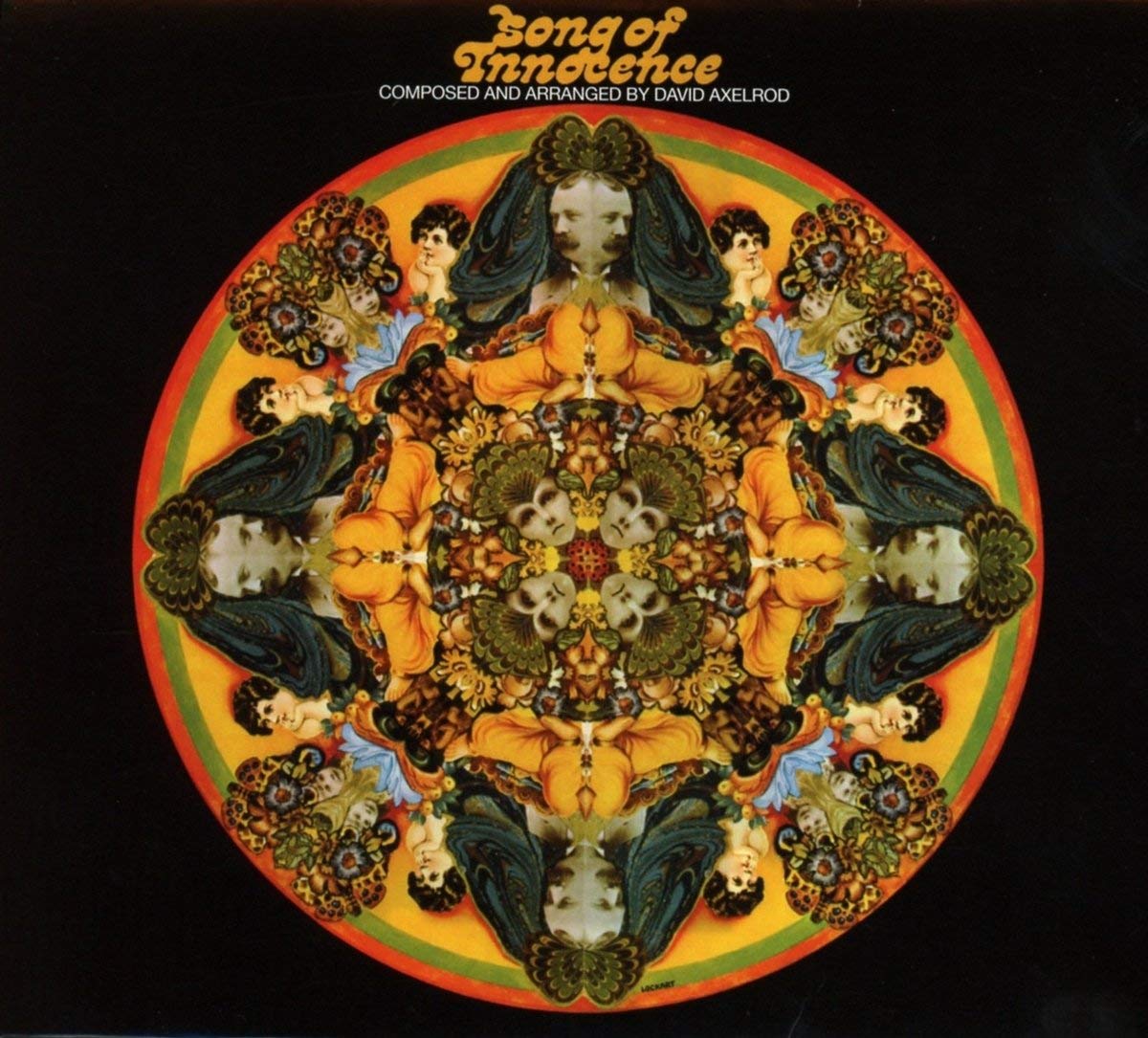
In 1968, David Axelrod released his William Blake inspired debut album Songs Of Innocence, which sold just 75,000 copies. This was disappointing given that Songs Of Innocence was groundbreaking album.
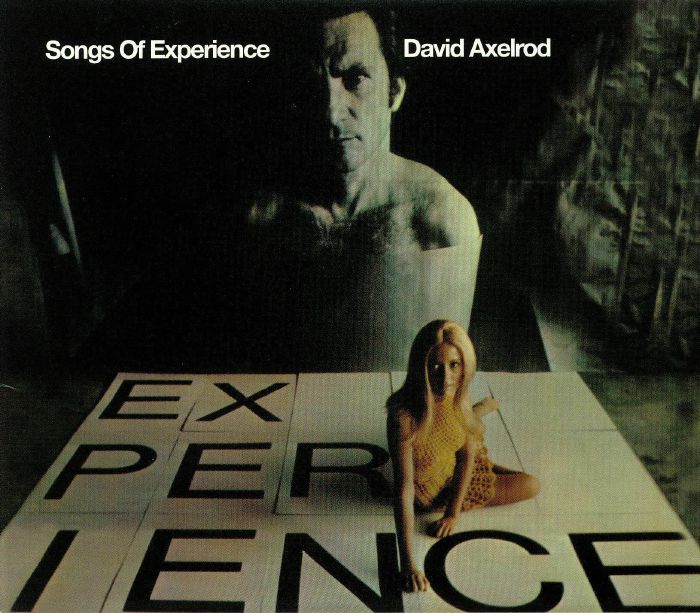
Despite the disappointing sales of Songs Of Innocence, David Axelrod began to write the material for his sophomore album Songs of Experience. It was also inspired by William Blake’s poetry, but explored the darker side of humanity drew inspiration from composer Gunther Schuller’s Third Stream concept. David Axelrod’s sophomore album Songs of Experience was an ambitious and innovative album. He had come a long way from his days as a boxer.
Before embarking upon a career in music, David Axelrod had enjoyed what can only be described as a chequered career. He had started off as a boxer, before changing direction and finding work in film and television. However, in 1959 David Axelrod embarked upon a musical career when he produced Harold Land’s album The Fox. This launched David Axelrod’s nascent musical career.
Four years later, David Axelrod was hired by Capitol Records as a producer and A&R man. Initially, he worked with R&B artists, including Lou Rawls who was signed to Capitol Records. David Axelrod produced a string of hit singles for Lou Rawls, his Live album and several albums that were certified gold. David Axelrod was the man with the Midas Touch.
Soon, David Axelrod was working with jazz saxophonist Julian “Cannonball” Adderley, and produced his 1966 Grammy Award winning album Mercy, Mercy, Mercy! Live at “The Club.” The album also featured the hot single Mercy, Mercy, Mercy which reached number eleven in the US Billboard 100. By then, David Axelrod’s star was in the ascendancy at Capitol Records.
It was around this time, David Axelrod began working with some top session musicians including drummer Earl Palmer, bassist Carol Kaye and guitarist Howard Roberts. This band would play an important part in David Axelrod’s future.
David Axelrod wrote and arranged Mass in F Minor and Release of an Oath for the psychedelic rock band The Electric Prunes. The only problem was that both songs were complex pieces of music. Mass in F Minor consists of a mass sung in Latin and Greek and performed in a psychedelic style. However, there was a problem, it was too complex a piece for The Electric Prunes to record and it was recorded by David Axelrod’s band. This lead to The Electric Prunes disbanding and David Axelrod’s band completed the albums. Executives at Capitol Records were grateful that David Axelrod had rescued what was a particularly tricky situation, and wanted to reward him for his recent success. This resulted in David Axelrod being allowed to record his debut solo album Songs Of Innocence.
By them David Axelrod was watching trends in popular music and realised that there was a new breed of record buyer with much more sophisticated taste than the three chord pop of the early Beatles’ record. They were willing to embrace and buy much more experimental sounding albums, including two of the best known, The Beach Boys’ Pet Sounds and The Beatles’ Sgt Peppers Lonely Hearts Club Band. Both of these experimental had been hugely successful, and was proof to David Axelrod that there was a demand for this type of music.
Buoyed by the experimental climate of popular music David Axelrod decided to write and record his what was akin to a suite-like tone poem, which was based on Songs Of Innocence which was an illustrated collection of poems written in 1789 by William Blake. The poet had inspired many composers and musicians during the twentieth century. Many composers had set his poems to music, and William Blake’s music had been used in theatre and inspired everyone from folk musicians to David Axelrod who was a self-confessed “Blake freak.”
Over the space of a week, David Axelrod wrote seven compositions and borrowed titles from William Blake’s poems. The compositions death with a variety of themes, ranging from visions, religious iniquity, rite of passage and life experience after a person’s birth and innocence. After just a week, David Axelrod had completed Songs Of Innocence, which was his homage to William Blake. David Axelrod had been captivated by William Blake’s poetry since he was a teenager and seemed to relate to the poet. Neither William Blake nor David Axelrod were regarded as sociable men, and this could’ve hindered the producer’s career. However, he had a successful track record as he began recording Songs Of Innocence in 1968.
Songs Of Innocence.
Having written Songs Of Innocence in just one week, David Axelrod arranged the seven tracks which he intended to produce and add the vocals to. Now he was ready to record his debut album, and work was scheduled to start in mid-1968 at Capitol Studios, in Los Angeles.
David Axelrod decided to use many of the musicians that he worked with on a regular basis. This included drummer Earl Palmer, bassist Carol Kaye and guitarist Al Casey. They were joined by percussionist Gene Estes and organist and pianist Don Randi who would conduct the string and horn section that David Axelrod planned to use on Songs Of Innocence. They would allow David Axelrod to create his musical vision.
Songs Of Innocence was essentially an instrumental album of jazz-fusion, but incorporated elements of baroque pop, blues, classical music, funk, jazz, liturgical music, pop, psychedelia, R&B, rock and theatre music. During Songs Of Innocence, David Axelrod used contrast extensively during the orchestral compositions which was peppered with euphoric psychedelic soul and dramatic, sometimes, distressing arrangements to reflect the supernatural themes that are found within William Blake’s poems. So does the music’s almost reverential psychedelic undercurrent which brings to mind the themes of innocence and spirituality that is a feature William Blake’s poems which inspired David Axelrod to write such an ambitious album as Songs Of Innocence.
His arrangements on Songs Of Innocence accentuated the pounding drums played in 4/4 time, complex baselines, searing and gritty guitars, sweeping melodramatic and progressive strings, organ parts designed to disorientate and blazing, dramatic horns. David Axelrod who had written Songs Of Innocence in the rock idiom, but used a mixture of jazz, rock and classical musicians to record his debut album.
They were all comfortable when David Axelrod asked them to improvise during this psycheliturgical opus. David Axelrod had been influenced by György Ligeti’s 1961 piece Atmosphères, and Lukas Foss’ concept of starting a piece with a sustained chord and improvising for over 100 bars, and ending on a different chord. However, it wasn’t joust improvisation that David Axelrod embraced.
David Axelrod encouraged musicians to use various sound effects, including reverb and echo during the recording sessions. This included adding echo to breakbeats to reflect the spiritual nature of William Blake’s poetry. For much of the album, David Axelrod’s rock orchestra painted pictures with music which veered between spartan, dramatic and harrowing to liturgical, ruminative and celebratory. As the music changed, so did the rock orchestra.
Seamlessly David Axelrod’s rock orchestra changed direction and were transformed into a vampish big band. Other times, they played bluesy bop or locked into a jazzy groove and on occasions started to swing.
Meanwhile, producer David Axelrod was constantly encouraging his band to experiment, and not be afraid to improvise. Towards the end of recording sessions, David Axelrod’s rock orchestra had fully embraced psychedelia deploying organ licks that seemed to be designed to disorientate and gritty guitars. Then as The Mental Traveler was recorded, David Axelrod was keen to embrace and experiment with atonality. However, he felt that music that lacks a tonal centre of key was a step too far even on such an ambitions and innovative album as Songs Of Innocence.
When David Axelrod completed recording his suite-like tone poem, everyone who had worked on the concept album realised that it was an impressive, innovative and immersive album, that was ambitious, cerebral. However, the big question was what would the critics who make of Songs Of Innocence?
Not only was Songs Of Innocence David Axelrod’s debut album, but it was ambitious concept album inspired by William Blake’s poetry. This was too much for many critics, and the album regarded as something of a curio when it was released in October 1968 by Capitol Records. Many critics failed to understand what was essentially a mixture of genre-melting music, mysticism and philosophy that was cerebral, creative and showed just how much music had changed over the last few years. David Axelrod’s suite-like tone poem Songs Of Innocence, was a long way from Love Me Do in 1962. Music was changing, and record buyers were embracing much more experimental and sophisticated music. This augured well for the release of Songs Of Innocence.
Sadly, when Songs Of Innocence was released in October 1968, the album wasn’t the commercial success that David Axelrod or executives at Capitol Records had hoped. By October 1969, Songs Of Innocence had only sold 75,000 copies in America.
Despite the disappointing sales of Songs Of Innocence, David Axelrod began working on his sophomore album Songs of Experience.
Songs Of Experience.
For his sophomore album David Axelrod returned to the work of poet William Blake for inspiration, and especially his collection Songs Of Experience which was published in 1794. David Axelrod the self-confessed “Blake freak” chose eight poems from Songs of Experience which lent it name to his sophomore album.
William Blake was David Axelrod’s major influence, as explored the darker side of humanity on Songs Of Experience. The composer had been captivated by William Blake’s concept of birth and innocence, as he explored the theme of life experience, rite of passage and the changes of perspective in life during the writing and recording Songs Of Innocence. However, when David Axelrod wrote Songs Of Experience, he focused on William Blake’s concept: “of awareness after birth.” This wasn’t David Axelrod’s only source of inspiration for Songs Of Experience.
Another source of inspiration for David Axelrod during the writing ad recording of Songs Of Experience was composer Gunther Schuller’s Third Stream concept. This was part of what was another ambitious album that David Axelrod planned to record.
To record Songs Of Experience, David Axelrod brought onboard many of the musicians that recorded Songs Of Innocence. However, it took over thirty musicians to record what David Axelrod knew was a groundbreaking, genre-melting album.
David Axelrod’s sophomore album Songs Of Experience, was essentially a fusion album, but incorporated elements of European classical music, British and Irish folk music, percussive sounds and baroque arrangements. Meanwhile, the melodies and rhythms on Songs Of Experience ranged from pop, R&B and rock. However, this time, this time, the suite on Songs Of Experience which relied less on rock influences, and was much more symphonic. While this was a stylistic departure, for David Axelrod, Songs Of Experience was another major work that had the potential to enhance his reputation.
That was no surprise given Songs Of Experience’s the compositions to the eight genre-melting track were so different, and featured lush arrangements that were dramatic and rich in imagery. David Axelrod was bringing William Blake’s music to life by using his entire musical palette to paint pictures and allow him to explore much darker and ruminative sounds on Songs Of Experience. It was an album that should’ve captured the imagination of critics.
Sadly, when Songs Of Experience was released by Capitol in 1969, very few critics realised the importance of what was a truly groundbreaking and innovative album. To rub salt into the wound, Songs Of Experience sold less that the 75,000 copies that Songs Of Innocence sold. David Axelrod decision to create ambitious and innovative music wasn’t rewarded.
It wasn’t until much later that critics realised the significance of Songs Of Experience, which was hailed as an important, innovative and inspirational album. By then, Songs Of Experience was a favourite source of samples for hip hop producers. However, it was just a coterie of appreciative record buyers who had embraced and flew the flag for what was David Axelrod’s William Blake inspired cult classic Songs Of Experience which broke new ground and somewhat belatedly, became part of musical history.
Cult Classic: David Axelrod-Songs Of Experience.
CULT CLASSIC: TUXEDOMOON-HALF-MUTE.
Cult Classic:Tuxedomoon-Half-Mute.
Success came quickly for Tuxedomoon. They were formed in 1977, and released their debut single in 1978. A year later, Tuxedomoon’s sophomore single No Tears was hailed a post punk classic. Tuxedomoon were one of mus ic’s rising stars.
So it was no surprise that in 1980, Ralph’s Records signed Tuxedomoon and they released their debut album Half-Mute later that year. It was released to critical acclaim, and introduced Tuxedomoon’s music to a wider audience. However, the Tuxedomoon story began in 1977.
Their roots can be traced to 1977, and the Angels of Light, a musical collective and commune in San Francisco that Steven Brown was a member of. He was also at student at San Francisco City College. That was where Steven Brown met Blaine Reininger and Tommy Tadlock. They were all taking the same electronic music class at San Francisco City College, and quickly became friends.
As the electronic music course neared completion, Steven Brown and Tommy Tadlock decided to combine their talents for their final project. Little did the pair realise, that Tommy would end up managing Tuxedomoon. That was in the future.
Tuxedomoon had only been born in 1977, and were still to find their sound. So in the evenings, Steven Brown and Blaine Reininger would head over to Tommy Tadlock’s to make music. This was unlike the majority of the music being released. Especially with Blaine Reininger playing electronic violin and guitar. Tommy Tadlock however, was content to take a backseat, working on the sound. He also made tools to fix the nascent band’s equipment, and even created “Treatment Mountain,” a plywood pyramid structure that housed Blaine’s myriad of effects. This became important as the band started to play live
By then, punk rock was on its way to moving from the underground to mainstream. However, as the band began to make their tentative steps in San Francisco’s live scene, punk was still an underground scene. Punk had certainly influenced Tuxedomoon.
When Tuxedomoon took to the stage, they were determined to sound different to everyone else. As a result, their vocals were inspired by punk and were a mixture of power, frustration, anger and angst. Augmenting the core band of Steven Brown and Blaine Reininger were bassist Peter Principle, filmmaker Bruce Geduldig and performance artist Winston Tong. Some members of the band didn’t play a particular instrument. Instead, they arrived with whatever instrument that they could find and ‘played’ it. This was similar things to the happenings in the psychedelic sixties. However, for a new generation who watched Tuxedomoon fuse elements of punk and electronics it was a new experience. This new sound was quickly christened cabaret no-wave.
It wasn’t until 1978, that Tuxedomoon’s cabaret no-wave sound first found its way onto a single. Tuxedomoon’s debut single was Pinheads On The Move. Then later in 1978, came Tuxedomoon’s sophomore single No Tears. It was the song that made critics and record buyers sit up and take notice. Soon, No Tears was regarded as a a post punk classic, and had introduced Tuxedomoon’s to a wider audience. Already Tuxedomoon were making waves in the post punk era.
Having made a breakthrough with No Tears in 1978, Tuxedomoon released two further singles in 1979. By then, bassist Peter Principle was a permanent member of the band, and played on The Stranger. This was Tuxedomoon’s first single of 1979, but their second and final release on Time Release Records.
Later in 1979, Scream With A View was released on the short-lived Tuxedomoon Records. Soon, the band’s new label had outlived its usefulness, as they signed to a new label.
After signing to Ralph Records later in 1979, Tuxedomoon returned in 1980 with not just a new single, but a new album. The single was What Use? and the album was Half-Mute, which was released in 1980.
Half-Mute featured ten tracks. Nine were penned by Steven Brown, Blaine Reininger and Peter Principle. The exception was Crash, which was written by Blaine Reininger and Michael Belfer. These tracks were recorded at San Amigos Studios, San Francisco.
At San Amigos Studios, Tuxedomoon began setting up an array of instruments. Steven Brown would play keyboards, synths, saxophones, electronic percussion and add vocals. Blaine Reininger who had learnt to play violin and guitar, also played bass, keyboards, synths, electronic percussion, root toms, C.B. interference and vocals. Peter Principle played bass, guitar, piano, synths and electronic percussion. Producing Half-Mute were the three members of Tuxedomoon. Once the album was complete, Half-Mute was released later in 1980.
By then, word had spread about Tuxedomoon. They had already released five singles and were the toast of the underground music press not just in America, but in Britain. This bode well for Half-Mute.
When reviews were published, critics lavished praise on Half-Mute. They were won over by Tuxedomoon’s unique fusion of punk and electronics. Many critics remarked on the lyrics. They weren’t just dark and maudlin, but tinged with humour and often incisive. Some critics called Half-Mute a genre-classic. This proved to be the case, and was the springboard for Tuxedomoon to become one of leading avant-garde pop bands. However, things were about to get even better for Tuxedomoon.
Buoyed by critically acclaimed reviews, Half-Mute reached number ten in the UK Indie Chart. Suddenly, Tuxedomoon’s star was in the ascendancy, after releasing what many regard as their finest album, Half-Mute.
Opening Half-Mute is Nazca, an instrumental. Washes of moody synths sweep in and out, while a pulsating beat is accompanied by a chiming guitar. By then, there’s a hypnotic quality to the arrangement. Then when a sultry saxophone enters. It’s dreamy and floats above rest of the arrangement, adding to the melodic quality. Sometimes, it threatens to head in the direction of free jazz. This never happens, as the saxophone proves the perfect foil for the washes of synths. Together, they create a soundscape that’s not just cinematic and beautiful, melodic, hypnotic and timeless.
From the opening bars, it’s obvious that 59 To 1 is a song about time. A ticking sound is joined by a funky bass and synthetic sounding drums. The urgent vocal is sounds almost Kraftwerk-esque. When the vocal drops out, a wailing saxophone soars above the hypnotic, funky arrangement. By then, the vocal is urgent, impassioned and despairing, at being unable to beat time. Snippets of C.B. radio interject, as the scorching, blazing saxophone soars and flutters, joining a mesmeric vocal and walking bass. Hypnotic, funky and innovative it’s a timeless genre-melting track.
Straight away, Fifth Column takes on a cinematic sound. Synths and a saxophone join a dark bass and crisp drums. It’s the synths and braying saxophone that paint pictures. They add to the cinematic quality, as the bass provides the heartbeat to a track where beauty and mystery are omnipresent. The beauty comes courtesy of saxophone, while synths add mystery.
Drums scamper along as otherworldly synths, beep and squeak on Tritone (Musica Diablo). They add a darkness as an urgent scratchy violin plays. As the tempo increases, the track becomes robotic, rocky and urgent. A myriad beeps, buzzes, squeaks and whirs join the scampering, scratchy violin and synthetic drums to create a short otherworldly symphony.
A darkness descends on Loneliness, which owes a debt of gratitude to Kraftwerk and even Cluster. Bursts of drums and bass set the scene for a dark, fuzz-tone organ and a monotone vocal that’s tips its hat to Kraftwerk. The final piece of the jigsaw are repetitive elegiac sounds that add a mesmeric sound. This adds to the almost robotic sound of the arrangement, which marches to the beat of the drum. The result is captivating emotionless track, that’s a fusion of avant-garde, electronica, funk and Krautrock.
Bells chime, as variety of crackles, rumbling, galloping and ghostly sounds combine on James Whale. Sometimes, the tape speed varies, as Tuxedomoon pay their tribute to the late Hollywood director James Whale. Later, the track takes on a haunting sound, as an otherworldly being gallops towards the listener. This adds to the spine tingling cinematic sound, and is fitting, given James Whale directed a classic horror film The Bride Of Frankenstein.
In the distance, a walling sound encircles, before gradually moving closer on What Use? That’s a curveball, as a thunderous beat joins cinematic synths and bass on a track that sounds as if it’s been inspired by Kraftwerk and Giorgio Moroder. Even by the time the deliberate vocal has entered, the listener has been swept along by what’s an irresistible sounding dance track. At one point, Tuxedomoon replicate the sound of a high speed train. By then, there’s a Euro Disco influence, as the track heads into anthem territory and showcases Tuxedomoon’s versatility.
Volo Vivace provides the perfect showcase for Blaine Reininger’s violin skills. Buzzing synths are joined by a bass, before the elegiac sound of the violin enters. It provides a contrast to the rest of arrangement.Especially when its played with speed and precision. Meanwhile, the rest of the arrangement is spacious, hypnotic and sometimes futuristic. However, the violin adds beauty and elegance. By then, music’s past and present sit side-by-side, and unite to make the music of the future.
As 7 Years unfolds, straight away, washes of synths add an element of darkness and drama, as drums rattle and crack. Atop the arrangement, the vocal is deliberate and lacking in emotion as it sings of: “seven years in one night.” Who knows what horrors take place during this “psychedelic melodrama.” It sounds as if it’s been influenced by Kraftwerk and Gary Numan. Later, Blaine Reininger’s violin adds a myriad of spine-chilling sounds, adding a cinematic sound to what was in 1980, a modern day “psychedelic melodrama.”
Km-Seeding The Clouds closes Half-Mute, and is an eleven minute epic. As the sound of traffic, goes by a wistful saxophone solo plays. It’s joined by a plucked bass, as the sounds of the city pass by. However, it’s the hauntingly beautiful, but mournful saxophone that’s the focus of the listener’s attention. They’re oblivious to the sound of traffic, birdsong, cinematic synth strings and bold keyboards chords. Even the sound of horns beeping, doesn’t stop the listener revelling in the mournful beauty of Steven Brown’s saxophone. It takes centre-stage, and closes Tuxedomoon’s avant-garde pop classic.
Since its release, Half-Mute has influenced several generations of musicians. So much so, that many musicians were inspired to form bands after hearing Half-Mute. The music they went on to make was influenced by Tuxedomoon’s avant-garde pop classic Half-Mute.
It’s hard to believe that forty years have passed since the release of Half-Mute. It’s an innovative, inventive and genre-melting cult classic that has stood the test of time. On Half-Mute, Tuxedomoon flit between and fuse disparate musical genres including avant-garde, avant pop, electronica, Euro Disco, free jazz, funk, jazz ,Krautrock, no-wave, pop, post punk and psychedelia. There’s also elements of drama and a cinematic sound on an album that references everything from Cluster and Kraftwerk to Giorgio Moroder and even Gary Numan. The result is a captivating, genre-hopping cult classic where the music is always ambitious, innovative, inventive and continues to influence and inspire a new generation of musicians to push musical boundaries to their limits.
Cult Classic:Tuxedomoon-Half-Mute.

CULT CLASSIC: LIGHTNIN’ SLIM-HIGH AND LOW DOWN.
Cult Classic: Lightnin’ Slim-High and Low Down.
When Lightnin’ Slim recorded his 1971 album High and Low Down, it only took three days to record the album. There’s a good reason for this. Lightnin’ Slim could only get three days holiday from the lock factory he was working in, in Pontiac, Michigan. However, for three days in Muscle Shoals, he was back doing what he was born to do, play the blues.
Accompanied by the legendary Muscle Shoals Rhythm Section and what became The Muscle Shoal Horns, the sixty-one year old Lightnin’ Slim recorded his comeback album. His career had stalled and hd was reduced to the 9 to 5 grind of working in a lock factory. That’s until Swamp Dogg decided to rejuvenate his career.
By the early seventies, it was apparent Swamp Dogg had the Midas touch. Previously, he’d rejuvenated the career of several artists and the songwriter, musicians and producer had established a reputation as one of the most talented producers of his generation. This made Swamp Dogg the perfect producer to rejuvenate the career of Louisiana Slim, the Godfather of the gutbucket blues.
He was born in St. Louis, Missouri, and lived on a farm until he was thirteen, when his family moved to Baton Rouge. By then, Lightnin’ Slim had been taught to play guitar by his elder brother, Layfield. This led to Lightnin’ Slim playing in bars in the Louisiana area. It wasn’t until 1954 that Lightnin’ Slim made his recording debut.
In 1954, Lightnin’ Slim released Bad Luck Blues for Jay D. Miller’s Excello Records. This was the label Lightnin’ Slim called home for the next twelve years. Essentially, he was with Excello Records for the majority of his career. That’s where he released his 1960 debut album Rooster Blues. Five years later, in 1965, Lightnin’ Slim released his sophomore album Bell Ringer. Then a year later, Lightnin’ Slim left Excello Records and his career stalled.
For the next four years, Lightnin’ Slim dropped out of music. When he was discovered by Fred Reif in 1970, Lightnin’ Slim was down on his luck. Lightnin’ Slim was renting a room from Slim Harpo’s sister and working in a foundry in Pontiac, Michigan. This wasn’t good for his hands and he was in constant pain when he made his comeback.
This comeback took place at the University of Chicago Folk Festival in 1971. Accompanying Lightnin’ Slim was Lazy Lester, who Lightnin’ Slim had collaborated with in the past. The comeback concert lead to Lightnin’ Slim resigning to Excello Records. So, Lightnin’ Slim took three days off from his job in the foundry and headed to Muscle Shoals, where he recorded an album with a crack band of musicians and producer Swamp Dogg.
For High and Low Down, Lightnin’ Slim penned four songs, Bad Luck Blues, G.I. Blues, That’s All Right and Voodoo Blues. Lightnin’ Slim covered three Willie Dixon songs, My Babe, Oh Baby and Crazy ‘Bout You Baby. He covered Chuck Berry’s Things I Used To Do and Jerry West’s Rooster Blues. The other track was the Swamp Dogg penned Good Morning Heartaches. These ten tracks became High and Low, which was recorded in Muscle Shoals.
In the studios in Muscle Shoals, the legendary Muscle Shoals Rhythm Section and what became the Muscle Shoal Horns accompanied Lightnin’ Slim. His rhythm section included bassist Bob Wary, drummer Fred Proudly and guitarist Jesse Carr. Tippy Armstrong played harmonica and Clayton Ivy piano and organ. The horn section included Charles Rose, Mike Stough, Sonny Royal and Stacy Goss. Lightnin’ Slim played guitar and sang lead vocals, while Swamp Dogg produced what became High and Low Down. It was released in 1971.
On the release of High and Low Down, the album opinions were divided about the album. Maybe they didn’t understand that Swamp Dogg was reinventing Lightnin’ Slim. He was a delta blues singer, and the delta blues was no longer as popular and unless Lightnin’ Slim’s music evolved, it risked becoming irrelevant.
Ironically, Lightnin’ Slim’s makeover wasn’t a commercial success. The reinvention of Lightnin’ Slim hadn’t worked and after that, he returned to work in the foundry and died three years later. This makes High and Low Down a poignant swan-song.
Opening High and Low Down is Rooster Blues, which literally bursts into life. Accompanied by stabs of blazing horns, the tightest of rhythm sections and a blistering guitar solo, Lightnin’ Slim unleashes a vocal full of innuendo. Then some honky tonk piano is thrown into the mix. Soon, the band unleash a glorious bluesy arrangement. A melange of horns, rhythm section, driving piano and guitars accompany Lightnin’ Slim. This seems to spur him on, before the track reaches a glorious crescendo.
Slow, moody and bluesy describes Things I Used To Do. A melancholy piano is joined by a shuffling rhythm section and reverberating guitar. Lightnin’ Slim’s vocal is despondent and full of misery. Heartbroken, he pleads “please don’t go.” Stabs of braying horns, shimmering guitar and a piano masterclass from Clayton Ivy provide the the perfect backdrop to Lightnin’ Slim’s heartbroken vocal.
Bad Luck Blues sees Lightnin’ Slim return to the first song he ever recorded. It’s given a makeover. The rhythm section provide a moody, broody, pulsating backdrop as Clayton Ivy’s piano is panned left and the guitar panned right. Smack bang in the middle is Lightnin’ Slim’s lived-in, worldweary vocal. With a sense of resignation he sings “if it wasn’t for bad luck, I wouldn’t have no love at all.” At just the right time, washes of Hammond organ are unleashed. This is perfect accompaniment to Lightnin’ Slim. He sounds as if he’s lived the lyrics, and somehow managed to survive them, but only just.
My Babe is a rocking bluesy track that many people will be familiar with. It was written by Willie Dixon. The band are determined to make the song swing. They unleash the blazing horns, a driving rhythm section and crystalline guitars. This should be the perfect backdrop for Lightnin’ Slim. He throws himself into the song. He tries to mix power and sass, and make the song swing. However, is voice isn’t as strong as it once was. There’s a fragility there. The result is a good version of a familiar track. Ten years before and Lightnin’ Slim would’ve strutted his way through the track.
G. I. Blues is one of three tracks Lightnin’ Slim wrote, and as it begins, Lightnin’ Slim briefly returns to his delta blues’ roots. That’s until his band plug in and provide a steady heartbeat. Soon, chiming,searing and blistering guitars accompany Lightnin’ Slim’s despairing vocal. The cause of his despair is his partner who’s got the “G.I. Blues.” With a voice full of longing, his parting shot is I’m going to pray to Uncle Sam, give me some place in this army please.”
From the get-go, Lightnin’ Slim’s band unleash some moody, bluesy licks on Oh Baby. Providing the heartbeat are the rhythm section, while the horns bray and blaze. What’s different is the guitar. It’s fuzzy, wah-wahing its way across the arrangement. Some critics felt its inclusion was a mistake and it continues to divide opinion. Lightnin’ Slim delivers a sassy, needy vocal. This is what was needed on My Babe. Here, Lightnin’ Slim is singing within himself on one of his best efforts and spurs the band on, as a horn and guitar solos play important parts in the track’s success.
That’s All Right was written by Lightnin’ Slim. Slow, moody and bluesy, describes this track, and Lightnin’ Slim’s vocal. He’s accompanied by a grinding rhythm section, rocky guitars and a harmonica solo from Tippy Armstrong. Later, a Hammond organ is dropped in as Swamp Dogg helps Lightnin’ Slim to give this familiar track a blues rock makeover.
The band build the drama as Crazy ‘Bout You Baby reveals its secrets. The rhythm section, growling horns and crystalline guitars set the scene for Lightnin’ Slim’s vocal. It’s frustrated, angry and heartbroken. Bursts of drums, stabs of horns and searing guitars match the anger and frustration in Lightnin’ Slim’s vocal. Just like other tracks, he gives vocal and guitar masterclasses. It’s as of he’s realised his future depended on the success of High and Low Down, so was playing and singing as if his future depended upon this album.
Good Morning Heartaches was the only track on High and Low Down that Swamp Dogg wrote. Having briefly drawn inspiration from the delta blues, a glorious slice of electric blues unfolds. A grinding rhythm section, searing guitars and harmonica join grizzled horns in driving the arrangement along. With the band in the groove, Lightnin’ Slim feeds of their energy. Sadness and despair fill his vocal, before the harmonica answers his call. Everything just falls into place and Lightnin’ Slim and his band create what’s the highlight of High and Low Down.
Voodoo Blues written by Lightnin’ Slim closes High and Low Down. The tempo is slow, with a despondent Lightnin’ Slim accompanied by piano, crystalline, chiming guitars and the rhythm section. His soul-baring vocal is full of emotion and heartbreak. Later, Jesse Carr and Lightnin’ Slim unleash some of the best guitar licks on the album. They take centre-stage,while the rhythm section mark time and one can only marvel at their playing which seems a fitting way to close High and Low Down.
While Lightnin’ Slim’s comeback album High and Low Down wasn’t a commercial success, it was proof that he still was one the most talented blues players in America. Sadly, Lady Luck hadn’t smiled upon him. He wasn’t even making a living playing the blues. Instead, he’d been working in a foundry since leaving Excello Records. This was hot, hard and dangerous work and affected Lightnin’ Slim’s health. His hands ached, which was a disaster for a guitarist. So when he was rediscovered by Fred Reif it must have been the answer to his prayers.
Accompanied by Lazy Lester, Lightnin’ Slim made his comeback at the University of Chicago Folk Festival. This lead to Lightnin’ Slim resigning to Excello Records. They brought in one of the hottest producers of the time, Swamp Dogg. He brought onboard some of the best musicians in Muscle Shoals. Accompanied by the legendary Muscle Shoals Rhythm Section and what became the Muscle Shoal Horns, the sixty-one year old Lightnin’ Slim recorded his comeback album High and Low Down where Swamp Dogg reinvented Lightnin’ Slim.
High and Low Down was a fusion of delta and electric blues with jazz and rock. It saw Lightnin’ Slim follow in the footsteps of B.B. King. Lightnin’ Slim was able to showcase his lived-in, worldweary voice and his unmistakable guitar playing. Before the release of High and Low Down, great things were expected of the album. B.B. King who wrote the original sleeve-notes, sang High and Low Down’s praises. He was speaking as musician, music lover and former DJ. Sadly, he was wrong. High and Low Down sank without trace. Worse was to come for Lightnin’ Slim.
After the commercial failure of High and Low Down, Lightnin’ Slim continued to make a comeback. He continued playing live and toured America and Europe for the next three years. Then in 1974, aged just sixty-one Lightnin’ Slim died of stomach cancer. That day, one the five greatest blues musicians died. Lightnin’ Slim is up there with blues greats like Muddy Waters, Howlin’ Wolf, Little Walter and Sonny Boy Williamson. Sadly, Lightnin’ Slim didn’t enjoy the commercial success they did.
Despite his lack of success Lightnin’ Slim recorded some of the best blues music of the fifties and sixties at Excello Records. His back-catalogue is a musical treasure trove awaiting discovery. Part of that treasure trove is Lightnin’ Slim’s 1971 album High and Low Down, which is a hidden gem from the Godfather of the gutbucket blues.
Cult Classic: Lightnin’ Slim-High and Low Down.

CULT CLASSIC: AKSAK MABOUL-UN PEU L’AME DES BANDITS.
Cult Classic: Aksak Maboul-Un Peu de L’âme Des Bandits.
Nearly three years after releasing their seminal avant pop album, Onze Danses Pour Combattre la Migraine in the summer of 1977, Aksak Maboul returned with their much-anticipated 1980 sophomore album Un Peu de L’âme Des Bandits. It was the first album Aksak Maboul released on Marc Hollander’s Crammed Discs, and the second chapter in a story that began three years earlier in 1977.
In early 1977, Marc Hollander and Vincent Kenis decided to turn what had been a dream into reality, when they founded a new band together, Aksak Maboul. By April 1977, Aksak Maboul had entered the studio and began work on their debut album.
Onze Danses Pour Combattre la Migraine.
Over the next two months, Aksak Maboul recorded what was a groundbreaking genre classic, Onze Danses Pour Combattre la Migraine. Marc Hollander and Vincent Kenis who were both talented multi-instrumentalists had decided to take charge of production of their debut album. This was a brave decision considering they planned on recording a truly ambitions album.
Onlookers watched incredulously as the three members of Aksak Maboul fused disparate and unlikely musical genres and influences. Everything from avant-garde to African music was rubbing shoulders with Balkan, electronica and experimental, to free jazz, rock and proto-techno. There was even elements of American minimalist, jazz and early twentieth century classical music on album where Aksak Maboul had cast their net far and wide for inspiration.
It was as if the three members of Aksak Maboul were delving into the furthest corners of their respective record collections. This included the influence of minimalist composer and pianist Erik Satie; avant-garde composers like Tony Conrad, Jon Gibson, Frans Geysen and Terry Riley, plus Brian Eno who had popularised ambient music in the seventies. However, it was free jazz pioneers like Sun Ra, Charles Mingus and Ornette Coleman who seem to have been a starting point for Aksak Maboul. Free jazz, which was referred to as energy music in the sixties seemed to have inspired Aksak Maboul as embarked upon what’s akin to a journey without a map. This brave and adventurous approach worked for Aksak Maboul, as they continue to combine musical genres and influences.
Rock pioneers Frank Zappa and the Velvet Underground seem to have influenced Aksak Maboul as the three musical magpies drew inspiration from countless disparate sources, combined it into something totally different. Often, though, this wasn’t the end of this ambitious musical experiment, and this musical mosaic was then deconstructed, and incredibly, seamlessly became something totally different and innovative. Astonished onlookers watched as the three musical alchemists worked their magic on their debut album. It was finished in May 1977 and became Onze Danses Pour Combattre La Migraine.
By then, onlookers realised that Aksak Maboul were no ordinary band. It was obvious even to the casual observer that Aksak Maboul were musical pioneers who dared to go where other bands feared to tread. Aksak Maboul it seemed, were determined to challenge musical norms and push boundaries to their limits. Onlookers speculated how this would turn out?
Music industry insiders and critics knew that one of two things would happen when Aksak Maboul released Onze Danses Pour Combattre La Migraine in the summer of 1977? Aksak Maboul would either crash and burn, or their debut album Onze Danses Pour Combattre La Migraine would be hailed as a groundbreaking, genre-melting classic? The three members of Aksak Maboul held their breath as critics and cultural commentators had their say on Onze Danses Pour Combattre La Migraine.
Critics on hearing Onze Danses Pour Combattre La Migraine which translates to Eleven Dances For Fighting Migraines, hailed the album as ambitious, imaginative and innovative. Some critics went even further, describing Onze Danses Pour Combattre la Migraine as a groundbreaking masterpiece from a band who had a huge future ahead of them. For Aksak Maboul this was encouraging as they released their avant-pop classic, Onze Danses Pour Combattre la Migraine.
Later in the summer of 1977, Onze Danses Pour Combattre la Migraine was released on the Belgian independent label Kamikaze Records. However, Aksak Maboul’s debut wasn’t solely credited to the band. Instead, the album was credited to Marc Hollander/Aksak Maboul. There was a reason for this.
Much of the music on Onze Danses Pour Combattre la Migraine was the work of Marc Hollander, and it was only fair that he received much of the credit for what’s now regarded as a seminal album, Onze Danses Pour Combattre la Migraine. However, when Onze Danses Pour Combattre la Migraine was released by Kamikaze Records, which was only a small independent label, the album wasn’t a commercial success. The problem was Kamikaze Records was only a small independent label, that had neither had the budget to promote the album, nor it into the major record shops. However, Onze Danses Pour Combattre la Migraine became a cult album, and set the bar high for future avant-pop albums which are always compared to Marc Hollander/Aksak Maboul’s genre classic.
The commercial failure of Onze Danses Pour Combattre la Migraine was a hugely frustrating and disappointing for the two members of Aksak Maboul. Especially after receiving critically acclaimed reviews and being hailed an avant pop classic. It was a case of what might have been, as a new chapter began in the autumn of 1977.
By then, Aksak Maboul who were still a duo had never played live. This was about change when two became four. Percussionist Chris Joris and keyboardist Marc Moulin had joined Aksak Maboul. They were meant to be the final piece of the musical jigsaw, when the band when played live. However, Chris Joris was soon replaced by Frank Wuyts and they would become the classic lineup of Aksak Maboul.
Although Aksak Maboul was now playing live as a quartet, they were often augmented by guest musicians who took to the stage when they played live or recorded albums. That was the case when Aksak Maboul recorded their much-anticipated sophomore album Un Peu de L’âme Des Bandits in 1979.
Un Peu de L’âme Des Bandits.
It would be expanded lineup of who recorded the six tracks that became Un Peu de L’âme Des Bandits. The core quartet of Marc Hollander, Vincent Kenis, percussionist Frank Wuyts and keyboardist Marc Moulin were joined by two English musicians, Fred Frith a bassist, guitarist, violinist and drummer and percussionist Chris Cutler. The two new additions would play their part in the songwriting process on an album of two parts.
Founder member Marc Hollander contributed A Modern Lesson, and wrote Palmiers En Pots with Frank Wuyts, which featured André Verchuren’s Trio. Frank Wuyt and cellist Denis Van Hecke wrote Inoculating Rabies while new recruit Fred Frith penned Geistige Nacht. The other track on side one was the traditional song I Viaggi Formano La Gioventù. On the second side was the most ambitious piece of music of Aksak Maboul’s three year career.
This was Cinema a near twenty-three epic that featured four movements. Catherine Jauniaux who had agreed to add the vocal to Cinema, wrote Ce Qu’On Peut Voir Avec Un Bon Microscope with Chris Cutler, Denis Van Hecke, Fred Frith and Belgian bassoonist Michel Berckmans. Meanwhile, Alluvions and Azinou Crapules was written by Marc Hollander and Frank Wuyts. Closing this four piece suite was Age Route Brra! (Radio Sofia) which was credited to “All The Players.”
When it came time for Aksak Maboul to record Un Peu de L’âme Des Bandits, All The Players made their way to Sunrise Studios in Kirchberg, Switzerland in February 1979. Sunrise Studios was still relatively new, and had only been founded by Swiss composer, musician and producer Etienne Conod in 1975. This was just two years before Aksak Maboul recorded their seminal avant rock classic Onze Danses Pour Combattre la Migraine. It had set the bar high for Aksak Maboul’s sophomore album, but Marc Hollander, Vincent Kenis and the rest of the band were up for a challenge, and began recording what later became Un Peu de L’âme Des Bandits.
Joining Aksak Maboul were the two English musicians Fred Frith and Chris Cutler, who were joined by Belgian vocalist Catherine Jauniaux, cellist Denis Van Hecke plus bassoonist and oboist Michel Berckmans, cellist Denis Van Hecke. This extended lineup of Aksak Maboul spent the next month recording the group’s sophomore album. However, after a month, Un Peu de L’âme Des Bandits wasn’t finished, and Aksak Maboul returned home to Belgium.
Aksak Maboul made the return journey to Sunrise Studios in August 1979, where they would complete recording of Un Peu de L’âme Des Bandits. However, it would be 1980 before Aksak Maboul’s much-anticipated sophomore album Un Peu de L’âme Des Bandits was released by Marc Hollander’s new label Crammed Discs.
Rather than release Un Peu de L’âme Des Bandits on another record label, a decision was made to release the album on Crammed Discs, which was a relatively new label. It had only been founded earlier in 1980, and releasing Un Peu de L’âme Des Bandits on such a new label wasn’t without a degree of risk.
Would Crammed Discs have the financial muscle and expertise to promote Un Peu de L’âme Des Bandits, and get the album into the larger record shops? This was where Kamikaze Records had failed, and had cost Aksak Maboul dearly. However, Crammed Discs was a very different label to Kamikaze Records, and after releasing Aksak Maboul’s sophomore album Un Peu de L’âme Des Bandits, Marc Hollander’s label has released over 250 albums. That was still to come.
Prior to the release of Un Peu de L’âme Des Bandits, critics and cultural commentators had their say on Aksak Maboul’s long-awaited and much-anticipated sophomore album. The first time round, Marc Hollander and Vincent Kenis who back then, were the only members of Aksak Maboul had held their breath as critics and cultural commentators passed judgment. However, by 1980 Aksak Maboul were flavour of the month among the critics and so was Un Peu de L’âme Des Bandits.
When Aksak Maboul returned with Un Peu de L’âme Des Bandits, critics discovered another ambitious and groundbreaking album, from the new lineup of the band. Along with some of their musical friends they had recorded a much more experimental album than its predecessor Onze Danses Pour Combattre la Migraine. There was also an intensity to this powerful, carefully crafted, genre-melting album. It showcased two very different sides to Aksak Maboul, who had written parts of what were incredibly complex, intricate horn charts and used Eastern scales in the multilayered arrangements. Other parts of the songs had been improvised by Aksak Maboul, including the hardcore ambient pieces. They had put their extensive musical arsenal to good use, as they combined a disparate and eclectic selection of musical genres.
This included mixture of traditional instruments including an oboe, bassoon, saxophones, guitars, bass and piano which joined the latest in musical technology, a drum machine. Aksak Maboul also used sampling despite 1979 being the pre-sampler era. Instead, they taped short pieces of sound including the flipper from a pinball machine, excerpts from the vocals of delta blues and added gibberish vocals. Aksak Maboul also took excerpts of popular tangos which were sliced and diced and then randomly reassembled to create a “new” piece of music, Tango. To the rich musical tapestry that was Un Peu de L’âme Des Bandits, Aksak Maboul added Bulgarian, crypto-punk, Polynesian, Pygmy and pseudo-Varese music on Un Peu de L’âme Des Bandits. Add to this the influence of baroque music, the Canterbury scene, French café music and everyone from Frank Zappa to Henry Cow and Stravinsky and the result was bold and ambitious album of innovative experimental avant-rock. It epitomised the type of music that bands within the Rock In Opposition, including Aksak Maboul were recording in 1979. Once again, critics were astounded at the sheer variety of musical genres and influences that had inspired Aksak Maboul.
Un Peu de L’âme Des Bandits was no ordinary album, with Side A featuring five dissipate dance tracks. Modern Lesson set the scene as a “twisted blues” track unfolds and gibberish vocals are joined by a guitar, cello and later saxophone, which play with a freedom and invention before the horn chart becomes intricate. Despite that, it’s a captivating track that is variously rhythmic, mesmeric and melodic.
Very different is Palmiers en Pots which comprises two short tracks. Trio from Nuits D’Argentine is a beautiful piece of wistful music that was originally written for a string trio. It gives way to Aksak Maboul’s slice and dice Tango, which is an irresistible dance track that is a reminder of how innovative a group Aksak Maboul were in 1979.
Geistige Nacht shows the two sides of Aksak Maboul. Initially, they’re a tight band, as the rhythm section powers the arrangement along as the saxophone and piano play leading roles. Later, and seamlessly, the band play with freedom, invention and the same urgency as before on what’s one of the oft-overlooked tracks on the album.
I Viaggi is a Turkish folk song where Aksak Maboul use a Middle Eastern scale, while the dumbeg and cello play traditional scales. However, the cello and vocal also double the melody line. In doing so, they play their part in a track that is initially haunting, hypnotic, ethereal and cinematic. Always though, the Turkish influence shines through even when the music takes on a more experimental sound, before becoming urgent as it reaches a rocky crescendo.
Inoculating Rabies is totally different from what’s gone before, and finds a bassoon and bass clarinet playing against backdrop of driving, anthemic rock and punk. It’s best described as bassoon punk where Aksak Maboul unleash angst, anger and frustration.
Flipping over to B-Side and critics and record buyers discovered Cinema, the four piece suite that made Aksak Maboul the toast of progressive rock fans. They were won over by a quite remarkable suite, which features four separate solos, including a six-string bass, acoustic cello, electric cello, and synths. Add to the equation woodwind passages that are deliberately become almost discordant and dissonant but are certainly moody and atmospheric. Later, the members of Aksak Maboul are sometimes transformed into psychedelic rockers, before showcasing their talent and versatility during short pieces of Middle Eastern music. However, on the final piece of the suite, Age Route Brra! (Radio Sofia) Aksak Maboul improvise and replicate what was a well known Bulgarian talk radio show. This brought to an end what was Aksak Maboul’s Magnus Opus on Un Peu de L’âme Des Bandits.
It was one of inner reasons why Aksak Maboul’s sophomore album Un Peu de L’âme Des Bandits was released to widespread critical in 1980, and hailed an avant rock classic. Some critics went as far as to say that Un Peu de L’âme Des Bandits was possibly the finest album released by a group from the Rock In Opposition movement. This was quite an accolade, given how much groundbreaking music was being released during this period.
Many record buyers won’t remember when Aksak Maboul released their debut album Onze Danses Pour Combattre la Migraine in the summer of 1977, and the followup Un Peu de L’âme Des Bandits three years later in 1980. Both albums are avant pop classic and feature musical pioneers Aksak Maboul creating ambitious, imaginative, inventive and innovative music that was inspired by disparate musical genres and influences. They play their part in Un Peu de L’âme Des Bandits, which is a carefully crafted musical tapestry and timeless avant rock classic that featured the classic lineup of Aksak Maboul as the created musical history for the second time in just three years.
Cult Classic: Aksak Maboul-Un Peu de L’âme Des Bandits.
CULT CLASSIC: GATO BARBIERI-FENIX.
Cult Classic: Gato Barbieri-Fenix.
When Bob Thiele founded Flying Dutchman Records, he was a man with a vision. His vision was for his nascent label to release music that was cutting-edge, innovative and pushed musical boundaries. To do that, he signed some of the most progressive artists. Bob Thiele was looking for leaders, rather than followers and wanted musicians that started trends, rather than blindly followed them. That’s what he got.
For the next few years, Flying Dutchman Records was home to musical visionaries like Gil-Scott Heron, Leon Thomas, Big Joe Turner, Teresa Brewer and Ornette Coleman. Another artist who called Flying Dutchman Records home, was Argentine tenor saxophonist Gato Barbieri. His Flying Dutchman Records’ debut was his 1971 album Fenix, which showcased the rhythmic delights of the Argentinian showman Gato Barbieri.
Born in Rosaria, in the Santa Fe province of Argentina, Gato Barbieri was born into a family of musicians. With both parents talented musicians, fate dictated that Gato would follow in their footsteps. Like many other jazz musicians, Gato learnt the clarinet. He spent five years mastering the clarinet, alto saxophone and learning to write music. Ironically, the clarinet was just a gateway to the more glamorous saxophone. Especially when played by Bird.
Hearing Charlie Parker blow his saxophone was like a eureka moment. Now life and music made sense. Gato was a late starter when he switched from clarinet to tenor saxophone. He was already twenty and by then, other musicians were already playing professionally. However, these other musicians weren’t as determined as Gato.
For the next few years, determinedly, Gato set about mastering the tenor saxophone. It was all about honing his own unique sound. The one advantage Gato had, was he could already play the alto saxophone and could read and write music. His determination paid off. Soon, Gato was a member of legendary Argentinian pianist Lalo Schifrin’s band. That proved to be a stepping stone for Gato.
Soon, Gato headed for America. It was not just the land of the free, but the home of jazz. The time Gato spent here allowed him to be fluently play what he referred to as American jazz. What he meant by that, was it was what American musicians perceived as jazz. Jazz in South America or Europe was different. The jazz he played in America was “American” jazz. There was acknowledgment of South American, African or European influences. Having tasted American jazz, Gato headed to Europe.
After traveling around Europe, Gato landed in Rome. He decided that would his home for some time. During his stay in Rome, he came across a number of jazz musicians. Many of them had left America and called Europe home. This included a number of pioneers of free jazz. Among them, was Don Cherry, who was a member of the legendary Ornette Coleman’s band. Soon, ge was a member of Don Cherry’s band and played on the sessions for his 1966 albums Symphony For Improvisers and Complete Communion, which are perceived as two of the most important free jazz albums. This was the start of Gato’s career as a musician.
The following year, Gato released his first album as bandleader. In Search Of Mystery, which was released in 1967, was the first album from The Gato Barbieri Quartet. Gato also recorded Obsession in 1967, which wasn’t released until later. Until then, Gato was busy working as a sideman and bandleader.
During 1968, Gato was a member of The Jazz Composers Orchestra. He played on their eponymous 1968 album. Innovative and groundbreaking, it took free jazz to another level. So did The Gary Burton Quartet’s 1968 album A Genuine Tong Funeral. The other album Gato played on during 1968, was Hamba Khale with Dollar Brand. As a jazz duo, they proved the perfect foil for each other. Working with different, progressive and talented artists helped improve and hone Gato’s playing.
Through 1969, Gato continued playing on other artists albums. He played on Alan Shorter’s free jazz album Orgasm. Then Gato released The Third World. It was well received and helped spread the word about Gato’s potent, fiery playing. As the sixties ended, and the seventies dawned, Gato’s reputation was growing.
As the seventies dawned, played on Charlie Haden’s 1970 album Liberation Music Orchestra. That was the first album of the new decade he’d played on. It certainly wouldn’t be the last. The seventies would proved to be both busy and fruitful for Gato Barbieri.
In 1971, Gato released two albums. The first was Fenix, which was released on Bob Thiele’s Flying Dutchman Records. Fenix features six tracks, including Tupac Amaru and Carnavalito which Gato wrote. Gerardo Pereira wrote Falsa Bahiana, while Carlos Gardel and Alfredo Lepera cowrote El Dia Que Me Quieras. The other tracks on Fenix are El Arriero which Atahaualpa Yupalqul contributed El and Bahia which was written by Ary Barroso. These six tracks were recorded by a band featuring several jazz greats.
At Atlantic Recording Studios, New York, the band included a rhythm section of drummer Lennie White III, Ron Carter on electric bass and Joe Beck on electric guitar. Percussion came courtesy of Na Na, who added congas and birimbau, while Gene Golden contributed congas and bongos. Lonnie Liston Smith played piano and electric piano. Gato unleashed his fiery tenor saxophone, while Bob Thiele produced Fenix.
On the release of Fenix, critics welcomed the meeting of Latin rhythms and the energy, passion and ferocity of free jazz. An unlikely pairing, it worked. Ying and yang springs to mind. With an all-star band, featuring some of the most inventive and adventurous musicians, Gato Barbieri had released the best album of his career so far, Fenix.
Opening Fenix is Tupac Amaru the first of two consecutive tracks Gato wrote. Against a glorious rhythm backdrop, guitars reverberate, while flourishes of wistful piano probe a series of questions. Above the arrangement sits Gato’s growling saxophone. Played with power, passion and commitment, he never misses a beat. Enthralling, compelling and breathtaking describes his playing. This spurs on the band who create a series of Latin rhythms. A pulsating bass line, which carries the melody. It’s crucial to the song’s success. As the drama builds, the arrangement gets busier. Free jazz and mesmeric rhythmic magic become one, thanks to Gato Barbieri.
Carnavalito sees Gato and his all-star band head into a groove. A pondering, then pulsaating bass gives way to searing guitars, a myriad of percussion and stabs of piano. As they settle into a groove, Gato unleashes a series of scorching, blazing saxophone solos. His fiery licks sit above the mass of congas and bongos that add a Latin influence. As for the piano, it’s locked into the tightest of grooves. Eventually, it escapes, matching Gato every step of the way. Lonnie Liston Smith’s piano dance’s above the arrangement, where it joins Gato’s saxophone. Soon, there’s no holding Gato and soon, he’s showboating. Unleashing a mesmeric solo, it’s no wonder that after Fenix’s release, he was seen as the future of jazz. Going by the glorious Carnavalito, that’s no surprise.
Falsa Bahiana sees the tempo drop, and is reminiscent of a track from a Lonnie Liston Smith album. Percussion joins the melancholy sound of the electric piano. They provide an understated, thoughtful backdrop for Gato’s fiery saxophone solo. Here, it’s as if he’s blowing as if his life depended on it. Power, passion and raw emotion are combined. It’s akin to a baring of the soul. Melodic, melancholy, impassioned and rhythmic, what more can one ask for?
El Dia Que Me Quieras is an oft-covered track. Seen as the centre-piece of Fenix, it’s as if the drama builds and gets ready to explode. Flourishes of piano, shakers and a bubbling electric bass provide the backdrop for Gato’s beautiful, dramatic and flamboyant playing. Lonnie Liston Smith’s piano and Gato’s tenor saxophone play leading roles. As Ron Carter’s bubbling bass, it plays an important role. It might not play a leading role, but if it weren’t there, would be sorely missed. The same can be said of the percussion. Essentially, although Gato and Lonnie play starring roles, everyone plays their part during this six-minute opus.
El Arriero is a jaunty track that breezes along. Lonnie Liston Smith’s piano is at the heart of the action, with the band playing around him. Above the arrangement Lonnie kicks loose. One minute he’s playing within himself, the next it’s as if his life depended upon his performance. Somehow, he takes his saxophone to places it’s never been before. Using controlled power plus equal measures of emotion and passion, he drives the band along. He encourages and harries. They respond, squeezing every last ounce of effort to satisfy his demands. Ron Carter’s bass helps march the arrangement along, while Lonnie draws inspiration from jazz’s past. Drummer Lennie White III is using the whole kit, punishing the cymbals. Their collective efforts are rewarded. The result is a creative, innovative and scintillating, fusion of traditional jazz, free jazz and Latin music.
Bahia which closes Fenix, wah-wahs into being. Experimental and revolutionary, describes the music. You wonder what’s about to unfold? When a sultry saxophone and Lonnie’s piano combine with a myriad of percussion and probing bass, it’s not the outlandish, left-field jazz I was expecting. It’s still inventive and innovative though. Melodic and dramatic too. Having settled into a groove, the band explore it to its fullest. Then when they’re let of the leash, hi-hats hiss, the piano dances and the bass pulsates. As for Gato, he takes centre-stage unleashing another blistering, breathtaking solo from the man they call The Cat. Melodic, dramatic and spellbinding, that’s just a few of the words to described Bahia.
Thirty-nine minutes long and featuring just six tracks, Fenix was Gato Barbieri’s breakthrough album. Suddenly, he arrived. No longer was he just a contender. From sideman, he comfortably assumed the role of bandleader on Fenix. He did what a good bandleader does, and inspire those around him. He drove them on to greater heights. Gato was an inspirational leader, one who could command the respect of his band members. These weren’t just any musicians. No. They were some of the best jazz musicians of that era. This included one of jazz’s best rhythm sections and some of the most talented percussionists. Being able to inspire and command their respect wouldn’t be easy. To do that, took a musician that was inventive, innovative and influential which describes Gato Barbieri.
Throughout Fenix, Gato combined the energy of free jazz and his Latin heritage. The rhythm delights of Latin music was like ying to the yang of free jazz’s ferocity and energy. It was an unlikely, but successful, melodic and rhythmic success. Fenix was critically acclaimed. Gato Barbieri and his all-star band had won friends and influenced critics on Fenix, which showcased one free jazz’s mavericks at the height of his creative powers.
Indeed, on Fenix Gato Barbieri rewrote the rulebook. His playing style was unique, fierce, blazing and dramatic. Gone is the image of the stereotypical saxophonist. Gato Barbieri is more like a gunslinger than traditional jazz saxophonist. He’s like jazz music’s answer to James Dean. Playing with his inimitable style, this musical maverick and rebel got results. Fenix proves that. Gato Barbieri musical maverick and gunslinger comes alive during Fenix, playing as if his very life depended upon it. Playing with power, passion and emotion, Gato Barbieri rewrote the musical rulebook on Fenix, a rhythmic free jazz opus that launched his career.
Cult Classic: Gato Barbieri-Fenix.

CULT CLASSIC: AK MUSICK-AK MUSICK.
Cult Classic: AK Musick-AK Musick.
By the early seventies, the West German music scene was thriving. Across the country, new bands were being formed, and releasing new, ambitious, innovative and experimental music. This had been the case since the late sixties, when the first wave of new bands were formed.
One of the earliest groups were Amon Düül, who were formed in Munich 1967. Originally, Amon Düül began life as a radical political art commune. Later in 1967, a group of musicians within the commune formed the band, Amon Düül. It would become famous for their free form musical improvisations. Soon, new groups were being formed across West Germany.
Among them, were Amon Düül II, Ash Ra Tempel, Can, Cluster, Faust, Guru Guru, Kraftwerk, Neu!, Popol Vuh and Tangerine Dream. Each of these groups were musical pioneers, who experimented musically, by pushing musical boundaries and combining disparate influences and genres. Sadly, this music was way ahead of its time, and it was only later that these bands received the recognition that their music so richly deserved. They would eventually be regarded as among the most important German groups of the seventies. However, these groups weren’t alone in recording and releasing ambitious and experimental music.
Across Germany, new bands were being formed in towns and cities. This included Ikarus, Kollektiv, Lava, McChurch Soundroom, Message, Sunbirds, Wake Up and Xhol Caravan. Despite their undoubted talent, and ability to record ambitious and innovative music, their recording careers were all too brief. Some bands recorded just the one album, while others recorded two and occasionally, three albums. Sadly, all too often, these albums failed to find an audience. It was a familiar problem. The music was way ahead of its time, and record buyers failed to understand such ambitious, experimental and innovative music.
This was also the case with AK Musick, whose 1972 eponymous debut album is one of the rarest German private presses of the early seventies.
The AK Musick story began in the early seventies, when Hans Kumpf was studying at a teacher training college in the city of Ludwigsburg, twelve kilometres from Stuttgart, in Southern Germany. One of the students was Hans Kumpf, a classically trained musician.
That wasn’t surprising. Hans Kumpf had attended a school the specialised in music. Over the years, he graduated from recorder to flute, piano, trumpet and the clarinet, which became his main instrument. This versatility would later serve Hans Kumpf well when he decided to found a new band, AK Musick.
At the teacher training college, Hans Kumpf decided to form a new group in 1972. That wasn’t surprising. Across West Germany, new bands were being formed, They ranged from the rock bands that were popular on both sides of the Atlantic, to avant-garde bands whose roots were in the free jazz movement. That was what Hans Kumpf envisaged, so he went in search of likeminded musicians.
Soon, Hans Kumpf had found the likeminded musicians he had been looking for. He found them within the teacher training college. Just like Hans Kumpf, Alfred Lell, Angela Weber, Helmut Grab and Winfried Koch were all classically trained musicians. They all shared an interested in avant-garde music, are were keen to join Hans Kumpf’s new improv collective.
This new improv collective, Hans Kumpf called AK Musick. There reasons for this were twofold. AK was an abbreviation of the German word for workshop; while Musick was a mixture of the English and German words for music. Now that the nascent band had a name, Hans Kumpf began setting out AK Musick’s musical philosophy.
The new collective would take a different approach to music. AK Musick were determined to: “make music in a very democratic way.” Each member of AK Musick’s would have their say and it everyone’s opinion was equally valid. With their musical philosophy in place, AK Musick began making music.
With each of the five members of AK Musick classically trained musicians, they were all on the same page musically. Classical music became the basis of their music. So did free jazz, improv and music of avant-garde composers, including Johannes Fritsch and especially Helmut Lachenmann. So much so, that Helmut Lachemann would accompany AK Musick to the studio when they recorded their debut album. That was still to come.
Before that, AK Musick set about honing their sound. Soon, the five likeminded and classically trained musicians were ready to take their tentative steps onto the live circuit. They soon came to the attention of the organisers of 1972 German Jazz Festival. It was being held in Frankfurt, and AK Musick were booked to play at the Newcomer’s Concert. For a relatively new and unknown group, this was a huge honour.
Every year, the Newcomer’s Concert featured the rising stars of German music. In March 1972, this included AK Musick. When they took the stage the audience numbered 1,000. Meanwhile, , the concert was being recorded live for German radio and television. Across Germany, listeners and viewers were able to hear and see AK Musick combined elements of avant-garde, free jazz and improv to create music that was ambitious and experimental music that was hailed as exciting and innovative.
After their appearance at the Newcomer’s Concert, AK Music didn’t rush into recording their debut album. Instead, they waited eight months. During that period, AK Music continued to practise and play live. They also had spent time preparing for the recording of their eponymous debut album. Nothing was left to chance, as Hans Kumpf explains: “time was money.”
Just like many other German bands who recorded their debut album in the early seventies, AK Musick hadn’t a recording contract. This meant they had to finance the recording and release of their eponymous debut. That was why such care and attention had gone into planning the recording of AK Musick. “Time was money,” and AK Music would be recorded at the Bauer Studios, in Ludwigsburg on the 14th November 1972 in just three hours. That wasn’t going to be easy.
Especially considering the amount of equipment AK Musick would use on their eponymous debut album. Each of the five band members switched between a variety of instruments during the recording of six track s. Founder Hans Kumpf played bassoon, clarinet, fiddle, kazoo, oboe, rattle, recorder, reeds, Styropor, trumpet, windlasso, zither and added vocals. Alfred Lell played cello, clarinet and windlasso. Winfried Koch switched between clarinet, ektare, flute, percussion, windlasso, recorder, tam-tam and added vocals. Meanwhile, Helmut Grab played jew’s harp, organ, Darbuka, windlasso, piano and zither. Angela Weber played windlasso and added vocals. Once the six tracks were recorded, work began on the release of AK Musick.
While some groups shopped their new album to major and independent labels, AK Musick decided to release their eponymous debut album on Hans Kumpf’s AKM Records. The only problem was money was tight. AK Musick could only afford to have 150 copies LPs pressed. This left no money to have a album cover professionally designed.
So the members of AK Musick, and members of the Student’s Association spent a weekend in December 1972 at the teacher training college. For two days, 150 handmade album covers were made using templates and spray paint. These copies of AK Music were then sold in shops and at concerts. Nowadays, they’re extremely rare and valuable. A copy of AK Music will cost upwards of $700 and the album us regards as one of the hidden gems of German experimental music.
Hava, which opens AK Music finds clarinets uniting. As one soars above the arrangement, another quivers. Soon, the other clarinets quiver and shiver. In the distance, hypnotic percussion bounces and draws closer. They join the braying, blistering clarinets as improv meets free jazz. AK Musick are at their most inventive, as they play with power and passion. The clarinets wail, soar and screech, before becoming melancholy, melodic and beautiful.
As Shace unfolds, a piano plays slowly and thoughtfully, while a zither is plucked and percussion plays. They’re soon, joined by rasping trumpet, while someone knocks urgently on the piano. It’s transformed into a makeshift instrument, as a wailing modal trumpet soars above the arrangement.They’re joined by a whispering ethereal vocal and flamboyant flourishes of piano. After two minutes, the arrangement becomes understated and minimalist. Less is more for the next two minutes. Just a few subtle sounds escape from the arrangement, as members of the band improvise sounds like an early human beatbox. The less is more approach continues when the strings of a zither are caressed and plucked. This is the calm before the storm.
A piano is pounded, the zither is plucked and array of percussion is briefly deployed. Soon, AK Musick then return to the earlier understated sound. Percussion shakes and rustles, while reeds are blown tenderly, producing a myriad of sounds and squeaks. They join the plink plonk and later, pounding piano and cooing vocal. Together, they play their part in captivating track that veers between understated to urgent, but always finds AK Musick at their most innovative and inventive.
Straight away, there’s an industrial sound to Impro-vision, which is joined by a myriad of beeps, speaks, shivers, scrapes and rasps. Some are improvised by band members, while the reeds and trumpet weep, wail, shiver and quiver. Meanwhile, an improvised vocal whoops and shrieks almost hysterically as the trumpet brays. Weeping, squeaking sounds emerge from the depths of the arrangement, and they too have a melodic beauty. So does the free jazz piano and clarinet. They add a thoughtful, poignant sound, before dropping out. Replacing them are washes of ethereal, elegiac and later, otherworldly vocals. They’re part of a multilayered soundscape that not only captivates but, is melodic, and full of subtleties, surprises and nuances.
A lone bassoon is joined by Angela Weber’s slow, heartfelt and elegiac vocal on My Ape and My Monkey. They’re soon joined bypercussion and a darbuka. It adds an African influence as it helps provide an accompaniment to the plaintive cry of the vocal. Later, though, the tempo rises and there’s an urgency to AK Musick. They improvise, as the track heads in the direction of free jazz. This is quite different from earlier. Still though, the haunting beauty of the vocal and African influence are omnipresent on this genre-melting track, where AK Musick continue to combined disparate genres and instruments.
Closing AK Musick is Baz, where distant squeaks, beeps, wheezes, whirs and drone and draw nearer. They became part of a multilayered arrangement. It’s dark, eerie and otherworldly, as a cello plays, shrieks and shivers. Then dramatic bursts of dark music are unleashed by an organ. They sound as if they belong on a horror soundtrack. Adding to the darkness and drama, are the free jazz reeds and cello. They’re matched every step of the way by Angela Weber’s vocal. Her vocal soars high above the arrangement, as she improvises and transforms her vocal into another instrument. By 4.00 the arrangement is understated and minimalist, before taking on a cinematic sound. Again, it sounds as if AK Musick are creating the soundtrack to a horror film, as the music becomes variously dark, eerie, otherworldly and sometimes shrill and almost discordant. Other times, it’s melodic and spine tingling, but and always cinematic. AK Musick it seems, kept the best until last.
Despite the undoubted quality of their eponymous debut album, AK Musick didn’t record a followup. Instead, they were just the latest in a long line of German groups who only recorded one album. However, AK Musick was a hidden gem of an album, which featured five multitalented multi-instrumentalists as they experimented musically, by pushing musical boundaries to their limited and sometimes beyond.
To do this, AK Musick combined disparate influences, instruments and genres. This included avant-garde, experimental, free jazz and even elements of African, Berlin School, industrial music and Krautrock. The music of avant-garde composers Johannes Fritsch and especially Helmut Lachenmann influenced Hans Kumpf’s new improv collective. They recorded ambitious, experimental and innovative. Sadly, the music on AK Musick was way ahead of its time, and record buyers failed to understand this groundbreaking, genre-melting album. It was only much later that AK Musick received the recognition that their music so richly deserved.
Forty-eihgt years after the release of 150 copies AK Musick on Hans Kumpf’s AKM Records, the albvum is somewhat belatedly receiving the recognition it deserves. AK Musick is now recognised as an ambitious, important and innovative album. It’s also an album that even today, has the potential to influence a new generation of musicians. However, AK Musick is also an expensive rarity.
Back in 1972, only 150 copies of AK Musick were pressed. This makes AK Musick one of the rarest German private presses of the early seventies. That’s why copies are changing hands for upwards of $700. That’s no surprise as AK Musick is a truly innovative and groundbreaking cult classic that features timeless music from Hans Kumpf’s improv collective.
Cult Classic: AK Musick-AK Musick.
CULT CLASSIC: DIETER MOEBIUS-BLOTCH.
Cult Classic: Dieter Moebiuso-Blotch
Nearly five years ago, Dieter Moebius who was one of the greatest and most important musicians in the history of modern German music passed away on the “20th” July 2015 after a brave and lengthy battle against cancer. He had been a cofounder of Kluster, Cluster and Harmonia which are three of the most inventive, innovative and influential bands of the Kominische era. However, like many musical pioneers, Kluster, Cluster and Harmonia’s music was ahead of its time. As a result, their music never received the commercial success and critical acclaim in their own country. Instead, it were more popular abroad. Eventually, that began to change.
Somewhat belatedly, Kluster, Cluster and Harmonia are being recognised for being pioneers, who released ambitious, groundbreaking and timeless music. They’ve gone on to influence several generation of musicians. So has Dieter Moebius’ solo albums. This included Blotch, Dieter Moebius’ 1999 sophomore album.
When Blotch was released in 1999, it marked the end of a sixteen years wait for Dieter Moebius’ fans. He had released his debut solo album Tonspuren, on Sky Records in 1983. This was two years after the two years after “Cluster had run its course.” Hans-Joachim Roedelius explains: “we decided to concentrate on other projects. There was no fall-out, Cluster just came to a natural end.” So the two friends embarked on separate projects.
Dieter Moebius’ first two post-Cluster albums, were collaborations with his old friend Conny Plank. He had been a member of Cluster when they released their eponymous debut album in 1971. Since then, they had worked on albums by Cluster and Harmonia. However, they had only collaborated together once on Rastakraut Pasta. Soon, one would become two.
Moebius and Plank.
Rastakraut Pasta.
In 1980, Dieter and Conny Plank entered Conny’s Studio to record seven tracks. They were joined by another giant of German music, Can bassist Holger Czukay. He played on Feedback 66, Missi Cacadou and Two Oldtimers. When the seven tracks were completed, Rastakraut Pasta was would be released later in 1980.
Critics hailed Moebius and Plank’s debut Rastakraut Pasta a truly groundbreaking album. It was a fusion of avant-garde Kominische, industrial, electronica, experimental and dub reggae. This disparate and unlikely fusion of genres proved a potent musical pot pourri, that proved popular with critics and record buyers. So Conny and Dieter released a second album together.
Material.
The Moebius and Plank partnership returned in 1981 with their sophomore album, Material. It featured five songs recorded at Conny’s Studio. This time, there was no sign of Holger Czukay. Instead, the two old friends and musical pioneers worked on another album of truly groundbreaking music. This became Material.
Just like Rastakraut Pasta, Material was hailed as another album of groundbreaking, genre-melting music. Elements of avant-garde Kominische, industrial, electronica, experimental and dub reggae. This resulted in music that wasn’t just innovative, but way ahead of its time. Material was also a timeless album, and one that resulted in what seemed like a queue of musicians wanting to collaborate with Dieter Moebius.
First in the queue was Gerd Beerbohm. They released their first collaboration, Strange Music in 1982. This was the first two albums the pair would record tougher. The followup Double Cut was released in 1983. That same year, Dieter Moebius released his debut album Tonspuren.
Tonspuren.
To record his debut solo album, Dieter Moebius headed for the familiar surroundings of Conny’s Studio, in Cologne. He had made this journey countless times before. In the second half of 1982, Dieter began recording ten soundscapes. With Conny looking on approvingly, and making a few suggestions, Tonspuren began to take shape. Once the album was recorded, Conny mixed Tonspuren. It was then released in 1983.
Just like his previous collaborations with Conny Plank, Tonspuren was released on Günter Körber’s Sky Records. It was the perfect label for an album of minimalist, experimental and ambient music. Günter Körbe had setup Sky Records in 1975, and had never been afraid to release music that many labels would’ve shied away from. Many other German labels were only interested in commercial music. However, Sky Records, just like Brain and Ohr before them, were determined to released groundbreaking music. This was how some critics described Tonspuren.
Critics had awaited the release of Tonspuren with interest. They wondered what direction Dieter Moebius’ music would head? When they heard Tonspuren, with its minimalist, ambient and sometimes experimental sound, they knew. It was a captivating debut album, and critics awaited Dieter’s sophomore album with interest. They would have a long wait.
Sixteen years to be exact. Dieter would released several collaborations, and Cluster would reunite before Dieter release his sophomore album. By then, Dieter had reinvented himself, while music, and the way it was made had changed.
Following the release of Tonspuren, Dieter continued to collaborate with other artists, This included two collaborations with Karl Renziehausen. Dieter also wrote the soundtrack to Blue Moon in 1986. However, it was Conny Plank that Dieter collaborated with most often. They recorded three further albums with Conny Plank, This included 1983s Zero Set which featured Guru Guru drummer Mani Neumeier; 1995s En Route; and Ludwig’s Law which featured Mayo Thompson. However, still, Dieter Moebius found time to reunite with Hans-Joachim Roedelius for the comeback of Cluster.
Apropos Cluster.
Recording of Cluster’s tenth album took place during 1989 and 1990. Dieter Moebius and Hans-Joachim Roedelius recorded five tracks, including the twenty-two minute epic title-track. It was part of an album that was similar to Grosses Wasser.
That is the comparisons critics drew, when Apropos Cluster was released in 1991. The only difference was, that Apropos Cluster wasn’t as rhythmic as Grosses Wasser. Instead, it was understated, ethereal and thoughtful ambient music. The followup to Apropos Cluster was the first of three live albums.
One Hour
The first of the trio of live albums Cluster released during the nineties, was One Hour. It came about after Cluster improvised in the studio for four hours. They edited this down to One Hour. The result is a truly captivating album that was released in 1995.
One Hour is Cluster at their most imaginative. They take their music in the most unexpected directions. Curveballs are constantly bowled, as what sounds like the soundtrack to a surrealist film unfolds. Elements of ambient, avant-garde and modern classical music combine, resulting in one of the most intriguing albums in Cluster’s discography.
Two years later, in 1997, Cluster released the first of two live albums. The first was Japan 1996 Live. It was followed by First Encounter Tour 1996, which was their thirteen album, was the first double album Cluster had released. It would also be the last album they released for eleven years. During that period, Dieter Moebius released four further solo albums. The first of this quartet of solo albums was Blotch.
Blotch.
After a sixteen year period where he was constantly collaborating with other artists, Blotch marked the start of a period where mostly, Dieter Moebius would concentrate on his solo career. While there was the occasional excursion with Cluster, and a collaboration with Asmus Tietchens in 2012, mostly, the period between 1999 and 2014 are best described as the solo years.
One thing that never changed during the solo the solo years, was Dieter Moebius’ determination to innovate. On what became Blotch, Dieter worked on a series of playful mesmeric loop based tracks. They’re atmospheric and experimental, with Dieter adding bursts of speech to the musical canvas. They’re painted by using vast musical palette.
When Dieter came to record Blotch in Berlin, he had bought an eight-track Yamaha recorder. Onto that, he recorded his E-mu Orbit 9090 sound module and a Korg Prophecy. It was way ahead of its time, and was able to replicate the sounds of various analogy synths. This didn’t come cheap, but was a lot easier and more reliable than their analog equivalent. Dieter added samples of speech throughout Blotch. The only guest artist was Tim Story, who played pedal steel guitar, piano and produced Balistory. The rest of Blotch was produced by Dieter. When Blotch was completed, it was mastered by Tim Story in his Ohio studio. Only then was Blotch released in 1999.
When Blotch was released, Dieter Moebius was hailed as the comeback King. He had reinvented himself musically, and recorded a much more experimental, genre-melting album. Dieter had made good use of new technology, and added snatches of speech to the seven soundscapes. This proved a potent combination, as you’ll realise.
Ondulation opens Blotch. Synths wah-wah before a myriad of sounds assail the listener. A broody bass synths provides the heartbeat, while bell rings and futuristic, sci-fi sounds flit in and out. So do brief snatches of speech. By then, the synths are adding drama and most importantly, a hypnotic backdrop to what sounds like the soundtrack to a space odyssey.
Drums that sound as if they’re a distance relation to those found on old seventies Afro-beat albums add hypnotic sound on Meltaway. Meanwhile, otherworldly, ethereal and space-age synth are added. So are what sounds like a sample of snarling animal. There’s even a synth sound that as it’s been influenced by David Bowie’s Fame. Mostly though, Dieter Moebius puts his extensive musical palette to good use, painting broad brush strokes using synths and samples. He creates a soundscape that’s variously mesmeric, otherworldly, dramatic and most of all cinematic.
The introduction to Temperate veers between understated and ambient, to experimental. Washes of ethereal synths sweep in, before Dieter unleashes an array of sound. Some are almost industrial, others elegiac and some are even otherworldly. However, a chirping, blinking synth adds a hypnotic backdrop. It acts like a beacon, attracting the array of sounds towards it. What sounds like a camera shutter accompanies the wash of ethereal synths, while clicks, whines and bubbling, squeaking sounds make an appearance. It’s a truly captivating soundscape, which reveals even more secrets with every listen.
Space is left within grinding, metallic sound as The Tracker begins. Soon, a mesmeric, hypnotic sound makes an appearance as Dieter combines avant-garde, experimental and industrial with Krautrock. What sounds like an alternative orchestra begins to play. They create a track that’s both robotic and fluid. Clicking, clanging, ringing and melodic sounds are joined by ethereal and sci-fi sounds. Incredibly, Düsseldorf based Sølyst have been doing something on their new album The Steam Age. However, Dieter Moebius’ recorded his compelling alternative symphony two decades ago, way before Sølyst’s career ever began. Maybe Sølyst are paying homage to one of the greatest German musicians ever?
Cinematic describes Im Raum. It sounds as if Dieter recorded the soundscape onboard a submarine, way below the Ocean. As a bubbling sound can be heard, codes are tapped out, as secrets are passed to shore. Meanwhile, a droning, buzzing sound replicates the engine, before space age sounds flit in and out. They play an important part in the success of this twelve minute cinematic epic, where the listener can let their imagination run riot.
The cinematic sound continues on Kohlzug. It’s a musical mystery, where the listener plays the role of detective. Their job is to recognise the various sounds. Is that the sound of someone digging? What sounds like a tap dripping can be heard. Or is it a steam engine skittering along? Meanwhile, a jazz saxophone plays, heads into free jazz territory. Occasionally, a cartoon boing can be heard, as if someone has sat on a broken sofa. These sounds come courtesy of Dieter’s musical palette. They’re varied and captivating. Especially, when what sounds like a chainsaw can be heard. Still, though, the saxophone and synths add a hypnotic backdrop, as Dieter leaves clues for the listener to solve.
Balistory closes Blotch. Just a wistful keyboard plays on what’s a minimalist soundscape. Occasionally, what sounds like steel pans are added. So are synths strings. What sounds like a melancholy track seems to be unfolding. That’s until 1.24 when a myriad disparate sound effects are added. They’re briefly sprayed across the arrangement, but in a controlled fashion. It’s almost a Hendrix-esque performance. By then, gone is the understated sound. Still the keyboards and steel pans can be heard. They’re joined by futuristic, bubbling, dramatic and hypnotic sounds. They assail the listener, swirling around like musical merry-go-round. It’s a case of hold on, and enjoy the ride, before the understated, melancholy sound returns. This proves a beautiful, poignant way to close another genre-melting track that is a reminder of one of the greatest musicians in the history of modern German music.
Dieter Moebius played a huge part German music between 1970 and 2014. For five decades, Dieter Moebius was a giant of German music. That had been the case since his days with Kluster, Cluster and Harmonia, through to his collaborations, soundtrack work and solo career. Constantly, Dieter Moebius created music that was innovative and pushed musical boundaries to their limits, and sometimes beyond. That was the case on Blotch, his long-awaited sophomore album.
Sixteen years after the release of his 1983 debut Tonspuren, Dieter Moebius returned with Blotch. He named the album after seeing paint on a canvas. Suddenly, Dieter had the title to his genre-melting album. Everything from ambient and avant-garde, through to electronica and experimental sits side-by-side with industrial, Krautrock and musique concrète. The result was an album that was very different to different to Dieter’s debut album, Tonspuren.
Gone was the minimalist, ambient and sometimes, experimental sound of Tonspuren. It was replaced by music that was atmospheric, dramatic, futuristic and sometimes, ethereal, understated and beautiful. Always, though, Blotch is captivating. It’s a case of expect the unexpected, as Dieter Moebius bowls a series of curveballs. As he does, the music is always cinematic and mostly, hypnotic. Just like so much of the music Dieter had released it was innovative and influenced further generations of musicians.
That’s the case with much of the music Dieter Moebius recorded. It was always groundbreaking, innovative and pushed musical boundaries. Blotch proved to be the start of an Indian Summer for Dieter Moebius. He released another three albums, 2006s Nurton, 2009s Kram and 2011s Ding. That brought the curtain down on Dieter Moebius’ career.
Sadly, Dieter Moebius died on 20th July 2015. The man who cofounded Kluster, Cluster and Harmonia left behind a rich musical legacy, including Blotch. It’s just one reason who Dieter Moebius deserves to be called a musical legend.
Cult Classic: Dieter Moebiuso-Blotch

CULT CLASSIC:SWAMP DOGG-I’M NOT SELLING OUT/I’M BUYING IN.
Cult Classic: Swamp Dogg-I’m Not Selling Out/I’m Buying In.
During the sixties, Jerry Williams was for most part, a regular guy. He was a successful singer, songwriter and producer and for most of the time, he was content to help other people become stars. He was a songwriter, played on their albums and produced their music. Then, as the sixties drew to a close, Jerry Williams dropped acid and it turned out to be a life changing experience.
The Doors of Perception, as Aldous Huxley said, had been opened. Jerry Williams changed. Psychedelics became his drug of choice and they stimulated his creativity. However, he desperately needed an outlet for this heightened creativity. So he adopted an alter ego Swamp Dogg.
He was obsessed by sex, drugs, politics, culture and class. All these subjects came out in his music which was funny, prickly, gritty, acerbic and angry. Often, politicians felt the wrath of Swamp Dogg. For the newly enlightened Jerry Williams, his debut album Total Destruction Of Your Mind introduced the world to Swamp Dogg.
When Total Destruction Of Your Mind was released in 1970, the album failed to chart. It seemed, that record buyers didn’t seem to understand Swamp Dogg’s unique brand of gonzo soul. Then when Mama’s Baby, Daddy’s Maybe was released as a single, it reached number thirty-three in the US R&B Charts. This was a small crumb of comfort. Sadly, most people had overlooked a groundbreaking album which featured Swamp Dogg at his most creative.
At the time, Swamp Dogg was compared to Sly Stone and the two men vied for the title of the most creative and innovative men in soul music. Their careers took very different directions during the first half of the seventies. However, by then, Swamp Dogg had been making music since he was twelve.
The future Swamp Dogg was born Jerry Williams in March 1942, in Portsmouth, Virginia. From an early age, Jerry Williams was immersed in music. His parents weaned their son on country music. However, the young Jerry Williams wasn’t just listening to music he released his first single when he was twelve.
Little Jerry Williams released HTD Blues (Hardsick Troublesome Downout Blues) on the Mechanic label in 1954. Despite his tender years, Little Jerry Williams penned his debut single. He wasn’t content to be “just” a songwriter though. Soon, Jerry Williams would become a multi-instrumentalist.
By the time Jerry Williams turned eighteen, his musical career began in earnest. He released singles on a regular basis. His 1964 single I’m The Lover Man, which was a Jerry Williams composition, was picked up by the Loma label. While it wasn’t the success many forecast, commercial success came in 1966.
When Jerry Williams released Baby You’re My Everything, in 1966, it reached number thirty-two in the US R&B charts. This was the first of a string of singles Jerry Williams released for Calla. They didn’t match the success of Baby You’re My Everything. So Jerry Williams forged a career as a songwriter, musician and producer and was content to turn other musicians into stars.
Jerry Williams was happy to carve out a niche as a songwriter, musician and producer until the late sixties. Much of the time, Jerry Williams worked at Atlantic.Then came the day Jerry Williams dropped acid. No longer was Jerry Williams willing to remain a star-maker, he wanted to become a star. That was when Jerry Williams’ outrageous alter ego, Swamp Dogg was born.
Total Destruction Of Your Mind was released on the Canyon label in 1970, and introduced the world to Swamp Dogg. While the album didn’t sell in vast quantities, critics realised that Swamp Dogg was a mixture of musical maverick and innovator. Soon, comparisons were being made with Sly Stone, who was enjoying commercial success and critical acclaim.
Back in 1966, when Jerry Williams enjoyed a hit with Baby You’re My Everything, Sly and The Stone didn’t even exist. They were formed in 1967, while Swamp Dogg was enjoying a successful career as a producer. When Sly and The Stone released their debut album, it would’ve taken a brave man to forecast that by 1970, Sly Stone would be one of the biggest names in music.
Sly and The Family Stone released their debut album in A Whole New Thang in October 1967. However, the album failed to chart. This was an inauspicious start for Sly Stone’s new band. Things weren’t going to plan.
Then in April 1968, Dance To The Music reached number 142 in the US Billboard 200 and number eleven in the US R&B charts. Things were looking up. However, when Sly and The Family Stone released Life in September 1968, it stalled at number 195. This wasn’t what had been forecast for a man who was being hailed as one of music’s innovators.
Things improved in 1969, when Sly and The Family Stone released Stand! It reached number thirteen in the US Billboard 200, and number three in the US R&B charts. This resulted in Sly and The Family Stone’s first platinum disc.Around this time, Swamp Dogg had a chemical awakening, when he dropped acid.
A year later, and Swamp Dogg released his Total Destruction Of Your Mind. This was when Swamp Dogg was first compared to Sly Stone. They were both mavericks and innovators, capable of releasing groundbreaking music. However, their fortunes varied hugely.
Total Destruction Of Your Mind didn’t sell well upon its release. However, when Sly and The Family Stone released their Greatest Hits album in November 1970, it sold five million copies, and was certified platinum five times over. For the next five years, this was a familiar pattern.
In November 1971, Sly and The Family Stone released There’s A Riot Goin’ On was certified platinum. There’s A Riot Goin’ On was hailed an instant classic. Gone was the psychedelic soul of previous Sly and The Family Stone albums. Replacing it was a darker, funky and soulful sound. Meanwhile, Swamp Dogg had signed to a major.
Swamp Dogg signed to Elektra in 1971 who saw his potential. Executives at Elektra realised Swamp Dogg, they was one of music’s innovators and expected great things from Swamp Dogg. What they got was an album that entered the musical history books.
When Swamp Dogg released Rat On, his Elektra debut in 1971, it featured what’s now seen as one of the worst album covers ever. Rat On featured Swamp Dog sitting on top of a giant rat. This was slightly off-putting, and possibly, detracted from the music. Rat On, which featured Swamp Dogg at his creative zenith, didn’t sell well. As a result, Swamp Dogg was dropped by Elektra, and it was a case of what might have been.
Sadly, Swamp Dogg’s dalliance with a major label was brief. Now he was back to square one. He released his next two albums on smaller labels. 1972s Cuffed, Collared and Tagged was released on Cream Records, while 1973s Gag A Maggott was released on Stone Dogg. Neither album sold well. Meanwhile, Sly Stone was one of the most successful men in music.
The success story that was Sly and The Family Stone continued apace. Fresh released in June 1973, gave Sly and The Family Stone their third consecutive number one in the US R&B charts. Just like Small Talk, which was released in July 1974, Fresh was certified gold. Good news also came Swamp Dogg’s way in 1974. Island Records wanted to sign him.
After releasing his last two albums on smaller labels, Swamp Dogg was back where his talents belonged, at one of the music’s bigger labels. Island Records was then home to everyone from Bob Marley to John Martyn. Joining that list was Swamp Dogg in 1974. Sadly, his time was brief.
Have You Heard This Story?? was released on Island Records in 1974. It was Swamp Dogg’s fifth solo album. However, it was a familiar story. Commercial success eluded Swamp Dogg and he was dropped by Island Records. Meanwhile, Sly and The Family Stone had split-up and this looked like the end of the road for Swamp Dogg’s creative rival.
Sly Stone, was determined to carry on.While 1975s High On You and 1976s Heard Ya Missed Me, Well I’m Back were credited to Sly and The Family Stone, it featured a very different lineup. The other change was Sly Stone himself. Years of hard living had caught up with him. He was no longer the musical giant he once was. Neither High On You nor Heard Ya Missed Me, Well I’m Back reached the heights of Sly and The Family Stone’s previous albums. However, Sly Stone had had a good run. Between 1969 and 1974, Sly and The Family Stone sold eight million albums. With Sly Stone out of the running, the coast was clear for Swamp Dogg to unleash his creativity.
Ever since the release of Total Destruction To Your Mind, Swamp Dogg had been releasing groundbreaking and genre-melting music. However, none of the albums sold well. With Sly Stone no longer making music, there was a musical void needing filled. Swamp Dogg was ready to fill that void.
In 1976, Swamp Dogg released not one, but two albums. This included the ironically titled ?? Greatest Hits ??? on the Stone Dogg label. The irony was, that Swamp Dogg had only one minor hit single, and the album contained mostly, new material. This appealed to Swamp Dogg’s humour. However, the album didn’t sell well. Neither did You Ain’t Never Too Old To Boogie, which released on DJM. Swamp Dogg’s decision to jump onboard the disco bandwagon hadn’t paid off. After seven solo albums, Swamp Dogg was at a musical crossroads.
Each of the seven albums Swamp Dogg released didn’t sell in huge quantities. Quite the opposite. However, it didn’t help that many of the albums were released on small labels. That was the case with the two albums Swamp Dogg released in 1977. An Opportunity… Not A Bargain!!! was released on the Wizard label, while Finally Caught Up With Myself was released on Musicor. Again, neither album sold well. These albums were the last albums Swamp Dogg released during the seventies.
It wasn’t until 1980, that Swamp Dogg resurfaced. He decided to record a disco album. So he put together an experienced band, which featured many musicians who were familiar with the “disco” sound. They recorded Doing A Party Tonite, in L.A. where Swamp Dogg had been living for a couple of years. Once the album was recorded, Cream Records agreed to release the album.
By the time Doing A Party Tonite was scheduled for release in 1980, disco was dead. This presented Cream Records with a problem. However, they decided to release Doing A Party Tonite, but only in France. When it hit the shelves of French record shops, Doing A Party Tonite failed to ignite the excitement of record buyers. It was one of the least successful albums of Swamp Dogg’s career. Swamp Dogg was down, but not out.
While Swamp Dogg was a talented and experienced singer, songwriter, musicians and producer, he couldn’t catch a break. This must have been soul destroying. Swamp Dogg was thirty-eight, and had been making music since 1954. He hadn’t a lot to show for twenty-six years of music. He only had two minor hits to his name. However, in 1981, Swamp Dogg released the eleventh album of his career, I’m Not Selling Out/I’m Buying In.
It had been four years since Swamp Dogg released an album in America. His dalliance with disco had proved disastrous commercially. So, Swamp Dogg decided to return to more familiar musical territory.
For what was Swamp Dogg’s comeback album, he penned Swamping Salutations, Wine, Women And Rock ‘N’ Roll, The Love We Got Ain’t Worth Two Dead Flies, A Hundred And and Sexy Sexy Sexy # 3. Swamp Dogg cowrote the other four tracks. He cowrote Low Friends In High Places and otal Destruction To Your Mind Once Again with Tony Davis. California Is Drowning And I Live Down By The River was a Swamp Dogg and Yvonne Williams composition. They joined with Maurice McCormick and O. Jessie to pen Just A Little Time Left. These nine tracks became I’m Not Selling Out/I’m Buying In.
When recording of I’m Not Selling Out/I’m Buying In began, Swamp Dogg was joined by a band featuring West Coast musicians. The rhythm section featured drummers Carlos (Corky) Carraby and Willie Ornelas, bassist Kenny Lewis and guitarist Bob Ettol, who also played sitar. They were joined by percussionist King Errisson and Nate Morgan on electric piano and organ. Flautist Dashiell Humdy also played tenor saxophone. He was joined in the horn section by trombonists lvin Stanton and Terry Carter; plus trumpeters Gabriell Flemings, Hank Ballard, Jr. William Barnes. Swamp Dogg played piano and co-produced I’m Not Selling Out/I’m Buying In with Yvonne Williams. Once the album was completed, it was ready for release later in 1981.
When Swamp Dogg released I’m Not Selling Out/I’m Buying In, it came complete with the Swamp Dogg cookbook. This gimmick was Swamp Dogg’s way of making the album stand out from the crowd. Sadly, this didn’t work, when I’m Not Selling Out/I’m Buying In failed to attract the attention of critics and record buyers. Swamp Dogg’s comeback album hadn’t been the success he had hoped for. To rub salt into Swamp Dogg’s wounds, Chrysalis who owned Takoma, sold the label in 1982. For Swamp Dogg, this as a disappointing period in his career, one that produced an underrated album I’m Not Selling Out/I’m Buying In.
When Swamp Dogg released I’m Not Selling Out/I’m Buying In, it came complete with the Swamp Dogg cookbook. This gimmick was Swamp Dogg’s way of making the album stand out from the crowd. Sadly, this didn’t work, when I’m Not Selling Out/I’m Buying In failed to attract the attention of critics and record buyers. Swamp Dogg’s comeback album hadn’t been the success he had hoped for. To rub salt into Swamp Dogg’s wounds, Chrysalis who owned Takoma, sold the label in 1982. For Swamp Dogg, this as a disappointing period in his career, one that produced an underrated album I’m Not Selling Out/I’m Buying In.
Opening I’m Not Selling Out/I’m Buying In is Swamping Salutations. It’s just a thirteen second welcome from Swamp Dogg. He combines with the rhythm section and guitar, to give the listener a taste of what’s about to unfold.
Wine, Women and Rock ’N’ Roll literally bursts into life, picking up where Swamping Salutations left off. The rhythm section and searing guitars combine with a boogie woogie piano. They provide the backdrop for Swamp Dogg, as he delivers a joyous vocal about the good things in life. In Swamp Dogg’s case, that’s “Wine, Women and Rock ’N’ Roll.” Accompanied by harmonies and a tight band, Swamp Dogg unleashes a slice of upbeat, good time music.
The tempo drops on It’s Just A Little Time Left, and a much more serious Swamp Dogg takes centre-stage. A piano and acoustic guitar set the scene for Swamp Dogg, as he delivers lyrics full of social comment. Gradually, the arrangement grows, as a bass, Hammond organ and piano enter. They’re then joined by horns.Together, they frame Swamp Dogg’s impassioned, heartfelt vocal. When his vocal briefly drops out, the band enjoy the opportunity to stretch their legs. Then when Swamp Dogg returns, hope fills his voice as he sings of his hopes for the future, a future that includes a better, more equal America.
The Love We Got Ain’t Worth Two Dead Flies sees Swamp Dogg joined by Esther Phillips. Swamp Dogg had tried to rejuvenate her career a few years earlier. By 1981, Esther Phillips was signed to Mercury. Esther’s voice is still instantly recognisable. It’s much more lived-in, but Esther and Swamp Dogg, feed off each other during, the jaunty, disco lite arrangement. While Esther delivers a feisty, sassy vocal stabs of horns are added. Meanwhile, the rhythm section adds a funky backdrop. A distant Fender Rhodes is panned left, and a piano panned right. They frame Esther’s vocal, as she rolls back the years on what’s a real hidden gem from her discography.
Straight away, it’s obvious that Low Friends In High Places is one of I’m Not Selling Out/I’m Buying In’s highlights. A pounding, dramatic rhythm rhythm section and sitar set the scene for Swamp Dogg’s angry, frustrated vocal. Not for the first time, he turns his attention to nepotism and corruption. Sadness, fills his voice as he delivers the lyrics. Stabs of piano and braying horns punctuate the arrangement. Harmonies augment Swamp Dogg’s impassioned, angry vocal, on a track where hooks haven’t been rationed.
A Hundred And bursts into life, taking I’m Not Selling Out/I’m Buying In in the direction of the dance-floor. Soon, gospel soul, funk and disco are combining. Accompanying the vocal are a bass and funky guitar. They join the drums in powering the arrangement along. Add to that, piano, swathes of dancing strings and rasping horns, and everything is in place for an irresistible disco track. This is because the album was recorded when disco was still popular. Much had changed by the time I’m Not Selling Out/I’m Buying In was released. Disco had “died” two years earlier. However, thirty-nine years later, and A Hundred And would still fill a dance-floor.
The album that launched Swamp Dogg’s career was Total Destruction To Your Mind. The track was also one of the highlights of the album. Eleven years later, and Swamp Dogg picks up the story on Total Destruction To Your Mind. Nothing has changed he believes. Meanwhile, the rhythm section, guitar, piano and sitar provide a funky, dance-floor friendly backdrop. Later, stabs of horns are added. They add to the what’s a fusion of Blaxploitation, disco and soul. It’s a captivating combination of musical genres, which a few years earlier, might have given Swamp Dogg that elusive hit single.
Just a tack piano opens the dramatic sounding California Is Drowning And I Live Down By The River. They were penned by Swamp Dogg and his wife Yvonne Williams. As flourishes of piano play, an angry, frustrated vocal about California’s failings is unleashed. By then, a boogie shuffle is developing. The bass walks the arrangement along, while drums create a hypnotic beat. Boogie woogie piano and stabs of horns are added. This is the perfect for lyrics that are a mixture of frustration, anger, cynicism and satire. They’ve Swamp Dogg’s name written all over them.
Sexy Sexy Sexy # 3 closes I’m Not Selling Out/I’m Buying In. It sees Swamp Dogg head to the dance-floor again. There’s a nod to Joe Tex, as Swamp Dogg vamps and struts his way through the lyrics. More in jest though. It’s as if Swamp Dogg is poking fun at the overblown soul men of the seventies, They took themselves too seriously. Not Swamp Dogg. With the rhythm section combining with keyboards and a guitar, they provide a funky, soulful and dance-floor friendly arrangement. So do the tabs of horns punctuate the arrangement. They accompany Swamp Dogg, as his one and only album for Takoma I’m Not Selling Out/I’m Buying In, draws to a close.
Sadly, when I’m Not Selling Out/I’m Buying In was released in 1981, the album failed commercially. There’s a reason for this. A number of the songs on I’m Not Selling Out/I’m Buying In have a disco sound. That’s not a surprise. They were recorded during the disco era. However, by the time I’m Not Selling Out/I’m Buying In was released in 1981, the disco era was over.
Despite this, when Swamp Dogg approached Takoma with an album that featured four disco tracks, they agreed to release the album. That’s surprising, as disco albums were no longer selling. So much so, that very few labels even released disco. However, I’m Not Selling Out/I’m Buying In was more than disco.
Alongside disco, was funk, gospel, R&B and soul. The few people who bought I’m Not Selling Out/I’m Buying In, discovered an album that was huge fun. It was just as eclectic as previous Swamp Dogg albums. However, just like previous Swamp Dogg albums, I’m Not Selling Out/I’m Buying In sold badly. Unlike Sly Stone, Swamp Dogg never reached the heights his talents deserved.
That’s despite Swamp Dogg and Sly Stone both being hugely talented, creative and innovative musicians. They both released groundbreaking music. However, Sly Stone spent most of his career signed to small labels. Only twice did he release an album on a major label. Sadly, neither were a commercial success. Swamp Dogg never got the chance to redeem himself. Instead, he was cut loose, and ended up drifting from label to label.
By 1981, Swamp Dogg was signed to Takoma, which is now an imprint of Ace Records. Takoma recently reissued I’m Not Selling Out/I’m Buying In, which finds Swamp Dogg combining social comment and hooks. The result is I’m Not Selling Out/I’m Buying In, an underrated cult classic featuring good time music from soul music’s social conscience, Swamp Dogg.
Cult Classic: Swamp Dogg-I’m Not Selling Out/I’m Buying In.

CULT CLASSIC: MARY AFI USUA-AFRICAN WOMAN.
Cult Classic: Mary Afi Usuah-African Woman.
When Mary Afi Usuah released her sophomore album African Woman on Clover Music in 1978, very few people outside of Nigeria heard the album. That was despite Mary Afi Usuah having performed in front of hundreds of thousands of music fans.
Mary Afi Usuah had spent thirteen years touring Europe with some of the biggest names in music. Night after night, Mary Afi Usuah opened for musical luminaries like Deep Purple, Duke Ellington and Led Zeppelin. Sometimes, Mary Afi Usuah took to the stage with Led Zeppelin, and matched Robert Plant every step of the way. This allowed Mary Afi Usuah to showcase her considerable talents and versatility.
By then, Mary Afi Usuah was a truly versatile artist and seamlessly, could switch between disparate musical genres. Jazz gave way to rock, soul and even opera. That was no surprise.
Growing up in Nigeria, music had played an important part in Mary Afi Usuah’s life. She played guitar from an early age and the soon started to write and record her own songs. However, the life of a singer-songwriter wasn’t for Mary Afi Usuah.
Instead, Mary Afi Usuah harboured dreams of being an opera singer. So having left high school, she dared to dream and left her her home in Nigeria to train as an a opera singer. Over the next few years, Mary Afi Usuah studied in London, Naples and at the prestigious St. Cecilia Academy in Rome. Despite her dedication, and the time she spent studying to become an opera singer, Mary Afi Usuah’s future lay elsewhere.
That was how Mary Afi Usuah came to spend thirteen years touring with the great and good of music. During that period, Mary Afi Usuah’s embarked upon a career as a recording artist.
Her recording career began in 1969, when Mary Afi Usuah released her debut single Molto Di Più on the Italian label, Cinemox. The single wasn’t a commercial success, so Mary Afi Usuah continued to concentrate on live work.
Two years later, in March 1971, Mary Afi Usuah released another single on Cinemox, Kiss Me, but the single failed commercially. By then, Mary Afi Usuah’s star was in the ascendancy, and she was touring with some of the biggest names in music.
For the next few years, Mary Afi Usuah spent much of her time on what was a never ending tour. It would eventually last thirteen years. Still, though, she would find time to return to her native Nigeria, where she played live and recorded her debut album Ekpenyong Abasi.
Accompanying Mary Afi Usuah on Ekpenyong Abasi, were The South Eastern State Cultural Band. They recorded what was an eclectic album, which features Afrobeat, jazz, folk, funk and rock. Ekpenyong Abasi was released on the SESCULT label in 1975, and was credited to Ekpenyong Abasi with The SES Cultural Band. Belatedly, one of Nigerian music’s most tainted vocalists, Mary Afi Usuah had released her debut album. Surely she would soon, return with the followup.
African Woman.
After a gap of three years, Mary Afi Usuah began work on a new album, African Woman. For her new album, Mary Afi Usua had written eight now songs, and would be accompanied by Akwassa, who were a talented and versatile band.
Akwassa were one of many Nigerian bands who were making a living in the country’s nightclubs. However, Akwassa, who sometimes performed as Heads Funk Band, were a cut above the competition. Their lineup featured Awassa Eddy Offeyi, Felix Odey, Joe Castro, Kevin “Coburn” Njoku and Ricky West. They were joined by a very special guest artist, lead guitarist Charles “Effiom” Duke. His addition was the finishing touch to a truly talented band. They joined Mary Afi Usuah in the studio.
Recording took place at Phonogram Studios, Ikeja, Lagos. When work began on African Woman, Felix Odey, Joe Castro and Sylvester Akaiso had arranged the eight songs. They were co-produced by Sylvester Akaiso. He watched as Mary Afi Usuah and her multitalented band recorded the eight tracks. Seamlessly they switched between and sometimes combined, disparate musical genres. This included Afrobeat, disco, folk, funk, jazz, rock and soul. African Woman was even more eclectic than Mary Afi Usuah’s debut album. When it was completed, it was released later in 1978.
Sadly, when African Woman was released in 1978 on Clover Sound it failed to find an audience, and disappeared without trace. This was a huge blow to Mary Afi Usuah. Maybe then, she knew her dream was over? It shouldn’t have been given the quality of music on African Woman.
The title-track opens African Woman. A chiming guitar dances across the arrangement, before a roll of drums signals the arrival of the rhythm section and Mary Afi Usuah’s powerhouse of a vocal. She’s accompanied by backing singers, who accompany Mary every step of the way. Behind her, Akwassa lay down a tight groove, fusing elements of funk and rock. Later, Mary’s vocal grows in power and becomes celebratory and full of pride. There’s even a nod to the Queen of Soul, Aretha Franklin, as this proud African Woman, Mary Afi Usuah, sets the bar high for the rest of the album.
As Kam Fat Owo (Mbata) unfolds, drums crack and roll, while the bass and chiming guitar usher in Mary’s vocal. She has eschewed power, for a much more soulful vocal. Soon, washes of Hammond organ join percussion, the rhythm section and guitar. By then, Mary isn’t holding back, and is combining power with soulfulness. That’s until a rasping horns makes a brief and welcome appearance. It reappears, and is played subtly as it accompanies Mary as she combines soul and jazz, on a track where Afrobeat, funk and jazz are combined by Akwassa. They again, showcase their versatility and prove the perfect foil for Mary Afi Usuah.
Chirping, funky guitar licks open What’s A Woman To Do, before the rhythm section and Hammond organ create the backdrop for Mary’s vocal. It’s a mixture of power, frustration and anger, as she seems to draw inspiration from Tina Turner. There’s even a nod to James Brown as she briefly vamps, before her band up the funk factor. A funky bass plays a leading role in the sound and success of the arrangement. So do braying, blazing horns as Mary’s soul-baring vocal literally oozes emotion and frustration.
Crystalline guitars open Tell Me Now and are joined by a funky rhythm section and percussion. They combine with Mary’s sassy, joyous vocal on this celebratory sounding backdrop. By then, a whistle punctuates the arrangement, and keyboards have locked into a groove with the rhythm section and horns. Later, Mary’s vocal becomes a jazzy vamp, as she moves away from her soulful stylings. She ad-libs as her vocal becomes needy and hopeful as the arrangement meanders along towards a crescendo. That’s when Mary asks: “tell me now do you love me?,” on this joyous, funky, soulful and jazz-tinged song.
On Sweet Elijah, the tempo drops, and Mary is joined by cooing harmonies as she mixes soul and gospel. Meanwhile, the arrangement is understated, with the rhythm section, a chiming guitar and percussion combining. Mary’s vocal is a mixture of power and passion, as she testifies. Matching her every step of the way, are the backing vocalists. They add the finishing track to what’s a quite beautiful song.
The rhythm section are at the heart of the action on Spread More Love. Especially the bass. They’re joined by keyboards as Mary delivers a heartfelt vocal, on what’s a song with a message. A horn responds to her call, while the rhythm section and keyboards anchor the arrangement. Later, as Mary delivers her ‘message’ it’s Akwassa respond to her call. By then, her vocal has grown in power. Then when it drops out, a sultry saxophone proves the perfect replacement. Then the saxophone takes its leave, Mary scats, before unleashing another vocal powerhouse. She sing: “Spread More Love,” while Akwassa respond: “spread it now,” on what’s a soulful, jazz-tinged ballad.
The rhythm section have joined with keyboards and percussion to provide the backdrop for Mary on Our Generation (Ode To Our Nation). Soon, she is combining power and passion, as backing vocalists respond to her call. Then when her vocal drops out, Akwassa get the opportunity to shine. They show that they’re a talented and versatile band, as they Afrobeat and funk. By the time, Mary returns, Akwassa have locked into the tightest of grooves. She delivers an impassioned vocal, as if desperate to get her message across.
Tenkim Kpoho closes African Woman, where the rhythm section, keyboards and guitar combine as Mary’s vocal is akin to a vamp. Soon, though her vocal veers between sassy and soulful, while backing vocalists accompany her. Behind her, Akwassa produce one of their best performances. They seem to have more chance to showcase their considerable talents. Washes of Hammond organ, keyboards and a chiming, searing guitar play leading roles as the rhythm section anchor the arrangement. By then, Mary is combining soul, sass and jazz as this hugely talented African Woman takes her leave.
After eight tracks lasting thirty-seven minutes, African Woman is over. It features a truly underrated singer-songwriter Mary Afi Usuah. She was one of the most talented female singers in the history of Nigerian music. Some believe there was none better, and indeed, one of the finest singers the African continent ever produced. Despite Mary Afi Usuah’s undoubtable talent, her recording career was all too brief.
It amounted to just a couple of singles and two solo albums. This includes African Woman, which when it was released in 1978, passed record buyers by. It was no wonder that with just a few years, Mary Afi Usuah had turned her back on music, and decided to work for the Nigerian Ministry of Culture. Never again, did Mary Afi Usuah return to the recording studio.
Sadly, in 2013, Mary Afi Usuah passed away. By then, there had been a resurgence in interest in her music. The only problem was, original copies of the album are almost impossible to find. When a copy becomes available, the price of this cult classic are usually beyond the pocket of most music fans.
That is a great shame as African Woman features one greatest female vocalists in the history of Nigerian music. In fact, Mary Afi Usuah is a hugely talented and versatile vocalist and without doubt, one of the greatest female vocalists in the history of modern African music. It’s just a pity she didn’t enjoy the success her considerable talent deserved. That talent can be heard throughout African Woman where she’s accompanied by Akwassa. They provide the backdrop for Mary Afi Usuah’s vocals as she showcases her talent and versatility on this oft-overlooked hidden gem which is considered a cult classic amongst connoisseurs of Nigerian music.
Cult Classic: Mary Afi Usuah-African Woman.

CULT CLASSIC: JODI-POPS DE VANGUARDIA.
Cult Classic: Jodi-Pops de Vanguardia.
Innovator, pioneer and visionary are just three of the words that were used to describe German composer Karlheinz Stockhausen. His career spanned six decades and nowadays, he’s regarded as one of the most important and influential composers of the 20th Century. Karlheinz Stockhausen was also one of the pioneers of electronic music, aleatoric music, serial composition, and musical spatialisation. He was also a highly respected academic who taught and influenced many musicians and composers.
This included members of Can, Jean-Michel Jarre, Tom Constanten of the Grateful Dead, avant-garde musician Jon Hassell, composers Gerald Shapiro and Gerald Barry. Students travelled from far and wide to study under Karlheinz Stockhausen. Among them, were brothers, Joern and Dirk Wenger, who had travelled all the way from Paraguay to study under Karlheinz Stockhausen.
After the demise of their band The Rabbits, Joern and Dirk Wenger were keen to complete their musical education. Having heard The Beatles Sgt. Peppers Lonely Hearts Club Band and The Beach Boys’ Pet Sounds, the brothers were inspired to create their own experimental music. However, they wanted to take this further. So they travelled from Asunción in Paraguay, to study arts at the Folkwang University of the Arts. That was where they encountered Karlheinz Stockhausen. He taught the two brothers music. The time the Wenger brothers spent studying under Karlheinz Stockhausen was a hugely important and influential part of their musical education.
After their time studying under Karlheinz Stockhausen, the Wenger brothers returned home and began building their own studio. This they christened the Jodi Experimental Studio. The Wenger brothers then spent their time recording what they called spontaneous pop. Some of their recording found their way onto Jodi’s 1971 debut album, Pops de Vanguardia.
Its roots can be traced to Joern and Dirk Wenger’s childhood in Asunción, Paraguay. Their family were industrialists who owned a factory that made paint related products. That factory would later play an important part in the Wenger brother’s musical career.
When they were growing up, their father and grandfather brought a variety of musical instruments into the family home. They taught Joern and Dirk how to play these instruments. Before long, Joern, the eldest brother, could play piano, guitar, violin, bandoneon and solfege. Soon, both brothers had mastered several different instruments. Like teenagers the world over, music began to play an important part in the Wenger brothers’ lives. It offered an escape from the reality of growing up in Paraguay.
Following a coup d’état on the 4th of May 1954, Paraguay was ruled by dictator Alfredo Stroessner. That was the case until 1989. During this period, Paraguay expanded economically and underwent a degree of modernisation. However, the Stroessner regime was an oppressive one. Human rights abuse was commonplace and those that opposed the Stroessner regime did so at their peril. As a result, Paraguay wasn’t the ideal place for the Wenger brothers to embark upon a musical career.
Just like in other countries ruled by dictators, artists, writers and musicians were viewed with a degree of suspicion by the authorities. They were often seen as subversives. However, Joern and Dirk just wanted to make music. That was what they wanted to pour their youthful energy and enthusiasm into. However, they too had a dream.
The Wenger Brothers dreamt of building their own recording studio, and were determined to make this a reality. They had even identified the perfect site for their studio. This was within a disused part of the family factory. With that part of the factory not being used, the two brothers were given permission to turn their dream into reality in 1966.
Once the studio was complete, it was christened the Jodi Experimental Studio. The brothers took the first two letters of each of their christian names (Joern and Dirk) and combined this to create the Jodi name. Joern was sixteen, and Dirk who was nineteen, set about experimenting musically and creating what they called spontaneous pop.
The Jodi Experimental Studio became a musical laboratory, where the two brothers were able to experiment with a myriad of different musical instruments. They were also able to experiment with the latest music recording techniques. There was only one problem.
Paraguay didn’t have a music industry as such. This meant that Joern and Dirk didn’t have access to much of the equipment musicians elsewhere took for granted. Especially effects units. This meant that the brothers had to work out a way to replicate reverb or echo. To do this, Joern and Dirk often laboured long into the night seeking a solution. Usually, they managed to do so as their creativity blossomed.
This continued during 1967. The two brothers immersed themselves in an eclectic selection of music seeking inspiration. Two albums made a big impression on them, The Beatles Sgt. Peppers Lonely Hearts Club Band and The Beach Boys’ Pet Sounds. Sometimes, the Wenger brothers listened to the Bee Gees and James Brown, other times to Little Richard, Louis Armstrong or Oscar Peterson. For the Wenger brothers this was part of their musical education. However, some of these artists would inspire and influence Joern and Dirk when they decided to form their first band.
Up until then, the Wenger brothers had spent most of their free time experimenting musically. They were dedicated to honing and perfecting their songs. Now two brothers were ready to record and release their first EP. To do that, required a little help from their friends.
When they decided to form their first band, the Wenger brothers were still at school. So they decided to enlist some of their friends from the Goethe School, in Ascuncion. Gilberto González, Naldo Nardi, Rodrigo Campos and Willy Schubeius joined the Wenger brothers in their new band, which they named The Rabbits.
Joern who was three years older than his brother Dirk, became The Rabbits de facto leader. He played organ while his brother Dirk played one of the two sets of drums. Gradually, the nascent garage band’s music began to take shape. While Joern and Dirk had spent months honing their sound in the studio, the rest of the band had some catching up to do. Soon, though, The Rabbits were on the same page. Now they could record their debut EP.
For The Rabbits’ Lo Más Nuevo EP, they decided to record Never Funny, Buscándote, Gloria and Todos Los Instantes. On these tracks, The Rabbits combined elements of psychedelia a and garage rock. Once the recording was complete, The Rabbits took the EP to the Guarania label.
When the Guarania label was formed on August 13th 1955, it became Paraguay’s very first record label. Just under fourteen years later, and it would release copies of The Rabbits’ debut EP. Only 300 copies of the Lo Más Nuevo EP were pressed and released later in 1969. Alas, there was no followup.
Not long after the release of the Lo Más Nuevo EP disbanded. This was the end of the first chapter in the Wenger brothers’ career.
The next chapter began when the Wenger brothers travelled from Ascuncio in Paraguay to Germany. Their destination was the Folkwang University of the Arts. That was where the brothers studied arts. Their music teacher was none other than composer Karlheinz Stockhausen. He was already regarded as a musical pioneer and one of the most innovative and influential composers of his generation. Studying under Karlheinz Stockhausen was the perfect way to complete the Wenger brothers’ musical education.
After completing their studies at Folkwang University of the Arts, the Wenger brothers returned home and began work on their next project. This they called Jodi, after their recording studio where the project came to fruition.
Between 1969 and 1971, Joerk Wenger wrote much of what later became Pops De Vanguardia. Some of the material had been recorded before the sessions in 1969. Some were recorded as far back as 1966. Each of the twelve tracks were recorded at the Jodi Experimental Studio.
Two reel-to-reel recorders were used to record the Wenger brothers. Joern plays the majority of the instruments, including guitar and organ. He also takes charge of the lead vocals. Meanwhile Dirk plays drums and percussion. Eventually, Jodi had enough material for an album. These twelve songs would become Pops De Vanguardia, which was released later in 1971.
Before that, critics had their say on Jodi’s debut album. Sadly, the critics didn’t understand the eclectic and innovative nature of Pops De Vanguardia. With its groundbreaking fusion of garage rock and psychedelia, Pops De Vanguardia was way ahead of its time.
When Pops De Vanguardia was released later in 1971, the album failed commercially. Just like the critics, record buyers never understood the album. Pops De Vanguardia passed record buyers by. That’s despite Jodi showcasing a new and groundbreaking sound on Pops De Vanguardia.
Opening Pops De Vanguardia is Experimento (Experiment), which literally bursts into life. The experimental psychedelic rock of the previous track continues. Guitars and the rhythm section explode into the life, and with Joern’s vocal, power the arrangement along. Washes of swirling Hammond and bursts of bubbling bass are added. Later, so are flamboyant flourishes of Hammond organ. Jodi play with freedom and confidence. So much so, that Joern whistles during another blistering and memorable psychedelic rocker. It’s another heady brew from Jodi, and one to drink deep.
Recuerdos De Un Amigo Ruso (Memories Of A Russian Friend) is another psychedelic track. A lone piano is played, the tempo quickening as the rhythm section, chirping, choppy guitars and Joern’s urgent vocal combining. It’s a mixture of drama, urgency and emotion. Later as Joern scats, the arrangement becomes melodic. Soon, though, the emotion returns and memories come flooding back on this poignant psychedelic song.
Just a lone guitar plays before the drums, vocal and washes of Hammond guitar enter on Reflexiones Heladas (Icy Reflexions). Joern stabs at the Hammond organ as effects transform his vocal, and add a lysergic sound. Later, as he vamps the arrangement is rocky and psychedelic. Again, effects are used, but used sparingly. They help create the groundbreaking psychedelic rock sound that Jodi pioneered in Paraguay.
The tempo increases on Onda Suave (Mild Wave). A scrabbled guitar joins the bass to create an understated arrangement. They provide the backdrop for Joern’s lead vocal and harmonies. It’s the interplay between the lead vocal and harmonies that are key to sound and success of another memorable and melodic song.
Washes of swirling Hammond organ are joined by a scorching guitar and drums on Primavera Amarilla (Yellow Spring). Stabs and swirling washes of Hammond organ join the bristling, searing guitar licks. Meanwhile, Dirk keeps a steady beat, adding occasional drum rolls and fills. Soon, they’ve locked into a groove and are playing with an inventiveness. This materialises when Joerk unleashes an ascending effects laden organ solo. Effects are added to the guitar as innovative instrumental unfolds. It’s a marriage of R&B, rock and psychedelia and is without doubt, one of the best instrumentals you’ve never heard.
An urgent scrubbed guitar drives and powers the arrangement along Arrivederci along. It’s accompanied by Joern’s vocal and multi-tracked harmonies. They’re reminiscent of Big Star, and a generation later, the Teenage Fanclub. Meanwhile, effects launched above the arrangement, adding a futuristic and cinematic sound. Jodi continue combine garage rock, psychedelia with proto-punk to create groundbreaking and melodic musical fusion.
Jodi showcase their versatility on Jodi-Ritmo (Jodi Rytmus). Joern’s guitar has a surf rock sound. Meanwhile, he unleashes a snarling proto-punk vocal. Behind him, the the rhythm section and percussion add to the sense of urgency. Later an organ is added, augmenting and briefly replacing the vocal. When it returns, it continues to showcase the bravado fuelled, proto-punk style vocal that Rotten, Strummer, et al would later claim as their own. However, this was nothing new, as Joern Wenger was one its pioneers.
Flourishes of swirling organ are to the fore on Imagen En Rojo (Red Image). They’re joined by the rhythm section. Dirk’s drums keep a steady beat. Meanwhile, Joern lays down a bass line and plays the organ. It plays a starring role, swirling, stuttering and breezing along, on this R&B inspired instrumental which sounds as if was recorded in Memphis, not Ascuncion. Jodi were it seems, a truly versatile band.
Sueño De La Catedral (Cathedral Dream) is an organ driven track where Jodi showcase their psychedelic rock sound. This they do with an organ that replicates the sound of a cathedral organ. They’re never played this way. Joern powers his way across the keyboard, adding flamboyant flourishes and delivering a vampish vocal. Dirk lays down the heartbeat, while Joern is transformed into Lizark King on one of Jodi’s finest moments.
Guitars are at the heart of Fantasmas Del Sonido (Sound Fantasm), and with the rhythm section helping to drive the arrangement along. Soon, they’ve locked into a groove. Joern lays down the guitar and bass lines. Meanwhile, Dirk plays drums and percussion. All the years two brothers have played together has paid off. They’re a tight unit, who don’t necessary stick to the script. Sometimes, it seems their playing is inventive and off the cuff. Occasional fills and flourishes are added, during this driving, genre-melting instrumental. Everything from surf rock, R&B and rock have been combined to create one of the great lost instrumentals.
It’s all change on Cancion Cariñosa (Loving Song). Jodi return to their melodic garage rock sound. Again, the guitar and vocal play leading roles. Joern’s vocal is tender and heartfelt. He plays his guitar with speed and accuracy, using the occasional effect to produce a variety of sound.This range from a chirping to choppy sound, on what’s a hook-laden paean.
The psychedelic sound of Jodi returns on Espiritu Fosforecente (Glowing Spirit), which closes Pops de Vanguardia. A choppy, effects laden guitar combines with washes of Hammond organ and drums. Joern’s vocal is deliberate and powerful, as Jodi draw inspiration from Jimi Hendrix, The Doors, the Rolling Stones and even Cream. It’s an experimental fusion of rock and psychedelia. This proves a potent and heady brew that proves irresistible. Jodi it seems have kept the best until last on Pops de Vanguardia.
That’s not the end of Out-Sider Music’s reissue of Pops de Vanguardia. It comes complete with five bonus tracks. This includes three previously unreleased tracks, a track from a private EP and Buscándote from The Rabbits’ 1969 EP Lo Más Nuevo. It’s two magnificent minutes of psychedelic rock at its very best.This is a tantalising taster of The Rabbits Lo Más Nuevo EP, which nowadays is almost impossible to find.
The other bonus tracks include Sentimental Moment (Momento Sentimental) and Awake (Despierte). Both memorable and melodic reminders of late sixties guitar pop. Little Butterfly (Pequeña Mariposa) is a beautiful and timeless indie pop song. However, the best of the bonus tracks is Poor Man, Rich Man. Jodi combine blues, psychedelia, rock and effects. Joern sounds not unlike John Lennon, on this innovative and genre-melting track. It’s a reminder of a truly talented group, Jodi which featured the Wenger brothers Joern and Dirk.
Pops de Vanguardia was just the start of Jodi’s career. Jodi went on to release two further albums. They transformed the career of Jodi, when commercial success and critical acclaim came their way. Their music was popular across South America. This was a far cry from 1971, when Jodi released their debut album Pops de Vanguardia.
Critics failed to understand what was a groundbreaking album of where Jodi combined elements of blues, garage rock, indie rock, proto-punk, psychedelia and rock. There were even elements of avant-garde and experimental musical on Pops de Vanguardia. It’s was an ambitious album that deserved to find a much wider audience upon its release in 1971. Sadly, that wasn’t the case.
Since then, a new generation of record buyers have discovered the music of Jodi. Their rarest album is their debut album Pops de Vanguardia. It wasn’t a commercial success, and very few copies of the original album exist. Those that do, are prized possessions among record collectors.
Jodi’s debut album Pops de Vanguardia showcases the combined and considerable talents of the Wenger brothers. It should’ve been the album that launched their career. Instead, it failed commercially, purely because the critics failed to understand Jodi’s ambitious, groundbreaking and genre-melting album.
Nowadays, though, Jodi’s debut album Pops de Vanguardia is belatedly receiving the recognition it deserves. So much so, that Pops de Vanguardia is regarded by some musical connoisseurs as a lost genre classic.Pops de Vanguardia is a true musical hidden gem that showcases the versatile and multitalented Wenger brothers, as they embarked upon a new chapter in their musical career as Jodi.
Cult Classic: Jodi-Pops de Vanguardia.
CULT CLASSIC: POPOL VUH-MESSA DI ORFEO.
Cult Classic: Popol Vuh-Messa Di Orfeo.
Popol Vuh were one of a number of groundbreaking bands who were formed in West Germany in the early seventies, and over the next three decades established a reputation for releasing innovative music that influenced the next generation of musicians. This was the case from the release of Popol Vuh’s 1970 debut album Affenstunde, right through to their twentieth album Messa Di Orfeo, which was released in 1999 and was their swan-song.
Messa Di Orfeo is a reminder of one of the legenary German bands. Popol Vuh should be held in the same regard as Can, Cluster, Harmonia, Kraftwerk, Neu and Tangerine Dream, who Florian Fricke later joined. Just like each of these bands, Popol Vuh’s music has played an integral and important part in German musical history. Part of Popol Vuh’s success, was keyboardist Florian Fricke.
Florian Fricke was born in Lindau Am Bodensee, West Germany on the ‘23rd’ of February 1944. Growing up, Florian Fricke learnt to play the piano, and quickly, had mastered the instrument. When he left high school, Florian Fricke studied piano, composition and directing at the Conservatories in Freiburg and Munich. By then, Florian had two new passions.
The first was music, which was one of Florian Fricke’s passions in life. Especially new music, and this included free jazz, which Florian Fricke embraced. He through himself into this new musical genre, and quickly, realised its potential and possibilities. However, there was more to Florian’s life than making music.
In his spare time, Florian Fricke had started to make short films. Although it was just a hobby, he would later become a film critic for the Swiss newspaper Neue Zürcher Zeitung. By then, he had already some experience as a critic.
When he was a student, Florian Fricke was the music critic for Der Spiegel, a German magazine. Music and art seemed to dominate Florian Fricke’s life.
That was the case when Florian graduated. In 1967, Florian Fricke met film director Werner Herzog, and the two became friends, Just a year later in 1968, Florian Fricke landed a part in Werner Herzog’s film, Lebenszeichen. This was just the start of their relationship. They would reunite in 1972, but before that, Florian Fricke formed Popul Vuh in 1970.
Joining Florian Fricke in Popol Vuh, were percussionist Holger Truelzsch and fellow synth player Frank Fiedler. All the nascent group took its name from an ancient, sacred, Mayan manuscript. With a name in place, Popol Vuh began work on Affenstunde, the first of twenty albums they released.
From the earliest days of Popol Vuh, Florian Fricke established himself as the group’s leader. He had been one of the first musicians to own a Moog II synth which wasn’t an easy instrument to “tame.” Florian Fricke, a talented keyboardist soon got to grips with what was cutting edge technology. However, it was the Moog II would be used extensively on Popol Vuh’s debut album Affenstunde.
Recording of Affenstunde took place at Bavaria Music Studio, in Munich, where Popol Vuh were joined by Bettina Fricke. She produced Affenstunde with Gerhard Augustin and the producers guided the nascent group through their debut album. It featured just four tracks that were innovative and influential tracks. Especially Affenstunde, a near nineteen minute epic, which took up all of side two.
When Affenstunde was released later in 1970, the album was described variously as space rock and cosmic music. It was very different to much of the music being released. While there were other like-minded groups releasing similarly innovative and influential music very few would enjoy the longevity of Popol Vuh.
Just a year later, in 1971, Popol Vuh returned with In den Gärten Pharaos, which was a precursor of ambient music. Popul Vuh deployed Florian’s Moog II and add a myriad of experimental electronic sounds on In den Gärten Pharaos which was perceived variously as groundbreaking, experimental and thanks to the African percussion, exotic. Vuh, which took up side two of In den Gärten Pharaos was perceived as kosmische musik at its most spiritual. In den Gärten Pharaos was the first classic album of Popol Vuh’s long and illustrious career.
Popol Vuh’s third album, Hosianna Mantra was released in 1972, but passed many critics and record buyers by. By them, Popol Vuh’s lineup changed for the first time, and . Florian Fricke was the only remaining original member of the band left. Over the next three decades there were many more changes in the lineup, which is is best described as fluid.
That didn’t seem to matter as Hosianna Mantra featured music that was timeless, spiritual and innovative. Sadly, it went almost unheard of outside Germany. It was only later, that Hosianna Mantra found the audience it so richly deserved. However, Hosianna Mantra wasn’t the only album Popol Vuh released during 1972 after Florian Fricke renewed his friendship with Werner Herzog.
By 1972, Werner Herzog was producing the conquistador movie Aguirre, The Wrath Of God and needed someone to provide the soundtrack. That’s where Popol Vuh came in. Not only did Popol Vuh provide the soundtrack to He needed someone to provide the soundtrack to A Aguirre, The Wrath Of God, but Heart Of Glass in 1976 and 1979s Nosferatu The Vampyre. The combination of Popol Vuh and Werner Herzog proved a successful one. Popol Vuh were already experienced and accomplished when it came to composing soundtracks. This would stand Popol Vun in good stead later in their career.
Before that, the German music scene was thriving during the seventies, and Popol Vuh released an album every year of the seventies. Very rarely, did they disappoint. The nearest they came was with 1973s Seligpreisung which received mixed reviews from critics.
Popol Vuh more than made up for this with 1974s Einsjäger und Siebenjäger which is now recognised as one of their best albums of the seventies. The followup Das Hohelied Salomos was released in 1975, and featured Popol Vuh showcasing New Age music. Constantly, it seemed Popol Vuh reinvented their music. However, later in 1975, Popul Vuh returned to the world of soundtracks and penned the soundtrack to Werner Herzog’s latest film, Aguirre, The Wrath Of God. The soundtrack, Aguirre became Popol Vuh’s seventh album since 1970.
In 1976, Popol Vuh returned with their eighth album, Letzte Tage–Letzte Nächte was released to critical acclaim, and ensured that Popol Vuh were seen as purveyors of ambitious, exciting and groundbreaking music. Partly, that was down to Popol Vuh’s determination to push musical boundaries to their limits.
Popol Vuh’s reputation was further enhanced when they recorded the soundtrack to Werner Herzog’s movie Herz aus Glas in 1978.
Later in 1978, Popol Vuh released Brüder des Schatten–Söhne des Lichts which they had recorded in August of 1978. When it was released on Brian Records, critics embraced the Gerhard Augustin produced album. Despite the critical acclaim lavished on their albums, still many people were unaware of Popol Vuh.
Fortunately, Popol Vuh were about to write and record the soundtrack to another film directed by Werner Herzog, Nosferatu. This exposed Popol Vuh’s music to a wider audience, and Nosferatu was hailed as one of their finest soundtrack albums, and Popol Vuh’s penultimate album of the seventies.
Die Nacht der Seele, which was subtitled tantric songs, was released to critical acclaim in 1979, and was a fitting way for Popol Vuh to close the seventies. Incredibly, Die Nacht der Seele was Popol Vuh’s twelfth album since they formed in 1970.
During the eighties, Popol Vuh were no longer as prolific as they were during the seventies, and only released four albums. The first was Sei Still, Wisse Ich Bin, which was released in 1981, two years after Die Nacht der Seele. It was well worth the wait as Die Nacht der Seele saw Popol Vuh reinvent themselves once again on another ambitious and innovative album which was released to widespread critical acclaim. However, after Die Nacht der Seel, it was another two years before Popol Vuh returned.
When they did, it was with Agape-Agape. The album was released on the Norwegian label Uniton. Agape-Agape found Popol Vuh creating music that was variously, beautiful, captivating, dramatic and as one would expect from Popol Vuh, groundbreaking. It won the approval of critics, but didn’t find a wide audience. Sadly, neither did Florian’s debut solo album.
After thirteen years as a professional musician, Florian Fricke somewhat belatedly, released his much-anticipated debut album Die Erde Und Ich Sind Eins in 1983. Despite his status as one of the most innovative German musicians of his generation, Florian Fricke found himself releasing Erde Und Ich Sind Eins as a private pressing. Just like Popol Vuh, he wasn’t getting the credit he deserved. Meanwhile, Can, Kraftwerk and Neu! were receiving all the plaudits. Despite that, Popol Vuh and Florian Fricke continued to make music.
1985 saw Popol Vuh release the fifteenth album of their career, Spirit Of Peace which was released on the French label, Spalax. Despite its quality, and how highly regarded their music was by some critics, Popol Vuh albums weren’t selling in vast quantities. So when Warner Herzog used We Know About The Need The as part of the soundtrack to Dark Glow Of The Mountains, this was welcomed by Popol Vuh.
Two years later, and Popol Vuh Walter Herzog were reunited.Walter Herzog was directing Cobra Verde. He needed someone to compose and record the soundtrack to Cobra Verde. By then, Popol Vuh were had plenty of experienced writing and recording soundtracks. They had also worked extensively with Walter Herzog so it made sense that they provide the soundtrack. However, the Cobra Verde soundtrack was released to mixed reviews. This was disappointing for Popol Vuh who didn’t release another album during the eighties.
It wasn’t until 1991 that Popol Vuh released another album. Again, it was a soundtrack album. This time, the soundtrack was for the film For You and Me and was described as: “a celebration of world music.” For You and Me showcased Popol Vuh’s versatility and ability to switch between genres. However, some critics didn’t seem to “get” the music, and again, reviews were mixed., and it was another four years before Popol Vuh returned.
Before that, Florian Fricke released another solo album. This time, it was an album of classical music. Florian Fricke Plays Mozart was released in 1992, and showcased another side to the Popol Vuh leader. Unknown to some people, Florian was a keen student of classical music and had studied music at the Conservatories in Freiburg and Munich, and just as comfortable playing classical music than working with Popol Vuh. So in his down time from Popol Vuh, Florian often composed piano pieces, However, in 1995 Popol Vuh returned with their eighteenth album.
City Raga had been recorded at the New African Studios, in Munich by Florian Fricke, Guido Hieronymus, and Maya Rose who had composed the seven tracks. This latest lineup of Popol Vuh were joined by Daniel Fichelscher and the Kathmandu Children’s Choir. The result was a captivating album from Popol Vuh.
Another two years passed before Popol Vuh returned with their nineteenth Shepherd’s Symphony-Hirtensymphonie. Again, Popol Vuh’s lineup had changed. They were still a trio featuring Florian, Guido Hieronymus and Frank Fielder, who would later collaborate with Florian Fricke. Before that, the latest lineup of Popol Vuh headed off into the studio.
The three members of Popol Vuh made their way to Afro Sounds Studio, in Munich and between September 1995 and March 1996 recorded Shepherd’s Symphony-Hirtensymphonie. It was released in 1997 and wowed critics.
Messa Di Orfeo.
Popol Vuh’s swan-sonn was Messa Di Orfeo which was recorded at an audio-video light installation in the Labyrinth of Molfetta, Bari, Apulia on the ‘20th’ of September 1998. The nine tracks were written, directed and produced by keyboardist Florian Fricke with Maya Rose taking charge of vocals and featured a recitation from Guillermina De Gennaro. Taking charge of production were Popol Vuh and Time Zones.
The following year Spallax Muisc released Messa Di Orfeo which was mixture of cinematic music and drama. Meanwhile, Popol Vuh combined elements of ambient, avant-garde , Berlin School, and electronic music. There’s even elements of New Age and world music that provided the soundtrack to audio-video-light installation that was a one-off.
Popol Vuh rarely performed live because Florian Fricke felt it was impossible to sustain the level of intensity required during a concert. Instead. he preferred to spend his time writing and recording. However, Messa Di Orfeo was a magical and mesmeric fusion of mysticism and music that has special properties.
Popol Vuh deploy healing energy via sound on Messa Di Orfeo. and this similar to the ambient pieces on their albums Fitzcarraldo and Cobra Verde. The music on Messa Di Orfeo was breathtakingly beautiful and when it was released in 1999 a fitting finale for musical pioneers Popol Vuh .
Little did anyone realise that Messa Di Orfeo was the end of an era for Popol Vuh, and German music. In 2001 Florian Fricke passed away ahed just fifty-seven . That day music last one of its pioneers Florian Fricke,
Throughout a career that spanned three decades Florian Fricke led Popol Vuh as they released music that was innovative and influential. Constantly, Popol Vuh pushed musical boundaries, and constantly reinvented their own music and their back catalogue is best described as eclectic. Maybe, that’s because Popol Vuh’s lineupwas constantly evolving?
With a lineup that can only be described as fluid, Popol Vuh release some of the most groundbreaking music of the seventies and eighties. That period, was what many regard as the golden era of German music.
Sadly, Popol Vuh often didn’t get the credit they deserve, and instead, Ash Ra, Can, Cluster, Kraftwerk and Harmonia received the plaudits. To some extent, Popol Vuh, who were much more prolific than most of their contemporaries, are the forgotten group of the golden era of German music. Popol Vuh’s swan-song was Messa Di Orfeo, which is regarded as a cult classic, and brought the curtain down on a career where they always released albums that were innovative, inventive and influential.
Cult Classic: Popol Vuh-Messa Di Orfeo.

CULT CLASSIC: BÄTTRE LYSS-TILL DEN STRANG SOM BRAST AN ATT ALDRIG SPANNA EN BAGE.
Cult Classic: Bättre Lyss-Till Den Sträng Som Brast Än Att Aldrig Spänna En Båge.
When the Swedish band Bättre Lyss released their debut album Till Den Sträng Som Brast Än Att Aldrig Spänna En Båge as a private pressing on the Musiklaget label in 1975, they had no idea that five decades later this psychedelic hard rock and progressive album would be a cult classic that regularly changes hands for $150. It’s an album whose roots can be traced to 1973.
That was when two friends decided to write some songs together. Rolf Hammarlund was a bassist and vocalist, while Christer Palmquist was also a singer who played acoustic guitar and piano. Initially, the pair began writing songs in English, but after a while, they decided to change the lyrics to Swedish. When the pair looked back was a crucial decision.
Before long, the pair had already written Göta Lejon together, while Rolf Hammarlund had penned Sagan Om Viggen, Tredje Rike and Chaú Gaí. Meanwhile, Christer Palmquist had written Drömflickan, Vapnet and Ansvaret. These songs weren’t the throwaway pop songs that featured in the charts across Europe. Instead, the songs were cerebral and thought-provoking, dealing with subjects like the Vietnam War, the Chilean coup d’état, poverty, homelessness and alcohol addiction. By then, two had become three.
Not long after starting to write in Swedish, Rolf Hammarlund and Christer Palmquist were joined by another mutual friend, songwriter and drummer Rolf Johansson who wrote Emma and K-E Andersson. By 1974, the trio had nearly written enough material to record an album together. That was when the three friends started thinking about recording their debut album. To do that, would require the help of some of the trio’s talented friends.
This included guitarist and pianist Anders Nordh who had previously been a member of Life, and released two albums with the band. Since the demise of Life, Anders Nordh had embarked upon a solo career, but was keen to join the nascent band. He was joined by another two guitarists Knutte Knutsson and Bo Klackenberg. The plan that had already been put in place was for the new group to feature a triumvirate of guitarists. They were joined by organist Bo Wieslander and flautist, clarinetist and soprano saxophonist Ulf Nordin. Adding backing vocals were Gunilla Ericson, Kerstin Backman and Kristina Näsström. The lineup of the band that eventually became Bättre Lyss was in place.
Now Bättre Lyss started honing their sound and practising the nine new songs. Soon, nine became eleven when Rolf Hammarlund, Christer Palmquist and Anders Nordh completed Vidsel-Sthlm, Enke. Rolf Hammarlund and Christer Palmquist also wrote Anna with backing vocalist Kerstin Backman. With the addition of the two new songs Bättre Lyss definitely had enough material for their debut album.
When recording of Till Den Sträng Som Brast Än Att Aldrig Spänna En Båge began, drummer Rolf Johansson joined bassist Rolf Hammarlund in the rhythm section. Meanwhile, Christer Palmquist played acoustic guitar and piano, and also took charge of lead vocals. He was joined by the triumvirate of guitarists Anders Nordh, Knutte Knutsson and Bo Klackenberg. They were augmented by organist Bo Wieslander and flautist, clarinetist and soprano saxophonist Ulf Nordin while Gunilla Ericson, Kerstin Backman and Kristina Näsström added vocals. Soon, Till Den Sträng Som Brast Än Att Aldrig Spänna En Båge took shape and before long, the album was completed.
Now that Bättre Lyss had completed Till Den Sträng Som Brast Än Att Aldrig Spänna En Båge, they decided to release the album as a private pressing. In 1975, the Musiklaget label released Till Den Sträng Som Brast Än Att Aldrig Spänna En Båge which marked the debut of Bättre Lyss which featured psychedelic hard rock and was a progressive album that sometimes headed in the direction of blues rock and folk rock. Sadly, being a private pressing, Till Den Sträng Som Brast Än Att Aldrig Spänna En Båge didn’t reach the wider audience that the music deserved.
Bättre Lyss make an impression as the progressive psychedelic hard rock of Göta Lejon opens Till Den Sträng Som Brast Än Att Aldrig Spänna En Båge. Thunderous drums and washes of swirling Hammond organ are joined by scorching, blistering guitars as Christer Palmquist unleashes a powerful vocal. By then, it sounds as if Bättre Lyss have been influenced and inspired by Deep Purple, Led Zeppelin, and sixties psychedelia. Midway through the song, it’s all change and it becomes a tender piano led ballad. Later, Bättre Lyss pay homage to Jethro Tull when a flute replaces the vocal and the band play within themselves. Later, a scorching guitars takes centre-stage and crunch guitars and the rhythm section drive the arrangement along and in doing so, sets the bar high for the rest of the album.
As Christer Palmquist’s vocal is counted in on ballad Emma, he plays the acoustic guitar and the song heads in the direction of folk. Soon, a piano and weeping guitar enter, adding a country rock influence. However, before long a scorching guitar and the rhythm section combine with the piano and Christer Palmquist’s vocal. He and the rest of Bättre Lyss showcase their versatility on another carefully crafted song that shows another side to this truly talented band.
Straight away, there’s a element of urgency as the piano is soon joined by a blistering guitar and the rhythm section. This urgency is reflected in Christer Palmquist’s vocal while crunch guitars add a degree of urgency, and soon, what sounds like a siren can be heard. Meanwhile, the piano continues to play a leading role, before the guitars explode, and are panned left and right while adding to the drama of a this progressive sounding track as it builds. Meanwhile, the vocal veers between tender and powerful as rocky guitars accompany it, before reaching a crescendo.
Anna is a piano led ballad where the rhythm section provide the heartbeat while Christer Palmquist adds a tender, heartfelt vocal. Later, guitars interject, before a searing guitar solo replaces the vocal at 1.35. It takes centre-stage and is the perfect replacement for the vocal, which returns at 2.10. With just the piano and rhythm section for company, Christer Palmquist breaths life and meaning into the lyrics in this beautiful ballad.
Sagan Om Viggen opens with dual rocky guitars ringing out before the rhythm section make their presence felt. Meanwhile, Christer Palmquist’s vocal is a mixture of power and urgency. When it drops out, scorching guitars fill the void. When he briefly returns, his vocal is impassioned before the guitars replace him. They’re much more understated, but still play a leading role as the rhythm section power the arrangement along. Eventually, the guitars grow in power and cut through the arrangement before soaring high. They remain when the vocal returns in and help drive this rocky arrangement along before it briefly takes on a melancholy sound. Soon, though, this roller coaster of a track becomes rocky, dramatic, progressive, psychedelic and anthemic.
Rueful describes Drömflickan as guitars chime and almost weep before Christer Palmquist’s tender, wistful and sometimes lysergic vocal enters on this short track. It lasts just 1.31 but is beautiful, melodic and memorable.
Very different is Vapnet, which has a dark, dramatic and hard rocking sound. Bättre Lyss’ rhythm section and blistering guitars unite to create a rocky backdrop. However, when the piano enters and ushers in Christer Palmquist’s vocal it’s all change. Briefly, there’s a nod to Queen, before the arrangement builds. Scorching guitars and a bass cut through the arrangement, and when the vocal drops out, it becomes progressive as it skips along. Then when Christer Palmquist’s vocal returns, he adds to the earlier theatre as elements of Led Zeppelin, Deep Purple, Queen and early seventies progressive rock combine to create a heady musical brew. Later, guitars and saxophone enjoy their moment in the sun as Bättre Lyss continue to showcase their skills during one of the most ambitious and progressive tracks on the album.
Tredje Riket is another piano led track where Christer Palmquist delivers a tender, emotive vocal before the rhythm section and scorching guitar are added and the arrangement builds. Later when the vocal drops out, the rhythm section anchor the arrangement and continue to provide the heartbeat as the piano and guitar enjoy their moment in the sun. As Rolf Johansson pounds his drums, this is the signal for the impassioned vocal to return. It’s joined by harmonies while a guitar cuts under the arrangement to this ballad becomes anthemic. Bättre Lyss haven’t spared the hooks on what’s one of their finest moments.
Just an acoustic guitar opens on the ballad Ansvaret before the rhythm section are joined by a blistering guitar solo which is replaced by Christer Palmquist’s vocal. It’s full of emotion as backing vocalists accompany him. Later, when his vocal drops out it’s replaced briefly by a guitar before the vocal is panned hard left, and soon the backing vocals are panned hard right. Gradually, they move back to where they started as the rest of Bättre Lyss play their part in the sound and success of the song.
Blistering rocky guitars sit above the rhythm section and piano on Chaú Gaí, but drop out at 0.22. They’re replaced by acoustic guitar and Christer Palmquist’s vocal while the piano plays a more prominent role in this progressive track. Soon, harmonies accompany the vocal before searing guitars return. They accompany the vocal and add a contrast as this carefully crafted track continues to unfold and reveal its secrets. Meanwhile, Bättre Lyss showcase their talent and versatility, as seamlessly switch between and combine musical genres during another the album’s highlights.
Closing Till Den Sträng Som Brast Än Att Aldrig Spänna En Båge is K-E Andersson where an acoustic guitar ushers in a confident vocal. After the briefest of pauses, a scorching guitar and the rhythm section enter and accompany Christer Palmquist’s vocal. Later, a clarinet enters and although it’s not usually an instrument that features on rock albums it plays a part in this catchy and memorable track where elements of folk, rock pop and rock combine seamlessly. In doing so, they ensure the album ends on hook-laden high.
After eleven tracks., lasting just over thirty-six minutes, Bättre Lyss’s groundbreaking and genre-melting magical mystery tour Till Den Sträng Som Brast Än Att Aldrig Spänna En Båge is over. This talented and versatile Swedish band switched between and combined elements of hard rock, psychedelia and progressive rock and also added elements of blues rock, country rock, folk rock and pop during Till Den Sträng Som Brast Än Att Aldrig Spänna En Båge. The result was a carefully crafted album that stands head and shoulders above many of the other rock albums released as private presses in Europe during the first half of the seventies.
Sadly, by releasing Till Den Sträng Som Brast Än Att Aldrig Spänna En Båge as a private pressing this meant that only a small number of Swedish record buyers were able to hear what was Bättre Lyss’ one and only album. Maybe if Bättre Lyss had tried to interest a major label in the album, the band would’ve gone to greater things? Bättre Lyss were fortunate to have a trio of talented songwriters Rolf Hammarlund, Christer Palmquist and Rolf Johansson who wrote most of the songs on Till Den Sträng Som Brast Än Att Aldrig Spänna En Båge. These songs were brought to life by this talented and versatile band who should’ve gone on to greater things.
Alas, that wasn’t the case and Till Den Sträng Som Brast Än Att Aldrig Spänna En Båge was the only album that Bättre Lyss released during their short career. Five decades later, and Bättre Lyss’ genre-melting cult classic Till Den Sträng Som Brast Än Att Aldrig Spänna En Båge is a heady and tantalising musical brew from one of Sweden’s great lost groups, and is a reminder of a truly talented and versatile groups.
Cult Classic: Bättre Lyss-Till Den Sträng Som Brast Än Att Aldrig Spänna En Båge.
CULT CLASSIC: SUNBIRDS-SUNBIRDS.
Cult Classic: Sunbirds-Sunbirds.
Back in the seventies, the only German band most British people had heard of was Kraftwerk. A few more knowledgeable music lovers have heard of Can, and maybe, Neu!, Cluster or Harmonia. That however, was the extent of their knowledge of German music. That was a great shame, as Germany in the seventies, had one of the most vibrant and eclectic music scenes. One of the best kept secrets of the German music scene was Sunbirds, who released two albums between 1971 and 1973.
Sunbirds were a Munich based jazz-rock band, who released their eponymous debut album on the BASF label in 1971. Two years later,and Sunbirds returned with their sophomore album Zagara. Sadly, Zagara was also Sunbirds’ final album. After just two albums, Sunbirds recording career was over. Zagara was Sunbirds’ swan-song, and brought to a close what could’ve been a glittering career.
No wonder. Sunbirds lineup featured five talented and experienced musicians. They came from Germany, Austria, Holland, England and America. These five musicians had worked with some of the biggest names in jazz, before Sunbirds recorded their eponymous debut album on 21st August 1971.
Drummer Klaus Weiss was born in Gevelsberg, Germany, in 1942. By 1971, he ahd previously alongside Bud Powell, Johnny Griffin and Kenny Drew. Klaus Weiss had also been a member of the Klaus Dinger Quartet. However, since 1967, Klaus Weiss was the drummer Erwin Lehn Orchestra. In his downtime, Klaus collaborated with many musicians, including Hampton Hawkes, Leo Wright and free jazz pioneer Don Cherry. Although he was only twenty-nine, Klaus was an experienced musician. So were other future members of Sunbirds, including Klaus Weiss’ partners in the rhythm section.
Bassist Jimmy Woode was born in Philly in 1928, and compared to the other members of Sunbirds, was almost a veteran. Jimmy had already enjoyed a glittering career, and had been a professional musician for over twenty years.
Originally, Jimmy Woode had played piano and trombone, but later, switched to double bass. On graduating high school, Jimmy studied music in his home town of Philly, and then in Boston. He then went on to play alongside some of the great and good of jazz.
This included Charlie Parker, Miles Davis, Dizzy Gillespie, Ella Fiztgerald, Sarah Vaughan and Louis Armstrong. Then in 1955, Jimmy Woode joined Duke Ellington’s big band. For the next five years, Jimmy was part of the Duke’s band. However, in 1960 he left the Duke’s employ, and headed to Europe.
Jimmy Woode wasn’t the first American jazz musician to head to Europe. Many jazz musicians had made Europe their home, and were enjoying a renaissance in their career. So Jimmy headed to Sweden, and later, made Germany his home. By the time he joined the Sunbirds, Jimmy was living in Munich. So was guitarist Philip Catherine.
Just like Jimmy Woode, Philip Catherine had made Munich his home. He was born in London in 1942, into a musical family. Phillip’s grandfather had, at one point, been the first violinist with the London Symphony Orchestra. Phillip was similarly talented.
Phillip Catherine had been inspired to play the guitar after hearing George Brassens. From the first time he picked up a guitar, music seemed to flow from Phillip. Soon, he had developed into a talented guitarist. Unlike Jimmy Woode, he didn’t study music. Instead, he learnt from listening to the great jazz men of the day. Eventually, he was playing alongside them.
From 1969, right through until he joined Sunbirds, Philip Catherine accompanied Lou Bennett, Dexter Gordon and Stéphane Grappelli. Philip’s versatility allowed him to adapt to playing alongside a wide variety of artists. That was also the case with Dutch saxophonist Ferdinand Povel.
He was born in the Haarlem, near Amsterdam, in 1947.Growing up, Ferdinand Povel learnt to play the saxophone. Eventually, Ferdinand Povel was equally comfortable playing the tenor and alto sax. Ferdinand could also play the flute. Success came early in Ferdinand’s career.
In 1964, when Ferdinand Povel was only seventeen he won the prestigious Loosdrecht, the Netherlands Jazz Festival. This essentially launched Ferdinand’s career. By 1969, he was touring with Goykovich’s Summit Quartet, where he switched between the tenor and occasionally the alto saxophone. It was only when Ferdinand joined Sunbirds that he switched to flute full time. The final member of Sunbirds’ cosmopolitan lineup was Austrian pianist Fritz Pauer.
He was born in Vienna born pianist, was born in 1943, and was the youngest member of the Sunbirds. However, he already had a wealth of experience. Fritz Pauer had played alongside Fatty George and Hans Koller in the early sixties. Then as the sixties drew to a close, Fritz formed a trio with Erich Bachtragi and Jimmy Woode. Then in 1970, Fritz joined the ORF Radio Band By 1971, Fritz Pauer had written a number of new songs, and was about to show them to another future member of Sunbirds.
Having written some new songs, pianist Fritz Pauer decided to take them to Klaus Weiss. When Klaus saw the songs, he was impressed, so much so, that he suggested to Fritz that they record these songs with a new band.
Gradually, the new band took shape. Cosmopolitan described its lineup. The rhythm featured Klaus on drums, American bassist, and Fritz’s friend Jimmy Woode and English guitarist Phillip Catherine. Augmenting them, were Fritz on electric piano, and Ferdinand Povel on flute. However, there was a problem, the new band didn’t have a name.
It was then that one of the band was looking at the three songs Fritz had written. They had were Sunrise, Sunshine and Sunbirds, and were all written in the key of E. There was a reason for this. E was regarded as the sun note in esotericism. That’s why one of the band suggested Sunbirds as the name of the band. It stuck, and Sunbirds began work on their debut album, Sunbirds.
Given Fritz had already written Sunrise, Sunshine and Sunbirds, the members of Sunbirds only had to write a few more songs before they could record their debut album. Eventually, another five tracks were written. However, only three would feature on Sunbirds’ eponymous debut album; the Phillip Catherine composition Kwaeli; the Jimmy Woode penned Blues For D.S. and Spanish Sun, which was penned by the five members of Sunbirds. These tracks were recorded on 24th August 1971 at Union Studios, München, Germany.
The five members of Sunbirds worked with Reinhold Mack at the Union Studios. He recorded what became Sunbirds, while twenty-nine year old Klaus Weiss produced the album. Sunbirds recorded eight tracks in one day. All that was left was to mix the tracks.
On 25th August 1971, the five members of Sunbirds returned to Union Studios. As they began to mix Sunbirds, they chose the songs that would make it onto the album. Eventually, two tracks didn’t make the cut. The first was Fire Dance, which would be rerecorded on Sunbirds’ sophomore album Zagara. Now there were only seven tracks left. Still it was too long to fit on one album. Something had to give. Eventually, it was decided that Dreams a ten minute epic would be cut from the album. The six remaining tracks became Sunbirds. Now all they needed to do was get a label interested in Sunbirds.
Luckily, Klaus Weiss had connections at BASF, one of Germany’s biggest labels. When Klaus let the the A&R people at BASF hear the album, they were so impressed by Sunbirds that they signed the new band. Things began to happen quickly.
Later in 1971, Sunbirds was released on BASF. However, there were no critically acclaimed reviews. Instead, Sunbirds seemed to pass critics by. This however, wasn’t unusual.
In the early seventies, across Germany, many talented groups were releasing albums of groundbreaking music. Often, this music was way ahead of its time. Kraftwerk and Amon Düül II were finding this out the hard way. So would Sunbirds, and would only be later that their music found the audience it deserved.
Sadly, when Sunbirds was released in 1971, the album sunk without trace. Part of the problem was, by 1971, BASF was a vast conglomerate. A record company was just part of its business portfolio. However, BASF didn’t seem to have the personnel to run what was a pan European record company.
They seemed to lack the expertise to promote Sunbirds. That essentially killed the album. BASF seemed to lack a proper distribution network that ensure the album found its way into shops. That was the last straw. So it was no surprise that Sunbirds across not a commercial success.
Far from it. Only a few discerning record buyers bought Sunbirds’ eponymous debut album. At most, only a few thousand copies of Sunbirds were sold. For Sunbirds, this was a huge blow. A bigger blow came when BASF pulled the plug on Sunbirds.
For the five members of Sunbirds, this came as a crushing blow. A tour had been planned to promote Sunbirds. That fell by the wayside. As it was, Fritz didn’t have the time to head out on tour. So a decision was made that Sunbirds remainder a studio project. It was a case of what might have been.
Opening Sunbirds is Kwaeli, where the the Klaus’ drums provide the backdrop to Jimmy’s bass. As it’s plucked confidently and deliberately, it takes centre-stage. Meanwhile, Klaus provides the heartbeat, before pounding the cymbals. That’s the signal for Fritz’s Hohner Electra-piano and Ferdinand’s flute enter. By then, the arrangement is moodily meandering along, with Phillip’s chiming guitar joining the fray. Soon, the tempo increases as Sunbirds enjoy the opportunity to stretch their legs, as elements of fusion and progressive rock melt into one. The result is a truly timeless track.
Sunrise is the first of a trio of tracks penned by Fritz Pauer. From the distance, the sound of Sunbirds’ rhythm section draws closer. They seem to almost gallop along. That however, is down to the way Klaus plays the cymbals. He eschews the drums, allowing the rest of the rhythm section to join forces with the flute and chirping guitar. Repetition is the key as Sunbirds thoroughly explore the groove. Once they’ve taken things as far as they possibly can, they throw a curveball. Washes of keyboards and wah-wah guitar add a psychedelic hue. By then, it’s fusion meets psychedelia and classic rock. Soon, Sunbirds are off and running, as they head in the direction of progressive rock. Sci-fi sounds are added to the arrangement. So is a Hendrix-esque performance from guitarist Phillip Catherine, as Sunbirds become sonic explorers, adding space rock to their heady musical brew.
Spanish Sun is a twelve minute epic. Its elegant sound gradually unfolds. Just a wistful flute accompanies the probing bass, and soon, the unmistakable sound of Fritz Pauer’s Hohner Electra. Everyone is playing within themselves, leaving space in the music. That’s until the bass is let off the lease, and a smattering sci-fi sounds show that it’s all change. Another clue is Klaus’ drums. They lock horns with the rumbling bass and glistening guitar. By now, the tempo is rising, and Phillip Catherine has stepped forward and begins to unleash his finest solo so far. Seamlessly, he and his guitar become one. Behind him, the rhythm section lock into a groove where jazz and rock unite. Swirls of sci-fi sounds dance, while Sunbirds’ rhythm section take centre-stage. Later, Fritz lays down a solo on his eclectic piano. It’s augmented by Phillip’s guitar, while the rhythm section drive the arrangement along. For twelve magical minutes, Sunbirds combine to create what’s their Magnus Opus, Spanish Sun.
From the get-go, Sunbirds kick loose on Sunshine. Klaus’ hypnotic drums provide backdrop as for the buzzing bass and airy flute. Soon, a chiming, funky guitar is unleashed. Choppy licks accompany the Fritz Pauer’s Hohner Electra. His fingers fly across the keyboards, as he and Phillip seem to drive each other to greater heights. Meanwhile, the rest of the rhythm are content to let them enjoy the limelight. Later, Klaus gets in on the act, and works his way round his kit. Ferdinand then joins the fray, and Sunbirds are in full flight. Later, Phillip steps forward and steals the show; delivering what’s without doubt, his best solo on the album. His fingers flit up and down the fretboard, as he delivers a fluid, jazz-tinged musical masterclass. This proves to be the icing on a particularly tasty musical cake.
Dramatic describes the introduction to Sunbirds. Space is left as the bass hums menacingly and cymbals shimmer. Ferdinand’s flute adds to the cinematic sound. Meanwhile, the keyboards add a brief otherworldly sound. Soon, Sunbirds are playing as one, and the arrangement meanders along. The feel-good sound they create brings back memories of long, sunny summer days. At 3.26 guitarist Phillip Catherine steps forward, and delivers another of his trademark glistening solos. It’s another stunning solo. Sometimes, it seems Phillip has nowhere to go, but he seems to find another note. It’s like slight of hand. Behind him, swathes of otherworldly sounds are joined by the rhythm section. Later, when Phillip’s guitar drops out, Sunbirds play as one. They fuse elements of fusion, classic rock, psychedelia, space rock and avant garde, as they take the listener on a magical, musical mystery tour.
Closing Sunbirds, is Blues For D.S. The title is ironic. By 1971, many new German groups had rejected the blues influence on music. This included pioneers like Kraftwerk, Kluster, Cluster and Neu! For them, the blues was the ghost of music past. It wasn’t part of Germany’s musical past. So a new generation of German musicians rejected the blues influence on modern music. Still, though, many other German bands embraced blues, and blues rock was a popular genre. However, Sunbirds were musical alchemists.
Granted there’s a brief blues influence on Blues For D.S. However, jazz is the most obvious influence. Keyboards and the rhythm section combine, before the mellow, airy sound of the flute breeze along. It’s accompanied by chirping, funky guitar licks. Soon, jazz funk shines throughs. When Phillip Catherine takes charge, Fritz Pauer is at his side. They breeze their way through the track. His guitar runs are augmented by stabs of electric piano, before Ferdinand’s flute takes centre-stage. He’s helped on his way by Jimmy’s bass and Phillip’s chiming guitar. Then it’s Fritz’s turn to shine, when he delivers a glorious solo. Meanwhile, Klaus is content to let other people take the limelight, as this wistful, but beautiful sounding track draws to a close and an album that features a band who could’ve and should’ve, had a glittering career.
The problem was, Sunbirds signed to the wrong label. BASF in 1971, seemed to a be somewhat dysfunctional record company. It wasn’t equipped to promote new artists. If they had been, then Sunbirds would’ve found a much wider audience. Sunbirds, it seemed, had signed to the wrong label.
Who knows what might have happened if Klaus Weiss had had contacts at Ohr, Brain or even Liberty? Maybe these labels would’ve promoted Sunbirds more effectively, and the band wouldn’t have been relegated to a studio project. That’s why it was another two years before Sunbirds returned with their sophomore album Zagara in 1973. Sadly, it didn’t fare any better than Sunbirds. However, Sunbirds weren’t alone.
Far from it. In the early seventies, countless bands released albums of groundbreaking music. However, many of these albums sunk without trace. Often, it was through no fault of the band. Many had the misfortune to sign to the wrong label. Some of these labels lacked the knowledge, nous or funds to promote an album. As a result, albums that could’ve played an important part in German musical history were lost for a generation.
It’s hard to believe that Sunbirds was recorded back in 1971, as the album has a truly timeless sound. It’s an album that could’ve been recorded anywhere between 1971 and 2019. In fact, it’s an album that could’ve been recorded in the last few years. However, there’s an important clue as to the when Sunbirds was recorded.
While fusion is the most prominent genre on Sunbirds, and to some extent, provides the biggest clue to the date of Sunbirds’ ‘birth’. However, this isn’t just a fusion album. There’s diversions via avant garde, classic rock, jazz, funk, progressive rock and psychedelia. These curveballs disguise Sunbirds’ age, and play their part their part in the album that should’ve launched what was a long and illustrious career for a talented and versatile band.
Sadly, that wasn’t to be. However, a small crumb of comfort to the four remaining members of Sunbirds is that their eponymous debut album is being discovered by a new generation of music lovers are discovering Sunbirds’ music. They’re belatedly discovering one of German music’s best kept secrets and their cult classic Sunbirds.
The genie is out the bottle, and somewhat belatedly, Sunbirds are receiving the credit and critical acclaim that their music deserves. At last, Sunbirds’ timeless eponymous debut album is starting to be heard by a much wider, and appreciative audience than heard its release back in 1971. They’ll cherish Sunbirds’ groundbreaking, genre-melting debut album, which is a musical treasure trove, from what was, one of the finest Munich-based bands of the early seventies.
Cult Classic: Sunbirds-Sunbirds.
CULT CLASSIC: KOLLECTIV-KOLLECTIV.
Cult Classic: Kollectiv-Kollectiv.
Musical history is littered with bands who only ever released one album during their career. All too often, that album fails to find the audience it deserves. This can come as a bitter blow, and sometimes, can lead to the band breaking up. By then, the rock star dream is over and the only option left, is to return to the tedium of the 9 to 5 lifestyle.
Gone forever, is the dream of a glittering musical career. It’s consigned to the past. So is the dream of million selling albums, gold or platinum discs and sell-out worldwide tours. Nor will they be able to live rock ’n’ roll lifestyle. Excess, decadence and dalliances with Hollywood stars are but a pipe dream. It could’ve been so different.
Especially, when their debut album was released to widespread critical acclaim. Discerning record buyers embraced and championed the album. Critics and cultural commentators even nominated the album for a prestigious award. Despite this, widespread commercial success eluded the album, and within two years the band had split-up. That band were Kollectiv, who released their eponymous debut album on Brain, in 1973.
Kollectiv had the potential, talent and confidence to become one of the biggest German bands of the early seventies. They pioneers, musical mavericks who made ambitious, genre-melting music. Sadly, commercial success eluded Kollectiv, whose roots can be traced to Krefeld, in 1964.
By 1964, the new waves of British rock and pop groups were influencing teenagers across Europe and America to form a band. They all wanted to live the dream, like The Beatles and Rolling Stones. Brothers and high school students Jürgen “Jogi” Karpenkiel and Waldemar “Waldo” Karpenkiel were no different.
So in 1964, they formed The Generals. Jürgen “Jogi” Karpenkiel was a bassist, and his brother Waldemar “Waldo” Karpenkiel played the drums. They were joined guitarist Jürgen Havix. In the early days, The Generals were a beat group. They were inspired by much of the music coming out of Britain. However, as the psychedelic era dawned, The Generals music changed.
Different artists began to inspire and influence The Generals. They began to listen to Frank Zapppa’s early albums, plus King Crimson and Blodwyn Pig. Around this time, The Generals discovered jazz, and particularly, Cannonball Adderley, Jimmy Scott and Wes Montgomery. All these artists would later influence Kollectiv. However, back in the mid to late sixties, The Generals were serving their musical apprenticeship. This paid off for Jürgen “Jogi” Karpenkiel.
Around 1967, he was asked to join another local group, The Phantoms. Their whose lineup included flautist and saxophonist Klaus Dapper; and organist and future Kraftwerk founded Ralf Hutter. For the next year or so, Jürgen “Jogi” Karpenkie was a member of The Phantoms. However, in 1968, Jürgen had a big decision to make.
The Generals wanted Jürgen to return to the group he cofounded. He agreed, and when he returned to The Generals, brought with him Klaus Dapper. In effect, Kollectiv had just been born, while Ralf Hutter went on to found The Organisation, a forerunner of Kraftwerk. That was all to come.
It was another two years before The Generals became Kollectiv in 1970. After six years, The Generals became a footnote in musical history. The dawn of a new decade was a new musical dawn, where anything was possible.
For Kollectiv, the seventies was a brave new world. Kollectiv believed anything was possible. They set out to experiment, and push musical boundaries to the limits, and sometimes…way beyond. Kollectiv weren’t content just to combine musical genres, they wanted to combine traditional instruments with effects and handmade instruments. These instruments, whether traditional, handmade or exotic, were used to play lengthy improvised pieces as Kollectiv played live.
By 1971, Kollectiv were ready to make head out on tour. The members of Kollective had spent part of the last year modifying and making new instruments. These instruments were used during Kollectiv’s lengthy and intensive practise sessions. Gradually, the group honed its sound. So did the tracks that would feature on their setlist, when Kollectiv played live.
Before the tour began, the four members of Kollectiv pooled their resources, and bought an old VW bus for DM400. This would travel the length and breadth of West Germany on their forthcoming tour. It didn’t even mater that the VM bus had Campari-Bitter emblazoned on its side. All that mattered, was that Kollectiv were about to embark upon their first tour.
With their newly bought tour bus packed with equipment, Kollectiv began their tour. The firs venue was four-hundred kilometres away from Krefeld, in Wilhelmshaven, in North Germany. This journey was a tantalising taste of what life as a professional musician was like.
Over the next two years, Kollectiv criss crossed West Germany in their old VW bus. They played everywhere from pubs and clubs, to the university circuit and festivals big and small. By 1973, Kollectiv were almost mainstays of the live circuit. The band came alive as they took to the stage. Kollectiv seemed to be intoxicated by life as a professional musicians. They were living the dream.
For any band, part of the ‘dream’ is to release an album. By 1973, Kollectiv had been together for three years, but had still to set foot in the studio. That would change in March 1973.
Recorded of Kollectiv’s eponymous debut album would take place during March 1973, at Windrose-Studio, Hamburg. Guiding Kollectiv through the recording process, was recordist and co-producer Conny Plank. He had already worked with some of the biggest names in German music. I was something of a coup having Conny Plank record and co-produce Kollectiv. He was working was a talented and pioneering group.
This wasn’t unusual. Germany featured some of the most innovative European bands of the seventies. Kollectiv were just the latest Conny Plank had encountered. He watched as Kollectiv setup their instruments.
The rhythm section featured drummer Waldemar “Waldo” Karpenkiell; bassist Jürgen “Jogi” Karpenkielm and guitarist Jürgen Havix, who also played zither. Klaus Dapper switched between flute and saxophone. Augmenting Kollectiv, were violinist Volkmar Han; guitarist Axel Zinowski; bassist Georg Fukne; and Christoph on electric piano. Along with Kolectiv, the guest artists cut four tracks. They became Kolectiv.
Once Kolectiv was complete, Germany’s premier label Brain released the album later in 1973. Things were looking good for Kolectiv. Critically acclaimed reviews preceded the album’s release. It looked as if Kolectiv were about to have a successful album on their hands.
Sadly, that proved not to be the case. Kolectiv didn’t sell in huge quantities. Instead, it was a cult album, embraced and appreciated by musical connoisseurs and discerning record buyers. Most record buyers didn’t ‘get’ what was an album of ambitious, groundbreaking and genre-melting music. Kolectiv was far removed from the populist music in the charts during 1973. Kolectiv wanted to take the listener on a magical mystery tour. Listeners however, seemed reluctant to get onboard. They missed hearing one of the great lost albums of 1973, Kolectiv.
Opening Kolectiv is Rambo Zambo. For the first ninety seconds, it’s just Klaus’ flute. It’s slow, spacey and sometimes, has echo added. Sometimes, sci-fi sounds augment the dubby flute. Then after ninety seconds, the rhythm, section join the fray. By then, the flute is panned thirty degrees left, as the Karpenkielm brothers lay down a groove. Jürgen’s bass sits slightly in front of the drums. He’s joined by Jürgen Havix’s chiming, chirping guitar. He flits between jazz, funk and rock, and at one point, unleashes machine gun licks. Meanwhile, Klaus’ flute references avant garde and free jazz. Echo is to his flute, distorting and disguising the sound. This result is an otherworldly sound. Later, as the Karpenkielm brothers provide the heartbeat, Jürgen Havix unleashes a spellbinding guitar solo. He’s like a shaman, unleashing musical magic. However, Kollectiv aren’t a one man band. Everyone plays their part, on improvised rocky epic, where Kollectiv take detours via avant garde, free jack, funk and jazz. This whets the listener’s appetite, as this magical mystery tour begins.
A chirping, chiming, crystalline guitar is played urgently as Baldrian unfolds. Washes of saxophone have been distorted by effects, adding a lysergic sound. Meanwhile, cymbals shimmer and crash, while a violin protests. Drum rolls add an element of drama. Later, a zither, and a sixty-four stringed instrument made by Kollectiv play their part on this cinematic soundscape. It features Kollective at their most innovative. Later, the music becomes slow, sultry, jazz-tinged and melodic. Washes of shimmering guitar add a dreamy, lysergic sound to this atmospheric soundscape.
Försterlied is a two minute musical experiment. Kollectiv are counted in, and launch into genre-defying, stop-start track. Lyrics aren’t so much sung, but dramatically spoken. Meanwhile, Kollectiv take free jazz as their starting point. They add hints of avant garde and experimental, as a wailing saxophone, urgent rumbling drums, chirping guitar and a myriad of miscellaneous percussion and sound effects combine. Then all of a sudden, the track grinds to a halt, only to start again. This happens several times, before Kollectiv call to a halt this captivating musical experiment
Closing Kollective, is Gageg, which is a three part suite. Andante gives way to Allegro before Pressluft closes this near twenty minute epic. Originally, it took up side two of Kollectiv. Allegro just meanders lazily into being. A guitar is panned right while a myriad of hypnotic sound are panned left. They’re replaced by an airy flute, while washes of guitar reverberate. Drums are eschewed, and Waldo keeps time on the ride. Everyone plays tenderly, as the arrangement begins to unfold. Chirping, shimmering guitars, a fluttering flute and slow, thoughtful drums combine with a probing bass. Kollectiv it seems, are about to stretch their legs.
The guitars grows in power, a blistering rocky solo taking ship. Then when drums pound, that looks like the signal for Kollectiv to kick loose. It’s not. They’re still playing within themselves. Even when another guitar solo unfold. Meanwhile, the rhythm section match each other every step of the way. Above the arrangement, the flute soars. Still the arrangement meanders along, before Kollectiv stretch their legs. When they slow things down, it’s a signal that things are about to change.
At 8.49 the arrangement becomes jazz-tinged, and the bas drives the arrangement along. Then a blistering guitar cuts through the arrangement. The drums add a jaunty beat. A saxophone is added as jazz and rock unites seamlessly. From there, Kollectiv are at their most inventive. Later, Klaus lays down a funky sax solo, while the rest of the band drive the arrangement along. By now the chirping guitar is playing a supporting role. That’s until three minutes before the ending, and a scorching guitar threatens to explode. However, Kollectiv are jamming, on what’s been an epic journey through funk, fusion, jazz, rock and space rock. After twenty memorable minutes, it reaches a magical crescendo, bringing Kollectiv to a close.
After the release of Kollectiv, the band began rehearsing, in preparation for their sophomore album. They eventually recorded some demo tracks, and sent them to SWF. This lead to SWF inviting Kollectiv to record some new material. Sadly, Kollectiv didn’t get as for as releasing their sophomore album.
Kollectiv split-up in 1975, when Jürgen “Jogi” Karpenkiel joined Guru Guru. They were, by then, one of Germany’s most successful bands. So it was no surprise that Jürgen “Jogi” Karpenkiel joined Guru Guru. By then, Kollectiv still hadn’t made a commercial breakthrough. They were still an underground band.
What maybe made Jürgen “Jogi” Karpenkiel’s mind up, was that Kollectiv were no nearer releasing their second studio album. So four became three. Then Klaus Dapper left, and three became two. The first part of the Kollectiv story was almost over.
In 1976, a new lineup of Kollectiv played a few concerts. Joining the two remaining members of Kollectiv was pianist and organist Klaus Hackspiel. However, this lineup only played a few concerts, before splitting up.
The third lineup of Kollectiv featured Jürgen “Jogi” Karpenkiel, guitarist Axel Zinowski, bassist Georg Fukne, and Christoph on electric piano. They even recorded a few tracks at the band’s rehearsal rooms including Intro, Pull Moll, Pap-Jack and Rozz-Pop, which showcase the combined talents of Kollectiv Mk. III. Just like the two previous lineups of Kollectiv, they were musical pioneers.
That had been the case since Kollective were born in 1970. Three years later, Kollectiv released their eponymous debut album. It’s the only musical document from a truly groundbreaking group, Kollectiv. From the day they were formed, they were determined to do things their way.
There was no way that Kollectiv were going to blindly follow other groups. Instead, they were innovators, who made ambitious, inventive music. They did this, by combining their array of traditional, handmade and exotic instruments with effects and nascent technology. The result was an album of innovative, genre-melting music.
Kollectiv is best described as a captivating journey throughout disparate and eclectic musical genres. It works though. Seamlessly, Kollectiv combine elements of avant garde, experimental, free jazz, funk and fusion with progressive rock, psychedelia and rock. The result is an album that veers between cinematic, dramatic and melodic, to blissful and wistful. Other times, the music is dreamy, melodic, atmospheric and lysergic. The result was an album which could’v, and should’ve, launched the career of musical mavericks Kollectiv, whose eponymous debut album takes listeners on a magical mystery tour.
Cult Classic: Kollectiv-Kollectiv.
CULT CLASSIC: ADELBERT VON DEYEN-STERNZEIT.
Cult Classic: Adelbert Von Deyen-Sternzeit.
By 1977, Adelbert Von Deyen was working as a retoucher for a Berlin newspaper. While this kept him busy during the day, he had plenty of free time in the evenings. Wanting to put his free time to good use, Adelbert decided to take up a hobby. The hobby he chose was music.
This was no surprise, as at that time, Berlin had a thriving music scene. Many of the Krautrock bands, were formed in Berlin. Meanwhile, Tangerine Dream, Klaus Schulze, and Manuel Göttsching were pioneering the Berlin School of electronic music. However, Adelbert Von Deyen didn’t just want to listen to the music being made in Berlin, he wanted to make music.
The type of music Adelbert Von Deyen wanted to make was electronic music. So he began to working out what type of equipment he would need to buy. Having made a “shopping list” of equipment, Adelbert headed out and bought a second hand synth, a Revox A77 tape recorder and keyboards. Little did he realise that this was just the first of numerous shopping trips he would make.
Having started making music in the evenings as a hobby, gradually Adelbert Von Deyen was bitten by the music making bug. Soon, he was adding new pieces of equipment to his home studio. This meant making sacrifices. Sometimes, when Adelbert hadn’t enough money to buy new pieces of equipment, he borrowed from the funds from the bank. Adelbert was dedicated to making music.
When he returned from work each night, Adelbert Von Deyen began making music. He often worked late into the night, and sometimes, into the early hours of the morning as he perfected his elegiac soundscapes. This took time, patience and determination.
After eight months, Adelbert Von Deyen had finished his first compositions. He decided to tape the compositions, and send a copy to various German record companies. Maybe he hoped, one of the record companies would interested in his album?
This was a long shot. Adelbert Von Deyen was a new artist, who had only been making music for eight months. However, it was a case of fortune favouring the brave.
One of the record companies Adelbert Von Deyen had sent his tape to, was Hamburg based Sky Records. They had been formed just three years earlier, in 1975 by Günter Körber. Since then, Sky Records’ had only released eighteen albums. However, Sky Records had released albums by Bullfrog, Streetmark, Wolfgang Riechmann, Michael Rother, Cluster, and Hans-Joachim Roedelius. This was already an impressive roster, and one that many musicians were keen to sign to.
Sky Records had already established a reputation for releasing groundbreaking music. Just like most record companies, Sky Recordswere being sent many tapes during 1978. Usually, the tapes would range from good and bad to indifferent. One of the tapes that Günter Körber had been sent was Adelbert Von Deyen’s. Having listened to the tape, Günter Körber made the decision to add a new name to the Sky Records’ roster,.. Adelbert Von Deyen.
Günter Körber contacted Adelbert Von Deyen to offer him a recording contract. Sky Records were willing to record Adelbert Von Deyen’s debut album worldwide. The as yet unnamed album became Sternzeit, which featured a distinctive cover painted by Adelbert Von Deyen. Sternzeit was the first of nine albums Adelbert Von Deyen released for Sky Records between 1978 and 1985. Many of these albums contained groundbreaking music, including Adelbert Von Deyen’s debut album Sternzeit.
Sky Records’ release of Sternzeit rewarded all the time and effort Adelbert Von Deyen’s had spent recording his debut album. From March to August 1978, Adelbert worked on the two lengthy tracks that became Sternzeit. They were Per Aspera Ad Astra ,which was a three-part suite, featuring Mental Voyage, Stellardance and Astral Projection. Then on the second side of Sternzeit was the title-track a twenty-five minute epic. These tracks were recorded in Adelbert new home studio.
Although Sternzeit was recorded in his home studio, Adelbert Von Deyen had access to an enviable array of equipment. This included a myriad of strings including an ARP Odyssey. They were joined by synth strings, an organ, electric piano and electric guitar. Adelbert Von Deyen played each instrument, and produced Sternzeit. Once the album was recorded, it was mixed at Star-Studio, in Hamburg. Now Sternzeit was ready for release.
When Sternzeit was released later in 1978, it was well received by critics. Sternzeit sold reasonably, well and certainly was more successful than many Krautrock and Berlin School albums. It was only later that Adelbert Von Deyen’s music would receive the credit and critical acclaim it deserved.
By then, Adelbert Von Deyen was regarded as one of the leading lights of the Berlin School. His music was innovative and would go on to influence further generations of artists. This included Adelbert Von Deyen’s debut album Sternzeit.
Opening Sternzeit is Per Aspera Ad Astra, the three part suite, where Mental Voyage, which gives way to Stellardance and Astral Projection. Slow, spacious and ambient describes the introduction, as lone keyboard plays, while a guitar is strummed carefully. To this, occasional bursts of sci-fi synths are added. Less is more, as the arrangement meander along. An electric piano plays, adding a melancholy and mesmeric backdrop. As it taps out a code, subtle washes of synths sweep. Again, the sci-fi synths make a brief appearance, as the drama builds. Soon, an elegiac cinematic sound has emerged, and washes over, and cocoons the listener. Gradually though, an organ adds to the drama, while futuristic sounds bubble and a pulsating synth provides the heartbeat to what could be the soundtrack to a sci-fi film. From there, the arrangement ebbs and flows, with drama, beauty and sci-fi sounds omnipresent. Later, the music becomes shrill and adds to the drama that’s unfolding. There’s also a ruminative, melancholy and darkness to as Adelbert Von Deyen paints pictures and sets the listener’s imagination racing during this epic three part twenty-four minute musical suite.
The title-track closes Sternzeit. A synth hisses, quivers and shimmers, before growing in power and drama. The tempo is slow, but there’s an element of drama as the edgy arrangement eddies. Gradually, synth strings are added, and become the counterpoint. Still, the arrangement buzzes and quivers, as it continues to drone. Meanwhile, subtle layers of synth strings and the organ sit below the main part of the arrangement gradually revealing. At 9.51 wistful keyboards are added. Still the arrangement drones and buzzes. though the synth strings and organ grow in power. However, the arrangement is still dominated by buzzing, drone. It’s joined by a variety synths and keyboards as the drama continues to build. There’s more to the arrangement than meets the eye. It’ll take several listens, before the arrangement reveals all its secrets and subtleties. Right up until the closing bars, the drama builds during this compelling cinematic opus that sounds as if it belongs on a sci-fi drama.
Sternzeit was the result of eight months work of hard work and dedication by Adelbert Von Deyen. He worked long hours crafting and sculpting two lengthy complex, multilayered soundscapes. They’re variously atmospheric, cinematic, dramatic, elegiac and ruminative. There’s also beauty, darkness and sense of melancholia on Sternzeit, as it reveals its secrets, subtleties and nuances. The result is compelling album which would later, and quite rightly, be hailed a Berlin School classic. No wonder.
The music on Sternzeit was groundbreaking and way ahead of its time. That was the case with many within the Berlin School. However, Adelbert Von Deyen would become a leading light of the Berlin School, and his music would go on to influence two generations of musicians. However, Sternzeit was just the first chapter in Adelbert Von Deyen’s long and illustrious career.
Adelbert Von Deyen went on to release nine albums on Sky Records. His first five albums contained his most groundbreaking music. This includes the followup to Sternzeit, Nordborg, which was released in 1979. The as the seventies gave way to the eighties, Adelbert Von Deyen’s rich vein of form continued, with Atmosphere in 1980, Eclipse in 1981 and Planetary in 1982. That wasn’t the of Adelbert Von Deyen’s career at Sky Records. He remained with the label right through until the release of his ninth solo album Dreamdancer.
After leaving Sky Records, Adelbert Von Deyen didn’t release another album until Painted Black in 2006. It was released on Adelbert Von Deyen Productions. So was 2007s Roseg@rden, and Adelbert Von Deyen’s 2009 collaboration with Dieter Schütz, Old Fashioned. Thirty-one years after the release of Sternzeit, Adelbert Von Deyen continued to release ambitious albums. That had been the story of musical career.
Especially, the early years of Adelbert Von Deyen’s long and illustrious career. He continued to release innovative music that would influence further generations of musicians. However, the most fruitful period of Adelbert Von Deyen’s career was the quintet of albums he released between Sternzeit in 1978 and Planetary in 1982. They feature a musical pioneer as he hits a rich vein of form and his creativity blossoms.
Cult Classic: Adelbert Von Deyen-Sternzeit.
 dereksmusicblog
 dereksmusicblog