CULT CLASSIC: BOB THIELE EMERGENCY-HEAD START.
Cult Classic: Bob Thiele Emergency-Head Start.
Flying Dutchman Rcords was the second record label Bob Thiele founded during what was by then a long, illustrious and successful career. The first was Signature Records, founded by Bob in 1939, when he was just seventeen. However, a lot had happened in the intervening thirty years.
He had worked with many of the giants of jazz including John Coltrane, Charlie Mingus, Sonny Rollins, Archie Shepp, Albert Ayler and Ornette Colman. They were just a few of the jazz legends Bob had worked with, during his thirty year career where he had worked at some of the biggest record labels, establishing a reputation as an innovative producer. However, Bob had just been ousted from his job at Impulse Records, so Flying Dutchman Records was Bob’s comeback. On his newly founded label, his latest musical vehicle, Bob Thiele Emergency released their debut Head Start. It was just the latest chapter in what had been a varied career in music .
Signature Records wasn’t Bob Thiele’s first job in music. his career began when he hosted a jazz radio show. Then there was the jazz band Bob who was an accomplished clarinet player led. However, when he left school, Bob Thiele was determined to make his newly founded label Signature Records, a commercial success.
After founding Signature Records in 1939, Bob signed musicians who’d become legends of jazz. This included Donald Byrd, Lester Young and Errol Gardner. One of the biggest signing came in 1943, when Signature signed Coleman Hawkins. Five years later, in 1948, Signature became insolvent. Bob wasn’t out of music long though. He was soon working with Decca Records.
Having started work for Decca Records, Bob Thiele found himself running its imprint Coral Records. It was at Decca, Bob met his future wife, Teresa Brewer, a singer he was producing. Having established his reputation at Decca, where he spent most of the fifties, in 1961, an opportunity arose to become head of A&R at one of jazz’s most influential labels…Impulse Records.
Creed Taylor, left Impulse to run Verve Records. This left a massive void needing filled. Bob Thiele was the man to do this. He’d established a reputation as a talented and forward-thinking producer. This was perfect for Impulse. Over the next eight years, their roster included John Coltrane, Charles Mingus, Archie Shepp, Albert Ayler, Max Roach, Chico Hamilton, Dizzy Gillespie, Sonny Rollins and Louis Armstrong.
Bob started work at Impulse 1961 and spent eight years there. During that time, Bob Thiele enjoyed the busiest period of his career. Bob, he was hardly away from the studio, producing over 150 albums in eight years. This included John Coltrane’s seminal album A Love Supreme. Ironically, Bob’s most successful production was the sentimentality of Louis Armstrong’s What A Wonderful World. Not all of Bob Thiele’s production’s were as successful. Sadly, ambitious and innovative music wasn’t always equate to commercially successful music.
Through working with some of the most innovative and creative musicians in the history of jazz, Bob must have realized that often, large record companies aren’t the best environment for innovative and creative musicians. Often, these musical mavericks didn’t thrive within such an orthodox environment. Their creativity is restricted, meaning they’re unable to experiment and innovate, producing music the music that they really wanted, rather than what the record company wanted.
Soon, Bob Thiele, would be able to create an environment where this would be possible. By 1969, Bob had been at Impulse for eight years. He’d been responsible for producing some of the most important jazz music of the sixties. However, there’s no sentiment in music. In the musical equivalent of a musical coup d’tat, Bob Thiele was ousted from his role at Impulse. This proved to the start of the next chapter in his career.
Leaving Impulse in 1969, he founded Flying Dutchman Records which became home to everyone from Ornette Coleman, through Gil Scott Heron, Leon Thomas, Eddie “Cleanhead” Vinson, Louis Armstrong to Lonnie Liston Smith and His Cosmic Echoes. Within the right environment, Bob wanted to prove that innovative musicians could thrive, creating music that’s influential and forward-thinking. Flying Dutchman Records would also mark the debut release of Bob Thiele Emergency’s debut album Head Start.
Although Bob had already released two previous albums, Head Start was the first album from Bob Thiele Emergency. Bob had already released two solo albums, 1967s Thoroughly Modern, which was released on ABC Records. His sophomore album was 1968s Light My Fire, released on Impulse. Like his two previous albums, Head Start would prove to be an innovate album from Bob Thiele Emergency.
For the recording of Head Start, Bob Thiele Emergency would record six tracks written by Tom Scott, plus tracks written by Ornette Coleman, John Carter and John Coleman. There are also covers of three Lennon and McCartney tracks Blackbird, Julia and I will. There’s also a cover of Walter Melrose and Porter Steele’s High Society. In total, fourteen tracks were spread across four sides of vinyl. They became Head Start.
Rather than put together a band who played on each track, Bob Thiele Emergency was more like a pool of musicians. This allowed Bob to draw upon musicians whose style of playing was suited to specific tracks. Over thirty musicians played on Head Start. Some played on several tracks, other played on just one track. Among them, were alto saxophonist Ornette Coleman, trombonist George Bohanon, flautist Joe Farell, bassist Charlie Haden and drummer Elvin Jones. Bob Thiele narrated the closing track on Head Start, A Few Thoughts For The Day. He also produced Head Start, which was released in 1969,
Head Start is an ambitious, bold, genre-sprawling double album. Combining everything from psychedelia, rock, blues, bebop, free-jazz, swing and pop, it’s a captivating musical journey lasting fourteen tracks and over seventy-minutes.
On the first side of Head Start, saxophonist Tom Scott takes centre-stage. He was one of Flying Dutchman’s most successful artist. Tom showcases his skills from the get-go. The opening track, Head Start has an unmistakable sixties sound. Straight away, The Bob Thiele Emergency kick loose, on a track that sometimes, is the definition of groovy. Easy on the ear, you sense Bob is just toying with the listener. That’s the case. Freaky Zeke is very different. It’s best described as a genre-sprawling track. Here Head Start veers between jazz, blues, psychedelia and rock. Frantic and dramatic, languid to laid-back describes this four-minute melting pot of musical influences. On Beatle Ballads: Blackbird, Julia and I Will, Bob Thiele Emergency transform a trio of Lennon and McCartney classics. These three tracks are reinvented, given a jazzy makeover that brings out the beauty and subtleties of these three tracks. Lanoola Goes Limp is one of the highlights of Head Start. Driven along by a boogie-woogie influenced piano, the rhythm section provide the heartbeat and stabs of growling horns fill in the gaps to this delicious slice of jazz.
The Jazz Story is a five-part suite that filled side two. Tracing the history of jazz, it opens with Pickin’ Taters Blues, a powerful blues penned by Esther Marrow and James Rein. Sung by George “Harmonica” Smith, instantly, the listener is transported back in time. George’s vocal is weary and filled with frustration, on this slow, emotive and authentic blues. Then it’s all change, when the ragtime of Oh Didn’t He Ramble and High Society bursts into life. After the moody and heartbreak of Jungle Sound, we’re introduced to the Swing Era and Bebop. The final track in this musical history lesson, was In The Vineyard / Avant Garde, played by Los Angles collective, the Underground Music and Arts Movement. Having retold the history of jazz in six songs and twenty-five minutes, the Bob Thiele Emergency pay homage to one of the giants of jazz, John Coltrane.
Side three of Head Start featured, Dedication To John Coltrane, who’d died two years earlier, When ‘Trane died, jazz had lost one of its true legends. This three song suite was Bob Thiele’s tribute to John Coltrane. Fittingly, Elvin Jones, who played drums for John Coltrane played on Dedication To John Coltrane. The three songs weren’t linked. Instead, they were very different. Lament For John Coltrane was a truly compelling track. Veering between reflective and wistful, it’s then transformed when Ornette Coleman unleashes one of his keening, braying, improvisational alto saxophone solos. There’s then a thoughtful, pensive recital of A Love Supreme by DJ Rosko. Closing Dedication To John Coltrane, is a live recording of Holiday For A Graveyard, featuring by The Ornette Coleman. This was recorded at John Coltrane’s funeral in 1967, in St. Lutheran Church, New York. These three songs were Bob Thiele Emergency’s tribute to one of jazz’s giants, John Coltrane.
Filling the final side of Head Start, was A Few Thoughts For The Day (Biafra, King, John and Robert, The American Indian). These were Bob Thiele’s thoughts on the humanitarian crisis in Biafra, the assassination of John and Robert Kennedy and the plight of The American Indian. Lasting nearly seventeen songs, this was hint at the future direction Flying Dutchman would head. From the get-go, the music is experimental, heading in the direction of free-jazz and avante-garde. While the music was compelling and intelligent, many people failed to understand music that they perceived as challenging and discordant. That wasn’t the case. Instead, it was the start of Flying Dutchman’s tenure as one of jazz’s most innovative and inventive labels.
Fourteen tracks and seventy-three minutes long, Head Start was a genre-sprawling album. From the opening bars of Head Start, to the closing notes of A Few Thoughts For The Day, Bob and his band fused everything from psychedelia, through rock, blues, bebop, free-jazz, swing and pop. Truly, Head Start was a captivating musical journey. While Head Start was a groundbreaking album, it wasn’t a commercial success. This is despite Bob Thiele, with one eye on marketing, stating on the front cover, that retailers could only charge two cents more than the price of a single album. Regardless of this incentive, Head Start, despite its Head Start, was soon overtaken by other jazz albums. Despite this, Flying Dutchman continued to release some of the most inventive and innovative jazz music of that era. Indeed, Head Start hinted heavily at the future direction of Flying Dutchman Productions.
History shows that Flying Dutchman was no ordinary jazz label. No. It was a label that was determined to push musical boundaries, challenge musical norms and mix a multiplicity of musical genres and influences. Flying Dutchman would do all this and more. Wounded by his ousting from Impulse Records, Bob Thiele set about signing musical mavericks and innovators. These were musicians who were innovative and creative. Bob then gave them a musical environment where they could thrive. Removed from the corporate machine, they could allow their creativity and imagination to run wild. Out-with the orthodox environment of large record companies, Bob Thiele encouraged artists to create inventive, innovative and influential music. The artists he signed didn’t let him down. Instead, much of the music Flying Dutchman released is seen as some of the most important, ambitious, inventive and innovative jazz music of the late-sixties and seventies including Bob Thiele Emergency’s debut album Head Start which is a an oft-overlooked cult classic.
Cult Classic: Bob Thiele Emergency-Head Start.

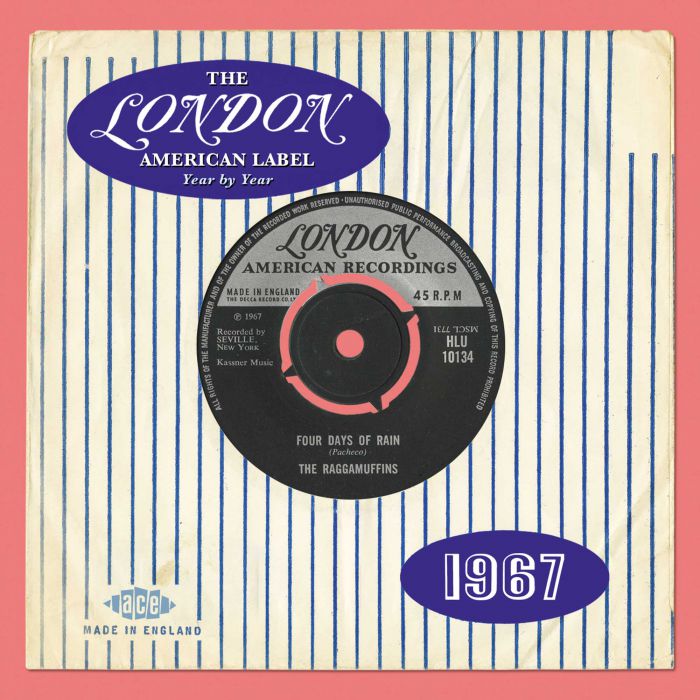
THE LONDON AMERICAN LABEL YEAR BY YEAR 1967.
The London American Label Year By Year 1967.
Label: Ace Records.
For a generation of British teenagers who embarked upon a lifelong love affair with music during the fifties and sixties, the London American Recordings will forever have a place in their heart. London American Recordings was the label that introduced a British music lovers to American pop, rock ’n’ roll and soul. It licensed and released the latest American hit singles in Britain. This had been the case since the mid-fifties.
London American had been licensing singles by Atlantic, Chess, Dot, Imperial, Speciality and Sun Records since the fifties. By the sixties, further labels were licensing their releases to London American. This would include Big Town, Hi Records, Monument and Philles Records. For a generation of music lovers, this made anything featuring the London American label essential listening. It was part of their musical education.
Only by listening to London American’s releases, were music lovers able to keep track of the latest music trends. They usually started in America, then took Britain by storm. Time and time, this proved to be the case. That’s why, for a generation of music lovers, the London American label has a special place in their heart.
It brings back memories of when their love affair with music began. For some music lovers, that was nearly sixty years ago. This was the start of a life long love affair with music. Now it’s possible to relive these memories once again.
Since 2012, Ace Records have been releasing a series of compilations dedicated to the London American label. The first was The London American Label Year By Year 1956, which was released back in 2012. Recently, the twelfth instalment in the series, The London American Label Year By Year 1967 has just been released.
The London American Label Year By Year 1967 is a twenty-eight track compilation. It’s an eclectic compilation full of big names. Folk, pop, R&B, rock, soul features on The London American Label 1967. There’s contributions from Charlie Rich, Roy Orbison, O.V. Wright, The Association, Mickey Dolenz, Wilson Pickett and The Falcons, The Fallen Angels, Brenda and the Tabulations, Jack Jones and Erma Franklin. It’s a veritable feast, so sit down and enjoy the delights of The London American Label Year By Year 1967.
The late, great Charlie Rich opens the compilation with Love Is After Me which he had released on Hi Records, and was licensed by London American. This catchy and soulful single sadly failed to find the audience it deserved. It also shows another side to the man best known for countrypolitan classics like The Most Beautiful Girl In The World and Behind Closed Doors.
When Roy Orbison released Cry Softly Lonely One as a single on MGM stateside in 1967 it staled at fifty-two. Given the quality of this soul-baring single it’s the one that got away for The Big O.
Earl Harrison’s Humphrey Stomp was released on Garrison and failed to find an audience in America. This didn’t stop London American licensing this soulful stomper that was penned by New Orleans-based Earl Harrison.
While London was swinging, Nino Tempo and April Stevens’ My Old Flame was released by London American. This brother and sister duo had enjoyed hits earlier in the sixties, but when the single was released on the White Whale label it failed to chart. My Old Flame is a cover of a track that was popular in the thirties and although it brings to mind a different musical era, is a welcome addition to the compilation.
OV Wright is one of the most underrated Southern Soul singers ever. Blessed with a unique voice that could breath life, meaning and emotion into a song he should’ve enjoyed widespread critical acclaim and commercial success. Sadly, that wasn’t the case. However, Eight Men, Four Women which was penned by Deadric Malon and released on Back Beat was his biggest hit reaching eighty in the US Billboard 100 and four in the US R&B charts. Despite that, OV Wright produced the best music of his career at Hi Records where he was at the peak of his powers.
Never My Love by The Association was released by Warner Bros and reached number two in the US Billboard 100. It’s one of The Association’s finest singles and is regarded as a classic. Despite that, it failed to chart in the UK and it was only later that many record buyers discovered Never My Love.
With The Monkees one of the most successful American groups by 1967, record companies were keen to cash-in on the group’s success. Huff Puff was released as a single by Mickey Dolenz by Challenge Records. It had been cut earlier in the sixties and despite The Monkess’ popularity Huff Puff failed to chart.
The Little Black Egg was originally released by The Nightcrawlers on the Lee label in 1967. Two years later it was licensed by Kapp and reached eighty-five in the US Billboard 100. Forty-two years later the single is regarded as a garage classic.
Sue Thompson had enjoyed a string of hits earlier in the sixties, but they had dried up by 1967 when she released the dramatic sounding The Ferris Wheel on the Hickory label. Sadly, commercial success continued to elude her when the single failed to chart on both sides of the Atlantic.
When You’re Gone by Brenda and The Tabulations is an early slice of Philly Soul that Lenny Pakula and Palmer Rakes wrote with Bob Finiz who produced the track. When it was released on Dionn it reached fifty-eight and was one of several American hits the group enjoyed.
You’re The Love by The Sixpence was written by Bob Ross and produced by John Rhys who owned the Impact label. It was better known for soul than this upbeat pop garage track that is another welcome addition to The London American Label Year By Year 1967.
Crooner Jack Jones was already a successful recording artist by 1967, and was signed to the Kapp label when he released I’m Indestructible. It shows the soulful side to Jack Jones and reached eighty-one in the US Billboard 100.
Three Hundred And Sixty Five Days was released on Shout by soul man Donald Height, and then licensed by London American. Sadly, this catchy soulful dancer failed to chart on both sides of the Atlantic.
Closing The London American Label Year By Year 1967 is Big Boss Man by Erma Franklin. This cover of the Jimmy Reed shows just how talented Aretha Franklin’s youngest sister is. With the help of the songwriting and production team of Jerry Rogovoy and Bert Sterns, Erma Franklin’s career was on track and she was about to fulfil her earlier potential with singles like Big Boss Man. It ensures the compilation ends on a high.
ascinating and eclectic musical document. It demonstrates the sheer variety of music being released during 1967. There’s everything from folk, garage, pop, psychedelia, R&B, rock and soul. Eclectic is the best way to describe The London American Label Year By Year 1967 where hits sit side-by-side with misses. Similarly, classics and hidden gems rub shoulders on The London American Label Year By Year 1967. Just like previous volumes, it was compiled by Tony Rounce.
Tony Rounce should be congratulated for the way he’s approached The London American Label Year By Year 1967. Rather than choose the most successful singles released by London American during 1967, Tony has dug deeper. The result is a captivating and truly eclectic selection of tracks. Forgotten favourites and familiar faces feature, during The London American Label Year By Year 1967 which is eclectic and compelling compilation that’ll bring back memories for anyone introduced to American pop, rock ’n’ roll and soul by the London American label. The London American Label Year By Year 1967 which was recently released by Ace Records, is the twelfth instalment in this long-running and much-loved series, and will allow a generation of music lovers to relive their youth once again.
The London American Label Year By Year 1967.
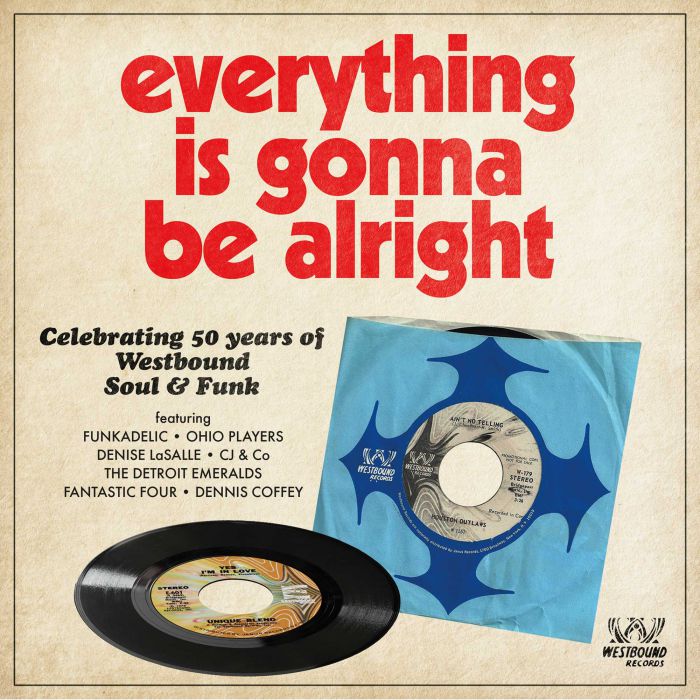
EVERYTHING IS GONNA BE ALRIGHT: CELEBRATING 50 YEARS OF WESTBOUND SOUL AND FUNK.
Everything Is Gonna Be Alright: Celebrating 50 Years Of Westbound Soul and Funk.
Label: Westbound.
By 1969, Armen Boladian was a familiar face within the Detroit music scene, and the musical impresario was about to launch a new label Westbound Records. This came as no surprise to those that knew Armen Boladian who previously, had founded and run the Fascination label and the Record Distribution Corporation. However, when Armen Boladian’s latest venture Westbound Records opened its doors in 1969, he had no idea that it would become a musical institution.
In a way, that was no surprise, as Armen Boladian brought onboard talented arrangers, musicians, producers and songwriters to work with the artists he would sign to Westbound Records over the next few years. This included CJ and Company, Denis LaSalle, Dennis Coffey, Funkadelic, The Detroit Emerald and The Ohio Players. These artists would bring commercial success and critical acclaim the way of Westbound Records. Many of these artists feature on Everything Is Gonna Be Alright: Celebrating 50 Years Of Westbound Soul and Funk, which has just been released by Westbound an imprint of Ace Records.
Everything Is Gonna Be Alright: Celebrating 50 Years Of Westbound Soul and Funk is twenty-four track celebration of Westbound’s achievements featuring some of its finest releases. There’s also some lesser known tracks including the track that opens the compilation. This is Emanuel Lasky’s A Letter From Vietnam slice of socially conscious soul A Letter From Vietnam. It was the B-Side to Westbound’s first single More Love (Where This Came From) which was released in 1969.
Westbound Records most successful signing was Funkadelic who released eight albums on Westbound Records. This began with Funkadelic in May 1970 and six years later, Tales of Kidd Funkadelic was released in September 1976 just before the P-Funk pioneers signed to Warner Bros. However I’ll Bet You from their debut album Funkadelic features is a tantalising taste of the P-Funk pioneers as they embark on their musical journey at Westbound. Four years later in 1974 they released Standing On The Verge Of Getting It On and by then, Funkadelic had honed their trademark P-Funk sound. It shows how far the group had come in just four years and just like I’ll Bet You, is a reminder of one of the P-Funk Pioneers.
When Denise LaSalle released Trapped By A Thing Called Love in 1971, it reached number thirteen in the US Billboard 100, topped the US R&B charts and was certified gold. She then enjoyed hits woth Now Run and Tell That and Man Sized Job. However, the one that got away is Get Up Off My Mind which was released in 1974. It’s a single that deserved to fare better and showcases the soulful sound of Denise LaSalle at the peak of her powers.
In 1972, The Ohio Players, released their sophomore album Pain which was certified gold. It featured the single Pain (Part 1) which despite being one of the highlights of the album stalled at sixty-four in the US Billboard 100 and thirty-five in the US R&B charts. Then in 1973 Funky Worm reached fifteen in the US Billboard 100 and topped the US R&B charts. Despite this success, The Ohio Players weren’t Westbound Records most successful signing.
The Detroit Emeralds also enjoyed three consecutive top ten hits in the US R&B charts between 1971 and 1972. This began with Do Me Right which reached forty-three in the US Billboard 100 and seven in the US R&B charts. Baby Let Me Take You (In My Arms) reached thirty-six in the US Billboard 100 and five in the US R&B charts, before You Want It, You Got It reached twenty-four in the US Billboard 100 and four in the US R&B charts. By then, Armen Boladian’s Westbound Records was going from strength to strength.
When funk group Pleasure Web released Music Man-Part 1 as a single, it failed to end the audience it deserved. However, later and Music Man-Part 1 and 2 which are funky hidden gems became a a favourite of DJs and hop hop producers and introduced Pleasure Web’s music to a wider audience.
In 1975, the Fantastic Four released the album Alvin Stone (The Birth And Death Of A Gangster) which told the story of a fictional gangster. The title-track which is the standout track on the album was released as a single in 1975 and is reminiscent of The Temptations when Norman Whitfield was taking charge of production. Alvin Stone (The Birth And Death Of A Gangster) is a hidden gem of a track from a group that never reached the heights they deserved to.
During his career at Westbound, Junie was a member of both The Ohio Players and Funkadelic. He also released three solo albums. If You Love Him was released as a single by Junie in 1976 and is taken from the album Suzie Super Groupie. It’s a funky and soulful track and a reminder of the multitalented Junie.
C&J and Co’s Devil’s Gun which was released as a single in 1977, and reached thirty-six in the US Billboard 100 and two in the US R&B charts. Later, in 1977, C&J and Co released their debut album which reached sixty in the US Billboard 200 and twelve in the US R&B charts. Devil’s Gun was produced by Dennis Coffey and Mike Theodore, and mixed by Tom Moulton.. The result was a single that was soulful, funky, tough and dancefloor friendly and has stood the test of time.
The Detroit Emeralds had originally released Feel The Need In Me as a single in 1972, which released twenty-two in the US R&B charts and number four in the UK. By 1977, the hits had dried up for The Detroit Emeralds, and they needed to kickstart their ailing career. To do this, it was suggested that they record Feel The Need In Me which became Feel The Need and was released in 1977, reaching ninety in the US Billboard 100 and seventy-three in the US R&B charts. Across the Atlantic, Feel The Need reached number twelve. When The Detroit Emeralds released their new album Feel The Need, which was produced by Abrim Tilmon and mixed by Tom Moulton, it failed to even trouble the charts. That was a great shame as Feel The Need, which is a mixture of soul and disco, is without doubt, the highlight of their album.
During the disco era, many disco orchestras were founded in cities across America, and followed in the footsteps of Vince Montana Jr’s Salsoul Orchestra. This included The Mike Theodore Orchestra who released their sophomore album High On Mad Mountain in 1979. It featured the eight minute epic High On Mad Mountain, which epitomises everything that is good about the disco orchestra including rasping horns, harmonies and sweeping strings who march to the beat of Jerry Jones and Lee Marcus’ drums. This is the perfect way to close Everything Is Gonna Be Alright: Celebrating 50 Years Of Westbound Soul and Funk.
Westbound Records released an eclectic selection of music during the seventies including disco. funk, jazz-funk, P-Funk, post-P-Funk, proto-boogie, soul and soul-jazz. The music was usually carefully crafted, and often by top arrangers, musicians and producers. They played their part in making music that as often slick, soulful, funky and dancefloor friendly. Sadly the music Westbound Records wasn’t always successful and passed record buyers by.
That includes a number of tracks on Everything Is Gonna Be Alright: Celebrating 50 Years Of Westbound Soul and Funk which was recently released by Westbound Records, which is an imprint of Ace Records. The twenty-four groundbreaking and timeless tracks on Everything Is Gonna Be Alright: Celebrating 50 Years Of Westbound Soul and Funk is a reminder of Armen Boladian’s influential label Westbound Records. It helped shape hip hop and inspired several generation of producers and thankfully, the music that features on Everything Is Gonna Be Alright: Celebrating 50 Years Of Westbound Soul and Funk is belatedly being enjoyed and appreciated by music fans worldwide.
Everything Is Gonna Be Alright: Celebrating 50 Years Of Westbound Soul and Funk.
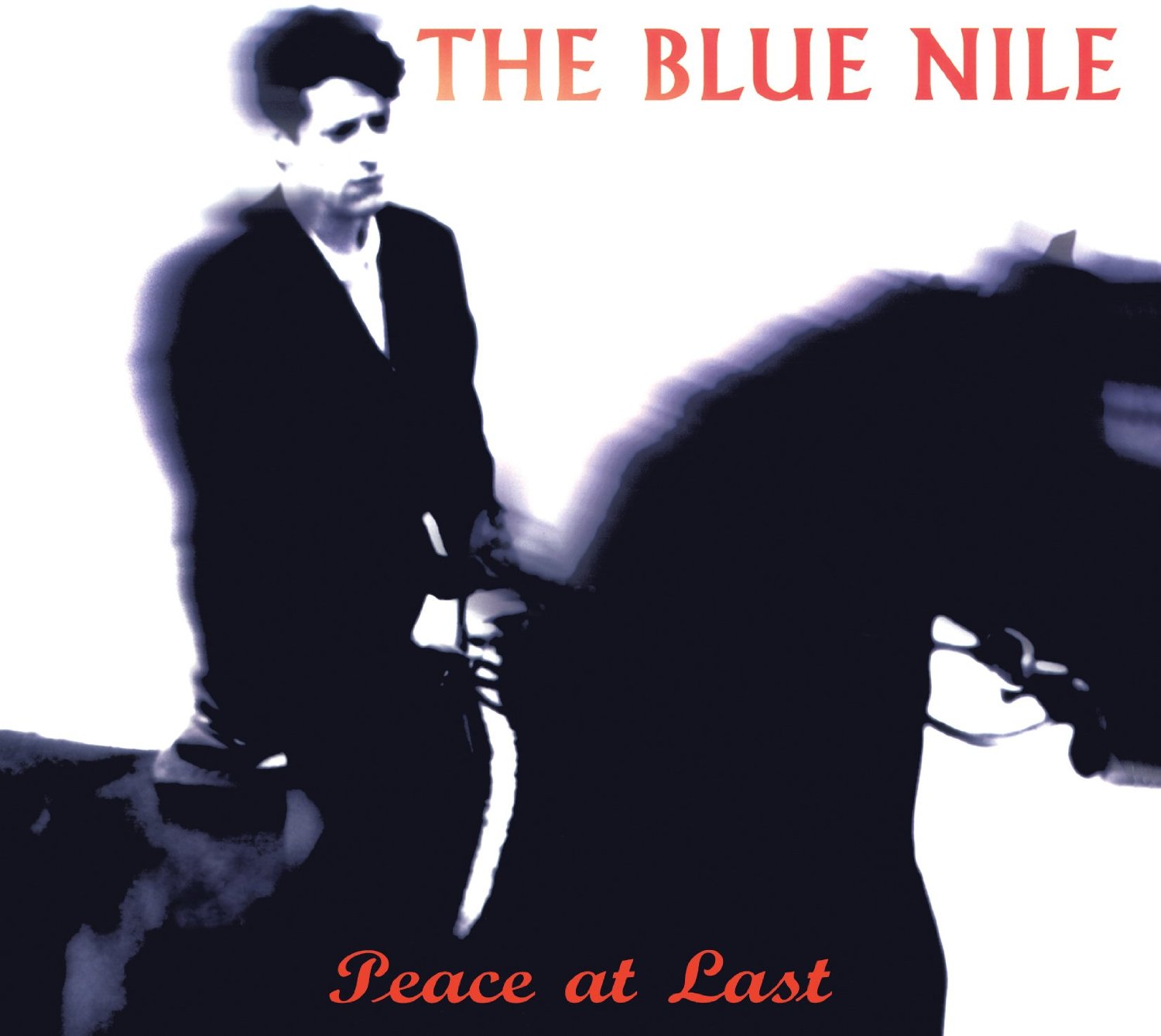
THE BLUE NILE-PEACE AT LAST.
The Blue Nile-Peace At Last.
Label: Confetti Records.
The Blue Nile were no ordinary band and did things their way. Enigmatic, reluctant and contrarian are words that best of describe the Blue Nile, whose third album Peace At Last has just been reissued by Confetti Records on vinyl. It’s a welcome reissue of The Blue Nile’s third album.
Originally, Peace At Last was released in June 1996, seven years after the release of their critically acclaimed sophomore album, Hats. That’s not surprising.
Quite simply, The Blue Nile are unlike other bands. They do things their way, or not all. There’s no sense of urgency in the world of The Blue Nile. Things move slowly in the world of The Blue Nile. So it’s no surprise that it’s taken eighteen long years for Peace At Last to be rereleased. After all, there was a gap of seven years between The Blue Nile’s sophomore album Hats and 1996s Peace At Last. Looking back, with the benefit of hindsight, it’s not surprising.
It’s no exaggeration to say that The Blue Nile were the complete opposite of most bands. Describing the Blue Nile as publicity shy, is an understatement. Indeed, since Paul Buchanan, Robert Bell and Paul Joseph Moore formed the Blue Nile, they’ve been one of the most low-profile bands in musical history. It seems that when they formed thirty-one years ago, The Blue Nile ticked the “no publicity” box. This has proved a double-edged sword, and resulted in the Blue Nile becoming one of the most enigmatic groups ever. This would be apparent through The Blue Nile’s career, which began back in 1981, in Glasgow, Scotland’s musical capital.
The Blue Nile were formed in 1981, when two friends Paul Buchanan and Robert Bell, met Paul Joseph Moore. They all had one thing in common, they were graduates of Glasgow University. Paul and Robert had both been in a band before, Night By Night. However, they type of music Night By Night performed was not deemed commercial enough, and they were unable to gain a recording contract. This lead to the formation of The Blue Nile
Once The Blue Nile were formed, they set up their own record label Peppermint Records. It was on Peppermint Records that The Blue Nile released their debut single, I Love This Life. This single was then picked up and re-released on the RSO label. Unfortunately for The Blue Nile RSO became part of the Polygram label and I Love This Life disappeared without trace. Despite this setback, The Blue Nile kept writing and recording music.
Following the merger of RSO with Polygram, The Blue Nile continued to hone their sound. They wrote and recorded songs. Some of that material would later be found on A Walk Across the Rooftops. Then fate intervened and The Blue Nile met the man some people refer to as the fourth member of the band, recording engineer Calum Malcolm.
When Callum heard The Blue Nile’s music, he alerted Linn Electronics. This was to prove a fortuitous break for the band. Linn gave The Blue Nile money to record a song that they could use to demonstrate the quality of Linn’s top-class stereo products. However, when Linn heard the track they were so pleased that decided to set up their own record label to release A Walk Across the Rooftops, The Blue Nile’s debut album.
Although the formation of Linn allowed the band to finally release their debut album A Walk Across the Rooftops, Paul later speculated whether Linn was the right label for The Blue Nile? Paul said that he felt that Linn did not operate like a record label. However, he conceded that, during that period, The Blue Nile were not like a band. So, essentially, this was a match made in heaven for the release of A Walk Across the Rooftops.
On the release of A Walk Across the Rooftops, it was released to critical acclaim. Critics described the album as a minor classic. A Walk Across the Rooftops was described as ethereal, evocative, soulful and soul-baring. It also featured the vocals of troubled troubadour Paul Buchanan. Despite the critical acclaim A Walk Across the Rooftops enjoyed, it wasn’t a commercial success, reaching just number eight in the UK. However, since the A Walk Across the Rooftops has been recognised as a classic album. So has the followup Hats.
Unlike most bands, The Blue Nile weren’t in any rush to release their sophomore album Hats. There was a five year gap between A Walk Across the Rooftops and Hats. It was worth the wait. The Blue Nile had done it again. Hats was a classic.
Featuring seven tracks, written by Paul Buchanan, Glasgow’s answer to Frank Sinatra He’s a tortured troubadour, whose voice sounds as if he’s lived a thousand lives. Producing Hats was a group effort, with Paul, Robert and P.J. taking charge of production duties. Guiding them, was Callum Malcolm. On the release of Hats, British and American audiences proved more discerning and appreciative of the Blue Nile’s sophomore album Hats.
On the release of Hats in the UK in 1989, it was critically acclaimed and commercial success, reaching number twelve in the UK. Then when it was released in America in 1990, audiences seemed to “get” Hats. Not only did it reach number 108 in the US Billboard 200 Charts, but The Downtown Lights reached number ten in the US Modern Rock Tracks charts. While this was a small crumb of comfort for the Blue Nile, in the UK, they remained a well kept secret.
Since the release of Hats, like their debut album A Walk Across the Rooftops it’s become a minor classic. With The Blue Nile making a breakthrough in America, most bands would’ve been keen to build on this and released another album before long. Not The Blue Nile.
Seven long years passed, where Blue Nile fans wondered what had become of Glasgow’s most enigmatic trio. However, they’d been busy. After Hats found its way onto American radio stations, The Blue Nile, who previously, had been one of music’s best kept secrets, were heard by a number of prestigious musicians. Among them were Robbie Robertson and Annie Lennox, Michael McDonald. After a decade struggling to get their music heard, The Blue Nile were big news. During this period, America would become like a second home to The Blue Nile, especially Paul.
Paul took to life in America, and in 1991, decided to make it his home. This just so happened to coincide with Paul’s relationship with actress Rosanna Arquette between 1991 and 1993. Hollywood starlets and Sunset Boulevard was a long way from Glasgow’s West End. In the midst of Paul’s relationship, disaster struck for The Blue Nile, they were dropped by their label.
Linn Records and Virgin decided to drop The Blue Nile. For some groups this would’ve been a disaster. Not The Blue Nile.
They signed to Warner Bros. While this sounded like the ideal solution for The Blue Nile, Paul made the deal without telling P.J and Robert. He later explained that “none of the others were in town at the time.” With a new contract signed, The Blue Nile began thinking about their third album.
So the band started looking for the perfect location to record their third album. They travelled across Europe looking for the right location. This location had to be private and suit their portable recording studio. Cities were suggested, considered and rejected. Among them, were Amsterdam, Copenhagen and Venice. Being The Blue Nile, things were never simple. Eventually, after much contemplation The Blue Nile ended up recording what became Peace At Last in three locations, Paris, Dublin and Los Angeles. For the first time, The Blue Nile recorded an album outside of their native Scotland.
For what became Peace At Last, Paul wrote nine tracks and cowrote God Bless You Kid with Robert Bell. When recording began, Paul played guitar and synths. Robert played bass and synths, while P.J. played keyboards and synths. Joining The Blue Nile were drummer Nigel Thomas and a gospel choir consisting of Eddie Tate and Friends. They featured on Happiness. Craig Armstrong took charge of the strings on Family Life. Peace At Last was produced by The Blue Nile, with Callum Malcolm engineering the sessions. Once Peace At Last was completed, it was released in June 1996.
On the release of Peace At Last, in June 1996, it reached just number thirteen and sold poorly. For The Blue Nile this was disappointing, given it was their major label debut. Worse was to come when the lead single Happiness failed to chart. Why was this though?
Critics remarked upon the change of sound on Peace At Last. It had a much more understated, restrained sound. Acoustic guitars and piano play important parts. The Blue Nile’s beloved synths sound like synths. Occasionally, The Blue Nile use real strings. There’s even a gospel choir on Happiness. Gone was the sound of A Walk Across the Rooftops and Hats. Peace At Last showed a different side to The Blue Nile and their music, one that divided the opinion of critics and fans. Paul, Robert and P.J. were back, but it was a different sound. One constant was Paul’s worldweary vocal. He was still the tortured soul, who wore his heart on his sleeve on Peace At Last, which I’ll tell you about.
Opening Peace At Last is Happiness, the lead single. Just a sweeping synth and acoustic guitar combine, before Paul counts himself in. After seven years, the troubled troubadour is back, laying bare his soul. As he plays his trusty acoustic guitar, you can hear him change chords. His voice his just the same. It’s world weary, one that has lived a life. However there is one change. He sounds content. That’s apparent from the lyrics. Domestically and personally, Paul has found Peace At Last. Later, the minimalist sound changes. Joining the synths, bass, keyboards and chirping guitar are a gospel choir. They transform the track. Their short performance is joyous and uplifting After that Paul forever the optimist, ponders whether the happiness will last. Quite simply, a beautiful, melancholy song.
Tomorrow Morning starts in a similar vein to Happiness. Just a briskly strummed acoustic guitar and drums accompany Paul’s vocal. Pensive becomes hopeful, as he sings: “ we could be together tomorrow morning.” Synths replicate strings, as thoughtful keyboards and acoustic guitars accompany an insecure Paul. It’s that time of the night we’ve all experienced. Lying there, unable to sleep, we wonder what tomorrow brings. That’s Paul, His emotions go from total insecurity to euphoria and happiness in the space of half a verse. The lyrics are some of the best on the album. They allow the listener to hear the range on emotions Paul experiences. With a brisk, minimalist arrangement, where the acoustic guitar, piano and synths disguised as strings combine, the result is a thoughtful, stunning soul-searching song many people will be able to empathise with.
As Sentimental Man unfolds just an acoustic guitar and drums combine, creating a moody and pensive atmosphere. Unlike the two previous albums, there’s no drum machines. Instead, Nigel’s drums, Robert’s bass and Paul’s guitar power the track along. They also add to the funk factor. Paul is in a thoughtful mood, and sings that it’s “not about money, and all about love.” His contentment shines through on this song. He is truly a man at peace with world. The sound on this track is bigger and fuller, than the previous two tracks. This is helped by the arrangement. The bass is panned hard left and the guitars hard right. Synths and Paul’s vocal fill the rest of the arrangement. As the track progresses, the sound grows, peaking towards the end. Guitars, synths and drums dominate the track, while Paul’s vocal is loud and strong. He shrieks and whoops, something unheard of before. A transformation in sound, but one thing remains the same…the quality.
Drums crack and Paul strums his guitar and delivers a needy, sincere vocal on Love Come Down. It’s as if he’s realised he’s in love and wants his partner to know it. With chirping guitars, synths and drums for company, Paul delivers a vocal tour de force. It’s one of his best vocals, growing in power, passion and joy. Drums are loud and sit at the front of the mix, while the guitars are a constant and welcome accompaniment. However, what makes the song is Paul’s vocal. It’s a dramatic and passionate reading of the intelligent and thoughtful lyrics.
From the opening bars of Body and Soul, it’s obvious that this is one of the best songs on Peace At Last. The track has a familiar theme, acoustic guitar and vocal start the song. After that, the track builds, and opens out into one of the most beautiful and heartfelt songs on the album. Strings are used to augment the sound, they are understated, sit at the back of the mix, sweeping in and out of the track. The acoustic guitar is played loudly, with confidence, accompanying Paul’s soulful rendition of the lyrics. Speaking of the lyrics, they’re an evocative paean. How we feel when in love, and are an example of our feelings and hopes for the future when in love. Without are some of the best lyrics on Peace At Last.
Holy Love has a totally different sound and feel. In many ways, it owes much to the sound on previous Blue Nile albums. Just like the rest of Peace Of Last, the remastering makes the song come alive. New parts of the track shine through. In many ways, it owes much to the sound on previous Blue Nile album. Backing vocalists sing one note, synths and drums sound dark, almost dull. Synths squelch, drums have a retro sound and feel, and even Paul’s vocal style has changed. As the song progresses, you find yourself wondering what direction it’s heading. Lyrics are sparse, the vocal has an experimental sound and feel, with Paul having to almost improvise. Ethereal synths, chiming guitars, bursts of drum machines and Paul’s scatted vocal become one, on a track where Blue Nile’s past and present combine.
The Blue Nile return to a familiar theme on Family Man, contentment, contentment in your personal life. Family Man is a gentle song, one with similarities to Easter Parade on A Walk Across the Rooftops. It’s the sound and feel that make me draw this comparison. The track has a minimal sound, and starts with piano, which features heavily throughout the song. Later in the track, synths are transformed to sound like a string section. They add depth and feeling to the track. Paul’s voice is perfectly suited to deliver the heartfelt lyrics on this beautiful track.
After the minimal sounding last track, the sound changes dramatically on War Is Love. The sound is fuller, with a moody, dramatic sound. War Is Love starts with those magical strings, via the synths, drums are loud, slow and crisp. Quickly, the sounds builds, Buchanan’s voice sounds moody, perfect to deliver the lyrics, which are about the breakdown of a relationship. His voice fluctuates, getting the message over about a turbulent, troubled relationship. In contrast to the darkness, the strings sit behind his vocal, producing light to Paul’s darkness. A heartbreakingly sad song, delivered sincerely by Paul. So realistic is Paul’s cathartic outpouring of hurt and heartbreak, that it sounds as if he’s lived, loved and survived to tell the tale.
Drums and strings open God Bless You Kid, giving it a lush sound. Buchanan’s mood and vocal seem happier. The arrangement sweeps along, gradually developing. Mostly drums, strings and synths accompany Paul as the song takes on a cinematic quality. Later, a guitar can be heard in the background. As for the lyrics , they’re enigmatic, almost surreal. Especially, when Paul sings: “I never grew up, I never grew down” and “it’s like Memphis after Elvis.” Here we hear a very different side of Blue Nile, one that we never saw on A Walk Across the Rooftop or Hats. Like much of this album, it has a gentle, mellow and understated sound, quite different from their previous sound.
Peace At Last closes with Soon, another beautiful, gentle and mellow song. It starts slowly, keyboards playing, Paul sings. This is another love song. One about how can love coming soon, when we least expect it to. It can happen at given time, in even the most mundane situation. As you would expect from Blue Nile’s lyrics their clever, well constructed and the narrative is strong. You can close your eyes and imagine the scene being played out, and the characters involved. The track meanders, develops through time, building up slowly, until a great track evolves. One that Paul sings really well, behind a backdrop of sweeping strings, spacious plodding drums and percussion. It’s a lovely, soothing track, truly a thing of beauty, and the perfect way to end Peace At Last.
Of the quartet of albums The Blue Nile recorded, Peace At Last is their most underrated album. Peace At Last divided critics and fans. This new sound was very different from A Walk Across The Rooftops and Hats. That was then, this was now. Seven years had passed since Hats. If The Blue Nile had released an album similar to Hats, they’d have been accused of standing still. That’s one thing The Blue Nile never did.
Far from it. Constantly, The Blue Nile were on a mission to create innovative and influential music. This they succeeded in doing. From the opening bars of Happiness, right through to the closing notes of Soon, The Blue Nile create timeless, ethereal music. Here, was a very different group the one that recorded Hats.
For much of the seven years, The Blue Nile had lived separate lives. P.J. and Robert lived happily in the West End of Glasgow. Paul however, led a very different life. Based in Los Angeles, he dated Hollywood starlets and spent time on Sunset Boulevard. This was a long way from Ashton Lane, in Glasgow’s West End. However, The Blue Nile reconvened for the recording of Peace At Last and Lady Luck smiled on them.
Having survived being dropped by Linn and Virgin, The Blue Nile signed to Warner Bros. Sadly, it was a one album deal. Following the commercial failure of Peace At Last, The Blue Nile were dropped. This wasn’t their fault. No. They’d recorded a minor classic at the wrong time.
Released in 1996, at the height of the vastly overrated Britpop boom, Peace At Last was the wrong album at the wrong time. Peace At Last took several years to record. By the 10th June 1996, when Peace At Last was released, music had changed. Britpop was King. Kinks and Beatles tribute bands were topping the charts. There was, it seems, no room for The Blue Nile, with Peace At Last only reaching number thirteen in the UK. It should’ve been a bigger commercial success.
During Peace At Last, The Blue Nile capture the listener’s attention with music that’s variously lush, atmospheric, beautiful, captivating, ethereal and lush. The Blue Nile draws the listener in, holding their attention. Before long, the listener has fallen in love. They fall in love with music that’s hauntingly beautiful, emotive, dramatic and pensive. Much of this is thanks to ten peerless vocal performances courtesy of Glasgow’s very own Frank Sinatra, Paul Buchanan. He plays the role of the troubled troubadour, to a tee. His worldweary, emotive, heartfelt and impassioned vocal sounds as if it’s lived the lyrics he’s singing about. Lived them not just once, but several times over. Paul’s vocal adds soulfulness to an album where The Blue Nile reinvent their music. The result is music that’s innovative, influential, ethereal and timeless.
With songs about love, love lost, betrayal, heartbreak, growing up and growling old, Peace At Last was a grown up album. It had a much more understated, restrained sound. Acoustic guitars and piano play important parts. The Blue Nile’s beloved synths sound like synths. Occasionally, The Blue Nile use real strings. There’s even a gospel choir on Happiness. Gone was the sound of A Walk Across the Rooftops and Hats. Peace At Last showed a different side to The Blue Nile and their music, one that divided the opinion of critics and fans. Paul, Robert and P.J. were back, but it was a different sound. One constant was Paul’s worldweary vocal. He was still the tortured troubadour, who wore his heart on his sleeve on A Walk Across The Rooftops and Hats. Sadly this new side of The Blue Nile’s music wasn’t as popular as their two previous albums A Walk Across the Rooftops and Hats. However, Peace At Last The Blue Nile’s penultimate albumhas aged well.
Eight years later in 2004, The Blue Nile called time on their recording career, when they released High. That was their swan-song. Never again, would Paul, P.J. and Robert record another album. Their back-catalogue may only contain four albums, but it’s a rich musical legacy. The Blue Nile are one of the most innovative and influential groups in Scottish musical history. Similarly, their first two albums A Walk Across the Rooftops and Hats are two of the greatest albums released by a Scottish band. Their underrated third album, Peace At Last, is a minor classic, which shows another side to The Blue Nile and their music.
The Blue Nile-Peace At Last Vinyl Reissue.
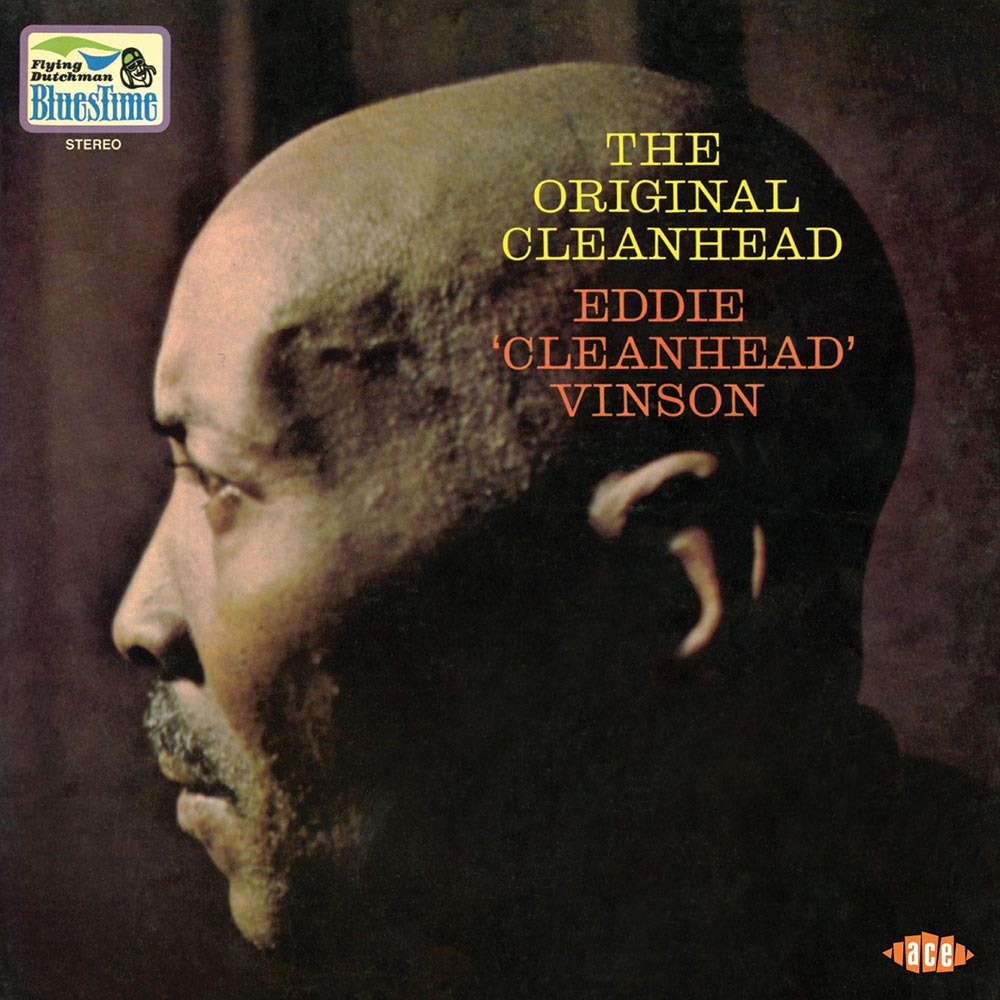
CULT CLASSIC: EDDIE “CLEANHEAD” VINSON-THE ORIGINAL CLEANHEAD.
Cult Classic: Eddie “Cleanhead” Vinson-The Original Cleanhead.
By 1970, Eddie “Cleanhead” Vinson was fifty-three. He was a musical veteran. His career was about to enter its fifth decade. Eddie had caught a break.
Bob Thiele asked him to sign to his Blues Time imprint, which was a subsidiary of Flying Dutchman Productions. In 1970, he released his what was seen as his comeback album, The Original Cleanhead which marked a change in fortune for Eddie “Cleanhead” Vinson. After a few years in the doldrums, Eddie’s career was on the up again. This was just the latest chapter in the Eddie “Cleanhead” Vinson story.
Eddie “Cleanhead” Vinson born in Houston, Texas on 19th December 1917, into a musical family. His father played the honky tonk piano and his grandmother was a violinist. They encouraged Eddie musically.
Growing up, Eddie decided he wanted to play alto saxophone, so his father bought him a saxophone and paid for music lessons. This paid off.
By the time Eddie was in high school, he was playing in Chester Boone’s band. Not long after that, Eddie turned professional and joined Chester Boone’s band full-time. This was the start of Eddie’s musical journey.
Some time later, Chester Boone decided to head to New York. Chester’s band was taken over by Mlt Larkin. For Eddie this was a blessing in disguise.
Milt Larkin’s band had a secret weapon. That was the horn section which featured Arnett Cobb, Tom Archia, Illinois Jacquet and Eddie. Before long, Mlt Larkin’s band were taking on all-comers and leaving them in their wake. Duke Ellington and Earl Hines’ bands lost out, when they took on Milt Larkin’s band. This was in part down to the horn section. As a result, Mlt Larkin’s band establishing a reputation as one of the finest bands of the swing era. They were booked to play far and wide.
No longer were Milt Larkin’s band playing just in their own area. They toured America. Sometimes, they toured with blues legend Big Bill Broonzy. For Eddie, this was a musical education. It expanded his knowledge of the blues. On these tours, Eddie took centre-stage during ballads. However, it wasn’t this that lead to him being spotted by Cootie Williams.
Eddie was singing the blues during some downtime. Cootie Williams, who was there trying to persuade Arnett Cobb to join his band, heard Eddie singing. Eddie was asked to join the Cootie Williams Orchestra.
Eddie was with the Cootie Williams Orchestra 1942 to 1945. During that period, they recorded such tunes as Cherry Red and Is Your Or Is You Ain’t My Baby. However, by 1945 was ready to form his own band.
He formed his own band in 1945. Right up until the late forties, Eddie was a huge star. Eddie was one of the biggest names in blues music. His solo career got off to the perfect start. He signed to Mercury and released Old Maid Boogie. It reached number one. This was helped by Eddie moving from jump blues to a tougher R&B sound. Right through to the late forties and into the early fifties, Eddie could do no wrong. Then his career stalled.
The problem was, many of the new artists saw Eddie as part of music’s past. He was perceived as a remnant of the swing era. That was wrong. Eddie still had plenty to offer musically. He released his debut album Cleanhead’s Back In Town in 1957. Sadly, this didn’t seem to change people’s opinion of Eddie
What people forget was that Eddie had been around when bebop was born. played his part in the new genre’s rise. Sadly, many people had short memories. At least Julian “Cannonball” Adderley knew Eddie still had plenty to offer.
So, Julian “Cannonball” Adderley and Eddie “Cleanhead” Vinson entered the studio. The result was a collaboration between the pair, Cleanhead and Cannonball. It was released in 1961, the same year Eddie released Backdoor Blues, which featured Cannonball” Adderley. This undoubtedly gave Eddie’s career a boost.
After Backdoor Blues, Eddie released Cherry Red on Blues Way in 1967. It was the blues imprint of ABC Records and had been founded by Bob Thiele. Their paths would cross again.
Before that, Eddie released Wee Baby Blues on Black and Blue, in 1969, The same year, Eddie released Kidney Stew Is Fine on Delmark Records. Sadly, by then, Eddie’s career was stalling. It needed someone who could rejuvenate Eddie’s career. Who better than Bob Thiele?
He’d just signed to Bob Thiele’s Blues Time imprint. It was a subsidiary of Flying Dutchman Productions. In 1970, Eddie released his what was seen as his comeback album, The Original Cleanhead.
When Bob Thiele founded his Blues Time imprint, he started signing artists he’d worked with at Blues Way, the ABC subsidiary. Among them were Joe Turner and T-Bone Walker. So, when Eddie walked in the door, it was like a reunion. Having said their hellos, Eddie got down to business and began work on his comeback album The Original Cleanhead.
ForThe Original Cleanhead, Eddie returned to his number one single Old Maid Boogie. He’d written the song himself. He also penned I Needs To Be Be’d Wid. Eddie and Louis Zito cowrote Alimony Blues, Juice Head Baby. Jessie Mae Robinson and Eddie wrote Cleanhead Blues and Charles Taylor and Eddie penned Cleanhead Is Back. Other tracks included Joe Pass’ Pass Out and Plas Johnson and Earl Palmer’s One O’Clock Humph. These tracks became Eddie’s comeback album The Original Cleanhead.
When recording of The Original Cleanhead began, Bob Thiele had put together a talented band. The rhythm section included drummer Earl Palmer, bassist Arthur Wright and guitarists Joe Pass and David Cohen. Artie Butler played piano and organ and Plas Johnson played tenor saxophone. Eddie played alto saxophone and took charge of vocals. Once The Original Cleanhead was finished, it was released in 1970.
On the release of The Original Cleanhead, the album was well received. It also had the desired effect and rejuvenated Eddie’s career. Bob Thiele who produced The Original Cleanhead, had helped get Eddie’s career back on track. The next few years would see a change in Eddie’s fortunes. This started with The Original Cleanhead.
Cleanhead Blues opens The Original Cleanhead. It was originally recorded in 1946. Stabs of braying saxophone and pounding drums set the scene for Eddie’s vocal. It’s unmistakable. Once heard, you never forget Eddie “Cleanhead” Vinson. Here, Eddie veers between weary and sassy. Crystalline guitars, piano and the rhythm section accompany Eddie. The bass helps drive the arrangement along. Guitars are panned left and right. Meanwhile Eddie delivers a vocal powerhouse. He’s in his element. Especially as the track heads to its dramatic ending. Riffing bluesy guitar, blazing horns and pounding piano accompany him as the track reaches a crescendo.
Eddie drops the tempo on Pass Out. It has a jazzy sound. Eddie blows his alto saxophone tenderly. The rest of his band play in a similarity understated way. A jazz-tinged guitar, piano and a bass which drives the arrangement along accompany Eddie. Drums mark time and never overpower the rest of the band. When the solos come round, a chiming guitar solo sets the bar. After that, the baton passes to the tenor saxophone. Next up it’s the jazzy piano. Then it’s Eddie turn. Just like the rest of the band, his playing is understated and results in a beautiful, jazz-tinged track.
Short, sharp bursts of saxophone and the rhythm section open Alimony Blues. They set the scene for Eddie angry, frustrated and powerful vocal. He rages against the judge, while his band combine jazz and blues. Slow, bluesy and moody describes the backdrop. Soon, it begins to swing. That in part, is down to the horn. It’s at the heart of everything that’s good. Eddie is determined to have the last say, “I got the Alimony Blues, on the day she set me free.”
Cleanhead Is Back is the followup to Alimony Blues. A territorial Eddie decides to makes a return. His partner doesn’t sound too happy. Eddie is oblivious. Against a slow, broody, bluesy backdrop, Eddie becomes the seducer in chief. Searing, crystalline, guitars, stabs of riffing bluesy horns and washes of Hammond organ accompany the rhythm section. They provide the heartbeat, as Eddie sings “I’m so sorry baby, I didn’t mean to stay away so long,” during this bluesy soap opera.
A searing, soaring guitar line open Juice Head Baby. It lasts forty-five seconds. The bass matches it every step of the way. Meanwhile, drums mark time, horns rasp and then a Hammond organ enters. All this is setting scene for Eddie gravely vocal. It’s a mixture of power and despair. His despair is caused by his “Juice Head Baby…she drinks whisky like water, and gin like lemonade.” No matter what he does, he can’t help “she’s got the juice head blues.” Behind him. Eddie’s band provide a moody, dramatic backdrop for his despairing vocal.
Old Maid Boogie was the song that gave Eddie his only number one single. The arrangement is driven along by horns and the rhythm section. Before long, Eddie jumps onboard and delivers a sassy, swaggering vocal. Bursts of horns, washes of Hammond organ and crystalline guitar join in the fun. Then when Eddie’s vocal drops out, he’s not afraid to let his band shine. When he makes his return, it’s as if he’s been inspired, and delivers a barnstorming vocal. He then joins the rest of his band in driving the track to a bluesy crescendo.
As the guitar and bass wander along, bursts of blues horns punctuate the arrangement to One O’Clock Humph. Gradually, the rest of the band make their entrance. The piano, drums and hissing hi-hats join forces with the rest of the band. At the heart of the arrangement is the bass. It sets the tempo and provides the heartbeat. Especially when the solos come around. They reinforce what a tight talented band Eddie has. The guitar, piano and horns play play starring roles during this laid-back fusion of blues and jazz.
Closing The Original Cleanhead is I Needs To Be Be’d Wid. It was written especially for The Original Cleanhead and suits Eddie’s vocal perfectly. His band drop the tempo and provide a slow, moody and bluesy backdrop. The rhythm section and Hammond organ accompany Eddie’s vocal. It’s needy and full of emotion. Sometimes, it’s tinged with sadness and longing. Regardless of which, Eddie breathes life and meaning into the lyrics.
Listening back to The Original Cleanhead, it’s no surprise that the album rejuvenated Eddie “Cleanhead” Vinson’s career. From the opening bars of Cleanhead Blues, right through to the closing notes of I Needs To Be Be’d Wid, the music oozes quality. Eddie was into his fifth decade of a musician and singer. He put all his experience to good use on The Original Cleanhead. So, it’s no surprise that The Original Cleanhead was a commercial success and rejuvenated Eddie’s career.
Ironically, when other blues musicians were reinventing themselves, Eddie kept on what he’d been doing since the thirties. Eddie wasn’t for changing. Even if he’d wanted to. That wouldn’t be easy. After all, Eddie was known for his mixture of jump blues, swing and bebop. That was what people knew Eddie for. So, with some judicious choice of material, old and new, Bob Thiele set about attempting to rejuvenate Eddie’s career. This worked.
After The Original Cleanhead, Eddie’s career enjoyed something of an Indian Summer. He continued to record until his death in 1988. Eddie’s career had lasted over fifty years. Without doubt one of the finest albums of his career was The Original Cleanhead, which is the perfect introduction to the unmistakable sound of the one and only, Eddie “Cleanhead” Vinson.
Cult Classic: Eddie “Cleanhead” Vinson-The Original Cleanhead.
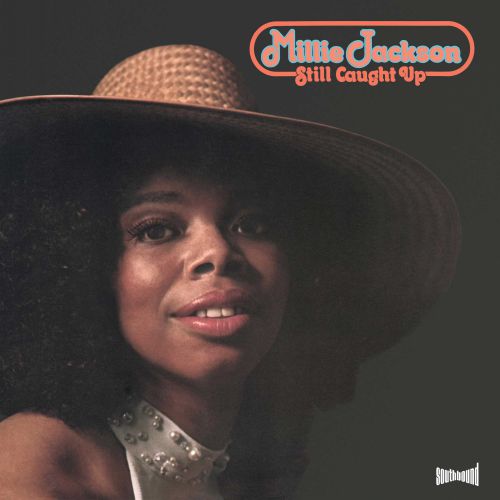
CULT CLASSIC: MILLIE JACKSON-STILL CAUGHT UP.
Cult Classic: Millie Jackson-Still Caught Up.
There’s nothing worse than not hearing how a story ends, and that was how many record buyers felt after hearing Millie Jackson’s critically acclaimed fourth album Caught Up, which was released in 1974. Caught Up was essentially a concept album, but in truth was like a musical soap opera about a love triangle, where Millie Jackson played the leading roles.
On side one, Millie Jackson plays the role of “the other woman,” before assuming the role of the woman whose husband has cheated on her on the second side. Although Millie Jackson breathes life, meaning and emotion into both roles, when Caught Up drew to a close, there was seemed no conclusion, no real ending. It was one of these cliffhangers where the listener wondered what happened next? Did the husband leave his wife, or did they stay together, and if so, what became of them? In modern parlance, there was no there was no ‘closure,’ and over half-a-million record buyers were left hanging, wondering what became of Mille Jackson’s two characters?
Little did anyone realise that the story that began on Caught Up was about to conclude on Millie Jackson’s fifth album Still Caught Up. It was a much-anticipated album that was released in 1975. That was all in the future.
Buoyed by the success of Caught Up, which had just been certified gold after selling in excess of 500,000 copies, Millie Jackson began work on her much-anticipated fifth album Still Caught Up. Millie Jackson and her songwriting partner King Sterling penned The Memory Of A Wife, Tell Her It’s Over and Do What Makes You Satisfied which were joined by five cover versions that concluded the story that began on Caught Up.
This included You Can’t Stand The Thought Of Another Me and Leftovers which were written by singer, songwriter and producer Phillip Mitchell. They were joined by Tom Jans’ Loving Arms, Richard Kerr and Gary Osborne’s Making The Best Of A Bad Situation and Mac Davis and Mark Davis’ I Still Love You (You Still Love Me). These songs would complete the story of Still Caught Up, which was recorded at Muscle Shoals Sound Studio and Criteria Studios, Miami, Florida.
Fortunately, for Millie Jackson and Brad Shapiro who had produced Caught Up, they were once again able to secure the services of the original Muscle Shoals Rhythm Section for the recording of Still Caught Up. This included drummer Roger Hawkins, bassist Barry Hood and guitarist Jimmy Johnson. They were augmented by keyboardist Barry Beckett, guitarist Pete Carr and percussionist Tom Roady. Adding backing vocals were Charles and Sandra Chalmers, Sandy and Donna Rhodes and Janie Fricke. This was the band that accompanied Millie Jackson as she played the wronged wife and the other woman on Still Caught Up.
Once Still Caught Up was completed, Spring scheduled the release for 1975, hoping that it would replicate the success of Caught Up. That wasn’t going to be easy as Caught Up has reached twenty-one in the US Billboard 200 and four in the US R&B charts, which resulted in Millie Jackson’s first gold disc. However, with over 500,000 record buyers waiting to hear how the story that began on Caught Up ended on Still Caught Up, Spring had high hopes for Millie Jackson’s fifth album.
Especially, when critics hailed Still Caught Up as a fitting followup to Caught Up. Even the self-styled dean of rock critics gave Still Caught Up a B+, which was high praise indeed. However, it was the record buyers who would have the final say when Still Caught Up was released later in 1975.
Despite having won over critics, when Still Caught Up was released in 1975, it stalled at a lowly 112 in the US Billboard 200 and twenty-seven in the US R&B charts. This was a far cry from the success of Caught Up a year earlier. For Millie Jackson the commercial failure of Still Caught Up came as a huge blow, as Caught Up had transformed her fortunes, and had launched her career.
Things didn’t improve when Loving Arms was released as a single, and it failed to trouble the charts. Loving Arms was the one that got away for Millie Jackson. When Leftovers was released as a single, it struggled to eighty-seven in the US Billboard 100, which was another disappointment for Millie Jackson who had hoped to build on the success of Caught Up. In a way, Still Caught Up was the one that got away for Millie Jackson.
Still Caught Up opens with Making the Best of A Bad Situation, where Millie Jackson’s ex-husband knocks on the door and delivers a short monologue reminding her it’s their anniversary. Millie Jackson then delivers a worldweary vocal against a slow backdrop of lush strings, piano, rhythm section and guitars. By then, there’s a degree of drama and sense of sadness, as the arrangement sweeps along and Millie Jackson reflects upon how she feels, admitting that she misses her husband, and although free, she is at a loss without him to share her life. Later, strings, chiming guitars, piano and soaring backing vocalists combine as Millie Jackson’s vocal is full of emotion and sadness as she continue to lay bare her soul.
A short monologue opens The Memory of A Wife, before the arrangement grows in power and drama as the rhythm section, rasping horns, swirling strings, guitars and a piano combine to produce a punchy, dramatic arrangement as Millie’ Jackson delivers an angry, vocal. Midway through the track, calmness descends, and just twinkling keyboards, rhythm section and slow strings accompanying Millie Jackson’s monologue. It’s almost a warning shot fired across the bows of her husbands new lady, warning her about the pitfalls of their relationship. She even dispenses marital advice, on how to spot a straying husband, and the pitfalls of being the “other woman” against a meanders arrangement. After a second monologue, the song heads towards a dramatic conclusion, with blazing horns, piano, rhythm section and guitars accompanying Millie Jackson as she unleashes a vocal that is a mixture of power, anger and frustration as this emotional roller coaster draws to a close.
The rhythm section and acoustic guitar accompany Millie’ Jackson’s monologue on Tell Her It’s Over, and quickly, she tells her ex-husband to tell his new girlfriend that their relationship is over. Meanwhile, her vocal grows both in power and emotion, while rapid-fire bursts of backing vocalists combine with guitars, keyboards as the rhythm section provide the heartbeat. Later, rasping horns and a Hammond organ accompany Millie Jackson’s confident and assured vocals as she lets her husband know just who is in charge. By now it seems, Millie has gained the upper hand in the relationship, during this emotionally charged track, but how long will this last?
Just chiming guitars and slow, sweeping strings combine with the rhythm section and piano as What Makes You Satisfied meanders melodically along. Soon, it’s all change as Millie Jackson unleashes a swaggering vocal as soulful backing vocalists accompany her, as a piano, slow, moody bass and melancholy strings are key to the arrangement’s success. Meanwhile, rasping horns and crystalline guitars provide backdrop as Millie Jackson tells her husband to do what makes him satisfied, and if that means leaving her, so be it. She knows that it won’t last, because his new lover isn’t the faithful kind, and that will hurt his ego. As Millie sings this, it’s with a mixture of bravado and resignation, as deep down, she’s worried, that she might be wrong, and he won’t come back. It’s a powerful portrayal and one of the highlights of Still Caught Up.
After the bravado of the previous track, it’s a much more confident Millie Jackson that opens You Can’t Stand The Thought Of Another Me as it bursts into life. The tempo is quicker with the rhythm section, piano, wah-wah guitars and cooing backing vocalists accompany a defiant Millie Jackson. She sings that her husband can’t stand the thought of another man now loving her. Later, a punchy rhythm section, sweeping string and braying horns add to the emotion, drama and defiance as Mille Jackson proves takes revenge on her husband who betrayed her.
Just when it seems Millie Jackson seems to have the upper hand in the situation, things take a turn for the worse on Leftovers, when her new man announces he’s leaving, and going back to his wife. He’s not for changing his mind, and Millie Jackson reveals that she knows that he’s been cheating on her with his wife. This monologue between Millie and her lover is set against a backdrop of keyboards, chiming guitars and blazing horns as the rhythm section provide the heartbeat. Later, the doorbell rings, and when Millie opens the door is greeted by her lover’s wife. Millie’s response is to throw everyone out, before she asks her love rival how she could stand being second best to her? By now Millie’s vocal is powerful, full of emotion and anger as the arrangement grows in power, during this mixture of music and theatre, where tension and drama are omnipresent.
I Still Love You (You Still Love Me) closes the love triangle that is Still Caught Up. By then, Millie Jackson’s husband has left her, and it seems she’s slowly unravelling. After a monologue, there’s a sense of sadness and even melancholy as the arrangement meanders along, the rhythm section, guitars, keyboards and backing vocalists accompanying Millie who is sad, lonely and lost as flute flutters above her. By then, her voice is full of sadness and regret, with almost a sense of grief in her voice caused by the loss of her husband. Towards the end of the track, Millie unravels, and sadly, becomes unstable and mentally ill. Millie Jackson portrayal of mental illness is far from sympathetic and is in poor taste. So much so, that this spoils the ending of what was a compelling and intriguing love triangle.
Unfortunately, Millie Jackson didn’t live happily ever after on Still Caught Up, which completes the story that began on her previous album Caught Up. This was the album that launched Millie Jackson’s career in 1974, and forty-four years later, is still one of the finest albums of her career.
A year later, Millie Jackson’s much-anticipated fifth album Still Caught Up was released by Spring Records, and it was hoped would replicate the success of Caught Up. Although that wasn’t the case, Still Caught Up is a powerful and moving album where Millie Jackson’s plays every part in this love triangle.
The drama that is played out in front of the listener on Still Caught Up is so realistic, that the listener is bound to end up feeling sorry for the characters and taking sides in the various scenarios. Millie Jackson breathes life, meaning and emotion into each and every part on Still Caught Up, regardless of what part she’s playing during an album that is a mixture of music and theatre.
Still Caught Up which was released in 1975, features a mixture of monologues and music, which works well and proves a powerful and captivating combination as Millie Jackson plays every role in the second part of this love triangle. It’s an emotional roller coaster, where Millie Jackson veers between heartbroken and hopeful to defiant and confident, to angry and frustrated. Millie Jackson plays each character perfectly, whether it be the wronged woman, to the defiant and newly in love, to the other woman and latterly, the woman who is unravelling emotionally.
Sadly, there was to be no happy ending on Still Caught Up, which is a captivating and emotionally charged concept album which is a mixture of music and drama which brought to an end Millie Jackson’s two part love triangle that began with the classic soul concept album Caught Up in 1974
Cult Classic: Millie Jackson-Still Caught Up.
CULT CLASSIC: JOHN MARTYN-LIVE AT LEEDS.
Cult Classic: John Martyn-Live At Leeds.
In January 1975, John Martyn released his eighth studio album, Sunday’s Child. John had been away from the studio for fifteen months. His previous album, Inside Out, was released in October 1973. Since then, John had been concentrating on touring. However, in August 1974, John headed to Island Studios, in London, where he recorded the eleven songs that became Sunday’s Child.
For Sunday’s Child, John had penned nine of the eleven tracks. The other two tracks on Sunday’s Child. were cover versions of the traditional ballad, Spencer the Rover, and the country standard, Satisfied Mind. These eleven tracks became Sunday’s Child, which marked the return of one of music’s maverick’s John Martyn.
Sunday’s Child was very different from John’s previous albums. Gone was the experimental sound of previous albums. Replacing it was a much more, melodic, song orientated album. John’s lived-in, worldweary vocal and effects driven guitar style were at the heart of Sunday’s Child. Then on My Baby Girl, Beverley Martyn, John’s former wife, added backing vocals. Beverley had played a small part in Sunday’s Child’s sound and success.
On its release in January 1975, Sunday’s Child was well received by critics. Like many of John’s albums, Sunday’s Child sold well, but not in huge quantities. Island Records were beginning to notice this.
After the release of Sunday’s Child, John headed back out on the road. That’s where he spent much of the seventies. He enjoyed the nomadic lifestyle and camaraderie. John was also a showman, born to perform. When he took to the stage, he seemed to come alive. So, it was no surprise that John began thinking about releasing a live album. This would become Live At Leeds.
Just a month after the release of John’s eighth studio album Sunday’s Child, John Martyn and his band took to the stage at Leeds University on 13th February 1975. That night, the concert was recorded. For a while, Johh had been contemplating releasing a live album. This he realised, would allow the record buying public to experience what John Martyn live sounded like. So, with the tapes about to get rolling, John Martyn and his band took to the stage at Leeds University on 13th February 1975.
That night, John was accompanied by a small, talented band. This included his bassist, and longtime confidante, Danny Thompson. Joining Danny in the rhythm section was drummer John Stevens, one of the founding members of the Spontaneous Music Ensemble. The final band member was Free guitarist Paul Kossoff. This trio of top class musicians accompanied John Martyn, who took charge of vocals played guitar. They worked their way through the six tracks that would later feature on the original album version Live At Leeds.
When John took to the stage, he was enthusiastically greeted by the audience. Soon, he and has band launched into a nineteen minute version of Outside In. This epic veers between atmospheric and lysergic, to dark and dramatic. The music envelops you, proving elegiac, ethereal and mesmeric. John has you where he wants you.
From there, John returns to one his classic tracks, Solid Air, the title-track of his 1973 classic album. It proves a crowd pleaser, and would continue to be throughout John’s career. This proved the perfect way to close side one of the original version of Live At Leeds.
So, with the crowd hanging on John’s every word, he returns to his Inside Out album, and delivers a soul-baring version of Make No Mistake. That’s followed by another John Martyn classic, Bless This Weather, the title-track of John’s 1971 album. John, by now, a veteran of hundreds of concerts, knew how to work an audience. So for his final two songs, he returned to his first classic album, Solid Air.
Solid Air was the best album of John’s career. It was an innovative and experimental album where John’s sound began to evolve. The success of Solid Air transformed John’s career. So, it’s no surprise that John closed Live At Leeds with two tracks from Solid Air. The Man In The Station was penned by John, and delivered with an urgency. I’d Rather Be The Devil was written by Skip James. However, John brought the song to life, and like many of the tracks on Live At Leeds, would become some of John’s favourite live tracks. The eight tracks which became the original version of Live At Leeds, were well received by the audience. John thought he would have no problem convincing Island Records to release Live At Leeds.
He was wrong. Island Records felt it was the wrong time in John’s career for him to release a live album. They refused to release Live At Leeds. John however, was determined to release Live At Leeds.
John decided to release Live At Leeds himself. The original working title for Live At Leeds was Ringside Seat. Its cover was going to feature a photo of John and bassist Danny Thompson sitting in a boxing ring. Eventually, John decided on the title Live At Leeds. He had ten thousand copies printed, and decided to sell them from his home. Everything seemed to be going fine.
When the ten thousand copies of Live At Leeds arrived, there was a problem. The record sleeve stated that Live At Leeds had been recorded during October 1975. There was nothing John could do about this. Not with, Live At Leeds due to be released in October 1975.
John held his breath as the critics had their say on Live At Leeds. He needn’t have worried. They were won over by the album. Its fusion of folk rock, jazz, psychedelia and rock was a winning combination. Especially, the way John combined his worldweary vocal with the washes of his guitar. Bather in effects, it gave the album textures and hues. John’s trusty Echplex was proving to be a potent secret weapon. It played an important part in Live At Leeds’ sound and subsequent success.
As Live At Leeds went on sale, the ten thousand copies began to sale. Quickly, they disappeared. Even without a record label behind Live At Leeds sold well. John’s loyal fans all seemed desperate to get a copy. This must have left Island Records ruing their decision to release John’s live album Live At Leeds.
In the past forty years, Live At Leeds is now regarded as a classic live album. The album that was released without a record company, back when record companies were king, now rubs shoulders with the greatest live albums in musical history.
Forty-four years after the release of Live At Leeds later, and still, John Martyn’s fans haven’t tired of his 1975 cult classic Live At Leeds. It features one of John Martyn’s legendary concerts, and for his legions of fans, it’s a reminder of a musical maverick at the peak of his powers doing what the late, great troubadour was seemingly born to do, playing live.
Cult Classic: John Martyn-Live At Leeds.

CULT CLASSIC: NAZ NOMAD AND THE NIGHTMARES-GIVE DADDY THE KNIFE CINDY.
Cult Classic: Naz Nomad and The Nightmares-Give Daddy The Knife Cindy.
In 1984, London based Big Beat Records released Naz Nomad and The Nightmares’ album Give Daddy The Knife Cindy. At first glance, it looked like the reissue of a soundtrack to a low budget American horror film. Especially, when the album cover stated copyright 1967 American Screen Destiny Pictures. There was even a list of those who had ‘starred’ in Give Daddy The Knife Cindy. The album was beginning to look like the soundtrack to a long forgotten film. Or was it?
Some weren’t so sure. They wanted to find out more about Give Daddy The Knife Cindy, but struggled to do so. The album was released in the pre-internet days, so it wasn’t so easy to find information about albums and films from the past. Although many books had been written about films, including cult films, they were no help. Give Daddy The Knife Cindy was turning into a mystery.
Record buyers who bought Give Daddy The Knife Cindy looked at the members of Naz Nomad and The Nightmares, but the problem was, none of of the names rung a bell. Many thought that looked like Naz Nomad and The Nightmares were a long forgotten garage band. One record buyer wasn’t so sure, and was determined to solve the mystery of Naz Nomad and The Nightmares.
Having bought the album, they studied the album cover closely, looking at the credits on the front and then at the track listing. Many of the songs they realised had been recorded by sixties garage bands and psychedelic bands. So they began to check.
Nobody But Me had been written by O’Kelly, Ronald and Rudolph Isley and recorded in 1962. Six years later, in 1968 it i was covered by The Human Beinz. That was strange, as the copyright on the album said 1967. The Human Beinz’s cover of Nobody But Me was released after the supposed release of Give Daddy The Knife Cindy in 1967? This seemed strange.
There could be a simple explanation. Maybe Naz Nomad and The Nightmares remembered and enjoyed The Isley Brothers’ original version? This seemed unlikely, given nearly every other track was a cover of a song by a garage or psychedelic band. Surely, it would’ve been The Human Beinz version that Naz Nomad and The Nightmares preferred? It had raised his suspicions about the authenticity of Give Daddy The Knife Cindy.
With that in mind, the other tracks on Give Daddy The Knife Cindy were checked? For the album to have been released in 1967, the latest the songs had to have been originally recorded was summer or autumn of 1967. Action Woman had been released by The Litter as their debut single in January 1967. Later in 1967, The Seeds released The Wind Blows Your Hair in September 1967. This meant Naz Nomad and The Nightmares had to cover the song after the release of The Wind Blows Your Hair. To release Give Daddy The Knife Cindy in 1967 was going to be a close run thing.
Meanwhile, it transpired that many of the other tracks had been released either pre-1967. Paul Revere and The Raiders had released their cover of Barry Mann and Cynthia Weil’s Kicks in February 1966. The same year, 1966, Norwich born, but American based Big Pete released Cold Turkey. She Lied had been released by The Rockin’ Ramrods in 1964. Two years later, The Electric Prunes released I Had Too Much to Dream was released November 1966. In 1965, Kim Fowley had released The Trip in America, and London based The Others released I Can’t Stand This Love, Goodbye. Them released Can Only Give You Everything in 1966. With all these tracks checking out, only two remained.
The first song was (Do You Know) I Know which was penned by The Nightmares. Who were Naz Nomad and The Nightmares? Maybe they were an obscure garage band from a small town in America? It was a mystery. So was the final track on Give Daddy The Knife Cindy, Just Call Me Sky. When he looked at the credit on the record label, suddenly he knew he had solved the mystery of Give Daddy The Knife Cindy. The song was credited to D. Vanian and R. Jugg. This was none other than David Vanian and Roman Jugg of The Damned.
As he looked at the cover David Vanian was vocalist and tambourine played Naz Nomad. Roman Jugg was guitarist Sphinx Svenson. Meanwhile, drummer Rat Scabies was Nick Detroit and bassist Bryn Merrick was Buddy Lee Junior. He smiled as the last piece of the puzzle fell into place. Deep down, he had known all along that Give Daddy The Knife Cindy wasn’t a lost soundtrack from 1967. It was just a case of proving it. Now that he had solved the mystery, he decided to enjoy Naz Nomad and The Nightmares’ album Give Daddy The Knife Cindy.
An enthusiastic reception awaits Naz Nomad and The Nightmares on Nobody But Me on Give Daddy The Knife Cindy. Suddenly, it sounds as if it’s Beatlemania again as squeals and shrieks accompany the band. Drums are panned left, while the vocal is panned right. It’s delivered with power while The Nightmares add harmonies. Meanwhile, drums pound, keyboards play and as the vocal drops out, a searing guitar is unleashed. Cue more shrieks as Naz Nomad delivers a vocal powerhouse and The Nightmares power the arrangement to its crescendo. As they do, it’s 1967 all over again.
Naz counts The Nightmares in and drums pound, guitars shriek and as the vocal enters, it’s obvious that it’s The Damned’ David Vanian. His inimitable vocal gives the game away. The rest of The Damned could pass as a sixties garage band. Ratty sixties drums are part of the rhythm section, and combine with a blistering guitar. It sometimes, screams as a wash of feedback is emitted. Still, Dave grows in power as the action man roars on this cover of Action Woman.
Keyboards opens The Wind Blows Your Hair, and are joined by rhythm section. They’re joined by a mid-Atlantic vocal. It seems Dave has adopted his Naz Nomad persona as he and The Nightmares pay homage to The Seeds. When the vocal drops out at the bridge, keyboards take centre-stage. This allows the listener to hear a very different side to The Damned. When the vocal returns, it completes this accomplished and melodic homage to The Seeds circa 1967.
When Rolling Stone magazine compiled its list of the 500 Greatest Songs Of All Time, Paul Revere and The Raiders’ Kicks was at number 400. Naz Nomad and The Nightmares set about covering this classic. A guitar rings out as the organ and rhythm section combine. Naz takes charge of the vocal, while the drums pound and never miss a beat. Tight harmonies accompany the vocal and with the drums inject a degree of urgency. They play their part in the sound and success of this melodic and memorable cover of a classic song.
A guitar slides across the arrangement to Cold Turkey, before the rhythm section, guitar and keyboards combine. Then Naz delivers a swaggering proto-punk vocal. When it briefly drops out, washes of organ and a searing guitar are unleashed. Soon, Naz is back and strutting his way through the lyrics. Machine gun guitar riffs and washes of organ accompany his vocal which later becomes a vamp. Meanwhile, The Nightmares have been transformed into a sixties garage band.
She Lied literally explodes into life ,with lightning fast machine gun guitar licks accompanying the rhythm section. Dave’s vocal is a mixture of power and speed as garage rock and post punk combine. Later, there’s a nod to Chuck Berry before, before returning to the explosive and energetic sound.
As the guitar and bass accompany Naz on I Had Too Much To Dream (Last Night) feedback can be heard. It has been sculpted so that it becomes part of the sound. Soon, drums power the arrangement along, while Naz delivers an emotive vocal. It’s a mixture of frustration, power and disappointment. Meanwhile Roman’s guitars play an important part in the sound and success of what’s one of the finest moments on Give Daddy The Knife Cindy.
The Nightmares’ rhythm section combine with a probing, ringing guitar and create a mesmeric backdrop for Naz’s vocal on The Trip. It starts off more like a theatrical soliloquy, before growing in power and drama. Later, he vamps as guitars shimmer and add to the lysergic sound.
There’s a lo-fi sound to I Can’t Stand This Love, Goodbye. That was the case with many sixties garage rock songs. However, there’s so shortage of energy and enthusiasm as the rhythm section and searing guitar and harmonies accompany Naz. His vocal is powerful and later, punchy. By then, The Nightmares are in full flight. A scorching guitar cuts through the arrangement to what sounds like authentic sixties garage rock.
There’s a lo-fi sound to I Can’t Stand This Love, Goodbye. That was the case with many sixties garage rock songs. However, there’s so shortage of energy and enthusiasm as the rhythm section and searing guitar and harmonies accompany Naz. His vocal is powerful and later, punchy. By then, The Nightmares are in full flight. A scorching guitar cuts through the arrangement to what sounds like an authentic an garage rock single.
There’s a dark, dramatic rocky sound to I Can Only Give You Everything. This comes courtesy of the guitars and rhythm section. Meanwhile, Naz forever the showman adopts a mid-Atlantic accent. Soon, his vocal becomes a vamp. Meanwhile, the dark, dramatic backdrop remains. Later, a blistering guitar and washes of organ are added during this homage to Them. It’s one of the highlights of Give Daddy The Knife Cindy.
Stabs of organ open (Do You Know) I Know before it bursts into life. The rhythm section lock into a groove with the organ, while Dave unleashes a powerhouse of a vocal. He roars, yelps and scats while a searing guitar, keyboards accompany him. Meanwhile, harmonies and handclaps accompany him, during this fusion of garage rock, psychedelia and pop.
Just Call Me Sky closes Give Daddy The Knife Cindy and Beatlemania returns. Applause is overdubbed as Naz Nomad and The Nightmares are introduced by the MC. As The Nightmares play, Naz introduces the band. Cue shrieks before Naz Nomad and The Nightmares take their final bow on an album that caused confusion upon its release.
Some people believed Give Daddy The Knife Cindy was indeed a lost sixties soundtrack. Soon, though. it became apparent that Naz Nomad and The Nightmares were actually The Damned. They might have kept the pretence up longer, if David Vanian and Roman Jugg had used aliases on Just Call Me Sky. That gave the game away.
There were a number of clues that gave the game away. This included the inclusion of The Others’ I Can’t Stand This Love, Goodbye. They were a relatively unknown band from London. If Naz Nomad and The Nightmares were an American band, it’s unlikely they would’ve heard about The Others. Then there was the inclusion of The Seeds’ single The Wind Blows Your Hair, which was released in September 1967. This made it unlikely that Give Daddy The Knife Cindy was released in 1967. The evidence was stacking up against Give Daddy The Knife Cindy being a soundtrack from 1967. It seemed the album was a hoax.
Ironically, The Damned were a convincing garage rock and psychedelic band. Much of the music sounded as if had been recorded in around 1967. The music on Give Daddy The Knife Cindy also showed another side to The Damned. There was more to their music than punk, post punk and gothic rock sound. Proof of this is Give Daddy The Knife Cindy, where they become Naz Nomad and The Nightmares and switch seamlessly between garage rock and psychedelia on this oft-overlooked hidden gem from The Damned’s discography .
Cult Classic: Naz Nomad and The Nightmares-Give Daddy The Knife Cindy.

LUMAN DRONES-UMBRA.
Lumen Drones-Umbra.
Label: Hubro Music.
Four years after Lumen Drones released their critically acclaimed eponymous debut album on ECM Records in late-2015, Nils Økland, Per Steinar Lie and Ørjan Haaland recently return with their much-anticipated followup Umbra, which was released on Hubro Music. Umbra is an epic album that doesn’t disappoint and marks the welcome return of this truly talented trio.
Lumen Drones returned to the ABC Studio in Etne in 2016 to begin work on their sophomore album. By then, critics and record buyers had realised that this was a groundbreaking group who were capable of creating genre-melting music. This was no surprise as drummer Ørjan Haaland, guitarist Per Steinar Lie and Nils Økland who plays Hardanger fiddle and violin were all from very different musical backgrounds.
This they used this to their advantage and over the next two years they pushed muscle boundaries to their limits and sometimes, its seemed beyond. Lumen Drones penned and produced nine tracks that were a mixture of disparate genres and became Umbra. The album was completed in 2018 and mixed by engineer Kjetil Ulland and mastered by Helge Sten at Audio Virus Lab.
When the album was completed, it quickly became apparent that Lumen Drones had surpassed the quality of their debut. It was another album of experimental album of what was described as “electric” music, but it was also inventive and innovative. The music on Umbra also gave many clues to the three members musical background.
For those unfamiliar with drummer Ørjan Haaland and guitarist Per Steinar Lie, they’re members of the influential and innovative post rock band The Low Frequency in Stereo. They’ve been together for twenty years and in 2012 were nominated for a Spellemansprisen, which is the Norwegian equivalent of a Grammy Award the pop category. The pair provide the perfect foil for violinist and Hardanger fiddle player Nils Økland, who grew-up playing classical and folk music. Nowadays, he leads The Nils Økland Band, whose 2018 offering Lysning was also nominated for a Spellemansprisen. Nils Økland is a familiar face on the vibrant Norwegian music scene and a veteran of many albums. Between 2016 and 2018 he joined forces once again with the two members of The Low Frequency in Stereo on Umbra.
On Umbra Ørjan Haaland’s thunderous, pounding and resounding drums combine with Per Steinar Lie menacing guitar as it buzzes and bombilates while combining with the inimitable and sound of Nils Økland’s Hardanger fiddle. It veers between understated and subtle to otherworldly and menacing as it combines with the rest of Lumen Drones on the nine captivating tracks on Umbra.
It’s an album where the more one listens, the more nine tracks reveal their secrets and subtleties. Regardless of how hard and often one listens to Umbra, it’s almost impossible to define the music. It’s a musical potpourri that features pentatonic scales as Nils Økland’s sympathetic strings drone and elements of disparate genres melt into one. This includes avant-garde, classical, drone, experimental, folk, improv, jazz, Krautrock and post rock. Effortlessly the trio showcase their ability to improvise and combine musical genres to create something new and groundbreaking. However, it’s a case of expect the unexpected.
Sometimes, Lumen Drones play with a subtlety, with Nils Økland’s Hardanger fiddle taking centre-stage, and then it’s all change as Ørjan Haaland’s provide a stomping, hypnotic Motorik beat as this talented and versatile trio are transformed into a very different band. Other times, they unleash washes of feedback which wail and whine creating an otherworldly sound. This they tame giving it a musicality. Then on Inngang the music is mesmeric, while Etnir and Under djupet can only be described as majestic. Umbra is a truly spellbinding album where acoustic and electric instruments are deployed and lay their part in creating a groundbreaking sound. It’s been influenced by a countless bands and musicians.
This includes legendary surf guitarist Dick Dale, John Cale, a nod to Sonic Youth as well as Lamonte Young, Paganini and Joy Division. They’ve all influenced the music on Umbra which is Lumen Drones much-anticipated sophomore album and a groundbreaking genre-melting Magnus Opus from this truly talented and versatile trio.
Lumen Drones-Umbra.

CULT CLASSIC: JAMES LUTHER DICKINSON-DIXIE FRIED.
Cult Classic: Luther Dickinson-Dixie Fried.
All too often, artists spend days, weeks and sometimes even months recording their debut album. Eventually, the album is complete, and it’s delivered to the record company. Nervously and expectantly the artist awaits as the record company plan a marketing campaign.
If the artist is signed to a major label, it will have the financial muscle and expertise to organise an effective marketing campaign. That should be the case.
Sadly, that wasn’t the case when James Luther Dickinson delivered his debut album Dixie Fried to Atlantic Records. By then, his relationship with Atlantic Record had become difficult. This was because James Luther Dickinson had been indiscreet in an interview with a Memphis’ newspaper. When word got back to Jerry Wexler, he was far from happy. From there, things went rapidly downhill.
As a result, Dixie Fried lay unreleased for over a year. When Dixie Fried was eventually released, the album passed record buyers by. All the hard work had been for nothing. It was a missed opportunity.
By then, James Luther Dickinson was better known as Jim Dickinson, and was forging a career as a producer. He was producing Ry Cooder when Dixie Fried was released Dixie Fried flopped. Jim Dickinson as became known as, went on to produce a wide range of artists. This included Big Star, Ry Cooder, Willy DeVille, Toots and The Maytals, Screamin’ Jay Hawkins and in 1997 Bob Dylan. That same year, James Luther Dickinson released a new album.
After twenty-five years, James Luther Dickinson released the followup to Dixie Fried. This was his 1997 live album A Thousand Footprints in the Sand. By then, a new audience were discovering James Luther Dickinson’s music. He went on to release another five albums right up until his death in 2009.
Even today, a new generation of record buyers are discovering the James Luther Dickinson’s solo career. They’re familiar with his production work Ry Cooder, Big Star andToots and The Mayals, and want to discover the other side of James Luther Dickinson..his solo career.
Sadly, for far too long, James Luther Dickinson’s debut album Dixie Fried was unavailable on CD. This was recently rectified with a reissue of Dixie Fried by Future Days Recordings. Dixie Fried was released in 1972, when James Luther Dickinson. He had come a long way since his early years in Little Rock, Arkansas.
That was where James Luther Dickinson was on November 15th 1941. Growing up, his family moved from Little Rock, and spent time in two of America’s musical capitals, Chicago and Memphis. By then, James had discovered music, and was playing piano and guitar. Despite his love of music, when James graduated high school, he didn’t study music.
Instead, James Luther Dickinson headed to Baylor University, Waco in Texas as a drama major. However, it was at the University of Memphis that James graduated. That was also where he met one of his closest friends, music journalist Stanley Booth. The two men would enjoy a lifelong friendship. Both men would embark upon a career in music when they graduated, albeit on different sides of the fence.
Whilst Stanley Booth. became a music journalist, James Luther Dickinson embraced upon a career as a musician. By then, he was a veteran of many bands, that had played many different musical genres. Unlike many musicians, James could seamlessly switch between genres. This would stand him in good stead, as he worked first at Ardent Sound and then at Chips Moman’s American Sound Studio, in Memphis. That was where James’ career as session player began in earnest. He would hone his chops by playing on countless sessions. One of James most memorable sessions was in 1966.
The Jesters were booked to record their single Cadillac Man, and the flip side My Babe. Usually, James Luther Dickinson would play piano on the session. This time was different. He became a ghost singer, and laid down the lead vocal on both sides. That was despite not being a member of the group. Ironically, Cadillac Man which was released on Sun Records, is now regarded as the last great single released by that famous label. It seemed that James was already making a name for himself in Memphis.
By the late sixties, James Luther Dickinson’s time at American Sound Studio was over. He was working at the Sound Of Memphis studio, which was run by Stan Kesler, a music industry veteran. That was where James and some Memphis based musicians decided to form a new band, The Dixie Flyers.
Their lineup featured a rhythm section of drummer Sammy Greason, bassist Tommy McGlure and guitarist Charlie Freeman. They were joined by organist Michael Utley and James on piano. The Dixie Flyers would work with everyone from James Carr, Hank Ballard and Japanese pop band, The Tempters. One of the most important sessions for The Dixie Flyers was recording Albert Collins’ debut album Trash Talkin’ in 1969. It was being produced by Atlantic Records’ Jerry Wexler. This would prove a crucial moment in The Dixie Flyers’ career.
Having heard The Dixie Flyers play, Jerry Wexler said: “I wish I could have a band like that to use in Miami.” Over the next few days, a deal was hatched that would see Jerry Wexler take The Dixie Flyers to Miami to become Atlantic Records’ house band.
Before the move to Miami, James Luther Dickinson was working with the Rolling Stones on a secret recording session at Memphis. This included playing the piano on Wild Horses, which featured on the Rolling Stones 1971 album Stick Fingers. This session proved to one of the last sessions James played on before heading to Miami, as part of Atlantic South’s studio band, The Dixie Flyers.
The Dixie Flyers left Sound Of Memphis, and headed to Miami. The early sessions took place in 1970 at Criteria Studio. That was where Tony Joe White was producing an Eric Quincy Tate album. His backing band were The Dixie Flyers. Things didn’t quite go to plan. Soon, though, things improved. By the time, The Dixie Flyers recorded with Jerry Jeff Walker for his Bein’ Free album and with Taj Mahal, they were in the groove. Everything was falling into place for The Dixie Flyers.
This was just as well. Their next session was for Aretha Franklin’s Spirit In The Dark album. Hot on the heels of working with the Queen Of Soul, The Dixie Flyers accompanied Carmen McCrae and then Lulu. They were already establishing a career as a top studio band. However, internal politics at Atlantic Records were causing problems.
Atlantic South was very much Jerry Wexler’s baby. Ahmet Ertegun thought Atlantic South was doomed to failure from the start. With the two top men at Atlantic Records divided over Atlantic South’s future, it was a worrying time for The Dixie Flyers. Especially, when their paycheques were late. When this happened, James became the band’s spokesman. Soon, everything that was going wrong, James was given the job of sorting it out. Fortunately, James had become friendly with Jerry Wexler during the Rolling Stones’ sessions. Unfortunately, James’ relationship with Tom Dowd was no longer what it had been. It seemed that factions were forming at Atlantic South.
Despite this, The Dixie Flyers were still working with some big names, including Brook Benton and then, Delaney and Bonnie and Dion. There was even talk that The Dixie Flyers would be working with Bob Dylan. The Dixie Flyers it seemed, were going up in the world.
That was when Jerry Wexler began pushing The Dixie Flyers to record an album. Other studio bands had done so, so why not The Dixie Flyers? Unlike Booker T and The MGs, The Dixie Flyers weren’t going to be an instrumental band. The big question was, who would be the vocalist? Sammy Creason wanted to become The Dixie Flyers’ vocalist, but James was chosen. This was the start of the problems.
Having already written some new songs written, The Dixie Flyers went into the studio, while Tom Dowd took charge of production. Things started well and rapidly went downhill after the recording of Old Time Used To Be. Having recorded the song, overdubbed parts were punched in by James and Charlie Freeman. This didn’t quite go to plan. The song was punched in at the wrong time, and resulted in an accidental psychedelic sound. As the band listened to the playback, Sammy McClure commented that if his friends back home heard the song, they would think: “I had started taking drugs.” Quick as a flash, James replied: “you did.” Sammy McClure didn’t talk to James and Charlie for several days. After this, The Dixie Flyers were a band divided.
Although The Dixie Flyers continued to work on sessions for Dave Crawford, Dee Warwick and Esther Phillips, they were no longer the same band. A wedge had been driven between the band. To make matters worse, Tom Dowd seemed to be encouraging James unorthodox approach to making music. This didn’t please the other band members. Something had to give.
So James took some time off, and headed to his house in the country to think. Over the next few days, he contemplated what the future held for him. On his return to Miami, it became apparent that other members of the rhythm section saw James as the problem. What made the situation doubly difficult, that allegedly Tom Dowd “hated” James. There was no way that James could continue as a member of The Dixie Flyers.
With a heavy heart, James phoned Jerry Wexler, to arrange a meeting. The situation had to be sorted out. James’ next phone call was to Tom Dowd, who was asked to band meeting. He said that: “I owe you that.” Now that the meeting was arranged, maybe the situation could be resolved.
Gradually, the whole story took shape. Soon, James said “if I am the problem, then let me offer you the solution. I am out.” With that, James was no longer a member of The Dixie Flyers. There was still a problem though.
James was still contracted to Atlantic Records. He proposed a solution, that the remanding six months of his recording contract be converted into a solo deal. The Dixie Flyers could then make the instrumental album that they wanted. Atlantic Records could the release or reject the albums. If James album was rejected, then Atlantic Records would pay for the recording sessions. Atlantic Records agreed, the former Dixie Flyer embarked upon his solo career.
Dixie Fried.
Suddenly, it was as if a great weight had been lifted from his shoulders. The problem that had been gnawing away at James’ was gone. Now he could get to work on his debut solo album. It was a new chapter in James’ career.
Eventually, James chose nine song for his debut solo album. He only cowrote the one song, The Judgement with Michael Utley. The rest of the album featured cover versions and traditional song.
Among the cover versions, were The Night Caps’ Wine; Paul Siebel’s Louise; Bob Dylan’s John Brown; Bob Frank’s Wild Bill Jones and Furry Lewis’ Casey Jones (On The Road Again). They joined a cover of John Hurley and Ronnie Wilkins’ The Strength Of Love and Carl Perkins and Howard Griffin’s Dixie Fried. The other song was a cover of the traditional song O How She Dances. These nine songs were recorded at four studios.
Given the situation with The Dixie Flyers, Jerry Wexler suggested that James might want to record his debut solo album in Muscle Shoals. He said no, that he would rather record it in Miami with The Dixie Flyers backing him. James also wanted Tom Dowd to produce the album. It was a big call, given James’ tattered relationship between The Dixie Flyers and Tom Dowd. Deep down, he hoped that The Dixie Flyers would produce a barnstorming performance for their swan-song with James.
Alas, the recording sessions didn’t go as smooth as James had hoped. Recording took place at three studios, Criteria Studios, Miami Beach, Ardent Recordings, Memphis and Sun Recording, Memphis. A huge cast of musicians worked on the album. This included The Dixie Flyers. Their lineup featured drummer Sammy Greason, bassist Tommy McGlure, guitarist Charlie Freeman and organist Michael Utley. Other musicians would be drafted in to play at the various sessions.
This included a rhythm section that featured drummer Tarp Tarrant, bassist Joe Gaston and guitarists Mike Ladd, Lee Baker. Teddy Paige, Gimmer Nicholson and Sid Selvidge. They were joined by organist Ken Wodley, pianist Abhy Galuten, percussionist Jimmy Crosthwait, saxophonist Charles Lawing and Terry Manning played the Moog. Jeff Newman added steel guitar, Jack Pennington fiddle and Dr. John played guitar and piano. Backing vocalists included Brenda Kay Patterson, Jeanie Greene, Mary Lindsay Dickinson, Mary Unobsky and Ginger Holiday. Tom Dowd co-produced the sessions with James, who played piano, guitar and lead vocals.
Some early sessions took place at Ardent Recordings, in Memphis.Then James returned to Criteria Studios, Miami, where he recorded several songs. Then James decided to return to Ardent Recordings in Memphis to do some overdubbing. Tom Dowd wasn’t sure about this, but eventually agreed. Eventually, James was allied to take the master tapes to Memphis, where the overdubbing took place. After this, James returned to Miami, where the album was completed in January 1971. A total of fifteen songs had been recorded. Some of these songs would feature on James’ debut album.
Usually, a few months would pass and then James’ debut album would be released. Unfortunately, James made a minor faux pax.
He was being interviewed in Memphis when he told a reporter a previously unheard story about Aretha Franklin. The story made it into the Memphis paper. What James couldn’t have expected, was someone to send a copy to Jerry Wexler.
He was furious. When James spoke to Jerry Wexler, he was screaming down the phone that the Queen of Soul would be upset. James thought that the matter would blow over. However, Aretha Franklin was one of Atlantic Records’ biggest names. Soon, James was persona non gratis at Atlantic Records.
Realising the gravity of the situation, James headed to New York to try and smooth things out. Things were too far gone. By then, James was now the most hated artist on Atlantic Records. The situation had snowballed out of control. Trying to dig his way out of the hole, James was advised by Danny Fields to spend more money on album. Maybe, this would give the album a bigger chance of success.
So he headed to Sun Recording in Memphis, and recorded Dixie Fried with Brenda Patterson. When James billed Atlantic Records for the studio time, they refused to pick up the tab. It was a similar case when James asked for Atlantic Records to pay for a photo shoot for the album cover. Atlantic Records refused. So James enlisted the help of a friend, Jere Cunningham, who just happened to be Stax Records’ official photographer. He shot the photo for the cover of the album, which was no entitled Dixie Fried. Now, the album, was ready for release.
Atlantic Records were in no hurry to record Dixie Fried. It lay unreleased for over a year. Then Lady Luck intervened. One night, Sam and Knox Phillips accompanied Jerry Wexler to Stanley Booth’s house. He was listening to a reel-to-reel tape of Dixie Fried. Sam Phillips liked the album, and encouraged Jerry Wexler to release Dixie Fried. Coming from such a well respected figure as Sam Phillips, this set Jerry Wexler thinking.
Eventually, Jerry Wexler decided that Atlantic Records should release Dixie Fried. The album was released in April 1972. By then, James Luther Dickinson had become producer Jim Dickinson. He was working with Ry Cooder when the album was released.
Sadly, James Luther Dickinson’s debut album Dixie Fried, was a low profile release. There wasn’t much of a promotional campaign. James gave a few interviews, but never played any concerts. To make matters worse there were some distribution problems, with record buyers struggling to find a copy of Dixie Fried. As a result, the album never came close to troubling the charts. For James Luther Dickinson, it was a disappointing time. All his hard work had been for nothing. Things could’ve been very different.
It seemed as if the release of Dixie Fried was somewhat half-hearted. Atlantic Records didn’t seem willing to spend money promoting Dixie Fried. If they had maybe the album would’ve found the audience it deserved. However, James Luther Dickinson was out of favour Atlantic Records. They still hadn’t forgiven James for upsetting the ‘Queen of Soul.’
Ironically, after Young, Gifted and Black was certified gold in 1972, Aretha Franklin’s career hit the buffers. Only Sparkle in 1976, was certified gold. Her career was in the decline for the rest of the seventies. The Queen had lost her crown. Meanwhile, Jim Dickinson was forging a successful career as a producer, producing a dozen albums for Ry Cooder and Big Star’s 1973 album Third.
Just like Big Star’s Third, James Luther Dickinson’s debut album Dixie Fried would later find the audience it so richly deserved. Nowadays, Dixie Fried is something of a cult album, showcasing the considerable skills of the multitalented singer, songwriter, musician and producer James Luther Dickinson.
Wine opens Dixie Fried, and literally explodes into life. The rhythm accompany James’ powerhouse of vocal. It’s accompanied all the way by soaring gospel-tinged harmonies and a pounding piano. There’s no stopping James and his band. They lock into a groove and play as if their lives depend upon it. Rock ’n’ roll is to the fore on this hard rocking cover of The Nightcaps’ song. Especially, as a blistering guitar solo is unleashed. It’s joined by a weeping guitar that’s straight out of Nashville. Still, James is combining power and passion, while his band drive and power the arrangement along. Meanwhile, James draws inspiration from Little Richard, Jerry Lee Lewis and Screamin’ Jay Hawkins, to create a truly irresistible song.
Understated describes the introduction to The Strength Of Love. As a piano plays, rolls of drums accompany James delivers a heartfelt vocal. Gospel-tinged harmonies accompany him, growing in power and emotion. Behind James, a weeping steel guitar joins the rhythm section. Together, they add to the drama as James and his backing vocalists play leading roles. The result is a beautiful, moving song where Southern Soul, gospel and country is combined by James and his band.
Straight away, the country influence shines through on Louise. It sounds as if it’s been recorded in Nashville. James’ vocal sounds not dissimilar to Jerry Lee Lewis. The mid-tempo arrangement is anchored by the rhythm section. Meanwhile, a piano, organ and duelling, weeping guitar accompany James lived-in. Later, a rocky guitar and fiddle are added as this tragic tale unfolds. James brings the lyrics to life, with his drawling vocal
John Brown is an anti-war song written by Bob Dylan. The bass is plucked, before the drums, percussion and guitars enter. They set the scene for James vocal. Again, it’s a drawl, as it grows in power. Behind him, a fiddle weaves in and out, as guitar licks punctuate the arrangement. Still, the percussion plays, and is almost omnipresent. James has dawned the role of storyteller, and delivers the lyrics with power, passion and emotion. As the guitars weep and the fiddle plays, it’s obvious the story isn’t going to have a happy ending. Sadly, it doesn’t, and the soldier’s mother finds her son disabled and disfigured asks: “oh son what have they done?” By then, the song has been reinvented James and his band. It’s truly moving, especially as James sings: “before they turned to go, he called his mother close, and dropped a medal into her band.”
Dixie Fried the Carl Perkins rockabilly standard was cut by James at Sun Recordings. He was joined by Brenda Patterson, who added backing vocals. James and Lee Baker play all the instruments. Straight away, there’s a New Orleans’ sound to the song, as the piano, rhythm section and guitar combine. As the bass powers the arrangement along, the piano is pounded and a scorching guitar is unleaded. Brenda Patterson’s backing vocal soars above the arrangement, as James delivers a fast talking jive on Dixie Fried. With its fusion of R&B, rock, soul and gospel, it’s a song that’s worthy of lending its name to the album.
From the opening bars, it’s obvious something special is unfolding on The Judgement. It’s reminiscent of Dr John’s jazzier albums. James delivers a world weary vocal and plays the piano. Behind him, a subtle sultry saxophone plays, as the bass plays and the drummer marks time. A jazzy guitar, bass and the saxophone augment the piano as James delivers a lived-in vocal. They play their part in this late night, smokey sounding song, where R&B meets jazz.
O How She Dances finds James dawning the role of circus barker. Behind him, the arrangement is understated but mesmeric. Soon, the arrangement grows in power as James delivers a growling vocal. Drums are panned left, while a myriad of guitars and percussion are panned right. This leaves the middle of the arrangement clear for James, what’s one part soliloquy, to one part growling vocal. His fast talking, vocal that’s tinged with humour, reinvents this traditional song. Having said that, it’s the weakest song on the Dixie Fried.
Wild Bill Jones is a piano lead ballad, where a weeping a guitar and fiddle accompany James slow, wistful vocal. A chirping guitar sits at the front of the arrangement, as James plays piano and delivers a vocal that again, is reminiscent of Jerry Lee Lewis. Later, this country ballad becomes a singalong, as James and the backing vocalists unite. Together, they create another memorable song that’s a reminder of James Luther Dickinson’s skills a singer, musician and producer.
Casey Jones (On The Road Again) closes Dixie Fried. The piano locks into a groove with the rhythm section. Atop the arrangement, James delivers a languid, rueful vocal. By then, a mesmeric piano has been panned left and pushed back in the mix. It drifts in and out. Meanwhile, James’ vocal takes centre-stage as his vocal almost becomes a vamps. Soon, the rhythm section, guitar and piano enjoy their moment in the sun. When the vocal drops out, they showcase their considerable talents, during the rest of the track. That’s no surprise, given James had chosen some top session players to accompany him on Dixie Fried.
Released in 1972, Dixie Fried failed to find the audience it deserved. It wasn’t James Luther Dickinson’s fault. Instead, Atlantic Records failed to promote the album properly, and the album failed to sell. Dixie Fried never came close to troubling the charts. By then, James Luther Dickinson had become Jim Dickinson, and was forging a career as a successful producer and was going up in the world.
Jim Dickinson was producing a Ry Cooder album when Dixie Fried was released in April 1972. He would go on to produce twelve albums with Ry Cooder. A year earlier in 1971, The Rolling Stones had released their new album Sticky Finger. It featured James Luther Dickinson’s piano playing on Wild Horses. Suddenly, with his production work and playing with the Rolling Stones, Jim Dickinson’s star was in the ascendancy.
Despite his production work, and working as a songwriter and musician, still James Luther Dickinson hadn’t given up his dream of enjoying a successful solo career. Twenty-five years after the release of Dixie Fried, James Luther Dickinson released his 1997 live album A Thousand Footprints in the Sand. Five years later, in 2002, he released his sophomore studio album Free Beer Tomorrow.
By then, a new audience were discovering James Luther Dickinson’s music. He went on to release another four albums right up until his death in 2009. However, his finest album is Dixie Fried, a melting pot of musical genres and influences.
Americana, country, jazz, gospel, jazz, rock and soul shine through on Dixie Fried. So do the influence of Little Richard, Jerry Lee Lewis, Screamin’ Jay Hawkins and Dr John. Each of these artists influence James Luther Dickinson, as with the help of a multitalented band and backing vocalists, he records what’s a potent and heady brew, Dixie Fried, which is a true hidden gem of an album. Maybe somewhat belatedly, Dixie Fried, a musical potpourri of genres and influences will find the audience James Luther Dickinson’s cult classic so richly deserves, and should’ve enjoyed in 1972.
Cult Classic: Luther Dickinson-Dixie Fried.
CULT CLASSIC: SAM DEES-THE SHOW MUST GO ON.
Cult Classic: Sam Dees-The Show Must Go On.
Sam Dees is, without doubt, one of music’s best kept secrets and has been described as one of the best singers you’ve never heard. His career began back in the late-sixties but sadly, commercial success and critical acclaim never came Sam Dees’ way. As a result, nowadays he’s better known as a songwriter and producer.
That’s why nowadays, Sam Dees is described as: “a prolific songwriter and occasional performer.” That seems a fitting description of Sam Dees, who has written nearly four-hundred songs. However, during a career stretching six decades he has only released a trio of albums.
Clearly, Sam Dees believes in quality over quantity. Anyone whose heard Sam’s 1975 debut album The Show Must Go On will be forced to agree. It’s his Magnus Opus and an album that would be almost impossible to surpass.
Although Sam Dees career started in the late-sixties, he didn’t released his debut album until 1975. By then, he was signed to Atlantic Records. His debut album was released to widespread critical acclaim, but despite this, The Show Must Go On failed commercially. Since then, The Show Must Go On is regarded as a Southern Soul classic.
Sam Dees was born in Birmingham, Alabama, in December 1945. He was born into a large family. Sam stood out though. The reason for that was his voice. From an early age, it was obvious that Sam was a talented singer.
By the time he was nine, Sam Dees was already a veteran of numerous talent contests. Having won a many talent shows he decided to form his own group The Bossanovians. It wasn’t long before people released Sam Dees was a prodigious talent.
When he was ten it became apparent to those around Sam Dees that he had a way with words. Unlike most ten year olds, he was writing poetry and songs. Looking back, Sam Dees was something of a musical prodigy, and it’s no surprise that he would make a career as a songwriter. Before that, he had dreams of becoming a singer.
Although Sam Dees was a still teenager, he was already travelling from his Birmingham home to perform. This was the equivalent of serving his musical apprenticeship. Then in 1968, Sam caught a break when he got the chance to record his debut single.
Given Sam Dees was an aspiring soul singer, it sees strange that he made his recording debut in Nashville. I Need You Girl was released on SSS International. Sadly, it wasn’t a commercial success. Neither were Easier To Say Than Do nor It’s All Right (It’s All Right), which sam released on Lo Lo Records in 1969. Then as a new decade dawned, Sam’s luck changed.
Since 1968, Clarence Carter had been signed to Atlantic Records and had released a trio of albums, to varying degrees of success. His fourth album Patches, was released in 1970 and was produced by Rick Hall and featured some of Memphis’ top musicians and backing vocalists. Patches also featured songs from some top songwriters, including Sam Dees. He wrote Changes, a heartbreakingly beautiful slice of Southern Soul. For Sam Dees, an up-and-coming singer and songwriter, writing a song for Clarence Carter was something of a coup. He was, after all, signed to Atlantic Records, one of the biggest soul labels. Little did Sam realise that in a few years, he’d be signed to Atlantic Records. Before that, Sam signed to another famous label, Chess Records.
1971 proved to be an important year for Sam Dees. He signed to Chess Records, and released two singles, the Larry Weiss penned Maryanna and Can You Be A One Man Woman. Despite the quality of the singles Sam released he still hadn’t made a commercial breakthrough. However, at least other artists were covering his songs.
Rozetta Johnson covered A Woman’s Way. It was the B-Side to her single Mine Was Real. Sam Dees also wrote both songs with his wife Lillian Dees, and co-produced the songs with Clinton Moon. Released on Clintone Records, it reached number ninety-four in the US Billboard 100 and thirty-nine in the US R&B Charts. This was the first hit single Sam had written. Despite this, he saw himself as a singer first, and then a songwriter.
Having written and produced his first hit single, Sam Dees hadn’t given up hope of forging a successful career as a songwriter. After leaving Chess, Sam released a single for Clintone Records. Claim Jumping didn’t replicate the commercial success of Rozetta Johnson’s Mine Was Real. Despite this his career was on the up.
By the early seventies, Atlantic Records was a musical institution and some of the biggest names in soul had been signed to Atlantic. Now, it was a broad musical church, with Led Zeppelin one of its most successful artists. The next addition to the label was Sam Dees. 1973 saw Sam release two singles for Atlantic, So Tied Up and I’m So Very Glad. Despite their undoubted quality, they weren’t the commercial success they deserved to be. However, at least a song Sam cowrote proved much more successful.
Stop This Merry-Go-Round was was a song Sam Dees, Albert Gardner and Clinton Moon had written. Originally, Bill Brandon took the song to number thirty-three in the US R&B Charts. Now, John Edwards a future Detroit Spinner would record the track. His Johnny Taylor styled cover was released on Aware in 1973, reaching number forty-five in the US R&B Charts. Again, Sam was enjoying more success writing songs than singing them. Still he wasn’t for turning his back on his solo career.
Sam Dees returned to his solo career in 1974 and released two singles, Worn Out Broken Heart and Come Back Strong. Neither were a commercial success, but Come Back Strong proved to be prophetic.
With the last couple of years proving unsuccessful for Sam Dees, 1975 was a big year for him. Sam was about to release his debut album The Show Must Go On. It featured ten tracks. Four were penned by Sam, including The Show Must Go On, Come Back Strong, What’s It Gonna Be and Good Guys. Sam cowrote Claim Jumpin’ and So Tied Up with William Brandon. He also cowrote Just Out Of Reach with James Lewis and Worn Out Broken Heart with Sandra Drayton. Child Of The Streets was a collaboration between Sam and David Cammon. The pair also cowrote Troubled Child with Al Gardner. These ten tracks became The Show Must Go On, and were recorded at two studios in Birmingham, Alabama.
To record his debut album The Show Must Go On, Sam headed to home to Birmingham, Alabama. He recorded The Show Must Go On at two studios, New London Studios and Sound Of Birmingham. For the recording sessions, Sam drafted in a small, tight band. The rhythm section featured drummer Sherman “Fats” Carson. bassist David Camon and guitarist Glen Woods. Arrangers included Randy Richards, Ronnie Harris, Skip Lane and Sam. Aaron Varnell arranged the horns on Claim Jumpin.’ Sam played piano and produced The Show Must Go On, which was released in 1975.
Sadly, when The Show Must Go On was released, musical tastes had changed. Disco was now King. Soul albums weren’t selling well and The Show Must Go On wasn’t a commercial success. Neither were the singles The Show Must Go On, nor Fragile, Handle With Care. For Sam Dees this must have been a huge disappointment. Here he was signed to one of soul’s most prestigious labels, but at the wrong time. Belatedly, however, The Show Must Go On has come to be regarded as a Southern Soul classic.
When Sam Dees released The Show Must Go On in 1975, it failed hailed a Southern Soul classic. Sadly, The Show Must Go On wasn’t commercial success. Disco was now the most popular musical genre. Soul albums weren’t selling well. Even classic albums like The Show Must Go On, which oozes quality.
That’s apparent from the opening bars of Child Of The Streets, right through to the closing notes of So Tied Up, The Show Must Go On oozes quality. Love songs sit comfortably side-by-side with songs full of social comment on The Show Must Go On. Child Of The Streets, Troubled Child and What’s It Gonna Be were full of searing social comment. Southern Soul had found its conscience. However, Sam Dees was just as comfortable being Southern Soul’s conscience as he was writing love songs.Good as he was at both, Sam shines on the love songs.
He breathes life, meaning and emotion into songs like The Show Must Go On, Come Back Strong, Just Out of Reach, Worn Out Broken Heart, Good Guys and Tied Up. They’re songs about love lots and love found. During these tracks, the betrayal, hurt, loneliness come to life. So do the hope and joy. Sam sings the lyrics as if he’s lived, loved and survived the lyrics. Other times, he sounds as if he’s experienced the hope and joy that love brings. This makes the music on The Show Must Go On sound very personal. That’s why, Sam’s versions are the definitive versions. Good as Loleatta Holoway’s version of The Show Must Go On and Worn Out Broken Heart were, Sam’s responsible for the definitive versions. That’s the case with several songs on The Show Must Go On. Despite this, other singers are better known for their cover versions than Sam’s original.
That is because after the commercial failure of The Show Must Go On, Sam Dees decided to concentrate more on his career as a songwriter. He penned tracks for everyone from John Edwards, Loleatta Holloway, Clarence Carter, Rozetta Johnson, Jackie Wilson and Frederick Knight, right through to The Chi-Lites, The Temptations, L.T.D, Johnnie Taylor and Gladys Knight and The Pips. That saw Sam establish a reputation as one of the most talented songwriters of his generation. That’s no exaggeration. However, there’s more to Sam Dees than his songwriting skills.
Proof of that is Sam’s debut album The Show Must Go On. It’s a Southern Soul classic from one of the most underrated singers in the history of soul music. That’s why sometimes, Sam is one of the best singers you’ve never heard of. Given his undoubted talent, Sam Dees should’ve enjoyed a successful career as a singer. Sadly, that wasn’t to be. Instead, Sam Dees is “a prolific songwriter and occasional performer” whose debut album The Show Must Go On is a stonewall Southern Soul classic that belongs in every record collection.
Cult Classic: Sam Dees-The Show Must Go On.

CULT CLASSIC: BETTYE CRUTCHER-LONG AS YOU LOVE ME.
Cult Classic: Bettye Crutcher-As Long As You Love Me.
For Bettye Crutcher, getting a foothold in the male-dominated world of Memphis songwriting wasn’t easy. Her songs already been rejected by Willie Mitchell at Hi Records. Willie told her he’d already got Don Bryant signed to Hi Records. Don had already established himself as a successful and prolific songwriter. Undeterred, Bettye promised herself that one day, she’d make a living as a songwriter. That was her dream. Unlike many songwriters, Bettye never really thought about being a singer.
Bettye did however, enjoy brief recording career and released Long As You Love Me in 1974. By then, Bettye Crutcher had established herself as a successful, award-winning songwriter. However, Bettye’s journey to becoming a successful songwriter was long and not without a few twists and turns.
Following the disappointment of being turned down by Hi Records, Bettye returned to her day job as a nurse. After all, she was a single parent with two children to feed. Disappointed but undeterred, Bettye realized that Hi Records weren’t the only record company in Memphis. Far from it. Hi Records were big, but Stax Records were bigger. So, Bettye headed to McLemore Avenue with her portfolio of songs.
At Stax, Bettye met David Porter He’d already established a reputation as a succesful songwriter. With Isaac Hayes, David was enjoying the hottest streak of his career. David listened to Bettye’s songs, but felt that although they were good, they were just lacking slightly. Bettye realizing she needed to up her game, headed home and got to work. Just a few days later, she’d written her first hit. This was Who’s Been Sleeping In My Bed, which gave Johnny Taylor a million-selling single later in 1967. Despite this, other songwriters at Stax weren’t exactly rushing to write songs with Bettye.
Quickly, Bettye discovered that songwriting at Stax was very much a male-dominated environment. Granted Carla Thomas and Deanie Parker had written songs, but mostly, it was something of a “boys club.” It was also difficult for an outsider to make inroads at Stax. Songwriting partnerships had already been formed. Then there was the fact that some producers were also songwriters. They wanted their songs on an album. It wasn’t as if they were going to give a newcomer a break. Unable to make inroads at Stax, Bettye continued to work as a nurse. She’d then head home, spend time with her family and later, head to McLemore Avenue, Stax’s headquarters. Gradually, Bettye’s persistence started to pay off.
Eventually, some of Stax’s songwriters realised Bettye wasn’t just persistent, but was a really talented songwriter. In 1968, she cowrote Cold Feet for Albert King with Al Jackson Jr. Betty penned The Ghetto for The Staple Singers with Bonnie Bramlett and Homer Banks. This wouldn’t be the last time Bettye worked with Homer Banks.
Soon, Bettye had written songs for Sam and Dave, Albert King, Jeannie and The Darlings, Young Holt Unlimited, Carla Thomas, The Madd Lads and Johnny Taylor. With an impressive track record, Al Bell, president of Stax decided to pair Bettye with Homer Banks and Raymond Jackson. This new songwriting team Al Bell called We Three.
The We Three songwriting partnership hit the ground running. Having written just three songs, they hit the jackpot with Who’s Making Love. It gave Johnny Taylor a two-million selling single. That was just the start. We Three wrote Carla Thomas’ I Like What You’re Doing To Me, Chuck Brooks’ Love’s Gonna Tear Your Playhouse Down, The Staple Singers’ We’ll Get over and Booker T. and The MGs Slum Baby. For three years, between 1968 and 1971, We Three were one of Stax’s top songwriting teams. Then in 1971, Bettye stopped writing with Homer Banks and Raymond Jackson. She decided to work with different songwriters.
After Bettye’s departure from We Three, Homer and Raymond recruited Carl Hampton. This looked like a masterstroke, after they penned (If Loving You Is Wrong) I Don’t Want To Be Right. Then tragedy struck. Raymond Jackson died in a fire in 1972. By then, Bettye was working with Mack Rice, Marvell Thomas and Bobby Manuel, who was one of Stax’s studio engineers. William Bell, The Staple Singers and The Soul Children were all beneficiaries of Bettye’s songwriting skills. So were artists who weren’t signed to Stax.
This included Quiet Elegance, one of Hi Records’ groups. The B-Side to their 1972 single I Need Love, was Mama Said, penned by Bettye and Bobby Manuel. At last, Bettye had a song released on Hi Records, who turned her down five years earlier. Then in 1974, Bettye and Lester Snell penned From His Woman To You, for Barbara Mason. This was the reply to Shirley Brown’s Woman To Woman. Bettye and Lester also cowrote the B-side When You Wake Up In Georgia, and co-produced the track. That wasn’t the end of Bettye’s work with Barbara Mason. She and Barbara penned His Woman To You, which featured on Barbara Mason’s 1975 album Loves The Thing. By the time Loves The Thing was released, Bettye was also a recording artist. She’d released her debut album As Long As You Love Me.
Ever since Bettye had left the We Three songwriting partnership, she’d written extensively with Mack Rice. For As Long As You Love Me, Bettye and Mack penned As Long As You Love Me, A Little Bit More Won’t Hurt, Sunday Morning’s Gonna Find Us in Love, Up For A Let Down and So Lonely Without You. Mack, Bettye and Arris Wheaton cowrote Passion and Sugar Daddy, while Bettye, David Porter and Ronnie Williams penned Call Me When All Else Fails. Bettye wrote When We’re Together and Sleepy People. These tracks, which became As Long As You Love Me were recorded at the Stax and Muscle Shoals Sound Studios.
By late 1973 and early 1974, when As Long As You Love Me was recorded, the practice was for the rhythm tracks to be laid down in Muscle Shoals Sound Studios by the Muscle Shoals Sound Rhythm Section. Strings and horns came courtesy of The Memphis Symphony Orchestra. Bettye laid her vocals down at Stax’s McLemore Avenue studios. Ten tracks were recorded, with Mack Rice and Bettye producing what became As Long As You Love Me.
Sadly, As Long As You Love Me, Bettye Crutcher’s debut album wasn’t a commercial success. Like several other albums Stax released by Stax in 1974 they, they never really supported the album. There wasn’t even a single released from As Long As You Love Me. Maybe this was the first sign of the financial problems that would be Stax’s undoing beginning to bite? Whatever the reason for the lack of support As Long As You Love Me received, both Bettye Crutcher and Stax suffered as a result of this decision. Promoted properly, As Long As You Love Me could’ve been the start of Bettye’s career, rather than the start and finish of her career.
That Bettye Crutcher’s debut album As Long As You Love Me wasn’t a commercial success, meant that Bettye’s career was over before it had even began. With Stax failing to promote As Long As You Love Me properly, they let Bettye down. If Stax had got behind As Long As You Love Me, it could’ve been a commercial success. It’s certainly not lacking in quality. Far from it.
Bristling with bravado, emotion, sadness, sensuality and sexual electricity As Long As You Love Me features ten tales of love, lust, deceit and heartbreak. Love gone wrong and love lost. Ten tales of loving the wrong and sometimes, right men. Men who cheat, lie and leave her hurt and heartbroken. These are mini soap operas, lasting three minutes long. Powerful paeans to love and relationships, this is music for those who’ve had been hurt and had their heartbroken. Each of the ten tracks were written by Bettye, whose vocals are variously heartfelt, heartbroken, sassy, coquettish and flirtatious. Accompanied by swathes of strings, horns and harmonies accompanied Bettye breathes life, meaning and emotion into the lyrics, lyrics which she wrote. Bettye cowrote eight tracks and wrote two others. These ten tracks should’ve been the start of Bettye’s solo career. Sadly, that wasn’t to be. Her career was over before it had even began.
Released in 1974, As Long As You Love Me, Bettye Crutcher’s debut album proved to be her only album. There was no followup. Certainly not on Stax. A year later, Stax Records was declared insolvent. Bettye worked at Stax as a writer until the doors closed. She continued to work throughout the seventies, but slowed down, when she realized she could live off her royalties.
Later, discerning soul fans discovered Bettye Crutcher’s As Long As You Love Me. Somewhat belatedly, soul connoisseurs realized that Bettye Crutcher’s debut album As Long As You Love Me was a hidden gem. A cult classic, As Long As You Love Me had at long last received the recognition it deserved. Things were about to get better for Bettye Crutcher.
Next to discover the delights of Bettye Crutcher’s As Long As You Love Me were hip hop producers. On As Long As You Love Me were a ready supply of samples. Like so many other artists, this gave Bettye Crutcher’s career and finances a boost.
Now forty-five years after As Long As You Love Me’s release Bettye Crutcher’s oft-overlooked debut album which is a cult classic is belatedly receiving the recognition it so richly deserves.
Cult Classic: Bettye Crutcher-As Long As You Love Me.

CULT CLASSIC: SUN RA AND HIS ARKESTRA-THE OTHER SIDE OF THE STREET.
Cult Classic: Sun Ra and His Arkestra-The Other Side Of The Street.
Nowadays, music journalists are guilty of using the words innovator and pioneer for too freely, but that is the perfect description of the inimitable Sun Ra. He’s now regarded as one of the true pioneers of free jazz and a truly innovative and influential musician who pushed musical boundaries to their limit, and sometimes, way beyond.
Sun Ra was also a prolific artists who released around 125 albums during a career that spanned six decades. This includes The Other Side Of The Sun which was released in 1979. It was recorded in New York during 1978 and 1979, and is part of Sun Ra’s fascinating life story.
Before dawning the moniker Sun Ra, Herman Poole Blount was born on the ‘22nd’ of May 1914, in Birmingham, Alabama, but very little is known about his early life. So much so, that for many years, nobody knew what age he was. However, at an early age Herman immersed himself in music.
He learnt to play the piano at an early age and soon, was a talented pianist. By the age of eleven, Herman was to able read and write music. However, it wasn’t just playing music that Herman enjoyed. When the leading musicians of the day swung through Birmingham, Herman want to see them play and saw everyone from Duke Ellington to Fats Waller live. Seeing the great and good of music play live only made Herman all the more determined to one day become a professional musician.
By his mid teens, Herman was a high school student, but even by then, music was his first love. His music teacher John T. “Fess” Whatley realised this, and helped Herman Poole Blount’s nascent musical career.
John T. “Fess” Whatley was a strict disciplinarian, and this rubbed off on Herman who would layer acquire a reputation as a relentless taskmaster when he formed his Arkestra. The future Sun Ra was determined that the musicians in his Arkestra to reach his high and exacting standards and fulfil the potential that he saw in them. At rehearsals, musicians were pushed to their limits, but this paid off when they took to the stage. Led by Sun Ra, the Arkestra in full flow were peerless. However, that was way in the future. Before that, Herman’s career began to take shape.
In his spare time, Herman was playing semi-professionally in various jazz and R&B groups, and other times, he worked as a solo artist. Before long, Herman was a popular draw. This was helped by his ability to memorise popular songs and play them on demand. Strangely, away from music, the young Herman was very different.
He’s remembered as studious, kindly and something of a loner and a deeply religious young man despite not being a member of a particular church. One organisation that Herman joined was the Black Masonic Lodge which allowed him access to one of the largest collection of books in Birmingham. For a studious young man like Herman this allowed him to broaden his knowledge of various subjects. However, still music was Herman Poole Blount,’s first love.
In 1934, twenty-year-old Herman was asked to join a band that was led by Ethel Harper. She was no stranger to Herman Poole Blount, and just a few years earlier, had been his high school biology teacher. Just a few years later, and he was accepting Ethel Harper’s invitation to join her band.
Before he could head out on tour with Ethel Harper’s band, Herman joined the local Musicians’s Union. After that, he embarked on a tour of the Southeast and Mid-West and this was the start of Herman’s life as a professional musician. However, when Ethel Harper left her band to join The Ginger Snaps, Herman took over the band.
With Ethel Harper gone, the band was renamed The Sonny Blount Orchestra, and it headed out on the road and toured for several months. Sadly, The Sonny Blount Orchestra wasn’t making money, and eventually, the band split up. However, other musicians and music lovers were impressed by The Sonny Blount Orchestra.
This resulted in Herman always being in demand as a session musician. He was highly regarded within the Birmingham musical community, so much so, that he was awarded a music scholarship to Alabama Agricultural and Mechanical University in 1937. Sadly, he dropped out after a year when his life changed forever.
In 1937, Herman experienced what was a life-changing experience, and it was a story that he told many times throughout his life. He describes a bright light appearing around him and his body changing. “I could see through myself. And I went up … I wasn’t in human form … I landed on a planet that I identified as Saturn. They teleported me. I was down on a stage with them. They wanted to talk with me. They had one little antenna on each ear. A little antenna over each eye. They talked to me. They told me to stop attending college because there was going to be great trouble in schools … the world was going into complete chaos … I would speak through music, and the world would listen. That’s what they told me.” For a deeply religious young man, this was disturbing and exciting. It certainly inspired the young Herman Poole Blount.
After his: “trip to Saturn,” Herman Poole Blount decided to devote all his time and energy to music. So much so, that he hardly found time to sleep. Day in, day out, Herman spent his time practising and composing new songs in his first floor home which he had transformed into a musical workshop. That was where also where he rehearsed with the musicians in his band. Away from music, Herman took to discussing religious matters. However, mostly, though, music dominated his life.
It was no surprise to when Herman announced that he had decided to form a new band. However, his new band was essentially a new lineup of The Sonny Blount Orchestra. It showcased the new Herman Poole Blount, who was a dedicated bandleader, and like his mentor John T. “Fess” Whatley, a strict disciplinarian. Herman was determined his band would be the best in Birmingham. This proved to be the case as seamlessly, The Sonny Blount Orchestra were able to change direction, as they played an eclectic selection of music. Before long, The Sonny Blount Orchestra were one of most in-demand bands in Birmingham, and things were looking good for Herman. Then in 1942, The Sonny Blount Orchestra were no more when Herman was drafted.
On receiving his draft papers, Herman declared himself a conscientious objector. He cited not just religious objections to war and killing, but that he had to financially support his great-aunt Ida. Herman even cited the chronic hernia that had blighted his life as a reason he shouldn’t be drafted. Despite his objections the draft board rejected his appeal, and things got worse for Herman.
His family was embarrassed by his refusal to fight and some turned their back on him. Eventually, Herman was offered the opportunity to do Civilian Public Service but failed to appear at the camp in Pennsylvania on the December ‘8th’ 1942.
This resulted in Herman being arrested, and when he was brought before the court, Herman Poole Blount debated points of law and the meaning of excerpts from the Bible. When this didn’t convince the judge Herman Poole Blount said he would use a military weapon to kill the first high-ranking military officer possible. This resulted in Herman being jailed and led to one of the most disturbing periods in his life.
Herman’s experience in military prison were so terrifying and disturbing that he felt he no option but to write to the US Marshals Service in January 1943. By then, Herman felt he was on the verge of a nervous breakdown. He was suffering from stress and feeling suicidal. There was also the constant fear that he would be attacked by others within the military prison. Fortunately, the US Marshals Service looked favourably on his letter.
By February 1943, Herman was allowed out during the day to work in the forests around Pennsylvania, and at nights, he was able to play the piano. A month later, Herman was reclassified and released from military prison which brought to an end what had been a harrowing period of his life.
Having left prison, Herman formed a new band that played around the Birmingham area for the next two years. Then in 1945, when his Aunt Ida died, Herman left Birmingham, and headed to the Windy City of Chicago.
Phase One-Chicago.
Now based in Chicago, Herman quickly found work within the city’s vibrant music scene. This included working with Wynonie Harris and playing on his two 1946 singles, Dig This Boogie and My Baby’s Barrelhouse. After that, Herman Poole Blount worked with Lil Green in some of Chicago’s strip clubs. Then in August 1946, Herman Poole Blount started working with Fletcher Henderson but by then, the bandleader’s fortunes were fading.
By then, Fletcher Henderson’s band was full of mediocre musicians, and to make matters worse, the bandleader was often missed gigs. This couldn’t be helped as Fletcher Henderson, was still recovering after a car accident. What Fletcher Henderson needed was someone to transform his band’s failing fortunes and this was where Herman came in. His role was arranger and pianist, but realising the band needed to change direction, he decided to infuse Fletcher Henderson’s trademark sound with bebop. However, the band were resistant to change and in 1948, Herman left Fletcher Henderson’s employ.
Following his departure from Fletcher Henderson’s band, Herman formed a trio with saxophonist Coleman Hawkins and violinist Stuff Smith. Alas, the trio was somewhat short-lived and didn’t release any recordings.
Not long after this, Herman made his final appearance as a sideman on violinist’s Billy Bang’s Tribute to Stuff Smith. After this, Herman Poole Blount became Sun Ra.
By then, Chicago was changing, and was home to a number of African-American political activists. Soon, a number of fringe movements sprung up who were seeking political and religious change. When Herman became involved he was already immersing himself in history, especially, Egyptology. He was also fascinated with Chicago’s many ancient Egyptian-styled buildings and monuments. This resulted in Herman Poole Blount discovering George GM James’ book The Stolen Legacy which turned out to be a life-changing experience.
In The Stolen Legacy, George GM James argues that classical Greek philosophy actually has its roots in Ancient Egypt. This resulted in Herman concluding that the history and accomplishments of Africans had been deliberately denied and suppressed by various European cultures. It was as if Herman’s eyes had been opened and was just the start of a number of changes in his life.
As 1952 dawned, Herman had formed a new band, The Space Trio. It featured saxophonist Pat Patrick and Tommy Hunter. At the time, they were two of the most talented musicians Herman knew. This allowed him to write even more complicated and complex compositions. However, in October 1952 the author of these tracks was no longer Herman Poole Blount was Sun Ra had just been born.
Just like Malcolm X and Muhammad Ali, adopting the name Sun Ra was perceived by some as Herman choosing to dispense with his slave name. This was a kind of spiritual rebirth for Sun Ra, and was certainly was a musical rebirth.
After Pat Patrick got married, and moved to Florida, this left The Space Trio with a vacancy for a saxophonist. Tenor saxophonist, John Gilmore was hired and filled the void. He would become an important part of Sun Ra’s band in the future.
So would the next new recruit alto saxophonist Marshall Allen. They were then joined by saxophonist James Spaulding, trombonist Julian Priester and briefly, tenor saxophonist Von Freeman. Another newcomer was Alton Abraham, who would become Sun Ra’s manager. He made up for Sun Ra’s shortcomings when it came to business matters.
While he was a hugely talented bandleader, who demanded the highest standards, Sun Ra, like many other musicians, was no businessman. With Alton Abraham onboard, Sun Ra could concentrate on music while his new manager took care of business. This included setting up El Saturn Records, an independent record label, which would release many of Sun Ra’s records. However, El Saturn Records didn’t released Sun Ra and His Arkestra’s debut album, Jazz By Sun Ra.
Instead, Jazz By Sun Ra was released in 1956, on the short-lived Transition Records. However, Sun Ra and His Arkestra’s sophomore album Super Sonic Jazz was released in March 1956, on El Saturn Records. Sound Of Joy was released on Delmark in November 1956. However, it was El Saturn Records that would release the majority of Sun Ra and His Arkestra’s albums.
In 1961, Sun Ra deeded to leave Chicago and move to New York where he would begin a new chapter in his career. Much had happened to Sun Ra since he first arrived in Chicago 1945 as the World War II drew to a close. Back then, he was still called Herman Poole Blount and was trying to forge a career as a musician. By the time he left Chicago he was a pioneer of free jazz
Phase Two-New York.
Sun Ra and His Arkestra journeyed to New York in the autumn of 1961, where they lived communally. This allowed Sun Ra to call rehearsals at short notice, and during the rehearsals, he was a relentless taskmaster who was seeking perfection. However, this paid off and Sun Ra and His Arkestra recorded a string of groundbreaking albums. This included Secrets of the Sun in 1962 which was the most accessible recording from their solar period. However, Sun Ra and his music continued to evolve in the Big Apple
The Heliocentric Worlds of Sun Ra Volume 1 was released by Sun Ra and his Solar Arkestra in 1965. Sun Ra had dispensed was the idea of harmony and melody, and also decided there should be no continuous beat. Instead, the music revolved around improvisation and incorporated programmatic effects. This was the case The Heliocentric Worlds of Sun Ra Volume 2 which was released later in 1965.
As Sun Ra and His Arkestra came to the end of their time in New York, their music was often described as “avant-garde jazz” or “free jazz.” However, Sun Ra started to reject the free jazz label that was attached to his music. He pointed out that his music had been influenced by different types of ethnic music and he often used percussion, synths and in one case strings.
A case in point was Strange Strings which was released in 1967 and found Sun Ra and His Arkestra playing an array of stringed instruments while he adds vast quantities of reverb. Strange Strings was just the latest innovative album Sun Ra released during his New York period, which came to an end in 1968. By then, the cost of living was proving prohibitive and Sun Ra decided to move his band again.
Phase Three-Philadelphia.
Sun Ra wasn’t moving his Arkestra far, just to Philadelphia where it was much cheaper to live. Again, Sun Ra and His Arkestra lived communally in Philadelphia which was their “third period.”
During this period, Sun Ra’s music became much more conventional and often incorporated swing standards when they played live. However, still Sun Ra’s concerts featured performances where his sets were eclectic and the music full of energy as they veered between standards and always at least, one lengthy, semi-improvised percussive jam.
In the studio, Sun Ra and His Arkestra continued to innovate, releasing albums of the quality of 1970s My Brother The Wind Volume 1, The Night Of The Purple Moon and 1972s Astro Place. However, Sun Ra in 1973 released two classic albums like Space Is The Place and Discipline 27-II. Sun Ra was at the peak of his powers and seemed to have been reinvigorated creatively after moving to Philly.
The Next Phase.
Buoyed by the critical acclaim and commercial success of Space Is The Place and Discipline 27-II had enjoyed during 1973, Sun Ra knew that 1974 was going to be yet another busy year. He was used to this, as Sun Ra and His Arkestra had been working non stop since 1972. They embarked upon lengthy tours and recorded several albums in Chicago, California and Philly. It was more of the same in 1974, with Sun Ra and His Arkestra embarking upon yet another lengthy and gruelling tour of America. Still, Sun Ra found time to prepare a couple of live albums for his label El Saturn Records including 1975s Pathways To Unknown Worlds; 1976s What’s New and Live At Montreux, and 1977s Somewhere Over The Rainbow and Taking A Chance On Chances and Some Blues But Not The Kind That’s Blue However, in 1978 Sun Ra and His Arkestra began work on another new album,
The Other Side Of The Sun.
This was The Other Side Of The Sun which Sun Ra and His Arkestra began recording on the ‘1st’ of November 1978 at Blue Rock Studios, 29 Greene Street, New York. The session lasted just one day, and continued two months later,
Another session began at Blue Rock Studios on the ‘4th’ of January 1979. That day, Sun Ra and His Arkestra recorded the remainder of the five tracks that later became The Other Side Of The Sun.
These five tracks including Space Fling, a rework of the Sun Ra classic Space Is The Place and Manhattan Cocktail. They were joined by Edmund Anderson and Theodor Grouya’s Flamingo and Jimmy McHugh’s The Sunny Side Of The Street. In true Sun Ra style, the Man From Mars set about reinventing the familiar tracks as he took them in new and unexpected directions. It was a similar case on Space Fling and Manhattan Cocktail as Sun Ra deployed and directed four percussionists, French horns trombones and backing vocalists.
With Sun Ra at the helm, his Arkestra unleashed music that as ambitious, sometimes challenging and always innovative during five avant-jazz soundscapes. They found Sun Ra and His Arkestra flitting between and combining elements of avant-garde, avant-jazz, free jazz and even jazz funk on what was a captivating album.
Later in 1979, Sweet Earth Records released The Other Side Of The Sun, and although the album found favour with jazz critics, the album wasn’t a commercial success. Since then, The Other Side Of The Sun has been an oft-overlooked and vastly underrated album.
For anyone with even a passing interest in Sun Ra’s music, The Other Side Of The Sun is another reminder of this musical pioneer at the peak of his powers, and is a welcome reminder of a pioneer of free jazz and a truly innovative and influential musician
For nearly forty years, Sun Ra pushed musical boundaries to their limits, and sometimes, way beyond. He was a pioneer and innovator, but also a perfectionist and relentless taskmaster. With some of most talented, inventive and adventurous musicians of their generation, Sun Ra set about honing his Arkestra’s sound. This paid off with music of the standard of The Other Side Of The Sun
It’s another reminder that Sun Ra was never content to stand still musically, throughout his career was always trying to reinvent his music. Similarly, he was always looking to reinvent familiar tracks and the original version was merely the starting point. What it became, was anyone’s guess? Sun Ra was forever determined to innovate, and when he reinvented a track.
That was the case on The Other Side Of The Sun where Sun Ra and His Arkestra continue to combine Egyptian history and space-age cosmic philosophy with free jazz, avant-garde, avant-jazz, free jazz, improv and even jazz funk on The Other Side Of The Sun which features the inimitable cosmic traveller, who sadly, left this planet nearly twenty-five years ago, but left behind a rich musical legacy including one of Sun Ra and His Arkestra’s best kept secrets, The Other Side Of The Sun.
Cult Classic: Sun Ra and His Arkestra-The Other Side Of The Street.
CULT CLASSIC: T-BONE WALKER-EVERY DAY I HAVE THE BLUES.
Cult Classic: T-Bone Walker- Every Day I Have The Blues.
T-Bone Walker was, without doubt, one of the most innovative and influential blues guitarists ever. He was a pioneer of both the jump blues and electric blues and one of the first artists to wield an electric guitar. He honed and tamed the electric guitar and made that sound his own. That is why nearly forty years after T-Bone Walker’s death he’s remembered as one of the best blues guitarists. What some people forget is that T-Bone Walker was also a flamboyant showman.
It was T-Bone Walker that Jimi Hendrix saw playing his guitar with his teeth. This was T-Bone Walker’s party trick. When he decided to showboat, T-Bone could play his guitar above his head, behind his back and with his teeth. A young Jimi Hendrix saw this and was awe struck. Here was a guitarist who could do things other guitarists could only dream of. For the young Jimi Hendrix it was as if T-Bone had thrown down the gauntlet. Jimi went away and eventually, was able to play the guitar T-Bone Walker. However, if he’d never seen T-Bone play, would Jimi have ever reached the heights he did? The same can be said of other artists T-Bone influenced.
Apart from Jimi Hendrix, T-Bone Walker influenced several generations of musicians. Among them are B.B. King, The Allman Brothers and Chuck Berry. Then there’s a generation of British musicians who grew up listening to artists like T-Bone Walker. This includes Eric Clapton, John Mayall, The Animals and Rolling Stones. Each and every one of these artists owe a debt of gratitude to the late, great, T-Bone Walker.
By 1970, T-Bone was entering the fifth decade of his career. His career had enjoyed something of a renaissance during the late-sixties. T-Bone had been enjoying something of an Indian Summer. That’s why Bob Theile signed T-Bone Walker to his newly formed Bluestime label in 1969. It was a subsidiary of Bob’s jazz label Flying Dutchman Productions. T-Bone’s one and only album for Bluestime was Every Day I Have The Blues.
It was recorded on 18th August 1969, with a crack band of session players accompanying T-Bone Walker. Then in 1970, Every Day I Have The Blues was released by Bluestime. Would Every Day I Have The Blues see T-Bone’s Indian Summer continue? He had enjoyed a long and illustrious career.
T-Bone Walker was born Aaron Thibeaux Walker in May 1910. Both T-Bone’s parents Movellia Jimmerson and Rance Walker were musicians, and so was T-Bone’s stepfather Marco Washington. Rance, like T-Bone’s mother, was a member of the Dallas String Band and taught T-Bone to play guitar, banjo, violin, ukelele and piano. T-Bone couldn’t have asked for a better of a musical education. By the time T-Bone was a teenager, his career as a musician had already began.
Having left school aged ten, T-Bone Walker became a professional musician when he was a teenager. His mentor was Blind Lemon Jefferson, who was a family friend and helped T-Bone establish himself on the local blues circuit. Then when he was nineteen, he made his recording debut in 1929. Back then, he wasn’t known as T-Bone Walker and instead, was billed as Oak Cliff T-Bone, when he released the single Wichita Falls Blues. This was the first recording in a career that lasted six decades.
By the time T-Bone was twenty-five, he was living in Los Angeles and was married with five children. Sometimes, T-Bone was the guest vocalist for the Les Hite Orchestra. All the time, he was developing his musical style.
When T-Bone signed to Capitol Records in 1942, this was the start of one of the most important periods in his career. T-Bone’s sound was constantly evolving. So much so, that his single Mean Old World was a game-changer. His sound was totally unique and inimitable and lead to T-Bone being referred to as a flamboyant, innovative and influential. Sometimes, T-Bone would play his guitar with his teeth, above his head or behind his back. Audiences were shocked and awe struck. Nobody had played a guitar like this. Then in 1947, T-Bone released a track that’s since become synonymous with him.
This was Call It Stormy Monday (But Tuesday Is Just As Bad). It was released on the Black and While label, which T-Bone has signed to in 1946. For two years between 1946 and 1948, T-Bone was releasing some of the most successful and pioneering music of his career. This included 1946s Bobby Sox Blues and West Side Baby, which gave T-Bone top ten hits. Having released some of the most important music of his career at Black and White, the fifties saw blues music fall out of favour and T-Bone flit between record companies.
Back then, this wasn’t new. Many artists signed one-off deals with labels. This was the case with T-Bone. He released several singles for Imperial and in 1959, released his debut album Sings The Blues. A year later, in 1960, T-Bone Blues was released on T-Bone Blues on Atlantic. It comprised recordings from the fifties. However, T-Bone Blues was a coming of age for T-Bone. Belatedly, record labels realised that blues musicians were no different from jazz or R&B artists, and should be releasing albums. Sadly, T-Bone Blues was T-Bone’s only album for Atlantic. After this, he didn’t release another album until 1965.
That is despite the early sixties seeing a revival in the popularity of blues music, and he didn’t release a new album until The Blues Of T-Bone Walker in 1965. In 1963, a retrospective collection entitled, The Great Blues Vocal and Guitar Of T-Bone Walker (His Original 1945-1950) had been released. Apart from that, T-Bone wasn’t releasing much in the way of music. Instead, he was concentrating on playing live. However, work was hard to come by for many blues’ musicians. Then in 1967, T-Bone met a man who’d transform his career, Bob Thiele.
Bob ran Impulse, ABC’s jazz label. Then when the jazz revival began, Bob convinced his bosses at ABC to let him found a blues label. This was Bluesway, which Bob signed T-Bone to. He recorded two albums in 1967. Funky Town was released in 1967 and Stormy Monday Blues in 1968. However, Bob left ABC’s employ in 1969. Little did anyone realise that Bob and many of Bluesway’s artists would soon be reunited.
When Bob left ABC’s employ, he decided to form a new label. Through working with some of the most innovative and creative musicians in the history of jazz, Bob must have realised that often, large record companies aren’t the best environment for innovative and creative musicians. Often, these musical mavericks didn’t thrive within such an orthodox environment. Their creativity is restricted, meaning they’re unable to experiment and innovate like they’d like. So, Bob Thiele, created an environment where this would be possible. This was Flying Dutchman Productions and its blues subsidiary Bluestime.
Before long, Bluestime became home to many of the artists formerly signed to Bluesway. This included T-Bone Walker, whose career Bob Thiele had helped revive. So much so, that T-Bone’s career was enjoying something of an Indian Summer. This Bob and T-Bone hoped, would continue at Bluestime.
For what became Every Day I Have The Blues, seven tracks were chosen. T-Bone penned T-Bone Blues Special and Sail On, while Bob Thiele penned Vietnam. Other tracks included Peter Christian’s Every Day I Have The Blues, John Lee Hooker’s Shake It Baby, Jessie Rae Robinson’s Cold, Cold Feeling and Louie Shelton’s For B.B. King. These tracks were recorded by T-Bone accompanied by some top session players.
When the band entered the studio to record Every Day I Have The Blues on 18th August 1968, Bob Thiele had put together a crack band. The rhythm section included drummer Paul Humphrey, bassist Max Bennett and guitarist Louie Shelton. Artie Butler played piano and organ and Tom Scott added tenor saxophone. T-Bone played guitar and sang lead vocals, while Bob Thiele produced Every Day I Have The Blues.
On the release of Every Day I Have The Blues in 1970, Bob Thiele and everyone at Bluestime had high hopes for the album. Sadly, that wasn’t to be despite its quality. Neither critics nor record buyers were won over by Every Day I Have The Blues. Only a small coterie of blues aficionados realised that Every Day I Have The Blues was a breathtaking album. They had followed T-Bone’s career for decades and realised that Every Day I Have The Blues was a hidden gem, featuring classics and songs full of social comment. Sadly, since then, Every Day I Have The Blues has remained one of the most underrated albums in T-Bone Walker’s back-catalogue.
Every Day I Have The Blues opens with the title-track. Straight away, T-Bone unleashes one his guitar solos. His trademark searing guitar is accompanied by the rhythm section and jangling piano. The guitar and piano are panned left, and the rhythm section panned right. This has the effect of narrowing the arrangement. Taking centre-stage is T-Bone’s despairing, lived-in vocal. It’s as if he’s lived the lyrics. T-Bone brings them to life. Then when his vocal drops out, Tom Scott delivers a blistering tenor saxophone solo. It gives to Artie Butler on piano. He’s not going to be outdone, and almost steals the show. After bassist Max Bennett enjoys his moment in the sun, T-Bone returns as the track reaches a crescendo.
Vietnam was penned by Bob Thiele and features lyrics full of social comment. T-Bone and the band provide a slow, moody, bluesy backdrop. His guitar takes centre-stage, while guitarist Louie Shelton plays around him. The rest of the band provide a shuffling beat. Then washes of Hammond organ add to the atmospheric backdrop. This is perfect for T-Bone’s vocal. He sings about a soldier in Vietnam writing to his girlfriend asking her to protest about the war. Later, T-Bone sings: “if only the President and Congress would hear my plea.” Poignant and heartfelt, this is almost a reinvention of the antiwar song. After all, how many antiwar songs are sung from a soldier’s viewpoint?
John Lee Hooker’s Shake It Baby is reinvented by T-Bone. It’s transformed into a fusion of blues, free jazz and rock. Bursts of tenor saxophone respond to T-Bone’s needy, urgent vocal. Meanwhile, the rest of the band lock into a groove. That’s until T-Bone steps forward and unleashes a crystalline guitar solo. It steals the show. Especially when accompanied by Louie Shelton’s guitar and Max Bennett’s bass. They play their part in this innovative reinvention of Shake It Baby.
Straight away, it’s obvious something special is unfolding. That’s apparent from the opening bars of Cold, Cold Feeling. T-Bone’s searing, bluesy licks, a shuffling rhythm section and washes of Hammond organ provide a moody arrangement. This is perfect for T-Bone’s despairing, heartbroken vocal. He delivers the lyrics as if he’s lived them. It results in one of T-Bone’s best vocals. This seems to inspire the band. They raise their game. A growling tenor saxophone, Hammond organ and rhythm section lock horns. As a result, the years roll back and it’s as if T-Bone is in his musical prime. That’s how good this track is.
Just a slow, bluesy piano opens T-Bone Blues Special. It sets the scene. Then Artie Butler switches to Hammond organ and the arrangement unfolds. Slow, broody and bluesy, the band lock into a groove. Everyone gets their chance to shine. First up is Artie Butler, then a blues masterclass from T-Bone. Louie Shelton veers between jazz and blues, while the rhythm section propel the arrangement along. Next up is a sultry tenor saxophone solo from Tom Scott. Later, the guitars duel, veering between blues and rock. It’s just the latest twist in this nine minute musical adventure, where T-Bone and his all-star band showcase their considerable skills.
For B.B. King was penned by Louie Shelton and features some of the best guitar licks on Every Day I Have The Blues. It marks the return of T-Bone Walker the showman. He plays with flamboyance, his fingers flitting up and down the fretboard. Not once does he miss a beat. Behind him, the band lock into a groove. With the rhythm section providing the heartbeat, Tom Scot’s braying tenor saxophone and Artie Butler’s piano play supporting roles. Taking centre-stage is the man himself, T-Bone Walker as he delivers a blues masterclass.
Sail On, the second track T-Bone wrote, closes Every Day I Have The Blues. He unleashes a crystalline guitar solo, while the rhythm section, stabs of piano and bursts of growling horns accompany him. His lived-in vocal soars above the arrangement. He’s realized that his partner doesn’t love him any more. “Sail On” he sings, his vocal a mixture of bravado, frustration, anger and sadness. Meanwhile, he lays downs another of his searing guitar solos. It’s one of his best. It’s captivating. The band realize this, and take care never to overpower T-Bone as he closes Every Day I Have The Blues on a high, demonstrating that he’s one of the greatest guitarists in musical history.
Every Day I Have The Blues is one of T-Bone Walker’s most underrated albums. On its release in 1970, it was overlooked by both critics and music lovers. Since then, critics seemed to have a downer on all of T-Bone Walker’s late-period albums. That’s unfair as during that period, T-Bone released some of the best music of his career. This started with 1967s Funky Town and Stormy Monday Blues in 1968. They were released on the ABC imprint Bluesway. Then when Bob Thiele parted company with ABC, he signed T-Bone to his newly formed Bluestime label.
As the recording of Every Day I Have The Blues got underway, T-Bone was accompanied by some of the top session players. They recorded seven tracks, which included a mixture of new material and old favourites. Each of these tracks find T-Bone and his all-star band at the top of their game. T-Bone rolls back the years. His searing., crystalline licks are a reminder of why he’s remembered as one of the greatest blues guitarists ever. Sadly, despite the quality of music on Every Day I Have The Blues wasn’t a commercial success. This could as a result of any number of reasons.
What definitely didn’t help was that Bluestime was a small label. It probably couldn’t afford to promote Every Day I Have The Blues like major labels could. Then there’s the downturn in the popularity of blues music. This was a huge problem. Ironically, a couple of years earlier, and blues music had enjoyed a renaissance. However, as the new decade dawned, musical tastes changed. Blues music was no longer as popular as it had been so it’s no surprise that Every Day I Have The Blues wasn’t a commercial success. Sadly, not even the critics recognised Every Day I Have The Blues’ quality. Since then, it’s been overlooked by critics and music lovers alike. That is a great shame.
For too long, Every Day I Have The Blues has been underrated and overlooked. That seems strange, given the quality of music on Every Day I Have The Blues. It features T-Bone Walker, the Godfather of the electric blues, accompanied by an all-star band. They inspire each other to even greater heights. It’s like a series of blues’ masterclasses, featuring some legendary musicians. This includes the star of the show, T-Bone Walker, one of the most innovative and influential blues musicians who also happened to be a flamboyant showman. Proof of that can be found on very Day I Have The Blues, which is a hidden gem from T-Bone Walker’s illustrious back-catalogue and a cult classic.
Cult Classic: T-Bone Walker- Every Day I Have The Blues.
 .
.
CULT CLASSIC: SARAH VAUGHAN-A TIME IN MY LIFE.
Cult Classic: Sarah Vaughan-A Time In My Life.
By 1971, when Sarah Vaughan released A Time In My Life on Mainstream Records, she had established a reputation as one of jazz’s premier vocalists. She had come a long way since winning the Amateur Night at Harlem’s Apollo Theatre, in 1942. Back then, Sarah was just eighteen, and the prize was just ten dollars. However, more importantly, Sarah Vaughan was spotted and offered a place in Earl Hines’ band. This was the start of the rise and rise of Sarah Vaughan.
Working with Earl Hines’ band was like a musical education for Sarah Vaughan. She rubbed shoulders with some of the biggest names in jazz. This included Charlie Parker, Dizzy Gillespie and Billy Eckstine, who would become one of Sarah’s closest friends. However, by 1944, Sarah’s time with Earl Hines’ band was at an end and she decided to embark upon a solo career.
After leaving Earl Hines’ band, Sarah signed with Continental Records. One of her first releases, was a version of Night In Tunisia, a Dizzy Gillespie classic. These early releases helped launch Sarah’s solo career. They also brought Sarah to the attention of George Treadwell.
He was originally a trumpeter, bit George soon became Sarah’s manager, and then, her husband. George helped mould Sarah, helping improve her presentation and stagecraft. Not long after this, she covered Tenderly. This was a game-changer and soon, Columbia were taking an interest in Sarah Vaughan. However, there was a problem.
Sarah was already signed to the Musicraft label. Somehow, Sarah managed to escape from her contract and signed for Columbia. This was home to her for the next five years. Most of the music Sarah recorded, is best described as pop. Jazz it seemed, had lost one of its potential great female vocalists.
Her only jazz session came in 1950, when she accompanied a band that featured Miles Davis. Mostly, Sarah was recording pop. However, this didn’t satisfy Sarah. So, she had a clause written into her contract that allowed her to enjoy a parallel career as a jazz singer. Sarah released jazz albums on the Emarcy imprint. For Sarah, this was the best of both worlds. However, as the forties came to a close, Sarah’s life was changing.
While everything was going well in Sarah’s professional life, her marriage to George Treadwell came to an end. Once her divorce came through, she married Clyde Atkins. He had never been involved in music but despite that Sarah appointed him as her manager.
One of the first deals Clyde did, was with Maurice Levy’s Roulette Records who signed Sarah Vaughan. Her rookie manager had done well as Roulette had some of the best arrangers in music. This resulted in Sarah recording some critically acclaimed albums. It wasn’t just jazz Sarah enjoyed success with, but pop too. It looked as if Sarah’s time at Roulette was one of the most successful periods in her career. That wasn’t the case.
Sadly, when Sarah’s deal with Roulette ended in 1963, she discovered she had a large unpaid tax bill. Worse was to come as Roulette hadn’t paid Sarah her royalties. For Sarah, this was a disaster. The only small crumb of comfort came when she was re-signed to Mercury by Quincy Jones.
For the next four years, Sarah released several albums for Mercury. These albums saw Sarah try different styles of music. The albums were either hit or miss affairs. Sarah, however, never recaptured the same heights as her early career. So, in 1967, Sarah left Mercury.
For the next four years, Sarah Vaughan didn’t have a recording career. Then Sarah met Bob Shad, the owner of Mainstream Records. They’d first met in the fifties. While Sarah was down on her luck, Bob was flushed with success.
The sixties had been kind to Bob Shad. He made a lot of money in the sixties working in rock music and now he decided to reinvest some of his money in his first musical love, jazz. He had signed artists like Blue Mitchell and Hadly Caliman to Mainstream, and now he wanted to sign Sarah Vaughan. This would be a coup for Mainstream.
Sarah, who had been without a recording contract for four years, agreed. She signed to Mainstream in 1971. Before long, she was working on her Mainstream debut A Time Of My Life which was an album of ten cover versions. They were given a unique twist by Sarah Vaughan.
This ten tracks on A Time Of My Life, included John Lennon’s Imagine, Bob Dylan’s If Not For You, John Sebastian’s Magical Connection and Marvin Gaye, and James Nyx’s Inner City Blues (Make Me Wanna Holler). Brian Auger penned Tomorrow City and cowrote On Thinking It Over and Trouble with Jim Mullen. Other tracks included a cover of Carly Simon and Jacob Brackman That’s The Way I’ve Always Heard It, and Helen and Kay Lewis’ Universal Prisoner. The other track on A Time Of My Life was Sweet Gingerbread Man which Michael Legrand cowrote with Marilyn and Richard Bergman. These ten tracks became A Time Of My Life, which was recorded in 1971.
When recording of A Time Of My Life began in 1971, the rhythm section included drummer Earl Palmer, bassist Bob Magnusson and guitarists Albert Vescovo and Joe Pass. They were joined by pianist Willy Mays and percussionists Alan Estes and Jimmy Cobb. The horn section featured trombonists George Bohanon and Benny Powell, trumpeters Buddy Childers, Gene Coe and Al Aaron and saxophonists Jackie Kelso, Bill Green and Jerome Richardson. Bill Shad produced and Ernie Wilkins arranged A Time Of My Life, which was Sarah Vaughan’s 1971 comeback album.
On the release of A Time Of My Life, it wasn’t a commercial success. Lightning struck twice for Sarah Vaughan. The same thing had happened at Mercury. However, this wasn’t her fault. The problem was jazz no longer as popular. Music had changed beyond recognition, and jazz like the blues was perceived by some as a relic of music’s past. That wasn’t the case with A Time Of My Life, which is a hidden gem and cult classic.
A cover of John Lennon’s Imagine opens A Time Of My Life. The arrangement is understated and wistful. Muted horns, a chiming guitar and the rhythm section combine with percussion. They provide the backdrop for Sarah’s heartfelt, hopeful. As the bass powers the arrangement along, Sarah combines power, hope and passion, delivers the lyrics as if she means every word.
A wistful flute flutters above the arrangement to On Thinking It Over. It meanders along, just an electric piano, vibes, rhythm section and eventually, blazing horns accompanying Sarah. Her vocal veers between tender and thoughtful, to a vocal powerhouse. Her band mirror Sarah’s every move. They veer between understated to dramatic. Meanwhile, Sarah’s vocal is wistful, emotive and tinged with regret. Memories come flooding back, as Sarah ponders her hopes and aspirations.
Marvin Gaye’s Inner City Blues (Make Me Wanna Holler) is given a makeover. Horns rasp, while the rhythm section lay down a groove. Atop the arrangement Sarah scats, before breathing life and meaning into lyrics that ooze social comment. Keyboards join the rhythm section and blazing horns. They create a dramatic, funky and jazz-tinged backdrop for Sarah, as a Marvin Gaye classic takes on new meaning.
Just a bass, then keyboards and pounding drums set the scene for Sarah on Sweet Gingerbread Man. Again, Sarah reinvents the song. She literally grabs the song, and breathes new life into it. Accompanied by a mostly understated arrangement, Sarah delivers a vocal that swings. Horns occasionally add bursts of drama. They’re the perfect foil to Sarah’s vocal, as she rolls back the years.
Horns bray and blaze, fluttering above the arrangement to Magical Connection. They’re joined by an electric piano and understated rhythm section. Sarah’s vocal is suitably understated. Soon, it grows in power. Quickly, it becomes apparent that this song is perfect for Sarah. So good is her phrasing and delivery, that its as if Magical Connection was written especially for Sarah.
Dark, moody horns open That’s The Way I’ve Always Heard It. Then when Sarah’s vocal enters, it’s full of sadness and hurt. Memories come flooding back, of a sad and troubled childhood. Gradually, the arrangement unfolds. A chiming guitar, the rhythm section and bursts of horns accompany Sarah, as her sadness turns to hope, hope for the future. Her vocal becomes hopeful, then sometimes needy, on this beautiful, emotive, roller coaster.
Tomorrow City has a much more contemporary sound. It features a confused, troubled Sarah. The rhythm section and keyboards set the scene for Sarah. She’s confused and worried. “All my values are collapsing.” Everything she believed in has been turned upside down. Stabs of horns and washes of keyboard accompany her. Meanwhile, the rhythm section provide the heartbeat. Sarah’s vocal is a mixture of power, confusion and disbelief. Later, when it drops out, the best guitar solo on A Time In My Life is laid down. When it gives way, Sarah returns her vocal powerful, emotive and soulful.
Universal Prisoner sees the tempo drop, and a sultry horn float above the arrangement. When it drops out, keyboards, percussion and the rhythm section accompany Sarah. Her vocal is tender and thoughtful, gradually growing in power. As the power increases, horns blaze and drums pound, matching Sarah every step of the way. This seems to inspire Sarah. She unleashes one of her finest vocals, with the lyrics taking on new meaning.
Trouble is another track reinvented by Sarah. It’s given a jazzy makeover, and in Sarah’s hands, swings. She’s aided and abetted by her all-star band. While the rhythm section drive the arrangement along, horns growl, bray and blaze. They’re joined by a jazzy guitar, percussion and piano. They provide the perfect accompaniment to Sarah, as she ensure her version of Trouble swings, and then some.
If Not For You was penned by Bob Dylan and closes A Time In My Life. It’s an oft-covered track. This makes covering If Not For You a challenge. Especially since Bob Dylan recorded the original. Sarah decides to stay true to the original, but give it a jazzy twist. This means bursts of growling horns, stabs of piano and a jaunty rhythm section. This results in a captivating, jazzy take on a Bob Dylan classic.
After four years without a record contract, Sarah Vaughan made her comeback with A Time In My Life. Accompanied by some of the most talented jazz musicians of the early seventies, Sarah rolls back the years on ten cover versions. Tracks by John Lennon, Marvin Gaye, Bob Dylan, Bryan Auger and Carly Simon are given a makeover. They either head in the direction of pop or jazz, the two genres Sarah Vaughan made her name singing. These ten tracks took on new life and meaning. Some are reinvented, others given a twist. Sadly, despite its undoubtable quality, A Time In My Life passed record buyers by.
A Time In My Life was the wrong album at the wrong time. Jazz music, including Sarah’s brand of vocal jazz, was no longer as popular. Rock music was now King. For many music lovers, jazz was yesterday’s music. As a result, some jazz musicians were turning to fusion. That wasn’t possible for Sarah who was a jazz vocalist.
Even singing pop wasn’t going to prove profitable for Sarah Vaughan. So, in 1971, when A Time In My Life was released by Mainstream Records, it sunk without trace.
Since then, a Sarah Vaughan’s oft-overlooked hidden gem A Time In My Life has been reappraised by some critics and this cult classic is somewhat belatedly starting to find be appreciated by jazz fans. A Time In My Life which was once regarded as Sarah Vaughan’s lost album, is sorted to find the audience it deserves forty-eight years after its release.
Cult Classic: Sarah Vaughan-A Time In My Life.
CULT CLASSIC: HAROLD LAND-CHOMA (BURN).
Cult Classic: Harold Land-Choma (Burn).
Musically, Harold Land was a late developer. Growing up in Houston he never showed any interest in learning to play an instrument. Then in 1944, when he was sixteen, Harold heard Coleman Hawkins recording of Body and Soul. This was a life-changing experience. After this, Harold decided to learn how to play the tenor saxophone. Five years later, Harold Land made his professional debut on Savoy Records.
This was the start of a career that spanned six decades and saw Harold Land worked with the great and good of jazz. This included everyone from Wes Montgomery, Bobby Hutcherson, Clifford Brown, Max Roach, Ella Fitzgerald, Bill Evans, Chico Hamilton, Donald Byrd and Curtis Counce. Anyone looking for a top tenor saxophonist had Harold Land’s phone number. However, there was more to Harold Land than collaborator and sideman. He also enjoyed a successful solo career.
During his solo career, Harold Land released a series of groundbreaking solo albums. This included Choma (Burn), which was released in 1971, on the Mainstream label. It showcased Harold Land’s legendary acoustic combo. They made their name in the late-sixties, and by 1971, when Choma (Burn) was released, they were at the peak of their considerable powers. That’s apparent on Choma (Burn, which is one of Harold Land’s greatest albums.
Harold Land was born in Houston, in December 1928, and when he was five his family moved to San Diego. That’s where Harold grew up and went to school. It’s also where Harold first heard Coleman Hawkins recording of Body and Soul in 1944. This was a life-changing experience.
After this, Harold decided to learn how to play the tenor saxophone. Harold had left it late to learn the tenor saxophone. However, he dedicated himself to mastering the tenor saxophone and remarkably, five years later, in 1949, he made his recording debut.
This was for a session for Savoy Records. For the next five years, Harold Land spent time doing what amounted to a musical apprenticeship. He played gigs and recording sessions whenever he could. All the time, he was honing his sound and style. By 1954, Harold was ready to move to Los Angeles.
Now based in L.A, Harold struggled for work. Then his luck changed. Clifford Brown asked Harold to join a band he was forming with drummer Max Roach. This was the break he needed. Between 1954 and 1955, he played on five albums featuring Clifford Brown and Max Roach. This included the 1954 live album Jam Session and later in 1954, Harold played on Brown and Roach Incorporated and then Daahoud. Then in 1955, Harold played on Study In Brown. This was his swan-song for Clifford Brown and Max Roach’s band. After this, Harold joined Curtis Counce’s band.
Harold’s debut as a member of Curtis Counce’s band was 1956s You Get More Bounce With Curtis Counce. Landslide followed in 1956, with Sonority following in 1957. A year later, Exploring The Future was released on Dooto in 1958. Harold’s last album was 1960s Carl’s Blues. Away from Curtis Counce’s band, Harold was in demand as a session player.
This included working with Elmo Hope on the 1957 album The Elmo Hope Quintet featuring Harold Land. Then in 1958, Harold played on Hampton Hawkes’ album For Real. However, by then, Harold’s solo career had began.
Grooveyard was Harold’s debut album. It was released in 1958. His sophomore album Harold In The Land Of Jazz, released later in 1958. Then in 1959, Harold released the first in a series of collaborations.
This was The Fox. Released in 1959, it featured Elmo Hope, DuPree Bolton, Herbie Lewis and Frank Butler. The Fox was an album of hard bop which was released to critical acclaim. With every release, Harold’s reputation was growing.
As a new decade dawned, Harold Land released two albums. West Coast Blues and Eastward Ho! and Harold Land in New York were released in 1960. Both albums built on the three albums he had released during the late-fifties. As a result, Harold Land was seen as one of jazz’s up-and-coming artists.
1961 saw Harold asked to collaborate with Red Mitchell, for an album that would be released on Atlantic Records. For Harold, this was the opportunity to be heard by a wider audience. So he agreed to the collaboration, and recorded Hear Ye! It was credited to Harold Land Quintet with Red Mitchell and released to widespread critical acclaim in 1961. After this, Harold was asked to join Gerald Wilson’s Orchestra.
He jumped at the opportunity and spent the next six years touring and recording with Gerald Wilson’s Orchestra. Then in 1967, Harold left Gerald Wilson’s Orchestra.
That was when Harold met twenty-six year old Bobby Hutcherson who was one of jazz’s rising star. Just like Jackie McLean, Eric Dolphy, Tony Williams and Graham Moncur III, Bobby Hutcherson was regarded as the future of jazz. These musicians were innovators, who were determined to push jazz in a new direction. Harold would play on all of Bobby’s albums for Blue Note. Before that, Harold and Bobby collaborated on an album for Cadet, a subsidiary of Chess Records. The Peace-Maker was released in 1967, and showcased the Hutcherson-Land partnership. This wouldn’t be that last time this partnership was heard.
It was heard on Bobby Hutcherson’s 1968 album Total Eclipse. Harold played tenor saxophone on what was hailed an inventive album. The following year, Harold was signed to Blue Note Records. Harold released Take Aim in 1969. It’s come to be regarded as a Blue Note classic. On Take Aim, Bobby Hutcherson was one of Harold’s band. Harold returned the favor on the two albums Bobby Bobby released in 1969, Blow Up and Now! That year, Harold also played on Ella Fitzgerald’s album Things Ain’t What They Used to Be. Harold Land was rubbing shoulders with the great and good of jazz.
That continued into the seventies. Harold played on Bobby Hutcherson’s next two albums. San Francisco was released in 1970 and Head On in 1971. Donald Byrd also released Ethiopian Knights in 1971. Harold and Bobby were part of a band featuring some of the best jazz musicians. This included Joe Sample and Wilson Felder. Harold Land was, it seemed, the go-to-guy for anyone looking for a tenor saxophonist. This would be the case for much of the seventies.
During this period, Harold Land was splitting his time between session work and his solo career. He’d signed Bob Shad’s Mainstream label and released A New Shade of Blue in 1971. Later in 1971, Harold released the followup to A New Shade of Blue, which was Choma (Burn).
Choma (Burn) features just four lengthy tracks. Three of them, Choma (Burn), Black Caucus and Up and Down were written by Harold. Bill Henderson wrote Our Home. These four tracks were recorded by a band featuring some top jazz musicians.
For the recording of Choma (Burn), the rhythm section included drummers Leon Ndugu Chancler and Woody Theus and bassist Reggie Johnson. Bill Henderson played piano, and Bobby Hutcherson vibes and marimba. Harold Land played piano and tenor saxophone. Producing Choma (Burn), was Bob Shad, who owned the Mainstream label. Choma (Burn) was released later in 1971.
On the release of Choma (Burn) in 1971, the album wasn’t a commercial success. Despite its undoubted quality, Choma (Burn) failed to chart. Choma (Burn) seemed to pass both critics and music lovers by. Considering Choma (Burn) is one of the finest albums Harold Land released since the late-fifties, the album deserved to fare better.
Opening Choma (Burn) is the title-track. It has a melancholy, understated sound. This comes courtesy of Harold’s flute and Bobby’s vibes. After that, Reggie Johnson’s bass powers the arrangement along. Thunderous drums, stabs of piano, franatic flute and marimba combine. The arrangement charges along, powered by the rhythm section. Everyone else is swept along. By then, the track is heading in the direction of free jazz. Each of the band enjoy their moment in the sun, when the solos arrive. Bill Henderson unleashes a spellbinding solo. He’s matched every step of the way by the drums. It’s as if they’re trying to outdo each other. They drive each other to greater heights, combining drama with power to create a captivating track.
Our Home has a much more thoughtful sound. That’s down to Harold’s tenor saxophone. It takes centre-stage. The rhythm section provide the heartbeat, while Bill Henderson’s piano matches Harold every step of the way. He stabs at his piano while Harold unleashes a blistering, rasping solo. It’s a combination of power and control. Meanwhile, the rest of the band lock into the tightest of grooves. Seamlessly, they fuse funk and jazz. Importantly, they leave space, allowing the arrangement to breath. Later, Bill Henderson’s piano ensures things get funky, while Bobby’s vibes add a contrast to the drama of the rhythm section. The result is an innovative fusion which hinted at the direction jazz was heading during the seventies.
Harold unleashes a blistering tenor saxophone solo on the fantastically funky Black Caucus. Drawing inspiration from Harold, the rest of the band provide a funky, cinematic backdrop. Drums try to match Harold, as he unleashes a spellbinding solo. It’s a tantalising taste of what Harold Land was capable of. He blows his saxophone as if his very life depends upon it. The rest of the band raise their game. Thunderous drums, a funky bass and Bobby Hutcherson’s vibes combines with Bill Henderson’s electric piano. It’s as if they’re determined to match Harold’s virtuoso performance. They don’t let him down on this genre-hopping track. Sometimes, the track heads in the direction of free jazz. Other times, it veers between funk and jazz. It veers between cinematic, dramatic and joyous, and is best described as a lost jazz Magnus Opus.
A lone sultry sounding tenor saxophone Up and Down closes Choma (Burn). It’s soon joined by a melancholy electric piano. Then, before long, it’s all change. The drums threaten to drive the arrangement along. They’re only teasing. Instead, the bass powers the arrangement along. Joining in the fun are the drums. They help propel the swinging arrangement along. Despite that, it’s Harold’s growling saxophone steals the show. He unleashes another spellbinding solo. Hardly pausing for breath, his saxophone soars above the arrangement. Then when he takes a break, the rest of the band get their chance to shine. This includes Bill Henderson on electric piano and Bobby Hutcherson on vibes. They try to match the quality of Harold’s solos. So, do the rhythm section. However, it’s close but no cigar. Harold steals the show. Later on, the arrangement takes on an understated, slinky late-night sound, before everyone kicks loose one more time, ensuring Choma (Burn) closes on a high.
When Harold Land recorded Choma (Burn), it was twenty-two years since he made his recording debut. That was in 1949, for Savoy. Since then, Harold had constantly sought to reinvent his music and stay relevant. Harold had watched as jazz constantly evolved.
When Harold Land’s career began, the swing era was all but over. Bebop was about to become the most popular musical genre. Then it was all change. The West Coast sound became where it was at. Suddenly, everyone wanted to go to the Cool School. It surpassed bebop and hard bop in popularity. Harold Land survived all this and more. His career started in 1949 and he made his name in the second half of the fifties. By 1961, he’d established a reputation as a pioneering musician. That’s why he was asked to join Gerald Wilson’s Orchestra. Then when he left Gerald Wilson’s Orchestra in 1967, he befriended Bobby Hutcherson.
Bobby and Harold become good friends and enjoyed a success. For the next few years, they played on each other’s albums. They also played on other people’s albums. This includes Donald Byrd’s 1971 album Ethiopian Nights. However, by 1971, their partnership was about to end. Choma (Burn) was the last album they recorded together. They certainly went out on a high.
Although Choma (Burn) features just four tracks, they ooze quality. Harold Land and his all-star band burn their way through a quartet of tracks. They pull out the stops, combining elements of free jazz, funk, fusion and jazz. The music on Choma (Burn) is innovative and inventive. It also hints at the direction music was about to take. As the seventies unfolded, fusion grew in popularity. Jazz and funk melted into one. This would provide the soundtrack to part of the seventies. Sadly, Harold Land wasn’t one of the artists doing this. After Choma (Burn) Harold and Bobby Hutcherson went their separate ways. He only released one more album for Mainstream, which maybe, was the wrong label for Harold?
If Harold Land had been signed to a major label, his music might have been heard by a wider audience? Who knows what heights Harold Land might have reached? Maybe, Harold Land would’ve enjoyed the critical acclaim and commercial success his music deserved. Sadly, that never happened. Instead, Harold only released a few more albums. His last great album was Choma (Burn), which features a fusion of groundbreaking, innovative music from one of the most underrated jazz musicians of his generation, Harold Land.
Cult Classic: Harold Land-Choma (Burn).
CULT CLASSIC: COUNT BASIE AND HIS ORCHESTRA-AFRIQUE.
Cult Classic: Count Basie and His Orchestra-Afrique.
By 1970, sixty-six year old Count Basie was one of the most successful jazz musicians. He had achieved just about everything and had won seventeen Grammy Awards with his Orchestra. Count Basie had come a long way since he dropped out of school to play the piano at a silent movie theatre.
Soon, he was playing regularly in pickup bands or groups travelling through New Jersey. If they were looking for a piano player, Count Basie was their man. He had to hustle for gigs as competition was fierce, and only the best got hired. However, Count Basie was working towards the best.
Aged twenty, Count Basie left his New Jersey home and headed to Harlem. Soon, he was touring throughout America. Five years later, in 1929, Count Basie headed to Kansas City to join Bennie Moten’s band. He was a member of Bennie’s band until he died in 1935. For Count Basie, playing with Bennie taught him how to lead a band and the next year he decided to form his own orchestra.
Count Basie and His Orchestra made their debut in Chicago in 1936. That was also when they made their recording debut. For the next six decades, Count Basie and His Orchestra were one of jazz’s most innovative bands.
Born in the swing era, they recorded for Brunswick between 1937 and 1939. After that, Columbia and RCA were home for Count Basie and His Orchestra between 1939 and 1950. During that period, Count Basie and His Orchestra survived the decline in popularity of the big band. By reinventing his Orchestra, they thrived. They went on to collaborate with everyone from Frank Sinatra, Ella Fitzgerald, Tony Bennett, Nat King Cole to Joe Williams. Then in 1969, with jazz changing, Count Basie and His Orchestra reinvented themselves once again. Count Basie and His Orchestra signed to Bob Thiele’s Flying Dutchman Productions and released their classic album Afrique.
For Bob Thiele, signing Count Basie to his newly formed label, was a huge thrill as he had always been a fan of big bands. There was none better than Count Basie and His Orchestra. What made them stand out was their legendary rhythm section. They provided the backdrop for the horn section. The rhythm section is described as solid but flexible, while the horns played with an unbridled freedom. Remarkably, Count Basie rebuilt the Orchestra several times and it went on to win seventeen Grammy Awards and are perceived as one of the greatest bands in the history of jazz. It was no surprise that Bob Thiele regarded signing Count Basie and His Orchestrawas one of the highlights of his career.
Having signed Count Basie and His Orchestra, Bob Thiele was determined that he was going to make Count Basie relevant again. He hadn’t been relevant for the last few years. Relevant didn’t mean covering Beatles tracks or James Bond themes. That wasn’t relevant to a new generation of music lovers, never mind jazz lovers looking for groundbreaking music. Beatles covers and James Bond themes were passé, and wasn’t even yesterday’s sound, It more like last year’s sound and what Bob Thiele wanted was for his hero to record tomorrow’s music today.
To do this, Bob Thiele brought Oliver Nelson onboard. He would arrange and conduct what became Afrique. Playing on Afrique would be a studio version of Count Basie and His Orchestra. They recorded eight tracks, including Step Right Up, Hobo Flats, Afrique, Kilimanjaro and African Sunrise. Other tracks included Gabor Szabo, Albert Ayler’s Love Flower and Pharaoh Saunders’ Japan. These eight tracks were recorded on 22nd and 23rd December 1969.
When recording of Afrique began, the all important rhythm section of Count Basie and His Orchestra included electric bassist John B. Williams, drummer Harold Jones and guitarist Freddy Green. While the rhythm section played an important part in Count Basie and His Orchestra’s sound, so did the horn section. They were joined by Richard Pablo Landrum who played congas and Sonny Morgan bongos. Hubert Laws played flute, Buddy Lucas harmonica and Count Basie piano. Once the eight tracks were recorded, Afrique was released in 1970. With Bob Thiele having given Count Basie and His Orchestra a moderne makeover on Afrique, how would this be received?
On the release of Afrique, it was critically acclaimed. Critics loved the album. They said Count Basie was back and relevant. Music lovers reappraised Count Basie and His Orchestra. They’d lost their way previously, covering Beatles songs and James Bond themes. For a jazz great, this wasn’t how he’d want to be remembered. However, signing to Flying Dutchman transformed Count Basie’s fortunes.
Bob Thiele who produced Afrique, got Count Basie’s career back on track. Having chosen eight recent tracks and paired Count Basie and His Orchestra with arranger, conductor and songwriter critics hailed Afrique as a groundbreaking, classic album. So much so, that it’s one of Count Basie and His Orchestra best post big band albums. It’s also why Afrique was nominated for a Grammy Award.
Step Right Up which opens Afrique, is one of five Oliver Nelson penned tracks. Count Basie draws inspiration from the past, laying down some old time piano before his Orchestra kick loose. Again, it’s very much a track with its roots in past. Propelled along by the bass, drums are played with brushes before Howard Jones mixes flamboyance and power. Then the horns are unleashed. They growl and bray, before Count Basie plays a jaunty solo. Soon, high kicking horns take centre-stage as the Orchestra hit their stride. They do what they’d been doing for thirty-four years by creating some of captivating music.
Hobo Flats first made an appearance on Jimmy Smith’s 1963 album. Here, it takes on a moody, bluesy sound. That’s thanks to the combination of bluesy harmonica and grizzled horns. They meander across the arrangement combining blues and free jazz. Meanwhile, minimalist describes Count Basie’s contribution. When he lays down a solo, it’s slinky and jazz-tinged. Mostly, he’s content to let his band shine. This includes fautist Hubert Laws shines. Mostly, though, it’s Buddy Lucas on harmonica and the horn section that take centre-stage during what’s the definitive version of Hobo Flats.
Bongos, congas and Hubert Laws’ flute combine as this Gypsy Queen reveals her secrets. As the cascading, punchy flute and probing bass intermingle, Count Basie lays down some choppy piano lines. His playing is inventive and imaginative. He may have been out of his comfort zone, but he rose to the challenge. With the bass, flute and piano, the arrangement becomes almost dissonant, then dark and dramatic. He stabs at his piano providing a contrast to the flute. Then the horns stride centre-stage. They’re bold, punchy and dramatic, unfolding in waves. They pickup the baton, totally transforming this track. It becomes melodic and the earlier darkness is gone. From the darkness comes light and joy as this Gypsy Queen reveals her secrets.
Count Basie’s tender piano playing opens Love Flower, before the sultriest of saxophone takes centre-stage. Meanwhile, the arrangement shuffles along. Bob Thiele pans the piano left, while stabs of horns assail you. They surround you, as if encouraging you to focus on this virtuoso performance from the saxophone. Right up until the track’s dramatic crescendo, Eddie “Lockjaw” Davis’ saxophone oozes emotion, beauty and later drama.
Afrique sees Count Basie and Hubert Law play the role of musical gunslingers. They go toe-to-toe during this track. Hubert’s flute and Count Basie’s piano are accompanied by a myriad of percussion, grizzled horns and urgent rhythm section. Horns and woodwind cascade, sweeping and swirling, before Hubert attempts to strike a knockout blow. He delivers a solo that’s played with power, control, speed and fluidity. Truly, it’s stunning. Horns encourage him every step of the way. They pick up the baton and help him vanquish his challenger, as he plays with style, flamboyance and passion.
The addition of Kilimanjaro is almost apt. Having gone from covering the Beatles and James Bond themes, signing to Flying Dutchman Count Basie was akin to climbing a mountain. After all, this was the home of innovators, mavericks and free spirits. Count Basie was perceived by some as the establishment. However, he surprised many people with Afrique, climbing his own mountain. With a probing bass, hissing hi-hats and percussion combining, laid-back, languid horns glide in. They grow in power, blazing urgently. They add a real sixties sound to arrangement. Playing an important role is the bass. It provides the heartbeat, while the flute flutters, floating above Kilimanjaro’s now wistful arrangement. With the bass for company, Hubert’s flute and stabs of Count Basie’s piano combine. Then from the shadows, Count Basie takes centre-stage. His playing is understated, thoughtful and melancholy. Then just as you’re enjoying a virtuoso performance, the horns blaze in, kicking loose and driving this seven-minute epic to its dramatic, wistful climax.
African Sunrise sees waves of growling and sultry horns sprayed across the arrangement. Meanwhile, the rhythm section and percussion provide the heartbeat. They then announce the arrival of Count Basie’s piano solo. It’s slow, melancholy and tender. This is easily one of his best. Complimenting his playing are the electric bass and drums that accompany him. Later, vintage horns sweep in. The modernity of earlier is gone, where free jazz combined with Count Basie’s more traditional sound. Despite the more traditional sound, this beautiful African Sunrise features a masterclass from Count Basie and His Orchestra.
Closing Afrique is a cover of Pharaoh Saunders’ Japan. Flourishes of piano are joined by dark horns and persistent percussion. Quickly, the arrangement becomes grandiose and almost ceremonial. That’s thanks to the horns, why become one. Then it’s all change, and briefly, a breezy track unfolds. Having said that, the earlier Oriental sound returns. Later, stabs of grizzled horns inject a sense of urgency, whilst a flute cascades. Count Basie stabs at his piano, repeating the same notes. it’s as if having not got the answer he wants, he repeats the same question ad infinitum. It’s as if he’s searching for an answer and is frustrated. This gives the track a left-field, avant-garde sound. After that, Count Basie allows his Orchestra to take centre-stage, enjoying playing the part of accompanist on this reinvention of Japan.
Bob Thiele was responsible not just for the reinvention of Count Basie, but his music becoming relevant again. Before Afrique, Count Basie and His Orchestra were reduced to playing covers of Beatles songs and James Bond themes. It had come to that. They weren’t going to win any Grammy’s with covers of Yellow Submarine and Goldfinger. One of jazz’s founding fathers career was at a crossroads and for the second half of the sixties Count Basie was largely irrelevant to modern music. Then Bob Thiele entered the equation.
Luckily, Bob was a huge admirer of Count Basie and His Orchestra, and grew up listening to the big bands. Now times had changed and his idol was neither popular nor relevant. Luckily, having just founded Flying Dutchman Productions, Bob was in a position to do something to help Count Basie and His Orchestra. This meant making Count Basie and His Orchestra relevant again. To do this, Bob had to reinvent Count Basie and His Orchestra. This didn’t mean covering Beatles tracks or James Bond themes. That wasn’t relevant to a new generation of music lovers, never mind jazz lovers looking for groundbreaking music. Beatles covers and James Bond themes were passé. What Bob Thiele wanted was for his hero to record tomorrow’s music today.
He chose some of the most groundbreaking music of the past few years. This included tracks written by Gabor Szabo, Albert Ayler and Pharaoh Saunders’ Japan. These three artists were among the leading free jazz players. Then Bob chose five tracks written by Oliver Nelson, who would arrange and conduct Count Basie and His Orchestra. Bob sent Count Basie and His Orchestra into the studio and over two days, they were reborn.
The result was Afrique, a groundbreaking and urgent album where Count Basie and His Orchestra were reborn. It was akin to a musical resurrection as Count Basie and His Orchestra played with freedom and fluidity, passion and power, drive and determination. They were determined to show they were still relevant. They were. That’s despite moving in a new direction. Avant-garde, Afro-beat, blues, experimental, free jazz, soul and Count Basie and His Orchestra’s more traditional brand of jazz were combined. The result was Afrrique, a departure from what fans of Count Basie and His Orchestra had grown used to which was nominated for a Grammy Award. .
No wonder as the music on Afrique was exciting, ambitious, bold, innovative, soulful and dramatic, Count Basie and His Orchestra were back. The eight song journey that was Afrique rejuvenated not just Count Basie and His Orchestra, but his fans. Having heard Count Basie and His Orchestra on Afrique, they realised that one of jazz’s pioneers and jazz’s founding father’s was still relevant and able to create groundbreaking music.
COUNT BASIE AND HIS ORCHESTRA-AFRIQUE.
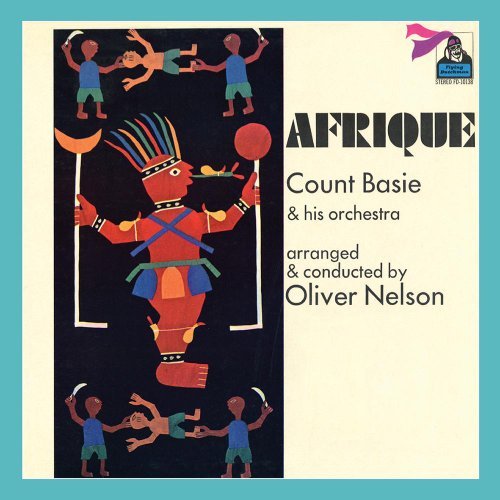
CULT CLASSIC: JOHN CARTER/BOBBY BRADFORD-SELF DETERMINATION MUSIC.
Cult Classic: John Carter/Bobby Bradford released Self Determination Music
By 1970, when John Carter and Bobby Bradford released Self Determination Music, Bob Thiele’s Flying Dutchman Productions had established a reputation for releasing groundbreaking music. This had been the case since Bob left Impulse Records in 1969.
Impulse Records had been home for Bob Thiele since 1961. Over the next eight yearsDuring that time, Bob Thiele enjoyed the busiest period of his career. Bob, who was hardly away from the studio, produced over 150 albums in eight years. This included John Coltrane’s seminal album A Love Supreme. However, not all of Bob Thiele’s production’s were as successful. Innovative music didn’t always equate to commercially successful music.
Through working with some of the most innovative and creative musicians in the history of jazz, Bob must have realised that often, large record companies aren’t the best environment for innovative and creative musicians. Often, these musical mavericks didn’t thrive within such an orthodox environment. Their creativity is restricted, meaning they’re unable to experiment and innovate like they’d like.
Soon, Bob Thiele, would be able to create an environment where this would be possible. By 1969, Bob had been at Impulse for eight years. He’d been responsible for producing some of the most important jazz music of the sixties. However, there’s no sentiment in music. In the musical equivalent of a musical coup d’tat, Bob Thiele was ousted from his role at Impulse. This proved to the start of the next chapter in his career.
Leaving Impulse in 1969, Bob founded Flying Dutchman Productions. This would become home to everyone from Ornette Coleman, through Gil Scott Heron, Leon Thomas, Eddie “Cleanhead” Vinson, Louis Armstrong to Lonnie Liston Smith and His Cosmic Echoes. Within the right environment, Bob wanted to prove that innovative musicians could thrive, creating music that’s influential and forward-thinking. That describes the music on John Carter Carter and Bobby Bradford’s 1970 album, Self Determination Music perfectly.
Released in 1970, Self Determination Music was a collaboration between two musical innovators. This was their second collaboration. Their first was the John Carter and Bobby Bradford Quartet’s Flight For Four, which had been released on Flying Dutchman Productions, in 1969. The sessions had been challenging for producer, Bob Thiele. However, the end result made it all worthwhile. Flight For Four was the type of music he wanted to record, produce and release. Inventive, innovative and influential, Flight For Four was different to much of the music other labels were releasing. It would, he hoped, influence a generation of musicians. So, Bob commissioned a second album.
Whereas Flight For Four was credited to The John Carter and Bobby Bradford Quartet, Self Determination Music was credited to John Carter and Bobby Bradford. They put together a quintet which recorded the four songs on Self Determination Music, which marked the next step in the career of two pioneering jazzmen.
Saxophonist John Carter was forty-one when he recorded Self Determination Music. He had been born in Fort Worth, Texas. Growing up, John attended I.M. Terrell High School, alongside Ornette Coleman and Charles Moffett. Originally, John played the saxophone. However, later, John began to spread his wings musically.
By the time John Carter headed to college, in 1945, he was already starting to play other instruments. Soon, he was becoming something of a multi-instrumentalist. Eventually, John could play clarinet, flute, plus alto, tenor and soprano saxophone. For a future music teacher, this was no bad thing.
In 1949, John graduated college, and began teaching. This allowed him to make a living, and also, to hone his skills. Deep down, maybe John hadn’t given up hope of making a living as a musician, like his old class mate Ornette Coleman. Eventually, it was Ornette Coleman that helped John get a break.
Ornette Coleman knew both John and Bobby Bradford. He felt they had much in common, professionally and musically. They had, he felt, similar hopes and aspirations. Both John and Bobby were teachers, who hoped to make a living as musicians. So, Ornette put them in touch.
When John met Bobby Bradford, he discovered he was a native of Cleveland, Mississippi. Bobby was thirty-six, five years John’s junior. He was born in 1934, and began playing the trumpet at an early age. By the age of fifteen, Bobby was playing in clubs around Dallas.
Despite his tender years, Bobby was rubbing shoulders with impressive company, including Ornette Coleman, James Clay and David Newman. This stood Bobby in good stead when he moved to Los Angeles in the early fifties.
Now living in Los Angeles, Bobby kept in touch with, and played alongside Ornette Coleman. Both shared a passion for free jazz, which was transforming jazz music. However, by the mid-fifties, Bobby’s career was interrupted. He was drafted.
With Bobby drafted, Don Cherry took his place in Ornette Coleman’s band. Then when Bobby was discharged from the Army, he picked up where he left off.
Bobby returned to Ornette Coleman’s band. Mostly, the lineup of Ornette Coleman’s band which featured Bobby played live. They did enter the recording studio. Sadly, these recordings were never heard. In 1962, a fire devastated the Atlantic Records’ vaults the master tapes were kept in. By then, Bobby had realised he wasn’t going to make a living as a musician.
So, like John Carter, Bobby turned to teaching. That’s how was making a living, when Ornette Coleman introduced John and Bobby.
With the two musicians turned teachers, having so much in common, they taught by day, and practised by night. Both men shared a love of free jazz, and were looking for like minded musicians.
Trying to form a band wasn’t easy. The problem was finding musicians who wanted to play free jazz. Some arrived with good intentions, but weren’t suited to free jazz. Eventually, though, the lineup took shape.
After trying out several bassists, Tom Williamson, a technical writer, by day, got the gig. Next to join was drummer Bruz Freeman, who was a stalwart of The West Coast scene. Previously, Bruz had been a member of the Hampton Hayes Quartet since the fifties. Bruz was the final piece of the jigsaw, who initially, called themselves The New Art Ensemble.
With the lineup in place, The New Art Ensemble practised together. However, given the band were part-time musicians, The New Art Ensemble only played a few gigs. When they did, they often played alongside Horace Tapscott and His Pan-African People. After one of these gigs at the Occidental College, The New Art Ensemble caught a break.
John William Hardy, a professor at Occidental College had founded a record label, Revelation, with one of his former students, Jonathan Harwich. They asked The New Art Ensemble if they wanted to record an album? The answer was a resounding yes.
John Carter penned five of the six tracks that became Seeking, The New Art Ensemble’s one and only album. This ambitious and pioneering album was released in January 1969. It was the perfect showcase for The New Art Ensemble, who were about to come to the attention of Bob Thiele.
Bob had just left Impulse, after eight years, and had just founded Flying Dutchman Productions. He was looking for musicians to accompany him on his debut album Head Start. Having come across The New Art Ensemble and Horace Tapscott, and been impressed with them, he realised he had found his backing band.
The New Art Ensemble and Horace Tapscott accompanied Bob Thiele on Head Start, which was released in 1969. Bob however, was impressed with The New Art Ensemble, so offered them a recording contract. However, he wasn’t impressed with their name. So, The New Art Ensemble became The John Carter and Bobby Bradford Quartet.
Flight For Four.
The John Carter and Bobby Bradford Quartet’s debut album would be Flight For Four. It featured five tracks. Four songs were penned by John, and one by Bobby. Some of the arrangements were extremely complicated. So much so, that when the recording session began, multiple takes were required. However, once the session were finished, The John Carter and Bobby Bradford Quartet and Bob Thiele were impressed by Flight For Four.
When Flight For Four was released in 1969, critics hailed it an album of ambitious and groundbreaking music. It was a timeless homage to The John Carter and Bobby Bradford Quartet’s collected love of free jazz. Despite the glowing reviews, Flight For Four wasn’t a huge seller. However, it sold well enough for Bob Thiele to commission a second album. Bob believed in The John Carter and Bobby Bradford Quartet, and was willing to back the free jazz pioneers.
Self Determination Music.
For their sophomore album, Self Determination Music, John Carter penned a trio of tracks, The Sunday Afternoon Jazz Blues Society, Loneliness and Encounter. Bobby Bradford contributed the other track on Self Determination Music, The Eye Of The Storm. These four tracks would become Self Determination Music, which saw The John Carter and Bobby Bradford Quartet, become a quintet.
For Self Determination Music, it was decided to add a second bassist. This presented a problem. No longer could they call themselves The John Carter and Bobby Bradford Quartet. So, Self Determination Music was billed as an album by John Carter/Bobby Bradford. It featured the debut of second bassist Henry Franklin.
Producer Bob Thiele too the quintet into the studio, where they recorded the four tracks. Drummer Bruz Freeman and bassists Tom Williamson and Henry Franklin provided the rhythm section. John Carter played reeds and Bobby Bradford trumpet. This new lineup worked their way through the four tracks, which became Self Determination Music, which was released in 1970.
Before its release in 1970, Self Determination Music was described as an ambitious and innovative album by critics. The quintet were perceived as pioneers, who were determined to push musical boundaries. They do this throughout Self Determination Music’s four tracks as free jazz moves in new and unexpected directions. However, how would record buyers react to Self Determination Music?
Sadly, when Self Determination Music was released, history repeated itself. Self Determination Music wasn’t a huge seller. Just like many of Flying Dutchman Productions’ releases, they found a discerning audience. However, still many jazz lovers still didn’t “get” free jazz. It seemed to go over their head. As a result, Self Determination Music hasn’t been rereleased since it was originally released back in 1970. So, BGP Records reissue of Self Determination Music, which I’ll tell you about, is a welcome reissue.
The Sunday Afternoon Jazz Blues Society opens Self Determination Music. A scrabbling bass, joins hissing hi-hats and blistering trumpet solo. Soon, what was an understated, spacious arrangement has been transformed. It’s a dramatic, musical roller coaster ride. At the heart of the arrangement is the trumpet, which plays a starring role. The rest of the quintet, however, aren’t reduced to playing supporting roles. No. They more than play their part in the sound and success of The Sunday Afternoon Jazz Blues Society. Especially, the sultry saxophone that joins aboard the roller coaster. Aided and abetted by the rhythm section, a mesmeric and inventive free jazz track takes shape, leaving you wanting more.
The Eye Of The Storm is a fifteen minute epic. Hesitantly, the two basses toy with the listener. They’re playing call and response, varying the tempo. It rises and falls, as if Tom and Henry are playing a game of cat and mouse. This continues when the horns enter. Accompanied by the rhythm section, which powers the arrangement along, horns sound. Sometimes, it’s as if they’re duelling, vying for supremacy. Mostly, though a glorious trumpet solo weaves its way across the arrangement. Not to be outdone, rumbling rolls of drums, the scrabbled bass and stabs of saxophone vie for your attention. Then the sultriest of saxophone solos takes centre-stage. It’s as if the gauntlet has been thrown down. Later, as the arrangement becomes much more understated, one things stays the same. Subtleties, surprises and nuances aplenty unfold, during this free jazz epic.
Loneliness opened side two of the original version of Self Determination Music. It’s nine minutes where beauty and melancholia are omnipresent. Understated, hesitant, wistful and beautiful describes the way percussion, subtle stabs of horns and a probing bass unite. Soon, the track takes on an orchestral sound. Still, though, the understated sound remains. Then as bass if plucked, a saxophone sounds. Its sultry, soul-searching sound is akin to an unburdening of hurt and heartbreak. Scrabbled strings, a muted, melancholy trumpet and string play. Drums are caressed, as if Bruz is afraid to overpower the beautiful, wistful arrangement. As Loneliness’ continues to unfold, its cinematic sound grows. By the end of the track, Loneliness, with its beautiful, wistful cinematic sound, is painting pictures of hurt, heartbreak and of course, Loneliness.
Closing Self Determination Music is Encounter. It’s a thirteen minute track. From the get-go, the quintet stretch their legs. Theres a sense of urgency in the rhythm section, who power the arrangement along. They provide the backdrop for the wailing, braying horns. Soon, though, as the tempo rises, it’s just the trumpet that remains. With the rhythm section injecting urgency, Bobby kicks loose. His scorching, searing horn cuts through the arrangement. Not to be outdone, John returns, playing gently and within himself. When he drops out, it’s just the frenzied rhythm section that accompanies Bobby. Later, John returns, still playing within himself. Even when Bobby bows it. The horns are constantly searching for an in, during the rhythms laid down by the powerhouse of a rhythm section. This becomes even more apparent when the horns drop out. They, like John and Bobby more than play their part in what’s an urgent, explosive, free jazz tour de force which closes Self Determination Music.
It was forty-five years ago, in 1970, that John Carter/Bobby Bradford released Self Determination Music. This was the second album they had released on Flying Dutchman Productions. Sadly, although it found an audience within the free jazz community, and among the more adventurous record buyers, mostly, Self Determination Music passed music lovers by. That’s not surprising. Very few record buyers understood free jazz.
Used to traditional, more mainstream jazz music, free jazz was another world to them. Bebop, hard hop and the West Coast jazz they could understand, but not free jazz. It went against jazz’s fundamentals. Free jazz was akin to jazz’s maverick genre. This was a step too far. As a result, many jazz lovers were missing out on many ambitious and innovative albums, including John Carter/Bobby Bradford’s Self Determination Music.
Self Determination Music is yet another of the hidden gems that for far too long, has been hidden away in Flying Dutchman Productions’ vaults. Not any more. Forty-five years after its original release, music lover have another chance to rediscover a truly groundbreaking album, Self Determination Music which John Carter/Bobby Bradford released back in 1970. Self Determination Music, which is a truly beautiful, ambitious, dramatic and innovative album, which will challenge music lovers both musically and intellectually. If they give Self Determination Music a chance, they will be richly rewarded by John Carter/Bobby Bradford’s long forgotten, free jazz epic.
Cult Classic: John Carter/Bobby Bradford released Self Determination Music
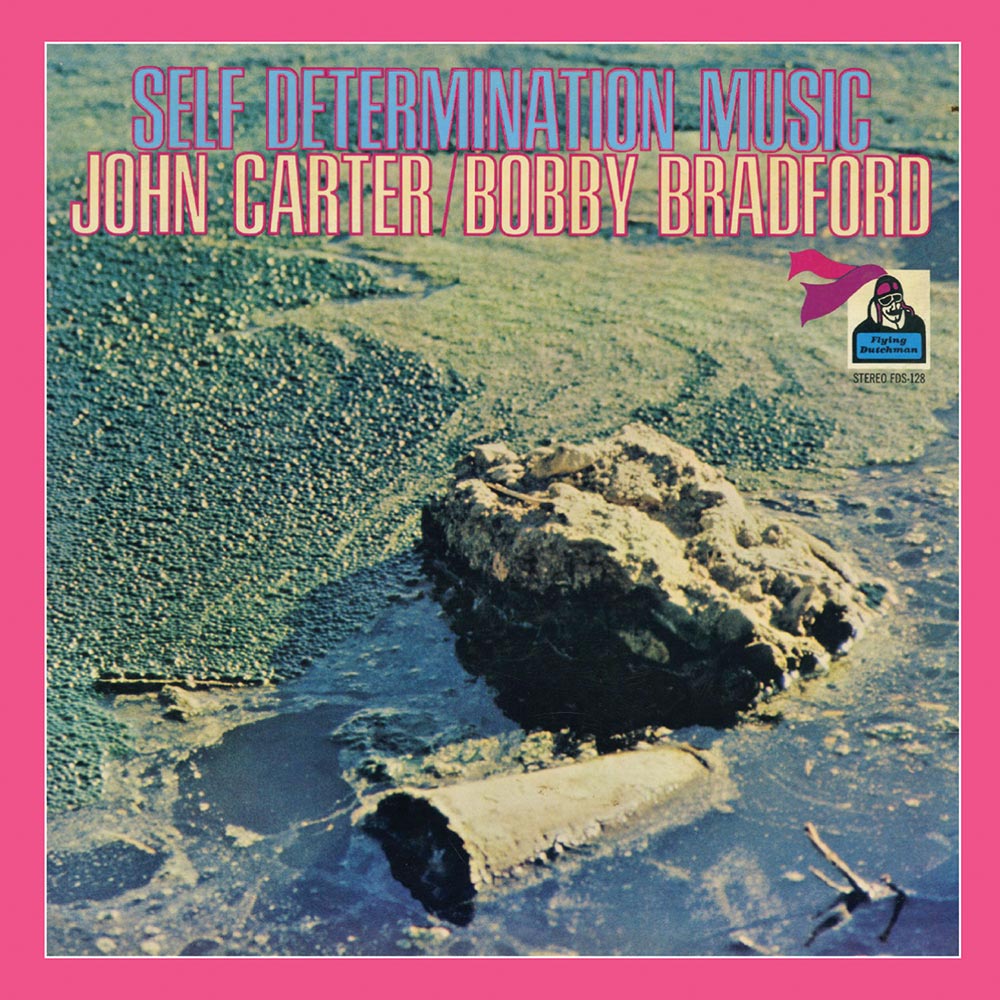
CULT CLASSIC ROY HAYNES-HIP ENSEMBLE.
Cult Classic: Roy Haynes-Hip Ensemble.
In the history of jazz music, Roy Haynes’ name looms large. He is one of the most recorded drummers in jazz history, and during a career that spanned sixty years, Roy Haynes worked with the great and good of jazz music. This included Charlie Parker, Bud Powell, Wardell Grey, Stan Getz and Sarah Vaughan. Roy’s also a truly versatile drummer.
Referring to Roy as versatile is no exaggeration. Roy Haynes is one of the most versatile drummers in jazz history and could play swing, bebop, hard bop, free jazz, fusion and avant-garde jazz. However, it wasn’t just jazz Roy could play.
Later in his career, Roy found himself sharing the stage with Southern Rock legends The Allman Brothers. Then Roy collaborated with Page McConnell of indie-rockers Phish. However, there was more to Roy’s career than working as a sideman. He enjoyed a successful solo career.
It was sixty years ago, in 1954 that Roy’s solo career began. That was when he released his debut album Busman’s Holiday. This was just the first of over twenty albums Roy Haynes as a solo artist including his 1971 album Hip Ensemble. By then, Roy Haynes was one of the most experienced drummers in jazz music. Roy had come a long way since his early days in Boston.
Roy Hayes was born in Boston, on March 13th 1925. He grew up in a musical family. His father played organ and his mother sung in the church choir. Growing up, it was always Roy’s ambition to play the drums. His dream came true when Roy’s brother, a roadie for Cab Calloway’s sister Blanche, introduced him to Jo Jones. For Roy this was a dream come true. Jo Jones was Roy’s hero since he heard him playing with the Count Basie Orchestra. This inspired Roy to became a drummer.
His dream came true in 1944. That’s when Roy started playing with bands in the Boston area. Roy’s breakthrough came when he got the chance to tour with Luis Russell. He was a member of Luis’ band between 1945 and 1947. Then Roy joined Lester Young’s group.
Joined Lester Young’s group was akin to a musical apprenticeship. Having served his time, Roy left Lester Young’s group and headed to New York. Bebop was calling. That Roy realised was jazz’s future. He was a member of Bud Powell, Miles Davis and Charlie Parker’s bands. His time with Bird’s band allowed Roy the freedom to develop his own style. Soon, he was one of jazz’s top drummers. So much so, he was offered the chance to become Duke Ellington’s drummer. Roy declined the opportunity. He decided to stay with Bird’s band until 1953, when he joined Sarah Vaughan’s band.
For five years, Roy played with Sarah Vaughan’s band. He wasn’t just her drummer. Roy was also a backing vocalist. His time with Sarah Vaughan lasted to 1958, when Roy decided to return to playing with smaller bands. It was also during his time with Sarah Vaughan that Roy’s solo career began.
By 1954, Roy’s solo career began. He released two albums that year, Busman’s Holiday and Roy Haynes Modern Group. This was just the first of over twenty albums Roy Haynes as a solo artist
Two years later, Roy embarked upon the first of many colaboration. He and Quincy Jones collaborated on Jazz Abroad. Then in 1958, the year Roy left Sarah Vaughan’s band, he collaborated with Phineas Newborn Jr. and Paul Chambers on We Three.
Having left Sarah Vaughan’s band, Roy decided to play with smaller bands. He was a talented drummer whose services were always in demand. Especially among some of the top jazz musicians.
In 1958, Thelonius Monk was looking for a drummer and saxophonist. He had a residency at the Five Spot in New York. However, he needed a drummer and saxophonist. Roy and John Coltrane were hired. They were part of the band who played a series of legendary dates at the Five Spot in New York. For Roy, his career was on the up and up. So it’s no surprise that as a new decade dawned, Roy decided to concentrate on his solo career.
During the sixties, Roy was at his most prolific as a solo artist. The decade started with 1960s New Dawn. Two years later, Roy was signed Impulse and released Out of the Afternoon in 1962. Then in 1963 Roy and Booker Ervin collaborated on Cracklin.’ Just like Roy’s solo album Cymbalism, it was released on New Jazz in 1963. A year later, Roy released People, which was Roy’s final solo album of the sixties. His only other release was with the George Ohtsuka Trio. For the remainder of the sixties, Roy was content to be a sideman, playing with Eric Dolphy, John Coltrane and Stan Getz. However, as the seventies dawned, Roy decided it was time to record again.
Roy had formed a new band, The Hip Ensemble in May 1969. His new group was made up of mainly young jazz musicians. Roy at forty-four was the elder statesman. They made their debut on Roy’s 1971 album Hip Ensemble. It was released on Bob Shad’s Mainstream in 1971 and featured an eclectic mix of songs.
Hip Ensemble features six songs. Roy contributed I’m So High and Tangiers. George Adams wrote Satan’s Mysterious Feeling and You Name It. The other tracks were Stanley Cowell’s Equipoise and Marvin Fisher and Jack Segal’s Nothing Ever Changes For You My Love. These six songs became Hip Ensemble, which marked the recording debut of The Hip Ensemble.
When recording of Hip Ensemble began, Roy had put together a tight, talented band. The rhythm section featured Roy on drums and timpani, bassist Teruo Nakamura and Mervin Bronson on Fender bass. Percussion came courtesy of Elwood Johnson om bongos, Lawrence Killian on congas and Elwood Johnson on tambourine. They were joined by pianist Carl Schroeder, flautist and tenor saxophonist George Adams and trumpeter Marvin Peterson. Once Hip Ensemble was recorded, it was released in 1971.
On its release in 1971, Hip Ensemble failed to chart. Jazz was no longer as popular. Rock was now King. What didn’t help was that Roy hadn’t released a solo album for seven years. That’s a long time for any artist. However, that wasn’t the end of The Hip Ensemble. They recorded two further albums for Bob Shad’s Mainstream Records, 1972s Equipoise and 1973s Senyah. Hip Ensemble, which I’ll tell you about, was just the start of Roy Haynes Mainstream trilogy.
Opening Hip Ensemble is Equipoise, a mid-tempo track. Drums, cymbals and braying horns unite confidently. They produce a melancholy sounding track. As the horns carry the melody, Roy pounds his drums. There’s an urgency in his playing. With the bass, he drives the arrangement along. However, the horns play starring roles. First they playing in unison. Then the solos come round. This affords them the opportunity to enjoy their moment in the sun. The same can be said of the rest of The Hip Ensemble. Together, they play their part in a track that veers between moody to melancholy and urgent to dramatic.
The rhythm section propel the arrangement to I’m So High along. It’s a funky track where keyboards sit above the strolling arrangement. Braying horns enter. They’re almost free jazz in style. They provide a contrast to the rest of the arrangement. It’s funky and swings. Especially with Roy helping drive the arrangement along. Later, the horns change tack. The free jazz influence is gone and the horns help this sultry, funky slice of jazz along.
Tangiers offers Roy the opportunity to showcase why in 1971, he was one of the top jazz drummers. He takes centre-stage before the arrangement unfolds. Wailing horns, a pounding piano and wistful flute intertwine. Again, there’s a free jazz influence as The Hip Ensemble explore the subtleties and nuances of this Roy Haynes’ penned track. It heads in the direction of avant-garde, experimental, free jazz and funk. Roy is at the heart of the action. He pounds his drums and unleashes a series of rolls. It’s apparent that The Hip Ensemble are marching to the beat of Roy’s drum on this innovative, adventurous track.
Nothing Ever Changes For You My Love bursts into life. It’s driven along by blazing horns. Providing the heartbeat are the rhythm section. Teruo Nakamura gives a masterclass on the bass. He plays at breakneck speed, as the rhythm section become one. They’re accompanied by keyboards. They too play an important role, adding texture to the arrangement. Then there’s the horns. Quite simply, they steal the show. George Adams and Marvin Peterson are a perfect foil for each other. It’s as if they’re egging each other on, as they try to reach previously unreached heights. This makes for compelling listening as a familiar song is reinvented.
Satan’s Mysterious Feeling is another George Adams’ song. Roy’s drums opens the track. He injects some funk into the arrangement. His kick drum pounds and his hi-hats hiss. He’s augmented by mesmeric keyboards and braying, blistering horns. They kick loose as the track heads in the direction of jazz-fusion. All the time, Roy’s keeping it funky. So is Carl Schroeder, courtesy of his hypnotic keyboard playing. Similarly, mesmeric are the horns. Marvin Peterson unleashes what’s easily one of his best solos. He’s set the bar high for George Adams. When his tenor saxophone enters, he’s not going to give up without a fight. George delivers a blistering solo, while the rest of The Hip Ensemble play a supporting role. It’s almost as good as Marvin’s and plays an important part in the highlight of Hip Ensemble.
Closing Hip Ensemble is a medley of You Name It and Lift Every Voice and Sing, which is often referred to as the African American national anthem. Keyboards and hissing hi-hats join forces before grizzled horns enter. Along with the rhythm section they drive the arrangement along. Just like previous tracks, the horns get the opportunity to shine. George and Marvin relish the opportunity. This isn’t a band comprising two people. Roy’s drumming veers between understated and thoughtful to urgent and powerful. Soon, everyone gets a chance to shine. Carl Schroeder on keyboards goes toe-to-toe with Roy’s drums. Later, Roy takes charge and delivers a masterclass on drums. It’s a tantalising taste of one of jazz’s top drummers in full flight. After that, the band join together and play a moving version of You Name It and Lift Every Voice and Sing. It’s interspersed with some of Roy’s trademark licks. That’s the perfect way to close Hip Ensemble, which featured the debut of Roy Haynes’ new band The Hip Ensemble.
After seven years away from a recording studio, Roy Haynes was back. He was excited. He’d put together some of the most talented and exciting young jazz players. Formed in May 1969, Roy had spent two years moulding The Hip Ensemble into a tight unit. They were similar to Roy.
Just like Roy Haynes, The Hip Ensemble were a versatile band. They could seamlessly switch between musical genres, sometimes, in the space of one track. Not many bands are capable of that. The Hip Ensemble were. There’s a reason for this. Roy had put together a talented and versatile band.
Joining Roy in the rhythm section were bassist Teruo Nakamura and Mervin Bronson on Fender bass. They provided Hip Ensemble’s heartbeat. Then there was pianist Carl Schroeder. He added texture to the six tracks. Playing starring roles were tenor saxophonist George Adam and trumpeter Marvin Peterson. When they kick loose, it’s a joy to behold. Unlike some bandleaders, Roy wasn’t scared to allow his band to shine. Given the opportunity to shine, George and Marvin shawn like the brightest stars. They play an important part in what’s an adventurous, inventive and innovative jazz album. Sadly, Hip Ensemble, failed commercially.
The reason for that is twofold. Jazz was no longer as popular. Rock music was King. Since the late sixties, jazz’s popularity had plummeted. Things had gotten so bad for jazz, that many jazz venues were now rock venues. For jazz musicians like Roy Haynes, this was a disaster. What didn’t help that Bob Shad’s Mainstream Records was an independent label. It didn’t have the same budget to promote an album as Blue Note, Impulse or Capitol. Without a promotional campaign behind it, Hip Ensemble failed commercially. However, thankfully, music lovers have the opportunity to rediscover Hip Ensemble.
For too long, Hip Ensemble has lain unloved in Mainstream’s vaults. Belatedly, Hip Ensemble has been rediscovered. It features Roy Haynes’ jazz supergroup The Hip Ensemble, which contained some of the most exciting and talented musicians of the late sixties and early seventies. The Hip Ensemble, kick loose, and work their magic on six spellbinding tracks that comprise on what’s one of Roy Haynes’ finest solo albums Hip Ensemble.
Cult Classic: Roy Haynes-Hip Ensemble.
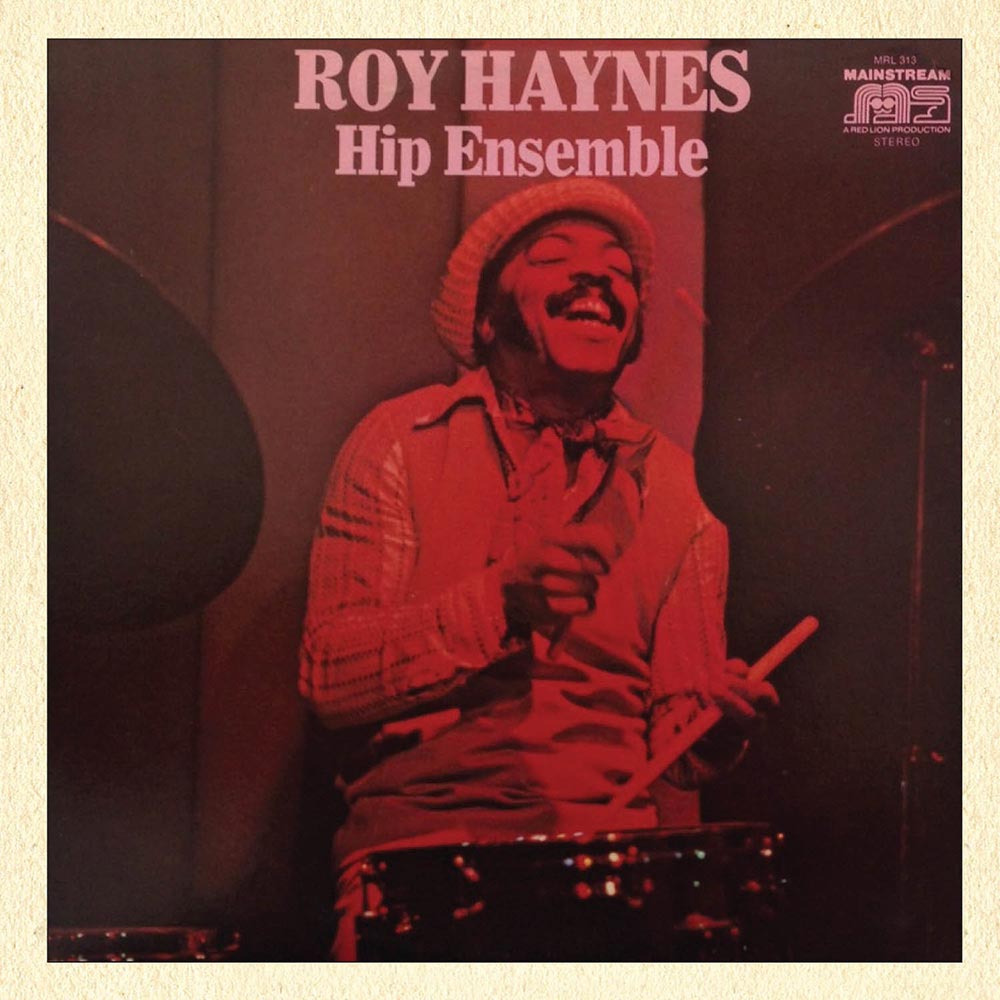
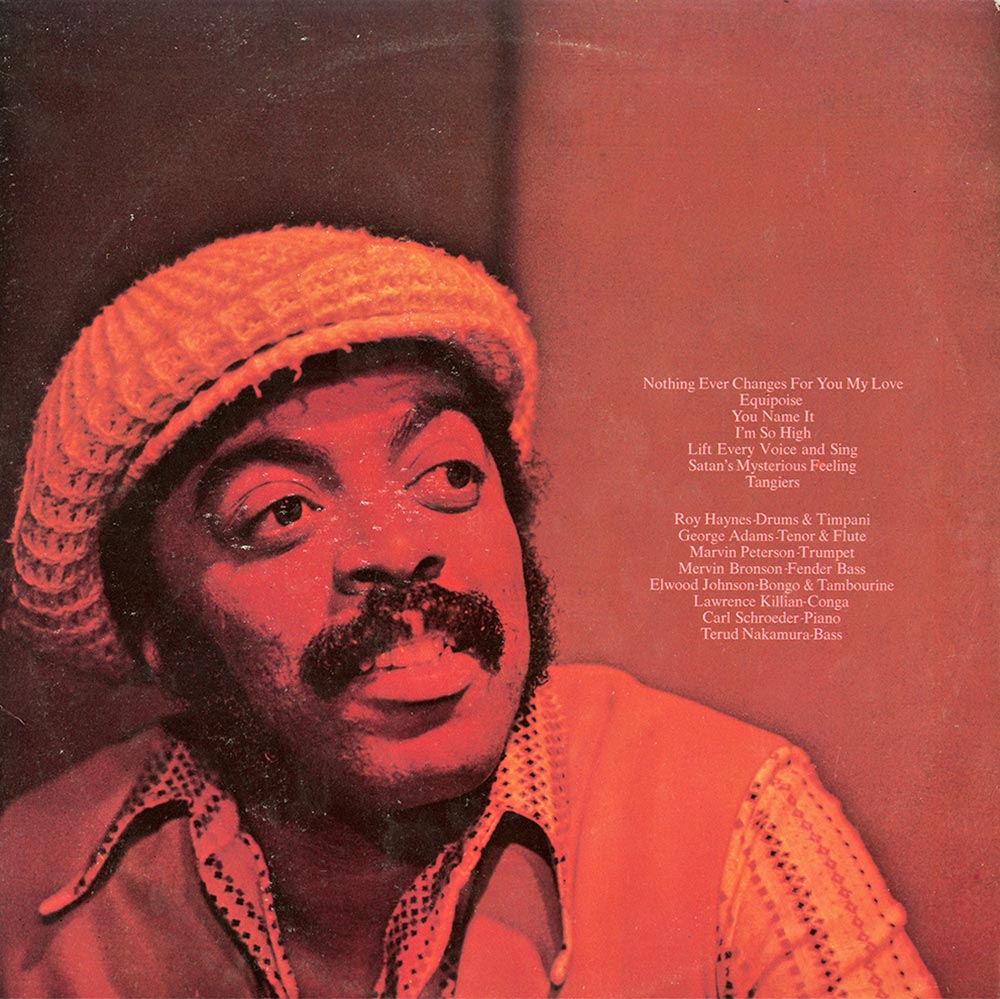
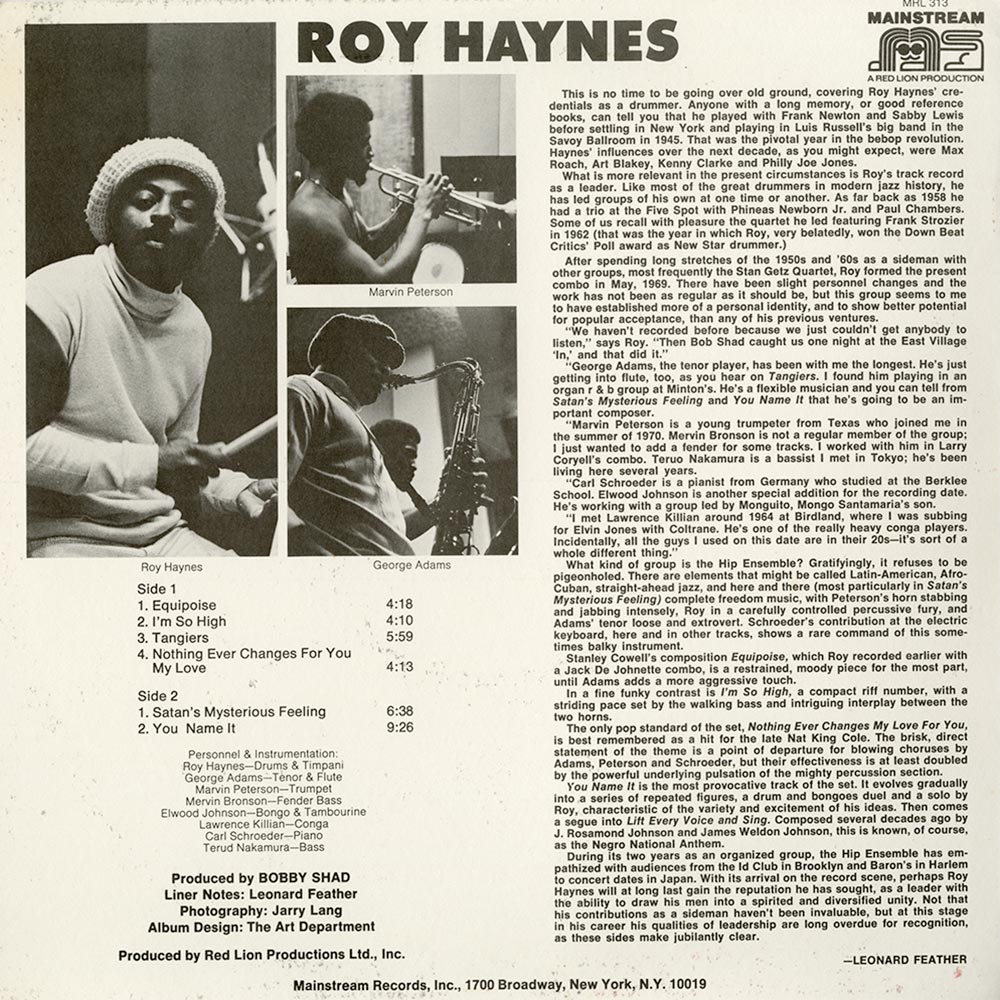

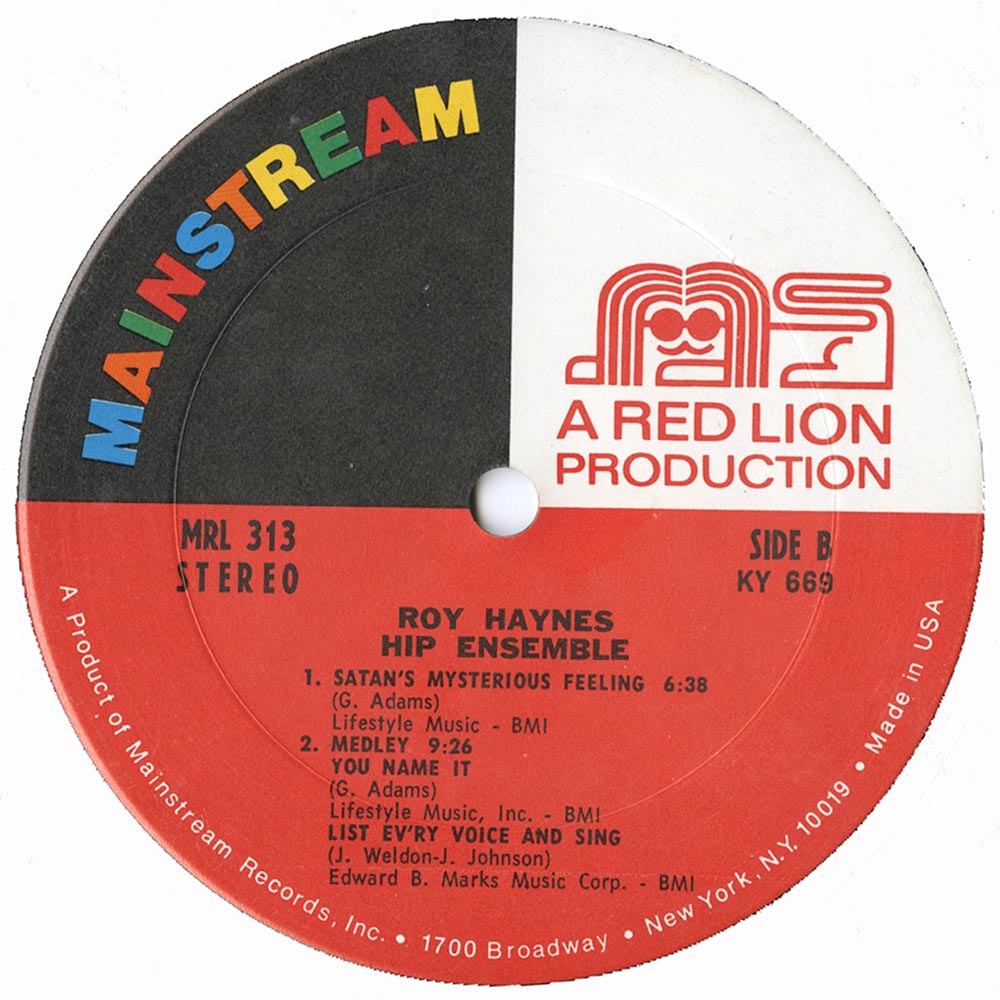
 dereksmusicblog
 dereksmusicblog