CULT CLASSIC: JOHNNY HAMMOND-GEARS.
Cult Classic: Johnny Hammond-Gears.
Johnny “Hammond” Smith’s recording career began in 1958 and a year later he released his debut album Have You Heard. This was the first of two albums Johnny “Hammond” Smith released during 1959. Over the next sixteen years, Johnny “Hammond” Smith released another thirty album. His thirty-second album was Gears, which was released in 1975.
By the time Johnny “Hammond” Smith began work on Gears, his music had been becoming more funky. His music had changed over the last four years. This happened after Johnny “Hammond” Smith left the Prestige label.
This was where Johnny “Hammond” Smith had enjoyed the most successful period of his career. He signed to Prestige in 1961, and was their through the label’s glory years. Johnny “Hammond” Smith rubbed shoulders with some of the most innovative jazz musicians, including John Coltrane, Miles Davis, Thelonious Monk and Yusef Lateef to Freddie McCoy and Freddie Roach. However, in 1971, Johnny “Hammond” Smith decided to leave Prestige. Next stop was CTi Records.
Creed Taylor had founded CTi Records in 1968. Originally, a producer, he had worked for ABC Records. Creed Taylor had founded its Impulse! subsidiary in 1960. One of Creed Taylor’s first signing was John Coltrane. He released some of the best music of his career at Impulse. However, by then, Creed Taylor had moved on.
In 1961, Creed Taylor left Prestige and began working for Verve Records. During his time at Verve Records, Creed Taylor helped popularise the bossa nova. He signed Antonio Carlos Jobim, João and Astrud Gilberto Verve Records. Soon, the bossa nova was influencing other artists signed to Verve Records, including Donald Byrd. However, popularising the bossa nova was only part of Creed Taylor’s achievements at Verve Records. He also produced albums by Wes Montgomery, Jimmy Smith and Bill Evans during his six year tenure. It came to an end in 1967. That was when Creed Taylor started at A&M, and founded CTi Records.
Creed Taylor’s time at A&M was brief. He left in 1968, to concentrate on establishing CTI Records as an independent record company. That’s what he proceeded to do.
When Johnny “Hammond” Smith left Prestige in 1971, he signed to Creed Taylor’s CTi Records. By then, it had an enviable roster. Stanley Turrentine, George Benson, Gábor Szabó, Freddie Hubbard and Hubert Laws had been, or were, part of the CTi Records’ family. Now Johnny “Hammond” Smith was signed to CTi Records, and released some of the funkiest music of his career on its Kudu Records imprint.
The Kudu Records imprint was established in 1971, and was a perfect home for Johnny “Hammond” Smith. It was geared towards soul jazz. However, over the years everyone from Grover Washington, Jr, Hank Crawford, Grant Green, Joe Beck, Lonnie Smith and Idris Muhammad all pitched up at Kudu Records. This change of label seemed to reinvigorate Johnny “Hammond” Smith.
Between 1971 and 1973, Johnny “Hammond” Smith released four albums on Kudu Records and one its sister label Salvation. His debut was Breakout, released in 1971, and was the perfect way to start a new chapter in his career.
Before signing to Kudo Records, their latest signing was billed as Johnny “Hammond” Smith. However, this was problematic. People kept mixing Johnny “Hammond” Smith with the guitarist Johnny Smith. So a decision was made for Johnny “Hammond” Smith to become Johnny Hammond. That seemed especially fitting, as the Hammond organ was Johnny’s musical weapon of choice. Soon, this change of name became ironic, when Johnny started to add other keyboards to his arsenal. This began with his Kudo Records debut Breakout.
Once Breakout was recorded, Kudo Records announced their latest signing Johnny Hammond was about to release his debut album Breakout. However, first critics had to have their say.
When critics heard Breakout, they realised it was one the best albums the newly named Johnny Hammond had released in the last few years. It was also an eclectic album. There was everything from blues and soul jazz, to some of the funkiest music of Johnny Hammond’s career. However, there was a still a soulful side to Breakout. Creed Taylor had brought out the best in Johnny “Hammond” Smith on this eclectic album. It looked like being a fruitful partnership.
That proved to be the case. When Breakout was released in 1971,it reached number 123 in the US Billboard 200, fifteen in the US R&B charts and number three in the US Jazz charts. Buoyed by the success of Breakout, Johnny Hammond began work on the followup.
Later in 1971, Johnny Hammond announced the release of the followup to Breakout, Wild Horses Rock Steady. Creed Taylor had produced another critically acclaimed album. It was described as über funky. No wonder. Accompanying Johnny Hammond were a band of top musicians. They were versatile, and could play nearly any genre, including funk. With their help, Johnny Hammond’s conversion to funkateer was almost complete. However, how would his old fans react?
When Wild Horses Rock Steady was released, it stalled at number 174 in the US Billboard 200, forty-three in the US R&B charts and fifteen in the US Jazz charts. This wasn’t as successful as Breakout. Maybe Johnny Hammond’s change in direction had alienated his loyal fans?
Little did Johnny Hammond realise that things were about to get a whole lot worse. Johnny Hammond returned in 1972 with The Prophet, his third album for Kudo Records. Despite being well received by critics, Prophet failed commercially. It failed to trouble the charts. Surely this was only a minor blip?
It wasn’t. When Johnny Hammond returned in 1974 with Higher Ground, it proved to be his weakest album for Kudo Records. Critics felt that Johnny Hammond overpowered the rest of the band, including the horn section. Producer Creed Taylor seemed unable to reign him in. Record buyers seemed to have read the reviews of Higher Ground, and when it was released, it failed to chart. Things had started so well with Breakout, but commercially, had been downhill all the way after that. So Creed Taylor and Johnny “Hammond” Smith decided it was time for a new production team to work with Johnny.
Creed Taylor had two men in mind, Larry and Fonce Mizell. The Mizell Brothers worked under the Sky High moniker, and were already a successful production partnership. Their track recorded suggested that they had what was needed to rejuvenate Johnny “Hammond” Smith’s ailing career. So the Mizell Brothers and Johnny “Hammond” Smith got to work.
The resultant album Gambler’s Life was a big improvement on Higher Ground. It had been recorded at The Sound Factory in Los Angeles. This was the Mizell Brothers’ favourite studio, so it seemed the perfect place to record Gambler’s Life. The change of ‘scenery’ enlivened Johnny Hammond.
At The Sound Factory, Johnny Hammond deployed a variety of different keyboards, including synths and Fender Rhodes. Another difference was that Johnny Hammond wasn’t just a soloist, but part of his band’s rhythm section. This made a big difference to the album.
Gambler’s Life was funky, soulful and dance-floor friendly. Other times, the music is laid-back and blissful. The Mizell Brothers had reinvented Johnny Hammond. However, it was only Larry Mizell that received a production credit. His brother Fonce was credited as a musician. Regardless of who produced the album, the Mizell Brother, Creed Taylor and Johnny Hammond must have had high hopes for Gambler’s Life.
Despite positive reviews by critics, Gambler’s Life failed commercially. When it was released on the new CTi Records subsidiary Salvation, Gambler’s Life didn’t even come close to troubling the charts. This proved to be the end of Johnny Hammond’s time at CTi Records.
Having left Creed Taylor’s employ, Johnny Hammond was signed by Milestone, an imprint of Fantasy Records. The Mizell Brothers were retained to produce Johnny Hammond’s next album. This would become Gears, the thirty-second album of Johnny Hammond’s career.
Work began on Gears almost as soon as the ink was dry on the contract. The Mizell Brothers penned five of the six songs on Gears. This included Tell Me What To Do, Los Conquistadores Chocolatés, Lost On 23rd Street, Shifting Gears and Can’t We Smile? Johnny Hammond wrote the other track Fantasy. These six tracks became Gears, which was recorded with The Mizell Brothers’ favoured musicians.
Recording of Gears took was split between The Sound Factory in Los Angeles and Fantasy Records’ own in-house studio. The rhythm tracks were recorded at Fantasy Records’ studio during July 1975. That’s where drummer Harvey Mason, bassist Chuck Rainey and guitarists Craig McMullen and Craig Rowan got to work with Johnny Hammond. Together, they laid down the rhythm tracks. Then at The Sound Factory, the Mizell Brothers were joined by the rest of the band in September 1975.
Fonce Mizell played clavinet and Larry Mizell added piano and solina. They were joined by percussionist Kenneth Nash, violinist Michael White, pianist Jerry Peters and Roger Glenn on vibes and flutes. The horn section featured tenor saxophonist Hadley Caliman and trombonist Julian Priester. Johnny Hammond, the star of the show, played Hammond organ and electric piano. Once the six tracks were recorded, Gears was released.
Critics hailed Gears the finest jazz-funk album of 1975. They only changed their mind when Donald Byrd released Spaces and Places. However, two tracks on Gears, Fantasy and Los Conquistadores Chocolates were geared towards the dance-floor. Johnny Hammond was about to embrace disco. Jazz purists held their hands up in horror, recoiling at Johnny Hammond’s stylistic departure. Would this change in style result in a change in Johnny Hammond’s fortunes?
When Gears was released in late 1975, sales were slow. Eventually, Gears reached number thirty-one on the US Jazz charts. This was disappointing. However, then Los Conquistadores Chocolatés was released as a single. It reached number four on both the US Dance Music/Club Play Singles and US Disco Singles charts. At last, Johnny Hammond’s luck was changing, and Gears was the album that was responsible for this. Gears is now regarded as a jazz-funk classic, and celebrates its fortieth anniversary this year. Has it stood the test of time?
Stabs of Fender Rhodes open Tell Me What To Do, which opens Gears. After a flourish of Fender Rhodes, things get funky. Drums pound, a guitar chimes and wah-wahs. It combines with the rhythm section and percussion. By then, Johnny’s adding a probing, confused vocal. “Tell Me What To Do?” he asks. Behind him, wistful tenor saxophone plays, as his band stretch their legs. Soon, the arrangement veers between smooth to funky and jazz-tinged. Johnny switches between Fender Rhodes to Hammond organ on this quite beautiful, mid-tempo track. Literally, the arrangement floats along, before Johnny adds a masterclass on his Fender Rhodes. Later, his vocal becomes dubby, adding a mysterious air, as Gears, a true jazz-funk classic begins to share its secrets.
After a spoken word vocal, a gale blows and Harvey Mason lays down a drum solo. He nails it. Soon, he’s joined by a flute and a bouncy, funky bass. It’s the signal for thinks to get funky. Keyboards, wah-wah guitar and the rhythm section combine with vibes. Already, Johnny is playing a starring role, laying down a solo. However, the rhythm section and guitars aren’t far behind. This seems to push Johnny to greater heights. He lays down a Hammond organ solo. In his hands, the ‘big burner’ comes to life. Along with the rhythm section, he helps drive the arrangement along. By then, he’s stealing the show. His performance can only be described as a virtuoso one. Without doubt, it’s one of the highlights of Gears. Johnny moves through the Gears on what was an unlikely disco hit.
Other-worldly synths open Lost On 23rd Street. Soon, the rhythm section and chiming guitar play slowly, as the arrangement glides effortlessly along. Then an Arp ProSoloist keyboard replicates what sounds like a haunting trombone solo. Effects have been used to transform the sound. By then Johnny is playing the Fender Rhodes. One minute his fingers glide along the keyboard, the next he stabs at them. A clavinet is added. However, the trombone dominates the arrangement. That’s until the tenor saxophone is unleashed. As the rhythm section, guitars and keyboards lay down a groove, the horns dominate the arrangement. They feed off each other. Soon, the funk factor increases, and the band are jamming. Suddenly, a tender vocal floats across the arrangement. It proves to be the icing on what’s a particularly tasty cake.
Fantasy was the only track penned by Johnny Hammond. Harvey Mason’s drums are joined by percussion, a funky bass, wah-wah guitar and Johnny’s urgent keyboards. Lush strings are added, and signal the arrival of the hopeful vocal. A violin replaces the vocal, before it returns. From there, the arrangement builds. Instruments are added, disappear and reappear. This includes the Fender Rhodes and Hammond organ. However, a constant are the rhythm section and guitars. They’re responsible for one of the funkiest arrangements. Johnny more than plays his part, adding keyboard solos and a vocal. The result is one of the most memorable moments on Gears.
As Shifting Gears begins, it has a much more traditional funky sound. It’s just the Chuck Rainey’s bass and Harvey Mason’s drums. Soon, percussion and a wah-wah guitar are added. Gradually, the arrangement begins to unfold. Johnny’s vocal is the next addition. There’s an urgency to his delivery. When the vocal drops out, a flute and then violin are added. Then when Johnny returns, a clavinet and keyboards add to what’s already, a dark, dramatic and edgy sound. Johnny delivers another virtuoso performance. Having unleashed one of his best solo, he shifts through the gears and the track takes on a cinematic sound. By then, Shifting Gears, with its funky, and later, smooth, slick sound wouldn’t sound out of place on either a Blaxploitation soundtrack or a dance-floor.
On Can’t We Smile? which closes Gears, the tempo drops, and the Mizell Brothers add a smooth, but funky backdrop. The rhythm section supply the heartbeat, while guitars add to the funky sound. Johnny delivers a heartfelt, hopeful vocal as the arrangement glides along. Harmonies, a violin and shimmering, quivering synths accompany the vocal. After the vocal drops out, another tender solo is delivered. Meanwhile, Johnny’s three decades of experience shine through. Then accompanied by occasional harmonies, his vocal returns on this truly beautiful ballad. Johnny Hammond has kept the best until last on Gears.
Sadly, Johnny Hammond only released three more albums after Gears. The first was 1976s Forever Taurus. Storm Warning followed in 1977. However, 1978s Don’t Let the System Get to You proved to be Johnny Hammond’s swan-song. By then, Johnny Hammond was only forty-five.
He taught music during the eighties at California State Polytechnic University. However by the nineties, Johnny Hammond returned to life as a professional musician.and chose life as a sideman. Johnny Hammond was part of Hank Crawford, Dianne Witherspoon and Dan Papaila’s bands. His final performance came at the Charles Earland Organ Summit. This was fitting, as Charles Earland had inspired Johnny Hammond. Sadly, ten days later on June 4th 1997, Johnny Hammond died. He left behind a rich and varied musical legacy.
This included Gears his jazz-funk classic, which was released forty-four years ago in 1975 and was Johnny Hammond’s last great album. Gears which is a cult classic has stood the test of time, and is a fitting reminder of a jazz great Johnny Hammond.
Cult Classic: Johnny Hammond-Gears.

CULT CLASSIC: TANGERINE DREAM-RUBYCON.
Cult Classic: Tangerine Dream-Rubycon.
Tangerine Dream are, without doubt, the original musical chameleons. Since forming in 1967, Tangerine Dream’s music has been constantly evolving. As a result, they can never be accused of standing still. Far from it.
During the last six decades, Tangerine Dream have flitted between musical genres as they recorded over 125 studio albums. Like musical butterflies, Tangerine Dream have toyed with psychedelia, Krautrock, the Berlin School, progressive rock, ambient, avant-garde, experimental, new age and electronica. Then as the age of electronic music unfolded, Tangerine Dream embraced drum and bass and progressive house. Still, Tangerine Dream remained relevant. That’s despite Tangerine Dream’s lineup being somewhat fluid.
When Edgar Froese founded Tangerine Dream in 1967, he was briefly joined by drummer Klaus Schulze. However, before long, Klaus left Tangerine Dream. This was a brief taste of the future.
Little did Edgar realise, that over the next forty-eight years, that another twenty-four musicians would play a part in the Tangerine Dream story. Some, however, like Klaus Schulze, would only play a walk-on part in Tangerine Dream’s story. Others, including Christopher Franke and Peter Baumann played a starring role in the rise and rise of Tangerine Dream.
Christopher Franke and Peter Baumann were part of the what is regarded as the classic lineup of Tangerine Dream. The first to join Tangerine Dream was Christopher Franke.
He joined in time to record Alpha Centauri, Tangerine Dream’s sophomore album. It was recorded in early 1971, and the spacey, atmospheric soundscape was released to critical acclaim in March 1971. Alpha Centauri was the second album in what became known as Tangerine Dream’s “Pink Years.”
Electronic Meditation.
The “Pink Years” had began a year earlier when Tangerine Dream released their debut album Electronic Meditation in June 1970. However, Electronic Meditation was recorded a year earlier in 1969.
Recording of Electronic Meditation took place in in a disused factory in Berlin, using just a two-track Revox tape recorder. The lineup of Tangerine Dream included Tangerine Dream’s founder member Edgar Froese, Klaus Schulze and Conrad Schnitzle. They were joined by session musicians Jimmy Jackson and Thomas Keyserling. During October 1969, Tangerine Dream started as they meant to go on. This meant recording a genre defying album.
On Electronic Meditation, Tangerine Dream recorded what critics hailed as a genre defying album. They combined free jazz, rock, avant-garde and electronic music. These genres melted into one. The result was Electronic Meditation, an album that was well received by critics. This was the start of the “Pink Years.”
Alpha Centauri.
The followup to Electronic Meditation was Alpha Centauri. This was the album that saw Christopher Franke make his Tangerine Dream debut. He played his part in a truly groundbreaking album, Alpha Centauri.
Recording of Alpha Centauri too place in early 1971. Then in March 1971, Alpha Centauri, which is best described as a spacey, atmospheric soundscape was released to critical acclaim. It’s a timeless album, one that it’s hard to believe was recorded forty-four years ago. It has stood the ravages of time, and is a tantalising taste of what was still to come from one of music’s most innovative groups.
Zeit.
Having released the first two albums in the “Pink Years,” Tangerine Dream recorded their third album in 1972. That’s when Peter Baumann joined Tangerine Dream in 1972. He was part of the lineup of Tangerine Dream that recorded Zeit, which was a landmark album.
Zeit was the first Tangerine Dream to feature what became known as the group’s classic lineup. They recorded some of Tangerine Dream’s best music. That’s quite a statement, given how prolific Tangerine Dream were. They would record over sixty-five studio albums and a further sixty soundtracks. Then there’s countless live albums. Each album shows Tangerine Dream’s music evolving.
That was the case with Zeit. The music was slower, and much more atmospheric. It was also way innovative, and way ahead of its time. Indeed, on Zeit, Tangerine Dream pioneered the drone music that’s seen as cutting edge in 2015. Tangerine Dream always were ahead of the musical curve. So much so, that Zeit is now regarded as a timeless, Krautrock classic. This wouldn’t be Tangerine Dream’s only classic album.
Atem,
Following Zeit, the musical changelings continued to change direction. Atem, which marked the end of Tangerine Dream’s “Pink Years,” was a much more eclectic album. It veered between the slow, atmospheric tracks of previous albums, right through to much more experimental, aggressive tracks.
On Atem, Tangerine Dream made effective use of a Mellotron, experimental vocals and a myriad of percussion. This resulted in the album that saw Tangerine Dream make a commercial breakthrough in Britain.
Phaedra.
While Atem saw Tangerine Dream make a commercial breakthrough in Britain, Phaedra was a game-changer of an album. Phaedra was the first Tangerine Dream album to feature their sequencer driven sound. It was also the album that launched the Berlin School sound.
As recording of Phaedra took place during December 1973, Tangerine Dream decided to improvise on what would become the title-track. However, before long, problems started to arise. As the temperature rose in the studio, oscillators started to detune. This resulted in a marked change in the sound. This happy accident played an important part in Phaedra’s sound. Other tracks, including Movements Of A Visionary, showcased the nascent technology. This included a Moog synth. It played its part on what critics called one of the most important electronic albums in musical history.
On the release of Phaedra, on 20th February 1974, critics called the album a classic. It also struck a nerve with record buyers. Phaedra reached number fifteen in Britain and was certified gold. After five albums Tangerine Dream had struck gold. It looked like they were on their way to becoming part of rock royalty.
Rubycon.
Having made the all important breakthrough, Tangerine Dream were determined to prove that Phaedra wasn’t a one off. So, they began work on their sixth album Rubycon.
Rubycon saw Tangerine Dream pickup where they left of on Phaedra. This meant moving their Berlin School sequencer based sound forwards on Rubycon. As founders of the Berlin School, Tangerine Dream felt a responsibility to progress the sound.
Standing still wasn’t in Tangerine Dream’s nature. It never had been. That had been the case since Tangerine Dream released their 1970 debut album Electronic Meditation. Since then, Tangerine Dream had been musical changelings, moving between musical genres. Having left their “Pink Years” behind them after Atem, Phaedra saw Tangerine Dream founding the Berlin School. With this in mind, Tangerine Dream began work on Rubycon.
Rubycon was very different from previous Tangerine Dream albums. It consisted of just two lengthy tracks. Each lasted just over seventeen minutes. This meant each track filled one side of Rubycon. The two tracks, Rubycon (Part One) and Rubycon (Part Two), were written by Edgar Froese, Christopher Franke and Peter Baumann. They recorded Rubycon at Richard Branson’s The Manor Studio, in Shipton-on-Cherwell.
At The Manor Studio, the three members of Tangerine Dream began recording and producing what became Rubycon. Edgar Froese played mellotron, guitar, a VCS 3 synth and gong. Christopher Franke played a similarly eclectic collection of instruments. This included a double Moog synth, organ, prepared piano, Synthi A and gong. Peter Baumann played an organ, Synthi A, Fender Rhodes, piano and ARP 2600. With this eclectic selection of instruments at their disposal, the result was another critically acclaimed album from Tangerine Dream.
On Rubycon’s release, critics hailed it another innovative album from Tangerine Dream. Record buyers agrede. Rubycon reached number fourteen in the UK. Despite this, Rubycon didn’t sell as well as Phaedra. However, Rubycon was still commercially successful and critically acclaimed.
Rubycon (Part One) opens Rubycon. The arrangement has an eerie, haunting cinematic sound. It’s slow and spacious. Washes of synths shimmer, gentle stabs of keyboards add a sense of urgency and drama. Soon, the arrangement is beginning to sound like the soundtrack to a lost horror film. Then all of a sudden, it’s akin to an awakening, as the arrangement becomes ethereal and elegiac. As the arrangement coos, shimmers and glistens, it then takes on a futuristic, sci-fi sound. Before long, Tangerine Dream have transformed the arrangement. It stretches its legs, lazily unfolding, and allowing you a glimpse of its hidden depths. Later, it becomes dark and ominous, as it drives and pulsates along. By now, there’s a Krautrock influence. Still, however, the music has a dark, atmospheric and cinematic sound. Later, arrangement drives along. Gone is pulsating sound, but the drama remains. It’s as if Tangerine Dream are providing the soundtrack to a long forgotten film.
Washes of synths assail you as Rubycon (Part Two) unfolds. They come towards you, assailing and surrounding you. It’s as if the end is neigh. Their ominous sound is like a battalion of otherworldly creatures droning above you, just waiting to spring some unpleasant surprise. Then the music changes. It becomes ethereal and elegiac. What sounds like a choir angels sweeps down, trying soothe your fears. Before long, the music takes on an almost spiritual quality. Soon, it’s all change again. The arrangement pulsates and pumps along. What follows makes Tangerine Dream sound like the rightful Godfathers of modern electronic music. This is techno, long before the term was coined. Later, Rubycon (Part Two) in a different direction. It sounds like a cinematic soundscape, where the listener supplies the scenes to music. From there, the music on this seventeen minute epic veers between evocative and atmospheric, to moody and broody, right through to ethereal and elegant to dark and dramatic. As Rubycon (Part Two) and therefore, Rubycon draws to a close, you long to hear more from of the same from Tangerine Dream. Rubycon has been a tantalising taste of what Tangerine Dream are capable of.
Eight years after Tangerine Dream had been founded by Edgar Froese in 1967, they were one of the most innovative groups of the seventies. Rubycon was their sixth album, and is a genre-defying album featuring two epic soundscapes lasting seventeen minutes each. They see Tangerine Dream, the original musical butterflies, toying with disparate musical genres on the two soundscapes. Everything from psychedelia, Krautrock, Berlin School, progressive rock, ambient, avant-garde, experimental, new age and electronica can be heard on Rubycon, a truly captivating, innovative and timeless album. That’s not all.
Listening again to Rubycon, it’s quite unlike most of the studio albums released during 1974. Instead, Rubycon sounds like a soundtrack album, something Tangerine Dream would become famous for. They released over sixty soundtrack albums. Along with live albums, that was one of their specialities. Rubycon, Tangerine Dream’s sixth album, is a reminder of that.
Rubycon has that cinematic quality that a good soundtrack album has. No wonder. It has everything a good soundtrack album needs. The music is variously atmospheric, eerie, evocative, haunting and spacious. Slowly, the arrangement shimmers and glistens, before becoming ethereal and elegiac. Other times, the music is dark, dramatic and ominous, before heading in the direction of a futuristic, sci-fi sound. Constantly, Tangerine Dream, musical adventurers extraordinaire, dare the listener to second guess them. It’s not worth trying. Instead, sit back, and enjoy the music. Let it was over you, and immerse yourself in its beauty and drama. Listen to, and enjoy, Rubycon’s subtleties and nuances, as slowly, and gradually they begin to unfold. However, it’s impossible to discover all of Rubycon’s delights in one listen.
No. It takes time, and several listens to discover the many delights of Rubycon, an epic, genre classic. Rubycon was, without doubt, one of Tangerine Dream’s best albums. It’s a classic of the Berlin School, and essential listening for anyone interested in either electronic music, Krautrock or prog-rock. These three genres shine through on Rubycon. So do ambient, avant-garde, free jazz, psychedelia and rock. All these genres play their part in one Tangerine Dream’s finest hours, Rubycon, which is the perfect introduction to one of the most progressive, influential and innovative bands of the past fifty years, Tangerine Dream.
Cult Classic: Tangerine Dream-Rubycon.

CULT CLASSIC: THE SEEDS-A WEB OF SOUND.
Cult Classic: The Seeds-A Web Of Sound.
When The Seeds were formed in Los Angeles in early 1965 by Sky Saxon, Daryl Hooper, Jan Savage, Jeremy Levine and Rick Andridge nobody had any idea just how influential the nascent garage band would be. Over the next four years, The Seeds released five albums, enjoyed four hit singles and pioneered mid-sixties garage rock and acid rock. The Seeds are nowadays regarded as one of the original freakbeat bands, who also coined the term “flower power” and paved the way for punk rock a decade later. However, by 1969 The Seeds were no more, with the latest lineup of the band deciding to call time on their career. It was the end of an era for an influential and innovative band who left behind a rich musical legacy.
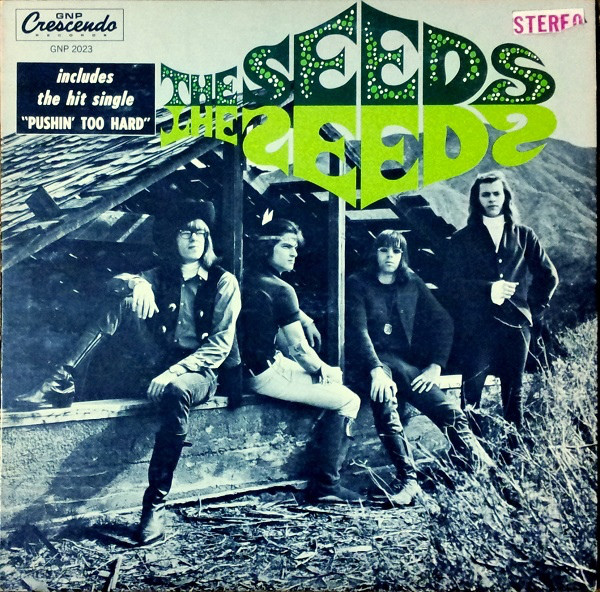
This include The Seeds sophomore album A Web Of Sound which was released in October 1966. It was the followup to The Seeds which had been released just six months earlier in April 1966. The Seeds was the album which had launched the band’s career, now they hoped to build on that success with their sophomore album A Web Of Sound.
It was hard for The Seeds to believe that their musical adventure had only started a year earlier when the five young musicians founded the band in LA. The Seeds were founded in 1965 and featured charismatic vocalist Sly Saxon who was by far the most experienced member of the band.
He had been a professional musician since the late-fifties and had been releasing singles as Richie Marsh since the early sixties. Sly Saxon who came from Salt Lake City, had moved to Los Angeles to further his musical career. However, he had been treading water until he saw an advert in 1965 looking for musicians to join a new band. This Sly Saxon hoped might be the breakthrough he had been looking for. That proved to be the case, and after an audition Sly Saxon became The Seeds vocalist.
With the lineup of The Seeds finalised, the new band spent time honing their sound. Soon, though, they made their first tentative steps onto LA’s live scene where they secured regular gigs at the Los Angeles nightclub Bido Lito’s. The Seeds were a popular draw with music fans flocking to the venue to see this new band’s high octane performance. Already The Seeds were making their mark on the LA music scene.
Not long after that, The Seeds recorded what would become their debut single Can’t Seem To Make You Mine. With the recording complete, charismatic frontman Sly Saxon started trying to interest record labels in the song. Mostly, it was a case of thanks but no thanks, until he entered the offices of GNP Crescendo Records. They listened to the song and promised Sly Saxon they would get back to him. By then, he and the rest of The Seeds knew not to get their hopes up.
This time it was different, with GNP Crescendo Records getting back to Sly Saxon and telling him how much they liked the song. Not only did they like Can’t Seem To Make You Mine, but they wanted to take The Seeds back into the studio and rerecord it with Marcus Tybalt.
The Seeds agreed and headed into the studio with Marcus Tybalt, where they rerecorded Can’t Seem To Make You Mine. It was then released by Crescendo and picked up by Santa Monica based radio station KBLA. Soon, other radio stations had picked up on Can’t Seem To Make You Mine, and this future cult classic became a regional hit in Southern California. After just a few months together, already The Seeds already had a regional hit single to their name which was a dream come true for the band.
While The Seeds celebrated the success of Can’t Seem To Make You Mine, guitarist Jeremy Levine announced that he was leaving the band for personal reasons. This was a huge blow for The Seeds who looked as if they were on the verge of making a breakthrough.
With The Seeds now a quartet, they returned Los Angeles’ vibrant live scene, where people were starting to take notice of this, new up-and-coming band who had just scored a hit with Can’t Seem To Make You Mine. By then, The Seeds’ popularity was rising and they became a firm favourite of audiences across LA. They were impressed by The Seeds’ high octane, energetic performances as they showcased the new garage rock sound that they were pioneering.
The Seeds.
Although The Seeds spent much of their time playing live, they were already working on their eponymous debut album. Frontman Sly Saxon had dawned the role of The Seeds’ songwriter-in-chief and had penned ten of the twelve tracks that featured on The Seeds. He also wrote Evil Hoodoo with Daryl Hooper and penned No Escape with Jan Savage and Jimmy Lawrence. These twelve tracks were recorded at Columbia Studios, in Hollywood.
At Columbia Studios, Sly Saxon co-produced The Seeds with Marcus Tybalt who had masterminded their debut single Can’t Seem To Make You Mine. When the recording sessions began, drummer Rick Andridge wasn’t joined in the rhythm section by vocalist Sly Saxon who it was thought played bass on The Seeds recordings. Instead, Daryl Hooper who played keyboards, organ melodica and piano, laid down the bass parts using a bass keyboard. Meanwhile, Jan Savage took charge of the bass parts on The Seeds. Eventually, The Seeds had completed their much-anticipated eponymous debut album which would be released by GNP Crescendo Records.
In April 1966, The Seeds were just about to release their eponymous debut album The Seeds. Critics on hearing The Seeds were won over by this classic-in-waiting. The Seeds featured an irresistible fusion of fuzzy guitars, bubbling Hammond organ and Sly Saxon’s vocal which seems to have been inspired by everyone from Mick Jagger to Buddy Holly and Eddie Cochran. When The Seeds was released, it was to plaudits and praise, and nowadays, the album is regarded as a garage rock classic. Indeed, many critics believe that The Seeds is the finest garage rock album ever released.
On its release, The Seeds sold well and reached 132 in the US Billboard 200. Meanwhile, a decision was made to reissue Pushin’ Too Hard which had been released in 1965. While it failed to chart first time round, this time, Pushin’ Too Hard reached thirty-six in the US Billboard 100 and forty-four in Canada. Later in 1966, Can’t Seem To Make You Mine was also reissued and reached forty-one in the US Billboard 100 and thirty-three in Canada. Things were looking good for The Seeds, as their thoughts turned to their sophomore album A Web Of Sound.
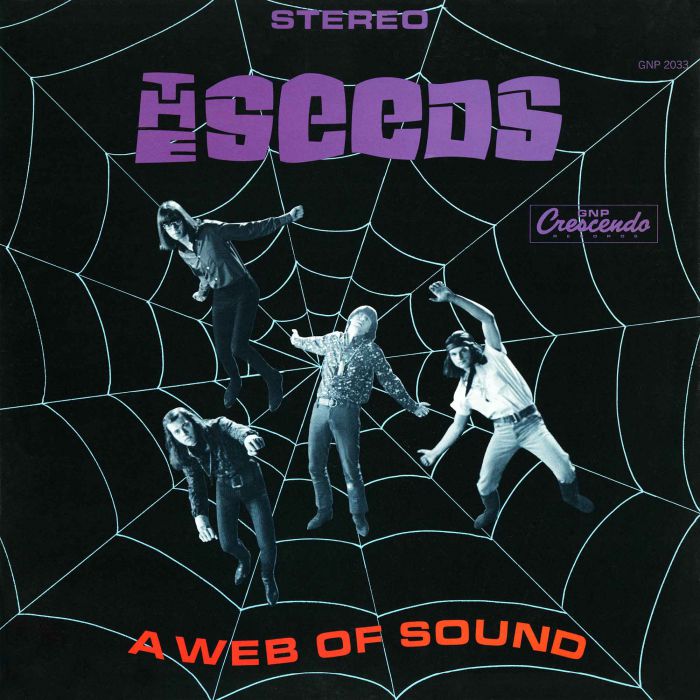
A Web Of Sound.
By the time The Seeds began work on A Web Of Sound, they had been working tirelessly since early 1965. They were now a familiar face and favourite on LA’s live scene. All The Seeds hard work was paying off and they had established a reputation as one of the most innovative bands of the mid-sixties. The Seeds were known to push musical boundaries to their limits as they created music that was best described as eclectic. Despite that, many people still referred to The Seeds as a garage band. However, The Seeds added elements of acid rock, proto-punk and psychedelia to their music. Their sophomore album A Web Of Sound was going to be a very different album to The Seeds.
Just like their debut album The Seeds, Sly Saxon was songwriter-in-chief on A Web Of Sound. On Tripmaker and Rollin’ Machine, the mysterious Marcus Tybalt was credited as one of the songwriters. However, this was just an alias of Sly Saxon who wrote Mr. Farmer, I Tell Myself, Rollin’ Machine and Up In Her Room. Sly Saxon and Darryl Hooper teamed up to write Pictures and Designs, Tripmaker and A Faded Picture. The pair then wrote Just Let Go with Jan Savage. These eight tracks were recorded during July 1966.
The Seeds recorded A Web Of Sound at RCA Victor and Columbia Studios in Hollywood. The sessions started on the ‘5th’ of July 1966 with Sly Saxon using the alias Marcus Tybalt taking charge of production. This time around, drummer Rick Andridge was joined by Harvey Sharpe who was brought onboard for the A Web Of Sound. Completing the rhythm section was Jan Savage who laid down all the guitar parts. Darryl Hooper switched between celeste, organ and piano, while vocalist Sly Saxon added percussion and played piano. After twenty-four days A Web Of Sound was completed on the ‘29th’ of July 1966. It was a very different album to their debut The Seeds.
Critics on hearing A Web Of Sound, realised just how far The Seeds had come in a relatively short space of time. In just six month, their music had progressed, and it looked as if The Seeds were going to match their LA based contemporaries like The Doors and Love every step of the way. That was the case with A Web Of Sound, which was an album of two very different sides.
A Web Of Sound marked the start of a new chapter in The Seeds career, as they broadened their musical horizon on what was a much more eclectic album. The Seeds incorporated elements of acid rock, blues, garage rock, proto punk and psychedelic rock on album that was embraced by the hippies. They were won over by A Web Of Sound which they believed was an unconventional album that featured open-ended songs which appealed to their mindset. These songs eschewed the carefully plotted thoughts and didacticism of the majority of songs on the charts, and left plenty of room for interpretation. The Seeds songwriter-in-chief Sly Saxon was an unlikely hero for the hippies.
Side One.
Sly Saxon and the rest of The Seeds took the hippies on a walk on the wild side during A Web Of Sound. It opened with light-hearted and almost joyous proto-psychedelia of Mr. Farmer, where washes of swirling organ helps drives the arrangement along as Sly Saxon struts his way through the song, as he revels in his role as frontman. It’s a similar case on the stomping psychedelic garage rock of Pictures and Designs. Sly Saxon unleashes a vampish vocal powerhouse as cascading keyboards reminiscent of those on Pushing Too Hard play a leading role in the sound and success of the song.
Tripmaker features a driving, gritty,, genre-melting arrangement that incorporates elements of garage rock, psychedelic rock and proto punk. That is the perfectly description of Sly Saxon’s swaggering vocal, which must have influenced a generation of punks a decade later. Here, The Seeds don’t take themselves too seriously, briefly adding sound effects to a mix that features blistering guitars, keyboards as drums that power the arrangement along. The result is a fist pumping anthem that straddles disparate genres.
Suddenly, it’s all change on I Tell Myself where a heartbroken Sly Saxon tries not to reveal his sensitive side as he spits out a bravado fuelled and emotive vocal. Meanwhile, washes of weeping guitar are added to the genre-melting arrangement which features elements of acid rock, blues, garage rock, proto-punk and psychedelia. They play their part in this heady and potent musical brew that shows another side to The Seeds’ music. It’s a similar case on A Faded Picture, where the tempo drops and Sly Saxon sounds not unlike Mick Jagger on this slow, bluesy and lysergic soul-baring song which is one of the most underrated songs The Seeds recorded.
Quite different is the jaunty Rollin’ Machine which canters along as washes of bluesy guitar give way to keyboards and washes of swirling and bubbling Hammond organ. Meanwhile, Sly Saxon delivers the lyrics to this latest open-ended song which were embraced by the hippies. Later, a searing, fuzzy guitar is added as this cinematic fusion of acid rock, blues and psychedelia takes shape and showcases just how versatile, innovative and imaginative The Seeds were by the time they released A Web Of Sound.
Side Two.
The second side of A Web Of Sound opened with the cinematic sounding psychedelia of Let Her Go. It finds Sly Saxon unleashing a needy, pleading vocal as the arrangement veers between mesmeric to driving. By then, Jan Savage has unleashed his fuzzy guitar which gives way to the swirling Hammond that adds a progressive sound. They play their part in an arrangement that is a perfect foil to Sly Saxon’s vocal which later, becomes an urgent, hopeful powerhouse.
Up In Her Room which closes A Web Of Sound, is a near fifteen-minute epic, with lyrics that hints at sex and drugs which were no longer taboo subjects. This after all, was the beginning of an era when free love and experimenting with drugs was seen almost regarded as de rigueur. However, during Up In Her Room The Seeds enjoy the opportunity to stretch their legs and experiment musically. To do this, they deploy a bottleneck guitar, electric fuzz-bass, Fender Rhodes and tambourine which combine with the drums that provide the heartbeat. Over the next fifteen minutes, The Seed push musical boundaries to their limits and fuse disparate genres on this epic musical workout. It’s another reminder of just how versatile and innovative The Seeds were on a track that signalled the start of a new chapter in The Seeds’ story.
When A Web Of Sound was released in October 1966, the album wasn’t a commercial success initially. This changed after the reissue of Pushin’ Too Hard gave The Seeds another hit single. Suddenly, record buyers started investigating The Seeds’ sophomore album A Web Of Sound which had slipped under the radar. While it sold reasonably well, A Web Of Sound was a cult album that failed to replicate The Seeds. It was only later that A Web Of Sound would be embraced by a much wider audience.
By then, critics, cultural commentators and record buyers realised that A Web Of Sound was a stepping stone for The Seeds, as their sound continued to evolve on their third album Future.
While The Seeds had pushed musical boundaries to their limits on The Seeds and A Web Of Sound, they blew these limits away on Future. The result was a mind-blowing fusion of psychedelia, garage, rock and pop that veered towards jazz and soul.Eclectic doesn’t even come close to describing Future. It’s a minor classic that is a long way from The Seeds roots as a garage band. However, listening to A Web Of Sound it’s obvious that The Seeds were in the process of changing.
Although the basis for many of the songs on A Web Of Sound is garage rock, there’s much more to the album that than. Garage rock was part of The Seeds’ recipe, as they added elements of acid rock, demonic blues, proto-punk, psychedelia. The result was a heady and potent musical brew that showcased a truly talented and versatile band who were musical pioneers. That had been the case since they released The Seeds in April 1966.
Six months later, when The Seeds released A Web Of Sound it was as if they had let their imagination run riot as they created an album of groundbreaking, inventive and innovative music. Sometimes, The Seeds fused disparate genres that under normal circumstances shouldn’t have worked together. However, The Seeds were no ordinary band, and this talented band of musical mavericks led by songwriter, producer and vocalist Sly Saxon, they recorded the cult classic Web Of Sound in less than a month.
During July 1966, musical magpies The Seeds, collect musical genres and influences which are added to their lysergic melting pot. All that is left is for The Seeds, especially producer Sly Saxon to add some secret ingredients. A Web Of Sound was then left to cook for twenty-four days and nights. When this musical melting pot was removed from the musical oven, the world were introduced to the most ambitious, eclectic and innovative album of The Seeds’ short career, A Web Of Sound. It featured songs about sex, drugs and rock ’n’ roll as Sly Saxon sometimes strutted his way through songs, and other times, preached to converted on their cult classic A Web Of Sound which was a pioneering and unconventional album that showcased the different sides to The Seeds, who were much more than a garage band.
Cult Classic: The Seeds-A Web Of Sound.
CULT CLASSIC: CRAIG PEYTON GROUP-PYRAMID LOVE.
Cult Classic: Craig Peyton Group-Pyramid Love.
For Craig Peyton, the founder member of Band X, 1976 was the most important year of his nascent musical career. It was the year they released their debut album The Best Of Band X. However, The Best Of Band X a private pressing, wasn’t a commercial success and instead, this innovative, genre-melting album passed record buyers, critics and cultural commentators by. Band X were left licking their wounds. They had hoped would be the start of a successful career but that wasn’t to be. Instead, Band X split-up, and its founder Craig Peyton moved on.
Craig Peyton’s next musical venture was the Craig Peyton Group, which featured bassist Victor Preston and reeds-man Al Gryzb of Band X. They were joined by guitarist Willie Upshaw and drummer and percussionist Chris Meisel. This was the lineup that recorded the Craig Peyton Group’s debut album Pyramid Love, which was released in 1977, on Broken Records.
Pyramid Love was a very different album from Band X’s debut The Best Of Band X. Gone was the experimental sound of Band X. Replacing it was a jazzier sound. Essentially, this was a return to Craig’s roots. He’d grownup listening to, and playing fusion. Add to fusion elements of blue-eyed soul and rock, and this describes Pyramid Love, the Craig Peyton Group’s debut album, which was recorded in May 1977.
Members of the Craig Peyton Group wrote eight songs for Pyramid Love. Craig penned Snow, Pyramid Love, Marjorie and Waiting. Craig Meisel wrote Fire and Ice and Willie Upshaw Plupts 77. The other two tracks were written by former members of Band X. Bassist Victor Preston contributed Painted Desert and reeds-man Al Gryzb penned Funky Boogie. These seven tracks became Pyramid Love, the Craig Peyton Group’s debut album.
Recording of Pyramid Love took place during May 1977, with Craig Peyton producing. Two studios were used. Long View Farms was where Band X recorded The Best Of Band X. The other studio used Intermedia Sound. Craig played electric vibes, elka strings, orgasmitron and added vocals. Willie Upshaw played guitar, Chris Meisel drums and percussion and Victor Preston electric bass, string bass, trombone and trumpet. Al Gryzb added reeds, bassoon and clarinet. Once the eight tracks were recorded, Pyramid Love was released later in 1977.
Just like The Best Of Band X, Pyramid Love was an independent release. It was released in 1977, on Broken Records. Sadly, lightning struck twice for Craig Peyton. Pyramid Love suffered the same fate as The Best Of Band X. On its release, it disappeared without trace. This was the case with a plethora of independent releases during the seventies. Pyramid Love didn’t find the audience it deserved in 1977. That wasn’t the end of the story.
Fast forward thirty years, and somewhat belatedly the Craig Peyton Group’s debut album Pyramid Love had became a collectable. Just like The Best Of Band X, Pyramid Love had been discovered by discerning record collectors. Soon, word spread about this little known album. With the Band X connection, Pyramid Love became a highly prized album which is a cult classic.
Snow, which opens Pyramid Love, allows the Craig Peyton Group to stretch their legs. Just the drums open the track, before an uber funky bass and lightning fast vibes glide across the arrangement. They’re joined by a braying horn. Soon, the Craig Peyton Group settle into a groove. The rhythm section sashay along, while guitarist Willie Upshaw unleashes a blistering guitar solo. Along with the sashaying rhythm section and Craig’s vibes, they showcase just what the Craig Peyton Group are capable of. In this case, it’s funky, dance-floor friendly music.
Pyramid Love has a much more understated sound. Just the thoughtful sound of the vibes set the scene for Craig’s needy, hopeful vocal. He sings call and response, before this slice of blue-eyed soul gets funky. That’s down to the rhythm section and a blazing horn. Stabs of urgent drums and searing guitars join the funky rhythm section and grizzled horn. Soon, the Craig Peyton Group are in full flow. The result is a track that’s veers between funky, jazz-tinged and soulful to understated and dramatic.
Straight away, Funky Boogie sounds like a musical pastiche. There’s a nod to the Charleston and an English pastoral sound. That’s down to reeds-man Al Gryzb and Craig on vibes. They play starring role, continue to do so. After that, the arrangement floats, and glides elegantly away. Later, with the rhythm section driving the arrangement along, it heads in the direction of fusion. This is no ordinary fusion. Instead, it’s a laid-back brand of fusion. Only, later do the Craig Peyton Group briefly kick loose. Briefly, the English pastoral sound returns and the Craig Peyton Group bid their farewell on this laid-back slice of fusion.
The understated arrangement to Marjorie meanders into being. Then when Craig’s vocal enter, he takes the track in the direction of blue-eyed soul. Meanwhile, the rest of the Craig Peyton Group drive the funky arrangement along. Bassist Victor Preston plays a starring role. So does guitarist Willie Upshaw. He unleashes some blistering licks. Not to be outdone trumpeter Al Gryzb and Craig on vibes joins in. By now, the Craig Peyton Group are in full flow. It’s a joy to behold, as they’re a tight, talented band. As for Craig, he delivers his best vocal. Heartfelt and emotive, this inspires the rest of the Craig Peyton Group, as they fuse blue-eyed soul, funk, jazz and rock.
Plupts 77 is the polar opposite of the previous track. It’s an adrenaline fuelled, genre-melting track. Think Weather Report and that’s a starting point. Screaming, searing, blistering guitars join the rhythm section and Craig’s vibes. Bursts of growling horns enter, as machine gun guitars are unleashed. From there, there’s diversions via jazz, fusion, rock and space funk, courtesy of the synths. What Plupts 77 shows, is that the five members of the Craig Peyton Group, individually were gifted musicians. When the solos come round, none of them are left lacking. Far from it, they revel in the opportunity to showcase their talents. Stealing the show, however, is guitarist Willie Upshaw, who delivers a series of breathtaking solos.
Waiting sees the tempo drop and a dreamy, wistful sounding track take shape. It’s the rhythm section and vibes that set the scene. Meanwhile, washes of guitar reverberate. Horns bray, drifting above the arrangement. For the time being, it becomes a dreamy, lysergic soundscape. That’s until Craig’s vocal enters. It shimmers, before becoming urgent and dramatic. The arrangement reflects the drama and urgency in Craig’s vocal. Then later, the arrangement becomes a vehicle for Al Gryzb’s braying horn and to some extent, Craig’s vibes. After the arrangement is stripped bare, it slowly and gradually rebuilds. Eventually, it becomes a droning, dramatic, futuristic epic, where reeds-man Al Gryzb becomes a sonic explorer.
Driving, dramatic, urgent and rock describes Fire and Ice. As the rhythm section provide a backdrop for the rest of the Craig Peyton Group, a marriage of funk, fusion and rock emerges. Al Gryzb’s sultry horn soars above the arrangement. Meanwhile Craig delivers a vibes masterclass. This inspires the rest of the Group. Especially, guitarist Willie Upshaw. He delivers a series of lightning fast, scorching, searing solos. With the choppy rhythm section and vibes for company, Willie more than plays his part in this musical opus.
Painted Desert closes Pyramid Love. From the get-go, the Craig Peyton Group drive the arrangement along. The rhythm section and a melancholy horn become one. Then they slow things down, before going through the gears and kicking loose. This gives them the opportunity to showcase their considerable talents. Craig adds vibes and Willie unleashes some crystalline guitar solos. After three minutes of this eight minute epic, it’s all change. A futuristic sound gives way to what’s best described as a marriage of ambient, avant-garde, experimental and modern classical. A cinematic sound emerges, before a futuristic, sci-fi inspired fusion of free jazz and space funk takes shape. It’s a truly captivating track, where the Craig Peyton Group take you in the most unexpected directions. Latterly, a much more orthodox combination of fusion and rock emerges, as the track reaches a dramatic crescendo.
Just a year after the release of Band X’s groundbreaking debut album, The Best Of Band X, Craig Peyton returned with his new group, the Craig Peyton Group. Their debut album, Pyramid Love, was a similarly ambitious, innovative album. However, this didn’t seem to matter. Still, it passed record buyers by.
The problem was, Pyramid Love was released on an independent label, Broken Records. Small labels were unable to compete with the budgets of majors. They couldn’t get their records on radio or in the racks of major record shops. Instead, the best that the Craig Peyton Group could hope for, was that Pyramid Love would be a local hit. Maybe then, Pyramid Love would be picked up by a bigger label. Then, maybe, the Craig Peyton Group would find the audience their music deserved. Sadly, that wasn’t the case. Just like Band X’s debut album The Best Of Band X, the Craig Peyton Group debut album, Pyramid Love wasn’t a commercial success. However, this wasn’t because of the music.
Far from it. Just like Band X, the Craig Peyton Group were musical pioneers. They didn’t stick to one musical genre and combined everything from blue-eyed sound, classical, funk, fusion, pastoral, psychedelia, rock and space-funk. Elements of each and every one of these genres can be heard on Pyramid Love which is an album of eclectic music. That’s no bad thing.
While some bands resolutely stick by the same sound, that wasn’t for the Craig Peyton Group. They were determined to innovate and create ambitious, groundbreaking music. Back in 1977, very few bands were creating groundbreaking music. Instead, many musicians were jumping on the disco bandwagon. Not Craig Peyton.
With his new band, the Craig Peyton Group, he picked up where he left off with Band X. His new band’s music was just as ambitious, innovative and genre-melting. Just like The Best Of Band X, you never knew what direction the Craig Peyton Group were taking Pyramid Love in. It was another magical, musical, mystery tour. You jumped on and enjoyed the ride. During eight tracks, you heard musical genres melt into one. Sometimes, it was only briefly. Other times, these influences are much more obvious on Pyramid Love the one and only album from the Craig Peyton Group.
After Pyramid Love was released in 1977, the Craig Peyton Group released no further albums. Just like Band X it was the end of the road for this short-lived and talented group.
Forty-two years later and original copies of Pyramid Love are almost impossible to find, and this highly collectable album is much prized amongst discerning record collectors. Pyramid Love, the Craig Peyton Group’s 1977 groundbreaking, genre-defying debut album is cult classic that should’ve enjoyed commercial success and critical acclaim upon its release, and a reminder of a truly talented band who should’ve gone on to greater things. Sadly, that wasn’t to be and it’s only recently that the Craig Peyton Group and their only album Pyramid Love is receiving the recognition it so richly deserves.
Cult Classic: Craig Peyton Group-Pyramid Love.

CULT CLASSIC: THE CONTEMPORARY JAZZ QUINTET-LOCATION.
Cult Classic: The Contemporary Jazz Quintet-Location.
Many record buyers have a wish-list of albums that are their holy grail, and which they spend a lifetime searching for, in the hope that they can add these elusive albums to their lovingly curated collection that they’ve built up over several decades. For many fans of jazz music, their holy grail are the six albums released by the short-lived Detroit-based Strata Records which was founded in 1969 by jazz pianist and composer Kenny Cox who led The Contemporary Jazz Quintet.
Four years after founding Strata Records, Kenny Cox’s nascent label released its first release which was The Contemporary Jazz Quintet’s third album Location 1973, and followed in the footsteps of Bert Myrick’s Live ’N’ Well and Lyman Woodard’s cult classic Saturday Night Special. Location marked a new chapter in the story of The Contemporary Jazz Quintet whose roots can be traced back to the late-sixties.
That was when Detroit-based DJ Jack Springer told jazz pianist and producer Duke Pearson about Kenny Cox and The Contemporary Jazz Quintet, who had been together less than a year, but were already a popular draw in Motor City where they were regarded as one of the top up-and-coming jazz bands. Not long after this, Duke Pearson was heading to Detroit where he was about to record Kenny Cox and The Contemporary Jazz Quintet. He was determined to steal a march on the competition, and be the first person to record Kenny Cox and The Contemporary Jazz Quintet.
When Duke Pearson arrived in Detroit, he discovered that Kenny Cox and The Contemporary Jazz Quintet had never recorded a session before. This didn’t worry Duke Pearson who realised that Kenny Cox and The Contemporary Jazz Quintet were talented and potentially, had a bright future.
They were led by pianist Kenny Cox, a graduate of the Detroit Conservatory Of Music who was joined in the rhythm section by drummer Danny Spencer and bassist Ron Brooks. Completing the lineup was trumpeter Charles Moore and tenor saxophonist Leon Henderson, who was the brother of Joe Henderson. However, soon, Duke Pearson discovered that the Quintet weren’t just talented musicians.
Duke Pearson discovered that some of the material they were about to record had been written by Kenny Cox and The Contemporary Jazz Quintet. Much of the material Duke Pearson recorded would eventually feature on Kenny Cox and The Contemporary Jazz Quintet’s debut album.
Introducing Kenny Cox and The Contemporary Jazz Quintet.
Having discovered Kenny Cox and The Contemporary Jazz Quintet, they signed to Blue Note Records in 1968, which was one of jazz’s leading labels and home to the most talented musicians and bands. Talent certainly was something that Kenny Cox and The Contemporary Jazz Quintet weren’t lacking as they arrived to record their debut album with producer Duke Pearson and recordist Rudy Van Gender on the ‘12th’ of July 1968.
Just five months later, Introducing Kenny Cox and The Contemporary Jazz Quintet was released on December the ‘9th 1968. It was a carefully crafted album of muscular urban post bop that seemed to have been inspired by Miles Davis Quintet of the late to mid-sixties. Many within Blue Note Records had high hopes for Introducing Kenny Cox and The Contemporary Jazz Quintet, including Leonard Feather who wrote the sleeve-notes. He said: “I predict a bright and momentous future for this latest in a long line of Blue Note discoveries.”
Sadly, Introducing Kenny Cox and The Contemporary Jazz Quintet, wasn’t the success that Blue Note Records had hoped. Despite that, Kenny Cox and The Contemporary Jazz Quintet headed into the studio in 1969 to record their sophomore album, Multidirection.

Multidirection.
This time, Francis Wolff the cofounder of Blue Note Records took charge of production at GM Recording Studios-East, in Detroit, on November the ’26th 1969 as Kenny Cox and The Contemporary Jazz Quintet recorded six new compositions. By then, Kenny Cox and Charles Moore had emerged as the Quintet’s songwriters-in-chief and each contributed three compositions. They became Multidirection, which was released in 1970.
While Kenny Cox and The Contemporary Jazz Quintet’s sophomore album Multidirection was released, it was another album of post bop, and was well received by the critics that reviewed the album. However, by 1970 jazz was changing and fusion was now the flavour of the month amongst the jazz cognoscenti. Some critics saw post bop as yesterday’s sound. Sadly, so it seemed did record buyers, and Multidirection failed to find the audience that it deserved. For Kenny Cox and The Contemporary Jazz Quintet this was a huge disappointment.
Especially when Kenny Cox and The Contemporary Jazz Quintet realised that Multidirection was the last album that they would release for Blue Note Records. Their contract was up, and wasn’t renewed, which left the Quintet without a record label. Or did it?

Strata Records.
Fortunately, Kenny Cox had already founded his own record label Strata Records a year earlier in 1969. Strata Records was based in Detroit, which was home to Kenny Cox and the rest of The Contemporary Jazz Quintet. Detroit was also where Kenny Cox planned to build Strata Records’ new recording studio.
He had earmarked 46 Selden in Detroit as the site of Strata Sound Studios, which would also be the headquarters of Strata Records and would also be used to host concerts. This new facility Kenny Cox hoped would be used by the local community, but was also where the artists who signed to new label Strata Records would record their albums.
With his new label up-and-running, Kenny Cox was keen to sign some artists to Strata Records’ roster. This included The Contemporary Jazz Quintet, as they were now billed. Gone were the days when they were known as Kenny Cox and The Contemporary Jazz Quintet. The Strata Records’ years would be a new start for The Contemporary Jazz Quintet.
Location.
Having signed to a new label and became The Contemporary Jazz Quintet, work began on the followup to Multidirection. Eventually, five new compositions had been written, including the first by the members of The Contemporary Jazz Quintet, Bang! It was joined by Kenny Cox’s Tao, Dan Spencer’s Inner Beckoning and Noh Word and Nguzo Saba (Struggle) which were written by Charles Moore. These tracks were recorded in Detroit by The Contemporary Jazz Quintet.
Unfortunately, Kenny Cox’s Strata Sound Studios wasn’t up and running by the time The Contemporary Jazz Quintet began recording Location. It was recorded by a slightly different lineup of The Contemporary Jazz Quintet.
For the recording of Location, The Contemporary Jazz Quintet used two drummers and percussionists including Dan Spencer who had played on the first two albums, and producer Bud Spangler. They were joined in the rhythm section by bassist Rob Brooks, guitarist Ron English and pianist Kenny Cox who like Charles Eubanks also played Fender Rhodes. Leon Henderson switched between tenor and soprano saxophone, while trumpeter Charles Moore also played flugelhorn and percussion. In total, it took nine musicians to record The Contemporary Jazz Quintet’s third album Location.
Once Location was complete, The Contemporary Jazz Quintet’s third album became the first release on Kenny Cox’s Strata Records. Alas, when Location was released in 1973, it failed to find the audience this underrated and oft-overlooked album deserved. Sadly, it was a familiar story with small independent labels, with Strata lacking the financial muscle and expertise to promote Location. This was a huge disappointment for The Contemporary Jazz Quintet.
No wonder, as Location is an album that if it had been released on a bigger label, could’ve transformed the fortunes of the new lineup of The Contemporary Jazz Quintet. Location opens with Bang! which is very different to Introducing Kenny Cox and The Contemporary Jazz Quintet. Gone are the similarities with Miles Davis Quintet from mid to late-sixties as The Contemporary Jazz Quintet play with a newfound freedom and inventiveness as they embrace free jazz which they fuse with elements of post bop in during this explosive album opener.
The tempo drops on Tao, where a lone horn plays, and takes centre-stage before this eleven minute epic gradually reveals its secrets. Space is left within the arrangement while Ron English’s guitar adds to the mesmeric sound as The Contemporary Jazz Quintet continue to play with freedom and inventiveness as their music heads in a new direction. All the time, sounds assail the listener as the music becomes dramatic, hypnotic, but melodic and uplifting as The Contemporary Jazz Quintet shake off the shackles of their musical past and enjoy their playing with their newfound freedom during this musical awakening.
Slow, spacious and thoughtful and almost dreamy describes Noh Word, which meanders along as The Contemporary Jazz Quintet continue to reinvent themselves during this beautiful track.
Horns and Fender Rhodes unite and play with speed and urgency on Nguzo Saba (Struggle) before the drums enter. They’re pounded and played with the same urgency before just the Fender Rhodes remains, and takes centre-stage. Soon, the cymbals and drums are being pounded, but don’t overpower the Fender Rhodes, before a horn is played with speed, power, passion and control. Before long, the rest of the Quintet is playing their part during this impressive and innovative genre-meting jam.
Inner Beckoning which closes Location is a thirteen minute epic, which initially has a ruminative and reflective sound, but later, there’s a restlessness which was the case in Detroit in 1973 when Location was released. By then, Motown had headed to LA, inflation was high, interest rates rising and unemployment was starting to rise as the recession hit the motor industry. Later, restlessness gives way urgency as if The Contemporary Jazz Quintet realise that things have to change not just in Detroit, but across America
After the release of Location in 1973, the album disappeared with trace and the only people who discovered the delights of this underrated and oft-overlooked hidden jazz gem were record buyers who found a copy in the racks of second-hand record stores. However, that wasn’t the end of Kenny Cox’s Strata Records.
In 1974, Bert Myrick’s album Live ’N Well was released on Strata Records, and despite the quality of music, failed to find an audience. This was what had happened to The Contemporary Jazz Quintet’s album Location a year earlier. Lightning had struck twice for Kenny Cox’s Strata Records.
Despite what he hoped were teething problems for Strata Records, Kenny Cox’s label continued to release ambitious, exciting and groundbreaking albums. Detroit jazz collective Sphere’s debut album Inside Ourselves was released later in 1974, but sales very few copies of this innovative album were sold. It was a similar case when Maulawi released their eponymous debut album in late 1974. Although it was only Strata Records fourth release, none of the albums had been a commercial success.
As 1975 dawned, Strata Records made plans for their next release, which was The Lyman Woodard Organisations’ debut album Saturday Night Special. Funky and soulful, it was an album that should’ve found a much wider audience. Sadly, it wasn’t to be, and after five albums time was already running out for Strata Records.
When Larry Nozero’s Time which featured Dennis Tini was released later in 1975, it was another ambitious album that veered between jazz-funk to soul-jazz and contemporary jazz. However, when Time failed commercially, it was the end of the road for Strata Records, and Kenny Cox’s label closed its doors for the last time in 1975.
Ironically, as the years passed by, there was a resurgence of interest in the six albums released by Strata Records between 1973 and 1975. By then, the albums were incredibly rare, and for those that tried to collect the six albums, this was almost impossible and original copies of Bert Myrick’s Live ’N’ Well, Lyman Woodard’s Saturday Night Special and The Contemporary Jazz Quintet’s Location third album Location continue to elude collectors. Location is an oft-overlooked and underrated album that Kenny Cox’s Strata Records released in 1973.
Location is the album that marked the reinvention of The Contemporary Jazz Quintet. They switch between and fuse elements of free jazz, hard bop and post bop on Location which was an ambitious and innovative album which should’ve found a wider audience. Sadly, commercial success eluded Location, which was the final album from The Contemporary Jazz Quintet who nowadays, are regarded as one of American jazz’s best kept secrets.
Cult Classic: The Contemporary Jazz Quintet-Location.

CULT CLASSIC: AIRTO FOGO-AIRTO FOGO.
Cult Classic: Airto Fogo-Airto Fogo.
During the seventies, Paris born drummer and percussionist Sylvain Krief was one of France’s top musicians. He was also a talented composer, arranger and producer who founded and lead two bands. The first of these bands was Rupture, who released the spiritual jazz classic Israel Suite/Dominante En Blue in 1973.
Three years later in 1976, Sylvain Krief had founded a new band Airto Fogo, who had recorded a new album at Studio Davout in Paris. Little did they know that when Airto Fogo was released by Decca in 1976, it would go onto to become a cult classic.
Nowadays, Airto Fogo is regarded as one of the greatest instrumental jazz-funk and rare groove albums committed to vinyl in Europe. However, while Airto Fogo was popular within the jazz-funk and rare groove community, the album didn’t sell in huge quantities. As a result, copies of the original album are extremely hard to find, and nowadays, change hands for upwards of £250. What is a timeless cult classic transports the listener back to Paris, in 1976.
Three years after the release of Rupture’s critically acclaimed debut album Israel Suite/Dominante En Blue in 1973, drummer and percussionist Sylvain Krief was working on a new project, Airto Fogo. It would be an album of jazz-funk, which would feature some of Paris’ top musicians. Already, Sylvain Krief who had adopted the moniker Airto Fogo, had penned five tracks, Right On Bird, Tuesday In Jackson, Satine Dog, 1973 Carmne Avenue and Just Over. Three other tracks would feature on the album, including Lee Smocky’s High Stakers and On Tip Toe. They were joined by Shadowy and So Be It, which were penned by Gil Pawnee which it has been rumoured is an alias for bassist Gilles Papiri. These nine tracks would be recorded at Studio Davout, in Paris in 1976.
For the recording sessions, Airto Fogo had hand picked a band that featured some of Paris’ top musicians. Joining drummer and percussionist Arto Fago in the rhythm section was bassist Gilles Papiri. They were joined by Michel Coeuriot who switched between piano, keyboards and synths, while Jean Schultheis played percussion. The horn section featured saxophonist Jean-Pierre Thirault, trumpeter Kako Bessot and trombonist Christian Guizien. Lead by drummer, Airto Fogo the multitalented group combined jazz-funk with elements of Blaxploitation and Latin. Airto Fogo was a potent and heady brew, that should’ve proven successful.
When Airto Fogo was released later in 1976, it was to the same critical acclaim that accompanied Rapture’s Israel Suite/Dominante En Blue. However, while Airto Fogo found an audience amongst the jazz-funk and rare groove communities in France, Britain and Canada, the album didn’t sell in huge quantities. It was an underground album, at a time when disco was growing in popularity. As a result, many jazz, funk and soul albums weren’t finding the audience they so richly deserved. That was the case with Airto Fogo.
It was only much later that Airto Fogo started to find a wider audience. Partly, this was due to DJs at jazz-funk and rare groove club nights spinning tracks from Airto Fogo. Suddenly, dancers wanted to know what was the track they were dancing to. Many DJs were reluctant to reveal what was one of their secret weapons, reluctantly revealed that it was Airto Fogo. Soon, dancers and DJs were searching for their own copy of Airto Fogo. Meanwhile, the internet introduced record buyers across the world to Airto Fogo. However, finding a copy was almost impossible. Those who had a copy of the album weren’t selling, and collectors had bought up remaining copies. Suddenly, original French copies of Airto Fogo were changing hands for upwards of £250. Records collectors were desperate to add a copy of Airto Fogo to their collection. No wonder, as it’s one of the greatest European instrumental jazz-funk and rare groove albums. Here’s why:
Right On Bird opens Airto Fogo, and finds Airto Fogo toying with the listener. Tough keyboards join with a funky bass before a blazing saxophone soars above the arrangement. Soon, so do the rest of the horns, while thunderous drums power the arrangement along. Still, the keyboards and bass add a tough, funky sound. It’s omnipresent as the blazing horns dominate the arrangement. Then the saxophone breaks free, it unleashes a scorching solo. When it drops out, the drums nudge the arrangement along before the horns return. That’s until the saxophone breaks free one last time, and reaches new heights, as Airto Fogo powers his way around his drum kit accompanied by the tough, funky sound that comes courtesy of the bass and keyboards. All too soon, this blistering, blazing slice of jazz-funk is over, but it’s set the bar high for the rest of the album.
A dark pulsating keyboard opens High Stakers before the rhythm section, machine gun guitar and blazing horns are joined by stabs of shimmering Fender Rhodes. Soon, Airto Fogo is in full flight, and are unleashing their musical arsenal. This includes synths, choppy, funky guitar licks and glistening Fender Rhodes. Later, a growling synth takes centre-stage, adding a proto-boogie sound, while horns soar above the arrangement as the rhythm section power the cinematic track along. It sounds as if it belongs on the soundtrack to a seventies cop show. Meanwhile, horns and synths continue to play a leading role as Airto Fogo fuse jazz-funk, funk, fusion and proto-boogie before this uber funky and memorable cinematic opus reaches a crescendo.
Straight away, the rhythm section lock into a groove and provide the heartbeat to Tuesday In Jackson. They’re joined by growling, blazing horns, while a guitar wah-wahs and keyboards add a tough sound to the arrangement. By then, the rhythm section and horns are playing as one. They’re augmented by the guitar and keyboards who play important roles. Then midway through the track when a funky synth takes centre-stage, and is augmented by percussion. As the arrangement rebuilds, the synth still enjoys its moment in the sun. When it drops out, blazing horns, funky guitar and keyboards unite and Airto Fogo are in full flight. That’s still the case when the synth returns, and adds the finishing touch to this uber funky track.
Gradually, the arrangement to Satine Dog builds, with instruments being added at just the right time. At first, a lone bass plays and is joined by stabs of growling horns, a Fender Rhodes, drums and a funky, chiming guitar. The final part of the musical jigsaw is the synth which again, takes centre-stage. It’s played slowly but effectively adding a cinematic sound as Airto Fogo jam. When the synth drops out, stabs of synths add an element of drama before the Fender Rhodes makes a brief appearance. Dramatic horns signal the return of the synth, which at one point, is joined by the Fender Rhodes, before this jam reaches a memorable and cinematic crescendo.
A dark piano is joined by Latin percussion On Tip Toe. Soon, the rhythm section and searing guitar are joined by the horns. They play as one, while the rhythm section drive the arrangement along, and are joined by keyboards and a rocky guitar. When Airto Fogo apply the brakes, all that remains is percussion. That’s until Airto Fogo kick loose and a searing guitar, rhythm section and horns power this soulful slice of Latin-tinged jazz-funk towards the finishing line. In doing so, they create one of the highlights of Airto Fogo.
Stabs of horns, the rhythm section and a funky guitar open 1973 Carmen Avenue. They’re determined to grab the listener’s attention. Having done so, keyboards join with a jazz-tinged guitar and the Fender Rhodes. It’s the guitar that takes centre-stage, and unleashes a fleet finger solo. Fingers fly up and down the fretboard, while keyboards, horns and the Fender Rhodes join with the rhythm section which provides the heartbeat. However, it’s the guitar that steals the show, with what’s akin to a breathtaking musical masterclass. It encourages Airto Fogo to reach new heights.
Horns growl and climb slowly above the arrangement to Shadowy. They’re joined by a rasping synth, chirping, chiming guitar and deliberate keyboards. Meanwhile, the rhythm section prove the heartbeat as the horns and synth play leading roles. Later, a blistering guitar enjoys its moment in the sun. So too do the keyboards, albeit briefly. After that, the horns dominate the arrangement, and the rest of Airto Fogo play a supporting role, before Shadowy reaches its dramatic and memorable conclusion.
There’s an element of drama to So Be It, as a snarling synth joins with percussion, keyboards and rhythm section. The arrangement meanders menacingly along. When the horns and funky guitar enter, it’s all change. Suddenly, the darkness is gone. However, when the horns drop out, the dark, menacing sound returns as the arrangement prowls along. That’s until the return of the horns, and darkness gives way to light. Midway through the track, there’s a brief detour via jazz and Latin as the ever progressive Airto Fogo showcase their versatility. Seamlessly, they switch between genres, and at one point there’s a nod to the Blaxploitation soundtracks of early seventies. Later, an effects laden, funky guitar joins with keyboards and percussion before the horns soar dramatically above the arrangement. The guitar returns and joins with squealing horns as this innovative, genre-melting track reaches a dramatic ending.
Closing Airto Fogo is Just Over, where the thunderous drums anchor the 4/4 arrangement as a squawking bass, chiming guitar and tough keyboards join with the Fender Rhodes. Soon, the horns are added, and it’s obvious that they’re the final piece of the jigsaw. Airto Fogo lock down the groove and jam, playing as one. That’s until a scorching saxophone solo is unleashed. Soon, though, Airto Fogo is playing as one. While the horns play an important in Airto Fogo’s sound, the keyboards, guitar and bass all play starring roles in this melodic, memorable and dance-floor track. It seems that Airto Fogo have kept the best until last.
Just Over is one of nine reasons why Airto Fogo is, without doubt, one of the finest European instrumental jazz-funk and rare groove albums ever released. That may seem like high praise, but Airto Fogo is an almost flawless opus, where some of Paris’ top musicians create a cult classic in 1976. Sadly, Airto Fogo was the only album they recorded.
There was no followup to Airto Fogo, which was released by Decca, in 1976. Sylvain Krief who founded and lead Airto Fogo, decided not to record a sophomore album. Maybe that was for the best? After all, it would’ve been almost impossible to improve on Airto Fogo. The starts were all aligned when Airto Fogo was recorded and they had recorded an album that forty-one years later is regarded as the holy grail for collectors of European instrumental jazz-funk and rare groove albums.
That is no surprise given the quality of music on Airto Fogo. It’s primarily an album of jazz-funk and rare groove, but also incorporates elements of funk and fusion to jazz, Latin and rock. Seamlessly, the multitalented and versatile Airto Fogo switch between and combine disparate genres. In doing so, they create music veers between dark and dramatic, to joyous and uplifting, to melodic, memorable and dance-floor friendly. Sometimes, the music has a cinematic quality and on a couple of occasions sounds as if it belongs on a seventies police drama. Having said that, the music on Airto Fogo is truly timeless and forty-one years later, sound just as good as the day it was released.
Nowadays, Airto Fogo is receiving the recognition they so richly deserve for releasing one of the greatest European instrumental jazz-funk and rare groove albums. Having received the recognition it so richly deserved, there’s been another resurgence of interest in Airto Fogo. However, it’s almost impossible to find a copy of Airto Fogo nowadays, and those that become available, change hands for upwards of £250. It’s an epic album and a cult classic that is also one of the greatest European instrumental jazz-funk and rare groove albums ever recorded.
Cult Classic: Airto Fogo-Airto Fogo.

CULT CLASSIC: MOUVEMENTS-MOUVEMENTS.
Cult Classic: Mouvements-Mouvements.
In the late-sixties, self-taught guitarist and jazz aficionado Christian Oestreicher, who was later described as: “a savage in the era of twist and free jazz,” met artist and painter Richard Reimann who was famous for his optical art, at the renowned Aurora art gallery in Geneva, Switzerland. This was the start of a friendship that saw the pair become familiar faces in Geneva’s underground scene which was populated by artists, musicians, painters, poets and writers. Christian Oestreicher and Richard Reimann felt at home within the burgeoning underground scene and were both inspired by the outpouring of creativity that was around them.
Over the next couple of years, the two friends continued their respective careers, until Christian Oestreicher founded a new band Mouvements, having recorded the music the band’s eponymous debut album during 1972, enlisted his friend Richard Reimann to create the artwork.
In 1973, Mouvements was released as a hand-numbered, deluxe box set which featured series of Richard Reimann’s lithographies and inserts. However, only 150 box sets were available and Mouvements’ debut album soon sold out. Since then, it’s been a prized possessions amongst record collectors who cherish their copy of this groundbreaking, ambitious and genre-melting album. album that was recorded by Christian Oestreicher and his musical friends during 1972.
Christian Oestreicher.
By 1972, Christian Oestreicher was a twenty-two year old aspiring musician who still lived in Geneva, where he was born in 1950. He had been introduced to music at an early age by his father, who loved jazz music and used to play everything from Charlie Parker, Duke Ellington, Eric Dolphy, Ornette Coleman and Thelonious Monk. Meanwhile, Christian Oestreicher’s cousin who was eight years his senior, introduced him to R&B, and especially the music of Chuck Berry and Ray Charles. This was all part of his musical education, and part of a voyage of discovery for Christian Oestreicher.
Having discovered and embraced an eclectic selection of disparate music, including jazz, R&B and French twist, it was almost inevitable that Christian Oestreicher would want to make the move from listener to musician. When he did, it was as the drummer in bands playing several bands who played New Orleans jazz and rock ’n’ roll between 1962 and 1964. However, in 1964 Christian Oestreicher’s father gave him a Gibson ES-330 TD guitar and he began to reinvent himself as a guitarist.
Unlike many young guitarists, Christian Oestreicher eschewed lessons, and initially, taught himself to play his newly acquired guitar. By then, he was listening to free jazz and would often play along to the records in his collection. Eventually, Christian Oestreicher realised that he could only go so far without lessons, and for two years was taught by French guitarist Bob Aubert.
By the mid-sixties, Christian Oestreicher’s musical education was at an end, and by then, his interest in free jazz had blossomed and he also became interested in the burgeoning American civil rights movement. This marked the start of a new chapter for the teenage guitarist.
Another new chapter began for Christian Oestreicher when he was eighteen, and started writing his own music. He wanted to write and bring to life the music that he was hearing. To transcribe the music, Christian Oestreicher sat with a paper, pencil and eraser which allowed him to write new compositions. This continued until tragedy struck for Christian Oestreicher.
When he was twenty, he crashed his moped into a pole, which resulted in Christian Oestreicher fracturing his skull and having to spend six months in hospital. For a while, he was in a coma and suffered epileptic seizures, but gradually, his health started to improve.
So much so, that he was able to read Ernest Ansermet’s 1961 book Les fondements de la musique dans la conscience human, which made a big impression on Christian Oestreicher. He was fascinated by a book that explained the theory of music by math and physics. Christian Oestreicher was so inspired by the book that he spent six years studying the subject, and became especially interested in Pierre Schaeffer’s work. This was all in the future.
Before that, Christian Oestreicher met painter Richard Reimann who was famous for his optical art, at the Aurora art gallery in Geneva, Switzerland in the late-sixties. Soon, the pair became friends and familiar faces in Geneva’s underground scene which was populated by artists, musicians, painters, poets and writers. By then, Christian Oestreicher was starting to forge a musical career, and began work on his first musical project Mouvements.
Initially, Mouvements was a double quartet that featured two drummers and bassists which also featured violinist Blaise Catala who later featured on the Mouvements’ album. This genre-melting album was recorded in 1972, at a mansion in Geneva, where Christian Oestreicher led a group of pioneering and maverick musicians.
When recording began at the Swiss mansion began in 1972, guitarist Christian Oestreicher setup three reel-to-reel tape recorders which would capture the music he made with drummer Jerry Chardonnens, pianist Jean-François Boillat and violinist Blaise Catala. The four musicians stood in a circle as they recorded the eight tracks that eventually become Mouvements. It finds the four members of Mouvements fusing and flitting between disparate musical genres that made for unlikely musical bedfellows.
This included free-jazz which was still one of Christian Oestreicher’s first musical loves, and rubbed shoulders with everything from avant-garde, classical, folk, funk, improv, Krautrock, Musique concrète and psychedelic rock. They were combined with Gallic influences and tape effects during the eight tracks that became Mouvements, which was an ambitious, exciting and innovative album.
Side One.
That was apparent from the opening bars of the atmospheric and cinematic Largo Pour Piano et Océan, where a piano accompanies the sound of waves crashing on an empty beach. Initially the piano is played slowly and gingerly, but later block chords with power and frustration which adds an element of drama to this cinematic track. Goutte de Sang En Feu is a captivating fusion of avant-garde, Gallic folk, free jazz and tape experiments where Mouvements play with freedom and fluidity during a track that is innovative and is full of surprises. Despite being called, Hard-Rock Ouverture, elements of avant-garde, free jazz and funk are combined during this seven minute experimental rock epic. Ailleurs is a showcase for Christian Oestreicher’s guitar, which is played with speed and fluidity, as he unleashes washes of music that is rocky, lysergic and bluesy. Alas, this musical masterclass lasts less than two minutes.
7 Contre 4 has an understated ruminative sound, as Christian Oestreicher’s effects-laden guitar plays a leading role. Later, as the tempo increases and his playing becomes choppy and funky. It’s all change on Le Voyage Sperper where tape experiments and Musique concrète are part of the stop-start track, which also includes improv, jazz and rock as keyboardist Jean-François Boillat play a starring role. There’s a hesitant start to Nebel/Leben with drum rolls and washes of wailing feedback becoming part of this genre-melting soundscape. It features elements of psych-rock, free jazz, avant-garde, blues and tape experiments which play their part in an ambitious cinematic track. Closing Mouvements is Mémoire Pulvérisée where a Gallic violin is played with urgency, before tape experiments interject. After that, the arrangement heads in the direction of classical music albeit with a hint of avant-garde, ensuring this groundbreaking album ends on a high.
Once Christian Oestreicher had recorded Mouvements in 1972, he enlisted his friend Richard Reimann to create the artworks to the album. In 1973, Mouvements was released as a hand-numbered, deluxe box set which featured series of Richard Reimann’s lithographies and inserts. However, only 150 box sets were available and Mouvements’ debut album soon sold out. Since then, it’s been a prized possessions amongst record collectors who cherish their copy of this ambitious, groundbreaking and genre-melting album that was recorded by Christian Oestreicher and his musical friends during 1972.
They combined everything from avant-garde, blues, classical, folk, free jazz, funk, improv, Krautrock, Musique concrète, psychedelic rock and tape experiments during Mouvements. What’s incredible about Mouvements, is that the group was no longer a double quartet, and had been scaled back to just drums, piano, violin and guitar which were augmented by the tapes which added another dimension to the music on Mouvements. Sometimes, the tapes add the final piece of the jigsaw like on Largo Pour Piano et Océan, and on Goutte De Sang En Feu they spring a surprise that ensures the listener is always on guard, awaiting the next in a series of surprises and unlikely interjections during their eponymous debut album Mouvements.
Sadly, Mouvements was the band’s only album, and they never returned with a followup. Maybe that was just as well, as they had set the bar high with Mouvements, which is a captivating cult classic that features groundbreaking and genre-melting music that is cerebral, imaginative, thought-provoking and sometimes, is full of surprises as Mouvements showcase their considerable talent during eight tracks lasting forty-two minutes.
Cult Classic: Mouvements-Mouvements.
DANA GILLESPIE-UNDER MY BED.
Dana Gillespie-Under My Bed.
Label: Ace Records.
During a career that has spanned fifty-five years, Dana Gillespie who is regarded by many as the Queen of British blues has released seventy albums. This is quite remarkable as she has recorded albums of folk, pop, rock, soul and even Indian sacred music. However, nowadays, it’s blues music that she’s synonymous with.
The future Queen of British blues was born Richenda Antoinette de Winterstein Gillespie was born in Woking, Surrey, on the ‘30th’ of March 1949. Her fatherHans Henry Winterstein Gillespie was a London-based radiologist of Austrian nobility and the family grew up in leafy Surrey. In 1962, when she was thirteen, Dana Gillespie became the British Junior Water Skiing Champion. However, just a couple of years later she was pursuing parallel careers as singer-songwriter and actress.
Having started off as a folk singer, Dana Gillespie changed direction and embraced the teen pop genre. In 1965, she released Thank You Boy in 1965 which was produced by Jimmy Page. However, a year later and the Surrey born singer made her film debut.
This came when Dana Gillespie featured in the Italian comedy Fumo di Londra which was written, directed and starred by Alberto Sordi. It was released in 1966 internationally as Smoke Over London and Gray Flannels. Having made her film debut, the future Queen of British blues would combine music with a career as an actress, and she featured in fourteen films over the next six decades.
In 1972, Dana Gillespie sang backing vocals on It Ain’t Easy, a track from David Bowie’s classic album, The Rise and Fall Of Ziggy Stardust and The Spiders From Mars. David Bowie and producer Mick Ronson realised Dana was a talented singer-songwriter and produced her 1973 album Weren’t Born A Man. However, this was her only dalliance with rock and after that, she found her real musical love, the blues.
The same year 1973, Dana starred in the original London production of Jesus Christ Superstar at the Palace Theatre when she played Mary Magdalene and appeared on the Original London Cast album. This was her highest profile role on the stage and is what many people will remember Dana Gillespie for.
The name Dana Gillespie means different things to different people. She’s a star of stage, screen, singer and songwriter. However, for many music fans she’s the Queen of British blues and has just released her seventieth album Under My Bed on Ace Records.
For Under My Bed twelve new songs were written over a four-year period with co-producer and guitarist Jake Zait who is a member of the London Blues Band. He wrote the music and Dana contributed the lyrics to the song on Under My Bed. This she does in her now inimitable way.
Dana says: “The music is my inner voice and it tells me what to do. I hear melodies all around me, all the time, so I’m never alone. I always have a song bubbling away in my head.” Almost as if by magic, fully formed songs seemingly appear out of the ether and are recorded by the Queen of the British blue and her tight talented band. Twelve of these feature on her new album Under My Bed.
The lyrics on Under My Bed range from autobiographical to Dana’s observations about life. She turns her attentions to the self important and boastful people who seem to be everywhere nowadays on the album opener Big Mouth. Her tight band get to wrk on a jive-based song while another highlight is Old School a sensual autobiographical track. Oher highlights include the confessional I’m In Chains, the rueful More Fool Me and hurt-fulled Another Heart Breaks. There’s an air of optimism in Walk In Love Today while on album closer Beats Working its as if Dana realises how lucky she is making a loving out making music for fifty-five years.
This she’s loved doing and brings pleasure to her legion of fans. Dana Gillespie the Queen of British blues is a talented singer and songwriter capable of writing witty, cerebral and emotive songs that deal with all sorts of situations including love, heartbreak and heartache Under My Bed with its mixture of putdowns and witticisms is a memorial offering and befitting of her seventieth album.
That is an amazing achievement considering that Dana Gillespie has combined an acting career with music over the past six decades. Still she has managed to record albums of the quality of Under My Bed which marks the welcome return of e the Queen of British blues Dana Gillespie.
Dana Gillespie-Under My Bed.
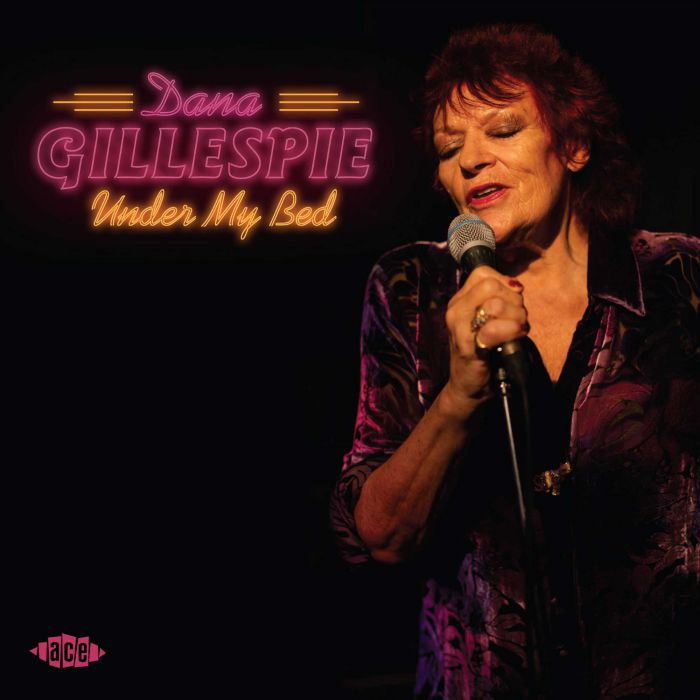
MOVE ON UP: THE SONGS OF CURTIS MAYFIELD.
Move On Up: The Songs Of Curtis Mayfield.
Label: Playback.
Release Date ‘8th’ November 2019.
After the demise of The Impressions in 1970 following the release of Check Out Your Mind, Curtis Mayfield embarked upon a solo career. It spanned three decades and commercial success and critical acclaim were constant companions for the Chicago-born soul man.
Between his 1970 debut Curtis, and 1996s New World Order the former Impression released twenty-seven albums. This included seventeen studio albums, six soundtracks and four live albums. Five of these albums topped the US R&B charts while Curtis, Super Fly and Back To The World were certified gold in America. While these three albums offer a tantalising taste of the considerable talents of Curtis Mayfield the soul singer, he was also a producer, but first and foremost regarded himself as a songwriter.
Many of his songs have been covered by other artists over the past five decades. This includes some of the biggest names in R&B, soul and funk have covered Curtis Mayfield songs from the Queen of Soul Aretha Franklin to Maxayn and Melba Moore to Baby Huey and The Babysitters to Barbara Mason as well as Devon Russell, Gladys Knight and The Pips, Sue Barker and The Staple Singers. They’re just a few of the artists on Move On Up: The Songs Of Curtis Mayfield, which will be released by the Australian label Playback on ‘8th’ November 2019. It features an all-star who cover twenty of Curtis Mayfield’s love songs and his inimitable and timeless socially conscious soul.
Opening Move On Up: The Songs Of Curtis Mayfield is Maxayn’s cover of Check Out Your Mind. It was the title-track from The Impressions’ final album released in 1970. Three years later in 1973, Maxayn released her cover version on the Capricorn label. She delivers an impassioned and soulful vocal breathing meaning into lyrics full of searing social comment. This she does against a carefully crafted and funky backdrop that features a truly talented all-star band. It’s a wonderful way to start any compilation.
Gladys Knight and The Pips covered On and On in 1974. It was arranged by Rich Tulo and produced by Curtis Mayfield. Strings are added to the funky arrangement as The Pips compliment Gladys’ vocal which is impassioned, hopeful and full of optimism. It’s a reminder of one of the greatest female soul singers of her generation at the peak of her powers.
By the time The Staple Singers released Let’s Do It Again as a single in 1975, they were signed to Curtom Records and already had enjoyed two number one singles in the US R&B charts. Let’s Do It Again made it three and the alum topped the US R&B charts. This was the perfect way to start the post-Stax era for Mavis, Pervis, Pops and Yvonne. Together they’re responsible for vocal masterclass which is framed by Curtis Mayfield’s arrangement.
Barbara Mason who is best known for songs like Yes, I’m Ready and Bed and Board, recorded Give Me Your Love for the Super Fly soundtrack. Her vocal veers between playful to seductive and sensuous it’s one of the highlights of a classic Blaxploitation soundtrack which was released in 1972 and set the bar high.
Melba Moore recorded Make Me Believe In You which was arranged and produced by Van McCoy, and released in 1976. Soulful and dancefloor friendly with a needy, hopeful vocal it was for too long an oft-overlooked hidden gem. Eventually it was released as a single in 2017 and makes a welcome return here.
Against a slow backdrop of lush, sweeping, cascading strings The Notations deliver a heartfelt, hurt-filled harmonies on I’ve Been Trying. This struggle ballad was released in 1972 and features a beautifully orchestrated arrangement that is the perfect backdrop to the harmonies as The Notations tug on the heartstrings.
When Aretha Franklin worked with Curtis Mayfield on the soundtrack to Sparkle in 1976, she was no longer enjoying the commercial success she had during the late-sixties and early seventies. This was a chance to rejuvenate her career, and one of the tracks she recorded was Look Into Your Heart. It’s almost tailor-made for the Queen of Soul who implores the listener to “ Look Into Your Heart.” It was no surprise when the song reached ten in the US R&B charts and eighty-two in the US Billboard 100.
Sue Barker is, without doubt, one of Australian music’s best kept secrets. Sadly, this hugely talented singer only released her one album. This was her her self-titled album which was a mixture of soul and jazz and included a stunning cover of Love To The People. It’s just one of many reasons to seek out this hidden gem on an album.
Joanna Teters and Sharon Musgrave joined forces to covered The Makings Of You in 1991. It features a slow, spacious and jazz-tinged arrangement, while Sharon lays bare her soul with a beautiful, heartfelt vocal.
British born singer Geoffrey Williams covered Super Fly on his 2008 album Move Into Soul. It’s never easy covering such an iconic track but this tender, soulful take shows another side to the song.
Move On Up: The Songs Of Curtis Mayfield closes with En Vogue’s rendition of Giving Him Something He Can Feel from 1992. It was one of the most successful covers of a Curtis Mayfield soul. Sharp but smooth, soulful and sensual it’s the perfect way to end this homage to one of the legends of soul musici and a truly talented songwriter.
It can’t have been easy choosing just twenty tracks written by Curtis Mayfield for Move On Up: The Songs Of Curtis Mayfield. There’s so many cover versions to choose from that this could easily have been a double album. However, twenty songs from familiar faces and new names were chosen. Legends of soul, funk and R&B rub shoulders with the likes of Sue Barker who is a welcome addition, and will be a new name to many people. This is the beauty of compilations discovering new artists and new versions of familiar songs. That is on That is the case Move On Up: The Songs Of Curtis Mayfield which will be released by Playback on ‘8th’ November 2019.
Move On Up: The Songs Of Curtis Mayfield finds old friends and new names feature on this lovingly curated compilation of love songs and timeless socially conscious soul from the pen of one the greatest singer and songwriters of his generation.
Move On Up: The Songs Of Curtis Mayfield.
MOTORPSYCHO-ANGELS AND DAEMONS AT PLAY-VINYL EDITION.
Motorpsycho-Angels and Daemons At Play-Vinyl Edition.
Label: Stickman Canada.
Nowadays, not many bands stay together thirty years and longevity seems to be a thing of the past in the music business. Sadly, so is releasing an average of an album a year. That was common in the sixties and seventies but not any more. Very few bands come close to releasing an album a year. Instead, many bands spend several years working on an album. However, there is one band still that average an album a year, Motorpshycho, who have been together for three decades.
Motorspycho were formed in Trondheim, central Norway, in October of 1989. Since then, they’ve become a musical institution. They’re now veterans of the Norwegian music scene, and continue to influence a new generation of musicians. These new bands aspire to follow in the footsteps of Motorpsycho.
They’ve come a long way since releasing their debut album Lobotomizer in 1991. Since then, Motorpsycho have been a prolific band, averaging nearly an album a year. This includes studio albums, live albums, mini albums and collaborations. These albums have been released to critical acclaim and commercial success.
That is almost an understatement. Since the release of their fourth full length album Timothy’s Monster in 1994, Motorspycho’s last fifteen albums have reached the top ten in the Norwegian charts. Motorspycho’s music has also found an audience across Europe, with their albums regularly charting in Belgium, Germany and Holland. They’re also a hugely popular live band, and are familiar faces across Europe and further afield. Motorpsycho it seems, are one of Norwegian most successful musical exports.
Meanwhile, back at home in their native Norway, Motorpsycho have scooped some of the most prestigious musical prizes. This includes an Edvardprisen and a total of four Spellemannprisen Awards. These are the Norwegian equivalent of the Grammy Awards. Winning a Spellemannprisen is a huge honour. Most groups are lucky to be nominated for one award. So far, Motorpsycho have won four. One of the Spellemannprisen awards was for their 1997 double album Angels and Daemons At Play. It was a landmark album for Motorpsycho, and marked their coming of age musically. This makes Angels and Daemons At Play one of the most important albums in Motorpsycho’s back-catalogue. However, how did they get to Angels and Daemons At Play?
Motorpsycho’s musical journey began in Trondheim, in central Norway in October 1989. That was when three local musicians decided to form a new band. They were drummer Kjell Runar “Killer” Jenssen, bassist and vocalist Bent Sæther and guitarist and vocalist Hans Magnus “Snah” Ryan. Now the began to think of a name for their new band.
This is a problem many bands are faced with. The three friends were faced with a similar situation, and were struggling to come up with a name. This problem was solved during a trip to London. The bandmates decided to watch a Russ Meyer double bill featuring Mudhoney and Faster Pussycat. Both would’ve been the perfect name for their new band. However, someone had beaten them to it. One name that was still free, was Motorpsycho, and that day, a Norwegian musical institution was born.
Maiden Voyage.
Recording of Maiden Voyage began on the 29th of April 1990, when How Was I To Know recorded How Was I To Know at UFFA, which was a youth club in Trondheim. It was also a meeting place for local musicians. This was where Motorpsycho returned to, between the 2nd and 6th June 1990. They recorded another four tracks. With one track left to record, Motorpsycho moved to Studentradion on the 6th of June. That was where they recorded Blueberry Daydream. This was the final track that would feature on Maiden Voyage.
Later in 1990, Maiden Voyage was released on cassette as a limited edition, mini album. Only 100 copies of Maiden Voyage were released by the Knallsyndikatet fanzine. It’s now one of Motorpsycho’s rarest releases. Maiden Voyage introduced Motorpsycho’s genre-melting sound to a wider audience. It helped launch the career of Motorpsycho, who in 1990, were a new and up-and-coming band.
Lobotomizer.
Later in 1990, Motorpsycho returned to the studio to begin work on their debut album, Lobotomizer. They recorded six of the tracks on Lobotomizer at the Warehouse, in Oslo during December 1990. Then three months later, in March 1991, Motorpsycho reconvened at Studentradioen. Two more tracks were recorded, Eternity and Lobotomizer. It would lend its name to Motorpsycho’s debut album.
After completing their debut album, another nine more months passed before Motorpsycho released their debut album, Lobotomizer in December 1991. This allowed them to further hone their sound, and continue to build a following. Motorpsycho did this the tried and trusted way, by playing live. By the time, the release of Lobotomizer came round Motorpsycho were already a popular live draw.
Lobotomizer was released by Voices Of Wonder Records in December 1991. Initially, the album was only released on vinyl, as a limited edition of 1,000 copies. This was because Motorpsycho were still a relatively unknown band. Not for much longer though.
When Lobotomizer was released, it was to critical acclaim. Motorpsycho with their unique fusion of grunge with heavy metal and indie rock were hailed as the future of Norwegian music. Things were looking up for Motorpsycho.
Especially, after the shock departure of drummer Kjell Runar “Killer” Jenssen earlier in 1991. That was huge blow for the band. Kjell was replaced by Håkon Gebhardt who made his Motorpsycho debut on the mini album Soothe.
Soothe.
The new lineup of Motorpsycho made their recording debut at Brygga Studios on the 2nd of January 1992. Over the next four days, five tracks were recorded. This included a cover of the Mamas and Papas’ California Dreamin’, which featured Lars Lien on backing vocals. This cover of California Dreamin’ became part of Motorpsycho’s second mini album, Soothe.
Later in 1992, Voices Of Wonder Records were preparing to release the Soothe mini album. It was a limited edition of 100, with seventy copies of Soothe being released in a signed steel box. They would later become highly collectable. Before that, the Motorpsycho success story continued apace.
Again, critical acclaim accompanied the release of Soothe. Critics were won over by Motorpsycho’s fusion of hard rock and psychedelia. Soothe was quite different to previous releases. Already, Motorpsycho’s music was evolving as they continued to reinvent themselves. This would be the case throughout Motorpsycho’s career.
After the release of Soothe, Motorpsycho returned to the studio in July 1992 and recorded their single 3 Songs For Rut. On its release later in 1992, 3 Songs For Rut didn’t receive the same reception as Lobotomizer and Soothe. Gone was the critical acclaim that had accompanied previous releases. For Motorpsycho, self doubt entered the equation, just when everything had been going so well.
8 Soothing Songs For Rut.
Despite the critics reaction to 3 Songs For Rut, Motorpsycho 8 Soothing Songs For Rut decided to included the songs on their sophomore album. This would also feature the songs from the Soothe mini album. These eight songs became Motorpsycho’s sophomore album, 8 Soothing Songs For Rut.
It was released later in 1992, and 8 Soothing Songs For Rutwas well received by critics. They were won over by Motorpsycho’s mixture of hard rock, psychedelia, stoner rock and grunge. Again, this proved popular with Norwegian record buyers. However, not as popular as Motorpsycho’s next album, Demon Box, which was a game-changer.

Demon Box.
After the release of 8 Soothing Songs For Rut, a new name joined Motorpsycho. This was sonic scientist Helge “Deathprod” Sten. His sonic noise experiments would move Motorpsycho’s music in a very different direction as they pondered their next album.
By then, Motorpsycho had only one roll of the dice left. Their contract with Voices Of Wonder Records was almost up. They owed the record company one more album. In such a situation, most groups would’ve tried to replicate their debut album Lobotomizer. However, Motorpsycho weren’t most bands. Instead, they decided to moved their music in a new direction, and in the process, created an ambitious, double album, Demon Box.
Recording of Demon Box took place in December 1992. On a number of tracks, Motorpsycho brought in a few musical friends. Their job was augmenting Motorpsycho’s sound. To create this new sound, Motorpsycho’s friends deployed an eclectic selection of instruments. This included a sitar, violin, mellotron, synths, percussion and organ. None of these instruments had featured on a Motorpsycho album. This was a first, with Motorpsycho and their friends crafting a very different album. Demon Box found Motorpsycho’s music heading in new directions.
During the recording of Demon Box, Motorpsycho drew inspiration from a wide variety of musical influences and genres. This included everything from avant-garde, electronica, folk and free jazz and grunge, to heavy metal, indie rock, jazz, Krautrock, psychedelia and rock. They all shine through on Demon Box. Often, there’s only the merest of glimpses of these influences. However, they can be heard, and made Demon Box a captivating, innovative and progressive album that launched the career of Motorpsycho.
When Demon Box was released later in 1993, Motorpsycho hit the jackpot. Demon Box received praise, plaudits and critical acclaim from critics and cultural commentators. They couldn’t praise Demon Box highly enough. It was a hailed an ambitious, groundbreaking and genre-melting album of innovative music. Suddenly, Motorpsycho were bring described as one of the most important Norwegian bands. Motorpsycho’s plan to reinvent their music had worked, and resulted in a career defining, classic album. Demon Box was also the most successful album of their career. This however, would soon change.
Timothy’s Monster.
After the release of Demon Box, Motorpsycho’s contract with Voices Of Wonder Records came to an end. By then, the success of Demon Box had brought Motorpsycho to the attention of what was, one of the world’s biggest, and most prestigious record labels, EMI. They were keen to sign to sign Motorpsycho, whose star was very much in the ascendancy.
For Motorpsycho, this was a dream come true. They were about to sign to a major label. It was what they had been working towards since 1989. This was the start of a new chapter in the Motorpsycho story.
Motorpsycho decided to launch their career at EMI by recording the most ambitious album of their career. This was Timothy’s Monster, q sprawling triple album that featured fifteen tracks. To record this Magnus Opus, Motorpsycho were joined by Lars Lien and Helge “Deathprod” Sten. He would coproduce Timothy’s Monster with Motorpsycho.
Recording of Timothy’s Monster took place during the winter and spring of 1994. Most of the album was recorded at Brygga Studio, in Trondheim. Some sessions took place at Strype Audio, where the album was later mastered.
Then EMI could prepare for the release of Timothy’s Monster. The release was scheduled for the 6th of August 1994. This was a huge step for Motorpsycho, as Timothy’s Monster was their major label debut.
Before that, the critics had their say on Timothy’s Monster. Just like previous albums, critical acclaim accompanied the release of Timothy’s Monster. Things got even better when the album was released. It entered the Norwegian charts, and eventually reached number seven. For Motorpsycho this was a proud moment.
So was when the album cover for Timothy’s Monster was nominated for the most prestigious Norwegian music award, a Spellemannprisen. At the award ceremony, Timothy’s Monster won Motorpsycho their first Spellemannprisen award. It certainly wouldn’t be the last. Not by a long chalk.
Blissard,
Following the commercial success of Timothy’s Monster, Motorpsycho spent much of 1994 and the early part of 1995 touring. They were determined to build up their following outside of their native Norway. However, by September 1995, Motorpsycho returned to their studio with Bent Sæther and Helge “Deathprod” Sten taking charge of production.
This time around, Motorpsycho decided to change their modus operandi. Rather than spending time experimenting and working on ideas in the studio, Motorpsycho arrived with songs already written and committed to tape. The theory was, that Motorpsycho would be more focused and spend less time recording their new album, Blissard. This new idea worked, and by December 1995, Motorpsycho, with the help of a few of their musical friends, had recorded another ambitious double album Blissard.
Two months later, and EMI subsidiary Columbia were preparing to release Blissard. Just like previous albums, Blissard won over critics, and it was released to widespread critical acclaim. Again, critics were impressed by what was another genre-melting album. Motorpsycho combined alternative rock, avant-garde, electronica, psychedelia and stoner rock on Blissard. It was a captivating album that was sure to capture the imagination of record buyers.
That proved to be the case. When Blissard was released on February 16th, 1996, the album proved popular amongst Norwegian record buyers. The album began to climb the charts, and eventually reached the top ten. Still Blissard kept climbing the charts. Eventually, it reached number three. This made it Motorpsycho’s most popular album. That however, wasn’t the end of the success story that was Blissard.
Later in 1996, Motorpsycho found themselves being nominated for a second Spellemannprisen award. Blissard had been nominated for the best album in the hard rock category. This was always a category where the competition was tough. Despite this, Motorpsycho triumphed when Blissard won the group their second Spellemannprisen award. Soon, two would become three.
Angels and Daemons At Play.
Motorpsycho had just released the most successful album of their seven year career, Blissard. Following this up wasn’t going to be easy. If any Norwegian group was capable of surpassing Blissard, it was Motorpsycho.
Throughout their career, they had built on their previous success. Motorpsycho were determined that this would continue on their sixth album Angels and Daemons At Play. The story began in October 1996, when Motorpsycho entered the studio to record a new album. It would be co-produced by sonic scientist Helge “Deathprod” Sten. He would also feature on Angels and Daemons At Play.
Ever since Helge “Deathprod” Sten first began working with Motorpsycho, their sound had changed. Partly, this was because of the array of instruments and effects used. Similarly, Motorpsycho were now using a much more eclectic selection of instruments. This was the case on Angels and Daemons At Play.
As Motorpsycho and their friends arrived at the studio, they brought began setting up a vast arsenal of musical instruments and effects. Drummer Håkon Gebhardt would play banjo, percussion, piano and add vocals. Bassist Bent Sæther played acoustic and electric guitars, double bass, mellotron, Fender Rhodes, Moog Taurus, percussion, organ, piano and drums on Sideway Spiral I. He too, would add vocals. So would Hans Magnus Ryan, who would play acoustic and electric guitars, bass, double bass, percussion, vibes, piano, organ, Moog Taurus and drums on Atlantic Swing. The three members of Motorpsycho were joined by three of their friends.
This included co-producer and associate member of Motorpsycho, Helge “Deathprod” Sten. He brought with him oscillators, an echoplex, reverators and a ring modulator. Ole Henrik Moe arrived with an alto and soprano saw, violin and would play piano. Morten Fagervik brought with him his guitar, which he played on Atlantis Swing. It was one of fourteen songs that Motorpsycho recorded during October 1997. They were meant to become Motorpsycho’s next album, Angels and Daemons At Play.
Before that, Motorpsycho decided to release the tracks that had been recorded during the sessions as a trio of limited edition E.P.s. Only 500 copies of each E.P. would released early in 1997.
As 1997 dawned, Motorpsycho began to prepare for the release of the three limited edition E.P.s This was a first for them. Never before had they released three E.P.s on consecutive weeks. The first E.P. was due to released in the last week of January 1997.
Baby Scooter.
This was the Baby Scooter E.P It was released on the 27th of January 1997, and featured five tracks. This included Sideway Spiral, Walking On The Water, Heartattack Mac, Pills Powders and Passion Plays and In the Family. These tracks proved popular amongst record buyers in Norway.
When the Baby Scooter E.P. was released, it reached number fourteen in the Norwegian charts. This was just the latest success to come Motorpsycho’s way. That was no surprise as The Baby Scooter E.P. showcases the different sides to Motorpsycho. That had been the case throughout their career, and continued on the next E.P
Have Spacesuit Will Travel.
A week later and Have Spacesuit Will Travel was released on the 3rd of February 1997. It was a very different E,.P. This time, the E.P. consisted of one epic track that featured three parts.
Upon its released, Have Spacesuit Will Travel charted, and eventually, reached number thirteen in the Norwegian charts. Motorpsycho’s decision to release the trio of E.P.s had been vindicated, as it gave them another hit single, and featured the band at their groundbreaking best.
Lovelight.
The third and final E.P. that Motorpsycho released, was Lovelight. It was released on the 10th of February 1997, and featured another six tracks. This included Sideway Spiral II, Like Always, Stalemate, Starmelt, Lovelight, Timothy’s Monster and Atlantis Swing. Again, a myriad of musical genres and influences can be heard throughout Lovelight.
When Lovelight was released, it followed in the footsteps of Baby Scooter and Have Spacesuit Will Travel, and reached thirteen in the Norwegian charts. This meant that each of the E.P.s from the sessions. For Motorpsycho, this augured well for the release of Angels and Daemons At Play. later in 1997.
Angels and Daemons At Play.
Later in 1997, Motorpsycho were preparing to release their sixth album Angels and Daemons. It was a truly eclectic album stylistically, and it wasn’t going to be easy to program the album so that the album flowed. However, Motorpsycho had a plan that would ensure that the album ‘worked’ and made sense sonically.
Motorpsycho wanted Columbia, who in 1997, were owned by Sonym to release three separate versions of the album on CD and LP. This included a shortened CD version that featured just twelve tracks. There would be a three CD box set that replicated the three E.P.s, Disc one would replicate Baby Scooter, disc two Have Spacesuit Will Travel and disc three Lovelight. The vinyl version was a double album. However, given the constraints of vinyl, two tracks were omitted and only fourteen tracks made their way onto the double album. This was a complicated project, and one that took a lot of planning. Producing three different versions of an album was almost unheard of in 1997. Nowadays, it’s commonplace. Not for the first time, Motorpsycho were pioneers.
Now that Motorpsycho had worked out how they wanted to release Angels and Daemons, Columbia started to make plans for the release of the album later in 1997. Eventually,Angels and Daemons At Play was ready for release.
Just like previous albums, critical acclaim accompanied the release of Motorpsycho’s sixth album It was one of their most eclectic album, with Motorpsycho drawing inspiration from a myriad of musical genres and influences. This found favour with the Norwegian music buying public.
Upon the release of Angels and Daemons, it entered the Norwegian charts. It began to climb the charts, and eventually reached the top ten and didn’t stop there. Eventually, it reached number two becoming the most successful album of Motorpsycho’s career. That however, wasn’t the end of the success for Motorpsycho.
Later in 1997, Motorpsycho found themselves being nominated for a third Spellemannprisen award. Angels and Daemons At Play was nominated in the hard rock category. This was the category that Motorpsycho won with Blissard in 1996. They made it two in a row in 1997, when Angels and Daemons won Motorpsycho the third Spellemannprisen award of their career. This they won with what many critics called the most eclectic album of their career.
Angels and Daemons a groundbreaking, genre-melting, classic album, where Motorpsycho combined elements of alt rock, avant-garde, electronica and experimental music with Krautrock, post rock, psychedelia, space rock and stoner rock. All these genres can be heard on Angels and Daemons At Play. Some are only glimpsed briefly, while others play a larger part in the sound and success of Angels and Daemons At Play. It marked a coming of age musically for Motorpsycho, who were also well on their way to becoming one of the most successful Norwegian bands in 1997.
Especially afterAngels and Daemons At Play reached number two in the Norwegian charts, and became the most successful album of Motorpsycho’s career. It also went on to win a Spellemannprisen awards in the hard rock category later in 1997. This was the third Spellemannprisen awards of Motorpsycho’s career so far. The recent reissue on vinyl of Angels and Daemons At Play as a double albumin by Stickman Canada is a reminder of Motorpsycho’s coming of age musically and nowadays, is regarded as one of their classic albums.
Motorpsycho-Angels and Daemons At Play-Vinyl Edition.
DAVE GODIN’S DEEP SOUL TREASURES VOLUME 5.
Dave Godin’s Deep Soul Treasures Volume 5.
Label: Kent Soul.
It’s hard to believe that it’s fifteen years since the passing of Dave Godin, one of the most influential and informative writers on soul music. He was passionate about soul music and wanted to convert agnostics and make believers of them. His passion was obvious in his columns for Blues and Soul, and then later, in the much-missed Soulful Kinda Music magazine. However, Dave Godin who coined them term deep soul, didn’t just write about music.
He also compiled and lent his name to a quartet of lovingly curated compilations of deep soul for Kent Soul. Sadly, Dave Godin’s Deep Soul Treasures Volume 4 was released just a few months before his death fifteen years ago. For many critics it was the finest instalment in the series.
As a mark of respect, Kent Soul didn’t release any further instalments in this much-loved series. That was despite having lists of tracks that David Godin felt were worthy of including on the original volumes. It would’ve been easy enough to compile further compilations. However, this didn’t happen as Kent Soul didn’t want to be accused of cashing in on Dave Godin’s name.
As the years passed, the label managed to secure the rights to various tracks that Dave Godin believed were among the most important in the deep soul genre. These tracks and some from David Godin’s lists became the first instalment in the series for fifteen years. This is Dave Godin’s Deep Soul Treasures Volume 5, which has just been released by Kent Soul, an imprint of Ace Records.
Opening Dave Godin’s Deep Soul Treasures Volume 5 is Who Knows by The Soul City, which was released by Goodtime in 1966. It was penned by William Guest and Gladys Knight, who recorded the song in 1965. This is a heart-wrenching cut that epitomises everything that is good about deep soul.
Helena Ferguson only ever released two singles during her career. This includes Where’s The Party, which was released on Compass in 1969, and showcases a singer with the ability to breath meaning and emotion into lyrics with a vocal that is almost needy.
Despite enjoying a lengthy career, Home Is Where The Hatred Is has to be one of Esther Phillips’ finest recordings. She was accompanied by some top session players and an orchestrated arrangement on a single for the Kudu label which was released in 1972. It’s a soul-baring reading and it sounds as if Esther Phillips had lived the lyrics as as she reinvents Gil Scott-Heron’s classic.
Soul-baring and impassioned describes I Ain’t Got To Love Nobody Else by The Masqueraders, which was released on Bell in 1968. It’s a reminder if any was needed of how good a group the Dallas-based Masqueraders were.
One of the tracks Dave Godin always wanted to feature on one of his compilations was Somebody New by The Emotions. It was released by Twin Stacks in 1968, and features a hurt-filled vocal from the Chicago-based trio. This was just the start of the rise and rise of The Emotions.
(Until Then) I’ll Suffer featured on the album Here Is Barbara Lynn which was released by Atlantic in 1968. It features an emotive, hurt-filed vocal as Barbara Lynn lives the lyrics and makes the pain seem very real.
Ed Townsend wrote and produced Foolish Fool for Dee Dee Warwick. She lays bare her soul for all to see on a single released on Mercury in 1968.
James Carr was one of the greatest soul singers ever, and These Ain’t Raindrops shows just why. It was released on Goldwax in 1969, and is an outpouring of emotion, hurt, sorrow and soulfulness from a musical master craftsman who had the ability to bring a song to life.
Can’t Last Much Longer is a reminder of a vasty underrated soul singers Betty Harris. She recorded for the New Orleans-based Sansu label and this track was one of her finest recordings.
Lovers Always Forgive was written by Van McCoy and released by Gladys Knight and The Pips in 1964. It’s a stunning and sensuous sounding track that more than hints at what was to come from one of the great female soul singers of her generation.
Judy White who was the daughter of bluesman Josh White, recorded Satisfaction Guaranteed for Buddah, which was released in 1969. It showcases a truly talented singer accompanied by some top session players as she delivers an impassioned vocal that is intense and bristling with emotion.
A gospel influence can be heard throughout I Will by Lattimore Brown, which was released by the Renegade label in 1970. Especially the piano that is part of the understated arrangement that accompanies a vocal that is akin to a confessional.
What Can I Do (Without You) was released on the Loma label in 1968, and features a vocal powerhouse from Linda Jones. She’s another vastly underrated soul singer whose music deserves a wider audience.
Nothing Can Change The Love I Have For You by Z.Z. Hill closes Dave Godin’s Deep Soul Treasures Volume 5. It’s a cover of Sam Cooke song that was released on Kent in 1967. However, ZZ breathes life, meaning and emotion into his impassioned reading of this cover version. It closes the compilation on a high.
After the passing of David Godin it seemed unlikely that there would ever be another instalment in the deep soul compilation that he lent his name to. As the years passed by Kent Soul resisted the temptation to release another compilation of what was one of their most popular compilation series’. That was despite having lists of tracks that David Godin felt were worthy of inclusion on the original volumes. It would’ve been easy enough to compile further compilations. This didn’t happen as Kent Soul didn’t want to be accused of cashing in on Dave Godin’s name.
Now fifteen years later and Kent Soul had secured the rights to various tracks that Dave Godin believed were among the most important in the deep soul genre. These were augmented with tracks from his lists. The result was Dave Godin’s Deep Soul Treasures Volume 5, which is a welcome addition to this much-loved series. It features twenty-five tracks by familiar faces and new names that all have one thing in common …quality. These tracks feature deep soul at its finest and epitomises everything that is good about the genre. For a newcomer Dave Godin’s Deep Soul Treasures Volume 5 is the perfect introduction to the genre before discovering the delights of this lovingly curated compilation of beautiful, emotive and heart-wrenching soul music.
Dave Godin’s Deep Soul Treasures Volume 5.

CULT CLASSIC: TOHRU AIZAWA QUARTET-TACHIBANA.
Cult Classic: Tohru Aizawa Quartet-Tachibana.
For many connoisseurs of jazz, especially seventies J-Jazz, one little known private pressing is their holy grail, and everywhere they go is the album they search for. There’s always the hope that in a backstreet record shop, antique centre or thrift store in a town or city somewhere in the world a copy of Tohru Aizawa Quartet’s 1975 album Tachibana way be sitting unnoticed. It’s highly unlikely though, as only a few hundred copies of Tachibana were pressed.
On the rare occasions when a copy of Tachibana is found, and is offered for sale on an online auction or specialist site where vinyl is bought and sold, many jazz collectors will express an interest. However, very few will be able to afford what is one of the rarest J-Jazz albums ever recorded. Currently, there are just three copies of Tachibana for sale, and cheapest is £550 and comes with a sleeve that is graded at very good plus. For some jazz collectors who only by albums in near mint condition, they’re going to have to dig deeper and spend between £820 and £1,150. Sadly, that is beyond the budget of the majority of jazz fans and means they’ll be unable to hear Tohru Aizawa Quartet’s J-Jazz classic Tachibana, which has a remarkable backstory.
The story began in the early seventies when brothers Tetsuya Morimura and Kyoichiroh Morimura decided to form a jazz group. Tetsuya Morimura who was a drummer, had been inspired by his heroes Elvin Jones and Tony Williams, Meanwhile, Tetsuya Morimura’s brother Tetsuya Morimura, who was a saxophonist, was influenced by his heroes John Coltrane, Wayne Shorter and Japanese jazz legend Sadao Watanbe. These musicians and the Morimura brothers love of jazz was why they decided to form a new group.
Prior to this, Kyoichiroh Morimura had been a part of the college jazz scene in Kunitachi Music University, in North Tokyo, and for a while had played with koto master Hideakira Sakurai. Ironically, it was with Hideakira Sakurai that pianist Tohru Aizawa had made his debut. Little did Tohru Aizawa and the Morimura know that their paths were about to cross.
This occurred when the Morimura brothers attended a music festival at medical school in Maebashi, in the Gunma Prefecture, in the norther Kantō region. That night, the brothers saw pianist Tohru Aizawa play for the first time and were captivated by his skills as a pianist. Tohru Aizawa was a couple of older than the Morimura brothers was studying to become a doctor, and also loved jazz music. When Tohru Aizawa and the Morimura brothers met, it wasn’t long before they were planning to form a band together. All they needed was a bassist.
It wasn’t long before Tohru Aizawa and the Morimura brothers met law student and bassist Kozo Watanabe, and the lineup of the nascent quartet was complete. The new quartet they decided to call Mr Aizawa, which would play in local jazz clubs in Maebashi in the Gunma Prefecture.
This included Mokuba, which was situated in Maebashi, and owned by Kohichi Negishi. Mokuba became one of Mr Aizawa’s favourite venues and they soon became the club’s unofficial house band. The more that Mr Aizawa played the better they got, and many of the regular patrons noticed this improvement. Mr Aizawa seemed to improve with each performance and that the music they made was becoming much more melodic. This included a local businessman who had watched with interest as Mr Aizawa improved over the last few weeks and months.
Eventually, Ikujiroh Tachibana who was a local hotelier and huge jazz fan approached Mr Aizawa with an offer that many jazz bands the world over could only have dreamt of. Ikujiroh Tachibana offered to finance and record an album of Mr Aizawa’s music which he would use to promote his various business interests. This included the venue Tachibana Hall, which was situated in Takahashi Machi, in Numata City, which was forty miles from Maebashi. It didn’t take long for the members of Mr Aizawa to accept Ikujiroh Tachibana’s generous offer.
No expense was spared for the recording at Tachibana Sound Hall, Numata, Gunma, Japan. Ikujiroh Tachibana purchased new instruments from the Yukigasa Instrument Store and Mr. Yukimoto ensured the new instruments made their way to Tachibana Sound Hall in plenty of time for the recording of what would eventually Tachibana.
The Tachibana took place in 1975 at Tachibana Sound Hall, where many famous jazz musicians had been invited to play by Ikujiroh Tachibana. Now four students were about to record an album, and no expense was being spared. Kunio Arai an engineer from Trio Kenwood Records had been brought onboard to record and run the sessions, although it was Ikujiroh Tachibana produced the Tachibana. Meanwhile some of the band were preparing to record the album with new instruments.
Drummer Tetsuya Morimura and bassist Kozo Watanabe had new instruments to play, while the final member of the rhythm section pianist Tohru Aizawa, took his seat at a Steinway full concert grand. Saxophonist Kyoichiroh Morimura had a new tenor and soprano saxophone to play for the recordings.
The band that had started life as Mr Aizawa was now called the Tohru Aizawa Quartet, and had written three compositions that were about to be recorded. This included Tetsuya Morimura’s Philosopher’s Stone, Kyoichiroh Morimura’s Sacrament and Tohru Aizawa’s Dead Letter. They were joined by covers of Chick Corea’s La Fiesta and Samba De Orfeu which was penned by Brazilian jazz guitarist and composer Luiz Bonfá. These tracks would become Tohru Aizawa Quartet’s debut album Tachibana.
Later in 1975, Tohru Aizawa Quartet released their debut album Tachibana as a private pressing on Tachibana Record, which had been formed by Ikujiroh Tachibana. It’s thought that anywhere between 150 to 1,000 copies of Tachibana were pressed by Ikujiroh Tachibana as the album wasn’t a commercial release.
Instead, Ikujiroh Tachibana planned to use copies of Tachibana as his business card. Great importance was placed on the exchange of business cards in Japan. It was recognised as part of strict protocol, and part of etiquette that had been established over not just years, but generations. Some business people presented grand and lavish business cards, but a copy of the Tohru Aizawa Quartet’s debut album Tachibana was sure to trump everything. Or so Ikujiroh Tachibana must have thought.
Sometimes when Ikujiroh Tachibana proudly handed over a copy Tachibana, its recipient often discarded the album. They were obviously not a J-Jazz fan.
Ironically the lucky recipient had discarded or given away to their secretary or assistant what would become one of the rarest album J-Jazz albums ever. Especially as there may have only been 150, 200 or 1,000 copies of Tachibana pressed.
It was only much later that the Tohru Aizawa Quartet’s debut album Tachibana became a cult classic amongst jazz fans and especially connoisseurs of J-Jazz. That was no surprise given the quality of this hidden J-Jazz gem.
Tachibana opens with Philosopher’s Stone which was written by Tetsuya Morimura. The track is an energetic percussive workout and a showcase for drummer Tetsuya Morimura’s considerable skills. His playing underpins this muscular track as the Tohru Aizawa Quartet play with urgency, power and freedom as they switch between modal and free jazz.
Sacrament was written by saxophonist Kyoichiroh Morimura and the influence of his heroes Wayne Shorter and John Coltrane, especially his later music. The influence of Pharaoh Sanders can be heard in Kyoichiroh Morimura’s playing. After a prolonged introduction, the rhythm section launch into a busy, swirling groove and Kyoichiroh Morimura unleashes a blazing, scorching soprano saxophone solo . He plays with speed, power and accuracy, as pianist Tohru Aizawa matches him every step of the way. However, Kyoichiroh Morimura steals the show as he pays homage to his hero John Coltrane and also Pharaoh Sanders as he unleashes sheets of sound but resists the temptation to overflow during one of the highlights of Tachibana.
There’s an almost melancholy quality to Tohru Aizawa’s piano during the introduction to La Fiesta. It breezes joyously along with the piano playing a leading role. So does Kyoichiroh Morimura’s saxophone and together, they breath new meaning into the track. Later, Tohru Aizawa delivers a fast and flawless fleet-fingered performance on piano and this seems to inspire the rest of the quartet. Especially Kyoichiroh Morimura, who joined forces with Tohru Aizawa and they play leading roles and play with speed, power and accuracy as they breeze through this Chick Corea composition .
Dead Letter was written by Tohru Aizawa, and features an impressive and energetic performance where the Quartet combine power with urgency. Fittingly, Tohru Aizawa’s piano plays a leading role and sometimes, he seems to have been influenced by McCoy Tyner a stunning performance. Given the quality of his playing during this piece it was no surprise that many thought Tohru Aizawa was destined for greatness. Sadly, Tachibana was his only recording and Dead Letter features his finest hour.
Samba De Orfeu closes Tachibana and finds Tohru Aizawa Quartet race through this cover version. It’s Tohru Aizawa’s piano and Kyoichiroh Morimura’s saxophone that play starring roles. Despite playing at breakneck speed it’s a flawless performance. Tohru Aizawa again showcases his enviable talent during the solos. So does drummer Tetsuya Morimura as he works his way round the kit before passing the baton Tohru Aizawa. He’s joined by Kyoichiroh Morimura and they unite one last time during this joyous sounding race through of Samba De Orfeu, which closes the album on a high.
Tachibana is one of the rarest J-Jazz albums of the seventies, with between 150 and 1,000 copies of the album being pressed. They became Ikujiroh Tachibana’s business card, which he handed out to his business associates. Alas, not every recipient was a jazz fan, and many copies were discarded. This meant that an already rare J-Jazz album became even rarer. That is why an original copy of Tachibana costs anywhere between £550 and £1,200 and is beyond the budget of most jazz fans.
Nowadays, Tachibana is regarded as the holy grail by connoisseurs and collectors of J-Jazz who dream of finding a copy of what’s an almost mystical album and legendary cult classic.
Cult Classic: Tohru Aizawa Quartet-Tachibana.
CULT CLASSIC: HAL BRADBURY-THIS IS LOVE.
Cult Classic: Hal Bradbury-This Is Love.
During the late-seventies and early eighties the Hawaiian music scene was thriving, and generation of artists were making a name for themselves. Many of these artists would go onto release albums. Everyone from songwriters, session musicians and owners of recording studios were enjoying the benefits of the mini-boom. However, much of the music coming out of Hawaii was influenced by the Laurel Canyon sound.
From the mid-seventies onwards, the West Coast of America was the place to be musically. Especially Laurel Canyon. This was home to some of the most successful singer songwriters, including James Taylor, Jackson Browne and Carole King. This group of singers were releasing some of the most successful music of the seventies. It was christened “the Laurel Canyon sound.” Unsurprisingly, the success of the Laurel Canyon sound influenced singers all over the world. This included in Hawaii.
One of these artists was Hal Bradbury who had been a member of The Fabulous Krush. They were one of the most successful Hawaiian groups and were described as ”charismatic, dynamic and superbly talented.” The group were purveyors of “good, clean fun and a happy wholesome entertainment.” Soon, The Fabulous Krush were enjoying commercial success with singles Blame it on the Night, Take Me to the Mountain, Waialua Sky and Hold Tight. They also released their debut album Fabulous Krush in 1979. Before long, they were Hawaii’s favourite band
Two years later, in 1981 The Fabulous Krush won the prestigious Na Hoku Hanohano Awards for album of the year and most promising artist. It seemed that they were on their way to becoming one of Hawaii’s most successful musical exports. Then one of the lead singers dropped a bombshell. Hal Bradbury announced he was leaving to pursue a solo career.
Changes in The Fabulous Krush’s lineup were nothing new. This had been the case since the group’s formed. However, surely not now? The Fabulous Krush were on the verge of something big. Hal Bradbury decided now was the time to pursue his solo career. He haad released a single This Is Love in 1980 on Fan Records. The following year, 1981, Hal Bradbury released his debut album This Is Love on Fan Records.
This Is Love is one of the rarest Hawaiian records of all time. Indeed, it’s one of the rarest record per se. For many crate diggers, a copy of This Is Love is the Holy Grail. They lust over the thought of unearthing a copy. However, they’d need deep pockets to afford what’s been described as: “a masterpiece of Modern Soul and AOR” which was Hal Bradbury’s debut album.
This Is Love is a mixture of cover versions and songs written by Hal. He contributes three songs, Call Me, Babe I Want You and You Send Me. There’s also covers of Sam Cooke’s You Send Me, Lennon and McCartney’s She’s A Woman and the Arlene Matza and Guy Thomas penned You Win I Lose. There’s Peter Allen’s This Time Around, Johnny Slate and Danny Morrison’s Friends and the Tepper and Sunshine composition This Is Love. The other track was By Now, which Don Primmer, Charles Quillen and Dean Dillon. These tracks became Hal Bradbury’s debut album This Is Love.
Recording of Hal Bradbury’s debut album This Is Love took place at Sounds Of Hawaii. Producing This Is Love was Jimmy Funai. The band featured a rhythm section of drummer Mike Kennedy, bassist Bruce Hamada Jr, and guitarist Jimmy Funai. Alan Leong, Kimo Cornwell and Glen Goto played keyboards and sythns, while Mike Lewis played trumpet and Bob Winn saxophone. Backing vocals came courtesy of Bonnie Gearheart, Rachel Gonzales and Kevin I. Once This Is Love was recorded it was released in 1981.
On the release of This Is Love on Fan Records, the album sold reasonably well in Hawaii. This Is it wasn’t a success in the rest of America, where Hawaiian music was popular. Since then, This Is It has been reappraised and is perceived as “a masterpiece of Modern Soul and AOR.” Here’s why.
Just a wistful Fender Rhodes opens This Is Love, the title-track from Hal Bradbury’s debut album. Gradually, the arrangement unfolds, accompanying Hal’s lovestruck vocal. A piano, drum and sweeping harmonies join Hal’s. Bells ring, harmonies coo and the drums add to the drama. Hal delivers a heartfelt, needy vocal. Then at just the right time, the baton passes to the sultriest of saxophone solos. Not only is this the finishing touch to the arrangement, but seems to spur a lovestruck Hal to even greater heights of soulfulness.
From the AOR and soul of the opening track, Hal mixes funk and soul on Call Me. His vocal is needy and urgent. Cooing harmonies float above the funky arrangement. The rhythm section create a sultry backdrop. Lovestruck and tongue-tied, Hal’s insecurity shines through, as he pleads” “Call Me if you can.” His vocal soars above the arrangement, sweeping harmonies, percussion and the rhythm section framing Hal’s needy vocal.
Friends has a Laurel Canyon sound. This really suits Hal. It allows us to hear him at his very best. Again, the Fender Rhodes, rhythm section and harmonies accompany Hal’s tender vocal. Guitars, strings and gentle harmonies provide the perfect backdrop to Hal’s vocal. They’re the perfect foil to Hal’s vocal. His vocal is heartfelt and seductive during this paean. Especially when he sings: “who makes better lover than Friends.”
Hal’s version of She’s A Women transforms The Beatles standard. It’s a fusion of funk, soul, jazz and AOR where new life and meaning is breathed into a familiar track. There’s an urgency in Hal’s vocal. His vocal veers between understated to powerful. Gradually, the band kick loose. The Laurel Canyon sound influence is present. There’s also a nod to Steely Dan. This is a apparent later in the track, when the jazz influence shines through. Along with what appears to be a crack band, Hal transforms She’s A Women into something Lennon and McCartney probably never even envisaged.
A vocoder opens You Win I Loose. It adds an almost eerie, futuristic sound. Then it’s all change. Blazing horns are a game-changer. Short, sharp bursts set the scene for Hal’s needy, sultry vocal. Soul, funk and AOR melts into one. The rhythm section and horns supply the funk, while the harmonies supply the soul. As for Hal, his vocal is a fusion of AOR and soul. Dance-floor friendly, soulful and with hooks aplenty, You Win I Loose is something a hidden gem.
Just a piano accompanies Hal’s vocal on the Laurel Canyon influenced This Time Around. It’s one of the highlights of This Is Love. Partly, that’s because of the understated, melancholy arrangement. It meanders along, the rhythm section and tender, cooing harmonies playing starring roles. Then when the drama builds, a rocky guitar adds the finishing touch to what’s easily, the highlight of This Is Love.
Babe I Want You draws inspiration from everything from funk, reggae, eighties dance music and soul. It’s a melting pot of influences. Bubbling synths, chiming guitars and thunderous drums drive the arrangement along. Meanwhile, Hal’s vocal veers between needy urgent and pleading. A saxophone soars above the arrangement, before banks of synths and drums power the arrangement along. They add to the drama and emotion of Hal’s desperate vocal.
By Now sees the synth set the scene for Hal’s emotive vocal. Synthetic strings sweep in, while the understated rhythm provide the backdrop provide the backdrop for Hal’s wistful vocal. Missing his partner, he imagines she’s missing him, and is about to phone him. That call doesn’t come and it’s only then that Hal sings: “By Now I know how much I love her.” Just like This Time Around, Hal’s at his best delivering ballads which are musical tour de forces.
Sam Cooke’s You Send Me is an oft-covered song, where the definitive version has been recorded. So, bringing something new to the song isn’t easy. However, Hal brings something new to the song. He mixes AOR, soul and even funk with drama and emotion. His vocal is tender and impassioned. Meanwhile a piano, rhythm section and guitars provide an an arrangement that veers between understated and dramatic. Later, the addition of sensual harmonies prove to be the perfect foil to Hal’s heartfelt delivery of some familiar lyrics. This results in a new take on a classic track.
Keep The Fire Burning closes This Is Love, the third Hal Bradbury penned song. Synths bubble while the rhythm section and guitar combine, creating a backdrop for Hal’s tender, lovestruck vocal. The arrangement meanders along, before it decides to reveals its funky secrets. When things get funky, briefly, Hal reminds me of Dan Hartman. After that, Hal’s band veer between the meandering and funky side of the arrangement. Rocky guitars and soulful, tender harmonies accompany Hal’s vocal which is a fusion of AOR, soul, emotion and power. This shows another side of Hal Bradbury, who has proven to be a versatile singer on This Is Love.
So, that’s the story of This Is Love. It features ten tracks where Hal Bradbury takes the listener on the equivalent of a magical mystery tour. Everything from AOR, folk, funk, pop, soul and even reggae can be heard on This Is Love. That’s why I’d describe This Is Love as eclectic. The first time you hear This Is Love, you never know what direction the album is heading. There’s no clues as to where the album is heading. Beautiful ballads and dance tracks sit side-by-side with funky workouts. Throughout This Is Love, one thing remains the same, the quality of Hal’s vocal.
During This Is Love, Hal’s vocal style can be best described being soulful and influenced by the Laurel Canyon sound. Having said that, he’s able to cope with funky workouts and dance tracks. However, without a doubt, Hal’s at his best combining soul and AOR. That’s what he does best. He can make lyrics come to life. If emotion, heartbreak or drama is required, Hal can make it sound as if he’s lived and survived the lyrics. This is the case with other people’s lyrics and the songs Hal wrote. Hal Bradbury was, after all, a talented singer and songwriter. Sadly, commercial success eluded him.
A few years after Hal released This Is Love, he found himself working on building sites around Hawaii. He hadn’t enjoyed the commercial success his music deserved. Maybe the problem was, This Is Love was too eclectic? If you listen to any of the classic Laurel Canyon albums, they were much more focused. They didn’t jump from genre to genre. Hal, maybe, was trying to be all things to all people. He was wanting to appeal to as many people as possible. That was all very well, but it presented a problem.
Whilst Hal was capable of seamlessly switching between musical genres, this meant he was hard to market. Similarly, when it came to describing the music on This Is Love it wasn’t easy. After all, it wasn’t just AOR and soul, there were funk and dance tracks? This has always been a problem with artists as versatile as Hal Bradbury. It’s often resulted in success eluding them.
That’s what happened to Hal Bradbury. There was nothing wrong with the quality of music on This Is Love. No. The quality is undeniable. Sadly, This Is Love passed most people by. Since then, This Is Love has remained one of music’s best kept secrets. The only people privy to this musical secret were a few record collectors. They recognised the undoubted quality of Hal Bradbury’s debut album This Is Love.
Now over thirty years after the release of This Is Love has been reappraised and is perceived as “a masterpiece of Modern Soul and AOR” and is another album that deserves to be heard by the wider audience that it so richly deserves.
Cult Classic: Hal Bradbury-This Is Love.
THE WHO-LIVE AT THE ISLE OF WIGHT FESTIVAL 1970
The Who-Live At The Isle Of Wight Festival 1970.
Label: Ear Music.
During the late-sixties and early seventies, some of the most famous festivals took place and become part of musical history. By then, festivals were well established, with jazz fans attending many historic festival since the fifties and early sixties. This included the Newport Jazz Festival in Rhode Island, the Beaulieu Jazz Festival, the National Jazz and Blues Festival and the Reading and Leeds Festivals which were founded in 1961. They would become part of rock history later in the sixties.
By 1966, psychedelic music was growing and popularity and the Trips Festival took place in San Francisco between the ‘21st’ and ‘23rd’ of January. During the event Ken Keesey carried out his infamous Acid Tests at the Trips Festival. It was the first of several similar types of festivals.
This included the Mantra-Rock Dance and Fantasy Fair and Magic Mountain Music Festival which took place during 1967. So did the Monterey Pop Festival took place between the ‘16th and ‘18th’ of June 1967. Among the artists and groups that took to the stage were the Jimi Hendrix Experience, The Who and Ravi Shankar who were making their first appearances at major even in America. The audience also witnessed the first performance by Janis Joplin and Otis Redding at such a large-scale public event. Those in the audience were watching musical history being made.
It was similar case at the 1967 Monterey Pop Festival and Schaefer Music Festival in Central Park New York. However, the popularity of festivals was about to explode.
In 1968, the Newport Pop Festival became the first covert to have more than 100,000 paid attendees. Meanwhile, in Britain, the very first Isle of Wight Festival was held in 1968. However, in America many major cities had their own festival during 1968. This included the San Francisco Pop Festival, Los Angeles Pop Festival and the Miami Pop Festival which took place between the ‘28th’ and ‘30th’ of December and rounded of what was a vintage year for festivals.
So was 1969, as the amount of concerts beings staged grew. This included the Newport 1969 Pop Festival took place between June the ’20th’ and ’22nd’ 1969. The same weekend, the Toronto Pop Festival took place during the Summer Solstice and following week, Led Zeppelin and Fleetwood Mac starred at the Bath Festival Of Blues. Across the Atlantic, the historic Denver Pop Festival took place the same weekend. It seemed that there was a festival every weekend during the summer of 1969.
This included Mississippi River Festival and the first ever Atlanta International Pop Festival. However, on the ‘5th’ of July 1969, The Stones In The Park took place in front of an audience of between 250,000 and 500,000. This was just after the mysterious death of former Rolling Stone Brian Jones. Despite this tragedy The Stones In The Park became part of rock history.
It was a similar case with 1969, when The Woodstock Music and Art Fair which featured some of the biggest names in music. This included The Grateful Dead, Sly and The Family Stone, Jefferson Airplane, The Band and Jimi Hendrix who closed what was an eventful and sometimes chaotic festival.
Most festivals passed off without any problems including the Texas International Pop Festival and Toronto Rock and Roll Revival which featured John Lennon and Yoko Ono. However, as the sixties drew to a close this changed.
The Palm Beach Pop Festival was chaotic, while violence and three deaths marred the Altamont Free Concert which was attended by 300,000 people. The final festival of the sixties was the Miami Rock Festival which took place between the ‘27th’ and ‘29th’ December and there were forty-seven arrests and a member of the audience died after falling from a spotlight tower. It was way to end the sixties.
Despite there being chaos, violence and sometimes even deaths at concerts, still people wanted to attend concerts during 1970. New festivals were founded, old ones expanded and some made a welcome return. This included the second Atlanta International Pop Festival, the Bath Festival of Blues and Progressive Music and the third Isle of Wight Festival.
Isle of Wight Festival 1970.
The third Isle of Wight Festival took place between Wednesday the ’26th’ and Sunday ’31st’ of August 1970. Between 600,000 and 700,000 made their way to the Isle of Wight Festival to watch a lineup that featured a mixture of new names and the great and good of music.
During the first day, progressive rockers Judas Jump, singer-songwriter Kris Kristofferson and the psychedelic rock band Mighty Baby took to the stage. However, problems with the PA meant the audience couldn’t hear the singer who was the first of several artists to be booed.
On Thursday the 27th’ of August 1970 Supertramp, Terry Reid, British blues rockers Groundhogs and progressive rockers Gracious entertained the audience. However, some of then higher profile artists arrived the following day.
This included Taste who featured Rory Gallagher who took to the stage on Friday the ‘28th’ of August 1970. Just like Chicago, and Family they were regarded as rising stars of music. Meanwhile, Tony Joe White had already enjoyed several hits, but was nowhere near as successful as Procol Harum who were one of the biggest names on the third day.
The lineup on Saturday the ‘29th’ of August 1970 was star-studded. It included Joni Mitchell who played a controversial set. Later, Miles Davis, Ten Years After, Emerson, Lake and Palmer and The Doors took to the stage. While they received a rapturous reception, many in the audience were waiting for one particular band…The Who.
When The Who took to the stage at The Isle Of Wight Festival, they were one year and three months into their Tommy tour. They had released Tommy on the ’23rd’ of May 1969 and watched as it reached number two in Britain and four in the US Billboard 200. This resulted in Tommy being certified gold in Britain, France and Italy and double platinum in America. Despite the success of Tommy, The Who continued to tour the album, and the latest stop on the tour was The Isle Of Wight Festival.
This was the second time The Who had played at The Isle Of Wight Festival since it began in 1968. However, this time the tapes were running, and their performance which included their 1966 rock opera Tommy and some of their best known songs was being taped. It meant that The Who and their management could release a live album in the future.
This took twenty-six years, before Live at the Isle of Wight Festival 1970 was released as a two CD set by Columbia Legacy on the ’29th’ of October 1996. Twenty-three years later, Live At The Isle Of Wight Festival 1970 was released by Ear Music as limited gatefold numbered 3xLP and 2xCD set. This is a welcome reissue as the last time this album was released was for Record Store Day 2018.
For Record Store Day 2018 Volume 1 was a double album while Volume 2 is a single album. They’re now a 3 LP set Live At The Isle Of Wight Festival 1970, which also includes a 2CD set. This is a reminder of The Who’s famous performance at a famous festival, the Isle of Wight Festival in 1970.
Live At The Isle Of Wight 1970.
The Who opened their performance at Isle of Wight Festival 1970 with Heaven and Hell, which gives way to I Can’t Explain and a six-minute cover of Mose Allison’s Young Man’s Blues which closes side one.
I Don’t Even Know Myself opens side two and features Water and Overture, which opens their rock opera Tommy. It continues on side three with The Who classic It’s A Boy, then 1921, Amazing Journey, Sparks, Sonny Boy Williamson’s Eyesight To The Blind (The Hawker) and Christmas which closes the third side.
Tommy continues on side four with The Acid Queen, before the compilers deviate from the original track listing of Tommy. On Live At The Isle Of Wight 1970 a blistering version of Pinball Wizard comes before Do You Think It’s Alright and Underture is omitted. Instead, The Who breeze through Tommy Can You Hear Me? and There’s A Doctor, Go To The Mirror! and Smash The Mirror. Sensation, Sally Simpson and Welcome are all omitted from the set, but Miracle Cure, I’m Free, Tommy’s Holiday Camp and a defiant version We’re Not Gonna Take It is extended to nearly ten magical minutes and is a memorable reminder of The Who at The Isle Of Wight. However, in footballing parlance it’s only halftime.
After playing the majority of Tommy the third LP features some of The Who’s favourite songs and their greatest hits. They open this part of the set with Summertime Blues which is synonymous with Eddie Cochran. However, The Who’s barnstorming version offers something different. It’s a similar case with the medley of Shakin’ All Over, Spoonful and Twist and Shout which gives way to Substitute which closes the fifth side.
The last side explodes into life with the The Who classic My Generation, and is followed by Naked Eye which is a welcome and some might think surprising addition. It first appeared on The Who’s 1974 album Odds and Sods. However, closing Live At The Isle Of Wight Festival 1970 is a blistering versions of Magic Bus, before The Who take their bow.
The Who had released sixteen live albums before the Rock Classics released Live At The Isle Of Wight Volume 1 and Live At The Isle Of Wight Volume 2 for Record Store Day 2018. A year later and Ear Music reissued this seminal performance as a limited gatefold numbered 3xLP and 2xCD set as Live At The Isle Of Wight Festival 1970. It’s a better buy as the two CDs feature The Who’s performance in its entirety. There’s twelve tracks on the first disc and eighteen on the second, and The Who give a barnstorming performance that was one of their finest and saw them write their way into musical history.
This was their second performance at The Isle Of Wight Festival since it was founded in 1968. It was also The Who’s best performance at The Isle Of Wight Festival. They had been playing roughly the same set for fifteen months, but when they took to the stage at The Isle Of Wight Festival were revitalised and show just why by 1970 The Who were regarded as one of the best British rock bands. Anyone who doubts this should checkout Live At The Isle Of Wight Festival 1970 which is proof, as if any was needed.
The Who-Live At The Isle Of Wight Festival 1970.
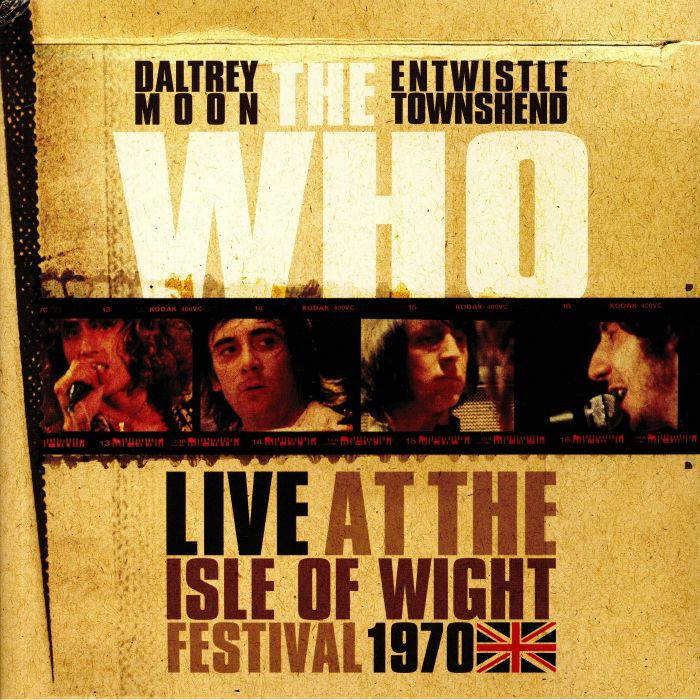
MUSIC FROM JARVIS COCKER’S SUNDAY SERVICE.
Music From Jarvis Cocker’s Sunday Service.
Label: Ace Records.
When it was announced in 2010, that former Pulp frontman, and songwriter-in-chief, Jarvis Cocker, was about to present a show on BBC 6 Music, his statement of intent was posted on the Corporation’s website: “It is my intention to fill these hours with as much dodgy opinion, crackpot theories, hare-brained schemes and beautiful, beautiful music as is humanly possible.” This wasn’t quite what Lord Reith, the BBC’s first Director General, envisaged when he said that the Corporation’s remit was to: ”inform, educate and entertain.”
For seven years, Jarvis Cocker’s Sunday Service radio show was one of the most popular programs on Radio 6 Music. It fulfilled Lord Reith’s remit week-in, week-out, as its host informed, educated and entertained several generations of music fans with his inimitable and eclectic taste in music. By the end of the program’s seven year run a generation of younger music fans had graduated Summa Cum Laude thanks to Jarvis Cocker’s musical masterclass.
Sadly, in 2017, without warning, Jarvis Cocker’s Sunday Service was cancelled. After seven years, one of the finest shows on BBC Radio was no more. By then, it had established a cult following and was much mussed by many people. For them, the day revolved around Jarvis Cocker’s Sunday Service and they would enjoy a captivating selection of eclectic and esoteric music. After it was cancelled, music fans the length and breadth of Britain and beyond mourned its passing.
Two years later Ace Records recently released Music From Jarvis Cocker’s Sunday Service on CD. It features twenty-three eclectic and esoteric tracks that are a reminder of a much missed radio show that brightened up even the dullest Sunday in Blighty.
Opening Music From Jarvis Cocker’s Sunday Service. is Invasion Muzak by John Baker who was part of the groundbreaking BBC Radiophonic Workshop. Here’s a track that perfect to listen to on a lazy Sunday afternoon. It’s a beautiful pastoral track that meanders along with what sounds like a cocktail piano combining with a myriad of electronic instruments. The result is a hidden gem of a track that will whet the listener’s appetite for what’s to come.
This includes a soul-baring cover of Beyonce’s Crazy in Love which was released by Antony and The Johnsons in 2009. There’s also a cover of Gary Numan’s Cars by The Katzenjammer from 2005.
A welcome addition is Don’t Wait Too Long by Bob Welch, formerly of Fleetwood Mac. It’s taken from his Three Hearts album which was released on Capitol in 1978, and will appeal to drummers everywhere and to anyone with a penchant for soft rock in all its finery.
Another hidden gem is Day Glo a beautiful, understated track from Serafina Steer from her 2010 album Static Caravan. It’s a reminder of the many talented new artists who Jarvis Cocker played on his show during its seven year run.
In 1965, Morgana King released her album It’s A Quiet Thing on Reprise. The title-track is one of the album’s highlights. No wonders as a breathtakingly beautiful and emotive vocal combine with a stunning orchestrated arrangement. It’s enough to stop anyone in their tracks.
Randy Newman’s Baltimore was a perfect showcase for Nina Simone’s vocal prowess when she covered the song .The song lent its name to her 1978 CTi album and is without doubt one of its finest moments. It’s also a reminder of a truly talented and versatile singer at the peak of her powers.
Waters Of March was written by Antonio Carlos Jobim, and covered by Art Garfunkel on his 1975 Breakaway album. There’s more than a hint of sarcasm to his soliloquy as he takes the track in a new direction. In doing so, this musical legend reveals a quite different side to his character on what’s one of the highlights of his Breakaway album.
The Whole World’s Got The Eyes On You by The Legendary Tigerman is another track guaranteed to stop the listener in their tracks. All the instruments are played by the man himself on this genre-melting hidden gem that brings to mind Alan Vega and Marco Bolan.
Little Person was recorded by Deanna Storey and John Brion for the soundtrack to Synedoche, New York in 2008. It’s a spellbindingly beautiful song and one of the highlights of Music From Jarvis Cocker’s Sunday Service.
Gymnopédie No.3 by The Camarata Contemporary Chamber Group is best described as pastoral, wistful and with an inherent beauty that tugs at the heartstrings.
Closing Music From Jarvis Cocker’s Sunday Service is Headless Heroes’ True Love Will Find You In The End. It’s a stunning and emotive cover of what’s one of Daniel Johnston’s finest songs and is the perfect way to close this compilation.
Nowadays, a record number of compilations are released each week. However, very few are of the quality of the lovingly curated Music From Jarvis Cocker’s Sunday Service. It’s a reminder of a much-loved radio show was essential listening between 2010 and 2017, and was one of the best programs on BBC Radio.
Music From Jarvis Cocker’s Sunday Service which was curated by its host, and is a captivating collection of the eclectic and esoteric where the new and old sits side-by-side with cover versions, hidden gems and well known tracks that are like old friends. They’re part of what’s without doubt a contender for compilation of the year.
Music From Jarvis Cocker’s Sunday Service.
THE STAINED GLASS-THE STORY BEHIND ONE OF SAN FRANCISCO’S SEMINAL LOST GROUPS.
The Stained Glass-The Story Behind One Of San Francisco’s Seminal Lost Groups.
Sometimes, and despite their undoubtable talent, a band or artist fails to make the impact that their music deserves and It’s only much later, that critics and record buyers belatedly realise how innovative they were. That was the case with The Stained Glass, who originally, started life as The Trolls. They were without doubt, way ahead of their time, but sadly, record buyers neither understood nor appreciated The Stained Glass’ music. It passed record buyers by, and as a result, The Stained Glass split-up in 1969, just four years after they were formed in 1965.
Nowadays, critics, cultural commentators and record buyers realise and appreciate the importance of The Stained Glass’ music. They were musical pioneers who could and should’ve enjoyed commercial success and critical acclaim . Sadly it wasn’t to be, and in 1967, the dream was over for one of San Francisco’s seminal lost group’s. Things had been very different just two years previously.
The Stained Glass’ story begins in San Jose in 1964. Rodger Hedge had just started at San Jose University. He arrived from Southern California, where he’d played bass and guitar in the Sen-Sa-Shuns a successful band who had supported the Righteous Brothers and Beach Boys. Opening for the Beach Boys must have been ironic, as Rodger had auditioned as their bass player. That wasn’t to be and he enjoyed a successful period in the Sen-Sa-Shuns. That gave him a taste of what a career as a musician would be like. So, on arrival at University, Rodger decided to form a band. He advertised locally, and straight away, Jim McPherson answered the advert.
Jim was a native of Chicago, and was studying radio and television journalism at San Jose University. Originally, he was a bassist, but when he realised how good Rodger was, switched to rhythm guitar. The next member to join the band was drummer Dennis Carrasco.
Dennis was recommended by Barry Wineroth of The Jaguars. He tipped Rodger and Dennis off about this musical prodigy. Unlike Rodger and Jim, Dennis was a native of San Francisco, but had lived in San Jose since 1960. He was younger than his prospective bandmates. In fact, he was still at Blackford High School. The age gap didn’t matter. As a drummer, Dennis was one of the best in San Jose. He’d started off playing in marching bands and after that, was working with The Stratatones and Blue Flames. With the Blue Fames, Dennis recorded some sessions. None of them were ever released. Now his luck looked like changing. Before that, they needed another member.
Although Rodger Hedge was a good guitarist, the band felt they needed another guitarist to play lead guitar. There were two candidates. One was John Sharkey, of the local group Syndicate Of Sound. The other was Bob Rominger, who’d recently moved to San Jose from Albuquerque, Mexico. He was a talented player, capable of unleashing some flashy licks. There was a problem though. Bob had only played in pickup bands. Despite that, he got the gig as lead guitarist. The band was complete. All they needed was a name. They hit upon The Trolls.
From their early days, The Trolls found work easy to come by. Originally, The Trolls played around the San Francisco area. Having established a reputation as a talented and popular band, they started playing further afield. Their performances featured mostly cover versions, with Rodger and Jim sharing lead vocal duties. Then after a while, The Trolls started adding their own original material.
Jim McPherson was The Trolls’ songwriter and was influenced by the British invasion groups. The Kinks, Beatles, Animals, Rolling Stones and Zombies inspired Jim as a songwriter. So did Paul McCartney, who Jim admired for the way he structured songs. This seemed to rub off on Jim. However, Jim’s songwriting style is more like Bob Dylan and is perceptive, descriptive, surreal and left-field . He was part poet and philosopher. Occasionally, Rodger pitched in with a song, Mostly, it was Jim who wrote The Trolls’ songs. This includes the first songs they recorded.
Such Good Friends and She’s Not Right were the first songs The Trolls recorded. They originally featured on an acetate the group sent to local labels. Eventually, The Trolls released Such Good Friends and She’s Not Right, which has a strong British influence. On both tracks, The Trolls could easily be mistaken for one of the British Invasion groups. Not longer after The Trolls recorded their first two tracks, they released their first single.
The two songs chosen were the ballad How Do You Expect Me To Trust You and the harmonica driven Walkin’ Shoes, with its surreal, enigmatic lyrics. There’s still a British Invasion influence, on Walkin’ Shoes. With lyrics that sound like a homage to The Kinks, a bluesy Rolling Stone sound, especially with the harmonica, The Trolls seemed to have decided if you can’t beat the British Invasion groups, join them. However, apart from some radio play on local radio, The Trolls debut single passed almost unnoticed.
Despite their single failing commercially, The Trolls were one of the most popular live bands. They captured people’s imaginations and were winning them over with their mixture of covers and new songs. Despite their popularity, when The Trolls played in the Bay Area Battle of The Bands, it was to a disappointingly small audience. However, there was one man in the audience that would play a part in The Trolls’ future, Rene Cardenas.
Until Rene Cardenas saw The Trolls at The Battle of The Bands, he’d been publishing manager for Trident Productions. Having seen The Trolls live, he decided to form his own company, Jackson Square Productions. The date was 25th April 1966. That day, Rene Cardenas promised to get The Trolls signed to a label. Two weeks later, The Trolls were on their way to Columbia’s Sunset Boulevard Studios, where they’d work with respected arranger Bernie Krause.
At Sunset Boulevard Studios, Bernie Krause helped the band hone their material. He made a number of suggestions, including changing some of the lyrics to Broken Man, a fusion of pop, psychedelia and blues. The other tracks recorded were Second Day and Lonely Am I, which was penned by Bob Rominger. Following the sessions at Sunset Boulevard Studios, The Trolls made a decision that could’ve had a huge impact on their career. They changed their name.
The Trolls were now called The Stained Glass Window. That proved somewhat cumbersome, so they became The Stained Glass. However, that was a result of the word Window being left off the group’s paperwork. Ironically, this mistake worked in their favor. Given the enigmatic nature of the group’s lyrics, this added to the mystery that surrounded the group. The only problem was, would people realize that The Trolls and The Stained Glass were one and the same?
Even after the change of name, The Stained Glass were busy. The Bay Area had many venues, all of which were on the look out for popular bands. A popular band meant a full venue and profitable night. Gradually, The Stained Glass found themselves playing to an older audience. Granted they were still playing to younger people, but mostly, their audiences were older. This suited their baroque infused fusion of pop and psychedelia. The Stained Glass were opening for bigger bands and it looked like a breakthrough was imminent. It wasn’t. The deal with Columbia wasn’t going to happen.
When Columbia passed on The Stained Glass, their manager Rene Cardenas started looking elsewhere. He used his contacts and The Stained Glass were signed to RCA Victor by the second week in June 1966. Everything looked as it was going well. Then Rene and the RCA Victor producer assigned to The Stained Glass said they had to record a cover of If I Needed Someone. Written by George Harrison and taken from The Beatles’ Rubber Soul album, this seemed strange. After all, hadn’t Rene been a fan of The Stained Glass’ own songs? Maybe RCA Victor and Rene thought a cover of a Beatles song equalled a hit single. On the B-Side was a remake of The Trolls’ How Do You Expect Me To Trust You?
Just before If I Needed Someone was released, it featured on The Beatles’ Yesterday and Today. Despite The Beatles’ version being released first, The Stained Glass’ single was a success in the Bay Area. This resulted in a tour round the East Coast, before The Stained Glass recorded their second single for RCA Victor.
At RCA Victor’s New York studio, The Stained Glass recorded My Buddy Sin a baroque tinged track that is an example of Jim McPherson’s songwriting skills. On the B-Side was Vanity Fair, an underrated track influenced by The Kinks, The Beatles, pop and psychedelia. They combine on a three minute slice of pop perfection that come from the pen of Ray Davies. When the single was being recorded, the group didn’t like My Buddy Sin. They felt the addition of the harmonica spoilt the track and took the edge of the song.
On its release, in September 1966, My Buddy Sin failed to chart. It would be another five months before The Stained Glass entered the studio.
When The Stained Glass entered the studios in February 1967, they realized what being signed to a record company entailed. RCA Victor wanted them to record songs by other songwriters. None of them were suitable. Then they hit upon We Got A Long Way To Go, which was penned by Barry Mann and Cynthia Weil. It was totally different to the type of songs the group usually recorded. During recording, effects were used to create feedback and sustain and this was very different from previous singles. There’s still a psychedelic sound as pop and rock combine on a hook-laden track which The Stained Glass hoped would be their breakthrough single.
On the release of A Long Way To Go, with Corduroy Joy on the B-Side, it didn’t result in the elusive hit single for The Stained Glass. Not long after this, with the lack of success frustrating the band, Rodger Hedge, who had founded the band was asked to leave. This marked the beginning of the end for The Stained Glass.
Their final single was Mediocre Me, with The Beatles’ inspired A Scene In-Between on the B-Side. Both were penned by Jim McPherson. Sadly, the single failed to chart nationally, but reached number six on KDON’s chart. That’s a small crumb of comfort for one of San Francisco’s most innovative and pioneering groups. Not long after Mediocre Me’s release RCA Victor didn’t renew The Stained Glass’ contract.
This proved to be a blessing in disguise. The Stained Glass signed to Capitol Records and released two critically acclaimed albums.
Their debut was Crazy Horse Roads, which was released in 1968. However, disaster struck just before the album was finished. Bob Rominger left the band. For The Strained Glass, this was a blow. Despite this, the album was completed and ready for release later in 1968.
Despite critics lavishing praise on Crazy Horse Roads, the album failed commercially. For The Stained Glass, this was another huge disappointment. They were down, but not out and later, began work on their sophomore album. However, the times and lineup was changing.
Joining were keyboardist and guitarist Lance Libby, percussionist Louie Schiavo and In 1969, Bob Rominger left after and was replaced by southpaw guitarist Tom Bryant. He was a member of The Stained Glass when they recorded their sophomore album Aurora. It was released to critical acclaim in 1969 but failed commercially. After that, The Stained Glass changed their name to Christian Rapid and spent the next three years touring. They never recorded another album. Aurora marked the end of the The Stained Glass’ story.
The story of The Stained Glass is a familiar one. They were a talented, innovative and pioneering group, but their music was way ahead of its time. That was the case with The Stained Glass, who started life as The Trolls and ended it as Christian Rapid. It was a case of what might have been?
Looking back with the benefit of hindsight, The Stained Glass were ahead of their time. People neither understood, nor appreciated what they were doing and sadly, their music failed to make the impact it should’ve done. It was only years later, that people realise how innovative a group The Stained Glass were. From their early days as The Trolls, their music was ahead of the musical curve.
British Invasion groups like The Kinks, Beatles, Animals, Rolling Stones and Zombies inspired The Trolls and then The Stained Glass. The other thing that made The Trolls and The Stained Glass standout were their lyrics.
Many of the songs were written by the enigmatic poet philosopher Jim McPherson. He too was influenced by the British Invasion groups. His lyrics are pensive, perceptive, descriptive, surreal and cryptic. Influenced by Ray Davies, Paul McCartney and Bob Dylan, Jim could’ve and should’ve been a hugely successful songwriter. Sadly, just like The Trolls and The Stained Glass, Jim McPherson’s talents went unnoticed for too long. Now a new generation have discovered the music of The Trolls and then The Stained Glass, who between 1965 and 1967, were one of San Francisco’s most innovative lost groups.
That’s why The Stained Glass’ music is such essential listening as is the case with all musical pioneers. They were true musical pioneers, who could’ve and should’ve enjoyed commercial success and critical acclaim with their fusion of blues, pop, psychedelia and rock. Sadly, their take on pop-psych was way ahead of its time musically. So much so, that record buyers failed to understand The Stained Glass’ music. However, that was only part of the problem.
Unfortunately, The Stained Glass were signed to the wrong label, RCA Victor. They tried to make them something they weren’t. On another label, The Stained Glass might have prospered and become the success story they deserved to be. Sadly, that never happened and after four years of trying to catch lightning in a bottle, The Stained Glass called time on their career. They became Christian Rapid, who spent the next three years touring. This resulted The Stained Glass being consigned to San Francisco’s musical history.
Over a generation later, and The Stained Glass’ music was rediscovered by a new generation of record buyers. This resulted in a resurgence in interest in The Stained Glass’ music. Interest in The Stained Glass has continued to grow. That’s still the case today. Nowadays, The Stained Glass’ music is being heard by a much wider, and appreciative audience who have discovered one of San Francisco’s seminal lost groups.
The Stained Glass-The Story Behind One Of San Francisco’s Seminal Lost Groups.


CULT CLASSIC: MANUEL GOTTSCHING-INVENTIONS FOR ELECTRIC GUITAR.
Cult Classic: Manuel Göttsching-Inventions For Electric Guitar.
When Manuel Göttsching released Inventions For Electric Guitar in 1975, it was regarded as a new chapter in his career. Inventions For Electric Guitar was Manuel Göttsching’s debut solo album, and first release after releasing five albums as Ash Ra Tempel. Or was it?
Eagle eyed record buyers having bought Inventions For Electric Guitar saw atop the album cover the words Ash Ra Tempel VI in small print. This muddied the waters somewhat. What was Inventions For Electric Guitar? Was it Ash Ra Tempel’s swan-song, or Manuel Göttsching’s debut album? Record buyers were confused.
They were under the impression that Ash Ra Tempel Starring Rosi, was the band’s fifth and final album. It had been released in 1973, and by then, Ash Ra Tempel comprised just Manuel Göttsching. He was the last man last standing.
Nearly two years had passed before Inventions For Electric Guitar was released. Manuel Göttsching composed, played all the instruments and produced Inventions For Electric Guitar. It seemed undeniable that Inventions For Electric Guitar was a solo album. What good reason could the record company have for adding Ash Ra Tempel VI to the album cover?
Manuel Göttsching was signed to Rolf-Ulrich Kaiser and Gille Lettmann’s Ohr Records. They realised that Inventions For Electric Guitar was the start of a new chapter in Manuel Göttsching’s career. He was keen to embark upon a solo career and what worried Ohr Records, was that many record buyers wouldn’t recognise Manuel Göttsching. That was despite playing a huge part in five albums Ash Ra Tempel’s released between 1971 and 1973. So Ohr Records had two options.
They could release Inventions For Electric Guitar as a solo album. That seems to be the case, given the prominence of Manuel Göttsching’s name. The addition of Ash Ra Tempel VI was part of Ohr Records’ marketing campaign. Ash Ra Tempel was already a relatively well known ‘brand name’ within German music. So if record buyers didn’t recognise Manuel Göttsching’s name, there was every chance they would recognise Ash Ra Tempel, and buy the album. That was one theory.
The other was to bill Inventions For Electric Guitar as an Ash Ra Tempel album. Hence the subtitle, Ash Ra Tempel VI. By adding Manuel Göttsching name to the album cover, Ohr Records were to all intents and purposes, paving the way for Manuel Göttsching’s solo career. That was the other theory put forward when Inventions For Electric Guitar was released in 1975. Nowadays, though, it seems that theory has been disproved.
When Inventions For Electric Guitar was reissued there was no sign of the words that caused all that debate “Ash Ra Tempel VI.” They had been removed it seems, in accordance with Manuel Göttsching’s wishes. He always saw Inventions For Electric Guitar as his debut solo album. Ash Ra Tempel was in the past. Inventions For Electric Guitar was start of a new and exciting chapter for Manuel Göttsching, the solo years.
The solo years began with Inventions For Electric Guitar. Manuel Göttsching decided to return to the lengthy jams that had been a feature of Ash Ra Tempel’s first four albums. From 1971s Ash Ra Tempel through 1972s Schwingungen, Seven Up and 1973s Join Inn, lengthy jams were the order of the day. This changed on Ash Ra Tempel fifth album, Ash Ra Tempel Starring Rosi. It found Ash Ra Tempel dispense with the lengthy jams and adopt a tighter, more traditional song structure. For his debut solo album, Inventions For Electric Guitar, Manuel Göttsching decided to combine the two approaches.
When Manuel Göttsching began work on his debut solo album, Inventions For Electric Guitar he decided that composition would play a much more important role than on Ash Ra Tempel’s first four albums. Using this new approach, he wrote three pieces, Echo Waves, Quasarsphere and Pluralis. They lengthy soundscapes became Inventions For Electric Guitar. When it came to record Inventions For Electric Guitars, Manuel Göttsching deployed his ‘secret weapons’ to create his new sound.
Having decided on how to approach his debut solo album, Manuel Göttsching headed to Studio Roma, in Berlin in July 1974. That was where Manuel Göttsching would record Inventions For Electric Guitar. He took with him his electric guitar, a Hawaiian steel bar and some of his secret weapons. These were Manuel’s various effects pedals, which included a Revox A77 for echoes, a WahWah pedal, volume pedal and a Schaller Rotosound effects pedal. To record Inventions For Electric Guitar, Manuel used a four track TEAC A3340. Recording of his debut album brought out the perfectionist in Manuel Göttsching.
Throughout July and August of 1974, Manuel Göttsching recorded three lengthy improvised tracks, Echo Waves, Quasarsphere and Pluralis. Gradually, they began to take shape. However, Manuel Göttsching wasn’t willing to accept second best, so constantly honed the three soundscapes. Eventually, after the best part of two months, Inventions For Electric Guitar was complete. Manuel Göttsching had composed, played all the instruments and produced Inventions For Electric Guitar. All that remained was for the album to be mixed.
With Inventions For Electric Guitar recorded, Studio Roma’s recording engineer Heiner Friesz and Manuel Göttsching began mixing the album. Ohr Records didn’t just want the album mixed in stereo. Instead, they also wanted a quadraphonic mix. This invoked a journey to Dierks Studios in Cologne, where the quadro-mixing took place. Ironically, despite the time, effort and expense, quadraphonic sound never took off. That was a great shame, as Inventions For Electric Guitar was an album perfectly suited to quadraphonic sound. Inventions For Electric Guitar is also a truly timeless debut album from Manuel Göttsching.
Manuel Göttsching’s 1975 debut solo album Inventions For Electric Guitar featured three soundscapes lasting just forty-seven minutes. It was an album that was way ahead of its time, and nowadays, is regarded as a timeless, genre-melting classic where elements of ambient, avant-garde, Berlin School, electronica, Krautrock, psychedelia and rock on Inventions For Electric Guitar are combined. The result was an inventive and innovative album. Inventions For Electric Guitar features music that’s variously beautiful, ethereal, hypnotic, lysergic melancholy, mesmeric and rocky. What’s remarkable about Inventions For Electric Guitar, is that it was recorded by just one man, Manuel Göttsching.
He became a one man band, deploying his guitars and a myriad of effects to record multilayered soundscapes. They sounded as if they had been recorded by a number of musicians and instruments. That wasn’t the case. Instead, it was the work of Manuel Göttsching, one of the most inventive and innovative musicians of his generation. Inventions For Electric Guitar might have been his debut solo album, but Manuel Göttsching had been releasing innovative music since 1971.
That was when Ash Ra Tempel released their eponymous debut album. The five albums they released between 1971 Join Inn feature groundbreaking music. For anyone interested in Krautrock, these five albums deserve a place in any self respecting music collection. So does Inventions For Electric Guitar, which marks the start of a new era for musical pioneer Manuel Göttsching. He was well on his way to becoming one of the most innovative, inventive and influential German musicians of his generation. Continually, Manuel Göttsching reinvented himself and his music.
A year later, Manuel Göttsching released a new album under the Ashra moniker. New Age Of Earth showed that Manuel Göttsching was determined not to stand still. This determination to reinvent himself musically, ensured that Manuel Göttsching’s music continued to be relevant and ahead of the musical curve.
That was the case in 1975, when Manuel Göttsching embarked upon his solo career. After two months in the studio, he released Inventions For Electric Guitar, which is a timeless cult classic from the virtuoso guitarist and musical magician, Manuel Göttsching.
Cult Classic: Manuel Göttsching-Inventions For Electric Guitar.
CLASSIC ALBUM: ROLLING STONES-STICKY FINGERS.
Classic Album:Rolling Stones-Sticky Fingers.
By 1970, The Rolling Stones were in the middle of what is now perceived as their “golden age” which began in 1968, when the Rolling Stones released Beggars Banquet in December 1968.
Beggars Banquet was released to widespread critical acclaim. It featured an outpouring of creativity from the Rolling Stones. The Jagger and Richards’ songwriting partnership were at the peak of their powers, penning tracks of the calibre of Sympathy For The Devil and Street Fighting Man. Sadly, Brian Jones influence on The Rolling Stones was waning and his appearances in the studio were sporadic.
Despite Brian Jones playing a lesser role in Beggars Banquet, the album was a resounding success. It reached number three in Britain, and number five in the US Billboard. This resulted in Beggars Banquet being certified gold in Britain, and platinum in America. For the Stones, this was their most successful album since Aftermath in 1966. However, a year later, they would surpass the success of Aftermath with Let It Bleed.
Sadly, by the time that Let It Bleed was released on 5th December 1969, tragedy had struck the Rolling Stones. Founding member Brian Jones had drowned in mysterious circumstances on 3rd July 1969. For the rest of the nand this was a huge body blow as Brian Jones had been the one-time leader of the Stones.
Two days after Brian Jones death, shell-shocked Rolling Stones played a free concert in London’s Hyde Park on 5th July 1969. An estimated 250,000 saw the Rolling Stones pay tribute to Brian Jones. The group’s one-time leader’s influence may have lessened over the past couple of albums, but Brian Jones had played an important part in the rise of the Rolling Stones. Sadly, he only featured twice on Let It Bleed, on You Got The Silver and Midnight Rambler. His musical farewell was brief one. So was the debut of a new addition to the Stones, Mick Taylor.
When Let It Bleed was released, eager eyed listeners spotted a new addition, Mick Taylor. He was Brian Jones replacement. Mick played featured on just two tracks, Country Honk and Live With Me. Just like Brian Jones’ contribution, Mick’s success was an important one in the sound and success of Let It Bleed.
On its release, Let It Bleed surpassed the success of previous Rolling Stones’ albums. It reached number one in Britain, and number three on the US Billboard 200 charts. This saw Let It Bleed certified gold in Britain, and double-platinum in America. Meanwhile, critics exhausted their supply of superlatives on songs like Gimme Shelter, Love In Vain, Midnight Rambler and You Can’t Always Get What You Want. The hard rocking Let It Bleed was considered one the Stones’ finest moments.
The Rolling Stones had picked up where they left off on Beggars Banquet, and taken it further. In doing so, they had created the most successful album of their career. This should’ve been a time for celebration. However, as 1969 and the sixties drew to a close they didn’t feel much like celebrating.
A day after the release of Let It Bleed, the Rolling Stones had agreed to put on a free concert at Altamont Speedway, in Northern California on 6th December 1969. What was meant to be a concert featuring the great and good of psychedelia went badly wrong. Santana, Jefferson Airplane, The Flying Burrito Brothers, Crosby, Stills, Nash and Young, Rolling Stones and Grateful Dead were all booked to play. It was meant to be a major event in psychedelic’s musics history. After the carnage in Los Angeles, everyone hoped this would be a good news story. It wasn’t.
As the Rolling Stones took to the stage, the concert descended into chaos. The Hell’s Angels fought with the audience, and Meredith Hunter, a black teenager, was allegedly stabbed by a member of the Hells’s Angels who were meant to be providing security at Altamont. After this, the event was cancelled. The Grateful Dead never even took to the stage. Altamont had been a disaster. There were three accidental deaths, many were injured, property was destroyed and cars stolen. As the sixties drew to a close, the events at Altamont played its part in the decline of psychedelia and a backlash against the hippie movement.
Between the death of Brian Jones, and the chaos and carnage at the Alatmont Free Festival, the Rolling Stones didn’t feel like celebrating the success of Let It Bleed. They were castigated in the American press. Their decision to use the Hell’s Angels as security drew a huge amount of criticism. Especially when the details of Altamont became clear. Whilst firefighting criticism from politicians and America’s self appointed moral guardians, the press, it was soon business as usual for the Stones.
Following the success of Let It Bleed, work began on the followup, Sticky Fingers. It’s the third album the Rolling Stones’ during their “golden age.”
Just like previous albums, Sticky Fingers was mostly the work of the Jagger and Richards songwriting partnership. They cowrote Brown Sugar, Sway, Wild Horses, Can’t You Hear Me Moving, Bitch, I Got The Blues, Dead Flowers and Moonlight Mile. Jagger and Richards also cowrote Sister Morphine with Marianne Faithful. The other track chosen for Sticky Fingers, was a cover of Fred McDowell and Gary Davis’ You Gotta Move. These ten tracks were recorded by The Rolling Stones and “friends” at various studios between March 1969 and January 1971.
Most of Sticky Fingers was recorded during 1970 and 1971. However, the story starts in 1969 the Rolling Stones began recording Sister Morphine between 22nd and 31st March 1969. Further sessions took place between May and June 1969. By then, Sister Morphine was completed. Then just before Let It Bleed was released, three day session took place between 2nd and 4th December 1969, Muscle Shoals Sound Studio, Sheffield, Alabama. That was last session of 1969.
The first recording session of 1970 took place Olympic Studios on 17th February. Then the sessions began in earnest in March 1970, at Olympic Studios, and continued right through to May 1970. Further sessions at Olympic Studios took place between 16th and 27th July. After a three month break, The Rolling Stones returned tp Olympic Studios on 17th October 1970. Right through to 31st October, they worked on Sticky Fingers. It was nearly completed.
Eventually, recording of Sticky Fingers was completed in January 1971. The Rolling Stones recorded in both Olympic and Trident Studios with producer Jimmy Miller.
The Sticky Fingers’ sessions had been a poignant time. It was the first recording session without Brian Jones. His replacement, Mick Taylor, played a bigger part in the recording of Sticky Fingers, playing lead, rhythm and acoustic guitar. Meanwhile, Mick Jagger sang vocals and played acoustic guitar. The Rolling Stones’ rhythm section featured drummer Charlie Watts, guitarist Keith Richards and Billy Wyman on bass and electric piano. Joining The Rolling Stones were a few of their musical friends.
Among their musical friends The Rolling Stones brought onboard were Ry Cooder on slide guitar, saxophonist Bobby Keys, percussionist Jimmy Miller, organist Billy Preston and pianists Jim Dickinson, Nicky Hopkins, Ian Stewart and Jack Nitzsche. Rocky Dzidzornu added congas and Jim Price trumpet and piano. Most of these artists only featured on one track. Often their contribution was invaluable. That was also the case with producer Jimmy Miller and engineers included Glyn Johns, Andy Johns, Chris Kimsey and Jimmy Johnson. They all played their part in sound and success of Sticky Fingers.
So did artist Andy Warhol. He was responsible for “designing” Sticky Fingers’ album sleeve. Andy Warhol was inspired by the innuendo laden title. However, the design was by Craig Braun. He shot a close up of a jeans clad male crotch. By the time it made its way onto the album sleeve, it featured a working zip and mock belt buckle. When the zip was undone, a pair of cotton briefs could be seen. They had Andy Warhol’s name stamped in gold on them. This design, like Sticky Fingers, would become a classic, and was a fitting debut for their new label.
The release of Sticky Fingers, marked a new era in The Rolling Stones’ career. It was the first album they had released on their newly founded Rolling Stones’ label. This brought to an end the Rolling Stones’ seven year association with Decca Record in Britain, and London Records in America. Despite the lengthy association between the two parties, it ended on a sour note.
After the end of relationship between The Rolling Stones and Decca and London Records, an expensive error discovered. It came to light that inadvertently, the Rolling Stones had signed over the copyright to their sixties recordings to their former manager Alan Klein, and his company ABKCO. Having lost the copyright to their Decca and London Records’ recordings, The Rolling Stones decided to form their own label. Their first studio album of seventies, Sticky Fingers launched Rolling Stones Records.
Before Sticky Fingers was released, the Rolling Stones held their breath as the critics had their say. Most critics heaped praise on Sticky Fingers, calling it The Rolling Stones’ finest album of their career. Tracks like Brown Sugar, Wild Horses, Can’t You Hear Me Knocking, Bitch and Moonlight Mile showed that The Rolling Stones had just created a career defining album. Not everyone agreed.
Unsurprisingly, the self appointed “Dean Of American Rock Critics” Robert Christgau didn’t agree. While others were heaping praise on Sticky Fingers, he disagreed. As 1971 drew to a close, the contrarian Christgau called Sticky Fingers the seventeenth best album of 1971. Robert Hilburn gave Sticky Fingers a backhanded compliment. While he conceded that Sticky Fingers was one of the best albums of 1971, it was “only modest by The Rolling Stones’ standards.” Lynn Van Matre also proved a past master of the backhanded compliment. She said that the Rolling Stones were “at their raunchy best” but that the music is “hardly innovative.” She did agree that Sticky Fingers was one of the albums of 1971. Record buyers agreed.
When Sticky Fingers hit the shops on 23rd April 1971, it reached number one in Britain and in the US Billboard 200 charts. Across the world, Sticky Fingers was a huge seller, reaching the top ten in ten countries. Apart from America and Britain, Sticky Fingers reached number one in Australia, Canada, Holland, Norway, Spain, Sweden and West Germany. Sticky Fingers was certified gold in Britain and France. In America, Sticky Fingers sold three million copies and was certified triple-platinum. Forrty-four years after its release, and Sticky Fingers is perceived as a Rolling Stones’ classic.
No wonder. Sticky Fingers features the Rolling Stones at their very best. It was as if everything had been leading up to Sticky Fingers and then, a year later, Exile On Main Street. That is the case from the opening bars of Brown Sugar, which opens Sticky Fingers.
Instantly, The Rolling Stones are turned in to a good time, rock ’n’ roll band on Brown Sugar. With Mick at the helm, they strut their way through this homage to the rock ’n’ roll lifestyle. It was recorded in Muscle Shoals, where its its tough, blues rock sound took shape. Everything falls into place. Jimmy Miller’s decision to pair Bobby Keys’ saxophone and Keith’s guitar in the breakdown is a masterstroke. He plays his part in a future Rolling Stones’ classic.
From good time, rock ’n’ roll, The Rolling Stones drop the tempo on Sway, the first of the ballads. Who wrote the song is disputed. Officially, it’s credited to Jagger and Richards. However, Mick Taylor has subsequently claimed to have written the track. He certainly plays an important part in this slow, bluesy ballad. Mick adds a bottleneck slide guitar solo, while Mick Jagger exercises demons via his vocal. Then on Wild Horses, Mick delivers one of his finest vocals. It’s best described as soul-baring, on what is easily, a Rolling Stones’ classic.
Can’t You Hear Me Knocking sees The Rolling Stones transformed into a good time rock ’n’ roll band. In 1971, their only opposition was The Faces. Mick’s accompanied by harmonies from the rest of Stones, vamps and struts his way through the lyrics. Then at 2.43, the instrumental break begins, and The Rolling Stones stretch their legs. Rocky Dijon’s congas propels the arrangement along, before Bobby Keys unleashes a saxophone solo whilst Keith and Mick trade guitar licks. Augmenting the arrangement is Billy Preston’s organ. However, later, Mick Taylor unleashes a blistering guitar solo, as he makes his mark on The Rolling Stones.
The Rolling Stones first played You Gotta Move on their 1969 American tour. This inspired them to cover the song on Sticky Fingers. It’s reinvented, and transformed into a rousing, bluesy jam. Partly this reinvention is down to waves of bluesy guitar, and Mick’s drawling, mid-Atlantic vocal.
Originally, Bitch was the B-Side to Brown Sugar. However, it soon found its way on radio playlists. No wonder. It benefits from an impressive, almost overblown arrangement. Mick whose been unlucky in love, doesn’t hold back; “love is a bitch.” Behind him, big bold horns and duelling guitars fill out the arrangement. Soon, The Rolling Stones in full flow. It’s an impressive sound, and one of Sticky Fingers’ highlights. Bluesy and soulful describes I Got the Blues. Again, the Stones drop the tempo. Mick, accompanied by growling horns, delivers a needy, soulful vocal.
The first time anyone heard Sister Morphine, was when Marianne Faithful released it as the B-Side to her 1969 single Something Better. Two years later, it’s given a makeover by the Stones and their friends. Ry Cooder plays slide guitar and Jack Nitzsche piano and organ. Against this understated arrangement Mick’s vocal is like a confessional. It’s as if he can relate to, and understand the poignant lyrics. There is also a darkness to the country-tinged Dead Flowers. Especially the line: “I’ll be in my basement room, with a needle and a spoon.” During the period Sticky Fingers was recorded, Keith Richards and Gram Parsons had become friends. Some people believe he inspired the song, which is one of the most underrated in the Rolling Stones’ back-catalogue.
Closing Sticky Fingers is Moonlight Mile. It’s another ballad with country influence. Jimmy Miller is responsible for a big, bold arrangement. Strings sweep in the background, while Mick sings about how difficult it is being a rock ’n’ roll star, whose constantly in the spotlight. The way he delivers the lyrics, it’s as if he is tiring of life as a Rolling Stone.
That would never happen. Forty-four years later, and Mick Jagger is still a Rolling Stone. They went on to release a string of critically acclaimed and commercially successful albums. However, Sticky Fingers is one of the Rolling Stones’ finest moments.
Throughout Sticky Fingers, the Stones are at their best and most versatile. Seamlessly, they switch between blues, rock and country. Similarly, one minute The Rolling Stones are a good time rock ’n’ roll band, the next they’re delivering soul baring ballads. That is why Sticky Fingers is a captivating, timeless album and career defining album and was the best album of their career so far. It was the third studio album of The Rolling Stones “golden era.” The final album of this period was Exile On Main Street. Somehow, it managed to surpass the quality of Sticky Fingers. That was still to come.
In 1971, the Rolling Stones were back where they belonged, at the top of the charts. They were now the biggest rock ’n’ roll band in the world, which took some doing. The last few years had taken their toll on the Stones. They had been arrested, lost Brian Jones and replaced him with Mick Taylor. Then there was the controversy surrounding Altamont. Somehow, the Rolling Stones the had survived all this, and the band was still going strong, having just released what was a career defining classic album Sticky Fingers.
Classic Album:Rolling Stones-Sticky Fingers.
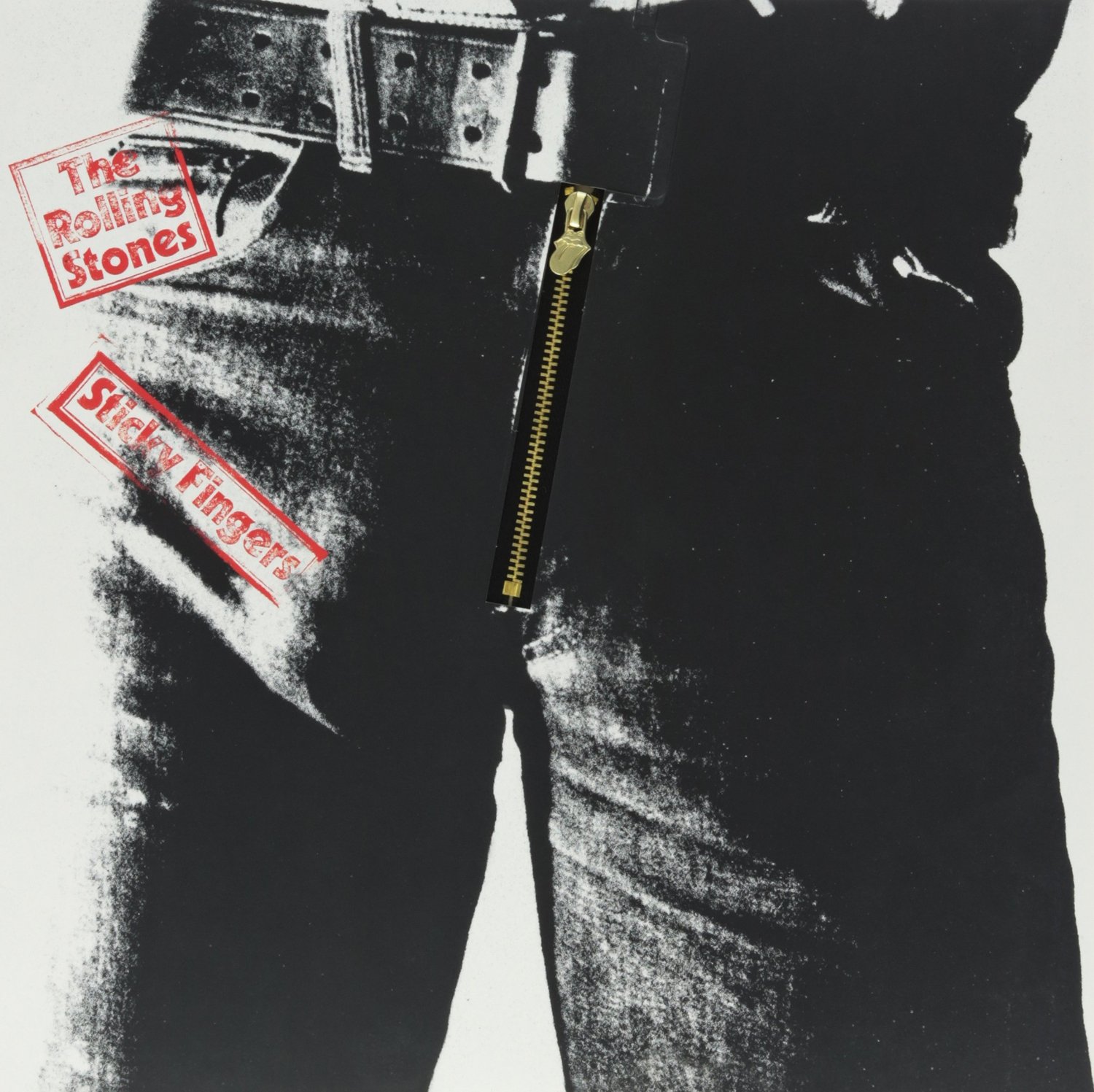
CULT CLASSIC: GANDALF-JOURNEY TO AN IMAGINARY LAND.
Cult Classic: Gandalf-Journey To An Imaginary Land.
Prior to embarking upon a musical career, and becoming one of Austria’s most accomplished, innovative and successful musicians, Gandalf travelled extensively. That’s why the talented multi-instrumentalist never released his debut album Journey To An Imaginary Land until 1980. By then he was twenty-nine. However, soon, Gandalf would make up for lost time. He would release over thirty albums between 1980 and 2016. These albums would be heavily influenced by Gandalf’s life before music, when he travelled extensively.
Gandalf’s travels took him all over the world, including to India. The constant travelling certainly broadened the mind of Gandalf. He also realised that music was a universal language. It was something that people in different countries and continents shared a love of. Gandalf experienced this firsthand.
As he traversed the globe, Gandalf made a living making music. He was the twenty-first Century equivalent of a travelling minstrel. It was during his travels that Gandalf realised that he wanted to make a living as a musician.
This came as no surprise to many that knew Gandalf. He had grownup in the small town of Pressbaum, in Lower Austria. That was where Heinz Strobl was born on the 4th of December 1952. It would be much later when Heinz adopted the Gandalf moniker. Before that, Heinz proved to be a gifted and natural musician as he grew up.
That was despite having no formal musical education. Heinz could pickup an instrument and soon, was playing along to a song on the radio or a record that was playing. Soon, he could play the piano and guitar. By the time he headed off on his travels, Heinz had mastered a number of different instruments.
On his return from what was the modern equivalent of a Grand Tour, Heinz had mastered a myriad of instruments that he had discovered on his travels. This included a sitar, saz, charango, bouzuki and balaphon. They would play an important part in Heinz’s future musical career.
Initially, Heinz began playing with various rock bands during the seventies. During the seventies, progressive rock was at the peak of its popularity. Heinz was a member of a couple of progressive rock bands. This however, was all part of his musical apprenticeship.
As the seventies gave way to the eighties, Heinz decided to reinvent himself, and adopted the moniker Gandalf. This stemmed from Heinz’s love of J. R. R. Tolkien’s Lord Of The Rings. Little did he realise that his new moniker would feature on over thirty albums. This included Gandalf’s debut album Journey To An Imaginary Land. It was released by WEA and recently was rereleased by Esoteric Recordings. Journey To An Imaginary Land showcased Gandalf’s unique and inimitable style.
It began to take shape on Gandalf’s debut album Journey To An Imaginary Land. It was released by WEA in Austria during 198o. This marked the debut of Gandalf, who later described himself as a “painter of musical landscapes.”
This is quite fitting, Having written the six tracks that became Journey To An Imaginary Land, Gandalf began painting these “musical landscapes” using his has extensive musical palette. It included everything from acoustic and electric instruments to the traditional, ethnic instruments that Gandalf had discovered and collected on his travels. Included in Gandalf’s palette, were various synths and samplers. They would play an important part in not just Journey To An Imaginary Land, but Gandalf’s future albums.
With his impressive array of instruments, Gandalf began recording Journey To An Imaginary Land at Beginning Soundstudio in August 1980. He arranged, recorded and produced the album. Gandalf played each and every instrument, including the synths that play such an important part in Journey To An Imaginary Land. Once the album was recorded, Gandalf mixed his debut album. It was completed in October 1980 and then delivered to WEA, who Gandalf was signed to.
WEA scheduled the release of Journey To An Imaginary Land for late in 1980. Before that, critics received a copy of Gandalf’s debut album.
Journey To An Imaginary Land was well received by critics, who were won over by what was hailed an innovative and progressive album. It was a fusion of eclectic musical instruments, influences and genres. When they’re combined by Gandalf, the result is a groundbreaking and genre-melting album, Journey To An Imaginary Land. It features elements of ambient, avant-garde, Berlin School, electronica and folk. When they are combined, they become part of what’s a captivating, mythical and symphonic musical journey that gradually unfolds over forty-five minutes. It’s an ambitious and accomplished album. Especially considering it was Gandalf’s debut album.
Buoyed by the reviews of Journey To An Imaginary Land, Gandalf eagerly awaited the release of his debut album. When Journey To An Imaginary Land was released later in 1980, the album failed to find an audience. Suddenly, Gandalf’s dream of making a living as a professional musician were dashed. However, after the initial disappointment, Gandalf was determined that his sophomore album would be his breakthrough album.
Departure opens Journey To An Imaginary Land. Synths replicate the sound of a rocket taking off, as it heads for a distant galaxy. It soars above the earth below, en route to its eventual destination. Banks of synths are to the fore. They buzz, shimmer and add glacial and ethereal sounds. Meanwhile, drums, bass and guitar augment the synths as the arrangement builds.Together, they add to the cinematic sound as Gandalf takes the listener on a captivating Journey To An Imaginary Land.
Just a a glacial synth and lone acoustic guitar opens Foreign Landscape. So are a prowling bass and searing guitar. It cuts through the arrangement as swell of synths envelop the arrangement. Soon, a buzzing bass synth adds an element of drama as the arrangement builds, before becoming understated. All that remains are washes of synths and that ominous beat. They’re joined by a futuristic synth as elegiac and dramatic sounds arise from the arrangement. Still, the drama continues to grow. Soon, the music veers between dramatic to understated. It became ambient, atmospheric, futuristic, otherworldly and later, dramatic. Seamlessly, sonic explorer Gandalf takes the listener on a musical journey to a Foreign Landscape during this nine minute epic.
As The Peaceful Village unfolds, Gandalf gently strums his guitar, before washes of synths sweep in. Together, they create an ethereal, elegiac and dreamy sound. Gradually though, the arrangement begins to grow and build. Gandalf digs deep into his sonic palette and adds a bass and further layers of synths. They fill out the understated arrangement, and the tempo rises. Already Gandalf is fusing elements of ambient, avant-garde, electronica, rock and world music. Soon, there’s a return to the spartan, elegiac sound. This is just a curveball. The arrangement is transformed as drums pound and join a fleet fingered futuristic synth solo. Still, the washes of ethereal synths remain as the drama builds. It seems that Gandalf has left behind The Peaceful Village and he’s about to embark upon the next part in his genre-melting cinematic Journey To An Imaginary Land.
Gusts of wind blow, as Gandalf embarks upon a March Across The Endless Plain. Already the arrangement is atmospheric, dramatic and understated. Swirling, buzzing, synths are joined by ominous drums and an acoustic guitar. It takes centre-stage. That’s until a searing electric guitar replaces it. Still, there’s an ominous backdrop as Gandalf continues his journey. Then an almost otherworldly synth is added, before the guitar returns. Later, the arrangement is stripped bare, and all that remains are swells of elegiac synths. Gradually, the arrangement rebuilds, with the drums, guitar and synths returning. They conjure up images of sonic adventurer as he embarks upon what’s a lonely journey into the unknown, a March Across The Endless Plain.
As The Fruitful Gardens reveals its delights, an acoustic guitar and glacial synths combine. They’re soon joined by a slow, deliberate elegiac synth. They combine to create a meandering arrangement. Later, a bass synth is added as the arrangement builds and the drama increases. It’s a well trodden path, and one used throughout the album. What differs is the addition of an urgently strummed guitar, that’s soon joined by gliding, glacial synths. They then take centre-stage as the guitar drops out. This adds to an ambient sound. Later, when the bass synth returns, it a futuristic sound to this cinematic soundscape.
Closing Journey To An Imaginary Land is Sunset At The Crystal Lake. A droning elegiac synths takes centre-stage, before chiming sounds can be heard. Soon, the elegiac synths quivers and shivers, before a bass synth is aded. Again, there’s an ambient and cinematic sound to the arrangement. The addition of the bass synths adds a sci-fi sound, and conjures up images of a spaceship en route to Sunset At The Crystal Lake. That is no surprise. Despite the understated arrangements, they’re rich in imagery. Later, as Gandalf nears his destination, the arrangement grows. The bass synth plays a leading role. So does a crystalline synth as the Journey To An Imaginary Land ends Sunset At The Crystal Lake.
Inspired by his travels and musical past, Gandalf spent three months recording Journey To An Imaginary Land. The album was completed in October 1980, and rereleased to critical acclaim in Austria in late1980. Sadly, Journey To An Imaginary Land failed to ind the audience it deserved. This was just a minor blip.
Critical acclaim and commercial success were omnipresent from To Another Horizon onwards. Gandalf went on to release over thirty further albums between 1981 and 2016. Nowadays, Gandalf is regarded as one of Austria’s most accomplished, innovative and successful musicians. Gandalf who is a talented multi-instrumentalist, is also one of Austria’s most prolific artists.
That came as no surprise to those who discovered the delights of Journey To An Imaginary Land upon its release. Here was an album where Gandalf takes the listener on a musical journey. The music is variously atmospheric, dramatic, elegiac, ethereal, futuristic, moody and otherworldly. Alway, there’s a cinematic sound, as sonic explorer and innovator Gandalf, takes the lister on a captivating Journey To An Imaginary Land.
Cult Classic: Gandalf-Journey To An Imaginary Land.

CULT CLASSIC: TIM MAIA-DISCO CLUB.
Cult Classic-Tim Maia-Disco Club.
By 1978, Tim Maia had released nine albums since his 1970 eponymous debut, and although some of these album had been released to critical acclaim and were a commercial success, the charismatic Brazilian singer found himself financially embarrassed. Things had been going from bad to worse over the last few years and Tim Maia now found himself being chased by bailiffs and debt collectors on a daily basis. Tim Maia hoped that his tenth album Disco Club would sell well enough to solve all his financial problems, given disco’s popularity in Brazil. Disco Club needed to sell well as all the money that Tim Maia had earned since 1970 was long gone, spent on cars, musical instruments and the rock ’n’ roll lifestyle which Tim Maia had embraced almost defiantly. However, it hadn’t always been like this.
Tim Maia, who was born in Rio De Janeiro on September the ‘28th’ 1942.Tim Maia was the eighteenth of nineteen children. Aged just six, Tim Maia earned a living delivering homemade food which his mother cooked. This Tim Maia hoped would be the nearest he ever got to an ordinary job. After that, Tim Maia decided to devote himself to music which offered him an escape from the grinding poverty that was around him.
It turned out that Tim Maia was a prodigiously talented child, who wrote his first song as an eight year old. By the time he was fourteen, Tim Maia had learnt to play the drums and formed his first group Os Tijucanos do Ritmo. They were only together for a year, but during that period, Tim Maia took guitar lessons and was soon a proficient guitarist. This would stand him in good stead in the future.
In 1957, Tim Maia domed vocal harmony group, The Sputniks who made a television appearance on Carlos Eduardo Imperial’s Clube do Rock. However, the group was a short-lived, and Tim Maia embarked upon a solo career. This lasted until 1959, when seventeen year old Tim Maia made the decision to emigrate.
Tim Maia decided to head to America, which he believed he was the land of opportunity and headed to New York with just twelve dollars in his pocket. On his arrival, Tim Maia who was unable to speak English, managed to bluff his way through customs, telling the officials that he was a student called Jimmy. Incredibly, the customs officer believed him and Tim Maia made his way to Tarrytown, New York, where he lived with extended family and started making plans for the future. By then, Tim Maia had decided he would never return to Brazil.
During his time in New York, Tim Maia held down a variety of casual jobs and it has been alleged that he even augmented his meagre earnings by committing petty crimes. However, Tim Maia also learnt to speak and sing in English, which lead to him forming a vocal group The Ideals.
During his time with The Ideals, they decided to record a demo which included New Love which featured lyrics by Tim Maia. When The Ideals entered the studio, percussionist Milton Banana made a guest appearance. Sadly, nothing came of the demo, although Tim Maia later resurrected New Love for his album Tim Maia 1973. Before that, things went awry for Tim Maia and he was eventually deported.
Confusion surrounds why and when Tim Maia was deported from America, and there’s two possible explanations. The first, and more rock ’n’ roll version is that Tim Maia was arrested on possession of cannabis in 1963, and deported shortly thereafter. That seems unlikely given how punitive penalties for possession of even a small quantity of cannabis were in the sixties. Indeed, it’s highly unlikely that Tim Maia would’ve deported, without having to serve a jail sentence first. This lends credence to the allegation that Tim Maia was caught in a stolen car in Daytona, Florida, and after serving six months in prison, he was deported back to Brazil in 1964.
Now back home in Brazil, Tim Maia’s life seemed to be going nowhere fast. He was fired from several jobs, and was also arrested several times. It was no surprise when Tim Maia decided to move to São Paulo, where he hoped that he could get his career back on track.
Having moved to São Paulo, Tim Maia, hoped he would be reunited with Roberto Carlos who had been a member of The Sputniks. Ironically, it was Roberto Carlos who Tim Maia had insulted before he left The Sputniks. Despite leaving several messages, Roberto Carlos never returned Tim Maia’s calls and he had no option but to try to make his own way in the São Paulo music scene.
Tim Maia’s persistence paid off, and soon, he had featured on Wilson Simonal’s radio show, and then appeared alongside Os Mutantes on local television. Despite making inroads into the São Paulo music scene, Tim Maia was determined to contact Roberto Carlos and sent him a homemade demo. Eventually, Tim Maia’s persistence paid off.
When Roberto Carlos heard the demo, he recommended Tim Maia to CBS who offered him a recording deal for a single, and an appearance on the Jovem Guarda television program. However, when Tim Maia’s released his debut single Meu País in 1968, it failed to find an audience.
Tim Maia tried a new approach with his sophomore single and recorded These Are the Songs, in English. It was released later in 1968, but again, commercial success eluded Tim Maia. Things weren’t looking good for the twenty-six year old singer.
Fortunately, Tim Maia’s luck changed when he wrote These Are the Songs for Roberto Carlos, which gave his old friend a hit single. At last, things were looking up for Tim Maia.
Things continued to improve when Elis Regina became captivated by Tim Maia’s song These Are the Songs. This led to Elis Regina asking Tim Maia to duet with her on the song. Tim Maia agreed and they recorded the song in English and Portuguese, which the song featured on Elis Regina’s 1970 album Em Pieno Veroa. Recording with such a famous Brazilian singer gave Tim Maia’s career a huge boost, and soon, he was offered a recording contract by Polydor.
Having signed to Polydor in 1970, and somewhat belatedly recorded his debut album Tim Maia 1970. Although it showcased a talented, versatile and charismatic singer, who married soul and funk with samba and Baião. This groundbreaking album spent twenty-four weeks in the upper reaches of the Brazilian charts and launched Tim Maia’s career.
The following year, Tim Maia returned with his sophomore album Tim Maia 1971, where elements of soul and funk were combined with samba and Baião There were even hints of jazz, psychedelia and rock, during what was an ambitious and innovative album of genre-melting music which was released to critical acclaim and commercial success. Tim Maia 1971 also featured two hits singles Não Quero Dinheiro (Só Quero Amar) and Preciso Aprender a Ser Só. Tim Maia’s star was in the ascendancy, and it looked as if he was well on his way to becoming one of the biggest stars in Brazilian music.
After the success of his sophomore album, Tim Maia headed to London to celebrate after years of struggling to make a breakthrough. For the first time in his career he was making a good living out of music, and Tim Maia was determined to celebrate and enjoy the fruits of his label. However, it was during this trip to London, that he first discovered his love of the rock ’n’ roll lifestyle.
Realising that he was only here for a visit, Tim Maia embraced the rock ‘n’ roll lifestyle and almost defiantly, lived each day as if it was his last. He hungrily devoured copious amounts of drugs and alcohol which became part of Tim Maia’s daily diet. Fortunately, his new-found lifestyle didn’t seem to affect Tim Maia’s ability to make music. That was until Tim Maia discovered a new drug that would prove to be his undoing.
In London, Tim Maia discovered LSD He became an advocate of its supposed mind opening qualities. He took 200 tabs of LSD home to Brazil, giving it to friend and people at his record label. Little did Tim Maia know, but this was like pressing the self destruct button.
Over the next two years, he released two further albums, Tim Maia 1972 and Tim Maia 1973 which were released to critical acclaim and commercial success in Brazil. The only problem was that after the success of Tim Maia 1973, Tim Maia became unhappy at the royalty rate he was receiving from his publisher. This lead to him founding his own publishing company Seroma, which coincided with Tim Maia signing to RCA Victor
They had offered Tim Maia the opportunity to record a double album for his fifth album. He was excited by this opportunity and, agreed to sign to RCA Victor, and soon, began work on his fifth album. Somehow, Tim Maia was still seemed able to function normally on his daily diet of drink and drugs. Before long, he had already recorded the instrumental parts, and all that was left was for Tim to write the lyrics.
Seeking inspiration for the lyrics, Tim Maia decided to visit one of his former songwriting partners Tibério Gaspar. That was where Tim main found the book that would change his life, but sadly, not for the better. The book was Universo em Desencanto (Universe in Disenchantment), which revolved around the cult of Rational Culture who didn’t believe in eating red meat or using drugs. Given Tim Maia’s voracious appetite for drink and drugs, he seemed an unlikely candidate to join the cult. However, sadly, he did.
Straight away, the cult’s beliefs affected Tim Maia and his music. Ever since he joined the cult of Rational Energy, he beam fixated on UFOs, Tim was now clean-shaved, dressed in white and no longer drank, ate red meat, smoked or took drugs. Always in his hand was a mysterious book. Tim Maia was a changed man, and even his music changed.
The lyrics for his fifth album, and RCA Victor debut, were supposedly about his newly acquired knowledge that came courtesy of Universo em Desencanto. With the ‘lyrics’ complete, Tim Maia’s vocals were overdubbed onto what became Racional Volumes 1 and 2. With the album completed, Tim took it to RCA Victor who promptly rejected the album.
RCA Victor’s reason for rejecting the album was that it wasn’t of a commercial standard. To make matters worse, the lyrics made absolutely no sense. There was only one small crumb of comfort, and that was that Tim Maia’s voice was improving. That hardly mattered for RCA Victor, who weren’t going to release the album. For RCA Victor, Racional Volumes 1 and 2 was huge disappointment.
That was until Tim Maia offered to buy the master tapes from RCA Victor, so that he could release the album independently. RCA Victor accepted his offer, which allowed them to recoup some of their money. Having bought the master tapes, Tim Maia set about releasing Racional Volume 1 in 1975. Sadly, it didn’t enjoy the same critical acclaim and commercial success of Tim Maia’s four previous albums. Suddenly, many of Tim Maia’s fans thought he was no longer the artist he once was.
After releasing Racional Volume 1 in 1975, Tim Maia returned in 1976 with his sixth album Racional Volume 2. Lightning struck twice when Racional Volume 2 failed to impress the critics and was a commercial failure. Nowadays, Racional Volumes 1 and 2 are cult classics, whereas in 1976 they tarnished Tim Maia’s reputation. Maybe this was the wakeup call he needed?
In 1976, Tim quit the cult after the release of Racional Volume 2. By then, he had fallen out with its leader and felt as if he had been duped. So much so, that Tim Maia wanted the master tapes to Racional, Volumes 1 and 2 destroyed. The two albums were part of his past, and now Tim Maia was ready and wanted to move forward.
Tim Maia’s music changed after Tim Maia Racional, Volumes 1 and 2 as he entered what was the most prolific period of his career. This began with the release of Tim Maia in 1976, which saw the thirty-four year old combine soul, funk and MPB (música popular brasileira). However, although Tim Maia proved reasonably popular upon its release, it didn’t match the success of his first four albums.
After the disappointment of his previous album, Tim Maia returned in 1977 with eighth album which he once again, decided to call Tim Maia. It found Tim Maia combining soul, funk and Latin influences on what’s an underrated album. Sadly, Tim Maia failed commercially and thirty-five year old Tim Maia was a worried man.
Ever since he had been signed by Polydor and received his first advance, Tim Maia had lavished large sums of money on everything from cars and musical instruments to his continued love of the rock ’n’ roll lifestyle. The rest of Tim Maia’s money was used to pay various fines he ran up, and to pay lawyers bills that had accumulated over the last few years. This came at a price, and by 1977, Tim Maia realised that he was insolvent. Almost every day, Tim Maia was forced to play a cat and mouse game as he left his flat as bailiffs and debt collectors who were constantly chasing him for unpaid bills. It was a worrying time for Tim Maia. However, Tim Maia knew that if he could record another successful album then all his financial problems would be solved.
Fortunately, there was still a small sum of money left from the advance Tim Maia had received from Polydor, and he decided to use this to record his ninth album. Unlike previous albums, he decided to record the album in English, which was something Tim Maia had always dreamt of. Using the last of his advance, he put a band together and recorded Tim Maia en Ingles. When the album was released in early 1978, Tim Maia en Ingles sold less than 10,000 which was nothing compared to what his other albums had sold. This was another financial disaster for Tim Maia whose finances went from bad to worse.
With no money, and his popularity at an all-time low, the future wasn’t looking good for Tim Maia who watched as Brazil was won over by disco. The film Saturday Night Fever had just been released in Brazil, and records by Chic, Gloria Gaynor, KC and The Sunshine Band and Kool and The Gang were filling dancefloors in clubs across the country. Little did Tim Maia that two of the leading lights of Brazilian music were hatching a plan for him to record a disco album.
Lincoln Olivetti was one of the top arrangers in Brazil, while Guti Carvalho one of the country’s leading producers and they were keen to record a disco album with Tim Maia. They were both aware that the maverick singer was one of Brazil’s most talented singers, but were also aware of the reputation of being unpredictable. Their job was to harness Tim Maia’s talent and help him record an album where he reached the heights of his first four albums. However, to do that, required the backing of a record company.
Guti Carvalho approached Warner Bros in the hope that they would be interested in signing the flawed genius Tim Maia. However, they were well aware of his past and knew what had happened when he signed to RCA Victor. However, eventually, they decided to take a chance on Tim Maia, and he signed a recording contract with Warner Bros. His debut would be Disco Club, which was arranged by Lincoln Olivetti and produced by Guti Carvalho.
Now that he had signed to Warner Bros, Tim Maia was keen to begin work on Disco Club which he hoped would transform his career and finances. He wrote Acenda O Farol, Sossego, Vitória Régia Estou Contigo E Não Abro, All I Want, Se Me Lembro Faz Doer, Juras and Johnny. Tim Maia also joined forces with Hyldon to write the album opener A Fim De Voltar. It was joined by Cassiano’s Murmúrio while Arnaud Rodrigues and Piau penned Pais E Filhos. These ten tracks became Disco Club, which was recorded in two studios in Rio de Janeiro, Estudios Level and Estúdio Transamérica.
When the recording of Disco Club began, arranger and keyboardist Lincoln Olivetti and Guti Carvalho who co-produced the album with Tim Maia were joined by Argentinian conductor and arranger Miguel Cidrás. He was brought onboard to write the string arrangements to five of the tracks on Disco Club. No expense was spared and some of the top Brazilian musicians made their way to the studio to record an album that was soulful, funky and was also influenced by Tim Maia’s love of American disco. Lush strings, rasping horns and soulful backing vocalists joined percussion, keyboards and the rhythm section who added the Disco Club’s heartbeat. Gradually, a disco classic started to take shape on Tim Maia’s tenth album Disco Club. However, during the recording there was a problem.
When Tim Maia went to listen to the playback of Pais E Filhos he wasn’t impressed by what he heard, so producer Guti Carvalho opened the microphone to ask Miguel Cidrás to listen to the playback. Not knowing the microphone was open, Tim Maia explained that he felt his voice was being overpowered by the strings, and would rather have one of his friend arranging the strings. Miguel Cidrás heard every world and raced into the studio and grabbed Tim Maia by his tie and through him to the ground and it’s alleged started choking him. It took Guti Carvalho and Piau to get Miguel Cidrás off of Tim Maia.
As Tim Maia gasped for breath, he made it clear that he wanted Miguel Cidrás to play no further part in the session. He was gone for good as far as Tim Maia was concerned. Meanwhile, Miguel Cidrás was furious at this act of disrespect, but Warner Bros realised that the session couldn’t continue with him and at great expense paid the Argentinean arranger off. Things only lightened up when Tim Maia’s friend Mauricio do Valle arrived at the session and produced a large bag of cocaine. Suddenly, things started to return to normal.
After that, Tim Maia’s tenth album Disco Club began to take shape, and over the next few days and weeks, the musical maverick recorded what was one of his finest albums. After several years where Tim Maia had struggled to reach the heights of his first four albums, he was back with what proved to one of the finest albums of his career, Disco Club. It combines disco with funk, soul, MPB and occasionally jazz and rock. Disco Club’s slick, polished and hook-laden sound found an audience across Brazil when it was released later in 1978. Tim Maia’s Disco Club became one of the most successful albums of his career.
The Brazilian soul man was back with what’s one of the finest album that Tim Maia released during a career that spanned three decades and thirty-four albums. Disco Club marked the return of the maverick soul man whose career had been a roller coaster since making a commercial breakthrough with Tim Maia 1970.
Since then, he had embraced become one of the most successful Brazilian singers of the early seventies, defiantly embraced the rock ’n’ roll lifestyle, joined a cult and spent all the money that had earned. That was why Tim Maia found himself playing a game of cat and mouse with bailiffs and debt collectors before releasing Disco Club. However, apart from joining the cult, Tim Maia enjoyed every minute of the past eight years Tim Maia knew he was only here for a visit and set out to live life to the full.
That was just as well as Tim Maia passed away on March the ‘15th’ 1998, aged just fifty-five. Sadly, by then, Tim’ Mai’s shows and behaviour had become predictable, and that had been the case since his 1976 post-Racional comeback. Tim Maia was never the same man or musician after his dalliance with the cult of rational behaviour. However, Disco Club was one of the finest albums Tim Maia released after his post-Racional comeback. So much so, that Disco Club is as good as Tim Maia’s first four albums, when his star shone the brightest. These albums are a poignant reminder of one of Brazilian music’s most talented sons at the peak of his power.
Since his death in 1998, Tim Maia’s music has been a well-kept secret outside of his native Brazil, and even within Brazil, many people still aren’t aware of Tim Maia’s music. However, older record buyers still talk about the maverick singer-songwriter in hushed tones and remember the flawed genius that was Tim Maia who could’ve, and should’ve, been a huge star outside of his native Brazil. Sadly, something held him back, and stopped Tim Maia from enjoying the widespread commercial success and critical acclaim that his music richly deserved. That is despite Tim Maia being a hugely talented singer, songwriter, musician and producer who was capable of producing several classic albums, including Disco Club, which was one of the highlights of his long and eventful career.
Cult Classic-Tim Maia-Disco Club.
 dereksmusicblog
 dereksmusicblog