BURNIER AND CARTIER-BURNIER AND CARTIER.
Burnier and Cartier-Burnier and Cartier.
Label: Mr Bongo.
During the fifteen and sixtes, the Bossa Nova provided the soundtrack to life in Brazil and was the music that was played everywhere from houses and hotels to beachside cafes. However, by late 1968 the Bossa Nova no longer seemed the perfect soundtrack to life in Brazil.
Not after Artur da Costa e Silva became the second President of the Brazilian military government, which came to power after the 1964 coup d’état. Just four years later and Artur da Costa e Silva signed the Fifth Institutional Act on December ’13th’ 1968 which gave him wide-ranging and worrying legislative powers
The Fifth Institutional Act essentially gave President dictatorial powers, that allowed him dissolve Congress and state legislatures, suspend the constitution and imposed censorship. This was a worrying time for the people of Brazil.
On August ’31st’ 1969 Artur da Costa e Silva suffered a stroke, and usually the Vice-President would assume control. That didn’t happen and all-state power was assumed by the military joint,command, who later chose General Emílio Garrastazu Médici as the new President.
He was responsible for overseeing a regime that sponsored the greatest human rights abuses of that period. His government persecuted and tortured dissidents, harassed local and censored the free press. Emílio Garrastazu Médici’s government ruled with an iron fist and were responsible for some of worst human right’s abuses anywhere in the world.
To make the plight of the Brazilian people worse, the official minimum wage of the Brazilian workforce was slashed to just a meagre US$40/month. Nearly one-third of the entire Brazilian workforce watched as they lost nearly 50% of its purchasing power and was down the to level of 1960 under the presidency of Juscelino Kubitschek.
In October 1969, a new constitution was in place, and many were torn between staying and beginning a new life overseas. However, within a year Brazil was changing.
Brazil won the soccer World Cup in 1970, and federal, state, and municipal elections were held. Most of the seats were won by the Arena candidates, during what was a new start for the Brazilian people.
By 1973, electoral college was created and in January 1974 General Ernesto Geisel was elected to be the next President.
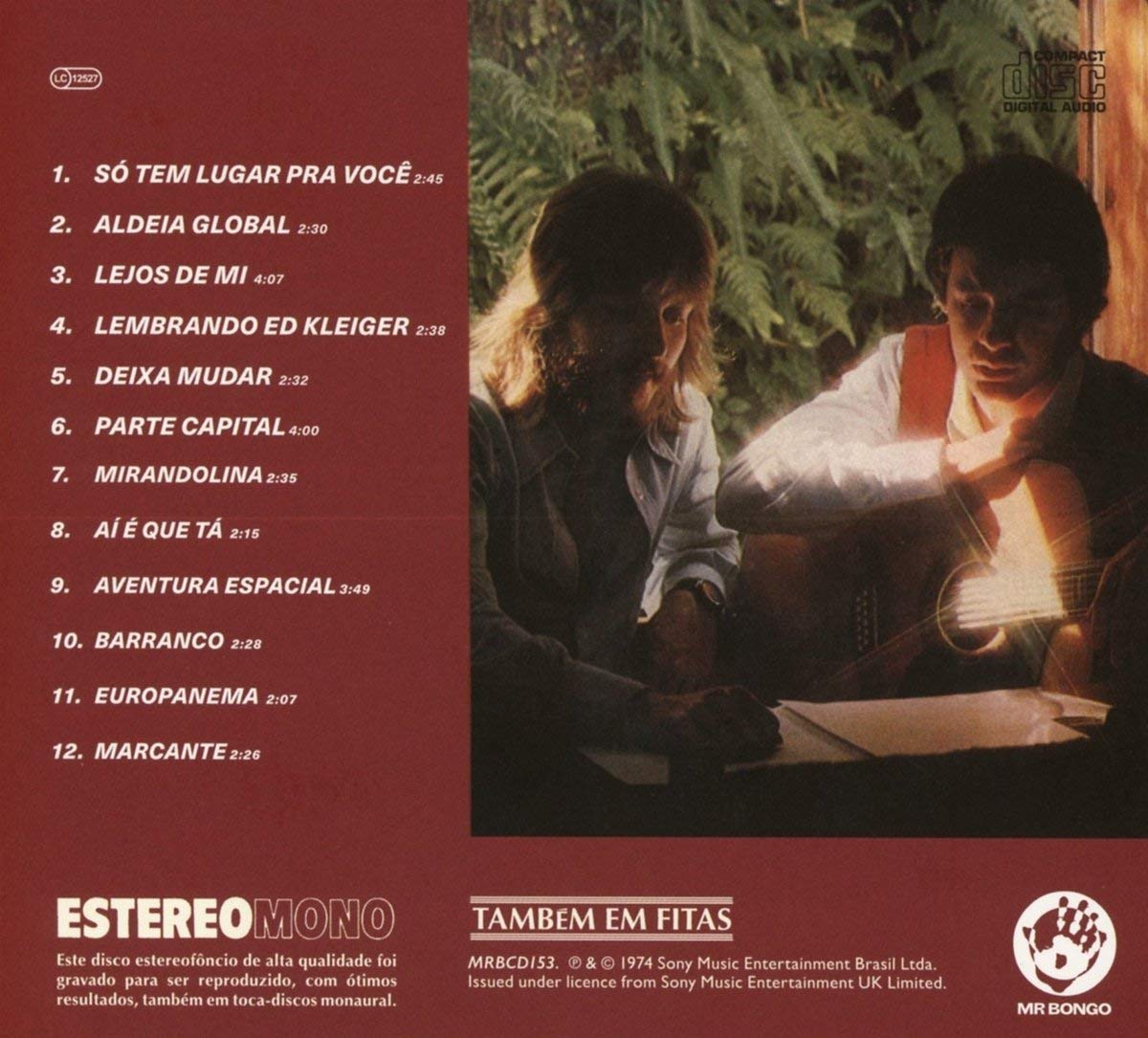
Meanwhile, Burnier and Cartier released their eponymous debut album in January 1974. That album was Burnier and Cartier and has just been reissued by Mr Bongo
Burnier and Cartier.
Having signed to RCA Victor,Burnier and Cartier began writing their debut album. Claudio Cartier and Octavio Burnier penned Só Tem Lugar Pra Você, Parte Capital and Marcante.Cláudio Cartier wrote Aldeia Global and Octavio Burnier contributed Lembrando Ed Kleiger, Deixa Mudar, Mirandolina and Europanema. Octavio Burnier penned Octavio Burnier with Luiz Bonfá, Ai É Que Tá with van Wrigg and Barranco with Gustavo Strunck. These twelve tracks became Burnier and Cartier.
Recording of Burnier and Cartier took place at studios RCA, Rio De Janeiro. Joining Burnier were some of the city’s top season players who recorded an ambitious and innovative album Burnier and Cartier
Burnier and Cartier was a released to critical acclaim and hailed as a genre-melting album which switched between, and fused boogie, disco funk, jazz, Latin and MFB. This new sound represented the new Brazil that was taking shape as 1974 dawned.
Tracks of the quality as a Só Tem Lugar Pra Você, Deixa MudarM Ai E Que Ta, Europanema and Marcante. These carefully crafted and orchestrated songs which featured horns, lush string and vocals Burnier and Cartier which was released in January 1974,
While Burnier and Cartier sold well, it never sold in the quantities that executives had hoped. Despite that, Burnier and Cartier released their sophomore in 1976, which was also their swan-song
Over the next forty-two years, a new generation of musicians have discovered Burnier and Cartier which gradually grew in popularity
Nowadays, Burnier and Cartier, is regarded as their finest hour, and a cult classic from what was an important new musical beginning in Brazil.
Burnier and Cartier-Burnier and Cartier.

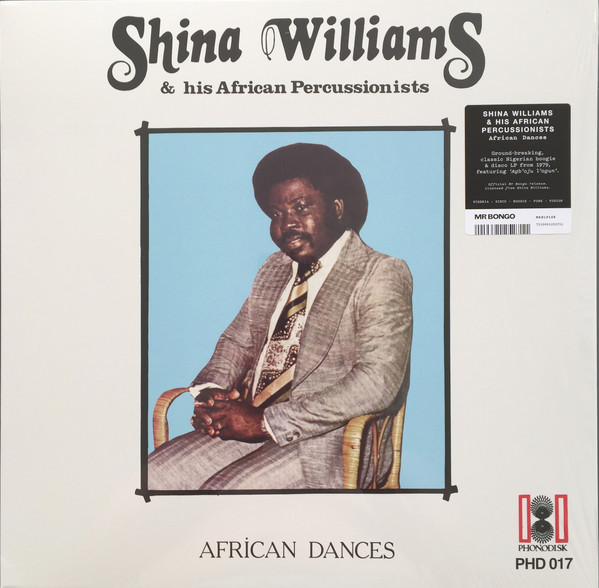
SHINA WILLIAMS AND HIS AFRICAN PERCUSSIONISTS-AFRICAN DANCES.
Shina Willians and His African Percussionists-African Dances.
Label: Mr Bongo.
By 1979, Afrobeat had grown in popularity in Nigeria, and was influencing and inspiring a number of Western musicians including the legendary vibes player Roy Ayers . He was just one of many musicians who had started to incorporate elements Afrobeat into his unique and inimitable sound. No longer as it just Western musicians who were influencing their African counterparts like Shina Willians,
It was a two-way street, with African and Western musicians listening to the latest music and using it to inspire their music. One of these albums in 1979 was Shina Willians and His African Percussionists’ album African Dances, which has just been reissued by Mr Bongo.
This a welcome reissue, as original copies of African Dances are now rarities. A clean copy of African Dances will cost upwards of £500, which is beyond many collectors of Afrobeat .Now the reissue of African Dances means that Shina Willians and His African Percussionists is available for everyone to hear. It’s part of a story that began in the early sixties.
That was when a musical revolution took place in Ghana, when musicians started combining elements of West African musical genres including highlife and fuji music with American funk and jazz. Playing an important part important part in this new genre which later, became known as Afrobeat, were chanted vocals, percussion and complicated converging rhythms. The result was an irresistible, potent and heady musical brew that later, would spread across West Africa.
By the early seventies, Fela Kuti and his band had just returned to Nigeria after a brief stay in America, where they had hurriedly recorded what later became The ’69 Los Angeles Sessions. The album had been recorded quickly, as a promoter had informed the Immigration and Naturalization Service that Fela Kuti and his band had no work permit. Fela Kuti was tipped off that the Immigration and Naturalization Service was about to swoop, and decided to head home to Nigeria.
When Fela Kuti and his band arrived back in Lagos, Nigeria, he decided to rename his group The Afrika ’70. Fela Kuti’s next move was to found the Kalakuta Republic, which was a commune which soon, became home to the many people connected to The Afrika ’70. It also meant that Fela Kuti and The Afrika ’70 were always ready to practise and record music.
Within the Kalakuta Republic was a recording studio where Fela Kuti and The Afrika ’70 could work. By then, Fela Kuti was writing song were the lyrical themes ranged from love right through to the various social issues affecting Nigeria. Despite his concern for his fellow Nigerians, Fela Kuti, who was the leader of Kalakuta Republic, declared independent from the Nigerian State. That was still to come.
Having established the Kalakuta Republic, Fela Kuti and The Afrika ’70 began experimenting musically. They regularly incorporated disparate musical genres into their This new sound was innovative, and also proved to be influential, when Fela Kuti established a new club that he called Afrika Shine.
That was where Fela Kuti and The Afrika ’70 first introduced Afrobeat to Nigeria in 1970. Between 1970 and 1975, Fela Kuti and The Afrika ’70 had a residency at Afrika Shine, in Lagos, and people from all over Nigeria flocked to the club. This included many Nigerian musicians who were inspired by Fela Kuti and The Afrika ’70.
Even after Fela Kuti and The Afrika ’70 completed their five-year residency at Afrika Shine, their music was inspirational. So was the music of the Afrobeat pioneers in Nigeria. It would influence and inspire the next generation of musician including
By 1979, bandleader, percussionist and vocalist Shina Willians was already an experienced and talented musician when he began work on the album that eventually became African Dances. To record his debut album Shina Willians brought onboard the creme de la creme of Nigerian musicians.
This included Biddy Wright, Fred Fisher, Prince Bolam, Saliu Alabi and Tutu Shoronmu, Tunde Willimas who were joined by some of Nigeria session player and musicians. The members of this all-stat had backed and played alongside everyone from Fela Kuti, SJOB Movement, Sonny Okoson and King Bucknor. These musicians were christened as Shina Willians and His African Percussionists as they entered Phonodisk Studio, a twenty-four track studio in Ijebu-Igbo, Ogun, Nigeria.
That was where Cunny Jam Wayo, Agboju Logun and Gboro Mi Ro, which were recorded by Shina Willians and His African Percussionists and became African Dances. It featured three timeless genre-melting songs where Shina Willians and His African Percussionists fuse elements of Afrobeat, boogie, disco, electronica and even a hint of psychedelia and soul on what was an ambitious album of groundbreaking and genre-melting music.
This includes the album opener Cunny Jam Wayo which features a rueful, emotive vocal as harmonies, hypnotic and jazz-tinged horns play. Meanwhile, the rhythm section and percussion lock down a groove where Afrobeat and funk combine, on a track that sometimes sounds as if it’s from a lost Blaxploitation film.
The centrepiece to African Dances was the eleven minute disco classic Agboju Logun. It’s best described as call to dance as where dancers give thanks to the disco gods. As they do, the psychedelic sound of taking drums, a mesmeric bass combine with searing guitars, chanted vocals and the fattest of horns. Adding finishing touches is a peerless synth part of Shina Willians and His African Percussionist’s Magnus Opus.
This leaves Gboro Mi Ro which closes African Dances. It gradually unfolds with elements of Afrobeat and funk combining with soulful harmonies and Shina Willians’ impassioned vocal. Blazing drums, pounding drums and crashing cymbals are added to this mesmeric and irresistible musical stew which closes African Dances on a high.
Despite the quality of music on African Dances, Shina Willians and His African Percussionist’s debut album wasn’t a hugely successful album when it was released in 1979 by Phonodisk. African Dances sold steadily but wasn’t the success they had hoped.
That was a great shame as African Dances veered between feel-good that was joyous, uplifting and irresistible to beautiful, soulful and dancefloor friendly. The members of Shina Willians and His African Percussionist’s had combined the best of American and American music, and in doing so, created an album that was funk, melodic, memorable and guaranteed to get any party started. Sadly, it was a case of what might have been for Shina Willians and His African Percussionist
If only record buyers had given Shina Willians and His African Percussionist’s cult classic a chance, they would’ve discovered an irresistible call to dance full of floor fillers.
Shina Willians and His African Percussionists-African Dances.
THE BLUE NILE-PERFECTION PERSONIFIED.
The Blue Nile-Perfection Personified.
Enigmatic, reluctant and contrarian are words that best of describe The Blue Nile. They’re the complete opposite of most bands. The Blue Nile have been described as publicity shy. That’ is an understatement. Ever since Paul Buchanan, Robert Bell and Paul Joseph Moore formed the Blue Nile, they’ve been one of the most low-profile bands in musical history. It seems that when they were formed thirty-five years ago, The Blue Nile ticked the “no publicity” box. This has proved a double-edged sword, and resulted in The Blue Nile becoming one of the most enigmatic groups ever. Their story began thirty-five years ago.
The Blue Nile were formed in 1981, when two friends Paul Buchanan and Robert Bell, met Paul Joseph Moore, all of whom met at Glasgow University. Before forming The Blue Nile, Buchanan and Bell were previously members of a band called Night By Night. Try as they may, a recording contract eluded them. Night By Night’s music wasn’t deemed commercial enough. So Paul, Robert and P.J. decided to form a new band, The Blue Nile.
Once The Blue Nile were formed, they set up their own record label Peppermint Records. It was on Peppermint Records that The Blue Nile released their debut single, I Love This Life. This single was then picked up and rereleased on the RSO label. Unfortunately for the Blue Nile, RSO became part of the Polygram label and I Love This Life disappeared without trace. Despite this setback, Blue Nile persisted.
Still, The Blue Nile kept writing and recording material after the merger of RSO with Polygram. Some of that material would later be found on A Walk Across the Rooftops. That was in the future.
Recording of The Blue Nile’s demos took place at Castlesound studio near Edinburgh. That’s home to the man whose often referred to as the fourth member of The Blue Nile, recording engineer Calum Malcolm. He was listening to recently recorded demos through the studio’s Linn Electronics system. It had recently had a new set of speakers fitted. So the company founder, Ivor Tiefenbrun, decided to visit Calum Malcolm to hear his thoughts on the speakers. That’s when Ivor Tiefenbrun first heard The Blue Nile.
Calum Malcolm played Ivor Tiefenbrun a demo of Tinseltown In The Rain. Straight away, the founder of Linn was hooked. He decided to offer The Blue Nile a record contract to the label he was in the process of founding. Most bands would’ve jumped at the opportunity. Not The Blue Nile.
It took The Blue Nile nine months before they replied to Ivor Tiefenbrun’s offer. When they did, the answer was yes. The Blue Nile’s debut album A Walk Across The Rooftops would be released on Ivor Tiefenbrun’s new label Linn Reords.
A Walk Across the Rooftops.
Linn Records and The Blue Nile seemed a marriage made in musical heaven. Linn Records weren’t like a major label, pressurising The Blue Nile into making a decision and delivering an album within a certain timeframe. Instead, Linn Records allowed The Blue Nile to do what they did best, make music. From the outside, this looked as if it was working, and working well.
Years later, Paul Buchanan commented that during Linn Records didn’t operate like a record label. Mind you, he conceded that, during this period, The Blue Nile didn’t operate as a band. However, eventually, in May 1984 The Blue Nile’s debut album was released on Linn Records.
On the release of A Walk Across the Rooftops, it was released to critical acclaim. Critics described the album as a minor classic. A Walk Across the Rooftops was described as atmospheric, ethereal, evocative, soulful and soul-baring. It also featured the vocals of troubled troubadour Paul Buchanan. Despite the critical acclaim A Walk Across the Rooftops enjoyed, it wasn’t a huge commercial success, reaching just number eighty in the UK. However, since the A Walk Across the Rooftops has been recognised as a classic album. So has the followup Hats.

Hats.
Unlike most bands, The Blue Nile weren’t in any rush to release their sophomore album Hats. There was a five year gap between A Walk Across the Rooftops and Hats. It was worth the wait. The Blue Nile had done it again. Hats was a classic.
Featuring seven tracks, written by Paul Buchanan, Glasgow’s answer to Frank Sinatra He’s a tortured troubadour, whose voice sounds as if he’s lived a thousand lives. Producing Hats was a group effort, with Paul, Robert and P.J. taking charge of production duties. Guiding them, was Callum Malcolm. On the release of Hats, British and American audiences proved more discerning and appreciative of the Blue Nile’s sophomore album Hats.
On the release of Hats in the UK in 1989, it was critically acclaimed and commercial success, reaching number twelve in the UK. Then when it was released in America in 1990, audiences seemed to “get” Hats. Not only did it reach number 108 in the US Billboard 200 Charts, but The Downtown Lights reached number ten in the US Modern Rock Tracks charts. It seemed that The Blue Nile were more popular in America, than in Britain. Gradually, The Blue Nile’s music was beginning to find a wider and more appreciative album. Especially when The Blue Nile decided to embark upon their debut tour later in 1989.

Although The Blue Nile were formed in 1981, and Hats was The Blue Nile’s sophomore album, the band had never toured. Partly, The Blue Nile seemed worried about replicating the sound of their first two albums. They needn’t have worried, with The Blue Nile seamlessly replicating the sonic perfection of A Walk Across The Rooftops and Hats on the sold out tour. The Blue Nile’s star was in the ascendancy.
Their first ever tour had been a huge success. The Blue Nile had conquered Britain. However, The Blue Nile had also made a breakthrough in America. Hats had sold well, and their American tour had been successful. Most bands would’ve been keen to build on this and released another album before long. Not The Blue Nile.
Seven long years passed, where Blue Nile fans wondered what had become of Glasgow’s most enigmatic trio. However, they’d been busy. After Hats found its way onto American radio stations, The Blue Nile, who previously, had been one of music’s best kept secrets, were heard by a number of prestigious musicians. Among them were Robbie Robertson and Annie Lennox, Michael McDonald. After a decade struggling to get their music heard, The Blue Nile were big news. During this period, America would become like a second home to The Blue Nile, especially Paul.
Paul took to life in America, and in 1991, decided to make it his home. This just so happened to coincide with Paul’s relationship with actress Rosanna Arquette between 1991 and 1993. Hollywood starlets and Sunset Boulevard was a long way from Glasgow’s West End. In the midst of Paul’s relationship, disaster struck for The Blue Nile, they were dropped by their label.
Linn Records and Virgin decided to drop The Blue Nile. For some groups this would’ve been a disaster. Not for The Blue Nile.
They signed a million Dollar deal with Warner Bros. While this sounded like the ideal solution for The Blue Nile, Paul made the deal without telling P.J and Robert. He later explained that “none of the others were in town at the time.” With a new contract signed, The Blue Nile began thinking about their third album, Peace At Last.
Peace At Last.
So the band started looking for the perfect location to record their third album. They travelled across Europe looking for the right location. This location had to be private and suit their portable recording studio. Cities were suggested, considered and rejected. Among them, were Amsterdam, Copenhagen and Venice. Being The Blue Nile, things were never simple. Eventually, after much contemplation The Blue Nile ended up recording what became Peace At Last in three locations, Paris, Dublin and Los Angeles. For the first time, The Blue Nile recorded an album outside of their native Scotland.
For their first album for a major label, things began to change for The Blue Nile. They brought onboard drummer Nigel Thomas, a string section and a gospel choir. Peace At Last was going to be a quite different album to A Walk Across The Rooftops and Hats. However, one things stayed the same, The Blue Nile continued to work with Calum Malcolm. With his help, Peace At Last was ready for release in June 1996. Before that, critics had their say.
Critics remarked upon the change of sound on Peace At Last. It had a much more understated, restrained sound. Acoustic guitars and piano play important parts. Still, The Blue Nile’s beloved synths remain. Occasionally, The Blue Nile add strings. There’s even a gospel choir on Happiness. Gone was the sound of A Walk Across the Rooftops and Hats. Peace At Last showed a different side to The Blue Nile and their music, one that divided the opinion of critics and fans. Paul, Robert and P.J. were back, but it was a different sound. One constant was Paul’s worldweary vocal. Glasgow’s very own Frank Sinatra, Paul Buchanan plays the role of the troubled troubadour, to a tee on songs about love, love lost, betrayal, heartbreak, growing up and growling old. Paul was still the tortured soul, who wore his heart on his sleeve on Peace At Last.
On the release of Peace At Last, in June 1996, it reached just number thirteen and sold poorly. For The Blue Nile this was disappointing, given it was their major label debut. Worse was to come when the lead single Happiness failed to chart. The Blue Nile’s major label debut hadn’t gone to plan. Alas, Peace At Last was the only album The Blue Nile released on a major label.

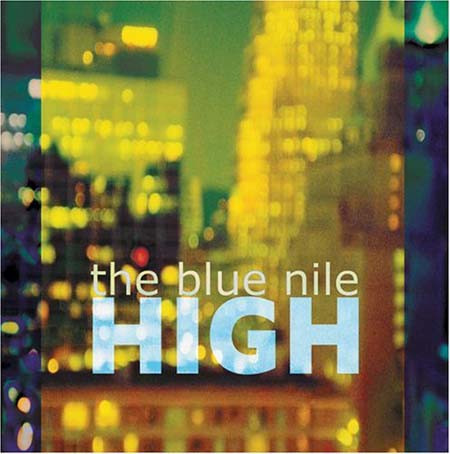
High.
Following Peace At Last, it was eight years before The Blue Nile released another album. High was released in 2004. During the last eight years, the three members of The Blue Nile had been leading separate lives. While P.J. and Robert were content with their lives in the West End of Glasgow, while Paul had been spending his time between Glasgow and Hollywood. Now they were back and ready to record their fourth album, High.
Once High was recorded, all that was left was for The Blue Nile to find a label to release the album. The Blue Nile had been dropped by Warner Bros. So with the completed album, The Blue Nile shopped High to various labels. Eventually, they settled on Sanctuary, which would release High in August 2004. However, before that, critics welcomed back The Blue Nille.
Eight years after the release of Peace At Last, critics remarked that High was a much more grownup album. Songs of family life and heartbreak sat side-by-side. Paul who had been suffering with illness and fatigue, seemed to have found a new lease of life. His lyrics are emotional, observational, cinematic and rich in imagery. They’re also poignant, and full hope, hurt and anguish. Meanwhile, Paul’s vocals were worldweary and knowing, while the music is emotive, ethereal and evocative. Critics love High. So did music lovers.
When High in August 2004, the album reached number ten in the UK. High proved to be The Blue Nile most successful album. This proved to be fitting.
High was The Blue Nile’s swan-song. Nobody realised this when the album was released. It was only as years passed without a followup to High, that the reality sunk. There would be no more music from The Blue Nile. One of the greatest bands of their generation were now part of musical history.
Following High, critics thought that The Blue Nile would return, possibly after another lengthy break. Sadly, that wasn’t to be. The Blue Nile were no more. At least they did things their way. Right up until the release of High, The Blue Nile were enigmatic, almost reclusive and publicity shy. Mind you, The Blue Nile weren’t exactly your normal band.
The rock ’n’ roll lifestyle favoured by other bands wasn’t for The Blue Nile. Their music was much more cerebral, and had a substance that much of the music recorded between 1984 and 2004 lacked. During that twenty year period, The Blue Nile only recorded four albums. These albums are unique. Musical fashions and fads didn’t affect The Blue Nile. Their attitude was almost contrarian. Albums were recorded slowly and methodically as the Blue Nile strived for musical perfection.
Many have tried to achieve perfection. However, very few have come as close as The Blue Nile. Their debut album A Walk Across The Rooftops and the followup Hats, are nowadays both regarded as classic albums. Peace At Last and High show another side to The Blue Nile. There’s a much more grownup sound, to the albums. However, just like A Walk Across The Rooftops and Hats, both albums showcase one of the most talented bands in Scottish musical history, The Blue Nile.
While The Blue Nile never enjoyed the commercial success their music deserved, they stayed true to themselves. They never jumped onto a musical bandwagon in pursuit of fame, fortune or starlets. Quite the opposite. For The Blue Nile it was their way or no way. If an album took years to record, so be it. It was always worth the wait. After all, not many bands pursue perfection, and achieve that perfection four times. The Blue Nile did, and ended their career on a High.
The Blue Nile-Perfection Personified.
BERT JANSCH-SANTA BARBARA HONEYMOON
Bert Jansch-Santa Barbara Honeymoon.
Label: Earth UK.
Buoyed by the commercial success and critical acclaim that his previous album L.A. Turnaround, which was released in September 1974, Bert Jansch began work on the followup Santa Barbara Honeymoon Stylistically both albums featured the same type of music, but unlike L.A. Turnaround, Santa Barbara Honeymoon wasn’t produced by former Monkey Michael Nesmith and didn’t feature pedal steel player Red Rhodes who had played such an important part in the sound and success of the album.
Instead, Danny Lane took charge of production on Santa Barbara Honeymoon, and deployed the latest technology, technique and innovations. This meant that Santa Barbara Honeymoon, which was recently reissued by Earth UK. Santa Barbara Honeymoon was released on October 1975, and became Bert Jansch’s tenth album since releasing his debut in 1965.
By then, folk singer Bert Jansch was signed to the Transatlantic label, and had released his eponymous debut album to critical acclaim on the ‘16th’ of April 1965. Eight months later, he released the followup It Don’t Bother Me to plaudits and praise. It looked as if the twenty-two year singer was about to enjoy a successful solo career.
With things looking good for Bert Jansch, he returned to the studio in early summer 1966, and was once again, joined by his friend John Renbourn as he recorded Jack Orion. When this third album of traditional folk was released in September 1966, the reviews were mixed. While some critics were won over by the album, and continued to fly the flag for the folk singer, others felt it was a weaker album than its predecessors. Despite that, Bert Jansch’s star was still in the ascendancy.
As 1967, dawned little did Bert Jansch realise that this would one of the most important year of his career. He entered the studio to record his fourth album Nicola in April 1967, which was Bert Jansch’s first folk rock album. When it was released in July 1967, many reviews were positive, but some weren’t sure about the new direction Bert Jansch’s music was heading. Bert Jansch had realised that his music had to evolve to stay relevant, and increase his fan-base. However, this wasn’t the only change made during 1967.
In 1967, Bert Jansch was one of the cofounders of Pentangle, which joined included his friend John Renbourn, Danny Thompson, Danny Cox and Jacqui McShee. They would combine disparate musical genres including blues, folk, folk rock and jazz over the next few years.
Having joined Pentangle, Bert Jansch’s solo career was put on hold as the new band began honing their sound and playing live. Then in 1968, Pentangle released their critically acclaimed debut album The Pentangle on the ’17th’ May 1968. It was followed by another album of folk rock Sweet Child, which was released on the ‘1st’ of November 1968 to plaudits and praise. After this, Bert Jansch’s thoughts turned to completing his sixth solo album.
Bert Jansch had started recording his sixth album in October 1968, and completed the album in November, just after Pentangle released Sweet Child. Two months later, Birthday Blues, which was produced by Shel Talmy, was released in January 1969 and was hailed as one of Bert Jansch’s finest albums. However, it would two years before Bert Jansch returned with the followup to Birthday Blues.
Buoyed by the response to Birthday Blues, Bert Jansch joined the rest of Pentangle and recorded the album Basket Of Light with producer Shel Talmy. When it was released on the ‘28th’ October 1969, it was to critical acclaim as the album reached number forty-three in Britain. Nowadays, Basket Of Light which finds Pentangle fusing folk jazz and fusion is now regarded as a minor classic, and one the Pentangle’s finest hours.
Meanwhile, Bert Jansch was working on his seventh album Rosemary Lane, between June 1970 and January 1971. Despite working on the album on and off for the best part of seventh months, Rosemary Lane, which was produced by Bill Leader received mixed reviews. This was a blow for Bert Jansch who had invested so much of his time into recording Rosemary Lane.
Two months later, and Bert Jansch was back in the studio, and spent three weeks during March 1971, recording Reflection, which was a genre-melting album. Reflection found Pentangle combining Celtic music, country, folk, folk rock, gospel and even funk on what was an ambitious and eclectic album, but one that didn’t find favour with all the critics. Some were unsure of Reflection, and their reviews were far from positive. It was the case of deja vu for Bert Jansch after the response to Rosemary Lane.
Despite the reviews of Rosemary Lane, Pentangle eventually returned to the studio and began work on their sixth album Solomon’s Seal. By then, Pentangle’s contract with Transatlantic had expired amidst arguments and wrangling over royalties. This resulted in Pentangle signing to Warner-Reprise, who had distributed their albums in America. Pentangle released Rosemary Lane on Reprise in September 1972, but the reviews were poor.and so were the sales. Things weren’t looking good for Pentangle.
They got even worse when Bert Jansch announced his intention to leave Pentangle on On New Year’s Day, 1973. Melody Maker ran the story Pentangle to split in the first edition of 1973. It was the end of an era, that had ended with a disappointing swan-song that sold badly.
By then, the members of Pentangle had all spent the advances that they had received from Reprise, and owed the company significant sums of money. It would take the band until the early eighties before the advance was paid off. That was still to come, and in 1973, Bert Jansch was looking for a new record label.
He was no longer signed to Transatlantic, and had signed to Pentangle’s old label Reprise. Bert Jansch’s debut for his new label was Moonshine, which was released on Reprise in February 1973. It was produced by Danny Thompson, and saw Bert Jansch combine baroque folk and folk rock which found favour with the critics. However, after just one album, Bert Jansch left Reprise and signed for Charisma.
By then, Bert Jansch had written Chambertin which was one of two songs he recorded with Danny Thompson in early 1973 The other was John Renbourn’s Lady Nothing, which later, became part of Bert Jansch’s nine album L.A. Turnaround.
Having signed to Charisma, Bert Jansch began writing the rest of L.A. Turnaround , which has recorded at between April ad June 1974, at Sound City, Sepulveda, California. Bert Jansch was joined by an all-star band that included pedal steel player Red Rhodes who played an important part of L.A. Turnaround’s sound and success. So did former Monkee, Michael Nesmith took charge of production,
Critics on hearing Bert Jansch’s ninth album, realised that stylistically, L.A. Turnaround was very different to his previous albums. There were elements of country rock and traditional English folk rock on L.A. Turnaround which become of Bert Jansch’s most successful albums.
Santa Barbara Honeymoon.
Following the success of Santa Barbara Honeymoon, Bert Jansch decided to record a similar album to L.A. Turnaround and began writing what was his tenth album
Eventually, Bert Jansch had writhed ten of the twelve tracks on Santa Barbara Honeymoon. They were joined by covers of Jimmie Davis and Charles Mitchell You Are My Sunshine and Jackson C. Frank’s Blues Run The Game. These tracks and the rest of Santa Barbara Honeymoon were recorded at Sound City, Van Nuys, California.
When the sessions began in April 1975, two men were missing, L.A. Turnaround producer Michael Nesmith and didn’t feature pedal steel player Red Rhodes. Replacing Michael Nesmith as producer was drummer Danny Lane who played on L.A. Turnaround and had very different ideas on production. This didn’t include a pedal steel.
Joining drummer Danny Lane in the rhythm section was fellow sticks-man Tris Imboden, bassists Don Whaley, Ernie McDaniel and David Hungate and guitarist Jim Lacy. They were joined by acoustic guitarist Jim Baker, keyboardists David Barry and Bill Smith and George Seymour on synths. Danny Lane was keen to use synths on Santa Barbara Honeymoon and steel drums played by Robert Greenidge. The final piece of the jigsaw was a brass section and backing vocals from Beth Fitchet Wood, Ron McGuire and Steve Wood. Over two months, twelve tracks were recorded and Santa Barbara Honeymoon was completed by June 1975.
Before the release of Santa Barbara Honeymoon critics had their say on the album, The loss of producer Michael Nesmith was a huge blow, and meant that the laid back, airy sound of L.A. Turnaround was gone. Pedal steel player Red Rhode’s was another loss, as producer Danny Lane deployed synths, steel drums, a Dixieland style jazz band and a myriad of effects. Sadly, they weren’t always used properly and the production on the album is poor. That was a great shame given it was a good collection of songs.
Santa Barbara Honeymoon opens with Love Anew. Danny Lane uses a phase shifter on the electric guitar before Bert Jansch’s guitar and vocal enter. He sings some of the best lyrics on the album but the pitch is off during the album. This takes the edge of what’s one of the better songs on the album.
Mary and Joseph is essentially a traditional English drinking song given a futuristic makeover. For some reason, synths were chosen to accompany the Wurlitzer piano during the verses. It’s a poor choice of instruments. Later,when the entire band enters, the arrangement becomes crowded and shambolic .
Things improve on the hopeful Be My Friend and the hook-laden Baby Blue, while Baby Blue features an impassioned vocal. Another highlight is the strolling Dance Lady Dance features a Dixieland jazz band which features one of Bert Jansch’s best vocals. You Are My Sunshine is reinvented and heads in the direction of traditional English folk. Lost and Gone features a soul-baring vocal from Bert Jansch. He then revisits Blues Run The Game which featured on debut album in 1965, but it’s drenched in reverb which spoils he song,
Build Another Band is another track when the choice of instrumentation is questionable to say the least. The addiction of steel drums detracts from what could’ve been one of Santa Barbara Honeymoon’s highlights. When The Teardrop Falls is quite beautiful and wistful song, which gives way to Dynamite and Buckrabbit, which are good, but not great songs. With a different producer, Santa Barbara Honeymoon could’ve been a fitting followup to L.A. Turnaround.
Santa Barbara Honeymoon was a case of what might have been. When Santa Barbara Honeymoon was released in October 1975. it failed to replicate the commercial success and crucial of L.A. Turnaround.
Things might have been very different if Michael Nesmith produced he Santa Barbara Honeymoon, as he could’ve continued with the sound of L.A. Turnaround. Instead, Danny Lane took charge of production but he doesn’t bring out the best in what’s a strong selection of songs. Sadly, that potential isn’t realised given the poor production on some songs, strange choice of instruments and failure to use effects properly. For Bert Jansch it was a case of what might have been as Santa Barbara Honeymoon failed to build on L.A. Turnaround.
Bert Jansch-Santa Barbara Honeymoon.

TEENAGE FANCLUB-BANDWAGONESQUE-VINYL
Teenage Fanclub-Bandwagonesque-Vinyl.
Label: Sony Music.
Having signed to Creation Records in 1991, Teenage Fanclub proceeded to pull a musical rabbit out if the hat when they released their third album Bandwagonesque on the “19th” of November 1991. Bandwagonesque was an award-winning, game-changer of album by Kings of Jangle Pop,Teenage Fanclub who came of age musically.
It was a time to celebrate for the boys from Bellshill, who had managed to extract themselves from their contract from Matador by presenting them with the hastily recorded The King. This could’ve backfired if Matador believed that Teenage Fanclub had deliberately produced uncommercial and unrepresentative work. They didn’t, The King was a commercial success and this allowed Teenage Fanclub to release Bandwagonesque which has just been reissued by Song music. Bandwagonesque was the start of a new chapter for Teenage Fanclub, the Creation Records’ years.
For those unfamiliar with the geography of Scotland, Bellshill, is a small town twelve miles from Glasgow, where Teenage Fanclub were born in 1989. The nascent band emerged out of Glasgow’s C86 scene, and had been inspired by West Coast bands like The Beach Boys and The Byrds. Another major influence on Teenage Fanclub were Big Star, who Teenage Fanclub would be later be compared to.
Unlike Big Star, Teenage Fanclub was a quartet, whose original lineup featured guitarist Norman Blake, lead guitarist Raymond McGinley, bassist Gerard Love and drummer Francis MacDonald. From the early days of the band, Norman Blake, Raymond McGinley and Gerard Love who were Teenage Fanclub’s three principal songwriters shared lead vocal duties. That was the case when they came to record their debut album A Catholic Education for Creation Records.
A Catholic Education.
Just a year after the band was founded, Teenage Fanclub released their debut album in 1990. A Catholic Education would later be described as a quite un-Teenage Fanclub album. The music was dark, harsh and peppered with cynicism and controversy.
Most of the controversy stemmed from Teenage Fanclub’s decision to turn their sights on Catholic church. For a band from a city divided by religion, that was a controversial move, and one that could alienate people. What made the decision to “attack” the Catholic church, was that Teenage Fanclub prided themselves on being apolitical band. The other surprise for a band who admired The Byrds, The Beach Boys and Big Star was the sound of A Catholic Education.
For much of A Catholic Education, Teenage Fanclub unleashed a mixture of grunge and heavy metal. The only hint of what was to come from Teenage Fanclub was the Norman Blake penned Everything Flows. It was a glorious slice of power pop. This was something that Teenage Fanclub would return to later. Before that, A Catholic Education was released on June 11th 1991.
Before that, critics reviewed A Catholic Education. Reviews of the album were mixed, and very few critics forecast the critical acclaim and commercial success that came Teenage Fanclub’s way. When A Catholic Education was released by Matador, the album failed to even trouble the British or American charts and was an inauspicious debut from Teenage Fanclub.
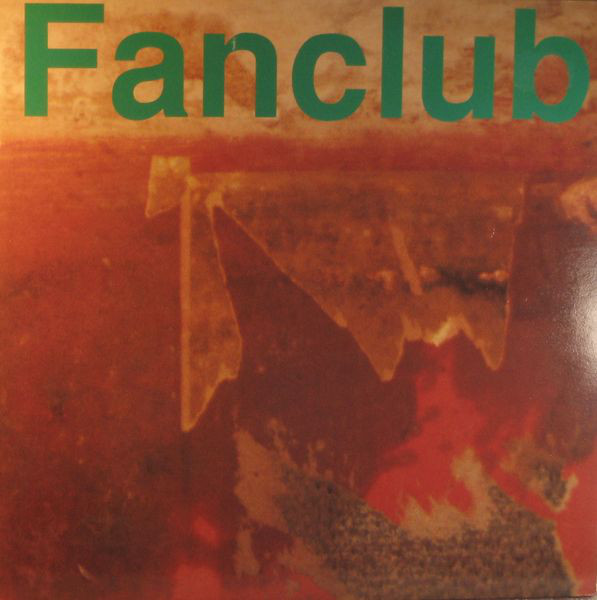
The King.
Just two months after the released of A Catholic Education, Teenage Fanclub returned with what was meant to be their sophomore album, The King. However, in reality, The King was a quickly assembled collection of tracks.
The tracks that became The King had been recorded once Teenage Fanclub had completed what would be their third album, Bandwagonesque. Quickly, Teenage Fanclub recorded nine tracks, including covers of Madonna’s Like A Virgin and Pink Floyd’s Interstellar Overdrive. Once The King was recorded, Teenage Fanclub were hoping this would allow them to discharge heir contractual obligations to Matador. This plan could have backfired.
Teenage Fanclub owed Matador an album, and as long as Matador accepted The King, then they had fulfilled their contractual obligations. Th only problem was there was a possibility that the album could be rejected, if Matador didn’t believe the album was of a certain commercial standard.
Fortunately, they didn’t. That was despite covers of Madonna’s Like A Virgin and Pink Floyd’s Interstellar Overdrive. The King wasn’t exactly Teenage Fanclub’s finest hour, but despite this, Matador released in August 1991.
Reviews of The King weren’t favourable, but despite this, Teenage Fanclub’s sophomore album reached fifty-three in the UK charts. This was ironic as very few critics thought that The King would even trouble the charts. Teenage Fanclub had the last laugh, and free from all encumbrances, they signed to Creation Records.

Bandwagonesque.
Now signed to Alan McGhee’s Creation Records, Teenage Fanclub like a magician pulling a rabbit from a hat, delivered the completed version of Bandwagonesque. It had been recorded at Amazon Studios, Liverpool, between the ‘9th’ April to the ‘12th’ of May 1991. Bandwagonesque featured twelve songs which saw Teenage Fanclub come of age musically.
Just like previous albums, songwriting duties were split between the band members. Raymond McGinley wrote I Don’t Know and Norman Blake penned The Concept, What You Do to Me, Metal Baby and Alcoholiday. Meanwhile, Gerard Love had written December, Star Sign, Pet Rock Guiding Star and Is This Music? Gerald Love then joined forces to write Sidewinder, while the only track credited to Teenage Fanclub was Satan. These twelve tracks would find Teenage Fanclub maturing as songwriters and musicians.
When it came to choosing a producer for Bandwagonesque, the partnership of Paul Chisholm, Don Fleming and Teenage Fanclub returned. They were responsible for an album that stood head and shoulders above Teenage Fanclub’s two previous albums, Bandwagonesque.
On Bandwagonesque Teenage Fanclub’s trademark ‘sound’ began to take shape. It had been influenced by The Byrds and Big Star. Byrdsian, jangling guitars were joined by close, cooing, harmonies and a melodic fusion of indie rock and hook-laden power pop. Seamlessly, though, Teenage Fanclub could switch between laid back and melodic to a much more powerful, rocky sound. This would find favour with critics and record buyers.
Before Bandwagonesque was released, critics had their say on the album. For once, critics were in agreement, and there were no dissenting voices. Bandwagonesque, critics agreed, was one of the finest albums of 1991. No wonder, with songs of the quality of The Concept, What You Do To Me, Star Sign, Alcoholiday and Is This Music? For Teenage Fanclub, Bandwagonesque was a career defining album. Spin Magazine went further, and named Bandwagonesque its best album of 1991. Things were looking good for Teenage Fanclub.
Especially when Star Sign was released in August 1991, and reached number four on the US Modern Rock charts. Meanwhile, Star Sign stalled at just forty-four in the UK. The followup The Concept, a rocky anthem, reached a disappointing fifty-one in the UK, but reached number twelve on the US Modern Rock charts. Teenage Fanclub’s music was finding an audience in America for the first time. Maybe Teenage Fanclub’s third album would find them cracking America for the first time?
That was the case. When Bandwagonesque was released on 19 November 1991, it reached number twenty-two in the UK, and 137 on the US Billboard 200. This meant that Bandwagonesque was Teenage Fanclub’s most successful album of their nascent career.
As 1991 drew to close, Teenage Fanclub were going places and enjoying their newfound fame as the Creation Records’ Years continued.
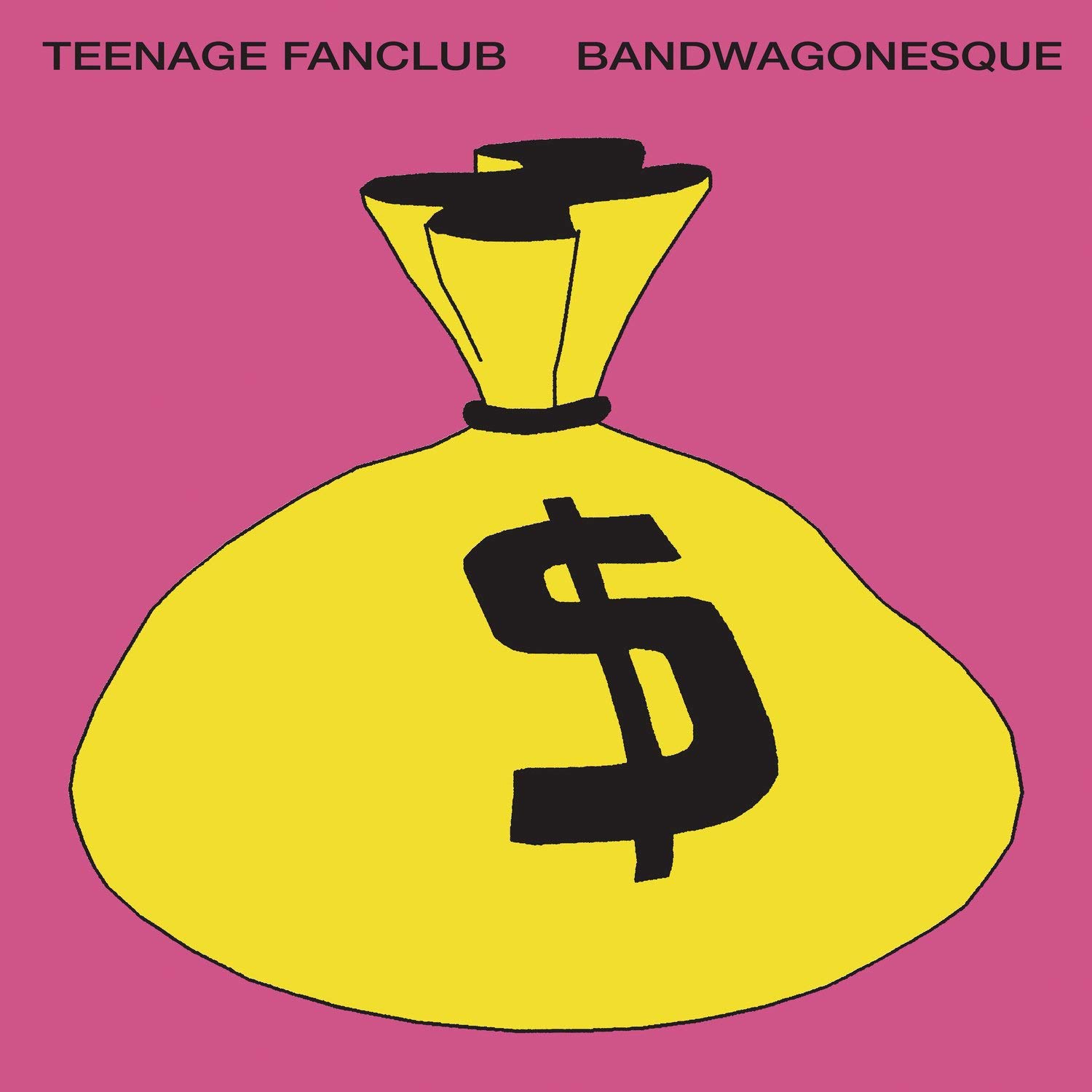
The Creation Records was when Kings of Jangle Pop, Teenage Fanclub, released the best music of their career. This began with Bandwagoneque, when musical magicians Teenage Fanclub pulled an indie classic from their hat. The was a game-changer for Teenage Fanclub.
This was just the start for Teenage Fanclub whose carer was about be transformed over the space of three albums. When the Big star inspired Thirteen was released in November 1993, it failed to win over critics but became their most successful album when it reached fourteen in Britain.
That was until eighteen months later, in May 1995, when Teenage Fanclub released another minor classic Grand Prix, which reached number seven win Britain and became their most successful album.
Just over two years later, and Teenage Fanclub released Tales From Northern Britain, and watched as this carefully crafted cult classic reached number three in Britain. This allowed Teenage Fanclub to leave Creation Records on a high.
Twenty-one years later, and with the benefit of hindsight, Teenage Fanclub released the finest music of their four decade at career at Creation Records. This includes Bandwagoneque, Grand Prix and Tales From Northern Britain which are the perfect introduction to Scotland’s very own Kings of Jangle Pop, Teenage Fanclub.
They came of age on Bandwagoneque which was inspired by The Byrds and Big Star. Teenage Fanclub’s award-winning combination of Byrdsian, jangling guitars close, cooing, harmonies and a melodic fusion of indie rock and hook-laden power pop was a potent and heady brew. Especially as they sseamlessly, switched between laid back and melodic to a much more powerful, rocky sound on Bandwagoneque which is Teenage Fanclub’s first minor classic and of the greatest indie albums of the nineties.
Teenage Fanclub-Bandwagonesque-Vinyl.

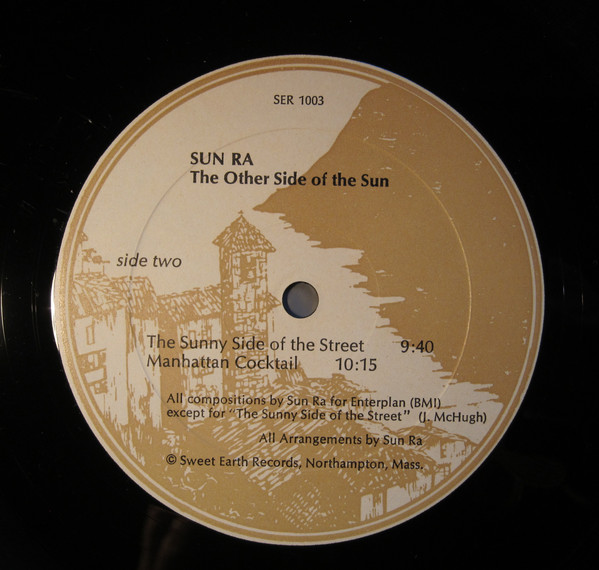
SUN RA AND HIS ARKESTRA-THE OTHER SIDE OF THE STREET.
Sun Ra and His Arkestra-The Other Side Of The Street.
Label: Sweet Earth
Nowadays, music journalists are guilty of using the words innovator and pioneer for too freely, but that is the perfect description of the inimitable Sun Ra. He’s now regarded as one of the true pioneers of free jazz and a truly innovative and influential musician who pushed musical boundaries to their limit, and sometimes, way beyond.
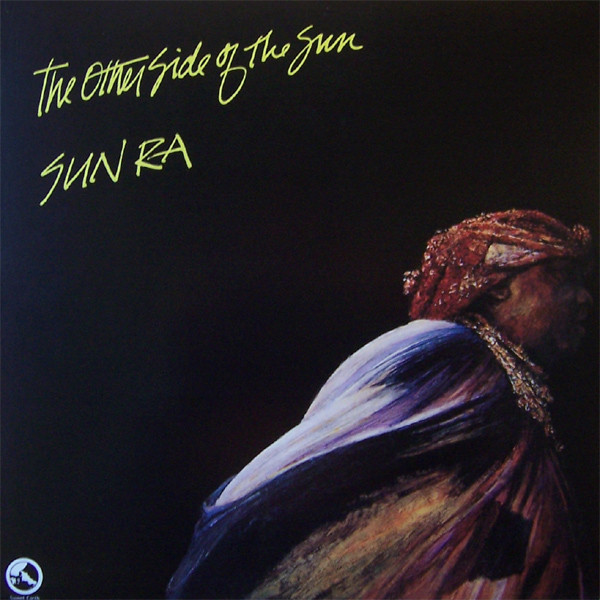
Sun Ra was also a prolific artists who released around 125 albums during a career that spanned six decades. This includes The Other Side Of The Sun which was released in 1979 and has been reissued on vinyl by the American label Sweet Earth. The Other Side Of The Sun was recorded in New York during 1978 and 1979, and is part of Sun Ra’s fascinating life story.
Before dawning the moniker Sun Ra, Herman Poole Blount was born on the ‘22nd’ of May 1914, in Birmingham, Alabama, but very little is known about his early life. So much so, that for many years, nobody knew what age he was. However, at an early age Herman immersed himself in music.
He learnt to play the piano at an early age and soon, was a talented pianist. By the age of eleven, Herman was to able read and write music. However, it wasn’t just playing music that Herman enjoyed. When the leading musicians of the day swung through Birmingham, Herman want to see them play and saw everyone from Duke Ellington to Fats Waller live. Seeing the great and good of music play live only made Herman all the more determined to one day become a professional musician.
By his mid teens, Herman was a high school student, but even by then, music was his first love. His music teacher John T. “Fess” Whatley realised this, and helped Herman Poole Blount’s nascent musical career.
John T. “Fess” Whatley was a strict disciplinarian, and this rubbed off on Herman who would layer acquire a reputation as a relentless taskmaster when he formed his Arkestra. The future Sun Ra was determined that the musicians in his Arkestra to reach his high and exacting standards and fulfil the potential that he saw in them. At rehearsals, musicians were pushed to their limits, but this paid off when they took to the stage. Led by Sun Ra, the Arkestra in full flow were peerless. However, that was way in the future. Before that, Herman’s career began to take shape.
In his spare time, Herman was playing semi-professionally in various jazz and R&B groups, and other times, he worked as a solo artist. Before long, Herman was a popular draw. This was helped by his ability to memorise popular songs and play them on demand. Strangely, away from music, the young Herman was very different.
He’s remembered as studious, kindly and something of a loner and a deeply religious young man despite not being a member of a particular church. One organisation that Herman joined was the Black Masonic Lodge which allowed him access to one of the largest collection of books in Birmingham. For a studious young man like Herman this allowed him to broaden his knowledge of various subjects. However, still music was Herman Poole Blount,’s first love.
In 1934, twenty-year-old Herman was asked to join a band that was led by Ethel Harper. She was no stranger to Herman Poole Blount, and just a few years earlier, had been his high school biology teacher. Just a few years later, and he was accepting Ethel Harper’s invitation to join her band.
Before he could head out on tour with Ethel Harper’s band, Herman joined the local Musicians’s Union. After that, he embarked on a tour of the Southeast and Mid-West and this was the start of Herman’s life as a professional musician. However, when Ethel Harper left her band to join The Ginger Snaps, Herman took over the band.
With Ethel Harper gone, the band was renamed The Sonny Blount Orchestra, and it headed out on the road and toured for several months. Sadly, The Sonny Blount Orchestra wasn’t making money, and eventually, the band split up. However, other musicians and music lovers were impressed by The Sonny Blount Orchestra.
This resulted in Herman always being in demand as a session musician. He was highly regarded within the Birmingham musical community, so much so, that he was awarded a music scholarship to Alabama Agricultural and Mechanical University in 1937. Sadly, he dropped out after a year when his life changed forever.
In 1937, Herman experienced what was a life-changing experience, and it was a story that he told many times throughout his life. He describes a bright light appearing around him and his body changing. “I could see through myself. And I went up … I wasn’t in human form … I landed on a planet that I identified as Saturn. They teleported me. I was down on a stage with them. They wanted to talk with me. They had one little antenna on each ear. A little antenna over each eye. They talked to me. They told me to stop attending college because there was going to be great trouble in schools … the world was going into complete chaos … I would speak through music, and the world would listen. That’s what they told me.” For a deeply religious young man, this was disturbing and exciting. It certainly inspired the young Herman Poole Blount.
After his: “trip to Saturn,” Herman Poole Blount decided to devote all his time and energy to music. So much so, that he hardly found time to sleep. Day in, day out, Herman spent his time practising and composing new songs in his first floor home which he had transformed into a musical workshop. That was where also where he rehearsed with the musicians in his band. Away from music, Herman took to discussing religious matters. However, mostly, though, music dominated his life.
It was no surprise to when Herman announced that he had decided to form a new band. However, his new band was essentially a new lineup of The Sonny Blount Orchestra. It showcased the new Herman Poole Blount, who was a dedicated bandleader, and like his mentor John T. “Fess” Whatley, a strict disciplinarian. Herman was determined his band would be the best in Birmingham. This proved to be the case as seamlessly, The Sonny Blount Orchestra were able to change direction, as they played an eclectic selection of music. Before long, The Sonny Blount Orchestra were one of most in-demand bands in Birmingham, and things were looking good for Herman. Then in 1942, The Sonny Blount Orchestra were no more when Herman was drafted.
On receiving his draft papers, Herman declared himself a conscientious objector. He cited not just religious objections to war and killing, but that he had to financially support his great-aunt Ida. Herman even cited the chronic hernia that had blighted his life as a reason he shouldn’t be drafted. Despite his objections the draft board rejected his appeal, and things got worse for Herman.
His family was embarrassed by his refusal to fight and some turned their back on him. Eventually, Herman was offered the opportunity to do Civilian Public Service but failed to appear at the camp in Pennsylvania on the December ‘8th’ 1942.
This resulted in Herman being arrested, and when he was brought before the court, Herman Poole Blount debated points of law and the meaning of excerpts from the Bible. When this didn’t convince the judge Herman Poole Blount said he would use a military weapon to kill the first high-ranking military officer possible. This resulted in Herman being jailed and led to one of the most disturbing periods in his life.
Herman’s experience in military prison were so terrifying and disturbing that he felt he no option but to write to the US Marshals Service in January 1943. By then, Herman felt he was on the verge of a nervous breakdown. He was suffering from stress and feeling suicidal. There was also the constant fear that he would be attacked by others within the military prison. Fortunately, the US Marshals Service looked favourably on his letter.
By February 1943, Herman was allowed out during the day to work in the forests around Pennsylvania, and at nights, he was able to play the piano. A month later, Herman was reclassified and released from military prison which brought to an end what had been a harrowing period of his life.
Having left prison, Herman formed a new band that played around the Birmingham area for the next two years. Then in 1945, when his Aunt Ida died, Herman left Birmingham, and headed to the Windy City of Chicago.
Phase One-Chicago.
Now based in Chicago, Herman quickly found work within the city’s vibrant music scene. This included working with Wynonie Harris and playing on his two 1946 singles, Dig This Boogie and My Baby’s Barrelhouse. After that, Herman Poole Blount worked with Lil Green in some of Chicago’s strip clubs. Then in August 1946, Herman Poole Blount started working with Fletcher Henderson but by then, the bandleader’s fortunes were fading.
By then, Fletcher Henderson’s band was full of mediocre musicians, and to make matters worse, the bandleader was often missed gigs. This couldn’t be helped as Fletcher Henderson, was still recovering after a car accident. What Fletcher Henderson needed was someone to transform his band’s failing fortunes and this was where Herman came in. His role was arranger and pianist, but realising the band needed to change direction, he decided to infuse Fletcher Henderson’s trademark sound with bebop. However, the band were resistant to change and in 1948, Herman left Fletcher Henderson’s employ.
Following his departure from Fletcher Henderson’s band, Herman formed a trio with saxophonist Coleman Hawkins and violinist Stuff Smith. Alas, the trio was somewhat short-lived and didn’t release any recordings.
Not long after this, Herman made his final appearance as a sideman on violinist’s Billy Bang’s Tribute to Stuff Smith. After this, Herman Poole Blount became Sun Ra.
By then, Chicago was changing, and was home to a number of African-American political activists. Soon, a number of fringe movements sprung up who were seeking political and religious change. When Herman became involved he was already immersing himself in history, especially, Egyptology. He was also fascinated with Chicago’s many ancient Egyptian-styled buildings and monuments. This resulted in Herman Poole Blount discovering George GM James’ book The Stolen Legacy which turned out to be a life-changing experience.
In The Stolen Legacy, George GM James argues that classical Greek philosophy actually has its roots in Ancient Egypt. This resulted in Herman concluding that the history and accomplishments of Africans had been deliberately denied and suppressed by various European cultures. It was as if Herman’s eyes had been opened and was just the start of a number of changes in his life.
As 1952 dawned, Herman had formed a new band, The Space Trio. It featured saxophonist Pat Patrick and Tommy Hunter. At the time, they were two of the most talented musicians Herman knew. This allowed him to write even more complicated and complex compositions. However, in October 1952 the author of these tracks was no longer Herman Poole Blount was Sun Ra had just been born.
Just like Malcolm X and Muhammad Ali, adopting the name Sun Ra was perceived by some as Herman choosing to dispense with his slave name. This was a kind of spiritual rebirth for Sun Ra, and was certainly was a musical rebirth.
After Pat Patrick got married, and moved to Florida, this left The Space Trio with a vacancy for a saxophonist. Tenor saxophonist, John Gilmore was hired and filled the void. He would become an important part of Sun Ra’s band in the future.
So would the next new recruit alto saxophonist Marshall Allen. They were then joined by saxophonist James Spaulding, trombonist Julian Priester and briefly, tenor saxophonist Von Freeman. Another newcomer was Alton Abraham, who would become Sun Ra’s manager. He made up for Sun Ra’s shortcomings when it came to business matters.
While he was a hugely talented bandleader, who demanded the highest standards, Sun Ra, like many other musicians, was no businessman. With Alton Abraham onboard, Sun Ra could concentrate on music while his new manager took care of business. This included setting up El Saturn Records, an independent record label, which would release many of Sun Ra’s records. However, El Saturn Records didn’t released Sun Ra and His Arkestra’s debut album, Jazz By Sun Ra.
Instead, Jazz By Sun Ra was released in 1956, on the short-lived Transition Records. However, Sun Ra and His Arkestra’s sophomore album Super Sonic Jazz was released in March 1956, on El Saturn Records. Sound Of Joy was released on Delmark in November 1956. However, it was El Saturn Records that would release the majority of Sun Ra and His Arkestra’s albums.
In 1961, Sun Ra deeded to leave Chicago and move to New York where he would begin a new chapter in his career. Much had happened to Sun Ra since he first arrived in Chicago 1945 as the World War II drew to a close. Back then, he was still called Herman Poole Blount and was trying to forge a career as a musician. By the time he left Chicago he was a pioneer of free jazz
Phase Two-New York.
Sun Ra and His Arkestra journeyed to New York in the autumn of 1961, where they lived communally. This allowed Sun Ra to call rehearsals at short notice, and during the rehearsals, he was a relentless taskmaster who was seeking perfection. However, this paid off and Sun Ra and His Arkestra recorded a string of groundbreaking albums. This included Secrets of the Sun in 1962 which was the most accessible recording from their solar period. However, Sun Ra and his music continued to evolve in the Big Apple
The Heliocentric Worlds of Sun Ra Volume 1 was released by Sun Ra and his Solar Arkestra in 1965. Sun Ra had dispensed was the idea of harmony and melody, and also decided there should be no continuous beat. Instead, the music revolved around improvisation and incorporated programmatic effects. This was the case The Heliocentric Worlds of Sun Ra Volume 2 which was released later in 1965.
As Sun Ra and His Arkestra came to the end of their time in New York, their music was often described as “avant-garde jazz” or “free jazz.” However, Sun Ra started to reject the free jazz label that was attached to his music. He pointed out that his music had been influenced by different types of ethnic music and he often used percussion, synths and in one case strings.
A case in point was Strange Strings which was released in 1967 and found Sun Ra and His Arkestra playing an array of stringed instruments while he adds vast quantities of reverb. Strange Strings was just the latest innovative album Sun Ra released during his New York period, which came to an end in 1968. By then, the cost of living was proving prohibitive and Sun Ra decided to move his band again.
Phase Three-Philadelphia.
Sun Ra wasn’t moving his Arkestra far, just to Philadelphia where it was much cheaper to live. Again, Sun Ra and His Arkestra lived communally in Philadelphia which was their “third period.”
During this period, Sun Ra’s music became much more conventional and often incorporated swing standards when they played live. However, still Sun Ra’s concerts featured performances where his sets were eclectic and the music full of energy as they veered between standards and always at least, one lengthy, semi-improvised percussive jam.
In the studio, Sun Ra and His Arkestra continued to innovate, releasing albums of the quality of 1970s My Brother The Wind Volume 1, The Night Of The Purple Moon and 1972s Astro Place. However, Sun Ra in 1973 released two classic albums like Space Is The Place and Discipline 27-II. Sun Ra was at the peak of his powers and seemed to have been reinvigorated creatively after moving to Philly.
The Next Phase.
Buoyed by the critical acclaim and commercial success of Space Is The Place and Discipline 27-II had enjoyed during 1973, Sun Ra knew that 1974 was going to be yet another busy year. He was used to this, as Sun Ra and His Arkestra had been working non stop since 1972. They embarked upon lengthy tours and recorded several albums in Chicago, California and Philly. It was more of the same in 1974, with Sun Ra and His Arkestra embarking upon yet another lengthy and gruelling tour of America. Still, Sun Ra found time to prepare a couple of live albums for his label El Saturn Records including 1975s Pathways To Unknown Worlds; 1976s What’s New and Live At Montreux, and 1977s Somewhere Over The Rainbow and Taking A Chance On Chances and Some Blues But Not The Kind That’s Blue However, in 1978 Sun Ra and His Arkestra began work on another new album,
The Other Side Of The Sun.
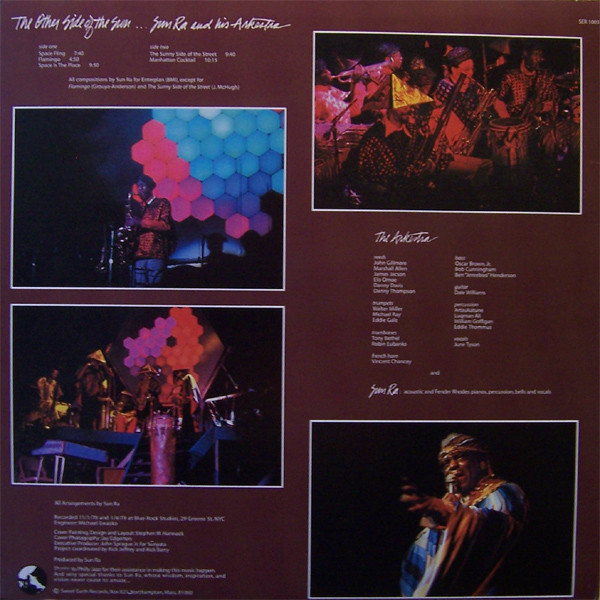
This was The Other Side Of The Sun which Sun Ra and His Arkestra began recording on the ‘1st’ of November 1978 at Blue Rock Studios, 29 Greene Street, New York. The session lasted just one day, and continued two months later,
Another session began at Blue Rock Studios on the ‘4th’ of January 1979. That day, Sun Ra and His Arkestra recorded the remainder of the five tracks that later became The Other Side Of The Sun.
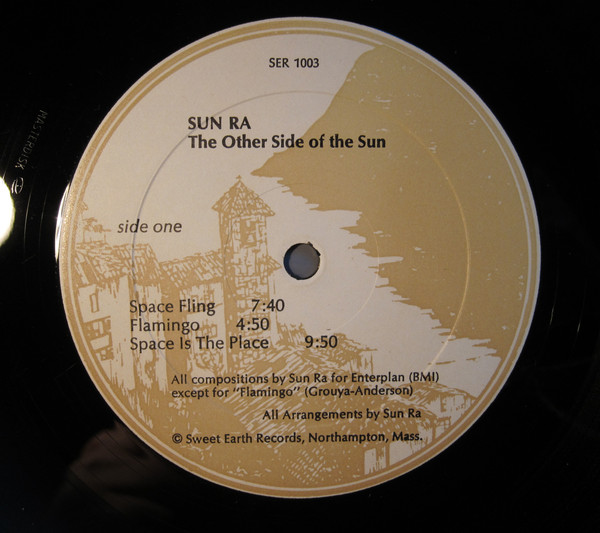
These five tracks including Space Fling, a rework of the Sun Ra classic Space Is The Place and Manhattan Cocktail. They were joined by Edmund Anderson and Theodor Grouya’s Flamingo and Jimmy McHugh’s The Sunny Side Of The Street. In true Sun Ra style, the Man From Mars set about reinventing the familiar tracks as he took them in new and unexpected directions. It was a similar case on Space Fling and Manhattan Cocktail as Sun Ra deployed and directed four percussionists, French horns trombones and backing vocalists.
With Sun Ra at the helm, his Arkestra unleashed music that as ambitious, sometimes challenging and always innovative during five avant-jazz soundscapes. They found Sun Ra and His Arkestra flitting between and combining elements of avant-garde, avant-jazz, free jazz and even jazz funk on what was a captivating album.
Later in 1979, Sweet Earth Records released The Other Side Of The Sun, and although the album found favour with jazz critics, the album wasn’t a commercial success. Since then, The Other Side Of The Sun has been an oft-overlooked and vastly underrated album.
For anyone with even a passing interest in Sun Ra’s music, The Other Side Of The Sun is another reminder of this musical pioneer at the peak of his powers, and is a welcome reminder of a pioneer of free jazz and a truly innovative and influential musician
For nearly forty years, Sun Ra pushed musical boundaries to their limits, and sometimes, way beyond. He was a pioneer and innovator, but also a perfectionist and relentless taskmaster. With some of most talented, inventive and adventurous musicians of their generation, Sun Ra set about honing his Arkestra’s sound. This paid off with music of the standard of The Other Side Of The Sun
It’s another reminder that Sun Ra was never content to stand still musically, throughout his career was always trying to reinvent his music. Similarly, he was always looking to reinvent familiar tracks and the original version was merely the starting point. What it became, was anyone’s guess? Sun Ra was forever determined to innovate, and when he reinvented a track.
That was the case on The Other Side Of The Sun where Sun Ra and His Arkestra continue to combine Egyptian history and space-age cosmic philosophy with free jazz, avant-garde, avant-jazz, free jazz, improv and even jazz funk on The Other Side Of The Sun which features the inimitable cosmic traveller, who sadly, left this planet nearly twenty-five years ago, but left behind a rich musical legacy including one of Sun Ra and His Arkestra’s best kept secrets, The Other Side Of The Sun.
Sun Ra and His Arkestra-The Other Side Of The Street.
VICTOR ASSIS BRASIL-ESPERANTO AND TOCA ANTONIA CARLOS JOBIM.
Victor Assis Brasil-Esperanto and Toca Antonio Carlos Jobim.
Label: Far Out Recordings.
Victor Assis Brasil was born into a middle class family in Rio de Janeiro, on the ‘28th’ of August 1945, and from an early age, expressed an interest in music. Seeing their son’s interest in music, Victor Assis Brasil’s parents decided to foster an environment that was conducive to his musical education. There was always the finest music playing in the house, as Victor Assis Brasil and his twin João Carlos Assis Brazil were growing up,
They were exposed to an eclectic selection of music. Sometimes, classical music was played, while other days, the young Victor Assis Brasil listened intently as jazz played. All the music that Victor Assis Brasil heard would influence and inspire him later, when he embarked upon a career as a professional musician, and released his two cult classics Esperanto and Toca Antonio Carlos Jobim, which were recently reissued on CD by Far Out Recordings. That was still to come.
Having heard such a wide range of music in his formative years, it was jazz that Victor Assis Brasil was drawn to and which he preferred to listen to. However, already Victor Assis Brasil wanted to go from listening to music to playing music.
This began when he was given a harmonica, and Victor Assis Brasil started playing along to the songs that he heard. While he played all sorts of music, Victor Assis Brasil always returned to jazz which was his already his favourite genre. The only problem was a harmonica wasn’t best suited to playing jazz. Fortunately, fate intervened when Victor Assis Brasil was fourteen.
That was when Victor Assis Brasil’s aunt arrived at the family home with an alto saxophone that she had won. This she presented to Victor Assis Brasil, and this opened up a new world for the young musician.
Victor Assis Brasil was a natural when it came to playing the alto saxophone, but still he practised for hours on end, day after day. Within just four years, Victor Assis Brasil was a truly talented saxophonist who was already playing in public. Whether it was nightclubs, parties or in schools Victor Assis Brasil took to the stage and showcased his considerable skills.
By then, people were starting to take notice of Victor Assis Brasil, and in 1963 made his first recording at a friend’s house. Little did anyone know that history had just been made.
A year later in 1964, nineteen year old Victor Assis Brasil had graduated to sitting in on jam sessions that took place in nightclubs in the South zone. Most of the musicians were older, and much more experienced, but Victor Assis Brasil didn’t look out-of-place, and sometimes upstaged the veterans he shared the stage this. This didn’t bother them, as they knew that Victor Assis Brasil was a special talent.
They were right, and in 1966 Victor Assis Brasil entered the studio to record his debut album Desenhos. During the sessions, torrential rain fell and it was so bad that the studio ceiling started leaking. Despite that, the sessions continued, and Victor Assis Brasil and his band were reluctant to leave the studio and ended up recording far more songs than was needed for an album. Many of these songs documented a prodigious talent in the early stages of his recording career and would’ve featured on Drawings.
Sadly, the leak in the studio damaged the tapes, and some of the songs were lost for good. Despite that, when Desenhos was released in 1966 it showcased a truly talented twenty-one year old saxophonist and was hailed as the first major jazz album recorded in Brazil. Many critics though Victor Assis Brasil had a long and illustrious career in front of him.
After the release of Desenhos, Victor Assis Brasil studied with saxophonist and conductor Paulo Moura in an attempt to improve his knowledge of music theory and improve his technique. Later that year, Victor Assis Brasil started touring further afield, and played in Europe. This included Austria where he took part in the International Jazz Contest in Vienna, and was third place in the saxophonists section. The same year, won the award for the best soloist at the Berlin Jazz Festival. By then, Victor Assis Brasil was one of jazz’s rising stars.
Victor Assis Brasil returned home to Brazil, and continued to play live, leading quartets and quintets. Soon, the time came for Victor Assis Brasil to record his sophomore album Trajeto where he combined Bossa Nova and Latin jazz. When Trajeto was released in 1967, it was to widespread critical acclaim. However, it was the last album Victor Assis Brasil would release in Brazil for three years.
In 1969, Victor Assis Brasil applied and was granted a place to study at the prestigious Berklee College of Music, where he played alongside of Dizzy Gillespie, Chick Corea, Ron Carter and Clark Terry. This was all part of Victor Assis Brasil’s musical education, and was good experience when resumed his recording career.
Toca Antonio Carlos Jobim.
During the summer of 1970, Victor Assis Brasil where he planed to record his third album Toca Antonio Carlos Jobim, which featured four tracks that the legendary Brazilian composer, arranger, singer, pianist, and guitarist made famous. This included Tinha De Ser Com Você, Wave, Bonita and Dindi which were recorded by Victor Assis Brasil and became his homage to Antonio Carlos Jobim.
Joining Victor Assis Brasil in the studio was a band that featured drummer Edison Machado, bassist Edison Lôbo guitarist Hélio Delmiro and pianist Salvador. Meanwhile Victor Assis Brasil played alto saxophone and Roberto Quartin took charge of production. Just like during the recording of his debut album, Victor Assis Brasil ended up recording more music than they needed.
Victor Assis Brasil and his band also recorded Jimmy Heath’s ‘Ginger Bread Boy and three of his own compositions Marilia, Quarenta Graus À Sombra and Ao Amigo Quartin. These four tracks would later become Esperanto and by the end of the session Victor Assis Brasil had recorded two albums that were released during 1970 including Toca Antonio Carlos Jobim.
Critics on hearing Toca Antonio Carlos Jobim realised that it was game-changer of an album. Gone was the smooth, easy on the ear sound of the Bossa Nova, which was the sound of Brazil’s past.Certainly now that Brazil was no longer a democracy, and after a military coup, was being ruled by an iron fist by a military dictatorship.
Brazil was country under attack from the enemy within, Many within the country lived in fear, and daren’t speak out in case they were dragged kicked and screaming away by army. Despite the fear that pervaded the country, jazz was still important in the lives of many.
When Toca Antonio Carlos Jobim was released on Quartin in 1970, jazz fans were won over by Victor Assis Brasil’s groundbreaking new album. Antonio Carlos Jobim’s relaxing, soothing originals were transformed into the rawest of deep jazz cuts where Latin jazz and post bop melt into one. Toca Antonio Carlos Jobim was a powerful, potent and popular album that showed the way Brazilian jazz was heading.
Many critics believed that Victor Assis Brasil was well on his way to becoming one of the biggest names in Brazilian jazz. Especially ager the release of Esperanto later in 1970, which was another landmark album.
Esperanto.
Victor Assis Brasil opened Esperanto with what can only be described as a heavy swinging version of Ginger Bread Boy. It sets the scene before the rueful and spellbinding Marilia, the frenzied Quarenta Graus À Sombra and the wistful, ruminative and breathtaking Ao Amigo Quartin. This brought to an end landmark album where Victor Assis Brasil and his band seamlessly fused Latin jazz, Música Oopular Brasileira and post bop.
After Victor Assis Brasil released Esperanto and Toca Antonio Carlos Jobim, which were recently reissued on one CD by Far Out Recordings. Critics believed that these two groundbreaking and genre-melting landmark albums were just another chapter in the story of twenty-nine year old Victor Assis Brasil.
In 1979 the Victor Assis Brazil Quintet released their eponymous album. However, in 1980 Victor Assis Brasil released his new album, Pedrinho which was also his swan-song.
Just a year later, on the ‘14th’ of April 1981, Victor Assis Brasil passed away aged just thirty-five. Brazilian music was in mourning at the loss of one of its most talented and innovate musicals who is just a fifteen year period had released six albums. These albums featured music that was ambitious, innovative and inspirational including Victor Assis Brasil’s much loved cult classics Esperanto and Toca Antonio Carlos Jobim.
Victor Assis Brasil-Esperanto and Toca Antonio Carlos Jobim.

CHESS NORTHERN SOUL-KEEP ON DANCING.
Chess Northern Soul-Just Keep On Dancing.
Label: Kent.
Nowadays, hardly a week goes by without a new Northern Soul compilation being released into what an increasingly competitive marketplace. Some weeks, there are several Northern Soul compilations released and the competitions suddenly becomes even more fierce.
That comes as no surprise, as record labels big and small suddenly realised just how popular Northern Soul was. This resulted on many labels jumping on the Northern Soul bandwagon. These record labels realised that given the appetite for Northern Soul compilations, that these compilation were profitable.
They are if done properly, and that was the case with Chess Northern Soul-Just Keep On Dancing, which was originally released by Kent in 1996, and has just been reissued. It’s one of the best Northern Soul compilations that money can buy. Sadly, for every Chess Northern Soul-Just Keep On Dancing there’s countless hastily cobbled together cash-ins and others whose legality is questionable.
Sadly, it seems, not all Northern Soul complications are created equal, and there’s huge differences in quality. Sometimes, it depends on the compiler, what the source of the music is or the label releasing it. That is why Northern Soul complications can be described as the good, the bad and the ugly.
In the case of Chess Northern Soul-Just Keep On Dancing, it’s a beautiful siren whose smouldering brown eyes are capable of melting your heart. It’s also one of the best ever Northern Soul compilations ever released.
That comes as no surprise given the quality of music on Chess Northern Soul-Just Keep On Dancing. There’s contributions from Terry Callier, Gene Chandler, Doug Banks, Billy Stewart, The Valentinos, Tony Clarke, Eve Barnum, The Radiants, Greg Perry, The Natural Four, Etta James and The Dells. Chess Northern Soul-Just Keep On Dancing is a veritable musical feast.
Opening Chess Northern Soul-Just Keep On Dancing is Terry Callier’s Look At Me Now, which was released as a single on Cadet in October 1968. Charles Stepney arranged Look At Me Now which was produced by Esmond Edward. It’s a joyous call to dance that even the most reluctant dancer will find hard to resist,
So is Gene Chandler’s After The Laughter (Here Come The Tears) which was recorded while he was signed to Checker. It’s a hook-laden emotional roller-coaster.
The tempo drops on Herb Ward ’s Strange Change which was released on Argo in September 1965. Stabs of horns, sweeping strings and soulful harmonies accompany a lovestruck Herb Ward.
In March 1964, Billy Stewart released Count Me Out as a single on Chess, and tucked away on the B-Side was a cover of Maurice McAlister’s A Fat Boy Can Cry. It’s a soulful earworm tinged with humour which sadly, would fall foul of the PC brigade.
From the opening bars of The Gospel Classics’ More Love, That’s What We Need it’s obvious something special is unfolding. It was released on Chess in August 1966 and features a soulful vocal powerhouse during this irresistible stroller.
Soul survivor Bobby Womack began his career with The Valentinos, who released Sweeter Than The Day Before on Chess in October 1966. It’s a memorable soul stomper, that bursts into life, and is still guaranteed to fill a dancefloor.
If someone has never heard of Northern Soul, Tony Clarke’s Landslide is the perfect musical explanation. It was released by Chess in Britain in March 1974, and has been a favourite of DJs and dancers ever since.
The Kittens’ uptempo soulful dancer Ain’t No More Room was released on Chess in October 1967. Sadly, the single but never made any impression on the American charts. A few years later, this hidden gem was discovered by Northern Soul DJs and Ain’t No More Room was soon filling dancefloors across Britain.
Greg Perry released Love Control on Chess in November 1967. It was arranged by Charles Stepney and produced by Greg Perry, whose vocal is heartfelt and soulful as horns and harmonies accompany him. They play their part in another hidden gem from the Chess Records’ vaults.
The Natural Four released Give A Little Love as a single on Chess in August 1971, it passed record buyers by. However, in Britain Northern Soul DJs flipped over to the B-Side and started playing The Devil Made Me Do It. It’s an intense, uptempo floor filler arranged by Art Freeman and produced by Ron Carson.
Etta James released some of the best music of her long and illustrious career on the Chess’ brothers’ labels. In October 1961, Etta James released It’s Too Soon To Know as a single, but the Billy Davis composition Seven Day Fool is the stronger of the two songs. It’s an uptempo dancer where Etta James’ combines raw power, sass and emotion.
Joe Cato only ever released the one single Save Our Love. It was released on Chess in October 1967 and featured I’m So Glad on the B-Side. It’s a much stronger track that was arranged by Charles Stepney and produced by Billy Davis and Leonard Caston. With its impassioned vocal and a carefully crafted mid tempo arrangement it’s the one that got away for Joe Cato.
The Dells released Thinkin’ About You as a single on Cadet in June 1966. It features as impassioned, emotive and powerful lead vocal as the rest of The Dells add sweeping, soaring harmonies. It’s a powerful combination and a reminder of The Dells at their best.
Closing Chess Northern Soul-Just Keep On Dancing is Billy Stewart’s Ol’ Man River which may soul fans won’t have heard. It featured on the B-Side of Every Day I Have The Blues which was released on Chess in June 1967. Ol’ Man River features Billy Stewart at his most soulful as on this beautiful ballad, which closes the compilation on a high.
Many newcomers to Northern Soul are unsure where to start when they see the huge amount of compilations available and suddenly, it’s a lottery. Choose the wrong compilation and their love affair with Northern Soul can be short-lived. Not if they choose Chess Northern Soul-Just Keep On Dancing which is one of the best compilations of the past three decades.
Chess Northern Soul-Just Keep On Dancing was originally released by Kent in 1996, and was the latest in a long line of quality Northern Soul compilations. Twenty-two years later, and Kent still release Northern Soul compilations. One of the best is Chess Northern Soul-Just Keep On Dancing, which is a veritable musical feast. perfect for newcomers or veterans to this very British musical genre.
Chess Northern Soul-Just Keep On Dancing.
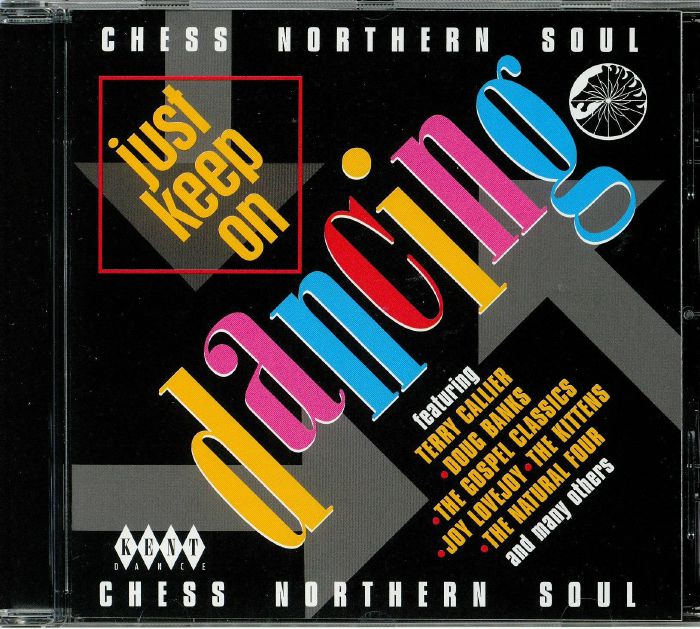

EL POLEN-FUERA DE LA CIUDAD-VINYL.
El Polen-Fuera De La Ciudad (Vinyl).
Labe: Buh Records.
Sadly, not every influential and innovative band enjoys a long and illustrious career, and instead, their career is short-lived. That was the case with the groundbreaking Peruvian rock band El Polen who released just two albums between 1972 and 1973. This includes their debut album Cholo (Música Original De La Banda De Sonido) and their sophomore album Fuera De La Ciudad which was recently released on Buh Records on vinyl. This is a welcome reissue of a groundbreaking album from one of the most important Peruvian rock bands of the late-sixties and early seventies,
The El Polen story began in 1969, when brothers Juan Luis and Raul Pereira decided to form a new band. They had decided that their new band would head in a new direction and make music that was different to their previous band, the Pereira brothers realised that Peruvian music was about to change.
By 1969, the first wave of new Peruvian bands were combing beat music and surf sounds, which they played at Matinales which were concerts that took place on a Sunday morning. These concerts were always popular, and so were the bands that took to the stage. However, the music was starting to sound tired, and yesterday’s sound. What Peruvian music needed was a revolution.
Juan Luis Pereira who was part of the burgeoning hippy movement, realised this, and with his brother Raul formed El Polen, and set about reinventing music in the new Peru. It was a very different country since 1968, and it was an exciting time for the Pereira brothers as they started their new band.
Peru was transformed in 1968, when a nationalist government was established by Juan Velasco Alvarado. This brought to an end the oligarchic state, which had previously ruled Peru. Suddenly, many people started to migrate from the country to the city, seeking a new life in the new Peru.
This coincided with new Andean singers and bands playing concerts in Coliseums located on the outskirts of cities. Many within the audience were those who had migrated from the country to the city, and they enjoyed the concerts that they attended.
Meanwhile, their was an upsurge of interest in Andean music, and sales of new recordings increased. The Andean sound which had first been recorded and promoted by Jose Maria Arguedas by the late-forties was growing in popularity. Soon, new bands were being formed and Andean sound became more popular than ever and the Peruvian musical industry expanded. However, Juan Luis and Raul Pereira had their own plans for Peruvian music.
As the sixties, gave way to the seventies, Juan Luis and Raul Pereira realised that the fusion of beat music and surf sounds many bands had been playing was yesterday’s sound and no longer as popular as it had once been. It was time for Peruvian music to change. The Pereira decided to fuse the sound of today with some of the music that they had heard growing up.
This included classical music, Peruvian waltzes and huaynos, which had influenced and moulded the Pereira brothers in their formative years. So did Andean folklore music which would become part of El Polen’s sound. They were about to combine Andean music, folk rock and psychedelia, and this new genre-melting was groundbreaking. Nobody had ever tried this before and the members of El Polen were about to become musical pioneers.
By then, the members of El Polen had been on a journey which would help them improve as musicians and spiritually. El Polen had traveled to Cusco, where they learned more about Andean instruments and musical traditions. This was they saw as part of their continuing musical education, and having gathered new knowledge, El Polen began the next part of this two-part journey.
It took El Polen to Santa Eulalia high in the mountains above Lima, where they examined their burgeoning spirituality. After this, the members of El Polen were ready to change Peruvian music forevermore.
By then, the hippy movement had exploded in popularity as Peruvian music fans embraced psychedelia and sought altered states of consciousness. With the new hippy generation enjoying and embracing the new, alternative lifestyle and psychedelic music El Polen had a captive audience.
The members of El Polen had much in common with the people who they hoped would embrace their music. They had lived in a community, and shared many of the same values and beliefs. El Polen also hoped that the new hippy generation would embrace their music.
When El Polen took to the stage, they sought to eliminate the boundaries between rock and huayno. To do this, they deployed acoustic guitars, a cello, mandolin, percussion and quenas, as they combined Andean music, folk rock and psychedelia. This proved popular, and soon, El Polen was at the forefront of a new musical movement that was blossoming in Peru.
Given their popularity, it was only a matter of time before El Polen came to the attention of one of the Peruvian record companies. Virrey won the signature of El Polen who soon, began work on their debut album.
Cholo (Música Original De La Banda De Sonido).
For their debut album, El Polen was asked to write the soundtrack to the film Cholo (Música Original De La Banda De Sonido), which was based on the life of the famous Peruvian Soccer Player Hugo Sotil.
For Cholo (Música Original De La Banda De Sonido), El Polen wrote six new tracks, and covered Cholito Pantalion Bianco which was written by singer and songwriter Luis Abanto Morales. These seven tracks were recorded by the six members of El Polen.
As recording of Cholo (Música Original De La Banda De Sonido) began, El Polen’s lineup featured guitarist Juan Luis Pereira and his brother Raul who played guitar and took charge of the vocals. They were joined by cellist Juan Sebastián Montesinos, violinist Fernando Silva, percussionist Ernesto Pinto and Carlos Martínez who played mandolin. As Cholo (Música Original De La Banda De Sonido) took shape, the six members of El Polen had no idea that they were about to make musical history.
Prior to the release of Cholo (Música Original De La Banda De Sonido), critics had their say on El Polen’s debut album. While El Polen’s debut album was well received and hailed as an ambitious and exciting release, it was only later that critics realised the importance of Cholo (Música Original De La Banda De Sonido).
It was a game-changer of an album, and Cholo (Música Original De La Banda De Sonido) proved not just to be innovative, but also influential. El Polen paved the way for other bands to fuse Andean music and rock and would influence several generations of bands and musicians.
Nowadays, Cholo (Música Original De La Banda De Sonido) is regarded as a landmark album in the history of Peruvian music. That is no surprise as El Polen was the first band to fuse traditional Andean music with folk and psychedelia and rock. They were also the first group to combine traditional Andean instruments with Western instruments.
Fuera De La Ciudad.
Buoyed by the commercial success and critical response to their debut album, El Polen began writing their sophomore album. Eventually, El Polen had written five new songs that would eventually become Fuera De La Ciudad.
When El Polen entered the studio, they were no longer a six piece band any more, and their lineup had changed. It featured lead guitarist, harpist and vocalist Juan Luis Pereira and his brother Raul who played rhythm guitar, Quena and took charge of the vocals. They were joined by violinist Fernando Silva and percussionists Ernesto Pinto and Cuto Vásquez who also played mandolin. Gradually, Fuera De La Ciudad started to shape, and it wasn’t long before the album was completed. El Polen were about to make history once more.
Critics on hearing Fuera De La Ciudad in 1973 recognised the quality of what was another which innovative genre-melting album. However, they didn’t realise that Fuera De La Ciudad was a game-changer of album and that would inspire and influence two generations.
Side A
Ironically, this was apparent from the uptempo album opener Concordancia, where El Polen combine blues, folk rock and traditional Peruvian instruments. Sweeping, swirling strings , a bluesy harmonica and mandolin accompany a beautiful soul-baring vocal. By comparison Mi Cueva has a much more tradition Andean sound.This is because of the choice of instruments during what’s a haunting sounding fusion of folk and traditional Andean music. Strings sweep as the joyous sounding A Las Orillas Del Vilcanota unfolds and reveals its secrets. What follows is an irresistible mixture of the traditional Andean music and folk.
Side B.
From the get-go, there’s a degree of drama during the fourteen minute epic El Hijo Del Sol. It’s cinematic and rich in imagery, even before the choir, harpsichord and pizzicato strings are added. Later, folk, folk rock and traditional Andean music combine as the tempo and drama increase on this ambitious, innovative and genre-melting Magnus Opus, which is El Polen’s finest moment on Fuera De La Ciudad. It closes with La Puna a slow and ruminative sounding track where traditional Andean instruments take centre-stage as Fuera De La Ciudad closes on a high.
Fuera De La Ciudad which found El Polen switching between and combining blues, folk, folk rock, psychedelia, rock and traditional Andean music saw the Lima-based band pickup where they left off on Cholo (Música Original De La Banda De Sonido). The followup Fuera De La Ciudad was another landmark album, full of ambitious and innovative music from musical pioneers El Polen.
They began their mission to revolutionise Peruvian music on Cholo (Música Original De La Banda De Sonido) in 1972. El Polen’s musical revolution continued in 1973 with the release of Fuera De La Ciudad. Ironically, many critics didn’t realise just how important and influential Fuera De La Ciudad.
Despite that, two generations of Peruvian musicians were influenced and inspired by El Polen’s sophomore album Fuera De La Ciudad which has just been reissued on vinyl by Buh Records.
El Polen managed to revolutionised Peruvian music in the space of just two albums. This included Fuera De La Ciudad a groundbreaking and genre-melting album from El Polen, who looked as if they were about to enjoy a long and illustrious career.
Sadly, two years after the release of Fuera De La Ciudad a El Polen split-up in 1975. By then, many bands would follow in El Polen’s footsteps, after being influenced by Cholo (Música Original De La Banda De Sonido). These albums were regarded as turning point for Peruvian music, and revolutionise Peruvian music forevermore and in the process.
Nothing more was heard of El Polen for twenty-one years, until they made a comeback in 1996. Three years later, self-released their third album Signos E Instrumentos. Sadly, not long after releasing their first album in twenty-six years El Polen split-up once again.
Fifteen years later, in 2014, there was an El Polen reunion, as they rolled back the years. Sadly, that was the last that was heard from one of the most important groups in the history of modern Peruvian music.
El Polen certainly made their mark on Peruvian music during the six-year period between 1969 and 1975. During this period, they released two ambitious and innovative albums Cholo (Música Original De La Banda De Sonido) in 1972, and followed this up with Fuera De La Ciudad in 1973 which was El Polen’s second classic album
El Polen-Fuera De La Ciudad (Vinyl).
MOUNTAIN-FLOWERS OF EVIL AND MOUNTAIN LIVE: THE ROAD GOES EVER ON.
Mountain-Flowers Of Evil and Mountain Live: The Road Goes Ever On.
Label: BGO Records.
By the time Long Island based hard rockers Mountain began recording their third album Flowers Of Evil, their first two albums had just been certified gold. This success began with their 1970 debut album Climbing!, and continued with the followup Nantucket Sleighride, which was released in 1971. Mountain had sold over a million albums in the space of just two years, and great things were forecast for them.
Sadly, after the release of Flowers Of Evil and Mountain Live: The Road Goes Ever On in 1972, which have just been remastered and reissued by BGO Records as a two CD set, Mountain split-up for the first time.
Mountain who could’ve become one of the biggest hard rock band of the seventies left the field clear for the unholy trinity of hard rock. Led Zeppelin, Black Sabbath and Deep Purple who continued to write their way into history. Meanwhile Mountain would only play a walk-on part in the history of hard rock. However, things might have been very different.
The Mountain story began in Long Island in 1969, when former Vagrants guitarist Leslie West, decided to form a new band, which would allow him to further hone his sound. Initially, the new band was called Leslie West Mountain, and featured drummer Ken Janick, keyboardist Norman Landsberg and guitarist Leslie West. Initially, the band played which played blues and R&B around Long Island, and quickly became a popular draw on the local live scene. However, Leslie West who was heavily influenced by Cream, soon, became disillusioned with blues and R&B, and preferred the sound of their classic album Disraeli Gears.
When Leslie West looked at Disraeli Gears, he realised there was a familiar face in the credits, Felix Pappalardi. He had produced Leslie West’s first band The Vagrants, and was now producing Cream. This inspired the members of Leslie West Mountain to go and see Cream in concert at the Filmore East.
When the members Leslie West Mountain arrived at the Filmore East, they took all dropped LSD before the curtain rose. Even in their altered state, the members of Leslie West Mountain realised that compared to Cream, they weren’t in the same ballpark as the legendary British power trio. That night, the members of Leslie West Mountain realised that they needed to practise.
That was what they spent the next weeks and months doing. Meanwhile, the British blues bands like Fleetwood Mac and John Mayall Bluesbreakers plus Jeff Beck and Eric Clapton continued to influence American music. So did the British Invasion bands, including The Kinks, Rolling Stones and The Who. They inspired and influenced Leslie West Mountain, and so did the British blues explosion.
Leslie West Mountain wanted to move away from blues and R&B, towards a much heavier, hard rocking sound. This took time and practise, but the band were getting there. Especially when bassist Felix Pappalardi joined the band and became its vocalist. The lineup was almost complete.
Before that, Mountain was asked to play at The Woodstock Music and Art Fair on Saturday, August the ’16th’ 1969. This was only Mountain’s third gig, but when they took to the stage 9:00 pm and played for hour nobody had any idea that the group was in its infancy. Especially as Mountain left the stage at 10:00 pm, having written their name into music history.
The only thing that let Mountain down was their drummer, who was the weak link. Many within the music industry who had run the rule over the band realised this, and eventually, Corky Laing replaced Ken Janick. Mountain’s classic lineup was complete.
With a lineup of drummer Corky Laing, bassist and vocalist Felix Pappalardi, guitarist Leslie West and keyboardist Steve Knight who had replaced Norman Landsberg, Mountain hit the road. The new lineup of Mountain began honing their sound, and Felix Pappalardi was already looking like an inspired choice for frontman.
It was no surprise when blues Mountain signed their first recording contract in late-1969. What was a surprise was it was a small label like Windfall Records. The would release Mountain’s debut album in 1970.
Climbing!
Mountain spent late 1969 and early 1970 recording nine compositions at the Record Plant Studios. The four members of Mountain combined elements of blues rock, hard rock and psychedelic rock on what later became Climbing! It was produced by Felix Pappalardi and released in March the ‘7th’ 1970.
Before that, Mississippi Queen was released as a single in February 1970, and reached twenty-one on the US Billboard 100. Mississippi Queen is now regarded as a classic rock single, and has been covered by many bands. However, Mountain’s original is regarded as the best, and was just the start. However, this wasn’t the end of the commercial success for Mountain.
Meanwhile, Mountain released Climbing!, to widespread critical acclaim and critics praised songs of the quality of Mississippi Queen and Theme For An Imaginary Western. They were part of what was a hugely successful album.
Climbing! charted on the US Billboard 200, and continued to climb until it reached seventeen on the US Billboard 200 in 1970. This was enough for Climbing! to be certified gold. Little did Mountain realise that they had released a rock classic, Climbing!
Nantucket Sleighride.
Buoyed by the success of their debut album, Mountain began work on their debut album Nantucket Sleighride. Eventually, the members of Mountain had written nine new songs including the title-track dedicated Nantucket Sleighride.
It refers to the experience of being towed along in a boat by a harpooned whale, and the song Nantucket Sleighride is was dedicated to Owen Coffin. He was a teenage sailor who was on the whaler Essex when it was rammed by a sperm whale and sank in 1820. After the sinking, Owen Coffin was shot and eaten by his shipmates.
Nantucket Sleighride was joined eight other songs, including Tired Angels a homage to Jimi Hendrix and Travellin’ In The Dark (To EMP), which was written for Felix Pappalardi’s mother Ella. Felix Pappalardi even wrote Taunta (Sammy’s Tune) for his pet poodle. These songs and the rest of the album were recorded at The Record Plant, New York, and were produced by Felix Pappalardi in late 1970.
In January 1971, Nantucket Sleighride was released to plaudits and praise and hailed a classic as Mountain fused blues rock and hard rock with psychedelic rock. Given the critical response to Nantucket Sleighride, things were looking good for Mountain.
The Animal Trainer and The Toad was chosen as the lead single, but stalled at seventy-six in the US Billboard 100 in early 1971. However, Nantucket Sleighride reached sixteen in the US Billboard 200 and was certified gold. Mountain had just enjoyed their most successful album, and after just two albums had sold over a million units. Now they had to build on this.
Flowers Of Evil.
Having just enjoyed two successful studio albums, many groups would’ve stuck to what looked a winning formula and written a third album. However, Mountain decided that the first side of their third album Flowers Of Evil would be recorded in the studio and the second side feature the band live.
Bassist and vocalist Felix Pappalardi played a huge part in the writing of the first side of Flowers Of Evil. He wrote King’s Chorale and cowrote Flowers Of Evil with David Rea. The other three songs, One Last Cold Kiss, Crossroader and the epic Pride and Passion were penned by Felix Pappalardi and his wife Gail Collins. These songs were recorded at The Record Plant, New York, and produced by Mountain during September 1971. They were joined on side two by two tracks that featured Mountain live.
Mountain had played the Filmore East, on September 1971, where the recorded the twenty-five minute suite ream Sequence. It sounds as it it’s been inspired by Cream, as Mountain improvise their way through what was their live Magnus Opus. A guitar solo from Leslie West gives way to a cover of Roll Over Beethoven, Dreams Of Milk and Honey, Variation and Swan Theme. During the four-part suite, Leslie West unleashes blistering guitar licks and vocalist Felix Pappalardi channels the spirit of Robert Plant. It’s a potent and heady brew, and gets even better as Mountain’s theme tune Mississippi Queen closes the set on a high,
Flowers Of Evil was released in November 1971, and found favour with critics. They were won over by an album where Mountain successfully combined blues rock and hard rock with psychedelic rock in the studio and on the stage. Buoyed by the critical response to Flowers Of Evil, Mountain watched with interest as the album.
When Flowers Of Evil was released the album reached just thirty-one in the US Billboard 200. While this was ordinarily a respectable chart placing, it was a disappointment for Mountain whose first two albums had been certified gold. However, there was always the next time for Mountain.
Mountain Live: The Road Goes Ever On.
After the release of Flowers Of Evil, Mountain headed out on tour, and the latest stop in their schedule was Britain. It was another successful tour for Mountain, who on their return home, were about to spring a surprise.
In February 1972, Mountain was no more after the band announced their intention to split-up. They had been together just three years and released three albums which sold in excess of one million copies in America alone. Mountain, it seemed, were bowing out while they were at the top.
Although Mountain wanted to call time on their career, Windfall Records had other ideas. They scheduled the release of another live album for April 1972.
This was Mountain Live: The Road Goes Ever On, which takes its title from JRR Tolkien’s 1937 novel The Hobbit. Mountain Live: The Road Goes Ever On featured four tracks that were recorded between 1969 and 1972.
Long Red and Waiting To Take You Away which Mountain recorded at The Woodstock Music and Art Fair on Saturday, August the ’16th’ 1969. Although this was only Mountain’s third gig, they sound a much experienced band. These two songs hinted at what was to come from Mountain.
This included Crossroader which featured on their 1971 sophomore album Nantucket Sleighride. Mountain recorded this live version in January 1972. Crossroader features a much tighter and more versatile group than the one that took to the stage at The Woodstock Music and Art Fair.
Mountain kept the best until last on Mountain Live: The Road Goes Ever On, and close the album with an eighteen minute version of Nantucket Sleighride that was recorded at The Academy Of Music, New York, on December the ’14th’ 1971. It’s a genre-melting epic where Mountain improvise and transform what started life as a six-minute song into an eighteen minute epic as Mountain bowed out on a high.
Just like their three previous albums, Mountain Live: The Road Goes Ever On was well received by critics. It was a hard rocking album where Mountain switch between and combine blues rock, hard rock and psychedelic. It was another potent and heady brew from Mountain.
Sadly, when Mountain Live: The Road Goes Ever On was released in April 1972, it reached just sixty-three in the US Billboard 200. This meant that Mountain Live: The Road Goes Ever On was Mountain’s least successful album.
Mountain Live: The Road Goes Ever On is also Mountain’s most underrated album and is a hidden gem in their discography. BGO Records’ recent remastered reissue of Flowers Of Evil and Mountain Live: The Road Goes Ever On as a two CD set, is a welcome one, previously, record companies have focused on Mountain’s first two albums. However, there’s more to Mountain than just two albums.
While Climbing! and Nantucket Sleighride are regarded as classic albums, all too often the other two albums released by the classic lineup of Mountain are overlooked.Flowers Of Evil showcases a tight, versatile and hard rocking band in the studio and on the stage. Their swan-song Mountain Live: The Road Goes Ever On, documents Mountains’s three year career in just four songs. Mountain came a long way in just three years since they took to the stage at The Woodstock Music and Art Fair. Sadly, Flowers Of Evil brought the curtain down on Mountain’s career and by February 1972, when they announced that they had split-up.
Just like many groups, Mountain’s couldn’t resist a comeback, and reformed in 1973 band returned with their fifth album Avalanche in November 1974. It featured the debut of guitarist David Perry, who replaced keyboardist Steve Knight. However, Avalanche stalled at a lowly 102 in the US Billboard 200, and bassist and vocal Felix Pappalardi left Mountain for good. After this, this Mountain split for the second time.
There were three more comebacks from Mountain, but they had released the best music of their career between 1970 and 1972. This includes the classics Climbing! and Nantucket Sleighride, plus which are both underrated albums and a reminder of Mountain’s glory days.
Mountain-Flowers Of Evil and Mountain Live: The Road Goes Ever On.
FREDDIE HUBBARD-GLEAM.
Freddie Hubbard-Gleam.
Label: BGO Records.
By the time thirty-six year old Freddie Hubbard arrived in Japan, in March 1975, he was already regarded as one of the most influential trumpeters of his generation. That had been the case since the early sixties when, Freddie Hubbard’s career began, and he brought what was a new perspective to bebop and later, modern jazz. That had been the case when he was signed to Blue Note, Impulse, Atlantic, CTi and now Columbia.
Freddie Hubbard had signed to Columbia in 1974, after leaving Creed Taylor’s CTi label, which had been his home since 1971, and where he had released five albums. Soon, five would become six when CTi released Polar AC on April the ’18th’ 1975. It featured five tracks recorded during different sessions, which were packaged to make Polar AC. While the release of a new album usually excited Freddie Hubbard, he had moved on from CTi.
He was now signed to Columbia, and had released High Energy in the summer of 1974. However, the critics didn’t like High Energy, which didn’t compare well to some of the albums Freddie Hubbard had released at CTi. Especially, his CTi debut, Red Clay an album of hard bop which was released in May 1970 and Straight Life which was released later that year, and was soulful and funky. However, the followup First Light which was released on October the ’12th’ 1971 was Freddie Hubbard’s finest hour at CTi, and even better than Sky Dive that was released in early 1973. High Energy was compared to these albums, but there Freddie Hubbard’s Columbia debut wasn’t in the same ballpark.
Freddie Hubbard wasn’t used to failure, and took the critical response and commercial failure of High Energy to heart. He was keen to returned to the studio and record his second album for Columbia. That was the plan, a Japanese tour was scheduled and Freddie Hubbard was booked to play in venues across the land of the rising sun.
Joining bandleader and trumpeter Freddie Hubbard who also played the flugelhorn was the rest of his sextet. This including a rhythm section of drummer Carl Burnett, bassist Henry Franklin and George Cables on electric piano. They were joined by tenor saxophonist and flautist Carl Randall and percussionist and conga player Buck Clarke. They boarded the plane in America, and travelled halfway around the world, where they planned to record an album.
Columbia knew that Freddie Hubbard needed to record an album, and needed to record an album now. High Energy wasn’t a good start to his career at Columbia, who wanted their latest signing to make amends to his fans by recording a live album. Columbia began negotiating with their Japanese counterparts, to record a live album during the tour. Eventually, a deal was struck that a live album would be recorded at the Yubin Chokin Hall, on March the ’17th 1975, but released in Japan only. This was similar to a deal that Herbie Hancock had negotiated, and seemed to work well for him.
The idea of Freddie Hubbard releasing a live album in Japan was appealing, as the country had many jazz fans. However, Freddie Hubbard had also a large fan-base back home in America, and they wouldn’t be able to buy the album unless it was imported into the country. This Freddie Hubbard realised would be expensive for his loyal fans, who had followed his career for the best part of two decades. Many wouldn’t be able to afford or find his new album Gleam, which has just been remastered and reissued by BGO Records. This is a welcome reissue a reminder of Freddie Hubbard’s 1975 Japanese tour.
When Freddie Hubbard and his band arrived in Japan, they knew had a few shows to tighten their sound, and hopefully, would bring their A-game to the Yubin Chokin Hall, on March the ’17th 1975.
This they spent the first few shows doing and working on the setlist for the recording of Gleam. Eventually, Freddie Hubbard arrived at a set that featured a mixture of the old and the new.
The old included George Cables’ Ebony Moonbeams and Steve Wonder’s Too High from High Energy. They were joined by Freddie Hubbard’s Spirit Of Trane from Keep Your Soul Together plus Thom Bell and Linda Creed’s Betcha By Golly Wow from Polar AC. New songs included David Nichtern’s Midnight At The Oasis, Carl Randall and Freddie Hubbard’s Put It In The Pocket and Kuntu which would feature Freddie Hubbard’s next studio album Liquid Love. Recording of Liquid Love was scheduled to start the day after Freddie Hubbard’s Japanese tour concluded. Before that, Freddie Hubbard had a live album to records.
When Freddie Hubbard took to the stage with his sextet, he planned to work his way through seven tracks, and once the respectful applause died down, he and his band launched into the grooving jazz funk of Put It In The Pocket. It gives way to Ebony Moonbeams where Freddie Hubbard unleashes one of his best performances. His playing is inventive, flamboyant and melodic as the arrangement meanders along ebbing and flowing allowing Freddie Hubbard before the tempo briefly rises as his crack band launch into a Latin groove. In doing so,they showcase their skills as jazz, funk, fusion and Latin melt into one.
Freddie Hubbard switches to flugelhorn on Betcha By Golly Wow, which gets a jazz-tinged makeover. However, it loses none of its beauty nor soulfulness during this dreamy and impassioned remake. Spirits Of Trane explodes out of the starting blocks, and this hard bop homage is the equivalent of a musical express train.
Kuntu is a near twenty-three minute epic African inspired modal jazz track, which took up the entire third side of the original double album.
On the laid-back remake of Midnight At The Oasis Henry Franklin’s bass sets the scene for Freddie Hubbard’s tenor saxophone. Soon, the tempo is rising and this beautiful track is revealing its secrets. It’s one of the highlights of Gleam as funk and jazz combine. Closing Gleam is a cover of Too High from Stevie Wonder’s Innervisons album. Initially, it stays true to the original, but Freddie Hubbard forever the innovator heads in the direction of modal jazz. Later, when the solos come round, Freddie Hubbard and his band raise their game and close the concert and album on a resounding high.
Freddie Hubbard and his band brought their A-game to the Yubin Chokin Hall, on March the ’17th 1975, when he recorded what was his third live solo album. It found Freddie Hubbard and his talented band at the peak of their powers as they worked their way through familiar and new songs. They won over the audience as Freddie Hubbard switched between and combined disparate musical genres on Gleam which was produced by Keiichi Nakamura.
While jazz was the starting point, Freddie Hubbard incorporated elements of African and Latin music with funk, fusion, jazz, jazz-funk and modal jazz during what was an accomplished, innovative and inspired performance. It was as if Freddie Hubbard was keen to atone for the critical and commercial failure of High Energy. This he did on Gleam, where he rolled back the years and showed the audience what he was capable of.
Just a few months later, and Freddie Hubbard had completed Liquid Love, and was just about to release Gleam in Japan. It was released to widespread crucial acclaim was popular amongst Japanese jazz fans. Sadly, Freddie Hubbard ’s fans in America and elsewhere were unable to discover the delights of Gleam unless they could find or afford an imported copy. For many of Freddie Hubbard’s fans, Gleam was the album that got away.
Not any more as BGO Records have recently remastered and reissued Freddie Hubbard’s third live album Gleam. It’s akin to the musical equivalent of time travel, and is like being in the Yubin Chokin Hall, on March the ’17th 1975, when Freddie Hubbard recorded Gleam which is his finest live album of his long and illustrious career.
Freddie Hubbard-Gleam.
BERT JANSCH-L.A. TURNAROUND.
Bert Jansch-L.A. Turnaround.
Label: Earth UK.
On New Year’s Day, 1973, Glasgow-born Bert Jansch announced his intention to leave folk-jazz band Pentangle, and concentrate on his burgeoning solo career. This resulted in the headline: “Pentangle Split” featuring on the first edition of Melody Maker released in 1973. For some of Pentangle’s fans, this came as a surprise, while others thought that the writing had been on the wall for a while. Especially now that Bert Jansch was a successful solo artist who had already released seven albums since 1965.
By then, folk singer Bert Jansch was signed to the Transatlantic label, and had released his eponymous debut album to critical acclaim on the ‘16th’ of April 1965. Eight months later, he released the followup It Don’t Bother Me to plaudits and praise. It looked as if the twenty-two year singer was about to enjoy a successful solo career.
With things looking good for Bert Jansch, he returned to the studio in early summer 1966, and was once again, joined by his friend John Renbourn as he recorded Jack Orion. When this third album of traditional folk was released in September 1966, the reviews were mixed. While some critics were won over by the album, and continued to fly the flag for the folk singer, others felt it was a weaker album than its predecessors. Despite that, Bert Jansch’s star was still in the ascendancy.
As 1967, dawned little did Bert Jansch realise that this would one of the most important year of his career. He entered the studio to record his fourth album Nicola in April 1967, which was Bert Jansch’s first folk rock album. When it was released in July 1967, many reviews were positive, but some weren’t sure about the new direction Bert Jansch’s music was heading. Bert Jansch had realised that his music had to evolve to stay relevant, and increase his fan-base. However, this wasn’t the only change made during 1967.
In 1967, Bert Jansch was one of the cofounders of Pentangle, which joined included his friend John Renbourn, Danny Thompson, Danny Cox and Jacqui McShee. They would combine disparate musical genres including blues, folk, folk rock and jazz over the next few years.
Having joined Pentangle, Bert Jansch’s solo career was put on hold as the new band began honing their sound and playing live. Then in 1968, Pentangle released their critically acclaimed debut album The Pentangle on the ’17th’ May 1968. It was followed by another album of folk rock Sweet Child, which was released on the ‘1st’ of November 1968 to plaudits and praise. After this, Bert Jansch’s thoughts turned to completing his sixth solo album.
Bert Jansch had started recording his sixth album in October 1968, and completed the album in November, just after Pentangle released Sweet Child. Two months later, Birthday Blues, which was produced by Shel Talmy, was released in January 1969 and was hailed as one of Bert Jansch’s finest albums. However, it would two years before Bert Jansch returned with the followup to Birthday Blues.
Buoyed by the response to Birthday Blues, Bert Jansch joined the rest of Pentangle and recorded the album Basket Of Light with producer Shel Talmy. When it was released on the ‘28th’ October 1969, it was to critical acclaim as the album reached number forty-three in Britain. Nowadays, Basket Of Light which finds Pentangle fusing folk jazz and fusion is now regarded as a minor classic, and one the Pentangle’s finest hours.
Meanwhile, Bert Jansch was working on his seventh album Rosemary Lane, between June 1970 and January 1971. Despite working on the album on and off for the best part of seventh months, Rosemary Lane, which was produced by Bill Leader received mixed reviews. This was a blow for Bert Jansch who had invested so much of his time into recording Rosemary Lane.
Two months later, and Bert Jansch was back in the studio, and spent three weeks during March 1971, recording Reflection, which was a genre-melting album. Reflection found Pentangle combining Celtic music, country, folk, folk rock, gospel and even funk on what was an ambitious and eclectic album, but one that didn’t find favour with all the critics. Some were unsure of Reflection, and their reviews were far from positive. It was a case of deja vu for Bert Jansch after the response to Rosemary Lane.
Despite the reviews of Rosemary Lane, Pentangle eventually returned to the studio and began work on their sixth album Solomon’s Seal. By then, Pentangle’s contract with Transatlantic had expired amidst arguments and wrangling over royalties. This resulted in Pentangle signing to Warner-Reprise, who had distributed their albums in America. Pentangle released Rosemary Lane on Reprise in September 1972, but the reviews were poor and so were the sales. Things weren’t looking good for Pentangle.
They got even worse when Bert Jansch announced his intention to leave Pentangle on On New Year’s Day, 1973. Melody Maker ran the story Pentangle to split in the first edition of 1973. It was the end of an era, that had ended with a disappointing swan-song that sold badly.
By then, the members of Pentangle had all spent the advances that they had received from Reprise, and owed the company significant sums of money. It would take the band until the early eighties before the advance was paid off. That was still to come, and in 1973, Bert Jansch was looking for a new record label.
He was no longer signed to Transatlantic, and had signed to Pentangle’s old label Reprise. Bert Jansch’s debut for his new label was Moonshine, which was released on Reprise in February 1973. It was produced by Danny Thompson, and saw Bert Jansch combine baroque folk and folk rock which found favour with the critics. However, after just one album, Bert Jansch left Reprise and signed for Charisma Records.
By then, Bert Jansch had written Chambertin which was one of two songs he recorded with Danny Thompson in early 1973 The other was John Renbourn’s Lady Nothing, which later, became part of Bert Jansch’s nine album L.A. Turnaround.
Having signed to Charisma, Bert Jansch began writing the rest of L.A. Turnaround, which has just been reissued by Earth UK. Eventually, Bert Jansch had written eight new songs including Fresh As A Sweet Sunday Morning, One For Jo, Travelling Man, Open Up The Watergate (Let the Sunshine In, Stone Monkey, Of Love and Lullaby, Needle Of Death and There Comes A Time. Bert Jansch also penned the lyrics to The Blacksmith and Doc Smith wrote the music. These songs were joined by John Renbourn’s Lady Nothing and the traditional song Chuck Old Hen which was arranged by Bert Jansch, and became L.A. Turnaround , and was recorded at between April ad June 1974, at Sound City, Sepulveda, California.
Taking charge of production was former Monkee, Michael Nesmith, while some top musicians became Bert Jansch’s band. This included a rhythm section of drummer Danny Lane, bassist Klaus Voormann and guitarists Michael Nesmith; Jay Lacy who played on Of Love and Lullaby and Jesse Ed Davis who featured on Open Up For Watergate. They were joined by Red Rhodes on steel guitarist, Michael Cohen who played electric piano on The Blacksmith, while Byron Berline played fiddle and mandolin on Cluck Old Hen. Meanwhile, Bert Jansch played guitar, piano and added vocals on L.A. Turnaround , which took two months to record and was released in September 1974.
Critics on hearing Bert Jansch’s ninth album, realised that stylistically, L.A. Turnaround was very different to his previous albums. There were elements of country rock, and traditional English folk rock on L.A. Turnaround , which was hailed as a minor masterpiece from Bert Jansch.
As Fresh As A Sweet Sunday Morning opens L.A. Turnaround , straight away it’s reminiscent of Pentangle at the peak of their considerable powers. The same can be said of Of Love and Lullaby later in the album. However, elsewhere on L.A. Turnaround , Bert Jansch and his inimitable and idiosyncratic guitar style as he moved from acoustic to rhythm guitar. His guitar takes centre-stage on the Danny Thompson produced instrumental Chambertin, and on Lady Nothing a quintessentially English folk song rich in imagery, that brings to mind a late-evening walk in a garden in the home of Wadsworth and Blake.
Travellin’ Man is one of the country rock tracks, before the bluesy Open Up The Watergate (Let The Sunshine In) breezes joyously along. The cinematic sounding Stone Monkey features some of the best lyrics on L.A. Turnaround , as troubadour Bert Jansch returned to the country rock sound that suits him. Bert Jansch then returns to English folk rock on Of Love and Lullaby, and country rock on Needle of Death where a weeping pedal steel accompanies Bert Jansch, on this poignant and ruminative sounding song. It’s one of the highlights of L.A. Turnaround and showcases one of the great British singer-songwriters of his generation at the peak of his powers. The country rock continues on There Comes A Time as a weeping pedal steel accompanies Bert Jansch’s mid-Atlantic accent as he’s accompanied by one the finest and fullest arrangements on L.A. Turnaround.
Bert Jansch combines blues and traditional folk on Cluck Old Hen, which is quite unlike the rest of the album. However, it’s undeniably Bert Jansch and is reminiscent of his previous albums. Closing L.A. Turnaround The Blacksmith, which bursts into life and is a mixture of the old, the new and traditional folk. Again, it’s reminiscent of earlier albums, but still ensures the album ends on a high.
L.A. Turnaround with its mixture of blues, country rock and traditional English folk was Bert Jansch’s ninth album, and first for Charisma. Pentangle’s influence could also be heard on As Fresh As A Sweet Sunday Morning and Of Love and Lullaby. This made L.A. Turnaround an album that looked to Bert Jansch’s past, present and into the future.
Bert Jansch was hoping that L.A. Turnaround would appeal to his fans that had followed his solo career since 1965, the fans that embraced his folk rock sound and those that had followed Pentangle’s career. However, Bert Jansch’s decisions to head in the direction of country rock, showed that he was thinking about the future and hoping to broaden his commercial appeal on L.A. Turnaround.
That should’ve been the case as L.A. Turnaround was a carefully crafted album that was released to critical acclaim, and immediately hailed as one of Bert Jansch’s finest hours. That was no surprise as L.A. Turnaround was Bert Jansch’s finest hour, and by was the most accomplished and cohesive album of his career by 1974. By then, Bert Jansch had released nine solo albums, but L.A. Turnaround which is now regarded as a minor classic was his finest hour and a tantalising taste of a singer-songwriter at the peak of his considerable powers.
Bert Jansch-L.A. Turnaround.
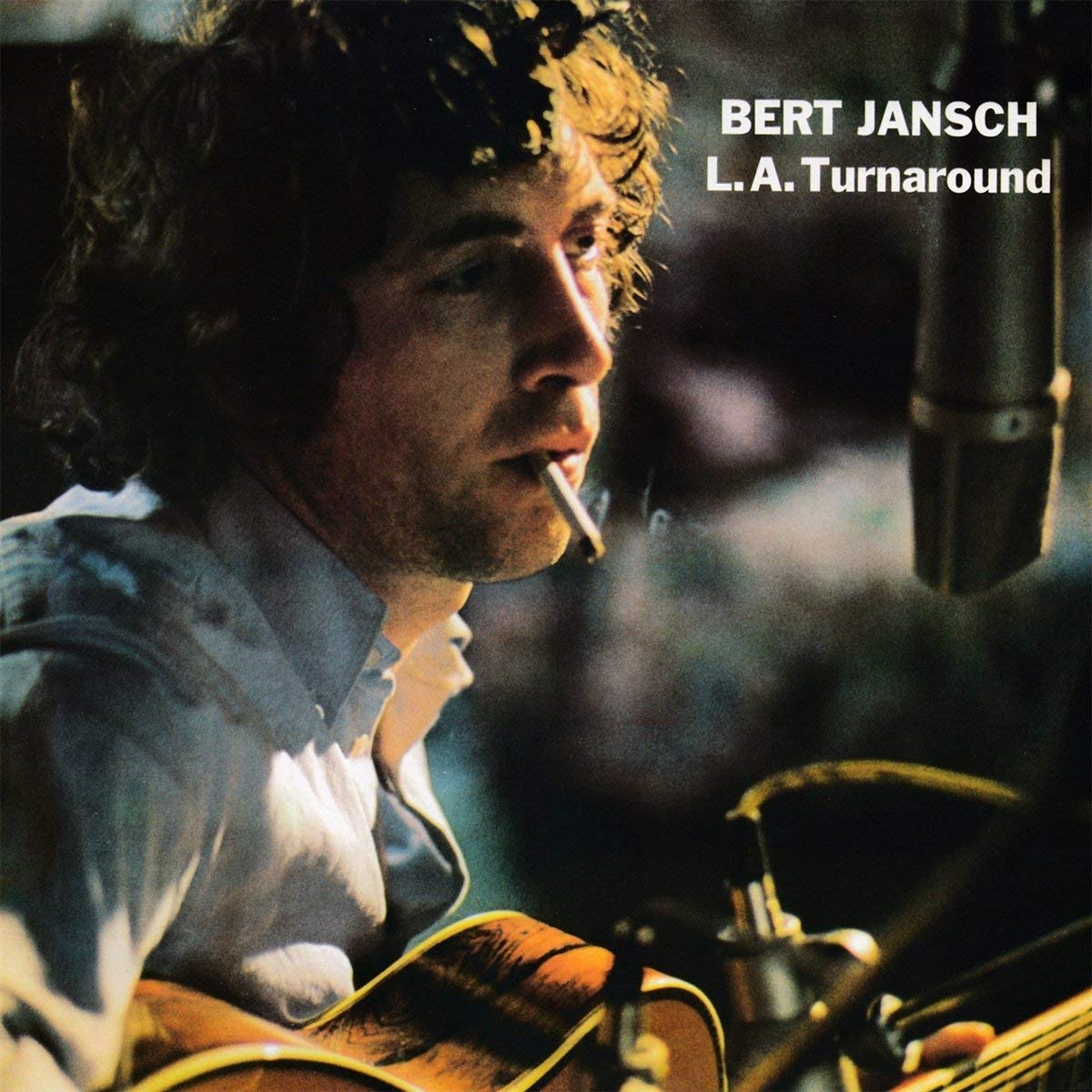
DAVID AXELROD-SONGS OF EXPERIENCE.
David Axelrod-Songs Of Experience.
Label: Now Again Records.
By 1968, composer, musicians and producer David Axelrod was just about to embark upon a solo career after nine years working in the music industry. Buoyed by the experimental climate of popular music, David Axelrod wrote and recorded what was akin to a suite-like tone poem that was based on Songs Of Innocence an illustrated collection of poems written in 1789 by William Blake. The poet had inspired many composers and musicians during the twentieth century.
Many composers had set his poems to music, and William Blake’s music had been used in theatre and inspired everyone from folk musicians to David Axelrod who was a self-confessed “Blake freak.”
In 1968, David Axelrod released his William Blake inspired debut album Songs Of Innocence, which sold just 75,000 copies. This was disappointing given that Songs Of Innocence was groundbreaking album.
Despite the disappointing sales of Songs Of Innocence, David Axelrod began to write the material for his sophomore album Songs of Experience which has just been reissued by Now Again Records. Songs of Experience was also inspired by William Blake’s poetry, but explored the darker side of humanity drew inspiration from composer Gunther Schuller’s Third Stream concept. David Axelrod’s sophomore album Songs of Experience was an ambitious and innovative album. He had come a long way from his days as a boxer.
Before embarking upon a career in music, David Axelrod had enjoyed what can only be described as a chequered career. He had started off as a boxer, before changing direction and finding work in film and television. However, in 1959 David Axelrod embarked upon a musical career when he produced Harold Land’s album The Fox. This launched David Axelrod’s nascent musical career.
Four years later, David Axelrod was hired by Capitol Records as a producer and A&R man. Initially, he worked with R&B artists, including Lou Rawls who was signed to Capitol Records. David Axelrod produced a string of hit singles for Lou Rawls, his Live album and several albums that were certified gold. David Axelrod was the man with the Midas Touch.
Soon, David Axelrod was working with jazz saxophonist Julian “Cannonball” Adderley, and produced his 1966 Grammy Award winning album Mercy, Mercy, Mercy! Live at “The Club.” The album also featured the hot single Mercy, Mercy, Mercy which reached number eleven in the US Billboard 100. By then, David Axelrod’s star was in the ascendancy at Capitol Records.
It was around this time, David Axelrod began working with some top session musicians including drummer Earl Palmer, bassist Carol Kaye and guitarist Howard Roberts. This band would play an important part in David Axelrod’s future.
David Axelrod wrote and arranged Mass in F Minor and Release of an Oath for the psychedelic rock band The Electric Prunes. The only problem was that both songs were complex pieces of music. Mass in F Minor consists of a mass sung in Latin and Greek and performed in a psychedelic style. However, there was a problem, it was too complex a piece for The Electric Prunes to record and it was recorded by David Axelrod’s band. This lead to The Electric Prunes disbanding and David Axelrod’s band completed the albums. Executives at Capitol Records were grateful that David Axelrod had rescued what was a particularly tricky situation, and wanted to reward him for his recent success. This resulted in David Axelrod being allowed to record his debut solo album Songs Of Innocence.
By them David Axelrod was watching trends in popular music and realised that there was a new breed of record buyer with much more sophisticated taste than the three chord pop of the early Beatles’ record. They were willing to embrace and buy much more experimental sounding albums, including two of the best known, The Beach Boys’ Pet Sounds and The Beatles’ Sgt Peppers Lonely Hearts Club Band. Both of these experimental had been hugely successful, and was proof to David Axelrod that there was a demand for this type of music.
Buoyed by the experimental climate of popular music David Axelrod decided to write and record his what was akin to a suite-like tone poem, which was based on Songs Of Innocence which was an illustrated collection of poems written in 1789 by William Blake. The poet had inspired many composers and musicians during the twentieth century. Many composers had set his poems to music, and William Blake’s music had been used in theatre and inspired everyone from folk musicians to David Axelrod who was a self-confessed “Blake freak.”
Over the space of a week, David Axelrod wrote seven compositions and borrowed titles from William Blake’s poems. The compositions death with a variety of themes, ranging from visions, religious iniquity, rite of passage and life experience after a person’s birth and innocence. After just a week, David Axelrod had completed Songs Of Innocence, which was his homage to William Blake. David Axelrod had been captivated by William Blake’s poetry since he was a teenager and seemed to relate to the poet. Neither William Blake nor David Axelrod were regarded as sociable men, and this could’ve hindered the producer’s career. However, he had a successful track record as he began recording Songs Of Innocence in 1968.
Songs Of Innocence.
Having written Songs Of Innocence in just one week, David Axelrod arranged the seven tracks which he intended to produce and add the vocals to. Now he was ready to record his debut album, and work was scheduled to start in mid-1968 at Capitol Studios, in Los Angeles.
David Axelrod decided to use many of the musicians that he worked with on a regular basis. This included drummer Earl Palmer, bassist Carol Kaye and guitarist Al Casey. They were joined by percussionist Gene Estes and organist and pianist Don Randi who would conduct the string and horn section that David Axelrod planned to use on Songs Of Innocence. They would allow David Axelrod to create his musical vision.
Songs Of Innocence was essentially an instrumental album of jazz-fusion, but incorporated elements of baroque pop, blues, classical music, funk, jazz, liturgical music, pop, psychedelia, R&B, rock and theatre music. During Songs Of Innocence, David Axelrod used contrast extensively during the orchestral compositions which was peppered with euphoric psychedelic soul and dramatic, sometimes, distressing arrangements to reflect the supernatural themes that are found within William Blake’s poems. So does the music’s almost reverential psychedelic undercurrent which brings to mind the themes of innocence and spirituality that is a feature William Blake’s poems which inspired David Axelrod to write such an ambitious album as Songs Of Innocence.
His arrangements on Songs Of Innocence accentuated the pounding drums played in 4/4 time, complex baselines, searing and gritty guitars, sweeping melodramatic and progressive strings, organ parts designed to disorientate and blazing, dramatic horns. David Axelrod who had written Songs Of Innocence in the rock idiom, but used a mixture of jazz, rock and classical musicians to record his debut album.
They were all comfortable when David Axelrod asked them to improvise during this psycheliturgical opus. David Axelrod had been influenced by György Ligeti’s 1961 piece Atmosphères, and Lukas Foss’ concept of starting a piece with a sustained chord and improvising for over 100 bars, and ending on a different chord. However, it wasn’t joust improvisation that David Axelrod embraced.
David Axelrod encouraged musicians to use various sound effects, including reverb and echo during the recording sessions. This included adding echo to breakbeats to reflect the spiritual nature of William Blake’s poetry. For much of the album, David Axelrod’s rock orchestra painted pictures with music which veered between spartan, dramatic and harrowing to liturgical, ruminative and celebratory. As the music changed, so did the rock orchestra.
Seamlessly David Axelrod’s rock orchestra changed direction and were transformed into a vampish big band. Other times, they played bluesy bop or locked into a jazzy groove and on occasions started to swing.
Meanwhile, producer David Axelrod was constantly encouraging his band to experiment, and not be afraid to improvise. Towards the end of recording sessions, David Axelrod’s rock orchestra had fully
embraced psychedelia deploying organ licks that seemed to be designed to disorientate and gritty guitars. Then as The Mental Traveler was recorded, David Axelrod was keen to embrace and experiment with atonality. However, he felt that music that lacks a tonal centre of key was a step too far even on such an ambitions and innovative album as Songs Of Innocence.
When David Axelrod completed recording his suite-like tone poem, everyone who had worked on the concept album realised that it was an impressive, innovative and immersive album, that was ambitious, cerebral. However, the big question was what would the critics who make of Songs Of Innocence?
Not only was Songs Of Innocence David Axelrod’s debut album, but it was ambitious concept album inspired by William Blake’s poetry. This was too much for many critics, and the album regarded as something of a curio when it was released in October 1968 by Capitol Records. Many critics failed to understand what was essentially a mixture of genre-melting music, mysticism and philosophy that was cerebral, creative and showed just how much music had changed over the last few years. David Axelrod’s suite-like tone poem Songs Of Innocence, was a long way from Love Me Do in 1962. Music was changing, and record buyers were embracing much more experimental and sophisticated music. This augured well for the release of Songs Of Innocence.
Sadly, when Songs Of Innocence was released in October 1968, the album wasn’t the commercial success that David Axelrod or executives at Capitol Records had hoped. By October 1969, Songs Of Innocence had only sold 75,000 copies in America.
Despite the disappointing sales of Songs Of Innocence, David Axelrod began working on his sophomore album Songs of Experience.
Songs Of Experience.
For his sophomore album David Axelrod returned to the work of poet William Blake for inspiration, and especially his collection Songs Of Experience which was published in 1794. David Axelrod the self-confessed “Blake freak” chose eight poems from Songs of Experience which lent it name to his sophomore album.
William Blake was David Axelrod’s major influence, as explored the darker side of humanity on Songs Of Experience. The composer had been captivated by William Blake’s concept of birth and innocence, as he explored the theme of life experience, rite of passage and the changes of perspective in life during the writing and recording Songs Of Innocence. However, when David Axelrod wrote Songs Of Experience, he focused on William Blake’s concept: “of awareness after birth.” This wasn’t David Axelrod’s only source of inspiration for Songs Of Experience.
Another source of inspiration for David Axelrod during the writing ad recording of Songs Of Experience was composer Gunther Schuller’s Third Stream concept. This was part of what was another ambitious album that David Axelrod planned to record.
To record Songs Of Experience, David Axelrod brought onboard many of the musicians that recorded Songs Of Innocence. However, it took over thirty musicians to record what David Axelrod knew was a groundbreaking, genre-melting album.
David Axelrod’s sophomore album Songs Of Experience, was essentially a fusion album, but incorporated elements of European classical music, British and Irish folk music, percussive sounds and baroque arrangements. Meanwhile, the melodies and rhythms on Songs Of Experience ranged from pop, R&B and rock. However, this time, this time, the suite on Songs Of Experience which relied less on rock influences, and was much more symphonic. While this was a stylistic departure, for David Axelrod, Songs Of Experience was another major work that had the potential to enhance his reputation.
That was no surprise given Songs Of Experience’s the compositions to the eight genre-melting track were so different, and featured lush arrangements that were dramatic and rich in imagery. David Axelrod was bringing William Blake’s music to life by using his entire musical palette to paint pictures and allow him to explore much darker and ruminative sounds on Songs Of Experience. It was an album that should’ve captured the imagination of critics.
Sadly, when Songs Of Experience was released by Capitol in 1969, very few critics realised the importance of what was a truly groundbreaking and innovative album. To rub salt into the wound, Songs Of Experience sold less that the 75,000 copies that Songs Of Innocence sold. David Axelrod decision to create ambitious and innovative music wasn’t rewarded.
It wasn’t until much later that critics realised the significance of Songs Of Experience, which was hailed as an important, innovative and inspirational album. By then, Songs Of Experience was a favourite source of samples for hip hop producers. However, it was just a coterie of appreciative record buyers who had embraced and flew the flag for what was David Axelrod’s William Blake inspired cult classic Songs Of Experience which broke new ground and somewhat belatedly, became part of musical history.
David Axelrod-Songs Of Experience.
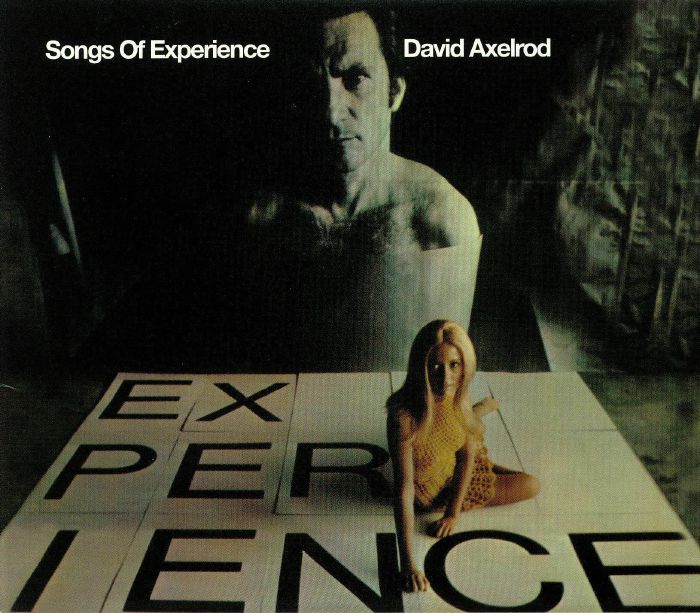
TEENAGE FANCLUB-GRAND PRIX AND TALES FROM NORTHERN BRITAIN-VINYL.
Teenage Fanclub-Grand Prix and Tales From Northern Britain.
Label: Sony Music.
There aren’t many Scottish bands have enjoyed the longevity and commercial success that Teenage Fanclub have enjoyed over the past three decades.. Scotland’s Kings of jangle pop have been together for twenty-nine years, released ten albums and toured the world several times. Still though, Teenage Fanclub still going strong, and on the “10th” of August 2018, Sony Music will reissue six of their albums. Among them, are the four albums Teenage Fanclub released on Creation Records between 1991 and 1997, This includes Grand Prix and Tales From Northern Britain which brought to an end the Creation Records’ years on the ‘29th’ of July 1997. However, the Teenage Fanclub story began eight years earlier in Bellshill, Lanarkshire.
For those unfamiliar with the geography of Scotland, Bellshill, is a small town twelve miles from Glasgow, where Teenage Fanclub were born in 1989. The nascent band emerged out of Glasgow’s C86 scene, and had been inspired by West Coast bands like The Beach Boys and The Byrds. Another major influence on Teenage Fanclub were Big Star, who Teenage Fanclub would be later be compared to.
Unlike Big Star, Teenage Fanclub was a quartet, whose original lineup featured guitarist Norman Blake, lead guitarist Raymond McGinley, bassist Gerard Love and drummer Francis MacDonald. From the early days of the band, Norman Blake, Raymond McGinley and Gerard Love who were Teenage Fanclub’s three principal songwriters shared lead vocal duties. That was the case when they came to record their debut album A Catholic Education for Creation Records.
A Catholic Education.
Just a year after the band was founded, Teenage Fanclub released their debut album in 1990. A Catholic Education would later be described as a quite un-Teenage Fanclub album. The music was dark, harsh and peppered with cynicism and controversy.
Most of the controversy stemmed from Teenage Fanclub’s decision to turn their sights on Catholic church. For a band from a city divided by religion, that was a controversial move, and one that could alienate people. What made the decision to “attack” the Catholic church, was that Teenage Fanclub prided themselves on being apolitical band. The other surprise for a band who admired The Byrds, The Beach Boys and Big Star was the sound of A Catholic Education.
For much of A Catholic Education, Teenage Fanclub unleashed a mixture of grunge and heavy metal. The only hint of what was to come from Teenage Fanclub was the Norman Blake penned Everything Flows. It was a glorious slice of power pop. This was something that Teenage Fanclub would return to later. Before that, A Catholic Education was released on June 11th 1991.
Before that, critics reviewed A Catholic Education. Reviews of the album were mixed, and very few critics forecast the critical acclaim and commercial success that came Teenage Fanclub’s way. When A Catholic Education was released by Matador, the album failed to even trouble the British or American charts and was an inauspicious debut from Teenage Fanclub.
The King.
Just two months after the released of A Catholic Education, Teenage Fanclub returned with what was meant to be their sophomore album, The King. However, in reality, The King was a quickly assembled collection of tracks.
The tracks that became The King had been recorded once Teenage Fanclub had completed what would be their third album, Bandwagonesque. Quickly, Teenage Fanclub recorded nine tracks, including covers of Madonna’s Like A Virgin and Pink Floyd’s Interstellar Overdrive. Once The King was recorded, Teenage Fanclub were hoping this would allow them to discharge heir contractual obligations to Matador. This plan could have backfired.
Teenage Fanclub owed Matador an album, and as long as Matador accepted The King, then they had fulfilled their contractual obligations. Th only problem was there was a possibility that the album could be rejected, if Matador didn’t believe the album was of a certain commercial standard.
Fortunately, they didn’t. That was despite covers of Madonna’s Like A Virgin and Pink Floyd’s Interstellar Overdrive. The King wasn’t exactly Teenage Fanclub’s finest hour, but despite this, Matador released in August 1991.
Reviews of The King weren’t favourable, but despite this, Teenage Fanclub’s sophomore album reached fifty-three in the UK charts. This was ironic as very few critics thought that The King would even trouble the charts. Teenage Fanclub had the last laugh, and free from all encumbrances, they signed to Creation Records.
Bandwagonesque.
Now signed to Alan McGhee’s Creation Records, Teenage Fanclub like a magician pulling a rabbit from a hat, delivered the completed version of Bandwagonesque. It had been recorded at Amazon Studios, Liverpool, between the ‘9th’ April to the ‘12th’ of May 1991. Bandwagonesque featured twelve songs which saw Teenage Fanclub come of age musically.
Just like previous albums, songwriting duties were split between the band members. Raymond McGinley wrote I Don’t Know and Norman Blake penned The Concept, What You Do to Me, Metal Baby and Alcoholiday. Meanwhile, Gerard Love had written December, Star Sign, Pet Rock Guiding Star and Is This Music? Gerald Love then joined forces to write Sidewinder, while the only track credited to Teenage Fanclub was Satan. These twelve tracks would find Teenage Fanclub maturing as songwriters and musicians.
When it came to choosing a producer for Bandwagonesque, the partnership of Paul Chisholm, Don Fleming and Teenage Fanclub returned. They were responsible for an album that stood head and shoulders above Teenage Fanclub’s two previous albums, Bandwagonesque.
On Bandwagonesque Teenage Fanclub’s trademark ‘sound’ began to take shape. It had been influenced by The Byrds and Big Star. Byrdsian, jangling guitars were joined by close, cooing, harmonies and a melodic fusion of indie rock and hook-laden power pop. Seamlessly, though, Teenage Fanclub could switch between laid back and melodic to a much more powerful, rocky sound. This would find favour with critics and record buyers.
Before Bandwagonesque was released, critics had their say on the album. For once, critics were in agreement, and there were no dissenting voices. Bandwagonesque, critics agreed, was one of the finest albums of 1991. No wonder, with songs of the quality of The Concept, What You Do To Me, Star Sign, Alcoholiday and Is This Music? For Teenage Fanclub, Bandwagonesque was a career defining album. Spin Magazine went further, and named Bandwagonesque its best album of 1991. Things were looking good for Teenage Fanclub.
Especially when Star Sign was released in August 1991, and reached number four on the US Modern Rock charts. Meanwhile, Star Sign stalled at just forty-four in the UK. The followup The Concept, a rocky anthem, reached a disappointing fifty-one in the UK, but reached number twelve on the US Modern Rock charts. Teenage Fanclub’s music was finding an audience in America for the first time. Maybe Teenage Fanclub’s third album would find them cracking America for the first time?
That was the case. When Bandwagonesque was released on 19 November 1991, it reached number twenty-two in the UK, and 137 on the US Billboard 200. Teenage Fanclub it seemed, were going places.
Having toured Bandwagonesque, and enjoyed their newfound fame, eventually, Teenage Fanclub’s thoughts turned to their fourth album. This they would name after a song by one of their favourite bands.
Thirteen.
Unlike most bands, Teenage Fanclub wasn’t reliant on one or two songwriters, and every member of the band was contributing songs. That was the case with their fourth album, Thirteen, which was named after a song by Big Star.
The four members of Teenage Fanclub had all contributed songs for Thirteen, with Gerard Love writing Hang On, Radio, Song to the Cynic, Fear Of Flying and Gene Clark.Norman Blake’s contributions were The Cabbage, Norman 3, Commercial Alternative and Ret Liv Dead, while Raymond McGinley wrote 120 Mins and Tears Are Cool. Drummer Brendan O’Hare’s only contribution to Thirteen was Get Funky, which like the rest of the album was recorded in Glasgow’s CaVa Studios.
When work began in October 1992, Teenage Fanclub had decided to produce Thirteen themselves. They had co-produced their first three albums, so felt ready to make the step up. The only problem was, it took six months to record Thirteen. This was quite unlike Teenage Fanclub who usually recorded albums quickly. The problem was they were missing a co-producer.
Teenage Fanclub had previously employed a co-producer, who acted as a sounding board for the band, and would’ve also ensured they didn’t spend too long honing, polishing and perfecting the tracks on Thirteen. That’s what seemed to have happened, and eventually, Thirteen was finished by April 1993. This left six months before the album was released.
Prior to the release of Thirteen, critics received their advance copies of the album, and to say they didn’t like the album was an understatement. Critics seemed to loathe the album and reviews of Thirteen were scathing. That’s despite songs of the quality of Hang On, Norman 3, Radio and Song to the Cynic. For Teenage Fanclub this was a huge and crushing blow.
At least when the lead single from Thirteen, Radio was released in August 1993, it reached number thirty-one in UK. The followup Norman 3, was released in September 1993, but stalled at just fifty in the UK single’s charts. This was another disappointment for Teenage Fanclub.
Despite the disappointing reviews and failure of the single Norman 3, Teenage Fanclub’s fortunes were set to improve when Thirteen was released in October 1993, and reached number fourteen in Britain. This meant Thirteen was Teenage Fanclub’s most successful British album. The only disappointment was that Thirteen failed to trouble the US Billboard 200. However, this wasn’t the only disappointment for Teenage Fanclub.
After the release of Thirteen, drummer Brendan O’Hare announced he was leaving Teenage Fanclub and The usual “musical differences” were cited. Paul Quinn, the former Soup Dragons’ drummer was drafted in to replace Brendan O’Hare. Despite this, it was was a worrying time for Teenage Fanclub,.There was one small crumb of comfort though.
In February 1994, Hang On was released as the third and final single from Thirteen. It reached number nineteen on the US Modern Rock charts. Little did Teenage Fanclub realise that it was the last hit single they would enjoy in America.

Grand Prix.
Although Thirteen had been the most successful album of Teenage Fanclub’s career, the scathing reviews hurt. They had spent six months recording, honing and perfecting Thirteen, and to make matters worse, Brendan O’Hare had left the band. This was a testing time for Teenage Fanclub, as they began work on their fifth album.
For the new album, thirteen songs were written. Norman Blake wrote “Mellow Doubt, Neil Jung, Tears, I Gotta Know and Hardcore Ballad. Gerard Love wrote Sparky’s Dream, Don’t Look Back, Discolite and Going Places, while Raymond McGinley contributed About You, Verisimilitude, Say No and I Gotta Know to what would become Grand Prix.
Recording of Grand Prix began on the ‘5th’ of September 1994, and by then, Teenage Fanclub had decided to employ David Bianco as co-producer. He became their sounding board over the next month spent recording at The Manor, Shipton-On-Cherwell. Just over a month later, on the ‘9th’ of October 1994, Grand Prix was complete. Little did they realise they had recorded one of their finest albums.
When critics heard Grand Prix, they were in no doubt, the album was a minor classic. It veered between melodic and melancholy, became ruminative and rocky. Grand Prix literally oozed quality, with About You, Sparky’s Dream, Don’t Look Back, Neil Jung and I’ll Make It Clear showcasing Teenage Fanclub’s considerable musical skills. They seemed to have been stung by the criticism of Thirteen, and returned with the best album of their career.
When Grand Prix was released on May 29th 1995, it was a hit on three continents. In the UK Grand Prix reached number seven, becoming the most successful album of their career. Elsewhere Grand Prix reached sixty-eight in Japan and fifty-seven in Australia. Teenage Fanclub were now one of the biggest indie bands in Britain.

Songs From Northern Britain.
What made the rise and rise of Teenage Fanclub all the more incredible was that they had only been formed in 1989, since then, they had released five albums and and were popular across the globe. Everything was happening fast for Teenage Fanclub, who were ready to record a new album by 1996.
Just like previous albums, the band’s songwriters got to work. Norman Blake wrote Start Again, I Don’t Want Control of You and Winter then cowrote Planets with former band member Francis MacDonald. Gerard Love penned Ain’t That Enough, Take the Long Way Round, Mount Everest and Speed Of Light. Raymond McGinley played his part writing Can’t Feel My Soul, It’s A Bad World, I Don’t Care and Your Love Is the Place Where I Come From. These songs were recorded at some of London’s top studios with co-producer David Bianco.
Some of Songs From Northern Britain was recorded at Abbey Road Studios, while other sessions took place at AIR Studios. Other sessions saw Teenage Fanclub head to leafy Surrey, and Rich Farm Studios. Eventually, after recording at various studios, Teenage Fanclub had completed their sixth album, which was released in summer on the ‘29th’ of July 1997.
Songs From Northern Britain which was a tongue-in-cheek reference to the Britpop movement, saw Teenage Fanclub pickup where they left off on Grand Prix. It was another album of carefully crafted songs, including Start Again, Can’t Feel My Soul, Don’t Want Control of You and I Don’t Care. Despite an album that was variously cerebral, defiant, hook-laden, joyous, melodic, mellow, playful and reflective critics were undecided. Some loved the album, others loathed it. Rolling Stone which had been supportive of Teenage Fanclub, set their sights on the band. Not for the first time, were Rolling Stone left with egg on their face.
When Songs From Northern Britain was released. It reached number three in Britain, and became Teenage Fanclub’s most successful album. In Australia, Songs From Northern Britain reached number seventy. Elsewhere, including America, Teenage Fanclub continued to be a popular live draw. However, they sold more albums in Britain, than anywhere else, where the Creation Records years were drawing to a close.

The Creation Records was when Kings of Jangle Pop, Teenage Fanclub, released the best music of their career. This began with Bandwagoneque, which musical magicians Teenage Fanclub pulled from their hat. While Thirteen was an album that failed to win over critics. Grand Prix and Tales From Northern Britain were both minor classics. Teenage Fanclub left Creation Records on a resounding high.
Twenty-one years later, and with the benefit of hindsight, Teenage Fanclub released the finest music of their four decade at career at Creation Records. This includes Bandwagoneque, Grand Prix and Tales From Northern Britain which are the perfect introduction to Scotland’s very own Kings of Jangle Pop, Teenage Fanclub.
Teenage Fanclub-Grand Prix and Tales From Northern Britain.
SUPER ELCADOS-TOGETHER IS ALWAYS A GOOD VENTURE-TAMBOURINE PARTY VOLUME 2.
Super Elcados–Togetherness Is Always A Good Venture-Tambourine Party Volume 2.
Label: Mr Bongo.
During the early sixties, a musical revolution took place in Ghana, when musicians started combining elements of West African musical genres including highlife and fuji music which they fused with American funk and jazz. Playing an important part important part in this new genre which later, became known as Afrobeat, were chanted vocals, percussion and complicated converging rhythms. The result was an irresistible, potent and heady musical brew that later, would spread across West Africa.
By the early seventies, Fela Kuti and his band had just returned to Nigeria after a brief stay in America, where they had hurriedly recorded what later became The ’69 Los Angeles Sessions. The album had been recorded quickly, as a promoter had informed the Immigration and Naturalization Service that Fela Kuti and his band had no work permit. Fela Kuti was tipped off that the Immigration and Naturalization Service was about to swoop, and decided to head home to Nigeria.
When Fela Kuti and his band arrived back in Lagos, Nigeria, he decided to rename his group The Afrika ’70. Fela Kuti’s next move was to found the Kalakuta Republic, which was a commune which soon, became home to the many people connected to The Afrika ’70. It also meant that Fela Kuti and The Afrika ’70 were always ready to practise and record music.
Within the Kalakuta Republic was a recording studio where Fela Kuti and The Afrika ’70 could work. By then, Fela Kuti was writing song were the lyrical themes ranged from love right through to the various social issues affecting Nigeria. Despite his concern for his fellow Nigerians, Fela Kuti, who was the leader of Kalakuta Republic, declared independent from the Nigerian State. That was still to come.
Having established the Kalakuta Republic, Fela Kuti and The Afrika ’70 began experimenting musically. They regularly incorporated disparate musical genres into their This new sound was innovative, and also proved to be influential, when Fela Kuti established a new club that he called Afrika Shine.
That was where Fela Kuti and The Afrika ’70 first introduced Afrobeat to Nigeria in 1970. Between 1970 and 1975, Fela Kuti and The Afrika ’70 had a residency at Afrika Shine, in Lagos, and people from all over Nigeria flocked to the club. This included many Nigerian musicians who were inspired by Fela Kuti and The Afrika ’70.
During Fela Kuti and The Afrika ’70 five year residency at Afrika Shine, Afrobeat grew in popularity as bands were formed all across Nigeria. This included Super Elcados, who a year after Fela Kuti and The Afrika ’70 residency at Afrika Shine ended, released their debut album Togetherness Is Always A Good Venture-Tambourine Party Volume 2 on EMI Nigeria.
Now some forty-two years later, original copies of Togetherness Is Always A Good Venture-Tambourine Party Volume 2 of this uber funky Afrobeat album are almost impossible to find. When a copy comes up for sale, the price is beyond most record collectors. Thankfully, Mr Bongo have reissued Togetherness Is Always A Good Venture-Tambourine Party Volume 2 for the first time.
Just like many groups that were formed during the first half of the seventies, Super Elcados had been inspired by Fela Kuti and The Afrika ’70 and the first wave of Nigerian Afrobeat pioneers. However, Super Elcados weren’t content to blindly follow other bands, and were determined to take Afrobeat in a new direction.
This Super Elcados did as they started to play live, and hone their unique and inimitable sound. While the basis for their music was Afrobeat, it also funky, percussion, feel-good music. Super Elcados were soon a popular live band capable of making music that would get any party started.
With Super Elcados proving popular wherever they played live, it wasn’t long before their irresistible, potent and heady musical brew caught the attention of record companies. This included EMI Nigeria, who managed to secure the signature of Super Elcados.
Having secured the signature of Super Elcados, executives at EMI Nigeria were keen that the band began work on their debut album. This became Togetherness Is Always A Good Venture-Tambourine Party Volume 2.
The eight tracks that Super Elcados decided to include on Togetherness Is Always A Good Venture-Tambourine Party Volume 2 were a mixture of songs full of social comment, feel-good music, paeans and the poignant Tribute To Murtala Mohammed. These eight tracks were recorded by the nine members of Super Elcados.
When Super Elcados began recording the album, their rhythm section featured drummer and percussionist Baba Mustapha, bassist Tony Nosika and guitarist and organist Geoffrey Johnson. They were joined by lead guitarist Frank Martins, Dave Crown Olugbade who played electric piano and tenor saxophone and percussionist conga player Joe Edem Bassey Edet. Super Elcados’ horns came courtesy of trumpeter Bola Adex and valve trombonist Effiong Jarrett. Meanwhile, lead vocalist Christe Black was accompanied by the other members of Super Elcados. Gradually, Togetherness Is Always A Good Venture-Tambourine Party Volume 2 started to take shape, and was ready for release in 1976.
When Togetherness Is Always A Good Venture-Tambourine Party Volume 2 was released, the album sold steadily, but wasn’t the huge success that EMI Nigeria. Record buyers had missed out on what was a funky and sometimes soulful album of Afrobeat. For the members of Super Elcados this was a disappointment.
Especially given the quality of music that features on Togetherness Is Always A Good Venture-Tambourine Party Volume 2. The album opener Tambourine Party finds Super Elcados at their funkiest and melodic, as the track takes on a party atmosphere. Afro Funk finds Super Elcados locking into a groove during this glorious and memorable fusion of Afrobeat and funk, that sometimes, becomes jazz-tinged and rocky. Straight away, Xray Gun sound as if it’s been inspired by James Brown as a funky, soulful dancefloor filler takes shape. Super Elcados drop the tempo on the beautiful, soulful paean How Much I Love You. Horns and harmonies accompany a heartachingly beautiful vocal.
It’s all change on Ejole, which starts hesitantly before a funky, and later soulful, joyous and rocky slice of Afrobeat starts to take shape. Tribute to Murtala Mohammed is a poignant and soulful track that sounds as if it has been inspired in part by Gil Scott-Heron. Super Elcados change things around on Get up and Do It Good where their rhythm and horn section playing leading roles on a funky, soulful song that is one of the album’s highlights. The tempo drops on Price Of Fame, a thoughtful but funky Afrobeat instrumental that closes Togetherness Is Always A Good Venture-Tambourine Party Volume 2.
When Super Elcados released Togetherness Is Always A Good Venture-Tambourine Party Volume 2 in 1976, their carefully crafted and accomplished genre-melting album failed to find the wider audience it so richly deserved. That was a great shame as it was an album without a weak track.
Super Elcados took Afrobeat and funk as their starting point, and combined elements of jazz, rock and soul on Super Elcados released Togetherness Is Always A Good Venture-Tambourine Party Volume 2. In doing so, they created eight tracks that veered between feel-good that was joyous, uplifting and irresistible to beautiful, poignant and soulful. The members of Super Elcados had combined the best of American and American music, and in doing so, created an album that was funky, soulful, melodic, memorable and guaranteed to get any party started. If only record buyers had given the album a chance.
Three years later, and Super Elcados returned in 1979 with This World Is Full Of Injustice on EMI. It was another quality album, but proved to be Super Elcados swan-song.
Later in 1979, Elcados released their debut album What Ever You Need. Sadly, that was the Elcados only released
Thirty-nine years later, and the album that started it all off for Super Elcados Togetherness Is Always A Good Venture-Tambourine Party Volume 2 has just been rereleased by Mr Bongo. By then, Togetherness Is Always A Good Venture-Tambourine Party Volume 2 had a cult following among some DJs, record collectors and connoisseurs of Afrobeat. Especially, anyone who likes their Afrobeat funky, soulful, melodic and memorable. If they do, then Super Elcados’ album Togetherness Is Always A Good Venture-Tambourine Party Volume 2 won’t disappoint and is guaranteed to get any party started
Super Elcados–Togetherness Is Always A Good Venture-Tambourine Party Volume 2.
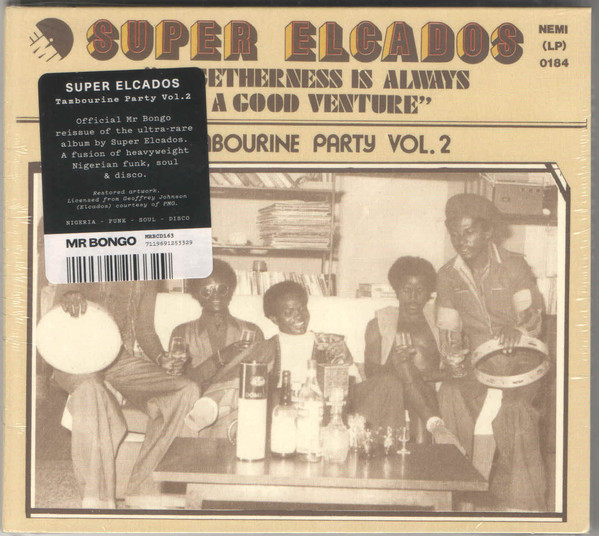

EL POLEN-CHOLO (MUSICA ORIGINAL DE LE BANDA DE SONIDO-VINYL.
El Polen-Cholo (Música Original De La Banda De Sonido) Vinyl.
Labe: Buh Records.
When El Polen was formed by brothers Juan Luis and Raul Pereira in 1969, little did anyone realise that their new band would become one of the most important and influential in the history of Peruvian music. That was until El Polen released their genre-melting debut album Cholo in 1972. Cholo (Música Original De La Banda De Sonido) which has just been reissued on vinyl by Lima-based Buh Records, finds El Polen fusing Andean music, folk and psychedelia. This new genre-melting was ambitious and groundbreaking and would influence a new generation of bands in the future. By then, El Polen had come a long way in just three short years.
The El Polen story began three years earlier in 1969, when brothers Juan Luis and Raul Pereira decided to form a new band. They had decided that their new band would head in a new direction and make music that was different to their previous band. The Pereira brothers realised that Peruvian music was about to change.
By 1969, the first wave of new Peruvian bands were combing beat music and surf sounds, which they played at Matinales which were concerts that took place on a Sunday morning. These concerts were always popular, and so were the bands that took to the stage. However, the music was starting to sound tired, and yesterday’s sound. What Peruvian music needed was a revolution.
Juan Luis Pereira who was part of the burgeoning hippy movement, realised this, and with his brother Raul formed El Polen, and set about reinventing music in the new Peru. It was a very different country since 1968, and it was an exciting time for the Pereira brothers as they started their new band.
Peru was transformed in 1968, when a nationalist government was established by Juan Velasco Alvarado. This brought to an end the oligarchic state, which had previously ruled Peru. Suddenly, many people started to migrate from the country to the city, seeking a new life in the new Peru.
This coincided with new Andean singers and bands playing concerts in a coliseum located on the outskirts of a city. Many within the audience were those who had migrated from the country to the city, and they enjoyed the concerts that they attended.
Meanwhile, their was an upsurge of interest in Andean music, and sales of new recordings increased. The Andean sound which had first been recorded and promoted by Jose Maria Arguedas by the late-forties was growing in popularity. Soon, new bands were being formed and Andean sound became more popular than ever and the Peruvian musical industry expanded. However, Juan Luis and Raul Pereira had their own plans for Peruvian music.
As the sixties, gave way to the seventies, Juan Luis and Raul Pereira realised that the fusion of beat music and surf sounds many bands had been playing was yesterday’s sound and no longer as popular as it had once been. It was time for Peruvian music to change. The Pereira decided to fuse the sound of today with some of the music that they had heard growing up.
This included classical music, Peruvian waltzes and huaynos, which had influenced and moulded the Pereira brothers in their formative years. So did Andean folklore music which would become part of El Polen’s sound. They were about to combine Andean music, folk psychedelia and rock, and this new genre-melting was groundbreaking. Nobody had ever tried this before and the members of El Polen were about to become musical pioneers.
By then, the members of El Polen had been on a journey which would help them improve as musicians and spiritually. El Polen had traveled to Cusco, where they learned more about Andean instruments and musical traditions. This was they saw as part of their continuing musical education, and having gathered new knowledge, El Polen began the next part of this two-part journey.
It took El Polen to Santa Eulalia high in the mountains above Lima, where they examined their burgeoning spirituality. After this, the members of El Polen were ready to change Peruvian music forevermore.
By then, the hippy movement had exploded in popularity as Peruvian music fans embraced psychedelia and sought altered states of consciousness. With the new hippy generation enjoying and embracing the new, alternative lifestyle and psychedelic music El Polen had a captive audience.
The members of El Polen had much in common with the people who they hoped would embrace their music. They had lived in a community, and shared many of the same values and beliefs. El Polen also hoped that the new hippy generation would embrace their music.
When El Polen took to the stage, they sought to eliminate the boundaries between rock and huayno. To do this, they deployed acoustic guitars, a cello, mandolin, percussion and quenas, as they combined Andean music, folk rock and psychedelia. This proved popular, and soon, El Polen was at the forefront of a new musical movement that was blossoming in Peru.
Given their popularity, it was only a matter of time before El Polen came to the attention of one of the Peruvian record companies. Virrey won the signature of El Polen who soon, began work on their debut album.
Cholo (Música Original De La Banda De Sonido).
For their debut album, El Polen was asked to write the soundtrack to the film Cholo (Música Original De La Banda De Sonido), which was based on the life of the famous Peruvian Soccer Player Hugo Sotil.
For Cholo (Música Original De La Banda De Sonido), El Polen wrote six new tracks, and covered Cholito Pantalion Bianco which was written by singer and songwriter Luis Abanto Morales. These seven tracks were recorded by the six members of El Polen.
As recording of Cholo (Música Original De La Banda De Sonido) began, El Polen’s lineup featured guitarist Juan Luis Pereira and his brother Raul who played guitar and took charge of the vocals. They were joined by cellist Juan Sebastián Montesinos, violinist Fernando Silva, percussionist Ernesto Pinto and Carlos Martínez who played mandolin. As Cholo (Música Original De La Banda De Sonido) took shape, the six members of El Polen had no idea that they were about to make musical history.
Prior to the release of Cholo (Música Original De La Banda De Sonido), critics had their say on El Polen’s debut album. While El Polen’s debut album was well received and hailed as an ambitious and exciting release, it was only later that critics realised the importance of Cholo (Música Original De La Banda De Sonido).
It was a game-changer of an album, and Cholo (Música Original De La Banda De Sonido) proved not just to be innovative, but also influential. El Polen paved the way for other bands to fuse Andean music and rock and would influence several generations of bands and musicians.
Nowadays, Cholo (Música Original De La Banda De Sonido) is regarded as a landmark album in the history of Peruvian music. That is no surprise as El Polen was the first band to fuse traditional Andean music with folk and psychedelia and rock. They were also the first group to combine traditional Andean instruments with Western instruments.
This they do effectively from the opening bars of the near twelve-minute epic La Flora (tema De Cholo). It showcases El Polen’s considerable musical skills as they seamlessly combine disparate musical genres on what’s a tantalising taste of a truly talented group. So too does upbeat and joyous Cholito Pantalion Bianco.
Quite different is the dramatic, cinematic and emotive Paisajes De Quenas which features traditional Peruvian instruments. They combine with the swirling strings as the cello and violin combine during the evocative and irresistible Valicha.
Sitting Dreaming is genre-melting lysergic track that has obviously been influenced by Western psychedelia. There’s even a nod to The Beatles midway through the track, which is one of the highlights of Cholo (Música Original De La Banda De Sonido). Tondero is another carefully crafted, genre-melting track where elements of classical music, folk, psychedelia and rock combine as Raúl Pereira delivers soul-baring vocal. Closing El Polen’s debut album is Secuencias De Organillo Y Poliphon, which is a short track where plink plonk sounds are part of track that is both cinematic and psychedelic, which closes the album on a high.
Cholo (Música Original De La Banda De Sonido) which has just been reissued on vinyl by Lima-based Buh Records, was a groundbreaking album that featured genre-melting music from musical pioneers El Polen. They had spent the best part of three years honing their sound, and were more than ready to record an album.
Led by the Pereira brothers they recorded what was a landmark album where they fuse traditional Andean music with classical music, folk, psychedelia and rock. This had never been done before, and the members of El Polen were pioneers who were breaking new ground.
Soon, many bands would follow in their footsteps, during the next few years. However, nowadays, El Polen and their debut album Cholo (Música Original De La Banda De Sonido) is regarded as a turning point for Peruvian music. They had changed music forevermore and revolutionised Peruvian music in the process.
Sadly, El Polen only released one more album during the seventies, Fuera De La Ciudad in 1973, which was another innovative, landmark album. Just two years later, El Polen split-up in 1975, and that was the last that was heard of the band for twenty-one years.
In 1996, El Polen made a comeback, and three years later, self-released their third album Signos E Instrumentos. Sadly, not long after releasing their first album in twenty-six years El Polen split-up once again.
Fifteen years later, in 2014, there was an El Polen reunion, as they rolled back the years. Sadly, that was the last that was heard from one of the most important groups in the history of modern Peruvian music.
El Polen certainly made their mark on Peruvian music during the six-year period between 1969 and 1975. This began when they released their genre-melting landmark debut album Cholo (Música Original De La Banda De Sonido) in 1972, and followed this up with another classic album Fuera De La Ciudad which are El Polen’s finest releases.
El Polen-Cholo (Música Original De La Banda De Sonido) Vinyl.
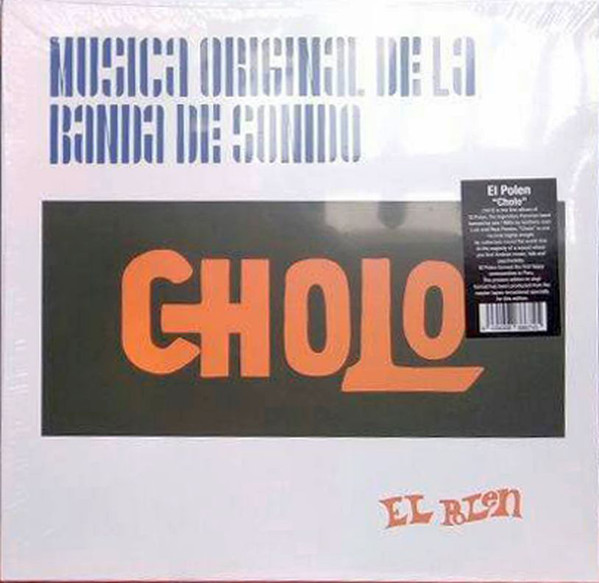
SANDY DENNY-LIKE AN OLD FASHIONED WALTZ-RECORD STORE DAY 2018 EDITION.
Sandy Denny-Like An Old Fashioned Waltz-Record Store Day 2018 Edition.
Label: Island Records.
Sandy Denny left Fairport Convention in December 1969, and in early 1970, decided to form a new band. The new band became Fotheringay, who released their eponymous debut album in June 1970. Critics hailed Fotheringay a masterful debut, and the album sold well upon its release. This looked like the start of another successful chapter in Sandy Denny’s career.
Buoyed by the success of Fotheringay, the band began work on their sophomore album in November 1970. As the sessions continued into December 1970, it was thought that everything was going to plan and Fotheringay’s sophomore album would soon be completed. Sadly, in January 1971, it was announced that Fotheringay were no more and the band split-up. What would eventually become Fotheringay 2 was shelved and the album wasn’t released until 2008.
With Fotheringay now consigned to musical history, Sandy Denny decided to embark upon a solo career. Sandy Denny signed to Island records, and soon, began to work on to release her debut solo album, The North Star Grassman and The Ravens. For Sandy Denny, this was the start of a new and exciting chapter in her career.
The North Star Grassman and The Ravens.
After Fotheringay split-up, Island Records were keen for the latest signing to enter the studio. Sandy Denny, Island Records believed, had the potential to quickly become one of the company’s biggest selling artists. When Sandy Danny entered the studios in March 1971, it was with the weight of expectation on her shoulders.
By then, Sandy Denny was maturing as a songwriter. This was what she had planned to hone her songwriting skills after she left Fairport Convention in December 1969. By March 1971 she was an accomplished songwriter and had written eight of the eleven songs on The North Star Grassman and The Ravens. This included Late November and John The Gun which had been recorded for the Fotheringay 2 sessions. Among Sandy’s other compositions, were The Sea Captain, The Optimist, Next Time Around, Wretched Wilbur, The North Star Grassman and The Ravens and Crazy Lady Blues. They joined a rework of the traditional song Blackwaterside; Bob Dylan’s Down In The Flood and Charles Robins’ Let’s Jump The Broomstick. These songs were recorded over a three-month period with some familiar faces.
The recording sessions began in March 1971, at Sound Techniques, with Sandy Denny, John Wood and Fairport Convention’s Richard Thompson tanking charge of production. Just two songs were recorded there, Blackwaterside and Let’s Jump The Broomstick. Then things were moved in-house and the rest of the sessions took place at Island Studios, in London.
At Island Studios, Sandy Denny was accompanied on some of the tracks by the musicians that were previously part of Fotheringay. Other musicians were drafted in when they were needed. This included drummer Roger Powell, bassist Tony Reeves, Buddy Emmons on pedal steel guitar, violinist Barry Dransfield and Ian Whiteman on piano and flute organ. Royston Wood and Robin Dransfield added backing vocals on John The Gun. Co-producer Richard Thompson played accordion, bass, electric and acoustic guitar and sang on Down In The Flood. Harry Robertson arranged the strings on Next Time Around and Wretched Wilbur. That talented band spent two months recording The North Star Grassman and The Ravens which was completed by May 1971, and was released four months later.
Before the release of The North Star Grassman and The Ravens, critics had their say on Sandy Denny’s debut solo album. With its mixture of Sandy Denny compositions, and cover versions, it was a truly captivating album. Sandy Denny’’s vocals were compelling, as she breathed meaning and emotion into lyrics. Among the highlights were John The Gun, Late November, the wonderfully wistful Next Time Around and The North Star Grassman and The Ravens. That’s not forgetting Down In The Flood, where the interplay between Richard Thompson’s guitar and Sandy’s vocal is masterful. The only songs some critics felt let the album down slightly, was Let’s Jump The Broomstick and Down In The Flood. Still, though, The North Star Grassman and The Ravens was a hailed a musical masterpiece and minor folk rock classic. Sandy Denny it seemed, could do no wrong.
When The North Star Grassman and The Ravens was released in September 1971, the album didn’t sell in the huge quantities that Island Records had hoped. They seemed to envisage Sandy Denny enjoying the same commercial success that Joni Mitchell was enjoying in America. Sadly, that wasn’t to be, although Sandy Denny was enjoying the same critical acclaim that her American counterpart was enjoying. This would continue on her sophomore album Sandy.

Sandy.
There was no rest for Sandy Denny after she returned from a tour to promote the release of her debut album, The North Star Grassman and The Ravens. Two weeks later, in November 1971, Sandy Denny began recording his sophomore album Sandy at Sound Techniques and Island Studios.
By then, Sandy Denny had been busy, and had written eight new songs that would feature on Sandy. This included It’ll Take a Long Time, Sweet Rosemary, For Nobody to Hear, Listen, Listen, The Lady, Bushes and Briars, It Suits Me Well and The Music Weaver. These songs joined covers of Bob Dylan’s Tomorrow Is A Long Time, and the traditional song The Quiet Joys Of Brotherhood, which Richard Fariña had written lyrics for. These songs were recorded by a band that featured familiar faces and new names.
The first change was that Trevor Lucas had been hired to produce Sandy. John Wood who had played such an important part in the sound and success of The North Star Grassman and The Ravens was relegated to engineer. Similarly, Richard Thompson’s only part in Sandy was playing on five songs. However, one thing hadn’t changed, were the studios that were used.
Just like with Sandy Denny’s debut album, recording took place at Sound Techniques and Island Studios. When the first sessions took place in November 1971, Sandy Denny was joined by British folk royalty, including Fotheringay bassist Pat Donaldson. He was joined by four members of Fairport Convention, Richard Thompson on mandolin, acoustic and electric guitar, vocalist Linda Thomson, violinist Dave Swarbrick and Trevor Lucas on acoustic guitar. They were joined by some new names.
This included The Flying Burrito Brothers’ pedal steel player Sneaky Pete Kleinow. He was joined by organist and pianist John Bundrick. Both men played on It’ll Take A Long Time and Tomorrow Is A Long Time. The final member of Sandy Denny’s band was John Kirkpatrick who played concertina on It Suits Me Well. With the lineup of the band finalised, the recording of Sandy got underway.
With an all-star band for company, Sandy Denny recorded the ten songs over five sessions held during November 1971 and then in April and May 1972. Once the ten songs were recorded, the strings and horns were added.
Harry Robertson was brought in to arrange the strings on Listen, Listen, The Lady and The Music Weave. Allen Toussaint was drafted in to arrange the horns on For Nobody to Hear. Rather than travel to Britain, Allen Toussaint recorded the horn section at the Deep South Studio in Baton Rouge, Louisiana. Once the strings and horns were added, and Sandy was mixed and mastered, and Sandy was almost ready for release.
Before that, critics received their advance copy of Sandy, and Sandy Denny and the A&R executives at Island Records awaited their verdict.The critics were won over by Sandy, and noted that th promotion of Trevor Lucas to the position of producer had paid off. He managed to successfully combine the two disparate sides of Sandy Denny’s music. This was the traditional folk sound, and the more modern folk rock sound. Part of this was in the choice of instruments. Traditional instruments like a mandolin and acoustic guitar harked back to folk music’s past; and the pedal steel and Hammond organ were its future. However, key to the success of Sandy were Sandy Denny’s skills as a singer and songwriter.
Some of Sandy’s finest moments were on Listen, Listen, where strings and a mandolin accompany her vocals, and on The Lady, where Sandy delivers a heartfelt vocal. Then on Quiet Joys Of Brotherhood, the lushest of strings provide the perfect backdrop for Sandy. It was a similar case with the horns on For Nobody to Hear. Bob Dylan’s oft-covered Tomorrow Is A Long Time takes on new meaning thanks on Sandy. Critics were calling Sandy a minor classic. Surely the album would bring commercial success Sandy Denny’s way?
Sadly, it wasn’t to be, and when Sandy was released in September 1972, history repeated itself when Sandy was the commercial success that Island Records was hoping for. This was a huge disappointment for Sandy Denny, and it would nearly two years before she returned with her third album Like An Old Fashioned Waltz.

Like An Old Fashioned Waltz.
After returning from a tour where she was promoting her sophomore album Sandy, Island Records wanted Sandy Denny to head back into the studio. The recording then touring schedule was relentless. However, the tour had given Sandy Denny time to think about where her career was heading.
When she returned home, Sandy Denny had done a lot of soul-searching and decided that she wanted to make her impression musically. That was no surprise as Sandy Denny had been rubbing shoulders with two of Britain’s biggest musical exports, Led Zeppelin and The Who. She had performed with both bands, and saw how the other half lived. By the end of the tour, Sandy Denny had decided that she wanted to enjoy a taste of the commercial success both bands were enjoying.
This was music to executives at Island Records’ ears. However, Sandy Denny was still disappointed by the commercial failure of her first two albums. It seemed folk rock wasn’t going to make Sandy Denny rich. That was when she realised that she would have to broaden her appeal if she wanted to enjoy the commercial success she wanted.
In her heart of hearts, Sandy Denny knew her music had to change if it was going to appeal to a much wider audience. So for her third album, Like An Old Fashioned Waltz, Sandy decided to make some changes. She decided to incorporate elements of pop and jazz into her usual folk rock sound on her next album, Like An Old Fashioned Waltz. Despite deciding to change direction musically, Sandy decided to stick with Trevor Lucas who had produced Sandy.
It would’ve been awkward if Sandy Denny had decided to change producer, as Trevor Lucas and Sandy Denny had married during 1973. The only change Sandy Denny made, was to bring John Wood back as co-producer. They would co-produce Like An Old Fashioned Waltz in London and Los Angeles.
For Like An Old Fashioned Waltz, Sandy Denny had written eight new songs. This included Solo, Like An Old Fashioned Waltz, Friends, Carnival, Dark The Night, At The End Of The Day and No End. The only cover versions were Doris and Fred Fisher’s Whispering Grass and Sammy Cahn, Saul Chaplin and LE Freeman’s Until The Real Thing Comes Along. Sandy Denny remembered the two songs from her father’s record collection, and gave them a jazzy makeover. These songs were recorded in Sound Techniques, in London, and A&M Studios, Los Angeles, between May and August 1973.
Again, the great and good of folk music were present for the recording of Like An Old Fashioned Waltz. Sandy Denny was joined by former Fotheringay bassist Pat Donaldson, and six members of her former group Fairport Convention. This included Richard Thompson on mandolin, acoustic and electric guitar, guitarist Jerry Donahue, bassist Dave Pegg, drummer Dave Mattacks, violinist Dave Swarbrick and Trevor Lucas on acoustic guitar. They were joined by some familiar faces and new names.
The familiar face was John Bundrick, who played on Sandy. This time around, he played organ, piano and clavinet on Like An Old Fashioned Waltz. New names included bassist Danny Thompson, who had previously worked with Nick Drake and John Martyn. Danny Thompson was joined by drummer Gerry Conway and saxophonist Alan Skidmore. Sandy Denny’s band was shaping up nicely.
Other new names included Diz Disley on acoustic guitar, organist Jean Roussel and pianist Ian Armit. They were part of a band that spent three months recording Like An Old Fashioned Waltz in L.A. and London. Eventually, the album was released by August 1973, and executives at Island Records planned to release Like An Old Fashioned Waltz in late 1973.
That was until Sandy Denny dropped a bombshell, when she announced that she was rejoining Fairport Convention, and embarked upon a tour that lasted from autumn 1973 to June 1974. Suddenly, Island Records’ plans were in disarray and they had no option but to postpone the release of Like An Old Fashioned Waltz.
Eventually, Island Records rescheduled the release of An Old Fashioned Waltz for June 1974. By then, Sandy Denny had just returned from touring with Fairport Convention. Somewhat belatedly, Like An Old Fashioned Waltz was about to be released.
Before that, critics had their say on Sandy Denny’s much-anticipated third album. When critics heard Like An Old Fashioned Waltz, they were struck by how personal album it was.
Like An Old Fashioned Waltz finds Sandy Denny laying bare her soul and sharing her deepest secrets and fears. Many of the songs on An Old Fashioned Waltz dealt with things that preoccupied and worried Sandy Denny. This included everything from loss and loneliness, the changing of the season, a fear of the dark and ironically, the passing of time. Like An Old Fashioned Waltz was also a very different album from her two previous albums, with its jazz and pop stylings.
Especially the covers of Whispering Grass and Until The Real Thing Comes Along, which were given a jazzy makeover by Sandy Denny and her band. Stylistically, these two songs showed a different side to Sandy Denny, and jazz suited the twenty-seven year old singer-songwriter. However, the rest of Like An Old Fashioned Waltz was quite different.
On a number of tracks the lushest of strings joined a subtle piano in creating a ruminative and wistful album. Highlights included the album opener Solo, Friends, Dark The Night, At the End Of The Day and No End, which gave some insight into who Sandy Denny was as a person. Like An Old Fashioned Waltz was also a quite beautiful and extremely personal album from Sandy Denny which had won over the majority of critics.
While some reviews were positive, the usual suspects including the self-styled Dean of American Rock Critics wasn’t impressed. In his Village Voice review he called Like An Old Fashioned Waltz a “slugging album.” Other critics took a more favourable view of Like An Old Fashioned Waltz, and believed that this was the album that was destined to transform Sandy Denny’s fortunes.
Sadly, it wasn’t to be, and when Like An Old Fashioned Waltz was released in June 1974, commercial success eluded the album. Whispering Grass was chosen as the lead single, and was released in 1973. This was a strange choice, as it wasn’t one of the stronger songs on the album. Unsurprisingly, it failed to catch the attention of record buyers. For Sandy Denny this the commercial failure of Like An Old Fashioned Waltz and the single Whispering Grass was a huge blow.
Worse was to come when the release of the sophomore single Like an Old Fashioned Waltz was cancelled. For Sandy Denny, her dreams of becoming one of the biggest names in music had come to nothing. With her dreams in tatters, Sandy Denny rejoined Fairport Convention for the third and final time.
It wasn’t just Sandy Denny that embarked upon a world tour with Fairport Convention. So had her husband and producer Trevor Lucas. With Sandy Denny touring the world with Fairport Convention, her solo career was put on hold. However, towards the end of 1975, Sandy Denny’s thoughts turned to her solo career, and her fourth album Rendezvous.
Rendezvous.
As 1975 gave way to 1976, Sandy Denny began writing songs for her fourth album Rendezvous. Eventually, she had penned Gold Dust, Take Me Away, One Way Donkey Ride, I’m A Dreamer, All Our Days and No More Sad Refrains. The other three songs on Rendezvous were covers of Richard Thompson’s I Wish I Was a Fool For You (For Shame of Doing Wrong), Elton John and Bernie Taupin’s Candle In The Wind and Jack Rhodes and Dick Reynolds’ Silver Threads and Golden Needles. Recording of these songs began in April 1976.
By then, Sandy Denny and Trevor Lucas had decided to try one more time, to move Sandy Denny’s music towards the mainstream. They had tried this on Like An Old Fashioned Waltz, which featured jazz and pop stylings. For the latest reinvention of Sandy Denny’s music, her music took on a contemporary rock sound on Rendezvous. This was very different from Sandy Denny’s previous albums.
Much of the recording of Rendezvous was recorded between April and June 1976 at Island Studios Basing Street and Hammersmith; CBS Studios in London; Strawberry Studios in Stockport and Sound Techniques in Chelsea, London. Accompanying Sandy was an all-star band the featured over thirty musicians and backing vocalists.
The recording of Rendezvous began in April 1976, and straight away, there was a problem. Sandy Denny’s voice had neither the same purity nor ethereal quality during the Rendezvous sessions. This stemmed from the Fairport Convention tour where Sandy Denny had been drinking and smoking heavily. Sadly, this had now taken its toll on Sandy Denny’s voice.
Still though, Sandy Denny was able to unleash a powerful vocal, and was always in control. On other tracks, Sandy Denny continued to breathe life, meaning and emotion into lyrics. Sandy Denny was still a one of the most talented singer, songwriter and storyteller’s of her generation. However, once Sandy Denny had recorded her vocal parts, she left the studio. Little did anyone who was present that day realise that Sandy Denny would never, ever, enter a studio again.
Despite Sandy Denny having recorded her vocals, Rendezvous was still not complete. Another session took place between the ‘9th’ and ‘18th’ of June 1976. By then, Trevor Lucas was at the overdubbing stage. He added layers of string, and also overdubbed layer after layer of backing vocals and instruments. This would prove controversial.
With the album completed in July 1976, the original album title was Gold Dust, and the release date was originally scheduled for October 1976. However, the release date kept being postponed, and six months later, when the album was eventually released in May 1977, it was entitled Rendezvous. Sadly, it was an album that didn’t win over critics.
Many critics felt Rendezvous had been overproduced. This was the result of Trevor Lucas’ constant overdubbing of layers of strings, backing vocals and instruments. These threatened to overpower Sandy Denny’s vocals. That was a great shame, given the quality of Sandy’s songwriting, and vocals. If Trevor Lucas had taken a less is more approach, Rendezvous would’ve been a much better album. However, it was not without some fine moments.
Among them, where Gold Dust took on a Caribbean influence. Take Me Away and I’m A Dreamer became soulful torch songs. All Our Days was a seven minute pastoral epic, which seemed to draw inspiration from Vaughan Williams. I’m A Dreamer, All Our Days and No More Sad Refrains all showcased Sandy Denny’s talents as a singer and songwriter. However, when Rendezvous was released in May 1977, it was to mixed reviews.
When Rendezvous was belatedly released, the album passed record buyers by. It became Sandy Denny’s least successful album and the dream was almost over.
By then, Sandy Denny was drinking heavily, smoking and snorting cocaine, which was a recipe for disaster. Despite that, she headed out on tour to promote Rendezvous.

Gold Dust-Live At The Royalty.
Not long after the release of Rendezvous, Island Records quietly dropped Sandy Denny. Despite being without a record label, she went ahead with plans to record a live album, Gold Dust-Live At The Royalty..
After the release of Rendezvous, Sandy Denny headed out on tour to promote the album, and the last date on the tour was at the Royalty Theatre in London on the ‘27th’ of November 1977. That night the tapes rolled.
Sandy Denny accompanied by her band, worked their way through the seventeen songs. Closing the set was a spine-tingling version of one of Sandy’s best songs Who Knows Where the Time Goes? That proved to a poignant way to end what was Sandy’s last public performance was on Gold Dust-Live At The Royalty, which was belatedly released in 1998.
After completing her 1977 tour, Sandy Denny continued to drink heavily, smoke and snort cocaine, and soon, her behaviour became erratic. By then, Sandy Denny’s daughter Georgia had been born prematurely. Despite having just become mother, Sandy Denny’s life was becoming increasingly chaotic.
In late 1978, Sandy Denny journeyed to Cornwall, with her young daughter Georgia and her parents. During the holiday, Sandy Denny fell down a flight of stairs and hit her head on concrete. After the accident, Sandy Denny started to suffer from severe headaches. When she consulted a doctor, they prescribed her a strong painkiller Dextropropoxyphene which wasn’t to be taken with alcohol. Despite this warning, Sandy Denny continued to drink, which was a recipe for disaster.
Just a few weeks later, tragedy struck on the ‘17th’ of April 1978. when Sandy Denny was admitted to the Atkinson Morley Hospital in Wimbledon. She fell into a coma, and four days later, on the ‘21st’ of April 1978, Sandy Denny died. A post-mortem found that the cause of Sandy Denny’s death was a brain haemorrhage and blunt force trauma. It’s likely that when Sandy Denny fell, this played a contributory factor in her death. Tragically, Sandy Denny was only thirty-one when she died.
That day, a the career of one of the finest British folk singers of her generation was cut tragically short. Music was in mourning at the loss of Sandy Denny who had achieved so much in a short space of time. This included a brief spell with The Strawbs, before becoming the lead singer of Fairport Convention. After her departure from Fairport Convention in December 1969, Sandy Denny founded Fotheringay and then embarked upon a solo career, releasing a quartet of albums between 1971 and 1977.
The finest moments of Sandy Denny’s solo career that promised so much were 1971s The North Star Grassman and The Ravens, 1972s Sandy and 1974s Like an Old Fashioned Waltz which was rereleased by Island Records on Record Store Day 2018 on clear vinyl. It’s without doubt, one of Sandy Denny’s finest and most underrated albums.
While Like an Old Fashioned Waltz wasn’t the most successful album of Sandy Denny’s tragically short solo career, it was her most personal and intimate album. Sandy Denny lays bare her soul and shares her deepest secrets and fears on Like an Old Fashioned Waltz. It dealt with things that preoccupied and worried Sandy Denny including everything from loss and loneliness, the changing of the season, a fear of the dark and ironically, the passing of time. Like an Old Fashioned Waltz which is a beautiful, intimate and soul-baring album, is a reminder of singer-songwriter Sandy Denny at the peak of her creative powers.
Sandy Denny-Like An Old Fashioned Waltz-Record Store Day 2018 Edition.


MARY LOVE-LAY THIS BURDEN DOWN-VINYL.
Mary Love-Lay This Burden Down-Vinyl.
Label: Kent.
The day that Mary Love entered a talent contest in a local club was that the day that her life changed. She sang a cover of Etta James’ Somebody’s Got A Hold On Me and won. This resulted in Mary being hired to sing every Thursday.
She was paid $8 a night and accompanying Mary Love were The Vows who she had befriended. They were her friends and were protective of Mary.
The next big break came when Sam Cooke’s manager J.W. Alexander heard Mary sing and gave her his card. The next day, J.W. Alexander and Mary Love met. He offered Mary the chance to sing on demos. This was her opportunity to make a life for herself.
The Modern Records Years.
Having started singing demos, Hal Davis heard Mary singing, and liked what he hear. Here was a singer potential and talent, and he signed Mary Love to Modern Records. The only problem was her name. It was Hal Davis who came up with the name Mary Love, which he thought was a better name for a singer. The newly named Mary Love signed to Modern Records and recorded twelve tracks between 1965 and 1968.
Fitting, Lay This Burden Down opens with Mary Love’s debut single for Modern Records You Turned My Bitter Into Sweet and featured the beautiful paean I’m In Your Arms on the B-Side. When Lay This Burden Down was released in April 1965, and went on to become one of Mary biggest hit singles. The single sold especially well around the Los Angeles area, and this was enough to launch Mary Love’s career. Since then, You Turned My Bitter Into Sweet has become a favourite in the UK’s Northern Soul scene, and nowadays, is regarded as a Northern Soul classic.
Four months after the release Mary’s debut single, You Turned My Bitter Into Sweet, I’ve Got To Get You Back was released as Mary’s sophomore single in August 1965. Mary’s vocal sounds like Diana Ross on this uptempo dancer that later, became a favourite on the UK Northern Soul scene. Tucked away on the B-Side was the hidden gem Hey Stoney Face which features an emotive vocal from Mary. On its released I’ve Got To Get You Back sold well in the Los Angeles area, but failed to find an audience further afield. Sadly, this would be a familiar story for Mary Love, apart from Move A Little Closer.
Released in October 1968, Move A Little Closer reached number forty-eight in the US Billboard 100. This was Mary’s biggest hit. Ironically, Move A Little Closer wasn’t the A-Side. This was Let Me Know which features an impassioned vocal from Mary Love. Despite that, the bluesy and soulful ballad Move A Little Closer proved more popular, and Modern Records flipped the song over. With that, a hit was born, and it was thought that was just the start of the rise and rise of Mary Love.
Mary Love’s next single was the soulful dancer Lay This Burden Down, which featured Think It Over Baby on the B-Side. It’s almost too good for B-Side as braying horns and piano accompany Mary’s hopeful and needy vocal. Despite the quality of both sides, Move A Little Closer didn’t build on the success of Move A Little Closer when was released in October 1966. Although it was hit locally, but failed to trouble the charts. This was a disappointment for Mary Love.
So was the commercial failure of the Ashford and Simpson penned Baby I’ll Come when it was released in January 1967. It finds Mary mixing power, passion and emotion on what’s one of her best singles. Hidden away on the B-Side is another hidden gem, Satisfied Feeling. Mary Love is at her most soulful on this stomper and delivers a powerhouse of a vocal. Sadly, after this, Mary would only release one more single for Modern Records.
Talkin’ About My Man was released in July 1967. Written by Arthur Adams, here was a ballad that seemed tailor-made for Mary Love. On the B-Side was the joyous, soulful and anthemic Dance Children Dance. Sadly, when Talkin’ About My Man was released it wasn’t a commercial success. It was nearly the end of road for Mary Love at Modern Records.
She did release a duet with Arthur Adams, Is That You. He seems to bring out the best in Mary Love, but sadly, the single which doesn’t feature on Lay This Burden Down flopped. This brought to an end her time at Modern Records.
During her time at Modern Records, Mary Love divided her time between her solo career and singing backing vocals. She was one The Ikettes, and also accompanied Vernon Garrett and Lowell Fulson. However, Mary was determined to make a success of her solo career.
The Post Modern Years.
Having left Modern Records, Mary met producers Matt Hill and Skip Layne later in 1968, She recorded the anthemic The Hurt Is Just Beginning which was released in October 1968. By then, The Hurt Is Just Beginning was being played on radio stations in Los Angeles. This just happened to be during the trial of the Black Panther’s Huey Newton. They took to singing lyrics from the song: “The Hurt Is Just Beginning and don’t let it happen.”
Not long after this, the B-Side, If You Change Your Mind, started getting radio play. It was released nationally on Josie, reaching number forty-six in the US R&B Charts. For Mary this was her second most successful single. Despite this, another three years passed before Mary released her next single.
Ironically, it was back in Sacramento that Mary Love met John W. Cole, who was a friend of Mary’s grandparents. He was a businessman, who ran a chain of chemist and record shops. John wanted to expand his business interests and decided to enter the music business.
Fortunately, John W. Cole knew Roger Spotts, who played alongside Johnny Otis and Shuggie Otis, who were both hugely talented musicians, arrangers and producers. It was agreed that Roger Spotts would and arrange Mary’s next single Mary Love penned There’s Someone For Me, which was recorded at Ray Charles’ Los Angeles studio.
That day the great Ray Charles took charge of engineering and helped out as Mary Love delivered a beautiful, soul-baring vocal on There’s Someone For Me, which featured Born To Live With Heartache on B-Side. Both sides of this 1971 single, which was released on Elco are among some of Mary’s finest work. Sadly, history repeated itself when the single flopped. This resulted in Mary taking time out from the music industry.
It wasn’t until 1975 that Mary Love returned to music full-time. For the past four years she had been raising her family and sometimes sang in nightclubs. However, during this break from recording, Mary Love had hung out with Lou Rawls, Barry White, Willie Hutch and Dennis Edwards. Through her friendship with comedian, Rudy Ray Moore, Mary landed a part in the Blaxploitation movie Dolemite.
Appearing as herself, Mary Love sings When We Start Making Love and Power Of Love which were part of the soundtrack released on Generation Records. That would be the last we heard of Mary for a couple of years.
When Mary Love returned, she was featured in another film. This time it was Rudy Ray Moore’s Petey Wheatstraw-The Devil’s Son-In-Law. Mary Love penned five tracks for the film soundtrack, which was released on the Magic Disc label. The songs ranged from included the gospel-tinge Joy and Loving You to the disco inspired Petey Wheatstraw. Still commercial success still eluded Mary Love. This resulted in Mary moving in a different direction,
Over the next few years, Mary Love toyed with disco, and released Dance To My Music in 1979. Although it wasn’t a hit in America, Dance To My Music gave Mary Love a hit single in Italy.
After this, Mary spent three months living in Osaka, Japan, where she was part of Ah Sweet Tastes. They released a single Keep On Dancing, where Mary sings in Japanese and English.
On her return home, Mary Love released a cover of Tit For Tat in 1982. This was followed two years later by Save Me in August 1984, which marked the end of era for Mary Love as she turned her back on secular music.
The Gospel Years and Commercial Success.
Turning her back on secular music, Mary Love became one of America’s most successful gospel singers. When Thankful was released in 2000, it was certified platinum, while 2002s Incredible and 2005s Mary, Mary were both certified gold. Somewhat belatedly, Mary Love was at last enjoying the success her voice and undoubtable talent deserved. This commercial success was on Mary’s terms. Sadly, Mary Love passed away on June the ‘23rd’ 2013, aged just sixty-nine.
That day, soul music had lost one of its greatest female vocalists. Although Mary Love didn’t enjoy the commercial success and critical acclaim her music deserved, her music is popular throughout the world, especially in Britain, where Mary was always a welcome visitor and is sadly missed.
The recent release of Lay This Burden Down on vinyl by Kent Soul, an imprint of Ace Records, is a welcome addition to any record collection. It features the twelve sides Mary Love recorded for Modern Records and two songs from later in her career. This includes 1987s Come Out Of The Sandbox and 1988s The Price which closes the album.
Despite that, Mary Love released the best music of her career at Modern Records. It features on Lay This Burden Down which is fitting homage to one of soul’s finest female singers, Mary Love.
Mary Love-Lay This Burden Down-Vinyl.


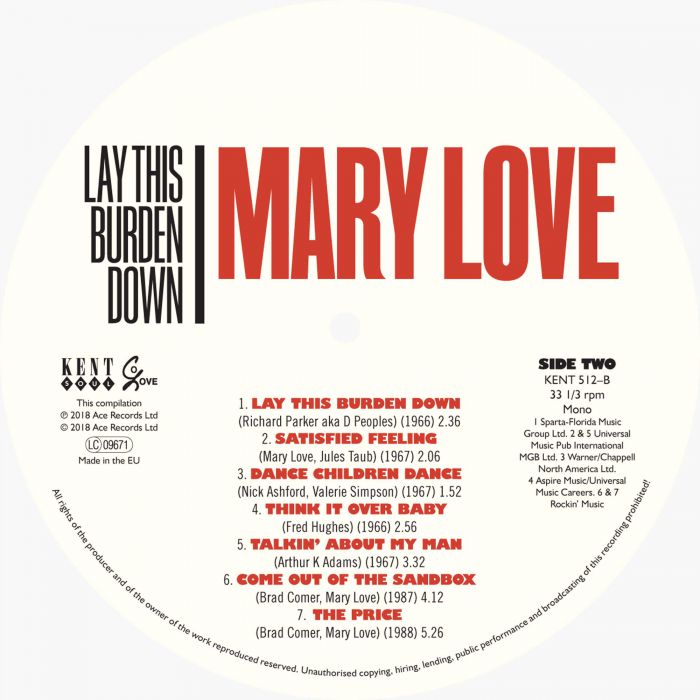
GRANT GREEN-SLICK! LIVE AT OIL CAN HARRY’S.
Grant Green-Slick! Live At Oil Can Harry’s.
Label: Resonance Records.
Nowadays, guitarist Grant Green is best known for the jazz and soul-jazz albums that he recorded for Blue Note Records during the sixties. However, that was only part of the Grant Green story, and by 1969, he had changed direction and was playing jazz-funk.
This came as a surprise to many of his fans, but Grant Green knew that if he didn’t reinvent his music, he risked becoming musically irrelevant. This was something that Grant Green wasn’t going to risk, and when he resigned to Blue Note Records in 1969 after spending two long years battling heroin addiction, this was the start of his jazz-funk years.
Grant Green spent the remainder of his career playing and recording albums jazz-funk with various bands. This included the quintet that accompanied him on Slick! Live At Oil Can Harry’s, which has just been released on CD by Resonance Records. Just like Funk In France From Paris To Antibes 1969-1970, which has also been released by Resonance Records on CB, Slick! Live At Oil Can Harry’s none of the tracks have been released before and are a reminder of Grant Green’s later career.
Grant Green was born on the ‘6th’ of July 1931, in St. Louis, Missouri, and the man who would later became one of jazz’s unsung heroes and most underrated guitarists became a professional musician when he was still a teenager. For the early part of his career, Grant Green was content to play in his home town of St Louis and around East St Louis. Initially, he had no inclination to move to New York until Lionel Hampton persuaded him to make the move in 1959.
A year later, in 1960, Grant Green was introduced to Alfred Lion the cofounder of Blue Note Records, who signed the twenty-nine tear old guitarist to one of jazz’s premier labels.
The Blue Note Records Years.
Between 1960 and 1965, Grant Green recorded a total of twenty-two albums for Blue Note Records as bandleader leading trios, quartets, quintets and sextets. Fourteen of these albums were released between 1960 and 1965, with the remainder released by Blue Note Records during the seventies and eighties. However, by 1965 Grant Green was already one of jazz music’s rising stars and had come a long way in five years.
Although Grant Green was a prolific recording artist between 1960 and 1965, he also found time to work with many of the other artists signed to Blue Note Records. This was akin to the great and good of jazz, and before long, Grant Green was the go-to-guitarist for many artists signed to Blue Note Records. However, within the space of two years Grant Green’s life had been transformed.
Detox In Detroit.
As 1967 dawned, Grant Green was in throes of heroin addiction which was threatening to derail his burgeoning career. Just like so many jazz musicians before him, Grant Green had succumbed to heroin, not knowing how addictive the drug was. By 1967, heroin had sunk its claws into Grant Green and was desperate to free himself from its grasp. That was why in 1967, Grant Green made the decision to move to Detroit where he would turn his back on the local music scene while he tackled his heroin addiction.
Grant Green moved his family to Detroit which became his home for the next two years as he set about beating his addiction to heroin. During 1967 and 1968, Grant Green deliberately avoided the local music scene, where he knew drugs would be freely available. He wasn’t willing to put temptation in his way having come so far, and beaten his addiction to heroin. Now he was ready to return to the Big Apple, and rebuild his career.
The Return To Blue Note Records.
After two years away, Alfred Lion resigned a newly reinvigorated Grant Green to Blue Note Records in 1969. By then, Grant Green was a changed man, and although he looked older, and his hair was starting to thin, he looked much healthier than he had two years previously.
Grant Green had also put together a new band and was moving in a new direction musically. Rather than jazz, Grant Green’s new band were playing a much funkier type of music. This new music was showcased by Grant Green during a European tour.
Having re-signed to Blue Note Records, Grant Green joined Larry Ridley and Don Lamond on a European tour, where each of the three guitarists took to the stage with the band that travelled with them, and played a short set. After the three sets, the three guitarists joined forces, and played together showcasing their considerable skills. Grant Green would return to France in October 1969, but before that, had his comeback album to record.
On the ‘3rd’ of October 1969, Grant Green and his band headed to Van Gelder Studio, Englewood Cliffs, New Jersey, to record his comeback album Carryin’ On. It found Grant Green leading a sextet on an album which marked a stylistic change for the thirty-eight year old guitarist. Carryin’ On was the first album of jazz-funk that Grant Green recorded and was the sound he embraced for the rest of his career.
Having recorded Carryin’ On, which was released in the spring of 1970, Grant Green started preparing to return to Paris, France, later that month. This was something of a surprise for Grant Green.
In the October 1969 edition of Jazz Magazine, an announcement that ORTF’s Guitar Night was due to take place at the headquarters of French National Radio with a ‘dream lineup’ of Barney Kessel, Kenny Burrell and Tal Farlow all featuring on the ‘26th’ of October. As soon as the event was announced, French jazz fans were looking forward to three of their favourite guitarists. That was until one was forced to withdraw from the event.
This was Tal Farlow, who had been suffering from asthma attacks and was unable to make the journey to France. For the organisers this was a disaster, but by the time next edition of Jazz Magazine was published, a replacement had been found…Grant Green.
While Grant Green was one of the biggest names in American jazz, French jazz fans didn’t appreciate the talented St Louis born guitarist. When Jazz Hot ran its reader’s poll, Grant Green ended up in eighth place in the list of guitarists. As a result, the announcement of Grant Green as Tal Farlow’s replacement was greeted with a lack of enthusiasm. It was going to take a lot for Grant Green to win over the French jazz fans.
When Grant Green arrived in Paris to play at the ORTF’s Guitar Night on the ‘26th’ of October 1969, he was joined by a slightly different, and slimmed down lineup of his band. Grant Green was about to lead a trio, which didn’t feature his usual drummer Idris Muhammad, who was unable to make the trip. Instead, drummer Don Lanond, bassist Larry Ridley and Grant Green would take to the stage at Studio 104, La Maison De Le Radio. That night, Grant Green took to the stage first, and initially, the audience weren’t exactly enthusiastic. However, by the time he left the stage, Grant Green had won over the audience, who realised they had underestimated the guitarist. Forty-nine years later, Grant Green’s performance featured on Funk In France From Paris To Antibes 1969-1970.
Buoyed by the reception at Studio 104, La Maison De Le Radio, on the ‘26th’ October 1969, Grant Green headed home, and this new chapter in his career continued apace. This included recording a new album.
Green Is Beautiful was recorded at Rudy Van Gelder Studio, Englewood Cliffs, New Jersey, on January the ’30th’ 1970, and featured a very different lineup of Grant Green’s band. This time around, Grant Green led an octet that featured drummer Idris Muhammad, bassist Jimmy Lewis and conga player Cándido. The expanded lineup of Grant Green’s band worked their way five cover versions as the bandleader continued his journey into jazz-funk.
In the spring of 1970, Carryin’ On was released and showcased Grant Green’s new jazz-funk sound. Carryin’ On was well received, although some of Grant Green’s older fans weren’t won over by the album. They preferred his earlier albums, although a new audience embraced Grant Green’s newly updated sound. Later, Carryin’ On proved popular amongst collectors of acid jazz and rare groove.
By July 1970, Green Is Beautiful was released and found Grant Green growing into his new sound on an album that featured a tougher, funkier, brand of R&B. This new sound Grant Green was about to showcase at the Festival Mondial du Jazz Antibes, in 1970.
Grant Green’s appearance at the Festival Mondial du Jazz Antibes is also documented in Funk In France From Paris To Antibes 1969-1970, and documents his transition from jazz to jazz-funk. This became Grant Green’s trademark sound for the rest of his career.
Following his return from the Festival Mondial du Jazz Antibes, his new album Visions was released by Blue Note Records in late summer of 1971 and was reasonably well received. It wasn’t regarded as a Grant Green classic, and nor was Shades Of Green, which was released by Blue Note Records to mixed reviews in late 1971. Not every critic was convinced by Grant Green’s decision to reinvent himself and move in the direction of jazz funk.
The following year, 1972, Grant Green made history when he released The Final Comedown on Blue Note Records. It was the first soundtrack album the label had released, and what was Grant Green’s first venture into the world of soundtracks was well received by critics and later, and a cult following amongst fans of Blaxploitation soundtracks.
On April the ’21st’ 1972, Grant Green arrived at the Lighthouse Café, Hermosa Beach, California, to record another live album. This became Live At The Lighthouse, which was released later in 1972 and features one of his best performances of the jazz-funk era. He rolls back the years on Live At The Lighthouse which features some virtuoso performances by the bandleader and some peerless interplay. This was fitting as Live At The Lighthouse was the last album Grant Green recorded for Blue Note Records.
When Grant Green left Blue Note Records in 1974, it marked the end of an era, as he had spent his entire career signed to the label. He had signed to the label in 1960 and left for the first time in 1967. After spending two years detoxing in Detroit, Grant Green re-signed to Blue Note Records in 1969. That was the start of his jazz-funk years, which would continue even after Grant Green left Blue Note Records.
By 1975, Grant Green’s career had stalled and he found himself at a crossroads. He was living in Detroit and found himself without a record label for the first time in his career, and record labels weren’t exactly fighting for his signature. That wasn’t a surprise, as the albums he had released for Blue Note Records during the seventies varied in quality. His albums lacked the consistency that he had enjoyed earlier in his career. This meant that some record companies may have been reluctant to sign the forty-year old guitarist. However, Grant Green was determined to get his career back on track.
The problem was that Grant Green’s music wasn’t finding a younger audience. Mostly, his music was popular amongst older jazz fans who had discovered his music during his first spell with Blue Note Records. However, even some of his long-term fans had turned their back on Grant Green during his jazz-funk years, and the audience for his music was becoming smaller. Grant Green knew that he needed to do was attract a younger audience.
This was easier said than done, and Grant Green vowed to make himself fan friendly. He wanted to be seen as approachable and connect with his fans when he played live. The last thing he wanted to do was alienate his fans, and he vowed to take care not to be seen as aloof, and was always approachable when he arrived at a venue to play live. Now that he had no record contract, playing live was putting food on the table. This included the gig that Grant Green pencilled into his diary on September the ‘5th’ at Oil Can Harry’s, in Vancouver, Canada.
Slick! Live At Oil Can Harry’s.
By the time Grant Green was booked to play the gig at Oil Can Harry’s, the forty-year old bandleader and guitarist in the middle of his pop-funk period, and at home, was listening to what can only be described as an eclectic selection of music. This included everything from The Beatles, and Bobby Womack right through to the self-styled godfather of funk James Brown, Stanley Clarke, Stevie Wonder, The Ohio Players and The O’Jays. These artists and bands would influence and inspire Grant Green when he led his band on September the ‘5th’ at Oil Can Harry’s, which was being recorded for posterity.
By the time the gig at Oil Can Harry’s arrived, Grant Green’s band featured a number of familiar faces who had worked with him when he was signed to Blue Note Records in the early seventies. The rhythm section featured drummer Greg Williams and bassist Ronnie Ware while Emmanuel Riggins on Fender Rhodes and percussionist Gerald Izzard joined guitar Grant Green.
When Grant Green took to the stage at Oil Can Harry’s, he was introduced by Vancouver based DJ Garry Barclay, who explains that the show was going to be played live a week later on CHQM-FM radio station. As soon as the applause died down, Grant Green’s jazz-tinged guitar rings out, and he plays the first few notes of a brisk cover Charlie Parker’s Now’s The Time. It had a been a favourite of Grant Green when he played live during the early seventies. He’s accompanied by a walking bass, the soulful chitchat of the drums and congas while the Fender Rhodes fills out the arrangement and adds a warmth. Meanwhile, Grant Green rolls back the years playing with speed and fluidly as the track is extended to nine majestic and almost flawless minutes. However, just a couple of times, Grant Green fluffs a line, during what’s a glorious example of bop blues.
Very different is the cover of Antonio Carlos Jobim’s How Insensitive (Insensatez), which seems an unlikely track for Grant Green to cover. Unlike many other jazz guitarists, Grant Green hadn’t embraced samba, but with the help of his band delivers a sympathetic cover of this familiar track which allows the guitarist and bandleader to showcase his talent and versatility during this twenty-eight minute epic.
Slick! Live At Oil Can Harry’s closes with a medley that opens with Stanley Clarke’s Vulcan Princess which is initially haunting and otherworldly before veering between funk and fusion, while the Ohio Players’ Skin Tight is sensual and funky. After that, a brief burst of Marvin Gaye’s Trouble segues into soul man Bobby Womack’s Woman’s Gotta Have It. Here, Grant Green rolls back the years during a musical masterclass on this uber funky track where a bluesy bridge brings in a verse of the sunshine funk of Stevie Wonder’s Boogie On Reggae Woman. Closing the medley is a The O’Jays’ Philly Soul favourite For The Love of Money, which is reinvented and becomes funky and soulful as this thirty-two minute, five song medley draws to a close. It’s no ordinary medley and this genre-melting opus is spread across sides three and four of Slick! Live At Oil Can Harry’s. During this genre-melting medley that takes a series of twists and turns, as Grant Green and his band seamlessly switch between musical genres and showcase their talent and versatility, before taking a well deserved bow.
Sadly, after concert that recently became Slick! Live At Oil Can Harry’s, which was recorded on September the ‘5th’ 1975, very few of Grant Green’s concerts were recorded. At the time, Grant Green and his band most likely thought that there was plenty of time to record live albums in the future. Sadly, that wasn’t to be.
In 1976, Grant Green recorded The Main Attraction for Creed Taylor’s Kudu imprint, and when this album of funky soul-jazz was released critics weren’t impressed. After that, Grant Green left Kudu and didn’t record another album until 1978.
This was Easy, which was recorded between the ‘17th’ and ‘20th’ April 1978, for the Versatile label. However, when the album which is also known as Last Session was released later in 1978, tragedy had struck.
Grant Green’s health had deteriorated during 1978, and he was forced to spend much of that year in hospital. During this period, Grant Green wasn’t earning money, and before long the guitarist’s finances were in a perilous state.
Against doctor’s advice, Grant Green headed back out on the road to try to make some much-needed money. His final gig was at his fiend George Benson’s Breezin’ Lounge in New York, but sadly, Grant Green collapsed in his car of a heart attack and died on January the ’31st’ 1979 aged just forty-three. That day, jazz music lost one of its great guitarists.
His recording career belatedly began in 1960 when twenty-nine year old Grant Green signed to Blue Note Records for the first time. This was the label that Grant Green called home for the majority of his career, and where he recorded the best music of his career. This included the start of Grant Green’s jazz-funk years, which continued after he left Blue Note Records.
By the time he left Blue Note Records in 1974, Grant Green’s best years were behind him, and neither The Main Attraction nor Easy matched the quality of albums he had released during the Blue Note Records’ years. Despite that, Grant Green and his band gave an almost flawless performance when they took to the stage at Oil Can Harry’s on the ‘5th’ of September 1975 and flitted between blues bop, funk, fusion, jazz and jazz-funk. Fortunately, the CHQM-FM radio station had the tapes running at Oil Can Harry’s, but sadly, they weren’t unearthed by Resonance Record until 2017.
These tapes became Live At Oil Can Harry’s which Resonance Record released as a double album for Record Store Day 2018. Live At Oil Can Harry’s which is a hidden gem, is a welcome release, and a reminder of one of jazz’s unsung heroes and most underrated guitarists, as he rolled back the years one final time, during what sadly, proved to be the twilight of his career
Grant Green-Slick! Live At Oil Can Harry’s.
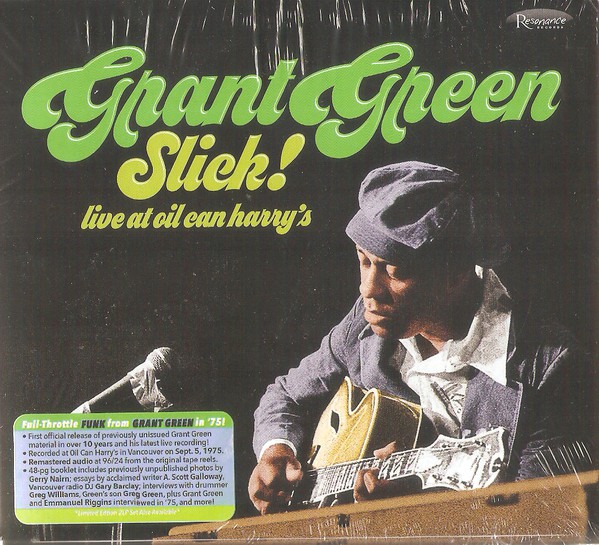
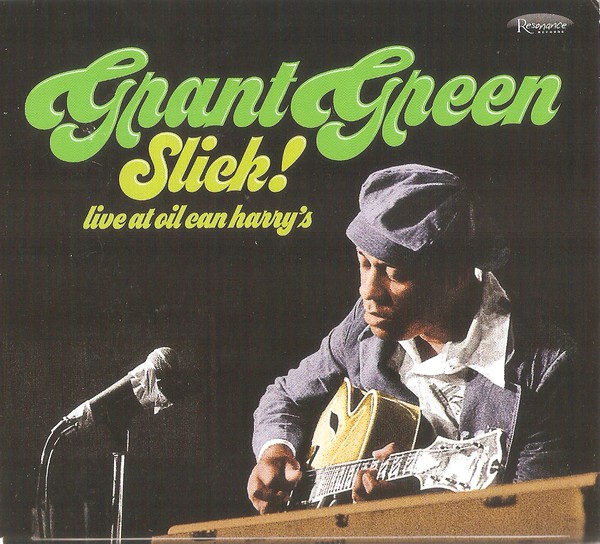
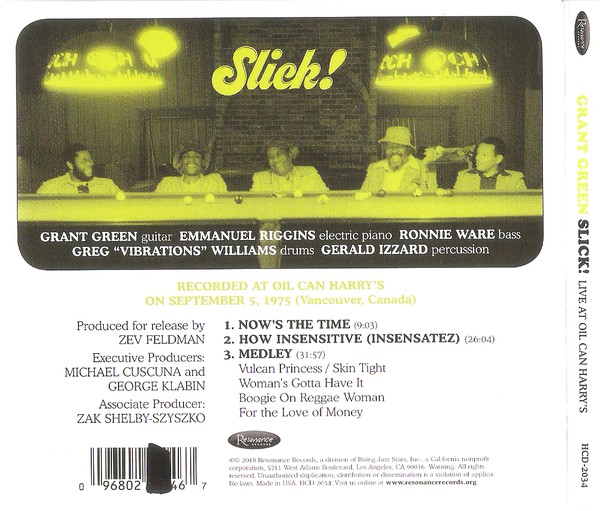
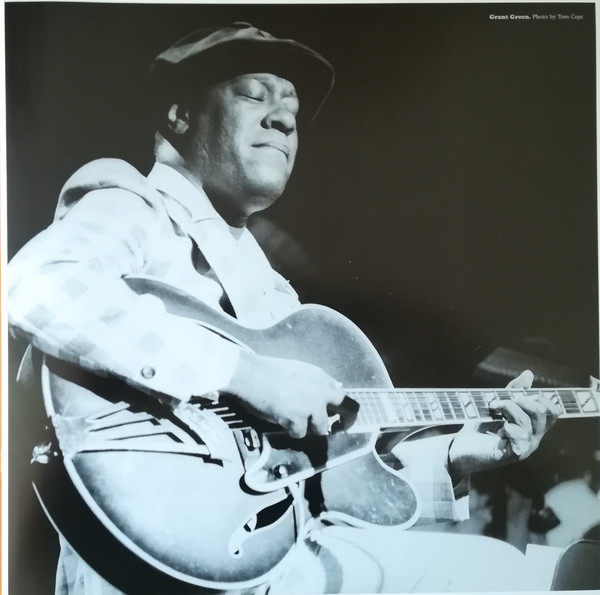
HUGO FATTUOSO-Y BARRIO OPA.
Hugo Fattoruso-Y Barrio Opa.
Label: Far Out Recordings.
Composer, arranger and multi-instrumentalist Hugo Fattoruso, was born in the Uruguayan capital of Montevideo on the ‘29th’ June 1943, and formed his first band Trío Fattoruso in 1952 aged nine. Sixty-six years later and Hugo Fattoruso is still involved in music and recently, released a new album Y Barrio Opa on Far Out Recordings. It’s the latest album from an artist and musician who has dedicated his life to music, and released an eclectic selection of albums. Y Barrio Opa is just the latest release from Hugo Fattoruso one of the biggest names in Uruguayan music. His story began in 1952,
Hugo Fattoruso joined the family group Trío Fattoruso as a nine-year old in 1952, and what was his first ever band, was together for six years. However, in 1958 it looked as if it was the end of the road for Trío Fattoruso. Nothing more was heard of the group until the dawn of the new millennia, when Hugo Fattoruso would reformed Trío Fattoruso in 2000. By then, his musical career had six decades and he was a veteran of many groups.
This included The Hot Blowers who were formed in 1959, when Hugo Fattoruso was sixteen. They were together for four years, until the band went their separate ways in 1963.
Los Shakers
Another year passed before Hugo Fattoruso and his brother Osvaldo formed the four piece band Los Shakers. This came after they saw the film A Hard Day’s Night which starred The Beatles. They would heavily influence Los Shakers musically, and the band even copied the way the Fab Four dressed.
Just a year after Los Shakers was founded, the band signed to Odeon imprint of EMI in Argentina in 1965 and became part of the Uruguayan Invasion of South America. When Los Shakers released their debut single Break it All later in 1965, the group was briefly billed as The Shakers. However, when they returned with their eponymous debut album in 1965 they were now called
Los Shakers.
In January 1966, Los Shakers made their one and only attempt to break into the lucrative American market when they released Break It All. However, the album failed to make any impact in America, Los Shakers decided to concentrate on Latin America and especially the Argentinian market.
Ten months later, in November 1966, Los Shakers released Break It All, which was their breakthrough album. By the, Los Shakers were being referred to in the press as “The South American Beatles.” This was what Hugo and Fattoruso had been working towards. They may have achieved their goal, but some critics believed that they were merely copying The Beatles, and their music lacked originality.
These comments were ironic, because when Los Shakers released their third album La Conferencia Secreta del Toto’s Bar in 1968, it was hailed as the Latin American equivalent of Sgt. Pepper’s Lonely Hearts Club Band. However, Los Shakers’ record label neither liked nor approved of the new sound, and failed to promote the album. For Los Shakers this was the end of the road.
Opa.
In 1969, Hugo Fattoruso left Uruguay behind, and moved to New York where he founded Opa. They fused Candombe which is the traditional rhythm of Uruguay with rock, jazz, funk and various other Latin American rhythms to create an irresistible and inimitable Afro-Uruguayan sound. This would influence and inspired many artists over the next few years and beyond.
Before that, Hugo Fattoruso worked with Airto Moreira and played on Fingers, which was released in 1973 and became one of the percussionist’s most successful albums. Three years later, in 1976, played on Flora Purim’s groundbreaking album. However, the same year, Opa released their much-anticipated debut album.
Seven years after Opa was founded, they released their critically acclaimed debut album Goldenwings in 1976. Buoyed by its reception Opa returned with their sophomore album Magic Time following in 1977. It was released to plaudits and praise and it wasn’t until 1981 that Opa realised A Los Shakers four years later in 1981. Five years later, Hugo Fattoruso released his solo album Hugo Fattoruso with Opa’s fourth album En Vivo following in 1988. By then, Hugo Fattoruso was living in Brazil and had begun a new chapter in his career.
As the nineties dawned, Hugo Fattoruso released his solo album Oriental in, but after that, much of his time was spent working with various Brazilian artists. That was until Opa decided to record a new album, Back Home which was released in 1996. This was Opa’s first album in eight years and was their swan-song.
In 1997 Hugo Fattoruso returned with his first new album in seven years, Homework. However, the highlight of 1997 for Hugo Fattoruso was arranging and working on Milton Nascimento’s 1997 World Grammy Award winning album Nascimento.
Three years later, in 2000, Hugo Fattoruso reformed Trío Fattoruso, and they played together for the first time in forty-two years. Still though, Hugo Fattoruso found time to work on a variety of other projects.
This included his solo album Ciencia Fictiona, which was released in 2004. After that, Hugo Fattoruso spent much of the next five years working with other artists and collaborating on albums with Tomohiro Yahiro, Ray Tambor and Aska Strings. However, in 2011 Hugo Fattoruso returned with Acorde On and followed this up with Fatto In Casa in 2014. Despite turning seventy-one, Hugo Fattoruso was as busy as ever.
Hugo Fattoruso then jailed forces with Leo Maslíah recorded Montevideo Ambiguo, which was released in 2015. That was Hugo Fattoruso’s last release for the best part of three years.
Y Barrio Opa.
The next album that Hugo Fattoruso released was Y Barrio Opa, which was released in 2018, and featured an all-star cast of Uruguayan musicians. This included Hugo Fattoruso’s son Francisco who plays bass on Y Barrio Opa. He’s a talented musician whose followed in his father’s footsteps.
For Y Barrio Opa, Hugo Fattoruso wrote three new compositions and cowrote the other six songs. His new compositions were Botijas, El Romance del Sordo and Llamada Insólita. Hugo Fattoruso wrote Trenes de Tokyo and For You To Be Proud Albana Barrocas and they then penned Candombelek and Candombe Alto with Wellington Silva. Other tracks included the Hugo and Osvaldo Fattoruso composition Antes/Goldenwings which was originally recorded by Opa. It was joined by La del Cheche which Hugo and Christian Fattoruso wrote with Gustavo Etchenique. The other track on Y Barrio Opa was Francisco Fattoruso’s Candombe Beat Funk. These tracks were recorded at the Sondor Studio in Montevideo.
Hugo Fattoruso was joined by Joe Davis the founder of Far Out Recordings, who oversaw production. He watched on as a rhythm section of drummer Tato Bolognini, bassist Francisco Fattoruso and guitarist Nicolás Ibarburu. They were joined by percussionists Guillermo Díaz Silva, Mathías Silva, Wellington Silva and Albana Barrocas who added vocals. Hugo Fattoruso played keyboards, added vocals and took charge of production. With such a talented band accompanying him, it wasn’t long before Y Barrio Opa was completed.
With Y Barrio Opa completed, it was recently released by Far Out Recordings and was Hugo Fattoruso’s first solo album in four years. However, it’s been well worth the wait.
Hugo Fattoruso and his top class band take as a starting point for Y Barrio Opa, Opa’s original sound. To that they add Afro-Uruguayan rhythms, a healthy dose of funk, fusion, jazz harmonies, jazz-funk and Candombe drumming which comes courtesy of the De Silva brothers. They play their part in what’s a captivating, genre-melting album from Hugo Fattoruso… Y Barrio Opa.
It opens with the slow burner La del Cheche which gradually reveals its secrets as Hugo Fattoruso and his band play with a fluidity, drawing inspiration from Opa as they combine elements of funk, fusion, jazz, and jazz-funk with Afro-Uruguayan rhythms. In doing so, this flawless track whets the listener’s appetite for the rest of this musical feast.
This includes Botijas which breezes along as the piano carries the melody, while Hugo Fattoruso scats and his rhythm section unleashes rolling waves of jazzy rhythms. Soon, the band is in full flight, as they play with freedom, fluidity, speed and accuracy creating washes of melodic, genre-melting music.
The carefully crafted Candombe Beat Funk is built around the Fattorusos. Son Francisco ensures the funky, bubbling and percussive arrangement swings before his father’s keyboards enter. These rhythmic movements play starring roles, but it’s Hugo Fattoruso’s keyboards that take centre-stage as he rolls back the years and steals the show as funk meets jazz.
El Romance del Sordo sees the tempo rise, as the rhythm section lock down the groove. Meanwhile a myriad of percussion is part of the backdrop as Hugo Fattoruso unleashes another spellbinding performance. This inspirers guitarist Nicolás Ibarburu who steps forward and delivers one of his finest solos. After that, Hugo Fattoruso plays a flawless fleet-fingered keyboard solo plays a starring role, and he scats, as if he’s not got a care in the world.
The tempo drops on the cinematic, soulful and sultry sounding Trenes de Tokyo. As it meanders and shuffles along revealing its hip swaying, feelgood sound. Next up is Candombelek, where layers of shuffling percussion combine with exotic vocals that bring to mind exotic faraway places. Meanwhile, Hugo Fattoruso’s electric keyboards sit back in the mix, letting the vocals take centre-stage. When they drop out Hugo Fattoruso’s then take centre-stage against the percussive arrangement. The vocals, percussion and keyboards prove to be a potent and successful combination. Candombe Alto is regarded as the partner piece to Candombelek, but is a much more explosive track with searing guitar, urgent Afro-Cuban rhythms and keyboards combining. Hugo Fattoruso plays with speed and accuracy as his keyboards climb and soar high above the arrangement and reaches new heights.
Sci-fi synths and keyboards combine on Llamada Insólita as the rhythm section drop the tempo and the arrangement meanders almost lazily along. However, it’s the keyboards that are at the heart of the arrangement which features futuristic sounds and synths strings. Still, beauty is omnipresent as this melodic and filmic track reveals its secrets.
Antes is another new track which seamlessly gives way to a remake of Goldenwings, which was the title track of Opa’s 1976 eponymous debut album. The track where Opa combined funk and disco was a favourite of DJs and dancers and became a club hit. However, the remake ‘borrows’ and incorporates the melody to Summertime as the track heads in new and unexpected directions. This includes jazz, Latin and rock during what’s another genre-melting track.
For You To Be Proud closes Y Barrio Opa, and fittingly, Hugo Fattoruso’s keyboards play a leading role in this futuristic and filmic track. It’s quite different to previous tracks but shows Hugo Fattoruso’s versatility and ability to innovate.
Y Barrio Opa which was recently released by Far Out Recordings, is Hugo Fattoruso’s first album in four years. It finds one of Uruguay’s finest musicians returning with a carefully crafted genre-melting album Y Barrio Opa.
The building blocks for Y Barrio Opa is the Opa sound, and Hugo Fattoruso add Afro-Uruguayan rhythms, a healthy dose of funk plus fusion, jazz harmonies, jazz-funk, Latin, rock and Candombe drumming. It’s a melodic and potent musical potpourri from one of the legends of music Hugo Fattoruso’s whose new album Y Barrio Opa is without his finest post-millennium solo album.
Hugo Fattoruso-Y Barrio Opa.
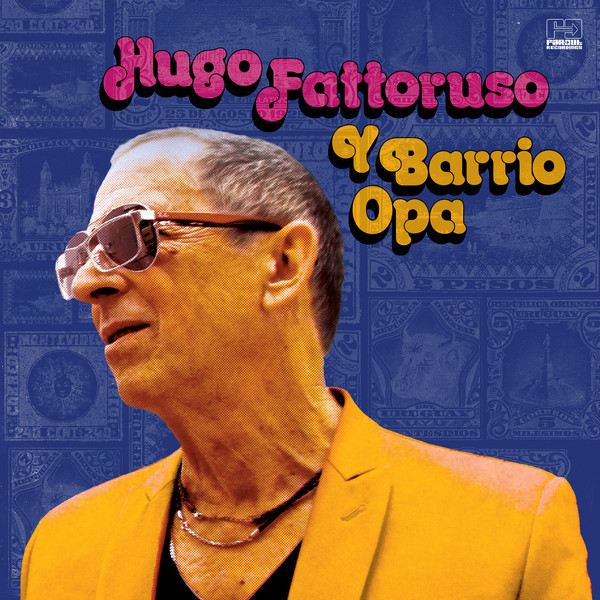
 dereksmusicblog
 dereksmusicblog