MOGWAI-KIN ORIGINAL MOTION PICTURE SOUNDTRACK
Mogwai-Kin Original Motion Picture Soundtrack
Label: Rock Action Records.
Although Scottish post rock pioneers Mogwai have released nine studio albums, two live albums, two remix albums and written and recorded the score to three documentaries, until very recently, there was still something missing from the Glasgow band’s impressive musical CV. Mogwai had still to write and record the entire soundtrack to a film. They had contributed tracks to 2006s The Fountain and Before The Flood in 2016. The next step Mogwai knew was to write and record a soundtrack. However, they had to wait for the opportunity to arise.
The opportunity arose when Mogwai were asked by film directors Jonathan and Josh Baker to write the soundtrack to the American sci-fi film Kin, which was written Daniel Casey. This was the opportunity of a lifetime for Mogwai who have just released the original soundtrack album to Kin on their label Rock Action Records. Kin is the latest chapter in the Mogwai story which began in 1991.
That was when Stuart Braithwaite and Dominic Aitchison met in Scotland’s musical capital, Glasgow. Four years later, they met drummer Martin Bulloch and formed Mogwai, which film buffs will remember, is a character from the movie Gremlins. Mogwai was always meant as a temporary name, until they came up with something better.
Later in 1995, three become four when guitarist John Cummings joined Mogwai. Since then, John Cummings’ role in Mogwai has changed, and he’s now described as playing “guitar and laptop,” and is regarded as the maestro when it comes to all things technical. However, not long after John Cummings joined Mogwai in 1995, the nascent band started honing their sound and making plans for the future.
In 1996, Mogwai founded their own record label Rock Action Records. It would play an important part in the rise and rise of Mogwai over the next twenty-one years. So would Mogwai’s Castle Of Doom Studios, which was cofounded by Mogwai and Tony Doogan in 2005. It’s situated in the West End of Glasgow, and is a home from home for Mogwai, when they record a new album. That was still to come.
Before that, Mogwai released their debut single Tuner on their newly founded label Rock Action Records. Tuner was released to critical acclaim and the NME awarded it their single of the week award. Later in 1996, Mogwai released two further singles. Angels v. Aliens and Summer. By then, Mogwai were well on their way to becoming one of the hottest bands of the late nineties.
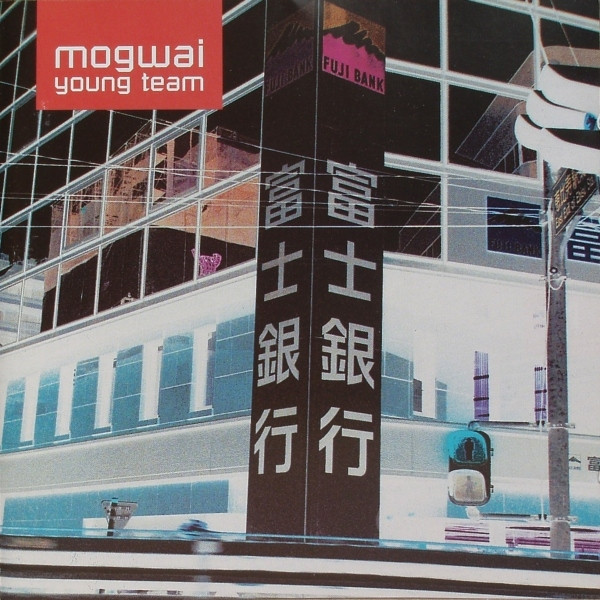
Mogwai’s career continued apace in 1997, when they released two more singles.The first of these, was New Paths To Helicon Pt. 1, which showed Mogwai growing and maturing as a band. NME agreed, and just like their debut single Tuner, New Paths To Helicon Pt. 1 won NME’s single of the week award. The followup Club Beatroot was also well received by critics. This was the perfect time for Mogwai to record their debut album, Mogwai Young Team.
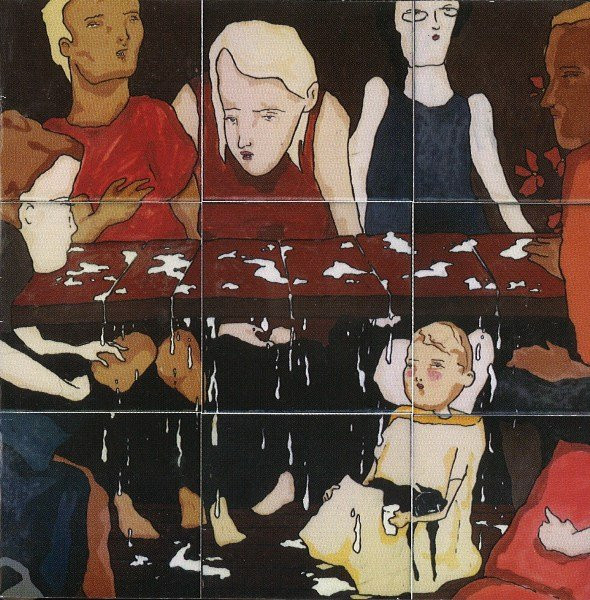
Mogwai Young Team.
For Mogwai Young Team, Mogwai brought onboard Brendan O’Hare the Teenage Fanclub’s drummer. Another guest artist was Aidan Moffat of Falkirk based band Arab Strap. He added the vocal to R U Still In 2 It, while the rest of Mogwai Young Team consisted of instrumentals. Mogwai Young Team was recorded at Chem 19 studios and produced by two of Scotland’s top producers, ex-Delgado Paul Savage and Andy Miller. Once Mogwai Young Team was completed, it was then released on Scotland’s biggest record label, Chemikal Underground Records.
Before its release, Mogwai Young Team was a hailed as a groundbreaking album of post-rock by critics. They were won over by Mogwai Young Team, and Mogwai were hailed as a band with a big future.
That proved to be a perceptive forecast. When Mogwai Young Team was released on 21st October 1997, sold over 30,000 copies and reached number seventy-five in the UK. The Mogwai Young Team were on their way. However, a few changes were about to take place.
Come On Die Young.
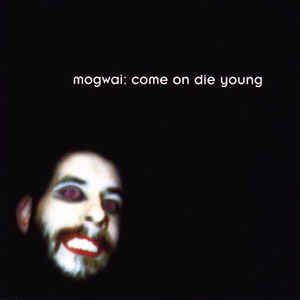
A year later, Mogwai were back in the studio recording their sophomore album Come On Die Young. Much had changed. A new member had joined the band, Barry Buns a flautist and sometimes pianist, who had already played a few gigs with the band. He was invited to become the fifth member of Mogwai. Not long after this, violinist Luke Sutherland joined Mogwai, but not on a full-time basis. This wasn’t the only change.
Recording of what became Come On Die Young was split between New York and Glasgow. This time, they’d forsaken Chem 19 in Blantyre and recorded parts of the album in Rarbox Road Studios, New York. Some sessions took place in Glasgow’s Cava Studios. Producing Come On Die Young was Dave Fridman. For some critics, his addition changed Mogwai’s sound.
Some critics felt his production style resulted in a much more orthodox sounding album. However, others felt that Come On Die You was part of Mogwai discovering their “sound” and direction. Come On Die Young is a much more understated, but also ambient, experimental, multi-textured and melodic. There’s a fusion of ambient, grunge and post rock on Come On Die Young, which was released in 29th March 1999.
On its release, Come On Die Young reached number twenty-nine in the UK. Mogwai it seemed were now on their way to finding their sound and fulfilling the potential that was evident on their debut album. This was apparent with tracks of the quality of CODY and Hugh Dallas s. However, like all innovative bands, Mogwai continued to reinvent their music.
This proved to the case on their eponymous E.P, which includes Stanley Kubrick, which was recorded in the exotic surroundings of Cowdenbeath in Fife. Burn Girl Prom Queen was recorded at Cava Studios, in Mogwai’s hometown of Glasgow. These two tracks were part of E.P., which further enhanced Mogwai’s reputation as post rock pioneers. So did their third album Rock Action.
Rock Action.
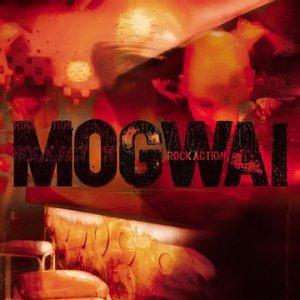
Mogwai’s music continued to evolve on their third album 2001s Rock Action. More use was made of electronics on Rock Action. This was part of a process that would continue over the next few albums. There were even more layers and textures on Rock Action, as Mogwai continued to expand their sonic palette. Seven of the songs were instrumentals, while Dial Revenge featured Gruff Rhys of Super Furry Animals. Again, Rock Action was produced by Dave Fridman, while recording took place in New York and at Glasgow’s Cava Studios. Once Rock Action was completed, it became Mogwai’s first album to be released on Play It Again Sam.
Rock Action was released in April 2001, and proved to be Mogwai’s most successful album. It reached number twenty-three in the UK. Critics remarked upon how Rock Action wasn’t as dark an album as its predecessors. That didn’t mean that Mogwai’s view of the world had changed. They were still worldweary which would become a Mogwai trademark.
Six months after the release of Rock Action, Mogwai returned with another single, The My Father My King. It was released in October 2001, and was described “as the companion piece to Rock Action.” A sticker on the cover bore Mogwai’s description of the single as: “two parts serenity and one part death metal.” That was about to change. Soon, they’d be happy people writing happy songs and making a breakthrough into the American market.
Happy Songs For Happy People.
Happy Songs For Happy People was released in 2003, and Mogwai’s evolution continued. Their music continued further down the electronic road. While Mogwai still deployed electric guitars and a drummer, synths were playing a more important role in Mogwai’s music. So were the addition of strings and a piano. They played their part in what was a much more understated album. Part of this change in style was a change of producer.
Tony Doogan was brought onboard as producer, and replaced Dave Fridman. Gone were transatlantic recording sessions. Happy Songs For Happy People was recorded at Cava Sound Studios, Glasgow. On its release in June 2003, Happy Songs For Happy People was well received by critics. Critics drew attention to I Know You Are But What Am I? and Hunted By A Freak, two of the album’s highlights. The critics also welcomed Mogwai’s latest change in style. So did record buyers.
While Happy Songs For Happy People only reached number forty-seven in the UK, it spent a week in the American charts, reaching number 182 in the US Billboard 200. After four albums, Mogwai had broken into the American market. Happy Songs For Happy People it seemed, was a landmark album.
Having made inroads into the lucrative American market, Mogwai didn’t rush their fifth album. It was released three years after Happy Songs For Happy People. There’s a reason for this. They were working on tree separate projects.
The first was their fifth album Mr. Beast. Then there was the first soundtrack they’d written and recorded. This was for the 2006 movie Zidane: A 21st Century Soundtrack. Mogwai also collaborated with Clint Mansell on the soundtrack to The Fountain. Although soundtracks were a nice sideline for Mogwai, their fifth album Mr. Beast was of huge importance. Especially, if it was a commercial success in America.
Mr. Beast.
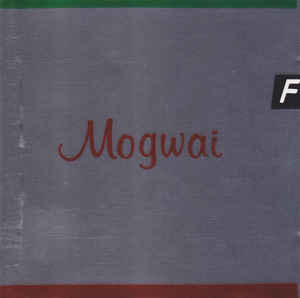
Recording of Mr. Beast took place at Mogwai’s new studio, Castle Of Doom Studios in Glasgow. Co-producing Mr.Beast with Mogwai, was Tony Doogan. Between April and October 2005, Mogwai honed their fifth album, and after six months, Mr. Beast was complete. It was Mogwai’s most important album.
Everyone realised the importance of Mr. Beast. Mogwai were on a verge of breaking into the American market. Happy Songs for Happy People had got Mogwai’s foot in the door of the American market. Now was the time for the Mogwai Young Team to kick the door of its hinged, and make their presence felt. That was what Mogwai intended to do with tracks like Travel Is Dangerous, Friend Of The Night and We’re No Here. They featured Mogwai at their innovative and creative best. This trio of tracks were part of an album that would please critics, Mr. Beast.
On its release, it was mostly, to critical acclaim. Critics were fascinated at how Mogwai’s music continued to evolve. For Mogwai, standing still was going backwards. Record buyers agreed and expected Mogwai to continually release groundbreaking and innovative. That was what Mogwai delivered.
When Mr. Beast was released on 5th March 2006, record buyers found an album of groundbreaking and innovative music. It climbed thirty-one in the UK. Across the Atlantic, Mr. Beast reached number 128 in the US Billboard 200. Mogwai were now one of Scotland’s most successful musical exports. They were certainly well on their way to becoming Scotland’s most innovative band. This was a title they weren’t going to give up without a fight.
Zidane: A 21st Century Portrait.
Following the release of Mr. Beast, the other two projects that Mogwai had been working on, were released. The first was Zidane: A 21st Century Portrait. This was project that came about in late 2005, when artist Douglas Gordon asked Mogwai to write and record a soundtrack to a film he was making about footballer Zinedine Zidane. This was Zidane: A 21st Century Portrait. Having heard the details of the project, it didn’t take Mogwai long agree to provide the soundtrack to Zidane: A 21st Century Portrait, which gave them their entry into the world of soundtracks.
Mogwai grasped this opportunity, and recorded Zidane: A 21st Century Portrait at their Castle Of Doom Studios. During the sessions, Mogwai recorded ten tracks, which were produced by Tony Doogan. However, when the soundtrack was released, it came baring a secret.
This was the hidden track Untitled, which was a twenty-three minute epic, that featured Mogwai at their most inventive. That was the case throughout Zidane: A 21st Century Portrait. Most critics realised this. However, a few didn’t seem to ‘get’ Zidane: A 21st Century Portrait. Despite the slings and arrows of the critics that didn’t get Mogwai’s introduction into the world of soundtracks, the critics that mattered gave Mogwai the recognition they deserved when Zidane: A 21st Century Portrait was released on 30th October 2006. Then less than a month later, the soundtrack to The Fountain was released on 27th November 2006.
The Fountain.
The Fountain was a collaboration between contemporary classic composer Clint Mansell, string quartet the Kronos Quartet and Mogwai. To some onlookers, it looked like an unlikely collaboration. That wasn’t the case though.
Mogwai had spent December 2005 locked away in their Castle Of Doom Studios with producer Tony Doogan. Other parts of The Fountain project were recorded in New York and Los Angeles. Then once the project was complete, The Fountain was released on 27th November 2006.
When The Fountain soundtrack was released, the reviews were positive. Mogwai’s contribution to the soundtrack had proved vital, while the Kronos Quartet proved a perfect foil the Mogwai Young Team. Mogwai’s lasted soundtrack had enhanced their reputation as the go-to guys for a soundtrack. That would their sideline in the future. However, before they released another soundtrack, Mogwai would release another two albums.
The Hawk Is Howling.
The first of these was The Hawk Is Howling. To ensure they kept their title of Scotland’s most innovative bands, Mogwai returned to the studio where it all began, Chem 19 in Blantyre.
Andy Miller who had co-produced Mogwai Young Team, Mogwai’s debut album was chosen to produce what became The Hawk Is Howling. This was Mogwai’s sixth album and marked a first. It was Mogwai’s first album to consist of just instrumentals. Among them were I’m Jim Morrison, I’m Dead, The Sun Smells Too Loud, Batcat and Scotland’s Shame. They feature the post rock pioneers pushing musical boundaries to their limits, and sometimes, beyond. Once The Hawk Is Howling was recorded, Garth Jones mixed the album at Castle Of Doom Studios in Glasgow. After that, The Hawk Is Howling was ready for release.
The Hawk Is Howling was released on 22nd September 2008. Critics were won over by The Hawk Is Howling. There were no dissenting voices. This was one of Mogwai’s best albums, and it was no surprise it sold well in the UK and America.
On its release, The Hawk Is Howling reached number thirty-five in the UK and number ninety-seven in the US Billboard 200. It seemed with each album, Mogwai’s music evolved and matured. This resulted in even more success coming their way. Would this continue with Hardcore Will Never Die?
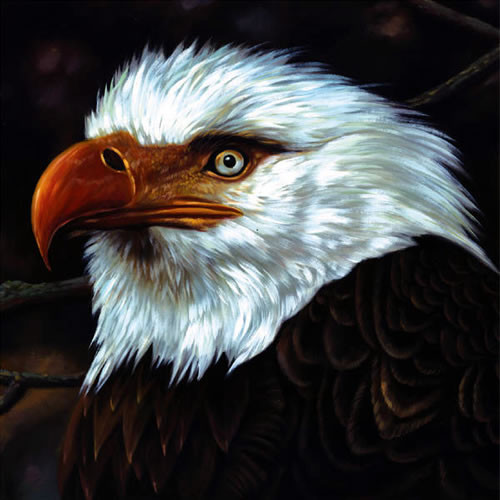
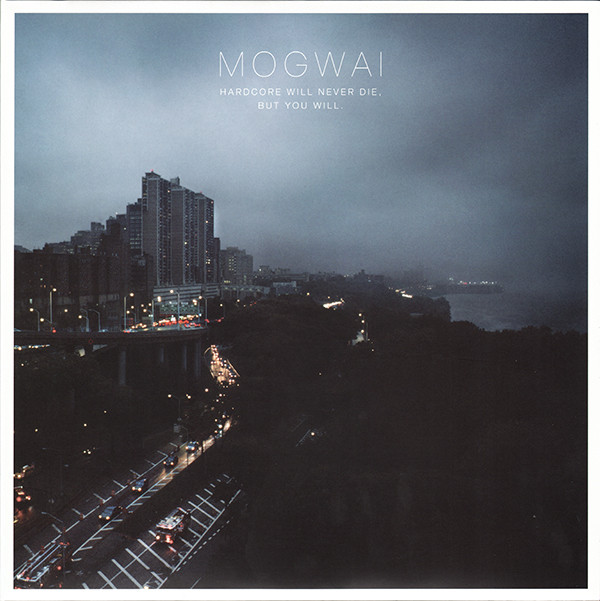
Hardcore Will Never Die, But You Will.
For their seventh album, Mogwai returned to Chem 19 Studios in Blantyre, where they hooked up with ex-Delgado Paul Savage. Since he had produced Mogwai’s debut album, Mogwai Young Team Paul had established a reputation as one of Scotland’s best producers.
By then, Paul Savage had worked with everyone from Franz Ferdinand to R.M. Hubbert. However, it was a very different Mogwai Paul encountered. They were very different to the band who recorded Mogwai Young Team Paul. Their music had evolved and was continuing to do so. They’d matured as musicians and embraced the new technology. Hardcore Will Never Die, But You Will was proof of this.
Here was an album of groundbreaking, genre-melting post-rock with attitude. Hardcore Will Never Die, But You Will was also an album not short on humour. Poppy soulster Lionel Ritchie provided the inspiration for You’re Lionel Ritchine. There was also a celebratory sound to Hardcore Will Never Die, But You Will.
The death of Scotland’s nemesis, Margaret Thatcher sparked celebration in Glasgow’s George Square. Hardcore Will Never Die, But You Will, celebrated provided the soundtrack to the celebrations. It was just one track on an album of pioneering, post rock music crammed full of hooks, humour and attitude. Others highlights Mexican Grand Prix, Rano Pano and How To Be A Werewolf . With music of this quality, surely Hardcore Will Never Die, But You Will couldn’t fail?
Before the release of Hardcore Will Never Die, But You Will, Rano Pano was released as a single. On the flip side was Hasenheide, which didn’t feature on Hardcore Will Never Die. . Things it seemed were looking good for Mogwai.
Yet again, Mogwai won over the majority of critics with Hardcore Will Never Die, But You Will. A couple of contrarian critics proved to be mere dissenting voices in the wilderness. Most critics realised that Hardcore Will Never Die, But You Will was one of Mogwai’s finest hours. Record buyers would agree.
Hardcore Will Never Die, But You Will reached number thirty-five in the UK and number ninety-seven in the US Billboard 200. For Mogwai, they were now into their third decade as band and had just enjoyed their biggest album to date. The question was, what would Mogwai do next?
Les Revenants.
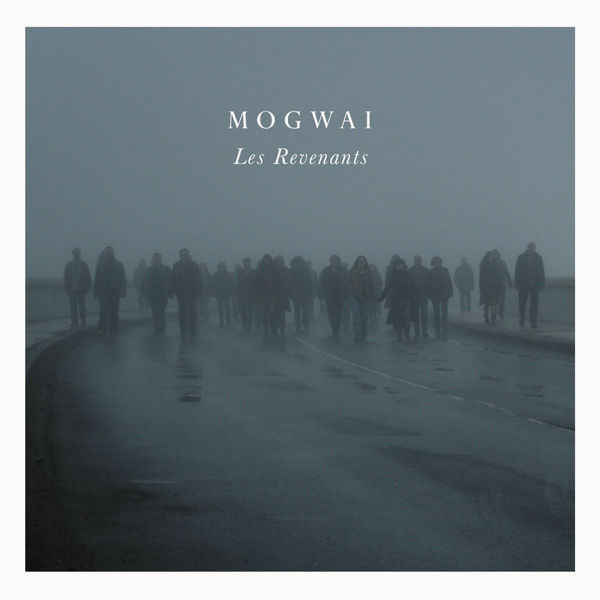
The answer to that was Les Revenants, a soundtrack to a French television series. Les Revenants or The Returned, is essentially a television program about zombies, albeit with a twist. Just like similar films, Les Revenants, finds the “undead” returning to the town they lived in. However, the zombies in Les Revenants weren’t how most films portray zombies. Another difference was the way Mogwai were commissioned.
Usually, someone writing a soundtrack can watch the film they’re writing music to. Not Mogwai. They were just shown a few scripts, which gave them an overview of what the series was about. From there, Mogwai wrote thirteen of the fourteen tracks including Wizard Motor and Hungry Face. They’re two of the album’s highlights. The other track on Les Revenants was What Are They Doing In Heaven Today, which was written by Charles Elbert Tilney. These fourteen tracks were recorded by Mogwai, who produced Les Revenants with Neil MacMenamin. Once Les Revenants was finished, it was released in February 2013.
Before Les Revenants was released an E.P. was released. It featured four tracks. That was a tantalising taster of what was to come. After all, Mogwai would approach a soundtrack like Les Revenants in a different manner. They wouldn’t do anything predictable. Les Revenants was a case of expect the unexpected. Critics loved Les Revenants and hailed the album as one of the best albums Mogwai had released. However, Mogwai had other ideas.
Rave Tapes.
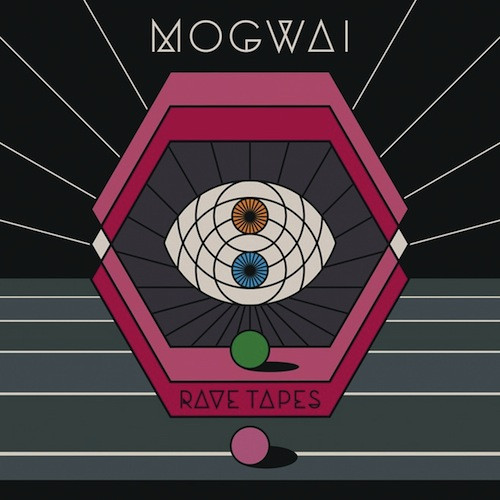
Rave Tapes features ten tracks which were written by Mogwai. These tracks were recorded at Mogwai’s Castle Of Doom Studios, in Glasgow. Producing Rave Tapes was ex-Delgado Paul Savage, who had produced previous Mogwai albums and knew how the band worked. This was important, given Mogwai were at last, enjoying the critical acclaim and commercial success their music deserved. Work began on Rave Tapes on the 28th August 2013.
This was like the first day back at school for Mogwai, as they began recording what was their eighth studio album. The lineup of Mogwai has been settled for a few years. This included a rhythm section of bassist and guitarist Dominic Aitchison, drummer Martin Bulloch and guitarists Stuart Braithwaite and John Cummings who also played piano. Barry Burns plays organ, piano and guitar. at Castle Of Doom Studios, Glasgow, Mogwai recorded the ten tracks that became Rave Tapes, which was released on 20th January 2014.
Rave Tapes was one of the most anticipated albums of 2014. The big question was, what direction Mogwai’s music would head? After all, Mogwai’s music never stands still. It’s in a constant state of evolution. That’s no bad thing. Standing still is akin to going backwards in Mogwai’s book. On Rave Tapes, Mogwai’s music continues to evolve. Musical genres and influences melt into one on tracks like Remurdered, The Lord Is Out Of Control and Tell Everyone I Love Them. However, one of the most prominent influences on Rave was Krautrock. Add to this ambient, avant-garde, electronica, experimental, indie rock and rock. We hear different sides to Mogwai on Rave Tapes. Whether it’s fuzzy soundscapes or kicking out the jams, Mogwai didn’t disappoint with Rave Tapes.
Critics agreed. Rave Tapes was released to widespread critical acclaim. Superlatives were exhausted in search of a fitting description of what many felt was Mogwai’s finest hour. Some critics wondered aloud whether Mogwai’s music was mellowing. Others felt that Mogwai were improving with age. Record buyers agreed.
When Rave Tapes was released on 14th January 2014, the album reached number ten in Britain and fifty-five in the US Billboard 200 charts. Rave Tapes became Mogwai’s most successful album in Britain and America. Elsewhere, Rave Tapes sold well across Europe. Mogwai were enjoying the most album of their three decade career. However, it would be two years before Mogwai released a new album. Before that, Mogwai decided to celebrate their twentieth anniversary in style.
Central Belters.
In 2015, Mogwai were celebrating their twentieth anniversary. By then Mogwai were Scottish music’s elder statesmen, A lot had happened to them during the first twenty years of their career. Mogwai have released eight studio albums and three soundtracks. That’s not forgetting there’s countless singles, E.P.s and two remix albums. It was official, Mogwai had been one of the hardest working bands in music between 1995 and 2015. They were also one of the most innovative.
It was no surprise that critical acclaim and commercial success accompanied the release of each Mogwai album. Suddenly, the Glasgow-based were enjoying success not just in Britain, but in Europe and in America. Now was the perfect time for Mogwai to release Central Belters, a three disc career retrospective box set. Central Belters tells the story of the first twenty years of Mogwai.
With Mogwai not planning to release a studio album or soundtrack during 2015, Central Belters was a perfect stopgap. It was released on 23rd October 2015, and reached number forty in Britain, Central Belters sold reasonably well across the Europe, and was a perfect primer to the first twenty years of Mogwai’s career. The next chapter of Mogwai’s career began with a soundtrack album, Atomic.
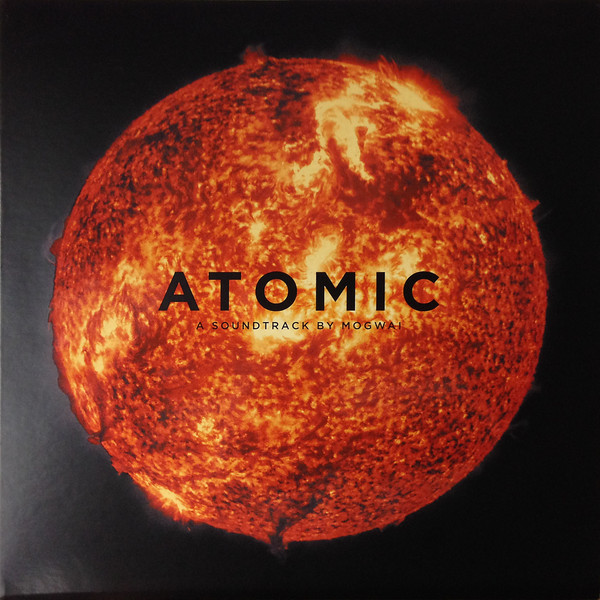
Atomic.
Having enjoyed celebrating their twentieth anniversary during 2015, Mogwai got back down to business on 1st April 2016. That was when they released Atomic, their first new album in over two years. Atomic was Mogwai’s fourth soundtrack album,
During the summer of 2015, Mogwai had provided the soundtrack Mark Cousins documentary Atomic: Living In Dread and Promise. It was aired on BBC Four, and was a very personal memoir of growing up in the nuclear age. Using archive film, Mark Cousins constructed an impressionistic cinematic memoir of what was a harrowing time.
Post rock pioneers Mogwai were commissioned to write the soundtrack to Atomic: Living In Dread and Promise. It was hailed as the perfect backdrop to Atomic: Living In Dread and Promise, which was a personal and poignant cinematic memoir. However, after the documentary was aired in the summer of 2015, Mogwai decided to re-record Atomic.
At their Castle Of Doom Studios in Glasgow, Mogwai were joined be an old friend, occasional band member Luke Sutherland. Mogwai were also joined by Sophie, Robin Proper-Sheppard formerly of The God Machine and Glasgow composer Robert Newth. Together, they got to work on Atomic, which was Mogwai’s twelfth album since they formed back in 1995.
Once Atomic was completed, it was scheduled for release on 1st April 2016. Before that, Atomic was hailed as Mogwai’s finest soundtrack album, and a welcome addition to their discography.
On Atomic, Mogwai combine disparate and eclectic musical genres. Elements of avant-garde, Berlin School, electronica and experimental music are combined with indie-rock, Krautrock, post-rock and psychedelia. This results in a genre-melting, cinematic album. Atomic captivates and compels, and takes the listener on a musical journey. It veers between dramatic and dreamy, to surreal and lysergic, to beautiful, pensive and understated to melancholy and melodic. Other times the music is dramatic, moody and broody. One thing the music never is, is boring. That is one thing that can never be levelled against Mogwai. Instead, it was another case of always expect the unexpected.
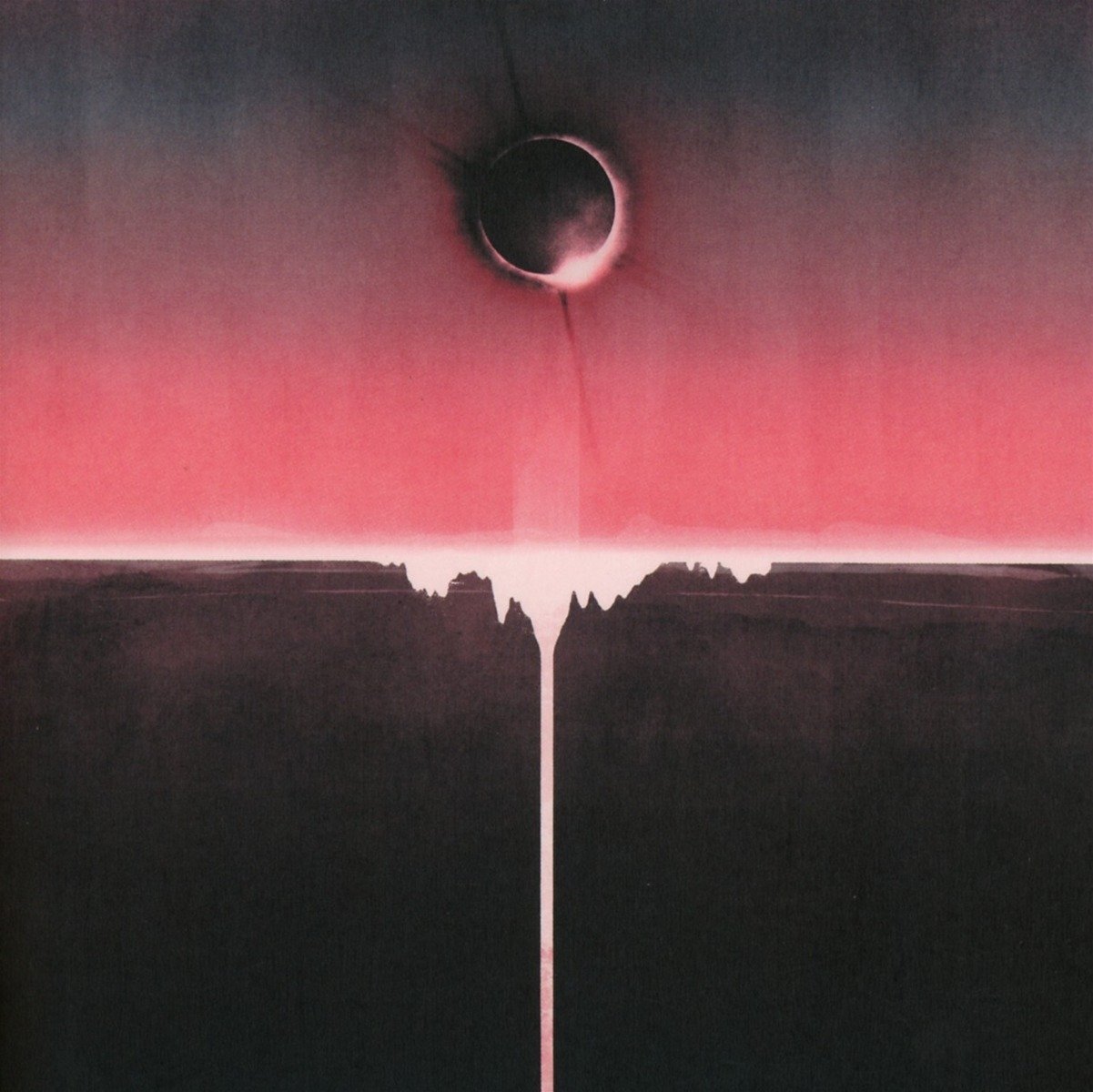
That’s been the case since Mogwai were formed in 1995, and released their debut album Mogwai Young Team. Since then, it’s always been a case of expect the unexpected from the Mogwai, who continue to release albums of ambitious and innovative music. There was no way that Mogwai would contemplate recording the same album twice. Instead, they leave that to lesser bands who specialise in albums of twee or pseudo-intellectual music. That isn’t Mogwai’s bag. They’re constantly moving forward musically and making music that pushes boundaries to their limits, and sometimes, way beyond. Proof of that is Every Country’s Sun, which is their ninth studio album and thirteenth overall.
Every Country’s Sun.
Every Country’s Sun is Mogwai’s first studio album since they released Rave Tapes in January 2014. However, Mogwai haven’t been resting on their laurels and enjoying the fruits of the rock star lifestyle. That isn’t Mogwai’s style. Since the release of the Rave Tapes, Mogwai have released the three CD best compilation Central Belters in October 2015, and the soundtrack album Atomic in April 2016. There’s also the small matter of running their own record label Rock Action Records and their Castle Of Doom studio in Glasgow’s West End. Still, the four members of Mogwai found the time to return to the studio and record their ninth studio album Every Country’s Sun, which showcases their new sound.
When the time came for Mogwai to record Every Country’s Sun, they didn’t renew their successful partnership with Tony Doogan, who had produced their most recent album Atomic. Tony Doogan had also produced Mr. Beast and Zidane-A 21st Century Portrait, and is part of Mogwai’s inner circle. He knows Mogwai better than most, and knows that they often work with different producers. That was the case on Every Country’s Sun, where Mogwai renewed their partnership with experienced American producer Dave Fridmann.
The last time Mogwai had worked with Dave Fridmann was on Come On Die Young, which was released in 1999. Since then, much had happened for Mogwai and Dave Fridmann. Mogwai have released twelve albums and Dave Fridmann now has over 200 production credits to his name. He’s worked with some of the biggest names in indie music, including Flaming Lips, Mercury Rev, Jane’s Addiction, The Delgados, MGMT and The Vaccines. Dave Fridmann had beefed up his CV since the last time he worked with Mogwai.
Having made the decision to work with Dave Fridmann, Mogwai decided to record Every Country’s Sun at their own Castle Of Doom Studios in Glasgow. The alternative was for Mogwai to travel to New York to work with Dave Fridmann at Tarbox Road Studios in New York. That was unnecessary expense, considering that Mogwai had their own studio. They could always send the tracks over to Dave Fridmann in New York. This was very different to when Mogwai recorded their debut album Mogwai Young Team in 1996,
Each day, drummer Martin Bulloch, bassist Dominic Aitchison, guitarist and vocalist Stuart Braithwaite plus multi-instrumentalist Barry Burns entered Castle Of Doom Studios and began laying down the eleven tracks. These tracks were sent to Dave Fridmann in New York, who took charge of production. Gradually, Every Country’s Sun started to take shape and Mogwai were well on their way to completing what would be their first studio album in over three years. Eventually, Mogwai completed recording Every Country and Dave Fridmann mixed the album at Tarbox Road Studios. All that remained was for the album to be mastered by Frank Arkwright at Abbey Road Studios, in London. Now Mogwai were ready to embark upon a new chapter in a career that began twenty-two years ago in 1995.
Since then, post rock pioneers Mogwai have enjoyed an unrivalled longevity, and are now one of the most successful Scottish bands of their generation. Remarkably, the three original members of the band, Stuart Braithwaite, Dominic Aitchison and Martin Bulloch still remain are still part of Mogwai’s and played their part in latest album ambitious and innovative album, Every Country’s Sun.
There was an air of excitement when Mogwai announced the arrival of Every Country’s Sun earlier in 2017. The big question among critics and cultural commentators was what direction would Mogwai’s music head in? Most agreed that Every Country’s Sun would mark another stylistic departure for Mogwai.
The music on Every Country’s Su is sometimes, elegiac and ethereal, other times, the music is dark, dramatic, eerie, moody, ominous and otherworldly. Often, there’s a cinematic sound to Mogwai’s music, as they switched seamlessly between and combine musical genres and influences.
Mogwai combine elements of numerous disparate musical genres, ranging from classic rock, grunge, pop, post rock, psychedelia and space rock, to ambient, avant-garde, the Berlin School, electronica, experimental music and Krautrock. These are all part of the rich and vibrant musical tapestry that is Mogwai’s ninth studio album Every Country’s Sun, which was recently released by their own Rock Action Records. Every Country’s Sun and is Mogwai’s finest hour. The big question was what was next from Mogwai.
Kin.
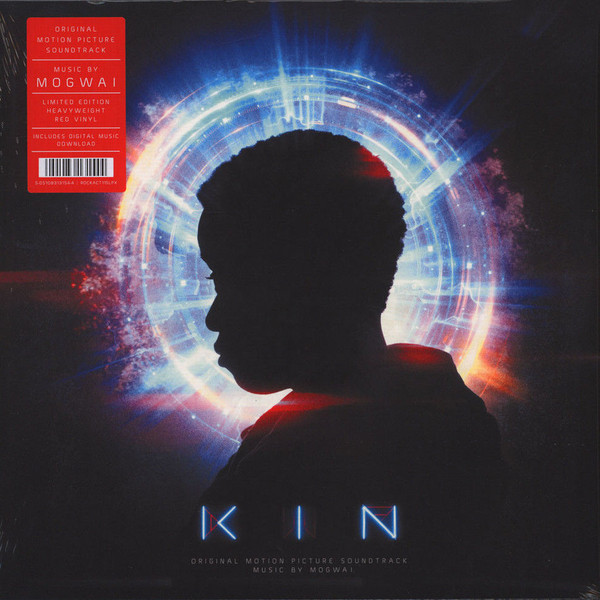
Following the success of Every Country’s Sun, Mogwai were asked by film directors Jonathan and Josh Baker to write the soundtrack to the American sci-fi film Kin, which was written Daniel Casey. This was something that Mogwai had wanted to do since they began working on soundtracks for documentaries and films.
While Mogwai had written the score to three documentaries and contributed to tracks to 2006s The Fountain and Before The Flood in 2016 writing the soundtrack to a film was a challenge that they welcomed.
Not long after this, Stuart Braithwaite, Dominic Aitchison and Barry Burns began writing soundtrack to Kin. Eventually, they had written the nine tracks, including Eli’s Theme, Scrap, Flee, Funeral Pyre, Donuts, Miscreants, Guns Down, Kin and We’re Not Done (End Title). These tracks became Kin, which was recorded in familiar surroundings.
This was Mogwai’s own Castle Of Doom Studios, which is situated in Glasgow, Scotland. While Kin was recorded and produced by Mogwai, Paul Savage took charge of engineering duties. He watched on has Mogwai deployed an array of synths, traditional instruments and effects as Kin started to take shape. Eventually, Mogwai’s first post rock soundtrack was ready for Tony Doogan to mix.
Once Kin was mixed, the album was mastered at Abbey Road Studios, in London, by Frank Arkwright. Now Kin was ready to released on Mogwai’s Rock Action Records.
The release of Kin was scheduled for the ‘31st’ of August 2018. Before that, critics had their say on Kin which was the first soundtrack Mogwai written and recorded.
Straight away, Kin brings back memoirs of another of Mogwai’s soundtrack albums Les Revenants. Both albums feature the minor key piano where reverb is deployed to give Mogwai’s trademark sound. This has become a feature of many Mogwai albums, and Kin is no different.
Kin opens with Eli’s Theme, which epitomises Mogwai’s modern sound, and shows how far the Glasgow-based musical chameleons have come since 1995. The understated introduction soon becomes dark and menacing within the space of a few bars. That is despite Kin featuring a more pared back sound, than Every Country’s Sun and previous albums, this music could only come courtesy of Mogwai.
Their inimitable sound can be heard throughout Kin, and especially on Guns Down where the glacial, spacey sounding track crunches and pulsates. Mogwai return to their rockier sound on Donuts and combine this with their post Rave Tapes electronica style. Donuts finds Mogwai fusing their past and present on what’s an epic track that is dramatic, elegant and radiates a serenity. It’s also one of Kin’s highlights.
Flee showcases Mogwai’s cinematic sound as they introduce a degree of tension. By contrast Funeral Pyre is a slow burner, which gradually and a degree of dignity reveals its secrets on this scene setter. Elsewhere the music on Kin is atmospheric and cinematic with the piano plays a leading role as Mogwai combine their soundtrack work with heir post Rave Tapes sound. Quite different is the shoegaze pop ofWe’re Not Done (End Title) which closes Kin in style.
The grand old men of Scottish music put their twenty-three years of experience to good use on their latest carefully crafted album Kin. It’s the first film soundtrack that Mogwai have released. Kin showcases a cinematic sound which features drama, tension, sci-fi sound and poppy hooks on a melodic and memorable soundtrack album. It also finds Mogwai fusing disparate musical genres on Kin.
Mogwai were inspired by ambient, avant-garde, Berlin School, electronica, experimental music, indie rock, Krautrock, pop, post rock, psychedelia and space rock on Kin. Sometimes, these genres can be heard only briefly on Kin. It’s Mogwai’s first ever film soundtrack and marks a new chapter in a story that is into its third decade.
Twenty-three years after Mogwai were founded in 1995, the post rock pioneers return with their cinematic epic Kin, which is which is their first ever film soundtrack and a reminder why they’re still one of Scotland’s too bands,
Mogwai-Kin Original Motion Picture Soundtrack
ROCKIN’ IN THE USA-HOT 100 HITS OF THE 80S.
Rockin’ In The USA-Hot 100 Hits Of The 80s.
Label: Ace Records.
As 1979 gave way to 1980, critics and cultural commentators wondered whether the golden era that began when The Beatles released Love Me Do in 1962 was about to continue?
Record buyers had been spoiled by some of the biggest bands from Britain and America releasing groundbreaking and classic albums for the past eighteen years. However, already things were starting to change in the land of the free.
AM radio which had provided the soundtrack to the sixties and seventies, was replaced by crystal clear sound of FM. Suddenly, AM was home to sports radio and loudmouthed shock jocks. However, one thing stayed the same, the popularity of vinyl.
No other format came had close to rivalling vinyl which was popular DJs and record buyers preferred. Executives at the major record labels thought that vinyl’s popularity would continue to grow, and never thought that the bubble would burst,
That was apart from those involved in developing the compact disc which was still in the experimental stage. That would change by the mid-eighties when the compact disc began to revolutionise music.
With the of offer perfect sound quality, the compact disc was seen as preferable to vinyl, which was an imperfect medium. Over the next few years, many recorded buyers sold massive vinyl collections and made the switch to compact disc.
Supply of vinyl albums outstripped demand, and the prices dropped. Some record collectors took what they could get, while a few gave their once prized collections of vinyl to charity shops or sold them for giveaway prices at car boot sales. After all, with the introduction of the compact disc nobody would want vinyl anymore.
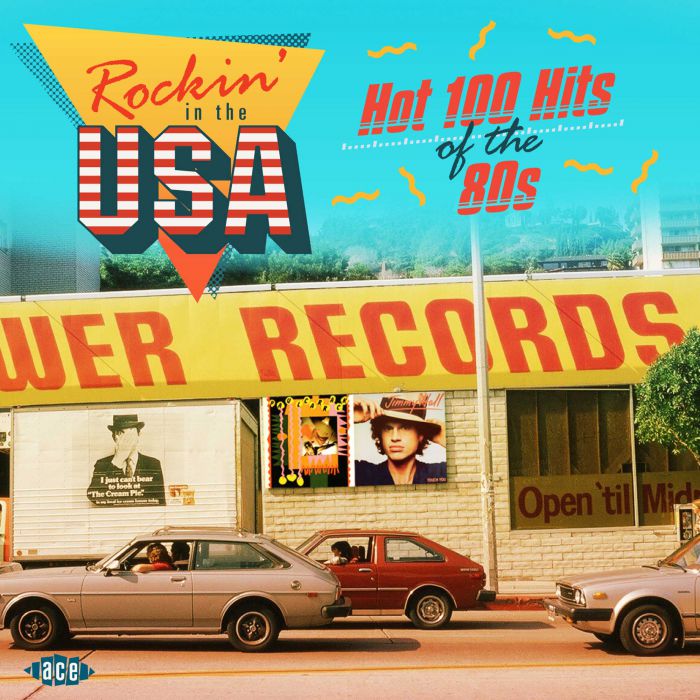
Meanwhile, many critics, cultural commentators and record buyers regarded as the third consecutive golden era for music. This golden era is celebrated on Ace Records new compilation Rockin’ In The USA-Hot 100 Hits Of The 80s. If features twenty-three tracks from The Romantics, Cyndi Lauper, Huey Lewis and The News, Marshall Crenshaw, Paul Carrack, Amy Holland, Rick Springfield, Hall and Oates, Mr Mister, The Cars, and Ronnie Milsap They;re just a few o the names on Rockin’ In The USA-Hot 100 Hits Of The 80s, which is a studded collection.
Detroit-based garage band The Romantics open Rockin’ In The USA-Hot 100 Hits Of The 80s with the melodic rocker What I Like About You. It was released on Nemperor in 1980 and reached forty-nine in the US Billboard 100.
Cyndi Lauper released the ballad Time After Tine on Portrait in 1984, Soon, the New Yorjer was the first number one single of her career in America.
The anthemic single Your Love was released by the London-based power trio The Outfield on Columbia in 1986. They became the latest British band to enjoy more success in American than Britain when Your Love reached number six in the US Billboard 100. This was the first of six singles The Outfield enjoyed in Britain.
Someday, Someway was written by Marshall Crenshaw and released as the lead single from his eponymous debut album. It was released on Warner Bros in 1982. The highlight of the album was the perfect pop Someday, Someway which reached thirty-six in the US Billboard 100.
In late 1980, Pat Benatar released Hit Me With Your Best Shot on Chrysalis. This sassy rocker reached number nine on the US Billboard 100 and was a tantalising taste of what was to cone from Pat Benatar,
British singer-songwriter Paul Carrack was signed to Epic when he released I Need You un 1982. This soulful ballad was taken from the album Suburban Voodoo and released twenty-seven on the US Billboard 100.
American rocker Rick Springfield was signed RCA Victor when he released I’ve Done Everything For You in 1981. This melodic and memorable cover of this Sammy Hagar song reached number eight on the US Billboard 100.
Hooks haven’t been spared on Breaking Away Balance’s 1981 single which was released on Portrait. It’s another slice of perfect pop that reached twenty-two on the US Billboard 100.
By 1983, Hall and Oates were signed to RCA Victor and were at the peak of their popularity when they released the hurt-filled single Say It Isn’t So. It reached two on the US Billboard 100 and was one of their biggest singles.
Several of singer-songwriter Karla Bonoff songs were covered by Linda Ronstadt. However, in 1982 Karla Bonoff released the beautiful ballad Personality. It reached nineteen on the US Billboard 100 and is a reminder of a truly talented singer-songwriter Karla Bonoff.
The Cars released You Might Think I’m Crazy on Electra in 1984 while their album Heartbeat City was being mixed. You Might Think I’m Crazy with its mixture of new wave and rock proved popular reaching number seven on the US Billboard 100.
Country singer Ronnie Milsap released (There’s) No Gettin’ Over Me on RCA Victor in 1981. This beautiful country ballad crossed over and reached number five on the US Billboard 100.
Deborah Allen of The Bangles released her solo single Baby I Lied on RCA Victor in 1983. It was billed as a country single but was more like power pop meets pop rock. At the heart of Baby I Lied’s sound and success was Deborah Allen accusing, angry and frustrated vocal. Despite the quality of Baby I Lied, it staked at twenty-six on the US Billboard 100.
ROCK In The USA (A Salute To 60s Rock) by John Cougar Mellencamp closes Rockin’ In The USA-Hot 100 Hits Of The 80s. This tribute to the sixties garage sound reached number two on the US Billboard 100 in 1986.
The twenty-three tracks on Rockin’ In The USA-Hot 100 Hits Of The 80s, which has just been released by Ace Records is a reminder of the quality if music that was released during the eighties.
Rockin’ In The USA-Hot 100 Hits Of The 80s.
JACK ASHFORD-JUST PRODUCTIONS VOLUME 2
Jack Ashford-Just Productions Volume 2.
Label: Kent Soul.
In March 2016, Kent Soul, an imprint of Ace Records released their new compilation Jack Ashford-Just Productions to widespread critical acclaim. Critics and music fans wondered if there would be a followup? Just over two years later and Kent Soul have released Jack Ashford-Just Productions Volume 2. It’s the latest instalment in
By 1966, Jack Ashford was a familiar face in Detroit’s music jazz scene. The Philly born musician had been a member of Marvin Gaye’s touring band before he became a Funk Brother.
Through meeting the Motown musicians, Jack Ashford decided to base himself in Detroit. Soon, he became part of Motown’s legendary studio band The Funk Brothers.
Before long, Jack Ashford’s trademark tambourine sound became a staple of Motown recordings. However, Jack Ashford was more than a tambourine player and studied arrangers, engineers and producer and soon, was able to learn from them. Jack Ashford was also a talented songwriter. Essentially, Jack Ashford was a musical all-rounder, which made him perfect for Pied Piper Productions. His partner would be Mike Terry.
Mike Terry played baritone saxophone first in Popcorn Wylie’s Mohawks, then with Joe Hunter’s band. Like many musicians, he gravitated to Motown, which is the sixties, was one of the most successful labels. He was part of the touring and studio bands, and his trademark sound features on numerous Motown recordings.
Despite being on Motown’s payroll, Mike Terry, like other musicians, including Jack Ashford, felt the fees they were paid weren’t enough. So the pair left Motown.
Having left Motown, Jack Ashford and Mike Terry briefly worked for Ed Wingate’s Golden World label. Mike Terry with George Clinton and Sidney Barnes, formed the Geo-Si-Mik songwriting and production partnership. At the same time, Jack Ashford and Mike Terry formed a songwriting and production partnership. One of their songs, Lonely One, for The San Reno Strings album on Ric-Tic came to the attention of Sheldon “Shelley” Haines. He realised this was a partnership to watch.
He was right. Jack Ashford and Mike Terry head to Jack’s hometown Philly, to produce I Can’t Change for The Sensations with Yvonne Baker. This was their first production, which was released on the Junior label. Later in 1965, the pair produced Joe Douglas for the Playhouse label. With Bobby Martin penning the B-Side, this was a single that was has made in Philly written all over it. Ironically, it wasn’t in Philly that Jack Ashford made his name as a producer.
Instead, it was in Detroit, where with Mike Terry they formed Pied Piper Productions. The pair founded their production vehicle in 1966. For their recordings, Pied Piper Productions borrowed members of The Funk Brothers. Similarly, some of Motown’s top arrangers would work on recordings by Willie Kendrick, Lorraine Chandler, Mikki Farrow, Tony Hester, Nancy Wilcox, Rose Batiste and September Jones. Despite this all-star backing band, the Pied Pier Productions didn’t enjoy the commercial success they deserved. This would have important ramifications for Pied Piper Productions.
By 1967, Pied Piper Productions had closed its doors for the final time. After the company ceased trading, Mike Terry continued to work for many other labels. His sound was constantly in demand. There was it seemed, no shortage of work for Mike Terry. It was the same for Jack Ashford and Shelley Haims.
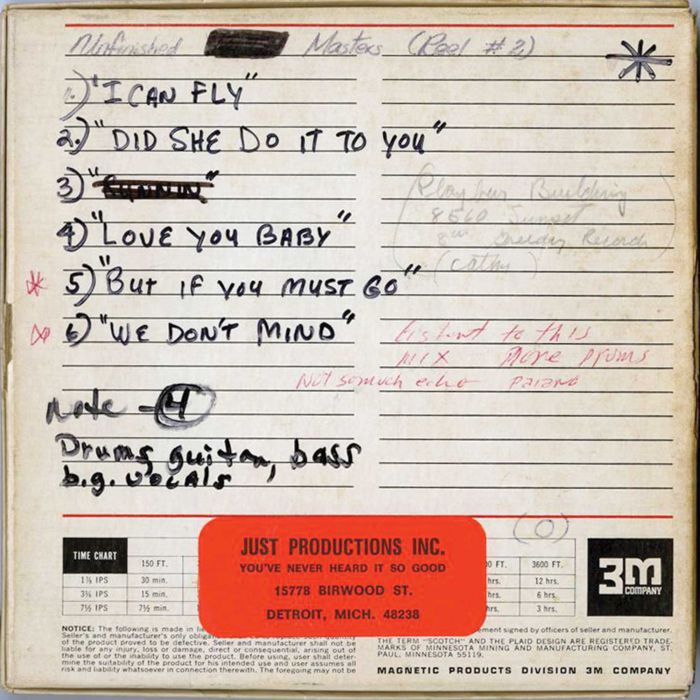
Both Jack Ashford and Shelley Haims worked at a number of Detroit’s smaller labels. This he did, using his latest production vehicle Just Productions. It was kept busy, with Jack Ashford produced singles at Awake, Buddha, Jay-Walking, Premium Stuff, Sepia 1, Sepia 2, Soul Disc, Soul Dimension and Triple B. This included for artists like Eddie Parker, Al Gardner, Billy Sha-Rae, Softouch, The Four Sonics, Lorraine Chandler and Sandra Richardson. They all feature on Jack Ashford-Just Productions Volume 2 which was recently released by Kent Soul, an imprint of Ace Records.
LA born Sandra Richardson started off singing gospel up unit 1971, when she crossed=over after meeting Jack Ashford. He became her manager, producer and cowrote songs Sandra Richardson. This included After You Give Your All which she wrote with George Rountree and Jack Ashford. He took charge of production on After You Give Your All which was recorded in 1974 but belatedly made its debut on a Kent Records Anniversary Special single in 2016. Its reminder af a truly talented souk singer Sandra Richardson who opens Just Productions Volume 2 on a high with After You Give Your All.
Softouch was founded in 1966, but never released a single until their new manager Larry Maxwell introduced them to Jack Ashford. He produced After You Give Your All (What Else Is There To Give) which was penned by Sandra Richardson, George Rountree and Jack Ashford and released on Prodigal in 1976. It’s memorable and melodic orchestrated track from Softouch and their finest hour.
Singer, songwriter, musician and producer Jack Ashford contributes two unreleased songs to the compilation. This include the beautiful heartfelt ballad Let Me Take Care Of Your Heart and the dance track This Ain’t Just Another Dance Song.
Cecil Norman Jr wrote the beautify needy ballad How Long Has It Been Since You Had A Love Affair which he recorded with producer Jack Ashford in 1975. Sadly, this hidden gem was never released and makes its debut on Jack Ashford-Just Productions Volume 2.
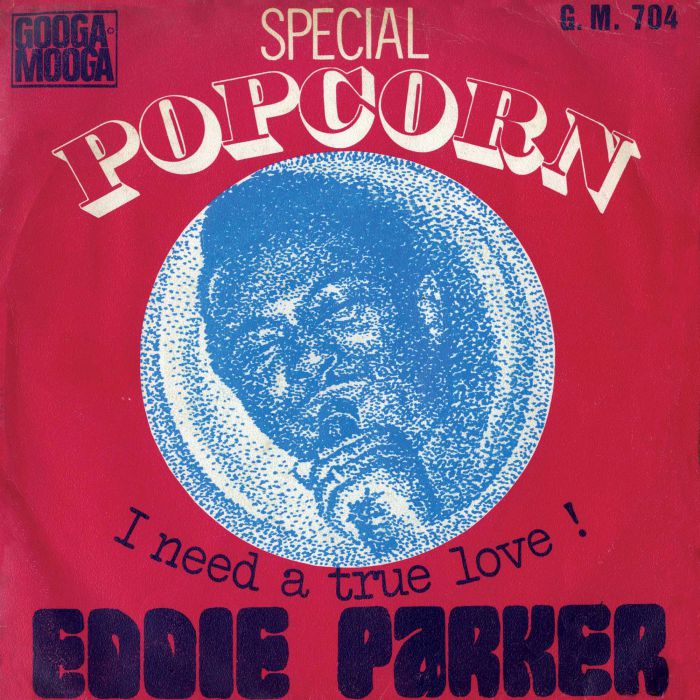
There’s three songs from Eddie Parker on Jack Ashford-Just Productions Volume 2, including the unreleased version of Crying Clown. It was originally the B-Side I’m Gone which was released on Aware in 1968. Crying Clown is a beautiful soul-baring ballad where Eddie Parker sounds like Sam Dees. The dancer I Need A True Lover was released as singe on Triple B on November 1969 and features a needy vocal. I Love You Baby was released on the producer’s Ashford label in 1970 and later became a favourite in the UK Northern Soul Scene.
Don’t Leave Me Baby was recorded by Lorraine Chandler for Just Productions of fifty years and made its debut on Jack Ashford-Just Productions Volume 2. It features a vocal that is needy, emotive and full of hurt.
Sandra Richardson released Stay Here With Me as a single on the Inter/Soul label in 1974. Tucked away on the B-Side was Don’t Let Me Down web was written by Lorraine Chandler, Jack Ashford, Juanita Weatherby. Don’t Let Me Down finds Sandra Richardson combining soul and gospel as she delivers a heartfelt and hopeful plea.
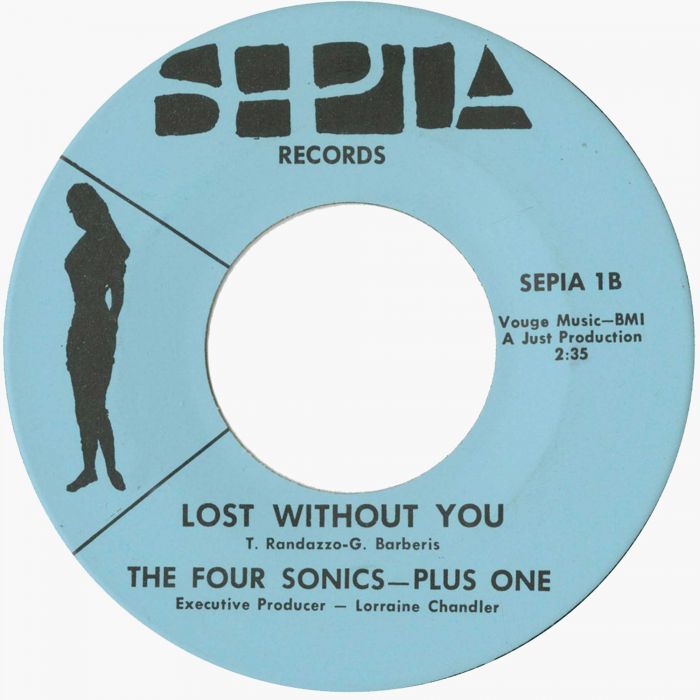
The Four Sonics were one of the first groups that Jack Ashford worked with when arrived in Detroit. By May 1968 The Four Sonics were signed to The Greatest Love, On the B-Side was Easier Said Than Done a string-drenched ballad that is a true hidden gem.
When Watch Yourself was recorded by Al Gardner, the baking track used was from Willie Hendrix’s Pied Piper sessions. This Jack Ashford and Mike Terry composition was originally recorded by Tony Hester, while Al Gardner draws inspiration from James Brown as funk and soup melt into one.
Alone Again was written by Brenda Cook, George Rountree and Jack Ashford who took charge of production in 1976. Forty-two years later Alone Again features on Jack Ashford-Just Productions Volume 2. It features a joyous, hopeful and soulful vocal from Brenda Cook.
Closing Jack Ashford-Just Productions Volume 2 is Bobby Womack’s I Found The One which was covered by Billy Sha-Rae in 1970. It was released as a single on Spectrum and finds Billy Sha-Rae giving thanks for the love he’s found.
Somewhat belatedly Jack Ashford is getting the recognition that he so richly deserves. This includes his work with Pied Piper Productions and Just Productions. In both cases, Jack Ashford worked with some of Detroit’s most talented musicians, arrangers, producers and songwriters, and was responsible for music that’s variously beautiful, dramatic, melodic and memorable. It’s also soulful, funky and dance-floor friendly.
That’s why many of the songs on Jack Ashford-Just Productions Volume 2 have found an audience within the UK’s Northern Soul scene. They’re favourites of DJs and are also appreciated by discerning connoisseurs of soul. They’ll welcome the release of Jack Ashford-Just Productions Volume 2 which looks back at the career of the multitalented Jack Ashford.
Jack Ashford-Just Productions Volume 2.


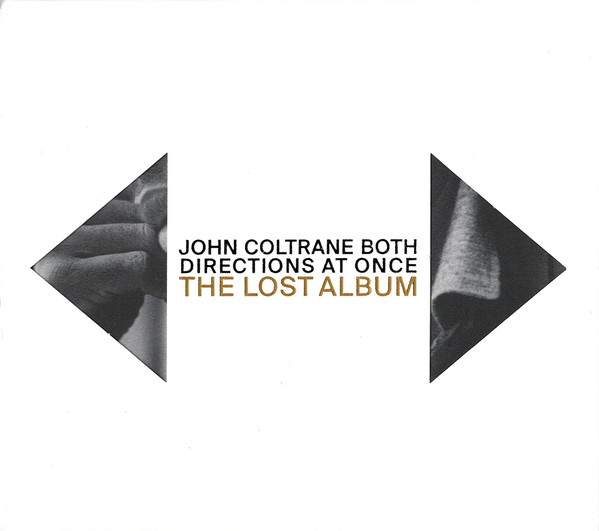
JOHN COLTRANE-BOTH DIRECTIONS AT ONCE: THE LOST ALBUM-VINYL.
John Coltrane-Both Directions At Once: The Lost Album-Vinyl.
Label: Impulse!
As John Coltrane and his classic quartet arrived at the Van Gelder studios in Englewood Cliffs, on the ‘6th’ of March 1963, the band were in good spirits having played a barnstorming set at Birdland the night before. It was one of the best sets that the quartet that had been together since 1962 had played, and this set them up nicely to record a new album with Rudy Van Gelder, which would be released by Impulse later in 1963.
When John Coltrane arrived at the studio, he unpacked his tenor and soprano saxophone, and watched drummer as Elvin Jones, double bassist Jimmy Garrison and pianist McCoy Tyner prepared for the session. The rest of the quartet featured experienced musicians and it was just another day at the office for the John Coltrane quartet. Soon, they were ready to roll and make some music.
Bandleader John Coltrane planned to record an entire album during the session, which was something he had done many times before, and so had the other members of the quartet.This time, John Coltrane planned to record an album that featured mostly his own compositions. He had written Slow Blues, One Up, One Down and Villa which was based on Franz Lehár’s Vilja Song from The Merry Widow. John Coltrane planned to revisit another of his compositions Impressions, and had decided to cover Nature Boy. However, John Coltrane knew from experience that anything could happen when he was recording an album.
Buoyed by their performance at Birdland the night before, John Coltrane and his quartet recorded a total of fourteen tracks at the Van Gelder studios. At the end of the session, Rudy Van Gelder made a separate copy of the quarter-inch reference tapes for John Coltrane to listen at home.
After John Coltrane had listened to the sessions, he gave the tape to his first wife Juanita Naima to look after. This was just as well in light of what happened.
Despite having recorded enough material for a new album, Impulse never released the album. For some reason, neither Bob Thiele who ran Impulse, nor Rudy Van Gelder lobbied for the release of the new John Coltrane album. This meant that the master tapes languished in the Impulse vaults. What happened to the tapes after this is unknown, and there’s several possibilities.
It may be that it was a case of human error, and the master-tape were misplaced, or that someone recorded over John Coltrane’s album. There’s even the possibility that when executives at Impulse decided to save on storage space, the tapes of the sessions on the ‘6th’ of March 1963 were thrown out or destroyed. A more likely explanation is that when Impulse’s parent label ABC-Paramount moved to Los Angeles that was when the tapes were lost somewhere between New York and LA. The other possibility is that when ABC-Paramount was purchased by MCA in 1979, that that is when the master-tapes were lost.
Sadly, by 1979 John Coltrane it was nearly twelve years since the legendary saxophonist had passed away on July the ’17th’ 1967. Sadly, nobody seemed to be lobbying for the release of the lost Impulse album. Not even Bob Thiele who left ABC-Paramount and founded his own label Flying Dutchman Records. It seemed that everyone had forgotten the album that the classic lineup of the John Coltrane quartet had recorded on the ‘6th’ of March 1963.
Meanwhile, the quarter-inch reference tapes that Rudy Van Gelder had made for John Coltrane was still in the possession of his first wife Juanita Naima. She looked after the tapes for forty-three years, until her death in 1996. After that, the tapes disappeared for another nine years.
Nothing more was heard of the tapes until 2005, when Guernsey’s auction house in New York announced that they planned to sell a selection of John Coltrane artefacts. This included the copy of the quarter-inch reference tapes that Rudy Van Gelder made of the session on ‘6th’ of March 1963, for John Coltrane to listen to at home. Although this wasn’t the original master tape, at last it would be possible to hear John Coltrane’s lost album.
It was no surprise to music industry insiders when the record company contacted Guernsey’s auction house to prevent the sale of the tapes, and then acquired them. This would allow them to release the tapes containing John Coltrane’s lost album.
Many within the music thought that it wouldn’t be long before the tapes were released in their entirety. Just like the rest of the story of John Coltrane’s lost album, there was a twist in the tale and it was thirteen long years before Impulse released Both Directions At Once: The Lost Album.
John Coltrane’s son Ravi Coltrane compiled Both Directions At Once: The Lost Album with studio executive Ken Druker. The sleeve notes were written by saxophonist Sonny Rollins who was a friend of John Coltrane. However, given the importance of Both Directions At Once: The Lost Album, two different versions of the album were released on LP and CD. There was the standard edition and the deluxe edition of Both Directions At Once: The Lost Album.
The deluxe edition of Both Directions At Once: The Lost Album was a double album, and the first featured the album that had been missing for fifty-five years. Seven bonus tracks featured on the second disc, including three takes of Impressions, two takes of Untitled Original 11386 and versions of Villa and One Up, One Down. Listening to Both Directions At Once: The Lost Album was like stepping back in time.
Indeed, when John Coltrane recorded Both Directions At Once: The Lost Album, the saxophonist was at a crossroads in his career. He felt constrained by traditional song structure, and was already contemplating moving in the direction of free jazz. This made sense as John Coltrane was a talented improviser who was keen to move beyond song shapes and chords and embrace a freer style of music. It was against this backdrop that John Coltrane recorded what eventually became Both Directions At Once: The Lost Album.
It opened with Untitled Original 11383 (Take 1) where John Coltrane plays soprano saxophone on the Latin-tinged minor key example of swinging modal jazz. John Coltrane then switches to tenor saxophone on the minor-key Nature Boy, which sometimes seems to hint at Summertime and It Was A Very Good Year as ‘Trane plays with power and passion. Meanwhile, the arrangement veers between dark and sombre before becoming melodic and joyous as it dances along. After this, the quartet lightens the mood on the Untitled Original 11386 (Take 1) which is like a Bossa Nova on steroids. Playing a starring role is ‘Trane’s saxophone which wails and squeals as he plays with speed and power as the quartet reach new heights. It gives way to the ballad Villa which is full of longing as pianist McCoy Tyner plays a melodic and memorable solo. So too is John Coltrane’s playing on Impressions (Take 3) as he plays with speed, fluidity, freedom and invention. In doing so, his band raise their game and match ‘Trane every step of the way.
It’s all change on Slow Blues which has a much more understated arrangement which allows John Coltrane’s to take centre-stage. he plays with control looking back at his past, rather than to the future when he embraced free jazz. Closing Both Directions At Once: The Lost Album is One Up, One Down (Take 1) which bursts into life and features triadic chords aplenty during this fearless, fluid and emotionally charged performance from the classic quartet who close this lost album on a high
For fifty-five years after the classic lineup of John Coltrane’s quartet recorded Both Directions At Once: The Lost Album, the album was belatedly released by Impulse. At long last, this revered lost album was available for all to hear. The big question was would Both Directions At Once: The Lost Album be as good as many critics and jazz fans had hoped?
It was and much more. Listening to Both Directions At Once: The Lost Album was like taking a step back in time to Van Gelder studios in Englewood Cliffs, on the ‘6th’ of March 1963. Suddenly, the listener is in the studio as the classic quartet plays as Rudy Van Gelder runs the session. Meanwhile, John Coltrane who is at a crossroads in his career combines elements of his past with his future as he and jazz music evolved.
John Coltrane continued with his classic quartet up until 1965, with the classic album A Love Supreme proving to be one of the their finest albums. Indeed, many critics regard A Love Supreme as John Coltrane masterpiece and a jazz classic. However, after releasing A Love Supreme, John Coltrane changed direction for the last two years of his life.
He moved towards a much looser, free jazz style from 1966s Ascension onwards. This included his avant-garde album Meditation which features Pharaoh Saunders, and is seen as John Coltrane’s spiritual followup to his Magnus Opus A Love Supreme. John Coltrane and his band continued to move in the direction of free jazz on the followup Live at the Village Vanguard Again! which was released in December 1966. The final album released during John Coltrane’s lifetime was Kulu Sé Mama which was released in January 1967 and was an album of free jazz recorded in 1965.
Sadly, John Coltrane passed away on July the ’17th’ 1967 aged just forty. That day, jazz music lost one of its greatest saxophonists who left behind a rich musical legacy including Both Directions At Once: The Lost Album, which was belatedly released after being missing for fifty-five years and is a reminder of one of jazz’s legends at his innovative best.
John Coltrane-Both Directions At Once: The Lost Album-Vinyl.

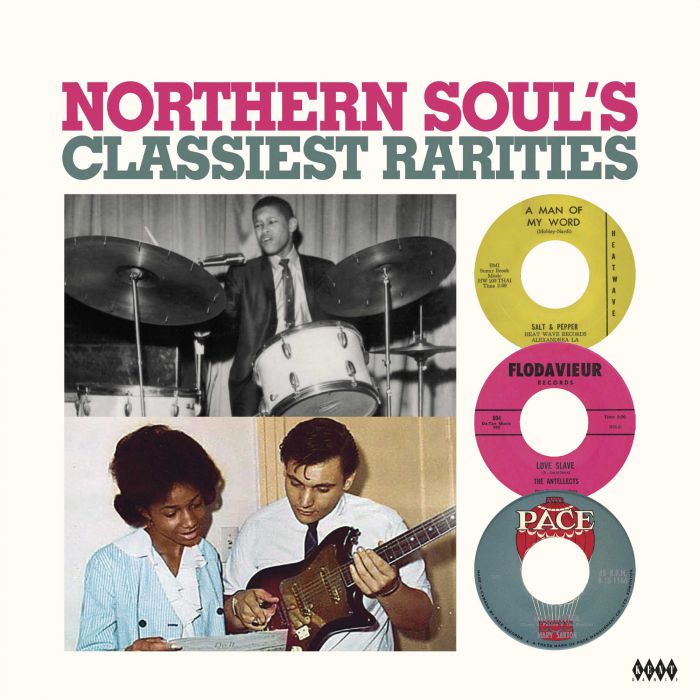
NORTHERN SOUL’S CLASSIEST RARITIES-VINYL
Northern Soul’s Classiest Rarities
Label: Kent Dance.
Nowadays, Northern Soul compilations are two-a-penny and hardly a week goes by and yet another compilation is released. That has been the case for the best part of twenty years and nothing has changed during 2018. It seems that Northern Soul is more popular than, ever and record buying pubic has an insatiable appetite for floaters and dancers.
The only problem is that many of the compilations are third-rate, and are just attempts to cash-in on Northern Soul’s popularity. That is the case whether it’s the cheap budget label releases or the budget breaking box sets.
Part of the problem is that many compilers rehash the same songs for a new compilation. Anyone who picks up a pile of Northern Soul compilations will soon realise that’s the case. That is why it’s a case of caveat emptor when buying a Northern Soul compilation. If you don’t, you risk disappointment.
My advice is: “don’t believe the hype.” Especially when they come baring the words “featuring songs played at the Wigan Casino or Blackpool Mecca.” These words seem to suggest that the compilations ooze quality. Alas, all too often, that is not the case.
Having been played at the Wigan Casino or Blackpool Mecca isn’t a guarantee of quality. Far from it. There’s several ways to separate the wheat from when the chaff, when it comes to Northern Soul compilations. Who compiled the compilation is hugely important. So, is the label that released the compilation. Some labels have established a reputation for releasing quality Northern Soul compilations. Others are just jumping on the bandwagon, looking to make a quick buck. They neither care about the music, nor the people that made it. However, labels like Ace Records do.
Through their Kent imprint, Ace Records have been releasing Northern Soul compilations for over twenty years. Their most recent Northern Soul compilation, was Northern Soul’s Classiest Rarities was recently released by their Kent Dance subsidiary. It has everything you could want in a Northern Soul compilation.
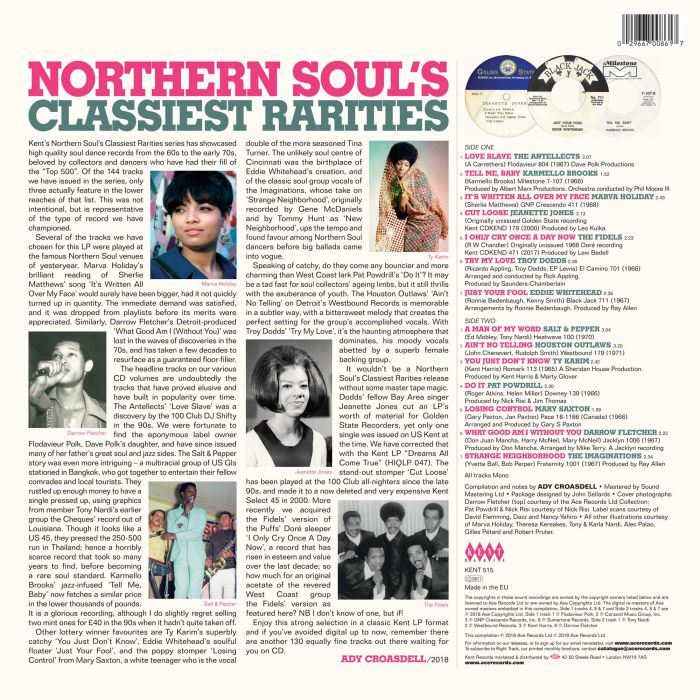
That’s not surprising as Northern Soul’s Classiest Rarities was compiled by veteran compiler Ady Croasdell. He’s a man steeped in Northern Soul with an almost encyclopaedic knowledge of all things soulful, Ady Croasdell combines classics and collectors items with future classics, hidden gems, obscurities and rarities. The result is Northern Soul’s Classiest Rarities, a welcome addition to this long-running series.
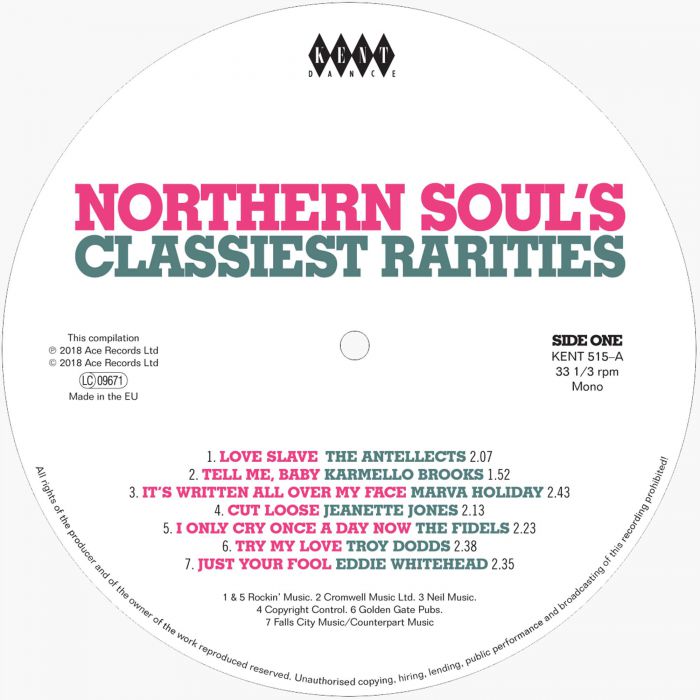
Side One.
In 1967, The Antellects released Love Slave as a single on the Flodavieur label. It’s a soulful dancer that was discovered in the nineties and has become a favourite of dancers and DJs,
A welcome addition to Northern Soul’s Classiest Rarities is Karmello Brooks’ 1966 single Tell Me, Baby. This jazz-tinged single was a released on the New York based Milestone Records and changes hands for several thousand pounds.
Sherrie Matthews wrote It’s Written All Over My Face, which Marva Holiday released on as single on GNP Crescendo in September 1968. Sadly, the single failed to find the audience it deserved, but nowadays is a cult classic.
Even today, Jeanette Jones is still one of soul music’s best kept secrets. She was signed to the Golden State label, where she recorded Cut Loose. It was eventually released in 2000 on the Golden State Soul compilation and features an emotive vocal powerhouse from Jeanette Jones who had the potential to enjoy a long and successful career.
Another unreleased track is I Only Cry Once A Day Now which The Fidels recorded in 1968 for Dore. It features a big production where strings and horns accompany a soul-baring vocal. Sadly, this hidden gem lay unreleased until Northern Soul’s Classiest Rarities Volume 6 was released in 2017.
Try My Love was released on the B-Side of Troy Dodds’ 1966 single The Real Thing which was released on the El Camino label. It’s a beautiful, hopeful song that surely deserved to fare better than a single?
Closing side one is Eddie Whitehead’s 1967 single Just Your Fool which was released on the Ohio-based Black Jack label. Although the single wasn’t a commercial success, this soulful floater later became a favourite on the Northern Soul scene.
Side Two.
Salt and Pepper were a multiracial group GI’s based in Bangkok who spent most of their time playing gigs for tourists, fellow GI’s and locals. Eventually, Salt and Pepper pooled their resources and recorded and released a A Man Of My Word as a single. It was pressed in Thailand, and the Heatwave label released between 250 and 500 copies of this rare soul hidden gem.
The Houston Outlaws released Ain’t No Telling on Westbound in May 1971. It’s an irresistibly catch dancefloor filler from The Houston Outlaws and maybe their finest hour?
Mississippi born TY Karim’s career began in the sixties and spanned three decades. In 1965, she released You Just Don’t Know on the Romark label. Sadly, this hook-laden single failed to find an audience but is now a favourite on the Northern Soul scene.
In 1966, Pat Powdrill released the Goffin-King composition I Can’t Hear You as a single on the Dowey label. Tucked away on the B-Side was the uptempo dancer Do It, which was designed to test the stamina of dancers.
When Mary Saxton released Is It Better To Live Or To Die on he Canadian label Pace, Gary S Paxton arranged and produced both sides of the single. This included Losing Control which Gary S Paxton wrote with Jan Saxton. It’s an underrated song, with Mary Saxton sounding like a young Tina Turner.
What Good Am I Without You was released by Darrow Fletcher as a single on the Jacklyn label in 1967. When the single was released, it sunk without trace. Two decades later and What Good Am I Without You was favourite of DJs and guaranteed to fill a dancefloor.
Closing Northern Soul’s Classiest Rarities Strange Neighbourhood which was released on the Fraternity label by The Imaginations in 1967. It’s another uptempo dancefloor filler that closes the
Just like previous instalments in the series, Northern Soul’s Most Classiest Rarities was compiled by veteran compiler Ady Croasdell. He’s a man steeped in Northern Soul, and has an almost encyclopaedic knowledge of all things soulful. Ady Croasdell’s knowledge of soul and specially Northern Soul has been put to good use when compiling Northern Soul’s Most Classiest Rarities.
While other compilers are happy to rehash the same tracks for the umpteenth time, Ady Croasdell knows that there’s still mountains of soulful delights awaiting discovery and that it’s just a case of discovering them. Like a musical man from Del Monte, Ady Croasdell goes in search of hidden gems for the Northern Soul’s Most Classiest Rarities series. Some of these make a welcome appearance on the lovingly curated Northern Soul’s Classiest Rarities, which latest instalment in Kent Dance’s long-running and successful series.
Northern Soul’s Classiest Rarities.

BALEARIC 4.
Balearic 4.
Label: Balearic.
During the nineties several small independent labels started to release lovingly curated compilations of downtempo or chill out music, which was popular in the Balearic Islands, and especially on the White Island, Ibiza. That was where many British and European DJs first saw chill out sets being played at places like Cafe Del Mar. These sets gave new meaning to the word eclectic,
The sets featured the unlikeliest of tracks which seamlessly became part of a musical tapestry that featured everything from ambient and electronica to folk, hip hop jazz and soul. They were joined by Balearic music, Eastern sounds and Middle Eastern beats that were part of a breathtaking and mind-blowing musical journey.This was enough to inspire the British DJs who watched on.
Soon, the British DJs were playing similar sets in chill out room as dancers came down and enjoyed the laid back mellow music. Before long, chill out music as many had started call the new music began to grow in popularity. Suddenly, the chill out room was the place to be as a musical revolution began.
At first it was smaller independent labels of released albums of chill out music, while similar compilations were billed as downtempo or Balearic music, These compilations started to grow in popularity, especially when new series like Cafe Del Mar were launched.
Before long the nascent chill out scene was a like a pan-European cottage industry as labels were formed and producers made new tracks with new compilations in mind. Some labels managed to licence tracks by folk and jazz artists that fitted the chill out bill. These compilations were proved popular and lucrative for the labels.
That was the case as chill out which was still in growing in popularity as the new millennia donned. By then, other labels raising there was money to made were ready to enter the market. Some were smaller independent labels who took a similar approach to the genre’s pioneers Other labels, including independents and majors saw pound signs and hastily compiled cash-ins were released. Soon, there was a deluge of chill out albums whose quality varied greatly and were best described as the good, the bad and the ugly.
Many record buyers who embraced the chill out scene in its early days started to turn their back on the music after the standard of music started to fall. Some record labels were churning out third-rate compilations with chill out in the title. Even sales of the blue chip chill out albums started to fall. Before long, sales of compilations of chill out downtempo and Balearic music were falling sharply, and the musical revolution was over.
It was far cry from when compilations of chill out downtempo and Balearic music were among the most popular in the overcrowded and competitive compilation market. Sadly, that was in the past. The times they were a changing.
Since them, sales of chill out downtempo and Balearic compilations have never reached the heady heghts of the noughties. That is despite many European labels releasing lovingly curated compilations of chill out, downtempo and Balearic music. This includes the Balearic label who have just Balearic 4 which features a dozen quality cuts.
Balearic 4 opens with Max Ease’s beautiful, dreamy and ruminative Gold Hush (Part Two), which gives to Emerson Kitamura’s lullaby styled cover of George McCrae’s soul classic Rock Your Baby. This is a remarkable and welcome transformation of a familiar song.
Simon Peter’s cinematic Ottimismo which paints pictures of a long hot summer in the Balearics. Fuga Ronto’s Rework of Kay Zee’s Barny has the potential to become a down modern day downtempo classic. It’s beautiful, joyous and sometimes dubby and the perfect accompaniment as the sets in the Balearics. So too is On-U Sound’s cosmic flamenco dub of Los Twangueros, which is the first of two exclusive tracks on Balearic 4.
Faze Action’s genre-melting remix of Private Agenda’s Dawn is another laid-back track that was part of the soundtrack to summer 2018 in the Balearics. So was Quinn Lamont Luke’s soulful, funky and jazz-tinged floor filler Different Aspirations. The quality continues on J-Walk’s carefully crafted hands in the air floor filler.
The tempo drops on Max Manetti’s Changuinola which hints that the Happy Mondays circa 1989 was an inspiration for the track. Breese’s remix of Robot 84’s San Vorera features Manuel Amoscotegui and finds Spanish guitars play a leading role in this joyous chill out track. Joe Morris’ Skies Reprise is best described as filmic chill out, while Fabrizio Mammarella Ambient Remix of Gallo’s Faron is a beautiful dreamy Balearic track and the perfect album closer.
Balearic 4, which was recently released by the Balearic label, is akin to musical treasure trove that features familiar tracks and hidden gems. The twelve tracks on Balearic 4 are reminder of another musical era which spanned early nineties and into the noughties. Back then, Balearic, chill out and downtempo music was hugely popular until bandwagon jumpers and hastily compiled cash-ins brought to an end what was the most laid-back and mellow musical revolution ever.
Just over a decade later, and Balearic, chill out and downtempo complains are still being released, although not in the same numbers. One of the best Balearic compilations of 2018 is Balearic 4 which is the perfect accompaniment to chasing rainbows, watching the sun set or making sleepy-eyed love as the dawn breaks.
Balearic 4.
DAVID AXELROD-SONGS OF EXPERIENCE-VINYL
David Axelrod-Songs Of Experience Vinyl.
Label: Now Again Records.
By 1968, composer, musicians and producer David Axelrod was just about to embark upon a solo career after nine years working in the music industry. Buoyed by the experimental climate of popular music, David Axelrod wrote and recorded what was akin to a suite-like tone poem that was based on Songs Of Innocence an illustrated collection of poems written in 1789 by William Blake. The poet had inspired many composers and musicians during the twentieth century.
Many composers had set his poems to music, and William Blake’s music had been used in theatre and inspired everyone from folk musicians to David Axelrod who was a self-confessed “Blake freak.”
In 1968, David Axelrod released his William Blake inspired debut album Songs Of Innocence, which sold just 75,000 copies. This was disappointing given that Songs Of Innocence was groundbreaking album.
Despite the disappointing sales of Songs Of Innocence, David Axelrod began to write the material for his sophomore album Songs of Experience which has just been reissued by Now Again Records. Songs of Experience was also inspired by William Blake’s poetry, but explored the darker side of humanity drew inspiration from composer Gunther Schuller’s Third Stream concept. David Axelrod’s sophomore album Songs of Experience was an ambitious and innovative album. He had come a long way from his days as a boxer.
Before embarking upon a career in music, David Axelrod had enjoyed what can only be described as a chequered career. He had started off as a boxer, before changing direction and finding work in film and television. However, in 1959 David Axelrod embarked upon a musical career when he produced Harold Land’s album The Fox. This launched David Axelrod’s nascent musical career.
Four years later, David Axelrod was hired by Capitol Records as a producer and A&R man. Initially, he worked with R&B artists, including Lou Rawls who was signed to Capitol Records. David Axelrod produced a string of hit singles for Lou Rawls, his Live album and several albums that were certified gold. David Axelrod was the man with the Midas Touch.
Soon, David Axelrod was working with jazz saxophonist Julian “Cannonball” Adderley, and produced his 1966 Grammy Award winning album Mercy, Mercy, Mercy! Live at “The Club.” The album also featured the hot single Mercy, Mercy, Mercy which reached number eleven in the US Billboard 100. By then, David Axelrod’s star was in the ascendancy at Capitol Records.
It was around this time, David Axelrod began working with some top session musicians including drummer Earl Palmer, bassist Carol Kaye and guitarist Howard Roberts. This band would play an important part in David Axelrod’s future.
David Axelrod wrote and arranged Mass in F Minor and Release of an Oath for the psychedelic rock band The Electric Prunes. The only problem was that both songs were complex pieces of music. Mass in F Minor consists of a mass sung in Latin and Greek and performed in a psychedelic style. However, there was a problem, it was too complex a piece for The Electric Prunes to record and it was recorded by David Axelrod’s band. This lead to The Electric Prunes disbanding and David Axelrod’s band completed the albums. Executives at Capitol Records were grateful that David Axelrod had rescued what was a particularly tricky situation, and wanted to reward him for his recent success. This resulted in David Axelrod being allowed to record his debut solo album Songs Of Innocence.
By them David Axelrod was watching trends in popular music and realised that there was a new breed of record buyer with much more sophisticated taste than the three chord pop of the early Beatles’ record. They were willing to embrace and buy much more experimental sounding albums, including two of the best known, The Beach Boys’ Pet Sounds and The Beatles’ Sgt Peppers Lonely Hearts Club Band. Both of these experimental had been hugely successful, and was proof to David Axelrod that there was a demand for this type of music.
Buoyed by the experimental climate of popular music David Axelrod decided to write and record his what was akin to a suite-like tone poem, which was based on Songs Of Innocence which was an illustrated collection of poems written in 1789 by William Blake. The poet had inspired many composers and musicians during the twentieth century. Many composers had set his poems to music, and William Blake’s music had been used in theatre and inspired everyone from folk musicians to David Axelrod who was a self-confessed “Blake freak.”
Over the space of a week, David Axelrod wrote seven compositions and borrowed titles from William Blake’s poems. The compositions death with a variety of themes, ranging from visions, religious iniquity, rite of passage and life experience after a person’s birth and innocence. After just a week, David Axelrod had completed Songs Of Innocence, which was his homage to William Blake. David Axelrod had been captivated by William Blake’s poetry since he was a teenager and seemed to relate to the poet. Neither William Blake nor David Axelrod were regarded as sociable men, and this could’ve hindered the producer’s career. However, he had a successful track record as he began recording Songs Of Innocence in 1968.
Songs Of Innocence.
Having written Songs Of Innocence in just one week, David Axelrod arranged the seven tracks which he intended to produce and add the vocals to. Now he was ready to record his debut album, and work was scheduled to start in mid-1968 at Capitol Studios, in Los Angeles.
David Axelrod decided to use many of the musicians that he worked with on a regular basis. This included drummer Earl Palmer, bassist Carol Kaye and guitarist Al Casey. They were joined by percussionist Gene Estes and organist and pianist Don Randi who would conduct the string and horn section that David Axelrod planned to use on Songs Of Innocence. They would allow David Axelrod to create his musical vision.
Songs Of Innocence was essentially an instrumental album of jazz-fusion, but incorporated elements of baroque pop, blues, classical music, funk, jazz, liturgical music, pop, psychedelia, R&B, rock and theatre music. During Songs Of Innocence, David Axelrod used contrast extensively during the orchestral compositions which was peppered with euphoric psychedelic soul and dramatic, sometimes, distressing arrangements to reflect the supernatural themes that are found within William Blake’s poems. So does the music’s almost reverential psychedelic undercurrent which brings to mind the themes of innocence and spirituality that is a feature William Blake’s poems which inspired David Axelrod to write such an ambitious album as Songs Of Innocence.
His arrangements on Songs Of Innocence accentuated the pounding drums played in 4/4 time, complex baselines, searing and gritty guitars, sweeping melodramatic and progressive strings, organ parts designed to disorientate and blazing, dramatic horns. David Axelrod who had written Songs Of Innocence in the rock idiom, but used a mixture of jazz, rock and classical musicians to record his debut album.
They were all comfortable when David Axelrod asked them to improvise during this psycheliturgical opus. David Axelrod had been influenced by György Ligeti’s 1961 piece Atmosphères, and Lukas Foss’ concept of starting a piece with a sustained chord and improvising for over 100 bars, and ending on a different chord. However, it wasn’t joust improvisation that David Axelrod embraced.
David Axelrod encouraged musicians to use various sound effects, including reverb and echo during the recording sessions. This included adding echo to breakbeats to reflect the spiritual nature of William Blake’s poetry. For much of the album, David Axelrod’s rock orchestra painted pictures with music which veered between spartan, dramatic and harrowing to liturgical, ruminative and celebratory. As the music changed, so did the rock orchestra.
Seamlessly David Axelrod’s rock orchestra changed direction and were transformed into a vampish big band. Other times, they played bluesy bop or locked into a jazzy groove and on occasions started to swing.
Meanwhile, producer David Axelrod was constantly encouraging his band to experiment, and not be afraid to improvise. Towards the end of recording sessions, David Axelrod’s rock orchestra had fully
embraced psychedelia deploying organ licks that seemed to be designed to disorientate and gritty guitars. Then as The Mental Traveler was recorded, David Axelrod was keen to embrace and experiment with atonality. However, he felt that music that lacks a tonal centre of key was a step too far even on such an ambitions and innovative album as Songs Of Innocence.
When David Axelrod completed recording his suite-like tone poem, everyone who had worked on the concept album realised that it was an impressive, innovative and immersive album, that was ambitious, cerebral. However, the big question was what would the critics who make of Songs Of Innocence?
Not only was Songs Of Innocence David Axelrod’s debut album, but it was ambitious concept album inspired by William Blake’s poetry. This was too much for many critics, and the album regarded as something of a curio when it was released in October 1968 by Capitol Records. Many critics failed to understand what was essentially a mixture of genre-melting music, mysticism and philosophy that was cerebral, creative and showed just how much music had changed over the last few years. David Axelrod’s suite-like tone poem Songs Of Innocence, was a long way from Love Me Do in 1962. Music was changing, and record buyers were embracing much more experimental and sophisticated music. This augured well for the release of Songs Of Innocence.
Sadly, when Songs Of Innocence was released in October 1968, the album wasn’t the commercial success that David Axelrod or executives at Capitol Records had hoped. By October 1969, Songs Of Innocence had only sold 75,000 copies in America.
Despite the disappointing sales of Songs Of Innocence, David Axelrod began working on his sophomore album Songs of Experience.
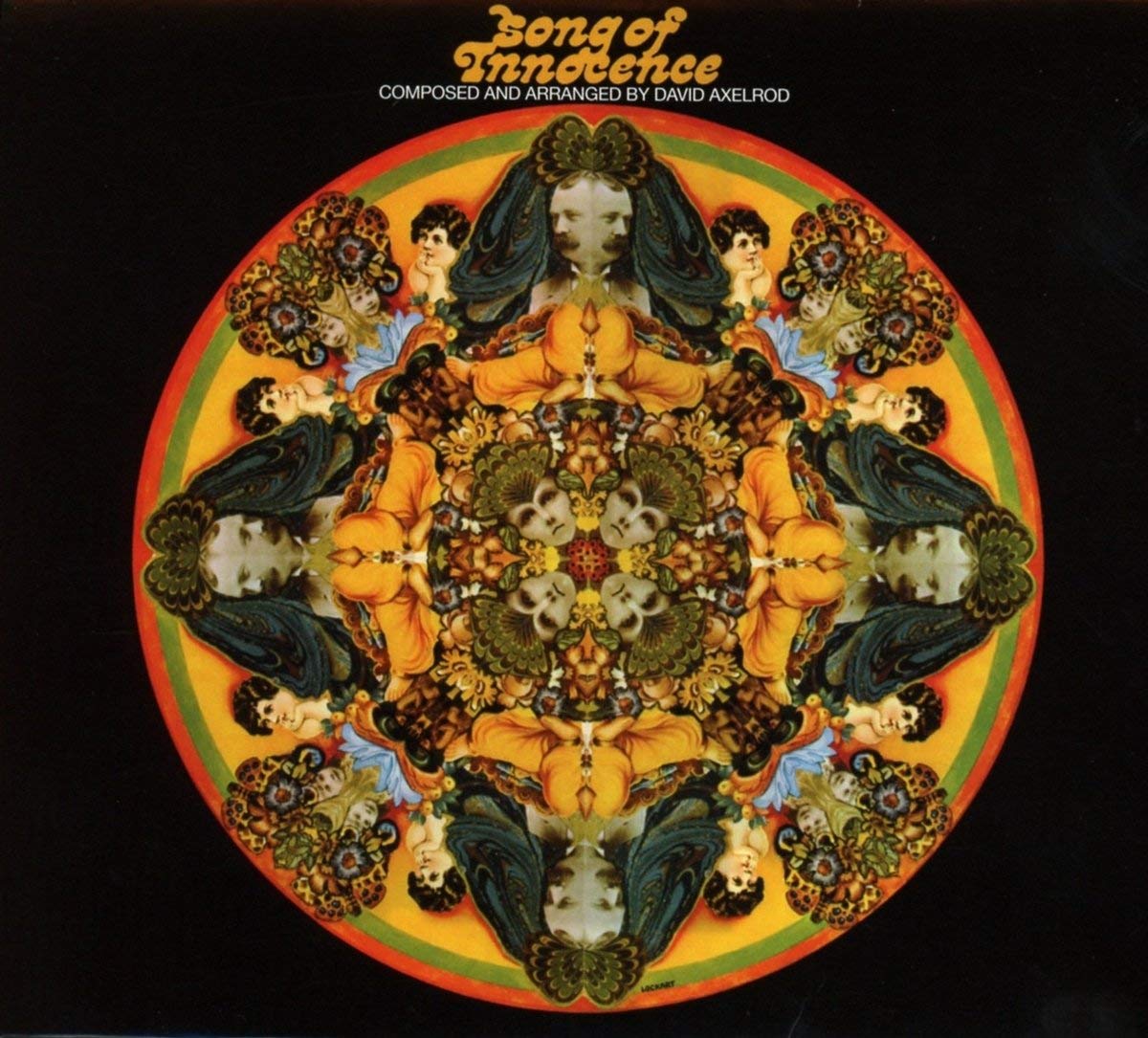
Songs Of Experience.
For his sophomore album David Axelrod returned to the work of poet William Blake for inspiration, and especially his collection Songs Of Experience which was published in 1794. David Axelrod the self-confessed “Blake freak” chose eight poems from Songs of Experience which lent it name to his sophomore album.
William Blake was David Axelrod’s major influence, as explored the darker side of humanity on Songs Of Experience. The composer had been captivated by William Blake’s concept of birth and innocence, as he explored the theme of life experience, rite of passage and the changes of perspective in life during the writing and recording Songs Of Innocence. However, when David Axelrod wrote Songs Of Experience, he focused on William Blake’s concept: “of awareness after birth.” This wasn’t David Axelrod’s only source of inspiration for Songs Of Experience.
Another source of inspiration for David Axelrod during the writing ad recording of Songs Of Experience was composer Gunther Schuller’s Third Stream concept. This was part of what was another ambitious album that David Axelrod planned to record.
To record Songs Of Experience, David Axelrod brought onboard many of the musicians that recorded Songs Of Innocence. However, it took over thirty musicians to record what David Axelrod knew was a groundbreaking, genre-melting album.
David Axelrod’s sophomore album Songs Of Experience, was essentially a fusion album, but incorporated elements of European classical music, British and Irish folk music, percussive sounds and baroque arrangements. Meanwhile, the melodies and rhythms on Songs Of Experience ranged from pop, R&B and rock. However, this time, this time, the suite on Songs Of Experience which relied less on rock influences, and was much more symphonic. While this was a stylistic departure, for David Axelrod, Songs Of Experience was another major work that had the potential to enhance his reputation.
That was no surprise given Songs Of Experience’s the compositions to the eight genre-melting track were so different, and featured lush arrangements that were dramatic and rich in imagery. David Axelrod was bringing William Blake’s music to life by using his entire musical palette to paint pictures and allow him to explore much darker and ruminative sounds on Songs Of Experience. It was an album that should’ve captured the imagination of critics.
Sadly, when Songs Of Experience was released by Capitol in 1969, very few critics realised the importance of what was a truly groundbreaking and innovative album. To rub salt into the wound, Songs Of Experience sold less that the 75,000 copies that Songs Of Innocence sold. David Axelrod decision to create ambitious and innovative music wasn’t rewarded.
It wasn’t until much later that critics realised the significance of Songs Of Experience, which was hailed as an important, innovative and inspirational album. By then, Songs Of Experience was a favourite source of samples for hip hop producers. However, it was just a coterie of appreciative record buyers who had embraced and flew the flag for what was David Axelrod’s William Blake inspired cult classic Songs Of Experience which broke new ground and somewhat belatedly, became part of musical history.
David Axelrod-Songs Of Experience Vinyl.
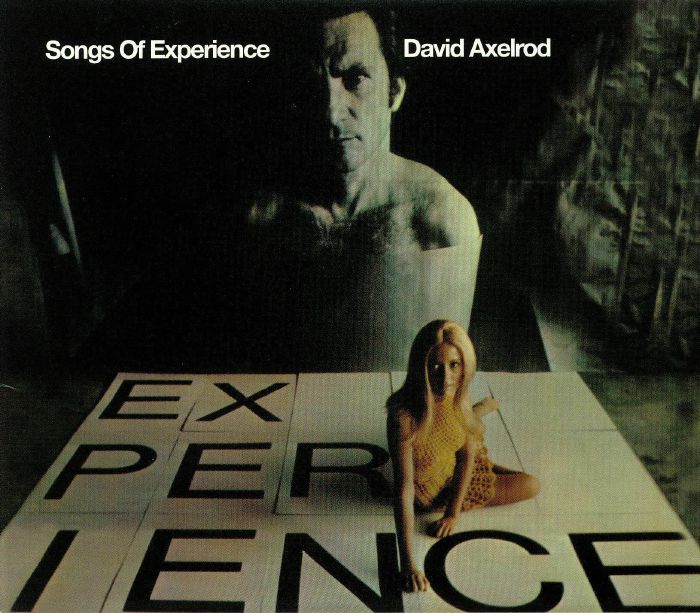
ARVE HENRIKSEN-THE HEIGHT OF THE REEDS.
Arve Henriksen-The Height Of The Reeds.
Label: Rune Grammofon.
Originally, The Height Of The Reeds’ project was commissioned by the city of Hull, to celebrate the city being chosen as Britain´s cultural capital in 2017. This was only port of the story behind The Height Of The Reeds.
It’s a culturally important commission that celebrates the longstanding seafaring relationship between Hull and Scandinavia. This has been the case for centuries, with ships transporting cargo and passengers across the North Sea. It’s a familiar journey for many who week-in week-out travel that route and will relate to The Height Of The Reeds.
Arve Henriksen, Eivind Aarset, Jan Bang and Jez Riley French wrote The Height Of The Reeds which was an important celebration of the link between Hull and Scandinavia. The Height Of The Reeds was also a companion to a sound walk that was scheduled to take place in April, 2017 in what Britain´s cultural capital in 2017.
The sound walk took the people of Hull and visitors to the city across the Humber Bridge, where they saw the spectacular sights of Humberside and beyond. Those who took part in the sound walk were able to listen to The Height Of The Reeds on headphones as they crossed the Humber Bridge. This sound walk was soon proving so popular that the organisers were forced to rethink their plans.
Originally, the sound walk was meant to only take place during the month of April, but given the demand for tickets it was extended into May 2017. Still, people wanted to cross the Humber Bridge listen to The Height Of The Reeds on headphones and another series of walks were scheduled.
They took place during August 2017 and by the end of the month, the event was sellout with 15,000 tickets being sold. The sound walk had been a major success and it was no surprise when it was decided to release The Height Of The Reeds.
At the end of August 2018, Rune Grammofon released Arve Henriksen’s recording of The Height Of The Reeds on CD and LP. It’s essentially the same recording that the walkers heard on their sound walk. There’s only a few minor adjustments which allow the album to make a seamless transition from sound walk to album.
For the recording of The Height Of The Reeds,Arve Henriksen was joined by the Chorus and Orchestra Of Opera North, joins with guitarist Eivind Aarset. electronics artist Jan Bang, and Hull sound artist Jez Riley French who provided field recordings from the bridge itself.
This ranged firm the sound of ye Humber River, engine noise, the creaking steel wires, wheels as they drive along the asphalt and the song of the reeds in the wind. They play their part in what’s a powerful and evocative album.
That is the case from the opening bars of the ethereal and spiritual Come April right through to he filmic, dramatic and broody Reefs And Roots where the sound of the wind buffeting the Humber Bridge can be heard.
Otherworldly, ethereal, cinematic, beautiful and broody describes The Swans Bend Their Necks Backward To See God. It’s a slow, carefully crafted soundscape which features Arve Henrikse’s rasping trumpet, field recordings and Opera North.
Height Of The Reeds In The Wetlands is a beautiful evocative track where Arve Henriksen and company paints pictures rich in imagery on one of the album’s highlights. So is the wistful, elegiac and liturgical Is There A Limit For The Internal? It’s a beautiful ruminative track that encourages reflection.
Ethereal, cinematic and rich in imagery with a liturgical sound describes the beautiful Nymphs And Eurasian Horses. Waders then combines pizzicato strings and Arve Henriksen’s braying trumpet create an evocative but rueful sound. The Wind In The Willows in hypnotic, haunting and bewitching, before the moody, eerie and thought-provoking Pink Cherry Trees closes The Height Of The Reeds.
It started life as the accompaniment to a space walk across the Humber Bridge when Hull Britain´s cultural capital in 2017. The 15,000 walkers heard Arve Henriksen’s genre-melting album The Height Of The Reeds which features elements of avant-garde, classical, electronic, experimental, improv, jazz and Nordic Wave. They’re combined by Arve Henriksen’s multitalented cast, who are responsible for a cinematic widescreen opus,
Arve Henriksen-The Height Of The Reeds. The Height Of The Reeds.
MOSKUS-MIRAKLER.
Moskus-Mirakler.
Label|: Hubro Music.
The Moskus story began at the prestigious Trondheim Conservatory of Music, in Norway, in 2011. That was when bassist Fredrik Luhr Dietrichson first met drummer Hans Hulbækmo and pianist Anja Lauvdal and decided to form a new group which they called Moskus. Little did they realise at that first meeting, that Moskus would become the most innovative groups of their generation.
Seven years later, and Moskus have just released their fourth album Mirakler on Hubro Music. Mirakler is the latest ambitious and groundbreaking genre-melting album from Moskus. They’ve come a long way since that first meeting at the Trondheim Conservatory of Music,
Salmesykkel.
As 2012 dawned the three members of Atlantis Grammofon Studio, Stockholm, to record their debut album Salmesykkel. Between the ‘3rd’ and ‘5th’ of January 2012
Moskus recorded ten tracks with producer Andreas Meland. When the recording was complete, Salmesykkel was mixed at Redroom Studio, Trondheim April between the ‘19th’ and ’21st’ April 2012, Salmesykkel was mastered at Audio Virus Lab, during May 2012. Now Moskus was ready to release their debut album.
Later in 2012, pioneering jazz trio, Moskus, released their debut album, Salmesykkel on Hubro Music. It was released to widespread critical acclaim, and hailed as a groundbreaking debut. And so it proved to be.
When the shortlist for the Norwegian music Spellemannspris were announced in 2013, Moskus had been nominated twice for the Norwegian equivalent of a Grammy Award. Moskus were nominated in two categories, the highly prized best jazz album and best new act. For the three members of Moskus, this was the perfect start to their recording career. Since then, Moskus have been winning friends and influencing people throughout Europe and North America.
Just like several generations of bands, Moskus embarked on a gruelling touring schedule and at first, played ed clubs and some of the Norway’s biggest festivals. After that, Moskus headed much further afield.
By 2014, much of Europe had been introduced to Moskus’ unique and groundbreaking brand of Nordic jazz. Everywhere from Britain, Germany, Poland and Portugal, have been won over by Moskus’ music. By then, audiences had realised that Moskus were the future of jazz.
Having conquered Europe with their music, Moskus headed to North America. Canada was just the latest country to embrace Moskus’ music. Their gruelling touring scheduled had paid off.
Mestertyven.
By the summer of 2013, Moskus’ reputation had spread far beyond Norway and they were perceived as one of the most exciting and pioneering jazz groups in Europe. This was the perfect time for to Moskus complete their sophomore album Mestertyven.
For their debut album Salmesykke, Moskus had recorded the album at Stockholm’s famous Atlantis Grammofon Studio. When the time came to record their sophomore album, Moskus decided to try a new approach to recording.
Gone was the venerable surroundings of Atlantis Grammofon Studio. Its replacements was the Risør Church which became a de facto recording studio in March 2013, and five months later when the album was completed in August 2013. The only problem with the Risør Church was that it have same standard of equipment.
One of Atlantis Grammofon Studio’s most important pieces of equipment is the grand piano. Moskus used on their debut album Salmesykkel. Its unmistakable sound played an important part in the sound and success of Salmesykkel. However, their makeshift studio didn’t come complete with a grand piano. Moskus found themselves swapping a grand piano for an upright piano which became part of the new sound they showcased on Mestertyven.
Whereas the music on Moskus’ debut album Salmesykkel was well rehearsed, the music on Mestertyven was new and untried. Moskus hadn’t spent ages honing and tightening the tracks. This was deliberate.
As the sessions began, Moskus pressed record. Every single idea was recorded. This made sense. There was no chance that a moment of genius would be missed. Songs were recorded from their genesis to fruition. Songs evolved on the tapes. Eventually, Moskus were left with a pile of tapes. What they had to do was then sift through the tapes. Gradually, eleven songs took shape. Some ideas and experiments were kept, others discarded. The result was Mestertyven, Moskus’ much-anticipated sophomore album.
When Mestertyven was released in May 2014, it was to the same critical acclaim as their debut album. Critics used words like unique, melodic, playful and intimate. However, Mestertyven was also dramatic, ethereal, wistful and innovative. Mestertyven featured a group who were determined to continually reinvent their music, and push musical boundaries. They continue to do so, on their third album Ulv Ulv.
Ulv Ulv.
Following the release of Mestertyven, Moskus have continued their hectic touring schedule and toured North America and Europe. Then in late 2014, Moskus got the opportunity to tour Japan. The only problem was, on their return, Moskus would begin work on their third album Ulv Ulv.
Despite this, Moskus headed to Japan in late 2014, and during the tour, Moskus enjoyed the opportunity to and improvise and play with an inventiveness and freedom. Japanese audiences were able to experience Moskus at their innovative best. Once the tour was over, Moskus returned home and began work on Ulv Ulv.
For their third album Ulv Ulv, Moskus had written eight new tracks. They would also write Den Store Skjønnheten and Borre Borre Gulleple, Slå Vekk with fiddler Nils Økland. He joined Moskus at the Haugesund Billedgalleri.
This to outsiders seemed a strange place to record an album. However, Moskus had played a concert at Haugesund Billedgalleri, and liked the acoustics.An aded bonus for Moskus pianist Anja Lauvdal was that the Haugesund Billedgalleri boasted a vintage Steinway.
Between the ‘2nd’ and ‘4th’ of January 2015, the Haugesund Billedgalleri, in Haugesund was converted into a makeshift studio as Moskus and Andreas Risanger Meland co-produced the album. After three days, Ulv Ulv was completed on 4th January 2015. This left Ulv Ulv to be mixed and mastered by Audun Strype, at his Strype Audio, in the autumn 2015. Once this was complete, Moskus’ thoughts turned to the release of their third album, Ulv Ulv.
Just over six months later, and Moskus’ much anticipated third album Ulv Ulv was released and features the jazz pioneers at their innovative best, as they play with a freedom, inventiveness and intuitiveness that most groups can only dream of.
Moskus continue to push musical boundaries to their limits, and beyond on Ulv Ulv as they combine elements of avant-garde, experimental, free jazz, improv and industrial music. There’s also the influence of Ornette Coleman, Charles Mingus, Albert Ayler and Sun Ra on an album that’s variously atmospheric, beautiful, cinematic, dark, dramatic, elegiac, ethereal, haunting, hypnotic, melodic, mesmeric, otherworldly and ruminative. Ulv Ulv the finest of Moskus’ career, and it wasn’t going to be an easy album to follow.
Mirakler.
Buoyed by the success and critical response to their third album Ulv Ulv, Moskus were keen to return to the studio to record the followup. This time, they headed to Studio Paradiso where they planned to spend four days recording between the ‘13th’ and ‘16th’ of October 2016.
By then, Moskus had written nine new tracks and drummer Hans Hulbækmo had written Irsk Setter, Voyager, Min Venns Skaperverk and (“,). When they arrived at the studio, Moskus brought with then ne an eclectic selection of instruments. Drummer and percussionist Hans Hulbækmo played vibes, recorder, electric organ, Casio MT-65 keyboards and saw, while Fredrik Luhr Dietrichson played double bass. Anja Lauvdal switched between a grand and upright piano, MS10 and Yamaha DX100 synths and Hammond Organ during the four day session,.
Recording of the thirteen tracks continued on the ‘20th’ and ‘21st’ February 2017, and Moskus fourth album was almost complete. It was after a day spent at Øveriet on December the ‘14th’ 2017,
Kyrre Laastad who had recorded Mirakler mixed the album and Helge Sten mastered it at Audio Virus Lab, Oslo. Now Mirakler was ready for release.
In late summer of 2018, Moskus released their much-anticipated fourth album Mirakler. Unlike many jazz trios who spend too much time fretting over compositional or musical technique and the purity of the sound they produced Moskus concentrated on creating innovative music.
To do that, the three members of Moskus continued to improvise like they had on Ulv Ulv. This time, they focused on concepts and ideas rather than themes or tunes, and this allowed Moskus to change direction quickly and seamlessly. That was the case on the ruminative and liturgical album opener Anslag, where Anja Lauvdal’s organ takes centre-stage before the rest of Moskus enter and improvise.
It’s all change on the jazz folk Irsk Setter as Anja Lauvdal’s plays a leading role as Moskus seamlessly switch from improvising to a much more formal approach. It’s a similar case on Sang Til C where the piano is augmented by the occasional gasp of an asthmatic harmonium, as the jazz-tinged rhythm section accompany the piano an a captivating soundscape.
Meanwhile, Eventyrdagene has an understated and minimalist, while Moskus deploy an interesting mix of instruments on Voyager. Vibes and pop synths to create what sounds like a fusion of sci-fi sounds and European library music. Ludvig XIV is otherworldly, as jazz and folk combine and Moskus improvise, and later draw inspiration from soundtracks that bring to mind the swinging sixtes.
Moskus march to the beat of Hans Hulbækmo on the mournful Bolero Blues. It gives way to a brief bust of the minimalist Haiku and then the sprightly Spurte Hva Det Var. One of the highlights of Mirakler is the short sketch Min Venns Skaperverk where Moskus are in the groove and flowing as their past and present collide. It’s a similar case on Jailhouse Art Music, while a Yamaha piano and eerie saw prove to be a potent and cinematic combination. However, Moskus save the best until last on the laid-back, jazz-tinged and spiritual sounding En Natt.
It was never going to be easy for Moskus to followup Ulv Ulv, but Mirakler is the perfect way to do so. It finds Moskus at their inventive and innovative best as they improvise, but also focus on themes and tunes. In doing so, the two sides of Moskus emerge on Mirakler which was recently released by Hubro Music.
Many of the tracks on Mirakler are short sketches, and offer the opportunity for invention, and it’s unlikely that Moskus would ever play them the same way twice. In a way,the soundscapes are in a state of flux and Mirakler is a snapshot in time of Moskus.
Moskus’ fourth album Mirakler is a captivating fusion of avant-garde, electronica, experimental, free jazz and improv that references to Krafwerk, Sun Ra and Vangelis. Mirakler is also another ambitious and innovative album from pioneering jazz trio Moskus have fun as they continue their mission to push musical boundaries to their limits in search of sonic nirvana.
Moskus-Mirakler.

STEVE TIBBETTS-THE ECM RECORDS YEARS.
Steve Tibbetts-The ECM Records Years.
Ever since Minnesota born composer and guitarist Steve Tibbetts signed to ECM Records in 1981, the pioneer of sound-forming has only released nine albums for Manfred Eicher’s Munich-based label. These albums document the career of a musical innovator who was introduced to music at an early age.
Steve Tibbetts was born in Madison, Wisconsin, in 1954, and growing up, was introduced to the music of the Kingston Trio, Pete Seeger and Johnny Winter by his father, who worked at the University of Wisconsin School for Workers and also taught labour law around the state. Sometimes, Steve Tibbetts’ father invited anything up to twenty union workers and organisers to the family home, where they would eat, and later, would enjoy an impromptu jam session. Initially, Steve Tibbetts would watch as his father and his friends played an assortment of instruments, including autoharps, banjos, flutes, guitars, psalteries and recorders. Before long, Steve Tibbetts found the confidence to standup and take part in the musical evenings, which were good practise for the future.
By 1975, Steve Tibbetts was a student at Macalester College, and spent much of his time listening to music with friends in his dorm. Days were whiled away smoking and listening to everything from John Coltrane and Pharaoh Sanders, to Mountain, and sometimes, Paul McCartney and Todd Rundgren. When Steve Tibbetts heard an album that was recorded solely by Todd Rundgren, he believed that he could record a similar type of album. Usually, that would’ve been easier said than done.
Fortunately, Steve Tibbetts was offered a work-study placement at Macalester College’s recording studio, and this allowed him to learn how a studio operated. It was akin to a musical apprenticeship and would prove invaluable as Steve Tibbetts learnt how to operate the equipment, splice and join tape and between 1975 and 1976 record his debut album. By then, the recording studio had become a second home for Steve Tibbetts, and although latterly, he was no longer officially a student, he completed his eponymous debut album in Macalester College’s recording studio.
Steve Tibbetts.
Having completed his eponymous debut album, Steve Tibbetts was released in 1977 on the Cuneiform label. By then, one of the tracks on Steve Tibbetts, Jungle Rhythm, was being used by the ice hockey team the Bay Area Bombers. There was even a rumour that Clive Davis at Arista was interested in signing Steve Tibbetts, and he spent the best part of two weeks waiting for the phone to ring. Despite that disappointment, Steve Tibbetts sold enough copies of his debut album that he was able to but an eight-track tape recorder and set up his own recording studio.

Yr.
In his new recording studio, Steve Tibbetts recorded his sophomore album Yr on his new eight-track tape recorder, and once the album was completed, he began shopping the album to record labels. This proved a thankless task, as Steve Tibbetts the rejection letters dropped through his letterbox. Eventually, they numbered 200, and it wasn’t until 1980 that Frammis released Yr, which was heard by one of the most influential men in European jazz and experimental music.
This was Manfred Eicher, the founder of the Munich-based label ECM Records, who spotted Steve Tibbetts’ potential and signed him in 1981. Since then, ECM Records has been home to Steve Tibbetts, who continued to pioneer sound-forming on his major label debut.
Already, Steve Tibbetts had realised that it was possible to use the recording studio itself as a tool for creating sounds, and this was something that he would pioneer during his career. However, having signed to ECM Records in 1981, he was soon in the studio with Manfred Eicher, who took charge of production.
Northern Song.
Previously, Steve Tibbetts had spent a great deal of time recording his first two albums, but that wasn’t the way that ECM Records’ founder and in-house producer worked. He was used to working quickly, and recording albums over a two or three days. This way of recording worked for most of the artists signed to ECM Records and the label had released many critically acclaimed albums. However, when Steve Tibbetts’ third album and ECM Records’ debut Northern Song was released in 1982, the reviews of what was an adventurous, ambitious and thoughtful album were scathing and critics were far from impressed by the album. For Steve Tibbetts and Manfred Eicher who produced Northern Song, this was a huge blow.
Safe Journey.
Two years later, in 1984, multi-instrumentalist Steve Tibbetts returned with his fourth album Safe Journey. By then, he had returned to his tried and tested way of recording an album, and had spent months recording Safe Journey, which was released to critical acclaim and was the most eclectic album of his career. It featured elements of folk, jazz, modern classical, psychedelia, rock and world music which were combined to create an ambitious and innovative album. Safe Journey was the album that launched Steve Tibbetts’ career at ECM Records.
Exploded View.
When Steve Tibbetts recorded his fifth album Exploded View, he was once again joined by percussionist Marc Anderson, who had played on every album since Northern Song. Marc Anderson’s percussion played an important role in the sound and success of Exploded View, which was released in 1986, and was another eclectic and melodic album, which has been inspired by African, Indian and Moroccan rhythms, and to some extent, the psychedelic and progressive music of the late-sixties and seventies. However, stealing the show was Steve Tibbetts delivers a series of explosive and inventive performances on guitar during this carefully crafted album of soundscapes. It was released to critical acclaim and further enhanced Steve Tibbetts’ reputation.
So did the reissue of Steve Tibbetts’ ECM Records’ debut Northern Song in 1988, which resulted in the album being reappraised by critics. Not for the first time, critics rewrote history, after realising that Northern Song was an ambitious and groundbreaking release that showcased a pioneering musician as he embarked upon his career. Seven years later, and Steve Tibbetts was about to release his sixth album, and fourth for ECM Records, Big Map Idea.
Big Map Idea.
Despite his star being in the ascendancy, Steve Tibbetts seemed in no hurry to release a new album, and his sixth album Big Map Idea wasn’t released until 1989. It was worth the wait and featured a myriad of exotic and ethnic instruments that play their part in an intriguing, mysterious and to some extent, mystical album that is full of twists and turns, as the music on Big Map Idea ebbs and flows, and gradually reveals its secrets. Critics hailed the album as a welcome addition to Steve Tibbetts’ burgeoning discography
The Fall Of Us All .
The next addition to Steve Tibbetts’ discography was The Fall Of Us All, which was released in 1994, five years after Big Map Idea. By then, Steve Tibbetts continued to explore and pioneer sound forming and used the recording studio as an instrument as he continued to create ambitious and innovative music.
Proof of that was The Fall Of Us All, which was another eclectic album that veered between explosive, urgent, uplifting and spiritual as Steve Tibbetts fused elements of Arabian music, art-pop, Eastern sounds, modal jazz, psychedelia, rock and even rock ’n’ roll. The Fall Of Us All was released to widespread critical acclaim and hailed as one of Steve Tibbetts’ finest hours.
Following the success of The Fall Of Us, Steve Tibbetts wasn’t tempted to rush release a new solo album and decided to spend the next few years collaborating with other artists. This included recording a new album with Nepalese Buddhist nun Ani Choying Drolma. In 1997, Steve Tibbetts and Ani Choying Drolma they released their first collaboration Chö, which was well received by critics.
After completing Chö, Steve Tibbetts began recording a new album with Norwegian Hardanger fiddle player, Knut Hamre. Eventually, Steve Tibbetts and Knut Hamre completed the album Å, which was released to plaudits and praise in 1999.
A Man About A Horse.
Eight years after the release of his last solo album Steve Tibbetts returned with A Man About A Horse, which was his sixth release for ECM Records and his eighth solo album. A Man About A Horse was another album with an Eastern influence, and finds Steve Tibbetts eschewing Western scales as the he carves fluid, jagged, rocky and experimental soundscapes. Joining Steve Tibbetts on what was another groundbreaking offering, were percussionists Marc Anderson and Marcus Wise, who play a part in the sound and success of A Man About A Horse. It seemed that Steve Tibbetts’ music was maturing like a fine wine.
Two years after releasing his eighth solo album, Steve Tibbetts and Nepalese Buddhist nun Ani Choying Drolma returned in 2004 with their sophomore album Selwa, which was the followup to their 1997 album Chö. Selwa was an almost flawless collaboration where Eastern and Western music combines seamlessly. It was without doubt, the finest collaboration of Steve Tibbetts’ twenty-seven year career.
After the release of Selwa, Steve Tibbetts didn’t seem in a hurry to release a new album, and preferred to work slowly, as he honed and perfected another ambitious and innovative album. Steve Tibbetts remembered recording Northern Song, which had been in a matter of days, and the scathing reviews were a reminder of the album. That taught him an important lesson, and since then, he worked at his own speed and did things his own way.
Natural Causes.
That was the case when he recorded Natural Causes with his friend Marc Anderson during 2008. In 2010, Steve Tibbetts released his ninth album Natural Causes, which was his first solo album in eight years, and was very different from previous albums. Steve Tibbetts had switched to his father’s Martin D-12-20 12-string acoustic guitar on Natural Causes, which was recorded when he was rethinking his approach to music. This resulted in him studying Bach, Bartók and music theory on a daily basis as he tried to improve himself as a musician.
This paid off, and Natural Causes was released to widespread critical acclaim. Just like his previous albums for ECM Records, Steve Tibbetts was joined by Marc Anderson and they deployed an eclectic array of exotic instruments that accompanied the Martin D-12-20 12-string acoustic guitar. The resulting album, Natural Causes, featured enchanting and captivating multilayered soundscapes that were full of Eastern sounds and was another welcome addition to his discography.
Life Of.
Following the release of Natural Causes, Steve Tibbetts’ fans were already looking forward to his tenth solo album, but deep down, they knew that they were in for a long wait. Steve Tibbetts seems to only release a new solo album every eight years. He had released The Fall Of Us All in 1994, with A Man About A Horse following in 2002 and Natural Causes in 2010. The smart money was on Steve Tibbetts returning with his tenth solo album in 2018. That was the case, with Life Of, being released by ECM Records in May 2018, which marks the octennial appearance of musical pioneer Steve Tibbetts.
For his tenth solo album Life Of, Steve Tibbetts composed thirteen new soundscapes which he decided to record in St. Paul, which was where he had recorded so many of his previous albums. This time, though, it was just a small band that would accompany as he recorded Life Of.
Although Steve Tibbetts is a talented multi-instrumentalist, he decided that he would only play piano and his father’s fifty year old Martin D-12-20 12-string acoustic guitar, that had served him so well on Natural Causes during the recording of Life Of. Joining Steve Tibbetts, was his old friend and percussionist Marc Anderson, who had played on every solo album he had released for ECM Records. The only other musician that joined Steve Tibbetts and Marc Anderson was cellist Michelle Kinney also adds the drones that feature on Life Of. Together, the three musicians began recording what was Steve Tibbetts’ tenth solo album, Life Of which was then mixed at his old alma mater Macalester College. Gradually, Life Of took shape, and was released in May 2018.
The music on Life Of is a quite different from some of Steve Tibbetts’ earlier albums, and features a much more understated and minimalist sound. Life Of features elements of ambient, avant-garde, experimental music, jazz and world music as Steve Tibbetts and his band carefully crafted, understated and minimalist dreamscapes.
They veer between melancholy to meditative and ruminative as the music invites reflection. Other times, the music is broody and moody, or dark and dramatic, while other dreamscapes are cinematic, hopeful, melodic and rich in imagery as Steve Tibbetts and his band paint pictures during Life Of which is a powerful and poignant album that is almost flawless.
Just like Steve Tibbetts’ previous albums, Life Of is a captivating and rewarding album from a musical pioneer whose enjoyed a long and illustrious recording career that has lasted five decades including the ECM Records years.
Steve Tibbetts-The ECM Records Years.
JETHRO TULL-FROM THIS WAS TO HEAVY HORSES: THE FIRST ELEVEN.
Jethro Tull-From This Was To Heavy Horses: The First Eleven.
By April 1978, Jethro Tull was still one of the most successful British bands of their generation, and were about to release their eleventh album of their career, Heavy Horses. It was the second album in a trilogy of folk rock albums and Jethro Tull hoped that Heavy Horses, would build on the success of Songs From The Wood which had been released in February 1977. It was the first instalment in Jethro Tull’s folk rock trilogy, which was a new chapter in their career which began fifteen years earlier.
The origins of Jethro Tull can be traced to Blackpool, Lancashire, in 1962, where Ian Anderson formed his first group Blades, which was originally a four piece, featuring Ian Anderson on vocals and harmonica. A year later in 1963, Blades was a quintet and in 1964 the group was a sextet who played blue-eyed soul. However, by 1967 blades decided to spread their wings and head to London.
Having moved to London, the band split-up within a short time, and only Ian Anderson and bassist Glen McCornick were left. This proved a blessing in disguise as they were soon joined by blues guitarist Mick Abrahams and drummer Clive Bunker. This was the lineup that featured of Jethro Tull that featured on their debut album This Was. That was still to co
Before that, the nascent band had to settle on a name, and various names were tried, only to be rejected. Then someone at a booking agent christened the band Jethro Tull, after the eighteenth century agriculturist. Little did anyone realise that the newly named Jethro Tull would become one of the biggest bands in the world over the next decade.
Not long after becoming Jethro Tull, Ian Anderson acquired his first flute. Up until then, he had played harmonica and was trying to learn to play the guitar. Soon, , Ian Anderson realised that wasn’t a great guitarist, and having realised that the world had enough mediocre guitarists, decided to expand his musical horizons and bought a flute. Little did he realise this would be one of Jethro Tull’s trademarks.
After a couple of weeks, Ian Anderson had already picked up the basics of the flute. He was learning as he played. While this wasn’t ideal, it was the only way that possible. Especially with things happening so quickly for Jethro Tull who would soon release their debut single.
Sunshine Day was penned by Mick Abrahams, with Derek Lawrence taking charge of production. However, when their debut single was pressed, Jethro Tull realised that an error meant the single was credited to Jethro Toe. To make matters worse, Sunshine Day wasn’t a commercial success and failed to trouble the charts. Despite this disappointment, thing got better when Jethro Tull released their debut album This Was.
This Was.
Recording of This Was took place at Sound Techniques in London, with the sessions beginning on the ‘13th’ of June 1968, and finishing on the ‘23rd’ of August 1968. By then, Jethro Tull had only £1,200 was spent recording their debut album This Was. This money would soon be recouped when This Was released.
Prior to the release of Jethro Tull’s debut album This Was critics had their say on the album. The majority of the critics were impressed by This Was which was a fusion of blues rock, R&B and jazz. This pleased Jethro Tull and their management, who decided to launch This Was at the Marquee Club, in London.
Jethro Tull was only the third band to launch their debut album at the Marquee Club, and would follow in the footsteps of the Rolling Stones and The Who. Both bands were amongst the biggest bands in the world by 1968, and so would Jethro Tull.
On the ‘25th’ October 1968 Jethro Tull released This Was, which reached number ten in the UK. Three months later, Jethro Tull released This Was in America on the ‘3rd’ of February 1969 and it reached sixty-two in the US Billboard 200. This was seen as a success by Island Records in Britain and Reprise in America. Jethro Tull had made inroads into the most lucrative music market in the world. It was a successful start to Jethro Tull’s career, which was about to enter a period where critical acclaim and commercial success were almost ever-present. However, there was a twist in the tale.
By then, Mick Abrahams left the band after he and Ian Anderson disagreed over the future direction of Jethro Tull. The sticking point was that Mick Abraham wanted Jethro Tull to stick with blues rock, while Ian Anderson realised there was no real future in blues rock. He wanted to take Jethro Tull to explore a variety of musical genres. As a result, Mick Abrahams left Jethro Tull and was replaced by Michael Barre. Little did either Mick Abraham nor Michael Barre realize that Stand Up marked the start of a period where Jethro Tull would sell over sixty-million albums.
Stand Up.
With new guitarist Michael Barre onboard, work began on Jethro Tull’s sophomore album Stand Up, which was a much more eclectic album to This Was. Ian Anderson who was now Jethro Tull’s primary songwriter, penned nine of the ten tracks and drew inspiration from everything from blues rock, Celtic, classical, folk and rock. These ten tracks became Stand Up, which was recorded over three months in 1969.
Recording of Stand Up took place at Morgan Studios and Olympic Studios. The sessions began on the ‘17th’ of April 1969, and continued through to the ‘21st’ of May 1969. Three months later, and Stand Up was released.
Before the release of Stand Up in September 1969, the reviews of Jethro Tull’s sophomore album were positive, with the musicianship and production receiving praise from critics. They also noted that the Jethro Tull’s music was starting to evolve, although Stand Up still featured blues rock sound. Elsewhere on Stand Up, Jethro Tull had started to expand their musical palette and this struck a nerve with critics and record buyers.
On Stand Up’s release in the UK on the ‘1st’ of August 1969 Jethro Tull’s sophomore album. topped the charts. When Stand Up was released on the ‘29th’ of September 1969 it reached number twenty in the US Billboard 200 Charts and was certified gold. This was the start of a golden period in Jethro Tull’s career.
Benefit.
Following the commercial success of Stand Up, Jethro Tull returned to Morgan Studios, in London, on the ‘3rd’ of September 1969 and spent the next five months recording ten new tracks which were penned and produced by Ian Anderson. By the ‘25th’ of February 1970 Jethro Tull had completed Benefit, which was much more experimental and darker album and the first album of the progressive rock years.
Before the release of Benefit, the critics had their say on Jethro Tull’s third album, which they noted had a much more experimental sound as the band flitted between progressive rock and folk rock. Ian Anderson had allowed Jethro Tull more freedom to express themselves as he also wanted Benefit to have a live sound. This shawn through, as does Benefit’s darker sound which Ian Anderson claimed was because of the pressure of a forthcoming American tour, and his disillusionment with the business side of the music industry. However, the new sound didn’t affect sales.
Jethro Tull released Benefit on the ‘20th’ of April 1970, and it reached number three in the UK, and eleven in the US Billboard 200 Charts. Just like Stand Up, Benefit was much more popular stateside than in the UK. It seemed American record buyers “got” Jethro Tull more than their British counterparts. This would the case when Jethro Tull released their first classic album, Aqualung.
Aqualung.
By December 1970, Jethro Tull had just returned from a gruelling American tour, and were about to head into the studio to record their fourth album Aqualung. This wasn’t ideal, and already, Ian Anderson wasn’t enjoying the months away from home. He missed his friends and family which was one of the downsides of being a member of one of the most successful rock bands in the world. To make matters worse, while his friends and family were readying themselves for the forthcoming festive season, Ian Anderson and the rest of Jethro Tull were about to begin recording their fourth album, and their second progressive rock album, Aqualung.
Despite Jethro Tull’s gruelling touring schedule, Ian Anderson’s creativity hadn’t been stifled, and he returned with the lyrics to the band’s most ambitious and cerebral album, Aqualung. It was a concept album that examined ”the distinction between religion and God.” This seemed an unlikely subject for an album, even a seventies concept album. However, Aqualung, which feature two new band members was a game-changer of an album.
Joining Jethro Tull arrived at Island Studios in December 1970, where Ian Anderson and Terry Ellis took charge of production were new recruits, keyboardist John Evans and bassist Jeffrey Hammond. Both were looking forward to recording their first album with their new band, which was another album of progressive rock that featured elements of folk rock. Aqualung took until February 1970 to complete, but was worth the wait as it was Jethro Tull’s most cerebral and philosophical album and also their most successful album.
Once Aqualung was completed, neither Chrysalis in Britain, nor Reprise in America wasted time in releasing Jethro Tull’s fourth album. Given the subject matter, there must have been a degree of trepidation amongst the executives at both record companies as concept albums were controversial. However, a concept album that examined ”the distinction between religion and God” could prove hugely controversial and there could be a huge backlash against the album given its subject matter.
As copies of Aqualung were sent out to critics, executives at Chrysalis and Reprise awaited their reviews with bated breath. They need not have worried as most of the reviews were positive, with critics remarking upon the quality of the music, the standard of the musicianship and Ian Anderson’s thought-provoking and cerebral lyrics. Many critics hailed Aqualung as Jethro Tull’s finest album and a progressive rock classic. Record buyers agreed.
On the release of Aqualung on the ‘19th’ of March 1971, it reached number four in the UK. Meanwhile, Aqualung reached seven in the US Billboard 20 and was certified triple platinum in America. Elsewhere, Aqualung reached number five in Germany, and was certified gold and Jethro Tull’s fourth album sold seven million copies worldwide. This transformed Jethro Tull’s fortunes, who now one of the biggest rock bands in the world.
For the two new members of Jethro Tull, this must have been hard to take in. Suddenly, they were part of a band who had just sold over seven million albums which must have seemed surreal for the newcomers. Meanwhile, another member of Jethro Tull decided to call it a day after the success of Aqualung.
Drummer Clive Bunker had been a member of Jethro Tull since the early days and it wasn’t going to be easy to replace him. He had decided to bow out after Jethro Tull’s most successful album, and must have known that following up Aqualung wasn’t going to be easy.
Thick As A Brick.
After the commercial success and critical acclaim of Aqualung, critics, record company executives and the record buying public wondered what Ian Anderson had in-store for the fifth Jethro Tull album?As always, it was a case of expect the unexpected.
What nobody expected, was that Ian Anderson would pen one lengthy track that took up both sides of Thick Of A Brick. Side one of the original album featured Thick as a Brick Part I, while side two featured Thick as a Brick Part II. This song of two parts comprised Jethro Tull’s latest concept album which was recorded at Morgan Studios, in London during December 1971 and was the first to feature new drummer, Barriemore Barlow.
Following critics conclusion that Aqualung was a “concept album,” Ian Anderson decided to have some fun at the critic’s expense. He decided to “come up with something that really is the mother of all concept albums.” Among his influences were Monty Python and the movie Airplane. Just like Airplane poked fun at the cinema goers, filmmakers and critics, Thick Of A Brick saw Jethro Tull poke fun at their audience and music critics. However, Jethro Tull weren’t laughing at their audience, they were laughing with them and maybe, were laughing at other groups.
Later, Ian Anderson would say Thick As A Brick was a reaction against the concept albums being released by groups like Yes and Emerson, Lake and Palmer. That would explain why Ian Anderson produced an album that he later described as “bombastic” and “over the top.”
Thick As A Brick was recorded in a day. It was meant to be an adaptation of an epic poem written by a fictional eight year old prodigy, Gerald Bostock. Ian Anderson even went as far as giving the fictional Gerald Bostock a co-credit. The poem was meant to be pseudo Homeric, but with a bombastic, humorous style. The album came wrapped in a cover that replicates a comedic newspaper and features the poem penned by the child prodigy. Although Thick As A Brick’s album cover and the album had spoof written all over it, many people didn’t get Jethro Tull, or more specifically, Ian Anderson’s unique style of humour. It was way too subtle.
With Thick As A Brick complete, and the fictional Gerald Bostock’s epic poem brought to life, copies of the album were sent out to critics. They hailed the album one of Jethro Tull’s finest. The music on Thick As A Brick was groundbreaking, innovative, slick and sophisticated. Most critics were won over by music that was complicated, but tinged with subtle humour. Incredibly, some critics failed to find the funny side of Thick As A Brick, and bought it hook, line and sinker. They failed to see that Jethro Tull were poking fun at the concept album, and laughing along with their audience at what Ian Anderson perceived as its pomposity. However, what very few critics overlooked was Jethro Tull’s first true progressive rock offering.
Thick As A Brick marked the completion of Jethro Tull’s move towards progressive rock which they had toyed with on their two previous albums. On Thick As A Brick they embraced progressive rock fully, on album which featured numerous musical themes, changes in time signature and tempo shifts. This proved popular with their legion of fans.
When Thick As A Brick was released on the ‘10th’ of March 1972 it reached number one in Australia, Canada and the US Billboard 200 charts. Back home in Britain, Thick As A Brick reached number thirteen which wasn’t unlucky for Jethro Tull. Thick As A Brick proved to be Jethro Tull’s most popular album in Britain and was certified silver. Meanwhile Thick As A Brick was certified gold in America and Ian Anderson’s parodic concept album saw Jethro Tull triumph again, as they became progressive rock pioneers.
A Passion Play.
In March 1973, Jethro Tull returned to Morgan Studios, where they began work on their sixth album A Passion Play. It was another concept album where individual songs were arranged into a single continuous piece of music that followed the progress of the spiritual journey of Ronnie Pilgrim in the afterlife. Just like Aqualung, it was an ambitious and innovative album that was cerebral and through-provoking.
By the time work began on A Passion Play, the members of Jethro Tull were contemplating moving to France to escape the punitive tax rates that were imposed on high earners like rock stars. Jethro Tull had even identified the Château d’Hérouville as a potential venue to record A Passion Play which was meant to be a double album.
Eventually, Jethro Tull had only enough material for three sides of the double album, and they decided that A Passion Play should be a single album. One of the tracks, The Story of the Hare Who Lost His Spectacles seems to have been inspired by Prokofiev’s Peter and The Wolf, while other parts of A Passion Play are reminiscent of to T.S. Eliot’s The Waste Land and John Milton’s A Passion Play, as Jethro Tull decided to head further down the road marked progressive rock. However, they also incorporated elements of traditional English folk music and played an array of disparate instruments on A Passion Play which was scheduled for release in July 1973.
Prior to the release of A Passion Play, critics had their say on Jethro Tull’s sixth album, but the majority of reviews were highly critical of the album. Although none of the critics were won over by A Passion Play, but record buyers were.
Despite the poor reviews, A Passion Play still reached thirteen in the UK on its release on the ‘13th’ of July 1973 and was certified silver. Ten days later, A Passion Play was released in North America on the ‘23rd’ of July 1973 and reached number one in Canada and the US Billboard 200 and was certified gold. Jethro Tull had triumphed over adversity for Jethro Tull, and had now old in excess of five million albums in America alone.
War Child.
Following the criticism of A Passion Play, it looked as like the end of the road for Jethro Tull, and it was rumoured that Ian Anderson was going to disband the group. However, eventually, Jethro Tull returned in October 1974 with a new album War Child.
Some of the tracks that hadn’t been used on Aqualung and A Passion Play resurfaced on War Child, which had been recorded in Morgan Studios, London, and in the Château d’Hérouville. Despite the poor reviews of A Passion Play, it was a much more relaxed Jethro Tull that recorded the new tracks at Château d’Hérouville that would feature on War Child.
It was meant to be a double album that accompanied a film project The War Child, which was described as a metaphysical black comedy based on a teenage girl in the afterlife, who meeting characters based on God, St. Peter and Lucifer who were portrayed as shrewd businessmen. However, the film was abandoned after failing to find a major movie studio willing to finance it. This left just War Child.
When War Child was finished, it followed in the footsteps of A Passion Play, and was another album of orchestrated album of progressive rock that sometimes, headed in the direction of a more traditional rock sound. However, just like A Passion Play, critics disliked War Child, and wrote scathing reviews of the album. No longer were Jethro Tull the darlings of the critics.
Despite that, War Child was released on the ’14th’ of October 1974, and reached fourteen in the UK and two on the US Billboard 200. This was enough for another gold disc for Jethro Tull, who knew that they needed to change tack for their next album.

Minstrel In The Gallery.
By the time Jethro Tull began work on their eighth album Minstrel In The Gallery, they were one of the biggest selling groups of the seventies. However, this came at a cost to songwriter-in-chief and lead vocalist, and the constant cycle recording an album and then touring it, had cost him his marriage. Commercial success and critical acclaim had come at cost, by April 1975, Ian Anderson’s marriage to Jennie Franks had ended in divorce. It wasn’t a good time for the Jethro Tull frontman.
When Ian Anderson began work on what became Minstrel In The Gallery, it proved a cathartic experience, he wrote about his divorce, and the pressures of having to constantly, write, record and tour. These songs were recorded between the ‘5th’ of May 1975 and the ‘7th’ of June 1975 at Maison Rouge Mobile Studio, in Monaco. Ian Anderson had brought onboard a string quartet, to replace the orchestra that featured on the two previous albums. This he hoped would help transform Jethro Tull’s fortunes. Once Minstrel In The Gallery was completed, it was scheduled for release in September 1975. Before that, the critics had their say.
The reviews of Minstrel In The Gallery were hardly glowing and some critics slated the album. Rolling Stone’s unnamed critic didn’t hold back. Their review called Minstrel In The Gallery “instantly forgettable.” However, Rolling Stone weren’t alone, and only a few reviews were favourable and the majority of the reviews were mixed. No longer was Jethro Tull’s fusion of progressive rock, folk rock and hard rock as popular amongst the critics. It was a different case with the record buying public, who had the final say.
On its release in Britain on the ‘5th’ of September 1975, Minstrel In The Gallery reached number twenty and was certified sliver. Three days later, Minstrel In The Gallery was released on the ‘8th’ of September 1975 and reached number two in the US Billboard 200, and was certified gold. Meanwhile, in Austria, Germany, Norway and Sweden, Minstrel In The Gallery sold well and Jethro Tull were still one of the biggest bands of the seventies, thanks to Minstrel In The Gallery.

Too Old To Rock ‘n’ Roll: Too Young To Die!
After the gruelling Minstrels In The Gallery tour, bassist Jeffrey Hammond was exhausted. Life with Jethro Tull seemed to be a schedule of record an album, then tour the album. It was non-stop and Jeffrey Hammond wanted to slow down, so, after the Minstrels In The Gallery tour, he announced he was leaving to become an artist. For Jethro Tull, this presented a problem, as they were about to record their ninth album Too Old to Rock ‘n’ Roll: Too Young to Die!
Fortunately, John Glascock was recruited and joined Jethro Tull just in time to record their latest concept album Too Old To Rock ‘n’ Roll: Too Young To Die! at Radio Monte Carlo, using the Maison Rouge Mobile Studio. This wasn’t the same studio that Jethro Tull had used to record Minstrels In The Gallery. However, Too Old to Rock ‘n’ Roll: Too Young to Die! which was recorded between the ’19th’ of November 1975 and the ’27th’ of January 1976 was a very different album to its predecessor.
Too Old To Rock ‘n’ Roll: Too Young To Die! told the story of Ray Lomas, an ageing rock star, who had retired from music, when the music he played fell out of fashion. Still, Ray Lomas was a greaser who wasn’t going to have a makeover. Not even when he went onto the “Quizz” show and won the jackpot. Even money however, didn’t bring Ray Lomas happiness.
After winning the money, Ray Lomas tries to commit suicide, and like the Sleeping Beauty, he falls into a deep sleep. When Ray Lomas wakes up, the greaser fashion is back in style, and he makes a comeback. Never did he lose faith that his style would come back into fashion. This was the story that Too Old To Rock ’N’ Roll: To Young To Die was attempting to tell and which featured on cartoon printed on the album cover. However, not everyone was impressed by Jethro Tull’s latest concept album.
Critics on hearing Too Old To Rock ’N’ Roll: To Young To Die weren’t impressed with the album, and felt that the plot lacked clarity and Ian Anderson may have been a gifted lyricist, but wasn’t a storyteller. The reviews of Too Old To Rock ’N’ Roll: To Young To Die ranged from poor to mixed, but not all of these reviews were an honest reflection on the music on the album.
The rise of punk, which was the antithesis to progressive rock, resulted in groups like Jethro Tull being labelled musical dinosaurs by a new breed of gunslinger critics. They perceived Jethro Tull as remnants of the music’s past and slated their albums. This affected sales of Too Old To Rock ’N’ Roll: To Young To Die.
When Too Old To Rock ’N’ Roll: To Young To Die was released on the ’23rd’ of April 1976, it stalled at fifteen in the UK. Three weeks later, on the ’17th’ of May 1976 Too Old To Rock ’N’ Roll: To Young To Die reached number fourteen in the US Billboard 200, and this time there was no gold disc for Jethro Tull. By then, Jethro Tull realised that they had to change direction and soon, the folk rock years would begin.
Songs From The Wood.
Following the disappointment of Too Old To Rock N’ Roll: Too Young To Die, Jethro Tull decided to reinvent their music and move in the direction of folk rock. This new era began at Morgan Studios, in London where between September and November 1976 Jethro Tull recorded the nine songs that became Songs From The Wood.
It’s an album that is rich in imagery from medieval Britain, while Folklore, Myths and Legends of Britain seems to have inspired Ian Anderson as he wrote Songs From The Wood. Songs Jack-In-The Green, Cup Of Wonder and Ring Out Solstice Bells are full of medieval imagery and transport the listener back in time to another time and another place. Meanwhile, Velvet Green and Fire At Midnight showcase what’s best described as an ornamental folk arrangements while Pibroch (Cap in Hand) has a much more experimental sound. However, despite the strong folk influence on Songs From The Wood, Ian Anderson was quick to dismiss this description as irrelevant, and instead saw the album as Jethro Tull reaffirming their British identity.
With Songs From The Wood complete, critics had their say on Jethro Tull’s first folk rock album. The majority of the albums were positive, and this made a change from recent Jethro Tull albums which had been slated by critics. It looked as if their luck was changing.
When Songs From The Wood was released on ’4th’ of February 1977, it reached number twenty in the UK and eight in the US Billboard 200. This was enough for gold discs on both sides of the Atlantic, as Jethro Tull announced their return with Songs From The Wood which marked the start of the folk rock years.
Heavy Horses.
Buoyed by the success of Songs From The Wood, Jethro Tull began work on their second folk rock album, Heavy Horses. Although Ian Anderson was still Jethro Tull’s songwriter-in-chief Martin Barre and David Palmer who both contributed to Heavy Horses. Mostly, though, Heavy Horses was an album written by Ian Anderson and which featured telluric, imaginative and esoteric themes than those that feature on Songs From The Wood.
Journey Man saw Ian Anderson writing about how humans have to conform each and every day of their life. On a lighter note, Rover was dedicated to Ian Anderson’s dog and …And the Mouse Police Never Sleeps for his cat and No Lullaby was written for his young son, James. However, other songs found Ian Anderson contemplating the ever-changing and disappearing world which prove poignant and powerful. Meanwhile, Acres Wild and Weathercock find Ian Anderson hoping and pleading that better days are ahead for planet earth. Then there’s Heavy Horse, which is the second of two complicated suites that is comparable to the music on Aqualung, as it progresses from a piano led ballad to the galloping arrangement which Ian Anderson knew that the older and more experienced lineup of Jethro Tull would cope with admirably as they began recording their eleventh album in May 1977.
This time, Maison Rouge Studio, in Fulham, London, was where Jethro Tull recorded their much-anticipated eleventh album Heavy Horses between May 1977 and January 1978. By then, Jethro Tull’s rhythm section featured drummer and percussionist Barriemore Barlow, bassist John Glascock and guitarist Martin Barre. John Evan played piano and organ while David Palmer played pipe organ, keyboards and took charge of the orchestral arrangements. Ian Anderson played flute, mandolin, acoustic and occasionally electric guitar. Augmenting Jethro Tull was Curved Air violinist Darryl Way who featured on Acres Wild and Heavy Horses. He played his part on what was another carefully crafted, cerebral and thought-provoking album.
On Songs From The Wood, Jethro Tull decided to reinvent their music again, by eschewing the folk lyrical content that featured on their previous album, Songs From The Wood. It was replaced by a much more realistic outlook at a wold that was changing, and changing fast. Despite that, Heavy Horses was dedicated by Ian Anderson and Jethro Tull to the: “indigenous working ponies and horses of Great Britain.”
With Heavy Horses completed, critics were keen to hear the followup to Songs From The Wood, and were pleasantly surprised to hear Jethro Tull at their tightest for many years rocking hard on an album of folk rock that sometimes headed in the direction of progressive rock. It seemed that progressive rock wasn’t in Jethro Tull’s past despite their recent reinvention as a folk rock band. However, Jethro Tull unlike many of their contemporaries weren’t willing to embrace punk and post punk in an attempt to win back listeners.
Instead, Jethro Tull stuck to their guns, and recorded Heavy Horses which was the folk rock album they had always intended to record. Granted, it was a harder rocking album and much more progressive album than Songs From The Wood, and won that found favour with critics.
Just like Songs From The Wood, critics lavished praise and critical acclaim on Heavy Horses and especially the instrumental arrangements, esoteric, cerebral and thought-provoking lyrics and when Jethro Tull decided to kick loose and rock hard. However, winning over critics was only half the battle, and Jethro Tull had still to win over record buyers with Heavy Horses.
They need not have worried, because when Heavy Horses was released on the ’10th’ of April 1978, it reached twenty in the and nineteen in the US Billboard 200. This was enough for a silver disc in the UK and a gold disc in America. However, that wasn’t the end of the story of Heavy Horses which was also certified gold in Canada. Record buyers just like critics in Britain and North America had been won over by Jethro Tull’s latest folk rock album.

Heavy Horses which was the second of Jethro Tull’s folk rock trilogy, continues where Songs From The Wood left off, and finds Ian Anderson continuing their return to form. They were once again enjoying commercial success and critical success and had now sold in excess of seven million albums in America alone. Jethro Tull had come a long way since their early days as a blues rock band, and were still one of the most successful British bands of the seventies.
Ironically, Jethro Tull was still more popular in America than in Britain, where record buyers never seemed to ‘get’ their music. That was the case during their progressive rock years, and also when they reinvented themselves as a folk rock group. This began with Songs From The Wood, which was the next chapter in Jethro Tull’s folk rock years and continued on on their eleventh album Heavy Horses. The chameleon like Jethro Tull had returned with another carefully crafted, cerebral, progressive and thought-provoking folk rock album which features them at their hard rocking best on the last chapter in the first eleven .
Jethro Tull-From This Was To Heavy Horses: The First Eleven.
THE MAN FROM MO’ WAX (MUSIC FROM THE MOTION PICTURE).
The Man From Mo’ Wax (Music From The Motion Picture).
Label: UMC.
Twenty-six years ago in 1992, eighteen year old British electronic musician James Lavelle, and DJ, producer and recording artist Tim Goldsworthy cofounded a new record label Mo’ Wax. Little did anyone realise that Mo’ Wax would go on to release some of the most important, influential and innovative electronica, hip hp[ and trip hop releases over the next twenty-six years. This includes tracks by Hiroshi and Kudo, Zimbabwe Legit, Marie ‘Queenie’ Lyons and The Wild Bunch plus trip hop classics from La Funk Mob, Attica Blues, Dr. Octagon, DJ Krush, RPM and DJ Shadow who released his classic album Entroducing in 1996. Tracks from these artists feature on The Man From Mo’ Wax (Music From The Motion Picture) which has just been released by UMC.
The Man From Mo’ Wax (Music From The Motion Picture) documents James Lavelle’s career between 1992 and 2018, and the rise and rise of a man who became one of the most influential men in British music, James Lavelle.
While James Lavelle is an influential figure within the British music, he’s regarded as enigmatic. The new film is valiant attempt to understand The Man From Mo’ Wax.To understand this enigmatic powerbroker, the filmmaker unearthed over 700 hours of film and interviewed DJ Shadow, Joshua Homme of Queens of the Stone Age, Massive Attack’s Robert Del Naja Ian Brown, Futura, Thom Yorke and Grandmaster Flash. They help tell the story of one of the most enigmatic yet influential figures in contemporary British culture.
The Man From Mo’ Wax is far from a PR exercise and looks at the highlights and low points of James Lavelle’s three decade career. This takes place against a soundtrack that features trip hop classics from DJ Shadow, La Funk Mob, Attica Blues, Dr.Octagon, DJ Krush and RPM. There’s also tracks that James Lavelle cowrote and produced with Thom Yorke, Ian Brown and Queens of the Stone Age. They’re joined by tracks from Hiroshi and Kudo, Zimbabwe Legit, Marie ‘Queenie’ Lyons and The Wild Bunch on The Man From Mo’ Wax (Music From The Motion Picture).
Opening The Man From Mo’ Wax (Music From The Motion Picture) is Unkle’s Back In Forth which is taken from their 1993 sophomore album Never, Never which was released by Island Records. Never, Never was the followup to their classic debut album Psyence Fiction which was released in 1988. Five years later and controversy surrounded the original version of Back In Forth, which featured a sample of Black Sabbath’s Change. This seemed like an unlikely inspirations for Unkle who were one of pioneers of hip hop.
Marie ‘Queenie’ Lyons wrote See and Don’t See as a single of DeLuxe in 1972. It’s funky, soulful and features a vocal powerhouse from Marie ‘Queenie’ Lyons.
The Wild Bunch released Friends and Countrymen as a single on Island Records in 1986. It was hip hop with a message, and is a reminder of the genre’s glory days.
In 1994 RPM released Food Of My De-Rhythm which combined crisp beats, carefully selected samples, scratching, a scorching saxophone, a dirty bass synth and uber funky guitar. Given a stir by RPM and the result is Mo’ Wax perfection,
Hip hoppers Blackalicious released Swan Lake as a single on the Solesides label in October 1994. It’s soulful, funky, jazz-tinged and melodic hip hop that is timeless.
Attica Blues released their Vibes, Scribes ‘N’ Dusty 45’s EP in 1994 which featured Contemplating Jazz. It’s a jazzy and soulful slice of trip hop from Attica Blues.
In 1994, Dr Octagon released their eponymous debut album on Bulk Recordings. One of the album’s highlights was the futuristic and otherworldly hip hop of Blue Flowers. It was a taste of what was to come from Dr Octagon.
When DJ Shadow released High Noon as a single on Mo’ Wax in 1997, it featured the extended of Organ Donor. This was a tantalising taste of what was to come from DJ Shadow. Two years later, in 1996, DJ Shadow released his trip hop classic Endtroducing…..which featured Organ Donor.
Josh Homme and James Lavelle joined force to write and produce Like Clockwork. which lent its name to Queens Of The Stone Age 2013 album. It was certified gold in Australia, Canada and Britain, and was also nominated for a Grammy Award.
Closing The Man From Mo’ Wax (Music From The Motion Picture) is DJ Shadow’s What Does Your Soul Look Like (Part 1).It was released by as a single on Mo’ Wax in 1994, and in 1996 featured on the trip hop classic Endtroducing….which is still one of the best albums released on Mo Wax.
For anyone yet to discover the music of Mo’ Wax The Man From Mo’ Wax (Music From The Motion Picture) offers the perfect introduction to the label and the music that inspired it. There’s sixteen tracks including electronica, hip hop and trip hop on Mo’ Wax The Man From Mo’ Wax (Music From The Motion Picture) which provides the musical backdrop to the documentary about the enigmatic James Lavelle.
He masterminded the rise and rise of Mo’ Wax and in the process became one of the most important and influential figures in British music. Now some twenty-six years after James Lavelle cofounded Mo’Wax The Man From Mo’ Wax (Music From The Motion Picture) is a reminder of the music that influenced and inspired him, and that he went on to write, record and release.
The Man From Mo’ Wax (Music From The Motion Picture).

MOGWAI-KIN ORIGINAL MOTION PICTURE SOUNDTRACK VINYL
Mogwai-Kin Original Motion Picture Soundtrack-Vinyl/.
Label: Rock Action Records.
Although Scottish post rock pioneers Mogwai have released nine studio albums, two live albums, two remix albums and written and recorded the score to three documentaries, until very recently, there was still something missing from the Glasgow band’s impressive musical CV. Mogwai had still to write and record the entire soundtrack to a film. They had contributed tracks to 2006s The Fountain and Before The Flood in 2016. The next step Mogwai knew was to write and record a soundtrack. However, they had to wait for the opportunity to arise.
The opportunity arose when Mogwai were asked by film directors Jonathan and Josh Baker to write the soundtrack to the American sci-fi film Kin, which was written Daniel Casey. This was the opportunity of a lifetime for Mogwai who have just released the original soundtrack album to Kin on their label Rock Action Records. Kin is the latest chapter in the Mogwai story which began in 1991.
That was when Stuart Braithwaite and Dominic Aitchison met in Scotland’s musical capital, Glasgow. Four years later, they met drummer Martin Bulloch and formed Mogwai, which film buffs will remember, is a character from the movie Gremlins. Mogwai was always meant as a temporary name, until they came up with something better.
Later in 1995, three become four when guitarist John Cummings joined Mogwai. Since then, John Cummings’ role in Mogwai has changed, and he’s now described as playing “guitar and laptop,” and is regarded as the maestro when it comes to all things technical. However, not long after John Cummings joined Mogwai in 1995, the nascent band started honing their sound and making plans for the future.
In 1996, Mogwai founded their own record label Rock Action Records. It would play an important part in the rise and rise of Mogwai over the next twenty-one years. So would Mogwai’s Castle Of Doom Studios, which was cofounded by Mogwai and Tony Doogan in 2005. It’s situated in the West End of Glasgow, and is a home from home for Mogwai, when they record a new album. That was still to come.
Before that, Mogwai released their debut single Tuner on their newly founded label Rock Action Records. Tuner was released to critical acclaim and the NME awarded it their single of the week award. Later in 1996, Mogwai released two further singles. Angels v. Aliens and Summer. By then, Mogwai were well on their way to becoming one of the hottest bands of the late nineties.
Mogwai’s career continued apace in 1997, when they released two more singles.The first of these, was New Paths To Helicon Pt. 1, which showed Mogwai growing and maturing as a band. NME agreed, and just like their debut single Tuner, New Paths To Helicon Pt. 1 won NME’s single of the week award. The followup Club Beatroot was also well received by critics. This was the perfect time for Mogwai to record their debut album, Mogwai Young Team.
Mogwai Young Team.
For Mogwai Young Team, Mogwai brought onboard Brendan O’Hare the Teenage Fanclub’s drummer. Another guest artist was Aidan Moffat of Falkirk based band Arab Strap. He added the vocal to R U Still In 2 It, while the rest of Mogwai Young Team consisted of instrumentals. Mogwai Young Team was recorded at Chem 19 studios and produced by two of Scotland’s top producers, ex-Delgado Paul Savage and Andy Miller. Once Mogwai Young Team was completed, it was then released on Scotland’s biggest record label, Chemikal Underground Records.
Before its release, Mogwai Young Team was a hailed as a groundbreaking album of post-rock by critics. They were won over by Mogwai Young Team, and Mogwai were hailed as a band with a big future.
That proved to be a perceptive forecast. When Mogwai Young Team was released on 21st October 1997, sold over 30,000 copies and reached number seventy-five in the UK. The Mogwai Young Team were on their way. However, a few changes were about to take place.
Come On Die Young.
A year later, Mogwai were back in the studio recording their sophomore album Come On Die Young. Much had changed. A new member had joined the band, Barry Buns a flautist and sometimes pianist, who had already played a few gigs with the band. He was invited to become the fifth member of Mogwai. Not long after this, violinist Luke Sutherland joined Mogwai, but not on a full-time basis. This wasn’t the only change.
Recording of what became Come On Die Young was split between New York and Glasgow. This time, they’d forsaken Chem 19 in Blantyre and recorded parts of the album in Rarbox Road Studios, New York. Some sessions took place in Glasgow’s Cava Studios. Producing Come On Die Young was Dave Fridman. For some critics, his addition changed Mogwai’s sound.
Some critics felt his production style resulted in a much more orthodox sounding album. However, others felt that Come On Die You was part of Mogwai discovering their “sound” and direction. Come On Die Young is a much more understated, but also ambient, experimental, multi-textured and melodic. There’s a fusion of ambient, grunge and post rock on Come On Die Young, which was released in 29th March 1999.
On its release, Come On Die Young reached number twenty-nine in the UK. Mogwai it seemed were now on their way to finding their sound and fulfilling the potential that was evident on their debut album. This was apparent with tracks of the quality of CODY and Hugh Dallas s. However, like all innovative bands, Mogwai continued to reinvent their music.
This proved to the case on their eponymous E.P, which includes Stanley Kubrick, which was recorded in the exotic surroundings of Cowdenbeath in Fife. Burn Girl Prom Queen was recorded at Cava Studios, in Mogwai’s hometown of Glasgow. These two tracks were part of E.P., which further enhanced Mogwai’s reputation as post rock pioneers. So did their third album Rock Action.
Rock Action.
Mogwai’s music continued to evolve on their third album 2001s Rock Action. More use was made of electronics on Rock Action. This was part of a process that would continue over the next few albums. There were even more layers and textures on Rock Action, as Mogwai continued to expand their sonic palette. Seven of the songs were instrumentals, while Dial Revenge featured Gruff Rhys of Super Furry Animals. Again, Rock Action was produced by Dave Fridman, while recording took place in New York and at Glasgow’s Cava Studios. Once Rock Action was completed, it became Mogwai’s first album to be released on Play It Again Sam.
Rock Action was released in April 2001, and proved to be Mogwai’s most successful album. It reached number twenty-three in the UK. Critics remarked upon how Rock Action wasn’t as dark an album as its predecessors. That didn’t mean that Mogwai’s view of the world had changed. They were still worldweary which would become a Mogwai trademark.
Six months after the release of Rock Action, Mogwai returned with another single, The My Father My King. It was released in October 2001, and was described “as the companion piece to Rock Action.” A sticker on the cover bore Mogwai’s description of the single as: “two parts serenity and one part death metal.” That was about to change. Soon, they’d be happy people writing happy songs and making a breakthrough into the American market.
Happy Songs For Happy People.
Happy Songs For Happy People was released in 2003, and Mogwai’s evolution continued. Their music continued further down the electronic road. While Mogwai still deployed electric guitars and a drummer, synths were playing a more important role in Mogwai’s music. So were the addition of strings and a piano. They played their part in what was a much more understated album. Part of this change in style was a change of producer.
Tony Doogan was brought onboard as producer, and replaced Dave Fridman. Gone were transatlantic recording sessions. Happy Songs For Happy People was recorded at Cava Sound Studios, Glasgow. On its release in June 2003, Happy Songs For Happy People was well received by critics. Critics drew attention to I Know You Are But What Am I? and Hunted By A Freak, two of the album’s highlights. The critics also welcomed Mogwai’s latest change in style. So did record buyers.
While Happy Songs For Happy People only reached number forty-seven in the UK, it spent a week in the American charts, reaching number 182 in the US Billboard 200. After four albums, Mogwai had broken into the American market. Happy Songs For Happy People it seemed, was a landmark album.
Having made inroads into the lucrative American market, Mogwai didn’t rush their fifth album. It was released three years after Happy Songs For Happy People. There’s a reason for this. They were working on tree separate projects.
The first was their fifth album Mr. Beast. Then there was the first soundtrack they’d written and recorded. This was for the 2006 movie Zidane: A 21st Century Soundtrack. Mogwai also collaborated with Clint Mansell on the soundtrack to The Fountain. Although soundtracks were a nice sideline for Mogwai, their fifth album Mr. Beast was of huge importance. Especially, if it was a commercial success in America.
Mr. Beast.
Recording of Mr. Beast took place at Mogwai’s new studio, Castle Of Doom Studios in Glasgow. Co-producing Mr.Beast with Mogwai, was Tony Doogan. Between April and October 2005, Mogwai honed their fifth album, and after six months, Mr. Beast was complete. It was Mogwai’s most important album.
Everyone realised the importance of Mr. Beast. Mogwai were on a verge of breaking into the American market. Happy Songs for Happy People had got Mogwai’s foot in the door of the American market. Now was the time for the Mogwai Young Team to kick the door of its hinged, and make their presence felt. That was what Mogwai intended to do with tracks like Travel Is Dangerous, Friend Of The Night and We’re No Here. They featured Mogwai at their innovative and creative best. This trio of tracks were part of an album that would please critics, Mr. Beast.
On its release, it was mostly, to critical acclaim. Critics were fascinated at how Mogwai’s music continued to evolve. For Mogwai, standing still was going backwards. Record buyers agreed and expected Mogwai to continually release groundbreaking and innovative. That was what Mogwai delivered.
When Mr. Beast was released on 5th March 2006, record buyers found an album of groundbreaking and innovative music. It climbed thirty-one in the UK. Across the Atlantic, Mr. Beast reached number 128 in the US Billboard 200. Mogwai were now one of Scotland’s most successful musical exports. They were certainly well on their way to becoming Scotland’s most innovative band. This was a title they weren’t going to give up without a fight.
Zidane: A 21st Century Portrait.
Following the release of Mr. Beast, the other two projects that Mogwai had been working on, were released. The first was Zidane: A 21st Century Portrait. This was project that came about in late 2005, when artist Douglas Gordon asked Mogwai to write and record a soundtrack to a film he was making about footballer Zinedine Zidane. This was Zidane: A 21st Century Portrait. Having heard the details of the project, it didn’t take Mogwai long agree to provide the soundtrack to Zidane: A 21st Century Portrait, which gave them their entry into the world of soundtracks.
Mogwai grasped this opportunity, and recorded Zidane: A 21st Century Portrait at their Castle Of Doom Studios. During the sessions, Mogwai recorded ten tracks, which were produced by Tony Doogan. However, when the soundtrack was released, it came baring a secret.
This was the hidden track Untitled, which was a twenty-three minute epic, that featured Mogwai at their most inventive. That was the case throughout Zidane: A 21st Century Portrait. Most critics realised this. However, a few didn’t seem to ‘get’ Zidane: A 21st Century Portrait. Despite the slings and arrows of the critics that didn’t get Mogwai’s introduction into the world of soundtracks, the critics that mattered gave Mogwai the recognition they deserved when Zidane: A 21st Century Portrait was released on 30th October 2006. Then less than a month later, the soundtrack to The Fountain was released on 27th November 2006.
The Fountain.
The Fountain was a collaboration between contemporary classic composer Clint Mansell, string quartet the Kronos Quartet and Mogwai. To some onlookers, it looked like an unlikely collaboration. That wasn’t the case though.
Mogwai had spent December 2005 locked away in their Castle Of Doom Studios with producer Tony Doogan. Other parts of The Fountain project were recorded in New York and Los Angeles. Then once the project was complete, The Fountain was released on 27th November 2006.
When The Fountain soundtrack was released, the reviews were positive. Mogwai’s contribution to the soundtrack had proved vital, while the Kronos Quartet proved a perfect foil the Mogwai Young Team. Mogwai’s lasted soundtrack had enhanced their reputation as the go-to guys for a soundtrack. That would their sideline in the future. However, before they released another soundtrack, Mogwai would release another two albums.
The Hawk Is Howling.
The first of these was The Hawk Is Howling. To ensure they kept their title of Scotland’s most innovative bands, Mogwai returned to the studio where it all began, Chem 19 in Blantyre.
Andy Miller who had co-produced Mogwai Young Team, Mogwai’s debut album was chosen to produce what became The Hawk Is Howling. This was Mogwai’s sixth album and marked a first. It was Mogwai’s first album to consist of just instrumentals. Among them were I’m Jim Morrison, I’m Dead, The Sun Smells Too Loud, Batcat and Scotland’s Shame. They feature the post rock pioneers pushing musical boundaries to their limits, and sometimes, beyond. Once The Hawk Is Howling was recorded, Garth Jones mixed the album at Castle Of Doom Studios in Glasgow. After that, The Hawk Is Howling was ready for release.
The Hawk Is Howling was released on 22nd September 2008. Critics were won over by The Hawk Is Howling. There were no dissenting voices. This was one of Mogwai’s best albums, and it was no surprise it sold well in the UK and America.
On its release, The Hawk Is Howling reached number thirty-five in the UK and number ninety-seven in the US Billboard 200. It seemed with each album, Mogwai’s music evolved and matured. This resulted in even more success coming their way. Would this continue with Hardcore Will Never Die?
Hardcore Will Never Die, But You Will.
For their seventh album, Mogwai returned to Chem 19 Studios in Blantyre, where they hooked up with ex-Delgado Paul Savage. Since he had produced Mogwai’s debut album, Mogwai Young Team Paul had established a reputation as one of Scotland’s best producers.
By then, Paul Savage had worked with everyone from Franz Ferdinand to R.M. Hubbert. However, it was a very different Mogwai Paul encountered. They were very different to the band who recorded Mogwai Young Team Paul. Their music had evolved and was continuing to do so. They’d matured as musicians and embraced the new technology. Hardcore Will Never Die, But You Will was proof of this.
Here was an album of groundbreaking, genre-melting post-rock with attitude. Hardcore Will Never Die, But You Will was also an album not short on humour. Poppy soulster Lionel Ritchie provided the inspiration for You’re Lionel Ritchine. There was also a celebratory sound to Hardcore Will Never Die, But You Will.
The death of Scotland’s nemesis, Margaret Thatcher sparked celebration in Glasgow’s George Square. Hardcore Will Never Die, But You Will, celebrated provided the soundtrack to the celebrations. It was just one track on an album of pioneering, post rock music crammed full of hooks, humour and attitude. Others highlights Mexican Grand Prix, Rano Pano and How To Be A Werewolf . With music of this quality, surely Hardcore Will Never Die, But You Will couldn’t fail?
Before the release of Hardcore Will Never Die, But You Will, Rano Pano was released as a single. On the flip side was Hasenheide, which didn’t feature on Hardcore Will Never Die. . Things it seemed were looking good for Mogwai.
Yet again, Mogwai won over the majority of critics with Hardcore Will Never Die, But You Will. A couple of contrarian critics proved to be mere dissenting voices in the wilderness. Most critics realised that Hardcore Will Never Die, But You Will was one of Mogwai’s finest hours. Record buyers would agree.
Hardcore Will Never Die, But You Will reached number thirty-five in the UK and number ninety-seven in the US Billboard 200. For Mogwai, they were now into their third decade as band and had just enjoyed their biggest album to date. The question was, what would Mogwai do next?
Les Revenants.
The answer to that was Les Revenants, a soundtrack to a French television series. Les Revenants or The Returned, is essentially a television program about zombies, albeit with a twist. Just like similar films, Les Revenants, finds the “undead” returning to the town they lived in. However, the zombies in Les Revenants weren’t how most films portray zombies. Another difference was the way Mogwai were commissioned.
Usually, someone writing a soundtrack can watch the film they’re writing music to. Not Mogwai. They were just shown a few scripts, which gave them an overview of what the series was about. From there, Mogwai wrote thirteen of the fourteen tracks including Wizard Motor and Hungry Face. They’re two of the album’s highlights. The other track on Les Revenants was What Are They Doing In Heaven Today, which was written by Charles Elbert Tilney. These fourteen tracks were recorded by Mogwai, who produced Les Revenants with Neil MacMenamin. Once Les Revenants was finished, it was released in February 2013.
Before Les Revenants was released an E.P. was released. It featured four tracks. That was a tantalising taster of what was to come. After all, Mogwai would approach a soundtrack like Les Revenants in a different manner. They wouldn’t do anything predictable. Les Revenants was a case of expect the unexpected. Critics loved Les Revenants and hailed the album as one of the best albums Mogwai had released. However, Mogwai had other ideas.
Rave Tapes.
Rave Tapes features ten tracks which were written by Mogwai. These tracks were recorded at Mogwai’s Castle Of Doom Studios, in Glasgow. Producing Rave Tapes was ex-Delgado Paul Savage, who had produced previous Mogwai albums and knew how the band worked. This was important, given Mogwai were at last, enjoying the critical acclaim and commercial success their music deserved. Work began on Rave Tapes on the 28th August 2013.
This was like the first day back at school for Mogwai, as they began recording what was their eighth studio album. The lineup of Mogwai has been settled for a few years. This included a rhythm section of bassist and guitarist Dominic Aitchison, drummer Martin Bulloch and guitarists Stuart Braithwaite and John Cummings who also played piano. Barry Burns plays organ, piano and guitar. at Castle Of Doom Studios, Glasgow, Mogwai recorded the ten tracks that became Rave Tapes, which was released on 20th January 2014.
Rave Tapes was one of the most anticipated albums of 2014. The big question was, what direction Mogwai’s music would head? After all, Mogwai’s music never stands still. It’s in a constant state of evolution. That’s no bad thing. Standing still is akin to going backwards in Mogwai’s book. On Rave Tapes, Mogwai’s music continues to evolve. Musical genres and influences melt into one on tracks like Remurdered, The Lord Is Out Of Control and Tell Everyone I Love Them. However, one of the most prominent influences on Rave was Krautrock. Add to this ambient, avant-garde, electronica, experimental, indie rock and rock. We hear different sides to Mogwai on Rave Tapes. Whether it’s fuzzy soundscapes or kicking out the jams, Mogwai didn’t disappoint with Rave Tapes.
Critics agreed. Rave Tapes was released to widespread critical acclaim. Superlatives were exhausted in search of a fitting description of what many felt was Mogwai’s finest hour. Some critics wondered aloud whether Mogwai’s music was mellowing. Others felt that Mogwai were improving with age. Record buyers agreed.
When Rave Tapes was released on 14th January 2014, the album reached number ten in Britain and fifty-five in the US Billboard 200 charts. Rave Tapes became Mogwai’s most successful album in Britain and America. Elsewhere, Rave Tapes sold well across Europe. Mogwai were enjoying the most album of their three decade career. However, it would be two years before Mogwai released a new album. Before that, Mogwai decided to celebrate their twentieth anniversary in style.
Central Belters.
In 2015, Mogwai were celebrating their twentieth anniversary. By then Mogwai were Scottish music’s elder statesmen, A lot had happened to them during the first twenty years of their career. Mogwai have released eight studio albums and three soundtracks. That’s not forgetting there’s countless singles, E.P.s and two remix albums. It was official, Mogwai had been one of the hardest working bands in music between 1995 and 2015. They were also one of the most innovative.
It was no surprise that critical acclaim and commercial success accompanied the release of each Mogwai album. Suddenly, the Glasgow-based were enjoying success not just in Britain, but in Europe and in America. Now was the perfect time for Mogwai to release Central Belters, a three disc career retrospective box set. Central Belters tells the story of the first twenty years of Mogwai.
With Mogwai not planning to release a studio album or soundtrack during 2015, Central Belters was a perfect stopgap. It was released on 23rd October 2015, and reached number forty in Britain, Central Belters sold reasonably well across the Europe, and was a perfect primer to the first twenty years of Mogwai’s career. The next chapter of Mogwai’s career began with a soundtrack album, Atomic.
Atomic.
Having enjoyed celebrating their twentieth anniversary during 2015, Mogwai got back down to business on 1st April 2016. That was when they released Atomic, their first new album in over two years. Atomic was Mogwai’s fourth soundtrack album,
During the summer of 2015, Mogwai had provided the soundtrack Mark Cousins documentary Atomic: Living In Dread and Promise. It was aired on BBC Four, and was a very personal memoir of growing up in the nuclear age. Using archive film, Mark Cousins constructed an impressionistic cinematic memoir of what was a harrowing time.
Post rock pioneers Mogwai were commissioned to write the soundtrack to Atomic: Living In Dread and Promise. It was hailed as the perfect backdrop to Atomic: Living In Dread and Promise, which was a personal and poignant cinematic memoir. However, after the documentary was aired in the summer of 2015, Mogwai decided to re-record Atomic.
At their Castle Of Doom Studios in Glasgow, Mogwai were joined be an old friend, occasional band member Luke Sutherland. Mogwai were also joined by Sophie, Robin Proper-Sheppard formerly of The God Machine and Glasgow composer Robert Newth. Together, they got to work on Atomic, which was Mogwai’s twelfth album since they formed back in 1995.
Once Atomic was completed, it was scheduled for release on 1st April 2016. Before that, Atomic was hailed as Mogwai’s finest soundtrack album, and a welcome addition to their discography.
On Atomic, Mogwai combine disparate and eclectic musical genres. Elements of avant-garde, Berlin School, electronica and experimental music are combined with indie-rock, Krautrock, post-rock and psychedelia. This results in a genre-melting, cinematic album. Atomic captivates and compels, and takes the listener on a musical journey. It veers between dramatic and dreamy, to surreal and lysergic, to beautiful, pensive and understated to melancholy and melodic. Other times the music is dramatic, moody and broody. One thing the music never is, is boring. That is one thing that can never be levelled against Mogwai. Instead, it was another case of always expect the unexpected.
That’s been the case since Mogwai were formed in 1995, and released their debut album Mogwai Young Team. Since then, it’s always been a case of expect the unexpected from the Mogwai, who continue to release albums of ambitious and innovative music. There was no way that Mogwai would contemplate recording the same album twice. Instead, they leave that to lesser bands who specialise in albums of twee or pseudo-intellectual music. That isn’t Mogwai’s bag. They’re constantly moving forward musically and making music that pushes boundaries to their limits, and sometimes, way beyond. Proof of that is Every Country’s Sun, which is their ninth studio album and thirteenth overall.
Every Country’s Sun.
Every Country’s Sun is Mogwai’s first studio album since they released Rave Tapes in January 2014. However, Mogwai haven’t been resting on their laurels and enjoying the fruits of the rock star lifestyle. That isn’t Mogwai’s style. Since the release of the Rave Tapes, Mogwai have released the three CD best compilation Central Belters in October 2015, and the soundtrack album Atomic in April 2016. There’s also the small matter of running their own record label Rock Action Records and their Castle Of Doom studio in Glasgow’s West End. Still, the four members of Mogwai found the time to return to the studio and record their ninth studio album Every Country’s Sun, which showcases their new sound.
When the time came for Mogwai to record Every Country’s Sun, they didn’t renew their successful partnership with Tony Doogan, who had produced their most recent album Atomic. Tony Doogan had also produced Mr. Beast and Zidane-A 21st Century Portrait, and is part of Mogwai’s inner circle. He knows Mogwai better than most, and knows that they often work with different producers. That was the case on Every Country’s Sun, where Mogwai renewed their partnership with experienced American producer Dave Fridmann.
The last time Mogwai had worked with Dave Fridmann was on Come On Die Young, which was released in 1999. Since then, much had happened for Mogwai and Dave Fridmann. Mogwai have released twelve albums and Dave Fridmann now has over 200 production credits to his name. He’s worked with some of the biggest names in indie music, including Flaming Lips, Mercury Rev, Jane’s Addiction, The Delgados, MGMT and The Vaccines. Dave Fridmann had beefed up his CV since the last time he worked with Mogwai.
Having made the decision to work with Dave Fridmann, Mogwai decided to record Every Country’s Sun at their own Castle Of Doom Studios in Glasgow. The alternative was for Mogwai to travel to New York to work with Dave Fridmann at Tarbox Road Studios in New York. That was unnecessary expense, considering that Mogwai had their own studio. They could always send the tracks over to Dave Fridmann in New York. This was very different to when Mogwai recorded their debut album Mogwai Young Team in 1996,
Each day, drummer Martin Bulloch, bassist Dominic Aitchison, guitarist and vocalist Stuart Braithwaite plus multi-instrumentalist Barry Burns entered Castle Of Doom Studios and began laying down the eleven tracks. These tracks were sent to Dave Fridmann in New York, who took charge of production. Gradually, Every Country’s Sun started to take shape and Mogwai were well on their way to completing what would be their first studio album in over three years. Eventually, Mogwai completed recording Every Country and Dave Fridmann mixed the album at Tarbox Road Studios. All that remained was for the album to be mastered by Frank Arkwright at Abbey Road Studios, in London. Now Mogwai were ready to embark upon a new chapter in a career that began twenty-two years ago in 1995.
Since then, post rock pioneers Mogwai have enjoyed an unrivalled longevity, and are now one of the most successful Scottish bands of their generation. Remarkably, the three original members of the band, Stuart Braithwaite, Dominic Aitchison and Martin Bulloch still remain are still part of Mogwai’s and played their part in latest album ambitious and innovative album, Every Country’s Sun.
There was an air of excitement when Mogwai announced the arrival of Every Country’s Sun earlier in 2017. The big question among critics and cultural commentators was what direction would Mogwai’s music head in? Most agreed that Every Country’s Sun would mark another stylistic departure for Mogwai.
The music on Every Country’s Su is sometimes, elegiac and ethereal, other times, the music is dark, dramatic, eerie, moody, ominous and otherworldly. Often, there’s a cinematic sound to Mogwai’s music, as they switched seamlessly between and combine musical genres and influences.
Mogwai combine elements of numerous disparate musical genres, ranging from classic rock, grunge, pop, post rock, psychedelia and space rock, to ambient, avant-garde, the Berlin School, electronica, experimental music and Krautrock. These are all part of the rich and vibrant musical tapestry that is Mogwai’s ninth studio album Every Country’s Sun, which was recently released by their own Rock Action Records. Every Country’s Sun and is Mogwai’s finest hour. The big question was what was next from Mogwai.
Kin.
Following the success of Every Country’s Sun, Mogwai were asked by film directors Jonathan and Josh Baker to write the soundtrack to the American sci-fi film Kin, which was written Daniel Casey. This was something that Mogwai had wanted to do since they began working on soundtracks for documentaries and films.
While Mogwai had written the score to three documentaries and contributed to tracks to 2006s The Fountain and Before The Flood in 2016 writing the soundtrack to a film was a challenge that they welcomed.
Not long after this, Stuart Braithwaite, Dominic Aitchison and Barry Burns began writing soundtrack to Kin. Eventually, they had written the nine tracks, including Eli’s Theme, Scrap, Flee, Funeral Pyre, Donuts, Miscreants, Guns Down, Kin and We’re Not Done (End Title). These tracks became Kin, which was recorded in familiar surroundings.
This was Mogwai’s own Castle Of Doom Studios, which is situated in Glasgow, Scotland. While Kin was recorded and produced by Mogwai, Paul Savage took charge of engineering duties. He watched on has Mogwai deployed an array of synths, traditional instruments and effects as Kin started to take shape. Eventually, Mogwai’s first post rock soundtrack was ready for Tony Doogan to mix.
Once Kin was mixed, the album was mastered at Abbey Road Studios, in London, by Frank Arkwright. Now Kin was ready to released on Mogwai’s Rock Action Records.
The release of Kin was scheduled for the ‘31st’ of August 2018. Before that, critics had their say on Kin which was the first soundtrack Mogwai written and recorded.
Straight away, Kin brings back memoirs of another of Mogwai’s soundtrack albums Les Revenants. Both albums feature the minor key piano where reverb is deployed to give Mogwai’s trademark sound. This has become a feature of many Mogwai albums, and Kin is no different.
Kin opens with Eli’s Theme, which epitomises Mogwai’s modern sound, and shows how far the Glasgow-based musical chameleons have come since 1995. The understated introduction soon becomes dark and menacing within the space of a few bars. That is despite Kin featuring a more pared back sound, than Every Country’s Sun and previous albums, this music could only come courtesy of Mogwai.
Their inimitable sound can be heard throughout Kin, and especially on Guns Down where the glacial, spacey sounding track crunches and pulsates. Mogwai return to their rockier sound on Donuts and combine this with their post Rave Tapes electronica style. Donuts finds Mogwai fusing their past and present on what’s an epic track that is dramatic, elegant and radiates a serenity. It’s also one of Kin’s highlights.
Flee showcases Mogwai’s cinematic sound as they introduce a degree of tension. By contrast Funeral Pyre is a slow burner, which gradually and a degree of dignity reveals its secrets on this scene setter. Elsewhere the music on Kin is atmospheric and cinematic with the piano plays a leading role as Mogwai combine their soundtrack work with heir post Rave Tapes sound. Quite different is the shoegaze pop ofWe’re Not Done (End Title) which closes Kin in style.
The grand old men of Scottish music put their twenty-three years of experience to good use on their latest carefully crafted album Kin. It’s the first film soundtrack that Mogwai have released. Kin showcases a cinematic sound which features drama, tension, sci-fi sound and poppy hooks on a melodic and memorable soundtrack album. It also finds Mogwai fusing disparate musical genres on Kin.
Mogwai were inspired by ambient, avant-garde, Berlin School, electronica, experimental music, indie rock, Krautrock, pop, post rock, psychedelia and space rock on Kin. Sometimes, these genres can be heard only briefly on Kin. It’s Mogwai’s first ever film soundtrack and marks a new chapter in a story that is into its third decade.
Twenty-three years after Mogwai were founded in 1995, the post rock pioneers return with their cinematic epic Kin, which is which is their first ever film soundtrack and a reminder why they’re still one of Scotland’s too bands,
Mogwai-Kin Original Motion Picture Soundtrack-Vinyl.
POPOL VUH-MESSA DI ORFEO RECORD STORE DAY 2018.
Popol Vuh-Messa Di Orfeo-Record Store Day 2018.
Label: One Way Static.
Popol Vuh were one of a number of groundbreaking bands who were formed in West Germany in the early seventies, and over the next three decades established a reputation for releasing innovative music that influenced the next generation of musicians. This was the case from the release of Popol Vuh’s 1970 debut album Affenstunde, right through to their twentieth album Messa Di Orfeo, which was released in 1999 and was their swan-song.
Nineteen years later, and Popol Vuh’s swan-song Messa Di Orfeo was released on vinyl for the first time for Record Store Day 2018. Only 1,000 copies of Messa Di Orfeo were pressed One Way Static, and a reminder of one of the legenary German bands. Popol Vuh should be held in the same regard as Can, Cluster, Harmonia, Kraftwerk, Neu and Tangerine Dream, who Florian Fricke later joined. Just like each of these bands, Popol Vuh’s music has played an integral and important part in German musical history. Part of Popol Vuh’s success, was keyboardist Florian Fricke.
Florian Fricke was born in Lindau Am Bodensee, West Germany on the ‘23rd’ of February 1944. Growing up, Florian Fricke learnt to play the piano, and quickly, had mastered the instrument. When he left high school, Florian Fricke studied piano, composition and directing at the Conservatories in Freiburg and Munich. By then, Florian had two new passions.
The first was music, which was one of Florian Fricke’s passions in life. Especially new music, and this included free jazz, which Florian Fricke embraced. He through himself into this new musical genre, and quickly, realised its potential and possibilities. However, there was more to Florian’s life than making music.
In his spare time, Florian Fricke had started to make short films. Although it was just a hobby, he would later become a film critic for the Swiss newspaper Neue Zürcher Zeitung. By then, he had already some experience as a critic.
When he was a student, Florian Fricke was the music critic for Der Spiegel, a German magazine. Music and art seemed to dominate Florian Fricke’s life.
That was the case when Florian graduated. In 1967, Florian Fricke met film director Werner Herzog, and the two became friends, Just a year later in 1968, Florian Fricke landed a part in Werner Herzog’s film, Lebenszeichen. This was just the start of their relationship. They would reunite in 1972, but before that, Florian Fricke formed Popul Vuh in 1970.
Joining Florian Fricke in Popol Vuh, were percussionist Holger Truelzsch and fellow synth player Frank Fiedler. All the nascent group took its name from an ancient, sacred, Mayan manuscript. With a name in place, Popol Vuh began work on Affenstunde, the first of twenty albums they released.
From the earliest days of Popol Vuh, Florian Fricke established himself as the group’s leader. He had been one of the first musicians to own a Moog II synth which wasn’t an easy instrument to “tame.” Florian Fricke, a talented keyboardist soon got to grips with what was cutting edge technology. However, it was the Moog II would be used extensively on Popol Vuh’s debut album Affenstunde.
Recording of Affenstunde took place at Bavaria Music Studio, in Munich, where Popol Vuh were joined by Bettina Fricke. She produced Affenstunde with Gerhard Augustin and the producers guided the nascent group through their debut album. It featured just four tracks that were innovative and influential tracks. Especially Affenstunde, a near nineteen minute epic, which took up all of side two.
When Affenstunde was released later in 1970, the album was described variously as space rock and cosmic music. It was very different to much of the music being released. While there were other like-minded groups releasing similarly innovative and influential music very few would enjoy the longevity of Popol Vuh.
Just a year later, in 1971, Popol Vuh returned with In den Gärten Pharaos, which was a precursor of ambient music. Popul Vuh deployed Florian’s Moog II and add a myriad of experimental electronic sounds on In den Gärten Pharaos which was perceived variously as groundbreaking, experimental and thanks to the African percussion, exotic. Vuh, which took up side two of In den Gärten Pharaos was perceived as Kosmische musik at its most spiritual. In den Gärten Pharaos was the first classic album of Popol Vuh’s long and illustrious career.
Popol Vuh’s third album, Hosianna Mantra was released in 1972, but passed many critics and record buyers by. By them, Popol Vuh’s lineup changed for the first time, and . Florian Fricke was the only remaining original member of the band left. Over the next three decades there were many more changes in the lineup, which is is best described as fluid.
That didn’t seem to matter as Hosianna Mantra featured music that was timeless, spiritual and innovative. Sadly, it went almost unheard of outside Germany. It was only later, that Hosianna Mantra found the audience it so richly deserved. However, Hosianna Mantra wasn’t the only album Popol Vuh released during 1972 after Florian Fricke renewed his friendship with Werner Herzog.
By 1972, Werner Herzog was producing the conquistador movie Aguirre, The Wrath Of God and needed someone to provide the soundtrack. That’s where Popol Vuh came in. Not only did Popol Vuh provide the soundtrack to He needed someone to provide the soundtrack to A Aguirre, The Wrath Of God, but Heart Of Glass in 1976 and 1979s Nosferatu The Vampyre. The combination of Popol Vuh and Werner Herzog proved a successful one. Popol Vuh were already experienced and accomplished when it came to composing soundtracks. This would stand Popol Vun in good stead later in their career.
Before that, the German music scene was thriving during the seventies, and Popol Vuh released an album every year of the seventies. Very rarely, did they disappoint. The nearest they came was with 1973s Seligpreisung which received mixed reviews from critics.
Popol Vuh more than made up for this with 1974s Einsjäger und Siebenjäger which is now recognised as one of their best albums of the seventies. The followup Das Hohelied Salomos was released in 1975, and featured Popol Vuh showcasing New Age music. Constantly, it seemed Popol Vuh reinvented their music. However, later in 1975, Popul Vuh returned to the world of soundtracks and penned the soundtrack to Werner Herzog’s latest film, Aguirre, The Wrath Of God. The soundtrack, Aguirre became Popol Vuh’s seventh album since 1970.
In 1976, Popol Vuh returned with their eighth album, Letzte Tage–Letzte Nächte was released to critical acclaim, and ensured that Popol Vuh were seen as purveyors of ambitious, exciting and groundbreaking music. Partly, that was down to Popol Vuh’s determination to push musical boundaries to their limits.
Popol Vuh’s reputation was further enhanced when they recorded the soundtrack to Werner Herzog’s movie Herz aus Glas in 1978.
Later in 1978, Popol Vuh released Brüder des Schatten–Söhne des Lichts which they had recorded in August of 1978. When it was released on Brian Records, critics embraced the Gerhard Augustin produced album. Despite the critical acclaim lavished on their albums, still many people were unaware of Popol Vuh.
Fortunately, Popol Vuh were about to write and record the soundtrack to another film directed by Werner Herzog, Nosferatu. This exposed Popol Vuh’s music to a wider audience, and Nosferatu was hailed as one of their finest soundtrack albums, and Popol Vuh’s penultimate album of the seventies.
Die Nacht der Seele, which was subtitled tantric songs, was released to critical acclaim in 1979, and was a fitting way for Popol Vuh to close the seventies. Incredibly, Die Nacht der Seele was Popol Vuh’s twelfth album since they formed in 1970.
During the eighties, Popol Vuh were no longer as prolific as they were during the seventies, and only released four albums. The first was Sei Still, Wisse Ich Bin, which was released in 1981, two years after Die Nacht der Seele. It was well worth the wait as Die Nacht der Seele saw Popol Vuh reinvent themselves once again on another ambitious and innovative album which was released to widespread critical acclaim. However, after Die Nacht der Seel, it was another two years before Popol Vuh returned.
When they did, it was with Agape-Agape. The album was released on the Norwegian label Uniton. Agape-Agape found Popol Vuh creating music that was variously, beautiful, captivating, dramatic and as one would expect from Popol Vuh, groundbreaking. It won the approval of critics, but didn’t find a wide audience. Sadly, neither did Florian’s debut solo album.
After thirteen years as a professional musician, Florian Fricke somewhat belatedly, released his much-anticipated debut album Die Erde Und Ich Sind Eins in 1983. Despite his status as one of the most innovative German musicians of his generation, Florian Fricke found himself releasing Erde Und Ich Sind Eins as a private pressing. Just like Popol Vuh, he wasn’t getting the credit he deserved. Meanwhile, Can, Kraftwerk and Neu! were receiving all the plaudits. Despite that, Popol Vuh and Florian Fricke continued to make music.
1985 saw Popol Vuh release the fifteenth album of their career, Spirit Of Peace which was released on the French label, Spalax. Despite its quality, and how highly regarded their music was by some critics, Popol Vuh albums weren’t selling in vast quantities. So when Warner Herzog used We Know About The Need The as part of the soundtrack to Dark Glow Of The Mountains, this was welcomed by Popol Vuh.
Two years later, and Popol Vuh Walter Herzog were reunited.Walter Herzog was directing Cobra Verde. He needed someone to compose and record the soundtrack to Cobra Verde. By then, Popol Vuh were had plenty of experienced writing and recording soundtracks. They had also worked extensively with Walter Herzog so it made sense that they provide the soundtrack. However, the Cobra Verde soundtrack was released to mixed reviews. This was disappointing for Popol Vuh who didn’t release another album during the eighties.
It wasn’t until 1991 that Popol Vuh released another album. Again, it was a soundtrack album. This time, the soundtrack was for the film For You and Me and was described as: “a celebration of world music.” For You and Me showcased Popol Vuh’s versatility and ability to switch between genres. However, some critics didn’t seem to “get” the music, and again, reviews were mixed., and it was another four years before Popol Vuh returned.
Before that, Florian Fricke released another solo album. This time, it was an album of classical music. Florian Fricke Plays Mozart was released in 1992, and showcased another side to the Popol Vuh leader. Unknown to some people, Florian was a keen student of classical music and had studied music at the Conservatories in Freiburg and Munich, and just as comfortable playing classical music than working with Popol Vuh. So in his down time from Popol Vuh, Florian often composed piano pieces, However, in 1995 Popol Vuh returned with their eighteenth album.
City Raga had been recorded at the New African Studios, in Munich by Florian Fricke, Guido Hieronymus, and Maya Rose who had composed the seven tracks. This latest lineup of Popol Vuh were joined by Daniel Fichelscher and the Kathmandu Children’s Choir. The result was a captivating album from Popol Vuh.
Another two years passed before Popol Vuh returned with their nineteenth Shepherd’s Symphony-Hirtensymphonie. Again, Popol Vuh’s lineup had changed. They were still a trio featuring Florian, Guido Hieronymus and Frank Fielder, who would later collaborate with Florian Fricke. Before that, the latest lineup of Popol Vuh headed off into the studio.
The three members of Popol Vuh made their way to Afro Sounds Studio, in Munich and between September 1995 and March 1996 recorded Shepherd’s Symphony-Hirtensymphonie. It was released in 1997 and wowed critics.
Messa Di Orfeo
Popol Vuh’s swan-sonn was Messa Di Orfeo which was recorded at an audio-video light installation in the Labyrinth of Molfetta, Bari, Apulia on the ‘20th’ of September 1998. The nine tracks were written, directed and produced by keyboardist Florian Fricke with Maya Rose taking charge of vocals and featured a recitation from Guillermina De Gennaro. Taking charge of production were Popol Vuh and Time Zones.
The following year Spallax Muisc released Messa Di Orfeo which was mixture of cinematic music and drama. Meanwhile, Popol Vuh combined elements of ambient, avant-garde , Berlin School, and electronic music. There’s even elements of New Age and world music that provided the soundtrack to audio-video-light installation that was a one-off.
Popol Vuh rarely performed live because Florian Fricke felt it was impossible to sustain the level of intensity required during a concert. Instead. he preferred to spend his time writing and recording. However, Messa Di Orfeo was a magical and mesmeric fusion of mysticism and music that has special properties.
Popol Vuh deploy healing energy via sound on Messa Di Orfeo. and this similar to the ambient pieces on their albums Fitzcarraldo and Cobra Verde. The music on Messa Di Orfeo was breathtakingly beautiful and when it was released in 1999 a fitting finale for musical pioneers Popol Vuh .
Little did anyone realise that Messa Di Orfeo was the end of an era for Popol Vuh, and German music. In 2001 Florian Fricke passed away ahed just fifty-seven . That day music last one of its pioneers Florian Fricke,
Throughout a career that spanned three decades Florian Fricke led Popol Vuh as they
released music that was innovative and influential. Constantly, Popol Vuh pushed musical boundaries, and constantly reinvented their own music and their back catalogue is best described as eclectic. Maybe, that’s because Popol Vuh’s lineupwas constantly evolving?
With a lineup that can only be described as fluid, Popol Vuh release some of the most groundbreaking music of the seventies and eighties. That period, was what many regard as the golden era of German music.
Sadly, Popol Vuh often didn’t get the credit they deserve, and instead, Ash Ra, Can, Cluster, Kraftwerk and Harmonia received the plaudits. To some extent, Popol Vuh, who were much more prolific than most of their contemporaries, are the forgotten group of the golden era of German music. However, that is starting to change with recent reissues of Popol Vuh’s music. This included One Way Static’s reissue of Messa Di Orfeo for Record Store Day 2018. Messa Di Orfeo was Popol Vuh’s swan-song and brought the curtain down on glittering career where they released innovative and influential music.
Popol Vuh-Messa Di Orfeo-Record Store Day 2018.
BARIS MANCO-NICK THE CHOPPER
Barış Manço-Nick The Chopper.
Label: Pharaway Sounds.
Some nineteen years after his sudden and tragic death, Barış Manço is still remembered as one of the pioneers of modern Turkish music. His career began in 1958, and continued right up until his death in 1999.
During his career, Barış Manço was one of the founding fathers of Anatolian rock. He helped popularise this hybrid of Turkish folk and rock. Soon, other artists were following in his footsteps and Anatolian rock’s popularity was growing.
It helped that at the vanguard of this new musical movement was a musician that was a pioneer and was capable of creating ambitious and innovative music. That was the case throughout Barış Manço’s long and illustrious recording career.
Throughout his career, Barış Manço was a truly prolific artist. That was the case since the early days, when he recorded and collaborated with wide variety of groups and artists including Harmoniler, Jacques Denjean Orchestra, Les Mistigris and Kaygısızlar, Moğollar and Kurtalan Ekspres. However, this was just part of the Barış Manço story.
Barış Manço was also a solo artist, and by 1977 was still to make a commercial breakthrough. When he came to record his sophomore album Nick The Chopper, he thought that this was the last roll of dice for him and the most important album of the thirty-four year old’s career.
Barış Manço was born in Üsküdar, Istanbul, Turkey on the ‘2nd’ of January 1943, into a musical family. His mother Rikkat Uyanık has been a successful singer, and as she watched her son grow-up, little did she realise that her son would later, follow in her footsteps.
By the time Barış Manço was a pupil at Galatasaray High School, he founded his first band, Kafadarlar. They mainly played to the students at nearby schools,but this was enough to give Barış Manço a taste of life as a professional music.
When Barış Manço was nineteen, he formed a new band Harmoniler. They accompanied Barış Manço when he recorded his debut single, Twistin USA, which was released in 1962, with Do The Twist following later that year. The third and final single Barış Manço released with Harmoniler was Cit Cit Twist in 1963. These three singles were among the first Anatolian rock releases. Barış Manço was part of a new musical movement. Despite this, after graduating from high school, he decided to spend some time travelling across Europe.
Initially, Barış Manço headed to France, and spent some time in Paris. This was where he recorded a single with the Jacques Denjean Orchestra, Baby Sitter. It was released in 1964, but soon, Barış Manço was on the move again.
He then moved to Liege in Belgium, where enrolled and studied at the Royal Academy of Fine Arts in Liège, Belgium. This was where Barış Manço encountered the other members of Les Mistigris.
Les Mistigris.
Before long, Barış Manço joined the band, and they released three singles while Barış Manço was a member. The first was Il Arrivera in 1966, with Bien Fait Pour Toi following later that year. A third single Bizim Gibi was released in 1967, and by then, Les Mistigris’ popularity was spreading, and the band were playing much further afield.
Les Mistigris were playing not just in Belgium, but France, Germany and Turkey. However, Barış Manço time with Les Mistigris came to an end in 1967.
Later in 1967, Barış Manço was badly hurt in a car crash. It was then that he decided to grow a moustache to hide a scar. This would eventually become one of his trademarks, and a familiar sight to music fans when commercial success and critical acclaim came his way. Before that, Barış Manço would form a new a new band, Kaygısızlar later in 1967.
Kaygısızlar.
Unlike the last couple of bands Barış Manço had been a member of Kaygısızlar featured just Turkish musicians. During his travels, Barış Manço had worked with musicians from different countries. This hadn’t been easy, given the language barrier. This time, Barış Manço was joined in Kaygısızlar by Mazhar Alanson and Fuat Güner and they spent the next two years together.
Kaygısızlar’s debut single Kol Düğmeleri was released later in 1967, and was followed in 1968 by Kızılcıklar, Bebek, Karanlıklar İçinde and Bogaziçi. By the end of the 1968, Kaygısızlar’s popularity had grown. They had graduated from playing in venues in Turkey to touring internationally. Barış Manço’s new band had come a long way in a short space of time.
As 1969 dawned, Kaygısızlar released Runaway, and followed this with Aglama Değmez Hayat and Kağızma, which proved to be Kaygısızlar’s swan-song. The story came to an end later in 1969 when Mazhar Alanson and Fuat Güner told Barış Manço that they didn’t want to move, and live abroad. After eight singles, Kaygısızlar were no more. However, as the sixties gave way to the seventies, Barış Manço founded a new band, Barış Manço Ve.
Barış Manço Ve.
The newly founded Barış Manço Ve headed into the studio to record their debut single during early 1970. This multinational group’s debut single was Dağlar Dağlar (Mountains, Mountains!), and when it was released later in 1970, the single sold in excess of 700,000 copies.
Buoyed by the success of their debut single, Barış Manço Ve released their debut album in 1971 Dünden Bugüne…Alas, which was the only album the band released. Despite the success of Barış Manço Ve, its founder was ready to move on.
Moğollar.
Next stop for Barış Manço was Moğollar, who were one of the pioneers of Anatolian rock. They had been formed in 1967, and were still growing strong when Barış Manço joined in 1971. He features on their 1971 single Bin Boğanın Kızı, but after this, Barış Manço decided to reform Kaygısızlar.
Kaygısızlar.
After reforming, Kaygısızlar only released one more single, Fil ile Kurbağa. It was released in 1972 and after this, the members of Kaygısızlar moved on to new projects. Mazhar Alanson and Fuat Güner went on to form MFÖ. Meanwhile, Barış Manço formed another new band, Kurtalan Ekspres.
Kurtalan Ekspres.
Barış Manço’s latest band wasted no time beginning work on their debut single Ölüm Allah’ın Emri, which was was released in 1972. Little did anyone know that this fusion of Anatolian rock and psychedelia marked the debut single by one of the most innovative and influential Turkish bands of the early seventies. They pioneered Anatolian rock, and took the genre in new directions.
Initially, had Kurtalan Ekspres combined Anatolian rock and psychedelia. By 1973, Anatolian rock was evolving as Kurtalan Ekspres moved the genre towards progressive rock. This became apparent when they released their first single of 1973, Lambaya Püf De. It was followed by Gönül Dağı later that year. Kurtalan Ekspres were musical chameleons, whose music continued to be innovative and influential.
This continued as Kurtalan Ekspres released two new singles released during 1974. The first was Nazar Eyle, which showcased a folk-tinged sound,wiyh the followup Bir Bahar Akşamı showcasing a psychedelic sound. Each single was different from its predecessor as Kurtalan Ekspres’ music evoked and they ensured that their music stayed relevant. Despite this, commercial success continued to elude Kurtalan Ekspres as 1974 gave way to 1975.
The last two years had been frustrating for Barış Manço, who had just spent two years in the Turkish military. There was no getting round this as national service was mandatory.
At least Barış Manço’s college education meant that he entered as an officer, which made the two years that bit more bearable. During that period, he was regularly pictured in the Turkish teen magazines in his uniform with his head shorn of his long hair. However, eventually the two years were over and Barış Manço returned home, to continue his musical career.
By then, Barış Manço was thinking about where his career was going? He had experienced commercial success with Barış Manço Ve, and knew that Kurtalan Ekspres was a talented group, but time was beginning to run out for them. Barış Manço was forty-two in 1975. So he was hoping commercial success was just around the corner.
Alas, when Kurtalan Ekspres released Ben Bilirim as a single in 1975, the single failed to find an audience. Barış Manço however, had a plan and was ready for one last throw of the dice.
Later in 1975, Kurtalan Ekspres were about to release their debut album. It was a genre-melting concept album where songs rubbed shoulders with instrumentals. This became 2023, which was released in 1975. 2023 with its groundbreaking and futuristic music that was meant to transform the fortunes of Kurtalan Ekspres. Sadly, the only countries where 2023 sold well, were Romania and Morocco with album topping the charts in both countries. Elsewhere, 2023 failed to find the audience it deserved, and for everyone involved it was a frustrating time.
Especially when Kurtalan Ekspres’ 1976 single Çay Elinden Öteye Rezil Dede failed commercially.By then, Barış Manço’s career was officially at a crossroads.
Barış Manço’s career received a boost when he starred in the movie Baba Bizi Eversene. Buoyed by the success of the movie, he decided to travel to Belgium where he hoped to find a label that would transform his fortunes.
By then, Barış Manço knew that CBS in Belgium had a successful track record and had recently released a string of singles and albums. The man behind the success of CBS in Belgium was Jean Huysmans, who had been involved in music for two decades. He had joined Les Cousins in 1961 and played an important part in the band’s success. That was Jean Huysmans’ past, and by 1976 he was running CBS in Belgium when he met Barış Manço.
Jean Huysmans already knew Barış Manço who was a member of Moğollar when they were signed to CBS in the early seventies. The head of CBS in Belgium also knew that Barış Manço was a hugely talented, versatile and innovative musician. Soon, Jean Huysmans had drawn up a three-year contract which Barış Manço was more than happy to sign. After that, work began on Barış Manço’s sophomore album Nick The Chopper.
Nick The Chopper.
Barış Manço and Jean Huysmans wasted no time, and soon had hired twenty-nine musicians to record Nick The Chopper. This included three drummers, two bassists, two guitarists, two string quartets, two pianos, a nine piece horn section, backing singers Heart Of Soul and Turkish musicians Ohannes Kener and former roadie turned percussionist Cetal Guven. The band recorded the ten songs that became Nick The Chopper in two Brussels’ studios.
This included Studio Katy and Morgan Studios, Brussels where Jean Huysmans took charge of production on Barış Manço’s sophomore album Nick The Chopper.Barış Manço wrote Little Darlin’ (We’ll Be Kissing), Nick The Chopper and Ride On Miranda. He penned six other songs with various songwriting partners including Jonathan Glemser, who wrote album closer Old Paulin’.
When Barış Manço’s sophomore album was released by CBS in 1976, the title was Barış Manço.It was released as part of series that included Kansas, Phoebe Snow and even Johnny Mathis.Sadly,Barış Manço was the album that failed to find an audience in Belgium.
Record buyers who didn’t speak Turkish found the lyrics unwieldy. At least exiled Turks were familiar with the melodies. The only problem was that the exiled Turks either wanted heavier sounding songs or folk-tinged songs. Barış Manço had taken as a starting point Anatolian rock, which is a hybrid of Turkish folk and rock and added elements of blues, electronica, folk, funk, progressive rock and psychedelia. The result was a genre-melting album that oozes quality,
From the opening bars of Little Darlin’ (We’ll Be Kissing), through Lonely Man and Old Paulin’ the versatile, charismatic and talented Barış Manço leads his twenty-nine piece band on Lucky Road, Emerald Garden and Nick The Chopper, which tells the story of a homeless woodcutter. On each of these songs Barış Manço puts three decades of experience to good use. That is the case on Tell Me Old Man, which gives way to Blue Morning Angel and Lady Of The Seventh Sky which are highlights of the album. It closes with the memorable Ride On Miranda.
Sadly, Nick The Chopper was released commercial success eluded Barış Manço’s sophomore album. It was a huge disappointment for everyone involved in the project.
Undeterred, Barış Manço headed home to Turkey where he embarked upon a forty-five date to promote his sophomore album which was retitled Nick The Chopper. The tour was a success until they played in Balikesir, where Kurtalan Ekspres were attacked by right-wing protesters and two band members were hospitalised. Despite this, the tour continued.
In December 1977, Barış Manço played a concert in London, and afterwards was hospitalised. He was diagnosed with a liver infection and had to have a tumour removed. It was a worrying end to a year that had promised much.
Especially after the release of his genre-melting sophomore album Nick The Chopper which should’ve transformed his career. Sadly, that wasn’t to be and it was case of what might have been. However, forty-four years later and the cult classic Nick The Chopper is a a truly irresistible and heady musical brew, and one of the hidden gems in Barış Manço’s back-catalogue.
Barış Manço-Nick The Chopper.
HOUSTON PERSON AND RON CARTER-REMEMBER LOVE.
Houston Person and Ron Carter-Remember Love,
Label: HighNote Records.
Seventy-three your old saxophonist Houston Person recording career began in 1966,when he recorded Underground Soul for Prestige. This was the first of over seventy-five albums that Houston Person released as bandleader for Prestige, Westbound, Mercury, CTi Records and Muse Records over the past six decades. During that period, Houston Person collaborated with a number of musicians, including double bassist Ron Carter.
Houston Person and Ron Carter recorded five studio albums between 1990 and 2016.Just under two years later and the two friends made their way to Van Gelder Studio, Englewood Cliffs, New Jersey on the ‘27th’ of March 2018. That day the two jazz veterans worked their way through the ten tracks on Remember Love, which has just been released on HighNote Records. It’s the latest chapter in the Houston Person and Ron Carter partnership.
Their story began in 1990, when bandleader, bassist and cellist Ron Carter was fifty-three and one of the most recorded bassists in history. He had already worked with the great and good of jazz, released solo albums and collaborated with many different musicians. Ron Carter’s next collaboration was with saxophonist Houston Person.
The pair was familiar faces on the jazz scene, and had played more recording sessions than most. For many musicians, Ron Carter was the go-to-guy for anyone looking for a bassist, while saxophonist Houston Person divided his time between his solo career and session work. However in 1990 Houston Person embarked upon a new project with his friend Ron Carter,
The two friends had decided to collaborate on album, and combined some of their favourite jazz tracks with songs from the Great American Songbook. These seven tracks became Houston Person and Ron Carter’s debut album Something In Common which was released to plaudits and praise in 1990.
Three years later and Houston Person and Ron Carter returned in 1993 with Now’s The Time. This was he their sophomore album and the second instalment in the followup to Something In Common. It was an album where familiar and new songs rubbed shoulders on Now’s The Time which found favour with jazz critics,
Despite that, nine years passed before Houston Person and Ron Carter returned in 2002 with Dialogues. The pair combined new original songs with a couple of songs from the Great American Songbook. This resulted in Dialogues being hailed as Houston Person and Ron Carter’s strongest since their debut album Something In Common.
With Houston Person and Ron Carter busy working on different projects, it was another six years before this occasional duet returned with their fourth album Just Between Friends in n 2008. Again new original compositions and familiar songs became part of another highly regarded album.
Although Houston Person and Ron Carter’s four albums had proved popular, the versatile and occasional duo weren’t reunited until 2016,when they released Chemistry. It featured classic songs, jazz standards and new compositions on what was Houston Person and Ron Carter’s strongest sets.
Remember Love.
Less than two years later, and Houston Person and Ron Carter were preparing to record their sixth album Remember Love. To record the album, they made their way to Van Gelder Studio, Englewood Cliffs, New Jersey on the ‘27th’ of March 2018. That day the two jazz veterans planned to record the ten tracks on Remember Love.
This included the helpful reason of George Gershwin’s, which gives way to a beautiful rendition of Guy Wood’s My One and Only Love and the Houston Person compassion Why Not, It made its debut on his 1991 debut album but makes a welcome return on Remember Love. Houston Person’s saxophone takes centre-stage, while Ron Carter’s bass adds the finishing touches. Sometimes it’s as if finishes Houston Person’s sentences before moving on to a languid cover of Duke Ellington’s Day Dream and Luis Bonda’s Bossa Nova classic Gentle Rain,
One of the highlights of Remember Love Jerome Kern’s The Way You Look Tonight from the Great American Songbook, which gives way to folk-tinged version of You Are My Sunshine. It’s followed by the poignant tribute to songwriter Duke Pearson Blues For DP. After that it’s another visit to the Great American Songbook for Richard Rodgers’ classic Easy To Remember, before Without A Song closes Remember Love on a memorable and melodic high.
Houston Person and Ron Carter’s sixth album Remember Love, which has just been released by HighNote Records is, without doubt their finest hour. It features yen carefully selected songs Among them are jazz and Bossa Nova classics and songs from the Great American Songbook, where Houston Person takes an interesting approach to certain songs,
On Day Dream, It’s Easy To Remember and Our Love Is Here To Stay the original verse is played. This is unusual amongst jazz instrumentalists nowadays, but this is Houston Person’s approach to these three songs.
They’re part of Houston Person and Ron Carter’s finest hour Remember Love, which features beautiful, intimate and subtle music from two jazz veterans that is also melodic and memorable.
Houston Person and Ron Carter-Remember Love,
APHEX TWIN-SELECTED AMBIENT WORKS 85-92(VINYL).
Aphex Twin-Selected Ambient Works 85-92 Vinyl).
Label: Apollo Records.
Richard D. James was just twenty-one, when he dawned the Aphex Twin moniker, and released his debut album Selected Ambient Works 85-92 on Apollo Records in late November 1992. Initially, Selected Ambient Works 85-92 was only available as an import as Apollo Records, which was an imprint of R&S Records, which was based in Belgium. This meant that many record buyers were struggling to find copy of Aphex Twin’s debut which soon, had a cult following.
Especially after February 1993 when it became easier to find copies of Selected Ambient Works 85-92, which although it Aphex Twin’s debut album, was the third release by Richard D. James. He was already an experienced producer by the time he released Selected Ambient Works 85-92.
Although Richard D. James was born in Limerick, Ireland, on the ’18th’ of August 1971, he grew up in Lanner, Cornwall, which was where he first discovered music. Richard D. James was a product of a laissez-faire approach to parenting, and was allowed to do pretty much as he grew up.
This included experimenting with the family piano, and rather than try to play it in a traditional way, Richard D. James experimented with the strings. Unbeknown to him this was similar to John Cage’s prepared piano experiments. This was got Richard D. James interested in experimenting with music.
By the age of nine, Richard D. James started purchasing tape recorders and tapes, which allowed him to do rudimentary experiments. Two years later, eleven year old Richard D. James won a ZX81 and started experimenting with machine. After that things happened quickly for Richard D. James.
He bought his first synth aged twelve which allowed him to make his first piece of music. By then, Richard D. James had already started modifying analogue synths and anything else he could make music with. Within a few years, Richard D. James was DJ-ing locally in St Ives, and with future DJ and remixer Tom Middleton were DJ-ing in Crantock. This was all part of Richard D. James’ musical education.
In 1988, Richard D. James enrolled at Cornwall College, and spent the next two years studying HND in engineering. This made sense to Richard D. James as electronics played a big part in the music he was making. However, having completed the HND, Richard D. James left Cornwall College, and a new chapter in his career began.
By then, Richard D. James was DJ-ing in Newquay every other week. The other DJ was Grant Wilson-Claridge and the pair soon became friends. It was then that Grant Wilson-Claridge suggested that they make music together. However, by then, Richard D. James was already making music on his own, including some of the music that eventually featured on Selected Ambient Works 85-92.
Grant Wilson-Claridge’s suggestion that they made music together made sense, as living in a rural area they were isolated and didn’t have access to the music available in cities. That was unless they recorded their own music.
The first release was the EP Analogue Bubblebath Volume I, which was released in 1991, and initially, was credited to Aphex Twin. Later, though, this was changed to AFX. Aphex Twin’s debut EP made it onto the Kiss FM playlist, and was a successful release.
Buoyed by the success of their first EP, Richard D. James and Grant Wilson-Claridge founded Rephlex Records and the new label released two Analogue Bubblebath EPs and the Bradley’s Beat EP by 1993. By then, Richard D. James had moved to London to continue his electronics studies, and was living in a former bank. However, when he discovered techno Richard D. James’ studies fell by the wayside.
Much of his time was spent DJ-ing in local clubs, and in between his DJ sets, Richard D. James spent much of his time making music. Some of this music featured on the first full-length Aphex Twin album Selected Ambient Works 85-92 had been released in 1992.
While Selected Ambient Works 85-92 was primarily an instrumental album, many of the tracks on Aphex Twin featured samples. This included samples of female vocalists and samples of people talking. We Are the Music Makers features Gene Wilder’s reciting: “We are the music makers, and we are the dreamers of dreams” which excerpts from Arthur O’Shaughnessy’s poem Ode. It featured in the original 1971 version of Willy Wonka and the Chocolate Factory. Green Calx features samples from RoboCop, a sample of PIL’s Fodderstompf and an excerpt from the opening titles of John Carpenter’s The Things. It’s distorted in what seems like an attempt to hides the identity of the sample. Although sampling wasn’t new, the way Aphex Twin used the samples was regarded as innovative.
Over a seven-year period, Aphex Twin had woven thirteen musical tapestries by combining samples with the sounds produced by his computer, trusty synths, drum machines and a myriad of percussive sounds. The music Aphex Twin made with his musical arsenal was beat driven, and although it had a simplicity, was atmospheric, spartan and sometimes eerie. Partly, this was down to the synths that Aphex Twin used during the recording of Selected Ambient Works 85-92. Some of the recordings are best described as lo-fi and primitive. However, the sound quality of some recordings weren’t of the best quality. There was a reason for this, a cat had damaged the cassette that contained the recordings. This could’ve had disastrous consequences.
Despite this, critics were won over by Aphex Twin’s debut album, and critical acclaim accompanied the release of Selected Ambient Works 85-92. Some critics went as far as to compare the Selected Ambient Works 85-92 to some of Brian Eno’s early solo albums. Aphex Twin’s debut album was hailed as landmark ambient album, and one the best albums recorded with a computer and keyboards. This was high praise. However, some critics went further, stating that Selected Ambient Works 85-92 was a truly groundbreaking album. It would play in important part in the history of ambient, intelligent dance music (IDM) and modern electronic music. There were no dissenting voices and Selected Ambient Works 85-92 was genre classic that would influence future generations of musicians.
Little did Aphex Twin realise that Selected Ambient Works 85-92 would go on to influence a new generation of electronic musicians. Many of them went on to cite Selected Ambient Works 85-92 and Aphex Twin major influences on their careers.
By 2018, Richard D. James was forty-seven and was recording albums using a number of monikers, including AFX, Bradley’s Beat, Polygon Window, The Tuss and Caustic Window. There’s also the small matter of the six albums Richard D. James has recorded as Aphex Twin. Despite the quality of albums like Selected Ambient Works Volume II, …I Care Because You Do and the Richard D. James Album, every Aphex Twin is compared to the album that llaunched his career in 1992…Selected Ambient Works 85-92. It’s regarded as Aphex Twin’s finest hour, which means that it’s fitting that Selected Ambient Works 85-92 has just been reissued by Apollo Records.
Selected Ambient Works 85-92 which is much more than an ambient album. It features elements of ambient techno, avant-garde, electronica, IDM and musique concrète. These genres were woven together by Aphex Twin over seven years as he recorded his debut album which made musical history. That album was Selected Ambient Works 85-92, which is an innovative, timeless, genre classic that was a landmark ambient album that went on to influence a new generation of electronic musicians.
Aphex Twin-Selected Ambient Works 85-92 (Vinyl).
BOB MARLEY AND THE WAILERS-KAYA.
Bob Marley and The Wailers-Kaya.
Label: UMC.
Nine month after Bob Marley and The Wailers released their critically acclaimed classic album Exodus in June 1977, they returned on the ‘23rd’ of March 1978 with their much-anticipated tenth album Kaya. It was a very different album to Exodus, and was one of Bob Marley and The Wailers’ most controversial releases.
Kaya had a much more relaxed, laid-back and optimistic sound. Many of the songs were about love, while others were about marijuana. This resulted in the cries of sell-out from critics and fans who accused Bob Marley and The Wailers of going soft and being more concerned with commercial success than political problems.
These accusations stung and hurt Bob Marley who was regarded as Jamaica’s social conscience and as someone who spoke on behalf of the oppressed and downtrodden. Bob Marley was known for albums of politically charged music full of social comment until he recorded and release Kaya,
Bob Marley’s decision to eschew militant and outspoken music filled with social comment, and include a much more relaxed, laid-back and optimistic sound was a huge risk, but one that paid off. Nowadays, Kaya is regarded as one of Bob Marley and The Wailers finest hours, and UMC have released Kaya as a two CD set. It was the fifth album Bob Marley and The Wailers had released for Island Records.
Catch A Fire.
Ever since Bob Marley and The Wailers had signed to Chris Blackwell’s Island Records, their career had been transformed. Their first release for Island Records was their fifth album Catch A Fire.
Released in April 1973, Catch A Fire proved more popular in Britain than America. It reached number 171 in the US Billboard 200 and number fifty-one in the US R&B Charts. Critically acclaimed upon its release, Catch A Fire was certified silver in the UK and is featured in Rolling Stone magazine’s list of 500 best albums of all times. Six months after the release of Catch A Fire, came the album that broke Bob Marley and The Wailers in the US.
Burnin’.
Burnin’ wasn’t just the album that broke Bob Marley and The Wailers in America, but was also the last album to feature Peter Tosh and Bunny Wailer. After the release of Burnin’ in October 1973, they embarked upon solo careers.
And they did so, with a gold disc. On its release, Burnin’ reached number 151 in the US Billboard 200 and number forty-one in the US R&B Charts. This resulted in a gold disc in America, while it was certified silver in the UK. Featuring classics like Get Up, Stand Up and I Shot The Sheriff, Burnin’ marks the debut of the militant, confrontational Bob Marley. However, If Burnin’ marked the birth of a reggae revolutionary, Bob Marley picked up the baton on Natty Dread.
Natty Dread.
Natty Dread was released a year after Burnin,’ in October 1974. The wait was worthwhile though. Here was an album which featured Bob Marley at his militant and confrontational best.
He was like a reggae revolutionary, protesting against injustice, on an album that’s politically charged and full of social comment. Featuring No Woman, No Cry and Them Belly Full (But We Hungry) Bob Marley rails against poverty, while Rebel Music (3 O’Clock Roadblock) and Revolution are akin to a call to arms).
On it release, Natty Dread was more popular in the UK than US. It was certified gold in the UK, but only reached number ninety-two in the US Billboard 200 and number forty-four in the US R&B Charts.
Following three commercially successful and critically acclaimed albums, it would be another two years before Bob Marley and The Wailers released another studio album.
Live
While Bob Marley and The Wailers didn’t release another studio album until 1976, they released their first live album. Released in December 1975, and simply entitled Live, this gave fans an opportunity to hear what Bob Marley and The Wailers live sounded like.
Recorded on td 18th and 19th July 1975, Live was a tantalising taste of one of the best live groups of the seventies.
Fans and critics agreed, with Live reaching number ninety in the US Billboard 200. This resulted in Live being certified gold in the US and silver in the UK. Although Live and their three previous studio albums had been successful, their next album would surpass everything they’d previously released.
Rastaman Vibration.
When Rastaman Vibration was released in April 1976, it became Bob Marley and The Wailers’ only album to enter the top ten in the US Billboard 200. It also featured their most successful American single the Vincent Ford penned Roots, Rock, Reggae, which reached number fifty-one in the US Billboard 100. Rastaman Vibration reached number eight in the US Billboard 200 and number eleven in the US R&B Charts.
Unlike previous albums, Rastaman Vibration featured synths alongside the Wailers famed rhythm section. This added a contrast to the power of rhythm section, and are part of Rastaman Vibration’s success. Good as Rastaman Vibration was, Bob Marley and The Wailers next album was a stonewall classic…Exodus.
Exodus,
After an attempted assassination on 3rd December 1976 in Jamaica, Bob Marley took up residence in London. Although he’d been shot in the chest, he’d been luck, things could’ve been much worse. So rather than record the remainder of Exodus in Jamaica, parts of it were recorded in London.
When Exodus was released in June 1977, it was the album that transformed Bob Marley into a worldwide star. Exodus was crammed full of quality music including Jamming, Waiting In Vain, Turn Your Lights Down Low, Three Little Birds and One Love/People Get Ready were lined by Natural Mystic, Heathen and Exodus. Critics referred to Exodus as a classic album and it features in Rolling Stone magazine’s list of 500 best albums of all times. Fans loved Exodus. It reached number twenty in the US Billboard 200 and fifteen in the US R&B Charts. This resulted in Exodus being certified gold in the US and UK.
Having released a timeless classic album, Exodus, Bob Marley and The Wailers tried to repeat this feat with Kaya.
Kaya.
Much of Kaya had been recorded at the same time as Exodus. Two of the tracks, Kaya and The Sun Is Shining had featured on Bob Marley and The Wailers 1973 compilation African Herbsman, which was released on Trojan Records.
When Kaya was released in March 1978, it reached number fifty in the US Billboard 200 and US R&B Charts, resulting in Kaya being certified gold in the US. Across the Atlantic, Kaya reached number four in the UK, and was certified gold. Despite the success of Kaya, Bob Marley and The Wailers’ tenth album faced a backlash from critics and fans.
Rather that revolution, Kaya was an album that saw Bob Marley and The Wailers’ music evolve. Bob Marley wrote the ten tracks on Kaya which saw Jamaican and Western music combine. Kaya was a fusion of two musical cultures that Bob Marley embraced. This was similar to previous albums, going back to Burnin.’ Where things differed were with Kaya’s lyrics.
Whereas previous albums were politically charged and filled with searing social comment, Kaya focused on a variety of themes, including love and marijuana. Indeed, the word “Kaya” is synonymous with marijuana in Jamaican culture. When critics heard the songs on Kaya, they accused Bob Marley and The Wailers of selling out. The music on Kaya was much more laid-back and relaxing. Soon, fans joined critics in accusing Bob Marley and The Mailers of selling out. Was that the case though?
Not only did critics accuse Bob Marley and The Wailers of selling out on Kaya, but they accused him of penning a ten track love letter to marijuana. That was unfair, though. While much of Kaya was about love, and there were tracks about marijuana, there was much more to Kaya than that.
Other subjects included unity, togetherness, commonality and spirituality. While the music lacked the militancy of previous albums, it had a much more laid-back, understated sound. Proof of this is the rhythmic delights of Satisfy My Soul. This showed another side to Bob Marley and The Wailers’ music, one that was captivating and appealed to a wide range of music fans.
Like most Bob Marley and The Wailers’ albums, Kaya contained a couple of classics. This included the timeless, hopeful and optimistic hopeful Easy Skanking and Is This Love.
Showing another side to Kaya, was the broody, moody and thoughtful Running Away. Despite the lack of politically charged songs, there was still a spiritual side to Kaya. Similar to other albums, Bob Marley continues to seek help and guidance from Jah.
This makes Kaya was much more than a ten-track love letter to marijuana. Instead, there was much more to Kaya. It touched on several themes, and in the process, demonstrated another side to Bob Marley and The Wailers’ music.
Critics and fans accused Bob Marley and The Wailers of selling out when Kaya was released were wrong. This wasn’t the case, and instead, Kaya saw Bob Marley and The Wailers music evolving. Kaya was a much more subtle album, both in its content and style of music. With themes ranging from love, marijuana, unity, togetherness and spirituality, Kaya was a much more complex album than people realised.
Originally, Kaya’s accusers had said it was no more than a love letter to marijuana. How wrong they were. The ten tracks on Kaya contained intelligent, thoughtful, introspective and beautiful music. These tracks demonstrated that Bob Marley and The Wailers were a versatile band, determined not to continue releasing albums of similar music. Instead, they wanted their music to be constantly evolving. This meant their music neither risked becoming stale nor predictable.
While not as overtly militant as previous albums, Kaya’s ten tracks were all written by Bob Marley. Unlike Exodus, which featured numerous songwriters, Kaya was all Bob Marley’s own work. It offered an insight to an intelligent, complex and spiritual man who had gained a reputation as Jamaica’s social conscience. However, Kaya demonstrated another side to Bob Marley’s songwriting skills as love songs sat side-by-side with pleas to unity, paeans to marijuana and songs about spirituality. While Kaya wasn’t immediately hailed a classic, in the intervening forty years, critics have performed a volte face.
Recently, Kaya was released by UMC as a two CD set, featuring the original album on disc one and Kaya 40 on disc two. It shows another side to Kaya, the album where Bob Marley and The Wailers were accused of selling out on an album that forty years later is regarded as a classic,
While many albums are referred to as classics, Bob Marley and The Wailers’ Kaya truly is a classic. Kaya deserves to be spoken about in the same breath as Burnin,’ Natty Dread and Exodus. Quite simply, Kaya is hugely important and powerful album which feature some intelligent, thoughtful, introspective and beautiful music from Bob Marley and The Wailers.
Bob Marley and The Wailers-Kaya.
DAVID BOWIE-BOWIE NOW RECORD STORD DAY 2018.
David Bowie-Bowie Now Record Store Day 2018.
Label: Parlophone.
For Record Store Day 2018, a triptych of David Bowie albums was released including Bowie Now, which was reissued by Parlophone on heavyweight white vinyl. Bowie Now was regarded as the pick of the bunch by The Thin White Duke’s fans, and a reminder of an important period in David Bowie’s career The Berlin Trilogy.
The roots to The Berlin Trilogy can be traced to his previous album 1976s’ Station To Station and the music that David Bowie and had recorded for the soundtrack to The Man Who Fell to Earth. This was ironic given the circumstances surrounding the music.
When David Bowie let director Nicolas Roeg hear the music he had written and recorded for The Man Who Fell to Earth it was promptly dismissed as unsuitable. The Man Who Fell to Earth, preferring a folkier sound. This many that David Bowie had some songs he cold use for his next solo studio album.
These songs David Bowie became part of Low, the first instalment in The Berlin Trilogy. During the period between 1976 to 1978, David Bowie and Iggy Pop shared a flat on Hauptstraße 155 in Berlin.
After David Bowie’s Thin White Duke period and the success of his 1976 singles Fame and Golden Years, was musical chameleon was battling a crippling cocaine habit, and was keen to escape Los Angeles’ drug scene. That wasn’t all.
To make matters worse, David Bowie had made some ill thought out comments that made it look as if he had supported fascism. Later David Bowie admitted that drug addiction and fragile mental health problems meant that this was a tough time for the Thin White Duke.
He had moved to Switzerland in the second half of 1976, and then relocated to Berlin with his friend Iggy Pop. There David Bowie hoped to keep a lower profile and kick his spiralling drug habit.
The flat was cheap, which was perfect for David Bowie whose finances were in a perilous state. Berlin offer an anonymity and David Bowie could live his life far from press who watched and reported on his private life.
As David Bowie enjoyed leading a quieter life, he began exploring the burgeoning and innovative music scene, David Bowie was drawn to Neu! and Kraftwerk which would later inspire him. Before that, David Bowie discovered Brian Eno’s 1975 minimalist album Discreet Music, and a year later, the two giants of British music met for the first time in 1976.
By the David Bowie was recording Low with Tony Visconti, and the two men co-produced the album during September and October 1976. Brian Eno made valuable contributions at the session Hansa Studio by The Wall in West Berlin.
When Low was completed, it was initially rejected by RCA, who asked David Bowie to make the album more like Young Americans. David Bowie’s response was to frame the letter, and leave Low it was.
The released date for Low was scheduled for January 1977. Critics on hearing Low, which was recorded in Europe’s heroin capital, found David Bowie suffering as he tried to beat his cocaine habit. Despite being in such pain, he created a groundbreaking album inspired two of the leading lights of German music.
This was Neu! and Kraftwerk, who had influenced David Bowie on album where he combined with ambient, avant-garde and electronica. David Bowie used treated drum sounds as he continued to push musical boundaries.
Despite being such an ambitious album, critical opinion was divided, with some critics taking an almost irrational dislike to Low.
David Bowie had the last laugh when Low reached number eleven in the US Billboard 200 and two in Britain. This led to Low being certified gold in Britain and Australia. This vindicated David Bowie’s decision not to change Low. However, the big question was how to follow Low?
Heroes.
By July 1977, David Bowie was back in the Hansa Studio by The Wall in West Berlin, with Tony Visconti. The two men co-produced Heroes which featured Brian Eno and was meant to feature Michael Rother of Kraftwerk, Neu! and Harmonia. Sadly, internal politics, petty squabbling and a rather large ego meant that Michael Rother was sidelined.
His replacement was Robert Fripp who hadn’t played the guitar professionally for three years. He received a phone call from Brian Eno and was soon flying first class to Berlin.
Michael Rother, one of Europe’s most innovative guitarists, had been replaced and David Bowie and Heroes were the losers. The addition of Michael Rother would’ve transformed what was a thought-provoking album.
The concept behind Heroes was the Cold War, and Berlin, a city divided. David Bowie could look out of the Hansa Studio by The Wall and see the Red Guards in their control-room.
In the Hansa Studio by The Wall, co-producer Tony Visconti watched as David Bowie combined ambient, art pop, art rock, avant-garde, electronic and experimental rock. By August 1977, David Bowie’s genre-melting album Heroes, was complete.
Just over a month later, on the ’23rd’ of September 1977 Heroes was released as a single and reached number twelve in Britain. This resulted in Heroes being certified gold in Britain and Italy. Elsewhere Heroes wasn’t the huge success that executives at RCA had hoped.
Two months later, on ‘14th’ October 1977, Heroes was released to widespread critical acclaim and was an eclectic album. Three of the highlights were Heroes, and two moody atmospheric instrumentals Sense Of Doubt and Neuköln. They were part of what was a classic album, Heroes.
When Heroes was released, it was a success across Australasia, Europe, North America and Britain where it reached number three. In America, Heroes reached thirty-five in the US Billboard 200.By then, Heroes was well on its way to being certified in Britain and Canada. The David Bowie success story continued apace.
Bowie Now.
By then, many of David Bowie’s fans had heard about an American LP which was released on white vinyl and featured tracks from Low and Heroes.
From Low, Speed Of Life, Breaking Glass, Always Crashing In The Same Car, What In The World and Weeping Wall. These songs were joined by Joe the Lion, Sons of the Silent Age, Blackout, V-2 Schneider, Neuköln and The Secret Life Of Arabia. These twelve tracks became Bowie Now.
Copies of Bowie Now were sent out to lucky American music journalists in 1978, and featured a tantalising taste of David Bowie’s Low and Heroes. Both were groundbreaking albums of ambitious and innovative music from musical chameleon and pioneer David Bowie.
Forty years after the original promotional release of Bowie Now, Parlophone announced they planned to release the album for Record Store Day 2018 on white vinyl. Bowie Now features eleven tracks from Low and Heroes, which were the first two instalments in David Bowie’s Berlin Trilogy. It found David Bowie reinvent himself musically once again and this is celebrated on Bowie Now, which is a reminder of one of the great musicians of his generation.
David Bowie-Bowie Now Record Store Day 2018.
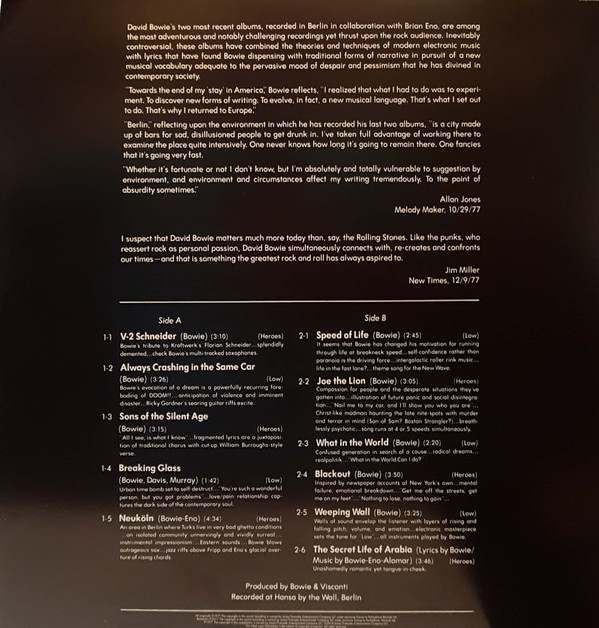
MATHIAS EICK-RAVENSNURG.
Mathias Eick-Ravensburg.
Label: ECM Records.
Thirty-nine year old Norwegian composer and multi-instrumentalist Mathias Eick is prodigious talent who has released four critically acclaimed solo albums, including Ravensburg which was recently released by ECM Record. It’s the latest chapter in the Mathias Eick story,
Mathias Eick was born in the village of Furnes, in Norway, on the ’16th’ of June 1979, and grew up in a musical household, His brother Johannes Eick and sister Trude Eick were both talented musicians who later, became professional jazz musicians. So would trumpeter Mathias Eick, but that was still to come.
Having finished high school, Mathias Eick enrolled on the Music program at the Toneheim Folkehøyskole in nearby by Hamar. After this, Mathias Eick enrolled on the Jazz program at Trondheim Musikkonsevatorium, where he completed his musical education.
By then, Mathias Eick, whose main instrument was the trumpet, was a talented multi-instrumentalist who could play double bass, guitar, piano and vibes. Given his versatility and talent, Mathias Eick was going to be kept busy working with various Norwegian bands and as a sideman in the future.
This included Mathias Eick playing alongside Jaga Jazzist, Jacob Young, Iro Haarla and Manu Katché between 2001 and 2007. However, in 2007, Mathias Eick’s carer received a huge boost.
After 2007, Mathias Eick was able to prefix the award-winning to his name. This came about after Mathias Eick won the International Jazz Talent award in 2007. It was awarded to Mathias Eick by the International Jazz Festivals Organisation. The timing was perfect.
The Door,
Mathias Eick had recorded his debut album The Door for ECM Records during September 2007. The Door was produced by Mathias Eick and ECM Records’ founder Manfred Eicher. When The Door was released to critical acclaim in 2008, it was a beatific, atmospheric album tinged with mystery that offered a tantalising taste of prodigiously talented musicians.
For the next three years, Mathias Eick spent time recording with Lars Danielsson and Motorpsycho. However, in 2009, Mathias Eick won the Statoil Scholarship which is Norway’s largest and most prestigious scholarship, and not long after this, began working on his sophomore album Skala.
Skala.
Three years after the release of The Door,Skala was released to plaudits and praise in 2011. Mathias Eick’s career continued apace.
Over the next four years Mathias Eick continued to work as sideman and played alongside Jaga Jazzist, Lars Danielsson, lvira Nikolaisen and Epic Trio. By then, Mathias Eick had collaborated with Chick Corea, Pat Metheny and Norwegian singer-songwriter Thomas Dybdahl. Still Mathias Eick found time to record his third album in May 2014.
Midwest.
Ten months later, Midwest which was inspired by a tour of the North America, and is homage to the way that people and the music move around the world. However, Mathias Eick decided to focus on the Midwest because that was the choice of destination for many who emigrated from Norway and settled in America.
This struck a here with critics when Midwest was released on March the ’20th’ 2015, who hailed the album Mathias Eick’s finest hour. Midwest was a landmark album for Midwest Mathias Eick and introduced his music to a new audience.
Buoyed by the success and critical response to Midwest, Mathias Eick continued to lead his five piece band that featured some of Norway ’s top musicians. They showcased their considerable skills as recording began on Mathias Eick’s fourth album Ravensburg.
Ravensburg.
Mathias Eick had written eight new tracks for Ravensburg, including the title-track which is his grandmother’s small home town in southwestern German. These tracks were nonce again recorded at Rainbow Studios, in Oslo.
Joining trumpeter and vocalist Mathias Eick was a rhythm section of drummer and percussionist Helge Norbakken, electric bassist Audun Erlien and pianist Andreas Ulvo. They were joined by new addition violinist Håkon Aase as recording began in June 2017. The sessions weren’t long, drawn out affairs and before long, the eight tracks on Ravensburg were recorded.
When Ravensburg was recently released critics called Mathias Eick it was to widespread critical acclaim. Ravensburg which opens with the suite like Family is a carefully constructed album where Mathias Eick and his talented band create mid tempo rhythmic music like Children before the understated and fluid Friends meanders dreamily along. In doing so, it allows the listener to ruminate as the rueful rasping horns, piano and rhythm section combine and eventually reveal their secrets.
Mathias Eick and pianist Andreas Ulvo then play leading roles on the beautiful wistful Parents and Girlfriend. It’s followed by the ruminative Ravensburg which completes a triumvirate of peerless tracks. This would be the perfect way to close the album, if Mathias Eick hadn’t composed and led his band on For My Grandmothers, which is very personal homage to someone who has influenced him.
For the followup to Midwest, Mathias Eick returns to Ravensburg, the town in southwestern Germany, which was the home to his grandmother, Mathias Eick uses the eight cinematic tracks to point pictures of a time and place. To do this, he combines occasional elements of Americana with avant-garde, jazz and Nordic Wave The result is a powerful and truth memorable album .
Mathias Eick e creates beautiful, haunting, atmospheric and sometimes ethereal sounding tracks on Ravensburg. Other tines, the music on Ravensburg is breathy, elegiac, poignant, ruminative and wistful as Mathias Eick reaches new heights on what is a career-defining fourth album.
Mathias Eick-Ravensburg.
 dereksmusicblog
 dereksmusicblog