JOHN MORALES PRESENTS THE M+M MIXES VOLUME IV.
John Morales Presents The M+M Mixes Volume IV.
Label: BBE.
There aren’t many DJs and remixers that have enjoyed longevity that John Morales has. He’s been DJ-ing since 1975 and has spent the last four decades remixing tracks by the biggest names in music. Some of these names can be found on the latest project from John Morales, which is the most ambitious of his long career. This is John Morales Presents The M+M Mixes Volume IV, which is a four CD set that was recently released by BBE and features twenty-seven previously unreleased remixes of tracks by the great and good of music. John Morales Presents The M+M Mixes Volume IV is the latest project from a man whose been immersed in music since an early age.
John Morales’ love of music started at an early age, working in an after-school job at a local record shop. He was only about twelve at the time, with the record shop paying him in singles. By the age of fourteen, John Morales had already formed his own band, the F Band. They played gigs at local high schools, but nothing became of the F Band. However, even then, John Morales knew that he wanted to make a career out of music. Little did he realise that the singles he had collected whilst working in the record shop would help him embark upon a musical career.
When John Morales started DJ-ing in 1975, he initially played first in small clubs and bars in his native Bronx. Then when the roller skating craze started in the early eighties, John Morales started working at the Bruckner Roller Dome. From there he began playing at other roller skating venues, before heading into New York, where he DJ-ed at various bars and clubs. Soon John Morales was playing at some of the top venues, including the Limelight, Pippins and Studio 54. However, soon John Morales went from playing in bars to co-owning with a friend.
This was Sergio Munzibai who would later play an important part in the rise and rise of John Morales. That was still to come. Before that, John Morales and Sergio Munzibai opened a club and renamed 1018, M&M. This was the first time that John Morales and Sergio Munzibai used these initials which later would become famous for quality remixes.
Although John Morales was working as a club DJ and co-owned M&M, he also worked at New York’s WBLS radio station, where another famous DJ Frankie Crocker, was musical director. John Morales was responsible for the midday and weekend mixes and meant learning a new skill, editing tracks.
Just like Tom Moulton, John Morales had to teach himself to edit tracks. He had to make them longer, because the records were far too short. To do this, John bought a Sony reel-to reel tape recorder, and at home, taught himself to edit tracks. He spliced the tape up, rejoined it, lengthened breaks and made songs much more dance-floor friendly. This was John Morales’ first step on the road to becoming one of the best remixes of the mid-seventies and early eighties.
Soon, John Morales and Sergio Munzibai launched one of the most fruitful and prolific remixing partnerships in dance music history. After their first remix, they decided that each of their remixes would feature the M&M name. John Morales says his first credited remix was Inner Life’s Caught Up, although before that, he had undertaken a number of remixes. Ironically, on Caught Up, which was his first credited remix, John Morales’ name was spelt incorrectly. However, John Morales career as a remixer was underway.
Since then, John Morales and Sergio Munzibai, and then John Morales himself have remixed hundreds of songs, and each and every one of them featured the famous M &M logo. However, of all the tracks John Morales has remixed some of his best known are his Salsoul Records’ remixes.
It was after John Morales met producers Patrick Adams and Greg Carmichael that he became their favoured remixer for their Salsoul work. The Patrick Adams and Greg Carmichael’s production team’s partnership with John Morales at Salsoul Records proved to be a fruitful one and found him remixing tracks by Aurra, Funk Deluxe, Inner Life, Instant Funk and Logg. This was a huge boost to John Morales’ remixing career.
Soon, it wasn’t just Patrick Adams and Greg Carmichael’s Salsoul Records productions that John Morales was being asked to remix He was brought onboard to remix a whole host of non-Salsoul Records acts including the Universal Robot Band. Despite remixing other projects for Patrick Adams and Greg Carmichael still it was John Morales’ remixes of their Salsoul Records productions that are regarded as some of his finest remixes from that period. Remixing such high-profile tracks helped John’s career no end.
It helped John Morales become one of the most successful, busiest and highest profile remixers of eighties and early nineties. However, in 1989 John Morales and Sergio Munzibai decided to end what had been a highly successful remixing partnership. For the next four years John Morales continued to work on high-profile remixes. However, in 1993 disaster struck when John Morales became ill and this had a huge impact upon his career.
Little did John Morales realise that when he became ill in 1993, that this illness meant it would be nearly a decade before he next set foot in a recording studio to remix a track. However, this gave him the opportunity to test and learn the new musical software that would soon dominate the music industry. During this period, John Morales tested what would become Cubase for Atari Computer, and in some ways, this must have given him an advantage over other producers when he returned to the recording studio.
Since his return to the recording studio, John Morales has been even busier than ever, remixing some of the highest profile names in dance music. He’s now spent over forty years as a DJ and remixer. During that time, John Morales has become one of the most respected DJs and remixers, and has released some of the most successful compilations over the last ten years.
During that period, John Morales has forged a successful relationship with the British independent record label BBE. They released John Morales-The M&M Mixes to critical acclaim in February 2009. Not only did the compilation reinforce John Morales reputation as one of the top remixers, but was the start of a long and successful relationship between BBE and John Morales
Just over two years later, and John Morales The M+M Mixes Volume 2 was released by BBE, in March of 2011. It featured remixes of Harold Melvin and The Blue Notes, Candy Staton, Sandy Barber, Loletta Holloway and First Choice which were another reminder that John Morales was still one of the leading remixers. Critics and record buyers hoped that Volume 3 would soon follow.
It did, when two years later, John Morales The M+M Mixes Volume 3 was released on April 2013. John Morales had surpassed himself with twenty-four tracks spread over three CDs. There were remixes of tracks from Loleatta Holloway, The Salsoul Orchestra, John Davis and The Monster Orchestra, Marvin Gaye, Teddy Pendergrass, Sandy Barber, Jean Carne and The Dramatics. However, this wasn’t the only John Morales release that day in April 2013.
As an added bonus, John Morales The M+M Mixes Volume 3-Instrumentals was released at the same time. This was another welcome addition to this successful series. However, little did anyone know, that John Morales labour of love was also nearing completion.
After nearly eight years work, eventually, John Morales Presents Club Motown was completed in early 2014, and released in July 2014. It featured some of Motown’s eighties roster, including The Commodores, Diana, Ross, The Temptations, Lionel Ritchie, Teena Marie, Rick James, Thelma Houston and Debarge. This brought to an end the project that John Morales had called his labour of love.
The next project that John Morales began work on was one of the most ambitious of his five decade career, John Morales Presents The M+M Mixes Volume IV. This was a four CD set that would eventually feature twenty-seven remixes, including many by the great and good of music. This would include many artists who have featured on the previous instalments of the The M+M Mixes series. These familiar faces are joined by some new names on John Morales Presents The M+M Mixes Volume IV which features another series of carefully crafted remixes.
Disc One.
Disc one of John Morales Presents The M+M Mixes Volume IV features eight new remixes, and opens with a remix of Barry White’s I’m Gonna Love You Just a Little Bit More Baby. John Morales takes this classic slice of sultry soul from 1973 and reinvents it, and in the process sets the bar high for the rest of disc one.
A remix of Atlantic Starr’s 1982 single Circles is welcome addition and is joined by Tenderness from Diana Ross’ 1980 album Diana. Both tracks are given a makeover, and John Morales transforms Tenderness and puts all of his four decades of experience to good use. That is the case Keith Barrow’s 1978 disco single Turn Me Up. It’s followed by a trio disco anthems from true disco divas.
Tamiko Jones’ 1979 single Can’t Live Without Your Love gets the ball rolling, before John Morales remixes Jackie Moore’s 1978 disco classic This Time Baby. Hot on its heels is Tata Vega’s 1978 single on Motown Just Keep Thinking About You Baby. From Motown, John Morales heads to Philly and remixes The Jones Girls Life Goes On from their 1979 eponymous debut album. This closes disc one, but there’s still three more to come.
Disc Two.
Frankie Beverly’s Joy and Pain from 1981 gets disc two off to a good start, as soul, boogie and proto-house combine. It gives way to The Controllers’ Stay from 1986 which fuses boogie, funk and soul on a track that has a tough, but contemporary sound. These remixes are a reminder of the post disco years. After that, John Morales adds a trio anthems from true divas
The first comes courtesy of Teena Marie, whose Lover Girl is remixed by John Morales. This is followed by Melba Moore’s 1978 disco anthem You Stepped Into My Life. It’s without doubt one of the highlights of disc two, although John Morales remix of Donna Summer’s Heaven Knows from 1978 is another anthemic floor filler.
By 1978, Teddy Pendergrass was enjoying a successful solo career, and just released his sophomore album, Life Is a Song Worth Singing. There was life after leaving Harold Melvin and The Blue Notes. One of the highlights of the album was the title-track
Life Is a Song Worth Singing which was a joyous anthem that John Morales has remixed and takes in a new direction that is guaranteed to fill a dancefloor. So too is Lenny Williams You Got Me Running a funky, soulful, disco track that was released on ABC Records in 1978. It’s a welcome addition and the perfect way to close disc two, by leaving the listener wanting more.
Disc Three.
John Morales seems determined to make an impact by opening disc three with his remix of Dan Hartman’s Vertigo/Relight My Fire which was originally released in 1979 and featured Southern Soul singer turned disco diva Loleatta Holloway. Nearly forty years later, John Morales remixes a track that is sure to bring back memories for many people. So to will Nobody Gets The Prize which was released in 1979, and features Diana Ross the disco diva. John Morales’ transforms a four-minute song into a ten-minute epic that is a mixture of sass and drama, that is sure to test the stamina of even the fittest dancers.
Cher was one of many artist who jumped on the disco bandwagon between 1976 and 1979, when she released her fifteenth album Take Me Home. A reminder of Cher’s disco years is Take Me Home which was reworked by John Morales. It gives way to 3 Ounces Of Love’s Star Love which was the title-track to their 1978 album. It’s a soulful, funky and dancefloor friendly hidden gem that many people won’t be familiar with. That is also the case with The Emotions’ Don’t Wanna Lose Your Love, which was the B-Side to the singles Flowers in 1978. Just like Star Love, Don’t Wanna Lose Your Love is another hidden gem, and is a reminder always to check the B-Side of a single.
Another welcome addition to John Morales Presents The M+M Mixes Volume IV is Cheryl Lynn’s Got To Be Real. It’s a track from Cheryl Lynn which was released in 1978, but John Morales extends to nine minutes of soulful, funky and dancefloor friendly music.
Maze featuring Frankie Beverly released Before I Let You Go on Capitol Records in 1981. By then, the disco era was over and DJs were looking for a new style of music to play. Tracks like Before I Let You Go with its soulful, funky boogie sound proved popular with DJs and dancers. John Morales’ nine-minute remix is a reminder of one of Maze featuring Frankie Beverly’s finest hours.
Closing disc three is Eddie Kendricks’ Girl You Need a Change of Mind which was released in 1973. Originally, the two parts of single were spread across the A and B side. It’s transformed into a nine-minute soul-baring and soulful epic that is a reminder of Eddie Kendricks in his prime. This is a fitting way to close the third side of John Morales Presents The M+M Mixes Volume IV.
Disc Four
Tom Browne’s Funkin For Jamaica may have seemed like an unlikely candidate to be remixed by John Morales. However, he works his magic on the track that opens disc four and takes this single form 1980 in a new direction. It gives way to Harold Melvin and The Blue Notes’ Philly Soul classic Don’t Leave Me This Way which originally featured on their 1975 album Wake Up Everybody. This is one of the highlights of John Morales Presents The M+M Mixes Volume IV. So too is the remix of Barry White’s classic Let The Music Play which was the title-track to his 1976 album. Tracks like Don’t Leave Me This Way and Let The Music Play are reminders of why John Morales is regarded as one of the top remixers. However, he closes disc four with a remix of Level 42’s Mind On You from their 2013 album Sirens, which was mixed by John Morales. This makes him the best qualified person to remix Mind On You which brings to a close John Morales Presents The M+M Mixes Volume IV.
It’s the most ambitious project of John Morales’ five decade and forty-three year career. John Morales Presents The M+M Mixes Volume IV features twenty-seven new remixes which are spread across the four discs on the box set that was recently released by BBE. It finds John Morales taking the listener on a series of compelling and captivating musical journey where the music is soulful, funky, jazz-tinged and dance-floor friendly. Occasionally, John Morales throws a series of curveballs and takes the track in a direction the listener never expected. However, by the end of the track everything has fallen into place, and seamlessly, everything makes sense. Not many remixers can do this, but John Morales can.
That is what we’ve come to expect from John Morales who is still a leading DJ and remixer. Proof of that can be found on John Morales Presents The M+M Mixes Volume IV which is the veteran remixer’s latest instalment in this successful series. John Morales Presents The M+M Mixes Volume IV is one of the best albums of remixes released during 2017, and is another reason why John Morales should be considered as the rightful heir to Tom Moulton, and assume his title as The Master of the remix.
John Morales Presents The M+M Mixes Volume IV.

THE INCREDIBLE STRNG BAND-CHANGING HORSES.
The Incredible String Band-Changing Horses.
Label: BGO Records.
When The Incredible String Band released their fifth album, Changing Horses in November 1969, much had changed within the group that had formed in Edinburgh, Scotland, six years earlier in 1963. The Incredible String Band was one of the biggest, and most successful folk bands in the world, and regularly played at some of the biggest and most prestigious venues in Britain and America. This included London’s Royal Albert Hall, the Filmore East in New York and the Filmore West in San Francisco. More recently, The Incredible String Band had played a starring role at the Woodstock Music and Art Fair on Saturday the ‘15th’ of August 1969. Buoyed by this success, The Incredible String Band returned home for the release of Changing Horses which was recently rereleased by BGO Records. It marked the start of a new era for The Incredible String Band.
By the time Changing Horses was released, Robin Williamson and Mike Heron had some announcements to make. This included that The Incredible String Band was now a quartet, with Christina ‘Licorice’ McKechnie and Rose Simpson joining The Incredible String Band as full-time members. Both had worked with the band live and in the studio for some time. Christina ‘Licorice’ McKechnie first featured on The 5000 Spirits Or the Layers Of The Onion, which was released in July 1967, while Rose Simpson played on Wee Tam and The Big Huge which was released in November 1968. However, this wasn’t the only announcement that The Incredible String Band were about to make.
They explained that they had decided to no longer take drugs, which had been part of their life for the last few years. The other announcement was that The Incredible String Band had joined the secretive and cult-like Church of Scientology came as a shock to critics and fans. Things seemed to be changing within The Incredible String Band, and this would include the music on Changing Horses, which was very different to the music they made in the early days of the band.
Only six years had passed since Robin Williamson and Clive Palmer first played together at the Crown Bar, Edinburgh, in 1963. That was where Archie Fisher hosted a weekly folk night, and where two years later, in 1965, Joe Boyd, who was then working as an A&R man for Elektra Records first saw the Incredible String Band. Joe Boyd would later play an important part in the Incredible String Band story. Before that, two became three.
Later in 1965, Robin Williamson and Clive Palmer decided that The Incredible String Band should become a trio. They decided that they needed someone to fill out their sound, and started looking for a rhythm guitarist. Before long, Robin Williamson and Clive Palmer were joined by Mike Heron, and the as unnamed band donned the moniker The Incredible String Band. This was the final piece of the jigsaw, and was the lineup of The Incredible String Band that Joe Boyd saw when he reentered the band’s world a year later.
By 1966, The Incredible String Band were the house band at Clive’s Incredible Folk Club, which was based on the fourth floor of a building on Sauchiehall Street, in Glasgow, Scotland’s musical capital. One night, Joe Boyd made his way to Clive’s Incredible Folk Club. He was a man with a mission and was determined to sign The Incredible String Band.
Elektra Records had heard about The Incredible String Band, and wanted to sign them. They were, after all, predominately, a folk label and it made sense to sign The Incredible String Band to their roster. There was only one problem though, another label was interested in the Incredible String Band, Transatlantic Records. However, Joe Boyd managed to sign the Incredible String Band and took them into the studio in May 1966.
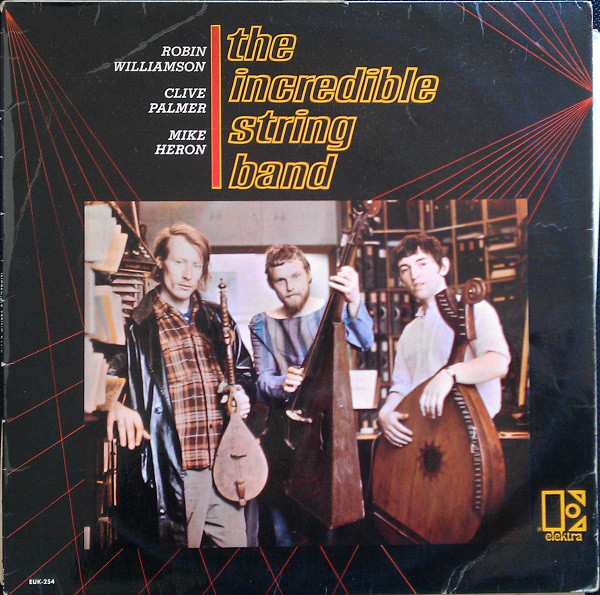
The Incredible String Band.
To record their eponymous debut album, Joe Boyd took the Incredible String Band into the Sound Techniques’ studio in London. Joe Boyd would produce The Incredible String Band which featured a total of sixteen songs. They were a mixture of original and traditional songs. On these songs, the Incredible String Band deployed an eclectic selection of instruments. Guitars, fiddles, a mandolin, kazoo, violin and tin whistle featured on The Incredible String Band, which was completed in June 1966.
On its release, on ‘20th’ July 1966, The Incredible String Band was well received by critics. It featured a much more traditional sound than later Incredible String Band albums. There was no sign of the psychedelic sound that featured on later albums. That was still to come. In 1966, the Incredible String Band were still a traditional folk group and a popular one at that.
The Incredible String Band reached number thirty-four in the UK charts, where it spent three weeks. Considering it was The Incredible String Band’s debut album for Elektra Records this was seen as a success, and something to build on. However, just when things seemed to be going to plan for The Incredible String Band, sadly, things went awry.
After recording The Incredible String Band, the band split-up. Clive Palmer decided to head off on the hippie trail to Afghanistan and India. Robin Williamson and his girlfriend also caught the travel bug and headed to Morocco. Only Mike Heron remained in Edinburgh, where he hooked up with Rock Bottom and The Deadbeats. With the Incredible String Band looking like history, it looked as if Mike Heron’s future lay with Rock Bottom and The Deadbeats. However, that wasn’t the case, when The Incredible String Band decided to reform.
Robin Williamson returned from Morocco after running out of money. However, he brought back an eclectic selection of musical Moroccan instruments which would feature on later Incredible String Band albums.
Clive Palmer and Robin Williamson decided that The Incredible String Band should reform, but only as a duo. This was essentially The Incredible String Band Mk II.
They made their debut on a tour in November 1966, where The Incredible String Band, who were now a duo, supported Judy Collins and Tom Paxton. After the tour, The Incredible String Band had an award to collect.
Their debut album The Incredible String Band won the Folk Album Of The Year in Melody Maker’s 1966 annual poll. By then, The Incredible String Band was well-regarded among their musical peers. Bob Dylan referred to October Song as one of his favourite songs of the mid-sixties in an interview in Sing Out magazine. With the Incredible String Band reforming, this was spurred them on to greater heights.
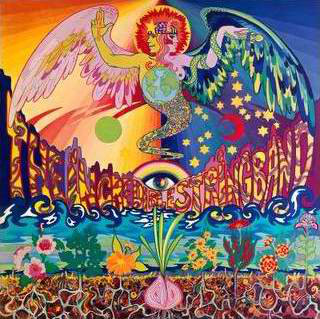
The 5000 Spirits Or The Layers Of The Onion.
Buoyed by winning the Folk Album Of The Year Award, and the praise of Bob Dylan ringing in their ears, the Incredible String Band set about writing and recording their sophomore album. Unlike many bands, the Incredible String Band didn’t write together. When they were apart, this was when they wrote their new songs. This was the case with their sophomore album The 5000 Spirits Or The Layers Of The Onion. Clive Palmer and Robin Williamson contributed seven songs each and they became The 5000 Spirits Or The Layers Of The Onion.
Reduced to a duo, The Incredible String Band brought onboard a number of guest musicians. This included Pentangle double bassist Danny Thompson, pianist Jon Hopkins and Soma, who played sitar and tamboura. Licorice McKechnie, who was Robin William’s girlfriend, made her Incredible String Band debut contributing percussion and adding vocals. Just like on The Incredible String Band, Joe Boyd took charge of production on The 5000 Spirits Or The Layers Of The Onion, which was completed early in 1967. When it was released, it marked a change in The Incredible String Band’s sound.
The 5000 Spirits Or The Layers Of The Onion marked the start of The Incredible String Band’s psychedelic folk era. However, mostly, The 5000 Spirits or the Layers of the Onion drew upon traditional British folk music. What was apparent was that Robin Williamson and Mike Heron had honed The Incredible String Band’s sound and matured and evolved as musicians. They were now talented multi-instrumentalists who could seamlessly switch between traditional and exotic instruments that played their part in the sound and success of The 5000 Spirits Or The Layers Of The Onion.
Critics on hearing The Incredible String Band’s sophomore album, realised that Robin Williamson and Mike Heron were both talented songwriters. Their songs were cerebral and full of imagery and mystery. There was also a psychedelic hue to The 5000 Spirits Or The Layers Of The Onion. This fusion of the traditional and psychedelic, found favour amongst critics and music lovers.
When The 5000 Spirits Or The Layers Of The Onion was released in July 1967, it seemed to typify the underlying counter-culture. It struck a nerve with critics and music lovers. Critics hailed The 5000 Spirits or the Layers of the Onion as an eclectic and innovative album that found The Incredible String Band picking up where the left with their eponymous debut album.
With its eclectic, genre-melting style The 5000 Spirits or the Layers of the Onion appealed to a wide range of record buyers, and soon, the album was climbing the UK charts. Eventually, it reached number twenty-five in the UK charts, where it spent five weeks. Gradually, the Incredible String Band’s popularity was growing, and it seemed as if the band was on the verge of greatness.
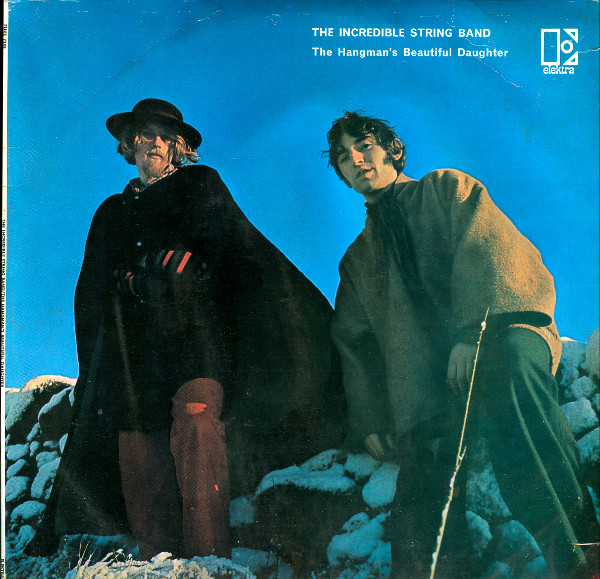
The Hangman’s Beautiful Daughter
That proved to be the case. 1968 was the to be the biggest year of The Incredible String Band’s nascent career. They released two albums, including The Hangman’s Beautiful Daughter, which was their first album of 1968.
For The Hangman’s Beautiful Daughter, Robin Williamson wrote seven songs while Mike Heron penned just three songs. The Incredible String Band had decided that The Hangman’s Beautiful Daughter wasn’t going to be sprawling album. Their two previous albums featured sixteen and fourteen songs. This time, only ten songs featured, and with Robin Williamson and Mike Heron concentrating on quality, this marked a coming of age for The Incredible String Band.
With Joe Boyd producing The Hangman’s Beautiful Daughter, the Incredible String Band entered the studio in December 1967. This time round, Robin Williamson and Mike Heron played most of the instruments on The Hangman’s Beautiful Daughter. They were joined by Licorice McKechnie, who was with the Incredible String Band until 1972. Other musicians were drafted in on an ad hoc basis. This included Fairport Convention’s Judy Dyble and Richard Thompson, who played piano on The Minotaur’s Song. During the recording sessions, The Incredible String Band made use of the new multi-track tape recorders, which meant they were able to layer instruments on top of each other. For the Incredible String Band, this was a departure from their “usual sound.” It worked though, and played its part in what was the Incredible String Band’s Magnus Opus.
Released in March 1968, The Hangman’s Beautiful Daughter represented, promoted and epitomised the hippie ideal. This included Eastern mysticism, communal living and rational pantheism. The Hangman’s Beautiful Daughter was a cerebral and beautiful album which featured songs that were dreamy, ethereal, cerebral and surreal. Especially The Minotaur’s Song, which is essentially a parodic song that is sung from the Minotaur’s perspective, and has been influenced by the British musical hall. Very different is A Very Cellular Song, which is a thirteen minute epic that is a reflective and thoughtful song that poses a series of big questions on life, love, and amoebas. Just like the rest of The Hangman’s Beautiful Daughter, The Incredible String Band fuse disparate musical genres. Mostly though, their unique brand of progressive, psychedelic folk shines through. This found an audience on both sides of the Atlantic.
Released to widespread critical acclaim, The Hangman’s Beautiful Daughter reached number five in the UK, where it spent twenty-one weeks in the charts. This was The Incredible String Band’s most successful UK album. The Hangman’s Beautiful Daughter became the Incredible String Band’s first album to chart in the US. It reached number 161 in the US Billboard 200. Having spent nine weeks in the US Billboard 200, The Hangman’s Beautiful Daughter the Incredible String Band was nominated for a Grammy Award. It seemed the Incredible String Band was going places.
Wee Tam and The Big Huge.
Having just released the most successful album of their career, The Incredible String Band were one of the most successful British groups of the late-sixties. They were capable of filling the biggest venues in Britain, and were just as popular across the Atlantic in America. The Incredible String Band was capable of selling out both the Filmore East in New York and the Filmore West in San Francisco. This was something only a small number of British bands could do. However, The Incredible String Band’s star was in the ascendancy and they were a popular draw after the released of their third album The Hangman’s Beautiful Daughter. It was a game-changer, and broke The Incredible String Band in America. Later, in 1968, they tried to do the same with Wee Tam and The Big Huge.
Wee Tam and The Big Huge was without doubt, the most ambitious album of The Incredible String Band’s career. It was released as a double-album in the UK and as two individual albums, Wee Tam and The Big Huge, in America. This meant that Robin Williamson and Mike Heron had been busy.
On their return from the latest gruelling tour, members of The Incredible String Band and their entourages lived together in Newport, in eight cottages that cottages that had been joined together. This communal living was typical of the time, and was where the eighteen tracks that became Wee Tam and The Big Huge were written. Robin Williamson penned ten songs and Mike Heron the other eight tracks. When Wee Tam and The Big Huge was recorded at Sound Techniques studio, in Chelsea it would be with their usual eclectic selection of instruments and their two girlfriends Licorice McKechnie and Rose Simpson.
Joe Boyd, who had produced the Incredible String Band’s three previous albums would produce Wee Tam and The Big Huge. This time, Joe Body decided that The Incredible String Band should be recorded as a group, rather than overdubbing parts later. Given time was short, for The Incredible String Band this seemed a risky decision as recording of Wee Tam and The Big Huge began in April 1968. It could’ve backfired, but Joe Boyd wanted to capture the essence of the Incredible String Band live.
Given the variety of instruments Robin Williamson and Mike Heron played on Wee Tam and The Big Huge, some overdubbing was necessary. Unlike previous albums, no guest artists featured on Wee Tam and The Big Huge. Instead, only Licorice McKechnie and Rose Simpson, Robin Williamson and Mike Hero’s respective girlfriends featured on Wee Tam and The Big Huge. Rose Simpson’s voice was used to balance out the role of Licorice McKechnie, ion an album that saw The Incredible String Band combine elements of British and American influences. By August 1968, The Incredible String Band had completed recording of Wee Tam and The Big Huge, such was released later in 1968.
November 1968 saw the release of Wee Tam and The Big Huge which was the much-anticipated followup to The Hangman’s Beautiful Daughter. However, The Incredible String Band knew that The Hangman’s Beautiful Daughter was a hard act to follow. It was the greatest album of their career, so rather record The Hangman’s Beautiful Daughter Mk. II, Wee Tam and The Big Huge was a very different album.
Eclectic describes Wee Tam and The Big Huge which is an album of disparate influences. Similarly, a verity of different instruments were used, and even the arrangements differ from previous albums. By then, Robin Williamson and Mike Heron were influencing the arrangements to each other’s songs. This was a new development, but by then, the internal politics of the group and its dynamics had changed. Despite this, Wee Tam and The Big Huge was another ambitious and cerebral album from The Incredible String Band. The themes included mythology, religion, awareness and identity, on what was the first album from The Incredible String Band as a four piece band.
Critics appreciated this change of direction from the new lineup of The Incredible String Band, and recognised that Wee Tam and The Big Huge was another ambitious release. The addition of Rose Simpson had given The Incredible String Band a much more balanced sound on Wee Tam and The Big Huge. It was an album that The Incredible String Band should be able to replicate live critics noted. However, the only problem was that Wee Tam and The Big Huge didn’t fare well commercially.
Wee Tam and The Big Huge was released as a double album in Britain in November 1968, but incredibly failed to chart. This was a huge surprise for The Incredible String Band, producer Joe Boyd and executives at Elektra Records. They could only hope that Wee Tam and The Big Huge would fare better upon their released in America.
Four months later, Wee Tam and The Big Huge were released as separate albums in March 1969. Wee Tam reached number 174 in the US Billboard 200 and The Big Huge stalled at just number 180 in the US Billboard 200. After spending just three weeks in the charts, both albums disappeared. This was yet another disappointment for the members of The Incredible String Band, producer Joe Boyd and executives at Elektra Records.
Despite its lack of commercial success, Wee Tam and The Big Huge is nowadays regarded as one of the best albums that The Incredible String Band released. However, for The Incredible String Band Wee Tam and The Big Huge was regarded as the album that got away. It should’ve been a commercial success, but slipped under the musical radar. This was a disappointment for The Incredible String Band who wouldn’t release another album until November 1969.
In 1969, the Incredible String Band hit the road, and embarked upon what was a gruelling touring schedule. During this period, the Incredible String Band continued to live communally in a farmhouse in Newport, Pembrokeshire. It was also during this time, that The Incredible String Band became interested in mixed media, which was something that would later influence their music. However, in 1969, touring was what kept them busy.
The Woodstock Music and Art Fair.
The Incredible String Band’s most high-profile performance took place at the Woodstock Music and Art Fair which took place between the ‘15th’ and ‘17th’ of August 1969. By then, The Incredible String Band were one of the biggest and most successful folk bands in the world. That’s why they were booked to play at Woodstock in 1969.
Rain delayed the Incredible String Band’s performance at Woodstock. They were due to play at 10.50pm on Friday ‘15th’ August 1969. This was when all the other folk acts were due to play. The Incredible String Band were due to follow Ravi Shankar, However, as Ravi Shankar played, the heavens opened. This presented a problem for The Incredible String Band, who refused to take to the stage. Realising that The Incredible String Band were one of the biggest folk bands of the day, their performance was rescheduled. Melanie was called in as a last-minute replacement for The Incredible String Band and they took to the stage the following day.
Between 6.00-6.30pm on Saturday the ‘15th’ August 1969, the Incredible String Band took to the stage, following Keef Hartley. From the moment that The Incredible String Band took to the stage, they played a starring role in the Woodstock Festival. They had the audience in the palm of their hands. Following their appearance at the Woodstock Festival, The Incredible String Band kept on touring.
Two weeks after playing a starring role at the Woodstock Festival, The Incredible String Band found themselves in Texas for the Labor Day Weekend. That was when the Texas International Pop Festival was held at the Dallas International Motor Speedway. The Incredible String Band played on Sunday the ‘30th’ August 1969. However, their performance didn’t match their appearance at the Woodstock Festival which disappointed the members of The Incredible String Band. However, they had to put this behind them, as they an album to release in three months time, Changing Horses.
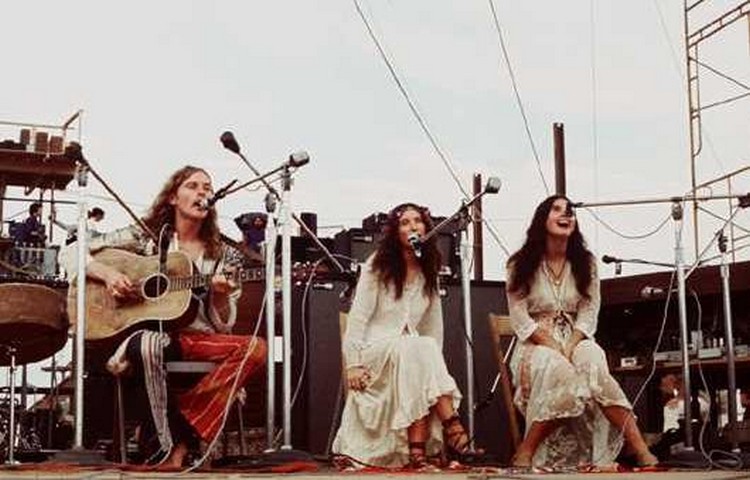
Changing Horses.
In November 1969, The Incredible String Band were preparing to release their fifth album Changing Horses. By then, much had changed over the last few months for The Incredible String Band and especially Robin Williamson and Mike Heron.
Robin Williamson and Mike Heron had split from their respective girlfriends and moved from Newport to Innerleithen, in Peeblesshire, Scotland. This became the new headquarters for The Incredible String Band.
While The Incredible String Band had performed as a quartet on Wee Tam and The Big Huge, the only two full-time members of the band were Robin Williamson and Mike Heron. However, despite the breakup of their relationships, Robin Williamson and Mike Heron confirmed that Licorice McKechnie and Rose Simpson were now full-time members of The Incredible String Band. This wasn’t the only change that occurred.
Recently, The Incredible String Band had fully embraced the controversial cult-like Church Of Scientology. They had been “believers” since the autumn of 1968, when they dined with producer Joe Boyd after a sellout show in New York. That night, Joe Boyd happened to mention that the manager of the restaurant they were dining in had turned his life around since he last seen him. This transformation the manager claimed was down to his recent conversion to the Church Of Scientology. Having told the story, Joe Boyd finished his meal and then left the restaurant to head off on a business trip to California. Little did Joe Boyd realise the consequences of his story.
In Joe Boyd’s absence, The Incredible String Band approached the band’s US agent wanting the payments that they were owed for the mini tour of the East Coast. When the US agent phoned Joe Boyd before paying the money to The Incredible String Band, he decided to find out what the band wanted the money for?
Joe Boyd struggled to contact any of the members of The Incredible String Band, who had checked out of the Chelsea Hotel. By then, Joe Boyd was wondering why The Incredible String Band needed any money as he had given the band an allowance before leaving for California. Eventually, though, Joe Boyd got through to Licorice McKechnie, who explained they needed the money to pay for some “courses” with the Church Of Scientology. This was just a day after Joe Boyd had mentioned the Church Of Scientology. Had they working quickly on their latest potential converts, who just so happened to be high-profile and relatively wealthy musicians?
When Joe Boyd returned the next day, he was met by the four members of The Incredible String Band who were determined that he should write them a cheque for the “courses.” After questioning the group, it turned out that after Joe Boyd left the restaurant, the manager began his pitch on how the Church Of Scientology had transformed his life. The next day, the same restaurant manager invited the four members of The Incredible String Band to its New York “celebrity centre.” By the end of the evening, Robin Williamson and Licorice McKechnie had been converted.
Joe Boyd was reluctant to write the cheques there and then, and managed to convince Mike Heron and Rose Simpson to think things over. They agreed and headed home to Britain, but before long they too had been caught in the Church Of Scientology’s thrall.
Mike Heron’s account differs slightly, and claims that his conversion to the Church Of Scientology came after reading a book on self-improvement. After reading the book, he decided to embrace the Church Of Scientology “philosophies.”
After embracing the controversial and secretive Church Of Scientology, The Incredible String Band’s concerts began to change. It’s claimed that the concerts took on a much more communal and friendlier than before their “conversion.” That wasn’t the only change.
The other thing that changed was The Incredible String Band’s attitude to money. After joining the Church Of Scientology the band began to have weekly meetings to discuss their finances. Despite their newfound spirituality. money began to play an increasingly important role in The Incredible String Band’s lives. Already the members of The Incredible String Band were changing due to their dalliance with the Church Of Scientology, and this would affect their music and lifestyle.
After Robin Williamson and Mike Heron’s conversion to the Church Of Scientology the pair gave up drugs, which previously had been part of their lives. Mike Heron alludes to their decision in White Bird, which was one of two tracks he contributed to Changing Horses. The other was Sleepers Awake!, while Mike Heron and Robin Williamson wrote Dust Be Diamonds. Robin Williamson’s contributions to Changing Horses were Big Ted, Mr. and Mrs and Creation. These six tracks would become Changing Horses, The Incredible String Band’s fifth album.
Recording of Changing Horses had to fit round The Incredible String Band’s touring schedule, but much of recording took place over the summer of 1969, at Sound Techniques studio in London, and at Elektra Records studio in New York. By then, the members of The Incredible String Band were different people from. They now spent time studying spirituality and philosophy, and self-analysing as part of their conversion to conversion to the Church Of Scientology. Their newfound religious belief meant that drugs were a thing of the past for The Incredible String Band during the recording of Changing Horses which marked a series of changes.
The first was that The Incredible String Band started to move from psychedelic folk to a new British folk rock sound and even a hint of the progressive rock influences. Joe Boyd started to be more flexible when it came to the band’s creative process, and very rarely chose to intervene. This allowed The Incredible String Band to develop new ideas. By then Licorice McKechnie and Rose Simpson were playing a more active roles in the band. Licorice McKechnie played the guitar and organ on some tracks, while Rose Simpson’s Simpson’s bass featured on each track on Changing Horses. Just like on previous albums, Robin Williamson and Mike Heron played their usual mixture of traditional and exotic instruments and shared lead vocals. They were no longer as close as they once were, and there was a friction between them. However, by the end of the summer of 1969, the recording of Changing Horses was completed. However, two songs dominated the album, with White Bird and Creation taking up thirty of the fifty minutes on Changing Horses. This was a first for The Incredible String Band.
In October 1969, The Incredible String Band released an edited version of Big Ted as a single. However, it failed to chart, which was disappointment for The Incredible String Band. They had never been a singles band, and were known for the four albums they had released. Soon, four would become five. Before that, the critics had their say on Changing Horses.
Critics on hearing Changing Horses were surprised that The Incredible String Band had moved away from their trademark psychedelic folk sound. It was another eclectic album that marked the start of a new chapter in The Incredible String Band’s career.
Opening was Big Ted, a tongue-in-cheek lament to a pig where The Incredible String Band become a jug band as they combine elements of country, doo wop, ragtime and vaudeville. White Bird is a fifteen minute epic that deals with the changing beliefs of The Incredible String Band. It’s full of subtleties and nuances as this cerebral songs unfolds. Dust Be Diamonds is a quirky song penned by Robin Williamson and Mike Heron where The Incredible String Band combine riddles, religious ideology, excerpts of nursery rhymes, as they play everything from electric guitars to kazoos.
The Incredible String Band roll back the years on Sleepers, Awake! as they sing unaccompanied. It’s a reminder to the early years of their career as they sung in Scottish folk clubs. Mr. and Mrs deals with the ups-and-downs and quirks of family life, and finds The Incredible String Band plugging-in and changing direction. They deploy electric guitars and an organ that accompanies Robin Williamson’s ironic, and sometimes mocking vocal. Closing Changing Horses is Creation, a sixteen minute epic which combined an Eastern raga motif with a soliloquy during this melodic and memorable retelling of the seven days of creation. It’s without doubt one of the highlights of Changing Horses, and ensures the album closes on a high.
On the release of Changing Horses in November 1969, it reached number thirty in the UK. However, after a week, Changing Horses disappeared from the charts. Over the Atlantic, Changing Horses stalled at just 166 in the US Billboard 200. Three weeks later, it disappeared from the charts. This was a disappointment for The Incredible String Band who had starred at the Woodstock Festival just three months earlier.
Having triumphed at Woodstock, The Incredible String Band must have been hoping that Changing Horses would see the band build on their two critically acclaimed albums. However, record buyers didn’t seem to “get” Changing Horses which was an album that saw The Incredible String Band in a reflective mood as they mused on their newfound spirituality, retell the story of Creation and deal with subjects like family life on Mr. and Mrs. Other times, the music was quirky and comedic as The Incredible String Band experimented and changed direction on what was a genre-melting album full of different musical textures.
They came courtesy of The Incredible String Band’s fusion of traditional, Moroccan and Eastern instruments, which were augmented by electric guitars and a Hammond organ on Changing Horses. It found The Incredible String Band move from their former psychedelic folk sound to their new British folk rock sound that hints at progressive rock. There’s also elements of country, doo wop, ragtime and vaudeville on Big Ted, while Creation is full of Eastern sounds. They’re part of what was an eclectic album from The Incredible String Band, which marked the end of their golden period.
It was also the end of The Incredible String Band as a duo, as Licorice McKechnie and Rose Simpson were now full-time members of the band. They would continue to record and play live as band rather than a duo. No longer was it just two friends playing the music that they loved. Instead, The Incredible String Band would spend the rest of their career trying to reach recreate the music they released between their 1966 eponymous debut album and Changing Horses in 1969.
Sadly, never again would The Incredible String Band reach the same heights of creativity again. Never again, would their star shine as brightly as it had between The Incredible String Band and Changing Horses, which was recently reissued and remastered in high-definition by BGO Records. Changing Horses marked the end of a three-year period where The Incredible String Band released five albums and were one of the biggest and most successful folk bands in the world and were on their way to becoming musical royalty.
The Incredible String Band-Changing Horses.

CLEAR LIGHT-A STORY OF WHAT MIGHT HAVE BEEN?
Clear Light-A Story Of What Might Have Been?
Elektra records had come a long way by the sixties, and was home to everyone from folk singers Judy Collins and Josh White to Phil Ochs and Tim Buckley, right through to psychedelic pioneers Love and The Doors, to Detroit based rockers like MC5 and The Stooges and Bread who would become one of the label’s most successful bands in the seventies. By then, Elektra had come a long way since it was founded in a college dorm in 1950.
That was where the Elektra Records story began in 1950, when Jac Holman and Paul Rickol were students at the prestigious and exclusive St. John’s College, in Santa Fe. They decided to form a record label, and agreed to invest $300 each into their new business venture. A year later Elektra Records was ready to release its album.
This was New Songs, a classical album featuring Georgianna Bannister and John Gruen, which was released as a limited edition in March 1951. However, when the album sold only a few copies this was an inauspicious start to the Elektra Records story.
Despite this setback, Elektra Records would thrive during the fifties and early sixties, and was at the forefront of the folk revival. They signed Ed McCurdy, Oscar Brand, Judy Collins, Phil Ochs and Tom Paxton. These artists brought commercial success and critical acclaim the way of Elektra Records. However, by 1964, Elektra Records was ready to diversify.
By then, Jac Holman had been analysing the classical music market and spotted a gap that was waiting to be filled. None of the major labels had realised that there was room for a new classical budget label, and before long Jac Holman launched Nonesuch Records. It was a huge success, and before long, other labels launched similar ventures. However, Nonesuch Records was by far the market leader. Buoyed by this success, Elektra Records decided to enter the pop music market.
Elektra Records entered into a joint venture with Survey Music, and founded a new label Bounty Records. However, it wasn’t a particularly successful venture, and ultimately floundered and folded. The only thing Elektra Records gained from Bounty Records was The Paul Butterfield Band, which they fell heir to. This would play an important part in Elektra Records future.
With the psychedelic era unfolding before their eyes, Elektra Records decided to sign some of the genre’s most promising up-and-coming acts. Soon, The Doors a San Francisco based band had signed to Elektra Records. They were soon joined by another new band from Los Angeles, Love. However, they weren’t the only band from L.A. who would soon call Elektra Records home.
By 1967, so would Clear Light, another group from the City Of Angels. They were a relatively new group and had only been together since early 1966.
That was when Los Angeles’ based Michael Ney advertised for a guitarist for a pickup band he was organising. One of the first people to answer the advert was Clyde Edgar “Robbie” Robinson, who was already a stalwart of the local music scene.
In the early sixties, Robbie began performing as Robbie The Werewolf. He even released an album Live At The Whaleback in 1964. Then Robbie and his wife formed a duet, and sung on the local folk circuit. That was until Barbara Robison was asked to join the folk rock group The Ashes, who in 1966 became The Peanut Butter Conspiracy. With his wife now a member of a band, Robbie was looking for a new group.
As he set off for the audition, Robbie wondered if Michael Ney’s new group was where his future lay? When he arrived at the audition, and introduced himself to Michael Ney, and straight away, the two men got on. Everything it seemed was going well. That was until Robbie failed the audition. At least Robbie came away having made a new friend, Michael Ney.
Just like Robbie, Michael Ney wasn’t a newcomer to music. For a while, he had been Tito Puente’s percussionist, and then had played in a series of bands in Hollywood. However, recently he had been looking at forming a new band whilst living alone in L.A.
When Robbie and Barbara Robison heard that Michael was living alone, they insisted that he move into their small, apartment on Manhattan Beach. There wasn’t much room for three adults and the Robison’s young child. However, everyone got on well, and soon, Robbie and Michael Ney were making plans to form a new band.
This time, there were no adverts placed looking for musicians. Instead, Robbie and Michael Ney went in search of the best musicians. The place to find them was the Hollywood and Sunset Strip clubs, and night after night, the two friends went in search of musicians for their new band. That was where Robbie and Michael Ney would eventually meet two musicians from Phoenix, Arizona.
When Robbie and Michael Ney began their search for band members, Bob Seal and Dallas Taylor were still playing in Phoenix. However, Dallas had played in L.A. before, but it had been a messy experience, literally.
Having answered an advert, drummer Dallas Taylor had travelled to L.A. for an audition. He landed the gig, and his new band were scheduled to open for The Mothers Of Invention. By then, Dallas Taylor had just had an appendectomy, and rather than tell his new band mates this, decided to play at the Shrine Auditorium. He played with such energy and enthusiasm, that his stitches burst. Dallas Taylor ended the gig with blood seeping through his burst stitches. Given the pain he was having to endure, Dallas Taylor wasn’t at his best, and was replaced as drummer. That was how he ended up back home n Phoenix. However, Dallas Taylor convinced Bob Seal to head to L.A.
Bob Seal and Dallas Taylor arrived in Los Angeles around September 1966, and straight away, began looking for fellow musical travellers. It was at a Peanut Butter Conspiracy concert, that Bob Seal and Dallas Taylor began talking to the band’s bassist Alan Brackett. Eventually, Bob Seal and Dallas Taylor asked Alan if he knew any musicians looking to form a band? Fortunately, Alan Brackett did, and introduced them to Robbie.
When the three men began talking, Robbie explained that he and Michael Ney were writing songs together, and explained what they were trying to achieve. It looked like Robbie and Michael Ney had found the musicians they were looking for. There was a problem though.
Both Bob Seal and Dallas Taylor were homeless and had no idea where they were going to spend the night after they finished talking to Robbie. He invited them to stay at the small Manhattan Beach apartment.
By then, the hippie era was in full swing, and communal living was becoming the norm. It certainly was at the Robison’s house, and they had been joined by Michael Ley, Bob Seal and Dallas Taylor. This allowed the nascent band to write, practise and jam.
As the musicians jammed over a couple of days, Michael Ney and Dallas Taylor quickly realised that two drummers were better than one. It gave the band a unique sound where power and fluidity reigned. Along with Bob Seal’s guitar, the as yet unnamed band’s sound was being honed. However, they still needed more musicians, and a name.
One thing the band need was a vocalist, and Barbara Robison was everyone’s first choice. She declined, so Wanda Watkins a friend of the Peanut Butter Conspiracy was recruited. All that the group now needed was a name.
This came about when one of the group passed road sign saying Garnerfield Sanitarium. At last, the group had a name. However, still the lineup wasn’t complete.
Despite this, Garnerfield Sanitarium were playing weekend live at various clubs in Manhattan Beach. It was at one of these shows, that a young, aspiring songwriter approached them. He was Wolfgang Dios, who already was already signed to a publishing company. Wolfgang Dios was so impressed with Garnerfield Sanitarium, that he hooked them up with his publishing company.
The publishing company was owned by a former professional boxer and aspiring songwriter, Bud Mathias. He was formerly the Arizona Lightweight Champion between 1951 and 1954. Now he was a musical entrepreneur, who was involved in songwriting, recording and publishing. There was, it seemed, no end to Bud Mathias’ talents.
After his boxing career was over, Bud Mathias was looking four a new career. He decided to get involved in music. That was despite having no experience in the music industry. However, Bud Mathias had written Runnin’ Wild which was recorded by Brenton Wood. Bud Mathias had also formed the publishing company Little Giant Music which published and administered Wolfgang Dios’ songs. When Bud Mathias met Garnerfield Sanitarium, he thought the band had potential.
There was a but though, Garnerfield Sanitarium still needed a decent bassist. As luck should have it, the musical entrepreneur just happened to know a bassist, Doug Lubahn, a former ski instructor.
When Mamma Cass first met Doug Lubahn in Aspen, Colorado, he was a ski instructor during the day, and played in a nightclub band at night. Mamma Cass thought Doug had potential, so encouraged him to move to L.A.
Things hadn’t gone well for Doug Lubahn, and for a while he was homeless, and had no option but to sleep on L.A.’s streets. However, by the time he joined Garnerfield Sanitarium, Doug Lubahn’s luck was changing.
After meeting the band, Doug Lubahn moved into the Robison’s Manhattan Beach apartment. By then, space was at a premium. This was the end for Barbara Robison. For some time the Robison’s marriage has been on shaky ground. She and her baby Scotty Robison, moved into Peanut Butter Conspiracy’s house in Silver Lake. Meanwhile, Manhattan Beach apartment became Garnerfield Sanitarium’s headquarters.
By then, the new lineup of Garnerfield Sanitarium had realised that the band’s name wasn’t right. After some debate, it was thought the name was “too long” and “not cool enough.” It was then that Alan Brackett suggested Brain Drain. This however, wasn’t the only change.
After a band meeting, it was announced that Wanda Watkins was no longer Brian Drain’s vocalist. However, before long, Wanda Watkins was back with a new band. Bud Mathias had recruited Wanda Watkins into Joint Effort. By then, Brain Drain had gone up in the world.
Brian Drain was now playing clubs around Hollywood, and were taking to the stage at Pandora’s Box, The Witch and The Hullabaloo. At these clubs, Brain Drain were a proving a popular draw. Given their newfound success, Brian Drain decided to record a couple of tracks.
For Brain Drain’s first ever recording session, they decided to record just two songs. This included the Wolfgang Dios composition Black Roses, which was joined Me which was
penned by new bassist Doug Lubahn and Brain Drain’s manager Bud Mathias. Once the two songs were recorded, Bud Mathias decided to swing by Elektra Records’ West Coast office with an acetate of Brain Drain’s new recording.
Bud Mathias had timed his run perfectly, as the receptionist at Elektra Records was out having lunch, and had left the door unlocked. As Bud Mathias walked in, A&R man Billy Jones was about to head out for lunch. However, Bud Mathias managed to get Billy Jones to listen to the Brian Drain acetate. He liked the recording and agreed to send it to Jac Holman at Elektra Records’ headquarters.
Over the next couple of days, the members of Brian Drain waited for news from Elektra Records. When it came, it was good news. Jac Holman liked the recording, and wanted Brain Drain to sign to Elektra Records.
In early January 1967, Brain Drain were about to sign to one of the major labels. It was then that Bud Mathias inexperience caught up with. He had never got Brian Drain to sign a management contract with him. Bud Mathias was a worried man.
He had every right to be. At Elektra Records, staff producer Paul Rothchild was talking with Brain Drain. He had just produced The Doors’ recently released eponymous debut album, and had previously, had worked with Love. This gave Paul kudos in the eyes of Brain Drain. Paul Rothchild had a propositions for Brain Drain.
This was that Paul Rothchild become Brain Drain’s new manager. Paul Rothchild pointed out that they needed someone with music industry experience managing Brain Drain. Given his track record with The Doors, and especially Love, Brain Drain soon agreed. Bud Mathias was history, and left ruing his inexperience. He had lost a band that had just signed to a major label by forgetting to get a management agreement signed.
With Paul Rothchild managing Brain Drain, Elektra Records records rented an apartment for the band to live in. Their new home was situated in Franklin Avenue, and was once home to comedian W.C. Fields. Soon, it became known as the Light House.
The name came about, because in March 1967, Brain Drain had changed their name to Clear Light. The newly named band were also well on their way to transforming the faded grandeur of the Light into a rehearsal cum living space. Soon, Clear Light would be joined by The Doors, and the two Elektra Records’ bands would jam into the early hours, as they prepared to record new albums.
In The Doors’ case, they were preparing to record their sophomore album Strange Days. Their eponymous debut album had been released on January the ‘4th’ 1967, and reached number two on the US Billboard 200. The Doors was well on its way to selling four million copies. Would lightning strike twice when Clear Light released their debut album?
Clear Light entered the studio with producer Paul Rothchild for the first time in the spring of 1967. The band recorded several songs, which they hoped would find their way onto their debut album. However, when producer Paul Rothchild listened to the recordings, he wasn’t happy with the results.
The problem Paul Rothchild felt, was that the band needed a vocalist who could make his presence felt. All the successful bands had a distinctive vocalist. That was what producer Paul Rothchild felt Clear Light were lacking. Despite this, the members of Clear Light were about to become movie stars.
Meanwhile, Clear Light were asked to feature in Theodore J. Flicker’s film The President’s Analyst, where the band would play themselves in a nightclub scene. However, when it came time for Clear Light to play She’s Ready To Be Free, vocalist Robbie was unwell, and was replaced by Barry McGuire. While his delivery was perfectly acceptable, it was no match for Robbie’s recent recording.
After the filming of The President’s Analyst, Paul Rothchild began the search a replacement vocalist. Eventually, Paul Rothchild found the vocalist he was looking for…Cliff De Young.
At first, Cliff De Young seemed to be in the wrong movie. While the rest of Clear Light looked like, and adopted the hippie lifestyle, Cliff De Young was preppy looking by comparison. It was an unlikely match, when the aspiring actor, singer and songwriter joined Clear Light as. However, Cliff De Young possessed the distinctive vocal that Clear Light. Paul Rothchild realised this, and so did Robbie Robinson.
He didn’t make things difficult for the rest of Clear Light. Robbie resigned from Clear Light, and Cliff De Young replaced him. Now all Clear Light needed was a new guitarist.
Several guitarists were auditioned, including Doug Hastings of The Daily Flash. He had previously stood in for Neil Young in Buffalo Springfield, but despite his pedigree, Doug Hastings didn’t get the gig. Instead, Ralph Schuckett, who had played in various bands on Hollywood Strip and Topanga Canyon won the day. Soon, the new lineup of Clear Light were heading on a seventeen day residency in New York.
At their first gig in New York, new recruit Ralph Schuckett earned his Clear Light stripes. He wasn’t impressed by the crowd’s response and lack of enthusiasm and started chiding the audience, becoming more and more angry. By then, the venue manager was racing across the stage, and sacked Clear Light on the spot. His parting words were “you’ll never work in this town again.” How wrong he was.
The next day, Steve Paul phoned Clear Light and booked them to play at Scene East, which was a much more prestigious venue. By the time Clear Light took to the stage word of Ralph’s rant had spread like wildfire. Suddenly, everyone wanted to hear Clear Light, and this resulted in Clear Light enjoying a longer stay in the Big Apple. This also allowed Clear Light to hone their sound and songs, and by the time they returned to L.A. they were ready to finish recording their debut album.
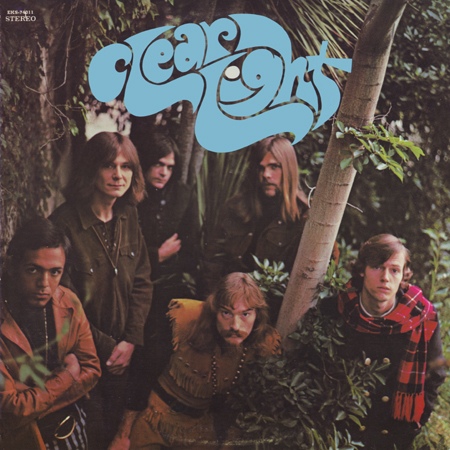
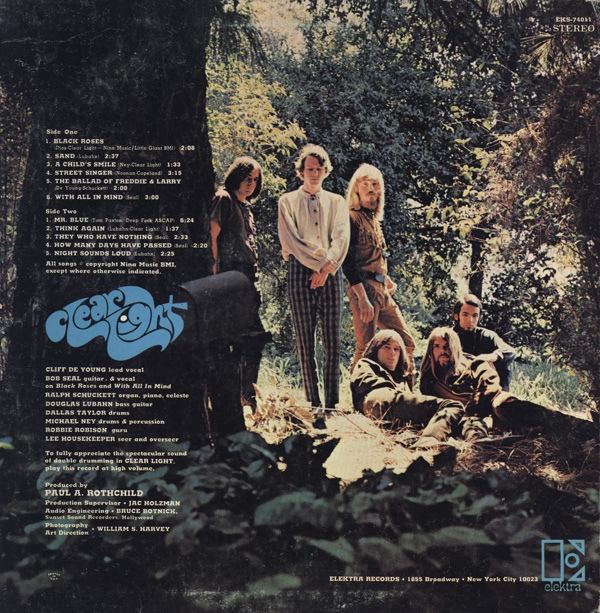
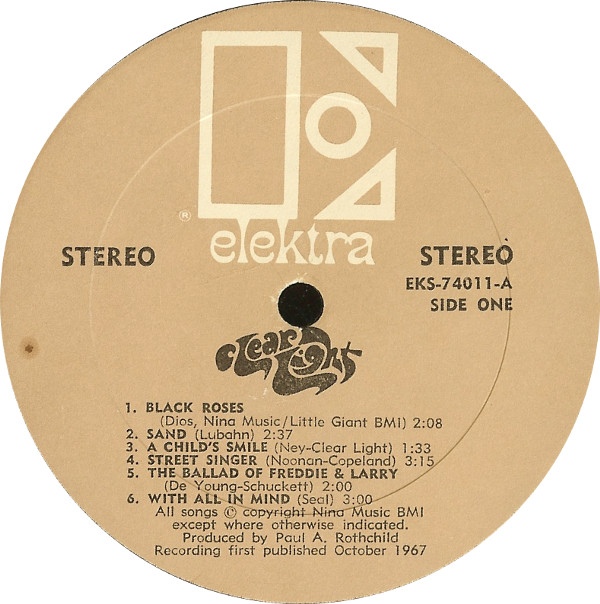
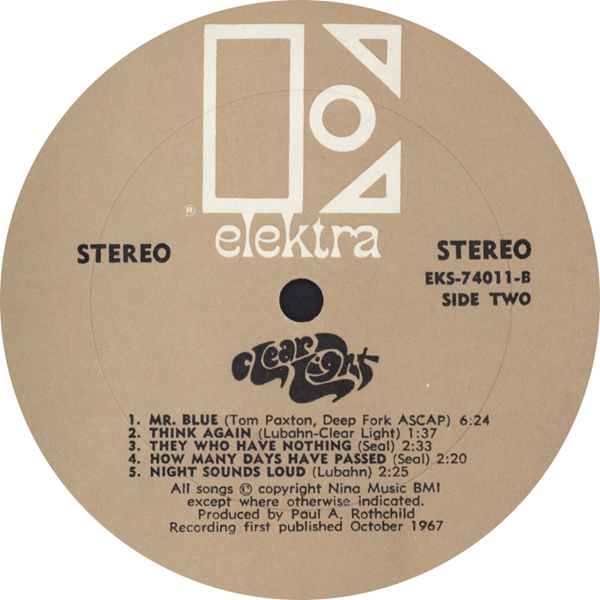
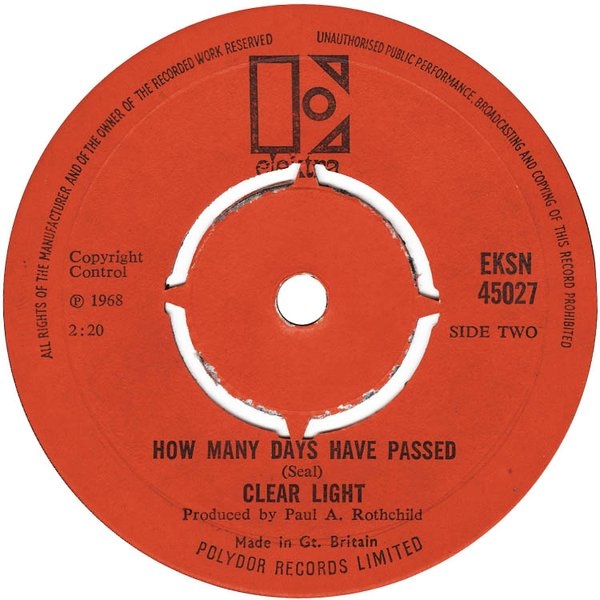
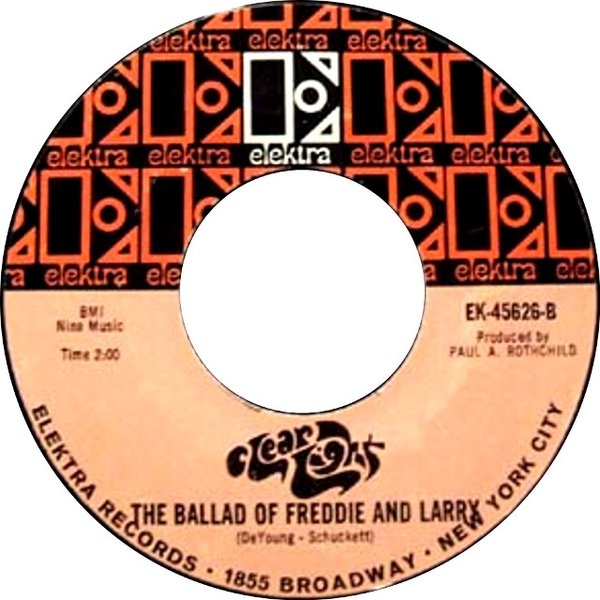
For their eponymous debut album, the members of Clear Light had written nine new songs. They would later augment these songs with two cover versions. Clear Light penned Black Roses with Wolfgang Dios; and A Child’s Smile with Michael Ney. Doug Lubahn wrote Sand, Think Again and Night Sounds Loud. Bob Seal penned With All In Mind, They Who Have Nothing and How Many Days Have Passed. Clear Light’s new vocalist Cliff De Young cowrote The Ballad Of Freddie and Larry with keyboardist Ralph Schuckett. These nine songs would be recorded at one of the Hollywood’s top studios.
Before recording of Clear Light began at Sunset Sound Recorders, the newly named band had made their L.A. live debut. This took place at L.A.’s first love-in on Easter Sunday. Clear Light quickly won over what was an appreciative audience. Buoyed by the success of their live debut, Clear Light were ready to record their eponymous debut album.
When Clear Light arrived at Sunset Sound Recorders, they were met by their manager and producer Paul Rothchild. He was now one of the hottest producers in America, having just finished producing The Doors’ Strange Days. Joining Paul Rothchild in the studio was Elektra Records cofounder Jac Holman. He was the recording and production supervisor. As Paul Rothchild and Jac Holman watched on, Clear Light prepared to record their eponymous debut album.
By then, Clear Light’s lineup included a rhythm section of bassist Doug Lubahn, guitarist Bob Seal and drummers Dallas Taylor and Michael Ney who added percussion. They were joined by Ralph Schuckett, who switched between organ, piano and celesta. Cliff De Young add vocals on nine tracks, while Bob Seal takes charge of vocals on Black Roses and his composition All In Mind. With Paul Rothchild producing Clear Light, surely the album would soon be recorded?
With the addition of keyboardist Ralph Schuckett and new vocalist Cliff De Young, Clear Light could concentrate on completing their debut album. However, producer Paul Rothchild decided that songs recorded before Ralph Schuckett and Cliff De Young joined Clear Light, should be rerecorded. This meant the sessions would take longer. There was no other option though. Paul Rothchild saw the early versions as just work in progress. They just weren’t good enough to make the album. This was disappointing for Clear Light. However, the extra work was worthwhile.
When the songs were rerecorded, and keyboards and new vocals added, some of the songs took on new life and meaning. It was a total transformation, and much more representative of the new Clear Light. Gradually, Paul Rothchild was moulding Clear Light, and began to steer them in a new direction.
With nine songs recorded, Paul Rothchild decided that to complete the album, Clear Light should record two songs by members of Elektra Records’ family. The songs he had chosen were Greg Copeland and Steve Noonan’s Street Singer and Tom Paxton’s Mr. Blue. These two songs Paul Rothchild felt, would be ideal for Cliff De Young’s “Hamlet on acid delivery.” This would prove true. However, by then, Clear Light were beginning to resent Paul Rothchild.
Members of Clear Light felt that their manager and producer was becoming too controlling. He was also a perfectionist, which was no bad thing. However, the band tired of Paul Rothchild’s constant changing things. It was as if he was on a search for sonic perfection. Given the success Paul Rothchild had enjoyed with Love, The Doors and The Paul Butterfield Band, most bands would’ve been willing to listen and learn. Not Clear Light who decided to rebel.
Eventually, something snapped in Clear Light and they began to rebel. They felt Paul Rothchild was too controlling of the band. This may have worked with other bands, including Love, The Doors and The Paul Butterfield Band. However, the members of Clear Light had a rebellious streak, and didn’t take kindly to being constantly told what to do. This wasn’t the only thing the drove a wedge between Clear Light and Paul Rothchild.
By then, guitarist Bob Seals the oldest member of Clear Light was questioning the wisdom of having their producer as a manager. When he spoke out, Bob Seals claims he was singled out for criticism by Paul Rothchild. He remembers doing a guitar overdub on a song he had written. Meanwhile, Neil Young and some big name musicians were watching in the control room. By then, Bob Seals was wound up like a spring. When he stumbled over the guitar part, he claims Paul Rothchild said through the intercom: “you know, there are ten thousand guitar players in this town that can do this track if you can’t.” For Bob Seals this was a crushing blow. It was just as well that the album was almost completed.
When Clear Light was completed, the relationship between Clear Light and Paul Rothchild had sunk to a new low. Elektra Records had scheduled the release of Clear Light for October 1967. However, there was another problem.
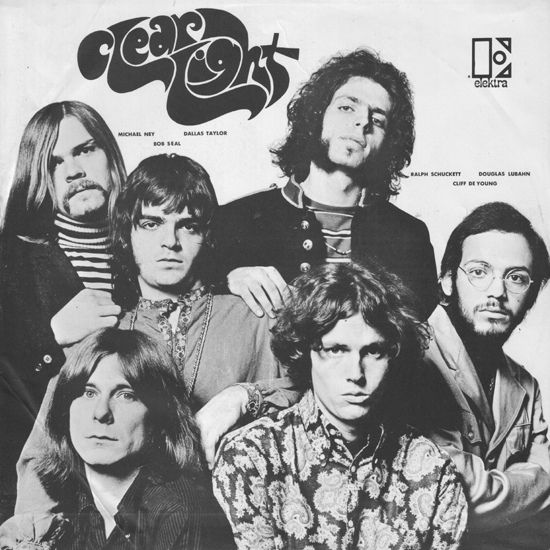
Elektra Records had hired William S. Harvey to shoot the album cover. By then, Robbie Robinson was still a member of Clear Light. However, Elektra Records got round this by describing the former founder member as the band’s “guru” Robbie wasn’t on the photos in the inner sleeve. They feature the new lineup of Clear Spot, and does the instructions “in order to appreciate the spectacular double drumming of Clear Light, play at high volume.”
Whether critics followed these instruction isn’t known. What’s known, is that the reviews of Clear Light were positive on an album of carefully crafted music that veered between folk rock to heavy psychedelia. Producer Paul Rothchild brought the best out of Clear Light on their eponymous debut album, which later became a psychedelic classic.
Clear Light was an album that showcased the two talented vocalists. Bob Seal who provided the folk rock compositions was Clear Light’s secret weapon when he added the lead vocals on Black Roses and With All In Mind. Maybe if Clear Light had looked closer to home, then Bob Seal would’ve solved their vocalist problem? However, Cliff De Young vocal on Street Singer was dramatic and lysergic and was perfectly described as“Hamlet on acid delivery.” Then on Mr. Blue Cliff Young’s vocal was, dramatic, theatrical and menacing, before becoming manic and unhinged on The Ballad Of Freddie and Larry is manic and unhinged. Cliff Young it seems is taking a trip, as Clear Light waltz their way through the song. Doug Lubahn three contributions see Clear Light disappear further down the psychedelic rabbit hole. Sand, Think Again and Night Sounds Loud are prime cuts of heavy psychedelia and are lysergic and trippy. These tracks on Clear Light are a reminder of the golden age of psychedelia.
Following the release of Clear Light, the band embarked on a second tour of the East Coast in December 1967. Clear Light had just released Black Roses as a single, with She’s Ready To Be Free on the flip side.
When Clear Light arrived in New York, they started auditioning new guitarists. Little did Bob Seal realise that he was about to be replaced. His bandmates had stabbed him in the back. They wanted someone less outspoken, someone who would tow the party line. Eventually, Danny “Kootch” Kortchmar won the day.A heartbroken Bob Seal left, and headed to Sausalito, where he began a new life as a bassist. However, Bob Seal had the last laugh.
The new guitarist needed time to learn the band’s songs, and this meant that Clear Light were unable to play live or record. Some of the members of Clear Light picked up some session work to tide them over. However, by the end of February 1968, the latest lineup of Clear Light opened for Jefferson Airplane. Meanwhile, Night Sounds Loud became Clear Light’s third single in Britain. Things seemed to be going well for Clear Light.
They even got as far as beginning work on their sophomore album. However, the loss of Bob Seal had hit Clear Light hard, and they were no longer the same band. Cliff De Young realised this, and left the band in June 1969. This was perfect timing, as the rest of Clear Light had been looking for a new vocalist.
Dave Palmer who went on to join Steely Dan was first choice. When this didn’t work out, Duane Allman was approached, and talks took place. However, nothing came of it, and by September 1968, Clear Light split-up.
Looking back, the Clear Light story is one of what might have been. If Clear Light had continued to work with Paul Rothchild, what heights might they have reached? Would Clear Light have followed in the footsteps of their label mates and jamming partners The Doors? After all Paul Rothchild,had an enviable track record.
Paul Rothchild produced everyone from Tim Buckley to Love, The Doors, Janis Joplin, Fred Neil and The Paul Butterfield Blues Band. Part of his recipe for success was he was a perfectionist, who was constantly looking to improve the slightest detail. This worked and got results with many bands. However, Clear Light felt stifled, and rebelled.
This was a great shame. Clear Light were a talented band, who could’ve should’ve reached greater heights. However, by the end of the recording of Clear Light, their partnership with Paul Rothchild was all but over. Over the next eleven months, Clear Light seemed to implode. Guitarist Bob Seal, who had played an important part in the sound and success of Clear Light was betrayed, when his band mates started auditioning for a new guitarist. This backfired, and Clear Light were never the same tight unit. Their answer was to replace vocalist Cliff De Young. However, he beat them to it, and left Clear Spot. By then, the game was up for Clear Spot, and by September 1968 this talented and versatile band called time on their career.
Sadly, just over two years after Michael Ney first met Robbie Robinson, the adventure was over for Clear Light. A lot had happened since then. The lineup and name had changed several times, managers had come and gone, and Clear Light had recorded a stonewall psychedelic classic. Sadly, nearly fifty years after Clear Light called time on their career, they’re still one of music’s best kept secrets. However, Clear Light’s music is appreciated by discerning few musical connoisseurs who have discovered this psychedelic classic, which was recording by a group who should’ve gone on to reach heights. Sadly, for Clear Light, theirs is A Story Of What Might Have Been?
Clear Light-A Story Of What Might Have Been?
EMILIO APARICIO-SONIC SCIENTIST AND MUSICAL PIONEER.
Emilio Aparicio-Sonic Scientist and Musical Pioneer.
Nowadays, the words pioneer and innovator tend to be overused, and musicians who create truly groundbreaking music seem to be sadly, few and far between. While there are some pioneering musicians whose music continues to push musical boundaries, there are no longer as many as there once were. Especially in the sixties and seventies, which was a golden period for music that saw creativity and innovation blossom.
The sixties and seventies was also when Emilio Aparicio, an electronic experimental musician from Guatemala, who pioneered the use of the Moog synth in Latin America. In doing so, this sonic scientist and musical pioneer created groundbreaking music that was way ahead of the musical curve. This was the start of the career for a man who later, would become one of Guatemala’s most innovative musicians and enjoy a career as an academic and inventor.
Before embarking upon a musical career, Emilio Aparicio was a student at the National Music School, in Guatemala City. That was where he first came across fellow student and member of Abularach dynasty, Roberto Abularach. Twenty-one year Roberto Abularach came from a very different background to Emilio Aparicio, but their paths would cross after they had completed their respective studies.
After leaving the National Music School, the friendship between Emilio Aparicio and Roberto Abularach continued. By then, Roberto Abularach was managing the La Estrella warehouse in the Zona 1. It was where musical instruments were imported into Guatemala and sold. However, before long the warehouse was a favourite place for local musicians and bands.
Soon members of Apple Pie, Modulo 5 and Cuerpo y Alma and were hanging out at the La Estrella warehouse. So were local musicians who weren’t part of bands. Some of these musicians went on to form bands, including Les Prince. Many of the bands and musicians were supported by Roberto Abularach, who became their patron. There was no ulterior motive to this, as Roberto Abularach was a kind, generous and wealthy young man.
Not only did Roberto Abularach’s generosity include helping musicians buy their instruments, he sometimes gave instruments to musicians embarking upon musical careers. One of the musicians who made their way to the La Estrella warehouse was Emilio Aparicio.
A graduate of the National Music School, Emilio Aparicio had two passions in life, music and electronics. When he entered the La Estrella warehouse he remembered Roberto Abularach from the National Music School. Soon, they started talking and realised that they had much in common. This was the start of a close friendship.
Emilio Aparicio and Roberto Abularach enjoyed long conversations on music and electronics. By then, Roberto Abularach had spotted Emilio Aparicio’s potential, and was keen to help his friend.
The opportunity arose when Emilio Aparicio decided to buy purchase what was his very first piano. However, the piano was expensive, so Roberto Abularach helped his friend buy the piano. This Emilio Aparicio put to good use, and his talent blossomed.
Over the next year, Emilio Aparicio interest in electronic and experimental music grew. This was something he discussed at length with his friend Roberto Abularach, who in 1969 was about to journey to New York.
During Roberto Abularach’s visit to New York, he visited the Modern Art Museum. That was where Roberto Abularach saw the very first Moog synth, which had been presented to the Modern Art Museum by its founder Robert Moog. Having seen the Moog synth, Roberto Abularach decided to purchase one directly from its inventor, Robert Moog and take it home to Guatemala.
When Roberto Abularach met Robert Moog, he bought a 3P modular synth which bore the serial number 00003. This was only the third Moog modular synth that Robert Moog had made, and Roberto Abularach was taking it home to Guatemala, where it would go to a good home.
Given his interest in electronic and experimental music, it seemed fitting that Roberto Abularach gave the Moog 3P modular synth to his friend Emilio Aparicio. His passion for music and electronics, and interest in both electronic and experimental music meant he would put the Moog to good use.
Having gifted the Moog 3P modular synth to Emilio Aparicio, Roberto Abularach had it installed in his friend’s home in late 1969. Roberto Abularach told Emilio Aparicio that the Moog was his, and he had complete freedom to use the synth in whatever way he wished. While Emilio Aparicio had gained a synth, he had also gained a patron and the man who would support and champion his music.
From late-1969 until 1971, Emilio Aparicio transformed a room in Roberto Abularach country mansion in Zona 12 into a makeshift studio. This was the perfect location for a recording studio, as the country house was empty for much of the year, which allowed Emilio Aparicio to concentrate all his efforts on writing and recording new and innovative music.
In his new studio, was Emilio Aparicio’s newly acquired Moog 3P modular synth and some of the early drum machines. Compared to the drum machine available nowadays, the drum machines were almost primitive. Meanwhile, it took time and patience to work with the Moog 3P modular synth.
It was a relatively instrument which its inventor Robert Moog had demonstrated in early 1967. Even two years later, only a relatively small number of people knew how to setup and use the Moog synth. Through patience and persistence this now included Emilio Aparicio, who had even worked out how to deal with a couple of common problems.
One of the problems that Moog users encountered were that the its oscillators were somewhat unstable. However, soon, Emilio Aparicio realised that if he switched the machine on way before the session began, this allowed them to warm up. Occasionally, the Moog failed to stay in frequency and the tuning was out. Emilio Aparicio knew to expect teething problems with such a complex and groundbreaking piece of equipment. Having got to grips with the Moog 3P modular synth, Emilio Aparicio started making music.
Sometimes, the seclusion that Emilio Aparicio enjoyed was interrupted when Roberto Abularach arrived at his country house. Sometimes, he was joined by various musicians and poets, and the assembled company experimented with hallucinogenic drugs including LSD and Floripondio. This helped Emilio Aparicio open the doors of perception, as he created experimental, innovative and ambitious music.
Not only did the Moog 3P modular synth transform now Emilio Aparicio made music, but also what type of music he made. It was unlike most of the music being made within Guatemala, especially what the pop and rock bands were making. Instead, the music that Emilio Aparicio was making had more in common with the electronic and experimental music being made in Europe and America.
As the sixties gave way to the seventies, Emilio Aparicio continued to spend long periods of time in the studio he had built in Roberto Abularach’s country home. Little did anyone who visited the studio or even heard the music realised that Emilio Aparicio was making the music of tomorrow, today.
After two years locked away in his studio, Emilio Aparicio had completed ten tracks. There was only one problem, though, Emilio Aparicio had no idea what to do with the music?
Emilio Aparicio wasn’t chasing the rock star dream, and had no interest in fane and fortune. His interest was making music. Fortunately, his friend and patron, Roberto Abularach, who continued to champion Emilio Aparicio’s pioneering music had come up with a plan to introduce his friend’s music to a wider audience.
To do this, Roberto Abularach planned to use one of one of the Abularach dynasty’s businesses, Salvavidas Rojas. It was a popular drink within Guatemala, and Roberto Abularach had come up with a plan that if customers sent four corks from Salvavidas Rojas’ bottles and three quetzal coins they would receive the five volumes of 45 singles featuring the music that Emilio Aparicio had recorded between late-1969 and 1971. This must have seemed a good idea at the time.
Sadly, very few people took the time to collect the corks and return them to Salvavidas Rojas. Those that sent away for Emilio Aparicio’s five singles, didn’t understand the music. It was unlike anything they had heard on the radio or bought in local record shops. What didn’t help was that Emilio Aparicio didn’t play live and wasn’t part of a band. Instead, he was a relative unknown, who was part scientist, sonic explorer and musician, whose natural habitat was the recording studio. That was where he had spent the best part of two years recording the five singles that were given away with bottles of Salvavidas Rojas.
It was frustrating that people who sent away for the records often threw them away, or that they were recycled with the other discarded vinyl. Meanwhile, in the Salvavidas Rojas factory piles of unclaimed vinyl sat in the store rooms. They too, were destined for the recycling plant. This was something that many people would later regret.
Following the failure of his first release, Emilio Aparicio dusted himself down and created his next project, La Banda Plastica. Just like his previous project, La Banda Plastica was an experimental and non-commercial project. It was signed to Guatemala’s biggest record label Dideca. They gave Emilio Aparicio total freedom to record whatever he wanted.
This was unusual for Dideca, who usually told bands and artists what type of sound they expected from them. Dideca frowned upon music that wasn’t commercial or had an aggressive sound. That was a no-no. The exception to this was Emilio Aparicio and his new La Banda Plastica project. However, deep down, executives at Dideca and Emilio Aparicio knew that a single from La Banda Plastica had no commercial appeal. La Banda Plastica released just a couple of singles, including Libertad Viene, Libertad Va. Neither single sold well, and the majority of the singles were given away to DJs at radio stations during the Christmas period. This brought to an end what was a somewhat surreal period for Emilio Aparicio.
Sadly, after the commercial failure of La Banda Plastica, Emilio Aparicio became a much more reclusive figure, who recorded purely for his own interest. The music Emilio Aparicio made he had no intention of releasing. That was his hobby, while the jingles and videos he made for television and technical companies paid the bills.
Later, Emilio Aparicio changed direction and started working with computers. He went on to build the first ever computer to be used by the National Bank of Guatemala. Emilio Aparicio had come a long way from when he started working with his Moog synth.
By the early eighties, Emilio Aparicio was one of the leading lights in electronics and technology in Guatemala. He was also working on a new piece of musical technology which he hoped would be used by musicians and bands across the world. This was a guitar synth, and he presented the prototype at Audio Engineering Society’s conference when it took place in Anaheim, California, in 1982. While Audio Research bought patent for the guitar synth, developing it proved problematic. Emilio Aparicio’s invention never made the same impression as Robert Moog’s Moog 3P modular synth.
Still, Emilio Aparicio never lost his love of music, and he continued to record at the home he shared with his wife. Now Emilio Aparicio was recording onto cassettes, which were cheaper and allowed him to record much more music. These recordings were only heard by the person who was closest to him…his wife. She was his musical confidante. It was as if Emilio Aparicio feared that his music would be rejected for a third time. As a result, the music he recorded has never been released.
While music was Emilio Aparicio’s first love, he gradually started to concentrate his efforts on video art in his spare time. By day, Emilio Aparicio was a professor at the Galileo University, which was founded on October ’31st’ 2000 in Guatemala City. Emilio Aparicio taught a new generation of computer scientists, who knew nothing about his former career in music.
Sadly, Emilio Aparicio fell victim to prostate cancer and passed away in 2012. That day, Guatemala lost a musical pioneer, who pushed musical boundaries to their limits, and sometimes, way beyond.
Proof of that was the genre-melting music that Emilio Aparicio made between late-1969 and the early seventies. Sadly, Emilio Aparicio only released eight singles, although he later went on to write the music for television, films and adverts. However, the singles that Emilio Aparicio released were way ahead of their time and incorporated elements of disparate musical genres. This included everything from electronic and experimental music, to abstract and avant-garde, through to Latin and psychedelia and even dub, jazz, musique concrète pop and rock. Emilio Aparicio who was a true musical pioneer combined the music of the past and present to make the music of the future.
Sadly, apart from a few aficionados of electronic and experimental music, sadly, very few people will have heard of Emilio Aparicio or the music he made. However, this little known musical pioneer, who created ambitious, innovative and imaginative music during what was a short, but unsuccessful recording career. However, Emilio Aparicio music has the potential to inspire a new generation of electronic musicians, and is a reminder of a sonic scientist and musical pioneer who created groundbreaking music that was way ahead of its time.
Emilio Aparicio-Sonic Scientist and Musical Pioneer.
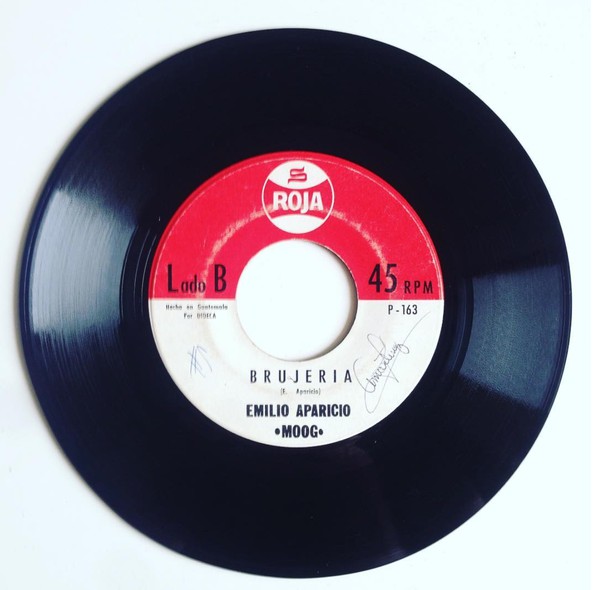

MORENA Y CLARA-NO LLORES MAS.
Morena Y Clara-No Llores Más.
Label: Pharaway Sounds.
As 1973 dawned, a new Spanish flamenco-pop duo Morena y Clara, were about to make their debut at the now legendary tablao restaurant Caripen in Madrid. This was where just Los Grecas had been discovered just a few months previously by producer José Luis de Carlos and were signed to CBS by the time Morena Y Clara took to the stage at Caripen. Little did the two members of Morena y Clara realise that they and Los Grecas would go on to enjoy a friendly rivalry as they became two of the most successful Spanish female duos between 1974 and 1978.
The story started when two sisters from Madrid, in Spain, Ana María Muñoz Hernández and Carmen Muñoz Hernández decided to form a new vocal duo together. Ana María Muñoz Hernández dawned the moniker Morena, which translates as brunette, while Carmen Muñoz Hernández became Clara, which translates as blond. With that Morena y Clara was born, and not long after that, they made their debut at the tablao restaurant Caripen in Madrid.
Later in 1973, Morena y Clara made their recording debut, when they were invited by their cousin Juan Antonio Jiménez to add backing vocals on Los Chicos debut single Ni Más Ni Menos. Juan Antonio Jiménez was in the process of establishing himself as a songwriter, and Ni Más Ni Menos which was released by Philips later in 1973 his latest song. However, over next few years, Juan Antonio Jiménez would become one of Spain’s most successful songwriters, and would help play his part in the rise and rise of a number of artists and groups. This included Morena y Clara.
Their career began in earnest in 1974, partly due to the success of Los Grecas, and the rise in popularity of the new “gipsy rock” sound, which fused female flamenco with funk and progressive rock. Playing a part in the success of the new “gipsy rock” sound, were composer, arranger and pianist Felipe Campuzano, songwriter Juan Antonio Jiménez and Portuguese guitarist and producer Johnny Galvao, who nowadays, are regarded as three of the architects of this new sound. Its popularity was growing, and after Los Grecas single Te Estoy Amando Locamente sold over 500,000 copies in 1973, record companies were keen to cash-in on the success of “gipsy rock.” This was good news for Morena y Clara.
The other record labels knew that CBS had the most successful “gipsy rock” band, Los Grecas on their roster, and started looking for bands that could replicate their success. A&R executives were looking for up-and-coming “gipsy rock band.” However, it was television presenter and manager Lauren Postigo, that discovered Morena y Clara who were performing one night at the Caripen restaurant.
Lauren Postigo was married to Carmen Salazar La Camboria, a flamenco dancer who was now working as a producer. She and her husband would play their part on the success of Morena y Clara. Before that, Lauren Postigo secured a contract for Morena y Clara who were performing one night at the Barcelona based record company Discophon. This was home to Morena y Clara between 1974 and 1978, and where they released the fourteen songs on No Llores Más, which has just been released by Pharaway Sounds, an imprint of Guerssen Records.
Now signed to Discophon, Morena y Clara, began recording the two songs that became their debut single. This was No Llores Más, with Dejé De Quererte destined for the B-Side. Both songs were penned by Juan Antonio Jiménez and Spanish guitarist Carlos Villa, with Lauren Postigo taking charge of production. The result was two songs where flamenco vocals and emotive lyrics were combined with arrangement that bore a close resemblance to progressive rock. That wasn’t only similarity.
When Discophon released No Llores Más, with Dejé De Quererte on the B-Side. in 1974, critics noticed similarities with songs that had been released by CBS and Phillips. However, many of the songs released by groups like Morena y Clara and Los Chicos shared much in common sonically. This didn’t matter to Morena y Clara when No Llores Más gave No Llores Más their first hit single. Both songs also feature No Llores Más compilation.
A year after the release of their debut single Morena y Clara returned with their sophomore single Morena y Clara No Me Quieres, No, which featured Serás Mi Luz on the B-Side. Both sides were penned and produced by Lauren Postigo, because Morena y Clara’s cousin Juan Antonio Jiménez was now focusing on writing songs for Los Chicos. While his songs were a loss to Morena y Clara, Lauren Postigo was a talented songwriter and producer.
Proof of this was Morena y Clara’s sophomore single No Me Quieres. Although it had a similar sound to the nonaino loveless songs which had pioneered by Juan Antonio Jiménez, Morena y Clara with the help of producer gave this sound a twist. They combined it with an orchestral arrangement and Morena y Clara’s progressive funk rock sound. The result was a melodic and memorable mixture of drama and emotion that introduced Morena y Clara’s music to a new audience.
Later in 1975, Morena y Clara were introduced to Ricardo Jiménez Barrull, who was the nephew of the Galician singing brothers El Luis. Ricardo Jiménez Barrull was in the process of forging a successful musical career, and later, would supply Morena y Clara with songs.
When the time came for Spain to choose their entry into the 1976 Eurovision Song Contest, Morena y Clara made it onto the shortlist with u Mal Comportamiento. However, Braulio who was a popular singer secured the most votes from the television audience, and headed to The Hague where he sang Sobran las palabras. However, he ended up a disappointing twelfth out of eighteen contestants.
Despite not making it all the way to The Hague, Morena y Clara returned Tu Mal Comportamiento as their third single later in 1976. Just like the B-Side El Chico Que Yo Mas Quiero it was written and produced by Lauren Postigo. Tu Mal Comportamiento was one of his finest productions for Morena y Clara, and featured dancing strings and dramatic drums while Morena y Clara delivered a soulful vocal powerhouse. It was one of their finest songs, and showed just what Morena y Clara was capable of, as their popularity continued to grow.
Later in 1976, Discophon released Morena y Clara’s long-awaited eponymous debut was released, with some critics comparing it to Las Grecas’ Gipsy Rock album. Morena y Clara featured ten tracks including four new songs. This included Sé Que Tú Me Querías and Buscando Alegría which were penned by Lauren Postigo. They were joined by Volveré A Soñar which was written by Isidro Muñoz and José Miguel. These were joined by Morena y Clara’s first three singles and their respective B-Sides. This meant that Llores Más and the B-Side Dejé De Quererte were joined by Morena y Clara’s sophomore single No Me Quieres, No, and the B-Side Serás Mi Luz on the B-Side. They were joined by Morena y Clara’s third single Tu Mal Comportamiento and its B-Side El Chico Que Yo Mas Quiero. These nine tracks feature the No Llores Más compilation, and are a reminder of the early years of the Lauren Postigo and Morena y Clara partnership which was proving a successful one. Morena y Clara’s star was in the ascendancy.
By the time Morena y Clara released their eponymous sophomore album, Ricardo Jiménez Barrull was now supplying the duo with songs. Ten of his compositions featured on Morena y Clara, which were produced by Lauren Postigo. This includes Todo Pasó and Quiero Que Tú Me Beses which feature on the No Llores Más compilation. However, neither of these songs were released as singles.
Morena y Clara’s fourth single was Hoy Yo Me Encuentro Sola, with Todo Pasó relegated to the B-Side. When the single was released in 1977, it failed to replicate the sales of Morena y Clara’s previous singles. Neither did the followup single El Camino Del Amor, which featured Quiero Que Tú Me Beses on the B-Side. It was released later in 1977 and confirmed that Morena y Clara’s was on the decline. This was a worrying time for Morena y Clara who up until then, had been a popular act. However, music was changing, and sadly, Morena y Clara were no long as popular.
The following year, 1978, Morena Y Clara returned with their third eponymous album. It was produced by Lauren Postigo while Ricardo Jiménez Barrull wrote nine of the ten tracks. This included Aquellos Años, Eres Fiel A Tus Caprichos and Ya No Te Guardo Rencor, which feature on the recent compilation No Llores Más. Despite Morena y Clara maturing and blossoming as artists, their third album of genre-melting music failed commercially. Morena Y Clara was the least successful album of the duo’s career, and sadly, that was the end of the road for them.
Morena y Clara planned to record and release a fourth album for Discophon, but that never materialised. Discophon must have decided to cut their losses, and Morena y Clara were left without a label in 1978.
By 1979, producer Jose Luiz de Carlos somewhat belatedly started paying attention to Morena y Clara. They sent demos to CBS which were well received, but ultimately, CBS decided not to offer Morena y Clara a recording contract. There would be no fourth album from Morena y Clara.
Even after CBS declined to offer Morena y Clara a recording contract, Morena y Clara didn’t give up hope and continued to look for a label. When they failed to secure a recording contract, Morena y Clara realised their time was up after a triumvirate of carefully crafted albums.
These three albums, which were released between 1976 and 1978 were all entitled Morena y Clara, featured a groundbreaking fusion of flamenco and rock that provided the backdrop for sassy, sensual lyrics. The vocals were delivered with power, passion and were full of emotion and showcased two talented sisters who could’ve and should’ve enjoyed a longer and more successful career.
Sadly, by the time Morena y Clara released their sophomore album in 1977, music was changing. Disco was at the peak of its popularity, and other genres were suffering. As a result, many albums slipped under the musical radar. That was the case with Morena y Clara in 1977 and Morena y Clara in 1978. These albums are hugely underrated and best described as hidden gems, with their pioneering fusion of funk, Latin, pop, progressive rock, rhumba and rock. Proof of that is No Llores Más, which has just been released by Pharaway Sounds, an imprint of Guerssen Record and is a reminder of Morena y Clara at the peak of their powers between 1974 and 1978 when they were signed to the Barcelona based Discophon label.
Morena Y Clara-No Llores Más.




SCHLAMMPEITZIGER-DAMENBARTBLICK AUF PREGNANT HILL.
Schlammpeitziger-Damenbartblick auf Pregnant Hill.
Label: Bureau B.
When German electronic musician Jo Zimmermann embarked upon a solo career in 1992, like many artists, he decided to adopt a new moniker, Schlammpeitziger. Since then, Jo Zimmermann has released ten albums, which will soon become eleven with the release of Damenbartblick auf Pregnant Hill on Hamburg based Bureau B on the “19th” of January 2018. This is sure to prompt another round of people asking him what is a Schlammpeitziger?
It’s a question that Jo Zimmermann has answered more times than he cares to remember over the past twenty-odd years. So much so, that if he had a Euro for every time he answered the question, he would be a rich man. However, each time, Jo Zimmermann has been asked the question he patiently explains that a Schlammpeitziger is a weatherfish that lives in the flat muddy waters of the European and Asian plains. However, this isn’t the only questing that Jo Zimmermann has been asked during his three decade solo career.
Having dawned his Schlammpeitziger moniker, the man formerly known as Jo Zimmerman released his debut album Erdrauchharnschleck on cassette in 1993, on Frank Dommert’s Entenpfuhl label. It specialised in releasing music by experimental electronic artists, and was the perfect label to release the first album by Schlammpeitziger. It was the first of several albums to make good use of cheap Casio synths and composite nouns in the title.
That was the case a year later, in 1994, when Master’s Cosmic Music and Schlammpeitziger released the split LP Let The Star Shine In/Burgfensterrhytmuskuckloch on the Gefriem label. This was the label that preceded A-Musik, where Schlammpeitziger would spend the majority of his career.
By the time, Schlammpeitziger returned in 1996 with his third album Freundlichbaracudamelodieliedgut, interest was growing in his abstract and innovative music. Many of those who bought the album were amazed that it had been made with cheap Casio synths, which Schlammpeitziger had put to good use on his first three albums.
Schlammpeitziger returned with his fourth album Spacerokkmountainrutschquartier in 1997. By then, his music continued to evolve and moving in the direction of IDM. With each album, the chameleon like Schlammpeitziger’s music headed in new directions. That was no surprise.
Those who have met Schlammpeitziger describe him as enthusiastic and intelligent man who has a passion not just for music, but also for his incredibly detailed paintings. They’re often tinged with humour, but other times, can be complex or used to simplify a subject. These paintings are sometimes influenced by real life events, but other times, detail Schlammpeitziger’s perception. When that is the case, he paints quickly the energy flowing through him. Sometimes, the result looks like the formulas that can be found in seismographs studies, while other times Schlammpeitziger translates the invisible vibrations that flow through him. Suddenly, new alphabets and constellations of parallel worlds baring names like Wuthaltebucht and Hydraulicmeistershalbtagstanz are the results of Schlammpeitziger’s efforts. These artworks are the antithesis to the mundane reality of daily life.
Just a year after the release of Schlammpeitziger’s fourth album Spacerokkmountainrutschquartier in 1997, Jo Zimmermann and F.X. Randomiz’s new musical vehicle Holosud released their debut album Fijnewas Afpompen. This was the first of two projects that Jo Zimmermann was involved with. The second came later in his career.
By 1999, Schlammpeitziger’s music continued to evolve, and the musical chameleon released his latest album, Augenwischwaldmoppgeflöte. It was another innovative album that this time, combined elements of experimental music with synth pop. This was just the latest stylistic change from Schlammpeitziger
Two years later, in 2001, Schlammpeitziger released Collected Simplesongs Of My Temporary Past which was a compilation of music from that covered the first decade of his career. Collected Simplesongs Of My Temporary Past was released in America, Britain and Japan, and introduced Schlammpeitziger’s music to a much wider audience. For many music fans outside of Germany, this was their introduction to Schlammpeitziger. They had some catching up to do before Schlammpeitziger returned with his next studio album.
This was Everything Without All Inclusive, which was the released by Sonig in conjunction with A-Musik, which had been Schlammpeitziger’s home since his third album Freundlichbaracudamelodieliedgut in 1996. However, Everything Without All Inclusive was Schlammpeitziger’s swan-song for A-Musik, and he bowed out in style with an album that fused electronic, experimental and synth pop.
The other album Jo Zimmermann released during 2003 was the debut album from a new musical collective, Electrosold Collectif. They released their debut album Les Insectes in 2003, with their sophomore album The Radio Panink Sessions following in 2004. This was the last album that Electrosold Collectif released, and after this, Jo Zimmermann dawned his Schlammpeitziger moniker once again.
Now signed to Sonig, five years passed before Schlammpeitziger released what was an ambitious, genre-melting album Schwingstelle Für Rauschabzug in 2008. It was hailed as one of the finest albums of Schlammpeitziger’s career, and marked the start of a new era for the maverick musician.
Another three years passed before Schlammpeitziger returned with his ninth album Vorausschauende Bebauung was released on Sonig in 2011. It found Schlammpeitziger picking up where he left off on Schwingstelle Für Rauschabzug, as he released another album of quality music. Some critics felt that it was almost as good as its predecessor, while others felt this was one of Schlammpeitziger’s finest hours. If it was, this was a fitting way to leave the Sonig label.
After another three-year wait Schlammpeitziger released his tenth album, What’s Fruit? It was his debut album for the Pingipung label, and found favour with critics and record buyers. Despite the reception of What’s Fruit, Schlammpeitziger didn’t release a second album on he Pingipung label, and instead, signed to the Hamburg-based Bureau B.
Just under four years later, and Schlammpeitziger is back with his tenth studio album, and eleventh overall, Damenbartblick auf Pregnant Hill. It’s described as the musical equivalent of a train journey, with passengers boarding and leaving during Damenbartblick auf Pregnant Hill. Schlammpeitziger watches this unfold, and documents the journey, and the people he encounters.
Just a lone bass synth opens Ekirlu Kong before the sound of birds squawking is joined by synths and Schlammpeitziger’s seductive soliloquy. It sits above the melodic mid-tempo arrangement to a song that is reminiscent of the Pet Shop Boys in their prime. Meanwhile, synths, keyboards and percussion play their part in this melodic and sultry paean that sets the bar high for the rest of Damenbartblick auf Pregnant Hill.
There’s an almost industrial sound to Bock Bounceburg, as synths, beep, squeak, squelch and help drive this carefully arrangement along. Sometimes, the arrangement replicates being onboard a train as the bass drum pounds. Suddenly, it’s like being aboard Kraftwerk’s Trans-Europe Express, albeit with a funky, dancefloor and irresistibly catchy soundtrack as the passengers thank their lucky stars that they eschewed journeying via the Autobahn.
Damenbartblick is another memorable, melodic and dreamy fusion of electronica, synth pop and Schlammpeitziger’s unique brand of funk. It’s a potent and sometimes futuristic combination as handclaps combine with crisp beats and a bass synth that has been honed and tamed, meaning it sits lower in the mix. This allows more room for the rest of Schlammpeitziger’s sonic palette, as the music veers between mesmeric, lysergic, dreamy, futuristic and funky. Despite the music sometimes becoming mesmeric, there’s some a balletic and elegant sound to what’s one of Schlammpeitziger’s finest tracks on Damenbartblick auf Pregnant Hill.
Straight away, Smooth Motion Kaukraut is reminiscent of some of the music being made in Germany during the seventies and eighties. It wasn’t just innovative, but influential and soon, artists all over Europe had been inspired by the music. Here Schlammpeitziger pays homage to Germany’s musical past, and gives it a new twist during a carefully crafted, slick and melodic track that combines the music of the past with the music of 2018.
Compared to the previous track, there’s a hesitancy to Kandierter Jammerlochlappen which gradually takes shape. It’s as if Schlammpeitziger is toying with the listener, before a futuristic, moderne sometimes hypnotic and even rocky sounding track unfolds. It’s full of subtleties and surprises as the track takes a series of twists and turns, as Schlammpeitziger throws the occasional curveball. What follows is a track that isn’t just funky and futuristic, but also has a balletic and melodic sound that is truly irresistible.
Filters are applied to the drums that provide the heartbeat to Angerrestbay before handclaps, buzzing synth, keyboards and searing rocky guitar are added. Nothing is quite as it seems, with effects transforming the dry signal and the instruments taking on a new sounds. That is apart from Schlammpeitziger’s soliloquy. He’s no diplomat, and his delivery is deadpan and fiery as he tells it like it is, sparing nobody’s feelings. Meanwhile, layers of music unfold, with synths and keyboards being joined later, by a funky and rocky guitar. Still effects are deployed, and part of the arrangement is panned which proves effective. By then, Schlammpeitziger’s soliloquy and his fusion of electronica, funk, rock and synth pop proves to be a successful and catchy combination.
Wasserstopf is full of sci-fi sounds, beeps and squeaks before an eerie, vocoded vocal and dubby sound are added later. By then, futuristic and otherworldly describes Wasserstopf. So too does cinematic, lysergic and mesmeric as Schlammpeitziger paints pictures that are rich in imagery during this innovative soundscape.
Just a bass synth plays as What I Got closes Damenbartblick auf Pregnant Hill. The dark, deliberate bass synth is joined by a glacial synth before beeps, squeaks and percussive sounds combine. They provide the backdrop to Schlammpeitziger’s soliloquy as keyboards, synths and drums provide the backdrop as the lyrics are tinged with humour, and verge on the surreal. However, the arrangement has been carefully crafted and once again, showcase Schlammpeitziger’s considerable talents.
After a journey where Schlammpeitziger’s train stops at eight stations, the musical maverick’s eleventh album Damenbartblick auf Pregnant Hill is over. It will be released by Bureau B on the “19th” of January 2018, and marks the welcome return of Schlammpeitziger. He marks his return with what’s the finest album of his three decade career Damenbartblick auf Pregnant Hill. That is no exaggeration.
Damenbartblick auf Pregnant Hill is without doubt Schlammpeitziger’s finest hour, and finds him fusing elements of avant-garde with the Berlin School, electronica, experimental, funk, industrial, Krautrock, new wave, rock and synth pop. It’s an album that has been influenced by German music’s past, and also by a myriad of disparate musical genres. They play their part in an album that veers between cinematic and futuristic, to hook-laden, funky and irresistible album from Schlammpeitziger. He reaches new heights on Damenbartblick auf Pregnant Hill which his a carefully crafted, genre-melting and career-defining album from Schlammpeitziger.
Schlammpeitziger-Damenbartblick auf Pregnant Hill.


BEYOND-AWAKENING BEYOND.
Beyond-Awakening Beyond.
As the hundredth anniversary of the end of World War 1 fast approaches, sadly, the world faces many of the same problems in 2018 than in did back in 1918. Still parts of the world are at war, while famine and poverty are rife in a society that is still divided between the haves and the have-nots. Proof of that is America, where five percent of the population are thought to control ninety-five percent of the wealth. As a result, the gap between rich and poor widens with every year. This is having a huge effect on people’s lives not just in America, but across the world. Many people are in agreement that something has to be done, but everyone has a different solution to the problems facing the world.
This includes one of the greatest female vocalists of her generation Tina Turner, who lent her voice to Awakening Beyond, which is the fourth and latest album by Beyond, a project that was founded by Regula and Beat Curti in Switzerland in 2007. Nine years later, and Tina Tuner was one of six women from very different backgrounds, who traveled from America, India, Israel, Nepal, Switzerland and Syria, to Abbey Road Studio in London in 2016, to record Awakening Beyond. When Beyond released Awakening Beyond in late 2017, this was just the latest chapter in a story that began ten years ago in Switzerland.
That was where Swiss vocalist and cofounder of the Beyond, Regula Curti had a life-changing experience as she watched the sun rise her home in Switzerland. This was something she did every day in life. However, this day was different, as suddenly, Regula Curti felt at peace with the world. It was as if she had been experienced a glimpse of enlightenment, as she watched the sun rise whilst experiencing an intense sense of presence. Regula Curti was happy to be alive, and wanted to share this life-changing experience with the world. The way she would do this, was with her music.
Regula Curti recollects what she decided to do now that her life had changed forevermore. “I wanted to bring music to the world, to help other people have that same experience, the experience of being fully alive, of having the strength to change something in their lives. To feel fully connected to the world, with love and with acceptance.”
The longing that Regula Curti felt and experienced, inspired her to create a variety of projects, that uses music and recitation to transformative ends. This includes Beyond’s eponymous debut album, which featured Tina Turner, Regula Curti and Dechen Shak-Dagsay. When Beyond was released, it was blessed by the Dali Lama.
After the success of Beyond, Tina Turner, Regula Curti and Dechen Shak-Dagsay returned in 2011 with their sophomore album Children Beyond. It continued to get across Beyond’s message, as did their third album Beyond ‘Love Within” when it was released in June 2014. This time three became four when Tina Turner, Regula Curti and Dechen Shak-Dagsay were joined by Sawani Shende who returned for the recording of Awakening Beyond in 2016.
By then, Regula Curti had been exploring the link between music, healing, and spiritual change for many years. This is something she is passionate about, and has committed a lot of her time to.
It’s a similar case to her other passion, the Beyond Foundation which Regula Curti cofounded with her husband Beat. The Beyond Foundation is their vehicle for promoting a more unified world, which is free from the dividing principles of culture, faith, and nation. Awakening Beyond is just the latest in of their efforts to increase dialogue, respect, and engagement via education and creative projects.
Tina Turner is equally passionate about moving behind a world divided by culture, faith, and nation, and believes and recognises as divisive. The future she believes is a move towards a greater spiritual connection and mutual recognition. This is something that Tina Turner has thought about deeply, and is something that strikes a chord with her. She smiles as she says: “I’ve had bad times, as we all have, though I hope it doesn’t show,. But now the good times are here and I’ve made the decision to go beyond and I would like to take as many people with me as possible.”
To do this, Tina Turner was one of six women from America, India, Israel, Nepal, Switzerland and Syria, who arrived in London, England, in 2016, and made their way to Abbey Road Studio to record Awakening Beyond. This was the same studios that many a classic album had been recorded by the great and good of music. However, very few have enjoyed the longevity, commercial success and critical acclaim that Tina Turner has during a long and illustrious career.
Joining Tina Turner and Regula Curti was Syrian-American composer Kareem Roustom, who composed the lush orchestral score that featured the London Philharmonic Orchestra. They were augmented by electronics and a myriad of traditional instruments from each region that the various vocalists represent. This included Syrian soprano Dima Orsho, Israeli singer-songwriter Mor Karbasi, Indian singer Sawani Shende Sathaye and Ani Choying who had travelled all the way from Nepal. They joined with Tina Turner and Regula Curti in adding heartfelt and impassioned vocals to the lush orchestral score.
The combination of the heartfelt, emotive vocals and the lush orchestral score were like yin and yang, on Beyond’s fourth album Awakening Beyond. It feature energetic and uplifting songs, where voices from six countries intertwine and harmonies, while others are ruminative and encourage the listener to reflect and contemplate. That is the purpose of the album, with Beyond wanting the listener to experience an expansive meditation that ultimately brings the listener into a place of contemplation and rest. Essentially, the golden thread than runs through Awakening Beyond is the spiritual quality and power of the music. Regula Curti believes that the: “music can work wonders. It has meditative values and it can bring peace to those in trouble or in illness.”
Tina Turner goes even further and says: “the world is ready for this. The world is feeling this depression. The first thing we think of is prayer, something beyond presidents and preachers.” She adds: “when we pray, we’re all sending it in the same direction. I believe that that fusion can help change the world.”
Just like Regula Curti, Tina Turner is passionate about the Beyond project, and their latest album Awakening Beyond, which essentially embraces disparate spiritual insights from America, India, Israel, Nepal, Switzerland and Syria. The six women involved in the Beyond project, may come from very different backgrounds and cultures, and have different believes, but the one thing that they had in common was music.
They came together at Abbey Road Studio in London to create music that was uplifting, inspirational and meditative, and would help and support women as they meet the challenges, trials and tribulations of daily life head on. Hopefully, the music on Beyond’s fourth album Awakening Beyond will provide support, and inspire women all over the world to transform their lives and in the process, self actualise and reach their potential. That may seem far-fetched, but it’s what the six members of Beyond hope that the music on Awakening Beyond is capable of. It’s a carefully crafted and lovingly created album that features sixteen songs that flow seamlessly.
This ranges from an Arabic plea to God for rain during a drought, to a lullaby whose roots are in Spain, but can be heard in Israel. Regula Curti also explains that: “for several of the tracks, we focused on Asia and turned to [Nepali singer] Ani Choying’s healing voice. Of course, I knew we needed an Indian voice because of the healing quality of mantras and invited Sawani [Shende Sathaye], who learned mantras and songs from her grandmother.”These songs, prayers, poems and mantras feature on Awakening Beyond, and are essentially healing and calming practices from the different cultures represented on the album.
While it was important that the various healing and calming practices found their way on Awakening Beyond, this is only part of the story, For Regula Curti: “the bigger picture was always to unite five important culture.”
This is something that music has done time and time again over the past six decades. Music has the ability to unite people from countries who were previously sworn enemies. Even nowadays, musicians from countries who may be at loggerheads happily collaborate and with stand shoulder to shoulder in a recording studio as they record an album. That was the case when Tina Turner, Sawani Shende Sathaye, Mor Karbasi, Ani Choying, Regula Curti and Dima Orsho who are from
America, India, Israel, Nepal, Switzerland and Syria respectively, came together to record an album. They were united in their pursuit of a common goal, and became Beyond when they recorded Awakening Beyond, which is an uplifting, inspirational and meditative album of mantras, poems, prayers and songs from six different countries that seamlessly flows and showcases the talents of six women from very different backgrounds.
Beyond-Awakening Beyond.



THE NAZGÛL-THE NAZGÛL.
The Nazgûl-The Nazgûl.
Label: Mental Experience
Pyramid Records was founded by British expat Robin Page, in 1972 who was forty and one of the leading lights in the Fluxus arts movement. He had moved from London, England to Cologne, in Germany in 1969 which had been his home ever since. However, Robin Page wasn’t the only expat who was living in Cologne during that period.
So was Toby Robinson, a South African, who had travelled from Cape Town, to Germany to work with the legendary Karlheinz Stockhausen, the Godfather of modern German electronic music at the WDR Studio. This was akin to serving an engineering apprenticeship, and would serve Toby Robinson well. When he left Karlheinz Stockhausen’s employ, Toby Robinson went to work at Dierks Studio in Cologne. That was where the future Mad Twiddler would meet Robin Page.
By then, Robin Page was a successful and established artist whose work within the Fluxus movement was regarded as groundbreaking, daring and ambitious. One of the trademarks of Robin Page’s work was humour, which he used to challenge what was regarded as good taste within the art establishment. Before long, Robin Page’s painting found an audience, and became particularly sought after. This was what Robin Page had dreamt of, and worked towards ever since ‘he had left’ art college in Vancouver. His new-found success and financial security allowed Robin Page to work towards fulfilling another of his dreams, making music.
Robin Page was serious about making music, and had a recording studio in the basement to what looked like to anyone passing by, a derelict building. Deep within its bowels, was Robin Page’s recording studio, and where Pyramid Records first album was recorded. It was then pressed by a Turkish entrepreneur, who just happened to keep his cutting lathe within the same building. Although the lathe was often to used to produce bootlegs,it was able to cut what became PYR 001, Pyramid Records’ first release. It came wrapped in a cover designed by a local student. History had just made with the release of Pyramid Records’ first release.
Soon, Robin Page’s nascent label had established a reputation for releasing ambitious and innovative albums. However, Pyramid Records was only in existence until 1976. During that four-year period, Pyramid Records only ever released fifteen albums. These albums were pressed in small quantities. Usually, no more than 50-100 copies of each album was pressed, and this included The Nazgûl’s eponymous debut album which will be released by Mental Experience, an imprint of Guerssen Records, on the ‘2nd’ of February 2018. It’s the first time that The Nazgûl has been released since 1997, just a year after the Pyramid Records’ albums were first “rediscovered.” That was still to come.
Nobody can be sure when The Nazgûl entered Robin Page’s basement studio to record what became their eponymous debut album. It may have been 1975, or even as late as 1976. This was just one of several mysteries that surrounded The Nazgûl.
One thing that is clear, is where the name The Nazgûl came from. It’s taken from J.R.R. Tolkien’s book Lord Of The Rings. Apart from that, very little is known about The Nazgûl or when they recorded their debut album.
Nobody even knows the true identity of the three members of The Nazgûl, who dawned aliases, naming themselves after characters in J.R.R. Tolkien’s book Lord Of The Rings. In The Nazgûl, Frodo was the drummer, percussionist and played gongs, and was joined in the rhythm section by Gandalf, who played bass, Hammond organ, Mini Moog and electric piano. Pippin completed the lineup of The Nazgûl, and played electric guitar, percussion, treated tubular bells and trumpet. Taking charge of production was Toby Robinson, who by then, had dawned the moniker The Mad Twiddler. Joining this colourful cast of characters was Toby Robinson’s brother Mike who it was later claimed had built a piece of equipment that played a part in The Nazgûl’s unique sound.
This was what Mike Robinson called the Ghong which comprised four six feet square oven racks that hung from a wooden cross. The Ghong was essentially an instrument that members of The Nazgûl could hit, beat or slap with their hands or anything from kitchen utensils to hammers. Depending on how hard The Ghong was hit, or what it was hit with changed the tonality. While The Ghong was a new “invention” musicians making avant-garde, industrial and Musique concrète had been making new instruments and transforming everyday items into makeshift instruments. Mike Robinson was following in their footsteps, and The Ghong plays an important part in shaping the music on The Nazgûl.
The three mystery musicians, made their way into the studio where they were greeted by Toby Robinson who would engineer, record and produce The Nazgûl. Who the musicians were nobody is saying or is willing to say. However, it’s often been speculated that some of the musicians were part of some of the top Krautrock books. Especially a drummer and bassist, who when they weren’t working with their own groups, made their way to the studio to take part in the lengthy jam sessions.
There was a problem though, these musicians were part of bands who were signed to major record companies and the terms and conditions of their contract forbade them playing with another group without the express permission of the label. That permission not have been granted, and often, the chance to play on a session came up at the last-minute. By then, it was too much hassle or impossible for the musicians to get in contact with their record company, so they decided to dawn an alias. This appealed to one of the musician’s rebellious and anarchistic streak, and he saw this as a way of beating the system.
For The Nazgûl sessions, the band embarked upon four lengthy jams, The Tower Of Barad-Dûr, The Dead Marshes, Shelob’s Lair and Mount Doom. These tracks were later edited by Toby Robinson, and were named after places in J.R.R. Tolkien’s book Lord Of The Ring. It seemed that the main protagonist behind The Nazgûl was a huge admirer of J.R.R. Tolkien’s books. This influenced everything from the name of the band right throughout to the aliases of the musicians and even the names of the tracks on the album.
This included The Tower Of Barad-Dûr a thirteen minute epic which opened The Nazgûl. It’s a dark, menacing cinematic track that is rich in imagery, and could easily by part of the soundtrack to a modern-day remake of Lord Of The Rings. Waves of dramatic music unfold as sounds assail the listener and their imagination runs riot. Metallic sound that come courtesy of The Ghong are joined scraping, whining, grinding sounds as the drama continues to build. Meanwhile, a guitar and bass interject as drums pound and roll as avant-garde, industrial and Musique concrète combines with improv as this dramatic soundscape reaches a dramatic crescendo. After that, a calm descends as sustained notes and chords are played on the Hammond organ and a myriad of sound are deployed. They become part of this dark, dramatic and cinematic soundscape that is full imagery and seems to have been inspired by Karlheinz Stockhausen, the Fluxus movement, Eruption and Kluster’s first two albums.
Just like the opening track, the introduction to Shelob’s Lair is minimalist, but as it gradually unfolds and the drama builds and the soundscape reveals its secrets. A thunderous irregular bass reverberates, whole a Hammond organ wheezes and a mellotron joins an array of sounds punctuate the soundscape. Together, they create another dark, dramatic and almost menacing soundscape. Especially, as a pulsating bass, otherworldly and flailing sounds combine with what could well be a fire-breathing dragon? All the time, the drama and tension continues builds during this eerie, otherworldly and chilling soundtrack. This genre-melting soundscape is akin to a nightmarish and lysergic Homeric Odyssey that isn’t for those of nervous disposition or the faint hearted .
An array of crashing, clanging, ringing and reverberating sound are created by The Ghong while a braying, howling free jazz trumpet plays on The Dead Marshes. Bells ring and join a metal pipe that is transformed into a makeshift instrument. They’re joined by futuristic, sci-fi and bubbling synths that join drums where the tonality and tempo has been changed. Already, elements of abstract, avant-garde, industrial and Musique concrète combine with free jazz even a hint of space rock on an a track where nothing can be taken for granted. An array of disparate and otherworldly, bubbling, watery and flanging sounds are interjected as this innovative and imaginative soundscape takes shape. It’s as if The Nazgûl have decided to: “open the doors of perception” and see what happens? The result was their most ambitious track.
Mount Doom closes The Nazgûl and is another cinematic track that is rich in imagery. That is the case from the opening bars to the closing notes. “fire-breathing” dragon returns as water drips within a deep, dangerous and cavernous space. Metallic and digging sounds provide a backdrop to this snarling beast. Adding to the cinematic sound is a futuristic, vocoded vocal that adds an eerie sci-fi sound to a track that is already rich in imagery. It ensures that The Nazgûl closes on high.
After 50-100 copies of The Nazgûl were released in 1975 or 1976, nothing was heard of the album until when Toby Robinson approached Virgin Records with some of Pyramid Records’ master tapes. This resulted in the release of Unknown Deutschland-The Krautrock Archive Volume 1 in 1996. Later that year, two further volumes were released. This further fuelled the mythology and speculation that built up around Pyramid Records.
Since then, the Pyramid Records’ story has been debated ad infinitum. Sadly, far too many people have become bogged down by the controversy and speculation that surrounds the Pyramid Records’ story. It’s as if they’re determined to disprove that the music was recorded between 1972 and 1976. In doing so, all they’re doing is adding fuel to the fire, and fuelling the debate and speculation. That is a great shame, because for too long, people have become caught up in the Pyramid Records’ mythology. In doing so, they lose sight of the important thing, the music.
This includes the fifteen albums Pyramid Records released between 1972 and 1976,and a number of albums that have still to be released some forty years after Pyramid Records closed its doors for the final time. However, Mental Experience an imprint of Guerssen Records have embarked upon a reissue program of the music recorded and released by Pyramid Records.This includes The Nazgûl’s eponymous debut album.
The Nazgûl is an ambitious and innovative genre-melting album that is variously cinematic, dark, dramatic, eerie, futuristic, hypnotic and mesmeric. Other times, an array of sci-fi and otherworldly sounds are added as The Nazgûl take the listener on a captivating and genre-melting journey during this carefully sculpted album.
During this journey, The Nazgûl fuse elements of avant-garde, Berlin School, electronica, experimental and Musique concrète with a much purer Kominische avant-garde sound which is similar to the Galactic Explorers’ album Epitaph For Venus. These were the only two albums that Pyramid Records released that much purer Kominische avant-garde sound. This is a move away from the Krautrock that can be heard on the majority of albums Pyramid Records recorded and released.
Just like the Galactic Explorers’ album Epitaph For Venus, The Nazgûl is another of the hidden gems within the Pyramid Records back-catalogue. Sadly, Pyramid Records only released fifteen albums between 1972 and 1976, and albums like The Nazgûl didn’t receive the recognition it deserves. That is despite The Nazgûl being an album of groundbreaking and innovative cinematic music that is rich in Tolkienesque imagery
The Nazgûl-The Nazgûl.

PETER BRODERICK-ALL TOGETHER AGAIN.
Peter Broderick-All Together Again.
Label: Erased Tapes Records.
In late 2017, Erased Tapes released All Together Again which was the new album by thirty year old American musician and composer Peter Broderick. All Together Again featured a collection of work that Peter Broderick had been commissioned to write and record for various projects and occasions over the last few years. Despite the nine tracks being written and recorded at different times, they sit well together on All Together Again and become part of a cohesive album that showcases the considerable talents of the multitalented Peter Broderick.
He was born in Searsmont, Maine, on January the ’20th’ 1987, but when Peter Broderick was young his family moved to Carlton, in Oregon. That was where Peter Broderick went to school, and learnt to play a variety of musical instruments. This was no surprise, as Peter Broderick came from a musical family, and by the time he left high school he was a talented and prodigious multi-instrumentalist.
When Peter Broderick was just sixteen, he was cofounded the chamber pop band Loch Lomond in 2003, and later that year, they released their debut album When We Were Mountains later in 2003.
Four years later, Loch Lomond returned with their sophomore album Paper The Walls in 2007. Let Me Start A Storm followed in 2011, with Dresses which was released on Chemikal Underground, Loch Lomond’s finest album. Their most recent album is Pens From Spain, which was released in 2016. However, this was all in the future.
A year after co-founding Loch Lomond, Peter Broderick was one of the founders of the indie folk band Horse Feathers in 2004. They spent the next couple of years building a following before releasing their debut album Words Are Dead in 2006. By then, two new chapters in Peter Broderick’s career had begun.
In 2005, Peter Broderick self-released a mini album Music For the Musical Saw in 2005, and followed this up with 4-Track Songs in 2006. Little did, Peter Broderick realise that this was the start of a prolific and successful recording career as a solo artist and with several bands.
This included Norfolk and Western, who were an established band when Peter Broderick joined their ranks. He played on their 2006 album A Gilded Age and The Unsung Colony in 2006, but didn’t feature on their next album Dinero Severo in 2010. By then, Peter Broderick had left Oregon behind.
In 2007, Peter Broderick returned with a new album Docile, which was released by Kning Disk. This was a first, as Peter Broderick had self-released his two previous albums. However, this wasn’t the only change in Peter Broderick’s life.
He had decided to move to Denmark in 2007, where he began what proved to be long-term collaboration with the band Efterklang. Peter Broderick spent much of the next five years touring the world with Efterklang.
Still though, Peter Broderick found time to work with other musicians, and played on Horse Feathers’ sophomore album House With No Home, which was released in September 2008. However, it was the last Horse Feathers album to feature Peter Broderick.
During 2008, Peter Broderick released two albums Float and Home for the label Type, which specialised in experimental music. Both albums showed the direction that Peter Broderick’s music was moving in.
Having released two albums during 2008, Peter Broderick went two better in 2009, and released four new albums. This included 4 Track Songs which was released on Type, Music For A Sleeping Sculpture Of Peter Broderick and Ten Duets. The other album Peter Broderick released was Music For Falling From Trees which was his debut for Erased Tape Records. Music For Falling From Trees was a thirty-minute piece in seven sections, that Peter Broderick created for a contemporary dance by London-based choreographer Adrienne Hart at Neon Dance. This was the start of a relationship that eight years later, is still going strong.
By 2010, Peter Broderick was still collaborating with Efterklang, and Loch Lomond was working on their new album Let Me Start A Storm which was released in 2011. However, Peter Broderick returned with his second album for Erased Tape Records, Music For Congregation in 2010. It was one of Peter Broderick’s finest albums, and one of his most powerful albums. Later in 2010, Peter Broderick released How They Are on Bella Union which rounded off a busy year. However, the following year, 2011 would be one of the busiest of Peter Broderick’s career.
Loch Lomond returned with their third album, Let Me Start A Storm, which was their first album in four years. However, Peter Broderick’s new project Oliveray released their debut album Wonders in 2011. Then their was the small matter of six collaborations and one solo album.
In 2011, Peter Broderick released Music For Confluence which was his third album for Erased Tapes Records. Music For Confluence which was the soundtrack to Jennifer Anderson and Vernon Lott’s documentary film on five unsolved murders in Idaho was released to widespread critical acclaim. However, Music For Confluence was just one of six albums Peter Broderick released during 2011.
He also released albums where Peter Broderick had collaborated with Laura Arkana, Rauelsson, Penelope Joy, Takumi Uesaka and Machinefabriek. Peter Broderick’s star was definitely in the ascendancy, and many artists were keen to collaborate with the twenty-four year old who had achieved a lot in a short space of time.
By 2012, Peter Broderick continued to collaborate with Efterklang, and was also working as a session musician, remixer and producer. Still he found time to release two new albums during 2012. This included http://www.itstartshear.com, for the Bella Union label The other album was These Walls Of Mine, which was Peter Broderick’s third album for Erased Tapes Records. It was a soul-baring album where Peter Broderick that featured gospel, soul to spoken word, beatboxing and rap. This was yet another album of groundbreaking music from the prolific twenty-five year old.
In 2013 Peter Broderick decided to return home to America, and to where he grew up in Portland. Now living not far from the Pacific Ocean, which was where the story began just ten years earlier in 2003, Peter Broderick began work on Float 2 which was released by Erased Tapes Records later in 2013. Float 2 found favour with critics, and Peter Broderick’s continued apace.
Peter Broderick returned in 2014 with two new albums, including the mini debut album from his latest project with Greg Haines. This was Greg Gives Peter Space, who released their eponymous debut album on Erased Tapes Records in June 2014. Later that year, Peter Broderick + Gabriel Saloman’s eponymous album which was released on the Portland based independent label Beacon Sound. This was the latest in a long of collaborations that Peter Broderick had been involved in over the last few years.
When Peter Broderick returned in 2015, it was with Colours Of The Night which was his third album for Bella Union. After this, Peter Broderick’s next two albums were on Erased Tapes Records. This included Partners which was released in 2016. However, in 2017 yet another new chapter began for Peter Broderick.
This was the release of a new duo project between Peter Broderick and his musical partner David Allred. They had collaborated on album together, and in 2017 Allred and Broderick released their debut album on Erased Tapes Records. However, in late 2017 Peter Broderick returned with a new solo album, All Together Again which again, was released by Erased Tapes Records.
All Together Again.
All Together Again featured nine tracks that Peter Broderick had been commissioned to write and record for various projects and occasions over the last few years. Despite the nine tracks being written and recorded at different times, Peter Broderick realised that they formed the basis for a cohesive album, and decided to release them as All Together Again. They’re akin to Peter Broderick’s musical CV, and show what the multitalented composer and musician is capable of.
By the time Peter Broderick released All Together Again he had just turned thirty, and was an experienced and quite prolific artist. He still was a member of Loch Lomond, was part of Laura Gibson’s backing band and still a member of Efterklang and North and Western’s touring bands. Peter Broderick was also still a member of Laura Gibson’s band. The nine tracks on All Together Again allowed him to reflect on the music that he had been making over the past few years.
Unlike previous albums, All Together Again doesn’t just feature one or two musical genres. Instead, there’s elements of ambient, electronica and indie pop on the ruminative and dreamy sounding If I Were a Runway Model, which opens All Together Again. Robbie’s Song is another genre-melting track, and has a cinematic sound as ambient, electronica and modern classical combine with drama. A Ride On The Bosphorus is a seventeen minute epic that allows Peter Broderick to showcases his considerable talents as he paints pictures with music on a cinematic, dramatic and uplifting opus.
Emily finds Peter Broderick drawing inspiration from his indie folk roots in a beautiful contemporary folk ballad. Our Future in Wedlock is an understated and lo-fi piano lead track that invites reflection during a track that is rich in imagery.
Just a lone wistful violin opens The Walk, which sounds as if it’s been influenced by Celtic music and especially Irish music. No wonder, as Peter Broderick spent several years living in Ireland before returning to Portland. Another familiar sight during his time living in Ireland would be the Atlantic Ocean. It’s obviously inspired Peter Broderick, as he’s named a track Atlantic. Here, he combines ambient, drone music and electronica with Celtic music. Especially Irish music which plays a part in a haunting, cinematic and dramatic track.
Quite different to everything that has gone before is Seeing Things. Peter Broderick’s distant, vocal and strummed acoustic guitar sit behind an arrangement where elements of avant-garde and electronica. It’s the perfect accompaniment to troubled troubadour’s despairing vocal.
Closing All Together Again is Unsung Heroes, which lasts just over sixteen minutes, and sounds as it belongs on the soundtrack to a sci-fi film. No wonder, given its dubby, futuristic and otherworldly sound where Peter Broderick combines music, dialogue, samples and effects to create one of the most cinematic tracks on All Together Again, which is truly rich in imagery.
For anyone yet to discover Peter Broderick’s music, then All Together Again which was recently released by Erased Tapes Records, is the perfect starting place.The nine tracks show the different sides to Peter Broderick, who is a gifted, talented and versatile composer, musician and producer. That is apparent All Together Again on, which is also the perfect introduction to Peter Broderick’s career at Erased Tapes Records, where he has released some of the best music of his solo career.
When he’s not recording, Peter Broderick continues to tour the world as a solo artist, and with various musicians and bands. He’s also still a member of Loch Lomond, who continue to release albums. For anyone yet to discover this vastly underrated group their 2011 album Dresses, which was released on Chemikal Underground Records was their finest hour.
When it comes to Peter Broderick’s solo career there’s been many highlights since he signed to Erased Tapes Records. It’s as if Peter Broderick has found the perfect label for his music, and he’s blossomed creatively since signing to Erased Tapes Records. He’s released several collaborations and solo albums since 2009, which showcase the considerable talents of the man from Portland, Oregon, including All Together Again which is a carefully crafted, cohesive album and the perfect introduction to Peter Broderick’s Erased Tapes Records’ years.
Peter Broderick-All Together Again.
KLAUS SCHULZE 1 AND 2 AND KLAUS SCHULZE 3 AND 4.
Klaus Schulze-Ballet 1 and 2 and Ballet 3 and 4.
Label: MIG Music.
By the winter of 2000, Berlin School pioneer Klaus Schulze was fifty-three, and had already been making music for thirty-one years. He had achieved a lot over during a career that had already spanned four decades, and was regarded as one of the leading lights of the German music scene. He had come a long way since he was the drummer in Psy Free.
That changed in 1969, when Klaus Schulze met Edgar Froese in the Zodiac Club in Berlin, West Germany and was invited to join Tangerine Dream. Just a few months later in October 1969, Klaus Schulze was a member of Tangerine Dream when they recorded their debut album Electronic Meditation. The future Berlin School classic was released by Ohr Records in June 1970, but failed to find an audience. This was a huge disappointment for Tangerine Dream, whose career continued, but without Klaus Schulze.
He left Tangerine Dream to cofound Ash Ra Temple with Hartmut Enke and Manuel Göttsching, and the new group recorded their debut album on the ‘11th’ of March 1971.Three months later, and Ash Ra Temple, a future Krautrock classic was released by Ohr Records in June 1971. However, when it failed commercially this resulted in Klaus Schulze embarking upon a solo career.
Just over a year later in August 1972, Klaus Schulze released his debut album Irrlicht. Although it was a groundbreaking album, Irrlicht failed to find the audience it deserved.
History repeated itself when Klaus Schulze released his sophomore album Cyborg in October 1973. Just like Irrlicht, Cyborg was an innovative album, that was so far ahead of its time that critics and record buyers failed to recognise the importance of both albums. It was only somewhat belatedly that critics released that Irrlicht and Cyborg were both Berlin School classics.
Following the release of Cyborg in October 1973, Klaus Schulze went on to work with the great and good of the Berlin School and Krautrock. Klaus Schulze also became one of the most prolific German artists of his generation, and the autumn of 2000 had already released thirty-four albums, eight volumes of his Dark Side Of The Moog series and seven albums under his Richard Wahnfried moniker. There was also the small matter of the four box sets he had released between November 1993 and January 2000. However, on the ’30th’ of October 2000 four would become five when Klaus Schulze released anther ten CD box set Contemporary Works 1 on Rainhorse Records.
Contemporary Works 1 featured ten albums that Klaus Schulze had released between 1998 and 2000, including Ballet 1, Ballet 2, Ballet 3 and Ballet 4. Many of Klaus Schulze’s fans were keen to hear the ten albums that could be found within Contemporary Works 1’s wooden box. Especially the four volumes of Ballet which were regarded as among the highlights of Contemporary Works 1.There was a just one problem. Contemporary Works 1 was a limited edition box set that was beyond the budget of many of Klaus Schulze’s fans.
These loyal fans were unable to afford Contemporary Works 1, and could only hope that the albums would be released individually at a later date. Especially the four volumes of Ballet, which were hailed as some of Klaus Schulze’s best albums of recent years by those who had bought Contemporary Works 1.
It wasn’t until 2006 that Ballet 1 and Ballet 2 were released by Rainhorse Records. At last, those who hadn’t been able to afford to buy the Contemporary Works 1 box set got the chance to hear the two albums. They weren’t disappointed and awaited the release of Ballet 3 and Ballet 4. They were released a year later by Rainhorse Records, and at last, the Ballet quartet was available for all of Klaus Schulze’s fans. Those that were fortune to obtain copies of the Ballet all agreed that it had been the wait.
Ten years after the release of the last two instalments in the Ballet quartet, Klaus Schulze was approaching his seventieth birthday when MIG Music released Ballet 1 and 2 and Ballet 3 and 4 as two CD sets. They were just the latest instalment in MIG Music comprehensive reissue programme of Klaus Schulze’s back-catalogue.
Throughout his career, Klaus Schulze had always been a prolific recording artist, who often recorded and released two or even sometimes, three albums a year. This included studio albums, live albums and a series of albums which he recorded as Richard Wahnfried. These albums were often very different stylistically and showcased the different sides to Klaus Schulze. So did the many collaborations that Klaus Schulze had released by the autumn of 2000. By then, Klaus Schulze had just finished what was one of the busiest two-year periods of his long and illustrious career.
Two years earlier in 1998, Klaus Schulze began recording the ten albums that would feature on his the Contemporary Works 1 box set. Over the next two years, he spent much of his time sculpting and honing the ten albums using the banks of synths in his studio. Sadly, in 1998 tragedy struck for Klaus Schulze, when his mother passed away. All of a sudden, music no longer seemed important for Klaus Schulze.
When Klaus Schulze returned to the recording studio, he had decided to record a series of his albums that paid tribute to his late mother. She had been a ballet dance, and Klaus Schulze began recording the four albums that became Ballet 1, Ballet 2, Ballet 3 and Ballet 4. The Ballet quartet was a very personal project for Klaus Schulze, and featured some of the best music he released during the late-nineties and early noughties.
Ballet 1 and 2.
Ballet 1
When Klaus Schulze began recording Ballet 1, it was the first album he had recorded since his mother’s death. Klaus Schulze was till grieving, and trying to come to terms with the death of his mother. Part of the grieving process for Klaus Schulze was to record a series of albums that paid tribute to his mother who had been a ballet dancer.
The first of these albums was Ballet 1, which featured two of Klaus Schulze’s own compositions Getting Near and Slightly Touched, a thirty minute epic. These two tracks were joined by Agony which was written by German cellist Wolfgang Tiepold, and lasted nearly thirty-seven minutes. However, by the time Klaus Schulze had completed the recording of Ballet 1, he knew in his heart of hearts that nobody would ever dance to the music on the album.
There was a reason for that, Slightly Touched and Agony were far too long, and if they were to feature in a ballet, they would need to be heavily edited. Klaus Schulze wasn’t willing to do this, as he knew that he would have to discard many of his favourite parts of Slightly Touched and Agony. This he wasn’t willing to do. He would rather that nobody danced to the carefully crafted music on Ballet 1, and that the album was seen as a fitting tribute to his late mother. That was certainly the case.
Ballet 1 was a mixture of ambient, Berlin School and classical music, partly due to the addition of the strings. They play their part in creating the drama on Getting Near. The classical influence can be heard again on Getting Near, where wistful, weeping strings are part of a genre-melting track. Elements of ambient, Berlin School and classical music are combined during an understated and ruminative sounding track that invites reflection. Other times, the music is ethereal, melancholy and cinematic as its beauty washes over and continually captivates. Agony is a soul-baring thirty-seven minute opus that oozes emotion, sadness and a mournfulness that is incredibly moving. It’s completes Ballet 1, which is first part of a carefully crafted and lovingly created tribute to Klaus Schulze’s mother.
Ballet 2.
Having recorded Ballet 1, Klaus Schulze began work on Ballet 2, which featured four new compositions. This included Atmosphère Concrète and Kagi’s Lament a sprawling thirty-minute epic. It was joined by Wolf’s Ponticelli that featured cellist Wolfgang Tiepold, and The Smile Of Shadows. On the reissue, Trance 4 Motion is included, and will be of interest to Klaus Schulze’s legion of fans, as the track never made it onto the original album.
Just like Ballet 1, Ballet 2 featured a mixture of ambient, Berlin and classical music. There was also an element of avant-garde and Musique concrète on Ballet 2, especially on Atmosphère Concrète which veered between balletic, ethereal and expire mental as if Klaus Schulze was creating a futuristic ballet. Kagi’s Lament was the centrepiece of the album and showcased an ambient and cinematic track that in places, had been inspired by various types of ethnic music. The result was a haunting, mesmeric and beautiful track that paints pictures and takes the listener on a journey. There’s an increase in tempo on Wolf’s Ponticelli before the arrangement glides along showcasing a dreamy, elegantly and ethereal ambient track. Just like Kagi’s Lament, The Smile Of Shadows, which closes Ballet 2, has a haunting and cinematic ambient sound that meanders along as its break taking beauty proves melodic and memorable.

Ballet 3 and 4.
Ballet 3.
Unlike the two previous instalments in the Ballet quartet, Ballet 3 featured just one seventy-six minute track, My Ty She. This was one of the most ambitious tracks that Klaus Schulze had created.
For the recording, cellist Wolfgang Tiepold was joined by oboist Tobias and flautist and violinist Thomas Kagermann, who joined Julia Messenger and Tom Dams is adding vocals on Ballet 3. For his part, Klaus Schulze sculpted and honed synths on My Ty She which became Ballet 3. However, on the reissue of Ballet 3 and 4, Schauer Der Vorwelt is added as bonus track. This is a welcome addition.
My Ty She is a beautiful, emotive, haunting and moving opus that was also ethereal, elegiac and sometimes, melancholy and ruminative. Other times, My Ty She the music was elegant, graceful and fittingly, balletic. The addition of the vocals added to beauty and emotion of My Ty She as Thomas Kagermann, Julia Messenger and Tom Dams deliver heartfelt, impassioned vocals that are full of emotion. They also added to beauty and emotion during My Ty She. Later, the arrangement veers towards futuristic, before much later, becoming dramatic before a gypsy violin sits above the pulsating, hypnotic synth. By then, an ambitious genre-melting opus has revealed its secrets, subtleties and surprises as Klaus Schulze and his handpicked ensemble has taken shape. It features elements of ambient, avant-garde, Berlin School, classical music and electronica on what was a welcome addition the Ballet quartet.
Ballet 4.
For Ballet 4, which was the final instalment in the quartet, wrote Mellowtrone, Soft ‘n’ Groovy a thirty-minute centrepiece and To B Flat which lasted twenty-four minutes. One track that didn’t make it onto Ballet 4 was Eleven 2 Eleven, which features on MIG Music’s reissue of Ballet 3 and 4.
Klaus Schulze was joined by cellist Wolfgang Tiepold, oboist Tobias and flautist, violinist and vocalist Thomas Kagermann. The four men set about recording Ballet 4, which was the final instalment in Klaus Schulze’s tribute to his late mother.
Opening Ballet 4 was Mellowtrone, which although it has wistful, ruminative sound, it’s one of the most beautiful tracks Klaus Schulze recorded for the Ballet quartet. Mellowtrone with its fusion of ambient and classical music has also a cinematic sound, and wouldn’t sound out-of-place on the soundtrack to costume drama. Initially, the arrangement to Soft ‘n’ Groovy is slow, spacious and understated with strings to the fore as the track begins to reveal its secrets. During the next thirty-minutes, strings, synths and Thomas Kagermann’s vocal play their part in the sound and success of the centrepiece to Ballet 4. Especially, the strings which veer between urgent to emotive and full of beauty. Meanwhile, the synths provide the counterpoint during this genre-melting epic that features elements of ambient, classical and electronic, as traditional instruments and technology combine. It’s a similar case on To B Flat which closes Ballet 4. It veers between dark, futuristic and otherworldly to ethereal and haunting, to urgent and even ruminative and wistful. To B Flat is an emotional roller coaster that brings to close Ballet 4, which was the final instalment in Klaus Schulze’s four album tribute to his late mother.

The Ballet quartet made their debut on the Contemporary Works 1 box set, in October 200, and since then, have been reissued twice. MIG Music released Ballet 1 and 2 Ballet 3 and 4 as part of a comprehensive reissue programme of Klaus Schulze’s albums. Ballet 1 and 2 Ballet 3 and 4 are hidden gems within Klaus Schulze’s back-catalogue and are oft-overlooked.
To some extent, that is no surprise. Ballet 1 and 2 Ballet 3 and 4 made their debut in the limited edition Contemporary Works 1 box set, which was beyond the budget of many of Klaus Schulze’s loyal fans. Even when Ballet 1 and 2 was released in 2006, and Ballet 3 and 4 was released in 2007, many of Klaus Schulze’s fans struggled to find copies of the reissue of the Ballet quartet. It’s only the recent reissue of Ballet 1 and 2 Ballet 3 and 4 when many of Klaus Schulze’s fans have finally discovered these four albums. Finally, they’re able to hear the albums that were regarded as Contemporary Works 1 box set, and discover that Ballet 1 and 2 Ballet 3 and 4 were fitting tributes to Klaus Schulze’s mother who had passed away in 1998.
For lifelong Klaus Schulze fans and newcomers to the Berlin School pioneer’s music, then Ballet 1 and 2 Ballet 3 and 4 are the perfect starting place. They’re more accessible Klaus Schulze’s 1972 debut album Irrlicht and his sophomore album Cyborg which was released in 1973. While both albums initially failed to find an audience, they’re now regarded as Berlin School classics.
Klaus Schulze is regarded as one of the pioneers of the Berlin School of Electronic Music, but during Ballet 1 and 2 Ballet 3 and 4 he combines several musical genres. This included ambient, avant-garde, Berlin School, classical, electronica, experimental, Krautrock and Musique concrète. Each of these genres can be heard on Ballet 1 and 2 Ballet 3 and 4, which are hidden gems within Klaus Schulze back-catalogue and showcase the considerable talents of the Berlin School pioneer as he pays tribute to his dearly departed mother.
Klaus Schulze-Ballet 1 and 2 and Ballet 3 and 4.
GIL SCOTT-HERON-AMERICA’S SOCIAL CONSCIENCE: 1970-1980 THE GOLDEN ERA.
Gil Scott-Heron-America’s Social Conscience: 1970-1980 The Golden Era.
After releasing a trio of studio albums on Bob Thiele’s Flying Dutchman Productions between 1970 and 1972, Gil Scott-Heron signed to Charles Tolliver and Stanley Cowell’s Strata-East Records. By then, Gil Scott-Heron was well on his way to becoming America’s social conscience.
Gil Scott-Heron was a poet, musician, and author who highlighted the social and political problems affecting and blighting American society. He was, to all intents and purposes, America’s social conscience, highlighting the problems of racism, poverty, corruption, inequality and drug addiction on 1970s Small Talk At ‘125th’ and Lenox which was released, 1971s Pieces Of A Man and 1972s Free Will. This was the trio of studio albums that Gil Scott-Heron released for Bob Thiele’s Flying Dutchman Records. The lyrics were cerebral, witty, scathing and most importantly, honest as Gil Scott-Heron speaks up for the downtrodden and disenfranchised. Fearlessly, Gil Scott-Heron highlighted the social and political problems that blighted America. This what he continued to do throughout his long and illustrious career as he released album after album of powerful music. However, when Gil Scott-Heron first met Bob Thiele he was an author and poet. He had made an appointment with Bob Thiele, to see if he any of his artists could use his poetry.
During the meeting, Gil Scott-Heron recounted how he was born on April Fool’s Day in 1949, which later, he joked become an important day in Chicago’s musical history. That will always be the remembered as the day poet, author, musician and political activist Gil Scott-Heron was born.
His mother Bobbie Scott-Heron, was an opera singer, who sang with New York’s Oratorio Society. Gil Scott-Heron’s father was Gil Heron, a Jamaican footballer, who at one time, played for Glasgow Celtic Football Club. Sadly, though, Bobbie and Gil’s marriage ended when Gil Scott-Heron was young.
After this, Gil Scott-Heron was sent to live with his maternal grandmother, Lillie Scott, who lived in Jackson, Tennessee. Then when Gil Scott-Heron was just twelve, Lillie Scott died.
Gil Scott-Heron returned to New York to live with his mother, who was now living in the Bronx. Originally, Gil Scott-Heron enrolled at the DeWitt Clinton High School, but later, moved to the Fieldston High School.
This came after impressing the head of the English department read one of Gil Scott-Heron’s essays, and recommended that he received a full scholarship. This proved a poisoned chalice. While the education he was receiving was far superior, Gil Scott-Heron was one of only five black students. He felt alienated and alone. That wasn’t the only problem. There was also a socioeconomic gap, with the other students coming from a much more affluent background. Gil Scott-Heron by comparison, was the son of a single mother and was from a very different background. It was during this time that Gil Scott-Heron became socially and politically aware. His eyes were opened to inequality, injustice and racism. This would shape his music in later years. Before that, Gil Scott-Heron headed to Lincoln University,
When Gil Scott-Heron was considering which university to enrol at, Langston Hughes recommended Lincoln University, which where he was staying. Gil Scott-Heron took his friend’s advice, and enrolled at Lincoln University. This was where Gil Scott-Heron’s musical career began.
At Lincoln University, Gil Scott-Heron formed his first band, the Black and Blues. Joining Gil Scott-Heron in the band was Langston Hughes. Little did Gil Scott-Heron know that this was the start of a long and illustrious career. However, after two years at Lincoln University, Gil Scott-Heron decided to take time out Lincoln University to write a novel.
During this period, Gil Scott-Heron wrote two novels. His first novel was a thriller entitled The Vulture, which was published in 1970. Whilst writing The Vulture, Gil Scott-Heron saw The Last Poets in Lincoln in 1969. This had a huge effect on him.
After watching The Last Poets, Gil Scott-Heron approached the band and asked: “can I form a band like you guys?” The seed had already been sown. Maybe, making music rather than writing books was the direction that Gil Scott-Heron’s career headed?
Having been impressed and inspired by The Last Poets and now considering a career in music, Gil Scott-Heron had a lot on his mind as he headed back to New York, where he found a new home in Chelsea, Manhattan. This concluded with the publication of Gil Scott-Heron’s book of poetry, Small Talk At ‘125th’ and Lenox by World Publishing. Now Gil Scott-Heron could add poet to his burgeoning CV. Soon, he hoped to add singer and songwriter.
Once he’d settled in to his new apartment in Manhattan, Gil Scott-Heron decided to make his dream a reality and started looking for a record company. Gil Scott-Heron just so happened to approach a label tailor-made for his music, Flying Dutchman Productions.
The Birth Of Flying Dutchman Productions.
Following his departure from ABC/Impulse Bob Thiele had decided to found his own label. He was perfectly qualified to do so, having worked with some of the most innovative and creative musicians in the history of jazz over the last few years. During that period, Bob came to the conclusion that often, large record companies aren’t the best environment for innovative and creative musicians. Often, these musical mavericks didn’t thrive within such an orthodox environment. Instead, their creativity is restricted, and they’re unable to experiment and innovate. For many a musical maverick who had signed to a large record label, the experienced had proved frustrating and unsatisfactory. So when Bob Thiele parted company with Impulse, who he had transformed into one of jazz’s pioneering labels, he founded Flying Dutchman Productions. This was the label that Gil Scott-Heron approached. However, there was a problem.
While Bob wanted to sign Gil Scott-Heron, there was a problem,… funding. The funding that Phillips, the Dutch record label had given Bob Thiele wasn’t going as far as he had hoped. Despite this, when he met Gil Scott-Heron he was impressed by the poet, musician, and author. So much so, that Bob Thiele decided to fund an album that was a fusion of poetry accompanied by understated, percussive arrangements.
Small Talk At 125 and Lenox.
This was Small Talk At 125 and Lenox, which featured fourteen songs from the pen of Gil Scott-Heron. Initially, it was claimed that Gil Scott-Heron and two percussionists, David Barnes, Eddie Knowles and Charlie Saunders, recorded the album live at a night club on the corner of 125 and Lenox. That wasn’t strictly true.
Forty-two years later, one of the best kept secrets in music was no more. It transpired that Small Talk At 125 and Lenox was recorded live in the studio in front of a few invited guests. Taking charge of production was Bob Thiele, who was an experienced producer.
With Bob Thiele at the controls, Gil Scott-Heron recorded an accomplished album that is a mixture of jazz, proto-rap, spoken word poetry and soul. It was released later in 1970, and immediately, comparisons were drawn with the group who had inspired Gil Scott-Heron, The Last Poets. This was a fair comment to some extent.
When one listen to tracks like the original version The Revolution Will Not Be Televised, plus Brother, Whitey On The Moon, Paint It Black and Who’ll Pay Reparations On My Soul? critics realised that Gil Scott-Heron had taken what The Last Poets had been doing to the next level. This he managed to do with just a trop percussionists accompanying him, on Small Talk At 125th and Lenox, which was a potent and explosive mix of scathing political and social comment.
Although Small Talk At ‘125th’ and Lenox was a groundbreaking and powerful debut album, it didn’t sell in vast quantities. Instead, it sold steadily, and shouldn’t have lost Flying Dutchman Productions money, as they had managed to keep their overheads low. However, Small Talk At ‘125th’ and Lenox slipped under the musical radar, and many record buyers only discovered the album when Gil Scott-Heron released Winter In America and The Bottle in 1975. By then, Gil Scott-Heron had released a trio of albums for Bob Thiele’s Flying Dutchman Productions.
Pieces Of A Man.
The second of the Flying Dutchman Productions’ trio was Pieces Of A Man, which featured eleven songs, including four written by Gil Scott-Heron. This included The Revolution Will Not Be Televised, which made its debut on Small Talk at ‘125th. and Lenox. The other seven songs were penned by Gil Scott-Heron and Brian Jackson, who would forge a successful songwriting partnership.
Recording of Pieces Of A Man took place on the ‘19th’ and ‘20th’ April 1971, RCA Studios, in New York. This time, Gil Scott-Heron was accompanied by a full band which featured a few well-known names.
When Bob Thiele asked Gil who he’d like to accompany him, jokingly, Gil Scott-Heron said flautist and saxophonist Hubert Laws and bassist Ron Carter. Bob Thiele who know everyone who was everyone in jazz, got them onboard for the recording of Pieces Of A Man. This was Bob Thiele’s way of making Gil Scott-Heron feel at home. Bob Thiele knew that putting together a top class bands was the way to get the best performance possible from an artist.
With a crack band in tow, Gil Scott Heron set about recording his sophomore album Pieces Of A Man. The crack band included a rhythm section of drummer Bernard “Pretty” Purdie and guitarist Burt Jones. Brian Jackson played piano and Gil Scott Heron played guitar, piano and sang lead vocals. Producing Pieces Of A Man was Bob Thiele. After a recording season that lasted just two days, Pieces Of A Man was completed. Now it was ready for release.
When Pieces Of A Man was released in 1971, only Rolling Stone magazine realised the cultural importance of the album. Pieces Of A Man passed the rest of the music press by. This is a sad indictment on music journalism at what was one of the most important periods in musical, social and political history.
By 1971, America was struggling with a variety of social problems, ranging from the Vietnam War, poverty and racism. Gil Scott Heron was using his music to speak for the poor, downtrodden and disenfranchised. Pieces Of A Man was an important album, and one that had the potential to make Americans think about the status quo, and consider change. Sadly, just like Pieces Of A Man passed the mainstream music by, it was a similar case with record buyers. Pieces Of A Man failed to find the audience it deserved.
Apart from spending six weeks in the US Jazz Charts, where it peaked at a lowly number twenty-five, commercial success passed Pieces Of A Man by. That was as good as it got for Pieces Of A Man. This was somewhat ironic, given the later reappraisal of the album.
When critics reappraised Pieces Of A Man at a later date, they hailed it a classic album. The music was intense, politically charged, innovative and influential. That comes as no surprise, as Pieces Of A Man features some of the best and most powerful songs Gil Scott-Heron wrote during his time at Flying Dutchman Productions. This included The Revolution Will Not Be Televised, Save the Children, Lady Day and John Coltrane, Home Is Where The Hatred Is, When You Are Who You Are, I Think I’ll Call It Morning, Pieces Of A Man and Or Down You Fall. They’re part of what was the first classic album of Gil Scott-Heron’s career. Alas, the critics has still to rewrite musical history.
Gil Scott-Heron had released two innovative and influential albums, Small Talk At ‘125th’ and Lenox and Pieces Of A Man, they had passed music lovers by. This was disappointing for Gil Scott-Heron, who would only release one more album for Bob Thiele’s Flying Dutchman Productions, Free Will. However, would it be a case of third time lucky?
Free Will.
For the followup to Pieces Of A Man, Free Will, Gil Scott-Heron had written seven new songs. The other five songs, Free Will, The Middle Of Your Day, The Get Out Of The Ghetto Blues, Speed Kills and Did You Hear What They Said? were collaborations between Gil Scott-Heron and Brian Jackson. He played a huge part in the rise and rise of Gil Scott-Heron over the next few years.
Brian Jackson and Gil Scott-Heron had already formed a successful songwriting partnership. However, Brian Jackson was more than a songwriter. He was also a talented multi-instrumentalist who played piano, keyboards flute and bells on Free Will.
The Free Will sessions took place at RCA Studios, in New York, between the ‘2nd’ and ‘3rd’ March 1972. Just like on Pieces Of A Man, an all-star lineup accompanied Gil Scott-Heron. The rhythm section included drummer Bernard ‘Pretty’ Purdie, bassist Jerry Jemmott, drummer Pretty Purdie and guitarist David Spinozza. Flautist and saxophonist Hubert Laws, who’d played on Pieces Of A Man, returned, while Brian Jackson played electric piano, flute and bells. Gil Scott-Heron took charge of the lead vocals on Free Will. Arranging and conducting Free Will was Horace Ott, while Bob Thiele took charge of production. After just two days of lengthy recording sessions, Free Will was completed. It was released later in 1972.
On Free Will’s release later in 1972, it was well received by critics. Rolling Stone flew the flag for Free Will and Gil Scott-Heron. Despite this, Free Will failed to chart in the US Billboard 200 and US R&B charts However, Free Will sold between 20,000 to 30,000 copies, and reached the US Jazz charts. Despite this, this was a huge disappointment Gil Scott-Heron.
With keyboardist Brian Jackson at his side, Gil Scott-Heron had fused elements of jazz, blues, funk, proto-rap and soul on Free Will. Fearlessly, he continued to highlight the social and political problems of the early seventies, and tackle controversial subjects and scenarios head on. Gil Scott-Heron delivered the lyrics with his unique and inimitable proto-rap style on Free Will. Among its highlights were Free Will, The Middle Of Your Day, The Get Out Of The Ghetto Blues, Speed Kills and Did You Hear What They Said? That took care of side one, which was one of the most cohesive sides of Gil Scott-Heron’s nascent career. It was almost flawless. Then on side, Gil Scott-Heron picks up where he left off on two No Knock and Sex Education: Ghetto Style. It was the third album from musical pioneer Gil Scott-Heron, who would become one of the most important artists of his generation.
Sadly, Free will was his final album for Bob Thiele’s Flying Dutchman Productions. Not long after the release of Free Will, Gil Scott-Heron left Flying Dutchman Productions.

By then, Gil Scott-Heron’s thoughts were said to have turned to academia, and his unfinished degree. Gil Scott-Heron and his band returned to Washington D.C. which became their home. However, Gil Scott-Heron never came close to enrolling at his former alma mater Lincoln University.
Winter In America.
Not when Charles Tolliver and Stanley Cowell of Strata-East Records offered Gil Scott-Heron a new recording contract. Having signed to Strata-East Records, Gil Scott-Heron began work on his fourth studio album Winter In America with Brian Jackson who co-produced the album at D&B Sound, in Silver Spring, Maryland. The sessions began on the ‘4th’ and ‘5th’ September and were completed on the ‘15th’ of October of 1973. By then, Gil Scott-Heron had recorded the nine tracks that became Winter In America.
Seven months later, on the ‘5th’ of October 1975, Winter In America was released with Gil Scott-Heron and Brian Jackson receiving equal billing for the first time. Winter In America was released to widespread critical acclaim with some critics stating that Winter In America was Gil Scott-Heron’s finest album. So much so, that some critics wondered if this was going to be Gil Scott-Heron’s breakthrough album?
At first, this was looking doubtful. Initially, copies of Winter In America were in short supply, as a result of Strata-East Records independent distribution policy. This meant that many record shops struggled to secure the copies of Winter In America that they needed. Eventually, this problem was resolved and on June ’29th’ 1974, Winter In America entered the US Top Jazz Albums charts.
Little did Gil Scott-Heron realise that this as the start of a forty week run in the US Top Jazz Albums charts, which saw Winter In America eventually reach number six. This was helped by the success of only single released from Winter In America, The Bottle. Helped by an underground following, The Bottle gave Gil Scott-Heron the biggest hit of his career, when it reached number fifteen in the US R&B charts. The success of The Bottle resulted in Winter In America selling 300,000 copies. Incredibly, this wasn’t enough to even reach the lower reaches of the US Billboard 200. However, Winter In America was the only album Gil Scott-Heron released for Strata-East Records. Clive Davis of Arista came calling, and offered Gil Scott-Heron the opportunity to sign to a major label.
The Revolution Will Not Be Televised.
In the space of just a few short years, Gil Scott-Heron’s life had been transformed. The former poet, author and ‘academic’ had come a long way. Gil Scott-Heron had Bob Thiele to thank for his success. He had believed in him and given him first recording contract. Then when Gil Scott-Heron was considering returning to academia, and decided to move back to Washington with the rest of his band, Bob Thiele didn’t stand in his way. What Bob Thiele never foresaw was Strata-East Records offering Gil Scott-Heron a recording contract. This was enough for Gil Scott-Heron to turn his back on academia and release the most successful album of his career. This must have been frustrating for Bob Thiele.
Although the three albums that Gil Scott-Heron released on Bob Thiele’s Flying Dutchman Productions weren’t hugely successful they had sold reasonably well. Bob Thiele wanted to record more albums with Gil Scott-Heron. For Bob Thiele, Gil Scott-Heron was the one that got away.
By 1974, Bob Thiele had just signed a new deal with RCA. Part of the deal was that Flying Dutchman Productions released a compilation of tracks from Gil Scott-Heron’s first three albums, 1970s Small Talk At ‘125th’ and Lenox, 1971s Pieces of a Man and 1972s Free Will. This was perfect timing, as Gil Scott-Heron was now officially one of music’s rising stars.
For the Gil Scott-Heron compilation, Bob Thiele spent time choosing eleven tracks from 1970s Small Talk At ‘125th’ and Lenox, 1971s Pieces of a Man and 1972s Free Will, that would eventually become The Revolution Will Not Be Televised. There was no way that Bob Thiele was going to be accused of throwing together a compilation that cashed-in on Gil Scott-Heron’s newfound popularity. Instead, The Revolution Will Not Be Televised was a lovingly curated compilation that was compiled by the man who discovered him…Bob Thiele. When he had finalised the track-listing, The Revolution Will Not Be Televised was released in late 1974, and for forty-three years has been the perfect introduction to Gil Scott-Heron’s Flying Dutchman Productions’ years.
When The Revolution Will Not Be Televised was released in 1974, it was to widespread critical acclaim and indeed commercial success. The Revolution Will Not Be Televised reached number twenty-one on October the ’12th’ 1974 and spending five weeks on the US Billboard Jazz charts. This meant that Gil Scott-Heron’s Flying Dutchman Records’ years closed with a successful album. By then, Gil Scott-Heron was preparing to start life at a major label.
The Start Of The Arista Years.
The First Minute Of A New Day.
Clive Davis of Arista came calling, and offered Gil Scott-Heron the opportunity to sign to a major label. This was the start of a relationship that produced nine albums and lasted until 1985.
Gil Scott-Heron’s debut for Arista was The First Minute Of A New Day featured nine new songs. This included Offering, The Liberation Song (Red, Black and Green), Pardon Our Analysis (We Beg Your Pardon) and Alluswe which were written by Gil Scott-Heron and Brian Jackson. They also wrote Must Be Something with Danny Bowens and Bob Adams. Gil Scott-Heron penned Ain’t No Such Thing As Superman, Guerrilla and Winter In America. The other song was Bilal Sunni Ali’s Western Sunrise which were recorded at two studios.
Recording of The First Minute Of A New Day began on June 1975 at New York University and DB Sound Studios, Silverspring, Maryland. Gil Scott-Heron and Brian Jackson took charge of production while The Midnight Band accompanied them on The First Minute Of A New Day. When the recording was completed in July 1974, The First Minute Of A New Day was scheduled for release in January 1975.
Prior to the release of The First Minute Of A New Day, Arista embarked upon a marketing campaign to promoted their latest signings album label debut. When critics heard the album, they were impressed by a carefully crafted album where the production was much slicker than Winter In America, and benefited from the addition of The Midnight Band. The songs were full of social and political comment and focused on the theme was struggle. Especially social, geographical and environmental oppression. They played their part in The First Minute Of A New Day, which was a powerful album that was released to critical acclaim.
When The First Minute Of A New Day was released in January 1975, it reached number five in the US Top Jazz Albums charts, eight in the US R&B charts and thirty in the US Billboard 200. Gil Scott-Heron’s music had crossed over and reached the wider audience that Bob Thiele knew it always would.
Just like Winter In America, The First Minute Of A New Day was credited to Gil Scott-Heron and Brian Jackson. Ironically, The First Minute Of A New Day was the most successful album of Gil Scott-Heron’s recording career. It was a proud moment for the poet, musician, and author who was still America’s social conscience. However, hat Gil Scott-Heron’ didn’t know, was that The First Minute Of A New Day was the most successful album of Gil Scott-Heron’s forty-one year recording career. He would spend the rest of his career trying to replicate the success of The First Minute Of A New Day.
From South Africa To South Carolina.
Having released the most successful album of his career, the pressure was on Gil Scott-Heron to record a followup that replicated the success of The First Minute Of A New Day. That was easier said than done.
For From South Africa To South Carolina, Gil Scott-Heron wrote Johannesburg, Beginnings (The First Minute Of A New Day), South Carolina (Barnwell) and A Lovely Day, while writing A Toast To The People, The Summer Of ’42. They were joined by Bilal Sunni-Ali of The Midnight Band’s Essex.
Recording of From South Africa To South Carolina took place at D & B Sound, in Silver Spring, Maryland, with many of the same musicians that featured on The First Minute Of A New Day joining Gil Scott-Heron. Work began in June 1975, with Gil Scott-Heron taking charge of the production. It took two months to record Gil Scott-Heron From South Africa To South Carolina, which was finished in July 1975. Gil Scott-Heron that From South Africa To South Carolina would replicate the success of The First Minute Of A New Day.
Four months later, From South Africa To South Carolina was released accompanied by mixed reviews. While some critics felt that it was another powerful album full of insightful political and social comment, the contrarian Rolling Stone magazine wasn’t convinced. Neither was the “self-styled” dean of rock critics Robert Christgau. This was disappointing for Gil Scott-Heron.
Especially when From South Africa To South Carolina failed to chart, and didn’t even come close to replicating the success of The First Minute Of A New Day. However, that was never going to be easy as The First Minute Of A New Day was one of Gil Scott-Heron’s finest albums. However, things were about to improved for Gil Scott-Heron.
He was invited to appear on the comedy sketch show Saturday Night Live in December 1975. He sang two songs from his new album From South Africa To South Carolina, Johannesburg and A Lovely Day, which introduced his music to a new audience nationwide. Sadly, this didn’t make an impact on album sales, and Gil Scott-Heron began making plans for his next album.
It’s Your World.
This was It’s Your World which was a double album which was recorded over a four-day period between the ‘1st’ and ‘4th’ of July 1976. Some of the sessions took place in various recording sessions, including Electric Lady Studios in New York and American Star Studios in Merrifield, Virginia. Other sessions took place at St. Paul’s Mall in Boston, Massachusetts, with Gil Scott-Heron’s backing band The Midnight Band accompanying them. They played their part in what was a remarkable album.
The four sides of It’s Your World were a showcase for the considerable talents of America’s social conscience Gil Scott-Heron. His music was cerebral, thoughtful and incisive music as he dealt the social and political problems affecting America as it bicentennial approached. Gil Scott-Heron delivered ballads gave readings of his poetry while he and his talented band switched between and combined elements of jazz, funk, Latin and proto-rap during what was an impassioned and powerful performance that was uplifting, inspirational and also full of anger, compassion, indignation and wisdom that seemed almost obvious. Even forty-one years later, It’s Your World is just as relevant.
It’s Your World was scheduled for release in November 1976, and found favour with the majority of critics. They hailed the album a powerful and potent album that was a return to form from Gil Scott-Heron. However, other critics were still to be convinced by Gil Scott-Heron and their reviews ranged from favourable to mixed. Some of these critics still seemed unwilling to give Gil Scott-Heron’s music a chance. This was a great shame.
When It’s Your World was released in November 1976, it was more successful than From South Africa To South Carolina but still failed to chart. Still, Gil Scott-Heron hadn’t come close to replicating the success of The First Minute Of A New Day.
Bridges.
Seven years after releasing his debut album Small Talk At 125th and Lenox in 1970, Gil Scott-Heron working on what was the eighth album of his career, Bridges. Just like his two previous albums, Gil Scott-Heron and Brian Jackson received equal billing, on an album they hoped would reach the charts.
Gil Scott-Heron and Brian Jackson’s two previous albums had failed to chart, and they were under pressure to come up with a successful album. This time around, Gil Scott-Heron wrote seven of the nine tracks, including Hello Sunday! Hello Road!, Song Of The Wind, Under The Hammer, We Almost Lost Detroit, Tuskeegee #626, Delta Man (Where I’m Coming From) and 95 South (All Of The Places We’ve Been). Gil Scott-Heron also wrote Racetrack In France and Vildgolia (Deaf, Dumb and Blind) with Brian Jackson. These tracks were recorded during the first half of 1977, and featured nine new songs.
Taking charge of production on Bridges were Gil Scott-Heron and Brian Jackson. They were joined in the studio by members of The Midnight Band, on another powerful album of music that was full of social and political comment.
Prior to the release of Bridges, critics hailed the album as one of Gil Scott-Heron and Brian Jackson’s finest hours. Especially We Almost Lost Detroit which documented the story of the nuclear meltdown at the Enrico Fermi Nuclear Generating Station near Michigan, in 1966. Little did Gil Scott-Heron realise that We Almost Lost Detroit would become one of his most popular songs.
When Bridges was released in September 1977, it reached 130 in the US Billboard 200 and sixteen in the US Jazz albums charts. After two albums that had failed to chart, Gil Scott-Heron and Brian Jackson were back in the charts. This was a relief for the pair as their thoughts turned to their next album, and the last of the seventies, Secrets.
Secrets.
In April 1978, Gil Scott-Heron and Brian Jackson entered the TONTO studio in Santa Monica, California, with an all-star band that included Harvey Mason, Greg Phillinganes, Leon Williams and vocalists Julia Waters, Maxine Waters Waddell and Marti McCall. They joined Gil Scott-Heron and Brian Jackson who written nine new tracks.
Gil Scott-Heron wrote Angel Dust, Cane, Better Days Ahead, Angola, Louisiana and Show Bizness. The Gil Scott-Heron and Brian Jackson songwriting partnership wrote Third World Revolution and Three Miles Down, and also wrote Madison Avenue with Brenda Morocco. Brian Jackson contributed A Prayer For Everybody/To Be Free. These songs were recorded between April and June 1978 and became Secrets.
With Secrets complete, the album was released in September 1978. Before that, critics had their say on the album. While there weren’t as many hooks on Secrets as there had been on Bridges, the music was just as powerful and focused on the social and political problems on Angola, Louisiana and Third World Revolution. However, on Show Bizness Gil Scott-Heron reflected on the trials and tribulations of his newfound fame. Other songs dealt with injustice and drug addiction on Angel Dust. Secrets closed with the hopeful A Prayer For Everybody/To Be Free. It was well received by critics, with some calling it a fitting followup to Bridges.
On the release of Secrets in September 1978, it reached sixty-one on the US Billboard 200, forty-five on the US R&B charts and eleven on the US Jazz charts. Secrets was the second consecutive Gil Scott-Heron and Brian Jackson album to chart since they had signed to Arista. Could they make it three in a row?

1980.
Despite the success of Bridges, Gil Scott-Heron and Brian Jackson didn’t return with a new album until 1980 in…1980. It was well worth the wait, but unlike Bridges and Secrets, was written mostly by Gil Scott-Heron.
For 1980, Gil Scott-Heron wrote seven of the eight songs on his tenth album. That was apart from Corners which Gil Scott-Heron and Brian Jackson wrote. They also co-produced 1980 with Malcolm Cecil.
Recording of 1980 took place at TONTO studio in Santa Monica, California between August and October 1979. Joining Gil Scott-Heron and Brian Jackson were drummer Harvey Mason, guitarist Ed Brady and Mario Henderson, flautist Carl Cornwell and trombonist Bill Watrous. Just like Bridges, backing vocalists Julia Waters, Maxine Waters Waddell and Marti McCall returned. They would play their part in an album that featured elements of funk, jazz, jazz-funk and proto-rap which would prove popular with critics and record buyers.
Just like Bridges, 1980 was well received by critics who welcomed another carefully crafted album. It featured the anti-nuclear song Shut ‘Um and Alien where Gil Scott-Heron documented the plight of the illegal Mexican immigrants in California. On Push Comes To Shove and Willing Gil Scott-Heron describes how he dealt with the pressure of life. 1980 featured a thoughtful Gil Scott-Heron who seemed to be feeling alienated disillusioned, as he looked back to his past. Closing 1980 was Late Last Night, a song that Gil Scott-Heron wrote when he woke up one nights with an idea for a song, and had to convince members of the hotel staff to let him use the piano in hotel’s lounge. Meanwhile, Gil Scott-Heron was worried he would lose melody to the song that became Late Last Night which was inspired by Gil Scott-Heron’s experience of touring and writing music. This closed what was another successful album for Gil Scott-Heron and Brian Jackson.
Upon the release of 1980 in late 1980, the album reached eighty-two in the US Billboard 200, twenty-two in the US R&B charts and seven in the US Jazz charts. This was the third consecutive Gil Scott-Heron and Brian Jackson album that had charted. They were enjoying the most successful period of their career.
Although Gil-Scott Heron was far from an overnight success, ever since his early days Bob Thiele’s Flying Dutchman Productions he had release album after album of carefully crafted music full of social and political comment. This continued after his departure from Flying Dutchman Productions with the release of Winter In America on Strata-East, and at Arista with The First Minute Of A New Day, which became the most successful album of Gil Scott-Heron’s career. However, replicating the success of The First Minute Of A New Day wasn’t going to be easy.
Neither From South Africa To South Carolina nor It’s Your Day charted, which was disappointing for Gil Scott-Heron and Brian Jackson. Just like the previous albums he had released since Flying Dutchman Productions, From South Africa To South Carolina and It’s Your Day were powerful albums as Gil Scott-Heron continued in his role of America’s social conscience. However, despite the quality of the music, neither album sold in great quantities.
Gil Scott-Heron and Brian Jackson’s fortunes improved on Bridges, Secrets and 1980, which brought to an end a ten-year period where America’s social conscience released the best music of his forty-one year career. He wrote, sang and produced powerful songs that often, were full of social and political comment, and other times, found in a reflective mood. Sometimes, he was reflecting on his newfound fame, other times he spoke of the problems that everyone had to deal with. As a result, many people could relate to the music Gil Scott-Heron had released since he left Flying Dutchman Productions. That had been the case throughout his ten-year recording career, which saw Gil Scott-Heron release ten albums between 1970 and 1980.
Looking back at Gil Scott-Heron’s forty-one year career with the benefit of hindsight, he released his best music between 1970 and 1980. During this golden period, Gil Scott-Heron could do no wrong. Having signed for Bob Thiele’s Flying Dutchman Productions, he released his debut album Small Talk At ‘125th’ and Lenox in 1970, and followed this up with Pieces of a Man in 1971 and Free Will in 1972. This triumvirate of albums feature some of the best music of Gil Scott-Heron’s career. However, for Gil Scott-Heron there was life after Flying Dutchman Productions.
After leaving Flying Dutchman Productions, Gil Scott-Heron signed to Strata-East, and released Winter In America It was the first album to be credited to Gil Scott-Heron and Brian Jackson, and is one of their finest albums. Winter In America has more in common with the albums Gil Scott-Heron released on Flying Dutchman Productions. After signing to Arista, Gil Scott-Heron’s music changed stylistically.
While his lyrics were just as hard-hitting, powerful and poignant, the production became much slicker with bigger bands and backing vocalists accompanying Gil Scott-Heron and Brian Jackson. This found favour with record buyers, especially on The First Minute Of A New Day, which is the finest albums Gil Scott-Heron and Brian Jackson released at Arista. Other notable albums were Bridges and Secrets, which feature the best of Gil Scott-Heron’s Arista years.
The triumvirate of albums Gil Scott-Heron released for Flying Dutchman Production, Winter In America and The First Minute Of A New Day, Bridges and Secrets showcases one of the most talented singer and songwriters of his generation as he blossoms and flourishes during what was a golden period for Gil Scott-Heron.
He blossomed at Flying Dutchman Production, when Bob Thiele gave Gil Scott-Heron a platform and the freedom to record and release music that he believed in. This was the start of the rise and rise of Gil Scott-Heron.
Soon, was well on his way to becoming America’s social conscience, as he provided a voice for those who had none. Hs lyrics were cerebral, witty, scathing and most importantly, honest as Gil Scott-Heron spoke up for the poor, downtrodden and disenfranchised. Fearlessly, Gil Scott-Heron highlighted the social and political problems that blighted America between 1970 and 1980 using his unique, imitable and emotive proto-rap and soulful styles on the albums he recorded at Flying Dutchman Records, Strata-East and Arista. This includes Small Talk At ‘125th’ and Lenox , Pieces Of A Man, Free Will and and later, Winter In America, The First Minute Of A New Day, Bridges and Secrets. These albums contain some of the most important, powerful, poignant and cerebral music of Gil Scott-Heron’s career. Over forty years later, and Gil Scott-Heron’s music is timeless and is still relevant today, as the man who was once America’s social conscience continues to influence and inspire a new generation of musicians.
Gil Scott-Heron-America’s Social Conscience: 1970-1980 The Golden Era.

MOTORPSYCHO-THE TOWER.
Motorpsycho-The Tower.
Label: Rune Grammofon and Stickman Records.
Over the last few years, the vibrant Norwegian music scene has been thriving, and some of the best music in Europe has been released by Norwegian bands. This includes Motorpsycho, who are, without doubt, one of Norway’s finest musical exports.
The Motorpsycho story began in Trondheim, Norway, in 1989, and twenty-nine nine years later, they’re still going strong, and winning friends and influencing music lovers with their unique brand of genre-melting music. It’s more popular than ever, and in 2017, Motorpsycho the great survivors of Norwegian music enjoyed their sixteenth top ten album in Norway with The Tower, which was recently released by Rune Grammofon. That was quite a feat, considering Motorpsycho had been rocked by drummer Kenneth Kapstad’s announcement that he was leaving the band.
While this was a huge blow for bassist Bent Sæther and guitarist and vocalist Hans Magnus Ryan who were two of the cofounders Motorpsycho in 1989. However, they had been here several times before, especially with drummers.
Motorpsycho’s original drummer Kjell Runar Jenssen left in 1991, just two years after the band was founded. His replacement was Håkon Gebhardt, who joined in 1991 and was a member of Motorpsycho until 2005. By the time of Håkon Gebhardt’s departure, there had been three other changes to Motorpsycho’s lineup.
Håkon Gebhardt had witnessed Lars Lieb and Helge “Deathprod” Sten depart in 1994. Since then, Deathprod has returned to the Motorpsycho fold and played on, and produced several albums.
The next member of Motorpsycho ro depart was gguitarist and keyboardist Morten “Lolly” Fagervik in 1996. After that, the Motorpsycho lineup remained the same until 2005. However, when Håkon Gebhardt left Motorpsycho, replacing him proved problematic.
It wasn’t until 2007 that Kenneth Kapstad was announced as Motorpsycho’s full-time drummer. At last, the band had found a drummer capable of filling Håkon Gebhardt’s shoes. Kenneth Kapstad went on to play an important part in the rise and rise of Motorpsycho until he announced his departure from the band in 2016. The big question on everyone’s lips was who would become Motorpsycho’s new drummer?
In 2017, Tomas Järmyr became Motorpsycho’s fourth drummer in the band’s twenty-eight year history. Although Tomas Järmyr was just thirty, which was a good deal younger than bassist Bent Sæther and guitarist and vocalist Hans Magnus Ryan, Motorpsycho’s new drummer was vastly experienced.
Tomas Järmyr was born in Sweden and had been playing the drums since he was two, and had been studying music since the age of seven. This was the start of a lifelong love affair with music, that lasted through high school, college and university. After graduating from university, Tomas Järmyr moved to Norway in 2008, and since 2011, has spent some of the time teaching at the jazz department at NTNU in Trondheim. The rest of the time Tomas Järmyr was a freelance drummer. However, in 2017 he was recruited by Motorpsycho and made his debut on The Tower.
For most bands, entering the studio to record a new album with a newly recruited drummer could’ve given the rest of band some sleepless nights. Not Motorpsycho, who had been here before, and took it all in their stride. There was a reason for this. Bassist Bent Sæther and guitarist and vocalist Hans Magnus Ryan knew that Tomas Järmyr was the drummer they had been looking for, and could bring something new to Motorpsycho when recording of The Tower began.
Before recording of The Tower began, the two remaining founding members of Motorpsycho wrote the ten tracks. Bassist Bent Sæther wrote A.S.F.E., Intrepid Explorer, Stardust, In Every Dream Home (There’s A Dream Of Something Else) and The Maypole. Bent Sæther and Hans Magnus Ryan wrote The Tower, Bartok Of The Universe, A Pacific Sonata (Including Malibu And Stunt Road), The Cuckoo and Ship Of Fools. These ten tracks became The Tower.
Recording of The Tower took place at White Buffalo Studios in Los Angeles and at Rancho De La Luna recording studio in Joshua Tree, California. Bent Sæther took charge of production on The Tower, which marked the start of a new era for Motorpsycho. It was the first time drummer Tomas Järmyr, bassist Bent Sæther and guitarist and vocalist Hans Magnus Ryan had recorded together. They were joined Alain Johannes who played guitar on Intrepid Explorer and Intrepid Explorer; flute In Every Dream Home and added the vocal on A.S.F.E. Once the recording sessions were over, all that remained was some overdubbing that took place Beige Buffalo, Kommun’ and at Thomas Henriksen’s Supersound studio in Trondheim where it all began for Motorpsycho.
With The Tower completed, Motorpsycho began working towards a release date later in 2017. When The Tower was released, it was to the same critical acclaim that had accompanied their last few albums. Things were looking good for Motorpsycho.
When The Tower was released, it reached number three in Norway, which was Motorpsycho sixteenth top ten albums. Two of these albums, 2000s Let The Eat Cake and Phanerothyme in 2001 had topped the Norwegian charts. Sixteen years on, and Motorpsycho was regarded as musical royalty in Norway. Elsewhere in Europe, and as far afield as North America, Motorpsycho had never been more popular. No wonder, when they could release albums of the quality of The Tower.
Opening The Tower, and a new era for Motorpsycho, is the title-track, with its dreamy mellotron introduction that brings back memories of fairground rides. Not for long, as soon, Motorpsycho cut loose and embark upon a three-pronged attack. The powerhouse of a rhythm section providing the backdrop for blistering guitar riffs, as the new lineup of Motorpsycho showcase their skills before the arrangement becomes choppy, rocky and melodic. Meanwhile, Hans Magnus Ryan’s vocal is reminiscent of Yes’ Jon Anderson as a rocky anthem unfolds. Later, the tempo drops and the arrangement becomes spartan, and soon, progressive. There’s more than a nod to early King Crimson before Motorpsycho strut their way through the rest of track unleashing blistering guitar lines and incorporating elements progressive rock and even a hint of baroque rock. In doing so, they set the bar high for the rest of The Tower.
Dark, dramatic and driving describes the über rocky and rousing Bartok Of The Universe, which sounds like a call to arms where Motorpsycho have been inspired by Iron Maiden and Judas Priest. Especially as scorching, searing, duelling guitars sit above the hard rocking rhythm section and later keyboards, while the vocal belts out this rousing battle hymn. It’s uplifting, memorable and hook-laden, and occasionally heads in the direction of baroque rock.
Just when it seems Motorpsycho can’t rock any harder they unleash A.S.F.E., an urgent rocker where the rhythm section drive the arrangement along as machine gun guitar licks are unleashed. Meanwhile, Alain Johannes adds a swaggering vocal, and sings call and response with Motorpsycho. They’re men on a mission, fighting for their right to party at the end of the world. When the vocal drops out, crunch guitars are unleashed and the rhythm section never miss a beat. Then when Alain Johannes’ vocal returns, this breathtaking, propulsive and fist pumping anthem reveals the rest of its secrets.
Motorpsycho toy with the listener on Intrepid Explorer as subtle chirping guitars and bass runs are joined by the tender lead vocal and tight harmonies. This is reminiscent of Queen, especially when a searing guitar cuts through the arrangement. Soon, a pulsating bass is joined by and Tomas Järmyr’s drums. His playing is crisp, fast, fluid and powerful as Motorpsycho stretch their legs and jam. In doing so, Motorpsycho show that they’re still the same band, and maybe even better with their new recruit onboard? By now, Motorpsycho is in full flight, and playing with a fluidity, invention and power as searing guitars soar above the rhythm section who underpin the arrangement. Later, pizzicato strings and the vocal returns, latterly, becoming jittery and otherworldly during this ten-minute musical epic.
Stardust is very different from most of the tracks on The Tower, as it features a much more laid-back, mellow sound. The vocal is tender and heartfelt while an acoustic guitar, harmonies and lush strings play their part in a quite beautiful track that shows another side of Motorpsycho.
Normal service is restored on the hard rocking In Every Dream Home (There’s A Dream Of Something Else). Blistering, driving guitars are unleashed as the rhythm section power the arrangement along. Initially, Hans Magnus Ryan’s vocal is much more restrained, but when the time comes he can deliver an impressive vocal powerhouse. He also unleashes one of his best guitar solos, and not to be outdone, Bent Sæther slaps at his bass playing with power and precision, and more than plays his part in the sound and success of the track. Later, when a flute enters this melodic rocker had become a bit more mellow and progressive. There’s a hint of Jethro Tull and later, West Coast rock, before guitars that veer between hard rock and fusion during Motorpsycho’s latest breathtaking magical mystery tour.
A Pacific Sonata is a near sixteen minute epic, and for the first half of the track showcases the laid-back mellow sound that first featured in Stardust. It’s just Hans Magnus Ryan’s thoughtful vocal, acoustic guitar and harmonies and later, a chirping electric guitar that enters at 5.10 and is omnipresent for nearly two minutes. By then, the arrangement is starting to unfold, but still Motorpsycho eschew their trademark rocky sound. However, around 8.00 an atmospheric sound descends and the arrangement becomes progressive as it gallops along. Keyboards join with the rhythm section and guitar who lock into a groove as elements of progressive rock, Krautrock and free jazz combine as the arrangement becomes hypnotic, mesmeric and rocky as a jam unfolds. This is Motorpsycho at their most inventive and innovative as the drama and urgency builds on this Magnus Opus that is the centrepiece of The Power.
Wistful describes the introduction to The Cuckoo, before the arrangement explodes into life, and the hard rocking Motorpsycho return. Blistering, machine gun licks are unleashed as the rhythm section power and drive the arrangement along. The final piece of the jigsaw is Hans Magnus Ryan, who sounds every inch the frontman to a hard rocking group like Motorpsycho. Especially on this progressive, rocky and melodic anthemic track. Midway through the track it’s strays into ballad territory, before becoming a fist pumping anthem that showcases the combined and considerable skills of Motorpsycho.
Ship Of Fools closes The Tower and is a fifteen minute art rock epic. Right up until 1.39 bells-chime, before hard rocking Motorpsycho enter and play with a swagger. Duelling guitars and the powerhouse of a rhythm section combine with Hans Magnus Ryan’s vocal and cascading harmonies. What follows is a melodic, memorable and hard rocking slice of art rock this is cinematic and later progressive. Latterly, though, it’s full steam ahead for Motorpsycho who are determined to close The Tower on a high. They succeed in doing so, having kept one of their best tracks until last.
Not for the first time, have Motorpsycho proven that the loss of a key band member doesn’t necessary mean it’s the end of the road for the Trondheim-based trio. They’ve survived six changes in personnel, including three drummers. This includes Kenneth Kapstad, who was part of since their golden period began in 2008. He’s been part of the rise and rise of Motorpsycho, and had played his part in transforming them into one Norway’s top bands. However, in 2016, Kenneth Kapstad called time on his career with Motorpsycho.
This left a huge void, as drummers as good as there aren’t many drummers who could replace Kenneth Kapstad. It would’ve been easier to replace Ringo Starr from the “fab four,” who John Lennon said “isn’t even the best drummer in The Beatles.”With no sing of Paul McCartney waiting in the wings, the two remaining members of Motorpsycho began their search for a new drummer. Luckily, they discovered Tomas Järmyr, who turned out to be a ready-made replacement for Kenneth Kapstad.
With thirty year old drummer Tomas Järmyr at the heart of Motorpsycho’s rhythm section, the Norwegian veterans enjoy what’s akin to a creative rebirth on The Tower, which continues a vintage period that began in 2008. Since then, Motorpsycho has released album after album that oozes quality. They’re in a rich vein of form which continues on The Tower.
It’s an album that veers between Motorpsycho’s traditional hard rocking sound to a much more mellow, laid-back sound on a couple of songs. This is quite different to previous albums, on an album that incorporates elements of art rock, avant-garde, free jazz, Krautrock, progressive rock, psychedelia and rock. There’s even hints of experimental music and the West Coast sound on The Tower, which gave Motorpsycho their sixteenth top ten hit in their native Norway.
That comes as no surprise as The Tower is an album of the highest quality. It’s an almost flawless from Motorpsycho, who seem to be reinvigorated since the addition of new drummer Tomas Järmyr, and the trio from Trondheim reach new heights on their latest carefully crafted, hard rocking album of innovative and genre-melting music, The Tower. It promises to be the start of a new and exciting chapter in Motorpsycho’s career.
Motorpsycho-The Tower.


SKY MUSIC: A TRIBUTE TO TERJE RYPDAL AND SKY MUSIC: A TRIBUTE TO TERJE RYPDAL VOL. 2
Sky Music: A Tribute To Terje Rypdal and Sky Music: A Tribute To Terje Rypdal Vol. 2.
Label: Rune Grammofon.
On August the ‘23rd’ 2017, Norwegian composer, bandleader, guitarist and sonic pioneer Terje Rypdal celebrated his seventieth birthday. That day, there was much to celebrate as Terje Rypdal looked back on a long and illustrious career that had spanned six decades and fifty-five years. Still, Terje Rypdal was one of the leading lights of the Norwegian music scene, and his music was as relevant as it had ever been, and continued to influence a new generation of musicians. This had been the case throughout his career, with several generations of musicians citing Terje Rypdal as an inspiration.
Some of these musicians were happy to appear on Sky Music: A Tribute To Terje Rypdal and Sky Music: A Tribute To Terje Rypdal Vol. 2 which were recently released by Rune Grammofon and celebrate the life and music of Terje Rypdal, as he celebrated his seventieth birthday and over fifty years making music. The release of two tribute albums was a fitting way to celebrate the career of Terje Rypdal, and was the idea of American experimental guitarist Henry Kaiser, who is a lifelong Terje Rypdal fan. He came up with the idea of recording a Terje Rypdal tribute album and soon, the idea had snowballed.
Before long, an all-star Rune Grammofon band that featured the great and good of Scandinavian music had been agreed to take part in the project. They came from far and wide to take part in the recording of the album. As the session began, the Norwegian musicians were joined by a musicians from Sweden and Finland. There was even a remote contribution from Tokyo during the sessions that were meant to yield one album. However, there was so much material that Sky Music: A Tribute To Terje Rypdal was joined by Sky Music: A Tribute To Terje Rypdal Vol. 2. The all-star band and Rune Grammofon were determined to celebrate the life and career of Terje Rypdal, who has lived and breathed music all his life.
Terje Rypdal was born into a musical family in Oslo, Norway, on August the ‘23rd’ 1947. His father was a composer and orchestra leader, and the young Terje Rypdal studied classical piano and trumpet. However, this changed when Terje Rypdal became a teenager and discovered the guitar.
This was the start of a lifelong love affair with guitar, which was the instrument that he would make a name playing. However, the first band that Terje Rypdal joined was the rock band The Vanguards. By then, Terje Rypdal’s guitar playing was influenced by Hank Marvin of The Shadows.
In 1965, The Vanguards released their debut album Hjemme Igjen. By then, Terje Rypdal was just eighteen, but already was regarded as a prodigious talent. That was apparent on Hjemme Igjen, and The Vanguards’ 1966 sophomore album Phnooole. However, Phnooole was the last Vanguards album to feature Terje Rypdal until 1980.
While Terje Rypdal was already a talented and prodigious musician, he decided to study music at first Oslo University, and then Oslo Conservatory. During his studies, Terje Rypdal blossomed as a musician, and in 1968 he decided to change direction musically.
After much thought, he came to the conclusion that it was time to turn his back on rock music, and turn his attention to jazz. Later in 1968, Terje Rypdal released his debut album Bleak House which saw Terje Rypdal fuse elements of avant-garde, fusion and post bop, during what was in inventive debut album.
Despite Bleak House being well received by critics, Terje Rypdal decided to join Jan Garbarek’s band later in 1968. Playing alongside the Norwegian jazz saxophonist was the next part of Terje Rypdal’s musical education. So was joining a band led by Lester Bowie.
In 1969, Terje Rypdal was asked to join a band led by Lester Bowie at the Baden-Baden Free Jazz Meeting in 1969, in Germany. Lester Bowie’s band had been booked to play at a free jazz festival which took place between the “12th” and “14th” December 1969. The band featured around twenty musicians from Britain, Europe and America which was conducted by Lester Bowie. One of the compositions the band played was Terje Rypdal’s Ved Soerevatn, where Lester Bowie’s band were transformed into The Terje Rypdal Group. They unleashed another breathtaking and innovative performance which was being captured for a live album.
After the performance by Lester Bowie’s band at Baden-Baden Free Jazz Meeting in 1969, music industry insiders started to talk about the Norwegian guitarist Terje Rypdal. This talk continued in 1970 when Gittin’ to Know Y’All was released and showcased the combined talents of Lester Bowie’s band. One of the highlights of Gittin’ to Know Y’All was The Terje Rypdal Group’s performance of Ved Soerevatn. For many record buyers, this was the first they had heard of Terje Rypdal. It certainly wouldn’t be the last.
Following his performance at the free jazz festival, Terje Rypdal rejoined Jan Garbarek’s band, for the rest of 1969. He was part of the Jan Garbarek Quartet when they recorded Afric Pepperbird which was released by ECM Records in 1970. This was the first of many albums released by ECM Records that would feature Terje Rypdal.
After a couple of years working with Jan Garbarek’s band, Terje Rypdal joined American jazz pianist George Russell’s sextet and then his orchestra. Terje Rypdal played on three groundbreaking albums released by various George Russell combos during 1971. This included Electronic Sonata For Souls Loved By Nature, The Essence Of George Russell and George Russell Presents The Esoteric Circle. However, 1971 was also an important year for Terje Rypdal.
In 1971, Terje Rypdal released his eponymous sophomore album on Manfred Berlin-based ECM Records. Little did Manfred Eicher realise that five decades later Terje Rypdal would still be releasing albums on ECM Records.
By 2013, Terje Rypdal had released over twenty albums for ECM Records, including solo albums and collaborations. However, much had changed by 2013, including the music that Terje Rypdal was making.
Forty-five years after releasing his debut album Bleak House in 1968, Terje Rypdal was a musical chameleon, who constantly reinvented the music he was making. This ensured that his music remained relevant. That was certainly the case, and had been throughout his solo career.
Away from his solo career, the great and good of music have been keen to work with Terje Rypdal over the past six decades. In the early days, Terje Rypdal worked as a sideman, but with his star in the ascendancy he became a guest artist, and has collaborated with many top musicians. This includes Jan Erik Vold, John Surman, Michael Mantler, Edward Vesala, Barre Phillips, Ketil Bjørnstad, Tomasz Stańko, Michael Galasso and Paolo Vinaccia. , Terje Rypdal has also found time to work with Karin Krog, Torbjørn Sunde, Palle Mikkelborg, Helen Davis and Birgitte Stærnes. They’re all keen to work with such a talented, inventive and versatile musician as Terje Rypdal.
Over the last six decades, veteran virtuoso guitarist Terje Rypdal had released an eclectic selection of albums ranging from avant-garde, free jazz, fusion, surf and third stream which is a marriage of classical and jazz. These albums featured music that wasn’t just ambitious, groundbreaking and innovative, but also inspired and influenced several generation of musicians in Norway, and further afield.
This became apparent when American experimental guitarist Henry Kaiser, who is a lifelong Terje Rypdal fan, came up with the idea of recording a tribute album. Little did Henry Kaiser know how many musicians would want to take part in the tribute to Terje Rypdal, and play their part in an album that paid homage to one of the leading lights of the Norwegian music scene and a musician who had inspired and influenced them.
Sky Music: A Tribute To Terje Rypdal
This included Elephant9 and Supersilent keyboardist Ståle Storløkken who has collaborated with Terje Rypdal for many years. He was joined by Bushman’s Revenge drummer Gard Nilssen, Scorch Trio and The Thing bassist Ingebrigt Håker Flaten and guitarists Hedvig Mollestad Thomassen and Even Helte Hermansen of Bushman’s Revenge. They were joined by Finnish guitarist Raoul Björkenheim of Scorch Trio and Swedish guitarist Reine Fiske of Dungen. Motorpsycho’s guitarist Hans Magnus Ryan joined the sessions and added guitar parts, while Jim O’ Rourke collaborated remotely from his Tokyo studio adding his flawless contributions to Sunrise. When it came to adding the solos, Bill Frisell and David Torn stepped up. So too did Nels Cline who was accompanied by cellist Erik Friedlander. Just like the rest of the musicians they wanted to play to play their part in the recording of the Terje Rypdal tribute album.
Taking charge of production was Henry Kaiser, who had come up with idea of the Terje Rypdal tribute album. During the sessions, a total of eleven tracks were recorded, by groups and solo artists.
This includes Ørnen which Terje Rypdal originally recorded in 1985. Here, it’s reinvented by American jazz guitarist and composer Bill Frisell, whose responsible for a ruminative, country-tinged cover. It features an understated arrangement while Bill Frisell’s playing is imaginative and intricate as his crystalline guitar is responsible for a dreamy, thoughtful cover that invites reflection.
Nels Cline covers the title-track to Terje Rypdal’s 1974 album What Comes After. It’s an understated and sometimes spacious track where Erik Friedlander wistful and sweeping cello accompanies Nels Cline’s shimmering, glistening and weeping guitar. They’re augmented by Nels Cline’s bass which plays a supporting role. However, the guitar and cello are like a musical yin and yang during this beautiful, ruminative and poignant cover, that really does pose the question What Comes After?
David Torn covers Avskjed a track from Terje Rypdal’s 1980 album Descendre. Initially, it’s a mesmeric sounding as a crystalline guitar and electronics combine as bells chime. Soon, washes of shimmering, ethereal and bristling guitar take centre-stage as this beautiful, understated and spacious reinvention of Avskjed takes shape.
Keyboardist Ståle Storløkken reinvents Dream Song/Into The Wilderness/Out Of This World and takes a less is more approach. The result is an ethereal and sometimes, almost minimalist and cinematic track with an ambient sound.
Very different are the contributions by Sky Music who unleash a melodic, genre-melting fifteen-minute jam on Over Birkerot/Silver Bird Heads For The Sun, where free jazz, fusion and rock combine. Chaser is initially futuristic, before becoming a stomping rocky jam. Somehow, Sky Music raise their game on Warning: Electric Guitars where the rhythm section power the arrangement along while a guitar masterclass unfolds. Sometimes scorching, blistering rocky guitars do battle before the soar and sweep as if replicating the sound of violins. Other times, effects are deployed and guitars distort almost becoming dissonant during this inventive fifteen-minute, genre-melting opus where Sky Music fuse free jazz, rock and psychedelia. Sky Music then reach new heights on Tough Enough/Rolling Stone/Tough Enough where fittingly, the guitar takes centre-stage and steals the show. Sunrise is the last contribution from Sky Music and closes Sky Music: A Tribute To Terje Rypdal. Glistening, shimmering guitars and urgent drums are part of a cinematic and dramatic sounding track. However, Sky Music also enjoy the opportunity to improvise as the track heads in a new and unexpected direction. In doing so, this allows the all-star band to innovate and showcase their considerable skills.
With the recording sessions over, Henry Kaiser worked with Rune Grammofon to ensure that Sky Music: A Tribute To Terje Rypdal was released to coincide with Terje Rypdal’s seventieth birthday. Given the amount of material that had been recorded, and deserved to be released, it was decided that Sky Music: A Tribute To Terje Rypdal would be two LP set and feature a CD version of the album. That was the plan…originally.
Sky Music: A Tribute To Terje Rypdal Vol. 2.
It turned out that there was more than enough music for the double album Sky Music: A Tribute To Terje Rypdal. There were two tracks that didn’t make it onto the Sky Music: A Tribute To Terje Rypdal, Icing and Filmore ’76, which is based on a 1978 live performance at Radiohuset Studios, in Stockholm. As Henry Kaiser and staff from Rune Grammofon listened to Icing and Filmore ’76 they realised that the tracks were too good to not to release. What to do?
After some thought, it was decided to release Sky Music: A Tribute To Terje Rypdal Vol. 2 which featured Icing and Filmore ’76. Just like the nine tracks on Sky Music: A Tribute To Terje Rypdal, Icing and Filmore ’76 were recorded at Athletic Sound, in Halden Norway. Taking charge of production was Henry Kaiser while Dag Erik Johansen and Kai Andersen recorded and later mixed the album. This left Ken Lee to master Sky Music: A Tribute To Terje Rypdal Vol. 2 which features another two hard rocking, genre-melting jams from the all-star band.
Once the two albums were mastered, Sky Music: A Tribute To Terje Rypdal and Sky Music: A Tribute To Terje Rypdal Vol. 2 were released by Rune Grammofon, and Henry Kaiser’s dream became a reality. He was a lifelong fan of Terje Rypdal, and came up with the idea of recording a tribute album. Little did he ever imagine that his idea would snowball, and it would eventually feature musicians from Norway, Sweden, Finland and America, with Jim O’Rourke contributing remotely from a studio in Tokyo, Japan. That was something that was the stuff of dreams when Terje Rypdal recorded his debut album Bleak House in 1968. By the time Sky Music: A Tribute To Terje Rypdal and Sky Music: A Tribute To Terje Rypdal Vol. 2 were recorded music had changed, and he was one of the elder statesman of Norwegian music.
Terje Rypdal had influenced and inspired countless musicians, including guitarist Henry Kaiser who played on and produced Sky Music: A Tribute To Terje Rypdal and Sky Music: A Tribute To Terje Rypdal Vol. 2. Seeing the project through to fruition was a lot of work, but was worthwhile, as it allowed him to pay tribute to Terje Rypdal who was one of most talented and versatile jazz guitarists of his generation.
Despite his considerable talent, Terje Rypdal is a modest and unassuming man, whose content to let his music do the talking. Terje Rypdal is held in the highest regard by all the musicians that he’s worked with over the past six decades. He’s regarded as a guitarist’s guitarist, which is one of the highest accolades bestowed on any musician by their contemporaries and peers. They know that Terje Rypdal is a cut above the majority of guitarists and at the drop of a hat can produce a spellbinding and inventive performance.
The best way to describe Terje Rypdal is a sonic pioneer who has spent a lifetime making innovative, inventive and imaginative music. By the time Sky Music: A Tribute To Terje Rypdal and Sky Music: A Tribute To Terje Rypdal Vol. 2 were released had released over thirty solo albums and countless collaborations with the great and good of music. Sadly, despite being such a prolific recording artist, Terje Rypdal isn’t a household name.
He should be, but talent alone doesn’t automatically guarantee commercial success and fame and fortune. Terje Rypdal is proof of that. Sadly, outside of his native Norway, Terje Rypdal has never quite received the credit, respect and recognition that his talent and music deserves. While Terje Rypdal has loyal following in American, Britain, Europe and Japan, his albums have never found a wider audience. Maybe the problem is that many record buyers don’t understand Terje Rypdal’s music?
Many record buyers were fed a diet of lightweight, commercial pop, including the three chord pop of early Beatles records. They fail to understand anything more sophisticated than commercial pop, which at one point, came close to replacing religion as the modern-day equivalent of Karl Marx’s: “opium of the people.” Thankfully, commercial pop is no longer as popular as it once was, and a new generation of record buyers have a much more cultured musical palette. They’re willing to investigate and embrace new music, including the music on Sky Music: A Tribute To Terje Rypdal and Sky Music: A Tribute To Terje Rypdal Vol. 2. Maybe it will be a gateway to Terje Rypdal’s music, and a new audience will discover his eclectic back-catalogue? One can only hope.
Sky Music: A Tribute To Terje Rypdal and Sky Music: A Tribute To Terje Rypdal Vol. 2.

SUN RA-SEVEN OF THE BEST REISSUES OF 2017.
Sun Ra-Seven of The Best Reissues Of 2017.
Labels: Grey Scale, Cosmic Myth Records, Strut and ORG Music.
One of the most prolific artist of the twentieth century was the inimitable Sun Ra, who released around 125 albums during a career that spanned six decades. Over the last few years, dozens of these albums have been reissued by various reissue labels in Britain, Europe and America. For fans of Sun Ra this is the perfect opportunity to discover albums that have never been reissued before.
Many of these albums were originally released in the fifties, sixties or seventies, and nowadays, original copies are either impossible to find, or beyond the budget of most Sun Ra fans. The reissue of these albums is a welcome opportunity to add these albums to their collection. However, many newcomers to Sun Ra are confused by the dozens of albums that have been released over the last few years.
While many of the albums are reissues of some 125 albums that Sun Ra released, some record companies seem to be repacking existing or unreleased music to make new albums. This isn’t just confusing newcomers to Sun Ra, but many longterm fans and even some people within the music industry. It takes some research to separate reissues of original Sun Ra albums from those that contain repackaged material. While some are of interest to fans of Sun Ra, others are of dubious quality. There lies the problem.
If a newcomer to Sun Ra chooses the wrong album, it could put them off his music for life. That would be a great shame as Sun Ra was one of jazz’s pioneer and innovators who released many albums of groundbreaking music during his long and illustrious career. Many of Sun Ra albums were reissued during 2017 on vinyl and CD, including the selection in this article. They’ll appeal to both newcomers to Sun Ra and those who followed the great man’s career over six decades.
Before dawning the moniker Sun Ra, Herman Poole Blount was born on the ‘22nd’ of May 1914, in Birmingham, Alabama. Very little is known about Herman Poole Blount’s early life. So much so, that for many years, nobody knew what age he was. What we do know, is that growing up, Herman Poole Blount immersed himself in music.
He learnt to play the piano at an early age and soon, was a talented pianist. By the age of eleven, Herman Poole Blount was to able read and write music. However, it wasn’t just playing music that Herman Poole Blount enjoyed. When musicians swung through Birmingham, Herman Poole Blount was there to see everyone from Duke Ellington to Fats Waller play. Seeing the great and good of music play live inspired Herman Poole Blount to become a professional musician.
By his mid teens, Herman Poole Blount was a high school student, but even by then, music was his first love. His music teacher John T. “Fess” Whatley realised this, and helped Herman Poole Blount’s nascent musical career.
John T. “Fess” Whatley was a strict disciplinarian, and this rubbed off on Herman Poole Blount. Later, he would acquire a reputation as a relentless taskmaster when he formed his Arkestra. He was determined that the musicians in his Arkestra to reach his high and exacting standards and fulfil the potential that he saw in them. At rehearsals, musicians were pushed to their limits, but this paid off when they took to the stage. Led by Sun Ra, the Arkestra in full flow were peerless. However, that was way in the future. Before that, Herman Poole Blount’s career began to take shape.
In his spare time, Herman Poole Blount was playing semi-professionally in various jazz and R&B groups, and other times, he worked as a solo artist. Before long, Herman was a popular draw. This was helped by his ability to memorize popular songs and play them on demand. Strangely, away from music, the young Herman Poole Blount was very different.
He’s remembered as studious, kindly and something of a loner. Herman Poole Blount was also a deeply religious young man despite not being a member of a particular church. One organisation that Herman Poole Blount joined was the Black Masonic Lodge. This allowed him access to one of the largest collection of books in Birmingham. For a studious young man like Herman Poole Blount, this allowed him to broaden his knowledge of various subjects. Whether this included the poetry and Egyptology that would later influence his musical career.
In 1934, twenty-year-old Herman Poole Blount was asked to join a band that was led by Ethel Harper. She was no stranger to Herman Poole Blount, and just a few years earlier, had been his high school biology teacher. Just a few years later, and he was accepting Ethel Harper’s invitation to join her band.
Before he could head out on tour with Ethel Harper’s band, Herman Poole Blount joined the local Musicians’s Union. After that, he embarked on a tour of the Southeast and Midwest. This was the start of Herman Poole Blount’s life as a professional musician. However, when Ethel Harper left her band to join The Ginger Snaps, Herman Poole Blount took over the band.
With Ethel Harper gone, the band was renamed The Sonny Blount Orchestra, and it headed out on the road and toured for several months. Sadly, The Sonny Blount Orchestra wasn’t making money, and eventually, the band split up. However, other musicians and music lovers were impressed by The Sonny Blount Orchestra.
This resulted in Herman Poole Blount being always in demand as a session musician. He was highly regarded within the Birmingham musical community, so much so, that he was awarded a music scholarship to Alabama Agricultural and Mechanical University in 1937. Sadly, he dropped out after a year when his life changed forever.
In 1937, Herman Poole Blount experienced what was a life-changing experience. It’s a story he told many times throughout his life. He describes a bright light appearing around him and his body changing. “I could see through myself. And I went up … I wasn’t in human form … I landed on a planet that I identified as Saturn. They teleported me. I was down on a stage with them. They wanted to talk with me. They had one little antenna on each ear. A little antenna over each eye. They talked to me. They told me to stop attending college because there was going to be great trouble in schools … the world was going into complete chaos … I would speak through music, and the world would listen. That’s what they told me.” For a deeply religious young man, this was disturbing and exciting. It certainly inspired the young Herman Poole Blount.
After his: “trip to Saturn,” Herman Poole Blount decided to devote himself to music. So much so, that he hardly found time to sleep. Day in, day out, Herman Poole Blount spent his time practising and composing new songs in his first floor home which he had transformed into a musical workshop. That was where also where he rehearsed with the musicians in his band. Away from music, Herman Poole Blount took to discussing religious matters. Mostly, though, music dominated his life.
It was no surprise to when Herman Poole Blount announced that he had decided to form a new band. However, his new band was essentially a new lineup of The Sonny Blount Orchestra. It showcased the new Herman Poole Blount, who was a dedicated bandleader, and like his mentor John T. “Fess” Whatley, a strict disciplinarian. Herman Poole Blount was determined his band would be the best in Birmingham. This proved to be the case as seamlessly, The Sonny Blount Orchestra were able to change direction, as they played an eclectic selection of music. Before long, The Sonny Blount Orchestra were one of most in-demand bands in Birmingham, and things were looking good for Herman. Then in 1942, The Sonny Blount Orchestra were no more when Herman was drafted.
On receiving his draft papers, Herman Poole Blount declared himself a conscientious objector. He cited not just religious objections to war and killing, but that he had to financially support his great-aunt Ida. Then there was the chronic hernia that blighted Herman Poole Blount’s life. Despite his objections the draft board rejected his appeal, and things got worse for Herman Poole Blount.
Herman Poole Blount’s family was embarrassed by his refusal to fight, and some turned their back on him. Eventually, though, Herman Poole Blount was offered the opportunity to do Civilian Public Service. However, he failed to appear at the camp in Pennsylvania on the December ‘8th’ 1942.
This resulted in Herman Poole Blount being arrested, and when he was brought before the court, Herman Poole Blount debated points of law and the meaning of excerpts from the Bible. When this didn’t convince the judge Herman Poole Blount said he would use a military weapon to kill the first high-ranking military officer possible. This resulted in Herman Poole Blount being jailed. For Herman, this led to one of the most disturbing periods in his life.
Herman Poole Blount’s experience in military prison were so terrifying and disturbing that he felt he no option but to write to the US Marshals Service in January 1943. By then, Herman felt he was on the verge of a nervous breakdown. He was suffering from stress and feeling suicidal. There was also the constant fear that he would be attacked by others within the military prison. Fortunately, the US Marshals Service looked favourably on his letter.
By February 1943, Herman Poole Blount was allowed out during the day to work in the forests around Pennsylvania. At nights, he was able to play the piano. A month later, Herman Poole Blount was reclassified and released from military prison. This brought to an end what had been a harrowing period of his life.
Having left prison, Herman formed a new band. They played around the Birmingham area for the next two years. Then in 1945, when his Aunt Ida died, Herman Poole Blount left Birmingham, and headed to the Windy City of Chicago.
After moving to Chicago, Herman Poole Blount quickly found work. He worked with Wynonie Harris and played on his two 1946 singles, Dig This Boogie and My Baby’s Barrelhouse. After that, Herman Poole Blount worked with Lil Green in some of Chicago’s strip clubs. Then in August 1946, Herman Poole Blount started working with Fletcher Henderson. However, by then, Fletcher’s fortunes were fading.
By then, Fletcher Henderson’s band was full of mediocre musicians. The main man, Fletcher Henderson, was often missing, as he was still recovering after a car accident. What Fletcher Henderson needed was someone to transform his band’s failing fortunes. This was where Herman Poole Blount came in. His role was arranger and pianist, but realising the band needed to change direction, he decided to infuse Fletcher Henderson’s trademark sound with bebop. However, the band were resistant to change and in 1948, Herman Poole Blount left Fletcher Henderson’s employ.
Following his departure from Fletcher Henderson’s band, Herman Poole Blount formed a trio with saxophonist Coleman Hawkins and violinist Stuff Smith. Alas, the trio was somewhat short-lived and didn’t release any recordings. Not long after this, Herman Poole Blount would make his final appearance as a sideman on violinist’s Billy Bang’s Tribute to Stuff Smith. After this, Herman Poole Blount became Sun Ra.
By then, Chicago was changing, and was home to a number of African-American political activists. Soon, a number of fringe movements sprung up who were seeking political and religious change. When Herman Poole Blount became involved, he was already immersing himself in history, especially, Egyptology. He was fascinated with the Chicago’s many ancient Egyptian-styled buildings and monuments. This resulted in Herman Poole Blount discovering George G.M. James’ The Stolen Legacy. Discovering this book was a life-changing experience.
In The Stolen Legacy, George G.M. James argues that classical Greek philosophy actually has its roots in Ancient Egypt. This resulted in Herman Poole Blount concluding that the history and accomplishments of Africans had been deliberately denied and suppressed by various European cultures. It was as if his eyes had been opened. For Herman Poole Blount, this was just the start of a number of changes in his life.
As 1952 dawned, Herman Poole Blount had formed a new band, The Space Trio. It featured saxophonist Pat Patrick and Tommy Hunter. At the time, they were two of the most talented musicians Herman knew. This allowed him to write even more compacted and complex songs. However, by October 1952, he wasn’t writing these songs as Herman Poole Blount. No. Sun Ra was born in October 1952.
Just like Malcolm X and Muhammad Ali, adopting the name Sun Ra was perceived by some as Herman choosing to dispense with his slave name. This some felt, was a kind of rebirth for Sun Ra. It certainly was a musical rebirth.
After Pat Patrick got married, he moved to Florida, which left The Space Trio with a vacancy for a saxophonist. Tenor saxophonist, John Gilmore was hired and filled the void. He would become an important part of Sun Ra’s band. So would the next new recruit alto saxophonist Marshall Allen. They were then joined by saxophonist James Spaulding, trombonist Julian Priester and briefly, tenor saxophonist Von Freeman. Another newcomer was Alton Abraham, who would become Sun Ra’s manager. He made up for Sun Ra’s shortcomings when it came to business matters.
While he was a hugely talented bandleader, who demanded the highest standards, Sun Ra, like many other musicians, was no businessman. With Alton Abraham onboard, Sun Ra could concentrate on music while his new manager took care of business. This included setting up El Saturn Records, an independent record label, which would release many of Sun Ra’s records. However, El Saturn Records didn’t released Sun Ra and His Arkestra’s debut album, Jazz By Sun Ra.
Jazz By Sun Ra was released in 1956, on the short-lived Transition Records. However, Sun Ra and His Arkestra’s sophomore album Super Sonic Jazz was released in March 1956, on El Saturn Records. Sound Of Joy was released on Delmark in November 1956. For the next few years, El Saturn Records released most of Sun Ra and His Arkestra’s albums. By his death in 1993, Sun Ra had released over 125 albums. The man they once called Mr. Mystery was by then, one of the most prolific recording artists. Sun R was also regarded as one of the pioneers of free jazz. Since then, Sun Ra’s popularity has grown, and every year, his music is discovered by a wider audience.
That was the case during 2017, when record labels in Britain, Europe and America released countless reissues of albums from the veritable feast that is Sun Ra’s back-catalogue. For newcomers to Sun Ra’s music here’s a few of the albums to investigate and enjoy.
Fate In A Pleasant Mood.
Sun Ra And His Myth Science Arkestra recorded the seven tracks that became Fate In A Pleasant Mood during a marathon recording session that took place in mid-1960 in Chicago. Tracks from this session featured on five albums, including Fate In A Pleasant Mood which was recently reissued by Grey Scale.
Five years after Sun Ra And His Myth Science Arkestra recorded the music on Fate In A Pleasant Mood, it was eventually released in 1965 on Saturn Research, which was an imprint of Sun Ra’s El Saturn label. Unlike previous albums, the tracks were shorter, with Fate In A Pleasant Mood lasting just twenty-five minutes.
Despite its relative brevity and Fate In A Pleasant Mood being a recording from five years earlier in 1960, the music still sounded ahead of its time and innovative. Sun Ra And His Myth Science Arkestra were among the finest purveyors of free jazz, and tracks like The Others In Their World, Space Mates and Lights On A Satellite were proof of this. They’re part of Fate In A Pleasant Mood, which is an album that somehow, not only manages to be accessible and innovative, but has stood the test of time.
Secrets Of The Sun.
Secrets Of The Sun originally released by Sun Ra and His Solar Arkestra 1965, on El Saturn Records which was founded in 1957 by Sun Ra and his manager Alton Abraham. Eight years later, in 1965, and Sun Ra was in the midst of what’s now referred to as Sun Ra’s “Solar” period. One of the most accessible albums that Sun Ra and His Solar Arkestra released during their “Solar” period was Secrets Of The Sun, which was released during 2017 by Grey Scale.
When Secrets Of The Sun was recorded, Sun Ra had already moved away from the advanced swing of the early recordings that took place in Chicago. However, Sun Ra was still to move towards the increasingly experimental free form music recorded during his stay in New York. Essentially, Sun Ra was in a transitionary when Secrets Of The Sun was recorded. Despite that, Secrets Of The Sun featured two future Sun Ra standards, Friendly Galaxy and Love in Outer Space. Sadly, one of the best tracks recorded during the Secrets Of The Sun sessions, Flight To Mars, didn’t make it onto an album were Sun Ra and His Solar Arkestra fused free jazz, space-age jazz and post bop.
Given the limitations of vinyl, there was no room for Flight To Mars, a seventeen minute epic, which features some outstanding solos. Flight To Mars is included Grey Scale’s reissue of Secrets Of The Sun, which is one of the most accessible albums of Sun Ra and His Solar Arkestra “solar” period.
When Angels Speak Of Love.
A year after releasing Secrets Of The Sun, Sun Ra And His Myth Science Arkestra released When Angels Speak Of Love in 1966. It was also reissued by Grey Scale and showed a very different side of Sun Ra.
When Angels Speak Of Love was released on Sun Ra’s El Saturn label, and was only available by mail order or at concerts. Those that bought When Angels Speak Of Love discovered what some critics at the time called “a bizarre record” However, these critics failed to discover what was a truly groundbreaking album where Sun Ra And His Myth Science Arkestra continued to move free jazz in a new direction.
To do this, they used increasingly shrill notes, layered rhythms and effects including echo reverb. During Next Stop Mars, which is the centrepiece and highlight of the album, a space chant sets the scene for Marshall Allen and John Gilmore braying, growling and shrill horns as they push them to the limits. Meanwhile, Sun Ra’s keyboards underpin the arrangement, during Next Stop Mars, which was part of genre-melting album of groundbreaking album.
It finds Sun Ra And His Myth Science Arkestra fusing avant-garde and free jazz with their unique brand of space age jazz on When Angels Speak Of Love. For fans of Sun Ra’s music this was album where not for the first time, he was way ahead of the curve musically.
My Brother The Wind Vol. 1
By 1970, Sun Ra had drilled his Arkestra into one of the top free jazz bands. Proof of this was My Brother The Wind Vol. 1 which was recorded by Sun Ra and His Astro Infinity Arkestra at Gershan Kingsley’s Studio, New York, on the ‘12th’ of November 1969. As a new decade dawned, My Brother The Wind Vol. 1 was released by Sun Ra’s Saturn Research in 1970.
When My Brother The Wind Vol. 1 was released in 1970, it was one of most free performances by Sun Ra and His Astro Infinity Arkestra as they showcase their considerable skills. That was the case on the title-track where Sun Ra plays two Mini Moogs which unleash a myriad of otherworldly sounds and is accompanied by drummer John Gilmore. However, it sounds as if Sun Ra and His Astro Infinity Arkestra drop acid during the lysergic freakout that is Intergalaxtic II. Closing the album was The Code Of Interdependence where Sun Ra shows what’s possible with just two Mini Moogs. When other musicians heard this they must have been left shaking their heads, and wondering how they could come close to replicating this synth masterclass?
Little did they know that an even better track Space Probe, hadn’t made the album. Space Probe was an eighteen minute Moog freakout had been recorded in New York or Philadelphia in 1970, and featured pioneering maverick musician Sun Ra at his most inventive and innovative. It’s just a shame that My Brother The Wind Vol. 1 wasn’t released as a double album that included Space Probe?
Forty-seven years later, and Cosmic Myth Records recently reissued My Brother The Wind Vol. 1. Space Probe is one of seven bonus tracks on this remastered reissue of My Brother The Wind Vol. 1 which features one of freer performances by Sun Ra and His Astro Infinity Arkestra as they push musical boundaries to their limits and beyond.
Pictures Of Infinity.
By 1971, Sun Ra and His Arkestra had signed to Black Lion Records and had just released Pictures Of Infinity, which was reissued by Grey Scale. Pictures Of Infinity wasn’t a new recording, and it’s thought it was recorded around 1967. However, four years passed before the increasingly prolific Sun Ra got round to releasing the album.
This meant that critics and record buyers weren’t aware of Sun Ra and His Arkestra’s current sound. Pictures Of Infinity represented their sound four years previously. Despite the time lag between recording and releasing Pictures Of Infinity, critics hailed the album another groundbreaking release that featured a mixture of old favourites and new compositions.
Even the old favourites on Pictures Of Infinity were reinvented during a spellbinding performance where Sun Ra and His Arkestra play with speed, power, and in the case of tenor saxophonist John Gilmore, a flawless fluidity during the melodic Saturn. Always though, the Arkestra display their usual inventiveness as they improvise and take tracks in new and unexpected directions. On Song Of The Sparer the Arkestra’s playing is intricate, before becoming sombre and ruminative during Spontaneous Simplicity. The album closer Spontaneous Simplicity features the Arkestra at the peak of their powers as Sun Ra allows them free rein. Again, their playing is inventive, intricate with the interplay between the flute and Sun Ra’s piano almost flawless, and ensures that this innovative and memorable album of space-age free jazz ends on a high.
Discipline 27-II.
On Record Store Day 2017, Strut released a lovingly curated reissue of Sun Ra And His Astro Intergalactic Infinity Arkestra’s 1973 album Discipline 27-II. Strut’s reissue of Discipline 27-II was the first official reissue of this classic album from 1973. However, only 1,000 copies of the album were pressed and anyone who wants a copy of Discipline 27-II should buy one sooner, rather than later.
Discipline 27-II was a mixture of music and drama, where Sun Ra And His Astro Intergalactic Infinity Arkestra married elements of avant-garde and free jazz. To do this, Sun Ra’s array of synths and keyboards were augmented by the horns and rhythm sections and a quartet of “space ethnic voices”. They were joined by Sun Ra, who added “vocal dramatizing.” All this was part of an album that was variously melodic, ambitious, innovative and which also swung. Other times, there’s hints of another classic Sun Ra album Space In The Place, which was recorded during a session that lasted one-and-a-half days. During that session, Sun Ra recorded enough music for four albums, including two classic albums Discipline 27-II and Space Is The Place.
Janus.
Sadly, Sun Ra died on May the ’30th’ 1993, aged just seventy-nine. That day, music lost an innovative musician who had played his part in rewriting the history of jazz. Sun Ra is remembered as one of the pioneers of free jazz, and helped shape the genre on over 125 albums. However, even after his death, new albums baring Sun Ra’s music was being released.
This included Janus in 1999, which was reissued by ORG Music on yellow vinyl with a black swirl for Record Store Day 2017. Unlike many of the previous albums, Janus doesn’t feature tracks recorded during one session, and instead, features in the studio and live between 1963 and 1970. Island In The Sun, The Invisible Shield and Janus first featured on an album released on Saturn, while the live tracks Velvet and Joy had never been released prior to the release of Janus in 1999.
While Janus was released in 1999, it’s thought that Sun Ra had planned to release an album entitled Janus release around 1970 or 1971. However, that never happened, and nothing was heard of the project until six years after Sun Ra’s death. By then, Sun Ra’s popularity was growing, and a new generation of record buyers wanted to hear more of his music.
They couldn’t afford an original copies of the albums that Sun Ra released on El Saturn or Saturn Research. This included The Invisible Shield, which was released in 1974 and featured Island In The Sun, The Invisible Shield and Janus. By 1999, copies of The Invisible Shield were incredibly rare and when they changed hands, it was for large sums of money. The only way many fans of Sun Ra’s would hear the trio of tracks on The Invisible Shield was on a reissue like Janus.
Eighteen years later, ORG Music reissued Janus, which is on of many albums that have been released after Sun Ra’s death. Some feature tracks that previously featured on existing albums, while others concentrate on live material. Janus features a mixture of both, and in 1999 and 2017 will be of interest to many fans of Sun Ra, especially completists who want to own everything the great man released during his long and illustrious career.
These are just a few of the Sun Ra reissues released during 2017, and are the perfect introduction to newcomers to one of the most innovative free jazz musicians. Sun Ra was also one of the pioneers of free jazz, and took the nascent genre in a new direction. This was the just for Sun Ra, who was a musical chameleon who constantly was striving to reinvent his music.
For nearly forty years, Sun Ra pushed musical boundaries to their limits, and sometimes, way beyond. He was a pioneer and innovator, and also a perfectionist and relentless taskmaster. With some of most talented, inventive and adventurous musicians of their generation, Sun Ra set about honing his Arkestra’s sound. He was demanding and exacting standards. Second best was no use to Sun Ra. What he was after was an Arkestra who were innovators and musical adventurers.
Sun Ra was never content to stand still musically, and was always looking to reinvent familiar tracks. The original version of a song was merely the starting point. What it became, was anyone’s guess? Sun Ra was forever determined to innovate, and when he reinvented a track, he took the music in the most unexpected direction. He combined Egyptian history and space-age cosmic philosophy with free jazz, avant-garde, improv. Another component of Sun Ra’s music was his unique and inimitable brand of futuristic, space-age jazz which was part of an innovative fusion that totally transformed the career of the man born Herman Poole Blount.
Very little is know about the early years of Herman Poole Blount. However, over a long and illustrious career that spanned six decades, Sun Ra fulfilled his potential and became a giant and legend of jazz. This took time, patience and dedication and by his death in 1993, Sun Ra had come a long way since his early days as musician in Birmingham, Alabama.
The early days of Sun Ra’s career as a musician in Birmingham, Alabama, helped shape him, and make him the man and musician that he later became. So did his mentor John T. “Fess” Whatley, his religion and the time Herman Poole Blount spent studying at the Black Masonic Lodge, in Birmingham. That was where his love of poetry and interest in Egyptology blossomed. This helped shape the future Sun Ra’s philosophy and music. However, it was his ‘trip’ to Saturn that changed his life forevermore and influenced the music he made as Sun Ra.
By his death in 1993, Sun Ra had released over 125 albums with a variety of different bands. Many of these albums were reissued during 2017, including six of the seven albums that are featured in this article. They’re a reminder of Mr. Mystery, Sun Ra a musical pioneer who spent six decades creating groundbreaking, innovative and inventive music which in 2017, is more popular than ever.
Sun Ra-Seven of The Best Reissues Of 2017.
BIOSPHERE-SHENZHOU.
Biosphere-Shenzhou,
Label: Biophon Norway.
Until relatively recently, December was a month when many smaller, independent labels didn’t release any new albums or reissues. Instead, they waited until January before releasing their next batch of new releases. This was a pragmatic approach, and made sense economically.
Previously, December tended to be a month when the major labels released many countless compilations, greatest hits, best of and box sets for the Christmas market. Usually, these releases were a mixed bunch, and could be described as the good, the bad and the ugly. Many of these releases were of dubious quality, especially the compilations and budget box sets that the major labels release each year. They’re targeted at the occasional CD buyer, or someone looking for a present for the music lover in their life, and can usually be found in the bargain bin by Boxing Day. However, this year, there was a much better selection of music on offer during December.
This year, though, many of the smaller, independent labels decided to release new albums and reissues during December. Rather than hold albums back to January of 2018, they released new albums, compilations and reissues during the first couple of weeks of December. Label managers hoped that many of these albums would be given as Christmas presents, and in the process, boost their company’s balance sheet.
Some record companies continued to release albums right up until a few days before Christmas, with Biophon Norway reissuing Biosphere’s 2002 album Shenzhou as a double album. On the first disc is Geir Jenssen’s ambient concept album, where ten of the twelve tracks were based on the work of classical composer Claude Debussy. The second is CD is entitled The Samphire Tower, and features nine ambient soundscapes, which Geir Jenssen composed for the 2005 opening of the Samphire Tower in Kent, England. This was just the latest piece of music that Geir Jenssen had written during a career that began in the early eighties.
Geir Jenssen was born on the ‘30h’ of May 1962, in Tromsø, a city within the Arctic Circle in the most northerly part of Norway. Growing up, Geir Jenssen discovered electronic music, including Brian Eno, New Order and Depeche Mode who would later inspire him.
Discovering electronic music was a life-changing experience, and opened up new world for Geir Jenssen. Initially, Geir Jenssen was content to discover the different types of electronic music, and embarked upon a voyage of musical discovery. Eventually Geir Jenssen realised that he wanted to go from listening to, to making electronic music.
In 1983, Geir Jenssen purchased his first synth, and before long, had composed his first piece of music. It was influenced by his archaeological studies, and specifically his studies of the Ice Age and Stone Age. This would continue to influence Geir Jenssen’s music throughout his career.
Just a year after buying his first synth, Geir Jenssen was preparing to release his debut album. By then, he had dawned the E-man moniker and was preparing to release his album Likvider on cassette. Little did Geir Jenssen realise that this was the start of a recording career that would span thirty-five years.
By 1985, Geir Jenssen was a member of Norwegian synth trio Bel Canto, which featured Anneli Drecker and Nils Johansen. Bel Canto was signed by the Belgian label Crammed Discs, the group relocated to Brussels. However, before long, Geir Jenssen returned home, where he divided his time between his solo career and his work with Bel Canto.
With the members of Bel Canto based in two different locations, this could’ve spelt disaster for the band. It wasn’t. Instead, this was the start of a long distance collaboration between Geir Jenssen and the rest of Bel Canto. In those pre-internet days, the collaboration took place via post, with Geir Jenssen and the rest of Bel Canto exchanging ideas for songs via letter.
This long-distance collaboration proved fruitful, and in 1987 Bel Canto released their debut album. White-Out Conditions. It was followed in 1989 by Birds of Passage which is regarded by many as Bel Canto’s finest album. However, a year later in 1990 Geir Jenssen left Bel Canto and changed direction musically, using a sampler for the first time.
During the late-eighties, Geir Jenssen had adopted the alias Bleep, when he released several 12” singles of ambient techno. However, it wasn’t until 1990 that Bleep released his debut album The North Pole by Submarine. It was the only album that Bleep released.
By then, Geir Jenssen had decided to change direction, and move towards ambient music. To do this, Geir Jenssen adopted a new moniker, Biosphere and initially, some of his early compositions were released by compilations released by Norwegian labels.
It wasn’t until 1991 that Biosphere’s debut album Microgravity was released by Origo Sound. Microgravity was an album of ambient house and proved popular within clubs. This was ironic, as SSR an imprint of Nettwerk who had previously released Geir Jenssen’s music, had rejected Microgravity calling it “unmarketable.” Geir Jenssen had the last laugh as his career soon blossomed.
In 1993, Biosphere returned with the first soundtrack of his career, Eternal Stars. This was the first of several soundtracks that Biosphere would compose over the next three decades.
Four years after the release of Microgravity, Biosphere returned with his sophomore album Patashnik in 1994. It found Biosphere continue to explore the ambient house sound that featured on Microgravity. One of the highlights of Patashnik was the uptempo track Novelty Waves which was spotted by marketing executives at Levi Strauss & Co. in 1995. They used Novelty Waves as part of their marketing campaign, which introduced Biosphere’s music to a new audience. This resulted in Novelty Waves being released as a single and giving Biosphere a hit single in several countries. For Biosphere this was the break that he had been waiting for.
When Biosphere returned in 1997 with Substrata, which was released on All Saints Records, it showcased a very different sound. Substrata was Biosphere’s first ever ambient album, and nowadays is regarded as a genre classic. It’s a cinematic and sometimes chilling album that paints pictures of an Arctic landscape that is punctuated by mountains and glaciers. Biosphere then adds the sound of running water and the howling winds as he portrays life in the Arctic Circle during the winter months on Substrata. It marked the coming of age of Biosphere as a musician.
Later in 1997, the Norwegian film Insomnia was released, and came complete with an ambient soundtrack by Biosphere. This was his second venture into the world of soundtracks and showcased his new ambient sound. However, although the much of the music was ambient, sometimes, a darkness descended which complemented the film. Biosphere’s soundtrack to Insomnia found favour amongst critics.
Three years passed before Biosphere returned with his fourth studio album Cirque, in 2000. It veered between the ambient sound on Substrata, and the ambient house that featured on Microgravity and Patashnik. Cirque was released to critical acclaim and was regarded as a fitting followup to Substrata.
In 2001, Biosphere released his ambient soundtrack to Dziga Vertov’s 1929 film Man With A Movie Camera. It had been commissioned by the Tromsø International Film Festival in 1996, and recorded later that year. However, five years passed before Biosphere’s ambient soundtrack to Man With A Movie Camera was released. By then, Biosphere’s popularity was at all-time high and he had matured as a musician.
It was as if everything was leading up to Biosphere’s ambient concept album Shenzhou. When Shenzhou was released on the ‘3rd’ of June 2002, it was hailed as Biosphere’s Magnus Opus, and an album that managed to surpass the quality of Substrata. Shenzhou was also something of a stylistic departure for Biosphere.
Ever since he released his debut album as E-man, Geir Jenssen had been inspired by a variety of subjects, including his archaeological studies, and especially his studies of the Ice Age and Stone Age. Since he dawned his Biosphere moniker Geir Jenssen had been inspired by the place he grew-up, and still called home, Tromsø, which was situated within the Arctic Circle. It had inspired his genre classic Substrata, which was released in 1997. However, Biosphere’s inspiration for much of the music on Shenzhou was the composer Claude Debussy.
Ten of the twelve tracks on Shenzhou were based on the work of classical composer Claude Debussy. His music provided the inspiration for Biosphere as he began recording his fifth studio album, Shenzhou. It featured a much more minimalist sound than any of Biosphere’s previous albums or soundtracks. Although he had decided to adopt a less is more approach, Biosphere used many of the same instruments and sounds that featured on previous albums and soundtracks.
The combination of sampled Debussy strings and Biosphere’s carefully sculpted glacial, ethereal synths proved a potent combination on this cinematic concept album Shenzhou. When it was released on the ‘3rd’ of June 2002, Shenzhou was hailed as Biosphere’s finest hour. Shenzhou set the bar high for Biosphere’s future albums, and was the album that future albums were compared to.
When Biosphere released Shenzhou in 2002, it was his first concept album, and featured what was a much more minimalist sound. Just like on previous albums, Biosphere used an array of synths which were part of his trusted sonic palette. They were combined a new addition to his sonic palette, sampled Debussy strings. They were combined to create what’s essentially a fusion of ambient and classical music.
As the title-track to Shenzhou unfolds and opens the album, waves of beautiful, ethereal music ebb and flow hypnotically, washing over the listener as this fusion of ambient, classical and drone music makes the world seem a better place. This is the start of an enchanting musical journey where listeners discover the minimalist delights of the twelve cinematic soundscapes on Shenzhou.
This includes the dreamy, enchanting and mesmeric Spindrift, which gives way to Heat Leak, where washes of glistening synths combine effectively with a jittering drone. Field recordings are used during the cinematic sounding Ancient Campfire. House On The Hill finds Biosphere deploying dreamy glacial synths on a carefully crafted hypnotic sounding soundscape.
By comparison, Two Ocean Plateau has a dark, dramatic, and almost gothic sound. It’s a reminder that much of Biosphere’s work at that time was soundtracks, which seems to have influenced Two Ocean Plateau. The same came can be said of Thermal Motion which also has a dramatic cinematic sound where Biosphere combines washes of synths and field recordings.
On Path Leading To The High Grass, Biosphere combines strings and synths to create one of Shenzhou’s highlights. Biosphere paints pictures as he combines elements of ambient and classical music to create a captivating, cinematic and spacious soundscape that is also haunting, ethereal and beautiful. Equally cinematic is Fast Atom Escape where waves of genre-melting music assail the listener. The main influences are ambient and classical music, although there’s also a liturgical sound to this mesmeric, thought-provoking track. Green Reflections is the final track inspired by Claude Debussy’s music. Ambient, classical and drone music combine on this hopeful and ruminative sounding track.
While neither Bose Einstein Condensation nor Gravity Assist were inspired by Claude Debussy’s music, they certainly don’t sound out-of-place. Especially, Gravity Assist which sounds as if it belongs on the soundtrack to a sci-fi short film. That comes as no surprise, as Biosphere had already written three soundtracks by the time Shenzhou was released.
Fifteen years after the release of Shenzhou, Biosphere’s fifth studio album was reissued in late December 2017 by Biophon Norway as a double album. On the second CD is The Samphire Tower, which features another nine ambient soundscapes penned and produced by Geir Jenssen. These soundscapes were used for the 2005 opening of the Samphire Tower in Kent, England. These nine soundscapes, which feature titles like Griz Nez Windy (The Samphire Tower), Dover Ferryport, Kent Country Train, Sea Cat and The White Cliffs Of Dover, are part of another music journey. This time it’s around the county of Kent, which is the Garden of England. Just like on Shenzhou, The Samphire Tower is cinematic and rich in imagery and is a welcome addition to this reissue.
For anyone yet to discover Geir Jenssen’s music, and specifically the music he has made using his Biosphere moniker, then Shenzhou is the perfect starting place. With its fusion of ambient, avant-garde, classical, drone music and musique concrete Shenzhou was regarded by many critics in 2002 as Geir Jenssen’s finest album. That is still the case today, some fifteen years after the release of Shenzhou.
When Shenzhou was released in 2002, it followed in the footsteps of Substrata which was released in 1997, and quickly, became a genre classic. That came as no surprise to those who had been following Biosphere’s career.
By 2o02, Biosphere was talented and innovative composer and producer who sought inspiration from a variety of sources. This included the classical composer Claude Debussy on Shenzhou was an almost flawless fusion of glacial synths, lush subtle strings, samples and field recordings. They were combined by Biosphere to create Shenzhou, a captivating and cinematic album which was variously beautiful, dreamy and ethereal, but also dark, dramatic and eerie. Other times, the music on Shenzhou was futuristic, haunting, lysergic, minimalist and otherworldly. That is still the case fifteen years after the release of Shenzhou, which was the second genre classic of Biosphere’s career.
Biosphere-Shenzhou.


JAMES CARR-THE GREATEST SOUTHERN SOUL SINGER
James Carr-The Greatest Southern Soul Singer.
By 1964, Memphis was a musical hotbed, and home to many up-and-coming soul singers and songwriters looking to make a breakthrough. Roosevelt Jamieson was a friend of many of these songwriters and soul singers, including OV Wright and James Carr, who were both looking for a label. It was a frustrating period for the two future soul greats, and Roosevelt Jamieson was determined to help the singers on the road to success.
Roosevelt Jamieson arranged for OV Wright and James Carr to audition at Stax, in the hope that his two friends would be signed to what was one of soul’s top labels. When the three men arrived at Stax, they were greeted by Steve Cropper who was going to audition OV Wright and James Carr. Given both singer’s voice’s and talent surely, Steve Cropper would be keen to secure the signature of OV Wright and twenty-two year old James Carr?
After OV Wright and James Carr had auditioned, Steve Cropper showed very little interest in signing either singer. His rational was that they already had two male vocalists on their roster, Otis Redding and William Bell on their roster. Stax didn’t want to add any more male vocalists to their roster. This was a decision that Stax would come to regret.
In late-1964, Roosevelt Jamieson arrived at the home of Quinton Claunch the owner of Goldwax Records on a cold wet winter’s night with OV Wright and James Carr. After some small talk, the two singers sung unaccompanied in front of Quinton Claunch. That was all he needed to hear, and that night, Quinton Claunch signed both OV Wright and James Carr. Stax’s loss was Goldwax Records’ gain. During his time with Goldwax Records, James Carr matured into one of the greatest soul singers of the past six decades, and his single Dark End Of The Street which redefined the future of Southern Soul.
The Goldwax Records’ Years.
With OV Wright and James Carr now signed to Goldwax Records, Quinton Claunch set about finding the right song for his latest signings. He chose That’s How Strong My Love Is for OV Wright, which when it was released on Goldwax Records, charted and gave the twenty-five year old a hit single. There was only one problem though.
After the success of That’s How Strong My Love Is, Don Tobey who owned and ran Duke-Peacock Records claimed to have OV Wright under contract, dating back to when he was a member of The Sunset Travellers. Quinton Claunch, who knew of Don Robey’s alleged business practises, wasn’t going to argue with the ‘music impresario’ who had a reputation for allegedly using intimidation and violence to get what he wanted. OV Wright’s contract at Goldwax Records was canceled, leaving Quinton Claunch with just James Carr.
With OV Wright out of the picture, Quinton Claunch decided to give his other new signing his full attention. Quinton Claunch started looking for the right song for James Carr’s debut single for Goldwax Records. Eventually, the pair settled on Only Fools Run Away, which was released in late-1964 and distributed through Vee-Jay Records.
By then, Vee-Jay was starting to experience financial problems, and no longer had the budget to promote singles, including James Carr’s Only Fools Run Away. Sadly, James Carr’s debut single failed to trouble the charts, which was a disappointing way to start his career at Goldwax Records.
Things didn’t improve for James Carr when I Can’t Make when I Can’t Make It was released in February 1965, and also failed commercially. By then, Vee-Jay’s finances were worsening, and it no longer had the financial muscle it once had.
History repeated itself in September 1965, when James Carr released his third single She’s Better Than You. With Vee-Jay’s financial situation worsening all the time, James Carr watched as another single failed to find the audience it deserved. This was a frustrating time for James Carr and Goldwax Records’ owner Quinton Claunch.
Fortunately, by late-1965 Quinton Claunch had managed to negotiate a new long-term distribution deal with the New York-based Amy, Maia and Bell group of labels. Quinton Claunch was pleased because this meant that Goldwax Records’ releases would be distributed and promoted properly. This was perfect timing, as James Carr’s career was about to be transformed.
For James Carr’s fourth single for Goldwax Records, and his first under the new distribution deal was You’ve Got My Mind Messed Up was chosen. It was a song with a complicated past.The roots of You’ve Got My Mind Messed Up could be traced back to That’s How Strong My Love Is, which OV Wright sung at his Stax audition. Steve Cropper liked the song, and after putting the words to a different melody, gave it to Otis Redding. This didn’t please its Roosevelt Jamieson and Quinton Claunch, who asked one of the Goldwax Records’ staff writers OB McLinton, if he could change the melody. The last thing that Quinton Claunch wanted was to release a hit single, and be accused of plagiarism. After OB McLinton made the necessary changes, James Carr could record You’ve Got My Mind Messed Up.
Quinton Claunch sent James Carr to Chips Moman’s American Studio in late-1965, where he was scheduled to record You’ve Got My Mind Messed Up. Accompanying James Carr was a band that featured some of the top session players. They Quinton Claunch hoped would play their part in James Carr’s breakthrough single.
Goldwax Records scheduled the release of You’ve Got My Mind Messed Up for February 1966, and when the single was released, the powerful, soul-baring ballad entered the charts and reached sixty-three on the US Billboard 100 and seven on the US R&B charts. After four attempts, James Carr had a hit single to his name.
Four months later, James Carr returned with his fifth single for Goldwax Records, a cover of Quinton Claunch’s Love Attack. It featured an impassioned, hurt-filled vocal, and was released in June 1966. Love Attack reached ninety-nine on the US Billboard 100 and twenty-one on the US R&B charts. While Love Attack hadn’t replicated the success of You’ve Got My Mind Messed Up, it gave James Carr his second hit single. James Carr was no one hit wonder.
In September 1966, James Carr returned with his sixth single, Pouring Water On A Drowning Man. Just like James Carr’s two previous singles, it sounded as if he had lived the lyrics to Pouring Water On A Drowning Man. It reached eighty-five on the US Billboard 100 and twenty-three on the US R&B charts giving James Carr his third consecutive hit single. However, James Carr would one more single during 1966.
For his fourth single of 1966, James Carr covered the Chips Moman and Dan Penn composition Dark End Of The Street. It was recorded at Hi Studios in Memphis, as Chips Moman’s American Studio was being upgraded. With some top session players accompanying James Carr, he recorded one of the greatest songs in the history of soul music. Its lyrics hinted at an extramarital or interracial relationship, and James Carr sounded as if he had experienced the hopelessness and torment that comes with this pursuit of forbidden fruit. When Dark End Of The Street was released by Goldwax Records in December 1966, and reached seventy-seven on the US Billboard 100 and ten on the US R&B charts, and redefined the future of Southern Soul.
As 1966 gave way to 1967, James Carr had four hit singles to his name, and was seen by many within the Memphis music industry as one of soul’s rising stars. Steve Cropper at Stax must have been ruing his decision not to sign James Carr, as he was outperforming William Bell. He had just two minor hit singles, and hadn’t enjoyed the crossover appeal that James Carr had. It looked like Steve Cropper had backed the wrong horse.
After enjoying the biggest hit of his career with The Dark End Of The Street, James Carr and Goldwax Records’ owner Quinton Claunch were keen to build on that success. The beautiful ballad Let It Happen was chosen for his next single. However, when Let It Happen was released in May 1967, it just missed out on the US Billboard 100, but reached thirty in the US R&B charts. This gave James Carr his fifth consecutive hit single.
James Carr’s hot streak continued when he released I’m A Fool For You in August 1967. He was joined by Betty Harris, who wasn’t credited on the single, and their duet reached ninety-seven on the US Billboard 100 and forty-two on the US R&B charts. James Carr had now enjoyed six consecutive singles.
During 1967, James Carr released his debut album You Got My Mind Messed Up on Goldwax Records. It featured the Dan Greer composition I Don’t Want To Be Hurt Anymore and other tracks including You Got My Mind Messed Up were Pouring Water On A Drowning Man, Love Attack, The Dark End Of The Street and You’ve Got My Mind Messed Up. When You Got My Mind Messed Up was released in 1967, the album reached twenty-five in the US R&B charts. The James Carr success story continued.
For James Carr’s final single of 1967, he released a cover of Quinton Claunch and OB McLinton’s A Man Needs A Woman. It’s a Southern Soul ballad whose roots are in the church, and features a tender, heartfelt vocal from James Carr. When A Man Needs A Woman was released in December 1978, it reached thirty-three on the US Billboard 100 and sixteen on the US R&B charts. Just like 1966, 1967 had been a good year for James Carr who had enjoyed seven consecutive hit singles.
James Carr was, by then, one of Quinton Claunch’s most successful signings for Goldwax Records. What must have made James Carr’s success even sweeter was that Stax had rejected the chance to sign him. However, tragedy had struck during 1967, and Stax’s most successful male vocalist Otis Redding, had died in a plane crash. Within Memphis’ close knit musical community the death of Otis Redding was mourned.
By 1976, Stax which was enjoying one of the most fruitful periods its history and had a strong roster. This included several male vocalists, including William Bell, who had a handful of minor hit singles to his name, and Johnny Taylor who had signed to Stax in 1966. Neither were regarded as being of the standard of James Carr though.
During the first half of 1968, James Carr had released his sophomore album A Man Needs A Woman on both sides of the Atlantic. However, when Goldwax Records released A Man Needs A Woman disaster struck, and the album failed to trouble the charts. This was a disappointment for James Carr and Quinton Claunch. Especially after seven consecutive hit singles. Quinton Claunch was hoping that this was a just blip.
It wasn’t until June 1968 that James Carr returned with a new single Life Turned Her That Way. It was a poignant ballad from James Carr’s sophomore album A Man Needs A Woman. Sadly, Life Turned Her That Way failed to chart, and James Carr didn’t enjoy his eighth consecutive hit single.
With his sophomore album A Man Needs A Woman and the single Life Turned Her That Way falling to chart, it was a worrying time for James Carr, and Quinton Claunch the owner of Goldwax Records. However, he still believed in James Carr, and in October 1968 Freedom Train was released as a single, and it reached thirty-nine in the US R&B charts. James Carr was back with his eighth hit single.
Five months later, and James Carr returned with a new single To Love Somebody which was written by the Gibb brothers, who were better known as the Bee Gees. When To Love Somebody was released in March 1969, it reached forty-four in the US R&B charts. This was James Carr’s ninth, and sadly, final hit single.
By then, music was changing, and soul music was no longer as popular as it had been. The exceptions were some of the music being released by the Motown soul factory, and artists like Aretha Franklin. However, other genres had overtaken soul in the popularity stakes and artists like James Carr was no longer as popular as they had once been.
Nothing more was heard of James Carr until he released Everybody Needs Somebody in December 1969. Sadly, the single failed to chart, and proved an inauspicious end to James Carr’s time at Goldwax Records.
Life After Goldwax Records.
Little did James Carr realise that he had enjoyed the most successful period of his recording career, and never again would he scale the same heights. That was despite James Carr signing to Atlantic Records after his departure from Goldwax Records. However, when Hold On was released in July 1971, it failed to chart and James Carr left Atlantic Records having just released one single.
Two years later, reissues of two of James Carr’s singes were released on the Flashback label. Neither The Dark End Of The Street which was released in 1973, nor A Man Needs A Woman troubled the charts. It looked as if James Carr was yesterday’s man.
Nearly four years passed before James Carr released Let Me Be Right (Don’t Want To Be Wrong) on the Memphis based River City label in 1977. By then, disco was flavour of the month and neither Southern Soul, nor soul in general, were no longer as popular.
Despite that, James Carr released a new album Freedom Train in 1977. It bore the Goldwax Records name and was released in conjunction with Vivid Sound. However, the album was only released in Japan and available as an import. Soul fans in America and Britain missed out on Freedom Train, where James Carr rolled back the years on several tracks.
A year after the release of Freedom Train, James Carr returned in 1978 with Oriental Live And Living. It was James Carr’s first live album, and again, was only released in Japan where he was still popular.
Nothing more was heard of James Carr, until Ace Records released Take Me To The Limit in 1991. By then, James Carr wasn’t in good health, but showed more than a few glimpses of his old magic. It was a similar case when Ace Records released the aptly titled Soul Survivor in 1993. The Soul Survivor showed further glimpses of why he was regarded as a true soul great on what was his swan-song.
Sadly, James Carr died of lung cancer in a nursing home in Memphis, Tennessee, on January the ‘7th’ 2001, aged just fifty-eight. Life had been tough for James Carr after freezing on stage during a tour of Japan in 1979. In his later years, he lived with his sister, and bravely battled the bipolar disorder that he had suffered from for much of his life. Sometimes, he required hospitalization, but for much of the final years of his life, soul great James Carr lived quietly with his sister. Music was his past, and was the legacy that he left after his death in 2001.
James Carr left behind a rich musical legacy after his death in 2001, including the ten singles and two albums that he released for Quinton Claunch’s Goldwax Records. That was where James Carr released the best music of his career including singles of the quality of You’ve Got My Mind Messed Up, Pouring Water On A Drowning Man and Dark Side Of The Street. On each song, James Carr breathes life, meaning and emotion into the lyrics. Sometimes, it sounds as if James Carr had lived and survived the lyrics so realistic is his impassioned, emotive and deeply soulful vocals. They’re a reminder and feature the late, great James Carr in his musical prime.
The Goldwax Records’ years were also the most successful period of James Carr’s career. Sadly, James Carr’s Goldwax Records’ years lasted just five years between 1964 and 1969, and saw him enjoy nine hit singles. His most successful single was the timeless Southern Soul classic Dark Side Of The Street, which redefined Southern Soul and is part of James Carr’s rich musical legacy. Dark Side Of The Street is also one reason why James Carr is regarded by many critics and soul aficionados as the greatest Southern Soul singer
James Carr-The Greatest Southern Soul Singer.



THE LIFE AND TIMES OF ANE BRUN.
The Life and Times of Ane Brun.
In her native Norway, forty-one year old Ane Brun is one of the most successful singer-songwriters of her generation. Her career began in May 2003, when she released her debut album Spending Time With Morgan. This was the start of a glittering career for Ane Brun, who recently released her eighth studio album Leave Me Breathless. This is the latest chapter in the Ane Brun’s career.
The future Ane Brun was born Ane Brunvoll on the ’10th’ of March 1976, in Molde, Norway, and grew up in a musical household. Ane’s mother was jazz singer, and as her two daughters grew up, they followed in their mother’s footsteps.
Both Ane and her younger sister Marie Kvien Brunvoll caught the music bug, and growing up, immersed themselves in music. It was almost inevitable that the Brunvoll sisters would embark upon musical careers.
Before that, nineteen year old Ane left Molde left in 1995, and spent her time moving between Bergen, Oslo and Barcelona. It was whilst living and studying in Bergen that Ane began writing her own songs. This she continued to do whilst studying and working part-time in record shops and bars. Ane continued to juggle her studies, work and songwriting for the next few years.
By 1999, Ane had played a few small shows and was ready to make the next step in her career, by recording her first demo in Bergen. After this, she moved to Sweden, living first in Uppsala and then the Swedish capital Stockholm in 2001.
When Ane arrived in Stockholm in 2001, she started to take her career seriously, as she now knew that she wanted to make a career out of music. By 2002, she was recording her debut album Spending Time With Morgan, whose title paid homage to Ane’s guitar. With the album completed Ane cofounded DetErMine Records with Canadian singer Wendy Mc Neil and Ellekari Larsson of The Tiny. The new label would release Ane Brun’s debut album Spending Time With Morgan in 2003.
In May 2003, Spending Time With Morgan was released DetErMine Records, and found favour with Norwegian critics. Spending Time With Morgan also caught the imagination of record buyers and the album reached number nineteen in the Norwegian charts.
Ane Brun was determined to build on the success of Spending Time With Morgan, and embarked upon a gruelling European tour. Before long, Ane Brun returned home exhausted and suffering from burn out. She had been working not stop for two years, and needed a break.
After a six month break, Ane Brun was ready to return to touring, and when she returned home, entered the studio to record her sophomore album A Temporary Dive. It was released to critical acclaim on the ‘7th’ of February 2005, and reached number twelve in the Swedish charts, and topped the Norwegian charts. This resulted in Ane Brin receiving her first platinum disc. The twenty-nine year old singer-songwriter had come a long way, and was regarded by many critics as one of the rising stars of Norwegian music.
Just nine months after the release of A Temporary Dive, Ane Brun returned on the ‘21st’ of November with her third album Duets. She was joined on Duets by ten guest artists and bands, including Madrugada, Syd Matters, Teitur, Lars Bygdén, Wendy McNeill and Ron Sexsmith. The result was another critically acclaimed album, which reached forty in the Swedish charts and number two on the Norwegian charts. This resulted in Duets being certified double platinum. Ane Brun’s career had been transformed during 2005.
To add icing to the cake, Ane Brun was nominated for a number of musical awards, including Norwegian music’s most prestigious award, a Spellemannprisen, which is the equivalent of a Grammy Award. At the glittering award ceremony, Ane Brun won a Spellemannprisen for the best female singer, and in the process, beaten off fierce competition. It was the perfect way to end 2005.
After the success of A Temporary Dive and Duets, Ane Brun spent much of the next couple of years touring the world. Sometimes, she was accompanied by her core band, and other times a string section. Some nights, Ane Brun was accompanied by with just a lone cello and backing vocalist, as she gave a spellbinding performance. That was the case night after night, regardless of the band that accompanied Ane Brun. She was winning friends and influencing people wherever she played live.
In 2007, Ane Brun released her first live album Live In Scandinavia. It showcased her unique brand of folk and folk rock which she had none over the last few years. Live In Scandinavia reached number eleven in Norway, and twelve in Sweden. This kept Ane Brun’s fans happy until she returned with a new album.
On the ‘12th’ of March 2008, Ane Brun released Changing Of The Seasons, which was her first solo album on three. The album would be released the first to be released in Britain and America. That would come later. Before that, Changing Of The Seasons found favour with the majority of Scandinavian critics and reached number one in Norway and two in Sweden. This resulted in Ane Brun’s first gold disc.
Elsewhere, Changing Of The Seasons was released in America on the ‘14th’ of October 2008, and in Britain on the ‘2nd’ of February 2009. The album showcased Ane Brun’s unique brand of contemporary folk, which was starting to find an audience outside of Scandinavia, including in the Netherlands, where the album reached forty-eight. Changing Of The Seasons had introduced Ane Brun’s music to a whole new audience.
Later in 2008, Ane Brun returned with her fifth studio album Sketches, which was a much more low-key release. Still it reached fifteen in the Norwegian charts, and Ane Brun’s popularity continued to grow.
A year later, in 2009, Ane Brun released her second live album Live At Stockholm Concert Hall. It reached number seven in Norway, and five in Sweden. Ane Brun remained one of Scandinavian music’s most successful artists, and this was set to continue.
Despite her increasing popularity, Ane Brun didn’t return with her sixth album It All Starts With One which was released in Scandinavia on the ‘9th’ of September 2011. The album was released in other parts of Europe later in September 2011, and in America on the ‘1st’ of November 2011. Most critics hailed It All Starts With One as one of Ane Brun’s finest albums, and it was no surprise when it topped the charts in Norway in Sweden. Elsewhere, It All Starts With One charted in Belgium, Denmark, France and the Netherlands. Ane Brun’s popularity was growing, and proof of this was the platinum disc she received for album sales in Norway. It All Starts With One had outsold her lats two albums, Changing Of The Seasons and Sketches.
In October 2011, Ane Brun featured on Peter Gabriel’s ninth studio album New Blood. The ex-Genesis frontman invited Ane Brun to join him when he rerecorded Don’t Give Up. So good was Ane Brun and Peter Gabriel’s version of Don’t Give Up that many critics and musical fans preferred their beautiful version new version to the original. Featuring on such a high-profile album as New Blood was another boost to Ane Brun’s career and introduced her to a new and wider audience. However, there was more good news at the end of 2011.
When the nominations for the 2011 Spellemannprisen awards were announced, Ane Brun was nominated for the Best Female Singer. When she arrived at another glittering award ceremony, Ane Brun was one of favourites to win her second Spellemannprisen. That night, she won her second Spellemannprisen in the best female singer category, and in the process, cemented her reputation as one of Norwegian music’s top singer-songwriters.
Two years later, on the ’29th of May 2013, Ane Brun returned with the first of two compilations she would release during 2013. Songs 2003-2013 celebrated the first ten years of Ane Brun’s career, and twenty-eight old songs, including her only number one single Lift Me which had been released in 2005. As an added bonus, four new songs featured on Songs 2003-2013 which reached number two in Norway and six in Sweden.
Ane Brun’s second compilation of 2013, Rarities was released on the ‘4th’ of October 2013 and featured twenty cover versions and outtakes. Rarities was released without any promotion, but still proved popular with Ane Brun’s loyal fans, and reached twenty-one on the Norwegian charts.
It was another two years before Ane Brun returned with When I’m Free on the ‘4th’ of September 2015. Just like her previous album, When I’m Free found favour with critics and reached number four in Norway and three in Sweden. When I’m Free also charted on Belgium and the Netherlands, and the Ane Brun success story continued apace.
After another two-year gap, Ane Brun recently returned with her much-anticipated eighth album Leave Me Breathless. It was an album of fourteen cover versions, where Ane Brun reinvented familiar songs and old favourites. These were combined with some hidden gems that Ane Brun had decided to rework and introduce to her fans.
When Leave Me Breathless was released to critical acclaim it climbed the Norwegian charts and reached number three. Meanwhile, it reached five in the Swedish charts, and charted in Belgium and the Netherlands, where Ane Brun is a popular draw. However, there’s every chance that an album of the quality of Leave Me Breathless will climb higher up the charts, as it’s one the best albums Ane Brun has released in recent years.
This is what that critics and record buyers have come to expect from one of Norway’s finest singer-songwriters, Ane Brun Ever since she released her debut album Spending Time With Morgan 2003. Since then, Ane Brun has been breathing life, meaning and emotion into the lyrics. Sometimes, her vocals are rueful, hopeful needy and full of regret. Other times, Ane Brun’s vocals are ethereal, beautiful and sometimes, soul-baring. This is what critics and record buyers have come to expect from one of Norway’s finest singer-songwriters, Ane Brun who is not only one of Norway’s most talented singer-songwriters but the best in Europe.
The Life and Times of Ane Brun.



PHIL SEYMOUR-THE PRINCE OF POWER POP.
Phil Seymour-The Prince Of Power Pop.
Sadly, not every artist goes on to enjoy a long and successful musical career, and their star shines only briefly. That was the case with Nick Drake and Gram Parsons, whose tragic and untimely deaths cut short what could’ve and should’ve been a long and successful career. Neither of these talented singer songwriters got the chance to fulfil their potential, and it was only later that their music found the wider audience that it so richly deserved.
It was a similar case with Phil Seymour, the Prince Of Power Pop, who had the potential and talent to become one of the biggest artists of the eighties. Sadly, Phil Seymour’s star shawn briefly, and he released just two albums and half-a-dozen carefully crafted singles between 1980 and 1982. Eleven years later, on August the ’17th’ 1993, forty-one year old Phil Seymour succumbed to lymphoma, a disease he had bravely battled for eight years. The Prince Of Power Pop’s death left his friends, family and fans distraught at the loss of one so young, and indeed talented. There was no doubt about that, as Phil Seymour was a hugely talented singer, songwriter and musician.
Phillip Warren Seymour was born in Oklahoma City, on May the ‘15th’ 1952, and growing up, discovered music. Soon, his life revolved around listening to and playing music. By then, Phil Seymour could play the drums, bass and guitar. He was a one man rhythm section, who live and breathed music.
By the age of fifteen, it was apparent that Phil Seymour would eventually embark upon a musical career. However, his career began sooner rather than later, when Phil Seymour met Dwight Twilley met by chance in 1967.
This chance meeting took place at the Bowman Twin Cinema, in Tulsa, which was showing The Beatles’ 1965 film A Hard Day’s Night. Despite being two years old, Phil Seymour decided to take in the film. So did Dwight Twilley, another local musician, who lived just a couple of blocks from Phil Seymour, and who also a pupil at Charles Edison High School, in Tulsa. The two young musicians shared much in common, and realised this when they met at the Bowman Twin Cinema.By the time they parted that night, the two young musicians had already decided to write and record together.
Having decided to write and record together, Phil Seymour and Dwight Twilley using the name Oister. For the next few years, they spent much of their free time honing their skills as musicians, playing piano, drums, bass and guitar, and also learning to harmonise.
This took time, practise, patience and persistence. Eventually, their two voices became one, as they seamlessly harmonised. This had taken time and many hours of practise, but they realised was worth it. The next thing that Phil Seymour and Dwight Twilley started to do, was write songs.
After a couple of years, two became three, when Phil Seymour and Dwight Twilley were joined by guitarist Bill Pitcock IV, who had started life as a drummer. He had been taught the drums by his father, who had his own band. However, the drums wasn’t for Bill Pitcock IV and he switched to guitar. This worked out well for Bill Pitcock IV, and soon, he was playing with his father’s band. The young guitarist was a talented player, and soon was ready to spread his wings.
Bill Pitcock IV started to join Phil Seymour and Dwight Twilley as they practised and played, in an attempt to hone their skills. He joined them during these practise sessions, and as they started to write songs. The next step was to form a band together, Oister.
Oister.
The nascent Oister started to practise in a room above Pitcock Electrical, which was run by Bill Pitcock IV’s grandfather. He spent his days installing recording equipment and running his own recording studio he called The Shop. It was where Oister spent much of their time, recording their new songs. Later, Oister recorded a session at B.J. Recordings in Arkansas. What they didn’t do much of, was playing live.
On the occasions that played live, they proved a popular draw on the local live scene. Instead, Oister concentrated on recording demos, in the hope that they would be signed by a record company.
While The Shop was a good place for Oister to record demos in the early days of the band, by the late-sixties they had started to outgrow the small studio. However, they didn’t have the funds to hire a studio in L.A., New York or Nashville. Despite that, the three members of Oister found themselves in Tupelo, Mississippi where they met Ray Harris.
He had been sent a tape by Judd Phillips, who was Sam Phillips’ brother, and was running Sun Records. Judd Phillips had been impressed by Oister and decided to send the band Ray Harris’ way. Maybe his old friend could help Oister, and in doing so, help himself. While Oister never recorded with Ray Harris, he introduce the band to rockabilly, but encourage Oister to toughen up their vocals.
These two pieces of advice proved invaluable for Oister, who when they returned home to Tulsa, changed their musical approach slightly. Soon, it had taken on a roots sound that added a much-needed character and depth to Oister’s music. They were on the right track now.
Back home in Tulsa, Oister continued to hone and refine their sound. Sometimes, at sessions the three members of Oister were joined by bassist Johnny Johnston and pianist Jim Barth, who augmented the core trio’s sound. When they played live this proved popular. However, before long, the members of Oister had decided to leave town.
By 1974 Oister decided that the time had come to try to make the breakthrough that they had been working towards. This they realised wasn’t going to happen if they stayed in Tulsa, so Oister decided to head to Los Angeles, which was one of America’s musical capitals.
Dwight Twilley Band.
Within just two weeks of arriving in Los Angeles, Oister was signed by Shelter Records, which was owned and run by Leon Russell and Denny Cordell. Oister decided to change their name, and it was the Dwight Twilley Band that signed to Shelter Records. The newly named band was told by executives at Shelter Records that they had to get used to working in a sixteen track studio.
That was how the members of the Dwight Twilley Band found themselves in Church Studio, Tulsa, in November 1974. With a sixteen track desk, it was very different to anything they had studio they had worked in. Despite that, Phil Seymour took charge of the situation, and told Dwight Twilley: “let’s make a hit record right now.”
Incredibly, the song that the Dwight Twilley Band recorded, I’m On Fire, gave the band their first hit single. When I’m On Fire was released in 1975, the single with very little promotion, peaked at number sixteen in the US Billboard 100. This was just the start for the Dwight Twilley Band.
The initial lineup of the Dwight Twilley Band saw bassist and drummer sharing lead vocal and harmonising with guitarist Dwight Twilley, while Bill Pitcock IV played guitar. This was the lineup that featured on the Dwight Twilley Band’s 1976 debut album Sincerely. It saw the band fused power pop with classic pop and rock influences on a carefully crafted and effervescent album that found favour with critics. On its release, Sincerely reached 138 in the US Billboard 200, and built on the success of the single I’m On Fire.
Before long, the Dwight Twilley Band’s started thinking about a sophomore single, and chose Shark (In The Dark). However, it was pulled by Shelter Records who feared that the single would be seen as a cash-in on the film Jaws, and that the Dwight Twilley Band would be regarded as a novelty act. While this made sense, it was a disappointing for the band. However, there was worse to come.
At the end of 1976, Shelter Records was in the process if changing distributors, from ABC to Arista. This the two owners hoped would steer the label into calmer waters. However, after an argument between Leon Russell and Denny Cordell, Leon Russell quit Shelter Records. This was a disaster for the Dwight Twilley Band, who were caught in the crossfire, and had no idea where they stood contractually.
It wasn’t until 1977 that the Dwight Twilley Band returned with Twilley Don’t Mind, which was released on Arista. Just like their debut album Sincerely, critical acclaim accompanied the release of Twilley Don’t Mind. Although it featured power pop at its best, some songs, including Rock And Roll 47 showcased a tougher, R&B sound. This combination of power pop and R&B proved popular and Twilley Don’t Mind reached seventy on the US Billboard 200. The Dwight Twilley Band’s popularity was growing, and it looked as if the band had a bright future.
After touring Twilley Don’t Mind during 1977 and 1978, Phil Seymour decided to call time on his career with the Dwight Twilley Band. A solo career beckoned for twenty-six year old Phil Seymour, who was managed by Denny Cordell.
The Solo Years.
With Denny Cordell’s help and guidance, Phil Seymour embarked upon a solo career. By then, Denny Cordell who was born in England, and was a successful producer who had worked with The Moody Blues, Joe Cocker and Leon Russell, had decided not to produce Phil Seymour. He knew someone who he believed would bring out the best in Phil Seymour, Chris Spedding.
Once again, Phil Seymour journeyed to London, and Olympic Studios, where he worked with guitarist Chris Spedding and some top session musicians. Phil Seymour was no stranger to London, as the Dwight Twilley Band had regularly recorded in the city. While it wasn’t exactly a second home for Phil Seymour, he enjoyed his time in London, which he hoped had been fruitful. Sadly, the tracks recorded in London weren’t released until 2016.
Following the London sessions, Phil Seymour continued to work as a session musician, and added backing vocals on Darlin’ a track from Dwight Twilley’s debut solo album. After that, Phil Seymour then met another Tulsa musician, Scott Musick of the L.A. based band Airtight, which also featured songwriter and bassists Michael Been and keyboardist Dale Ockerman. This looked like the perfect fit for Phil Seymour, until However, Scott Musick and Michael Been went onto form Call. For Phil Seymour it was a case of what might have been?
It was a similar case when producer Phil Spector spotted Phil Seymour’s potential, and wrote to Denny Cordell. The two men tried to work out a deal, but couldn’t come to an agreement. It was another case of what might have been for Phil Seymour.
Later in 1980, producer Richard Podolor and engineer Bill Cooper heard a cassette that featured Phil Seymour’s music, and within thirty-seconds had spotted his potential. They asked the other passenger in the car Mark Levy, a talent agent, what he knew about Phil Seymour? He hadn’t heard of Phil Seymour, but soon would be hearing more about him.
Richard Podolor and Bill Cooper were the most successful team at American Recording Company, and had already enjoyed success with Three Dog Night, Iron Butterfly and Steppenwolf, decided to see Phil Seymour live. They went to a show at the Starwood, where Phil Seymour was opening for 707. That night, after Phil Seymour had blown the headliners away, he headed backstage which was where he met Richard Podolor and Bill Cooper. Their message was simple, that they wanted to record him.
Phil Seymour.
It didn’t take Phil Seymour long to agree to work with producer Richard Podolor and engineer Bill Cooper, who had an enviable track record of success. This Phil Seymour helped would transform his fortunes when he joined them at the American Recording Company, where they would soon, begin work on his long-awaited eponymous debut solo album.
Of the ten tracks on his eponymous debut solo album, only Precious To Me, baby It’s You and I Really Love You were penned by Phil Seymour. They were joined by three songs from two of old friends and bandmates. This included Dwight Twilley’s Love You So Much and Then We Go Up, and Bill Pitcock IV’s Won’t Finish Here. These were tracks that Phil Seymour had been playing for years, and were part of his live shows. Phil Seymour also decided to include four cover versions on his eponymous debut album.
Phil Seymour was recorded at Recording Company with band that featured some top session players. Adding lead and rhythm guitar was Phil Seymour’s old friend and former bandmate Bill Pitcock IV. He played his part on Phil Seymour, which was produced by Richard Podolor and engineered by Bill Cooper.
Before the release of Phil Seymour, it found favour amongst critics, who were won over by this near flawless album of slick, polished power pop which showcased a talented singer, songwriter and musician. It was no surprise that when Neil Bogart’s new label The Boardwalk Entertainment Co released Phil Seymour later in 1980 the album reached sixty-four on the US Billboard 200. This was no surprise.
By 1980, Phil Seymour was able to craft melodic songs with poppy hooks that also packed a punch. These songs were also slick, polished and featured Phil Seymour’s trademark harmonies that had been honed over many years. They featured on songs like It’s You, Precious To Me, I Really Love You, Then We Go Up, Don’t Blow Your Life Away and Love You So Much. With their slick, melodic, memorable and often radio friendly sound, they played their part in the sound and success of Phil Seymour, which showed what Phil Seymour was capable of.
When it came to choose a single from Phil Seymour, Precious To Me was chosen and released later in 1980. Tucked away on the B-Side of later version of the single was the melodic ballad Suzie Glider. The single Precious To Me went on to reach twenty-two in the US Billboard, and built on the success of Phil Seymour. Meanwhile, Precious To Me was so successful when it was released as a single, that it gave Phil Seymour his first gold disc. For Phil Seymour this was the icing on what was a delicious cake.
Phil Seymour 2.
Despite the success of Phil Seymour, the Prince Of Power Pop continued to work as a session musician and backing vocalist. By then, he had made many friends within the L.A. scene, and was a familiar and popular draw when he played at the city’s top clubs. Before long, it was time for Prince Of Power Pop to record his sophomore album Phil Seymour 2.
This time around, Phil Seymour had only written Better To Me Than You, and cowrote Suffering with Jimmie Podlor. Just like his eponymous debut album, Phil Seymour featured a Dwight Twilley composition, Looking For The Magic. These and the rest of the ten tracks were recorded by a tight, talented band at Recording Company by producer by Richard Podolor and engineer Bill Cooper.
Critics on hearing Phil Seymour 2, were impressed by the Prince Of Power Pop’s sophomore album. Just like its predecessor, the songs on Phil Seymour 2 were slick, polished and packed a power pop punch.
This was quite remarkable, as Phil Seymour seemed to be struggling to cope with his newfound fame. On several occasions Phil Seymour failed to turn up to shows, and other times seemed confused as he took to the stage. Some music industry insiders feared that Phil Seymour couldn’t cope with the fame, and worried about his future.
When Phil Seymour 2 was released in 1982, but didn’t stand a chance of making an impression on the charts. The Boardwalk Entertainment Co which was struggling financially, failed to promote the album, and many record buyers never even knew the album was out. This was a huge disappointment given the success of Phil Seymour.
With Phil Seymour 2 failed to even trouble the lower reaches of the US Billboard 200, record buyers missed out on hearing songs of the quality of Dancing A Dream and Better To Me Than You. Little did anyone know that Phil Seymour 2 was the last album the thirty year old would release.
After the commercial failure of Phil Seymour 2, Phil Seymour found himself at a crossroads. The death of Neil Bogart spelt the end for his record company The Boardwalk Entertainment Co, and Phil Seymour found himself without a recording contract.
Even though he had no recording contract, Phil Seymour continued to record songs for his next album. Many within the recording industry thought it was only a matter of time before Phil Seymour was snapped up by a record company.However, when no recording contract was forthcoming and Phil Seymour continued to work as a session musician.
The Textones.
In 1984, Phil Seymour became the drummer in Carla Olson’s band The Textones. They were a familiar face on the LA live scene, and Phil Seymour transformed The Textones’ sound and played on their debut album Midnight Mission. However, Carla Olson knew that Phil Seymour was too good to be playing drums in her band, and made it her mission to help her drummer secure a new recording contract.
That was admirable, as The Textones had been booked to tour America, Britain and Europe, and Phil Seymour played an important part in the band’s sound. Replacing Phil Seymour wasn’t going to be easy. However, the solo deal wasn’t forthcoming, and Phil Seymour played on The Textones’ albums Through The Canyon and Back In Time. Three songs by The Textones that featured Phil Seymour would also feature on the 1985 movie Sylvester. By then, Phil Seymour’s life had been turned upside down.
During a tour in 1985, Phil Seymour discovered a lump on the back of his neck, which later, was diagnosed as a lymphoma. Phil Seymour left The Textones and returned to Tulsa for chemotherapy treatment. Suddenly, music wasn’t as important as it had once been.
Just a year later, and Phil Seymour was back in the studio in 1986, and covered Michael Anderson’s Maybe It Was Memphis and Bill Pitcock IV’s fist pumping anthem-in-waiting How About You. Sadly, both lay unreleased until 2011, when it was released alongside Teaching Me. By then, it tragedy had struck.
Despite making a comeback in 1986, Phil Seymour never again released another album. Eight years after he was diagnosed with lymphoma, forty-one year old Phil Seymour passed away on August the ’17th’ 1993. Forty-one year old Phil Seymour succumbed to lymphoma, a disease he had bravely battled for eight years. The Prince Of Power Pop’s death left his friends, family and fans distraught at the loss of one so young and talented.
Phil Seymour, the The Prince Of Power Pop, was a truly talented singer, songwriter, musician and producer, who had the potential and talent to become one of the biggest artists of the eighties. Sadly, Phil Seymour’s the Prince Of Power Pop’s star shawn briefly, when he released just two albums and half-a-dozen carefully crafted singles between 1980 and 1982. During that period, it looked like Phil Seymour was going to become one of the biggest stars of the eighties. That may well have been the case, if Phil Seymour hadn’t been diagnosed with lymphoma in 1985, which was the illness that robbed music of one of its most talented sons in 1993, and the man many still refer to as the Prince Of Power Pop.
Phil Seymour-The Prince Of Power Pop.
SHA NA NA-FROM THE STREETS OF NEW YORK, HOT SOX AND SHA NA NOW.
Sha Na Na-From The Streets Of New York, Hot Sox and Sha Na Now.
Label: BGO Records.
By 1973, Sha Na Na had been together fourteen years, released four albums and played at the Woodstock Music and Arts Fair on Sunday, August the ‘17th’ 1969. That night, Sha Na Na played a barnstorming thirty-minute set in front of 400,000 people. This was the biggest concert of Sha Na Na’s career, who billed themselves as a group: “from the streets of New York.” They were also the antithesis of many of the groups on the bill at he Woodstock Music and Arts Fair. Despite that they had won over the crowd with their music which was a mixture of fifties rock ’n’ roll and doo woo. However, for many in the crowd, Sha Na Na were merely the warmup for Jimi Hendrix, who topped the bill.
When Jimi Hendrix took to the stage that night, he made musical history with what was a musical masterclass from one of the greatest guitarists of his generation. Suddenly, Jimi Hendrix had overshadowed everything that had gone before at the Woodstock Music and Arts Fair.
Despite that, Sha Na Na’s appearance at the Woodstock Music and Arts Fair lifted their profile and over the next couple of years, they continued to play some of the biggest music venues in America. They played at the Fillmore East and Fillmore West, where they opened for the Grateful Dead, the Mothers of Invention, and The Kinks. Then in 1972, Sha Na Na were one of just four groups to be invited by John Lennon and Yoko Ono at their One-To-One Benefit Concert in Madison Square Garden. This showed just highly regarded Sha Na Na were by their contemporaries and peers.
Sha Na Na-From The Streets Of New York.
Four years after their appearance at the Woodstock Music and Arts Fair, Sha Na Na were preparing to take to the stage at Central Park, in New York on the ‘29th’ August 1973. At the side of the stage was a mobile recording studio which was about to record the concert, which was released later in 1973 as Sha Na Na-From The Streets Of New York. It’s one of three tracks on a two CD set released by BGO Records. Sha Na Na-From The Streets Of New York is joined by Hot Sox and Sha Na Now and these three albums are a reminder of a unique group: “from the streets of New York.”
It made sense for Sha Na Na to record Sha Na Na-From The Streets Of New York, which was the second live album of their career. Their debut album Rock and Roll Is Here To Stay was a live album, and found favour with critics and reached the lower reaches of the US Billboard 200. Sha Na Na hoped that they could replicate a similar performance at Central Park.
When Sha Na Na took to the stage at Central Park the tapes were running, and they worked their way through twelve songs, that are best described as a memorable album of good time rock ’n’ roll. Among the highlights were The Wanderer, Ring Around Your Neck, Sh-Boom (Life Could Be A Dream), Summertime Summertime and Goodnight Sweetheart which closed the set. For some in the audience, the dance contest medley of Yogi, Cherry Pink and Apple Blossom White and Long Tall Sally was another of the highlights of the show which became Sha Na Na-From The Streets Of New York.
Although the concert was held on the ‘29th’ August 1973, the Kama Sutra label still managed to have Sha Na Na-From The Streets Of New York released before the end of 1973. While critics were won over by Sha Na Na’s unique brand of good time rock ’n’ roll, Sha Na Na-From The Streets Of New York failed to find an audience and never troubled the US Billboard 200. This was a disappointment for Sha Na Na who were hoping that Sha Na Na-From The Streets Of New York would introduce their music to a new audience.
Hot Sox.
Despite the commercial failure of Sha Na Na-From The Streets Of New York, Sha Na Na began working on their next album Hot Sox. Sha Na Na hoped that this would be their breakthrough album. They were a popular live band, but their first five albums hadn’t sold particularly successful. Maybe Hot Sox would be a game-changers?
Sha Na Na’s drummer John Marcellino wrote Stroll All Night and Too Chubby To Boogie, which joined nine cover versions on the albums. This included Alan Gordon’s Maybe I’m Old Fashioned, Bob Hamilton and Freddie Gorman’s (Just Like) Romeo And Juliet, Larry Huff and William Linton’s Easier Said Than Done, Joe Jones and Reginald Hall’s You Talk Too Much, Lil Hardin-Armstrong’s Bad Boy and Huey “Piano” Smith’s Don’t You Just Know It which was joined by Sh-Boom (Life Could Be A Dream). These were some of the tracks that Sha Na Na recorded at three studios.
Recording of Hot Sox was split between the Record Plant and A&R Studios in New York and Soundstage, in Toronto. That was where Sha Na Na recorded the eleven tracks with producer Jack Douglas that became their sixth album.
Just like their previous albums, Sha Na Na combined fifties rock ’n’ roll and doo wop on Hot Sox which was released by the Kama Sutra label in 1974. By then, many people regarded Sha Na Na as live group, which was when the group came alive. Proof of that were their two live albums they had already released Rock and Roll Is Here To Stay and From The Streets Of New York. However, many bands who shawn in a live environment, struggled to replicate their performances in the studio.
Some bands saw recording an album as the pursuit of perfection, which wasn’t what they were about. Their adrenaline fuelled performances were a mixture of energy and enthusiasm, and sometimes, were warts and all. That was the way that Sha Na Na worked, and when they entered the studio felt that they lost the spontaneity and energy of their live shows. Especially, when there were multiple takes of songs. This could be soul-destroying, as this wasn’t the way Sha Na Na worked. They were the polar opposite of groups like Steely Dan.
Despite not being as comfortable in the studio, Sha Na Na’s new album Hot Sox, was another enjoyable and memorable album Full of catchy and familiar songs including Maybe I’m Old Fashioned, Just Like) Romeo And Juliet, Easier Said Than Done, Sh-Boom (Life Could Be A Dream), You Talk Too Much and Don’t You Just Know transporting the listener back to another musical age. It was like being transported back to the fifties, when music was very different. However, that was the problem.
Sha Na Na’s music was the polar opposite of everything that was being released in 1974. By then, progressive rock, psychedelia, Philly Soul and the hard rocking sound of Black Sabbath and Led Zeppelin was filling the charts. There was no room at the inn for Sha Na Na’s new album Hot Sox, which failed to trouble the charts. Still Sha Na Na were looking for their breakthrough album.

Sha Na Now.
Following the release of Hot Sox, returned to playing live, but knew that they would soon be back in the studio to record their next album. Somehow, Sha Na Na had to replicate their live show in the studio and get their musical message across on what became Sha Na Now.
Maybe the problem was that Sha Na Na had been working with the wrong producers, and needed someone who could relate to the band and their music? Jack Douglas who produced Hot Sax was a well-respected and successful producer, but maybe he wasn’t the right person to bring out the best in the band. He didn’t return to produce Sha Na Now.
Replacing Jack Douglas was songwriter, arranger, orchestrator and producer Tony Camillo who had worked at Motown and then with the Holland-Dozier-Holland production team on their Invictus and Hot Wax labels. He had produced soul and funk and worked on B-Movies and Blaxploitation films. Tony Camillo would produce Sha Na Now and penned Circles Of Love and cowrote Sha Bumpin’ with Pam Sawyer.
With producer Tony Camillo onboard, Sha Na Na began on work on Sha Na Now. This time around, drummer John Marcellino contributed just the one track, Chills In My Spine. It joined the two contributed by Tony Camillo and covers of Runaway, Laughter In The Rain, Basement Party and (Just Like) Romeo and Juliet. They were joined by Claudine Clark’s Party Lights., Al Lawrence and Bruce Foster’s Shot Down In Denver, Geoff Stephens and Tony Macaulay’s You’re The Only Light On My Horizon Now. These tracks found their way onto Sha Na Now.
Previously, Sha Na Na had worked at some of the top studios in New York and Toronto, but for Sha Na Now the group made their way to Tony Camillo and Tony Bongiovi’s Venture Sound Studios, in New Jersey. Away from the spotlight that was shawn on bands at top studios, Sha Na Na suddenly found their voice and began to replicate their live sound. They became a new band during the recording Sha Na Now which was the studio album they knew they were capable of recording.
Once Sha Na Now was complete, the Kama Sutra label scheduled the release of the album for 1975. Critics on hearing the album, hailed it their finest studio album. That was no surprise as the production was better and the songs were much slicker, melodic and irresistibly catchy as Sha Na Na showcased their trademark harmonies. From the opening bars of Shot Down In Denver to the closing notes of Circles Of Love it was quality all the way. Especially during the covers of Runaway, Basement Party, (Just Like) Romeo and Juliet and Don’t Want To say Goodbye. Producer Tony Camillo’s contributions Sha Bumpin’ and Circles Of Love were tailor-made for Sha Na Na. So was John Marcellino’s Chills In My Spine. However, it was the cover of Breaking Up Is Hard To Do that was the highlight of Sha Na Now, which was the best albumin Sha Na Na’s career so far.
Despite the quality of Sha Na Now, the album failed to chart upon its release in 1975. History had a habit of repeating itself when it came to Sha Na Na’s albums. This was just the latest disappointment for the group: “from the streets of New York.”
Sadly, had record buyers missed out on what was Sha Na Na’s finest studio album, Sha Na Now when it was released in 1975. This was nothing new, and between 1973 and 1975, From The Streets Of New York, Hot Sox and Sha Na Now passed record by. These three albums were recently remastered and rereleased by BGO Records, and the perfect introduction to Sha Na Na’s music.
From The Streets Of New York is Sha Na Na’s second live album, and is an irresistible reminder of doing what they do best, playing live. Hot Sox which was produced by Jack Douglas was an enjoyable and memorable album of cover versions and a couple of new songs, where Sha Na Na continue to hone their studio sound. They come of age on Sha Na Now which was slick, melodic and featured irresistible catchy music. Sadly, record buyers continued to overlook Sha Na Na’s albums music. However, that was about to change.
Between 1977 and 1982 Sha Na Na had their own television show in America, and became household names singing songs from the fifties and sixties. This nostalgia was hugely popular amongst the baby boomers, who remembered the music from the first time around. It also found a new audience amongst a younger generation, who had never heard the music before, and hearing Sha Na Na was part of their musical education. However, in 1978, millions of music fans heard Sha Na Na.
When the film Grease was released in 1978, members of Sha Na Na sang seventeen of the twenty-four songs that featured on the soundtrack. The Grease soundtrack sold twenty-eight million copies, and prompted a rock ’n’ roll revival. Meanwhile, Sha Na Na’s star was in the ascendancy partly because of their appearance on the Grease soundtrack, and because of their television show. At last, Sha Na Na, the group: “from the streets of New York”, were receiving the recognition they deserved, after albums like From The Streets Of New York, Hot Sox and Sha Na Now failed to find the audience they deserved.
Sha Na Na-From The Streets Of New York, Hot Sox and Sha Na Now.
MAYNARD FERGUSON-M.F HORN 4 AND 5: LIVE AT JIMMY’S.
Maynard Ferguson-M.F. Horn 4 and 5:Live At Jimmy’s.
BGO Records.
The first time many jazz fans heard Canadian jazz trumpeter Maynard Ferguson, was when he joined the when the twenty-four year old joined Stan Kenton’s new Innovations Orchestra in 1949. This was home for Maynard Ferguson for the next four years and was where he first came to prominence. Suddenly, Maynard Ferguson’s star was in the ascendancy and this resulted in him winning the prestigious Down Beat reader’s poll for best trumpeter in 1950, 1951 and 1952. This was quite a feat as Maynard Ferguson was up against many top trumpeters, including Chet Baker, Dizzy Gillespie, Miles Davis and Louis Armstrong. However, a year after winning his third Down Beat award, Maynard Ferguson left Stan Kenton’s employ and became a session musician at Paramount Pictures.
At Paramount Pictures, Maynard Ferguson soon became their first choice trumpeter and featured on forty-six soundtracks, including The Ten Commandments in 1956. However, his work at Paramount Pictures didn’t take up all of Maynard Ferguson’s time and he was still able to record with other artists. This offered another lucrative source of income for Maynard Ferguson. However, his contract with Paramount Pictures stated that he wasn’t allowed to play in jazz clubs.
Some nights, Maynard Ferguson circumvented this band by using an alias, and playing in clubs under the moniker Tiger Brown or Foxy Corby. However, by then, Maynard Ferguson was becoming increasingly unhappy about his lack of live performances and gradually became disillusioned with life at Paramount Pictures. As a result, he left Paramount Pictures in 1956.
Having spent February and March of 1956 recording Havana 3 A.M. with the Pérez Prado Orchestra, Maynard Ferguson was installed by Morris Levy as the bandleader of the Birdland Dream Band. This was a fourteen-piece all-star band that played at Morris Levy’s Birdland jazz club in New York. Alas, the Birdland Dream Band was a short-lived venture and only recorded two albums over the next year. After recording the two albums, Morris Levy’s dream of an all-star jazz band came to an end. However, many members of the Birdland Dream Band joined the new band that Maynard Ferguson formed in 1957.
Having spent much of last few years working at Paramount Pictures, and a sideman, and then with the Pérez Prado Orchestra and the Birdland Dream Band, Maynard Ferguson decided that from now on, he was going to concentrate on his own band. While he made the occasional guest appearances as a sideman, Maynard Ferguson concentrated his efforts on his new band
Over the next three decades, Maynard Ferguson’s band featured some of the top jazz musicians of the day, and also, some the best up-and-coming musicians. When Maynard Ferguson came across one of jazz’s rising stars, he was more than willing to give them an opportunity to showcase their skills. They had plenty of opportunity to do so, and between 1957 and 1973 Maynard Ferguson’s band had released over twenty albums and once again, the bandleader’s star was in the ascendancy.
By Tuesday the ‘10th’ of July 1973, forty-five year old Canadian bandleader Maynard Ferguson was regarded as one of the top jazz trumpeters, and was able to hold his own with the best in the business. That was despite fierce competition from Miles Davis, Freddie Hubbard, Don Cherry, Donald Byrd, Jack Johnson, Woody Shaw and Art Farmer. However, Maynard Ferguson had been around since the late-forties and had a wealth of experience and planned to put to good use at a very special lunchtime gig on Tuesday the ’10th’ of July 1973.
The concert was part of the 1973 Newport Jazz Festival, which had relocated to New York a year earlier, in 1972. Maynard Ferguson had been booked to play a series of gigs at Jimmy Ryan’s jazz club on West ‘52nd’ Street during the 1973 Newport Jazz Festival. Although Maynard Ferguson was always busy recording and playing live, he was able to find time to play at the prestigious Newport Jazz Festival. However, what Maynard Ferguson hadn’t planned on doing was recording a live album at Jimmy Ryan’s jazz club on the ’10th’ of July 1973. That wouldn’t have happened if some very special visitors hadn’t come to see him play live.
One of the hottest tickets of the 1973 Newport Jazz Festival was Ella Fitzgerald concert at the Carnegie Hall. Many jazz fans struggled to find a ticket and the scalpers were doing a roaring trade that night. However, many within the music industry were fortunate enough to have a ticket. However, saxophonist, composer and producer Teo Macero was on business, and was at the Carnegie Hall to record the concert. He was joined by music critic Mort Goode and they witnessed a peerless performance from the Queen of Jazz that was one of the highlights of the 1973 Newport Jazz Festival. After the concert, Teo Macero and Mort Goode decided to head to Jimmy Ryan’s jazz club on West ‘52nd’ Street where they wanted to see Maynard Ferguson live.
Maynard Ferguson was now signed to Columbia, and had already recorded and released five albums for the label. That number would soon rise to six. When Teo Macero and Mort Goode arrived at Jimmy Ryan’s jazz club they met a handful of Columbia executives, and got talking before Maynard Ferguson and his band took to the stage. They were spellbound during what was a barnstorming performance.
That night, everything just fell into place during an almost flawless performance. Jimmy Ryan’s jazz club had brought out the best in Maynard Ferguson and his band.
After the performance, Teo Macero, Mort Goode and the Columbia executives and went backstage to see Maynard Ferguson, and congratulate him on his performance. Soon, the talk turned to Maynard Ferguson recording a live album at Jimmy Ryan’s jazz club during the 1973 Newport Jazz Festival. While that was a good idea, the logistics made this impossible.
Maynard Ferguson explained that he was only playing two more nights at Jimmy Ryan’s jazz club, and then, had to move on. He had a busy schedule and couldn’t even stay for an extra day to record a live album. This was a huge disappointment for everyone in the room. When Maynard Ferguson checked his diary, he realised that he could return a couple of days later on Tuesday the ’10th’ of July 1973. Was this any use to Columbia Maynard Ferguson wondered?
Eventually, it was decided to grab the bull by the horns and record a live album at lunchtime at Jimmy Ryan’s jazz club on Tuesday the ’10th’ of July 1973. It was the perfect venue for Maynard Ferguson to record a live album. That album became M.F. Horn 4 and 5: Live At Jimmy’s which was released in 1974 and recently, was remastered and rereleased by BGO Records.
Having made the decision to record the live album that became M.F. Horn 4 and 5: Live At Jimmy’s, the Columbia executives had to work out the logistic of recording the album. They needed the personnel with the knowledge and skills to record a live album. Teo Macero was given the job of producing the concert, and the necessary equipment would be in place for the recording of M.F. Horn 4 and 5: Live At Jimmy’s at lunchtime at Jimmy Ryan’s jazz club on Tuesday the ’10th’ of July 1973. There was one more thing that was needed for a live album, an audience.
Selling tickets at short notice was impossible for the executives at Columbia. Ideally, they wanted the same type of audience that had been at Jimmy Ryan’s jazz club the first night they saw Maynard Ferguson. They were enthusiastic and excited but respectful of Maynard Ferguson and his band. That would’ve been the perfect backdrop for Maynard Ferguson’s live album M.F. Horn 4 and 5: Live At Jimmy’s. However, after some thought Columbia executives came up with a ready-made alternative audience. The press and record company executives were invited to hear Maynard Ferguson and his band play a special two-hour concert that started at midday.
On Tuesday the ’10th’ of July 1973, trumpeter Maynard Ferguson was joined by the twelve members of his band on the stage of Jimmy Ryan’s jazz club on West ‘52nd’ Street. It was a multitalented band that featured a mixture of top musicians and also a number of up-and-coming players that was drawn from three continents of the world.
Maynard Ferguson’s band featured three British musicians, including drummer Randy Jones, Pete Jackson who played electric piano and saxophonist and flautist Andy MacIntosh. They were joined by flautist and baritone saxophonist Bruce Johnstone from New Zealand, while Ferdinand Povel from the Netherlands was a flautist and tenor saxophonist. The remainder of the twelve strong band were American.
This included Rick Petrone who switched between acoustic and electric bass. In the horn section were Lin Biviano, Danny Cahn, John de Flon and Bob Summers who played trumpet and flugelhorn. They were joined by trombonists Randy Purcell and Graham Ellis, while Andy MacIntosh played alto and soprano saxophone and flute. This all-star band would accompany Maynard Ferguson during his two-hour session which was being recorded by Teo Macero.
As Maynard Ferguson and his big band took to the stage, they opened the show with a six-minute version of Pete Jackson’s Teonova which he had dedicated to Teo Macero who was sitting just off the stage recording the concert. As he watched on, Maynard Ferguson and his big band were soon showcasing their considerable skills during solos, vamps and when they played as one. Already, there’s an energy and intensity, especially when Maynard Ferguson plays with power as he unleashes a blazing and dazzling solos. Other times, his playing is slightly more restrained, but still full of emotion, as he and his big band set the bar high for the rest of the album.
Maynard Ferguson and his big band then cover Jimmy Webb’s MacArthur Park. Initially they stay true to the original, before Maynard Ferguson’s trumpet adds a rueful, emotive sound. However, when the tempo increases, the track is transformed as it heads in the direction of jazz-funk, fusion, funk, Latin and rock. Bandleader Maynard Ferguson allows his band to shine as the track takes a series of twists and turns and enthusiastic audience enjoy this masterful reinvention of a classic track.
Pete Jackson’s genre-melting Left Bank Express bursts into life, and is six minutes of majestic rock-swing that is partly built around a pulsating Bossa Nova vamp. Whether it’s during the solos or when they play as a big band, the all-star ensemble reach new heights. After that, there’s no stopping Maynard Ferguson’s big band. Especially during a cover of the standard I’m Getting Sentimental Over You. It takes on a beautiful, rueful, late-night sound, before giving way to a fast and furious swinging bebop inspired version of Don Menza’s Two for Otis. Following hard on its heels is the Maynard Ferguson composition Stay Loose For Bruce. It’s memorable bluesy, mid-tempo track that certainly swings. So does Nice ‘n Juicy which heads in the direction of jazz-funk and fusion as Maynard Ferguson takes the big band sound in a new direction.
Mike Abene’s The Fox Hun is a breathtaking example of bebop where Maynard Ferguson and his big band play at breakneck speed. It’s followed by the bluesy Got The Spirit, a near ten minute track where Bruce Johnstone on baritone saxophone plays a leading role. There’s also a hint of fusion before the tempo rises and the big band stretch their legs. When they’re in full flight it’s a joy to behold and it’s no surprise that the enthusiastic audience make their appreciation felt. Closing the show was Blue Birdland where the horns swing, and Maynard Ferguson introduces the band before bidding the audience farewell.
The following year, 1974, Maynard Ferguson released his sixth album for Columbia, M.F. Horn 4 and 5: Live At Jimmy’s to critical acclaim. It was a double album that featured ten tracks that lasted sixty-three minutes. M.F. Horn 4 and 5: Live At Jimmy’s was an irresistible reminder of Maynard Ferguson and his all-star big band at the peak of their powers.
The big band was led by composer, trumpeter and bandleader Maynard Ferguson, who in 1973 was one of the top jazz trumpeters. He led a multinational big band that featured familiar faces and new names who were talented and versatile musicians. This is apparent throughout M.F. Horn 4 and 5: Live At Jimmy’s which was recently remastered and rereleased by BGO Records, and finds the big band switching seamlessly between and combing musical genres. This included bebop, blues, funk, fusion, jazz, jazz-funk, Latin and rock. However, always, though, Maynard Ferguson returns to the big band sound which he reinvents throughout M.F. Horn 4 and 5: Live At Jimmy’s.
Nowadays, M.F. Horn 4 and 5: Live At Jimmy’s is regarded as one of the finest albums that Maynard Ferguson released during his Columbia years, and is the perfect introduction to that period of the jazz superstar’s long and illustrious career
Maynard Ferguson-M.F. Horn 4 and 5: Live At Jimmy’s.

 dereksmusicblog
 dereksmusicblog