HAVENAIRE-RABOT.
Havenaire-Rabot.
Label: Glacial Movements.
For many artists, recording their debut album is a labour of love, that can take not just months, but years of their lives. This time is spent in a recording studio, and sometimes, in their home, where they continue to work on their debut album in their spare time. Initially, artists are full of enthusiasm, and believe that the album that they’re recording will not only transform their career. Especially for many unsigned artists, who hope that the album they’re recording will see them signed to a record company and a new chapter in their career unfolding.
Sometimes, though, the project consumes them, and takes over their life, leaving little time for family and friends. By then, an artist can have spent a year or two, working on their debut album, and feel that they’ve invested too much of their life and sometimes, finances on the project to walk away from it.
While walking from a project may not be an option, taking time out can allow an artist to rethink what they’re doing and return refreshed and reinvigorated. Nowadays, many artists will spend several years on an album, and will regularly take time out, before returning to the project at a later. Especially artists who are working on several projects at the same time.
They’re often unable to dedicate a year of their life to writing and recording an album, and it’s been known for an artist to take four years to record their debut album. That was the case with Swedish musician, singer, songwriter and producer John Roger Olsson, who spent four years on and off, recording Havenaire’s debut album Tremolo.
Tremelo.
In 2011, Stockholm based John Roger Olsson began working on Tremelo which was the debut album from his latest musical vehicle, Havenaire. By then, John Roger Olsson was a familiar face on the Swedish music scene since 2001. During that ten-year period, he had worked as musician, singer, songwriter and producer. With his skills in demand, he would need to work on Tremelo when time permitted.
John Roger Olsson knew he couldn’t dedicate a year of his life to writing and recording Havenaire’s debut album Tremolo. It wouldn’t have made financial sense, and even if he had been able to spend a year recording Tremelo, by the time he was finished would he still be in demand as a musician, singer, songwriter and producer? There were plenty of up-and-coming musicians in Sweden, and elsewhere in Scandinavia.
With that in mind, John Roger Olsson continued to work career as a musician, songwriter and producer over the next four years, when time permitted, he recorded the eight tracks at Möre Studio and at his Stockholm home between 2011 and 2015. After four long years eventually, Havenaire’s debut album Tremolo was completed. It was a proud moment for John Roger Olsson, and now he had to find a record company willing to release Tremelo.
Eventually, Constellation Tatsu, an American label based in Oakland, agreed to release Havenaire’s debut album Tremolo. Constellation Tatsu were won over by Tremolo’s minimalist sound where Havenaire fuse elements of ambient, drone and electronica and agreed to release Tremelo.
The release of Havenaire’s debut album Tremolo was scheduled by Constellation Tatsu for release on cassette on February the ’23rd’ 2016, some five years after work began on the project. Seeing Tremolo released was another proud moment for John Roger Olsson. Now there was a small matter of Havenaire’s sophomore album.
Rabot.
Many people who knew John Roger Olsson were well aware that he had taken five to complete Tremelo, and doubtless, when the subject of the followup came up, joked that they would see him in 2021. They probably thought that it would another five years before Havenaire’s sophomore album was ready for release. This took the pressure off John Roger Olsson, who completed returned in December 2017 with his eagerly awaited sophomore album Rabot which was released by the Glacial Movements label. This is the perfect label for Havenaire.
The Glacial Movements label is an Italian label founded and curated by Alessandro Tedeschi. Glacial Movements specialised in ambient and electronic arctic soundscapes, which is the perfect description of Havenaire’s sophomore album Rabot. It was sculpted by John Roger Olsson’s beloved analog synths which are now his musical palette.
This is changed days indeed, as John Roger Olsson was previously a guitarist and drummer. He’s best remembered as a member of The Grand Opening, whose speciality was wistful indie pop. That is in the past, and now that John Roger Olsson has dawned the Havenaire moniker he spends his time sculpting ethereal and glacial arctic soundscapes like those on Rabot.
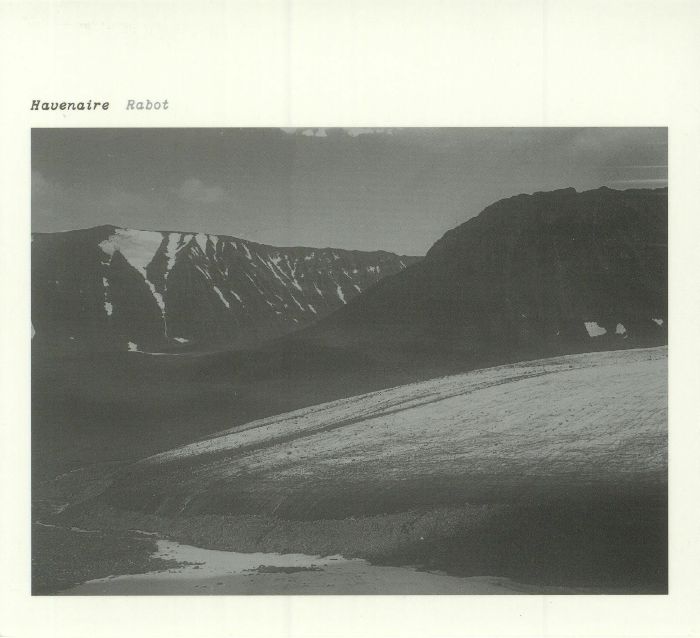
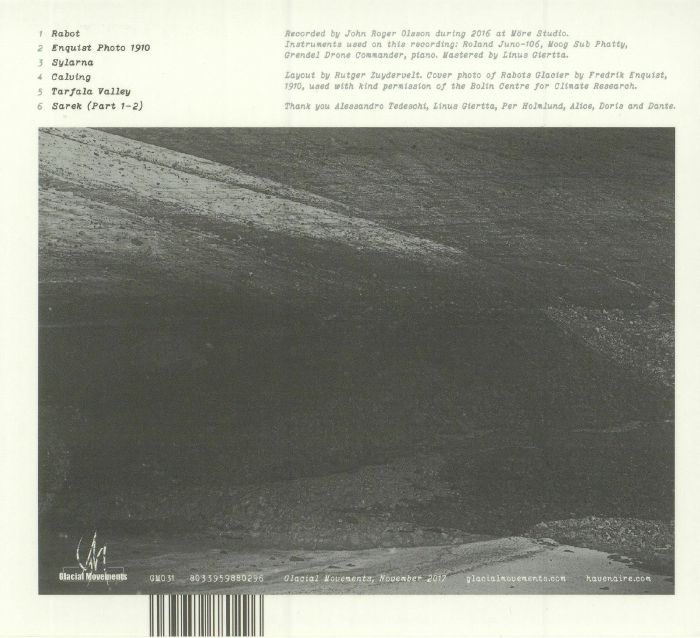
There’s a total of six soundscapes on Rabot, which John Roger Olsson sculpted over a number of months. His inspiration for the music was a series of old photos taken by Swedish geographer Fredrik Enquist in 1910. These photographs inspired Havenaire’s six soundscapes that feature on Rabot.
The carefully sculpted ambient soundscapes on Rabot are best described as ethereal, glacial and cinematic as they conjure up pictures of a frozen wasteland that is both bleak and beautiful. Especially on Rabot, before Enquist Photo 1910 introduces a degree of darkness and drama. Maybe this is Havenaire’s way of warning that this beautiful landscape can sometimes be a perilous place? That drama returns Sylarna which has an elegiac and melancholy sound as washes of cinematic synths paint pictures that transport the listener back in time to 1910 and the bleak and beautiful landscape that Fredrik Enquist photographed over a hundred years ago.
Again, there’s a degree of drama on Calving where shimmering, glistening synths combine with a jittering drone before a much more hopeful, and beautiful sound emerges. Maybe it’s because the seasons are changing, and spring has arrived, which is the time for Calving? The photograph on Rabot’s album cover to Rabot suggests that, and Havenaire paints a picture of a different landscape emerging as it sheds its winter coat. Closing Rabot is Sarek Pt. 1 and 2, an eleven minute opus, where ethereal, dreamy synths are responsible for a slow, minimalist soundscape that floats along. The music is graceful, but sometimes becomes dark and elegiac as if reminding the listener that the terrain is treacherous. Fredrik Enquist photograph on Rabot’s album cover is reminder of that. However, later, there’s hope and ethereal beauty on what’s one of Havenaire’s finest moments on Rabot. It closes Rabot on a high.
For all those people yet to discover the delights of Havenaire’s ambient arctic soundscapes then Rabot is the perfect introduction to his music. Rabot was released on the Glacial Movements label, which specialises in releasing albums of electronic arctic soundscapes. That is without doubt, the perfect description of the music Havenaire’s recently released sophomore album Rabot.
John Roger Olsson a.k.a. Havenaire composed, recorded and produced the six soundscapes on Rabot, which are a fusion of ambient, avant-garde, drone and electronica. While it took Havenaire five years on and off to record his debut album Tremelo, this time around, Havenaire was able to complete his sophomore album Rabot much quicker. The result is an album where Havenaire manages to surpass the quality of music on Tremelo. Using an array of analog synths, which are the equivalent to his musical palette, he sculpted and honed the music on Rabot. The result is one of the finest albums of ambient music released during 2017.
That is no surprise as Rabot’s cinematic sound is rich in imagery, as Havenaire’s music transports the listener to the terrain that Swedish geographer Fredrik Enquist photographed in 1910. One of his photographs featured on Rabot’s album cover, while another on back of the album. Both photos are proof that a picture can say more than a thousand words. So can Rabot, which is the musical equivalent to time travel, with Havenaire taking the listener back to 1910 and the land where Fredrik Enquist visited and photographed. Suddenly the listener is standing alongside Fredrik Enquist and seeing the terrain as he sees it. This is only possible because of the music on Rabot, which is Havenaire’s stunning sophomore album, and an ambient arctic opus which showcases his cinematic sound that is rich in ethereal beauty and imagery.
Havenaire-Rabot.
CARBON BASED LIFEFORMS-DERELICTS.
Carbon Based Lifeforms-Derelicts.
Label: Blood Music.
During the sixties and seventies, most artists and bands released an album annually, with some even releasing two, and very occasionally three albums each year. Many artists thought nothing of this, as this was how the music industry operated. Artists and bands were contractually obliged to release one or even two albums each calendar year. Usually, artists and bands were happy to oblige, as often careers were short, and they wanted to earn as much as possible before the bubble burst and the hits dried up.
The savvy artists and bands within certain genres knew that they had a very limited shelf life and that it was unlike that they would enjoy any degree of longevity. This meant that it was important that they made hay while the sun was shining. Especially, sixties and seventies pop, soul glam rock and disco which could make stars of artists and bands, who within a few years, could be back where they started and penniless. To make matters worse, they had to face the indignity of being asked: “aren’t you that guy that sung…?”This happened to many artists who were chewed up and spat out by the music industry.
Other artists and bands who realised that their career would be short-lived career, ensured that they made as much as possible and invested it wisely. They were realists and knew that the bubble would burst sooner, rather than later. This was the musical equivalent of Bitcoin, way before the words crypto currency were even invented.
While many musicians enjoyed short-lived careers, some went on to enjoy long and sometimes, successful careers. Other artists and bands continue to make a living out of music and were happy to make a steady living each years. These bands continue to play live and are happy to release albums every few years. That is far from the case.
Nowadays, very few bands releases an album each year, and sometimes, two or three years passes before an album is released. Partly, that is because bands are taking longer to record an album, and can spent two or three years recording their latest opus. The other reason for the lengthy gap between albums is that they’re no longer the cash cow they once were. This means that bands are reluctant to invest time and money recording a new album if they’re going to lose money. That isn’t always the case though.
Other bands are so busy on various projects that they struggle to find the time to record a new album. The two members of Carbon Based Lifeforms have certainly been busy over the last few years, and recently, released Derelicts on Blood Music, which is their first new album in six long years. It’s a veritable musical feast for fans of Swedish ambient duo, who met when they were fifteen.
Johannes Hedberg and Daniel Segerstad (née Ringström), were both born in Göteborg, south-west Sweden in 1976, and met when they were fifteen. This was the start of a friendship and a musical partnership that is still going strong quarter of a century later.
Initially, Johannes Hedberg and Daniel Segerstad were members of Notch which they formed in 1996 with their friend Mikael Lindqvist. Later in 1996, Johannes Hedberg and Daniel Segerstad decided to form Carbon Based Lifeforms as a side-project. Little did they know that this would be the start of a project that would still be going strong twenty-one years later.
Although it was two years before Carbon Based Lifeforms released their debut album, their demo The Path is a tantalising taste of what was to come from the group.
Two years later, Notch self-released their debut album The Path in 1998. That album was repackaged and rereleased later in 1998 by Carbon Based Lifeforms with a new track-listing as The Phat #000001/The Phat #000002. Intro, Rain and Hold were omitted with a new track Into The Canyon added on The Path which more than hinted at and showcased Carbon Based Lifeforms’ unique and inimitable sound.
Four years later, and Carbon Based Lifeforms signed to the Lyon-based Ultimae Records in 2002. Later that year, many music fans were introduced to Carbon Based Lifeforms’ music was when their track Metrosat 4 featured on the Ultimae Records’ compilation Fahrenheit Project part 3. These music fans would be hearing much more of the Swedish ambient duo in the years to come.
A year later, in 2003, Carbon Based Lifeforms returned with what they regard as their official debut album Hydroponic Garden. It showcased the Swedish ambient duo’s unique and carefully crafted sound which found favour with critics and music fans.
Following the release of Hydroponic Garden, Carbon Based Lifeforms’ music featured on a number of compilations released by Ultimae Records. Soon, their popularity would spread and other labels would be licensing tracks by Carbon Based Lifeforms.
Before that, Carbon Based Lifeforms returned with their much-anticipated sophomore album World Of Sleepers’ in 2006. It literally picked up where Hydroponic Garden left off as Johannes Hedberg and Daniel Segerstad continued to hone their trademark ambient sound. World Of Sleepers was well received by critics, and Carbon Based Lifeforms were well on their way to becoming one of the finest purveyors of ‘21st’ Century ambient music.
After the released of World Of Sleepers in 2006, Carbon Based Lifeforms’ music became the music de jour amongst compilers of ambient, chill out and psy-trance. Tracks by Carbon Based Lifeforms found their way on to compilations by DadA Music, Yellow Sunshine Explosion, Killing Music, Interchill Records, Spiral Trax and RMG Records between 2006 and 2009. This introduced Carbon Based Lifeforms’ music to a much wider audience which was perfect timing.
In 2009, Carbon Based Lifeforms returned with their first album in three years, Interloper. Just like previous albums, Carbon Based Lifeforms had taken their time recording Interloper, and were happy to spend days, weeks and months perfecting tracks. That had been the case on Interloper, with Carbon Based Lifeforms creating building blocks of sounds which they honed and tweaked as they sought sonic perfection. Many critics and music fans thought that Interloper was Carbon Based Lifeforms’ finest hour.
By then, Carbon Based Lifeforms had been together thirteen years, and were like a musical yin and yang who together, sculpted and honed ethereal, dreamy, lysergic and otherworldly soundscapes. Carbon Based Lifeforms also collaborated with other artists, and were familiar faces on the festival scene. They had come a long way since releasing Notch as twenty year olds.
A reminder of how far Carbon Based Lifeforms had come was when they performed at Cosmonova, the IMAX cinema within Stockholm’s Museum of Natural History in 2009. That night, Carbon Based Lifeforms’ music provided the soundtrack to nature-inspired imagery from across the world. There was also a tour of the solar system that was filmed from the International Space Station. Carbon Based Lifeforms’ music was the perfect backdrop what was one of the hottest tickets in town during 2009.
Two years later, Carbon Based Lifeforms followed in the footsteps of Cluster, by releasing an hour-long track, VLA. This was first of a number of projects that they were involved in over the next few years.
The following year, 2012, was an important year for Carbon Based Lifeforms, who released a new studio album, Twentythree. It was another album of Carbon Based Lifeforms’ unique and carefully sculpted ambient soundscapes. Just like previous albums, critics and music fans were won over by what was their last studio album for five years.
After the release of Twentythree, Carbon Based Lifeforms were commissioned to o write the soundtrack to the independently produced film, The Mansion. A year later, in 2013, the resulting Refuge-Original Motion Picture Soundtrack was released and found favour amongst critics. Carbon Based Lifeforms venture into the world of soundtracks had been a successful one, and one they were keen to repeat.
Carbon Based Lifeforms continued to play live and record new music. This was cerebral music with a social conscience. In their studio, Carbon Based Lifeforms continued to combine earth and space in their music. To do this, they combine nature and technology as the inspiration for their music. The music they make highlights both the positive and negative impact that technology can have on society and the environment
In 2015, Carbon Based Lifeforms changed record labels, and signed with Blood Music. This was the start of a new chapter in Carbon Based Lifeforms’ career, and two years later they recently returned with their new album Derelicts on Blood Music. It’s another carefully crafted album from Swedish ambient duo.
Derelicts however, isn’t just another ambient album from Carbon Based Lifeforms. Far from it; it’s an album of lovingly honed ambient psychedelia recorded by Carbon Based Lifeforms in their well equipped studio.
Amongst the many instruments in Carbon Based Lifeforms’ studio is an array of classic and modern synths which Carbon Based Lifeforms put to good use on the twelve tracks on Derelicts. This is only part of their musical arsenal, and just like previous albums, Carbon Based Lifeforms use field recordings on 780 days and Everwave.
Carbon Based Lifeforms in true pioneering spirit also transform everyday items. Suddenly, a water pump, dishwasher and even a baby’s teething toy become makeshift instruments and play their part in Carbon Based Lifeforms’ unique and inimitable sound on Derelicts. The final piece of the jigsaw are Ester Nannmark’s lyrics and vocals on Derelicts, ~42°, Rayleigh Scatterers and Loss Aversion. Ester Nannmar more than plays her part in the sound and success of Derelicts.
Quite simply, Derelicts in a captivating and enchanting album and is a career defining album from Carbon Based Lifeforms where they create innovative genre-melting music. During the twelve tracks, Carbon Based Lifeforms combine elements of ambient with avant-garde, Berlin School, electronica, experimental and musique concrète. The result is carefully crafted music that the two members that has been honed by Carbon Based Lifeforms as they go in search of sonic perfection.
That is the case throughout Derelicts. On the album opener Accede, the minimalist and mesmeric arrangement gradually unfolds as crystalline and shimmering synths combine with a pulsating beat. This set the bar high for the rest of Derelicts, as Carbon Based Lifeforms continue their pursuit of sonic perfection.
Ester Nannmar makes her debut on Derelicts, where her futuristic vocal combines with ethereal and elegiac synths on this futuristic and otherworldly cinematic soundscape.
Quite different is Clouds, where the dreamy, lysergic arrangement floats along and is akin to aural Prozac as suddenly, the world seems a better place. Lysergic describes Nattväsen, where the tempo drops, and soon, the ethereal and minimalist soundscape seems to be drawing inspiration from Alice In Wonderland as Carbon Based Lifeforms combine dialogue with glistening synths to create their unique brand of ambient psychedelia. That is a perfect description of the dreamy, hypnotic Equilibrium, where ethereal synths are combined with dialogue to create a futuristic and trippy soundscape. Cinematic and sometimes dramatic and urgent describes Path Of Least Resistance which sounds as if it’s been inspired by a bad acid trip.
Washes of the glistening synths and field recordings are combined on 780 Days which meanders along for nearly three minutes before the tempo rises, and Carbon Based Lifeforms deploy an array of synths and drum machine as a cinematic sound takes shape. Later, the calm descends and the ethereal beauty returns on track that shows that Carbon Based Lifeforms are perfectly suited to writing soundtracks. ~42˚ glides along, with sci-fi sound part of this futuristic sounding soundscape. It sounds as if it belongs on the soundtrack to a sci-fi movie.
One of the most beautiful and relaxing tracks on Derelicts is Rayleigh Scatterers. It has a meditative quality and encourages the listener to reflect and ruminate as suddenly, the world seems a better place.
Futuristic and otherworldly describes the cinematic sounding Dodecahedron. It’s another track that wouldn’t sound out-of-place on a sci-fi soundtrack. So does Loss Aversion which picks up where Dodecahedron as Carbon Based Lifeforms continue to paint pictures with their music. Closing Derelicts is Everwave that veers between ethereal and elegiac to otherworldly and lysergic. Just like many tracks on Derelicts, Everwave has a cinematic sound that is sure to set the listener’s imagination racing.
Derelicts is Carbon Based Lifeforms first studio album for five years, and is without doubt, a career-defining album of ambitious and innovative genre-melting music from the Göteborg-based ambient psychedelia pioneers.
Much of the music on Derelicts, which is a carefully crafted album of ambient psychedelia, is cinematic, and while some tracks are cerebral, ruminative and thoughtful while others are futuristic and otherworldly. Other tracks are variously dreamy, elegiac and ethereal, while others are dramatic and urgent. Some of the other tracks on Derelicts are edgy and trippy, but like the rest of the album are also innovative and captivating. Sometimes, Carbon Based Lifeforms throw a curveball, and the soundscapes head in unexpected directions, before normality is restored on what’s their finest hour.
Carbon Based Lifeforms’ recently released album of ambient psychedelia Derelicts, is a career-defining album from Johannes Hedberg and Daniel Segerstad who take the listener on a lysergic magical mystery tour which features surprises aplenty in-store for the unsuspecting listener.
Carbon Based Lifeforms-Derelicts.


MICHAEL COSMIC-PEACE IN THE WORLD AND PHILL MUSRA GROUP-CREATOR SPACES.
Michael Cosmic-Peace In The World and Phill Musra Group-Creator Spaces.
Label: Now Again Records.
In the fifties, there was a growing dissatisfaction at the limitations and constraints of bebop, hard bop and modal jazz and a group of pioneering musicians decided that the time had come to alter, extend, or break down jazz conventions. This included Ornette Coleman and Cecil Taylor, who were soon joined by Charles Mingus, Eric Dolphy, Albert Ayler, Archie Shepp, Joe Maneri and the inimitable Sun Ra who pioneered free jazz. They discarded fixed chord changes or tempos, and placed the emphasis on collective improvisation during what was an avant-garde approach to jazz and an attempt to take jazz back to its sometimes primitive and religious roots.
Some things didn’t change, and still the music continued to swing despite free jazz pioneers discarding regular meters and replacing them with frequent accelerandi and ritardandi. Soon, the free jazz pioneers were looking to the jazz’s past to create the music that they believed was the future of jazz. They drew inspiration from Dixieland and African music, and even began to incorporate disparate instruments that hadn’t been used in jazz before. Still, many critics were sceptical of free jazz and believed that it was a passing fad, and wouldn’t enjoy any degree of longevity.
How wrong these critics were. By the early sixties, many leading jazz musicians were part of the free jazz movement and new techniques had been adopted by the pioneers. This included the harsh overblowing that became a feature Pharoah Sanders and John Coltrane’s music. Meanwhile, other musicians reinvented the way they used traditional instruments so that it elicited a variety of unconventional sounds. They played their part in this musical revolution was about to be embraced by jazz’s establishing.
By the mid-sixties, jazz’s premier labels, including Blue Note, Impulse and Prestige, had signed many of the leading lights of the free jazz movement and it was a start of a golden age of the genre. During this period, many classic free jazz albums were recorded which would influence several generations of musicians around the world.
Two of the musicians influenced by the free jazz pioneers were brothers Thomas Michael Cooper and Phillip Anthony Alfred Cooper, who were born in Chicago on April the ‘25th’ 1950 and were raised in South Side of the Windy City. Later, the Cooper family moved to Alabama and Ohio, where the twins grew up as part of middle class family.
An important part of family life for the Cooper family was the church. Both the twins sang in the choir at the St. Paul The Redeemer Episcopal Church, where, their mother was a volunteer choir director. While this was the first time they had participated in any type of organised music, the Cooper twins had already embraced music.
From an early age, the twins spent time listening to soul, jazz and R&B with father Thomas. This was the start of a lifelong love affair with music, and within a few years, the twins were playing music as well as listening to it.
As the Cooper twins became teenagers, they started taking music lessons. While many teenagers in Chicago were learning to play guitar in the hope of following in the footsteps of folk singers like Bob Dylan, the Cooper twins were learning to play reed instruments. They were quick learners, and within a couple of years, weren’t just proficient, but talented players.
Around 1966, the Cooper twins were sitting in a park in Chicago’s South Side when Roscoe Mitchell a tutor at South Chicago’s Association for the Advancement of Creative Musicians, passed by and noticed Phillip’s clarinet. Roscoe Mitchell started talking to the Cooper twins, and invited them to the South Chicago’s Association for the Advancement of Creative Musicians, which had been formed in 1965. Although it was still a relatively new organisation, it had talented musicians who could tutor the Cooper twins.
They agreed to attend the South Chicago’s Association for the Advancement of Creative Musicians, and were taught by a number of musicians, including Roscoe Mitchell, reedist Anthony Braxton and theory from Muhal Richard Abrahams. The tutors encouraged their pupils to be self-reliant and to actualise and realise their true potential as composers, musicians and theorists.
To help their pupils do this, the tutors introduced them to small instruments, which ranged from wooden flutes and cymbals to harmonicas and even tin cans. These instruments allowed musicians to expand their musical palette, by introducing a whole new range of sonic possibilities. This would something the Cooper twins would remember in the future.
Before that, saxophonist Jameel Moondoc the Cooper twins headed to the University of Wisconsin, where they were meant to further their musical education. However, when they arrived, the three students discovered that the living conditions were intolerable. There weren’t even any beds available, and they had to resort to sleeping on the floor. This was wholly unacceptable, and before long, Jameel Moondoc the Cooper twins had left the University of Wisconsin.
The Cooper twins decided to move to Boston, which had a vibrant arts and music scene. Boston had also a burgeoning free jazz scene, with many of the musicians students at the city’s various universities and colleges. These musicians became part of Boston’s underground music scene, which the Cooper twins were soon part of.
They discovered that there was a similar ethos to the South Chicago’s Association for the Advancement of Creative Musicians within the Boston underground music scene. This made Boston a home-from-home for the Cooper twins, who had dawned the monikers Michael Cosmic and Phill Musra.
Home for Michael Cosmic and Phill Musra was a house that was literally full of musical instruments, which soon, was a place where many lengthy jam sessions took place. Over the next few weeks and months, many Boston-based musicians, made their way to Michael Cosmic and Phill Musra’s house, including radio presenter and percussionist Brian Jackson.
When the musicians arrived at the house, they were impressed by the variety of instruments that Michael Cosmic and Phill Musra owned. They were even more impressed to discover that Michael Cosmic and Phill Musra could play each and every one of them.There were saxophones, clarinets and even a vibraphone and Michael Cosmic and Phill Musra could seamlessly switch between instruments during the regular jam sessions and soon, rehearsals that took place.
Before long, Michael Cosmic and Phill Musra had formed a band, which featured percussionist and sometimes vocalist Brian Jackson. Rehearsals took place at Michael Cosmic and Phill Musra’s house, with the nascent band spending hours and even days honing a song until it took shape. While the songs took shape, Michael Cosmic and Phill Musra realised that something was missing from the lineup of their band.
Eventually, Michael Cosmic and Phill Musra decided to recruit poet Niozake Shange to their band, in an attempt to complete the lineup. This worked, and the band’s fusion of music and poetry proved to be a groundbreaking and revolutionary concept.
Initially, Michael Cosmic and Phill Musra’s band played anywhere that had an audience who had embrace and enjoy what they were trying to accomplish. Before long, the band had progressed to playing various coffee shops and jazz clubs, but a favourite venue was the new Black Avant-garde Coffeehouse in Boston. It was very different to the traditional jazz clubs, as it only served coffee, muffins and organic food. However, the patrons ‘got’ what Michael Cosmic and Phill Musra’s band was trying to achieve.
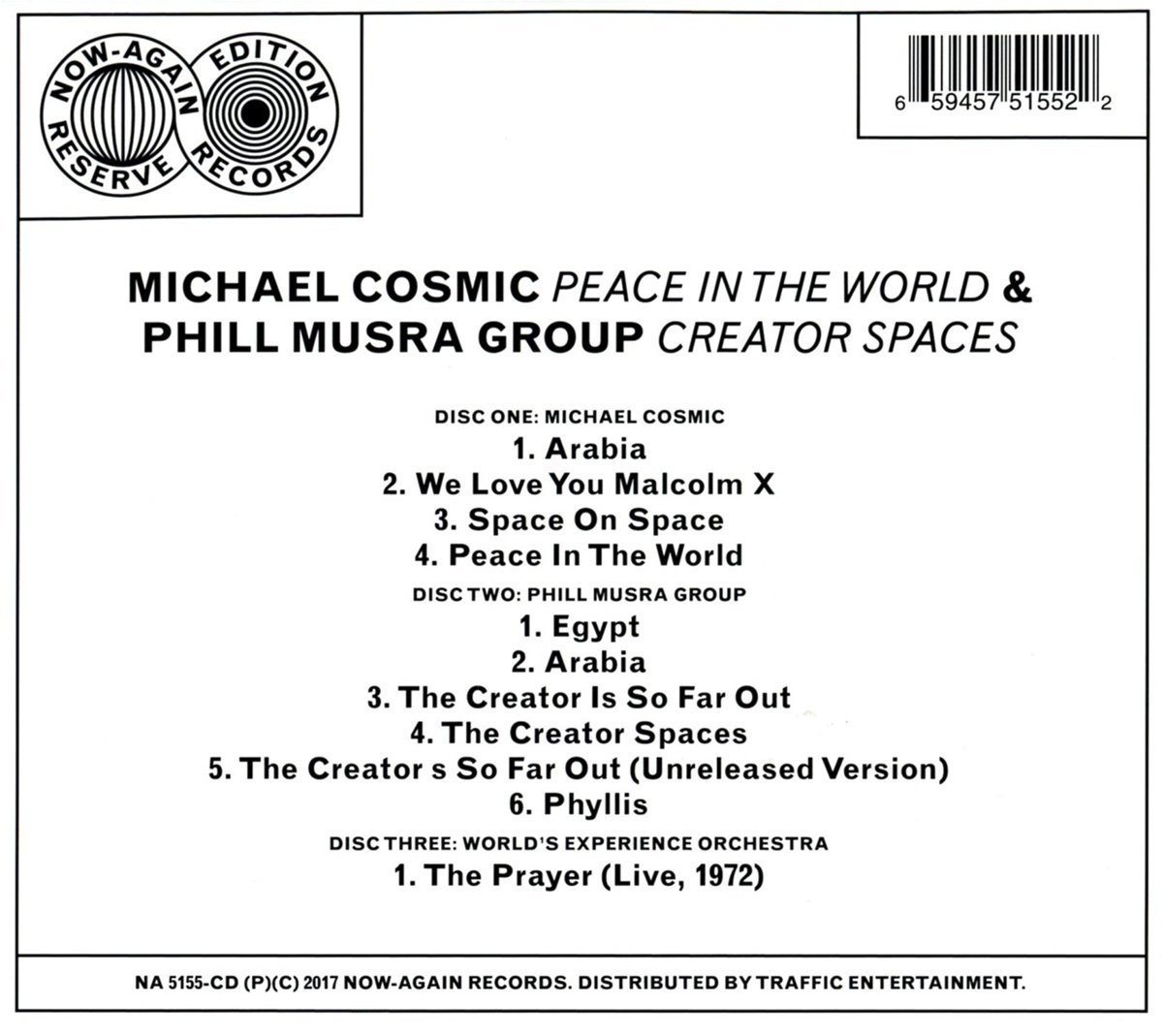
Within a couple of years, Michael Cosmic and Phill Musra’s band was a popular draw not just in Boston, but across the North East. They played almost non-stop travelling far and wide playing and spreading their musical message. By then, the group’s lineup was starting to take shape, and the band that featured on Michael Cosmic’s Peace In The World and Phill Musra Group’s Creator Spaces which are part of a three disc box set that was recently released by Now Again Records, was nearly complete.
By the early seventies, the lineup of Michael Cosmic and Phill Musra’s band featured some of the leading lights of Boston’s free jazz scene. However, what the band needed was a drummer who could anchor the band and provide the heartbeat to the groundbreaking music. Fortunately, the final piece of the jigsaw fell into place around 1971 or 1972, when Turkish-born drummer Hüseyin Ertunç was introduced to Michael Cosmic and Phill Musra.
Twenty-two year old Hüseyin Ertunç had arrived in Boston in 1969, to study painting and music, and a couple of years layer, met Michael Cosmic and Phill Musra. Hüseyin Ertunç was a talented artist, who specialised in surrealist drawings, and they would later adorn the covers of Peace In The World and Creator Spaces. However, Hüseyin Ertunç was a talented and versatile drummer who when he met Michael Cosmic and Phill Musra came across as intelligent and intense. The Cooper brothers had a feeling that Hüseyin Ertunç was the man that they had been looking for.
With Hüseyin Ertunç installed as the band’s drummer, this was the start of a new chapter in their career, and one that featured a stellar lineup of gifted and versatile musicians. Among them, were guitarist and bassist Wes Riley, bassists Michael Whitaker and Miles Cosworth, pianist Michael Cochrane, saxophonist Mudon Slaughter and guitarist Rene Arlain. They player their part in what was a golden era for Michael Cosmic and Phill Musra’s band.
Despite his commitment and passion for music and his spirituality, Phill Musra had to work a couple of days jobs to pay the bills. Fortunately, one job working as a delivery driver allowed him time for his creative musings and Phill Musra found time to write The Creator Spaces, The Creator Is So Far Out and More Beautiful Vibrations From The Creator. These reflect Phill Musra’s spirituality and were partly inspired by his meditation as the music flowed through Phill Musra and onto the page. This music was very different to the music Phill Musra’s brother Michael Cosmic was making.
While Phill Musra meditated and focused on spiritual matters, Michael Cosmic had become interested in his cultural and racial heritage. He had also become politically active, and was a supporter of the Boston housing plan which resulted in desegregation of schooling within the city. Michael Cosmic’s new interests and beliefs clearly influenced his music as he wrote Arabia, We Love You Malcolm X and Peace In The World.
Although the Cooper brother were twins their different interests and beliefs, which were influencing the music that they were writing. This included the music that later, would feature on Michael Cosmic’s album Cosmic Paradise and Phill Musra’s Peace In The World. Before these albums were recorded, Michael Cosmic and Phill Musra continued to play their part in Boston’s thriving underground music scene.
That had been the case ever since Michael Cosmic and Phill Musra had arrived in Boston in the late-sixties. By the summer of 1974, they were familiar faces within Boston’s underground scene where Michael Cosmic and Phill Musra were regarded as innovative and pioneering musicians who weren’t afraid to push musical boundaries to their limits. Everyone who had seen the band live over the last couple of years realised this. However, despite playing almost non-stop over the last few years, neither Michael Cosmic nor Phill Musra had recorded an album. That was about to change.
Phill Musra Group-Creator Spaces.
The first of the Cooper twins to enter the studio was the Phill Musra Group’s debut album Creator Spaces. Phill Musra, Michael Cosmic and Hüseyin Ertunç had decided to finance the recording of the album at Egg Studios in Cambridge, Massachusetts. It was engineered by Larrymar Richards, who recorded forty minutes of music.
This included Egypt and Arabia which were penned by Michael Cosmic, plus The Creator Is So Far Out and the Phill Musra composition Creator Spaces. Anchoring the Phill Musra Group was drummer and percussionist Hüseyin Ertunç, while Phill Musra played reeds, percussion and chimes. Completing the lineup was Michael Cosmic who played reeds, organ, percussion, saxophones, flutes and zurna. Creator Spaces which featured a mixture of traditional instruments that the Cooper twins were introduced to at South Chicago’s Association for the Advancement of Creative Musicians, in Chicago. They played their part in the sound of Creator Spaces.
Having recorded the privately pressed album, and had a small run of albums pressed, Hüseyin Ertunç’s drawings adorned the original copies of Creator Spaces. On the back of the album was the liner notes, setting in stone the personnel that played on the Phill Musra Group’s debut album Creator Spaces.
Later in 1974, Creator Spaces was the first release by the newly founded Intex Sound. Creator Spaces was an ambitious and innovative album that showcased the considerable talents of the Phill Musra Group. It featured the four tracks that had been recorded at Egg Studios.
Waves of captivating, genre-melting and innovative music unfold and enchant on Egypt, as the Phill Musra Group’s playing veers between impassioned and powerful to understated, ruminative and dramatic during this eleven minute musical journey. There’s then an urgency on Arabia as saxophones unite while Hüseyin Ertunç unleashes thunderous drums that are part of a vast musical arsenal that is deployed as the arrangement ebbs and flows. Waves of cosmic music that has been influenced by Sun Ra cascade as the arrangement takes a series of twists and turns as instruments are introduced, only to disappear and sometimes, reappear. Always, the Phill Musra Group play with energy, enthusiasm and freedom that epitomises everything that is good about a small group playing free jazz.
From the moment that The Creator Is So Far Out bursts into life, the influence of Pharoah Sanders and Albert Ayler is apparent. There’s an urgency as the arrangements swirls, screeches and howls that borders on chaotic before becoming melodic and impassioned during what’s akin to a cathartic outpouring of emotion that cleanses the soul. Closing The Creator Spaces is the title-track, which is the most accessible and melodic track on Phill Musra Group’s debut album.
After the release of the Phill Musra Group’s ambitious and innovative fusion of avant-garde, contemporary jazz and free jazz in 1974, The Creator Space proved popular within Boston’s underground music community. Especially amongst those who had the Phill Musra Group live during the past few years. They were one of the top bands on the Boston free jazz scene, but were never going to get rich releasing a private press.
The three members of the Phill Musra Group had financed the recording and release of Creator Space and even designed the album cover. They had also founded Intex Sound to release the album. However, like many groups who had decided to release a private press, the Phill Musra Group had a limited budget, and decided to have only a small number of copies of The Creator Space were pressed. While it proved a popular album within the Boston underground music scene, the Phill Musra Group’s debut album had no chance of finding a wider audience as Intex Sound didn’t have the budget or expertise to promote the album properly. This was a fact of life for bands releasing private presses, and they could only hope that a bigger record company would come across the album and want to reissue Creator Space. Sadly, that wasn’t to be, and it would be forty-three years before Creator Space found the wider audience it deserved.
Michael Cosmic-Peace In The World.
As 1974 drew to a close, Michael Cosmic entered Music Designers, in Boston on the ‘6th’ of December to record his debut album Peace In The World. He had written four tracks, Arabia, We Love You Malcolm X, Space On Space and Peace In The World which would be recorded by a septet.
Augmenting Hüseyin Ertunç, Phill Musra and Michael Cosmic were acoustic bassist John Jamyll Jones, percussionist Eric Jackson and Leonard Brown who switched between tenor and soprano saxophone. Joe Chiccarelli took charge of engineering duties and later, mixed the album.
Just like Creator Spaces, Peace In The World was a self-financed private press. Some copies of Peace In The World had a hand-made sleeve with a hand-coloured drawings copied and stuck on the album cover. Rather confusingly, some copies featured Cosmic Paradise as the artist, rather than Michael Cosmic. This small number of albums had the same album covers as the rest of the run. Despite this mix up, Cosmic Paradise was released by Michael Cosmic on his new label Cosmic Records.
Arabia a twenty-one minute epic opens Cosmic Paradise, and is best described as mesmeric, urgent and melodic before becoming dramatic, thoughtful and introspective. Throughout the track, the septet make good use of their expanded musical palette as Arabia takes on new life and meaning. The tempo drops on We Love You Malcolm X where woodwinds float and cascade as drums punctuate the arrangement, a bass scampers and chines glisten. Still there’s space within the arrangement, allowing the listener to reflect and ruminate during this homage to Malcolm X.
Space On Space is another twenty-one minute opus that has obviously been influenced by Albert Ayler. Here, a quintet play with power, passion, energy and urgency as the arrangement takes a series of twists and turns the music becoming jaunty, intense, hypnotic spacious and sometimes, wonderfully otherworldly. Closing the album is the hopeful, piano-led title-track Peace In The World. It’s the most melodic and accessible track but still features Michael Cosmic and his combo pushing musical boundaries to their limits and creating groundbreaking music.
Just like Phill Musra Group’s debut album The Creator Spaces, Michael Cosmic’s Peace In The World found an audience within Boston’s underground musical community. They embraced another exciting, ambitious and innovative album where Michael Cosmic and his band combined free jazz with avant-garde, contemporary jazz and experimental music. However, with Peace In The World being a private press, the album passed many free jazz fans by.
Across America, free jazz was still a popular genre, and a new generation of musicians were releasing albums of new and innovative music. Many were on major labels, while others like Michael Cosmic were releasing private presses like Peace In The World. This put them at a huge disadvantage, and meant that there was little chance free jazz fans in other parts of America would ever hearing the album, never mind buying it. Michael Cosmic certainly wasn’t going to get rich releasing private presses, and for a man with new and added responsibilities, this forced him to rethink his priorities.
By 1975, the Cooper brothers were no longer single men. They had recently married and were starting families which meant added responsibilities and indeed, expenses. This was a crunch time for Michael Cosmic and Phill Musra, who knew that they had to think about the future.
Boston still had a vibrant music scene, and Michael Cosmic and Phill Musra knew that they could stay in the city and make a living playing live. However, there weren’t the same opportunities to work as a session musician in Boston, which could provide Michael Cosmic and Phill Musra with another valuable source of income. Deep down, both Michael Cosmic and Phill Musra knew that it was time to move on, and try their luck in one of America’s music capitals.
When Michael Cosmic and Phill Musra thought about it, their favoured destination was Los Angeles which had a thriving jazz scene and much more favourable climate. Michael Cosmic and Phill Musra knew they could form a new band and establish themselves on the city’s live scene. There was also plenty of session work and musicians looking for talented musician to accompany them when they play live. After long discussions with their wives, Michael Cosmic and Phill Musra began preparing to move to LA, which was the start of a new chapter in their careers.
Before making the move to LA, Michael Cosmic and Phill Musra were invited by John Jamyll Jones to join his World’s Experience Orchestra for a very special recording session. This was the recording of the World’s Experience Orchestra’s debut album The Beginning Of A New Birth at the Oasis, in Boston, on August the ‘3rd’ 1975. That day, two lengthy tracks were recorded including The Beginning Of A New Birth and The Prayer. On the third disc of the Box Set,which was recently released by Now Again Records is a twenty-minute version of The Prayer. It’s a beautiful, meditative and spiritual opus, that was recorded during Michael Cosmic and Phill Musra’s musical swan-song in Boston,
After the best part of seven years, Michael Cosmic and Phill Musra departed Boston and headed for a new life in LA August 1975. A lot had happened during that time. Both Michael Cosmic and Phill Musra had established themselves as professional musicians during the Boston years, and embarked upon recording careers.
The Phill Musra Group had released Creator Spaces in 1974, with Michael Cosmic releasing Peace In The World in 1975. Both albums showcase talented and innovative musicians who weren’t afraid to push musical boundaries to their limits, and sometimes, beyond. To do that, they combined traditional instruments with small instruments on their genre-melting albums. They find Michael Cosmic and the Phill Musra Group fusing free jazz with elements of avant-garde, contemporary jazz , experimental music and spiritual jazz on their respective albums Cosmic Paradise and Peace In The World. Sadly, neither album reached the wider audience that it deserved.
That was always the risk when releasing an album as a private press during the seventies. It could be a classic album, but without the budget and expertise to promote the album, could pass record buyers by.
Sadly, Michael Cosmic’s Peace In The World and Phill Musra Group’s Creator Spaces both passed record buyers by and for over forty years, very few people heard either album. That changed recently, when Now Again Records released Michael Cosmic Peace In The World and Phill Musra Group Creator Spaces as part of a lovingly curated three disco box set. It’s the perfect opportunity to discover two of the best privately pressed free jazz albums that were released in Boston during the first half of the seventies.
During that period, Boston had a vibrant and thriving free jazz scene, but Michael Cosmic’s Peace In The World and Phill Musra Group’s Creator Spaces were almost peerless albums. They’re also among the best free jazz private presses released on the East Coast during the first half of the seventies. That is how good Michael Cosmic’s Peace In The World and Phill Musra Group’s Creator Spaces were. If Michael Cosmic’s Peace In The World and Phill Musra Group’s Creator Spaces had been picked up by a bigger label, maybe this would’ve transformed their careers and they would’ve gone on to enjoy long and illustrious careers?
Michael Cosmic-Peace In The World and Phill Musra Group-Creator Spaces.



JEANETTE JONES-WHAT MIGHT HAVE BEEN?
Jeanette Jones-What Might Have Been?
The history of soul music is littered with artists who could’ve and should’ve gone on to greater things, but for whatever reason, commercial success and critical acclaim passed them by. That, sadly, was the case with Jeanette Jones.
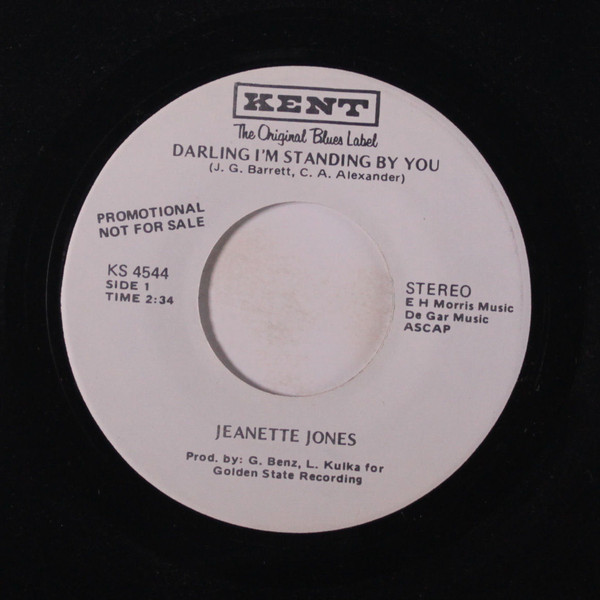
She had talent in abundance, and a voice that was a mixture of power, passion, emotion and sheer soulfulness. Sadly, Jeanette Jones’ recording career was all too brief, and amounts to just one single, Darling, I’m Standing By You which was released on the Golden Soul label in 1969, and the two years later, was reissued by Kent Records in 1971. Sadly, nothing came of the single.
Jeanette Jones’ last recording session was in 1974, when she recorded a publishing demo for Barry Goldberg. Sadly, that was the last time she entered a recording studio. It was also the end of Jeanette Jones’ musical career. For Jeanette Jones, the dream was over.
Since then, Jeanette Jones has remained an enigmatic and mysterious figure. Very little is known of her life pre and post music. Nowadays, it is thought that Jeanette Jones lives quietly in San Francisco,
Details of Jeanette Jones’ early life are somewhat sketchy. It’s thought that she was born and brought up in San Francisco. That was certainly where Jeanette Jones first discovered music.
Just like many future soul singers, Jeanette Jones first started singing in church. That proved to be Jeanette Jones’ gateway into music. However, it was with the Voices Of Victory gospel choir that Jeanette Jones’ first came to prominence.
Cora Wilson had formed The Voices Of Victory gospel choir in 1962. Hers was no ordinary choir though. The Voices of Victory gospel choir featured sixty singers, who travelled the West Coast in their own bus. They sang in churches and at gospel conventions and The Voices of Victory in full flight was an impressive sight and sound. Especially when the soloists enjoyed their moment in the spotlight. By 1965, one of the soloists was Jeanette Jones.
She was the owner of an impressive and powerful voice. When Jeanette Jones stepped into the spotlight, she combined, power, passion and emotion. Given the her vocal prowess, it was no surprise that Jeanette Jones was one of the stars of The Voices Of Victory gospel choir. Everyone who heard them realised this, including Leo Kulka at Golden State Recorders.
Leo Kulka first encountered Jeanette Jones in November 1965. Cara Wilson had booked Golden State Recorders to record an album by The Voices Of Victory gospel choir. Given the size of the choir, Leo Kulka decided to use Golden State Recorders’ larger studio in Harrison Street. After the recording session, Cara Wilson planned to have a limited number of albums pressed which would be sold after concerts. In a way, Cara Wilson was just testing the water, to see if there was a market for albums featuring her choir. Soon, Leo Kulka realised that Cara Wilson was underselling her choir.
As the recording session got underway, Leo Kulka immediately realised just how good The Voices Of Victory gospel choir were. Cara Wilson’s choir wasn’t just one of the best in San Francisco or even California, but one of the best on the West Coast. Leo Kulka realised this as the session progressed, and Jeanette Jones prepared to record the lead vocal on Why.
When Leo Kulka heard Jeanette Jones’ lead vocal on Why, her voice stopped Leo Kulka in his tracks. It was a cut above the rest of the soloists as Jeanette Jones was capable of singing with power, but was always in control as she delivered the lyrics with emotion and sincerity. From the moment Leo Kulka heard Jeanette Jones sing, he promised himself he was going to sign her. As soon as the recording session was over, Leo Kulka approached Jeanette Jones, with a view to signing her.
Jeanette Jones wasn’t interested in signing a recording contract. She had no intention in crossing over, and instead, wanted to continue to do what she saw as the “Lord’s work” with The Voices Of Victory gospel choir. This must have come as a surprise to Leo Kulka.
Back in 1965, the majority of singers, including gospel singers, dreamt of signing a recording contract. Even if this meant crossing over from gospel to secular music. Jeanette Jones it appeared was the exception. That was until late 1967.
It wasn’t until late 1967 that Leo Kulka next encountered Jeanette Jones. By then, things had changed for Jeanette Jones. Not only had she crossed over, and was singing secular music, but she also had acquired a manager, Jay Barrett.
Jay Barrett explained to Leo Kulka that he wasn’t from a musical background, and instead, was a banker who was based in Palo Alto. He was a relative newcomer to the music industry, and hope that as well as managing artists, that he could forge a career as a songwriter.Jeanette Jones he hoped, would go on to record some of the songs he had written in the future. With that, Jay Barrett went away to work on a proposal for Jeanette Jones and Leo Kulka.
By then, Jeanette Jones had signed to Leo Kulka’s Golden Soul label. This was a smart move by Jeanette Jones, as Leo Kulka had a lifetime of experience within the music industry, and the knowledge and skill-set to guide the talented singer through the early stages of her recording career.
Soon, Jay Barrett came up with a proposal which stated that if Jeanette Jones was willing to record his songs, then he was willing to part-finance the recording of a demo. This would be recorded Leo Kulka’s Golden State Recorders. Leo Kulka agreed to this, and began preparing for his first session with Jeanette Jones.
The recording session was scheduled to take place in the February of 1968. No expense was spared, and Leo Kulka began to put together an extensive backing band. There was a problem though. The songs that Jay Barrett had written were totally unsuited to Jeanette Jones in their present form.
They were poppy and sounded like a remnant from earlier in the sixties. This was the wrong type of songs for Jeanette Jones and Leo Kulka was faced with a problem. Jay Barrett had agreed to part-finance the demo on the condition that Jeanette Jones recorded some of his songs. It was time for Leo Kulka to put his years of experience to good use and come up with a solution. After some thought, Leo Kulka had worked out a solution,..backing vocalist and put in a call to Ramona King and her brother Cleo.
Ramona King’s career began in 1962, when she signed to Eden Records. Since then, she had spent time at Warner Bros. Records, Amy and most recently, Action Records. Leo Kulka explained that he needed backing vocalists to accompany Jeanette Jones and help her add some much-needed soulfulness to Jay Barrett’s songs. The Kings agreed and when they arrived at Golden State Recorders the recording sessions began.
At that first recording session, Jeanette Jones recorded a couple of Jay Barrett songs, Jealous Moon and Quittin’ The Blues. With the large ensemble accompanying her, the two songs were soon recorded with Leo Kulka taking charge of production, Despite that, Jay Barrett received a co-production credit. The next step, was to try to interest another label in the songs.
Leo Kulka began shopping Jealous Moon and Quittin’ The Blues to various labels where he had a contact in the hope that they would release them as a single. However, none of the labels expressed an interest in releasing the songs. For Leo Kulka, this was a huge disappointment. He believed that Jeanette Jones had the potential to forge a career as a singer, and decided to dig deep into his contact book.
The man he decided to consult was Larry Goldberg, an independent producer who was based in Los Angeles. Although Larry Goldberg was a producer, he was also a talent scout, and spent much of his time finding and developing artists. Sometimes, after discovering and developing these artists, Larry Goldberg shopped them to major labels, where they embarked upon the next stage of their career. Larry Goldberg had set a number of artists on the road to stardom and just like Leo Kulka, Larry Goldberg had a wealth of experience. He also thought he might have the answer to Leo Kulka’s problem.
The answer Larry Goldberg thought were three backing tracks that he wanted to play Leo Kulka.This included the Ben Raleigh composition Break Someone Else’s Heart. Another possibility was Andy Badale and Albert Elias’ I Want Action, which had recently given Ruby Winters a hit. The third and final song was Sam Russell’s Cut Loose, which had been arranged by H.B. Barnum. Having listened to the three pop soul cuts, Leo Kulka agreed that they had the potential to solve his problem and gave Jeanette Jones a call. She agreed to make her way to Golden State Recorders.
Although Jeanette Jones was signed to Leo Kulka’s Golden Soul label, she had continued to sing with the Voices Of Victory gospel choir. Maybe she was keeping her options open, given the life of a professional singer could sometimes, be perilous? The ccareers of soul singers were often short, and could be unpredictable and unprofitable. Jeanette Jones must have realised this after her first recording session. Despite that, she was prepared to return to the studio to record the triumvirate of tracks with Leo Kulka.
Having listened to the trio of backing tracks, Jeanette Jones set about laying down vocals. She combined power and emotion, delivering an almost defiant vocal on Break Someone Else’s Heart. Then on Cut Loose, Jeanette Jones delivers a vocal tour de force, as horns and harmonies accompany her vocal. On the final song, I Want Action Jeanette Jones again combines power and emotion as she delivers a needy, hopeful vocal. With the vocals recorded, Jeanette Jones had done her part and now it was over to Leo Kulka.
His job was to shop the songs to various labels. Given the quality of the songs, Leo Kulka must have been confident of securing a deal for Jeanette Jones. Despite his best efforts, none of the labels he approached were interested in releasing the songs, and llightning had struck twice for Jeanette Jones.This must have been a huge disappointment for Jeanette Jones who returned to the Voices Of Victory gospel choir.
By the spring of 1969, Jeanette Jones was now fronting the Voices Of Victory gospel choir who were still one of the biggest and most successful gospel choirs on the West Coast. Despite this, Jeanette Jones returned to Golden State Recorder for an another recording session.
Still Jeanette Jones hadn’t given up on her dream of making a career out soul music and again, made the journey to Golden State Recorders. That was where she first encountered singer-songwriter Wally Cox. Leo Kulka had asked him to write a song that would showcase Jeanette Jones’ conferable vocal talents. He delivered a trio of songs, including Darling, I’m Standing By You which was tailor-made for Jeanette Jones.
At Golden State Recorders, Jeanette Jones prepared to record Darling, I’m Standing By You. With Leo Kulka producing, Jeanette Jones delivered a spine-tingling, soul-baring, testifying vocal. Backing vocalists accompany her every step of the way, as Jeanette Jones combines gospel and soul, on what was a career defining moment.
Meanwhile, Wally Cox went away and wrote two new songs including the beautiful mid-tempo ballad The Thought Of You which. Just like Darling, I’m Standing By You it seemed tailor-made for Jeanette Jones. She was in a reflective mood on The Thought Of You, as she gives thanks for the love she’s found. Unlike some of the soul being released in 1969, it had a much more modern, contemporary sound. It was a similar case with the recording of Wally Cox’s other composition was I’m Glad I Got Over You, which features a defiant Jeanette Jones as she delivers another vocal powerhouse against an urgent, driving arrangement. It’s another song that could’ve and should’ve transformed Jeanette Jones’ career. Leo Kulka realised this and decided to back Jeanette Jones with his own money.
Realising the potential of Darling, I’m Standing By You and The Thought Of You Leo Kulka decided to release the single on his own Golden Soul record label. Leo Kulka hoped that the local R&B and gospel and radio stations would pickup on the single. This Leo Kulka hoped, would result in him being able to cut a distribution deal with a major label. That was the plan.
Leo Kulka had 1,000 copies of Darling, I’m Standing By You and The Thought Of You pressed. These copies he hoped would sell out, and the single would be picked up radio stations in the San Francisco area. However, the 1,000 copies of Darling, I’m Standing By You failed to sell, and Leo Kulka was back to square one.
While many people would’ve called it a day, Leo Kulka decided to use the single to shop Darling, I’m Standing By You to major labels. He took the single to Atlantic, but they turned the song down. When Motown then passed on Darling, I’m Standing By You, things weren’t looking good for Darling, I’m Standing By You, and Jeanette Jones’ career.
She had been trying to make a breakthrough since 1967, and was no nearer to doing so. Things however changed in 1971, when the Bihari brother agreed to release some of Leo Kulka’s releases on their Kent Records and Modern Records’ labels. One of the singles they chose to release was Jeanette Jones’ Darling, I’m Standing By You. Maybe, Jeanette Jones’ luck was changing?
Alas it wasn’t to be and when Darling, I’m Standing By You was released in 1971, the single failed to find an audience, and soon it had disappeared without trace. For Leo Kulka and Jeanette Jones this was hugely frustrating and disappointing. Leo Kulka felt the single hadn’t received sufficient promotion by Modern Records. It was no surprise when it failed for commercially and Leo Kulka and Jeanette Jones were left to rue the Bihari brothers’ short-sightedness. However, by then, Jeanette Jones was beginning to rethink her future.
Following the commercial failure of Darling, I’m Standing By You, Jeanette Jones started to work as a session singer. She also began working with Mike Bloomfield on his Mill Valley Bunch project. Jeanette Jones sung the lead vocal What Would I Do Without My Baby and Ooh Ooh Ooh, La, La, La which featured on the Mill Valley Bunch’s one and only album, Casting Pearls, which was released by Verve Records in 1972. Soon, though, Jeanette Jones began to look beyond music.
Jeanette Jones began to do some voiceover work, and was chosen as the voice of the Swiss Colony Wine radio campaign. It was also around this time, that Jeanette Jones began to do some modelling. This kept her busy, and gradually, Jeanette Jones seemed to lose interest in music. Indeed, she only returned to Golden State Recorders one more time.
This was in 1974, when Jeanette Jones headed to Golden State Recorders to record a publishing demo for Barry Goldberg, who was a friend of both Mike Bloomfield and Leo Kulka. During that last session, Jeanette Jones cut two tracks penned by Gerry Goffin and Barry Goldberg. The first was You’d Be Good For Me, which was followed by the beautiful, heart wrenching ballad What Have You Got To Gain By Losing Me? Sadly, after recording the publishing demo for Barry Goldberg, Jeanette Jones turned her back on music.
Since then, nothing has been heard of Jeanette Jones, and her story is a case of what might have been? That is a great shame as Jeanette Jones’ could’ve and should’ve enjoyed commercial success and critical acclaim. Jeanette Jones was a hugely talented singer, who had the ability to breath life, meaning and emotion into lyrics. She could combine power and passion, and seamlessly switch between ballads and uptempo tracks. Despite her undoubted talent, sadly, Jeanette Jones never made a breakthrough.
That was despite Leo Kulka championing Jeanette Jones throughout her short career. He produced her, and then shopped the songs to bigger labels. Sadly, only once did a single get picked up by a bigger record, Darling, I’m Standing By You. Even when that happened in 1971, Modern Records didn’t promote the single sufficiently. Maybe this led to Jones considering her future?
After four years struggling to make a breakthrough, maybe reality kicked in and Jeanette Jones realised that not all dreams come true? It was certainly around this time that Jeanette Jones began to work as a session singer which. Sadly, after this, the only time Jeanette Jones returned to a recording studio was to record a publishing demo for Barry Goldberg, Ironically, during that session, Jeanette Jones recorded one of her finest songs What Have You Got To Gain By Losing Me? It’s a poignant reminder of Jeanette Jones, whose career is a case of what ifs?
What if Jeanette Jones has signed to Leo Kulka’s Golden State in 1965, when he recorded The Voices Of Victory gospel choir? Maybe she would’ve gone on to enjoy a successful career as a soul singer? However, Jeanette Jones wanted to continue doing the “Lord’s work.”
Maybe by the time she changed her mind in 1967, it was too late? Music was changing, and changing fast. Suddenly the musical landscape was totally different. By 1967, pop and rock dominated the musical landscape, and the psychedelic revolution was well underway. While soul was still popular, it was nowhere near as popular as pop or rock which dominated the charts and the radio airwaves. Some soul labels, including Stax and Motown were still releasing hit singles by 1967 and would continue to do so over the next four years. Meanwhile, Atlantic Records’ soul years had finished in 1967, but the label had just released Aretha Franklin’s Atlantic Records’ debut I Never Loved a Man the Way I Love You in 1967. This was the start of Aretha Franklin’s Atlantic Records years, which was the most successful period of her career. Sadly, many other talented soul singers struggled to make a breakthrough during this period. This included Jeanette Jones.
Despite her undeniable talent, and her ability to breath life and meaning into a song, commercial success eluded Jeanette Jones.The question is why? Maybe if Leo Kulka had managed to interest a major label in Jeanette Jones, things would’ve been very different? However, there is also the possibility that Jeanette Jones was neither driven nor determined enough to make a career out of music. It could be that Jeanette Jones wasn’t comfortable singing secular music, given her background in gospel music? There’s any number of reasons why commercial success eluded Jeanette Jones.
Deep down, maybe Jeanette Jones knew that enjoying a successful career as a soul singer was a long shot, and very few succeeded? That is doubtful, and if it that was the case, it would be ironic, as Jeanette Jones had what the talent and voice to enjoy a long and successful career in music. The music she recorded with Leo Kulka at Golden State Records is proof of that. Sadly, commercial success and critical acclaim passed Jeanette Jones by who is proof that not All Dreams All Come True.
Over forty years later, and Jeanette Jones still remains an enigmatic and mysterious figure. Very little is known about her life before she embarked upon a musical career, and similarly, very little known about Jeanette Jones career after music. It’s thought that she lives quietly in San Francisco, where her career began over fifty years ago.
Since then, Jeanette Jones has never been tempted to make a comeback, despite her music somewhat belatedly finding the audience it deserves. Both Ace Records and Playback Records have released compilations of Jeanette Jones’ music which showcases a truly talented soul singer who should’ve enjoyed a long and illustrious career. Sadly, Jeanette Jones’ amounts to just one single and is a case of what might have been.
Jeanette Jones-What Might Have Been.

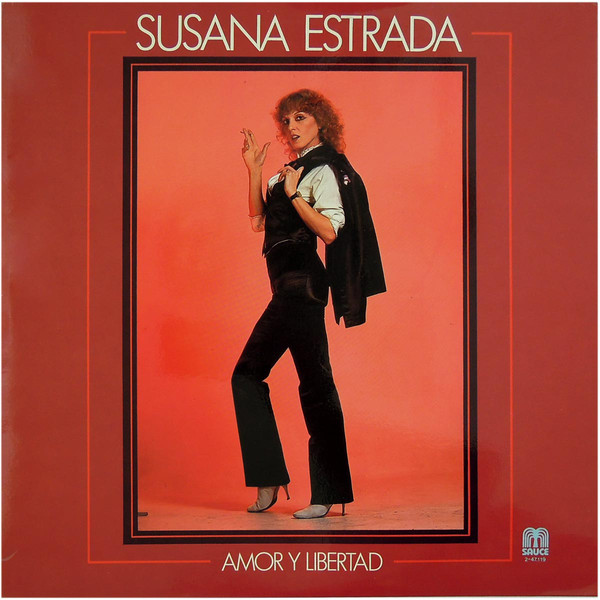
SUSANA ESTRADA-SPAIN’S FIRST LADY OF MUSIC.
Susana Estrada-Spain’s First Lady Of Music.
Ever since 1939, the brutal Francoist regime had ruled Spain with an iron fist. This came to an end with the death of dictator Francisco Franco on ’20th’ November 1975. After Franco’s death, control of Spain passed to King Juan Carlos. By then, Spain was in a state of paralysis, and had been, during the last few months of Franco’s reign. The Spanish people hoped that things were about to change.
They hoped that after the death of Franco, that Spain’s transition to a liberal democratic state could begin. The transition began on ’20th’ November 1975 with the passing of Franco, and took nearly seven years until the electoral victory of the socialist PSOE party on the ‘28th’ October 1982. That seven-year period is nowadays remembered in Spain as the ‘transition’, and marked a new beginning for the Spanish people.
The transition to democracy saw a liberalisation of values and social mores. Suddenly, the Spanish people were enjoying their newfound freedom. This was something that hadn’t previously existed under the Francoist regime. Life, the Spanish people were realising, was for living and this coincided with a sexual revolution that began during the transition.
During the transition and sexual revolution, singer, model and actress and Susana Estrada represented the new Spain. She was independent and modern women, who lived her life on her terms. Susana Estrada wanted to bring about change, and was an advocate for women’s rights, sexual liberation and freedom. One of the ways she sought to bring about change was through her music, and Susana Estrada was at the vanguard of change that took place during the transition in Spain.
Susana Estrada was born in the city of Gijón, in 1949. By then, Franco had ruled Spain since 1936. Growing up, Susana Estrada she watched as the Francoist regime crushed their opponents mercilessly. Many of Franco’s opponents were imprisoned, others disappeared in mysterious circumstances and some were murdered. For anyone who grew up in Spain the forties and fifties, life was tough. It certainly was for Susana Estrada.
By the time she was twenty-one, Susana Estrada had been married, had two children and was now divorced. She was left to bring up two children on her own. This she managed to do on the salary she received working as a librarian. However, Susana Estrada had dreams beyond working in a library. What she really wanted to do, was work as a fashion model.
Eventually, Susana Estrada left her job as a librarian, to embark upon a career as a fashion model. Initially, she worked for small, local companies, but within a year had been accepted into Madrid’s official model school. It looked like Susana Estrada’s dream was about to come true. However, it turned out that Susana Estrada wasn’t tall enough. Even when she took to wearing fifteen centimetre heels, she wasn’t tall enough. For Susana Estrada, it looked as if her career as a model was over before it began.
It looked unlikely that Susana Estrada would ever model for magazines like Vogue or luxury clothing brands, she found her own niche within the fashion world. Susana Estrada modelled the ready-made, pret-à-porter fashion lines. Sometimes, though, she was recruited by overseas model agencies, and occasionally found herself featuring on album cover. By 1971, Susana Estrada had gone up in the world.
She made her acting debut in El Zorro de Monterrey in 1971, which was the start of Susana Estrada’s acting career. During the second half of the seventies, Susana Estrada began to feature in a new genre of film, Destape which were erotic comedies. However, before long, Susana Estrada realised that to make a career in the movie industry: “you had to pay a high price and do some things I didn’t want to do.” However, by then, Susana Estrada had embarked on a new chapter in her career.
This began in 1976, when she started acting in erotic musicals. Her debut came in 1976, in Historias del Strip-Tease which was roundly panned by critics. Despite the terrible reviews, it was a huge commercial success and turned Susana Estrada into a star. However, this came at a cost: “in the beginning, women hated me. They thought that I was lacking decorum, that I was shameless, lecherous, rude…Not all of them but the vast majority. People were not ready for this.”
After featuring in several erotic musicals, Susana Estrada became a sex counsellor in the magazine Play-Lady. At one point, she was receiving 7,000 letters a week. By then, Susana Estrada’s new role was attracting the attention of Franco’s regime. She was accused of public scandal, fined, had her passport cancelled and banned from voting for ten years. This was just the latest controversy for Susana Estrada, who was skating on thin ice. Any further controversy could see her receive further sanctions from the Franco regime. Most people would’ve kept a low profile.
Susana Estrada wasn’t most people, and was about to embark on a career as a singer. Her debut single Ya Me Voy De Tu Vida was released on Odeon in 1978. It was written by Alejandro Jaén, who co-produced the single with Marion Bronley. They were responsible for a single that had been heavily influenced by both classic disco, and the Munich Sound, which was pioneered by Giorgio Moroder. The release of Ya Me Voy De Tu Vida marked the start of a new chapter in Susana Estrada’s career. Despite this, she continued her career in musicals.
Between 1978 and 1980, the musicals that Susana Estrada appeared in grew in popularity. However, they became increasingly explicit. By then, Spain was undergoing a period of transition, and Susana Estrada was campaigning for women’s rights, sexual liberation and freedom. Still, though, some women didn’t approve of what she was doing, and felt it was demeaning. However, Susana Estrada remembers: “I fought very hard for women’s rights. I knew that through sexual liberation you obtain total freedom. This was something which men knew at first and women discovered it late.” Susana Estrada was determined to bring about change, and didn’t seem to care if she caused controversy. Her sophomore single would certainly prove controversial.
Two years after releasing her debut single, Susana Estrada returned in 1980 with her sophomore single Acaríciame, which was released on the Barcelona based Belter label. Acaríciame was written by Carlos Moncada, Félix Lapardi and Óscar Rubio, with Josep Llobell Oliver taking charge of the production. They played their part in the success of Acaríciame, which resulted in Susana Estrada recording and releasing her debut album, Machos.
Susana Estrada entered the studio in 1980, and recorded eight tracks which featured in Machos, which was the musical that she was appearing in. This included the robotic funk of Espacial and the space cosmic disco of Hagamos El Amor which were both written by the songwriting partnership of C. De Las Eras and Manuel Gas. When the album was recorded, Belter scheduled the release for later in 1980. However, Susana Estrada and her legion of fans were in for a surprise when Machos was released by Belter as a cassette album in 1980. Nowadays, Susana Estrada’s Machos is a much coveted collector’s item that changes hands for upwards of £100. That is despite Amor Y Libertad, rather than Machos as being regarded as Susana Estrada’s official debut album.
When Susana Estrada came to record Amor Y Libertad, it featured ten songs penned by Carlos De Las Heras. They were recorded at the Belter Studio, in Barcelona, with producer by Josep Llobell Oliver. To accompany Susana Estrada, he had brought onboard Atlanta a talented and experienced funk group who were familiar faces on the local music scene. The combination of Susana Estrada, Atlanta and Josep Llobell Oliver resulted in what would eventually be regarded as a Euro Disco and cosmic disc classic, Amor Y Libertad.
Initially, Amor Y Libertad was underrated and didn’t receive the recognition many thought it deserved. Critics didn’t seem to ‘get’ Amor Y Libertad, despite its innovative fusion of boogie, cosmic disco, funk, Italo Disco, modern soul and the Munich Sound. Maybe critics were shocked by what many regarded as provocative lyrics, sensual vocals and moans and groans? If that was the case, then songs about sexual liberation and freedom were definitely going to get critics hot under the collar. The reception that Amor Y Libertad received was hugely disappointing for everyone involved in the project.
It was only later that Amor Y Libertad began to receive the recognition it deserved. Nowadays, though, Amor Y Libertad is regarded as a Euro Disco and cosmic disco classic, That comes as no surprise, given the quality of music on the album, and somewhat belatedly, Amor Y Libertad received the recognition it deserved.
After the release of Amor Y Libertad, Susana Estrada released Mi Chico Favorito as a single later in 1981. This was Susana Estrada’s penultimate release during the eighties.
Susana Estrada’s eighties swan-song was the cassette mini album Historias Inconfesables. It was released by Star Grabaciones Originals later in 1981 and was billed by those within conservative Spain as a: “porno-cassette.” Nowadays, Historias Inconfesables is a real rarity which is almost impossible to find.
It’s a similar case with Susana Estrada’s most recent album Tócame, which was recorded in 2007, and is best described as Hi-Energy meets Euro Disco. It was a low-key, self-released album by one of the most controversial figures in Spanish music, Susana Estrada.
She was the one time model who went on to enjoy a career as an actress, agony aunt and singer. Susana Estrada also fought for women’s rights, sexual liberation and freedom. Sadly, her campaigning is often overshadowed by parts of her career that caused controversy. This may not have been the case in America, Britain or other parts of Europe. However, Spain which was a conservative catholic country, which was in a period of transition from a dictatorship to democracy.
Many people were unprepared for Susana Estrada, who was regarded and perceived as an outspoken, and sometimes, outrageous and controversial figure even in the eighties. By then, her campaigning and much of her music meant that the establishment and press in Spain portrayed Susana Estrada as a controversial figure. That was somewhat ironic.
What Susana Estrada was campaigning for was women’s rights, sexual liberation and freedom, which were things that women in other parts of Europe, Britain and America took for granted. Alas, in the newly democratic Spain, Susana Estrada’s campaigns caused controversy in the corridors of power. Maybe Spain’s patriarchy were scared or intimated by a strong and independent woman who was willing to make a stand for what she believed in?
Despite being fined, having her passport cancelled and losing her vote for ten years, Susana Estrada wasn’t going to be silenced. She continued to speak for all the Spanish women who had no way of making their views heard. They had been treated as second class citizens during the Francoist regime, and early in Susana Estrada’s career she became the voice of all Spanish women. In doing so, she risked the wrath of the brutal Francoist regime and could’ve lost her liberty. However, Susana Estrada was willing to stand up for what she believed and continued to do so, throughout a career that lasted four decades.
Throughout her musical career, Susana Estrada became the voice of all Spanish women, and the Spanish Euro Disco diva used her music to reach a wider audience. Susana Estrada who was and is a confinement and modern woman spoke for and to Spanish women, and advised, counselled and campaigned for women’s rights, sexual liberation and the freedom that women in other parts of Europe took for granted. Spain’s first lady of music was determined to make a difference and the grey men in the corridors of power called in favours from their friends in the press and media to blacken Susana Estrada’s name and portray her as a controversial and outrageous figure. However, while nobody remembers the mendacious politicians who were part of a patriarchal political system, they remember Susana Estrada, Spain’s first lady of music not just for the music she made, but for her campaigning and counselling which is part of her legacy.
Susana Estrada- Spain’s First Lady Of Music.
THE ORIGINAL SOUND OF BURKINA FASO.
The Original Sound Of Burkina Faso.
Label: Mr. Bongo Records.
After the success of Mr. Bongo’s The Original Sound Of Mali compilation, the Brighton-based label recently released a new compilation, The Original Sound Of Burkina Faso which was compiled by David ‘Mr Bongo’ Buttle and Florent Mazzoleni. The Original Sound Of Burkina Faso transports the listener back to the seventies which was a golden age for music in the country that until 1984 was called the Republic of Upper Volta.
That had been the case since 1958, when the former French Upper Volta became a self-governing colony and part of the French Union became the Republic of Upper Volta. Less than two years later, and the Republic of Upper Volta gained independence from France in August 1960 and Maurice Yaméogo became the West African country’s first President. This was meant to be a new start for the people of the Republic of Upper Volta.
Sadly, like many former colonies and commonwealth countries, the Republic of Upper Volta has had a chequered past. The start of the country’s problems was the 1966 Upper Voltan coup d’état. This resulted in the Republic of Upper Volta’s constitution being suspended and the National Assembly dissolved. Lt. Col. Sangoulé Lamizana headed up a government that comprised senior army officers. Just six years after gaining independence from France, the Republic of Upper Volta was in turmoil.
This was the start of a four-year period where the army with ‘governed’ with Lt. Col. Sangoulé Lamizana as its President governed the Republic of Upper Volta. He remained the country’s president throughout the seventies, which was a golden age for music in the Republic of Upper Volta. That was remarkable considering the problems in the Republic of Upper Volta during the period.
The country suffered from famine and a drought that ravaged neighbouring countries. Corruption was also rife within the Republic of Upper Volta, even when a new constitution was ratified on the ’14th’ of June 1976, and this signalled the start of a four-year transition period toward complete civilian rule.
Throughout this period, Lt. Col. Sangoulé Lamizana was President of the Republic of Upper Volta, and he was reelected during open elections in 1978. By then, the Republic of Upper Volta was in the throes of the historic five-year Sahel drought, which began in 1975 and lasted until 1980. To make matters worse, there was a famine in the Republic of Upper Volta, and people were dying while corruption was rife. Still, though, the music scene in the Republic of Upper Volta continued to thrive.
So much so, the seventies are now regarded as a golden age for the music scene in the Republic of Upper Volta. Musicians and bands including Abdoulaye Cisse, Amadou Balaké, Bozambo, John Oumar Nabollé, Mangue Kondé Et Les 5 Consuls, Pierre Sandwidi, Tidiani Coulibaly, Dafra Star and Youssouf Diarra were part of a thriving and vibrant music scene. The music these talented and often flamboyant musicians recorded and released was eclectic, and included blues, disco, folk, funk, highlight, Latin psychedelia, rock and soul. Sometimes, the lyrics were full of social and political comment, which was risky when the Republic of Upper Volta was ruled by a military government which was led by Lt. Col. Sangoulé Lamizana.
As the seventies gave way to the eighties, Lt. Col. Sangoulé Lamizana clung on to power in the Republic of Upper Volta. Many thought that one of West Africa’s political survivors was invincible, but they were in for a shock.
During the last three decades, the Republic of Upper Volta’s trade union movement was a powerful force, even under Maurice Yaméogo’s rule. The trade unions had been a thorn in the side of Maurice Yaméogo’s government when he banned all political parties except for the Voltaic Democratic Union. This resulted in protests and demonstrations, where the trade union movement joined forces with students and civil servants. However, Maurice Yaméogo’s answer was to send in the army, who intervened and broke up the demonstrations. Fourteen years later, and the trade unions were determined that history wouldn’t repeat itself.
Behind the scenes, leaders within the trade union movement started to oppose Lt. Col. Sangoulé Lamizana and soon, became a thorn in his the president’s side. However, the trade unions leaders knew that had to tread a fine line, as the man who had presided over their country during the most disastrous decade in its short history could unleash the forces of the army. If this happened, he trade unions leaders realised that this could lead to bloodshed and brutal battles in the streets of the Republic of Upper Volta. This was something they didn’t want
Nor were the trade unions leaders willing to support Col. Saye Zerbo, who overthrew President Lamizana in a bloodless coup on the ’25th’ November 1980. After the coup d’état, Colonel Zerbo established the Military Committee of Recovery for National Progress which would govern the Republic of Upper Volta. This was another disaster for the country, as it eradicated the 1977 constitution. It was a case of one step further, and two steps back.
By the time the Col. Saye Zerbo came to power, the country’s musical golden period, which is documented on The Original Sound of Burkina Faso was over. There was still some amazing music being made in the Republic of Upper Volta but not as much as there had been. That was no surprise, as the next few years would be tumultuous for the people of the Republic of Upper Volta.
Col. Saye Zerbo rule was relatively short-lived, and he was overthrown by the little-known Maj. Dr. Jean-Baptiste Ouédraogo and a number of junior army officers who were part of the Council of Popular Salvation. The new President promptly banned all political parties and organisations, but contradicted himself by promising a new constitution and transition to civilian rule.
Given the mixed messages, it was no wonder that a year later Maj. Dr. Jean-Baptiste Ouédraogo was the latest President of the Republic of Upper Volta to be overthrown. He had been unable to control the right and left-wing factions within the Council of Popular Salvation, and it was no surprise that less than a year later, in January 1983, Maj. Dr. Jean-Baptiste Ouédraogo exited stage left, the victim of a coup d’état.
The man behind the coup d’état was a member of the left-wing faction within the Council of Popular Salvation, Capt. Thomas Sankara. He entered through the revolving door that lead to the Prime Minister’s office and he was arrested later in 1983.
When Capt. Blaise Compaoré set about trying to free the former Prime Minister Capt. Thomas Sankara this lead to yet another coup d’état on the ‘4th’ of August 1983. This lead to the return of Capt. Thomas Sankara to power, and he began what was heralded as a radical program.
Suddenly, programs mass-vaccinations and infrastructure improvements were announced by Capt. Thomas Sankara. He also set about encouraging domestic agricultural consumption and proposed anti-desertification projects. There was also an expansion of women’s rights under Capt. Thomas Sankara. However, he had also dreamt up a cunning plan.
This he put into place on the ‘4th’ of August 1984 when the Republic of Upper Volta and became Burkina Faso. Despite all his radical policies, and his determination to improve the life of the people of Burkina Faso, some things didn’t change
Just over three years later, there was yet another coup d’état in Burkina Faso on the ‘15th’ of October 1987, organised by Blaise Compaoré, who was a former colleague of Capt. Thomas Sankara. Despite this, Capt. Thomas Sankara and twelve of his colleagues were killed, and Blaise Compaoré went on to rule Burkina Faso until October 2014.
Sadly, by then, forty years had passed since Burkina Faso’s golden age. This was part of the country’s cultural heritage and was something the people of Burkina Faso are deeply proud of. Sadly, very few people outside of Burkina Faso, apart from some musical connoisseurs are aware of this golden musical age. It’s documented on The Original Sound of Burkina Faso, which features some of the leading lights of the country’s vibrant musical scene during this golden age.
Some of the artists that feature on The Original Sound of Burkina Faso feature several times. That is no surprise, as they played an important part in the country’s music scene during the golden era that was the seventies. This includes Abdoulaye Cisse.
He features three times, and has the honour of opening The Original Sound Of Burkina Faso. However, Abdoulaye Cisse released his stunning psychedelic soul single A Son Magni in 1975 on the Club Voltaïque Du Disque label. Two years later, in 1977, Abdoulaye Cisse et L’Orchestre Le Super Volta De La Capitale collaborated on what’s an enchanting and almost mesmeric example of Afro-Latin swerve. It was released on the Club Voltaïque Du Disque label around 1977. The following year, Abdoulaye Cisse released his album Les Vautours on the Christiana Satel label in 1978. Its closing track was Aw Yé Douba Ké, which is a fusion of Afrobeat, funk and soul, and a tantalising taste of an incredibly rare album.
Amadou Balaké features four times on the compilation, which allows him to showcase a sound that often, features elements of Afro-Fusion and funk. One of his contributions is the irresistible calypso dancer Whisky Et Coca-Cola, which is a true hidden gem. By 1978, Amadou Balaké had signed to the Ivory Coast label Sacodis, and would release a quartet of albums between 1978 and 1979. This includes his 1978 album Taximen, which features Wayisjelequeyele, an urgent, hypnotic, funky and soulful song. The same year, 1978, Amadou Balaké released his Bar Konon Mousso Bar album which features Super Bar Konon Mousso and Aminata Du Thé. Both tracks are über funky and dancefloor friendly as Amadou Balaké draws inspiration from disco and funk as d Western and African music unite and become one.
When Bozambo released their Africa album on the Disc’ Africana label, it featured the Georges Ouedraogo composition Kombissé. It’s an almost peerless example of highlife hustle and features musical masterclass from virtuoso drummer Georges Ouedraogo. The result is a welcome addition to The Original Sound of Burkina Faso.
During the seventies, Pierre Sandwidi released a dozen singles, and two albums, including Koury, which was released on the Ivory Coast label Disc-Orient. Koury features Boy Cuisinier where Pierre Sandwidi utilises synths during this genre-melting track. It finds the bush troubadour fusing elements of Afrobeat with R&B and even elements of Western pop to create his unique brand of music with a social conscience. The bush troubadour Pierre Sandwidi and Super Volta collaborated on the single Mam Ti Fou which was released on Club Voltaïque Du Disque in 1977. Hidden away on the B-Side was the genre-melting hidden gem Yamb Ne Y Capitale, which features an impassioned and emotive vocal from Pierre Sandwidi.
In 1977, Tidiani Coulibaly and Dafra Star collaborated on the single De Nwolo, which was released on the Music Hall label. It has an almost hypnotic and otherworldly sound that is truly captivating. Tucked away on the B-Side as Sie Koumgolo which has an intensity and urgency as Tidiani Coulibaly delivers his lead vocal.
There’s two collaborations from Mangue Konde on The Original Sound Of Burkina Faso. The first is between Mangue Konde et Le Super Mandé on their Ikélé Tatê album, which was released on the Éditions Omogidi Music in 1978. One of the album’s highlights was Touba which showcases two of the leading lights of the Burkina Faso during the seventies. Pop Kondé was the B-Side of Woulouni which was released as a single by Mangue Kondé Et Les 5 Consuls on the Volta Discobel label. Funky, soulful and irresistible Pop Kondé is proof that it’s always worth checking the B-Side of a single.
During the second half of the seventies, disco’s popularity was at an all-time high, and its tentacles were reaching far and wide. Even parts of Africa, including the Republic of Upper Volta had succumbed to disco. One of the artists who embraced disco was John Oumar Nabollé who contributes M’ba Lalé which he released on the Club Voltaïque Du Disque label. It’s a fine example of African disco that probably filled a few dancefloors.
The other track on The Original Sound Of Burkina Faso is Youssouf Diarra Dit El Grand Ballaké’s DJanfa Magni which is a track from their Rock Star album. It was released on Editions Shakara Music in 1978 and one of the album’s highlights was DJanfa Magni. With a vocal that oozes emotion and mesmeric arrangement that draws the listener in and holds their attention, it’s a welcome addition to The Original Sound of Burkina Faso. Hopefully, if there’s a followup compilation, another track from Rock Star will feature.
For anyone looking for an introduction to golden age of Burkina Faso’s music, the seventies, there’s no better starting place than the lovingly compiled The Original Sound of Burkina Faso which as recently released by Mr. Bongo Records. It features what was the great and good of the Burkina Faso music scene during its golden age in the seventies.
This includes contributions from musicians and bands including Abdoulaye Cisse, Amadou Balaké, Bozambo, John Oumar Nabollé, Mangue Kondé Et Les 5 Consuls, Pierre Sandwidi, Tidiani Coulibaly, Dafra Star and Youssouf Diarra. They were part of Burkina Faso’s thriving and vibrant music scene during the seventies, and records an eclectic selection of music including Afrobeat blues, disco, folk, funk, highlife, Latin psychedelia, rock and soul. All these influences can be heard on the sixteen tracks on The Original Sound of Burkina Faso, which offers a fascinating insight into this troubled country’s music scene during the seventies which nowadays, is regarded as the golden age of Burkina Faso music.
The Original Sound Of Burkina Faso.
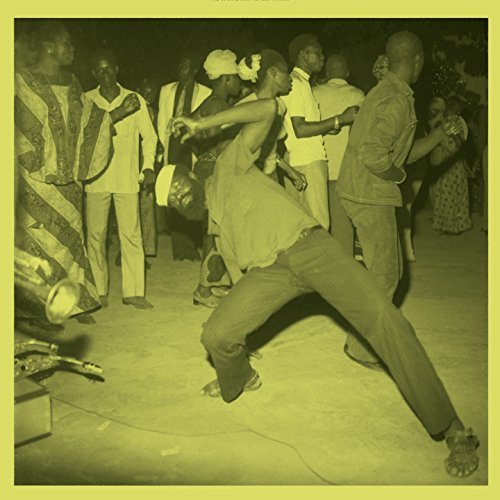
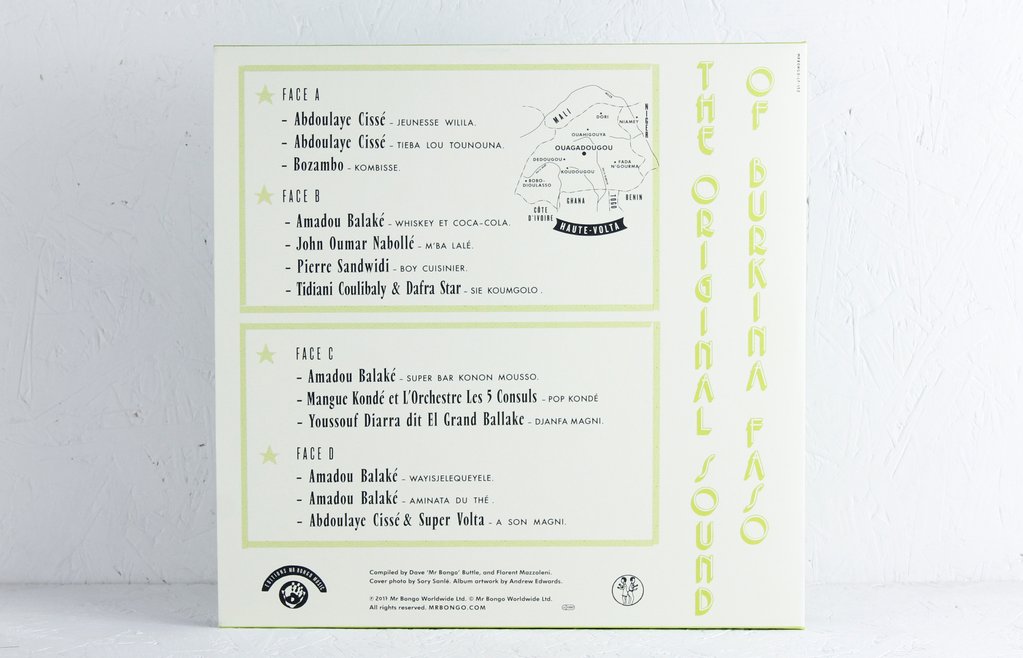
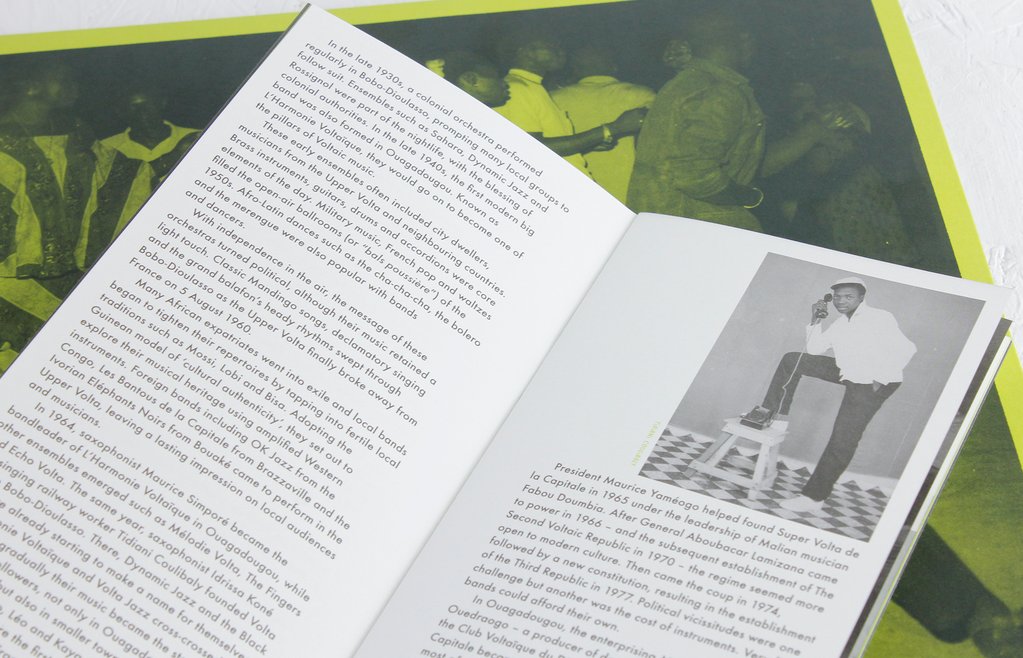
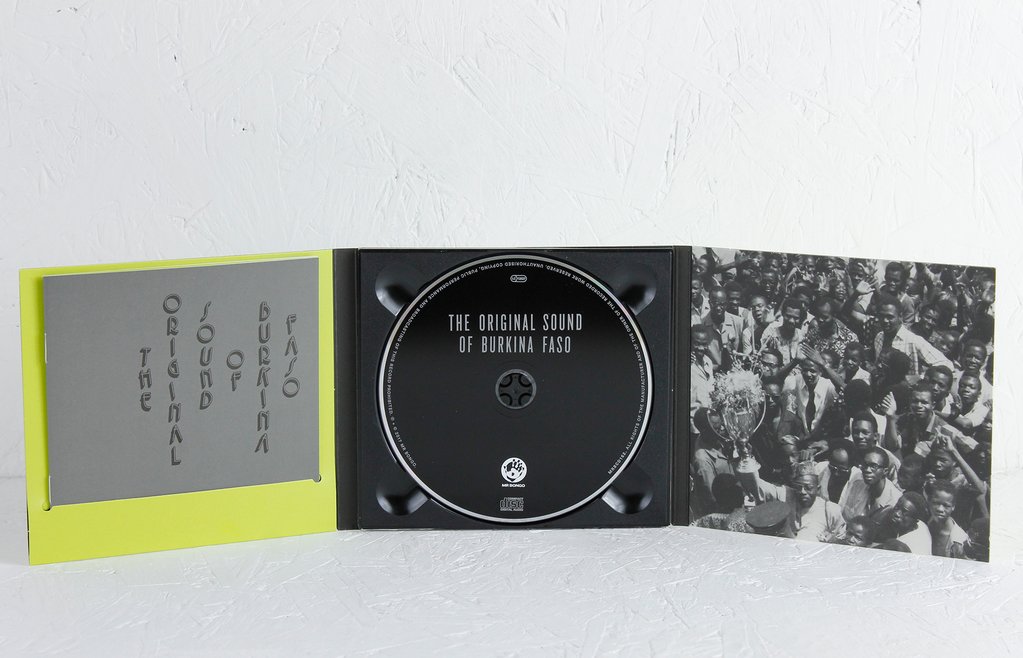
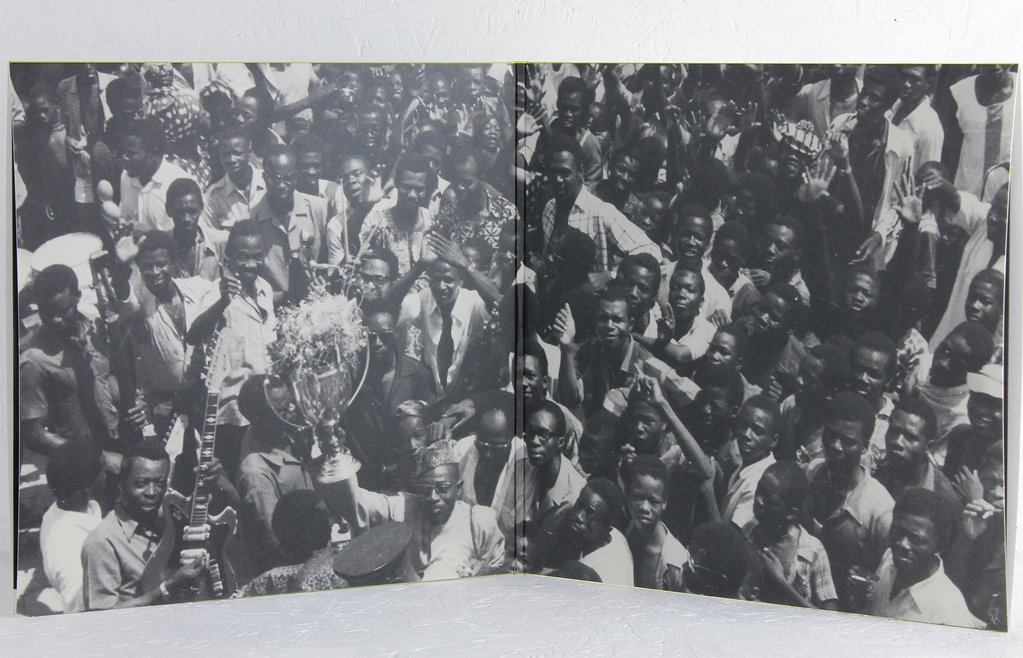
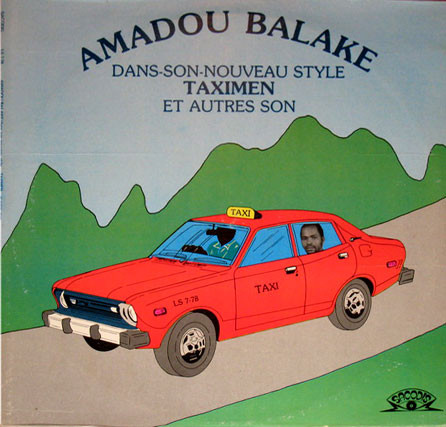
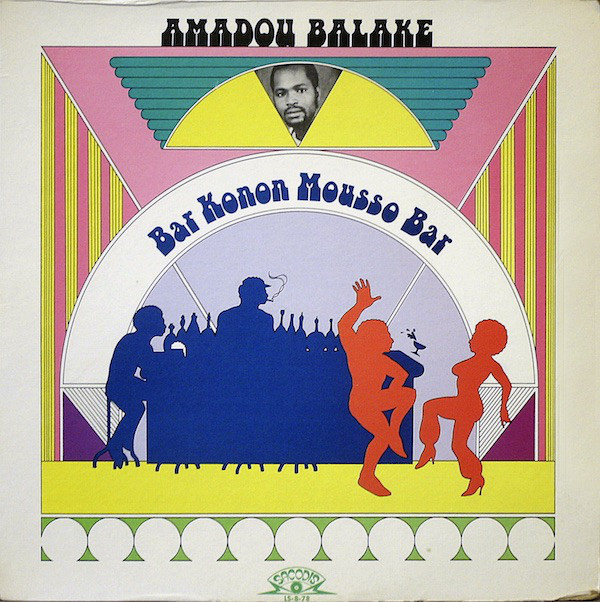
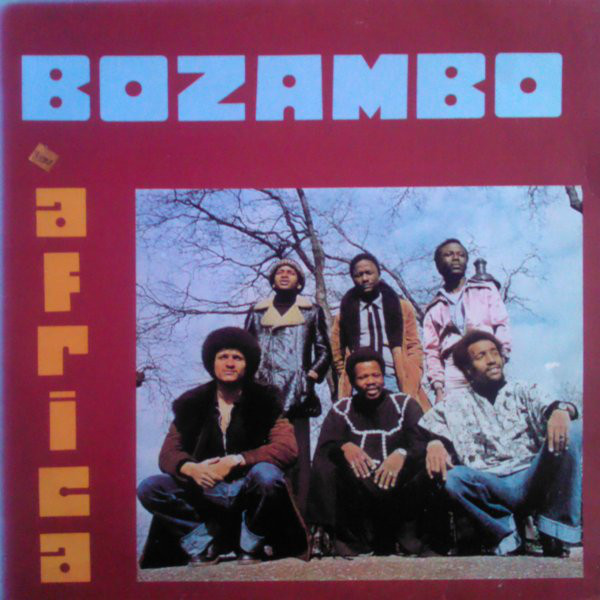
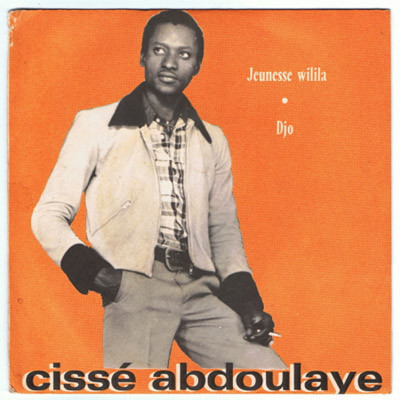
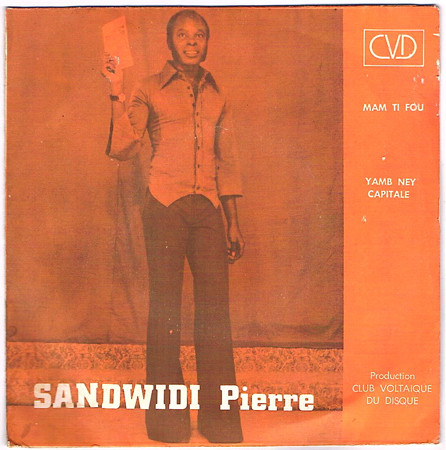
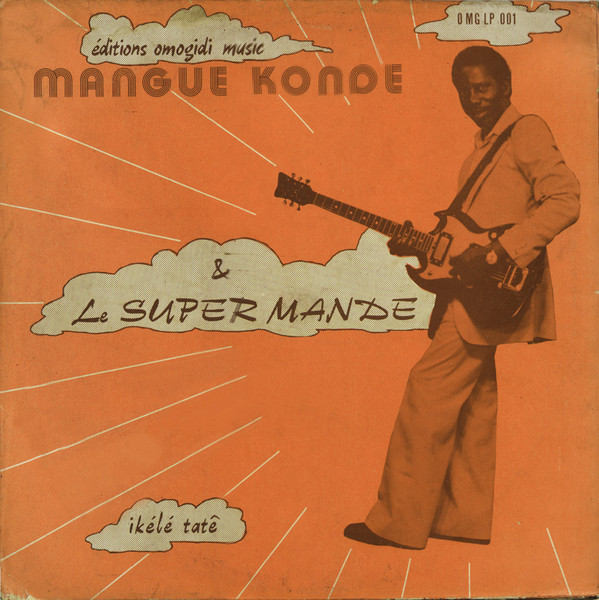
HABIBI FUNK: AN ECLECTIC SELECTION OF MUSIC FROM THE ARAB WORLD.
Habibi Funk: An Eclectic Selection Of Music From The Arab World.
Label: Habibi Funk Germany.
Nowadays, hundreds of compilations are released by record companies all around the world, and with one click of a button music fans have access to an eclectic selection of music that forty years ago, wasn’t available to record buyers. Back then, very few compilations were released, with the record industry tending to concentrate on artists albums. The exception was the ubiquitous greatest hits album which was a contractual obligation of an artist or band’s career. That was despite many of the progressive rock bands being more album oriented. Still a best of was compiled and released by the record companies who hadn’t quite realised the value of all the material in their vaults.
For too long, the major labels didn’t realise that there was a huge audience who were willing to buy a variety of different compilations. Somehow, record company executives had managed to overlook what was a huge untapped market for everything from genre specific compilations, to compilations focusing on a specific label. Some of the more adventurous record buyers were also wanting to hear music from different parts of the world, but were denied this opportunity.
The irony was that the major labels had huge amounts of music in their vaults. This ranged from the music released on both sides of the Atlantic, and by the label and their various imprints around the world. With untold musical riches waiting to mined, and the major labels had the personnel with the expertise to compile compilations aplenty some record labels were sitting on a goldmine. It was the equivalent to finding one of Charlie Wonka’s Golden Tickets. However, the major labels didn’t seem to have a sweet tooth, and seemed reluctant to embrace the compilation market.
While some compilations were released, others were of dubious quality, and released on budget labels. Especially those dreadful Top Of The Pops compilations where session singers murdered the hits of the day. There were also compilations that were marketed on television, and promised “twenty hits of the day”. What they omitted to mention that shortened versions of the songs were often used so the promised “twenty hits of the day” would fit on one LP. To rub salt into the record buyers wound, usually, the vinyl was poor quality, and the listening experience wasn’t the best. This was what the compilation market was like in the seventies, which certainly wasn’t a vintage time for compilations.
Thankfully, the compilation market is very different nowadays, and literally hundreds of compilations are released by recorded companies worldwide every week of the year. While there are still a few compilations of dubious quality being released, the majority are lovingly curated by knowledgable music lovers who are experts in a particular musical genres. This can range from Afrobeat, avant-garde, country, Latin, Northern Soul, progressive rock, psychedelia and zydeco. Quite simply, nowadays, there’s something for everyone in the burgeoning and vibrant compilation market.
A recent release is Habibi Funk: An Eclectic Selection Of Music From The Arab World which was recently released by Germany Habibi Funk. It features sixteen tracks from Algeria, Egypt, Lebanon, Morocco, Sudan and Tunisia. Four of these tracks have never been released before and make their debut on Habibi Funk: An Eclectic Selection Of Music From The Arab World. This compilation offers a fascinating insight into what will be hitherto unknown world for many music fans, that of Habibi Funk.
Many people, including a number of ardent music fans may not have heard of Habibi Funk, and be wondering about the history and roots of the genre? Habibi Funk is essentially a term given to a sound that became popular throughout much of the Arab world, including Algeria, Egypt, Lebanon, Morocco, Sudan and Tunisia. Across this vast, sprawling continent, music lovers embraced and shared a love of Habibi Funk. It’s a genre which has been inspired by a variety of disparate genres.
Some of the Habibi Funk music shares much in common with Arabic zouk music, whose roots can be traced to the Caribbean Islands, including Martinique and Guadeloupe. However, Habibi Funk has been inspired by Coladera, which is popular musical genre from the Cape Verdean Islands. It seems that Lebanese Bossa has also played its part in the evolution of Habibi Funk. So too, has a variety of a Western genres, including funk, soul and rock music. All these genres have influenced the development and evolution of Habibi Funk.
Essentially, Habibi Funk is a fusion of musical influences from four continents, which have all played their part in the irresistible music on Habibi Funk: An Eclectic Selection Of Music From The Arab World. Obviously, the music is funky, but it’s also soulful, raw, raucous and sometimes rocky and sassy. Especially when flamboyant frontmen strut their way through songs delivering vampish vocals that are far removed from the lazy, predictable cliches that James Brown used to spout during parts of his career. This is very different, and a refreshing alternative that will introduce the newcomers to fifteen heroes of Habibi Funk on Habibi Funk: An Eclectic Selection Of Music From The Arab World.
These heroes of Habibi Funk come from six Arabian countries, including, ranging from Algeria, Egypt, Lebanon, Morocco, Sudan and Tunisia, and including Fadoul, Bob Destiny, Attarazat Addahabia, Sharhabeel Ahmed, Belbao, Mallek Mohamed, Freh Kodja, Ahmed Malek, Al Massrieen and Dalton. They’re just a few of the names on Habibi Funk: An Eclectic Selection Of Music From The Arab World.
Moroccan funkateer Fadoul who opens the compilation with Bsslama Hbibti, is regarded by many as the founding father of Habibi Funk. This is a track from his Al Zman Saib album which was released on the Atlassiphone label. Bsslama Hbibti finds the flamboyant vocalist Fadoul fusing funk, soul and rock during this irresistible track that sets the bar high for the rest of Habibi Funk: An Eclectic Selection Of Music From The Arab World.
Although Bob Destiny was born in New Orleans, the singer, theatre director and choreographer spent time working in Algeria where he released a handful of singles. This includes Pan-African Festival for the Freedom Musique label. Tucked away on the B-Side was an explosive, energetic and later vampish cover of Wang Dang, that seems to have been inspired by the early rock ’n’ rollers and R&B singers. The result is a timeless tack that even today would fill a dancefloor.
Attarazat Addahabia’s contribution is something of a mystery, as the title is unknown. Despite that, the Arabian, Western and even a hint of classical music to create a funky, urgent and soulful song that features an impassioned vocal from Attarazat Addahabia. It shows another side to Habibi Funk.
While Jalil Bennis Et Les Golden Hands were from Morocco they released Mirza as a single on the French label Barclay, in 1967. It’s a genre-melting track with elements of garage rock, R&B rock ’n’ roll and surf music. They’re combined to create a lively and dynamic cover of this Serge Gainsborough composition.
In Sudan, Sharhabeel Ahmed is still regarded as a legendary figure within the country’s art scene. He’s remembered by many as the founding father of Sudanese jazz. However, Sharhabeel Ahmed was a versatile and talented musician, who could play several instruments. This included the guitar, and he’s a versatile player who deserves to be called a virtuoso. That is apparent on Argos Farfish, where his playing hints at Jimi Hendrix, before a genre-melting arrangement unfolds and Sharhabeel Ahmed, forever the flamboyant frontman, swaggers his way through the lyrics to a song that epitomises everything that is good about Habibi Funk.
Every self-respecting record buyer knows the Harlem Shuffle, which is considered to a soul classic. However, very few people will have heard of the Casablanca Shuffle. It was recorded by Belbao from Morocco, who pay homage to the Harlem Shuffle, by changing the lyrics slightly and the Casablanca Shuffle is born. Mostly, Belbao stay true to the original song, but sometimes, takes the Casablanca Shuffle in a new direction, breathing new life into a familiar song.
Mallek Mohamed was born in Algeria, but travelled to Paris, France where a new chapter in his career was born. This musical pioneer set out to break down musical barriers, by fusing disparate musical genres. In doing so, Mallek Mohamed hoped his the music he wrote and recorded would find favour with a wide range of people. Sadly, much of the expressive and poetic music that he wrote, including Rouhi Ya Hafida, was never released by a record label. That is a great shame as his vocal is full of expressive, emotive and full of longing as he delivers the poetic lyrics against a disco beat. This shows yet another side to the Habibi Funk sound.
While Freh Kodja was born in Algeria, his career took him all over the world, including Europe and America where he worked as a solo artist and with the band La Flamme. Freh Kodja contribution to the compilation La Coladera, where he sings call and response with backing vocalists. They play their part in a soulful, funky, urgent and irresistible track.
Nowadays, Kamal Keila is regarded as one of the legends of the Sudanese music scene in the seventies. Sadly, he only released one album which is extremely rare. However, he also recorded several sessions for Sudanese radio. During one of these recording sessions he recorded Al Asafir, which is a captivating fusion of soul, funk and jazz, plus Sudanese and Ethiopian music. There’s also a nod to Fela Kuti during this funky, soulful and heartfelt song.
Algerian vocalist Ahmed Malek is the only artist to feature twice on the compilation. His first contribution is the dramatic, cinematic and stirring Tape 19.11 which incorporates elements of Algerian music, funk, jazz. Very different is Bossa, which shuffles along showcasing a much more laid-back and melodic sounding track where jazzy horns add the finishing touch.
Hamid El Shaeri who was born and brought up in Egypt, was one of the biggest stars of Arabian pop between the eighties and noughties. He was a versatile artist who released everything from boogie, disco and soul. A reminder of this is the feelgood sound of Ayonha a gorgeous fusion of boogie, modern soul and pop.
During the eighties, Samir and Abboud entered By Pass Studio with a band the featured the cream of Lebanese music. During the session, the pair recorded a number of tracks including Games, which is reminiscent of the Yacht Rock and Vanilla Funk sound. It’s a real hidden gem and welcome addition to this truly eclectic compilation.
When Al Massrieen set out to modernise Egyptian music in the late-seventies, nobody had any idea of what was about to unfold over the next few months and years. Using the latest in musical technology, including synths, drum machine and even early computer programs, Al Massrieen came up with tracks like Sah. It’s essentiality a fusion of boogie, disco, jazz and soul that was the result of Al Massrieen rewriting the musical rulebook.
As Lala Tibki unfolds, straight away, Gharbi Sadok and Georges Garzia sound like a Tunisian equivalent of Steely Dan as they combine jazz, funk and rock. The result is a slick, soulful and memorable song that isn’t short of a hook.
Closing Habibi Funk: An Eclectic Selection Of Music From The Arab World is the smooth and soulful ballad Soul Brother from the Tunisian band Dalton. They were based in the Tunisian capital, where they were regulars on the local music scene. That was where they heard the soul and funk that went on to influence their sound. One of their finest recordings was Soul Brother, which was the B-Side of their 1975 single Aleck. It closes this lovingly curated compilation on a high.
For music fans who have yet to discover either modern Arabian music or Habibi Funk, then Habibi Funk: An Eclectic Selection Of Music From The Arab World is the perfect introduction to this genre. It was recently released by Habibi Funk Germany, and features sixteen examines of Habibi Funk, which is a broad musical church.
There’s much more to Habibi Funk than funk. There’s also Arabic zouk music, Coladera from the Cape Verdean Islands and Lebanese Bossa, plus everything from boogie, disco, funk, jazz, R&B, rock ’n’ roll, rock and soul. All of this can be heard on Habibi Funk: An Eclectic Selection Of Music From The Arab World which features sixteen tracks that are a tantalising taste of the music that unites much of the Arab World, Habibi Funk.
Habibi Funk: An Eclectic Selection Of Music From The Arab World.

ASARAN EARTH TRIO-WHY SHOULD YOUR HEART NOT DANCE.
Asaran Earth Trio-Why Should Your Heart Not Dance.
Nowadays, 8.2 million people call New York City home, including many musicians and vocalists who have arrived in the Big Apple from the seven continents of the world. They know that New York is still one of the musical capitals of the world, and home to some of the most talented and innovative musicians and vocalists in America. Many have already made their mark and the music industry, while others have still to make a breakthrough. However, they’re unwilling to give up on their dream of enjoying a successful musical career and following in the footsteps of the legends who took to the stage at Max’s Kansas City, Fillmore East, Electric Circus, Coney Island High, The Bottom Line and The Palladium. To do so is to live the American Dream, and become part of New York’s rich musical history.
Every new group realises this, including the groups that are founded in New York each and every year. Some of these groups feature musicians who have travelled from far and wide, and eventually settled in the Big Apple where they embark on the next step of their career. That was the case with Asaran Earth Trio which features Brazilian-born singer and percussionist Anne Boccato, Croatian vocalist Astrid Kuljanic and Artemisz Polonyi a vocalist from Budapest, in Hungary. They had all travelled to New York, where they first met and formed a vocal group which eventually became the Asaran Earth Trio who have recently Why Should Your Heart Not Dance. It’s a captivating and enchanting album that showcase the considerable talents of the Asaran Earth Trio, and is the next chapter in what has been a remarkable musical journey.
Each member of the Asaran Earth Trio comes from a very different background, but share one thing in common, a love and passion for music. Their love of music resulted in them embarking upon a journey, with their eventual destination being New York. Some took a direct route, while others embarked upon a circuitous route from their homeland, that was akin to a Homeric Odyssey.
Anne Boccato.
In the case of pianist and vocalist Anne Boccato, she was born and brought up in the city of São Paulo, in Brazil. However, around ten years ago, Anne Boccato travelled to America, and eventually, settled in New York.
This was the perfect place for Anne Boccato to call home, as she had always loved jazz music and immersed herself in the Big Apple’s vibrant jazz scene. Meanwhile, Anne Boccato taught the piano, and in her spare time starting playing her own music. Before long, she was a familiar face on the live, and soon, Anne Boccato began collaborating with other musicians.
Some ten years later, and Anne Boccato is busier than ever. She’s now a mother of four-year old Anne, and continues to teach music, and write and perform her own music. This she hopes will connect with a wide audience from different parts of the world. That is no surprise as Anne Boccato is also a talented linguist, who can seamlessly switch between English, Portuguese and Spanish, and similarly, is just as happy playing instrumentals as songs. Anne Boccato puts her skills as composer and vocalist to good use in the latest project she founded, the Asaran Earth Trio. She invited two of her friend to join the nascent Asaran Earth Trio, including Astrid Kuljanic.
Astrid Kuljanic.
Astrid Kuljanic was born in the Republic of Croatia, which is situated at the crossroads of Central and Southeast Europe, on the Adriatic Sea. That was where Astrid Kuljanic’s was born and brought up, and where her love of music began. Before long, she had immersed herself in music and had a wide range of musical genres. Initially, this ranged from Eastern European and Balkan music, but as time passed, Astrid Kuljanic embraced a wider range of musical influences.
By then, Astrid Kuljanic has enrolled at the Conservatorio di musica Guiseppe Tartini, in Trieste, Italy, and later graduated with a Bachelor of Music degree. This was only the first part of Astrid Kuljanic’s formal musical education and later, she would graduate with a Masters of Music degree in Jazz Performance from Manhattan School of Music. That was still to come.
In 2007, Astrid Kuljanic founded the quintet the Mildreds who released their debut album Brisači Prašine on Aquarius Records. They would go on to tour Europe, and two years later, the Mildreds returned with their sophomore album Život U Ušima in 2009. By then, Astrid Kuljanic had embarked upon a new venture.
Astrid Kuljanic founded the Crescendo Music Festival on the island Cres, in Croatia in cooperation with Croatian Music Union. Astrid Kuljanic wanted the local audiences to see a wide range of artists and connect with the different types of music that they were making. This was all part of Astrid Kuljanic’s continued mission to engage audiences across cultural boundaries, and is something she continues to today in New York.
Just like her future colleague Anne Boccato, Astrid Kuljanic also decided to travel to New York to embark upon a new chapter in her career. By then, she had already founded the Mildreds and the Crescendo Music Festival. However, Astrid Kuljanic was keen to broaden her musical horizons, and made the journey to the Big Apple.
Now living in New York, Astrid Kuljanic absorbed and embraced a wide range of musical genres, ranging from jazz, Brazilian and Indian music. This was quite different to the Eastern Europe and Balkan music she had grown to love back home in Croatia. However, it helped shape Astrid Kuljanic as she experimented with new things.
One of them was performing with electronics using the digital audio workstation Ableton Live. This was very different to the much of the music Astrid Kuljanic had discovered earlier in her life and recently embraced. However, Astrid Kuljanic wasn’t just making music with Ableton Live. Soon, Artemisz Polonyi was invited to join Anne Boccato’s latest protect the Asaran Earth Trio, and became the third member of this truly talented triumvirate
Artemisz Polonyi.
Just like Astrid Kuljanic, Artemisz Polonyi’s roots are in Eastern Europe, where she grew up in the beautiful city of Budapest, which is the capital of Hungary. That was where Artemisz Polonyi first discovered the Kodály tradition of singing folk songs and choral music. This was the start of Artemisz Polonyi’s lifelong love affair with singing harmonies.
Initially, Artemisz Polonyi’s loved singing the moving middle note when she harmonising back home in Budapest. However, as an adult Artemisz Polonyi also made the journey to New York, where the next part of her musical career began.
Once she had settled in New York, Artemisz Polonyi began singing mostly with a cappella groups, and sometimes with choirs. This was the music she loved, and most of the time she’s required to hit the highest notes. Only the best and most talented singers can do this consistently. This includes Artemisz Polonyi, who is also a versatile singer, capable of switching between musical genres, and occasionally sings with jazz groups.
This includes her own jazz trio which plays in venues in New York City. The multitalented Artemisz Polonyi also teaches, conducts her own chorus and spends some of her time experimenting with world music and improvisation. Then there’s the latest vocal group that Artemisz Polonyi is part of…Asaran Earth Trio.
Asaran Earth Trio.
When the three members of Asaran Earth Trio first met in New York, Anne Boccato, Astrid Kuljanic and Artemisz Polonyi realised that they had much in common with each other. That was despite growing up in different countries, and in the case of Anne Boccato a different continent. However, they all shared a love of music which was thing that brought them together, and which they bonded over.
Soon, Anne Boccato, Astrid Kuljanic and Artemisz Polonyi had made a pact that they should dedicate themselves to singing beautiful music from different parts of the world and take different musical traditions in new directions. To do this, they fused elements of folk music, group improvisation, percussion, beats and the various genres of music that had inspired each vocalist.
Before long, the trio were drawing inspiration from each other’s musical heritage, as the came together to sing and play various percussive instruments. Little did they realise that things were about to snowball, and what started out as three friends singing together, would eventually see them booked to play everywhere from bars, theatres and festivals to living rooms churches and on the city streets. By then, the three friends had adopted the name Asaran Earth Trio and a new musical adventure had begun.
It was an adventure that would eventually cross cultural and language barriers, and saw the Asaran Earth Trio bring their unique brand of genre-melting music to audiences across New York. Many were captivated by both the starkness and beauty of the music which features just vocals and percussion. This was very different to much of the music the audiences had heard before.
While the audience had heard groups harmonising before, usually, they had a full band behind them. That wasn’t the case with Asaran Earth Trio, who were reliant on their innate or God-given talents. The audience watched as their harmonies became one, and soared high into the night air above the spartan percussion and beats. These harmonies had been honed and perfected over days, weeks and months, and now the Asaran Earth Trio were reaping their rewards as they showcased their skill and versatility.
While some of the songs that the Asaran Earth Trio sang were familiar folks songs, jazz standards or heartbreaking laments, they wanted to introduce the audience to the music of their home countries. Gradually, the Asaran Earth Trio introduced songs from Brazil, Croatia and Hungary into their increasingly eclectic sets. Their sets reflected the members of the Asaran Earth Trio’s background, and paid homage to their homelands and those that they left behind.
Many members of the audience who also came from the four corners of the globe could relate to Asaran Earth Trio’s music. However, just like other members of the audience, they embraced and enjoyed Asaran Earth Trio’s cerebral, joyous and uplifting music. Meanwhile, the Asaran Earth Trio were playing in a variety of venues, big and small, with their music proving increasingly popular.
Some nights, the Asaran Earth Trio gave audience members handmade instruments to play, and asked that they sang along with them. This added to what was already a joyous atmosphere. So much so, that when some members of the audience heard the Asaran Earth Trio in full flight, thought that this irresistible sound was akin to a call to dance. That would prove ironic, as the Asaran Earth Trio named their debut album Why Should Your Heart Not Dance.
Why Should Your Heart Not Dance is the latest chapter in the Asaran Earth Trio story, and features fourteen songs from this talented trio. They showcase their talent and versatility on this album of carefully crafted, genre-melting music. It opens with the Asaran Earth Trio reinventing Ray Henderson’s standard Bye Bye Blackbird. They sing a cappella and improvise and sometimes, become human beat boxes. In doing so, they give the listener a taste of what’s to come, as the song heads in new and sometimes unexpected directions, all the times, taking twists and turns along the way
That is the case throughout Why Should Your Heart Not Dance, which features traditional songs from America, Croatia, Hungary, Italy, Macedonia, Portugal and Spain. The Asaran Earth Trio rework, and sometimes, totally transform songs as they given them a musical makeover.
This includes the traditional Macedonian ballad Jovano Jovanke, which deals with love and loss. Here the Asaran Earth Trio’s tight, heartfelt peerless harmonies are augmented by a spartan arrangement which features the unmistakable sound of a frame drum
Kis Kece Lányom is Hungarian lament sung at weddings, where the mother bids farewell to her daughter. The Asaran Earth Trio sing a cappella allowing their beautiful crystalline harmonies to take centre-stage, on a song were Artemisz Polonyi’s love of choral music shines through.
Anne Boccato’s inspiration for the title-track came Why Should Your Heart Not Dance came from CS Lewis. It features a heartfelt vocal and droning, cascading, soaring and soulful harmonies. They prove the perfect accompaniment an impassioned vocal.
Milho Verde is a traditional Portuguese song with lyrics that are rich in imagery. As a result, just drumbeats and percussion provide a subtle backdrop for the Asaran Earth Trio’s joyous harmonies. Later, they leave room for the percussion to improvise as this traditional song, heads in a new and unexpected directions.
One of the most beautiful songs on Why Should Your Heart Not Dance is Ket Dal, which is another Hungarian traditional song. This is the perfect showcase for Artemisz Polonyi’s lone ethereal vocal, which is later augmented by subtle vocals. They take care not to overpower the ethereal beauty of Artemisz Polonyi’s vocal on this love song.
Very different is the Croatian traditional song Divojčice Rožice, which features a conversation between a handsome man and beautiful woman. Astrid Kuljanic plays both characters during this impassioned exchange, and in doing so, breathes new life into the song. It’s a similar case with the traditional American folk song song Foreign Lander, where the lead vocal and harmonies become a musical yin and yang during this beautiful and moving lament. It’s reminiscent of many traditional Celtic songs, even some that are being written today.
The Asaran Earth Trio’s reinvent the legendary Hermeto Pascoal’s Viva o Jackson do Pandeiro, which swings as beats, percussion and a zambumba accompany their peerless jazz-tinged harmonies. Although very different from the original, it’s an irresistible, imaginative and swinging rework of a song that was written and recorded by a true musical pioneer.
L’Amante Confessore is a Shakespearian love story from Trento region of Northern Italy. In the song, a young woman who is dying is visited by her lover, who has disguised himself as a member of a religious order. The Asaran Earth Trio’ sing a cappella and again, their tight harmonies breath meaning and emotion into the lyrics. It’s a similar case on the impassioned rendition of the traditional Bulgarian song Dilmano Dilbero. It gives way to the heartfelt Hungarian ballad Széki Lassú, where Artemisz Polonyi delivers a needy ethereal vocal full of longing. It’s without doubt one of Why Should Your Heart Not Dance’s highlights.
The Asaran Earth Trio throw a curveball on Patacoada which is a musical tongue twister which Anne Boccato cowrote with Jose Paulo Paes. It’s delivered in a Maracuta rap style, which shows another side to the Asaran Earth Trio. Closing Why Should Your Heart Not Dance is the traditional Spanish song Las Panaderas, which is a homage to the women who make the bread in the mornings. It’s a joyous song that is sung in 6/8 time, against a spartan but effective arrangement. This is a memorable way to close the Asaran Earth Trio’s much-anticipated debut album Why Should Your Heart Not Dance.
It’s a captivating and carefully crafted album of enchanting and eclectic music from the Asaran Earth Trio who are led by the talented Brazilian-born singer, songwriter and percussionist Anne Boccato. She recruited two other talented singers, composers and musicians, including Astrid Kuljanic from Croatia and Artemisz Polonyi from Hungary. They all traveled to New York separately, and met in the Big Apple where they bonded over their shared love of music.
Since then, the Asaran Earth Trio have become familiar faces and favourites on the New York live scene, where they play venues big and small. The next step was releasing their debut album, which features the considerable talents of this versatile and multitalented Asaran Earth Trio releasing their much much-anticipated and long-awaited debut album Why Should Your Heart Not Dance.
It’s the equivalent to a magical musical mystery tour, where the Asaran Earth Trio cover and reinvent traditional songs from America, Croatia, Hungary, Italy, Macedonia, Portugal and Spain. They’re augmented by the standard Bye Bye Blackbird and Hermeto Pascoal’s Viva o Jackson do Pandeiro. These songs then head in new and sometimes unexpected directions, taking twists and turns along the way as the Asaran Earth Trio leave room to improvise. In reinventing these songs, they take on new life and meaning. Suddenly, songs that are part of these countries rich musical heritage have been reworked for a ‘21st’ Century audience.
Asaran Earth Trio reinvention of these traditional songs wasn’t without risk. Sometimes, it’s seen as sacrilege reworking part of a country’s musical heritage. That isn’t the case here, and the Asaran Earth Trio imaginative and inventive reworks of traditional and familiar songs has resulted in a captivating, enchanting and much-anticipated debut album Why Should Your Heart Not Dance. It showcases the Asaran Earth Trio’s considerable talents and their unique and inimitable genre-melting music that is variously beautiful, ethereal, joyous and sometimes full of sadness longing. Why Should Your Heart Not Dance is a musical and emotional roller coaster that showcase the considerable talents and versatility of the Asaran Earth Trio.
Asaran Earth Trio-Why Should Your Heart Not Dance.




BOZ SCAGGS-MIDDLE MAN AND OTHER ROADS.
Boz Scaggs-Middle Man and Other Roads.
Label: BGO Records.
As the seventies gave to the eighties, American singer, songwriter and guitarist Boz Scaggs had released eight solo albums, and was enjoying the most successful period of his career. His last three albums had sold in excess of 6.5 million copies, transforming Boz Scaggs’ career.
Until the release of his sixth album Slow Dancer in March 1974, Boz Scaggs’ previous albums had failed to reach the top hundred in the US Billboard 200. That all changed with Slow Dancer, which reached eighty-one in the US Billboard 200 and was certified gold. This was just a taste of what was to come for Boz Scaggs.
Two years later, he returned in March 1976 with Silk Degrees, where future members of Toto accompanied Boz Scaggs, on what was essentially an album of white soul tinged with humour. When Silk Degrees was released, it was to widespread critical acclaim, with critics hailing the album as Boz Scaggs finest hour. Silk Degrees reached number two in the US Billboard 200 and six in the US R&B charts, and was certified platinum five tine over. Things got even better for Boz Scaggs when Lowdown, one of four singles released from Silk Degrees, won a Grammy Award for the best R&B Song at the 1977 Grammy Awards.
By then, Boz Scaggs had embarked upon a sellout world tour, where he toured his career-defining opus Silk Degrees. When the tour ended, Boz Scaggs began work on the followup to Silk Degrees. He knew that the pressure was on him to replicate the success of Silk Degrees.
That wasn’t going to be easy, and even Boz Scaggs must have known that it was going to be virtually impossible to replicate the success Silk Degrees, which was a career-defining album. However, Boz Scaggs went in to the studio with many of the same musicians that featured on Silk Degrees, and recorded Down Two Then Left.
When Down Two Then Left was released in November 1977, Boz Scaggs’ unique brand of white soul found favour with critics on both sides of the Atlantic. Down Two Then Left peaked at eleven in the US Billboard 200, and was certified platinum. Although Down Two Then Left hadn’t come close to replicating the success of Silk Degrees, it had sold in excess of a million copies. This Boz Scaggs knew was pretty good for an artist whose albums five years ago struggling in the lower reaches of charts.
For Boz Scaggs these were changed days. He had spent nine years struggling to make a breakthrough, released five albums before making a commercial breakthrough. By the time Boz Scaggs released Down Two Then Left in 1977 it seemed he could do no wrong, and many critics expected him to return with a new album in a year or eighteen months.
Instead, it was nearly three years before Boz Scaggs returned with his ninth solo album Middle Man in April 1980. Middle Man is joined by Two Roads on BGO Records’ recently reissued and remastered two CD set. They tell the next chapter in the Boz Scaggs story.
Middle Man.
Nearly two years passed before Boz Scaggs thoughts turned to his ninth solo album, Middle Man. The last five years had seen Boz Scaggs career and indeed life transformed. He had gone from musical contender to undisputed champion in the space of a few short years. Sometimes, it was hard to believe for Boz Scaggs to believe that by 1979 he was one of the biggest names in seventies rock. However, that was the case, and by 1979 his legion of fans eagerly awaited the followup to Down Two Then Left.
In 1979, Boz Scaggs began work on Middle Man, which was the followup to his million selling album Down Two Then Left. One of the first things that Boz Scaggs did was rehire the members of Toto who had played on 1976s Silk Degrees and 1977s Down Two Then Left as session musicians. This was a role they were happy to resume.
With members of Toto booked to play on Middle Man, Boz Scaggs also hired producer Bill Schnee, who brought onboard keyboardist David Foster. This proved to a masterstroke as Boz Scaggs and his new keyboardist David Foster formed a formidable songwriting partnership.
By the time David Foster came onboard, Boz Scaggs had already penned Do Like You Do In New York and Isn’t It Time. Soon, the Boz Scaggs and David Foster songwriting partnership had written Breakdown Dead Ahead, Simone, You Can Have Me Anytime, Middle Man and Angel You. Boz Scaggs and David Foster also wrote Jojo with David Lasley, and before long, the Ohio born troubadour’s ninth album Middle Man was taking shape. The other song on Middle Man the album closer You Got Some Imagination which Boz Scaggs wrote with Toto’s guitarist Steve Lukather and new producer Bill Schnee.
With the album written, and the personnel hired work began on Middle Man, which was recorded at three separate studios. Some sessions took place at Studio 55 in Los Angeles, with other seasons taking place at Sunset Sound and Cherokee Studios in Hollywood. Joining Boz Scaggs were the members of Toto who were augmented by backing vocalists, a string section and Larry Fast and Michael Boddicker who joined Toto’s Steve Porcaro in programming the synths that featured on Middle Man. In total, twenty-eight musicians and backing vocalists accompanied Boz Scaggs as he recorded Middle Man, which was the long-awaited band much-anticipated followup to Down Two Then Left.
When Middle Man was completed, the Columbia scheduled the release of Boz Scaggs’ ninth album for April 1980. Just like its predecessor Down Two Then Left, critics on both sides of the Atlantic were won over by Middle Man.
That came as no surprise as Middle which was a slick, sophisticated and accomplished album that featured nine carefully crafted songs. They saw Boz Scaggs draw inspiration from the sound of his biggest selling album Silk Degrees, but also embrace new technology and production values. It was an album that looked to and referenced the triumvirate of albums that Boz Scaggs released between 1974 and 1977, but also hinted at the direction music would take during the eighties. Middle Man was also an album that showed different sides of Boz Scaggs and was full of highlights aplenty.
Middle Man opens with the funky sounding Jojo, where strings sweep and swirl and harmonies coo and play their part in this slick cinematic sounding track. It sets the bar high for the rest of the album. Breakdown Dead Ahead features an urgent and rocky sound on this cinematic slice of white soul where Boz Scaggs tells the story of a former lover who rides to the rescue of the one he once loved. Quite different is Simone, which has a smooth, soulful and jazz-tinged sound as Boz Scaggs paints pictures of the woman he’s fallen for. Sadly, it’s a case of un requited love as she can’t express or her reciprocate her feelings. You Can Have Me Anytime is a beautiful, hopeful piano lead ballad, which features lush strings and later, a guitar solo from Carlos Santana. It’s one of the highlights of the album.
As the tension builds on Middle Man, one of the rockiest songs on the album unfolds. Accompanying Boz Scaggs’ urgent vocal are backing vocalists, before searing guitars drums, and piano play their part in this rocky epic. The tempo drops on Do Like You Do In New York, but there’s still a rocky sound as Boz Scaggs sings about trying to keep up appearances when things are going wrong. It’s followed by the upbeat pop rock of Angel You, which gives way to another beautiful ballad Isn’t It Time? Closing Middle Man is the pulsating You Got Some Imagination where Boz Scaggs swaggers his way through the lyrics delivering a vocal powerhouse. This ensures Middle Man ends on high.
When Middle Man was released in April 1980, the album reached eight on the US Billboard 200 and thirty-six on the US R&B charts. This resulted in Boz Scaggs second platinum album. Two singles were released from Middle Man, with Breakdown Dead Ahead reaching fifteen in the US Billboard 100, with Jojo then reaching seventeen in the US Billboard 100. Little did anyone realise that this was the last single Boz Scaggs would release for another eight years.
Later in 1980, Boz Scaggs released Hits! which focused on material he had released between 1976 and 1980. Hits! reached twenty-four and was certified platinum. This meant that Boz Scaggs last five albums had released 8.5 million copies. It was no surprise that Boz Scaggs decided to take some time out.
Other Roads.
Nobody, especially executives at Columbia expected Boz Scaggs to spend eight years away from the recording studio. This was almost unheard of, given Boz Scaggs had been enjoying the most successful period of his career. Between 1974 and 1980 Boz Scaggs was one the finest purveyors of white soul, and a titan of rock who looked as if he was going enjoy the same success during the rest of the eighties. Sadly, it wasn’t to be and Boz Scaggs didn’t return with his tenth album Other Roads until 1988.
By then, music had changed and so had the way that music was made. Technology was playing a bigger part in the music-making process, and this was something that Boz Scaggs had to deal with on Other Roads. Having been away so long, many of the musicians and songwriting partners that Boz Scaggs had worked with had moved on, and in many ways, he was forced to start over again.
When Boz Scaggs began work on Other Roads, he had already decided to target the lucrative adult contemporary market. This meant he had to surround himself with songwriters and musicians with experience in this genre.
For Other Roads, Boz Scaggs collaborated with a number of songwriting partners, including Marcus Miller. They penned Funny, and wrote What’s Number One with J.C. Carroll, who penned Right Out of My Head and Crimes Of Passion with D. Tyler Huff. He wrote Right Out of My Head with Boz Scaggs, who teamed up with Larry Williams to write Claudia. No longer was Boz Scaggs writing with just one or two songwriting partners.
The nascent Boz Scaggs and David Williams songwriting partnership wrote Mental Shakedown with Guy Allison Stein, and Cool Running with Patrick Leonard. Boz Scaggs then wrote The Night Of Van Gogh with Peter Wolf Bobby Caldwell, who in turn wrote Heart Of Mine with Dennis Matkosky and Jason Scheff. These were the ten songs that Boz Scaggs recorded for his long-awaited tenth album Other Roads.
Recording of Other Roads took place at two studios in Los Angeles, Schnee Studio & Ocean Way Recording. Just like his last three albums, Boz Scaggs was joined by several members of Toto who had now sold twenty-million albums and won six Grammy Awards. The members of Toto were augmented by a vast cast of musicians and backing vocalists, including guitarist David Williams, keyboardist Marcus Williams, bassist Freddie Washington, percussionist Paulinho da Costa and vocalist James Ingram. Columbia were willing to back to Boz Scaggs on his comeback album Other Roads. It was the first that Boz Scaggs co-produced.
Having been away from the recording studio for so long, wisely, Boz Scaggs surrounded himself with experienced co-producers. He was joined by Bill Schnee, Stewart Levine and David Williams, who helped Boz Scaggs walk what was very fine line between old school and new school recording and production techniques.
On Other Roads, technology was used sparingly, allowing the traditional instruments to take centre-stage in the arrangements. Things had changed since Boz Scaggs released Old Roads, and now technology dominated many albums. However, Boz Scaggs wanted to strike a happy medium where traditional drums, bass and guitars were combined with synths, sequencers, samplers and drum machines. This was a road many producers had been down before, and many had taken a wrong turning. The team of producers that worked with Boz Scaggs on Other Roads were determined not to make the same mistake.
Proof of that was the punchy, mid-tempo album opener What’s Number One? Music’s past and present are combined to create a late-eighties adult contemporary ballad that marks the welcome return on Boz Scaggs. While there was a brashness to What’s Number One?’s arrangement, Claudia has a much smoother, slicker AOR sound. It’s a similar case on the ballad Heart Of Mine, which features one of Boz Scaggs’ best and most heartfelt vocals. Right Out Of My Head features a chugging arrangement and a big, bold, late-eighties arrangement. However, unlike many tracks released during this period, it’s stood the test of time. So has I Don’t Hear You, where Boz Scaggs deploys eighties technology and uses production values on this defiant, mid-tempo track.
The tempo rises on Mental Shakedown where a bass synth and a drum machine combine, and are joined by drummer John Robinson. They provide the backdrop for Boz Scaggs’ urgent vocals. Crimes Of Passion is marriage between rock and technology that sounds as if it belongs on the soundtrack to an eighties film or television show. It’s very different to the white soul Boz Scaggs was releasing a decade earlier. Technology is to the fore on Funny, which fuses elements of funk, jazz and eighties rock. Bright and breezy, but melodic and memorable describes Cool Running, which Boz Scaggs must have hoped would find its way onto radio station playlists. So should the album closer The Night Of Van Gogh, a dreamy, sensual and romantic mid-tempo ballad that floats along, and is without doubt Boz Scaggs finest moment on Other Roads.
When Boz Scaggs’ comeback album Other Roads was released on August the ‘30th’ 1988, the album stalled at just forty-seven in the US Billboard 200. This time there was no gold or platinum disc for Boz Scaggs. However, Other Roads found favour within the adult contemporary and AOR community which was the audience that Boz Scaggs had hoped to attract. They were won over by the lead single Heart Of Mine,which reached thirty-five on the US Billboard 100. This completed Boz Scaggs comeback after eight years away.
It wasn’t until Boz Scaggs released Memphis in 2013, that the Ohio born singer, songwriter, guitarist and producer surpassed the success of Other Roads. Memphis reached seventeen in the US Billboard 200 in 2013. By then, artists no longer needed to sell 500,000 or one million albums to enjoy such a high chart placing. It was changed days indeed for Boz Scaggs, who had released his debut album Boz in 1965.
In 2015, Boz Scaggs released his nineteen studio album A Fool to Care, some fifty year after releasing his debut. The veteran singer-songwriter had enjoyed an unrivalled longevity, and continued to reinvent his music to attract a new audience. This was something that Boz Scaggs had done throughout his career.
That was the case on his ninth album Middle Man which was remastered and rereleased alongside his tenth album Other Roads as a two CD set by BGO Records. Middle Man was the start of a new era for Boz Scaggs, and saw him incorporate technology into his trademark slick, sophisticated and carefully crafted white soul sound. Middle Man marked the end of an era, and was the last album of white soul that Boz Scaggs released.
That was a great shame as Boz Scaggs was regarded as one of the finest purveyors of white soul. Some critics went further, and regarded Boz Scaggs as the finest exponent of white soul, and cite the music he released between Slow Dancer in 1974 and Middle Man is proof. It was certainly the most successful period of his career, and saw his sell in excess of 7.5 million albums in America alone.
In his post white soul years, Boz Scaggs never reached the same heights. He came closest with Other Roads, when Boz Scaggs incorporated elements of white soul past with eighties technology. Stylistically Other Roads was the start of a new era for Boz Scaggs, but it was also the end of an era.
Other Roads was the last album Boz Scaggs released for Columbia, and he released his next album Some Change on Virgin in 1994. Boz Scaggs released seven studio albums during the seventeen years he was signed to Columbia. The Columbia years began with Moments in 1971, and ended with Other Roads in 1988. During that period, Boz Scaggs recorded and released the best, and most successful music of his six decade career. This included his last million selling album Middle Man, which brought to an end a seven-year period when Boz Scaggs could do wrong.
Boz Scaggs-Middle Man and Other Roads.
HIROSHIMA-THIRD GENERATION, ANOTHER PLACE AND GO.
Hiroshima-Third Generation, Another Place and Go.
Label: BGO Records.
Dan Kuramoto’s interest in music began when he became the inaugural chairman of the Asian-American studies program at California State University in Long Beach in the sixties. This was an honour for Dan Kuramoto who had just graduated from California State University with a degree in Fine Arts. The chance to return to his old alma mater and, shape the new course, was too good an opportunity to turn down for the young Los Angelino.
While Dan Kuramoto who was born and raised in LA, his family were originally from Japan. Dan Kuramoto was proud of his roots, and passionate about his new role at California State University. Dan Kuramoto threw himself into his new role, and was determined to make a success of the Asian-American studies program.
Although Dan Kuramoto was determined to make a success of his new role, in his spare time he began to learn to play the flute. This helped Dan Kuramoto relax as the sixties was proving to a turbulent and tumultuous decade. Parts of America were divided by race, and the country in the midst of racial, political and social change.
America wasn’t the only thing that was changing. When Dan Kuramoto decided to attend a fund-raising community picnic in LA, he had no idea that this would transform his life. That day, he met his future wife and musical partner June, who was born in Tokyo, but had been brought up in the Crenshaw district of LA.
June had much in common with Dan Kuramoto, including a love of music. She had started to play the koto, which is an ancient Japanese stringed instrument, at the age of six, and by the time she met Dan Kuramoto was a virtuoso musician.
Soon June and Dan Kuramoto, realised that they had much in common, and before long, had embarked upon a relationship. This was the start of a love affair, and by 1974, the pair were married. By then, Dan Kuramoto had started thinking about putting together a band that reflected both American and Japanese cultures.
When the band became reality, it was an Asian Pacific American garage band, which Dan Kuramoto decided to call Hiroshima. This was his way of paying tribute to the people of Hiroshima, and also reclaiming the name so that it came to mean hope, peace, rebirth and renewal.
Joining Dan and June Kuramoto in the initial lineup of Hiroshima were guitarist Peter Hata, keyboardist Dave Iwatak, taiko drummer Johnny Mori and multi-instrumentalist Danny Yamamoto. The first lineup of Hiroshima began playing locally, and soon, their innovative genre-melting sound was a popular draw within LA’s Asian-American community. This however, was just the start of the rise and rise of Hiroshima.
In 1976, Hiroshima received the big break that they had been looking for, when they featured in Duane Kubo’s Star Trek documentary Cruisin’ J-Town. This introduced Hiroshima’s music to a much wider audience, but a year later, the band’s lineup changed.
Keyboardist Dave Iwatak left Hiroshima in 1977, and was replaced by John Shipley. Two other new additions were vocalists Teri Kusumoto and Jess Acuna. However, none of Hiroshima’s new additions would last longer than five years, and the band’s lineup was fluid during that time.
The first of the new additions to leave was keyboardist John Shipley, who left Hiroshima in 1978. Another year passed before the new keyboardist and composer Richard Matthews Hiroshima in 1979. This was perfect timing as Hiroshima had just been signed to Arista by Larkin Arnold, who was one of the company’s rising stars. He decided to take a chance on Hiroshima, and paired them with Wayne Henderson of The Crusaders, who would produce the band’s eponymous debut album.
Hiroshima.
After five years and three changes in lineup, Dan Kuramoto’s dream was about to become reality when the band that he had founded recorded their debut album Hiroshima with producer Wayne Henderson.
At Ocean Way Recording Studios, Hollywood, Hiroshima were augmented by some session musician and backing vocalists when they recorded the eight tracks that became their eponymous debut album. The majority of the album were written by Dan Kuramoto who contributed Lion Dance, Roomful Of Mirrors and Taiko Song, and wrote Long Time Love, Da-Da and Never, Ever with Peter Hata. Dan Kuramoto also wrote Holidays with Jesse Acuna. It was joined by Dave Iwataki’s Kokoro on Hiroshima. When the album was complete, it was scheduled for release later in 1979.
The resulting album Hiroshima, was an ambitious genre-melting album where two cultures musical cultures melted into one. Pentatonic koto line were fused with elements of disco and funk on Hiroshima. This found favour with critics who were won over by Hiroshima.
When Hiroshima was released in 1979, it sold over 100,000 copies in the first three months, and eventually peaked at fifty-one on the US Billboard 200. Buoyed by the success of Hiroshima, the irresistible Room Full Of Mirrors was released as a single and reached eighty in the US R&B charts. However, by then, Room Full Of Mirrors was a favourite within the easy listening community and introduced Hiroshima’s music to a new and wider audience.
Odori.
Following the success of their eponymous debut album, Hiroshima returned to Ocean Way Recording Studios, in Hollywood to record their sophomore album Odori. Executives at Arista were keen to build on the success of Hiroshima.
For Odori, Dan Kuramoto played his part in each of the eight tracks on the album, writing Shinto, All I Want and Fortune Teller, and penning Echoes with Peter Hata. The pair also wrote Warriors with keyboardist Richard Mathews. He and Dan Kuramoto also wrote Winds Of Change with bassist Dane Matsumura. Cruisin’ J-Town was penned by Dan and June Kuramoto with Peter Hata and Teri Kusumoto. They also wrote Odori with Jesse Acuna, Johnny Mori and Tsukamoto. These tracks became Odori, which was produced by Wayne Henderson.
Just like Hiroshima, the band were augmented by session playing and backing vocalists at Ocean Way Recording Studios. Odori was a different album from Hiroshima, combined their elements of Japanese music and soul with jazz-funk. Although this was different to their eponymous debut album, it proved popular
Critics were impressed by Hiroshima’s sophomore album Odori, and the album sold well upon its release in 1980. Odori reached seventy-eight on the US Billboard 200 during an eighteen week stay on the charts. The lead single from Odori was Warriors, which gave Hiroshima a minor hit single when it charted at seventy-nine in the US R&B charts. This was the last hit single Hiroshima enjoyed at Arista.
After the release of Odori, Larkin Arnold who had signed Hiroshima moved to Columbia’s imprint Epic. This was a huge blow for the band, as Hiroshima was Larkin Arnold’s signing, and his replacement might not place the same importance on the band? Hiroshima found themselves in limbo.
Fortunately, Larkin Arnold hadn’t forgotten about Hiroshima, and by 1983, they were about to release their debut album on Epic. This was Third Generation which is joined by Another Place and Go, on a two disc set that was recently released by BGO Records.
Third Generation.
Three years had passed since Hiroshima released Odori, and much had changed within the music industry. This included how music was made, and many artists and bands were making greater use of technology, including drum machines and synths. Hiroshima were the latest convert to technology when they began recording their Epic debut, Third Generation.
Just like their two previous albums, Dan Kuramoto wrote the majority of the ten trackless on Third Generation. He penned Heavenly Angel, We Are, Ren, Do What You Can, Long Walks and Fifths. Dan Kuramoto teamed up with Dean Cortez to write San Say. Meanwhile, June Kuramoto contributed Distant Thoughts, Peter Hata wrote From The Heart and Johnny Mori composed Sukoshi Bit. These tracks were recorded at five different studios.
Some of the recording of Third Generation took place at Ocean Way Recording Studios, while other sessions took place at Monterey Sound Studios, Conway Studios, Sunset Sound Factory and Fiddler Studio. This time, there was no sign of Wayne Henderson, with Dan Kuramoto taking charge of production.
This wasn’t the only change. In the three years since the release of Hiroshima’s sophomore album Odori, there had been several changes to the lineup. Bassist Dane Matsumura, keyboardist Richard Matthews and vocalists Teri Kusumoto and Jess Acuna had all left Hiroshima. The addition of session players and backing vocalists augmented the slimed down lineup of Hiroshima as recorded their long-awaited third album Third Generation.
When critics heard Third Generation they struggled to describe Hiroshima’s new genre-melting sound. It was also the first Hiroshima album to feature technology. However, Dan Kuramoto making his production debut, decided to use the technology sparingly, taking a less is more approach on Hiroshima’s most eclectic album
Opening Third Generation was the soulful, funky Heavenly Angel which incorporated traditional Japanese instruments. It was joined by the techno-funk of We Are, the understated Ren and the Japanese reggae of Do What You Can. A variety of disparate genres are then combined by Hiroshima on the complex, genre-melting instrumental San Say. It’s followed by Distant Thoughts, a laid-back and ruminative mid-tempo ballad where American and Japanese music combines. From The Heart is an über funky and soulful track, which is followed by the beautiful AOR ballad Long Walks. Fifths is a fusion of rock and Japanese influences where bolstering fusion-inspired guitar licks play a starring role. Closing the album was Sukoshi Bit, which is a showcase for Johnny Mori’s especially his taiko drums.
When Hiroshima’s first album for three years was released in 1983, Third Generation only reached 142 in the US Billboard 200 and fifty in the US R&B charts. This was a disappointment for Hiroshima and executives at Epic. However, when San Say was released as the lead single, it reached sixty-eight in the US R&B charts and became Hiroshima’s biggest hit single. For Hiroshima this was a small crumb of comfort, as their thoughts turned to their fourth album Another Place.
Another Place.
Much would happened to Hiroshima before they released their fourth album Another Place in 1985. Indeed, much had happened to Hiroshima before they even got round to recording Another Place. This included a number of changes in the band’s lineup.
Departures included keyboardist Dave Iwataki who was replaced by Kimo Cormwell. The most surprising change was the departure of guitarist Peter Hata, who was replaced by session players David Taylor and TJ Parker. They were among the session players who joined Hiroshima when recording began.
This time around, Sunset Sound, Sunset Sound Factory and Sound City Studios were used to record the nine tracks that became Another Place. Dan Kuramoto only wrote four tracks, One Wish, Save Yourself For Me, I Do Remember and Stay Away. He wrote Another Place with Joe Wolfe; Touch And Go with Michael Sasaki and Undercover with June Kuramoto and Danny Yamamot. Keithen Carter and Pat Leonard wrote The Game and What’s It To Ya. These tracks were produced by Dan Kuramoto and became Another Place.
Critics on receiving their copies of Another Place discovered a very different album to Hiroshima’s three previous outings. Hiroshima had reinvented their sound on Another Place. This was a huge gamble, but Hiroshima decided to roll the dice on Another Place.
It opened with the Oriental smooth jazz of One Wish, which gave way to the beautiful ballad Save Yourself For Me and the instrumental Another Place. Its got a much tougher sound that is very different from the album opener. I Do Remember could only have been recorded during the eighties, and finds Hiroshima marrying technology with saxophones. In doing so, they create a track that epitomises the sound of the eighties.
Hiroshima fuse pop and R&B on The Game, before they combine pop and funk whilst paying homage to Prince on Undercover. After that, it’s all change on Stay Away, which is sensual and soulful. Then the defiant What’s It To Ya heads in the direction pop and funk, as Hiroshima incorporate eighties technology. Closing the album was the slick synth pop of Touch And Go, which is one of the most commercial tracks on the album.
Hiroshima’s decision to reinvent their sound on Another Place proved a gamble worth taking, when the album was released in 1985 and reached seventy-nine on the US R&B charts, where it spent forty-five weeks. The only disappointment was that Another Place failed to chart in the US R&B charts. However, Hiroshima soon got over this, when Another Place was certified gold having sold over 500,000 copies. This was what Hiroshima had been working towards since Dan Kuramoto founded the group in 1974.
Go.
Having enjoyed the most successful album of their career, Hiroshima set about to replicate the success of Another Place. This wasn’t going to be easy, but Dan Kuramoto and the rest Hiroshima were determined to build on Another Place.
Just like previous albums, Dan Kuramoto wrote the majority of the eight tracks on Go. He wrote Go, Obon, Even Then and Why Can’t I Love You, and cowrote the other four tracks. This included Hawaiian Electric with June; No. 9 with Chick Corea; I’ve Been Here Before with keyboardist Derek Nakamoto wrote I’ve Been Here Before and 311 with Dianne Quander. These eight songs became Go.
Hiroshima would use three studios to record Go, including Ocean Way Recording Studios, Sunset Sound Factory and Sunset Sound Recording. The same core lineup of Hiroshima were augmented by session players and backing vocalists. Dan Kuramoto produced five of the eight tracks on Go, while George Duke took charge of production on No. 9, Even Then and Why Can’t I Love You?
By 1987, when Go was recorded, George Duke was a hugely successful composer, musician and producer. However, Hiroshima had just enjoyed the most successful album of their career, and to some industry insiders, the decision to bring George Duke onboard seemed strange? These industry insiders wondered had Epic, Hiroshima or Dan Kuramoto brought George Duke onboard? If it was Epic, would the addition of George Duke undermine Dan Kuramoto’s role as producer?
Go opened the title-track where Hiroshima combined technology, samples and traditional instruments to create an idiosyncratic and irresistible sounding track. It’s followed by I’ve Been Here Before which is a tender, ruminative and melodic track that been carefully crafted. 311, an uptempo and soulful dance track where Michael Landau unleashes a blistering guitar solo. Genre-melting describes No. 9, an Asiatic, pop-funk instrumental.
Obon epitomises Dan Kuramoto’s original idea for Hiroshima as he combines jazz-funk with Japanese influences. It gives way to the pulsating ballad Even Then, where Barbara Long delivers one of her finest vocals. However, Hawaiian Electric which was released as a single, and was later used in commercials, is without doubt, one of the highlights of the album. Closing Go is Why Can’t I Love You where Barbara Long delivers a soul-searching and emotive vocal, that closes the album on a high.
The decision to bring George Duke was vindicated when critics hailed the album as one of Hiroshima’s finest albums, and a fitting followup to Another Place. Go which means five in Japanese, was released in autumn 1987, and was the fifth album Hiroshima released. It was also their most successful, when Go reached seventy-five in the US Billboard 200 and fifty-four in the US R&B charts. This was enough for the second gold disc of Hiroshima’s career.
After the success of Go, Epic’s decision to take a chance on Hiroshima was vindicated, and executives at Arista must have been regretting the day they let Dan Kuramoto’s band leave the label.
Having been reunited with Larkin Arnold, Hiroshima released Third Generation, Another Place and Go between 1983 and 1987. These albums have been remastered and rereleased by BGO Records as a two CD set. They’re a reminder of musical chameleons Hiroshima at the peak of their powers, as they constantly reinvented their music.
To do this, Hiroshima combined traditional Western and Asian instruments with the latest in musical technology. The result was Hiroshima’s pioneering, genre-melting sound that incorporated everything from funk, fusion, jazz-funk, pop, R&B and rock to electronic and tech-funk through to elements of Asian and Japanese music. There’s also everything from tender ballad to uptempo dance tracks on Third Generation, Another Place and Go, which showcase the considerable talents and versatility of Hiroshima, who were led by teacher turned bandleader, composer and producer Dan Kuramoto.
Hiroshima-Third Generation, Another Place and Go.

MOGOLLAR-A CAREER OF TWO PARTS
Moğollar-A Career Of Two Parts.
By 1976, Anatolian rockers Moğollar had been together for the best part of a decade, and were now one of Turkey’s most successful bands. Everything seemed to have been going well for Moğollar until they lost their latest vocalist. This was nothing new, and was a problem that had haunted the group over the years.
Vocalists had been Moğollar’s achilles heel, and throughout the band’s career, they struggled to keep hold of a vocalist.They seemed to come and go, never staying long. However, changes to Moğollar’s lineup was nothing new as the band’s lineup had always been somewhat ‘fluid’. Still, Moğollar had carried on as normal. Something changed with the loss of their latest vocalist, and Moğollar found themselves at a crossroads.
The members of Moğollar had to decide what to do next? Many onlookers expected Moğollar to recruit a new vocalist, and then begin work on their much-anticipated third album. What these onlookers didn’t expect was for Moğollar to call time on their career. However, before Moğollar bowed out, they decided to release one more album.
Without a vocalist, this restricted the type of album that could record. Eventually, the members of Moğollar came up with a plan to record an album of instrumental progressive rock which would bring the curtain down on their career. This was Moğollar’s swan-song and ensured that one of Turkey’s greatest groups bowed out in style. Their career began in Turkey’s capital twelve years earlier.
Silüetler.
Moğollar’s story began in Istanbul, in 1964, when twenty year old guitarist, Mesut Aytunca and Erol Bilem formed Silüetler. In the early days of Silüetler, they were inspired by one of the popular British group, The Shadows. Soon, Silüetler were popular draw within the local music scene. This gave them the confidence to enter various Turkish music competition.
By 1965, Silüetler were faring well in the competitions they entered. Although they hadn’t won, they were always challenging for the top spot. One of the most prestigious competitions was the Altin Mikrofon. Entrants were encouraged to combine Turkish lyrics with Western instrumentation. When Silüetler entered the Altin Mikrofon competition in 1965, they were third. It was a case of so near, yet so far.
A year later, and Silüetler were better prepared for the Altin Mikrofon competition. They had spent much of 1966 recording and touring. The extensive touring allowed Silüetler to hone the Anatolian rock sound that they had pioneered. This fusion of Turkish folk and rock music proved popular wherever Silüetler played. It also proved popular when Silüetler took to the stage at the 1966 Altin Mikrofon. When the winner was announced, it was no surprise when Silüetler won the first prize. Their star was in the ascendancy.
The only problem was that Mesut Aytunca had a tendency to change Silüetler’s lineup to ensure the music stayed relevant. Musicians seemed to come and go. In 1967, two new arrivals were rhythm guitarist and vocalist Aziz Azmet and organist Murat Ses who were both talented musicians, and were welcome additions to Silüetler.
Within a matter of months, the two new arrivals were plotting the musical equivalent of a coup d’état. Aziz Azmet and organist Murat Ses had been planning to form a new band, Moğollar. Before the end of 1967, Aziz Azmet and Murat Ses had recruited nearly ever member of Silüetler. The only man who remainder was one of the two, founder members Mesut Aytunca. His constant changing of Silüetler’s lineup had backfired spectacularly.

Moğollar.
This was something that the members of Moğollar in 1967 should’ve have learnt from. However, that wasn’t the case, and within a matter of months, the lineup started to change. It wasn’t the occasional change in lineup. Instead, the lineup of Moğollar seemed to be constantly changing. So much so, that fourteen different musicians were members of Moğollar between 1967-1974.
Complicating matters further, was that some of the members of Moğollar were also successful solo artists. They would often head off on tour or into the studio to record an album. These were interesting times for Moğollar.
By 1968, Moğollar were already a popular live draw in Izmir, where they played in clubs and even at fairs. This the members of Moğollar knew, was all good experience for the nascent band. Moğollar wanted to hone their sound, especially with the Altin Mikrofon competition fast approaching. They had set their sights on wining it. However, Moğollar had to settle for third prize. Considering Moğollar were still a relatively new band, their Dutch manager Anton Oskamp told the band that this was a good result.
Following the Altin Mikrofon competition, Moğollar embarked on a lengthy and gruelling tour of Eastern Turkey. During the tour, Moğollar would play in towns where no rock bands had previously played. In some of the towns, the inhabitants had never heard rock music before. Moğollar were about to become musical pioneers, as they introduced their music to a new and wider audience.
As the tour of Eastern Turkey progressed, so did Moğollar’s interest in Turkish folk music. Soon, Moğollar began to expand the array of instruments they took to the stage with. This began when guitarist Cahit Berkay started buying a variety of traditional Turkish instruments including a baglama, kemence, tambura and three string violin. They would augment the instruments that Moğollar usually took to the stage with.
Gradually, Moğollar’s sound was evolving. Suddenly, the way Moğollar approached music began to change. They began using Western instruments to play parts in song that normally, a traditional instrument would play. This new sound was born during the tour of Eastern Turkey, but took shape over the next couple of years. In 1970, Taner Öngür christened, the new sound Anadolu Pop in an article in Hey magazine.
Despite Taner Öngür’s coining of the term Anadolu Pop, he isn’t regarded as the architect of Anadolu Pop. Instead, Moğollar’s organist and songwriter-in-chief, Murat Ses’ credits his wife Nihal Ses as the true architect of Anadolu Pop. It was pioneered by Moğollar, who became the most successful purveyor of the genre.
By 1970, Moğollar were a hugely successful band in Turkey and wanted to taste commercial success and critical acclaim further afield. Even if this meant leaving Turkey, and living in Europe. Members of Moğollar were sent to various European cities to try to find a new base for the band. After considering several cities, Moğollar settled on Paris.
This was purely because Barış Mango lived in Paris, and offered Taner Öngür somewhere to stay. Suddenly, Paris looked very appealing for Moğollar’s new European base. When the rest of Moğollar found accommodation elsewhere in Paris, the band began looking for a recording contract.
Not long after Moğollar arrived in Paris, they looked through the telephone book and made a list of all the record companies based in the city. They started phoning each one, in the hope that one of the record companies would offer them a contract. Eventually, CBS offered Moğollar a three-year contract, and this was the start of a new chapter for Moğollar.
Danses Et Rythmes De La Turquie D’Hier À Aujourd’hui.
Now signed to CBS, Moğollar went into the studio to heir first single for CBS, Hitchin’. Unlike the previous singles Moğollar had recorded in Turkey, it was decided that Hitchin’ should be recorded in English. This CBS and Moğollar hoped would attract a wider audience.
Hitchin’ was released in 1971, but wasn’t the success that CBS and Moğollar had hoped. Despite this, Moğollar returned to the studio and recorded d their debut album Danses Et Rythmes De La Turquie D’Hier À Aujourd’hui in France and Turkey. It featured new songs Moğollar, who got the chance to showcase their considerable skills as songwriters musicians.
Moğollar released Danses Et Rythmes De La Turquie D’Hier À Aujourd’hui later in 1971, and the album found favour with critics. Later in 1971, the nominations for the Grand Prix du Disque award were announced and one of the nominees was Moğollar’s debut album. When Danses Et Rythmes De La Turquie D’Hier À Aujourd’hui won the Grand Prix du Disque award this was further proof that Moğollar’s star was in the ascendancy.
Following the release of Grand Prix du Disque, Moğollar started planning a tour. Before the tour could begin, Moğollar began looking for a new lead vocalist. After a couple of singers turned them down, Barış Mango agreed to tour with Moğollar.
It was tantalising prospect, that two of the leading lights of Turkish music were about to head out on tour. Everyone involved was similarly excited and Moğollar decided to changed the band name to Manchomongol for the tour. It got underway later in 1971.
One member of Moğollar was missing from the tour, Engin Yörükoğlu. He had returned home to Istanbul to get married, but didn’t rejoin Moğollar. Instead, he remained in Istanbul until 1972, when he joined Barış Mango and Kurtalan Ekspres. That would prove ironic.
When the tour began the two titans of Turkish music thought that it was going to be the experience of a lifetime. After four long months, that was far from the case. The tour hadn’t been as enjoyable as Moğollar and Barış Mango had hoped. A turning point came in Kütahya, when someone took offence to Barış Mango’s long hair and the tour van was blown up. Everyone was shaken by this. Not long after this, Barış Mango caught mumps and had to leave the tour. This was a huge blow and Moğollar struggled to find a replacement for at such short notice.
After the tour, Moğollar recorded with Selda and Ersen and then began touring with Cem Karaca. That tour would last two years, and sadly, one of the members of Moğollar would’ve left the band before the tour ended.
This was organist and songwriter-in-chief Murat Ses. He was looking through Hey magazine in 1972, when he noticed an article about Moğollar. As Murat Ses read the article he was in for a surprise. Guitarist Cahit Berkay had announced that Murat Ses had left Moğollar. The reason given, was he no longer wanted to play concerts in small villages in Eastern Turkey. This was all news to Murat Ses. That day, he was unceremoniously ousted from the band he cofounded.
What those who plotted Murat Ses’ removal had overlooked, was his importance within Moğollar. Not only did he write the majority of the songs, but his organ played an important part in Moğollar’s music. The loss of Murat Ses could be a turning point for Moğollar. However, some saw this as just the latest change in Moğollar’s lineup.
After Murat Ses’ departure from Moğollar, Cahit Berkay became Moğollar’s de facto leader. Before long, most of the band were working on a variety of side projects. That was apart from Cahit Berkay. As time passed by, he decided the time was right for Moğollar to try to make a breakthrough in the European market. If that was going to happen, Cahit Berkay had to convince one former member of Moğollar to return to the fold.
That was Engin Yörükoğlu, who was still living in France. Cahit Berkay journeyed from Istanbul to see his old bandmate. This was something of a mercy mission, as Moğollar seemed to be teetering on the brink. Maybe if Engin Yörükoğlu rejoined Moğollar, then it would have a future?
At the meeting in France, Engin Yörükoğlu agreed to rejoin Moğollar. Three years after the release of their debut album, Moğollar were about to begin work on their sophomore album. Before that, Cahit Berkay returned home to Istanbul with the news that Engin Yörükoğlu was rejoining Moğollar.
When the rest of Moğollar heard the news, they began packing their instruments onto a pickup truck. This included Romain Didier, who would play Fender Rhodes and Minimoog. They would then be joined by Engin Yörükoğlu in the studio.
Hittit Sun.
Before that, Cahit Berkay assumed the role of songwriter-in-chief. He penned nine of the eleven songs. Romain Didier contributed Rue De L’orient, while Moğollar covered the traditional song White Dear. These eleven songs would eventually become Moğollar’s sophomore album Hittit Sun.
As work began on Hittit Sun, Moğollar’s music moved towards progressive rock and jazz. This was very different to their usual Anadolu Pop sound. It was no surprise. Music had changed since Moğollar released their debut album in 1971. Moğollar knew they had to reinvent their music to stay relevant. However, how would their fans respond?
When Moğollar’s sophomore album was released in Turkey in 1975, it was entitled Düm-Tek. By then, four years had passed since they had released their debut album. Düm-Tek wasn’t a commercial success in Turkey. Elsewhere, the album was released as Hittit Sun. Despite what was an ambitious and accomplished album, Hittit Sun failed to find an audience. It was a disaster for Moğollar.
Moğollar.
Despite the commercial failure of Hittit Sun, Moğollar weren’t willing to give up on their dream of making a commercial breakthrough in Europe. It was looking increasingly unlikely, but Moğollar were determined to give it one more go.
When began on Moğollar’s third album in 1976, it was the most eclectic album of their career. It featured Turkish and Azerbaijani folks songs, classical pieces and B-Sides. The album opener Kâtip Arzuhalim Yaz Yare Böyle was from the days of Manchomongol in 1971. These tracks would eventually become Moğollar’s eponymous third album.
For Moğollar, the sound had been stripped back to just the rhythm section and keyboards. By then, drummer and percussionist Engin Yörükoğlu and rhythm guitarist Cahit Berkay were the longest-serving members of Moğollar. The remainder of the band featured relative newcomers, so Cahit Berkay and Engin Yörükoğlu took charge of arranging the eleven tracks that later in 1976, became Moğollar.
It’s a captivating fusion of ancient Anatolian melodies and instruments which is combined with elements of classical music, progressive rock and psychedelia. Add to that, Eastern sounds and bursts of fuzzy guitar. The result is a heady brew that comprises Turkish folk songs; Azerbaijani folk song, classical pieces and B-Sides. Sadly, Moğollar wasn’t a commercial success.
When Moğollar was released on the Diskotür label in 1976, it followed in the footsteps of Hittit Sun and failed commercially. For Moğollar the dream was over and the band decided to call it a day. Moğollar was their swan-song.
Sadly, for Moğollar their eponymous third album was the end of what had been a long, successful and sometimes eventful musical journey. However, Moğollar left behind a rich musical legacy which included was around twenty singles and three albums. The last of this trio of albums was Moğollar.
After eight years together, Moğollar the remaining members of the band went their separate ways. The Moğollar was a case of what might have been? They never really built on the commercial success and critical acclaim that their 1971 debut album Danses Et Rythmes De La Turquie D’Hier À Aujourd’hui.
The problem was, that Moğollar waited too long to release their sophomore album Hittit Sun. By 1975, music had changed. Moğollar knew they had to change direction to stay relevant. Moving away from their original sound seemed to alienate their fan-base. To make matters worse, Hittit Sun passed the wider record buying public by. They missed out on ambitious and accomplished album, that has since become a cult album.
Sadly, history was to repeat itself a year later when Moğollar was released in 1976. Like many albums that passed record buyers by first time round, it only started to find an audience long after its release. Moğollar is a reminder of one Turkey’s greatest groups, as the first chapter in their career came to an end.
When Moğollar split-up in 1976 this looked like the end of the line for one of the most successful Turkish rock groups. However, time was a indeed a great healer, and eighteen years later and Moğollar reformed and returned in 1994 with their fourth album ’94. This was the start of the most prolific period of Moğollar’s long and illustrious career. They released Dört Renk in 1996, and 30. Yıl in 1998. By then, Moğollar were as popular as ever. Not only had the released three new albums since their comeback in 1994, but Moğollar was a popular live band. Moğollar comeback was complete and set to continue.
Although six years passed before Moğollar released their seventh album Yürüdük Durmada in 2004, they were still a hugely popular band. Yürüdük Durmada was an accomplished album of folk rock from a group from musical chameleons Moğollar. They were still going strong and more popular than ever. It was a remarkable transformation in fortunes.
Five years later, and Moğollar released what looks like being their final studio album Umut Yolunu Bulur in 2009. By then, the founding fathers of Anadolu Pop had spent four decades making music, and were more popular that ever. The second chapter of the Moğollar story was the most successful and saw the group reaching new heights of popularly. This was somewhat ironic.
Of the eight albums that the Anadolu Pop pioneers released during a career that has spanned four decades, Moğollar’s first three albums are their finest. The triumvirate of Danses Et Rythmes De La Turquie D’Hier À Aujourd’hui, Hittit Sun and Moğollar are the best albums that Moğollar recorded during their long, illustrious and successful carer. This triumvirate of groundbreaking albums features a myriad of disparate music influences and instruments that were combined to create a heady, mesmeric and delicious musical brew by Anadolu Pop pioneers Moğollar.
Moğollar-A Career Of Two Parts.
TRIGAL’S FIVE YEAR MUSICAL ADVENTURE.
Trigal’s Five Year Musical Adventure.
When Trigal signed to Belter Records in 1975, this was the start of a musical adventure that would last five years and see the band release two albums and four singles. They featured Trigal’s unique and inimitable fusion of gypsy rumba-funk and flamenco pop, which found favour with audiences the length and breadth of Spain. Especially between 1976 and 1977, which was Trigal’s “classic period.” Sadly, though, nothing lasts forever, and by 1980,Trigal decided to call time on their career, as their popularity was declining. The Trigal story was over but the trio had made their mark on Spanish music.
Although Trigal signed to Belter Records in 1975, the bands roots can be traced to 1961. That was when seventeen year old Antonio ‘Tony’ Carmona Martínez started work as a technician for Radio de Nacional Espana, in Malaga. When he wasn’t working at the radio station, Antonio ‘Tony’ Carmona Martínez became involved with various local bands. For the teenager, he was doing what he loved.
Antonio ‘Tony’ Carmona Martínez had learnt to play the guitar when he was eight, and since then, had been passionate about music. Even then, there was an inevitability that Antonio ‘Tony’ Carmona Martínez would embark upon a career as a musician.
When he did, it was with Los Tres Del Sur, a trio that featured Maria Victoria ‘Vicky’ Cabrera and Rafael Romero. Los Tres Del Sur were influenced by Los Guacamayos, Los Panhcos and Los 3 Sudamericanos, and their set list usually featured a variety of Latin classics. This proved popular when Los Tres Del Sur took to the stage at venues on the Costa Del Sol during the summer holidays. This was where Los Tres Del Sur spent the first few years of their career, gaining experience and honing their sound. By the late-sixties, Los Tres Del Sur decided to leave the Costa Del Sol behind.
They were one of a number of acts who were hired to play on US military airbases. For the next three years, Los Tres Del Sur travelled the length and breadth of America, and played wherever American troops were stationed. This resulted in Los Tres Del Sur performing in Cuba and Jamaica. For Los Tres Del Sur this was valuable experience and they became a better band.
In 1972, Los Tres Del Sur returned home having completed their three-year contact. When they returned to Malaga, Antonio ‘Tony’ Carmona Martínez and Maria Victoria ‘Vicky’ Cabrera who were by then a couple, decided to marry. Not long after this, Rafael Romero left Los Tres Del Sur.
This could’ve been a potential disaster for Los Tres Del Sur, who were by then an experienced band. Fortunately, Los Tres Del Sur found a more than suitable and experienced replacement for Rafael Romero. Guitarist Manuel Gallego Carretero Carter was only twenty-four, but had a wealth of musical experience in the Spanish music scene. He was also regarded as a virtuoso guitarist and would add a new dimension to Los Tres Del Sur.
Los Tres Del Sur’s new lineup now featured Antonio ‘Tony’ Carmona Martínez, Maria Victoria ‘Vicky’ Cabrera and Manuel Gallego Carretero Carter. They spent the next three years playing live and building their fan-base. This paid off, and in 1975 Juan Barcons ‘Jaobim’ the founder of Belter Records offered the trio a recording contract. There was one caveat though, and that was that the group change their name. The three members of Los Tres Del Sur agreed, and Trigal was born in 1975.
Having signed to Belter Records, Trigal were now rubbing shoulders with some of the biggest names in Spanish music. This included Rhumba Tres, and would later, cover some of their songs. That was still to come.
Before long, Trigal was introduced to the man who would play an important part in their sound and success, Ramon Farran. He was thirty-six and vastly experienced, having spent twenty years working in the Spanish music industry.
Ramon Farran’s career began at an early age when he played drums in his father’s big band. Since then, Ramon Farran had worked as a session musician, arranger, producer and was a successful and experienced composer. That was why Belter Records’ Juan Barcons ‘Jaobim’ entrusted Ramon Farran to modernise Trigal’s music.
To do this, Ramon Farran would introduce fashionable, moderne arrangements, and braying, blazing, jazzy horns that more than hinted at his love of Miles Davis and Sonny Rollins. Ramon Farran also incorporated elements of hook-laden rumba pop. This was something that Ramon Farran was familiar with, as he had previously written and produced a number of rumba pop singles. He knew that the secret of a hit single was a catchy chorus. However, there was also an experimental side to Trigal’s music, which would emerge over the next five years.
Trigal.
Having signed to Belter Records and been introduced to their new producer Ramon Farran, Trigal began work on their eponymous debut album. Eventually, Trigal settled on ten tracks which featured on Trigal’s eponymous debut album. This included a number of songs that were written by the three members of Trigal.
The album opener Gol was penned by C.A. Diaz and Antonio ‘Tony’ Carmona Martínez, who wrote Tamara with J.L. Carretero. Meanwhile, Antonio ‘Tony’ Carmona Martínez had formed a successful songwriting partnership with Manuel Gallego Carretero Carter, who had been a member of Trigal for three years. They wroteToma Que Dale, Recuerdos and Por Culpita De Mi Mal Peens. These songs would become part of Trigal which was recorded with Maria Victoria ‘Vicky’ Cabrera in Barcelona, which was home to Belter Records.
Later, in 1976,Trigal released their eponymous debut album. Trigal was released on Belter Records and was an ambitious genre-melting album. Trigal married a variety of different musical genres and influences including flamenco pop and gypsy rumba-funk which were combined with jazz, rock and soul. There’s even a nod towards the Blaxploitation movies that had a cult following during the first half of the seventies.
Trigal unleashed thunderous drums which joined forces with the bass in the rhythm section. They were joined by searing guitars, a myriad of percussion and dancing strings. Meanwhile, stabs and bursts of blazing, braying horns which flit between jazz and funk and are and sometimes joined by wah wah guitars. The final piece of the jigsaw were the gypsy female vocal which veered between heartfelt and hopeful, to sassy and soulful. From the opening bars of Gol to the closing notes of Si Te Quiero, Trigal’s debut album was an irresistible combination of musical genres and influences.
Soon, Belter Records’ Juan Barcons ‘Jaobim’ decision to sign Trigal was vindicated as they became a popular band. Trigal’s debut single Gol was released in 1976, and featured Por Culpita De Mi Mal Pensá on the B-Side. The followup was Toma Que Dale was incredibly catchy and had a radio friendly sound. Tucked away on the B-Side was the hidden gem Recuerdos which fused funk, pop and stabs of brassy horns. Recuerdos was too good to languish on the B-Side of a single. Toma Que Dale was released by Belter Records later in 1976 and saw the Trigal success story continue.
Baila La Rumba.
After the success of their debut album, Trigal began work on what became their sophomore album Baila La Rumba. It featured another ten new songs, including Baila La Rumba, El Gitano Andrés,Temporal, Déjame, Sacromonte, Vente Conmigo and Si Te Quiero. They were all penned by the songwriting team of Antonio ‘Tony’ Carmona Martínez and Manuel Gallego Carretero Carter.
The ten tracks that became Baila La Rumba were recorded in Barcelona with the third member of Trigal, Maria Victoria ‘Vicky’ Cabrera. When Baila La Rumba was completed, it was scheduled for release in 1977.
Just like Trigal, Baila La Rumba was released to praise and plaudits. Baila La Rumba was another musical potpourri, where musical genres and influences are combined by Trigal. This included flamenco pop, funk, and gypsy rumba-funk, jazz, rock and soul. There were elements of Blaxploitation and disco on Baila La Rumba which was Trigal’s most eclectic album.
Baila La Rumba was also another album of irresistible music where the hooks hadn’t been spared. The majority of the tracks were uptempo and dance-floor friendly. Some featured disco strings, while others featured a funkier sound. Occasionally, a rocky sound emerged from the carefully crafted arrangements. Other times, including on Vente Conmigo, Maria Victoria ‘Vicky’ Cabrera delivers an impassioned, soulful vocal. The role she played in Trigal’s can’t be underestimated.
After the release of Baila La Rumba, Trigal’s popularity continued to grow. They released Baila La Rumba as a single later in 1977, with Vente Conmigo on the B-Side. However, Baila La Rumba was the last single that Trigal released during what was their classic period.
Between 1976 and 1977, Trigal enjoyed the most successful period of their five-year career. By 1978, Maria Victoria ‘Vicky’ Cabrera was expecting her first child. Little Tony was born later in 1978.
In 1979, Manuel Gallego Carretero Carter announced that he was leaving Trigal. His replacement was Enrique García González who had been a member of Fresa y Nata and Group 69. This was the third and final lineup of Trigal. They entered the studio with arranger and producer Joan Barcons ‘Jobim,’ and recorded
Trigal’s fourth single A Los Mundiales, which featured Toca Las Palmas on the B-Side. Alas, the single failed to replicate the success Trigal’s previous releases. Little did the three members of Trigal know that this would their final single.
With Trigal’s popularity declining, it was no surprise that in 1980 the band decided to call time on their career. Making the announcement was Antonio ‘Tony’ Carmona Martínez. He and his wife had been with Trigal since the sixties, when they were still called Los Tres Del Sur. They had been about to enter their third decade as a group.
Antonio ‘Tony’ Carmona Martínez had another announcement to make that day in 1980. He had decided to retire, and would never again take to stage.
Instead, he spent the next nine years selling sound equipment. However, in 1989 Antonio ‘Tony’ Carmona Martínez decided to open his own recording studio ACM Records in Malaga. This was the start of Antonio ‘Tony’ Carmona Martínez’s long career as a producer.Later he began to write songs with his old songwriting partner Manuel Gallego Carretero Carter. They picked up where they left off in 1979.
Antonio ‘Tony’ Carmona Martínez and Manuel Gallego Carretero Carter played their part in the sound and success of Trigal’s two albums. They also collaborated on another project Los Percheleros, who released a trio of albums. This began with 1974s Las Mejores Rumbas Del Año, 1976s Nuevos Aires De Rumba and the band’s swan-song Los Percheleros in 1977.
Many people will remember Antonio ‘Tony’ Carmona Martínez, Manuel Gallego Carretero Carter and Maria Victoria ‘Vicky’ Cabrera for the two albums they released as Trigal between 1976 and 1977. These two albums, Trigal and Baila Mi Rumba feature Trigal’s unique and inimitable fusion of flamenco pop, funk, and gypsy rumba-funk, jazz, rock and soul, which sometimes incorporates Blaxploitation and disco. This musical potpourri found favour with audiences the length and breadth of Spain, and transformed the career of Antonio ‘Tony’ Carmona Martínez and Maria Victoria ‘Vicky’ Cabrera.
By the time they signed to Belter Records, they had spent the best part of a decade playing in holiday resorts and army camps as part of Los Tres Del Sur. The addition of Manuel Gallego Carretero Carter in 1972 was the final piece of the jigsaw. When Trigal signed to Belter Records in 1975, they were ready to make the next step, and between 1976 and 1977, their music was part of the soundtrack to daily life in Spain
Trigal-Baila Mi Rumba.

LISTEN PEOPLE: THE GRAHAM GOULDMAN SONGBOOK 1964-2005.
Listen People: The Graham Gouldman Songbook 1964-2005.
Label: Ace Records.
Graham Gouldman was only seventeen when he took to the stage with High Spots, The Crevattes and The Planets, and soon, he was a familiar face in Manchester’s thriving music scene. By late-1964, Graham Gouldman had been a member of several short-lived bands, and decided to form his own band The Whirlwinds.
By 1965, record companies were sending their A&R men to Liverpool and Manchester, in search of up-and-coming bands. One of the bands that caught the attention of HMV was The Whirlwinds who were promptly signed by the London-based label.
When The Whirlwinds recorded their first single, they covered the old Buddy Holly song, Look At Me. For the B-Side, The Mockingbirds decided to cover Baby Not Like You, which was penned by Lol Creme, a childhood friend of Graham Gouldman and aspiring songwriter and musician.
The Whirlwinds released Look At Me later in 1965, and the song failed to make any impact on the charts. It was the only single the group released, as The Whirlwinds changed their lineup and name, and became The Mockingbirds.
One of the new members of The Mockingbirds was drummer Lol Creme, who would later form a successful partnership with Graham Gouldman in art rock group 10cc. That was a long way away, and much would happen before that.
The Mockingbirds released five singles over the next two years on Columbia, Immediate and Decca. However, commercial success eluded the singles five singles The Mockingbirds released between 1965 and 1966, and none of them troubled the charts. By late 1966, the group had been together nearly two years, and had served their musical apprenticeship. Although they were a popular live draw locally, The Mockingbirds called time on their career.
After the breakup of The Mockingbirds, Graham Gouldman decided to embark upon a career as a professional songwriter, and would go on to enjoy a long and successful career. It’s celebrated on Listen People: The Graham Gouldman Songbook 1964-2005, which was recently released by Ace Records.
For Listen People: The Graham Gouldman Songbook 1964-2005 features twenty-four tracks from The Hollies, Toni Basil, The Yardbirds, Wayne Fontana, Jeff Beck, Dave Berry, Herman’s Hermits, The Mindbenders, Dee Dee Sharp, 10cc, Rush and Kirsty MacColl. All of these songs were penned by Graham Gouldman, and shows that there’s more to his career than 10cc.
In 1972, the two former members of The Mockingbirds formed art rock band 10cc, who would enjoy critical acclaim and commercial success between 1973 and 1980. During that period, 10CC enjoyed a glittering career, releasing six albums, one of which was certified silver in the UK, while another were certified gold. Elsewhere, 10cc received a gold disc in Canada, and platinum discs in Canada and New Zealand. While many people remember Graham Gouldman as a member of 10cc, Listen People: The Graham Gouldman Songbook 1964-2005 shows there’s much more to his career than that.
Listen People: The Graham Gouldman Songbook 1964-2005 opens with The Mockingbirds’ That’s How (It’s Gonna Stay). It was released by Decca in February 1965 as The Mockingbirds’ debut single. By then, Graham Gouldman was just twenty-one, but was already a talented songwriter. Proof of that is That’s How (It’s Gonna Stay), which is an irresistibly catchy pop single, which sadly, failed to make any impression on the charts.
When The Hollies released Bus Stop on Parlophone in 1966, they were already one of Britain’s top bands. Bus Stop was tailor-made for The Hollies and reached number five on the UK and US Billboard 100 charts. With its cinematic lyrics that were rich in imagery, and a poppy hook, it was no wonder Bus Stop was such a successful single, and is still popular fifty-one years later.
Many people remember Toni Basil for her 1982 hit single Mickey, which transformed her career. It was the biggest single of the American choreographer, singer and actress’ career. However, in February 1966, Toni Basil released Breakaway as a single on A&M. Tucked away on the B-Side was the Graham Gouldman composition I’m 28, which is a mixture of theatre, drama and emotion and sass. It shows another side of Toni Basil, and is something of a hidden gem.
By the time The Yardbirds released Evil Hearted Woman, they had already enjoyed two top three hits with Graham Gouldman compositions. Two became three when Evil Hearted You gave The Yardbirds another hit single. Despite this success, The Yardbirds decided to record more of their material, and eschewed further Graham Gouldman compositions, of the quality that dark and rocky Evil Hearted Woman.
Wayne Fontana’s career began when he was the frontman of The Mindbenders. By 1966, he had embarked upon a solo career and released the dreamy, nostalgic Pamela, Pamela as a single on Fontana. It’s a reminder of the truly talented Wayne Fontana, who had one of the best voices in British pop during the mid-sixties.
Nowadays, Jeff Beck is regarded as one of the greatest guitarists of his generation. He had showcased his considerable talents whilst a member of The Yardbirds, by 1967 as a solo artist. He released Tallyman as a single on Epic in 1967. This melodic fusion of pop and psychedelic rock showed another side to Jeff Beck, and is very different to the lightweight, throwaway pop of Hi-Ho Sliver Lining.
In 1965, Sheffield born singer Dave Berry recorded Graham Gouldman’s I’m Gonna Take You There for his new single on Decca. Great things were expected of the single, but it failed to trouble the charts. However, in the Netherlands I’m Gonna Take You There sold well and gave Dave Berry another hit single.
By 1968, Herman’s Hermits were no longer enjoying the same commercial success that that they once had. Gone were the days when Herman’s Hermits enjoyed top ten hits and two of their singles topped the charts. Despite Herman’s Hermits no longer enjoying the same success they once had, Yardley Cosmetics commissioned Herman’s Hermits to record The London Look EP. It featured the Graham Gouldman composition The London Look. It epitomises a quintessentially British late-sixties pop sound. However, The London Look EP wasn’t released commercially by Columbia and Yardley Cosmetics and instead, was given away free at special events hosted by the company. Nowadays, it’s something of a rarity, and prized amongst fans of Herman’s Hermits.
When Dee Dee Sharp covered the Graham Gouldman and Eric Stewart’s I’m Not In Love in 1976, 10cc were one of the most successful British art rock groups. By then, 10cc had already recorded the definitive version of their classic I’m Not In Love. However, Dee Dee Sharp’s slick, soulful and impassioned Philly Soul takes the song in a new direction and is one of the best covers of this classic.
Another of 10cc’s best known singles was The Things We Do For Love. It was released as a single in 1976, reaching number five in the UK and three in the US Billboard 100. The following year, The Things We Do For Love featured on 10cc’s album Deceptive Bends. Its two highlights were Good Morning Judge and The Things We Do For Love, which is a seventies pop classic.
Canadian rock trio Rush have enjoyed an almost unrivalled longevity, that is the envy of many other bands. They covered Heart Full of Soul which was originally recorded by The Yardbirds for their album Feedback, which was released on Atlantic Records in 2004. Rush stay true to the original, as one great band pay homage to another.
McFly’s pop-rock cover of I’ve Got You closes Listen People: The Graham Gouldman Songbook 1964-2005. It’s a track from their sophomore album Wonderland, which was released on Island Records in 2005, that introduced Graham Gouldman’s music to a new generation of record buyers.
These are just a few of the artists and bands that feature on I’ve Got You closes Listen People: The Graham Gouldman Songbook 1964-2005, which was recently released by Ace Records. There’s also contributions from Gary Lewis and The Playboys, The Outsiders, High Society, The Mindbenders, Cher and objectionable, contrarian, motormouth Morrissey. These are just some of the artists and bands that have covered songs penned by Graham Gouldman.
He’s a truly talented songwriter, who in 2018, will celebrate fifty-five years as a professional musician. Many people know Graham Gouldman from 10cc, and while they were a hugely successful band, that is just part of his story. Graham Gouldman’s songs have been covered by a many artists and bands over the past six decades.
This ranges from the great and good of music to relatively unknown and up-and-coming artists and bands. They recognise the quality of Graham Gouldman’s carefully crafted songs. That has been the case throughout what has been a long and illustrious career, that is documented on Listen People: The Graham Gouldman Songbook 1964-2005, which is the latest instalment in Ace Records’ songwriter series which pays tribute to some of the greatest songwriters in the history of popular music.
Listen People: The Graham Gouldman Songbook 1964-2005.
THE ORIGINAL SOUNDS OF MALI.
The Original Sounds Of Mali.
Label: Mr. Bongo
Although Mali only gained independence from France on the ’22nd’ of September 1960, this relatively new country, already has a rich musical heritage. The golden age of Malian music began after Mali’s first president Modibo Keïta was overthrown in a bloodless coup d’état on the ’19th’ of November 1968, which is now known as Liberation Day.
By then, Mali was one of the sick men of West Africa, and had been economic decline since gaining independence. The military-led regime installed Moussa Traoré as Mali’s new president, and this was the start of the dictator’s twenty-three year reign.
Little did the Malian people know what life under Moussa Traoré would be like. He attempted to bring about economic reform, but Mali was being torn apart by political conflict. To make matters worse, suffered from drought, famine and ethnic violence which hampered any hope of Mali becoming a democratic country.
Anyone who protested against Moussa Traoré’s regime were dealt with harshly. When they were arrested, many were tortured, and others brutalised or imprisoned. However, Moussa Traoré’s regime had no qualms about murdering their opponents, as he ruled with an iron fist.
Despite ruling with an iron fist, by March 1991, Moussa Traoré had survived three coups and student unrest. The latest student unrest came in January 1991, but Moussa Traoré’s regime suppressed the protests, and he lived to fight another day. By then, he had ruled his country for twenty-three years, and outlasted many other West African leaders. Moussa Traoré must have thought he was invincible.
On the ‘22nd’ of March 1991, Moussa Traoré’s invincibility was put to the test when pro-democracy rallies took place in towns and cities across Mali. In urban and rural areas, the Malian people belatedly rose up against Moussa Traoré’s regime. By the ’26th’ of March 1991, the opponents of Moussa Traoré’s corrupt and dictatorial regime, had played their part in what was a bitter and bloody coup.
300 lives were lost during the four-day March Revolution, but by the ’26th’ of March 1991, Moussa Traoré’s regime was overthrown, and a transitional government installed. Moussa Traore and three of his associates received the death sentence, and were later sentenced to death.
By 1992, Mali was transformed. It had a new constitution which was approved by a national referendum, and Alpha Oumar Konaré Mali won the first ever democratic, multi-party presidential election. Under Alpha Oumar Konaré’s government Mali would become one of the politically and socially stable countries in the whole of Africa. These were changed days indeed.
Despite the turmoil, brutality and hardship caused by Moussa Traore’s regime, Malian music enjoyed what is now regarded as a golden period between the late-sixties and mid-eighties. Malian music thrived during this golden period, which is documented on a recently released compilation The Original Sounds Of Mali, which was released by the Brighton-based Mr. Bongo label.
It was compiled by David ‘Mr Bongo’ Buttle who coupled The Original Sound Of Mali with Vik Sohonie of Ostinato Records and Florent Mazzoleni. They carefully chose thirteen tracks that epitomise what Malian music is about, and represent everything this is good about Malian music.
Malian music’s roots can be traced back the ancient Griot storytellers and historians who went on to influence musicians in the new Mali post 1968. Between the bloodless coup d’état in 1968, and the mid-eighties, there was a commonality between the music being made throughout Mali. It was sophisticated, innovative, deeply lyrical, expressive and emotive. That is the case with music on The Original Sound Of Mali, which is also enchanting, mesmeric and quite beautiful. The Original Sound Of Mali is also drawn from different parts of this vast West African country, and features musical pioneers, familiar faces and new names.
This included artists and bands who were among the most important and influential figures in Malian music. Among them, are two of the pioneers of modern Malian music Alou Fane and Daouda Sangare, whose career began in 1968, after the coup that brought new hope to the Mali. Their contribution is the hypnotic sounding and soulful Komagni Bèla which featured on one the triumvirate of albums they released in early eighties. Sadly, they’re incredibly rare and Komagni Bèla is a tantalising taste of what can be found on these albums.
One of the legendary Malian groups of the seventies was Les Ambassadeurs, who were together between 1975 and 1977 and released three albums. This included Vol. 1: Les Ambassadeurs Du Motel De Bamako on Sonafric in 1977, which featured the irresistible sounding Fatema. There’s soulfulness to this bewitching and mesmeric sounding track that is akin to a call to dance. Later in 1977, – Vol. 2: Les Ambassadeurs Du Motel De Bamako was released on Sonafric and featured M´Bouram Mousso and the album closer Tiecolom-Ba. Both tracks are a reminder of a titan of Malian music at the peak of their powers, before splitting up later in 1977.
Back in 1978, Salif Keita the Golden Voice of Africa, was a giant of Malian music, when he collaborated with Les Ambassadeurs Internationaux on the Mandjou album. It was released on the short-lived Ivory Coast label Amons Records, and the title-track and album opener Mandjou, proved to be one of the highlights of the album. Featuring Salif Keita’s soul-baring and a genre-melting arrangement that fused Afrobeat, jazz, blues and funk. It’s a potent and heady brew.
Zani Diabaté founded the Super Djata Band De Bamako in Bamako, Mali in 1969. Twelve years later, in 1981,the Super Djata Band De Bamako released Authentique 81 on Disco Rama. It featured the captivating and hypnotic Mali Ni Woula. The Super Djata Band De Bamako’s other contribution is Worodara an urgent, impassioned and fevered Afrobeat hidden gem.
Another hidden gem is the Rail Band’s single Mouodilo which was released on HMV during the seventies. That is hard to believe as this über funky slice of Afrobeat still has a contemporary sound, and could still fill a dancefloor forty years later.
Super Tentemba Jazz released their debut album Reconciliation on the Editions Shakara Music label in 1972. It finds Super Tentemba Jazz flitting between Afrobeat, Afro-Funk and Afro-Fusion. One of Reconciliation’s was the Mohamed Kalif K composition Mangan. It’s a soulful, funky and jazz-tinged example of early seventies Malian music that is complex, enchanting and timeless. Sadly, original copies of Reconciliation are almost impossible to find, and Mangan is the closest many people will get to discovering the delights of that long-forgotten album.
Idrissa Soumaoro Et L’Eclipse De L’Ija released their debut album Le Tioko-Tiok on the Eterna label in 1978. It featured Nissodia (Joie De L’optimisme) which was penned by Idrissa Soumaoro who adds the vocals. His vocal matches the urgency of an irresistible arrangement that marries Afrobeat with funk and even some rocky guitar licks.
Trumpeter Sorry Bamba’s career began in fifties, and in 1977 he released his sophomore album Sorry Bamba Du Mali on Songhoï Records. It featured Yayoroba a dreamy, mesmeric and melodic track from one of the pivotal and popular figure in Malian music. It’s fitting that he features on The Original Sounds Of Mali.
In 1985, Zani Diabaté Et Le Super Djata Band released their eponymous album on Milady Music. It was an eclectic album the Afrobeat veteran and the group he founded in 1969. They combined elements of Afrobeat with funk, soul and traditional Malian folk music. One of the highlights of the album was the album closer, Fadingna Kouma which was hypnotic and featured an impassioned vocal. This is another potent combination, and is a reminder of one of the great Malian musicians and bandleaders Zani Diabaté, and the band he led Le Super Djata Band.
For anyone yet to discover Malian music, then The Original Sounds Of Mali, which was recently released by Mr. Bongo Records is the perfect starting place. They’ve been curating and releasing compilations of African and Brazilian music for many years. These lovingly curated complications, like The Original Sounds Of Mali, are the perfect introduction to music that for far too long, has been overlooked by the larger labels. Unlike many similar compilations, the sound quality is excellent, and the sleeve notes are in-depth and informative. This is everything that a newcomer to Malian music could hope for.
Even veterans of African music compilations will find much to enjoy on The Original Sounds Of Mali. There’s contributions from some of the biggest names in Malian music, some new names and even a couple of hidden gems. Quite simply, The Original Sounds Of Mali is an almost flawless compilation of music from a the golden age of Malian music.
Hopefully, the three compilers David ‘Mr Bongo’ Buttle, Vik Sohonie of Ostinato Records and Florent Mazzoleni, will embark upon another crate digging expedition which in search of musical delights for the followup to The Original Sounds Of Mali. Meanwhile, The Original Sounds Of Mali is a compilation that newcomers and veterans of African music can embrace and enjoy, until hopefully, Mr. Bongo return with a followup.
The Original Sounds Of Mali.

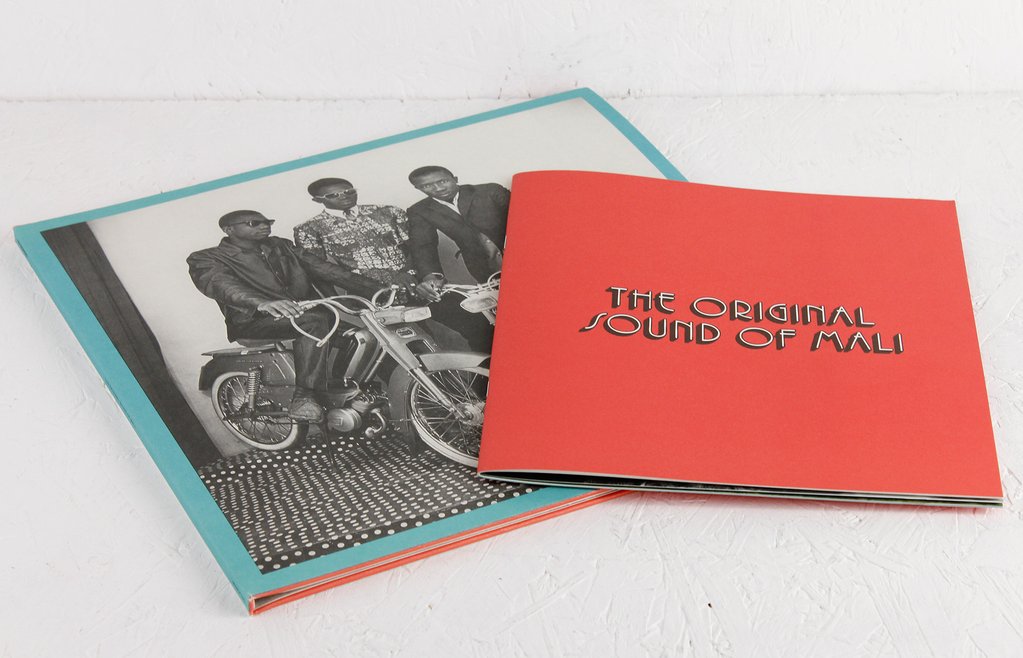
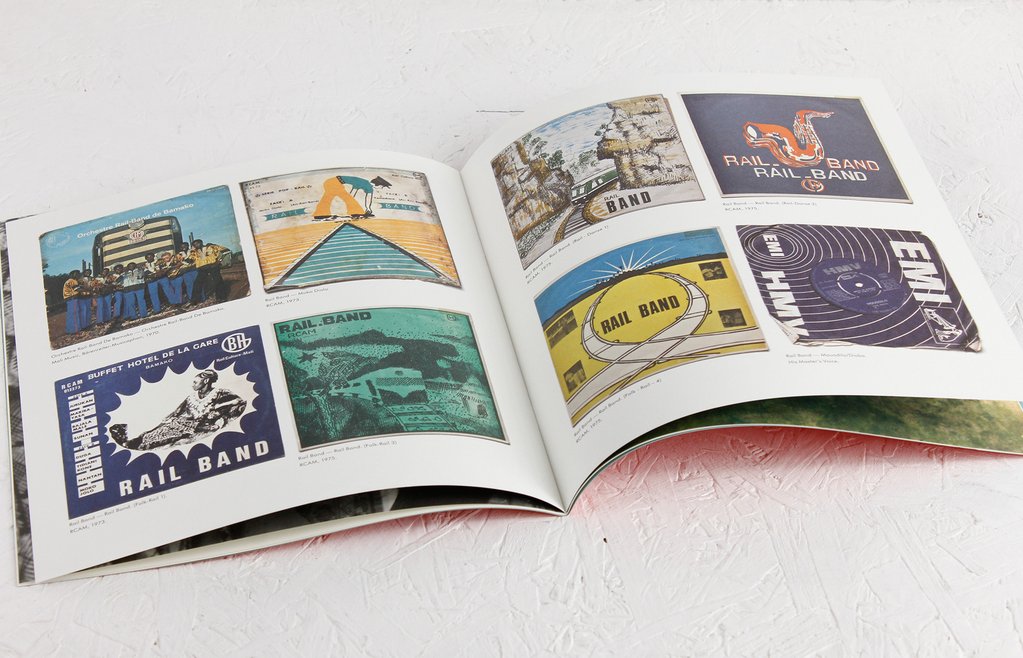
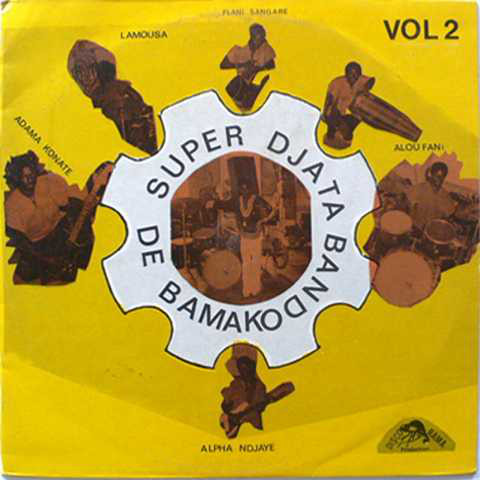



ANE BRUN-LEAVE ME BREATHLESS.
Ane Brun-Leave Me Breathless.
Label: Balloon Ranger Recordings.
In her native Norway, forty-one year old Ane Brun is one of the most successful singer-songwriters of her generation. Her career began in May 2003, when Ane Brun released her debut album Spending Time With Morgan. This was the start of a glittering career for Ane Brun, who recently released her eighth studio album Leave Me Breathless, on her own label Balloon Ranger Recordings. It’s an album of cover versions, and finds Ane Brun reinventing fourteen songs by Bob Dylan, Tom Petty, Nick Cave, Joni Mitchell, Lucinda Williams and songs made famous by Foreigner, The Righteous Brothers and Radiohead. These songs are transformed and take on new life and meaning as Ane Brun redefines these familiar songs on her much-anticipated album Leave Me Breathless. This is the latest chapter in Ane Brun’s career, who comes from a talented, musical family.
The future Ane Brun was born Ane Brunvoll on the ’10th’ of March 1976, in Molde, Norway, and grew up in a musical household. Ane’s mother was jazz singer, and as her two daughters grew up, they followed in their mother’s footsteps.
Both Ane and her younger sister Marie Kvien Brunvoll caught the music bug, and growing up, immersed themselves in music. It was almost inevitable that the Brunvoll sisters would embark upon musical careers.
Before that, nineteen year old Ane left Molde left in 1995, and spent her time moving between Bergen, Oslo and Barcelona. It was whilst living and studying in Bergen that Ane began writing her own songs. This she continued to do whilst studying and working part-time in record shops and bars. Ane continued to juggle her studies, work and songwriting for the next few years.
By 1999, Ane had played a few small shows and was ready to make the next step in her career, by recording her first demo in Bergen. After this, she moved to Sweden, living first in Uppsala and then the Swedish capital Stockholm in 2001.
When Ane arrived in Stockholm in 2001, she started to take her career seriously, as she now knew that she wanted to make a career out of music. By 2002, she was recording her debut album Spending Time With Morgan, whose title paid homage to Ane’s guitar. With the album completed Ane cofounded DetErMine Records with Canadian singer Wendy Mc Neil and Ellekari Larsson of The Tiny. The new label would release Ane Brun’s debut album Spending Time With Morgan in 2003.
In May 2003, Spending Time With Morgan was released DetErMine Records, and found favour with Norwegian critics. Spending Time With Morgan also caught the imagination of record buyers and the album reached number nineteen in the Norwegian charts.
Ane Brun was determined to build on the success of Spending Time With Morgan, and embarked upon a gruelling European tour. Before long, Ane Brun returned home exhausted and suffering from burn out. She had been working not stop for two years, and needed a break.
After a six month break, Ane Brun was ready to return to touring, and when she returned home, entered the studio to record her sophomore album A Temporary Dive. It was released to critical acclaim on the ‘7th’ of February 2005, and reached number twelve in the Swedish charts, and topped the Norwegian charts. This resulted in Ane Brin receiving her first platinum disc. The twenty-nine year old singer-songwriter had come a long way, and was regarded by many critics as one of the rising stars of Norwegian music.
Just nine months after the release of A Temporary Dive, Ane Brun returned on the ‘21st’ of November with her third album Duets. She was joined on Duets by ten guest artists and bands, including Madrugada, Syd Matters, Teitur, Lars Bygdén, Wendy McNeill and Ron Sexsmith. The result was another critically acclaimed album, which reached forty in the Swedish charts and number two on the Norwegian charts. This resulted in Duets being certified double platinum. Ane Brun’s career had been transformed during 2005.
To add icing to the cake, Ane Brun was nominated for a number of musical awards, including Norwegian music’s most prestigious award, a Spellemannprisen, which is the equivalent of a Grammy Award. At the glittering award ceremony, Ane Brun won a Spellemannprisen for the best female singer, and in the process, beaten off fierce competition. It was the perfect way to end 2005.
After the success of A Temporary Dive and Duets, Ane Brun spent much of the next couple of years touring the world. Sometimes, she was accompanied by her core band, and other times a string section. Some nights, Ane Brun was accompanied by with just a lone cello and backing vocalist, as she gave a spellbinding performance. That was the case night after night, regardless of the band that accompanied Ane Brun. She was winning friends and influencing people wherever she played live.
In 2007, Ane Brun released her first live album Live In Scandinavia. It showcased her unique brand of folk and folk rock which she had none over the last few years. Live In Scandinavia reached number eleven in Norway, and twelve in Sweden. This kept Ane Brun’s fans happy until she returned with a new album.
On the ‘12th’ of March 2008, Ane Brun released Changing Of The Seasons, which was her first solo album on three. The album would be released the first to be released in Britain and America. That would come later. Before that, Changing Of The Seasons found favour with the majority of Scandinavian critics and reached number one in Norway and two in Sweden. This resulted in Ane Brun’s first gold disc.
Elsewhere, Changing Of The Seasons was released in America on the ‘14th’ of October 2008, and in Britain on the ‘2nd’ of February 2009. The album showcased Ane Brun’s unique brand of contemporary folk, which was starting to find an audience outside of Scandinavia, including in the Netherlands, where the album reached forty-eight. Changing Of The Seasons had introduced Ane Brun’s music to a whole new audience.
Later in 2008, Ane Brun returned with her fifth studio album Sketches, which was a much more low-key release. Still it reached fifteen in the Norwegian charts, and Ane Brun’s popularity continued to grow.
A year later, in 2009, Ane Brun released her second live album Live At Stockholm Concert Hall. It reached number seven in Norway, and five in Sweden. Ane Brun remained one of Scandinavian music’s most successful artists, and this was set to continue.
Despite her increasing popularity, Ane Brun didn’t return with her sixth album It All Starts With One which was released in Scandinavia on the ‘9th’ of September 2011. The album was released in other parts of Europe later in September 2011, and in America on the ‘1st’ of November 2011. Most critics hailed It All Starts With One as one of Ane Brun’s finest albums, and it was no surprise when it topped the charts in Norway in Sweden. Elsewhere, It All Starts With One charted in Belgium, Denmark, France and the Netherlands. Ane Brun’s popularity was growing, and proof of this was the platinum disc she received for album sales in Norway. It All Starts With One had outsold her lats two albums, Changing Of The Seasons and Sketches.
In October 2011, Ane Brun featured on Peter Gabriel’s ninth studio album New Blood. The ex-Genesis frontman invited Ane Brun to join him when he rerecorded Don’t Give Up. So good was Ane Brun and Peter Gabriel’s version of Don’t Give Up that many critics and musical fans preferred their beautiful version new version to the original. Featuring on such a high-profile album as New Blood was another boost to Ane Brun’s career and introduced her to a new and wider audience. However, there was more good news at the end of 2011.
When the nominations for the 2011 Spellemannprisen awards were announced, Ane Brun was nominated for the Best Female Singer. When she arrived at another glittering award ceremony, Ane Brun was one of favourites to win her second Spellemannprisen. That night, she won her second Spellemannprisen in the best female singer category, and in the process, cemented her reputation as one of Norwegian music’s top singer-songwriters.
Two years later, on the ’29th of May 2013, Ane Brun returned with the first of two compilations she would release during 2013. Songs 2003-2013 celebrated the first ten years of Ane Brun’s career, and twenty-eight old songs, including her only number one single Lift Me which had been released in 2005. As an added bonus, four new songs featured on Songs 2003-2013 which reached number two in Norway and six in Sweden.
Ane Brun’s second compilation of 2013, Rarities was released on the ‘4th’ of October 2013 and featured twenty cover versions and outtakes. Rarities was released without any promotion, but still proved popular with Ane Brun’s loyal fans, and reached twenty-one on the Norwegian charts.
It was another two years before Ane Brun returned with When I’m Free on the ‘4th’ of September 2015. Just like her previous album, When I’m Free found favour with critics and reached number four in Norway and three in Sweden. When I’m Free also charted on Belgium and the Netherlands, and the Ane Brun success story continued apace.
After another two-year gap, Ane Brun recently returned with her much-anticipated eighth album Leave Me Breathless. It was an album of fourteen cover versions, where Ane Brun reinvented familiar songs and old favourites. These were combined with some hidden gems that Ane Brun had decided to rework and introduce to her fans.
This included the ruminative and heartfelt cover of Foreigner’s I Want To Know What Love Is, which opens Leave Me Breathless. It featured an almost spartan arrangement, as Ane Brun delivers a soul-baring vocal. It’s the perfect way to open an album of laid-back covers of familiar songs, that includes a beautiful, rueful and hurt-filled cover of Always On My Mind. It’s followed by a heartbreakingly beautiful cover of Unchained Melody which features an understated arrangement, that allows Ane’s vocal to take centre-stage. Ane then reinvents Mariah Carey’s Hero, and as the subtle arrangement meanders along, her ethereal vocal breathes life, meaning and emotion into the lyrics during this powerful reinvention of another familiar song.
Many people won’t be familiar with Show Me Heaven which Maria McKee released as a single in 1990. Twenty-seven years later, and Ane’s vocal is emotive, needy and hopeful as she transforms this ballad. It features Ane Brun at her very best. Again, many people won’t have heard Nick Cave’s original version of Into My Arms. Even his most loyal fans will be forced to admit that Ane’s tender, country-tinged cover is better than the original
Stay is oft-covered song, and against a spartan, arrangement that includes a gently cascading keyboard, piano, pedal steel, guitar and harmonies, Ane’s tender, hopeful vocal takes the song in a new direction. It’s a similar case with Ane’s piano lead cover of Radiohead’s How To Disappear Completely. It takes on new meaning, as Ane’s vocal bristles with emotion, hurt and despair. So does Sade’s By Your Side which is transformed by Ane, as she reassures with a tender, impassioned vocal full of sincerity.
Another oft-covered song is Bob Dylan’s Girl From The North Country, where Ane combines elements of folk and country as she takes it in a new direction. Tom Petty’s No Reason To Cry is given a makeover by Ane as she delivers a tender, emotive vocal against a subtle arrangement. Sometimes strings are added, and prove the finishing touch to this beautiful and moving reinvention of No Reason To Cry. Spartan describes the arrangement to Lucinda Williams’ Right In Time, as Ane delivers an ethereal, soul-baring vocal. Ane reaches new heights on Bob Dylan’s Make You Feel My Love with spellbindingly beautiful vocal which is delivered against an almost haunting arrangement. Closing Leave Me Breathless is Joni Mitchell’s Big Yellow Taxi, where Ane as she slows the song way down as just harmonies accompany her heartfelt vocal. They play their part in an innovative reinvention of a classic song. It ensures that Ane Brun’s eighth ends on a memorable high.
When Leave Me Breathless was released recently by Balloon Ranger Recordings, it climbed the Norwegian charts and reached number three. Meanwhile, it reached five in the Swedish charts, and charted in Belgium and the Netherlands, where Ane Brun is a popular draw. However, there’s every chance that an album of the quality of Leave Me Breathless will climb higher up the charts, as it’s one the best albums Ane Brun has released in recent years.
She transforms fourteen cover versions, often taking them in new and unexpected directions. Often, Ane Brun’s reinvention of these cover versions are preferable to the originals. Especially as she breathes life, meaning and emotion into the lyrics. Other times, her vocals are rueful, hopeful needy or full of regret. Often the vocals are ethereal, beautiful and sometimes, soul-baring. This is what critics and record buyers have come to expect from one of Norway’s finest singer-songwriters, Ane Brun.
Several times on Leave Me Breathless, she reaches new heights on this beautiful, captivating, enchanting and laid-back album from Ane Brun. For anyone yet to discover Ane Brun’s music, the perfect starting place is Leave Me Breathless, which is an album that is sure to leave listeners breathless, and captivated by one of most talented Scandinavian singer-songwriters.
Ane Brun-Leave Me Breathless.

MELVIN SPARKS-I’M FUNKY NOW.
Melvin Sparks-I’m Funky Now.
Label: Westbound Records.
By the mid-seventies, jazz was no longer as possible as it had once been, and many artists were struggling to make a living. Record buyers weren’t interested in jazz music, and sadly, disco, had overtaken jazz, soul and blues in the popularity stakes. It was a sad day for music when the insipid, formulaic and bland sound of disco was outselling jazz.
As a result, many clubs where that had been once graced by the great and good of jazz, were converted into discos. In cities across America, stages where jazz luminaries like Miles, ‘Trane, Bird and Monk once stood and played groundbreaking music were being replaced by a DJ booth. It was a case of how the mighty had fallen.
No longer was it musical titans that entered these once proud musical arenas, instead it was nondescript DJs, whose only musical ‘skill’ was playing one record after another. Sometimes, these non musicians played the latest product of the disco era…the remix.
The remix was another product of a non musician, who sometimes, happened to be a DJ. Most of them, could neither read nor write music, never mind play an instrument. However, they could, often with the help of an engineer, extend a three-minute track to five, six or even sometimes seven minutes. Although this took little talent, the remixer was regarded as a musical saviour by record companies.
Who better than to boost the failing careers of pop and soul singers than a DJ who can give their artist a dancefooor makeover? It seemed that the music industry was losing all sense of perspective.
Meanwhile, many record companies started to release blues, jazz and soul musicians from their contracts. Other artists didn’t have their contracts renewed, and were left in a musical wilderness. This included experienced artists and musical luminaries like Bobby Womack, who struggled to find a label during the disco era. Sadly, he wasn’t alone.
Another victim of the disco era was jazz guitarist Melvin Sparks, who had released his fifth solo album ’75 on Westbound Records in 1975. After the release of ’75, Melvin Sparks returned to the studio, and recorded seven new tracks, including Disco Booty, which were meant to become his sixth album I’m Funky Now. It was meant to be released by Westbound Records in 1976.
Despite allowing Melvin Sparks to record his sixth album I’m Funky Now, it was never released by Westbound Records. This spelt the end of Melvin Sparks’ career at Eastbound and Westbound Records, and he was left without a recording contract.
Although Melvin Sparks managed to continue working as a session player, it was five years before he returned with his sixth album Sparkling on the Muse label. By then, disco had been dead for two years, and many insiders thought that the music industry had belatedly come to its senses.
Or so it seemed. By 1981, Melvin Sparks’ I’m Funky Now had spent two years sitting in Westbound Records vaults. However, there was still no sign of the album being released. Little did Melvin Sparks realise that I’m Funky Now wouldn’t be released until 2017, by Westbound Records, who are now an imprint of Ace Records.
Sadly, Melvin Sparks passed away on March the ’15th’ 2011, and never got to see the release of I’m Funky Now. It’s the album that should’ve been the Houston born guitarist’s sixth album, and maybe the album that could’ve transformed his fortunes.
Melvin Sparks was born in Houston, Texas, on March the ‘22nd’ 1946, into what was a musical family. His two brothers played guitar, and his mother ran a cafe which was a favourite hangout for local musicians. This included Don Wilkerson, Stix Hooper and Cal Green, who would prove supportive of Melvin Sparks and influenced him later in his career.
At the age of eleven, Melvin Sparks received his first ever guitar, and by the time he was in high school, was playing in his first band alongside organist Leon Spencer. Within a few years, seventeen year old Melvin Sparks had left school and embarked upon a career as a musician.
Initially, Melvin Sparks went out on the road with The Upsetters, who had been Little Richard’s backing band, and then went on to back some of the biggest names in R&B. For the next three years, Melvin Sparks served his musical apprenticeship with The Upsetters. The crisscrossed the country, and in 1966, arrived in New York where Melvin Sparks met a man who would transform his career,
In New York, Melvin Sparks met bandleader and jazz organist Brother Jack McDuff, who just happened to be looking for a guitarist. Melvin Sparks fitted the bill and in 1966, he joined Brother Jack McDuff’s band. Over the next few years, Melvin Sparks played on several albums that featured Brother Jack McDuff. This included his 1967 album Do It Now, and the same year, Melvin Sparks played on Do It Now, Jimmy Witherspoon with Jack McDuff’s The Blues Is Now. The following year, Melvin Sparks played on Brother Jack McDuff and David Newman’s 1968 collaboration Double Barrelled Soul. That was just part of the story.
Soon, Melvin Sparks was the go-to-guitarist for anyone who was looking for a jazz guitarist, and played alongside Lonnie Smith on his 1967 album Finger Lickin’ Good. After that, Melvin Sparks played alongside several top boogaloo artists signed to Blue Note between 1968 and 1970, including Lou Donaldson, Reuben Wilson and Lonnie Smith. However, in 1970 Melvin Sparks made the transition from sideman to solo artist.
In 1970, Melvin Sparks signed to Prestige, where he was reunited with his old friend and former high school bandmate Leon Spencer Jr, who was also signed to the label. The pair would play on each other’s albums over the next couple of years.
Sparks!
Leon Spencer Jr was part of an all-star jazz band that joined Melvin Sparks when he recorded his debut album Sparks! with producer Bob Porter. He had already established the Prestige soul-jazz sound, which was adopted by Melvin Sparks.
Later, in 1970, Sparks! critics had their say on Sparks!, which was an album of soul-jazz that heads in the direction of pop. It was well received by critics, and when it was released in 1970, it was hoped that Sparks! would launch Melvin Sparks’ solo career. Despite the favourable reviews, the album failed to find a wider audience. This was a disappointing start to Melvin Sparks’ career at Prestige.
Sparks Plug.
The following year, 1971, many of the same musicians joined Melvin Sparks when he recorded his sophomore album Sparks Plug with Bob Porter. This time around, Melvin Sparks showcased a much more laid back, but funky sound soul-jazz sound on Sparks Plug. It was similar to the Prestige “sound” that had evolved over the last few years under Bob Porter. Melvin Sparks was the latest purveyor of the Prestige sound.
Just like his debut album Sparks! Sparks Plug, was well received by critics, and many thought that Melvin Sparks was one of Prestige’s rising stars. When Melvin Sparks released Sparks Plug in 1971, the album wasn’t the commercial success that Prestige nor Melvin Sparks had hoped.

Akilah!
With neither Sparks! nor Sparks Plug selling in vast quantities, Melvin Sparks’ third album Akilah! was make or break for the Texan jazz guitarist. By then, Bob Porter had left the label, and Melvin Sparks was joined in the studio by Ozzie Cadena who supervised the recording of Akilah!
When the recording sessions began, Melvin Sparks was joined by many of the same musicians who had accompanied him on his two previous albums. They recorded another album of soul-jazz, which built on his two previous albums, Sparks! and Sparks Plug.
With Akilah! completed, it was scheduled for release later in 1972, and again, was well received by critics upon its release. However, history repeated itself, and Akilah! failed to find the audience it deserved. This was a huge blow for Melvin Sparks, who left Prestige later in 1972.
By the time Akilah! was recorded, Bob Porter had left Prestige, and joined Detroit-based Eastbound Records. With Melvin Sparks without a label, Bob Porter recommended that Eastbound Records sign his old friend and protegé. This was the start of a new era for Melvin Sparks.

Texas Twister.
Having signed to Eastbound Records, Melvin Sparks began work on his fourth album Texas Twister. Despite being signed to a new label, several familiar faces played on Texas Twister. They were part on expanded band that accompanied Melvin Sparks, while producer Bob Porter helped him build on the sound of his previous album Akilah! The resulting album was a fitting and natural successor to Akilah!, where elements of soul-jazz were joined by Latin, jazz funk and Latin jazz. Was this the album that would transform Melvin Sparks’ career?
Texas Twister was the most ambitious and best album of Melvin Sparks’ four album career, and found favour with critics upon its release in 1973. However, despite the all-star cast, this ambitious album, Texas Twister, failed to sell, and is now one of the rarest albums of Melvin Sparks’ career. This wasn’t the start Melvin Sparks had envisaged to his career at Eastbound Records.
Things were about to get worse for Melvin Sparks when Bob Porter left Eastbound Records. For Melvin Sparks this was a case of déjà vu.

’75.
The departure of Bob Porter meant that Melvin Sparks was without his friend and ally when he began recording his fifth album ’75. Things got worse when Eastbound Records was closed down, and Melvin Sparks became part of Westbound Records’ roster, which included Funkadelic and Parliament. Both were enjoying the most successful periods of their career, while jazz was in the doldrums.
By 1975, jazz albums were becoming a hard sell, and executives at Westbound Records must have known that it wasn’t going to be easy to promote and sell Melvin Sparks’ next album. However, Texas Twister was the best album of Melvin Sparks’ career. Sadly, the album hadn’t found an audience Despite the commercial failure of Texas Twister, Melvin Sparks was promoted to co-producer where he was joined by Bernie Mendelson.
Joining Melvin Sparks in the studio was an array of talented musicians, and vocalist Jimmy Scott who featured on I Got To Have You and If You Want My Love which bookended ’75. Jimmy Scott and the all-star band played their part in the sound of ’75, which was a fitting followup to Texas Twister.
When ‘75 was released by Westbound Records in 1975, interest in jazz was at an all-time low. Critics were impressed by an album that featured some of Melvin Sparks’ finest performances and two deeply soulful vocals from Jimmy Scott. Sadly, when ’75 was released, the album flopped. That meant Melvin Sparks’ first two albums for Eastbound Records and Westbound Records had failed commercially. The big question would Melvin Sparks be allowed to record a followup to ’75?

I’m Funky Now.
While many record companies would’ve called time on Melvin Sparks’ career, Westbound Records allowed him to record I’m Funky Now. It featured seven tracks, including the Melvin Sparks’ composition Disco Booty. Even Melvin Sparks had decided to jump on the disco bandwagon. He knew his career was at stake, and had to climb onboard the disco bandwagon. The other six tracks on I’m Funky Now were Sam Kennedy, Lulu Laurent and Cole Simon, and recorded by a talented and versatile band.
Very little is known about the band that played on I’m Funky Now, but it’s thought that some of the musicians were from the Funkadelic and Parliament family. They were able to seamlessly switch between musical genres, as Melvin Sparks embarked upon a musical adventure. Over the seven tracks, Melvin Sparks and his band flit between soul-jazz to disco, jazz-funk, funk and jazz. It was an album that hinted at previous albums, but saw Melvin Sparks’ music moving forward in search of commercial success.
I’m Funky Now opens with the über funky and dancefloor title-track. It gives way to Disco Booty where Melvin Sparks embraces disco and combines it with funk on what should’ve been a favourite amongst DJs and dancers. Make It Good finds Melvin Sparks’ scatting as he and his band lock into a groove, before he embarks upon a musical duel with the horn section. All the time, the rhythm section keep things funky, as Melvin Sparks unleashes a musical masterclass. It’s all change on Love Tones, where the tempo drops and a much smoother, dreamy and jazzy sound emerges. It was meant to close side one.
On The Truth Hurts, the rhythm section lay down mid-tempo beat before the horns and Melvin Sparks’ guitar play starring roles. You’re Gonna Make It is a laid-back, genre-melting track where Melvin Sparks and his band combine elements of funk, proto-boogie and jazz. Melvin Sparks is responsible for much of the jazzy sound, when he lays down a fleet fingered guitar solo. I’m Gonna Funk You Up, which features a vocal from Melvin Sparks, marks a return to the über funky dancefloor friendly sound of the title-track, which bookends I’m Funky Now.
With the help of a tight, talented and versatile band Melvin Sparks had recorded an album that he hoped would appeal to his old fans, and also the legion of record buyers that had embraced disco over the last couple of years. DJs and dancers would’ve been won over by I‘m Funky Now, Disco Booty and I’m Gonna Funk You Up. Melvin Sparks hoped that tracks like Love Tones and On The Truth Hurts would appeal to his old fans, who had followed his career since his 1970 debut album Sparks!
With the I’m Funky Now completed, the album should’ve been released later in 1976. However, Melvin Sparks and his fans were in for a nasty surprise.
Despite allowing Melvin Sparks to record I’m Funky Now, Westbound Records decided not to release the album. This spelt the end of Melvin Sparks’ career Westbound Records, and he was left without a recording contract.
For Melvin Sparks this was a huge disappointment, as I’m Funky Now had the potential to launch his career. Melvin Sparks’ five previous albums had failed to reach the wider audience that they deserved. When Melvin Sparks set out to record I’m Funky Now, he knew his career was on the line, after his first two albums for Eastbound Records and Westbound Records failed commercially. It was make or break for Melvin Sparks, and maybe executives at Westbound Records lost their nerve?
Westbound Records must have lost money on Melvin Sparks’ first two albums, which failed commercially. To make matters worse, Eastbound Records had closed its doors just after the Texas Twister in 1973, and maybe Westbound Records weren’t willing to take chances on albums that may not make them money? That was despite Funkadelic and Parliament releasing albums that were certified gold and silver. Maybe when it came for Westbound Records to decide whether to release I’m Funky Now, caution got the better of the executives that ran the label. They decided to pass on I’m Funky Now, which had the potential to launch and transform Melvin Sparks’ career.
Sadly, it wasn’t to be. After Westbound Records decided not to release I’m Funky Now, the Texan guitarist left the label. For Melvin Sparks it was the end of an era, and he didn’t release another album for five years.
Now some forty-one years album Melvin Sparks recorded I’m Funky Now, Westbound Records, which is now an imprint of Ace Records, have issued this long-lost hidden gem of an album. I’m Funky Now is an opportunity to discover another side of Melvin Sparks, and album that had it been released in 1976, might well have transformed the Houston born jazz guitarist’s career.
Melvin Sparks-I’m Funky Now.

CYMBELINE 1965 – 1971.
Cymbeline 1965-1971.
Label: Guerssen Records.
Nowadays, Norway and Sweden both have vibrant and thriving music scenes, where pioneering musicians record and release some of the most ambitious, important and innovative music that is currently being released in Europe. This is nothing new, and both countries have a long and illustrious musical history stretching back to the early sixties.
Back then, Norrköping, an industrial town in Sweden, the town had a thriving music scene, with local bands playing covers of both instrumental and pop music. This ranged from Bobby Darin, Elvis Presley and Neil Sedaka, to The Shadows and The Ventures. Among the most popular local bands in Norrköping, were The Tigers and The Mixers, who initially enjoyed local success before finding success behind the Iron Curtain. By then, music had changed beyond all recognition.
The song that changed Swedish musical history was The Beatles’ I Want To Hold Your Hand which was entered the Swedish charts in late 1963, and reached number one in early 1964. This was The Beatles’ first number one single in Sweden, after Please Please Me spent just two weeks in the charts in March 1963. Just like America, Sweden didn’t ‘get’ The Beatles’ brand of three chord pop until 1964, but now that they had, the effects of Beatlemanina transformed could be felt across the country.
Suddenly, new bands were being formed across Sweden, including in Norrköping. These new groups were keen to copy the Mersey Sound bands musically and stylistically. The new bands wanted to sound and look like the Mersey Sound bands, and even copied the way their hairstyles and dress sense.
Soon, new bands joined existing bands on Norrköping’s vibrant music scene. By then, the Mersey Sound had transformed the local scene, with band vying to become the Swedish Beatles.
By 1965, The Scarlet Ribbons which featured lead guitarist Anders Weyde, was a popular beat group on the Norrköping music scene. So was The Rovers, who featured lead guitarist Michael Journath. Their paths would cross when The Rovers was booked to play a gig in a local venue. That night, Anders Weyde just happened to be the audience, and was invited to join the band on stage. After the concert, the two lead guitarists got talking, and realised that they had much in common. This was the start of a friendship between Michael Journath and Anders Weyde.
Before long, the two musicians were spending time recording music in Anders Weyde’s small home studio, which was where another new band was born, Cymbeline. The new band was together between 1965 and 1971, and featured Anders Weyde and Michael Journath who were augmented by a few of their musical friends. This includes Ulf Ryberg, who features on Cymbeline’s best known song New York, which was released as their debut single in 1971, with Sixth Image on the B-Side. Later in 1971, Cymbeline split-up, and never released any more music…until recently.
Forty-six years after the demise of Cymbeline, a new compilation of their music has just been released by Guerssen Records. This is Cymbeline 1965-1971 which features New York and Sixth Image, plus thirteen previously unreleased tracks. They showcase the different sides to Cymbeline. Their music veered between garage-psych, experimental, progressive, psychedelia and psych-prog. Cymbeline was a cut above the average sixties beat group, created ambitious, exciting and innovative music. Sadly, the majority of that music has never been released, and Cymbeline 1965-1971 is a tantalising taste of what lies within the group’s vaults.
The music within Cymbeline’s vaults was recorded using what was relatively basic equipment, two Tanberg tape reel-to-reel tape recorders and a four channel mixer. However, what Cymbeline lacked in equipment, they made up for in skill and imagination. That became apparent when Anders Weyde and Michael Journath recorded their first two songs together.
At Anders Weyde’s small recording studio, the two musicians planned to record two teen beat songs with a psych influence, Imagination and Look At The Stars. Anders Weyde became a one man rhythm section playing drums and bass. He also played acoustic guitar and shared the lead vocal duties as they laid down the two songs. Sadly, the two songs were never released, and Anders Weyde and Michael Journath’s respective careers continued.
As 1965 gave way to 1966, Anders Weyde and Michael Journath continued to play with the other groups they were involved with. Cymbeline as the nascent band became known during 1966, was a side project that they worked on when they had time. However, like many imaginative and innovative musicians, Anders Weyde and Michael Journath were tiring of playing cover versions of popular songs. They had ambitions beyond being in a covers band, and started to realise their ambitions by unleashing their creativity.
It was around this time, that Cymbeline recorded the triumvirate of Image songs. During the recording of Third Image, Fifth Image and Sixth Image, usually, the session started with a bass line being laid down. To this, guitars were added, with chord progressions being joined by either an electric guitar or piano. Sometimes, drums were added, before Cymbeline embarked upon a science experiment. This would see the two members of Cymbeline adding recordings of everyday items, ranging from the sound of a refuse chute or an electric cocktail mixture. Sometimes, the sounds of birds were recorded, and added to the mix. Other times, pieces of furniture, including an armchair was transformed into a makeshift musical instrument. Usually, everything was improvised with no melody in place. That came later, and was based upon the chord progressions. The result was the triumvirate of Image songs, which are among the most ambitious, innovative tracks Cymbeline ever recorded. They fused elements of avant-garde, experimental, garage rock, pop, psychedelia and rock on the trio of Image tracks that were far removed from the covers they had been playing with their other bands.
Despite enjoying the freedom to experiment with Cymbeline, Anders Weyde hadn’t given up on making a breakthrough and enjoying a successful musical career. He wrote the lyrics to the single he released in 1966, which Anders Weyde sung in Swedish. However, commercial success eluded Anders Weyde, and it was a case of as you were.
By 1967, Anders Weyde had decided the time had come to upgrade his home studio. After the building work was complete, he had a professional recording studio which rivalled anything in the local area. This wasn’t the only change that Anders Weyde had made.
As 1967 downed, Anders Weyde and Michael Journath decided to turn their back on the experimental music that they had been making. This was a great shame, as the Image triumvirate was a tantalising taste of the type of music Cymbeline was capable of making. In its place, the two members of Cymbeline decided to make more traditional music, and music that they could replicate live. This wasn’t possible with their much more experimental sound.
In the upgraded recording studio, the quality of music that Cymbeline started to improve. The music they wrote was full of social and political comment, and showcased a talented, versatile and imaginative band with a social conscience.
This was apparent on the ballads Stolta Vingar which combines elements of folk on this blissful examples of fuzzed out Scandinavian psych-prog. Ur Asfalt Ropar Rösterna incorporates the sound of birds and running water before a much more traditional folk-tinged song unfolds and includes elements of experimental and psychedelia
Another song that took shape during this period was the piano lead Motala Ström, which was also the band’s name for a while. It’s a carefully crafted fusion of garage-psych and rock. Cymbeline showcase their considerable musical skills during Mittuppslag, as a funky wah wah guitar sits above the rhythm section until it’s replaced by the vocal. When it returns it continues to play a starring role on what’s one of Cymbeline’s finest examples of fuzzy Swedish psych-prog. However, Flicka was one of Cymbeline’s finest songs as they combine elements of psychedelia, jazz and progressive rock. This more than hinted at the direction Cymbeline’s music was heading.
Having moved away from experimental music, and embraced a much more commercial sound, Cymbeline would occasionally play live. Augmenting Anders Weyde and Michael Journath were a few of their musical friends, as Cymbeline showcased their latest songs. When they played live, Cymbeline was a popular draw. Despite this, Cymbeline continued to spend the majority of their time in studio.
During this period, Cymbeline proved to a prolific band and continued to write and record new music. This continued as the sixties gave way to the seventies, and two became three, when Ulf Ryberg joined Cymbeline.
The addition of Ulf Ryberg coincided with Cymbeline recording and releasing the Ulf Ryberg composition New York as a single. The addition of Ulf Ryberg’s distinctive vocal played an important part in transformation of Cymbeline, as they combined elements of progressive rock, psychedelia and rock on his this long-lost hidden gem. Tucked away on the B-Side was a rerecorded and rearranged version of Sixth Image with Ulf Ryberg taking charge of the lead vocal. Cymbeline’s long-awaited debut single New York was released on the Greenlight label in 1971. Sadly, the single failed to make any impression on the Swedish charts.
Despite the failure of the single, Cymbeline headed to Europafilm Studios, in Stockholm where they began recording demos for their debut album. During the sessions, they recorded several tracks, including Stolta Vingar II. It finds Cymbeline fusing elements of folk and blistering, rocky guitar licks on this glorious examples of fuzzed out Scandinavian psych-prog. Strax Nedanför Tornen is another song that shows a very different side to Cymbeline’s music as they combine psychedelia, progressive rock and some funky wah wah guitar. It’s another of Cymbeline’s finest hours, and shows that the band was on the right road.
Sadly, Cymbeline never finished recording the demos for their debut album. There was no fall out, and Cymbeline certainly didn’t take a wrong turning. Instead, the three members of Cymbeline decided to turn their back on music, and focus on their education and careers.
Later, Anders Weyde founded his own video production company, while Ulf Ryberg became a writer for Swedish television. Michael Journath turned his attention to science, and became the editor of a Swedish scientific magazine. However, they never forgot about the time they spent writing, recording and performing as Cymbeline. Sadly, it looked as if Cymbeline’s music would never find the audience it deserved.
That was until recently, when Guerssen Records released Cymbeline 1965-1971, which features fifteen of the band’s finest songs. These songs had lain in Anders Weyde’s garage for over forty years, and at last, Cymbeline 1965-1971 showcases one of Sweden’s great lost bands.
Although Cymbeline were only together for the six-year period between 1965-1971, they were a prolific band who recorded an eclectic selection of music. A representative selection of that music can be found on Cymbeline 1965-1971, which showcases a talented and versatile group that had the potential to enjoy a long and successful career. Ironically, Cymbeline’s music was tailor-made for the seventies, and they could’ve gone on to enjoy commercial success and critical acclaim. Sadly, that that wasn’t to be and three members of Cymbeline decided to concentrate on their education and careers. As a result, the Cymbeline’s story is a case of what might have been?
Just like Terry Malloy in On The Waterfront, Cymbeline: “could’ve been a contender, could’ve been someone.” However, the three members of Cymbeline all went on to enjoy successful career in other fields, and didn’t seem to miss music. To quote Tom Rush’s song No Regrets it was a case of: “there’s no regrets, no tears goodbye. Don’t want you back.” Cymbeline’s decision to split-up in 1971, and concentrate on their education and careers was music’s loss.
There were no reunions nor comeback from Cymbeline, who had enjoyed the six years they had spent making music. This includes the fifteen tracks on Cymbeline 1965-1971, which showcases the different sides to Cymbeline. So does the folk-tinged sound of Mary Anne and the lysergic, spacey and experimental Vinden Viskar Mary which at times, hints at Jimi Hendrix at his innovative best. These two tracks show very different sides to musical pioneers Cymbeline.
Their music veered between garage-psych, progressive, psychedelia and fuzzed out Scandinavian psych-prog. Cymbeline also incorporated elements of avant-garde, experimental, folk and rock on the fifteen tracks on Cymbeline 1965-1971. These tracks feature one of Sweden’s great lost groups, who created ambitious, exciting and innovative music. Sadly, the majority of that music has never been released, and Cymbeline 1965-1971 is a tantalising taste of what sonic adventurers Cymbeline were capable of.
Cymbeline 1965-1971
THE ZODIAC-COSMIC SOUNDS.
The Zodiac-Cosmic Sounds.
Label: Cherry Red Records.
By 1967, many critics and record buyers regarded Elektra Records as a folk rock label, that had released albums by some of the genre’s finest exponents including Judy Collins, Love, Tom Rush and Tim Buckley. Many of these albums would later become important and influential albums, and some are nowadays regarded as genre classics. However, some people’s perception of Elektra Records was about to change in May 1967 with the release of The Zodiac’s album Cosmic Sounds, which became a cult classic. That is the still the case when Cherry Red Records reissued Cosmic Sounds fifty years after its initial release.
The Zodiac’s Cosmic Sounds was a groundbreaking concept album which featured twelve tracks that were described as psychedelic mood music. It featured a myriad of exotic and electronic instruments and spoken prose that came courtesy of Cyrus Faryar. Cosmic Sounds was no ordinary album, and The Zodiac was no ordinary band.
That was certainly the case. The Zodiac didn’t even exist before the recording of Cosmic Sounds. Jac Holzman the head of Elektra Records came up with the concept for Cosmic Sounds after the success of The Doors’ eponymous debut album which had been released in January 1967. He then set about making The Zodiac and their debut album Cosmic Sounds reality.
To do that, Jac Holzman hired Alex Hassilev, formerly a member of The Limeliters, to produce the album. Alex Hassilev brought onboard Mort Garson who he had recently formed a production company with, to write the music for Cosmic Sounds.
With producer Alex Hassilev and composer and musician Mort Garson onboard, the Cosmic Sounds’ concept quickly grew legs, and the pair were planning to record and release a series of similar concept albums. Before that, Mort Garson began work on Cosmic Sounds.
Eventually, composer, arranger, orchestrator, conductor and pianist Mort Garson had written twelve tracks, with one for each astrological sign. This included Aries-The Fire-Fighter, Taurus-The Voluptuary, Gemini-The Cool Eye, Cancer-The Moon Child, Leo-The Lord of Lights, Virgo-The Perpetual Perfectionist, Libra-The Flower Child, Scorpio-The Passionate Hero, Sagittarius-The Versatile Daredevil, Capricorn-The Uncapricious Climber, Aquarius The Lover Of Life and Pisces-The Peace Piper. These tracks would become Jac Holzman’s album of psychedelic mood music-Cosmic Sounds.
By then, producer Alex Hassilev had returned from producing The Dusk ‘Till Dawn Orchestra’s Sea Drift album. One of the tracks incorporated a piece of music that was meant to feature on a followup album, The Sea. However, it had been scrapped, after Rod McKuen, who was meant to feature on the project, left and worked on his own version with Anita Kerr. This had been a disappointment, but Alex Hassilev was fully focused on producing Cosmic Sounds.
To record Cosmic Sounds, and capture the sounds that producer Alex Hassilev required wasn’t going to be easy. It would require a variety of exotic and electronic instruments. Fortunately, Alex Hassilev knew a couple of musicians who could help create the sound that he was looking for.
This included Paul Beaver, who back in 1967, was known as someone who provided sound effects for the film industry. He was also passionate about the new electronic instruments and had amassed an enviable collection, including a Moog synth. He would play the Moog and other electronic instruments on The Zodiac.
In 1967, the Moog synth was a new instrument, which its inventor Robert Moog and Paul Beaver had just demonstrated at the California Audio Engineering Society convention in early 1967. This was the assembled audience got the opportunity to see and hear the Moog on the West Coast. They realised it was a gamechanger, as did Jac Holzman the head of Elektra Records. The Moog he knew would play an important part on Cosmic Sounds.
Jac Holzman was keen to bring Paul Beaver onboard for The Zodiac project, as he was one of just a handful of people on the West Coast who knew how to setup and use the Moog synth. Paul Beaver agreed to join The Zodiac project and was keen to showcase the instrument’s vast capabilities on Cosmic Sounds,
With Paul Beaver onboard, producer Alex Hassilev was keen to enlist percussionist Emil Richards, who had played with great and good of music, and on over 1,700 movies. Emil Richards was also a collector percussion instruments, and had already amassed a collection of 700 instruments from all over the world. He would put some of the strange and exotic percussion to good use on The Zodiac.
The day of the recording sessions, electronics guru Paul Beaver setup his Moog synth, and an array of electronic instruments. When percussionist Emil Richards arrived at the studio, it was in a truck. As members of the band looked out, they were amazed to see that half of the truck was filled with myriad of exotic percussion instruments including water chimes and angklungs, bamboo rattles from Southeast Asia. They were unloaded from the truck, along with a sitar and harpsichord. These instruments were taken into the studio, where producer Alex Hassilev introduced Emil Richards to the rest of the band.
It featured some of L.A’s top session musicians, including members of the legendary Wrecking Crew were waiting. This included drummer Hal Blaine, who was joined in the rhythm section to bassist Carol Kaye. They were joined by keyboardist Mike Melvoin and Bud Shank on bass flute. Other members of this experienced group of musicians that recorded Cosmic Sounds weren’t credited on the album.
With The Zodiac in the studio, they began recording the twelve tracks that became Cosmic Sounds. Mostly, the recording sessions ran smoothly. The only problem the band encountered was that the Moog’s oscillators were somewhat unstable and this meant that Paul Beaver had switch the machine on way before the sessions began, to allow them to warm up. Occasionally, the Moog failed to stay in frequency and the tuning was out. Apart from that, there were very few problems. What many members of the band remembered, was percussionist Emil Richards dashing round the studio playing anything up to five or six instruments live. Somehow, he managed this and after four recording sessions, the twelve backing tracks were recorded.
With Cosmic Sounds complete, The Zodiac listened to the playback, and listened intently to the twelve tracks that featured a spacey but tight groove. Cosmic Sounds sounded like an instrumental psychsploitation soundtrack. However, that would soon change.
With the backing tracks completed, folk singer Cyrus Faryar was brought onboard to narrate Cosmic Sounds. He was the final member or The Zodiac, and added the twelve vocals against a futuristic, moody, haunting and lysergic backdrop that combined the debut of a Moog synth with a sitar, flute, Hammond organ, haunting harpsichord and even searing, mid-sixties rocky guitar riffs as Cyrus Faryar’s voice veered between ruminative to dramatic and ironic. This was the final piece of the musical jigsaw that was Cosmic Sounds.
Once Cosmic Sounds was completed, Jac Holzman decided to release The Zodiac’s debut album in May 1967. William S. Harvey was hired to take charge of the artwork on Cosmic Sounds, and must have surpassed even Jac Holzman’s expectations. The elaborate sleeve was a patchwork of bright, bold and gaudy colours, and was almost luminous. It also featured wavy undulating lettering and pictures that were lysergic and had been influenced by classical mythology. This was a perfect cover for The Zodiac’s album of psychedelic mood music, Cosmic Sounds.
Not for the first time, Jac Holzman’s timing was perfect, with the release of The Zodiac’s debut album in May 1967 coinciding with a resurgence of interest in astrology, while psychedelia had also become hugely popular. Surely, this was the perfect time for The Zodiac to release their groundbreaking and innovative concept album Cosmic Sounds? It was sure to appeal to those who were about to turn on, tune in, drop out.
Unfortunately, Cosmic Sounds divided the opinion of critics, many of whom failed to understand this groundbreaking and imaginative album of psychedelic mood music, which came with instructions that the album “must be played in the dark.” Some critics embraced and understood the album, and were won over by its mixture of exotic and electronic instruments and spoken prose.
It was essentially a fusion of psychedelia, rock and astrology played by some the of L.A’s top musicians and narrated by Cyrus Faryar. This Jac Holzman hoped would tap into the burgeoning market for all things psychedelic.
Unfortunately, there was a degree of confusion amongst critics and soon, record buyers who were unsure about who the album was by. Some thought that the album was The Zodiac by Cosmic Sounds, while others were of the opinion that the album was Cosmic Sounds by The Zodiac. Even after looking at the sleeve and the insert critics and record buyers remained confused. This wasn’t good news for Jac Holzman who had masterminded Cosmic Sounds.
It was his concept, and one that he hoped would cash-in in the recent resurgence of interest in astrology and psychedelia’s popularity. Sadly, The Zodiac’s debut album Cosmic Sounds didn’t sell in vast quantities, but still found a small but appreciative audience. Soon, Cosmic Sounds was a cult classic, and for many, who aficionados of psychedelia, the album was part of the soundtrack to the psychedelic era. Some record buyers played the record so often that they got through several copies. Especially as they sat cross-legged on bean bags ingesting tetrahydrocannabinol as lava lamps flickered in the background.
Despite the popularity of Cosmic Sounds within some parts of the psychedelic community, the album failed to crossover and find audience within mainstream music fans. By then, Cosmic Sounds was a psychedelic cult classic, and over the next fifty years would be discovered by several new generations of record buyers.
That is the still the case in 2017 fifty years after the released of The Zodiac’s groundbreaking concept album Cosmic Sounds, which is a cult classics that features psychedelic mood music that: “must be played in the dark.”
The Zodiac-Cosmic Sounds.
THE STORY OF SWEENEY’S MEN.
The Story Of Sweeney’s Men.
One of the bands that emerged from the mid-sixties Irish roots revival was Sweeney’s Men, who were formed in Dublin in May 1966, by Andy Irvine, “Galway Joe” Dolan and Johnny Moynihan. Sweeney’s Men were together for just three years, and released two albums which feature one of the most important and groundbreaking Irish folk bands who went on to influence a generation of electric folk groups, including Planxty, Moving Hearts, Steeleye Span, and later, groups like The Pogues and Moonshine. By then, Sweeney’s Men story was over.
Four years before Sweeney’s Men was formed, O’Donoghue’s Pub in Dublin was where many Irish folk musicians gravitated and played in the evenings. Those that drank in the pub saw The Dubliners, The Fureys, Seamus Ennis and Irvine who was born in London in 1942 to Scottish and Irish parents.
Andy Irvine was a former child actor, who as an eight year old, had featured in the film A Tale Of Two Cities. He also took to the stage in London and Dublin, which was how he first discovered the city. Later, Andy Irvine became fascinated by American folk and blues music, after discovering Woody Guthrie and Ramblin’ Jack Elliot. However, when the twenty year old moved to Dublin, and discovered O’Donoghue’s Pub he became interested in Irish folk music.
As his interest in folk music blossomed, Andy Irvine met Johnny Moynihan one night in O’Donoghue’s Pub, and the pair started traveling the length and breadth of Ireland to music festivals.
It wasn’t long before the pair began performing at various folk venues in Dublin, an sometimes, they were joined by Johnny Moynihan’s girlfriend Anne Briggs, who was also a folk singer. Regardless of whether they performed as a duo or a trio, the audience’s reaction was inconsistent. Sometimes, they were wildly enthusiastic, other times, the response bordered on indifferent. On these nights, they left the stage feeling deflated and wondering if there was something missing? Maybe they needed to change their lineup?
While Andy Irvine enjoyed playing the gigs with Johnny Moynihan, he decided to busk around Europe and play some gigs with another friend Eamon O’Doherty, Andy Irvine’s musical partner
Johnny Moynihan stayed at home, and continued to work as a draftsman in Roscommon. Music was something he did in his spare time. Meanwhile, Andy Irvine had got as far as Denmark, where he Eamon O’Doherty were playing some club gigs. That was when he received a message from another musician “Galway Joe” Dolan.
He was a former member of Irish showband Premier Aces, who had embarked upon a career as a folk musician. Galway Joe” Dolan had secured a booking for the entire summer at the Enda Hotel in Galway, and wanted Andy Irvine to join him. When Andy Irvine heard the news, he returned home and headed to Galway where they were to stay in a cottage behind the hotel.
At the weekend, Johnny Moynihan would head to Galway and stay at Andy Irvine and Galway Joe” Dolan’s rural idyll, and join them when they played live. Everything was going well for two or three weeks, until Galway Joe” Dolan had a fight with hotel owner. That was the end of their summer season at the Enda Hotel.
Despite not having any bookings, the three friends decided to travel around Ireland, playing wherever they could land a gig. The three men decided to name their group after the pagan king Suibhne, who was cursed for throwing a cleric’s bell into a lake. However, when Suibhne is anglicised it became Sweeney which lead to the trio becoming Sweeney’s Men.
The newly named Sweeney’s Men spent their first summer touring Ireland in an old red Volkswagen van. Little did the trio know that the summer the spent touring the Emerald Isle was akin to a musical apprenticeship and when they return home to Dublin in the autumn, the three members of Sweeney’s Men were well on their way to becoming professional musicians.
With the arrival of autumn, Sweeney’s Men returned to Dublin and lived in a house in North Strand Street. Not long after this, they met Des Kelly, a member of the Capitol Showband who became their manager.
By then, Sweeney’s Men had turned their back on popular, sentimental ballads that peppered the sets of the older Irish bands. Replacing these songs, were a very different type of ballad, that came from America, England, Ireland and Scotland. They featured incredibly complex arrangements that Sweeney’s Men played on a guitar, mandolin and bazouki. They provided the backdrop as the trio of unique voices complimented each other and became part of Sweeney’s Men’s trademark sound that they continued to hone in Dublin’s clubs. However, Sweeney’s Men knew they were more than ready to record their debut single.
Sweeney’s Men went into the studio and recorded several songs, including Pecker Dunne’s Sullivan’s John which was, released on Transatlantic Records in 1968. Before that, Sweeney’s Men would sign to Pye Records, and released Old Maid In The Garret as their debut single during first half of 1967. However, much would happen before then.
This included a change in Sweeney’s Men’s lineup when “Galway Joe” Dolan left the group, and later, journeyed to Israel. Fortunately, Paul Brady was able to replace “Galway Joe” Dolan and probed a more than adequate replacement when he joined Sweeney’s Men for a gig in Limerick. Unfortunately, Sweeney’s Men were unable to secure Paul Brady’s services long-term, and he joined The Johnstons.
Finding a replacement for “Galway Joe” Dolan, and someone of the calibre of Paul Brady proved problematic, and it took time for Sweeney’s Men to settle on Terry Woods. He was a tenor vocalist who played guitar, 5-string banjo and accordion. Terry Woods had grownup listening to folk, blues and country music, and was already a fan of Sweeney’s Men’s music.
With a new lineup of Andy Irvine, Johnny Moynihan and Terry Woods, Sweeney’s Men recorded their second single for Pye International, Waxie’s Dargle. It was also the final single that Sweeney’s Men released on Pye Records.
By then, Sweeney’s Men had changed managers, and were now managed by Roddy Hickson, John Mahon and Gerry McDonagh, also managed The Johnston. Changing managers was a good move for Sweeney’s Men as they were able to get bookings at some of Dublin’s top folk clubs. Their new managers also managed to get Sweeney’s Men onto the ballroom circuit, where they earned £50 a night for a thirty-minute set. Sweeney’s Men’s new management team secured a recording deal with Transatlantic Records in early 1968. This was the break Sweeney’s Men had been waiting for.
Sweeney’s Men.
Now signed to Transatlantic Records, the three members of Sweeney’s Men began working on their eponymous debut album.
They chose thirteen songs, including Pecker Dunne’s Sullivan’s John, Peggy Seeger and Terry Woods’ My Dearest Dear, Dominic Behan’s Dicey Riley and Frank Warner’s Tom Dooley. They were joined by nine traditional songs, including Sally Brown, Exile’s Jig, The Handsome Cabin Boy, Willy O’Winsbury, Dance To Your Daddy, The House Carpenter, Johnstone, Reynard The Fox and Rattlin’ Roarin’ Willy which is believed to have been written by Scottish poet Robert Burns. Most of the traditional songs were arranged by Sweeney’s Men, except Willy O’Winsbury which Andy Irvine arranged. These songs were then recorded during a memorable session.
With the material chosen, Sweeney’s Men entered the studio with their unique mixture of disparate instruments. They all added vocals and harmonies, while Andy Irvine played guitar, mandolin, bazouki and harmonica. Johnny Moynihan played tin whistle and bazouki, and nowadays, is regarded as the first musician to incorporate the bazouki into Irish music. Terry woods played guitar, 12-string guitar, banjo and accordion. Taking charge of production was Bill Leader, who oversaw a thirty-six hour marathon recording session that was fuelled by countless pints of Guinness and a steady supply of Dexedrine. Eventually, after the marathon recording session Sweeney’s Men was completed in time.
This was fortunate, as Terry Woods was about to marry Gay Concaron in Dublin, on the ‘18th’ of May 1968. Terry Woods had asked Andy Irvine to be the best man, and the wedding was a double celebration given Sweeney’s Men had just completed their eponymous debut album.
When Sweeney’s Men was released later in 1968, critics discovered an album which featured a carefully chosen selection of American, English, Irish and Scottish folk songs. Unlike most folk bands, Sweeney’s Men didn’t have just the one, or even two vocalists. Instead, they the vocals were shared between the three musicians, with great care taken to find the right vocal for the song. They were accompanied by harmonies and a unique blend of musical instruments quite different from many Irish folk bands were using. Especially the bazouki which Sweeney’s Men pioneered, on an album where the unique and inimitable choice of instruments was imaginative and inventive as they work their way through the thirteen songs that featured on their eponymous debut album.
Sweeney’s Men was an album that divided the opinion of critics, and the reviews were mixed. It was only later that critics and musical historians would realise how important and influential a Sweeney’s Men and their debut album was.
One member of Sweeney’s Men took the mixed reviews of their eponymous debut album badly. It was the final straw for Andy Irvine, who hadn’t been happy playing the ballroom circuit, even though they were earning £50 a night. The audience didn’t sit and listen to the bands like they did in folk clubs, and Andy Irvine saw this as a disrespectful. By then, he was ready to try something different, and when he left Sweeney’s Men travelled to Eastern Europe to discover the indigenous music.
After Andy Irvine’s departure from Sweeney’s Men, the search for a replacement began. Eventually, the two remaining members settled on Henry McCullough, the Eire Apparent guitarist from Portstewart, Northern Ireland was recruited.
With Henry McCullough onboard, a new era began for what was Sweeney’s Men Mk III. Henry McCullough was part of the band when they played on the RTE television series Twenty Minutes With, and by then, there were elements of African and Eastern music to Sweeney’s Men’s sound. There was also a shift towards a more psychedelic sound.
This became apparent when Sweeney’s Men played at Liberty Hall, in Dublin. For the first half, Andy Irvine joined Johnny Moynihan and Terry Woods. Then after the break, Henry McCullough joined Sweeney’s Men as they showcased their new contemporary sound which sometimes, incorporated elements of psychedelia. Little did Sweeney’s Men realise that this was their swan-song at Liberty Hall.
Later in 1968, Sweeney’s Men played at the Cambridge Folk Festival, where they once again, showcased their new contemporary sound. By then, Henry McCullough who had introduced the electric guitar to Sweeney’s Men had started writing some new songs. Two of these would feature on Sweeney’s Men sophomore album The Tracks Of Sweeney. Much would happen before that.
Not long after their appearance at the Cambridge Folk Festival, Henry McCullough left Sweeney’s Men. He had been won over by the John Mayall’s set of electric blues at the Woodstock Festival. This he thought was the future. For the third time, Sweeney’s Men was reduced to a duo.
The two remaining members of Sweeney’s Men started looking for a replacement. Eventually, the settled on singer, guitarist and 5-string banjo player Al O’Donnell. He became third member of Sweeney’s Men Mk IV. However, Al O’Donnell left Sweeney’s Men by the winter of 1968.
This left Sweeney’s Men to tour Britain as a duo. However, when Sweeney’s Men arrived in London they met Andy Irvine and talks began about him rejoining the band. However, too much water had passed under the bridge.
Not long after this, Sweeney’s Men spilt-up for the first time. Johnny Moynihan played tin whistle on Skid Row’s debut single New Faces Old Places. Meanwhile, Terry Woods had met and started working with Phil Lynott who had founded his new band Orphanage. With the two remaining members of Sweeney’s Men working with other musicians, this looked like the of the band.
That was until early 1969, when Johnny Moynihan and Terry Woods agreed to reform Sweeney’s Men. Soon, they were working on their sophomore album The Tracks Of Sweeney.
The Tracks Of Sweeney.
Rather than try to bring onboard a third member of Sweeney’s Men, Johnny Moynihan and Terry Woods decided to record The Tracks Of Sweeney as a duo.
Eleven tracks were chosen for The Tracks Of Sweeney, including four penned by Terry Woods. He wrote Dreams For Me, Brain Jam, When You Don’t Cry and Afterthoughts, and previously had written A Mistake No Doubt Henry McCullough who also contributed Hall Of Mirrors. They were joined by Leonard Cohen’s Go By Brooks and a quartet of traditional songs. This included the instrumental The Pipe On The Hob, plus Pretty Polly, Standing On The Shore and Hiram Hubbard. These songs were recorded in early 1969.
When recording began at Livingston Recording Studios, Barnet, Sweeney’s Men used the two vocalists and a disparate selection of instruments to achieve their new Acid Folk sound on much of the album. Johnny Moynihan played bazouki and tin whistle, while Terry Woods played guitar, 12-string guitar, banjo and accordion. Once the eleven tracks that became The Tracks Of Sweeney were complete, that marked the end of Sweeney’s Men’s recording career.
Sweeney’s Men’s sophomore album was a mixture of styles, and found them embracing the Acid Folk sound on number of songs Tracks Of Sweeney. Especially tracks like Dreams For Me, Brain Jam, A Mistake No Doubt, Go By Brooks, When You Don’t Care For Me. The only Irish jig was The Pipe On The Hob, while Pretty Polly, Standing On The Shore and Hiram Hubbard on looked towards traditional American folk music. Many critics felt that Tracks Of Sweeney was a much better album that its predecessor. Sadly, by the time it was released in late 1969, the Sweeney’s Men story was over.
After three years and what are now regarded as two important and influential albums, Sweeney’s Men split-up. The two remaining members of the group went their separate ways. In some ways, it was a case of what might have been? What direction would Sweeney’s Men have headed in the future, and were they on the cusp of a commercial breakthrough? However, Sweeney’s Men left behind a rich musical legacy that includes their two albums Sweeney’s Men and The Tracks Of Sweeney.
These two albums, Sweeney’s Men and The Tracks Of Sweeney, feature one of the most important and groundbreaking Irish folk bands of the late-sixties. Sweeney’s Men went on to influence a generation of electric folk groups, including Planxty, Moving Hearts, Steeleye Span, and later, groups like The Pogues and Moonshine. Even today, Sweeney’s Men continue to influence a new generation of folk musicians, who look to their two groundbreaking albums, Sweeney’s Men and The Tracks Of Sweeney for inspiration for the music of tomorrow.
The Story Of Sweeney’s Men.
RHYTHM ’N’ BLUESIN’ BY THE BAYOU-LIVIN’, LOVIN’ AND LYIN’.
Rhythm ‘N’ Bluesin’ By The Bayou-Livin’, Lovin’ and Lyin’.
Label: Ace Records.
For the latest instalment in Ace Records’ long-running and critically acclaimed By The Bayou compilation series, compiler Ian Saddler returned to South Louisiana and East Texas where he compiled Rhythm ‘N’ Bluesin’ By The Bayou-Livin’, Lovin’ and Lyin’ which is the sixth volume of downhome R&B. It features another twenty-eight tracks from labels like Ron, Feature, Excello, Goldband, Hollywood, Rocko and Flip.
The music these labels recorded and released provided the soundtrack to juke joints along Route 90, and got the party started across South Louisiana and East Texas. From New Orleans, in the East, to Lake Charles in the West, black Americans danced to Cookie and The Cupcakes, Van Preston, Lonesome Sundown, King Karl, Charles Sheffield, Tal Miller, Eddie Williams and Little Nolton. They’re just a few of the names on Rhythm ‘N’ Bluesin’ By The Bayou-Livin’, Lovin’ and Lyin’.
This includes contributions from familiar faces, new names and a couple of mystery recordings on Rhythm ‘N’ Bluesin’ By The Bayou-Livin’, Lovin’ and Lyin’. Even Ian Saddler with his encyclopaedic knowledge of South Louisiana and East Texas’ R&B struggled to discover the identity of two tracks. This include two singles recorded for JD Miller, Love Me Chile and Won’t Be Blue No More. They’re among a number of hidden gems that feature on Rhythm ‘N’ Bluesin’ By The Bayou-Livin’, Lovin’ and Lyin’.
Several artists feature more than once on y The Bayou series, open Rhythm ‘N’ Bluesin’ By The Bayou-Livin’, Lovin’ and Lyin’, including Cookie and The Cupcakes who are veterans of the By The Bayou series. Their first contribution is a hurt filled version of
I Keep Crying which was penned by Eddie Shuler, George Khoury, Huey Thierry. However, this Eddie Shuler composition wasn’t released until 1994, when it made its debut on the Ace Records’ compilation Louisiana Rockers. Cookie and The Cupcakes’ other contribution is Keep Livin’ which was written by Clarence Garlow and Eddie Shuler took charge of production. Sadly, Keep Livin’ has lain unreleased and this hidden gem makes a welcome debut on Rhythm ‘N’ Bluesin’ By The Bayou-Livin’, Lovin’ and Lyin’.
Cornelius Green was better known as Lonesome Sundown, and is another veteran of the By The Bayou series. He contributes Give It Up, which first featured on the Flyright Records compilation Lonesome Whistler 1956-58 which was released in 1983. Give It Up features one of Louisiana’s top bluesmen at his best, and is one of the reasons why Lonesome Sundown was belatedly inducted into the Louisiana Blues Hall Of Fame.
Very little is known about Little Nolton who recorded Don’t Know Why for Eddie Shuler. However, the song was never released and since then, has languished in the vaults. Not any more, as Don’t Know Why makes its debut, and showcases Little Nolton’s needy vocal full of heartbreak and pain.
Another of the lesser known names is Elizabeth, who is no stranger to the By The Bayou series. She featured on the very first edition in this long-running series, and contributes two tracks on Rhythm ‘N’ Bluesin’ By The Bayou-Livin’, Lovin’, including Tell Me Why a piano lead blues with a vocal full of hurt and heartache. I Know is an almost jaunty blues where Elizabeth’s vocal is a mixture of power, hurt and defiance. Both tracks feature a talented singer who deserves wider recognition.
Tabby Thomas was a familiar face around Baton Rouge until his passing on New Year’s Day in 2014. He contributes two tracks to Rhythm ‘N’ Bluesin’ By The Bayou-Livin’, Lovin’ and Lyin’, including the dancefloor filler Roll On Mule which featured on the Flyright Records album Hoodoo Party in 1988. The second track is Don’t Say, a glorious slice of downhome R&B which is a reminder of another musical era.
Van Preston’s contribution is an alternate take of the Eddie Shuler composition Mama’s Little Girl. This tender ballad was recorded by Van Preston and The Nite Rockers for Goldband Records in 1966. However, the alternate take has never been released until it made a welcome debut on Rhythm ‘N’ Bluesin’ By The Bayou-Livin’, Lovin’ and Lyin’.
Bandleader King Charles is another artist who contributes two tracks to the compilation. His first contribution is as a solo artist on the bluesy It Won’t Be Me, where King Charles takes charge of the lead vocal on a song that originally featured on the Goldband Records’ compilation Swampcats Beat in 1967. The second contribution from King Charles dates back to 1954, when he released Bop Cat Stomp on Me on Folk-Star Records. Tucked away on the B-Side is a hidden bluesy gem But You Thrill Me, which features some blistering guitar licks. These two tracks show just why blues aficionados hold King Charles in such high regard.
Tal Miller released a trio singles on the Hollywood label between 1957 and 1959. The final singe was Scorched which was released in 1959, and was sure to have filled dancefloors in juke joints in South Louisiana and East Texas.
Chuck Martin recorded for various producers during his career, including Eddie Shuler. One of Chuck Martin’s recording that was never released was Carry On Yvonne, which makes its debut on Rhythm ‘N’ Bluesin’ By The Bayou-Livin’, Lovin’ and Lyin’. It’s a real find, and it’s inclusion is to be welcomed. Anyone interested in the blues and R&B in South Louisiana and East Texas will enjoy Carry On Yvonne, another dancefloor filler from the truly talented Chuck Martin.
When Sticks Herman With Marcelle Dugas Combo released Beautiful Doll on Goldband Records in 1957, those that bought the single and flipped over to the B-Side discovered the ballad of Crying, Crying. It’s a mixture of theatre, hurt and emotion from Sticks Herman, who recorded fifteen sides for Eddie Shuler.
Blues singer Joe (Mr “G”) August, was born Joseph Augustus, in New Orleans, in 1931. He was one of the first generation of New Orleans’ R&B singers to embark upon recording careers. Later, Billy Eckstine gave Joseph Augustus the nickname Mr. G. In 1955, Joe (Mr “G”) August recorded Boogie With Calypso for the Flip label. This irresistible slice of R&B closes Rhythm ‘N’ Bluesin’ By The Bayou-Livin’, Lovin’ and Lyin’, on a high.
Just like the five previous volumes in downhome R&B from South Louisiana and East Texas in the By The Bayou series, Rhythm ‘N’ Bluesin’ By The Bayou-Livin’, Lovin’ and Lyin’ oozes quality. It’s a welcome addition to the long-running and critically acclaimed series, which is complied by Ian Saddler, who has an encyclopaedic knowledge of blues and R&B from South Louisiana and East Texas.
Ian Saddler has put that to good use on Rhythm ‘N’ Bluesin’ By The Bayou-Livin’, Lovin’ and Lyin’, and combines familiar faces and old friends with new names and mystery singers. There’s also hidden gems and ten previously unreleased tracks on Rhythm ‘N’ Bluesin’ By The Bayou-Livin’, Lovin’ and Lyin’ which was recently released by Ace Records. It’s a welcome addition to the By The Bayou series, which is a long running series where each volume oozes quality. Rhythm ‘N’ Bluesin’ By The Bayou-Livin’, Lovin’ and Lyin’ is no different, and thanks to Ian Saddler’s knowledge and love this wonderful music is the best of the six volumes of blues and R&B from South Louisiana and East Texas.
Rhythm ‘N’ Bluesin’ By The Bayou-Livin’, Lovin’ and Lyin’.

 dereksmusicblog
 dereksmusicblog