EROL BÜYÜRBURÇ-HOP DEDIK.
Erol Büyükburç-Hop Dedik.
By October 1976, Erol Büyükburç was one of the biggest names in Turkish music. He was a flamboyant showman, who looked like, dressed like and conducted himself like a star. Erol Büyükburç wore lame suits and was greeted by a legion of loyal fans every time he took the stage. These fans had followed Erol Büyükburç’s career since he made a breakthrough with his first hit single Little Lucy in 1961.
It was the first of fifty-eight singles and two albums that Erol Büyükburç released between 1961 and October 1976. In, October 1976, there was another addition to Erol Büyükburç’s burgeoning discography, when he released his third album Hop Dedik, which was recently reissued by Pharaway Sounds. Unlike his two previous albums, Hop Dedik wasn’t an album of singles. Instead, Hop Dedik featured new material which showed a new side to Erol Büyükburç’s music. This was a new start for forty year old Erol Büyükburç.
He was born on ‘22nd’ March 1936 in Adana, on the southern coast of Turkey. Growing up, music played an important part in family life. Erol Büyükburç’s mother played the violin, and his parents had an eclectic selection of 78s. This ranged from folk to pop and classical music. The young Erol Büyükburç was allowed, and encouraged, to listen to his parent’s collection to folk, pop and classical music. Soon, though, Erol Büyükburç wanted to learn to play a musical instrument.
By then, Erol Büyükburç was attending a French language primary school. Most children at the school wanting to learn to play a musical instrument would’ve been sent to music lessons. Not Erol Büyükburç though; he sat and played along, copying his parent’s 78s. It seemed that he had a natural musician. Soon, though, disaster struck for Erol Büyükburç, when he had a brush with death.
This happened when Erol Büyükburç and a sibling were playing in the family home. What happened next is lost in the mists of time. All that’s known is that Erol Büyükburç’s sibling pushed him out of a window. The fall nearly killed Erol Büyükburç, and he required twenty-two stitches. To recover from the accident, Erol Büyükburç was advised to rest at home. Erol Büyükburç used the time wisely, listening to music, which was fast becoming his favourite pastime.
By 1951, Erol Büyükburç Büyükburç was about to start high school in Istanbul, where the family had moved a few years previously. The school specialised in economics and Erol Büyükburç’s father was keen that his son would become a businessman. That was the plan.
It didn’t quite work out that way. At high school, Erol Büyükburç joined his first band and became the lead singer. This gave him first tantalising taste of what life in a band was like.
In 1954, eighteen year Erol Büyükburç took to the stage with Ismet Sirel’s Orchestra for the first time. Already, Erol Büyükburç had a powerful, emotive voice. This he put to good use over the next few years.
Despite his interest in music, Erol Büyükburç enrolled at Istanbul University to study economics. He had struck a deal with his mother that he could practise his singing in the basement until his father returned home. When he returned home, Erol Büyükburç had stop his practise and concentrate on his studies. Eventually, it became apparent that Erol Büyükburç wasn’t going to complete his degree. So he left University and began his military service.
This was compulsory for all young Turkish men. Erol Büyükburç was sent to Urfa, which was around three hours east of Adana. However, much of Erol Büyükburç’s two years military service was spent singing in the officer’s club. That was where Erol Büyükburç first met movie star Leyla Sevar.
After their initial meeting at the officer’s club, the pair soon became friends. Leyla Sevar realised that Erol Büyükburç had potential as a singer. She was willing to used her many contacts within the Turkish music industry to help him secure a recording contract. Soon, Leyla Sevar had secured Erol Büyükburç a recording contract. The next weekend he headed home to Istanbul, he recorded Little Darling and One Way Ticket at the city’s Odeon Studio. This was the first of many singles Erol Büyükburç would record during his long and successful career.
Success didn’t arrive overnight for Erol Büyükburç. Instead, he had to wait several years before enjoying a hit single. This allowed him to hone his skills as a singer and songwriter. By 1961, Erol Büyükburç was writing his own songs, which he sung in English. One of Erol Büyükburç’s compositions was Little Lucy, which he released as a single in 1961. It gave Erol Büyükburç his breakthrough single, and transformed his fortunes in the process.
Over the next four years, Erol Büyükburç star was regarded as one of the rising stars of Turkish music. This changed in 1965, when he entered the prestigious Altin Mikrofon competition.
Entrants were encouraged to combine Turkish lyrics with Western instrumentation. That year, the competition was fierce, with Silüetler one of the favourites for the first prize. However, it was Erol Büyükburç that won the Altin Mikrofon competition. This was a game-changer for him.
Just like all artists who won the Altin Mikrofon competition, Erol Büyükburç was awarded a recording contract and embarked upon extensive tours.
Soon, Erol Büyükburç embarked upon one of the most productive periods of his career. He released single after single, as 45s and 78s. This included singles like Kiss Me, Lovers Wish and Memories. Other singles included covers of songs made famous by Elvis Presley and The Kingston Trio. After 1965, most of the singles Erol Büyükburç released from 1965 onwards were sung in Turkish, as Anatolian pop and rock was booming. The only single he released with English lyrics was in 1969. By then, Erol Büyükburç had diversified.
The first Turkish national orchestra was founded in 1964, and a competition called the Balkan Music Festival was held to choose the lead singer. Several singers had enjoyed their time as lead singer of the Turkish national orchestra. However, when Erol Büyükburç entered he won the competition three years in a row. Soon, he had settled into his new role and enjoyed fronting the Turkish national orchestra.
Having won the Altin Mikrofon competition and having fronted the Turkish national orchestra for three years, Erol Büyükburç’s had never been higher. He was one of the biggest names in Turkish music. It was no surprise that film directors wanted Erol Büyükburç to star in their movies. Erol Büyükburç agreed and eventually, would feature in thirty-three films during his career.
Despite his nascent acting career, music was still Erol Büyükburç’s priority. It had been his career for over a decade. That would still be the case as he signed to the French label Pathé in the late sixties.
That was no surprise to anyone familiar with Turkish music. Erol Büyükburç was still a hugely popular artist in Turkey. He was colourful, flamboyant and a showman. Sometimes when Erol Büyükburç took to the stage, he sported the latest fashions. Other times, his stage costumes were outlandish, and very different to what most musicians were wearing in the late sixties. It was no surprise that Pathé decided to sign Erol Büyükbur.
He released two albums for Pathé during 1968. The first album Erol Büyükbur released was Kırık Kalp, which featured singles Erol Büyükburç had released over the last few years. So did Yasemin, which was released later in 1968. However, both albums sold well and the Erol Büyükburç success story continued.
Towards the end of the sixtes, Erol Büyükburç switched labels again. This time, he signed to Saner Plaklari and released much more experimental, harder sounding music. Given how different the music was to his previous singles, Erol Büyükburç risked alienating his existing fans. Still, these singles gave Erol Büyükburç several minor hit singles. Alas, they didn’t enjoy the same success as other Anatolian rockers liken Barış Manço and Cem Karaca. Their music was regarded as much more political, and dealt with social issues that affected the people of Turkey. This was very different to the singles Erol Büyükburç had released. However, in 1972, his career headed in a very different direction.
For the majority of his career, Erol Büyükburç had been accompanied by an orchestra on his singles. This sound had fallen out of favour as Anatolian rock grew in popularity. So in 1972, Erol Büyükburç’ joined forces with the rock band Elçiler.
Over the next few years, Erol Büyükburç and Elçiler released a series of singles and EP’s. This included some of the tough, hard rocking music as Erol Büyükburç sought to reinvent himself and his music. The sound had the potential to introduce Erol Büyükburç to a much wider audience.
Anatolian rock was hugely popular by 1972. During the years Erol Büyükburç and Elçiler worked together, Anatolian rock grew in popularity. However, the partnership between Erol Büyükburç and Elçiler never quite reached the heights it should’ve. What didn’t help was the constant changes in Elçiler’s lineup. When Erol Büyükburç switched labels, and moved from Saner Plaklari to Diskotür this spelt the end of the partnership.
The move to Diskotür coincided with Erol Büyükburç returning to much softer arrangements. Not long after this, Erol Büyükburç collaborated briefly with Turkish lyricist Çiğdem Talu. Erol Büyükburç even recorded some children’s songs and at one point, recorded some heavier sounding songs. Then in 1976, Erol Büyükburç began work on his third album Hop Dedik.
Hop Dedik.
Although Hop Dedik would be Erol Büyükburç’s third album, his two previous albums featured singles that he had released. Never before had recorded an album from scratch. This was a new experience for him.
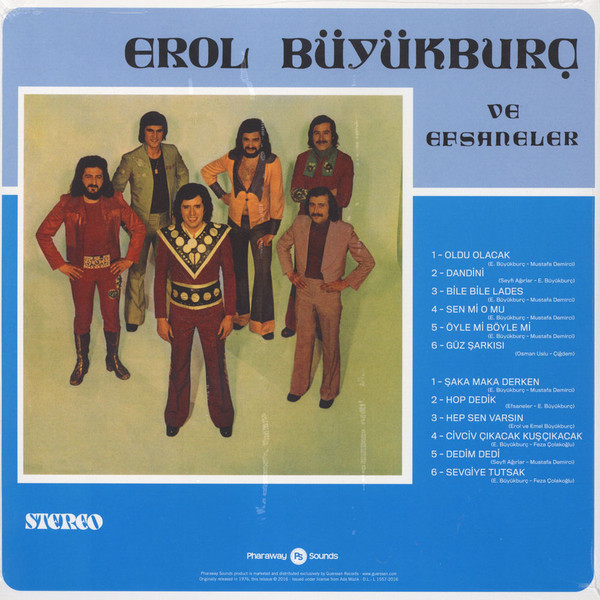
For Hop Dedik Erol Büyükburç put his songwriting skills to good use. He cowrote nine of the twelve tracks, including Oldu Olacak, Dandini, Bile Bile Lades, Sen Mi O Mu, Öyle Mi Böyle Mi, Şaka Maka Derken, Hop Dedik, Civciv Çıkacak Kuş Çıkacak and Sevgiye Tutsak. The other three songs, Güz Şarkısı, Hep Sen Varsın and Dedim Dedi were cover versions. These songs were recorded with Erol Büyükburç’s backing band Efsaneler.
They had been formed in 1973, but Efsaneler’s lineup changed several times over the next three years. It wasn’t until December 1975 that Erol Büyükburç and Efsaneler released their debut single Allah’im Beni De Gor. Tucked away on the B-Side was Civciv Çıkacak Kuş Çıkacak. It would feature on Hop Dedik.
The rest of Hop Dedik was recorded in early 1976 by Erol Büyükburç and Efsaneler. They recorded music that had a much more contemporary sound. It had been influenced by everything from disco, funk, rock and soul. Still, there was an Anatolian influence throughout Hop Dedik, which was released in late 1976.
When Hop Dedik was released Erol Büyükburç it was to critical acclaim. Erol Büyükburç had reinvented himself and music on his third album Hop Dedik. It was well worth the eight year wait.
Oldu Olacak (Will Be) opens Hop Dedik, and straight away there’s traditional sound, as a mandolin joins with the rhythm section. Only the rhythm section remain when Erol’s heartfelt vocal enters and he delivers the lyrics to this rueful ballad. Meanwhile, the rhythm section lock into a tight groove. Sometimes, the bass is almost funky as the arrangement becomes jaunty. Later Efsaneler contribute harmonies and the mandolin returns. They accompany Erol as seamlessly they combine traditional Turkish and Western music on this beautiful, ballad.
A chirping guitar is panned left and almost dances across the arrangement to Dandini. It features drums, percussion and a second guitar. They accompany Erol as he delivers a powerful, emotive vocal. When it drops out, a funky guitar takes centre-stage. Soon, the vocal returns and grows in power. Still the guitars and percussion play an important part as the song reaches a melodic and memorable crescendo.
As Bile Bile Lades unfolds traditional Turkish and Western music melt into one. The arrangement is choppy, as a bağlama join with the rhythm section. They usher in Erol’s vocal, which quickly grows in power. Soon, the tempo increases slightly and the arrangement flows. Meanwhile, urgent soulful harmonies accompany Erol’s impassioned vocal while the rhythm section provide the heartbeat. All too soon, this quite beautiful, melodic song is over, leaving just the memory of what’s gone before.
There’s a tougher, almost psychedelic sound to Sen mi O mu. A searing guitar cuts through the arrangement, that comes courtesy of the rhythm section and guitar. Soon, Erol’s vocal enters, and he delivers the lyrics quickly. Meanwhile, an effects laden guitar responds to his call, while drums rumble. Later, a blistering guitar cuts through the arrangement as Erol and Efsaneler combine psychedelia, Anatolian rock and pop to create a truly irresistible song.
A bubbling bass, percussion, chirping guitar combine on Öyle mi Böyle (Is It So?. They’re joined by urgent harmonies as the arrangement heads in the direction of funk. When Erol’s vocal enters it’s soulful and stylistically is reminiscent of legendary Brazilian singer Tim Maia. Meanwhile, the tempo is slow, and the music funky. Hooks haven’t been spared on this slow, soulful and funky track that features Erol Büyükburç at his best.
There’s a much more understated and wistful sound to Güz Şarkısı (Autumn Song) as an acoustic guitar and percussion combine. Soon, the rhythm section join but take care not to overpower Erol’s soul-baring vocal. It grows in power and at one point, there’s an almost psychedelic sound. This comes as a myriad of percussion joins the acoustic guitar and rhythm section. Later harmonies provide the perfect accompaniment to Erol on as he lays bare his soul on this wistful ballad.
Straight away, a funky guitar takes centre-stage as fingers fly up and down the freeboard, as it’s joined by the rhythm section and percussion on Şaka Maka Derken. Soon, soulful harmonies accompany Erol, and respond to his call. Behind him, the rhythm section and guitars have locked into a funky groove. Meanwhile, the harmonies have a gospel sound, and sometimes, are reminiscent of Brothers and Sisters. There’s even a nod to Sly and The Family Stone, on this soulful, funky opus as Erol continues to reinvent his music.
A guitar rings out on Hop Dedik before wah-wahing. It’s joined by the rhythm section who power the arrangement along. By then, it sounds as if British groups from the late-sixties have influenced Efsaneler. They enjoy the opportunity to showcase their considerable skills. This continues when Erol’s choppy, vampish vocal enters. Meanwhile, a strummed acoustic guitar, bubbling bass and funky guitar accompany Erol. When his vocal drops out, Efsaneler take centre-stage, combining elements of rock, funk and psychedelia. When Erol’s vocal returns, it’s soulful, emotive and vampish as he breathes life into the lyrics on this genre-melting track.
There’s an urgency to Hep Sen Varsın as the rhythm combine rock and funky. Guitars wah-wah as Erol unleashes a vocal powerhouse and is accompanied by punchy harmonies. When the vocal drops out, handclaps accompany the rhythm section as they drive the arrangement along and guitars ring out. Later, when the vocal returns, it’s soulful and swings before becoming urgent. So too does the arrangement, while the guitars add to the funk factor before this irresistible song reaches a crescendo.
The rhythm section lock into a groove with a wah-wah guitar on Civciv Çıkacak Kuş Çıkacak. They power the arrangement along, before an accordion and percussion join. Soon though, the accordion drops out, and Erol’s delivering a breathy vampish vocal. As it soon grows in power, Erol scats emotively. Meanwhile, percussion, wah-wah guitar and accordion combine to create a backdrop for Erol Later, when the accordion drops out, the wah-wah guitar accompany Erol whose vocal veers between breathy and tender to powerful and impassioned. It’s one of his finest vocals on Hop Dedik.
There’s a heavy, lysergic sound to Dedim Dedi (I Said I Said) as guitars wah-wah, cymbals rinse and the bass adds an element of darkness. Soon, percussion accompanies Erol, whose vocal is rueful and full of sadness. Slowly and deliberately he delivers the lyrics while the bass bubbles, the guitars shimmers and later, harmonies accompany him. They seem to sympathise with him, before his vocal becomes a rueful soliloquy on this poignant song.
Closing Hop Dedik is Sevgiye Tutsak which has a cinematic sound. That’s no surprise, as three songs on the album, Oldu Olacak, Sen mi O mu, Şaka Maka Derken featured on films that Erol starred in. Despite its cinematic sound, Sevgiye Tutsak never made it onto the silver screen. That is a great shame, as it’s one of the highlights of the album. It features a heartfelt vocal from Erol, while an organ, guitar and the rhythm section accompany him. They take care not to overpower his emotive, impassioned vocal on this beautiful cinematic ballad.
Eight years after Erol Büyükbur released his sophomore album, he returned with Hop Dedik in October 1976. It was very different from the two previous album Erol Büyükbur had released. They were essentially greatest hits albums. By 1976, record buyers wanted something more.
What they wanted was an album of new material from Erol Büyükbur. So he went away and cowrote six new songs. The other three, that he cowrote, had already featured on films that Erol Büyükbur had starred in. These new songs and three cover versions were recorded with his talented backing band Efsaneler. The result was Hop Dedik, which was released in October 1976.
When Hop Dedik was released, it was to critical acclaim. Sadly, the album didn’t sell in vast quantities. Since then, Hop Dedik has become a cult album and has grown in popularity. However, the few original copies Hop Dedik that come up for sale change hands for over £300. That is beyond most record buyers. Fortunately, Pharaway Sounds, an imprint of Guerssen Records has recently released Erol Büyükbur’s third album Hop Dedik. It found Erol Büyükbur reinventing his music.
The result is Hop Dedik, a truly enclitic album, where Erol Büyükbur combines elements of several disparate genres. This includes traditional Turkish music, disco, funk, pop, psychedelia, rock and soul. There’s also Anatolian pop and rock influences throughout Hop Dedik where the music of two continents melt into one.
Hop Dedik was without doubt, the best album of Erol Büyükbur’s career. He reinvented himself and his music on Hop Dedik, which was a genre-melting album. No two tracks are the same as Erol Büyükbur switches seamlessly between heart-wrenching ballads, funk, rock, soul and psychedelia. This showed that Erol Büyükbur was a truly and talented and versatile singer. Proof, if any is needed, is Hop Dedik, a career-defining album that features flamboyant showman Erol Büyükbur at the peak of his powers.
Erol Büyükburç-Hop Dedik.

DANS LES ARBRES-PHOSPHORESENCE.
Dans Les Arbres-Phosphorescence.
For many years, musicians, critics and academics have debated at what point does sound become music, and music become sound? This has become something of a moot point, which even the finest musical minds have failed to come up with an answer. Despite that, most people will be able to name several everyday sounds that they believe has a musical quality. This ranges from birdsong, the mesmeric sound of train and waves gently breaking on a deserted beach. Everyone has their own particular favourite. So it seems do Ivar Grydeland and Ingar Zach, who cofounded Dans Les Arbres.
When Dans Les Arbres is translated from French to English, it means “in the trees.” Straight away, this conjures up a myriad of potential musical sounds. This ranges from birdsong to wind blowing, swirling and whistling through the trees. As the seasons change, so does the music that this member of nature’s orchestra plays. What has also changed over the last two decades, is Dans Les Arbres’ music.
On the ‘7th’ April 2017, Hubro Music will release Dans Les Arbres’ much anticipated third album Phosphorescence. It finds Dans Les Anbres reinventing their music, and moving away from the contemporary improvised acoustic chamber music of their first two albums. This featured on their 2008 debut album Dans Les Arbres, and then on their 2012 sophomore Canopee. Both albums were released to critical acclaim and were commercially successful. Since then, the four members of Dans Les Arbres have been busy on other projects. However, on the ‘30th’ and ‘31st’ August 2015, Dans Les Arbres found time to record what became their third album Phosphorescence. It’s marks a new chapter in the Phosphorescence story.
The origins of Dans Les Arbres can be traced to latter part of the twentieth Century. That was when Ivar Grydeland and Ingar Zach began collaborating on a new project, which eventually, would become Dans Les Arbres.
As the new millennia dawned, Ivar Grydeland and Ingar Zach decided to found a new record label in Oslo. Given the city had a thriving and vibrant music scene, Oslo was the perfect place to base the new Sofa label. Its raison d’être was to release albums improvised music. That is still the case today, after seventeen years and over sixty albums. Since then, Sofa Music has grown with Oslo’s music scene.
Playing an important part in Oslo’s music scene were Ivar Grydeland and Ingar Zach. In the early days of Dans Les Arbres, they were a duo. The pair released Visiting Ants on Sofa Music in September 2000. This was the start of their recording career together.
Ivar Grydeland and Ingar Zach didn’t always work together. Sometimes, they joined forces with other musicians they had met on the European improvised music scene. Mostly, these ensembles were short-lived affairs. All the time though, the pair were improving as musicians.
A turning point came when Ivar Grydeland and Ingar Zach enrolled at the Norwegian Academy of Music between 2001.
They spent the next two years studying towards their Master’s degree in Chamber Music. The course focused entirely on their own compositions and improvisations. It was no surprise that the two friends improved as composers and musicians by the time they graduated.
With their graduation concerts fast approaching, Christian Wallumrød released Sofienberg Variations on ECM. The music struck a nerve with Ivar Grydeland and Ingar Zach. Musically, they were able to relate to the music. They also felt the music was related to their own. So much so, that Ivar Grydeland and Ingar Zach decided to approach Christian Wallumrød to see if he would be interesting in collaborating with them?
The answer was yes. Newly graduated,Ivar Grydeland and Ingar Zach were already recording with Christian Wallumrød. This was a huge honour. Not only was Christian Wallumrød someone who had influenced Ivar Grydeland and Ingar Zach, but one of the leading lights of the Norwegian music scene. Little did the three men realise that they would reunite in 2004.
By 2004, both Ivar Grydeland and Ingar Zach were already experienced musicians. Over the last four years, they had worked together on a variety of projects, and had collaborated with other musicians.
The pair were members of No Spaghetti Edition, who were one of Sofa Music’s earliest signings. No Spaghetti Edition released their debut Listen… And Tell Me What It Was in July 2001. Just over a year later, and No Spaghetti Edition released their sophomore album Pasta Variations in November 2002. The same month, Sofa Music released another album that featured Ivar Grydeland and Ingar Zach.
This was Wazahugy, which was a collaboration between Ivar Grydeland, Ingar Zach, Philipp Wachsmann and Charlotte Hug. It was released on Sofa during November 2002. Less than a year later, and Ivar Grydeland and Ingar Zach returned with another album for Sofa Music.
This was No Spaghetti Edition’s third album Real Time Satellite Data. It was released in October 2003, and featured a guest appearance from French clarinettist Xavier Charles. When No Spaghetti Edition headed out on tour to support Real Time Satellite, so did Xavier Charles. Little did he know that his was the start of a musical relationship that’s lasted two decades.
Three months after the release of Real Time Satellite Data, Ivar Grydeland and Ingar Zach returned with their sophomore album You Should Have Seen Me Before We First Met. It was released to critical acclaim in January 2004.
Not long after this, Ivar Grydeland and Ingar Zach decided to return to the music they had recorded with Christian Wallumrød. The music was still unfinished, and the pair were determined to complete the project. To help complete the project, they invited Xavier Charles.
Ivar Grydeland and Ingar Zach were sure that Xavier Charles could enhance the unfished project. Having let him hear the recordings, they worked on the project. This was akin to a very informal audition. The meeting went well, and a few months later, the four members of Dans Les Arbres met for the first time.
The meeting took place in early July 2004, and allowed the four musicians to get to know each other. Although the first meeting as a quartet, was a success, sixteen months passed before they were reunited.
The next time the four members of Dans Les Arbres met, was during the recording of No Spaghetti Edition’s fourth album Sketches of A Fusion. Three musicians were brought onboard to play on the album: double bassist Tonny Kluften, Canadian improviser Martin Tétreault and pianist Christian Wallumrød. Once Sketches of A Fusion was completed, it was released later on Sofa later in 2006. However, when No Spaghetti Edition headed out on tour, it was as a quartet.
Joining Ivar Grydeland and Ingar Zach were Xavier Charles and Christian Wallumrød. As the tour progressed, the four musicians realised who well they worked together. It was a meeting of musical minds. So much so, that they decided to continue working together.
Dans Les Arbres.
The next time Ivar Grydeland, Ingar Zach, Xavier Charles and Christian Wallumrød met was at Festiviteten, Eidsvoll, in July 2006. They began to hone the nascent band’s sound. Then they started to write and record what would later become Dans Les Arbres eponymous debut alum. However, it would be twenty-one months before Dans Les Arbres was released.
When Dans Les Arbres was released by ECM in April 2008, it was to critical acclaim. Critics were won over by Dans Les Arbres’ contemporary improvised chamber music, which was played entirely on acoustic instruments. Dans Les Arbres sold well, and soon, the pan-European supergroup, embarked upon the first of several tour.

Over the new few years, Dans Les Arbres toured Europe, North America and Japan. Soon, interest in Dans Les Arbres’ was growing. Night after night, they played sold out shows. Audiences watched as the multitalented supergroup pushed musical boundaries to their limits. Soon, Dans Les Arbres were performing with Yumiko Tanaka, Otomo Yoshihide, Jim O´Rourke and the young Norwegian duo Vilde and Inga. However, two years after the release of Dans Les Arbres, the band began work on their sophomore album Canopée.
Canopée
Recording of Canopée began in June 2010 at Biermannsgården. Ten months later and Canopée was completed at Cafeteatret, Oslo during April 2011. However, more than a year passed before Canopée was released.
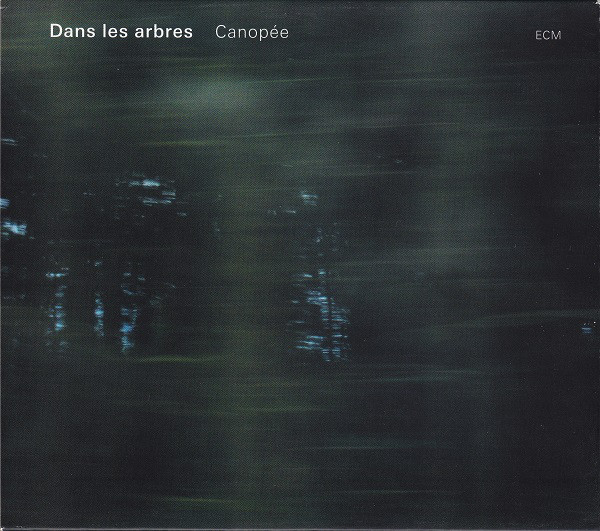
Eventually, Canopée was released by ECM in June 2012. Just like Dans Les Arbres, critical acclaim accompanied the release of Canopée. It saw Dans Les Arbres return to the contemporary improvised chamber music that featured on their eponymous debut album. Again, Dans Les Arbres used just acoustic instruments throughout Canopée. This proved popular among record buyers and was nominated for the annual music prize awarded by the Nordic Council. Dans Les Arbres’ star was in the ascendancy.
Phosphorescence.
Despite enjoying two critically acclaimed and commercially successful albums, by the time Dans Les Arbres began to think about their third album they were considering changing direction musically. This was no surprise. Many successful musicians are wary about to releasing several albums of similar material. Especially groups that feature musicians that release ambitious and innovative music.
For Phosphorescence, the four members of Dans Les Arbres wrote four new soundscapes. To record Phosphorescence, Dans Les Arbres headed to Isitart, “the studio in a forest” just south of Oslo on ‘30th’ August 2015. Tehy planned to record their third album over the next two days.
As Dans Les Arbres arrived at the studio, they began preparing for the session to begin. Ingar Zach would add percussion and bass drum; Ivar Grydeland played electric guitar and took charge of real time sampling. Meanwhile, Xavier Charles played clarinet and Christian Wallumrød switched between piano and synths. The four members of Dans Les Arbres would produce Phosphorescence.
In the studio, Dans Les Arbres would take a different approach to recording Phosphorescence. They used a degree of electronic processing and amplified the prepared piano and guitar recordings. Real-time sampling was also used. This includes some of the sounds that featured on Dans Les Arbres and Canopée. While much of this was new to Dans Les Arbres, they still managed to complete Phosphorescence within two days. The sessions ended as planed, on ‘31st’ August 2015.
With Phosphorescence album recorded, it was mixed on ’14th’ January 2016 in Ampertone by Christian Wallumrød, Ivar Grydeland and Johnny Skalleberg. Seven months later, and Phosphorescence was mastered by Helge Sten during August 2016 at Audio Virus Lab. Now Phosphorescence was ready to release.
Nine months later, and Dans Les Arbres are preparing to release their third album Phosphorescence. This is the start of a new chapter for Dans Les Arbres, as they move away from the contemporary improvised, acoustic chamber music of their first two albums. It’s an exciting time for Dans Les Arbres as they released their first album in five years, Phosphorescence.
Phosphorescence opens with Sciure, and straight away, there’s a sense of unease, before this cinematic soundscape builds. It becomes eerie and otherworldly, as droning, braying sounds emerge from the soundscape. Suddenly, it’s as if Dans Les Arbres have been asked to provide the soundtrack to a modern horror film. All of a sudden, the soundscape becomes shrill, before drums crack and add a degree of drama. This builds, as the drums reverberate, adding to the uneasy sound. Still, the otherworldly soundscape hisses, drones and brays before dissipating. All that’s left are four cinematic minutes where Dans Les Arbres reinvent themselves and showcase their new sound.
As Fluorescent unfolds, a bell chimes, and a thunderous pulsating sound dominates the soundscape. Soon, bells chime, while a myriad of found sounds are added. They jangle, clink, clank and thud. Then a piano briefly plays while a drone gives way to machinery. Meanwhile, scraping, screeching, jarring sounds join bubbling electronic sounds. At one point, piano strings are plucked as the pulsating sound returns. When a bell rings, it’s like being onboard a ship as it leaves the port. Dans Les Arbres are left to provide the onboard entertainment. By now, the pulsating sound replicates sonar equipment. Suddenly,
a bell rings urgently as bubbling, squeaking and puffing sounds can be heard. Then at 4.43 an alarm sounds. It drops out, and returns, before what sounds lie air escapes from balloons can be heard. Meanwhile, the piano jangles, as drones and a myriad of sounds emerge from soundscape. Plink plonk strings joins jarring, squeaking sound and drones as Dans Les Arbres improvise. They unleash bangs, crashes, metallic, chirping, chiming and ringing sounds as the pulsating sound creates as uneasy backdrop to this captivating soundscape. It’s guaranteed to set the listener’s mind racing.
Closing Phosphorescence is the title-track. An urgent burst of sound escapes from the soundscape. After it dissipates, there’s silence. This lasts nearly twenty-seconds. Dans Les Arbres repeat the process all over again. In doing so, they heighten the expectation and drama. After this happens for a third time, the soundscape meanders along as Dans Les Arbres improvise. Soon, percussive sound join squealing, squeaking and drones. Drums thunder as the soundscape becomes dark, edgy and otherworldly. Meanwhile, a myriad of disparate sounds assail the listener. Many of them have been treated by an array effects. At one point, a detuned string instrument is joined by a wash of wailing feedback as briefly,drums skips across the soundscape. Sometimes, though, less is more. Other times, the drama increases as sounds are layered and combined. Percussion joins plink plonk strings, stabs of piano and gushing, whining, buzzing jarring, wailing, scrabbling and eerie sounds. Feedback is used effectively, as it wails and screams. It’s joined by buzzing, crackling, droning, crashing sounds. They’re all part of Dans Les Arbres’ musical arsenal during this captivating fifteen minute epic journey into the unknown.
Phosphorescence is a very different album to Dans Les Arbres’ first two albums. Gone is the contemporary improvised chamber music that was played entirely on acoustic instruments. Replacing it, is a much more experimental sound. It finds Dans Les Arbres used effects, amplification and real-time sampling for the first time as they improvise In doing so, this opened up a whole new world for Dans Les Arbres. This they embraced and welcomed with open arms.
The result is Phosphorescence, which is without doubt, the most ambitious, inventive and innovative album of Dans Les Arbres’ career. Phosphorescence is also the best album of Dans Les Arbres’ three album career. They reach the heights on their long-awaited and much-anticpated third album Phosphorescence, which will be released by Hubro Music on ‘7th’ April 2017 after a five year wait.
Phosphorescence finds Dans Les Arbres’ combining elements of avant-garde, experimental, improv and industrial music. It features four soundscapes, which are variously cerebral, cinematic, dramatic, edgy and otherworldly. Other times, the music on Phosphorescence veers between hopeful and melodic to eerie and unsettling. Sometimes, it’s akin to a journey into the unknown, that’s full of twists and turns and subtleties and surprises. Always though, the music on Phosphorescence is captivating, compelling and though-provoking, as Dans Les Arbres reinvent themselves musically, and paint pictures on their career-defining third album Phosphorescence.
Dans Les Arbres-Phosphorescence.

WARREN STORM-THE HUEY MEAUX YEARS.
Warren Storm-The Huey Meaux Years.
Often, an artist or band spends a large part of their career working with the same producer. That producer seems able to get the best out of the artist or band. Musical history is littered with examples. However, despite this success, there’s often the temptation to change producer. It’s as if the artist is keen to see whether the grass is greener. That can prove fatal. After changing producer, a previously successful artist’s career can head south, and often never recovers. That’s always the risk. It was a risk that Warren Storm wasn’t willing to take.
Warren Storm first worked with Huey Meaux in 1964, and they worked together right through until 1982. During that eighteen year period, Warren Storm was a prolific recording artist. By the time he parted company with Huey Meaux in 1982, there was still plenty of music left in the vaults. So much so, Huey Meaux was releasing singles bearing Warren Storm’s name right through to 1986 This twenty-two year period was the most successful and productive period of Warren Storm’s career. His story began in 1937.
The future Warren Storm, was born Warren Schexnider on February 18th 1937, in Abbeville, Louisiana. Warren grew up in a musical house. His father Simon, was a talented musician and a member of the Rayne-Bo Rambler. He taught Warren to play drums and guitar. By the age of ten, Warren was already a talented musician, and as good, if not better than many older musicians.
So when Simon couldn’t make shows, he had a ready made replacement in Warren. He made his debut for The Rayne-Bo Ramblers aged ten or eleven. The audience didn’t notice. Seamlessly, Warren fitted into The Rayne-Bo Ramblers’ line-up. Soon, other bands looking for a drummer, were giving Warren a call. It seemed almost seemed inevitable that Warren was going to embark upon a career as a musician.
By the time he was sixteen, Warren was the drummer in two local bands, the Herb Landry Band and Larry Brasson’s Rhythmaires. People were soon taking notice. Warren had an impressive voice, and with rock ’n’ roll making its presence felt, he was in the right place at the right time.
So was his friend Bobby Guidry. He ahad adopted the name Bobby Charles, and was making a name for himself as a budding teen idol at Chess Records. This inspired Warren to form his own group, The Wow-Wows.
It was around the time Warren formed The Wow-Wows, that he began using the name Warren Storm. With his new name, the next step for Warren was for The Wow-Wows to release a record.
In 1957, The Wow-Wows recorded a couple of songs at the local radio station, and sent out tapes to various record companies. Nothing became of these tapes. So in late 1957, Warren’s friend Cliff Le Maire drove him to audition for producer J.D. Miller, who was already an experienced and successful songwriter and producer.
Warren’s audition for J.D. Miller went well. So much so, that he was soon cutting his debut single. It was a cover of Prisoner’s Song, which gave Vernon Denhart a hit in 1928. Thirty years later, and Prisoner’s Song was given a makeover. Warren Storm’s version took on a Fats Domino influence. When J.D. Miller heard the completed song, he decided to send the song to Ernie Young at Nashboro Records, in Nashville.
Ernie Young liked what he heard, and released Prisoner’s Song on his Nasco pop imprint. This Ernie thought was the perfect label for Warren’s debut single. He proved correct. Soon, Prisoner’s Song went from a local to a national hit. It started climbing the charts, but peaked at just number eighty-one in the US Billboard charts on the spring of 1958. To promote the single, Warren played at local dances. He couldn’t travel further afield, as he was in the National Guard.
This certainly hampered Warren’s nascent career. When he released sophomore single, Troubles, Troubles, Troubles it reached the Cash Box charts. However, it didn’t reach the US Billboard 100. This Warren put down to being unable to tour extensively. Personal appearances and radio play were the way singles were promoted in 1958. With Warren’s personal appearances limited, his singles failed to find a wider audience. History repeated itself when neither So Long, So Long, nor I’m A Little Boy (Looking For Love) charted. Just like Troubles, Troubles, Troubles, neither single found the audience they deserved. For Warren this was a disappointment. However, when his Nasco contract ended, J.D. Miller kept faith with Warren.
Not only did J.D. Miller continue to release Warren’s singles on his Zynn and Rocko labels, but employed him as a session player. He accompanied blues greats like Lightnin’ Slim, Lazy Lester, Slim Harpo, Lonesome Sundown and Katie Webster. At one point, Warren was so busy with session work, that his solo career was put on hold. Then in 1960, Warren decided it was time to concentrate on his solo career.
There was a potential problem. Warren was still contracted to J.D. Miller. However, J.D. Miller was content to lease Warren out.So Warren headed to Nashville, to work with producer Paul Cohen. He had put together a band featuring some of the city’s top session players. They would accompany Warren on four tracks. This included Warren’s next single Bohawk Georgia Grind. It was released on Top Rank, but didn’t sell well. Paul Cohen cut his losses, and don’t release the other two tracks. For Warren, it was another disappointment. Although Warren was down, he wasn’t out.
In 1962, Warren signed to Dot Records. J.D. Miller had cut a deal with Randy Wood at Dot Records. Under the terms of the deal, Warren would cut two singles. Sadly, neither Gotta Go Back To School, nor Warren’s cover of Take The Chains From My Heart were commercially successful. To rub salt into the wound, a few months after Warren’s cover of Take The Chains From My Heart flopped, it gave Ray Charles a huge hit. It seemed the only luck Warren had, was bad luck.
Later in 1962, things took a turn for the worse, when Warren stopped working for J.D. Miller. This meant there was no more session work. For Warren, session work provided him with an income, valuable experience and the chance to make new contacts. With his career seemingly at the crossroads, Warren had no option but to become a Shondell.
With nothing on the horizon, when Warren was asked to join The Shondells, he jumped at the opportunity. Warren became The Shondells lead singer. With Warren at the helm, The Shondells recorded one album, At The Saturday Hop. The Shondells also played live, and this kept Warren busy until he met Huey Meaux.
Warren Storm and Huey Meaux first met in 1964. By then, the self-styled Crazy Cajun was the top producer in South Texas. Previously, he had transformed the career of many artists. Producer Huey Meaux was just what Warren Storm needed. It had been six long years since Warren Storm had enjoyed a hit single.
At the time Warren met Huey, Warren Storm hadn’t a recording contract. That had been the case since Warren left J.D. Miller’s employ. Luckily, Huey owned several record labels. He also owned parts of other labels. There would be no problem getting Warren’s singles released. First, though, Huey Meaux had to find the right song for Warren.
For his first session with Warren Storm, Huey Meaux took his latest signing to Cosimo Matassa’s New Orleans’ studio. No expense was spared. The band featured some of the city’s top musicians. Mac Rebennack, the future Dr. John was bandleader and pianist. With this all-star band behind him, The Gypsy takes on a Swamp Pop makeover. It became Warren’s debut for Huey.
The Gypsy was released as a single, on Sincere, with I Walk Alone on the flip side. When The Gypsy was released, it sold well locally, but never translated into a nationwide hit. Since then, Warren’s version of The Gypsy is perceived as a Swamp Pop classic.
Following the release of The Gypsy, Warren released Love Me Cherry, with Jack and Jill on the B-Side. It was recorded in a simular Southern style, but again didn’t fare well outside the South. Neither did Warren’s next two singles. Four Dried Beans, which featured Don’t Fall In Love was Warren’s third Sincere single. Commercial success eluded Warren during the rest of 1964.
When Warren released his first single of 1965, it was a case of deja vu. Your Kind Of Love which was cut with a 2/4 time signature. On the flip side was the Warren Robb penned ballad, Memory Tree. Despite the quality of both sides, commercial success passed Warren by. By then, Warren was wondering if he was ever going to ever be more than a local success?
By then, seven years had passed since Warren Storm’s debut single launched Huey Meaux’s career. Since then, the only commercial success that Warren enjoyed was regionally. With that in mind, much consideration was give to what would be Warren’s next single. Eventually, Slow Down was chosen and released on the Sincere label. Sadly, history repeated itself when Slow Down passed record buyers by. Still, the search for a hit went on. So, Huey switched Warren to his Kingfish label.
Later in 1965, Warren Storm released They Won’t Let Me In on the Kingfish label. Tucked away on the B-side, was the most left-field cut of Warren’s career, Sitting Here On The Ceiling. It showcased a slightly psychedelic sound, which was very different Warren’s previous recordings. However, when They Won’t Let Me was released, commercial success eluded the single. Huey Meaux’s decision to move Warren to a a label didn’t result in a change of fortune for Warren.
Two years after signing with Huey Meaux, Warren cut one of his most soulful songs, The Bad Times Make The Good Times. Penned by Robert Stone, Warren delivers a tender vocal against a backing track Huey sourced from New York. At that time, Huey was determined to get Warren on a major label. Warren had the talent, but the majors didn’t bite. Then when The Bad Times Make The Good Times was released on the Pic label, in 1966. Sadly, this soulful opus didn’t find an audience. Where did Warren go now?
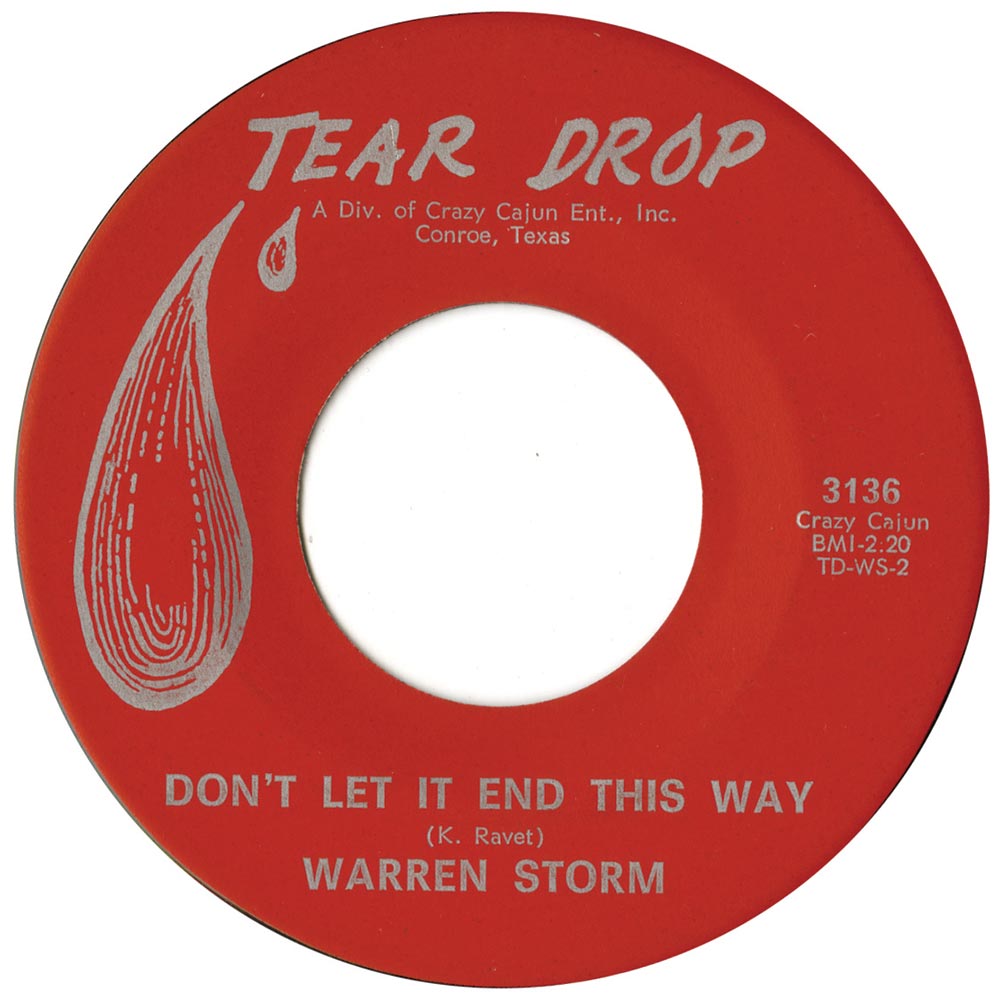
The answer was to the Tear Drop label. On Tear Drop, Warren delivered an Otis Redding inspired cover of Tennessee Waltz. On the flip side was Don’t Let It End This Way, a vastly underrated song, which shows the soulful side of Warren Storm. Tennessee Waltz was distributed nationwide in 1967. Huey must have thought that Tennessee Waltz was going to give Warren his breakthrough single. Sadly, it wasn’t to be and Warren’s search for a hit continued.
By then, Huey must have been struggling to come up with a new idea. So, he suggested remaking Prisoner’s Song, which was Warren’s debut single. It gave him a minor hit in 1967. Nearly a decade later, and Prisoner’s Song was recut and issued on a newly revived Sincere label. The B-Side was a cover of Honky Tonk Song. However, despite the undeniable quality of both songs, the passed record buyers by. Psychedelia was the new kid in town. Warren’s sound was perceived as yesterday’s sound. For Warren and Huey, it was a case of stick or twist.
They decided to twist. So, Huey took Warren into the studio one more time. At the Grits ’n’ Gravy Studio, Jackson, Mississippi, Warren cut his next single Down In My Shoe. Huey sold the single to Atlantic. However, when the time came to release Down In My Shoe, Atlantic were too busy with their major artists to concentrate on Warren’s Atlantic debut. For Warren, it was a case of so near, yet so far. After this, Warren and Huey went their separate ways.
When Warren and Huey parted company for the first time, there were still plenty of unreleased tracks in the vaults. For whatever reason, Huey decided not to release them. Meanwhile, Warren was working with one of Huey’s rivals.
Following his departure from Huey’s employ, Warren returned to J.D. Miller. He cut some classy singles for J.D. The rest of the time, Warren played live and worked as a session player. Meanwhile, Huey had gone up in the world.
By 1974, Huey was a successful producer. He recorded Freddy Fender’s cover of the country standard Before The Next Teardrop Falls. It reached number one on the US Billboard 100 and US Country charts. All of a sudden, Huey Meaux’s services were highly sought after.
For the next four years, Huey was hot property. Columbia agreed to distribute Huey’s new label, Starlight. With the ink hardly dry on the contract, Huey had signed three artists to the Starlight roster, Freddy Fender, Tommy McLain and Warren Storm.
It wasn’t unexpected that Huey and Warren would renew their partnership. Warren had played on some Freddy Fender sessions, and Huey wanted to record Warren again. The Starlight deal made this possible.
The first single Warren cut for Starlight, was a cover of the Gulf Coast classic, Please Mr Sandman. On the flip side was Things Have Gone To Pieces. It was released in 1979, but never found an audience. So, two months later, Huey suggested Warren cut But I Do in a honky tonk style. The B-Side was a Huey Mueax song, Think It Over. History repeated itself when But I Do failed commercially. Maybe it would be a case of third time lucky?
He’s Got Nothing On Me But You was chosen as Warren’s third single for Starlight. On the flip side was King Of The Dance Halls. When He’s Got Nothing On Me But You was released, it advertised a new album from Warren Country By Storm. Sadly,the album never materialised. That was not surprising as Warren’s third single for Starlight had also flopped. This proved to be the last single that Warren Storm released for Starlight. It looked like the end of Warren and Huey’s partnership?
As has been proved many times in the music industry, never rule anything out. Three years later, Warren and Huey renewed their partnership. My Heart Is Bleeding was released as a single in 1982. On the B-Side was Blue Monday. Sadly, despite its quality, it failed commercially. That proved to be the case with the followup We’ll Sing In The Sunshine, with I’ve Shed So Many Tears on the flip side. It was released later in 1982, but never realised its potential. That was the end of the road for Warren and Huey.
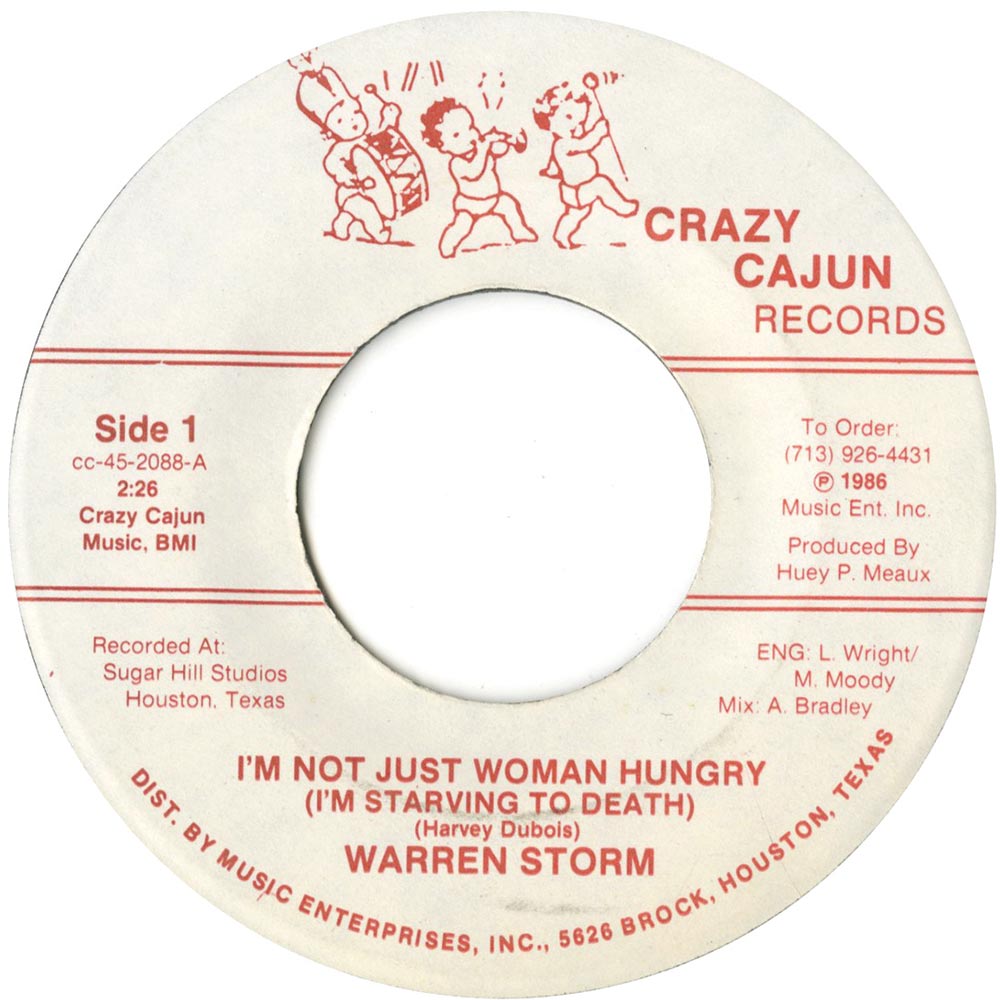
Never again would Warren Storm record for Huey Meaux. That didn’t mean that Huey didn’t release the odd Warren Storm single. This included (If I Ever Needed You) I Need You Now and Jealous Woman in 1983 on his Crazy Cajun label. Three years later, in 1986, The Rains Came and Sometimes A Picker Just Can’t Win were released as singles on Crazy Cajun. Huey had plenty material in the vaults. Then in 1988, Huey released (I Can’t Treat You Like A Lady)You Need Someone Who’ll Be Mean To You as a single. It failed to make any impression on the charts. By then, Warren’s recording career was continuing.
Having split with Huey, Warren signed to Jay Jackson’s South Star Records. He released two soulful singles Seven Letters and Valley Of Tears. Then when South Star Records closed its doors, Warren came full circle, when he signed to Master Trak Records, which was run by J.D. Miller’s son Mark. Warren released singles like Day Dreaming, My Girl Josephine and This Could Go On Forever. It was vintage Warren Storm.
It was as if Warren Storm was rolling back the the years to the period between 1964 and 1986. During that period, Warren Storm and producer Huey Meaux forged a successful partnership. This proved to be the most productive and successful period of Warren Storm’s career. Many of the singles Warren Storm released were successful regionally. Sadly, Warren Storm only enjoyed the hit singles. However, it was with Huey Meaux that Warren Storm released some of the best during his long and illustrious career.
Now aged eighty, Warren Storm hasn’t retired. Music is in his blood. Warren has been making music since before he went to school. It’s been a constant throughout his life. Sadly, Warren Storm didn’t enjoy the commercial success many forecast early in his career.
After the success of his debut single Prisoner’s Song in 1958, Troubles, Troubles, Troubles gave Warren Storm a minor hit. It looked like Warren Storm was about to enjoy a long and successful career. Sadly, it never worked out that way. Despite releasing a string of singles that oozed quality, Warren Storm never replicated the success of his first two single. He spent the rest of his career chasing that elusive hit single. This included three separate spells with producer Huey Meaux. Even with Huey producing Warren Storm, commercial success and critical acclaim eluded him. There was a reason for this.
Music was changing, and Warren Storm’s music was perceived as yesterday’s sound. In the sixties, the British Invasion and then psychedelia derailed Warren Storm’s career. By the time they renewed their acquaintance in 1978, disco was providing the soundtrack to America. Despite releasing a trio of quality cuts in 1979, they passed most people by. Warren Storm was out luck. It wasn’t a case of third time lucky. When Warren Storm and Huey Meaux teamed up for one last shot at the title in 1982, it was too late.
Warren Storm’s time had come and gone. A new musical era was unfolding. Boogie, hip hop, house and electronica were all part of what the hipsters considered a rich musical tapestry. Others begged to differ.
They knew that not all good music finds the audience it deserves. Instead, of becoming a national hit, singles are just local hits. That was the case with Warren Storm. He was well known in Texas and Louisiana. There he is a local hero. His music was appreciated. Now thirty-three years after Warren Storm and Huey Meaux cut their last songs together, belatedly, Warren’s music is finding a much wider audience. No wonder. Warren Storm’s musical legacy is a rich one. Some of the best music of Warren Storm’s long and illustrious career was recorded during the Huey Meaux years.
Warren Storm-The Huey Meaux Years.

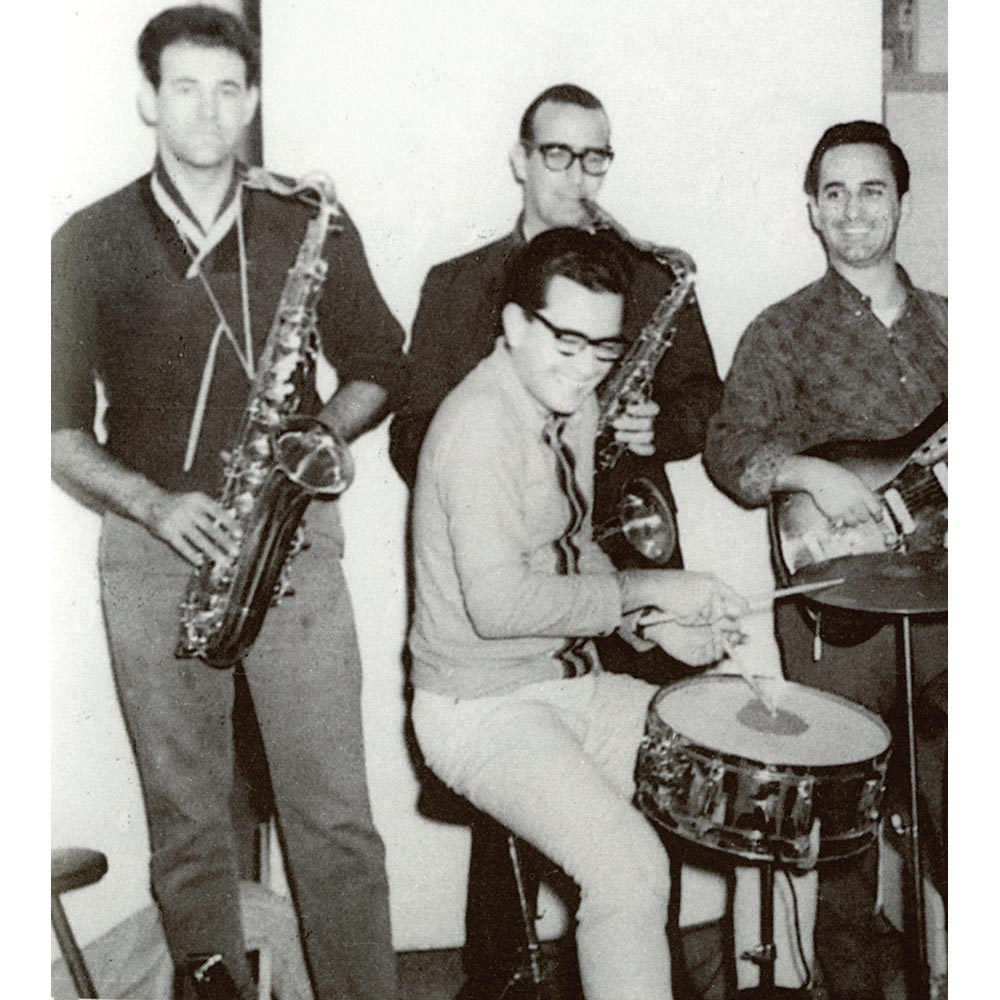
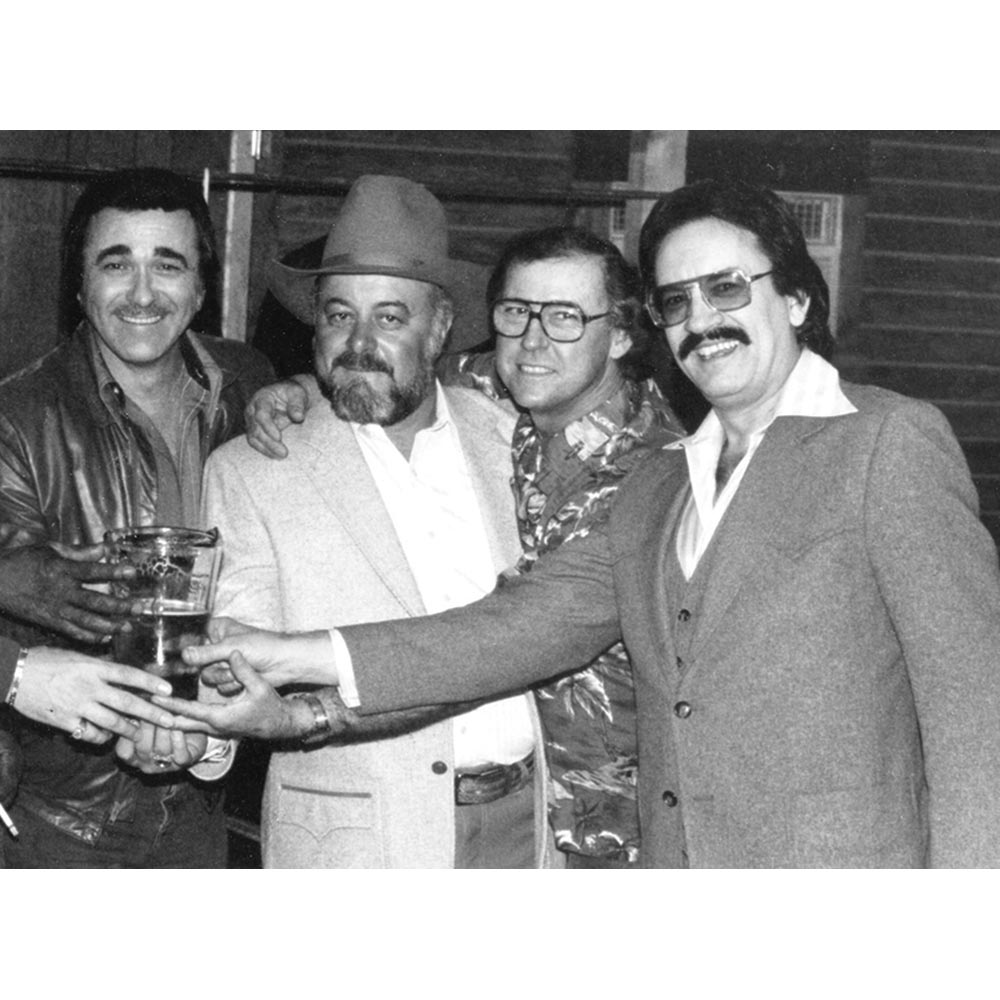
PAT THOMAS-GHANIAN HIGHLIFE MASTER AND “THE GOLDEN VOICE OF AFRICA.”
Pat Thomas-Ghanaian Highlife Master and “The Golden Voice Of Africa.”
All Pat Thomas ever wanted to do was sing highlife. He’s been doing since his career began in 1966. Since then, Pat Thomas has reinvented himself musically several times. He’s recorded everything from big band highlife in the late sixties, right through to the burger highlife of the early eighties. Since then, Pat Thomas’ has continued to reinvent himself musically during a long and illustrious career that has spanned six decades.
Nowadays, Pat Thomas is a Ghanaian highlife master Pat Thomas, who is known as the “the golden voice of Africa.” Now aged sixty-six, and one of the veterans of African music, Pat Thomas continues to make music. That’s no surprise. That is all he ever wanted to do.
The Pat Thomas story began in 1940, when he was born in Agona, in the Ashanti region of Ghana in 1951. Music was in Pat’s blood. His father taught music theory, his mother was a bandleader and Pat’s uncle was the legendary Ghanian guitarist King Onyina. Given his background, it wasn’t surprising Pat Thomas would later make a career out of music.
Especially since Pat Thomas was surrounded by music. Growing up, he listened to all types of music. However, it was highlife that struck a nerve with Pat. By the time he was in high school, Pat Thomas dreamt of singing highlife. However, he was too young.
This wasn’t going to stop Pat Thomas embarking upon a musical career. So while he was at high school, Pat Thomas started singing covers of songs by Stevie Wonder, Nat King Cole, Miriam Makeba and Jimmy Cliff. While this wasn’t ideal, it was a start. He knew everyone had to start somewhere.
The next chapter in Pat Thomas’ career began in 1966. Pat was only fiteen, but something of a musical prodigy. This was in part, thanks to his uncle. He took Pat under his wing. Soon, he was able to write music, and play guitar and drums. However, it was as a singer that Pat Thomas excelled. Already he was a familiar face in local clubs, and was perceived as one of the rising stars of the local music scene. That’s why he was hired as an arranger by one of the biggest names in Ghanian music, Ebo Taylor.
Ebo Taylor had just returned from London, when he hired Pat Thomas as an arranger. He and Fela Kuti had been studying music in London. Now Pat was home, he was determined to put what he had learnt into practice. This included modernising highlife.
With Pat Thomas onboard, Ebo Taylor embarked upon a journey that eventually, would see the transformation of highlife. It was a meeting of minds. They gave highlife a Western twist. Horns were added. So were guitars and vocals. This once traditional form of African music was about to be transformed by two of Ghana’s most progressive musicians.
Over the next few years, Pat Thomas and Ebo Taylor played together in various bands. This included the Stargazer’s Dance Band and the Broadway Dance Band. Pat was the arranger and vocalist, while Ebo played the guitar. They were a formidable duo. That’s apparent on the Pat Thomas penned Go Modern, which the Broadway Dance Band released as a single on the Ambassador label. It wasn’t just Pat’s recording debut as bandleader, but his first recording with Ebo Taylor. However, despite their close friendship, Pat Thomas made the decision to journey to Britain.
He wasn’t the first African musician to make this journey. Nor would he be the last. Pat made the Journey to London in 1970. During the time he spent in London, he toured with the Uhuru Dance Band. Then in 1971, Pat returned home and moved to Accra.
That’s where Pat Thomas and Ebo Taylor renewed their musical partnership in 1971. That’s when Pat joined the Blue Monks. Again, Pat was the vocalist and Ebo the guitarist. They were resident at the Tip Toe Nite Club, where the Blue Monks would make their mark on Ghanian musical history. They’re now remembered as one of most important and influential Ghanian bands of the early seventies. Just like before, Pat and Ebo went their separate ways, but would later reunite.
Before that, Pat Thomas and The Big 7 released a couple of singles, including Eye Colo in 1972. It features on the Coming Home-Original Ghanian Highlife and Afrobeat Classics compilation, and is a reminder of what was a memorable collaboration. They reunited in 1973 to record and release Okomfo Bone as a single. However, the collaboration between Pat Thomas and The Big 7” wasn’t particularly successful, and they parted. Not long after this, Pat was on the move.
This time, Pat Thomas moved to the Ivory Coast. After a while, Pat decided to return home, and once more, reunited with Ebo Taylor. In 1974, they joined Sweet Beans, a group sponsored by the Ghana Cocoa Board.
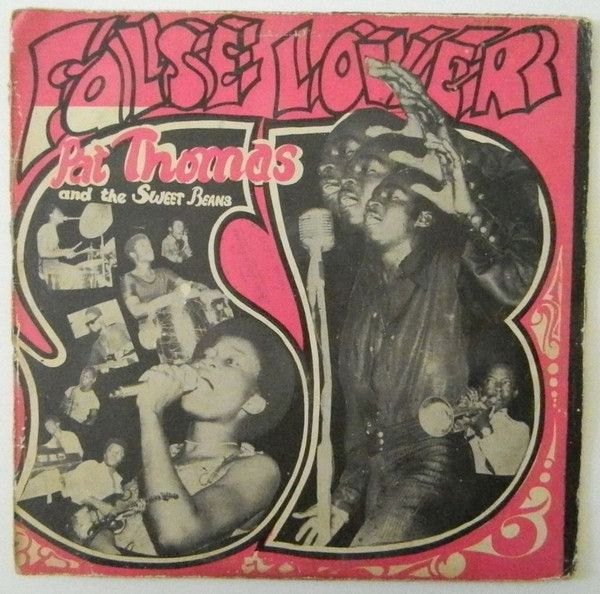
Later in 1974, Pat Thomas had recorded an album with The Sweet Bean. They were billed as Pat Thomas and The Sweet Beans, and their album False Lover was released on Gapophone Records later in 1974. Three of the songs Pat had written for the album, were Merebre, Revolution and Set Me Free. Sadly, Pat Thomas and The Sweet Beans only released onealbum. However, for Pat Thomas, this was just the start of his recording career.
Around this time, Pat Thomas recording career was blossoming. However, details of exactly where and the recordings took place is unclear. Even debates surrounds the exact release date. It’s thought that The Ogyatanaa Show Band (Super) Yaa Amponsah and Pat Thomas and The Black Berets Obra E Yebo Yi were released in 1974. Similarly, it’s thought that Pat Thomas cut and released Awurade Mpaebo in 1975. Alas, over forty years later, details are somewhat sketchy. The main thing is that the music has survived, and shows Pat Thomas maturing and evolving musically.
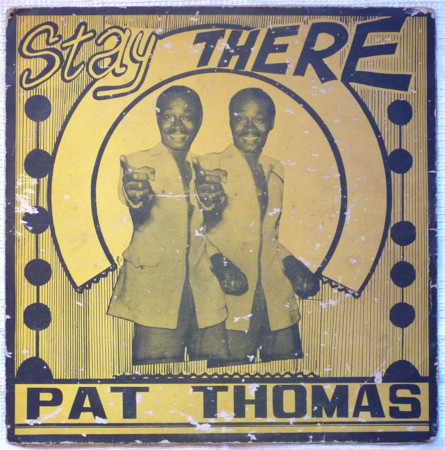
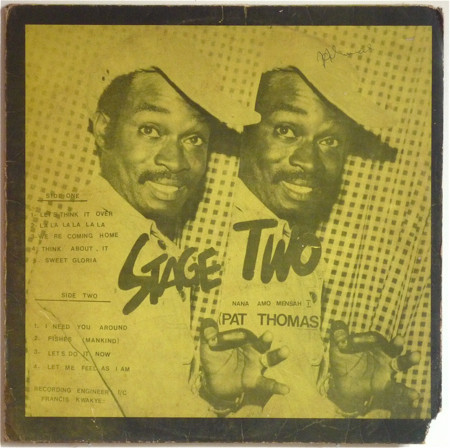
Pat Thomas’ career blossomed during 1976, which was one of the busiest and most important years of his career. Pat released a trio of albums. This included his debut solo album Stay There, which was released on Gapophone Records in 1976. So was the followup Stage Two. Already, it was apparent why Pat Thomas would later be called “the golden voice of Africa.”
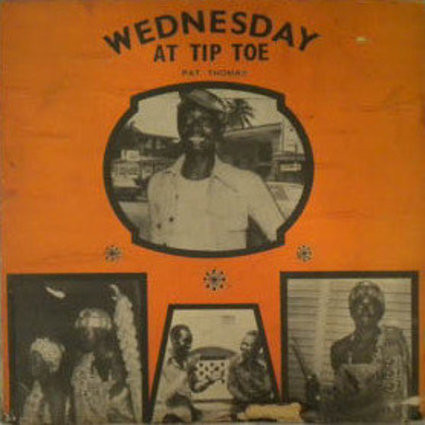
Having released two solo albums during 1976, Pat Thomas released his live album Wednesday At Tip Toe. That night his performancewas recorded for posterity, and released on Gapophone Records. This was fitting, as Pat had often took to the stage at Tip Toe, when The Blue Monks had a residency. The other album Pat worked on during 1976, was his first collaboration with Marijata.
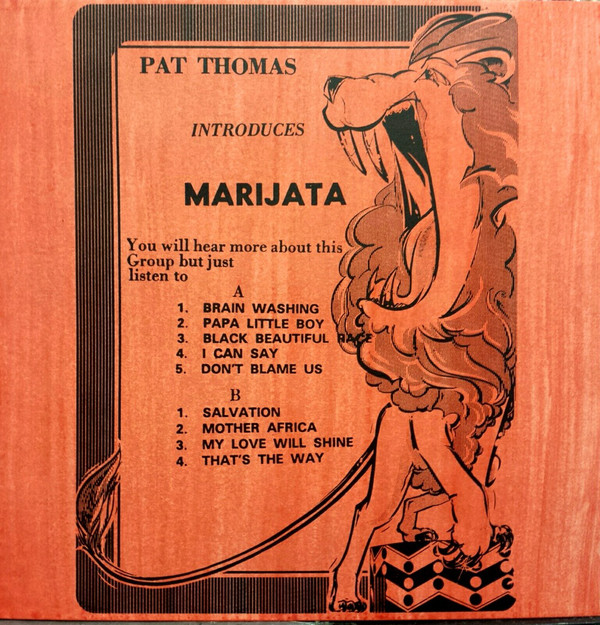
This was Pat Thomas Introduces Marijata, which was released on Gapophone Records, in 1977. The followup was Pat Thomas and Marijata, which was released in 1978. After that, Pat decided to concentrate on his solo career.
That was the plan 1978. However, Pat Thomas was reunited with Ebo Taylor in 1978. Soon, they embarked on a collaboration with another legend of African music, Fela Kuti’s former drummer, Tony Allen.
At the time, Pat Thomas, Ebo Taylor and Tony Allen were at the peak of their powers. They were like an African supergroup. The collaboration came about when Tony Allen was rerecording the soundtrack to Black President in Accra. When Tony had some downtime, he headed to Kumsai to record with Pat and Ebo. Sadly, the sessions never saw the light of day, after they were destroyed in a fire. Sadly it would be, four decades later, before Pat Thomas would collaborate with his old friends.
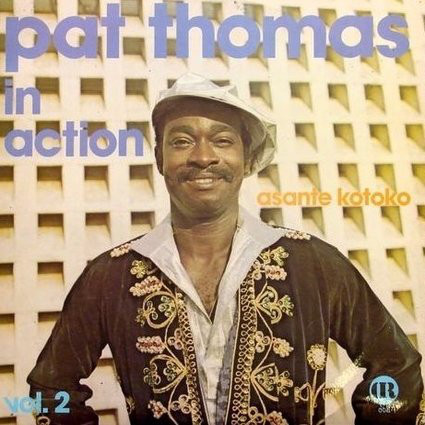
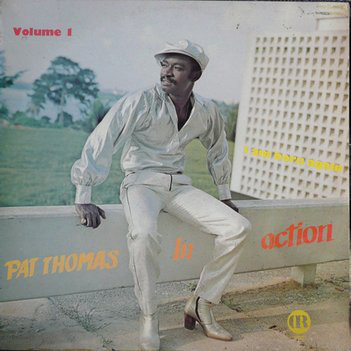
Later in 1978, Pat Thomas returned with the first in a trilogy of albums, In Action Volume 1-I Am Born Again. The followup, In Action Volume 2-Asante Kotoko was released a year later. in 1979. So was the final instalment in the trilogy, In Action Volume 3-I Wanna Know. By then, Ghana was a troubled country.
Ghana was in the throes of a coup d’état lead by Flight Lieutenant Jerry Rawlings. Many Ghanians fearing their safety, fled the country. Those that remained, their lives were in danger. Nothing was sacred. To make matters worse the military junta set about destroying the Ghanian music industry. They went as far as destroying the master tapes in Gapophone Records’ vaults. Musicians like Pat Thomas looked on helplessly. They were determined not to be silenced. However, they were realists, and knew that it they stayed in Ghana, their loves were in danger. So later in 1979, Pat Thomas left Ghana, and headed for London.
London was only a temporary home for Pat Thomas. He moved to Berlin, where he hooked up with other Ghanian musicians. Augmented by some local musicians, they recorded the album 1980. It featured an eclectic mixture of Afrrobeat, disco and reggae. 1980 became one of the early records of burger highlife scene. This came about, after Ghanians living in Germany became to call themselves burgers. In doing so, a new musical scene was born, and Pat was at the centre of it.
Things were improving for Pat Thomas, after the move to Berlin. He released Asawo Do was released as a single, and it gave Pat a hit in Germany and Ghana. Belatedly, Pat’s music was finding a wider audience. This made it the perfect time to for Pat to release his collaboration with his old friend Ebo Taylor.
Pat Thomas and Ebo Taylor had recorded a truly eclectic album, Sweeter Than Honey Calypso ‘Mahuno” And High Lifes Celebration. With a hugely talented band, they fused elements of Afrobeat, calypso funk, highlife, reggae and soul. Alas, the album didn’t sell in huge quantities. Although was disappointing, Pat soon, began work with a new band, Super Sounds Namba.
Pat Thomas joined another band comprising Ghanian musicians, Super Sounds Namba. They headed to Otodi Studio, in Togo to record their one and only album Super Sounds. It was released in 1981, and nowadays a collectors item. One track that proved poignant was Who’s Free, given the political situation in Ghana.
The people who hadn’t fled Ghana certainly weren’t free. They lived under military rule. Musicians who were seen as subversives, who spoke against the government and now military rulers, couldn’t live safely in Ghana. Pat Thomas realised that in 1979, and fled to London. Since then, he had moved to Berlin, but his life was in a state of flux. He couldn’t return home to the political situation changed. For Pat, this was a worrying time. Still, though, he continued to make music.
In 1982, Ebo Taylor, Pat Thomas and Uhuru Yenzu collaborated on the album Hitsville Re-Visited. Accompanied by an all-star band, this Ghanian supergroup won friends and influenced people when the album was released in 1982. The following year, Pat released another solo album.
Pat Thomas released In His Style From London-Hot and Cool Highlife in 1983. This was the second live album of Pat’s career. It had been recorded while Pat was touring in 1983. A year later, Pat released an album with one of his oldest friends, Ebo Taylor.
1984 saw the release of Pat Thomas and Ebo Taylor released another collaboration. This was their eponymous debut album. It was released on Dannytone Records and featured two of Ghanian music’s most influential musicians. They had been working together on and of for eighteen years. So it was no surprise that they produced an album that was released to critical acclaim. However, the last few years hadn’t been easy. Both men were exiles. Despite this, Pat was about to enter the most productive period of his career.
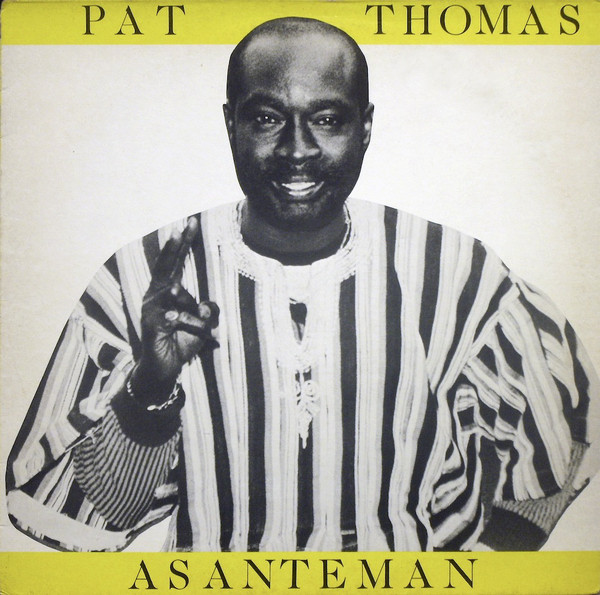
Between 1985 and 1988, Pat released four studio albums and a collaboration. The first of the studio albums was Asanteman, which was released in 1985. Highlife Greats Mbrepa followed in 1986. By then, Pat Thomas’ star was in the ascendancy. He was a star of the hamburger highlife scene. Everything was going well for Pat Thomas. Despite this, pat made the decision to leave London behind. He moved to Canada, which was home for Pat Thomas for the next ten years.
Now living in Canada, this productive period continued. In 1987, Pat released Pat Thomas and Friends and his solo album Santrofi. The following year, 1988, Pat released a new solo album Me Do Wiase. It was around this time Pat released his Mpaebo album. This was the last album Pat released during the eighties.
Three years later, and Pat Thomas returned with a new album, Sika Ye Mogya in 1991. This was the last album Pat released for five years. No longer was Pat as productive as he had once been. However, in 1996 Pat returned with Nkae, which was his Canadian swan-song. Soon, he would be returning home.
Pat Thomas returned to Ghana in 1997. Soon, Pat Thomas was back where he belonged, at the top of the Ghanaian music scene. His comeback was complete in 2008, when he starred at the Made In Germany burger highlife festival. However, since then, Pat Thomas has stayed and played in Ghana.
While his old friend Ebo Taylor has travelled overseas, and had reinvented himself, becoming an international star, Pat Thomas was happy to remain in Ghana. He had spent eighteen years living overseas. Now he was home. Although he wasn’t playing live as much as he once had, he was still in demand for gala dinners and corporate functions. Nor had Pat recorded an album for a long time. However, in 2013, he got the chance to return to the studio.
Tony Allen got in touch with Pat Thomas and Ebo Taylor. He wanted to record an album with them. Pat and Ebo were just as keen. So in January 2014, the three men headed to a studio in Accra. They were joined by what can only be described as an all-star band.
Among the all star band was drummer Tony Allen, bassist Emmanuel Ofori and guitarist Ebo Taylor. They were joined by percussionist Eric Owusu and saxophonist Abaranel-Wolff. He co-produced the album with multi-instrumentalist Kwame Yeboh.. They provided the backdrop for Pat Thomas’ vocals. The resulting album became Pat Thomas and Kwashibu Area Band’s eponymous debut album. This was just the latest album Pat Thomas’ long and illustrious career.
Pat Thomas career has spanned six decades. He’s enjoyed a lengthy solo career, has been a member of several groups and collaborated with numerous other artists. This includes some of the biggest names in African music. However, not many African artist have reached the heights that Pat Thomas has. After all, Pat Thomas is regarded as a Ghanaian highlife master and “the golden voice of Africa.”
Pat Thomas-Ghanaian Highlife Master and “The Golden Voice Of Africa.”
NAZ NOMAD AND THE NIGHTMARES-GIVE DADDY THE KNIFE CINDY.
Naz Nomad and The Nightmares-Give Daddy The Knife Cindy.
In 1984, London based Big Beat Records released Naz Nomad and The Nightmares’ album Give Daddy The Knife Cindy. At first glance, it looked like the reissue of a soundtrack to a low budget American horror film. Especially, when the album cover stated copyright 1967 American Screen Destiny Pictures. There was even a list of those who had ‘starred’ in Give Daddy The Knife Cindy. The album was beginning to look like the soundtrack to a long forgotten film. Or was it?
Some weren’t so sure. They wanted to find out more about Give Daddy The Knife Cindy, but struggled to do so. The album was released in the pre-internet days, so it wasn’t so easy to find information about albums and films from the past. Although many books had been written about films, including cult films, they were no help. Give Daddy The Knife Cindy was turning into a mystery.
Record buyers who bought Give Daddy The Knife Cindy looked at the members of Naz Nomad and The Nightmares, but the problem was, none of of the names rung a bell. Many thought that looked like Naz Nomad and The Nightmares were a long forgotten garage band. One record buyer wasn’t so sure, and was determined to solve the mystery of Naz Nomad and The Nightmares.
Having bought the album, they studied the album cover closely, looking at the credits on the front and then at the track listing. Many of the songs they realised had been recorded by sixties garage bands and psychedelic bands. So they began to check.
Nobody But Me had been written by O’Kelly, Ronald and Rudolph Isley and recorded in 1962. Six years later, in 1968 it i was covered by The Human Beinz. That was strange, as the copyright on the album said 1967. The Human Beinz’s cover of Nobody But Me was released after the supposed release of Give Daddy The Knife Cindy in 1967? This seemed strange.
There could be a simple explanation. Maybe Naz Nomad and The Nightmares remembered and enjoyed The Isley Brothers’ original version? This seemed unlikely, given nearly every other track was a cover of a song by a garage or psychedelic band. Surely, it would’ve been The Human Beinz version that Naz Nomad and The Nightmares preferred? It had raised his suspicions about the authenticity of Give Daddy The Knife Cindy.
With that in mind, the other tracks on Give Daddy The Knife Cindy were checked? For the album to have been released in 1967, the latest the songs had to have been originally recorded was summer or autumn of 1967. Action Woman had been released by The Litter as their debut single in January 1967. Later in 1967, The Seeds released The Wind Blows Your Hair in September 1967. This meant Naz Nomad and The Nightmares had to cover the song after the release of The Wind Blows Your Hair. To release Give Daddy The Knife Cindy in 1967 was going to be a close run thing.
Meanwhile, it transpired that many of the other tracks had been released either pre-1967. Paul Revere and The Raiders had released their cover of Barry Mann and Cynthia Weil’s Kicks in February 1966. The same year, 1966, Norwich born, but American based Big Pete released Cold Turkey. She Lied had been released by The Rockin’ Ramrods in 1964. Two years later, The Electric Prunes released I Had Too Much to Dream was released November 1966. In 1965, Kim Fowley had released The Trip in America, and London based The Others released I Can’t Stand This Love, Goodbye. Them released Can Only Give You Everything in 1966. With all these tracks checking out, only two remained.
The first song was (Do You Know) I Know which was penned by The Nightmares. Who were Naz Nomad and The Nightmares? Maybe they were an obscure garage band from a small town in America? It was a mystery. So was the final track on Give Daddy The Knife Cindy, Just Call Me Sky. When he looked at the credit on the record label, suddenly he knew he had solved the mystery of Give Daddy The Knife Cindy. The song was credited to D. Vanian and R. Jugg. This was none other than David Vanian and Roman Jugg of The Damned.
As he looked at the cover David Vanian was vocalist and tambourine played Naz Nomad. Roman Jugg was guitarist Sphinx Svenson. Meanwhile, drummer Rat Scabies was Nick Detroit and bassist Bryn Merrick was Buddy Lee Junior. He smiled as the last piece of the puzzle fell into place. Deep down, he had known all along that Give Daddy The Knife Cindy wasn’t a lost soundtrack from 1967. It was just a case of proving it. Now that he had solved the mystery, he decided to enjoy Naz Nomad and The Nightmares’ album Give Daddy The Knife Cindy.
An enthusiastic reception awaits Naz Nomad and The Nightmares on Nobody But Me on Give Daddy The Knife Cindy. Suddenly, it sounds as if it’s Beatlemania again as squeals and shrieks accompany the band. Drums are panned left, while the vocal is panned right. It’s delivered with power while The Nightmares add harmonies. Meanwhile, drums pound, keyboards play and as the vocal drops out, a searing guitar is unleashed. Cue more shrieks as Naz Nomad delivers a vocal powerhouse and The Nightmares power the arrangement to its crescendo. As they do, it’s 1967 all over again.
Naz counts The Nightmares in and drums pound, guitars shriek and as the vocal enters, it’s obvious that it’s The Damned’ David Vanian. His inimitable vocal gives the game away. The rest of The Damned could pass as a sixties garage band. Ratty sixties drums are part of the rhythm section, and combine with a blistering guitar. It sometimes, screams as a wash of feedback is emitted. Still, Dave grows in power as the action man roars on this cover of Action Woman.
Keyboards opens The Wind Blows Your Hair, and are joined by rhythm section. They’re joined by a mid-Atlantic vocal. It seems Dave has adopted his Naz Nomad persona as he and The Nightmares pay homage to The Seeds. When the vocal drops out at the bridge, keyboards take centre-stage. This allows the listener to hear a very different side to The Damned. When the vocal returns, it completes this accomplished and melodic homage to The Seeds circa 1967.
When Rolling Stone magazine compiled its list of the 500 Greatest Songs Of All Time, Paul Revere and The Raiders’ Kicks was at number 400. Naz Nomad and The Nightmares set about covering this classic. A guitar rings out as the organ and rhythm section combine. Naz takes charge of the vocal, while the drums pound and never miss a beat. Tight harmonies accompany the vocal and with the drums inject a degree of urgency. They play their part in the sound and success of this melodic and memorable cover of a classic song.
A guitar slides across the arrangement to Cold Turkey, before the rhythm section, guitar and keyboards combine. Then Naz delivers a swaggering proto-punk vocal. When it briefly drops out, washes of organ and a searing guitar are unleashed. Soon, Naz is back and strutting his way through the lyrics. Machine gun guitar riffs and washes of organ accompany his vocal which later becomes a vamp. Meanwhile, The Nightmares have been transformed into a sixties garage band.
She Lied literally explodes into life ,with lightning fast machine gun guitar licks accompanying the rhythm section. Dave’s vocal is a mixture of power and speed as garage rock and post punk combine. Later, there’s a nod to Chuck Berry before, before returning to the explosive and energetic sound.
As the guitar and bass accompany Naz on I Had Too Much To Dream (Last Night) feedback can be heard. It has been sculpted so that it becomes part of the sound. Soon, drums power the arrangement along, while Naz delivers an emotive vocal. It’s a mixture of frustration, power and disappointment. Meanwhile Roman’s guitars play an important part in the sound and success of what’s one of the finest moments on Give Daddy The Knife Cindy.
The Nightmares’ rhythm section combine with a probing, ringing guitar and create a mesmeric backdrop for Naz’s vocal on The Trip. It starts off more like a theatrical soliloquy, before growing in power and drama. Later, he vamps as guitars shimmer and add to the lysergic sound.
There’s a lo-fi sound to I Can’t Stand This Love, Goodbye. That was the case with many sixties garage rock songs. However, there’s so shortage of energy and enthusiasm as the rhythm section and searing guitar and harmonies accompany Naz. His vocal is powerful and later, punchy. By then, The Nightmares are in full flight. A scorching guitar cuts through the arrangement to what sounds like authentic sixties garage rock.
There’s a lo-fi sound to I Can’t Stand This Love, Goodbye. That was the case with many sixties garage rock songs. However, there’s so shortage of energy and enthusiasm as the rhythm section and searing guitar and harmonies accompany Naz. His vocal is powerful and later, punchy. By then, The Nightmares are in full flight. A scorching guitar cuts through the arrangement to what sounds like an authentic an garage rock single.
There’s a dark, dramatic rocky sound to I Can Only Give You Everything. This comes courtesy of the guitars and rhythm section. Meanwhile, Naz forever the showman adopts a mid-Atlantic accent. Soon, his vocal becomes a vamp. Meanwhile, the dark, dramatic backdrop remains. Later, a blistering guitar and washes of organ are added during this homage to Them. It’s one of the highlights of Give Daddy The Knife Cindy.
Stabs of organ open (Do You Know) I Know before it bursts into life. The rhythm section lock into a groove with the organ, while Dave unleashes a powerhouse of a vocal. He roars, yelps and scats while a searing guitar, keyboards accompany him. Meanwhile, harmonies and handclaps accompany him, during this fusion of garage rock, psychedelia and pop.
Just Call Me Sky closes Give Daddy The Knife Cindy and Beatlemania returns. Applause is overdubbed as Naz Nomad and The Nightmares are introduced by the MC. As The Nightmares play, Naz introduces the band. Cue shrieks before Naz Nomad and The Nightmares take their final bow.
Thirty-three years after Naz Nomad and The Nightmares originally released Give Daddy The Knife Cindy in 1984, Big Beat Records, an imprint of Ace Records, have reissued the album. It’s a welcome reissue of an album that caused confusion upon its release.
Some people believed Give Daddy The Knife Cindy was indeed a lost sixties soundtrack. Soon, though. it became apparent that Naz Nomad and The Nightmares were actually The Damned. They might have kept the pretence up longer, if David Vanian and Roman Jugg had used aliases on Just Call Me Sky. That gave the game away.
There were a number of clues that gave the game away. This included the inclusion of The Others’ I Can’t Stand This Love, Goodbye. They were a relatively unknown band from London. If Naz Nomad and The Nightmares were an American band, it’s unlikely they would’ve heard about The Others. Then there was the inclusion of The Seeds’ single The Wind Blows Your Hair, which was released in September 1967. This made it unlikely that Give Daddy The Knife Cindy was released in 1967. The evidence was stacking up against Give Daddy The Knife Cindy being a soundtrack from 1967. It seemed the album was a hoax.
Ironically, The Damned were a convincing garage rock and psychedelic band. Much of the music sounded as if had been recorded in around 1967. The music on Give Daddy The Knife Cindy also showed another side to The Damned. There was more to their music than punk, post punk and gothic rock sound. Proof of this is Give Daddy The Knife Cindy, where they become Naz Nomad and The Nightmares and switch seamlessly between garage rock and psychedelia on this oft-overlooked hidden gem from The Damned’s discography .
Naz Nomad and The Nightmares-Give Daddy The Knife Cindy.


MOGALLAR-MOGALLAR.
Moğollar-Moğollar.
In 1976, one of Turkey’s most successful bands, Moğollar, called time on their career. By then, the Anadolu Pop heroes had been together for nearly a decade. For their swan-song, Moğollar decided to change direction musically, and release an album of instrumental progressive rock. This made sense, as currently, Moğollar didn’t have a lead vocalist. Alas, this was nothing new.
Throughout their career, Moğollar seemed to encounter problems with vocalists. They seemed to come and go, never staying long. However, changes to Moğollar’s lineup was nothing new. It had always been somewhat ‘fluid’. Still, Moğollar carried on as normal. That was the case when Moğollar. Later, in 1976, they released their swan-song Moğollar, which ensured that Moğollar bowed out in style. Forty-one years later, and Moğollar was recently reissued by Pharaway Sounds, an imprint of Guerssen Records. It’s a reminder of one Turkey’s greatest groups, Moğollar.
Silüetler.
Their story began in Istanbul, in 1964, when twenty year old guitarist, Mesut Aytunca and Erol Bilem formed Silüetler. In the early days of Silüetler, they were inspired by one of the popular British group, The Shadows. Soon, Silüetler were popular draw within the local music scene. This gave them the confidence to enter various Turkish music competition.
By 1965, Silüetler were faring well in the competitions they entered. Although they hadn’t won, they were always challenging for the top spot. One of the most prestigious competitions was the Altin Mikrofon. Entrants were encouraged to combine Turkish lyrics with Western instrumentation. When Silüetler entered the Altin Mikrofon competition in 1965, they were third. It was a case of so near, yet so far.
A year later, and Silüetler were better prepared for the Altin Mikrofon competition. They had spent much of 1966 recording and touring. The extensive touring allowed Silüetler to hone the Anatolian rock sound that they had pioneered. This fusion of Turkish folk and rock music proved popular wherever Silüetler played. It also proved popular when Silüetler took to the stage at the 1966 Altin Mikrofon. When the winner was announced, it was no surprise when Silüetler won the first prize. Their star was in the ascendancy.
The only problem was that Mesut Aytunca had a tendency to change Silüetler’s lineup to ensure the music stayed relevant. Musicians seemed to come and go. In 1967, two new arrivals were rhythm guitarist and vocalist Aziz Azmet and organist Murat Ses. They were both talented musicians, and were welcome additions to Silüetler.
Within a matter of months, the two new arrivals were plotting the musical equivalent of a coup d’état. Aziz Azmet and organist Murat Ses had been planning to form a new band, Moğollar. Before the end of 1967, Aziz Azmet and Murat Ses had recruited nearly ever member of Silüetler. The only man that remainder was one of the two, founder members Mesut Aytunca. His constant changing of Silüetler’s lineup had backfired spectacularly.

Moğollar.
This was something that the members of Moğollar in 1967 should’ve have learnt from. That wasn’t the case. Within a matter of months, started to change. It wasn’t the occasional change in lineup. Instead, Moğollar seemed to be constantly changing. So much so, that fourteen different musicians were members of Moğollar between 1967-1974.
Complicating matters further, was that some of the members of Moğollar were also successful solo artists. They would often head off on tour or into the studio to record an album. These were interesting times for Moğollar.
By 1968, Moğollar were already a popular live draw in Izmir, where they played in clubs and even at fairs. This the members of Moğollar knew, was all good experience for the nascent band. Moğollar wanted to hone their sound, especially with the Altin Mikrofon competition fast approaching. They had set their sights on wining it. However, Moğollar had to settle for third prize. Considering Moğollar were still a relatively new band, their Dutch manager Anton Oskamp told the band that this was a good result.
Following the Altin Mikrofon competition, Moğollar embarked on a lengthy and gruelling tour of Eastern Turkey. During the tour, Moğollar would play in towns where no rock bands had previously played. In some of the towns, the inhabitants had never heard rock music before. Moğollar were about to become musical pioneers, as they introduced their music to a new and wider audience.
As the tour of Eastern Turkey progressed, so did Moğollar’s interest in Turkish folk music. Soon, Moğollar began to expand the array of instruments they took to the stage with. This began when guitarist Cahit Berkay started buying a variety of traditional Turkish instruments including a baglama, kemence, tambura and three string violin. They would augment the instruments that Moğollar usually took to the stage with.
Gradually, Moğollar’s sound was evolving. Suddenly, the way Moğollar approached music began to change. They began using Western instruments to play parts in song that normally, a traditional instrument would play. This new sound was born during the tour of Eastern Turkey, but took shape over the next couple of years. In 1970, Taner Öngür christened, the new sound Anadolu Pop in an article in Hey magazine.
Despite Taner Öngür coining the term Anadolu Pop, he isn’t regarded as the architect of Anadolu Pop. Instead, Moğollar’s organist and songwriter-in-chief, Murat Ses’ credits his wife Nihal Ses as the true architect of Anadolu Pop. It was pioneered by Moğollar, who were the most successful purveyor of the genre.
By 1970, Moğollar were a hugely successful band. They wanted to taste commercial success and critical acclaim further afield. Even if this meant leaving Turkey, and living in Europe. Members of Moğollar were sent to various European cities to try and find a new base for the band. After considering several cities, Moğollar settled on Paris.
This was purely because Barış Mango lived in Paris, and offered Taner Öngür somewhere to stay. Suddenly, Paris looked very appealing for Moğollar’s new European base. The rest of Moğollar found accommodation elsewhere in Paris. Now they could begin looking for a recording contract.
Not long after Moğollar arrived in Paris, they looked through the telephone book and made a list of all the record companies based in the city. They started phoning each one, in the hope that one of the record companies, would offer them a contract. Eventually, CBS offered Moğollar a three year contract. This was the start of a new chapter for Moğollar.
Danses Et Rythmes De La Turquie D’Hier À Aujourd’hui.
Soon, Moğollar went into the studio to record Hitchin’, their first single for CBS. When Hitchin’ was released, it became the first single that Moğollar had recorded in English. Later in 1971, Moğollar released their debut album Danses Et Rythmes De La Turquie D’Hier À Aujourd’hui in France and Turkey. It featured new songs from. This won them the Grand Prix du Disque award, and Moğollar’s star was in the ascendancy.
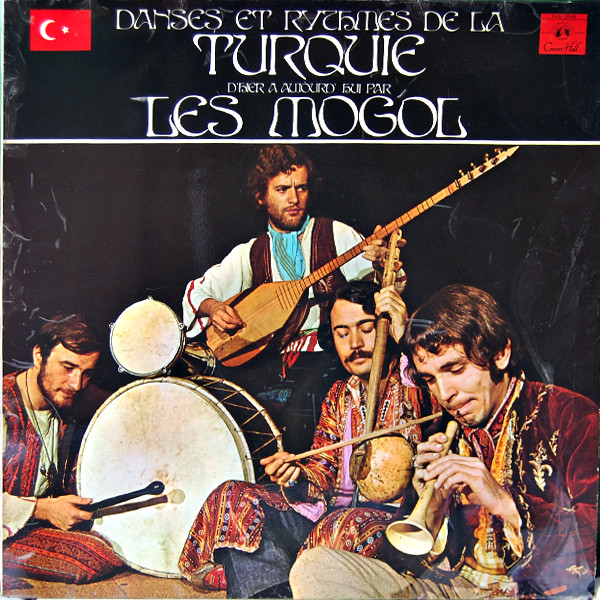
Following the release of Grand Prix du Disque, Moğollar started planning a tour. Before the tour could begin, Moğollar began looking for a new lead vocalist. After a couple of singers turned them down, Barış Mango agreed to tour with Moğollar.
It was tantalising prospect, that two of the leading lights of Turkish music were about to head out on tour. Everyone involved was similarly excited. So much so, that Moğollar decided to changed the band name to Manchomongol for the tour. It got underway later in 1971.
One member of Moğollar was missing, Engin Yörükoğlu. He had returned home to Istanbul to get married, but didn’t rejoin Moğollar. Instead, he remained in Istanbul until 1972, when he joined Barış Mango and Kurtalan Ekspres. That would prove ironic.
The tour wasn’t as enjoyable as Moğollar and Barış Mango had hoped. They thought that two titans of Turkish music touring, was going to be the experience of a lifetime. After four long months, that was far from the case. A turning point came in Kütahya, when someone took offence to Barış Mango’s long hair and blew the tour van up. Everyone was shaken by this. Not long after this, Barış Mango caught mumps and had to leave the tour.
Trying to find a replacement at short notice wasn’t easy. However, they recorded with Selda and Ersen and then began touring with Cem Karaca. That tour would last two years. Sadly, one of the members of Moğollar would’ve left the band before the tour ended.
This was organist and songwriter-in-chief Murat Ses. He was looking through Hey magazine in 1972, when he noticed an article about Moğollar. As Murat Ses read the article he was in for a surprise. Guitarist Cahit Berkay had announced that Murat Ses had left Moğollar. The reason given, was he no longer wanted to play concerts in small villages in Eastern Turkey. This was all news to Murat Ses. That day, he was unceremoniously ousted from the band he cofounded.
What those who plotted Murat Ses’ removal had overlooked, was his importance within Moğollar. Not only did he write the majority of the songs, but his organ played an important part in Moğollar’s music. The loss of Murat Ses could be a turning point for Moğollar. However, some saw this as just the latest change in Moğollar’s lineup.
After Murat Ses’ departure from Moğollar, Cahit Berkay became Moğollar’s de facto leader. Before long, most of the band were working on side projects. That was apart from Cahit Berkay. As time passed by, he decided the time was right for Moğollar to try and make a breakthrough in the European market. If that was going to happen, Cahit Berkay had to convince one former member of Moğollar to return to the fold.
That was Engin Yörükoğlu. He was still living in France, so Cahit Berkay journeyed from Istanbul to see his old bandmate. This was something of a mercy mission, as Moğollar seemed to be teetering on the brink. Maybe if Engin Yörükoğlu rejoined Moğollar, then it would have a future?
At the meeting in France, Engin Yörükoğlu agreed to rejoin Moğollar. Three years after the release of their debut album, Moğollar were about to begin work on their sophomore album. Before that, Cahit Berkay returned home to Istanbul with the news that Engin Yörükoğlu was rejoining Moğollar.
When the rest of Moğollar heard the news, they began packing their instruments onto a pickup truck. This included Romain Didier, who would play Fender Rhodes and Minimoog. They would then be joined by Engin Yörükoğlu in the studio.
Hittit Sun.
Before that, Cahit Berkay assumed the role of songwriter-in-chief. He penned nine of the eleven songs. Romain Didier contributed Rue De L’orient, while Moğollar covered the traditional song White Dear. These eleven songs would eventually become Moğollar’s sophomore album Hittit Sun.
As work began on Hittit Sun, Moğollar’s music moved towards progressive rock and jazz. This was very different to their usual Anadolu Pop sound. It was no surprise. Music had changed since Moğollar released their debut album in 1971. Moğollar knew they had to reinvent their music to stay relevant. However, how would their fans respond?
When Moğollar’s sophomore album was released in Turkey in 1975, it was entitled Düm-Tek. By then, four years had passed since they had released their debut album. Düm-Tek wasn’t a commercial success in Turkey. Elsewhere, the album was released as Hittit Sun. Despite what was an ambitious and accomplished album, Hittit Sun failed to find an audience. It was a disaster for Moğollar.
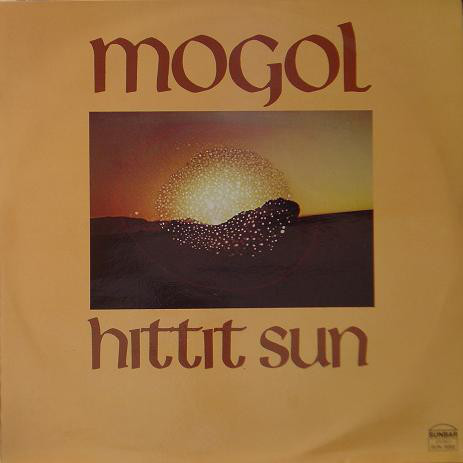
Moğollar.
Despite the commercial failure of Hittit Sun, Moğollar weren’t willing to give up on their dream of making a commercial breakthrough in Europe. It was looking increasingly unlikely, but Moğollar were determined to give it one more go.
So work began on Moğollar’s third album in 1976. It featured Turkish folk songs; Azerbaijani folks song, classical pieces and B-Sides. The album opener Kâtip Arzuhalim Yaz Yare Böyle was from the days of Manchomongol in 1971. These tracks would eventually become Moğollar’s eponymous third album.
For Moğollar, the sound had been stripped back to just the rhythm section and keyboards. By then, drummer and percussionist Engin Yörükoğlu and rhythm guitarist Cahit Berkay were the longest serving members of Moğollar. The rest of the band were relative newcomers. Again, they took charge of arranging the eleven tracks that later in 1976, became Moğollar.
When Moğollar was released on the Diskotür label in 1976, it followed in the footsteps of Hittit Sun and failed commercially. For Moğollar the dream was over. The band decided to call it a day. Moğollar was their swan-song.
Kâtip Arzuhalim Yaz Yare Böyle opens Moğollar. Just a lone folk-tinged acoustic guitar plays. It’s panned and encircles the listener. Then Moğollar throw a curveball and it’s all change. Out of nowhere the rest of the band enter. An acoustic guitar is panned left, while pitter patter percussion and a glistening guitar are panned right. The bass provides the heartbeat, as the music is variously wistful, hopeful and beautiful as musical genres melt into one.
Traditional Anatolian percussion opens Bahçelere Geldi Bahar while searing guitars power the arrangement along. They’re played with speed and precision as the arrangement dances along, the music of the past and present combining melodically.
Drums and percussion combine as Hicaz Mandıra bursts into life. Guitars are added as West meets East in this urgent and irresistible track. Soon, there’s a progressive rock influence that combines ancient Anatolian melodies. Later, the guitars drop out leaving just a percussive masterclass. Before long, Moğollar reunite and the tempo builds. They never miss a beat, as the percussion, drums and guitars lock into a groove before the track reaches its impressive crescendo.
As a guitar is played with speed and precision on Üsküdara Giderken percussion provides a rhythmic accompaniment. Soon, the guitar double is added, and they’re panned right and left. Still the rattling and mesmeric percussion adds an urgency. Then when the guitar on the right drops out, the rattling and metallic percussion proves the perfect foil for the guitar. It’s only towards the end that the two guitars unite on this tale of two guitars and a myriad of mesmeric percussion.
Drums pound, percussion gallops and traditional stringed is played Karşıki Yayla. Together, they’re played with an urgency and produce a joyous sound. Later, a blistering, effects laden psychedelic guitar adds a contrast as it cuts through the arrangement. It drops out and reappears, and plays a starring role. Meanwhile, the percussion and drums are reduced to playing a supporting role in this joyous, dramatic and memorable slice of Anadolu Pop.
Moğollar play carefully and deliberately on Yine Bir Gülnihal. Guitars join with strings as the arrangement meanders along. That is until the tempo rises, the arrangement flows along, before almost pausing. Again, the tempo rises and sweeps along chirping guitars and flourishes of strings combine. The result is a quite beautiful, emotive and progressive instrumental.
As Şehnaz Longa unfolds, percussion and drums join with guitars. It’s the guitar that’s panned left that plays a starring role. Cahit Berkay fingers fly up and down the fretboard. His playing is flawless, during what’s the equivalent to a musical masterclass. Meanwhile, the percussion provides an accompaniment, and Engin Yörükoğlu seems to have been inspired by, Cahit Berkay as they reach new heights.
On Drama Köprüsü-Bolu Beyi drums and percussion lead the way, and create an Eastern sound. Soon, the rest of Moğollar enter and they play as one. Guitars and stringed instruments have been added and augment the sound. A drum adds an element of drama, before a searing guitar cuts through the urgent, but melodic arrangement. It comprises layers of instruments and influences that melt into one.
A drum beats out a rhythm while a shimmering guitar adds a contrast on Çanakkale İçinde Aynalı Çarşı. So does the wistful sound of the violin that’s panned left. Meanwhile, an acoustic guitar is panned right. Occasionally, it’s joined by washes of shimmering electric guitar. Still the drum plays ominously, as the violin adds a melancholy, ruminative sound. When it drops all that remains is the distant guitar and mesmeric beat as Moğollar continue to tug at the heartstrings.
Cahit Berkay’ stringed instrument is panned left on Misket. It’s joined by Engin Yörükoğlu’s percussion. Soon, the tempo builds and there’s an urgency as their traditional Turkish folk song begins to build. As the tempo rises, Cahit Berkay and Engin Yörükoğlu match each other every step of the way, before eventually, Misket reaches a crescendo.
Closing Moğollar is Özüm Kaldı. Straight away, there’s an urgency as the buzzing guitar joins the acoustic guitar and clunky percussion. Soon, flamboyant flourishes of acoustic guitar and percussion combine and the arrangement almost dances along. Soon, they’re joined by a scorching guitar. It’s added just at the right time, and proves effective. Later, a guitar buzzes and hangs in the air, and Moğollar take their bow.
Sadly, for Moğollar their eponymous third album was the end of what had been a long and eventful musical journey. They left behind a rich musical legacy, which included was around twenty singles and three albums. The last of this trio of albums was Moğollar.
It’s a captivating fusion of ancient Anatolian melodies and instruments which is combined with elements of classical music, progressive rock and psychedelia. Add to that, Eastern sounds and bursts of fuzzy guitar. The result is a heady brew that comprises Turkish folk songs; Azerbaijani folk song, classical pieces and B-Sides. Sadly, Moğollar wasn’t a commercial success.
When Moğollar followed in the footsteps of Hittit Sun, and failed to find the audience it so richly deserved, that was the last straw for Moğollar. They called time on their career.
After eight years together, Moğollar the remaining members of the band went their separate ways. The Moğollar was a case of what might have been. They never really built on the commercial success and critical acclaim that their 1971 debut album Danses Et Rythmes De La Turquie D’Hier À Aujourd’hui.
The problem was, that Moğollar waited too long to release their sophomore album Hittit Sun. By 1975, music had changed. Moğollar knew they had to change direction to stay relevant. Moving away from their original sound seemed to alienate their fan-base. To make matters worse, Hittit Sun passed the wider record buying public by. They missed out on ambitious and accomplished album, that has since become a cult album.
Sadly, history was to repeat itself a year later when Moğollar was released. Like many albums that passed record buyers by first time round, it started to find an audience long after its release. Noways, original copies of the album are hard to come by. When they become available, it’s for large sums of money that’s beyond most record buyers. Fortunately. Moğollar was recently reissued by Pharaway Sounds, an imprint of Guerssen Records. It’s a reminder of one Turkey’s greatest groups, as the first chapter in the Moğollar came to an end.
When the Moğollar split-up in 1976, it looked like the end of the line for the group. However, eighteen years later and Moğollar reformed. They released five new studio albums between 1994 and 2009. Not only were Moğollar back to stay, but they were popular than ever. While this was a welcome return, for many of their fans Moğollar’s first three albums feature the band at their very best. This includes Moğollar, where a myriad of disparate music influences and instruments are combined to create a heady, mesmeric and delicious musical brew.
Moğollar-Moğollar.
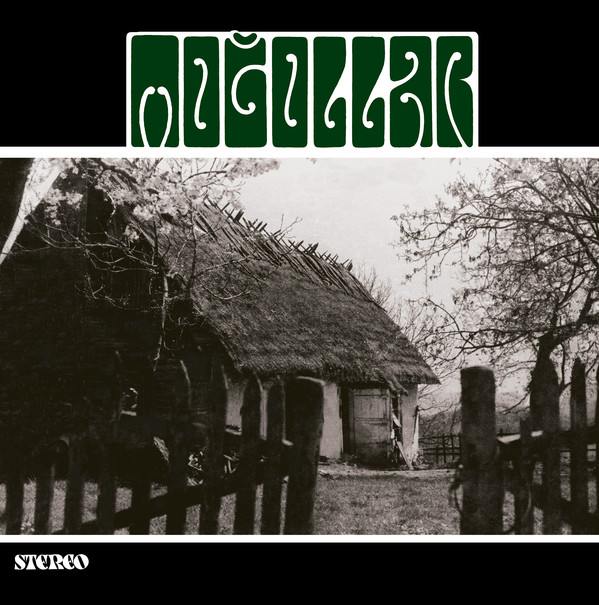
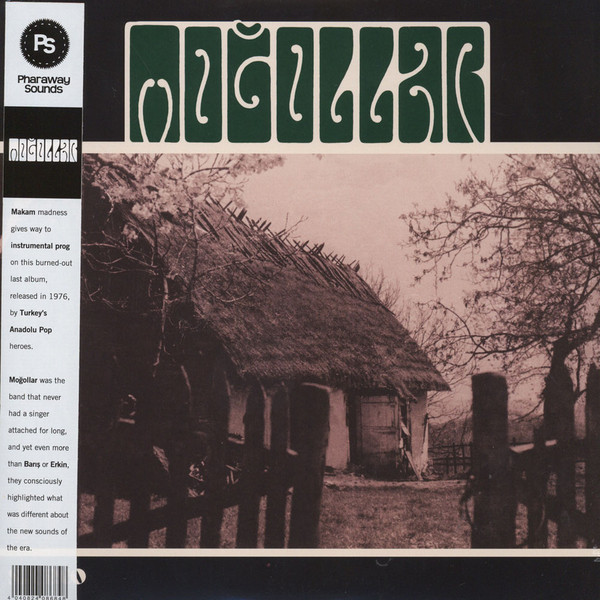
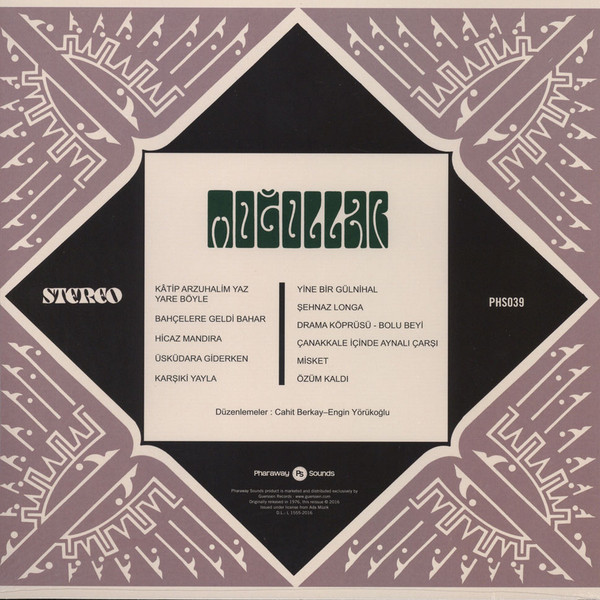
1982-CHROMOLA.
1982-Chromola.
Music like fashion, constantly continues to change. That has been the case since the birth of rock ’n’ roll. In 1964, a new type of rock group was born, the power trio. It consisted of just drums, bass and guitar. One of the earliest power trios The Mudders, was founded in 1964 by Frank Zappa. Over the next couple of years, the power trio became popular in both sides of the Atlantic.
Two years later, in 1966, Joe Walsh formed The James Gang in Cleveland, Ohio in 1966, while guitarist Rory Gallagher formed Taste in Cork, in Ireland. Meanwhile, Eric Clapton, Jack Bruce and Ginger Baker formed Cream in July 1966. History had just been made. Cream would become the most successful of the sixties power trios, selling fifteen million copies of the four albums they released in just under three years.
Soon, many more power trios were following in Cream’s footsteps. One of the highest profile and most successful was The Jimi Hendrix Experience. It was formed in 1966, continued right up until Jimi Hendrix’s death on September ’18th’ 1970. By then, power trios were de rigueur
The only problem was, that every three-piece band was referred to as a power trio, regardless of the instrumentation they used. All sorts of combinations of instrumentation has fallen under the power trio banner. However, there’s only one band that have successfully combined drums, harmonium and Hardanger fiddle, harmonium. That is the Norwegian group 1982, who will release their fifth album Chromola on Hubro Music on the ‘24th’ of March 2017. Chromola marks the welcome return of 1982, who were founded ten years ago in 2007.
That was when Sigbjørn Apeland, Øyvind Skarbø and Nils Økland formed 1982. The nascent group was a essentially a Norwegian supergroup. 1982 featured three of Norway’s most inventive, innovative and experienced musicians.
Each member of 1982 had a wealth of experience. They had all been members of a variety of bands and worked extensively as sidemen. The three members 1982 were no strangers to a recording studio, and had all previously worked as producers. In the case of Nils Økland, the most experienced member of 1982, he had already released a trio of solo albums. However, 1982 was a new chapter in his career. 1982 would become a vehicle to showcase the collective talents of Norway’s latest power trio.
Sigbjørn Apeland, Øyvind Skarbø, Nils Økland.
Two years after 1982 was formed, they released their much anticipated debut album, Sigbjørn Apeland, Øyvind Skarbø, Nils Økland. Critical acclaim accompanied the improvisational trio’s debut album. It was an ambitious, innovative and inventive album, while 1982 were called one of Norway’s most exciting bands.
The next chapter in the 1982 story took place at the Grieghallen Studio, in Bergen, on December the ‘7th’ 2010. That day, 1982 recorded the eight tracks that became their sophomore album Pintura. However, it wasn’t released for nearly a year.

Pintura.
In 2011, 1982 signed to Hubro Music which has been their home ever since. By then, word was spreading about 1982 and their unique improvisational style. It would continue to spread when 1982 released their sophomore album, Pintura on the ‘28th’ of November 201, 1982. It found 1982 picking up where they left off on Sigbjørn Apeland, Øyvind Skarbø, Nils Økland. This was a starting point for another critically acclaimed album featuring groundbreaking and genre-melting music. However, for their third album, 1982 would collaborate with a musical veteran.
1982 + B.J. Cole.
This was none other than the legendary pedal steel player B.J. Cole. He joined 1982 at Grieghallen Studio, Bergen on December ‘7th’ 2011. For many people, 1982 and B.J. Cole might have seemed like unlikely collaborators. Especially, given how different their respective musical backgrounds were. However, this is what people have come to expect from 1982. They were determined to push musical boundaries to their limit, and sometimes, beyond. This is what they did on what became 1982 + B.J. Cole.
Eleven months later, and 1982 + B.J. Cole was released on the ‘29th’ of October 2012. It was hailed by critics as another ambitious and innovative album from the pioneering power trio. Upon its release, 1982 + B.J. Cole proved to be the most successful album the Norwegian supergroup had released. So when it came time for 1982 to release their fourth album, A/B was another collaboration.
A/B.
When work began on what would be A/B, 1982 decided their fourth album would be another collaboration. This time, 1982 invited wind players Fredrik Ljungkvist of Atomic, Erik Johannessen of Jaga Jazzist, plus Sofya Dudaeva, Hanne Liland Rekdal, Matthias Wallin and Stian Omenås. They joined 1982 on what was a rather unorthodox collaboration.
When A/B was released on the ‘2nd’ of May 2014, critics discovered an album that harked back to the days of the vinyl album. Essentially, A/B was an album of two parts, the A-side and B-Side.
Just one lengthy piece, 18.16 featured on The A-Side, where 1982 were joined by a wind sextet. The rest of A/B was a series of groundbreaking sonic journeys that critics hailed as 1982’s finest hour. This set the bar high for 1982s future albums.
Chromola.
Nearly two years passed before 1982’s thoughts turned to their fifth album, Chromola. Just like their four previous albums, 1982 planned to record Chromola in their home town of Bergen. 1982 had decided to record Chromola over a two day period between ‘11th’ and ‘12th’ of May 2016. This was an ambitious plan, with little, or no margin for error. 1982 would need to bring their A game to Bergen for these two days.
As the ‘11th’ of May 2016, approached 1982 knew would be no ordinary recording session. On the evening of Wednesday the ‘11th’ of May, 1982 were due to give a concert at the Sandviken church in Bergen.
That night, 1982 took to the stage alone. No guest artists joined them onstage. This was very different to 1982s two previous albums, where they had collaborated with a variety of artists. Not this time around though.
The only person that would join 1982 at the Sandviken church, were producer Øyvind Skarbø and Davide Bertolini. He had engineered 1982s four previous albums and would oversee the recording of the concert.
Just before 1982 took to the stage at the Sandviken church, Davide Bertolini pressed play and the tapes started to run. Øyvind Skarbø took his seat behind his drum kit. Meanwhile Sigbjørn Apeland moved towards the pipe organ, and glanced towards his harmonium that sat nearby. Nils Økland moved towards the front of the stage holding his Hardanger Fiddle. Later, he would switch to the violin that sat nearby. As the lights were dimmed, 1982 began what was a very special concert.
The concert was a homecoming for 1982, who grew up in Bergen. They were the hometown heroes who were now one of Norway’s top bands. Soon, 1982 were in full flight, and the people of Bergen proved to be an appreciative and enthusiastic audience. By the time the concert drew to a close, 1982 were conquering heroes. However, as 1982 took their final bow, they knew that tomorrow they had an album to record.
On Thursday ’12th’ of May, 1982 returned to the Sandviken church to begin work on Chromola. For the first time since they released sophomore album Pintura in 1982, 1982 were about to record an album alone. There were neither collaborators nor guest artists waiting in the wings.
The only other people in the Sandviken church were producer Øyvind Skarbø and engineer Davide Bertolini. He was preparing to oversee the recording of the seven tracks 1982 had written for Chromola. Soon, the time came for 1982 to take their places.
Øyvind Skarbø settled behind his drum kit. Sigbjørn Apeland sat at the pipe organ, which would feature on six tracks. His harmonium only featured 03:52. For his parts, Nils Økland would switch between Hardanger Fiddle and violin. Over the course of the ’12th’ of May, 1982s fifth album took shape. By the end of the day, 1982 had achieved their goal and completed the recording of Chromola.
All that was left was for Chromola to be mixed and mastered. It was mixed by Davide Bertolini between the ‘29th’ and ’31st’ of August 2016. Morten Lund then mastered Chromola on the ‘30th’ September 2016, in Oslo. Once the album was complete, 1982 could begin the planning their tenth anniversary.
What better way for 1982 to celebrate ten years of making groundbreaking music, than with a the release of their new album Chromola.
Opening Chromola is 07:56, where drums pound, cymbals hiss and an organ drones. It’s played deliberately and dramatically, before flamboyant flourishes provide a contrast to the darkness and drama. Adding to the drama is the urgent violin, while Øyvind works his way around the drum kit. Soon, the violin transforms the soundscape, adding a ruminative sound, that allows for reflection. So does the organ, as it’s played slowly and deliberately. The drums are still played with speed and power adding a contrast. Meanwhile, the organ drones as the violin adds a beautiful, heart-wrenching sound and they unite Beauty, drama and a melancholy sound combine as the tempo rises and falls. As it falls, the violin sits above the drone, as the arrangement is stripped bare before the drama builds and music becomes ruminative on this powerful and poignant soundscape.
Drums play ominously as drone is joined by a thoughtful violin on 06:19. Gradually, the mesmeric arrangement unfolds. The organ is played slowly, while hypnotic drums add an element of drama on this cinematic soundscape. By now, the organ and violin unite and create wistful, but beautiful backdrop as the drums provide the heartbeat. Later, Sigbjørn enjoy their moment in the sun as they play a starring role. Soon, they’re joined by the expressive sounding violin. Just like the organ, it adds to the drama on this cinematic soundscape before it reaches its crescendo.
A distant drone is joined by a tender, melancholy sounding violin on 06:37. Soon, the pipe organ plays, while a brief shriek gives way to the a reflective, soul-baring violin. Meanwhile, the organ drones, but takes care not to overpower the violin. At one point, the violin wails, as if recalling hurt or heartbreak. Later, the organ takes on a liturgical sound, before sympathising with hurt or heartbreak suffered by the violin. As the soundscape builds, the organ plays, cymbals crash and join flourishes of fiddle. Suddenly, a beautiful, hopeful and joyous sound emerges. Before long, there’s a return to the reflective and liturgical sound on this musical emotional roller coaster.
Understated describes 07:00, as sounds flit in and out this experimental sounding track. Scratchy strings, a distant dark rumbiling drone and found sounds combine. Suddenly, a drum cracks, before the organ wheezes and the wistful violin play. Soon, it’s joined by an organ that ebbs and flows. When it drops out, all that remains is the distant violin, an industrial sound. This adds a cinematic sound, and at one point, it sounds like a boat’s engine as the wistful violin plays a lament.
There’s a military sound to the drums that open 04:03. It plays ominously, as the organ drones and is joined by the fiddle. They create a cinematic backdrop. It’s as if 1982 are marching off to battle. There’s a sense of melancholia, as the organ drones and grows in power. So do the drums. As they march off into the distance, all that remains is the fiddle playing its sad refrain.
Fingers scrabble across the fiddle strings on 04:45. Meanwhile, the pitter patter of drums can be heard in the background. Found sounds are added, as bursts of sound emerge from the organ. By then, the soundscape has taken on an experimental sound. Elements of avant-garde and free jazz, combine as 1982 improvise. The pipe organ is poked and stabbed, resulting in array of challenging, discordant and melodic sounds escaping. Meanwhile the scratchy fiddle wails, clicks and cracks emerge from Øyvind’s drums. All the time, 1982 are pushing musical boundaries on this ambitious and genre-melting soundscape.
04:09 closes 1982’s fifth album Chromola, which celebrates this innovative band’s tenth anniversary. Atmospheric sounds combine with the wistful violin, as the rest of 1982 transform everyday items into makeshift instruments. Crackles and squeaks join the violin, before the organ drones and cymbals are caressed. Soon, the organ takes centre-stage, adding a melancholy sound before droning dramatically. The drums play pound and rap, as the organ soars above the soundscape. Latterly, all that remains is the violin. Its ruminative sound allows time for refection on this poignant sounding soundscape, as 1982 take their leave on this very special album.
Chromola is the much anticipated fifth album from the Bergen based 1982. It will be released by Hubro Music on the ‘24th’ of March 2017, just in time for 1982 to celebrate their tenth anniversary. The Bergen based supergroup have come a long way since then.
Nowadays, 1982 are one of the leading lights of the Norwegian music scene. However, 1982s music has also found an audience much further afield. That is no surprise, as 1982 are musical poisoners, who have spent the last ten years creating ambitious, challenging, inventive and innovative music. However, 1982 reach new heights on Chromola.
After a three year absence, Norwegian improvisational trio 1982, return with Chromola, which is, without doubt, the best album of their ten year career. It’s an almost flawless album where the music veers between understated, wistful, melancholy and ruminative to dark, dramatic and intense to moody and broody and occasionally, hypnotic and mesmeric. However, Chromola is the musical equivalent of emotional roller, and the soundscapes can just as easily become beautiful, hopeful and joyous. Often the music is poignant and powerful, and offers the opportunity to reflect. Sometimes, though there’s a liturgical sound to Chromola, which is fitting as it was recorded in a church. Then on a couple of soundscapes, the music takes on an experimental sound. Always though, the music has a cinematic quality as 1982 seamlessly, mix musical genres on Chromola.
1982 fuse elements of avant-garde, drone music, experimental, free jazz, industrial, minimalist and progressive rock on Chromola. The influence of Terry Riley and John Cale can be heard on Chromola. So too, can bluesy, Eastern and Arabian sounds Chromola is an album that’s multilayered, spectral and full of textures, nuances and subtleties. Quite simply, Chromola is a captivating, ambitious, innovative and genre-melting album from musical 1982.
After ten years together, still, 1982 continue to push musical boundaries to limits to their limits and sometimes, way beyond. Sometimes, it’s as three musical mavericks have decided to rewrite the musical rulebook in their quest to continue creating groundbreaking music. This they certainly do on Chromola,which is a career defining album that ensures 1982 have much to celebrate, when their tenth anniversary arrives.
1982-Chromola.
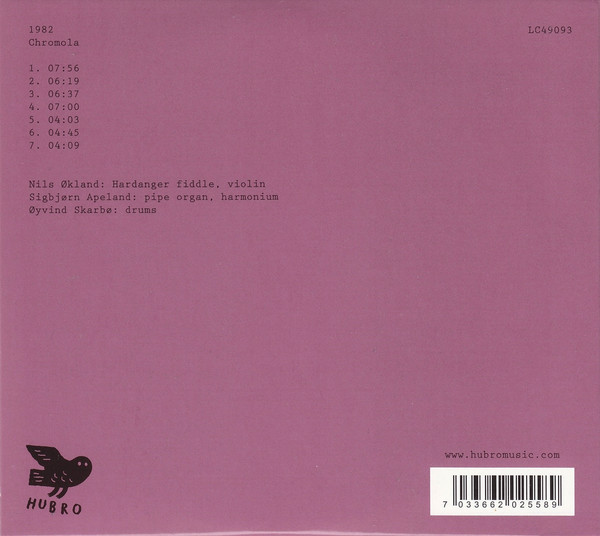
GABRIELE POSO PRESENTS THE LANGUAGE OF TAMBORES (A SPIRITUAL JOURNEY THROUGH THE CULTURAL HERITAGE OF DRUMS).
Gabriele Poso Presents The Languages Of Tambores (A Spiritual Journey Through The Cultural Heritage Of Drums).
Many children are bitten by the music bug early on in life. This is often the start of a lifelong love affair with music. Soon, they’re spending all their free time listening to music. Then when they receive their weekly allowance, they make the weekly journey to the local record shop. Time is spent examining the new releases and the classic albums they’ve read about. Eventually, after careful consideration and contemplation, they choose a new album, which becomes the latest addition to their burgeoning record collection. For many music lovers, this is the start of a weekly ritual. However, for some, listening to music isn’t enough.
They want to learn how to play an instrument. Many young people want to emulate their heroes, and gravitate towards the guitar. This takes them one step nearer following in their footsteps. However, not every young musician dreamt of becoming a guitar hero.
Not Gabriele Poso, who was born in Italy on ’22nd’ October 1978. At an early age, he developed an interest in percussion. Soon, he was enjoying and understood percussion. Music was fast becoming his life and was Gabriele later explained: “a real reason to live.” He was a natural percussionist, who was blessed with flair and talent. Despite this, Gabriele wanted to learn from the best.
So in 1998, twenty year old Gabriele Poso enrolled at the Timba school of music in Rome, where he studied percussion under Roberto Evangelista. Once he had completed his studies in Rome, Gabriele journeyed to San Juan, in Puerto Rico in 2001. He studied at the prestigious Universitad Interamericana De Puerto Rico. After completing his studies in Puerto Rico, Gabriele headed to Cuba, where he studied at the renowned Escuela National De Arte, in Havana. This was where he completed his musical education.
By then, Gabriele Poso had only ever featured on the one recording. That was DJ Jazzy Jeff’s 2002 single Rock Wit U, where Gabriele was drafted in to play the congas. This would soon change.
Gabriele Poso was in Puerto Rico when he first met American producer, Osunlade. Soon, the pair became friends and decided to collaborate together. Having worked together, the next natural step was for Gabriele was to record his debut album. He returned in 2008, with From The Genuine World, which was released on Osunlade’s Yoruba Records. From The Genuine World was well received by critics and launched Gabriele Poso’s career.
Over the next few years, much of Gabriele Poso’s time was spent playing live. Sometimes, he worked alongside some of the highest profile producers, including Louie Vega, Boddhi Satva and Osunlade. On a couple of occasions he cowrote songs, but most of the time, Gabriele put his considerable skills as a percussionist and multi-instrumentalist to good use. It was a similar case when Gabriele recorded his sophomore album.
Gabriele Poso returned in June 2012 Roots Of Soul, which he wrote, recorded, produced and mixed. In the studio, Gabriel became a one man band, switching seamlessly between instruments. Joining him, were a trio of guest vocalists, Osunlade, Nailah Porter and Tanya Michelle. They played their part in the sound and success of Roots Of Soul. When it was released on ‘12th’ June 2012, critical acclaim. Roots Of Soul was hailed by critics as Gabriele Poso’s finest hour.
Later in 2012, Roots Of Soul Remix was released. This remix album showed another side to Gabriele Poso’ music, and introduced it to a new audience.
Nearly two year later, and Gabriele Poso returned with his eagerly awaited third album, Invocation in April 2014. It had been recorded between August and December 2012. Not only was Gabriele a one man band, but decided recorded all the vocals. This made sense, as Invocation was a very personal album, and one which Gabriele explained: “represents my feelings, all my emotions and all my fears.” This personal and powerful album won the approval of critics, and was showered with praise and plaudits upon its release.
Just over a year later, and the remix album Electric Invocation was released in May 2015. Again, the remix album introduced a new audience to Gabriele’s music.
Since then, Gabriele Poso has been busy touring Invocation internationally. Each night, he puts on a spectacular and memorable show. However, when he found some free time, the alt-jazz star compiled Gabriele Poso Presents The Languages Of Tambores (A Spiritual Journey Through The Cultural Heritage Of Drums) for BBE. It was recently released on a double LP and as a digital download. Gabriele Poso Presents The Languages Of Tambores (A Spiritual Journey Through The Cultural Heritage Of Drums) is a captivating and eclectic compilation from Gabriele Poso.
There was nobody better qualified to compile The Languages Of Tambores than Gabriele Poso. He had spent a lifetime immersed in the study of percussion. Gabriele’s appreciated and understood the history of drumming.Especially how drumming was once a means to communicate. This led to the concept behind The Languages Of Tambores. It’s a lovingly curated compilation. Gabriele Poso Presents The Languages Of Tambores (A Spiritual Journey Through The Cultural Heritage Of Drums) spans disparate musical genres and several continents and is a reminder of Gabriele Poso’s love of all things rhythmical.
Side A.
Opening Gabriele Poso Presents The Languages Of Tambores (A Spiritual Journey Through The Cultural Heritage Of Drums) is Malika B and Dave Hucker’s Injection Of Blackness. It’s guaranteed to bring back memories for music lovers of a certain age. They’ll remember Injection Of Blackness featuring on the compilation One Hell Of A Storm (Versemongers Meet Soundcreators) compilation. It was released on Tongue and Groove Records in 1994. Twenty-three years later, and this spiritual sounding, downtempo track still sounds timeless.
Nigerian born percussionist Guem’s career began in 1973 when he started playing traditional trance music. Since then, he’s released over twenty albums. This includes Patanga, which was released on the Voix D’Afrique label in 2003. One of Patanga’s highlights is the mesmeric and melodic sounding Naja, which features a percussive masterclass from Guem.
Many musicians would’ve shied away from including one of their own compositions on a compilation they were curating. However, Gabriele Poso has included one of his own recordings, Cafe De Ochun. It’s a new track, but one that harks back to traditional African music. Gabriele showcases his considerable skills as a percussionist on a melodic and memorable track. It’s the perfect introduction to one of the most talented European percussionists of his generation.
Side B.
Eleven years after his death in 2006, Babatunde Olatunji is remembered in Nigeria as much more than a drummer and recording artist. He was also an educator and social activist, who tried to bring about change and improve the life of those living in Nigeria. Still, Babatunde Olatunji found time to record over twenty albums during a career that spanned six decades. This included Love Drum Talk, which was released on Chesky Records in 1997. It includes Long Distance Lover, which closes the album. It’s a soulful slice of Afrobeat, which is also a reminder why Babatunde Olatunj is still regarded as one of Nigeria’s finest drummers.
In June 2014, Free Association self-released Free Association #3. Tucked away on the B-Side of this three track EP was Polyrhythm Jizm. The original track was later remixed by Lay-Far. However, it’s an edit of the remix that closes side B. Elements of Afrobeat, disco, funk and house melt into one on this dance-floor friendly track.
Side C.
Totó La Momposina’s career began in 1964, when she was just sixteen. Since then, the Columbian singer, songwriter and dancer has earned the respect and admiration of music lovers all over the world. They’ve been won over by Totó La Momposina’s fusion of Columbian and Afro-Latin music. This is apparent on Tembandumba, which was released on the Astar label in November 2008. If finds Totó La Momposina combining power, drama and a degree of spontaneity during a truly impressive performance.
Dudu Tucci was born in São Paulo, in Brazil in 1955. Sixty-two years later, he’s regarded as one of the world’s greatest living percussionists. However, Dudu Tucci is also a talented singer and songwriter who wrote all the tracks on his 2009 album Native Dreamer. It’s regarded as one of his best and most accessible albums. Proof of that is the soulful sounding Drum It Up, which is the perfect showcase for Dudu Tucci’s talents as a percussionist and singer.
By 2007, Nigerian percussionist Sola Akingbol was a vastly experienced musician. He had joined Jamiroquai in the late nineties, and played on 1999s Synkronized, 2001s A Funk Odyssey and Dynamite in 2005. Two years later, in 2007, Sola Akingbol released his debut album Routes To Roots-Yoruba Drums From Nigeria on ARC Music. One of the highlights of the album was Ninu Opon Ori Tiwa, which was later remixed. An edited version of Ninu Opon Ori Tiwa closes Side C. With its melodic and dance-floor friendly Ancestral Soul sound, it’s a tantalising taste of the multi-talented Sola Akingbol’s debut album Routes To Roots-Yoruba Drums From Nigeria.
Side D.
American Latin jazz percussionist Bobby Matos and Heritage Ensemble joined forces to record an album together. That album, Collage-Afro Cuban Jazz was released on Night Life Records in 1993. Nowadays, the album is a real rarity, that changes hands for large sums of money. That is no suprise, given the quality Guiro Elegua. It’s a traditional song that was arranged and produced by Bobby Matos. Although just two minutes long, they’re two magical and memorable minutes, as this irresistible track showcases the combined and considerable talents of Bobby Matos and Heritage Ensemble.
The next step on Gabriele Poso’s musical odyssey is Havana, the capital of Cuba. That was where songwriter and orchestra leader Silvestre Mendez was born in 1921. He went on to become one of the legends of Cuban music. A reminder of Silvestre Mendez in his musical prime is Ven Francisco, which featured on his 1998 album Oriza.
Closing Gabriele Poso Presents The Languages Of Tambores (A Spiritual Journey Through The Cultural Heritage Of Drums) is Coming Home, a track from Ghanian master drummer Mustapha Tettey Addy’s 2003 album Come and Dance. It was the second album he had released on the weltwunder label. However, Mustapha Tettey Addy’s recording career began in 1972, when he released the aptly titled Master Drummer From Ghana. By 2003, this was the perfect description of Mustapha Tettey Addy. Coming Home is a joyous and uplifting track that’s akin to a call to dance from the Master Drummer From Ghana.
After twelve carefully selected tracks, Gabriele Poso’s musical odyssey is at end. It started in England, before heading to Nigeria, and then to Italy where it all began for Gabriele Poso. From there, he takes the listener to South America, and Columbia and Brazil. There’s a return visit to Nigeria, before Gabriele jets off to America, and then to Cuba. The final destination on Gabriele Poso Presents The Languages Of Tambores (A Spiritual Journey Through The Cultural Heritage Of Drums) is Ghana, where the listener is introduced to master drummer Mustapha Tettey Addy. Soon the listener is Coming Home from an unforgettable musical journey.
They’ve been fortunate to hear twelve majestic tracks from some of the most talented percussionists and drummers music has to offer. Gabriele Poso Presents The Languages Of Tambores (A Spiritual Journey Through The Cultural Heritage Of Drums) has been a truly captivating, mesmeric and sometimes lysergic journey. Short two minute sketches rub shoulders with ten minute epics, as the music veers between beautiful and soulful to emotive and evocative and even visceral. Other times, the music is irresistible, melodic, memorable and dance-floor friendly. It’s akin to a call to dance.
That is no surprise as: “rhythm is the soul of life. The whole universe revolves in rhythm. Everything and every human action revolves in rhythm.” These are the words of another master drummer, Babatunde Olatunji. Anyone who doubts his wise words, should sample the delights of Gabriele Poso Presents The Languages Of Tambores (A Spiritual Journey Through The Cultural Heritage Of Drums). It’s sure to change their mind.
Gabriele Poso Presents The Languages Of Tambores (A Spiritual Journey Through The Cultural Heritage Of Drums).




EIVIND OPSVIK-OVERSEAS V.
Eivind Opsvik-Overseas V.
By 1998, bassist and composer Eivind Opsvik was a familiar face on Oslo’s vibrant jazz scene. He had been playing in the city’s clubs since the early nineties. Just like many young musicians, this was akin to a musical apprenticeship. Then in 1993, twenty year old Eivind Opsvik decided to complete his musical education, and enrolled at the prestigious Norwegian Academy Of Music. For the next four years, Eivind Opsvik studied classical bass and in 1997, graduated with a degree in music. It was a proud day for his family and friends. A year later, in 1998, Eivind Opsvik was leaving Oslo behind, and heading overseas to New York.
That has been home to Eivind Opsvik ever since. Nowadays, he’s a successful composer, musician, mixer and producer. Eivind Opsvik also runs his own record label Loyal Label, and formed his own band Overseas in 2002. They accompanied Eivind Opsvik on his 2003 debut album Overseas. This was the first in a series of critically acclaimed instrumental albums that Eivind Opsvik released. The latest instalment in the series is Overseas V, which was released on the Loyal Label on the ‘17th’ of March 2017. Overseas V is the latest chapter in the Eivind Opsvik story.
It began back in 1973, when Eivind Opsvik was born in Oslo, Norway. Growing up, music played an important part in the Opsvik household. Eivind Opsvik’s father, Peter, a famous furniture designer who created innovative and ergonomic chairs that became design classics, loved music. He introduced Eivind to a wide range of music. Soon, he was enjoying everything from The Beatles and Billie Holliday to Ornette Coleman. Peter Opsvik also enjoyed playing saxophone, and one night, encouraged young Eivind to jam along on the drums as he played A Hard Day’s Night. That night, it seemed, Eivind Opsvik was bitten by the music bug.
Fortunately, as Eivind Opsvik entered his teens, his elder cousin lent him a bass guitar. He started to learn how play the bass, and the next step on Eivind’s musical journey began. Over the weeks, months and years, he devoted much of his free time and energy into mastering the bass and then the double bass.
The rest of the time, Eivind Opsvik was immersing himself in music. He spent time listening to an eclectic selection of music. This was all part of his musical education. So was making music with his new four-track recorder. It allowed Eivind to experiment musically, and would prove to be good practise for the future.
Already it seemed Eivind Opsvik was about to embark upon a career as a musician. Especially as he made his tentative steps onto the Oslo jazz scene in the early nineties. Like many young Norwegian musicians, this was where Eivind served his musical apprenticeship. Soon, he was playing alongside Paal Nilssen-Love, Christian Wallumrød, Bjørnar Andresen, and Håkon Kornstad. Before long, Eivind was playing at festivals and clubs across Europe. He was, by then, one of the rising stars of Norwegian music. Despite that, Eivind Opsvik decided to complete his musical education.
So in 1993, Eivind Opsvik enrolled on a degree course at the prestigious Norwegian Academy Of Music, in Oslo. Over the next four years, Eivind studied classical bass. In 1997, Eivind Opsvik graduated with a degree in music. This was a proud day for all his family and friends. However, a year later, in 1998, Eivind Opsvik had made the decision to leave Oslo behind, and head overseas to New York.
The move to New York was a new start for Eivind Opsvik. It took him out of his comfort zone. Back home in Oslo, he was well known within city’s the thriving music scene. He regularly played alongside high profile musicians; had played all over Europe and featured on a couple of albums. Now he was starting his career all over.
Within a couple of years, Eivind Opsvik’s career was once again thriving. Eivind had featured on two albums that were released during 1999. He had joined Quintet, a Norwegian improv group, when they recorded their live album March ‘28th’ 1999 at the Vossajazz Festival, in Norway. It was released later in 1999. So was Sadigursky, Sacks, Opsvik, Peretz album Spiral. This was the first album that Eivind Opsvik recorded in New York. It certainly wouldn’t be the last.
As the new millennia dawned, Eivind Opsvik took to the stage at some of the Big Apple’s most famous venues. It was a dream come true playing at the Carnegie Hall, Village Vanguard, Le Poisson Rouge and The Stone. Eivind was aware of the musical legends that had previously played at each venue. Now he was following in their footsteps.
Meanwhile, Eivind Opsvik had decided to further his musical education, and enrolled at the Manhattan School Of Music, where he studied jazz. That was where he first met some of his future bandmates.
This included Loren Stillman and Jeff Davis. They shared the same musical philosophy as Eivind Opsvik, who for some time, had been contemplating forming his own band. He could only do this, if each of the musicians shared Eivind’s vision. Fortunately, Loren Stillman and Jeff Davis did and they joined him in his new band Overseas, which was formed in early 2002.
Gradually, Overseas’ lineup started to take shape. Two of the earliest recruits were Loren Stillman and Jeff Davis. Soon, they were joined by Craig Taborn, Wells Hanley, Gerald Cleaver, Dan Weiss and Jason Rigby. Some of the musicians were old friends, while others Eivind Opsvik had encountered as he played in New York’s clubs. Each of these musicians shared Eivind Opsvik’s musical vision and philosophy for Overseas.
Before long, Overseas began playing on New York’s live circuit. Given the band featured experienced and talented musicians, they soon, had honed and tightened their sound. It was a mixture of instrumental art rock and progressive jazz. Soon, the nascent Overseas were ready to make their recording debut.
Overseas weren’t recording their debut album. Instead, Eivind Opsvik was about to record his debut album. The resulting album became Overseas, which was the first in a series of genre-melting instrumental albums.
When Eivind Opsvik released his debut album Overseas in 2003, it was to plaudits and praise. This was the perfect start to Eivind’s nascent solo career. However, this was the only time this particular line of Overseas would record together. Over the next few years, Overseas lineup would change.
That would be the case throughout the band’s lifetime. Sometimes, jazz or improv musicians were brought onboard to augment Overseas. Other times, classical, electronic and noise musicians were recruited to Overseas’ ranks. They would add a new dimension to Overseas’ sound as they sought to reinvent their music. Overseas’ lineup changed from album to album.
Three years passed before Overseas returned with their sophomore album, Overseas II. While there had been several changes in Overseas’ lineup, what didn’t change was the quality of music. Overseas II was an ambitious genre-melting album that encompassed everything from art rock and avant-garde jazz to jazz-rock and progressive jazz. Critics were won over by Overseas II. However, this wasn’t the only album Eivind Opsvik released during 2005.
When Eivind Opsvik wasn’t working with Overseas, he formed an experimental pop duo Aaron Jennings. Having written some songs together, Opsvik and Jennings went into the studio and recorded an album together. That album became Fløyel Files, which was released to critical acclaim in 2007. It was a similar case with Opsvik and Jennings’ sophomore album Commuter Anthems, which was hailed as their pair’s finest hour. Despite that, the next album Eivind Opsvik released would his third solo album Overseas III.
This was just the latest album Eivind Opsvik had worked on. He had been kept busy over the last three years. Eivind had been involved in a couple of high profile collaborations and had recorded albums with the Marvin Charles Trio, the Jostein Gulbrandsen Quartet and Jon Irabagon’s Outright! Still Eivind continued to play live with Overseas, and when it came to recording Overseas III, they joined him in the studio. They pulled out all the stops, on Overseas. It was hailed as another inventive and innovative album from Eivind Opsvik. Somehow, each solo album seemed to surpass the previous one.
It was a similar case with the Opsvik and Jennings’ albums. After a two year absence, the pair returned with their third album, A Dream I Used to Remember. Just like previous albums, praise and plaudits accompanied the latest offering from experimental pop duo. Sadly, A Dream I Used to Remember proved to be the last album from Opsvik and Jennings. While this was a disappointment for the duo, it allowed Eivind Opsvik to concentrate on other projects.
Over the next four years, Eivind Opsvik worked on a variety of projects. He continued to play live Overseas and recorded an album with the Nate Wooley Quintet. Eivind Opsvik also recorded with albums with Jeff Davis, Jesse Harris, David Binneu, Harris Eisenstadt, John Escreet and Jesse Stacken. Fourteen years after leaving Oslo, was Eivind Opsvik had forged a successful career as a sideman and bandleader.
In April 2012, Eivind Opsvik returned with a new solo album Overseas IV. This was his first album in four years. Overseas IV was released to widespread critical acclaim, and hailed Eivind Opsvik’s most ambitious and finest solo album. It wasn’t going to be easy to surpass Overseas IV.
Four years passed before Eivind Opsvik returned to Sear Sound, Studio A, in New York City on June ‘20th’ 2016. He had written nine new instrumentals, which would be recorded by the latest lineup of Overseas. This included drummer and percussionist Kenny Wollesen who programmed the Oberheim drum machine and added hand claps, He was joined by guitarist Brandon Seabrook; tenor saxophonist Tony Malaby and keyboardist Jacob Sacks Eivind Opsvik switched between double bass, bass synths, Oberheim drum machine and hand claps. These five experienced musicians recorded the nine tracks that would eventually become Overseas V.
Nine months later, and Eivind Opsvik released what was the most eagerly awaited album of his fourteen year solo career, Overseas V. It marks the welcome return o true musical innovator, Eivind Opsvik.
I’m Up This Step opens Overseas V, and straight away, there’s an urgency and energy as layers of genre-melting music are unleashed. This includes a chirping guitar, scrabbled bass, galloping drums and stabs of grizzled saxophone. It soars above the jagged soundscape, and is joined by a jangling piano and waves of melodic feedback. Later, the saxophone becomes gnarled, as it rasps and brays. It’s joined by flourishes of piano while hand-claps signal their approval. Right up until the closing bars there’s an element of drama as Eivind Opsvik and Overseas fuse art rock and avant-garde with free jazz and improv. The result is a soundscape that veers between ambitious, edgy, inventive and melodic to challenging.
Drums are to the fore on Hold Everything, as drummer Kenny Wollesen works his way round the kit, providing a thunderous backdrop. Meanwhile, hi-hats hiss as synths beep, buzz and squeak. Soon, a bubbling bass is jounced by an electric piano and guitar. Effects are used heavily on the piano and searing guitar. It cuts through the melodic soundscape, as a rasping saxophone joins the frae. It adds degree of soulfulness, on as funk meets avant-garde jazz on this hook-laden and inventive soundscape.
As a saxophone drones, drums pitter patter and are joined by a drum machine. It’s joined by a ruminative piano while the drum machine taps out a code. Still, the saxophone drones as drums pound and the soundscape takes on a melodic and cinematic sound. Stabs of piano add an degree of drama, while strings are added. Just like the piano, thet add to the cinematic sound, before becoming scratchy. However, when they drop out the piano takes centre-stage as industrial sounds are added. They add to what’s a thoughtful, poignant and beautiful cinematic soundscape.
Straight away, musical genres melt into one on Brraps! Soon, elements of art rock, free jazz, funk, fusion and progressive jazz will make an appearance. Before that, a funky guitar joins the drums, piano and scratchy strings. They’re soon joined by a braying saxophone as stabs of piano punctuate the soundscape. Playing the starring role is the funky guitar. Then when a a drone soars above the soundscape, this signals the entrance of a blistering, blazing saxophone. Soon, it gives way to galloping bass, as the piano plays thoughtfully. After that, a short saxophone solo is unleashed, before the baton passes to the funky guitar. It’s akin to a genre-melting game of musical pass the parcel, where everyone is a winner.
Just a lone hesitant piano opens Cozy Little Nightmare. That’s until the bass, hand-claps and drums are added. Eerie found sounds, effects and brief bursts of a buzzing bass synth are added. Meanwhile, the piano, drums and bass pour all their energies into creating a dark, unsettling cinematic soundscape.
Urgent describes First Challenge On The Road as it bursts into life. The drums and saxophone lock into a groove, before they’re joined by the bass and hypnotic stabs of piano. They unite and create a mesmeric backdrop that cuts through the soundscape. Before long, the rhythm section and guitar are playing with a fluidity and freedom. Meanwhile sharp stabs of piano and saxophone provide a contrast. Later, Eivind Opsvik and Overseas play with a newfound freedom. It’s not just the rhythm section and searing guitar that power the soundscape along. So do the blazing saxophone and stabs of piano. By then, the ever versatile Eivind Opsvik and Overseas are in full flight and showing another side to their music, on what’s one of the highlight of Overseas V.
The tempo drops on Shoppers And Pickpockets, as a sultry saxophone joins a standup bass and drums. They create a melodic backdrop. Meanwhile occasional bursts of synth send out a warning, as the guitar rings out. By then, the music is thoughtful and cinematic. Especially as a saxophone soars high above the soundscape, and a piano adds drama and darkness. It’s as if the shoppers are keen to evade the pickpockets. They play a game of cat and mouse, which the piano and saxophone replicate. Later, as a prowling bass joins, it’s as if the pickpockets are about to pounce on their unsuspecting prey, on what’s the most cinematic track on Overseas V.
The saxophone and drums power the arrangement to IZO along. Soon, they’re being joined by a scorching electric guitar as art rock, fusion, free jazz and progressive jazz melt into one. By then, the playing is fluid and inventive. A jangling, fleet-fingered piano solo gives way a braying saxophone as a scrabbled blistering guitar threatens to cut loose. Still, Kenny powers his way around his kit and is matched every step of the way by Eivind. He and his band feed off each as they improvise. Still they play with freedom and fluidity on this innovative and genre-melting musical adventure.
Closing Overseas V is Katmania Duskmann. A growling saxophone joins stabs of piano and galloping drums as they add an element of darkness and drama. Soon, a probing piano adds to the darkness and with machine gun guitar riffs, add to the drama. It builds before a howling saxophone heads in the direction of free jazz. It’s joined by a blistering, effects laden guitar solo and beeps and squeaks. Still, the tempo rises and the drama builds for just over three minutes. Then Katmania Duskmann reaches a dramatic crescendo. Eivind Opsvik has kept one of the best until last.
Nearly five years ago, Eivind Opsvik released Overseas IV, which critics and cultural commentators hailed as his finest album. It was an album that set the bar high for future releases. Surpassing the quality of Overseas V wasn’t going to be easy. For Eivind Opsvik this was a challenge.
The forty-three year old Oslo born musician returned with Overseas V on the ‘17th’ of March 2017. It was released on Eivind Opsvik’s own Loyal Label, and is a career-defining album. Overseas V surpasses everything that has gone before. It’s the album that Eivind Opsvik has been working towards.
Overseas V is an album of ambitious, inventive, innovative and genre-melting music from Eivind Opsvik. Accompanied by his band Overseas, he combines everything from art rock and avant-garde to electronica and experiment to free jazz funk and fusion to improv and industrial music. Sometimes, Overseas V heads in the direction of post punk and progressive jazz as Eivind Opsvik switches between and combines musical genres during what’s captivating musical journey.
During that journey, Eivind Opsvik draws inspiration from far and wide. This includes the legendary Norwegian guitarist Terje Rypdal whose music ranged from avant-garde to fusion. Both genres can be heard on Overseas V. So can the influence of Brian Eno’s early avant-rock albums, and the post punk of Joy Division, New Order and Talking Heads. All these musicians and bands have influenced Eivind Opsvik on Overseas V.
While Overseas V is a solo album, Eivind Opsvik was fortunate to be accompanied by some of most captivating improvisers in New York’s music scene. Saxophonist Tony Malaby, guitarist Brandon Seabrook, keyboardist Jacob Sacks and drummer Kenny Wollesen all played their part in the sound and success of Overseas V.
It’s album where the soundscapes concise and immediate. There’s also an urgency and energy omnipresent throughout many of the soundscapes on Overseas V. They’re variously ambitious, atmospheric, edgy, challenging, melodic, hook-laden and rhythmic. Rhythm is more important than melody and atmosphere on Overseas V. However, still, some of the soundscapes on Overseas V have a cinematic quality. Always, though, the genre-melting soundscapes on Overseas V are inventive and innovative as they captivate and compes on what’s a career-defining album from Eivind Opsvik.
Eivind Opsvik-Overseas V.
LINDA JONES-THE LOST SOUL QUEEN.
Linda Jones-The Lost Soul Soul Queen.
As 1972 dawned, twenty-seven year old Linda Jones was a successful soul singer. She had already enjoyed five hit singles and her debut album had sold well. This looked like it was just the start of a long and successful career for a singer who had the potential to rival Aretha Franklin, Gladys Knight and Irma Thomas for the title Queen of Soul. Sadly, that wasn’t to be.
On March the 13th 1972, Linda Jones was resting at her mother’s home between a matinee and evening show at the Harlem Apollo. She took unwell and an ambulance was called. The following day, Linda slipped into a diabetic coma. Later that day, Linda Jones was pronounced dead on the 14th February 1972. Linda Jones was just twenty-seven. Tragedy had robbed soul music of his its talented and promising singers, Linda Jones.
Linda Jones was born, in New Jersey, on December 14th 1944, By the age of six, Linda Jones had joined the family gospel group The Jones Singers. They sang in churches in the New Jersey area. This was Linda’s introduction to music. However, as Linda became a teenager, she discovered another type of music…R&B.
Discovering R&B transformed Linda Jones’ life. This was a revelation. Suddenly, Linda knew what she wanted to do with her life…sing soul. So when she left high school, Linda had a plan. By days, she worked a series of dead end jobs. Then at night, she became Linda sang in local clubs in Newark, New Jersey. That was where she came to the attention of an A&R scout for MGM Records.
He spotted the potential in the nineteen year old Linda Jones. Soon, Linda was signed on a short term deal, and was net into the studio to record her debut single. The song that was chosen was a cover of Lonely Teardrops, which had given Jackie Wilson a hit single. When it was released, MGM billed Linda Jones as Linda Lane. Despite the change in name, Lonely Tears failed to make an impression on the charts. Linda’s time at MGM was over before it had even begun.
Despite the disappointment, Linda Jones remained stoic and returned to working dead end jobs by day, and singing in clubs at night. That was where she met Jerry Harris, a staff songwriter at Jobete Music, Motown’s publishing company.
Straight away, Jerry Harris realised that Linda Jones was a cut above most of the singers he came across. He promised Linda that he would do all he could to help her. Jerry Harris was as good as his word.
He introduced Linda Jones to producer George Kerr. Little did Linda realise, that this was the start of a six year partnership.
Not long after their initial meeting, George Kerr booked a session at a New York recording studio in October 1964. For the session, Jerry Harris had recorded some top session players. The rhythm section included drummer Bernard “Pretty” Purdie, bassist Cornell Dupree and guitarist Eric Gale. They were joined by pianist Richard Tee. This was the band that would be by Linda’s side for the next six years. However, during that first session, Linda recorded the two songs that featured on her next single, Take The Boy Out Of The Country, I’m Taking Back My Love.
After the recording sessions, George Kerr shopped the tracks to various record companies. When executives at Atco, a subsidiary of Atlantic Records, heard the two songs, they were keen to sign Linda Jones. When the contract was signed, Linda Jones’ Take The Boy Out Of The Country, was released in March 1965 as Linda Jones’ sophomore single. Tucked away on the B-Side was I’m Taking Back My Love. Despite the quality of both sides, Linda’s sophomore single failed commercially. This marked the end of her time at Atco.
George Kerr wasn’t about to give up on Linda Jones. After leaving Atco, Linda returned to the club circuit. This was the equivalent of serving a musical apprenticeship. It helped Linda hone her style. Eventually, George took Linda back into the studio, and they recorded Fugitive From Love and You Hit Me Like T.N.T. These two tracks George took to Blue Bird Records.
Again, executives at Blue Bird Records liked the two tracks, and agreed to release them as Linda Jones’ third single. Linda was maturing as a vocalist, and combined power and emotion on Fugitive From Love. It became her next single when it was released on Blue Cat Records in July 1966. On the flip-side was You Hit Me Like T.N.T. Sadly, Blue Cat Records lacked the funds to promote Fugitive From Love properly. Unsurprisingly, it failed to find an audience, and Linda Jones was once again, looking for a new label.
Still though, George Kerr continued to believe in Linda Jones. Undaunted he managed to find the funds to finance another session. One of the songs he planned to record was Hypnotised. George Kerr took Linda and her band into the studio and they cut the two tracks. Then Jerry went looking for a label to release Linda’s fourth single.
First stop for George Kerr was Brunswick. However, they weren’t in the market for any more female singers. They already had Barbara Acklin, who they were promoting heavily. However, a Brunswick staffer suggested that George head over to Warner Bros, and meet Ron Moseley. He was working for Warner Bros’ R&B imprint Loma. That’s what George decided to do.
At Warner Bros, George Kerr met with Ron Moseley. He took out a copy of Hypnotised and began to play it to Ron. At that moment, Jerry Ragovoy walked past. The song stopped the songwriter and producer in his tracks. He thought it had hit potential. Within a matter of minutes, a deal had been struck. After that, George headed home to Florida.
On his return to New York, Jerry Ragovoy and staffers from Loma had been looking for Linda Jones. They wanted her to play some shows to support Hypnotised. This she did, and when Hypnotised was released in May 1967, the single began to climb the charts. Eventually, it reached twenty-one in the US Billboard 100 and number four in the US Billboard R&B charts in 1967. After four years and four singles, Linda Jones had made her breakthrough. This was just the start of the journey for Linda.
Four months later, and Linda Jones released the followup to Hypnotised was released in September 1967. The song that was chosen was the soul-baring ballad What’ve I Done (To Make You Mad). Again, the single climbed the charts, and eventually, reached sixty-one in the US Billboard 100 and number eight in the US Billboard R&B. This gave Linda Jones back-to-back top ten single in the US R&B charts.
Buoyed by this success, Loma decided to send Linda into the studio to record her debut album. Hypnotised was released later in 1967. It featured the singles Hypnotised and What’ve I Done (To Make You Mad). Other songs included the rueful If Only (We Had Met Sooner), A Last Minute Miracle reached twenty-six in the US R&B charts. By then, great things were being forecast for Linda Jones.
As 1967 drew to a close, Linda Jones released her third single of the year. This was the hopeful power ballad Give My Love A Try. It was released in December 1967. Despite its quality, Give My Love A Try failed to make an impression on the charts. However, 1967 had still been the most successful year of Linda Jones’ career.
Just two months after the released of Give My Love A Try, Linda Jones returned with her first single of 1968, My Heart Needs A Break. This Sammy Turner composition was produced by George Kerr. When it was released in February 1968, the single charted but stalled at ninety-four in the US Billboard 100. In the US R&B charts, Give My Love A Try fared better, reaching thirty-four. It seemed that Give My Love A Try’s failure to chart had been a minor blip. Or was it?
In June 1968, Linda Jones returned with a new single, What Can I Do (Without You). When it was released, it failed to trouble the chart. This Lind hoped was another minor blip and the hits would soon resume.
Three months later, and Linda Jones returned with her new single It Won’t Take Much (To Bring Me Back). When it was released in September 1968, it too, failed to chart. This was a further disappointment for Linda Jones. Worse was to come.
By 1969, Warner Bros. had realised that there was more money to made in rock than soul. Warner Bros. called time on their Loma imprint. It wasn’t part of their future plans. Nor it seemed was Linda Jones. She only released one more single for Warner Bros.
This was My Heart (Will Understand), which was released the main Warner Bros. label in April 1969. When the single failed commercially, this must have made Warner Bros’ mind up. Linda Jones left Warner Bros not long after this.
Later in 1969, George Kerr took Linda Jones back into the studio with her usual band. They recorded a cover of The O’Jays’ I’ll Be Sweeter Tomorrow and That’s When I’ll Stop Loving You. These songs, George Kerr shopped to various labels.
Eventually, George Kerr agreed to lease the songs to Gamble and Huff’s Neptune Records. For Linda, this in a step down in career terms. She had previously, been signed to a major label, that was one of the most famous labels in music. Now she was about to release her next single small independent label.
The only saving grace was that Neptune Records had signed a distribution deal with Chicago based Chess Records. This should’ve helped get Neptune Records’ releases into more shops than other independent labels. One of these releases was Linda Jones’ single I’ll Be Sweeter Tomorrow.
It was released in October 1969, with That’s When I’ll Stop Loving You on the B-Side. Upon its release, I’ll Be Sweeter Tomorrow entered the US R&B charts, and eventually, reached forty-five. Meanwhile, some DJs took to playing the B-Side That’s When I’ll Stop Loving You on the radio. The song became so popular, that it too charted, reaching number forty in the US R&B charts. Linda had enjoyed two hit singles. Maybe Linda’s luck was changing?
She was certainly busy with live work when I’ll Be Sweeter Tomorrow and That’s When I’ll Stop Loving You charted in January 1970. Linda Jones was part of package shows that toured America. At each show, Linda appeared three times, singing between three and five songs. This introduced her to a much wider audience. However, this must have been taking its toll on Linda.
She had been diagnosed with diabetes at an early age. Like all diabetics, Linda had to take medication and be careful with her diet. Linda had to eat regularly and watch her blood sugar level. Out on tour, this wasn’t always easy, and sometimes, Linda suffered from diabetes attacks. Gradually, they began to happen more often. For Linda and her mother, this must have been a worry. Despite this, the twenty-five year old continued her career.
In May 1970, Linda Jones recorded a cover of Ooh Baby You Move Me. It had previously been recorded by Ben Aitken in 1968. On the B-Side, was Can You Blame Me? Again, producer George Kerr decided to lease Ooh Baby You Move Me to Neptune Records. This wasn’t his best decision.
At the time, Gamble and Huff were planning on launching a a new label, Philadelphia International Records. Neptune Records was being wound down, so the pair could focus their attention on the new label. Maybe George Kerr wasn’t aware of these plans? As a result, Ooh Baby You Move Me wasn’t promoted properly on its release in May 1970. This proved to be the last Linda Jones record leased to Gamble and Huff.
That wasn’t the only change in the offing. Linda Jones moved to Turbo Records, which was a subsidiary of All Platinium Group, a New Jersey funk, R&B, and soul label. This was the start of a new chapter in the career of Linda Jones. However, changes were afoot.
For Linda Jones Turbo Records’ debut, Stay With Me Forever was chosen. It was penned by George Kerr with Sharon Seiger and Nate Edmonds. He would co-produce Stay With Me Forever with George Kerr. On the B-Side was I’ve Given You The Best Years Of My Life, which Linda cowrote with Gerald Harris. He co-produced the song with Toby Henry. What was Linda’s thirteenth single was released in May 1971
This was Stay With Me Forever, Linda Jones’ first single for her new label, Turbo Records. It was released in May 1971 and featured a vocal tour de force from Linda. She showcased every vocal trick in the book during what was a musical masterclass. The record buying public agreed, and the single reached forty-seven in the US R&B charts. Given the success of Stay With Me Forever work began on the followup.
The song chosen was a cover of the Goffin and King composition, I Can’t Make It Alone. It was ‘produced’ by a veteran of the New York music scene, Sylvia Robinson. She would go on to found and become the CEO of Sugar Hill Records. Meanwhile, Al Goodman and Nate Edmonds co-produced the B-Side, Don’t Go (I Can’t Bear To Be Alone). The single was released in November 1971. However, the single failed to replicate the success of Stay With Me Forever.
As 1971 gave way to 1972, Linda Jones entered the studio to record her next single, Your Precious Love. It was released in February 1972. Soon, it had entered the charts and began to climb. Then tragedy struck and suddenly music no longer mattered.
On the afternoon of March the 13th 1972, Linda Jones performed at a matinee at the Harlem Apollo. She returned to mother’s home, where she lived to rest between shows. That was where tragedy struck.
Later that afternoon, Linda Jones became unwell. An ambulance was called and she was taken to hospital. The following day, George Kerr visited the Jones’ household. He was told by a neighbour of Linda becoming unwell and an ambulance taking her to the hospital. By the time George made his way to the hospital, Linda had slipped into a diabetic coma. Later, that day, 14th February 1972 Linda Jones was pronounced dead. She was just twenty-seven.
Meanwhile, Your Precious Love continued to climb the charts, reaching number seventy-four in the US Billboard 100 and fifteen in the US R&B charts. Ironically, this was Linda Jones most successful single since What’ve I Done (To Make You Mad) in 1967. However, Your Precious Love was Linda’s final hit single.
Despite her death, Turbo Records continued to release singles bearing Linda Jones’ name. This included Linda Jones And Whatnauts’ collaboration I’m So Glad I Found You. It was released in June 1972, but failed to chart. That wasn’t the last Linda Jones single Turbo Records would release.
Let It Be Me was then released in September 1972. It also features on an album released by the All Platinum Group, Your Precious Love.
It featured number of tracks had been stockpiled during various recording sessions. These tracks were somewhat hastily released as a Linda Jones’ sophomore studio album. Among the tracks that featured on Your Precious Love, were Your Precious Love, Behold, Stay With Me Forever, Not On The Outside and I Can’t Make It Alone. When it was released later in 1972, Your Precious Love didn’t replicate the success of the single. Despite this, Turbo Records released another posthumous album of Linda Jones’ music.
The second Turbo Records’ album was Let It Be Me. One of the highlights was a beautiful, soulful ballad I Do. It allows Linda Jones to use her full vocal range. It’s a poignant reminder of a truly talented singer. Meanwhile, however, Turbo Records continued to release singles bearing Linda Jones’ name.
This included a new versions of Fugitive From Love. It was released in 1973, with Things I’ve Been Through on the B-Side. However, the single failed to trouble the charts. Later in 1973, the single was flipped over and Things I’ve Been Through was released as a single. Still success eluded the single which marked the end of the Turbo Records years.
By then, the first anniversary of Linda Jones death was approaching. However, her music lived on. That’s still the case today.
Nowadays, her music is growing in popularity, and she is reaching a wider audience. No wonder. Linda Jones is now remembered for possessing one of the finest and most versatile voices in soul music. If she had lived, Linda Jones had the potential to rival Aretha Franklin, Gladys Knight and Irma Thomas for the title Queen of Soul. Sadly, Linda Jones passed away on 14th of December 1972 and Tragedy had robbed soul music of his its talented singers who could’ve gone on to become the Queen of Soul.
Linda Jones-The Lost Soul Soul Queen.



KROKOFANT-KROKOFANT III.
Krokofant-Krokofant III.
Krokofant has come a long way since they released their eponymous debut album on Rune Grammofon, in February 2014. Back then, Krokofant were regarded as one of the rising stars of the Norwegian music scene. Already great things were forecast for Krokofant. They were being described by critics as one of the most exciting and innovative Norwegian groups. This was high praise indeed, as Norway had a thriving, vibrant and successful music scene. However, the words of the critics proved to be prescient.
Three years after Krokofant released their eponymous debut album, they recently returned with their eagerly anticipated third album, Krokofant III. It was released on Rune Grammofon, and features Krokofant’s groundbreaking, genre-melting sound. This has been honed over a five year period. All Krokofant’s hard work, dedication and persistence has paid off, and nowadays, they’re one of the leading lights of the Norwegian music scene. However, the Krokofant story began in 2012.
Originally, Krofofant were just a duo, consisting of guitarist Tom Hasslan and drummer Axel Skalstad. Then in 2012, Tom and Alex met saxophonist Jørgen Mathisen, in a guitar shop in Kongsberg, a town in Southern Norway which is famous for its annual jazz festival. Straight away, Tom, Alex and Jørgen hit it off.
When Tom, Alex and Jørgen began playing together, it quickly became apparent that Jorgen was the missing piece in the musical jigsaw. No wonder; Jorgen was already an experienced musician. He had already played in groups like Shagma, The Core and Zanussi Five. Before long, Krofofant were a trio. Soon, the new lineup of Krokofant became part of an innovative musical movement that was sweeping the Norway.
Krokofant became one of the flag bearers for this new exciting and innovative musical movement. Their music epitomises what this new Nordic Wave movement is about. Part of Krokofant’s music is improvisational. They fuse improv with rock beats and driving rhythms. Essentially, it’s a marriage of avant rock, free jazz, fusion and progressive rock. That was a good description of Krokofant’s live sound as it began to take shape.
Like many bands before them, Krokofant’s sound was honed by playing live. The Kongsberg based trio earned their stripes by a relentless and gruelling live schedule. That was the case for the best part of two years. This constant touring paid off, and soon, Krokofant’s star was in the ascendancy. So the next step was for Krokofant was to record their debut album.
Krokofant.
Six songs were recorded at Engfelt and Forsgren Studio in Oslo. By then, saxophonist Jørgen Mathisen had been officially confirmed as a member of Krokofant. So it was with a spring in their step, that the three members of Krokofant went into the studio to recorded their eponymous debut album. It was released in February 2014, to widespread critical acclaim.
When critics heard Krokofant, they hailed Krokofant as a groundbreaking album, from one of the most exciting and innovative of the new Norwegian bands. Krokofant’s music was described as a marriage of the Joycean progressive rock odysseys of King Crimson and Henry Cow with Peter Brötzmann’s free jazz ensembles. The influence of early seventies jazz-rock pioneers like The Mahavishnu Orchestra, Terje Rypdal and Ray Russell also shawn through on Krokofant. It was a unique and captivating fusion of raw but refined power. However, Krokofant’s playing was disciplined, as they combine energy and enthusiasm. Seamlessly, they had fused disparate musical genres and influences on Krokofant which was released to critical acclaim.
Given the plaudits Krokofant had received, it was no surprise that upon its release that the album sold well. Soon, word was out, and across Europe and further afield, Krokofant’s star was in the ascendancy.
As the year drew to a close, critics began drawing up their best of 2014 lists. When they were published, Krokofant found its way into many lists. Given this was only Krokofant’s debut album, this was a remarkable achievement.

Krokofant II.
Nearly two years after the release of their eponymous debut album, Krokofant returned with their eagerly awaited sophomore album Krokofant II. Critics wondered whether Krokofant II would match the quality of Krokofant’s eponymous debut album?
Krokofant returned with another album of ambitious, genre-melting music. They continued to combine avant rock with free jazz, fusion and progressive rock. Meanwhile, a myriad of influences shown through on Krokofant II. This included many of the artists that had influence Krokofant’s eponymous debut album. Still, King Crimson, Henry Cow and Peter Brötzmann’s free jazz ensembles were influencing Krokofant. So were The Mahavishnu Orchestra, Terje Rypdal and Ray Russell. This myriad of musical genres and influences were combined by Krokofant to make a captivating musical potpourri on Krokofant II. Critics heralded the album as their finest hour.
Not only had Krokofant matched the quality of their eponymous debut album, but they managed to surpass it. This was a remarkable achievement. However, Krokofant II also set the bar high for future albums. Future albums would all be compared to Krokofant II.

Krokofant III.
After the critical acclaim and commercial success of Krokofant II, the three members of Krokofant’s thoughts turned to their third album. They were keen to build on the momentum created by their first two albums. Soon, work began on what became Krokofant III.
A total of five tracks were penned by the three members of Krokofant. They were Tommy Synth, Clazz, Juice, Double Dad and Wrong Turn. These tracks would eventually become Krokofant III. Before that, the album had to be recorded.
This time around, Krokofant decided to record Krokofant III at Studio Paradiso. It was a well equipped analogue studio, that was full of vintage equipment. This Krokofant knew would be perfect to capture their old school sound. The man entrusted to do so, was recordist Christian Engfelt. He had recorded Krokofant II, and returned for Krokofant III.
Just like on their two previous albums, Axel Skalstad drums would provide the heartbeat to Krokofant’s old school sound. He was joined by guitarist Tom Hasslan and Jørgen Mathisen who switched between saxophone and synths. The three members of Krokofant then began recording what became Krokofant III with recordist Christian Engfelt. Gradually, the album started to take shape. Once the album was completed, Christian Engfelt began mixing Krokofant III. Now, all that was left, was for Håkan Åkesson to master Krokofant III, and the album would be ready for release.
Just like Krokofant II, there was a sense of anticipation as the release of Krokofant III drew nearer. Critics wondered whether Krokofant III would come close to matching the quality of what Krokofant II? It was quite rightly regarded as Krokofant’s finest hour, and it wasn’t going to be easy to surpass such a critically acclaimed album. That would take a very special album, like Krokofant III.
Tommy Synth bursts into life, opening Krokofant III. Bursts of space invader synths, thunderous, rumbling drums and a machine gun guitar combine. They power the rocky, dramatic arrangement along. Soon, a blistering alto saxophone is added and soars above the arrangement, heading in the direction of free jazz. Meanwhile, Axel powers his way round the drum kit, while Tom unleashes a scorching, searing guitar. At the midway point, the arrangement is stripped bare, and all that remains are the drums. Then as the arrangement rebuilds, a guitar and probing bass combine. Tom then kicks loose, unleashing a blistering, fleet fingered guitar solo before the saxophone returns and Tommy Synth reaches a crescendo. In doing so, it sets the bar high for the rest of Krokofant III.
As Clazz unfolds, Krokofant play as one. Drums provide a degree of urgency and drama while a braying saxophone is joined by a scorching guitar. It unleashes machine gun riffs, before Tom’s fingers fly up and down the fretboard. Already, Krokofant fuse hard rock, jazz, fusion and progressive rock. Later, a buzzing synth is added, before Tom unleashes a guitar solo that sounds as if belongs on a seventies classic rock album. Axel then plays with a ferocity as he powers his way around his drum kit. Meanwhile, Tom plays with speed and precision, his guitar rising high above the arrangement as he unleashes a lengthy, solo. A growling synth and then a melodic, braying and rasping saxophone play their part in a genre-melting jam that features Krokafant at their inventive best.
Straight away, Krokofant kick loose on Juice. A blazing saxophone joins a scorching, searing guitar and thunderous drums. Axel’s drums powers the soundscape along while the saxophone is played with a similar power. Mostly, it flows and snakes across the soundscape. Sometimes, sharp bursts add an element of drama to this genre-melting soundscape. Tom’s guitar matches the saxophone every step of the way. At one point, they seem to be feeding off each. Axel even gets in on the act, powering his way round the kit rapping urgently and sharply on the drums. Then the saxophone breaks free, climbing high above the arrangement. It brays, rasps and quivers while Axel’s ferocious drums and Tom’s blistering, machine guitar provide an accompaniment. By now, Krokofant are in full flight as they head for home. It’s been an impressive sound as musical genres and influence melt into one. Seamlessly, Krokofant have fused classic rock, free jazz, fusion and progressive rock over seven breathtaking minutes.
Double Dad bursts into life.Axel pounds his drums, while an effects laden guitars join with a blazing saxophone. The arrangement is then stripped bare, before Krokofant throw a curveball. An accordion adds a mesmeric hypnotic backdrop before a ferocious rocky guitar enters and cuts loose. Soon, a dark, buzzing synth joins with the ominous rocky guitar. Meanwhile, the bass synth is played slowly and deliberately while Tom unleashes one of his finest solos. He adds effects as his fingers fly up and down the fretboard. Still, the bass synth lumbers along, as Axel pounds his drums. With just a minute to go, the accordion returns, and plays brief solo. Having enjoyed its moment in the sun, Krokofant unite before the soundscape reaches a memorable crescendo.
Wrong Turn closes Krokofant III. The growling saxophone joins with the scorching, rocky guitar as drums power the soundscape along. Before long, a braying, blazing saxophone takes centre-stage and is joined by the guitar which grows in power. That’s until the futuristic synth is added. It’s joined by a wash of feedback and shimmering guitar. This takes the soundscape in a new direction, before Tom picks out notes on his guitar and adds effects. Meanwhile, the otherworldly synth has awoken from its slumber and meanders across the soundscape. Then Tom unleashes a searing, blistering guitar solo that’s played with speed and precision. Later, a howling sound is emitted from the soundscape, signalling it time for Krokofant to return to their earlier sound. Thunderous drums, blistering guitar and braying, blazing saxophone play with an urgency as this epic soundscape reaches a crescendo. Krokofant have kept the best until last.
It was never going to be easy for Krokofant to surpass the quality of their previous album Krokofant II. However, Krokofant are no ordinary band. They’re one of the leading lights of the Norwegian music scene, and have returned with the first album of their five year career. Krokofant III finds Krokofant reaching new heights.
To do that, Krokofant combined an array of musical genres and influences. This includes avant rock, free jazz, fusion and rock, to avant-garde, progressive rock and post rock. There’s even hints of experimental music and psychedelia as Krokofant weave their unique musical tapestry.
Within this musical tapestry, the influence of an eclectic selection of artists can be heard. This includes the artists who have always influenced Krokofant. Among them, are King Crimson, Henry Cow, The Mahavishnu Orchestra, Terje Rypdal, Ray Russell and Peter Brötzmann. Two other artists that seem to have influenced Krokofant on Krokofant III are Van Der Graaf Generator and John Zorn. However, many other artists seem to have influenced Krokofant, including Jimi Hendriix, Led Zeppelin and John Coltrane.
Still it seems that Both Jimmy Page and Jimi Hendrix have inspired the virtuoso guitarist Tom Hasslan. John Bonham and The Who’s Keith Moon have obviously influenced Krokofant’s prodigiously talented, twenty-three year old drummer, Axel Skalstad. Krokofant’s saxophonist Jørgen Mathisen seems to have been influenced by two of the biggest names in jazz. Sometimes replicates Pharaoh Sanders’ sheets of sound, while other times, he seems to have been inspired by John Coltrane’s Impulse period. These influences have helped mould the members of Krokofant into one of Norway’s top bands.
No longer are Krokofant regarded as one of the rising stars of the Norwegian music scene. They’re now well on their way to becoming one of the biggest names in Norwegian music. Krokofant’s music is also popular across Europe and much further afield. It looks as if Krokofant are well on their way to becoming one of Norwegian music’s most successful exports.
That is no surprise. as Krokofant III features ambitious, inventive and innovative music. Continually, Krokofant push musical boundaries, and constantly seek to reinvent themselves and their music. Not many bands modern bands are willing to do that. However, have Krokofant continue to do so.
This becomes apparent throughout Krokofant III, as Krofofant take the listener on a genre-melting musical journey. Each and every song is different and full of subtleties and nuances. Sometimes, Krokofant throw a curveball, and the music heads in a different direction. Suddenly, the listener hears a new side to Krokofant. Especially, when the synths are introduced and replace the saxophone. This shows another side to Krokofant’s music. That’s what you expect from three musical pioneers.
That’s the perfect way to describe Krokofant. They’ve released a trio a groundbreaking, genre-melting albums over the last three years. However, Krokofant’s finest album is Krokofant III, a magnificent musical Magnus Opus, which was recently released by Rune Grammofon.
Krokofant-Krokofant III.
CONRAD SCHNITZLER-FILMMUSIK 2.
Conrad Schnitzler-Filmmusik 2.
On August the ‘4th’ 2011, German music was in mourning. The country had lost one of it’s most important and influential figures in modern music, Conrad Schnitzler. He had played a hugely important role in the development of German music over six decades.
At the start of his career, Conrad Schnitzler had been a member of Tangerine Dream and then Kluster. However, in 1973 Conrad Schnitzler embarked upon a solo career.
Over the next five decades, Conrad Schnitzler was a prolific recording artist. Each of his master tapes were stored in his own personal archive. By the time of Conrad Schnitzler’s death in 2011, his vast, sprawling archives featured the master tapes to several hundred recordings. The job of organising the master tapes fell to Conrad Schnitzler’s former musical partner Wolfgang Seidel.
He was appointed guardian of Conrad Schnitzler’s archive. This is a important role, and one Wolfgang Seidel has dedicated himself to. He realised the importance of the music within Conrad Schnitzler’s archive. This includes everything from the master tapes to albums, to recordings of concerts that were only ever committed to cassette. Some of the master tapes and cassettes Wolfgang Seidel discovered, only featured the one track. The archive was proving to be a treasure trove. Especially when Wolfgang Seidel discovered long lost, hidden treasure.
Tucked away in Conrad Schnitzler’s archive were two tapes which were mysteriously marked Filmmusik 1975 A and Filmmusik 1975B. Wolfgang Seidel dusted these down, and looked at them. However, there was no other information with the tapes. Conrad Schnitzler hadn’t noted down if the tracks were meant to accompany a film or video. The tapes were turning into a mystery.
So Wolfgang Seidel setup the tape machine and began to listen to the music that featured on Filmmusik 1975A and Filmmusik 1975B. In an instant, Wolfgang Seidel was transported back to 1975, and was listening to his old friend Conrad Schnitzler at his most accessible. Wolfgang Seidel realised that this was an important find.
As guardian of Conrad Schnitzler’s archive, Wolfgang Seidel set about finding a label to release the music on the two tapes. He decided to approach the Hamburg based label Bureau B, about releasing some of the music. When they heard the tapes they agreed to release a compilation of Conrad Schnitzler’s long-lost music. This became Filmmuzik 1, which was released to critical acclaim in October 2016. Just four months later, and Filmmuzik 2 was released by Bureau B.
By then, more was known about the two mysterious tapes. They were thought to have been recorded in 1975 and 1980. That proved not to be the case. All the tracks were actually recorded in 1975 and should’ve been labelled 1975A and 1975B. However, there was an error when the music was transferred from the master tapes to a data carrier. The second tape was erroneously labeled 1980B. This only came to light after the release of Filmmusik 1. So did the title of one of the tracks.
None of the songs on the two tapes had song titles. So they were given numbers. One of the tracks was given the title 02/1980, which after the error would’ve become 02/1975 B. However, it transpired that song was actually entitled Gute Fahrt.
This became apparent after Jin Kawa, the curator of the official Conrad Schnitzler website got in contact with Bureau B. He began recounting what had happened back in 2009.
In 20009, Jin Kawa had been looking through some films and listening to music before uploading it to the official Conrad Schnitzler website. That was when he first discovered a track entitled Gute Fahrt. Jin Kawa got in contact with Conrad Schnitzler to ask there were any similar recordings? Conrad Schnitzler sent Jin Kawa the rest of the tapes. Since then, these tracks haven’t been released.
It’s a similar case with the six tracks on Filmmusik 2. The first five tracks on Filmmusik 2 were recorded in 1975. However, the other track, Lichtpunkte Jin Kawa recognised a track Conrad Schnitzler had written for a film in 1978. It’s a twenty-three minute epic that closes Filmmusik 2.
05/1975 B opens Filmmusik 2. From the distance, pulsating, almost tribal drums enter and are joined by a futuristic buzzing, beeping synth. It soars high above the arrangement, while the drums provide the pounding heartbeat. Conrad toys with the modulator and adds filters to the synths. This transforms the dry sound. Later he applies filters to the drums, as an eerie, otherworldly synth meanders menacingly along. Still, the drums encircle the arrangement, providing a contrast in this moderne sounding soundscape that was way ahead of its time in 1975. Forty-two years later, and that is still the case in 2017.
Gradually, the cinematic arrangement to 05/1975 A starts to build. A drone joins with crisp drums and a futuristic, space age synth. It conjures up pictures of a spaceship arriving from a distant galaxy. Meanwhile, there’s an urgency to the drums, as they try to escape from the myriad of beeps and squeaks are emitted from the synths. This sounds like an otherworldly language. Later, the tempo rises, and it sounds as if spaceship is taking off. Still, the drums are determined to escape and head for safety. Eventually, the drums head into distance and disappears. However, have they made their escape on a soundscape that features Conrad Schnitzler at his cinematic best?
As 12/1975 A unfolds, futuristic, space-age synths join with a myriad of metallic percussive sounds. Beeps, squeaks, cheeps and chirps join mesmeric and otherworldly sound as the drama builds over two captivating minutes.
There’s an urgency to the stabs of synths that open 14/1975. They’re joined by a drone which adds to the dramatic, urgency and cinematic sound. Soon, a twisted synth meanders across the arrangement. It’s joined by a chugging synth, that sounds as if it’s trying to replicate a tugboat. The other part of the soundscape has an atmospheric and Eastern sound. When this drops out, the soundscape chugs along, before reaching its eventual destination.
A distant drone draws nearer, what sounds like a helicopter hovers above the arrangement. Meanwhile, a melody is picked out on a lo-fi, vintage synth, adding a ruminative, but elegiac sound. As it plays, the drone is joined by a chattering, industrial sound that encircles the soundscape. Still, the ethereal, thoughtful melody is played slowly and deliberately. This is a contrast to the urgency of rest of the soundscape. Later, the synth becomes hesitant, spacious and wistful. There’s a sense of sadness that may provides a clue to what’s happening in the rest of a soundscape, as it veers between industrial to otherworldly. Always, though, it’s compelling.
Closing Filmmusik 2 is Lichtepunkte Und Schwarze Zeichen, a near twenty-four minute soundscape written in 1978. Straight away, there’s a sense of urgency as drums gallop along and are joined by washes of otherworldly synths. Filters transform the soundscape and it takes on a futuristic sound. It’s akin to a journey on a seventies space shuttle. Suddenly and worryingly, the tempo drops and all that remains are the drums. Gradually, the soundscape rebuilds, with a drone providing an ominous backdrop to the clattering drums. They reverberate, skip and become mesmeric. Eventually, they struggle free and at last, make progress on their journey. Soon, it’s nearing its destination, on what’s a cinematic and dramatic Magnus Opus from the late, great Conrad Schnitzler.
Over the six soundscapes on Filmmuzik 2, Conrad Schnitzler combines a myriad of disparate influences.This ranges from ambient, avant-garde, Berlin School and Krautrock to drone music electronica, experimental and industrial music. Usually, several genres are combined to create just the one captivating and cinematic soundscape.
To create these soundscapes, Conrad Schnitzler deployed an array of keyboards, synths, drum machines, sound effects and found sounds. They’re Conrad Schnitzler’s sonic palette, which he put to good use throughout his long and illustrious career. That was the case on the music that became Filmmuzik 1, and now, Filmmuzik 2.
Each of the six soundscapes on Filmmuzik 2 have a cinematic sound. They’re guaranteed to set the listener’s imagination racing. Suddenly, the listener is conjuring up scenarios to fit the music. Some of the soundscapes have a futuristic sound, as Conrad Schnitzler combines space-age and sci-fi sounds. It’s as if these tracks are part of lost sci-fi soundtrack. That’s just part of the story of Filmmuzik 2.
Often there’s an element of drama, as the soundscapes becomes dark, eerie, moody, ominous and otherworldly. Sometimes, there’s a mesmeric or hypnotic quality, while other times, the music becomes ethereal, elegiac or melodic. Other times, it’sruminative, urgent and wistful. Always, Filmmuzik 2 captivates and compels with music that’s cinematic and always is timeless.
That’s despite five of the soundscapes being recorded in 1975, while Lichtepunkte Und Schwarze Zeichen was recorded in 1978. However, each of the soundscapes on Filmmuzik 2 have stood the test of time, and just like those on Filmmuzik 1 remain relevant today. The soundscapes on Filmmuzik 2 are also among the most accessible music that Conrad Schnitzler recorded during a long and illustrious five decade solo career.
That’s why Filmmuzik 2, just like Filmmuzik 1, is the perfect starting place for newcomers to the music of Conrad Schnitzler. Both albums are a gateway to the rest of Conrad Schnitzler’s back-catalogue. The Filmmuzik compilations will be the first step on a voyage of discovery through the discography of one of the important and influential figures in German music, Conrad Schnitzler.
His is no ordinary back-catalogue. Conrad Schnitzler’s back-catalogue is vast. He was a truly prolific solo artist and collaborator whose personal archive contains hundreds of recordings. This was where the tapes that contained the unreleased soundscapes that became Filmmusik 1 and Filmmusik 2 were discovered. Filmmusik 1 and Filmmusik 2 are the newest additions to Conrad Schnitzler’s illustrious discography, and are a reminder of a true musical pioneer at his creative zenith.
Conrad Schnitzler-Filmmusik 2.
JANKA NABAY AND THE BUBU GANG-BUILD MUSIC.
Janka Nabay and The Bubu Gang-Build Music.
After ten years, nine months and three weeks, the Sierra Leone Civil War ended on ‘18th’ January 2002. This should’ve been a new start for the people of Sierra Leone. However, a year later, and Sierra Leone was still a dangerous country. On ’13th’ of January 2003, a group of armed men tried to break into the armoury in Freetown. It seemed that all wasn’t well within Sierra Leone. So it was no surprise that one of Sierra Leone’s leading musicians, Janka Nabay, was preparing to flea the war ravaged country
Janka Nabay’s music was known throughout Sierra Leone. He had risen to prominence in the nineties, when he auditioned for a Liberian record company. They had left war torn Liberia, and moved across the border to Sierra Leone. With no roster, they set about auditioning local artists. One of the artists they auditioned at an open mic night was Janka Nabay. That night, he performed several traditional bubu songs. This captivated the owners of the record company, who signed Janka Nabay on the spot.
Before long, Janka Nabay was recording in Freetown’s only recording studio. That was where he set about single handedly modernised traditional bubu music. The basis for this new music was ceremonial procession music. Using a myriad of drum machines, samplers and bamboo bubu flutes, Janka Nabay transformed traditional bubu music into a new type of machine funk. This new genre proved popular throughout Sierra Leone. Janka Nabay was well on the way to becoming one of Sierra Leone’s most successful musicians.
He was determined to use his music as a force for good, and addressed and examined the problems of war. Janka Nabay became a hero to many with Sierra Leone. They saw him as a musical revolutionary who provided a voice for the downtrodden and disenfranchised. Later, though, Janka’s music was misappropriated by the rebels.
During the Civil War, the rebels began to use Janka Nabay’s tapes as a battle cry. It enticed people out of their hiding places. They were then captured or killed by the rebels. At one point, Janka was captured and held at gunpoint. He was only freed when he reluctantly agreed to perform for the rebels. When this happened, Janka began to think that the time had come to leave Sierra Leone.
By 2003 though, Janka Nabay’s mind was made up. Sierra Leone was still a dangerous country. If he remained in Sierra Leone, his life was at risk. He had leave the country. So Janka Nabay began making plans to flea to America.
When the day came, it was with a heavy heart that Sierra Leone left behind not just him home, but his family, friends and fame. He was leaving everything behind and making a step into the unknown. Janka Nabay was heading to America, where he would be an unknown and struggling musician. Nobody would know of his past life in Sierra Leone where he was one of the country’s top musicians. He would have to start again in the land of free.
Little did Janka Nabay know that it would take him nine long years to rebuild his career with a new band. Eventually, in 2012, Janka Nabay and The Bubu Gang released their debut album En Yah Say on the Luaka Bop label. Critical acclaim accompanied the release of En Yah Say, and the followup was eagerly anticipated. Nearly five years later, and Janka Nabay and The Bubu Gang will release their sophomore album Build Music on the Luaka Bop on the ’24th’ March 2017. It’s the latest chapter in the Janka Nabay story. He’s come a long way since he arrived in America in 2003.
Having arrived in America, Janka Nabay set about rebuilding his life and career in New York. He started off playing solo sets in the now defunct Brooklyn bar Zebulon. Soon, word was spreading about Janka Nabay and his music and local music fans began to seek him out. However, these gigs were low key affairs. It was going to take Janka Nabay time to rebuild his career.
By 2010, was living in Philadelphia and working in fried chicken restaurant. He had released the EP Bubu King as Bubu on True Panther Sounds as Ahmed Janka Nabay. This was his first recording since arriving in America seven years previously. It was a far cry from when he was one of the most successful musicians in Sierra Leone. However, his luck changed when journalist, academic and filmmaker Wills Glasspiegel came looking for Janka Nabay.
Chicago based Wills Glasspiegel had an impeccable musical pedigree. Previously, he had discovered South Africa’s Shangaan electro scene, and by 2010, was in the process of documenting Chicago’s footwork scene. Now he was turning his attention Janka Nabay. The story began when Wills Glasspiegel was listening to a box of tapes collected by a BBC journalist. Eventually, he came across a tape Janka Nabay had recorded in Freetown in the nineties. He was so impressed by the music, that Wills Glasspiegel decided to find out more about Janka Nabay and his music.
Before long, he had discovered that Janka Nabay had emigrated to America and was working in a fried chicken restaurant in Philly. So Wills Glasspiegel made the journey to Philly where he met Janka Nabay for the first time. With a cultural tastemaker like Wills Glasspiegel batting for him, maybe Janka Nabay’s luck was about to change?
Soon, Janka Nabay had put together a new band, The Bubu Band. This was the name of the band Janka Nabay left behind in Sierra Leone. Joining Janka Nabay in the initial lineup of The Bubu band were Syrian born singer and bassist Boshra AlSaadi and Jason McMahon of Chairlift. They began playing a few gigs. At first, they were low key affairs. This allowed the new band to hone their sound.
Having honed their sound, Janka Nabay and The Bubu Gang spent a year touring America. It was a gruelling schedule, but allowed Janka Nabay and The Bubu Gang to perfect his modernised take on traditional bubu music. Over the weeks and months, Janka Nabay and The Bubu Gang became a popular live draw.
Already, Janka Nabay and The Bubu Gang had starred at Tennessee’s Banner festival and played in New York’s prestigious Museum of Modern Art. They released their debut EP, An Letah in April 2012. The next logical step was releasing an album.
It looked as if Janka Nabay and The Bubu Gang were one of the rising stars of the New York music scene. New York based Luaka Bop label spotted the potential of Janka Nabay and The Bubu Gang, and signed the band. In August 2012, Janka Nabay and The Bubu Gang released their debut album En Yah Say on the Luaka Bop label. Critical acclaim accompanied En Yah Say, and the followup was eagerly anticipated.
Eventually, Janka Nabay and The Bubu Gang headed into the studio to record their sophomore album, Build Music. By then, the core group featured Janka Nabay on lead vocals; bassist and backing vocalist Boshra AlSaadi and keyboardist Michael Gallope. Other musicians, were drafted in to play augment the band. This included Chairlift’s Jason McMahon who plays bass on two tracks and percussion on I’ll Be Gone By Winter. When it came to recording the album, Janka Nabay used his tried and tested approach.
This required the help of collaborators and studio engineers, as Janka Nabay has no musical training. Instead, he works intuitively, and explains what he requires musicians and engineers to do. This works, and eventually, the twelve new tracks that became Build Music were complete .
Nearly five years after the release of their debut album, and Janka Nabay and The Bubu Gang will release their eagerly awaited and much anticipated sophomore album Build Music. It will be released on the Luaka Bop label on the ’24th’ March 2017 and marks the return of Janka Nabay and The Bubu Gang.
Kadiatu which opens Build Music is a thirty-one second amuse bouche. Janka Nabay sings against just a lo-fi backdrop, where the occasional drum cracks and accompanies this joyous paean.
Synths buzz, beep and squeak on Build Music. This is a just a curveball. As Janka sings: “Build Music,” the song explodes melodically into life. Drums crack and join with a guitar, keyboards and percussion in the multilayered arrangement. Still the synths squeak and beep while Janka is accompanied by soulful harmonies. By then, an irresistible genre-melting track unfolds. It’s soulful and funky with elements of Afro-beat and electro combining to create Janka Nabay’s trademark electronic bubu sound.
Slow deliberate keyboards play on Santa Monica before a probing bass ushers in the rest of the band. A myriad of percussion and drums joins with Janka’s vocal. He’s joined by harmonies and soon, a searing guitar. It’s the bass that underpins the dance-floor friendly arrangement. Meanwhile, as percussion, keyboards and drums create an uber funky, multilayered backdrop for Janka and his backing vocalists. They feed off each other as they reach new heights of soulfulness, before reaching a crescendo.
Bells rings and join percussion and drums on Popeneh 3, as the track bursts into life. Keyboards wheeze, beep and buzz as Janka adds an urgent, impassioned vocal. He’s accompanied by soulful harmonies, before a fleet fingered synth solo is added. Still, bells, percussion and drums are omnipresent, adding to the urgency, as the track unfolds at breakneck speed. They provide the perfect backdrop for Janka and the backing vocalists, who add a soulfulness to the urgency. When this is combined, the result is a dance-floor filler.
Drums almost gallop along on Bubu Dub, as a melody is picked out on a retro synth. They’re joined by Janka and his backing vocalists as the arrangement builds. Stabs of keyboards, a rumbling bass and synths accompany Janka’s joyous vocal. Still, the retro synth provides a hypnotic backdrop. It sounds as if it belongs on the soundtrack to an early computer game. When, Janka’s vocal drops out, a blazing saxophone is added. Meanwhile, the retro synth is omnipresent as Janka sings: “my baby loves to dance, she loves to sing, and listen to the music all night long.” This he does against a pulsating, percussive and mesmeric backdrop. It’s soulful, funky and dance-floor friendly.
Pounding drums are joined by washes of synths and a buzzing bass synths on Angbolieh. They’re joined by Janka’s heartfelt vocal and harmonies. Soon, keyboards, bass and guitar are added. So is a retro synth that floats melodically across the arrangement. It’s surrounded by buzzes, beeps, squeaks and a chiming guitar as drums pound and keyboards drone. Still, Janka’s vocal is impassioned and the harmonies sweet and soulful. Meanwhile, elements of Afrobeat, electro, funk and soul are combined by Janka Nabay and The Bubu Gang. They create a catchy, captivating and soulful slice of electronic bubu.
As Game Ova begins to unfold, percussion, drums and a bass accompany Janka and his backing vocalists. The vocal is delivered with a degree of urgency, as synths squeak, beep and creak. When the vocal drops out, keyboards, synths and percussion enjoy their moment in the sun. At one point, there’s a slight Eastern influence as drums drive the arrangement along and the track continues to build.When Janka and the backing vocalists return, they supply the soul to this urgent, genre-melting track. It’s one of the highlights of Build Music.
Sabanoh (Interlude) finds Janka singing soulfully, accompanied by a slow, thoughtful keyboard for thirty-three seconds. The main event is still to come.
That is Sabanoh 2016. A pounding, pulsating drum and percussion join with Janka and his backing vocalists. They’re at their most soulful, as synths join with the rhythm section. They power the arrangement along while Janka adds a heartfelt vocal and harmonies reply to his call. Later, Janka’s vocal is left hanging, like an unanswered question on this contemporary sounding track that would light up any dance-floor.
A chirping guitar, pounding drum, rattling percussion and bass open Stop Jealous. Janka delivers a tender, needy vocal, and is accompanied by harmonies. They prove the perfect accompaniment to his vocal. Later, a droning organ fires a warning shot across the arrangement. When it’s stripped bare, only the rhythm section and percussion remain. Then when Janka and the backing vocalists return, they add a soulfulness to a track where funk meets Afrobeat. This proves a potent and heady musical brew.
Tek Lak la Gben ba Kun 3 has an understated arrangement, with Janka accompanied by a probing bass. The lyrics are akin to a stream of consciousness, as one minute he’s asking “do you love me,” while the next is remembering airlines past and present. There’s a surreal quality, to a track that’s sure to put a smile on your face.
Closing Build Music is Combination. The bass plays and a guitar rings out and chimes, as Janka delivers a hopeful, heartfelt vocal. He’s joined by the backing vocalists who add to an already soulful track. Keyboards are added as a catchy, melodic and memorable reveals its secrets and subtleties. It seems that Janka Nabay and The Bubu Gang have the best tracks until last.
Nearly five years after Janka Nabay and The Bubu Gang released their debut album, En Yah Say they return with Build Music. It will be released on Luaka Bop on ‘24th’ March. Build Music has been much anticipated, but is well worth the wait.
Janka Nabay and The Bubu Gang return with a career defining album, where they continue to refine, hone and develop their electronic bubu sound. It’s a captivating fusion of Afrobeat, electro, funk and soul. This heady musical brew is Janka Nabay’s trademark electronic bubu sound. He’s spent a lifetime honing this sound, first in Sierra Leone and now in America. However, Build Music is a defining music in his career.
The music on Build Music is funky, soulful and dance-floor friendly. Sometimes it’s captivating, catchy and joyous, and other times it’s melodic, memorable and even mesmeric. Janka Nabay and The Bubu Gang aren’t afraid to throw a curveball, as the music heads in a totally different direction. However, always the music returns to Janka Nabay’s trademark electronic bubu sound as he continues to rebuild his career.
While Janka Nabay and The Bubu Gang were once one of the biggest names in the Sierra Leone music scene, nowadays, a new audience is discovering their music. However, Janka Nabay and The Bubu Gang’s much-anticipated sophomore album Build Music has the potential to be a game-changer. Build Music which is a career defining album could introduce a whole new audience to Janka Nabay and The Bubu Gang, and transform the fortune of the founding father electronic bubu.
Janka Nabay and The Bubu Gang-Build Music.


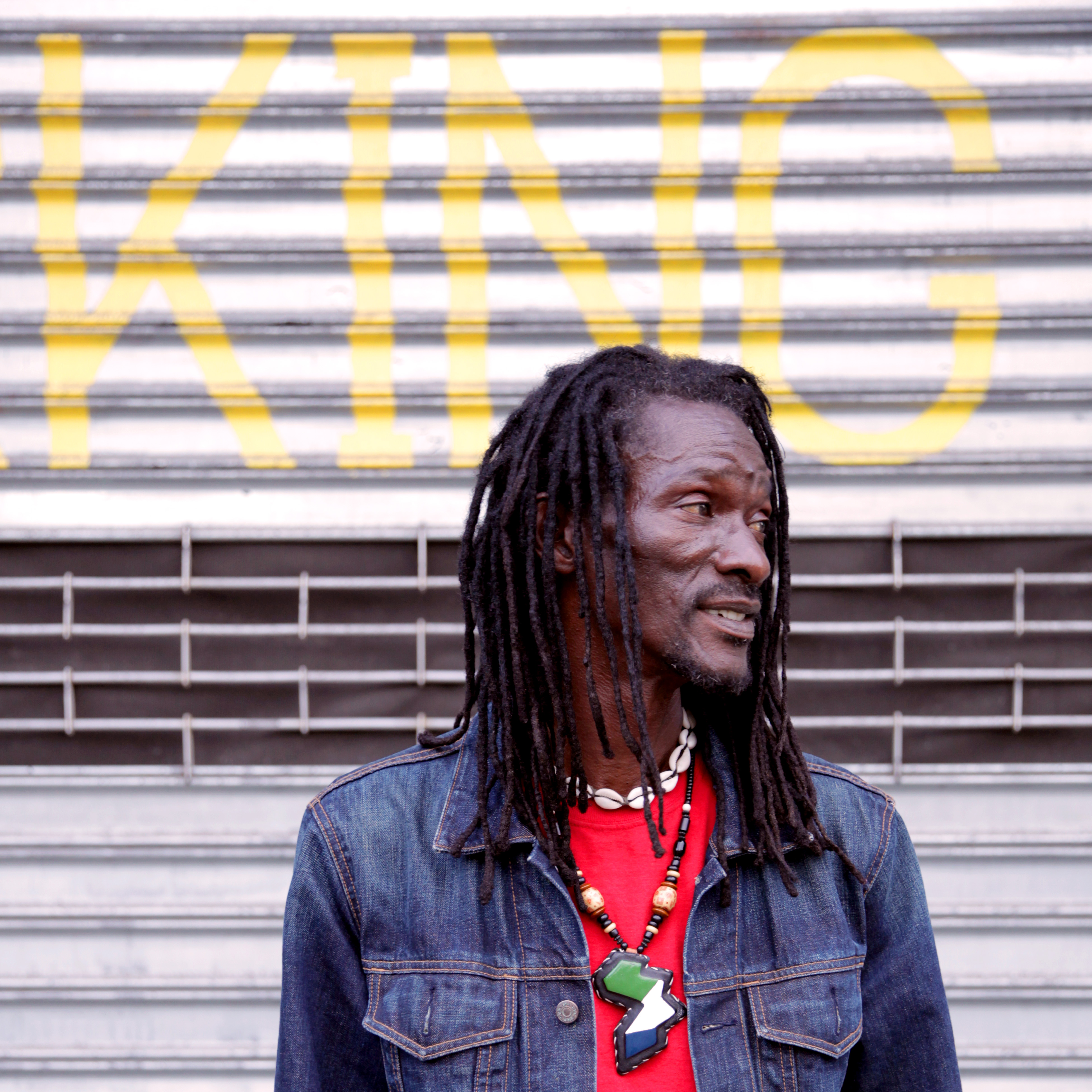
CHET IVEY-A DOSE OF SOUL-THE SYLVIA FUNK RECORDINGS 1972-1975.
A Dose Of Soul-The Sylvia Funk Recordings 1972-1975.
Most people won’t have heard of Chet Ivey. That’s despite him enjoying a recording career that spanned the best part of thirty years. It began in 1959 and continued until the mid-eighties. During that period, Chet Ivey released over thirty singles. The majority of these singles were released on small, independent labels.This included the seven singles Chet Ivy released on Al Sears’ Sylvia Records. They feature on a new compilation released by BGP, A Dose Of Soul-The Sylvia Funk Recordings 1972-1975. This marked a new start for Chet Ivey, who was born in North Carolina, in 1932.
Chet Ivey was born in Roanoke Rapids, in North Carolina, on November ‘26th’ 1932. Both his parents were Sunday school teachers in a Baptist church. They had six seven children, one daughter and six sons. The Ivey family moved to Washington DC in the forties. That was home to Chet Ivey until he joined the US Army.
The life of a soldier seemed to suit Chet Ivey. He spent several years in the US Army, serving in Germany and America. Chet Ivey won and the Good Conduct Medal and was promoted to Corporal Chet Ivey. By the late fifties, Corporal Chet Ivey was all set for a career change. He decided to embark upon a musical career. This was very different from life as a professional soldier.
By June 1959, Chet Ivey’s recording career was preparing to release his debut single Tater Patch. It was about to be by released Atlantic Records’ subsidiary Atco. Chet had written both Tater Patch and the B-Side The Slop. He had also signed a publishing deal with Al Sears. However, when Tater Patch was released, the R&B single failed to find an audience. For Chet Ivey, this was a disappointing start to his nascent musical career.
Despite the disappointing start to Chet Ivey’s career, he continued to release singles first on Atco, and then on ABC-Paramount. His first single for ABC-Paramount was Lady Bug which Chet cowrote with Jesse Stone. On the flip-side was another song Chet cowrote with Jesse Stone and Buddy Smith, Wash Your Feet. When Lady Bug was released in October 1961, history repeated itself and the single didn’t even come close to troubling the charts. This was the start of a familiar pattern.
In March 1961, Chet “Poison” Ivey and The Fabulous Avengers released Let’s Do The Pony. This was one of many dance craze songs that were being released at this time. Artists were hoping their song would be the new Twist. Ironically, the B-Side Just A Little Bit Of Love was a better song. Both songs were penned by Chet and produced by Al Sears. He was beginning to play a more important part in Chet Ivey’s career. Despite this, the single flopped. This proved to be the last single Chet Ivey released on ABC-Paramount.
Next stop for Chet Ivey was Al Sears’ new label Gator. Chet wrote Now We Must Part, which was released in the 1962 with Alpine Twist on the B-Side. Just like previous singles, Now We Must Part failed commercially. It proved to be Chet’s only release on the short-lived Gator label.
With the Gator label consigned to musical history, Chet Ivey signed to Al Sears’ new label B & C. It had been founded to release Chet’s recordings. He helped run the nascent B & C imprint which was based in Washington DC. Some, if not all, the singles were recorded in New York, which was home to Ernie Hayes who produced Chet’s singles. This included his B & C debut single, the raw R&B of Keep On Keeping On. Just like previous singles, commercial success continued to elude Chet. Three years after releasing his debut single, Chet Ivey was no nearer to making a commercial breakthrough.
Although Chet Ivey’s found an audience locally, they hadn’t attracted the attention of record buyers across America. Chet wasn’t going to give up though. He was determined to make a breakthrough, and released by 1964 had released a total of five singles on B & C.
For what should’ve been his sixth single for B & C, Chet Ivey had penned Something Else. When Al Sears heard the song, he thought it had the potential to transform Chet’s career. So he decided to release the single another of his other labels, Sylvia Records. Sadly, when Something Else was released, commercial success eluded the single, and Chet returned to the B & C label.
The search for a hit continued, and in 1965, Chet Ivey released as his with single, a cover Lieber and Stoller’s Poison Ivy. When it was released in 1965, the song failed to make an impression on the charts. Six years after releasing his debut single, and still he was no closer to a hit single.
By November 1968, Chet Ivey had released fourteen singles on B & C. Each single offered something different. When a single failed to find a wider audience, Chet Ivey changed direction. He tried releasing raw R&B, heart wrenching ballads and dance-floor friendly club soul. It was all to no avail. Then he caught a break when Al Sears was invited by Ray Charles to run his record label Tangerine Records.
Al Sears knew Ray Charles from their time at ABC-Paramount. He had plenty of experience running record and publising companies. Ray Charles needed someone to run Tangerine Records, and his new publishing company. The man that fitted the bill was Al Sears. He accepted the new role and headed to Los Angeles. Soon, Tangerine Records were releasing a few Al Sears’ productions.
One of them, was a new Chet Ivey composition, Shake A Poo Poo. This was about to be released in November 1968 as Chet’s new single. Al Sears would hoped that this would result in a new dance craze. Publicity photos were sent out to the press and the single was released. However, music had changed since dance crazes were all the rage in early sixties. By 1968, psychedelia was King. Still, Al Sears and Chet Ivey still thought that writing a song that spurned a new dance craze was the answer to their problems. It wasn’t. Shake A Poo Poo sunk without trace. For Chet this was a disaster.
With Al Sears living in LA, and concentrating on Tangerine Records, his own labels weren’t releasing much in the way of music. In 1969, B & C released The Poo Poo Man by Chet “Poison” Ivey And His Fabulous Avengers. This was the fifteenth single that Chet had released on B & C. It followed in the footsteps of the other fourteen, and failed to chart. It was the end of era for Chet Ivey.
By 1969, Chet Ivey had released fifteen singles for B & C between 1962 and 1969. While the singles were popular locally, they failed to find an audience further afield. Fortunately, he was a popular live draw and was a familiar face on the live circuit. That was where he spent much of the next three years.
After four years in LA, Al Sears returned home and revived Sylvia Records. One of his first signings was Chet Ivey. He would release seven singles between 1972 and 1975. They feature on A Dose Of Soul-The Sylvia Funk Recordings 1972-1975.
The first single that Chet “Poison” Ivey And His Fabulous Avengers released on the revived Sylvia Records was Funky Chit Chat (Part I). On the flip-side was Funky Chit Chat (Part II). Both sides were written by Chet Ivey. He arranged and produced the two sides at Sigma Sound Studios in Philadelphia, on April ‘17th’ 1972. Later in 1972, Funky Chit Chat (Part I) was released as a single. It’s best described as sixties R&B meets James Brown’s 1970 single Hey America. Despite being bang on trend, Chet’s adventure in funk was no more than a regional success. Still, Chet Ivey was looking for that elusive hit single.
Later in 1972, Chet “Poison” Ivey And His Fabulous Avengers returned with a new single, So Fine. This was a cover of The Fiestas 1959 single. It was given a funky, soulful makeover. Then on the B-Side was Bad On Bad, there’s a nod to James Brown, as Chet sings, raps and vamps while the His Fabulous Avengers reach new heights of funkiness. When So Fine was released in 1972, it was popular locally, but failed to find a wider audience.
When Chet “Poison” Ivey And His Fabulous Avengers returned later in 1972, it was with the soulful, funky Movin’. It saw the first Chet “Poison” Ivey And His Fabulous Avengers’ single to feature a horn section. This lead to comparisons with Sly and The Family Stone. On the B-Side was another Chet Ivey composition, When Love Comes. The horns play a leading role as Chet vocal veers between soulful to vampish. When Movin’ was released, it failed to trouble the charts and was Chet’s least the successful single he released on Sylvia Records between 1972 and 1975,
Late in 1972, Chet “Poison” Ivey And His Fabulous Avengers released the instrumental Don’t Ever Change. Chet unleashes a tenor saxophone solo above the Hammond organ driven groove. It’s akin to a funk masterclass from Chet “Poison” Ivey And His Fabulous Avengers. The B-Side Been So Long is a much more soulful sounding, mid-tempo song. There’s still a funky side to Been So Long, as the horns interject and accompany Chet. Don’t Ever Change was released late in 1972, it passed record buyers by. This was the last that was heard of Chet “Poison” Ivey And His Fabulous Avengers until 1974.
By 1972, Chet Ivey’s had embarked upon an alternative career as a radio DJ. He took over the 9-11 slot at WANN in 1972, and hosted the program until he became program controller. However, in 1974, Chet “Poison” Ivey And His Fabulous Avengers returned with a new single.
This was Dose Of Soul, which was recorded in Sigma Sound Studios in Philadelphia. Although funky and soulful, there’s a slicker, disco influence on Dose Of Soul. On the B-Side, was Get Down With The Geater Pt 1. It featured Chet “Poison” Ivey And His Fabulous Avengers’ old funky sound. The two different sides of Chet “Poison” Ivey And His Fabulous Avengers sat side-by-side. Despite the change in direction, Dose Of Soul wasn’t the commercial success that Al Sears and Chet hoped. For Chet Ivey, it was a case of back to the drawing board.
In 1975, Chet “Poison” Ivey And His Fabulous Avengers returned with a new single, Party People. This was a six minute epic, spread across two sides of the single. Party People Pt 1 was chosen as the single, and had a cinematic, dance-floor friendly sound. It may have sounded as if it belonged on a Blaxploitation soundtrack, but it was also a track that should’ve filled dance-floors. Alas, when Party People Pt 1 was released, the single failed commercially. For Chet this was a huge blow, it was the finest moment of Chet “Poison” Ivey And His Fabulous Avengers’ career at Sylvia Records. Sadly, Chet’s time was about to come to an end.
Having gotten over the disappointment of the commercial failure of Party People Pt 1, Chet “Poison” Ivey And His Fabulous Avengers returned with another two part single, Recipe To Get Down Part 1 and 2. It was released later in 1975. Recipe To Get Down Pt 1 was slick, soulful, funky and dance-floor friendly. Just like Party People Pt 1, Recipe To Get Down Part 1 should’ve transformed the fortune of Chet “Poison” Ivey And His Fabulous Avengers. Here was a single that should’ve appeared to DJs and dancers. Unfortunately, Recipe To Get Down Part 1 failed commercially. This was Chet “Poison” Ivey And His Fabulous Avengers’ seventh single that failed commercially. For Chet “Poison” Ivey And His Fabulous Avengers it was the end of their time at Sylvia Records.
The only other single the members of Chet Ivey recorded for Sylvia Records was One More Sunset. When it was released in the late-seventies, it bore the name Windell Ivey. The song became popular amongst club DJs. However, One More Sunset doesn’t feature on A Dose Of Soul-The Sylvia Funk Recordings 1972-1975. Four other tracks make an appearance on A Dose Of Soul-The Sylvia Funk Recordings 1972-1975.
The first is He Say She Say, which made its debut on BGP’s compilation The Mighty Superfunk in 2008. The other three tracks are alternate versions Get Down With The Geater, Chit Chat and Bad On Bad. This funky trio are welcome additions to A Dose Of Soul-The Sylvia Funk Recordings 1972-1975. It’s a reminder of Chet “Poison” Ivey And His Fabulous Avengers when they released some of the best singles of their long career. Sadly, these singles failed to find a wider audience.
Instead, they proved popular locally, and were regularly played by radio stations in the Maryland area. That was as good as it got for Chet “Poison” Ivey And His Fabulous Avengers. The former soldier turned bandleader, singer, songwriter and saxophonist rereleased over thirty singles, but never made the commercial breakthrough his music deserved.
Although commercial success eluded Chet Ivey, working in radio allowed him to remain involved in music for much of his life. When his radio career came to an end, Chet Ivey worked for several companies. His last job was with the US Department Of Transport, where he received several commendations. Just like his time in the US Army, Chet Ivey was highly regarded and respected by his contemporaries and peers.
Sadly, Chet Ivey died on the ‘10th’ May 2007, aged seventy-four. He had dedicated much of his life to music, and but sadly, neither enjoyed the commercial nor received the critical acclaim his music deserved. The release by BGP, an imprint of Ace Records, of A Dose Of Soul-The Sylvia Funk Recordings 1972-1975 is the perfect opportunity to discover the truly talented bandleader, singer, songwriter and saxophonist, Chet Ivey.
A Dose Of Soul-The Sylvia Funk Recordings 1972-1975.
LOVIN’ MIGHTY FIRE: NIPPON FUNK, SOUL, DISCO 1973-1983.
Lovin’ Mighty Fire: Nippon Funk, Soul, Disco 1973-1983.
Sometimes, record collectors can be somewhat myopic and overlook great swathes of music. That has long been the case. It was certainly the case back in the late-sixties and early seventies. This was a golden age for music. Especially for anyone interested in classic rock, progressive rock and psychedelia. During this period, many record collectors gravitated towards the music being released on both sides of the Atlantic. Critics assured record collectors that this was where the best music was being released. In doing so, they were overlooking psychedelia and rock elsewhere in the world.
As a result, record collectors failed to discover vibrant musical scenes in other countries. In Germany, the Krautrock scene was at the peak of its popularity; while some of the best progressive rock was being released Italy and Switzerland. Elsewhere, in Europe, and in across South America and Africa, psychedelia and rock was growing in popularity. Many groundbreaking albums were being released, and were selling in vast quantities. However, they failed to attract the attention of record collectors in Britain and America.
Later, history began to repeat itself in the soul and funk community. Record collectors set out to find the best in American soul and funk. Some even bought cheap transatlantic tickets as they headed to the home of soul and funk. This was no surprise.There was a degree of competitiveness as DJs and collectors as they sought out the long-overlooked hidden gems. Some had been released by the most famous soul and funk labels, like Atlantic, King, Motown and Stax. However, many hidden gems had been released by small, independent American labels.
Many of these labels were no longer in existence. Despite that, their releases were highly prized among collectors, and regularly changed hands for large sums of money. Those without deep pockets, resorted to crate digging in thrift stores, junk warehouses and backstreet record shops. Sometimes, collectors struck gold as they found a records issued by small, obscure labels. These finds quickly became popular and were soon, changing hands for large sums of money. Soon, the whole process began with another genre…disco.
Soon, record collectors had turned their attention to American disco. Again they were looking for the hidden gems that had slipped under the radar. This meant looking through the myriad of disco singles released before the bubble hurst. Record collectors weren’t interested in the commercial releases that were two a penny. Neither were they interested in singles released by bandwagon jumpers or releases cash-in singles by third rate celebrities. Instead, they were looking for private presses, or singles released by regional labels. However, just like the soul and funk collectors, the focus was always on American releases.
This was no surprise. Soul, funk and disco were born in America. Many record collectors, especially in Britain, thought that the best soul, funk and disco was released in America by American labels. As a result, very few record collectors even considered looking further afield for soul, funk and disco. They never even looked across the border to Canada, which was home to several successful disco production partnerships never mind halfway around the world.
Little did these record collectors know that disco was popular in parts of Africa and South America. Similarly, disco was popular in Japan. So was soul and funk. However, very few people in Britain and America were aware of Japan’s burgeoning and vibrant soul, funk and disco scenes. It was one of the best kept musical secrets, and until still was until BGP International released Lovin’ Mighty Fire: Nippon Funk, Soul, Disco 1973-1983. This fourteen track compilation is first official collection of Japanese soul, funk and disco to be released in the West.
For newcomers to Japanese soul, funk and disco then Lovin’ Mighty Fire: Nippon Funk, Soul, Disco 1973-1983 is the perfect starting place. It features Lily, Rie Nakahara, Yasuko Agawa, Pink Lady, Junko Ohash, Mari Natsuki, Miyako Chaki and Ebonee Webb. They’re just some of the fourteen artists that feature on Lovin’ Mighty Fire: Nippon Funk, Soul, Disco 1973-1983.
Lily was the stage name of singer-songwriter Kamata Saeko. She opens Lovin’ Mighty Fire: Nippon Funk, Soul, Disco 1973-1983 with By By Session Band. It was the B-Side to Lily’s fifth single Wind Pain, which was released by the Express label in 1974. By By Session Band is a real find. The arrangement is funky and heads in the direction, while Lily’s vocal is sassy and soulful.
In 1978, singer, actress, and TV presenter Rie Nakahara released Disco Lady as a a single on CBS/Sony. Tucked away on the B-Side was the hidden gem Sentimental Hotel. It’s a lush and soulful slice of disco that would featured on Rie Nakahara’s third album Killing Me in 1979.
Haruomi Hosono’s career began in 1969, when he was a member of Apryl Fool, one of Japan’s legendary psychedelic rock bands. Four years later, and Haruomi Hosono was about to embark upon a solo career. He had signed to Bellwood Records, who were about to release his debut album Hosono House. The eleven songs had been written, recorded and produced in Haruomi Hosono’s home studio. This included the genre-melting ballad Barato Yajuu. It features a heartfelt, soulful vocal while the carefully crafted arrangement combines of folk-rock, funk, pop, soul and even a hint of psychedelia. When this is combined, the result is a quite beautiful, timeless ballad.
Originally, Yasuko Agawa started out as an actor. Later, she started singing in a jazz band. This proved to be the start of Yasuko Agawa’s musical career. By 1980, she was about to release her third album Love Bird on the Victor label. Opening Love Bird was Why Don’t You Move In With Me, which was funky, soulful and dance-floor friendly. Thirty-seven years later, and it would still fill a dance-floor.
Pop duo Pink Lady released their debut single in 1976. Three years later, they were one of Japan’s biggest disco acts. When Pink Lady released Zipangu in March 1979, it reached number four in the Japanese charts and sold over 250,000 copies. Hidden away on the B-Side was Jiken Ga Okitara Bell Ga Naru (When A Bell Rings Something Happens). Pop, funk and Euro Disco are combined by Pink Lady on this slick sounding track.
For her fourteenth single, Yuko Asano decided to cover Sergio Mendes’ Summer Champion. It was totally transformed, and given a disco makeover. Swathes of strings and bubbling synths accompanied Yuko Asano’s tender, soulful vocal. This looked like the recipe for a another hit single. However, Summer Champion stalled at forty-eight in the Japanese charts. Despite not reaching the upper reaches of the charts, this memorable slice of soulful disco sold over 50,000 charts and gave Yuko Asano another hit single.
When it came to recording her tenth album, Junko Ohashi decided to record Point Zero in New York. It was produced by Junko Ohashi’s husband Ken Sato and featured some top musicians. This included former M.F.S.B. bassist Anthony Jackson. Once the album was completed, Point Zero was released by Phillips in 1983. Dancin’ was chosen as the lead single. It showcased the boogie sound, which had grown in popularity in the post-disco era. A year later, Dancin’ a funky slice of boogie featured on Magical, which was a compilation of some of the highlights of Junko Ohashi’s career so far.
Anyone familiar with the Vertigo label discography will know Masayoshi Takanaka’s name. He was a member of the progressive rock band Fried Egg, who released two albums on Vertigo. By 1981, guitarist and producer Masayoshi Takanaka was a successful solo artist. He had just released a new album, The Rainbow Goblins. One of the album’s highlights was Rainbow Paradise a dance-floor friendly slice of fusion which featured a guitar masterclass from Masayoshi Takanaka.
Former teen idol Mari Natsuki was twenty-four when she recorded Uragiri in 1976. It was the ninth single she had released since adopted the moniker Mari Natsuki. This allowed her to change direction musically. Mari Natsuki wanted to release music that featured tough, funky arrangements and a sensual vocal. That was the case on Uragir, where lush strings accompany Mari Natsuki as she delivers a breathy, sensuous vocal. Alas, when it was released in 1976, it failed to find audience. Uragiri was the one that got away for Mari Natsuki.
After releasing five solo singles, commercial success continued to elude Miyako Chaki. That was about to change in 1977, when she released her sixth solo single Maboroshi No Hito on Harvest Records. Maboroshi No Hito was the theme to a popular television drama The Inugumi Family. When Maboroshi No Hito single was released, it reached thirty-three in the Japanese charts and sold over 70,000 copies. This beautiful, heartfelt, soulful ballad was a game-changer for Miyako Chaki. Later, in 1977, Maboroshi No Hito featured on Miyako Chaki’s third album Rainbow Chaser. However, this was a different version to the original, which transformed Miyako Chaki’s career.
Five years after releasing her debut single, Kay Ishiguro released her seventh album, Yokohama Ragtime. It was released on the Invitation label in 1982. One of the songs on the album was Banana. Hooks haven’t been rationed on a funky sounding slice of J-Pop.
Masaaki Hirao’s career began in the fifties, during the rockabilly era. Over twenty years later and he released the album Disco Train, on Atlantic in 1976. The title-track was released as a single later in 1976. Tucked away on the B-Side, was another track from Disco Train, Funky! “Miyo” Chan. It was originally released in the sixties. A decade later, and the song has been reinvented and sounds as if it’s been heavily influenced by Herbie Hancock’s 1978 single I Thought It Was You. Suddenly, this familiar song is revitalised as Masaaki Hirao seamlessly fuse funk, fusion and soul.
In 1978, Ebonee Webb, an eight piece funk band from Memphis, Tennessee enjoyed a hit single in Japan with Disco Otomisan. Determined to build on this success, Ebonee Webb recorded their sophomore album Memphis Soul Meets Japanese Folk Songs. It was released on the Seven Seas label in 1979, and featured Yashow Macashow. The song was given a makeover by Ebonee Webb, who combined rock, funk and fusion, jazz with uber soulful vocals. This resulted in one of the highlights of Memphis Soul Meets Japanese Folk Songs, which saw Ebonee Webb’s popularity soar in Japan and the Far East. So much so, that Capitol Records signed Ebonee Webb.
Closing Lovin’ Mighty Fire: Nippon Funk, Soul Disco 1973-1983 is Naoya Matsuoka and Minako Yoshida’s 1979 single Lovin’ Mighty Fire. It was released by Atlantic, and was a collaboration between celebrated keyboardist Naoya Matsuoka and vocalist one of Japan’s top female vocalists, Minako Yoshida. This proved to be a potent partnership. Almost seamlessly they combine and switch between funk, fusion, electro and soul. In doing so, they create a melodic hook-laden track that ensures Lovin’ Mighty Fire: Nippon Funk, Soul Disco 1973-1983 ends on a memorable high.
For anyone looking to for an introduction to Japanese soul, funk and disco then Lovin’ Mighty Fire: Nippon Funk, Soul Disco 1973-1983 is the perfect starting place. It was released by BGP International, an imprint of Ace Records and features fourteen tracks.
There’s fourteen songs on Lovin’ Mighty Fire: Nippon Funk, Soul Disco 1973-1983. This includes Lily, Rie Nakahara, Yasuko Agawa, Pink Lady, Junko Ohash, Masayoshi Takanaka, Mari Natsuki, Miyako Chaki and Masaaki Hirao. They were some of the biggest names in Japanese music between 1973 and 1983. Some of the other artists didn’t enjoy the commercial success that their music deserved. These songs are best described as hidden gems. Thus is what many DJs and record collectors spend half their life looking for. However, until relatively recently, very few collectors of soul, funk and disco looked towards Japan.
That has all changed. Now record collectors realise that there’s a huge amount of music awaiting discovery in Japan. The music on Lovin’ Mighty Fire: Nippon Funk, Soul Disco 1973-1983 is a tantalising taste of that music.
Lovin’ Mighty Fire: Nippon Funk, Soul, Disco 1973-1983.

INNA DE YARD-THE SOUL OF JAMAICA.
Inna De Yard-The Soul Of Jamaica.
Back in June 2016, two generations of Jamaica’s greatest musicians were about to embark upon a musical adventure. Before that, they had to head high into the hills above Kingston. Their eventual destination was Kiddus I’s studio. It sits high above the vast forests that decorate the hills on the outskirts of Kingston. It’s an unlikely site for a recording studio.
Eventually, some of legends of Jamaica’s musical past, arrive at Kiddus I’s studio. This includes Ken Boothe, Lloyd Parks and The Viceroys. They’re soon joined by Cedric Myton from The Congos, Winston McAnuff and Cedric Mynton. Joining them, would some of the rising stars of Jamaican music, including Derajah, Kush McAnuff, Bo-Pee Bowen, Var and Steve Newland. As the musicians arrive, they head inside Kiddus I’s.
Copies of the records recorded in the studio hang on the wall. So do photos of the artists who recorded at Kiddus I’s studio. Soon, they’ll be joining this roll of honour. As they enter the main studio, Rastafarian paintings hang proudly on the wall. Old friends catch up before the recording gets underway. Some head out through the swing doors and sit on the balcony overlooking Kingston.
They catch up, joke and reminiscence. Some smoke or drink, while others gaze out at the spectacular view of Kingston and beyond. Always though, the musicians were thinking about what was about to unfold over the next few days. The two generations of Jamaican musicians were about to record an album together. This was an exciting project that nine months later, came to fruition when Inna De Yard’s album The Soul Of Jamaica was released by Chapter Two Records on March ‘17th’ 2017. However, that day in June 2016 when the two generations of musicians arrived at Kiddus I’s studio, the adventure was just beginning.
Meanwhile, Kiddus was inside setting up his studio and preparing to record history being made. He could hear laugher as the two generations of musicians got know each other. Some of the icons of the golden age of Jamaican music seemed to be enjoying the opportunity to spend time with the latest generation of roots musicians. They joshed, laughed and began to exchange ideas. It sounded as if they were getting on well. This was just was well, as they were about to spend the next few days recording an album together. Kiddus I knew, was a once in a lifetime opportunity.
He may never again get the opportunity to bring together this group of musicians. Kiddus I was determined to do whatever it took to capture these musicians at their best. This might mean going with the flow, and see where the music took him as he recorded The Soul Of Jamaica. With the studio setup, Kiddus I and the band he had brought together to record the album were ready to go.
For this very special recording session, Kiddus I wanted a backing band that featured top musicians. In his eyes, there was no better than pianist Robbie Lyn, guitarist Winston ‘Bo Pee’ Bowen and Ruel ‘Rice’ Ahsburn on contrabass. They would provide accompany the musicians who now, were preparing for the recording of The Soul Of Jamaica. The band Kiddus I hoped would play their part in music that was rich in Rastafarian spirit and oozed soulfulness.
In Jamaican music, the soul comes from the root. It was originally honed when musicians combined an standup bass, piano, guitar, percussion and vocal. They ware guided by Nyabinghi rhythm, which was originally, was a Rastafari ritual. Since then, it’s played an important part in Jamaican music. That was the case right through to when artists young and old began recording the songs that would feature on The Soul Of Jamaica.
Songs had been carefully chosen for each and every artist that would feature on The Soul Of Jamaica. For the artists that represented the golden age of Jamaican music, underground classics which were written in the sixties and seventies, were chosen. Meanwhile, some of the new generation of Jamaican musicians decided to cover songs penned by their contemporaries. Others decided to rerecord songs that had originally been recorded by artists on Earl Chinna Smith’s Inna De Yard label. However, the artist had the freedom to take the song in the direction they chose.
As the recording sessions began, Kiddus I had created a relaxed and informal atmosphere. He encouraged artists to dictate what sort of accompaniment they wanted. Some decided they wanted the full band to accompany them. Others wanted a much more understated backdrop accompanying their vocal. This would allow their vocal to take centre-stage as they delivered a heartfelt, poignant and positive message that spoke of love and harmony. Kiddus I, who knew each of the artists, concentrated on capturing vocals that were rich in Rastafarian spirit and oozed soulfulness from the moment he pressed record.
Only the piano and vocals were recorded within the environs of the studio. Other instruments were recorded outside of the main studio. Meanwhile, Kiddus I threw open the doors to the terrace and encouraged the musicians to relax and enjoy themselves. They laughed, reminisced, sang, played instruments, smoked and later, watched as the sun set. In allowing the musicians this freedom, Kiddus I knew he would get the best out of the two generations of musicians.
Over the space of four days, a total of twenty tracks were recorded for The Soul Of Jamaica project. This meant that Kiddus I had more than enough for the project. They would later cherry pick thirteen songs that found their way onto The Soul Of Jamaica. As Kiddus I had hoped, they were rich in Rastafarian spirit and oozed soulfulness.
The Viceroys open The Soul Of Jamaica with Love Is The Key. Before their vocals enter, briefly, the sound of birds and dogs barking in the distance can be heard. They accompany an impassioned lead vocal, until the rest of The Viceroys enter.
Their message is one of peace, positivity and understanding.
Meanwhile, the arrangement is slow and understated with the piano playing the leading role. It’s joined by the bass and percussion. However, it’s The Viceroys that play a starring role, with their heartfelt, soulful vocals.
Ken Boothe features twice on The Soul Of Jamaica. His first contribution is Let The Water Run Dry. Soon, he’s rolling back the years. Accompanied by chirping guitar, piano and harmonies, Ken brings the lyrics to life. It’s as if he’s lived and survived the scenario, as he sings: “I won’t make the same mistake again.” Even if: “you let the teardrops fall from your eyes.” It’s a case of once bitten, twice shy from veteran vocalist Ken Boothe.
Slaving is the first of two songs from Lloyd Parks. As it unfolds, a piano and guitar combine before the bass ushers in Lloyd’s despairing vocal. Meanwhile the studio band provide the shuffling heartbeat.A piano, percussion and chiming guitar are added. They frame the vocal. Later, percussion adds an element of drama, while harmonies sympathise with Lloyd’s plight. However, he sees hope for the future in this poignant song.
Kush McAnuff’s Black To I Roots has a much fuller arrangement, that has been influenced by the golden age of Jamaican music. A moody piano is joined by a braying horn before the bass, guitar and percussion combine. For a minute, the band enjoy the opportunity to stretch their legs. Then when Kush’s vocal enters, it’s heartfelt and soulful. He’s accompanied by cooing female backing vocalists, who match him every step of the way. When they drop out, horns and a fleet-fingered Spanish guitar take charge. Kush McAnuff returns and this powerful song reaches its memorable crescendo.
A piano, guitar and horns are joined by bass and percussion on Youthman. They set the scene for Cedric Myton’s urgent, hopeful vocal. It’s accompanied by tender harmonies, while stabs of horns and piano play leading roles. Later a wistful horn is added to the mesmeric backdrop. When the vocal and harmonies return they hope and plea for justice on a song which is rich in Rastafarian spirit and oozed soulfulness.
Var is another of the new generation of Jamaican up-and-coming musicians on The Soul Of Jamaica. His contribution is Crime, a song which deals with the social problems affecting young people in Jamaica. Still, there’s a soulfulness that comes courtesy of Var and female backing vocalists. Meanwhile,it’s a case of less is more with the arrangement. Just a piano, bass, guitar and percussion accompany Var. They play their part in powerful, poignant and soulful song from one of the rising stars of Jamaican music.
Kiddus I moves from behind the mixing desk and takes centre-stage on Jah Power, Jah Glory. Soon, he’s delivering an impassioned and soulful vocal. Meanwhile, his band pull out the stops, and combine piano, percussion, bass, guitar and an accordion. A frustrated Kiddus I sings of inequality, poverty, war and how the planet is becoming despoiled and polluted. There’s almost disbelief at what Kiddus I is watching happen to the world, on a thought, provoking and spiritual sounding song.
Artibella is a tale of love lost and betrayal that marks the return of the Ken Boothe. Again, he brings the lyrics to life as he sings of how his girlfriend left him for another man. Meanwhile, an accordion, bass, guitar, percussion and piano accompany Ken. He recounts how: “Artibella you took all my money, and told me you didn’t love me.” Despite this, he’s soon pleading: “Artibella my pretty little darling, please come home to me.” It seems love is blind.
Just a gently strummed guitar and piano are joined by the bass as Steve Newland delivers an urgent vocal on Sign Of The Times. Sharp stabs of piano accompany percussion and a crystalline piano join with a sweeping, soulful harmonies. They provide a foil for a vocal that veers between urgent, worldweary and soulful on a song that’s melodic and memorable.
Winston McAnuff is accompanied by sweet, soulful and cooing harmonies as Secret unfolds. Meanwhile, the arrangement chugs steadily along. Percussion and piano are to the fore. It’s the harmonies that play a leading role. They accompany Winston every step of the way, and respond to his call. Later, his vocal becomes a mixture of power and emotion. It soars hight above the arrangement and is akin to a heartfelt confessional. Still, though, the harmonies accompany him and play their part in the sound and success of the song.
Gradually,the arrangement to Stone begins to unfold. There’s an element of theatre, before the percussion, guitar and ethereal harmonies give way to Derajah’s vocal. It’s heartfelt and has a spiritual quality. Meanwhile, an acoustic guitar and percussion are augmented by the elegiac harmonies. They join with Derajah to create a truly beautiful song.
Money For Jam marks the return of Lloyd Parks. Horns, an accordion and percussion set the scene for Lloyd’s soulful vocal.
Tender harmonies accompany him as he delivers lyrics full of social comment. “Instead of walking down the street and robbing the people you meet, you got to work for the jam.” Soon, horns, an accordion and harmonies join the bass, guitar, piano and percussion. They all accompany one of the Jamaican music’s veterans, as he delivers a vocal masterclass.
Closing The Soul of Jamaica is Thanks and Praise by Bo-Pee. It features an understated and spartan arrangement. Just an acoustic guitar accompanies Bo-Pee’s vocal. That’s all that is needed. Anything else would risk overpowering the vocal. It’s sincere and has a spiritual quality, on what’s a beautiful song. Just like on so many albums, one of the best tracks has been kept until last on The Soul Of Jamaica.
It was recorded over four days at Kiddus I’s studio, high above Kingston. That was where two generations of musicians came together, and recorded the thirteen songs that became The Soul Of Jamaica. Legends of Jamaican music joined with some of the island’s rising stars. Nine months later, and The Soul Of Jamaica was released by Chapter Two Records on March ‘17th’ 2017. However, The Soul Of Jamaica is no ordinary reggae album.
Instead, The Soul Of Jamaica finds the eleven artists delivering poignant and positive messages of love and harmony. That is the thread that runs through each and every song on the album. They’re rich in Rastafarian spirit and ooze soulfulness. However, that is not all.
The music on The Soul Of Jamaica is also beautiful, melodic and memorable. Other times it’s powerful, spiritual and thought-provoking as artists discuss the social problems that blight not just Jamaica, but the wider world. Songs like Lloyd Parks’ Money For Jam the songs are akin to mini morality tales, that offer advice to those who have taken a wrong turning in life. These morality tales come filled with a powerful and positive message. This adds to the poignancy of the music on The Soul Of Jamaica. It was recorded by two generations of talented musicians.
Despite the difference in age, each and every musician played their part in the sound and success of The Soul Of Jamaica. It’s one of the finest reggae albums of recent years. There’s neither padding nor filler on The Soul Of Jamaica. Instead, it’s quality all the way. That’s not all. The Soul Of Jamaica is imbued with the Rastafarian spirit and soulfulness as eleven artists spread messages of love, harmony, positivity and togetherness.
Inna De Yard-The Soul Of Jamaica.
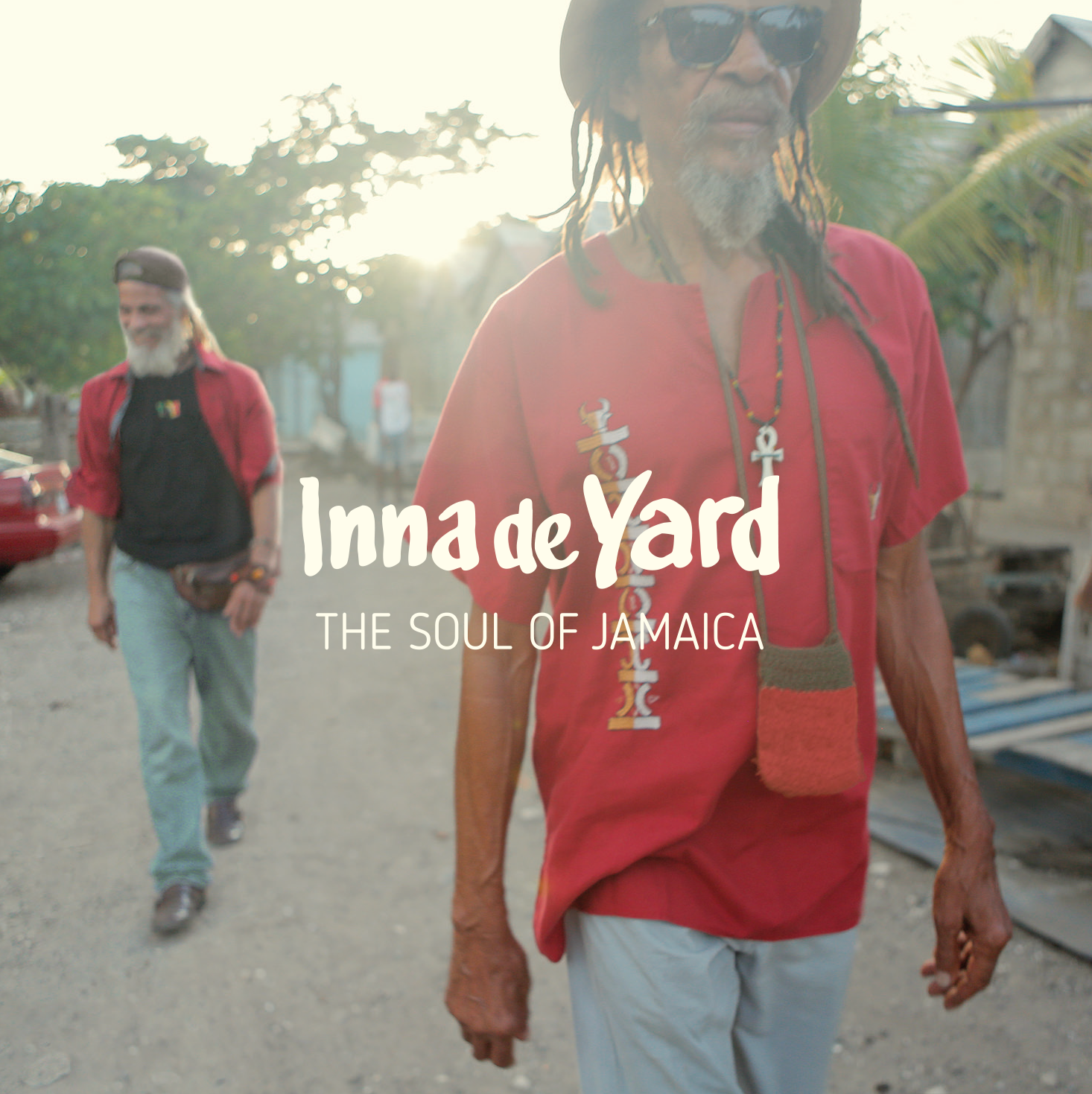





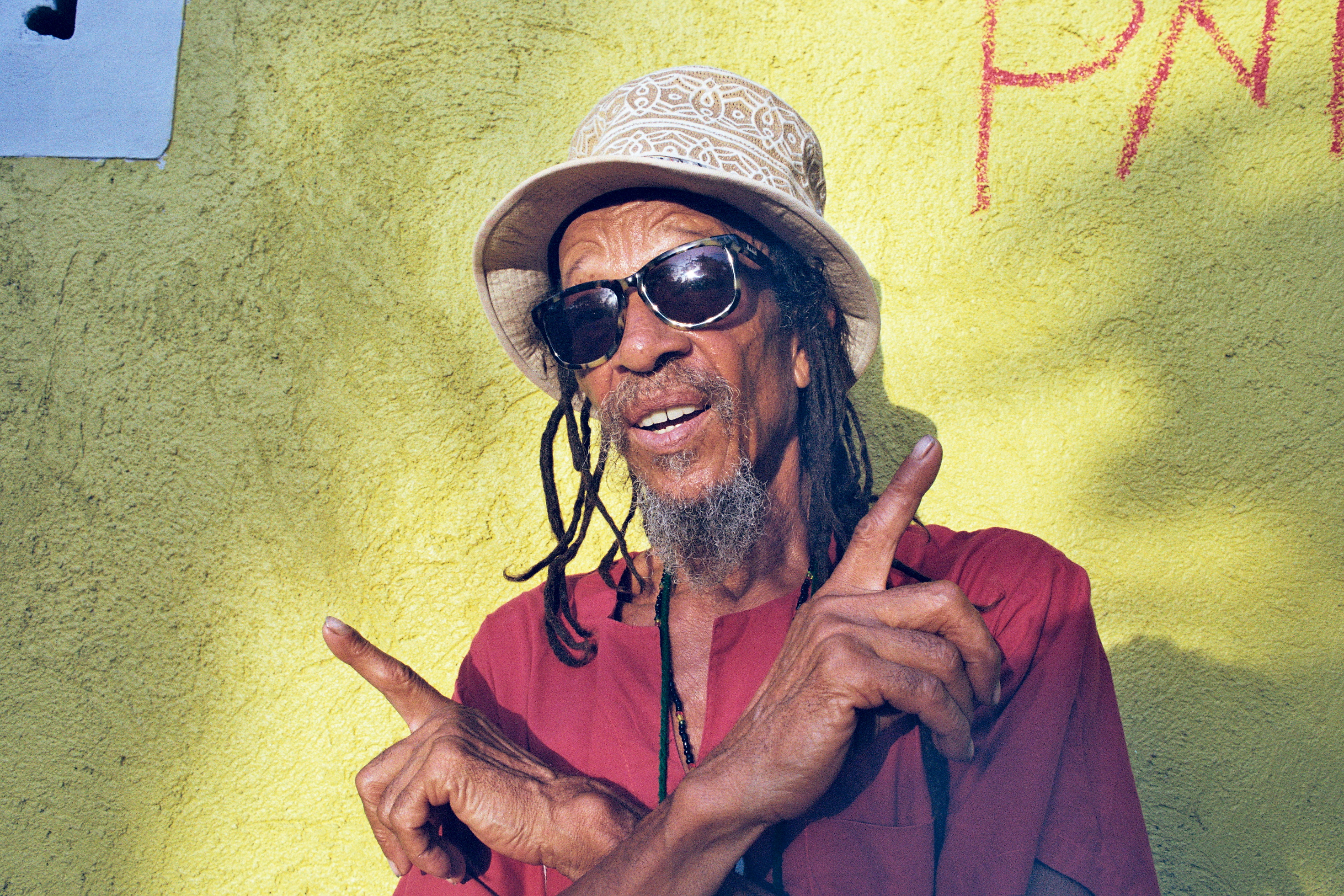
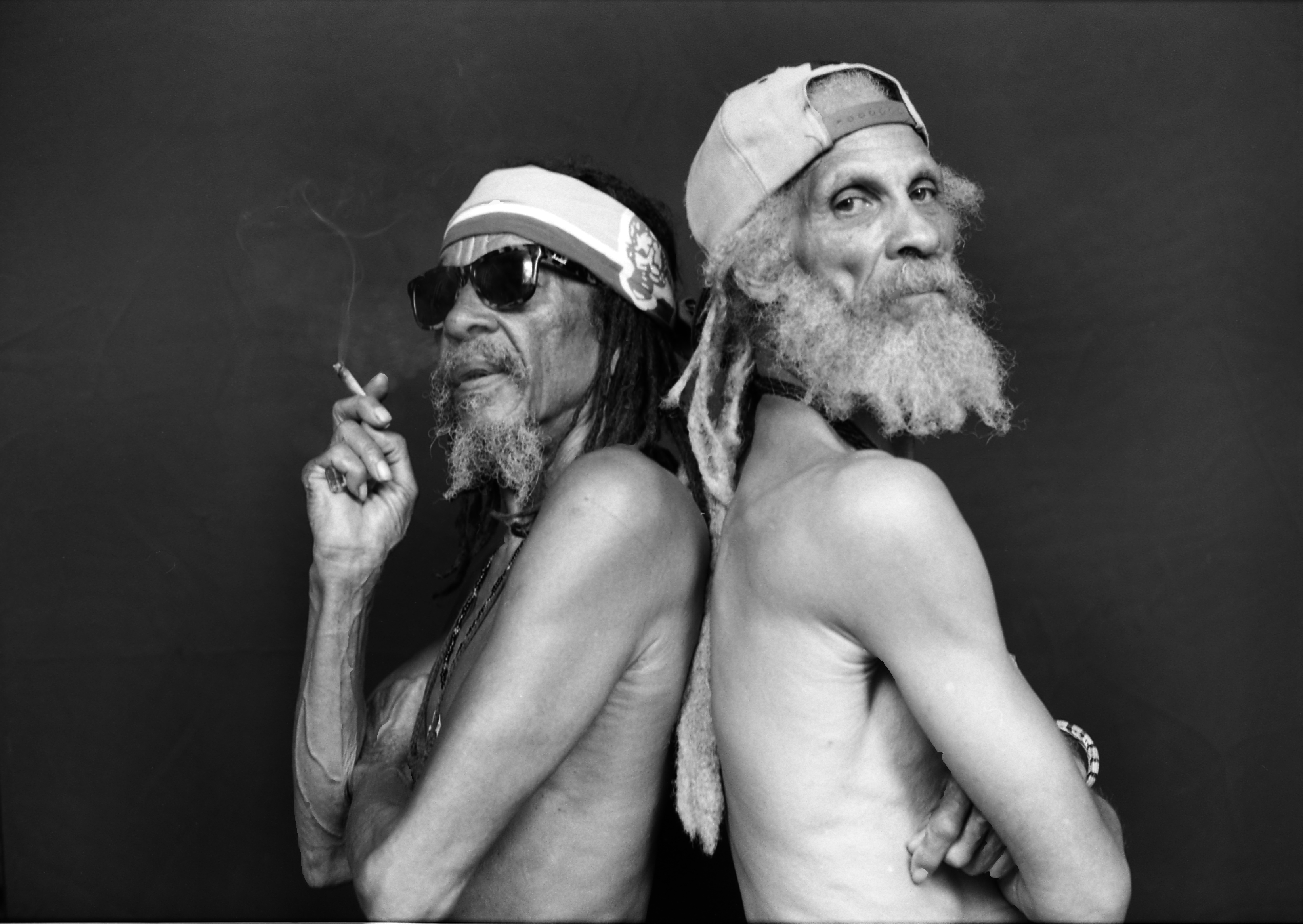
FRIGHTENED RABBIT-THE STORY SO FAR.
Frightened Rabbit-The Story So Far.
It’s at this time of year, that the Scottish music industry’s thoughts turn to the Scottish Album Of The Year Award. It’s Scotland’s most prestigious music prize. Already many albums have been nominated. This includes Frightened Rabbit’s Picture Of Panic Attack, which is regarded as a contender for the Scottish Album Of The Year Award. Picture Of Panic Attack was Frightened Rabbit’s second album for Atlantic Records. Frightened Rabbit had come a long way since Scott Hutchison founded the band.
Frightened Rabbit’s roots can be traced back to Scott Hutchison’s teenage years in Selkirk, Scotland. Back then, Scott Hutchison was chronically shy. So much so, that his mother christening her son Frightened Rabbit. This moniker Scott would later resurrect, when he began to play some live shows.
Before that, Scott Hutchison had spent the previous six months making recordings on a four-track recorder. By then, Scott was beginning to overcome his shyness. So much so, that he was thinking about playing a few live shows as a solo artist. This was when Scott decided to dust down the Frightened Rabbit moniker.
Having adopted the Frightened Rabbit moniker, Scott Hutchison made his first tentative steps into the local music scene in 2003. For the first year, Frightened Rabbit was just Scott and his guitar. After a year, Frightened Rabbit’s lineup expanded.
Frightened Rabbit’s latest addition was Grant Hutchison, Scott’s brother. He joined in 2004 and became the band’s drummer. A year later in 2005, bassist Billy Kennedy joined Frightened Rabbit. Already, word was spreading about Frightened Rabbit. This was no surprise.
For the first couple of years, Frightened Rabbit were a familiar face on Scotland’s live scene. They knew the only way to build a following was by plating live. There were no short cuts. It also allowed the indie rockers to hone their sound. At their early shows, Frightened Rabbit gave out their email address, promising to send anyone who wanted one , a demo and even biscuits.
Soon, demos were being sent not just to the four corners of Scotland, but rest of Britain, and even America. Frightened Rabbit knew the value of self-promotion. These demos would introduce Frightened Rabbit’s music to a much wider audience. So when Frightened Rabbit released their debut album, hopefully, they would have a ready made audience for their music.
Before long, Frightened Rabbit were attracting the attention of record companies. It was obvious that they weren’t going to remain an unsigned band for much longer. Frightened Rabbit signed to the Hits The Fan label, and began working on their debut album, Sing The Greys.
Sing The Greys.
For their debut album, Sing The Greys Frightened Rabbit had penned ten songs. They were recorded at The Diving Bell Lounge, in Glasgow. Co-producing Sing The Greys, was Marcus MacKay. Once the album was complete, Hits The Fan scheduled the release for the summer of 2006.
Before that, critics had their say on Sing The Greys. Frightened Rabbit’s debut album was well received by critics. Several critics thought that Frightened Rabbit were rising stars of the indie scene.
Despite this, the Hits The Fan label had only 1,000 copies of Sing The Greys pressed. Given the band already had built up a loyal following, this seemed a strange decision. When Sing The Greys was released on June 5th 2006, the album sold well, and is now something of a collectable. Frightened Rabbit were on their way.
Having released their debut album, Frightened Rabbit continued to play live, and spread their musical message. Sing The Greys had introduced Frightened Rabbit’s music to a new audience. This included some record companies who were watching the progress of Frightened Rabbit.
This included the Brighton based FatCat Records. They saw the potential in Frightened Rabbit, and signed the band in 2007. Straight away, FatCat Records decided to reissue Sing The Greys. Before that, some parts of the album had to be recorded, while the album was remixed and remastered. The reissue of Sing The Greys on FatCat Records took the pressure off Frightened Rabbit. Now they could spend time writing and recording their sophomore album, The Midnight Organ Fight.
The Midnight Organ Fight,
Just like their debut album Sing The Greys, Frightened Rabbit wrote the fourteen songs that became The Midnight Organ Fight. The main difference was that the album was recorded not just in Glasgow, but America.
While some of the recording of The Midnight Organ Fight took place at The Diving Bell Lounge, in Glasgow, much of the recording took place at Tarquin Studios, Bridgeport, Connecticut. That was home to producer, engineer, mixer and musician Peter Katis. After a month where Frightened Rabbit spent long hours recording The Midnight Organ Fight, the album was complete. Now Frightened Rabbit headed home to Glasgow, which was now home to the band.
With The Midnight Organ Fight recorded, Scott Hutchison was back in Glasgow for New Year. That was where Scott bumped into guitarist and keyboardist Andy Monaghan of Piano Bar Fight on New Year’s Eve. They had supported Frightened Rabbit, and knew each other quite well. However, Andy wasn’t prepared for Scott asking him if he would like to play a few shows with Frightened Rabbit. This wasn’t supporting the band, but as part of the band. Soon, Frightened Rabbit became a quartet.
They would make their debut supporting The Midnight Organ Fight, which was scheduled to be released in Spring of 2008. It would soon become apparent that all Frightened Rabbit’s hard work had been worthwhile.
When critics heard The Midnight Organ Fight, they spoke as one praising what was a highly accomplished and carefully crafted album. The lyrics met with the approval of critics, who were won over by the honesty. They played in album that was released to overwhelming critical acclaim. This bode well for release of The Midnight Organ Fight.
It was released on 15th April 2008. Alas, The Midnight Organ Fight reached just seventy-two in the Scottish album charts. This was a disappointment for Frightened Rabbit. The Midnight Organ Fight looked like it was set to be the band’s breakthrough album. However, Frightened Rabbit returned later in 2008 with their first live album, Quietly Now!
Quietly Now!
Recording Frightened Rabbit’s first live album took place in adopted hometown of Glasgow. Frightened Rabbit had chosen fourteen songs, that they would play at The Captain’s Rest, on 30th July 2008. That night Frightened Rabbit showed another side to their music,
When Frightened Rabbit took to the stage at The Captain’s Rest, the proceeded to play what was mostly, an acoustic set. The fourteen songs were mostly taken from The Midnight Organ Fight. Joining Frightened Rabbit, were James Graham from The Twilight Sad. He features on Keep Yourself Warm, while Ross Clark joins Frightened Rabbit on Old Old Fashioned. After fourteen songs, Frightened Rabbit left the stage to rapturous applause.
When Quietly Now! was released on October 21st 2008, the album only featured twelve songs. Two songs, the instrumental interludes Bright Pink Bookmark and Extrasupervery were omitted. However, that didn’t matter. They wrote glowing reviews of Quietly Now!, praising Frightened Rabbit’s mostly acoustic performance. Things however, were about to improve for Frightened Rabbit.
As 2008 drew to a close, The Midnight Organ Fight found its way onto the lists of best albums of 2008. It seemed that hardly a day passed without a magazine, broadsheet or website listing The Midnight Organ Fight as one of the albums of 2008. At least Frightened Rabbit knew they were on the right road. They were determined to come back stronger, with their third album, The Winter of Mixed Drinks.
The Winter of Mixed Drinks.
Now a quartet, the new lineup of Frightened Rabbit began work on The Winter of Mixed Drinks. This time though, Scott Hutchison headed to the Fife fishing village Crail.
Scott needed to unwind after a gruelling touring schedule. However, during his break in Fife, Scott mixed business and pleasure. He wrote the lyrics to The Winter of Mixed Drinks, in Crail. His surrounding influence the music on The Winter of Mixed Drinks, which has a nautical theme. During his stay in Crail, Scott even recorded some demos. The music would be written by Frightened Rabbit.
With The Winter of Mixed Drinks taking shape, Frightened Rabbit headed into the studio. Again, recording was split between Scotland and America. Castle Sound Studios, in Pencaitland, where The Blue Nile had recorded, was used to record much of The Winter of Mixed Drinks. Additional recording took place at Peter Katis’ Tarquin Studios, Bridgeport, Connecticut. By the middle of 2010, the album was complete.
Chris Hutchison was keen that there shouldn’t be large gaps between album. However, it wasn’t until March 2010 that FatCat Records released The Winter of Mixed Drinks. However, promotion of the album began in 2009. For the next six months, Frightened Rabbit were involved in a whirlwind of promotional activities and playing live. Then just before the release of The Winter of Mixed Drinks, critics had their say.
Just like their previous album The Midnight Organ Fight, The Winter of Mixed Drinks received praise, plaudits and critical acclaim. Critics were won over by the themes of escape, freedom and reinvention. They also welcomed what was a much more focused, polished and optimistic album. The Winter of Mixed Drinks looked as if it was going to be Frightened Rabbit’s breakthrough album.
And so it proved to be. When The Winter of Mixed Drinks was released on March 1st 2010, the album reached number ten in Scotland; sixty-one in the UK and eighty-four in the US Billboard 200. That wasn’t the end of the success for Frightened Rabbit.
They released four singles between 2009 and 2010 from The Winter of Mixed Drinks. The first was Swim Until You Can’t See Land, which reached number three on the US Sales charts in 2009. The followup Nothing Like You then reached number ten on the US Sales charts in 2010. By then, Frightened Rabbit had featured on American television. Their star was in the ascendancy.
Later in 2010, Frightened Rabbit’s luck looked as if it had run out, when Nothing Like You failed to chart. It was then business as normal, when The Loneliness and The Scream number eleven on the US Sales charts. Frightened Rabbit were determined to build on the success they enjoyed in America.
Before that, the announcement came that Frightened Rabbit had just signed to Atlantic Records. Frightened Rabbit were ready to make their major label debut, and came bearing gifts.
On 28th July 2011, Frightened Rabbit released the State Hospital E.P, which was produced by Leo Abrahams. This was three month’s before Frightened Rabbit’s US tour began. Subscribers to Frightened Rabbit’s newsletter were in for a pleasant surprise, as they could download the State Hospital E.P. free. For a band looking to grow their fan-base in America, this was a minor masterstroke.
By 6th December 2011, Frightened Rabbit announced that they were about to be begin pre-production of their major label debut album, Pedestrian Verse.
Pedestrian Verse.
Even by the time pre-production began, Frightened Rabbit were familiar with the songs that became Pedestrian Verse. They had been practising them on their US Tour. Just like The Winter of Mixed Drinks, Scott Hutchison had penned the lyrics and Frightened Rabbit wrote the music to Pedestrian Verse. It was recorded with Leo Abrahams, who co-produced the album with Frightened Rabbit.
Previously, Leo Abrahams had produced Frightened Rabbit’s State Hospital E.P. The vastly experienced musician and producer returned to co-produce Pedestrian Verse. Leo Abrahams brought with a huge amount of experience. He had released seven solo albums; worked on numerous collaborations and soundtracks; worked as a session musician and co-produced and produced a variety of artist. It seemed like Leo Abrahams was perfectly qualified to co-produce Pedestrian Verse.
Recording of Pedestrian Verse took place at Monnow Valley Studios, in Rockfield; The Distillery in Costa Mesa, California; Strongroom Music Studios, London; Brier Grove and The Flat. Once the album was completed, Craig Silvey mixed Pedestrian Verse. Then one of Britain’s top mastering engineers, Mandy Parnell. took charge of mastering Pedestrian Verse. Only then was the album complete.
With Pedestrian Verse ready for release, Atlantic Records began promoting Frightened Rabbit’s major label debut. While FatCat Records had spent the best part of six months promoting, The Winter of Mixed Drinks, this was a whole new ball game. Atlantic Records’ promotional campaign was much more extensive than anything Frightened Rabbit had been part of it. It paid off though.
When critics heard Pedestrian Verse, they were impressed by a much more eclectic selection of songs. They dealt with a variety of subjects. Critcis also felt Pedestrian Verse was a much more polished and cohesive album. Again, critics were won over by Frightened Rabbit and the reviews were mostly positive.
So with critical acclaim ringing in their ears, Pedestrian Verse was released on 4th February 2013. The album reached number two in Scotland; number nine in the UK; forty-nine in Ireland and sixty-three in the US Billboard 200. Pedestrian Verse was without doubt, the most successful album of Frightened Rabbit’s career. However, things got even better.
The Woodpile was released as a single in 2013, and reached seventy-four in Scotland and forty-two in the Mexico Ingles Airplay chart. Backyard Skulls then reached ninety-five in Scotland and forty-five in the Mexico Ingles Airplay chart. Although the singles were just minor singles, never before had Frightened Rabbit enjoyed a hit in Scotland or Mexico. The Atlantic Records’ years had started well for Frightened Rabbit.
After the release of Pedestrian Verse, Frightened Rabbit headed out on the longest and most gruelling tour of their career. Once the seemingly never ending tour was over, Frightened Rabbit decided to take “a break from all band related activities.” This left fans wondering what was happening Frightened Rabbit?
Especially when Scott Hutchison and his girlfriend decided to forego the delights of Glasgow for Los Angeles. The story took a twist when Scott decided to record an album as Owl John. Joining him in this new band were Andy Monaghan and Simon Liddell. Owl John was released on 4th of August 2014, and was well received by critics. By then, Gordon Skene had left Frightened Rabbit.
At the time, Gordon Skene released a statement on the 25th March 2014 that said: “there is no more to tell other than sometimes things just don’t work out and when people have differing opinions often the best option is to simply part ways and get on with life separately.” Scott Hutchison then had his say.
“Without going too far into it, Gordon’s personality didn’t fit with the band.” While that may well be the case, it had taken the other members of Frightened Rabbit the best part of six years to realise this. What wasn’t clear was whether, or when Frightened Rabbit would release another album?
Painting Of A Panic Attack.
Eventually, the situation became clear earlier in 2016. Frightened Rabbit released a statement via various social media outlets that their fifth album Painting Of A Panic Attack would be released later that year.
Frightened Rabbit had written ten of the twelve tracks on Painting of a Panic Attack. The other two, Little Drum and Break were written by producer Aaron Dessner. The twelve tracks that became Painting Of A Panic Attack were recorded in seven studios.
Recording of Painting Of A Panic Attack took place at 312, Glasgow; Audio Lounge, Glasgow; Bryn Derwen, Bethesda; Monnow Valley, Monmouth; Dreamland Recording Studios, in New York; Aaron’s Garage; 312, Glasgow; The Audio Lounge, Glasgow and Toast Studios, London. That was where Frightened Rabbit and a new face laid down the twelve songs.
As recording began Scott Hutchison took charge of lead vocals and played rhythm guitar. His brother Grant, played drums, percussion and added backing vocals. Billy Kennedy’s mostly played bass, but could play guitar, keyboards and aded backing vocals. Andy Monaghan was another multi-instrumentalist, who played guitar, keyboards and bass. The new face was Simon Liddell who toured with Frightened Rabbit during 2013 and 2014. He played guitar and keyboards, and replaced Gordon Skene. This latest lineup of Frightened Rabbit recorded Painting Of A Panic Attack. Once it was completed, it was ready for release.
Before that, Painting Of A Panic Attack was released to mostly critical acclaim. There was the occasional critic that wasn’t won over by Frightened Rabbit’s latest offering. Mostly, though, Frightened Rabbit’s fifth album Painting Of A Panic Attack was a return to form.
When Painting Of A Panic Attack was released on 8th April 2016, it reached number one in their native Scotland. In the UK, Painting Of A Panic Attack reached fourteen. Across the Atlantic in America, Painting Of A Panic Attack reached number seventy in the US Billboard 200. Frightened Rabbit were building on the success of Pedestrian Verse. Painting Of A Panic Attack was another carefully crafted album of anthems and ballads. Mostly, though, anthems are to the fore on Painting Of A Panic Attack.
Just like the ballads on Painting Of A Panic Attack, they feature lyrics that are variously cerebral, cinematic, dark, insightful and wistful. Lead singer and songwriter Chris Hutchison, brings these lyrics to life. He’s a storyteller who breathes emotion and meaning into the lyrics. That’s the case whether it’s on the ballads or anthems. There’s hooks aplenty on the anthems, which will be favourites when Frightened Rabbit play live.
They’ve been doing a lot of that since Scott Hutchison formed Frightened Rabbit in Selkirk, back in 2003. Since then, Frightened Rabbit have come long way. They’re now well on their way to becoming one of the most successful current Scottish bands. That’s no wonder. While other bands spend years navel gazing, and bemoaning their lack of luck, Frightened Rabbit have not only made their own luck. This has paid off.
When Frighted Rabbit released Pedestrian Verse in 2013, they were making their major label debut. Frightened Rabbit had signed to Atlantic Records and had the major label machine behind Pedestrian Verse. Atlantic Records had the budget and expertise to promote an album that had been released to Pedestrian Verse. It was hailed as Frightened Rabbit’s finest hour. Record buyers agreed, and Pedestrian Verse charted on both sides of the Atlantic. Pedestrian Verse was and remains Frightened Rabbit’s most successful album.
Three years later, and Frightened Rabbit returned with in April 2016. Critical acclaim accompanied the release of Painting Of A Panic Attack what was a career-defining album from Frightened Rabbit Painting Of A Panic. Just like Pedestrian Verse, Painting Of A Panic Attack sold well on both sides of the Atlantic. With its ballads and hook-laden anthems, Painting Of A Panic Attack was Frightened Rabbit’s finest hour and surely, must be a contender for the Scottish Album Of The Year Award?
Frightened Rabbit-The Story So Far.
ELECTRIC LIGHT ORCHESTRA’S SEVENTIES’ HEYDAY.
Electric Light Orchestra’s Seventies’ Heyday.
In 1970, Birmingham based songwriters and multi-instrumentalists Jeff Lynne and Roy Wood decided to form a new band with drummer Bev Bevan. This new group they christened the Electric Light Orchestra.
At first, the Electric Light Orchestra was regarded as an offshoot of The Move, which Jeff Lynne, Roy Wood and Bev Bevan were all members of. However, over the years The Move’s lineup had been fluent.
By the time The Move recorded Message From The Country during 1970 and 1971, this was the fourth lineup of the band. When Message From The Country was released on 8th October 1971, there had been another change to the lineup. Bassist Rick Price deported and was replaced by Richard Tandy. This was his second spell with The Move. The other new addition Bill Hunt, who played horns and woodwind. His addition was a strategic move.
Message From The Country proved to be The Move’s swan-song. It was their way of saying goodbye to their fans after five years. By 1972, The Move were no more.
Electric Light Orchestra.
Seamlessly, the fifth and final lineup of The Move became the Electric Light Orchestra. They were joined by violinist Steve Woolam. The first lineup of the Electric Light Orchestra recorded an album that had ben written by Roy Wood and Jeff Lynne.
He wrote 10538 Overture, Nellie Takes Her, Mr. Radio, Manhattan Rumble (49th Street Massacre) and Queen Of The Hours. Roy Wood penned Look At Me Now, The Battle Of Marston Moor (July 2nd 1644), First Movement (Jumping Biz) and Whisper In The Night. These tracks would eventually become Electric Light Orchestra.
Recording of Electric Light Orchestra began in July 1970 at Philips Studios, London, and was completed in June 1971. During that eleven month period, Electric Light Orchestra fused pop, rock, progressive rock, and classical music. Woodwind, strings and horns were favoured instead of guitars. This resulted in a very different,and much more experimental symphonic sounding album from what other bands were doing. Critics remarked upon this.
With Electric Light Orchestra, complete the album was scheduled for release in December 1970. Before that, critics had their say on Electric Light Orchestra. With its experimental and symphonic fusion of pop, rock and classical music, Electric Light Orchestra’s innovative Baroque-and-roll sound won the approval of critics.
When Electric Light Orchestra was released on Harvest in December 1971, it reached thirty-two in the UK. 10538 Overture was released as the lead single and reached number nine in the UK. Meanwhile, Electric Light Orchestra reached fifty-four in Australia. However, Electric Light Orchestra wasn’t in America until early 1972.
Three months later, Electric Light Orchestra was released in March 1972 America as No Answer. This supposedly came about after someone from United Artists tried to contact Electric Light Orchestra about the album. When they couldn’t contact the person, they wrote down “no answer.” This was mistaken as the album the title. However, No Answer just reached 196 in the US Billboard 200. While this wasn’t a huge success, it was something to build on.
ELO 2.
Just two months after the release of No Answer, work began on Electric Light Orchestra’s sophomore album ELO 2. However, during the early recording sessions, Roy Wood announced he was leaving Electric Light Orchestra to join Wizard.
This meant that Jeff Lynne became Electric Light Orchestra’s leader and songwriter-in-chief. He wrote four of the five tracks. The other track was a cover of Chuck Berry’s Roll Over Beethoven. These songs were recorded at AIR Studios, in London.
For the recording sessions, the original members of Electric Light Orchestra, multi-instrumentalist Jeff Lynne, drummer and percussionist Bev Bevan and keyboardist and guitarist Richard Tandy were joined by some new faces. This included bassist Mike de Albuquerque, violinist Wilfred Gibson and cellists Mike Edwards and Colin Walker. Roy Wood had played bass and cello on In Old England Town (Boogie No. 2) and From the Sun to the World (Boogie No. 1). Taking sold charge of production on ELO 2
was Jeff Lynne. He oversaw the recording of ELO 2 from May 1972 until late 1972.
Once ELO 2 was complete, Harvest decided to release the album in UK in January 1973. The album would be released in February 1973 as Electric Light Orchestra II. This would be the final time an Electric Light Orchestra would be given a different title on both sides of the Atlantic.
Before the release of ELO 2, critics had their say on the album. Once again, they were won over by the slick, polished progressive and symphonic sound of the Electric Light Orchestra in full flight. They continued to combine elements of rock and pop with progressive rock and classical music. To this, they added the what was being described as symphonic rock. ELO 2 seemed to catch the imagination of critics. Especially, the Electric Light Orchestra’s cover of Chuck Berry’s Roll Over Beethoven. It was totally transformed and become something Chuck Berry could never have envisaged. Critics too marvelled at Roll Over Beethoven, which part of truly ambitious album.
When ELO 2 was released in January 1973, it reached just thirty-five in the UK. A month later, ELO 2 was released in February 1973 and eventually reached number sixty-two. Just like many British bands in the early seventies, it looked as if the Electric Light Orchestra were going to be more popular in the US than UK
That was until Roll Over Beethoven was released as the lead single. It reached number six in the UK, fifty-three in Australia and forty-two in the US Billboard 100. Things were looking up for the Electric Light Orchestra in UK.
So much so, that after the Electric Light Orchestra’s two album deal with Harvest ran out, they signed to Warner Bros. This was the start of a new chapter in the Electric Light Orchestra story. Part of this story is documented on a recently released box set Electric Light Orchestra The Studio Albums 1973-1977 released by Sony Music Group. It features five albums On the Third Day, Eldorado, Face The Music, A New World Record and Out Of The Blue. However, this new chapter in the Electric Light Orchestra story began with On the Third Day.
On the Third Day.
Having signed to Warner Bros, the Electric Light Orchestra wanted no time getting to work on their third album On The Third Day. This was the first album that Roy Wood would play no part in. He had played a minor part on ELO 2. However, this time, it was Jeff Lynne who took charge of the Electric Light Orchestra.
Jeff Lynne wrote seven of the eight tracks on On The Third Day. The exception was a cover of Edvard Grieg’s In The Hall Of The Mountain King. It was reinvented by Jeff Lynne and became a memorable example of symphonic rock.
Recording of On The Third took place during April and May of 1973 at De Lane Lea Studios, London and AIR Studios, London. Never before had the Electric Light Orchestra recorded an album so quickly. Their first two albums had taken much longer to record.
This time, the Electric Light Orchestra worked quickly. Multi-instrumentalist Jeff Lynne produced On the Third Day. He was joined by a rhythm section drummer and percussionist Bev Bevan, bassist Mike de Albuquerque and guitarist and keyboardist Richard Tandy. They were augmented by cellists Mike Edwards and Colin Walker plus violinists Wilfred Gibson and Mik Kaminski, who was the latest new recruit. Marc Bolan added guitar on Dreaming of 4000 and In The Hall Of The Mountain King. After two months of recording at two separate studios, On The Third Day was complete.
Warner Bros. scheduled the release for November 1973. This left plenty of time to promote On The Third Day. Later, critics received their copies of On The Third Day. Again, the music was a fusion of rock and pop with progressive rock and symphonic rock. What was different, was who the album was structured.
The four songs on side one of On The Third Day became a continuous suite. However, side two featured shorter songs. They had been recorded not long after the ELO 2 sessions. On The Third Day was the original album of two sides. It found the Electric Light Orchestra’s music evolving On The Third Day.
Alas, On The Third Day didn’t find favour with all the critics. The reviews were mixed. One publication took a real dislike to On The Third Day…the contrarian Rolling Stone magazine. The
Electric Light Orchestra were just the latest group British group that Rolling Stone disliked. Mostly,the reviews were mixed. That was despite tracks of the quality of Bluebird Is Dead, Oh No Not Susan, Ma-Ma-Ma Belle and In The Hall Of The Mountain King. For the Electric Light Orchestra the reviews of On The Third Day were disappointing.
Six months after the completion of On The Third Day, the album was released in the UK in November 1973. Incredibly, the album failed to chart. Eventually though, On The Third Day sold enough copies to be certified silver in the UK. Before that, Ma-Ma-Ma Belle was released as a single, it reached number twenty-two in the UK. However, Daybreaker failed to chart. For the Electric Light Orchestra, the performance of On The Third Day had been disappointing.
Meanwhile, On The Third Day reached number ten in Australia. Across the Atlantic, On The Third Day reached fifty-two in the US Billboard and became the Electric Light Orchestra’s most successful album. Things were looking good for the Electric Light Orchestra stateside.
Eldorado.
Work began on the Electric Light Orchestra’s fourth album, Eldorado in February 1974. Eldorado was the first complete concept album that Electric Light Orchestra would release.
Eldorado was a project that Jeff Lynne had been working on for some time. He came up with the storyline first. It documents a Walter Mitty character whose disillusioned, so travels into fantasy worlds in his daydreams. This allows him to escape from his mundane and boring life. Having come up with the storyline, Jeff Lynne penned ten tracks. They would become Eldorado.
Recording of Eldorado took place at De Lane Lea Studios, in London. Unlike On The Third Day which was recorded in two months, the Electric Light Orchestra took their time recording the album. The recording began in February 1974, with multi-instrumentalist Jeff Lynne producing Eldorado.
Jeff Lynne was joined by a rhythm section of drummer and percussionist Bev Bevan, bassist Mike de Albuquerque and guitarist and keyboardist Richard Tandy. He had just been made a permanent member of the Electric Light Orchestra. However, he had additional responsibilities on Eldorado. This included arranging the backing vocals, orchestral and choral arrangements. Meanwhile, the other members of the band were playing an increasingly important role.
The strings were more prominent on Eldorado. Some of the strings were provided by the Electric Light Orchestra’s string players: cellists Mike Edwards and Colin Walker plus violinists Wilfred Gibson and Mik Kaminski. They were augmented by an orchestra.
This came about after Jeff Lynne’s father remarked that the Electric Light Orchestra’s back-catalogue were tuneless. So rather that over-dubbing strings, Jeff Lynne brought onboard an orchestra to sweeten Eldorado. The strings were arranged by Jeff Lynne and Richard Tandy with Louis Clark. Eventually, after seven months of recording, Eldorado was completed in August 1974.
Just over a month later, Eldorado was released. Before that, critics had their say on Eldorado. It found the Electric Light Orchestra companioning art rock and pop with progressive rock and symphonic rock on what was the band’s most melodic album. What many critics were quick to notice, was The Beatles’ influence on Eldorado. Especially on Mister Kingdom, which seems to owe a debt of gratitude Across The Universe. Critics hailed Eldorado the Electric Light Orchestra’s album. Even the usually contrarian Rolling Stone gave Eldorado a favourable. That was progress.
When Eldorado was released in September 1974, the album failed to chart in the UK. Neither Can’t Get It Out of My Head nor Boy Blue charted when released as a single. However, Eldorado fared better elsewhere.
Eldorado reached number four in Holland and thirty in New Zealand. In America, Eldorado reached number sixteen in the US Billboard 200, and was certified gold not long after the album’s release. Across the border in Canada Eldorado was certified platinum. However, when Can’t Get It Out of My Head was released as a single, it reached number nine in the US Billboard 100. The rise and rise of the Electric Light Orchestra continued in America.
Face The Music.
Buoyed by the success of Eldorado in North America, the Electric Light Orchestra headed out to tour the album. It was a lengthy tour, and featured the debut of bassist and cellist Kelly Groucutt. He replaced Mike de Albuquerque who left during the recording of Eldorado. Once the tour was over, the Electric Light Orchestra’s thoughts turned to their fifth album.
This would eventually become Face The Music. Just like previous albums, Jeff Lynne penned the eight tracks. He would also produce Face The Music, which found the Electric Light Orchestra heading to Munich, in Germany.
The Electric Light Orchestra’s destination was Musicland Studios, which was owned by the Italian musician, songwriter and producer Giorgio Moroder. Musicland Studios was where Deep Purple, Led Zeppelin, the Rolling Stones and Marc Bolan and T Rex had recorded albums. Now the Electric Light Orchestra were about to make the journey to Musicland Studios.
When the Electric Light Orchestra arrived at Musicland Studios, in May 1975, there had been a couple of changes in the band’s lineup. Joining multi-instrumentalist and producer Jeff Lynne was a rhythm section of drummer and percussionist Bev Bevan and new bassist and cellist Kelly Groucutt. They were joined by keyboardist Richard Tandy, violinist Mik Kaminski and new cellists Hugh McDowell and Melvyn Gale. The three new additions joined the backing vocals and orchestra which was conducted by Louis Clark. He arranged the orchestral and choral arrangements with Jeff Lynne and Richard Tandy. By June 1975, Face The Music was complete. For the second time in their career, the Electric Light Orchestra had recorded an album in just two months.
They were hoping that Face The Music would fare better than On The Third Day. It had received mixed reviews from critics. However, Face The Music was a very different album. The Electric Light Orchestra’s classic sound was starting to take shape. It was slick, polished and melodic. Two songs stood out,
Evil Woman and Strange Magic, as they had a commercial, radio friendly sound. Art rock combined with pop and symphonic rock on Face The Music. Evil Woman even a disco influence. This was a first. However, Face The Music won the approval of critics who regarded it as a worthy successor to Eldorado. It surely would enjoy the same success?
Alas, not in the UK, where Face The Music failed to trouble the charts on its release in September 1975. This was disappointing, as Face The Music was the Electric Light Orchestra’s debut album for Don Arden’s Jet Records. However, the lead single Evil Woman reached number ten in the UK. The followup Nightrider failed to chart, while Strange Magic stalled at a lowly thirty-eight. Elsewhere, Face The Music proved popular.
Face The Music reached thirty in Australia, eleven in Holland and forty-one in Sweden. However, it was in Australia where Face The Music was most popular. It reached number eight in the US Billboard 200. This resulted in Electric Light Orchestra’s second gold disc in America and a gold disc in Canada. That however, wasn’t the end of the success in America.
Evil Woman reached number ten in the US Billboard 100. The followup Nightrider failed to chart, while Strange Magic reached fourteen in the US Billboard 100. The Electric Light Orchestra’s new sound looked as if it was a game-changer.
A New World Record.
After the release of Face The Music, the Electric Light Orchestra headed out on another lengthy tour. They had now settled into the routine of recording an album, and then touring it. However, the Face The Music tour was one of the Electric Light Orchestra most important tours.
They had changed direction on Face The Music, and were moving towards what would become known as their classic sound. When Face The Music was released, the new sound had proved popular in three continents. So the Electric Light Orchestra headed out on tour to showcased their new sound. When they returned they were determined to build on the success of Face The Music.
Jeff Lynne, who had settled into the role of songwriter-in-chief and producer wrote the eight tracks that would become A New World Record. Just like Face The Music, A New World Record was recorded at Musicland Studios in Munich.
The Electric Light Orchestra arrived at Musicland Studios in July 1976 to record A New World Record. It was the same lineup that had recorded Face The Music. Multi-instrumentalist and producer Jeff Lynne was joined by a rhythm section of drummer and percussionist Bev Bevan and bassist and cellist Kelly Groucutt. They were joined by keyboardist Richard Tandy, violinist Mik Kaminski and cellists Hugh McDowell and Melvyn Gale. Backing vocals and an orchestra which was arranged and conducted by Louis Clark augmented the Electric Light Orchestra
By late July 1976, A New World Record was complete. Having recorded A New World Record in the space of a month, the album was scheduled for release in September 1976. This was exactly a year after Face The Music. That was what the Electric Light Orchestra were about to do.
Critics had received their promotional copy of A New World Record, and were about to have their say. On A New World Record, the Electric Light Orchestra continued to combine art rock with pop, progressive rock and symphonic rock. Again, the album was slick, polished and melodic. Many of the songs were shorter and sweeter, and didn’t lack hooks. Just like Face The Music, they had a much more commercial and radio friendly sound. Especially songs like Telephone Line, Rockaria and Livin’ Thing. They had single written all over them. Jeff Lynne was coming into his own as songwriter. He had also produced what many critics called Electric Light Orchestra’s finest hour.
Even the forever contrarian and hard to please Rolling Stone magazine gave A New World Record a positive review. So did Robert Christgau, the self-styled dean of American rock critics. This was high praise indeed. Mostly, it was critical acclaim that accompanied the release of A New World Record.
When A New World Record was released in September 1976, it reached number six in the UK and was certified platinum. Belatedly, the Electric Light Orchestra had made a breakthrough in their home country. Elsewhere, A New World Record reached number one in Australia and Sweden. A New World Record reached number nine in Austria and Norway; seven in Germany; two in Holland and four in New Zealand. Across the Atlantic, A New World Record reached number five and was certified platinum. Meanwhile, A New World Record was certified double platinum in Canada and gold in Holland. For the Electric Light Orchestra, A New World Record had transformed their fortunes. However, the success continued.
In October 1976 Livin’ Thing was released as a single, reaching four in the UK and thirteen in the US Billboard 100. Rockaria! was released as the followup in February 1977, and released number nine in the UK. Meanwhile, Do Ya was released as a single in America, and reached number thirteen in the US Billboard 100. The final single from A New World Record was Telephone Line. It reached number eight in the UK and seven in the US Billboard 100. For the Electric Light Orchestra, A New World Record had been a game-changer. Their music found an audience in Britain, Europe, Australia, New Zealand and North America. How were they going to surpass A New World Record, which has sold over five-million copies?
Out Of The Blue.
The answer to that, was with their seventh studio album Out Of The Blue. This was the most ambitious album of the Electric Light Orchestra’s career. It was a seventeen song double album penned by Jeff Lynne. This Jeff Lynne wrote over a three-and-a-half week period he spent in the Swiss Alps. Recording Out Of The Blue took slightly longer.
To record Out Of The Blue, the Electric Light Orchestra returned to Musicland Studios, in Munich for a third time. Between May and August 1977, Electric Light Orchestra recorded the seventeen songs. By then, the band’s lineup had changed.
Multi-instrumentalist and producer Jeff Lynne was joined by a rhythm section of drummer and percussionist Bev Bevan and bassist and cellist Kelly Groucutt. They were joined by keyboardist and guitar Richard Tandy and violinist Mik Kaminski.
Cellist Hugh McDowell is credited but didn’t appear. Melvyn Gale is also credited, but his only role was a playing the jangling, tack piano on Wild West Hero. Augmenting the Electric Light Orchestra, were an orchestra conducted by Louis Clark. He joined with Jeff Lynne and Richard Tandy to arranged the orchestral and choral arrangements. After two months, Out Of The Blue was completed in August 1977.
When critics heard Out Of The Blue, they hailed the album the Electric Light Orchestra’s Magnus Opus. It was a glorious fusion of art rock, pop, progressive rock and symphonic rock. Just like the Electric Light Orchestra two previous albums, the music was slick, polished, melodic and hook-laden. The Electric Light Orchestra seemed to have been inspired by The Beatles and Beach Boys on this critically acclaimed and almost flawless album. Somehow, the Electric Light Orchestra had managed to fill four sides with a major musical faux pas. Songs like Turn Ti Stone, It’s Over, Sweet Talkin’ Woman, Steppin’ Out and Sweet Is The Night were among Out Of The Blue’s finest moments. So was side three.
For many critics, side three was captivating. It was subtitled Concerto For A Rainy Day, and was a four track musical suite based on the weather and how it affects people’s mood. Jeff Lynne deployed recordings of rain and thunder as the suite moved melodically along from Standin’ In The Rain to Big Wheel and Summer and Lightning. However, Electric Light Orchestra’s had saved the best to last, the joyous and hook-laden Mr. Blue Sky, which was a single-in-waiting.
Out Of The Blue was released on October 3rd 1977. By then, four million copies had been ordered before the release. When Out Of The Blue was released, it reached number four in the UK and was certified platinum. Elsewhere, Out Of The Blue reached number three in Australia, six in Germany and New Zealand; three in Holland and Norway and two in Sweden. Across the Atlantic, Out Of The Blue reached number five in the US Billboard 200 and was certified gold. Meanwhile, Out Of The Blue was certified platinum in Canada and gold in Germany and Holland. This wasn’t the end of the success.
Five singles were released from Out Of The Blue. Turn To Stone was released in October 1977, reaching eighteen in the UK and thirteen in the US Billboard 100. Mr. Blue Sky followed in January 1978, reaching number six in the UK and thirty-five in the US Billboard 100. Sweet Talkin’ Woman was then released in February 1978. It reached number six in the UK and seventeen in the US Billboard 100. Wild West Hero followed in May 1978, and also, reached number six. The final single fittingly, was It’s Over in October 1978. Alas, it only reached thirty-four in the UK. However, Out Of The Blue had been a the most successful album of Electric Light Orchestra’s career.
Eventually, when all the sales were counted, Out Of The Blue had sold over ten million albums worldwide. For the Electric Light Orchestra, Out Of The Blue was by far, their most successful album. Now they were preparing to tour Out Of The Blue.
After the releases Out Of The Blue, the Electric Light Orchestra embarked upon a gruelling ninety-two date world tour. This was very different to previous tours. Electric Light Orchestra’s Out Of The Blue tour featured an enormous and spectacular set. It featured lasers, fog machines and a giant replica of the spaceship that featured on the gatefold cover of Out Of The Blue. In the arena shows, it would hover above the stage. Although spectacular is a hugely expensive set. However, it impressed concert goers and industry insiders.
In August 1977, veteran American DJ, Casey Kassem had christened the Electric Light Orchestra: the “World’s first touring rock ’n’ roll chamber group.” The Out Of The Blue tour was hugely successful. Especially when it reached America for The Big Night Tour in 1978.
During The Big Night tour, the Electric Light Orchestra played some of the biggest arenas. This resulted in The Big Night tour becoming the highest-grossing live concert tour in music history. That was no surprise, as American concert goers had witnessed the Electric Light Orchestra at the peak of their powers.
On their return to Britain, the Electric Light Orchestra played eight consecutive sold-out nights at Wembley Stadium. This was another record for The Electric Light Orchestra. However, once the Out Of The Blue tour was over, the Electric Light Orchestra’s thoughts could turn to their next album, Discovery.
Discovery.
Following the Out Of The Blue tour, the Electric Light Orchestra’s songwriter-in-chief Jeff Lynne, began writing what became Discovery. He wrote eight of the nine tracks. The exception was Little Town Flirt which was written by Maron McKenzie and Den Shannon. These nine tracks would become Discovery, which featured a different lineup of the Electric Light Orchestra.
When the Electric Light Orchestra arrived at Musicland Studios, in Munich, in March 1979, there had been changes to the lineup. The string section of Mik Kaminski, Hugh McDowell and Melvyn Gale didn’t feature on Discovery. The Electric Light Orchestra were now a quartet.
Multi-instrumentalist and producer Jeff Lynne was joined by a rhythm section of drummer and percussionist Bev Bevan and bassist and cellist Kelly Groucutt. They were joined by keyboardist and guitar Richard Tandy and bassist Kelly Groucutt. The orchestra was conducted by Louis Clark, who arranged the orchestral parts with Jeff Lynne and Richard Tandy. After two months of recording, Discovery was competed. Critics were in for a surprise.
While Discovery still featured the Electric Light Orchestra’s symphonic rock sound, the band moved towards a disco inspired sound. It seemed that the Electric Light Orchestra were keen to cash-in on the popularity of disco. That was ironic, as the disco bubble would burst in July 1979. By then, Discovery had been released to critical acclaim, and was hailed to perfect way to followup their classic album Out Of The Blue.
The Electric Light Orchestra released Discovery in the UK on 31st May 1970. It became the Electric Light Orchestra’s first number one album and was certified platinum. In America, Discovery was released in America on 8th, and reached number five. Having sold over two million copies, Discovery was certified double-platinum. Elsewhere, Discovery reached number one in Australia and Norway, and reached the top ten in Austria, Canada, France, Holland, New Zealand, Sweden and West Germany. This resulted in an array of gold and platinum discs. In France, Germany and Holland, Discovery was certified gold. However, in Australia, Discovery was certified double-platinum and triple-platinum in Canada. Incredibly, Discovery had outsold Out Of The Blue. That wasn’t the end of the success though.
A total of five singles were released from Discovery. Shine A Little Love reached number six in the UK and number eight in the US Billboard 100. The Diary Of Horace Wimp the reached number eight in the UK. When Don’t Bring Me Down then reached number three in the UK and number four in the US Billboard 100, this was their biggest hit in Britain and America. Confusion reached number eight in UK and thirty-seven in the US Billboard 100. The final single from Discovery was Last Train To London, which reached number eight in UK and thirty-nine in the US Billboard 100. This brought to an end what was the most successful period in the Electric Light Orchestra’s career.
This lineup of the Electric Light Orchestra released three more albums together, Time in 1981, 1983s Secret Messages and 1986s Balance Of Power. While each album enjoyed some success, they never came close to reaching the same commercial success of the Electric Light Orchestra’s Magnus Opus Out Of The Blue nor its followup Discovery.
Only two further albums were released bearing the Electric Light Orchestra name. However, Zoom in 2001 was an Electric Light Orchestra album in name only. Only Richard Tandy joined what was essentially Jeff Lynne and friends. Commercial success eluded the album which was for completists only.
By the time Alone In The Universe was released in 2015, the Electric Light Orchestra were now know as Jeff Lynne’s ELO. No other members of the original of Electric Light Orchestra featured on the album. It was essentially a Jeff Lynne solo album that sounded similar to the Electric Light Orchestra. Still, Alone In The Universe managed to sell over 300,000 copes and was certified platinum. This was a far cry from the Electric Light Orchestra in their seventies heyday, when their albums sold by the million.
The seventies were the Electric Light Orchestra’s most productive, prolific and successful years. Especially between 1973 and 1979, when everything the Electric Light Orchestra released turned to silver, gold or platinum. This resulted in the Electric Light Orchestra becoming one of true most successful bands in the world.
This success began in November 1973, when the Electric Light Orchestra released Face The Music. From Face The Music through A New World Record to Out Of The Blue, Electric Light Orchestra’s classic sound emerged. It was slick, polished, melodic and hook-laden. This was quite different to the first two albums that Electric Light Orchestra released.
Electric Light Orchestra and ELO 2 featured a very different band, whose roots were in progressive rock. This soon changed.The Electric Light Orchestratheir next five albums saw their trademark symphonic rock sound developing. It headed in the direction of disco with the release of Discovery in May 1979. This alienated many of their loyal fans, but introduced the Electric Light Orchestra’s to a new audience. As the seventies ended, the Electric Light Orchestra were one of the biggest bands in the world.
Four decades later, and the Electric Light Orchestra are belatedly receiving the recognition their music deserves. They were belatedly inducted into the Rock ’N’ Roll Hall Of Fame. This honour has been bestowed on Electric Light Orchestra as a group, not just one individual.
The success of the Electric Light Orchestra was a collective effort, where a group of multitalented musicians came together and became one of greatest and most successful British bands of the seventies. That was The Electric Light Orchestra’s heyday, and when they were at their creative zenith. Especially between Face The Music in 1973 and 1977s Out Of The Blue which was the Electric Light Orchestra’s Magnus Opus.
Electric Light Orchestra’s Seventies’ Heyday.
ROCK AND ROLL MUSIC! THE SONGS OF CHUCK BERRY.
Rock and Roll Music! The Songs Of Chuck Berry.
For the latest instalment in Ace Records’ long running and successful Songwriter series, the spotlight was shawn on the man regarded by many as the Poet Laureate of Rock n Roll, Chuck Berry. He celebrated his ninetieth birthday on October ‘18th’ 2016. This was a major milestone in the life of one of the pioneers of rock ’n’ roll, and someone who helped to refine and develop the R&B sound. So to celebrate this milestone, Ace Records released Rock and Roll Music! The Songs Of Chuck Berry. It’s the latest instalment in their Songwriter series and is a celebration of the most successful period of Chuck Berry’s career.
This period began in July 1955 and lasted until 1964. However, the Chuck Berry success story began in May 1955, when Chuck Berry entered the recording studio with Leonard and Phil Chess to record a Chuck Berry composition Maybellene. It was inspired by the Western Swing fiddle tune Ida Red. Two months later, when Maybellene was released, it made musical history when it became one of the first rock ’n’ roll songs.
When Maybellene was released by Chess Records in July 1955, it reached number five in the US Billboard 100 and number one in the US R&B charts. Eventually, Maybellene sold over a million copies, and launched Chuck Berry’s career.
For Chuck Berry, this was the start of one of the most productive, prolific and successful periods of his career. Over the next two years, Chuck Berry wrote and recorded Roll Over Beethoven, Too Much Monkey Business, School Days, Rock and Roll Music, Sweet Little Sixteen and Johnny B. Goode. Chuck Berry was a hit making machine and by late 1957. He had enjoyed five top ten hits in the US Billboard 100. However, in the US R&B charts, ten of Chuck Berry singles reached the top ten, with four reaching number one. Other artists looked on enviously.
During 1958, Chuck Berry continued to write and release singles. However, he didn’t scale the same heights as previous years. His The most successful singles were Carol with Sweet Little Rock and Roller. However, further success was just round the corner for Chuck Berry in 1959.
When Chuck Berry released Almost Grown in early 1959, it reached thirty-two in the US Billboard 100 and number three in the US R&B charts. Chuck Berry was back on form and released Back in the U.S.A. and Little Queenie as singles. By then, he was one of the most successful entertainers of the late fifties.
Apart from enjoying a successful recording career, Chuck Berry spent much of his time touring and had even made appearances on television and films. This was proving lucrative, and allowed Chuck Berry to invest in real estate and the first racially integrated nightclub in St. Louis. The future looked bright for Chuck Berry.
That was until December 1959, when Chuck Berry was arrested under The Mann Act. Americans were shocked as they heard the allegations. They were that Chuck Berry had sexual intercourse with a fourteen year old Apache waitress, Janice Escalant. She had been transported across the state lines to work as a hatcheck girl in Chuck Berry’s St Louis nightclub. These were serious allegations that if proven, would result in Chuck Berry quite rightly, losing his liberty.
When the case went to trial in March 1960, it lasted two weeks, and Chuck Berry was found guilty. He was, fined $5,000, and sentenced to a total of five years in prison. However, Chuck Berry decided to appeal the judgment.
His grounds for appeal were that the judge’s comments and attitude were racist. This his counsel argued prejudiced the jury against the appellant. The appeal was upheld, and a second trial was scheduled to take place during May and June 1961.
At the second trial, Chuck Berry was again found guilty. This time, Chuck Berry was sentenced to three years imprisonment. Again, he decided to appeal the sentence. This time though, the appeal failed and Chuck Berry started his jail sentence in February 1962. He was released in October 1963 having served just eighteen months.
During both trials and appeals, Chuck Berry continued. He played live and continued to release singles and albums. However, Chuck Berry’s popularity had slumped. Chuck Berry enjoyed two minor hit singles in 1960 with Let It Rock and Too Pooped To Pop. However, upon his release from prison, Chuck Berry resumed his career.
During 1964, he enjoyed a very brief resurgence in popularity. Chuck Berry returned to the charts. Six singles entered the US Billboard 100 and five made it into the US R&B charts. The most successful single was No Particular Place to Go, which reached number ten in both the US Billboard 100 and US R&B charts. Chuck Berry also enjoyed hits with Nadine, You Never Can Tell and Promised Land. For Chuck Berry, that was as good as it got.
Chuck Berry only enjoyed two further hit singles during his career. His last hit was Reelin’ and Rockin’ in 1972. While Chuck Berry continued to release singles, his time had passed. That had been the case since the mid-sixties. Music had changed and Chuck Berry no longer enjoyed the same success as a recording artist. Since then, many other artists have covered songs penned by Chuck Berry.
That has been the case throughout Chuck Berry’s long career, and twenty-four cover versions feature on Rock and Roll Music! The Songs Of Chuck Berry. This includes covers by Helene Dixon, Marty Robbins, Don Covay, Buddy Holly, Elvis Presley, John Hammond, MC5, The Beach Boys, John Prine and Dave Edmunds. They’re just some of the artists on Rock and Roll Music! The Songs Of Chuck Berry.
Helene Dixon’s cover of Roll Over Beethoven opens Rock and Roll Music! The Songs Of Chuck Berry. It was released by Vik, an imprint of RCA Victor in 1956. Accompanied by the Howard Biggs Orchestra and some blistering guitar licks from Mickey Baker, Helene Dixon unleashes a vocal powerhouse on what’s one of the best cover of Roll Over Beethoven.
By August 1955, Marty Robbins had been signed to Columbia since 1952. He was already a successful artist, who would later become one of the legends of country music. However, in August 1955, Marty Robbins released a lively and memorable cover of Maybellene as a single. It went on to reach number nine in the country charts, and is without doubt, one of the finest covers, of this oft-covered song.
After Brinsley Schwarz split-up in 1975, rhythm guitarist and frontman Ian Gomm embarked upon a solo career. By 1978, he had signed to Albion Records and was about to release his debut single Come On. A year later, in 1979, Ian Gomm had been signed by Stiff-Epic and had just released his sophomore album Gomm With The Wind. One of the highlights was his moody and emotive cover Come On, where Ian Gomm transforms the Chuck Berry composition.
In 1965, The Pretty Things were about to released their eponymous debut album in Britain and America. When Fontana released the album on both sides of the Atlantic, the American and British versions had different track listings. The American version didn’t include the two Chuck Berry covers. This included Oh Baby Doll, where The Pretty Things stay true to the original and pay homage to Chuck Berry. It’s one of the highlights of The Pretty Things which reached number six in the UK charts.
Four years after the tragic death of Buddy Holly, his cover of Brown-Eyed Handsome Man was released by the Coral label. They had added a few overdubs to the single. This paid off and Brown-Eyed Handsome Man reached number three in the US Billboard 100. It’s a reminder of a true musical legend, Buddy Holly as he unleashes a blistering cover of Brown-Eyed Handsome Man.
Despite commercial success eluding Chuck Berry’s singles in America by the mid-sixties, many British groups had covering his songs. This included one of the British Invasion groups, The Hollies. They covered Sweet Little Sixteen for their fourth album Would You Believe? It was released in 1966 on the Parlophone label. One of the album’s highlights was a scorching take on Sweet Little Sixteen, where The Hollies don’t stray to far from the original.
By 1968, Too Much Monkey Business was an oft-covered song. Several British Invasion bands, including The Kinks, The Hollies and The Yarbirds. Even The King, Elvis Presley had covered Too Much Monkey Business for a little known, budget priced album Singer Presents Elvis Singing “Flaming Star” And Others. It was only available from shops that sold Singer sewing machines. So the album passed many music fans by. However, those that discovered the album found Elvis delivering a irreverent and insouciant vocal as he rolls back the years.
John Hammond was only twenty-two when he released his sophomore album Big City Blues, on Vanguard in 1964. It featured a number of cover versions. Two of the cover versions were written by Chuck Berry, This included No Money Down, where John Hammond slows the tempo and reinvents this blues. It’s a tan tantalising taste of a future star of R&B and blues, John Hammond as he embarked on a long and successful career.
Originally, Havana Moon featured on Chuck Berry’s debut album After School Sessions in 1956. Twenty-seven years later, in 1983, Carlos Santana had recorded Havana Moon for his first album in three years. Havana Moon also lent its name to the album, which was released by CBS in 1983. It features a soulful vocal from Booker T as his all-star band combines blues rock and Latin.
After releasing their debut album Kick Out The Jams on Elektra in 1969, MC5 signed to Atlantic. They began work on their much anticipated sophomore album, which became Back In The USA. That is fitting. One of the songs that stood head and shoulder above the rest was MC5’s high energy and ironic take on Chuck Berry’s Back In The USA. It features MC5 in full flight, as they Kick Out The Jams.
By 1976, The Beach Boys were no longer the force they once were. The once successful group had been torn apart by internecine warfare. Despite that, The Beach Boys managed to record a double album 15 Big Ones. It opened with a melodic memorable cover of Chuck Berry’s Rock And Roll Music.
Closing Rock and Roll Music! The Songs Of Chuck Berry is Dave Edmunds’ cover of The Promised Land. It featured on Dave Edmunds’ 1972 debut album Rockpile. Recorded on a portable four-track tape machine, with Dave Edmunds playing every instrument, The Promised Land features the multi-talented Welshman as he embarks on what’s been a long and successful career.
The twenty-four songs on Rock and Roll Music! The Songs Of Chuck Berry are reminder of what was the most productive, prolific and successful period of Chuck Berry’s career. Although the period covers between 1955 and 1964, Chuck Berry’s popularity nosedived after the events of December 1959. Almost overnight, one of the most successful entertainers of that time, went from hero to zero.
During the two trials and appeals, Chuck Berry’s career continued. Apart from a brief fillip in 1964, that was the end of chart success for Chuck Berry. Top ten hits and number ones were a thing of the past. Chuck Berry had enjoyed the most successful period of his career was between July 1955 and late 1959. He was thirty-three.
By the mid-sixties, many bands, especially British Invasion bands, were covering Chuck Berry’s music. He was more popular in Britain than in America. It seemed that many Americans hadn’t forgiven Chuck Berry for what happened in December 1959. Just like Jerry Lee Lewis, he was seen as a pariah in America.
Despite this, many musicians and bands would cover Chuck Berry’s music. That is still the case today, just a few months after Chuck Berry celebrated his ninetieth birthday. Twenty-four of these cover versions feature on Rock and Roll Music! The Songs Of Chuck Berry, which is the latest instalment in Ace Records’ Songwriter series. There’s everything from R&B to rock ’n’ roll and rock to blues, country and pop. It’s an eclectic selection of songs. They were recorded by new names and old friends. Many songs were recorded by some of the biggest names in music. However, with each song the emphasis is on quality. That is the case throughout Rock and Roll Music! The Songs Of Chuck Berry, which features twenty-four of the finest songs penned by the man regarded by many as Poet Laureate of Rock n Roll, Chuck Berry.
Rock and Roll Music! The Songs Of Chuck Berry.







PIED PIPER: FINALE.
Pied Piper: Finale
Over the last four years, Kent Soul, an imprint of Ace Records has been documenting the history of Sheldon “Shelley” Haines’ Pied Piper Pied Piper Productions. Sadly, the journey is now at end with the recent release of Pied Piper: Finale. It’s the final compilation Kent Soul intend to release. However, they’ve kept some of their most exciting finds until last.
Nine of these finds have been languishing unreleased in the Pied Piper vaults for over fifty years. Not any more though, as they make their debut on Pied Piper: Finale. This includes the little-known King Louie’s Court; Jack Ashford’s first productions away from Detroit and Joseph Douglas and Yvonne Baker’s Philly releases from 1965. There’s also a previously unreleased alternate version of Joseph Douglas’ Crazy Things. However, one of the most exciting finds is Lorraine Chandler’s Ease My Mind, which until relatively recently nobody was aware of. That is not all that’s on Pied Piper: Finale.
There’s also contributions from familiar faces, new names and old friends. This includes The Pied Piper Players, The Hesitations, The Metros, Freddy Butler, Nancy Wilcox, Reggie Alexander, Four Sonics and The Persians. Then there’s alternate takes of Lorraine Chandler’s She Don’t Want You and Willie Kendrick’s American Dollar and Watch Yourself (She’s Fooling You). Compiler Ady Croasdell has certainly dug deep into the Pied Piper vaults for the twenty-four tracks that feature on Pied Piper: Finale. However, the Pied Piper story began back in 1965.
Pied Piper was founded in 1965 by Sheldon “Shelley” Haines, a music industry veteran. His first job in the music industry, was as a distributor for King Records. This was the late-forties. By, 1952, Sheldon and Jack Gale, a local DJ, formed the short-lived Triple A record label. It lasted a mere five released. After that, Sheldon became interested in Detroit’s emerging R&B scene.
Soon Sheldon was a familiar face on the Detroit R&B scene. By 1954, Sheldon and songwriter Perry Stevens found themselves working with doo wop group The Spartans, for the Capri label. A year later, Sheldon and Irving Lief formed a production partnership and several record labels. This included labels like Pix, Plaid, Sterling and Studio. Groups and artists like The Coronets, Cool Papa Jarvis and The Jet Tones. The pair also recorded The Womack Brothers, who later, became The Valentinos. Sheldon and Irving’s partnership lasted until 1960, where they recorded artists at their own studio. It wasn’t just artists signed to their own labels, but artists signed to RCA’s Groove imprint. This was a sign of how well thought of the production partnership were. Despite this, Sheldon returned to becoming a distributor in 1961.
For the next four years Sheldon was happy worked as a distributor. Occasionally, he produced artists, and in 1965, made his comeback. Ed Wingate hired Sheldon as Vice President and General Manager of Ric-Tic, Golden World and Wingate record labels. His remit was overseeing marketing, promotion and product control. For his new business venture, Sheldon called the company Pied Piper Productions. The first two single produced by Pied Piper Productions were releases by Bob Santa Marie and Frank Meadow and The Meadowlarks. While they were neither successful nor groundbreaking releases, once Sheldon put together his production team, success wouldn’t be far away.
The two men who masterminded Pied Piper Productions were Jack Ashford and Mike Terry. Jack Ashford had studied music at college. He was a vibes player and a familiar face in Philly’s jazz scene. When he was asked to become a member of Marvin Gaye’s touring band, Jack went from jazz musician to Funk Brother.
Through meeting the Motown musicians, Jack decided to base himself in Detroit. Soon, he became part of Motown’s legendary studio band, The Funk Brothers. Jack’s trademark tambourine sound became a staple of Motown recordings. However, Jack was more than a tambourine player. He studied arrangers, engineers and producer and soon, was able to learn from them. Jack was also a talented songwriter. Essentially, Jack Ashford was a musical all-rounder, which made him perfect for Pied Piper Productions. His partner would be Mike Terry.
Mike Terry played baritone saxophone first in Popcorn Wylie’s Mohawks, then with Joe Hunter’s band. Like many musicians, he gravitated to Motown, which is the sixties, was one of the most successful labels. He was part of the touring and studio bands, and his trademark sound features on numerous Motown recordings. Despite being on Motown’s payroll, Mike, like other musicians, including Jack Ashford, felt the fees they were paid weren’t enough. So the pair left Motown.
Having left Motown, Jack and Mike briefly worked for Ed Wingate’s Golden World label. Mike with George Clinton and Sidney Barnes, formed the Geo-Si-Mik songwriting and production partnership. At the same time, Jack and Mike formed a songwriting and production partnership. One of their songs, Lonely One, for The San Reno Strings album on Ric-Tic came to the attention of Sheldon “Shelley” Haines. He realised this was a partnership to watch.
Sheldon “Shelley” Haines was right. Jack and Mike head to Jack’s hometown Philly, to produce I Can’t Change for The Sensations with Yvonne Baker. This was their first production, which was released on the Junior label. Later in 1965, the pair produced Joe Douglas for the Playhouse label. With Bobby Martin penning the B-Side, this was a single that was made has Philly. Ironically, it wasn’t in Philly, Jack made his name as a producer. No. It was in Detroit, where Jack Ashford and Mike Terry masterminded Pied Piper Productions, including the music on Pied Piper:Finale.
Opening Pied Piper: Finale is The Bari Sax (aka This Heart Is Lonely), which is the first of four unreleased tracks from The Pied Piper Players. The Bari Sax (aka This Heart Is Lonely) was recorded on 30th August 1966, and is a dance-floor friendly hidden gem that would’ve gone down well on the Northern Soul scene. So would I’d Like To Know, an instrumental written by Joe Hunter. What Can I Do which features Mike Terry’s rasping saxophone features and features the soulful side of The Pied Piper Players.
One of the recent finds in the Pied Piper vaults was Lorraine Chandler’s Ease My Mind. Lorraine penned the song with Jack Ashford and Andrew Terry. Since it was recorded, it languished in the Pied Piper vaults. It was discovered on a tape that features the original version of the Jack Ashford and Andrew Terry composition She Don’t Want You. Neither track have been released, and are a reminder of the First Lady of Pied Piper Productions in full flight and at her most soulful.
In August 1967, The Hesitations released the Joe Hunter and Willie Kendrick penned You Can’t Bypass Love as a single. It was a dance-floor friendly single with Detroit drums. Tucked away on the B-Side was You’ll Never Know, which Jack Ashford and Lorraine Chandler penned. It features a soul-baring vocal and is another of the hidden gems on Pied Piper: Finale.
Another of the unreleased tracks is Crazy Things which was recorded by Joseph Douglas. He’s something a mystery man, and nobody at Pied Piper Productions can even remember the recording. It may even be that Joseph Douglas is an alias. Whoever Joe Douglas was, he breathes life, meaning and emotion into the lyrics to a song penned by the Jack Ashford and Andrew Terry partnership.
Back in 1967, Detroit born soul man Freddy Butler went into the studio to record his debut album With A Dab Of Soul. One of the songs he covered was the Phil Coulter and Bill Martin’s heart-wrenching ballad I Like Your Style. Later in 1967, With A Dab Of Soul was released on the Kapp label. Another song Freddy Butler recorded was Deserted a John V. Allen composition. It features a needy, heartfelt vocal from the Freddy Butler. They’re two of the highlights of With A Dab Of Soul.
Two years after The Metros were formed in Wayne County, Michigan, they signed to RCA Victor and in October 1966 released the James Anderson penned Sweetest One as their debut single. It reached forty-four on the US R&B charts. Five months later, in March 1967, The Metros released No Baby in March 1967. This Joe Hunter and Jack Ashford composition was another sweet slice of soul that brought out the best in The Metros. However, when The Metros released their debut album Sweetest One in April 1967, No Baby wasn’t included. Fifty years later, No Baby makes a welcome appearance on Pied Piper: Finale.
Reggie Alexander will be a new name to many people. He reorder four songs for Pied Piper Productions. In 1967, he recorded Joe Hunter and Herbert Williams’ It’s Better. It was released on the Detroit based Boss label in in 1967. It’s Better features a rueful, hurt-filled and wistful vocal from Reggie Alexander. He sounds as if he’s lived and survived the lyrics.
As 1967 dawned, Pied Piper Productions were needing a hit badly. The single that came up trumps was The Hesitations’ Soul Superman. It had been released in November 1966 on the Kapp label and reached number forty-two in the US R&B charts. No wonder, as Soul Superman features The Hesitations at their most soulful.
In 1967, the Four Sonics went into the studio with producer Shelley Haims to record their debut single. The song they had chosen to cover You Don’t Have To Say You Love Me. For the B-side, the Four Sonics covered It Takes Two. It was penned by Shelley Haims using her Randy Scott alias, with N. Johnson which was thought to be an alias of Jay Johnson. Later he claimed to have written the song with a local singer Anita Johnson. Regardless of who wrote the soulful, catchy and memorable It Takes Two, it deserved to fare better than being relegated to a B-Side.
It’s fitting that The Pied Piper Players close Pied Piper: Finale. They do so, with a cover of Tony Hester’s Love Will Find A Way. The Pied Piper Players played a huge part in the Pied Piper Productions’ story. Members of The Pied Piper Player also wrote, arranged and produced the music that Pied Piper Productions recorded. This includes Love Will Find A Way, where a small band are augmented by occasional backing vocals on what’s quite beautiful, thoughtful and soulful song. It’s a fitting finale to the Pied Piper: Finale compilation.
Pied Piper: Finale is a welcome addition to the series of Kent Soul’s compilation series that has been documenting the history of Sheldon “Shelley” Haines’ Pied Piper Productions. Sadly, the journey is now at end with the recent release of Pied Piper: Finale. It’s the final compilation of music from Pied Piper Productions thatKent Soul, an imprint of Ace Records intend to release. Fortunately, they’ve kept some of their most exciting finds until last.
This includes the nine unreleased tracks. They’re best described as hidden gems. Compiler Ady Croasdell dug deep into the Pied Piper vaults, and was rewarded by finding musical gold. The rest of Pied Piper: Finale features familiar faces, new names and what seem like old friends. They’ve featured on each instalment in this occasional compilation series, where Kent Soul turn their attention to soulful delights within the Pied Piper Productions.
Sadly, the series is now at end. However, for anyone whose yet to discover the delights of the music recorded by Pied Piper Productions, then Pied Piper: Finale is the perfect starting place. After that they can enjoy the other instalments in the series.
The series began in January 2013 with the release of Pied Piper Presents A New Concept In Detroit Soul. Just over two years later, and Pied Piper-Follow Your Soul followed in May 2015. Then in September 2016, Pied Piper: The Pinnacle Of Detroit Northern Soul was released on vinyl, and featured tracks from the first two CDs in the series. Recently, Pied Piper: Finale was released and brings to an this lovingly curated compilation series which focuses on the soulful delights of Sheldon “Shelley” Haines’ Pied Piper Pied Piper Productions.
Pied Piper: Finale.
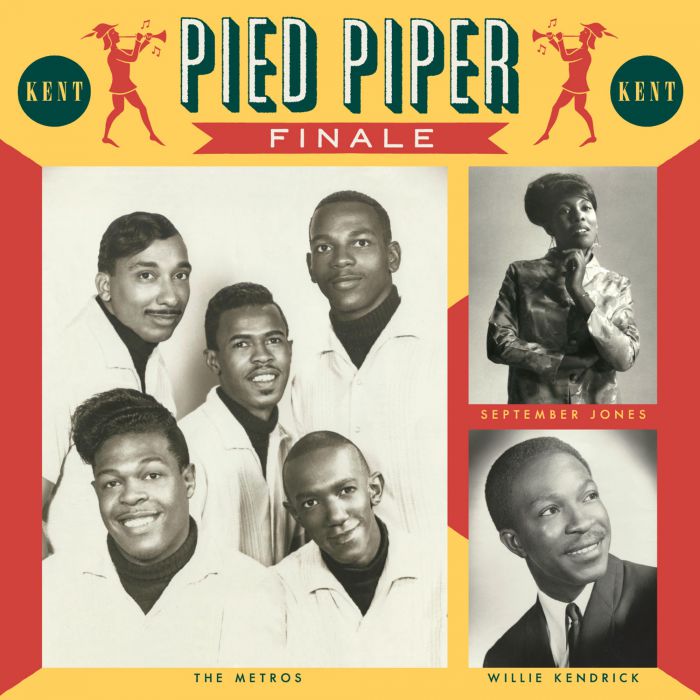
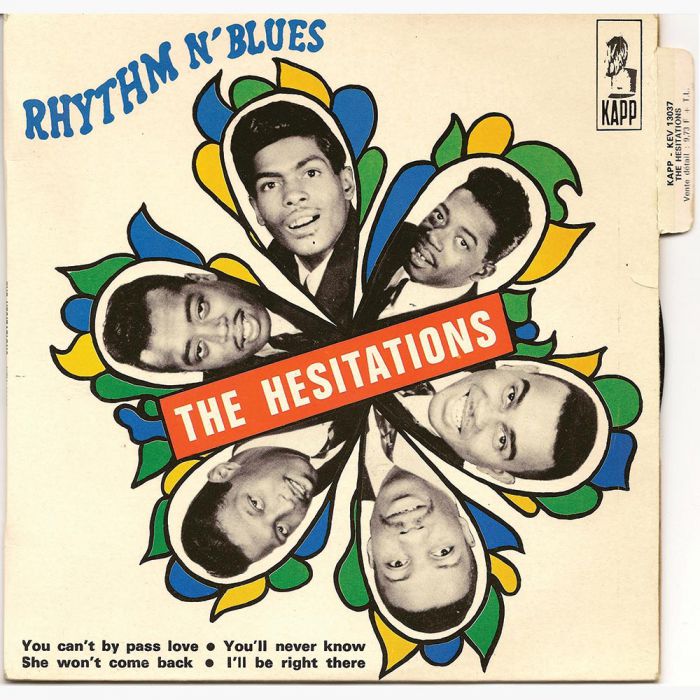
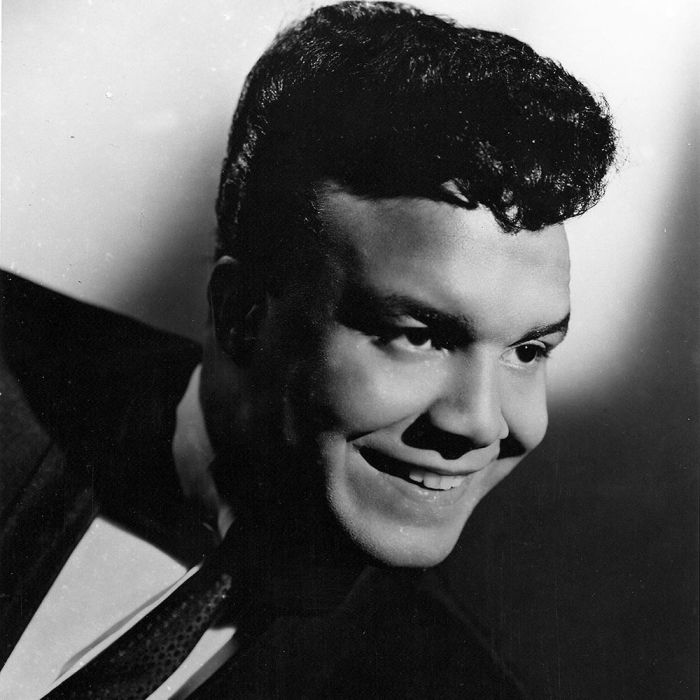
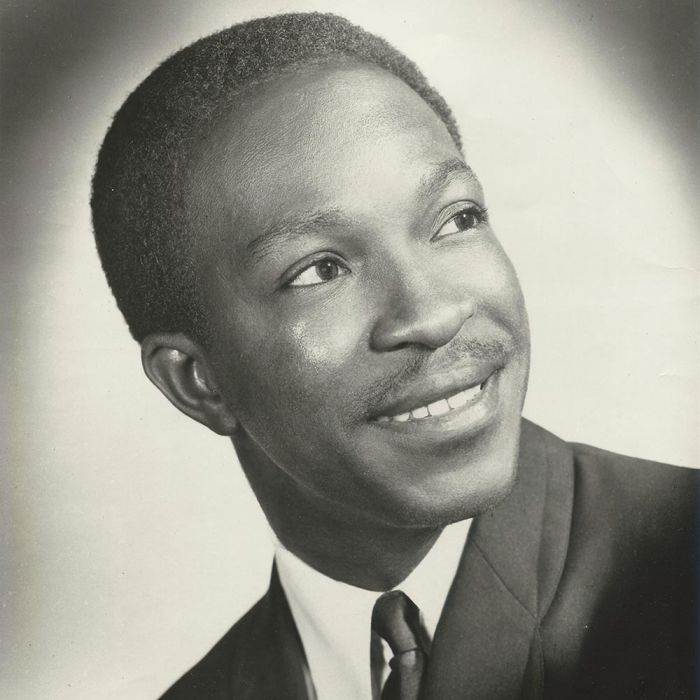
 dereksmusicblog
