THE BEST COMPILATIONS OF 2016-PART 4.
The Best Compilations Of 2016-Part 4.
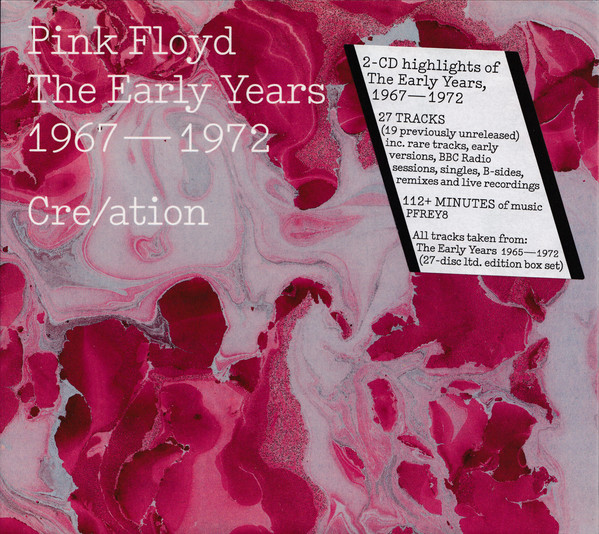
Pink Floyd-Cre/ation: The Early Years 1967–1972.
One box set that divided opinion during 2016, was Pink Floyd’s The Early Years 1965–1972. It featured eleven CDs, DVDs, blu-ray discs, vinyl, and memorabilia. There was everything from unreleased material to live recordings and non-album singles. The Early Years 1965–1972 was marketed as the most comprehensive overview of the first five years of Pink Floyd’s recording career. However, it came at a price, £375. The Early Years 1965–1972 was the most expensive box set of recent years. Many people decided to buy instead Pink Floyd-Cre/ation: The Early Years 1967–1972.
This double album was essentially a sampler of the box set. There was a single, B-Side, unreleased tracks, remixes, radio sessions, jams and songs that were work in progress. However, during the five years the compilation covers, Pink Floyd evolve and mature into a much tighter band. That’s apparent thought Pink Floyd-Cre/ation: The Early Years 1967–1972, which is the perfect introduction to Pink Floyd’s long and illustrious career.
For many people, The Early Years 1965–1972 would be overkill. Some people may only want some of the material. That will soon be possible when six forthcoming volumes from the box set will be released. Meanwhile, Pink Floyd-Cre/ation: The Early Years 1967–1972 is a tantalising taste of what’s in store on these six volumes from The Early Years 1965–1972 box set.
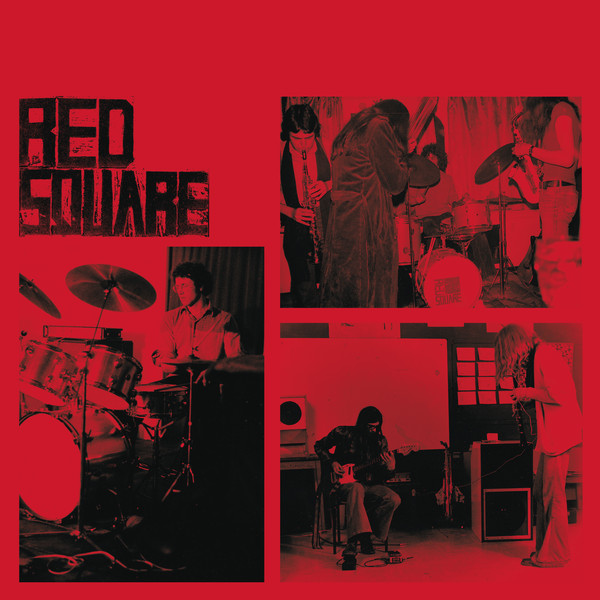
Red Square-Rare and Lost 70s Recordings.
Red Square were formed in 1974, and imploded in 1978. By then, Red Square hadn’t even released an album. Their modest discography consisted of just two self-released cassettes. However, Red Square reformed in 2008, and are making up for lost time. Rare and Lost 70s Recordings which was released by Mental Experience, an imprint of Guerssen Records is just the latest release from the avant-rock pioneers, who have influenced several generation of musicians.
Even today, bands cite Red Square as one of the bands who influenced them. Rare and Lost 70s Recordings features Red Square at the peak of their powers between 1976 and 1978. During that period, Red Square were one of leading lights of the avant-rock and free-improv scenes. Red Square created groundbreaking music that should’ve reached a much wider audience. Alas, record companies were reluctant to sign Red Square. They were perceived as having an “attitude,” and their music was deemed to extreme to be commercial. None of the British record companies were willing to take a chance on Red Square.
As a result, Red Square’s music failed to find the audience it deserved. Instead, it was enjoyed by a small, discerning and appreciative audience. These musical connoisseurs recognised the importance of Red Square’s music. Nowadays, Red Square is belatedly receiving the recognition, plaudits and critical acclaim their music deserves. However, for newcomers to Red Square, Rare and Lost 70s Recordings is the perfect starting place.
Rhythm ’N’ Bluesin’ By The Bayou-Nights Of Sin, Dirty Deals and Love Sick Souls.
Last year, Ace Records released Rhythm ’N’ Bluesin’ By The Bayou-Nights Of Sin, Dirty Deals and Love Sick Souls. This was the fifth volume of Louisiana R&B. It features twenty-eight tracks, that included familiar faces, rarities, alternate takes and unreleased tracks.
This includes contributions from Chris Kenner, Lester Robertson, Barbara Lynn, Jay Nelson, Leroy Washington, Little Victor, Big Walter Price and Classie Ballou. Some of the artists on Rhythm ’N’ Bluesin’ By The Bayou-Nights Of Sin, Dirty Deals and Love Sick Souls feature more than once. Often, their first contribution is so good, that they return for an encore on Rhythm ’N’ Bluesin’ By The Bayou-Nights Of Sin, Dirty Deals and Love Sick Souls. It’s a welcome addition to what’s now one of the most successful and longest running compilation series, By The Bayou.
Rhythm ’N’ Bluesin’ By The Bayou-Nights Of Sin, Dirty Deals and Love Sick Souls is the fourteenth instalment in the By The Bayou series. Still, there’s no let up in quality. Ian Saddler knows where to find rarities, hidden gems and unreleased tracks that ooze quality. They’re his secret weapons for the By The Bayou series. It’s the compilation series that looks as if it will run and run. Especially if Ian Saddler continues to compile compilations as good as Rhythm ’N’ Bluesin’ By The Bayou-Nights Of Sin, Dirty Deals and Love Sick Souls.
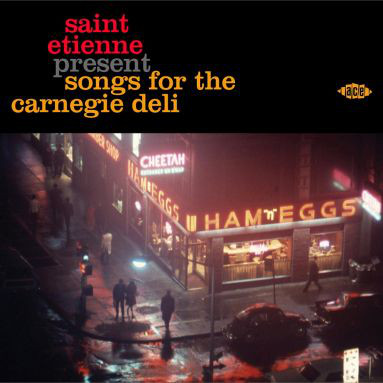
Saint Etienne Presents Songs For The Carnegie Deli.
Nowadays, The Carnegie Deli is a culinary institution. That’s why many visitors to the Big Apple beat a path to its door. This included Bob Stanley of Saint Etienne in 1991. He had heard of the legendary deli, and promised himself that on his next visit to New York, he was going to eat at The Carnegie Deli. Bob wasn’t disappointed. It was everything he expected, and much more. This set Bob Stanley thinking, what kind of music was played in The Carnegie Deli, and similar diners over the years?
Soon, Bob Stanley was thinking of songs that might, at one time, have provided a backdrop to life in a New York diner. Before long, Bob Stanley had a list of possible songs that might have provided the soundtrack to life in The Carnegie Deli. This was a purely academic exercise. Nothing he thought, would come of it. That was until Ace Records asked Bob Stanley and Pete Wiggs to compile Saint Etienne Presents Songs For The Carnegie Deli.
So Bob Stanley and Pete Wiggs delved into the vaults of Smash, United Artists, Wand, Sue, Barry, Cameo, GWO and Arock and picked twenty-four tracks. Among them, were contributions from Irma Thomas, Chuck Jackson, Lou Johnson, The Chiffons, Baby Washington, Junior Lewis, David Coleman, Lesley Gore, The Shirelles and The Hesitations. They’re just a taste of the musical delights in store for listeners on Saint Etienne Presents Songs For The Carnegie Deli.
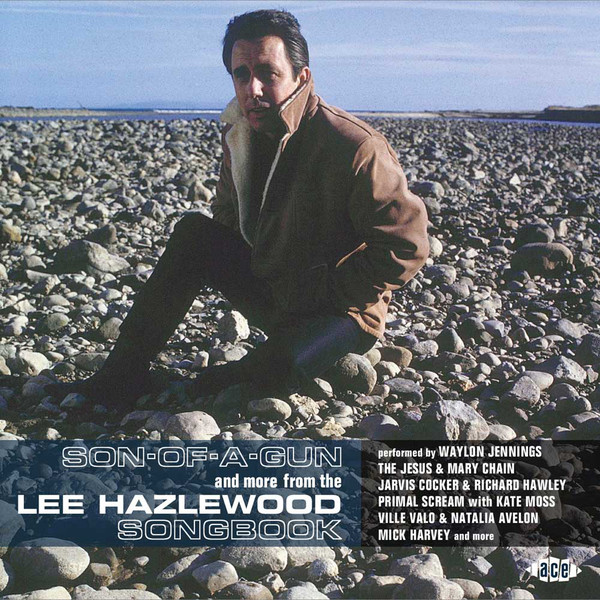
Son-Of-A-Gun and More From The Lee Hazlewood Songbook.
Lee Hazlewood dreamt of being a songwriter. Even when he was working as a DJ. Many thought that this was a pipe dream. However, Lee Hazlewood had the last laugh. His songs were recorded by artists over a fifty a year period. This includes several generations of musicians that featured on Ace Records’ Son-Of-A-Gun and More From The Lee Hazlewood Songbook.
Everyone from country and folk singers to crooner and indie rockers went on to cover Lee Hazelwood’s songs. Proof of this is Son-Of-A-Gun and More From The Lee Hazlewood Songbook. It features an eclectic selection of artists, including Waylon Jennings, Billie Dearborn, Sanford Clark, The Jesus and Mary Chain, Sanford Clark, Mark Morriss, Gold Leaves and Primal Scream. They covered these between 1959 and 2012. Sadly, on August the 4th 2007, Lee Hazlewood passed away aged seventy-eight. Even after his death, artists continue to inspired and influenced by Lee Hazlewood.
Many of the artists that have been influenced and inspired by Lee Hazlewood weren’t even born when he first wrote and recorded some of the songs on Son-Of-A-Gun and More From The Lee Hazlewood Songbook. However, many of his songs have a timeless quality, and fifty years after they were first released, artists are covering them. Sometimes, they stay true to the original, other times, they reinvent the song. Lee Hazlewood, a musical pioneer would’ve approved of that.
Space Echo-The Mystery Behind The Cosmic Sound Of Cabo Verde Finally Revealed!
The ‘story’ behind the equipment that made the music on Space Echo-The Mystery Behind The Cosmic Sound Of Cabo Verde is one that has been exaggerated and grown legs over the years. In some ways, this tall tale gets in the way of the music on Space Echo-The Mystery Behind The Cosmic Sound Of Cabo Verde Finally Revealed!
It was released by Analog Africa and is the perfect introduction to the Cabo Verdean music scene after it gained its independence from Portugal in 1975. After that, the Cabo Verdean music scene flourished, with artists and bands combining musical genres and influences to create new and exciting music. Often, the basis for this music is the of Cabo Verde’s past. Other times, the music is made by the latest technology, which locals will claim are similar to those that were supposedly found on that mysterious boat in a field in mid 1968. However, this new music resulted in Cabo Verdean music scene flourishing.
Cabo Verde enjoyed an eclectic and vibrant music scene after independence in 1975. During that period, Cabo Verde cultural capital blossomed as a new generation of musicians got the opportunity to showcase their considerable talents. A reminder of their music can be found on Space Echo-The Mystery Behind The Cosmic Sound Of Cabo Verde, which hopefully, is the first in a series compilations documenting Cabo Verde’s rich musical past.

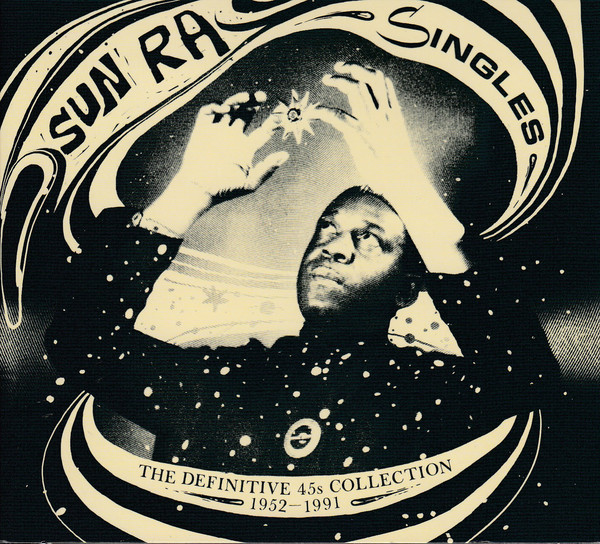
Sun Ra-Singles The Definitive 45s Collection.
One of the most-anticipated compilations of 2016 was Strut Records’ Singles The Definitive 45s Collection. It documents the music of a true visionary. He had spent the last six decades releasing groundbreaking music. This includes on 125 albums and the countless singles that Sun Ra released. A tantalising taste of these singles feature on the Singles The Definitive 45s Collection box set. It’s a lovingly curated compilation that will appeal to veterans of and newcomers to Sun Ra’s music.
Sun Ra was one of most enigmatic and innovative musicians of the 20th Century. For nearly forty years, Sun Ra and His Arkestra pushed musical boundaries. Sun Ra was a perfectionist and relentless taskmaster. With some of most talented, inventive and adventurous musicians of their generation, Sun Ra set about honing the Arkestra’s sound. He was demanding and set exacting standards. Second best was no use to Sun Ra, who was a musical pioneer.
His music is celebrated on Singles The Definitive 45s Collection box set, where Sun Ra combines Egyptian history with space-age cosmic philosophy and freeform jazz. Sun Ra was more than a musician, bandleader, composer. He was also a cosmic philosopher, writer and poet. Despite his many talents, Sun Ra is best remembered for a musical career that spanned six decades. The music Sun Ra wrote and recorded was innovative, inventive and influential, and is why nowadays, he’s regarded as one of the most important figures in jazz.
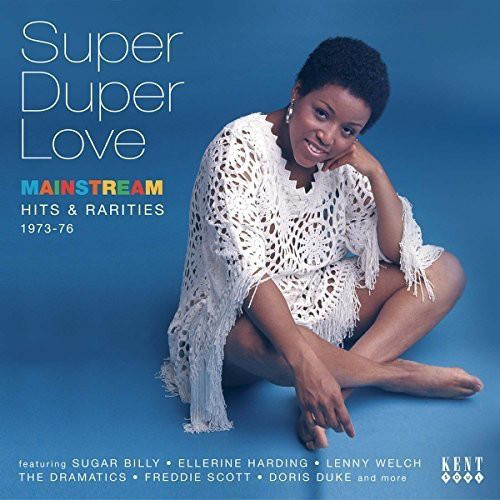
Super Duper Love-Mainstream Hits and Rarities 1973-76.
In 1970, Bob Shad decided to relaunch Mainstream Records. For the next three years Bob Shad concentrated on releasing traditional jazz. By 1973, there had been a blurring of the lines between what was soul and jazz. This resulted in Mainstream Records’ musical policy changing, and the label releasing a much wider selection of music. This included the music on Super Duper Love-Mainstream Hits and Rarities 1973-76, which was released by Kent Soul
Super Duper Love-Mainstream Hits and Rarities 1973-76 features twenty-four tracks from Mainstream Records and its various subsidiaries. Familiar faces and new names sit side-by-side, including Afrique, Linda Perry and Soul Express, Lenny Welch, Sandra Phillips, Calvin Arnold, J.G. Lewis, Doris Duke, The Eleventh Commandment, Darlene Jackson, The Dramatics and Ellerine Harding. These are just a few of the artists on Super Duper Love-Mainstream Hits and Rarities 1973-76.
It features deeply soulful songs, including ballads and uptempo love songs. There’s everything from songs about betrayal and love lost, to songs about hope, hurt and heartache. Many of these songs will tug at the heartstrings. Some will make the listener cry while others will make them laugh. However, even song on Super Duper Love-Mainstream Hits and Rarities 1973-76 is of the highest quality. It’s also the perfect companion to Mainstream Modern Soul 1969-1976. Both compilations show the soulful side Bob Shad’s Mainstream Records.
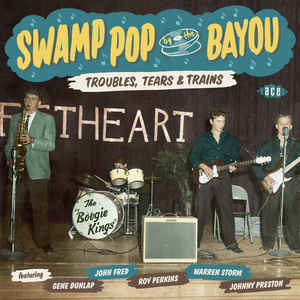
Swamp Pop By The Bayou-Troubles, Tears and Trains.
While Swamp Pop By The Bayou-Troubles, Tears and Trains was the thirteenth instalment in Ace Records’ By The Bayou series, it was only the second compilation of swamp pop. It finds compiler Ian Saddler returning to the vaults of J.D. Miller, Eddie Shuler, Floyd Soileau, Sam Montel, Huey Meaux and Joe Ruffino, Pappy Daily, Murray Nash and Jim Rentz. Ian Saddler even looked for hidden gems with the Hitt and Mercury labels. He struck gold.
Among the treasure unearthed by Ian Sadlder are: six unreleased songs from swamp pop royalty Warren Storm plus Frankie Lowery, The Boogie Kings, Larry Hart, Frankie Lowery and Buck Rodgers. There’s also a trio of alternate tracks. The other nineteen tracks are real rarities. They’re a mixture of skirt swirlers and buckle polishers. For those unfamiliar with the parlance of swamp pop, skirt swirlers are the uptempo dance tracks; while buckle polishers are the slow songs. Providing the skirt swirlers and buckle polishers are Roy Perkins With Jerry Starr and The Clippers, Dale Houston, Phil Clay, John Fred, Gene Dunlap and The Jokers,Warren Storm, Dale Houston, Johnny Preston and Jay Richards.
Just like previous volumes in the By The Bayou series, familiar faces and new names rub shoulders on Swamp Pop By The Bayou-Troubles, Tears and Trains. This captivating compilation of skirt swirlers and buckle polishers from the land of “gaters and gumbo” is guaranteed to get any party started.
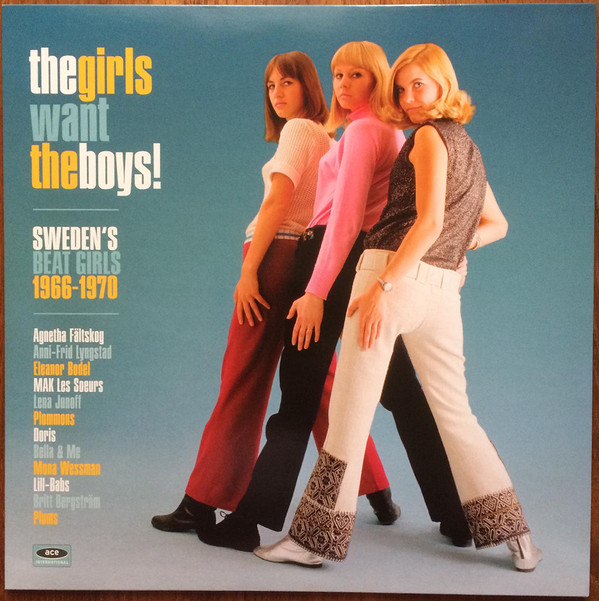
The Girls Want The Boys! Swedish Beat Girls 1964-1970.
Sweden has always had a rich musical heritage. That was the case between 1964 and 1970. That was the era of the beat girls. This period was documented on The Girls Want The Boys! Swedish Beat Girls 1964-1970, which was released by Ace International. It features twenty-four tracks from eighteen artists.
They’re a mixture of familiar faces and new names. Two of the biggest names were Agnetha Fältskog and Anni-Frid Lyngstad in their pre-Abba days. Other include Eleanor Bodel, Lena Junoff, Doris, Mona Wessman, Britt Bergstrom, Sunnygirls, MAK Les Soeurs, Suzie and Susanne Wigforss. They were some of the most successful Swedish Beat Girls between 1964 and 1970.
As the seventies dawned, some artists went on to greater things. Other artists, including Eleanor Bodel, turned their back on music. She had enjoyed her short, but successful musical career, but decided to return to her studies. Some artists had no option, as their career stalled or ground to a halt. For some artists, including Bella and Me, recording a single hadn’t been something they planned to do. A chance meeting resulted in them recording their one and only single Whatever Happened To The 7-Day Week. They never recorded another single. Britta Bergström and Suzie were truly prolific artists. Both feature on The Girls Want The Boys! Swedish Beat Girls 1964-1970, which is the first retrospective of the Swedish Beat. Let’s hope it’s not the last.
THE BEST COMPILATIONS OF 2016-PART 5.
The Best Compilations Of 2016-Part 5.
The Golden Age Of American Country Music: More Country Hits.
For many people, the golden age of country music was the late fifties and early sixties. During that period, country music provided the soundtrack to much of American life. Providing the soundtrack were giants of country music like Johnny Cash, Don Gibson, Carl Perkins, George Jones, Jerry Lee Lewis and Marty Robbins. Their singles regularly topped the country charts and crossed over into the US Billboard 100. Songs from each of these artists feature on a recently released compilation by Ace Records, The Golden Age Of American Country Music: More Country Hits.
This is the long-awaited followup to The Golden Age Of American Country Music: The Country Hits, which was released back in 2008. Fast forward eight years, and The Golden Age Of American Country Music: More Country Hits features another twenty-eight hits from some of the giants of country music. Essentially, The Golden Age Of American Country Music: More Country Hits features a who’s who of country music. There’s also contributions from Jim Reeves, Patti Page, Stonewall Jackson, Ray Price, Bill Anderson and Carl Smith on The Golden Age Of American Country Music: More Country Hits.
It’s a compilation that epitomises everything that’s good about country music. That comes as not surprise. The Golden Age Of American Country Music: More Country Hits features many of the giants of country music, who were responsive for the rise and rise of country music.

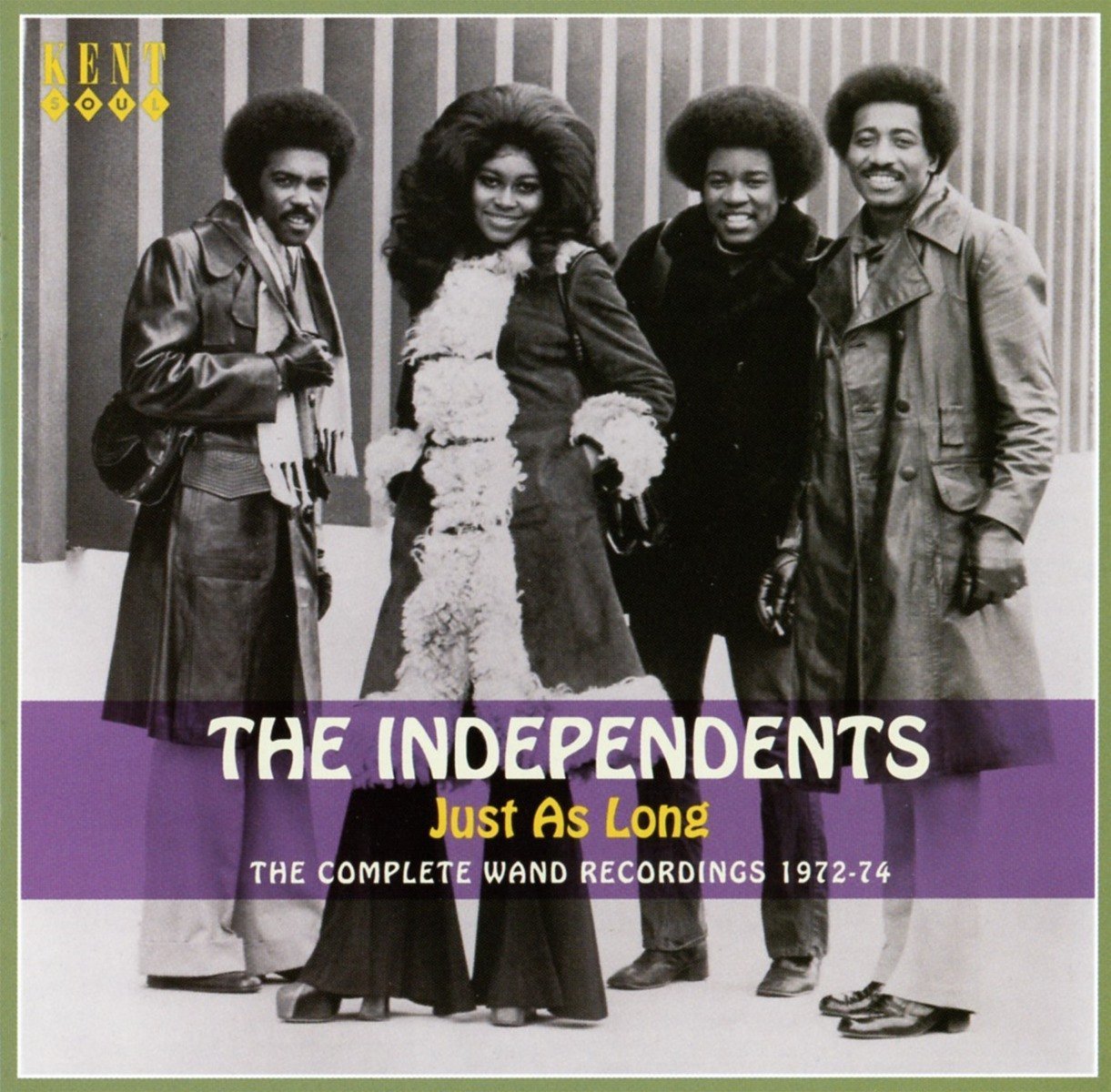
The Independents.-Just As Long-The Complete Wand Recordings 1972-74.
Charles Jackson and Marvin Yancy first met at the Chicago’s Black Writer’s Workshop. When they got talking, they discovered they had much in common. They began to write together, they proved a potent partnership. Two heads were definitely better than one. Having penned some songs, Charles hit on the idea of forming a group. Secretly, he had dreamed of becoming a singer. So Charles approached Marvin about forming a group. He agreed, they began the search for the rest of the nascent group. Before long, two stalwarts of Chicago soul scene, Helen Curry and Maurice Jackson had agreed to join the nascent group that became The Independents.
Over the next two years, The Independents enjoyed eight hit singles in the US R&B charts, and five in the US R&B charts. This included four top ten singles, including the number one single Leaving Me. It was one of The Independents’ trademark ballads, which was certified gold after selling over 500,000 copies. However, Leaving Me is just one of twenty-two tracks that feature on Just As Long-The Complete Wand Recordings 1972-74.
It was recently released by Kent Soul, an imprint of Ace Records and includes singles, B-Sides, album tracks and a remix. The twenty-two tracks on Just As Long-The Complete Wand Recordings 1972-74 include the best and most beautiful music in the three year career of Chicago’s very own The Independents.
The Ladies Of Too Slow To Disco.
Since 2014, DJ Supermarkt has been curating the Too Slow To Disco series. Last year, rather that release Too Slow To Disco Volume 3, to focus on The Ladies Of Too Slow To Disco. It’s a nineteen track compilation released by the How Do You Are label. The Ladies Of Too Slow To Disco features Evie Sands, Rickie Lee Jones, Melissa Manchester, Valerie Carter, Carole Bayer Sager, Carly Simon, Lauren Wood, Carole King and Lynn Christopher. This was a tantalising taste of the music awaiting the listener on The Ladies Of Too Slow To Disco.
Classics, hidden gems and rarities sit side-by-side on The Ladies Of Too Slow To Disco. Many of the tracks aren’t the artists biggest hits. Instead, many are album tracks. This makes a pleasant change. Usually, compilers look no further than singles. However, that’s not DJ Supermarkt’s style. He eschews the obvious for long forgotten album tracks. Many people won’t remember these tracks. They’ll only be remembered by diehard fans. Not any more. Now a new generation of music lovers will get the chance to hear these hidden gems. They’re part of a voyage of discovery, where newcomers will discover the delights of the West Coast sound, including The Ladies Of Too Slow To Disco.

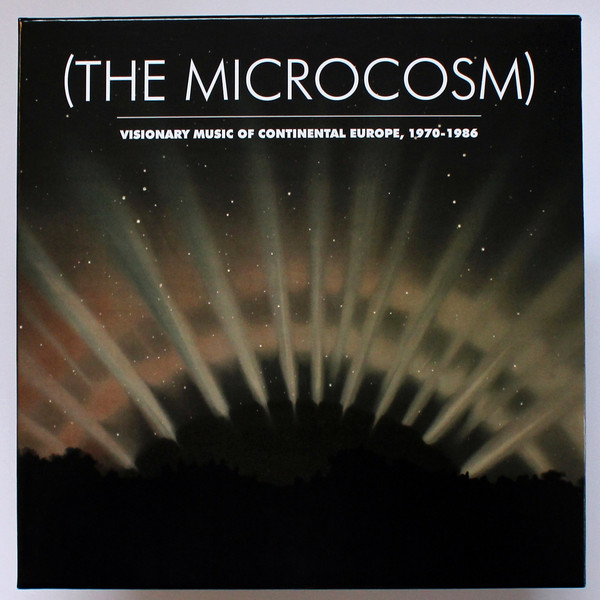
The Microcosm): The Visionary Music Of Continental Europe, 1970-1986.
As the seventies dawned, a new musical movement started to take shape across Europe. This new musical movement continued right through to the mid-eighties. By then, it was a pan European musical movement. The tentacles of this new musical movement had spread far and wide, and showcased the combined and considerable talents of artists who created ambitious and innovative music. This music is documented on (The Microcosm): The Visionary Music Of Continental Europe, 1970-1986, which was released by Light In The Attic Records.
It’s the perfect introduction to the pioneers of this new, pan European musical movement. It showcases the music Hans-Joachim Roedelius, Ralph Lundsten, Ash Ra, Tempel, Ariel Kalma, Bernard Xolotl, Enno Velthuys, Peter Michael Hamel and Deuter. They’re among the fourteen artists that feature on (The Microcosm): The Visionary Music Of Continental Europe, 1970-1986. Each produced ambitious and innovative music, and can be described as a visionary.
Despite this, the music failed to find an audience. It was only many years later, that the music on (The Microcosm): The Visionary Music Of Continental Europe, 1970-1986 somewhat belatedly, began to find the audience it deserves. Still though, there are many record buyers still to discover the delights of this pan European musical movement. Maybe (The Microcosm): The Visionary Music Of Continental Europe, 1970-1986 will introduce them to this body of groundbreaking music, and they’ll embark upon a musical voyage of discovery?
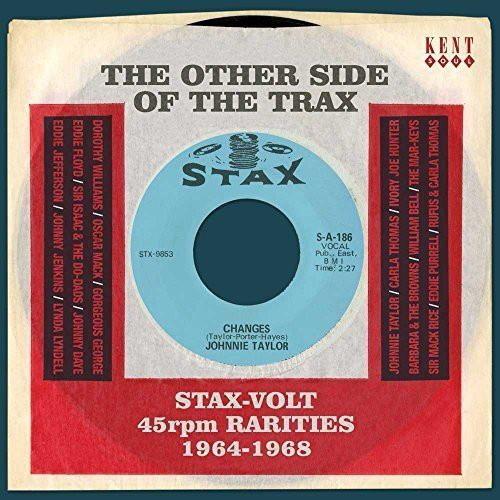
The Other Side Of The Trax-Stax-Volt 45rpm Rarities 1964-1968
Between 1964 and 1968, countless hidden gems found their way on to B-Sides of Stax and Volt singles. Since then, none of these B-Sides have been released on CD before. That’s until now. Twenty-four B-Sides from Stax and Volt’s blue period are celebrate on The Other Side Of The Trax-Stax-Volt 45rpm Rarities 1964-1968, which was released by Kent Soul, an imprint of Ace Records.
The Other Side Of The Trax-Stax-Volt 45rpm Rarities 1964-1968 features tracks from some of the biggest names on Stax and Volt’s roster during the blue period. This includes Johnnie Taylor, Carla Thomas, William Bell, The Mar-Keys, Eddie Jefferson, Dorothy Williams, Oscar Mack, Eddie Floyd and Lynda Lyndell. They’re just a few of the artists that feature on The Other Side Of The Trax-Stax-Volt 45rpm Rarities 1964-1968, which is a reminder of the delights tucked away on B-Sides during Stax and Volt’s blue period.
Often, the B-Side to a Stax or Volt single surpassed the quality of the single. Those that flipped over were richly rewarded, and heard joyous, uptempo, dance tracks or heartbreaking ballads. Twenty-four of Stax and Volt’s finest B-Sides feature on The Other Side Of The Trax-Stax-Volt 45rpm Rarities 1964-1968. These songs are a reminder to always flip over to the B-Side, as musical gold may be awaiting discovery.
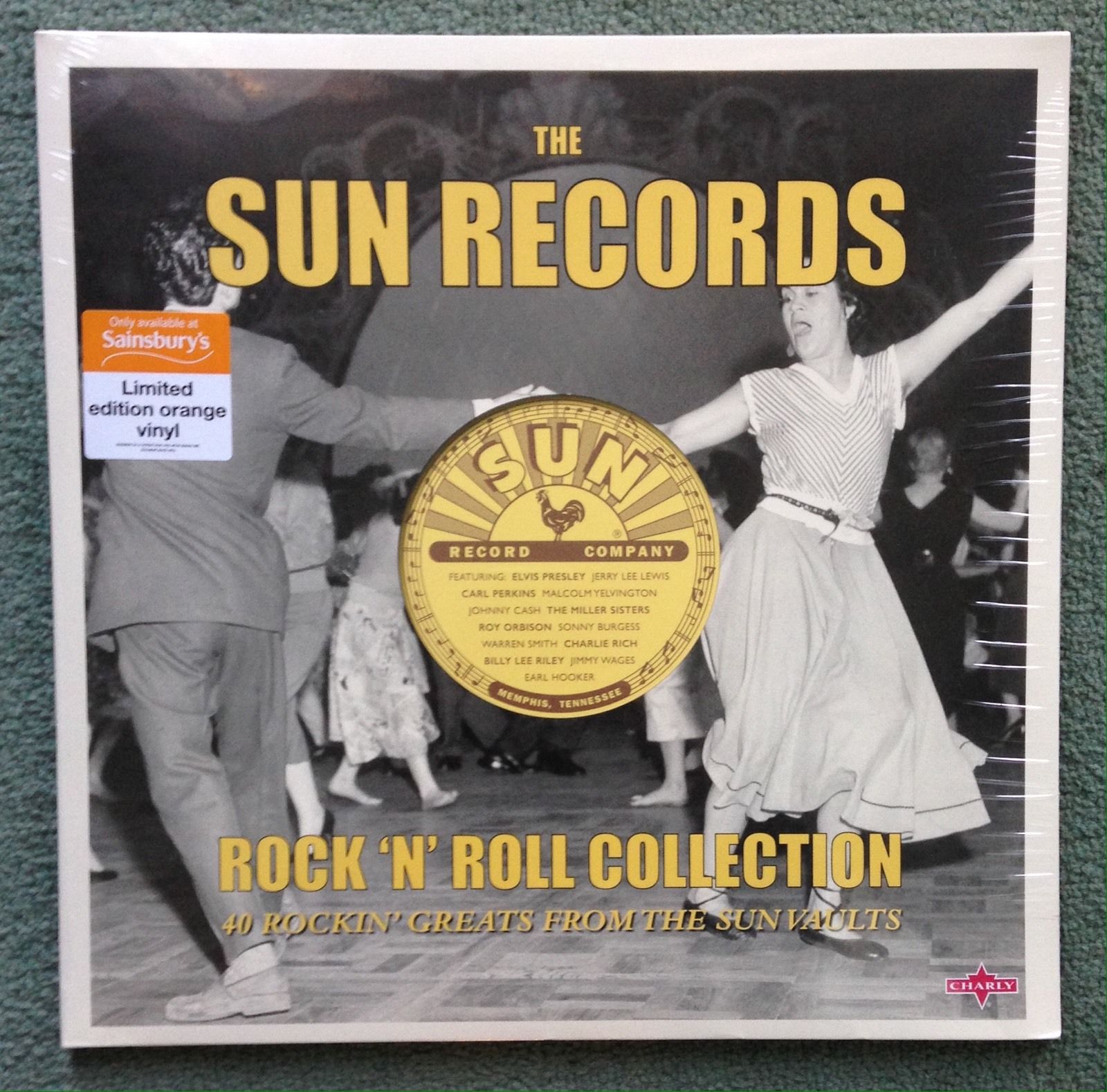
The Sun Records Rock ’N’ Collection-40 Rockin’ Greats From The Sun Vaults.
Last year, Sainsbury’s jumped on the burgeoning vinyl bandwagon, and have released a series of limited editions. This includes The Sun Records Rock ’N’ Collection-40 Rockin’ Greats From The Sun Vaults, which was released as a double album by Charly, and retailed exclusively through Sainsbury’s. Only 1,000 copies were pressed on 180 gram orange heavyweight vinyl. It’s a quality release and a reminder of one of the most important record labels in musical history.
It’s the label where rock ’n’ roll was born, and that was home to everyone from Elvis Presley, Carl Perkins and Jerry Lee Lewis to Johnny Cash, Roy Orbison and the Silver Fox Charlie Rich. That’s not forgetting Warren Smith, The Miller Sisters, Billy Lee Riley and Earl Hooker. They all feature on The Sun Records Rock ’N’ Collection-40 Rockin’ Greats From The Sun Vaults. Some of their best known tracks feature on this double album, and will be instantly recognisable to music lovers of all ages. They’re joined by some hidden gems from the Sun Records’ back-catalogue. It’s a captivating compilation.
For newcomers to Sun Records, The Sun Records Rock ’N’ Collection-40 Rockin’ Greats From The Sun Vaults, it’s the perfect starting place for anyone whose yet to discover the delights of Sun Records. This should be part of their musical education. After all, Sun Records was one of the most important labels in the history of music.
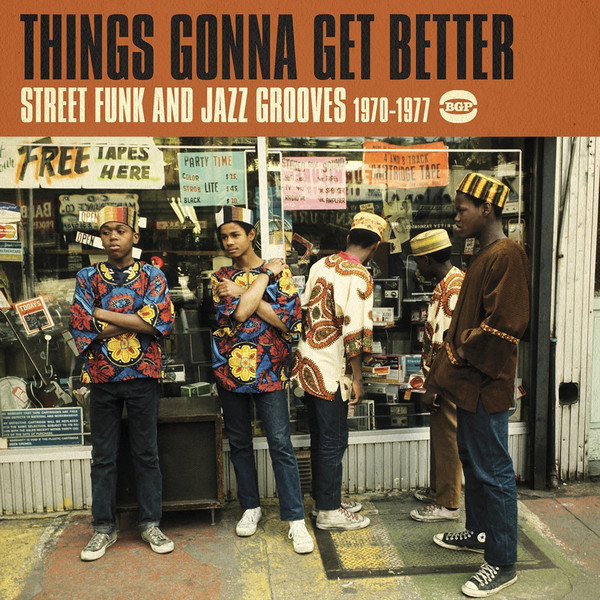
Things Gonna Get Better: Street Funk and Jazz Grooves 1970-1977 .
Although funk and jazz compilations are plentiful, Things Gonna Get Better: Street Funk and Jazz Grooves 1970-1977 stood head and shoulders above the competition. They were mere also-rans compared to Things Gonna Get Better: Street Funk and Jazz Grooves 1970-1977. It’s the second, and best instalment in BGP Records’ Things Gonna Get Better series.
Dean Rudland a veteran of countless critically acclaimed compilations compiled Gonna Get Better: Street Funk and Jazz Grooves 1970-1977. It was the latest in a long line of quality compilations to bear Dean Rudland’s name. Not for the first time, Dean Rudland has compiled what can only be described as a must have compilation for fans of jazz and funk. That’s no surprise.
Gonna Get Better: Street Funk and Jazz Grooves 1970-1977 featured everyone from Funkadelic, Vernon Garrett, Richard “Groove” Holmes and Idris Muhammad to Lonnie Liston Smith, Don Julian and The Larks, Harold Alexander and Pretty Purdie and The Playboys. The twenty tracks are a mixture of singles, B-Sides, album tracks and Dave Hamilton’s unreleased track What’s The Matter With The World. This results in a compilation that oozes quality, and will be a welcome addition to any record collection, Gonna Get Better: Street Funk and Jazz Grooves 1970-1977.
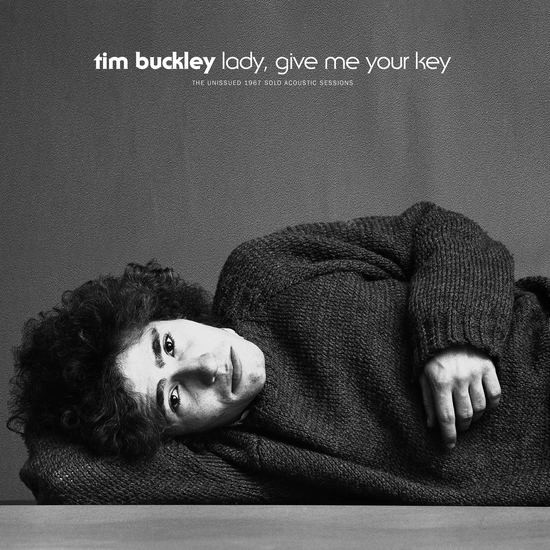
Tim Buckley-Lady, Give Me Your Key-The Unissued 1967 Sessions.
For anyone with even a passing interest in Tim Buckley’s music, then Light In The Attic’s Lady, Give Me Your Key-The Unissued 1967 Sessions was the equivalent of the Holy Grail. It featured thirteen previously unreleased tracks. This included six songs from a long-lost acetate and seven songs the Oak Court Demo Tape. Listening to Lady, Give Me Your Key-The Unissued 1967 Sessions is the equivalent of time travel.
Suddenly, it’s late 1966, early 1967 and the listener is transported to Larry Beckett’s LA apartment. Larry sets up his reel-to-reel tape recorder. This he does during several sessions. The songs he records Tim Buckley singing became the Oak Court Demo. These songs are work in progress. Having said that, they’re of historical importance. Especially to anyone interested in Tim Buckley’s music. Two of the songs on the Oak Court Demo, Once I Was and I Never Asked to Be Your Mountain would later be transformed, into Tim Buckley classics. These versions on Lady, Give Me Your Key-The Unissued 1967 Sessions show these songs evolving. It’s a similar case with the songs on The Acetate recorded at Madison Studios. They’re a fascinating insight into Tim Buckley’s nascent recording career.
Somewhat belatedly, these thirteen songs are available for all to hear on Lady, Give Me Your Key-The Unissued 1967 Sessions. For Tim Buckley fans they’re regarded as a musical Holy Grail.
Venezuela 70-Cosmic Visions Of A Latin American Earth-Venezuelan Experimental Rock In The 1970s.
Last year, Soul Jazz Records released Venezuela 70-Cosmic Visions Of A Latin American Earth-Venezuelan Experimental Rock In The 1970s. It was compiled by Toni Arrelano and featured music from Pablo Schneider, Fernando Yvosky, Vytas Brenner, Angel Rada, Miguel Angel Fuster and Apocalipsis. These artists are largely unknown outside of their home country, but were part of what was a golden age in Venezuelan music.
During the seventies, Venezuelan artists released groundbreaking and genre-melting music. To do that, they drew inspiration from, and combined disparate musical genres, influences and instruments. Everything from avant-garde to Berlin School, electronica and experimental has been combined with funk and fusion plus Krautrock, Latin, progressive rock, psychedelia, rock and space rock. All these genres can be heard throughout Venezuela 70-Cosmic Visions Of A Latin American Earth-Venezuelan Experimental Rock In The 1970s. They’re combined by artists and groups who pushed musical boundaries and created ambitious and exciting music. Sadly,this music is largely unknown outside of their home country. That’s a great shame.
Especially considering the quality of music that is on Venezuela 70-Cosmic Visions Of A Latin American Earth-Venezuelan Experimental Rock In The 1970s. It’s the perfect introduction to Venezuelan music of the seven tie and features some of the most talented musicians in Venezuela’s thriving music scene during what was a golden age.

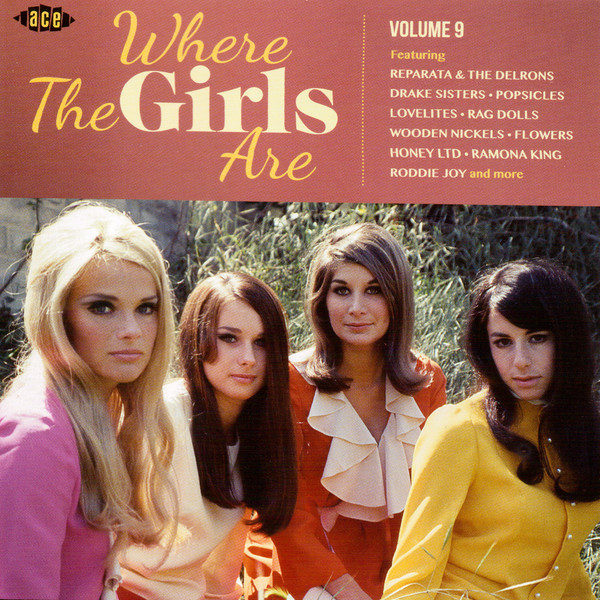
Where The Girls Are Volume 9.
There aren’t many compilations that are still going strong after nine volumes and nineteen years. That is apart from the Where The Girls Are series. Last year, Where The Girls Are Volume 9 was released by Ace Records. It’s another captivating compilation that features The Rag Dolls, Diane Christian, Popsicles, Evie Sands, Lovelites, The Francettes, The Penny Sisters and The Blossoms With Billy Strange. This is just a tantalising taste of the delights in store on for listeners on Where The Girls Are Volume 9.
Just like the previous volumes in the Where The Girls Are series, the emphasis was on quality music. It’s guaranteed to bring memories flooding back. The listener never knows what compiler Mick Patrick has in-store. He’s dug deep into the vaults of numerous labels, including Ballyhoo, Bandera, Bell Records, Cameo, Decca, Flip, Mint, Parkway and Vault and unearthed hidden gems and old favourites.
There everything from pop to soul and the classic sixties girl group sound. There’s even a couple of would-be dance crazes on Where The Girls Are Volume 9. It’s a welcome addition to one Ace Records’ longest running and critically acclaimed series, Where The Girls Are.
CROMWELL-AT THE GALLOP.
CROMWELL-AT THE GALLOP.
By 1975, Dublin had an eclectic and vibrant music scene. There literally was something for all musical tastes. This ranged from the traditional showbands that had long been part of the Irish music scene, right through to traditional Irish music and sentiment-laden pop music. However, this was only part of the story.
At the other end of the musical spectrum was Dublin’s most successful music export, Thin Lizzy. Lead by the inimitable Phil Lynott, Thin Lizzy’s hard rocking sound won them fans the world over. Then there was Horslips, the founding fathers of the Celtic rock sound. They had just released their fourth album and were one of Ireland’s most successful bands. Meanwhile, another Dublin based band Cromwell were about to release their debut album At The Gallop on their now Cromwell label.
The local critics who had heard At The Gallop, forecast a bright future for Cromwell. They had honed their hard rock sound over the last few years. Now that Cromwell had come of age musically, surely it was only a matter of time before they made the journey over the water, where they would sign for one of the London based major labels. Maybe then, Cromwell would follow in the footsteps of Ireland’s most famous sons like Thin Lizzy and Rory Gallagher?
Alas, that wasn’t the case. Cromwell’s debut album wasn’t the success that critics had forecast. Neither did Cromwell make the Journey to London to sign for a major label. Nor did Cromwell release a followup to At The Gallop. After releasing five singles and one album, the Cromwell story was at an end. Their discography consists of five singles and one album. However, what an album At The Gallop is.
Nowadays, At The Gallop is regraded a cult classic, and a long-lost hidden gem. It’s also an extremely rare album. Original copies change hands for upwards of €400. This meant for far too long, At The Gallop was beyond the budget of most record buyers. That changed recently, when Got Kinda Lost, an imprint of Guerssen Records reissued Cromwell’s long-long lost cult classic At The Gallop. It’s a welcome reminder of one of the most underrated and talented bands of the early seventies, Cromwell. Their story began in Dublin 1970.
As a new decade dawned, a new band was born in Drumcondra, in Dublin in 1970. Originally, Cromwell was a quintet, based around the three Kiely brothers who previously had been members of Julian’s Heirs. Cromwell was a new start for the Kiely brothers. Dave Kiely became Cromwell’s frontman, while Desmond became the bassist and Michael the rhythm guitarist. They were joined drummer Derek Dawson and lead guitarist Patrick Brady. With the lineup complete, Cromwell were soon making their first tentative steps onto the local live circuit.
Cromwell made their live debut at an open air concert, in Swords, just north of Dublin. This was the start of a period where Cromwell were constant features of the local live circuit. They played pubs, clubs and dance halls, which allowed Cromwell to hone their sound. However, by November 1971, Cromwell were reduced from a quintet to a trio when Dave and Demond Kiely Kiely exited stage left. The two brothers had decided to pursue other opportunities.
Now that Cromwell were reduced to a trio, there were some changes. Michael Keily switched from rhythm guitar to bass. Cromwell’s sound became heavier and rockier. This was more in keeping with the sound that was popular on both sides of the Atlantic. For Cromwell, they were one step nearer to finding their true sound.
Meanwhile, when Cromwell played live, their setlist included covers of songs The Who, Rolling Stones and Granny’s Intentions. To this, Cromwell added covers of twelve-bar blues. Gradually, it seemed Cromwell were moving towards what would become their trademark sound. Maybe the addition of a new vocalist would prove to be the finishing touch?
When Cromwell went looking for a new vocalist, their luck was in. They managed to secure the services of Droghedaean born vocalist Mick O’Hagan. He had an impeccable musical pedigree. His father was famous Irish tenor Patrick O’Hagan, and his brother was Johnny Logan who would later, win the Eurovision Song Contest. However, when Mick O’Hagan joined Cromwell, he was regarded as Ireland’s premier blues and rock vocalist. Surely, he was the final piece in the jigsaw?
That should have been the case. The new lineup of Cromwell began playing live. By then, drummer Derek Dawson, bassist Michael Kiely and lead guitarist Patrick Brady were just nineteen. However, they played like seasoned veterans. With Mick O’Hagan as Cromwell’s new frontman, it looked like Cromwell were heading for bigger and better things.
Local hero Rory Gallagher certainly thought so, and booked Sleepy Hollow and Cromwell to open for him on his 1972 Irish tour. This was the opportunity of a lifetime. Cromwell’s music would be heard by a much wider audience, and maybe, A&R men would be in the audience?
If they were, they didn’t see Mick O’Hagan. He quit Cromwell just before the band headed out on tour with Rory Gallagher. Despite this disappointment, Cromwell headed out on tour with lead guitarist Patrick Brady taking charge of lead vocals. This continued when Cromwell returned from touring with Rory Gallagher.
Cromwell continued to play live. By now, Cromwell were heading much further afield. They were now touring the Emerald Isle and were regarded as one of the rising stars of the Irish music scene. So it made sense for Cromwell to record their first demo.
To record the demo, this necessitated a trip to Belfast, in Northern Ireland. This was at the height of the troubles. Three young men, who looked as if they belonged in a rock group were always going to attract the scrutiny of the British Army. When Cromwell crossed the border, their van was stopped. The three members of Cromwell were searched at gunpoint. Meanwhile, their van and the equipment it held was searched. This was the case each and every time Cromwell made the journey from the Republic of Ireland to Northern Ireland. Considering Cromwell were heading to Belfast to record a demo, this wasn’t the best preparation.
Having arrived in Belfast, Cromwell made their way to the recording studio. That was where Cromwell recorded songs penned by the Patrick Brady and Michael Kiely songwriting partnership. It was beginning to blossom, and over the next few years, would be fruitful source of material.
With the demo recorded, Cromwell started trying to attract the attention of British record labels. This was the only option. Ireland didn’t have the successful music industry that it now has. So Irish bands had no other option but to sign to British labels. However, not every band signed to British labels.
After recording the demo, Cromwell tried to attract the attention of British based record labels. It was to no avail. So Cromwell returned to playing live. They travelled far and wide, following in the footsteps of Ireland’s two great bands, Rory Gallagher’s Taste and Thin Lizzy.
Usually, Cromwell weren’t short of gigs. Sometimes, though when gigs were hard to come by, Cromwell went in search of places to play. Cromwell weren’t averse to heading off the beaten track, and into small towns where no rock bands ever played. The three members of Cromwell were welcomed with open arms, by youths starved of music that was relevant to them. It was a heartening site.
The only problem for Cromwell was the 1973 oil crisis. Suddenly, petrol was rationed and the price soared. Fortunately, Cromwell were always able to secure an extra can of petrol which they stored with the equipment in their van, before heading out to gigs. Cromwell’s mission to take rock music to every town and village in Ireland continued.
Later in 1973, Cromwell’s thoughts turned to releasing a single. The three members of Cromwell had come to the conclusion that if a record label wasn’t going to sign them, they would release a single on their own label. That day, Cromwell followed in the footsteps of The Beatles and Rolling Stones and their Cromwell label was born.
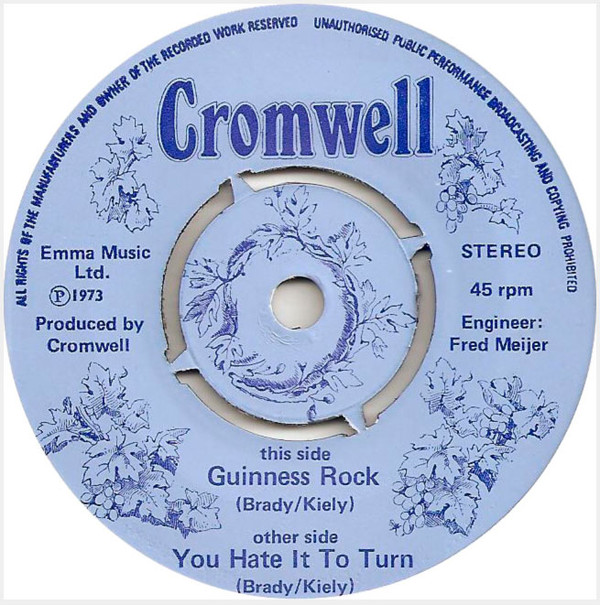
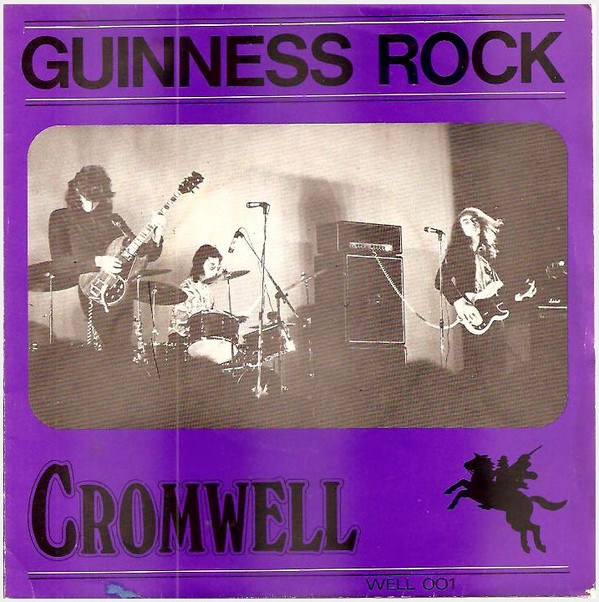
Later in 1973, the nascent Cromwell label released its first single, Guinness Rock. This was the first single that Cromwell had released since they were formed three years earlier in 1970. Guinness Rock garnered some radio play locally, while the band were featured on RTE, the Irish national broadcaster. One of the Irish magazines New Spotlight championed Cromwell and their music. This paid off when Cromwell released their sophomore single.
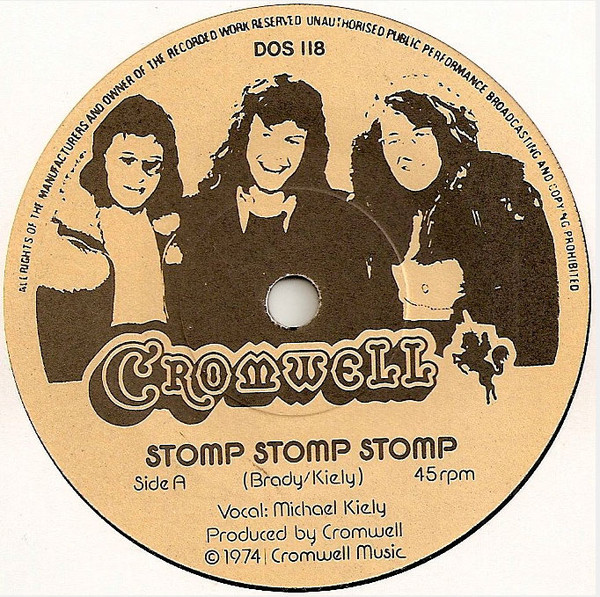
This was Stomp Stomp Stomp which was released in 1974. It sold well and reached number eleven in the Irish single’s charts. For Cromwell, this was something of a coup, and introduced the band’s music to a new and wider audience.
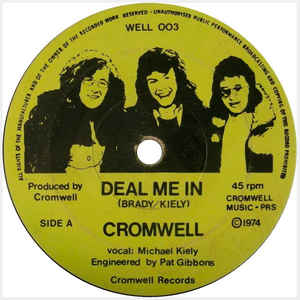
Following the success of Stomp Stomp Stomp, Cromwell released Deal Me In. It failed to replicate the success of Stomp Stomp Stomp. For Cromwell this was a disappointment.
They didn’t release another single until You Got It Made in 1975. It would feature on Cromwell’s debut album At The Gallop, which was released later in 1975.
At The Gallop featured ten hard rocking tracks from the Patrick Brady and Michael Kiely songwriting partnership. They were recorded by drummer Derek Dawson, bassist Michael Kiely and lead guitarist Patrick Brady who took charge of the lead vocals. They were by then a tight and talented trio who many thought had a bright future ahead of them.
So much so, that some local critics thought that Cromwell were about follow in the footsteps of Ireland’s most famous sons like Thin Lizzy and Rory Gallagher. Sadly, that wasn’t the case. Cromwell’s debut album At The Gallop wasn’t the success that critics had forecast. However, At The Gallop is a timeless cult classic that’s won over a new generation of rock fans. That is no surprise.
From the opening bars of Ireland (The Wild One), which opens At The Gallop, there’s a sense of anticipation. A chugging guitar joins with a droning bass and drums. Soon, the rhythm section have locked into a tight groove as Michael delivers a vampish vocal. Straight away, he’s embraced the roll of frontman. Sometimes, his vocal is reminiscent of Phil Lynott. Soon, he’s delivering a coquettish vocal that brings the lyrics to life. So much so, that’s it’s possible to imagine the knife wielding Wild One as she: “cuts loose.” Later, a crystalline guitar replaces the vocal and Cromwell showcase their considerable skills. That’s until the vampish, coquettish vocal returns, and the track reaches a crescendo. It’s tantalising taste of what’s to come on At The Gallop.
Just the drums and then bass open Down On The Town. Soon, they’re joined by a strutting, preening, Jagger-esque vocal and chirping guitars. Suddenly, Cromwell have been transformed into Dublin’s answer to the Rolling Stones. There’s even Keith Richards’ inspired guitar licks and harmonies that sound as if they belong on a vintage Stones album. It’s a reminder of what the Rolling Stones sounded in their heyday. Later, a searing guitar and drum rolls augment the strutting, vampish vocal, as Cromwell enjoy one of their finest moments
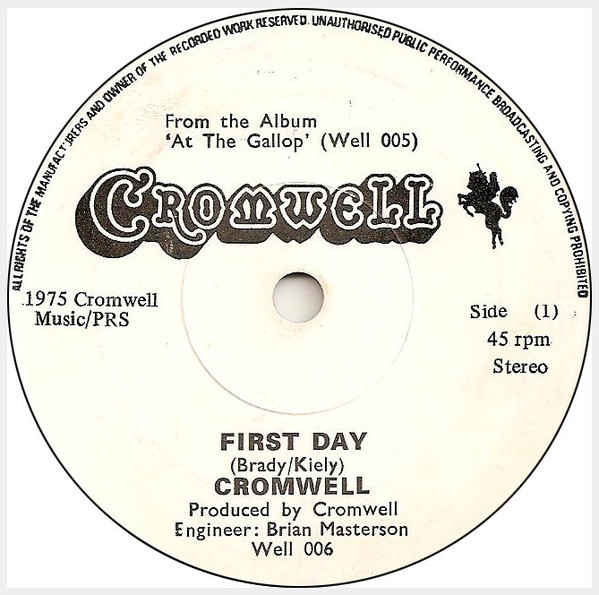
A searing guitar soars above the slow, steady rhythm section and piano on First Day. They provide the backdrop for a heartfelt, tender vocal on this rocky ballad. Soon, it heads into anthem territory, and is reminiscent of the sound that Supertramp would later find success with. Later, when the vocal drops out, Patrick steps forward and unleashes another blistering guitar solo. It soars above the arrangement before the vocal returns. It’s joined by harmonies, before they both drop out. The guitar takes centre-stage as this beautiful ballad reaches a poignant and memorable crescendo.
A lone bass opens You Got It Made, before a searing guitar, drums and flourish of piano set the scene for the vocal. By then, Cromwell are at their tightest, as they accompany the vampish, theatrical vocal. It’s reminiscent of Roxy Music and 10CC. Meanwhile, the rest of Cromwell draw inspiration from the New York Dolls and the Rolling Stones as they cut loose. Augmented by the piano, Cromwell are soon in full flight. Quite simply, it’s a joy to behold, and is a reminder of what for many was, the golden age or rock.
After Cromwell are counted in on At The Gallop, they turn their attention to country rock. The tempo rises as Cromwell burst into life. As the rhythm section lock down the groove, washes of slide guitar accompanies the swaggering, joyous vocal. It’s soon accompanied by harmonies, and later a blistering guitar. That’s not forgetting the washes of slide guitar. They play a leading role in the sound and success of this slice of good time country rock
Guinness Rock was Cromwell’s debut single in 1973. A pulsating bass sits atop the drums. Meanwhile, Michael unleashes blistering, effects laden guitar riffs as Cromwell combine blues and rock. Then after forty-seconds, a powerhouse of a vocal enters. It’s augmented by harmonies, as the rest of Cromwell unleashes a hard rocking backdrop. Searing, scorching fuzzy guitars are to the fore, while the rhythm section drive this glorious rocky anthem along. It was the song that in 1973, introduced Irish rock fans to Cromwell, who looked destined for greatness.
After six songs, Cromwell decide to throw a curveball with Hoodwinked. It’s an instrumental, where Cromwell showcase their talents. Hoodwinked is a slow bluesy track. The rhythm section and piano provide the backdrop for Patrick’s heart wrenching guitar solo. Although it takes centre-stage, the rest of Cromwell play their part in what’s a beautiful bluesy instrumental.
Nothing Left To See is another of At The Gallop’s ballads. Again, washes of slide guitar join with the rhythm section and acoustic guitar. They’re soon joined by a searing guitar, before a hurt-filled, emotive vocal enters. It sounds as if it’s lived and survived the lyrics. Meanwhile, harmonies, Hammond organ, slide guitar and acoustic guitar combine with the rhythm section. When the vocal drops out, the guitar proves the perfect replacement. As the vocal returns hurt has been replaced by hope, as seamlessly, Cromwell combine country rock with blues on this beautiful ballad.
Deal Me In has an understated introduction. Just an acoustic guitar and bass accompany, an emotive, soul-baring vocal. Soon, it’s joined by a slide guitar. By then, blues and country rock are being combined by Cromwell. Later, when the vocal drops out, Patrick unleashes another searing guitar solo. It goes on to play a leading role in the song, and proves the perfect foil for the vocal on Deal Me In.
Closing At The Gallop is Dawson’s Fun Palace. It’s a musical sketch from Cromwell. A radio announcer announces the start of “Dawson’s Fun Palace,” and for the next three minutes, it’s like listening in on a party. Meanwhile, in the distance, Cromwell provide a musical accompaniment. Later, when the door opens on Dawson’s Fun Palace, the listener hears the birdsong as a new day days. Cromwell have enjoyed quite a party at Dawson’s Fun Palace.
Cromwell’s and their debut album At The Gallop was guaranteed to get any party started. It was an irresistible fusion of musical genres and influences. Everything from swaggering, strutting, good time, seventies rock ’n’ roll rubs shoulders with blues, country rock and beautiful ballads on At The Gallop. Similarly, Cromwell were inspired by everyone from early seventies Rolling Stones’ albums to Thin Lizzy Mott The Hoople, The Faces and the Flamin’ Groovies’ 1971 album Flamingo. This potpourri of musical genres and influences should’ve transformed the fortunes of Cromwell.
After all, Cromwell were one of the top bands in the Irish music scene. They looked as if they were about to follow in the footsteps of two of Ireland’s most successful recent musical exports, Taste and Thin Lizzy.
Alas, despite the undoubted quality of the music on At The Gallop wasn’t a huge commercial success. There was some interest locally, in Dublin and in other parts of Ireland. This must have been a bitter blow. Especially given Cromwell had spent years touring Ireland, playing towns, cites and even villages. They took rock music to places it had never been before. For the three members of Cromwell, it must have been a huge disappointment. They had spent years working towards releasing their debut album.
What Cromwell were aware of, was that the market for rock music wasn’t as strong as in Britain. Rock music was still frowned upon by the establishment in Ireland, which didn’t even have a fledgling music industry. It would be some time before the Irish music industry took shape. However, in 1975, things were very different in Britain. Maybe Cromwell’s debut album At The Gallop, Cromwell would attract the interest of major labels based in London?
At The Gallop could’ve and should’ve acted as Cromwell’s calling card, and opened the doors to major labels in London. Sadly, it wasn’t to be. None of major labels based in London came calling.
Cromwell only released one further single, First Day. It was released later in 1975 and proved to be Cromwell’s swan-song. They neither released another single, nor album. The Cromwell story was all but over, and before long, the band called time on their career. For Cromwell, the dream was over.
Since then, a new generation of record buyers have discovered At The Gallop. It’s a musical hidden gem that’s a reminder of one Ireland’s great lost groups, Cromwell. Nowadays, their one and only album At The Gallop is regarded as a cult classic. However, it’s also an extremely rare album. Original copies change hands for upwards of €400. This meant for far too long, At The Gallop was beyond the budget of most record buyers. That changed recently, when Got Kinda Lost, an imprint of Guerssen Records reissued Cromwell’s long-long lost cult classic At The Gallop. It’s a welcome reminder of one of the most underrated and talented Irish bands of the early seventies, Cromwell who were the heir apparent to Thin Lizzy.
CROMWELL-AT THE GALLOP
KLAUS DINGER AND JAPANDORF-JAPANDORF.
KLAUS DINGER AND JAPANDORF-JAPANDORF.
By 2007, sixty-one year old Klaus Dinger was a veteran of German music. He had been a member of three of the most important, influential and innovative German groups of the past forty years, Kraftwerk, Neu! and La Düsseldorf. Despite enjoying such a long and successful career, Klaus Dinger hadn’t lost his appetite for making music.
That was why in the summer in 2007, Klaus Dinger found himself in the Zeeland Studio. He watched on as all the equipment from his Lilienthal Studio was moved into Zeeland Studio. This was in preparation for the recording of a new album with Japandorf.
Despite being a veteran of more recording sessions than he cared to remember, there was still an air of excitement and anticipation as preparation for the recording session got underway. This could, after all, be the album that transformed the fortunes of Klaus Dinger and Japandorf.
They had been collaborating since 1998. Since then, they had recorded two albums. Despite his best efforts, Klaus Dinger couldn’t interest a record company in either of the albums he had recorded with Japandorf. This was hugely frustrating for a man who had been a member of three of the most important groups in German music. Especially since he hadn’t released an studio album for nine years.
The last new studio album that Klaus Dinger had released was Year Of The Tiger, the fourth album from La! Neu? It was released in 1998, and proved to be the last studio album that La! Neu? released. Meanwhile, Klaus Dinger was locked in a lengthy and expensive legal battle.
That had been the case since 1997. Right through to 2004, Klaus Dinger was locked in a legal despute with Warner/East West. At stake were the mechanical rights to the three albums Klaus Dinger had recorded with La Düsseldorf. Eventually, after seven long years, Klaus Dinger triumphed. This was a weight off his mind.
A year later in 2005, Klaus Dinger was still working on Viva Rimix 2010 and Japandorf at his Lilienthal Studio. Both were time consuming projects. They took their toll on Klaus Dinger’s finances. Things got so bad, that he had give up half of his Lilienthal Studio. This helped his cash-flow.
So should a CD reissue of La Düsseldorf’s album Mon Amour during 2006. When Klaus Dinger failed to agree to terms of the contract regarding the bonus track, Warner stopped distribution of the album. For Klaus Dinger this was a huge blow. A successful reissue of Mon Amour would’ve given Klaus Dinger a welcome injection of cash. Especially since Klaus Dinger and Japandorf were preparing to record their third album during 2007.
By summer of 2007, Klaus Dinger and Japandorf were about to begin work on their third album at Zeeland Studio. Klaus Dinger’s recording equipment had been moved lock, stock and barrel from Lilienthal Studio to Zeeland Studio. Now Klaus Dinger who was about to produce Japandorf, was joined by the four members of Japandorf. They were no strangers to a recording studio, and had previously recorded two album albums with Klaus Dinger.Soon, two would become three.
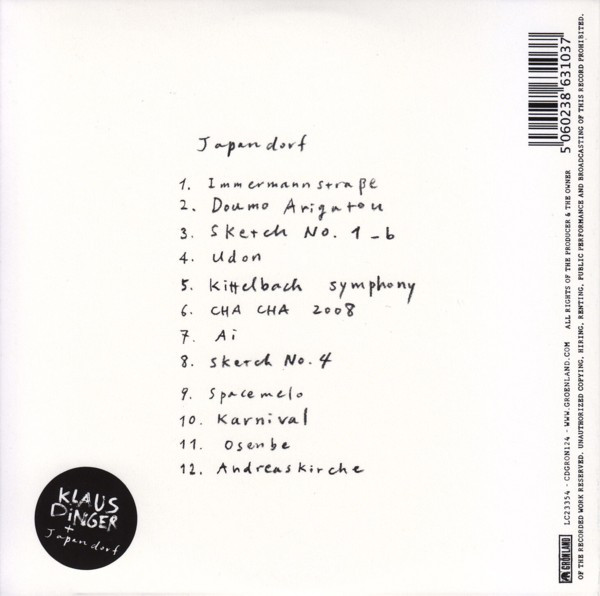
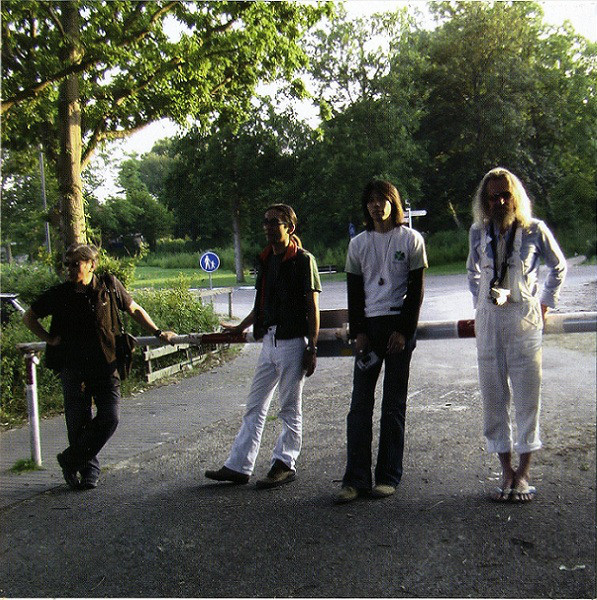
At Zeeland Studio, Klaus Dinger was joined by Japandorf. Their lineup featured drummer Kazuyuki Onouchi, keyboardist Satoshi Okamoto and vocalists Masaki Nakao and Miki Yui. Klaus Dinger switched between bass and guitar. Together, Klaus Dinger and Japandorf planned to record a trio of songs that they had been working on over the past eight years. This included Immermannstraße, Udon and Spacemelo. During the Zeeland Studio sessions in the summer of 2007, these three songs were recorded by Klaus Dinger and Japandorf. The recording of Japandorf was well underway.
Over the next few months work continued on Japandorf at Dingerland-Lilienthal Studio. The sessions continued right into the spring of 2008. From February to March, Klaus Dinger and Japandorf recorded Cha Cha 2008, Sketch No. 4 and Sketch No. 1_b. The final song that Klaus Dinger wrote and recorded was Karnival. It also features Klasu Dinger’s final vocal. Little did anyone realise that this was the last song that Klaus Dinger would write or record. He sounded in good health as he laid down his vocal on Karnival.
Gradually, Japandorf was beginning to take shape. Klaus Dinger and Japandorf had already recorded seven tracks. While this wasn’t quite enough for an album, a few more tracks and Japandorf would be complete and ready for release.
Sadly, Klaus Dinger never lived long enough to see Japandorf released. Tragedy struck on Good Friday, 2008. Klaus Dinger passed away on the 21st of March 2008. He was just three days short of his sixty-second birthday. German music had lost one of its most talented sons.
Suddenly, completing or releasing an album paled into insignificance. One of the members of Japandorf, Miki Yui, had lost her partner of eight years. This added to what was a tragic set of circumstances.
The death of Klaus Dinger looked like the end of the Japandorf story. That wasn’t the case. In 2009, Klaus Dinger’s recording equipment was moved from Zeeland Studio to Lilienthal Studios. After that, Miki Yui and Kazuyuki Onouchi began work on finalising Japandorf’s last three albums. They co-produced the three albums. This included Japandorf.
Five further tracks were added to the seven that Klaus Dinger and Japandorf had already recorded. Eventually, Japandorf was completed by 2011. Miki Yui and Kazuyuki Onouchi both received a co-producer’s credit. Kazuyuki Onouchi also mixed Japandorf, which was now ready to release.
Originally, Klaus Dinger had planned to release Japandorf as a La Düsseldorf album. Klaus Dinger envisaged that Japandorf would be the long awaited followup to La Düsseldorf’s third album Individuellos, which had been released in 1980. However, there was a problem. Hans Lampe who had been Klaus Dinger’s partner in La Düsseldorf, hadn’t played on Japandorf. He was reluctant to allow Japandorf to be released as a La Düsseldorf album. As the release of Japandorf drew closer, Hans decided to block the release. This was another huge blow.
Eventually, a decision was made to release credit Japandorf to Klaus Dinger and Japandorf. Given this was who had recorded the album between 2007 and 2008, this seemed an equitable solution.
On March 25th 2013, Japandorf was released by Grönland Records. This was a poignant date. Klaus Dinger passed away five years earlier on the 21st of March 2008. Japandorf was the album that he hoped would revive his fortunes. Sadly, he never lived to see the album released.
When Japandorf was released, most critics were won over by what was a genre-melting album. Japandorf found Klaus Dinger and Japandorf switching between and seamlessly combining musical genres. Elements of avant-garde experimental music, Krautrock, pop, post punk, psychedelia, rock and space rock can be heard on Japandorf. It’s a musical roller coaster, where Klaus Dinger and Japandorf throw a series of curveballs, as they change tack musically. However, Japandorf was also a very personal album.
Klaus Dinger drew inspiration for Japandorf from Düsseldorf, the city he was born and spent most of his life. Similarly, there’s several references to Japan and Düsseldorf’s Japanese community. This includes Immermannstraß, which was home to many members of Düsseldorf’s Japanese community. However, on Japandorf, Immermannstraß becomes a glorious fusion of Krautrock and pop. This sets the bar high for the rest of Japandorf.
Immermannstraß gives way to Doumo Arigato, which is the first of two field recording. This one was recorded in a Japanese bookstore on Immermannstraße. It’s followed by Sketch No. 1_b blistering slice of uber rocky music. Effects are deployed as Klaus Dinger aided and abetted by Japandorf roll back the years.
The quality continues on Udon, which was recorded at Zeeland studios in summer 2000. One of Klaus’ close friends Nakao joined the recording sessions. As the tapes rolled and Klaus began playing his guitar, he announced that Nakao would: “now Nakao will tell us how to cook Udon.” That’s what he proceeded to do. Alas, the song lay unfinished until 2007, when Klaus decided to complete Udon. It’s another of highlights of the album.
Having said that, Kittelbach Symphony is a truly beautiful, elegiac thoughtful and wistful track. There’s also cinematic sound to Kittelbach Symphony, which shows another side to Klaus Dinger and Japandorf.
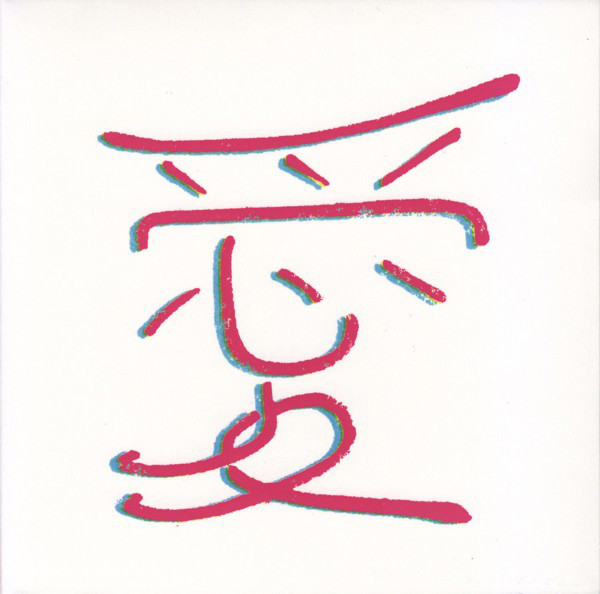
Very different is Cha Cha 2008. It’s a much more experimental sounding track. Elements of Krautrock, dub and experimental music can be heard during. Later though, the track takes on much more rocky sound that’s not unlike No. 1_b. From there, Klaus explains Ai that the character on the front cover of the album means love. After that, Sketch No.4 is another effects laden fusion of Krautrock, psychedelia and space rock. At the heart of the track’s success, is Klaus’ guitar playing. He unleashes blistering, machine gun riffs during what can only be described as a virtuoso performance during this ten minute epic.
Spacemelo was a rerecording of a song from Miki Yui’s 2001 solo album Magina. Klaus reinvents the track by inverting the melody and a new song, which is also called Spacemelo was born. Klaus plays the melody on his guitar, while a piano accompanies Miki’s tender vocal. Everything falls into place and creates a beautiful, melodic song.
This Klaus follows up with Karnival, a very different sounding song. It’s about the carnival that happens each February in Düsseldorf. It’s a fusion of post punk and rock with a singalong vocal. The post punk influence is fitting, given the influence Neu! had on the punk and post punk generation. However, there’s also a poignancy to Karnival. It was the final song that Klaus wrote, and the last song to feature his vocal.
Osenbe was recorded at Zeeland, with Klaus and Japandorf sitting round the outdoor fireplace. Klaus strums his acoustic guitar, and with Japandorf accompanying him, sings of Osenbe is a type of rice cracker made in Japan. This gives way to Andreaskirche, which is the second field recording on Japandorf. It features a ecording of the church bells of Andreaskirche where a young Klaus Dinger was a was a member of the choir. It’s a poignant and thoughtful way to end what was Klaus Dinger’s swan-song Japandorf.
It brought to an end a recording career that began in 1971, when Klaus Dinger played on Kraftwerk’s eponymous debut album. This was the start of a long and illustrious musical career. Klaus Dinger cofounded Neu! with Michael Rother in 1971, before and then confounding La Düsseldorf and later La! Neu? Over a thirty-seven year recording career, Klaus Dinger established a reputation as a musical pioneer, who created groundbreaking music. That was the case right up until Klaus Dinger and Japandorf released their swan-song Japandorf.
Five years after his untimely death, Japandorf’s genre-melting sound was hailed as a fitting swan-song to Klaus Dinger’s long and illustrious career. Japandorf was a captivating album where Klaus Dinger and Japandorf through a series of curveballs. It was a case of expect the unexpected as Klaus Dinger and Japandorf switched between and seamlessly fused musical genres. Everything from Krautrock, pop, post punk and rock rubs shoulders with avant-garde, experimental music, psychedelia and space rock. Japandorf was a potent and heady musical brew that one can’t help but drink deep. It was also an album to cherish and a fitting swan-song from one of the pioneers of German music, Klaus Dinger.
KLAUS DINGER AND JAPANDORF-JAPANDORF.
REQUIEM-FOR A WORLD AFTER.
REQUIEM-FOR A WORLD AFTER.
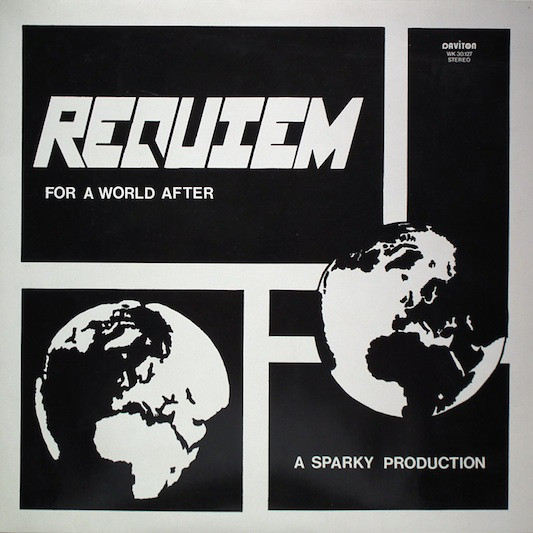
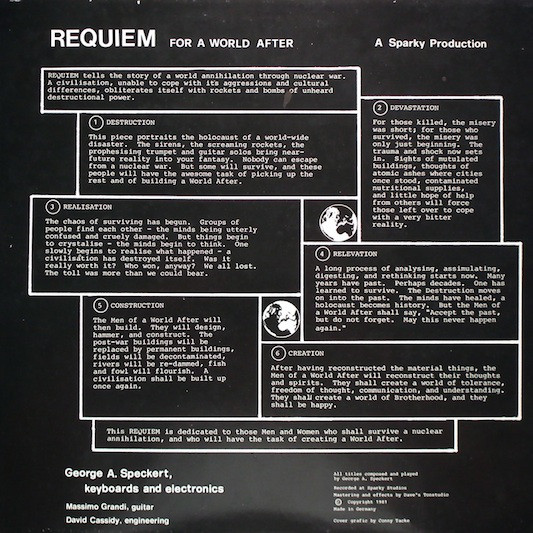
For six months, George A. Speckert and Massimo Grandi laboured long and hard in Sparky Studios to record Requiem’s debut album For A World After. Eventually, the two men had completed what was an ambitious and innovative concept album, For A World After. It had been written by George A. Speckert and “tells the story of world annihilation through nuclear war.” Requiem had recorded a powerful and poignant musical statement.
Now that For A World After was completed, 1,000 copies were pressed. They were released on David Cassidy’s Daviton label later in the autumn of 1981. Sadly, when For A World After was released as a private press, the album failed to find the audience it deserved. For George A. Speckert and Massimo Grandi all their hard work, dedication and perseverance had been for nothing. It was a huge disappointment.
It was only much later that For A World After that For A World After began to find the audience it so richly deserved. However, there was only one problem. Copies of For A World After were almost impossible to find. When they became available, the price was beyond most record buyers. What was needed was a reissue of For A World After.
That’s what happened recently, when Requiem’s debut album For A World After was reissued by Mental Experience, an imprint of Guerssen Records. It’s a welcome reissue of a genre-melting, cult classic. Requiem fused elements of ambient, Berlin School, Krautrock and psychedelia on For A World After. In doing so, Requiem reference Berlin School pioneers, Klaus Schulze, Tangerine Dream, Conrad Schnitzler, Dieter Moebius, Popol Vuh and Michael Hoenig. It’s a captivating album, and very different from the music that originally dreamt of making.
When George A. Speckert was seven, he told his parents that he want to play the viola in an orchestra. This came as something of a surprise as George had never played the viola. Despite this, the Speckerts encouraged and helped their son to follow his dream.
So did George’s next door neighbour, a classically trained musician. He took George along to performances by the philharmonic orchestra. By then, George was receiving music lessons, and night after night, week after week, was practising on his viola. The weeks became months, and the months became years. Still, George continued to dedicate himself to music. He was determined that one day, he was going to make a career out of music.
By the time that George headed to university in Evansville, Indiana, he was already a classically trained musician. University was the next part of George’s musical education. It was also where love blossomed for George A. Speckert.
During his time at university, George fell in love with his German pen friend. Once he had graduated, George headed to Germany to be with his future wife. However, this meant sacrificing his dream of playing viola in an orchestra.
Instead, George got a job as a music teacher in the village of Bünde, in North Rhine-Westphalia. The only problem was there was no call for a viola teacher, so George found himself teaching piano and the basics of composition. Soon, George was climbing the career ladder, when he became music director in the nearby city of Löhne.
Despite being a more prestigious post, George became frustrated at the amount of paperwork he having to do on a daily basis. This was stifling his creativity. After a while, George decided to rethink his plans.
He decided to spend half his time working as a school administrator, and the other half writing, recording and producing music. This was the best of both worlds for George A. Speckert.
Before long, he was a familiar face within the local music scene. George wrote songs and worked as a producer. Sometimes, he would work with local school bands. This could range from writing a song, producing their music or even programming a synth. Not that synths were commonplace. They were beyond the budget of most bands.
The first time that George A. Speckert came across a synth was when he was producing a children’s record. George had been booked to produce We Are The Wives Of The Wanted. He also ended up accompanying the three girls on synth. This was a first, and was something of a eureka moment for George A. Speckert.
Suddenly, George A. Speckert wanted to know more about synths and the nascent musical technology. He also realised what was possible with synths and the new musical technology. Soon George realised, that the nascent technology would allow him to record an album. That was still something of a pipe dream.
Before George could even contemplate recording an album, he had to buy the necessary equipment and learn how to use it. Fortunately, he knew of a shop in Herford, in North Rhine-Westphaliathat that sold synths. It was owned by another American expat, David Cassidy. He also owned a recording studio and record label. Both would play an important part in the story of Requiem’s debut album For A World After. That was still to come.
On his first visit to David Cassidy’s music shop, he helped George choose a suitable synth. Little did George realise that this was the start of a musical voyage of discovery. It was also the start of an expensive six month period for George. Over the next six months, George assembled an array of synths, plus a keyboard, sequencer, drum machine, organ and Fender Rhodes. This proved expensive, and used up much of George’s disposable income. The rest he kept in reserve for recording his debut album.
Having bought the equipment, George set about discovering how to use it. Soon, he was immersing himself into the world of synths, sequencers and samplers. For a newcomer to the nascent technology, it was a steep learning curve. Soon, though, George began to realise the opportunities that the new technology offered. This would soon include recording Requiem’s debut album For A World After.
Inspiration for For A World After came about after George spoke to a friend who worked for the German government and the possibility of an atomic bomb being dropped on Germany. They were worried about the possibility of a third world war, between the East and West. It was after all, the height of the Cold War. George listened as his friend explained that if an atomic bomb was dropped, there would be no survivors. This was a horrifying thought, but one that inspired George to write a concept album, For A World After.
During For A World After George: “tells the story of a world annihilation through nuclear war.” This begins with the two aggressors unable to set aside their cultural or ideological differences. Soon, they’re unleashing an arsenal of bombs and rockets. Before long, the world is totally obliterated. However, like a phoenix from the ashes, the world and civilisation rebuilds. After the Destruction and Devastation, the world gradually rebuilds. This George planned on doing over six cinematic soundscapes lasting forty minutes.
To make provide the soundtrack to this third world war, George planned to deploy his newly assembled arsenal of instruments. This included a Korg MS 20 mono-synth; Korg SQ-10 sequencer; Casioton CT 201 electronic keyboard; Crumar DS-2 mono-synth with a polyphonic string section; Jupiter 4 polyphonic synth; Crumar Multiman orchestrator and a Yamaha CS5 mono-synth. To this, George added a drum machine, organ and Fender Rhodes. They had all see better days, but would be utilised by George during the recording of For A World After. He would play each of these instruments.
The only other musician who featured on For A World After, was Italian guitarist Massimo Grandi. He had been introduced by David Cassidy, who owned the music shop George bought all his equipment from. Massimo Grandi’s guitar would prove to the finishing touch to For A World After.
With Massimo Grandi onboard, work could begin on Requiem’s debut album, For A World After. They spent six months recording when the album at Sparky Studios. Massimo laid down the guitar parts, while George took charge of keyboards, synths and the rest of the nascent technology. David Cassidy engineered the sessions and fulfilled the role of producer. Gradually, the album began to take shape. Eventually, six tracks lasting just over forty minutes were completed. All that reminded was for David to master For A World After.
After this, 1,000 copies of For A World After were pressed. It was released as a private press on David Cassidy’s Daviton label. George managed to secure a distribution deal for Requiem’s debut album. Alas, For A World After wasn’t huge a commercial success. That is despite the music being ambitious, cerebral, challenging and innovative. For the two members of Requiem, it was a huge disappointment. They had dedicated six months of their lives to For A World After. It would be much later when For A World After eventually found the audience that it deserved.
Opening For A World After, is Destruction. It portrays the world on the brink of destruction. From the distance a slow and moody arrangement unfolds. A code being tapped out on a synth, before rockets soars above the arrangement. There’s a sense of foreboding as synths replicate a siren. It seems that the first bomb has dropped, and what was once a nightmare scenario has become reality. Ethereal synths are joined by a crystalline guitar solo and replicate the post nuclear landscape. Still, the sirens sound, despite there being very little, if any chance of anyone surviving the resultant nuclear winter. Drumbeats signal its onslaught, while rockets and bombs seem determined to obliterate humanity. Synths add a dramatic and urgent backdrop, while others replicate sirens, rockets and bombs. Surely, nobody can escape from this onslaught as third world war plays out? It’s a realistic, poignant and cinematic portrayal and reminder of the Cold War era and what was the nightmare scenario.
Somehow, a few survive the onslaught of bombs and rockets. They’re left to face the Devastation. People have been injured, mutilated or poisoned by the bombs that have been dropped. Towns and cities are reduced to rubble. Requiem set about creating a dark, dramatic and bubbling soundscape. Listening to it unfold, it’s sounds as if the listener is looking down from a helicopter on the trail of Devastation. As the listener is taken on a journey, slow, buzzing synths and the occasional guitar create a dark, despondent backdrop. Sometimes, it sounds as if the sound of bird song can be heard. They seem to be one of the survivors. Later, there’s a rueful, wistful sound as Requiem successfully create a post nuclear soundscape. There’s a sense of despondency and hopelessness as synths glide and bubble and the drama builds. So does the bleakness that’s replicated by a bass synth. By then, the full scale of the Devastation becomes apparent to the survivors.
It’s only having surveyed the Devastation, that there’s a Realisation by the survivors that civilisation has destroyed itself. Suddenly, the survivors are left confused and despairing at the cruelty, damage and Devastation that mankind has caused. A bass synth is played quickly as washes of futuristic music assail the listener. They’re akin to the thoughts that assail the listener as that they’re struggle to make sense of what they’ve discovered. Fittingly, the arrangement becomes dark, ominous and takes on a sci-fi sound. This suits the mood of the survivors. Synths are to the fore, and glide darkly and ominously along. Meanwhile, an effects laden Michael Rother inspired guitar is addd. Still, the bass synth dominates the arrangement, while the guitar and glacial, ethereal synths play a supporting role. As the sound draws to a close, the darkness seems to dissipate. Maybe there’s hope for the future?
Relevation finds the survivors analysing what’s happened in an attempt to make sense of it. Many years have passed since that fateful day. Everyone has accepted what happened and are determined to learn from their past mistakes. They’re determined that this will never happen again. Meanwhile, the soundscape begin to unfold, and a pulsating bass synths joins with gusts of wind and sci-fi sounds. A searing, rocky guitar joins elegiac, ethereal synths. Some of the sounds used, are almost reminiscent of Destruction. However, there’s a sense of hope, hope for the future as the guitar plays. One can’t help but wonder whether the gusts of winds signal a rebirth, and a new beginning for the survivors? Especially as the drama builds. Soon, the pulsating bass slows down and the guitar hangs in air. It’s as if it’s signalling a new beginning.
It does. Construction marks a new beginning as the People Of The World design and build new buildings. This is part of rebuilding of the post war infrastructure. Straight away, there’s a Krautrock influence in the drums. Meanwhile, notes and chords are picked out on the banks of synths. Sometimes, stabs of synths add to what’s a hopeful and upbeat backdrop. It’s very different to what’s g before. Synth strings are used to sweeten the soundscape. Briefly, the synths used are reminiscent of those used during Kraftwerk’s classic period. Augmenting the banks of synths is Massimo’s guitar. He unleashes a blistering guitar solo which cuts across the arrangement. It’s the perfect foil for George’s synths, during the joyous backdrop to this new beginning.
Closing For A World After is Creation. Having constructed the material things, the People Of The World decide to reconstruct their thoughts and spirits. They decide that tolerance, freedom of thought, communication and understanding are crucial to this work of this “Brotherhood” where everyone is happy. Synths are to the fore, with waves of synths pulsating, ebbing and flowing. Meanwhile, the lead synth piays the leading role in what could be this utopian land’s anthem. There’s a sense of hope and poignancy as the music unfolds. It marks the start of a new era for the People Of The World.
After six soundscapes lasting just over forty minutes, Requiem’s poignant concept album For A New World is over. It: “tells the story of world annihilation through nuclear war,” the aftermath, and how the People of the World having learnt from their mistakes, and rebuilt a new and better world. Out of despair, despondency and Devastation, came a new beginning and hope for the future. However, when Requiem released For A New World in 1981, it was poignant and thought provoking album.
Back in 1981, it was still the Cold War era, and a generation on both sides of the Iron Curtain lived in fear of nuclear war. For A New World is a reminder of these days, and what was the worst case scenario. Requiem replicate the Destruction, Devastation and the Realisation that mankind brought about the destruction of the civilisation. Then Requiem replicate the Construction and Creation of the post war landscape. To do this, George A. Speckert deployed banks of synths and the latest in musical technology. Adding the finishing touch was Massimo Grandi’s guitar. Together, they were responsible for what is nowadays regarded as a lost classic.
When For A New World was released, the 1,000 copies failed to sell. That was despite being ambitious, cerebral, challenging concept album. For A New World was genre-melting, cult classic that stood head and shoulder above the competition. Requiem fused elements of ambient and avant-garde with Berlin School, electronica, experimental, Krautrock, psychedelia and rock. Similarly, Requiem drew inspiration from Berlin School pioneers, Klaus Schulze, Tangerine Dream, Conrad Schnitzler, Dieter Moebius, Popol Vuh and Michael Hoenig. The result was a captivating and cinematic album, that was a heady and potent brew of musical genres and influences It should’ve introduced Requiem’s music to a much wider audience.
Sadly, it was a familiar story. Just like many private presses released on small labels, the Daviton label lacked the financial muscle to promote For A World After. However, George A. Speckert wasn’t going to give up without a fight. He negotiated a distribution deal which helped sales. Still, though, Requiem failed to sell the 1,000 copies of For A World After. Record buyers in 1981 missed out on hearing an ambitious, captivating, cerebral and challenging album of innovative and cinematic soundscapes.
It was only much later that Requiem’s For A World After began to attract the attention of record buyers. Soon, the album had attracted a cult following. Alas, by then, copies of For A World After beyond the budget of most record buyers. Copies of For A World After were changing hands for upwards of $500. This meant that a new generation of record buyers were unable to discover this cinematic and thought provoking concept album For A World After. Fortunately, this was recently rectified, when Mental Experience, an imprint of Guerssen Records reissued Requiem’s debut album For A World After.
For anyone interested in Krautrock or the Berlin School of Electronic music, then Requiem’s debut album For A World is a cerebral cult classic. For A World is also a cinematic hidden gem that’s a powerful reminder of the dark days of Cold War era, when Destruction and Devastation loomed large in the lives of people on both sides of the Iron Curtain.
REQUIEM-FOR A WORLD AFTER.
THE BEST VINYL REISSUES OF 2016-PART 1.
THE BEST VINYL REISSUES OF 2016-PART 1.
Black Moon Circle-Sea Of Clouds.
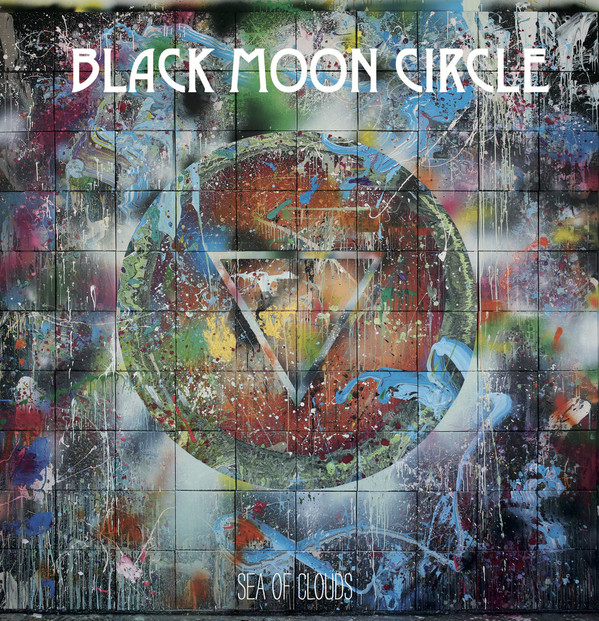
April 2016 saw Norwegian space rock pioneers Black Moon Circle make their debut at the prestigious Roadburn Festival. This was prefect timing. That day, Black Moon Circle released their fourth album Sea Of Clouds via Crispin Glover Records. It was a much anticipated release, that also featured bassist Øyvin Engman vocal debut. The result was a album of melodic and anthemic songs. They were also hard rocking.
This is what we’ve come to expect from Black Moon Circle. They revisit their hard rocking brand of psychedelic, space rock on Sea Of Clouds. It’s a fusion of heavy metal, Krautrock, avant-garde, free jazz and post rock. Black Moon Circle have also drawn inspiration from everyone from Black Sabbath, Can and Deep Purple to Led Zeppelin, Hawkwind and Motorpsycho. These disparate musical genres and influences were fused to create Sea Of Clouds.
It features music that’s dramatic, futuristic, moody, otherworldly and gloriously rocky. Sometimes, Sea Of Clouds features Black Moon Circle at their hard rocking best. Sea Of Clouds is also “intense.” There’s always been an intensity to Black Moon Circle’s music. It’s as much a part of Black Moon Circle’s music as the layers of fuzzy guitars, spacey, lysergic synths and futuristic sci-fi sounds. That’s the case throughout Sea Of Clouds, which shows another side to space rock pioneers Black Moon Circle. It’s their most accessible album and is a glorious assault on the sensory system from genre-melting innovators Black Moon Circle,
Black Moon Circle-The Studio Jams Volume 2.
In mid-November, Black Moon Circle released The Studio Jams Volume 2 via Crispin Glover Records. It’s the second in a trilogy of Studio Jams and Black Moon Circle’s second album of 2016. Just like the Trondheim based psychedelic space rock pioneers’ previous albums, they fuse musical genres as they push musical boundaries.
The basis for Black Moon Circle’s music is the classic rock of the sixties and seventies, psychedelia and space rock. To this, Black Moon Circle add elements of avant-garde, electronica, experimental, free jazz, Krautrock and post rock. Seamlessly, these disparate musical genres and influences merge into something new and innovative. It’s cinematic, dramatic, futuristic, moody, rocky and as Øyvin Engan says, “intense.” This intensity is deliberate. It comes courtesy of the four members of Black Moon Circle. They deploy layers of fuzzy guitars, spacey, lysergic, futuristic, sci-fi synths and a mesmeric rhythm section. They create two “lengthy jams” which features “heavy riffage and the extensive use of effects.” They’re used extensively and put to good use by Black Moon Circle.
They’re one of the most exciting, talented and innovative Norwegian groups. They remind me of their fellow countrymen, Motorpsycho and Moster! However, Elements of Can, Deep Purple, Led Zeppelin, Hawkwind, early Pink Floyd and Jimi Hendrix’s guitar playing shine through on The Studio Jams Volume 2 . This hard rocking opus, finds the Trondheim-based psychedelic space rockers Black Moon Circle, reaching new heights on The Studio Jams Volume 2.
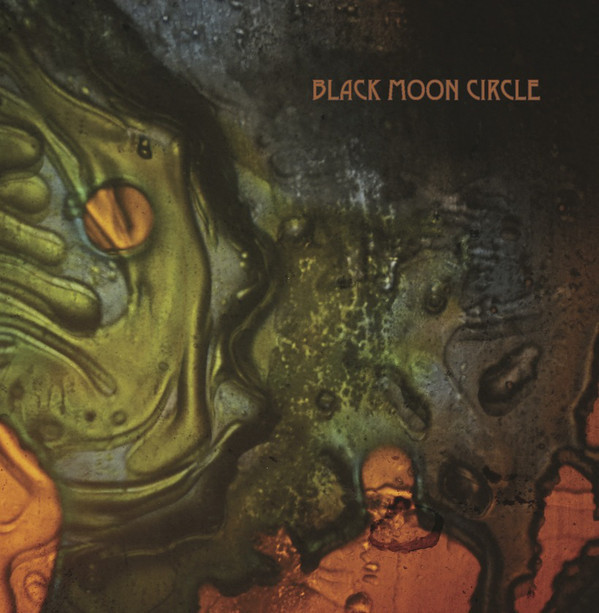
Bram Stoker-Heavy Rock Spectacular,
Often, Record Store Day sees the release of several cult albums. 2016 was no different. Bram Stoker’s 1972 album Heavy Rock Spectacular was reissued by Talking Elephant Records on coloured vinyl. This was a welcome reissue and a reminder of a band who should’ve reached greater heights.
Bram Stoker were formed organist Tony Bronsdon in Bournemouth, in 1969. Three years later, Bram Stoker were enjoying a modest amount of success and about to release their debut album Heavy Rock Spectacular in 1972. It’s a carefully crafted epic where four virtuoso musicians combine progressive rock with elements of jazz and classical music. The result was Bram Stoker’s debut album Heavy Rock Spectacular, which sounded not unlike The Nice.
Alas, when Heavy Rock Spectacular was released by Windmill Records, it failed to find an audience. Later, Bram Stoker’s carefully crafted progressive rock epic began to acquire a cult following. They appreciated Heavy Rock Spectacular, which nowadays, is regarded as one of the lost classics from the progressive rock era.
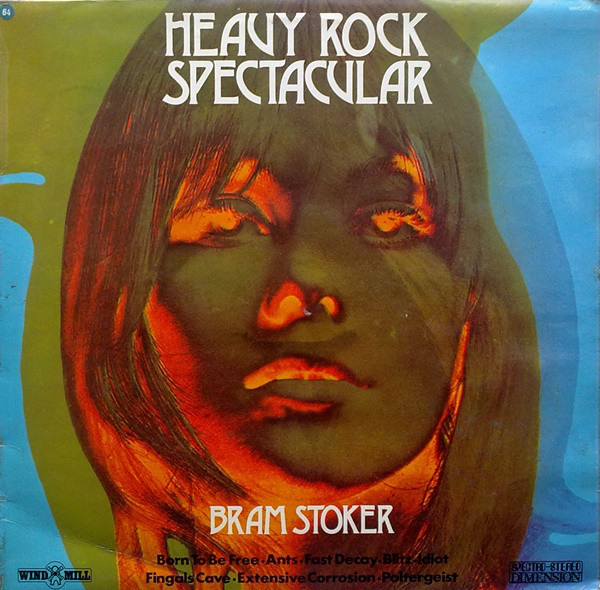
Deep Purple-Deep Purple In Rock.
Between 1970 and 1975 Deep Purple enjoyed worldwide success. Their albums sold by the million and Deep Purple became one of “unholy trinity of British hard rock and heavy metal.” However, the album that started this run of commercial success was Deep Purple In Rock. It was reissued as a limited edition of 1,000 on marbled vinyl by Harvest as part of their Vinyl Collector series. Deep Purple In Rock was a game-changer for Deep Purple.
When Deep Purple In Rock in 1970 was released in 1970, it proved to be Deep Purple’s breakthrough album. This was the start of five years of commercial success and critical acclaim. During that period, Deep Purple challenged Led Zeppelin and Black Sabbath for supremacy as most successful and hard rocking band. There was also another competition going on. This was to see which of the “unholy trinity of British hard rock and heavy metal” was the hardest living band. It was a close fought and hard won contest.
Over the years, Deep Purple’s penchant for the rock ’n’ roll lifestyle was legendary. It came with the territory. This was after all, rock ’n’ roll during the early seventies. Chaos and carnage was omnipresent and expected as Deep Purple toured the world. This never seemed to affect Deep Purple’s music. Proof if any is needed, is Deep Purple In Rock. It features Deep Purple at their hard rocking best.
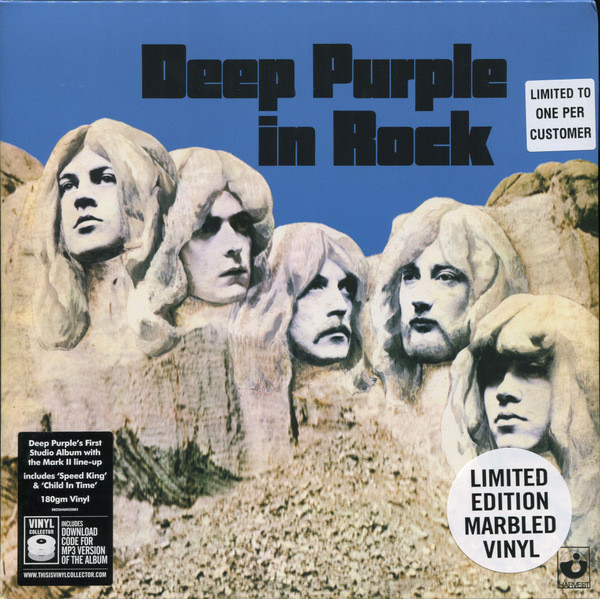
Dexy’s Midnight Runners-Searching For The Young Soul Rebels.
Last year, retailers everywhere seemed to be jumping on the vinyl bandwagon. Even supermarkets like Tesco were selling vinyl. However, being experts at marketing, the vinyl they sold had a USP. This included Dexy’s Midnight Runners-Searching For The Young Soul Rebels, which was a limited editions pressed on green vinyl. It marked the debut of Dexy’s Midnight Runners who were led by Kevin Rowland.
He founded Dexy’s Midnight Runners in Birmingham 1978. Within two years, they were signed to EMI and preparing to release their debut album Searching For The Young Soul Rebels in July 1980. It was a fusion of blue eyed soul, Celtic soul, folk, new wave and pop. The influence of punk and Northern Soul could also be heard on Searching For The Young Soul Rebels. However, before its release, Geno was released as a single and topped the UK charts. For Dexy’s Midnight Runners’ this was a game-changer.
When Searching For The Young Soul Rebels was released, most of the reviews were positive. There was the odd dissenting voice. Despite this, Searching For The Young Soul Rebels, reached number six in the UK and was certified silver. Since then, many regard Searching For The Young Soul Rebels as Dexy’s Midnight Runners’ finest hour. No wonder. Searching For The Young Soul Rebels is regarded as one of the greatest debut albums of the eighties, and was a time capsule of Britain in 1980.
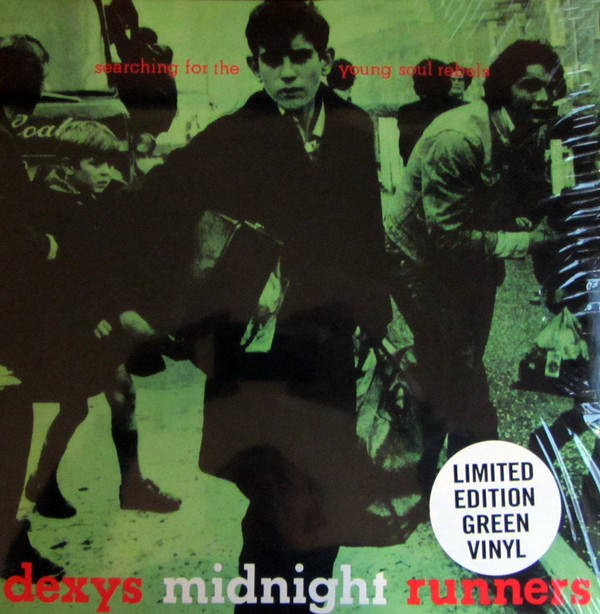
Frightened Rabbit-Painting Of A Panic Attack.
Three years after they released their previous album Pedestrian Verse, Glasgow based Frightened Rabbit returned recently with their fifth album Painting Of A Panic Attack. It was released on Atlantic Records, is a mixture of anthems and ballads. Mostly, though, anthems are to the fore on Painting Of A Panic Attack.
Just like the ballads on Painting Of A Panic Attack, they feature lyrics that are variously cerebral, cinematic, dark, insightful and wistful. Lead singer and songwriter Chris Hutchison, brings these lyrics to life. He’s a storyteller who breathes emotion and meaning into the lyrics. That’s the case whether it’s on the ballads or anthems. There’s hooks aplenty on the anthems, which will be favourites when Frightened Rabbit play live.
They’ve been doing a lot of that recently. That will continue to be the case. Frightened Rabbit are also well on their way to becoming one of the most successful current Scottish bands. They’ve also released one of the best albums of their thirteen year career. That album is Painting Of A Panic Attack, which is an assured and accomplished album from Frightened Rabbit who are equally comfortable delivering ballads as they are hook-laden anthems.
Get Me Home For Tea-Rare Psychedelic Rock From The UK.
Although a record amount of albums were released for Record Store Day 2016, there were some albums that eluded many record collectors. This included Get Me Home For Tea-Rare Psychedelic Rock From The UK, which was released as a limited edition of 2,000 by ORG Music.
Get Me Home For Tea: Rare Psychedelic Rock From The U.K. features twelve psychedelic and freakbeat tracks from the vaults of Parlophone. This includes Tomorrow, The Moles, The Idle Race, The Artwoods, The Brain, The Penny Peeps and The Game. These artists are just some of the artists that feature on Get Me Home For Tea-Rare Psychedelic Rock From The UK. It was a reminder of Britain’s psychedelic past.
For fans of psychedelia and freakbeat, Get Me Home For Tea: Rare Psychedelic Rock From The U.K. was a must have release. Sadly, copies were and still are, like hen’s teeth. That was no surprise. Get Me Home For Tea: Rare Psychedelic Rock From The UK was a carefully curated, quality compilation that features twelve hidden gems from the vaults of Parlophone.

Here Today!-The Songs Of Brian Wilson.
In 2015, Ace Records Here Today!-The Songs Of Brian Wilson as part of their Songwriters’ series. By the end of the year, it was their biggest selling release of 2015. This was something to celebrate. This was something to celebrate.
So to celebrate the success of Here Today!-The Songs Of Brian Wilson, Ace Records decided to release a vinyl edition of the compilation. This however, was no ordinary vinyl edition. Instead, the vinyl edition of Here Today!-The Songs Of Brian Wilson was pressed on 180 gram snowy white vinyl, and features a dozen of the compilation’s highlights. This includes Darian Sahanaja, Bobby Vee, Betty Everett, Carmen Mcrae, Nick Decaro and Kirsty MacColl. They all pay homage to Brian Wilson, one of music’s greats.
That visionary is Brian Wilson, who has influenced two generations of musicians, including the artists who pay tribute to him on Here Today!-The Songs Of Brian Wilson. Here Today!-The Songs Of Brian Wilson was a fitting addition to Ace Recods’ Songwriters’ series, and is a fitting and poignant reminder of Brian Wilson at the peak of his powers.
Jethro Tull-Aqualung.
In 1971, Jethro Tull released what would become their first classic album, Aqualung. It was Jethro Tull’s most ambitious and cerebral album, Aqualung. It was a concept album that examined ”the distinction between religion and God.” This seemed an unlikely subject for an album, even a seventies concept album.
It found Jethro Tull combined progressive rock with folk, blues, hard rock and even psychedelia. The music features Jethro Tull at their most cerebral, and became the band’s most successful album. In America alone, Aqualung sold three million copies, and seven million copies worldwide. Suddenly, Jethro Tull were one of the biggest selling bands in the world.
The success of Aqualung was a game-changer for Jethro Tull. They were now one of the biggest bands opt the seventies. That’s where they remained for much of seventies. For a while, it seemed that everything Jethro Tull touched to silver, gold or platinum. However, Aqualung was one of Jethro Tull’s finest hours, and set the bar high for future albums
Jethro Tull-Too Old To Rock ’N’ Roll: To Young To Die.
For Record Store Day 2016, Rhino released Too Old To Rock ’N’ Roll: To Young To Die. It was originally released in 1976, and was another concept album where Jethro Tull told the story of an ageing rock star, who found fame when musical tastes changed. This was prophetic.
By the time Jethro Tull released Too Old To Rock ’N’ Roll: To Young To Die, they were one of the most successful progressive rock bands. However, music was changing, with the birth of punk. This impacted on sales of the Too Old To Rock ’N’ Roll: To Young To Die, and there were no gold, silver or platinum discs. Since then, Too Old To Rock ’N’ Roll: To Young To Die is regarded as a hidden gem in Jethro Tull’s back-catalogue. It’s also one of the most underrated albums in Jethro Tull’s illustrious back-catalogue.
On Too Old To Rock ‘n’ Roll: Too Young to Die Jethro Tull combined folk, jazz and classical with progressive rock. The result was a cohesive, cerebral concept album that deserved to find a wider audience. Alas, it wasn’t to be. As a result, Jethro Tull never released another concept album. That was a great shame, as they were past masters of the concept album. A reminder of that is Too Old To Rock ‘n’ Roll: Too Young to Die. a hidden gem in Jethro Tull’s back-catalogue.
THE BEST VINYL REISSUES OF 2016-PART 2.
THE BEST VINYL REISSUES OF 2016-PART 3.
John Marty-Solid Air.
During his long and illustrious career, John Martyn released two classic albums for Island Records, including Solid Air in 1973. It was reissued twice during 2016. In May, Island Records reissued Solid Air as part of their Half-Speed Mastering series. Then Universal-Island Records Ltd supplied HMV 1,000 copies of Solid Air on green vinyl for their Vinyl Week initiative. This offered another opportunity to discover Solid Air.
When John Martyn released Solid Air in 1973, it was hailed a an almost flawless album and instant classic. He sets the bar high on the album opener Solid Air, a poignant, beautiful and deeply moving song he hd written about written about his friend Nick Drake, who had recently passed away. This set the bar high. John Martyn maintains his high standard on Over the Hill, John’s cover of Skip Spence’s Don’t Want To Know, Go Down Easy, Dreams By The Sea and Man In The Station. They’re are among the highlights of Solid Air where John Martyn switches between folk, blues and rock..
The result is captivating and near flawless album where one is transfixed, enthralled by its beauty and subtlety. Solid Air is akin to a magical musical journey with John Martyn, who came of age on Solid Air, which is a seminal album. Four years later, he released his second classic album One World. However, Solid Air, which is a timeless classic will always be remembered as John Martyn’s finest hour.
King Creosote-Astronaut Meets Appleman.
During his twenty-one year carer, King Creosote has been a one man music making machine. Despite that, each new album from Fife based singer-songwriter eagerly awaited. Especially an album as eclectic as Astronaut Meets Appleman.
It’s one of the most eclectic albums of King Creosote’s long and illustrious career. They combine elements of folk, indie rock, perfect pop and psychedelia on Astronaut Meets Appleman. It features balladry, paeans, rockers and hook-laden anthems. King Creosote are equally happy delivering ballads, as they’re heading into anthem territory. That’s no surprise. Kenny Anderson’s worldweary voice is perfect for the ballads on Astronaut Meets Appleman.
The result is an album that’s a fitting followup to From Scotland To Love, which was King Creosote’s previous release on Domino Records. It’s a welcome addition to King Creosote’s burgeoning back-catalogue. Astronaut Meets Appleman is also a tantalising taste of the inimitable King Creosote, who after twenty-one years and over forty albums, are belatedly receiving the critical acclaim and recognition that their music so richly deserves
Manic Street Preachers-Everything Must Go.
As part of their Vinyl Week initiative, HMV released Music On Vinyl’s reissue of Manic Street Preachers’ fourth album Everything Must Go. It was released in 1996 and was the Manic Street Preachers’ first album since the disappearance of lyricist and rhythm guitarist Richey Edwards. Ironically, Everything Must Go became the Manic Street Preachers’ most successful album.
Everything Must Go was released to critical acclaim and sold over two million copies. This was the start of the rise and rise of the Manic Street Preachers. They showcase a new sound on Everything Must. Gone were the introspective and autobiographical lyrics. The Manic Street Preachers turned their back on the stark, dark, disturbing and minimalist sound of their previous album The Holy Bible. It was as if the Manic Street Preachers had reinvented themselves in the wake of the disappearance of Richey Edwards.
For Everything Must Go, the lyrics were inspired by history and politics. The music was much more melodic and album which features rock anthems. Even the instruments deployed were different Strings and synths are to the fore on Everything Must Go, which has a much more commercial and accessible sound. Critics welcome the Manic Street Preachers’ new sound on Everything Must Go. They hailed they album a genre classic. Nowadays, Everything Must Go regarded as one of the best British albums of the nineties, and the album that transformed the Manic Street Preachers fortunes.
Masterpieces Of Modern Soul.
Last year, Kent Soul, an imprint of Ace Records, decided that now was the time, to start releasing Masterpieces Of Modern Soul series on vinyl. The first instalment in this series is simply entitled Masterpieces Of Modern Soul and features twelve tracks. This includes Act 1, The Mayberry Movement, Gail Anderson, Nightchill, The Hesitations, Street People and Herman Davis. This as you’ll realise, is a tantalising taste of what’s in-store for soul fans as the Masterpieces Of Modern Soul series.
For anyone whose interested in modern soul, or soul in general, then Masterpieces Of Modern Soul will be the perfect addition to a record collection. It’s a release that oozes quality and sound great.
It features twelve delicious slices of modern soul. This makes Masterpieces Of Modern Soul is a mouthwatering proposition for soul fans. Familiar faces, rub shoulders with minor classics and hidden gems. Similarly, some of the biggest names in soul sit side-by-side with one hit wonders and contenders. However, they all have one thing in common…quality. They’re the perfect introduction to modern soul, and the Masterpieces Of Modern Soul series as it joins the vinyl revolution.
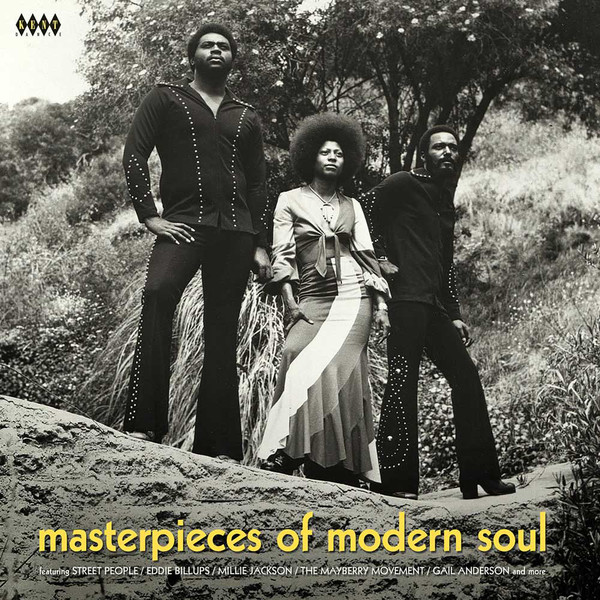
Michael Chapman-Savage Amusement.
For Record Store Day 2016, Secret Records reissued Michael Chapman’s Savage Amusement. This was fitting as Savage Amusement was released forty years previously in 1976. It was a stylistic departure for Michael Chapman. He fused blues, country, folk, folk rock, gospel, rock and soul. Michael Chapman also drew inspiration from Bob Dylan’s 1975 classic album Blood On The Tracks and Steve Harley and Cockney Rebel’s 1975 album The Best Years of Our Lives. Sadly, Savage Amusement never enjoyed the same success as Blood On The Tracks nor The Best Years of Our Lives.
Michael Chapman’s fans were divided by Savage Amusement. Some welcomed the change of sound, and realised that Savage Amusement was a lost classic. Others were shocked at Savage Amusement’s stylistic departure. They took some appeasing when touring Savage Amusement. Since then, Savage Amusement has continued to divide Michael Chapman’s loyal fans.
For newcomers to Michael Chapman, Savage Amusement is a very accessible album. Although quite different from some of Michael’s previous albums, Savage Amusement oozes quality. From the opening bars of Shuffleboat River Farewell, right through to the closing notes of Devastation Hotel, Savage Amusement is a captivating and oft-overlooked minor classic from one of British music’s best kept secrets, Michael Chapman.
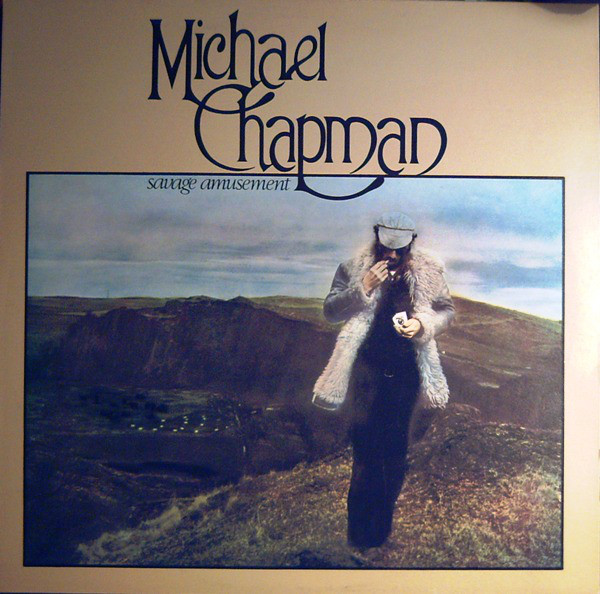
Mogwai-Atomic
When filmmaker Mark Cousins decided to make the documentary Atomic: Living In Dread and Promise, post rock pioneers Mogwai were commissioned to write the soundtrack. It was the perfect backdrop to Atomic: Living In Dread and Promise, which was a personal and poignant cinematic memoir. However, after the documentary was aired in the summer of 2015, Mogwai decided to rerecord the whole of the Atomic soundtrack. This might have seemed like a strange decision. However, when the rerecorded version of Atomic was released by Rock Action Records in April 2016, Mogwai’s decision to rerecord the album was vindicated.
Atomic was a mesmeric fusion that captivates and compels. The listener is taken on a musical journey, one that veers between dramatic and dreamy, to surreal and trippy, to beautiful, pensive and understated to melancholy and melodic. Other times the music is dramatic, moody and broody. One thing the music never is, is boring. Not at all. Certainly not with Mogwai providing the soundtrack to Atomic.
Subtleties and surprises are constantly sprung. Mogwai certainly aren’t afraid of changing direction. Using the musical equivalent of a handbrake turn, the Mogwai Young Team perform a volte face. That’s what makes Atomic such a captivating and groundbreaking soundtrack from Glasgow’s famous five…Mogwai.
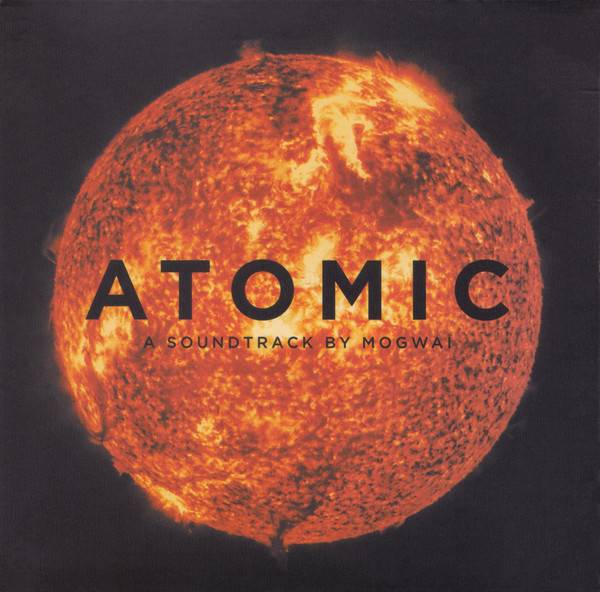
Nuggets Hallucinations: Psychedelic Pop Nuggets From The WEA Vaults.
The release of Nuggets Hallucinations: Psychedelic Pop Nuggets From The WEA Vaults was a welcome reminder of Rhino’s much loved Nuggets compilation series. This series began in 1984 when Nuggets, Volume 1: The Hits was released. Little did anyone know that the Nuggets series would last twenty-five years, and include fifteen LP, five box sets and two CD compilations. Like all good things, the Nuggets series had to come to an end. The final chapter in the story was Where the Action Is! Los Angeles Nuggets: 1965–1968, which was released in 2009. Since then, it’s been all quiet on the Nuggets’ front.
With seven years passing since the release of Where the Action Is! Los Angeles Nuggets: 1965–1968, it seemed unlikely that there would another instalment in the series. That was until the list of Record Store Day 2016 releases was announced. That’s when eagle-eyed spotted the release of Nuggets Hallucinations: Psychedelic Pop Nuggets From The WEA Vaults, a double album featuring twenty-four tracks from familiar faces and new names alike.
There’s contributions from The Misty Wizards, The Last Exit, Adrian Pride, The Association, The Salt, Kim Fowley, The Tokens and Lee Mallory. That’s not forgetting The Glass Family, The Holy Mackerel and The West Coast Pop Art Experimental Band. Quite simply, Nuggets Hallucinations: Psychedelic Pop Nuggets From The WEA Vaults is a veritable psychedelic feast and a trip down memory lane.
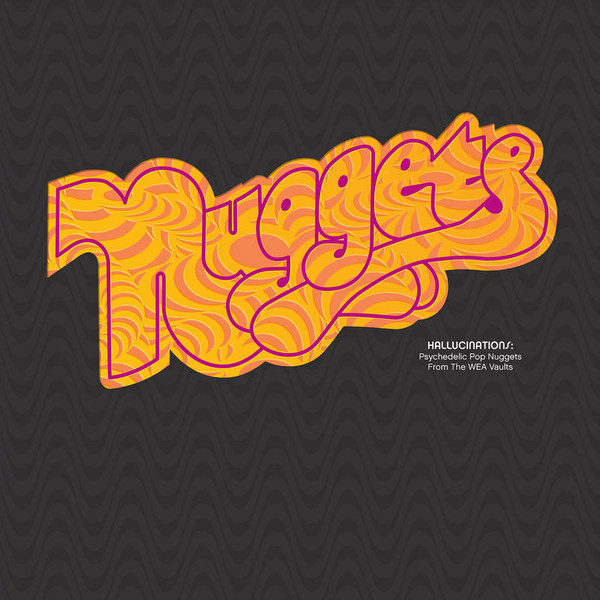
Pied Piper-The Pinnacle Of Northern Soul.
Having founded Pied Piper Productions, Sheldon “Shelley” Haines brought onboard to former Funk Brothers Jack Ashford and Mike Terry. They had both been important members of Motown’s house band and had played on countless hit singles. Despite this, they felt they weren’t receiving the renumeration they deserved. When the pay dispute couldn’t be resolved to their satisfaction Jack Ashford and Mike Terry, left Motown and joined Sheldon “Shelley” Haines Pied Piper Productions.
At Pied Piper Productions, Jack Ashford and Mike Terry worked with Nancy Wilcox, The Cavaliers, The Hesitations, Lorraine Chandler, Freddy Butler, September Jones, Mikki Farrow and Tony Hester, who all feature on Ace Records’ Pied Piper-The Pinnacle Of Northern Soul. They were among the artists that were discovered, careers that were rejuvenated and stars were born.
Sheldon “Shelley” Haines’ decision to bring Jack Ashford and Mike Terry to Pied Piper Productions was vindicated. For a few short years, they were a potent and successful partnership. Proof of this is the music on Pied Piper-The Pinnacle Of Northern Soul. It’s a compilation that will appeal to anyone who likes their music soulful.
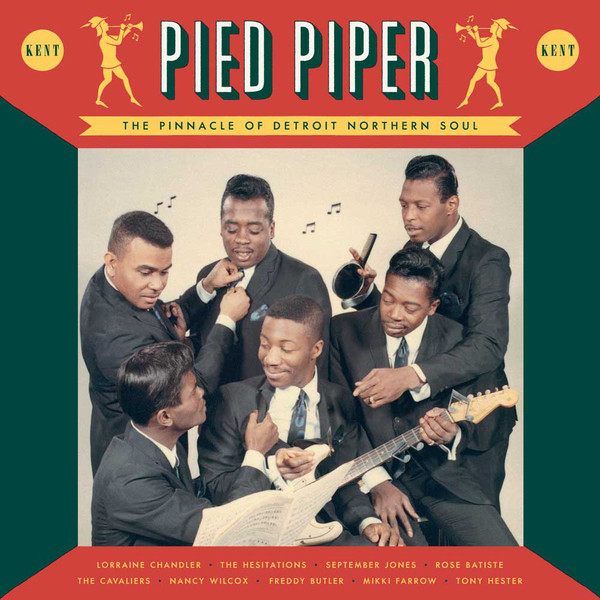
Sun Ra-Jazz-In Some Far Place: Roma ’77-Vinyl.
For anyone interested in Sun Ra’s music, Record Store Day 2016 was a veritable musical feast. A trio of Sun Ra albums were released that day. This includes In Some Far Place: Roma ’77 which was released by Strut Records. It’s available in various formats, including two LPs and two CDs. They feature Sun Ra at his groundbreaking best.
When Sun Ra arrived in Rome in 1977, the lineup of his band was very different to the fifties and sixties. Now Sun Ra lead five piece band. Despite their reduced numbers, Sun Ra and his band were still able to unleash a breathtaking performance. That was the case that night in Rome.
Accompanied by a talented and versatile band, Sun Ra worked his way through an eighteen track set. During that set, they combine Egyptian history, space-age cosmic philosophy and free jazz with avant-garde and space-age jazz. The music was ambitious, challenging, inventive, lysergic, melodic, spacious and full of subtleties, surprises and nuances. It seemed that the original version of a track was merely the starting point, as Sun Ra thew curveballs and headed in unexpected directions. In Some Far Place: Roma ’77 features a captivating performance from Sun Ra who forty years ago, was at his creative zenith.
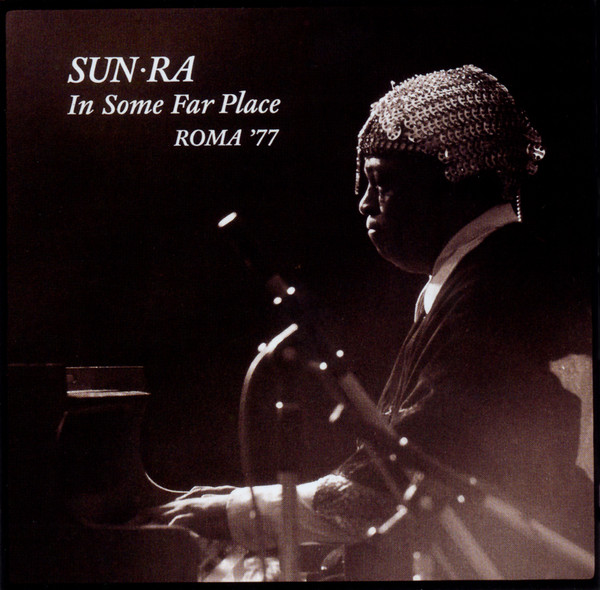
Sun Ra-Jazz By Sun Ra Volume 1.
During a career that spanned six decades, it’s estimated that Sun Ra released around 125 albums. This includes Jazz By Sun Ra Volume 1 which was released by Poppydisc for Record Store Day 2016. It was one of three Sun Ra albums released for Record Store Day 2016.
Jazz By Sun Ra Volume 1 is quite different from the other two albums. It’s a studio album that was recorded at Universal Recording, Chicago, on July 12th 1956. Back then, the enigmatic bandleader was leading a multitalented and versatile eleven-piece band. They showcased Sun Ra’s musical philosophy which took shape after a life-changing experience in 1937. Sun Ra claimed he had been transported to Saturn, where he spoke to the Angel Race. They warned him the world was heading for chaos and Sun Ra could make a difference with his music.
That is what Sun Ra decided to do. His music became a fusion of Egyptian history, space-age cosmic philosophy and free jazz. To this, Sun Ra added post bop on Jazz By Sun Ra Volume 1. This ensured that Sun Ra’s music stayed relevant. That was always the case. Sun Ra was always one step ahead of other musicians, who musically, he left trailing in his wake. An example of this is Jazz By Sun Ra Volume 1, which is album of ambitious, inventive and innovative music from a man who would become a giant of jazz, Sun Ra.
THE BEST VINYL REISSUES OF 2016-PART 3.
THE BEST VINYL REISSUES OF 2016-PART 3.
Sun Ra-Spaceways.
The third of the trio of Sun Ra albums released for Record Store Day 2016 was Spaceways. It was released by Org Music on blue vinyl as a limited edition of 2,500. Originally, though, Spaceways could be found on disc two of Calling Planet Earth, a three CD box set released in 1998. The five tracks on disc two became Spaceways.
It features recordings of by Sun Ra and His Arkestra from 1966 and 1968. During each performance featured on Spaceways, Sun Ra is accompanied by over twelve members of his multitalented Arkestra. They join Sun Ra as he seamlessly combines Egyptian history and space-age cosmic philosophy with freeform jazz.
For Sun Ra, the original version of the five tracks on Spaceways were merely the starting point. What they became, was anyone’s guess? Sun Ra and His Orchestra took the listener on a voyage of discovery, where they were determined to innovate, and reinvent each track. This meant his music headed in the most unexpected directions. Sometimes, it’s a roller coaster ride, and a case of expect the unexpected. After all, all Sun Ra was one of music’s mavericks who was determined to do things his way. The music becomes spacey and sometimes lysergic as Sun Ra and His Arkestra seamlessly combine Egyptian history and space-age cosmic philosophy with freeform jazz on Spaceways. It’s a potent and heady brew, that’s a memorable reminder of a musical pioneer, Sun Ra.

Ted Coleman Band-Taking Care Of Business.
By 1979, Ted Coleman was living in New Jersey, and had founded his own band, the Ted Coleman Band. They had already established a reputation locally, and were regarded as one of the rising stars of what was a thriving and eclectic local music scene. The next step for the Ted Coleman Band was to record their debut album, Taking Care Of Business, which was released by BBE. It was recorded back in 1979.
It featured a talented band who combined funk, jazz, Latin and soul. There’s even the occasional rocky guitar lick thrown in for good measure on Taking Care Of Business. Mostly, though, the music on Taking Care Of Business is funky, jazz-tinged and soulful. It’s also dance-floor friendly. This is in part to the irresistible Latin rhythms and funky rhythm section. They’re part of the multitalented Ted Coleman Band that featured on Taking Care Of Business.
Alas, when Taking Care Of Business was released in 1980, the album never found the audience it deserved. JSR was a relatively new company, and neither had the resources nor marketing expertise to promote the album. Neither did the Ted Coleman Band. As a result, the album disappeared without trace. Nowadays, this hidden gem of an album Taking Care Of Business has acquired a cult following and is belatedly finding the audience it deserves. It’s a case of better late than never
Teenage Fanclub-Bandwagaonesque.
During 2016, HMV released Music On Vinyl’s limited edition of Teenage Fanclub’s third album Bandwagaonesque as part of its Vinyl Week initiative. Bandwagaonesque was released on pink vinyl twenty-five years after years after its initial release in November 1991.
Critical acclaim accompanied Bandwagonesque’s released. It was the first album to feature Teenage Fanclub’s melodic, hook-laden brand of power pop. With their Byrdsian jangling guitars and tight harmonies, Bandwagonesque stood head shoulders above A Catholic Education and The King. Granted, Teenage Fanclub could still rock out, and enjoyed the odd excursion into grunge, however, Bandwagonesque was Teenage Fanclub’s finest moment…by far. Record sales backed this up.
Bandwagonesque charted on both sides of the Atlantic and introducing the Teenage Fanclub’s music to a much wider and appreciative audience. After this, the Teenage Fanclub embarked upon the most successful period of their career. Their unique fusion of indie rock and melodic, hook-laden power pop proved popular in America, Europe and Australia. Teenage Fanclub were one of the most popular British indie bands of that era, with their music influencing a generation of new bands. However, the Teenage Fanclub’s finest hour was Bandwagonesque, which nowadays, is quite rightly regarded as a genre classic.
Teenage Fanclub-Here.
After a six year absence, Glasgow’s very own Kings of jangle pop, Teenage Fanclub returned with their much anticipated tenth album, Here. It was the long awaited followup to 2010s Shadows. Since then, the members of Teenage Fanclub have been spending much of their time working on various side projects. Eventually, the call came, and everyone returned to the mothership, Teenage Fanclub. That has been home to the Bellshill boys since 1989. This homecoming was going to be special.
From the opening bars of I’m In Love, right through to the closing notes of Connected To Life, Teenage Fanclub never put a foot wrong. The songs are anthemic, beautiful, joyous, melodic and sometimes, even have a melancholy quality. Other times, the songs are dreamy, rocky and ruminative. Always, though, the songs on Here are memorable as Teenage Fanclub roll back the years.
So good is the music on Here, that it’s akin to a return to Teenage Fanclub’s golden years between 1991 and 1997. Back then, Teenage Fanclub could do no wrong. That’s the case on Here, which was released on Teenage Fanclub’s own PeMa label. It’s a welcome return to form, from Teenage Fanclub who are enjoying an Indian Summer in their twenty-seven year career. Here finds Teenage Fanclub combining balladry, perfect pop and jangle pop with rock and even a hint of country. It’s a flawless fusion where Teenage Fanclub back the years on what’s their best album in nearly twenty years, Here.
The Charlatans-The Limit Of The Marvellous.
Between 1964 and 1969, The Charlatans’ star shawn bright. They were larger than life mavericks who looked like a cross between 19th Century, wild west outlaws and Victorian dandies. This carefully cultivated image soon began to prove popular with the audience at their gigs. Soon, they arrived dressed in similar attire. Meanwhile,The Charlatans were embracing the rock ’n’ roll lifestyle. LSD and pot were part of The Charlatans’ diet. It fuelled The Charlatans as they took San Francisco by storm. Commercial success and critical acclaim looked a formality. It wasn’t to be.
By 1969, The Charlatans were no more. They were just the latest band that should’ve enjoyed widespread critical acclaim and commercial success. However, for whatever reason, commercial success passes these bands by. That was the case with The Charlatans whose music wa celebrated on The Limit Of The Marvellous. It was recently reissued by Big Beat Records, an imprint of Ace Records on red vinyl. It’s a fitting reminder of The Charlatans’ finest songs.
Their musical legacy amounted to one album and two singles. It features on The Limit Of The Marvellous. It’s the perfect introduction to musical mavericks The Charlatans, who having taken San Francisco by storm, should’ve found fame and fortune. Sadly, it wasn’t to be. After several breakups, makeups and changes in lineup, The Charlatans, called time on a career that promised much, but ultimately, through bad luck and misfortune, came to little.
The Damned-Machine Gun Etiquette.
By the time work began on Machine Gun Etiquette, The Damned were a democracy as far songwriting went. They wrote songs with lyrics that were clever, controversial, witty and sometimes, full of social comment. Machine Gun Etiquette found The Damned combining music from the sixties, seventies and eighties.
The Damned fused sixties garage rock, pop, punk and psychedelic rock. There was also a more experimental sound Machine Gun Etiquette. It seemed as if The Damned were in the process of finding themselves musically. Helping them to do so, was producer Roger Armstrong. He and The Damned proved a successful partnership.
So much so, that when Machine Gun Etiquette was released it was to critical acclaim. So critics called the album a classic. When Machine Gun Etiquette was released, it was certified silver and became The Damned’s most successful album. They had released one of the most accessible album and finest albums of their career, Machine Gun Etiquette which was reissued on by Ace Records.
The Damned-The Black Album.
Having just released the most successful album of their career, and one that was hailed a classic, The Damned got to work on their fifth album. Most bands would’ve have decided to pickup where they left on Machine Gun Etiquette. However,The Damned weren’t most bands. Instead, they were about to head off on a musical journey through disparate genres.
The Black Album find The Damned moving towards goth rock, which they went on to embrace throughout the eighties. There’s also a psychedelic influence to The Black Album, as The Damned begin to move away from their punk roots. They didn’t cut the ties entirely, for fear of alienating their older fans, who had been around since The Damned released their debut album in 1976. A lot had happened since 1976.
Forty years later, and incredibly, The Damned are still going strong.They’ve had their ups and downs, but still keep making music and have released over thirty albums since The Black Album. However, The Black Album and its predecessor Machine Gun Etiquette are both reminders of The Damned in their prime, when they swaggered their way through albums, displaying a devil may care, rebellious attitude. This resulted in some of the most memorable music of their forty year career. Thos included the classic album Machine Gun Etiquette, and the album where The Damned came of age musically, The Black Album which featured a much more sophisticated and eclectic style.
The Idle Race-The Limit Of The Marvellous.
For many musical connoisseurs, one of the highlights of Record Store Day 2016, was Parlophone’s reissue of The Idle Race’s sophomore album The Limit Of The Marvellous. It was the followup to The Birthday Party, and found The Idle Race continue to combine pop, rock and psychedelia. They were lead by one of the most successful musicians of the seventies, Jeff Lynne.
He wrote seven of the eleven songs on The Limit Of The Marvellous. That wasn’t his only role with The Idle Race. Jeff Lynne arranged and produced The Limit Of The Marvellous. It was heavily influenced by The Beatles. They would continue to influence Jeff Lynne when he lead the Electric Light Orchestra. Sadly, The Limit Of The Marvellous never enjoyed anything like the success of Electric Light Orchestra.
Indeed, none of The Idle Race’s albums were particularly successful. However, The Limit Of The Marvellous is a cohesive and accomplished album which is long on hooks. It finds Jeff Lynne maturing as a songwriter and producer, on The Limit Of The Marvellous which nowadays, is regarded as The Idle Race’s finest album.
The Pictish Trail-Future Echoes.
Four years after the release Secret Soundz Volume 2, in 2012, The Pictish Trail returned with the much-anticipated followup, Future Echoes. It was released on The Pictish Trail’s Lost Map Records, and is the first album The Pictish Trail has released since the demise of Fence Records. However, The Pictish Trail picks up where he left off on Secret Soundz Volume 2.
Future Echoes finds The Pictish Trail combining elements of disparate genres, and weaving them into a musical tapestry. To do this, The Pictish Trail fuses folk, indie pop, dance music and electronica. Other ingredients include indie rock and even psychedelia. They become Future Echoes, an album where ballads and uptempo songs side by side. Together, they create a potent and heady musical brew. It’s akin to a journey on an emotional roller coaster.
During that journey, the songs on Future Echoes are beautiful, catchy, joyous melodic and memorable. Others are cinematic, dark, dramatic and melancholy. Very occasionally the darkness descends, and on Far Gone (Don’t Leave) the lyrics make for uneasy listening. Sometimes, The Pictish Trail heads into anthem territory, and his hook-laden songs prove irresistible. Other times, he showcases his versatility on Future Echoes’ ballads. Transformed into a balladeer, The Pictish Trail breaths meaning and emotion into the lyrics. They’re a reminder that The Pictish Trail, whose one of Scottish music’s best kept secrets, is a versatile and talented singer who seems to mature with age.
The Sun Records Rock ’N’ Collection-40 Rockin’ Greats From The Sun Vaults.
Last year, Sainsbury’s jumped on the burgeoning vinyl bandwagon, and have released a series of limited editions. This includes The Sun Records Rock ’N’ Collection-40 Rockin’ Greats From The Sun Vaults, which was released as a double album by Charly, and retailed exclusively through Sainsbury’s. Only 1,000 copies were pressed on 180 gram orange heavyweight vinyl. It’s a quality release and a reminder of one of the most important record labels in musical history.
It’s the label where rock ’n’ roll was born, and that was home to everyone from Elvis Presley, Carl Perkins and Jerry Lee Lewis to Johnny Cash, Roy Orbison and the Silver Fox Charlie Rich. That’s not forgetting Warren Smith, The Miller Sisters, Billy Lee Riley and Earl Hooker. They all feature on The Sun Records Rock ’N’ Collection-40 Rockin’ Greats From The Sun Vaults. Some of their best known tracks feature on this double album, and will be instantly recognisable to music lovers of all ages. They’re joined by some hidden gems from the Sun Records’ back-catalogue. It’s a captivating compilation.
For newcomers to Sun Records, The Sun Records Rock ’N’ Collection-40 Rockin’ Greats From The Sun Vaults, it’s the perfect starting place for anyone whose yet to discover the delights of Sun Records. This should be part of their musical education. After all, Sun Records was one of the most important labels in the history of music.
The Velvet Underground-Loaded-Vinyl.
During 2016 limited edition vinyl pressings were all the rage. One of the albums rereleased by HMV as a limited edition was The Velvet Underground’s fourth album Loaded. This classic album that was meant to be “loaded with hits.” Instead, it proved to be The Velvet Underground’s swan-song. However, it was no ordinary swan-song.
Most critics were won over by Loaded. It followed in the footsteps of The Velvet Underground, which showcased a much more populist, commercial sound. Among Loaded’s highlights were the hook-laden, Sweet Jane and Rock and Roll. When Loaded was released, it failed commercially. Alas, the album wasn’t: “loaded with hits.” However, Loaded deserved to fare better. Especially as The Velvet Underground had sacrificed and suppressed their true sound to deliver an “album loaded with hits.”
While Loaded wan’t an “album loaded with hits,” it had everything going for it. It benefited from a much more commercial sound, and plethora of hooks. This meant that Loaded was The Velvet Underground’s most accessible album. It was also their swan-song. However, The Velvet Underground left behind a rich legacy. That’s despite only recording four studio albums. Each is a classic. From The Velvet Underground and Nico to Loaded, each album features shamanistic performances from those musical shape shifters and high priests of music, The Velvet Underground.
Tom Arthurs and Isambard Khroustaliov-Vaucanson’s Muse.
Buoyed by the success of their critically acclaimed tour, Tom Arthurs and Isambard Khroustaliov entered the studio and recorded Vaucanson’s Muse back in November 2013. However, it was nearly three years before the album was released in late October 2016. Vaucanson’s Muse which was released via Not Applicable’s Bandcamp Page was well worth the three year wait.
From the opening bars of On A Carpet Of Leaves Illuminated By The Moon, right through to the closing notes of Sea Interval, Tom Arthurs and Isambard Khroustaliov push musical boundaries. To do this, they combine elements of ambient, avant-garde, experimental and improvised music. The result is music that’s variously cinematic, edgy, eerie, futuristic, melodic, melancholy and ruminative. It’s also music that’s guaranteed to set the listener’s mind racing, as Tom Arthurs and Isambard Khroustaliov take the listener on a sonic voyage of discovery.
All the listener has to do, is submit to the music, and enjoy its nuances, subtleties and its plentiful supply of surprises. If they do, they will be richly rewarded. Vaucanson’s Muse finds two musical innovators uniting, to create a groundbreaking album of music, where Tom Arthurs and Isambard Khroustaliov follow in the footsteps of the pioneers of graphic scores.
THE BEST REISSUES OF 2016-PART 1.
THE BEST REISSUES OF 2016-PART 1.
During 2016, the reissue market seemed stronger than ever. Every week, hundreds of albums were reissued by labels big and small. They range from classic albums to hidden gems. There’s plenty of both on this eight part series, the best reissues of 2016.
Adelbert Von Deyen-Atmosphere.
Having released Norborg, there was no chance that Adelbert Von Deyen would rest on his laurels. He was already contemplating his third album. This would be an album where Adelbert sonically explored the subject of Atmosphere, which lent its name to the album. To help Adelbert on what was essentially a concept album, he enlisted the help of a few musical friends.
With a little help from his friends, Adelbert recorded Atmosphere. Critics hailed Atmosphere to be Adelbert’s Magnus Opus. It also featured the hit single Time-Machine, which sold 50,000 copies. When Atmosphere was released, it became Adelbert’s most successful album. It was the result of many months of hard work and dedication. In his home studio, Adelbert honed and sculpted Atmosphere. It’s variously atmospheric, beautiful, cinematic, elegiac and ethereal. Occasionally drama and darkness is introduced. So too are futuristic, sci-fi sounds. Sometimes the soundscapes reveal a melancholy, wistful sound. They’re sometimes ruminative and invite introspection and reflection on Atmosphere where Adelbert Von Deyen reveals nuances secrets and subtleties aplenty.
He was well on his way to becoming one of Germany’s most successful musicians. Adelbert Von Deyen helped popularise the music of the Berlin School of electronic music. This he did with his hit single Time-Machine, and albums like Atmosphere which was reissued by Bureau B. Atmosphere fused ambient, avant-garde, Berlin School, electronica, experimental and Krautrock, and was a career defining album from Berlin School pioneer, Adelbert Von Deyen.
Adelbert Von Deyen-Norborg.
After the commercial success of Sternzeit, Adelbert Von Deyen was able to give up his job and devote his energies to making music. This was a dream come true for Adelbert Von Deyen, who had become something of a celebrity in his home town of Lübeck. However, Adelbert Von Deyen wasn’t going to let his newfound celebrity status go to his head. Not when he had his sophomore album Norborg to record.
Norborg is evocative, ethereal, elegiac and has a cinematic quality. So much so, that it’s possible to imagine the moon rising over Norborg as nature and the elements take centre-stage on Moonrise. Synths swirl, replicating the gusts of eddying winds, before the sound of seagulls battle the buffeting winds. Meanwhile, Adelbert Von Deyen continues to improvise, sculpting and carefully creating the ruminative, introspective, meditative and sometimes dramatic soundscape that is Moonrise. Iceland where Adelbert recreates the ferocious blizzard he witnessed during his holiday in Norborg. What follows is the perfect musical storm. It builds, ebbing and flowing, veering between dramatic to wistful and melancholy. Always, there’s a cinematic quality to this ambient soundscape.
It finds Adelbert successfully combining ambient, avant-garde, Berlin School and electronica on his much-anticipated sophomore album Norburg which was reissued by Bureau B. Norborg’s ethereal beauty was sure to find an audience, and that proved to be the case. When Norborg was released by Sky Records in 1979, unsurprisingly, it was to widespread critical acclaim and commercial success.
Adelbert Von Deyen-Sternzeit.
In 1977, Adelbert Von Deyen was working as a retoucher for a Berlin newspaper. While this kept him busy during the day, Adelbert had plenty of free time in the evenings. Wanting to put his free time to good use, Adelbert decided to take up a hobby. The hobby Adelbert Von Deyen chose was music. He assembled an array of musical equipment which he quickly mastered. So much so, that within a year, Adelbert Von Deyen had recorded what would become his debut album Sternzeit. It was released by Sky Records, and was reissued by Bureau B.
Sternzeit was the result of eight months work of hard work and dedication by Adelbert Von Deyen. He worked long hours crafting and sculpting two lengthy complex, multilayered soundscapes. They’re variously atmospheric, cinematic, dramatic, elegiac and ruminative. There’s also beauty, darkness and sense of melancholia on Sternzeit, as it reveals its secrets, subtleties and nuances. The result is compelling album which would later, and quite rightly, be hailed a Berlin School classic. No wonder.
The music on Sternzeit was groundbreaking and way ahead of its time. That was the case with many within the Berlin School. However, Adelbert Von Deyen would become a leading light of the Berlin School, and his music would go on to influence two generations of musicians. However, Sternzeit, which was recently released by Bureau B, was just the first chapter in Adelbert Von Deyen’s long and illustrious career.
AK Musick-AK Musick.
Hans Kumpf formed his new improv collective whilst he was at teacher training college. This he called AK Musick. There were two reasons for this. AK was an abbreviation of the German word for workshop; while Musick was a mixture of the English and German words for music. Now the nascent band had a name, Hans Kumpf began setting out AK Musick’s musical philosophy. The new collective would take a different approach to music. They were determined to: “make music in a very democratic way,” with each member having their say and everyone’s opinion proving equally valid. With their musical philosophy in place, AK Musick began making music and released their eponymous debut album in 1972.
It’s a fusion of disparate influences, instruments and genres. This includes avant-garde, experimental, free jazz and elements of African, Berlin School, industrial and Krautrock. The music of avant-garde composers Johannes Fritsch and especially Helmut Lachenmann influenced AK Musick. They recorded ambitious, experimental and innovative music. Sadly, the music on AK Musick was way ahead of its time.
Record buyers failed to understand this groundbreaking, genre-melting album. It was only much later that AK Musick received the recognition that their music so richly deserved. Nowadays, a new generation of music fans have discovered AK Musick. It was reissued by Mental Experience, an imprint of Guerssen Records, forty-four years after the release of AK Musick on Hans Kumpf’s AKM Records.
Baumann/Koek-Baumann/Koek.
Baumann/Koek had a dream. That dream was to release an album. So they bought musical equipment and recorded their eponymous debut album. This they took the album to Conny Plank to mix. Once he had sprinkled his magic dust, Baumann/Koek decided to self-release their eponymous debut album. They had 1,000 albums pressed and Baumann/Koek was released in 1978.
Before long, Baumann/Koek was selling well within Germany. It was then that the Swabian wholesaler Jaguar Records offered to distribute Baumann/Koek worldwide. This seemed like too good an offer to refuse. Sadly, it was. Not long after Jaguar Records took over the worldwide distribution of Baumann/Koek, the company became insolvent. Soon, Jaguar Records was declared bankrupt. For Baumann/Koek this was a huge blow. They decided that they couldn’t risk any more of their capital releasing another album.
That was great shame, given the quality of music on Baumann/Koek. It’s veers between cinematic and dramatic, to elegiac and ethereal to hypnotic and mesmeric. Sometimes the music is hook-laden, irresistible and melodic. Especially as the listener is swept along atop synth strings. Then as Baumann/Koek draws to a close, a slice of boogie unfolds and Baumann/Koek rock into the distance. Sadly, there was no encore. However, Bureau B reissued Baumann/Koek in 2016. It’s a hidden gems of the Berlin School and a timeless, cult classic that should’ve marked the beginning a successful career for Baumann/Koek.
Beach Boys-Pet Sounds-50th Anniversary Edition.
When The Beach Boys released their eleventh album Pet Sounds in May 1966, it was to mixed reviews. Worse was to come. Pet Sounds then failed to match the commercial success of previous albums. Despite that, critics still called Pet Sounds a commercial success. Still though, critics didn’t realise that Pet Sounds was a groundbreaking, classic album. That would only become apparent later.
Why critics failed to realise this seems strange? Brian Wilson had collaborated with Tony Asher on what was a truly ambitious, epic album. Pet Sounds features symphonic, multi-layered arrangements. They feature layers of harmonies, harpsichords, flutes, theremins, organs, a variety of stringed instruments and sound effects. So do barking dogs, bicycle bells and the sound of trains. They’re part of a lysergic musical collage. However, sometimes, Brian Wilson looks to the past for inspiration, Especially, Phil Spector’s Wall Of Sound production style. It played its part in the sound and success Pet Sounds, which celebrated its fiftieth birthday in 2016.
This resulted in yet another reissue by UMC of the cash cow that’s Pet Sounds as a two CD set. That’s no surprise, given Pet Sounds is now regarded as a psychedelic classic and an album that inspired and influenced several generations of musicians. Pet Sounds was also The Beach Boys finest hour. Never again, would they even come close to reaching the heights of Pet Sounds, which nowadays, it seems are Brian Wilson’s favourite words.
Billy Joel-The Stranger.
When Billy Joel released his fifth album The Stranger on 29th September 1977, it proved to be a game-changer. His previous albums had been moderately successful. However, The Stranger was Billy Joel’s breakthrough album. It was released to critical acclaim and reached number two on the US Billboard 200. The Stranger sold ten million copies in America alone, and was certified diamond. Elsewhere, The Stranger was a huge seller in Canada, France, Hong Kong, Japan, New Zealand and in the UK. After six years, Billy Joel was one of the most successful singer-songwriters. Surely, things couldn’t get any better?
Billy Joel released Just The Way You Are on 26th September 1977, This beautiful paean reached number two and was certified gold. Then in 1978, Just The Way You Are won Grammy Awards for Record of the Year and Song of the Year. Incredibly, Just The Way You Are was just one of four singles from The Stranger.
It marked the coming of age of Billy Joel. He had matured as a singer-songwriter over the past six year. Proof of that were songs like Movin’ Out (Anthony’s Song), Just the Way You Are, She’s Always A Woman and Only The Good Die Young. However, produced Phil Ramone innovative production methods played an important part in The Stranger. It was the most successful album of Billy Joel’s career, and nowadays, The Stranger which was reissued by Columbia regarded as a classic album.
Bram Stoker-Heavy Rock Spectacular,
Often, Record Store Day sees the release of several cult albums. 2016 was no different. Bram Stoker’s 1972 album Heavy Rock Spectacular was reissued by Talking Elephant Records on coloured vinyl. This was a welcome reissue and a reminder of a band who should’ve reached greater heights.
Bram Stoker were formed organist Tony Bronsdon in Bournemouth, in 1969. Three years later, Bram Stoker were enjoying a modest amount of success and about to release their debut album Heavy Rock Spectacular in 1972. It’s a carefully crafted epic where four virtuoso musicians combine progressive rock with elements of jazz and classical music. The result was Bram Stoker’s debut album Heavy Rock Spectacular, which sounded not unlike The Nice.
Alas, when Heavy Rock Spectacular was released by Windmill Records, it failed to find an audience. Later, Bram Stoker’s carefully crafted progressive rock epic began to acquire a cult following. They appreciated Heavy Rock Spectacular, which nowadays, is regarded as one of the lost classics from the progressive rock era.
Canned Heat-One More River To Cross.
After releasing nine albums for Liberty Records, Canned Heat signed to Atlantic Records in 1973. Later in 1973, Canned Heat released their tenth studio album One More River To Cross, which was reissued by BGO Records. Canned Heat hoped that One More River To Cross was the start of a new era for the band.
Roger Hawkins and Barry Beckett’ were brought onboard to produce One More River To Cross. They also brought along the Memphis Shoals Horns. This was part of their makeover of Canned Heat’s sound. They seamlessly switch between and combine blues and boogie with funk, R&B, rock and Southern Soul. Ballads, blues and boogie sat side-by-side with funky jams, R&B and rock ’n’ roll. There was something for everyone. Alas, One More River To Cross failed commercially.
Canned Heat’s relationship with Atlantic Records was brief and expensive. However, One More River To Cross is one of the most underrated albums Canned Heat released between 1967 and 1973. Canned Heat seemed to have been reinvigorated by the change of studio and producer on One More River To Cross, which is an of-overlooked hidden gem of an album.
Circles-Circles.
Across Germany, each city had a vibrant underground musical scene. That was the case in Frankfurt, where Dierk Leitert and Mike Bohrmann were making music as Circles, and in 1983, were about to release their eponymous debut album. Circle was reissued by the Mental Experience label, w an imprint of Guerssen Records and is a reminder that there was life after Krautrock.
When Circles was released, it was well received by critics. They recognised oy was a groundbreaking album from one of the most talented groups in the post-Krautrock era. Despite the reviews, Circles didn’t sell well, and remained an underground album. Record buyers missed out on a groundbreaking, genre-melting album. It’s a fusion of ambient, avant-garde, electronica, free jazz, psychedelia, rock and Eastern music. Krautrock has also inspired and influenced Circles. Especially, groups like Anima, Embryo and Cosmic Jokers, a plus Dueter and Irmin Schmidt. Sometimes, the influence is brief, other times it’s more it’s noticeable as a captivating, innovative and genre-melting album unfolds.
Circles features everything from Faustian collages to captivating soundscapes. They’re variously futuristic, lysergic, mesmeric, hypnotic and dreamy. They’re also part of an album stood head and shoulders above the musical competition. Alas, only a few discerning musical connoisseurs were aware of Circles. They realised it was an album that deserved to be heard by a much wider audience. This wouldn’t happen until much later, and nowadays Circles is receiving the recognition it so richly deserves.
THE BEST REISSUES OF 2016-PART 2.
THE BEST REISSUES OF 2016-PART 2.
Circles-More Circles.
Just a year after the release of their eponymous debut album, Circles returned in 1984 with their sophomore album, More Circles. Again, Circles had put their impressive of array of technology and traditional instruments to good use on More Circles. It features the coming of age of Circles.
They were at their most inventive and innovative. Circles combine everything from ambient and avant-garde to electronica, experimental and free jazz to Krautrock, psychedelia and rock. There’s even hints of Eastern music as Circles take the listener on a musical adventure. During that adventure, Circles draw inspiration from, and pay homage to Krautrock royalty. This includes everyone from Amon Düül II, Can, Cluster, Kluster, Neu! and Harmonia. Other influences include Michael Rother, Irmin Schmidt and Holger Czukay. They all seem to inspire Circles. So do do Fripp and Eno. The result was a second genre classic, that failed to find the audience it deserved.
More Circles features more groundbreaking music from two musical pioneers, Circles. This was the start of a lifetime making music together. Circles started as they meant to go on, creating music that was ambitious, innovative, inventive and went on to influence further generation of musicians. Circles also played a part in the reinvention of German music in the post Krautrock era. However, More Circles, which was reissued by the Mental Experience label, an imprint of Guerssen Record, showed that there was life after Krautrock.

Clarence Carter-This Is Clarence Carter and The Dynamic Clarence Carter.
The Clarence Carter story is one of triumph over adversity. Shortly after his birth, doctors discovered that Clarence Carter was blind. Despite this, Clarence Carter forged a successful career as a soul singer. He signed to Fame Records in 1966, and soon, Rick Hall was transforming Clarence Carter’s career. By 1968, Clarence Carter had released five hit singles, including Funky Fever which was certified gold. After the success of Funky Fever, Rill Hall’s thoughts turned to Clarence Carter’s debut album.
Later in 1968, This Is Clarence Carter was released. It had been well received by critics, but stalled at forty-nine in the US R&B charts. The followup, The Dynamic Clarence Carter reached twenty-two in the US R&B charts and featured the hit single Snatching It Back. With a voice that could breath meaning and emotion into lyrics, Clarence Carter was on a roll, and thanks to Rick Hall, was well on his way to becoming one of the stars of Southern Soul.
Right up until 1970, it seemed that Clarence Carter could do wrong. Rick Hall had transformed the career of Clarence Carter on This Is Clarence Carter and The Dynamic Clarence Carter. They were reissued on one disc by Kent Soul, an imprint of Ace Records. These two albums are a tantalising taste of Clarence Carter, who triumphed over adversity to become one of the stars of Southern Soul during the late sixties.
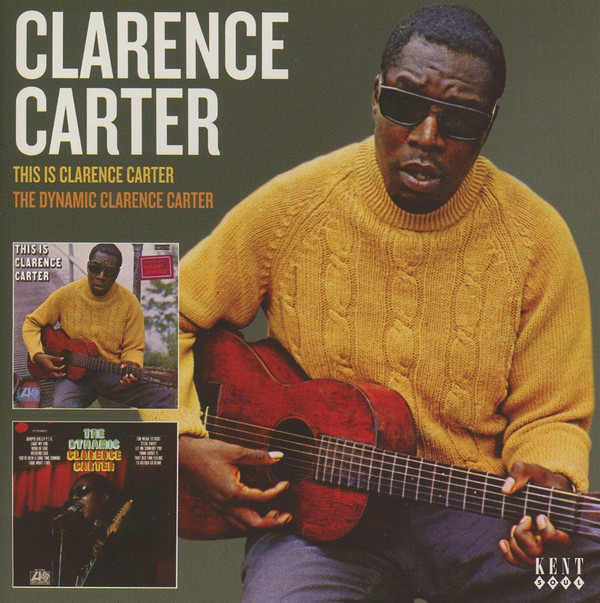
Clear Light-Clear Light.
With the new wave of psychedelic rock unfolding before their eyes, Elektra Records decided to sign some of the genre’s most promising acts. Soon, San Francisco’s based The Doors had signed to Elektra Records. So too, were Los Angeles’ based Love. They were joined in 1967 by another L.A. based Clear Light. This was quite a feat, as they had only been together since early 1966. Despite this, when Clear Light released their eponymous debut album Clear Light later in 1967, it was hailed a psychedelic classic. However, the story was over almost before it had begun.
Sadly, Clear Light only ever released the one album. However, Clear Light is a psychedelic classic. It showcases a talented and versatile band that could’ve and should’ve reached greater heights. Clear Light were certainly not lacking in talent. Sadly, just over two years after Michael Ney first met Robbie Robinson, the adventure was over. A lot had happened since then.
The lineup changed several times. So had the name. Managers had come and gone, and Clear Light had recorded a stonewall psychedelic classic. Sadly, Clear Light is one of music’s best kept secrets, and is only appreciated by a discerning few musical connoisseurs, who have discovered this psychedelic classic. Maybe Big Beat Records, an imprint of Ace Records, 2016 expanded reissue of Clear Light, will bring this classic album to the attention of a wider audience?

Dan Fogelberg-High Country Snow and Exiles.
By the time Dan Fogelberg released High Country Snow in 1985, he had released eight albums which had sold 10.5 million copies. Despite this, Dan Fogelberg decided to change direction and record a county album, High Country Snow. This was a huge risk. However, it paid off.
When High Country Snows was released in 1995 it was to critical acclaim. Critics were surprised by the change in direction, but backed by a tight, talented band recorded what was a seminal newgrass album. It sold over 500,000 and was certified gold. Despite the success of High Country Snows, Dan returned to his “old” sound on his tenth album Exiles. It’s a fusion of AOR and soft rock where beautiful ballads rub shoulders with the occasional vocal powerhouse on Exiles. Critics were won over by Exiles, which received positive reviews. However, Exiles stalled at forty-eight in the US Billboard 200. For Dan Fogelberg, it was the one that got away.
Thirty-one years later, High Country Snow and Exiles were reissued by BGO Records on one CD. They show two different sides to Dan Fogelberg. There’s the newgrass on High Country Snow and the AOR of Exiles. Both albums have one thing in common…quality. They’re the perfect introduction to Dan Fogelberg, a hugely talented and much missed singer-songwriter.

Deep Purple-Deep Purple In Rock-Vinyl.
Between 1970 and 1975 Deep Purple enjoyed worldwide success. Their albums sold by the million and Deep Purple became one of “unholy trinity of British hard rock and heavy metal.” However, the album that started this run of commercial success was Deep Purple In Rock. It was reissued as a limited edition of 1,000 on marbled vinyl by Harvest as part of their Vinyl Collector series. Deep Purple In Rock was a game-changer for Deep Purple.
When Deep Purple In Rock in 1970 was released in 1970, it proved to be Deep Purple’s breakthrough album. This was the start of five years of commercial success and critical acclaim. During that period, Deep Purple challenged Led Zeppelin and Black Sabbath for supremacy as most successful and hard rocking band. There was also another competition going on. This was to see which of the “unholy trinity of British hard rock and heavy metal” was the hardest living band. It was a close fought and hard won contest.
Over the years, Deep Purple’s penchant for the rock ’n’ roll lifestyle was legendary. It came with the territory. This was after all, rock ’n’ roll during the early seventies. Chaos and carnage was omnipresent and expected as Deep Purple toured the world. This never seemed to affect Deep Purple’s music. Proof if any is needed, is Deep Purple In Rock. It features Deep Purple at their hard rocking best.
Dexy’s Midnight Runners-Searching For The Young Soul Rebels-Vinyl.
Last year, retailers everywhere seemed to be jumping on the vinyl bandwagon. Even supermarkets like Tesco were selling vinyl. However, being experts at marketing, the vinyl they sold had a USP. This included Dexy’s Midnight Runners-Searching For The Young Soul Rebels, which was a limited editions pressed on green vinyl. It marked the debut of Dexy’s Midnight Runners who were led by Kevin Rowland.
He founded Dexy’s Midnight Runners in Birmingham 1978. Within two years, they were signed to EMI and preparing to release their debut album Searching For The Young Soul Rebels in July 1980. It was a fusion of blue eyed soul, Celtic soul, folk, new wave and pop. The influence of punk and Northern Soul could also be heard on Searching For The Young Soul Rebels. However, before its release, Geno was released as a single and topped the UK charts. For Dexy’s Midnight Runners’ this was a game-changer.
When Searching For The Young Soul Rebels was released, most of the reviews were positive. There was the odd dissenting voice. Despite this, Searching For The Young Soul Rebels, reached number six in the UK and was certified silver. Since then, many regard Searching For The Young Soul Rebels as Dexy’s Midnight Runners’ finest hour. No wonder. Searching For The Young Soul Rebels is regarded as one of the greatest debut albums of the eighties, and was a time capsule of Britain in 1980.
Dieter Moebius-Blotch.
Nowadays, Dieter Moebius is regarded as a pioneer of the Krautrock era. He co-founded Kluster, Cluster and Harmonia, and then went on release a series of collaborative albums. Still, though, he found time to enjoy a release a series of solo album. However, between 1999 and 2014 Dieter Moebius concentrated on his solo albums. This included his sophomore album Blotch which was reissued by Bureau B.
On Blotch, Dieter worked on a series of playful mesmeric loop based tracks. They’re atmospheric and experimental, with Dieter adding bursts of speech to the musical canvas. He combines everything from ambient and avant-garde, through to electronica and experimental sits side-by-side with industrial, Krautrock and musique concrète. The result was an album that was very different to different to Dieter’s debut album, Tonspuren.
Gone was the minimalist, ambient and sometimes, experimental sound of Tonspuren It was replaced by music that was atmospheric, dramatic, futuristic and sometimes, ethereal, understated and beautiful. Always, though, Blotch is captivating. It’s a case of expect the unexpected, as Dieter Moebius bowls a series of curveballs. As he does, the music is always cinematic and mostly, hypnotic. Just like so much of the music Dieter had released, the music on Blotch was captivating, innovative, timeless and went on to influence further generations of musicians. Blotch marked the return of the comeback King Dieter Moebius, sixteen years after he released his debut album, Tonspuren.
Dieter Moebius-Nurton.
Seven years after releasing his sophomore album, Blotch Dieter Moebius returned with his third album Nurton, which was reissued by Bureau B. It’s another genre-melting track from Dieter Moebius. He fused elements of ambient, avant-garde, Berlin School, electronica, industrial, Krautrock and musique concrète. There’s even a hint of African percussion on Born Neo. Along with these other disparate influences they play their part in what’s the most ambitious and experimental album of Dieter Moebius’ solo career, Nurton.
Dieter Moebius set out to push musical boundaries on Nurdon. He was like an artist, except that the tape was his canvas. However, Dieter had a much richer and vibrant palette available. Using his trusty trio of synths, loops and a myriad of left field and sci-fi sounds, Dieter got to work. Just like he had throughout his career, he turned his back on musical convention and structure. Instead, he let his imagination run riot. His studio became a laboratory, where Dieter experimented. Often, he unleashed an arsenal of sounds which punctuate the arrangement. They result in music that’s often futuristic, cinematic and hypnotic album. That’s not all.
The music on Nurdon veers between moody and broody, to dark and dramatic, to ethereal and elegiac to understated and beautiful. Always, Nurton sounds futuristic, cinematic and hypnotic. It’s like the soundtrack to a sci-fi film. Nurton is also one of the most ambitious, experimental and innovative albums of Dieter Moebius’ solo career.
Emerson, Lake and Palmer-Brain Salad Surgery-Deluxe Edition.
When Emerson, Lake and Palmer recorded their fourth album, Brain Salad Surgery, the trio were determined to record an album that they could replicate live. That hadn’t been the case with their three previous albums. They were complex albums which the trio found difficult to recreate live. Something had to change. So, Brain Salad Surgery, which was rereleased by BMG as, marked the start of a new era for Emerson, Lake and Palmer as the fused progressive rock, jazz and classical music.
Brain Salad Surgery was a window into the inventive and innovative world of Emerson, Lake and Palmer. During Brain Salad Surgery, Emerson, Lake and Palmer take the tracks in a variety of directions. Sometimes, Emerson, Lake and Palmer bowl a series of curveballs. You never foresaw what follows. Mind you, that’s what one had come to expect from one of the most groundbreaking groups of the seventies.
A reminder of this is Brain Salad Surgery, which features Emerson, Lake and Palmer are at their most inventive and innovative. It was as if everything had been building up to Brain Salad Surgery. By the time Emerson, Lake and Palmer released Brain Salad Surgery they were a tight, visionary band. Their fusion of progressive rock, jazz and classical music resulted in an ambitious, powerhouse of an album, Brain Salad Surgery which features Emerson, Lake and Palmer were at the peak of their creative powers.

Emerson, Lake and Palmer-Tarkus-Deluxe Edition.
It was a case of striking when the iron was hot for Emerson, Lake and Palmer. They returned to Advision Studios, in London to record what became their sophomore album Tarkus. It was much more of a “band” album. Emerson, Lake and Palmer were now a tight, musical unit. This was very different from Emerson, Lake and Palmer, which was more like an album of solo pieces. Tarkus saw the birth of Emerson, Lake and Palmer as one of the giants of progressive rock.
Tarkus was released to critical acclaim in June 1971.Critics realised that Tarkus marked a much more united Emerson, Lake and Palmer. They were well on the way to finding their trademark sound. Gone were ballads and jazz-tinged tracks. Instead, it was progressive rock all the way. Record buyers were won over by Tarkus. It reached number one in the UK. Over the Atlantic, Tarkus reached number nine in the US Billboard 200 and was certified gold. Emerson, Lake and Palmer had released the best, and most successful album of their nascent career.
Last year, Tarkus was reissued by BMG a two disc set. Disc two features The Alternate Album. For fans of Emerson, Lake and Palmer, this will be a welcome addition to the reissue of Tarkus. It’s still regarded as was one of the most ambitious, cohesive and innovative albums, from Emerson, Lake and Palmer.
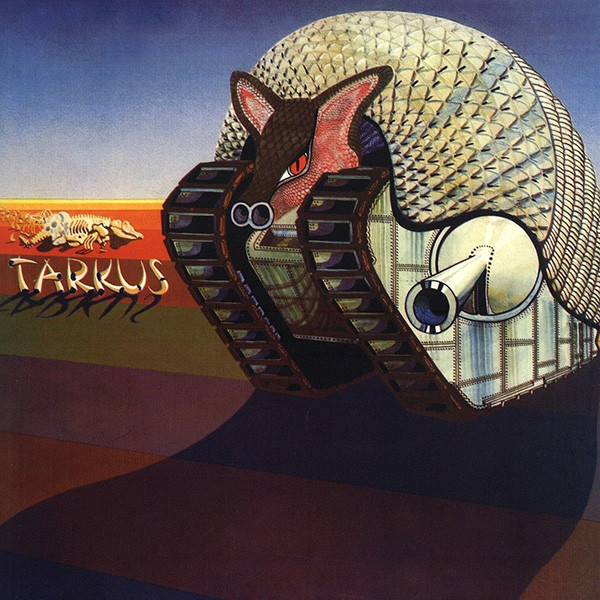
THE BEST REISSUES OF 2016-PART 3.
THE BEST REISSUES OF 2016-PART 3.
Emerson, Lake and Palmer-Trilogy-Deluxe Edition.
For fans of Emerson, Lake and Palmer, 2016 was a good year. Much of their back-catalogue was remastered and reissued by BMG as CD sets. This included Trilogy, where Emerson, Lake and Palmer were determined to push musical boundaries. It was a progressive rock, but with a twist.
An example of this was the inclusion of Abaddon’s Bolero on Trilogy. Rather than the usual 3/4 rhythm a Bolero would have, it was turned into a march by using a 4/4 rhythm. Emerson, Lake and Palmer pioneered the beating heart sound on Trilogy. Pink Floyd, Jethro Tull and Queen would all go on to use it. However, Carl Palmer pioneered this on Endless Enigma Part One. Once again, Emerson, Lake and Palmer were demonstrating that they were one of the most innovative progressive rock bands. Their efforts and innovativeness were richly rewarded.
On its release in July 1972, Trilogy reached number two in the US. As usual, Emerson, Lake and Palmer enjoyed more success in the US. Trilogy reached number five in the US Billboard 200 and was certified gold. In the space of just two years Emerson, Lake and Palmer were one of the most successful progressive rock bands, and had just released a complex, innovative, genre-melting album. It found Emerson, Lake and Palmer embracing the latest technology in what seemed like their quest for musical perfection, on what was their most ambitious album, Trilogy.

Eric Burdon and The Animals-Every One Of Us.
1968 was without doubt, the busiest year of Eric Burdon and The Animals’ career. They released a trio of albums. The second album in the trio was Every One Of Us, which was reissued by BGO Records during 2016. It’s a welcome reissue, because Every One Of Us, was never released in Britain.
When Every One Of Us was released in August 1968, this accomplished album of psychedelic blues stalled at just 152 in the US Billboard 200. This was a huge disappointment, considering the quality of the music and musicianship. The critics had thought that Every One Of Us would fare much better.
Critics hailed Every One Of Us as one Eric Burdon and The Animals finest albums since the release of Eric Is Here in March 1967. Even when Love Is was released in December 1968 it failed to match the quality of Every One Of Us. Love Is proved to be Eric Burdon and The Animals’ swan-song, and the third of three albums the band released during 1968. However, their finest moment of 1968 was Every One of Us. It’s an oft-overlooked, highly accomplished and vastly underrated album of psychedelic blues from Eric Burdon and The Animals, which was one of their finest moments.
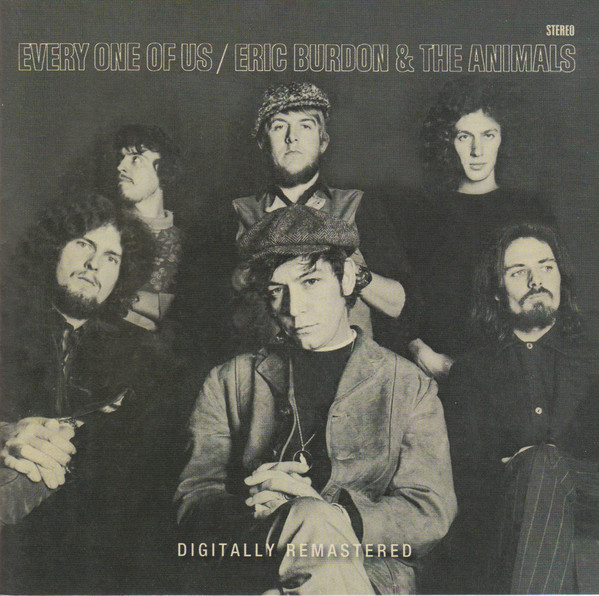
Firefall-Firefall, Luna Sea and Elan.
After spending nearly two years trying to make a breakthrough, Firefall caught the attention of Atlantic Records. They signed Firefall, who released three albums for Atlantic Records, Firefall, Luna Sea and Elan. These three albums sold 1.5 million units in America. This was the result of three years of constantly touring and recording. However, it had caught up on the band. Firefall were almost burnt out. At least they had a nice nest egg awaiting them.
Alas, that proved not to be the case. Firefall’s finances weren’t in the best of health. That wasn’t surprising. They had rerecorded two of their three albums, and embraced the rock ’n’ roll lifestyle. That prove expensive, and something that Firefall would regret. Especially as Firefall never reached the same heights as their first three albums.
Firefall, Luna Sea and Elan which were reissued by BGO Records as a double album, where the most successful albums of Firefall’s career.They were a fusion of AOR folk rock, country and rock. This proved a popular combination, and sold 1.5 million copies. Sadly, the constant touring and recording took their toll on Firefall. So did the lifestyle problems and problems with their new management company. After three critically acclaimed albums, Firefall’s career went into decline and never fully recovered.Never again, did Firefall close to rescaling the heights of Firefall, Luna Sea and Elan, which feature Firefall at their very best, when anything seemed possible for the Colorado-based band.
Fleetwood Mac-Mirage (Deluxe Edition).
On 18th June 1982, Fleetwood Mac released their thirteenth studio album Mirage. It was very different from its predecessor Tusk, which showcased a more experimental sound. Mirage saw Fleetwood Mac head in the direction of a radio friendly, AOR sound.
Mostly, this proved popular amongst critics. Some however weren’t convinced and there were a few dissenting voice. Despite this, when Mirage was released it sold over three million units and outsold Tusk. Mirage also yielded five singles, including Hold Me, Gypsy, Love In Store, Oh Diane and Can’t Go Back. The success of Fleetwood Mac continued apace.
Given the success of Mirage, it was no surprise that the album was released by Rhino as a double album during 2016. The second disc includes thirteen live tracks, B-sides, outtakes and songs that didn’t make it onto Mirage. For fans of Fleetwood Mac, this is the perfect upgrade to their original copies of Mirage. It finds Fleetwood Mac return to the mainstream, after their dalliance with experimental the sound of Tusk.

Free-Fire and Water.
On 26th June 1970, Free released their third album Fire and Water. Critical acclaim accompanied an album that was a mixture of blues rock, classic rock and hard rock. This was Free’s most cohesive album. That was the case from the opening bars of Fire and Water to the closing notes of All Right Now. A number of tracks on Fire and Water stood out. This included the rocky album opener Fire And Water and the ballads Oh I Wept, Heavy Load and Don’t Say You Love Me. However, the song that had hit written large all over it, was the album closer All Right Now. That proved to be the case.
When Fire and Water was released on 26th June 1970, the album reached number two in the UK and seventeen on the US Billboard 200. When All Right Now was released as a single, it reached number two in the UK and four on the US Billboard 100. This resulted in Free being asked to appear on the final day the Isle of Wight Festival.
On Sunday 30th June, 600,000 people watched as Free opened their nine song set. It featured a trio of songs from Fire and Water. This included Mr. Big, Fire and Water and All Right Now. By the end of the set, Free, were well on their way to becoming one of the biggest in the world. Fire and Water and All Right Now had transformed Free’s career.
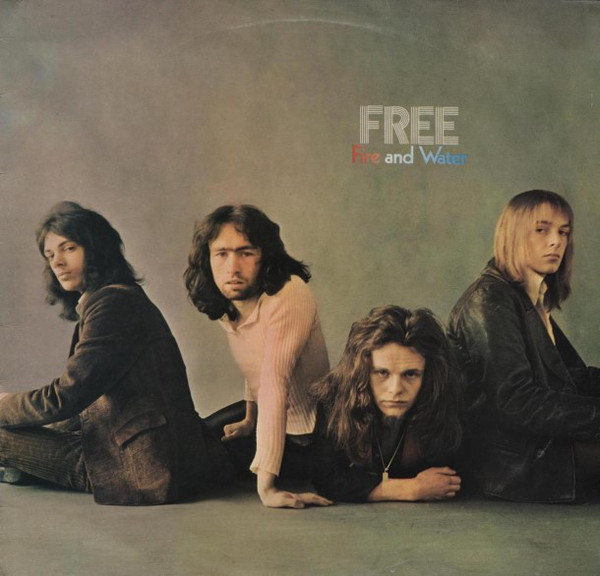
Free-Tons Of Sobs.
When Free recorded their debut albumTons Of Sobs, they were still teenagers. However, they played like seasoned veterans on Tons Of Sobs which was reissued by Island Records. They paired Free with producer Guy Stevens. and allocated a budget of just £800 to produce Tons Of Sobs
With such a limited budget, Guy Stevens decided to take a minimalist approach to recording Tons Of Sobs. This he hoped, would allow him to replicate how Free sounded live. Their sets showcased the blues rock sound that was then popular in late-1968. Guy Stevens succeeded in replicated Free’s live sound. Tons Of Sobs was featured a raw and raucous blues rock sound. However, not everyone was impressed by Tons Of Sobs.
While most critics were won over by the latest British blues rock band, some critics weren’t convinced. Neither were record buyers. When Tons Of Sobs was released, it crept into the lower reaches of the US Billboard 200 in March 1969. Most music fans missed out on Free’s debut album, Tons Of Sobs. It documents what Free sounded like as they began their musical journey. Eventually, Free would become one of the great British rock groups of the early seventies. Tons Of Sobs is taste of what was to come from Free.
Gandalf-Magic Theatre.
Buoyed by the success of To Another Horizon, Gandalf began work on his fourth album, Magic Theatre. Just like To Another Horizon, this was another concept album that was inspired by Hermann Hesse’s 1927 novel Steppenwolf. It inspired Magic Theatre, where Gandalf’s music head further in the direction of progressive rock and showcased a symphonic rock sound.
Critics hailed the Magic Theatre a musical triumph. It was an other ambitious album where Gandalf brought Steppenwolf to life. During Magic Theatre, the chameleon-like Gandalf continued to reinvent his music. That had been the case throughout his career. Magic Theatre was no different. It was as if Gandalf was scared that if he stood still musically, his music would cease to be relevant. There was no chance of that happening. He was musical pioneer, who combined a disparate selection of musical genres, instruments and influences. Gandalf also drew inspiration from many sources, including his travels and literature. Both played their part the sound and success of Magic Theatre.
Upon the release of Magic Theatre, the Gandalf success story continued apace. The album sold well, and found an audience not just in Austria, Italy and Germany, but across Europe and into Britain. This success continued, as Gandalf released over thirty albums. However, many music fans regard Gandalf’s early albums as some of his best. This includes Magic Theatre, which was reissued by Esoteric Recordings. It’s a reminder of Gandalf, a music pioneer and “painter of musical landscapes.”

Gandalf-To Another Horizon.
Nowadays, Gandalf is regarded as one of Austria’s most accomplished, innovative and successful musicians. He’s a talented multi-instrumentalist, who is a one of Austria’s most prolific artists. He has released over thirty albums between 1981 and 2016. That’s despite not releasing his debut album Journey To Another Land until 1980, when he was twenty-nine. Three years later, Gandalf released his third album To Another Horizon, which was a cerebral concept album which was reissued by Esoteric Recordings.
By then, Gandalf was a successful musician, with his sophomore album Visions transforming his fortunes. This success continued when Gandalf released To Another Horizon. Gandalf’s music headed in the direction of progressive rock and space rock . This was a stylistic departure for Gandalf. However, there were still elements of ambient, avant-garde, classical, eighties-electronica, experimental and folk on To Another Horizon. This mixture of the old and new proved successful.
When To Another Horizon was released, it was to critical acclaim. It was heralded as Gandalf’s most ambitious and progressive album. Record buyers agreed and the rise and rise of Gandalf continued. That was no surprise. The music on To Another Horizon. veers between understated, thoughtful and pastoral to dramatic and cinematic to futuristic and progressive. To Another Horizon is a truly captivating concept album that straddled various themes and genres. Its more progressive sound introduced Gandalf’s music to a much wider audience and was his most successful album of a three album career.
Gary Bartz-Ju Ju Man and Love Song.
By 1976, saxophonist Gary Bartz’s reputation was on the rise.This came as no surprise to those within the jazz community. Already, Gary Bartz had accompanied some of the giants of jazz. In 1976, he released his third solo album Ju Ju Man and Love Song in 1978. They were reissued on one CD by Fresh Sounds Records. They’re a reminder of a multitalented reedman.
Ju Ju Man was very different to previous albums, and was an album of straight ahead jazz. This many jazz fans thought was yesterday’s sound. However, Gary Bartz was perfectly suited to this sound. It was the perfect showcase for one of the most talented reedman of his generation, Gary Bartz plays with power, passion inventiveness and control. Time after time, he came into his own. This was the case on Music Is My Sanctuary, and its followup, Love Song.
Backed by a tight, talented and versatile band, Gary Bartz showcases his versatility on Love Song. The music is funky, jazzy, soulful and dance-floor friendly. It should’ve been a commercial success. Alas, it wasn’t to be, and Love Song remained one of the hidden gems in Gary Bartz’s back-catalogue. Nowadays, Gary Bartz’s music has found a wider audience. However, for those yet to discover Gary Bartz’s music, a good starting place are Ju Ju Man and Love Song. Both feature Gary Bartz’s at the peak of his musical powers.
Geoff Muldaur-Is Having A Good Time and Motion.
In 1975, Geoff Muldaur released his much anticipated sophomore album, Is Having A Wonderful Time on the Reprise Records imprint. It was an eclectic album with widespread commercial appeal. So was the second album Geoff released for Reprise Records. Sadly, it was the last album Geoff Muldaur would release on Reprise Records.
Neither Is Having A Good Time nor Motion were a commercial success. That is despite showcasing a talented and versatile singer. On Is Having A Wonderful Time, Geoff and his band combine elements of blues, boogie-woogie, country, folk, gospel, R&B and rock. Then on Motion, Geoff is steered in different directions by his new producer Trevor Lawrence. Motion takes on a much slicker, radio friendly, commercial sound. Geoff combines AOR and country with gospel, pop and rock. Ballads rub shoulders with uptempo tracks on Motion which should’ve caught the imagination of the record buying public. Sadly, it wasn’t to be.
After just two albums, Is Having A Wonderful Time and Motion, Geoff Muldaur left Warner Bros. It was a case of what might have been for Geoff Muldaur? He was and still is a hugely talented and versatile vocalist. That’s apparent from his much anticipated sophomore album Is Having A Wonderful Time, and the followup Motion. They showcase the different sides to Geoff Muldaur on two hidden musical gems, Is Having A Wonderful Time, and the followup Motion. They reissued on one CD by BGO Records.

THE BEST REISSUES OF 2016-PART 4.
THE BEST REISSUES OF 2016-PART 4.
Gordon Lightfoot-Dream Sweet Rose, Midnight and Salute.
For Gordon Lightfoot, the seventies proved to be the most successful period of his career. Commercial success and critical acclaim were constant companions for the man that was dubbed “Canada’s greatest songwriter.” This success many thought would continue into the eighties. Gordon Lightfoot’s first albums of the eighties was 1980s Dream Sweet Rose, which was followed by Midnight in 1981 and Salute in 1983. These three albums were reissued by BGO Records as a two CD set.
As the eighties dawned, Canada’s “folk-rock legend” Gordon Lightfoot decided to change direction on Dream Sweet Rose. He headed in the direction of AOR. Despite its slick polished sound, this didn’t go down well with his fans. Despite this, Gordon Lightfoot headed further down the marked AOR on Midnight and Salute. However, he doesn’t turn his back on country and folk. As a result, Shadows and Salute are both eclectic albums, which show the different sides to Gordon Lightfoot. Sadly, neither Shadows nor Salute were particularly successful, and are two of the hidden gems in Gordon Lightfoot’s extensive back-catalogue.
They’re a reminder of the man dubbed “Canada’s greatest songwriter” during the seventies. Despite the lack of success this trio of albums are slick, polished and eclectic. Seamlessly Gordon Lightfoot switches between and incorporates everything from AOR, country, folk, folk-rock and rock. They’re a reminder, if any was needed, of why Gordon Lightfoot was and remains, “Canada’s greatest songwriter” and “folk rock legend.”
Holger Czukay-Movie!
When Holger Czukay released his sophomore album in 1979, it was entitled Movies. Thirty-seven years later, and much has changed. Movies which is new entitled Movie!, was reissued by Gronland Records. It comes complete with a new album cover, and an instrumental version of Cool In The Pool. The original version of Cool In The Pool is a truly irresistible, hook-laden track. This whets the listener’s appetite for the rest of Movie.
It features a musical pioneer at the peak of his powers, on a genre-melting album. Holger combines elements of Afro-Reggae, avant-garde, disco, funk, pop, progressive rock, rock and world music. These genres are combined by Holger, as he incorporates a myriad of musical instruments, sounds and samples. Indeed, sampling and editing, which Holger pioneers back in the early days of Can, played an important part in the sound and success of Movie!
Samples are part of a musical jigsaw which Holger had to put together.Seamlessly, Holger puts all various parts together in a way that the music on Movie! makes sense. The result is an album that’s variously beautiful, captivating, cinematic, dramatic, hook-laden, irresistible and melodic. After three year years away from making music, Holger Czukay returned with Movie! a career defining album. Movie! is the album that marked the return of one the most innovative and progressive musicians of his generation, the comeback King Holger Czukay.

James Luther Dickinson-Dixie Fried.
Nowadays, James Luther Dickinson is better known as Jim Dickinson, who produced everyone from Big Star to Ry Cooder and Bob Dylan. Back in 1972, Jim Dickinson released his debut album Dixie Fried on Atlantic Records. It could’ve launched his solo career. However, by then, fate seemed to have conspire against Jim Dickinson. He was persona non gratis at Atlantic Records. They had already held back on releasing the album for a year, and when Dixie Fried was released. Atlantic Records then failed to promote Dixie Fried. Unsurprisingly their half hearted promotion of Dixie Friend meant the album failed commercially. It was a case of what might have been?
Dixie Fried showcased a truly talented singer-songwriter. He combines Americana, country, jazz, gospel, jazz, rock and soul on Dixie Fried. The influence of Little Richard, Jerry Lee Lewis, Screamin’ Jay Hawkins and Dr John can also be heard. Each of these artists influence James Luther Dickinson, as with the help of a multitalented band and backing vocalists, he records what’s a potent and heady brew, Dixie Fried, which is a true hidden gem of an album.
Sadly, for far too long, James Luther Dickinson’s debut album Dixie Fried was unavailable on CD. Last year Dixie Fried was reissued by Future Days Recordings. This is a welcome reissue. Maybe somewhat belatedly, Dixie Fried, a delicious musical potpourri of genres and influences will find the audience James Luther Dickinson’s debut album so richly deserves, and should’ve enjoyed in 1972.
Jethro Tull-Aqualung-Vinyl.
In 1971, Jethro Tull released what would become their first classic album, Aqualung. It was Jethro Tull’s most ambitious and cerebral album, Aqualung. It was a concept album that examined ”the distinction between religion and God.” This seemed an unlikely subject for an album, even a seventies concept album.
It found Jethro Tull combined progressive rock with folk, blues, hard rock and even psychedelia. The music features Jethro Tull at their most cerebral, and became the band’s most successful album. In America alone, Aqualung sold three million copies, and seven million copies worldwide. Suddenly, Jethro Tull were one of the biggest selling bands in the world.
The success of Aqualung was a game-changer for Jethro Tull. They were now one of the biggest bands opt the seventies. That’s where they remained for much of seventies. For a while, it seemed that everything Jethro Tull touched to silver, gold or platinum. However, Aqualung was one of Jethro Tull’s finest hours, and set the bar high for future albums
Jethro Tull-Too Old To Rock ’N’ Roll: To Young To Die-Vinyl.
For Record Store Day 2016, Rhino released Too Old To Rock ’N’ Roll: To Young To Die. It was originally released in 1976, and was another concept album where Jethro Tull told the story of an ageing rock star, who found fame when musical tastes changed. This was prophetic.
By the time Jethro Tull released Too Old To Rock ’N’ Roll: To Young To Die, they were one of the most successful progressive rock bands. However, music was changing, with the birth of punk. This impacted on sales of the Too Old To Rock ’N’ Roll: To Young To Die, and there were no gold, silver or platinum discs. Since then, Too Old To Rock ’N’ Roll: To Young To Die is regarded as a hidden gem in Jethro Tull’s back-catalogue. It’s also one of the most underrated albums in Jethro Tull’s illustrious back-catalogue.
On Too Old To Rock ‘n’ Roll: Too Young to Die Jethro Tull combined folk, jazz and classical with progressive rock. The result was a cohesive, cerebral concept album that deserved to find a wider audience. Alas, it wasn’t to be. As a result, Jethro Tull never released another concept album. That was a great shame, as they were past masters of the concept album. A reminder of that is Too Old To Rock ‘n’ Roll: Too Young to Die. a hidden gem in Jethro Tull’s back-catalogue.
Jimi Hendrix-Machine Gun: The Fillmore East First Show 12/31/69.
In April 1969, Jimi Hendrix embarked upon a new chapter in his career with The Band Of Gypsy’s. They were been booked to appear at The Woodstock Music and Art Fair, where they stole show with a breathtaking performance. After the Band Of Gypsy’s barnstorming performance at Woodstock, where they stole the show, Jimi’s new band experimented with the expanded lineup. However, the Band Of Gypsy’s were reduced to a trio for four appearances at the Fillmore East on 31st December and 1st January 1970.
The first of these shows is documented on Machine Gun: The Fillmore East First Show 12/31/69. It features another breathtaking performance. Everything from blues, funk, jazz, psychedelia, R&B, rock and soul were combined by the Band Of Gypsy’s. They even pioneered funk rock, and took diversions into fusion, as the Band Of Gypsy’s showcased their versatility and talent. Jimi’s finest moment comes mid-set, on Machine Gun, where his guitar unleashed a myriad of sounds. It’s akin to being caught in a battlefield. A newly enlivened Jimi Hendrix reaches new heights,
He also embraced his role as the Band Of Gypsy’s bandleader, leading from the front, playing with flair and flamboyance, and urgency, invention and imagination. Jimi Henrdrix unleashes a masterful, virtuoso and spellbinding performance throughout Machine Gun: The Fillmore East First Show 12/31/69, which is a reminder of one rock’s greatest every guitarists at his creative zenith.
John Marty-Solid Air-Vinyl.
During his long and illustrious career, John Martyn released two classic albums for Island Records, including Solid Air in 1973. It was reissued twice during 2016. In May, Island Records reissued Solid Air as part of their Half-Speed Mastering series. Then Universal-Island Records Ltd supplied HMV 1,000 copies of Solid Air on green vinyl for their Vinyl Week initiative. This offered another opportunity to discover Solid Air.
When John Martyn released Solid Air in 1973, it was hailed a an almost flawless album and instant classic. He sets the bar high on the album opener Solid Air, a poignant, beautiful and deeply moving song he hd written about written about his friend Nick Drake, who had recently passed away. This set the bar high. John Martyn maintains his high standard on Over the Hill, John’s cover of Skip Spence’s Don’t Want To Know, Go Down Easy, Dreams By The Sea and Man In The Station. They’re are among the highlights of Solid Air where John Martyn switches between folk, blues and rock..
The result is captivating and near flawless album where one is transfixed, enthralled by its beauty and subtlety. Solid Air is akin to a magical musical journey with John Martyn, who came of age on Solid Air, which is a seminal album. Four years later, he released his second classic album One World. However, Solid Air, which is a timeless classic will always be remembered as John Martyn’s finest hour.
Judy Collins-In My Life, Wildflowers and Whales and Nightingales.
By 1970, Judy Collins had released eight studio albums and one live album. She was now one of the most successful folk singers of her generations. Her last four albums had been certified gold. This remarkable run began with 1966s In My Life, and included 1967s Wildflowers, 1968s Who Knows Where the Time Goes? and ended with 1970s Whales and Nightingales. Three of these albums, In My Life, Wildflowers and Whales and Nightingales were released by BGO Records as a two CD set. They’re a reminder of a golden period in Judy Collins career.
Judy Collins was a pioneer of folk, who had flew the flag for folk throughout the sixties. That’s despite the onslaught of pop, rock and psychedelia. Still, Judy stood firm. The only time she wavered, was when she released Who Knows Where the Time Goes? It saw Judy enjoy a dalliance with country rock and folk rock. However, folk music was her true love, and she returned to the fold for Whales and Nightingales in 1970. Judy’s first album of the seventies was a triumphant returned, for the First Lady of folk.
She had released some of the best music of her career between 1966 and 1970. By then, Judy was one of the best interpretative folk singers. Proof of that can be found on In My Life, Wildflowers and Whales and Nightingales, which are the perfect introduction to Judy Collins, who is, without doubt, one of the greatest singer-songwriters of her generation.

Klaus Schulze-Cyborg.
When Klaus Schulze released his sophomore album Cyborg in 1973, most critics recognised that it was an important, innovative and influential album, it passed most record buyers by. Especially in Klaus’ native Germany, where he was one of a new wave of musicians who were writing a new chapter in the country’s musical history. It was only later that most German’s discovered the music of the Berlin School and Krautrock.
Cyborg which was reissue by MiG Music was later regarded as a Berlin School classic. However, Cyborg also references Krautrock, plus ambient, avant-garde, drone, experimental and musique concrète. This genre-melting album features Klaus Schulze at his innovative best. He pushes musical boundaries to their limits, and sometimes way beyond. To do this, Klaus used his various modified musical instruments and his excerpts from his tapes from Colluquim Musica Orchestra. These tapes added “spice” to this captivating genre classic.
It’s variously understated, broody, moody, dark, dramatic and gothic. Other times, the music is futuristic and full of otherworldly and sci-fi sounds. Sometimes, though, the music is beautiful, elegiac and ethereal. Occasionally, the music is eerie, mesmeric and ruminative. Just like Klaus Schulze’s debut solo album Irrlicht, Cyborg has a cinematic sound. Both features cinematic, multilayered soundscapes. They are full of nuances, subtleties and surprises aplenty. The result is Cyborg, an epic cinematic space symphony, which features musical maverick Klaus Schulze at his innovative best on a timeless genre classic.
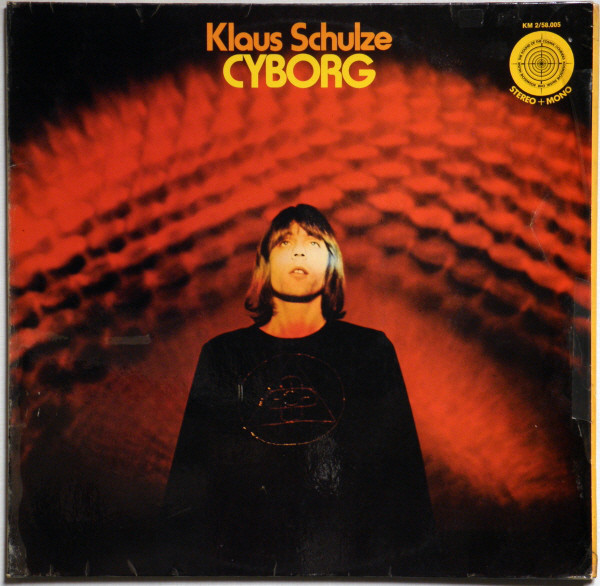
Klaus Schultze-Irrlicht.
Being a member of a band didn’t seem to suit Klaus Schulze. He had been a member of Tangerine Dream and then Ash Ra Tempel. However, Klaus Schulze found that the endless discussions got in the way of the important thing, making music. So Klaus Schulze embarked upon a solo career, and released his debut album Irrlicht in April 1972.
When Irrlicht was released, it was welll received by some critics. Many critics failed to “get” Irrlicht. Quite simply, Irrlicht was one the most innovative albums of 1972. The music on Irrlicht was understated, broody, moody, dark, dramatic and gothic. It was also chilling, eerie, meditative and ruminative. Constantly, Irrlicht has a cinematic sound and is like a twenty-first Century space symphony from a true musical pioneer, Klaus Schulze.
He was making tentative steps in what would be a long and illustrious solo career. That career has lasted six decades and over sixty albums. Nowadays, Klaus Schulze is now regarded as a musical pioneer whose music has influenced several generations of musicians. Klaus Schulze is also regarded as one of the most important and influential artists in the Berlin School of electronic music. His groundbreaking debut album Irrlicht, which was reissued by MiG, is regarded as a Berlin School classic.
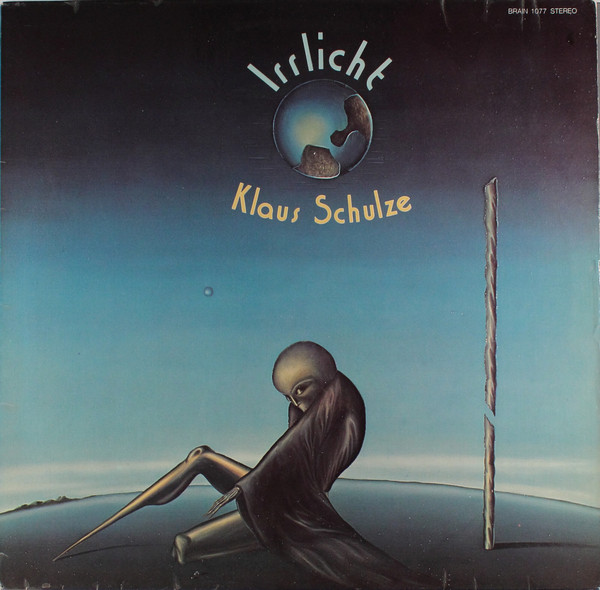
THE BEST REISSUES OF 2016-PART 5.
THE BEST REISSUES OF 2016-PART 5.
Led Zeppelin-The Complete BBC Sessions.
Last year, the Led Zeppelin reissue campaign continued when Atlantic Records released The Complete BBC Sessions as a three CD set. This is essentially an expanded version BBC Sessions which was released in 1997 as a double album that featured twenty-four songs. However, nine songs were added and The Complete BBC Sessions was born. It was produced and remeasured by Jimmy Page and is a welcome, if belated addition to Led Zeppelin’s back-catalogue.
The Complete BBC Sessions was recorded between 1969 and 1971, and documented Led Zeppelin’s journey from rock debutantes to superstars. Sadly, by 1971 Led Zeppelin’s relationship with the BBC had become strained. No further sessions were recorded. However, The Complete BBC Sessions is an important musical document. It’s a reminder how Led Zeppelin never played the same song two nights running. Instead, they reinvented the song, taking it in new and unexpected directions. That’s the case on The Complete BBC Sessions where some songs feature two or three times. This allows listeners to compare and contrast songs, as Led Zeppelin improvise and reinvent familiar songs. It’s something Led Zeppelin continued to do throughout their career.
Especially between 1969 and 1971, which is documented on The Complete BBC Sessions. It documents the rise and rise of Led Zeppelin, as they became one of the biggest bands on planet rock

Lee Hazelwood-Cowboy In Sweden.
By 1970, Lee Hazelwood’s career had stalled. To make matters worse, his record company LHI Records was verging on insolvency. One of the last albums LHI Records released was Cowboy In Sweden, the soundtrack to a film that Lee Hazelwood ‘starred’ in.
Upon the release of Cowboy In Sweden, the film flopped. It found a small audience in Sweden, mainly due to the popularity of Lee Hazlewood. The few reviews of Cowboy In Sweden that were published weren’t exactly complimentary. Words like surreal and trippy were used. Critics accused Cowboy In Sweden of lacking cohesion and narrative. Lee Hazlewood’s latest venture into film hadn’t been a success. Nor was the soundtrack to Cowboy In Sweden. It failed commercially. This was no surprise as LHI Records hadn’t the budget to promote the album. That was a great shame.
Lee Hazelwood showcased his talents as a singer, songwriter and producer on Cowboy In Sweden. Sometimes, he duets, but mostly it’s just Lee Hazelwood who takes centre-stage. His worldweary voice proved perfect for singing country. Especially the melancholy string-drenched ballads. That’s where Lee Hazelwood came into his own on what’s a truly underrated, hidden gem of an album, Cowboy In Sweden. It was reissued by Light In The Attic during 2016. Cowboy In Sweden, which was recorded in four countries on two different continents during a two year period, is a reminder of Lee Hazelwood who for a year, was a Cowboy In Sweden.
Lightdreams-Islands In Space.
In 1981, the British Columbian band LightDreams, released their debut album, Islands In Space. It was a captivating, psychedelic sci-fi odyssey where LightDreams explored cosmic ideology. This had fascinated the band’s leader Paul Marcano ever since he first encountered the work and theories of author, physicist and space activist, Gerard K. O’Neill. So much so, that Paul decided to explore the subject on LightDreams’ debut album, Islands In Space. It was reissued by Got Kinda Lost Records, an imprint of Guerssen Records.
Islands In Space takes as its starting point psychedelia. They add elements of ambient, avant-garde, Berlin School, folk pop, Krautrock, progressive rock and rock can be heard throughout Islands In Spac. It’s a musical melting pot, where instruments and influences melt into one, as LightDreams sculpt a captivating psychedelic sci-fi odyssey. It begins LightDreams exploration of cosmic ideology that continued on their sophomore album 10,001 Dreams.
Both albums are true cult classics, that showcase the considerable talents of LightDreams. Especially founder member Paul Marcano. He had been working towards releasing an album based on cosmic ideology for several years. This only happened when he met the likeminded musicians that joined him in LightDreams in 1981. Later in 1981, Islands In Space was released. It’s the first, in a two part musical voyage of discovery, that features LightDreams’ unique, imaginative and innovative brand of cerebral and thought-provoking music on their captivating psychedelic, sci-fi odyssey, Islands In Space.
Lonnie Mack-The Wham Of That Memphis Man.
In 1963, twenty-two year old Lonnie Mack was already an experienced musician. He had been making a living as a musician since he was thirteen. That was when Lonnie Mack quit school, after getting involved in an argument with a teacher. For most thirteen year olds, this would’ve spelt disaster. This wasn’t the case for Lonnie Mack. He knew exactly what he wanted to do with his life…make a career out of music. That’s what Lonnie Mack went on to do, and in 1963 released his debut album The Wham Of That Memphis Man. It features a musical pioneer who changed the future direction of music.
Suddenly, the electric guitar could play a starring role in track. It was no longer just playing a supporting role. Nobody had tried this before Lonnie Mack. He transformed the musical landscape.
Many musical historian credit Lonnie for laying the foundations for Southern Rock. Lonnie Mack was also a pioneer of blues rock, but was equally comfortable playing rock ’n’ roll, rockabilly and singing soul. Indeed, Lonnie Mack is regarded as one of the greatest blue eyed soul singers in musical history. He shows his considerable skills as a vocalist and guitarist on The Wham Of That Memphis Man which Ace Records reissues. Sadly, on April 21st 2016 Lonnie Mack passed away aged just seventy-five. That day, music lost a musical pioneer who transformed music on The Wham Of That Memphis Man .
MacArthur-MacArthur.
Two years after Ben MacArthur first began making music with Bill Heffelfinger, the band was a quartet and had just recorded their eponymous debut album MacArthur. They had 200 copies of the album pressed, and by 1980 every copy was sold. Since then, MacArthur has garnered a cult following. Record collectors speak almost reverentially in hushed tones about MacArthur. Alas, original copies were almost impossible to find. Even when one became available, the price was prohibitive to most record collectors. Fortunately, Out-Sider Music, an imprint of Guerssen Records reissued MacArthur.
The reissue of MacArthur is a welcome one, and means that this progressive, psychedelic concept album can be heard by a much wider audience. It features music that’s ambitious, cerebral, innovative and timeless. MacArthur is also one of the great lost concept albums. Quite simply, the album oozes quality. That was no surprise.
Each member of the MacArthur was a gifted musician. It seems the stars were aligned the day that Ben MacArthur, Bill Heffelfinger, Scott Stockford and Jeff Bauer recorded their eponymous debit album. It’s a tantalising taste of a band who could and should’ve reached greater heights. Sadly, MacArthur’s only released the one album, MacArthur, which is a reminder of what this truly talented group were capable of.

Manic Street Preachers-Everything Must Go-Vinyl.
As part of their Vinyl Week initiative, HMV released Music On Vinyl’s reissue of Manic Street Preachers’ fourth album Everything Must Go. It was released in 1996 and was the Manic Street Preachers’ first album since the disappearance of lyricist and rhythm guitarist Richey Edwards. Ironically, Everything Must Go became the Manic Street Preachers’ most successful album.
Everything Must Go was released to critical acclaim and sold over two million copies. This was the start of the rise and rise of the Manic Street Preachers. They showcase a new sound on Everything Must. Gone were the introspective and autobiographical lyrics. The Manic Street Preachers turned their back on the stark, dark, disturbing and minimalist sound of their previous album The Holy Bible. It was as if the Manic Street Preachers had reinvented themselves in the wake of the disappearance of Richey Edwards.
For Everything Must Go, the lyrics were inspired by history and politics. The music was much more melodic and album which features rock anthems. Even the instruments deployed were different Strings and synths are to the fore on Everything Must Go, which has a much more commercial and accessible sound. Critics welcome the Manic Street Preachers’ new sound on Everything Must Go. They hailed they album a genre classic. Nowadays, Everything Must Go regarded as one of the best British albums of the nineties, and the album that transformed the Manic Street Preachers fortunes.
Manuel Göttsching-E2-E4.
Despite spending much of 1981 playing live, Manuel Göttsching decided to play one more concert. This time, he would play to an audience of one…himself. Manuel Göttsching made his way to his home studio, Studio Roma where had kept his vast collection of cutting edge equipment. It was switched on night and day, just in case he felt inspired to make music. That was the case on the 12th of December 1981. Just before he began playing, Manuel reached over and pressed record.
For the next hour, Manuel Göttsching was lost in the music. He played with fluidity, the music flowing through him as he used just two chords. Everything seemed to fall into place. That was the case when Manuel Göttsching switched between instruments. There wasn’t a note out of place. This was a once in a lifetime experience, that most musicians could only dream of. However, it only became apparent later when Manuel listened back to the tape and heard a flawless performance. It was released in 1983 as E2-E4.
This was a stylistic departure from musical chameleon Manuel Göttsching. It influenced several the several generations of house and techno producers. Alas, none of these producers have followed in Manuel Göttsching’s footsteps and produced a timeless, genre classic. E2-E4 was reissued by MiG in 2016 to celebrate the thirty-fifth anniversary of the night that Manuel Göttsching played to an audience of one and produced a timeless, genre classic.
Manuel Göttsching-Inventions For Electric Guitar.
When Manuel Göttsching released Inventions For Electric Guitar in 1975, it was regarded as a new chapter in his career. It was meant to be his debut solo album. Despite this, the album cover the words Ash Ra Tempel VI in small print. This muddied the waters somewhat and about whether it was a solo album of Ash Ra Tempel’s swan-song.
However, nowadays, Inventions For Electric Guitar is regarded as Manuel Göttsching’s debut album. It’s no ordinary debut album. It was an album that was way ahead of its time, and nowadays, is regarded as a timeless, genre-melting classic. Manuel Göttsching combined elements of ambient, avant-garde, Berlin School, electronica, Krautrock, psychedelia and rock on Inventions For Electric Guitar. The result was an inventive and innovative album. Inventions For Electric Guitar features music that’s variously beautiful, ethereal, hypnotic, lysergic melancholy, mesmeric and rocky. What’s remarkable about Inventions For Electric Guitar, is that it was recorded by just one man, Manuel Göttsching.
He became a one man band, deploying his guitars and a myriad of effects to record multilayered soundscapes. They sounded as if they had been recorded by a number of musicians and instruments. That wasn’t the case. Instead, it was the work of Manuel Göttsching, one of the most inventive and innovative musicians of his generation. Inventions For Electric Guitar which was rereleased by iIG, is a timeless classic from the virtuoso guitarist and musical magician, Manuel Göttsching.
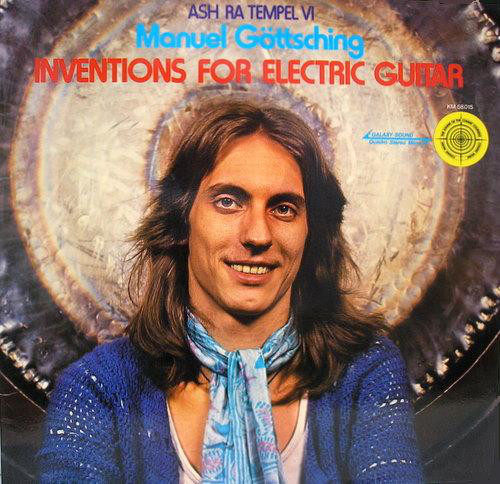
Maria Muldaur-Sweet Harmony, Southern Winds and Open Your Eyes.
For many people Maria Muldaur is synonymous with one song single Midnight At The Oasis. Granted it was her breakthrough single and her biggest hit. However, that’s merely part of the Maria Muldaur story. She released forty albums, including her third album Sweet Harmony. It was joined by Southern Winds and Open Your Eyes on BGO Records’ reissue. They showcase the different sides of Maria Muldaur.
She’s equally comfortable single AOR, blues, folk, gospel, pop and rock. Similarly Maria Muldaur is equally at home singing ballads and uptempo songs on Sweet Harmony, Southern Winds and Open Your Eyes. They’re a reminder of a versatile and talented singer. Sadly, these three albums failed to match the commercial success of Maria Muldaur’s first two albums, 1973s Maria Muldaur and 1974s Waitress In A Donut Shop. Even changing producer twice couldn’t change Maria Muldaur’s fortunes.
Producers Joe Boyd and Lenny Waronker were replaced by Chris Bond. He was brought in to produce Southern Winds, but departed after one album. Replacing him were Patrick Henderson and David Nichtern. Alas, they couldn’t arrest the decline in Maria Muldaur’s fortunes. She left Reprise after Open Your Eyes, and never recorded an album for a major label again. That’s despite Maria Muldaur recording forty solo albums. However, three of her finest albums of her long career are Sweet Harmony, Southern Winds and Open Your Eyes, which are the perfect introduction to Maria Muldaur.

Mary Afi Usuah-African Woman.
When Mary Afi Usuah released her sophomore album African Woman in 1978, very few people outside of Nigeria heard the album.
That’s despite Mary spending thirteen years touring Europe and playing in front of huge crowds. Mary Afi Usuah had opened for musical luminaries like Deep Purple, Duke Ellington and Led Zeppelin. Sometimes, Mary Afi Usuah took to the stage with Led Zeppelin, and matched Robert Plant every step of the way. This allowed Mary Afi Usuah to showcase her considerable talents and versatility.
Despite Mary Afi Usuah’s undoubtable talent, her recording career was all too brief. It amounted to just a couple of singles and two solo albums. This includes African Woman which passed record buyers by upon its release in 1978. This resulted in Mary Afi Usuah turning her back on music.
Sadly, Mary Afi Usuah passed away in 2013. By then, there was a resurgence of interest in her music. The only problem was original copies of African Woman were almost impossible to find. So, for anyone with a passing interest in African music, then Pmg’s reissue of Mary Afi Usuah’s African Woman should be a cause for celebration. African Woman is an opportunity to discover one of the greatest female vocalists in the history of African music, Mary Afi Usuah, on this long lost hidden gem of Nigerian music.
THE BEST REISSUES OF 2016-PART 6.
THE BEST REISSUES OF 2016-PART 6.
Melissa Manchester-Home To Myself, Bright Eyes, Melissa and Help Is On The Way.
It was almost inevitable that Melissa Manchester would end up embarking upon a musical career. The Manchester family were a highly creative family, with music playing an important part in everyday life. So it was no surprise that Melissa Manchester signed to Bell Records in 1973. She released her debut album Home To Myself later that year. It was joined by Bright Eyes, Melissa and Help Is On The Way on a two-CD set released by BGO Records. They’re four of the five albums Melissa Manchester released between 1973 and 1976.
This three year period was a roller coaster ride for Melissa Manchester. An important factor in the rise of Melissa Manchester was her successful songwriting partnership with Carole Bayer Sager. It helped launch Melissa’s career in 1973 when Melissa released Home To Myself. That audience were here to stay when Bright Eyes was released in 1974. However, Melissa’s fortunes changed in 1975 when her third album Melissa sold 500,000 copies. The success continued when Better Days and Happy Endings was released in 1976. Sadly, Help Is On The Way failed to fulfil its potential and failed to match the success of Melissa’s two previous albums.
Nowadays, Help Is On The Way is one of the most underrated albums Melissa Manchester releasedThis quartet of albums are the perfect introduction to one of the most versatile and talented singer-songwriters of her generation, Melissa Manchester.
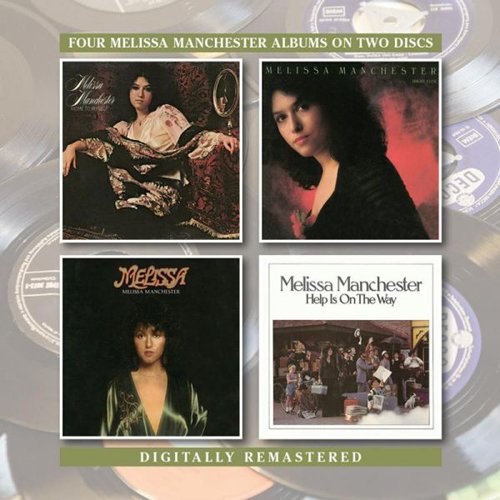
Michael Chapman-Savage Amusement-Vinyl.
For Record Store Day 2016, Secret Records reissued Michael Chapman’s Savage Amusement. This was fitting as Savage Amusement was released forty years previously in 1976. It was a stylistic departure for Michael Chapman. He fused blues, country, folk, folk rock, gospel, rock and soul. Michael Chapman also drew inspiration from Bob Dylan’s 1975 classic album Blood On The Tracks and Steve Harley and Cockney Rebel’s 1975 album The Best Years of Our Lives. Sadly, Savage Amusement never enjoyed the same success as Blood On The Tracks nor The Best Years of Our Lives.
Michael Chapman’s fans were divided by Savage Amusement. Some welcomed the change of sound, and realised that Savage Amusement was a lost classic. Others were shocked at Savage Amusement’s stylistic departure. They took some appeasing when touring Savage Amusement. Since then, Savage Amusement has continued to divide Michael Chapman’s loyal fans.
For newcomers to Michael Chapman, Savage Amusement is a very accessible album. Although quite different from some of Michael’s previous albums, Savage Amusement oozes quality. From the opening bars of Shuffleboat River Farewell, right through to the closing notes of Devastation Hotel, Savage Amusement is a captivating and oft-overlooked minor classic from one of British music’s best kept secrets, Michael Chapman.
Mike Harrison-Mike Harrison, Smokestack Lightning and Rainbow Rider.
Not many people enjoy a career that’s spanned six decades. However, Mike Harrison has. Most people remember him as the lead singer of Spooky Tooth. He also released a trio of solo albums for Island Records between 1971 and 1973. Mike’s debut album was Mike Harrison which was released in 1971. Smokestack Lightning followed in 1972, with Rainbow Rider completing the Island Records trilogy in 1973. They were reissued as a double album by BGO Records.
Mike Harrison’s Island Records’ trilogy is a reminder of a talented and versatile singer-songwriter. His albums were a mixture of original compositions and cover versions. Ballads and uptempo songs sit side-by-side. They feature elements of blues, folk, gospel, rock and soul. Each shine through on Mike Harrison, Smokestack Lightning and Rainbow Rider which represent Mike Harrison’s all too brief solo career. Sadly, Mike Harrison never quite enjoyed the commercial success his music deserved. That’s a great shame.
These three albums Mike Harrison released for Island Records showcase a talented singer, songwriter, musician and producer. Sadly, his music never found a wider audience. Instead, Mike Harrison, like Michael Chapman and to some extent John Martyn, is another artist who is another of music’s best kept secrets.
Milt Jackson-Sunflower and Goodbye.
By the time Milt Jackson signed to Creed Taylor’s CTi Records, he was a musical veteran who had recorded thirty-six albums. He would record three more at CTi Records. This included Sunflower and Goodbye, which were reissued by BGO Records on one disc. On both albums, Milt Jackson is joined by an all-star band.
They helped reinvent Milt Jackson by combining elements of post bop, hard bop, funk and soul. This results in music that swings, and is melodic, harmonic and full of subtleties, surprises and nuances. Sunflower was released in 1973, reaching number five in the US Jazz charts. At a stroke, Milt Jackson’s fortunes had been transformed. Goodbye was released to critical acclaim 1974. It was an accomplished and polished album where Milt Jackson was joined by a band that featured seasoned jazzers. Sadly, Goodbye failed to replicate the commercial success of Sunflower. It’s a hidden gem where Milt Jackson blossoms musically.
Milt Jackson enjoyed an Indian Summer at CTi Records. On Sunflower and Goodbye, he’s buoyed by the all-star band, and delivers a series virtuoso performances on his trusty vibes. Then on other tracks, he’s content to let other remembers of the band shine on Sunflower and Goodbye.. They’re a welcome reminder of Milt Jackson, who was one of the greatest vibes players in jazz history.
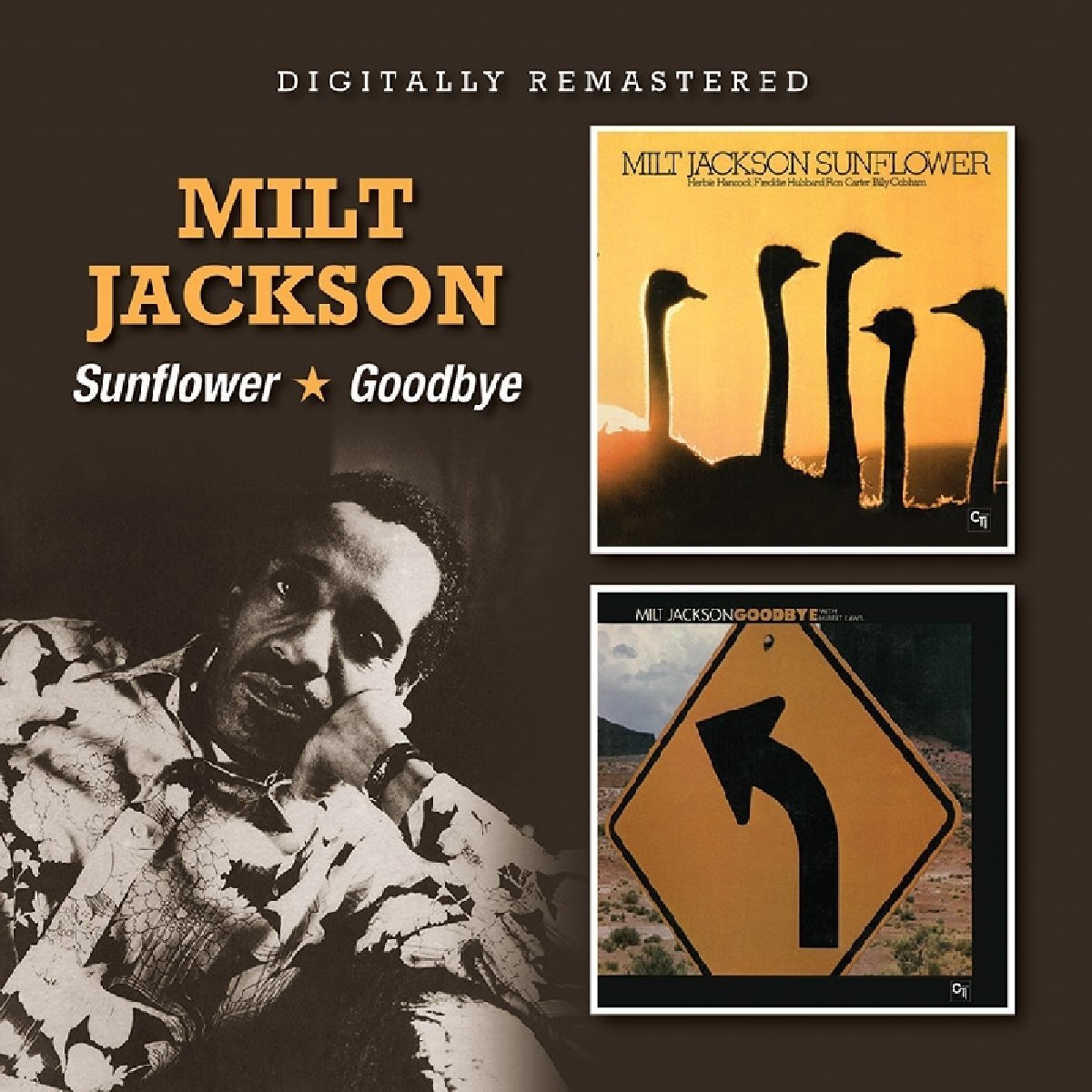
Nicolette Larson-Nicolette Larson, In The Nick Of Time and Radioland.
Tired of the drudgery of the working 9 to 5, Nicolette Larson decided to pursue a career in music. This had always been her dream. She was determined to make this dream come true, and in 1978 Nicolette Larson released her debut album Nicolette on Warner Bros. This was followed by 1979s In The Nick Of Time and 1980s Radioland. These three album were reissued by BGO Records as a double album, where Nicolette showcases her versatility.
Whether it was A.O.R, country, folk, pop or rock, Nicolette Larson was equally comfortable. She wasn’t averse to delivering dance tracks. It seemed that Nicolette Larson was a truly versatile singer. Despite this, only her debut album Nicolette found a wider audience. Maybe Nicolette Larson would’ve enjoyed prolonged success if those who were advising her hadn’t encouraged her to change tack? It seems In The Nick Of Time, with its excursions into dance music alienated her audience. When this happens, it was difficult to win her former fans back.
And so it proved. Although Nicolette Larson released another four albums, she never reached the heights of her debut album Nicolette. In wasn’t just the most successful album of Nicolette Larson’s career, but the best album of her seven album and ten year recording career. Indeed, the best albums of Nicolette Larson’s career are Nicolette, In The Nick Of Time and Radioland. They’re proof that dreams can come true.
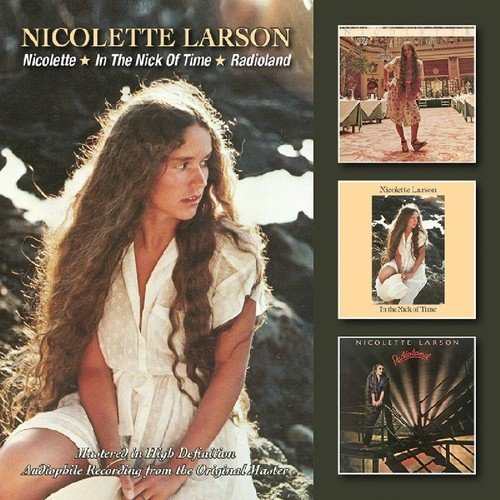
Paul Marcano and LightDreams-10,001 Dreams.
In 1981, British Columbian band LightDreams released their debut album Islands In Space. It was a captivating psychedelic sci-fi odyssey where LightDreams explored cosmic ideology. Normally, an album like Islands In Space would’ve found favour with fans of psychedelia and progressive rockers who embraced cerebral, innovative and epic albums. That wasn’t the case and Islands In Space, failed commercially. Sadly, history repeated itself a year later.
LightDreams who were now billed as Paul Marcano and LightDreams, released their sophomore album 10,001 Dreams in 1982. It picked up where Islands In Space left off, and went as far as exploring what was described as “utopian outer space colonisation.” This had fascinated Paul Marcano since he first encountered the work and theories of author, physicist and space activist, Gerard K. O’Neill. His work and theories influenced Paul Marcano and the groundbreaking, genre-melting music on 10,001 Dreams, which was rereleased by Got Kinda Los Records, an imprint of Guerssen Records.
Elements of ambient, avant-garde, Berlin School, folk pop, Krautrock, progressive rock and rock can be heard throughout 10,001 Dreams. It’s a musical potpourri, where instruments and influences melt into one as Paul Marcano and LightDreams sculpt another captivating psychedelic sci-fi odyssey. Just like Islands In Space, 10,001 Dreams finds Paul Marcano and LightDreams continuing to explore cosmic ideology. The result was an ambitious, innovative and cerebral Magnus Opus, that’s truly timeless, and deserves to find its way into any self-respecting sonic explorer’s record collection.
Phil Collins-Face Value.
Originally, Phil Collins was Genesis’ drummer. However, after the departure of Peter Gabriel, Phil Collins reluctantly became the lead singer of Genesis. It was a role he grew into and eventually, seemed to embrace and enjoy. So it was no surprise that he eventually decided to embark upon a solo career. Phil Collins released his debut album Face Value in 1981.
Critics didn’t know what to expect when they received Face Value. What they discovered was an album that switches between pop and rock to jazz and progressive rock. There’s even elements of blues, funk and African music on Face Value. It’s a mixture of uptempo rocker and heart-wrenching ballads. They’re among the highlights of Face Value, as Phil Collins lays bare his soul after the breakup of a longterm relationship. For Phil Collins, there was a cathartic quality to Face Value, which launched his solo career.
Most critics were won over by Face Value, with some hailing the album a future classic. Meanwhile, over eleven million copies of Face Value were sold worldwide. Ironically, Face Value and indeed Phil Collins later fell out of favour. However, the reissue of Face Value is a reminder a truly talented singer, songwriter and musician’s finest album.
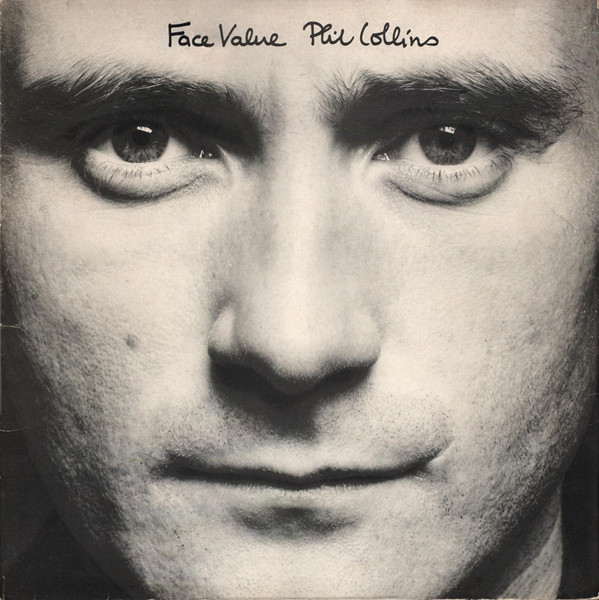
Simple New Gold Dream (81–82–83–84)-Deluxe Edition.
When New Gold Dream (81–82–83–84) was released in 1982, it transformed the fortunes of Simple Minds. They were on their way to becoming one of the biggest Scottish bands of the eighties. Simple Minds were reborn as stadium rockers after the release of (81–82–83–84), which was released as a Deluxe Edition by Universal. It’s a reminder of one of Simple Minds’ finest hours.
After struggling for four albums, Simple Minds came of age musically on New Gold Dream (81–82–83–84). It feature anthems like Promised You A Miracle, Glittering Prize and Someone Somewhere In Summertime that helped transform Simple Minds from also rans to superstars.
Now, Simple Minds were well on their way to superstardom. There was no stopping them as they strutted and swaggered their ways through million selling albums of stadium rock. At last, Simple Minds were fulfilling their potential. They would enjoyed many a Glittering Prize, but one of the best was New Gold Dream (81–82–83–84) in 1982. It stood head and shoulders above the rest; and transformed Simple Minds’ career. They became stadium rockers and fully fledged colossi of planet rock.
Stoneground-Family Album.
By 1971, the San Francisco music scene was still vibrant. One of the newest names were Stoneground, who had quickly built up loyal following. Soon, Stoneground had signed to Warner Bros. and released their debut album in 1971. Then in late 1971, Stoneground released their sophomore album Family Album, which was reissued by BGO Records.
Family Album was very different to most albums. It was a double album, with three sides recorded live at in front on an invited audience at KSAN radio station in San Francisco. Eventually, three sides of the album were given over to Stoneground as they fused elements of Americana to blues rock, country, folk, gospel rock and rock ’n’ roll. The fourth sides was recorded at the Record Plant in Los Angeles, and allowed the ten piece band to showcase their considerable skills.
When Family Album was released, critics hailed it a truly eclectic and captivating album. It found Stoneground switching between genres and playing with freedom, fluidity and spontaneity. Some critics called the album Stoneground’s finest hour. Later, Family Album was regarded by some critics as the band’s best recording. It showed two very different sides to one of San Francisco’s great forgotten groups.
Sun Ra-Jazz-In Some Far Place: Roma ’77-Vinyl.
For anyone interested in Sun Ra’s music, Record Store Day 2016 was a veritable musical feast. A trio of Sun Ra albums were released that day. This includes In Some Far Place: Roma ’77 which was released by Strut Records. It’s available in various formats, including two LPs and two CDs. They feature Sun Ra at his groundbreaking best.
When Sun Ra arrived in Rome in 1977, the lineup of his band was very different to the fifties and sixties. Now Sun Ra lead five piece band. Despite their reduced numbers, Sun Ra and his band were still able to unleash a breathtaking performance. That was the case that night in Rome.
Accompanied by a talented and versatile band, Sun Ra worked his way through an eighteen track set. During that set, they combine Egyptian history, space-age cosmic philosophy and free jazz with avant-garde and space-age jazz. The music was ambitious, challenging, inventive, lysergic, melodic, spacious and full of subtleties, surprises and nuances. It seemed that the original version of a track was merely the starting point, as Sun Ra thew curveballs and headed in unexpected directions. In Some Far Place: Roma ’77 features a captivating performance from Sun Ra who forty years ago, was at his creative zenith.
THE BEST REISSUES OF 2016-PART 7.
THE BEST REISSUES OF 2016-PART 7.
Sun Ra-Jazz By Sun Ra Volume 1.
During a career that spanned six decades, it’s estimated that Sun Ra released around 125 albums. This includes Jazz By Sun Ra Volume 1 which was released by Poppydisc for Record Store Day 2016. It was one of three Sun Ra albums released for Record Store Day 2016.
Jazz By Sun Ra Volume 1 is quite different from the other two albums. It’s a studio album that was recorded at Universal Recording, Chicago, on July 12th 1956. Back then, the enigmatic bandleader was leading a multitalented and versatile eleven-piece band. They showcased Sun Ra’s musical philosophy which took shape after a life-changing experience in 1937. Sun Ra claimed he had been transported to Saturn, where he spoke to the Angel Race. They warned him the world was heading for chaos and Sun Ra could make a difference with his music.
That is what Sun Ra decided to do. His music became a fusion of Egyptian history, space-age cosmic philosophy and free jazz. To this, Sun Ra added post bop on Jazz By Sun Ra Volume 1. This ensured that Sun Ra’s music stayed relevant. That was always the case. Sun Ra was always one step ahead of other musicians, who musically, he left trailing in his wake. An example of this is Jazz By Sun Ra Volume 1, which is album of ambitious, inventive and innovative music from a man who would become a giant of jazz, Sun Ra.
Sun Ra-Spaceways-Vinyl.
The third of the trio of Sun Ra albums released for Record Store Day 2016 was Spaceways. It was released by Org Music on blue vinyl as a limited edition of 2,500. Originally, though, Spaceways could be found on disc two of Calling Planet Earth, a three CD box set released in 1998. The five tracks on disc two became Spaceways.
It features recordings of by Sun Ra and His Arkestra from 1966 and 1968. During each performance featured on Spaceways, Sun Ra is accompanied by over twelve members of his multitalented Arkestra. They join Sun Ra as he seamlessly combines Egyptian history and space-age cosmic philosophy with freeform jazz.
For Sun Ra, the original version of the five tracks on Spaceways were merely the starting point. What they became, was anyone’s guess? Sun Ra and His Orchestra took the listener on a voyage of discovery, where they were determined to innovate, and reinvent each track. This meant his music headed in the most unexpected directions. Sometimes, it’s a roller coaster ride, and a case of expect the unexpected. After all, all Sun Ra was one of music’s mavericks who was determined to do things his way. The music becomes spacey and sometimes lysergic as Sun Ra and His Arkestra seamlessly combine Egyptian history and space-age cosmic philosophy with freeform jazz on Spaceways. It’s a potent and heady brew, that’s a memorable reminder of a musical pioneer, Sun Ra.
Sunburst-Ave Africa.
Last year, Strut Records reissued Sunburst’s Ave Africa as a two CD set. The original album features on disc one, while disc two features singles Sunburst released between 1973 and 1976, plus unreleased radio sessions. This makes Ave Africa the most comprehensive reissue of Sunburst’s music.
Sunburst were formed in war torn Tanzania in 1970. They started life playing cover versions, soul and funk at weekly boogies. These were weekly soul events which proved popular. Gradually Sunburst’s music evolved and this lead to Sunburst pioneering the Kitoto Sound, which reflected the different backgrounds of the band. Then in 1973, Sunburst released their first single. Three years later, a different lineup of Sunburst, which featured musicians from six different countries recorded their one and only album Ave Africa in Zambia.
Ave Africa featured songs full of social comment that spoke to, criticised and provided a voice for the ordinary people. Meanwhile, Sunburst’s music’s was a mixture of Afrobeat, folk, funk, soul and rock. Especially with horns and strings accompanying the rhythm section, percussion and vocals. This was a potent and heady brew. And one that looked as if it transform the fortunes of Sunburst. Alas, in 1977, the band split-up and it was the end of the road for Sunburst. There was no comeback for this once popular group. However, the memory of their music lived on. Nearly forty years later, Ave Africa was reissued as a double album and documents Sunburst’s entire recording career.

Sven Grünberg-Hingus.
When Sven Grünberg released Hingus in 1981, Eastern Europe was a musical hotbed. Each country had an equally eclectic and vibrant music scene. Much of it was underground, given the supposed anti-establishment nature of some of the music. This had been the case with Sven’s previous group Mess. However, after Mess disbanded, Sven reinvented himself as a composer for films, television and theatre. Then Sven’s decided to release debut solo album Hingus which was reissued by Bureau B.
It was a fusion of ambient, avant grade, electronic, progressive rock and cinematic sounds, Hingus was a groundbreaking album. Sven Grünberg took the music from his past and present, and created music that could’ve been created in the future. Flower Of Light sounds like a lost track from The Orb or Underworld. It’s not. It was created by Sven thirty-six years ago and is a truly timeless and innovative track. That’s the case throughout Hingus.
Throughout Hingus, Sven Grünberg pushes musical boundaries to their limits. In doing so, he creates music that’s variously cerebral, elegiac, ethereal, futuristic, hopeful, melodic and otherworldly. Other times, the music on Hingus is ambitious, bold and dramatic. Always, the music on Hingus is captivating and enthralling. That’s why Sven Grünberg’s debut Hingus deserves to be heard by a much wider audience who will appreciated the music of a true musical pioneer.
Ted Coleman Band-Taking Care Of Business-Vinyl.
By 1979, Ted Coleman was living in New Jersey, and had founded his own band, the Ted Coleman Band. They had already established a reputation locally, and were regarded as one of the rising stars of what was a thriving and eclectic local music scene. The next step for the Ted Coleman Band was to record their debut album, Taking Care Of Business, which was released by BBE. It was recorded back in 1979.
It featured a talented band who combined funk, jazz, Latin and soul. There’s even the occasional rocky guitar lick thrown in for good measure on Taking Care Of Business. Mostly, though, the music on Taking Care Of Business is funky, jazz-tinged and soulful. It’s also dance-floor friendly. This is in part to the irresistible Latin rhythms and funky rhythm section. They’re part of the multitalented Ted Coleman Band that featured on Taking Care Of Business.
Alas, when Taking Care Of Business was released in 1980, the album never found the audience it deserved. JSR was a relatively new company, and neither had the resources nor marketing expertise to promote the album. Neither did the Ted Coleman Band. As a result, the album disappeared without trace. Nowadays, this hidden gem of an album Taking Care Of Business has acquired a cult following and is belatedly finding the audience it deserves. It’s a case of better late than never
Teenage Fanclub-Bandwagaonesque-Vinyl.
During 2016, HMV released Music On Vinyl’s limited edition of Teenage Fanclub’s third album Bandwagaonesque as part of its Vinyl Week initiative. Bandwagaonesque was released on pink vinyl twenty-five years after years after its initial release in November 1991.
Critical acclaim accompanied Bandwagonesque’s released. It was the first album to feature Teenage Fanclub’s melodic, hook-laden brand of power pop. With their Byrdsian jangling guitars and tight harmonies, Bandwagonesque stood head shoulders above A Catholic Education and The King. Granted, Teenage Fanclub could still rock out, and enjoyed the odd excursion into grunge, however, Bandwagonesque was Teenage Fanclub’s finest moment…by far. Record sales backed this up.
Bandwagonesque charted on both sides of the Atlantic and introducing the Teenage Fanclub’s music to a much wider and appreciative audience. After this, the Teenage Fanclub embarked upon the most successful period of their career. Their unique fusion of indie rock and melodic, hook-laden power pop proved popular in America, Europe and Australia. Teenage Fanclub were one of the most popular British indie bands of that era, with their music influencing a generation of new bands. However, the Teenage Fanclub’s finest hour was Bandwagonesque, which nowadays, is quite rightly regarded as a genre classic.
Terry Allen-Juarez.
Terry Allen isn’t just a country singer, he’s a conceptual artist, sculptor and painter. By 1974 he also was associate professor at California State University. Despite juggling disparate careers, Terry Allen signed a recording contract in 1974, and in 1975, released his debut album Juarez .
It’s an album of alt-country, where Terry Allens tells of “The Characters” motivations and desires. The characters are believable and three-dimensional, with a hard bitten, life is cheap attitude. Other characters have a seen it all, worldweary outlook. There’s a cynicism on Border Palace, while other characters are dysfunctional. A couple even become murderous, on The Run South. where Terry uses his Texan drawl to narrate the story of a drinking spree that ends up in murder, and a chase through the South Californian desert. Just like so many of the songs on Juarez, there’s a grittiness to songs that look at the dark underbelly of life on the wrong side of town. That’s the case throughout Terry Allen’s much anticipated debut album, Juarez which was reissued by Paradise Of Bachelors.
Alas, commercial success eluded Juarez passed most critics by. The few critics who reviewed the album, were won over by this tale of life on the wrong side of the tracks in small-town America. It was one of the earliest alt-country albums, and would inspire and influence other artists. Despite commercial success and widespread critical elude Juarez, it belatedly found a new and appreciative audience.
Terry Allen-Lubbock (On Everything).
Tree years after the release of Juarez, Terry Allen returned to the studio to record his sophomore album. By then, Terry was still living in California, and was now a professor at California State University, Fresno. Terry’s art career was blossoming, and his reputation was growing. He had also been writing a new album of songs Lubbock (On Everything).
They were based around the Texan town where Terry and his wife Jo Harvey grew up. All these years of observing and people watching had given Terry a wealth of material for his sophomore album. He had written twenty-one songs about the people of Lubbock. They would become Lubbock (On Everything), an insightful album into human nature in small town America. They were recorded this time around, by a full band.
Sadly, when Lubbock (On Everything) was released as a double album in 1978, it was a familiar story for Terry Allen. The album failed to make any impression on the charts. Again, a few critics went into bat for Lubbock (On Everything). They regarded it as be a carefully crafted and accomplished album of insightful, cinematic and cerebral songs. These songs introduced the listener to three dimensional characters. However, the only problem was that when Lubbock (On Everything) was released, it was the height of disco bubble. Neither albums of alt-country nor country music were what record buyers were looking for. Not even ones as good as Lubbock (On Everything), which nowadays, is a cult classic which was reissued by Paradise Of Bachelors during 2016.
Terry Reid-The Other Side Of The River.
For many people, Terry Reid is music’s nearly man. He could’ve been the lead vocalist of two of the biggest rock bands in musical history. Sadly, that wasn’t to be. Tnstead, Terry Reid decided to concentrate on his solo career which began in 1968.
Five years later, Terry Reid released River in 1973. Since then, it’s been rumoured other tracks were recorded during the River sessions. That proved to be the case. Last yea,r Light In The Attic Records as The Other Side Of The River. It’s a reminder of one of British music’s most underrated singer, songwriter and musicians, Terry Reid, whose affectionately known as superlungs
Among the highlights, are the instrumental Sabyla and beautiful, understated ballads like Listen With Eyes and Anyway. A couple of songs are work in progress, and it would’ve been interesting to see what they might have become if Terry Reid had developed them further. They’ve bags of potential. Then on Let’s Go Down and Avenue (F# Boogie), Terry plays with his trademark looseness and spontaneityTerry takes his band on a magical mystery tour, as they improvise, switching between and combining disparate musical genres. That’s what Terry does on Country Brazilian Funk, where he and his band showcase their considerable talents. They continue to do this throughout The Other Side Of The River, which is the perfect companion to Terry Reid’s 1973 album. The Other Side Of The River.
The Associates-The Affectionate Punch.
After enjoying a top ten single in the UK with a cover David Bowie’s Boys Keep Swinging in 1979, The Associates signed to Fiction Records. A year later, The Associates were due to release their debut album The Affectionate Punch on 1st of August 1980. This should’ve been the start of new chapter in The Associates’ career. Especially since The Affectionate Punch had been well received by critics. However, behind the scenes all wasn’t well.
By the time The Affectionate Punch was released Michael Dempsey and John Murphy had left The Associates. This left just Billy McKenzie and Alan Rankine who would mastermind the rise of The Associates. That was still to come.
When The Affectionate Punch was released, it failed commercially. The Associates mixture of new wave, pop and post punk seemed to pass record buyers by. Nowadays, though, The Affectionate Punch is regarded as a hidden gem within The Associates’ back-catalogue that was a taste of what was to come from Dundee band.
THE BEST REISSUES OF 2016-PART 8.
THE BEST REISSUES OF 2016-PART 8.
The Charlatans-The Limit Of The Marvellous-Vinyl.
Between 1964 and 1969, The Charlatans’ star shawn bright. They were larger than life mavericks who looked like a cross between 19th Century, wild west outlaws and Victorian dandies. This carefully cultivated image soon began to prove popular with the audience at their gigs. Soon, they arrived dressed in similar attire. Meanwhile,The Charlatans were embracing the rock ’n’ roll lifestyle. LSD and pot were part of The Charlatans’ diet. It fuelled The Charlatans as they took San Francisco by storm. Commercial success and critical acclaim looked a formality. It wasn’t to be.
By 1969, The Charlatans were no more. They were just the latest band that should’ve enjoyed widespread critical acclaim and commercial success. However, for whatever reason, commercial success passes these bands by. That was the case with The Charlatans whose music wa celebrated on The Limit Of The Marvellous. It was recently reissued by Big Beat Records, an imprint of Ace Records on red vinyl. It’s a fitting reminder of The Charlatans’ finest songs.
Their musical legacy amounted to one album and two singles. It features on The Limit Of The Marvellous. It’s the perfect introduction to musical mavericks The Charlatans, who having taken San Francisco by storm, should’ve found fame and fortune. Sadly, it wasn’t to be. After several breakups, makeups and changes in lineup, The Charlatans, called time on a career that promised much, but ultimately, through bad luck and misfortune, came to little.
The Damned-The Black Album-Vinyl.
Having just released the most successful album of their career, and one that was hailed a classic, The Damned got to work on their fifth album. Most bands would’ve have decided to pickup where they left on Machine Gun Etiquette. However,The Damned weren’t most bands. Instead, they were about to head off on a musical journey through disparate genres.
The Black Album find The Damned moving towards goth rock, which they went on to embrace throughout the eighties. There’s also a psychedelic influence to The Black Album, as The Damned begin to move away from their punk roots. They didn’t cut the ties entirely, for fear of alienating their older fans, who had been around since The Damned released their debut album in 1976. A lot had happened since 1976.
Forty years later, and incredibly, The Damned are still going strong.They’ve had their ups and downs, but still keep making music and have released over thirty albums since The Black Album. However, The Black Album and its predecessor Machine Gun Etiquette are both reminders of The Damned in their prime, when they swaggered their way through albums, displaying a devil may care, rebellious attitude. This resulted in some of the most memorable music of their forty year career. Thos included the classic album Machine Gun Etiquette, and the album where The Damned came of age musically, The Black Album which featured a much more sophisticated and eclectic style.
The Idle Race-The Limit Of The Marvellous-Vinyl.
For many musical connoisseurs, one of the highlights of Record Store Day 2016, was Parlophone’s reissue of The Idle Race’s sophomore album The Limit Of The Marvellous. It was the followup to The Birthday Party, and found The Idle Race continue to combine pop, rock and psychedelia. They were lead by one of the most successful musicians of the seventies, Jeff Lynne.
He wrote seven of the eleven songs on The Limit Of The Marvellous. That wasn’t his only role with The Idle Race. Jeff Lynne arranged and produced The Limit Of The Marvellous. It was heavily influenced by The Beatles. They would continue to influence Jeff Lynne when he lead the Electric Light Orchestra. Sadly, The Limit Of The Marvellous never enjoyed anything like the success of Electric Light Orchestra.
Indeed, none of The Idle Race’s albums were particularly successful. However, The Limit Of The Marvellous is a cohesive and accomplished album which is long on hooks. It finds Jeff Lynne maturing as a songwriter and producer, on The Limit Of The Marvellous which nowadays, is regarded as The Idle Race’s finest album.
The Velvet Underground-Loaded-Vinyl.
During 2016 limited edition vinyl pressings were all the rage. One of the albums rereleased by HMV as a limited edition was The Velvet Underground’s fourth album Loaded. This classic album that was meant to be “loaded with hits.” Instead, it proved to be The Velvet Underground’s swan-song. However, it was no ordinary swan-song.
Most critics were won over by Loaded. It followed in the footsteps of The Velvet Underground, which showcased a much more populist, commercial sound. Among Loaded’s highlights were the hook-laden, Sweet Jane and Rock and Roll. When Loaded was released, it failed commercially. Alas, the album wasn’t: “loaded with hits.” However, Loaded deserved to fare better. Especially as The Velvet Underground had sacrificed and suppressed their true sound to deliver an “album loaded with hits.”
While Loaded wan’t an “album loaded with hits,” it had everything going for it. It benefited from a much more commercial sound, and plethora of hooks. This meant that Loaded was The Velvet Underground’s most accessible album. It was also their swan-song. However, The Velvet Underground left behind a rich legacy. That’s despite only recording four studio albums. Each is a classic. From The Velvet Underground and Nico to Loaded, each album features shamanistic performances from those musical shape shifters and high priests of music, The Velvet Underground.
Three Man Army-Three Man Army and Three Man Army Two.
All too often, a truly talented group fails to find the audience their music deserves. As a result, the band only releases a few albums, which are cherished by discerning record buyers. That was the case with Three Man Army, who were founded by brothers Adrian and Paul Gurvitz in 1971 . Later in 1971, Three Man Army released their debut album, A Third Af A Lifetime in 1971. It was followed by 1973s Three Man Army iand 1974s Three Man Army Two. Sadly, this proved to be Three Man Army’s swan-song. A fourth Three Man Army was planned but was never recorded.
Drummer Tony Newman got the chance to join David Bowie’s band, this was too good an opportunity to turn down. For Three Man Army, it was the end of the road Forty-two years after Three Man Army released their final album, BGO Records reissued Three Man Army and Three Man Army Two on one CD. These two albums are a reminder of one of the most underrated British rock groups of the seventies. Their fusion of blues, psychedelia and rock passed record buyers by.
Nowadays, Three Man Army now have a cult following, whohave discoveredThree Man Army’s three albums. They’re regarded as cult classics and Three Man Army as one of British rock music’s best kept secrets, Three Man Army, who could’ve, and should’ve, become one of the giants of seventies rock.

Tim Maia-1970.
Between 1970 and 1973, Tim Maia released four albums. Each of these albums he named Tim Maia. This proved confusing, so nowadays, they’re entitled 1970, 1971, 1972 and 1973. They were rereleased by Oficial Arquivoknown and include some of the best music of Tim Maia’s long and illustrious career.
When Tim Maia released his debut album 1970, he was almost twenty-eight. 1970 was hailed a groundbreaking, genre-melting classic by critics. The album was a successful and seamless marriage disparate genres. Soul and funk rubbed shoulders with samba and Baião. There’s even hints of easy listening and soul jazz on Tim Maia 1970 on an album that featured a trio of Tim Maia classics, induing Coroné Antonio Bento. So it was no surprise that 1970 spent twenty-four weeks in the upper reaches of the Brazilian charts. For Tim Maia, it had been a long, hard struggle, but belatedly he had made a commercial breakthrough.
Tim Maia was a hugely talented, charismatic and larger life singer, who lived life on the edge, and was determined to do things his way,His music was memorable, melodic, magical, eclectic and truly timeless. That’s a apparent on 1970, which was Tim Maia’s first classic album. It went on to influence and inspired further generations of singers. However, 1970 launched the career of Tim Maia 1970, a charismatic singer-songwriter career, who was touched by genius and fundamentally flawed.
Tim Maia-1971.
A year after releasing his debut album 1970, Tim Maia returned with the followup 1971. Just like its predecessor, 1971 was hailed as another groundbreaking album. Elements of soul and funk were combined with samba and Baião. There were even hints of jazz, psychedelia and rock, during what was an ambitious and innovative album of genre-melting music. That was the case throughout 1971.
From the opening bars of A Festa Do Santo Reis, Tim Maia picks up where he left off on 1970. He’s equally comfortable delivering tender ballads as he is kicking loose, and strutting his way through uptempo tracks. Whichever type of track it is, Tim breathes meaning and emotion into the lyrics. Helping him all the way, are his multitalented band. They ensure that Tim hits the ground running. This resulted in the second classic album of Tim Maia’s career, 1971 which was rereleased by Oficial Arquivoknown.
1971 is a tantalising taste of the charismatic Tim Maia, who was well on his way to becoming one of Brazil’s most successful singer-songwriters. However, after the success of 1971, Tim Maia headed to London where he discovered LSD. Tim Maia became an advocate of its supposed mind opening qualities. He took 200 tabs of LSD home to Brazil, giving it to friends and people at his record label. Little did Tim know, that this was like pressing the self-destruct button. After 1971, Tim Maia would only reach the same height once more.
Tim Maia-1972.
After returning from London, where he discovered LSD, Tim Maia began work on his third solo album, 1972. By then, he was surviving on a daily diet of drink and drug. Despite this, Tim Maia was able to function normally and even recorded the third classic album of his career, 1972.
It was another mixture of tender ballads and uptempo tracks. Harmonies, strings and Latin percussion accompany Tim Maia and his band during this genre-melting album. Elements of funk, jazz, Latin, rock and soul were combined with samba and Baião. It was heady musical brew that won over critics and record buyers. Having been released to critical acclaim, 1972 reached the upper reaches of the Brazilian album charts. The rise and rise of Tim Maia continued.
1972 became the third classic album of Tim Maia’s career. It was also his final classic album. Tim Maia’s music changed direction on 1973. Good as it was, 1973 can’t be called a classic. However, 1972, with its groundbreaking and genre-melting sound, where ballads rub shoulders with uptempo tracks, was another classic album from musical maverick Tim Maia.
Tyll-Sexphonie.
Tyll weren’t a traditional band. They were formed to record a Krautrock album. This was the brainchild of Fred Kersten, who owner Kerston Records. He approached Teflon Fonfara to ask if he would be interested in recording a Krautrock album. For Teflon Fonfara this was interesting proposition, given his previous group Eulenspygel had been put on hold. Soon, he had agreed and put together Tyll which recorded Sexphonie in 1975.
Later in 1975, Sexphonie was released but wasn’t the commercial success that everybody had hoped. Those who bought a copy of Sexphonie discovered an album were Tyll fused acid-rock with hard-psych, polit-rock, progressive rock. There were even the occasional excursion into avant-garde, folk, funk and polit-rock. Sometimes, Eastern influences shawn through on Sexphonie a hidden Kraurtrock gem. It was a captivating album of groundbreaking music, where no two tracks were the same. Tyll were musical chameleons, whose music was variously beautiful, cinematic, dramatic, lysergic and melancholy. Other times, the music on Sexphonie was progressive, rocky, melodic and mesmeric.
Despite being a truly talented and versatile band, Tyll were together less than a year. They left behind a memorable musical legacy. That’s their groundbreaking debut album Sexphonie. If finds Tyll switching seamlessly between musical genres, as they create what’s nowadays regarded as a hidden gem and a lost Krautrock cult classic, Sexphonie which was rereleased by the Mental Experience label, an imprint of Guerssen Records
White Light-White Light.
Glasgow based White Light were no ordinary rock band. To the casual observer their fusion of rock, heavy metal, psychedelia and blues sounded no different to many other bands who played in Glasgow. However, when the audience listened more closely to White Light’s lyrics on songs like Prodigal and Pretty Big God, the picture became much more clear. White Light were a Christian rock band, who rather than play in churches, played in pub and clubs the length of Scotland. That had been the case since the early seventies.
By 1974, White Light made it to the final of the Melody Maker magazine’s competition, where they showcased their rock opera Parable. Buoyed by this success White Light recorded their debut album. When it was released later in 1974, Parable sported a lysergic cover. It was quite unlike what most people would’ve expected a Christian rock album to look like. If ever there was a wolf in sheep’s clothing, it was Parable. Its cover should’ve drawn attention to the album. Despite some critically acclaimed reviews, sadly, that wasn’t the case.
Recently, and somewhat belatedly, there’s been a resurgence in interest in Parable. It’s is now a collectors item, with copies selling for over $1,000. That is beyond the budget of most collectors. However, last year, Parable was released by Sommor Records. This means that White Light’s sheep in wolf’s clothing, Parable is once again, available for music fans to rediscover.
Every year, it seems, more albums are reissued. 2016 was no different. Each week hundreds of albums were reissued. This ranged from classic albums to hidden gems and cult classics that had been rediscovered. These albums were reissued by labels in Britain, Europe and America. Some of the albums that found their way onto what’s the definitive list of the best reissues of 2016. It’s no ordinary list though. Instead, it’s an eight-part list that features the eighty best reissues of 2016.
THE BEST BOX SETS OF 2016-PART 1.
THE BEST BOX SETS OF 2016-PART 1.
Having looked at the best of the new albums released during 2016, it’s now time to look at the best box sets released during the last twelve months. These box sets range from lovingly curated, luxurious, limited editions to budget box sets. There’s something for everyone and every budget. Similarly, just about every genre is represented in the list of best box sets of 2015. Everything from classic rock, Nordic Wave, pop progressive rock to Berlin School, jazz, Krautrock and space rock can be found on the list. It features the best box sets of 2016.
Ashra-Complete Correlations.
In 1979, Manuel Göttsching reinvented Ashra as a trio for the recording of Correlations. This was a new chapter in the career of Manuel Göttsching, as Ashra’s music moved towards a much more rock oriented sound. Forever the musical chameleon, Manuel Göttsching continued to reinvent his music, to ensure that it stayed relevant His determination to reinvent his music paid off, and the result was another innovative, genre-melting classic album, Correlations.
With his new band, Ashra created a genre-melting album where they married elements of ambient, avant-garde, Berlin School, electronica, funk, jazz, Krautrock, post rock, progressive rock and rock. The resultant album, Correlations became a classic album, and introduced Ashra to a much wider audience and was later hailed a classic album.
Thirty-seven years after the release Correlations, MIG reissued the album as a five disc box set. Correlations Complete features Correlations on disc one. Then on disc two, there’s the original version of Phantasus which was rejected by Virgin Records. Discs three to five are entitled The Making Of, and trace the birth of Correlations. There are early versions of the songs and lengthy jams which were recorded during the rehearsals and recording of Correlations. It’s the most comprehensive reissue of Correlations and will be a welcome addition to any collection. Especially for connoisseurs of the Berlin School and Krautrock. For them, Correlations Complete is everything you wanted to know about Correlations, but were too afraid to ask.
Budgie-MCA Albums 1973-1975.
By 1973, Budgie were one of the rising stars of British rock. They had been formed in Cardiff six years earlier in 1967. Since then, they had released two albums Budgie in 1971 and Squawk in 1972. They were on their way to becoming one of the most influential British heavy rock bands. The subsequent rise and rise of Budgie is documented on MCA Albums 1973-1975 which was released by Universal Music Group.
There’s a trio of albums in the MCA Albums 1973-1975 box set. This starts with 1973s Never Turn Your Back On A Friend, 1974s In For The Kill followed in 1974 and Bandolier which was released in 1975. These albums were the most successful of Budgie’s career and feature the best music they recorded at MCA. This makes MCA Albums 1973-1975 the perfect introduction to Budgie, an oft-overlooked and influential band.
Many critics thought that Budgie would go on to match the success of Black Sabbath, Deep Purple and Led Zeppelin. Sadly, that wasn’t to be, and widespread commercial success eluded Budgie. However, Budgie would go on to influence a new generation rock bands, including many of the new wave of British heavy metal bands. Sadly, Budgie never enjoyed the same success as Judas Priest, Iron Maiden or Def Leppard. Nowadays, Budgie are remembered as musical pioneers, that influenced several generations of rock bands with the music on MCA Albums 1973-1975.

Cluster 1971-1981.
During a career that spanned five decades, Cluster were one of the most important, influential, and innovative bands of the Krautrock era. So it’s fitting that during 2016, Hamburg based Bureau B Records released the 1971-1981 box set is a lavish and lovingly curated box set. It features the eight albums Cluster recorded between 1971 and 1981. The ninth album features previously unreleased live recordings of Cluster. Quite simply, 1971-1981 is the definitive musical document of the first ten years of Cluster’s career.
Cluster rose like a phoenix from the ashes of Kluster, the band Hans-Joachim Roedelius and Dieter Moebius had formed with Conrad Schnitzler. Just like Cluster, Kluster was a pioneering group who released ambitious and groundbreaking music. However, after releasing two albums as Kluster, the band Hans-Joachim Roedelius and Dieter Moebius left to form Cluster.
Little did they realise that they had just formed a band that would release a series of groundbreaking album. This included albums like Cluster, Cluster II, Zuckerzeit and After The Heat. Nowadays, these albums are considered genre classics. They’re also among the nine discs with the 1971-1981 box set. It’s a fitting celebration of musical pioneers Cluster, who released ambitious, groundbreaking and timeless music throughout their long and illustrious career.
Cream-Classic Album Selection.
Nowadays, Cream are regarded as the first British supergroup. Cream were formed in July 1966 and were together for just over two years. During that period, Cream released a quartet of albums, Fresh Cream, Disraeli Gears, Wheels Of Fire and Goodbye. These albums influenced everyone from Jimi Hendrix and The Jeff Beck Band to Black Sabbath and Led Zeppelin. Even today, many musicians cite Cream as an influence. So it’s fitting that fifty years after they were formed that Commercial Marketing released the Classic Album box set. It documents Cream’s short, but illustrious successful career.
Each of Cream’s albums were released to critical acclaim and went on to sell in vast quantities. Cream’s four albums were certified gold and platinum on three continents and sold over fifteen million copies of Fresh Cream, Disraeli Gears and Wheels Of Fire and Goodbye. That’s why Cream are nowadays, regarded as rock royalty.
They were also the first British supergroup. Other followed in Cream’s wake. However, Cream achieved more than most in just under three years. Each of their albums found Cream’s music evolving as they continued to create groundbreaking music. This ranged from blues rock to hard rock and psychedelia during Cream’s short, but illustrious successful career. The quartet of albums Cream’s released between December 1966 and March 1969 can be found in the Classic Album Selection box set. It’s the perfect introduction to the first, and many say best British supergroup, Cream.
Electric Light Orchestra-The Studio Albums 1973-1977.
After the Electric Light Orchestra’s two album deal with Harvest ran out, they signed to Warner Bros. This was the start of a new chapter in the Electric Light Orchestra story. Part of this story is documented on the Electric Light Orchestra The Studio Albums 1973-1977 box set. It was released by Sony Music Group and features five albums, including On the Third Day, Eldorado, Face The Music, A New World Record and Out Of The Blue. They feature the rise and rise of the Electric Light Orchestra,
From Face The Music through A New World Record to Out Of The Blue, Electric Light Orchestra’s classic sound emerged. It was slick, polished, melodic and hook-laden. This was quite different to their first two albums that Electric Light Orchestra released, Electric Light Orchestra and ELO 2. After this, the Electric Light Orchestra continued to evolve musically between 1973 and 1977.
During this period, the Electric Light Orchestra sold the best part of twenty million albums. This includes some of the best music of Electric Light Orchestra’s career. There’s the concept album Eldorado and the five million selling A New World Record. It features a slick, polished, melodic and hook-laden sound. This continues on the Electric Light Orchestra’s Magnus Opus, Out Of The Blue. Nothing else came close to the Electric Light Orchestra’s classic album.
For many people, the Electric Light Orchestra released their finest music between 1973 and 1977. That’s the period that the Electric Light Orchestra The Studio Albums 1973-1977 covers. It’s the perfection introduction, or reminder to, one of the greatest British bands of the seventies, Electric Light Orchestra at their creative zenith.
Impulse!-1961-1974.
For anyone interested in jazz, and especially the music released by the Impulse! label, then the Impulse 1961-1974 box set was a must have. It featured twenty-five CDs including Art Blakey and The Jazz Messengers, Charles Mingus, McCoy Tyner, Chico Hamilton Quintet, Earl Hines, Keith Jarrett, John Coltrane Quartet, Shelly Manne, Charlie Haden and Tom Scott. There’s everything from big bands to trios, quartets and soloists. Similarly, a variety of sub-genres of jazz are represented on the Impulse 1961-1974 box set. It was released by Decca and celebrates the first thirteen years of the Impulse! story.
There’s everything from avant-garde to bop to the cool school, free jazz, fusion, hard bop, Latin and post bop makes an appearance on the Impulse! 1961-1974 box set. That’s no surprise. Many of the giants of jazz spent time signed to Impulse! They seem to have been afforded creative freedom. There was nobody trying to tell artists what direction their music should head in. While this may not have resulted in music that was hugely successful commercially, but it was innovative, inventive and influential. Especially during the period Bob Thiele was at the helm of Impulse!
Nowadays, Bob Thiele’s name is synonymous with Impulse! He was at at the helm between 1961 and 1969. That was when Impulse! released some of its most important and influential music. After Bob Thiele’s departure, still, Impulse! continued to release important, innovative, inventive and influential music. However, not as regularly as it once had. Some of the albums were hit or miss affairs. Impulse! continued to release albums regularly, but no longer was the label consistently releasing classic albums. They were in short supply.
Still, though, many of the artists signed to Impulse! after Bob Thiele’s departure were pioneers. They continued to released ambitious and groundbreaking music. Some of that music features in the Impulse! 1961-1974 box set. It’s a tantalising taste of one of the jazz’s legendary labels, and some which was home to many of the giants and pioneers of jazz.

Jethro Tull-Aqualung-40th Anniversary Adapted Edition
In 1971, Jethro Tull released what would become their first classic album, Aqualung. It was Jethro Tull’s most ambitious and cerebral album, Aqualung. It was a concept album that examined ”the distinction between religion and God.” This seemed an unlikely subject for an album, even a seventies concept album.
It found Jethro Tull combined progressive rock with folk, blues, hard rock and even psychedelia. The music features Jethro Tull at their most cerebral, and became the band’s most successful album. In America alone, Aqualung sold three million copies, and seven million copies worldwide. Suddenly, Jethro Tull were one of the biggest selling bands in the world.
Forty-five years later, and PLG reissued Aqualung. This was the 40th Anniversary Adapted Edition which was a two CD and two DVD set. Again, Steven Wilson appears to have taken great care with the remastering. It’s certainly not over loud and has a punchiness. The remix seems slightly larger and wider. There’s also a slightly more open sound. This remix also benefits from a greater degree of separation, while some of the instruments much clearer. However, this remix won’t suit everyone. That’s why the 40th Anniversary Adapted Edition should be seen as something to compliment, not replace for the original album. Having said that, it’s a worthwhile addition to a collection and would make the perfect companion to the original version of Aqulung.
Disc two, which features sixteen “associated recordings” from 1970 and 1971. This includes earlier versions of certain songs. It’s interesting to compare them to what they eventually became. Some of the songs never found their way onto Aqualung, This will make them an interesting musical document for fans of Jethro Tull. So will the two DVDs.
DVD one features the Steven Wilson 5.1 surround and stereo mixes of the Aqualung, and associated recordings 1970-1971. Then on DVD two, there’s flat transfer of the original album and EP, plus stereo and quadrophonic mixes. Both the flat transfer of the album and the quadraphonic mixes are interesting musical artefacts from a musical point of view. They’re a fascinating insight into Aqualung, the album that transformed Jethro Tull.
They were now one of the biggest rock bands in the world after the success of Aqualung. That’s where they remained for much of seventies. For a while, it seemed that everything Jethro Tull touched to silver, gold or platinum. However, Aqualung was one of Jethro Tull’s finest hours, and set the bar high for future albums.
Jethro Tull-Stand Up-The Elevated Edition.
When Jethro Tull released their sophomore album Stand Up in September 1969, the album was a game-changer. It was a much more eclectic album. Whilst there was still a blues rock sound on Stand Up, Jethro Tull were expanding their musical palette. They combined elements of Celtic, classical, folk and rock. This new and more eclectic sound struck a nerve with critics and record buyers.
Stand Up was well received and sold well on both sides of The Atlantic. Little did Jethro Tull realise that this was the beginning of a golden period in their career. So it was fitting that The Elevated Edition-Remixed and Remastered Edition of Stand Up was rereleased by PLG as a two CD and DVD box set.
Disc one features the original album remixed and remastered by Steven Wilson. He has remastered several Jethro Tull albums, and as usual, has done a good job. Stand Up certainly has’t become a victim of the loudness wars. Meanwhile, the remix is larger, wider and has a more open sound the than the original album. There’s a greater degree of separation, while some instruments sounding much clearer. However, remixing an entire album always results in much debate. Maybe the way to view The Elevated Edition isn’t as a replacement to an original copy, but something to complement it.
Complimenting the remastered and remixed version of Stand Up on disc ore are six bonus tracks. Then disc two features Jethro Tull in concert at the Stockholm Konserthurst, 9th January 1969. Other tracks include mono single versions of Living in the Past and Driving Song. The DVD features 5.1 surround mix, a flat transfer of the original stereo album, film footage and Jethro Tull live at the Stockholm Konserthurst,on 9th January 1969. For fans of Jethro Tull this is a reminder of what was the start of a golden period for Jethro Tull.
During this golden period, it seemed that Jethro Tull could do no wrong. Their albums were released to critical acclaim and sold by the million. Jethro Tull became one of the most successful British rock bands of the seventies. The album that transformed the fortune of Jethro Tull was their sophomore album, Stand Up.

John Miles-The Decca Albums.
Forty years ago in 1976, John Miles released his most successful single Music. Since then, every time John Miles’ name comes up in conversation, Music is mentioned. That must be frustrating for the English singer-songwriter. After all, John Miles released ten albums between 1976 and 1999. This includes the four albums he released on Decca Records. They can be found on the five disc John Miles box set, The Decca Albums. It was released by Decca Records and also includes a BBC Live In Concert recording from March 1978. The Decca Albums box set is a reminder that there’s much more to John Miles than one single.
The Decca Years were also the most productive period of John Miles’ career. During The Decca Years, John Miles averaged an album a year. These albums featured songs by the John Miles and Bob Marshall songwriting partnership. They were responsible for some of the best music of John Miles’ four decade recording career. This included the four studio albums that John Miles released for Decca.
John Miles most successful album was his debut album Rebel. It was produced by Alan Parsons, and was released in 1976. Rebel enjoyed commercial success not just in Britain in Europe, but also in America. The success continued with the release of Stranger In The City in 1977. Audiences were won over by John Miles’ music which ranged from pop to blue eyed soul, funk, rock and soul. However, after two successful album John Miles deeded to change direction on Zaragon.
John Miles decided to moved towards rock epics. This attempt to reinvent his music to ensure it stayed relevant backfired. Zaragon failed to chart in America, and failed to replicate the success of John’s two previous albums. To try and kickstart John Miles career, Alan Parsons returned to produce MMPH-More Miles Per Hour. The result was a much more cohesive and focused album that was sweetened by orchestral arrangements. Despite this, the album failed to chart in America, but was slightly more successful in Britain and Europe. That wasn’t good enough for Decca Records.
After More Miles Per Hour, John Miles parted company with Decca Records. After just four years and four albums, The Decca Years were over. They feature on the recently released five disc box set, The Decca Years. It was released by Decca Records, and includes the four albums John Miles released for Decca Records. The fifth disc features the BBC Live In Concert recording from March 1978. It’s a tantalising taste of John Miles and his tight, talented band at their best. The live disc is a welcome addition, to The Decca Years. So are the bonus tracks that feature on each disc. That’s why The Decca Years is without doubt, a truly comprehensive retrospective of the early part John Miles’ four decade recording career.

John Wetton-The Official Bootleg Collection Volume 1
Last year, John Wetton released The Official Bootleg Archive Volume 1, a six CD box set. It’s a collection of three of John Wetton’s previously released Official Bootlegs, which have been out of print for the best part of ten years. These three concerts were recorded between 1996 and 1999. The first is Live In Argentina 1996 which features on discs one and two. Live In Osaka 1997 features on discs three and four. On discs five and six, is Live At The Sun Plaza Tokyo 1998. With his tongue firmly in his cheek, John Wetton decided to call this box set The Official Bootleg-Archive Volume 1. This was a very welcome reissue.
After all, these three Official Bootlegs have been out of print for over ten years. This meant newcomers to John Wetton’s music were unable to discover Live In Argentina, Live In Osaka 1997 and Live At The Sun Plaza Tokyo 1999. John Wetton knew it made sense to reissue this trio of live albums. He decided that the time had come to rectify this. Each of the three concerts were remastered and are reissued as part of The Official Bootleg-Archive Volume 1. It’s a six CD box set that has recently been released by the Primary Purpose label.
The Official Bootleg-Archive Volume 1 box set is a reissue that will appeal to many music fans. This includes fans of Mogul Thrash, Family, King Crimson, Uriah Heep, UK and Asia. Then there’s John Wetton’s loyal fans, who have followed his solo career closely over the past four decades. Especially during the nineties, when the three concerts on The Official Bootleg-Archive Volume 1 were recorded. They’re sure to bring back memories of John Wetton live, in the late nineties, which was one of the most fruitful periods of his solo career.
THE BEST BOX SETS OF 2016-PART 2.
THE BEST BOX SETS OF 2016-PART 2.
Klaus Schulze-Dark Side Of The Moog Volumes 1-4.
When Klaus Schulze agreed to collaborate with Pete Namlook, little did he realise that this was the start of a partnership that lasted fourteen years. The first volume in the Dark Side Of The Moog series was released in 1994. Fourteen years later, the eleventh and final volume was released in 2008. Last year, the Dark Side Of The Moog series were recently reissued by MIG as three box sets.
The first box set featured The Dark Side Of The Moog Volumes 1-4. This included Part 1-Wish You Were There, which was released in 1994, which was a fusion of ambient, avant-garde, electronica and techno. This was a starting point for future volumes
For Klaus Schulze, this was a stylistic departure and introduced his music to a much wider audience. This was the start of a long running and successful series. A year later, Part 2-A Saucerful Of Ambience was released in 1995. Just like the first instalment in the series, this limited edition release soon sold out. It was a similar case when Part 3-Atom Heart Brother Part I-VI was released later in 1995. The Dark Side Of The Moog had become a successful series.
For the fourth instalment in the series, Klaus Schulze and Pete Namlook were joined by American musician, composer and producer Bill Laswell. He featured on the next three instalments. This included Part 4-Three Pipers At The Gates Of Dawn. Just like previous volumes, the mixture of fusion of ambient, electronica, modern classical and techno proved popular with fans old and new. That was no surprise.
Throughout his career, Klaus Schulze who continued to reinvent his music and release music that was innovative and relevant. That was the case when he began collaborating with Pete Namlook, on The Dark Side Of The Moog. A reminder of that is the Dark Side Of The Moog Volumes 1-4 box set, which features timeless music made my two and then three musical innovators.

Klaus Schulze-Dark Side Of The Moog 2 Volumes 5-8.
As part of the ongoing Klaus Schulze reissue program, MIG released the eleven volumes of Dark Side Of The Moog in three box sets during 2016. Each came with a bonus disc of previously unreleased material. For fans of Klaus Schulze this was a veritable musical feast.This was the perfect way to celebrate Klaus Schulze’s fourteen year collaboration with Pete Namlook. It began in 1994 and continued until 2008.
Dark Side Of The Moog 2 Volumes 5-8 covers the period between 1996 and 1999. The first of the four volumes in the box set is Part 5-Psychedelic Brunch. Again, Klaus Schulze and Pete Namlook were again joined by Bill Laswell. He played an important part in another eclectic album. Everything from ambient, abstract and avant-garde rubbed shoulders with elements of the Berlin School, electronica, modern classical. It was another captivating combination, that resulted in another successful album.
It was a similar case with Part 6-The Final DAT when it was released in 1997. This time, abstract ambient and avant-garde were combined Berlin School, electronica and trance to create a successful cinematic and genre-melting album. However, when Part 7-Obscured By Klaus was released late in 1998, it became apparent that Bill Laswell had less of an influence on the album. As a result, the album’s amy, ethereal and ruminative and understated was much more similar to the first three volumes in the Dark Side Of The Moog series.
When Part 8-Careful With The AKS, Peter was released in 1999, three had become two. Klaus Schulze and Pete Namlook had recorded Careful With The AKS live, and in the process, fused ambient with electronica and experimental with dub and drum ’n’ bass. Later, Pete Namlook edited the album prior to its release. When Part 8-Careful With The AKS was released later in 1998, the Dark Side Of The Moog success story continued.
Partly, this was because of their determination to reinvent the music that found its way onto the volumes of Dark Side Of The Moog. Never did Klaus Schulze and Pete Namlook remake the same album. Instead, they contented to reinvent their music to ensure it stayed relevant and proved successful. This they continued to do, as Side Of The Moog 2 Volumes 5-8 proves.

Klaus Schulze-Dark Side Of The Moog 3 Volumes 9-11.
Hard on the heels of the Dark Side Of The Moog 2, MIG released Dark Side Of The Moog 3 as part of the Klaus Schulze reissue program. Just like the two previous box sets, Dark Side Of The Moog 3 came with a bonus disc of previously unreleased material. This veritable musical feast continued.
Despite the continued success of Dark Side Of The Moog series, three years passed before Klaus Schulze and Pete Namlook returned in 2002, with Part 9-Set The Controls For The Heart Of The Mother. It was a six part suite of genre-melting music where elements of ambient music and avant-garde were combined with electronica and experimental music. Again, the music was understated, dreamy, ethereal and melancholy. Just like previous albums, Part 9-Set The Controls For The Heart Of The Mother had a a truly timeless sound. Despite three years away, The Dark Side Of The Moog’s music was still relevant.
It was another three years before The Dark Side Of The Moog X, which featured Astro Know Me Domina, a six part suite was released in 2005. As usual, ambient music was the starting point, and elements of Berlin School and electronica are added to an album of atmospheric soundscapes. They’re variously dark, dreamy, elegiac, melancholy moody and ruminative. Mostly though, the music is ambient on The Dark Side Of The Moog X. It marked the welcome return of what this long running collaboration. Sadly, it was almost at an end.
Another three years passed before The Dark Side Of The Moog XI was released. It featured a seven part musical suite, The Heart Of Our Nearest Star which was released as a double album, featuring stereo and surround sound versions of the album. Both versions feature in The Dark Side Of The Moog Volumes 9-11 box set. It’s another genre-melting album where elements of abstract and ambient combine with avant-garde, Berlin School and electronica as The Dark Side Of The Moog take the listener on their final journey.
For part of the journey, the music is hypnotic. Meanwhile, the music veers between atmospheric to futuristic and dark and mesmeric. Later a glistening ambient sound begins to unfold. It’s variously dreamy, elegiac, thoughtful and wistful as the arrangement glides along; Later, the earlier sound returns before The Dark Side Of The Moog take their bow.
The Dark Side Of The Moog XI proved to be the final instalment in what had been a long-running and successful series. Four years later Pete Namlook passed away four years on 8th November 2012. That day, German music lost a true pioneer who played his part in a groundbreaking series, The Dark Side Of The Moog.
Over a fourteen year period, Klaus Schulze and Pete Namlook continually reinvented their music. While ambient music was usually the starting point, different ingredients were used throughout the series. This ranged from abstract and avant-garde to Berlin, electronica and experimental music. Other times, elements of drum ’n’ bass, psychedelia, rock and techno were added and combined by Klaus Schulze and Pete Namlook as they continued to push musical boundaries. That was the case throughout the series, and on the Dark Side Of The Moog 3 Volumes 9-11 box set. It features music that’s not only innovative, but influential and truly timeless.
Motorpsycho-Angels and Daemons At Play.
During a career that’s spanned twenty-seven years, Motorpsycho have won an Edvardprisen and four Spellemannprisen Awards. This included a Spellemannprisen awards for their 1997 double album Angels and Daemons At Play. It was a landmark album for Motorpsycho, and marked their coming of age musically. This makes Angels and Daemons At Play one of the most important albums in Motorpsycho’s back-catalogue. That’s why it recently became the fourth instalment in Rune Grammofon’s luxury box set reissue program.
Angels and Daemons was a groundbreaking, genre-melting, album, where Motorpsycho combined elements of alt rock, avant-garde, electronica and experimental music with Krautrock, post rock, psychedelia, space rock and stoner rock. All these genres can be heard on Angels and Daemons. Some are only glimpsed briefly, while others play a larger part in the sound and success of Angels and Daemons. It transformed Motorpsycho into one of Norway’s most successful bands.
Especially after Angels and Daemons reached number two in the Norwegian charts, and became the most successful album of Motorpsycho’s career. It also went on to win a Spellemannprisen awards in the hard rock category later in 1997. This was the third Spellemannprisen awards of Motorpsycho’s career so far. So it’s fitting that it was released as a lavish, luxurious and lovingly curated six CD box set. It’s a fitting way to celebrate Angels and Daemons which was Motorpsycho’s coming of age musically and nowadays, is regarded as one of their classic albums.
Paul McCartney-Pure McCartney-Deluxe Box Set.
Pure McCartney is a celebration of Paul McCartney’s post-Beatles career. It features sixty-six songs from Paul McCartney’s solo career and his time with Wings. They’re an eclectic selection of songs that were released between 1970 and 2014. That’s a lot of music to choose from. So choosing just sixty-six songs can’t have been easy. Especially since Paul McCartney has released thirty-three albums since leaving The Beatles. Quite simply, he was spoiled for choice. However, after much contemplation, and has come up with an interesting and eclectic selection of songs. They’re the perfect introduction to Paul McCartney’s post-Beatles’ career.
Both his solo career and his time with Wings. They’re well represented on Pure McCartney. Songs like Band On The Run, Jet, Let ‘Em In, Live and Let Die, Silly Love Songs and With A Little Luck are a reminder of just how good a band Wings were on their day. Sadly, in Britain, Wings neither received the credit nor recognition their music deserved. Partly, that was because of the inevitable comparison with The Beatles. This must have been hugely frustrating for Paul McCartney. Especially when you realise just how good some of Wings’ contributions are.
It’s a similar case with Paul McCartney’s solo albums. He digs deep into his back-catalogues and chooses several songs from Ram, the only album credited to Paul and Linda McCartney. This 1971 album is oft-overlooked, and well worth rediscovering. After hearing the tracks on Pure McCartney, many record buyers will be seeking out a copy of Ram. That is sure to be the case with many of albums that Paul McCartney has chosen tracks from.
Most of the time, Paul McCartney has chosen well on Pure McCartney. Obviously, there’s a few debatable choices. This includes the dreadful We All Stand Together. It’s the lowest point of Paul McCartney’s solo career. Two other tracks that most people could live without are excruciating collaborations. The first is Ebony and Ivory where Stevie Wonder joins Paul McCartney. Then he’s joined on Say, Say, Say by Michael Jackson. Neither track are worthy of inclusion. There’s many more tracks worthy of inclusion.
So much so, that Pure McCartney could easily have been a five, six or eight disc box set. After all, he had thirty-three albums to choose from. Narrowing this down to sixty-six songs meant that Paul McCartney must have some difficult decisions to make. However, there was nobody better qualified to make these decisions than the man who wrote, recorded and produced most of the music, Paul McCartney. He began searching through his back-catalogue, and after much contemplation, eventually, he had compiled what’s without doubt, the definitive compilation of Paul McCartney’s post-Beatles carer, Pure McCartney. This lovingly complied sixty-song box set is what Paul McCartney believes represents the crème de la crème of his post-Beatles carer.
Rick Wakeman-5 Classic Albums
For anyone looking to discover the early years of Rick Wakeman’s solo career, Spectrum Music’s The 5 Classic Album Series is the perfect starting place. It begins with The Six Wives Of Henry VIII and continues through Journey To The Centre Of The Earth, The Myths and Legends Of King Arthur and The Knights Of The Round Table, No Earthly Connection and White Rock. These albums represent what were Rick Wakeman’s glory years, when he enjoyed commercial success on both sides of the Atlantic.
That had been the case since Rick Wakeman released his sophomore album, The Six Wives Of Henry VIII, The commercial success continued from Journey To The Centre Of The Earth, through The Myths and Legends Of King Arthur and The Knights Of The Round Table, No Earthly Connection and White Rock. These five albums feature on the Rick Wakeman 5 Classic Albums box set. It’s the perfect introduction to one of the pioneers of British progressive rock, Rick Wakeman.
While the box set is billed as 5 Classic Albums, only The Six Wives Of Henry VIII, Journey To The Centre Of The Earth and The Myths and Legends Of King Arthur and The Knights Of The Round Table deserved to be called classic albums. No Earthly Connection was a return to form from Rick Wakeman, and featured some innovative music. Especially the five part, twenty-eight minute epic Music Reincarnate. However, No Earthly Connection stops short of reaching classic status, but is still one of the highlights of Rick’s career. White Rock by comparison, is a disappointing album that’s best described as good, but not great. Having said that, the Rick Wakeman 5 Classic Albums box set is a reminder of Rick Wakeman in his seventies heyday.
Constantly, Rick Wakeman spent much of the seventies searching for perfection. For most musicians, that is unattainable. However, Rick Wakeman wasn’t most musicians. Just like so many musicians of the progressive rock era, he was a musical pioneer, who created cerebral, groundbreaking and innovative music. To do this, Rick Wakeman pushed musical boundaries in his pursuit of perfection. He came closest on The Six Wives Of Henry VIII, Journey To The Centre Of The Earth and The Myths and Legends Of King Arthur and The Knights Of The Round Table. These albums deserve to be called classics, and are a reminder of Rick Wakeman during his relentless pursuit of perfection. It’s documented on the Rick Wakeman 5 Classic Albums box set, which covers the period between 1972 and 1977. During this period, Rick Wakeman was at his creative zenith, and creating some of the best music of his long and illustrious career.
Space Rock: An Interstellar Traveller’s Guide.
Over the last few years, there’s been a huge resurgence in popularity in space rock. This has fuelled by the formation of new generation of space rock bands. Groups like Sons Of Hippies, Electric Orange, Yuri Gagarin, The Spacelords, Aqua Nebula Oscillator, Magic Wands, Vibration Eater and Nexatras have introduced space rock to a new generation of music fans. After hearing these bands, many music fans have decided to investigate the origins of space rock.
What would’ve made this voyage of discovery much easier, was if newcomers to space rock could buy a box set featuring some of the genre’s finest exponents. Now they can. Cleopatra Records released six disc box set Space Rock: An Interstellar Traveler’s Guide. This is the perfect starting place for newcomers to space rock. It allows newcomers to space rock to discover the delights of some of the most popular space rock groups. This includes Hawkwind, Gong, Nik Turner, Ozric Tentacles and Omega. They’re joined by Gilli Smith, Daevid Allen Weird Quartet and even William Shatner and Alice Cooper. The new generation of space rockers are also well represented, with Aqua Nebula Oscillator, Electric Orange, Magic Wands, Nexatras, Sons Of Hippies, The Spacelords, Vibration Eater and Yuri Gagarin all making a welcome appearance. So do a number of groups whose space rock credentials are sure to be challenged.
Among the bands on Space Rock: An Interstellar Traveler’s Guide are a number of Krautrock groups. This is a is regarded by some as a catch-all category where a wide variety of groups are brought under the one musical umbrella. Some of these bands aren’t Krautrock bands in the true sense of the word. However, Can, Tangerine Dream, Faust, Popol Vuh, Guru Guru, Amon Düül II and Nektar have all been previously categorised as Krautrock bands. Other music fans may well disagree, and define their music differently, including space rock.
Similarly, some of the music on Space Rock: An Interstellar Traveler’s Guide may be perceived as progressive rock. Others can be defined as avant-garde, Berlin School, electronica, experimental or psychedelia. That may well be the case. Despite that, there’s an element of space rock on each of the seventy-three tracks on Space Rock: An Interstellar Traveler’s Guide.
Many of the bands in the box set combine several different genres. This includes everything from avant-garde, Berlin School, doom metal, electronica, experimental, free jazz, Krautrock, progressive rock, psychedelia and of course space rock. With several musical genres being combined by bands on the one song, many music fans will struggle to define the musical genre that they’re listening to. Some may even disagree with the use of words space rock on some of the tracks. However, on nearly every track, there’s at least a hint of space rock. That’s the case throughout Space Rock: An Interstellar Traveler’s Guide.
For newcomers to space rock, then Cleopatra Records’ six CD box set, Space Rock: An Interstellar Traveler’s Guide is good starting point. It might result in a voyage of discovery through the history of space rock. Similiarly, Space Rock: An Interstellar Traveler’s Guide could be the start of lifelong love affair with space rock. Espeically, for those yet to discover the delights of space rock. For them, Space Rock: An Interstellar Traveler’s Guide box set is everything you wanted to know about space rock, but were too afraid to ask.
The Krautrock and Progressive Box Set
Looking back with the benefit of hindsight, the late-sixties was the start of a golden age for music. It continued right through the seventies. During this period, some of the most important music ever recorded was released. This included countless classic albums. These classic albums ranged from classic rock, psychedelia, heavy rock, pop and even soul. That’s not forgetting two often misunderstood genres, progressive rock and Krautrock.
Despite being somewhat misunderstood, progressive rock was one of the most popular genres from the late-sixties through to the end of the seventies. That was the case in North America, Europe and especially in Britain. No wonder. Many of the best and most successful progressive rock bands were British. This included some of the giants of British progressive rock, Yes, King Crimson, Genesis, Jethro Tull and Emerson Lake and Palmer. Meanwhile, in Germany another misunderstood musical movement was blossoming, Krautrock.
Across Germany, this new musical movement was producing some of the most inventive and innovative music of the seventies. Despite this, much of this music failed to find an audience. This wasn’t helped by many within the music press failing to understand never mind cover the music properly. As a result, groups like Can, Neu!, Kraftwerk, Tangerine Dream, Amon Düül II, Cluster and Harmonia was largely unknown outside of a small coterie of discerning record buyers.
It was only much later, that Krautrock began to find the audience it so richly deserves. Since then, it’s grown in popularity. Still, though, most people know very little about Krautrock, and can only name a few bands. It’s a similar case with progressive rock, with many people able to name some of the genre’s giants. After that, they start to struggle. What they need is an introduction to progressive rock and Krautrock. That’s what the Music Brokers label released last year. The Krautrock and Progressive Rock Box Set was a mammoth six CD set that features fifty-nine tracks. This includes many well known names. However, don’t expect to find the aforementioned giants of Krautrock or progressive rock.
Instead, progressive rock are represented by Steve Hackett, Atomic Rooster, GTR, Gong, Van Der Graaf Generator, Third Ear Band, Anthony Philips, Blonde On Blonde and Hawkwind. Krautrock is represented by Annexus Quam, Birth Control, Cosmic Jokers Hölderlin, Embryo, Mythos and Sergius Golowin. They were part of the burgeoning Krautrock movement, and far too often, their music is often overlooked. That wasn’t the case on The Krautrock and Progressive Rock Box Set.
It show a very different side to the Krautrock of Can, Cluster, Harmonia, Kraftwerk and Neu! These are the groups that most people are familiar with. That’s no surprise, as they’re Krautrock royalty. This is just the tip of the Krautrock iceberg. There’s much more to discover. It’s a similar case with progressive rock. Most music fans know Yes, King Crimson, Genesis, Jethro Tull and Emerson Lake and Palmer. However, they may not have heard of many of the bands on The Krautrock and Progressive Rock Box Set. They’ve been missing out on a huge amount of groundbreaking music. Now is the perfect opportunity to discover or rediscover this music. Especially for newcomers who want an introduction to Krautrock and progressive. The perfect place to start is The Krautrock and Progressive Rock Box Set.
Yes-Tales From Topographic Oceans.
Little did Jon Anderson realise when he started reading Paramahansa Yogananda’s Autobiography Of A Yogi that it would inspire Yes’ next album. That was until he came across a lengthy footnote that described four bodies of Hindu texts, which collectively, were known as shastras. Soon, Jon Anderson was fascinated by these compressive treatises. They dealt with all aspect of religious and social life, plus subjects like law, medicine, architecture and art. Having read about the four shastras, Jon Anderson began to contemplate a four part album based on the four shastras. This became Topographic Oceans, Yes’ sixth album. It was released on December 7th 1973. Just over forty-three years later, Tales From Topographic Oceans was reissued by Panegyric as two CD and two DVD set.
Steven Wilson remixed Tales From Topographic Oceans on the two CDs. The DVDs are mixed in 5.1 Lossless Surround with extra track mixed from original multi-track sources. There’s also the new 2016 Album mix and a flat transfer of the original version of Tales From Topographic Oceans. Both mixes are in high resolution stereo. As an added bonus, there’s alternate version of Tales From Topographic Oceans, single edits and exclusive audio extras. Quite simply, this is one of the most comprehensive releases of Tales From Topographic Oceans.
The reissue of Tales From Topographic Oceans is a reminder of a true classic album.Tales From Topographic Oceans was a groundbreaking album that was way of ahead of its time. It was only later that people began to understand and cherish what was a ambitious, complex and innovative album. Yes took as their starting point progressive rock, but added elements of avant-garde, folk-rock, jazz and psychedelia. This was the start of what was a captivating musical adventure.
It comprises four lengthy suites that are complex and multilayered. Genres melt into one during these musical soundscapes. They feature a myriad of Eastern themes and sounds. The music is cerebral, ruminative and sometimes, atmospheric, beautiful and dramatic as the arrangements ebb and flow. Seamlessly, there’s changes in time signature as the one part of the suite gives way to the next. Constantly, nuances, subtitles and surprises unfold as the rich musical landscape changes, and a classic album unfolds. It’s testament to the vision and imagination of Jon Anderson and also Steve Howe.
That’s the story of the best box sets of 2016. These box sets range from lovingly curated, luxurious, limited editions to budget box sets. There’s something for everyone and every budget. Similarly, just about every genre is represented in the list of best box sets of 2016 list. Everything from classic rock, Nordic Wave, pop progressive rock to Berlin School, jazz, Krautrock and space rock can be found on the list. They’re an eclectic selection of box sets.
Sone of the box sets on the list are hidden gems, and have been overlooked. Especially Space Rock: An Interstellar Traveler’s Guide and The Krautrock and Progressive Rock Box Set. Both are crammed full of groundbreaking music, and would be a welcome addition to any music collection. The same can be said about every box set on the list. The features many a musical pioneer who pushed musical boundaries to their limited, and in the process, wrote their way into musical history. Their music deserves to finds its way onto the list of the best box sets of 2016.
THE WENGER BROTHERS-LIFE AFTER JODI, THE IODI YEARS.
THE WENGER BROTHERS-LIFE AFTER JODI, THE IODI YEARS.
Many years ago, a friend bought a copy of Henri Charriere’s Magnus Opus Papillon in a thrift store. Straight away, was hooked by this story of injustice. For the next week, he sat engrossed. Gradually, he neared the end of this hefty tomb. With thirty pages to go, he announced that tonight, he would finish Papillon. The next day he arrived bleary eyed and frustrated. As he had turned over to the final pages, he discovered that they were missing. Suddenly, he was faced with not knowing how the story ended. Sometimes, record buyers find themselves in a similar situation, and never know how a story ended.
There’s nothing more frustrating. Especially, when one comes across an album of ambitious, groundbreaking and genre-melting music. That was the case recently, when I reviewed Out-Sider Music’s reissue of Jodi’s debut album Pops de Vanguardia. It was a long lost, genre classic that incredibly, had been recorded by two teenage brothers, Joern and Dirk Wenger.
Having researched the story of Jodi, and their debut album, Pops de Vanguardia, I realised that this was only part of the story. Having dug deeper into the story, it became apparent that Jodi had changed their name to Iodi and released two further albums. Apart from that, information was thin on the ground. It looked like that the trail had gone cold.
Then a few days after the review of Pops de Vanguardia was published, Joern Wenger the cofounder of Jodi got in touch. He kindly agreed to an interview and to tell not just the story of The Rabbits, Jodi and Iodi, but life after music. It’s a fascinating story, and one that begins in Asunción, in Paraguay.
That was where brother Joern and Dirk Wenger were born and brought up. Their family were industrialists who owned the Dux factory in Asunción, which made paint related products. Away from the factory, Joern and Dirk’s father and grandfather both shared a love of music.
This they would pass on the next generation in Wenger family, Dirk and Joern. He remembers: “My grandfather, who played all kinds of music instruments, introduced me to music. My father as well, but he mostly helped us out with the photography and film making in 16mm… He was also our music mentor; always giving advice in our song creation.” That would come later.
Before that Dirk and Joern’s father and grandfather brought a variety of musical instruments into the family home. Unlike in some homes, these instruments were to be played. Dirk and Joern’s father and grandfather taught them how to play some of these instruments. Both brothers were keen and talented students who had a passion for music. Soon, they were receiving formal music lessons.
In Joern’s case, it was the piano he learnt to play. He spent five years learning to play the piano. This he remembers clearly: “I remember my first piano teacher telling me, after five years of boring exercises: ‘It’s enough. Let your imagination fly. Play what you hear inside of you.” This proved to be the start of a musical adventure for the Wenger brothers.
By then, music was a passion for the Wenger brothers. The brothers immersed themselves in all types of music: “We had always a lot of influence. There were the old 78 LPs from my father, like Elvis Presley and The Platters. After that came The Beatles and The Rolling Stones, of course. My father was a huge fan of Led Zeppelin when they first started. We analysed their songs one on one to hear the effects… the little music hints! I learned that a complex song is not always a good song. Let it be simple!” This was advice the Wenger brothers would heed when they formed their very first band.
Both brothers were already talented multi-instrumentalists. Joern, the eldest brother, could play piano, guitar, violin, bandoneon and solfege. He was also already writing songs by the age of fifteen. Like teenagers the world over, music began to play an important part in the Wenger brothers’ lives.
So much so, that they spent their time jamming, honing their skills and experimenting musically. With some basic equipment, “we were experimented, all the time. After school we would enter our little room and spend hours catching sounds. Sometimes our songs were no longer than forty-five seconds, but this was enough for us. It was just so much fun!” This offered an escape from the reality of growing up in Paraguay.
Following a coup d’état on the 4th of May 1954, Paraguay was ruled by dictator Alfredo Stroessner. That was the case until 1989. During this period, Paraguay expanded economically and underwent a degree of modernisation. However, the Stroessner regime was an oppressive one. Human rights abuse was commonplace and those that opposed the Stroessner regime did so at their peril. As a result, Paraguay wasn’t the ideal place for the Wenger brothers to embark upon a musical career.
Just like in other countries ruled by dictators, artists, writers and musicians were viewed with a degree of suspicion by the authorities. They were often seen as subversives. However, Joern and Dirk just wanted to make music. That was what they wanted to pour their youthful energy and enthusiasm into. However, they too had a dream.
The Wenger brothers’ dream was to eventually make a living out of music. That was what they eventually hoped to in the future. Meanwhile, Dirk and Joern were students at the Goethe School, in Ascuncion. Eventually, Joern Wenger decided to form his first band.
The Rabbits.
“I was probably fifteen years old when I started the band “The Rabbits” together with some friends” and his younger brother Dirk. Joern was joined by Gilberto González, Naldo Nardi, Rodrigo Campos and Willy Schubeius in the new band, which they named The Rabbits.
Joern who was three years older than his brother Dirk, became The Rabbits de facto leader. He played organ while his brother Dirk played one of the two sets of drums. Gradually, the nascent garage band’s music began to take shape. While Joern and Dirk had spent months honing their sound in the studio, the rest of the band had some catching up to do.
Having spent time practising and honing their sound, The Rabbits were ready to play live. While the Wenger brothers were dedicated their lives to music, the: “music made by The Rabbits was more for fun, for school parties mostly. That’s why we took our own path after a short time.” However, initially; “The Rabbits was a band of friends who mostly played covers. There wasn’t a lot of creativity involved.” Despite that, The Rabbits got as far as recording an EP.
For The Rabbits’ Lo Más Nuevo EP, they decided to record Never Funny, Buscándote, Gloria and Todos Los Instantes. On these tracks, The Rabbits combined elements of psychedelia a and garage rock. Once the recording was complete, The Rabbits took the EP to the Guarania label.
When the Guarania label was formed on August 13th 1955, it became Paraguay’s very first record label. Just under fourteen years later, and it would release copies of The Rabbits’ debut EP. Only 300 copies of the Lo Más Nuevo EP were pressed and released later in 1969.
“After we released the EP some radios played our songs, but Dirk and I decided to leave the band and start doing something that we were passionate about.” This was the end of the first chapter in the Wenger brothers’ career.
Jodi.
Having left The Rabbits, the Wenger brothers knew the type of music they wanted to make. It was very different to the type of music that The Rabbits played and recorded. The Wenger brothers decided to form a new band. This time, there were only two members, Joern and Dirk. So, they took the first two letters of their christian names and Jodi was born.
The two members of Jodi envisaged making much more experimental music. This would be very different to the music most bands were recording in Paraguay in 1969. All the Wenger brothers needed was was somewhere to record their music. Fortunately, the Wenger brothers knew the perfect place.
This was a disused part of the family’s Dux factory. It would the perfect place to build a basic studio. With that part of the factory not being used, the two brothers were given permission to turn their dream into reality in 1969. The two brothers got to work, and soon, the studio began to take shape. “Our first studio consisted of two one-track tape recorders and a little mixer. For example, for music effects, we would sing into an iron drum . Distortion for guitars were made by overdriving the sound, and so on. Our microphones back then were so primitive and noisy though.” Despite this, it was a dream come true for the Wenger brothers, who decided to christened their new studio.
Once the studio was complete, it was christened the Jodi Experimental Studio. Again, the brothers took the first two letters of each of their christian names (Joern and Dirk) and combined this to create the Jodi name. Joern was sixteen, and Dirk who was nineteen, set about experimenting musically and creating what they called spontaneous pop.
The Jodi Experimental Studio became a musical laboratory, where the two brothers were able to experiment with a myriad of different musical instruments. They were also able to experiment with the latest music recording techniques. There was only one problem.
Paraguay didn’t have a music industry as such. This meant that Joern and Dirk didn’t have access to much of the equipment musicians elsewhere took for granted. Especially effects units. This meant that the brothers had to work out a way to replicate reverb or echo. To do this, Joern and Dirk often laboured long into the night seeking a solution. Usually, they managed to do so as their creativity blossomed.
This continued during as the weeks and months passed. The two brothers immersed themselves in an eclectic selection of music seeking inspiration. Two albums made a big impression on them, The Beatles’ Sgt. Peppers Lonely Hearts Club Band and The Beach Boys’ Pet Sounds. Sometimes, the Wenger brothers listened to the Bee Gees and James Brown, other times to Little Richard, Louis Armstrong or Oscar Peterson. For the Wenger brothers this was part of their musical education.
Meanwhile in the Jodi Experimental Studio, continued to record the tracks that what would eventually become their debut album Pops de Vanguardia. Gradually an eclectic album began to take shape. Joern remembers: “the rudimental sound was made with two tape recorders. That was all that we had back then. For each song I had to make a plan: record the first part and then play back from recorder to recorder. Then add the instruments and finally the voices. One song took a lot of time to finish. Sometimes, after a few days of working on a song I would not like the result and would start all over again. I always tried to do easy sounds and try to avoid complex surrounds.” These songs that took shape were very different to what other groups were recording.
Jodi were combining flitting between and combining elements of blues, garage rock, indie rock, proto-punk, psychedelia and rock. Sometimes, there were even elements of avant-garde and experimental musical. It was a truly ambitious and eclectic album that Jodi were carefully crafting.
That was Jodi’s plan along. They set out to record an eclectic album. “That was exactly the point. We wanted to show a big variety of sounds and styles. We wanted to show that we could experiment with music.“ The music on Pops de Vanguardia was also: “to some extend it was a reflection of the music that was influencing me. “Poor Man, Rich Man” (a bonus track on Pops de Vanguardia), was an influence from John Lennon. His songs used to be in the back of my mind during the creating process.” All this was influencing Joern Wenger as Jodi recorded what would eventually become their debut album. However, they weren’t ready to release it in 1969.
Instead, the Wenger brothers travelled from Ascuncio in Paraguay to Germany. Their destination was the Folkwang University of the Arts, in Essen. That was where the brothers studied arts. Their music teacher was none other than composer Karlheinz Stockhausen. He was already regarded as a musical pioneer and one of the most innovative and influential composers of his generation. Studying under Karlheinz Stockhausen was the perfect way to complete the Wenger brothers’ musical education.
“We travelled to Germany. I made a short visit of three months to the Folkwang University in Essen, where I met Karlheinz Stockhausen. I was so impressed by him and his class that I needed to get in touch with him. Of course, myself being from Paraguay raised his attention as well. He showed me his studio in the West German Radio (WDR), where I had the chance to participate in some sessions. That certainly blew my mind! He had these experimental tools I could only dream about having one day. I remember him telling me: ‘Use your imagination. If you make music, people will not always like it, but for some reason you made it!.” This was good advice from one of great innovators of German music, which during the Wenger brothers stay, was thriving.
While the Wenger brothers were studying in West Germany, the underground music scene was thriving. Groups like Amon Düül II, Can, Kluster and Tangerine Dream were well on their way to making musical history. This would go on to influence Jodi: “ I have a lot of music influence from Germany from that time. It was a bubbling scene and this experience we took back to Paraguay.”
On their return home, Jodi’s thoughts turned to the release of their debut album. “We had already recorded all the songs for Pops de Vanguardia even though we did not have in mind to release a LP just yet. After we got back from our trip we finally released it.”
Before that, critics were sent copies of Pops De Vanguardia. A rueful Joern remembers: “the critics were horrendous. They said ‘The LP is like a mixed salad… too much inside but no flavour’. It was also hard for the radios to play our stuff. It was very disappointing for us. We also tried to promote Pops De Vanguardia in Buenos Aires with no success. People could not believe that we made the LP in our rudimental studio.”
Looking back, it seems that the critics failed to understand an ambitious album of groundbreaking and genre-melting music. Jodi had drawn inspiration from a wide variety of musical and genres and influences and recorded an album that would only receive the recognition it deserved much later.
To make matters worse, when Pops De Vanguardia was released later in 1971, the album failed commercially. Just like the critics, record buyers never understood the album. The problem was, that the music was way ahead of its time. Maybe if Pops De Vanguardia had been released later, it would’ve found the audience it deserved?. Alas, Jodi’s unique brand of spontaneous pop passed record buyers by. That’s despite Jodi showcasing Jodi’s a new and groundbreaking sound on Pops De Vanguardia.
Given the critical and commercial failure of Pops De Vanguardia, the future must have looked bleak for Jodi. However, it wasn’t. Jodi signed: “a a record deal with EMI-Argentina for six years.” This was enabled Jodi to build a better studio. There was a catch though.
IODI.
“Jodi was changed to Iodi, when we began working with EMI. Jodi in Spanish sounds a bit like the “F Word”. That was the only reason for the change, so people wouldn’t make fun of us.” However, it wasn’t just the groups name that changed.
“IODI was a new concept. EMI needed Spanish songs, with romantic and sweet lyrics. They needed songs that would sell. That’s when Yo Pienso En Ti and Sueño De Tus Ojos were born.” These songs would find their way onto Iodi’s eponymous debut album.
Unlike Jodi’s debut album, Pops De Vanguardia, EMI didn’t want Iodi to record at the Jodi Experimental Studio. Instead: “EMI wanted us to record in Buenos Aires, and we did try to do so but with rather little success. It was impossible for us to have the studio for ourselves only for a few hours. We were used to record track by track with no hurry. At the end, we made four to five versions of one same song and EMI would choose which one they liked better. This involved a lot of work for us. “ However, it paid off.
“The album was very successful. We climbed up to place number two with Yo Pienso En Ti and stayed there for weeks. We sold a lot of records and EMI was happy.” For Iodi this was the perfect start to their career with EMI-Argentina.
It was also the start of a fruitful period for Iodi. “In those six years with EMI, we were in the hit parade very often and the best position was in Miami’s Billboard number five, with Brothers the English version.” This was a long way from when Paraguayan critics slated Pops De Vanguardia. The Wenger brothers were enjoying critical acclaim and commercial success. However, here was a problem.
“Our EMI musical director always pushed us to make similar songs but I refused. We tried not to sound the same from song to song.” This is admirable. Many musicians were content to remake the same song time after time. That was the case at labels like Motown, Philadelphia International Records and Salsoul. However, Joern and Dirk Wenger were different. They were pioneers, who constantly sought to reinvent their music. This paid off.
For six years, Iodi were popular not just in Argentina, but across parts of South America. Again, their music was a potpourri of influences and genres. Elements of pop and rock rubbed shoulders with funk, Latin and soul. This was a heady and tantalising musical brew. It had proven successful, but by 1976 Joern and Dirk Wenger were looking towards the future.
“We had the best time with EMI, but as time went by we needed to think about our future, and if we could actually make a living out of music. That’s when we both decided to start studying Chemistry to later join the family company. We played music until 1976, which was the time when we left the music scene.” For the Wenger brothers it was the end of an era.
It looked like the Wenger brothers had turned their back on music. Both brothers had studied chemistry with a view to joining the family company, Dux. Eventually, Joern Wenger completed his PhD and became Dr. Joern Wenger. Following his studies, the world of business beckoned. However, nine years after turning their back on music, Iodi decided to make a comeback.
“We did try to have a revival in 1985. EMI wanted a new look and sound from IODI. We released a LP but unfortunately it was a failure.” As a result, Iodi’s comeback was short-lived. The Wenger brothers returned to their jobs at Dux.
This proved to be the end of the road for Iodi. “After 1985 I quit music. The studio runs until today though. It’s called Iodi Media and is managed by a musician called Quique Calabrese. Apart from recordings he also does coproduction for film music.” Thirty-two years after Joern Wenger turned his back on music, the studio he built with brother Dirk lives on. It’s essentially part of his musical legacy, and where they developed the concept of spontaneous pop as a member of Jodi.
That Joern Wenger thought was part of the past. Nowadays; “I’m a chemist working in my own company, Dux who was founded by my grandfather sixty-eight years ago. My new passion lies in the research of recycling waste plastics and used tires. It’s not only a problem that affects us here in Paraguay, but worldwide it is a problem.” It’s a problem that Joern has been determined to solve for many years.
“I presented my project “Pyrolysis of Plastic Waste” for the first time in Sweden at the WorldbioEnergy 2014 and in 2015 I was awarded a gold medal in Geneva, Switzerland at the Salon International Des Inventions. I’m currently working on a pilot plant in Paraguay to reduce used tires into useful gasoline.” Hopefully, Joern will succeed in doing so, and solve a problem that affects people the world over. This research is a far cry from his days with Jodi.
That was part of Joern Wenger’s past. However, music still plays an important part in his life. “Music continues to be my best friend until today. I keep in touch with old friends from the music scene and I find it so flattering that people contact me until today asking me about my musical past.” What he wasn’t expecting, was a revival interest in Jodi and their groundbreaking, lost genre classic Pops de Vanguardi.
That was until: “Pops de Vanguardi was revived thanks to a good friend from Argentina, Eduardo Pietruczyk, who presented this LP to Guerssen Records in Spain”. Joern “signed a contract Guerssen Records in Spain.” This was a big surprise for me and I was so honoured to have a revival for my experimental music, denied forty-six years ago.
Out-Sider Records, an imprint of Guerssen Records recently reissued Pops de Vanguardi. It’s a lovingly curated reissue that comes complete with bonus tracks. They’re a reminder of just how eclectic the music Jodi recorded.
Jodi combined elements of blues, garage rock, indie rock, proto-punk, psychedelia and rock on Pops de Vanguardi. There were even elements of avant-garde and experimental musical on Pops de Vanguardia. It was a truly ambitious and innovative album thatdeserved to find a much wider audience upon its release in 1971. Sadly, that wasn’t the case.
Instead, neither critics nor record buyers understood Pops de Vanguardi. It was an album that was way ahead of the curve musically. So much so, that very few people understood or “got” what Jodi were doing. It was only much later that Pops de Vanguardi found the audience it so richly deserved.
Just over twenty years later, and the world had been transformed by the internet. Suddenly, the world was a much smaller place for record buyers. They discovered, listened to and bought music from countries on the other side of the world. This includes a much more eclectic selection of albums than previous generations. A few lucky record buyers discovered copies of Jodi’s debut album Pops de Vanguardia. Quickly, word spread about Pops de Vanguardia and record buyers went in search of the album. Alas, it was to no avail. Pops de Vanguardia is now an incredibly rare album, and very few original copies exist. Those that do exist, are prized possessions among record collectors. It’s a similar case with Iodi’s albums.
Nowadays, record collectors will search high and low for copies of Iodi’s singles and albums. Alas, it’s a similar story, with very few are copies for sale. Those that own copies cherish them. They’re a reminder of a truly talented group, Iodi who for six years, enjoyed critical acclaim and commercial success in Argentina and across much of South America. Sadly, Iodi was the final chapter in the Wenger brothers musical career. It’s being retold by Guerssen Records starting with Jodi’s debut album Pops de Vanguardia.
There’s no better way to start documenting the Wenger brothers’ musical career than with Jodi’s debut album Pops de Vanguardia. It’s an ambitious, accomplished and innovative album of eclectic and genre-melting music. So much so, that Pops de Vanguardia sounds as if it was recorded by veteran musicians, rather than two teenagers. However, Joern and Dirk Wenger were no ordinary teenagers. They were talented multi-instrumentalists who had dedicated themselves to music, and dared to dream. Their dream was to make a career out of music. This they managed to do, first as Jodi and then as Iodi. However, it was as Jodi that these two musical pioneers released a genre classic, Pops de Vanguardia, which nowadays, is belatedly finding the audience it deserved, and has reignited interest the multitalented Wenger brothers.
THE WENGER BROTHERS-LIFE AFTER JODI, THE IODI YEARS.


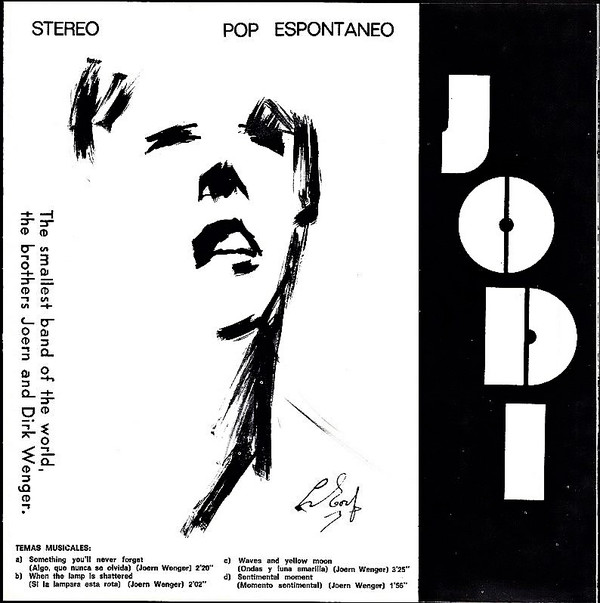


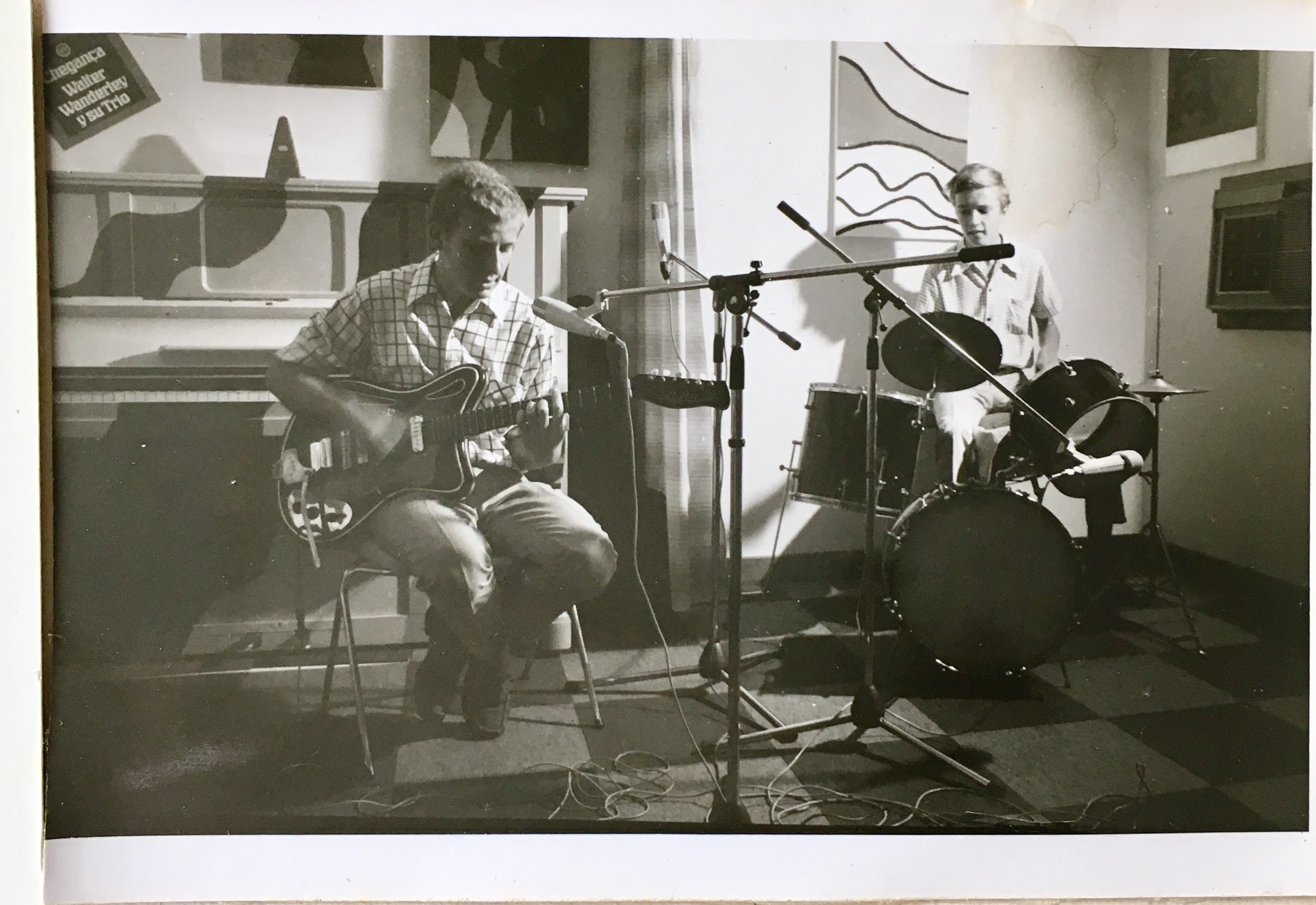
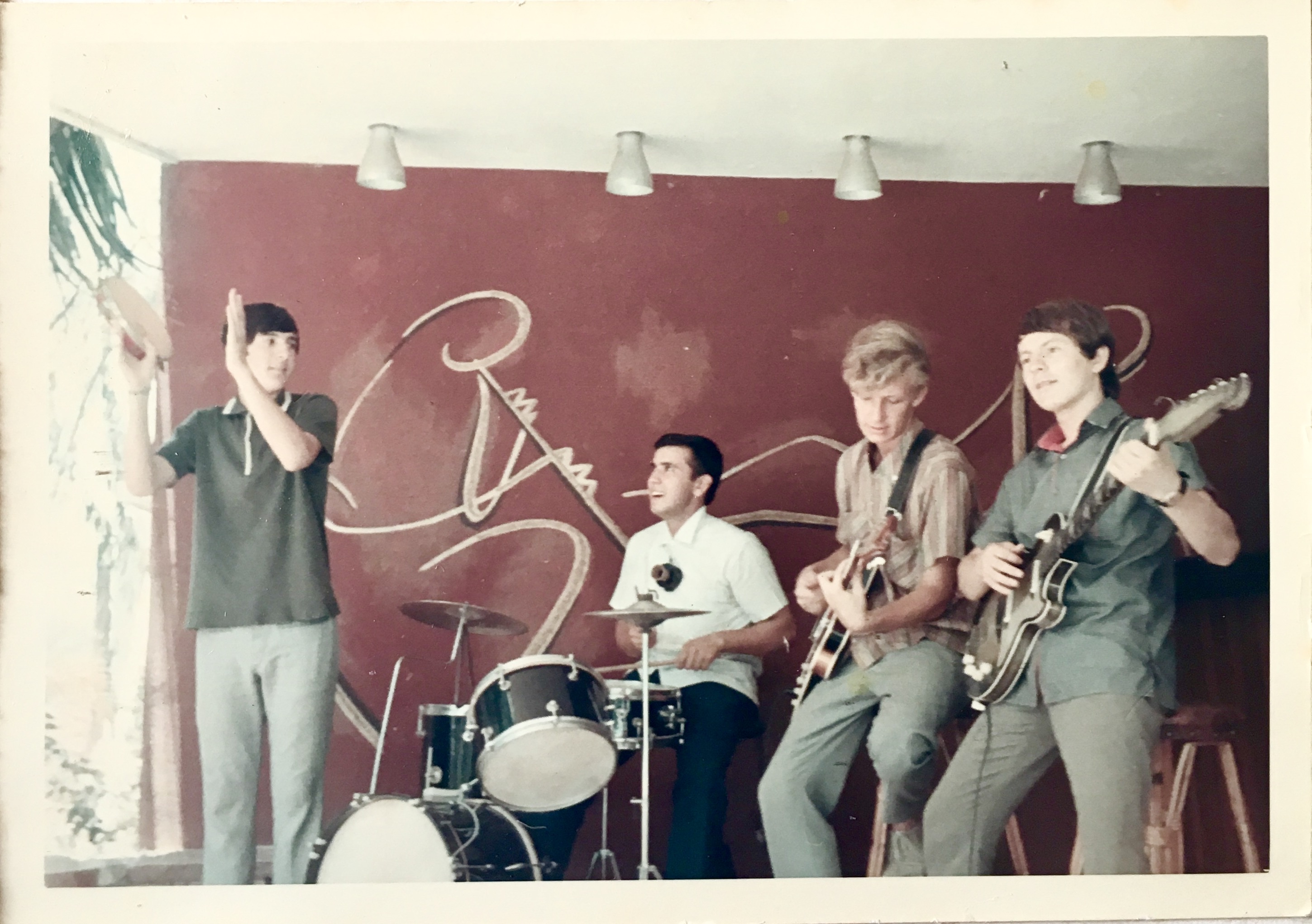


GANDALF-JOURNEY TO AN IMAGINARY LAND.
GANDALF-JOURNEY TO AN IMAGINARY LAND.
Prior to embarking upon a musical career, and becoming one of Austria’s most accomplished, innovative and successful musicians, Gandalf travelled extensively. That’s why the talented multi-instrumentalist never released his debut album Journey To An Imaginary Land until 1980. By then he was twenty-nine. However, soon, Gandalf would make up for lost time. He would release over thirty albums between 1980 and 2016. These albums would be heavily influenced by Gandalf’s life before music, when he travelled extensively.
Gandalf’s travels took him all over the world, including to India. The constant travelling certainly broadened the mind of Gandalf. He also realised that music was a universal language. It was something that people in different countries and continents shared a love of. Gandalf experienced this firsthand.
As he traversed the globe, Gandalf made a living making music. He was the twenty-first Century equivalent of a travelling minstrel. It was during his travels that Gandalf realised that he wanted to make a living as a musician.
This came as no surprise to many that knew Gandalf. He had grownup in the small town of Pressbaum, in Lower Austria. That was where Heinz Strobl was born on the 4th of December 1952. It would be much later when Heinz adopted the Gandalf moniker. Before that, Heinz proved to be a gifted and natural musician as he grew up.
That was despite having no formal musical education. Heinz could pickup an instrument and soon, was playing along to a song on the radio or a record that was playing. Soon, he could play the piano and guitar. By the time he headed off on his travels, Heinz had mastered a number of different instruments.
On his return from what was the modern equivalent of a Grand Tour, Heinz had mastered a myriad of instruments that he had discovered on his travels. This included a sitar, saz, charango, bouzuki and balaphon. They would play an important part in Heinz’s future musical career.
Initially, Heinz began playing with various rock bands during the seventies. During the seventies, progressive rock was at the peak of its popularity. Heinz was a member of a couple of progressive rock bands. This however, was all part of his musical apprenticeship.
As the seventies gave way to the eighties, Heinz decided to reinvent himself, and adopted the moniker Gandalf. This stemmed from Heinz’s love of J. R. R. Tolkien’s Lord Of The Rings. Little did he realise that his new moniker would feature on over thirty albums. This included Gandalf’s debut album Journey To An Imaginary Land. It was released by WEA and recently was rereleased by Esoteric Recordings. Journey To An Imaginary Land showcased Gandalf’s unique and inimitable style.
It began to take shape on Gandalf’s debut album Journey To An Imaginary Land. It was released by WEA in Austria during 198o. This marked the debut of Gandalf, who later described himself as a “painter of musical landscapes.”
This is quite fitting, Having written the six tracks that became Journey To An Imaginary Land, Gandalf began painting these “musical landscapes” using his has extensive musical palette. It included everything from acoustic and electric instruments to the traditional, ethnic instruments that Gandalf had discovered and collected on his travels. Included in Gandalf’s palette, were various synths and samplers. They would play an important part in not just Journey To An Imaginary Land, but Gandalf’s future albums.
With his impressive array of instruments, Gandalf began recording Journey To An Imaginary Land at Beginning Soundstudio in August 1980. He arranged, recorded and produced the album. Gandalf played each and every instrument, including the synths that play such an important part in Journey To An Imaginary Land. Once the album was recorded, Gandalf mixed his debut album. It was completed in October 1980 and then delivered to WEA, who Gandalf was signed to.
WEA scheduled the release of Journey To An Imaginary Land for late in 1980. Before that, critics received a copy of Gandalf’s debut album.
Journey To An Imaginary Land was well received by critics, who were won over by what was hailed an innovative and progressive album. It was a fusion of eclectic musical instruments, influences and genres. When they’re combined by Gandalf, the result is a groundbreaking and genre-melting album, Journey To An Imaginary Land. It features elements of ambient, avant-garde, Berlin School, electronica and folk. When they are combined, they become part of what’s a captivating, mythical and symphonic musical journey that gradually unfolds over forty-five minutes. It’s an ambitious and accomplished album. Especially considering it was Gandalf’s debut album.
Buoyed by the reviews of Journey To An Imaginary Land, Gandalf eagerly awaited the release of his debut album. When Journey To An Imaginary Land was released later in 1980, the album failed to find an audience. Suddenly, Gandalf’s dream of making a living as a professional musician were dashed. However, after the initial disappointment, Gandalf was determined that his sophomore album would be his breakthrough album.
Departure opens Journey To An Imaginary Land. Synths replicate the sound of a rocket taking off, as it heads for a distant galaxy. It soars above the earth below, en route to its eventual destination. Banks of synths are to the fore. They buzz, shimmer and add glacial and ethereal sounds. Meanwhile, drums, bass and guitar augment the synths as the arrangement builds.Together, they add to the cinematic sound as Gandalf takes the listener on a captivating Journey To An Imaginary Land.
Just a a glacial synth and lone acoustic guitar opens Foreign Landscape. So are a prowling bass and searing guitar. It cuts through the arrangement as swell of synths envelop the arrangement. Soon, a buzzing bass synth adds an element of drama as the arrangement builds, before becoming understated. All that remains are washes of synths and that ominous beat. They’re joined by a futuristic synth as elegiac and dramatic sounds arise from the arrangement. Still, the drama continues to grow. Soon, the music veers between dramatic to understated. It became ambient, atmospheric, futuristic, otherworldly and later, dramatic. Seamlessly, sonic explorer Gandalf takes the listener on a musical journey to a Foreign Landscape during this nine minute epic.
As The Peaceful Village unfolds, Gandalf gently strums his guitar, before washes of synths sweep in. Together, they create an ethereal, elegiac and dreamy sound. Gradually though, the arrangement begins to grow and build. Gandalf digs deep into his sonic palette and adds a bass and further layers of synths. They fill out the understated arrangement, and the tempo rises. Already Gandalf is fusing elements of ambient, avant-garde, electronica, rock and world music. Soon, there’s a return to the spartan, elegiac sound. This is just a curveball. The arrangement is transformed as drums pound and join a fleet fingered futuristic synth solo. Still, the washes of ethereal synths remain as the drama builds. It seems that Gandalf has left behind The Peaceful Village and he’s about to embark upon the next part in his genre-melting cinematic Journey To An Imaginary Land.
Gusts of wind blow, as Gandalf embarks upon a March Across The Endless Plain. Already the arrangement is atmospheric, dramatic and understated. Swirling, buzzing, synths are joined by ominous drums and an acoustic guitar. It takes centre-stage. That’s until a searing electric guitar replaces it. Still, there’s an ominous backdrop as Gandalf continues his journey. Then an almost otherworldly synth is added, before the guitar returns. Later, the arrangement is stripped bare, and all that remains are swells of elegiac synths. Gradually, the arrangement rebuilds, with the drums, guitar and synths returning. They conjure up images of sonic adventurer as he embarks upon what’s a lonely journey into the unknown, a March Across The Endless Plain.
As The Fruitful Gardens reveals its delights, an acoustic guitar and glacial synths combine. They’re soon joined by a slow, deliberate elegiac synth. They combine to create a meandering arrangement. Later, a bass synth is added as the arrangement builds and the drama increases. It’s a well trodden path, and one used throughout the album. What differs is the addition of an urgently strummed guitar, that’s soon joined by gliding, glacial synths. They then take centre-stage as the guitar drops out. This adds to an ambient sound. Later, when the bass synth returns, it a futuristic sound to this cinematic soundscape.
Closing Journey To An Imaginary Land is Sunset At The Crystal Lake. A droning elegiac synths takes centre-stage, before chiming sounds can be heard. Soon, the elegiac synths quivers and shivers, before a bass synth is aded. Again, there’s an ambient and cinematic sound to the arrangement. The addition of the bass synths adds a sci-fi sound, and conjures up images of a spaceship en route to Sunset At The Crystal Lake. That is no surprise. Despite the understated arrangements, they’re rich in imagery. Later, as Gandalf nears his destination, the arrangement grows. The bass synth plays a leading role. So does a crystalline synth as the Journey To An Imaginary Land ends Sunset At The Crystal Lake.
Inspired by his travels and musical past, Gandalf spent three months recording Journey To An Imaginary Land. The album was completed in October 1980, and rereleased to critical acclaim in Austria in late1980. Sadly, Journey To An Imaginary Land failed to ind the audience it deserved. This was just a minor blip.
Critical acclaim and commercial success were omnipresent from To Another Horizon onwards. Gandalf went on to release over thirty further albums between 1981 and 2016. Nowadays, Gandalf is regarded as one of Austria’s most accomplished, innovative and successful musicians. Gandalf who is a talented multi-instrumentalist, is also one of Austria’s most prolific artists.
That came as no surprise to those who discovered the delights of Journey To An Imaginary Land upon its release. Here was an album where Gandalf takes the listener on a musical journey. The music is variously atmospheric, dramatic, elegiac, ethereal, futuristic, moody and otherworldly. Alway, there’s a cinematic sound, as sonic explorer and innovator Gandalf, takes the lister on a captivating Journey To An Imaginary Land.

 dereksmusicblog
