THE CHARLATANS-WHAT MIGHT HAVE BEEN.
THE CHARLATANS-WHAT MIGHT HAVE BEEN.
Between 1964 and 1969, The Charlatans’ star shawn bright. During that period, The Charlatans were larger than life mavericks. They dressed like 19th Century outlaws, and embraced the rock ’n’ roll lifestyle. L.S.D. and pot were part of The Charlatans’ diet. It fuelled The Charlatans as they took San Francisco by storm. Commercial success and critical acclaim looked a formality. It wasn’t to be.
By 1969, The Charlatans were no more. They were just the latest band that should’ve enjoyed widespread critical acclaim and commercial success. However, for whatever reason, commercial success passes these bands by. That was the case with The Charlatans whose story begins in the summer 1964.
That’s when The Charlatans were formed in San Francisco, by autoharp player George Hunter, and bassist Richard Olsen. Soon, they were joined by lead guitarist Mike Wilhelm; keyboardist Mike Ferguson and drummer Sam Linde. With the lineup complete, The Charlatans began to practice. Before long the the band realised they had a problem.
The Charlatans had an achilles heel. This was drummer Sam Linde. He just wasn’t good enough for the band moving forward. So a decision was made to replace Sam Linde. His replacement was none other that Dan Hicks. With a new, improved lineup in place, The Charlatans moved forward.
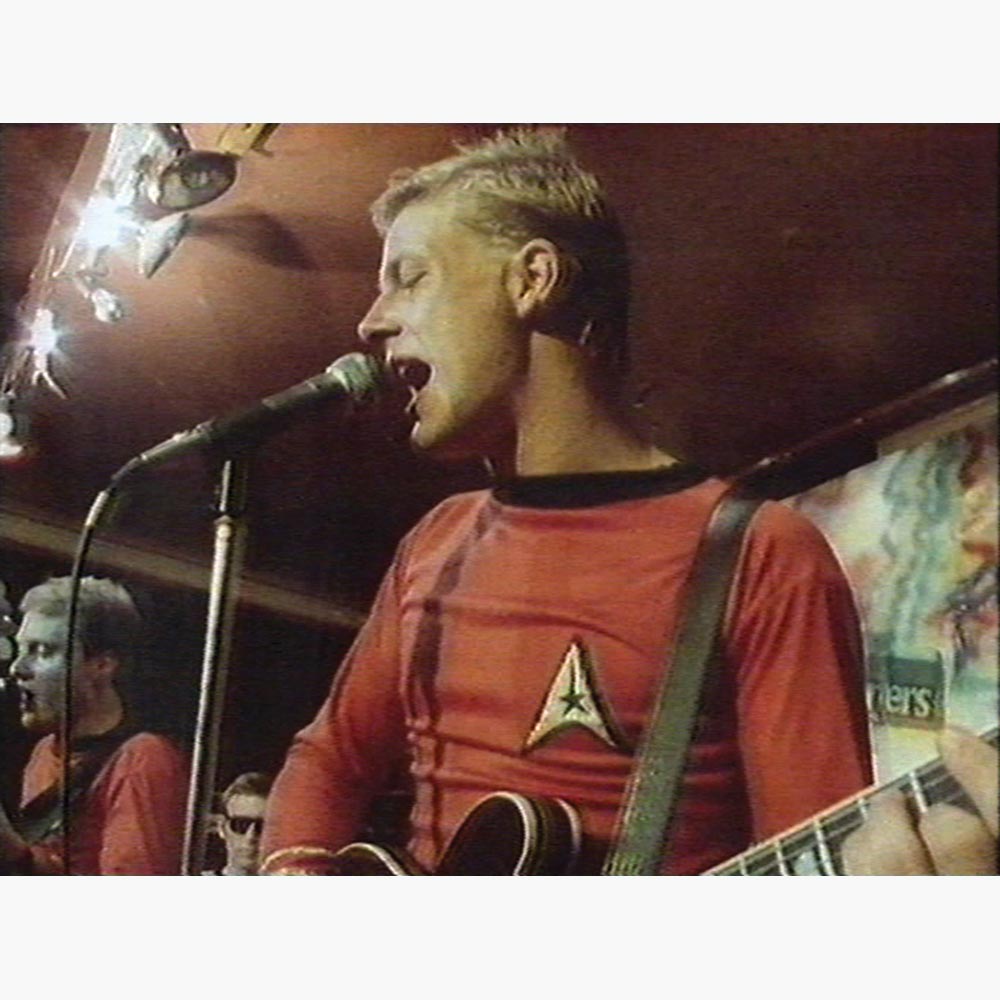
When The Charlatans began to play live, they looked like a cross between 19th Century, wild west outlaws and Victorian dandies. This image wasn’t just thrown together. It was carefully cultivated. Despite this, it soon began to prove popular with the audience at their gigs. They arrived dressed in similar attire. Little did The Charlatans realise that their stage clothes would influence the a generation.
With the hippie counter culture about to blossom, The Charlatans image would go on to influence a generation. They would dress like dandies and outlaws. By then, The Charlatans a familiar face in the San Francisco music scene.
In June 1965, The Charlatans had secured a six week residency at at the Red Dog Saloon in Virginia City, Nevada.. For this residency, two members of The Charlatans had to produce a concert poster. What Mike Ferguson and George Hunter came up with, is regarded as the first psychedelic rock poster. Since then, ordinal copies of The Seed have become prized items among collectors of psychedelia. However, the Red Dog Saloon residency marked a first for The Charlatans.
During the residency, the five members of The Charlatans took L.S.D. for the first time. It wouldn’t be the last. Soon, The Charlatans had a penchant for acid, and were tripping whenever they could. Despite their penchant for acid, The Charlatans weren’t an acid rock band. They were much more than that.
Instead, The Charlatans’ music would veer between folk rock, country rock and psychedelia over the next four years. Their recording career should’ve began in September 1965.
Fresh from their residency at the Red Dog Saloon, The Charlatans had an audition Autumn Records September 1965. They didn’t sign to Tom “Big Daddy” Donahue’s label. He was a local DJ, promoter and producer. However, The Charlatans didn’t sign to Autumn. There were disputes between Tom “Big Daddy” Donahue and The Charlatans over what they would record and money. Soon, though, it became apparent that The Charlatans had had a close escape.
Autumn Records was teetering on the edge of insolvency. Financially, the cupboards were bare. Eventually, Warner Bros. bailed Autumn Records out, and The Charlatans lived to fight another day.
As 1966 dawned, The Charlatans signed to Kama Sutra Records. The Charlatans wasted no time in recording a number of songs. Once the recording sessions were complete, The Charlatans had decided that they wanted to release Codine as their lead single. That executives at Kama Sutra Records said wasn’t going to happen.
They obviously hadn’t listened to Buffy Sainte-Marie’s song about the dangers of drugs. Mistakenly, executives at Kama Sutra Records thought that Codine glorified or encouraged drug taking. So Codine wasn’t releases as a single. It features on he Limit Of The Marvellous. So does The Shadow Knows and 30-20 as The Shadow Knows E.P.
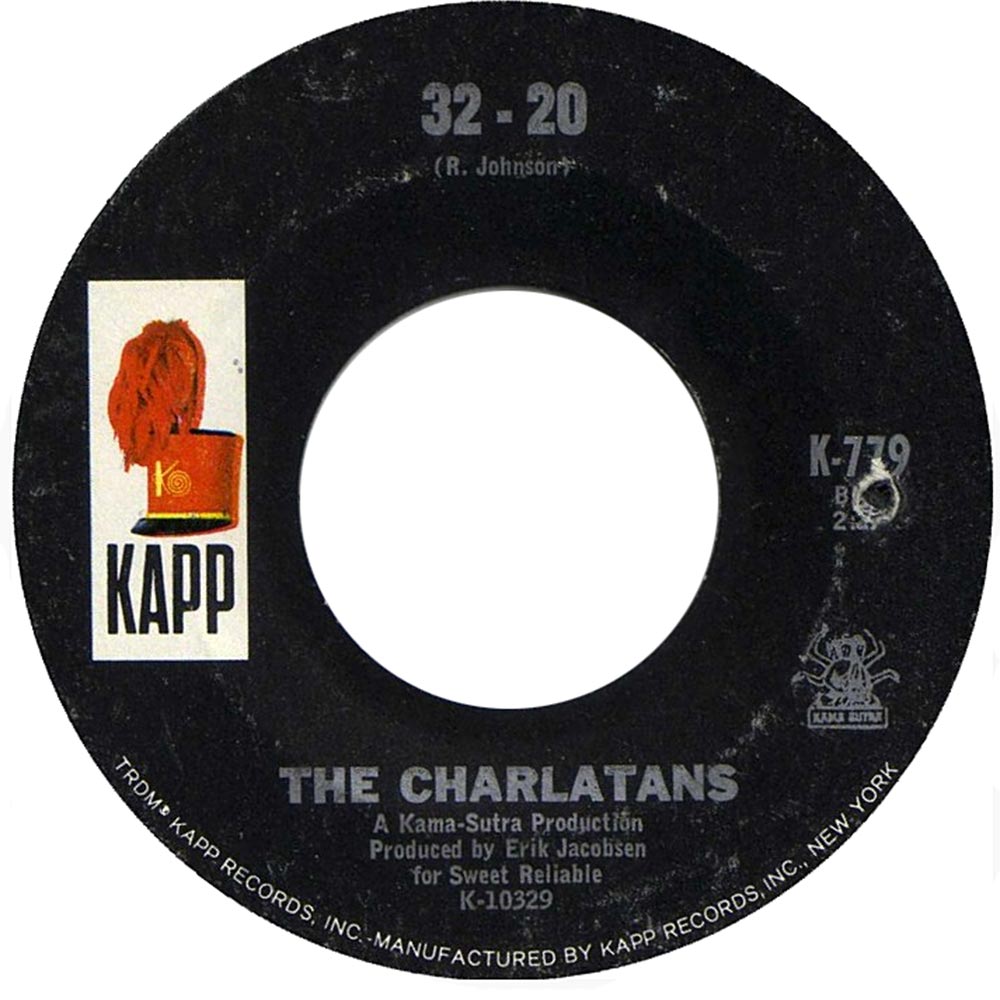
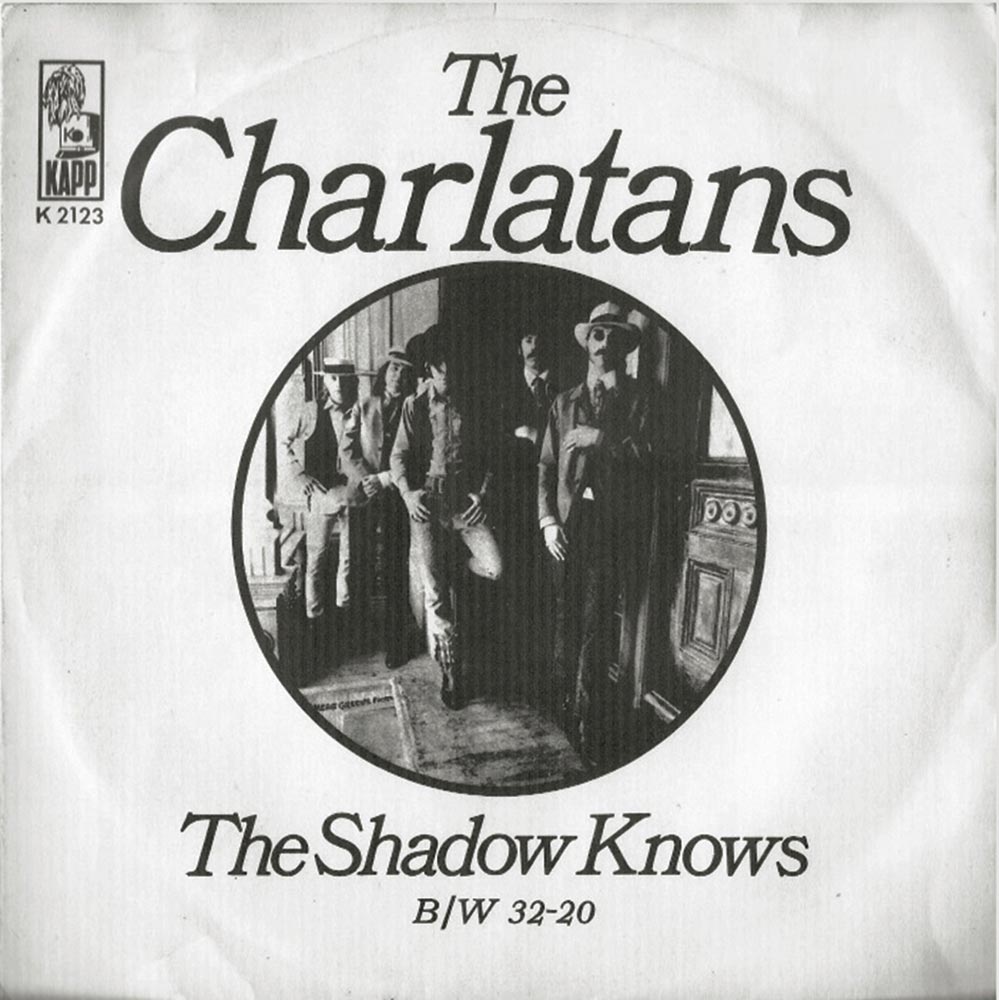
Instead of Codine, The Shadow Knows was chosen as the lead single. On the B-Side was 32-20. When The Shadow Knows was released by Kapp Records in October 1966, the label failed to adequately promote The Charlatans’ debut. Unsurprisingly, The Charlatans debut single failed. This was The Charlatans’ one and only release on Kama Sutra Records. The remainder of the songs weren’t released until 1996, when they resurfaced on the Amazing Charlatans’ album.
Following their departure from Kama Sutra Records, The Charlatans’ lineup changed. Mike Ferguson was sacked in 1967, and replaced by Patrick Gogerty. Not long after this, Dan Hicks vacated The Charlatans’ drum stool. He moved to rhythm guitar and became the lead vocalist, singing many of his own compositions. It was a time of transition for The Charlatans.
During this period, The Charlatans were mostly playing live. They didn’t have a record contract, and watched as many of their contemporaries signed with record companies and enjoyed successful careers. This was galling as The Charlatans had played at the Fillmore Auditorium, California Hall, Avalon Ballroom and Longshoreman’s Hall. They were a popular live draw, and had been since their live debut in 1965. By 1968, The Charlatans must have wondered if a record contract would elude them?
By then, The Charlatans had embraced the rock ’n’ roll lifestyle fully. Their dropped L.S.D. and smoked pot regularly. Many who enjoyed the same diet of drugs would become acid casualties. Not The Charlatans. They were still one of San Francisco’s top live bands. Then in 1968, one of The Charlatans called it a day.
In 1968, Dan Hicks decided to form his own band, Dan Hicks and The Hot Licks. This was always going to happen. It was almost written in the stars. Dan Hicks was a talented singer, songwriter and musician. He seemed destined for greater things. However, this left a huge void in The Charlatans. Filling it wouldn’t be easy.
Worse was to come. Throughout 1968, arguments were commonplace within The Charlatans’ camp. Gradually, the escalated, and reached a breaking point. However, Mike Wilhelm, Richard Olsen and Terry Wilson had a cunning plan.
To all intents and purposes, it looked as if they had decided to disband The Charlatans. However, the cunning plan was that shortly afterwards, they would reform The Charlatans without George Hunter. It was a musical coup d’état. This would ultimately backfire on The Charlatans.
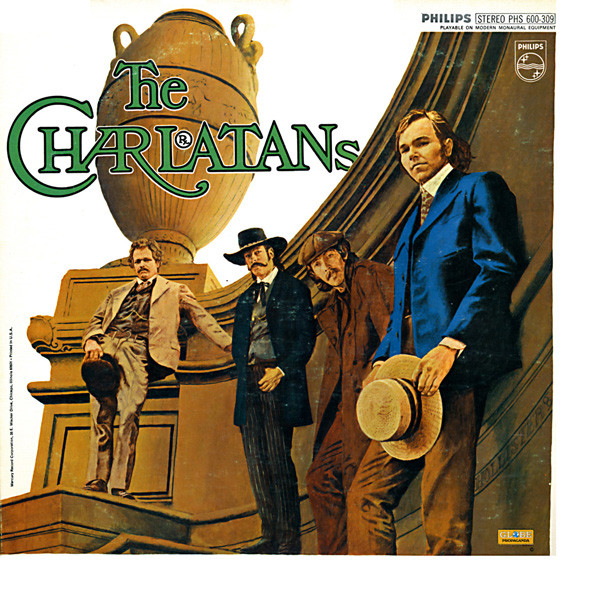
At first, things looked up for The Charlatans. They drafted in a new keyboardist and vocalist, Darrell DeVor. Not long after this, The Charlatans secured a deal with Phillips, and began recording their debut album.
Recording of what became The Charlatans took place at Pacific High Recorders, San Francisco. Dan Healy co-produced what became The Charlatans with the band. Eleven songs were recorded. Five were cover versions and six were written by members of The Charlatans Mike Wilhelm penned Ain’t Got the Time and The Blues Ain’t Nothin’; while Richard Olsen contributed When I Go Sailin’ By. New recruit Darrell DeVore wrote Easy When I’m Dead, Time to Get Straight, Doubtful Waltz and When the Movies Are Over. However, when the album was released, The Charlatans luck changed.
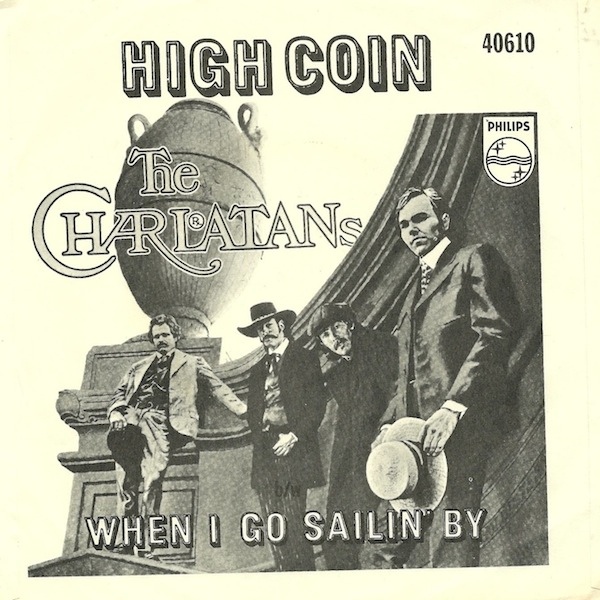
By then, music had changed, and the music on The Charlatans was beginning to sound dated. As a result, The Charlatans failed commercially. So did the the Van Dyke Parks’ penned lead single High Coin. To make matters worse, one of The Charlatans had been busted on a drugs charge.
Drummer Terry Wilson had been caught in possession of marijuana. In 1969, this was a serious offence in America, where the drug laws were quite strict. So when Terry Wilson received a prison sentence he had to leave The Charlatans. This resulted in a u-turn from two members of The Charlatans.
Mike Wilhelm and Richard Olsen agreed to join a reunited lineup of The Charlatans. Mike Ferguson who had previously been sacked returned. So did George Hunter who had been ‘misled’ into thinking that The Charlatans had disbanded in 1968, even was willing to let bygones be bygones. Even Dan Hicks returned to the fold.
While The Charlatans continued as a quintet until the end of 1969, the writing was on the wall. The Charlatans’ music was regarded as outdated, and yesterday’s sound. It was almost inevitable that The Charlatans would split-up at the end of 1969. This was the end of the road for The Charlatans.
Four years earlier, the future looked bright for The Charlatans when they enjoyed their six week residency at Red Dog Saloon. When they returned to San Francisco, The Charlatans looked as if they were going to join the elite of city’s music scene. They had the talent, and their music which veered between country rock to folk rock and psychedelic rock should’ve found a wider audience.
Sadly, The Charlatans struggled to get a record deal. The time they spent at Kama Sutra Records resulted in The Charlatans recording the best music of their five year career.
Little did Kama Sutra Records realise that, they had captured The Charlatans at the peak of their powers. At that moment in time, their music was bang on trend. That was the time to release an album, not 1969.
When The Charlatans released their eponymous debut album for Phillips in 1969, their music hadn’t evolved. Instead, it sound outdated to record buyers who had moved on musically. Sadly, The Charlatans hadn’t. They came late to the party with an album that would’ve fared better if released in 1967. However, by then, the end was neigh for The Charlatans.
Despite getting the classic quintet together, The Charlatans’ story was over by late 1969. Their musical legacy amounted to one album, two singles and material they had recorded for Kama Sutra Records. It was a case of what might have been.
Fiver years earlier, ,usical mavericks The Charlatans, had taken San Francisco by storm. They should’ve found fame and fortune. Sadly, it wasn’t to be. After several breakups, makeups and changes in lineup, The Charlatans, called time on a career that promised much, but ultimately, through bad luck and misfortune, came to little.
THE CHARLATANS-WHAT MIGHT HAVE BEEN.


BEVERLEY MARTYN-WHAT MIGHT HAVE BEEN?
BEVERLEY MARTYN-WHAT MIGHT HAVE BEEN?
It was fifty-one years ago, when Beverley Martyn made her recording debut. Back then, she was a member of The Levee Breakers, a jug band that featured Mac McGann, Johnny Joyce and Beverley Martyn. They released their debut single Babe, I’m Leaving You on Parlophone in 1965. Beverley was just sixteen and already, The Levee Breakers were a regular fixture on the folk circuit. It looked like Beverley Martyn was destined for a great things. However, since 1965, Beverley has only released two solo albums.
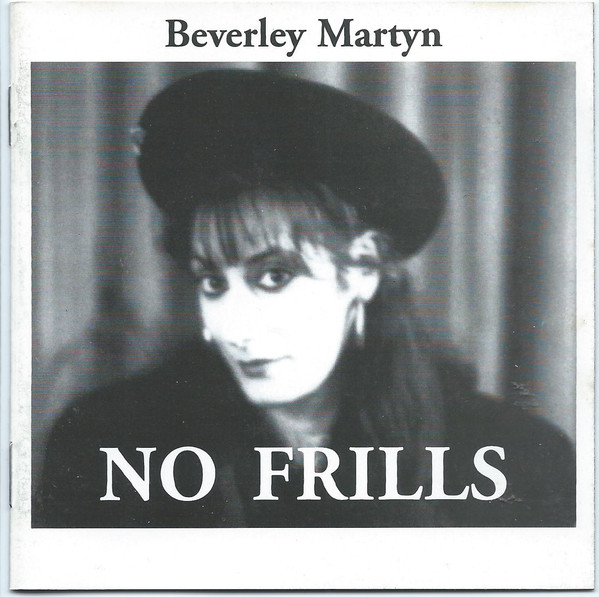
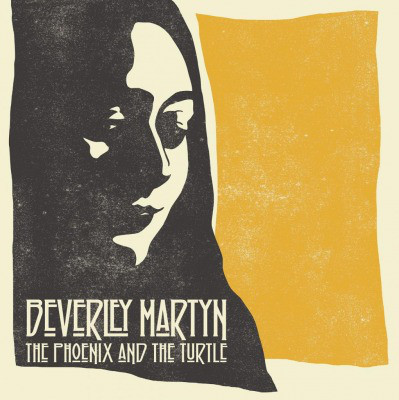
Beverley Martyn somewhat belatedly released her debut album No Frills in 1998. It was sixteen years later, before Beverley Martyn returned with The Phoenix and The Turtle in 2014. Since then, folk’s reluctant star hasn’t returned with the followup to The Phoenix and The Turtle. However, back in the mid-sixties, it looked as if Beverley Martyn was destined for commercial success and critical acclaim.
The Solo Years.
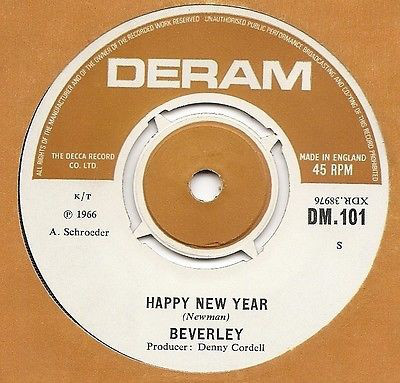
A year after The Levee Breakers released their debut single, Beverley Martyn’s solo career began in 1966, when she signed to the newly formed Deram Records. This was a new imprint of Decca Records. It’s raison d’être was to showcase stereo. The pop and rock music Deram were about to release would feature more space. This would allow record buyers to hear the difference between mono and stereo. So executives at Deram began the search for the what would be Deram’s first single. It had to fit the vision they had for their new label. The single chosen was Beverley Martyn’s debut single Happy New Year. It featured Beverley and what would later be regarded as an all-star band,
Accompanying Beverley were future members of Led Zeppelin John Paul Jones and Jimmy Page. Then there was Nicky Hopkins who had collaborate with The Beatles and Rolling Stones. Drummer Andy White was best known as having played the drums on The Beatles’ Love Me Do. He went on to forge a career as one of the top session musicians. Each of these musicians featured on Beverley Martyn’s debut single.
Released as Beverley, Happy New Year wasn’t the commercial success many people envisaged. Worst was to come. Picking Up The Sunshine, Beverley’s sophomore album was recorded, but not released. However, Beverley’s luck was changing.
It was during this period, Beverley met Bert Jansch. He taught Beverley how to play guitar and encouraged Beverley to write her own songs. Meanwhile, Beverley was relying on other people to write songs for her. Donavon wrote her third single Museum. Denny Cordell who would produce Joe Cocker, The Move, Procul Harum and The Moody Blues was drafted in to produce Museum. Sadly, Museum wasn’t a commercial success. So, Beverley moved to New York with another stalwart of the folk scene Paul Simon.
Paul Simon was a regular on the British folk scene. He’d arrived a few years earlier. Back then, he was an up-and-coming folk singer. Now with Art Garfunkel, he was about to record Bookends. This was Simon and Garfunkel’s fourth album. Recorded in New York, Beverley wrote Fakin’ It. She also sings a line in the song. Things were looking up for Beverley. Especially when she appeared at the 1967 Monterey International Pop Music Festival. However, two years later, Beverley would meet the man she recorded two critically acclaimed albums with, John Martyn.
John Martyn and Beverley Martyn.
He who was already an established name of the British folk circuit. H had already released two solo albums, 1967s London Conversation and 1968s The Tumbler. Beverley and John would release two albums in 1970.
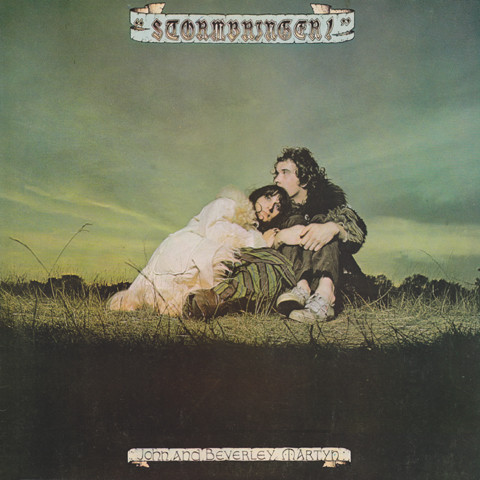
Stormbringer was released in February 1970, with Beverley penning four tracks and John six. Recording of Stormbringer took place in Woodstock, with Joe Boyd producing Stormbringer. Upon its release, Stormbringer wasn’t the success Island Records had hoped for, but nowadays is regarded as a British folk classic. Despite the failure of Stormbringer, John and Beverley entered the studio again.
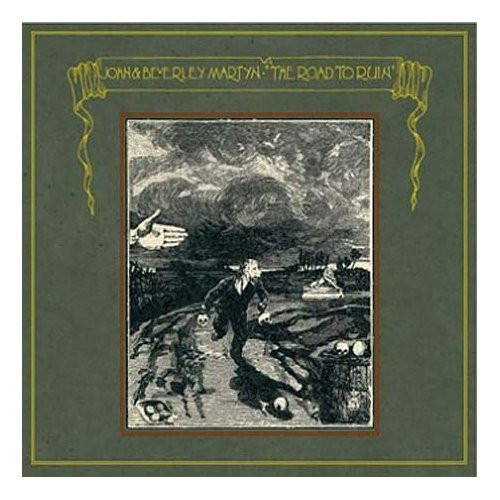
This time it was in London. That’s where The Road To Ruin, the followup to Stormbringer, was recorded. It was released in November 1970, and it features one of Beverley’s finest songs, Primrose Hill. It’s a song about what Beverely calls the “joys of domesticity.” Apart from Primrose Hill, Beverley cowrote three songs with John for The Road To Ruin They had just written and recorded another British folk classic. Sadly, on the release of The Road To Ruin, the album failed commercially. This proved to be the end of John and Beverley’s collaboration.
Island Records decided that with John and Beverley’s two albums failing commercially, it would be best to market John as a solo artist. Right through until John Martyn was recording Grace and Danger in 1980, Beverley divided her time between spending time with her family and working on John’s solo albums.That came to an end in 1980.
John and Beverley Martyn were divorced whilst John was recording Grace and Danger. It proved to be a highly personal album, which featured a cathartic outpouring of emotion from John. After their divorce in 1980, Beverley took a break from music, concentrating on her family.
The Comeback.
By the nineties, Beverley’s family had grownup, and she decided the time was right to make a comeback. This began with Beverley supporting Loudon Wainwright III. Then in 1998, Beverley released her long awaited debut album No Frills. It was released to widespread critical acclaim. Beverly Martyn was back.
Over the next few years, Beverley worked with some of the biggest names in music. This includes Jimmy Page of Led Zeppelin, Levon Helm of The Band, Richard Thompson, Dave Pegg and Sandy Denny of Fairport Convention and British folk guitarist Davy Graham. Then in 2004, a new generation were introduced to Beverley Martin’s music.
Fatboy Slim sampled Primrose Hill from John and Beverley Martin’s 1970 album Stormbringer. It featured on North West Three, a track from his Palookaville album. This introduced Beverley to another generation of music. For many musicians, they’d have rushed out a new album. Not Beverley. That isn’t her style. It wasn’t until 2014 that Beverley releasedThe Phoenix and the Turtle.
At the time of its release, Beverley described The Phoenix and the Turtle “as a very personal album.” It featured songs that she had written throughout her fifty year career. This includes the first song she wrote, Sweet Joy. Reckless Jane was a song Beverley and Nick Drakes started to write. Sadly, they never finished it. Belatedly, Beverley finished the song. When The Levee Breaks and Going To Germany were songs Beverley used to sing with her first group The Levee Breakers. Women And Malt Whiskey was a song based on Beverley’s late husband John Martyn. Along with Potter’s Blues, Nighttime, Mountain Top and Jesse James, these nine tracks became The Phoenix and The Turtle, Beverley Martyn’s sophomore album, which was recorded in Wales and California.
When The Phoenix and The Turtle was released in 2014, it was to the same critical acclaim that accompanied No Frills in 1998. The nine songs were variously beautiful, poignant and wistful. Heartbreak and hurt sits side-by-side pathos and melancholia. Beverley’s lyrics have a cinematic quality and each of the songs to life. As a result, The Phoenix and The Turtle is like a series of musical journeys, where Beverley takes on the role of narrator on a captivating album that was the finest album of Beverley Martyn’s solo career.
Nearly two years have since Beverley Martyn released The Phoenix and The Turtle. Theres no sign of her returning with her third solo album. That is a great pity, as Beverley Martyn is a hugely talented singer-songwrter. Just like a fine wine, Beverley Martin has improved with age. She’s now sixty-nine, and it’s fifty years since Beverley Martyn made her recording debut. That was the start of her career that promised much.
Sadly, Beverley Martyn’s discography amounts to just four albums. However, it’s a case of quality rather than quantity.
Nowadays, the two albums Beverley and John Martyn released, Stormbringer and The Road To Ruin are both regarded as British folk classics. Nearly a generation later, Beverley Martyn released two solo albums No Frills and The Phoenix and the Turtle. They were a reminder of a truly talented singer-songwriter who had the potential to one of the finest British folk singers of her generation. Sadly, that never came to pass, and nowadays, the Beverly Martyn is one of unfullfied potential and what might have been.
BEVERLEY MARTYN-WHAT MIGHT HAVE BEEN?
SYLVIE-EN ANGLAIS…ET EN AMERICAIN.
SYLVIE-EN ANGLAIS…ET EN AMERICAIN.
Sylvie Vartan was just seventeen when she embarked upon a career as a ye-ye singer. Little did she realise that this was the start of a five decade career, where Sylvie would be crowed queen of French pop. By then, she was one of the most successful of the new generation of French singers. This success was set to continue.
Ye-ye’s popularity didn’t last for ever. Towards the late sixties, its popularity began to dwindle. That marked the end of many ye-ye singers’ career. However, unlike many of her contemporaries, Sylvie went on to enjoy a long and successful career.
It’s spanned five decades, and during that period, Sylvie released over fifty albums. This resulted in Sylvie becoming one of the biggest names in French music. Her music also found an audience outside of France. Especially, Sylvie’s English language recordings.
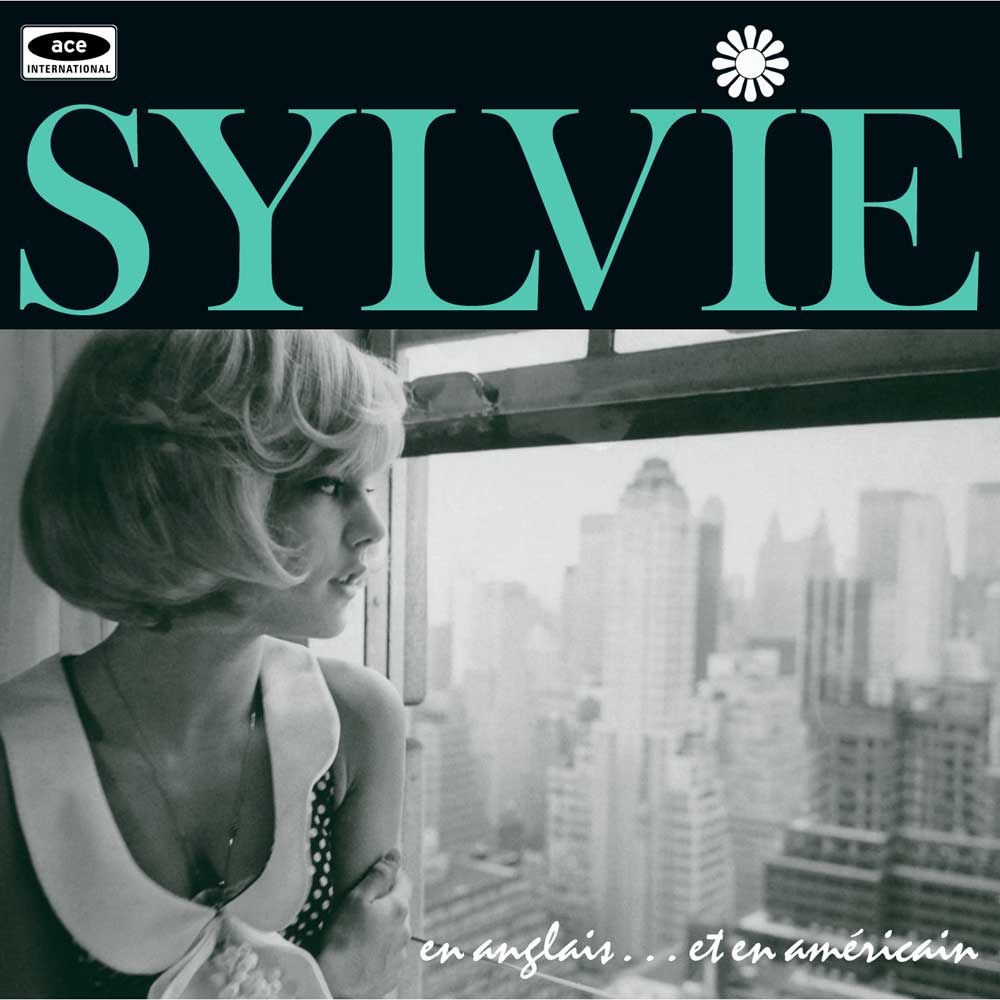
Just like many ye-ye singers, Sylvie recorded in French and English. That was the case throughout the sixties. Nearly all of Sylvie’s English language recordings feature on En Anglais…Et En Americain, which was recently released by Ace International, an imprint of Ace Records. It documents the period between 1962 and 1968, when Sylvie’s star was in the ascendancy and she was one half of France’s golden couple. That was still to come.
Before that Sylvie was born on August the 15th 1944 in Iskretz, Bulgaria. Life was tough for the Vartan family in post war Bulgaria, so they moved back to France in 1952, where her father was born.
In Paris, life was tough for the Vartan family for the first couple of years. The family lived in just one room. Eventually, things began to improve for the Vartan household, where music was omnipresent.
Sylvie’s father George was a composer and pianist. Music was a constant in the Vartan household. Later, Sylvie’s brother who was seven years her senior began to play the French horn. Soon, he switched to the trumpet, and later, joined a jazz group. Meanwhile, Sylvie was struggling to learn French. Soon, though she would master not just French, but English too,
In high school, Sylvie’s language skills improved. She became fluent in French, and later English. Her love of English novels helped her learn English. So did her love of American jazz, which her brother introduced her too. Later, Sylvie started going to the movies and later, discovered jazz and later, rock ’n’ roll. This she preferred to French music. Sylvie’s love of music, movies, art and literature would result in her becoming fluent in English. So much so, that later, she was equally comfortable recording in English and French.
Despite her love of music, Sylvie never contemplated a embarking upon a musical career. That was until her brother Eddie decided to he no longer wanted to study law. Upon leaving university, he got a job working in A&R at Decca Records.
One of the artists Eddie was responsible for was Frankie Jordan. He was going to cover the John D. Loudermilk penned Out Of Gas in French. To make the song work, it needed a female vocalist to provide the counterpoint. Eddie Vartan decided that Sylvie would be perfect for the part.
First he had to persuade his parents to all seventeen year old Sylvie to sing on the Panne D’essence. They eventually agreed, and Sylvie made her recording debut on Panne D’essence. The single was released in late 1961, and became a hit.
The success of the single resulted in Sylvie having to appear on French television. This lead to Sylvie being given the nickname collégienne du twist by the press. Soon, the the twisting schoolgirl would leave the Victor Hugo High School and embarked upon a musical career.
This began when Sylvie signed with RCA Victor, and released the E.P. Quand Le Film Est Triste. It featured a cover of another John D. Loudermilk song Sad Movies (Make Me Cry). The E.P. was released in December 1961, and gave Sylvie her first hit single as a solo artist.
In 1962, the hits kept coming for Sylvie. She enjoyed hits with covers of What’d I Say, The Locomotion and Baby It’s You. There’s an unreleased alternate take of the ballad Baby It’s You. This was one of Sylvie’s earliest English language recordings. It features on En Anglais…Et En Americain, This version of Baby It’s You is a reminder that although Sylvie’s career was in its infancy, she was already a talented vocalist. Her music was about to reach a much wider audience in 1963.
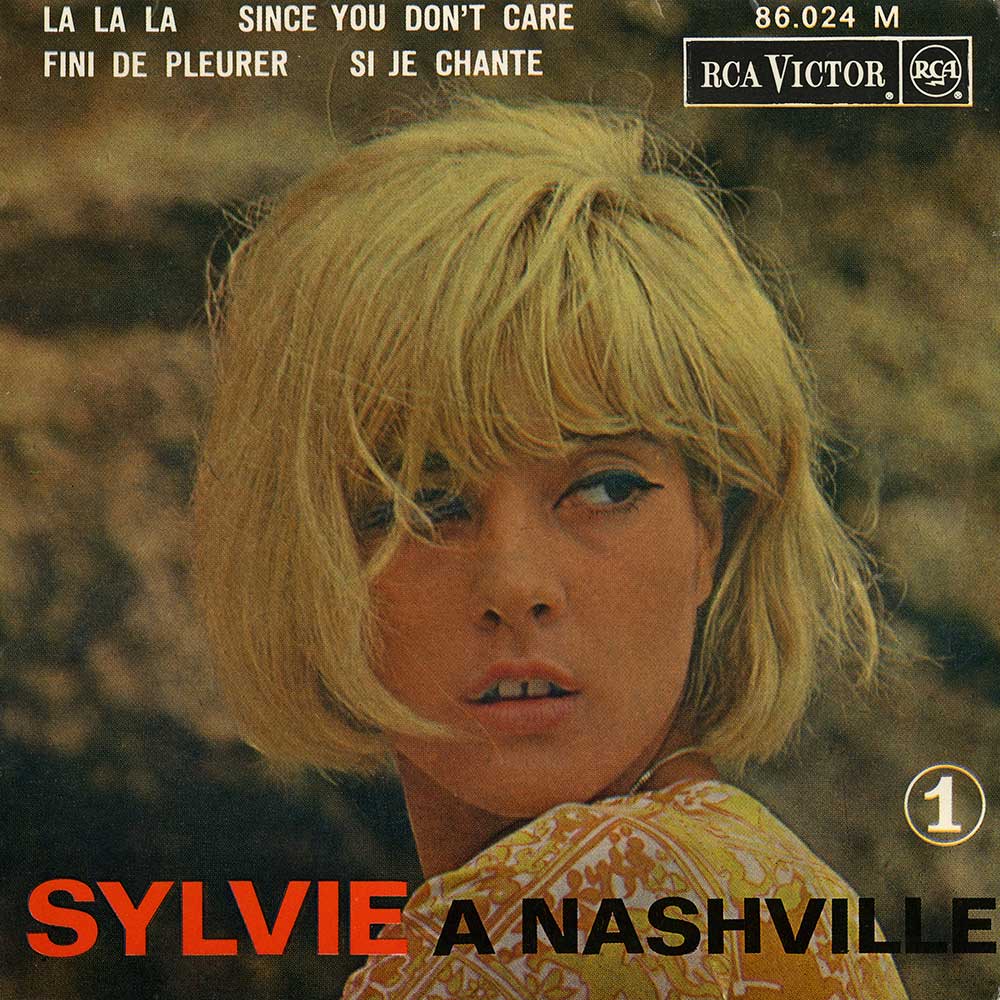
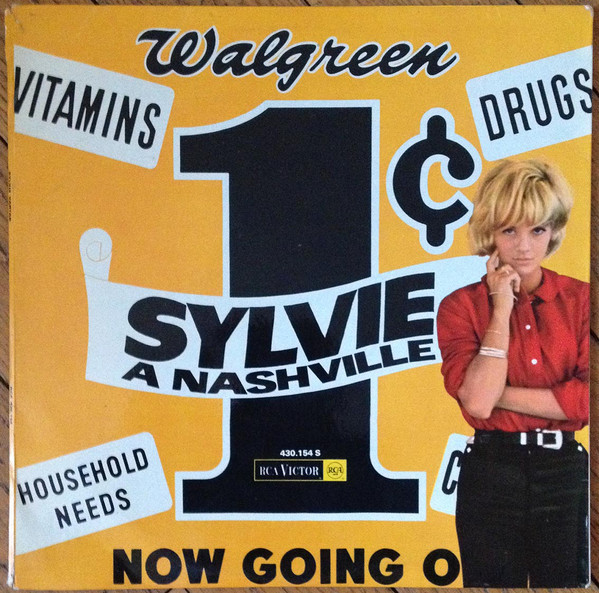
Especially as music began to play an important part in the life of French youths. Pop and rock music grew in popularity. Meanwhile, the ye-ye scene began to explode. So did Sylvie’s popularity. She was well on her way to becoming one of the stars of French music. So much so, that Sylvie travelled to Nashville to an album record with The Jordanaires, A Nashville.
When Sylvie returned to Paris, having recorded A Nashville, an EP was released. This was Sylvie À Nashville 1, which features Since You Don’t Care. Later in 1963, Paul Anka offered a number of songs to Sylvie. One of these, was one of her first English language recordings, (I’m Watching) Every Little Move You Make. It was released later in 1963, and gave Sylvie a hit single. By then, she was part of French music’s golden couple.
Earlier in 1963, Sylvie had met French singer Johnny Hallyday, and the pair embarked upon a high profile relationship. They would later marry two years later in 1965. During that two year period, Sylvie’s career had blossomed.
1964 was a huge year for Sylvie. She shared the bill with The Beatles in Paris. This was a huge step, considering her career only began in 1961. Now she was rubbing shoulders with musical royalty. She was also a prolific artist.
During 1964, Sylvie release her eponymous album Sylvie Vartan. It featured He Understands Me, which Sylvie would release again in 1995. She also released her Sha La La EP, which featured the Paul Anka penned USA. However, one of Sylvie’s most-anticipated releases of 1964 was her A Nashville album in 1964.
Most of the songs on A Nashville had been recorded in French. That is apart from Love Has Laid His Hands On Me, Since You Don’t Care and I Wish You Well. They’re part of an album that features Sylvie maturing as a singer, on an album where she flitted between different styles. Already Sylvie was a versatile and hugely popular singer with an international fan-base. This would continue to grow in 1965.
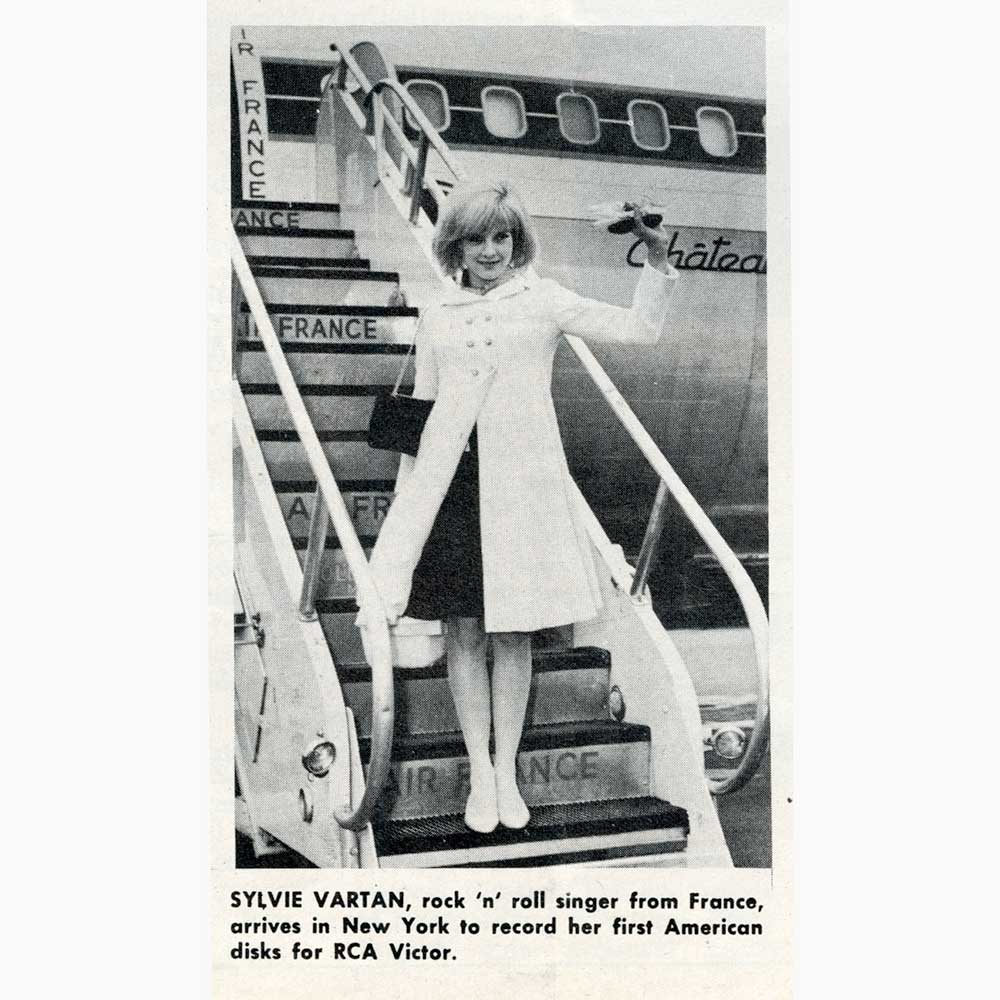
In March 1965, Sylvie released I Made My Choice as a single, with One More Day as the B-Side. This was a high profile release, with the might of RCA Victor getting behind the single. This includes a round of television and radio appearances, including an appearance on Shindig and the Tonight Show in America. RCA Victor were trying to launch Sylvie’s career the lucrative American and Canadian market.
To help do this, Sylvia released the LP Gift Wrapped From Paris in 1965. Some of its highlights were I Can’t Make Him Look At Me, My Boyfriend’s Back, Alley Oop and It’s Not A Game, One More Time and Encore Une Fois. Gift Wrapped From Paris introduced Sylvie to an even wider audience internationally.
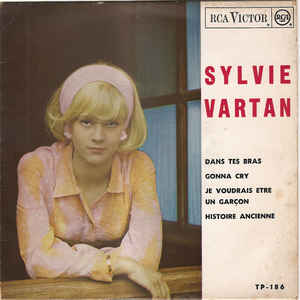
Back home, Sylvia continued to release singles and EP’s throughout 1965. This included the Quand Tu Es Là, which featured an emotive reading of It’s Not A Game. The Dans Tes Bras EP featured Sylvie’s heartfelt cover of Gonna Cry. Sylvie was a prolific and popular artist. She also recorded the ballad Another Heart and delivers a needy vocal Thinking About You. These two tracks from 1965 are welcome additions to En Anglais…Et En Americain compilation. 1965 had been another successful year for Sylvie.
As 1965 drew to a close, was crowned France’s top female pop singer for the third consecutive year. Sylvie now an international star, whose music had made inroads into the European and Japanese markets. However, the biggest change in her life was she had married Johnny Hallyday. The pair were regarded as French music’s golden couple. Soon, two would become three.
Before that, Sylvie’s brother became her manager in March 1966. By then, Sylvie was pregnant and expecting her first child. Still, she continued to release singles and her album Sylvie. Later in 1966, Sylvie gave birth to her son David Hallyday on August 14th 1966. Then as 1966 gave way to 1967, Sylvie’s successful career continued.
Still Sylvie continued to enjoy hit singles in 1967. She also released a new album, Ballade Pour Un Sourire. This was quite different to her earlier ye-ye sound. Sylvie who was still just twenty-three was maturing as a singer, and reinventing herself.
That’s one of the reasons why she has enjoyed such longevity. The success that she had enjoyed since 1961 continued. Sylvie’s singles were hits, and early seven years after her career began, she returned with a new album, Sylvie Vartan. This was the eighth album of her career. However, this was just the start for Sylvie.
Eventually, Sylvie would release around fifty studio and live albums. Her career has spanned five decades. The Ace International compilation En Anglais…Et En Americain features Sylvie’s English language recordings the period between 1962 and 1968. As well as featuring singles and tracks from EP’s and albums, En Anglais…Et En Americain includes a number of previously unreleased bonus tracks.
This includes You Please Me So, Stupid Cupid, Baby It’s You, Whirlpool and Friends In Need Are Friends Indeed. These tracks show different sides to Sylvie. They also document how she evolves and matures as a singer. Especially by 1965
That’s when Sylvie released her single I Made My Choice. This is a beautiful song that’s bristling with emotion. However, two of the best of the previously unreleased tracks are I Heard Somebody Say and Gonna Cry. They were recorded during the sessions for Sylvie’s 1965 album Gift Wrapped From Paris. Both tracks are welcome additions to En Anglais…Et En Americain, which was recently released by Ace International, an imprint of Ace Records.
For the newcomer of Sylvie, then En Anglais…Et En Americain is the perfect introduction to her music. It features twenty-five ylvie’s English language recordings the period between 1962 and 1968. They range from singles, tracks from from EP’s and albums and a number of unreleased tracks. These songs document the first six years of the Sylvie’s long and illustrious career.
During this period, Sylvie was one of French music’s most successful artists. She won the title of the best French pop singer on serval occasions. Sylvie’s music became popular across Europe and as far afield as Japan and North America. Already she was an international artist, who enjoyed commercial success and critical acclaim. That’s no surprise.
Sylvie was a hugely talented and versatile vocalist, who was capable of breathing emotion and meaning into a song. This does throughout the twenty-five songs on En Anglais…Et En Americain. It charts and charts the rise and rise of the Queen of French Pop, Sylvie.
SYLVIE-EN ANGLAIS…ET EN AMERICAIN.

SPACE ROCK: AN INTERSTELLAR TRAVELLER’S GUIDE.
SPACE ROCK: AN INTERSTELLAR TRAVELLER’S GUIDE.
Music like fashion is cyclical. One minute a musical genre is hugely popular, the next it falls from grace. That usually, isn’t the end of the story. There’s usually always a resurgence in popularity of that musical genre at a later date. This has been the case with countless musical genres. Everything Krautrock to progressive rock and psychedelia have made a comeback. So has space rock.
Over the last few years, there’s been a huge resurgence in popularity in space rock. This has fuelled by the formation of new generation of space rock bands. Groups like Sons Of Hippies, Electric Orange, Yuri Gagarin, The Spacelords, Aqua Nebula Oscillator, Magic Wands, Vibration Eater and Nexatras have introduced space rock to a new generation of music fans. After hearing these bands, many music fans have decided to investigate the origins of space rock.
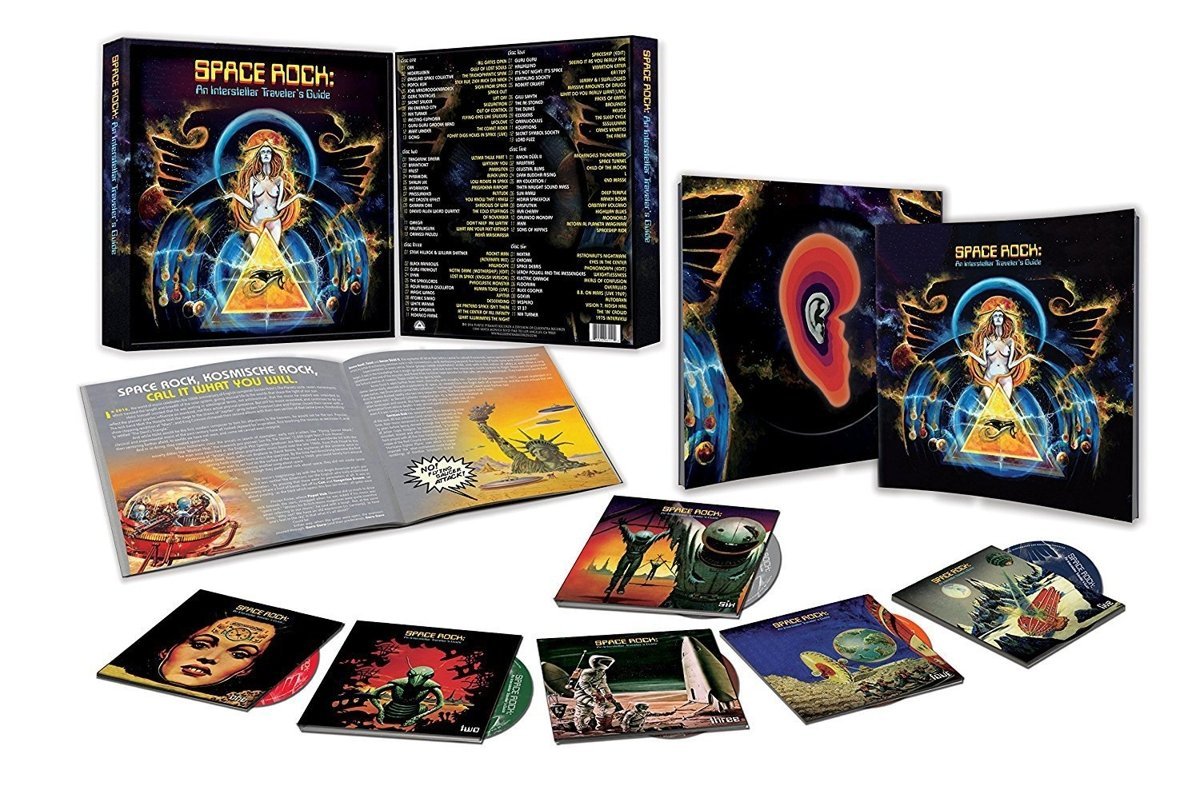
What would’ve made this voyage of discovery much easier, was if newcomers to space rock could buy a box set featuring some of the genre’s finest exponents. Now they can. Just last week, Cleopatra Records released their much anticipated six disc box set Space Rock: An Interstellar Traveler’s Guide. This is the perfect starting place for newcomers to space rock.
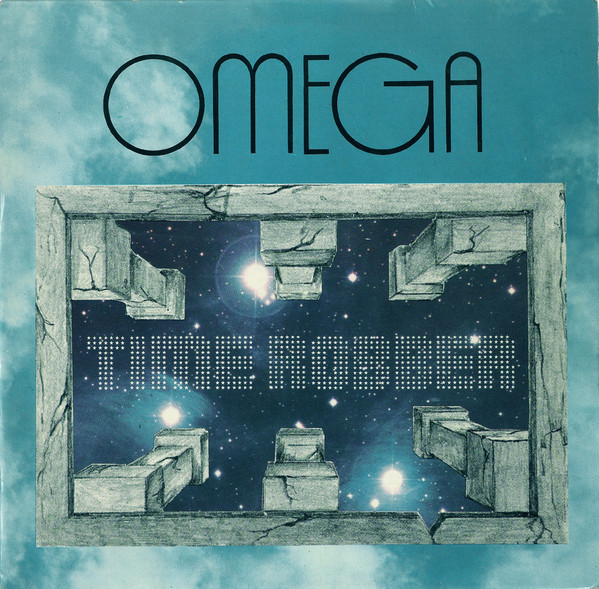
Soon, they will be able to discover the delights of some of the most popular space rock groups. This includes Hawkwind, Gong, Nik Turner, Ozric Tentacles and Omega. They’re joined by Gilli Smith, Daevid Allen Weird Quartet and even William Shatner and Alice Cooper. The new generation of space rockers are also well represented, with Aqua Nebula Oscillator, Electric Orange, Magic Wands, Nexatras, Sons Of Hippies, The Spacelords, Vibration Eater and Yuri Gagarin all making a welcome appearance. So do a number of groups whose space rock credentials are sure to be challenged.
Among the bands on Space Rock: An Interstellar Traveler’s Guide are a number of Krautrock groups. This is a is regarded by some as a catch-all category where a wide variety of groups are brought under the one musical umbrella. Some of these bands aren’t Krautrock bands in the true sense of the word. However, Can, Tangerine Dream, Faust, Popol Vuh, Guru Guru, Amon Düül II and Nektar have all been previously categorised as Krautrock bands. Other music fans may well disagree, and define their music differently, including space rock.
Similarly, some of the music on Space Rock: An Interstellar Traveler’s Guide may be perceived as progressive rock. Others can be defined as avant-garde, Berlin School, electronica, experimental or psychedelia. That may well be the case. Despite that, there’s an element of space rock on each of the seventy-three tracks on Space Rock: An Interstellar Traveler’s Guide.
Disc One.
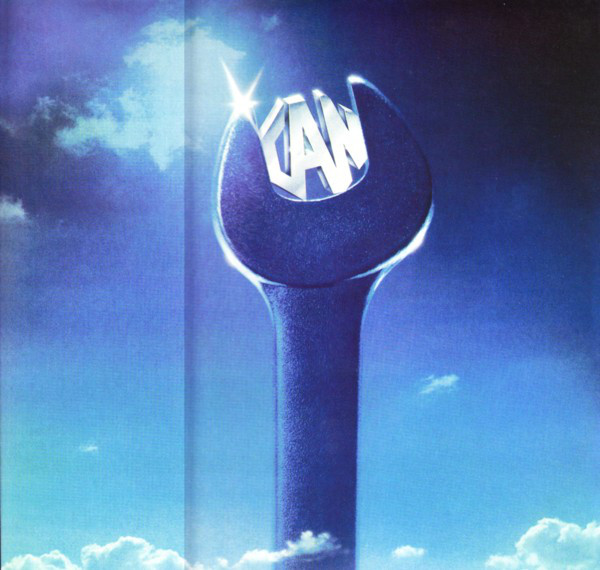
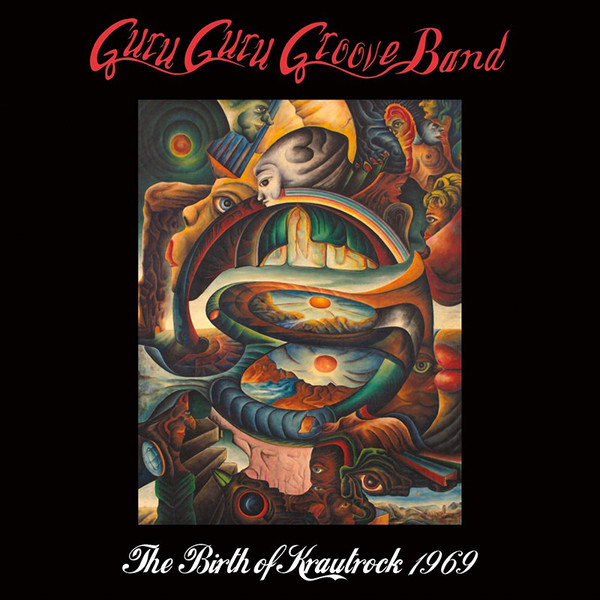
Can are one of several Krautrock bands that feature on disc one of Space Rock: An Interstellar Traveler’s Guide. Their contribution is All Gates Open a track from their 1979 album Inner Space. There’s a definite a space rock influence to this Krautock track. Another of the Krautrocker bands are Popol Vuh. They contribute the dramatic and genre-melting Sateh Auf, Zieh Mich Dir Nach Das Hohelied Salomos. It’s taken from their 1975 album Das Hohelied Salomos. This is one of their finest albums. The other Krautrock band on disc one is Guru Guru Groove Band. They’re an early incarnation of Guru Guru, who are still going strong today. When they recorded UFO Love in 1969, their career was in its infancy. Recently, UFO Love featured on a compilation of the Guru Guru Groove Band’s music, The Birth Of Krautrock 1969. However, there’s much more to disc one that Krautrock.
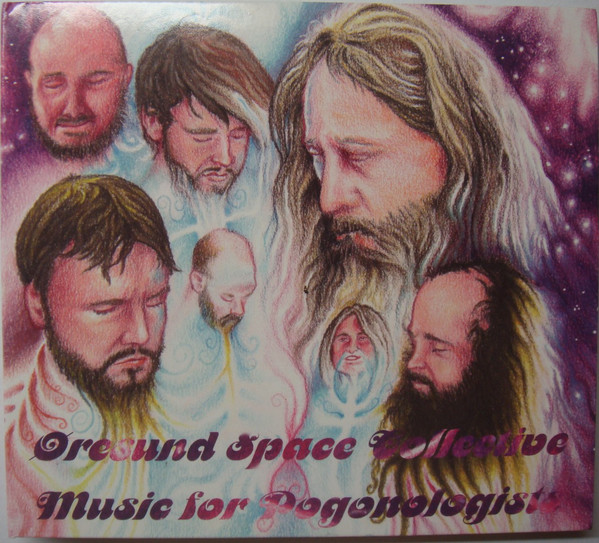
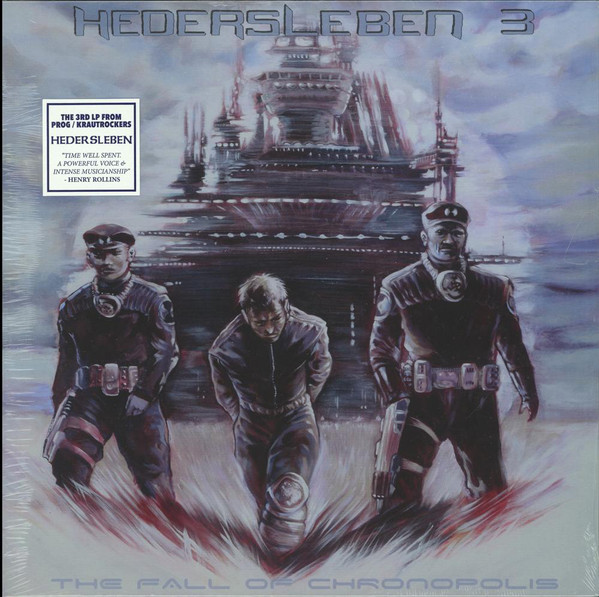
Hedersleben are one of the new breed of space rock bands. Their most recent album was 2015 The Fall Of Chronopolis. It features Gulf Of Lost Souls, which is an introduction to one of the rising stars of space rock. By comparison, Øresund Space Collective have been together since 2004, and are best described as a Scandinavian supergroup. They’re also one of the most prolific space rock bands. The Trichophantic Spire is taken from their 2014 album Music For Pogonologists. It showcases a truly talented band.
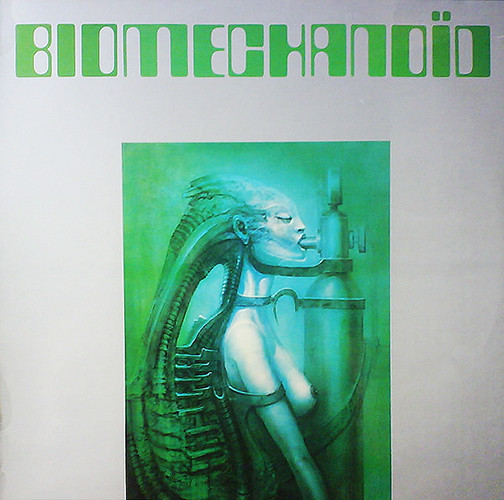
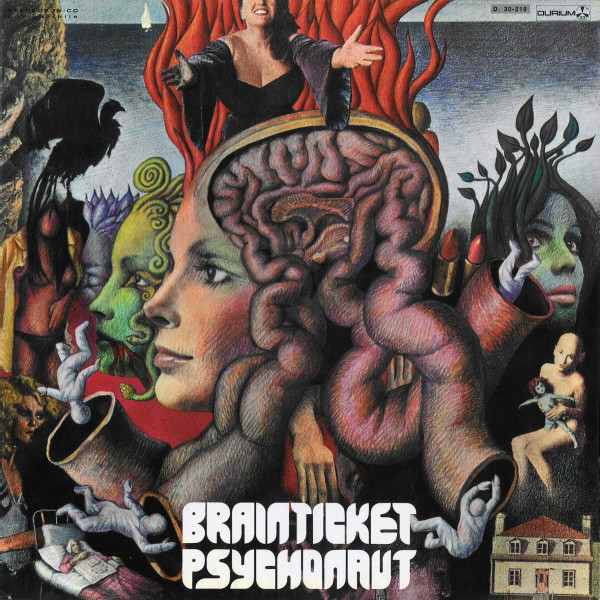
The same can be said of the band Joel Vandroogenbroeck went on to form, Brainticket. Before that, he released a trio of albums in the early seventies. Then in 1980, he released Biomechanoïd, which featured the futuristic Sign From Space. It’s the perfect introduction to this pioneering veteran musician.
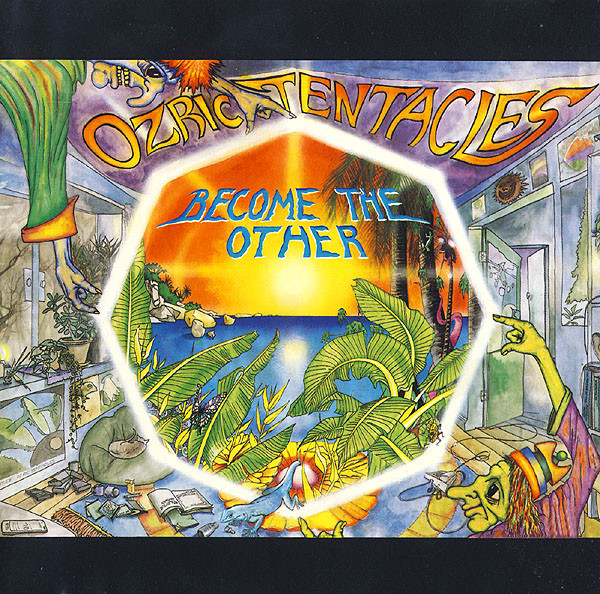
Other veterans on disc one include Ozric Tentacles, who contribute Space Out from their 1995 album Become The Other. Another space rock veteran and pioneer, is Nik Turner, formerly of Hawkwind. He contributes Out Of Control which originally featured on Hawkwind’s Space Ritual album. Gong are another group who pioneered the space rock sound, and in 1972 recorded the live version of Fohat Digs Holes In Space that closes disc one of Space Rock: An Interstellar Traveler’s Guide.
Disc Two.
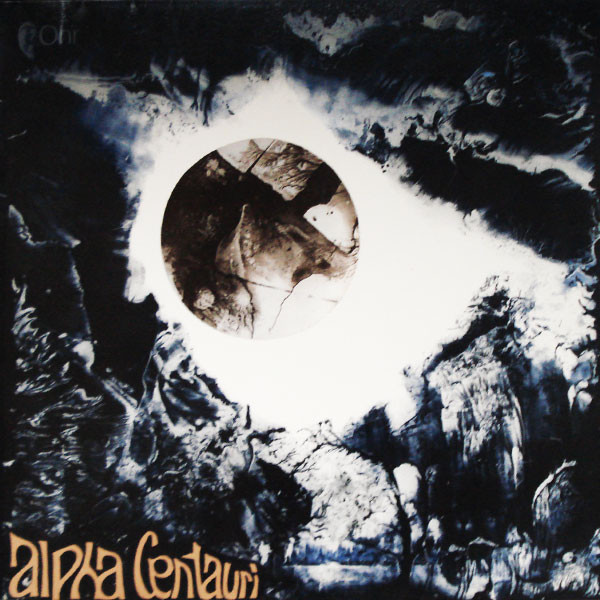
Just like disc one, disc two of pace Rock: An Interstellar Traveler’s Guide features thirteen tracks. Again, several bands who many music fans would classify as space rock bands. This includes Tangerine Dream, who released their sophomore album Alpha Centauri in 1971. It features Ultima Thule Part 1, which has a space rock influence. However, Tangerine Dream were musical chameleons, whose music constantly evolved. The same can be said of musical pioneers Faust who contribute Parasiten. Their music constantly evolved and they as a result, they continued to create innovative music.
They weren’t alone. Brainticket were based in Switzerland and featured Belgium born multi-instrumentalist Joel Vandroogenbroeck. They released a total of seven studio album. Their 1971 eponymous debut album featured Watchin’ You. It’s part of a genre-melting album, where Krautrock, psychedelia and space rock shine through in this lysergic classic. Groups like Brainticket would inspire the new generation of space rock bands.
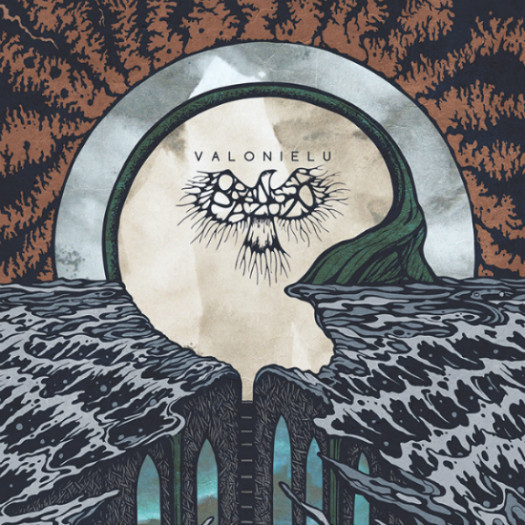
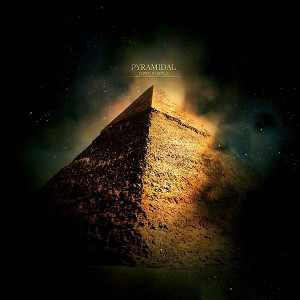
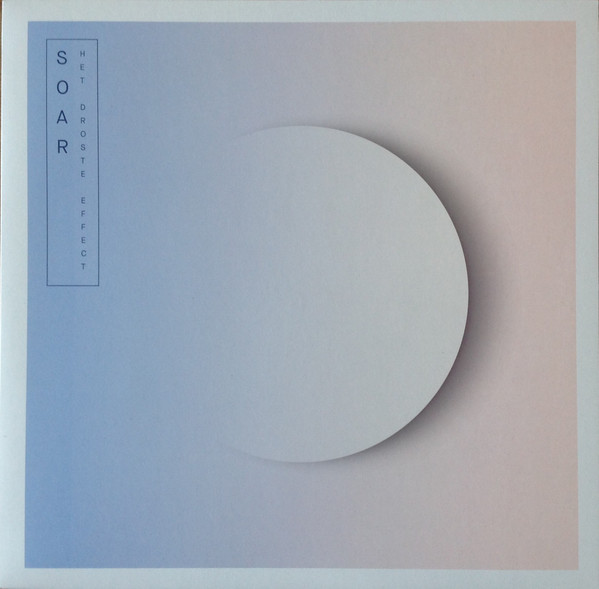
This includes Spanish space rockers, Pyramidal who were formed in 2009. They’ve obviously been influenced by classic seventies, space rock.l That’s apparent on their contribution, Black Land, the title-track from their 2011 eponymous debut album. Het Droste Effect are another relatively new band. They’re also one of the best. You Know That I Knew a track from their 2015 sophomore album Soar, showcases a truly talented band. It’s similar case with Oranssi Pazuzu, who released their third album Valonielu in 2013. It features Reika Maisemassa, where Oranssi Pazuzu combine elements of black metal, psychedelia and space rock. In doing so, they pay homage to some of the veterans on disc two.
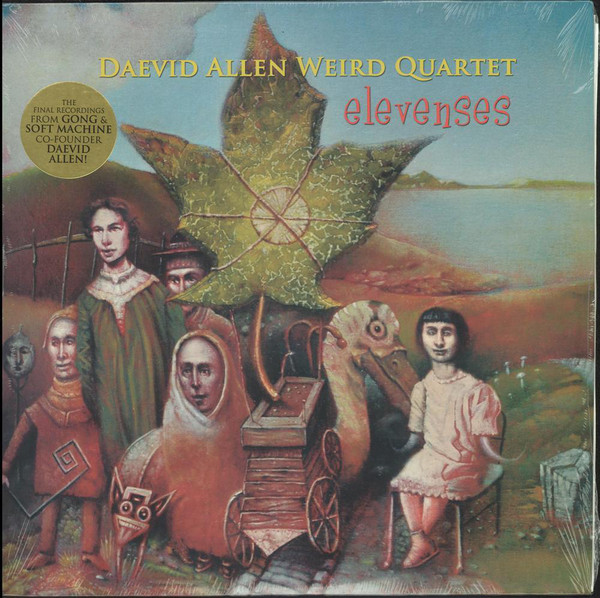
This includes Daevid Allen who cofounded Gong. This time he’s with the Daevid Allen Weird Quartet, and contributes The Cold Stuffings Of November. This is a track from their 2016 debut album Elevenses. However, it’s Omega who are the true veterans of disc two. They were formed in 1962, released their Time Robber album in 1976. It featured Don’t Keep Me Waitin’ seven minutes where psychedelia and progressive rock become one seamlessly. In doing so, they create one of the highlights of disc two.
Disc Three.
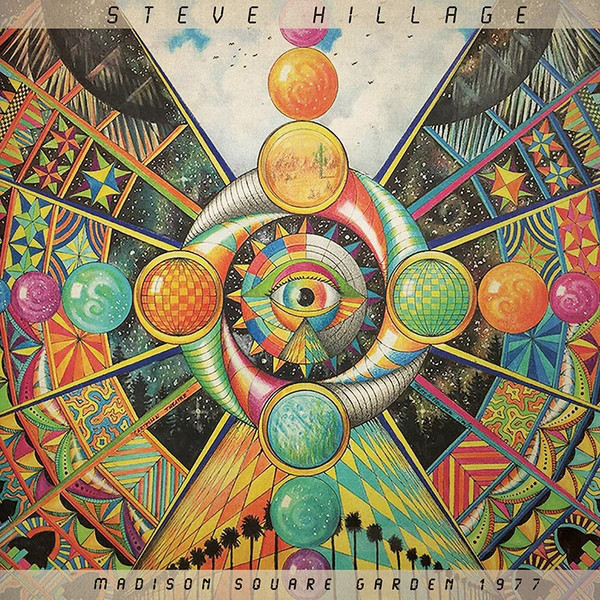
There’s just eleven slices of space rock on disc three of Space Rock: An Interstellar Traveler’s Guide. Again, familiar faces rub shoulders with new names. Two of the familiar faces are Steve Hillage and William Shatner. They covered Rocket Man on Steve Hillage’s Madison Square Garden 1977. When the album was released in 2015, Rocket Man was one of the bonus tracks. It’ll be of interest to Trekkies everywhere.
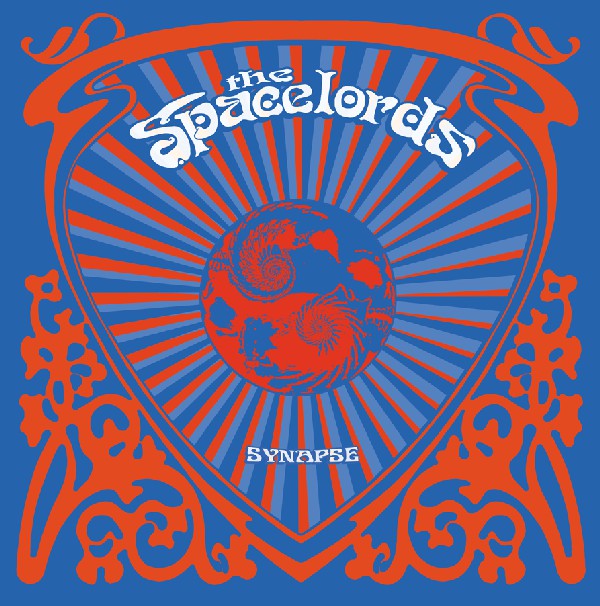
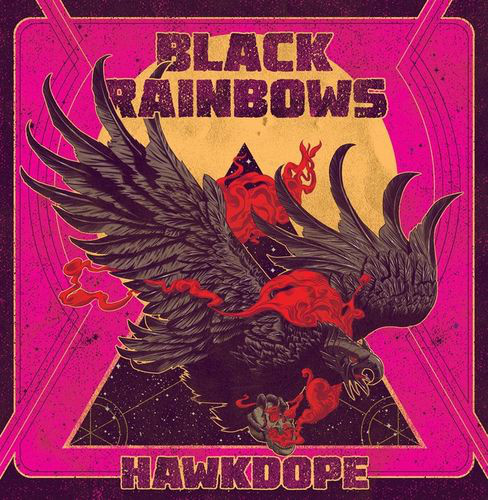
So will Hawkdope a track from Italian psych fuzz rockers Black Rainbows. It was the title-track of their fourth album, which was released in 2015. They’re another of the new generations of space rockers. So are The Spacelords, a German band who released their third studio album Synapse in 2014. One of its highlights is Pyroclastic Monster, an eleven minute epic that showcases their considerable skills. They’re not alone.
Since Aqua Nebula Oscillator were formed in 2000, their music has been impossible to define. They combine disparate musical genres and draw inspiration from a variety of cultures, literature. films and art. The live live version of Human Toad on disc four was recorded in 2014, a year after the track made its debut on their third album Spiritus Mundi.
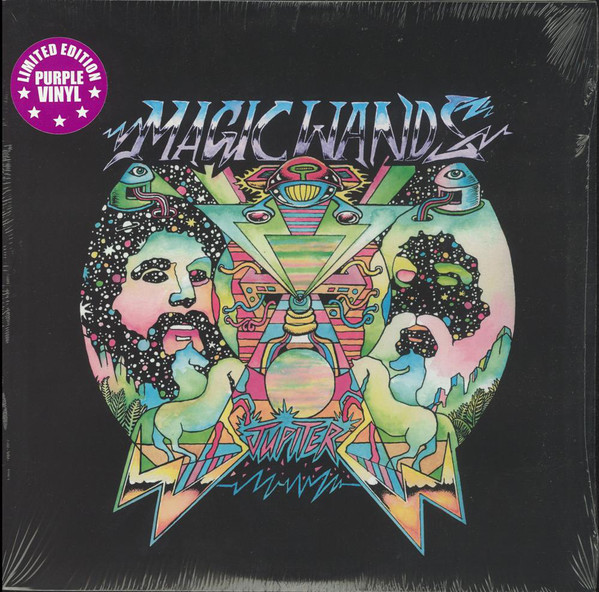
Another of the new wave of space rockers are Magic Wands, who released their sophomore album Jupiter in 2013. The title-track features on disc four, and features Magic Wands at their hard rocking best, as they fusea variety of musical genres. So do Yuri Gagarin who were formed in 2012. They’re without doubt, one of the finest of the new space bands. Proof of that is At The Center Of All Infinity, the title-track of their 2015 album. It’s a future space rock classic. However, the artist that closes disc three is anther of space rock’s rising stars.
Forty-two year old Federico Farnè has been a member of bands all his adult life. However, he only started writing music in 2010. Since then, he’s been a member of various bands and has released albums under a variety of monikers. Federico is multitalented, and wrote, produced and played all the instruments on rocky, futuristic What Illuminates The Night. It closes disc three and is one the highlights.
Disc Four.
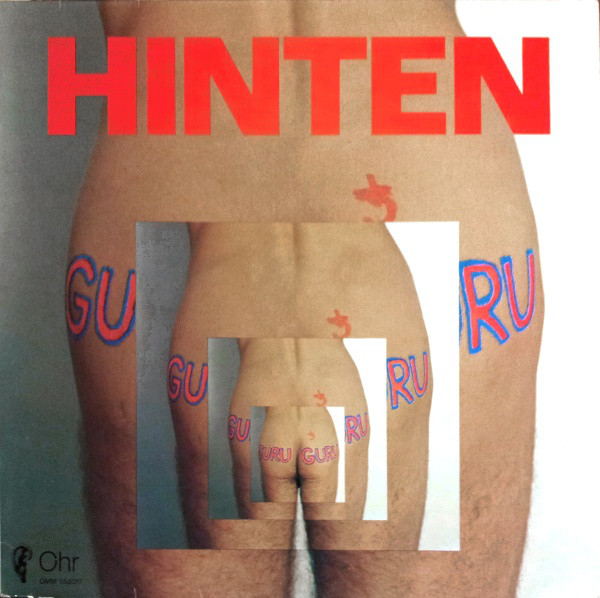
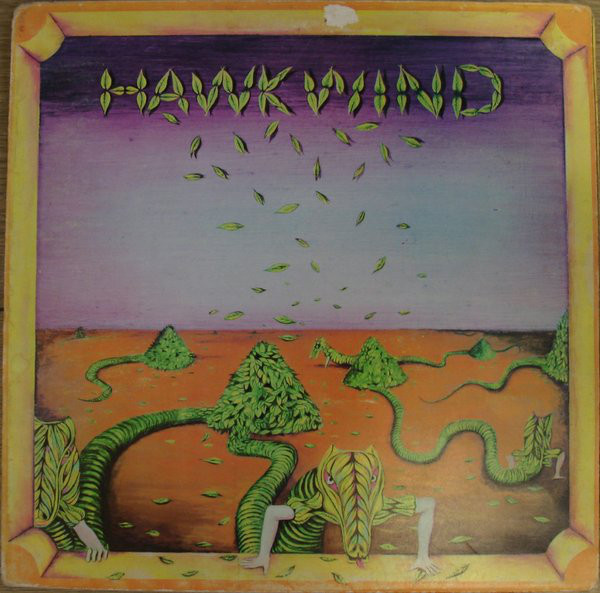
Disc four of Space Rock: An Interstellar Traveler’s Guide features another thirteen slices of space rock. This includes Spaceship, from Krautrock band Guru Guru’s 1971 sophomore album Hinten. This is one of their finest albums, and is the perfect introduction to one of the most underrated Krautrock bands. By comparison, Hawkwind became one of biggest space rock bands in history. Their 1971 debut album Hawkwind featured Seeing It As You Really Are. It was part of an album launched the career of Hawkwind. They featured writer, poet and lyricist Robert Calvert. He also enjoyed a solo career, and contributes Lemmy and I Swallowed Massive Amounts Of Drugs to disc four. Meanwhile, Gong’s space whisperer Gilli Smyth contributes a live version of What Do You Really Want. It was recorded at the Roundhouse, London in 1971. That was way before many of the members of the new space rock bands were born.
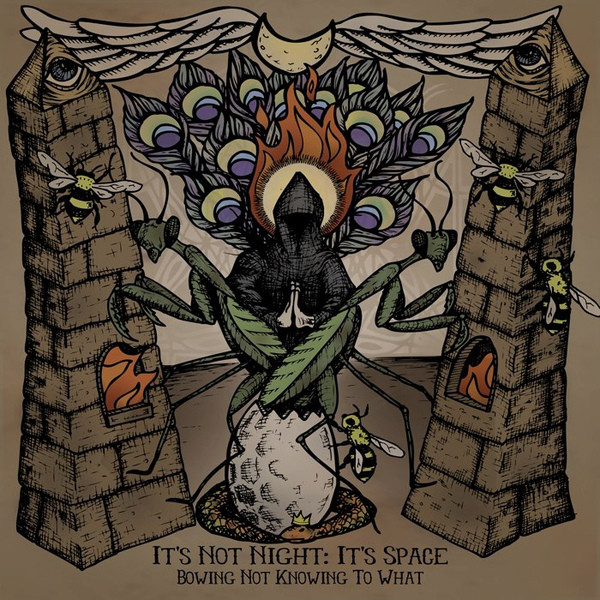
Psychedelic rockers It‘S Not Night- It‘s Space were formed in New York in 2010. Two years later, they released their debut album Bowing Not Knowing To What in 2012. It featured Vibration Eater, which heads in the direction of space rock and showcases a truly talented band. They’re not alone. There are a number of talented space rock bands are based in Europe.
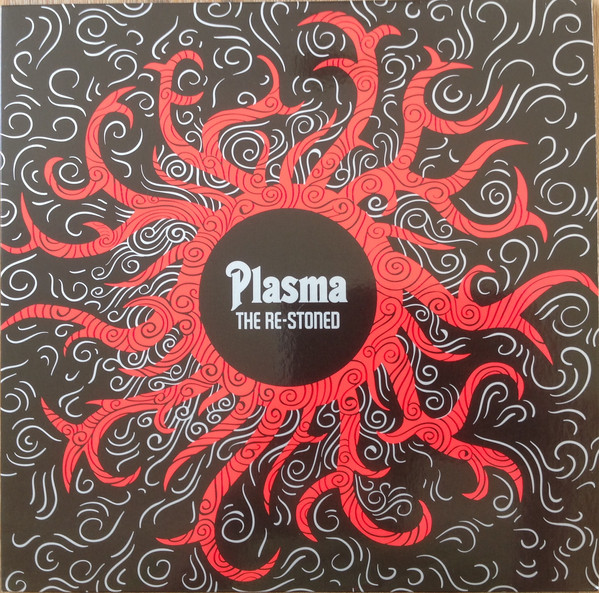
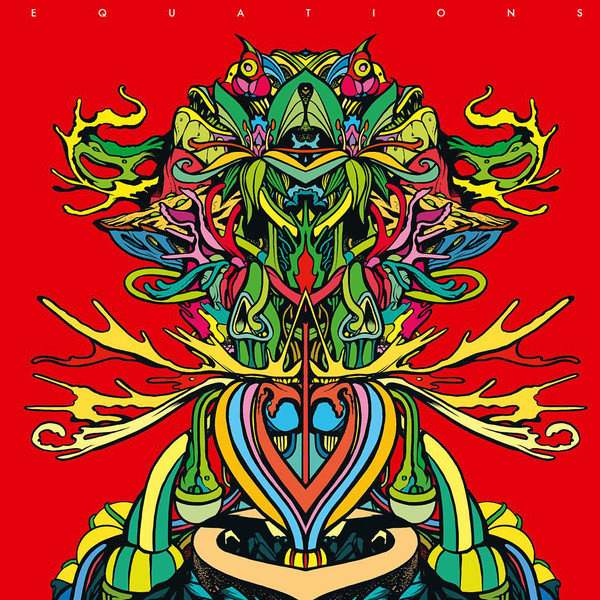
First stop, is the North West England where the Earthling Society were formed in 2004. Since then, this talents band have been prolific, and have released twelve albums. Their 2009 album Sci-Fi Hi-Fi featured EA1729, is akin to a homage to Can. It’s an inventive and genre-melting track that’s sure to introduce Earthling Society to a whole new audience. Next stop is Moscow, where The Re-Stoned were formed in 2008. By 2012, they were ready to release their fourth album Plasma. It features Faces Of Earth, a hard rocking eleven minute epic. For newcomers to The Re-Stoned, this is a perfect introduction to their music. The final leg of this pan European journey takes the listener to Portugal, which is home to the Equations. In 2015, they released their sophomore album Hightower, which featured Sssuuunnn. This fusion of Krautrock, psychedelia and space rock proves a heady and delicious brew from this new and exciting band, Equations.
Disc Five.
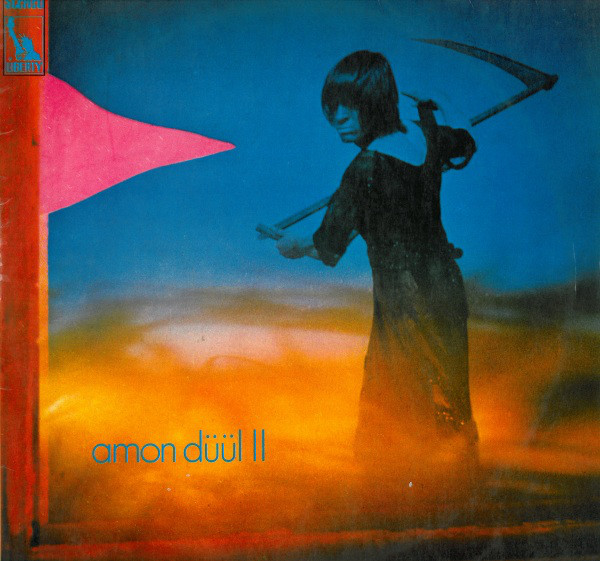
Disc five has a stellar lineup of space rockers. This includes one of the most innovative and influential Krautrock bands, Amon Düül II. They released their sophomore album Yeti in 1970, and it featured Archangels Thunderbird. It’s a tantalising taste of one of the founding fathers of Krautrock in full flight. Since releasing Yet, Amon Düül II have influenced countless bands. This could includes some of the new bands on disc five of Space Rock: An Interstellar Traveler’s Guide.
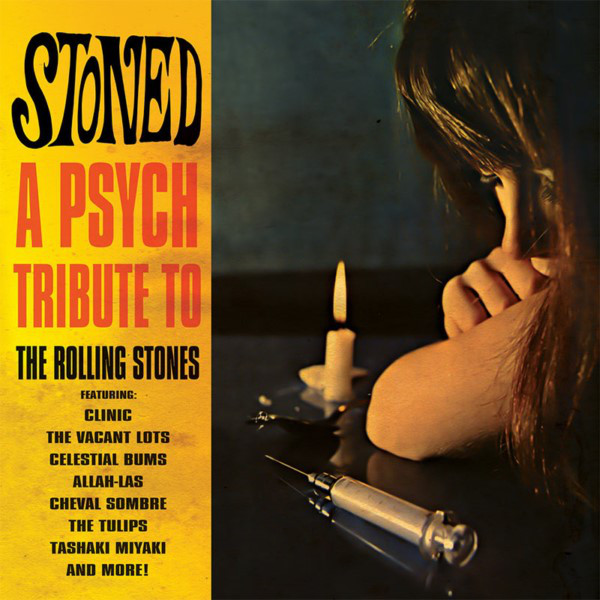
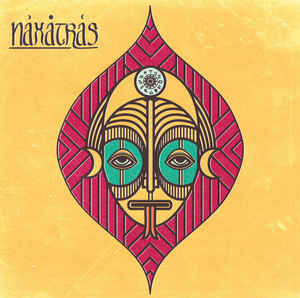
Naxatra are one of this new wave of space rock bands. They were founded in Greece in 2012, and three years later, released their debut album Naxatras in 2015. It features Space Tunnel, where stoner rock meets psychedelia to create a memorable slice of space rock. Equally memorable is Celestial Bums’ lysergic cover of the Rolling Stones’ Child Of The Moon, which featured on the 2015 Cleopatra Records compilation Stoned-A Psych Tribute To The Rolling Stones.
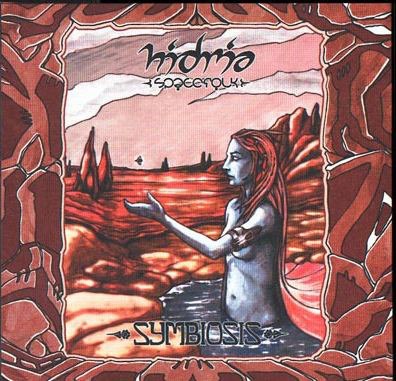
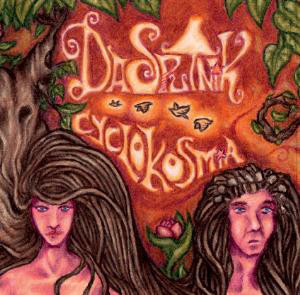
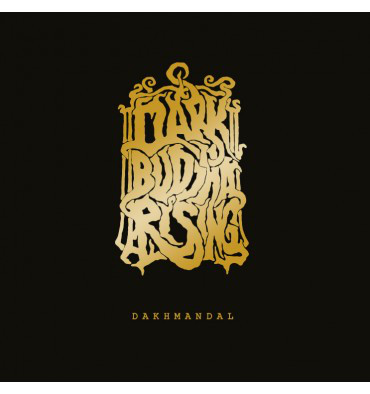
There are a trio of Finnish space rock bands on disc five. Dark Buddha Rising is the first. Their recording career began in 2007. Six years later in 2013, they released their fifth album Dakhmandal. It includes L, where Dark Buddha Rising successfully fuse post rock, doom metal and psychedelia. Fellow countrymen Hidria Spacefolk released their eponymous debut album in 2001. A year later, they returned with their sophomore album Symbiosis in 2002. One of the tracks from the album, Kaneh Bosm epitomises everything that’s good about space rock, and indeed, Hidria Spacefolk. The last of Finnish space rockers, Dasputnik were formed in 2006, and take a differnt approach to music. They released their sophomore album, Cyclokosmia in 2011. It features Orbitary Volcano, which has a progressive sound, as Dasputnik combine fusion, with psychedelia and space rock to create one of the highlights of disc four.
Another of the highlights of disc four is MKM’s Retorn Al Planeta Imaginari. It’s a track from their 2014 album Ad Astra Per Aspera. A myriad of disparate influences, including art rock, expeiremtal, electronica, Krautrock and progressive rock combine to create Retorn Al Planeta Imaginari. The result is a compelling soundscape closes disc four, and is sure to make the listener want to here more from MKM.
Disc Six.
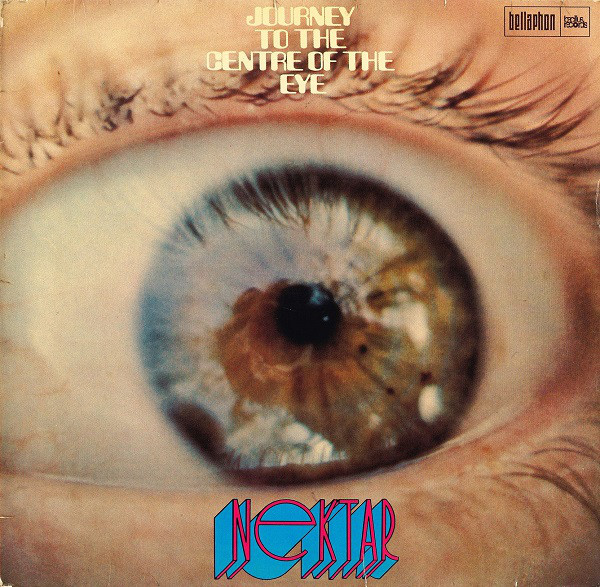
Eleven tracks feature Nektar on Space Rock: An Interstellar Traveler’s Guide. The first comes courtesy of Nektar, a British band who were formed in Hamburg, Germany. Nektar would be heavily influenced by Krautrock. Proof of that is Astronaut’s Nightmare, a track from their 1972 debut album Journey To The Centre Of The Eye. It’s a fusion of psychedelia, progressive rock and Krautrock that launched the career of Nektar.
Space Debris were formed in Germany in the early nineties. Since then, they’re released twelve albums. These albums have been ispired by psychedelia and Krautrock. That’s the case with their 2014 albim Phonomorphosis. This fusion of psychedelia and Krautrock results in space rock Space Debris’ style, on the title-track. However, space rock like Krautrock seems to be catch-all genre.
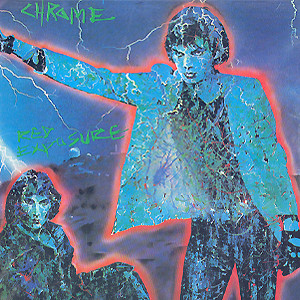
In 1980, Chrome released their fifth album Red Exposure. It features a much more expirmental sound that earlier albums. That’s the case on Eyes In The Center. Despite this much more experimental sound, it’s still regarded as space rock. This is sure to provoke debate among conissuers of space rock. So is the inclusion of a live track from Alice Cooper. B.B. On Mars was recorded in 1969. However, it showcases a space rock sound, and is a reminder of what Alice Cooper sounded like before fame came his way.
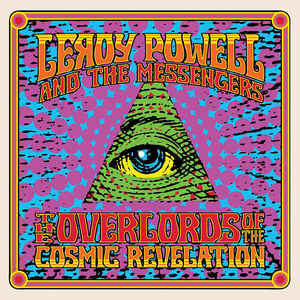
Leroy Powell and The Messengers never enjoyed the commerical sucess and critical acclaim that Alice Cooper enjoyed. Recently though, Leroy Powell and The Messengers’ inimitable and unique brand of music has been finding a wider audience. No wonder; given
the quality of the genre-melting Weightlessness. It’s a track from
the 2015 album The Overlords Of The Cosmic Revelation. This is the perfect intrdoduction to Leroy Powell and The Messengers.
One of the finest and most prolific of the new wave of space rock bands are Electric Orange. They were founded in 1992, and since then, have released over twenty albums. These albums feature a mixture of musical genres, including Krautrock and psychedelia. They’re combined successfully on Meals Of Confusion, which is a tantalising taste of what’s awaiting the newcomer to space rock pioneers Electric Orange.
Two Russian bands feature on disc six, including Gdeva, who were formed in Saint-Petersburg in 2005. They recorded Autobahn for their 2007 debut album Bubbles, Bubbles… Elements of post rock, psychedlia and progressive rock are combined scucessfully on Autobahn, and create a captivating, genre-melting track. The other Russian band are Vespero. They were formed in Astrakhan, in Southern Russia in 2003. Since then, they’ve been a prolific band, relsasing fourteen studio album. This incldues their 2015 album Fitful Slumber Until 5 AM . It features Vision 7. Kidish Hail where Vespero showcase and talent as they combine folk rock meets jazz, Krautrock, psychedlela and progressive rock on what’s one of the highlighs of disc six.
Alas, the final track on disc six of Space Rock: An Interstellar Traveler’s Guide is one that will divide opinion and indeed, disappoint. That’s the 1975 Interview with Nik Turner. While he’s played an important part in the devlopment of space rock, the interview has no place on the compilation. It’s adition is a mistake. It’s nearly eleven minutes that could’ve been given over to music. This is eleven minutes you’ll never get back.
Apart from the interview with Nik Turner, Space Rock: An Interstellar Traveler’s Guide is the perfect inroduction to space rock. This six CD box set could very well be the start of a voyage of discovery through the history of space rock. Forty-seven years worth of music features on the six discs, and features familiar faces and new names. All of them are referred to as space rockers. That will provoke debate anong some music historians and indeed, music fans.
Some of these bands on Space Rock: An Interstellar Traveler’s Guide weren’t originally aren’t know as space rock bands. This incldues Can, Tangerine Dream, Faust, Popol Vuh, Guru Guru andAmon Düül II. Their music has often been described as Krautrock. However, many music fans will debate this. Faust and Tangerine Dream’s constantly evolved throughout their career. So did Popol Vuh’s. That’s why many music historians are so reluctant to
label many of these bands definitively.
What is Krautrock to one person, could be regarded differently by another. It’s all a matter of interpretation.That’s the case throughout Space Rock: An Interstellar Traveler’s Guide.
Many of the bands in the box set combine several different genres. This includes everything from avant-garde, Berlin School, doom metal, electronica, experimental, free jazz, Krautrock, progressive rock, psychedelia and of course space rock. With several musical genres being combined by bands on the one song, many music fans will struggle to define the musical genre that they’re listening to. Some may even disagree with the use of words space rock on some of the tracks. However, on nearly every track, there’s at least a hint of space rock. That’s the case throughout Space Rock: An Interstellar Traveler’s Guide.
For newcomers to space rock, then Cleopatra Records’ six CD box set, Space Rock: An Interstellar Traveler’s Guide is good starting point. It might result in a voyage of discovery through the history of space rock. Similiarly, Space Rock: An Interstellar Traveler’s Guide could be the start of lifelong love affair with space rock. Espeically, for those yet to discover the delights of space rock. For them, Space Rock: An Interstellar Traveler’s Guide box set is everything you wanted to know about space rock, but were too afraid to ask.
SPACE ROCK: AN INTERSTELLAR TRAVELLER’S GUIDE.



MOTORPSYCHO-ANGELS AND DAEMONS AT PLAY.
MOTORPSYCHO-ANGELS AND DAEMONS AT PLAY.
Nowadays, not many bands stay together twenty-seven years. Longevity seems to be a thing of the past in the music business. Sadly, so is releasing an average of an album a year. That was common in the sixties and seventies. Not any more. Very few bands come close to releasing an album a year. Instead, many bands spend several years working on an album. However, there is one band still that average an album a year, Motorpshycho, who have been together twenty-seven years.
Motorspycho were formed in Trondheim, central Norway, in October of 1989. Since then, Motorpsycho have become a musical institution. They’re now veterans of the Norwegian music scene, and continue to influence a new generation of musicians. These new bands aspire to follow in the footsteps of Motorpsycho.
They’ve come a long way since releasing their debut album Lobotomizer in 1991. Since then, Motorpsycho have been a prolific band, averaging nearly an album a year. This includes studio albums, live albums, mini albums and collaborations. These albums have been released to critical acclaim and commercial success.
That is almost an understatement. Since the release of their fourth full length album Timothy’s Monster in 1994, Motorspycho’s last fifteen albums have reached the top ten in the Norwegian charts. Motorspycho’s music has also found an audience across Europe, with their albums regularly charting in Belgium, Germany and Holland. They’re also a hugely popular live band, and are familiar faces across Europe and further afield. Motorpsycho it seems, are one of Norwegian most successful musical exports.
Meanwhile, back at home in their native Norway, Motorpsycho have scooped some of the most prestigious musical prizes. This includes an Edvardprisen and a total of four Spellemannprisen Awards. These are the Norwegian equivalent of the Grammy Awards. Winning a Spellemannprisen is a huge honour. Most groups are lucky to be nominated for one award. So far, Motorpsycho have won four. One of the Spellemannprisen awards was for their 1997 double album Angels and Daemons At Play. It was a landmark album for Motorpsycho, and marked their coming of age musically. This makes Angels and Daemons At Play one of the most important albums in Motorpsycho’s back-catalogue.
Given the importance of Angels and Daemons At Play this made it a prime candidate to become the fourth instalment in Motorpsycho’s luxury box set eissue program. Angels and Daemons At Play will be reissued by Rune Grammofon as a six CD set on the 23rd of December 2016. This loving curated box set features the album as Motorpsycho meant the listener to hear it.
Angels and Daemons At Play is spread across the first three discs in the box set. Disc four features is entitled The Ones That Got Away: Rarities and Live Recordings, and featuresB-Sides, outtakes and live tracks. Discs five and six feature Parts 1 and 2 of Motorpsycho Live At Rockefeller, on March 14th 1997. This brings to an end the six CD Angels and Daemons At Play box set. It’s an in-depth and comprehensive retrospective of Motorpsycho’s sixth studio album, Angels and Daemons At Play. However, how did they get to Angels and Daemons At Play?
Motorpsycho’s musical journey began in Trondheim, in central Norway in October 1989. That was when three local musicians decided to form a new band. They were drummer Kjell Runar “Killer” Jenssen, bassist and vocalist Bent Sæther and guitarist and vocalist Hans Magnus “Snah” Ryan. Now the began to think of a name for their new band.
This is a problem many bands are faced with. The three friends were faced with a similar situation, and were struggling to come up with a name. This problem was solved during a trip to London. The bandmates decided to watch a Russ Meyer double bill featuring Mudhoney and Faster Pussycat. Both would’ve been the perfect name for their new band. However, someone had beaten them to it. One name that was still free, was Motorpsycho, and that day, a Norwegian musical institution was born.
Maiden Voyage.
Recording of Maiden Voyage began on the 29th of April 1990, when How Was I To Know recorded How Was I To Know at UFFA, which was a youth club in Trondheim. It was also a meeting place for local musicians. This was where Motorpsycho returned to, between the 2nd and 6th June 1990. They recorded another four tracks. With one track left to record, Motorpsycho moved to Studentradion on the 6th of June. That was where they recorded Blueberry Daydream. This was the final track that would feature on Maiden Voyage.
Later in 1990, Maiden Voyage was released on cassette as a limited edition, mini album. Only 100 copies of Maiden Voyage were released by the Knallsyndikatet fanzine. It’s now one of Motorpsycho’s rarest releases. Maiden Voyage introduced Motorpsycho’s genre-melting sound to a wider audience. It helped launch the career of Motorpsycho, who in 1990, were a new and up-and-coming band.
Lobotomizer.
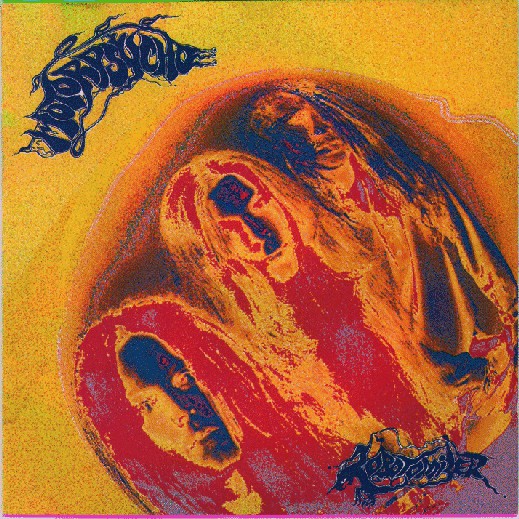
Later in 1990, Motorpsycho returned to the studio to begin work on their debut album, Lobotomizer. They recorded six of the tracks on Lobotomizer at the Warehouse, in Oslo during December 1990. Then three months later, in March 1991, Motorpsycho reconvened at Studentradioen. Two more tracks were recorded, Eternity and Lobotomizer. It would lend its name to Motorpsycho’s debut album.
After completing their debut album, another nine more months passed before Motorpsycho released their debut album, Lobotomizer in December 1991. This allowed them to further hone their sound, and continue to build a following. Motorpsycho did this the tried and trusted way, by playing live. By the time, the release of Lobotomizer came round Motorpsycho were already a popular live draw.
Lobotomizer was released by Voices Of Wonder Records in December 1991. Initially, the album was only released on vinyl, as a limited edition of 1,000 copies. This was because Motorpsycho were still a relatively unknown band. Not for much longer though.
When Lobotomizer was released, it was to critical acclaim. Motorpsycho with their unique fusion of grunge with heavy metal and indie rock were hailed as the future of Norwegian music. Things were looking up for Motorpsycho.
Especially, after the shock departure of drummer Kjell Runar “Killer” Jenssen earlier in 1991. That was huge blow for the band. Kjell was replaced by Håkon Gebhardt who made his Motorpsycho debut on the mini album Soothe.
Soothe.
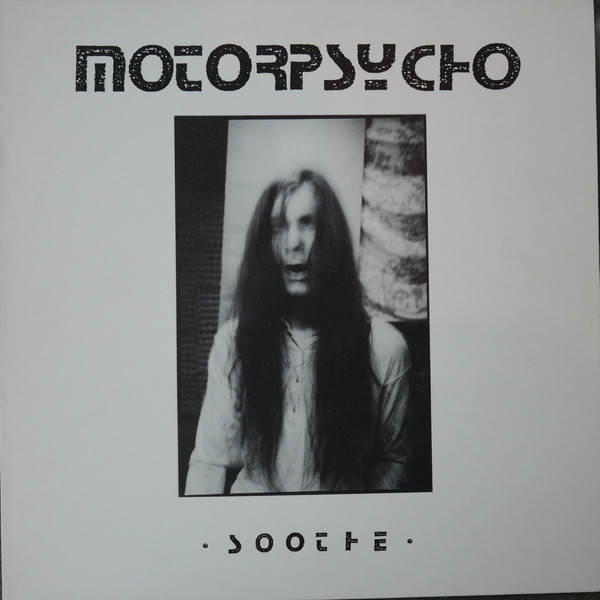
The new lineup of Motorpsycho made their recording debut at Brygga Studios on the 2nd of January 1992. Over the next four days, five tracks were recorded. This included a cover of the Mamas and Papas’ California Dreamin’, which featured Lars Lien on backing vocals. This cover of California Dreamin’ became part of Motorpsycho’s second mini album, Soothe.
Later in 1992, Voices Of Wonder Records were preparing to release the Soothe mini album. It was a limited edition of 100, with seventy copies of Soothe being released in a signed steel box. They would later become highly collectable. Before that, the Motorpsycho success story continued apace.
Again, critical acclaim accompanied the release of Soothe. Critics were won over by Motorpsycho’s fusion of hard rock and psychedelia. Soothe was quite different to previous releases. Already, Motorpsycho’s music was evolving as they continued to reinvent themselves. This would be the case throughout Motorpsycho’s career.
After the release of Soothe, Motorpsycho returned to the studio in July 1992 and recorded their single 3 Songs For Rut. On its release later in 1992, 3 Songs For Rut didn’t receive the same reception as Lobotomizer and Soothe. Gone was the critical acclaim that had accompanied previous releases. For Motorpsycho, self doubt entered the equation, just when everything had been going so well.
8 Soothing Songs For Rut.
Despite the critics reaction to 3 Songs For Rut, Motorpsycho 8 Soothing Songs For Rut decided to included the songs on their sophomore album. This would also feature the songs from the Soothe mini album. These eight songs became Motorpsycho’s sophomore album, 8 Soothing Songs For Rut.
It was released later in 1992, and 8 Soothing Songs For Rutwas well received by critics. They were won over by Motorpsycho’s mixture of hard rock, psychedelia, stoner rock and grunge. Again, this proved popular with Norwegian record buyers. However, not as popular as Motorpsycho’s next album, Demon Box, which was a game-changer.

Demon Box.
After the release of 8 Soothing Songs For Rut, a new name joined Motorpsycho. This was sonic scientist Helge “Deathprod” Sten. His sonic noise experiments would move Motorpsycho’s music in a very different direction as they pondered their next album.
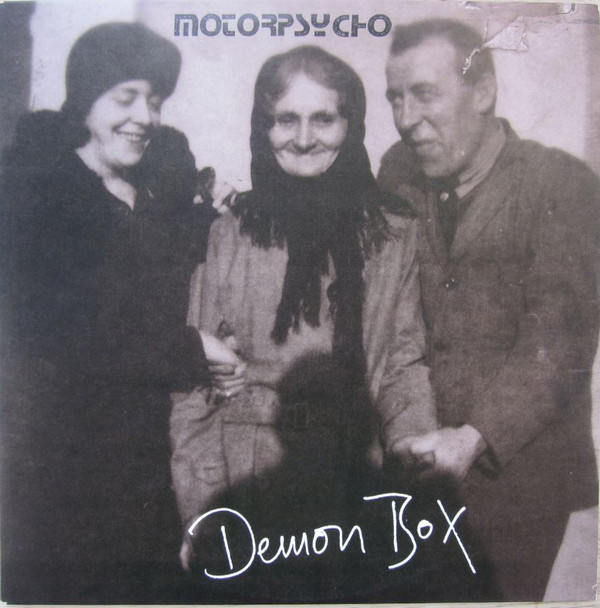
By then, Motorpsycho had only one roll of the dice left. Their contract with Voices Of Wonder Records was almost up. They owed the record company one more album. In such a situation, most groups would’ve tried to replicate their debut album Lobotomizer. However, Motorpsycho weren’t most bands. Instead, they decided to moved their music in a new direction, and in the process, created an ambitious, double album, Demon Box.
Recording of Demon Box took place in December 1992. On a number of tracks, Motorpsycho brought in a few musical friends. Their job was augmenting Motorpsycho’s sound. To create this new sound, Motorpsycho’s friends deployed an eclectic selection of instruments. This included a sitar, violin, mellotron, synths, percussion and organ. None of these instruments had featured on a Motorpsycho album. This was a first, with Motorpsycho and their friends crafting a very different album. Demon Box found Motorpsycho’s music heading in new directions.
During the recording of Demon Box, Motorpsycho drew inspiration from a wide variety of musical influences and genres. This included everything from avant-garde, electronica, folk and free jazz and grunge, to heavy metal, indie rock, jazz, Krautrock, psychedelia and rock. They all shine through on Demon Box. Often, there’s only the merest of glimpses of these influences. However, they can be heard, and made Demon Box a captivating, innovative and progressive album that launched the career of Motorpsycho.
When Demon Box was released later in 1993, Motorpsycho hit the jackpot. Demon Box received praise, plaudits and critical acclaim from critics and cultural commentators. They couldn’t praise Demon Box highly enough. It was a hailed an ambitious, groundbreaking and genre-melting album of innovative music. Suddenly, Motorpsycho were bring described as one of the most important Norwegian bands. Motorpsycho’s plan to reinvent their music had worked, and resulted in a career defining, classic album. Demon Box was also the most successful album of their career. This however, would soon change.
Timothy’s Monster.
After the release of Demon Box, Motorpsycho’s contract with Voices Of Wonder Records came to an end. By then, the success of Demon Box had brought Motorpsycho to the attention of what was, one of the world’s biggest, and most prestigious record labels, EMI. They were keen to sign to sign Motorpsycho, whose star was very much in the ascendancy.
For Motorpsycho, this was a dream come true. They were about to sign to a major label. It was what they had been working towards since 1989. This was the start of a new chapter in the Motorpsycho story.
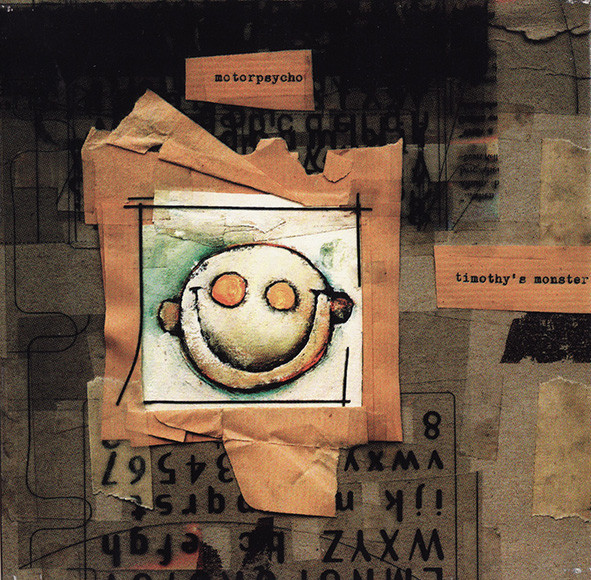
Motorpsycho decided to launch their career at EMI by recording the most ambitious album of their career. This was Timothy’s Monster, q sprawling triple album that featured fifteen tracks. To record this Magnus Opus, Motorpsycho were joined by Lars Lien and Helge “Deathprod” Sten. He would coproduce Timothy’s Monster with Motorpsycho.
Recording of Timothy’s Monster took place during the winter and spring of 1994. Most of the album was recorded at Brygga Studio, in Trondheim. Some sessions took place at Strype Audio, where the album was later mastered.
Then EMI could prepare for the release of Timothy’s Monster. The release was scheduled for the 6th of August 1994. This was a huge step for Motorpsycho, as Timothy’s Monster was their major label debut.
Before that, the critics had their say on Timothy’s Monster. Just like previous albums, critical acclaim accompanied the release of Timothy’s Monster. Things got even better when the album was released. It entered the Norwegian charts, and eventually reached number seven. For Motorpsycho this was a proud moment.
So was when the album cover for Timothy’s Monster was nominated for the most prestigious Norwegian music award, a Spellemannprisen. At the award ceremony, Timothy’s Monster won Motorpsycho their first Spellemannprisen award. It certainly wouldn’t be the last. Not by a long chalk.
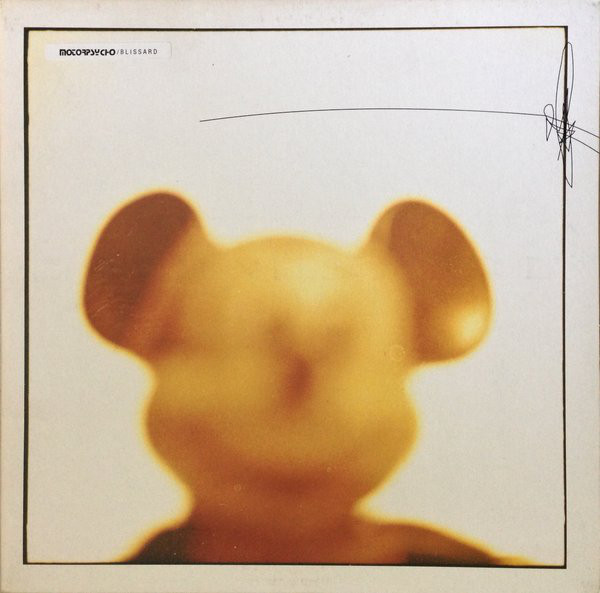
Blissard,
Following the commercial success of Timothy’s Monster, Motorpsycho spent much of 1994 and the early part of 1995 touring. They were determined to build up their following outside of their native Norway. However, by September 1995, Motorpsycho returned to their studio with Bent Sæther and Helge “Deathprod” Sten taking charge of production.
This time around, Motorpsycho decided to change their modus operandi. Rather than spending time experimenting and working on ideas in the studio, Motorpsycho arrived with songs already written and committed to tape. The theory was, that Motorpsycho would be more focused and spend less time recording their new album, Blissard. This new idea worked, and by December 1995, Motorpsycho, with the help of a few of their musical friends, had recorded another ambitious double album Blissard.
Two months later, and EMI subsidiary Columbia were preparing to release Blissard. Just like previous albums, Blissard won over critics, and it was released to widespread critical acclaim. Again, critics were impressed by what was another genre-melting album. Motorpsycho combined alternative rock, avant-garde, electronica, psychedelia and stoner rock on Blissard. It was a captivating album that was sure to capture the imagination of record buyers.
That proved to be the case. When Blissard was released on February 16th, 1996, the album proved popular amongst Norwegian record buyers. The album began to climb the charts, and eventually reached the top ten. Still Blissard kept climbing the charts. Eventually, it reached number three. This made it Motorpsycho’s most popular album. That however, wasn’t the end of the success story that was Blissard.
Later in 1996, Motorpsycho found themselves being nominated for a second Spellemannprisen award. Blissard had been nominated for the best album in the hard rock category. This was always a category where the competition was tough. Despite this, Motorpsycho triumphed when Blissard won the group their second Spellemannprisen award. Soon, two would become three.
Angels and Daemons At Play.
Motorpsycho had just released the most successful album of their seven year career, Blissard. Following this up wasn’t going to be easy. If any Norwegian group was capable of surpassing Blissard, it was Motorpsycho.
Throughout their career, they had built on their previous success. Motorpsycho were determined that this would continue on their sixth album Angels and Daemons At Play. It’s about to be reissued by Rune Grammofon as a six disc box set. This is the definitive version of the album, and features Angels and Daemons At Play as Motorpsycho intended.
The Angels and Daemons At Play story began in October 1996, when Motorpsycho entered the studio to record a new album. It would be co-produced by sonic scientist Helge “Deathprod” Sten. He would also feature on Angels and Daemons At Play.
Ever since Helge “Deathprod” Sten first began working with Motorpsycho, their sound had changed. Partly, this was because of the array of instruments and effects used. Similarly, Motorpsycho were now using a much more eclectic selection of instruments. This was the case on Angels and Daemons.
As Motorpsycho and their friends arrived at the studio, they brought began setting up a vast arsenal of musical instruments and effects. Drummer Håkon Gebhardt would play banjo, percussion, piano and add vocals. Bassist Bent Sæther played acoustic and electric guitars, double bass, mellotron, Fender Rhodes, Moog Taurus, percussion, organ, piano and drums on Sideway Spiral I. He too, would add vocals. So would Hans Magnus Ryan, who would play acoustic and electric guitars, bass, double bass, percussion, vibes, piano, organ, Moog Taurus and drums on Atlantic Swing. The three members of Motorpsycho were joined by three of their friends.
This included co-producer and associate member of Motorpsycho, Helge “Deathprod” Sten. He brought with him oscillators, an echoplex, reverators and a ring modulator. Ole Henrik Moe arrived with an alto and soprano saw, violin and would play piano. Morten Fagervik brought with him his guitar, which he played on Atlantis Swing. It was one of fourteen songs that Motorpsycho recorded during October 1997. They were meant to become Motorpsycho’s next album, Angels and Daemons.
Before that, Motorpsycho decided to release the tracks that had been recorded during the Angels and Daemons sessions as a trio of limited edition E.P.s. Only 500 copies of each E.P. would released early in 1997.
As 1997 dawned, Motorpsycho began to prepare for the release of the three limited edition E.P.s This was a first for them. Never before had they released three E.P.s on consecutive weeks. The first E.P. was due to released in the last week of January 1997.
Baby Scooter-Disc One.
This was the Baby Scooter E.P It was released on the 27th of January 1997, and featured five tracks. This included Sideway Spiral, Walking On The Water, Heartattack Mac, Pills Powders and Passion Plays and In the Family. These tracks proved popular amongst record buyers in Norway.
When the Baby Scooter E.P. was released, it reached number fourteen in the Norwegian charts. This was just the latest success to come Motorpsycho’s way. That was no surprise. The Baby Scooter E.P. which features on disc one of the Angels and Daemons box set, showcases the different sides to Motorpsycho.
Throughout the Baby Scooter E.P, Motorpsycho showcased their versatility throughout the Baby Scooter E.P. This ranges from the thoughtful psychedelia of Sideway Spiral to the hard rocking Heartattack Mac. Other times, elements of alt and indie rock shine through. So does Krautrock on Pills, Powder And Passionplays (Miss Mitchell In The Ladies Room). Sometimes, several genres melt into one, including on In The Family. It’s a fusion of alt rock and post rock, where as usual, Motorpsycho stay one step ahead of musical trends. That had been the case throughout their career, and continued on the next E.P
Have Spacesuit Will Travel-Disc Two.
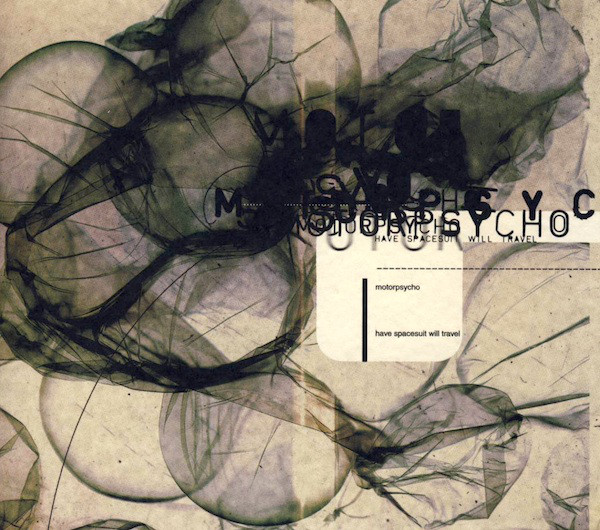
A week later and Have Spacesuit Will Travel was released on the 3rd of February 1997. It was a very different E,.P. This time, the E.P. consisted of one epic track, that featured three parts.
The three parts to Have Spacesuit Will Travel are truly captivating. Constantly, Motorpsycho spring surprises as the music changes direction. Seamlessly, they shift between disparate musical genres, and incorporate a variety of musical influences. All the time, subtleties and surprises are sprung during this musical Magnus Opus. It’s no surprise that Have Spacesuit Will Travel proved popular amongst Norwegian music fans.
Upon its released, Have Spacesuit Will Travel charted, and eventually, reached number thirteen in the Norwegian charts. Motorpsycho’s decision to release the trio of E.P.s had been vindicated, as it gave them another hit single. The Have Spacesuit Will Travel E.P. is replicated on disc two of the Angels and Daemons box set, and is a reminder of Motorpsycho at their groundbreaking best.
Lovelight-Disc Three.
The third and final E.P. that Motorpsycho released, was Lovelight. It was released on the 10th of February 1997, and featured another six tracks. This included Sideway Spiral II, Like Always, Stalemate, Starmelt, Lovelight, Timothy’s Monster and Atlantis Swing. Again, a myriad of musical genres and influences can be heard throughout Lovelight.
Elements of alt rock, post rock, psychedelia and space rock could be heard on Lovelight as Motorpsycho flit between and combine genres on the six tracks. They ooze quality. Especially when Motorpsycho kick loose and rock hard on Like Always, Starmelt, Lovelight and Timothy’s Monster. Just like the two previous E.P.s, Lovelight proved popular upon its release.
When Lovelight was released, it followed in the footsteps of Baby Scooter and Have Spacesuit Will Travel, and reached thirteen in the Norwegian charts. This meant that each of the E.P.s from the Angels and Daemons sessions. For Motorpsycho, this augured well for the release of Angels and Daemons later in 1997.
Angels and Daemons.
Later in 1997, Motorpsycho were preparing to release their sixth album Angels and Daemons. It was a truly eclectic album stylistically, and it wasn’t going to be easy to program the album so that the album flowed. However, Motorpsycho had a plan that would ensure that the album ‘worked’ and made sense sonically.
Motorpsycho wanted Columbia, who in 1997, were owned by Sonym to release three separate versions of the album on CD and LP. This included a shortened CD version that featured just twelve tracks. There would be a three CD box set that replicated the three E.P.s, Disc one would replicate Baby Scooter, disc two Have Spacesuit Will Travel and disc three Lovelight. The vinyl version was a double album. However, given the constraints of vinyl, two tracks were omitted and only fourteen tracks made their way onto the double album. This was a complicated project, and one that took a lot of planning. Producing three different versions of an album was almost unheard of in 1997. Nowadays, it’s commonplace. Not for the first time, Motorpsycho were pioneers.
Now that Motorpsycho had worked out how they wanted to release Angels and Daemons, Columbia started to make plans for the release of the album later in 1997. Eventually, Angels and Daemons was ready for release.
Just like previous albums, critical acclaim accompanied the release of Motorpsycho’s sixth album Angels and Daemons. It was one of their most eclectic album, with Motorpsycho drawing inspiration from a myriad of musical genres and influences. This found favour with the Norwegian music buying public.
Upon the release of Angels and Daemons, it entered the Norwegian charts. It began to climb the charts, and eventually reached the top ten. Angels and Daemons didn’t stop there. Eventually, it reached number two becoming the most successful album of Motorpsycho’s career. That however, wasn’t the end of the success for Motorpsycho.
Later in 1997, Motorpsycho found themselves being nominated for a third Spellemannprisen award. Angels and Daemons was nominated in the hard rock category. This was the category that Motorpsycho won with Blissard in 1996. They made it two in a row in 1997, when Angels and Daemons won Motorpsycho the third Spellemannprisen award of their career. This they won with what many critics called the most eclectic album of their career. It features on the first three discs of the Angels and Daemons six disc box set.
Discs 4-B-Sides, The Ones That Got Away: Rarities and Live Recordings.
The fourth disc in the Angels and Daemons box set is entitled The Ones That Got Away: Rarities and Live Recordings. It features sixteen tracks. Many of these tracks make their debut on disc four. Others however, have been released before.
This includes the five tracks that featured on the Starmelt E.P. It was released on Columbia in 1997, and featured Starmelt/Lovelight, a live cover of Humble Pie’s Up Our Sleeves and what was then a new song, Wishing Well. The other two tracks included a rerecording of Flick Of The Wrist and a version of Instamatic recorded in April 1997. That however is just part of the story of disc four.
There are a number of outtakes on disc four. This indues Back To Source, which later featured on the Ozone E.P. Another outtake is a captivating version of Caterpillar, which was recorded for the AADAP sessions. It’s never been released until now. Neither has this version of King Bong Hop, which is a welcome addition to disc four of the Angels and Daemons box set.
The same can be said of the three songs that featured on a split-CD that was released to benefit a local housing cooperative, Star Dancer Vs Car Cancer, La’Moen Rag and Baby Jesus II. They’re an eclectic trio of tracks that show a very different side to Motorpsycho. Especially the country tinged Baby Jesus II, which is a hidden gem in the Motorpsycho back-catalogue. It’s not alone.
Another five tracks feature on disc four, and they were songs that Motorpsycho contributed to various compilations. They’ve never been collected together before. That is until now. Two of the highlights are understated Mad Sun and Nature’s Way. They join Syk, and the post rock soundscapes Un Chien D’Espace and Timothy In The Magic City. They’re both welcome additions to disc four and again, showcase Motorpsycho’s versatility as they flit between and combine musical genres. This they do in the studio and live.
Discs 5 and 6-Rockefeller, March 14th 1997 Parts 1 and 2.
The final two discs in the Angels and Daemons box set feature Motorpsycho live. This is no ordinary live recording. Instead, it’s a live broadcast Motorpsycho recorded for the Norwegian radio station NRK/P3. It was recorded on March 14th 1997, just a month after the release of the Lovelight E.P. Sadly, the show was never broadcast in its entirety. Nor was the show released as one of Motorpsycho’s live albums. It’s lain in the archives for nearly twenty years, and makes a welcome debut on the Angels and Daemons box set.
That night at the Rockefeller, Helge “Deathprod” Sten took to the stage on March 14th 1997. He is joined by Ole Henrix Moe and two percussionists, and they open the show with one of Helge’s tracks Komet. This is no ordinary track. Instead, it’s a twenty-six minute genre-melting musical adventure featuring twists and turns aplenty. Once Komet draws to a close, Hege introduces Motorpsycho, and he and his band accompany them throughout the next sixteen tracks.
Motorpsycho open their set with STG, which featured on the Definitivt Beat Nr 1 · 96 compilation the previous year. It’s one of their lesser known tracks. Soon though, Motorpsycho unleash one of the tracks from Timothy’s Monster, Kill Some Day. Already Motorpsycho are up and running.
There is no let up as Motorpsycho revisit a trio songs that would later feature on Angels and Daemons for the first time. Like Always gives way to Heartattack Mac and Pills, Powders And Passion Plays. After this, Motorpsycho return to their 1995 album Blissard, and revisit The Nerve Tattoo, and then Young Man Blues from the 1996 Ozone E.P. As disc five draws to a close, Motorpsycho return to Angels and Daemons and deliver a blistering version of Starmelt/Lovelight. This seems a fitting way to close disc five of the Angels and Daemons box set. However, it’s only half time in football terms
Motorpsycho who in 1997, were already one of Norway’s top bands return on disc six of the Angels and Daemons box set. They open the second part of their set with a seventeen minute, genre-melting, experimental epic, Un Chien d’Espace. It’s another track that would appear on Angels and Daemons later in 1997. So would Sideway Spiral II and You Lied. After this, Motorpsycho dip into their impressive back-catalogue.
First stop is Hogwash, a track from Motorpsycho’s debut album Lobotomizer. That was the album that introduced Motorpsycho to the record buying public. Hogwash gives way to The One That Went Away, which is another hidden gem from Motorpsycho’s back-catalogue. This is followed by Nothing To Say, from Motorpsycho’s first classic album Demon Box. It was released in 1993, the same year as Motorpsycho’s split-single Into The Sun. It’s another of their lesser known tracks, but features a performance that veers between dramatic, rocky to melodic. Motorpsycho never miss a beat, and are at their tightest. However, they’ve only time for one more track, The Golden Core from Timothy’s Monster. This is another epic, and for fifteen minutes, Motorpsycho are at their most innovative as they push musical boundaries to their limit, and sometimes, way beyond. After such in impressive closing track, Motorpsycho take their leave, expecting the whole show to be broadcast in its entirety.
Sadly, that never happened, and nearly twenty years later, the recording makes a belated debut on the six CD Angels and Daemons box set. It’s a snapshot of Motorpsycho live, as the musical chameleons continued to reinvent their music. This they had been doing throughout their eight year career. That would the case as their career progressed.
Never again, would Motorpsycho sound like the band that took to the stage at the Rockefeller on March 14th 1997. Instead, they moved forward, their music constantly and continually evolving as the years passed and the new millennia dawned. Nineteen years later, and Motorpsycho are a very different band from the band that features on discs five and six of the Angels and Daemons box set. One thing hasn’t changed though, Still, Motorpsycho are musical pioneers who create ambitious, innovative and genre-melting music.
That has been the case since they released their mini album Maiden Voyage in 1990. Since then, Motorpsycho have been a truly prolific band, averaging nearly an album a year. This includes studio albums, live albums, mini albums and collaborations. These albums have been released to critical acclaim and commercial success. However, when Motorpsycho released Angels and Daemons in 1997, it was their sixth album.
Motorpsycho had already released their first classic album, Demon Box. It’s one of the most important albums of Motorpsycho’s early career. That is why Rune Grammofon decided to reissued Demon Box in 2014 as port of Motorpsycho’s luxury box set reissue program. Two years later, and Angels and Daemons become the fourth instalment in Rune Grammofon’s luxury box set reissue program. That is fitting.
Angels and Daemons a groundbreaking, genre-melting, classic album, where Motorpsycho combined elements of alt rock, avant-garde, electronica and experimental music with Krautrock, post rock, psychedelia, space rock and stoner rock. All these genres can be heard on Angels and Daemons. Some are only glimpsed briefly, while others play a larger part in the sound and success of Angels and Daemons. It marked a coming of age musically for Motorpsycho, who were also well on their way to becoming one of the most successful Norwegian bands in 1997.
Especially after Angels and Daemons reached number two in the Norwegian charts, and became the most successful album of Motorpsycho’s career. It also went on to win a Spellemannprisen awards in the hard rock category later in 1997. This was the third Spellemannprisen awards of Motorpsycho’s career so far. So it’s fitting that Rune Grammofon have decided to celebrate the release of Motorpsycho’s sixth album Angels and Daemons with the release of this lavish, luxurious and lovingly curated six CD box set. It will be released on 23rd of December 2016, and is a fitting way to celebrate Angels and Daemons which was Motorpsycho’s coming of age musically and nowadays, is regarded as one of their classic albums.
MOTORPSYCHO-ANGELS AND DAEMONS AT PLAY.
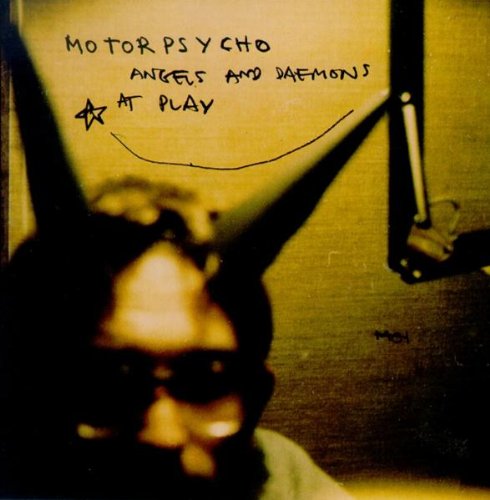
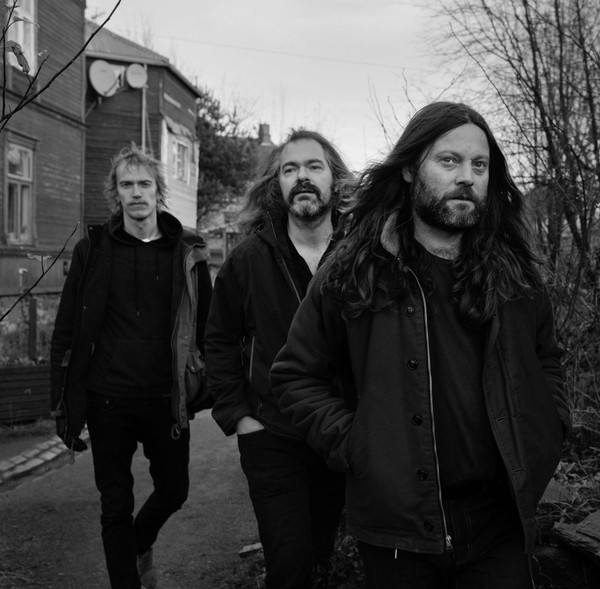

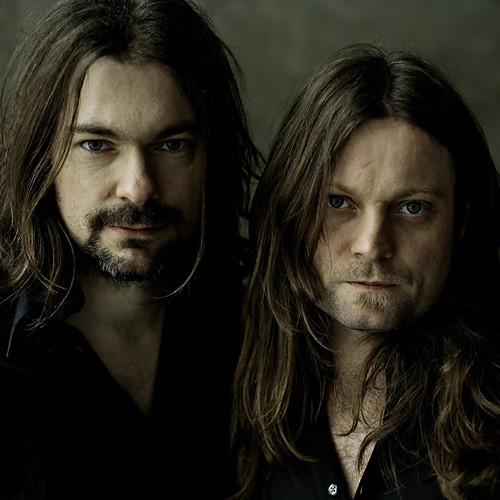
LINDA JONES-PRECIOUS: THE ANTHOLOGY 1963-1976.
LINDA JONES-PRECIOUS: THE ANTHOLOGY 1963-1976.
The story of Linda Jones is one of triumph and tragedy. Growing up, Linda Jones was diagnosed with diabetes. Despite this, Linda Jones went on to forge a successful career as a soul singer.
Her breakthrough single, was Hypnotised, which reached twenty-one in the US Billboard 100 and number four in the US Billboard R&B charts in 1967. Suddenly, great things were being forecast for Linda Jones. These forecasts proved prescient.
As 1972 dawned, twenty-seven year old Linda Jones was a successful soul singer. She had already enjoyed five hit singles and a successful debut album. This looked like it was just the start of a long and successful career for a singer who had the potential to rival Aretha Franklin, Gladys Knight and Irma Thomas for the title Queen of Soul. Sadly, that wasn’t to be.
On March the 13th 1972, Linda Jones was resting at her mother’s home between a matinee and evening show at the Harlem Apollo. She took unwell and an ambulance was called. The following day, Linda slipped into a diabetic coma. Later that day, Linda Jones was pronounced dead on the 14th February 1972. Linda Jones was just twenty-seven. Tragedy had robbed soul music of his its talented and promising singers, Linda Jones.
Her career is documented on a new compilation, Precious: The Anthology 1963-1976. It was recently released by Kent Soul, an imprint of Ace Records and celebrates the life and music of Linda Jones.
Linda Jones was born on December 14th 1944, in New Jersey. By the age of six, Linda Jones had joined the family gospel group The Jones Singers. They sang in churches in the New Jersey area. This was Linda’s introduction to music. However, as Linda became a teenager, she discovered another type of music…R&B.
Discovering R&B transformed Linda Jones’ life. This was a revelation. Suddenly, Linda knew what she wanted to do with her life…sing soul. So when she left high school, Linda had a plan. By days, she worked a series of dead end jobs. Then at night, she became Linda sang in local clubs in Newark, New Jersey. That was where she came to the attention of an A&R scout for MGM Records.
He spotted the potential in the nineteen year old Linda Jones. Soon, Linda was signed on a short term deal, and was net into the studio to record her debut single. The song that was chosen was a cover of Lonely Teardrops, which had given Jackie Wilson a hit single. When it was released, MGM billed Linda Jones as Linda Lane. Despite the change in name, Lonely Tears failed to make an impression on the charts. Linda’s time at MGM was over before it had even begun.
Despite the disappointment, Linda Jones remained stoic and returned to working dead end jobs by day, and singing in clubs at night. That was where she met Jerry Harris, a staff songwriter at Jobete Music, Motown’s publishing company.
Straight away, Jerry Harris realised that Linda Jones was a cut above most of the singers he came across. He promised Linda that he would do all he could to help her. Jerry Harris was as good as his word.
He introduced Linda Jones to producer George Kerr. Little did Linda realise, that this was the start of a six year partnership.
Not long after their initial meeting, George Kerr booked a session at a New York recording studio in October 1964. For the session, Jerry Harris had recorded some top session players. The rhythm section included drummer Bernard “Pretty” Purdie, bassist Cornell Dupree and guitarist Eric Gale. They were joined by pianist Richard Tee. This was the band that would be by Linda’s side for the next six years. However, during that first session, Linda recorded the two songs that featured on her next single, Take The Boy Out Of The Country, I’m Taking Back My Love.
After the recording sessions, George Kerr shopped the tracks to various record companies. When executives at Atco, a subsidiary of Atlantic Records, heard the two songs, they were keen to sign Linda Jones. When the contract was signed, Linda Jones’ Take The Boy Out Of The Country, was released in March 1965 as Linda Jones’ sophomore single. Tucked away on the B-Side was the heart-wrenching ballad I’m Taking Back My Love. Despite the quality of both sides, Linda’s sophomore single failed commercially. This marked the end of her time at Atco.
George Kerr wasn’t about to give up on Linda Jones. After leaving Atco, Linda returned to the club circuit. This was the equivalent of serving a musical apprenticeship. It helped Linda hone her style. Eventually, George took Linda back into the studio, and they recorded Fugitive From Love and You Hit Me Like T.N.T. These two tracks George took to Blue Bird Records.
Again, executives at Blue Bird Records liked the two tracks, and agreed to release them as Linda Jones’ third single. Linda was maturing as a vocalist, and combined power and emotion on Fugitive From Love. It became her next single when it was released on Blue Cat Records in July 1966. On the flip-side was You Hit Me Like T.N.T., which later would find an audience on the Northern Soul scene. Sadly, Blue Cat Records lacked the funds to promote Fugitive From Love properly. Unsurprisingly, it failed to find an audience, and Linda Jones was once again, looking for a new label.
Still though, George Kerr continued to believe in Linda Jones. Undaunted he managed to find the funds to finance another session. One of the songs he planned to record was Hypnotised. George Kerr took Linda and her band into the studio and they cut the two tracks. Then Jerry went looking for a label to release Linda’s fourth single.
First stop for George Kerr was Brunswick. However, they weren’t in the market for any more female singers. They already had Barbara Acklin, who they were promoting heavily. However, a Brunswick staffer suggested that George head over to Warner Bros, and meet Ron Moseley. He was working for Warner Bros’ R&B imprint Loma. That’s what George decided to do.
At Warner Bros, George Kerr met with Ron Moseley. He took out a copy of Hypnotised and began to play it to Ron. At that moment, Jerry Ragovoy walked past. The song stopped the songwriter and producer in his tracks. He thought it had hit potential. Within a matter of minutes, a deal had been struck. After that, George headed home to Florida.
On his return to New York, Jerry Ragovoy and staffers from Loma had been looking for Linda Jones. They wanted her to play some shows to support Hypnotised. This she did, and when Hypnotised was released in May 1967, the single began to climb the charts. Eventually, it reached twenty-one in the US Billboard 100 and number four in the US Billboard R&B charts in 1967. After four years and four singles, Linda Jones had made her breakthrough. This was just the start of the journey for Linda.
Four months later, and Linda Jones released the followup to Hypnotised was released in September 1967. The song that was chosen was the soul-baring ballad What’ve I Done (To Make You Mad). Again, the single climbed the charts, and eventually, reached sixty-one in the US Billboard 100 and number eight in the US Billboard R&B. This gave Linda Jones back-to-back top ten single in the US R&B charts.
Buoyed by this success, Loma decided to send Linda into the studio to record her debut album. Hypnotised was released later in 1967. It featured the singles Hypnotised and What’ve I Done (To Make You Mad). Other songs included the rueful If Only (We Had Met Sooner), A Last Minute Miracle reached twenty-six in the US R&B charts. By then, great things were being forecast for Linda Jones.
As 1967 drew to a close, Linda Jones released her third single of the year. This was the hopeful power ballad Give My Love A Try. This is one of the highlights of Precious: The Anthology 1963-1976. It was released in December 1967. Despite its quality, Give My Love A Try failed to make an impression on the charts. However, 1967 had still been the most successful year of Linda Jones’ career.
Just two months after the released of Give My Love A Try, Linda Jones returned with her first single of 1968, My Heart Needs A Break. This Sammy Turner composition was produced by George Kerr. When it was released in February 1968, the single charted but stalled at ninety-four in the US Billboard 100. In the US R&B charts, Give My Love A Try fared better, reaching thirty-four. It seemed that Give My Love A Try’s failure to chart had been a minor blip. Or was it?
In June 1968, Linda Jones returned with a new single, What Can I Do (Without You). It doesn’t feature on Precious: The Anthology 1963-1976. When What Can I Do (Without You) was released, it failed to trouble the chart. Hopefully, this was another minor blip and the hits would soon resume.
Three months later, and Linda Jones returned with her new single It Won’t Take Much (To Bring Me Back). It’s also omitted from Precious: The Anthology 1963-1976. When What Can I Do (Without You) was released in September 1968, but it too, failed to chart. This was a further disappointment for Linda Jones. Worse was to come.
By 1969, Warner Bros. had realised that there was more money to made in rock than soul. Warner Bros. called time on their Loma imprint. It wasn’t part of their future plans. Nor it seemed was Linda Jones. She only released one more single for Warner Bros.
This was My Heart (Will Understand), which is omitted from Precious: The Anthology 1963-1976. My Heart (Will Understand) was released the main Warner Bros. label in April 1969. When the single failed commercially, this must have made Warner Bros’ mind up. Linda Jones left Warner Bros not long after this.
Later in 1969, George Kerr took Linda Jones back into the studio with her usual band. They recorded a cover of The O’Jays’ I’ll Be Sweeter Tomorrow and That’s When I’ll Stop Loving You. These songs, George Kerr shopped to various labels.
Eventually, George Kerr agreed to lease the songs to Gamble and Huff’s Neptune Records. For Linda, this in a step down in career terms. She had previously, been signed to a major label, that was one of the most famous labels in music. Now she was about to release her next single small independent label.
The only saving grace was that Neptune Records had signed a distribution deal with Chicago based Chess Records. This should’ve helped get Neptune Records’ releases into more shops than other independent labels. One of these releases was Linda Jones’ single I’ll Be Sweeter Tomorrow.
It was released in October 1969, with That’s When I’ll Stop Loving You on the B-Side. Upon its release, I’ll Be Sweeter Tomorrow entered the US R&B charts, and eventually, reached forty-five. Meanwhile, some DJs took to playing the B-Side That’s When I’ll Stop Loving You on the radio. The song became so popular, that it too charted, reaching number forty in the US R&B charts. Linda had enjoyed two hit singles. Maybe Linda’s luck was changing?
She was certainly busy with live work when I’ll Be Sweeter Tomorrow and That’s When I’ll Stop Loving You charted in January 1970. Linda Jones was part of package shows that toured America. At each show, Linda appeared three times, singing between three and five songs. This introduced her to a much wider audience. However, this must have been taking its toll on Linda.
She had been diagnosed with diabetes at an early age. Like all diabetics, Linda had to take medication and be careful with her diet. Linda had to eat regularly and watch her blood sugar level. Out on tour, this wasn’t always easy, and sometimes, Linda suffered from diabetes attacks. Gradually, they began to happen more often. For Linda and her mother, this must have been a worry. Despite this, the twenty-five year old continued her career.
In May 1970, Linda Jones recorded a cover of Ooh Baby You Move Me. It had previously been recorded by Ben Aitken in 1968. On the B-Side, was Can You Blame Me? Again, producer George Kerr decided to lease Ooh Baby You Move Me to Neptune Records. This wasn’t his best decision.
At the time, Gamble and Huff were planning on launching a a new label, Philadelphia International Records. Neptune Records was being wound down, so the pair could focus their attention on the new label. Maybe George Kerr wasn’t aware of these plans? As a result, Ooh Baby You Move Me wasn’t promoted properly on its release in May 1970. This proved to be the last Linda Jones record leased to Gamble and Huff.
That wasn’t the only change in the offing. Linda Jones moved to Turbo Records, which was a subsidiary of All Platinium Group, a New Jersey funk, R&B, and soul label. This was the start of a new chapter in the career of Linda Jones. However, changes were afoot.
For Linda Jones Turbo Records’ debut, Stay With Me Forever was chosen. It was penned by George Kerr with Sharon Seiger and Nate Edmonds. He would co-produce Stay With Me Forever with George Kerr. On the B-Side was I’ve Given You The Best Years Of My Life, which Linda cowrote with Gerald Harris. He co-produced the song with Toby Henry. What was Linda’s thirteenth single was released in May 1971
This was Stay With Me Forever, Linda Jones’ first single for her new label, Turbo Records. It was released in May 1971 and featured a vocal tour de force from Linda. She showcased every vocal trick in the book during what was a musical masterclass. The record buying public agreed, and the single reached forty-seven in the US R&B charts. Given the success of Stay With Me Forever work began on the followup.
The song chosen was a cover of the Goffin and King composition, I Can’t Make It Alone. It was ‘produced’ by a veteran of the New York music scene, Sylvia Robinson. She would go on to found and become the CEO of Sugar Hill Records. Meanwhile, Al Goodman and Nate Edmonds co-produced the B-Side, Don’t Go (I Can’t Bear To Be Alone). The single was released in November 1971. However, the single failed to replicate the success of Stay With Me Forever.
As 1971 gave way to 1972, Linda Jones entered the studio to record her next single, Your Precious Love. It was released in February 1972. Soon, it had entered the charts and began to climb. Then tragedy struck and suddenly music no longer mattered.
On the afternoon of March the 13th 1972, Linda Jones performed at a matinee at the Harlem Apollo. She returned to mother’s home, where she lived to rest between shows. That was where tragedy struck.
Later that afternoon, Linda Jones became unwell. An ambulance was called and she was taken to hospital. The following day, George Kerr visited the Jones’ household. He was told by a neighbour of Linda becoming unwell and an ambulance taking her to the hospital. By the time George made his way to the hospital, Linda had slipped into a diabetic coma. Later, that day, 14th February 1972 Linda Jones was pronounced dead. She was just twenty-seven.
Meanwhile, Your Precious Love continued to climb the charts, reaching number seventy-four in the US Billboard 100 and fifteen in the US R&B charts. Ironically, this was Linda Jones most successful single since What’ve I Done (To Make You Mad) in 1967. However, Your Precious Love was Linda’s final hit single.
Despite her death, Turbo Records continued to release singles bearing Linda Jones’ name. This included Linda Jones And Whatnauts’ collaboration I’m So Glad I Found You. It was released in June 1972, but failed to chart. That wasn’t the last Linda Jones single Turbo Records would release.
Let It Be Me was then released in September 1972. It doesn’t feature on the Precious: The Anthology 1963-1976 compilation. However, it features on an album released by the All Platinum Group, Your Precious Love.
It featured number of tracks had been stockpiled during various recording sessions. These tracks were somewhat hastily released as a Linda Jones’ sophomore studio album. Among the tracks that featured on Your Precious Love, were Your Precious Love, Behold, Stay With Me Forever, Not On The Outside and I Can’t Make It Alone. When it was released later in 1972, Your Precious Love didn’t replicate the success of the single. Despite this, Turbo Records released another posthumous album of Linda Jones’ music.
The second Turbo Records’ album was Let It Be Me. One of the highlights was a beautiful, soulful ballad I Do. It allows Linda Jones to use her full vocal range. It’s a poignant reminder of a truly talented singer. Meanwhile, however, Turbo Records continued to release singles bearing Linda Jones’ name.
This included a new versions of Fugitive From Love. It was released in 1973, with Things I’ve Been Through on the B-Side. However, the single failed to trouble the charts. Later in 1973, the single was flipped over and Things I’ve Been Through was released as a single. Still success eluded the single which marked the end of the Turbo Records years.
By then, the first anniversary of Linda Jones death was approaching. However, her music lived on. That’s still the case today.
Nowadays, her music is growing in popularity, and she is reaching a wider audience. Hopefully, that audience with increase with the release of a new compilation, Precious: The Anthology 1963-1976. It was recently released by Kent Soul, an imprint of Ace Records and celebrates the life and music of Linda Jones.
Linda Jones is now remembered for possessing one of the finest and most versatile voices in soul music. If she had lived, Linda Jones had the potential to rival Aretha Franklin, Gladys Knight and Irma Thomas for the title Queen of Soul. Sadly, that wasn’t to be, and Linda Jones died far too young. She passed away on 14th of December 1972. Today, Linda Jones would’ve been celebrating her seventy-second birthday. Instead, today we’re celebrating Linda Jones musical legacy. This includes the music that features on Precious: The Anthology 1963-1976. It’s the perfect introduction to another of soul music’s best kept secrets, Linda Jones.
LINDA JONES-PRECIOUS: THE ANTHOLOGY 1963-1976.




CONRAD SCHNITZLER-FILMMUSIK 1.
CONRAD SCHNITZLER-FILMMUSIK 1.
Conrad Schnitzler was, without doubt, one of the most important and influential figures in German music. Having studied under Joseph Beuys, he cofounded the legendary Zodiak Free Arts Lab in Berlin with Hans-Joachim Roedelius.
For next the two years, the Zodiak Free Arts Lab became one of Berlin’s cultural hubs. Artists and musicians made their way to the Zodiak Free Arts Lab, seeking out like minded individuals. They found them. This included Klaus Schulze, plus members of Can, Ash Ra Tempel, Agitation Free and Tangerine Dream, who Conrad Schnitzler joined in 1969.
By then, Tangerine Dream had become the Zodiak Free Arts Lab’s house band right up until its closure in March 169. Regularly Tangerine Dream played five and six our sets of loud, improvised music. Often these sets ended with the band smashing their equipment up. Tangerine Dream it seemed, were making a statement. This they certainly did on their debut album.
Tangerine Dream.
Conrad Schnitzler joined Tangerine Dream just in time to play on their groundbreaking debut album Electronic Meditation in October 1969. Tangerine Dream fused elements of avant-garde, electronic music, free jazz and rock. This proved popular with critics and cultural commentators.
Nine months later, Electronic Meditation released on Rolf-Ulrich Kaiser’s Ohr label. Critical acclaim accompanied the release of this future Krautrock classic. However, by the time Electronic Meditation was released Conrad Schnitzler had parted company with Tangerine Dream.
Kluster.
After leaving Tangerine Dream, a new chapter in the career of Conrad Schnitzler began later in 1969. He and Hans-Joachim Roedelius decided to form a new band, Kluster with Dieter Moebius.
Kluster wasted no time in recording their debut album. To record their debut album, Kluster had managed to secure sponsorship from a local church. This would offset the cost hiring the Rhenus-Studio on 21st December 1969. That day, Kluster were joined by Christa Runge who added religious texts to Kluster 1. Just like Kluster 2, it was an ambitious improvised piece where Kluster combined avant-garde and experimental music.These tracks became Klopfzeichen, which was released in November 1970. By then, Kluster had recorded their sophomore album.
Just two months after recording their debut album, Kluster returned to the Rhenus-Studio on February 23rd 1970 to record Zwei-Osterei. Just like Klopfzeichen, it was financed by a local church. Manfred Paethe added religious texts Electric Music and Text. It became part of Zwei-Osterei., a fusion of avant-garde, experimental music and Krautrock. However, Kluster’s sophomore album wasn’t released until 1971.
Later in 1971, Kluster performed what would be their swan-song. That night, the tapes were running and captured Kluster at their purest. There were no religious texts accompanying the two lengthy improvised pieces. They find Kluster’s music evolving towards the electronic sound that featured on later Cluster albums. That night, Kluster came of age musically, having saved the best until last. It was released in late 1971 as Schwarz. By then, Conrad Schnitzler was contemplating a solo career.
The Solo Years.
Conrad Schnitzler’s solo career began in 1973 would span four decades. During his long career, Conrad Schnitzler continued to create ambitious and pioneering music.
This includes the music on the first two albums of Conrad Schnitzler’s career. Con was released in 1972 with Blau following in 1973. Both albums were self-released by Conrad Schnitzler and featured intriguing electronic patterns, tape manipulations and dark, moody experimental sounds. These albums were later hailed as classics, and would introduce Conrad Schnitzler’s music to a wider record buying public.
So did the first in a series of cassette albums Conrad Schnitzler released. Cassettes were the perfect medium for Conrad Schnitzler. They were much more affordable than vinyl, and it was easy to run off further copies as and when they were needed. The first cassette album Conrad Schnitzler released was The Red Cassette in 1973. It was followed by The Black Cassette in 1974. Both albums feature Conrad Schnitzler experimenting and pushing musical boundaries, as he combines musical genres with his sonic palette. The two cassette albums increased interest in Conrad Schnitzler’s music.
Despite this, Conrad Schnitzler next album, Work In Progress was a limited edition box set. Only 100 copies were pressed, and each box set included three LPs and a cassette. This included copies the Kluster live Schwartz and Conrad Schnitzler’s first two solo albums, Rot and Blau. After the box set was released, Conrad Schnitzler returned the master tapes to his archives.
That’s where Conrad Schnitzler stored all the music he recorded during a career that spanned five decades. By the time of Conrad Schnitzler’s death in 2011, his vast, sprawling archives featured the master tapes to several hundred recordings. The job of organising the master tapes fell to Conrad Schnitzler’s former musical partner Wolfgang Seidel.
He was appointed guardian of Conrad Schnitzler’s archive. This is a important role, and one Wolfgang Seidel has dedicated himself to. He realises the importance of the music within Conrad Schnitzler’s archive. This includes everything from the master tapes to albums, to recordings of concerts that were committed to cassette. Some of the master tapes and cassettes Wolfgang Seidel discovered, only featured the one track. The archive was proving to be a treasure trove. Especially when Wolfgang Seidel discovered long lost, hidden treasure.
Tucked away in Conrad Schnitzler’s archive were two tapes which were mysteriously marked Filmmusik 1975 and Filmmusik 1980. Wolfgang Seidel dusted these down, and looked at them. However, there was no other information with the tapes. Conrad Schnitzler hadn’t noted down if the tracks were meant to accompany a film or video. The tapes was turning into a mystery.
So Wolfgang Seidel setup the tape machine and began to listen to the music that featured on Filmmusik 1975 A and Filmmusik 1980. In an instant, Wolfgang Seidel was transported back to 1975 and then 1980. He was listening to his old friend Conrad Schnitzler at his most accessible.
Mesmeric, entrancing and pulsating bass lines are joined by washes of ethereal, elegiac synths on Mrz 80, which opens Filmmuzik 1. Other times, including on Okt 75 and Okt 80 the synths are futuristic and take on a cinematic, sci-fi sound. Both tracks still sound like the soundtrack-in-waiting to a sci-fi film. Then Apr 80 takes on a proto-techno, cinematic sound. There’s a moody and menacing undercurrent to Dez 80 as drones wash in and out. These drones return on Sep 75, as it veers between haunting and wistful to melodic and beautiful. Soon, though, it’s all change.
A pumping, pulsating bass provides the heartbeat to Feb 80 on this example of ethno-electro. Jul 80 then features Conrad Schnitzler at his most inventive. He combines synths and drones to create an eerie, otherworldly and chilling cinematic soundscape. It has the word soundtrack written all over it. So does Aug 75 which somehow, manages to be minimalist, menacing and futuristic all at once. This is quite an achievement. The closing track Jan 80 features oscillating synths that sound as if they were meant to feature on a film about space travel. Jan 80 paints pictures, and sets the listener’s imagination racing. That has been the case throughout Filmmuzik 1.
It’s a welcome release and a reminder of a true musical pioneer, as his solo career began to unfold. Conrad Schnitzler was in a rich vein of musical form by 1975. He had already recorded classic albums with Tangerine Dream and Kluster. These albums featured inventive and innovative music that would influence further generations of musicians. So would Conrad Schnitzler’s first two albums, 1972s Con and 1973. Both of these albums are nowadays, regarded as classics. Along with the release of Black Cassette and Red Cassette albums, Conrad Schnitzler was in the midst of one of the most creative periods of his career.
This continued between 1975 and 1980. Proof of this is the music on Filmmuzik 1. It has lain unreleased in Conrad Schnitzler’s archives until relatively recently. That was until the tapes were discovered by Wolfgang Seidel, who is the guardian of Conrad Schnitzler’s archive. He realised the importance of the music on Filmmuzik 1, so approached the Hamburg based label Bureau B about releasing some of the music. Ten of these featured on the recently released Filmmuzik 1. It looks like the start of a series.
Already, Bureau B have announced that were will be a followup to Filmmuzik 1. The second volume in this series, Filmmuzik 2 will be released in February 2017. This is a welcome release. Especially if the music is as good as that on Filmmuzik 1.
On Filmmuzik 1, Conrad Schnitzler combines elements of ambient and avant-garde, Berlin School and Krautrock with electronic and experimental music. Usually, several genres are combined by Conrad Schnitzler to create a soundscape. To create these soundscapes, Conrad Schnitzler deploys an array of keyboards, synths, drum machines, sound effects and found sounds. They’re Conrad Schnitzler’s sonic palette, which he puts to good use on on Filmmuzik 1.
Each of the soundscapes on Filmmuzik 1 have a cinematic sound. They’re guaranteed to set the listener’s imagination racing. Some of the tracks futuristic, with a sci-fi sound, while others are eerie, moody and otherworldly. Some have a mesmeric quality, while others are ethereal, elegiac or melodic and have an inherent beauty. However, each of the tracks on Filmmuzik 1 have one thing in common…they’re timeless.
Despite being recorded in 1975 and 1980, there’s a freshness to the music which still sounds relevant today. Indeed, it’s hard to believe that some of tracks are forty-one years old. These tracks have aged well. They’re also among the most accessible music that Conrad Schnitzler has recorded.
That’s why Filmmuzik 1 is the perfect starting place for newcomers to the music of Conrad Schnitzler. It’s a gateway album to the rest of Conrad Schnitzler’s back-catalogue. Filmmuzik 1 is sure to be the first step in a voyage of discovery through the delights of Conrad Schnitzler’s back-catalogue. However, this is no ordinary back-catalogue. Conrad Schnitzler’s back-catalogue is vast. He was a prolific solo artist and collaborator. The journey through Conrad Schnitzler’s back-catalogue brings to mind Loa’s quote that: “a journey of a thousand miles begins with a single step.” The first step in the journey through Conrad Schnitzler’s back-catalogue is Filmmuzik 1.
CONRAD SCHNITZLER-FILMMUSIK 1.
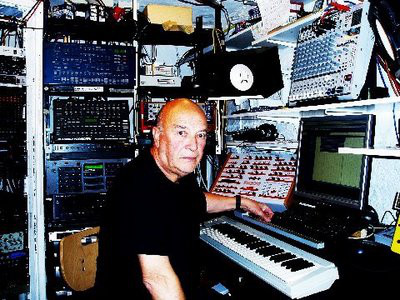
TIM MAIA 1970.
TIM MAIA 1970.
For many musicians, choosing the title for an album can prove problematic. Especially, for a debut album. As a result, many of new artists and bands have gone done this route. This includes everyone from Black Sabbath, Led Zeppelin and The Allman Brothers Band to Art In America and Ash Ra Tempel. Then there’s Cluster, Dire Straits and 10CC, The Band, The Beta Band and The Doors. Eponymous debut albums it seems, have always been popular over with new artists. This included Tim Maia.
When he released his debut album in 1970, it was entitled Tim Maia. It seemed he was following in the footsteps of many other artists. Following the success of his debut album, Tim Maia returned in 1971 with his sophomore album. It too was entitled Tim Maia. So were his third and fourth albums. This was guaranteed to cause confusion.
Nowadays, Tim Maia’s debut album is known as Tim Maia 1970. It was recently reissued, by Oficial Arquivoknown, and marks the start of the reissue of the Tim Maia quartet. These four albums were released between 1970 and 1973 and feature some of the best music Tim Maia released during his long and illustrious career. This reissue program is also a celebration of Tim Maia and his music.
He was hugely talented, charismatic and larger life singer, who lived life on the edge, and was determined to do things his way. Early on, Tim Maia realised he was only here for a visit, and was going to live life to the full. It was as Tim Maia was determined that he would have no regrets. Tim Maia packed a lot of living into fifty-years, but still left behind a rich musical legacy. However, the Tim Maia story began in Brazil in 1942
On September 28th 1942. Tim Maia born in Rio De Janeiro. He was the eighteenth of nineteen children. Aged just six, Tim earned a living delivering homemade food, which his mother cooked. This would be the nearest Tim got to an ordinary job. From then on, Tim devoted himself to music.
At the age of eight, Tim Maia had already written his first song. By the time he was fourteen, Tim had learnt to play the drums and formed his first group Os Tijucanos do Ritmo. They were only together for a year. During that period, Tim took guitar lessons. He was soon a proficient guitarist, and was able to teach his friends. With some of his friends, Tim formed a new group in 1957.
This time, it was vocal harmony group, The Sputniks. It was formed in 1957, and made a television appearance on Carlos Eduardo Imperial’s Clube do Rock. Alas, the group was a short-lived affair, which resulted in Tim embarking upon a solo career. This lasted until 1959, when seventeen year old Tim made the decision to emigrate.
Tim Maia decided to head to America, which he believed he was heading for the land of opportunity. With just twelve dollars in his pocket and unable to speak English, Tim arrived in America. He called himself Jimmy at customs, and bluffed his way into the country, saying he was a student. Living with extended family in Tarrytown, New York Tim worked various casual jobs and augmented his meagre earnings by allegedly, committing petty crimes. Soon, he learnt to speak and sing English. This lead to him forming a vocal group The Ideals.
During his time with The Ideals, they recorded a demo of New Love, which Tim Maia had written the lyrics to. Making a guest appearance on the demo, was percussionist Milton Banana. Nothing came of the demo, and Tim later resurrected the song for his album Tim Maia 1973. However, by the time Tim recorded New Love with The Ideals, he planned on never returning home to Brazil. America was now his home. That was until things went awry for Tim.
Confusion surrounds why Tim Maia left Brazil. There’s two conflicting accounts. The first and more rock ’n’ roll version is that Tim was arrested on possession of cannabis in 1963, and deported shortly thereafter. That seems unlikely. There were punitive penalties for possession of even a small quantity of cannabis in the sixties. This meant it was unlikely Tim would’ve been just deported, without serving a jail sentence. This lends credence to the allegation that Tim was caught in a stolen car in Daytona, Florida. After serving six months in prison, Tim was deported back to Brazil in 1964.
Now back home in Brazil, Tim Maia’s life seemed to be going nowhere. He got and lost several jobs, and was arrested several times. So Tim decided to move to São Paulo, where he hoped maybe, he could get his career back on track.
Having moved to São Paulo, Tim Maia, hoped he would be reunited with one of The Sputniks. Ironically, it was Carlos, who Tim had insulted before he left The Sputniks. However, Carlos proved inaccessible, and Tim had to make his own way in the São Paulo music scene. Tim made an appearance on Wilson Simonal’s radio show, and then appeared with Os Mutantes on local television. Still, though, Tim was determined to contact Carlos, and sent a homemade demo. Eventually, Tim’s persistence paid off.
Carlos on hearing the demo, recommended Tim Maia to CBS. They offered him a recording deal for a single, and an appearance on the Jovem Guarda television program. Tim’s first single was Meu País in 1968. It failed commercially. So did the followup These Are the Songs, which Tim recorded in English. Things weren’t looking good for Tim Maia.
His luck changed when Tim wrote These Are the Songs for Carlos. It gave his friend a hit single. At last, things were looking up for Tim Maia.
Things continued to improve when Elis Regina became entranced by Tim’s song These Are the Songs. Elis Regina asked Tim to duet with her on the song. They recorded the song in English and Portuguese, and the song featured on Elis’ 1970 album Em Pieno Veroa. This gave Tim’s career a huge boost. Recording with such a famous Brazilian singer lead to Tim signing a recording contract with Polydor.
1970.
Having signed to Polydor, Tim Maia somewhat belatedly began to work on his eponymous debut album. Tim Maia was fast approaching his twenty-eighth birthday, and musically, had a lot of catching up to do.
Soon, work began on Tim Maia’s debut album. He began writing new songs and choosing cover versions for his what became Tim Maia 1970. Eventually, Tim had the twelve songs he planned to record.
This included three Tim had penned himself, and three he cowrote. Tim wrote Jurema, Flamengo and Azul Da Cor Do Mar, and cowrote Cristina and Cristina Nº 2 with Carlos Imperial. His other collaboration was Padre Cícero, which Tim cowrote with Cassiano. He penned Você Fingiu and cowrote Eu Amo Você and Primavera (Vai Chuva with Silvio Rochael. The other three cover versions included João Do Vale and Luiz Wanderley’s Coroné Antônio Bento, Fabio and Paulo Imperial’s Risos and Claudio Roditi’s Tributo À Booker Pittman. These songs were recorded with producers Arnaldo Saccomani and Jairo Pires.
Accompanying Tim Maia, was a relatively small, but tight and talented band. The rhythm section provided the heartbeat, and were augmented by keyboards, piano percussion and vibes. Meanwhile, Tim laid down his vocals, and added acoustic guitar. Later, strings were overdubbed on six tracks. Only then was Tim Maia 1970 complete. Little did any of the musicians realise that they know that they were about to make musical history.
When Tim Maia 1970 was released later in 1970, the album was hailed a groundbreaking, genre-melting classic by critics. The album was a successful and seamless marriage disparate genres. Soul and funk rubbed shoulders with samba and Baião. There’s even hints of easy listening and soul jazz on Tim Maia 1970. It also featured three future Tim Maia classics, that showed different sides to Tim Maia. This includes the album opener Coroné Antonio Bento. It’s a stomping fusion of soul and funk, where Tim’s vocal becomes a vamp. Primavera (Vai Chuva) and Azul Da Cor Do Mar are both beautiful ballads. This is were Tim seems to come into his own.
There’s several ballads on Tim Maia 1970. Cristina and Padre Cícero are soul-baring ballads. So are Você Fingiu and Eu Amo Você, where the lushest strings prove the perfect accompaniment to Tim’s vocal. Then on Cristina, Tim combines power, passion and emotion. However, there’s more to Tim Maia 1970 than ballads.
Risos is a mid-tempo track that floats along, constantly captivating. Jurema sounds as if was recorded in Memphis. Stabs of brassy horns and soaring harmonies accompany Tim, as his soulful vocal becomes a vamp. It’s a similar case on Cristina Nº 2, where soul meets funk and Tim’s vocal becomes a swaggering vamp. Tributo À Booker Pittman which closes Tim Maia 1970 has a jazz-tinged, soulful sound. This shows Tim’s versatility. Seamlessly, he switches between, and combines musical genres. This he’s been doing throughout Tim Maia 197o.
When Tim Maia 1970 was released, this marriage of soul and funk with samba and Baião was a first. No Brazilian artist had attempted this before. It was unheard of. However, it proved popular amongst record buyers.
Tim Maia was released in 1970, and spent twenty-four weeks in the upper reaches of the Brazilian charts. It had been a long, hard struggle. Ever since he was deported from America, Tim Maia had been struggling to make a breakthrough. Now as he approached his twenty-eighth birthday, Tim Maia’s star was in the ascendancy. This should’ve been the start of a long and glittering career.
Instead, Tim Maia’s career was a mixture of genius, farce and tragedy where the hugely talented, charismatic and larger life singer proved to fundamentally flawed. Thing went well for Tim Maia initially.

In 1971, Tim Mai released his much anticipated sophomore album, Tim Maia 1971. Just like its predecessor, Tim Maia 1971 was hailed as another groundbreaking album. Critics were won over by Tim Maia 1971’s imaginative fusion of soul and funk with samba and Baião. There were even hints of jazz, psychedelia and rock, during what was hailed as an ambitious and innovative album of genre-melting music. Having won over critics, Tim Maia 1971 was released to critical acclaim.
On its release, Tim Maia 1971 entered the Brazilian charts, and gave Tim another hit album. It also featured two hit singles, Não Quero Dinheiro (Só Quero Amar) and Preciso Aprender a Ser Só. Tim Maia’s star was still in the ascendancy, and at this rate, it looked as if he was well on his way to becoming one of the biggest stars in Brazilian music. That should’ve been the case, given the quality of music on Tim Maia 1971.
After the success of Tim Maia 1971, Tim headed to London to celebrate. He had just enjoyed two successful albums, after six years of struggling to make a breakthrough. Tim wanted to celebrate, and enjoy the fruits of his labour. It was during this trip to London, that Tim first discovered his love of the rock ’n’ roll lifestyle.
Realising that he was only here for a visit, Tim Maia embraced the rock ‘n’ roll lifestyle. Almost defiantly, Tim Maia lived each day as if it was his last. He hungrily devoured copious amounts of drugs and alcohol. They became part of Tim Maia’s daily diet. Fortunately, his new found lifestyle didn’t seem to affect Tim’s ability to make music. That was until Tim discovered a new drug that would prove to be his undoing.
In London, Tim discovered L.S.D. He became an advocate of its supposed mind opening qualities. He took two-hundred tabs of L.S.D. home to Brazil, giving it to friend and people at his record label. Little did Tim know, but this was like pressing the self-destruct button.
Over the next two years, Tim Maia’s released two further albums, Tim Maia 1972 and Tim Maia 1973. Both albums were released to critical and enjoyed commercial success in Brazil. The only problem was after Tim Maia 1973, Tim became unhappy at the royalty rate he was receiving from his publisher. So Tim founded his own publishing company Seroma. This coincided with Tim signing to RCA Victor.
They offered Tim Maia the opportunity to record a double album for his fifth album. Tim excited by this opportunity, agreed to sign to RCA Victor, and began work on his fifth album. Somehow, Tim was still seemed able to function normally on his daily diet of drink and drugs. He had already recorded the instrumental parts. All that was left was for Tim to write the lyrics.
Seeking inspiration for the lyrics, Tim Maia decided to visit Tibério Gaspar. They had previously written together. That was where Tim found a book that would change his life, and sadly, not for the better. That book was the Universo em Desencanto (Universe in Disenchantment), which revolved around the cult of Rational Culture. They didn’t believe in eating red meat or using drugs. Considering Tim had a voracious appetite for drink and drugs, it seemed unlikely that he would join the cult. However, he did.
Straight away, the cult’s beliefs affected Tim Maia and his music. Ever since he joined cult of Rational Energy, who fixated on UFOs, Tim was now clean-shaved, dressed in white and no longer drank, ate red meat, smoked or took drugs. Always in his hand was a mysterious book. Even his music changed.
The lyrics for his fifth album, and RCA Victor debut, were supposedly about his newly acquired knowledge. This came courtesy of Universo em Desencanto. With the ‘lyrics’ complete, Tim’s vocals were overdubbed onto what became Tim Maia Racional, Volumes 1 and 2. With the album completed, Tim took it to RCA Victor. They who promptly rejected the album.
Tim Maia Racional, Volumes 1 and 2 it appears, wasn’t of a commercial standard. To make matters worse, the lyrics made absolutely no sense. The only small crumb of comfort was that Tim’s voice was improving. That hardly mattered for RCA Victor, who weren’t going to release the album. For RCA Victor, it was huge disappointment.
They thought they had signed an artists who would become one of the biggest names in Brazilian music. Instead, their star signing had joined a cult, and handed over the worst album of his career. Tim and RCA Victor at an impasse. There seemed to be no way forward.
That was until decided to buy the master tapes from RCA Victor. Tim then released the album independently. However, it failed to match the commercial success of his four previous albums. For his many fans, Tim Maia was no longer the artist he once was. Then in 1976, Tim quit the cult.
When Tim quit the cult, after Racional Volume 2, he’d fallen out with its leader. He felt duped and wanted Tim Maia Racional, Volumes 1 and 2 destroyed. That was the past. Now Tim wanted to move forward.
Tim Maia’s music changed after Tim Maia Racional, Volumes 1 and 2. He released a new album in 1976, entitled Tim Maia, released in 1976. This was the start of the most prolific period of Tim’s career.
From 1976 right through to 1998, Tim Maia continued to release albums. He released another twenty-five albums between 1977 and 1998. By then, Tim had released around thirty-four albums.
Just like his live shows, the albums were hit and miss affairs. Sometimes Tim would turn up, play an outstanding set. Other times he would play a mediocre or shambling set. On many occasions, he’d fail to turn up. He returned to is rock and roll lifestyle, living life to the fullest.
The last album Tim released was Nova Era Glacial in 1995. Other albums were released bearing Tim’s name right up until 1998. However, Nova Era Glacial is regarded as Tim Maia’s swan-song He passed away on March 15th 1998, aged just fifty-five. Sadly, by then Tim’s shows and behaviour had become predictable. That had been the case since his 1976 post-Racional comeback. Tim Maia was never the same man or musician after his dalliance with the cult of Rational Culture.
It’s fair to say that the four album Tim Maia released prior to joining the cult were the highlights of a career that spanned three decades and thirty-four albums. The album that introduced Brazilian record buyers to one of their most talented sons, was Tim Maia 1970, which was recently reissued, by Oficial Arquivoknown . This genre-melting album was one the highlight of Tim Maia’s career.
After Tim Maia 1970, Tim returned with his second classic album album, Tim Maia 1971. He followed this up with Tim Maia 1972 and Tim Maia 1973. They complete a quartet of albums that feature Tim Maia at his very best. Between 1970 and 1973, his star shawn the brightest.
Sadly, since his death in 1998, Tim Maia’s music has been a well-kept secret outside of his native Brazil. Even within Brazil, many record buyers haven’t heard Tim Maia’s music. Those that have, speak about his music with reverence and in hushed tones.
Like many maverick musicians, Tim Maia’s story sees myth and reality become intertwined. Truth and reality become one, just like his music was fusion of influences and musical genres. However, over the past few years, Tim Maia’s music has started to find a wider audience. They will embrace the reissue of Tim Maia 1970, which offers further insight into his music.
Just like many maverick singer-songwriters, Tim Maia was touched by genius but fundamentally flawed. He could’ve, and should’ve, been a huge star. Sadly, something held him back, and stopped him from enjoying the widespread commercial success and critical acclaim his music richly deserved. This was music shaped by a multiplicity of musical influences, genres and of course, his lifestyle. His music is a compelling, captivating fusion influences and musical genres.
Everything from soul, funk, jazz, rock, samba, bossa nova and baiao thrown into Tim Maia’s mystical and psychedelic musical melting pot. Similarly, Tim’s lifestyle including drink, drugs, multiple-marriages and imprisonment all shaped and influenced Tim Maia’s music. It’s then given a stir by one of music’s true maverick’s, who on the verge of critical acclaim and commercial success, made a couple of decisions he would later come to regret.
The first of these was Tim’s dalliance with L.S.D. in 1971. If that was his first mistake, his second was definitely, his decision to join a cult derailed his career. Maybe if Tim had never celebrated his success in London, then things might have been very different? Somewhat ironically, given the amount of music Tim Maia recorded and released, the two albums he recorded during his time with cult, have gained cult status. These two albums, however, were just a snapshot of his career, but one that affected his future.
After leaving the cult, Tim continued releasing music, but his live shows became unpredictable. They were either outstanding, mediocre or didn’t happen. All this fuelled the mythology that surrounds Tim Maia.
In a cruel and tragic twist of fate, Tim Maia died young, like many maverick musicians. He was just fifty-five when he died in 1998. Since then, the mythology and rumours surrounding Tim have increased, as has his popularity.
The recent rerelease of Tim Maia 1970 will fuel the increase in interest in Tim Maia and music. He’s one of music’s larger than life characters. Tim Maia realising he was only here for a visit, embraced the excesses of the rock and roll lifestyle and lived life in the fast line.
Maybe without living his life in this way, Tim Maia’s music wouldn’t have been as memorable, magical, eclectic and timeless? Tim Maia 197o is all these things and more. It’s also a classic album that influence and inspired several generations of songwriters. So did the followup Tim Maia 1971. Both albums are regarded as classic albums in Brazil, and are without doubt, among the highlights of Tim Maia’s three decade recording career. However, the album that launched his career, was Tim Maia 1970. It’s the work of a charismatic singer-songwriter career, who was touched by genius and fundamentally flawed, Tim Maia,.
TIM MAIA-1970.
CANNED HEAT-THE LIBERTY RECORDS YEARS.
CANNED HEAT-THE LIBERTY RECORDS YEARS.
8th of March 1973 marked the end of an era for Canned Heat. They had just released their ninth album The New Age. It was their swan-song for Liberty Records. After six years and nine studio albums, Canned Heat were about leave Liberty Records. They had managed to negotiate their release from their Liberty Records contract. This left Canned Heat free to sign for Atlantic Records. By then, Canned Heat had come a long way since they were formed in Los Angeles in 1965.
Canned Heat’s roots can be traced to a community of blues collectors in Topanga, California. They had been meeting at Bob Hite’s house for some time. The blues aficionados listened to music, and traded records. Then in 1965, some of the people who attended the group decided to form a band.
The initial lineup featured vocalist Bob Hite, Alan Wilson on bottleneck guitar, Mike Perlowin on lead guitar, bassist Stu Brotman and drummer Keith Sawyer. With the lineup complete, all that was needed was a name. Eventually, they named their new band Canned Heat, after Tommy Johnson’s 1928 song Canned Heat Blues. However, within a matter of days, the lineup changed.
Mike Perlowin and Keith Sawyer both dropped out. This was a huge disappointment for the nascent band. Fortunately, guitarist Kenny Edwards, a friend of Alan Wilson agreed to replace Mike Perlowin. Drummer Ron Holmes agreed to join until permanent replacements could be found.
Fortunately, a friend of Bob Hit’s was between bands. Henry Vestine had been sacked by Frank Zappa for “excessive drug use.” However, Henry Vestine was a talented and experienced lead guitarist. So he joined Canned Heat; and it was agreed that Henry Edwards could remain on a temporary basis. Soon, though, Henry Edwards left Canned Heat to form The Stone Poneys with Linda Rostadt. With the lead guitarist role filled, all that was needed was a new drummer.
Canned Heat found their new drummer in Frank Cook. His previous employers included jazzers Charlie Haden, Chet Baker and Elmo Cook. With their second lineup complete, Canned Heat set about honing their sound.
By 1966, Canned Heat were playing in the clubs of the L.A, and were a popular draw. Their sets included reinterpretations of blues numbers. Canned Heat were keen to promote blues music, which had fallen out of fashion. That was until the British Invasion groups began to promote its merits. Just like Canned Heat, they appreciated the blues and recognised its importance in modern music. It certainly played an important part in Canned Heat’s music as they played in the clubs of L.A. Later in 1966, Canned Heat recorded what should’ve been their debut album.
In the summer of 1966, Canned Heat hooked up with bandleader and producer Johnny Otis. He produced the twelve tracks that Canned Heat recorded. This included covers of Willie Dixon’s Spoonful and John Lee Hooker’s Louise. Once the album was recorded, Stu Brotman announced he was leaving Canned Heat. Worse was to come.
What should’ve been Canned Heat’s debut album lay unreleased until 1970. By then, Canned Heat were a successful band. So Janus Records decided to release the twelve tracks as Vintage Heat. It’s the only Canned Heat album to feature the lineup of Bob Hite, Alan Wilson, Frank Cook, Henry Vestine and Stu Brotman. After Stu Brotman’s departure, the search for a new bassist began.
Despite Canned Heat not having a permanent bassist, they still managed to secure a management contract with Skip Taylor and John Hartmann. Then in March 1967, Canned Heat finally found a permanent bassist in Larry Taylor. He had previously been a member of The Moondogs and had worked with Jerry Lee Lewis and Chuck Berry. Larry Taylor made his debut on the band’s eponymous debut album, Canned Heat.
Canned Heat.
Just month after the classic lineup of Canned Heat was finalised, Canned Heat began recording their debut album for Liberty Records in April 1967. Calvin Carter the former head of A&R was drafted in to produce what became Canned Heat. He was well qualified, having previously recorded albums with Jimmy Reed and John Lee Hooker.
Recording of Canned Heat took place in L.A., with twelve songs being recorded. Eleven of them were cover versions, including Muddy Waters’ Rollin’ and Tumblin’, Willie Dixon’s Evil (Is Going On) and Robert Johnson and Elmore James’ Dust My Broom. The only track penned by Canned Heat, was Bullfrog Blues. Once the twelve songs were recorded, Canned Heat would be released in July 1967.
Before that, Canned Heat were due to appear at the Monterey International Pop Music Festival, on June 17th 1967. Canned Heat pulled out all the stops, and produced one of the best performances of their two year career. Critics struggled for superlatives to describe Canned Heat’s performance. The twin guitars of Henry Vestine and Alan Wilson stole the show; while Bob Hite’s powerhouse vocals came a close second. Critics agreed, that Canned Heat had a bright future in front of them.
Following their successful appearance at the Monterey International Pop Music Festival, Canned Heat released their eponymous debut album in July 1967. Canned Heat reached seventy-six in the US Billboard 200, and in the process, launched the band’s career. Everything seemed to be going almost too well.
Already, drugs had entered the equation. Over the next few years, drugs would become a problem with Canned Heat. It earned them a degree of notoriety, and the reputation “the bad boys of rock.”
One of the first incidents was when the band were arrested and jailed in Denver, Colorado on a possession charge in October 1967. With Canned Heat in jail, their manager Skip Taylor had to sell the band’s publishing rights to Liberty Records’ to raise the bail of $10,000. It was a costly mistake, and cost Frank Cook his place in Canned Heat.
Replacing Frank Cook was Adolfo “Fito” de la Parra. He made his debut on December 1st 1967 at Long Beach Auditorium. That night, Canned Heat and The Doors shared top spot on the bill. This was the debut of the classic lineup of Canned Heat.
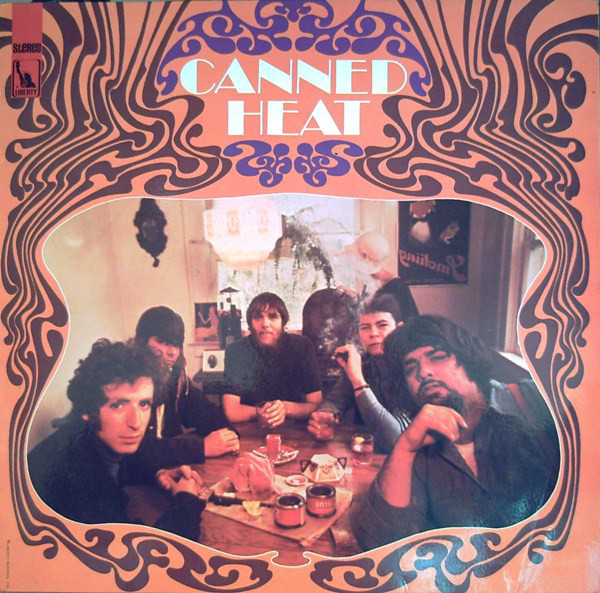
Boogie With Canned Heat.
Just six months after Canned Heat released their eponymous debut album, they returned with their sophomore album Boogie With Canned Heat. It was the first album to feature the classic lineup. By then, each member of Canned Heat had adopted a nickname. Canned Heat now featured Bob “The Bear” Hite, Alan “Blind Owl” Wilson, Henry “Sunflower” Vestine, Larry “The Mole” Taylor and Adolfo “Fito” de la Parra. They made their debut on Boogie With Canned Heat.
By then, Canned Heat were writing more of their own songs. They wrote four of the ten songs. Other songs were written by members of Canned Heat. Bob Hite penned Whiskey Headed Woman No. 2; Henry Vestine contributed Marie Laveau and Alan Wilson wrote An Owl Son. Alan Wilson also cowrote On The Road Again with Floyd Jones. It would play an important part in rise and rise of Canned Heat.
When Boogie With Canned Heat was released on 21st January 1968, it was to critical acclaim. The album epitomised Canned Heat’s unique sound. Loose limbed jams and Canned Heat’s trademark boogies rubbed shoulders on Boogie With Canned Heat. This found favour with record buyers when Boogie With Canned Heat reached number eighteen in the US Billboard 200. That wasn’t an end of the success.
Boogie With Canned Heat included what’s without doubt, Canned Heat’s most famous single, On The Road Again. It reached the top ten in the US Billboard 100. The success of On The Road Again further cemented Canned Heat’s reputation was one of America’s top bands.
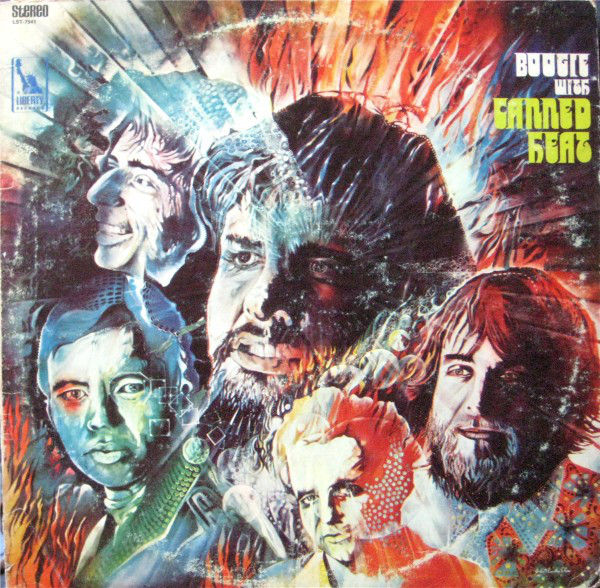
Living The Blues.
After the success of Boogie With Canned Heat, there was no resting on their laurels for Canned Heat. They returned to the studio and recorded their part of third album Living The Blues. It was a double album with a twist.
The eight songs on sides one and two were recorded in the studio. They were a mixture cover versions and original songs. The covers included Charley Patton’s Pony Blues, Jimmy Rogers’ Walking by Myself and Blind Lemon Jefferson’s One Kind Flavour. Canned Heat penned nine part suite Parthenogenesis. Bob Hite wrote Sandy’s Blues and Alan Wilson wrote My Mistake. Alan also wrote another of Canned Heat’s best known songs, Going Up The Country. These songs were recorded between August and October 1968, at .D. Sound Studios. However, the two lengthy jams on sides three and four Refried Boogie I and II were recorded live at The Kaleidoscope, Hollywood, This mixture of studio and live songs became Living The Blues.
When Living The Blues was released in October 1968, the reviews of this sprawling double album were mixed. The experimental nature of Parthenogenesis seemed to catch critics on the hop. They didn’t seem to know what to make of this genre-melting collage. However, one track stood out on Living The Blues, Going Up The Country.
When Living The Blues was released, it reached number eighteen in the US Billboard 200 and number forty-five in the US R&B charts. The lead single Going Up The Country seemed to speak to a generation, and it reached number eleven US Billboard 100, and number one in twenty-five countries worldwide. Later, Going Up The Country became the unofficial anthem to Woodstock. That was still to come.
Before that, Canned Heat enjoyed a triumphant end to 1968, when they played at the Shrine Auditorium in L.A. To crown what had been a barnstorming performance from Canned Heat, they were joined by Bob Hope sitting a atop an elephant. It was a surreal sight, but proof that Canned Heat were now one of the biggest bands in America.
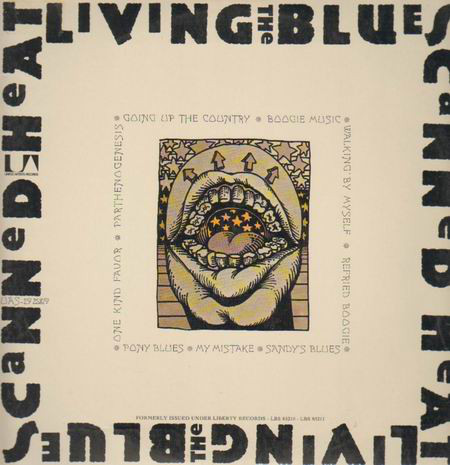
Hallelujah.
Canned Heat returned to I.D. Sound Recorders Hollywood, in May 1969. They recorded eleven tracks that became their fourth album Hallelujah. Canned Heat wrote two tracks, while individual members of the band wrote most of the tracks. Alan Wilson contributed four tracks, Change My Ways, Time Was, Do Not Enter and Get Off My Back. He was quickly becoming Canned Heat’s songwriter in chief, and played an important role in Hallelujah.
Canned Heat released their fourth album, the blues based, Hallelujah on July 8th 1969. Again, the reviews were mixed. They ranged from favourable to positive. However, again, there was no consensus on Hallelujah. Despite this, Hallelujah still reached thirty-seven on the US Billboard 200. This in part, was a result of Canned Heat taking Woodtstock by storm. Before that, the classic lineup of Canned Heat was no more.
Just after the release of Hallelujah, Canned Heat were due to play two nights at Fillmore West. On the first night, there was an onstage altercation between Larry Taylor and Henry Vestine. After the show, Henry Vestine left Canned Heat.
With Canned Heat a man down for the second show, Mike Bloomfield and Harvey Mandel filled the void left by Henry Vestine. They jammed onstage with Canned Heat. So impressive were their performances, that both men were offered a place in Canned Heat. However, it was Harvey Mandel that agreed to join Canned Heat.
Harvey Mandel made his official Canned Heat debut in August 1969. Canned Heat played two nights at the Fillmore West, in preparation for their performance at the Woodstock Music and Art Fair.
The Woodstock Music and Art Fair took place between the 15th and 18th August 1969. Canned Heat were booked to play on the 16th August 1969. Logistically, the only way for Canned Heat to arrive was in a helicopter. They flew over what was a heaving mass of humanity. Having arrived by helicopter, Canned Heat took to the stage as the sun set. Their legendary set included some of their greatest songs, including On The Road Again and Going Up The Country, which became the unofficial anthem to Woodstock. As they left the stage, it was apparent that Canned Heat were one of the stars of the Woodstock Music and Art Fair.
Future Blues.
1969 had been both an eventful and momentous year for Canned Heat. They had lost a member of the classic lineup of Canned Heat, then were one of the stars of Woodstock. By 1970, “the bad boys of rock” had been booked to tour Europe. With some time to spare, Canned Heat decided to record their fifth album, Future Blues.
Canned Heat headed to Village Recorders, where they were due to record nine songs. This included covers of Eddie Shuler’s Sugar Bee; Charley Patton’s Shake It and Break It; Arthur “Big Boy” Crudup’s That’s All Right (Mama) and Wilbert Harrison’s Let’s Stick Together. Canned Heat penned So Sad (The World’s In A Tangle) and Future Blues. Alan Wilson who was still Canned Heat’s songwriter-in-chief wrote Skat, London Blues and sadly, prophetic My Time Ain’t Long. Once the album was complete, it was scheduled for release in late summer 1970.
Future Blues was well received by critics. They praised the album, calling it Canned Heat’s best albums of recent years. With critical acclaim accompanying its release, Future Blues was released on August 3rd 1970. However, Future Blues stalled at fifty-nine on the US Billboard 200. This made Future Blues Canned Heat’s least successful album since their eponymous debut album. The only small crumb of comfort for Canned Heat and Liberty Records, was that Let’s Work Together reached twenty-six in the US Billboard 100. By then, Larry Taylor and Harvey Mandel dropped a bombshell.
The two men announced that they were leaving Canned Heat not long after the release of Future Blues. Larry Taylor joined John Mayall’s band, and Harvey Mandel followed in his footsteps. This left just drummer Adolfo de la Parra, vocalist Bob Hite and guitarist Alan Wilson.

Hooker ’N’ Heat.
After the departure of Larry Taylor and Harvey Mandel, guitarist Henry Vestine rejoined Canned Heat. Replacing bassist Larry Taylor was Antonio de la Barreda. He had previously played alongside Adolfo de la Parra in Mexico. This new lineup of Canned Heat entered the studio to record an album with veteran bluesman John Lee Hooker.
Canned Heat had met John Lee Hooker at an airport in Portland, Oregon. When they got talking, the members of Canned Heat told John Lee Hooker they were longtime fans of his music. It turned out that apparently, John Lee Hooker just happened to be a fan of Canned Heat’s music. So they decided to record an album together.
This would be no ordinary album. Instead, Hooker ’N’ Heat was a sprawling double album. It was recorded at Liberty Records, in Los Angeles, with Bob Hite and Skip Taylor taking charge of production. John Lee Hooker wrote or cowrote every song on Hooker ’N’ Heat. Some of the songs, featured just John Lee Hooker. On other tracks, Canned Hat were reduced to a backing band on Hooker ’N’ Heat. Once Hooker ’N’ Heat was completed, the album was scheduled for release in January 1970.
Between the completion and release of Hooker ’N’ Heat, tragedy touched Canned Heat in September 1970. Just after the completion of the Hooker ’N’ Heat, Alan Wilson attempted to commit suicide when he drove his van off a a cliff near Bob Hite’s home in Topanga Canyon. Fortunately, Alan Wilson survived. Sadly, not for long.
After years of bravely battling depression, Alan Wilson’s life came to an end on the 3rd of September 1970. Alan Wilson was found dead on a hillside at the rear of Bob Hite’s Topanga home. The cause of death was an overdose of barbiturates. When the other members of Canned Heat were told of Alan Wilson’s death, they believed that he had committed suicide. It was a huge blow for the rest of Canned Heat. They were grieving over the loss of a not just a bandmate, but a friend.
Despite the death of Alan Wilson, Canned Heat were due to tour America, Australia and Europe. Then they had a studio time booked to record a new album. So Joel Scott Hill, who had been a member of The Strangers and Moby Grape was drafted in to replace Alan Wilson. Then in January 1971, Hooker ’N’ Heat was released
Reviews of Hooker ’N’ Heat were mixed. However, critics agreed that Canned Heat had returned to their R&B roots. Some of the songs varied in quality. Especially some that featured only the veteran bluesman. Two of the poorest songs on Hooker ’N’ Heat were Send Me Your Pillow and Drifter. However, things improved when Canned Heat joined the fray. Together, they formed a potent partnership, and suddenly, Hooker ’N’ Heat was a very different album. Despite this, Hooker ’N’ Heat stalled at seventy-three in the US Billboard 200. Normally, this would be regarded as disappointing. However, given the death of Alan Wilson, this hardly seemed to matter. Some things mattered more than music. The loss of a friend was one of them.
Live At Topanga Corral.
Later in 1971, Canned Heat belatedly released the first live album of their career. The band had wanted to release a live album for several years. However, Liberty Records who Canned Heat were contracted to, weren’t interested in releasing a live album. Despite this, Canned Heat’s manager Skip Taylor managed to get Canned Heat’s live album released.
Skip Taylor took to Liberty Records a recording of five tracks. They he said, had been recorded at the Topanga Corral during 1966 and 1967. That wasn’t strictly true. The recording was of a concert that took place in 1969, at the Kaleidoscope. When Liberty Records heard that Live At Topanga Corral had been recorded in 1966 and 1967, they allowed Canned Heat to release the album on Wand Records.
When Live At Topanga Corral was released, the album was well received by critics. It featured the lineup of Bob Hite, Alan Wlson, Henry Vestine, Larry Taylor and Adolfo de la Parra. They open the set with Bullfrog Blues, and work their way through Sweet Sixteen, I’d Rather Be The Devil, Dust My Broom, Wish You Would and When Things Go Wrong. Sadly, despite being one of the best live recording of Canned Heat, it failed to find an audience. However, it’s a fitting farewell to Alan Wilson. Their next album, Historical Figures and Ancient Heads was the start of a new era for Canned Heat.
Historical Figures and Ancient Heads.
Having released an album in January 1971, Canned Heat closed the year with the released of their eighth album, Historical Figures and Ancient Heads. It was released in December 1971, and was the first album not to feature Alan Wilson. Joel Scott Hill was given the job of replacing Alan Wilson on guitar. His were big shoes to fill.
Alan Wilson was more than a musician. He was also a songwriter. On Historical Figures and Ancient Heads, Canned Heat penned just the one song, Utah. The other seven songs were cover versions. Among them, were Jessie Mae Robinson’s Sneakin’ Around and Jimmy Rogers’ That’s All Right. They were recorded by Canned Heat, and a few friends.
This included Little Richard on the Skip Taylor and Richard Wayne Penniman penned Rockin’ With the King. Harvey Mandel returned to add lead guitar on a cover of That’s All Right. Charles Lloyd joined Canned Heat when they covered his song I Don’t Care What You Tell Me. Producing Historical Figures and Ancient Heads were Skip and Jim Taylor. Once the album was complete, it was released in December 1971.
When Historical Figures and Ancient Heads was released, the reviews were mixed. Some critics felt Canned Heat were no longer the same group. While they still were still able to boogie with the best of them, Canned Heat seemed to have lost their bluesy roots. However, Historical Figures and Ancient Heads was not without merit.
Cherokee Dance and Utah were regarded as the highlights of the album. Both songs found their way onto FM playlists. Another highlight of Historical Figures and Ancient Heads was Rockin’ With The King, where Canned Heat joined forces with Little Richard. They proved a potent partnership. Despite this, and Cherokee Dance and Utah finding their way onto FM radio, the album stalled at a lowly eighty-seven in the US Billboard 200. Historical Figures and Ancient Heads became the least successful album of Canned Heat’s career. Surely, the only way was up?
Following Historical Figures and Ancient Heads, all wasn’t well within Canned Heat. Joel Scott-Hill and Antonio de la Barreda seemed to have developed an attitude problem. This lead to drummer Adolfo de la Parra threatening to quit the band. Fortunately, he was talked out of leaving Canned Heat, and instead, the insurgents exited stage left. This meant another change of lineup for their next album The New Age.
The New Age.
Joining Canned Heat for their ninth album The New Age, were rhythm guitarist and vocalist James Shane, keyboardist Ed Beyer on keyboards and bassist Richard Hite. Bob Hite’s brother would slot into the rhythm section alongside drummer Adolfo de la Parra and rhythm guitarist James Shane. They headed to The Record Plant in Los Angeles to record The New Age.
For The New Age, nine songs were chosen. Most of them were new songs, which were penned by members of Canned Heat. The only cover version was Lieber and Stoller’s Framed. Bob Hite penned Keep It Clean, Don’t Deceive Me and Rock and Roll Music. However, the new recruit came up trumps. Ed Bayer wrote You Can Run, But You Sure Can’t Hide and Election Blue. James Shane went one better, and wrote a trio of songs. This included Lookin’ For My Rainbow, So Long Wrong and the biker anthem Harley Davidson Blues. It would become a favourite of Canned Heat fans. That was still to come. Before that, Canned Heat had an album to record.
When recording of The New Age began at The Record Plant, Clara Ward joined Canned Heat. Her vocal features on Lookin’ For My Rainbow. Sadly, this was the last recording of one the most successful gospel singers. She joined the latest lineup of Canned Heat, as they tried to get their career back on track.
Despite the best efforts of Canned Heat and producer Skip Taylor, The New Age wasn’t the start of a new era for Canned Heat. The album wasn’t well received. One critic in particular, was less than impressed. Lester Bangs savaged The New Age. His over the top review was regarded as “disrespectful,” and Lester Bangs was sacked by Rolling Stone. However, the damage was done.
Other critics took a much more balanced approach to The New Age. They pointed out highlights like Lookin’ For My Rainbow and the biker anthem Harley Davidson Blues. However, when The New Age was released on March 9th 1973, the album failed to trouble the charts. Worse was to come for Canned Heat.
They were now heavily in debt. Skip Taylor was desperately looking for a solution to the problem. That’s when it’s alleged that Skip Taylor advised Canned Heat to sign away all their future royalties to Liberty Records and United Artists’ recordings, and in return, Canned Heat would be allowed to sign to Atlantic Records. If this was the case, it would prove to be one of the worst deals in the history of music.
Having negotiated a release from their Liberty Records’ contract, Canned Heat signed to Atlantic Records in 1973. They began work on their tenth studio album One More River To Cross. However, Canned Heat’s time at Atlantic Records got off to a bad start.
Bob Hite and Henry Vestine were about to use a vending machine at Atlantic Records. Suddenly, the pair began to argue, and brawl began. Now two members of Atlantic Records’ latest signing were fighting amongst themselves. While this didn’t present Canned Heat in a good light. Things didn’t get much better. surely things would improve?
One More River To Cross was released later in 1973. Canned Heat’s Atlantic Records’ debut, was the tenth studio album of their career. This was a remarkable feat, considering Canned Heat only released their debut in 1967. A lot had happened since then.
The lineup had changed numerous times, there had been countless drugs busts and controversies aplenty. However, only one Canned Heat album failed to chart. That was their previous album The New Age. Sadly, One More River To Cross followed in its footsteps and failed commercially. It came to be regarded as possibly, became one of the most expensive albums in music history.
Especially if the allegations that Skip Taylor advised Canned Heat to sign away all their future royalties to Liberty Records and United Artists’ recordings, so they could sign to Atlantic Records were true? After the commercial failure of One More River To Cross, Atlantic Records cut their ties with Canned Heat. Their relationship with Atlantic Records was brief and potentially ruinously expensive.
If the allegation regarding future royalties are indeed true, then Canned Heat were very badly advised. The decision to trade their future royalties, for their freedom, backfired, and backfired badly. Who knows how much this cost Canned Heat in lost royalties? Even today, the cost of One More River To Cross continues to rise. To some extent, all the success Canned Heat enjoyed early in the Liberty Records years had been for nothing, and they became just the latest ill-advised band in musical history.
CANNED HEAT-THE LIBERTY RECORDS YEARS.



RHYTHM ON THE RADIO: OVAL RECORDS-SINGLES 1974-1987.
RHYTHM ON THE RADIO: OVAL RECORDS-SINGLES 1974-1987.
By 1972, Charlie Gillette was a successful journalist, based in London. He wrote for various publications on both sides of the Atlantic, including Creem, NME and Let It Rock. Occasionally, Charlie presented the BBC TV music program The Old Grey Whistle Test. It was a program that suited Charlie’s eclectic taste in music.
Unlike many music journalists in the early seventies, Charlie’s taste wasn’t restricted exclusively to rock music. Instead, Charlie’s preference was for blues, country rock, reggae and soul. This he would play on his new BBC London radio program. Before that, Charlie embarked upon a new business venture.
Charlie Gillette and his friend Gordon Nelki had been planning to cofound a new label. They eventually took the plunge, and confounded Oval Records later in 1972. Their initial plan, was to release an album of swamp pop.
The two owners of the nascent Oval Records headed to Louisiana, looking for material for their planned swamp rock compilation. On their return home, Charlie and Gordon couldn’t find a distributor for their planned compilation. They were forced to rethink their business model.
After some thought, Charlie and Gordon decided to go into music management. The first artist they worked with, was Kilburn and The High Roads, who were fronted by Ian Dury. Other managers had passed on Kilburn and The High Roads, believing they had little or no commercial appeal. Despite this, Charlie and Gordon were willing to manage them.
What followed was a steep learning curve for the nascent management team. They managed Kilburn and The High Roads until Ian Dury embarked upon a solo career. That spelled the end of the road for Kilburn and The High Roads and Charlie and Gordon’s management deal. This was especially galling for the pair.
They had managed to interest Virgin Records in Kilburn and The High Roads. However, Ian Dury wasn’t interested. He saw Virgin Records as a: “hippie label.” For Ian Dury and his managers, there was a parting of the ways.
They all stayed friends, and in 1978, when Ian Dury was looking for B-Side to Hit Me With Your Rhythm Stick, he chose a song from Oval Records’ publishing arm. That was all in the future. Before that, Charlie and Gordon began working with Virgin Records.
Despite this disappointment surrounding the Kilburn and The High Roads’ deal, the A&R team at Virgin Records were still interested in any other artists that Charlie and Gordon were working with. The only problem was, Kilburn and The High Roads was the pair’s only client. Charlie and Gordon had something else that might interest Virgin Records.
This was when Charlie and Gordon told the A&R team at Virgin Records about their swamp pop compilation. They were interested, and in 1975, Another Saturday Night was released on Virgin Records. By then, Oval Records was up and running.
In December 1974, Oval Records had released its first single, OVAL 1001. This was Johnnie Allan’s cover of Chuck Berry’s Promised Land. Tucked away on the B-Side was Shelton Dunaway cover of Betty And Dupree. These tracks became Oval Records’ first single and in 1975, featured on the swamp pop compilation Another Saturday Night. This was just the start for Oval Records. It was active between 1974 and 1987.
During that period, Oval Records releases were just as eclectic as Charlie Gillette’s musical taste. Oval Records released singles by Jimme Shelter, Lene Lovich, ABC, Woodhead Monroe, Helen Shapiro, African Connexion, George Darko, Bobby and The Boys and Jack ‘N’ Chill. They all feature on Ace Records recently released compilation Rhythm On The Radio: Oval Records Singles-1974-1987. It features twenty-two tracks from Oval Records’ back=catalogue.
This includes the single the launched Oval Records in December 1974, Johnnie Allan’s cover of Chuck Berry’s Promised Land. Fittingly, it opens Rhythm On The Radio: Oval Records Singles-1974-1987. Promised Land also featured on the swamp pop compilation Another Saturday Night. Upon its release, Promised Land looked chart bound. That was until RCA decided to rush release Elvis Presley’s version of Promised Land to celebrated the King’s fortieth birthday in January 1975. It was Elvis’ version that charted and reached number fourteen in the US Billboard 100. For Johnnie Allan, who ironically, had been inspired by Elvis Presley, it was a case of so near, yet so far. He had come tantalisingly close to enjoying commercial success outside of his native Louisiana.
Pete Fowler came to the attention of Charlie Gillette in 1975. He thought that he was an artist with potential. So Charlie put together a band of top musicians to record Pete Fowler’s debut single, One Heart One Song. This included Gallagher and Lyle, former Fairport Convention drummer Dave Mattacks and keyboardist Pete Wingfield. Together, they provide the backdrop for a melodic folk rock single. It was well received by critics on both sides of the Atlantic. Despite this, when the single was released by Oval Records in 1975, it failed commercially. For Pete Fowler, that spelled the end of his recording career.
By 1979, punk was long gone and the punk rock era was well underway. One of the new wave of punk rock bands were the Reluctant Stereotypes, who featured future King frontman Paul King. The Reluctant Stereotypes’ debut single was the Pete Bosworth produced The Lull. It was released in 1979, and fused of post punk, pop, free jazz and progressive rock. Although The Lull failed to make an impression on the UK charts, it was enough for WEA to sign the Reluctant Stereotypes. They went on to release four singles and album on WEA, before parting company with the label in 1981.Later, Paul King would enjoy commercial success between 1984 and 1985.
Back in the late seventies, it wasn’t unheard of for bands to make their way from the other side of the world looking for a record deal. Holly and The Italians made this journey from Los Angeles, one of the music capitals of the world. In London, Holly and The Italians began to play the pub circuit, which was a well trodden path for hopeful bands. This worked, and they were soon supporting Blondie. That was where Charlie Gillette and Gordon Nelki first saw Holly and The Italians. They liked the band, and cut a single with them, Tell That Girl To Shut Up. It’s a mixture of post punk, power pop and indie rock. The single was released on Oval Records in 1979, and caught the attention of critics, and indeed, Virgin Records. They signed Holly and The Italians, and they spent the next three years signed to Virgin Records.
By 1981, Oval Records had grouted to releasing LPs. This included OVAL 302, a split release. On side one, were four tracks from Local Heroes SW9, including the genre-melting Hippy Street. Elements of new wave, post punk and indie rock combine, as Local Heroes SW9 bring to mind The Jam and The Police. They were an accomplished band, who sadly, only ever released two albums. It was a case of what might have been?
In 1982, jazz funk was providing the soundtrack to many of the capital’s clubs. Direct Drive were one of the new jazz funk groups playing the London circuit. They sent a cassette of their music to Oval Records, including Don’t Depend On Me. The version on the cassette, is more or less the version that appears on the 12” version of Don’t Depend On Me. It’s a memorable, melodic and dance-floor friendly slice of the early eighties’ jazz funk from Direct Drive. Their career continued until 1986. By then, their music had evolved and was quite different to the two singles they released on Oval Records.
Helen Shapiro first came to prominence as a fifteen year old in 1961, when she released Don’t Treat Me Like A Child. Twenty-three years later, and Helen Shapiro had recorded a cover of Brickyard Blues. This was a song that New Orleans’ songwriter and producer Allen Toussaint wrote for Glasgow born singer Frankie Miller’s 1974 album High Life. Ten years later, Helen Shapiro’s bluesy cover was released on Oval Records. It’s without doubt one of the highlights of On The Radio: Oval Records Singles-1974-1987. Brickyard Blues shows another side to Helen Shapiro, and is a long way from Walking Back To Happiness.
Phil Shaw and Greg Mason were familiar faces on the London musical scene from the mid-seventies onwards. They decided to pull their resources and form a new musical vehicle, Swimming To France in the early eighties. Sadly, their recording career consist of one 12” EP Swimming To France. It was released on Oval Records in 1983, and features the Phil Shaw penned You Never Even (Asked My Name). It’s Swimming To France’s finest moment, and features their stock in trade, slick, cerebral new wave pop.
Given his eclectic musical taste, it was no surprise that Charlie Gillette embraced what the media called ‘world music’ during the early eighties. One of the bands Charlie championed were African Connexion. They were formed in London by Mwana Musa, who was born in Sierra Leone. African Connexion made their debut on Oval Records in 1984, when they released a 12” EP Midnight Pressure. The highlight of the EP was C’Est La Danse (K Wanza Kwanza), where Congolese rhythms, funk and jazz combine with Afro-pop. Sadly, African Connexion only released one more single and an album Welcome in 1989. After this, Mwana Musa headed home to Sierra Leone, where he swapped music for a career in politics,
George Darko was one of the finest exponents of Burger Highlife, the sub genre that came to prominence in Germany. Burger Highlife was made by the many Ghanian musicians who had settled in Germany during a period of political instability in Ghana. These musicians combined funk and highlife, which became known as Burger Highlife. It found an audience in Germany and Ghana. One of George Darko’s Burger Highlife singles was the propulsive Highlife Time, which was released on Oval Records in 1984. Four years, later, the situation in Ghana had improved, and George Darko left exile in Germany, and returned home in 1988.
Closing Rhythm On The Radio: Oval Records Singles-1974-1987 is the single that gave Oval Records their first top ten single. This was Jack ’N’ Chill’s 1987 acid house single The Jack That House Built. It was produced by Sonic Graffiti and released through the Virgin Records’ imprint 10 Records. Upon its release, The Jack That House Built began to climb the charts and eventually, reached number six in the UK. This seems a fitting way to bring to end the Oval Records’ story, with their biggest hit.
Nearly thirteen years after releasing Johnny Allan’s cover of the Promised Land in December 1974, Oval Records closed its doors for the last time. During that period, Oval Records had launched new artists’ career. Oval Records had also given existing artists the opportunity to kickstart their career. This included Helen Shapiro in 1984. By then, Charlie Gillette and Oval Records were championing new musical genres.
Charlie had been championing what the press later dubbed as: “world music.” He was passionate about the music, just as he had been about swamp pop a decade earlier. From Afro-pop, to Burger Highlife, Cuban and Latin music, Charlie flew the flag.
Later, Charlie would champion other new, and emerging genres, including Acid House. All of these genres and more feature on Rhythm On The Radio: Oval Records Singles-1974-1987.
It features twenty-two tracks, and fittingly, is a suitably eclectic compilation which is a mixture of new names and familiar faces. These artists were part of Oval Records thirteen year history, and are part of Charlie Gillette’s musical legacy.
Rhythm On The Radio: Oval Records Singles-1974-1987 reflects Charlie Gillette’s eclectic musical taste, and is a fitting homage to a true music man, who sadly, died in 2000 aged just fifty-eight.
RHYTHM ON THE RADIO: OVAL RECORDS-SINGLES 1974-1987.




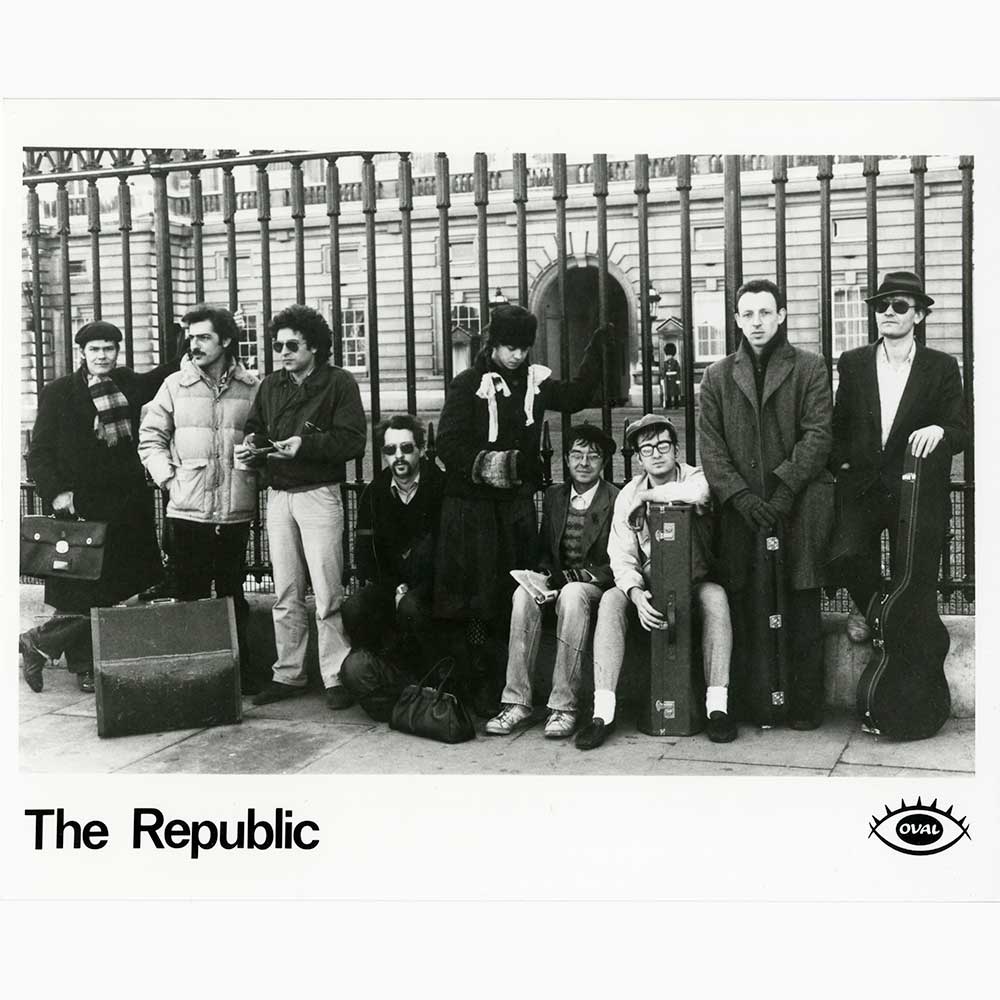
TERRY ALLEN- JUAREZ AND LUBBOCK (ON EVERYTHING).
TERRY ALLEN- JUAREZ AND LUBBOCK (ON EVERYTHING).
Terry Allen’s career began back in 1966, when he was just twenty-three. Since then, his various careers have blossomed, and he’s now a successful country singer, conceptual artist, sculptor and painter.
Given his many talents, nowadays, Terry Allen means different things to different people. Some people know Terry Allen as a highly respected artist, whose drawings, paintings and sculptures can be found in private collections and top art galleries worldwide. Others have seen Terry Allen’s installations, while some remember his theatrical performances. Many more however, remember Terry Allen for his music.
Over the last fifty years, Terry Allen has forged a successful career as a country singer, who has released eight albums. This includes his 1975 debut album Juarez, and the followup Lubbock (On Everything), which was released in 1978. These albums are now regarded as cult classics, and recently, were reissued by the Paradise Of Bachelors label. However, music is only part of the Terry Allen story.
It’s a story that began in Wichita, Kansas on May 7th 1943. That was when Terry Allen was born. He grew up in Lubbock, Texas, which would later establish a reputation as a musical town.
Lubbock would produce Buddy Holly and The Crickets, bluesman Delbert McClinton, country singer and songwriter Mac Davis, The Flatlanders, songwriter, musician and producer Lloyd Maines and his daughter Natalie Maines of the Dickie Chicks. Another of Lubbock’s musical alumni was Jo Harvey, Terry Allen’s future wife. She would play an important part in his later career.
So would Terry Allen’s parents. Especially, his mother. She was a barrelhouse piano player, and occasionally, took her young son along when she played. Terry’s father was a professional baseball player, but in his spare time promoted wrestling bouts to concerts. These concerts took place on Friday and Saturday at nights at a gospel church, with Terry lending a hand.
The Friday night concerts featured blues players, including BB King, T-Bone Walker and Jimmy Reed. These concerts were attended by mostly a black audiences. Then on Saturday, country musicians swung by Luddock and played at Terry’s father’s concerts. This included the legendary Hank Williams and Ernest Tubbs. As the music played, Terry Allen sold patrons bottles of Coke and slices of lemon. This they combined with whatever they had smuggled past the doormen. However, for Terry seeing the various characters and hearing the music would influence his later musical career.
Having graduated Monterey High School, Terry Allen decided to escape the clutches of Lubbock. He felt constrained in the small town, and headed to Los Angeles. Terry had been accepted at the prestigious Chouinard Art Institute in L.A. That was where Terry trained as an architect, and graduated with a Bachelors of Fine Arts in 1966. However, Terry didn’t take architecture any further.
Instead, Terry Allen’s art and music career began in 1966. Terry had drawn the first Juarez drawing. It would later evolve and provide inspiration for The Juarez Device, a “surrealistic hog killing machine” that features on the Juarez album in 1975. A year later, Terry’s music career began.
Within a year, Terry released his first single Gonna California. It was released in 1967. However, disaster struck for Terry when he signed a seven year recording and publishing deal with Clean Records. Terry was locked into a punitive deal, and as a result put his recording career on hold. By then, Terry had returned home.
Two years after gradating from Chouinard Art Institute in L.A, Terry returned to Lubbock. Between 1968 and 1969, he returned to his alma mater Monterey High School and taught a new generation of students. During this period, Terry first tried to combine music and images at the Michael Walls Gallery, in San Francisco.
This is where Terry Allen setup framed pictures and reel-to-reel tapes of music. Terry pushed a piano round the gallery, stopping at various picture and playing pieces of music while interacting with the patrons. One of the pieces of music was Cowboys and The Stranger, which nowadays, is regarded as a forerunner of the music on Terry’s 1975 debut album Juarez. That was the future.
Before that, Terry Allen left the employ of Monterey High School in 1969. Then in 1970, he exhibited his trilogy of mixed media drawings, Dogwood, Border Vows and Cortez Sail. It made inspired the song Cortez Sail, which became the centrepiece of Juarez. That was still four years away,
By 1971, Terry Allen was married to Jo Harvey and the pair had two young children. Terry was still a struggling artist. This meant life was tough for the couple. Fortunately, Terry got a job teaching at the University of California, Berkeley for five months. He also became a guest lecturer at the California State University, Fresno, where he served on the faculty. This lasted until 1973. During this period, Terry drew, wrote songs and taught children art in the Latino neighbourhood where the Allen family lived. It was around this time, that the Juarez paintings were stolen. Incredibly, the burglars broke back in to replace them, as if terrified by the images and scared they would bring bad luck upon them. Meanwhile, Terry was about to go up in the world.
In 1974, Terry Allen became an associate professor at California State University, Fresno. This was a position he held until 1977. A year later, in 1978, Terry Allen became Professor Terry Allen and held this position until 1979. By then, he had decided to pursue other opportunities. This included his music career, which began in 1975 when Terry Allen released Juarez.
Juarez.
The seven year recording and publishing deal Terry Allen had signed with Clean Records was about to expire in 1974. During the past few years, Terry had continued to write. These songs had been partly, been inspired by his art. Terry Allen was also a people watcher, who had studied people from an early age. He then told their stories in his songs. Some of these songs Terry recorded. He worked on his own, and didn’t collaborate with other musicians. This was how Terry seemed to prefer to work. That was all about to change.
One day in 1974, Terry Allen received a phone call from an old friend, Jamie Howell. He was the manager of Jefferson Starship and Hot Tuna. The two bands owned a label Grunt Records, and Jamie Howell was the label A&R man at Grunt Records. He had a proposition for Terry.
Jamie Howell wanted to record an album with Terry Allen. There was only one problem, there wasn’t much in the way of a budget. However, there was enough to book Studio A at Wally Helder’s Studio in San Francisco. This legendary studio was where the great and good went to record an album. Mostly, albums were recorded late in the day. Studios were quiet between 9am until noon each day. Wally Helder’s Studio was no different, and Jamie Howell proposed recording the album in the morning, when the studio was quiet. All Terry had to do was make his way to San Francisco.
Terry Allen packed, and drove from his home in Fresno to San Francisco. That was where he met Jamie Howell. Soon, though, Jimmy’s plans started to unravel.
Just like most musicians, Terry wasn’t a morning person. He would’ve preferred to record during the night. That wasn’t an option, given the small budget to record. It was so small, there wasn’t enough in the budget to rehearse a band. Juarez was recorded on a shoestring budget, with just a few local musicians joining Terry at Wally Helder’s Studio.
This included Black Kangaroo guitarist Peter Kaukonen. He also played mandolin and added backing vocals on La Despedida (The Parting). Peter was an experienced musician who had already worked with Jefferson Airplane, Hot Tuna, Link Wray and Johnny Winter. Greg Douglass was another experienced guitarist, who previously, had worked with Hot Tuna, Van Morrison and The Steve Miller Band. Adding vocals on La Despedida (The Parting) was Dianne Harris. Producing Juarez was Jamie Howell. In preparation for the recording sessions, Terry Allen found an unusual but effective way to prepare for the early morning sessions.
Terry Allen took to staying up all night. Day became night for Terry as he headed into the studio with his tight and talented band. They would eventually record fifteen tracks. These tracks were a mixture of songs and dialogue, including The Characters (A Simple Story) and The Run South. The arrangements were spartan and minimalist, with just a piano or guitars accompanying Terry, as he became a storyteller.
The Juarez Device (aka Texican Badman) opens Juarez, and epitomises the album’s understated, alt-country arrangements. It also showcases the first of a series of compelling characters, the Texican Badman. He’s introduced by Terry, before this gives way to the first piece of dialogue, The Characters (A Simple Story).
What follows, is an album of alt-country, where Terry Allens tells of “The Characters” motivations and desires. Unlike many albums, the characters are believable and three dimensional. Some of the characters are hard bitten, with a life is cheap attitude. Other characters have a seen it all, worldweary outlook. Some are cynical, like on Border Palace, while other characters are dysfunctional. A couple even become murderous, on another piece of dialogue, The Run South. Terry uses his Texan drawl to narrate the story of a drinking spree that ends up in murder, and a chase through the South Californian desert. Just like so many of the songs on Juarez, there’s a grittiness to the song.
Many of them look at the dark underbelly of life on the wrong side of town. This is the case on Jabo/Street Walkin Woman. Then on La Despedida (The Parting), a mixture of dialogue and music, Terry Allen takes his leave on what was his much anticipated debut album.
When Juarez was released on Grunt Records in 1975, sadly, the album passed most people by. It even passed most critics by. The few critics who reviewed the album, were won over by this tale of life on the wrong side of the tracks in small town America. It was one of the earliest alt-country albums, and would inspire and influence other artists. However, commercial success and widespread critical acclaim would elude Juarez…until much later. By then, Terry Allen had released several albums, including his sophomore album Lubbock (On Everything).
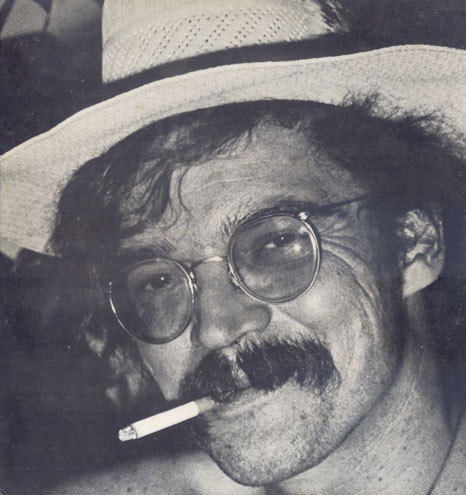
Lubbock (On Everything).
Three years after the release of Juarez, Terry Allen returned to the studio to record his sophomore album. By then, Terry was still living in California, and was now a professor at California State University, Fresno. Terry’s art career was blossoming, and his reputation was growing. He had also been writing a new album of songs.
They were based around the Texan town where Terry and his wife Jo Harvey grew up. All these years of observing and people watching had given Terry a wealth of material for his sophomore album. He had written twenty-one songs about the people of Lubbock. They would become Lubbock (On Everything), an insightful album into human nature in small town America. They were recorded this time around, by a full band.
This time, Terry Allen returned home to where it all began for him, Lubbock. He booked Caldwell Studios to record Lubbock (On Everything). Terry who played piano became the leader of what he called The Panhandle Mystery Band. It was a large band, with strings and horns. This was the polar opposite to the lo-fi approach to Juarez.
At Caldwell Studios, Terry Allen was joined by The Panhandle Mystery Band. Their rhythm section featured drummer Curtis McBride and bassist Kenny Maines. Meanwhile Luis Martinez added jazz guitar and Jesse Taylor flatland guitar. They were joined by accordionist Ponty Bone, fiddler Richard Bowden, Joe Ely on harmonica and percussionist Alan Shin who also played marimba. Don Caldwell arranged the string section, which featured Leslie Blackburn on viola, cellist Karen Blalack and violinists Ruth Ann Truncale and Susan Allen. The horn section included trumpeter Tommie Anderson, trombonist Mark Anthony, saxophonist Don Caldwell and Russ Standefer on tuba. Some of Terry’s musical friends added harmonies and the Monterey High School Marching Band even made a guest appearance. Producing Lubbock (On Everything), was Terry Allen. This was the first album he would produce.
Terry Allen had thrown himself into the deep end on Lubbock (On Everything). Now it was a case of sink or swim. Terry embraced the role of producer, and soon, the twenty-one songs were recorded. These songs had a strong narrative and would introduce the listener to another cast of captivating characters.
Some of them are flawed, fragile or vulnerable. Some are lonely, others in love or lovestruck or struggling with their identity. Others are browbeaten by life, and are worldweary and even desperate. Especially the one time high school football star, who having fallen on hard times, robs an off license on The Great Joe Bob (A Regional Tragedy). Then there’s Lubbock Woman whose: “forty and lonely” and still hasn’t found love and happiness. This is the only relationship or love song on Lubbock (On Everything),
There’s several more. They examine relationships and love, in the romantic and erotic meaning of the words. This Terry Allen does on The Wolfman Of Del Rio, The Girl Who Danced Oklahoma, Cocktails For Three, The Beautiful Waitress and Blue Asian Reds (For Roadrunner). Many of these songs are cinematic, as Terry paints pictures of love in small town America. Other times, Terry gives love songs a new twist with lyrics that are metaphorical. Essentially, Terry is looking for a new way to tell what is one of the oldest stories known to man, a love story. This he certainly succeeds in doing.
Some of the songs on Lubbock (On Everything) have a poignancy. Other times, the lyrics are insightful and sometimes, personal, including The Thirty Years Waltz (For Jo Harvey). There’s also a affection, compassion and even empathy in some of the songs on Lubbock (On Everything). That’s even the case when the characters are downtrodden and foolhardy, and even appear to be pitiful and even absurd. Terry has mercy on them, unlike on Juarez, where his lyrics would’ve been much more acerbic. This shows another side of Terry Allen. So do several other songs on Lubbock (On Everything),
Among them, is The Great Joe Bob (A Regional Tragedy), where the one time high school football star has fallen on hard times, and robs an off license. There’s a sadness and even a degree of poignancy in the song. Sometimes, satire is the order of the day. Especially, when it comes to the songs about the art world, including Truckload Of Art, The Collector (And The Art Mob). These songs find Terry Allen laughing at a world he himself was part of. This new world looked like providing a wealth of material for his musical career as it began to unfold.
Alas, when Lubbock (On Everything) was released as a double album on Fate Records in 1978, it was a familiar story for Terry Allen. The album failed to make any impression on the charts. Again, a few critics went into bat for Lubbock (On Everything). They regarded it as be a carefully crafted and accomplished album of insightful, cinematic and cerebral songs. These songs introduced the listener to three dimensional characters. However, the only problem was that when Lubbock (On Everything), this album of alt-country was released at the height of the disco boom. Country music and alt-country wasn’t what record buyers were looking for.

Still, though, a small and discerning coterie of record buyers discovered Lubbock (On Everything), and flew the flag for Terry Allen’s first two albums. They realised that Terry Allen was a talented singer, songwriter and storyteller. His speciality seemed to be telling the story of life in small town America.
In Juarez, this included people living on the wrong side of the tracks in small town America. Lubbock (On Everything) was a much more hopeful album, where songs about relationships and love sat side-by-side with personal and poignant songs, and songs where tragedy touches the people of Lubbock. The people of Lubbock Terry Allen paints using the equivalent of every colour in artist’s paintbox. They range from the hapless, happy and hopeful, to those who are lonely and those in love. Some come across lost causes, others seem pitiful. However, this isn’t just a snapshot of Lubbock. Instead, it’s a snapshot every town, in every country. Providing this insightful snapshot is Terry Allen, whose music is cerebral, cinematic, beautiful, hopeful, poignant and sometimes tinged, with sadness and satire. Gradually, people began to discover Lubbock (On Everything).
Belatedly, Lubbock (On Everything), and its predecessor Juarez began to find a wider audience. This has been helped by the Paradise Of Bachelors label’s reissue of Terry Allen’s first two albums, Juarez, and Lubbock (On Everything). These two albums are introduction to one of the most underrated musicians of the past fifty years. However, music is just part of Terry Allen’s life.
He’s a highly respected artist, whose drawings, paintings and sculptures can be found in private collections and top art galleries. Nowadays though, more and more people remember Terry Allen for his music, including his 1975 debut Juarez, and his 1978 sophomore album Lubbock (On Everything). These two albums are the perfect introduction to the multitalented Terry Allen, singer, songwriter and storyteller extraordinaire.
TERRY ALLEN- JUAREZ AND LUBBOCK (ON EVERYTHING).
KOLLECTION 06: CLUSTER 1971-1981-COMPILED BY JOHN McENTIRE.
KOLLECTiON 06: CLUSTER 1971-1981-COMPILED BY JOHN McENTIRE.
One of the most important, influential and innovative bands in the history of German music were Cluster. Hans-Joachim Roedelius and Dieter Moebius formed Cluster in 1971. Previously they had both been members of Kluster since 1969. However, Conrad Schnitzler, the third member of Kluster, left the band in mid-1971. This resulted in the two remaining members of Kluster deciding to form Cluster.
Little did Hans-Joachim Roedelius and Dieter Moebius realise that this was the start of a musical journey that would span four decades. Cluster were together until 2010. By then, Cluster had released eleven studio albums and five live albums. However, the most prolific period of Cluster’s long and illustrious career was the period between 1971 and 1981.
During that ten year period, Cluster were at their most prolific and productive. They released eight studio albums and one live album between 1971 and 1981. This included some of their most important and innovative work, including albums like Cluster, Cluster II, Zuckerzeit, Sowiesoso, Cluster and Eno and After The Heat. These albums are the work of true music pioneers, who have influenced several generations of musicians. That is still the case today.
Cluster outlasted the majority of bands that were born in Germany in the early seventies. Their career lasted thirty-nine years. That’s something to celebrate. To celebrate the career of Cluster, the Hamburg based Bureau B label released the limited edition 1971-1981 box set earlier this year. More recently, Bureau B released a new compilation of Cluster’s music, Kollection 06: Cluster 1971-1981 Compiled By John McEntire. It features eleven of Cluster’s finest moments from their first eight albums. This includes a track from their eponymous debut album.
Cluster.
When Cluster were preparing to record their eponymous debut album , they were joined in the studio by another legend of German music, Conny Plank. He featured on Cluster, which marked a change in sound. Gone was the almost industrial, discordant sound of Kluster. It found Cluster move towards an electronic sound. Hans-Joachim Roedelius remembers: “Dieter and I played all the instruments and Conny added all sorts of effects. For us this was the start of a new era.”
Cluster began work on their eponymous debut album. In the studio, Cluster set about honing and sculpting a trio of soundscapes. “Cluster which had very little melody, is a series of improvised and atmospheric soundscapes.” This includes 21 32, which features on Kollection 06: Cluster 1971-1981 Compiled By John McEntire. It’s an eight minute edit of this captivating, epic soundscape.
Just like the other soundscapes, they’re best described as futuristic, moody, dramatic and truly captivating. Heavy rhythms, beeps, squeak and drones drenched in effects assail the listener. It’s as if Cluster have been inspired by avant-garde, free jazz, early electronica, industrial, free jazz and even rock. This fusion of influences eventually became Cluster.
Once Cluster was completed, the album was released later in 1971 on Philips. Little did anyone, even Cluster themselves, realise the effect album bearing the serial number Philips 6305074 would have. Nowadays, Cluster is regarded as an innovative classic, and in a sense, this was the start of Cluster’s career in earnest.
“This was Cluster’s major label debut. It found Cluster at a crossroads.” They were ready to turn their back on the avant-garde, almost discordant and industrial sound of Kluster, and begin the shift towards the ambient and rock-tinged sound of the late seventies. That was the future.
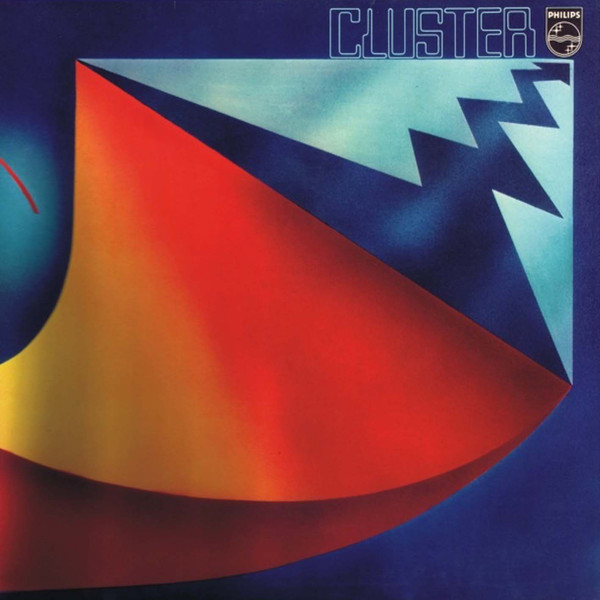
Cluster II.
“For the followup to Cluster, Conny Plank was no longer a member of Cluster. We were now a duo, consisting of Dieter and I. Conny had other projects he wanted to concentrate on.” With three becoming two, the two remaining members took a different approach to recording.
Cluster had added to their impressive arsenal of equipment. As Conny Plank watched on, two organs, analog synths, a Hawaiian guitar, a bass and an electronically treated cello were brought into the studio. Cluster weren’t finished yet. The two members of Cluster started setting up array of effects. This included audio-generators which usually, was found in an electrician’s toolbox. They became part of Cluster’s alternative orchestra. With everything setup, Cluster got to work.
“To some extent, it was trial and error. We tried different things. Some worked, others didn’t,” Hans Hans-Joachim Roedelius explains. The end result, Cluster II “saw a further shift towards a more electronic sound.” This is apparent on Für Die Katz, which features on Kollection 06: Cluster 1971-1981 Compiled By John McEntire.
The music veered between futuristic and dramatic to hypnotic, dreamy, lysergic and otherworldly. Sometimes the music becomes pastoral; other times understated and occasionally, explodes into life. However, for much of the time, Cluster II is melodic and mesmeric. Again, Cluster had produced an album that was way ahead of its time.
When Cluster II was released, it was on Germany premier label when it came to ambitious and innovative music, Brain. Cluster II was assigned the serial number Brain 1006, and when in was released in 1972, it was well on its way to becoming a groundbreaking genre classic.
Ironically, many German critics and record buyers overlooked groups like Cluster. Instead, they were more interested in the music coming out of America and Britain. Incredibly, they never realised that some of the most innovative music was being made in their own backyard. This includes that made by musical chameleons, Cluster whose music would continue to evolve.

Zuckerzeit.
Zuckerzeit, Cluster’s third album, was released in 1974, and was co-produced by Michael Rother of Neu! “Michael first met Dieter and I in 1971. By 1973, Michael was on a break from Neu! We decided to head into the countryside to Forst, to build our own recording studio.” This could’ve been fraught with problems? “No. We knew what we were doing and trying to achieve. All of us had experience in studios, so knew what was required.” The result was a studio “where Michael, Dieter and I recorded the two Harmonia albums, Musik Von Harmonia and Deluxe.” However, before that, Zuckerzeit was released.
On the release of Zuckerzeit, in 1974 Michael Rother’s influence is noticeable. He placed more emphasis on melody, rhythm and the motorik beat.” Hans-Joachim Roedelius explains that previously, Cluster didn’t place the same importance on melody or structure. Michael introduced structure and discipline.” The result was a very different album.
That’s apparent from the opening bars of Hollywood, a beautiful, but haunting soundscape It’s a welcome addition to Kollection 06: Cluster 1971-1981 Compiled By John McEntire. That’s the case with Heiße Lippen were crisp Motorik beat provides the backdrop for Cluster’s synths. Cluster with the help of Michael Rother are transformed into a very different band.
They create music that’s variously melodic, ethereal, evocative, haunting and cinematic. Especially on tracks like Hollywood, Rosa, Fotschi Tong and Marzipan. Then on Rote Riki, the music becomes futuristic, with the man machine adding sci-fi sounds that sound as if they’re from a distant planet. Meanwhile, Caramel would influence future generations of dance music producers. Although Caramba has futuristic sound, it’s melodic and contemporary. It sounds as if it belongs on the dance-floors of Berlin’s clubs. This is incredible, given Zuckerzeit was released later in 1972.
Cluster had released two albums on Brain during 1972. Both would become future genre classics, and both would show a different side to Cluster. Zuckerzeit with its mixture of electronic pop, art rock and avant-garde, was an album way ahead of its time. It’s a truly innovative and timeless album, where Cluster continue to reinvent themselves. The decision to bring Michael Rother onboard as producer was a masterstroke; and also resulted in the birth of a new band, Harmonia.
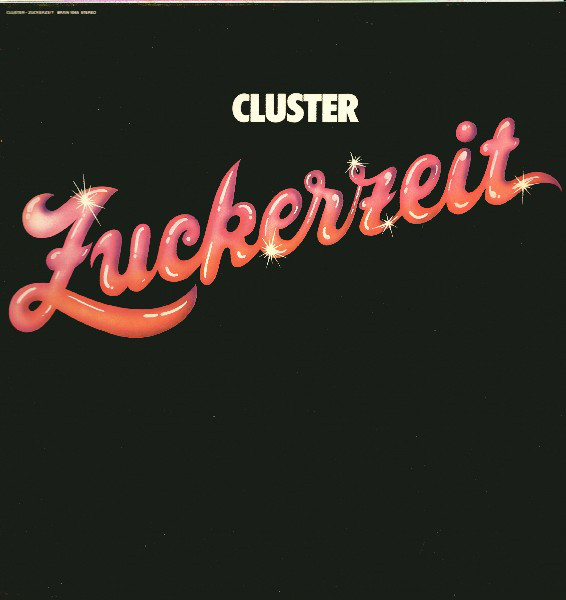
Sowiesoso.
Hans-Joachim Roedelius and Dieter Moebius founded Harmonia with Michael Rother. The new band released two studio albums, Musik von Harmonia in 1974 and Deluxe in 1975. Both albums featured inventive and innovative music. Despite that, and Brian Eno calling Harmonia “the most important band in the world,” neither album sold well. Then when Harmonia recorded the album Tracks and Traces with Brian Eno, the master tapes went missing. They were only discovered nearly four decades later, and belatedly released in 2007. However, in 1976,Hans-Joachim Roedelius remembers: “Harmonia had ran its course, we returned to Cluster. We had never stopped being Cluster. We played live, but didn’t release a new album until Sowiesoso, in 1976, which we recorded in just two days.”
Despite being recorded in just two days, Sowiesoso found Cluster at their creative zenith. They had recorded an album of understated, beautiful, poignant and melancholy melodies, including Zum Wohl, Es War Einmal and the edit of In Ewigkeit that feature on Kollection 06: Cluster 1971-1981 Compiled By John McEntire. The arrangements are often minimalist, but always, cinematic. Sometimes, the music is evocative and atmospheric. Occasionally, there’s an air of mystery. Especially, Halwa, with its cinematic sound. Just like the rest of Sowiesoso, the music paints pictures. That was the case in 1976, and is the case in 2016.
When Sowiesoso was released in 1976, it was on Günter Körber’s Sky Records. It had been formed in 1975, and by 1976, was already regarded as a label that released ambitious, influential and innovative music. This described Cluster’s first album in four years. However, Sowiesoso was a very different album to Zuckerzeit.
That was no surprise to those familiar with Cluster’s music. They were like musical chameleons, constantly reinventing their music. The musical chameleons were about to enter a three year period where Cluster could do no wrong.
Enter Brian Eno.
In June 1977, the two members of Cluster were joined by three old friends. The first was Holger Czukay of Can. “Dieter and I knew Holger from way back, back to Zodiak Free Arts Lab. We hung around with members of Can. Back then, there was a great sense of community. Everyone helped and influenced each other. We even went on to tour together.” Another of the guest artists on Cluster’s 1977 album first met Dieter and Hans at a Cluster concert.
That was Brian Eno: “who Cluster jammed with in 1974. Brian joined us on stage, and we spent the second half of the concert jamming. That was how we first met Brian. Then in 1977, he joined as for the recording of Cluster and Eno. We learnt a lot from Brian. Similarly, I like to think we influenced him. That was the case when we recorded After The Heat.” Before that, Cluster and Eno was recorded.
Cluster and Eno.
The four great innovators got to work. They spent part of June 1977 recording enough for two albums. Conny Plank laid down bass lines, while Dieter and Hans-Joachim Roedelius played synths and keyboards. So did Brian Eno who added bass and vocals. Once the recording session was complete, the first collaboration between Cluster and Brian Eno was released later in 1977.
When Cluster and Eno was released later in 1977, the album was a meeting of minds. Elements of both Cluster and Brian Eno’s music melted into one. Especially on Wehrmut, which features on Kollection 06: Cluster 1971-1981 Compiled By John McEntire. Just like other tracks, Cluster supplied elements of avant-garde, while Brian Eno’s supplied the ambient influence. When this was combined with drone and world music, the result was another classic album.
Widespread critical acclaim accompanied the release of Cluster and Eno. It was hailed a groundbreaking album, one that was way ahead of its time. Cluster and Eno is an album that Hans-Joachim Roedelius: “is proud of.” He remembers the recording sessions fondly, and sees both Cluster and Eno, and its followup After The Heat, as an equally “influential album.”
After The Heat.
Just a year after the release of Cluster and Eno, the second collaboration between Cluster and Brian Eno was released. It too, was released to critical acclaim. This fusion of ambient, art rock, avant-garde, experimental and Krautrock were combined by Cluster and Brian Eno. Again, both Cluster and Brian Eno were influencing each other. Especially on The Shade, which features on Kollection 06: Cluster 1971-1981 Compiled By John McEntire. The influences of both Cluster and Brian Eno can be heard.
“This was not one way. We both influenced each other. On After The Heat, I believe we influenced Brian’s production style. If you listen to David Bowie’s Low and Lodger albums which Brian Eno produced, Cluster and Harmonia’s influence can be heard. So while Brian influenced Cluster, we certainly influenced him.” After two albums with Brian Eno, Cluster’s next album saw them return to a duo.
Grosses Wasser.
Following two albums with Brian Eno, Cluster returned to the studio in 1979. This time, Cluster were joined by Peter Baumann of Tangerine Dream. He would produce Grosses Wasser, Cluster’s seventh album.
It was an album where Cluster drew inspiration from ambient, art rock and avant-garde to electronica and free jazz. The result was music that’s ambitious, challenging and experimental. Other times, the music becomes ethereal, elegiac, melancholy and cinematic. Sometimes, though, Cluster decide to throw a curveball. This they do on the ten minute edit of Grosses Wasser that features on Kollection 06: Cluster 1971-1981 Compiled By John McEntire. It finds Cluster springing surprises and throwing the occasional curveball on this ambition, genre-melting track. This adds to avant-garde sound of Grosses Wasser.
When Cluster released Grosses Wasser later in 1979, it proved to be Cluster’s most avant-garde album. “This wasn’t a conscious decision. Instead, it was just a case of evolution. That was the way that the Cluster worked. It was the same live.” That became apparent on Cluster’s first live album.
Live In Vienna.
Despite releasing seven studio albums, Cluster had never released a live album. That changed when Cluster took to the stage at the Wiener Festwochen Alternativ, on June 12th, 1980. It was the only time that Cluster took to the stage with Joshi Farnbauer. The result was one of Cluster’s most experimental albums.
Sometimes, the music veered towards discordant, and was reminiscent of early performances by Kluster. Hans-Joachim Roedelius remembers: “a song was just the starting point. We never knew what direction it would take. It was improvisation at its purest. Partly, it was because we couldn’t replicate our music live.” That was the case on, Live In Vienna, which featured Cluster at their most ambitious and inventive. However, just like Harmonia four years earlier, the end was nigh for Cluster.
Curiosum.
Cluster recorded their eighth studio album Curiosum in 1981. Recording took place at Hamet Hof, in Vienna, which was now Hans-Joachim Roedelius adopted home.
At Hamet Hof, Cluster recorded seven tracks. Some were relatively short by Cluster standards. Given the title, the seven tracks on Curiosum were somewhat unorthodox. However, they were unusually melodic. This includes Oh Odessa, that features on Kollection 06: Cluster 1971-1981 Compiled By John McEntire. It’s melodic as elements of avant-garde, electronica and experimental music are combined by musical chameleons, Cluster. They were about to bring the curtain down on chapter one of the Cluster story.
Just like Harmonia, “Cluster had run its course. We decided to concentrate on other projects. There was no fall-out, Cluster just came to a natural end. After eight studio albums, Hans-Joachim Roedelius and Dieter Moebius put Cluster on hold. They would reunite on several occasions, in the future. However, Cluster had already recorded eight studio albums. Custer would only release three more albums between 1984 and 2009.
Cluster’s music would continue to be relevant right through their swan-song Qua in 2009. However, by 1981 Cluster had released some of the most important music of their career.
Albums like Cluster, Cluster II, Zuckerzeit, Sowiesoso, Cluster and Eno and After The Heat are the work of true music pioneers. Incredibly, these albums were released during the first ten years of Cluster’s career. They also recorded two other ambitious albums, Grosses Wasser and Curiosum. Each of these eight albums features Cluster’s music as it continues to evolve.
That’s apparent on Bureau B’s new compilation of Cluster’s music, Kollection 06: Cluster 1971-1981 Compiled By John McEntire. It documents Cluster’s career between Cluster in 1971 right through to 1981s Curiosum. To do this, John McEntire chose eleven of the finest moments from the first ten years of Cluster’s career. Three of these tracks have been edited so that the eleven tracks can fit on one CD. The result is the perfect introduction to Cluster.
Especially for newcomers to Cluster. They might be unsure where to start in Cluster’s impressive back-catalogue. Not any more. Kollection 06: Cluster 1971-1981 Compiled By John McEntire gives them an overview of the first eight studio albums. From there, newcomers to Cluster can dig deeper. A good place to start is Bureau B’s 1971-1981 nine disc box set. However, it’s a limited of just 1,000 CD and LP box sets. They’ve almost sold out, and are well on their way to becoming collector’s items. Anyone wanting a copy of 1971-1981 will need to be quick. It’s the perfect followup to Kollection 06: Cluster 1971-1981 Compiled By John McEntire.
Both the 1971-1981 box set and Kollection 06: Cluster 1971-1981 Compiled By John McEntire features the music a pioneering group. The released ambitious, groundbreaking and timeless music. It has gone on to influence several generation of musicians. Even today, musicians cite Cluster as one of the bands who influence and inspired them. That will continue to the case as the music Cluster made was timeless.
There’s a reason for this. Cluster weren’t afraid to push musical boundaries to their limits, and sometimes, way beyond. Musically, Cluster were willing to go, where others musicians feared to tread. This was the case during the period 1971-1981, which Kollection 06: Cluster 1971-1981 Compiled By John McEntire covers. During that period, Cluster released eight studio albums, including several classic Krautrock albums. Each of these albums featured ambitious, groundbreaking and genre-melting music that even four decades later, is truly timeless. One listen to Kollection 06: Cluster 1971-1981 Compiled By John McEntire and that will be apparent.
KOLLECTiON 06: CLUSTER 1971-1981-COMPILED BY JOHN McENTIRE.
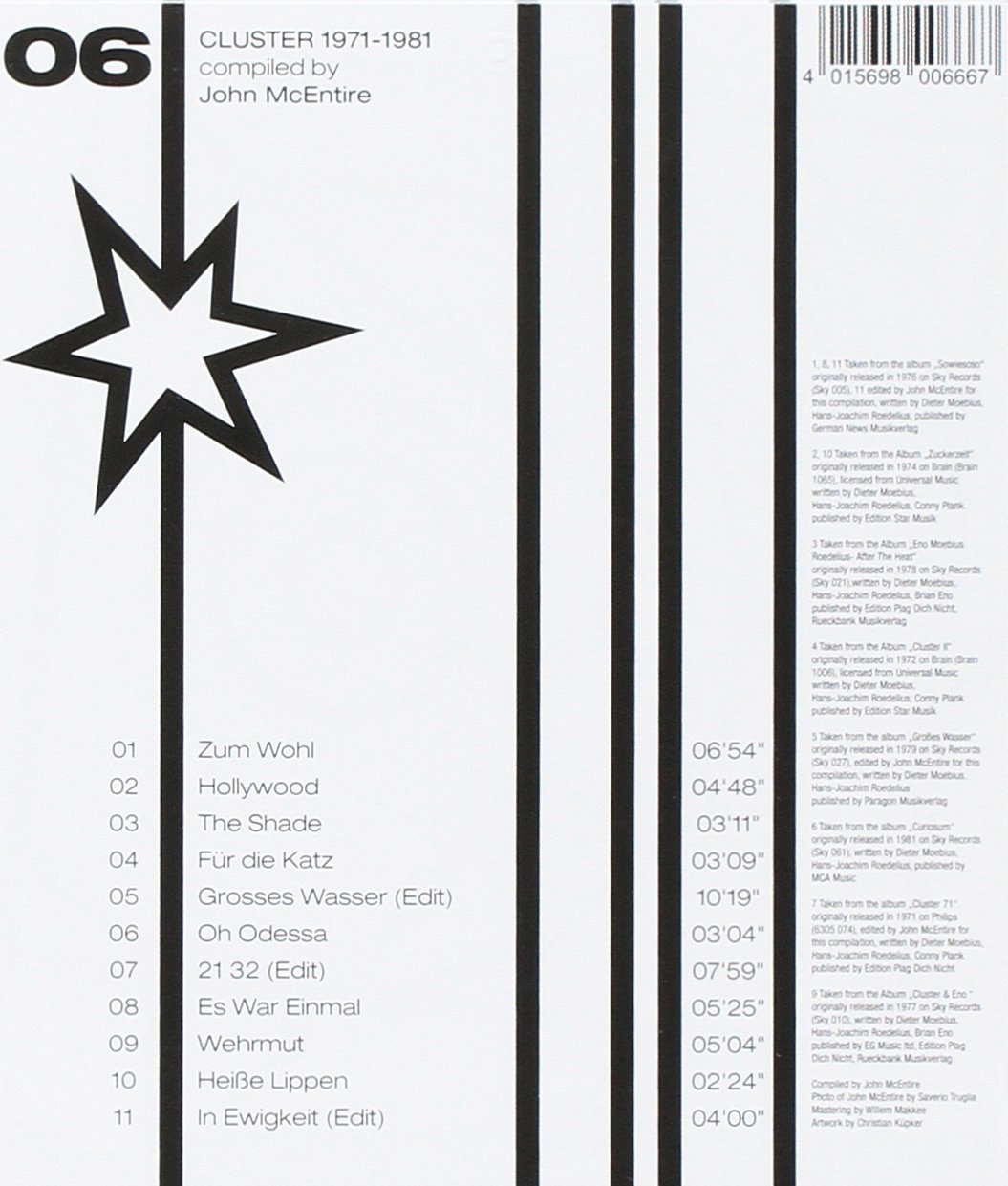
TIM BUCKLEY- LADY, GIVE ME YOUR KEY: THE UNISSUED 1967 SESSIONS.
TIM BUCKLEY- LADY, GIVE ME YOUR KEY: THE UNISSUED 1967 SESSIONS.
Having released his eponymous debut album in 1966, Tim Buckley was told by Elektra wanted to record a followup album. Before that, Elektra’s founder Jac Holzman told Tim Buckley he wanted him to record a single. Then the album would follow. This made sense.
Elektra were trying to introduce Tim Buckley to a wider audience. A successful single would certainly do that. There was only one problem though. Tim Buckley hadn’t any new songs. So Tim Buckley and his songwriting partner Larry Beckett began work on new material.
Their priority was the single project. Before work began, the pair spent time relaxing in lyricist Larry Beckett’s Venice Beach apartment, listening to AM and FM radio. This was where the pair hit on the idea of writing an AM and FM side.
The Buckley and Beckett partnership worked quickly. They were already a prolific partnership, who could reel off songs in a short space of time. Soon, the pair had penned four songs, Once Upon A Time, Lady, Give Me Your Key, Sixface and Contact. These songs were demoed at Larry Beckett’s Oak Court apartment.
It’s just Tim Buckley accompanying himself with an acoustic guitar. They were recorded onto Larry Beckett’s reel-to-reel tape. Despite having four songs for the single project, the Buckley and Beckett songwriting partnership weren’t finished yet.
This prolific partnership began to write some more songs. Before long, they had written three more songs, Once I Was, I Never Asked to Be Your Mountain and Pleasant Street. Neither Tim Buckley, nor Larry Beckett, knew that two of these songs would later be regarded as Tim Buckley classics. Just like the other four songs, Tim Buckley recorded these songs at Larry Beckett’s Oak Court apartment. They became part of the Oak Court Demo Tape.
The songs on the Oak Court Demo Tape weren’t the finished versions of the songs that would later feature on Goodbye and Hello. Instead, they were work-in-progress. It was a similar case with an acetate recorded at Madison Studios, in Manhattan.
By then, Tim Buckley was touring in an attempt to build up a following. He was due to play several dates in New York. During some downtime, Tim Buckley planned to book some studio time in one of the Big Apple’s many studios. His manager Jerry Yester was keen to hear some songs that might find their way onto his sophomore album.
Once Tim Buckley knew when he had some downtime, he booked studio time at Madison Studios in midtown Manhattan. Rather than take his band, Tim Buckley decided to record acoustic demos like those on the Oak Court Demo Tape. This time though, Tim planned to record just six Buckley and Beckett compositions. The pair had penned Knight-Errant, Marigold, Carnival Song, No Man Can Find The War, I Can’t Leave You Lovin’ Me and She’s Back Again. With just his acoustic guitar accompanying him, Tim recorded the six songs. Once the session was complete acetates were pressed.
These acetates featured songs that Tim Buckley thought may feature on his forthcoming sophomore album. One of the acetates, Tim Buckley mailed to his manager Jerry Yester, on the West Coast. He was keen to hear the new songs that Tim Buckley and Larry Beckett had written. So was Jac Holzman at Elektra.
Eventually, the acetate arrived at Jerry Yester’s office on the West Coast. He was finally able to hear the songs that Tim Buckley and Larry Beckett had been working on. Tim hoped that some of these songs would feature on his sophomore album, Goodbye and Hello. Only Knight-Errant and Carnival Song and No Man Can Find The War were rerecorded and eventually found their way onto Hello and Goodbye. The other three songs, Marigold, I Can’t Leave You Lovin’ Me and She’s Back Again Tim quickly dropped from his set. They’ve never been heard since then…until recently.
These three long lost songs are among the thirteen that feature on Lady, Give Me Your Key-The Unissued 1967 Sessions. It was recently released by Light In The Attic Records. Lady, Give Me Your Key-The Unissued 1967 Sessions features what many Tim Buckley fans, will be the equivalent as the Holy Grail. This includes the seven songs the Oak Court Demo Tape, and the six songs on The Acetate recorded at Madison Studios. Neither of these sessions have been released before. Indeed, The Acetate was only discovered by chance.
The Acetate only came to light when Jerry Yester was tidying out his house. He found an old suitcase, and began looking through its contents. Tucked away in the suitcase, was The Acetate. By then, several decades had passed and Tim Buckley’s career had been cut tragically short on June 29th 1975.
By then, Tim Buckley was a prolific artist. His songwriting partnership with lyricist Larry Beckett had proved a fruitful one. Tim released nine albums between 1966 and 1974.
His debut album Tim Buckley was released by Elektra in 1966. Goodbye and Hello followed in 1967. Two years later, Tim released Happy Sad and Blue Afternoon during 1969. Then in 1970, Tim released another two albums, Lorca and Starsailor.
Already, Tim Buckley had flitted between jazz, funk, psychedelia and avant-garde. Then on his three final albums, Tim’s music moved towards sex funk on 1972s Greetings from L.A., 1973s Sefronia and 1974s Look at the Fool. Alas, Tim’s dalliance with sex funk resulted in his music being banned from radio. Sadly, that was the least of his worries.
Over the years, Tim Buckley had grown dependent on drugs. For some time, Tim had managed to control his drug habit. This he was still managing to do on the 28th of June 1975, as he prepared to play a concert in Dallas, Texas. After the show, headed out to celebrate a party.
At the party, Tim Buckley took a combination of heroin and alcohol, and reacted badly. Tim’s tolerance level was no longer as high as they had once been. So his friends took Tim home. What happened next is unclear.
It’s thought that Tim Buckley took some more heroin. At some point, Tim collapsed on the floor. When his wife Judy found him on the floor, she put Tim to bed. Later, when she went to see how Tim was, Judy found Tim blue and unresponsive. Tim Buckley was pronounced dead on the 29th of June 1975, aged just twenty-nine. Music has lost one of its most talented sons, Tim Buckley. He however, left behind a rich musical legacy.
Sadly, that musical legacy hadn’t been discovered by a wider audience during Tim Buckley’s lifetime. He was still a relative unknown. That would change after his tragic death.
Since his death, interest in Tim Buckley’s music has grown. Especially, over the last twenty-five years. Just like Gram Parsons and Nick Drake, Tim Buckley’s has grown in popularity. Tim Buckley’s music is more popular than ever. This has resulted in many compilations and live recordings being released. They vary in quality, and range from lovingly compiled to albums that cash in the rise in interest and popularity of Tim Buckley’s music. However, Lady, Give Me Your Key-The Unissued 1967 Sessions is a welcome reissue, and is like stepping back in time.
Suddenly, it’s late 1966, early 1967 and the listener is transported to Larry Beckett’s L.A. apartment. Larry sets up his reel-to-reel tape recorder, and presses play. This he does during several sessions. The songs he records Tim Buckley singing became the Oak Court Demo. However, these songs are work in progress. Having said that, they’re of historical importance. Especially to anyone interested in Tim Buckley’s music. Two of the songs on the Oak Court Demo would later be transformed, into Tim Buckley classic. The versions of Once I Was and I Never Asked to Be Your Mountain on Lady, Give Me Your Key-The Unissued 1967 Sessions show these songs evolving. It’s a similar case with the six songs on The Acetate recorded at Madison Studios.
Despite Tim Buckley’s high hopes for the six songs on The Acetate recorded at Madison Studios, the only three songs that were rerecorded. Knight-Errant and Carnival Song and No Man Can Find The War later found their way onto Hello and Goodbye. It was released later in 1967. So was the single that Elektra’s founder Jac Holzman wanted Tim to record.
Ironically, none of the seven songs that feature the Oak Court Demo were chosen as the single. Once I Was found its way onto the B-Side, when the single was released by Elektra in December 1967. By then, Once I Was a quite different song than the one that was recorded at Larry Beckett’s L.A. apartment. However, somewhat belatedly, the songs from the Oak Court Demo are available for all to hear.
Nearly fifty years later, the songs from the Oak Court Demo and The Acetate recorded at Madison Studio, in Manhattan feature on Lady, Give Me Your Key-The Unissued 1967 Sessions. It was released recently by Light In The Attic. For fans of Tim Buckley, the music on Lady, Give Me Your Key-The Unissued 1967 Sessions is akin to the musical Holy Grail which has been discovered after nearly fifty years.
TIM BUCKLEY- LADY, GIVE ME YOUR KEY: THE UNISSUED 1967 SESSIONS.
CHARTBUSTERS USA-SPECIAL COUNTRY EDITION.
CHARTBUSTERS USA-SPECIAL COUNTRY EDITION.
It was back in June 1999 that Ace Records released Chartbusters USA Vol.1. Little did they realise that this occasional series would still be going strong over seventeen years later. That’s quite a feat in the increasingly competitive compilation market.
What has been crucial to the continued success of Chartbusters USA series, is the quality and consistency of music. These are lovingly curated compilations. That was the case with Chartbusters USA Vol.2 which was released in January 2002. Here was a compilation that oozed quality. So Chartbusters USA Vol. 3 when it was released in March 2003. Ace Records seemed to have found a successful formula for a long-running compilation series.
Most record companies would’ve turned Chartbusters USA into an annual event. Not Ace Records though. This wasn’t going to be a compilation series that reached Volume 22. Instead, Chartbusters USA was about to become an occasional series.
Five years later, and the next instalment in the Chartbusters USA series was released in June 2009. The series made a welcome return with a Special Edition. This was Chartbusters USA Special Edition-Sunshine Pop. It was a welcome reminder of this popular series.
Despite the glowing reviews and popularity of the latest instalment, Ace Records again eschewed the temptation to make the series an annual occurrence. Instead, Chartbusters USA would remain an occasional series.
Then after seven year absence, Ace Records announced the release another in the Chartbusters USA series. Just like the previous instalment, it was another Special Edition. This time, though, Ace Records had turned their attention to country music on Chartbusters USA-Special Country Edition. It’s the latest instalment in this long running and occasional compilation series.
For Chartbusters USA-Special Country Edition, compiler Tony Rounce chose twenty-four tracks released between 1963 and 1969. This includes songs from country music royalty. There’s no bigger names than George Jones, Hank Williams Jr, Johnny Cash, Glen Campbell and Merle Haggard and The Strangers. That is not forgetting Marty Robbins, Tammy Wynette, Eddy Arnold, Chet Atkins, Jeannie C. Riley and Buck Owens. These songs are just a few of the artists on a compilation that contains hits aplenty.
In total,twenty-three of these songs reached the top ten in the US Country charts. Twelve of these songs reached number one. Each of these songs crossed over, and were a hit in the US Billboard 100. Four singles reached the top ten, with one topping the Billboard 100. That was Jeannie C. Riley’s Harper Valley PTA, which topped the US Country and US US Billboard 100 in 1968. It’s just one of the familiar songs that feature on Chartbusters USA-Special Country Edition. They were recorded by some of the biggest names to set foot in a Nashville Studio.
This includes George Jones, the man who for the latter part of his life was known as: “the greatest living country singer”. He opens Chartbusters USA-Special Country Edition with his 1964 single, The Race Is On. It was released on United Artists, and reached number three in the US Country charts and ninety-six in the US Billboard 100. A year later, The Race Is On lent its name to a new George Jones album in April 1965. Upon its release, it reached number three in the US Country charts, and became the most successful album of George Jones’ career so far.
In 1968, Jerry Lee Lewis was in the process of reinventing himself as a country singer. It had been a long, hard slog for The Killer after his fall from grace in 1957. He had signed to Smash Records, an imprint of Mercury in 1963 and began his comeback. The American public were unforgiving and Jerry Lee Lewis’ music failed to find an audience.
By 1968, his hard work and persistence was paying off. Jerry Lee Lewis released what was billed as his comeback album, Another Place, Another Time. One of the singles released from the album was What’s Made Milwaukee Famous (Has Made A Loser Out Of Me) on the Smash label. Its melancholy sound struck a nerve with record buyers across North America. The single reached number one in the Canadian Country charts; two in the US Country Charts and ninety-four in the US Billboard 100. After ten years, The Killer was on comeback trail, thanks in part to the melancholy strains of What’s Made Milwaukee Famous (Has Made A Loser Out Of Me).
In 1964, Hank Williams Jr’s career was just beginning. He had decided to follow in the footsteps of his famous father. Already comparisons were being drawn between Hank Williams Jr and his famous father. Meanwhile, the doubters wondered whether the family name would weigh heavy on Hank Williams Jr’s shoulders? That proved not be the case. Long Gone Lonesome Blues showed that musically Hank Williams Jr was his father’s song. When it was released as a single on MGM 1964, and reached number four in the US Country charts and sixty-seven in the US Billboard 100. This was just the start of a long and successful career for Hank Williams Jr, where he would release over 106 singles and fifty-six albums. These albums went on to sell over seventy million copies, and in the process prove the doubters wrongs.
By 1968, country music was changing and Glen Campbell was at the vanguard of the countrypolitan sound. Two features of this new sound were smooth vocals and strings. These pop stylings feature on Glen Campbell’s 1968 single I Wanna Live. This John D. Loudermilk composition was a call for tolerance. When it was released on Capitol in 1968, this countrypolitan ballad waltzed hopefully, and into the charts. It reached thirty-six in the US Billboard 100 and gave Glen Campbell the first of five US Country number one singles.
Adultery and murder have long been the subject of country songs. Songwriter Jack Clements managed to combine both subjects into Miller’s Cave. This was covered by Bobby Bare covered in 1964 at RCA’s Nashville Studio. His vocal is a mixture of country and folk, as the lyrics come to life. When Miller’s Cave was then released on RCA, and eventually, reached twenty-three in the US Billboard 100 and four on the US Country charts. This was one of a string of hits Bobby Bare enjoyed between 1962 and 1970.
Fifty years after the release of David Houston’s 1966 single Almost Persuaded, controversy sounds the song. Rick Hall remembers driving Dan Penn and Donnie Fritts from Muscle Shoals, Alabama to Nashville to let Billy Sherrill hear Almost Persuaded. Maybe he would be interested in recording the song? Alas, their journey was a wasted one. That however, wasn’t the end of the story.
Some time, later Rick Hall was listening to a country radio station and heard a song entitled Almost Persuaded. Billy Sherrill and Glenn Sutton had used the title and written a new song. When it was released by Epic in 1966, this confessional ballad made it to number twenty-four in the US Billboard 100 and number on the US Country charts. For David Houston, Almost Persuaded kickstarted his career
Another giant of country music is singer and songwriter, Marty Robbins. He enjoyed a long and successful career. In 1963, he wrote and recorded Begging You To Stay. This heart-wrenching ballad was released as a single on Columbia later in 1963. Although it only reached seventy-four in the US Billboard 100, it topped the US Country charts. This was the tenth of sixteen number ones Marty Robbins enjoyed during a career that spanned four decades.
Tammy Wynette’s career began in 1966. Success came quickly for her, when Your Good Girl’s Gonna Go Bad gave Tammy Wynette a top ten single and album in 1967. However, in 1968 she released a song that would become synonymous with her, D-I-V-O-R-C-E. The single and album topped the US Country charts and crossed over. Suddenly, Tammy Wynette was one of the hottest properties in country music.
She returned in 1969 with the ballad Singing My Song. This tale of heartbreak had been penned by Billy Sherrill and Glenn Sutton with Tammy Wynette. When it was released in 1969 it topped the US Country charts and reached number seventy-five in the US Billboard. For Tammy Wynette this was the sixth US Country number one of her career. It certainly wasn’t the last. Tammy Wynette enjoyed twenty US Country number ones between 1966 and 1976, making her one of the most successful country singers.
Eddy Arnold’s career began back in 1937. By 1965, he was signed to RCA and was regarded as one of the finest practitioners of the Nashville Sound. He was also one of the most popular country artists. He had enjoyed twenty US Country number one singles. When Eddy Arnold released a hurt-filled cover of Hank Cochran’s Make The World Go Away it reached number six on the US Billboard 100 and topped the US Country charts. This hurt-filled ballad gave Eddy Arnold the twenty-first US Country number one single. Eventually, Eddy Arnold sold eighty-five million records, a total that’s only surpassed George Jones.
Charley Pride was the footballer turned to country music singer. His career was beginning to flourish, and had enjoyed seven consecutive top ten hits in the US Country charts. However, none of these singles had topped the chart. That was until Charley Pride released All I Have to Offer You (Is Me) in June 1969. Not only did it top the US Country charts, but reached ninety-one in the US Billboard. This heartfelt ballad was also Charley Pride’s first single to crossover. For Charley Pride this was just the start. He became one of the most successful country artists of the seventies.
Charley Pride was the footballer turned to country music singer. By 1969, his career was beginning to flourish. Already he had enjoyed seven consecutive top ten hits in the US Country charts. However, none of these singles had topped the chart. That was until Charley Pride released All I Have to Offer You (Is Me) in June 1969. Not only did it top the US Country charts, but reached ninety-one in the US Billboard. This heartfelt ballad was also Charley Pride’s first single to crossover. For Charley Pride this was just the start. He became one of the most successful country artists of the seventies and early eighties.
When Jeannie C. Riley released Harper Valley PTA on Plantation Records in 1968, it transformed her career. The single topped both the US Country and US Billboard 100 charts. This Tom T. Hall penned song was akin to a mini-drama, where Jeannie C. Riley exposes the hypocrisy of the Harper Valley PTA. Within four weeks this country classic was certified gold. The following year, Jeannie C. Riley the Grammy Award for Best Female Country Vocal Performance and was the Country Music Association’s single of the year. Eventually, Harper Valley PTA sold over 5.5 million copies worldwide. For Jeannie C. Riley this was just the start.
Later in 1969, Jeannie C. Riley hosted her own major network variety special. Then as the seventies dawned, the commercial success continued. During the late-seventies, Jeannie C. Riley was a familiar face on televisions. There were also offers from Hollywood to star in films. By then, Jeannie C. Riley was a born again Christian, and started singing gospel. This lead to her distancing herself from the song that transformed her career just a decade earlier.
Jimmy Dean’s The First Thing Ev’ry Morning (And The Last Thing Ev’ry Night) closes Chartbusters USA-Special Country Edition. It was released on Columbia in 1965, and reached number one on the US Country charts and number ninety-one on the US Billboard 100. It’s another example of the countrypolitan sub-genre, which is country music with pop stylings. There’s even a nod Dean Martin stylistically, as the song takes on an easy listening singalong style. Sadly, Jimmy Dean only enjoyed two more hit singles, and never again enjoyed another US Country number one. A new breed of country singers were about to make their presence felt, as country music continued to evolve.
Chartbusters USA-Special Country Edition is a snapshot of country music between 1963 and 1969. During this period, the Nashville Sound peaked in popularity and countrypolitan sound began to take centre-stage. Country music also began to crossover and reach a new audience. Each of the songs that feature on Chartbusters USA-Special Country Edition crossover to some extent. Most were just minor crossover hits, apart from Roger Miller’s Chug-A-Lug, The Statler Brothers’ Flowers On The Wall and Jeannie C. Riley’s Harper Valley PTA. However, as the sixties gave way to the seventies, country music’s crossover appeal grew. The artists on Chartbusters USA-Special Country Edition had sown the seeds.
Many of the artists on Chartbusters USA-Special Country Edition would go on to enjoy commercial success throughout the seventies. Among them, were George Jones, Hank Williams Jr, Glen Campbell, Johnny Cash, Marty Robbins, Billie Jo Spears, Tammy Wynette, Charley Pride and Jeannie C. Riley. Country music’s crossover appeal grew, with more and more country singers reaching the upper reaches of the US Billboard 100. Belatedly, country music was reaching a wider audience.
Nowadays, country music is as popular as ever. Partly, that’s because country music has continued to evolve and stay relevant.
However, it’s often the music from country music’s past that a new generation of record buyers discover. Often this begins with discovering one artist. This often leads them to embark upon a voyage of discovery through country music’s history. The same can be said of Chartbusters USA-Special Country Edition.
A copy of Ace Records’ Chartbusters USA-Special Country Edition could well be the start of a musical voyage of discovery
through the Chartbusters USA series. Chartbusters USA-Special Country Edition may well even be the start of lifelong love affair with country music.
CHARTBUSTERS USA-SPECIAL COUNTRY EDITION.







ROGER WATERS-SOLO YEARS.
ROGER WATERS-SOLO YEARS.
Following the departure of Syd Barrett from Pink Floyd, bassist Roger Waters became the group’s creative force. This was the case from Pink Floyd’s third album, Ummagumma, which was released in 1969, right through to 1983s The Final Cut. After the release of The Final Cut, Roger Waters left Pink Floyd. It was a bitter breakup. However, things had been coming to a head for some time.
Richard Wright, one of the founding members of Pink Floyd had been sacked from the band. As a result, he didn’t feature on The Final Cut. It was the only Pink Floyd album that he didn’t feature on. This was just the tip of the iceberg.
Pink Floyd had been a group divided since 1978. That was when the members of Pink Floyd found out the perilous state of their finances. Some of the investments made on their behalf went south. Amid accusations of financial negligence, Pink Floyd needed to recoup some of the money they had lost. So, Roger Waters presented the other members of Pink Floyd with two propositions.
The Wall.
The first was the script to The Wall, Pink Floyd’s 1979 concept album. Roger Waters’ other proposition was The Pros and Cons Of Hitch Hiking. After giving both propositions some consideration, The Wall won out, and The Pros and Cons Of Hitch Hiking became Roger’s 1984 solo debut album. However, from that day on, things weren’t well within Pink Floyd.
Keyboardist Richard Wright’s contribution to The Wall was criticised by Roger Waters. He was accused of not contributing enough and being uncooperative. Eventually, a deal was struck that Rick Wright would remain a member of Pink Floyd until The Wall was complete. That was just as well.
When The Wall was released in 1979, on 21st March 1983, it was to critical acclaim. Soon, The Wall became Pink Floyd’s biggest selling album. Incredibly, The Wall outsold even Dark Side Of The Moon. In Britain, The Wall reached number three and was certified double platinum. Across the Atlantic in America, The Wall reached number one on the US Billboard 200, selling twenty-three million copes, resulting in the album being certified platinum twenty-three times over. This was just the tip of the iceberg.
Elsewhere, The Wall reached number one in Australia, Austria, Canada, France, Germany, Holland and New Zealand. This resulted in The Wall being certif ied eleven times platinum in Australia; diamond in France; seven times platinum in Germany; fourteen times platinum in New Zealand; three times platinum in Switzerland, two times diamond in Canada; fourteen times platinum in New Zealand. If The Wall was Rick Wright’s swan-song, it was a profitable one. Roger Water’s final album with Pink Floyd never came close to being the same commercial success.
The Final Cut.
Nearly four years passed before the release of The Final Cut. This was the first Pink Floyd album without Rick Wright. Most of the lyrics and music was penned by Roger Waters. Just like The Wall, The Final Cut was a very personal album for Roger. It was exploring what Roger believed was the betrayal fallen servicemen, including his father, who died while serving during World War II. The only other member of Pink Floyd to contribute to The Final Cut was David Gilmour. He cowrote Not Now John. Mostly, The Final Cut was Roger Water’s work. It was scheduled for release on 21st March 1983.
On the release of The Final Cut, it was accompanied by a short film. It was produced by Roger Waters and directed by Willie Christie. The film featured four songs from The Final Cut, The Gunner’s Dream, The Final Cut, The Fletcher Memorial Home and Not Now John. However, despite the final and what was a powerful and moving album, The Final Cut didn’t win favour with critics and cultural commentators. Reviews were mixed, as the release date loomed.
When 21st March 1983 came around, The Final Cut was released. The Final Cut reached number one in Britain and number six on the US Billboard 200. This resulted in a platinum disc in Britain and The Final Cut was certified double platinum in America. Elsewhere, The Final Cut hadn’t sold in the same vast quantities as The Wall. However, at least The Final Cut was certified gold in Austria, France and Germany. Pink Floyd didn’t even bother touring The Final Cut. Instead, they turned to their various solo projects.

The Pros and Cons Of Hitch Hiking.
In Roger Waters’ case, this was The Pros and Cons Of Hitch Hiking. This was the project he had presented Pink Floyd with in 1978. It was another concept album from the pen of Roger Waters. It’s set in California, and focuses on a man in the throes of a midlife crisis. He’s on a road trip through California, where he dreams of committing adultery with hitchhikers. Other times, he’s beset by fears and paranoia. All this takes place between 04:30:18 AM to 05:12 AM. To bring this to life, Roger called upon some of his musical friends.
This included guitarists Eric Clapton and Ry Cooder. They were joined drummer and percussionist Andy Newmark, percussionist Ray Cooper and saxophonist David Sanborn. Pianist Michael Kamen co-produced The Pros and Cons Of Hitch Hiking. It was recorded between February and December 1983. Once the recording was complete, The Pros and Cons Of Hitch Hiking was released on 30th April 1984.
Before the release of The Pros and Cons Of Hitch Hiking, the critics had their say. Reviews were mixed. Some critics were impressed with The Pros and Cons Of Hitch Hiking. Others hated it, and didn’t shy away from saying so. One of the fiercest critics was Rolling Stone magazine. They gave The Pros and Cons Of Hitch Hiking their lowest rating. This was a huge body blow for Roger Waters. He wanted his solo career to get off to a successful start.
When The Pros and Cons Of Hitch Hiking was released on 30th April 1984, it stalled at number thirty-one on the US Billboard 200, where it was certified gold. In Britain, The Pros and Cons Of Hitch Hiking reached just number thirteen in Britain. The Pros and Cons Of Hitch Hiking hadn’t been the success Roger had hoped.
Things went from bad to worse for Roger. He was due to The Pros and Cons Of Hitch Hiking in 1984 and 1985. The tour began in Stockholm on June 16th 1984. Eric Clapton was part of Roger’s new band. They were going to play new songs, songs from The Pros and Cons Of Hitch Hiking and Pink Floyd classics. However, quickly, it became apparent that the tour wasn’t a success.
Ticket sales were poor, and some of the concerts at larger venues were postponed. It was only when Roger began playing smaller venues, that the sold out signs went up. Eventually, when the tour was over, Roger Waters realised he had lost £400,000 on the tour. That was a conservative estimate. To add to Roger’s problems, the ghost of Pink Floyd was still making its presence felt.
Pink Floyd-The End Of The Roger Waters’ Years.
Following the release of The Pros and Cons Of Hitch Hiking, Roger Waters announced that Pink Floyd would not be reuniting. The only problem was, he hadn’t discussed this with the other members of Pink Floyd. He also wanted to dismiss Pink Floyd’s manager Steve O’Rourke. In his place, Roger employed Peter Rudge to look after his affairs. For the other members of Pink Floyd, all this came as a surprise. However, Roger Waters wasn’t finished.
He wrote to EMI and Columbia, and told them that he had left Pink Floyd, and wanted to be discharged from his contractual obligations. Roger Waters had left Pink Floyd, and in the process, tried to wreck the possibility of the band rising like a phoenix from ashes. This was bound to end up in either tears, or court.
Later, Roger Waters said that, if he other members of Pink Floyd made an album using the band’s name, he thought that they would be in breach of contract. This could result in their royalty payments being suspended. Further, Roger alleged that the other members of Pink Floyd had forced him from the band, by threatening to sue him. While all this was going on, Pink Floyd and its members past and present were in a state of flux. Nobody was making music. A resolution had to be found. So, Roger Waters headed to the High Court in London.
Roger Waters wanted to dissolve Pink Floyd, and also prevent the use of the band name. He believed the band were “a spent force creatively.” However, he was in for a surprise.
His lawyers discovered that the Pink Floyd partnership had never been formally confirmed. It was therefore impossible to dissolve something that never existed in the first place. Despite this, Roger Waters returned to the High Court.
This time, he was trying to stop the other members of the band using the Pink Floyd name. Again, he lost out, and Dave Gilmour stated that “Pink Floyd would continue to exist.” With that, the leadership of Pink Floyd passed from Roger Waters to Dave Gilmour. Roger Waters returned to his solo career.
Radio K.A.O.S.
With Pink Floyd returning to the studio, so did Roger Waters. He had penned another concept album Radio K.A.O.S. It was based upon key policies of late eighties politics, especially monetarism. Roger also takes aim at the then Iron Lady, Margaret Thatcher. He was an outspoken critic of Thatcher on The Final Cut. Four years on, and he was equally outspoken. Other subjects Roger tackles include the Cold War, eighties popular culture and world politics. These subjects are seen through the eyes of Billy.
On Radio K.A.O.S., Billy is a mentally and physically disabled man from Wales. His brother Benny, is sent to prison after protesting against the government after he loses his job as a miner. This Benny is told, is the result of market forces. With Benny in prison, there’s nobody left to look after Billy. So he has to live with his uncle David in Los Angeles. Radio K.A.O.S. eavesdrops on Billy’s Billy’s mind and worldview, as he converses with Jim a DJ at a fictitious L.A. radio station, Radio K.A.O.S. This story is brought to life by Roger and what he called his Bleeding Heart Band.
Between October and December 1986, Radio K.A.O.S. was recorded at the Billiard Room, London. Accompanying Roger, was a large band. This included many well known names, including guitarist Andy Fairweather Low, vocalist Paul Carrack and saxophonist Mel Collins. Clare Torry who featured on Great Gig In The Sky, from Pink Floyd’s Dark Side Of The Moon, featured on two tracks. Surely with such an all-star band accompanying Roger, Radio K.A.O.S. would be released to critical acclaim and commercial success?
The first most people knew about Radio K.A.O.S. was a press release from EMI, on on 6 April 1987. It announced that Roger Waters’ sophomore solo album, Radio K.A.O.S. would be released on 15th June 1987, and originally, it was hoped that this rock opera would become a film, stage show and live album. First of all, Radio K.A.O.S. would be released as a studio album.
Just like The Pros and Cons Of Hitch Hiking, reviews of Radio K.A.O.S. were mixed. At least Rolling Stone were more positive about Radio K.A.O.S. However, it was a long way from Pink Floyd’s glory days.
So were the sales of Radio K.A.O.S. It stalled at number fifty in the US Billboard 200 and number twenty-five in Britain. Elsewhere, Radio K.A.O.S. didn’t sell in vast quantities. To rub salt into the wound, five months later, on 7th September 1987, Pink Floyd returned with their first album since Roger Waters left, A Momentary Lapse Of Reason. This coincided with the Radio K.A.O.S. tour
The Radio K.A.O.S. tour began in mid-August 1987, and finished at the end of November 1987. Everywhere he went, copies of Pink Floyd’s comeback album, A Momentary Lapse Of Reason were for sale. It had been released on 7th September 1987, reaching number three in Britain and in the US Billboard 200. A Momentary Lapse Of Reason was certified gold in Britain, and four times platinum in America. Having sold four million copies in America alone, the success continued throughout the world. Gold and platinum discs came Pink Floyd’s way. In Canada, Australia and New Zealand, through Europe, A Momentary Lapse Of Reason was a huge success. As the Radio K.A.O.S. winded its way across the globe, Pink Floyd’s A Momentary Lapse Of Reason continued to outsell Radio K.A.O.S. Roger’s solo career wasn’t the commercial success he had hoped.
Later, Roger admitted that he wasn’t a fan of Radio K.A.O.S. He felt the album sounded “too modern.” That was down to Roger and Ian Ritchie’s production. It spoiled Radio K.A.O.S. for the man who masterminded the project. Maybe that’s why Radio K.A.O.S. wasn’t a huge commercial success? However, Roger hoped that his next album would see him rubbing shoulders with his old comrades commercially.
The Wall-Live In Berlin.
To celebrate the fall of the Berlin Wall eight months earlier, Roger Waters performed The Wall-Live In Berlin on 21st July 1990. Roger Waters financed the project, and put together an all-star cast. Joni Mitchell, Van Morrison, The Scorpions, Snowy White and Bryan Adams were just some of the names that made a guest appearance. The concert was staged in what had been no man’s land between East and West. 350,000 people watched the sellout show which recorded and filmed. It would be released a month later on 21t August 1990.
This was a really fast turnaround. The Wall-Live In Berlin was recorded, produced, mastered and marketed within a month. This was a big ask. Ultimately, it proved too ambitious.
Having financed the project himself, the plan was that once Roger Waters had recouped his expenses, the profits from the live album and film, profits would go the Memorial Fund For Disaster Relief, a British charity founded by Leonard Chesire. However, it was a case of the best laid plans of mice and men.
Sales of The Wall-Live In Berlin were disappointing. In Britain, The Wall-Live In Berlin reached number twenty-seven. Across the Atlantic, the album stalled at just number fifty-six in the US Billboard 200. Elsewhere, sales were disappointing. They failed to meet the projections. This had disastrous consequences for the charity.
With the sales not meeting expectations, the charity incurred heavy losses. This resulted in the trading arm of the charity, Operation Dinghy, being wound-up a couple of years later. By then, Roger Waters had released his third studio album, Amused To Death which was recently released on double vinyl by Columbia Records/Legacy Recordings.
Amused To Death.
Just like his two previous albums, Amused To Death was a concept album. Roger had been working on Amused To Death since 1987. The inspiration for Amused To Death came from Neil Postman’s book Amusing Ourselves To Death.
By the time the concept was complete, it revolves around the a monkey who randomly switches between television channels. As channels change, different subjects are discussed. Among them are the Gulf War, World War I, the bombing of Jordan and Libya, and the Tiananmen Square protests of 1989. A total of fourteen tracks feature on Amused To Death. It was recorded between 1987 and 1992.
Recording Amused To Death at various London studios. This includes The Billiard room, Olympic Studios, CTS Studios, Angel Studios and Abbey Road Studios Just like Roger’s two previous solo albums, Amused To Death features a large backing band.
Some feature throughout Amused To Death, others feature on just one or two tracks. Many are well known names. Among them are guitarists Jeff Beck, Andy Fairweather Low, Steve Lukather and B.J. Cole, bassist Randy Jackson and drummer Jeff Porcaro. John “Rabbit” Bundrick plays Hammond organ, while vocalists include Don Henley and Rita Coolidge. Once the tracks were recorded, it was mixed in QSound.
There was a reason for this. It was to enhance the spatial feel of the album. Especially, the sound effects used on Amused To Death. There’s a rifle range, sleigh bells, cars, planes, horses, crickets and dogs. They come to life on Amused To Death. It was produced by Roger and Patrick Leonard. Given the problems with production on Radio K.A.O.S. he wasn’t going to make the same mistake again. It had proved a costly mistake, one they weren’t going to repeat.
After five years of work, Amused To Death was released on 7th September 1992. Given the reception The Pros and Cons Of Hitchhiking and Radio K.A.O.S. received, Roger awaited the reviews with baited breath. Reviews were favourable of what was a cerebral, poignant and thoughtful album.
After the favourable reviews, Amused To Death reached number eight on the British charts. This resulted in a silver disc, marking sales of 60,000. While it was a far cry from his days with Pink Floyd, it showed that Roger Waters’ solo career was on the right track.
In America, this proved to be the case. Amused To Death reached number twenty-one on the US Billboard 200. He even enjoyed a hit single, when What God Wants, Part I reached number four on the Mainstream Rock Tracks charts. After three albums and eight years, Roger Waters was forging a successful solo career. Record buyers awaited Roger Waters’ fourth studio album.

In The Flesh-Live.
They waited a year. A year became two, three, four, five and six. Still there was no sign of Roger Waters’ fourth studio album. He returned on 5th December 2000, with a new live album, In The Flesh-Live.
This was a double album featuring recordings from Roger Waters’ three year In The Flesh Tour. It features tracks from what Roger Waters the twoclassic albums he had worked on: “Dark Side Of The Moon and The Wall” There’s also tracks from his most recent solo album Amused To Death.” These tracks were recorded between the 16th and 27th June 2000 at concerts in Phoenix, Las Vegas, Irvine, California and Portland, during the American leg of the tour. They would eventually become part of a sprawling twenty-four track double album In The Flesh-Live.
James Guthrie was brought onboard to produce In The Flesh-Live. It was to be released as a LP, CD, DVD and SACD. This meant that a stereo and 5.1 mixes were required. This could’ve proved time consuming. However, the album was ready for released on 5th December 2000. The only problem was that the reviews were mixed.
Rolling Stone magazine, especially took a dislike to In The Flesh-Live. They found very little merit in the album. The opinion of other critics was divided. Reviews ranged from lukewarm to mixed, while some critics praised the album. As usual, record buyers had the last say on In The Flesh-Live.
When In The Flesh-Live was released, it stalled at a lowly 136 in the US Billboard 200 and 170 in the UK. This was the least successful album of Roger Waters’ solo career. Elsewhere, sales of In The Flesh-Live were disappointing. The only places where the album reached the top twenty were Holland, Norway, Poland, Sweden and Switzerland. Commercially, In The Flesh-Live had been a disappointment for Roger Water.

Ça Ira,
After the disappointment of In The Flesh-Live, nothing was heard of Roger Waters until 2005. Then in 2005 Roger Waters released Ça Ira, a three act opera that was also a concept album about the early part of the French Revolution. .
Ça Ira had been written by two friends of Roger Waters, Étienne Roda-Gil and Nadine Roda-Gil. They asked Roger Water to set their French libretto to music. This he agreed to do, and brought Rick Wentworth onboard to co-produce Ça Ira. It was ambitious project that was eventually completed in 2005. The release of Ça Ira was scheduled for the 26th of September 2005.
Before that, reviews of Ça Ira were mixed. Although Roger Waters’ composition was praised, the opera was was regarded by critics as too narrative. This made staging the opera difficult, and means that the flow is constantly disrupted. Meanwhile, critics were divided about Ça Ira’s plot. Some critics regarded the plot as either to difficult to follow, or too simplistic. There was no consensus to the reviews of Ça Ira, as the release loomed.
Upon the release of Ça Ira, it was only a commercial success in one country. Sales in France were minimal, and Ça Ira stalled at 187. In Poland, Ça Ira reached number twelve and was certified platinum. This was seen as a Pyrrhic victory, given the time and money it took to write and record Ça Ira. For Roger Waters, it was another disappointment,
After Ça Ira, Roger Waters seemed to be in no hurry to return to the recording studio. The years passed by and still, there was no sign of a followup to Amused To Death. Meanwhile, Rogers’ former comrades had been busy.
In 2014, Pink Floyd returned with a new album The River. This was Pink Floyd’s first solo album in twenty years. It was released to critical acclaim and commercial success. Still, there was no sign of Roger Water releasing a new studio album. However, Roger Waters was about to release a new film version of the The Wall.
Roger Water: The Wall.
Roger Waters had toured The Wall between 15th September 2010 and 21st September 2013. The six legs of this 219 date tour took just over three years and grossed US $458.6 million. Some of the concerts had had been filmed and recorded. They would eventually become the version of The Wall that was premiered at the 2014 Toronto International Film Festival on 6 September 2014. It would be just over a year before the film and soundtrack were released. Before that, the spotlight shawn on another member of Pink Floyd.

David Gilmour-Rattle That Lock.
David Gilmour had been busy. The man who replaced Roger Waters as Pink Floyd’s creative force, had recorded a new solo album, Rattle That Lock. It was due for release on the 18th of September 2015. This was the fourth album of David Gilmour’s career that began in 1978.
Since then, David had been juggling his solo career alongside his work with Pink Floyd; playing on albums by some of the biggest names in music and his successful production career. That explained why David had released just four albums in thirty-seven years. Each had been commercially successful. Rattle That Lock was no different, and released to critical acclaim. Soon, Rattle That Lock was well on its way to being certified gold. This was the first strike in the battle of the Pink Floyd solo albums.
Roger Water: The Wall.
Just elven days after the release of Rattle That Lock, the concert film of Roger Waters: The Wall was released on 29th September 2015. However, the soundtrack wasn’t released until 20th November 2015. Maybe Legacy who were releasing Roger Waters: The Wall weren’t wanting the release of the two albums billed as a shootout between the two former bandmates? If that was the case, this was a wise move.
Roger Waters: The Wall didn’t replicate the commercial success of previous albums. The album stalled at a disappointing 134 in the US Billboard and fifty-three in the UK. In Australasia, Roger Waters: The Wall reached thirty-eight in New Zealand and forty-six in Australia. Across Europe, the album reached twenty-nine in Austria; twenty-two in Germany; eleven in Norway and twenty in Switzerland. This was a disappointing outcome. Especially as David Gilmour’s Rattle Than Lock was selling well across the world and would be certified gold in the UK. Just like at the High Court, David Gilmour had triumphed again.
Since the release of Roger Waters: The Wall in November 2015, there is still no sign of Roger Waters releasing a new studio album. He’s now seventy-three, and twenty-four years have passed since the release of Amused To Death. It was the third solo album from Roger Waters. Nowadays, it seems that Roger Waters prefers touring than recording.
He’s embarked upon several lengthy tours, with In the Flesh and Roger Waters: The Wall both lasting three years. These tours find Roger Waters playing to huge audiences that span several generations. Night after night, he rolls back the years, combining music from his years with Pink Floyd his solo material. This includes his trio of solo albums, The Pros and Cons Of Hitch Hiking, Radio K.A.O.S. and Amused To Death. They’re ambitious and complex albums that took several years to write and record. Despite this, they never received the recognition they deserved.
Some critics didn’t seem willing to give Roger Waters’ solo albums a fair hearing. Led Zeppelin and to some extent Black Sabbath had been down the same road. They had suffered at the hands of the self same critics and publications, and had been left shaking their heads.
What must have proved disappointing for Roger Waters, were the sales of his three albums. They never found the audience they deserved. Especially in in the lucrative American market. Only The Pros and Cons Of Hitch Hiking was certified gold. That was as good as it got for Roger Waters in America. It wasn’t much better in Britain, with Radio K.A.O.S. and Amused To Death being certified silver. It was a long way from his days with Pink Floyd, when Roger Waters was able to decorate his walls with gold, platinum and diamond discs. However, he was never going to replicate the success of Pink Floyd.
No one member of Pink Floyd was capable of doing that. This success came as part of a collective, that became one of the most pioneering bands sixties and seventies. Alas, Pink Floyd ended in tears and tantrums. An appearance at the High Court in London spelt the end of Roger Waters’ time with Pink Floyd.
Life after Pink Floyd wasn’t as successful for Roger Waters. He may have been Pink Floyd’s leader after the departure of Syd Barrett, but none of the music the band made would’ve been possible without Dave Gilmour, Nick Mason and Richard Wright. No man is an island. Maybe Roger Waters only realised this after his departure from Pink Floyd. Roger Waters did release a triumvirate of ambitious and to some extent, underrated studio albums during his solo years.
ROGER WATERS-SOLO YEARS.

THE CAN STORY 1968-1979.
THE CAN STORY 1968-1979.
After eleven years and eleven studio albums, Can called time on their career in 1979. By then, Can were rightly regarded as one of the most innovative bands of the Krautrock era. They had enjoyed an almost unrivalled longevity.
Can were formed in 1968, by Holger Czukay and Irmin Schmidt. Both had been students of Karlheinz Stockhausen and graduated in 1966. By then, Irmin Schmidt was twenty-nine. He born in Berlin on 29th May 1937, and grew up playing piano and organ. Soon, it was apparent that he was a talented musician. So it came as no surprise that Irmin headed to the conservatorium in Dortmund, to study music. This was just the start of Irmin’s studies.
From there, Irmin moved to Folkwang University of the Arts in Essen, before moving to Austria, and the Mozarteum University of Salzburg. The final part of Irmin’s musical education took place in Cologne, where Irmin met Holger.
The two future founding members of Can were studying composition under Karlheinz Stockhausen at the Cologne Courses For New Music. Between 1962 and 1966, Irmin and Holger studied composition. However, after they graduated, their lives headed in different directions.
Holger Czukay became a music teacher, and began a career educating a new generation of young Germans. Meanwhile, Irmnin Scmidt headed to New York.
During his time in New York, Irmnin Scmidt spent time with avant-garde musicians like Steve Reich, Terry Riley and La Monte Young. Soon, Irmin Scmidt was aware of Andy Warhol and Velvet Underground. This inspired him to form his own band when he returned home to Cologne.
By the time Irmin Scmidt returned home, Holger Czukay what he described to me “as a life-changing moment…the music of the past and present came together.” At last, “here was music that made the connection between what I’d studied and I was striving towards” With the innovative use of bursts of radio and the experimental sound and structure, “I went in search of similar music.”
He found Velvet Underground. Holger remembers Velvet Underground when he first heard them. “They were different…and really influential.” They influenced the music I made. This would include the music Holger Czukay made with Can.
When Irmin Scmidt returned home, he decided to form a band with his old friend Holger Czukay. So in Cologne in 1968, Can was born.
Pianist and organist Irmin Scmidt formed Can with American avant garde flautist David C. Johnson and bassist Holger Czukay. Up until then, the trio had exclusively played avant-garde classical music. Now their ambitions lay beyond that. Their influences included garage, rock, psychedelia, soul and funk. So they brought onboard three new members of the group, which started life as Inner Space, and then became The Can. Eventually, they settled on Can, an acronym of communism, anarchy, nihilism
The first two new additions were guitarist Michael Karoli and drummer Jaki Liebezeit. Vocalist and New York-based sculptor Malcolm Mooney joined the band midway through 1968. By then, they were recording material for an album Prepare To Meet Thy Pnoom. Two tracks, Father Cannot Yell and Outside My Door were already recorded. Unfortunately, record companies weren’t interested in Prepare To Meet Thy Pnoom. As a result, it wasn’t released until 1981, when it was released as Delay 1968. Undeterred, Can continued to record what became their debut album, Monster Movie.
Despite not being able to interest a record company in Prepare To Meet Thy Pnoom, Can were confident in their own ability. So Can continued recording what would become their debut album Monster Movies. However, soon, there was a problem.
David C. Johnson left Can at the end of 1968. He was disappointed at the change in musical direction. Little did he realise that he’d lost the chance to be part of one of the most groundbreaking band’s in musical history, Can.
Monster Movie.
Monster Movie had been recorded in Schloss Nörvenich, a 14th-century castle in North Rhine-Westphalia. Can recorded Monster Movie between 1968-69. It was the released in August 1969. This marked the debut of Can. Their career started as they meant to go on. A groundbreaking, genre-melting fusion of blues, free jazz, psychedelia, rock and world music, Monster Movies has a Velvet Underground influence. It’s as if Can have been inspired by Velvet Underground and pushed musical boundaries to their limits.
Throughout Monster Movie, Can improvised, innovated and experimented. Multilayering and editing played an important part in Monster Movie’s avant garde sound. So did spontaneous composition, which Can pioneered.
Spontaneous composition was hugely important in Can’s success. Holger Czukay remembers “that the members of Can were always ready to record. They didn’t take time to think. It was spontaneous. The music flowed through them and out of them.” Holger remembers that he was always “given the job of pressing the record button. This was a big responsibility as the fear was failing to record something we could never recreate.” In some ways, Can were an outlet for this outpouring of creativity, which gave birth to a new musical genre.
This new musical genre was dubbed Krautrock by the British music press. So not only was Monster Movie the album that launched Can’s career, but saw a new musical genre, Krautrock coined. The founding father’s of Krautrock were Can.
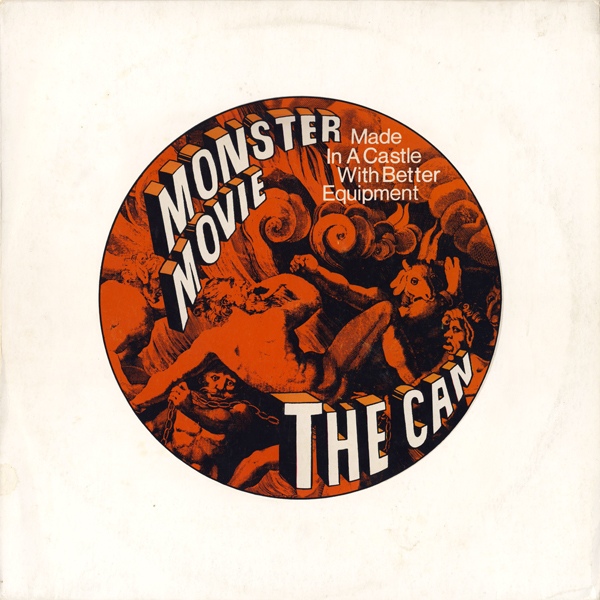
Soundtracks.
Released in 1970, Soundtracks, was Can’s sophomore album. Essentially, Soundtracks is a compilation of tracks Can wrote for the soundtracks to various films. It’s the album that marked the departure of vocalist Malcolm Mooney. Replacing him, was Japanese busker, Kenji Damo Suzuki. He features on five of the tracks, contributing percussion and vocals. The addition of Damo wasn’t the only change Can were making.
Soundtracks was a coming of age for Can. It marked a move away from the psychedelic jams of Monster Movie and a move towards their classic sound. That saw the music becoming much more experimental and avant-garde. The music took an ambient, meditative, mesmeric and thoughtful sound. This marked the beginning of what became known as Can’s classic years, when albums like Tago Mago, Ege Bamyasi and Future Days were released.
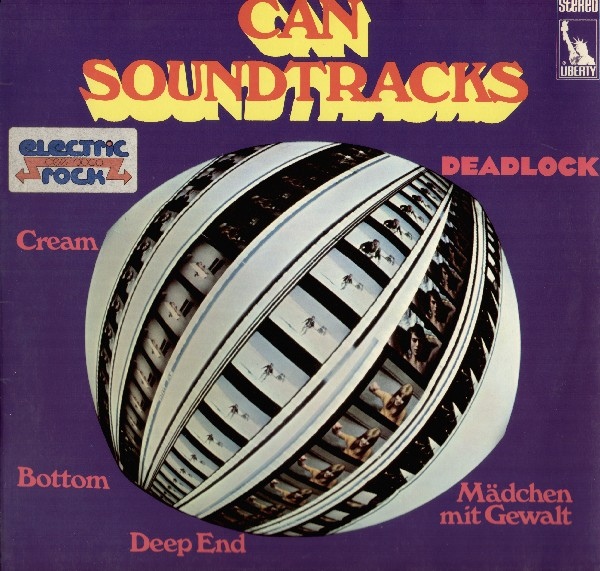
Tago Mago.
The first instalment in the golden quartet was Tago Mago. This was the first album where Kenji Damo Suzuki was a permanent member of Can. He and the rest of Can spent a year in the castle in Schloss Nörvenich. It was owned by an art collector named Mr. Vohwinkel. He allowed Can to stay at Schloss Nörvenich rent free. For what Holger described as “a poor man’s band,” this was perfect.
Holger remembers Can during this year as “just jamming and seeing what took shape. Songs started as lengthy jams and improvised pieces.” This Holger says “how Can always worked” After that, Holger edited the songs which became and the mini masterpieces featured on Tago Mago, which was four months in the making.
For four months between November 1970 and February 1971, Can recorded what would become one of their most innovative and influential albums, Tago Mago.
A double album, it featured seven groundbreaking tracks. Tago Mago was released in February 1971. Straight away, critics realised the importance of Tago Mago. Here was a game-changer of an album. It has an intensity that other albums released in 1971 lacked. Jazzier with an experimental sound, the music is mysterious, mesmeric and multilayered. It’s innovative, with genres and influences melting into one. Nuances, subtleties and surprises reveal themselves. No wonder. Can deliver an avant garde masterclass.
This comes courtesy of jazz-tinged drumming, improvised guitar playing and showboating keyboard solos. Then there was Kenji Damo Suzuki’s unique vocal style. All this, resulted in an album that was critically acclaimed, influential and innovative.
Released to widespread critical acclaim in 1971, Tago Mago was the start of a golden period for Can. Their reputation as one of the most innovative groups of the seventies started to take shape. Can had released one of the most innovative albums, Tago Mago. Holger remembers the reaction to Tago Mago. “I knew Tago Mago was an innovative album, but I never realised just how innovative an album it would become?
On Tago Mago’s release, it was hailed as their best album yet. Since then, several generations of musicians have been inspired by Tago Mago, a true Magnus Opus, that belongs in every record collection. So does the followup Ege Bamyasi.
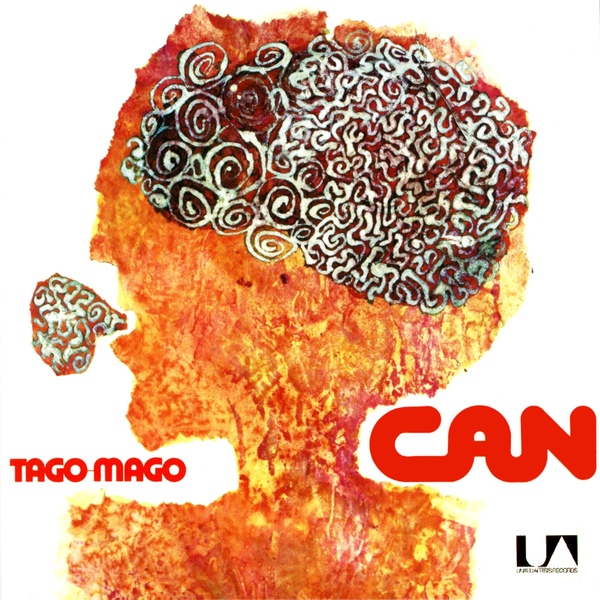
Ege Bamyasi.
Can were on a roll. It seemed they could do no wrong. They released Spoon as a single in 1972. It reached number six in Germany, selling over 300,000 copies. That was helped no end, by the single being used as the theme to a German thriller Das Messer. It seemed nothing could go wrong for Can. The money the made from Spoon, allowed Can to hire disused cinema to record what became Ege Bamyasi.
Can adverted for a space to record their next album, Ege Bamyasi. Recording began in a disused cinema, which doubled as a recording studio and living space. The sessions at Inner Space Studio, in Weilerswist, near Cologne didn’t go well. Irmin Schmidt and Kenji Damo Suzuki took to playing marathon chess sessions. As a result, Can hadn’t enough material for an album. This resulted in Can having to work frantically to complete Ege Bamyasi. Despite this, Can were still short of material. So Spoon was added and Ege Bamyasi was completed.
Ege Bamyasi was a fusion of musical genres. Everything from jazz, ambient, world music, psychedelia, rock and electronica melted into one. When it was Ege Bamyasi released in November 1972, it was to the same critical acclaim as previous albums. Critics were won over by Can’s fourth album. It was perceived as a more accessible album than its predecessors. Just like Can’s previous albums, the quality of music was consistent.
Critics hailed Can as one of the few bands capable of creating consistent and pioneering albums. They were one of the most exciting bands of the early seventies. Can were continuing to innovate and influence musicians and music lovers alike. Just like its predecessor, Tago Mago, Ege Bamyasi is an essential part of any self respecting record collection. Having released two consecutive classic albums and their first single, it seemed nothing could go wrong for Can.
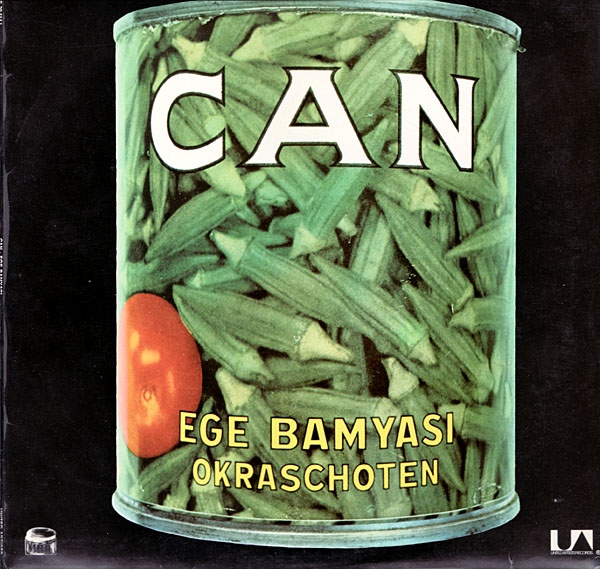
Future Days.
Despite Tago Mago and Ege Bamyasi being referred to as two of the most influential albums ever released, Holger Czukay prefers Future Days. This is the album he calls “my favourite Can album.” It was the third in Can’s golden quartet, and marked a change in direction from Can.
Future Days saw Can’s music head in the direction of ambient music. The music is atmospheric, dreamy, ethereal, melancholy, expansive and full of captivating, mesmeric rhythms. It’s also pioneering and progressive, with elements of avant garde, experimental, psychedelia and rock melting into one. Rather than songs, soundscapes describes the four tracks. Future Days and Bel Air showcase Can’s new sound. Bel Air was the Future Day’s epic. It lasted just over nineteen minutes, and sees can take you on an enthralling musical journey. Just like the rest of Future Days, critics hailed the album a classic.
On its release in August 1973, Future Days was hailed a classic by music critics. The move towards ambient music may have surprised some Can fans. However, Brian Eno was just one artist pioneering ambient music. This move towards ambient music must have pleased Holger’s guru Karlheinz Stockhausen. He must have looked on proudly as Can released the third of a quartet of classic albums. The final album in this quartet, Soon Over Babaluma was released in 1974.
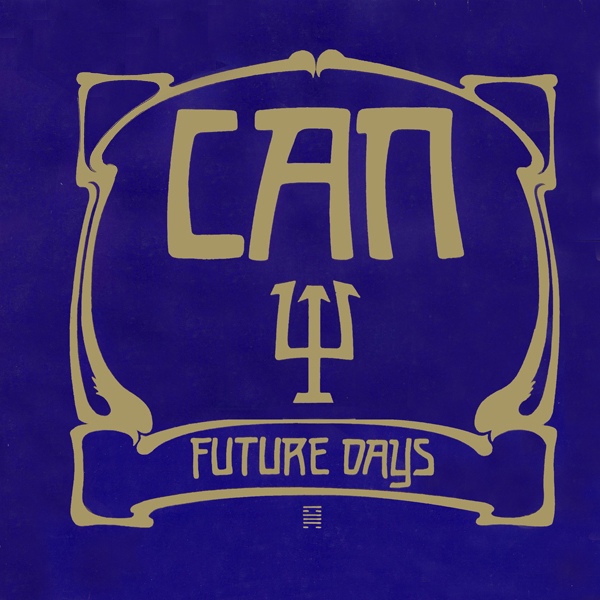
Soon Over Babaluma,
Soon Over Babaluma marked the end of Can’s golden period. It was the end of a period where they were releasing some of their most innovative and groundbreaking music. There was a change of direction on Soon Over Babaluma. Can were without a vocalist. Kenji Damo Suzuki left Can and married his German girlfriend. He then became a Jehovah’s Witness. Despite the lack of a vocalist, Can continued as a quartet. They released Soon Over Babaluma in November 1974.
When Can released Soon Over Babaluma in November 1974, it received praise from critics. With a myriad of beeps, squeaks and sci-fi sounds, Soon Over Babaluma is like musical journey into another, 21st Century dimension. A musical tapestry where layers of music are intertwined during five tracks on Soon Over Babaluma. It followed in the ambient footsteps of Future Days and brought to a close the most fruitful period of Can’s career. Following the “golden quartet,” Can didn’t go into decline. Instead, Can continued to reinvent themselves and their music.
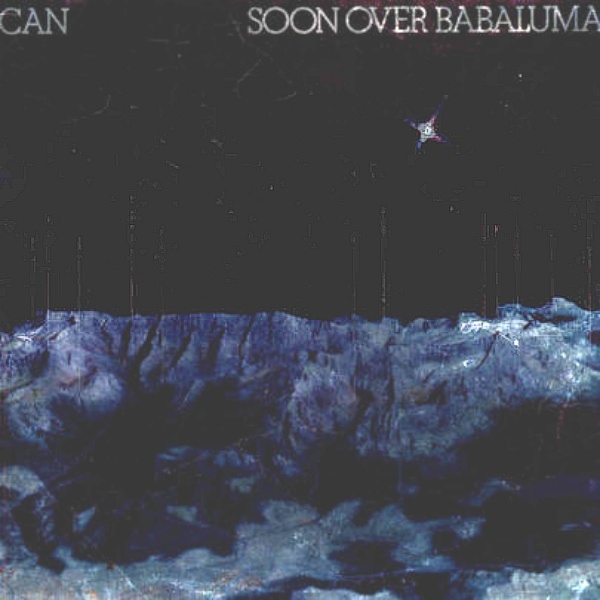
Landed.
Landed was released in September 1975. It had been recorded between February and April 1972 at Inner Space Studios. Just like previous albums, Can produced Landed. Holger and Tony Robinson mixed the first four tracks at Studio Dierks, Stommeln. The other two tracks were mixed by Holger at Inner Space Studios. These six tracks marked a change of direction from Can.
As well as a change in direction musically, Landed was the first Can album to be released on Virgin Records. Gone is the ambient sound of Soon Over Babaluma. Only Unfinished on Landed has an ambient influence. Instead, Landed has a poppy, sometimes glam influence. With uptempo, shorter songs, Landed was a much more traditional album. How would the critics react?
Critics were divided about Landed. Some critics saw Landed as the next chapter in the Can story, while others praised the album as adventurous, eclectic and innovative. Others thought Can were conforming. Surely not?
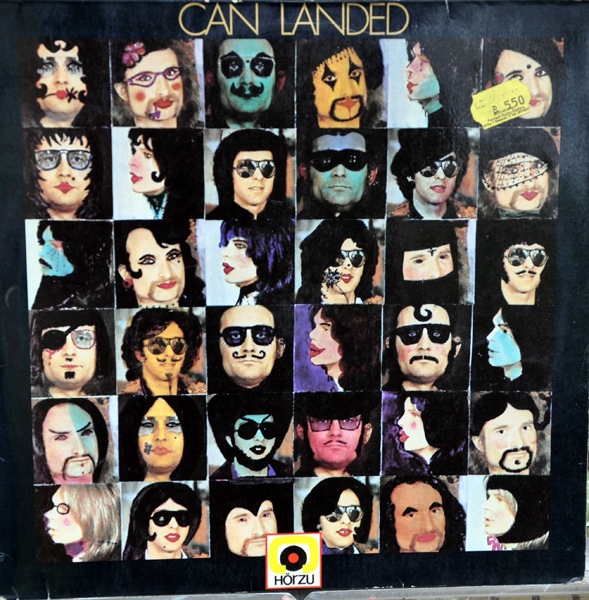
Flow Motion.
Flow Motion was Can’s eight album. As usual, it was recorded at Inner Space Studios. Produced by Can, Flow Motion was an album that drew inspiration from everything from funk, reggae, rock and jazz. It was an eclectic, genre-melting album. It’s also one of Holger Czukay’s favourite Can albums.
Holger remembers Flow Motion as an “Innovative and eclectic” album. He calls it “one of Can’s underrated albums,” Flow Motion marked a another change in Can’s way of working.
Released in October 1976, Flow Motion featured lyrics written by Peter Gilmour. This was a first. Never before, had anyone outside the band had written for Can. It worked. Can enjoyed their first UK single I Want More. It would later be recorded Fini Tribe and then Italo disco group Galaxis. With what was just their second hit single in seven years, maybe Can were about to make a commercial breakthrough?
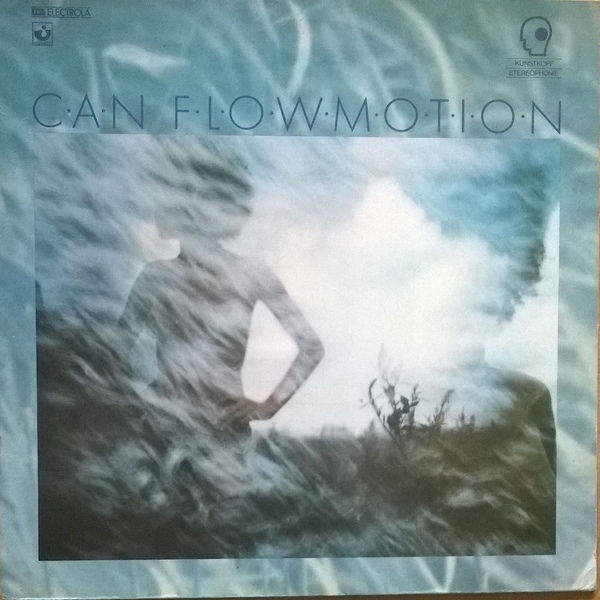
Saw Delight.
Sadly, that wasn’t to be. Saw Delight which was released in March 1977, wasn’t the commercial success many people forecast. That’s despite the new lineup of Can embracing world music.
Joining Can were bassist Rosko Gee and percussionist and vocalist Rebop Kwaku Baah. They’d previously been members of British rock band Traffic. Rosko Gee replaced Holger on bass. Holger decided to add a percussive element, Holger added a myriad of sound-effects. This was Holger at his groundbreaking best. Experimental sounds including a wave receiver was used. The result was one of the most ambitious albums can had released.
Despite the all-star lineup and a bold, progressive and experimental album, Saw Delight wasn’t a commercial success. It was well received by critics. The problem was, Saw Delight was way ahead of its time. If it had been released in the eighties, like albums by Paul Simon or Peter Gabriel, it would’ve been a bigger commercial success. Sadly, by then Can would be no more. That was still to come. However, things weren’t well within the Can camp.
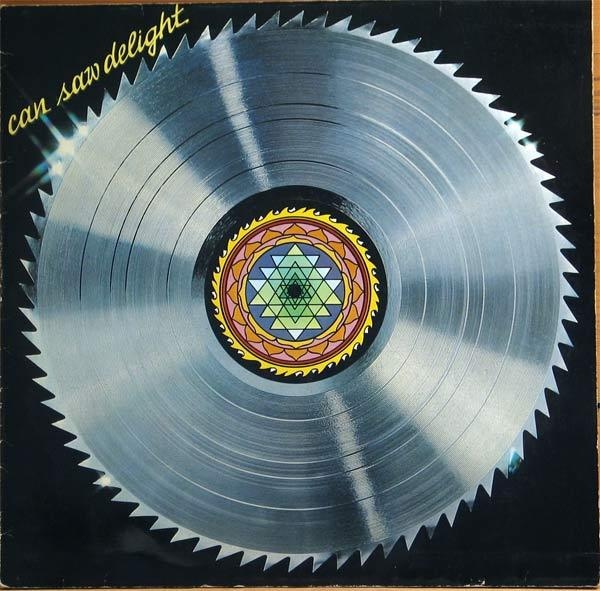
Out Of Reach.
Nine years after Can had released their debut album Monster Movie, they released their tenth album, Out Of Reach. It was released in July 1978. The title proved to be a prophetic. After all, commercial success always seemed to elude Can. Not only did Out Of Reach fail commercially, but the Out Of Reach proved to be Can’s most controversial album.
So much so, that they disowned Out Of Reach. On Out Of Reach Holger was left to add myriad of sound-effects. Bassist Rosko Gee and percussionist Rebop Kwaku Baah of Traffic returned. They were part of the problem. Holger confirms this.
When I asked him what he meant by this, he said “During the recording of Out Of Reach, I felt an outsider in my own group. I was on the outside looking in. I was on the margins. All I was doing was add sound-effects.” For Holger, he felt his group had been hijacked by Rosko Gee and and Rebop Kwaku Baah. Things got so bad, that Holger quit Can.
Rosko Gee and Rebop Kwaku Baah dominated Out Of Reach. Gone was the loose, free-flowing style of previous albums. Even Jaki Liebezeit’s play second fiddle to Baah’s overpowering percussive sounds. The only positive thing was a guitar masterclass from Michael Karoli. Apart from this, things weren’t looking good for Can. It was about to get worse though.
The critics rounded on Out Of Reach. They found very little merit in Out Of Reach. Gee and Baah were rightly blamed for the album’s failure. Even Can disliked Out Of Reach. They later disowned Out Of Reach. Despite this, Rosko Gee and and Rebop Kwaku Baah remained members of Can.
Unable to play with the necessary freedom Can were famed for, the two ex-members of Traffic stifled Can. Rebop’s percussion overpowers Jaki’s drums, which have always been part of Can’s trademark sound. At least Michael’s virtuoso guitar solos are a reminder of classic Can. A nod towards Carlos Santana, they showed Can were still capable of moments of genius. There wouldn’t be many more of these. Can would breakup after their next album.
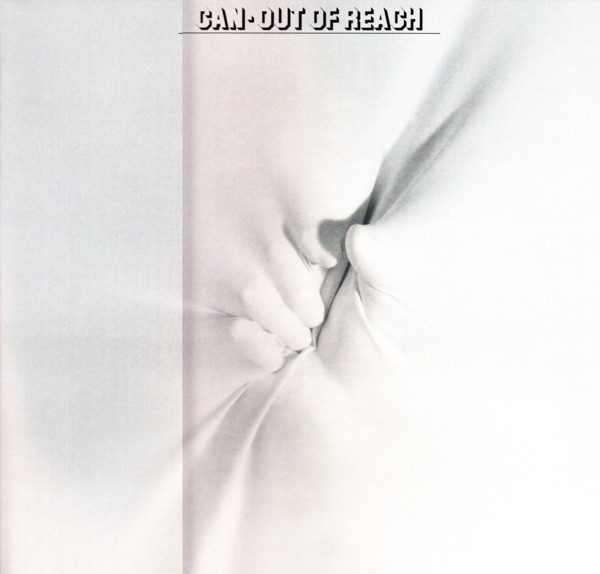
Can.
Following the failure of Out Of Reach, the members of Can began recording what became Can. Remarkably, Rosko Gee and Rebop Kwaku Baah were still part of Can. Sadly, Holger was not longer a member of Can. He’d left during the making of Out Of Reach. His only involvement was editing Can.
Can, which is sometimes referred to as Inner Space, was released in July 1979. Again, critics weren’t impressed by Can. It received mixed reviews. No longer were Can the critic’s darlings. The music on Can was a fusion of avant garde, electronica, experimental, psychedelia and rock. Add to that, a myriad of effects including distortion and feedback, and here was an album that divided the opinion of critics. The critics agreed, it was better than Out Of Reach. They agreed that Holger was sadly missed.
Even Holger’s renowned editing skills couldn’t save Can. Try as he may, he could only work with what he was given. He did his best with Can, which the eleventh album from the group he co-founded. By the time Can was released, Holger “had come to a realisation, that it was time to go his own way.” Holger describes this as “necessary.”
Can had split-up after the release of Can. That was their swan-song. However, even before that, Holger “felt marginalised, this had been the case since Rosko Gee and Rebop Kwaku Baah became part of Can. They’d hijacked Can.” This lead to the death of a great and innovative band.
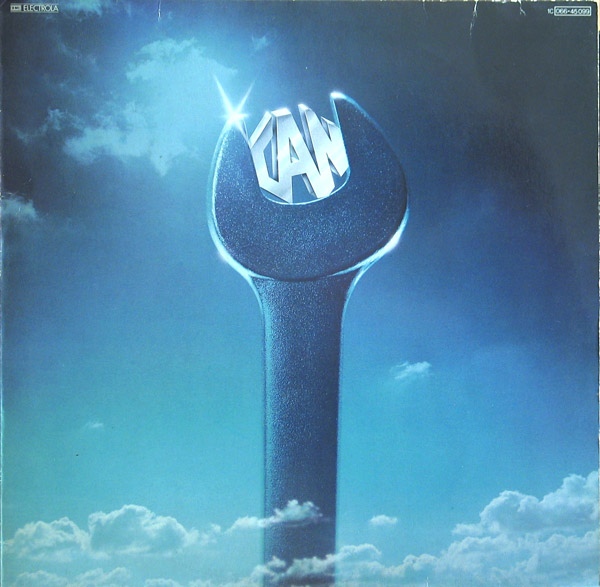
With Can now part of musical history, Irmin Schmidt, Holger Czukay, Michael Karoli and Jaki Liebezeit set about reinventing themselves. Music critics wondered whether they would form new bands or embark upon solo careers? Irmin Schmidt, Holger Czukay and Michael Karoli all embarked upon solo careers. However, they left behind a rich musical legacy, that included eleven albums.Throughout their long and successful career, they had released some of the most ambitious music of the seventies. Sadly, that was in the past.
The eleven albums Can released include some of the most innovative, inspiring and influential music of the past fifty years. This music was the work a He’s also a musical visionary who was way ahead of his time. That’s why in the future, the music of Holger Czukay and Can, will continue to influence and inspire further generations of musicians.
Nowadays, Can are regarded as one of the most important, influential and innovative Krautrock bands of the seventies. Their albums are more popular than ever and Can quite rightly regarded as one the giants of Krautrock. Can are regarded as just as important, influential and innovative as Cluster, Harmonia Kraftwerk and Neu!, and deserve to take their place at Krautrock’s top table.
THE CAN STORY 1968-1979.
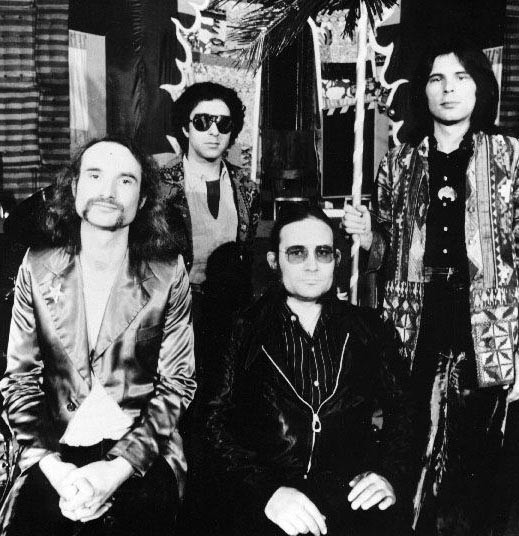

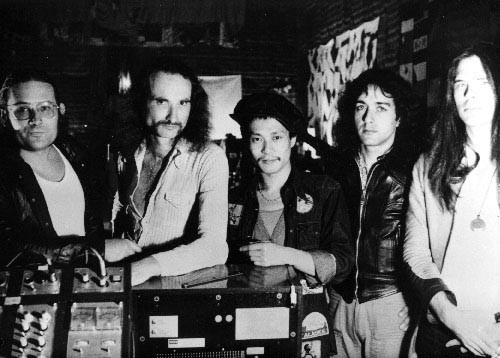

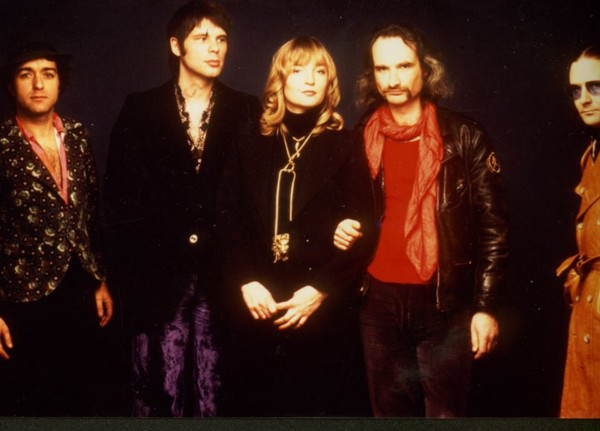
NEW ORLEANS FUNK VOLUME 4-VOODOO FIRE IN NEW ORLEANS 1951-77.
NEW ORLEANS FUNK VOLUME 4-VOODOO FIRE IN NEW ORLEANS 1951-77.
New Orleans has a rich musical history. That has been the case for the past hundred years. It still is today. Especially when late February comes around. Each year, the people of New Orleans celebrate Marid Gras. For this famous Festival, the Big Easy, and its people are transformed.
During Mardi Gras, New Orleans comes together, and celebrates a festival that first took place in 1718. People take to floats, dressed in costumes and masks, and adorned with beads. Float riders throw trinkets to the crowd. Meanwhile, tourists have flocked from far and wide to experience the sights and sounds of Mardi Gras.
Bourbon Street, one if the Big Easy’s best known streets is full of tourists enjoying a taste of Mardi Gras. They enjoy the local delicacies of beignets, gumbo, jambalaya and po boy sandwiches. Meanwhile, music fills the air of one of America’s musical capitals.
The soundtrack for the evening represents New Orleans’ musical past.There is Dixieland jazz, R&B, funk, Zydeco, Afro Cuban and the sound of the Big Easy’s brass bands. They are all part and parcel of New Orleans’ rich musical heritage. Tourists are seduced by this heady brew of musical genres. This is the real sound of New Orleans. It also features on New Orleans Funk Volume 4-Voodoo Fire In New Orleans 1951-77, which was recently released by Soul Jazz Records.
New Orleans Funk Volume 4-Voodoo Fire In New Orleans 1951-77 features eighteen tracks, from some familiar faces, old friends and new names. This includes Eldridge Holmes, Gus ‘The Groove’ Lewis, Chocolate Milk, Lou Johnson, Norma Jean, Johnny Adams, Clifton Chenier and His Red Hot Louisiana Band, Eddie Bo, Betty Harris and Zilla Mayes. While ostensibly a funk compilation, New Orleans Funk Volume 4-Voodoo Fire In New Orleans 1951-77 features some soulful sides recorded in the Big Easy. Funky and soulful describes the music that can be found on New Orleans Funk Volume 4-Voodoo Fire In New Orleans 1951-77. However, what are the highlights of this latest addition ti the New Orleans Funk series?
Eldridge Holmes’ Pop, Popcorn Children opens New Orleans Funk Volume 4-Voodoo Fire In New Orleans 1951-77. It was penned by Eldridge Holmes, and produced by Marshall E. Sehorn and Allen Toussaint. He was one of the most influential men in New Orleans’ music. Not only did Allen Toussaint enjoy a successful solo career, but worked as a songwriter, producer and owned several record labels. Alas, when Pop, Popcorn Children was released as a single on Atco in July 1969 it failed commercially. That is despite being three memorable minutes of soulful funk, where Eldridge Holmes seems to pay homage to the self-styled Godfather of Funk, James Brown.
When Dave Bartholomew released The Shufflin’ Fox as a single on Imperial in April 1957, little did he know that he had just made musical history. Hidden away on the B-Side was The Monkey. This was one of the earliest examples of New Orleans’ funk. Further generations of artists would develop New Orleans funk, but it was Dave Bartholomew that laid its foundations.
Initially, Chocolate Milk were formed in 1974 in Memphis by Amadee Castenell. Despite its rich musical heritage, Chocolate Milk decided to move to the Big Easy, where they became Allen Toussaint’s studio band. By June 1975, Chocolate Milk had released their debut single, Actions Speak Louder Than Words on RCA Victor. It was penned by the band and produced by Allen Toussaint and Marshall Sehorn. Slow, soulful and uber funky, Actions Speak Louder Than Words gave Chocolate Milk their first hit single. This was just the start of the Chocolate Milk story. Later, in 1975, they released their debut album, Actions Speak Louder Than Words. Five further albums and followed from Chocolate Milk. However, Actions Speak Louder Than Words was the start of the Chocolate Milk story.
Lou Johnson met Allen Toussaint as the seventies dawned. With Lou Johnson between labels, Allen Toussaint offered to produce his next album. So Cosimo Matassa’s Jazz City Studios was booked. That was where they recorded ten songs, including Frisco Here I Come, which Allen Toussaint wrote, arranged and co-produced with Marshall E. Sehorn. Once the album was completed, it became With You In Mind. It was leased to Volt Records, who released Frisco Here I Come as a single in March 1971. It’s Lou Johnson at his finest, as he delivers a needy vocal full of hurt, against a funky, soulful and sometimes rocky backdrop. Sadly, despite its quality Frisco Here I Come failed to find the audience it deserved.
Orbitone Records was a short-lived label based in the Big Easy that only ever released two singles by David Robinson. This included his cover of Edwin J. Bocage’s I’m A Carpenter (Part 1). It was produced by its writer Eddie Bom with Harvey Nero. They’re responsible for what is, without doubt one of the funkiest sides on the compilation. The studio band lay down a smoking slice of funk while David Robinson vocal become a vamp, complete with whoops and hollers. Again there is a brief nod to James Brown. However, unlike James Brown and the many vocalists who modelled themselves on him, I’m A Carpenter (Part 1) doesn’t sound cliched.
Johnny Adams released Release Me as a single on the Watch label in 1968. It reached eighty-two in the US Billboard 100 and thirty-four in the US R&B charts. Anyone who bought the single, and flipped over to the B-Side was in for a veritable musical feast, You Make A New Man Out Of Me. It’s glorious and joyous mixture of funk and soul with Johnny Adams giving thanks that You Make A New Man Out Of Me.
Zydeco is just one of the many musical genres that are part of the soundtrack to New Orleans. One of the finest practitioners of zydeco are Clifton Chenier And His Red Hot Louisiana Band. Their contribution to New Orleans Funk Volume 4-Voodoo Fire In New Orleans 1951-77 is Party Down. A version of Party Down features on their 1978 eponymous album. It was released on Arhoolie Records and finds Clifton Chenier And His Red Hot Louisiana Band fusing zydeco and Louisiana blues. This is a potent and heady brew, and is just one reason why Clifton Chenier And His Red Hot Louisiana Band were nominated for a Grammy Award.
Musically, Eddie Bo was a jack of all trades. He wrote, arranged and produced his 1969 single Can You Handle It. It was then released on Bo-Sound, which was Eddie Bo’s own label. Bo-Sound released mostly singles between 1969 and 1980. The majority of the releases were Eddie Bo’s own singles, and two albums. One of Bo-Sound’s finest releases was Can You Handle It which he released in 1969. It’s a reminder of the multitalented New Orleans’ soul man.
Recently, Soul Jazz Records released a compilation of Betty Harris’ music, The Lost Queen Of New Orleans Soul. It features many of Betty Harris’ finest moments, including I’m Gonna Git Ya. This was the B-Side to Can’t Last Much Longer, which was released as a single in September 1967. I’m Gonna Git Ya was penned and co-produced by Allen Toussaint with Marshall E. Sehorn, and released on their Tou-Sea label. It’s without doubt one of the finest songs that Betty Harris recorded during her all too brief career. Thankfully, the release of The Lost Queen Of New Orleans Soul shines the spotlight once again, on one of soul music’s best kept secrets, Betty Harris.
Closing New Orleans Funk Volume 4-Voodoo Fire In New Orleans 1951-77 is Zilla Mayes’ All I Want Is You, which is another Allen Toussaint composition. It was the B-Side to I Love You Still, which was released as a single on the Tou-Sea label in February 1969. This was a label owned by Allen Toussaint with Marshall E. Sehor. They also co-produced the single. Zilla Mayes unleashes an impassioned vocal powerhouse, that breathes life and meaning into the lyrics. In doing so, it’s sure to stop the listener in their tracks.
The same can be said of New Orleans Funk Volume 4-Voodoo Fire In New Orleans 1951-77. It’s a very welcome addition the Soul Jazz Records’ lovingly curated New Orleans Funk series. This is the first volume in three years. Soul Jazz Records it seems, prefer quality rather than quantity. That is obvious just by looking at the choices of music and the lengthy and detailed sleeve notes.
Rather than choosing well known and familiar songs, Soul Jazz Records have eschewed many of the oft chosen song and dug deeper. They’ve chosen B-Sides and little known recordings, and added this to a selection of songs from some of the Big Easy’s well known names. Among them, are Dave Bartholomew, Johnny Adams and Eddie Bo. They join Chocolate Milk and Lou Johnson, who both worked with Allen Toussaint. He was one of the biggest names in New Orleans music between 1951 and 1977, which the compilation covers.
During that period, funk had been born and grown to become one of the most popular genres. However, eventually, funk fell from grace, and by the early seventies, it was no longer as popular as it had once been. This affected the New Orleans musical economy. Cosimo Matassa’s business was badly affected, and went into liquidation. Others survived, and lived to tell the tale. Among them, were Allen Toussaint and Marshall E. Sehorn who sold their labels in the late sixties. They knew that like any bubble, the funk bubble was about to burst.
Despite bursting in the early seventies, New Orleans Funk is as popular as ever. Compilations like New Orleans Funk Volume 4-Voodoo Fire In New Orleans 1951-77, just like the three previous volumes, are the perfect introduction to this sub-genre. These lovingly curated compilations feature familiar funky and sometimes soulful songs. They’re augmented by a few hidden gems, that are part of New Orleans’ musical heritage.
It’s a musical heritage that goes back to the eighteenth century. Then in the 1950s, music become an important part of New Orleans’ economy. As the sixties dawned, The Big Easy’s musical economy grew. A whole host of new labels sprung up, including some of the labels that feature on New Orleans Funk Volume 4-Voodoo Fire In New Orleans 1951-77. The myriad of musical delights that can be found on New Orleans Funk Volume 4-Voodoo Fire In New Orleans 1951-77, may even provide the soundtrack to an evening on Bourbon Street during the Marid Gras.
NEW ORLEANS FUNK VOLUME 4-VOODOO FIRE IN NEW ORLEANS 1951-77.
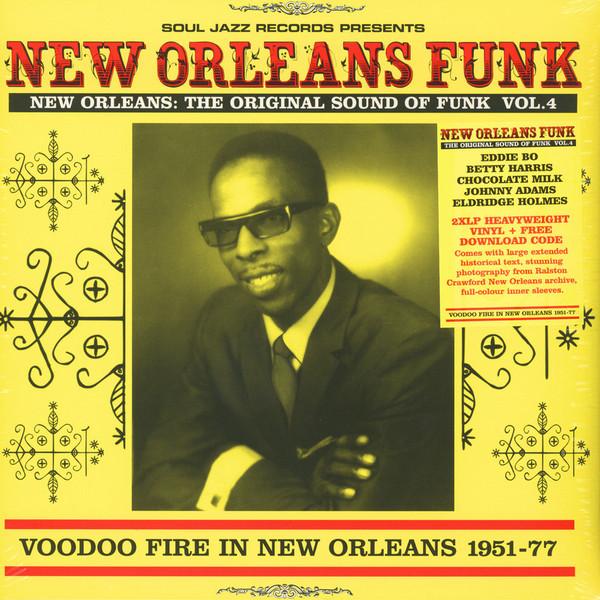
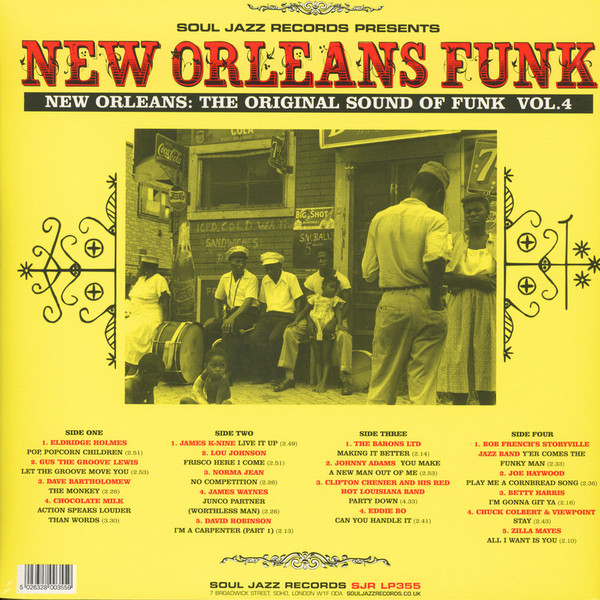
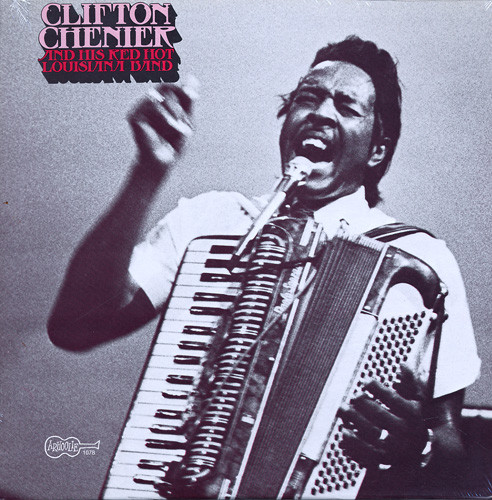
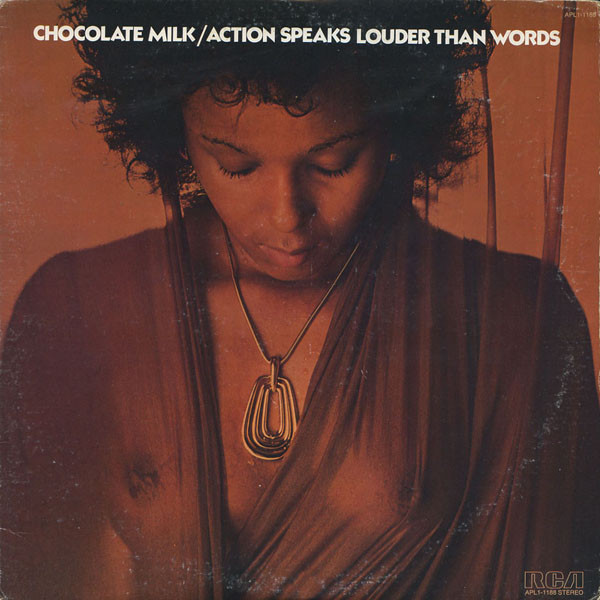
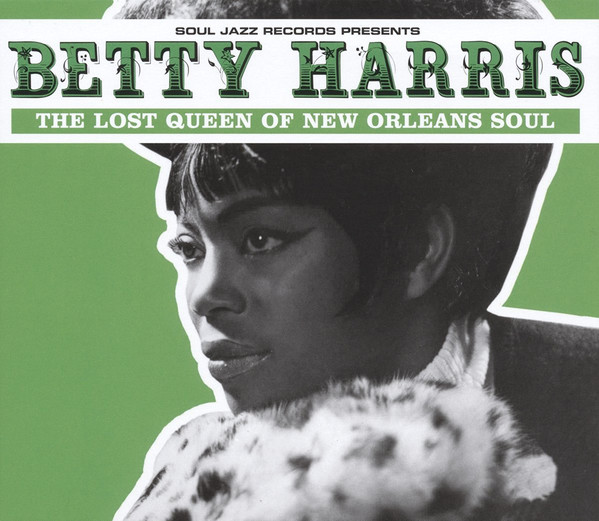
FEEL LIKE GOING HOME-THE SONGS OF CHARLE RICH.
FEEL LIKE GOING HOME-THE SONGS OF CHARLE RICH.
When Sam Phillips first encountered Charlie Rich, he was singing demos for Sun Records, in Memphis. On hearing the demos, Sam Phillips thought Charlie Rich’s music wasn’t commercial. It was also: “too jazzy.” Sam Phillips then picked up a pile of Jerry Lee Lewis records and handed them to Charlie Rich. His parting words to Charlie Rich were: “come back when you get that bad.”
Despite Sam Phillips’ advice, Charlie Rich didn’t come back “bad.” Instead, he returned as a staff writer and session musician. Charlie Rich had his foot in Sun Records’ door.
Initially, Charlie Rich’s songs failed to make the grade. Soon, though, he cowrote Ways Of A Woman In Love for Johnny Cash; Right Behind You Baby and for Ray Smith; and Break Up and I’ll Make It All Up To You for Jerry Lee Lewis. In a relatively short time, Charlie Rich was one of Sun Records’ top songwriters. Despite this success, Charlie Rich still dreamt of making a career as a singer.
Charlie Rich released his debut single Whirlwind on the 25th of October 1958 on the Sun Records’ imprint Phillips International Records. This would become home to Charlie Rich for the next five years. Just like his early efforts as a songwriter, Whirlwind wasn’t a success. Neither was Rebound when it was released on the 20th of June 1959. However, it was a case of third time lucky for Charlie Rich.
Seven months later, and as a new decade dawned, Charlie Rich released Lonely Weekends in January 1960. Just like the B-Side Everything I Do Is Wrong, it was written by Charlie Rich. With its Presley inspired vocal, Lonely Weekends began to climb the charts, and reached number twenty-two in the US Billboard. Eventually, it had sold over a million copies. This resulted in Charlie Rich receiving the first gold disc of his career. However, there was a twist in the tale.
Buoyed by the success of Lonely Weekends, Charlie Rich released the followup single School Days on the 15th of May 1960. Incredibly, the single failed to chart. Surely, this was just a blip?
It wasn’t. Just under four months later, Charlie Rich released On My Knees on the 7th of September 1960. Just like School Days, On My Knees failed to trouble the charts. This was the second consecutive Charlie Rich single that had failed to chart. For everyone concerned, it was a worrying time.
Three months later, on 10th December 1960, a previously unknown singer Bobby Sheridan, released his debut single Sad News on Sam Phillips’ Sun label. What very few people realised, was that Bobby Sheridan was an alias of Charlie Rich. Despite this slight of hand, the single followed in the footsteps of School Days and On My Knees, and failed to chart. For Charlie Rich, this was another disappointment in what had a topsy turvy year.
1960 had started well for Charlie Rich, with his million selling single Lonely Weekends. After that, 1960 quickly went south. Surely, 1961 would see his luck change?
Charlie Rich’s first single of 1961 was Who Will The Next Fool Be. This was another Charlie Rich’s composition. So was the B-Side Caught In The Middle. Who Will The Next Fool Be was released on the 27th of February 1961. It was one of the finest compositions of Charlie Rich’s early career. Despite this, the single failed commercially. However, a year later in 1962, Bobby Bland enjoyed a hit single with Who Will The Next Fool Be. By then, other people,were enjoying hits with Charlie Rich’s songs. This was a small crumb of comfort for Charlie Rich.
Despite this, Charlie Rich was out of luck. When he released Just A Little Bit Sweet on 1st September 1961, it too failed to make any impression on the charts. That meant Charlie Rich’s last five singles had failed to trouble the charts.
Seven months later, Charlie Rich returned on the 4th of April 1962, with his ninth single, Midnite Blues. Just like Easy Money, Midnite Blues was another Charlie Rich composition. It showcased his talent and versatility.
By 1962, Charlie Rich was a versatile vocalist, who was equally comfortable singing rock n’ roll, rockabilly, country, blues, jazz, and even gospel. Charlie Rich didn’t neatly fall into one musical genre, and flitted between disparate styles. Despite his versatility and talent, Midnite Blues failed commercially. For Charlie Rich, this was his sixth consecutive that had failed to find an audience. These were worrying times for Charlie Rich and indeed, Sam Phillips.
Another six months passed before Charlie Rich released his tenth single, Sittin’ And Thinkin’. Just like the B-Side Finally Found Out, it had been penned by Charlie. Upon its release on 18th October 1962, Sittin’ And Thinkin’ didn’t even trouble the charts. Some people felt there would’ve been a different outcome if Finally Found Out had been released as a single. However, little did Charlie Rich realise that it was too late.
Unknown to Charlie Rich, he had released his last single for Sam Phillips’ Sun Records. It was no longer enjoying the success it once had. As 1963 dawned, the times and music had changed. Sun Records was no longer the hit making machine it once was. Similarly, it was now three years since Charlie Rich had enjoyed his million selling hit Lonely Weekends. After that, his next seven singles had failed commercially. Charlie Rich’s career it seemed has stalled.
There’s no sentiment in music, and Charlie Rich’s time at struggling Sun Records was at an end. Next stop was Groove, a subsidiary of RCA Victor Records. This was just the next chapter in a career that would span thirty-seven years.
After moving between different labels, eventually, Charlie Rich found fame as a country singer in the early seventies. He enjoyed a string of hit singles, including classics like the Grammy Award winning Behind Closed Doors and The Most Beautiful Girl. This was just the tip of the iceberg.
Charlie Rich’s 1973 album Behind Closed Doors sold four million copies, and was certified platinum four times over. Across the border in Canada, Behind Closed Door was certified double platinum. That wasn’t the end of the success. There Won’t Be Anymore and Very Special Love Songs were both released in 1974 and were certified gold. By then, was Charlie Rich well on his way to becoming one of the most successful and celebrated country singers. That was the case until his death on July 25th 1995.
Twenty-one years later, and Charlie Rich’s music continues to influence and inspire a new generation of artists. This includes those who feature on Feel Like Going Home-The Songs Of Charlie Rich. It’s a thirteen track compilation that was recently released by the Memphis International label. They brought together, thirteen artists who cover some of the songs Charlie Rich wrote or recorded for Sam Phillips’ Sun Records. These songs are delivered in a variety of styles, including rock ’n’ roll, rockabilly, blues and country by what’s a mixture of old friends and new names.
This includes Jim Lauderdale blistering cover of Charlie Rich’s million selling single Lonely Weekends. It opens Feel Like Going Home-The Songs Of Charlie Rich, and whets the listener’s appetite for The Malpass Brothers beautiful, heartfelt cover of Caught In The Middle Caught In The Middle. It’s one of Charlie Rich’s most underrated Sun sides, and incredibly, was relegated to the B-Side to Who Will The Next Fool Be. Another underrated Sun side was Whirlwind, which was Charlie Rich’s debut for Phillips International Records. Juliet Simmons Dinallo reinvents the song, as she combines blues and country. Other artists stay true to the original.
Meanwhile, Will Kimbrough stays true to original version of Sittin’ And Thinkin’. It’s wistful and country tinged. The same can be said of Susan Marshall’s heartfelt, needy cover of Time And Again. Charlie Rich Jr a talented artist in his own right, delivers a piano pounding version of Break Up. Stylistically, it sounds as if it was recorded by Sam Phillips in 1958.
Holli Mosley’s is just the latest in a long line of artists to cover Who Will The Next Fool Be. Her rueful, hurt filled vocal combines elements of country and gospel, is a spine-tingling cover of this familiar song. After this, it’s all change on Feel Like Going Home-The Songs Of Charlie Rich.
Shooter Jennings, the son of the legendary Waylon, unleashes a country rock cover of Charlie Rich’s sophomore single Rebound. Anita Suhanin chose to cover what was Charlie Rich’s penultimate single for Phillips International Records, Midnight Blues. In her hands, it becomes a beautiful, soulful and bluesy song. The same can be said of Preston Shannon’s bluesy, soulful cover of Easy Money. However, when comes to the blues, Johnny Hoy’s cover of Don’t Put No Headstone On My Grave is a modern day masterclass. Coming a close second is Keith Sykes and Grace Askew’s version of Everything I Do Is Wrong. This leaves just Kevin Connolly’s understated, heartfelt and country-tinged cover of Feel Like Going Home. It seems the best has been kept to last, and fittingly Kevin Connolly’s cover version lends its name to Feel Like Going Home-The Songs Of Charlie Rich.
It features two generations of artists paying tribute to one of the most talented and versatile singer-songwriters of his generation, Charlie Rich. The thirteen artists that feature on Feel Like Going Home-The Songs Of Charlie Rich, cover the songs that The Silver Fox wrote and recorded for Sun Records over a five year period.
During the five years Charlie Rich was signed to Sam Phillips’ Sun Records, he released ten singles. Sadly, Charlie Rich only enjoyed the one hit single, Lonely Weekends. It however, was a million seller. Other artists had more success with their covers of the songs Charlie Rich wrote and recorded at Sun Records. Despite his lack of success during his time at Sun Records, many of the songs covered on Feel Like Going Home-The Songs Of Charlie Rich would later become staples of concerts. By then,
Charlie Rich was enjoying commercial success.
This came during the early seventies. By then, Charlie Rich had found fame as a country singer. He enjoyed a string of hit singles, including the Grammy Award winning Behind Closed Doors and The Most Beautiful Girl. This was just the start of the most successful period in Charlie Rich’s career.
His 1973 album Behind Closed Doors was certified platinum four times over in America and double platinum in Canada. Then in 1974, There Won’t Be Anymore and Very Special Love Songs were both certified gold. By then, was Charlie Rich well on his way to becoming one of the most successful and celebrated country singers. That was the case until his death on July 25th 1995.
By then, Charlie Rich’s career had spanned five decades and thirty-seven years. He was a talented and versatile vocalist, who was equally comfortable singing rock n’ roll, rockabilly, country, blues, jazz, and even gospel. Each of these genres feature on Feel Like Going Home-The Songs Of Charlie Rich, which is a fitting tribute to the man that was known as The Silver Fox.
FEEL LIKE GOING HOME-THE SONGS OF CHARLE RICH.
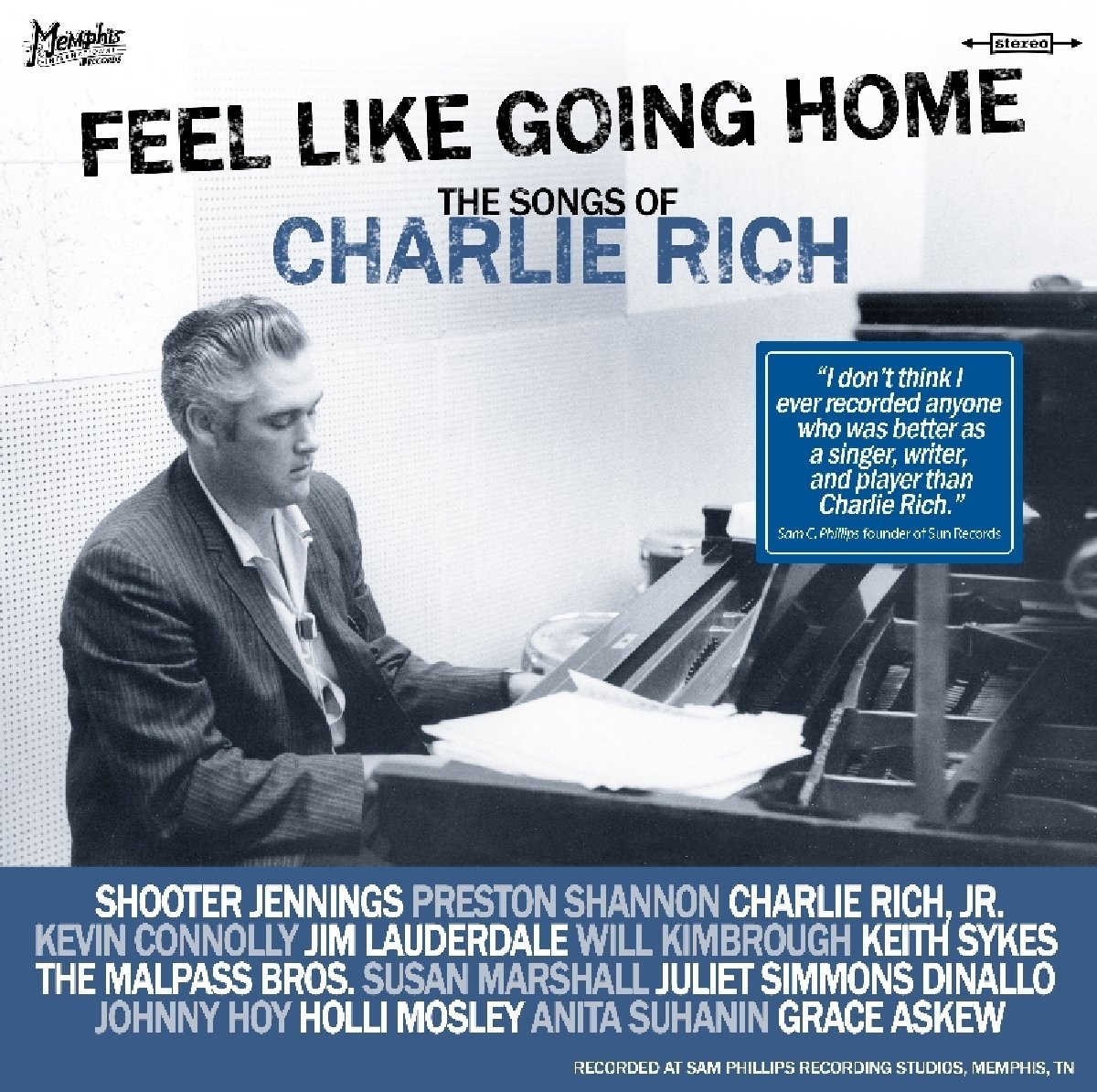

MIKI YUI-OSCILLA.
MIKI YUI-OSCILLA.
There aren’t many people who successfully juggle several different careers. Instead, most people tend to specialise in one thing. Especially when it comes to art. That however, isn’t the case with Japanese artist Miki Yui.
She has successfully combined and cultivated several different careers since her career began in 1998. Since then, the multitalented Miki Yui’s career has revolved around: “fine arts and works in the fields of music, drawing, installation and performance.” Eighteen years later, and Miki Yui is a successful and highly respected artist. Her work has been exhibited globally and has won awards and critical acclaim. Especially, the music that Miki Yui has released since her solo career began in 1999.
Since then, Miki Yui has a released five solo albums. Her most recent album was Oscilla which was released in October 2015. It was released on her new label MY. The role of label owner is just the latest addition to Miki Yui’s burgeoning C.V. She has packed a lot of living into the last forty-five years.
Miki Yui was born in Tokyo, Japan in 1971. Growing up, Miki Yui artistic side began to blossom at an early age. So it was no surprise that in 1990, she enrolled at Tokyo’s prestigious Tama Art University. Four years later, Miki Yui graduated as a Bachelor of Art. This was just the start of Miki Yui’s academic and indeed, artistic career.
In 1995, Miki Yui moved to Düsseldorf, Germany, which is still her home today. However, twenty-one years ago, Miki Yui had enrolled to study Video Art at Kunstakademie Düsseldorf. For the next two years, Miki Yui studied under the Dutch-American artist, Professor Nan Hoover. She was a pioneer of video art, and Miki Yui was fortunate to learn from a true great. However, when her course ended in 1997, Miki Yui’s academic career continued.
Later in 1997, Miki Yui enrolled at the Academy of Media Arts, in Cologne, Germany. For the next five years, she studied media art and audio visual. By then, Miki Yui’s career was well underway.
Miki Yui’s career began in earnest in 1998. That was when the twenty-seven year old began: “working in the field of fine art and music.” Little did she realise that this was the start of a globe-trotting career where Miki Yui would forge a successful and critically acclaimed career: “in the fields of music, drawing, installation and performance.” Despite her versatility artistically, it would be music that would introduce Miki Yui to a wider audience.
Small Sounds,
A year after her career began, Miki Yui released her debut album, Small Sounds in 1999. It was released on the short-lived Bmb Lab label. Small Sounds was an album of carefully sculpted, delicate and minimalist soundscapes. This would become Miki Yui’s trademark sound.
She recently describes her music as: “sonic landscapes emerging out of delicate noises, samples, electronic sounds, and field recordings.” This had proved popular in 1999, and would continue to prove popular. However, as the millennia dawned, Miki Yui would meet one of Germany legendary musicians.

Enter Klaus Dinger.
This was none other than drummer Klaus Dinger, the cofounder of Neu! and later La Duesseldorf. He was also responsible for his trademark “Dinger beat.” Miki Yui and Klaus Dinger met in 2000, and this was the start of an eight year relationship.
Not only did Miki Yui and Klaus Dinger live together, but they eventually, formed a band together, Japandorf. This was still to come. Before that, Miki Yui’s solo career continued.
Lupe Luep Peul Epul.
Two years after the release of Small Sounds, Miki You returned with her much anticipated sophomore album, Lupe Luep Peul Epul. It was released as a limited edition of 500, on the Line imprint, in 2001. Just like Small Sounds, Lupe Luep Peul Epul was another album of minimalist soundscapes. Elements of ambient, abstract and experimental music were combined by Miki Yui. The result was a captivating and critically acclaimed sophomore album.

Silence Resounding.
Another two years passed before Miki Yui returned with her third solo album, Silence Resounding. By then, Miki Yui had even more irons in the fire. Somehow, was still able to juggle the different parts of career successfully. This included creating another captivating and enchanting album.
Silence Resounding was released in July 2003, on the Line imprint as a limited edition of 500. Again, the album featured Miki Yui’s trademark soundscapes. They had been carefully and lovingly honed by Miki Yui. She fused elements of ambient, abstract and experimental music to create Silence Resounding. These soundscapes caught the imagination of critics and music fans. Silence Resounding they believed, was Miki Yui’s finest moment.

Small Sounds Meet Small Music.
Just a year after the release of her third album, Miki Yui released the first collaboration of her musical career. This was Small Sounds Meet Small Music, a collaboration with the late Rolf Julius.
He was a talented and innovative sound and visual artist, sadly, passed away in 2011. Rolf Julius is best known for his installations and sound works. They focused on what John Cage called “small music,” sounds so subtle that they’re hardly audible. The influence of small music was omnipresent throughout Miki Yui and Rolf Julius’ collaboration.
Small Sounds Meet Small Music was a recording of a concert that took place in Torino, Italy on the 16th of April 2005. It showcased the considerable skills of two talented and innovative musicians and artists. The fruits of their labour was released on the Italian E/Static label later in 2005, as Small Sounds Meet Small Music. Just like her previous albums, Small Sounds Meet Small Music won over critics. However, it was the last album Miki Yui released until 2010.
Klaus Dinger and Japandorf.
After the release of Small Sounds Meet Small Music, Miki Yui returned to playing with Japandorf. This was a band that she had cofounded around 1998. Over the next few years, its lineup began to take shape.
By 2005, Japandorf’s lineup featured Klaus Dinger and Miki Yui. They were joined by the Japanese artist Masaki Nakao; keyboardist Satoshi Okamoto, who previously, had worked with various J-Pop groups and Kazuyuki Onouchi. Together, as Japandorf, they were already a popular live draw. However, Japandorf’s recording career wasn’t going to plan.
Japandorf had recorded two albums by 2007. When the albums were completed, they were shopped to several record labels. Alas, none of the record labels were interested in releasing either of the Japandorf albums. Despite this, Japandorf headed into the studio again later in 2007.
Recording sessions took place throughout the rest of 2007, and into the spring of 2008. By then, enough material for an album had been recorded. Sadly, tragedy struck on Good Friday. Klaus Dinger passed away on the 21st March 2008. He was just three days short of his sixty-second birthday. German music had lost one of its most talented sons. Miki Yui had lost her partner of eight years.
The death of Klaus Dinger looked like the end of the Japandorf story. That however, wasn’t the case. The album that Japandorf had been recording would be posthumously released. Before that, Miki Yui would release her long-awaited fourth album.
Magina.
Seven years had passed since the release of Miki Yui’s third solo album, Silence Resounding. Since then, she had released her collaboration with Rolf Jukius, Small Sounds Meet Small Music in 2005. Miki Yui had also worked with Japandorf, and worked on various non-musical projects. Eventually, though, Miki Yui found time to complete recording of Magina.
The eleven soundscapes that Magima had been recorded at the Dingerland-Lilienthal Studio between 2001 and 2010. These soundscape become Magina, which was released on the Japanese label Hören in December 2010.
Magina was another captivating album of timeless music. That’s despite the music being recorded over a nine year period. Elements of abstract, avant-garde and ambient music had been combined by Miki Yui. This resulted in what was a return to form from Miki Yui after seven years away. Little did critics know, that it would five years before she returned with her next solo album. Before that, she returned to the Japandorf project.
Japandorf.
After the death of Klaus Dinger, the album that Japandorf had been working on lay unreleased. Eventually, Miki Yui, who was tasked with curating Klaus Dinger’s musical legacy, began thinking about releasing the album. This must have been painful emotionally. Japandorf was the album she and Klaus Dinger had been working on when he passed away. Despite this, she was Miki Yui was determined to that Japandorf would be released. It she hoped, would be a fitting tribute to her late partner. Little did Miki Yui realise that how problematic the Japandorf would prove.
Before his death, Klaus Dinger had envisaged releasing Japandorf as a La Düsseldorf album. The only problem was, that Hans Lampe, whom had been Klaus Dinger’s partner in La Düsseldorf, hadn’t played on the album. As the release of Japandorf drew closer, he decided to block the release of the album. For Miki Yui, it was a case of back to the drawing board.
Instead, Miki Yui decided that the album should be released as Klaus Dinger and Japandorf. It was released by Herbert Grönemeyer’s Berlin-based Grönland Records in April 2013. Critical acclaim accompanied the release of Klaus Dinger and Japandorf. Most critics hailed the album a fitting and innovative swan-song to Klaus Dinger’s long and illustrious career.
With Klaus Dinger and Japandorf now released, Miki Yui’s thoughts turned to other aspects of her career. This eventually included her fifth album Oscilla.

Oscilla.
This was the long-awaited and much-anticipated followup to Magina. It had been released in 2010. Since then, Miki Yui had spent time ensuring the Klaus Dinger and Japandorf album was released, and had been focusing on other parts of her burgeoning career.
Miki Yui was now a successful and highly respected artist. Her music, drawings, installations and performances attracted a global audience. Especially,across Europe and Asia, where Miki Yui’s work had found a wide and appreciative audience. So she began work on what became Oscilla.
Eventually, Miki Yui had written and recorded eleven captivating and enchanting soundscapes. They became Oscilla. Miki Yui had combined everything from field recordings and electronic sounds to samples and analog synths. These eleven soundscapes are guaranteed to set the listener’s imagination racing on Oscilla.
That’s the case on Cyano, which opens Oscilla. Cinematic describes this soundscape, as it unfolds and begins to ebb and flow, all the time revealing its myriad of secrets, surprises and subtleties. Soon, the soundscape shivers and shimmer, as an element of drama is introduced. So are beeps and squeaks, before a drum pounds ominously. Meanwhile, a vortex within the soundscape is joined by a myriad of disparate sounds. Drones, washes and distant chimes joining occasional Eastern and then sci-fi sounds. Still, the drum pounds ominously, providing the heartbeat. As it drops out, drones give way to a clock’s chimes. It seems the bell has tolled, but for whom?
Sounds whine and grind on Acryla. It’s sounds as if samples are being played backwards. Still though, they’ve a melodic and mesmeric quality are omnipresent throughout the soundscape. Meanwhile, found and everyday sounds are added to the soundscape. They’re guaranteed to set one’s imagination racing. This includes what sound like a tape rewinding, then a door opening. There’s certainly the fleeting sound of bird sound, and a door closing. Then a sharp rap at a door will startle many an unsuspecting listener, as this compelling three minute mini-drama draws to a close.
Bodenfeld crackles into being. This is the unmistakable sound of feedback from a microphone. It provides a backdrop for subtle, distant small sounds. Some are hardly audible, while others buzz, whine and drone. Later an analog synth plays, as the microphone continues to feedback. Somehow, Miki Yui tames the feedback, and in her hands it takes on a melodic sound. She’s a sonic sculptor and hones music hues and tones. They’re transformed them into part of an innovative and inventive soundscape.
Stabs of squelchy and growling synths open Oscilla. They sound as if they’re providing the soundtrack to an eighties video game. What makes this comparison seem all the more realistic are the sound effects. Especially what sounds like flippers being pressed frantically and balls clanking and dropping. By now, it seems Miki Yui is replicating the sound of a pinball machine. Meanwhile, a buzzing, gurgling and cheeping electronic soundtrack plays. This conjures up pictures of a hapless Buzz Lightyear trapped inside a pinball machine, as he stumbles over balls and comes perilously close to being swept off his feet and towards disaster. Oscilla with its oscillating synths, features Miki Yui at her most cinematic, as she dares the listener to let their imagination run riot.
As Animatoscope unfolds, its cinematic sound is reminiscent of Kraftwerk’s Autobahn or Trans-Europe Express. There’s a feeling of heading on a journey. Then what sounds like a siren can be heard, and the journey is briefly interrupted. One can’t help but wonder why? Soon, the soundscape is flowing along. That’s until the journey is interrupted as the siren sounds again. A drone adds an element of drama, as a radio crackles into life. Has their been an accident on the Autobahn? Then out of nowhere, the sound of birdsong emerges, and dominates the soundscape. Then a dark, moody, ponderous bass is joined by grinding and whining sounds. Still, though, the birdsong dominates on a sound cape that will either enchant, enthral or prove eerie and unsettling.
Kayak whines, shimmer bristles and beeps. It seems to tap out a code as washes of ethereal, elegiac synths ebb and flow. They break, like waves on a deserted beach. Later what sounds like a sample of a horn gives way to birdsong. Whining, grinding, shimmering sounds join a rasping horn. They’re among the myriad of disparate sounds that flit in and out. Some reappear, others disappear. All however, play their part in what’s a compelling, melodic, ambient soundscape.
As Oochi unfolds, what sounds like a speech sample is played backwards. It’s transformed into part of something new and melodic. It could be some alien language. Especially as the beeps, squeaks and scratches become one. Later, the sound of microphone feedback is added, as the soundscape becomes mesmeric and hypnotic, as it sends out one last message.
Straight away, a slow, moody bass is added to Dans Moon’s otherworldly, lumbering arrangement. It assails the listener’s senses, as a myriad of sounds and samples flit in and out. Some make a brief appearance, while others make a regular appearance. They variously whine, whistle and grind. Other times they shimmer, glister and howl. Others rattle and rumble as found sounds are added to the eerie soundscape. What sounds like whisking, metallic sounds can be heard. So can shrill, dripping, whirring sounds. Then at 3.34 there’s silence. Soon, though, the dark cinematic sound emerges. The lumbering bass is joined by gruff, shrill sounds as the soundscape meanders menacingly along. With its dark cinematic sound, this is a horror soundtrack-in-waiting.
A shrill drone is combined with the sound of running water on Mycetozoa. Soon, what sounds like a helicopter is replaced by birdsong and then running water. Still, the shrill drone ebbs and flows. It’s joined by a variety of found and electronic sound. There’s even a sample of speech. It has been chopped up, and makes two brief appearances. This is designed to add to the cinematic sound, as sound scamper in and out of this enthralling soundscape that’s full of twists and turns aplenty.
A detuned string instrument is plucked with a degree of urgency on Gumb. Meanwhile, what sounds like a sample of traction engine turns over in the distance. Every so often, it’s interrupted, while the sound of the string instrument is omnipresent. Sonically, it’s twisted out of shape by deploying effects, as Miki Yui plays with urgency and drama, as she becomes an avant-garde equivalent of Jimi Hendrix. This is impressive and and memorable sound and performance.
Namitayu closes Oscilla. A droning sound draws nearer. Soon, its plaintive and mournful cry washes over the listener. It gives off a wonderfully wistful sound. This briefly becomes futuristic, before all too soon, Namitayu disappears leaving only the memory of two quite beautiful minutes of music. Miki Yui has kept one of the finest soundscapes until last.
Five years after Miki Yui released her previous album Magina, she returned in 2015 with what has to be a career defining album, Oscilla. It features eleven captivating, cinematic and enchanting soundscapes. They were recorded by Miki Yui, using everything from field recordings and electronic sounds to samples and analog synths. These eleven soundscapes are guaranteed to set the listener’s imagination racing on Oscilla.
That’s the case from the opening bars of Cyano to closing notes of Namitayu. For thirty-seven minutes, Miki Yui takes the listener on a musical journey. All they need to do is let their imagination run riot. Those that do, will be richly rewarded, as a myriad of disparate sounds assail them. They help paint pictures in the mind’s eye, and soon scenarios are unfolding. The listener is playing a part in a series of short plays, where they provide the script. Miki Yui has done the hard part, and has provided the music.Much of the music on Oscilla is best described as cinematic. However, it’s much more than that.
Sometimes, the music on Oscilla is beautiful, ethereal and elegiac. Then it becomes dark, broody and moody. Other times, it’s melodic, melancholy and mesmeric. Occasionally, it’s chilling, eerie and unsettling. Mostly, the music is understated and minimalist. Always, the music on Oscilla captivates and is innovative and inventive, as Miki Yui combines disparate musical genres.
She takes elements of ambient, avant-garde and Berlin School, and combines with experimental music and what John Cage called “small music.” This results in Miki Yui’s trademark sonic landscapes. They’re a fusion of of delicate noises, electronic sounds, field recordings and samples. Eleven of these sonic landscapes feature on Oscilla, which is, without doubt, the finest album of the multitalented Miki Yui’s career.
While many people would be happy to enjoy a successful musical career, Miki Yui has many strings to her bow. Her drawings, installations and performances have found a global audience. That’s been the case since her career began in 1998. Eighteen years later, and Miki Yui is now a hsuccessful and highly respected artist and musician. She has released five successful albums. Her finest album is Oscilla. It’s a career defining album from Miki Yui, who is a true musical pioneer who creates cerebral and cinematic soundscapes like those on Oscilla.
MIKI YUI-OSCILLA.


FORASTERO-EL SUBMARINISTA EN EL TEJADO.
FORASTERO-EL SUBMARINISTA EN EL TEJADO.
For the last few years, Forastero have been familiar faces on Madrid’s underground jazz scene. It offers alternative venues to the ones that are regularly frequented by the city’s more conservative jazz fans. They’re not quite ready for Forastero’s jazz-punk sound
The six members of Forastero take to the stage with a baritone saxophone, keyboards, synths, double bass, guitar and drums. Then there’s the unmistakable sound of a theremin and Hammond organ that looks like it’s on its last legs. However, this unlikely arsenal of musical instruments has found favour within the Madrid’s underground jazz scene. Regularly, Forastero play to packed houses, as they unleash their captivating, genre-melting sets. This is sure to find favour much further afield.
Already, Forastero are the toast of Madrid’s underground jazz scene. Recently, their fuzzed-up sound and leftfield beats are beginning to find favour with audiences in other parts of Spain. They’ve been won over by Forastero’s unique, trademark sound. It’s been inspired by the Cinematic Orchestra, Jaga Jazzist, Red Snapper, Esbjörn Svenson Trio, Acoustic Ladyland and the soundtrack to spaghetti westerns. All these disparate influences have helped to shape Forastero’s music over the last few years. However, Forastero are hoping that their music will soon, their music will find a much wider audience.
So far, Forastero are well known within Spain’s underground music scene. Alas, outside of Spain, Forastero are relative unknowns. That could all be about to change, when Forastero release their much anticipated debut album, El Submarinista en el Tejado. It will be released by Madrid based Lovemonk Records on Friday the 2nd of December 2016. This is the cumulation of fifteen months of hard work for Forastero.
For their debut album, members of Forastero had penned eight new tracks. They were joined by cover versions of The Orb’s The Box and Roger Webb’s Medicine Man. These tracks were recorded over three sessions at various studios in Madrid.
The first recording session began on September 24th 2015 at Reno Studios, in Madrid, with Forastero co-producing the album with Luca Petricca and Borja Torres. Their rhythm section featured drummer Javier Gallego, bassist Javier Diez-Ena who also plays theremin and guitarist Javier Colis. They were joined by baritone and alto saxophonist Dani Niño; Juan Carlos “Chavi” Ontoria who played keyboards, piano and organ and Sergio Salvi who switched between synths and keyboards. Between the 24th and 26th September 2015 Forastero recorded El Submarinista en el Tejado, Frenesí, and Morfina. They didn’t return to the studio until May 2016.
Forastero reconvened at Estudio Uno on May 8th 2016. Over the next two days, they recorded six tracks, including The Box, Baile Watusi, Por la calle de la amargura, El dolor del dinero, Medicine Man, and La balada. By the 9th of May, Forastero’s debut album was almost complete.
Less than two months later, Forastero recorded Dormíamos, depsertamos on July 5th 2016 at Red Led. This was the final track on El Submarinista en el Tejado. After eight months, and a little help from their friends, Forastero’s debut album was complete. It had only taken six days for Forastero to record El Submarinista en el Tejado. Now their thoughts turned to the release of what became El Submarinista en el Tejado.
Now five months later, and Forastero are preparing for the release of their much anticipated debut album, El Submarinista en el Tejado. It will be released on one of Madrid’s most prestigious labels, Lovemonk Records. El Submarinista en el Tejado is an album that should introduce Forastero to a much wider audience.
The title-track opens El Submarinista en el Tejado. A scrabbled bass is joined by sci-fi synths before crispy beats appear. They soon disappear only to reappear. Meanwhile, a piano is stabbed and then is played with a fluidity, as a rocky guitar threatens to cut through the arrangement. It does, and by then, Forastero are fusing disparate musical genres. Elements of avant-garde, improv, jazz and rock melt into one. By then, a braying saxophone howls and wails, as banks of synths join keyboards and the rhythm section. Together, they power the genre-melting arrangement along. Forastero combine power and speed as they play with fluidity and confidence. Soon, they’ve kicked loose and are showcasing their considerable skills on this cinematic track, that pays homage to The Maestro, Ennio Morricone and in the process whest the listener’s appetite for the rest of the album.
A dark, mesmeric bass synth open Frenesí. It’s joined by a vortex of ghostly synths. They’re a reminder of Forastero’s love of spaghetti western soundtracks. Soon, the bass and then piano join with the rhythm section and braying horns. Together, they power, and drive the arrangement along. By then, Forastero are at their tightest, their rhythm section locking down the groove as the horns unite. That’s until the horns are replaced by alarming, futuristic, whirling, swirling and bubbling synths and a pounding piano. The piano drives the arrangement along, as horns rasp and bursts of blistering guitars are unleashed. With the rest of Forastero, they create an urgent, dramatic and captivating soundtrack-in-waiting.
Straight away, there’s an element of drama in Forastero’s rework of The Orb’s The Box. This comes courtesy of the drums, sci-fi sound. They’re joined by braying horns, a dusty old Hammond organ, a piano and guitar. Together, they add a cinematic sound. This continues until the arrangement veers between jazz, ska and dub. Then the arrangement flows along, with the Hammond organ adding washes of a sixties soul jazz sound. Mostly, the cinematic sound is omnipresent, as pizzicato strings, piano, shimmering surf guitars and later, growling horns are added. The result is a glorious musical potpourri, that features Forastero at their most inventive and imaginative. Seamlessly, they fuse everything from dub and electronica through to ska and soul jazz to surf rock, and in the process, bring new life to a familiar track.
Dark synths play slowly and ominously on Dormímos, Despertamos. They’re joined by a reverberating guitar and washes of Hammond organ. Gradually, the track begins to reveal its secrets, as instruments are added and layered. This includes braying horns and keyboards. They become part of a captivating, but almost understated, multilayered arrangement. Later, the arrangement is stripped bare, and just a standup bass and drums remain. To this, keyboards, rasping horns and chiming guitar are added. Forastero having rebuilt, continue on what’s a quite beautiful, melodic track, that shows another side to their music.
Straight away, there’s a moody cinematic sound to Morfina. A bass is plucked and combines with a searing, droning guitar. Soon, they’re joined by an electric piano that’s reminiscent of the piano that features on The Doors’ Riders On The Storms. It’s joined by growling horns. They’re a game-changer. Suddenly, the tempo increase as a Hammond organ and guitars joins with the rhythm section. From there, the arrangement ebbs and flows, growing in power and drama, before becoming understated. hypnotic, buzzing sound takes centre-stage. It’s soon replaced as Forastero unite and jam and combine elements of jazz, improv, rock and soul. Washes of Hammond organ add elements of sixties soul jazz. Later, when Forastero lock down a groove and play as one, they’re reminiscent to the Jim Hendrix Experience, as Marfina reaches its dramatic and memorable crescendo.
A growling jazz saxophone opens Baile Watusi before, the arrangement explodes into life. Percussion joins with swirling washes of Hammond organ as the rhythm section power the arrangement along. Blistering machine guitars are unleashed as Forastero urgently combine jazz with rock. That’s until the tempo drops, and the track heads in the direction of sixties soul jazz and sinuous, snaky funk. Forastero it seems, are musical chameleons who constantly seek to reinvent themselves.
That’s the case on Por la calle de la Amargura. Straight away, it takes on a late-night, smoky jazz-tinged sound. Forastero plays slowly and create an understated arrangement. It features shimmering guitars, braying horns and a walking bass. Later, choppy beats add an element of drama, as the arrangement takes on an urgent, choppy and flamboyant sound. Horns bray as swirling washes of Hammond are added to what’s a beautiful, dramatic track.
From the get-go, Forastero kick loose on El olor del dinero. The rhythm section join with flamboyant flourishes of piano, before the braying horns enter. They’re soon joined by washes of swirling Hammond organ. By then, Forastero is in full flight. It’s a joy to behold. They briefly strip the arrangement bare, before rebuilding. This time, Forastero add a searing rocky guitar to the horns, rhythm section and Hammond organ. Soon, Forastero are in full flight, and creating anther delicious musical dish, with a irresistible, cinematic sound,
Medicine Man is the second cover version on the album. Stabs of futuristic synths send out a siren call, as the rhythm section join with a scorching guitar. Soon, they’re joined by banks of keyboards, as Forastero embark upon another jam. Seamlessly, they combine elements of avant-garde, electronica, free jazz, Latin and rock. As they do, Forastero play with a freedom, reinventing Roger Webb’s original track and taking it in new and unexpected directions.
La balada del hueso lamido closes El Submarinista En El Tejado. A piano plays slowly and thoughtfully, leaving space for the theremin. They might seem like unlikely bedfellows, but work well, before the arrangement explodes into life. Forastero’s rhythm section power the arrangement along, as horns growl. Meanwhile, the unmistakable and eerie sound of theremin floats above the arrangement. It ebbs and flows, and takes on a meandering cinematic sound. This gives way to futuristic free jazz, as the theremin and horns lock horns. Somehow, this works and the arrangement continues to ebb and flow. Later, the arrangement becomes ethereal and dramatic, before becoming choppy, urgent and indeed memorable, as Forastero bid the listener a farewell.
That’s until the next time. Before that, Forastero will release their much anticipated, genre-melting debut album El Submarinista En El Tejado on Lovemonk Records. It finds the Madrid based sextet showcasing their considerable skills.
They do this, whilst seamlessly switching between, and fusing disparate musical genres and influences. It’s akin to a magical mystery tour. Forastero head on a journey that encompasses avant-garde, dub, electronica, free jazz, funk, rock, sixties soul, ska, soul jazz and surf rock. To this, Forastero add a variety of musical influences.
This includes the soundtrack to Ennio Morricone’s Spaghetti Westerns and the music of Brandt Brauer Frick. They’re are part of Forastero’s cinematic sound on El Submarinista En El Tejado. Other influences include The Doors, Jimi Hendrix and Sonic Youth. These just a few of the artists who have influenced Forastero on their debut album El Submarinista En El Tejado. It features the many sides of Forastero.
One minute they’re a tight band as Forastero lock the groove down, the next they play with a looseness that allows and affords improvisation. Not every band are capable of this. However, Forastero are not every band.
Instead, Forastero feature six talented and versatile musicians. They’ve spent the last few years honing and perfecting their sound. This has paid off. Forastero’s debut album El Submarinista En El Tejado should introduce Forastero to a much wider audience, and transform their fortunes.
Already Forastero are familiar faces within the Spanish music scene. That however, could be about to change after the release El Submarinista En El Tejad. It will introduce Forastero’s music to a much wider audience, outside of their native Spain and in the process launch the career of the Madrid based musical adventurers.
FORASTERO-EL SUBMARINISTA EN EL TEJADO.

 dereksmusicblog
 dereksmusicblog