TERRY ALLEN- JUAREZ AND LUBBOCK (ON EVERYTHING).
TERRY ALLEN- JUAREZ AND LUBBOCK (ON EVERYTHING).
Terry Allen’s career began back in 1966, when he was just twenty-three. Since then, his various careers have blossomed, and he’s now a successful country singer, conceptual artist, sculptor and painter.
Given his many talents, nowadays, Terry Allen means different things to different people. Some people know Terry Allen as a highly respected artist, whose drawings, paintings and sculptures can be found in private collections and top art galleries worldwide. Others have seen Terry Allen’s installations, while some remember his theatrical performances. Many more however, remember Terry Allen for his music.
Over the last fifty years, Terry Allen has forged a successful career as a country singer, who has released eight albums. This includes his 1975 debut album Juarez, and the followup Lubbock (On Everything), which was released in 1978. These albums are now regarded as cult classics, and recently, were reissued by the Paradise Of Bachelors label. However, music is only part of the Terry Allen story.
It’s a story that began in Wichita, Kansas on May 7th 1943. That was when Terry Allen was born. He grew up in Lubbock, Texas, which would later establish a reputation as a musical town.
Lubbock would produce Buddy Holly and The Crickets, bluesman Delbert McClinton, country singer and songwriter Mac Davis, The Flatlanders, songwriter, musician and producer Lloyd Maines and his daughter Natalie Maines of the Dickie Chicks. Another of Lubbock’s musical alumni was Jo Harvey, Terry Allen’s future wife. She would play an important part in his later career.
So would Terry Allen’s parents. Especially, his mother. She was a barrelhouse piano player, and occasionally, took her young son along when she played. Terry’s father was a professional baseball player, but in his spare time promoted wrestling bouts to concerts. These concerts took place on Friday and Saturday at nights at a gospel church, with Terry lending a hand.
The Friday night concerts featured blues players, including BB King, T-Bone Walker and Jimmy Reed. These concerts were attended by mostly a black audiences. Then on Saturday, country musicians swung by Luddock and played at Terry’s father’s concerts. This included the legendary Hank Williams and Ernest Tubbs. As the music played, Terry Allen sold patrons bottles of Coke and slices of lemon. This they combined with whatever they had smuggled past the doormen. However, for Terry seeing the various characters and hearing the music would influence his later musical career.
Having graduated Monterey High School, Terry Allen decided to escape the clutches of Lubbock. He felt constrained in the small town, and headed to Los Angeles. Terry had been accepted at the prestigious Chouinard Art Institute in L.A. That was where Terry trained as an architect, and graduated with a Bachelors of Fine Arts in 1966. However, Terry didn’t take architecture any further.
Instead, Terry Allen’s art and music career began in 1966. Terry had drawn the first Juarez drawing. It would later evolve and provide inspiration for The Juarez Device, a “surrealistic hog killing machine” that features on the Juarez album in 1975. A year later, Terry’s music career began.
Within a year, Terry released his first single Gonna California. It was released in 1967. However, disaster struck for Terry when he signed a seven year recording and publishing deal with Clean Records. Terry was locked into a punitive deal, and as a result put his recording career on hold. By then, Terry had returned home.
Two years after gradating from Chouinard Art Institute in L.A, Terry returned to Lubbock. Between 1968 and 1969, he returned to his alma mater Monterey High School and taught a new generation of students. During this period, Terry first tried to combine music and images at the Michael Walls Gallery, in San Francisco.
This is where Terry Allen setup framed pictures and reel-to-reel tapes of music. Terry pushed a piano round the gallery, stopping at various picture and playing pieces of music while interacting with the patrons. One of the pieces of music was Cowboys and The Stranger, which nowadays, is regarded as a forerunner of the music on Terry’s 1975 debut album Juarez. That was the future.
Before that, Terry Allen left the employ of Monterey High School in 1969. Then in 1970, he exhibited his trilogy of mixed media drawings, Dogwood, Border Vows and Cortez Sail. It made inspired the song Cortez Sail, which became the centrepiece of Juarez. That was still four years away,
By 1971, Terry Allen was married to Jo Harvey and the pair had two young children. Terry was still a struggling artist. This meant life was tough for the couple. Fortunately, Terry got a job teaching at the University of California, Berkeley for five months. He also became a guest lecturer at the California State University, Fresno, where he served on the faculty. This lasted until 1973. During this period, Terry drew, wrote songs and taught children art in the Latino neighbourhood where the Allen family lived. It was around this time, that the Juarez paintings were stolen. Incredibly, the burglars broke back in to replace them, as if terrified by the images and scared they would bring bad luck upon them. Meanwhile, Terry was about to go up in the world.
In 1974, Terry Allen became an associate professor at California State University, Fresno. This was a position he held until 1977. A year later, in 1978, Terry Allen became Professor Terry Allen and held this position until 1979. By then, he had decided to pursue other opportunities. This included his music career, which began in 1975 when Terry Allen released Juarez.
Juarez.
The seven year recording and publishing deal Terry Allen had signed with Clean Records was about to expire in 1974. During the past few years, Terry had continued to write. These songs had been partly, been inspired by his art. Terry Allen was also a people watcher, who had studied people from an early age. He then told their stories in his songs. Some of these songs Terry recorded. He worked on his own, and didn’t collaborate with other musicians. This was how Terry seemed to prefer to work. That was all about to change.
One day in 1974, Terry Allen received a phone call from an old friend, Jamie Howell. He was the manager of Jefferson Starship and Hot Tuna. The two bands owned a label Grunt Records, and Jamie Howell was the label A&R man at Grunt Records. He had a proposition for Terry.
Jamie Howell wanted to record an album with Terry Allen. There was only one problem, there wasn’t much in the way of a budget. However, there was enough to book Studio A at Wally Helder’s Studio in San Francisco. This legendary studio was where the great and good went to record an album. Mostly, albums were recorded late in the day. Studios were quiet between 9am until noon each day. Wally Helder’s Studio was no different, and Jamie Howell proposed recording the album in the morning, when the studio was quiet. All Terry had to do was make his way to San Francisco.
Terry Allen packed, and drove from his home in Fresno to San Francisco. That was where he met Jamie Howell. Soon, though, Jimmy’s plans started to unravel.
Just like most musicians, Terry wasn’t a morning person. He would’ve preferred to record during the night. That wasn’t an option, given the small budget to record. It was so small, there wasn’t enough in the budget to rehearse a band. Juarez was recorded on a shoestring budget, with just a few local musicians joining Terry at Wally Helder’s Studio.
This included Black Kangaroo guitarist Peter Kaukonen. He also played mandolin and added backing vocals on La Despedida (The Parting). Peter was an experienced musician who had already worked with Jefferson Airplane, Hot Tuna, Link Wray and Johnny Winter. Greg Douglass was another experienced guitarist, who previously, had worked with Hot Tuna, Van Morrison and The Steve Miller Band. Adding vocals on La Despedida (The Parting) was Dianne Harris. Producing Juarez was Jamie Howell. In preparation for the recording sessions, Terry Allen found an unusual but effective way to prepare for the early morning sessions.
Terry Allen took to staying up all night. Day became night for Terry as he headed into the studio with his tight and talented band. They would eventually record fifteen tracks. These tracks were a mixture of songs and dialogue, including The Characters (A Simple Story) and The Run South. The arrangements were spartan and minimalist, with just a piano or guitars accompanying Terry, as he became a storyteller.
The Juarez Device (aka Texican Badman) opens Juarez, and epitomises the album’s understated, alt-country arrangements. It also showcases the first of a series of compelling characters, the Texican Badman. He’s introduced by Terry, before this gives way to the first piece of dialogue, The Characters (A Simple Story).
What follows, is an album of alt-country, where Terry Allens tells of “The Characters” motivations and desires. Unlike many albums, the characters are believable and three dimensional. Some of the characters are hard bitten, with a life is cheap attitude. Other characters have a seen it all, worldweary outlook. Some are cynical, like on Border Palace, while other characters are dysfunctional. A couple even become murderous, on another piece of dialogue, The Run South. Terry uses his Texan drawl to narrate the story of a drinking spree that ends up in murder, and a chase through the South Californian desert. Just like so many of the songs on Juarez, there’s a grittiness to the song.
Many of them look at the dark underbelly of life on the wrong side of town. This is the case on Jabo/Street Walkin Woman. Then on La Despedida (The Parting), a mixture of dialogue and music, Terry Allen takes his leave on what was his much anticipated debut album.
When Juarez was released on Grunt Records in 1975, sadly, the album passed most people by. It even passed most critics by. The few critics who reviewed the album, were won over by this tale of life on the wrong side of the tracks in small town America. It was one of the earliest alt-country albums, and would inspire and influence other artists. However, commercial success and widespread critical acclaim would elude Juarez…until much later. By then, Terry Allen had released several albums, including his sophomore album Lubbock (On Everything).
Lubbock (On Everything).
Three years after the release of Juarez, Terry Allen returned to the studio to record his sophomore album. By then, Terry was still living in California, and was now a professor at California State University, Fresno. Terry’s art career was blossoming, and his reputation was growing. He had also been writing a new album of songs.
They were based around the Texan town where Terry and his wife Jo Harvey grew up. All these years of observing and people watching had given Terry a wealth of material for his sophomore album. He had written twenty-one songs about the people of Lubbock. They would become Lubbock (On Everything), an insightful album into human nature in small town America. They were recorded this time around, by a full band.
This time, Terry Allen returned home to where it all began for him, Lubbock. He booked Caldwell Studios to record Lubbock (On Everything). Terry who played piano became the leader of what he called The Panhandle Mystery Band. It was a large band, with strings and horns. This was the polar opposite to the lo-fi approach to Juarez.
At Caldwell Studios, Terry Allen was joined by The Panhandle Mystery Band. Their rhythm section featured drummer Curtis McBride and bassist Kenny Maines. Meanwhile Luis Martinez added jazz guitar and Jesse Taylor flatland guitar. They were joined by accordionist Ponty Bone, fiddler Richard Bowden, Joe Ely on harmonica and percussionist Alan Shin who also played marimba. Don Caldwell arranged the string section, which featured Leslie Blackburn on viola, cellist Karen Blalack and violinists Ruth Ann Truncale and Susan Allen. The horn section included trumpeter Tommie Anderson, trombonist Mark Anthony, saxophonist Don Caldwell and Russ Standefer on tuba. Some of Terry’s musical friends added harmonies and the Monterey High School Marching Band even made a guest appearance. Producing Lubbock (On Everything), was Terry Allen. This was the first album he would produce.
Terry Allen had thrown himself into the deep end on Lubbock (On Everything). Now it was a case of sink or swim. Terry embraced the role of producer, and soon, the twenty-one songs were recorded. These songs had a strong narrative and would introduce the listener to another cast of captivating characters.
Some of them are flawed, fragile or vulnerable. Some are lonely, others in love or lovestruck or struggling with their identity. Others are browbeaten by life, and are worldweary and even desperate. Especially the one time high school football star, who having fallen on hard times, robs an off license on The Great Joe Bob (A Regional Tragedy). Then there’s Lubbock Woman whose: “forty and lonely” and still hasn’t found love and happiness. This is the only relationship or love song on Lubbock (On Everything),
There’s several more. They examine relationships and love, in the romantic and erotic meaning of the words. This Terry Allen does on The Wolfman Of Del Rio, The Girl Who Danced Oklahoma, Cocktails For Three, The Beautiful Waitress and Blue Asian Reds (For Roadrunner). Many of these songs are cinematic, as Terry paints pictures of love in small town America. Other times, Terry gives love songs a new twist with lyrics that are metaphorical. Essentially, Terry is looking for a new way to tell what is one of the oldest stories known to man, a love story. This he certainly succeeds in doing.
Some of the songs on Lubbock (On Everything) have a poignancy. Other times, the lyrics are insightful and sometimes, personal, including The Thirty Years Waltz (For Jo Harvey). There’s also a affection, compassion and even empathy in some of the songs on Lubbock (On Everything). That’s even the case when the characters are downtrodden and foolhardy, and even appear to be pitiful and even absurd. Terry has mercy on them, unlike on Juarez, where his lyrics would’ve been much more acerbic. This shows another side of Terry Allen. So do several other songs on Lubbock (On Everything),
Among them, is The Great Joe Bob (A Regional Tragedy), where the one time high school football star has fallen on hard times, and robs an off license. There’s a sadness and even a degree of poignancy in the song. Sometimes, satire is the order of the day. Especially, when it comes to the songs about the art world, including Truckload Of Art, The Collector (And The Art Mob). These songs find Terry Allen laughing at a world he himself was part of. This new world looked like providing a wealth of material for his musical career as it began to unfold.
Alas, when Lubbock (On Everything) was released as a double album on Fate Records in 1978, it was a familiar story for Terry Allen. The album failed to make any impression on the charts. Again, a few critics went into bat for Lubbock (On Everything). They regarded it as be a carefully crafted and accomplished album of insightful, cinematic and cerebral songs. These songs introduced the listener to three dimensional characters. However, the only problem was that when Lubbock (On Everything), this album of alt-country was released at the height of the disco boom. Country music and alt-country wasn’t what record buyers were looking for.

Still, though, a small and discerning coterie of record buyers discovered Lubbock (On Everything), and flew the flag for Terry Allen’s first two albums. They realised that Terry Allen was a talented singer, songwriter and storyteller. His speciality seemed to be telling the story of life in small town America.
In Juarez, this included people living on the wrong side of the tracks in small town America. Lubbock (On Everything) was a much more hopeful album, where songs about relationships and love sat side-by-side with personal and poignant songs, and songs where tragedy touches the people of Lubbock. The people of Lubbock Terry Allen paints using the equivalent of every colour in artist’s paintbox. They range from the hapless, happy and hopeful, to those who are lonely and those in love. Some come across lost causes, others seem pitiful. However, this isn’t just a snapshot of Lubbock. Instead, it’s a snapshot every town, in every country. Providing this insightful snapshot is Terry Allen, whose music is cerebral, cinematic, beautiful, hopeful, poignant and sometimes tinged, with sadness and satire. Gradually, people began to discover Lubbock (On Everything).
Belatedly, Lubbock (On Everything), and its predecessor Juarez began to find a wider audience. This has been helped by the Paradise Of Bachelors label’s reissue of Terry Allen’s first two albums, Juarez, and Lubbock (On Everything). These two albums are introduction to one of the most underrated musicians of the past fifty years. However, music is just part of Terry Allen’s life.
He’s a highly respected artist, whose drawings, paintings and sculptures can be found in private collections and top art galleries. Nowadays though, more and more people remember Terry Allen for his music, including his 1975 debut Juarez, and his 1978 sophomore album Lubbock (On Everything). These two albums are the perfect introduction to the multitalented Terry Allen, singer, songwriter and storyteller extraordinaire.
TERRY ALLEN- JUAREZ AND LUBBOCK (ON EVERYTHING).
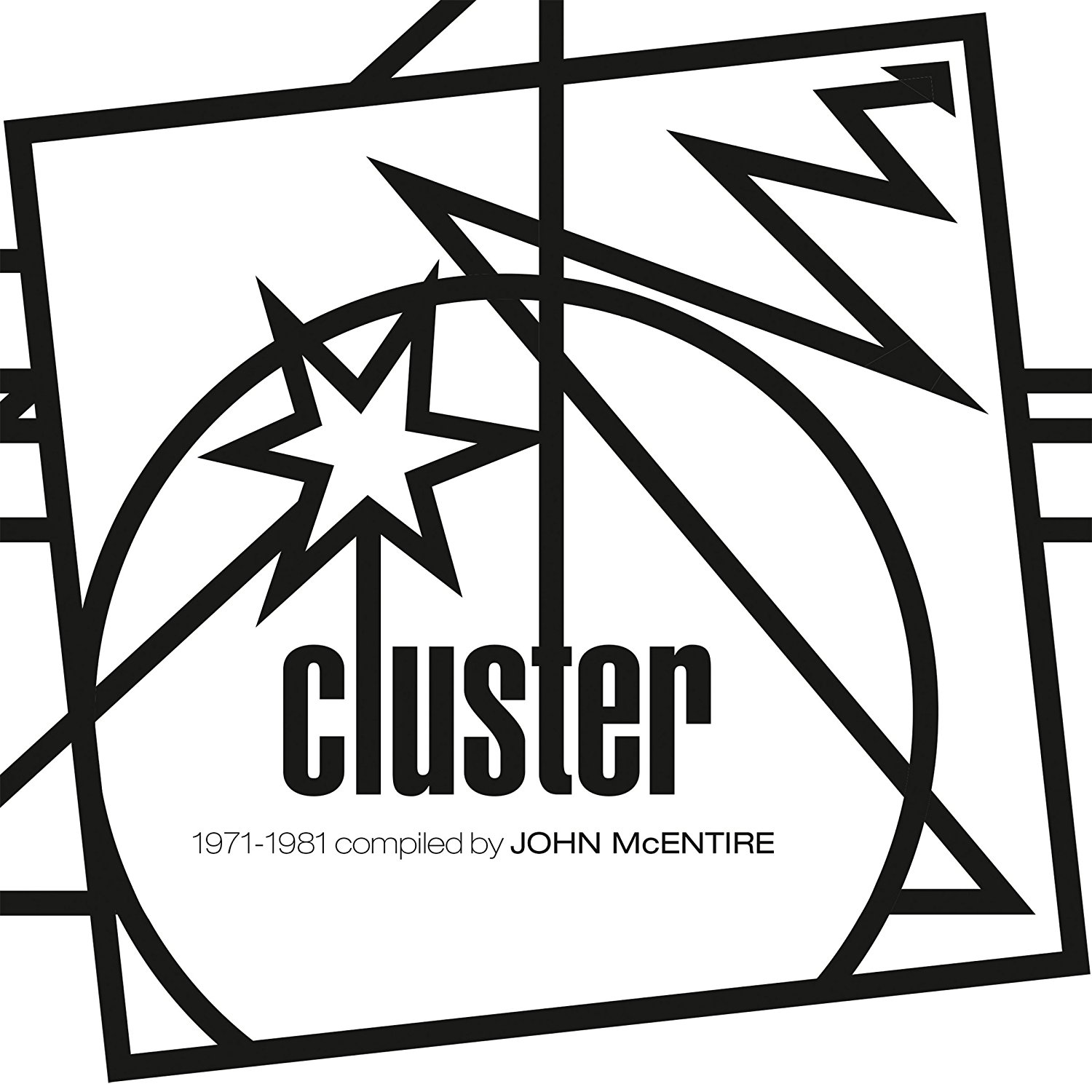
KOLLECTION 06: CLUSTER 1971-1981-COMPILED BY JOHN McENTIRE.
KOLLECTiON 06: CLUSTER 1971-1981-COMPILED BY JOHN McENTIRE.
One of the most important, influential and innovative bands in the history of German music were Cluster. Hans-Joachim Roedelius and Dieter Moebius formed Cluster in 1971. Previously they had both been members of Kluster since 1969. However, Conrad Schnitzler, the third member of Kluster, left the band in mid-1971. This resulted in the two remaining members of Kluster deciding to form Cluster.
Little did Hans-Joachim Roedelius and Dieter Moebius realise that this was the start of a musical journey that would span four decades. Cluster were together until 2010. By then, Cluster had released eleven studio albums and five live albums. However, the most prolific period of Cluster’s long and illustrious career was the period between 1971 and 1981.
During that ten year period, Cluster were at their most prolific and productive. They released eight studio albums and one live album between 1971 and 1981. This included some of their most important and innovative work, including albums like Cluster, Cluster II, Zuckerzeit, Sowiesoso, Cluster and Eno and After The Heat. These albums are the work of true music pioneers, who have influenced several generations of musicians. That is still the case today.
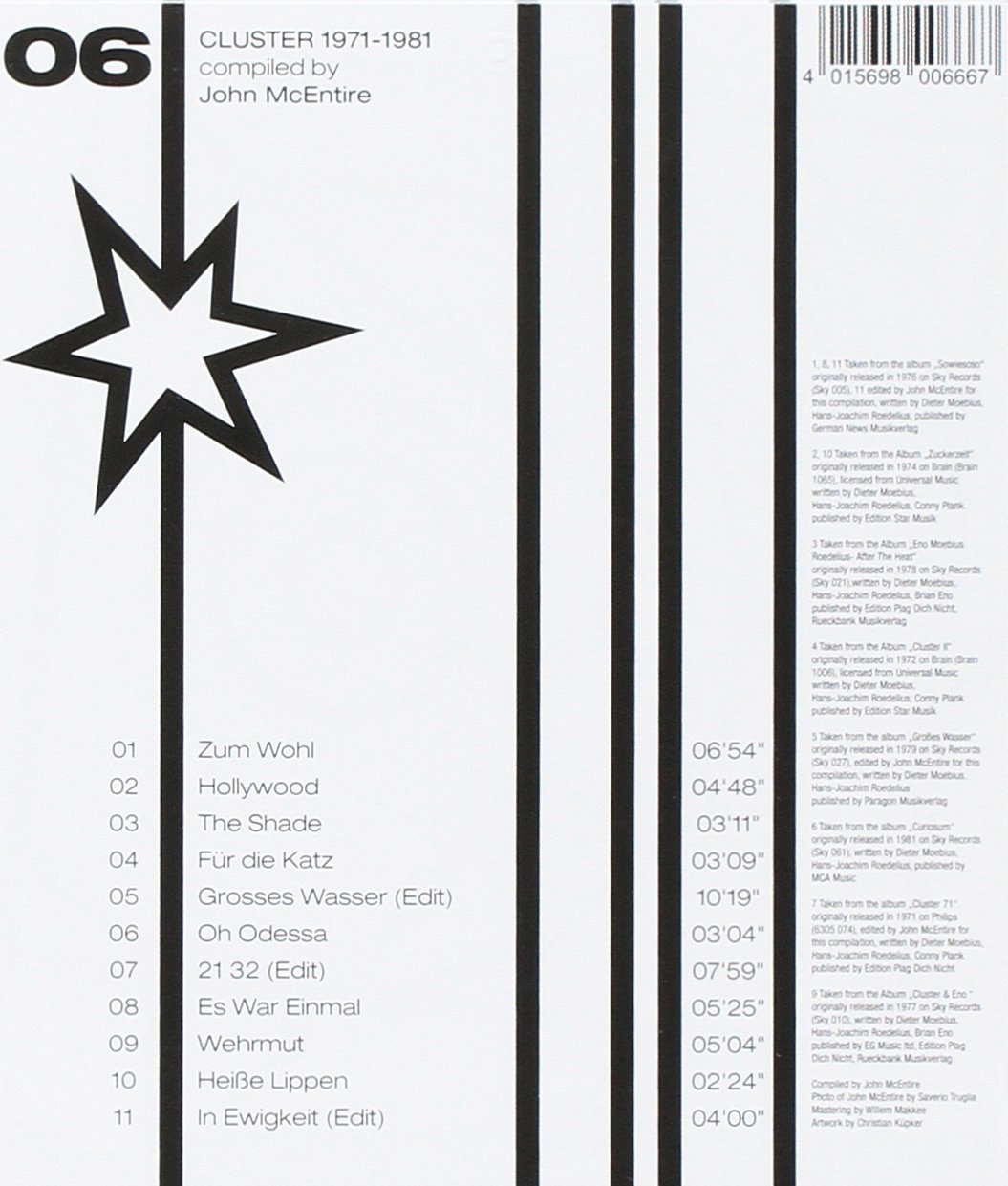
Cluster outlasted the majority of bands that were born in Germany in the early seventies. Their career lasted thirty-nine years. That’s something to celebrate. To celebrate the career of Cluster, the Hamburg based Bureau B label released the limited edition 1971-1981 box set earlier this year. More recently, Bureau B released a new compilation of Cluster’s music, Kollection 06: Cluster 1971-1981 Compiled By John McEntire. It features eleven of Cluster’s finest moments from their first eight albums. This includes a track from their eponymous debut album.
Cluster.
When Cluster were preparing to record their eponymous debut album , they were joined in the studio by another legend of German music, Conny Plank. He featured on Cluster, which marked a change in sound. Gone was the almost industrial, discordant sound of Kluster. It found Cluster move towards an electronic sound. Hans-Joachim Roedelius remembers: “Dieter and I played all the instruments and Conny added all sorts of effects. For us this was the start of a new era.”
Cluster began work on their eponymous debut album. In the studio, Cluster set about honing and sculpting a trio of soundscapes. “Cluster which had very little melody, is a series of improvised and atmospheric soundscapes.” This includes 21 32, which features on Kollection 06: Cluster 1971-1981 Compiled By John McEntire. It’s an eight minute edit of this captivating, epic soundscape.
Just like the other soundscapes, they’re best described as futuristic, moody, dramatic and truly captivating. Heavy rhythms, beeps, squeak and drones drenched in effects assail the listener. It’s as if Cluster have been inspired by avant-garde, free jazz, early electronica, industrial, free jazz and even rock. This fusion of influences eventually became Cluster.
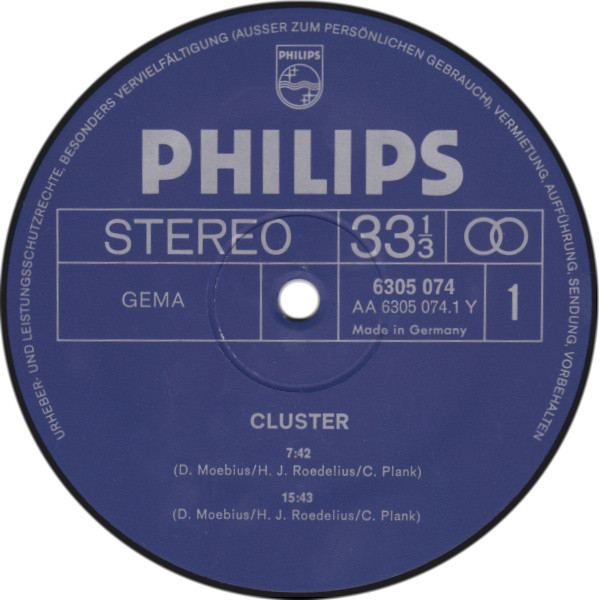
Once Cluster was completed, the album was released later in 1971 on Philips. Little did anyone, even Cluster themselves, realise the effect album bearing the serial number Philips 6305074 would have. Nowadays, Cluster is regarded as an innovative classic, and in a sense, this was the start of Cluster’s career in earnest.
“This was Cluster’s major label debut. It found Cluster at a crossroads.” They were ready to turn their back on the avant-garde, almost discordant and industrial sound of Kluster, and begin the shift towards the ambient and rock-tinged sound of the late seventies. That was the future.
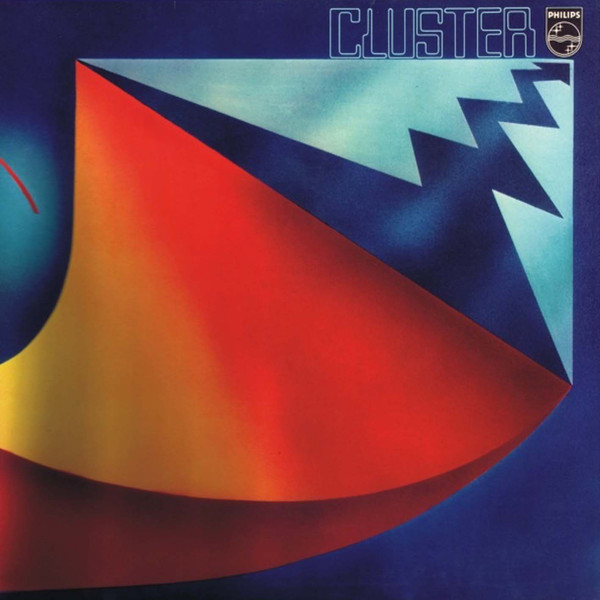
Cluster II.
“For the followup to Cluster, Conny Plank was no longer a member of Cluster. We were now a duo, consisting of Dieter and I. Conny had other projects he wanted to concentrate on.” With three becoming two, the two remaining members took a different approach to recording.
Cluster had added to their impressive arsenal of equipment. As Conny Plank watched on, two organs, analog synths, a Hawaiian guitar, a bass and an electronically treated cello were brought into the studio. Cluster weren’t finished yet. The two members of Cluster started setting up array of effects. This included audio-generators which usually, was found in an electrician’s toolbox. They became part of Cluster’s alternative orchestra. With everything setup, Cluster got to work.
“To some extent, it was trial and error. We tried different things. Some worked, others didn’t,” Hans Hans-Joachim Roedelius explains. The end result, Cluster II “saw a further shift towards a more electronic sound.” This is apparent on Für Die Katz, which features on Kollection 06: Cluster 1971-1981 Compiled By John McEntire.
The music veered between futuristic and dramatic to hypnotic, dreamy, lysergic and otherworldly. Sometimes the music becomes pastoral; other times understated and occasionally, explodes into life. However, for much of the time, Cluster II is melodic and mesmeric. Again, Cluster had produced an album that was way ahead of its time.
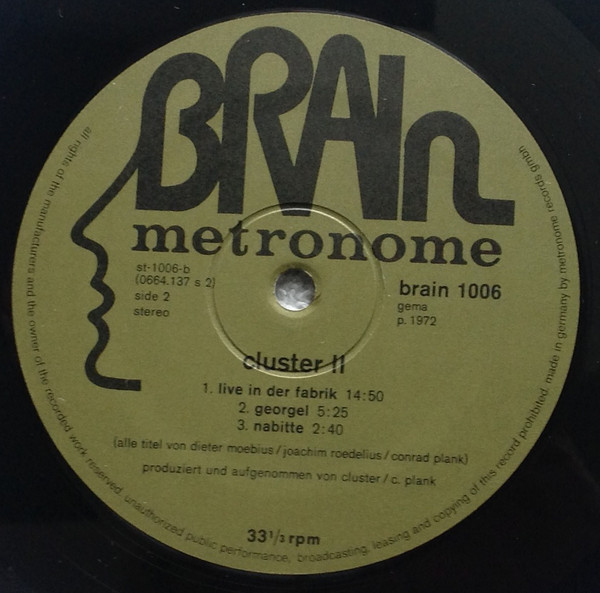
When Cluster II was released, it was on Germany premier label when it came to ambitious and innovative music, Brain. Cluster II was assigned the serial number Brain 1006, and when in was released in 1972, it was well on its way to becoming a groundbreaking genre classic.
Ironically, many German critics and record buyers overlooked groups like Cluster. Instead, they were more interested in the music coming out of America and Britain. Incredibly, they never realised that some of the most innovative music was being made in their own backyard. This includes that made by musical chameleons, Cluster whose music would continue to evolve.
Zuckerzeit.
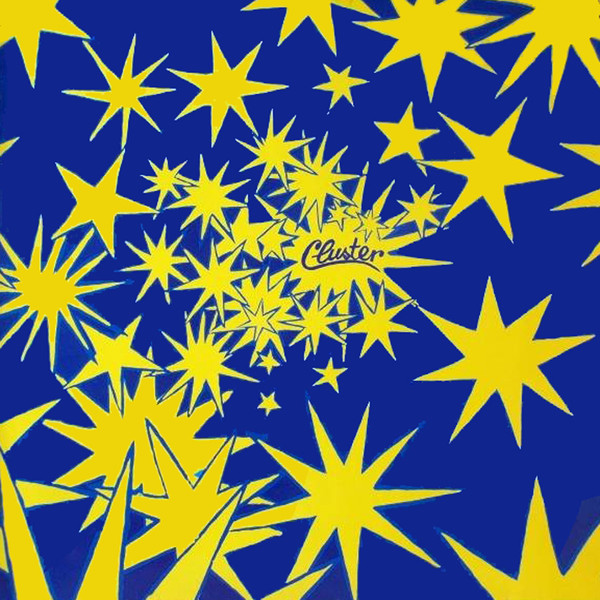
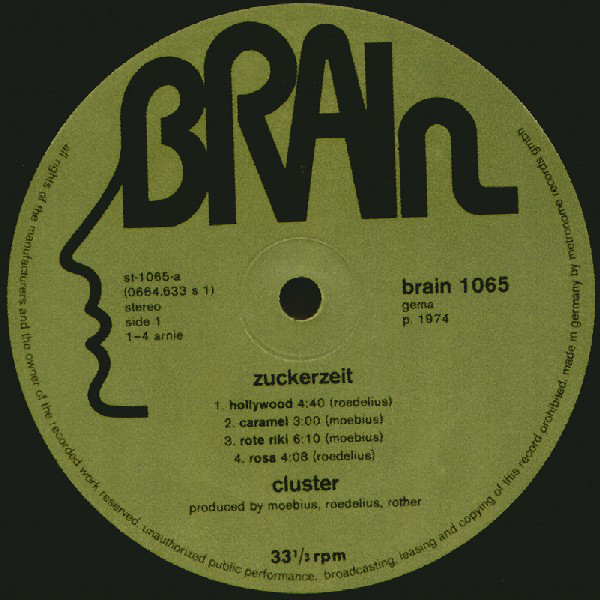
Zuckerzeit, Cluster’s third album, was released in 1974, and was co-produced by Michael Rother of Neu! “Michael first met Dieter and I in 1971. By 1973, Michael was on a break from Neu! We decided to head into the countryside to Forst, to build our own recording studio.” This could’ve been fraught with problems? “No. We knew what we were doing and trying to achieve. All of us had experience in studios, so knew what was required.” The result was a studio “where Michael, Dieter and I recorded the two Harmonia albums, Musik Von Harmonia and Deluxe.” However, before that, Zuckerzeit was released.
On the release of Zuckerzeit, in 1974 Michael Rother’s influence is noticeable. He placed more emphasis on melody, rhythm and the motorik beat.” Hans-Joachim Roedelius explains that previously, Cluster didn’t place the same importance on melody or structure. Michael introduced structure and discipline.” The result was a very different album.
That’s apparent from the opening bars of Hollywood, a beautiful, but haunting soundscape It’s a welcome addition to Kollection 06: Cluster 1971-1981 Compiled By John McEntire. That’s the case with Heiße Lippen were crisp Motorik beat provides the backdrop for Cluster’s synths. Cluster with the help of Michael Rother are transformed into a very different band.
They create music that’s variously melodic, ethereal, evocative, haunting and cinematic. Especially on tracks like Hollywood, Rosa, Fotschi Tong and Marzipan. Then on Rote Riki, the music becomes futuristic, with the man machine adding sci-fi sounds that sound as if they’re from a distant planet. Meanwhile, Caramel would influence future generations of dance music producers. Although Caramba has futuristic sound, it’s melodic and contemporary. It sounds as if it belongs on the dance-floors of Berlin’s clubs. This is incredible, given Zuckerzeit was released later in 1972.
Cluster had released two albums on Brain during 1972. Both would become future genre classics, and both would show a different side to Cluster. Zuckerzeit with its mixture of electronic pop, art rock and avant-garde, was an album way ahead of its time. It’s a truly innovative and timeless album, where Cluster continue to reinvent themselves. The decision to bring Michael Rother onboard as producer was a masterstroke; and also resulted in the birth of a new band, Harmonia.
Sowiesoso.
Hans-Joachim Roedelius and Dieter Moebius founded Harmonia with Michael Rother. The new band released two studio albums, Musik von Harmonia in 1974 and Deluxe in 1975. Both albums featured inventive and innovative music. Despite that, and Brian Eno calling Harmonia “the most important band in the world,” neither album sold well. Then when Harmonia recorded the album Tracks and Traces with Brian Eno, the master tapes went missing. They were only discovered nearly four decades later, and belatedly released in 2007. However, in 1976,Hans-Joachim Roedelius remembers: “Harmonia had ran its course, we returned to Cluster. We had never stopped being Cluster. We played live, but didn’t release a new album until Sowiesoso, in 1976, which we recorded in just two days.”
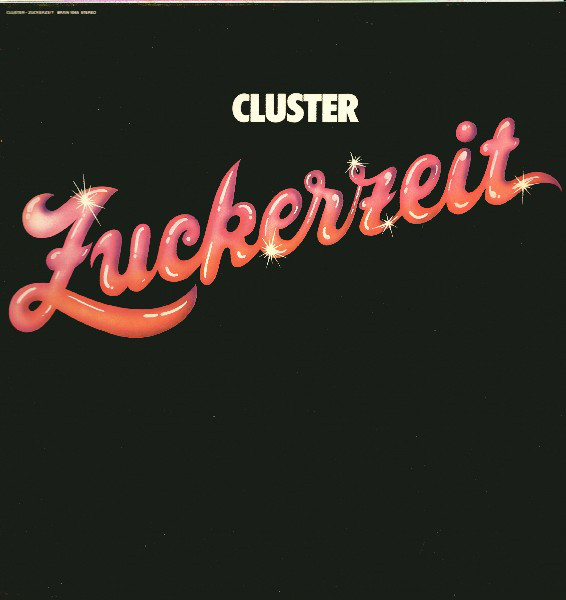
Despite being recorded in just two days, Sowiesoso found Cluster at their creative zenith. They had recorded an album of understated, beautiful, poignant and melancholy melodies, including Zum Wohl, Es War Einmal and the edit of In Ewigkeit that feature on Kollection 06: Cluster 1971-1981 Compiled By John McEntire. The arrangements are often minimalist, but always, cinematic. Sometimes, the music is evocative and atmospheric. Occasionally, there’s an air of mystery. Especially, Halwa, with its cinematic sound. Just like the rest of Sowiesoso, the music paints pictures. That was the case in 1976, and is the case in 2016.
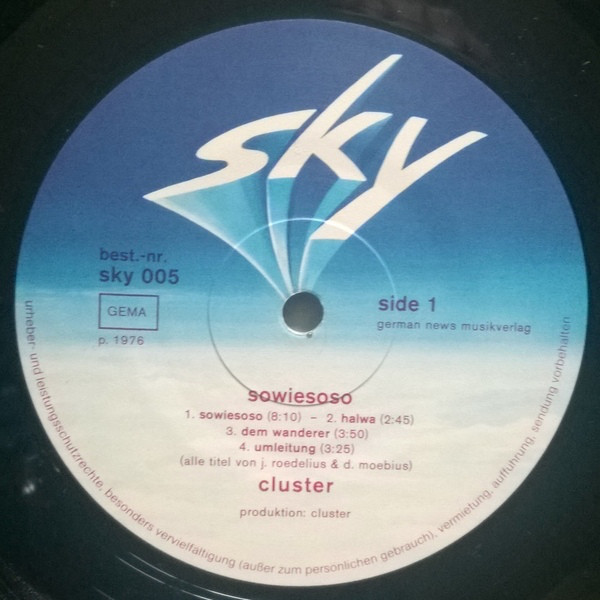
When Sowiesoso was released in 1976, it was on Günter Körber’s Sky Records. It had been formed in 1975, and by 1976, was already regarded as a label that released ambitious, influential and innovative music. This described Cluster’s first album in four years. However, Sowiesoso was a very different album to Zuckerzeit.
That was no surprise to those familiar with Cluster’s music. They were like musical chameleons, constantly reinventing their music. The musical chameleons were about to enter a three year period where Cluster could do no wrong.
Enter Brian Eno.
In June 1977, the two members of Cluster were joined by three old friends. The first was Holger Czukay of Can. “Dieter and I knew Holger from way back, back to Zodiak Free Arts Lab. We hung around with members of Can. Back then, there was a great sense of community. Everyone helped and influenced each other. We even went on to tour together.” Another of the guest artists on Cluster’s 1977 album first met Dieter and Hans at a Cluster concert.
That was Brian Eno: “who Cluster jammed with in 1974. Brian joined us on stage, and we spent the second half of the concert jamming. That was how we first met Brian. Then in 1977, he joined as for the recording of Cluster and Eno. We learnt a lot from Brian. Similarly, I like to think we influenced him. That was the case when we recorded After The Heat.” Before that, Cluster and Eno was recorded.
Cluster and Eno.
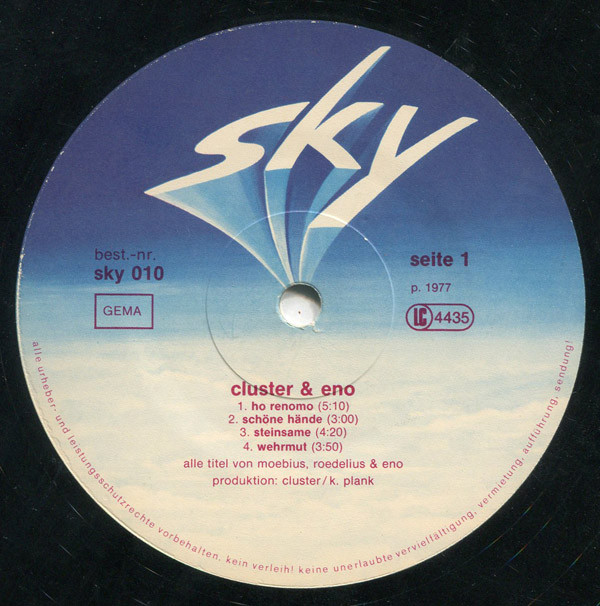
The four great innovators got to work. They spent part of June 1977 recording enough for two albums. Conny Plank laid down bass lines, while Dieter and Hans-Joachim Roedelius played synths and keyboards. So did Brian Eno who added bass and vocals. Once the recording session was complete, the first collaboration between Cluster and Brian Eno was released later in 1977.
When Cluster and Eno was released later in 1977, the album was a meeting of minds. Elements of both Cluster and Brian Eno’s music melted into one. Especially on Wehrmut, which features on Kollection 06: Cluster 1971-1981 Compiled By John McEntire. Just like other tracks, Cluster supplied elements of avant-garde, while Brian Eno’s supplied the ambient influence. When this was combined with drone and world music, the result was another classic album.
Widespread critical acclaim accompanied the release of Cluster and Eno. It was hailed a groundbreaking album, one that was way ahead of its time. Cluster and Eno is an album that Hans-Joachim Roedelius: “is proud of.” He remembers the recording sessions fondly, and sees both Cluster and Eno, and its followup After The Heat, as an equally “influential album.”
After The Heat.
Just a year after the release of Cluster and Eno, the second collaboration between Cluster and Brian Eno was released. It too, was released to critical acclaim. This fusion of ambient, art rock, avant-garde, experimental and Krautrock were combined by Cluster and Brian Eno. Again, both Cluster and Brian Eno were influencing each other. Especially on The Shade, which features on Kollection 06: Cluster 1971-1981 Compiled By John McEntire. The influences of both Cluster and Brian Eno can be heard.
“This was not one way. We both influenced each other. On After The Heat, I believe we influenced Brian’s production style. If you listen to David Bowie’s Low and Lodger albums which Brian Eno produced, Cluster and Harmonia’s influence can be heard. So while Brian influenced Cluster, we certainly influenced him.” After two albums with Brian Eno, Cluster’s next album saw them return to a duo.
Grosses Wasser.
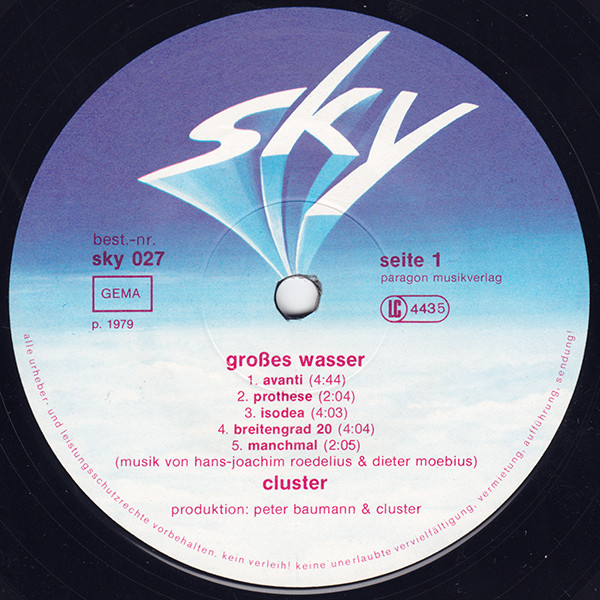
Following two albums with Brian Eno, Cluster returned to the studio in 1979. This time, Cluster were joined by Peter Baumann of Tangerine Dream. He would produce Grosses Wasser, Cluster’s seventh album.
It was an album where Cluster drew inspiration from ambient, art rock and avant-garde to electronica and free jazz. The result was music that’s ambitious, challenging and experimental. Other times, the music becomes ethereal, elegiac, melancholy and cinematic. Sometimes, though, Cluster decide to throw a curveball. This they do on the ten minute edit of Grosses Wasser that features on Kollection 06: Cluster 1971-1981 Compiled By John McEntire. It finds Cluster springing surprises and throwing the occasional curveball on this ambition, genre-melting track. This adds to avant-garde sound of Grosses Wasser.
When Cluster released Grosses Wasser later in 1979, it proved to be Cluster’s most avant-garde album. “This wasn’t a conscious decision. Instead, it was just a case of evolution. That was the way that the Cluster worked. It was the same live.” That became apparent on Cluster’s first live album.
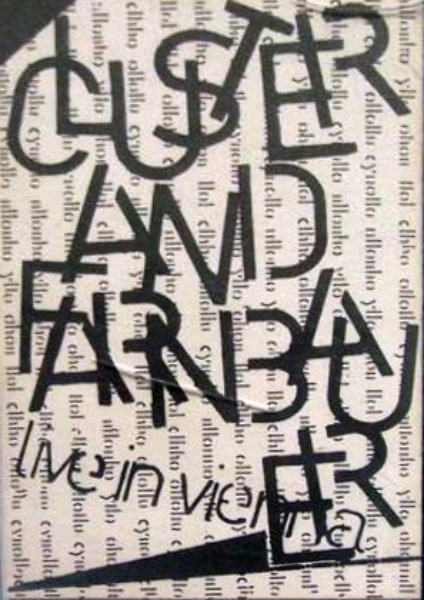
Live In Vienna.
Despite releasing seven studio albums, Cluster had never released a live album. That changed when Cluster took to the stage at the Wiener Festwochen Alternativ, on June 12th, 1980. It was the only time that Cluster took to the stage with Joshi Farnbauer. The result was one of Cluster’s most experimental albums.
Sometimes, the music veered towards discordant, and was reminiscent of early performances by Kluster. Hans-Joachim Roedelius remembers: “a song was just the starting point. We never knew what direction it would take. It was improvisation at its purest. Partly, it was because we couldn’t replicate our music live.” That was the case on, Live In Vienna, which featured Cluster at their most ambitious and inventive. However, just like Harmonia four years earlier, the end was nigh for Cluster.
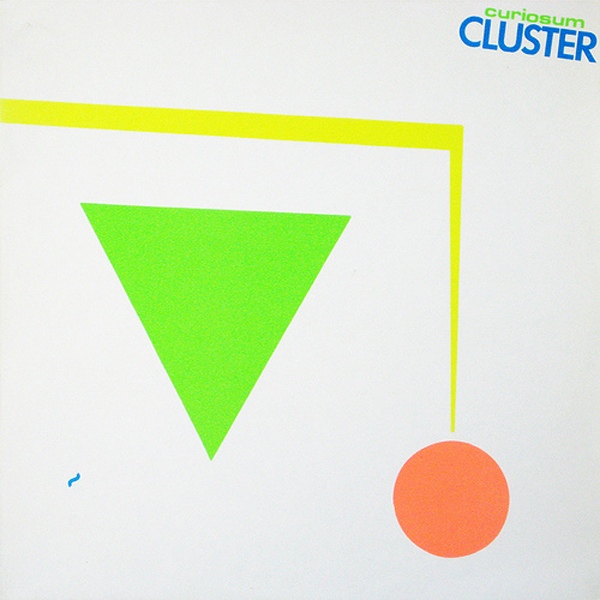
Curiosum.
Cluster recorded their eighth studio album Curiosum in 1981. Recording took place at Hamet Hof, in Vienna, which was now Hans-Joachim Roedelius adopted home.
At Hamet Hof, Cluster recorded seven tracks. Some were relatively short by Cluster standards. Given the title, the seven tracks on Curiosum were somewhat unorthodox. However, they were unusually melodic. This includes Oh Odessa, that features on Kollection 06: Cluster 1971-1981 Compiled By John McEntire. It’s melodic as elements of avant-garde, electronica and experimental music are combined by musical chameleons, Cluster. They were about to bring the curtain down on chapter one of the Cluster story.
Just like Harmonia, “Cluster had run its course. We decided to concentrate on other projects. There was no fall-out, Cluster just came to a natural end. After eight studio albums, Hans-Joachim Roedelius and Dieter Moebius put Cluster on hold. They would reunite on several occasions, in the future. However, Cluster had already recorded eight studio albums. Custer would only release three more albums between 1984 and 2009.
Cluster’s music would continue to be relevant right through their swan-song Qua in 2009. However, by 1981 Cluster had released some of the most important music of their career.
Albums like Cluster, Cluster II, Zuckerzeit, Sowiesoso, Cluster and Eno and After The Heat are the work of true music pioneers. Incredibly, these albums were released during the first ten years of Cluster’s career. They also recorded two other ambitious albums, Grosses Wasser and Curiosum. Each of these eight albums features Cluster’s music as it continues to evolve.
That’s apparent on Bureau B’s new compilation of Cluster’s music, Kollection 06: Cluster 1971-1981 Compiled By John McEntire. It documents Cluster’s career between Cluster in 1971 right through to 1981s Curiosum. To do this, John McEntire chose eleven of the finest moments from the first ten years of Cluster’s career. Three of these tracks have been edited so that the eleven tracks can fit on one CD. The result is the perfect introduction to Cluster.
Especially for newcomers to Cluster. They might be unsure where to start in Cluster’s impressive back-catalogue. Not any more. Kollection 06: Cluster 1971-1981 Compiled By John McEntire gives them an overview of the first eight studio albums. From there, newcomers to Cluster can dig deeper. A good place to start is Bureau B’s 1971-1981 nine disc box set. However, it’s a limited of just 1,000 CD and LP box sets. They’ve almost sold out, and are well on their way to becoming collector’s items. Anyone wanting a copy of 1971-1981 will need to be quick. It’s the perfect followup to Kollection 06: Cluster 1971-1981 Compiled By John McEntire.
Both the 1971-1981 box set and Kollection 06: Cluster 1971-1981 Compiled By John McEntire features the music a pioneering group. The released ambitious, groundbreaking and timeless music. It has gone on to influence several generation of musicians. Even today, musicians cite Cluster as one of the bands who influence and inspired them. That will continue to the case as the music Cluster made was timeless.
There’s a reason for this. Cluster weren’t afraid to push musical boundaries to their limits, and sometimes, way beyond. Musically, Cluster were willing to go, where others musicians feared to tread. This was the case during the period 1971-1981, which Kollection 06: Cluster 1971-1981 Compiled By John McEntire covers. During that period, Cluster released eight studio albums, including several classic Krautrock albums. Each of these albums featured ambitious, groundbreaking and genre-melting music that even four decades later, is truly timeless. One listen to Kollection 06: Cluster 1971-1981 Compiled By John McEntire and that will be apparent.
KOLLECTiON 06: CLUSTER 1971-1981-COMPILED BY JOHN McENTIRE.
TIM BUCKLEY- LADY, GIVE ME YOUR KEY: THE UNISSUED 1967 SESSIONS.
TIM BUCKLEY- LADY, GIVE ME YOUR KEY: THE UNISSUED 1967 SESSIONS.
Having released his eponymous debut album in 1966, Tim Buckley was told by Elektra wanted to record a followup album. Before that, Elektra’s founder Jac Holzman told Tim Buckley he wanted him to record a single. Then the album would follow. This made sense.
Elektra were trying to introduce Tim Buckley to a wider audience. A successful single would certainly do that. There was only one problem though. Tim Buckley hadn’t any new songs. So Tim Buckley and his songwriting partner Larry Beckett began work on new material.
Their priority was the single project. Before work began, the pair spent time relaxing in lyricist Larry Beckett’s Venice Beach apartment, listening to AM and FM radio. This was where the pair hit on the idea of writing an AM and FM side.
The Buckley and Beckett partnership worked quickly. They were already a prolific partnership, who could reel off songs in a short space of time. Soon, the pair had penned four songs, Once Upon A Time, Lady, Give Me Your Key, Sixface and Contact. These songs were demoed at Larry Beckett’s Oak Court apartment.
It’s just Tim Buckley accompanying himself with an acoustic guitar. They were recorded onto Larry Beckett’s reel-to-reel tape. Despite having four songs for the single project, the Buckley and Beckett songwriting partnership weren’t finished yet.
This prolific partnership began to write some more songs. Before long, they had written three more songs, Once I Was, I Never Asked to Be Your Mountain and Pleasant Street. Neither Tim Buckley, nor Larry Beckett, knew that two of these songs would later be regarded as Tim Buckley classics. Just like the other four songs, Tim Buckley recorded these songs at Larry Beckett’s Oak Court apartment. They became part of the Oak Court Demo Tape.
The songs on the Oak Court Demo Tape weren’t the finished versions of the songs that would later feature on Goodbye and Hello. Instead, they were work-in-progress. It was a similar case with an acetate recorded at Madison Studios, in Manhattan.
By then, Tim Buckley was touring in an attempt to build up a following. He was due to play several dates in New York. During some downtime, Tim Buckley planned to book some studio time in one of the Big Apple’s many studios. His manager Jerry Yester was keen to hear some songs that might find their way onto his sophomore album.
Once Tim Buckley knew when he had some downtime, he booked studio time at Madison Studios in midtown Manhattan. Rather than take his band, Tim Buckley decided to record acoustic demos like those on the Oak Court Demo Tape. This time though, Tim planned to record just six Buckley and Beckett compositions. The pair had penned Knight-Errant, Marigold, Carnival Song, No Man Can Find The War, I Can’t Leave You Lovin’ Me and She’s Back Again. With just his acoustic guitar accompanying him, Tim recorded the six songs. Once the session was complete acetates were pressed.
These acetates featured songs that Tim Buckley thought may feature on his forthcoming sophomore album. One of the acetates, Tim Buckley mailed to his manager Jerry Yester, on the West Coast. He was keen to hear the new songs that Tim Buckley and Larry Beckett had written. So was Jac Holzman at Elektra.
Eventually, the acetate arrived at Jerry Yester’s office on the West Coast. He was finally able to hear the songs that Tim Buckley and Larry Beckett had been working on. Tim hoped that some of these songs would feature on his sophomore album, Goodbye and Hello. Only Knight-Errant and Carnival Song and No Man Can Find The War were rerecorded and eventually found their way onto Hello and Goodbye. The other three songs, Marigold, I Can’t Leave You Lovin’ Me and She’s Back Again Tim quickly dropped from his set. They’ve never been heard since then…until recently.
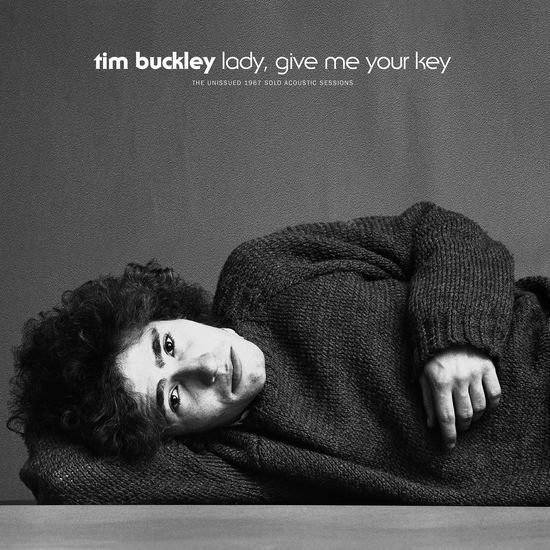
These three long lost songs are among the thirteen that feature on Lady, Give Me Your Key-The Unissued 1967 Sessions. It was recently released by Light In The Attic Records. Lady, Give Me Your Key-The Unissued 1967 Sessions features what many Tim Buckley fans, will be the equivalent as the Holy Grail. This includes the seven songs the Oak Court Demo Tape, and the six songs on The Acetate recorded at Madison Studios. Neither of these sessions have been released before. Indeed, The Acetate was only discovered by chance.
The Acetate only came to light when Jerry Yester was tidying out his house. He found an old suitcase, and began looking through its contents. Tucked away in the suitcase, was The Acetate. By then, several decades had passed and Tim Buckley’s career had been cut tragically short on June 29th 1975.
By then, Tim Buckley was a prolific artist. His songwriting partnership with lyricist Larry Beckett had proved a fruitful one. Tim released nine albums between 1966 and 1974.
His debut album Tim Buckley was released by Elektra in 1966. Goodbye and Hello followed in 1967. Two years later, Tim released Happy Sad and Blue Afternoon during 1969. Then in 1970, Tim released another two albums, Lorca and Starsailor.
Already, Tim Buckley had flitted between jazz, funk, psychedelia and avant-garde. Then on his three final albums, Tim’s music moved towards sex funk on 1972s Greetings from L.A., 1973s Sefronia and 1974s Look at the Fool. Alas, Tim’s dalliance with sex funk resulted in his music being banned from radio. Sadly, that was the least of his worries.
Over the years, Tim Buckley had grown dependent on drugs. For some time, Tim had managed to control his drug habit. This he was still managing to do on the 28th of June 1975, as he prepared to play a concert in Dallas, Texas. After the show, headed out to celebrate a party.
At the party, Tim Buckley took a combination of heroin and alcohol, and reacted badly. Tim’s tolerance level was no longer as high as they had once been. So his friends took Tim home. What happened next is unclear.
It’s thought that Tim Buckley took some more heroin. At some point, Tim collapsed on the floor. When his wife Judy found him on the floor, she put Tim to bed. Later, when she went to see how Tim was, Judy found Tim blue and unresponsive. Tim Buckley was pronounced dead on the 29th of June 1975, aged just twenty-nine. Music has lost one of its most talented sons, Tim Buckley. He however, left behind a rich musical legacy.
Sadly, that musical legacy hadn’t been discovered by a wider audience during Tim Buckley’s lifetime. He was still a relative unknown. That would change after his tragic death.
Since his death, interest in Tim Buckley’s music has grown. Especially, over the last twenty-five years. Just like Gram Parsons and Nick Drake, Tim Buckley’s has grown in popularity. Tim Buckley’s music is more popular than ever. This has resulted in many compilations and live recordings being released. They vary in quality, and range from lovingly compiled to albums that cash in the rise in interest and popularity of Tim Buckley’s music. However, Lady, Give Me Your Key-The Unissued 1967 Sessions is a welcome reissue, and is like stepping back in time.
Suddenly, it’s late 1966, early 1967 and the listener is transported to Larry Beckett’s L.A. apartment. Larry sets up his reel-to-reel tape recorder, and presses play. This he does during several sessions. The songs he records Tim Buckley singing became the Oak Court Demo. However, these songs are work in progress. Having said that, they’re of historical importance. Especially to anyone interested in Tim Buckley’s music. Two of the songs on the Oak Court Demo would later be transformed, into Tim Buckley classic. The versions of Once I Was and I Never Asked to Be Your Mountain on Lady, Give Me Your Key-The Unissued 1967 Sessions show these songs evolving. It’s a similar case with the six songs on The Acetate recorded at Madison Studios.
Despite Tim Buckley’s high hopes for the six songs on The Acetate recorded at Madison Studios, the only three songs that were rerecorded. Knight-Errant and Carnival Song and No Man Can Find The War later found their way onto Hello and Goodbye. It was released later in 1967. So was the single that Elektra’s founder Jac Holzman wanted Tim to record.
Ironically, none of the seven songs that feature the Oak Court Demo were chosen as the single. Once I Was found its way onto the B-Side, when the single was released by Elektra in December 1967. By then, Once I Was a quite different song than the one that was recorded at Larry Beckett’s L.A. apartment. However, somewhat belatedly, the songs from the Oak Court Demo are available for all to hear.
Nearly fifty years later, the songs from the Oak Court Demo and The Acetate recorded at Madison Studio, in Manhattan feature on Lady, Give Me Your Key-The Unissued 1967 Sessions. It was released recently by Light In The Attic. For fans of Tim Buckley, the music on Lady, Give Me Your Key-The Unissued 1967 Sessions is akin to the musical Holy Grail which has been discovered after nearly fifty years.
TIM BUCKLEY- LADY, GIVE ME YOUR KEY: THE UNISSUED 1967 SESSIONS.
CHARTBUSTERS USA-SPECIAL COUNTRY EDITION.
CHARTBUSTERS USA-SPECIAL COUNTRY EDITION.
It was back in June 1999 that Ace Records released Chartbusters USA Vol.1. Little did they realise that this occasional series would still be going strong over seventeen years later. That’s quite a feat in the increasingly competitive compilation market.
What has been crucial to the continued success of Chartbusters USA series, is the quality and consistency of music. These are lovingly curated compilations. That was the case with Chartbusters USA Vol.2 which was released in January 2002. Here was a compilation that oozed quality. So Chartbusters USA Vol. 3 when it was released in March 2003. Ace Records seemed to have found a successful formula for a long-running compilation series.
Most record companies would’ve turned Chartbusters USA into an annual event. Not Ace Records though. This wasn’t going to be a compilation series that reached Volume 22. Instead, Chartbusters USA was about to become an occasional series.
Five years later, and the next instalment in the Chartbusters USA series was released in June 2009. The series made a welcome return with a Special Edition. This was Chartbusters USA Special Edition-Sunshine Pop. It was a welcome reminder of this popular series.
Despite the glowing reviews and popularity of the latest instalment, Ace Records again eschewed the temptation to make the series an annual occurrence. Instead, Chartbusters USA would remain an occasional series.
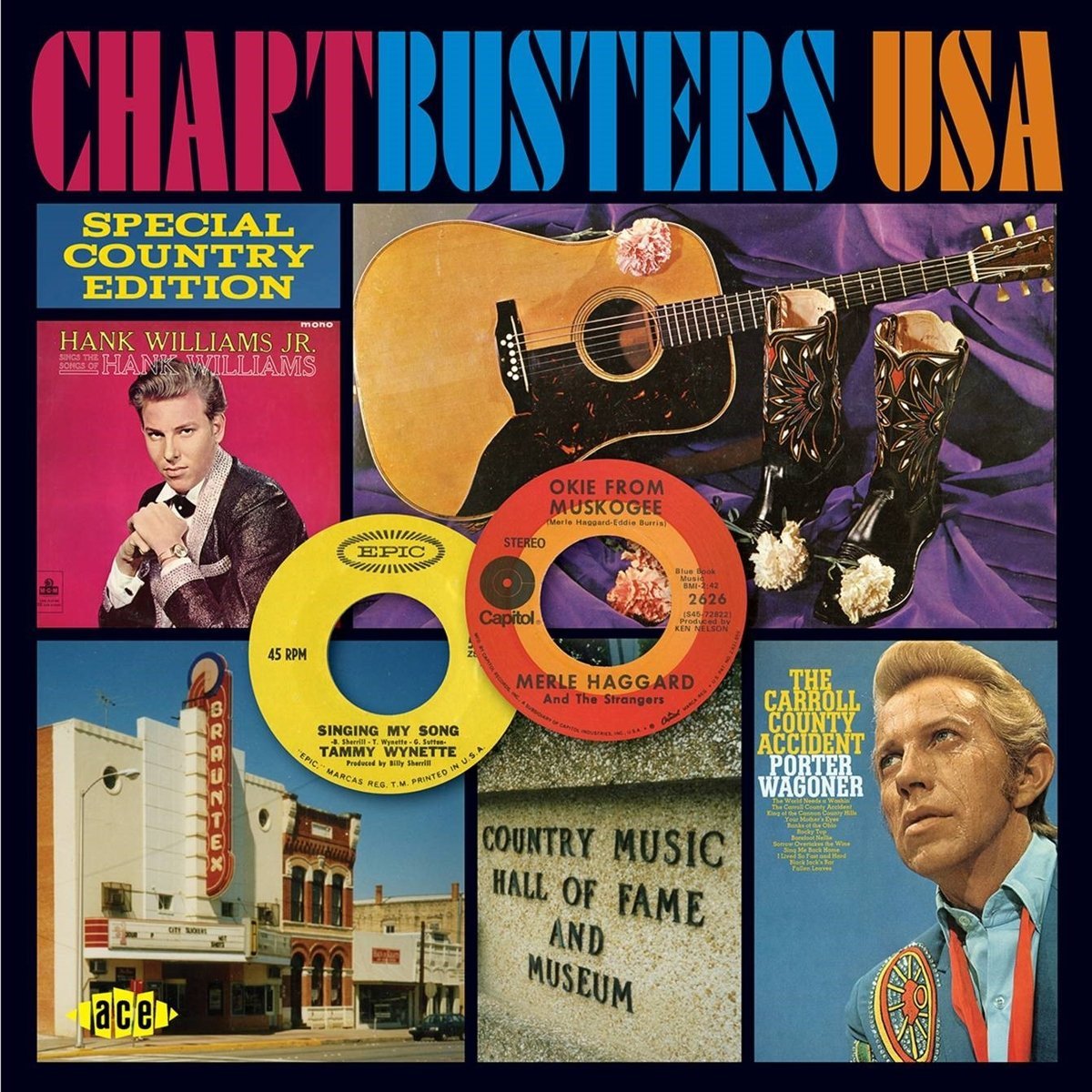
Then after seven year absence, Ace Records announced the release another in the Chartbusters USA series. Just like the previous instalment, it was another Special Edition. This time, though, Ace Records had turned their attention to country music on Chartbusters USA-Special Country Edition. It’s the latest instalment in this long running and occasional compilation series.
For Chartbusters USA-Special Country Edition, compiler Tony Rounce chose twenty-four tracks released between 1963 and 1969. This includes songs from country music royalty. There’s no bigger names than George Jones, Hank Williams Jr, Johnny Cash, Glen Campbell and Merle Haggard and The Strangers. That is not forgetting Marty Robbins, Tammy Wynette, Eddy Arnold, Chet Atkins, Jeannie C. Riley and Buck Owens. These songs are just a few of the artists on a compilation that contains hits aplenty.
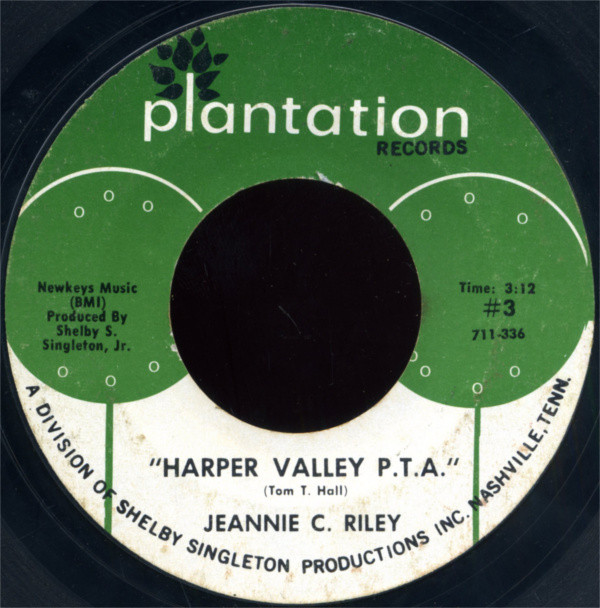
In total,twenty-three of these songs reached the top ten in the US Country charts. Twelve of these songs reached number one. Each of these songs crossed over, and were a hit in the US Billboard 100. Four singles reached the top ten, with one topping the Billboard 100. That was Jeannie C. Riley’s Harper Valley PTA, which topped the US Country and US US Billboard 100 in 1968. It’s just one of the familiar songs that feature on Chartbusters USA-Special Country Edition. They were recorded by some of the biggest names to set foot in a Nashville Studio.
This includes George Jones, the man who for the latter part of his life was known as: “the greatest living country singer”. He opens Chartbusters USA-Special Country Edition with his 1964 single, The Race Is On. It was released on United Artists, and reached number three in the US Country charts and ninety-six in the US Billboard 100. A year later, The Race Is On lent its name to a new George Jones album in April 1965. Upon its release, it reached number three in the US Country charts, and became the most successful album of George Jones’ career so far.
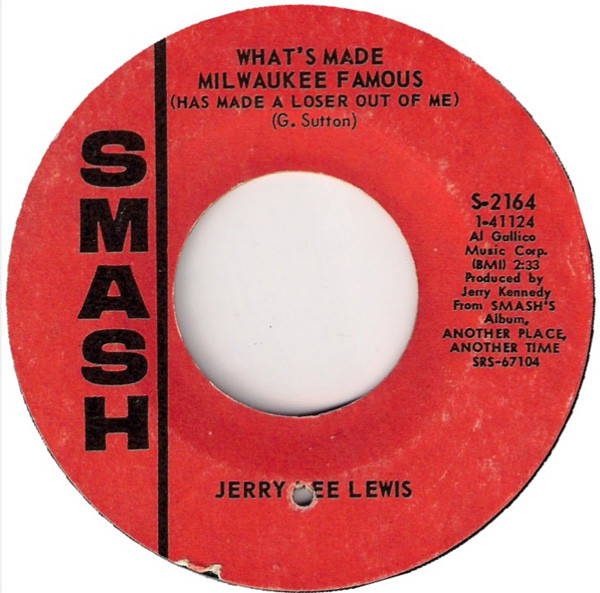
In 1968, Jerry Lee Lewis was in the process of reinventing himself as a country singer. It had been a long, hard slog for The Killer after his fall from grace in 1957. He had signed to Smash Records, an imprint of Mercury in 1963 and began his comeback. The American public were unforgiving and Jerry Lee Lewis’ music failed to find an audience.
By 1968, his hard work and persistence was paying off. Jerry Lee Lewis released what was billed as his comeback album, Another Place, Another Time. One of the singles released from the album was What’s Made Milwaukee Famous (Has Made A Loser Out Of Me) on the Smash label. Its melancholy sound struck a nerve with record buyers across North America. The single reached number one in the Canadian Country charts; two in the US Country Charts and ninety-four in the US Billboard 100. After ten years, The Killer was on comeback trail, thanks in part to the melancholy strains of What’s Made Milwaukee Famous (Has Made A Loser Out Of Me).
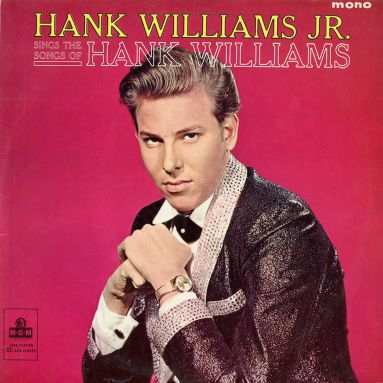
In 1964, Hank Williams Jr’s career was just beginning. He had decided to follow in the footsteps of his famous father. Already comparisons were being drawn between Hank Williams Jr and his famous father. Meanwhile, the doubters wondered whether the family name would weigh heavy on Hank Williams Jr’s shoulders? That proved not be the case. Long Gone Lonesome Blues showed that musically Hank Williams Jr was his father’s song. When it was released as a single on MGM 1964, and reached number four in the US Country charts and sixty-seven in the US Billboard 100. This was just the start of a long and successful career for Hank Williams Jr, where he would release over 106 singles and fifty-six albums. These albums went on to sell over seventy million copies, and in the process prove the doubters wrongs.
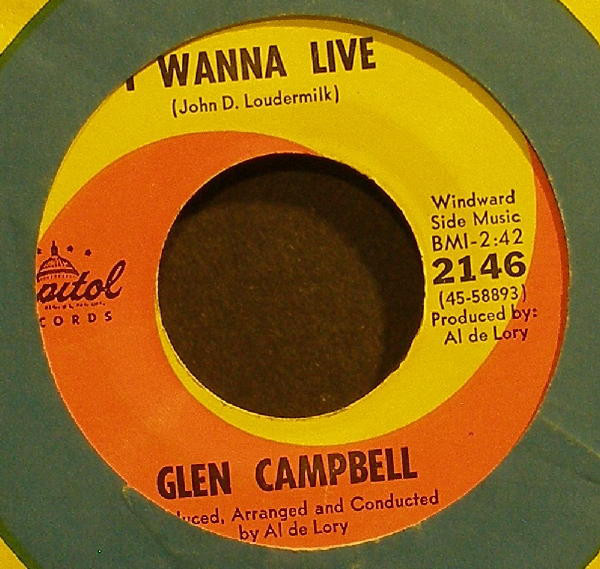
By 1968, country music was changing and Glen Campbell was at the vanguard of the countrypolitan sound. Two features of this new sound were smooth vocals and strings. These pop stylings feature on Glen Campbell’s 1968 single I Wanna Live. This John D. Loudermilk composition was a call for tolerance. When it was released on Capitol in 1968, this countrypolitan ballad waltzed hopefully, and into the charts. It reached thirty-six in the US Billboard 100 and gave Glen Campbell the first of five US Country number one singles.
Adultery and murder have long been the subject of country songs. Songwriter Jack Clements managed to combine both subjects into Miller’s Cave. This was covered by Bobby Bare covered in 1964 at RCA’s Nashville Studio. His vocal is a mixture of country and folk, as the lyrics come to life. When Miller’s Cave was then released on RCA, and eventually, reached twenty-three in the US Billboard 100 and four on the US Country charts. This was one of a string of hits Bobby Bare enjoyed between 1962 and 1970.
Fifty years after the release of David Houston’s 1966 single Almost Persuaded, controversy sounds the song. Rick Hall remembers driving Dan Penn and Donnie Fritts from Muscle Shoals, Alabama to Nashville to let Billy Sherrill hear Almost Persuaded. Maybe he would be interested in recording the song? Alas, their journey was a wasted one. That however, wasn’t the end of the story.
Some time, later Rick Hall was listening to a country radio station and heard a song entitled Almost Persuaded. Billy Sherrill and Glenn Sutton had used the title and written a new song. When it was released by Epic in 1966, this confessional ballad made it to number twenty-four in the US Billboard 100 and number on the US Country charts. For David Houston, Almost Persuaded kickstarted his career
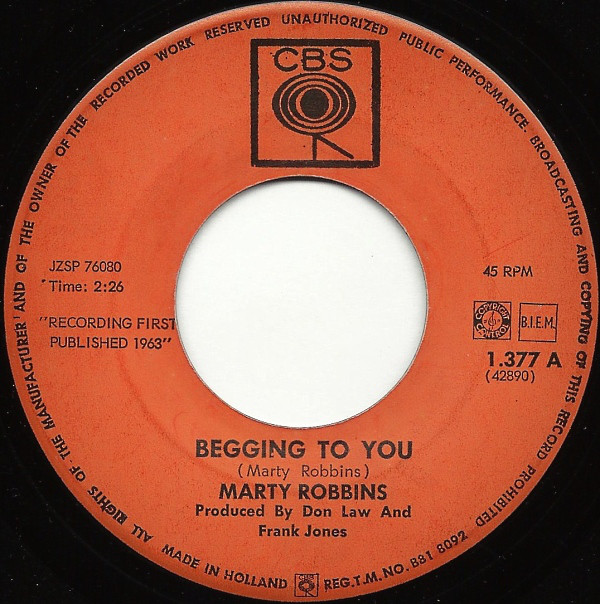
Another giant of country music is singer and songwriter, Marty Robbins. He enjoyed a long and successful career. In 1963, he wrote and recorded Begging You To Stay. This heart-wrenching ballad was released as a single on Columbia later in 1963. Although it only reached seventy-four in the US Billboard 100, it topped the US Country charts. This was the tenth of sixteen number ones Marty Robbins enjoyed during a career that spanned four decades.
Tammy Wynette’s career began in 1966. Success came quickly for her, when Your Good Girl’s Gonna Go Bad gave Tammy Wynette a top ten single and album in 1967. However, in 1968 she released a song that would become synonymous with her, D-I-V-O-R-C-E. The single and album topped the US Country charts and crossed over. Suddenly, Tammy Wynette was one of the hottest properties in country music.
She returned in 1969 with the ballad Singing My Song. This tale of heartbreak had been penned by Billy Sherrill and Glenn Sutton with Tammy Wynette. When it was released in 1969 it topped the US Country charts and reached number seventy-five in the US Billboard. For Tammy Wynette this was the sixth US Country number one of her career. It certainly wasn’t the last. Tammy Wynette enjoyed twenty US Country number ones between 1966 and 1976, making her one of the most successful country singers.
Eddy Arnold’s career began back in 1937. By 1965, he was signed to RCA and was regarded as one of the finest practitioners of the Nashville Sound. He was also one of the most popular country artists. He had enjoyed twenty US Country number one singles. When Eddy Arnold released a hurt-filled cover of Hank Cochran’s Make The World Go Away it reached number six on the US Billboard 100 and topped the US Country charts. This hurt-filled ballad gave Eddy Arnold the twenty-first US Country number one single. Eventually, Eddy Arnold sold eighty-five million records, a total that’s only surpassed George Jones.
Charley Pride was the footballer turned to country music singer. His career was beginning to flourish, and had enjoyed seven consecutive top ten hits in the US Country charts. However, none of these singles had topped the chart. That was until Charley Pride released All I Have to Offer You (Is Me) in June 1969. Not only did it top the US Country charts, but reached ninety-one in the US Billboard. This heartfelt ballad was also Charley Pride’s first single to crossover. For Charley Pride this was just the start. He became one of the most successful country artists of the seventies.
Charley Pride was the footballer turned to country music singer. By 1969, his career was beginning to flourish. Already he had enjoyed seven consecutive top ten hits in the US Country charts. However, none of these singles had topped the chart. That was until Charley Pride released All I Have to Offer You (Is Me) in June 1969. Not only did it top the US Country charts, but reached ninety-one in the US Billboard. This heartfelt ballad was also Charley Pride’s first single to crossover. For Charley Pride this was just the start. He became one of the most successful country artists of the seventies and early eighties.
When Jeannie C. Riley released Harper Valley PTA on Plantation Records in 1968, it transformed her career. The single topped both the US Country and US Billboard 100 charts. This Tom T. Hall penned song was akin to a mini-drama, where Jeannie C. Riley exposes the hypocrisy of the Harper Valley PTA. Within four weeks this country classic was certified gold. The following year, Jeannie C. Riley the Grammy Award for Best Female Country Vocal Performance and was the Country Music Association’s single of the year. Eventually, Harper Valley PTA sold over 5.5 million copies worldwide. For Jeannie C. Riley this was just the start.
Later in 1969, Jeannie C. Riley hosted her own major network variety special. Then as the seventies dawned, the commercial success continued. During the late-seventies, Jeannie C. Riley was a familiar face on televisions. There were also offers from Hollywood to star in films. By then, Jeannie C. Riley was a born again Christian, and started singing gospel. This lead to her distancing herself from the song that transformed her career just a decade earlier.
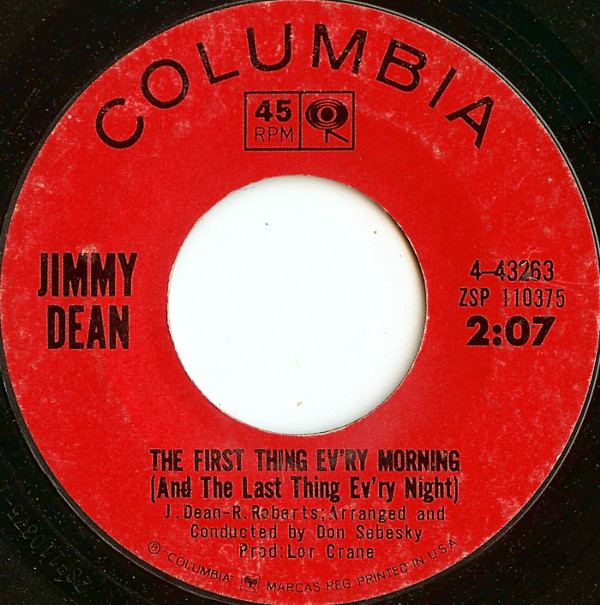
Jimmy Dean’s The First Thing Ev’ry Morning (And The Last Thing Ev’ry Night) closes Chartbusters USA-Special Country Edition. It was released on Columbia in 1965, and reached number one on the US Country charts and number ninety-one on the US Billboard 100. It’s another example of the countrypolitan sub-genre, which is country music with pop stylings. There’s even a nod Dean Martin stylistically, as the song takes on an easy listening singalong style. Sadly, Jimmy Dean only enjoyed two more hit singles, and never again enjoyed another US Country number one. A new breed of country singers were about to make their presence felt, as country music continued to evolve.
Chartbusters USA-Special Country Edition is a snapshot of country music between 1963 and 1969. During this period, the Nashville Sound peaked in popularity and countrypolitan sound began to take centre-stage. Country music also began to crossover and reach a new audience. Each of the songs that feature on Chartbusters USA-Special Country Edition crossover to some extent. Most were just minor crossover hits, apart from Roger Miller’s Chug-A-Lug, The Statler Brothers’ Flowers On The Wall and Jeannie C. Riley’s Harper Valley PTA. However, as the sixties gave way to the seventies, country music’s crossover appeal grew. The artists on Chartbusters USA-Special Country Edition had sown the seeds.
Many of the artists on Chartbusters USA-Special Country Edition would go on to enjoy commercial success throughout the seventies. Among them, were George Jones, Hank Williams Jr, Glen Campbell, Johnny Cash, Marty Robbins, Billie Jo Spears, Tammy Wynette, Charley Pride and Jeannie C. Riley. Country music’s crossover appeal grew, with more and more country singers reaching the upper reaches of the US Billboard 100. Belatedly, country music was reaching a wider audience.
Nowadays, country music is as popular as ever. Partly, that’s because country music has continued to evolve and stay relevant.
However, it’s often the music from country music’s past that a new generation of record buyers discover. Often this begins with discovering one artist. This often leads them to embark upon a voyage of discovery through country music’s history. The same can be said of Chartbusters USA-Special Country Edition.
A copy of Ace Records’ Chartbusters USA-Special Country Edition could well be the start of a musical voyage of discovery
through the Chartbusters USA series. Chartbusters USA-Special Country Edition may well even be the start of lifelong love affair with country music.
CHARTBUSTERS USA-SPECIAL COUNTRY EDITION.







ROGER WATERS-SOLO YEARS.
ROGER WATERS-SOLO YEARS.
Following the departure of Syd Barrett from Pink Floyd, bassist Roger Waters became the group’s creative force. This was the case from Pink Floyd’s third album, Ummagumma, which was released in 1969, right through to 1983s The Final Cut. After the release of The Final Cut, Roger Waters left Pink Floyd. It was a bitter breakup. However, things had been coming to a head for some time.
Richard Wright, one of the founding members of Pink Floyd had been sacked from the band. As a result, he didn’t feature on The Final Cut. It was the only Pink Floyd album that he didn’t feature on. This was just the tip of the iceberg.
Pink Floyd had been a group divided since 1978. That was when the members of Pink Floyd found out the perilous state of their finances. Some of the investments made on their behalf went south. Amid accusations of financial negligence, Pink Floyd needed to recoup some of the money they had lost. So, Roger Waters presented the other members of Pink Floyd with two propositions.
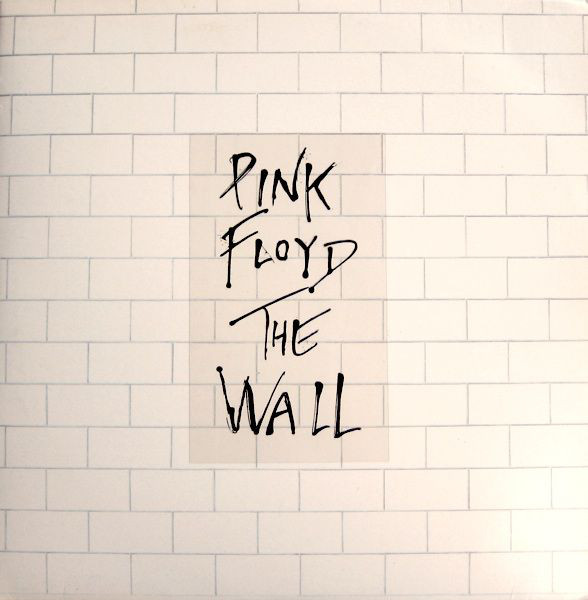
The Wall.
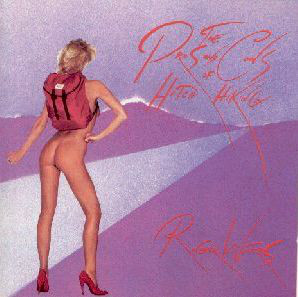
The first was the script to The Wall, Pink Floyd’s 1979 concept album. Roger Waters’ other proposition was The Pros and Cons Of Hitch Hiking. After giving both propositions some consideration, The Wall won out, and The Pros and Cons Of Hitch Hiking became Roger’s 1984 solo debut album. However, from that day on, things weren’t well within Pink Floyd.
Keyboardist Richard Wright’s contribution to The Wall was criticised by Roger Waters. He was accused of not contributing enough and being uncooperative. Eventually, a deal was struck that Rick Wright would remain a member of Pink Floyd until The Wall was complete. That was just as well.
When The Wall was released in 1979, on 21st March 1983, it was to critical acclaim. Soon, The Wall became Pink Floyd’s biggest selling album. Incredibly, The Wall outsold even Dark Side Of The Moon. In Britain, The Wall reached number three and was certified double platinum. Across the Atlantic in America, The Wall reached number one on the US Billboard 200, selling twenty-three million copes, resulting in the album being certified platinum twenty-three times over. This was just the tip of the iceberg.
Elsewhere, The Wall reached number one in Australia, Austria, Canada, France, Germany, Holland and New Zealand. This resulted in The Wall being certif ied eleven times platinum in Australia; diamond in France; seven times platinum in Germany; fourteen times platinum in New Zealand; three times platinum in Switzerland, two times diamond in Canada; fourteen times platinum in New Zealand. If The Wall was Rick Wright’s swan-song, it was a profitable one. Roger Water’s final album with Pink Floyd never came close to being the same commercial success.
The Final Cut.
Nearly four years passed before the release of The Final Cut. This was the first Pink Floyd album without Rick Wright. Most of the lyrics and music was penned by Roger Waters. Just like The Wall, The Final Cut was a very personal album for Roger. It was exploring what Roger believed was the betrayal fallen servicemen, including his father, who died while serving during World War II. The only other member of Pink Floyd to contribute to The Final Cut was David Gilmour. He cowrote Not Now John. Mostly, The Final Cut was Roger Water’s work. It was scheduled for release on 21st March 1983.
On the release of The Final Cut, it was accompanied by a short film. It was produced by Roger Waters and directed by Willie Christie. The film featured four songs from The Final Cut, The Gunner’s Dream, The Final Cut, The Fletcher Memorial Home and Not Now John. However, despite the final and what was a powerful and moving album, The Final Cut didn’t win favour with critics and cultural commentators. Reviews were mixed, as the release date loomed.
When 21st March 1983 came around, The Final Cut was released. The Final Cut reached number one in Britain and number six on the US Billboard 200. This resulted in a platinum disc in Britain and The Final Cut was certified double platinum in America. Elsewhere, The Final Cut hadn’t sold in the same vast quantities as The Wall. However, at least The Final Cut was certified gold in Austria, France and Germany. Pink Floyd didn’t even bother touring The Final Cut. Instead, they turned to their various solo projects.

The Pros and Cons Of Hitch Hiking.
In Roger Waters’ case, this was The Pros and Cons Of Hitch Hiking. This was the project he had presented Pink Floyd with in 1978. It was another concept album from the pen of Roger Waters. It’s set in California, and focuses on a man in the throes of a midlife crisis. He’s on a road trip through California, where he dreams of committing adultery with hitchhikers. Other times, he’s beset by fears and paranoia. All this takes place between 04:30:18 AM to 05:12 AM. To bring this to life, Roger called upon some of his musical friends.
This included guitarists Eric Clapton and Ry Cooder. They were joined drummer and percussionist Andy Newmark, percussionist Ray Cooper and saxophonist David Sanborn. Pianist Michael Kamen co-produced The Pros and Cons Of Hitch Hiking. It was recorded between February and December 1983. Once the recording was complete, The Pros and Cons Of Hitch Hiking was released on 30th April 1984.
Before the release of The Pros and Cons Of Hitch Hiking, the critics had their say. Reviews were mixed. Some critics were impressed with The Pros and Cons Of Hitch Hiking. Others hated it, and didn’t shy away from saying so. One of the fiercest critics was Rolling Stone magazine. They gave The Pros and Cons Of Hitch Hiking their lowest rating. This was a huge body blow for Roger Waters. He wanted his solo career to get off to a successful start.
When The Pros and Cons Of Hitch Hiking was released on 30th April 1984, it stalled at number thirty-one on the US Billboard 200, where it was certified gold. In Britain, The Pros and Cons Of Hitch Hiking reached just number thirteen in Britain. The Pros and Cons Of Hitch Hiking hadn’t been the success Roger had hoped.
Things went from bad to worse for Roger. He was due to The Pros and Cons Of Hitch Hiking in 1984 and 1985. The tour began in Stockholm on June 16th 1984. Eric Clapton was part of Roger’s new band. They were going to play new songs, songs from The Pros and Cons Of Hitch Hiking and Pink Floyd classics. However, quickly, it became apparent that the tour wasn’t a success.
Ticket sales were poor, and some of the concerts at larger venues were postponed. It was only when Roger began playing smaller venues, that the sold out signs went up. Eventually, when the tour was over, Roger Waters realised he had lost £400,000 on the tour. That was a conservative estimate. To add to Roger’s problems, the ghost of Pink Floyd was still making its presence felt.
Pink Floyd-The End Of The Roger Waters’ Years.
Following the release of The Pros and Cons Of Hitch Hiking, Roger Waters announced that Pink Floyd would not be reuniting. The only problem was, he hadn’t discussed this with the other members of Pink Floyd. He also wanted to dismiss Pink Floyd’s manager Steve O’Rourke. In his place, Roger employed Peter Rudge to look after his affairs. For the other members of Pink Floyd, all this came as a surprise. However, Roger Waters wasn’t finished.
He wrote to EMI and Columbia, and told them that he had left Pink Floyd, and wanted to be discharged from his contractual obligations. Roger Waters had left Pink Floyd, and in the process, tried to wreck the possibility of the band rising like a phoenix from ashes. This was bound to end up in either tears, or court.
Later, Roger Waters said that, if he other members of Pink Floyd made an album using the band’s name, he thought that they would be in breach of contract. This could result in their royalty payments being suspended. Further, Roger alleged that the other members of Pink Floyd had forced him from the band, by threatening to sue him. While all this was going on, Pink Floyd and its members past and present were in a state of flux. Nobody was making music. A resolution had to be found. So, Roger Waters headed to the High Court in London.
Roger Waters wanted to dissolve Pink Floyd, and also prevent the use of the band name. He believed the band were “a spent force creatively.” However, he was in for a surprise.
His lawyers discovered that the Pink Floyd partnership had never been formally confirmed. It was therefore impossible to dissolve something that never existed in the first place. Despite this, Roger Waters returned to the High Court.
This time, he was trying to stop the other members of the band using the Pink Floyd name. Again, he lost out, and Dave Gilmour stated that “Pink Floyd would continue to exist.” With that, the leadership of Pink Floyd passed from Roger Waters to Dave Gilmour. Roger Waters returned to his solo career.
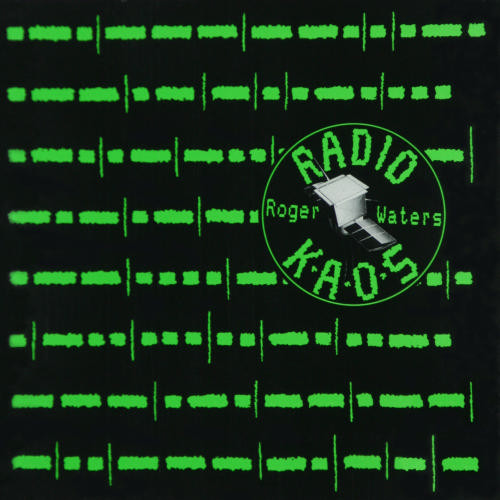
Radio K.A.O.S.
With Pink Floyd returning to the studio, so did Roger Waters. He had penned another concept album Radio K.A.O.S. It was based upon key policies of late eighties politics, especially monetarism. Roger also takes aim at the then Iron Lady, Margaret Thatcher. He was an outspoken critic of Thatcher on The Final Cut. Four years on, and he was equally outspoken. Other subjects Roger tackles include the Cold War, eighties popular culture and world politics. These subjects are seen through the eyes of Billy.
On Radio K.A.O.S., Billy is a mentally and physically disabled man from Wales. His brother Benny, is sent to prison after protesting against the government after he loses his job as a miner. This Benny is told, is the result of market forces. With Benny in prison, there’s nobody left to look after Billy. So he has to live with his uncle David in Los Angeles. Radio K.A.O.S. eavesdrops on Billy’s Billy’s mind and worldview, as he converses with Jim a DJ at a fictitious L.A. radio station, Radio K.A.O.S. This story is brought to life by Roger and what he called his Bleeding Heart Band.
Between October and December 1986, Radio K.A.O.S. was recorded at the Billiard Room, London. Accompanying Roger, was a large band. This included many well known names, including guitarist Andy Fairweather Low, vocalist Paul Carrack and saxophonist Mel Collins. Clare Torry who featured on Great Gig In The Sky, from Pink Floyd’s Dark Side Of The Moon, featured on two tracks. Surely with such an all-star band accompanying Roger, Radio K.A.O.S. would be released to critical acclaim and commercial success?
The first most people knew about Radio K.A.O.S. was a press release from EMI, on on 6 April 1987. It announced that Roger Waters’ sophomore solo album, Radio K.A.O.S. would be released on 15th June 1987, and originally, it was hoped that this rock opera would become a film, stage show and live album. First of all, Radio K.A.O.S. would be released as a studio album.
Just like The Pros and Cons Of Hitch Hiking, reviews of Radio K.A.O.S. were mixed. At least Rolling Stone were more positive about Radio K.A.O.S. However, it was a long way from Pink Floyd’s glory days.
So were the sales of Radio K.A.O.S. It stalled at number fifty in the US Billboard 200 and number twenty-five in Britain. Elsewhere, Radio K.A.O.S. didn’t sell in vast quantities. To rub salt into the wound, five months later, on 7th September 1987, Pink Floyd returned with their first album since Roger Waters left, A Momentary Lapse Of Reason. This coincided with the Radio K.A.O.S. tour
The Radio K.A.O.S. tour began in mid-August 1987, and finished at the end of November 1987. Everywhere he went, copies of Pink Floyd’s comeback album, A Momentary Lapse Of Reason were for sale. It had been released on 7th September 1987, reaching number three in Britain and in the US Billboard 200. A Momentary Lapse Of Reason was certified gold in Britain, and four times platinum in America. Having sold four million copies in America alone, the success continued throughout the world. Gold and platinum discs came Pink Floyd’s way. In Canada, Australia and New Zealand, through Europe, A Momentary Lapse Of Reason was a huge success. As the Radio K.A.O.S. winded its way across the globe, Pink Floyd’s A Momentary Lapse Of Reason continued to outsell Radio K.A.O.S. Roger’s solo career wasn’t the commercial success he had hoped.
Later, Roger admitted that he wasn’t a fan of Radio K.A.O.S. He felt the album sounded “too modern.” That was down to Roger and Ian Ritchie’s production. It spoiled Radio K.A.O.S. for the man who masterminded the project. Maybe that’s why Radio K.A.O.S. wasn’t a huge commercial success? However, Roger hoped that his next album would see him rubbing shoulders with his old comrades commercially.
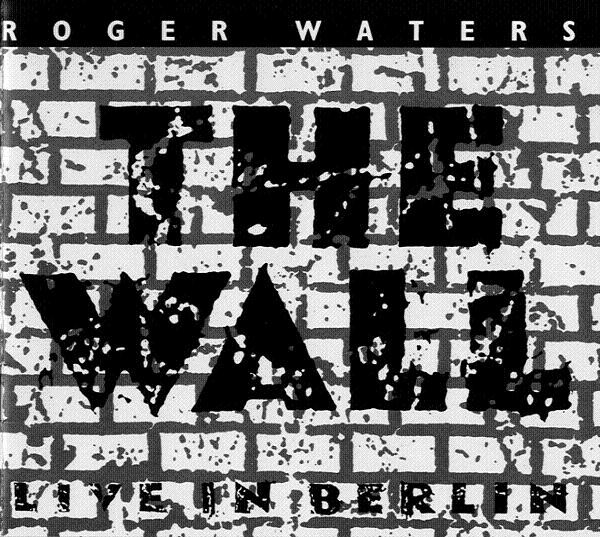
The Wall-Live In Berlin.
To celebrate the fall of the Berlin Wall eight months earlier, Roger Waters performed The Wall-Live In Berlin on 21st July 1990. Roger Waters financed the project, and put together an all-star cast. Joni Mitchell, Van Morrison, The Scorpions, Snowy White and Bryan Adams were just some of the names that made a guest appearance. The concert was staged in what had been no man’s land between East and West. 350,000 people watched the sellout show which recorded and filmed. It would be released a month later on 21t August 1990.
This was a really fast turnaround. The Wall-Live In Berlin was recorded, produced, mastered and marketed within a month. This was a big ask. Ultimately, it proved too ambitious.
Having financed the project himself, the plan was that once Roger Waters had recouped his expenses, the profits from the live album and film, profits would go the Memorial Fund For Disaster Relief, a British charity founded by Leonard Chesire. However, it was a case of the best laid plans of mice and men.
Sales of The Wall-Live In Berlin were disappointing. In Britain, The Wall-Live In Berlin reached number twenty-seven. Across the Atlantic, the album stalled at just number fifty-six in the US Billboard 200. Elsewhere, sales were disappointing. They failed to meet the projections. This had disastrous consequences for the charity.
With the sales not meeting expectations, the charity incurred heavy losses. This resulted in the trading arm of the charity, Operation Dinghy, being wound-up a couple of years later. By then, Roger Waters had released his third studio album, Amused To Death which was recently released on double vinyl by Columbia Records/Legacy Recordings.
Amused To Death.
Just like his two previous albums, Amused To Death was a concept album. Roger had been working on Amused To Death since 1987. The inspiration for Amused To Death came from Neil Postman’s book Amusing Ourselves To Death.
By the time the concept was complete, it revolves around the a monkey who randomly switches between television channels. As channels change, different subjects are discussed. Among them are the Gulf War, World War I, the bombing of Jordan and Libya, and the Tiananmen Square protests of 1989. A total of fourteen tracks feature on Amused To Death. It was recorded between 1987 and 1992.
Recording Amused To Death at various London studios. This includes The Billiard room, Olympic Studios, CTS Studios, Angel Studios and Abbey Road Studios Just like Roger’s two previous solo albums, Amused To Death features a large backing band.
Some feature throughout Amused To Death, others feature on just one or two tracks. Many are well known names. Among them are guitarists Jeff Beck, Andy Fairweather Low, Steve Lukather and B.J. Cole, bassist Randy Jackson and drummer Jeff Porcaro. John “Rabbit” Bundrick plays Hammond organ, while vocalists include Don Henley and Rita Coolidge. Once the tracks were recorded, it was mixed in QSound.
There was a reason for this. It was to enhance the spatial feel of the album. Especially, the sound effects used on Amused To Death. There’s a rifle range, sleigh bells, cars, planes, horses, crickets and dogs. They come to life on Amused To Death. It was produced by Roger and Patrick Leonard. Given the problems with production on Radio K.A.O.S. he wasn’t going to make the same mistake again. It had proved a costly mistake, one they weren’t going to repeat.
After five years of work, Amused To Death was released on 7th September 1992. Given the reception The Pros and Cons Of Hitchhiking and Radio K.A.O.S. received, Roger awaited the reviews with baited breath. Reviews were favourable of what was a cerebral, poignant and thoughtful album.
After the favourable reviews, Amused To Death reached number eight on the British charts. This resulted in a silver disc, marking sales of 60,000. While it was a far cry from his days with Pink Floyd, it showed that Roger Waters’ solo career was on the right track.
In America, this proved to be the case. Amused To Death reached number twenty-one on the US Billboard 200. He even enjoyed a hit single, when What God Wants, Part I reached number four on the Mainstream Rock Tracks charts. After three albums and eight years, Roger Waters was forging a successful solo career. Record buyers awaited Roger Waters’ fourth studio album.

In The Flesh-Live.
They waited a year. A year became two, three, four, five and six. Still there was no sign of Roger Waters’ fourth studio album. He returned on 5th December 2000, with a new live album, In The Flesh-Live.
This was a double album featuring recordings from Roger Waters’ three year In The Flesh Tour. It features tracks from what Roger Waters the twoclassic albums he had worked on: “Dark Side Of The Moon and The Wall” There’s also tracks from his most recent solo album Amused To Death.” These tracks were recorded between the 16th and 27th June 2000 at concerts in Phoenix, Las Vegas, Irvine, California and Portland, during the American leg of the tour. They would eventually become part of a sprawling twenty-four track double album In The Flesh-Live.
James Guthrie was brought onboard to produce In The Flesh-Live. It was to be released as a LP, CD, DVD and SACD. This meant that a stereo and 5.1 mixes were required. This could’ve proved time consuming. However, the album was ready for released on 5th December 2000. The only problem was that the reviews were mixed.
Rolling Stone magazine, especially took a dislike to In The Flesh-Live. They found very little merit in the album. The opinion of other critics was divided. Reviews ranged from lukewarm to mixed, while some critics praised the album. As usual, record buyers had the last say on In The Flesh-Live.
When In The Flesh-Live was released, it stalled at a lowly 136 in the US Billboard 200 and 170 in the UK. This was the least successful album of Roger Waters’ solo career. Elsewhere, sales of In The Flesh-Live were disappointing. The only places where the album reached the top twenty were Holland, Norway, Poland, Sweden and Switzerland. Commercially, In The Flesh-Live had been a disappointment for Roger Water.

Ça Ira,
After the disappointment of In The Flesh-Live, nothing was heard of Roger Waters until 2005. Then in 2005 Roger Waters released Ça Ira, a three act opera that was also a concept album about the early part of the French Revolution. .
Ça Ira had been written by two friends of Roger Waters, Étienne Roda-Gil and Nadine Roda-Gil. They asked Roger Water to set their French libretto to music. This he agreed to do, and brought Rick Wentworth onboard to co-produce Ça Ira. It was ambitious project that was eventually completed in 2005. The release of Ça Ira was scheduled for the 26th of September 2005.
Before that, reviews of Ça Ira were mixed. Although Roger Waters’ composition was praised, the opera was was regarded by critics as too narrative. This made staging the opera difficult, and means that the flow is constantly disrupted. Meanwhile, critics were divided about Ça Ira’s plot. Some critics regarded the plot as either to difficult to follow, or too simplistic. There was no consensus to the reviews of Ça Ira, as the release loomed.
Upon the release of Ça Ira, it was only a commercial success in one country. Sales in France were minimal, and Ça Ira stalled at 187. In Poland, Ça Ira reached number twelve and was certified platinum. This was seen as a Pyrrhic victory, given the time and money it took to write and record Ça Ira. For Roger Waters, it was another disappointment,
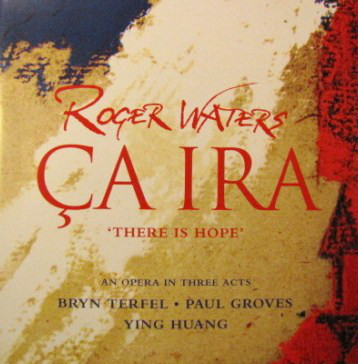
After Ça Ira, Roger Waters seemed to be in no hurry to return to the recording studio. The years passed by and still, there was no sign of a followup to Amused To Death. Meanwhile, Rogers’ former comrades had been busy.
In 2014, Pink Floyd returned with a new album The River. This was Pink Floyd’s first solo album in twenty years. It was released to critical acclaim and commercial success. Still, there was no sign of Roger Water releasing a new studio album. However, Roger Waters was about to release a new film version of the The Wall.
Roger Water: The Wall.
Roger Waters had toured The Wall between 15th September 2010 and 21st September 2013. The six legs of this 219 date tour took just over three years and grossed US $458.6 million. Some of the concerts had had been filmed and recorded. They would eventually become the version of The Wall that was premiered at the 2014 Toronto International Film Festival on 6 September 2014. It would be just over a year before the film and soundtrack were released. Before that, the spotlight shawn on another member of Pink Floyd.

David Gilmour-Rattle That Lock.
David Gilmour had been busy. The man who replaced Roger Waters as Pink Floyd’s creative force, had recorded a new solo album, Rattle That Lock. It was due for release on the 18th of September 2015. This was the fourth album of David Gilmour’s career that began in 1978.
Since then, David had been juggling his solo career alongside his work with Pink Floyd; playing on albums by some of the biggest names in music and his successful production career. That explained why David had released just four albums in thirty-seven years. Each had been commercially successful. Rattle That Lock was no different, and released to critical acclaim. Soon, Rattle That Lock was well on its way to being certified gold. This was the first strike in the battle of the Pink Floyd solo albums.
Roger Water: The Wall.
Just elven days after the release of Rattle That Lock, the concert film of Roger Waters: The Wall was released on 29th September 2015. However, the soundtrack wasn’t released until 20th November 2015. Maybe Legacy who were releasing Roger Waters: The Wall weren’t wanting the release of the two albums billed as a shootout between the two former bandmates? If that was the case, this was a wise move.
Roger Waters: The Wall didn’t replicate the commercial success of previous albums. The album stalled at a disappointing 134 in the US Billboard and fifty-three in the UK. In Australasia, Roger Waters: The Wall reached thirty-eight in New Zealand and forty-six in Australia. Across Europe, the album reached twenty-nine in Austria; twenty-two in Germany; eleven in Norway and twenty in Switzerland. This was a disappointing outcome. Especially as David Gilmour’s Rattle Than Lock was selling well across the world and would be certified gold in the UK. Just like at the High Court, David Gilmour had triumphed again.
Since the release of Roger Waters: The Wall in November 2015, there is still no sign of Roger Waters releasing a new studio album. He’s now seventy-three, and twenty-four years have passed since the release of Amused To Death. It was the third solo album from Roger Waters. Nowadays, it seems that Roger Waters prefers touring than recording.
He’s embarked upon several lengthy tours, with In the Flesh and Roger Waters: The Wall both lasting three years. These tours find Roger Waters playing to huge audiences that span several generations. Night after night, he rolls back the years, combining music from his years with Pink Floyd his solo material. This includes his trio of solo albums, The Pros and Cons Of Hitch Hiking, Radio K.A.O.S. and Amused To Death. They’re ambitious and complex albums that took several years to write and record. Despite this, they never received the recognition they deserved.
Some critics didn’t seem willing to give Roger Waters’ solo albums a fair hearing. Led Zeppelin and to some extent Black Sabbath had been down the same road. They had suffered at the hands of the self same critics and publications, and had been left shaking their heads.
What must have proved disappointing for Roger Waters, were the sales of his three albums. They never found the audience they deserved. Especially in in the lucrative American market. Only The Pros and Cons Of Hitch Hiking was certified gold. That was as good as it got for Roger Waters in America. It wasn’t much better in Britain, with Radio K.A.O.S. and Amused To Death being certified silver. It was a long way from his days with Pink Floyd, when Roger Waters was able to decorate his walls with gold, platinum and diamond discs. However, he was never going to replicate the success of Pink Floyd.
No one member of Pink Floyd was capable of doing that. This success came as part of a collective, that became one of the most pioneering bands sixties and seventies. Alas, Pink Floyd ended in tears and tantrums. An appearance at the High Court in London spelt the end of Roger Waters’ time with Pink Floyd.
Life after Pink Floyd wasn’t as successful for Roger Waters. He may have been Pink Floyd’s leader after the departure of Syd Barrett, but none of the music the band made would’ve been possible without Dave Gilmour, Nick Mason and Richard Wright. No man is an island. Maybe Roger Waters only realised this after his departure from Pink Floyd. Roger Waters did release a triumvirate of ambitious and to some extent, underrated studio albums during his solo years.
ROGER WATERS-SOLO YEARS.
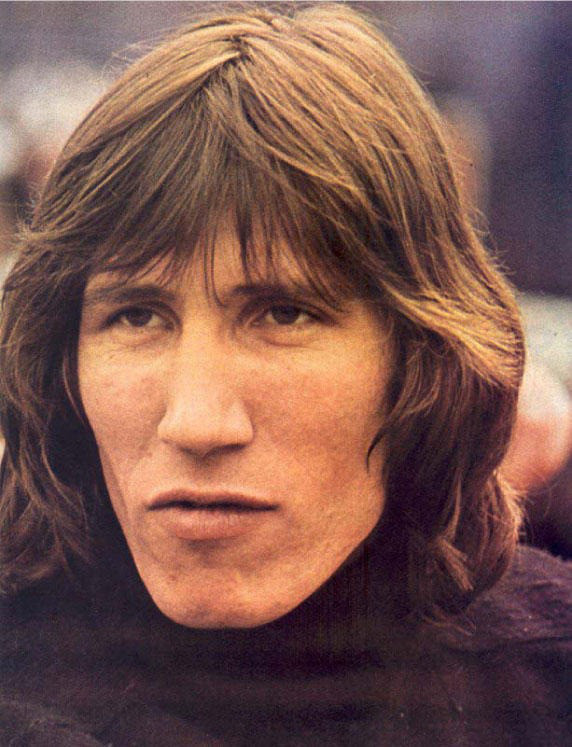
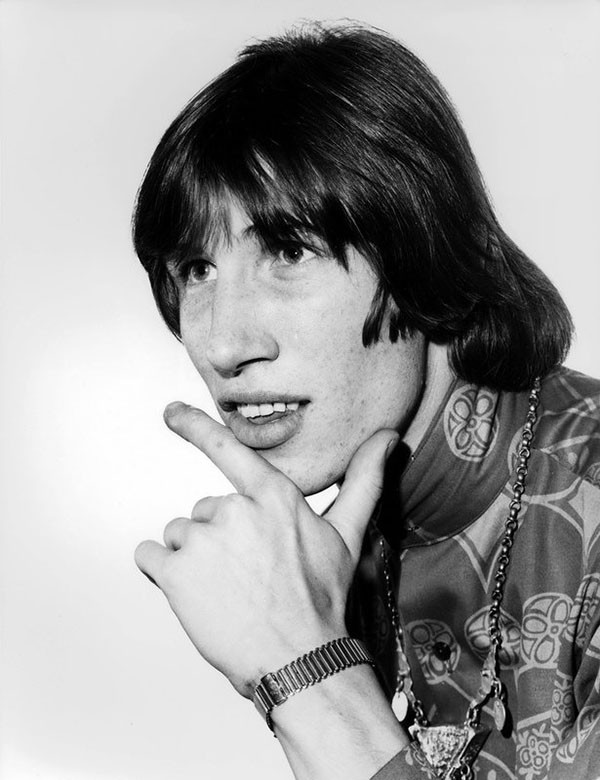
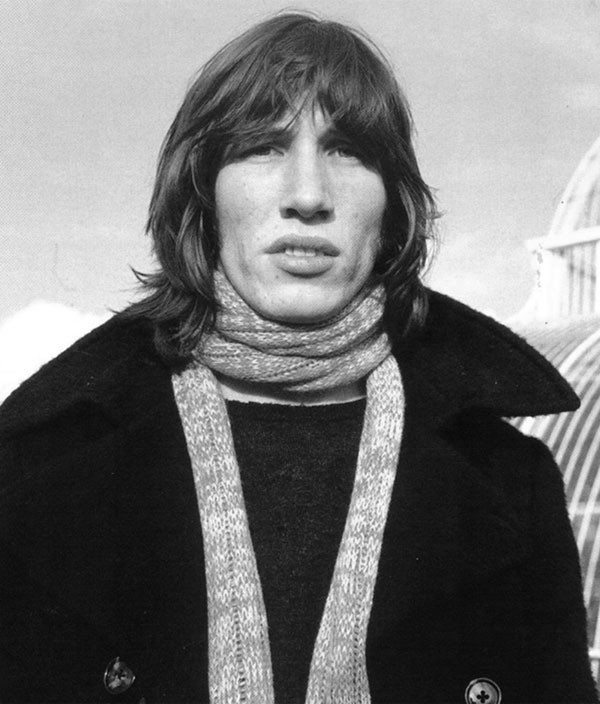
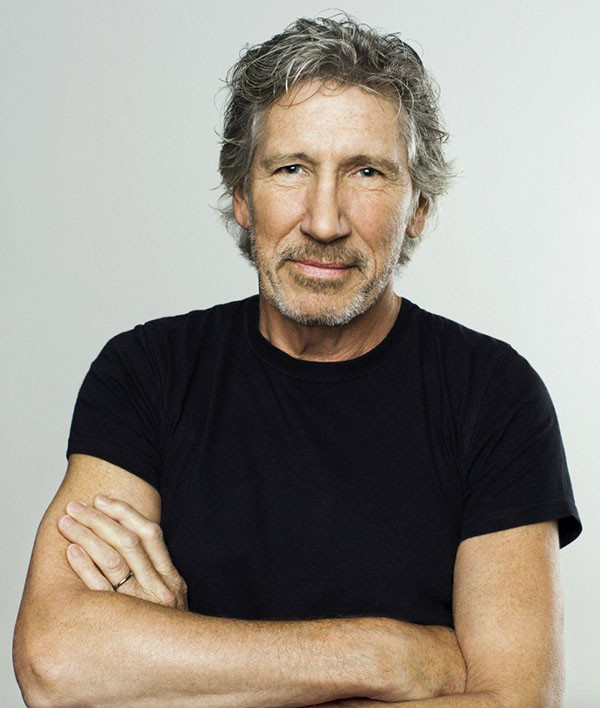
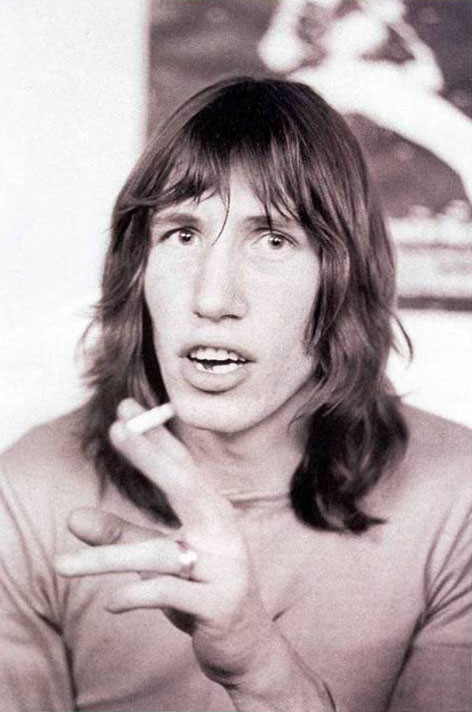
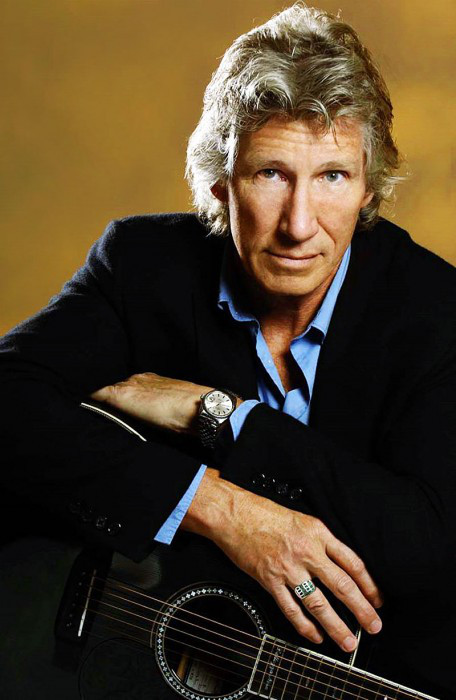

THE CAN STORY 1968-1979.
THE CAN STORY 1968-1979.
After eleven years and eleven studio albums, Can called time on their career in 1979. By then, Can were rightly regarded as one of the most innovative bands of the Krautrock era. They had enjoyed an almost unrivalled longevity.
Can were formed in 1968, by Holger Czukay and Irmin Schmidt. Both had been students of Karlheinz Stockhausen and graduated in 1966. By then, Irmin Schmidt was twenty-nine. He born in Berlin on 29th May 1937, and grew up playing piano and organ. Soon, it was apparent that he was a talented musician. So it came as no surprise that Irmin headed to the conservatorium in Dortmund, to study music. This was just the start of Irmin’s studies.
From there, Irmin moved to Folkwang University of the Arts in Essen, before moving to Austria, and the Mozarteum University of Salzburg. The final part of Irmin’s musical education took place in Cologne, where Irmin met Holger.
The two future founding members of Can were studying composition under Karlheinz Stockhausen at the Cologne Courses For New Music. Between 1962 and 1966, Irmin and Holger studied composition. However, after they graduated, their lives headed in different directions.
Holger Czukay became a music teacher, and began a career educating a new generation of young Germans. Meanwhile, Irmnin Scmidt headed to New York.
During his time in New York, Irmnin Scmidt spent time with avant-garde musicians like Steve Reich, Terry Riley and La Monte Young. Soon, Irmin Scmidt was aware of Andy Warhol and Velvet Underground. This inspired him to form his own band when he returned home to Cologne.
By the time Irmin Scmidt returned home, Holger Czukay what he described to me “as a life-changing moment…the music of the past and present came together.” At last, “here was music that made the connection between what I’d studied and I was striving towards” With the innovative use of bursts of radio and the experimental sound and structure, “I went in search of similar music.”
He found Velvet Underground. Holger remembers Velvet Underground when he first heard them. “They were different…and really influential.” They influenced the music I made. This would include the music Holger Czukay made with Can.
When Irmin Scmidt returned home, he decided to form a band with his old friend Holger Czukay. So in Cologne in 1968, Can was born.
Pianist and organist Irmin Scmidt formed Can with American avant garde flautist David C. Johnson and bassist Holger Czukay. Up until then, the trio had exclusively played avant-garde classical music. Now their ambitions lay beyond that. Their influences included garage, rock, psychedelia, soul and funk. So they brought onboard three new members of the group, which started life as Inner Space, and then became The Can. Eventually, they settled on Can, an acronym of communism, anarchy, nihilism
The first two new additions were guitarist Michael Karoli and drummer Jaki Liebezeit. Vocalist and New York-based sculptor Malcolm Mooney joined the band midway through 1968. By then, they were recording material for an album Prepare To Meet Thy Pnoom. Two tracks, Father Cannot Yell and Outside My Door were already recorded. Unfortunately, record companies weren’t interested in Prepare To Meet Thy Pnoom. As a result, it wasn’t released until 1981, when it was released as Delay 1968. Undeterred, Can continued to record what became their debut album, Monster Movie.
Despite not being able to interest a record company in Prepare To Meet Thy Pnoom, Can were confident in their own ability. So Can continued recording what would become their debut album Monster Movies. However, soon, there was a problem.
David C. Johnson left Can at the end of 1968. He was disappointed at the change in musical direction. Little did he realise that he’d lost the chance to be part of one of the most groundbreaking band’s in musical history, Can.
Monster Movie.
Monster Movie had been recorded in Schloss Nörvenich, a 14th-century castle in North Rhine-Westphalia. Can recorded Monster Movie between 1968-69. It was the released in August 1969. This marked the debut of Can. Their career started as they meant to go on. A groundbreaking, genre-melting fusion of blues, free jazz, psychedelia, rock and world music, Monster Movies has a Velvet Underground influence. It’s as if Can have been inspired by Velvet Underground and pushed musical boundaries to their limits.
Throughout Monster Movie, Can improvised, innovated and experimented. Multilayering and editing played an important part in Monster Movie’s avant garde sound. So did spontaneous composition, which Can pioneered.
Spontaneous composition was hugely important in Can’s success. Holger Czukay remembers “that the members of Can were always ready to record. They didn’t take time to think. It was spontaneous. The music flowed through them and out of them.” Holger remembers that he was always “given the job of pressing the record button. This was a big responsibility as the fear was failing to record something we could never recreate.” In some ways, Can were an outlet for this outpouring of creativity, which gave birth to a new musical genre.
This new musical genre was dubbed Krautrock by the British music press. So not only was Monster Movie the album that launched Can’s career, but saw a new musical genre, Krautrock coined. The founding father’s of Krautrock were Can.
Soundtracks.
Released in 1970, Soundtracks, was Can’s sophomore album. Essentially, Soundtracks is a compilation of tracks Can wrote for the soundtracks to various films. It’s the album that marked the departure of vocalist Malcolm Mooney. Replacing him, was Japanese busker, Kenji Damo Suzuki. He features on five of the tracks, contributing percussion and vocals. The addition of Damo wasn’t the only change Can were making.
Soundtracks was a coming of age for Can. It marked a move away from the psychedelic jams of Monster Movie and a move towards their classic sound. That saw the music becoming much more experimental and avant-garde. The music took an ambient, meditative, mesmeric and thoughtful sound. This marked the beginning of what became known as Can’s classic years, when albums like Tago Mago, Ege Bamyasi and Future Days were released.
Tago Mago.
The first instalment in the golden quartet was Tago Mago. This was the first album where Kenji Damo Suzuki was a permanent member of Can. He and the rest of Can spent a year in the castle in Schloss Nörvenich. It was owned by an art collector named Mr. Vohwinkel. He allowed Can to stay at Schloss Nörvenich rent free. For what Holger described as “a poor man’s band,” this was perfect.
Holger remembers Can during this year as “just jamming and seeing what took shape. Songs started as lengthy jams and improvised pieces.” This Holger says “how Can always worked” After that, Holger edited the songs which became and the mini masterpieces featured on Tago Mago, which was four months in the making.
For four months between November 1970 and February 1971, Can recorded what would become one of their most innovative and influential albums, Tago Mago.
A double album, it featured seven groundbreaking tracks. Tago Mago was released in February 1971. Straight away, critics realised the importance of Tago Mago. Here was a game-changer of an album. It has an intensity that other albums released in 1971 lacked. Jazzier with an experimental sound, the music is mysterious, mesmeric and multilayered. It’s innovative, with genres and influences melting into one. Nuances, subtleties and surprises reveal themselves. No wonder. Can deliver an avant garde masterclass.
This comes courtesy of jazz-tinged drumming, improvised guitar playing and showboating keyboard solos. Then there was Kenji Damo Suzuki’s unique vocal style. All this, resulted in an album that was critically acclaimed, influential and innovative.
Released to widespread critical acclaim in 1971, Tago Mago was the start of a golden period for Can. Their reputation as one of the most innovative groups of the seventies started to take shape. Can had released one of the most innovative albums, Tago Mago. Holger remembers the reaction to Tago Mago. “I knew Tago Mago was an innovative album, but I never realised just how innovative an album it would become?
On Tago Mago’s release, it was hailed as their best album yet. Since then, several generations of musicians have been inspired by Tago Mago, a true Magnus Opus, that belongs in every record collection. So does the followup Ege Bamyasi.
Ege Bamyasi.
Can were on a roll. It seemed they could do no wrong. They released Spoon as a single in 1972. It reached number six in Germany, selling over 300,000 copies. That was helped no end, by the single being used as the theme to a German thriller Das Messer. It seemed nothing could go wrong for Can. The money the made from Spoon, allowed Can to hire disused cinema to record what became Ege Bamyasi.
Can adverted for a space to record their next album, Ege Bamyasi. Recording began in a disused cinema, which doubled as a recording studio and living space. The sessions at Inner Space Studio, in Weilerswist, near Cologne didn’t go well. Irmin Schmidt and Kenji Damo Suzuki took to playing marathon chess sessions. As a result, Can hadn’t enough material for an album. This resulted in Can having to work frantically to complete Ege Bamyasi. Despite this, Can were still short of material. So Spoon was added and Ege Bamyasi was completed.
Ege Bamyasi was a fusion of musical genres. Everything from jazz, ambient, world music, psychedelia, rock and electronica melted into one. When it was Ege Bamyasi released in November 1972, it was to the same critical acclaim as previous albums. Critics were won over by Can’s fourth album. It was perceived as a more accessible album than its predecessors. Just like Can’s previous albums, the quality of music was consistent.
Critics hailed Can as one of the few bands capable of creating consistent and pioneering albums. They were one of the most exciting bands of the early seventies. Can were continuing to innovate and influence musicians and music lovers alike. Just like its predecessor, Tago Mago, Ege Bamyasi is an essential part of any self respecting record collection. Having released two consecutive classic albums and their first single, it seemed nothing could go wrong for Can.
Future Days.
Despite Tago Mago and Ege Bamyasi being referred to as two of the most influential albums ever released, Holger Czukay prefers Future Days. This is the album he calls “my favourite Can album.” It was the third in Can’s golden quartet, and marked a change in direction from Can.
Future Days saw Can’s music head in the direction of ambient music. The music is atmospheric, dreamy, ethereal, melancholy, expansive and full of captivating, mesmeric rhythms. It’s also pioneering and progressive, with elements of avant garde, experimental, psychedelia and rock melting into one. Rather than songs, soundscapes describes the four tracks. Future Days and Bel Air showcase Can’s new sound. Bel Air was the Future Day’s epic. It lasted just over nineteen minutes, and sees can take you on an enthralling musical journey. Just like the rest of Future Days, critics hailed the album a classic.
On its release in August 1973, Future Days was hailed a classic by music critics. The move towards ambient music may have surprised some Can fans. However, Brian Eno was just one artist pioneering ambient music. This move towards ambient music must have pleased Holger’s guru Karlheinz Stockhausen. He must have looked on proudly as Can released the third of a quartet of classic albums. The final album in this quartet, Soon Over Babaluma was released in 1974.
Soon Over Babaluma,
Soon Over Babaluma marked the end of Can’s golden period. It was the end of a period where they were releasing some of their most innovative and groundbreaking music. There was a change of direction on Soon Over Babaluma. Can were without a vocalist. Kenji Damo Suzuki left Can and married his German girlfriend. He then became a Jehovah’s Witness. Despite the lack of a vocalist, Can continued as a quartet. They released Soon Over Babaluma in November 1974.
When Can released Soon Over Babaluma in November 1974, it received praise from critics. With a myriad of beeps, squeaks and sci-fi sounds, Soon Over Babaluma is like musical journey into another, 21st Century dimension. A musical tapestry where layers of music are intertwined during five tracks on Soon Over Babaluma. It followed in the ambient footsteps of Future Days and brought to a close the most fruitful period of Can’s career. Following the “golden quartet,” Can didn’t go into decline. Instead, Can continued to reinvent themselves and their music.
Landed.
Landed was released in September 1975. It had been recorded between February and April 1972 at Inner Space Studios. Just like previous albums, Can produced Landed. Holger and Tony Robinson mixed the first four tracks at Studio Dierks, Stommeln. The other two tracks were mixed by Holger at Inner Space Studios. These six tracks marked a change of direction from Can.
As well as a change in direction musically, Landed was the first Can album to be released on Virgin Records. Gone is the ambient sound of Soon Over Babaluma. Only Unfinished on Landed has an ambient influence. Instead, Landed has a poppy, sometimes glam influence. With uptempo, shorter songs, Landed was a much more traditional album. How would the critics react?
Critics were divided about Landed. Some critics saw Landed as the next chapter in the Can story, while others praised the album as adventurous, eclectic and innovative. Others thought Can were conforming. Surely not?
Flow Motion.
Flow Motion was Can’s eight album. As usual, it was recorded at Inner Space Studios. Produced by Can, Flow Motion was an album that drew inspiration from everything from funk, reggae, rock and jazz. It was an eclectic, genre-melting album. It’s also one of Holger Czukay’s favourite Can albums.
Holger remembers Flow Motion as an “Innovative and eclectic” album. He calls it “one of Can’s underrated albums,” Flow Motion marked a another change in Can’s way of working.
Released in October 1976, Flow Motion featured lyrics written by Peter Gilmour. This was a first. Never before, had anyone outside the band had written for Can. It worked. Can enjoyed their first UK single I Want More. It would later be recorded Fini Tribe and then Italo disco group Galaxis. With what was just their second hit single in seven years, maybe Can were about to make a commercial breakthrough?
Saw Delight.
Sadly, that wasn’t to be. Saw Delight which was released in March 1977, wasn’t the commercial success many people forecast. That’s despite the new lineup of Can embracing world music.
Joining Can were bassist Rosko Gee and percussionist and vocalist Rebop Kwaku Baah. They’d previously been members of British rock band Traffic. Rosko Gee replaced Holger on bass. Holger decided to add a percussive element, Holger added a myriad of sound-effects. This was Holger at his groundbreaking best. Experimental sounds including a wave receiver was used. The result was one of the most ambitious albums can had released.
Despite the all-star lineup and a bold, progressive and experimental album, Saw Delight wasn’t a commercial success. It was well received by critics. The problem was, Saw Delight was way ahead of its time. If it had been released in the eighties, like albums by Paul Simon or Peter Gabriel, it would’ve been a bigger commercial success. Sadly, by then Can would be no more. That was still to come. However, things weren’t well within the Can camp.
Out Of Reach.
Nine years after Can had released their debut album Monster Movie, they released their tenth album, Out Of Reach. It was released in July 1978. The title proved to be a prophetic. After all, commercial success always seemed to elude Can. Not only did Out Of Reach fail commercially, but the Out Of Reach proved to be Can’s most controversial album.
So much so, that they disowned Out Of Reach. On Out Of Reach Holger was left to add myriad of sound-effects. Bassist Rosko Gee and percussionist Rebop Kwaku Baah of Traffic returned. They were part of the problem. Holger confirms this.
When I asked him what he meant by this, he said “During the recording of Out Of Reach, I felt an outsider in my own group. I was on the outside looking in. I was on the margins. All I was doing was add sound-effects.” For Holger, he felt his group had been hijacked by Rosko Gee and and Rebop Kwaku Baah. Things got so bad, that Holger quit Can.
Rosko Gee and Rebop Kwaku Baah dominated Out Of Reach. Gone was the loose, free-flowing style of previous albums. Even Jaki Liebezeit’s play second fiddle to Baah’s overpowering percussive sounds. The only positive thing was a guitar masterclass from Michael Karoli. Apart from this, things weren’t looking good for Can. It was about to get worse though.
The critics rounded on Out Of Reach. They found very little merit in Out Of Reach. Gee and Baah were rightly blamed for the album’s failure. Even Can disliked Out Of Reach. They later disowned Out Of Reach. Despite this, Rosko Gee and and Rebop Kwaku Baah remained members of Can.
Unable to play with the necessary freedom Can were famed for, the two ex-members of Traffic stifled Can. Rebop’s percussion overpowers Jaki’s drums, which have always been part of Can’s trademark sound. At least Michael’s virtuoso guitar solos are a reminder of classic Can. A nod towards Carlos Santana, they showed Can were still capable of moments of genius. There wouldn’t be many more of these. Can would breakup after their next album.
Can.
Following the failure of Out Of Reach, the members of Can began recording what became Can. Remarkably, Rosko Gee and Rebop Kwaku Baah were still part of Can. Sadly, Holger was not longer a member of Can. He’d left during the making of Out Of Reach. His only involvement was editing Can.
Can, which is sometimes referred to as Inner Space, was released in July 1979. Again, critics weren’t impressed by Can. It received mixed reviews. No longer were Can the critic’s darlings. The music on Can was a fusion of avant garde, electronica, experimental, psychedelia and rock. Add to that, a myriad of effects including distortion and feedback, and here was an album that divided the opinion of critics. The critics agreed, it was better than Out Of Reach. They agreed that Holger was sadly missed.
Even Holger’s renowned editing skills couldn’t save Can. Try as he may, he could only work with what he was given. He did his best with Can, which the eleventh album from the group he co-founded. By the time Can was released, Holger “had come to a realisation, that it was time to go his own way.” Holger describes this as “necessary.”
Can had split-up after the release of Can. That was their swan-song. However, even before that, Holger “felt marginalised, this had been the case since Rosko Gee and Rebop Kwaku Baah became part of Can. They’d hijacked Can.” This lead to the death of a great and innovative band.
With Can now part of musical history, Irmin Schmidt, Holger Czukay, Michael Karoli and Jaki Liebezeit set about reinventing themselves. Music critics wondered whether they would form new bands or embark upon solo careers? Irmin Schmidt, Holger Czukay and Michael Karoli all embarked upon solo careers. However, they left behind a rich musical legacy, that included eleven albums.Throughout their long and successful career, they had released some of the most ambitious music of the seventies. Sadly, that was in the past.
The eleven albums Can released include some of the most innovative, inspiring and influential music of the past fifty years. This music was the work a He’s also a musical visionary who was way ahead of his time. That’s why in the future, the music of Holger Czukay and Can, will continue to influence and inspire further generations of musicians.
Nowadays, Can are regarded as one of the most important, influential and innovative Krautrock bands of the seventies. Their albums are more popular than ever and Can quite rightly regarded as one the giants of Krautrock. Can are regarded as just as important, influential and innovative as Cluster, Harmonia Kraftwerk and Neu!, and deserve to take their place at Krautrock’s top table.
THE CAN STORY 1968-1979.
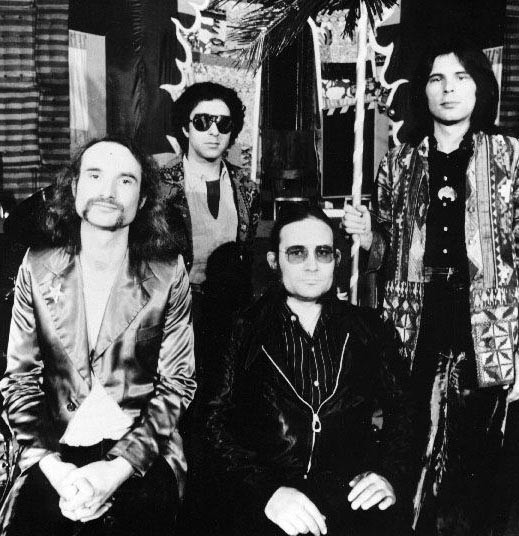

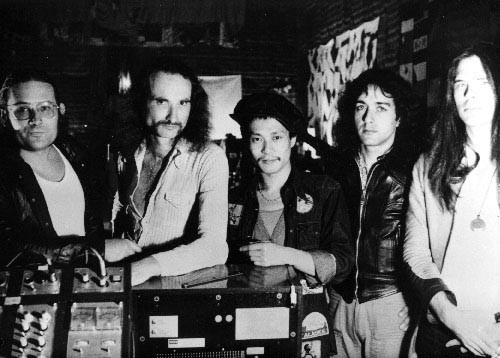

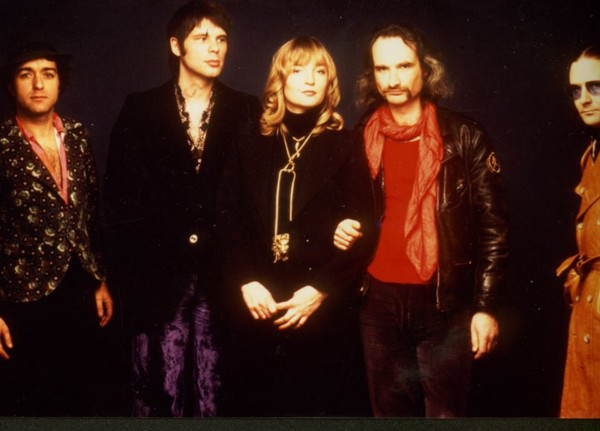
NEW ORLEANS FUNK VOLUME 4-VOODOO FIRE IN NEW ORLEANS 1951-77.
NEW ORLEANS FUNK VOLUME 4-VOODOO FIRE IN NEW ORLEANS 1951-77.
New Orleans has a rich musical history. That has been the case for the past hundred years. It still is today. Especially when late February comes around. Each year, the people of New Orleans celebrate Marid Gras. For this famous Festival, the Big Easy, and its people are transformed.
During Mardi Gras, New Orleans comes together, and celebrates a festival that first took place in 1718. People take to floats, dressed in costumes and masks, and adorned with beads. Float riders throw trinkets to the crowd. Meanwhile, tourists have flocked from far and wide to experience the sights and sounds of Mardi Gras.
Bourbon Street, one if the Big Easy’s best known streets is full of tourists enjoying a taste of Mardi Gras. They enjoy the local delicacies of beignets, gumbo, jambalaya and po boy sandwiches. Meanwhile, music fills the air of one of America’s musical capitals.
The soundtrack for the evening represents New Orleans’ musical past.There is Dixieland jazz, R&B, funk, Zydeco, Afro Cuban and the sound of the Big Easy’s brass bands. They are all part and parcel of New Orleans’ rich musical heritage. Tourists are seduced by this heady brew of musical genres. This is the real sound of New Orleans. It also features on New Orleans Funk Volume 4-Voodoo Fire In New Orleans 1951-77, which was recently released by Soul Jazz Records.
New Orleans Funk Volume 4-Voodoo Fire In New Orleans 1951-77 features eighteen tracks, from some familiar faces, old friends and new names. This includes Eldridge Holmes, Gus ‘The Groove’ Lewis, Chocolate Milk, Lou Johnson, Norma Jean, Johnny Adams, Clifton Chenier and His Red Hot Louisiana Band, Eddie Bo, Betty Harris and Zilla Mayes. While ostensibly a funk compilation, New Orleans Funk Volume 4-Voodoo Fire In New Orleans 1951-77 features some soulful sides recorded in the Big Easy. Funky and soulful describes the music that can be found on New Orleans Funk Volume 4-Voodoo Fire In New Orleans 1951-77. However, what are the highlights of this latest addition ti the New Orleans Funk series?
Eldridge Holmes’ Pop, Popcorn Children opens New Orleans Funk Volume 4-Voodoo Fire In New Orleans 1951-77. It was penned by Eldridge Holmes, and produced by Marshall E. Sehorn and Allen Toussaint. He was one of the most influential men in New Orleans’ music. Not only did Allen Toussaint enjoy a successful solo career, but worked as a songwriter, producer and owned several record labels. Alas, when Pop, Popcorn Children was released as a single on Atco in July 1969 it failed commercially. That is despite being three memorable minutes of soulful funk, where Eldridge Holmes seems to pay homage to the self-styled Godfather of Funk, James Brown.
When Dave Bartholomew released The Shufflin’ Fox as a single on Imperial in April 1957, little did he know that he had just made musical history. Hidden away on the B-Side was The Monkey. This was one of the earliest examples of New Orleans’ funk. Further generations of artists would develop New Orleans funk, but it was Dave Bartholomew that laid its foundations.
Initially, Chocolate Milk were formed in 1974 in Memphis by Amadee Castenell. Despite its rich musical heritage, Chocolate Milk decided to move to the Big Easy, where they became Allen Toussaint’s studio band. By June 1975, Chocolate Milk had released their debut single, Actions Speak Louder Than Words on RCA Victor. It was penned by the band and produced by Allen Toussaint and Marshall Sehorn. Slow, soulful and uber funky, Actions Speak Louder Than Words gave Chocolate Milk their first hit single. This was just the start of the Chocolate Milk story. Later, in 1975, they released their debut album, Actions Speak Louder Than Words. Five further albums and followed from Chocolate Milk. However, Actions Speak Louder Than Words was the start of the Chocolate Milk story.
Lou Johnson met Allen Toussaint as the seventies dawned. With Lou Johnson between labels, Allen Toussaint offered to produce his next album. So Cosimo Matassa’s Jazz City Studios was booked. That was where they recorded ten songs, including Frisco Here I Come, which Allen Toussaint wrote, arranged and co-produced with Marshall E. Sehorn. Once the album was completed, it became With You In Mind. It was leased to Volt Records, who released Frisco Here I Come as a single in March 1971. It’s Lou Johnson at his finest, as he delivers a needy vocal full of hurt, against a funky, soulful and sometimes rocky backdrop. Sadly, despite its quality Frisco Here I Come failed to find the audience it deserved.
Orbitone Records was a short-lived label based in the Big Easy that only ever released two singles by David Robinson. This included his cover of Edwin J. Bocage’s I’m A Carpenter (Part 1). It was produced by its writer Eddie Bom with Harvey Nero. They’re responsible for what is, without doubt one of the funkiest sides on the compilation. The studio band lay down a smoking slice of funk while David Robinson vocal become a vamp, complete with whoops and hollers. Again there is a brief nod to James Brown. However, unlike James Brown and the many vocalists who modelled themselves on him, I’m A Carpenter (Part 1) doesn’t sound cliched.
Johnny Adams released Release Me as a single on the Watch label in 1968. It reached eighty-two in the US Billboard 100 and thirty-four in the US R&B charts. Anyone who bought the single, and flipped over to the B-Side was in for a veritable musical feast, You Make A New Man Out Of Me. It’s glorious and joyous mixture of funk and soul with Johnny Adams giving thanks that You Make A New Man Out Of Me.
Zydeco is just one of the many musical genres that are part of the soundtrack to New Orleans. One of the finest practitioners of zydeco are Clifton Chenier And His Red Hot Louisiana Band. Their contribution to New Orleans Funk Volume 4-Voodoo Fire In New Orleans 1951-77 is Party Down. A version of Party Down features on their 1978 eponymous album. It was released on Arhoolie Records and finds Clifton Chenier And His Red Hot Louisiana Band fusing zydeco and Louisiana blues. This is a potent and heady brew, and is just one reason why Clifton Chenier And His Red Hot Louisiana Band were nominated for a Grammy Award.
Musically, Eddie Bo was a jack of all trades. He wrote, arranged and produced his 1969 single Can You Handle It. It was then released on Bo-Sound, which was Eddie Bo’s own label. Bo-Sound released mostly singles between 1969 and 1980. The majority of the releases were Eddie Bo’s own singles, and two albums. One of Bo-Sound’s finest releases was Can You Handle It which he released in 1969. It’s a reminder of the multitalented New Orleans’ soul man.
Recently, Soul Jazz Records released a compilation of Betty Harris’ music, The Lost Queen Of New Orleans Soul. It features many of Betty Harris’ finest moments, including I’m Gonna Git Ya. This was the B-Side to Can’t Last Much Longer, which was released as a single in September 1967. I’m Gonna Git Ya was penned and co-produced by Allen Toussaint with Marshall E. Sehorn, and released on their Tou-Sea label. It’s without doubt one of the finest songs that Betty Harris recorded during her all too brief career. Thankfully, the release of The Lost Queen Of New Orleans Soul shines the spotlight once again, on one of soul music’s best kept secrets, Betty Harris.
Closing New Orleans Funk Volume 4-Voodoo Fire In New Orleans 1951-77 is Zilla Mayes’ All I Want Is You, which is another Allen Toussaint composition. It was the B-Side to I Love You Still, which was released as a single on the Tou-Sea label in February 1969. This was a label owned by Allen Toussaint with Marshall E. Sehor. They also co-produced the single. Zilla Mayes unleashes an impassioned vocal powerhouse, that breathes life and meaning into the lyrics. In doing so, it’s sure to stop the listener in their tracks.
The same can be said of New Orleans Funk Volume 4-Voodoo Fire In New Orleans 1951-77. It’s a very welcome addition the Soul Jazz Records’ lovingly curated New Orleans Funk series. This is the first volume in three years. Soul Jazz Records it seems, prefer quality rather than quantity. That is obvious just by looking at the choices of music and the lengthy and detailed sleeve notes.
Rather than choosing well known and familiar songs, Soul Jazz Records have eschewed many of the oft chosen song and dug deeper. They’ve chosen B-Sides and little known recordings, and added this to a selection of songs from some of the Big Easy’s well known names. Among them, are Dave Bartholomew, Johnny Adams and Eddie Bo. They join Chocolate Milk and Lou Johnson, who both worked with Allen Toussaint. He was one of the biggest names in New Orleans music between 1951 and 1977, which the compilation covers.
During that period, funk had been born and grown to become one of the most popular genres. However, eventually, funk fell from grace, and by the early seventies, it was no longer as popular as it had once been. This affected the New Orleans musical economy. Cosimo Matassa’s business was badly affected, and went into liquidation. Others survived, and lived to tell the tale. Among them, were Allen Toussaint and Marshall E. Sehorn who sold their labels in the late sixties. They knew that like any bubble, the funk bubble was about to burst.
Despite bursting in the early seventies, New Orleans Funk is as popular as ever. Compilations like New Orleans Funk Volume 4-Voodoo Fire In New Orleans 1951-77, just like the three previous volumes, are the perfect introduction to this sub-genre. These lovingly curated compilations feature familiar funky and sometimes soulful songs. They’re augmented by a few hidden gems, that are part of New Orleans’ musical heritage.
It’s a musical heritage that goes back to the eighteenth century. Then in the 1950s, music become an important part of New Orleans’ economy. As the sixties dawned, The Big Easy’s musical economy grew. A whole host of new labels sprung up, including some of the labels that feature on New Orleans Funk Volume 4-Voodoo Fire In New Orleans 1951-77. The myriad of musical delights that can be found on New Orleans Funk Volume 4-Voodoo Fire In New Orleans 1951-77, may even provide the soundtrack to an evening on Bourbon Street during the Marid Gras.
NEW ORLEANS FUNK VOLUME 4-VOODOO FIRE IN NEW ORLEANS 1951-77.
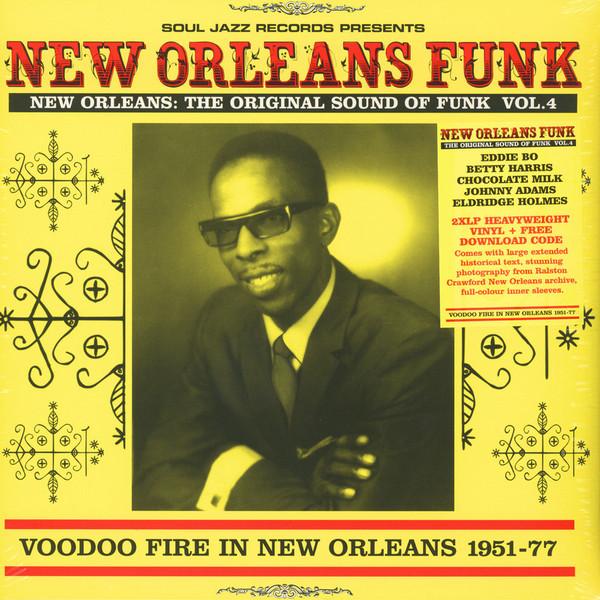
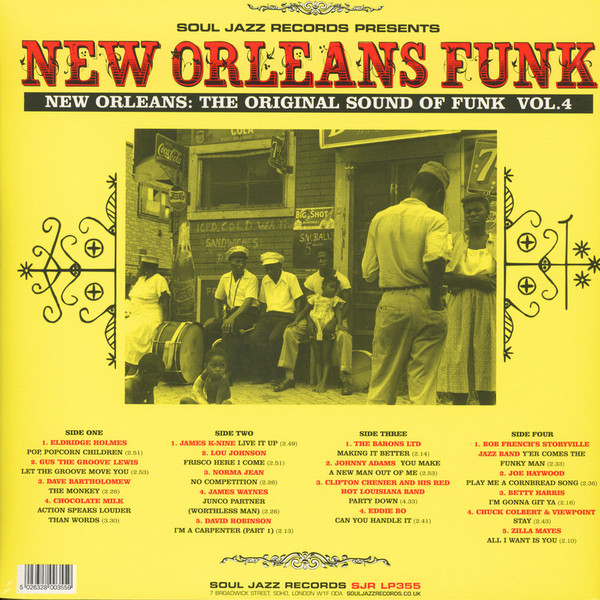
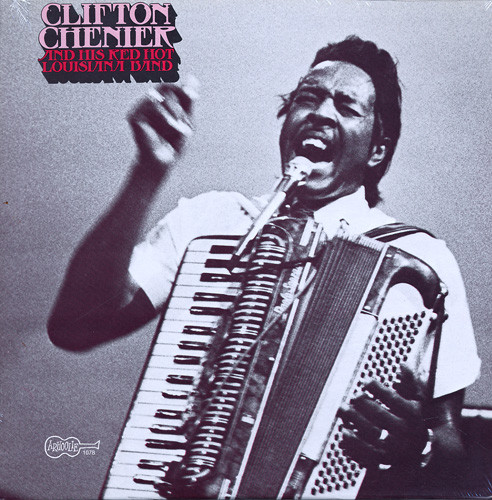
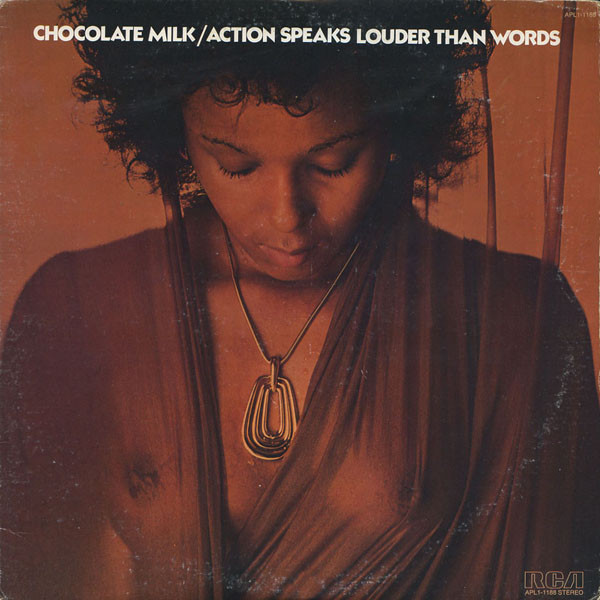
FEEL LIKE GOING HOME-THE SONGS OF CHARLE RICH.
FEEL LIKE GOING HOME-THE SONGS OF CHARLE RICH.
When Sam Phillips first encountered Charlie Rich, he was singing demos for Sun Records, in Memphis. On hearing the demos, Sam Phillips thought Charlie Rich’s music wasn’t commercial. It was also: “too jazzy.” Sam Phillips then picked up a pile of Jerry Lee Lewis records and handed them to Charlie Rich. His parting words to Charlie Rich were: “come back when you get that bad.”
Despite Sam Phillips’ advice, Charlie Rich didn’t come back “bad.” Instead, he returned as a staff writer and session musician. Charlie Rich had his foot in Sun Records’ door.
Initially, Charlie Rich’s songs failed to make the grade. Soon, though, he cowrote Ways Of A Woman In Love for Johnny Cash; Right Behind You Baby and for Ray Smith; and Break Up and I’ll Make It All Up To You for Jerry Lee Lewis. In a relatively short time, Charlie Rich was one of Sun Records’ top songwriters. Despite this success, Charlie Rich still dreamt of making a career as a singer.
Charlie Rich released his debut single Whirlwind on the 25th of October 1958 on the Sun Records’ imprint Phillips International Records. This would become home to Charlie Rich for the next five years. Just like his early efforts as a songwriter, Whirlwind wasn’t a success. Neither was Rebound when it was released on the 20th of June 1959. However, it was a case of third time lucky for Charlie Rich.
Seven months later, and as a new decade dawned, Charlie Rich released Lonely Weekends in January 1960. Just like the B-Side Everything I Do Is Wrong, it was written by Charlie Rich. With its Presley inspired vocal, Lonely Weekends began to climb the charts, and reached number twenty-two in the US Billboard. Eventually, it had sold over a million copies. This resulted in Charlie Rich receiving the first gold disc of his career. However, there was a twist in the tale.
Buoyed by the success of Lonely Weekends, Charlie Rich released the followup single School Days on the 15th of May 1960. Incredibly, the single failed to chart. Surely, this was just a blip?
It wasn’t. Just under four months later, Charlie Rich released On My Knees on the 7th of September 1960. Just like School Days, On My Knees failed to trouble the charts. This was the second consecutive Charlie Rich single that had failed to chart. For everyone concerned, it was a worrying time.
Three months later, on 10th December 1960, a previously unknown singer Bobby Sheridan, released his debut single Sad News on Sam Phillips’ Sun label. What very few people realised, was that Bobby Sheridan was an alias of Charlie Rich. Despite this slight of hand, the single followed in the footsteps of School Days and On My Knees, and failed to chart. For Charlie Rich, this was another disappointment in what had a topsy turvy year.
1960 had started well for Charlie Rich, with his million selling single Lonely Weekends. After that, 1960 quickly went south. Surely, 1961 would see his luck change?
Charlie Rich’s first single of 1961 was Who Will The Next Fool Be. This was another Charlie Rich’s composition. So was the B-Side Caught In The Middle. Who Will The Next Fool Be was released on the 27th of February 1961. It was one of the finest compositions of Charlie Rich’s early career. Despite this, the single failed commercially. However, a year later in 1962, Bobby Bland enjoyed a hit single with Who Will The Next Fool Be. By then, other people,were enjoying hits with Charlie Rich’s songs. This was a small crumb of comfort for Charlie Rich.
Despite this, Charlie Rich was out of luck. When he released Just A Little Bit Sweet on 1st September 1961, it too failed to make any impression on the charts. That meant Charlie Rich’s last five singles had failed to trouble the charts.
Seven months later, Charlie Rich returned on the 4th of April 1962, with his ninth single, Midnite Blues. Just like Easy Money, Midnite Blues was another Charlie Rich composition. It showcased his talent and versatility.
By 1962, Charlie Rich was a versatile vocalist, who was equally comfortable singing rock n’ roll, rockabilly, country, blues, jazz, and even gospel. Charlie Rich didn’t neatly fall into one musical genre, and flitted between disparate styles. Despite his versatility and talent, Midnite Blues failed commercially. For Charlie Rich, this was his sixth consecutive that had failed to find an audience. These were worrying times for Charlie Rich and indeed, Sam Phillips.
Another six months passed before Charlie Rich released his tenth single, Sittin’ And Thinkin’. Just like the B-Side Finally Found Out, it had been penned by Charlie. Upon its release on 18th October 1962, Sittin’ And Thinkin’ didn’t even trouble the charts. Some people felt there would’ve been a different outcome if Finally Found Out had been released as a single. However, little did Charlie Rich realise that it was too late.
Unknown to Charlie Rich, he had released his last single for Sam Phillips’ Sun Records. It was no longer enjoying the success it once had. As 1963 dawned, the times and music had changed. Sun Records was no longer the hit making machine it once was. Similarly, it was now three years since Charlie Rich had enjoyed his million selling hit Lonely Weekends. After that, his next seven singles had failed commercially. Charlie Rich’s career it seemed has stalled.
There’s no sentiment in music, and Charlie Rich’s time at struggling Sun Records was at an end. Next stop was Groove, a subsidiary of RCA Victor Records. This was just the next chapter in a career that would span thirty-seven years.
After moving between different labels, eventually, Charlie Rich found fame as a country singer in the early seventies. He enjoyed a string of hit singles, including classics like the Grammy Award winning Behind Closed Doors and The Most Beautiful Girl. This was just the tip of the iceberg.
Charlie Rich’s 1973 album Behind Closed Doors sold four million copies, and was certified platinum four times over. Across the border in Canada, Behind Closed Door was certified double platinum. That wasn’t the end of the success. There Won’t Be Anymore and Very Special Love Songs were both released in 1974 and were certified gold. By then, was Charlie Rich well on his way to becoming one of the most successful and celebrated country singers. That was the case until his death on July 25th 1995.
Twenty-one years later, and Charlie Rich’s music continues to influence and inspire a new generation of artists. This includes those who feature on Feel Like Going Home-The Songs Of Charlie Rich. It’s a thirteen track compilation that was recently released by the Memphis International label. They brought together, thirteen artists who cover some of the songs Charlie Rich wrote or recorded for Sam Phillips’ Sun Records. These songs are delivered in a variety of styles, including rock ’n’ roll, rockabilly, blues and country by what’s a mixture of old friends and new names.
This includes Jim Lauderdale blistering cover of Charlie Rich’s million selling single Lonely Weekends. It opens Feel Like Going Home-The Songs Of Charlie Rich, and whets the listener’s appetite for The Malpass Brothers beautiful, heartfelt cover of Caught In The Middle Caught In The Middle. It’s one of Charlie Rich’s most underrated Sun sides, and incredibly, was relegated to the B-Side to Who Will The Next Fool Be. Another underrated Sun side was Whirlwind, which was Charlie Rich’s debut for Phillips International Records. Juliet Simmons Dinallo reinvents the song, as she combines blues and country. Other artists stay true to the original.
Meanwhile, Will Kimbrough stays true to original version of Sittin’ And Thinkin’. It’s wistful and country tinged. The same can be said of Susan Marshall’s heartfelt, needy cover of Time And Again. Charlie Rich Jr a talented artist in his own right, delivers a piano pounding version of Break Up. Stylistically, it sounds as if it was recorded by Sam Phillips in 1958.
Holli Mosley’s is just the latest in a long line of artists to cover Who Will The Next Fool Be. Her rueful, hurt filled vocal combines elements of country and gospel, is a spine-tingling cover of this familiar song. After this, it’s all change on Feel Like Going Home-The Songs Of Charlie Rich.
Shooter Jennings, the son of the legendary Waylon, unleashes a country rock cover of Charlie Rich’s sophomore single Rebound. Anita Suhanin chose to cover what was Charlie Rich’s penultimate single for Phillips International Records, Midnight Blues. In her hands, it becomes a beautiful, soulful and bluesy song. The same can be said of Preston Shannon’s bluesy, soulful cover of Easy Money. However, when comes to the blues, Johnny Hoy’s cover of Don’t Put No Headstone On My Grave is a modern day masterclass. Coming a close second is Keith Sykes and Grace Askew’s version of Everything I Do Is Wrong. This leaves just Kevin Connolly’s understated, heartfelt and country-tinged cover of Feel Like Going Home. It seems the best has been kept to last, and fittingly Kevin Connolly’s cover version lends its name to Feel Like Going Home-The Songs Of Charlie Rich.
It features two generations of artists paying tribute to one of the most talented and versatile singer-songwriters of his generation, Charlie Rich. The thirteen artists that feature on Feel Like Going Home-The Songs Of Charlie Rich, cover the songs that The Silver Fox wrote and recorded for Sun Records over a five year period.
During the five years Charlie Rich was signed to Sam Phillips’ Sun Records, he released ten singles. Sadly, Charlie Rich only enjoyed the one hit single, Lonely Weekends. It however, was a million seller. Other artists had more success with their covers of the songs Charlie Rich wrote and recorded at Sun Records. Despite his lack of success during his time at Sun Records, many of the songs covered on Feel Like Going Home-The Songs Of Charlie Rich would later become staples of concerts. By then,
Charlie Rich was enjoying commercial success.
This came during the early seventies. By then, Charlie Rich had found fame as a country singer. He enjoyed a string of hit singles, including the Grammy Award winning Behind Closed Doors and The Most Beautiful Girl. This was just the start of the most successful period in Charlie Rich’s career.
His 1973 album Behind Closed Doors was certified platinum four times over in America and double platinum in Canada. Then in 1974, There Won’t Be Anymore and Very Special Love Songs were both certified gold. By then, was Charlie Rich well on his way to becoming one of the most successful and celebrated country singers. That was the case until his death on July 25th 1995.
By then, Charlie Rich’s career had spanned five decades and thirty-seven years. He was a talented and versatile vocalist, who was equally comfortable singing rock n’ roll, rockabilly, country, blues, jazz, and even gospel. Each of these genres feature on Feel Like Going Home-The Songs Of Charlie Rich, which is a fitting tribute to the man that was known as The Silver Fox.
FEEL LIKE GOING HOME-THE SONGS OF CHARLE RICH.

MIKI YUI-OSCILLA.
MIKI YUI-OSCILLA.
There aren’t many people who successfully juggle several different careers. Instead, most people tend to specialise in one thing. Especially when it comes to art. That however, isn’t the case with Japanese artist Miki Yui.
She has successfully combined and cultivated several different careers since her career began in 1998. Since then, the multitalented Miki Yui’s career has revolved around: “fine arts and works in the fields of music, drawing, installation and performance.” Eighteen years later, and Miki Yui is a successful and highly respected artist. Her work has been exhibited globally and has won awards and critical acclaim. Especially, the music that Miki Yui has released since her solo career began in 1999.
Since then, Miki Yui has a released five solo albums. Her most recent album was Oscilla which was released in October 2015. It was released on her new label MY. The role of label owner is just the latest addition to Miki Yui’s burgeoning C.V. She has packed a lot of living into the last forty-five years.
Miki Yui was born in Tokyo, Japan in 1971. Growing up, Miki Yui artistic side began to blossom at an early age. So it was no surprise that in 1990, she enrolled at Tokyo’s prestigious Tama Art University. Four years later, Miki Yui graduated as a Bachelor of Art. This was just the start of Miki Yui’s academic and indeed, artistic career.
In 1995, Miki Yui moved to Düsseldorf, Germany, which is still her home today. However, twenty-one years ago, Miki Yui had enrolled to study Video Art at Kunstakademie Düsseldorf. For the next two years, Miki Yui studied under the Dutch-American artist, Professor Nan Hoover. She was a pioneer of video art, and Miki Yui was fortunate to learn from a true great. However, when her course ended in 1997, Miki Yui’s academic career continued.
Later in 1997, Miki Yui enrolled at the Academy of Media Arts, in Cologne, Germany. For the next five years, she studied media art and audio visual. By then, Miki Yui’s career was well underway.
Miki Yui’s career began in earnest in 1998. That was when the twenty-seven year old began: “working in the field of fine art and music.” Little did she realise that this was the start of a globe-trotting career where Miki Yui would forge a successful and critically acclaimed career: “in the fields of music, drawing, installation and performance.” Despite her versatility artistically, it would be music that would introduce Miki Yui to a wider audience.
Small Sounds,
A year after her career began, Miki Yui released her debut album, Small Sounds in 1999. It was released on the short-lived Bmb Lab label. Small Sounds was an album of carefully sculpted, delicate and minimalist soundscapes. This would become Miki Yui’s trademark sound.
She recently describes her music as: “sonic landscapes emerging out of delicate noises, samples, electronic sounds, and field recordings.” This had proved popular in 1999, and would continue to prove popular. However, as the millennia dawned, Miki Yui would meet one of Germany legendary musicians.

Enter Klaus Dinger.
This was none other than drummer Klaus Dinger, the cofounder of Neu! and later La Duesseldorf. He was also responsible for his trademark “Dinger beat.” Miki Yui and Klaus Dinger met in 2000, and this was the start of an eight year relationship.
Not only did Miki Yui and Klaus Dinger live together, but they eventually, formed a band together, Japandorf. This was still to come. Before that, Miki Yui’s solo career continued.
Lupe Luep Peul Epul.
Two years after the release of Small Sounds, Miki You returned with her much anticipated sophomore album, Lupe Luep Peul Epul. It was released as a limited edition of 500, on the Line imprint, in 2001. Just like Small Sounds, Lupe Luep Peul Epul was another album of minimalist soundscapes. Elements of ambient, abstract and experimental music were combined by Miki Yui. The result was a captivating and critically acclaimed sophomore album.

Silence Resounding.
Another two years passed before Miki Yui returned with her third solo album, Silence Resounding. By then, Miki Yui had even more irons in the fire. Somehow, was still able to juggle the different parts of career successfully. This included creating another captivating and enchanting album.
Silence Resounding was released in July 2003, on the Line imprint as a limited edition of 500. Again, the album featured Miki Yui’s trademark soundscapes. They had been carefully and lovingly honed by Miki Yui. She fused elements of ambient, abstract and experimental music to create Silence Resounding. These soundscapes caught the imagination of critics and music fans. Silence Resounding they believed, was Miki Yui’s finest moment.

Small Sounds Meet Small Music.
Just a year after the release of her third album, Miki Yui released the first collaboration of her musical career. This was Small Sounds Meet Small Music, a collaboration with the late Rolf Julius.
He was a talented and innovative sound and visual artist, sadly, passed away in 2011. Rolf Julius is best known for his installations and sound works. They focused on what John Cage called “small music,” sounds so subtle that they’re hardly audible. The influence of small music was omnipresent throughout Miki Yui and Rolf Julius’ collaboration.
Small Sounds Meet Small Music was a recording of a concert that took place in Torino, Italy on the 16th of April 2005. It showcased the considerable skills of two talented and innovative musicians and artists. The fruits of their labour was released on the Italian E/Static label later in 2005, as Small Sounds Meet Small Music. Just like her previous albums, Small Sounds Meet Small Music won over critics. However, it was the last album Miki Yui released until 2010.
Klaus Dinger and Japandorf.
After the release of Small Sounds Meet Small Music, Miki Yui returned to playing with Japandorf. This was a band that she had cofounded around 1998. Over the next few years, its lineup began to take shape.
By 2005, Japandorf’s lineup featured Klaus Dinger and Miki Yui. They were joined by the Japanese artist Masaki Nakao; keyboardist Satoshi Okamoto, who previously, had worked with various J-Pop groups and Kazuyuki Onouchi. Together, as Japandorf, they were already a popular live draw. However, Japandorf’s recording career wasn’t going to plan.
Japandorf had recorded two albums by 2007. When the albums were completed, they were shopped to several record labels. Alas, none of the record labels were interested in releasing either of the Japandorf albums. Despite this, Japandorf headed into the studio again later in 2007.
Recording sessions took place throughout the rest of 2007, and into the spring of 2008. By then, enough material for an album had been recorded. Sadly, tragedy struck on Good Friday. Klaus Dinger passed away on the 21st March 2008. He was just three days short of his sixty-second birthday. German music had lost one of its most talented sons. Miki Yui had lost her partner of eight years.
The death of Klaus Dinger looked like the end of the Japandorf story. That however, wasn’t the case. The album that Japandorf had been recording would be posthumously released. Before that, Miki Yui would release her long-awaited fourth album.
Magina.
Seven years had passed since the release of Miki Yui’s third solo album, Silence Resounding. Since then, she had released her collaboration with Rolf Jukius, Small Sounds Meet Small Music in 2005. Miki Yui had also worked with Japandorf, and worked on various non-musical projects. Eventually, though, Miki Yui found time to complete recording of Magina.
The eleven soundscapes that Magima had been recorded at the Dingerland-Lilienthal Studio between 2001 and 2010. These soundscape become Magina, which was released on the Japanese label Hören in December 2010.
Magina was another captivating album of timeless music. That’s despite the music being recorded over a nine year period. Elements of abstract, avant-garde and ambient music had been combined by Miki Yui. This resulted in what was a return to form from Miki Yui after seven years away. Little did critics know, that it would five years before she returned with her next solo album. Before that, she returned to the Japandorf project.
Japandorf.
After the death of Klaus Dinger, the album that Japandorf had been working on lay unreleased. Eventually, Miki Yui, who was tasked with curating Klaus Dinger’s musical legacy, began thinking about releasing the album. This must have been painful emotionally. Japandorf was the album she and Klaus Dinger had been working on when he passed away. Despite this, she was Miki Yui was determined to that Japandorf would be released. It she hoped, would be a fitting tribute to her late partner. Little did Miki Yui realise that how problematic the Japandorf would prove.
Before his death, Klaus Dinger had envisaged releasing Japandorf as a La Düsseldorf album. The only problem was, that Hans Lampe, whom had been Klaus Dinger’s partner in La Düsseldorf, hadn’t played on the album. As the release of Japandorf drew closer, he decided to block the release of the album. For Miki Yui, it was a case of back to the drawing board.
Instead, Miki Yui decided that the album should be released as Klaus Dinger and Japandorf. It was released by Herbert Grönemeyer’s Berlin-based Grönland Records in April 2013. Critical acclaim accompanied the release of Klaus Dinger and Japandorf. Most critics hailed the album a fitting and innovative swan-song to Klaus Dinger’s long and illustrious career.
With Klaus Dinger and Japandorf now released, Miki Yui’s thoughts turned to other aspects of her career. This eventually included her fifth album Oscilla.

Oscilla.
This was the long-awaited and much-anticipated followup to Magina. It had been released in 2010. Since then, Miki Yui had spent time ensuring the Klaus Dinger and Japandorf album was released, and had been focusing on other parts of her burgeoning career.
Miki Yui was now a successful and highly respected artist. Her music, drawings, installations and performances attracted a global audience. Especially,across Europe and Asia, where Miki Yui’s work had found a wide and appreciative audience. So she began work on what became Oscilla.
Eventually, Miki Yui had written and recorded eleven captivating and enchanting soundscapes. They became Oscilla. Miki Yui had combined everything from field recordings and electronic sounds to samples and analog synths. These eleven soundscapes are guaranteed to set the listener’s imagination racing on Oscilla.
That’s the case on Cyano, which opens Oscilla. Cinematic describes this soundscape, as it unfolds and begins to ebb and flow, all the time revealing its myriad of secrets, surprises and subtleties. Soon, the soundscape shivers and shimmer, as an element of drama is introduced. So are beeps and squeaks, before a drum pounds ominously. Meanwhile, a vortex within the soundscape is joined by a myriad of disparate sounds. Drones, washes and distant chimes joining occasional Eastern and then sci-fi sounds. Still, the drum pounds ominously, providing the heartbeat. As it drops out, drones give way to a clock’s chimes. It seems the bell has tolled, but for whom?
Sounds whine and grind on Acryla. It’s sounds as if samples are being played backwards. Still though, they’ve a melodic and mesmeric quality are omnipresent throughout the soundscape. Meanwhile, found and everyday sounds are added to the soundscape. They’re guaranteed to set one’s imagination racing. This includes what sound like a tape rewinding, then a door opening. There’s certainly the fleeting sound of bird sound, and a door closing. Then a sharp rap at a door will startle many an unsuspecting listener, as this compelling three minute mini-drama draws to a close.
Bodenfeld crackles into being. This is the unmistakable sound of feedback from a microphone. It provides a backdrop for subtle, distant small sounds. Some are hardly audible, while others buzz, whine and drone. Later an analog synth plays, as the microphone continues to feedback. Somehow, Miki Yui tames the feedback, and in her hands it takes on a melodic sound. She’s a sonic sculptor and hones music hues and tones. They’re transformed them into part of an innovative and inventive soundscape.
Stabs of squelchy and growling synths open Oscilla. They sound as if they’re providing the soundtrack to an eighties video game. What makes this comparison seem all the more realistic are the sound effects. Especially what sounds like flippers being pressed frantically and balls clanking and dropping. By now, it seems Miki Yui is replicating the sound of a pinball machine. Meanwhile, a buzzing, gurgling and cheeping electronic soundtrack plays. This conjures up pictures of a hapless Buzz Lightyear trapped inside a pinball machine, as he stumbles over balls and comes perilously close to being swept off his feet and towards disaster. Oscilla with its oscillating synths, features Miki Yui at her most cinematic, as she dares the listener to let their imagination run riot.
As Animatoscope unfolds, its cinematic sound is reminiscent of Kraftwerk’s Autobahn or Trans-Europe Express. There’s a feeling of heading on a journey. Then what sounds like a siren can be heard, and the journey is briefly interrupted. One can’t help but wonder why? Soon, the soundscape is flowing along. That’s until the journey is interrupted as the siren sounds again. A drone adds an element of drama, as a radio crackles into life. Has their been an accident on the Autobahn? Then out of nowhere, the sound of birdsong emerges, and dominates the soundscape. Then a dark, moody, ponderous bass is joined by grinding and whining sounds. Still, though, the birdsong dominates on a sound cape that will either enchant, enthral or prove eerie and unsettling.
Kayak whines, shimmer bristles and beeps. It seems to tap out a code as washes of ethereal, elegiac synths ebb and flow. They break, like waves on a deserted beach. Later what sounds like a sample of a horn gives way to birdsong. Whining, grinding, shimmering sounds join a rasping horn. They’re among the myriad of disparate sounds that flit in and out. Some reappear, others disappear. All however, play their part in what’s a compelling, melodic, ambient soundscape.
As Oochi unfolds, what sounds like a speech sample is played backwards. It’s transformed into part of something new and melodic. It could be some alien language. Especially as the beeps, squeaks and scratches become one. Later, the sound of microphone feedback is added, as the soundscape becomes mesmeric and hypnotic, as it sends out one last message.
Straight away, a slow, moody bass is added to Dans Moon’s otherworldly, lumbering arrangement. It assails the listener’s senses, as a myriad of sounds and samples flit in and out. Some make a brief appearance, while others make a regular appearance. They variously whine, whistle and grind. Other times they shimmer, glister and howl. Others rattle and rumble as found sounds are added to the eerie soundscape. What sounds like whisking, metallic sounds can be heard. So can shrill, dripping, whirring sounds. Then at 3.34 there’s silence. Soon, though, the dark cinematic sound emerges. The lumbering bass is joined by gruff, shrill sounds as the soundscape meanders menacingly along. With its dark cinematic sound, this is a horror soundtrack-in-waiting.
A shrill drone is combined with the sound of running water on Mycetozoa. Soon, what sounds like a helicopter is replaced by birdsong and then running water. Still, the shrill drone ebbs and flows. It’s joined by a variety of found and electronic sound. There’s even a sample of speech. It has been chopped up, and makes two brief appearances. This is designed to add to the cinematic sound, as sound scamper in and out of this enthralling soundscape that’s full of twists and turns aplenty.
A detuned string instrument is plucked with a degree of urgency on Gumb. Meanwhile, what sounds like a sample of traction engine turns over in the distance. Every so often, it’s interrupted, while the sound of the string instrument is omnipresent. Sonically, it’s twisted out of shape by deploying effects, as Miki Yui plays with urgency and drama, as she becomes an avant-garde equivalent of Jimi Hendrix. This is impressive and and memorable sound and performance.
Namitayu closes Oscilla. A droning sound draws nearer. Soon, its plaintive and mournful cry washes over the listener. It gives off a wonderfully wistful sound. This briefly becomes futuristic, before all too soon, Namitayu disappears leaving only the memory of two quite beautiful minutes of music. Miki Yui has kept one of the finest soundscapes until last.
Five years after Miki Yui released her previous album Magina, she returned in 2015 with what has to be a career defining album, Oscilla. It features eleven captivating, cinematic and enchanting soundscapes. They were recorded by Miki Yui, using everything from field recordings and electronic sounds to samples and analog synths. These eleven soundscapes are guaranteed to set the listener’s imagination racing on Oscilla.
That’s the case from the opening bars of Cyano to closing notes of Namitayu. For thirty-seven minutes, Miki Yui takes the listener on a musical journey. All they need to do is let their imagination run riot. Those that do, will be richly rewarded, as a myriad of disparate sounds assail them. They help paint pictures in the mind’s eye, and soon scenarios are unfolding. The listener is playing a part in a series of short plays, where they provide the script. Miki Yui has done the hard part, and has provided the music.Much of the music on Oscilla is best described as cinematic. However, it’s much more than that.
Sometimes, the music on Oscilla is beautiful, ethereal and elegiac. Then it becomes dark, broody and moody. Other times, it’s melodic, melancholy and mesmeric. Occasionally, it’s chilling, eerie and unsettling. Mostly, the music is understated and minimalist. Always, the music on Oscilla captivates and is innovative and inventive, as Miki Yui combines disparate musical genres.
She takes elements of ambient, avant-garde and Berlin School, and combines with experimental music and what John Cage called “small music.” This results in Miki Yui’s trademark sonic landscapes. They’re a fusion of of delicate noises, electronic sounds, field recordings and samples. Eleven of these sonic landscapes feature on Oscilla, which is, without doubt, the finest album of the multitalented Miki Yui’s career.
While many people would be happy to enjoy a successful musical career, Miki Yui has many strings to her bow. Her drawings, installations and performances have found a global audience. That’s been the case since her career began in 1998. Eighteen years later, and Miki Yui is now a hsuccessful and highly respected artist and musician. She has released five successful albums. Her finest album is Oscilla. It’s a career defining album from Miki Yui, who is a true musical pioneer who creates cerebral and cinematic soundscapes like those on Oscilla.
MIKI YUI-OSCILLA.


FORASTERO-EL SUBMARINISTA EN EL TEJADO.
FORASTERO-EL SUBMARINISTA EN EL TEJADO.
For the last few years, Forastero have been familiar faces on Madrid’s underground jazz scene. It offers alternative venues to the ones that are regularly frequented by the city’s more conservative jazz fans. They’re not quite ready for Forastero’s jazz-punk sound
The six members of Forastero take to the stage with a baritone saxophone, keyboards, synths, double bass, guitar and drums. Then there’s the unmistakable sound of a theremin and Hammond organ that looks like it’s on its last legs. However, this unlikely arsenal of musical instruments has found favour within the Madrid’s underground jazz scene. Regularly, Forastero play to packed houses, as they unleash their captivating, genre-melting sets. This is sure to find favour much further afield.
Already, Forastero are the toast of Madrid’s underground jazz scene. Recently, their fuzzed-up sound and leftfield beats are beginning to find favour with audiences in other parts of Spain. They’ve been won over by Forastero’s unique, trademark sound. It’s been inspired by the Cinematic Orchestra, Jaga Jazzist, Red Snapper, Esbjörn Svenson Trio, Acoustic Ladyland and the soundtrack to spaghetti westerns. All these disparate influences have helped to shape Forastero’s music over the last few years. However, Forastero are hoping that their music will soon, their music will find a much wider audience.
So far, Forastero are well known within Spain’s underground music scene. Alas, outside of Spain, Forastero are relative unknowns. That could all be about to change, when Forastero release their much anticipated debut album, El Submarinista en el Tejado. It will be released by Madrid based Lovemonk Records on Friday the 2nd of December 2016. This is the cumulation of fifteen months of hard work for Forastero.
For their debut album, members of Forastero had penned eight new tracks. They were joined by cover versions of The Orb’s The Box and Roger Webb’s Medicine Man. These tracks were recorded over three sessions at various studios in Madrid.
The first recording session began on September 24th 2015 at Reno Studios, in Madrid, with Forastero co-producing the album with Luca Petricca and Borja Torres. Their rhythm section featured drummer Javier Gallego, bassist Javier Diez-Ena who also plays theremin and guitarist Javier Colis. They were joined by baritone and alto saxophonist Dani Niño; Juan Carlos “Chavi” Ontoria who played keyboards, piano and organ and Sergio Salvi who switched between synths and keyboards. Between the 24th and 26th September 2015 Forastero recorded El Submarinista en el Tejado, Frenesí, and Morfina. They didn’t return to the studio until May 2016.
Forastero reconvened at Estudio Uno on May 8th 2016. Over the next two days, they recorded six tracks, including The Box, Baile Watusi, Por la calle de la amargura, El dolor del dinero, Medicine Man, and La balada. By the 9th of May, Forastero’s debut album was almost complete.
Less than two months later, Forastero recorded Dormíamos, depsertamos on July 5th 2016 at Red Led. This was the final track on El Submarinista en el Tejado. After eight months, and a little help from their friends, Forastero’s debut album was complete. It had only taken six days for Forastero to record El Submarinista en el Tejado. Now their thoughts turned to the release of what became El Submarinista en el Tejado.
Now five months later, and Forastero are preparing for the release of their much anticipated debut album, El Submarinista en el Tejado. It will be released on one of Madrid’s most prestigious labels, Lovemonk Records. El Submarinista en el Tejado is an album that should introduce Forastero to a much wider audience.
The title-track opens El Submarinista en el Tejado. A scrabbled bass is joined by sci-fi synths before crispy beats appear. They soon disappear only to reappear. Meanwhile, a piano is stabbed and then is played with a fluidity, as a rocky guitar threatens to cut through the arrangement. It does, and by then, Forastero are fusing disparate musical genres. Elements of avant-garde, improv, jazz and rock melt into one. By then, a braying saxophone howls and wails, as banks of synths join keyboards and the rhythm section. Together, they power the genre-melting arrangement along. Forastero combine power and speed as they play with fluidity and confidence. Soon, they’ve kicked loose and are showcasing their considerable skills on this cinematic track, that pays homage to The Maestro, Ennio Morricone and in the process whest the listener’s appetite for the rest of the album.
A dark, mesmeric bass synth open Frenesí. It’s joined by a vortex of ghostly synths. They’re a reminder of Forastero’s love of spaghetti western soundtracks. Soon, the bass and then piano join with the rhythm section and braying horns. Together, they power, and drive the arrangement along. By then, Forastero are at their tightest, their rhythm section locking down the groove as the horns unite. That’s until the horns are replaced by alarming, futuristic, whirling, swirling and bubbling synths and a pounding piano. The piano drives the arrangement along, as horns rasp and bursts of blistering guitars are unleashed. With the rest of Forastero, they create an urgent, dramatic and captivating soundtrack-in-waiting.
Straight away, there’s an element of drama in Forastero’s rework of The Orb’s The Box. This comes courtesy of the drums, sci-fi sound. They’re joined by braying horns, a dusty old Hammond organ, a piano and guitar. Together, they add a cinematic sound. This continues until the arrangement veers between jazz, ska and dub. Then the arrangement flows along, with the Hammond organ adding washes of a sixties soul jazz sound. Mostly, the cinematic sound is omnipresent, as pizzicato strings, piano, shimmering surf guitars and later, growling horns are added. The result is a glorious musical potpourri, that features Forastero at their most inventive and imaginative. Seamlessly, they fuse everything from dub and electronica through to ska and soul jazz to surf rock, and in the process, bring new life to a familiar track.
Dark synths play slowly and ominously on Dormímos, Despertamos. They’re joined by a reverberating guitar and washes of Hammond organ. Gradually, the track begins to reveal its secrets, as instruments are added and layered. This includes braying horns and keyboards. They become part of a captivating, but almost understated, multilayered arrangement. Later, the arrangement is stripped bare, and just a standup bass and drums remain. To this, keyboards, rasping horns and chiming guitar are added. Forastero having rebuilt, continue on what’s a quite beautiful, melodic track, that shows another side to their music.
Straight away, there’s a moody cinematic sound to Morfina. A bass is plucked and combines with a searing, droning guitar. Soon, they’re joined by an electric piano that’s reminiscent of the piano that features on The Doors’ Riders On The Storms. It’s joined by growling horns. They’re a game-changer. Suddenly, the tempo increase as a Hammond organ and guitars joins with the rhythm section. From there, the arrangement ebbs and flows, growing in power and drama, before becoming understated. hypnotic, buzzing sound takes centre-stage. It’s soon replaced as Forastero unite and jam and combine elements of jazz, improv, rock and soul. Washes of Hammond organ add elements of sixties soul jazz. Later, when Forastero lock down a groove and play as one, they’re reminiscent to the Jim Hendrix Experience, as Marfina reaches its dramatic and memorable crescendo.
A growling jazz saxophone opens Baile Watusi before, the arrangement explodes into life. Percussion joins with swirling washes of Hammond organ as the rhythm section power the arrangement along. Blistering machine guitars are unleashed as Forastero urgently combine jazz with rock. That’s until the tempo drops, and the track heads in the direction of sixties soul jazz and sinuous, snaky funk. Forastero it seems, are musical chameleons who constantly seek to reinvent themselves.
That’s the case on Por la calle de la Amargura. Straight away, it takes on a late-night, smoky jazz-tinged sound. Forastero plays slowly and create an understated arrangement. It features shimmering guitars, braying horns and a walking bass. Later, choppy beats add an element of drama, as the arrangement takes on an urgent, choppy and flamboyant sound. Horns bray as swirling washes of Hammond are added to what’s a beautiful, dramatic track.
From the get-go, Forastero kick loose on El olor del dinero. The rhythm section join with flamboyant flourishes of piano, before the braying horns enter. They’re soon joined by washes of swirling Hammond organ. By then, Forastero is in full flight. It’s a joy to behold. They briefly strip the arrangement bare, before rebuilding. This time, Forastero add a searing rocky guitar to the horns, rhythm section and Hammond organ. Soon, Forastero are in full flight, and creating anther delicious musical dish, with a irresistible, cinematic sound,
Medicine Man is the second cover version on the album. Stabs of futuristic synths send out a siren call, as the rhythm section join with a scorching guitar. Soon, they’re joined by banks of keyboards, as Forastero embark upon another jam. Seamlessly, they combine elements of avant-garde, electronica, free jazz, Latin and rock. As they do, Forastero play with a freedom, reinventing Roger Webb’s original track and taking it in new and unexpected directions.
La balada del hueso lamido closes El Submarinista En El Tejado. A piano plays slowly and thoughtfully, leaving space for the theremin. They might seem like unlikely bedfellows, but work well, before the arrangement explodes into life. Forastero’s rhythm section power the arrangement along, as horns growl. Meanwhile, the unmistakable and eerie sound of theremin floats above the arrangement. It ebbs and flows, and takes on a meandering cinematic sound. This gives way to futuristic free jazz, as the theremin and horns lock horns. Somehow, this works and the arrangement continues to ebb and flow. Later, the arrangement becomes ethereal and dramatic, before becoming choppy, urgent and indeed memorable, as Forastero bid the listener a farewell.
That’s until the next time. Before that, Forastero will release their much anticipated, genre-melting debut album El Submarinista En El Tejado on Lovemonk Records. It finds the Madrid based sextet showcasing their considerable skills.
They do this, whilst seamlessly switching between, and fusing disparate musical genres and influences. It’s akin to a magical mystery tour. Forastero head on a journey that encompasses avant-garde, dub, electronica, free jazz, funk, rock, sixties soul, ska, soul jazz and surf rock. To this, Forastero add a variety of musical influences.
This includes the soundtrack to Ennio Morricone’s Spaghetti Westerns and the music of Brandt Brauer Frick. They’re are part of Forastero’s cinematic sound on El Submarinista En El Tejado. Other influences include The Doors, Jimi Hendrix and Sonic Youth. These just a few of the artists who have influenced Forastero on their debut album El Submarinista En El Tejado. It features the many sides of Forastero.
One minute they’re a tight band as Forastero lock the groove down, the next they play with a looseness that allows and affords improvisation. Not every band are capable of this. However, Forastero are not every band.
Instead, Forastero feature six talented and versatile musicians. They’ve spent the last few years honing and perfecting their sound. This has paid off. Forastero’s debut album El Submarinista En El Tejado should introduce Forastero to a much wider audience, and transform their fortunes.
Already Forastero are familiar faces within the Spanish music scene. That however, could be about to change after the release El Submarinista En El Tejad. It will introduce Forastero’s music to a much wider audience, outside of their native Spain and in the process launch the career of the Madrid based musical adventurers.
FORASTERO-EL SUBMARINISTA EN EL TEJADO.

SUN RA- SINGLES THE DEFINITIVE 45s COLLECTION.
SUN RA- SINGLES THE DEFINITIVE 45s COLLECTION.
Ever since his death in 1993, interest in Sun Ra’s music has grown. That comes as no surprise. He was a fascinating figure, and one of most enigmatic and innovative musicians in the history of music. The man that many referred to as Mr. Mystery is nowadays regarded as one of the most important figures in jazz.
He was also a pioneer. Constantly, Sun Ra pushed musical boundaries as he combined Egyptian history with space-age cosmic philosophy and freeform jazz. However, Sun Ra was more than a musician, bandleader, composer He was also a cosmic philosopher, writer and poet. Sun Ra was a complex character.
Over the years, Sun Ra’s complex persona and mythology evolved. He saw himself as a pioneer of Afrofuturism, who believed he was alien from Saturn. His mission on earth was to preach peace, and the medium he used to this, was music.
The music that Sun Ra recorded covers and incorporates every aspect of jazz music, including swing and bebop to fusion. Sun Ra was the original musical chameleon, and his music continued to evolve over the course of a truly prolific career. He released over 125 albums over the course of career that spanned six decades.
Many of the albums that Sun Ra released were often pressed in small numbers, and came wrapped in a plain white cover. These have become highly collectable. So have the countless singles that Sun Ra released. They were also released in limited numbers, and are one-offs. Nowadays, they’re incredibly rare and indeed, valuable. This means they’re beyond the budget of most record collectors. However, Strut Records have collected sixty-one four of Sun Ra’s singles for a recently released box set, Singles The Definitive 45s Collection. It documents a forty year period in Sun Ra’s career.
This includes the early years of his career in Chicago. During this period, Sun Ra gave spoken word recitals, worked with various duets and small groups. Many of the singles document the evolution Sun Ra’s Arkestra. This includes its early years, right through to its heyday when it numbered thirty musicians. These singles were released between the early fifties right up until 1992. They document a large part of the Sun Ra’s career. His story began in the deep South in 1914.
Herman Poole Blount was born on 22nd May 1914, in Birmingham, Alabama. Very little is known about Herman’s’s early life. So much so, that for years, nobody knew what age Herman’s was. What is known, is that growing up, Herman immersed himself in music from an early age.
He began to learnt to play the piano aged five. Soon, he was a talented pianist. By the age of eleven, Herman was to able read and write music. It wasn’t just playing music Herman enjoyed. When musicians swung through Birmingham, Herman’s was there to see everyone from Duke Ellington to Fats Waller. This inspired Herman to become a professional musician.
By his mid teens, Herman was a high school student. However, music was Herman’s’s first love. Music teacher John T. “Fess” Whatley realised this. He helped Herman’s’s nascent musical career. John was a strict disciplinarian. This rubbed off on Herman. Later, he would be relentless taskmaster when he formed his Arkestra. This worked. When the Arkestra were in full flow, they were peerless. However, that was way in the future. Before that, Herman’s’s career was just unfolding.
In his spare time, Herman was playing semi-professionally. He played in various jazz and R&B groups and as a solo artist. Before long, Herman was a popular draw. This was helped by his ability to memorise popular songs and play them on demand. Strangely, away from music, the young Herman was very different.
He’s remembered as studious, kindly and something of a loner. Herman’s was a deeply religious young man. That is despite not being a member of a particular church. One organisation that Herman joined was the Black Masonic Lodge. This allowed Herman’s access to one of the largest collection of books in Birmingham. For a studious young man like Herman’s, this allowed him to broaden his knowledge of various subjects. Whether this included the poetry and Egyptology that would later influence Herman’s’s musical career.
The next step in Herman’s’s musical career came in 1934. Ethel Harper, his biology teacher from the high school, had a band. Herman was asked to join. After joining the musician’s union, Herman toured the Southeast and Midwest. Then when Ethel left the band to join The Ginger Snaps, Herman took over the band.
With Ethel gone, the band was renamed The Sonny Blount Orchestra. It headed out on the road and toured for several months. Sadly, The Sonny Blount Orchestra wasn’t making money. Eventually, the band split up. However, other musicians and music lovers were impressed by The Sonny Blount Orchestra.
This resulted in Herman being always in demand as a session musician. He was highly regarded within the Birmingham musical community. So much so, that Herman was awarded a music scholarship to Alabama Agricultural and Mechanical University in 1937. Sadly, he dropped out after a year when his life changed forever.
It was in 1937, that Herman experienced a life-changing experience. It’s a story he tells many times throughout his life. He describes a bright light appearing around him and his body changing. “I could see through myself. And I went up … I wasn’t in human form … I landed on a planet that I identified as Saturn. They teleported me. I was down on a stage with them. They wanted to talk with me. They had one little antenna on each ear. A little antenna over each eye. They talked to me. They told me to stop attending college because there was going to be great trouble in schools … the world was going into complete chaos … I would speak through music, and the world would listen. That’s what they told me.” For a deeply religious young man, this was disturbing and exciting. It certainly inspired Herman.
After his “trip to Saturn,” Herman dedicated himself to music. He devoted himself to music. So much so, that he hardly found time to sleep. All Herman did was practice and write songs. The first floor of his home was transformed into a musical workshop. That’s where he rehearsed with the musicians in his band. Away from music, Herman’s took to discussing religious matters. Mostly, though, music dominated Herman’s’s life.
So it’s no surprise that Herman decided to form a new band. He decided to reform The Sonny Blount Orchestra. It showcased the new Herman’s. He was a dedicated bandleader, who like his mentor John T. “Fess” Whatley, was a strict disciplinarian. Herman’s was determined his band would be the best in Birmingham. Seamlessly, The Sonny Blount Orchestra were able to change direction, and play an eclectic selection of music. Before long, The Sonny Blount Orchestra were one of most in-demand bands in Birmingham. Things were looking good for Herman. Then in 1942, The Sonny Blount Orchestra were no more. Herman was drafted.
On receiving his draft papers, Herman declared himself a conscientious objector. He cited not just religious objections to war and killing, but that he had to financially support his great-aunt Ida. Then there was the chronic hernia that blighted Herman’s’s life. The draft board rejected his appeal. Things got worse. His family were embarrassed by Herman’s’s refusal to fight. Some turned their back on him. Eventually, Herman’s was offered the opportunity to do Civilian Public Service. However, he failed to appear at the camp in Pennsylvania on December 8th 1942.
This resulted in Herman being arrested. When he was brought before the court, Herman debated points of law and the meaning of excerpts from the Bible. When this didn’t convince the judge Herman said he’d would use a military weapon to kill the first high-ranking military officer possible. This resulted in Herman being jailed. For Herman’s, this lead to one of the most disturbing periods in his life.
So bad was Herman’s experience in military prison that he had to write to the US Marshals Service in January 1943. By then, Herman felt he was on the verge of a nervous breakdown. He was suffering from stress and suicidal. There was also the constant fear that he’d be attacked. Luckily, the US Marshals Service looked favourably on his letter.
By February 1943, Herman was allowed out during the day to work in the forests around Pennsylvania. At nights, he was able to play piano. A month later, Herman was reclassified and released from military prison.
Having left prison, Herman formed a new band. They played around the Birmingham area for the next two years. Then in 1945, when his Aunt Ida died, Herman’s left Birmingham. Next stop was Chicago.
Moving to Chicago, Herman’s quickly found work. He worked with Wynonie Harris and played on his two 1946 singles, Dig This Boogie and My Baby’s Barrelhouse. After that, Herman worked with Lil Green in some of Chicago’s strip clubs. Then in August 1946, Herman’s started working with Fletcher Henderson. However, Fletcher’s fortunes were fading.
Fletcher Henderson’s band was full of mediocre musicians. The main man, Fletcher Henderson, was often missing. He was still recovering after a car accident. So Fletcher needed someone to transform his band’s fortunes. This was where Herman’s came in. His role was arranger and pianist. Herman’s realising the band needed to change direction, decided to infuse Fletcher Henderson’s trademark sound with bebop. However, the band were resistant to change. So in 1948, Herman left Fletcher Henderson’s employ.
Next for Herman was forming a trio with saxophonist Coleman Hawkins and violinist Stuff Smith. This trio didn’t last long and didn’t release any recordings. Not long after this, Herman would make his final appearance as a sideman on violinist’s Billy Bang’s Tribute to Stuff Smith. After this, Herman Poole Blount became Sun Ra.
Chicago was changing. It was home to a number of African-American political activists. A number of fringe movements sprung up. They were seeking political and religious change. Herman became involved. He was immersing himself in history. Especially, Egyptology. He was fascinated with the Chicago’s many ancient Egyptian-styled buildings and monuments. This resulted in Herman discovering George G.M. James’ The Stolen Legacy. Discovering this book was a life-changing experience.
In The Stolen Legacy, George G.M. James argues that classical Greek philosophy actually has its roots in Ancient Egypt. This resulted in Herman concluding that the history and accomplishments of Africans had been deliberately denied and suppressed by various European cultures. It was as if his eyes had been opened. For Herman, this was just the start of a number of changes in his life.
As 1952 dawned, Herman had formed a new band, The Space Trio. It featured saxophonist Pat Patrick and Tommy Hunter. At the time, they were two of the most talented musicians Herman knew. This allowed him to write even more compacted and complex songs. However, by October 1952, he wasn’t writing these songs as Herman Poole Blount. No. Sun Ra was born in October 1952.
Just like Malcolm X and Muhammad Ali, adopting the name Sun Ra was perceived by some as Herman choosing to dispense with his slave name. Instead, he named himself after the Egyptian God of the Sun, Sun Ra. Soon, this new identity would begin to evolve.
Sun Ra’s complex persona and mythology evolved over a period of time. He saw himself as a pioneer of Afrofuturism, who was alien from Saturn. His mission on earth was to preach peace, and the medium he used to this, was music. This some felt, was a kind of rebirth for Sun Ra. It certainly was a musical rebirth.
After Pat Patrick got married, he moved to Florida. This left The Space Trio with a vacancy for a saxophonist. Tenor saxophonist, John Gilmore filled the void. Soon after, Marshall Allen an alto saxophonist joined. So did saxophonist James Spaulding, trombonist Julian Priester and briefly, tenor saxophonist Von Freeman came onboard. Another newcomer was Alton Abraham, who would become Sun Ra’s manager. He made up for Sun Ra’s shortcomings.
While he was a hugely talented bandleader, who demanded the highest standards, Sun Ra, like many musicians, was no businessman. With Alton Abraham onboard, Sun Ra could concentrate on music. Alton took care of business. This included setting up El Saturn Records, an independent record label, which would release many of Sun Ra’s records. However, El Saturn Records didn’t released Sun Ra and His Arkestra’s debut album, Jazz By Sun Ra.
Jazz By Sun Ra was released in 1956, on the short-lived Transition Records. However, Sun Ra and His Arkestra’s sophomore album Super Sonic Jazz was released in March 1956, on El Saturn Records. For the next few years, El Saturn Records released most of Sun Ra and His Arkestra’s albums. El Saturn also released many of Sun Ra’s singles, including those that feature on Singles The Definitive 45s Collection.
Disc One.
A total of twenty-four tracks feature on disc one of Singles The Definitive 45s Collection. They cover several different aspects of Sun Ra’s early career.
This includes several solo recitals recorded during the early fifties. I Am Strange and I Am An Instrument are cosmo dramas, where Sun Ra accompanies himself on piano as he delivers a sermon. They would become a regular feature of Arkestra shows from the seventies onwards. Sun Ra however, wouldn’t found his Arkestra until 1956. Before that, Sun Ra would work with various musicians.
Among them, were The Nu Sounds With Sun Ra. They recorded in Chicago between 1952 and 1962. This included A Foggy Day, which was recorded at Club Evergreen, Chicago, in 1954 or 1955. It featured on the flip side of Daddy’s Gonna Tell You No Lie, and was credited The Cosmic Rays with Sun Sun Ra.Another recording from The Nu Sounds With Sun Ra is the space bop single Chicago USA. It featured Spaceship Lullaby on the B-Side. These tracks find Sun Ra looking into the future, as his adopted hometown Chicago becomes some sort of Utopian modern city. However, Chicago USA wasn’t released until 2005, some twelve years after Sun Ra’s death.
By the spring 1956, Sun Ra was playing alongside Billie Hawkins. They were billed as Billie Hawkins with Sun Ra and His Orchestra. Later in 1956, I’m Coming Home was released as a singles, Last Call For Love on the flip side. Already.Sun Ra’s Orchestra was starting to take shape.
They had already released one of their first singles. This was Soft Talk, which featured Super Blonde on the B-Side. It had been recorded during March 1956, at the Balkan Studios. When the single was released on Saturn, and was credited to Sun Ra and His Arkistra. However, when the followup was released, the Orchestra had dawned a new name.
For the first time, Le Sun Ra and His Arkistra featured on a single. This was Saturn which featured Call for All Demons on the flip-side. It had been recorded at RCA Studios, during May 1956 and was released on Saturn. So was the followup Demon’s Lullaby, which featured Super-sonic Jazz on the B-Side. It was released later in 1956.The final single Le Sun Ra and His Arkistra released on Saturn during 1956 was Medicine For A Nightmare, with Urnack on the flip-side. However, Le Sun Ra and His Arkistra wasn’t the only project Sun Ra was involved with.
Around 1957, a quartet lad by Sun Ra worked with Yochanan The Space Age Vocalist. They recorded the bluesy, but jazz-tinged single M Uck M Uck (Matt Matt), which featured Hot Skillet Mama on the B-Side. This was the first of several fruitful and memorable collaborations between Sun Ra and the leftfield R&B vocalist.
Late 1957, saw multi-instrumentalist Marshall Allen join the Arkestra. He was capable of seamlessly switching between reed instruments, and would become of one of the Arkestra’s secret weapons. So would bassist Robbie Boykins. They were part of what’s regarded as the classic lineup of the Arkestra.
In mid-1958, Sun Ra was about to work on several projects. This included recording Sun Ra and The Cosmic Rays’ single Bye Bye, which featured Somebody’s In Love. It was released later in 1958 on Saturn. By then, Le Sun Ra and His Arkistra had recorded and released their single Hours After. Tucked away on the flip-side was a reinvention of Great Balls Of Fire. It’s just one of the tracks that signalled that Sun Ra and His Arkestra were about to hit a rich vein of form.
Between 1958 and 1959, Sun Ra and His Arkestra released two classic albums, The Nubians Of Plutonia and Jazz In Silhouette. Both albums featured the classic lineup of the Arkestra. However, very little is known about another recording that took place between 1956 and 1960.
This was The Qualities’ Christmas single, It’s Christmas Time. It featured Happy New Year to You! on the flip-side. There’s uncertainly as to who played on the single, and when it was recorded. That however, was the case with many of Sun Ra’s recordings. The lineup of his bands and Arkestra were constantly evolving. That was the case throughout his career.
Disc Two.
Rather than picking up where disc one picked off, disc two of Singles The Definitive 45s Collection goes back in time to 1959. That’s when Sun Ra and His Astro Infinity Arkestra recorded the single October. It was released eight years later, in 1967 with Adventure in Space on the B-Side. Both sides show Sun Ra and the Arkestra maturing as they create ambitious and innovative music. This were pioneers, who would influence a future generation of musicians.
There’s some debate when The Cosmic Rays with Sun Ra and Arkestra recorded the single Dreaming, and the B-Side Daddy’s Gonna Tell You No Lie. With details somewhat sketchy about the sessions, it’s thought that the two tracks were recorded in either 1955 or 1959. Regardless which date it was, these two track among the finest tracks The Cosmic Rays with Sun Ra recorded. Dreaming was released as a single on Saturn, and finds The Cosmic Rays with Sun Ra at their very best.
Another artist Sun Ra worked with, was vocalist Hattie Randolph. They recorded the single Round Midnight on 6th March 1959. Tucked away on the flip-side was the hidden gem Back In Your Own Back Yard. Round Midnight was released on Saturn later in 1959 as Hattie Randolph with Sun Ra and His Astro Infinty Arkestra. Hattie Randolph was just the latest artist to work with Sun Ra.
A years later, in 1960, Yochanan The Space Age Vocalist was reunited with Sun Ra and His Arkestra. They recorded the single Message to Earthman, with The Sun Man Speaks featuring on the B-Side. It was released on Saturn in 1961 as Yochanan The Space Age Vocalist with Sun Ra and His Arkestra. This was another fruitful collaboration. These two tracks were reissued in 1986, with The Sun Man Speaks becoming the single and Message to Earthman being relegated to the B-Side. By then, Sun Ra was one of the elder statesmen of jazz, and a prolific recording artist.
That had always been the case. Le Sun Ra and His Arkestra had recorded throughout the second half of the fifties. They recorded Saturn and Velvet during a session on 6th March 1959. This was the same session that Hattie Randolph recorded with Sun Ra and His Astro Infinty Arkestra. They’re on good form on Saturn which was meant to be released as a single. Alas, the single was never released, and these two joyous tracks where Le Sun Ra and His Arkestra stretch their legs, never found the audience they deserved. That’s a great shame, as the Arkestra’s classic lineup was established, and hd entered a fruitful period of their career.
This two classic albums, The Nubians Of Plutonia and Jazz In Silhouette were proof of this. On 14th June 1960, Sun Ra and His Arkestra entered the studio and recorded two singles that would be released later in 1960. The first was Space Loneliness, which featured State Street on the B-Side. It was followed up by The Blue Set, with Big City Blues on the flip-side. Both singles featured a tight septet, who began to explore new ways to playing. This they called “tone science,” and lead by Sun Ra, John Gilmore, Marshall Allen, Ronnie Boykins and Phil Cohran embarked upon a musical adventure. One of the earliest fruits of this adventure was the bluesy Magnus Opus, Space Loneliness. It’s one of the finest moment from a session that produced twenty tracks. However, a year after the sessions that produced Space Loneliness, Sun Ra and His Arkestra were on the move.
Sun Ra and His Arkestra decided to move from the Windy City to New York in 1961. Early in 1962, Sun Ra and His Arkestra headed to the Choreographers Workshop, where they were joined by Pat Patrick. They recorded the single A Blue One, Orbitration In Blue on the B-Side. It was released on Saturn in 1964. This was one of just six single released during the seven years Sun Ra and His Arkestra were based in New York. By then, the focus was much more on albums.
Another single recorded at the Choreographers Workshop, in New York, was Tell Her To Come On Home, It was recorded during 1962 and featured vocalist Little Mack Gordon. For the flip-side, I’m Making Believe was recorded. The single was then released on Saturn. However, another track recorded the Choreographers Workshop wasn’t released until much later.
This was Hell #1 (A.k.a. Out There a Minute). It was recorded between 1962-1964 at the Choreographers Workshop. However, the track lay unreleased un 1989, when it was released on E.P. given away with the New York based Chemical Imbalance magazine. This Sun Ra and his management hoped, would introduce his music to an even wider audience. By then, Sun Ra’s popularity had increased and his music was appreciated by a much wider audience.
Disc Three.
Disc three is the final disc in the Singles The Definitive 45s Collection box set. It picks up where disc two left off.
In 1967, Sun Ra and His Arkestra were recording at Sun Studios, New York City. They recorded the angle The Bridge, and its B-Side Rocket # 9. By then, Sun Ra had decided that lyrics were part of his ‘sound’. Often, he used these lyrics to pass on a social messages, or tell what be believed to the truth about a subject. Other times, the meaning of the message was so well hidden or complex that it passed most people by. These Sun Ra considered to be a message from Saturn. One of the singles to feature a ‘message’ is The Bridge, which nowadays, is a real rarity. It shows Sun Ra’s music continuing to evolve.
On 22nd September 1968, Sun Ra and His Arkestra returned to Sun Studios. They cut the single Blues On Planet Mars, with the hidden gem Saturn Moon relegated to the B-Side. Blues On Planet Mars was released as a single in 1969. Both tracks would feature on another of Sun Ra and His Arkestra’s classic album, Atlantis. It featured what Sun Ra dubbed his “solar sound instrument.” In reality, it was a Hohner Clavinet and would become an important component of his ‘sound’. Atlantis would be one of the final Sun Ra and His Arkestra recordings in New York for a while.
After seven years in the Big Apple, Sun Ra and His Arkestra moved to Philadelphia. Sun Ra’s House would become a makeshift studio, and where many recordings would be made. This included
Sun Ra And His Astro-Solar-Infinity Arkestra single Journey To Saturn, which featured on the B-Side Enlightenment. Both sides featured the vocal prowess of June Tyson. She had joined the Arkestra in 1968, and her role was to communicate Sun Ra’s message. The way she did this, was via space age songs, poetry recitals and the ritualistic echoing of Sun Ra’s message. June Tyson’s addition brought a new dimensions to Sun Ra And His Astro-Solar-Infinity Arkestra.
By the time Sun Ra And His Astro-Solar-Infinity Arkestra entered Variety Recording Studio, in New York, there was no sign of June Tyson. That day, The Perfect Man was recorded. It became the B-Side I’m Gonna Unmask The Batman, which was recorded at WXPN radio station, Philadelphia, 4th July 1974. Again, there was no sign of June Tyson, with Sam Bankhead adding the vocals. Later in 1974, the radio broadcast pf I’m Gonna Unmask The Batman was released on Saturn, and became the latest Sun Ra single. He was by then, one of the most prolific recording artists.
There was no sign of Sun Ra slowing up. Sun Ra And His Arkestra recorded the single Love In Outer Space during 1975.
Where the track was recorded is unknown. However, the B-Side Mayan Temple was recorded at Variety Recording Studio, New York City, 27th June 1975. It presents Sun Ra’s philosophy for the future, and the this is delivered by Harlem poet David Henderson. His addition results in a beautiful and heartfelt version of Sun Ra’s utopian vision. Sadly, when Love In Outer Space was released, it as a limited edition and very few copies of the single exist. It’s a real rarity, and its addition on Singles The Definitive 45s Collection box set is a welcome one.
So is Sun Ra’s live version of the single Sky Blues. It was recorded live at at a solo concert at Teatro Ciak, Milan, on the 23rd of 1978. Later in 1978, Sky Blues was released as a single on Saturn, with Disco 2021 on the B-Side. Both sides show Sun Ra’s determination to ensure that his music continues to remain relevant.
That was the case throughout Sun Ra’s career. In early May 1979, Sun Ra travelled to Montreal, Canada to play another concert with his Arkestra. Instead, he was accompanied by just a drummer. He features on Rough House Blues and Cosmo-Extensions, which are essentially captivating duets between Sun Ra’s synths and the drums. Later in 1979, Rough House Blues was released as a single by Saturn, with Cosmo-Extensions featuring on the flip-side. Both sides showed another side of Sun Ra, as he continues to innovate.
He had been innovating throughout his career. Especially with the Arkestra, which had changed its name several times. By the 8th of July 1977, it was billed as Sun Ra and His Outer Space Arkestra. They were due to feature on WKCR-FM, in New York City on 8th of July 1977. That day, they recorded Quest, would be released as a single five years later. On the flip-side was Outer Space Plateau, which was recorded at Sun Ra’s house in 1982. Later that year, Quest became Sun Ra and His Outer Space Arkestra latest single, as they move in a a new direction, constantly pushing music to its limits and way beyond.
In September 1982, Sun Ra and His Arkestra headed to Variety Recording Studio, New York City to record a single for Columbia. They recorded the two tracks that became their latest single, Nuclear War and the B-Side, Sometimes I’m Happy. It features June Tyson, whose vocal plays an important part in the sound and success of the song. Sun Ra and His Arkestra had recorded two of their best songs of recent years.
Nuclear War was a single that could’ve crossed over. With its call and response style, it was catchy and one of Sun Ra’s most commercial singles. It was pressed on 45, but as a 12 inch single This should’ve introduce his music to a much wider audience, including DJs. However, when Sun Ra delivered the single to Columbia there was a problem. The repeated use of the oath MF proved problematic. There was no way Nuclear War would get radio play. Sun Ra was shown the door, and his time at Columbia was over.
After the controversy of Nuclear War, Sun Ra and His Arkestra returned to playing live and recording. They records On Jupiter during a live performance in Philly during 1978. This track wasn’t released until 2014, when it featured on the Norton Records’ single Sun Ra Centennial 1914-2014. On the flip-side was Cosmo Drama (Prophetika 2), which was recorded in New York in 1979. Both sides are a tantalising taste of Sun Ra and His Arkestra live during the late-seventies.
The final in disc three of Singles The Definitive 45s Collection, is I Am An Instrument. It was recorded at Sun Ra’s home in 1991. By then, he was recovering from a stroke he had suffered in 1990. Despite this, Sun Ra courageously continued his career, and delivered a recitation whilst accompanying himself on thrash harp and toy piano. Sadly, I Am An Instrument wasn’t released until it was released in conduction with the May 1994 edition of The Wire Magazine. Sadly, by then, Sun Ra had passed away a year earlier.
On May 30th 1993, Sun Ra passed away aged seventy-nine. That day, music lost a true visionary. He had spent the last six decades releasing groundbreaking music. Constantly, Sun Ra pushed musical boundaries to their limits, and sometimes way beyond on the 125 albums he recorded. That’s not forgetting the countless singles that Sun Ra released. A tantalising taste of these singles feature on the Singles The Definitive 45s Collection box set, which was recently released by Strutb Records. This is a lovingly curated compilation that will appeal to veterans of Sun Ra albums, and newcomers to his music. Sun Ra was one of most enigmatic and innovative musicians of the 20th Century. That’s no exaggeration.
Many artists are described as innovative. However, very few really are. Sun Ra is one of the exceptions. From the moment he dawned the role of Sun Ra, his music was transformed. It became much more complex. This was only possible because Sun Ra found liked minded musicians. Among them were Pat Patrick, Tommy Hunter, John Gilmore, Marshall Allen, James Spaulding, Julian Priester and Art Yard. They became Sun Ra’s legendary Arkestra.
For nearly forty years, Sun Ra and His Arkestra pushed musical boundaries. Sun Ra was a perfectionist and relentless taskmaster. With some of most talented, inventive and adventurous musicians of their generation, Sun Ra set about honing the Arkestra’s sound. He was demanding and exacting standards. Second best was no use to Sun Ra. What he was after was an Arkestra who were innovators and musical adventurers.
Sun Ra was never content to stand still musically. Similarly, he was always striving to reinvent his music. The original version of a song was merely the starting point. What it became, was anyone’s guess? Sun Ra was forever determined to innovate. When he reinvented a track, he took the music in the most unexpected direction. He combined Egyptian history and space-age cosmic philosophy with freeform jazz. This innovative fusion transformed the career of the man born Herman Poole Blount.
Eventually, Sun Ra became a giant of jazz. This took time, patience and dedication. He had come a long way since his early days in Birmingham, Alabama. Sadly, very little is known about Sun Ra’s early year. This just adds to the man many called Mr. Mystery.
So does his alleged ‘trip’ to Saturn, which changed Sun Ra’s life forevermore. Thereafter, Sun Ra became added philosopher to his C.V. However, it was music which made Sun Ra famous.
That music is celebrated on Singles The Definitive 45s Collection box set, where Sun Ra combines Egyptian history with space-age cosmic philosophy and freeform jazz. Sun Ra was more than a musician, bandleader, composer. He was also a cosmic philosopher, writer and poet. Despite his many talented, Sun Ra is best remembered for the music he produced over a career spanning six decades. The music Sun Ra wrote and recorded was innovative, inventive and influential, and is why nowadays, he is regarded as one of the most important figures in jazz.
SUN RA- SINGLES THE DEFINITIVE 45s COLLECTION.


MIKE HARRISON-FROM THE V.I.P.s TO THE SOLO YEARS: 1963-1975.
MIKE HARRISON-FROM THE V.I.P.s TO THE SOLO YEARS: 1963-1975.
For Carlisle born Mike Harrison, the period between 1963 and 1975, proved the most prolific of a six decade career. During that period, Mike Harrison was the lead singer of The V.I.P.s and Art. They would later become known as Spooky Tooth, who signed to Island Records in 1968. Three years later, and with the Spooky Tooth having split-up, Mike Harrison embarked upon a solo career, releasing a trio of solo albums between 1971 and 1975. However, by the time, Mike’s solo career got underway, he had been a member of a band who were popular on both sides of the Atlantic, Spooky Tooth. Their roots can be traced to Carlisle.
That was when Mike Harrison’s career began in Carlisle in 1963, when he cofounded The V.I.P.s with bassist Greg Ridley.
Over the next four years, The V.I.P.s lineup evolved. Rhythm guitarist Frank Kenyon, lead guitarist Jimmy Henshaw, drummer Mike Kellie and guitarist Luther Grosvenor were members between 1963 and 1967. Other musicians played a walk-on roll on The V.I.P.s’ story. This included Keith Emerson whose keyboards would play a starring role in The Nice and Emerson, Lake and Palmer. However, by the time The V.I.P.s decided to change direction musically, Keith Emerson had left the band.
For the four years they were together, The V.I.P.s played blues and R&B. By 1967, they decided that to change direction musically. So The V.I.P.s changed their name to Art. Then in October 1967, Gary Wright joined Art. He played on Art’s one and only album Supernatural Fairy Tales.
Art.
Supernatural Fairy Tales.
In 1967, the newly named Art found themselves signed to Chris Blackwell’s Island Records. Art were about to go into the studio with producer Guy Stevens, so began work on their debut album.
By then, Art still a quartet. However, only two original members of The V.I.P.s remained. Ironically, they were the founding members, vocalist and keyboardist Mike Harrison and bassist Greg Ridley. They were joined by drummer Mike Kellie and guitarist Luther Grosvenor. The four members of Art got to work on what became Supernatural Fairy Tales.
For their debut album Supernatural Fairy Tales, the four members of Art wrote ten tracks. They would be augmented by covers of The Young Rascals’ Come on Up and Buffalo Springfield’s For What It’s Worth. Recording took place at two studios.
Pye Studios was where the majority of Supernatural Fairy Tales was recorded. Some recording took place at Olympic Studios. At the two studios, producer Guy Stevens, whose career was in the ascendancy, took charge of production. He guided Art through the maze that’s recording a debut album. The result was Supernatural Fairy Tales, which became a cult classic.
When critics heard Supernatural Fairy Tales, the reviews of Art’s debut album were mostly positive. Its progressive, psychedelic rock sound was decidedly on trend. It tapped into a sound that was commercial. Surely, Supernatural Fairy Tales would prove a commercial success?
Sadly, when Supernatural Fairy Tales was released in the Autumn of 1967, the album wasn’t a commercial success. This was disappointing for Art and Island Records.
Shortly after the release of Supernatural Fairy Tales Art split-up. However, like a phoenix from the ashes rose a new band, Spooky Tooth.
The Birth Of Spooky Tooth.
Gary Wright was also a psychology student, who had travelled to Berlin to finish his studies. That was where Gary Wright formed the band The New York Times with some American expats and a German bassist. They had opened for Traffic, and were thinking about recording an album. So Gary Wright contacted his old friend Jimmy Miller. The producer was working for Island Records, and suggested that The New York Times hotfoot it to London.
When The New York Times arrived in London, the recording sessions didn’t go to plan. The rest of the band split, leaving Gary Wright. It was then, in October 1967, that Gary Wright was introduced to the former members of Art and they formed a new band, Spooky Tooth.
Spooky-Tooth.
It’s All About.
Straight away, work began on Spooky Tooth’s debut album. The new recruit quickly made his presence felt. Whereas the four members of Art cowrote most of their debut album Supernatural Fairy Tales, that wasn’t the case with Spooky Tooth.
Gary Wright penned Sunshine Help Me and cowrote another six tracks. This included It Hurts You So and Forget It and I Got It with his old buddy Jimmy Miller. The Wright and Miller partnership weren’t finished. They penned Love Really Changed Me with Luther Grosvenor. That trio joined Mike Harrison in writing Here I Lived So We. Luther Grosvenor and Chris Wight also wrote Bubbles. Spooky Tooth was quickly becoming the Chris Wright show.
If the other members felt uncomfortable that Chris Wight was playing a leading role in Spooky Tooth. He was friends with Jimmy Miller, who was chosen to produce It’s All About. He just happened to be friends with Island Records’ owner Chris Blackwell. To onlookers, these relationships looked too cosy. After all, it was Chris Blackwell who introduced Chris Wright. He would join the rest of Spooky Tooth at Olympic Studios.
Island Records’ recording sessions were notorious for only allotting a specific amount of time to record an album. Woe betide the band and producer who went over budget. Spooky Tooth had twelve songs to record when they entered the studio in November 1967. This included covers of Janis Ian’s Society’s Child, Bob Dylan’s Too Much Of Nothing and John D. Loudermilk’s Tobacco Road. Along with the songs penned by members of Spooky Tooth, the twelve songs became It’s All About.
Before the release of It’s All About in June 1968, critics had their say on Spooky Tooth’s debut album. They were won over by It’s All About. Many critics gave the albums rave reviews. Some critics liked that Spooky Tooth had two different vocalists. This was uncommon. However, with Mike Harrison and Chris Wright sharing the lead vocals, this allowed the band to take their music in a variety of directions. On It’s All About, this included blues, rock and psychedelia. Despite winning over critics, record buyers weren’t convinced.
When It’s All About was released in June 1968, the album wasn’t the success many had forecast. This would soon change.
Spooky Tooth were about to become one of Europe’s most popular live bands. Then in August 1968, Spooky Tooth were invited to tour America. This was a game-changer. Especially when Spooky Tooth were invited to play at one of the most prestigious venues in America, the Fillmore West in San Francisco.
Promoter Bill Graham invited Spooky Tooth to play the Fillmore West. This was a rite of passage for bands touring America. It was a signal they had arrived. Spooky Tooth were going up in the world, so Island Records’ thoughts turned to their sophomore album, Spooky Two.
Spooky Two.
Unlike their debut album, Spooky Two only featured eight songs. Partly, this was why Spooky Too was a leaner, more focused album. Again, Gary Wright who had assumed the role of Spooky Tooth’s songwriter-in-chief.
Gary Wright penned four tracks and cowrote three others. This included Feelin’ Bad and I’ve Got Enough Heartaches with drummer Mike Kellie. Mike Harrison and Luther Grosvenor cowrote Waitin’ for the Wind with Gary Wright. Spooky Two’s other track, was a cover of Larry Weiss’ Evil Woman. These songs were recorded at Morgan Studios, London.
Just like It’s About You, Spooky Too was produced by Jimmy Miller. Recording began in November 1968, and Spooky Tooth began recording what’s now considered their greatest album, Spooky Too.
Once Spooky Too was complete, the release was scheduled for March 1969. This didn’t leave much time to promote the album. However, the reviews did a good job of this. Spooky Too was hailed a masterpiece of blues, hard rock, psychedelia and classic rock. Luther Grosvenor’s guitar playing was at the heart of the album’s success. It was loose, but fluid. Spooky Tooth’s played hard, raw and rock on Spooky Too. Critics forecast that Spooky Too was going to be Spooky Tooth’s breakthrough album.
That proved to be the case. On its release in March 1969, Spooky Too reached number forty-four in the US Billboard 200. This resulted in Spooky Tooth’s profile rising.
Suddenly, they were playing in front of bigger audiences on nearly every continent. Other musicians wanted to work with Spooky Tooth. This included French electronic musician, Pierre Henry.

Ceremony.
After the release of Spooky Too, there was a change to Spooky Tooth’s lineup. In 1970, bassist Greg Ridley was asked to join Humble Pie. He agreed, and Andy Leigh was drafted in as his replacement. This was the first, but not the last change in Spooky Tooth’s lineup.
After the commercial success and critical acclaim of Spooky Too, Spooky Tooth’s star was in the ascendancy. Suddenly, people wanted to work with Spooky Tooth. This included French electronic musician, Pierre Henry.
He described himself as a found-object” composer. Pierre Henry took everyday objects and transformed them into an instrument. This wasn’t a new concept.
Pablo Picasso had pioneered the idea in 1912, when he pasted aprinted image of chair caning onto his painting Still Life with Chair Caning. Turning everyday objects into musical instruments took the idea further. That’s what Pierre Henry, and many other moderne musicians did.
Originally, Spooky Tooth were collaborating with Pierre Henry. It was his album. The new lineup of Spooky Tooth were essentially his backing band, on Ceremony.
For Ceremony, Pierre Henry and Gary Wright wrote six tracks. He and the rest of the new lineup of Spooky Tooth made their way to France. It was agreed that Pierre Henry and Spooky Tooth would co-produce Ceremony, due to the fact the album takes the form of a church service.
Quickly, Spooky Tooth recorded their parts. This left Pierre Henry to play synths and take charge of electronics on five tracks. On Hosanna, which closed Ceremony, Spooky Tooth took centre-stage. It was Ceremony’s Magnus Opus. Once the recording was complete, Spooky Tooth headed home.
Having returned home, Spooky Tooth were sent a copy of Ceremony. Gary Wright didn’t like what he heard. He was straight on the phone to Chris Blackwell, urging him not to release Ceremony. This didn’t work.
Chris Blackwell disagreed, telling Chris Wright: “people will love this album. We have to put this out.” According to Chris Wright, the rest of Spooky Tooth didn’t want Ceremony released. He went as far as to say: “it was against our wishes.” He thinks that the “release of the album lead to the initial breakup of the band.”
With Island Records determined to release Ceremony, December 1969 was scheduled as the release date. Before that, critics had their say on Ceremony. This fusion of rock and avant-garde was billed as an album from Spooky Tooth and Pierre Henry. Reviews were mixed. It wasn’t what most critics had expected from Spooky Tooth. The problem Mike Harrison says was; “people thought it was Spooky Tooth’s third album.”
When Ceremony was released in December 1969, it reached just ninety-two in the US Billboard 200. Spooky Tooth were going backwards. That was only part of the story.
All wasn’t well within Spooky Tooth. There was disharmony within the ranks. Mike Kellie believes things would’ve been different if Spooky Tooth: “had independent management.” They could have been an arbiter in the conflicts. Without that, Spooky Tooth split-up.

Spooky Tooth Featuring Mike Harrison.
The Last Puff.
That wasn’t the end of the Spooky Tooth story. Instead, it was just the end of a chapter. Mike Harrison, Mike Kellie and Luther Grosvenor remained. Chris Wright exited stage left. So did bassist Andy Leigh. In their place, came some new faces.
Among them, were guitarist Henry McCullough, bassist Alan Spenner and Chris Stainton. He played bass, piano and organ. His versatility would be put to good use on The Last Puff, which was billed as an album from Spooky Tooth Featuring Mike Harrison.
For The Last Puff, seven cover versions were chosen. Among them were Lennon and McCartney’s I Am The Walrus; Joe Cocker and Peter Nichols’ Something to Say; David Ackles’ Down River and Elton John and Bernie Taupin’s Son of Your Father. New recruit Chris Stainton contributed The Last Puff. Ironically, The Wrong Time a song penned by Gary Wright and Hugh McCracken. Given Gary Wright had just left Spooky Tooth this seemed a strange decision.
Recording of The Last Puff took place at Island Studios, London. Producing the album was Island Records’ owner Gary Blackwell and Chris Stainton. Once the new lineup of Spooky Tooth finished recording The Last Puff, it was released in July 1970.
Critics however, received advance copies of Spooky Tooth Featuring Mike Harrison’s album The Last Puff. Critical acclaim accompanied this album of psychedelia, rock and pop. It seemed the loss of two members hadn’t derailed Spooky Tooth.
That seemed to be the case. The Last Puff proved more successful than Ceremony, reaching number eighty-four in the US Billboard 200. However, not long after the release of The Last Puff, Spooky Tooth split-up. That looked like the end of the line for Spooky Tooth. Island Records were dismayed. They had just lost one of their most popular groups.
So a year later, in 1971, Island Records repackaged and rereleased It’s All About as Tobacco Road. When the album was released, it reached number 152 in the US Billboard 200. By then, they had signed a new solo artist..Mike Harrison.

Mike Harrison-The Solo Years.
With Spooky Tooth seemingly consigned to musical history, Mike Harrison embarked upon a solo career. He signed to Island Records, and began working on his eponymous debut album.
Mike Harrison.
For his eponymous debut album, Mike Harrison returned to where it all began for him, Carlisle, in Cumbria. That’s where he found The Junkyard Angels. They would become his backing band on Mike Harrison, and would also contribute several songs.
The Junkyard Angels were a cut above the local Carlisle bands of the early seventies. They weren’t just talented musicians, but also songwriters who played a part in five of the songs on Mike Harrison.
Bassist Peter Batey wrote Mother Nature and Lonely People. Peter also cowrote Call It A Day with Lan Herbert, Kevin Iverson and Mike Harrison. Lan Herbert and Kevin Iverson then penned Pain with Frank Kenyon. The final song penned by a member of The Junkyard Angels, was Damian, which was written by Lan Herbert and Mike Harrison. By then, it was obvious that The Junkyard Angels were more than a backing band. They had written most of Mike Harrison.
The other three tracks on Mike Harrison, were Wait Until Morning, a Harrison-Griffin composition; Cat Stevens’ Hard Headed Woman and Luther Grosvenor’s Here Comes The Queen. Along with the tracks written by The Junkyard Angels, this trio of tracks would become Mike Harrison.
When recording of Mike Harrison began, four members of The Junkyard Angels were ready to accompany Mike. The rhythm section featured drummer and percussionist Kevin Iverson; bassist and percussionist Peter Batey and guitarist Frank Kenyon. Lan Herbert played guitar, piano and organ and vibes. The four members of The Junkyard Angels would also add backing vocals Meanwhile, Mike Harrison added lead vocals, and played piano, harmonica and organ. When the eight tracks were recorded, Mike Harrison was scheduled to be released later in 1971.
On the release of Mike Harrison in October 1971, reviews of the album were mostly positive. Most critics were won over by the fusion of rock, blues, folk and pop. The songs were perfect for Mike’s vocal. That was the case from the opening track Mother Nature. It’s akin to a musical amuse bouche as Mike’s lived-in vocal brings meaning to the lyrics. That’s the case throughout the eight tracks on Mike Harrison. His worldweary vocal sounds as if he’s lived the lyrics to Call It A Day, Pain and Wait Until The Morning. Similarly, Mike sounds as if he can relate to Lonely People, and somewhat ruefully seems to sing Hard Headed Woman as if he’s met her, but lived to tell the tale. However, the Ballad Damian features a soul-baring vocal. Closing the album, is a cover of Here Comes The Queen, where Mike Harrison and The Junkyard Angels takes in a new direction, to Luther Grosvenor’s original. In doing so, it leaves the listener wanting more.
With eight tracks lasting just lasting around thirty-three minutes, Mike Harrison was just a taste of what was to come from Mike Harrison. Freed from the constraints of Spooky Tooth and Gary Wright’s ‘helping hand’, Mike had come in to his own. He had just cowrote three tracks on his eponymous debut album and produced it. Mike Harrison was well received, and although it wasn’t a huge selling album, it’s a hidden gem that showed Mike that there was like after Spooky Tooth.

Smokestack Lightning.
Buoyed by the reception his eponymous debut received, Mike Harrison’s thoughts turned to his sophomore album. This time, there was no sign of The Junkyard Angels, who played such an important part in his eponymous debut album. They cowrote five of the eight tracks. Mike had only written three tracks, including two with members of The Junkyard Angels. So this presented something of a problem. However, Mike Harrison had already thought of the solution.
His sophomore album would mostly feature cover versions. The exception was Turning Over, which Mike and Luther Grosvenor cowrote. However, the other five tracks were cover versions. This included Tears and Pay My Dues, which were penned by Jimmy Stevens. Other familiar songs included Fats Domino and Maddux-Jessup’s What A Price; Joe Tex’s Wanna Be Free and Howlin’ Wolf’s Smokestack Lightning. This blues classic lent its name to Mike’s sophomore album. It was recorded stateside.
To record Smokestack Lightning, Mike Harrison followed in the footsteps of countless musicians. His destination was Muscle Shoals, in Alabama, where he would work with the legendary Muscle Shoals Rhythm Section. They featured some of America’s top musicians, who had worked with everyone from Aretha Franklin, Candy Staton and Etta James to Percy Sledge and Wilson Pickett. Now Mike Harrison was ready to make that journey, and work with the legendary studio band.
When Mike Harrison arrived at Muscle Shoals, the Muscle Shoals Rhythm Section’s lineup featured some of the top session musicians America had to offer. The rhythm section featured drummer Roger Hawkins, bassist David Hood and guitarists Jimmy Johnson and Pete Carr. They were augmented by slide guitarist Wayne Perkins, keyboardists Barry Beckett and Clayton Ivey. Along with the horn section, they recorded six tracks. When it came to record Turning Over, the cowriter Luther Grosvenor added acoustic guitar. When Smokestack Lightning was complete, it was very different album to Mike Harrison.
The soulful and heart-wrenching ballad Tears opens Smokestack Lightning. It comes complete with lush strings and later, some stunning guitar licks. Paid My Dues is best described as mid-tempo slice of string drenched, blue eyed soul. This proved to be very different from the rest of Smokestack Lightning.
It’s all change on What A Price, Wanna Be Free, Turning Over and Smokestack Lightning. These songs see Mike head in the direction of the blues. Accompanied by a smoking band, he embraces the role of bluesman as the Muscle Shoals Rhythm Section jam. Smokestack Lightning is totally reinvented, and becomes a twelve minute hypnotic, smouldering bluesy jam. Mike has kept his best blues until last, as he pays homage to Howlin’ Wolf in a fitting fashion. In an album that oozes quality, Mike Harrison kept one his best songs until last.
When critics heard Smokestack Lightning, they were impressed by Mike Harrison’s new sound. They hailed Smokestack Lightning as Mike Harrison’s best album so far. Most critics preferred Smokestack Lightning, to Mike Harrison and wondered aloud what the Cumbrian’s third album would sound like? However, Mike had a surprise in store for his fans.

The Return Of Spooky Tooth.
You Broke My Heart So I Busted Your Jaw.
In September 1972, Spooky Tooth reformed, with a new lineup. The only musician who had played on The Last Puff was Mike Harrison.
Since then, Luther Grosvenor had joined Mott The Hoople, where he dawned the alias Ariel Bender. His replacement in Spooky Tooth, was future Foreigner guitarist Mick Jones. Mike Kellie was replaced by drummer and percussionist Bryson Graham. Chris Stewart became Spooky Tooth’s fourth bassist. However, the biggest surprise, was the return of Gary Wright.
Quickly, Gary Wright resumed the role of Spooky Tooth’s songwriter-in-chief. He wrote six of the eight songs, and cowrote Times Have Changed with Mick Jones. The other song on You Broke My Heart So I Busted Your Jaw was the Bryson Graham composition This Time Around. These eight songs were recorded at three London studios.
Recording of You Broke My Heart So I Busted Your Jaw. Olympic Studios, Island Studios and Apple Studios. It seemed no expense was being spared for Spooky Tooth’s comeback album. These were some of London’s top studios. One expense that was saved was a producer. Spooky Tooth produced You Broke My Heart So I Busted Your Jaw. It was scheduled for release in ay 1973.
Many of Spooky Tooth’s fans eagerly awaited their comeback album. However, when reviews were published, they were mixed. Some critics felt that You Broke My Heart So I Busted Your Jaw wasn’t Spooky Tooth’s finest hour. It stuck to Spooky Tooth’s familiar mixture of hard rock and psychedelia. While hard rock was still popular, progressive rock dominated the charts. However, other critics were won over by Spooky Tooth’s comeback album.
Other critics liked the dual keyboard sound on You Broke My Heart So I Busted Your Jaw. This brought a new dimension to Spooky Tooth’s sound. There was no consensus. For once, a Spooky Tooth album had divided the critics’ opinion. However, record buyers were of one mind.
On the release of You Broke My Heart So I Busted Your Jaw, in November 1973, the album reached number eighty-four in the US Billboard 200. This matched the popularity of The Last Puff. Spooky Tooth were back to where they were before Ceremony. What could go wrong?

Witness.
After making their comeback with You Broke My Heart So I Busted Your Jaw, Spooky Tooth looked as if their career was back on track. Then there was a change in Spooky Tooth’s lineup.
This time, Spooky Tooth’s original drummer Mike Kellie made a comeback, and replaced recent recruit Bryson Graham. However, that wasn’t the end of Bryson Graham. He played on some of the tracks on Witness. It was a tale of two drummers.
One thing didn’t change, Gary Wright wrote most of Witness. He penned six of the nine tracks, and cowrote the other three tracks with members of Spooky Tooth. Considering the other members weren’t regarded as songwriters, they were proving a reliable source of songs. Gary Wright and Chris Stewart penned Don’t Ever Stray Away. Mick Jones collaborated with Chris Wright on All Sewn Up. Drummer Mike Kellie celebrated his return by cowriting Pyramids with Chris Stewart. It seemed the other members of Spooky Tooth had hidden talents.
They also produced Witness, which was recorded at Olympic Studios and Island Studios, in London. At two of London’s premier studios, Spooky Tooth recorded their sixth studio album. Little did anyone realise, but this would be the last time one of the band set foot in a recording studio with Spooky Tooth. It was the end of an era.
Sadly, with one of the band about to call time on their career with Spooky Tooth, the reviews of Witness were mixed. Not for the first time, a Spooky Tooth album divided opinion. Some critics enjoyed Witness mixture of hard rock and psychedelia. Others felt the sound was dated. Record buyers had the deciding vote.
They too were undecided. When Witness was released in November 1973, it stalled at ninety-nine in the US Billboard 200. Witness hadn’t matched the commercial success of You Broke My Heart So I Busted Your Jaw. That was disappointing. However, it wasn’t as disappointing as losing one of the band’s most important figures.
Mike Harrison, who founded The V.I.P.s ten years previously, called time on the band he cofounded with Greg Ridley. The group’s cofounder wanted to pursue other projects. Another departure was bassist Chris Stewart. While he was a loss, his departure didn’t leave the void that Mike Harrison’s left. It was a case of the King is dead, long live the King.

The Solo Years Part Two.
Rainbow Rider.
After Spooky Tooth split-up, Mike Harrison resumed his solo career in 1974. Two years had passed since Mike had released Smokestack Lightning It was hailed as Mike’s best album. His third album, Rainbow Rider, had a lot to live up to.
For Rainbow Rider, Mike Harrison chose a mixture of new songs and cover versions. Among the cover versions were Somewhere Over The Rainbow; The Beatles’ We Can Work It Out; Bob Dylan’s I’ll Keep It With Mine and Don Nix’s Maverick Woman Blues. Don Nix also cowrote Like A Road (Leading Home) with Dan Penn. The other cover version was the Jennings-Seal composition You and Me. Mike had cowritten the rest of Rainbow Rider.
This includes Friend a Harrison-Belcher composition; while Easy was a Aitkin, Brown and Harrisona composition. Mike Harrison and Luther Grosvenor penned Okay Lay Lady Lay. Along with the six cover versions, they became Rainbow Rider.
As recording of Rainbow Rider began, Mike had a new band. It featured some of Nashville’s top session players. The rhythm section featured drummer Kenny Buttrey, bassist Norbert Putnam and guitarists Kirk Lorange and Bob Cohen. Two familiar faces were Spooky Tooth and then Foreigner guitarist Mick Jones, and Mott The Hoople keyboardist Morgan Fisher. They were joined by The Memphis Horns and a choir from the Corana Stage School. With Mike Harrison taking charge of production, Rainbow Rider soon took shape, and was released in 1975.
When Rainbow Rider was released in 1975, the album was well received by critics. Mike Harrison they said had picked up where he left off on Smokestack Lightning.
Elements of rock, blues, folk and soul shine through on Rainbow Rider. The blues are to the fore on Maverick Woman Blues, before You And Me is a fusion of blues, funk and rock. Mike struts his way through the lyrics, before delivering a soul-baring vocal on the ballad I’ll Keep It With Mine. Accompanied by gospel-tinged harmonies, it’s one of the highlights of Rainbow Rider. So is the Dylan-esque Like A Road (Leading Home). Strings and horns play leading roles in the song’s success. Then a familiar face makes a welcome appearance.
Although The Beatles’ We Can Work It Out had been covered by many artists by 1975, Mike brings something new to the song, and reinvents it. Funky, bluesy and rocky describes Okay Lay Lady Lay. Then Easy is a beautiful ballad, where a piano, stirring strings and gospel-tinged harmonies accompany Mike’s impassioned vocal. Easy proves to be another of the highlights of Rainbow Rider. Almost as beautiful is Mike’s cover of Somewhere Over The Rainbow. Somehow, he brings something new to an oft-covered song. Friend, another heartfelt and melancholy ballad brings Rainbow Rider and the Island Records trilogy to a memorable close.

Rainbow Rider completes the Island Records trilogy in 1973, and the story of Mike Harrison’s all too brief solo career. Sadly, Mike Harrison never quite enjoyed the commercial success his music deserved.
Instead, Mike Harrison is remembered for his time as lead singer with Spooky Tooth. With Mike Harrison at the helm, they found commercial success on both sides of the Atlantic. Sadly, the original lineup of Spooky Tooth split-up after the release of Ceremony. That wasn’t the end of Spooky Tooth though. They continued as Spooky Tooth featuring Mike Harrison, and released The Last Puff. That however, proved to be the end of the road for Spooky Tooth.
After the demise of Spooky Tooth, Mike Harrison embarked upon his solo career, releasing Mike Harrison and Smokestack Lightning. Then in September 1972, Spooky Tooth reformed.
The newly reframed Spooky Tooth released just two albums during 1973, You Broke My Heart So I Busted Your Jaw and Witness. After Witness, Mike Harrison called time on the band he had confounded ten years previously, and returned to his solo career.
In 1975, Mike Harrison released his third solo album, Rainbow Rider This was the final album he released on Island Records. It brought to an end twelve prolific years for Mike Harrison.
Mike Harrison is remembered for his time with Spooky Tooth. The band enjoyed commercial success on both sides of the Atlantic during the Mike Harrison years. However, there’s much more to Mike Harrison’s career than Spooky Tooth, Escpically the period between 1963 and 1975. This is only part of the story of what was the most prolific part of Mike Harrison’s recording career
The three albums Mike Harrison released for Island Records showcase a talented singer, songwriter, musician and producer. Sadly, his music never found a wider audience. Instead, Mike Harrison’s solo albums are often overlooked, and like Michael Chapman and to some extent John Martyn, he’s another artist who is another of music’s best kept secrets.
MIKE HARRISON-FROM THE V.I.P.s TO THE SOLO YEARS: 1963-1975.


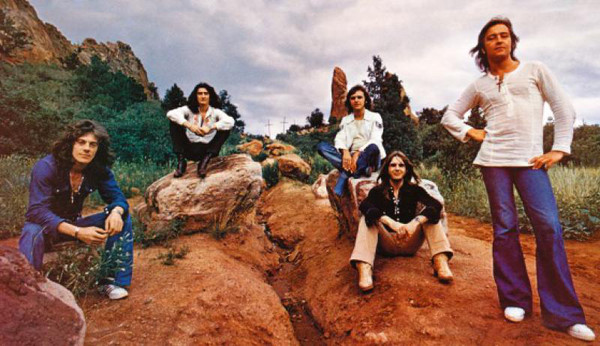

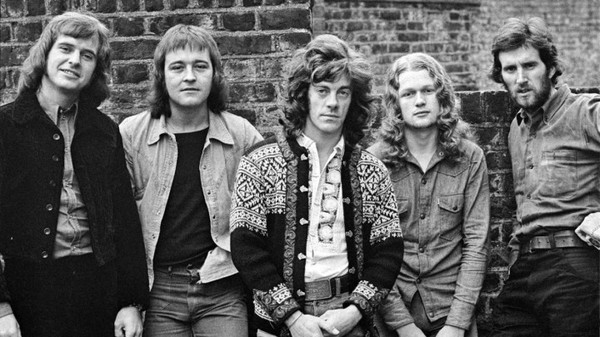
RICK WAKEMAN-1973-1977, THE GLORY YEARS.
RICK WAKEMAN-1973-1977, THE GLORY YEARS.
In January 1973, Rick Wakeman released his sophomore album The Six Wives Of Henry VIII. It was a groundbreaking album, one that would forever change prog rock. The Six Wives Of Henry VIII was the album that legitimised synths in prog rock. This was a game-changer.
Following the success of The Six Wives Of Henry VIII, synths became commonplace in prog rock. However, without Rick Wakeman and The Six Wives Of Henry VIII, maybe, the history of prog rock would’ve been very different? However, Rick Wakeman found inspiration for The Six Wives Of Henry VIII when touring with Yes.
The Six Wives Of Henry VIII.
In early 1972, Yes were touring America to promote their fourth studio album Fragile. On a stopover in Richmond, Virginia, Rick Wakeman, joined Yes in August 1971, and made his debut on Fragile, was perusing the airport bookshop. Eventually, Rick bought four books, including Nancy Brysson Morrison’s The Private Life Of Henry VIII.
On the subsequent flight from Richmond to Chicago, Rick began reading Private Life Of Henry VIII. As he began reading about Anne Boleyn, Rick remembered a recording he had made in 1971. Since then, Rick had done nothing with that piece of music. After recording the music, Rick had been struggling to come up with lyrics to accompany it. This being the age of the concept album, what Rick was looking for, was a theme that could run through the recording. Not any more.
Suddenly, everything came together. The notes Rick made about Anne Boleyn on the flight to Chicago were just the start. Over the next few weeks and months, whether at home or on tour, Rick focused on each of Henry VII’s six wives. At his piano, he continued to make notes. Eventually, Rick’s notes became the thread that ran through his sophomore album, The Six Wives Of Henry VIII. It transformed Rick Wakeman’s solo career.
Prior to the release of The Six Wives Of Henry VIII in January 1973, Rick Wakeman had only released one solo album, 1971s Piano Vibrations. However, controversy surrounds Piano Vibrations. Rick doesn’t even consider Piano Vibrations as part of his discography. Rick’s involvement was minimal. He neither wrote, nor chose the material on Piano Vibrations. Eight of the ten tracks were cover versions of popular songs, and the two other tracks were cowritten by producer, John Schroeder. All Rick who was working as a session musician, had to do, was turn up and play piano. The result was what is best described as a cheesy sounding album, that failed to chart. This was the polar opposite to Rick’s sophomore album The Six Wives Of Henry VIII.
Having joined Yes in August 1971, Rick played on their fourth album, Fragile. It was released on 29th November 1971 in Britain, reaching number seven. This resulted in Fragile being certified silver. Across the Atlantic, Fragile was released on 4th January 1972, and reached number four in the US Billboard 200. Fragile was certified double platinum, and became the most successful album of Yes’ career. This would also be the case with Rick’s sophomore album, The Six Wives Of Henry VIII.
Recording of The Six Wives Of Henry VIII took place between February and October 1972. A&M Records gave Rick an advance of £4,000 to help with recording of The Six Wives Of Henry VIII. That wasn’t going to go far. Luckily, Rick was a multi-instrumentalist, who could rely upon members of Yes, and his former band The Strawbs.
On The Six Wives Of Henry VIII, Rick played Minimoog and ARP synths, Mellotron, Hammond organ, church organ, electric piano, grand piano and harpsichord. Accompanying Rick, who produced The Six Wives Of Henry VIII, were some of the top musicians of the early seventies.
Among Rick’s band were what can only described as prog rock royalty. This included Yes’ rhythm section of drummers Bill Bruford and Alan White, bassist Chris Squire and guitarist Steve Howe. They were joined by The Strawbs bassist Chris Cronk and Dave Cousins, who played electric banjo. These were just a few of the musicians who played on The Six Wives Of Henry VIII.
Other musicians who played a part in the making of The Six Wives Of Henry VIII were drummer Barry de Souza, bassists Dave Winter and Les Hurdle and guitarist Mike Egan. They were joined by percussionists Ray Cooper and Frank Ricotti and vocalists Laura Lee, Sylvia McNeill, Judy Powell, Barry St. John and Liza Strike. Once the six tracks were recorded, the cost of The Six Wives Of Henry VIII had risen to £25,000. A&M Records’ advance hadn’t come close to covering the cost of The Six Wives Of Henry VIII. Rick needed The Six Wives Of Henry VIII to be a huge success.
Prior to the release of The Six Wives Of Henry VIII, Rick was booked to appear on BBC TV’s The Old Grey Whistle Test, where he would play excerpts of The Six Wives Of Henry VIII. That should’ve given The Six Wives Of Henry VIII a huge boost. However, back then, there were only three television channels. On one of the other channels, ITV a documentary about Andy Warhol was scheduled to be released. The documentary was much anticipated, and as many as ten million viewers were expected to view it. Luckily, at the last minute, it was banned. With ten million people looking for something to watch, many turned to BBC 2, and The Old Grey Whistle Test. That night, excepts from Rick Wakeman’s sophomore album, The Six Wives Of Henry VIII were heard by a huge audience. This was just what he needed.
Reviews of The Six Wives Of Henry VIII hadn’t been good. Only Time magazine and Rolling Stone seemed to appreciate The Six Wives Of Henry VIII. They published glowing reviews. However, they were the only ones. Other critics weren’t won over by The Six Wives Of Henry VIII. Neither were many people at A&M Records. Behind the scenes, staff at A&M Records referred to The Six Wives Of Henry VIII as “unsellable.” They reckoned that an instrumental prog rock album was unlikely to sell well. So, only 12,500 copies of The Six Wives Of Henry VIII were pressed prior to release. How wrong executives at A&M Records were.
On the release of The Six Wives Of Henry VIII on 23rd January 1973, it topped the charts in four countries. The Six Wives Of Henry VIII reached number seven in Britain, and number thirty in the US Billboard 200 charts. This resulted in The Six Wives Of Henry VIII being certified gold in America. However, things would get even better for Rick Wakeman.
By July 1973, The Six Wives Of Henry VIII was certified platinum, having sold two million albums. Eventually, The Six Wives Of Henry VIII sold over fifteen million copies. As 1973 drew to a close, Time magazine named The Six Wives Of Henry VIII as the best album of 1973. Since then, it’s attained classic status. What was described as an “unsellable,” instrumental prog rock album is now regarded as one of the genre’s best examples,
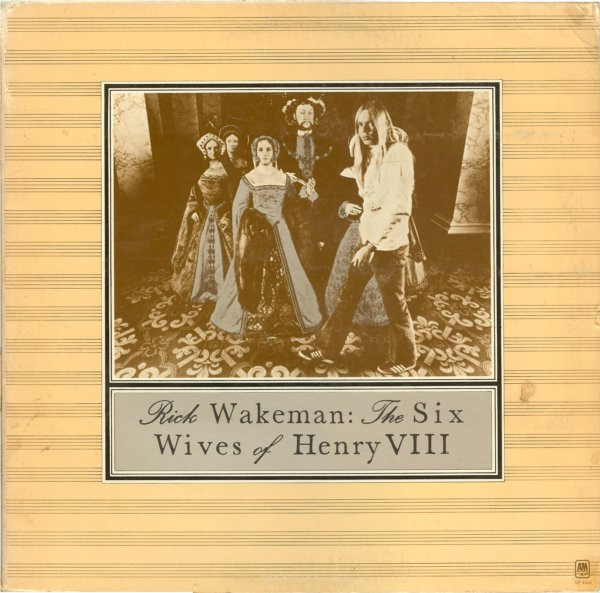
Journey To The Centre Of The Earth.
Following the success of The Six Wives Of Henry VIII, Rick Wakeman began work on his third album, Journey To The Centre Of The Earth. This was another concept album. It was based on Jules Vernes’ science fiction novel Journey To The Centre Of The Earth, which was published in 1864. It inspired Rick to write and record another prog rock opus.
Journey To The Centre Of The Earth featured two lengthy tracks written by Rick Wakeman. The Journey/Recollection, which lasted twenty-one minutes, would fill side one of Journey To The Centre Of The Earth. Side two featured The Battle/The Forest, which lasted nearly nineteen minutes. However, these two tracks weren’t recorded in a studio.
No. Journey To The Centre Of The Earth was recorded at the Festival Hall, London. On 18th January 1974, Rick Wakeman, accompanied by the London Symphony Orchestra, the English Chamber Choir and a select group of musicians who Rick named The English Rock Ensemble. With such an ambitious project, Rick wasn’t taking chances. Two concerts were scheduled and both were recorded. The second concert would feature on the completed version of Journey To The Centre Of The Earth, which was released on 9th May 1974.
Before the release of Journey To The Centre Of The Earth, critics had their say. To say reviews were mixed is an understatement. Among the less favourable reviews, words like a “classical pastiche” “genuinely appalling” and “brutal synthesiser overkill” peppered reviews. For Rick this was hugely disappointing. It had been a hugely ambitious project, one which took a lot out of him. However, other critics, especially the rock critics, were much more open minded. They gave Journey To The Centre Of The Earth glowing reviews. Maybe, Rick’s hard work was about to pay off?
When Journey To The Centre Of The Earth was released on 9th May 1974, Rick Wakeman had the last laugh. Journey To The Centre Of The Earth reached number one in Britain and number three in the US Billboard 200 charts. This resulted in Journey To The Centre Of The Earth being certified gold in America, Britain and Brazil. Rick Wakeman had been vindicated. Especially when Journey To The Centre Of The Earth won an Uvor Novello Award and was nominated for Grammy Award. However, his world was about to be turned upside down.
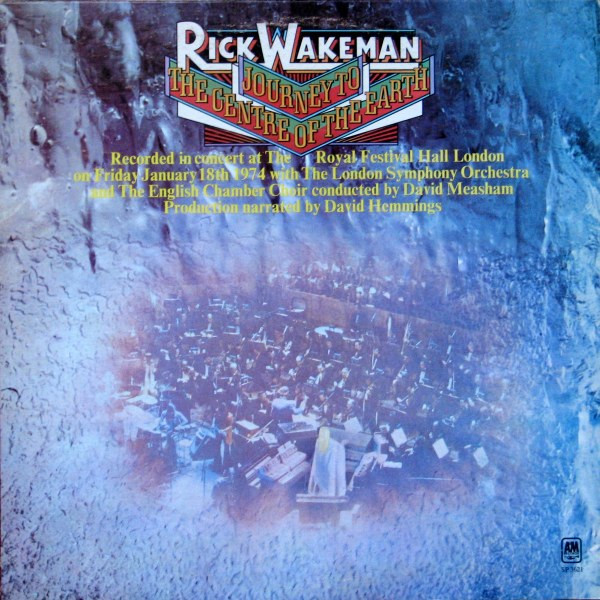
The Myths and Legends Of King Arthur and The Knights Of The Round Table.
Following the release of Journey To The Centre Of The Earth, Rick Wakeman was getting ready to begin work on his fourth album. Then disaster struck. Rick had the first of three minor heart attacks. He was taken to Wexham Park Hospital, near Slough, in Berkshire. That’s where Rick recuperated and began writing The Myths and Legends Of King Arthur and The Knights Of The Round Table.
When Rick was admitted to the Wrexham Park Hospital, the prognosis wasn’t good. Far from it. The doctor advised Rick to stop playing and touring. If he retired, his health might improve. Rick wasn’t amenable to this suggestion. So, that night, he penned The Last Battle, the track which would eventually, close The Myths and Legends Of King Arthur and The Knights Of The Round Table. This was the start of Rick Wakeman’s recovery.
The suggestion that Rick Wakeman retired seemed to inspire him. So, whilst recovering from the heart attack, Rick wrote most of The Myths and Legends Of King Arthur and The Knights Of The Round Table at Wrexham Park Hospital. Before long, his health had improved and he was ready to record The Myths and Legends Of King Arthur and The Knights Of The Round Table.
Recording of The Myths and Legends Of King Arthur and The Knights Of The Round Table began at Morgan Studios, London, on 16th October 1974. Right through to the 10th January 1975, Rick and his band recorded the seven tracks that became The Myths and Legends Of King Arthur and The Knights Of The Round Table. Rick’s band included the rhythm section of drummer Barney James, bassist Roger Newell and Geoff Crampton on lead and acoustic guitar. They were joined by percussionist John Hodgson and The English Chamber Choir. Taking charge of the lead vocalis were Gary Pickford-Hopkins and Geoff Crampton. Rick who produced The Myths and Legends Of King Arthur and The Knights Of The Round Table, played synths, keyboards and grand piano. Once recording was completed on 10th January 1975, The Myths and Legends Of King Arthur and The Knights Of The Round Table was released in April 1975.
Before that, the critics had to have their say about The Myths and Legends Of King Arthur and The Knights Of The Round Table. This time, generally, reviews were more favourable. Gone were the scathing, jaundiced reviews that preceded Journey To The Centre Of The Earth. Things were looking good for Rick Wakeman.
On the release of The Myths and Legends Of King Arthur and The Knights Of The Round Table, in April 1975, it reached number two in Britain and number twenty-one on the US Billboard 200 charts. This resulted in Rick’s third consecutive gold disc in America. The Myths and Legends Of King Arthur and The Knights Of The Round Table also was certified gold in Japan, Australia and Brazil. Things were indeed, looking up for Rick Wakeman. However, according to the musical rumour mill, there was a problem.
Rick had decided to tour The Myths and Legends Of King Arthur and The Knights Of The Round Table, to support the album. This included three nights at Wembley, which was billed as King Arthur On Ice. Although these nights sold out, rumours persisted that Rick Wakeman had taken a large financial hit. Some rumour mongers went as far as to suggest that Rick had been declared bankrupt. That was far from the truth.
Later, it became apparent that Rick never lost money on the tour that accompanied The Myths and Legends Of King Arthur and The Knights Of The Round Table. Indeed, the tour and album had been a profitable venture, selling over twelve million copies worldwide. Not bad for an album Rick Wakeman wrote in his hospital bed, and released forty years ago, when progressive rock, like Arthur was King?
Lisztomania.
After three hugely successful albums, Rick Wakeman’s profile had never been higher. Rick was commissioned to write and record the soundtrack to Ken Russell’s film Lisztomania, which was a biography of classical composer Franz Liszt.
Ken Russell gave Rick Wakeman free reign when it came to the soundtrack. So Rick Wakeman brought onboard Who frontman Roger Daltrey. He wrote some of the lyrics and added the vocals. Joining Roger Daltrey, were vocalists Linda Lewis and Paul Nicholas. They featured on the Lisztomania soundtrack which was released in November 1975.
There was a problem with Lisztomania. Rick Wakeman wasn’t happy with the soundtrack. So much so, that album was reworked and rereleased as The Real Lisztomania. Rick’s concerns about Lisztomania proved to be correct. The reviews were mixed. This didn’t bode well for the release of Lisztomania.
When Lisztomania was released in November 1975, the album failed to chart in Britain. Across the Atlantic, Lisztomania stalled at 145 in the US Billboard 200. For someone who was used to gold and platinum discs, this was a low point of Rick Wakeman’s career. However, redemption wasn’t far away.
No Earthly Connection.
Once the festive period was over, Rick Wakeman and his band returned to the studio in January 1975. That would be their home for the next three months.
Like many rock stars during the seventies, Rick Wakeman decamped to France to record albums and sometimes, to live. Many musicians who were unwilling to pay the high rates of income tax in Britain, became tax exiles. Others, just enjoyed the more exotic location of Château d’Hérouville, in Hérouville. This was where Rick decided to record the three tracks that became No Earthly Connection a creation myth which was based on music.
Rick had written No Earthly Connection. The centrepiece of the album, was an ambitious, five part suite Music Reincarnate. It was a twenty-eight minute epic. For No Earthly Connection, Rick had written The Prisoner and The Lost Cycle. These three tracks featured Rick’s band.
The rhythm section featured drummer Tony Fernandez, bassist Roger Newell and John Dunsterville on guitars and mandolin. They were augmented by a horn section Martyn Shields on trumpet, flugelhorn and French horn, and Reg Brooks on trombone and bass trombone. Adding vocals was Ashley Holt. Rick played all manner of pianos, keyboards and organs, and produced No Earthly Connection. It was completed in March 1976, and would be released in May 1976
Before that critics had their say on No Earthly Connection. Most of the reviews were positive. There was the occasional dissenting voice. Overall, No Earthly Connection was regarded as a return to form from Rick Wakeman, and a vast improvement on Lisztomania. This bode well for No Earthly Connection, which came with a couple of surprises.
On the release of No Earthly Connection in May 1976, it began to climb the charts. Eventually, it reached number nine in Britain. Across the Atlantic, No Earthly Connection stalled at number sixty-seven in the US Billboard 200. This time around, there were neither gold nor platinum discs for Rick Wakeman. However, his career was back on track. Lisztomania had been a blip, and redemption came in the shape of No Earthly Connection. While it didn’t match the quality and success of The Six Wives of Henry VIII, Journey to the Centre of the Earth and The Myths and Legends of King Arthur and the Knights of the Round Table, No Earthly Connection was a reminder that Rick Wakeman was one of the most ambitious and innovative British musician of the seventies.
White Rock.
Despite his disappointment with how the soundtrack to Lisztomania had turned out, Rick Wakeman agreed to record White Rock, a documentary film about the 1976 Winter Olympics, in Innsbruck, Austria. Rick approached the White Rock soundtrack differently.
Instead of using a band for the White Rock soundtrack, Rick Wakeman took his banks of trusty keyboards and synths to CBS Studios. Rick’s banks of keyboards and synths were able to produce the majority of the sounds on White Rock. However, augmenting Rick was drummer and percussionist Tony Fernandez, plus St Paul’s Cathedral Choir. They began work on White Rock in January 1976.
By then, Rick Wakeman had written seven tracks. That was all very well. However, he was meant to have written eight. When Rick entered the studio one day, he realised he forgotten to record what became After the Ball. Rather than admit to his mistake, Rick Wakeman proceeded to improvise his way through After the Ball. With the track recorded, Rick listened to the playback and realised that it was a flawless take. There was no need for a further take. For the track that closed the White Rock soundtrack, Rick pioneered the use of sampling.
Ice Run was the track that closed the soundtrack. As Rick worked on the track, he realised that a two parts of one of his old tracks would be perfect for Ice Run. So Rick sampled two parts Anne Of Cleves, from Rick’s album The Six Wives Of Henry VII. By using two samples from Anne Of Cleves this completed the song. However, White Rock wasn’t complete until September 1976.
With White Rock complete, A&M Records scheduled the release for 1977. This meant Rick Wakeman had to wait before hearing how his second venture into the world of soundtracks would be greeted? Deep down, Rick must have been hoping that lightning wouldn’t strike twice. Sadly it did.
By 1977, the musical landscape had changed. Punk had arrived in Britain, kicking and screaming. Hanging on their every word, were a new breed of gunslinger critics. They were happy to fly the flag for this anti-music, and acted as the punks mouthpiece. If a puff piece was needed, the gunslinger critics wrote it. They were happy to be their master’s voice. The gunslinger critics slavishly agreed with their musical masters, saying progressive rock was yesterday’s music. Progressive rockers were dinosaurs the script went. That’s despite the gunslinger critics once championing progressive rock. It seemed they had recently undergone a Damascene conversion. These ‘critics’ savaged White Rock, calling it the worst album of Rick Wakeman’s career. Other critics wrote much more unbiased reviews, concluding that White Rock was a good, but not great album. The curse of the soundtrack had struck again.
Or had it? When White Rock was released in 1977, it reached number fourteen in Britain. This resulted in a silver disc for Rick Wakeman. He had the last laugh, Meanwhile, in America White Rock stalled at 128 in the US Billboard 200. While this was disappointing, it was an improvement on Rick’s last venture into the world of soundtracks. Still, Rick was a popular artist on both sides of the Atlantic.
That had been the case since The Six Wives Of Henry VIII, which was the first album in the 5 Classic Albums box set. This commercial success continued from Journey To The Centre Of The Earth, through The Myths and Legends Of King Arthur and The Knights Of The Round Table, No Earthly Connection and White Rock. These albums feature one of the pioneers of British progressive rock, Rick Wakeman. He was a musical pioneer who wrote and recorded several classic albums.
This included The Six Wives Of Henry VIII, Journey To The Centre Of The Earth and The Myths and Legends Of King Arthur and The Knights Of The Round Table. These albums deserve to be called classic albums. No Earthly Connection was a return to form from Rick Wakeman, and featured some innovative music. Especially the five part, twenty-eight minute epic Music Reincarnate. However, No Earthly Connection stops short of reaching classic status, but is still one of the highlights of Rick’s career. White Rock by comparison, is a disappointing album that’s best described as good, but not great. Despite this, the album Rick Wakeman released between 1973 and 1977 are a reminder of the most successful period of Rick Wakeman’s carer. Throughout this period, he constantly strove for perfection.
That was what Rick Wakeman spent much of the seventies searching for. For most musicians, that’s unattainable. However, Rick Wakeman wasn’t most musicians.
Just like so many musicians of the progressive rock era, he was a musical pioneer, who created cerebral, groundbreaking and innovative music. To do this, Rick Wakeman pushed musical boundaries, and came closest on The Six Wives Of Henry VIII, Journey To The Centre Of The Earth and The Myths and Legends Of King Arthur and The Knights Of The Round Table. These albums deserve to be called classics, and are a reminder of Rick Wakeman during what was his relentless pursuit of perfection. Between 1973 and 1977 Rick Wakeman reached his creative zenith, and created some of the best, and ambitious music of his long and illustrious career.
RICK WAKEMAN-1973-1977, THE GLORY YEARS.
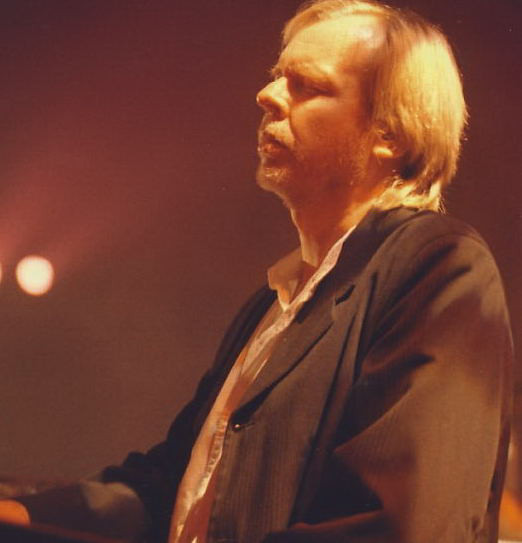
(THE MICROCOSM): THE VISIONARY MUSIC OF CONTINENTAL EUROPE, 1970-1986.
(THE MICROCOSM): THE VISIONARY MUSIC OF CONTINENTAL EUROPE, 1970-1986.
As the seventies dawned, a new musical movement started to take shape across Europe. This new musical movement continued right through to the mid-eighties. By then, artists from Germany, Austria, Holland and France were part of this new musical movement. So were artists in Italy, Greece, Finland and Sweden. The tentacles of this new musical movement had spread far and wide, and showcased the combined and considerable talents of artists who created ambitious and innovative music. There was only one problem, critics had struggled to find a new for this new movement.
The new movement failed to fit neatly into one of the existing musical genres. It was neither rock nor progressive rock. Determined to pigeon hole the music, some critics began to refer to the music as ambient, while others described it as New Age. Meanwhile, other critics referred to the music as avant-garde. However, other critics begged to differ.
Some critics were describing the music as Krautrock. Other critics weren’t so sure. Especially critics in Germany, where many of the leading lights of this movement were based. This included Dueter, Ash Ra Tempel and Hans Joachim Roedelius. Many German critics felt their music was more closely aligned with the Berlin School, an offshoot of Krautrock. For many musicologists and music historians, this seemed a more accurate description. However, not everyone was convinced.
Fast forward thirty years, and still critics are debating which genre best describes this musical movement. Only one thing seems certain, that its finest practitioners have firmly rejected the term New Age. That is not how they want this new, ambitious and innovative music to be described. It represented the dawn of new musical dawn and era. This new era is documented on (The Microcosm): The Visionary Music Of Continental Europe, 1970-1986. It’s a double album that was recently released by Light In The Attic Records.
(The Microcosm): The Visionary Music Of Continental Europe, 1970-1986 is the perfect introduction to this new, pan European musical movement. It showcases the music Hans-Joachim Roedelius, Ralph Lundsten, Ash Ra, Tempel, Ariel Kalma, Bernard Xolotl, Enno Velthuys, Peter Michael Hamel and Deuter. They’re among the fourteen artists that feature on (The Microcosm): The Visionary Music Of Continental Europe, 1970-1986. Each produced ambitious and innovative music, and can be described as a visionary.
Disc One.
This includes Greek composer Vangelis, who opens (The Microcosm): The Visionary Music Of Continental Europe, 1970-1986 with Creation Du Monde. This is a track from Vangelis’ soundtrack L’Apocalypse Des Animaux. It was released across Europe on Polydor in 1973, and features a minimalist, ambient sound. This was already growing in popularity, especially in Germany where Vangelis would later make his home.
In 1972, Ralph Lundsten was about to release the ninth album of his career, Fadervår (Paternoster) on HMV. By then, the thirty-six year old musician and composer had established a reputation as a pioneer of electronic music. That is apparent on the haunting and ethereal Bön 5 – Förlåt Oss Vâra Skulder (Prayer 5 – Forgive Us Our Debts). It’s a showcase for Ralph Lundsten considerable talents as a composer and musician, as he deploys an array of analog synths.
Ash Ra Tempel were one of the many bands that were formed in Berlin during the late-sixties. The band originally featured a triumvirate of musical pioneers, Klaus Schulze, Manuel Göttsching and Hartmut Enk. By 1975, Ash Ra Tempel’s lineup was very different. Manuel Göttsching was the only founding member that remained, as work began on the soundtrack to Le Berceau De Cristal. Manuel Göttsching at Studio Roma, Berlin was Lutz Ulbrich. They recorded seven tracks, including Le Sourire Volé, a futuristic fusion of Berlin School, electronica and Krautrock that’s truly timeless. Despite the quality of the music on Le Berceau De Cristal, the album wasn’t released until 1993. Somewhat belatedly, this hidden gem of a soundtrack was available for Ash Ra Tempel’s fans to discover.
Popol Vuh was another giant of German music. It was the vehicle of Florian Fricke a true pioneer, who used synths extensively in his music. To this he added organ and percussion, and created music that has a spiritual ambience. A case in point, is Brüder Des Schattens-Söhne Des Lichts (Abridged) a near fifteen minute epic. It’s taken from Popol Vuh’s album Brüder Des Schattens-Söhne Des Lichts. It was released in 1978 on Brain. A year later in 1979, Brüder Des Schattens-Söhne Des Lichts was reissued as the soundtrack to Nosferatu The Vampier. That is despite only a couple of the tracks featuring in the film. The highlight of both albums is the spiritual ambience of Brüder Des Schattens-Söhne Des Lichts (Abridged).
Originally, Orguitar Soir was recorded when Ariel Kalma was collaborating with Richard Tinti, on the album Osmose. It was released as a double album on the SFP label. For some reason, Orguitar Soir was left off the album. Twenty-eight years later, and a newly expanded version of Osmose was released in 2006. One of the new and welcome additions was Orguitar Soir. With its mixture of droning synths, pan pipes and birdsong, it’s a quite beautiful, thoughtful and ethereal fusion of ambient, avant-garde and Musique Concrète.
Up until 1980, Bernard Xolotl was content to spend his time painting, drawing, writing and recording. He was blossoming creatively. Then he rediscovered sacred geometry. This lead him to believe that music is was: “completely mathematical.” Since then, many critics and music fans have believed that Bernard Xolotl’s music is indeed; “completely mathematical.” This is something this musical pioneer denies. He released his Journey To An Oracle on cassette in 1981. It features the genre-melting track Cometary Wailing where element ambient, avant-garde and psychedelia combine to create a captivating soundscape.
Another French musician who created groundbreaking music was Peter Michael Hamel. His career spanned four decades. However, between 1980 and 1986, Peter Michael Hamel was signed to the Kuckuck label. During that period, he released a quartet of studio albums. Einklang which is an improvised piece, didn’t feature on any of these albums. Instead, it featured on a compilation of Peter Michael Hamel’s music, Let It Play (1979-1983 Selected Pieces). It was released by Kuckuck in 1987. Sonically and stylistically, Einklang has much in common with his Bardo and Organum albums, where Peter Michael Hamel’s music references ambient, modern classical, Musique Concrète and post modernism. It’s an enchanting combination of musical genres and influences.
Somewhat confusingly, the track listing on the reverse of the CD doesn’t match the track listing. Francesco Messina’s Untitled closes disc one, rather than opening disc two. The track was written by Italian composer Francesco Messina around 1979. It lay unreleased until 2013, when Raul Lovisoni and Francesco Messina’s 1979 collaboration was about to be reissued. Three bonus tracks were tagged onto the end of the reissue, including Untitled. Given its minimalist and mesmeric ambient sound this was a welcome addition. So is its addition on (The Microcosm): The Visionary Music Of Continental Europe, 1970-1986.
Disc two of (The Microcosm): The Visionary Music Of Continental Europe, 1970-1986 opens with Hans Joachim Roedelius’ Wenn Der Südwind Weht. This is a track from Wenn Der Südwind Weht, which was released on Sky Records in 1981. It’s one of over 200 solo albums and collaborations the former founder of Kluster, Cluster, Harmonia and Qluster has released. Wenn Der Südwind Weht is a mixture of avant-garde, electronica and experimental music that’s rhythmic, hypnotic, haunting and beautiful.
Back in 1981, Dorothea Raukes the keyboardist from the German rock band Streetmark dawned the alias Deutsche Wertarbeit. This also became the title of her latest musical vehicle’s debut album. It had been inspired by Asmus Tietchens, Hans Joachim Roedelius and even Kraftwerk. The album was a marriage of Berlin School and Krautrock, that was melodic and rhythmic. One of the album’s highlights, was Der Grosse Atem the album closer. Deutsche Wertarbeit was released on Sky Records in 1981. Despite the quality of music on the album, Dorothea Raukes decided that Deutsche Wertarbeit was purely a one-off project.
Anyone familiar with Gandalf’s albums, will know the name Robert Julian Horsy. The Austrian flautist and multi-instrumentalist made a guest appearance on several Gandalf albums. However, Robert Julian Horsy’s solo career began in 1982, when he released his debut album Tales Of Power on Seagull Music. It featured Dance For A Warrior, which showcased the multi-instrumentalist’s considerable skills on a mystical sounding mixture of ambient, Berlin School and Musique Concrète.
During 1984, Karl L. Schaffner and Lohar T. Grimm released a trio of cassette albums, Mountains In The Sea, Flying Carpet and Birds Of Passage. This trilogy of ambient albums had been influenced by Karl L. Schaffner’s travels in India. Especially Caravan, a track from the Flying Carpet album. It meanders melodically along its cinematic sounds painting pictures.
Suzanne Doucet and Christian Buehner met in 1978, and soon discovered that they shared a similar musical philosophy. So once Suzanne Doucet had formed her own label, she began to collaborate with Christian Buehner. They released several albums, including Transmission which was released in 1983. It featured Shiva’s Dance a rhythmic and atmospheric track where elements of ambient and electronic combine effectively.
By 1985, Dutch musician Enno Velthuys was about to release his fourth album, Landscapes In Thin Air. It was released on the Kubus Kassettes label and featured the meandering Morning Glory. It’s a beatific, dreamy and elegiac soundscape that’s truly timeless.
Gigi Masin’s Ship Beetel closes (The Microcosm): The Visionary Music Of Continental Europe, 1970-1986. Ship Beetel was recorded when Gigi Masin was recording his debut album Wind. The song didn’t feature on the album, and lay unreleased until 2013. That was when Ship Beetel featured on Talk To The Sea, a compilation of Gigi Masin’s music. Somewhat belatedly, this beautiful, elegiacal ambient track was released. Three years later, and it’s a welcome addition to (The Microcosm): The Visionary Music Of Continental Europe, 1970-1986, brings the compilation to a memorable close.
As compilations go, (The Microcosm): The Visionary Music Of Continental Europe, 1970-1986 is a captivating album of groundbreaking music. It features sixteen tracks from musical pioneers. They had the vision and ability to take music in a new direction. This resulted in puzzled critics struggling to find a way to describe this new pan European musical movement. The best the puzzled critics could come up with, was New Age. That was nothing more than a lazy, catchall description.
The music on (The Microcosm): The Visionary Music Of Continental Europe, 1970-1986 ranges from ambient and avant-garde to Berlin School and classical and Krautrock through to electronica and experimental and even Musique Concrete and a hint of psychedelia. Often, several musical genres were combined to create the one track. These tracks are variously, atmospheric, beautiful, blissful and cinematic, and sometimes, haunting and hypnotic. Other times, they meander melodically and dreamily along, their elegiac and ethereal sound continuing to captivate. That is still the case over forty years later. No wonder, as these tracks are truly timeless.
For anyone familiar with the music on (The Microcosm): The Visionary Music Of Continental Europe, 1970-1986 this will come as no surprise. Each of these artists were innovators and visionaries. They were at the vanguard of pan European musical movement during the seventies and eighties. During this period, they recorded music that was ambitious, groundbreaking and often, way ahead of its time. Sadly, much of this music never found the audience it deserved first time round.
It was only many years later, that the music on (The Microcosm): The Visionary Music Of Continental Europe, 1970-1986 somewhat belatedly, began to find the audience it deserves. Still though, there are many record buyers still to discover the delights of Dueter, Ash Ra Tempel, Hans Joachim Roedelius, Ralph Lundsten, Ariel Kalma, Bernard Xolotl, Enno Velthuys and Peter Michael Hamel. Hopefully, (The Microcosm): The Visionary Music Of Continental Europe, 1970-1986 will introduce them to this body of groundbreaking music, and they’ll embark upon a musical voyage of discovery?
(THE MICROCOSM): THE VISIONARY MUSIC OF CONTINENTAL EUROPE, 1970-1986.
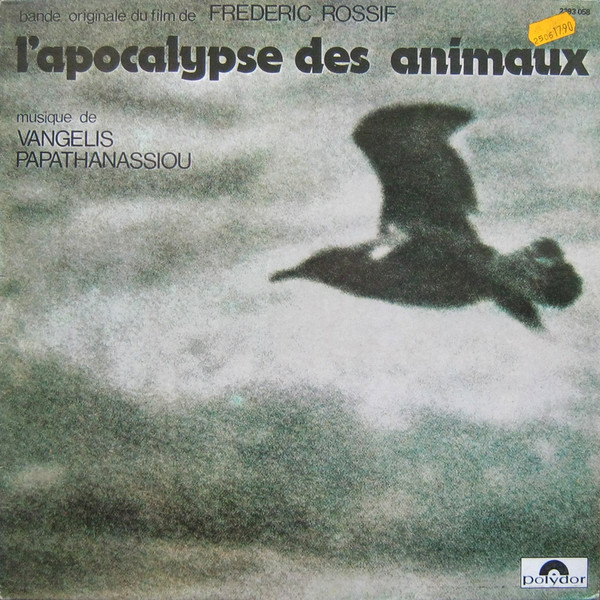
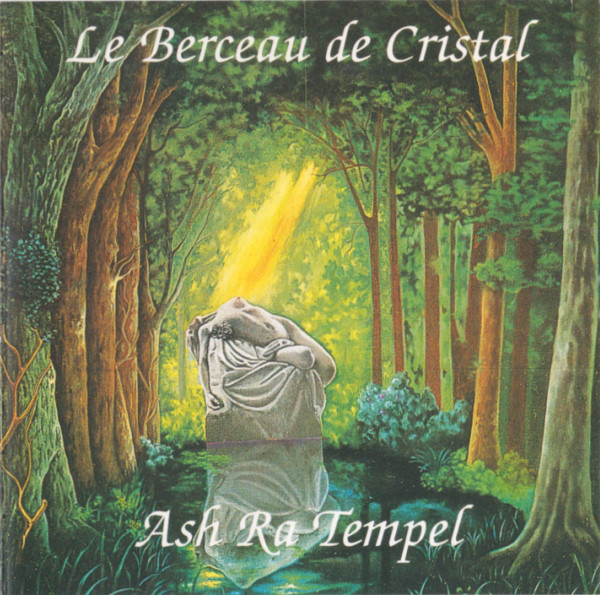


BARIS MANCO AND KURTALAN EXPRES-ESTAFURULLAH…NE HADDIMIZE!
BARIS MANCO AND KURTALAN EXPRES-ESTAFURULLAH…NE HADDIMIZE!
Even some seventeen years after his sudden and tragic death, Barış Manço is still remembered as one of the pioneers of modern Turkish music. His career began in 1958, and continued right up until his death in 1999. During his career, Barış Manço was one of the founding fathers of Anatolian rock. He helped popularise this hybrid of Turkish folk and rock. Soon, other artists were following in the footsteps of Barış Manço, and Anatolian rock’s popularity was growing.
It helped that at the vanguard of this new musical movement was a musician that was a pioneer and was capable of creating ambitious and innovative music. That was the case throughout Barış Manço’s thirty-seven year recording career.
Throughout his career, Barış Manço was a truly prolific artist. That was the case since the early days, when he recorded and collaborated with wide variety of groups and artists. Barış Manço recorded with Harmoniler, Jacques Denjean Orchestra, Les Mistigris, Kaygısızlar, Barış Manço Ve, Moğollar and Kurtalan Ekspres, who he first collaborated with in 1972.
Eleven years later, and Barış Manço and Kurtalan Ekspres recorded the album Estağfurullah…Ne Haddimize!, which will be released by Pharaway Sounds on 25th November 2016. When Estağfurullah…Ne Haddimize! was released later in 1983, Barış Manço was one of most successful Turkish musicians. This rise to the top had taken quarter of a century. It was changed days from the early days of Barış Manço’s career.
Barış Manço was born in Üsküdar, Istanbul, Turkey on the 2nd of January 1943. Music was in Barış Manço’s family. His mother Rikkat Uyanık has been a successful singer. Little did she realise that her son would later, follow in her footsteps.
By the time Barış Manço was a pupil at Galatasaray High School, he founded his first band, Kafadarlar. They mainly played to the students at nearby schools. This was enough to give Barış Manço a taste of life as a professional music.
Harmoniler.
When Barış Manço was nineteen, he formed a new band Harmoniler. They accompanied Barış Manço when he recorded his debut single, Twistin USA. It was released in 1962, with Do The Twist following later that year. The third and final single Barış Manço released with Harmoniler was Cit Cit Twist in 1963. These three singles were among the first Anatolian rock releases. Barış Manço was part of a new musical movement. Despite this, Barış Manço having graduated from high school, decided to spend some time travelling across Europe.
Initially, Barış Manço headed to France, and spent some time in Paris. This was where Barış Manço recorded a single with the Jacques Denjean Orchestra, Baby Sitter. It was released in 1964, but soon, Barış Manço was on the move again.
He then moved to Liege in Belgium, where he enrolled, and studied, at the Royal Academy of Fine Arts in Liège, Belgium. This was where Barış Manço encountered the other members of Les Mistigris.
Les Mistigris.
Before long, Barış Manço joined the band. They released three singles while Barış Manço was a member. The first was Il Arrivera in 1966. Later Bien Fait Pour Toi followed later that year. A third single Bizim Gibi was released in 1967. By then, Les Mistigris’ popularity was spreading, and the band were playing much further afield. Les Mistigris were playing not just in Belgium, but France, Germany and Turkey. However, Barış Manço time with Les Mistigris came to an end in 1967.
Later in 1967, Barış Manço was badly hurt in a car crash. It was then that he decided to grow a moustache to hide a scar. This would eventually become one of Barış Manço’s trademark’s, a familiar sight to music fans when commercial success and critical acclaim came his way. Before that, Barış Manço would form a new a new band, Kaygısızlar later in 1967.
Kaygısızlar.
Unlike the last couple of bands Barış Manço had been a member of Kaygısızlar featured just Turkish musicians. During his travels, Barış Manço had worked with musicians from different countries. This hadn’t been easy, given the language barrier. This time, Barış Manço was joined in Kaygısızlar by Mazhar Alanson and Fuat Güner. They would spend the next two years together.
Kaygısızlar’s debut single Kol Düğmeleri was released in later 1967. It was followed in 1968 by Kızılcıklar, Bebek, Karanlıklar İçinde and Bogaziçi. By the end of the 1968, Kaygısızlar’s popularity had grown. They had graduated from playing in venues in Turkey to touring internationally. Barış Manço’s new band had come a long way in a short space of time.
As 1969 danwed, Kaygısızlar released Runaway. They followed this with Aglama Değmez Hayat and Kağızma. This proved to be Kaygısızlar’s swan-song. The story came to an end later in 1969 when Mazhar Alanson and Fuat Güner told Barış Manço that they didn’t want to move, and live abroad. After eight singles, Kaygısızlar were no more. However, as the sixties gave way to the seventies, Barış Manço founded a new band, Barış Manço Ve.
Barış Manço Ve.
The newly founded Barış Manço Ve headed into the studio to record their debut single during early 1970. This multinational group’s debut single was Dağlar Dağlar (Mountains, Mountains!), When it was released later in 1970, the single sold in excess of 700,000 copies. Buoyed by the success of their debut single, Barış Manço Ve released their debut album Dünden Bugüne…in 1971. Alas, it was the only album Barış Manço Ve would release. Despite the success of Barış Manço Ve, its founder was ready to move on.
Moğollar.
Next stop for Barış Manço was Moğollar, who were one of the pioneers of Anatolian rock. They had been formed in 1967, were still growing strong when Barış Manço joined in 1971. He features on their 1971 single İşte Hendek İşte Deve. After this, Barış Manço decided to rejoin Kaygısızlar.
Kaygısızlar.
After reforming, Kaygısızlar only released one more single, Fil ile Kurbağa. It was released in 1972. However, after this, the members of Kaygısızlar moved on to new projects. Mazhar Alanson and Fuat Güner went on to form MFÖ. Meanwhile, Barış Manço formed another new band, Barış Manço and Kurtalan Ekspres.
Barış Manço and Kurtalan Ekspres-The Seventies.
Barış Manço’s latest band wasted no time beginning work on their debut single. Ölüm Allah’ın Emri was released in 1972. Little did anyone know that this fusion of Anatolian rock and psychedelia marked the debut single by one of the most innovative and influential Turkish bands of the seventies. They pioneered Anatolian rock, and took the genre in new directions.
Initially, Barış Manço and Kurtalan Ekspres combined Anatolian rock and psychedelia. By 1973, Anatolian rock was evolving as Barış Manço and Kurtalan Ekspres moved the genre towards progressive rock. This became apparent when they released their first single of 1973, Lambaya Püf De. It was followed by Gönül Dağı later that year. Sadly, Barış Manço and Kurtalan Ekspres’ singles failed to find the audience they deserved. Despite this, their music continued to be innovative and influence other bands.
This continued as Barış Manço and Kurtalan Ekspres released two new singles released during 1974. The first was Nazar Eyle, which showcased a folk-tinged sound. Then Bir Bahar Akşamı took on a psychedelic sound. Each single was different from its predecessor. Despite this, commercial success continued to elude Barış Manço and Kurtalan Ekspres as 1974 gave way to 1975,
As a new year dawned, Barış Manço turned forty-two in 1975. He was hoping commercial success was just around the corner. Alas, when Barış Manço and Kurtalan Ekspres released Ben Bilirim as a single in 1975, the single failed to find an audience. Barış Manço however, had a plan and was ready for one last throw of the dice.
Later in 1975,Barış Manço and Kurtalan Ekspres were about to release their debut album, 2023. It was a genre-melting concept album where songs rubbed shoulders with instrumentals. 2023 was an album of groundbreaking music, that when it was released in 1975 was meant to transform the fortunes of Barış Manço and Kurtalan Ekspres. Alas, the only countries where 2023 sold well, were Romania and Morocco. The album topped the charts in both countries. Elsewhere, 2023 failed to find the audience it so richly deserved. For everyone involved it was a frustrating time. Things didn’t get any better for Barış Manço and Kurtalan Ekspres.

When Kurtalan Ekspres’ released Çay Elinden Öteye Rezil Dede as a single in 1976, it too failed commercially. Barış Manço and Kurtalan Ekspres’ career was at a crossroads.
As a result, Barış Manço took stock of his and Kurtalan Ekspres’ career during 1977. The band had been together for nearly five years, but still hadn’t made a breakthrough. To buy themselves time, Barış Manço and Kurtalan Ekspres released a career retrospective Sakla Samanı Gelir Zamanı in 1977. Maybe it would act as introduction to Barış Manço and Kurtalan Ekspres, until they completed their next album?
Two years later, and Barış Manço and Kurtalan Ekspres returned with Yeni Bir Gün. It was released in 1979, and sonically and stylistically, followed in the footsteps of 2023. Sadly, it was an all too familiar story. Despite featuring ambitious and innovative music, Yeni Bir Günpassed record buyers by. It was a similar story when Barış Manço and Kurtalan Ekspres released their first album of the eighties.
Barış Manço and Kurtalan Ekspres-The Eighties,
As the new decade dawned, Kurtalan Ekspres’ thoughts turned to their first album of the eighties. This was 20, another album that followed sonically and stylistically in the footsteps of 2023. The music was ambitious, crossing and combining disparate musical genres and influences. However, just like 2023 Yeni Bir Gün it failed commercially. However, commercial success was just around the corner for Kurtalan Ekspres.
After the disappointment of 20, Barış Manço and Kurtalan Ekspres began work on their second album of the eighties, Sözüm Meclisten Dışarı. After it was written and recorded, it was apparent that Sözüm Meclisten Dışarı featured some of the best music of Barış Manço and Kurtalan Ekspres’ nine year career.
This proved to be the case. When Sözüm Meclisten Dışarı was released in 1981, it was the album that transformed Barış Manço and Kurtalan Ekspres’ fortunes. Sözüm Meclisten Dışarı became Barış Manço and Kurtalan Ekspres’ most successful album. That was no surprise, as it featured five hit singles, Alla Beni Pulla Beni, Arkadaşım Eşek, Gülpembe, Halhal and Dönence. After nine long years, Barış Manço and Kurtalan Ekspres’ were belatedly enjoying the commercial success that their music deserved.
The success of Sözüm Meclisten Dışarı and its singles resulted in music fans reevaluating Barış Manço and Kurtalan Ekspres’ earlier music. Before long, their popularity was soaring, and Barış Manço and Kurtalan Ekspres’ were one of the biggest names in Turkish music. Soon, though, Barış Manço and Kurtalan Ekspres’ had to start thinking of their next album. This would become Estağfurullah…Ne Haddimize!.

Estağfurullah…Ne Haddimize!.
For the followup to Sözüm Meclisten Dışarı, Barış Manço began writing what eventually became Estağfurullah…Ne Haddimize! He wrote seven of the album’s eight tracks, including Halil İbrahim Sofrası, Geçti Dost Kervanı Kazma, Balsultan, Aman Yavaş Aheste, Kol Düğmeleri and Eski Bir Fincan. Barış Manço also wrote the music to Selahaddin Eyyübinin Yeğeni Aslan Yürekli Rişarın Kızkardeşine Karşı. These songs were recorded in Istanbul during the summer of 1983.
Recording of Estağfurullah…Ne Haddimize! took place during July 1983. Barış Manço took charge of production, and played piano, organ, clarinet and synths. Among his array of synths, were an Omni 2, Minimoog and Prophet 5. Meanwhile, the members of Kurtalan Ekspres played a mixture of traditional and modern instruments. This included flautist Serdar Ertürk, and Caner Bora who played the davul, a type of bass drum. Bassist Ahmet Güvenç also played piccolo and added backing vocals. So did guitarist Bahadır Akkuzu and percussionist Celal Güven. Together, they recorded the eight songs during July 1983 that would become Estağfurullah…Ne Haddimize!.
Later in 1983, Estağfurullah…Ne Haddimize! was released. Just like Barış Manço and Kurtalan Ekspres’ previous album, Sözüm Meclisten Dışarı, Estağfurullah…Ne Haddimize! sold well enough to reach the upper reaches of the charts. Estağfurullah…Ne Haddimize! also featured two hit singles, Halil İbrahim Sofrası and Kol Düğmeleri. The latter was a new version of Barış Manço’s first single Halil İbrahim Sofrası. It was another song with an important moral message. This was a feature of many of Barış Manço’s songs by 1983, which had been another good year for Barış Manço.
Barış Manço had written another successful album Estağfurullah…Ne Haddimize!. Commercially and stylistically, it picked up where Sözüm Meclisten Dışarı left off, and ensured that Barış Manço and Kurtalan Ekspres’ success continued. Given the quality of music on Estağfurullah…Ne Haddimize! that was no surprise.
Halil İbrahim Sofrası opens Estağfurullah…Ne Haddimize!, and bursts into life. Guitars join the rhythm section as the arrangement flows smoothly and almost joyously along. Already it’s hard to resist the song’s charms. All of sudden it’s all change, as an element of drama is injected when the organ and vocal enters. Soon, Barış’ impassioned vocal delivers his moral message, and harmonies accompany him They prove the perfect foil, and add to the drama. As they drop out, still the arrangement flows and glides along. Synth strings sweep and join with washes of Hammond organ, as the piano plays and the rhythm section provide the heartbeat. Together, they create music with a moral message where beauty and drama, are omnipresent, as folk and progressive pop are combined seamlessly.
The tempo drops on Geçti Dost Kervanı, drums are joined by a flute and soon, keyboards and percussion. They create the backdrop for Barış’ heartfelt, emotive vocal. Meanwhile, the rhythm section play slowly and deliberately while a melancholy flute drifts in and out. It helps frame the vocal which oozes emotion in what’s a beautiful song.
Kazma is mixture of disparate and unlikely genres. Everything from traditional folk to funk and even a hint of disco are combined with rocky guitars. It’s a potent and heady brew from the opening bars. That’s when folk gives war to funk. Adding the funk are rhythm section and later, a clavinet. Meanwhilem synths strings sweep and provide part of the backdrop for a swaggering, powerful folk-inspired vocal. The next ingredient is a blistering rocky and later funky guitars. They enjoy their moment in the sun later, as this irresistible genre-melting song takes shape and makes perfect musical sense. Thirty-three years later, and it’s a truly timeless dance track.
Balsultan finds the tempo dropping as a melancholy song begins to share its secrets. Keyboards and elegiac synths combines with the rhythm section and guitar. They play slowly as synths shimmer and glisten, as the bass and guitar resonate. Barış’ vocal is deliberate and has a tenderness. Even when the tempo increases as guitars, synths and the rhythm section combine. The arrangement briefly becomes funky before meandering along. From there, the arrangement ebbs and flows, continually captivating as it shows its different sides. Then at 4.50 the bass takes the track in the direction of funk. Synth strings sweep as the meandering arrangement becomes smooth and funky.
Chic inspired chiming guitars open Aman Yavaş Aheste before the rhythm section increase the funk factor. Soon, they’re joined by backing vocalists and then synths. By then the rhythm section and guitars have locked into the tightest of grooves. Handclaps synth horns are added, and augment the backing vocals. Meanwhile, everything falls into the place on this glorious and irresistible fusion of boogie, disco and funk. For anyone interested in either genre, this makes Estağfurullah…Ne Haddimize! a must have album.
Wistful flutes floats combine with keyboards and piano on Kol Düğmeleri. They’re joined by the rhythm section, as the arrangement slowly and deliberately meanders melodically along. Then when Barış’ vocal enters, it’s tender, heartfelt and full of emotion. Behind him, the tempo quickens and the drama builds, as Barış’ lays bare his soul on this beautiful ballad.
From the opening bars of Eski Bir Fincan, it’s obvious something special is about to unfold. It does, another beautiful ballad. The rhythm section and scrabbled guitar combine create the heartbeat, while percussion, keyboards and synths prove a beautiful backdrop. Again, Barış delivers the lyrics with feeling. Then when his vocal drops out, an effects laden guitar takes centre-stage. When Barış’ returns, the arrangement flows, glides and glistens along, as elements of pop, funk and rock combine to create a beautiful, melodic and memorable ballad.
As Selahaddin Eyyübinin Yeğeni Aslan Yürekli Rişarın Kızkardeşine Karşı closes Estağfurullah…Ne Haddimize! it’s a case of all change. Percussion is to the fore before a shimmering flute is panned. Soon, it’s joined by a Hammond organ, synths and the rhythm section join the fray. They become part of a meandering, mesmeric genre-melting groove. The ebbs and flows, as instruments appear, disappear and later reappear. So do elements of folk, funk, progressive pop and rock. Later, electronica combines with the sound of a traditional marching band. Contrasts abound in this multilayered musical potpourri, which results in a captivating Oriental groove-jam. What better way to showcase the considerable talents of Barış Manço and Kurtalan Ekspres?
For anyone yet to discover the delights of Barış Manço and Kurtalan Ekspres, then Estağfurullah…Ne Haddimize! is the perfect starting place. It’s the perfect showcase for the combined and considerable talents of Barış Manço and Kurtalan Ekspres. They combine beautiful, heart-wrenching ballads with dance tracks. This includes the irresistible fusion of boogie, disco and funk that’s Aman Yavas! Aheste. Then there’s the album closer Selahaddin Eyyübi’nin, which is an Oriental groove-jam par excellence. Once it draws to a close, one can’t help but pressing play once again, and revelling in Estağfurullah…Ne Haddimize!’s delights all over again. No wonder.
It’s without doubt, one of Barış Manço and Kurtalan Ekspres’ finest albums. It finds Barış Manço deploying his dazzling array of analog synths, which play an important part in the sound and success of Estağfurullah…Ne Haddimize! So does Kurtalan Ekspres’ mixture of traditional and modern instruments. They contribute to another groundbreaking album of genre-melting music.
Barış Manço and Kurtalan Ekspres take as a starting point Anatolian rock, which is a hybrid of Turkish folk and rock. To this, they add elements of boogie, disco, electronica, folk, funk, Oriental and progressive pop. Then there’s a hint of jazz, progressive rock, psychedelia and rock. This musical poptpouri became Estağfurullah…Ne Haddimize!, which will be released by Pharaway Sounds on 25th November 2016. It’s a very welcome reissue, and hopefully, with introduce Estağfurullah…Ne Haddimize! and indeed Barış Manço and Kurtalan Ekspres to and even wider audience.
Estağfurullah…Ne Haddimize! certainly found a wide audience in Turkey. The album ensured Barış Manço and Kurtalan Ekspres remained at the top of Turkish music. That was where he remained for the rest of his career, until his sudden and tragic death in 1999. Since then, Barış Manço’s music continued to influence and inspire a new generation of musicians. That’s no surprise.
Especially given the quality of music on Estağfurullah…Ne Haddimize! Not once, do Barış Manço and Kurtalan Ekspres put a foot wrong musically, on what’s without doubt, one of their finest hours, Estağfurullah…Ne Haddimize! It’s a truly irresistible and heady musical brew, that features Barış Manço and Kurtalan Ekspres at their best, on what was their Magnus Opus, Estağfurullah…Ne Haddimize!
BARIS MANCO AND KURTALAN EXPRES-ESTAFURULLAH…NE HADDIMIZE!
BOB DYLAN-FALLEN ANGELS.
BOB DYLAN-FALLEN ANGELS.
Not many artists have enjoyed a recording career that spans fifty-four years. One man has. Bob Dylan. There’s a reason for this. Constantly, Bob Dylan has sought to reinvent himself. Having began life as a folk singer, he went on to release albums of country, gospel, blues, rock ’n’ roll and rockabilly and jazz. By constantly reinventing himself, Bob Dylan has enjoyed an unrivalled longevity.
His recording career began with his eponymous debut album Bob Dylan in 1962. Fifty-four years and 100 million albums later, and Bob Dylan is one of the most successful and decorated recording artists ever. He’s won Grammy Awards, Golden Globes, Academy Awards, and been inducted into the Rock ’N’ Roll Hall Of Fame. Then earlier this year, Bob Dylan won the Nobel Peace Prize for Literature. His late acceptance of the award resulted in a major controversy. Not as much as last year, when Bob Dylan decided to reinvent himself as a crooner.
Inspired by Frank Sinatra, Bob Dylan crooned his way through ten of his favourite jazz and pop standards. This became Shadows In The Night, Bob Dylan’s thirty-sixth album. However, Shadows In The Night however, has divided opinion.
Shadows In The Night divided the opinion of even the most loyal Bob Dylan fan. They seem to either love or loath Shadows In The Night. There appears, is no middle ground. Essentially, Shadows In The Night was a Marmite album. Many of his loyal fans hoped that there would no followup. Others, however, felt that Bob Dylan had reinvented himself as a crooner, and hoped he would return to the Great American Songbook. Their wish was recently granted when Columbia released Fallen Angels, another album where Bob Dylan dawns the role of crooner.
For Shadows In The Night, Bob Dylan dipped into the Great American Songbook. He chose twelve songs from some Johnny Mercer, Harold Arlen, Sammy Cahn and Carolyn Leigh. Just like the songs on Shadows In The Night, most of these songs on Fallen Angels had been recorded by The Chairman Of The Board, Frank Sinatra. The exception Skylark, which was penned by Hoagy Carmichael and Johnny Mercer. Apart from that, Bob Dylan once again, follows in the footsteps of Frank Sinatra.
Just like Shadows In The Night, Bob Dylan put great care in to choosing the material for Fallen Angels. Eventually, after some great consideration and no end of contemplation, he chose twelve songs. This included Johnny Richards and Carolyn Leigh’s Young At Heart; Rude Bloom and Sammy Gallop’s Maybe You’ll Be There; Jimmy Van Heusen and Johnny Burke’s Polka Dots and Moonbeams; Van Heusen and Sammy Cahn’s All The Way; Hoagy Carmichael and Johnny Mercer;s Skylark and Harry Ruby and Bert Kalmar’s Nevertheless. They were joined by Arthur Altman and Jack Lawrence’s All Or Nothing At All; Peter DeRose and Billy Hill On A Little Street In Singapore; Isham Jones and Gus Kahn’s It Had To Be You and Walter Schumann and Vick R. Knight Sr’s Melancholy Mood. Closing the album were two Harold Arlen and Johnny Mercer compositions, That Old Black Magic and Come Rain Or Come Shine. These songs would be recorded between February 2015 and March 2016.
At Capitol Studios, Los Angeles, where Frank Sinatra recorded many of classic recordings, work began on Fallen Angels. Producer Jack Frost and Bob Dylan were joined by a rhythm section of drummer George Recile, bassist Tony Garnier and guitarists Charlie Sexton, Stu Kimbal and Dean Parks. They were joined by Donnie Herron on viola and steel guitar. James Harper took charge of the horn section. Once the album was complete, Fallen Angels was mixed by Al Schmitt. It was then scheduled for release in mid 2016.
Before that, critics had their say on the album. Mostly, the critics appreciated and understood what was another successful excursion into the Great American Songbook.
Bob Dylan seemed to be growing into the roll of crooner and embracing it further on Fallen Angels. Just like on Shadows In The Night, producer Jack Frost is responsible for understated, spartan arrangements. They provide the perfect backdrop for Bob Dylan. That’s case from the opening track, Country Home with its country-tinged arrangement. It’s a similar case on Maybe You’ll Be There, a tale of love lost where a wistful Bob Dylan lives the lyrics. That’s the case on All The Way, Nevertheless and All Or Nothing At All, where Bob Dylan’s vocal seems tailor made for the songs. Other songs are reinvented by Bob Dylan and his band.
This includes Polka Dots And Moonbeams, Skylark and On A Little Street In Singapore. Their guitar lead arrangements set the scene for Bob Dylan’s lived-in vocal. One of his finest vocals comes on the jazz-tinged cover It Had To Be You. His vocal exudes hurt and heartache. This hurt and heartache becomes melancholy on another jazz-tinged song, Melancholy Mood. It is proof if any was needed, that Bob Dylan is a talented crooner. Sadly, all too soon, Fallen Angels is nearly over.
All that remains are the two Harold Arlen and Johnny Mercer compositions. That Old Black Magic is reinvented, as the tempo increases and Bob Dylan ensures the song swings. The latest crooner in town then takes his bow on a beautiful heartfelt cover of Come Rain Or Come Shine. What better way to close Fallen Angels?
It’s without doubt, the perfect followup to Shadows In The Night. However, the big question was how would Bob Dylan’s fans react? Some had loved Shadows In The Night, others loathed the album. When Fallen Angels was released, it seemed record buyers were embracing Bob Dylan’s role as a crooner. Fallen Angels reached number seven in the US Billboard 200, twenty-four in Canada and five in the UK. Across Europe, Fallen Angels sold well, reaching number one in Austria, three in Belgium, two in the Czech Republic, seven in Germany and Holland, five in Eire, two in Italy, eight in Norway, five in Sweden and four in Switzerland. Elsewhere, Fallen Angels reached number eleven in Australia and New Zealand. Fallen Angels was a resounding success, reaching the top ten in twelve countries and top thirty in twenty-one countries. Bob Dylan’s fans had spoken, and embraced his new role as a crooner.
This is just the latest change in direction from a musical chameleon. Alas, despite the success of Fallen Angels, it has attracted the slings and arrows of some Napoleonic music fans. They don’t welcome this latest change in direction from Bob Dylan. Many of these fans are same ones that objected to Bob Dylan plugging in 1966. It seems that what they haven’t quite worked out, is if Bob Dylan hadn’t constantly changed direction, he would neither have enjoyed the same relevance nor longevity.
Fallen Angels is the thirty-sixth studio album in Bob Dylan’s thirty-four year recording career. During his career, Bob Dylan has refused to stand still, and has sought to reinvent himself. The former folk singer has released albums of country, gospel, blues, rock ’n’ roll and rockabilly, jazz and now is dipping into the Great American Songbook. Bob Dylan it seems, is the original musical chameleon. Crooning, is just the latest reinvention of Bob Dylan.
Fallen Angels is the second album where Bob Dylan dawns the role of crooner. Just like on Shadows In The Night, it’s a role that suits him and is one that he should embrace and revisit in the future. His lived-in, world-weary vocal is perfect for crooning. It’s a role that’s suited to older vocalists, like the late, Leonard Cohen and of course, Bob Dylan.
He can breathes life, meaning and emotion into the twelve tracks on Fallen Angels. Bob Dylan sounds as he’s lived, loved and survived to tell the tale. Although he might not have the smooth voice of Frank Sinatra, he still has the ability to bring the songs to life. This ensures that songs speak to the listener and resonate emotionally. That was the case on Shadows In The Night, and is the case on Fallen Angels, which was recently released on Columbia. It’s Bob Dylan’s second excursion into the twilight world of crooner, and finds him following in the footsteps of Frank Sinatra.
Just like the Chairman Of The Board, the role of crooner suits Bob Dylan. His lived-in vocal is perfect for crooning, which is the latest reinvention of the chameleon-like Bob Dylan. This is the perfect role for Bob Dylan. It’s a role he has grown into later in his career. Now is the time for Bob Dylan to croon. His lived-in, worldweary vocals breath new life, meaning and melancholia into the late-night, smokey sounding songs Fallen Angels, which introduce the newest crooner in town, Bob Dylan.
BOB DYLAN-FALLEN ANGELS.
PERRY COMO-I THINK OF YOU, IN NASHVILLE, JUST OUT OF REACH AND TODAY.
PERRY COMO-I THINK OF YOU, IN NASHVILLE, JUST OUT OF REACH AND TODAY.
Nowadays, there’s been a resurgence in Easy Listening music. Just like many other musical genres, it’s fallen in and out fashion. However, nowadays, a new generation of music lovers are discovering the music of crooners. This includes everyone from Frank Sinatra to Nat King Cole and Tony Bennett through to Andy Williams, Matt Monro and Jack Jones. That is not forgetting Perry Como. Just the other crooners, Perry Como went on to inspired several generations of modern musicians during a career that spanned sixty-five years.
During his long and illustrious career, Perry Como was a prolific and versatile artist. He enjoyed widespread commercial success during the forty-four years he was signed to RCA Victor.
Perry Como signed to RCA Victor in 1943, and in 1987 released Today which was his last album for the label. Today is one of four albums on a two CD set that was recently released by BGO Records. It features I Think Of You, In Nashville, Just Out Of Reach and Today. These albums were released between 1971 and 1987, and show different sides to Perry Como. The first of this quartet of albums was I Think Of You.
I Think Of You.
As 1971 dawned, Perry Como was about to record his twentieth album for RCA Victor. This was I Think Of You, an album cover versions of pop and soft rock that had been released over the past year.
Among the eleven songs that were chosen for I Think Of You, were ones that originally been recorded by Bread, Glen Campbell, Lobo, Ocean, Simon and Garfunkel and The Carpenters. This included Roland Kent LaVoie’s Me and You and a Dog Named Boo; David Gates’ If; Cindy Walker’s Dream Baby (How Long Must I Dream), Gene MacLellan’s Put Your Hand In The Hand and Paul Simon’s Bridge Over Troubled Water. They were joined by other songs that were tailor made for Perry Como’s mellow baritone.
Among them, were Canache Armando Manzanero and Gene Lees’ and Yesterday I Heard the Rain; Francis Lai and Carl Sigman’s (Where Do I Begin?) Love Story; Francis Lai and Rod McKuen’s I Think Of You; Alex Harvey’s Someone Who Cares and Eddie Snyder and Richard Ahlert’s My Days of Loving You. The final song was For All We Know, which had been penned by Fred Karlin, Arthur James and Robb Wilson of Bread. Just like other songs on I Think Of You, it would recorded at RCA Victor’s Studio A, in New York.
Arranging and producing I Think Of You was Don Costa, who had worked with crooners Frank Sinatra and Tony Bennet and discovered Paul Anka. Accompanying Perry Como on nine of the eleven tracks, were The Ray Charles’ singers. The recording sessions began on January 14th and were completed on April 30th 1971. After that, Perry Como’s twentieth album was ready for release.
Before that, critics noted that the songs on I Think Of You were perfect for Perry Como. The veteran balladeer made them his own, and left his own indelible stamp on songs like If, Baby (How Long Must I Dream), Yesterday I Heard the Rain and (Where Do I Begin?) Love Story. These songs brought out the best in Perry Como. Record buyers agreed.
When I Think Of You was released as a single, it reached fifty-three in the US Billboard charts, but topped the US Adult Contemporary charts. Across the Atlantic, I Think Of You reached number fourteen. Buoyed by the success of the single, I Think Of You sold reasonably well upon its release. Perry Como was still, one of the most popular American crooners. He was also a versatile singer.
In Nashville.
Four years later, in 1975, and Perry Como was en route to the Nashville, to record a country album, In Nashville. RCA Victor had had booked a session with producer Chet Atkins.
At RCA’s Nashville Sound Studios, Chet Atkins had brought onboard a crack band that featured some of the city’s top session players. They were joined by Anita Kerr Quartet, who added backing vocals on the twelve tracks that Perry Como was due to record. Among them, were Willie Nelson’s Funny How Time Slips Away and My Own Peculiar Way; John D. Loudermilk’s That Ain’t All and Cindy Walker’s Gringo’s Guitar. When the album was completed, Perry Como was in for a surprise.
Rather than release In Nashville on the main RCA Victor, the album was released on their Starcall label. It was essentially, a label that specialised on releasing albums that were heavily advertised on the television. While this was meant to make In Nashville was available to a wide audience, it was a missed opportunity.
Releasing an album on Starcall hadn’t the same kudos as releasing the album on the main RCA Victor label. Some artists felt it devalued the product. What Perry Como’s thoughts were are unknown. However, it must have been a disappointment. Especially considering how Perry Como seemed embrace country music so successfully.
Especially on songs like Funny How Time Slips Away, Here Comes My Baby, I Really Don’t Want To Know, Stand Beside Me and My Own Peculiar Way. Perry Como sounded as if he had lived and survived some of the lyrics. Other times, his vocal veers between needy to full of hurt and heartbreak. He hadn’t however, turned his back on his trademark sound and incorporated this into several songs. The result was a very underrated album from Perry Como. It’s addition on BGO Records’ two CD set is welcome one. So is the addition of Just Out Reach.

Just Out Reach.
In Nashville wasn’t the only album that Perry Como recorded in Nashville with Chet Atkins. Later in 1975, Perry Como returned to record what would become Just Out Reach.
For Just Out Of Reach, ten tracks had been chosen. This included Tony Hatch and Jackie Trent’s Let’s Do It Again; John D. Loudermilk’s Then You Can Tell Me Goodbye and Lennon and McCartney’s Here, There And Everywhere. Two Ben Peters songs, Let It Be Love and Love Put A Song In My Heart were chosen. That was no surprise, as he was a successful songwriter. Among the other tracks were Gloria Shayne’s The Grass Keeps Right On Growin’; Virgil F. Stewart’s Just Out Of Reach; Bob Duncan and Peter Jordan’s Let Me Call You Baby Tonight; Kris Kristofferson’s Loving Her Was Easier (Than Anything I’ll Ever Do Again) and James Stein’s Love Put A Song In My Heart. These songs were recorded at RCA Victor Studios, in Nashville during 1975.
Recording of Just Out Of Reach took place throughout 1975. The sessions began on January 7th at RCA Victor Studios. Again, producer Chet Atkins had brought onboard a crack band that featured some of the city’s top session players. The rhythm section featured drummers Buddy Harman, Kenny Malone and Larrie Londin; bassists Henry Strzelecki and Mike Leech and rhythm guitarists Bobby Thompson, John Christopher and Paul Yandell. They were joined by guitarists Grady Martin, Pete Wade and Reggie Young and pianists David Briggs and Randy Goodrum. Beegie Cruser played electric piano and The Nashville Sounds adding harmonies. With such a talented band accompanying him the album was soon completed by 15th October 1975.
RCA Victor wanted to release Just Out Of Reach before 1975 became 1976. That wasn’t going to be easy. Critics had to have their say, and then the album had to be promoted. Somehow, RCA Victor managed to get Just Out Of Reach released just before the end of 1975.
By then, critics had had their say on Just Out Of Reach. It was hailed as one of the finest albums Perry Como had recorded in Nashville. Especially ballads like Then You Can Tell Me Goodbye, Let It Be Love and Just Out Of Reach. They play to Perry Como’s strengths, as he breathes life, meaning and emotion into the songs. Then on Let Me Call You Baby Tonight, Loving Her Was Easier (Than Anything I’ll Ever Do Again), Make Love To Life and Love Put A Song In My Heart The Nashville Sounds prove the perfect foil for Perry Como. The result was an album of country, easy listening and pop that again, found favour with his loyal fans. However, the next album on the BGO Records’ two CD set is Perry Como’s 1987 swan-song for RCA, Today.
Today.
Forty-four years after first signing to RCA Victor, Perry Como was about to record what would be his swan-song for the label, Today. It was the twenty-ninth album Perry Como had recorded for RCA Victor. He had also decided that Today would be the last secular studio album of his career. Perry Como was going out at the top, with his reputation in tact.
So great care went in to choosing the right material for Today. Eventually, ten tracks were chosen, including some familiar songs. This included Burt Bacharach and Carole Bayer Sager’s That’s What Friends Are For; Michael Masser and Gerry Goffin’s Tonight I Celebrate My Love For You and Larry Henley and Jeff Silbar’s Wind Beneath My Wings. Two Roger and Hart compositions, My Heart Stood Still and You’re Nearer were chosen. They were joined by Jerry Herman’s The Best of Times and Sammy Cahn’s Making Love To You. The other three songs featured music by producer Nick Perito.
This included Dee Williams’ Sing Along With Me; L. Russell Brown and Irwin Levin’s I’m Dreaming of Hawaii and Richard B. Matheson’s Do You Remember Me. These three tracks, and the rest of Today were recorded at Evergreen Studios, Burbank, in California.
Recording of Today began on 2nd of February 1987. By then, Perry Como was ready to record the songs. He had practised the songs on his boat, singing along to a copy of the master tape. This meany that when Perry Como entered the studio, he was ready to lay down his vocals with producer Nick Perito. This he did against lushly orchestrated arrangements. By the 3rd of February 1987, Today was completed. Perry Como was now about to release his final secular studio album.
Before Today was released, critics had their say on his final secular studio album. It was a polished and accomplished album, where Perry Como put his fifty-four years experience to good use on ballads and uptempo tracks. Many of the cover versions Perry Como gave a new twist. However, just like so many of his previous albums, Perry Como shawn on the ballads. With the lushest of strings for company, he came into his own on Making Love To You, The Wind Beneath My Wings, You’re Nearer and My Heart Stood Still. One of Today’s highlights is Perry Como rework of Tonight I Celebrate My Love For You. Later, on Today he delivers a wonderfully wistful version of Do You Remember Me. Then he signs of in style with The Best Of Times, which seems fitting as it was Perry Como’s RCA Victor swan-song.
When Today was released later in 1987, it was his first album to be released on both CD and LP. The album sold reasonably well, and Perry Como bowed out at the top, with his reputation in tact.
Unlike many of his contemporaries, Perry Como didn’t make a comeback. He was seventy-five when recorded Today. It was the last studio album of secular material he released.
The only other album Perry Como recorded, was an album of Christmas songs in 1994. By then, Perry Como was eighty-two. However, that was the only time Perry Como ever stepped foot in a recording career.
He was content to enjoy his retirement, after a long, illustrious and successful forty-three year recording career. That was spent at just one label, RCA Victor. Four of the twenty-nine studio albums Perry Como recorded for RCA Victor feature on the two CD set that was recently released by BGO Records. It features I Think Of You, In Nashville, Just Out Of Reach and Today. These albums were released between 1971 and 1987, and show different sides to Perry Como.
Seamlessly, Perry Como flits between easy listening and pop, to country on In Nashville and Just Out Of Reach. Still Perry Como’s trademark style is present on these two country albums, as he lives the lyrics. That is sometimes the case on I Think Of You and Today. Other times, Perry Como reinvents the songs, taking them in new direction. Having done so, he leaves his own indelible mark on familiar songs. They take on new life and meaning, in the hands of one of the greatest crooners in musical history, the late great, Perry Como.
PERRY COMO-I THINK OF YOU, IN NASHVILLE, JUST OUT OF REACH AND TODAY.
RECORDARE: THE SONGS OF ENNIO MORRICONE.
RECORDARE: THE SONGS OF ENNIO MORRICONE.
Although Ennio Morricone’s name is synonymous with film soundtracks, there’s much more to his career than that. This includes over 100 classical pieces that Ennio wrote between 1946 and the late-fifties. After that, Ennio worked at RCA as an arranger. He arranged over 500 songs, and worked with everyone from Chet Baker to Paul Anka. During that period, Ennio began to work as a composer.
Initially, Ennio Morricone began writing music for radio, and then television. He also wrote for variety of pop and jazz artists. Just like has work as an arranger, Ennio was soon working with a wide variety of artists. Then in the evenings, Ennio played with a jazz band. Ennio Morricone lived and breathed music. Despite that, he changed direction in 1959.
This was when he took his first tentative steps into the world of soundtracks. Ennio Morricone soundtrack debut came in 1959, when he wrote the soundtrack to The Death of A Friend in. This was the first of over 500 film soundtracks that Ennio Morricone would write. This it seemed, was what Ennio was born to do.
Five years later, and Ennio Morricone made a breakthrough as a film composer when. He had been asked by his childhood friend to write the soundtrack to his Spaghetti Western, A Fistful of Dollars. When it was released in 1964, and launched the career of Ennio Morricone and Sergio Leone. They further cemented their relationship with the followup For A Few Dollars More in 1965. Then in 1966 The Good, The Bad and The Ugly was released. This classic lifted the profile of Ennio Morricone and Sergio Leone. They returned for one more Spagetti Western, Once Upon A Time In the West in 1968. By then, Ennio Morricone was well on his way to becoming a household. His fruitful partnership with Sergio Leone would continue for three decades. However, Ennio Morricone’s career as a composer has spanned seven decades.
During that period, Ennio Morricone has never been one to shirk a challenge. The Maestro has written scores to everything from big-budget blockbusters right through to art-house films. His soundtracks have sold over fifty-million copies and he’s won awards worldwide. That’s why the eight-eight year old composer is without doubt, the most prolific and best respected film composers of the twentieth century. His music is documented and celebrated on the latest edition in Ace Records’ Songwriter series.
Twenty-one of The Maestro’s compositions feature on the recently released compilation Ricordare: The Songs Of Ennio Morricone. It’s features some of The Maestro’s best known compositions. They’ve been recorded by the likes of Milva, Mina, Amii Stewart, Dino, Catherine Speak, Romina Arena, Romina Arena, John Baez, Jackie Lynton, Scott Walker, Pet Shop Boys and Gérard Depardieu. Ricordare: The Songs Of Ennio Morricone is an eclectic introduction to one of the greatest composers of the twentieth century
Opening Ricordare: The Songs Of Ennio Morricone is Milva’s Chi Mai. This is an oft-covered composition. Carlo Nistri wrote the lyrics and Ennio Morricone wrote the music. Chi Mai featured on Milva’s 1972 album Dedicato A Milva Da Ennio Morricone. It was released on the Ricordi label. and was arranged and produced by Ennio Morricone. It’s a truly beautiful orchestrated ballad. Especially with Maestro using swathes of the lushest strings to compliment Milva’s tender, elegiac vocal.
Mina’s career began in 1959, and she went on to release seventy singles and 110 albums. They sold seventy-six million copies. That’s no surprise; given the quality of Mina’s 1966 single Se Telefonando. It was released on the Rifi label in 1966, and that same year, featured on the album Studio Uno 66. One of the highlights is Se Telefonando, an impassioned power ballad. It showcases the vocal prowess of Mina.
By 1990, a new chapter in Amii Stewart’s career was about to unfold. Her disco days were long behind her, as she began recording an album with Ennio Morricone. It became Pearls-Amii Stewart Sings Ennio Morricone, and featured Hurry To Me. It had featured in the film Metti Una Sera A Cena. A combination of Amii Stewart’s tender, soulful and heartfelt vocal and The Maestro’s lush, meandering orchestrated arrangement proves a potent and successful combination. This resulted in a truly beautiful ballad.
In 1964, just as Ennio Morricone’s soundtrack career was about to flourish, he cowrote, arranged and produced Catherine Spaak’s single Questi Vent Anni Miei. It also featured on her sophomore album Noi siamo i giovani. It was released on the Dischi Ricordi S.p.A. label. One of the highlights of the album was, without doubt, the chanson ballad Questi Vent Anni Miei.
Although Italian actress Lisa Gastoni would go on to star in over sixty films, in 1965 she embarked upon a musical career. Her debut single was Una Stanza Vuota, which was released on the Arc label in 1965. It’s a heart wrenching wistful, cinematic ballad. Despite its quality, Una Stanza Vuota, which was produced by The Maestro, was Lisa Gastoni’s only single. She decided to concentrate on her acting career. This worked out, and she enjoyed a successful career. However, Una Stanza Vuota is a reminder of what might have been?
Nowadays, Romina Arena is regarded as the Queen of Popera. She first met Ennio Morricone when she was just thirteen. He advised Romina Arena to study music. She took his advice, and studied music. Eighteen years laters, and the pair were reunited and worked together. This was the start of a successful partnership, and in 2012 Ennio Morricone and Romina Arena collaborated on an album, Morricone Uncovered. It features Il Tempo Sa, where Romina Arena shows why she’s regarded as the Queen of Popera.
Hayley Westenra was only thirteen when she self-released her debut album Walking In The Air. Eleven years and nine albums later, the New Zealand soprano and songwriter was about work with Ennio Morricone. He arranged and produced fourteen songs, including Amália Por Amore. This beautiful ballad is the perfect showcase for Hayley Westenra’s vocal. It’s one of the highlights of the resultant album, Paradiso. It was released on Decca in 2011, and features a truly talented vocalist who hopefully, we’ll be hearing more about.
Patty Pravo originally recorded Un Treno In Più in 1975. However, the song lay unreleased until 2005. By then, Patty Pravo’s popularity had soared. She was second most successful female singer in Italy behind Mina. Given her widespread appeal and popularly Patty Pravo was compiling a career retrospective, Canzoni Stupende. One of the songs that featured on Canzoni Stupende was Un Treno In Più, a beautiful hidden gem, that shows why Patty Pravo is one of Italy’s most successful recording artists.
Edda Dell’orso’s career has spanned over fifty years. During that period, she’s worked with Ennio Morricone on numerous occasions. This includes on A Fistful of Dollars, The Good, The Bad, and The Ugly and Once Upon A Time In The West which was released in 1971. That year, Edda Dell’orso released Veruschka as a single on on General Music. It was arranged and produced by The Maestro. He provides an orchestrated arrangement while Edda Dell’orso adds an ethereal and haunting vocal. It’s absolutely spellbinding.
Joan Baez and Ennio Morricone collaborated in 1971 for the soundtrack to a docudrama. This included Here’s To You which Joan Baez wrote the lyrics to. Ennio Morricone wrote the music, arranged and produced Here’s To You. It shows a very different side to Joan Baez, than her early days as folk singer in Greenwich Village.
In 1972, Scott Walker released his album first album in two years, The Moviegoer. It was released on Philips and comprised songs from Scott Walker’s favourite films. Among them, was The Ballad Of Sacco And Vanzetti. It’s from the Ennio Morricone soundtrack Sacco And Vanzetti. Producer John Franz and Scott Walker’s cover stays true to the original, and is akin to a homage to The Maestro.
Gérard Depardieu’s Ricordare closes Ricordare: The Songs Of Ennio Morricone, and lends its name to the compilation. It’s taken from the soundtrack to the 1992 film Une Pura Formalita. Ricordare is performed by Gérard Depardieu who played a starring role in the film. He delivers a thoughtful, almost melancholy vocal. This proves the perfect way to close Ricordare: The Songs Of Ennio Morricone.
For anyone new to the music of The Maestro, Ricordare: The Songs Of Ennio Morricone is a perfect starting point. It features twenty-one songs recorded between the sixties and 2012. They were recorded by artists from America, Britain, France, Italy and New Zealand. Among them are Milva, Mina, Amii Stewart, Dino, Catherine Speak, Romina Arena, Romina Arena, John Baez, Jackie Lynton, Scott Walker, Pet Shop Boys and Gérard Depardieu. Most of the songs were arranged and produced by Ennio Morriocone, and are part of the long and illustrious career of the man they call The Maestro.
His career is celebrated on Ricordare: The Songs Of Ennio Morricone, which was recently released by Ace Records as part of their Songwriter series. This is a very welcome addition to the series. That comes as no surprise.
Ricordare: The Songs Of Ennio Morricone features The Maestro in his prime. He was a truly prolific composer, who wrote the soundtrack to over 500 films. They range from low budget and art house films to blockbusters. That is only part of the story. The man they call The Maestro, also wrote the soundtrack to countless television series’ and documentaries. The twenty-one tracks on tracks Ricordare: The Songs Of Ennio Morricone are the perfect introduction to the seven decade of The Maestro, who is without doubt, one of the most important and success soundtrack
RECORDARE: THE SONGS OF ENNIO MORRICONE.
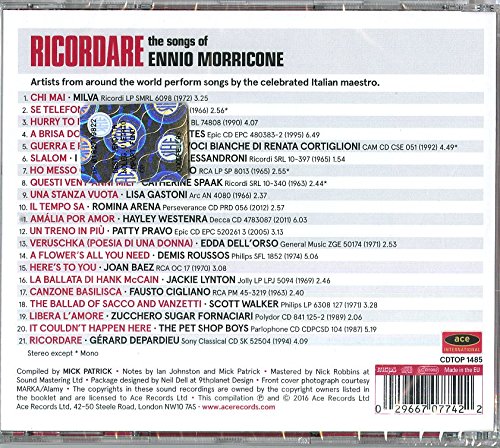



MIRACLE GLASS COMPANY-MGC 1.
MIRACLE GLASS COMPANY-MGC 1.
Scotland has always had a rich and vibrant musical scene. That’s been the case since the sixties, and is still the case today. A look at the albums released during 2016 proves this point. The year started with a new album from Emma Pollock. After that, the albums arrived thick and fast from familiar faces and old friends. This included Frightened Rabbit, King Creosote, Kris Drever, Mogwai, Mull Historical Society, R.M. Hubbert, Rick Redbeard and the Temperance Movement. Meanwhile, several bands hit the comeback trail.
This included The Pictish Trail, who returned with their first album in four years, Future Echoes. It was a welcome return to form. However, the comeback Kings of 2016 were the Trashcan Sinatras and Teenage Fanclub. These veterans of Scottish music returned with critically acclaimed albums. They weren’t the only veteran of Scottish music to make a return during 2016
Paul McGeechan returned with the debut album from his new project, Starless. Its lineup was like a who’s who of music. So, it was no surprise, when this eagerly awaited release won the approval of critics. This was just the latest release in what had been a very good year for Scottish music. However, it wasn’t familiar faces and old friends that had been releasing new albums. There was a new kid in town, Miracle Glass Company. They’ve recently released their debut album MG1 on VoxBox Records.
The Edinburgh based power rock trio have been around for several years. However, they first came to prominence in May 2016, when they released their single Higher Than High. Straight away, it was obvious that Miracle Glass Company were a cut above the competition. They were a much tighter and more accomplished band, who were capable of creating melodic psychedelic rock. That’s no surprise. The three members of Miracle Glass Company are all talented and experienced musicians.
Bassist and vocalist William Douglas previously, lead WD and the Wheel). His parter in the rhythm section, drummer and percussionist Andy Duncan, was previously a member of Miyagi and The Black Diamond Express. The third member of the Miracle Glass Company is Austen George. He plays guitar, piano and Hammond organ and previously, was a member of The Setup and The Alvas. Nowadays, he’s part of the heavy psychedelic groove machine that is Miracle Glass Company.
They’ve come a long way from their early days on Edinburgh’s live circuit. During 2016, Miracle Glass Company have toured Britain. This includes opening for The Bluetones during a mini tour in April. However, Miracle Glass Company’s biggest gig of 2016 was playing at Scotland’s premier festival T In The Park. That was proof that Miracle Glass Company were heading in the right direction.
Less than weeks after their appearance at T In The Park, Miracle Glass Company headed to Scotland’s musical city, Glasgow. They had been booked to play at King Tut’s, one of Scotland’s most prestigious venues. Some of the biggest indie bands have at one time, played King Tuts. On July 24th, Miracle Glass Company took to the same stage as Radiohead, The Killers, Pulp, My Chemical Romance, Biffy Clyro and Frightened Rabbit. Miracle Glass Company were now alumni of both T In The Park and King Tut’s. Surely, 2016 couldn’t get any better for Miracle Glass Company?
It did. Owen Morris agreed to co-produce Miracle Glass Company’s debut album. Thos was a real coup. Previously, Owen Morris had produced The Stranglers, Oasis, The Verve, Ash and The Fratellis. Now Owen Morris was about to work with Miracle Glass Company.
Owen Morris made the journey north to work with Miracle Glass Company. Just like many bands, they had already written the eleven songs that would become their debut album. They had honed these songs playing them live. Now it was a matter of recording these songs. This resulted in a journey from east to west.
Recording of Miracle Glass Company’s debut album was split between two studios. This included one of Scotland’s top studios, Cava Sound, in Glasgow. Owen Morris who has over 150 production credits to his name, would guide Miracle Glass Company through the minefield that’s recording a debut album. It can be fraught with countless difficulties, but Owen Morris was a veteran of many successful campaigns. He co-produced the sessions that took place at Cava Sound with Miracle Glass Company. Further sessions took place at Music Box in Edinburgh.Eventually, the eleven songs were completed. These songs became MG 1, Miracle Glass Company’s debut album.
With MG 1 complete, Miracle Glass Company began working towards the launch of their debut album. It was recently released and launched at the Liquid Rooms, in Edinburgh. MG 1 showcases the heavy psychedelic groove machine that is Miracle Glass Company.
Higher Than High opens opens MG 1, and finds Miracle Glass Company laying down their marker. A blistering guitar rings out, before the drums and then bass enter. The rhythm section set about creating a rocky backdrop. It’s soon joined by the vocal, as Miracle Glass Company kick loose. A searing guitar cuts through the arrangement searing and shivering. Soon, the vocal grows in power, as drums pound and guitars scream and soar. Tight harmonies are added, and veer between Byrdsian to punchy and powerful. They add to the lysergic sound. So does a powerhouse of a vocal. Reverb adds to the trippy sound. Meanwhile, thunderous, urgent drums, blistering guitars and harmonies play their part in a hard rocking slice of of and psychedelia. It whets the listener’s appetite for the rest of MG 1.
Especially, if the songs are as good as T.R.O.U.B.L.E. A hypnotic guitar sends out its siren call, before the rhythm section provide a blues rock backdrop. Having set the scene for the vocal, it sings call and response with the rest of Miracle Glass Company. Soon, a swaggering anthem is unfolding. Then at 1.38 the song briefly grinds to a halt. When it bursts back into life, the rhythm section lock into a groove as a scorching guitar solo. Soon, though, the vocal returns and sings call and response, on what’s an irresistible hard rocking anthem. It’s sure favourite of Miracle Glass Company’s live shows.
When How Long bursts into life, Miracle Glass Company play with a degree of urgency. It’s another slice of hard rocking music. Again, hooks haven’t been spared, as Miracle Glass Company play with speed and confidence. As the rhythm section provide the heartbeat, scorching guitar licks reverberate. Meanwhile, a strutting vocal, is accompanied by tight harmonies. Later, a blistering guitar solo is unleashed. It helps drive the arrangement along, before firing off machine gun licks. By then, Miracle Glass Company have become one, playing with confidence and an assuredness. The result is a track that’s not unlike the seventies classic rock that surely, must have influenced Miracle Glass Company.
There’s a drop in tempo on Look At You Now. Bristling, shimmering guitar licks are joined by the rhythm section and then a tender vocal. It hints at what’s to come. That’s a fusion of late-sixties psychedelia at its most melodic, Big Star and their rightful heirs Teenage Fanclub. This proves a potent and heady brew. Especially as Miracle Glass Company’s rhythm section combine with shimmering, glistening guitars. Meanwhile, a tender, thoughtful vocal delivers some of the best lyrics on the album. Adding the final piece in the jigsaw are Byrdisan harmonies. They play their part in what’s without doubt, Miracle Glass Company at their finest and most melodic.
Big Beat is totally different from anything that’s gone before. A lived-in vocal and guitar are joined by the rhythm section. Soon, Miracle Glass Company are fusing rock with pop and even a hint of reggae. The reggae influence comes courtesy of the rhythm section. Meanwhile, the lead vocal is reminiscent of Kelly Jones from The Sterophonics. It’s accompanied by harmonies. This adds a poppy sound. Later, there’s also a nod to The Beatles on this genre-melting track. It’s a potpourri of influences and inspirations, that will appeal to a very different audience than previous tracks. That’s no bad thing, as if it introduces Miracle Glass Company’s music to a wider audience.
After showcasing their versatility on the last couple of tracks, Miss Rain finds Miracle Glass Company return to psychedelic rock. A searing guitars reverberates as the rhythm section provide an ominous backdrop. Soon, Miracle Glass Company seem to be paying homage to The Byrds. Sonically and stylistically there are several similarities. Especially the guitars, vocal, harmonies and use of effects. Miracle Glass Company then take a rocky diversion as bristling guitars cut loose. When the vocal returns, there’s a nod to Big Star, as the song heads into an anthem territory. Later though, it becomes a jam, with Miracle Glass Company showcasing their considerable skills and versatility.
Miracle Glass Company throw a curve ball on Part Of Me. Briefly, they sing unaccompanied, before the song explodes. The rhythm section lock into a groove, and with the searing, screaming guitars drive the arrangement. There’s a similar urgency to the vocal. However, when the vocal drops out, the band kick loose. They rock harder than they’ve ever rocked before. Never once do the miss a beat, as they play like seasoned veterans. Later, when the vocal returns the arrangement is stripped back and the song latterly, becomes a melodic power ballad.
As Little Country Thing unfolds, harmonies are accompanied by just an acoustic guitar. The result is country ballad that sounds like it was recorded in Nashville. Soon, it’s all change. A rumbling bass and percussion join with a jangling, shimmering guitar. Miracle Glass Company combine elements of country, the West Coast sound and rock. There’s even the merest hint of Santana courtesy of the percussion. Meanwhile, tight, soulful harmonies play an important part in the sound and success of this ballad. It’s without doubt another of the highlight of MG 1, with Miracle Glass Company becoming musical shape shifters as they seamlessly switch between musical genres.
Searing guitars licks are joined by drums on Calling. The drums drift in and out, before driving the arrangement along. By then, a soul-baring powerhouse of a vocal is joined by tight harmonies. Midway through the track, harmonies intertwine and drums rumble, adding to the urgency. Not for the first time there’s a similarity to The Who. Later, Miracle Glass Company at their rockiest, kick loose as the song reaches its impressive crescendo.
Drums pound as guitars cut through the arrangement to Turnaround. As the vocal enters, it’s accompanied by harmonies as the arrangement flows along showcasing a vintage sound. Elements of power pop, psychedelia and classic rock are combined seamlessly. Stealing the show is guitarist Austen George. He unleashes what’s easily the best solo on the album. Effects are to the fore on what can only be described as a virtuoso performance. It’s defines a track that’s rocky, psychedelic, memorable and melodic. What better way to close MG 1?
It’s hard to believe that MG 1 is Miracle Glass Company’s debut album. It’s a slick, polished and accomplished album. That’s no surprise, as veteran producer Owen Morris co-produced MG 1 with Miracle Glass Company. The result is an album that’s a cut above the competition.
MG 1 features a tight, talented and versatile band. Over eleven tracks, Miracle Glass Company seamlessly switch between rocky anthems and ballads. Similarly, Miracle Glass Company flit effortlessly between disparate musical genres throughout MG 1. Sometimes, they combine several genres within the same track. This results in hard and psychedelia sitting side by side. Similarly, Miracle Glass Company combine country and rock. Other times, elements of Americana, blues rock, power pop, reggae and the West Coast sound are combined on MG 1. So are a myriad of musical influences.
Throughout MG 1, numerous musical influences can be heard. Among them, are The Doors, Big Star, The Beatles and The Who. That’s not forgetting fellow countrymen, Teenage Fanclub. All these musical influences and disparate genres have been combined by Edinburgh based Miracle Glass Company. The result is their debut album MG1, which was recently released on VoxBox Records.
MG 1 showcases a truly talented and versatile band, who are rising stars of Scottish music. Their star is in the ascendancy, and 2017 promises to be a big year for them. MG 1 is just the first step in what’s a long journey and perilous. However, Miracle Glass Company have the potential and talent. Proof of that is MG 1, which features a tantalising taste of the new kid in town, Miracle Glass Company.
MIRACLE GLASS COMPANY-MGC 1
THE CLUSTER STORY.
THE CLUSTER STORY.
The Cluster story began in the Zodiak Free Arts Lab in West Berlin. That’s where Hans-Joachim Roedelius first met Dieter Moebius. Little did they know that they were about to embark upon a musical journey that would last five decades.
During that period, Hans-Joachim Roedelius and Dieter Moebius were part of three of the most important, influential, and innovative bands of the Kominische era. This includes Kluster, Cluster and Harmonia. Each of these groups have inspired several generations of musicians. That’s still the case today. However, the Cluster story, Hans-Joachim Roedelius told me, began in the late sixties.
It was in 1968, at the height of the psychedelic era, that Hans-Joachim Roedelius “cofounded music commune Human Being. I also co-founded Zodiak Free Arts Lab in West Berlin with conceptual artist Conrad Schnitzler. At that period, I was a member of the group Human Being, a forerunner of Kluster.” For Hans-Joachim Roedelius: “this was an exciting time, where there was a sense that anything was possible. It was like a revolution. We were happy to have found this place to work. All the freelance musicians in the city found their way to Zodiak Free Arts Lab. There were members of Can, Tangerine Dream, Ash Ra, Neu! at Zodiak. They were great times.” The Zodiak Free Arts Lab was also where Hans-Joachim Roedelius met someone who would play a huge part in his career, Dieter Moebius.
“About the end of 1969, Dieter Moebius visited The Zodiak Free Arts Lab. He wasn’t a member. No. He just visiting, and we got talking.” The two men found they had a lot in common, including the way they believed music should be made. It was almost inevitable that Hans-Joachim Roedelius and Dieter Moebius would form a group.
Kluster.
“It was later, in 1970 that we founded Kluster.” Hans-Joachim Roedelius and Dieter Moebius joined with Conrad Schnitzler to form Kluster. However, Kluster was no ordinary band.
Initially, Cluster played an eclectic instruments and utensils. “Everything was spontaneous. Improvisation was key.” Kluster’s music was described in The Crack In The Cosmic Egg magazine as “unlike anything heard before.” Hans-Joachim Roedelius admits: “that was what Kluster set out to do. Kluster was about musical activism.” Soon, the musical activists would record their debut album.
Kluster’s debut album came about in the unlikeliest of circumstances. Although band were based in West Berlin; “one night we were playing a concert in Dusseldorf. A priest just happened to be walking past, and heard the music. He liked our music, and came in to the hall. Once the concert was finished, he asked if we would like to record an album of new church music? The answer was yes!” So Kluster made the journey to the Rhenus-Studio in Gordor.
When Kluster arrived at the Rhenus-Studio, “we met Conny Plank and producer Oskar Gottlieb Blarr. We went into the studio and recorded an hour of music in one take. Religious text was added to this, and became the ‘new church music.’ The music became our first two albums Klopfzeichen and Zwei-Osterei.
Only 300 copies of both albums were pressed. Klopfzeichen was released in 1970, with Zwei-Osterei following in 1971. Critics realised the importance of Kluster’s music. It was described as quite extraordinary, bleak, stark, unnerving and full of electricity. Despite the reviews, the sales of Klopfzeichen and Zwei-Osterei were small. However, later, Kluster would be recognised as one of the most influential groups of the early seventies. This influential and innovative group would only release one further album.
This was Eruption, which was recorded by Kluster during 1971. It featured an hour of experimental music, which was recorded by Klaus Freudigmann. Eruption is quite different from Kluster’s first two albums. There is no religious text, just Kluster at their innovative best. For many, Eruption is Kluster’s finest hour. However, 1971 marked the end of an era for Kluster. One group became two.
Kluster To Cluster.
In the middle of 1971, Conrad Schnitzler left Kluster, and briefly, worked with another band, Eruption. This was the beginning of the end for Kluster.
After the original lineup of Kluster split-up, “Dieter Moebius and I anglicised the band’s name, and Kluster became Cluster.” Between 1971 and 2009, Cluster would release twelve studio albums and four live album. Cluster’s debut was released later in 1971.
Cluster.
When Cluster recorded their eponymous debut album, they were joined in the studio by another legend of German music, Conny Plank. He featured on Cluster, which marked a change in sound. Gone was the almost industrial, discordant sound, which was replaced by an electronic sound. “Dieter and I played all the instruments and Conny added all sorts of effects. For us this was the start of a new era.”
Cluster was released later in 1971 on Phillips. “This was Cluster’s major label debut. It found Cluster at a crossroads.” They were ready to turn their back on the avant-garde, almost discordant and industrial sound of Kluster, and begin the shift towards the ambient and rock-tinged sound of the late seventies. That was the future.
Before that, Cluster began work on their eponymous debut album. In the studio, Cluster set about honing and sculpting a trio of soundscapes. Hans-Joachim Roedelius remembers: Cluster which had very little melody, is a series of improvised and atmospheric soundscapes.” They’re best described as futuristic, moody, dramatic and truly captivating. Heavy rhythms, beeps, squeak and drones drenched in effects assail the listener. It’s as if Cluster have been inspired by avant-garde, free jazz, early electronica, industrial, free jazz and even rock. This fusion of influences became Cluster.
Once Cluster was completed, the album was released on Philips. Little did anyone, even Cluster themselves, realise the effect album bearing the serial number Philips 6305074 would have. Nowadays, Cluster is regarded as an innovative classic, and in a sense, this was the start of Cluster’s career in earnest.
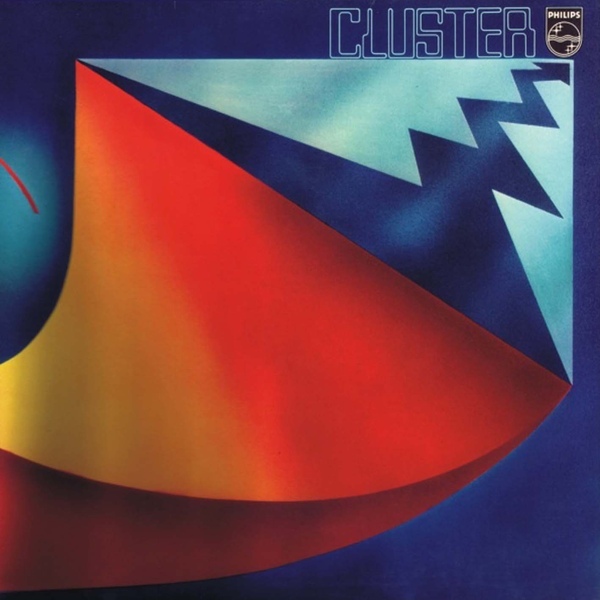
Cluster II.
“For the followup to Cluster, Conny Plank was no longer a member of Cluster. We were now a duo, consisting of Dieter and I. Conny had other projects he wanted to concentrate on.” With three becoming two, the two remaining members took a different approach to recording.
Cluster had added to their impressive arsenal of equipment. As Conny Plank watched on, two organs, analog synths, a Hawaiian guitar, a bass and an electronically treated cello were brought into the studio. Cluster weren’t finished yet. The two members of Cluster started setting up array of effects. This included audio-generators which usually, was found in an electrician’s toolbox. They became part of Cluster’s alternative orchestra. With everything setup, Cluster got to work.
“To some extent, it was trial and error. We tried different things. Some worked, others didn’t,” Hans Hans-Joachim Roedelius explains. The end result, Cluster II “saw a further shift towards a more electronic sound.”
The music veered between futuristic and dramatic to hypnotic, dreamy, lysergic and otherworldly. Sometimes the music becomes pastoral; other times understated and occasionally, explodes into life. However, for much of the time, Cluster II is melodic and mesmeric. Again, Cluster had produced an album that was way ahead of its time.
When Cluster II was released, it was on Germany premier label when it came to ambitious and innovative music, Brain. Cluster II was assigned the serial number Brain 1006, and when in was released in 1972, it was well on its way to becoming a groundbreaking genre classic.
Ironically, many German critics and record buyers overlooked groups like Cluster. Instead, they were more interested in the music coming out of America and Britain. Incredibly, they never realised that some of the most innovative music was being made in their own backyard. This includes that made by musical chameleons, Cluster whose music would continue to evolve.
Zuckerzeit.
Zuckerzeit, Cluster’s third album, was released in 1974, and was co-produced by Michael Rother of Neu! “Michael first met Dieter and I in 1971. By 1973, Michael was on a break from Neu! We decided to head into the countryside to Forst, to build our own recording studio.” This could’ve been fraught with problems? “No. We knew what we were doing and trying to achieve. All of us had experience in studios, so knew what was required.” The result was a studio “where Michael, Dieter and I recorded the two Harmonia albums, Musik Von Harmonia and Deluxe.” However, before that, Zuckerzeit was released.
On the release of Zuckerzeit, in 1974 Michael Rother’s influence is noticeable. He placed more emphasis on melody, rhythm and the motorik beat.” Hans-Joachim Roedelius explains that previously, Cluster didn’t place the same importance on melody or structure. Michael introduced structure and discipline.” The result was a very different album.
That’s apparent from the opening bars of Hollywood. A crisp Motorik beat provides the backdrop for Cluster’s synths. They create music that’s variously melodic, ethereal, evocative, haunting and cinematic. Especially on tracks like Hollywood, Rosa, Fotschi Tong and Marzipan. Then on Rote Riki, the music becomes futuristic, with the man machine adding sci-fi sounds that sound as if they’re from a distant planet. Meanwhile, Caramel would influence future generations of dance music producers. Although Caramba has futuristic sound, it’s melodic and contemporary. It sounds as if it belongs on the dance-floors of Berlin’s clubs. This is incredible, given Zuckerzeit was released later in 1972.
Cluster had released two albums on Brain during 1972. Both would become future genre classics, and both would show a different side to Cluster. Zuckerzeit with its mixture of electronic pop, art rock and avant-garde, was an album way ahead of its time. It’s a truly innovative and timeless album, where Cluster continue to reinvent themselves. The decision to bring Michael Rother onboard as producer was a masterstroke; and also resulted in the birth of a new band, Harmonia.
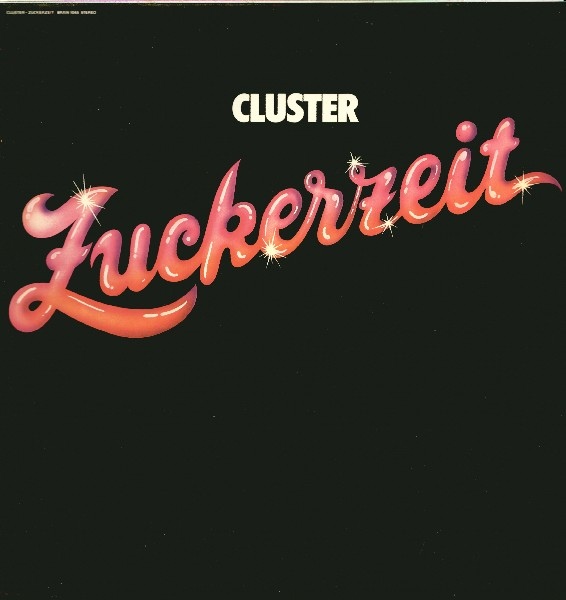
The Birth Of Harmonia.
After completing their recording studio in Forst, it seemed only natural that the three friends record an album. So Harmonia was born. It was meeting of musical minds. The two members of Cluster were receptive to Michael Rother’s way of working. Hans-Joachim Roedelius explains: “there were no problems, we wanted to learn. Previously, we improvised, which made playing live problematic. A song was merely the starting point, it could go anywhere. Michael however, taught us about structure. We influenced him. It was a two-way thing.”
Musik von Harmonia.
That proved to be the case. “Harmonia’s 1974 debut album, Musik von Harmonia, was a move towards ambient rock.” While Michael Rother influence can be heard, so can the two members of Cluster. Their influence is more prominent. They adds an ambient influence to what’s a groundbreaking classic. It saw this nascent supergroup seamlessly embrace and incorporate disparate musical genres. In the process, Harmonia set the bar high for future ambient rock albums. However, Harmonia changed tack on the followup to Musik von Harmonia.
The three members of Harmonia reconvened in their studio in Forst for the recording of Deluxe. Co-producing Deluxe was Conny Plank. This just happened to coincide with Harmonia changing direction musically.
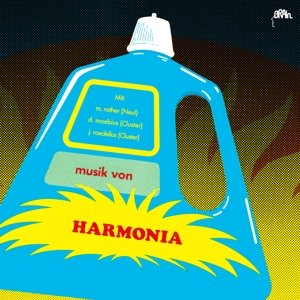
Deluxe.
Deluxe saw a move towards Krautrock or Kominische music. The music was more song oriented. However, still Harmonia were experimenting, pushing musical boundaries. This was Cluster’s influence. Other parts of Deluxe had been influenced by Michael Rother. Hans-Joachim Roedelius agrees. “Michael Rother’s influence can be heard on Deluxe, more so than on Musik von Harmonia.” What was also noticeable, was that Deluxe had a more commercial sound. “This wasn’t a conscious decision. The music morphed and evolved, and the result was Deluxe.” It was released in 1975, to the same critical acclaim as Musik von Harmonia. However, the end was nigh for Harmonia.
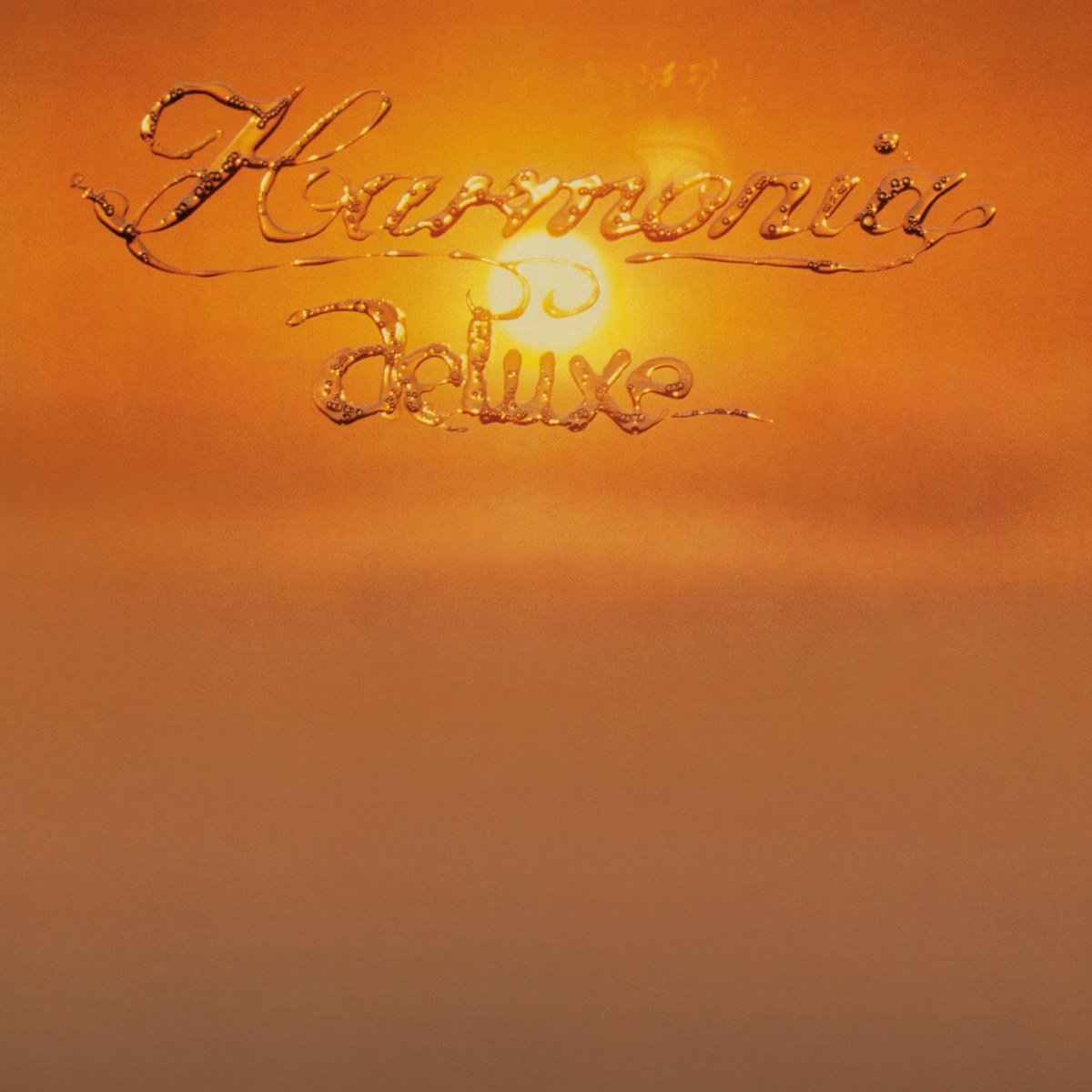
Tracks and Traces.
Little did the three members of Harmonia realise, that Deluxe was the last album they would release for thirty-two years. For what was their swan-song, Harmonia were joined by another legend, Brian Eno.
At the studio in Forst, Hans-Joachim Roedelius, Dieter Moebius, Michael Rother and Brian Eno spent eleven summer days recording what was meant to be their third album. The working title was Harmonia ’76. However, by then, “Michael Rother was wanting to concentrate on his solo career. Once the album was completed, it became apparent Harmonia had run its course. It was evolution.” So Cluster returned to the studio to record their fourth album,
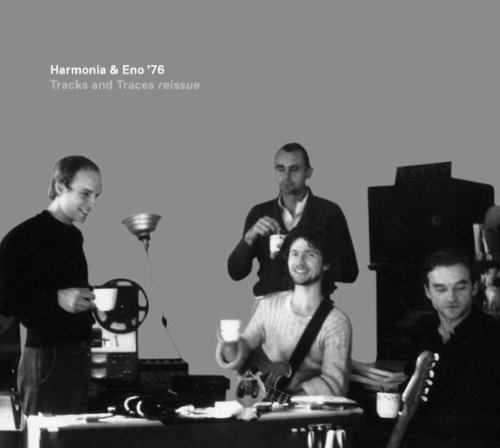
A New Cluster Album-Sowiesoso.
After “Harmonia ran its course, we returned to Cluster. We had never stopped being Cluster. We played live, but didn’t release a new album until Sowiesoso, in 1976, which we recorded in just two days.”
Despite being recorded in just two days, Sowiesoso found Cluster at their creative zenith. They had recorded an album of understated, beautiful, poignant and melancholy melodies, including Umleitung, Zum Wohl and Es War Einma. The arrangements are often minimalist, but always, cinematic. Sometimes, the music is evocative and atmospheric. Occasionally, there’s an air of mystery. Especially, Halwa, with its cinematic sound. Just like the rest of Sowiesoso, the music paints pictures. That was the case in 1976, and is the case in 2016.
When Sowiesoso was released in 1976, it was on Günter Körber’s Sky Records. It had been formed in 1975, and by 1976, was already regarded as a label that released ambitious, influential and innovative music. This described Cluster’s first album in four years. However, Sowiesoso was a very different album to Zuckerzeit.
That was no surprise to those familiar with Cluster’s music. They were like musical chameleons, constantly reinventing their music. The musical chameleons were about to enter a three year period where Cluster could do no wrong.
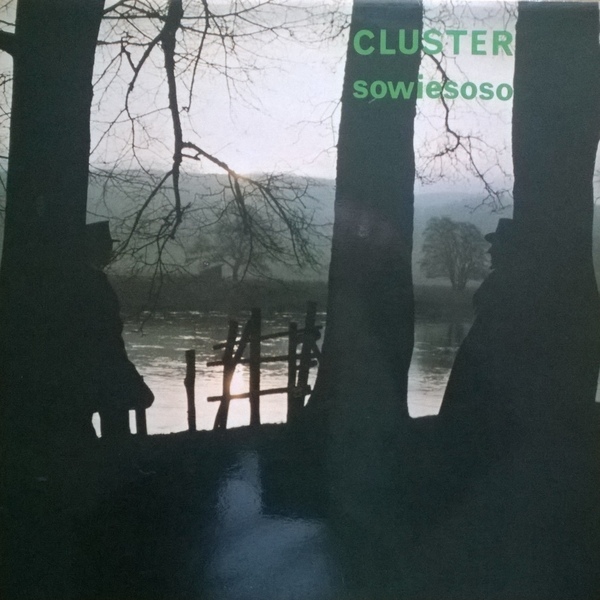
Enter Brian Eno.
In June 1977, the two members of Cluster were joined by three old friends. The first was Holger Czukay of Can. “Dieter and I knew Holger from way back, back to Zodiak Free Arts Lab. We hung around with members of Can. Back then, there was a great sense of community. Everyone helped and influenced each other. We even went on to tour together.” Another of the guest artists on Cluster’s 1977 album first met Dieter and Hans at a Cluster concert.
That was Brian Eno: “who Cluster jammed with in 1974. Brian joined us on stage, and we spent the second half of the concert jamming. That was how we first met Brian. Then in 1977, he joined as for the recording of Cluster and Eno. We learnt a lot from Brian. Similarly, I like to think we influenced him. That was the case when we recorded After The Heat.” Before that, Cluster and Eno was recorded.
Cluster and Eno.
The four great innovators got to work. They spent part of June 1977 recording enough for two albums. Conny Plank laid down bass lines, while Dieter and Hans-Joachim Roedelius played synths and keyboards. So did Brian Eno who added bass and vocals. Once the recording session was complete, the first collaboration between Cluster and Brian Eno was released later in 1977.
When Cluster and Eno was released later in 1977, the album was a meeting of minds. Elements of both Cluster and Brian Eno’s music melted into one. Cluster supplied elements of avant-garde, while Brian Eno’s supplied the ambient influence. When this was combined with drone and world music, the result was another classic album.
Widespread critical acclaim accompanied the release of Cluster and Eno. It was hailed a groundbreaking album, one that was way ahead of its time. Cluster and Eno is an album that Hans-Joachim Roedelius: “is proud of.” He remembers the recording sessions fondly, and sees both Cluster and Eno, and its followup After The Heat, as an equally “influential album.”
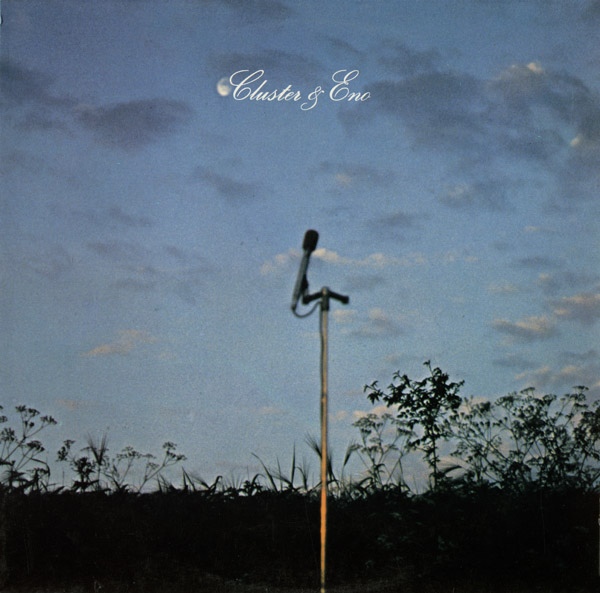
After The Heat.
Just a year after the release of Cluster and Eno, the second collaboration between Cluster and Brian Eno was released. It too, was released to critical acclaim. This fusion of ambient, art rock, avant-garde, experimental and Krautrock were combined by Cluster and Brian Eno. Again, both Cluster and Brian Eno were influencing each other.
“This was not one way. We both influenced each other. On After The Heat, I believe we influenced Brian’s production style. If you listen to David Bowie’s Low and Lodger albums which Brian Eno produced, Cluster and Harmonia’s influence can be heard. So while Brian influenced Cluster, we certainly influenced him.” After two albums with Brian Eno, Cluster’s next album saw them return to a duo.
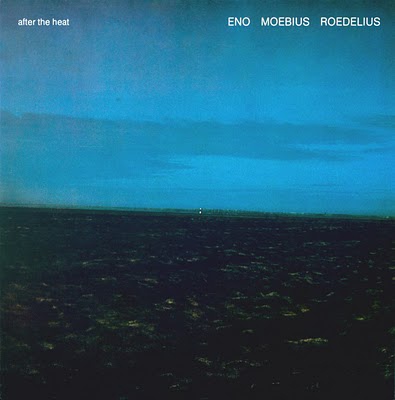
The Return Of The Cluster.
Grosses Wasser.
Following two albums with Brian Eno, Cluster returned to the studio in 1979. This time, Cluster were joined by Peter Baumann of Tangerine Dream. He would produce Grosses Wasser, Cluster’s seventh album.
It was an album where Cluster drew inspiration from ambient, art rock and avant-garde to electronica and free jazz. The result was music that’s ambitious, challenging and experimental. Other times, the music becomes ethereal, elegiac, melancholy and cinematic. Sometimes, though, Cluster throw a curveball like on Breitengrad 20, and a track changes direction. This adds to avant-garde sound of Grosses Wasser.
When Cluster released Grosses Wasser later in 1979, it proved to be Cluster’s most avant-garde album. “This wasn’t a conscious decision. Instead, it was just a case of evolution. That was the way that the Cluster worked. It was the same live.” That became apparent on Cluster’s first live album.
Live In Vienna.
Despite releasing seven studio albums, Cluster had never released a live album. That changed when Cluster took to the stage at the Wiener Festwochen Alternativ, on June 12th, 1980. It was the only time that Cluster took to the stage with Joshi Farnbauer. The result was one of Cluster’s most experimental albums.
Sometimes, the music veered towards discordant, and was reminiscent of early performances by Kluster. Hans-Joachim Roedelius remembers: “a song was just the starting point. We never knew what direction it would take. It was improvisation at its purest. Partly, it was because we couldn’t replicate our music live.” That was the case on, Live In Vienna, which featured Cluster at their most ambitious and inventive. However, just like Harmonia four years earlier, the end was nigh for Cluster.
Curiosum.
Cluster recorded their ninth album Curiosum in 1981. Recording took place at Hamet Hof, in Vienna, which was now Hans-Joachim Roedelius adopted home.
At Hamet Hof, Cluster recorded seven tracks. Some were relatively short by Cluster standards. Given the title, the seven tracks on Curiosum were somewhat unorthodox. However, they were unusually melodic. It was a fitting way to end chapter one of the Cluster story.
Just like Harmonia, “Cluster had run its course. We decided to concentrate on other projects. There was no fall-out, Cluster just came to a natural end. After eight studio albums, Cluster was over. Or was it?
Apropos Cluster.
Cluster was put on hold until 1991, when Apropos Cluster was released. As the Hans-Joachim Roedelius and Dieter Moebius partnership entered its third decade, Cluster released their ninth album Apropos Cluster.
Recording of Apropos Cluster had taken place between 1989 and 1990. with Cluster seeming to pick up where they left off on Curiosum. The music was similar structurally, stylistically and sonically. The only difference was the rhythm nature of Curiosum was absent. Instead, the music was understated, as ambient, avant-garde and Berlin School combined on the five tracks. This includes four short tracks and the title-track, Apropos Cluster a twenty-two minute epic. It was a fitting swan-song to what was a very welcome addition to Cluster’s discography.
One Hour.
Four years after the release of Apropos Cluster, One Hour was released in 1995, and became Cluster’s tenth album. Hans-Joachim Roedelius and Dieter Moebius. It was one of the most ambitious albums of the second part of Cluster’s career.
To record One Hour, Hans-Joachim Roedelius and Dieter Moebius had returned to their experimental roots. They headed into the studio and for four hours, improvised. When the recording session was over, the two members of Cluster began to edit the music in one flowing piece of music that lasts One Hour. This was the longest album of Cluster’s career.
When One Hour was released, the album was presented as one continuous piece of music. For the CD version, the album became eleven tracks. They’re a mixture of avant-garde, Berlin School, classical, electronica and experimental music. The way the tracks are presented, they flow, meander and build, their eclecticism continuing to captivate. One Hour found favour with Cluster critics and fans old and new. Thirty-four years after making their recording debut, Cluster were still relevant. That would continue to be the case.
Cluster Live.
Japan 1996
Two years after the release of One Hour, Cluster returned in 1997 with their second live album, Japan 1996. It had been recorded during June 1996
By then, Cluster’s music was belatedly finding the wider audience it so richly deserved. Especially among a new generation of music fans. They realised how innovative and influential Cluster’s music had been. Many electronic musicians who came to prominence during the nineties, cited Cluster as an influence. So when Cluster toured, they were greeted by a new generation of fans. They joined their loyal fans during Cluster’s 1996 Japanese tour.
Among the venues Cluster would player, were On Air West Tokyo and at Muse Hall and Club Quattro in Osaka. These concerts were recorded, and later, would become Japan 1996.
Cluster’s second live album apan 1996 was released in 1997. It featured ten tracks that showcased Cluster at their most inventive and innovative. So would their third live album.
First Encounter Tour 1996.
Two live albums became three when First Encounter Tour 1996 followed later in 1997. This time, the genre-hopping First Encounter Tour 1996 featured recordings from Cluster’s 1996 North American tour.
During that tour, Cluster moved seamlessly between musical genres during each performance. Each night, Cluster switched between ambient or avant-garde to electronic or experimental music and even Krautrock. They veered from ambient and melodic to atmospheric as Cluster improvised. The resultant music owed more to Cluster’s later music. It seemed that Cluster took Grosses Wasser as a starting point and the result was the thirteen tracks that became First Encounter Tour 1996.
They’re named after the city where they were recorded in. An example was the thirty-three minute epic New York City. It was part of Cluster’s first double album which just like Cluster’s 1996, flowed seamlessly and took the listener on a journey that ebbed and flowed. However, after two albums in less than a year, it would be the next millennia before Cluster returned.
Berlin 07.
It wasn’t until 2008, when Cluster returned with the fourth live album of their career, Berlin 07. By then, Cluster had been making music for forty-six years. They had enjoyed unrivalled longevity. Their career began in 1969 when Kiluster were formed. That same time, Kraftwerk were formed. However, by 2008, Kraftwerk were reduced to an occasional touring band, who neither recorded nor released albums. That was unlike Cluster.
They were still touring and were even contemplating recording a new album. This sudden burst of activity began after Cluster played at the Kosmische Club, in Camden, London, earlier in 2007. It was the first time Cluster played had live since 1997.
Since then, Dieter Moebius and Michael Rother had toured extensively as Harmonia, Meanwhile, Hans-Joachim Roedelius concentrated on his solo career. However, taking to the stage with his old friend Dieter Moebius as Cluster, had whetted the two friends’ appetite to play future concerts.
This included a concert in the city where the Cluster story began, Berlin. The concert was scheduled for November 2007. This would the first time Cluster had played in Berlin since 1969. Kluster and then Cluster had recorded a lot of music since then. However, as Cluster rolled back the years, they drew inspiration from their most recent solo work. Elements of avant-garde, electronic, experimental and techno were combined by Cluster, as continued to push musical boundaries. This had been the story of their career, and was the story of their Berlin comeback concert. It was released the following year as Berlin 07.
When Berlin 07 was released in 2008, it was on Conrad Schnitzler’s Important Records. This was fitting, as Conrad Schnitzler had been a member of Kluster, which was the first chapter in the Cluster story. It had come full circle. Buoyed by the success of their comeback, the two members of Cluster decided to record a new album. The cluster story continued.
Cluster-A Return To The Studio.
Qua.
In 2009, Cluster returned with their twelfth album, Qua. This was the first studio album Cluster had released since One Hour in 1995. During that period, music might have changed, but Cluster remained relevant. They continued to innovate and release timeless music.
Qua was released in 2009 , some forty years after Kluster were founded. It was released to widespread critical acclaim, and featured fifteen understated, spartan soundscapes. They were atmospheric, cinematic and elegiac, and also dreamy, ethereal and pastoral, as Cluster combined elements of ambient, avant-garde, Berlin School, electronica and experimental music. The genre-melting Qua was a welcome return from Cluster. Sadly, it also proved to be their swan-song.
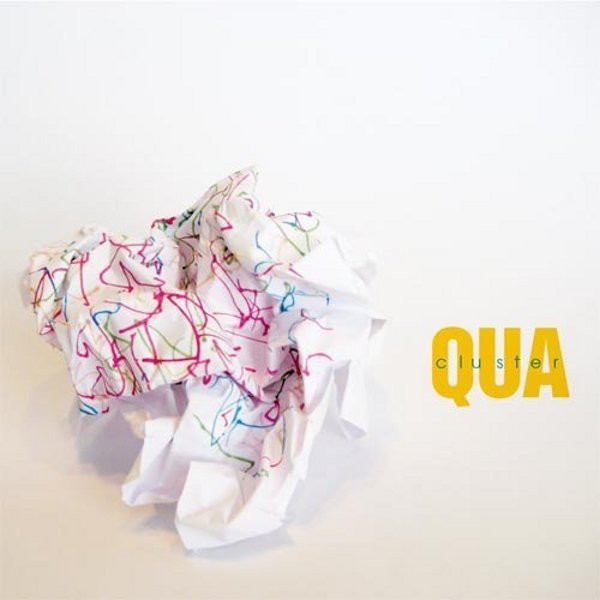
Six years later and after a brave and lengthy battle against cancer, Dieter Moebius died on 20th July 2015. The man who had collaborated with Hans-Joachim Roedelius on some of his greatest and most ambitious musical triumphs had passed away. “After a lifelong friendship, losing Dieter has left a void. We were friends since 1969, and spent a lifetime making music. Many a month we spent on the road, talking, and enjoying friendship as the kilometres passed by. We travelled the world together, and enjoyed every minute. So losing Dieter has come as a shock, albeit it was expected. However, I have great memories of a great man, and a great friend, who I’ll never forget.” Nor will anyone who loves Krautrock . They too, mourned Dieter Moebius’ death, but forever his memory will live on through his music.
This includes the music Hans-Joachim Roedelius and Dieter Moebius recorded as Cluster. They were one of the most important, influential, and innovative bands of the Krautrock era. That’s why nowadays, Cluster sit at the top table of Kominische alongside Can, Neu! Harmonia and Kraftwerk. Just like each of these groups, Cluster were musical pioneers, who created music that was innovative and influential. However, like many musical pioneers, Cluster’s music was ahead of its time. As a result, Cluster never received the commercial success and critical acclaim in their own country. Instead, Cluster were more popular abroad. Nowadays, as a man once said, the time they are a changing.
Somewhat belatedly, Cluster are being recognised for being musical pioneers, who released ambitious, groundbreaking and timeless music. It has gone on to influence several generation of musicians. They cite Cluster as one of the bands who influence and inspired them. That will continue to the case as the music Cluster made was timeless.
There’s a reason for this. Cluster weren’t afraid to push musical boundaries to their limits, and sometimes, way beyond. Musically, Cluster were willing to go, where others musicians feared to tread, This paid off, and Cluster released twelve studio albums and four live albums between 1971 and 2009. These albums of groundbreaking and genre-melting music document the Cluster story,
THE CLUSTER STORY.
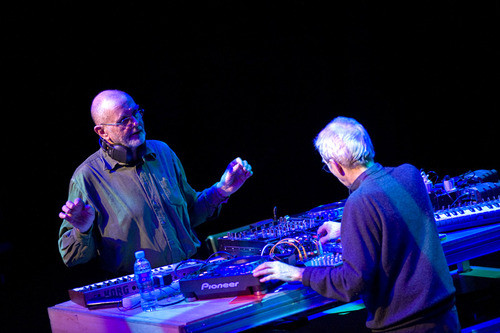
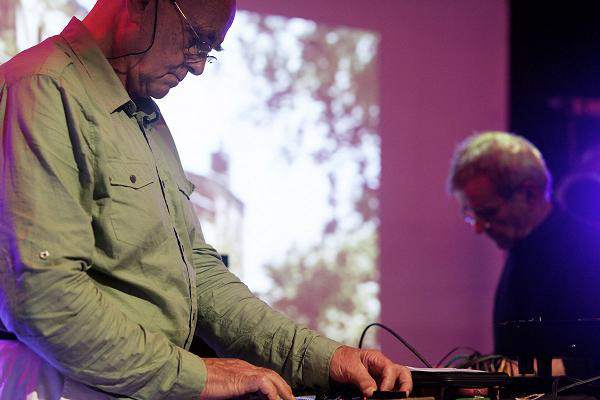
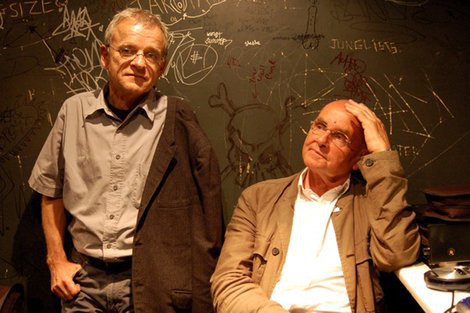
 dereksmusicblog
 dereksmusicblog