CHIP WICKHAM-LA SOMBRA.
CHIP WICKHAM-LA SOMBRA.
Manchester like Glasgow, Liverpool and London is regarded as one of Britain’s musical cities. That has been the case for over fifty years. During that period, Manchester has always had a vibrant, thriving and eclectic music scene. One man who has been a familiar face on the Manchester music scene is reed man Chip Wickham.
He spent the two decades of his career in Manchester, working with some of the leading lights of the city’s music scene. During that period, Chip Wickham established a reputation as one of Manchester’s top jazz musicians. Then in 2007, Chip Wickham decided to head to sunnier climes.
Madrid became home for Chip Wickham. For the next six years, he was a familiar face on the city’s music scene. Especially, within Madrid’s soul-jazz scene. Later, Chip changed direction, and began fusing raw funk with Latin music. This proved popular, and soon, Chip was recording two singles for the Madrid based label Lovemonk. Then in 2013, Chip was on the move again.
Next stop was Dubai, which has been his home to Chip Wickham ever since. However, when the time to record what would become his debut album La Sombra, Chip returned to Madrid. La Sombra, which is the long-awaited and much-anticipated debut album from Chip Wickham, will be released on Lovemonk on 20th January 2017. However, Chip’s career began twenty-five years ago in Manchester.
Before embarking upon a musical career, Chip Wickham had spent time studying in Manchester between 1988 and 1992. During that time, Chip often made the journey along the M62 to Leeds, where he was a familiar face in the jazz and funk clubs. By the time his student years were over, Chip’s interest in music had grown to such an extent that he was ready to make the transition from spectator to participant.
Not within Leeds’ thriving and vibrant musical scene. Instead, Chip Wickham was ready to participate in Manchester’s vibrant music scene. This was the of era of Acid House, Factory Records, the Hacienda and as the nineties dawned,the Madchester era.
Manchester was regarded as one of the most important musical cities in the world. Almost en masse, critics and cultural commentators headed to Manchester.They were determined to document the rise and rise of Manchester. This resulted in musical tourists beating a path to Manchester, in search of the music they had read about.
Within Manchester, numerous disparate music scenes coexisted happily. This included the UK hip hop and breakbeat scene. Manchester was at the heart of the UK hip hop and breakbeat scene. Many labels had sprung up, hoping to cash in on rise in popularity of the UK hip hop and breakbeat scene. One of the more established labels was Grand Central Records.
They were looking for an in-house session musician. Manchester flautist and saxophonist Chip Wickham fitted the bill. He was ostensibly a jazz musician, but was versatile and seemed to be the perfect person to accompany Grand Central Records’ enviable roster of artists.
From 1996 onwards, Chip Wickham worked with artists signed to Grand Central Records. Over the next few years, he worked with AIM, Rae and Christian, Fingathing, Veba, The Pharcyde, QnC, YZ and Supernatural at Grand Central Records. This allowed him to continue to hone his sound, during what was akin to a musical apprenticeship. Chip learnt about the various aspects of production, and also, made important contacts within the music industry.
This lead to Chip Wickham working with some of the top British producers, including Nightmares On Wax, Graham Massey of 808 State, Jimpster and Andy Votel. Soon, Chip was touring with some of the biggest names in music.
One of the biggest names Chip Wickham worked with was veteran vibes man Roy Ayers. Later, Chip Wickham would work with fellow Mancunian, Badly Drawn Boy. Around this time, Chip met another Manchester based musician, trumpeter Matthew Halsall. They became firm friends and Chip would later, head out on tour and record with Matthew Halsall. Meanwhile, Chip was always in demand to play live or on sessions.
In June 2003 Chip Wickham got the opportunity to work with one of the biggest names in British music, Badly Drawn Boy. Just like Chip, Badly Drawn Boy was a familiar face in the Manchester music scene. He had released his debut album The Hour Of Bewilderbeast in 2000. Three years later in June 2003, Badly Drawn Boy was preparing to record his third album One Plus One Is One. Chip was brought onboard to play on five of the tracks. One Plus One Is One was released in 2004 and was one of the highest profile and most successful releases Chip had played on.
By 2004, Chip Wickham had worked on everything from breakbeat and hip hop to deep house, downtempo and indie. Working with such a wide variety of artists and producers ensured that Chip became a versatile musician, who could seamlessly switched between musical genres. This ensured that Chip was always in-demand to play on sessions or head out on tour with a variety of artists. Despite this, Chip decided to head for sunnier climes in 2007.
Chip Wickham decided to head to another city with a thriving musical scene, Madrid. Having settled in the city, Chip’s electronic Latin band Malena, released their much-anticipated debut album, Fried Samba later in 2007.
This was somewhat overdue. Chip Wickham, Daniel Broad and Susana Montero had been releasing successful singles as Malena since 2000. However, Malena had never gotten round to releasing an album. Somewhat belatedly, Fried Samba was released to critical acclaim in 2007. It was we’ll worth the wait.
A year later, and Chip Wickham had been asked to play on Matthew Halsall’s debut album Sending My Love. When it was released in 2008, it introduced Matthew Halsall to a much wider audience. Matthew Halsall’s star was in the ascendancy. So was Chip’s
By 2008, Chip Wickham become a familiar face within Madrid’s music scene. Especially within the soul-jazz scene. He worked with Gecko Turner, Speak Low, The Sweet Vandals, Siete Pulgadas, Ann Sexton and Luz Casal. However, after a while, Chip changed direction musically, and began fusing raw funk with Latin music. This resulted in Chip releasing two singles on the Madrid based Lovemonk label.
The first single, Feelin’ Alright, was released in 2009. Chip Wickham’s fusion of raw funk and Latin music proved popular. So much so, that in 2011, a second single was released, Hit and Run. Stylistically, it followed in the footsteps of Feelin’ Alright. Just like its predecessor, Hit and Run proved successful. It also came to the attention of Craig Charles.
He invited Chip Wickham to join Craig Charles Fantasy Funk Band. It featured the creme de la creme of the British soul and funk scene. This included James Taylor of the James Taylor Quartet, Snowboy and Mick Talbot who was once a member of The Style Council. They now plied their trade with the Craig Charles Fantasy Funk Band. Chip was about to join some of the top musicians from the British soul and funk scene. He didn’t look out of place. Far from it, the fifteen years he had spent playing professionally made Chip a welcome addition to the Craig Charles Fantasy Funk Band. So much so, that he improved their already impressive sound. For Chip this was the start of a new chapter in his career.
In 2013, another chapter in Chip Wickham’s career came to a close, when he left Madrid. Next step was Dubai. It became his base as a new chapter in his career began to unfold. After three years living in Dubai, Chip was living when he began to think about recording his debut solo album. This was the one thing he still had to do.
As Chip Wickham thoughts turned to his solo album, he realised this was the perfect opportunity to revisit the music that had influenced and inspired him, jazz. Especially the jazz music that his heroes Roland Kirk, Yuseef Lateef and Harold McNair had produced. This would very different to the jazz, funk, soul, hip-hop, Latin and electronica that Chip had produced over the past three decades.
Having decided to record a jazz album, Chip Wickham wrote six tracks, La Sombra, Sling Shot, Red Planet,The Detour,Pushed Too Far and Tokyo Slow Mo. The other track that Chip decided to cover was La Leyenda Del Tiempo. It was penned by Federico García Lorca and Ricardo Pachón Capitán and would eventually close La Sombra.
After writing and choosing the music that would feature on La Sombra, Chip Wickham decided to record the album in Madrid. He booked Red Led Studios for the recording sessions. This made sense, as he would be working with Spanish musicians.
So Chip Wickham started looking for musicians who would feature on La Sombra. Eventually, he settled on a quartet. Joining Chip at Red Led Studios, in Madrid were a rhythm section of drummer and vibraphonist Antonio Pax and David Salvador on double bass. They were augmented by pianist Gabriel Casanova. Chip would switch between tenor saxophone, flute and alto flute. He also arranged and produced La Sombra. Once the album was complete, Chip mixed his long-awaited debut album La Sombra.
Once the album was complete, Chip Wickham took the album to the Madrid based Lovemonk label. They had released the two singles Chip released in 2009 and 2011. Six years later, they would release Chip’s debut album La Sombra on 20th January 2017. It’s an album that Chip’s been working towards for twenty-five years.
Opening La Sombra is the title-track. A dark piano plays slowly and almost ominously. Gradually, this changes as flourishes of piano are joined by rinsing cymbals and a wistful flute. It meanders along, as the rhythm section and vibes add to the wistful, ruminative sound. Every member of the band plays their part as the arrangement ebbs and flows. When the flute drops out, the piano takes centre-stage, adding a poignancy to the understated, meandering arrangement. Soon, the piano grows in power, and its beauty dominating the arrangement. That’s until the flute and vibes add a melancholy sound to this beautiful, ruminative track. It’s set the standard for what’s to come
Straight away, Sling Shot transports the listener back to the late-sixties. There’s a funky sound to the bass that propels the arrangement along. Soon, it’s joined by the drums, vibes and piano. This brings back memories of Dave Pike. Before long, Chip’s saxophone joins the fray, and soars high above the arrangement. It drops out, but soon returns, locking into a groove with the piano and vibes. They become one, as the rhythm section power the arrangement along. Later, the vibe and piano crete a hypnotic backdrop as Chip unleashes braying, blazing solo. When it drops out, the bass and then piano enjoy their moment in the sun. So briefly, do the vibes, before Chip returns as the arrangement breezes joyously along. Then as Sling Shot reaches its crescendo, Chip passes the baton to vibraphonist Antonio Pax on this memorable and joyous track.
It’s just a jaunty piano that opens Red Planet. Soon, the rhythm section and Chip’s flute join the frae as the arrangement breezes along. That’s until the piano piano and drums briefly
slow things down. Soon, the momentum builds as the rhythm section and piano lock into a groove. Meanwhile, Chip unleashes a masterclass on the flute, playing with flair, power and control. Then the baton passes to pianist Gabriel Casanova. His fingers dance across the keyboard, music flowing through his as a drum pounds and cymbal crashes. Later, Chip returns and again, plays with power and control producing a chirping sound, as the rest of the band drive the track to an impressive crescendo.
Drummer Antonio Pax counts the band in on The Detour. At first, it’s just the rhythm section that play. That’s until the vibes and piano enter. The vibes make a brief appearance before the flute enters. Again, Chip’s playing with power, control and determination. He drinks air deeply into his lungs, before expanding energy and passion as he plays. It’s a truly committed performance. When the flute briefly drops out, the piano, vibes and drums all enjoy their moment in the sun. Soon, Chip returns, playing with the same power, commitment and energy. After he gasps, the flute soars and rasps as Chip reaches new heights. Meanwhile, the rest of the band take their lead from Chip, and lock into a hypnotic groove. Rolls of drums, glistening vibes and a walking bass accompany Chip as he unleashes a powerhouse of a performance. It drops out, just before the track reaches its crescendo. By then, one can’t help but marvel at a fully committed powerhouse of a performance by one of Britain’s top jazz musicians.
There’s a wistful sound to Pushed Too Far. The rhythm section play slowly as the piano adds a mesmeric backdrop. Meanwhile, the alto sax adds a thoughtful, sometimes dreamy sound. It’s joined by the vibes, and they remain as the alto drops out. This allows the rest of the band to showcase their considerable skills. When he alto returns, the arrangement is slow, understated and meanders along and continues to unfold. Still, it’s a beautiful, thoughtful and cinematic track that continues to tug at the heartstrings.
The tempo stays slow, on Tokyo Slow Mo while the arrangement is spacious. Just the rhythm section, vibes and piano combine before the sultry saxophone enters. It hangs lazily in the air, as the bass wanders and the piano adds a mesmeric backdrop. As the piano seesaws, the sultry saxophone glides along, while the drums are played softly and bass plucked gently. Later, when the saxophone drops out, the glistening vibes enter and play a starring role. However, they exit stage left before the lazy, sultry saxophone returns. It adds to track that has veered between thoughtful, melancholy and hopeful. Always, though, beauty is omnipresent on Tokyo Slow Mo.
An urgently plucked bass opens La Leyenda Del Tiempo, which closes La Sombra. Soon, the drums join the piano. It’s played with a similar urgency. So is Chip’s flute. Again, he plays with power, hungrily drawing air into his lungs so he can unleash another powerhouse of a solo. He combines speed and power, but is always in control. Even when the flute soars way above the arrangement. It then drops out, and piano takes centre-stage. Buoyed by Chip’s performance, Gabriel Casanova fingers fly across the keyboard, as the rhythm section match him every step of the way. It’s an impressive performance, that brings back memories of jazz’s heyday. Especially, when Chip returns briefly. He basses the baton to bassist David Salvador who ensures the track and indeed, La Sombra ends on a high.
After seven tracks lasting just over forty-six magical minutes, Chip Wickham’s long-awaited debut album La Sombra is over. It’s taken Chip twenty-five years to get round to recording La Sombra, but it’s been well worth the wait.
From the opening bars of La Sombra to the closing notes of La Leyenda Del Tiempo, Chip Wickham never miss a beat. That’s no surprise. Chip put together a tight, talented band that feature some of Madrid’s top jazz musicians. They showcase their considerable talents on La Sombra, which will be released on the Lovemonk label on 20th January 2017.
Sometimes, when the tempo increases on tracks like Sling Shot, Red Planet and The Detour, and his band enjoy the opportunity to kick loose and play with a freedom. Then when the tempo drops on Pushed Too Far and Tokyo Slow Mo, the band play slowly and thoughtfully on tracks where beauty is omnipresent. Always, Chip Wickham and his give nothing less than 100% as they draw inspiration from and pay homage to some of the giants of jazz.
Among the artists who have influenced Chip Wickham, are Yusef Lateef. The influence of his early albums can be heard on tracks like La Sombra and Pushed Too Far. Then on Sling Shot and Red Planet, immediately one thinks of the music Freddie Hubbard released for Blue Note. However, for much of La Sombra, the jazz of the late sixties and early seventies seems to be the primary influence for Chip Wickham. That is no surprise.
Jazz was Chip Wickham’s first musical love. He grew up listening to his heroes Roland Kirk, Yuseef Lateef and Harold McNair. Alas, it wasn’t jazz that Chip ended up playing. Instead, he spent three decades, playing funk, soul, hip-hop, Latin and electronica. After these dalliances with various other genres, Chip Wickham realised the time had come to return to his first love.
After twenty-five years apart, Chip Wickham realised the time had come to his return what was first love, jazz. Chip Wickham was reunited with jazz on La Sombra. It’s the long-awaited and much-anticipated debut album of one of Britain’s top reed men, Chip Wickham, who showcases his considerable talents of La Sombra.
CHIP WICKHAM-LA SOMBRA.

LEONARD COHEN-YOU WANT IT DARKER.
LEONARD COHEN-YOU WANT IT DARKER.
In 2004, Leonard Cohen’s daughter Lorca started to suspect her father’s manager of financial impropriety. Deep down, this was something Lorca didn’t want to believe. Kelley Lynch wasn’t just a business manager, but a close personal friend. So close was the friendship that Kelley Lynch was almost regarded as part of the Cohen family. This was why Lorca must have hoped that her suspicions would prove unfounded.
Having told her father of her suspicions, Leonard Cohen decided to check his bank accounts. It transpired that Kelley Lynch had paid a $75,000 credit card bill using Leonard Cohen’s money. On discovering this, Leonard Cohen began checking all his bank accounts. They had just about been cleaned out. This was a huge shock. Leonard Cohen had been betrayed by one of his closest friends.
Now that Leonard Cohen had discovered the misappropriation of funds, he ordered an audit of his finances. The auditors discovered that over $5 million from Leonard Cohen’s retirement fund was missing. All that was left was $150,000. That was just part of the story.
Money was missing from Leonard Cohen’s trusts funds and charitable funds. To rub salt into the wound, auditors had discovered that the misappropriation of funds had started eight years previously, in 1996. This was when Kelley Lynch began selling the publishing rights to Leonard Cohen’s music. Over the next eight years, Kelley Lynch had misappropriated the majority of Leonard Cohen’s savings. For seventy year old Leonard Cohen this was a huge blow.
No longer was Leonard Cohen going to be able to enjoy a comfortable retirement after a long and successful career. That was unless he could received the money misappropriated by Kelley Lynch. The only way for Leonard Cohen to do this, was to sue Kelley Lynch.
This is what Leonard Cohen decided to do. To do so, he had to mortgage his house and sell of assets. This was a huge risk, and one not to be taken lightly.
Despite that, Leonard Cohen filed suit in October 2005, alleging that Kelley Lynch had misappropriated in excess of $5 million from his retirement fund. All that remained was $150,000. This was not a lot to show for a career that had spanned five decades. However, things were about to get worse for Leonard Cohen.
It was announced that he was being counter-sued by some of his former business advisers. One adviser, Neal Greenberg alleged that Leonard Cohen was aware of his financial situation, and that the lawsuit was an attempt to recoup the misappropriated monies. Things were getting messy, and indeed expensive.
In March 2006, Leonard Cohen won his civil suit at Los Angeles County superior court. He was awarded $9 million. However, Kelley Lynch had ignored the lawsuit and failed to respond to a subpoena for he financial records. It was looking like Leonard Cohen would be unable to recover the $9 million he had been awarded. Not only was Leonard Cohen no further forward, but had financed an expensive lawsuit.
This had further depleted Leonard Cohen’s finances. His already perilous financial situation had gotten even worse. The lawsuit had been a waste of time and money. It also resulted in Leonard Cohen’s affairs being splashed across the front page of newspapers. For an intensely private and sensitive man, this intrusion was humiliating for Leonard Cohen. He wasn’t used to being in the spotlight.
Instead, Leonard Cohen had been living a quietly. He was a private person, who shied away from the celebrity lifestyle. Leonard Cohen was happy to spend his time writing songs, poems and painting. Occasionally, Leonard Cohen would release an album.
His most recent album Dear Heather, was released in 2004 and was Leonard Cohen’s first album since Ten New Songs in 2001. Ten New Songs was the first album Leonard Cohen had released since The Future in 1992. Leonard Cohen was far from a prolific artist. Dear Heather was only his eleventh since his 1967 debut album Songs of Leonard Cohen. It was a similar when it came to touring.
2008-2010 Tour.
The last time Leonard Cohen embarked upon a tour was 1993. However, this was about to change. Having failed to recover the $9 from Kelley Lynch, Leonard Cohen decided to embark upon a lengthy world tour. It was scheduled to begin on the 11th May 2008, in Fredericton, in New Brunswick, Canada. By then, Leonard Cohen was just a few months short of his seventy-fourth birthday.
Leonard Cohen would celebrate his seventy-fourth birthday on his World Tour. It was proving hugely popular. Night after night, Leonard Cohen played sell-out shows. He would be greeted by enthusiastically by two generations of record buyers. Many weren’t even born when Leonard released his debut album Songs of Leonard Cohen in 1967. However, they were familiar with his music and welcomed Leonard Cohen to their city. That continued to be the case as the tour continued into 2009.
By July 2009, Leonard Cohen arrived in Europe to undertake what was described as a marathon tour. Everything went well until Leonard Cohen passed during a concert in Valencia, in Spain on September 18th 2009. Reports stated that Leonard Cohen had been suffering from stomach problems, and most likely, he suffered a bout of food poisoning. Three days later, on September 21st 2009, Leonard Cohen had recovered, and took to the stage in Barcelona. That night he celebrated his seventy-fifth birthday with the Catalan audience. This was just the latest successful concert during Leonard Cohen’s mammoth world tour.
It returned to America later in 2009 for the sixth leg. By then, the tour had grossed $9.5 million. Still though, the tour wasn’t over. Further dates had been added, and the next leg was due to begin in March 2010. However, a back injury meant the seventh leg of the tour couldn’t begin until September 2010.
As the seventh leg began, Sony Music released a live CD/DVD set on September 14th 2010. It featured performances from the 2008-2009. Ten days later, on 24th September 2010, Leonard Cohen played the final date on his world tour in Tel Aviv, Israel. The next day, Leonard Cohen was seventy-five.
He had spent nearly two-and-a-half years touring the world. While this should’ve improved Leonard Cohen’s perilous financial position, it came at a cost to his health. Problems with Leonard Cohen’s back had resulted in the seventh leg of the tour having to be rescheduled. However, still Leonard Cohen had completed the marathon tour.

New Ideas.
Once he returned home, Leonard Cohen continued to write poetry and songs. The world tour seemed to have given Leonard Cohen a new lesson of life. He wrote the ten songs that explored themes like mortality, sex, depression, and the search for love. These songs became Leonard Cohen’s critically acclaimed twelfth album Old Ideas.
It was released on January 31st 2012 and topped the charts in eleven countries. Meanwhile, Old Ideas reached number three in the US Billboard 200 and two in the UK. This resulted in gold discs in the UK and Sweden. However, in Leonard Cohen’s home country of Canada, Old Ideas reached number one and was certified platinum. The seventy-seven year old become the oldest person to top the Canadian charts. Despite the success of Old Ideas, Leonard Cohen wasn’t about to rest on his laurels.

Grand Tour 2012-2013.
Leonard Cohen was about to embark upon another world tour. The first leg of the Grand Tour began in Europe on August 12th 2012. Just like his previous tour, Leonard Cohen was accompanied by the newly expanded Unified Heart Touring Band. They had added a violinist to the band. This new lineup of the Unified Heart Touring Band accompanied Leonard Cohen each night, as he worked his way through a three hour set. Just under two months later, October 7th 2012, the European leg of the Grand Tour ended. By then, Leonard Cohen was seventy-eight.
He was showing no signs of slowing down. The North American leg of the Grand Tour began in the spring of 2013, and featured fifty-six dates. Once the North American leg was over, Leonard Cohen headed to Australia and New Zealand.
During November and December of 2013, Leonard Cohen toured Australia and then New Zealand. The last show on the Grand Tour was in Auckland. That was Leonard Cohen ’s sixty-ninth show of 2013, and his 387th concert since he returned to touring in the summer of 2008. Closing a three hour show where new songs rubbed shoulders with old friends, was fittingly and poignantly, I Tried to Leave You and a cover of Save the Last Dance for Me. That night, Leonard Cohen transforms a song made famous by The Drifters and makes it his own. As the song closes, Leonard Cohen tips his and takes a bow as the audience give him a standing ovation. Leonard Cohen who was seventy-nine takes his leave for the last time on the Grand Tour.

Popular Problems.
Following the completion of the Grand Tour, Leonard Cohen returned home. Then as 2014 dawned, his thoughts turned to his thirteenth studio album Popular Problems. Recording began during 2013. Now it was just a matter of completing the album.
Popular Problems would eventually feature nine songs. Leonard Cohen played a part in each of these songs. He wrote Born In Chains, and cowrote A Street with Anjani Thomas. The other seven songs, Leonard Cohen penned with Patrick Leonard. These songs were recorded with a small, tight and talented band. They were augmented by a trio of backing vocalists as Popular Problems took shape. It was completed in early 2014.
Just Old Ideas in 2012, Popular Problems was released to widespread critical acclaim. It was released the 22nd of September 2014, a day after Leonard Cohen turned eighty. The commercial success Popular Problems was another cause for celebration.
Popular Problems reached the top ten in twenty-one countries. However, in America, Popular Problems reached just fifteen in the US Billboard 200. Across the Atlantic, Popular Problems reached number five. Elsewhere, Popular Problems reached number one in ten countries, including Canada. The success of Popular Problems resulted in the album being certified silver in the UK; gold in Austria, Canada and Switzerland and platinum in Denmark and Poland. Forty-seven years after releasing his debut album The Songs Of Leonard Cohen, still, his music continued to find a wide and appreciative audience across the world. This would continue to be the case.

You Want It Darker.
Buoyed by the success of Popular Problems, Leonard Cohen began work on his fourteenth studio album in 2015. This would eventually become You Want It Darker. However, by the time recording began on You Want It Darker, Leonard Cohen was suffering from various health problems.
These health problems were probably a result of the five years that Leonard Cohen spent touring between 2008 and 2013. The constant travelling on buses and planes, plus the sound-checks and three hour shows would’ve taken their toll on a man half Leonard Cohen’s age. They were taking their toll on Leonard Cohen. He was suffering from multiple fractures of his spine and had mobility problems. Despite this, Leonard Cohen had written a new album by May 2015.
By then, Leonard Cohen had written the lyrics to nine songs. He also wrote the music to Treaty, Leaving the Table, Steer Your Way and String Reprise/Treaty. Just like on previous albums, other songwriters contributed the music to You Want It Darker. Patrick Leonard wrote the music You Want It Dark, If I Didn’t Have Your Love, It Seemed The Better Way cowrote the music to Traveling Light with Adam Cohen. Sharon Robinson wrote the music to On the Level. Many of the lyrics on You Want It Darker were of a personal nature. There was a reason for this.
At the time, Leonard Cohen knew he was dying and he was turning his attention to death and God on You Want It Darker. However, there was a lighter, humorous side to some of the album. It was recorded in Leonard Cohen’s home, due to his mobility and health problems.
When recording of You Want It Darker began in May 2015, Leonard Cohen’s living room was turned into a makeshift studio. There weren’t the same distractions that there would’ve been. Nor was there a constant stream of people asking how he was. A determined and driven Leonard Cohen continued to concentrate on recording You Want It Darker. For much of the time, pain wracked Leonard Cohen’s body. Despite this, he continued to work on what he now realised was going to be his swan-song. Eventually, he had laid the vocals to the nine songs down.
Meanwhile, the rest of the musicians that worked on You Want It Darker, recorded their parts in studios. Due to advances in technology over the past twenty years, it was now possible for Leonard Cohen to email his vocals to the band. Just like his last studio album, Popular Problems, the band was small, tight and talented.
The rhythm section featured drummer Brian Macleod and bassist and keyboardist Michael Chaves who programmed some of the drum parts. Bill Bottrell added the electric guitar and pedal steel guitar parts. Adam Cohen played classical guitar on some tracks. They were joined by two multi instrumentalists.
This included Zac Rae, who played classical guitar, guitar, mandolin, octophone, keyboards, celesta, mellotron, piano, Wurlitzer and floor tom. The other was Patrick Leonard. He played bass guitar, bass synth, keyboards, organ, piano, percussion and program some drum parts. Patrick Leonard also co-produced You Want It Darker with Leonard and Adam Cohen. By July 2016, You Want It Darker was complete.
Three months later, You Want It Darker was released on 21st of October 2016. Just like its predecessor Popular Problems, it was released to critical acclaim. Leonard Cohen’s musings on death and God were ruminative, poignant, thought provoking and obviously, tinged with sadness. You Want It Darker was a deeply personal album which features a reflective Leonard Cohen. Sometimes, You Want It Darker has a spiritual sound. Other times, an ethereal sound shines through. Throughout You Want It Darker, Leonard Cohen variously offers advice; gives thanks on If I Didn’t Have Your Love, while he sounds rueful on It Seemed The Better Way and is almost defiant on the title-track. However, Leonard Cohen realised that the end near, and that soon, he would be Leaving The Table. This adds to a poignant, thoughtful album which features both beauty, darkness and even a hint of humour. Alas, You Want It Darker proved to be Leonard Cohen’s swan-song.
When You Want It Darker was released by Columbia on 21st of October 2016, it reached number seven in the US Billboard 200 and number four in the UK. Elsewhere, You Want It Darker reached the top twenty in twenty-six countries. Of these twenty-six countries, You Want It Darker reached number one in twelve countries, including Canada. This resulted in gold discs in Canada, Denmark, Germany, Hungary, New Zealand, Spain, Sweden and the United Kingdom. However, in Austria, Belgium and Poland You Want It Darker was certified platinum. You Want It Darker had been Leonard Cohen’s most successful album since I’m Your Man in 1988.
Sadly, You Want It Darker proved to be Leonard Cohen’s swan-song.Leonard Cohen who was a singer-songwriter, novelist and poet passed away on 7th November 2016, aged eighty-two. That day, music lost a true great, whose recording career had spanned nearly fifty years.
During that time, Leonard Cohen released fourteen studio albums and eight live albums. They’re a remainder of one of music’s most enduring and cerebral singer-songwriters. Leonard Cohen constantly asked the big questions and tackled subjects other singer-songwriters shied away from. That was the case right up until his swan-song You Want It Darker.
On You Want It Darker, Leonard Cohen revisited the subject of death and God. Maybe Leonard Cohen found this therapeutic or cathartic? After all, he knew he was dying as he recorded You Want It Darker. It may be that Leonard Cohen this was Leonard Cohen’s may of coping with death. This is similar to Dylan Thomas writing the villanelle Do Not Go Gentle Into That Good Night. However, Leonard Thomas didn’t: “rage, rage against the dying of the light.”
He was rueful, reflective, offered advice and gave thanks on If I Didn’t Have Your Love. It was one of nine songs on You Want It Darker; which was the swan-song of one of the greatest lyricists in the history of modern music, Leonard Cohen.
LEONARD COHEN-YOU WANT IT DARKER.

IKARUS-KRAUTROCK’S NEARLY MEN.
IKARUS-KRAUTROCK’S NEARLY MEN.
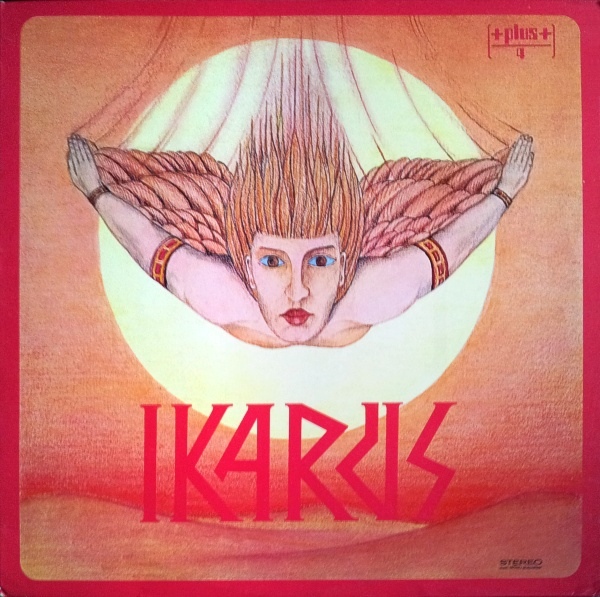
In Greek mythology, Icarus, the son of the master craftsman Daedalus, who created the Labyrinth, met a tragic ending. Icarus and Daedalus were desperate to escape from Crete. So Daedalus constructed wings made of feathers and wax. As Icarus prepared to make his escape, Daedalus warned his son of complacency and hubris.
Icarus shouldn’t neither fly too high, nor too low. If he flew too high, the sun would melt the wax. However, if he Icarus flew too low, the dampness of would weigh down the feathers. It seemed Icarus was between the devil and the deep blue sea.
And so it proved to be. Icarus chose to ignore his father’s wise words, and flew too close to the sun. The sun’s rays melted the wax, and Icarus fell into the sea. He became the first of many people who flew too close to the sun.
Sadly, this includes many musicians. Among them are Syd Barrett, Skip Spence and Brian Wilson. These three legendary musicians flew too close to the sun, and as a result, never quite filled their early potential. Sadly, neither did Ikarus.
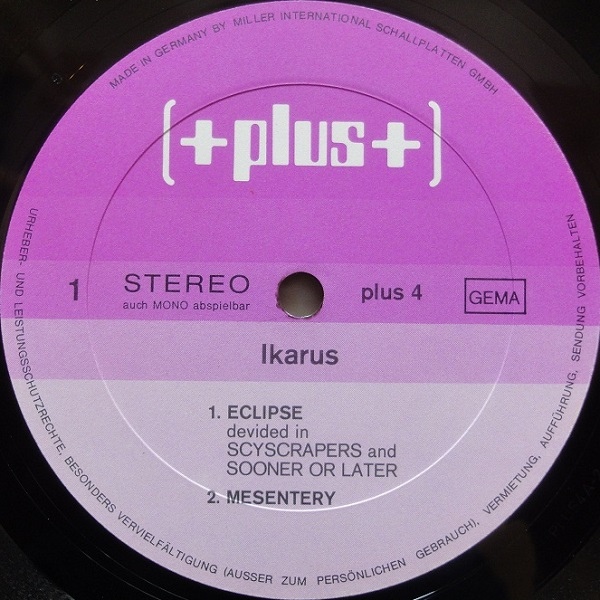
They could’ve gone on to become one of the greatest German rock bands of their generation. Sadly, Ikarus’ discography consists of just one studio album Ikarus. It was released on the Plus label in 1971i. Ikarus showcased a talented, pioneering group, who many thought were destined for greatness. Their story began a few years earlier.
It was in the mid-sixties, in the musical hotbed that was Hamburg, that Ikarus were formed. Ikarus were just the latest beat group that had been formed in Hamburg. This was where The Beatles served their musical apprenticeship a few years earlier. Now a whole host of local groups wanted to follow in the fab four’s footsteps.
Ikarus were no different. So they spent evenings and weekends practising in various Hamburg basements. They were determined to hone their sound, before making their debut.This didn’t take long, as Ikarus featured some talented musicians.
This included classically trained keyboardist Wulf Dieter Struntz and bassist Wolfgang Kracht. His party trick was to play a violin with his gloves on. Music seemed to come easily to the members of Ikarus, and it wasn’t long until they began to play live.
By 1966, Ikarus made tentative steps onto Hamburg’s live scene. Ikarus’ earliest concerts took place in youth clubs, where they played cover versions of popular song. At first,Ikarus were called Beautique In Corporation. Soon, this was soon shortened to BIC. This found favour among the band’s audience.
Although a relatively new group, BIC quickly won over audiences. Soon, they had large and enthusiastic audience. BIC played what they wanted to hear. They weren’t above playing covers of hits by Elvis Presley and Tom Jones. This was easy on the ear of the audience. However, before long, BIC’s setlist changed.
The band members began to write their own songs. Audiences expected to hear original material. They didn’t just want to hear cover versions. This suited the members of BIC, who were classically trained musicians. Composition came easy to them.
These new songs were added to BIC’s sets. Some of these songs had a psychedelic sound. BIC’s music was evolving, as music evolved. This proved popular when BIC played live.
By then, BIC had graduated from the youth club circuit, and were by now familiar faces on the Hamburg and North German music scene. Their music was a mixture of psychedelia and rock. However, there was an element of comedy in BIC’s sets.
Some of the members of BIC enjoyed the new generation of German vaudeville comedians. So they began to combine vaudeville comedy with their psychedelic sound. It proved a potent and successful combination.
Soon, BIC were one of the most successful Hamburg bands. They were well on their way to becoming one of the leading lights of the Hamburg scene. So when they saw an advert for the 1969 Hamburg student beat band competition, BIC decided to enter.
All of the top Hamburg bands entered. The competition was fierce. Hamburg had a thriving music scene. While the other bands were professional, BIC were still an amateur band. This didn’t matter. When BIC took to the stage, they quickly won over the judges with their psychedelic sound. Once all the bands had played, the judges conferred and the winner was announced. It was BIC, the only amateur band in the competition. They had triumphed, and won what was Hamburg’s most prestigious competition.
Having won the 1969 Hamburg student beat band competition, BIC were invited to in the 1970 Hamburg Pop and Blues festival. It took place between the 1st and 3rd of April 1970. BIC were going to rub shoulders with some of the biggest band on that early seventies. Among them, were Chicken Shack, Steampacket, Alexis Corner and Hardin and York. Despite such an illustrious lineup, it was the hometown band that won the hearts and minds of the audience. BIC had stolen the show.
After their performance at the 1970 Hamburg Pop and Blues festival, things happened quickly for BIC. A live album of BIC’s performance at the Hamburg Pop and Blues festival was released as their debut album. It was augmented by performances from Frumpy and Tomorrow’s Gift. The album sold fairly well, and it looked like BIC’s star was in the ascendancy.
Just a few months later, BIC’s lineup changed, when two new names joined the band. Now BIC was a five piece band. The new lineup of BIC was then asked to open for British band Uriah Heep on their forthcoming tour. This was the start of the rise and rise of BIC.
Not long after this, BIC acquired a manager, who was also a concert promoter, Will Jahncke. One of his first suggestions was that BIC changed their name to Ikarus. While this seemed more in keeping with the psychedelic and progressive rock scene, BIC were a popular and successful band. However, the five members decided to change the band’s name to Ikarus.
Following the name change, Ikarus’ music changed. They were inspired to do so, by King Crimson, Yes, Colosseum and Frank Zappa. Soon, Ikarus were fusing fusion with progressive rock and experimental music. There was still a slight psychedelic sound to their music. However, the new sound didn’t please everyone.
When Ikarus played live, the audience were divided by the stylistic change. While some embraced and welcome Ikarus’ new sound, some weren’t as sure. They weren’t won over by the move towards progressive rock. Instead, they felt the lengthy songs, and changes in tempo and time signature were self-indulgent. However, critics disagreed, and continued to champion Ikarus.
With the critics championing their music, it made sense for Ikarus to record their debut album in the second half of 1971. So the five members of Ikarus made their way to the Windrose Studio, Hamburg.
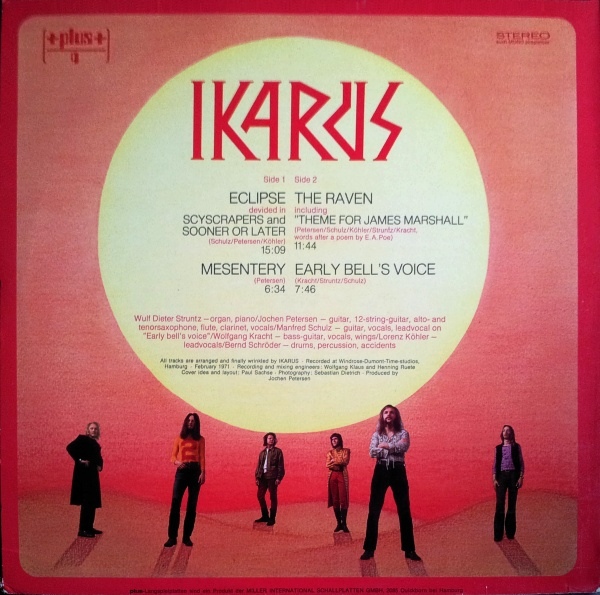
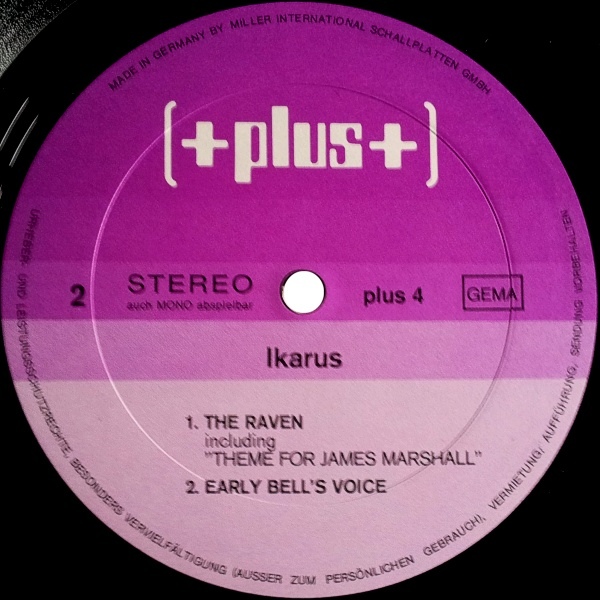
By then, the members of Ikarus had written four songs. Each of the songs were collaborations between members of the band. That was apart from The Raven Including “Theme For James Marshall.” It was an Edgar Allan Poe poem set to music written by four members of Ikarus. This became a near twelve minute epic that featured on side two of Ikarus. With the album written, the band began recording their debut album.
At the Windrose Studio, there was a sense of anticipation.The original members of the band had spent six years playing in clubs and festivals. All this was preparation for the day that Ikarus recorded their eponymous debut album. If things went to play, Ikarus music would be heard by a much wider audience.
The members of Ikarus realised this as they setup their equipment. By then, Ikarus’ rhythm section featured drummer Bernd Schröder, bassist Wolfgang Kracht and guitarist Manfred Schulz. Jochen Petersen played guitar, but also switched between 12-string guitar, alto saxophone, tenor saxophone, flute and clarinet. Wulf Dieter Struntz played organ and piano. Lorenz Köhler took charge of the lead vocals on three tracks; while Manfred Schulz featured on Early Bell’s Voice. Producing Ikarus was Jochen Petersen. Eventually, Ikarus was complete. Now all that was left was to release Ikarus.
With Ikarus complete, it was scheduled for release in February 1972. Miller International had decided to release it on their Plus imprint. However, before that, critics had their say on Ikarus.
For some time, critics had championed Ikarus’ music. Their eponymous debut album was no different. Ikarus, with its combination of fusion, progressive rock and psychedelia met with the critics approval. Critically acclaimed reviews followed, and Ikarus, who were still an amateur band, looked like they had a successful album on their hands.
So it proved to be. Ikarus sold well, and soon, the band were playing sellout shows across Germany. In Hamburg, Ikarus’ home town, they were asked open for Deep Purple. It looked like Ikarus were were well on their way to becoming one of the stars of the German music scene. Those that heard Ikarus concurred.
For some time, critics had championed Ikarus’ music. Their eponymous debut album was no different. Ikarus, with its combination of fusion, progressive rock and psychedelia met with the critics approval. Critically acclaimed reviews followed, and Ikarus, who were still an amateur band, looked like they had a successful album on their hands.
Although Ikarus only featured four tracks, they ooze quality. That’s apparent from Eclipse the opening bars of Eclipse to the closing notes of Early Bell’s Voice. Ikarus take the listener on a Joycean musical journey. It features thought proving lyrics with a social conscience. Especially, on the first two tracks, Eclipse and Mesentry. Throughout Ikarus, musical genres melt into one, including everything from avant-garde and experimental music to folk rock, free jazz and fusion to Krautrock, progressive rock, psychedelia and rock. Sometimes, musical genres melt into one resulting in a inventive and innovative genre-melting sound. There’s constant stylistic change and changes in tempo as the music constantly heads in new directions.
The music veers between impassioned, dramatic, symphonic and urgent, to emotive, theatrical and thoughtful. Sometimes, the music is pastoral and understated before becoming soulful, experimental and futuristic. Other times, the music becomes jazzy, moody, gothic, lysergic and cinematic. Constantly, Ikarus throw curveballs and nuances, subtleties and surprise unfold. The result is music that’s inventive and innovative. Ikarus were musical pioneers.
That was the case with the artists that have obviously influenced Ikarus. This includes King Crimson, Yes, Pink Floyd, Queen and Soft Machine. They influence Ikarus’s captivating, genre-melting, Joycean musical journey.
Sadly, Ikarus was the only album that Ikarus ever released. The Ikarus’ story is a case of unfilled potential.
On Ikarus, listeners were introduced to what could’ve been one of the most successful German bands of the seventies. Their was bang ‘on trend’. Progressive rock and fusion were both hugely popular by the mid-seventies.
That’s when Ikarus were offered a contract by Metronome. They were the owner of the legendary Brian label. For Ikarus, this was the opportunity to dine at the top table in German rock music. Surely, this was an offer that Ikarus couldn’t and wouldn’t resist?
They did. In the mid-seventies, Ikarus were still an amateur band. Its member felt that becoming a professional band was risky. There was no guarantee that their albums would sell. As an amateur band, they had the best of both worlds. Music was a hobby, one they were good at and that they made money with.
The live circuit was lucrative. It was a good way for the members of Ikarus to augment their income. However, to become a full-time band was a step too far for some members of Ikarus, and they decided the band should split-up. It was a case of what might have been.
Listening to Ikarus nearly forty-four years after its release, and one can’t help but wonder if the members of Ikarus regret their decision? Do they ever wonder what would’ve happened if they had signed to Metronome? Maybe they would’ve gone on to enjoy the same success as Can, Guru Guru, Eloy or Birth Control. Or maybe, it would’ve been another generation before Ikarus’ music finally received the recognition it deserves. That was the case with Neu!, Harmonia and Cluster. What I do know, is that Ikarus had the talent to reach the higher echelons of German rock music.
That’s apparent on Ikarus, which is a tantalising reminder of another of the nearly men of German rock, Ikarus, who could’ve and should’ve, enjoyed a long and successful career.
IKARUS-KRAUTROCK’S NEARLY MEN.
BUDGIE-MCA ALBUMS 1973-1975.
BUDGIE-MCA ALBUMS 1973-1975.
By 1973, Budgie were one of the rising stars of British rock. The hard rocking Welsh trio had been formed in Cardiff in 1967. Originally, Budgie were known as Hills Contemporary Grass. However, after playing several gigs in 1968, Burke Shelley, Tony Bourge and Ray Phillips decided to changed the band’s name to Six Ton Budgie. Before long, this was shortened to Budgie. Little did anyone know that one of the most influential British heavy rock bands had just been christened.
Budgie would go on to influence a new generation rock bands. They became known as the new wave of British heavy metal. Bands like Judas Priest, Saxon, Iron Maiden, Raven and Def Leppard were among the bands that were inspired by Budgie’s music. This includes the three albums they recorded for MCA between 1973 and 1975.
The first of this trio of albums was Budgie’s third albums Never Turn Your Back On A Friend. It was released in 1973. In For The Kill followed in 1974 and Bandolier in 1975. These album feature in the MCA Albums 1973-1975 three album box set that was recently released by Universal Music Group. It’s the perfect introduction to Budgie, an oft-overlooked band. Their hard work and persistence began to pay off during the period the MCA Albums 1973-1975 box set covers. It had taken six years for Budgie to get to this stage.
Having changed their name to Budgie in 1968, the band began honing their sound by playing live. This was the tried and tested way that bands had honed their sound. There were no short cuts. Instead, it was just hard work and persistence.
Night after night, Budgie like many bands before them, pubs and clubs. Early on, Budgie played locally. Before long, Budgie began to play further afield. Gradually, Budgie began to attract a following. After nearly two years of playing live, decided to Budgie record their first demo.
Bassist and vocalist Burke Shelley, guitarist Tony Bourge and drummer Ray Phillips entered the studio and recorded what became their first demo in 1971. It was used to try and attract interest from record companies.
The first demo didn’t result in record companies rushing to Cardiff to sign Budgie. They were prepared to be patient, and play the long game. Eventually, Budgie’s patience paid off, and they were signed by MCA.
Budgie.
Once they had signed to MCA, the label began looking for the right producer for Budgie. Meanwhile, they were putting the finishing touches to the album they were writing. Eventually, Budgie were paired with Black Sabbath’s producer Roger Bain.
He had an enviable track record. Roger Bain had produced Black Sabbath’s first two albums. When Black Sabbath was released in February 1970, it was certified gold in the UK and platinum in America. Seven months later, Black Sabbath released Paranoid in September 1970. It was certified gold in the UK and four times platinum in America. Black Sabbath’s first two albums had sold five million copies in America along, and the man that produced the albums was about to work with Budgie.
For a band about to record their debut album, this was beyond their wildest dreams. Secretly, the three members of Budgie must have been dreaming that Roger Bain could do the same for Budgie.
They had finished writing the eight tracks that became debut album. Each of the tracks were credited to Burke Shelley, Tony Bourge and Ray Phillips. To record their debut album, Budgie were about to head to one of the prestigious studios, Rockfield Studios, in Monmouth, in Wales.
At Rockfield Studios, Budgie began recording the eight tracks with Roger Bain. Budgie decided to augment their core sound. Most things stayed the same though. Ray Phillips played drums and percussion and Tony Bourge guitar. Bassist and vocalist Burke Shelley played a mellotron on what became Budgie. It was completed during the first half of 1971.
The release of Budgie was scheduled for June 1971. Before that, the critics had their say. Mostly, the reviews of Budgie were positive. Alas, some critics weren’t convinced by Budgie. They were in a minority. Most were won over by heavy, hard rocking, blues rock sound and lightning fast, blistering guitar solos. Especially on Homicidal Suicidal and Nude Disintegrating Parachutist Woman, which were two of the highlights of Budgie, and why most of the reviews forecast that Budgie would be a success.
Upon the release of Budgie in 1971, the album failed to chart in the UK. Neither did the non=album single Crash Course In Brain Surgery. This was a huge disappointment for Budgie, Roger Bain and MCA. Later, like Metallica covered Crash Course In Brain Surgery.
Soundgarden and Thrush Hermit would all cover songs from Budgie. However, back in 1971, it was back to the drawing board for Budgie.

Squawk.
After the commercial failure of their eponymous debut album, Budgie returned to the live circuit. They were starting to build a following. Eventually, though, Budgie began work on their sophomore album.
Just like their debut album, the three members of Budgie wrote a total of nine tracks. They would later become Squawk. Just like Budgie, recording took place at Rockfield Studios with producer Roger Bain.
Work began at Rockfield Studios, Budgie during the first half of 1972. Drummer and percussionist Ray Phillips was joined in the rhythm section by bassist and vocalist Burke Shelley. He also played mellotron piano. Completing Budgie’s lineup, was guitarist Tony Bourge guitar. The album was recorded live. Budgie it seemed, were trying to capture the essence of one of their live performances. When the album was completed it became Squawk.
For Squawk’s album cover, MCA commissioned Roger Dean. By 1972, he was already regarded as one of the top album designers. He produced a truly memorable and thought provoking album cover. The first people to see it were the critics.
Just like Budgie, the majority of the reviews of Squawk were positive. There were still a few critics who were yet to be convinced. Mostly, Budgie’s hard rocking sound found favour with critics. Tracks like Rocking Man, The Beatles’ inspired Rolling Home Again, folk-tinged Make Me Happy and anthemic Drugstore Woman were among the highlights of Squawk. It was released in September 1972.
When Squawk was released, the album failed to much of an impression on the charts. This was another disappointment for Budgie. They returned to the live circuit and considered their options.

Never Turn Your Back On A Friend.
By the time Budgie thoughts turned to their third album, they had decided to make some changes. They quickly became apparent as work began on what would become Never Turn Your Back On A Friend.
For Never Turn Your Back On A Friend, Budgie penned six tracks. The other track was a cover version. This was a first. Usually, Budgie wrote their own material. However, Big Joe Williams’ Baby, Please Don’t Go was a blues classic. This was fitting for a group who had started life as a blues rock band.
Although Budgie were originally a blues rock band, their music was beginning to change on Never Turn Your Back On A Friend. Progressive rock was King in 1973, and Budgie moved towards progressive rock on Never Turn Your Back On A Friend. Still, though, Budgie were primarily a hard rocking band. They combined the hard rock and progressive rock on Never Turn Your Back On A Friend.
When recording begn at Rockfield Studios, there was no sign of Roger Bain. Budgie had decided to produce Never Turn Your Back On A Friend themselves. They had learnt from Roger Bain, and were ready to make their production debut on Never Turn Your Back On A Friend. It had a much leaner sound.
There was neither a piano nor mellotron on . Instead, it was just drummer Ray Phillips, bassist and vocalist Burke Shelley and guitarist Tony Bourge. They worked their way through seven tracks. where Budgie switched between blues rock, hard rock, progressive rock and proto-speed metal. These tracks eventually became Never Turn Your Back On A Friend.
Once Never Turn Your Back On A Friend was complete, MCA sent copies of the album to critics. They hailed the album Budgie’s finest yet. One of the highlights was Breadfan, which Metallica later covered. Parents a ten minute epic, is regarded as one the track that launched the speed metal genre. However, Never Turn Your Back On A Friend was the album that had most influence on the new wave of British heavy metal. It would inspire a new generation of bands. Despite doing so, Never Turn Your Back On A Friend wasn’t a huge commercial success.
Far from it. When Never Turn Your Back On A Friend was released in June 1973, the album failed to chart. That was Budgie’s third album that had failed to trouble the charts. For one member of Budgie, that was enough for him to call time on career with the band.
In late 1973, Ray Phillips left Budgie. He was replaced by Pete Boot. His timing was impeccable. Budgie’s fortunes were about to improve.

In For The Kill.
After the departure of Ray Phillips, a new chapter began in Budgie’s career. For the first few weeks, Burke Shelley and Tony Bourge gave the new recruit a crash course in Budgie’s back-catalogue. The new drummer, Pete Boot, had three albums to learn. Budgie were also in the process of working on their fourth album, In For The Kill.
Unlike Ray Phillips, Pete Boot took no part in writing In For The Kill. Instead, Burke Shelley and Tony Bourge wrote six of the seven songs on In For The Kill. The other track was Crash Course In Brain Surgery, which had been released as a single in 1971. It had been penned by the original lineup of Budgie, Ray Phillips, Burke Shelley and Tony Bourge. However, rather than use the original track, Budgie decided to remix the track.
There was a reason for this. This would allow the guitars to play a more prominent role in the track. It was a track used effectively and successfully by Black Sabbath’s Tony Iommi. If had been good enough for Black Sabbath, then it was good enough for Budgie. They began work on remixing Crash Course In Brain Surgery, and recording In For The Kill.
This took place at the familiar surroundings of Rockfield Studios in Monmouth. It was where Budgie’s three previous albums had been recorded. Three was about to become four, when the new lineup pressed play. The new lineup of drummer Pete Book, bassist and vocalist Burke Shelley and guitarist Tony Bourge worked their way though the seven songs. Just like Never Turn Your Back On A Friend, In For The Kill was produced by Budgie. Once the sessions at Rockfield Studios were complete, some further recording took place at Lee Sound, in Birmingham. Only then, was In For The Kill complete.
With In For The Kill complete, MCA scheduled the release of the album for May 1974. They wanted to build in the increasing popularity of Budgie. Their star was in the ascendancy. They had continued to increase their fan-base over the last few years. It had taken time, patience and persistence. Maybe In For The Kill would be a game-changer? That would depend on what the critics said.
Critics on hearing In For The Kill, hailed the album Budgie’s finest hour. However, they had said the same thing about Never Turn Your Back On A Friend. There were plenty of reasons to justify the critics conclusions.
This included In For The Kill, which featured a blistering guitar solo from Tony Bourge. Hot on its heels came the remixed version of Crash Course In Brain Surgery. With the power chords playing a prominent role in the track, it was regarded as one of the album’s highlights. So was the thoughtful Wondering What Everyone Knows, which seemed to have been inspired by The Beatles. Hammer and Tongs found Budgie at their hard rocking best, while Burke Shelley’s vocal adding an element of drama. Closing In For The Kill was the nine minute epic Living On Your Own. In For The Kill was indeed Budgie’s finest hour.
When it was released in May 1974, record buyers agreed. In For The Kill reached twenty-nine in the UK charts. After four albums, and seven years hard work and persistence, Budgie had made a breakthrough.
The sad thing was that the original drummer had Ray Phillips left Budgie just before the band made their breakthrough. His replacement Pete Boot was enjoying the fruits of his labours. He hadn’t spent six years crisscrossing Britain playing in pubs in clubs. However, Ray Phillips would later form his own band Ray Phillips Woman in the mid-seventies. By then, Budgie had lost their second drummer.
In late 1974, Budgie’s ‘new’ drummer Pete Boot left the band. This left Budgie in the lurch. Luckily, Steve Williams filled the void when Budge toured In For The Kill. Steve Williams later became a permanent member, and played on Budgie’s fifth album, Bandolier.

Bandolier.
Despite the success of In For The Kill, it was over a year before Budgie returned with the followup album, Bandolier. They had spent much of 1974 and part of 1975 touring. Budgie’s popularity was continuing to grow and this meant spending more time on the road. However, the time came to return to the recording studio.
By then, Burke Shelley and Tony Bourge had written five of the six songs on Bandolier. They were joined by a cover of Andy Fairweather Low’s Ain’t No Mountain. These six tracks were recorded at what had become Budgie’s studio of choice, Rockfield Studios.
Drummer Steve Williams, bassist and vocalist Burke Shelley and guitarist Tony Bourge began work on Bandolier at Rockfield Studios. Much of the album was recorded there. However, some recording took place at Mayfair Sound, in London. Eventually, Budgie had recorded six songs. They would become their fifth album, Bandolier.
With Bandolier completed, it was delivered to MCA. They scheduled the release of Bandolier for September 1975. This left plenty of time to promote Bandolier. Meanwhile, the critics had their say on the album.
They were won over by Bandolier, which found Budgie at their hard rocking best. Critics pointed out that Budgie were maturing and improving with each album. After five albums, Budgie had the potential to become one of the biggest British rock bands.
This was helped by Budgie’s new drummer Steve Williams quickly settling into his new role. He playing was powerful and punchy as he played with a newfound freedom. His drums helped propelled the arrangements along. Meanwhile, some critics were comparing Burke Shelley to Led Zeppelin frontman Robert Man. The similarity is noticeable on Who Do You Want For Your Love ?/Never Turn Your Back On A Friend and See My Feelings/Rock Climbing. As usual, Tony Bourge’s scorching, blistering, soaring guitar solos were playing a leading role in the sound and success of Bandolier. Especially on tracks like Breaking All The House Rules and I Can’t See My Feelings/Rock Climbing and I Ain’t No Mountain. Everything was coming together for Budgie on Bandolier.
They were still working hard and continued to reassess and reinvent their music. Constantly, they tweaked their sound adding or changing it. Over the past five albums, Budgie had moved from their early blues rock towards hard rock. Later, they incorporated folk, drew inspiration from The Beatles and moved in the direction of progressive rock. However, for much of the time, Budgie were an inventive, hard rocking band that always featured talented musicians. Proof of this was their four previous albums, and their fifth album Bandolier.
When Bandolier was released in September 1975, the album reached thirty-six in the UK. Alas, Bandolier hadn’t quite matched the success of In For The Kill. It had reached twenty-nine in 1974. However, Bandolier was certified gold. This was a first for Budgie.
A gold disc was the perfect way for Budgie to end their time at MCA. After five albums, where Budgie’s sound continued to evolve, the inventive Welsh trio’s popularity blossomed. By the time Bandolier was released in 1975, they had reached new levels of popularity. It was ironic that Budgie were about to leave MCA and sign for A&M Records.
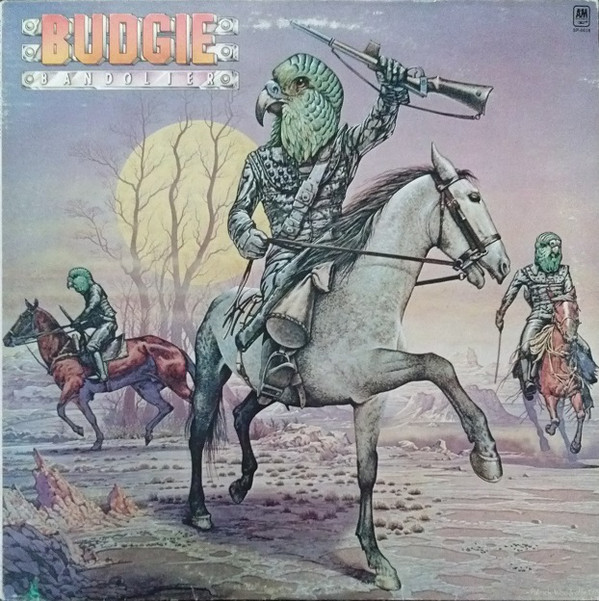
The five albums that Budgie had recorded for MCA featured some of the best, and most successful of Budgie’s career. This includes Never Turn Your Back On A Friend, In For The Kill and Bandolier. They feature on the recently released MCA Albums 1973-1975 three album box set that was recently released by Universal Music Group. It’s the perfect introduction to Budgie, who are an oft-overlooked band. Their hard work and persistence began to pay off during the period.
In For The Kill reached twenty-nine in the UK and Bandolier thirty-six. That looked like it was the start of the rise and rise of Budgie. Many critics thought that within a year or two, Budgie would be rubbing shoulders with Black Sabbath and Led Zeppelin. Sadly, Budgie never built on the success of
However, they never built on the success of In For The Kill and Bandolier. Budgie’s next three albums, 1976s If I Were Brittania I’d Waive the Rule, 1978s Impeckable and 1980s Power Supply all failed to chart. By then, the only original member was Burke Shelley.
In 1981, Budgie’s Nightflight ninth album reached number sixty-eight in the UK charts. A year later, Deliver Us From Evil reached sixty-two in the UK. Six years later, Budgie disbanded and didn’t release another album for twenty-four years.
Budgie returned in 2006 with You’re All Living In Cuckooland. Only Burke Shelley and Steve Williams remained from the previous incarnation of Budgie. Despite touring You’re All Living In Cuckooland., it failed to chart. For Budgie, their eleventh album was their swan-song.
For anyone yet to discover Budgie’s music, then MCA Albums 1973-1975 is a good place to start. It’s just a pity that their first two album, Budgie and Squawk were included and this would’ve featured everything that Budgie recorded for MCA. However, MCA Albums 1973-1975 is a reminder of one of the hardest rocking bands of the early seventies, Budgie who could’ve and should’ve gone on to become one of biggest names in British rock.
BUDGIE-MCA ALBUMS 1973-1975.


MELISSA MANCHESTER-HOME TO MYSELF/BRIGHT EYES/MELISSA AND HELP IS ON THE WAY.
MELISSA MANCHESTER-HOME TO MYSELF/BRIGHT EYES/MELISSA AND HELP IS ON THE WAY.
It was almost inevitable that Melissa Manchester would end up embarking upon a musical career. The Manchester family were a highly creative family, and music played an important part in everyday life. That was no surprise. Melissa’s father was a bassoonist in the New York Metropolitan Opera. She would later follow in his footsteps, and would enjoy a career in music.
Unlike her father, Melissa Manchester would embark upon a career as a singer-songwriter. Melissa was twenty-two when she signed to Bell Records in 1973. Later that year, she released her debut album Home To Myself. It’s one of four album that BGO Records released as a two CD set. Home To Myself is joined by Bright Eyes, Melissa and Help Is On The Way. These four albums document the start of Melissa Manchester’s lengthy musical career. Her story began on 15th February 1951
That was when Melissa Manchester was born in the Bronx, New York. Her mother was a clothing designer, and would later found her own company. However, Melissa’s father was a musician. He was a bassoonist in the New York Metropolitan Opera. So music played an important part in the family home. It was no surprise that Melissa embraced music from an early age.
Having started singing at an early age, Melissa Manchester enrolled at Manhattan’s High School of Performing Arts. That was where she learnt to play piano and harpsichord. It was during this time, that Melissa started singing on jingles for radio and television. Soon, Melissa was demoing the songs that was writing.
Already Melissa Manchester was a prolific songwriter. She spent much of her free time writing and honing songs. Despite being a prolific songwriter, when Melissa recorded her debut single for MB, neither the single Beautiful People, nor the B-Side A Song For You were her compositions. When the Beautiful People was released in 1967, it failed to make an impression on the charts. However, a year later, and a new opportunity arose for Melissa.
When Melissa was seventeen, and still a student at the High School of Performing Arts, she became a staff writer for Warner Chappell. Already, it was inevitable that she was going to pursue a career in music.
After Melissa left the High School of Performing Arts, she enrolled on the songwriting course at the prestigious New York University. One of her tutors was none other than Paul Simon. He advised Melissa to find her own voice as a songwriter. This she realised was good advice, and her songwriting quickly improved.
In the evenings and weekends, Melissa sang in clubs. She had been doing that for years. During that period, she graduated from folk clubs and open-mics to Manhattan clubs. Melissa was going up in the world. Her rise was about to continue.
It was while Melissa was singing in a Manhattan club during 1971, that she first met Barry Manilow. He would later be credited as ‘discovering’ Melissa Manchester. When he first saw, Melissa singing, he realised that she was a talented and accomplished singer. So he decided to introduce Melissa to his employer, Bette Midler.
Since earlier in 1971, Barry Manilow had been working as Bette Midler’s arranger and pianist. He also co-produced Bette Midler’s first two albums. Barry Manilow introduced Melissa to Bette Midler. Later in 1971, Melissa became one of Bette Midler’s backing singers The Harlettes.
During her time with Bette Midler, Melissa met songwriter Carole Bayer Sager. The pair soon became fiends and started writing songs together. Little did they realise that their formidable songwriting partnership would later write some contemporary classics. That was still to come.
Before that, Melissa featured on the 1972 album National Lampoon Radio Dinner. She appeared on the track Magical Misery Tour as Yoko One and sung backing vocals on Deteriorata. However, the next time she featured on an album would be her debut album.
Home To Myself.
Melissa Manchester was approached by Bell Records, who had spotted her potential. By then, she had spent time as one of Bette Midler’s backing singers The Harlettes and formed a songwriting partnership with Carole Bayer Sager. Signing a recording contract was the next logical step. It hadn’t been easy though.
Time after time, Melissa sent demos to record companies. They would listen to the demo, and jump to the wrong conclusion. Many record companies thought that Melissa remembers they: “would think I was a black girl based on the sound.” Bell Records who had been watching Melissa’s progress didn’t make that mistake.
Bell Records were willing to give Melissa total creative freedom when she recorded her debut album. She would be able to record the album that she wanted. There was a reason for their largesse though.
Previously, Bell Records was known as a singles label. They were keen to change that. So Bell Records started to add artists to their roster who would produce albums and singles. Melissa Manchester fitted the bill.
With her recording contract signed, Melissa began work on her debut album. The Melissa Manchester and Carole Bayer Sager partnership contributed If It Feels Good (Let It Ride), Easy, Something To Do With Loving You, Pick Up The Good Stuff (Reprise), Be Happy Now, One More Mountain To Climb and Home To Myself. Melissa penned Funny That Way, Jenny and Doing The Best (That He Can). These songs were recorded in New York.
To produce what would later become Home To Myself, Hank Medress and Dave Appell were brought onboard. They oversaw recording at Century Sound Studios, in New York. No expense was spared. Strings, horns and woodwind sections augmented by a band that featured some of New York’s top session musicians. They began recording the ten songs. When they were complete, they would become Home To Myself.
Later in 1973, Bell Records were preparing for the release of Melissa Manchester’s debut album Home To Myself. Critical acclaim accompanied the album’s release, as Melissa brings life, meaning and emotion to the lyrics. Especially on the ballads that feature on Home To Myself. There’s a confessional quality to ballads like If It Feels Good (Let It Ride), Easy,Funny That Way, One More Mountain To Climb, Doing The Best (That He Can) and Home To Myself. Sometimes, it’s as if Melissa is laying bare her soul. Then as the tempo rises, the piano playing singer-songwriter sometimes, combines power and passion on Something To Do With Loving You and Be Happy Now. During Home To Myself, Melissa switched between and combined musical genres.
Elements of pop, rock, folk and soul were combined. Stylistically, comparisons were drawn with Carole King, Bette Midler and Laura Nyro, who had such an influence on Melissa. What surprised many critics was how accomplished and polished a singer Melissa was. It was hard to believe Home To Myself was her debut album. However, she had spent six years honing her sound. Melissa Manchester was hoping that this would pay off.
When Home To Myself was released later in 1973, it charted and began climbing the US Billboard 200. Eventually, it reached 156. Considering it was only Melissa Manchester’s debut album, this was regarded as a success. Previously, many debut album had failed to even trouble the charts. Melissa Manchester had something to build on.

Bright Eyes.
After the relative success of Home To Myself, Melissa Manchester began working on her sophomore album Bright Eyes. This time, the Melissa Manchester and Carole Bayer Sager partnership only penned the one track, Ruby And The Dancer. Their partnership would resume on Melissa’s third album. For her sophomore album, Bright Eyes, Melissa had a new songwriting partner lyricist Adrienne Anderson.
They too, would establish a successful songwriting partnership. For Bright Eyes Melissa and Adrienne Anderson wrote Bright Eyes, Alone, No.1 (Ahwant Gemmeh) and He Is The One. Melissa contributed O Heaven (How You’ve Changed Me) and Inclined.
They penned Bright Eyes, Alone, No.1 (Ahwant Gemmeh) and He Is The One. The other track was a cover of Vernon Duke and George Gershwin’s I Can’t Get Started. Melissa had decided to cover it for her sophomore album Bright Eyes.
When recording of Bright Eyes began, Melissa was joined by two familiar faces, Hank Medress and Dave Appell. They returned to produce Bright Eyes. Just like Home To Myself, recording of Bright Eyes took place at Century Sound Studios, in New York.
Again, the arrangements were featured strings, horns and woodwind sections and band that included some of New York’s top session musicians. With Hank Medress and Dave Appell taking charge of production, they recorded Bright Eyes. Once it was complete, Bell Records began preparing for the release of Bright Eyes.
Home To Myself had introduced Melissa Manchester to critics and record buyers. Now Bell Records wanted Melissa’s music to reach a wider audience. Before that, the critics had their say.
Just like Home To Myself, Bright Eyes was well received by critics. They were quick to compare Melissa’s new songwriting partnership with Adrienne Anderson to her partnership with Carole Bayer Sager. The verdict was that the Melissa Manchester and Carole Bayer Sager won the day. That wasn’t surprising. Carole Bayer Sager was well on her way to becoming one of the top songwriters of her generation. However, both songwriting partnerships played an important part on Bright Eyes.
What was noticeable on Bright Eyes, was that Melissa was beginning to establish her own musical identify. There’s still a nod to her hero Laura Nyro on Bright Eyes and O Heaven (How You’ve Changed to Me). Elsewhere, Melissa was blossoming and proving a versatile vocalist.
Alone was a beautiful, jazz-tinged, piano lead, hurt-filled ballad. Another ballad is Inclined. It’s a heartfelt paean was penned by Melissa. She was maturing as a songwriter and was responsible for one Bright Eyes’ finest moments.
No.1 (Ahwant Gemmeh) was an uptempo track, where Melissa unleashes a vocal powerhouse on this tougher sounding track. It allows Melissa to showcase her versatility. This she continues to do.
The gospel-tinged paean Ode To Paul, finds Melissa paying tribute to her songwriting mentor Paul Simon. Her jazzy cover of I Can’t Get Started, has a late night smokey sound. The gospel-tinged He Is The One is the best song from Melissa and Adrienne Anderson’s songwriting partnership. It also features a powerful vocal that oozes emotion and sincerity. Without doubt, it’s one of Bright Eyes’ highlights. So is the heartfelt ballad Ruby and The Dancer, the only song penned by Melissa Manchester and Carole Bayer Sager. Just like her debut album, Bright Eyes won over by critics.
Given the positive reviews of Bright Eyes, Bell Record had high hopes for Melissa’s sophomore album. Upon its release later in 1974, the album it reached just 159 in the US Billboard 200. This was a disappointment for everyone concerned. Bell Records and Melissa had been looking to build on the success of Home To Myself. What didn’t help, was that the wrong song was chosen as the lead single.
There were several contenders for lead single. Eventually, O Heaven (How You’ve Changed Me) was chosen. It featured The Dixie Hummingbirds. However, rather than release the version on the album, the song was rerecorded. Despite all this effort, the song never came close to troubling the charts. This added to the disappointment. However, Bell Records who were about to be renamed Arista, kept faith with Melissa.

Melissa.
After Bright Eyes had stalled at 159 in the US Billboard 200, several changes were made for Melissa Manchester’s third album, Melissa. This included everything from songwriting partners to the producer that was hired and even the studio that Melissa was used. Arista president Clive Davis, it seemed were looking for a result.
For Melissa, Melissa and Carole Bayer Sager resumed their songwriting partnership in earnest. They wrote We’ve Got Time, Stevie’s Wonder, This Lady’s Not Home Today and I Got Eyes. Melissa also wrote It’s Gonna Be Alright with Adrienne Anderson. However, her new producer contributed a song.
Hank Medress and Dave Appell had been replaced by Vini Poncia. He and Melissa penned Just Too Many People. Similarly, Melissa and the guitarist from her new band, David Wolfert cowrote Party People. Completing Melissa were two cover versions, Stevie Wonder and Syreeta Wright’s Love Havin’ You Around and Randy Newman’s I Don’t Want To Hear It Anymore. These songs would be recorded with a new producer and band at a new studio. Nothing was left to chance.
For the recording of Melissa, two studios were used. With Melissa now living in LA., it made sense to record much of the album at Sunset Sound Studios, in Los Angeles. Other sessions took place at A & R Studios, in New York. Vini Poncia took charge of production and marshalled the cast of musicians and backing vocalists. This included for the first time on a Melissa Manchester album synths. However, strings were still used to sweeten the album. So were horns as Melissa took shape. Eventually, Melissa was completed and ready for release.
Once Melissa was completed, a release date was scheduled for later in 1975. This time, great thought went into choosing the right single. Executives at Arista hoped that Melissa would introduce Melissa Manchester’s music to a much wider audience. However, partly, that would depend upon what critics said about Melissa Manchester’s third album, Melissa.
Melissa was quite different from previous albums. It was an album that was a mixture of two types of songs, ballads and uptempo tracks. Unlike previous albums, the albums was divided equally between ballads and uptempo tracks, This allowed Melissa to showcase her versatility.
The beautiful ballad We’ve Got Time that opens Melissa. It was the first of the songs penned by Melissa and Carole Bayer Sager. Their partnership was blossoming. Melissa was continuing to mature as a vocalist, and didn’t so much sing the lyrics as live them.
Party Music and Just Too Many People showcased a new sound. Both were slick, mid tempo tracks with a commercial and radio friendly sound. The tempo rises on Stevie’s Wonder, another of Melissa’s tribute songs, Melissa delivers another vocal powerhouse. This trio of songs showcase a different side to Melissa Manchester.
For many people, Melissa is at her best on the ballads. That’s apparent on This Lady’s Not Home, which was penned by Melissa and Carole Bayer Sager.
It’s followed by Melissa’s cover of Love Having You Around. Just like on We’ve Got Time, backing vocalist accompany Melissa and augment her vocal as it veers between tender, heartfelt and thoughtful. After that, it’s all change and Melissa continues to switch between uptempo tracks and ballads.
With horns, harmonies and jazzy piano accompanying her, Melissa unleashes a soulful powerhouse of this oft-covered and familiar song. However, the highlight of Melissa is the beautiful, hopeful ballad Midnight Blue. It’s the highlight of Melissa and features one of the best productions. The tempo rises on It’s Gonna Be Alright. Soulful and funky, with a tougher sound, Melissa switches seamlessly between styles and with a tight and talented band, produces a slick and soulful song. This leaves just two ballads, including the cinematic I’ve Got Eyes. Closing Melissa was a emotive, hurt-filled cover of Randy Newman’s I Don’t Want To Hear It Anymore. Just like on Bright Eyes, Melissa closes with a beautiful ballad where Melissa lives the lyrics.
With critical acclaim accompanying the release of Melissa, the album was released later in 1975. It reached number twelve in the US Billboard 200, and sold over 500,00 copies. Melissa Manchester received her first gold disc. That was no surprise.
Midnight Blue the ballad that Melissa cowrote with Carole Bayer Sager in 1973, was released as the lead single from Melissa in May 1975. It reached number six in the US Billboard 100 and number one in the Adult Contemporary charts. Buoyed by this success, sales of Melissa grew in America. Across the border on Canada, Midnight Blue reached number five and number one Adult Contemporary charts. However, it had been hard work promoting Midnight Blue.
Arista was quite unlike Bell Records. President Clive Davis wanted his artists to work hard to break singles. So Melissa criss crossed America, meeting and greeting DJs and various movers and shakers. It was hard work, but eventually it paid off. The first song that Melissa cowrote with Carole Bayer when they first met had given her the biggest hit single of her career.
Following the success of Midnight Blue, Just Too Many People was released as the followup. It reached number thirty in the US Billboard 100 and number two in the Adult Contemporary charts. For Melissa, her third album had transformed her career. Now came the hard part, replicating the success of Melissa.

Better Days and Happy Endings.
Following the success of Melissa, work began on Better Days and Happy Endings. This was the first of two albums Melissa released during 1976. Arista hoped that she would replicate the success of Melissa and Midnight Blue. However, that was easier said than done.
Melissa had featured some of the best songs of Melissa Manchester’s career. They were written by Melissa and Carole Bayer Sager. The pair had forged a successful partnership on Melissa’s first three albums. Playing an important part in Melissa was Vini Poncia. He returned to produce Better Days and Happy Endings.
So did many of the musicians who worked on Melissa. They joined Melissa at Davlen Studios, North Hollywood. A total of ten tracks were recorded. Vini Poncia concentrated on producing an album of lush, feel good music. When it was complete, Arista and Melissa began work on promoting her fourth album, Better Days and Happy Endings.
Critics were won over by Better Days and Happy Endings. Melissa they noted, continued to mature as a singer, and had the potential to become one of the most successful female singer-songwriters of the seventies. Especially if she continued to produce albums with slick, polished and lush arrangements. Just like on Melissa, the album was
d well produced, with ballads and uptempo tracks rubbing shoulders with one another. It was critics said, a fitting followup to Melissa.
When Better Days and Happy Endings was released in 1976, it reached number twenty-four in the US Billboard 200. The lead single Just You and I reached number twenty-seven in the US Billboard 100 and number three in the Adult Contemporary charts. Better Days then stalled at seventy-nine in the US Billboard 100, but reached number nine in the Adult Contemporary charts. Happy Endings failed to reach the US Billboard 100 and reached just thirty-three in the Adult Contemporary charts. When the single was flipped over, the B-Side of Happy Endings, Rescue Me reached just seventy-six in the US Billboard 100. Despite that blip, Better Days and Happy Endings continued the Melissa Manchester success story. Arista hoped it would continue later in 1976.
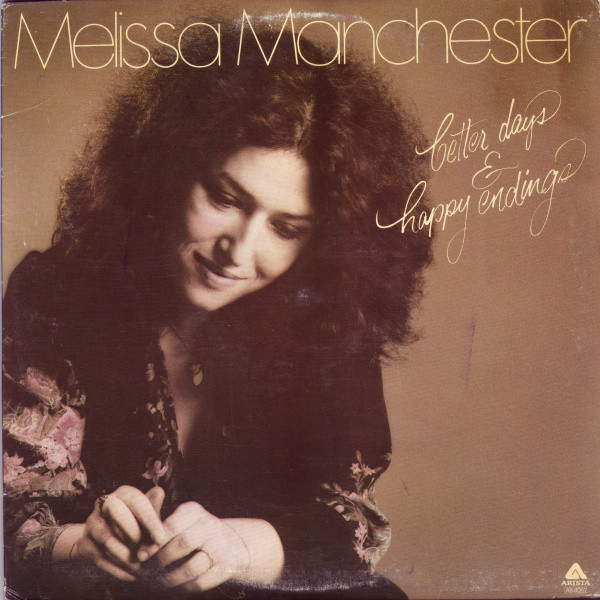
Help Is on the Way.
Buoyed by the success of Better Days and Happy Endings, work began on the followup album. Arista were hoping that Melissa would enjoy another successful album. Her last two albums had sold well, and featured five hit singles in the US Billboard 100 and Adult Contemporary charts. So Melissa got to work.
This time around, Melissa and Carole Bayer Sager only wrote two songs, Help Is On The Way and There’s More Where That Came From. This left a huge void to be filled.
Filling that void was Melissa. She penned Talkin’ To Myself, Headlines and So’s My Old Man. The Melissa Manchester and Arienne Anderson penned Singing From My Soul. Melissa also wrote Be Somebody with Vini Poncia, and Johnny Vastano. Completing Help Is On The Way were a trio of cover versions.
This included Michael Franks’ Monkey See-Monkey; Do; Steely Dan’s Dirty Work and A Fool In Love. These songs and the rest of Help Is On The Way were recorded in L.A.
Two studios were used to record Help Is On The Way. Recording sessions took place in Hollywood at Sound Labs Inc. and at the Burbank Studios, Burbank. Vini Poncia returned for the third time, and was joined by some of the band that played on Melissa and Better Days and Happy Endings. Having worked together twice before, the sessions ran smoothly, and the album was ready in time to be released later in 1976.
Arista were keen to release Melissa’s fifth album, Help Is On The Way, hot on the heels of Better Days and Happy Endings. Melissa was enjoying the most successful period of her career, and Arista wanted to build upon it. So promotional copies of Help Is On The Way were sent out.
Just like Better Days and Happy Endings, critics gave Help Is On The Way positive reviews. It was another carefully crafted selection of songs that allowed Melissa to showcase her versatility.
Help Is On The Way opened with one of Melissa’s compositions, the ballad Talkin’ To Myself. Pop meets rock as Melissa combines power and emotion. Be Somebody is a beautiful hopeful ballad. It’s all change on the rocky A Fool In Love. Melissa unleashes a sultry, soulful powerhouse of a vocal. Headlines is another of Melissa’s compositions, and just like Talkin’ To Myself is a ballad. Here, Melissa’s vocal veers between tender, heartfelt and emotive to powerful. However, Help Is On The Way is the standout track. It was penned by Melissa and Carole Bayer Sayer. They’re responsible for a beautiful, heartfelt and hopeful ballad. With strings, piano and harmonies accompanying Melissa, she reaches new heights on Help Is On The Way.
Monkey See, Monkey Do is very different to what’s gone before. Elements of soul, R&B and jazz combine as Melissa reinvents the song. She stays faithful to Steely Dan’s Dirty Work, but producer Vini Poncia adds swathes of strings, harmonies and a piano. Suddenly, a familiar song takes on new meaning. After this, the tempo drops on the wistful ballad So’s My Old Man. It’s another song that Melissa wrote, and shows how with every album she’s maturing as a singer and songwriter. She breathes meaning and emotion into her lyrics. There’s More Where That Came From is the second song penned by Melissa and Carole Bayer Sager. Again, this ballad is one of the highlights of Help Is On The Way. It closes with the beautiful string drenched ballad Singing From My Soul. Just like the rest of Help Is On The Way it oozes quality.
Given the critical response to Help Is On The Way, Arista thought the album would follow in the footsteps of Melissa and Better Days and Happy Endings. However, when Help Is On The Way was released later in 1976, the album stalled at just sixty in the US Billboard 200. Again, Arista backed the wrong horse when it came to the lead single. They chose Monkey See, Monkey Do, which failed to chart. Neither did Be Somebody. For Melissa, Help Is On The Way had been a disappointment.
Things could’ve been very different if a different lead single had been chosen. Monkey See, Monkey Do was the wrong choice. By the time that Be Somebody was released, the album had stalled. It was a frustrating time for Melissa.
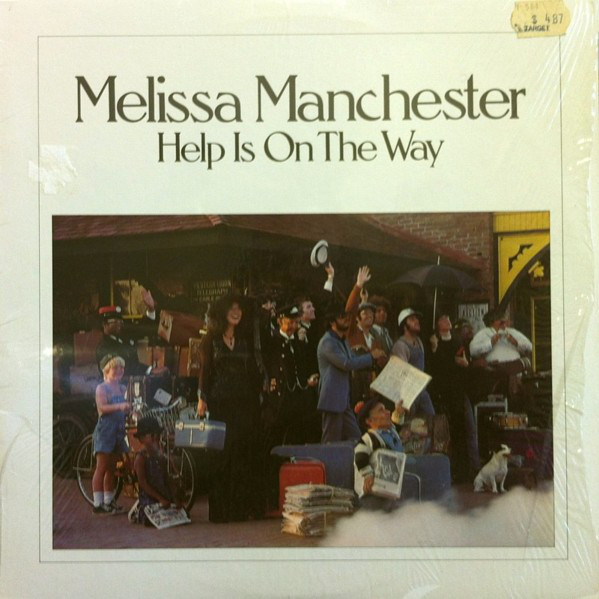
Despite that, the last three years had been a roller coaster for Melissa Manchester. An important factor in the rise of Melissa Manchester was her songwriting partnership with Carole Bayer Sager. They formed a successful and enviable partnership. Not only would the songs they wrote bring success Melissa’s way, but for many other artists. It was a fruitful and profitable partnership. It helped launch Melissa’s career in 1973.
Her 1973 debut album Home To Myself established an audience for her music. That audience were here to stay when Bright Eyes was released in 1974. However, Melissa’s fortunes changed in 1975.
This coincided with Bell Records becaming Arista. Clive Davis, who was Arista’s president wanted his artists to provide him with hits. It didn’t matter how hard they had to work for these hits. So
Melissa Manchester criss-crossed America, glad-handling DJs and music industry movers and shakers. All her hard work and persistence paid off when Midnight Blue, a song she penned with Carole Bayer Sager gave her a top ten hit. The success of Midnight Blue helped Melissa’s third album Melissa, sell over 500,000 copies.
The success continued when Melissa released Better Days and Happy Endings in 1976. Later that year, Melissa released her second album of the year. Sadly, Help Is On The Way failed to fulfil its potential and failed to match the success of Melissa’s two previous albums.
Nowadays, Help Is On The Way is one of the most underrated albums Melissa Manchester released. It’s one four albums on BGO Records recently released two CD set. Home To Myself is joined by Bright Eyes, Melissa and Help Is On The Way have all been digitally remastered, and just like all the BGO Records releases, the sound quality is of the highest quality. This quartet of albums are the perfect introduction to one of the most versatile and talented, singer-songwriters of her generation, Melissa Manchester.
MELISSA MANCHESTER-HOME TO MYSELF/BRIGHT EYES/MELISSA AND HELP IS ON THE WAY.

CONRAD SCHNITZLER/SCHNEIDER TM-CON-STRUCT.
CONRAD SCHNITZLER/SCHNEIDER TM-CON-STRUCT.
One of the most important and influential figures in German music was Conrad Schnitzler. He was a composer, concept artist and one the leading lights of Germany’s electronic music and avant-garde scenes. Conrad Schnitzler was also a musical pioneer, who created music that was innovative and often, way ahead of its time. That was throughout his long and illustrious career.
Having studied under Joseph Beuys, Conrad Schnitzler cofounded the legendary Zodiak Free Arts Lab in Berlin with Hans-Joachim Roedelius. For next the two years, the Zodiak Free Arts Lab became one of Berlin’s cultural hubs. Artists and musicians made their way to the Zodiak Free Arts Lab, seeking out like minded individuals. They found them. This included Klaus Schulze, plus members of Can, Ash Ra Tempel, Agitation Free and Tangerine Dream, who Conrad Schnitzler joined in 1969.
By then, Tangerine Dream had become the Zodiak Free Arts Lab’s house band right up until its closure in March 169. Regularly Tangerine Dream played five and six our sets of loud, improvised music. Often these sets ended with the band smashing their equipment up. Tangerine Dream it seemed, were making a statement. This they certainly did on their debut album.
Conrad Schnitzler joined Tangerine Dream just in time to play on their groundbreaking debut album Electronic Meditation in October 1969. Tangerine Dream fused elements of avant-garde, electronic music, free jazz and rock. This proved popular with critics and cultural commentators.
Nine months later, Electronic Meditation released on Rolf-Ulrich Kaiser’s Ohr label. Critical acclaim accompanied the release of this future Krautrock classic. However, by the time Electronic Meditation was released Conrad Schnitzler had parted company with Tangerine Dream.
After leaving Tangerine Dream, a new chapter in the career of Conrad Schnitzler began later in 1969. He and Hans-Joachim Roedelius decided to form a new band, Kluster with Dieter Moebius.
Kluster wasted no time in recording their debut album. To record their debut album, Kluster had managed to secure sponsorship from a local church. This would offset the cost hiring the Rhenus-Studio on 21st December 1969. That day, Kluster were joined by Christa Runge who added religious texts to Kluster 1. Just like Kluster 2, it was an ambitious improvised piece where Kluster combined avant-garde and experimental music.These tracks became Klopfzeichen, which was released in November 1970. By then, Kluster had recorded their sophomore album.
Just two months after recording their debut album, Kluster returned to the Rhenus-Studio on February 23rd 1970 to record Zwei-Osterei. Just like Klopfzeichen, it was financed by a local church. Manfred Paethe added religious texts Electric Music and Text. It became part of Zwei-Osterei, a fusion of avant-garde, experimental music and Krautrock. However, Kluster’s sophomore album wasn’t released until 1971.
Later in 1971, Kluster performed what would be their swan-song. That night, the tapes were running and captured Kluster at their purest. There were no religious texts accompanying the two lengthy improvised pieces. They find Kluster’s music evolving towards the electronic sound that featured on later Cluster albums. That night, Kluster came of age musically, having saved the best until last. It was released in late 1971 as Schwarz. By then, Conrad Schnitzler was contemplating a solo career.
Conrad Schnitzler’s solo career began in 1973 would span four decades. During his long career, Conrad Schnitzler continued to create ambitious and pioneering music and regularly played live.
For these live performances, Conrad Schnitzler spent time each day exploring the settings on his collections of synths. He was looking for new and exciting sounds that he could keep for his live performances. Gradually, the sonic explored had a vast collection of sounds. This continued to grow as Conrad Schnitzler added to his audio archive over his four decade solo career. It was a true labour of love that Conrad Schnitzler had continued to cultivate.
As a new decade dawned in 2010, Conrad Schnitzler was seventy-three. He was one of the grand old men of German music. However, he had lost none of his thirst for music. Still he made music and added to his private audio archive. It had been a lifetime’s work. Nobody had seen or heard Conrad Schnitzler’s audio archive. This would change later in 2010.
Conrad Schnitzler decided the time had come to grant access his vast and enviable audio archive. The problem was deciding to entrust with what had been four decade’s work. Eventually, Conrad Schnitzler decided to grant access to Jens Strüver, who was then head of the m=minimal label.
For Jens Strüver this was a huge privilege. He was the first person to see and hear Conrad Schnitzler’s vast audio archive. The thing that struck him, was the sheer scale. Vast was an understatement. That was no surprise. This had been four decades work for Conrad Schnitzler. As he took in and explored the audio archive, Jens Strüver came up with the Con-Struct concept.
Soon, Jens Strüver’s was explaining his idea to Conrad Schnitzler. What Jens Strüver envisaged, was electronic musicians using the material from Conrad Schnitzler’s audio archive and constructing new material from it. The result would be new tracks, not remixes. Having explained the idea to Conrad Schnitzler, Jens Strüver awaited his response. When it came, the answer was yes. The Con-Struct series had been born.
For the first instalment in the Con-struct series, Jens Strüver teamed up with Christian Borngräbe. The two producers collaborated on eight new pieces of music that became Con-struct.
When Con-struct was released, it was billed as a collaboration between Conrad Schnitzler and Borngräber and Strüver. It was released on M=minimal label on the 1st of August 2011. Three days later, tragedy struck.
On August the 4th 2011, Conrad Schnitzler passed away,aged was seventy-four. He had been suffering from stomach cancer. German music had lost a true musical pioneer, who had influenced and inspired several generations of musicians.
This included the two men who had worked so hard on the first instalment in the Con-struct series, Jens Strüver and Christian Borngräbe. Just like many other musicians, they had been inspired by Conrad Schnitzler. So would future generations of musicians. Conrad Schnitzler had left behind a rich musical legacy.
Part of that musical legacy was Conrad Schnitzler’s vast audio archive. After the death of the man who had cultivated and curated the archive over four decades, Jens Strüver must have wondered what the future held for the Con-Struct series?
Everything eventually became clear. Jens Strüver’s Con-Struct series would continue. Further instalments in the series were released with Conrad Schnitzler credited posthumously. Now that future was clear, work could begin on the second instalment in the series.
This time, it was Andreas Reihse that Jens Strüver brought onboard to work on the second instalment in the Con-Strut series. Once Andreas Reihse had completed eight new tracks, the M=minimal label scheduled the release for later in 2012. That was when the second volume in the Con-Struct series was released by Conrad Schnitzler and Andreas Reihse. Despite the critical acclaim that accompanied the release of Con-Struct, it would be three years before the series returned.
When it did, the Con-Struct series had a new home, the Hamburg based Bureau B label. Although the series had a new home, Jens Strüver was still the coordinator of the series. This time, he had brought onboard Kurt Dahlke, a.k.a. Pyrolator for the third instalment in the Con-Struct series.
Just like the artist who had previously worked on the Con-Struct series, Jens Strüver guided Pyrolator through Conrad Schnitzler’s musical archive. Jens Strüver was the only man who had sorted through and listened to every piece of music. He had become the musical equivalent of tour guide, curator and historian. With his guidance, Pyrolator found the material for twelve new tracks. They were released later in 2015 as the third instalment in the Con-Struct series. The collaboration between Conrad Schnitzler and Pyrolator won over critics and cultural commentators. This was a good way to start this new chapter in the Con-Struct series.
It continued in late 2016, when Bureau B released the latest instalment in the Con-Struct series. This F time, it’s a collaboration between Conrad Schnitzler and Schneider TM. He’s a veteran of the German music scene.
Schneider TM’s career began in the late eighties. Back then, he was still Dirk Dresselhaus. He began playing and singing in indie, noise rock and pop bands in 1989. This included Locust Fudge and Hip Young Things. However, in 1997, Dirk Dresselhaus changed direction musically.
That was when Dirk Dresselhaus began to focus on electronic music. It was also when Schneider TM was born. This was the start of Schneider TM’s twenty year journey.
Two years later in 1999, Schneider TM were supporting Pan Sonic on their European tour. When the tour arrived in Berlin,
Ilpo Väisänen met Dirk Dresselhaus. Soon, the pair became friends and formed Angel. Since then, Angel have recorded five albums and collaborated on two other albums. Angel’s most recent album was Terra Null, which was released in 2014. However, each year, Ilpo Väisänen met Dirk Dresselhaus play in Berlin as Angel. It’s a celebration of when they first met nearly eighteen years ago.
Two years later, and Schneider TM was working on the latest instalment of the Con-Struct series. Seven tracks were recorded and mixed in Berlin between May and July 2016. They would become the fourth instalment in the Con-Struct series. It was released four months later, by Bureau B with Conrad Schnitzler and Schneider TM receiving equal billing. The musical archive that Conrad Schnitzler had curated for four decades had inspired a new album of music five years after his death. Even in death, Conrad Schnitzler was capable of playing his part in ambitious and innovative music.
Schneider TM explained how the project took shape. There was: “Conrad playing his pre-recorded sound-files or modular system and me dubbing and processing it live on the fly… almost as if it was a live-concert situation.” To do this, Schneider TM would make use of the latest musical technology. A DAW like Ableton Live Suite 9 and launchpads would allow to record his parts: “on the fly.” The result was the seven soundscapes that featured on Con-Struct.
Doozer opens Con-Struct. Urgent beeps and squeaks pulsate, as a myriad of crackling, metallic, cheeping sound are fired off. This brings to mind a retro computer game or a pinball machine. Other times, there’s a robotic sound. Midway through the soundscape, it’s stripped bare, and is then reconstructed. Suddenly, the urgency returns and an array of futuristic, crackling and metallic sounds flit in and out. Later, all that remains of the arrangement are a buzzes and beeps. They quickly give way to the next soundscape.
This is Dabb, where a rumbling sound resonates, reverberating in the distance. They take on a dubby, industrial sound. Soon, synths are added, to the myriad of buzzes, beeps, squeaks and crackles. There’s even a free jazz sound to this fusion of avant-garde, industrial and musique concrète. Washes of music surge, assail and surround the listener. Always they captivate and stimulate the imagination as they provide the soundtrack to a film that’s yet to be made.
Straight away, it sounds as if samples are being played backwards on Wollwachsalkohol. There’s also a sample of pizzicato strings in amongst the dark, lumbering soundscape. Grinding, squeaking and squealing sounds are added. They add an otherworldly sound. Still, the pizzicato strings are omnipresent and provide a contrast. However, the dark, lumbering, otherworldly and cinematic sound remains. Wollwachsalkohol sounds as if it belongs on the soundtrack to a 21st Century sci-fi or horror film.
A pitter, patter sound opens the minimalist sounding Parabelflug. It sounds as if water is dripping. Gradually, this quickens before an array of sounds are added. This includes percussion, ethereal harmonies and strings. Atop sits a myriad of vibrating, scratching and mesmeric sounds. Meanwhile, the backdrop veers between elegiac, thanks to the washes of ethereal harmonies, to eerie, chilling and cinematic. Later, beeps, squeaks, scratches and metallic sounds are added. They overpower the rest of the arrangement. Soon, only the pitter, patter and dripping sound remains. This bookends perfectly a truly compelling soundscape that’s full of subtleties and surprises. Its success is down to two me, Conrad Schnitzler and Schneider TM. Their contributions may be very different, but both play an equal part in the sound and success of the track
There’s an urgency as the mesmeric, robotic Inspektion, as it bursts into life. Drums and steel pans are joined by a grinding sound. This adds to the mesmeric, machinelike sound. Soon, it’s joined by an array of beeps and squeaks. Futuristic and cracking sounds join what sounds like an alternative orchestra. Especially when joined by lumbering drones and what sounds like robotic chatter. They’re part of a melodic, cinematic and later futuristic, sci-fi soundscape. Especially, when later, futuristic sounds dominate the soundscape, adding to the otherworldly sound.
As Wie geht die unfolds, Conrad Schnitzler and Schneider TM’s alternative orchestra provide an eerie and chilling soundtrack. It creeps and lumbers slowly along, its droning, ghostly and cinematic sound proving unsettling and chilling.
Wurmloch closes the fourth instalment in the Con-Struct series. It’s a twenty-three minute epic. As the soundscape unfolds, it showcases a minimalist sound. Washes of synths join what sounds like gusts of wind and droning strings. Again, there’s eeriness to the soundscape. Especially as it sounds like something has landed. Washes of airy, bubbling, ethereal and droning synths are added. Then midway through the track, it returns to its earlier minimalist sound. Before long, Schneider TM begins ti reconstruct the track. Somethings sweeps down, hovers and takes off again. Adding to the eerie, cinematic sound are drones and dripping sounds. Later, a reverberating sound can be heard, as hovering, droning sounds reappear. So do sweeping strings, drones and celestial harmonies. Sometimes, they drift in and out, making the briefest of appearance. Other times, they play a starring role as the arrangement builds and an element of drama is added to this cinematic Magnus Opus. Conrad Schnitzler and Schneider TM it seme, have kept the best until last.
Just over five years after the death of Conrad Schnitzler, the fourth instalment in the Con-Struct series was released. This time, it was a collaboration between Conrad Schnitzler and Schneider TM. As collaborations go, it’s truly compelling and captivating. Another word that springs to mind is cinematic.
Each of the seven soundscapes on Con-Struct have a cinematic sound that’s sure to set the listener’s imagination racing. Sometimes, the music is minimalist and understated, while other times, it’s elegiac and ethereal or eerie and chilling. Then the next track can be futuristic with a myriad of otherworldly, sci-fi sounds. Just like the other Conrad Schnitzler that Bureau B released during 2016, Con-Struct sounds as it’s Musik For Films.
The sounds that Conrad Schnitzler collected and curated in his musical archive have been put to good use during the Con-Struct series. Especially, in the latest instalment in the Con-struct series, where Schneider TM dips into Conrad Schnitzler archives in search of sounds and inspiration. He found plenty of both. These sounds Conrad Schnitzler collected and curated over four decades. Schneider TM puts them to good use, in his collaboration with Conrad Schnitzler, as they construct the fourth and best instalment of the Con-Struct series,
CONRAD SCHNITZLER/SCHNEIDER TM-CON-STRUCT.

TIM MAIA-1972 AND 1973.
TIM MAIA-1972 AND 1973.
After the success of his sophomore album Tim Maia 1971, the Brazilian singer-songwriter headed to London to celebrate his newfound success. He had just enjoyed two successful albums, after six years of struggling to make a breakthrough. Tim wanted to celebrate, and enjoy the fruits of his labour. It was during this trip to London, that Tim first discovered his love of the rock ’n’ roll lifestyle.
Realising that he was only here for a visit, Tim Maia embraced the rock ‘n’ roll lifestyle. Almost defiantly, Tim Maia lived each day as if it was his last. He hungrily devoured copious amounts of drugs and alcohol. They became part of Tim Maia’s daily diet. Fortunately, his new found lifestyle didn’t seem to affect Tim’s ability to make music. That was until Tim discovered a new drug that would prove to be his undoing.
In London, Tim Maia discovered L.S.D. He became an advocate of its supposed mind opening qualities. He took two-hundred tabs of L.S.D. home to Brazil, giving it to friend and people at his record label. Little did Tim know that he had just pressed the self destruct button.
Somehow, Tim Maia was still seemed able to function normally on his daily diet of drink and drugs. He continued to be one of the rising stars of Brazilian music over the next two years. Just like Tim Maia’s first two albums, they too were entitled Tim Maia. Nowadays, they’re known as Tim Maia 1972 and Tim Maia 1973. Both album were reissued by Oficial Arquivos at the end of 2016, and document the rise of Tim Maia.
1972.
Having returned from London, Tim Maia began work in his third solo album. It was important to build on the momentum that had been built over the last two years. Tim Maia realised this, and began to write his third album.
Eventually he had written ten of the twelve tracks that would find their way onto Tim Maia 1972. This was a far cry from his first two album. Tim only wrote two and cowrote three songs on his debut album. On his sophomore album, Tim wrote seven and cowrote two of the twelve tracks. It seemed Tim was maturing as a songwriter.
Tim Maia had written Idade, My Little Girl, O Que Você Quer Apostar, Canário Do Reino, These Are The Songs, O Que Me Importa, Sofre?, Razão De Sambar,Pelo Amor De Deus and Where Is My Other Half. They tracks were joined by Carlos Dafé and Rosana Fiengo’s Já Era Tempo De Você and Cury’s Lamento. These twelve tracks were recorded at studios in two Brazilian cities.
Recording of Tim Maia 1972 took place Estúdios Eldorado in São Paulo and Studio Somil in Rio de Janeiro. Just like Tim’s two previous albums, he employed a vast cast of musicians and backing vocalists. This included string, woodwind and horn sections. However, using two separate studios increased the amount of musicians that featured on Tim Maia 1972. By the time the twelve tracks were completed, over forty musicians had played on the album. It must have been the most expensive album of Tim Maia’s career. Failure wasn’t an option.
Going by Tim Maia’s track record, that seemed unlikely. And so it proved to be. Critical acclaim preceded the release of Tim Maia 1972. Critics called Tim Maia 1972 his third masterpiece. Record buyers agreed and Tim Maia 1972 reached the upper reaches of the Brazilian album charts. The rise and rise of Tim Maia continued as Tim Maia combined disparate musical genres. That was the case from the get-go.
Tim Maia 1972 gets off to a storming start with the joyous, soulful and funky Idade. Continuing in a similar theme is the beautiful ballad My Little Girl. It’s a fusion of soul, funk and jazz where Tim Maia showcases his vocal prowess. This continues when the strings usher in Tim’s heartfelt, hopeful vocal on O Que Você Quer Apostar. It gives way to the forro-pop ballad Canário Do Reino. After this, it’s all change.
Against Já Era Tempo’s jazz-tinged arrangement, Tim sings call and response with his backing vocalists. They help him reach new heights of soulfulness. This continues on These Are The Songs. The tempo drops on this beautiful string-drenched, ballad. Accompanied by harmonies and Latin percussion, Tim delivers one of his most tender, heartfelt vocals. However, ballads have always been Tim Maia’s speciality. So it’s no surprise that the balladry continue on Tim Maia 1972.
On O Que Me Importa, Tim delivers a tender, heartfelt vocal against an understated arrangement. It’s a similar case on Lamento, where Tim’s soul-baring vocal takes centre-stage. Then on Sofre, Tim combines power and passion as the arrangement builds and his band fuse elements of soul, funk and rock. It gives way to Razão De Sambar is a dreamy, genre-melting track where strings accompany Tim. The quality continues on the wonderfully wistful ballad Pelo Amor De Deus. This leaves just Where Is My Other Half, where a heartbroken Tim delivers a hurt filled vocal. Tim had kept one of the best until last on Tim Maia 1972.
It ensured that the success continued for Tim Maia. He had just released a critically acclaimed album that some critics were calling a masterpiece. Tim Maia 1972 sold well, reaching the upper reaches of the Brazilian album charts. Belatedly, Tim Maia was one of the biggest names in Brazilian music. He was determined to enjoy his newfound fame and fortune. The party continued.
Each day, Tim Maia continued to hungrily devour copious amounts of drugs and alcohol. They became part of Tim Maia’s daily diet. Still though, he was managing to function almost normally. There was always the chance that his lifestyle would catch up with him. However, having grown up in poverty and struggled for years to make a breakthrough, it was almost understandable that Tim Maia embraced the rock ‘n’ roll lifestyle. That was until the time came to record his next album.
1973.
After the success of Tim Maia 1972, the pressure was on Tim to come up with a successful followup. So he began writing what would eventually became his fourth album Tim Maia 1973.
When Tim Maia returned from writing Tim Maia 1973, again, he had written most of the album himself. He had written nine of the tracks, including Réu Confesso, Compadre, Over Again, Até Que Enfim Encontrei Você, O Balanço, Do Your Things Behave Yourself, Música No Ar, Preciso Ser Amado and Amores, Tim also cowrote New Love with Roger Bruno. Just like last time, there were only two tracks Tim hadn’t played a part in writing. Gostava Tanto De Você was an Edson Trindade composition. A Paz Do Meu Mundo É Você had been penned by the veteran samba soul singer and percussionist Dom Mita. These cover versions were among the twelve songs Tim would record for Tim Maia 1973.
Just like previous recording sessions, Tim Maia was accompanied by some of the top musicians and backing vocalists that Brazil had to offer. They joined Tim who produced Tim Maia 1973, at two studios in Rio De Janeiro. This was very different to Tim Maia 1972.
It had been recorded in two studios in two different cities. This time around, Tim Maia decided to record his fourth album in Rio De Janeiro. He chose Estúdios Da Seroma and Phonogram Studios. That was where he was joined by a much smaller band.
For the recording of Tim Maia 1973, Tim had scaled his band back. The rhythm section featured drummer Myro, bassist Barbosa and Tim Maia on rhythm guitar. They were joined by lead guitarist Paulinho; Neco on twelve-string guitar; pianist Cidinho Teixeira; organist Pedrinho; percussionist and conga player Ronaldo P. Leme and Dom Mita who played the cowbell. Just like previous albums, Tim brought in strings, horns and backing vocalists. This time though, they were helping him to record a very different album.
When Tim Maia 1973 was completed, advance copies of the album were sent to critics. They discovered what was a very different album.
Tim Maia 1973 opens with the samba soul classic Réu Confesso. This sets the bar high. It’s followed by the soul-baring Compadre, which is the first of the ballads. This gives way to the timeless sunshine soul ballad Over Again, which is without doubt, one of the highlights of the album. Following in its footsteps is Que Enfim Encontrei Vocêm a heartfelt ballad where Tim and band combine funk, soul and samba. After this, Tim heads in a new direction.
Balanço is the first of two swamp funk tracks. Just like Do Your Thing, Behave Yourself, it sounds as if it was recorded in Louisiana not Rio De Janeiro. This shows another side to Tim Maia as he he seeks to reinvent his music.
In between the two swamp funk tracks was the ballad New Love. It features one of Tim’s most heartfelt vocals on what’s a beautiful paean. It’s followed by another ballad, and one that would give Tim one of the biggest hits of his career, Gostava Tanto De Você. As his band combine soul, pop and a variety of contemporary Brazilian genres, Tim delivers a hopeful, needy vocal. Adding the finishing touches are lush strings and stabs of blazing horns. The result is one of the finest moments on Tim Maia 1973. That isn’t the end of the balladry. Not by a long chalk.
It continues on the Música No Ar, a soulful ballad where lush strings accompany Tim. Elements of Philly Soul combine with Latin, pop and even rock as he combines power and passion. It’s a similar case on A Paz Do Meu Mundo É Você. The only difference is the addition of gospel-tinged harmonies. By comparison, the ballad Preciso Ser Amado has a much more understated sound. This less is more approach works well, allowing Tim’s tender vocal to take centre-stage. However, the closing track, the instrumental Preciso Ser Amado marks another change of direction. Suddenly, Tim and his band are paying homage to Memphis’ very own Booker T. and The MGs on the smouldering Memphis funk of Amores. Again, it shows another side of Tim Maia. This won over the critics and record buyers.
Having had time to digest Tim Maia 1973, critics were won over by what was a mixture of the old and new. Sunshine pop, swamp funk and the smouldering Memphis funk of Amores rubbed shoulders with ballads and uptempo tracks. Just like previous albums, some critics hailed Tim Maia 1973 another masterpiece. There were a few dissenting voices who weren’t won over by the swamp pop sound. Mostly, though, Tim Maia 1973 was hailed a resounding success.
Record buyers agreed. Tim Maia 1973 climbed the Brazilian album charts, and eventually, reached the upper reaches. Then when Gostava Tanto De Você was released as a single, it gave Tim Maia one of the biggest hits of his career. It seemed that he could do no wrong.
The two albums that Tim Maia had written, recorded and released since he returned from London in 1971, had been released to critical acclaim and commercial success. Now Tim Maia was one of the biggest names in Brazilian music. That was what he had worked towards throughout his career. Tim Maia, should’ve been enjoying his newfound fame and fortune. However, there was a problem.
Tim Maia became unhappy at the royalty rate he was receiving from his publisher. So Tim founded his own publishing company Seroma. This coincided with Tim signing to RCA Victor.
They offered Tim Maia the opportunity to record a double album for his fifth album. Tim excited by this opportunity, agreed to sign to RCA Victor, and began work on his fifth album. Somehow, Tim was still seemed able to function normally on his daily diet of drink and drugs. He had already recorded the instrumental parts. All that was left was for Tim to write the lyrics.
Seeking inspiration for the lyrics, Tim Maia decided to visit Tibério Gaspar. They had previously written together. That was where Tim found a book that would change his life, and sadly, not for the better. That book was the Universo em Desencanto (Universe in Disenchantment), which revolved around the cult of Rational Culture. They didn’t believe in eating red meat or using drugs. Considering Tim had a voracious appetite for drink and drugs, it seemed unlikely that he would join the cult. However, he did.
Straight away, the cult’s beliefs affected Tim Maia and his music. Ever since he joined cult of Rational Energy, who fixated on UFOs, Tim was now clean-shaved, dressed in white and no longer drank, ate red meat, smoked or took drugs. Always in his hand was a mysterious book. Even his music changed.
The lyrics for his fifth album, and RCA Victor debut, were supposedly about his newly acquired knowledge. This came courtesy of Universo em Desencanto. With the ‘lyrics’ complete, Tim’s vocals were overdubbed onto what became Tim Maia Racional, Volumes 1 and 2. With the album completed, Tim took it to RCA Victor. They who promptly rejected the album.
Tim Maia Racional, Volumes 1 and 2 it appears, wasn’t of a commercial standard. To make matters worse, the lyrics made absolutely no sense. The only small crumb of comfort was that Tim’s voice was improving. That hardly mattered for RCA Victor, who weren’t going to release the album. For RCA Victor, it was huge disappointment.
They thought they had signed an artists who would become one of the biggest names in Brazilian music. Instead, their star signing had joined a cult, and handed over the worst album of his career. Tim and RCA Victor found themselves at an impasse. There seemed to be no way forward.
That was until decided to buy the master tapes from RCA Victor. Tim then released the album independently. However, it failed to match the commercial success of his four previous albums. For his many fans, Tim Maia was no longer the artist he once was. Then in 1976, Tim quit the cult.
When Tim quit the cult, after Racional Volume 2, he’d fallen out with its leader. He felt duped and wanted Tim Maia Racional, Volumes 1 and 2 destroyed. That was the past. Now Tim wanted to move forward.
Tim Maia’s music changed after Tim Maia Racional, Volumes 1 and 2. He released a new album in 1976, entitled Tim Maia, released in 1976. This was the start of the most prolific period of Tim’s career.
From 1976 right through to 1998, Tim Maia continued to release albums. He released another twenty-five albums between 1977 and 1998. By then, Tim had released around thirty-four albums. Just like his live shows, the albums were hit and miss affairs.
Sometimes Tim would turn up, play an outstanding set. Other times he would play a mediocre or shambling set. On many occasions, he’d fail to turn up. He returned to is rock and roll lifestyle, living life to the fullest.
The last album Tim released was Nova Era Glacial in 1995. Other albums were released bearing Tim’s name right up until 1998. However, Nova Era Glacial is regarded as Tim Maia’s swan-song He passed away on March 15th 1998, aged just fifty-five. Sadly, by then Tim’s shows and behaviour had become predictable. That had been the case since his 1976 post-Racional comeback. Tim Maia was never the same man or musician after his dalliance with the cult of rational behaviour.
It’s fair to say that the four album Tim Maia released prior to joining the cult were the highlights of a career that spanned three decades and thirty-four albums. Tim Maia 1970 introduced Brazilian record buyer to one of their most talented sons. He returned a year later in 1971, with his second genre classic, Tim Maia 1971. Two became three when Tim Maia 1972 was released. It was another genre-melting album where Tim fused and soul with samba and Baião. There were even hints of jazz and rock on Tim Maia 1972. A year later, Tim Maia released what many regard as his fourth genre classic, Tim Maia 1973. This was a very different album.
Sunshine pop and swamp funk joined smouldering Memphis funk on Tim Maia 1973. They rubbed shoulders with where funk, soul, jazz pop and rock. The addition of sunshine pop was a welcome addition to Tim Maia’s musical armoury. He was reinventing his music to ensure that his music remained relevant. However, Tim Maia was at his best on the ballads. This had been the case throughout his four album career. It’s the ballads that are among Tim Maia 1973’s finest moments. Sadly, this was the final instalment in Tim Maia’s golden quartet of albums.
Never again did Tim Maia reach the same heights as he had between the release of Tim Maia 1970 and Tim Maia 1973. For three short years, Tim Maia’s star shawn the brightest. A reminder of this period are Tim Maia’s golden quartet, which include Tim Maia 1972 and Tim Maia 1973.
TIM MAIA-1972 AND 1973.
MANUEL GOTTSCHING-E2-E4
MANUEL GOTTSCHING-E2-E4
It was late 1981, when Manuel Göttsching returned home after a lengthy tour with Klaus Schulze. The two pioneers of the Berlin School of electronic music had spent much of 1981 touring their latest albums.
Manuel Göttsching’s most recent album was Belle Alliance. This was his fifth solo album, and the fourth to bear the Ashra name. Belle Alliance had been released by Virgin Records in 1980, and was the followup to Correlations, which had been released in 1979. Correlations was another genre classic, and introduced Ashra’s music to a much wider audience.
Many newcomers to Ashra’s music began delving deep into Ashra’s impressive and burgeoning back-catalogue. They discovered not just the delights of the previous Ashra albums, but the albums Manuel Göttsching had recorded with Ash Ra Tempel. In total, there were ten albums that bore either the Ashra or Ash Ra Tempel name. This included several genre classics from one of the most innovative and influential German musicians of his generation.
The rise and rise of Manuel Göttsching hadn’t happened overnight. It had taken time. Ash Ra Tempel’s early albums didn’t find the wider audience that they so richly deserved. Instead, they won over a small, but discerning group of musical connoisseurs. They were based not just in Germany, but in France and Britain. Soon, Ash Ra Tempel was more popular in Britain and France than in Germany. Gradually, though, Ash Ra’s music began to find a wider audience.
This had taken time. Manuel Göttsching had divided much of the last ten years recording and touring. He recorded an album, and then headed out on tour to promote the album. After a while, touring became second nature to Manuel Göttsching.
He had grown used to the time he had spent travelling and staying in hotels. It was a means to an end,and meant that night after night, he was able to take to the stage and play live. That was what made everything worthwhile. Especially as the audiences grew and his music began to reach a wider audience. By the time 1981 tour was over, it had been one of the most successful of his career.
Buoyed by this success, Manuel Göttsching returned home in late 1981. Despite have spent much of 1981 playing live, he decided to play one more concert. This time, he would play to an audience of one…himself.
So Manuel Göttsching made his way to his home studio, Studio Roma. That was where Manuel Göttsching had kept his vast collection of keyboards, rhythm computers, sequencers and synths since 1975. Since then, Manuel Göttsching had put together an impressive array of cutting edge equipment. It was switched on night and day, just in case Manuel Göttsching felt inspired to make music. That was the case on the 12th of December 1981.
As Manuel Göttsching entered his home studio, his guitar, keyboards, rhythm computers, sequencers and synths were ready to use. For some time, he had been working on a few themes. They were far from finished though. Maybe he could develop them during his concert for one? After he had finished his preparation, Manuel Göttsching was ready to play. For some reason, he reached over and pressed record.
For the next hour, Manuel Göttsching was lost in the music. He played with fluidity, the music flowing through him as he used just two chords. Everything seemed to fall into place. That was the case when Manuel Göttsching switched between instruments. There wasn’t a note out of place. Little did Manuel Göttsching realise that this was a once in a lifetime experience, that most musicians could only dream of. This only became apparent later.
After nearly an hour, Manuel Göttsching’s concert was over. Out of curiosity, he rewound the tape and began sat down to listen to his performance. As Manuel Göttsching listened to this hour long piece of music, musical genres melted into one. Elements of ambient, avant-garde, Balearic, Berlin School, electronica, Krautrock and rock shawn through. The music was variously understated and minimalist, sometimes taking on experimental, Eastern and futuristic sounds. Other times, it was elegiac and ethereal, while, the rhythm computer added a mesmeric, hypnotic quality. Later, Manuel Göttsching added glistening crystalline guitar solos. They combined with washes of synths and a myriad of left-field sounds. It was a captivating journey that featured nine separate phases. Each of these phases had one thing in common,..they were flawless.
Somehow, Manuel Göttsching had managed to play for an hour without making a mistake. This was a once in a lifetime experience. He had managed to write, record and produce an album in one night. This wasn’t how it was meant to happen.
After the release of Belle Alliance, Manuel Göttsching’s thoughts turned to his sixth solo album. He thought it might take a year complete the album. By the time, he pressed play on the 12th of December 1981, Manuel Göttsching had only got as far as few themes that he hoped to expand on. These themes came to fruition that night. This presented a problem though. What should Manuel Göttsching do with the recording?
He had two options, add it to his archives or take it to Virgin Records. However, Manuel Göttsching was unsure where he stood with Virgin Records. His four album deal had expired, and he was unsure if they were going to take up the two album option. Things were up in the air. If he was going take the recording to Virgin Records, Manuel Göttsching needed a title for the album.
The title he came up with was E2-E4. This was the classic opening gambit in a game of chess. E2-E4 was also the title of a computer program that Manuel Göttsching had been using. This he thought would be the perfect title for a piece of electronic music. However, there was a third reason why E2-E4 worked as a title. It was a reference to the guitar tuning Manuel Göttsching used. The lower string was tuned from E2 and the high string from E4. Manuel Göttsching had the title to his sixth album. All he had to do, was convince Virgin Records to release E2-E4.
Not long after completing E2-E4, Manuel Göttsching boarded a flight from Berlin to London. His destination was the headquarters of Virgin Records in London. On his arrival, he discovered a very different record company to the one he had signed to in 1977. No longer was Virgin Records releasing the cerebral music it once had.
Virgin Records were no longer releasing the same type of music that it once had. Gone was much of the folk and progressive rock that the label released during formative years. A few familiar faces remained, including Gillan, Mike Oldfield and fellow Berlin School pioneers Tangerine Dream and Edgar Froese. However, the musical landscape had been transformed. By 1981, Virgin Records was releasing the remnant of punk, plus post punk, synth pop and the vacuous music of the New Romantics. It was a far cry from Virgin Records’ glory days.
Despite this, Manuel Göttsching travelled to meet Virgin Records founder Richard Branson at his houseboat on the Thames. He was no longer played an active role in the day to day running of Virgin Records. Despite this, he wanted to hear E2-E4. The two men listened E2-E4, and the baby Richard Branson was nursing fell asleep. This prompted him to quip: “Manuel you can make a fortune with this music.” However, by the time the meeting was over, Manuel Göttsching had come to a decision.
He had decided not to release E2-E4. It wasn’t the time. E2-E4’s time would come.
Three years later, and E2-E4’s time had come. The album that Manuel Göttsching had recorded on the 12th December 1981, was ready for release. Not by Richard Branson’s Virgin Records though.
They hadn’t picked up the two album option that was included in Manuel Göttsching’s recording contract. This left Manuel Göttsching without a recording contract. Not for long. Soon, he had signed to the German label Inteam GmbH. They were about to release E2-E4.
This was the eleventh album of Manuel Göttsching’s career, and his first since Belle Alliance in 1980. Despite being recorded in late 1981, critics hailed E2-E4 as an album that was another innovative and groundbreaking album. It marked another stylistic departure from a true musical chameleon. However, little did anyone realise the influence that E2-E4 would have.
By the late eighties, E2-E4 was influencing the nascent techno and house scenes. The first generation of house and techno producers were looking to E2-E4 for inspiration. Some, including Sueño Latino sampled E2-E4 for their 1989 track Sueño Latino. Suddenly, E2-E4 was being hailed as one of the most important and influential electronic albums of the eighties.
As the eighties gave way to the nineties, E2-E4 continued to influence and inspire a new generation of producers. Some sampled one of E2-E4 nine phases. However, in 1995, one of the new breed of German production partnerships, Basic Channel remixed E2-E4. It became E2-E4 Basic Reshape as it made its debut on the BCD compilation album. The album that Manuel Göttsching wrote, recorded and produced one night in December 1981 was continuing to influence and inspire a new generation of producers.
That’s still the case today. E2-E4 which is a genre classic, continues to influence and inspire yet another generation of producers. They look to Manuel Göttsching’s E2-E4 for inspiration, hoping that they too, will produce a timeless, genre classic. A 35th Anniversary Edition edition of E2-E4 was recently rereleased by MG.ART. It’s a welcome reissue of one of the most important electronic albums of the eighties.
E2-E4 played a huge part in the development of house music and techno during the late eighties. Since then, several generations of producers have sought inspiration from E2-E4. Alas, none of these producers have followed in Manuel Göttsching’s footsteps and produced a timeless, genre classic. This was just the latest genre classic Manuel Göttsching had released during the first thirteen years of his career.
Nowadays, Manuel Göttsching is regarded as one of the most important German musicians of his generations. He’s a true innovator who influenced and inspired future generations of musicians and producers with a string of critically acclaimed and groundbreaking albums. That was the case throughout his career.
Especially during the period between 1971 and 1983. This was one of the most fruitful and productive periods of Manuel Göttsching’s career. From his early days with Ash Ra Tempel, right through to his solo career as Ashra, Manuel Göttsching could do no wrong. Albums like Ash Ra Tempel, Schwingungen, Join Inn, Inventions For Electric Guitar, New Age Of Earth and Correlations feature a true musical pioneer at his creative zenith. So does E2-E4.
Thirty-five years after Manuel Göttsching recorded E2-E4 at his Studio Roma, on the 12th of December 1981, this timeless genre classic continues to influence and inspire a new generation of musicians and producers. That will be the case for the foreseeable future.
MANUEL GOTTSCHING-E2-E4.

KATE BUSH-BEFORE THE DAWN.
KATE BUSH-BEFORE THE DAWN.
Touring isn’t for every artist or band. Some like Free, Led Zeppelin and Black Sabbath loved touring, and spent much of their career on tour. Kate Bush never enjoyed touring. So much so, that for thirty-five years, Kate Bush never took to the stage. She toured once in 1979. After that tour, Kate Bush’s fans had to be patient.
It was thirty-five years before Kate Bush made her return to the stage. The announcement came on Friday 21st March 2014, via Kate Bush’s website. She was going to return to the stage on the 26th of August 2014. This was the first of fifteen concerts she would play at the Hammersmith Apollo, in London. Soon, Kate Bush’s return to the stage was one of the biggest news stories. Even Kate Bush was unprepared for the response to this announcement.
Tickets were due to go on sale on Wednesday 26th March 2014. Before that, Kate Bush fans had to register their interest. Kate Bush fans from all over the world were registering for tickets to the Before The Dawn tour. They wanted to make a pilgrimage to London to see Kate Bush live. However, demand was outstripping demand many times over.
So many people had signed up to Kate Bush’s website expressing an interest in tickets, that another seven dates were added. Now Kate Bush was now going to play twenty-two dates between the 26th of August and the 1st of October 2014. When the tickets went on sale, they were probably the most prized ticked since Led Zeppelin made their long-awaited comeback.
The first lot of tickets went on sale via Kate Bush’s website on 26th March 2014. They soon sold out. Two days later, on Friday 28th of March 2014, the tickets were made available to members of the public. At 9:30 a.m tickets for the twenty-two concerts went on sale. By 9:45 a.m, the tickets had sold out. Kate Bush’s return to the stage was the hottest ticket of 2014.
Those that had been lucky enough to secure tickets to the Before The Dawn concerts had no idea of what was in store. This was no ordinary concert. Instead, Kate Bush had planned and would present a lavish multi-media event.
While Kate Bush was the star of the twenty-two shows, concertgoers would be treated to a myriad of supporting acts. This included dancers, puppets, 3D animation and an illusionist. There was also mask-work, shadows and conceptual staging. Before The Dawn was a truly ambitious project which was a mixture of music and theatre. Kate Bush went to great lengths to ensure her live comeback was a success.
She was even willing to spend three days in a floatation tank for part of the Before The Dawn show. This was part of scenes that were filmed and played during Before The Dawn. The dialogue that accompanied these scenes was written by English novelist David Mitchell. He was one of a huge cast that played their part in the staging of Before The Dawn.
This included Adrian Noble, the former artist director and chief executive officer of the Royal Shakespeare Company. He was drafted in to direct Before The Dawn with Kate Bush. They brought onboard top designers to design everything from the sets and costumes that would be used during Before The Dawn’s twenty-two night run.
Among the specialists brought onboard, were award winning lighting designer Mark Henderson. He was joined by set designer Dick Bird, costume designer Brigitta Reiggenstuel and creative consultant Robert Allsopp. They were part of a vast staff. It also included ‘creative director’ Albert McIntosh. This was Kate Bush’s son, whose other roles included backing vocalist and keyboardist. However, before Before The Dawn made its debut, a cast of actors, dancers and musicians were put through their paces.
Gradually, the sets, lighting and costumes came together. Meanwhile, a cast of actors, puppeteers and the chorus were practising for the Before The Dawn concerts.
This included Kate Bush and her band. They had to be perfect before the first night on 26th of August 2014. However, it had been thirty-five years since Kate Bush played live. It had been a while since Kate Bush had even released a new album.
Three years had passed since the release of her previous album 50 Words for Snow in November 2011. It was very different to the early part of Kate Bush’s career.
During the early part of her career, Kate Bush averaged an album a year. Her debut album The Kick Inside was released in February 1978. Lionheart followed in November 1978, with Never For Ever following in September 1980. Nearly two years later, and Kate Bush returned with The Dreaming in September 1982. After the gaps lengthened between albums.
Three years later, Kate Bush returned with Hounds Of Love in September 1985. However, three years became four and when The Sensual World was released in October 1989. After another four years, Kate Bush returned with her seventh studio album, The Red Shoes. Although it wasn’t as successful as previous albums, nobody expected what happened next.
Twelve long years passed before Kate Bush returned with a new album, Aerial. It was released to critical acclaim in November 2005 and matched the success of The Sensual World. Despite this, it was another six years before Kate Bush returned.
She had been busy, and would release two albums in the space of six months. Director’s Cut was released in May 2011, with 50 Words For Snow following in November 2011. Neither album matched the success of previous albums. Both were certified gold in the UK. That was as good as it got. Kate Bush had released the two least successful albums of her career.
Despite this, just three years later and Kate Bush was working towards her live comeback. Given how quickly the tickets had sold, Kate Bush was still hugely popular and a had vast fan-base. Many were about to travel halfway around the world to see Kate Bush make her long-awaited live comeback. She was determined that she would be ready.
Kate Bush had put together a vastly experienced and talented band. Its rhythm section featured drummer Omar Hakim, bassist and double bassist John Giblin and guitarist David Rhodes. They were augmented by percussionist Mino Cinelu;
Friðrik Karlsson who played guitar, bouzouki and charango. Jon Carin, who previously, had worked with Pink Floyd and more recently, Dave Gilmour, played guitar, keyboards and took charge of programming. The final member of Kate Bush’s band was Kevin McAlea. He was the only member of the band that had played on Kate Bush’s 1979 tour. This time around, he would play keyboards, accordion and uilleann pipes. With the lineup in place, Kate Bush who occasionally played piano and keyboards, had been practising what was a vast setlist.
Unlike many artists making a comeback after a lengthy absence, Kate Bush wasn’t about to do setlist that featured her greatest hits. Instead, it was a twenty-nine song set that featured three acts. Act one featured seven miscellaneous songs, including Hounds Of Love, Running Up That Hill (A Deal With God) and King Of The Mountain. The second act featured the complete Ninth Wave suite which originally, featured on side two of the Hounds of Love album. Then the third act featured A Sky of Honey from Kate Bush’s 2005 album Aerial. With twenty-nine tracks to learn, this was a steep learning curve for the band.
Especially, when they were going to be joined by a vast cast of actors, puppeteers, a chorus and an illusionist. There were also everyone involved in putting the production on. Sound, stage and lighting techs, were joined sound and systems engineers. Some nights by a film crew and recording crew arrived. Before The Dawn was to be filmed on 16-17th September 2014, and
recorded over several nights. Kate Bush planning to release Before The Dawn via her Fish People label. They eventually released Before The Dawn in late 2016, as a three CD set. By then, one of the most ambitious concerts in recent years had been staged.
After weeks and months of planning, preparation and practice, the 26th of August 2014 came round. This was the first night of the Before The Dawn tour. Kate Bush was about to return to the stage after a thirty-five year absence. Despite this absence, Kate Bush was one of the most successful singer-songwriters of her generation. She had released ten studio albums, that had sold in vast quantities. They had been certified silver, gold, platinum and double platinum everywhere from American and Canada to Britain, France, Germany and Holland. Kate Bush had enjoyed a glittering career, and on the 26th of August 2014 made her way onstage to reconnect with her fans after a thirty-five year absence.
It was a triumphant return, with critics and cultural commentators hailing Kate Bush as the comeback Queen. Her lavish multimedia stage-show was a mixture of music and theatre. The audience were spellbound as Kate Bush and her band were joined by a vast cast. This included everything from actors and puppets to an illusionist and a chorus. Sometimes, excerpts of film played, during what was hailed as one of the most ambitious concerts to take to the stage at the Hammersmith Apollo Playing a starring role during the Before The Dawn concerts were Kate Bush and her band.
Over the next twenty-two nights, a number of the Before The Dawn concerts were recorded. Kate Bush was planning to release a live album. Rather than release a recording of one night’s show, a decision was made to cherry pick the best recordings. They would replicate the three acts of the Before The Dawn show.
Act One.
Opening Act One of Before The Dawn, is Lilly a track from Kate Bush’s 1993 album The Red Shoes. As the song unfolds, it’s a mixture of music and theatre, and sets the scene for the rest of Act One.
This includes one of Kate Bush’s best known songs Hounds Of Love. It gives way to Joanni from Aerial and Top Of The City from The Red Shoes. Neither may seem like the most obvious choices, but ensure the set flows and continues to captivate. Soon, though, Kate Bush returns to This Sensual World for the beautiful ballad Never Be Mine and Hounds Of Love Running Up That Hill. It’s one of the highlights of Act One. However, closing Act One is King Of The Mountain from Aerial. There’s an element of drama and theatre as the song builds, and Act One draws to a close.
Ace Two.
Act two featured the complete Ninth Wave suite which originally, featured on side two of the Hounds of Love album. However, a spoken monologue opens act two. It’s followed by And Dream Of Sheep, which gives way to the cinematic Under Ice and Waking The Witch which features one of the best performances by the band. They put their countless years of experience to good use as Kate Bush adds to the drama. Still, though, there’s a slightly dated sound to the track.
Watching You Without Me which is two minutes of dialogue. While this is an important part of the Ninth Wave suite, it seems out of place on a live album. Many listeners will reach for the remote control.
Normal service is resumed on the Celtic sounding Jig Of Life and Hello Earth where the chorus play an important part in the sound and success of the track. Closing act two is the understated ballad The Morning Fog. It’s one of highlights of Ninth Wave suite. Maybe though, it would’ve been better for Kate Bush and her band to play a selection of the highlights from the Ninth Wave suite?
Act Three.
Act three features A Sky of Honey, which is taken from Kate Bush’s 2005 album Aerial. It opens with prelude and then a ten minute prologue. Just like An Architect’s Dreams and The Painter’s Link, it has an understated sound. It’s a similar case on Sunset, where the understated arrangement allows Kate Bush’s vocal to take centre-stage. The underrated sound continues on Aerial Tal. However, very different is Kate’s vocal. She scats and ab-libs against a recording of birdsong.
Somewhere In Between is a quite beautiful ballad, is without doubt, one of the highlights of act three. It’s followed by Tawny Moon, the ethereal Nocturn and Aerial, the final part of A Sky of Honey. It’s where the drama comes to a head and the band then unleash one of their best performances on this ten minute epic. However, that is not the end of Before The Dawn.
Kate Bush dips into 50 Words For Snow for what’s one of its finest moments, Among Angels. It’s a truly beautiful and understated piano lead band. Closing act three and Before The Dawn is Cloudbusting, from Hounds Of Love. It seems that Kate Bush has kept one of the best until last. After that, she takes her bow. Hopefully, it won’t be another thirty-five years until Kate Bush returns.
When Before The Dawn was released late in 2016, it was to critical acclaim. Just like the twenty-two nights at the Hammersmith Apollo, Kate Bush had won over the critics again. Alas, Before The Dawn wasn’t the commercial success that many critics forecast.
Before The Dawn was most successful in Britain, where it reached number four and was certified silver. Across the Atlantic, Before The Dawn reached eighty-nine in Canada and 121 in the US Billboard 200. In Australia, Before The Dawn reached twenty-eight and four in New Zealand. Meanwhile, in Europe, where Kate Bush had always been popular, Before The Dawn reached number nine in France, eleven in Germany, twenty-two in Holland, ten in Norway and forty-eight in Sweden. Despite the success of the twenty-two Before The Dawn concerts, the live album wasn’t the success many had forecast.
Before The Dawn was an extremely ambitious project. It was a mixture of music and theatre where Kate Bush and a vast cast work their way through a twenty-nine song set that featured three acts.
Act one featured seven miscellaneous songs, including Hounds Of Love, Running Up That Hill (A Deal With God) and King Of The Mountain. This was a taste of a reminder of what Kate Bush was capable of.
The second act featured the complete Ninth Wave suite which originally, featured on side two of the Hounds of Love album. Mostly, this works. However, parts of the Ninth Wave suite sound dated. There’s that eighties sound that hasn’t aged well. Similarly, the dialogue doesn’t work as part of a live album. It’s the weakest part of the Ninth Wave suite, coming across as sounding slightly pretentious. It would’ve been better if Kate Bush had played only the highlights of the Ninth Wave suite. This would’ve left time for some of her other, better known songs.
Having said that, the third act features another suite of songs. This time, it’s A Sky of Honey from Kate Bush’s 2005 album Aerial. It works better than the Ninth Wave suite. Whereas the Ninth Wave suite fails to flow, A Sky of Honey which features several understated songs features Kate Bush at her best. Her ethereal, elegiac vocals find Kate Bush rolling back the years to her glory years.
When she made her live comeback in 2014, Kate Bush was still one of the most talented singer-songwriters of her generation. Proof of that are the ten studio albums she released between 1978 and 2011. Since then, Kate Bush hasn’t released another studio album.
That isn’t unusual. Recently, it’s been a case of feast or famine during Kate Bush’s recording career. In 2011, she released two albums two albums in the space of six months. Director’s Cut was released in May with 50 Words For Snow following in November 2011. These were the first albums Kate Bush had released since Aerial in 2005. Kate Bush works at her own speed and releases albums when she wants. It’s a similar case with touring.
Before the Before The Dawn concerts, Kate Bush hadn’t toured since 1979. Thirty-five years later, Kate Bush made her live comeback on over twenty-two nights at Hammersmith Apollo. Rather than embark upon a tour of Britain, the audience headed to London to hear the comeback Queen. Her comeback is documented and celebrated over the three discs on Before The Dawn.
Mostly, it finds Kate Bush rolling back the years. A few of the tracks on the Ninth Wave suite fail to work and disappoint. Many people would’ve preferred to heard some of the songs that launched Kate Bush’s career. Sadly, songs like Wuthering Heights, Army Dreamers, Wow and Babooshka are omitted. However, the most disappointing aspect of Before The Dawn is the sound quality.
For much of Before The Dawn, the sound quality is poor. Sometimes, it’s thick, muddy and boomy. There’s also a lack of dynamic range on a number of tracks. Other times, the sound quality improves slightly. However, overall, Before The Dawn is a disappointing musical document of Kate Bush’s comeback concerts. Before The Dawn should’ve been a celebration of comeback queen Kate Bush returning to the stage after a thirty-five absence. Instead, it’s a disappointing recording. Kate Bush’s loyal fans deserved better than Before The Dawn.
KATE BUSH-BEFORE THE DAWN.


THE RISE OF THE PARIS SISTERS.
THE RISE OF THE PARIS SISTERS.
The Paris Sisters weren’t an overnight success. Far from it. It took nearly a decade of hard work and dedication before they made a commercial breakthrough. Suddenly, all the hard work was worthwhile.
Especially when I Love How You Love Me reached five on the US Billboard 100 in October 1961, and in the process, sold over one million copies. This is just one of The Paris Sisters’ hit singles enjoyed during their Their story began in the early fifties.
That’s when former opera singer, Faye Filzer decided that her three talented daughters had the potential to pursue a career in the world of entertainment. So Priscilla, her elder sister Albeth and their middle sister Sherrell became The Paris Sisters, San Francisco’s latest singing trio.
Faye Flzer, it seemed had looked towards “sister groups” like the Andrews Sisters and McGuire Sisters for inspiration. She decided that her daughters would follow in their footsteps, and hopefully, enjoy the same success.
In the early days, The Paris Sisters appeared at Elk Clubs and Navy bases. However, soon, it became apparent that The Paris Sisters would have to hone their singing talents.
With their mother’s help, The Paris Sisters honed their voices. So much so, that by 1954, they were recording for the local Cavalier label. Faye Filzer wanted to document their progress. Anything else was a bonus. However, not long after this, Faye Filzer managed to secure the endorsement of the Andrews Sisters for The Paris Sisters. This lead to the nascent group signing to Decca Records.
By then, The Paris Sisters were constantly appearing at fairs and clubs. These appearances ensured that The Paris Sisters were already well known across the western states. This should’ve meant that Decca Records had a captive audience for The Paris Sisters’ singles.
That wasn’t the case. The Paris Sisters released six singles between 1955 and 1958 for Decca Records, and then Imperial. They all failed to catch the attention of record buyers. Maybe that’s why Faye Filzer decided to let a manager take charge of The Paris Sisters.
Norman Weiss became The Paris Sisters’ manager, in exchange for a twenty-five percent of their earnings. Straight away, he got them a booking in the Dunes Hotel, Las Vegas. The Paris Sisters were booked to do four fifty minute shows a night. It was no surprise that Priscilla’s vocal was damaged. Luckily, she recovered and soon, was back on the road.
By then, The Paris Sisters had all finished their schooling. Then in 1959, Albeth met dance instructor Clancy Grass in Vancouver. The Paris Sisters were in Vancouver to do a show, when Albeth met her future husband Clancy Grass. The relationship didn’t go down well with Albeth’s parents, Faye and Walter Filzer.
Norman Weiss tried to intervene, and act as a go-between, This backfired, and Faye Filzer started shopping The Paris Sisters to other management companies. Some of these companies were in Los Angeles, where Faye and Walter Filzer now lived. That’s where Faye Filzer met Lester Sill.
He was a veteran of the music business, and could spot talent at twenty paces. Lester Sill realised that The Paris Sisters had bags of potential, and began telling Faye Filzer about his new business partner Phil Spector, who was in the process of forging a career as a producer.
Before long, The Paris Sisters were were introduced to Phil Spector, who set about changing their style. It would be very different to other groups who Phil Spector would later work with. Priscilla’s almost reserved, demure vocal took charge of the lead, while Albeth and Sherrell added cooing harmonies. Sometimes, Sherrell switched to lead, the other two sisters added harmonies. With these changes in place, Phil Spector took The Paris Sisters into the recording studio.
For Phil Spector’s first recording session with The Paris Sisters, Gold Star Studios was chosen. That’s where the ballad Be My Boy was recorded. Once Be My Boy was recorded, Lester Sill struggled to sell the master.
So he decided to release the single on the Gregmark label, which he owned with Lee Hazelwood. When Be My Boy was released in March 1960, comparisons were drawn to The Teddy Bears. However, soon, the single was climbing the charts, but stalled at just fifty-six in the US Billboard 100. For The Paris Sisters, this was their first hit single. It wouldn’t be their last.
Following the success By My Boy, Phil Spector continued to hone The Paris Sisters’ sound. Only then, would he record The Paris Sisters’ next single I Love How You Love Me which saw a move towards rock ’n’ roll on this string drenched ballad. Again, comparisons were drawn with The Teddy Bears, and To Know Him Is To Love Him. However, when I Love How You Love Me was released in August 1961 on Gregmark, it quickly found favour with DJs and record buyers. Eventually, the single reached number five in the US Billboard 100, and sold one million copies. By then Norman Weiss was no longer The Paris Sisters’ manager.
Faye Wilzer has extricated her daughters from their contract with Norman Weiss. Replacing him was Jess Rand who was Sam Cooke’s manager. He had a busy schedule, managing The Letterman and Sam Cooke. However, after December 11th 1964, he would have much more space in his diary.
Little did Jess Rand realise that The Paris Sisters had enjoyed the biggest hit of their career. They would enjoy further hits, but never had as a big a hit as I Love How You Love Me. It wasn’t through trying though.
One of the first things Jess Rand did, was hire a publicist. They were in place as The Paris Sisters released He Knows I Love Him Too Much as a single in March 1962. It was released on Gregmark,but reached just thirty-two in the Billboard 100. Given the success of I Love How You Love Me this was a disappointment. However, Gregmark was just a small label. The Paris Sisters should’ve been signed to a major. This was hampering The Paris Sisters’ career.
Not long after the release He Knows I Love Him Too Much, Let Me Be The One was released as a single on Gregmark later in 1962. It looked like Phil Spector had been building up a supply of songs from The Paris Sisters. Maybe he feared they would leave for a bigger label, and wanted some songs in reserve?
When Let Me Be The One was released it stalled at just eighty-seven on the Billboard 100. This was another disappointment for The Paris Sisters. Less than a year earlier, they were enjoying a million selling single.
Things didn’t improve for The Paris Sisters. Neither Let Me Be The One, nor Yes, I Love, which was released in November 1962, charted. To make matters, Phil Spector and his business partner Lester Sill were clashing. At the root of the problem, was Phil Spector’s success, and his decision to found his own label, Phillies. Adding fuel to the fire, was Phil Spector encouraging Priscilla to pursue a solo career. By then, Phil Spector and Priscilla were alleged to have been dating. There were even rumours of a marriage proposal. Things were getting complicated.
Especially when Phil Spector and Lester Sill began a legal battle that lasted years. Then came the announcement that The Paris Sisters album was cancelled. It’s thought that Phil Spector had destroyed the tapes. By then, Jess Rand was spending more of his time managing The Letterman. So Clancy Grass became The Paris Sisters’ co-manager. This was perfect timing, as in August 1963, there was some good news for The Paris Sisters. They signed to Columbia Records.
At last The Paris Sisters were on a major. With a manager who was determined to look after The Paris Sisters’ best interests, things were looking good for The Paris Sisters as a period of change began.
No longer was Phil Spector producing The Paris Sisters. Instead, Terry Melcher, Doris Day’s son, took charge of producing The Paris Sisters. The rise and rise of Terry Melcher had been rapid.
Initially, Terry Melcher worked in the post room at his mother’s record company. Then he secured a junior post in A&R at Columbia. From there, he moved into production, where he was entrusted with The Paris Sisters’ career.
At his first session, with The Paris Sisters, Terry Melcher concentrated on building a big, bold arrangement on Play It One More Time. He also double-tracked Priscilla’s vocal, which was meant to give her vocal a teenage sound. This was no different to what Phil Spector had been doing. Despite recording several tracks, none of the tracks recorded during the Terry Melcher session were ever released by Columbia.
After their encounter with ‘producer’ Terry Melcher, The Paris Sisters’ were assigned to a new production team. This time, Fred Benson and Nik Venet, took charge of production duties during the next The Paris Sisters’ session. Ben-Ven Productions were responsible for The Paris Sisters 1964 single Dream Lover, and the flip side Lonely Girl. Recording took place to fit in with The Paris Sisters’ schedule. They still seemed to be undertaking a gruelling schedule, and in 1964, appeared on American Bandstand. Still The Paris Sisters were hugely successful live.
Despite this, when Dream Lover was released later in 1964, it flopped. That’s despite being one of The Paris Sisters’ best singles in recent years. By then, The Paris Sisters were recording their long-awaited debut album. It was meant to feature a mixture of standards and pop covers. However, Columbia were having cold feet. The next single would be crucial.
In August 1964, The Paris Sisters covered Nat King Cole’s When I Fall In Love. It was released as a single, but failed commercially. A decision was made to cancel The Paris Sisters’ debut album. Another year would pass before Columbia released another single by The Paris Sisters.
A year after the release of their last single, The Paris Sisters entered the studio with producer Mike Curb. He produced the heartfelt ballad Always Waitin’ on MGM Records. On the B-Side was Why Do I Take It From You which was penned by Priscilla. She delivers a wistful, breathy vocal that’s so good, it deserved to fare better than a B-Side. Sadly, commercial success continued to elude The Paris Sisters. However, they were just as busy as ever with live work.
Despite this the next two years saw The Paris Sisters release a string of singles for Reprise Records. In 1966, The Paris Sisters entered the studio with producer Jack Nitzsche, and they cut two fine singles. My Good Friend was a much more uptempo track, that showed another side to The Paris Sisters. You was another uptempo cut, with I’m Me, a beautiful rueful ballad on the flip side. Although neither single charted, The Paris Sisters released their debut album.
When Sing From “The Glass House” was released, it wasn’t the album that The Paris Sisters had envisaged a few years earlier. They had been asked to provide the soundtrack to a television show The Glass House. So Priscilla Paris penned six of the ten tracks, and Mike Curb wrote Help Me. Once the album was complete, it was announced that The Glass Show wouldn’t be aired. For The Paris Sisters this was a huge blow, as the show was being aired coast to coast. Despite this Sing From “The Glass House” was released by Unifilms in 1966, but never was the success that The Paris Sisters had hoped. This was a disappointing end to what had been one of the busiest years of The Paris Sisters’ recording career.
1967 proved to be just as busy. Some Of Your Lovin’ was released as a single, but doesn’t feature on Always Heavenly-The Paris Sisters Anthology. The B-Side, I Came A Long Way To Nowhere which is a heart-wrenching ballad, was produced by Clancy Grass and Mike Curb. It shows how The Paris Sisters music was evolving, and moving with the times. Later in 1967, The Paris Sisters released their second and third album.
Sing Everything Under The Sun!!! was released by Reprise Records in 1967. It featured the tracks The Paris Sisters had recorded between 1966 and 1967. This included My Good Friend, You, It’s Me and See That Boy. They all feature on Always Heavenly-The Paris Sisters Anthology. These are among Sing Everything Under The Sun!!!’s highlight. Later in 1967, came The Paris Sisters’ third album.
It was Mike Curb who noticed that The Paris Sisters had never released a Greatest Hits album. So he suggested The Paris Sisters rerecord some of their earlier hits, and some new songs. Eventually, three new songs found their way onto Golden Hits Of The Paris Sisters. This included Together, See That Boy and Won’t You Help Me. Together and See That Boy seem to hark back to the golden age of the classic girl group sound. These new songs should’ve appealed to diehard fans of The Paris Sisters. Sadly, that wasn’t the case, and Golden Hits Of The Paris Sisters failed commercially. It seemed The Paris Sisters recording career was at a crossroads.
By 1968, The Paris Sisters were signed to Capitol Records, and released Greener Days as a single. On the B-Side was Golden Days. Alas, when Greener Days was released, it failed commercially, and The Paris Sisters moved on.
Next stop was GNP-Crescendo, where in August 1968, The Paris Sisters released The Ugliest Girl In Town. On the flip-side was Stand Naked Clown. Sadly, history repeated itself and The Ugliest Girl In Town flopped. Three months later and The Paris Sisters were history.
In November 1968, The Paris Sisters announced they had split-up. Their recording career had lasted fourteen years, but three years had passed since The Paris Sisters enjoyed a hit single. It was the end of era for The Paris Sisters.
Their career had outlasted many other girl groups. There were several reasons for this. The Paris Sisters were versatile and equally comfortable singing ballads and uptempo tracks, and throughout their career, reinvented themselves musically. That’s why for a while, they were one of the most successful girl groups of the sixties. However, The Paris Sisters weren’t an overnight success.
Far from it. It took nearly a decade of hard work and dedication before they made a commercial breakthrough. However, when Phil Spector produced their million selling single I Love How You Love Me Suddenly in 1961, all the hard work was worthwhile. After that, The Paris Sisters constantly toured America, going coast to coast and enjoying the success while it lasted.
Sadly, nothing lasts forever, and by 1966 the hits had dried up. Luckily, The Paris Sisters were still a popular live draw, and right throughout until they spilt up in 1968. By then, The Paris Sisters Anthology, were one of the most successful girl groups of the sixties.
THE RISE OF THE THE PARIS SISTERS.

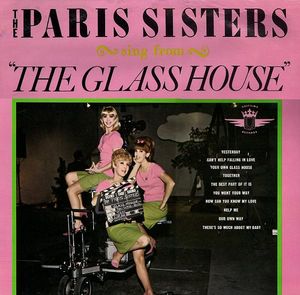
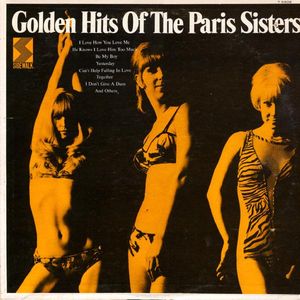
PINK FLOYD-CRE/ATION: THE EARLY YEARS 1967-1972.
PINK FLOYD-CRE/ATION: THE EARLY YEARS 1967-1972.
One box set that divided opinion during 2016, was Pink Floyd’s The Early Years 1965–1972. It featured eleven CDs, DVDs, blu-ray discs, vinyl, and memorabilia. There was everything from unreleased material to live recordings and non-album singles. The Early Years 1965–1972 was marketed as the most comprehensive overview of the first seven years of Pink Floyd’s recording career. However, it came at a price.
That price was £375. The Early Years 1965–1972 was the most expensive box set of recent years. This was bound to divide the opinion of even the biggest Pink Floyd fans.
Pink Floyd fans were divided. Many Pink Floyd had no qualms about buying what was a comprehensive overview of the band’s career. There was twenty-five hours of music on a variety of different formats. This had never been released before. For fans who had followed Pink Floyd’s career for over fifty years, this was a must-have box set. This was a once in a lifetime purchase. Other Pink Floyd fans weren’t so understanding.
Indeed, from the moment The Early Years 1965–1972 was announced, their had been outrage among Pink Floyd fans. They took umbrage at the price point. Some tried to calculate how much each item would cost individually. Having done so, they decided that The Early Years 1965–1972 wasn’t value for money. Even when each item was taken into account. Some Pink Floyd fans felt they were being exploited.
2016 had already been an expensive year for Pink Floyd fans. During 2016, Pink Floyd’s albums were being rereleased on vinyl. Despite having bought the albums several times on different formats, many Pink Floyd fans dug deep and bought the reissues. Unfortunately, there have been reports that a small number of copies of the reissued albums were faulty. So when The Early Years 1965–1972 was announced and the price set at £375, this was the straw that broke the camel’s back.
To make matters worse, on 5th November 2016, six days before the release of The Early Years 1965–1972, an announcement was made via social media that proved somewhat embarrassing for Pink Floyd. Due to an error, The Early Years 1965–1972 would included an extra disc, Live At Pompeii.
The Live At Pompeii CD had been placed inside the Volume 6: 1972: Obfusc/ation box set, instead of the 2016 mix of the Obscured By Clouds album. As a result, a copy of Obscured by Clouds was included separately in a plastic wallet. It was an embarrassing mistake, and one that critics of the pricing The Early Years 1965–1972 gleefully pointed out.
By then, rumours were doing the rounds that The Early Years 1965–1972 wasn’t the only way to hear most of the material in the box set. These rumours proved to be true. What Pink Floyd were intending to do, was release the six of the seven volumes separately. Only the seventh volume wouldn’t be released. This meant that everyone had the opportunity to hear most of the music on The Early Years 1965–1972. It was idea that should’ve been applauded.
Many people had no interest in the DVDs, blu-rays or singles. All they wanted to hear was the music on the seven volumes. So releasing the six volumes was the next best thing. Meanwhile, many people were happy to make to with another two CD set that was released by Pink Floyd Records on the 11th November 2016, Cre/ation: The Early Years 1967–1972.
This was the equivalent to a sampler, that featured some of the highlights of The Early Years 1967–1972 box set. A total of twenty-seven tracks had been chosen and feature on the two discs on Cre/ation: The Early Years 1967–1972. This was an important period for Pink Floyd.
The Piper At The Gates Of Dawn
Their recording career began when they realised The Piper At The Gates Of Dawn on the 4th of August 1967. It reached number six in the UK and 131 on the US Billboard 200. This resulted the album being certified gold in Britain and later, in America. For Pink Floyd, this was the start of forty-seven year recording career. During this period, Pink Floyd released a total of fifteen albums, two soundtracks and three live albums. Sadly, one of Pink Floyd’s founders, Syd Barrett only played on their first two albums.
Syd Barrett’s Pink Floyd swan-song was A Saucerful Of Secrets, which was released on 28th of June 1968. It reached number nine in the UK and was certified silver. Sadly, by the time the album was released, Syd Barrett had left Pink Floyd.
His mental health had been deteriorating since mid-1967. This continued right up until the end of 1967. By then, Syd Barrett’s mental health was deteriorating. He was one of the earliest musical acid casualties. One of music’s potential greats would be reduced to playing a minor role on Pink Floyd’s sophomore albums.

A Saucerful Of Secrets.
That was tragic. Syd Barrett had written the majority of The Piper At The Gates Of Dawn. He played a reduced role on A Saucerful Of Secrets. Syd Barrett wrote just the one song, and left the band later in 1968, before the album was completed. Pink Floyd were reduced to a quartet.
By then, Pink Floyd’s lineup featured Roger Waters, Nick Mason, Rick Wright and David Gilmour. He was the most recent addition, joining in January 1968. However, Pink Floyd only played as a five piece between the 12th and 20th January 1968. That would be the lineup of Pink Floyd that featured on the other albums Pink Floyd released between 1967 and 1972.
Just a month after the release of their sophomore album, Pink Floyd contributed Interstellar Overdrive to the soundtrack of Tonite Lets All Make Love in London. The soundtrack was released on 8th July 1968. This must have stimulated Pink Floyd’s interest in soundtracks.

More.
Pink Floyd’s next album was More, which was released on the 13th of June 1969. More was their third album and their first venture into the world of soundtracks. They had contributed just one track to Tonite Lets All Make Love in London. This time, though, Pink Floyd wrote the entire soundtrack to More. It reached number nine in the UK and 153 in the US Billboard 200. However, in France More reached number two and was certified gold. Since then, More has been oft-overlooked and is without doubt, one of Pink Floyd’s most underrated albums.
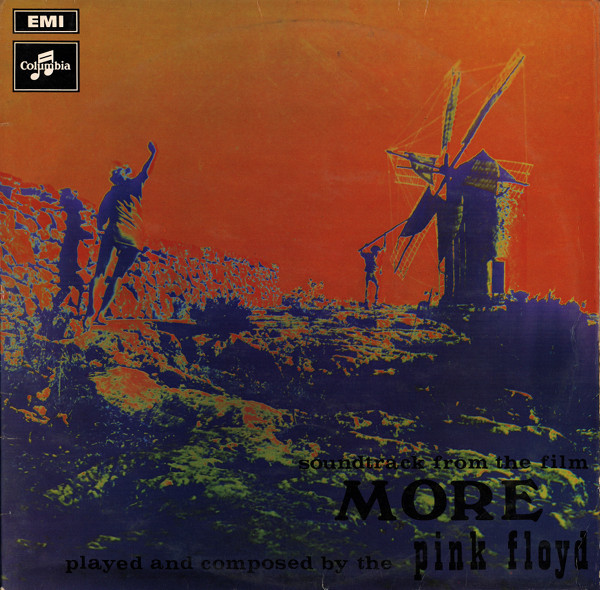
Ummagumma.
Later that year, on 25th of October 1969, Pink Floyd returned with their first double album, Ummagumma. It was a mixture of live material and tracks recorded in the studio. This proved to be the most popular album of Pink Floyd’s career. Ummagumma reached number five in Britain and seventy-four in the US Billboard 200. This resulted in a silver disc in Britain, gold discs in France and Germany and a platinum disc in America, where Ummagumma sold over a million copies. Pink Floyd were now well on their way to becoming one of the biggest bands in the wold.

As the seventies dawned, Pink Floyd returned to the world of soundtracks. When the soundtrack to Zabriskie Point was released in February 1970, it featured a trio of tracks from Pink Floyd, Heart Beat, Pig Meat, Crumbling Land and Come In Number 51, Your Time Is Up. The latter is a rerecording of Careful with That Axe, Eugene. However, later in 1970, Pink Floyd returned with their first studio album of the seventies, Atom Heart Mother.
Atom Heart Mother,
When Atom Heart Mother was released on the 2nd of October 1970, it gave Pink Floyd their first number one in Britain. Atom Heart Mother reached fifty-five in the US Billboard 200, becoming the highest chart placing of any Pink Floyd album. Elsewhere, Atom Heart Mother was proving to be the most successful album of Pink Floyd’s three year recording career. It was certified gold in Britain, America, Austria, France and Germany. However, for Pink Floyd, things were about to get even better.

Meddle.
Just over a year later, Pink Floyd released Meddle on the 5th November 1971. It reached number three in Britain and seventy in the US Billboard 200. Again, Meddle sold well across Europe, North America and Australasia. Meddle was citified gold in Germany, two times gold in France, platinum in Britain and double platinum in America. Pink Floyd were now one of the world’s most successful groups.

Obscured By Clouds.
To some extent, the success continued when Pink Floyd released Obscured By Clouds on the 2nd of June 1972. It was based on the soundtrack to the French film La Vallée, which was directed by the Iranian director and producer Barbet Schroeder. He had asked Pink Floyd to provide the soundtrack to La Vallée. Pink Floyd agreed, and the result was Obscured By Clouds. Despite reaching number six in the UK and forty-six in the US Billboard 200, the album was only certified silver in Britain and gold in America. However, the period between 1967 and 1972, which is documented and celebrated on Cre/ation: The Early Years 1967–1972.
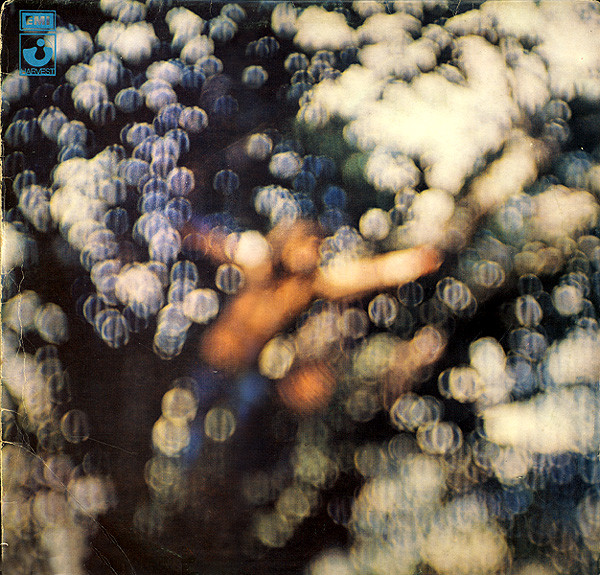
Disc One
Disc one of Cre/ation: The Early Years 1967–1972 opens with two of Pink Floyd’s best known tracks from the early part of their career, Arnold Layne and See Emily Play. There’s also 2010 remixes of Matilda Mother from The Piper At The Gates Of Dawn and Jugband Blues from A Saucerful Of Secrets. Another of the 2010 remixes is the rocky jam In the Beechwoods. It’s never been officially released before, and is a welcome addition to disc one. However, the decision to remix these tracks will divide opinion. Some Pink Floyd fans will see this as sacrilege. Others will see it as an interesting exercise. Having said that, remixing albums which seems to fashionable is another matter.
Paintbox was originally recorded for The Piper At The Gates Of Dawn. However, it never made it onto the album, and made its debut on the 1971 Relics compilation. When The Piper At The Gates Of Dawn box set was released in 2007, Paintbox was included. Its psychedelic sound is a welcome addition to Cre/ation: The Early Years 1967–1972.
So too is the 1968 single Point Me At The Sky and the B-Side Careful With That Axe, Eugene. There’s also the version of Embryo that featured on Harvest Records sampler Picnic. However, one track many people could’ve lived without is the US Radio ad for Ummagumma. It interrupts the flow of disc one, is a disappointing inclusion.
A welcome addition on disc one are a quartet of tracks Pink Floyd recorded for a BBC Radio Session, on 12th May 1969. Back then, the BBC had the best equipment and engineers. They ensured that the recordings made were of the highest quality. That is apparent on Grantchester Meadows, Cymbaline, Green Is the Colour and Careful With That Axe, Eugene. These tracks show how Pink Floyd had matured and evolved as a band. They were better songwriters and musicians, and were a much tighter unit. That’s apparent on the version of Interstellar Overdrive that was recorded at the Paradiso, Amsterdam, during August 1969. It closes disc one of Cre/ation: The Early Years 1967–1972.
Disc Two.
The first five tracks were written and recorded for the soundtrack to Zabriskie Point. However, only three tracks made it onto the original soundtrack. Even when Zabriskie Point was reissued, On The Highway, Auto Scene Version, The Riot Scene, Looking At Map and Taking Off weren’t included. These versions however,aren’t the original versions. Instead, they’re the
Zabriskie Point remixes. Some Pink Floyd fans may have preferred the original version, but the remixes give them an opportunity to hear these long lost tracks. They’re among the hidden gems in Pink Floyd’s back-catalogue.
Among the other tracks on disc two are an alternate version of Embryo, which was recorded at a BBC Radio Session on 16th July 1970. There’s also a version of Atom Heart Mother live at Montreux, on the 21st of November 1970. Nothing, Part 14 which is seven minutes long, is described as work-in-progress. It was recorded in 1970, and is an interesting addition. One can’t help wonder what it might have become if it had been completed? The other three tracks on disc two are 2016 remixes. This includes Childhood’s End, Free Four and Stay from Obscured By Clouds. These remixes allow the listener to compare and contrast to the original. Good as they are, most Pink Floyd purists will prefer the original. Having said that, these remixes are a taster of what can be found within the The Early Years 1965–1972 box set.
Maybe the twenty-seven tracks on Cre/ation: The Early Years 1967–1972 will persuade some Pink Floyd fans to purchase The Early Years 1965–1972 box set. However, it’s a limited edition, and there’s every chance the box set will soon sell out. Many people however, will be put off by the price point.
They may decide not to upgrade their copy of Cre/ation:The Early Years 1967–1972. Some may decide to buy the six volumes separately. However, that will depend upon the price point. If it’s too high, many Pink Floyd will forego copies of the forthcoming six volumes. That is understandable. There is only so often that a band can go to the well.
After a while, fans of any band, including Pink Floyd begin to feel like a cash cow, whose raison d’être is to top up the pension fund of their heroes. That’s a sad state of affairs, and a long way from when Pink Floyd were formed in what was a brave new musical world. Maybe though, Pink Floyd will have learnt from their mistakes with the pricing of The Early Years 1965–1972 box set, and the six forthcoming volumes from the box set will be priced reasonably. Ideally, the price point would be the same as most legacy box set. This would be the perfect way for Pink Floyd to thank their loyal fans who have bought fifteen albums, two soundtracks, three live albums and nine compilations. The most recent Pink Floyd compilation is Cre/ation:The Early Years 1967–1972. With its singles, B-Sides, unreleased tracks, remixes and live tracks it’s a tantalising taste of what’s in-store in for Pink Floyd fans on the The Early Years 1967–1972 box set and the six forthcoming volumes that will be released later in 2017.
PINK FLOYD-CRE/ATION: THE EARLY YEARS 1967-1972.




ASHRA-CORRELATIONS COMPLETE BOX SET.
ASHRA-CORRELATIONS COMPLETE BOX SET.
When Manuel Göttsching released Inventions For Electric Guitar in 1975, this was meant to be the start of a new chapter in his career. Inventions For Electric Guitar was meant to be Manuel Göttsching’s debut solo album. Some eagle eyed record buyers weren’t so sure about that.
Atop the album cover to Inventions For Electric Guitar’s album were the words Ash Ra Tempel VI in small print. This muddied the waters somewhat. Did this mean that Inventions For Electric Guitar was the sixth album by Ash Ra Tempel? Maybe Manuel Göttsching had been talked into releasing one more Ash Ra Tempel album and this was the band’s swan-song? Some record buyers weren’t convinced.
If that was the case, why put Manuel Göttsching’s name on the album cover? Maybe this was paving the way for his solo career? The debate and confusion continued.
Nowadays, though, Inventions For Electric Guitar is regarded as Manuel Göttsching’s debut album. It seemed that the addition of Ash Ra Tempel VI was part of Ohr Records’ marketing campaign. Ash Ra Tempel was already a relatively well known ‘brand name’ within German music. So if record buyers didn’t recognise Manuel Göttsching’s name, there was every chance they would recognise Ash Ra Tempel. Inventions For Electric Guitar was indeed, a new chapter for him.
This new chapter continued in 1976. So did the confusion. The first place that Manuel Göttsching released his sophomore solo album New Age Of Earth, was in France. Again, the album bore the Ash Ra Tempel name. However, despite bearing the Ash Ra Tempel name, New Age Of Earth was a solo album. Manuel Göttsching had composed, played all the instruments and produced New Age Of Earth at his Studio Roma in Berlin. It seemed that the continued use of the Ash Ra Tempel name was proving problematic.
So when Manuel Göttsching signed to Virgin Records in the spring of 1977, he decided to dispense with the Ash Ra Tempel name. However, rather than release his solo albums as Manuel Göttsching, he made the decision to release them as Ashra. The first album to feature the Ashra name was New Age Of Earth. This added to the confusion.
Now there were two different versions of New Age Of Earth available. The French version bore the name Ash Ra Tempel, and the British version was credited to Ashra. However, Ashra were about to play a flying visit to Britain to promote the New Age Of Earth.
Ashra arrived in Britain in August 1977, not long after the release of New Age Of Earth. The purpose of the visit was twofold. There was the usual round of promotion meeting and gland-handling that accompanied the release of any album. Considering New Age Of Earth was Ashra’s debut for Virgin Records in Britain, there was more promotion than usual. Part of this was the second reason for the visit to London, a concert.
This was no ordinary concert. Ashra were going to play a concert at the Open-Air Theatre in Regents Park. This would mark the debut of Ashra. For Ashra, this was a high profile concert. So Manuel Göttsching brought with him, a couple of his musical friends.
To accompany him, Manuel Göttsching had brought along Lutz Ulbrich and Harald Grosskopf. They would accompany him when he took to the stage at the Open-Air Theatre in Regents Park. This would introduce the world to Ashra, and hopefully, put an end to the confusion. After this, Ashra had to return home. Manuel Göttsching had a new album to record.
Under the terms of his recording contract, Ashra had to begin work on his new album almost immediately. So on his return to Berlin, Manuel Göttsching began work on his next solo album. Recording began at Manuel Göttsching’s own Studio Roma in September 1977. He wrote and record a total of six tracks. They became Blackouts, his third solo album. It would be released by Virgin Records in 1978.
Before that, Ashra were due to fly out to Japan in late 1977. Despite being a solo artist, Manuel Göttsching decided to enlist the help of a couple of his musical friends for the Japanese tour. For the forthcoming Japanese tour, Manuel Göttsching was joined by Lutz Ulbrich and Harald Grosskopf. They became the expanded lineup of Ashra.
With the newly expanded lineup of Ashra in tow, Manuel Göttsching embarked upon the Japanese tour. It proved a huge success, with the new lineup of winning friends across Japan. After the success of the Japanese tour, Manuel Göttsching returned home, and his thoughts turned to his next album.
By then, the next Ashra album had been recorded, and Blackouts would be released in 1978, Manuel Göttsching couldn’t afford to rest on his laurels. He would need to begin work on the followup early in 1978. Most people expected it to be a solo album. After all, Manuel Göttsching had embarked upon a solo album in 1975. Since then, his star was in the ascendancy. His first two album Inventions For An Electric Guitar and New Age Of Earth were received to critical acclaim and furthered Manuel Göttsching’s reputation as a pioneer and and of the leading lights of German music. So why change what was a winning formula?
Despite this, Manuel Göttsching was beginning to think that the next Ashra album wouldn’t be a solo album. Especially given how well the trio had played during the Japanese tour. Maybe the trio should reunite for the next Ashra album. Eventually, Manuel Göttsching decided to ask Lutz Ulbrich and Harald Grosskopf to join him for the recording of his next album. That album would become Correlations, which was recently reissued as the Correlation Complete five disc box set.
Correlations.
When Manuel Göttsching decided to ask Lutz Ulbrich and Harald Grosskopf to join him for the recording of the next Ashra album, the pair agreed. For Lutz Ulbrich this was just like the old days, when he and Manuel Göttsching were both members of Ash Ra Tempel. The pair had recorded and released five albums between 1971 and 1973. Correlations was the first time they had recorded together for five years.
Before the record sessions began, Manuel Göttsching began rehearsing. For the rehearsals, he took Ashra to the old Ufa film studios in Berlin. Manuel Göttsching had managed to book one of the large rooms. This the other members of Ashra thought, was the perfect place to rehearse. This was just as well, it would be their second home for three weeks.
Before the rehearsals could begin, Ashra began to setup their instruments and equipment. The other thing he brought along was his trusty old Revox A77 mono tape recorder.
With the equipment setup, Manuel Göttsching pressed play as Ashra began to jam. That was all they did for the next three weeks. These lengthy sessions were recorded and would eventuality form the basis for the album.
After the rehearsals, the framework for some of the album. in place. Eventually, eight tracks were composed. Ice Train, Morgana Da Capo and Pas De Trois were written by the three members of Ashra. Manuel Göttsching wrote Oasis, Bamboo Sands and Phantasus. The other track on the album was Springtime. These tracks were recorded at three studios.
After the rehearsals, Ashra began work on the the album. Much of the recording took place at Erd-Studios, in Berlin with Ashra taking charge of production. Ashra brought along an array of traditional and modern equipment. This included Lutz Ulbrich’s guitar, synth strings, piano and mellotron. Drummer and percussionist Harald Grosskopf also brought along his synths. Manuel Göttsching came armed with an array electric guitars and synths. He also took charge of sequencing parts of Correlations. The recording took time, but eventually, Ashra completed the album.
With the album recorded and mixed, Ashra were ready to let executives at Virgin Records hear the new album. This new album, Ashra planned to call Phantasus.
When Ashra played Phantasus to the executives at Virgin Records, they weren’t impressed by the album. It wasn’t quite there yet they felt. There was still work to be done on the album.
For the three members of Ashra, this was a huge blow. They had spent months recording the album. However, Ashra seemed to be on the right road. They didn’t to rerecord the entire album. Some parts of the album had to be rerecorded.
Over the next weeks and months, the members of Ashra locked themselves away in the studio to salvage the album. Gradually, the album began to take shape. One track, Springtime didn’t make it onto to what became Correlations. Instead, it was replaced by Oasis, a Manuel Göttsching composition. Once the rerecording was complete, Manuel Göttsching handed the tapes over to the three engineers who had been chosen to remix the album.
Two studios and three engineers were used to remix Phantasus. Remixing took place at Audio Studio, in Berlin and at Panne-Paulsen Studio, in Frankfurt. The three engineers that were used were Udo Arndt, Eberhard Panne and Mick Glossop. He who ended up receiving a credit as co-producer. For Ashra, the decision to remix Phantasus was an expensive one, but one that paid off.
Phantasus which was renamed as Correlations, was a genre classic in waiting. When it was eventually released in 1979, critical acclaim would accompany the release of Correlations.
It was a genre-melting album where Ashra married elements of ambient, avant-garde, Berlin School, electronica, funk, jazz, Krautrock, post rock, progressive rock and rock.The result was an album where Ashra, now a fully fledged band, moved towards a much more rock oriented sound. This should’ve brought Ashra to the attention of a much wider audience.
Until then, Ashra had slipped under the musical radar, both at home and abroad. That was the case with the majority of the Krautrock and Berlin School bands and artists. While Ashra were by no means selling vast amounts of albums, they were more popular than many of their contemporaries. Ashra had also released several classic albums.
Correlations was just the latest. It marked another turning point in the chameleon like career of Manuel Göttsching. He had continually reinvented his music since the earliest days of Ash Ra Tempel. That had been the case since he Manuel Göttsching as a solo career. Now though, he was back as a member of a band, Ashra.
Their career had gotten off to a false start when they were Virgin Records rejected the original version of Phantasus. Maybe that was for the best? Ashra returned with a stonewall classic album Correlations Complete. It was recently reissued by MIG as a five disc box set. This is the perfect way for newcomers to discover a true classic album, Correlations.
Disc one of the Complete Correlations box set features the version of Correlations that was released in 1979, and has since become part of German musical history. Despite being regarded as a classic album, it’s an album that still divides the opinion of many music lovers. Even today, there are many people who prefer the original version of Phantasus.
That’s despite Correlations being regarded as a classic. They will be able to rediscover Phantasus. Similarly, newcomers to Correlations and Phantasus will be able to make their own mind hear both albums. While Correlations features on disc one of the Complete Correlations box set, the original version of Phantasus has been included and features on disc two.
It’s what Phantasus sounded before parts were rerecorded and the album remixed. The inclusion of Phantasus allows the listener to compare and contrast the original version of Phantasus with what later became Correlations.
What’s immediately apparent is that the track listing to Phantasus is quite different. Although Ice Train opens the album, Phantasus is followed by Bamboo Sands and Springtime, which was left off Correlations. It’s followed by Club Cannibal, Morgana Da Capo and Pas De Trois. Although great thought has gone into the sequencing of Phantasus, and the album ebbs and flows nicely, it’s not quite as good as Correlations.
Good as Phantasus sounds, tracks like Ice Train, Club Cannibal, Bamboo Sands have a much more polished and complete sound on Correlations. Some of the tracks on Phantasus sound slightly unfinished. They required the extra work that Ashra put in. This extra effort paid off.
Especially, the glacial symphonic sounding Morgana Da Capo and Pas De Trois, which is much more reminiscent of Ashra’s solo albums. While many of the songs on Correlations were longer than the original versions, Phantasus has been edited and although slightly shorter has a much more focused sound that marries Ashra’s old and new sounds. This brought to an end what was a much slicker and polished album that was a classic in waiting. The only disappointment was the omission of Springtime, which deserved to find its way onto Correlation. That would be the only way to improve on what’s a classic album.
During the recording of Correlations, Ashra recorded much more than a classic album. Some of these recording featured on the other three discs in the Correlations Complete box set. They’re all entitled The Making Of.
On disc three, The Making Of there’s three tracks recorded during the Correlations sessions. This includes Paradise Express. a forty-six minute epic jam. It’s a tantalising reminder of Ashra in full flight. The other two tracks are After The Flood and Steamer, which is another lengthy jam. This time though, it clocks in at just under sixteen minutes where Ashra enjoy the moment to stretch their legs and play with freedom and inventiveness. That is the case throughout The Making Of.
It’s as if the three musicians are enjoying being part of a group again. This shines through on disc four. The Making Of comprises just four tracks. Three are lengthy jams, where Ashra play with freedom, fluidity and invention on Promotion which lasts a total of fifteen minutes. However, that’s nothing compared to Tempus Fungi and Donna Wetter. They’re twenty-two and twenty-seven minutes long respectively. D’Accord which closes disc four lasts a mere five minutes, but oozes quality as Ashra feed off each other and encourage each other to greater feats of inventiveness. These tracks are a fascinating snapshot of the making of what was a classic album, Correlations.
So are the five track on disc five in the Correlations Complete box set. The ten minutes of A Scottish Flavour proves an amuse-bouche, as give way to a sprawling thirty-nine version of Pas De Trois. No Angel No Cry is something of a hidden gem, while the versions of Ice Train is a mere four minutes long. It sounds as if this is was the version that gave birth to the track? However, The Formula at 12.44 long, is the final track on the three discs that document and celebrate The Making Of
Correlations. It was the latest classic album from Ashra, which had been reinvented as a trio for Correlations. This was a new chapter in the career of Manuel Göttsching, as Ashra’s music moved towards a much more rock oriented sound. Forever the musical chameleon, Manuel Göttsching continued to reinvent his music, to ensure that it stayed relevant His determination to reinvent his music paid off, and the result was another innovative, genre-melting album, Correlations.
With his new band, Ashra created a genre-melting album where they married elements of ambient, avant-garde, Berlin School, electronica, funk, jazz, Krautrock, post rock, progressive rock and rock. The resultant album, Correlations became a classic album, and introduced Ashra to a much wider audience.
Thirty-seven years after the release Correlations, MIG decided to reissue the album as a five disc box set. Correlations Complete features Correlations on disc one. Then on disc two, there’s the original version of Phantasus which was rejected by Virgin Records. Discs there to five are entitled The Making Of, and trace the birth of Correlations. There are early versions of the songs and lengthy jams which were recorded during the rehearsals and recording of Correlations. It’s the most comprehensive reissue of Correlations. However, the remastered version Correlations Complete has been reissued before.
Although Correlations Complete was advertised as a new release, it’s actually a reissue of MIG’s 2008 box set. This is something they’ve done before. That might not bother people who don’t have a copy of Correlations Complete. However, for those who own the 2008 version of Correlations Complete, there will be no point in purchasing this box set. For everyone else, the recent reissue of the Ashra Correlations Complete box set will be a welcome addition to a any collection. Especially for connoisseurs of the Berlin School and Krautrock. For them, Correlations Complete is everything you wanted to know about Correlations, but were too afraid to ask.
ASHRA-CORRELATIONS COMPLETE BOX SET.






FREE-REMASTERS 1969-1973.
FREE-REMASTERS 1969-1973.
It’s not often that someone get the opportunity to witness history being made. Those that happened to be in the Nag’s Head pub, in Battersea, London on 19 April 1968 saw history being made. They watched as four young men took to the stage for the first time. What some members of the audience noticed was how young the band were.
Two of the band didn’t look old enough to buy a round in the Nag’s Head. Especially the bassist. Andy Fraser was just fifteen. His partner in the rhythm section, drummer Simon Kirke, was eighteen. Lead guitarist Paul Kossoff was just seventeen, while the vocalist Paul Rodgers eighteen. Many of the regulars were veterans gig goers, and weren’t expecting much of the young band. They were in for a pleasant surprise as the young blues rock made their debut. However, nobody present that night what would happen over the next five years.
By November 1968, Alexis Korner had christened the nascent band Free. They would sign to Island Records in 1969, and later that year, recorded their debut album Tons Of Sobs. It would be released in 1970, and the first of six studio albums and one live album Free released between 1969 and 1973. During that period, the band broke up, the lineup changed several times and Free sold twenty-million albums. Sadly, Free split-up in 1973, and that was the end of the road for the hard rock pioneers. Their albums were recently reissued by Island Records, and document the history of Free.
Tons Of Sobs.
Having recently signed to Chris Blackwell’s Island Records, London based blues rockers Free entered the Morgan Studios, in London with producer Guy Stevens. He had been allocated a budget of just £800 to produce what became Tons Of Sobs. This was going to be a challenge.
Free were one of the youngest bands Guy Stevens had worked with. Despite their youth, Free had spent the last few months playing live. This allowed them to hone their sound and set. That set Free would replicate at Morgan Studio.
Free’s set included a number of tracks by lead vocalist Paul Rodgers. He wrote Over the Green Hills (Pt. 1), Worry, Walk in My Shadow, Sweet Toot and Over The Green Hills. Paul Rodgers also cowrote three other tracks. This included Wild Indian Woman and I’m A Mover with Andy Fraser plus Moonshine with Paul Kossoff. The other two tracks were cover versions. They were St. Louis Jimmy Oden’s Goin’ Down Slow and The Hunter which was penned by the Stax Records’ house band by Booker T. and The MGs. This combination of cover versions and new songs would become Free’s debut album Tons Of Sobs.
With such a limited budget, Guy Stevens decided to take a minimalist approach to recording Tons Of Sobs. This he hoped, would allow him to replicate how Free sounded live. Their sets showcased the blues rock sound that was then popular in late-1968.
When Free arrived in the studio, drummer and percussionist Simon Kirke joined bassist and pianist in the rhythm section. Meanwhile, Paul Kossoff switched between lead and rhythm guitar. Paul Rodgers took charge of the lead vocals. As Free played, they were loud, raw and far from polished. That was no surprise given Free’s youthfulness and inexperience. Given time and a bigger budget, Guy Stevens could’ve overcome this.There was a problem though.
Island Records expected all producers to complete an album on time and within budget. It didn’t matter who the artists was, whether they were making their debut or were veterans. Guy Stevens succeeded, and Tons Of Sobs was completed in December 1968. However, given more time and money, Guy Stevens could’ve produced a much slicker, polished album. In a way, this was just as well, as Tons Of Sobs was representative of Free in the early part of their career.
Just three months after the completion of Tons Of Sobs, Island Records were preparing for the release of Free’s debut album. It was scheduled for release on 14th March 1969. The reviews had been mixed.
In Britain, Tons Of Sobs had been well received by critics. They were won over by Free’s raw and raucous blues rock sound. However, across the Atlantic, Rolling Stone magazine weren’t impressed by Tons Of Sobs. This was no surprise. The magazine seemed to dislike any British blues rock band. Free were just the latest to incur the wrath of Rolling Stone. This was disappointing, as it was an influential publication in America, and could affect sales of Tons Of Sobs.
Ironically, when Tons Of Sobs was released on 14th March 1969, the album fared better in America than Britain. Tons Of Sobs failed to chart in Britain, but crept into the US Billboard 200 at a lowly 197. For Free and Island Records, the commercial failure of Tons Of Sobs must have been a huge disappointment. Despite this, Free continued to record their eponymous sophomore album.
Free.
Work began on Fee in January 1969, and the band spent the next six months recording their eponymous sophomore album. This time, Paul Rodgers cowrote most of Free with Andy Fraser.
Their songwriting partnership began on Tons Of Sobs and began to blossom on Free. They penned eight tracks and cowrote Trouble on Double Time with drummer Simon Kirke. These songs were recorded with a new producer.
This time around, Island Records’ owner Chris Blackwell decided to produce Free. He joined Free at Morgan Studio and Trident Studio, London. Drummer and percussionist Simon Kirke was joined in the rhythm section by bassist Andy Fraser who also played piano and rhythm guitar. Paul Kossoff playedlead and rhythm guitar, and Paul Rodgers added the lead vocals. When it came to recording Mourning, Sad Mourning, flautist Chris Wood was drafted in. Gradually, the album began to take shape. Eventually, after six months of recording in two studios, Free was complete.
Four months after the completion of Free, the album was released in October 1969. By then, the album had been well received by most critics. They noticed the Free’s music was evolving from their blues rock roots. There’s a move towards classic rock and hard rock. However, on Lying In The Sunshine and Mourning Sad Morning there’s a folk rock influence. Free’s music was changing, and changing fast. Their sophomore album was a much more polished and mature album.
Partly, this was because of the new role that Andy Fraser’s bass played on Free. It was fulfilling the role of a rhythm guitar, helping to drive the arrangements along, before the lead guitar takes over. However, another of Andy Fraser’s actions didn’t go down well with Paul Kossoff.
He had played all the guitar parts on Tons Of Sobs. On Free, Andy Fraser played some of the rhythm guitar parts. He cowrote each of the nine songs on Free, and decided to teach Paul Kossoff the rhythm guitar parts that he had written for him. This didn’t go down well, and the relationship between the two men. Before they released their sophomore album, all wasn’t well within Free.
When Free was released in October 1969, the album reached twenty-two in the UK. Across the Atlantic, Free failed to trouble the charts. While this was a disappointment, at least Free had made inroads into the British charts. Maybe things would improve when they released their third album Fire and Water?

Fire and Water.
Having released Free in October 1969, Free spent much of the remainder of the year touring. They were spending more and more of their time on the road. Indeed, when Free weren’t in the studio, they were on the road. However, by January 1970 the time came for Free to record their third album Fire and Water.
Just like on Free, the Paul Rodgers and Andy Fraser songwriting partnership cowrote the majority of the album. They five of the seven tracks, including Fire and Water, Remember, Heavy Load, Don’t Say You Love Me and All Right Now. Mr. Big became the first Free song to be written by the four band members. Oh How I Wept was penned by Paul Rodgers and Pau Kossoff. It became part of Free’s third album, Fire and Water.
For Fire and Water, the changes had been rung. There was no sign of producer Chris Blackwell. Instead, Free co-produced Fire and Water with John Kelly and Roy Thomas Baker. This time around, Free went back to basics. Andy Fraser let Paul Kossoff lay down the rhythm guitar parts. It was back to how it had been on Tons Of Sobs.
Recording took place at Trident Studios and Island Studios. Drummer and percussionist Simon Kirke joined bassist and pianist Andy Fraser in the rhythm section. Meanwhile, Paul Kossoff switched between lead and rhythm guitar. Paul Rodgers took charge of the lead vocals on Fire and Water. Recording of the album took six months, and Fire and Water was completed in June 1970.
Fire and Water was released on 26th June 1970. Critical acclaim accompanied an album that was a mixture of blues rock, classic rock and hard rock. This was Free’s most cohesive album. That was the case from the opening bars of Fire and Water to the closing notes of All Right Now. A number of tracks on Fire and Water stood out. This included the rocky album opener Fire And Water and the ballads Oh I Wept, Heavy Load and Don’t Say You Love Me. However, the song that had hit written large all over it, was the album closer All Right Now. That proved to be the case.
When Fire and Water was released on 26th June 1970, the album reached number two in the UK and seventeen on the US Billboard 200. When All Right Now was released as a single, it reached number two in the UK and four on the US Billboard 100. The promoters of one of the major British music festivals were taking note.
After the success of All Right Now, Free were asked to appear at five day Isle of Wight Festival between Wednesday the 26th of August to Sunday the 30th of August 1970. Given their recent success, Free played on the Sunday.
Free opened their set with Ride On A Pony. It gave way to Mr. Big, Woman, The Stealer and Be My Friend. As 600,000 people watched on expectantly, Free played Fire and Water and then I’m A Mover, a cover of The Hunter and their recent hit single All Right Now. However, closing their set at the 1970 Isle of Wight Festival was a cover of Robert Johnson’s Crossroads. It allowed Free to pay tribute to one of the artists who had inspired them to form a band. This band Free, was on its way to becoming one of the biggest in the world.
Highway.
After the Isle of Wight Festival, Free began work on their fourth album Highway. Again, Paul Rodgers and Andy Fraser wrote seven of the nine songs on Highway. They penned The Highway Song, On My Way, Be My Friend, Sunny Day, Ride On A Pony, Brodie and Soon I Will Be Gone. Paul Rodgers and Andy Fraser also cowrote The Stealer with Paul Kossoff, while Paul Rodgers and Simon Kirke wrote Love You So. These songs were recorded at Island Studios, in London.
When work began on Highway, there someone missing, a producer. For the first time, Free were producing an album. They had co-produced Fire and Water. This was the next natural step. However, there was a problem.
All of sudden the spotlight was shawn on Free. They were finding it hard to cope with the newfound success. Especially guitarist Paul Kossoff, whose drug addiction was worsening. He had taken the death of Jimi Hendrix badly. Paul Kossoff idolised Jimi Hendrix, and his death just added to the pressure he was feeling. He wasn’t alone.
Although they were financially secure, the members of Free felt under pressure to produce another hit single that followed in the footsteps of All Right Now. Similarly, it wasn’t going to be easy to replicate the success of Fire and Water. However, Free were determined to try and do so.
Free stuck to the same formula as on Fire and Water. Highway was a mixture of blues rock, classic rock and the hard rock style that Free had been pioneering. To do this, drummer and percussionist Simon Kirke joined bassist and pianist Andy Fraser in the rhythm section. Paul Kossoff played lead and rhythm guitar, while Paul Rodgers took charge of the lead vocals on Highway. The album was recorded during September 1970 at Island Studios.
Three months later, later and Highway released by December 1970. The reviews of the album had been disappointing. To make matter worse, Island Records’ owner Chris Blackwell wasn’t convinced by Free’s choice for the lead single, The Stealer. He preferred Ride On A Pony and felt it had more chance of giving Free another hit single. However, Chris Blackwell allowed Free to have the last word, and The Stealer would be released as a single.
When The Stealer was released as a single, it failed to chart in the UK, but reached number forty-nine in the UK. For the followup, Ride A Pony was chosen. However, it failed to chart on both sides of the Atlantic. This was a huge disappointment.
So was the performance of Highway, when it was released in December 1970. It stalled at forty-one in the UK and 190 in the US Billboard 200. Free weren’t so much disappointed, as shocked at how badly Highway had been received by critics and record buyers. Everyone had a theory on the failure of Highway.
Engineer Andy Johns placed the blame on Highway’s album cover. It didn’t display Free’s name prominently enough he believed. That’s not so far fetched. Nowhere on Highway’s album cover is the word Free. This may have cost Free dearly.
Soon, the post mortem into the failure of Highway began. By then, the relationship between Paul Rodgers and Andy Fraser reached an all-time low. Paul Kossoff’s drug addiction continued to spiral out of control. It was alleged that he had become addicted to Mandrax. Meanwhile, drummer Simon Kirke tried to keep Free from tearing itself apart. This wasn’t easy.
In early 1971, Free returned to the studio, and recorded four more songs. This included My Brother Jake. However, the relationships and problems within the band had worsened. After recording four songs, Free decided to split-up.
Before that, Free had to fulfil the live dates that had been booked. If they hadn’t, the various promoters would’ve sued Free. So they decided to play the remaining live dates, before calling time on Free in April 1971.
Free Live!
By the time Free split-up, My Brother Jake had reached number four in the UK. Record buyers it seemed, hadn’t lost interest in Free. Far from it. Instead, there was a resurgence in interest in Free. Partly, this was because of the success of My Brother Jake and the publicity caused by Free splitting-up. Island Records decided to rush release a live album, Free Live!
Island Records had obviously been planning on releasing a live album. They had sent a mobile recording studio and engineer Andy Johns to two of the towns where Free were especially popular, Sunderland and Croydon. The recordings took place in Sunderland in January 1970 and in Croydon in September 1970.
Eventually, only two tracks from the concert in Sunderland were used, All Right Now and The Hunter. The other four songs, I’m A Mover, Be My Friend, Fire and Water, Ride On Pony and Mr. Big were recorded in Croydon. Tagged on at the end of Free Live! was an acoustic rendition of Get Where I Belong. This was a Paul Rodgers and Andy Fraser song that had been recorded during the recording sessions before Free split-up. It was added as a bonus track to Free Live!, on its release.
Five months after Free had split-up, Free Live! was scheduled to be released in September 1971. Before that, critics had their say on the album. It was well received by critics, who were won over by what was an unusual setlist.Apart from All Right Now, the rest of the songs were album tracks. Free had eschewed the familiar, and dug deeper into their back-catalogue. Free Live! featured spirited performances by a tight, talented and versatile band. They seemed to put their problems aside when they stepped onto the stage. That had been, and would be the case throughout Free’s career. Free seemed happiest as they constantly toured and played live in front of huge, adoring audiences.
When Free Live! wash released in September 1971, it reached number four in the UK. Despite splitting up five months earlier, Free were still a hugely popular band. Across the Atlantic, Free Live! reached just eighty-nine in the US Billboard 200. That seemed like a disappointing way for Free to end their career.
Free At Last.
Although Free had split-up in April 1971, the band decided to reform in early 1972. Unlike many bands, monetary gain wasn’t the reason behind the reunion.
Instead, Andy Fraser, Paul Rodgers and Simon Kirke were determined to save their comrade in arms Paul Kossoff from himself. His drug usage was worsening, and spiralling out of control. Mandrax was Paul Kossoff’s drug of choice, and his addiction had worsened since the demise of Free. When the other three members of Free realised that, they decided to reunite in a last gasp attempt to save Paul Kossoff from himself.
Before work began on Free At Last, the members of Free decided that when it came to songwriting credits, every member of the band would be credited. For Paul Rodgers and Andy Fraser, Free’s principal songwriters, this was a generous and potentially, costly gesture. This however, was part of their attempt to help Paul Kossoff turn his life around.
His drug addiction was proving costly, and he was burning through the money he had made. Paul Kossoff didn’t write many songs, so didn’t have the same income from royalties as Paul Rodgers and Andy Fraser. If the album they were about to record proved successful, this could be lucrative for Paul Kossoff and afford him some financial security.
Recording of Free At Last took place at Island Studios, in London in February 1972. Again, Free decided to produce Free At Last. This was a big risk, as the first album Free produced had been their least successful. However, they were older and more experienced. They had learned from their mistakes as they began work on the nine songs Free had penned.
At Island Studios, drummer and percussionist Simon Kirke joined bassist and pianist in the rhythm section. Meanwhile, Paul Kossoff switched between lead and rhythm guitar. Paul Rodgers took charge of the lead vocals and played piano. The recording sessions went well. Paul Rodgers, Andy Fraser and Simon Kirke were determined that the sessions would run smoothly for the sake of their friend, Paul Kossoff. That proved to be the case, and Free At Last was completed by March 1972.
Once Free At Last was completed, the album was delivered to Chris Blackwell at Island Records. He scheduled the release of Free At Last for June 1972. Before that, critics were sent a copy of Free’s comeback album, Free At Last.
The critics discovered a very different album to Free’s previous albums. The songs were slower, but gradually quickly. Mostly, the songs had a wistful quality. They also had an introspective quality that invited reflection. Given the wistful sound and the lyrics, many critics immediately concluded that that they were about troubled Free guitarist Paul Kossoff? His problems were worsening as the release date approached.
Island Records wanted Free to tour Free At Last. However, Paul Kossoff’s drug addiction continued to worsen. He was struggling to cope and function as a musician. This didn’t auger well for Free At Last tour.
Before that, Free At Last was released in June 1972, and reached number nine in the UK. In America, Free At Last reached sixty-nine. This was Free’s most successful album since Fire and Water. The success continued when Little Bit Of Love was released as a single, and reached number thirteen in the UK. However, the success of Free At Last was overshadowed by the Free At Last tour.
During the Free At Last tour, Paul Kossoff started to miss concerts. Other times, he turned up and was unable to play his guitar. He was struggling to function as a person, never mind a musician. Members of the audience were distraught at the sight of Paul Kossoff. Some openly wept, distressed at what they saw unfolding in front of their eyes. The person who was affected most was Andy Fraser.
He couldn’t bear to watch the events continue to unfold before his eyes. His friend was slowly destroying himself. Andy Fraser decided to leave Free permanently. He was only twenty.
Following in the footsteps of Andy Fraser was Paul Kossiff. The press and public were told he was seeking treatment for his drug addition, and would return to the Free fold.
Meanwhile, the departure of Andy Fraser left a huge void within Free. The search began for a replacement. This was found in the band that Paul Kissoff and Simon Kirke had cofounded after Free split-up in April 1971, Kossoff, Kirke, Tetsu and Rabbit.
Bassist Tetsu Yamauchi joined Free. So did keyboardist John “Rabbit” Bundrick. They made their Free debut during the Free At Last tour. After the tour, the pair would join an extended lineup of Free.
Heartbreaker.
Following the Free At Last tour, the newly expanded lineup of Free began work on their sixth studio album. It was a very different band that headed to Island Studios, in London.
Free had brought bassist Tetsu Yamauchi in to replace Andy Fraser. He was now a full-time member of Free. So was keyboardist John “Rabbit” Burdock. Many fans were puzzled by the decision to bring him onboard.
John “Rabbit” Burdock had been brought to compensate for, and augment Paul Rodgers. He had played keyboards on Free At Last. Since then, he was becoming unreliable. Fearing a repeat of the situation with Paul Kossoff, a replacement was brought onboard for the recording of Heartbreaker. This wasn’t the only change.
Although it was alleged that Paul Rodgers was becoming unreliable, he still played a huge part in the writing of Heartbreaker. In total, Paul Rodgers wrote four of the eight tracks and cowrote two more songs. It seemed that Paul Rodgers was Free’s songwriter-in-chief. Come Together In The Morning, Heartbreaker, Easy On My Soul and Seven Angels were all penned by Paul Rodgers. He wrote Wishing Well and Travellin’ in Style with Paul Kossoff, Simon Kirke, Tetsu Yamauchi and John “Rabbit” Burdock. The new keyboardist contributed Muddy Waters and Common Mortal Man. These two songs, like the rest of Heartbreaker were recorded in the familiar surroundings of Island Studios.
The sessions for Heartbreaker began in October 1972. Just like their two previous albums, Free produced Heartbreaker with Andy Johns. Free whose lineup now numbered five, were joined by a few friends.
As the session began, drummer and percussionist Simon Kirke played rhythm guitar on Muddy Water. He was joined in the rhythm section by bassist Tetsu Yamauchi and Snuffy Walden, who made a guest appearance on three tracks. Meanwhile, vocalist Paul Rodgers played rhythm guitar on four tracks, played lead guitar on two tracks and played piano on Easy On My Soul. Paul Kossoff played lead guitar on just four tracks. The other guest artist was percussionist Rebop Kwaku Baah. He made a brief appearance on Wishing Well. That was his only contribution to Heartbreaker, which took two months to record. By November 1972, Heartbreaker was complete.
There was a problem though. Chris Blackwell didn’t like Free’s mix of Heartbreaker. So much so, that he drafted in Andy Johns to remix Heartbreaker. This resulted in him receiving a credit as co-producer. Now somewhat belatedly, Heartbreaker was ready for release.
With Heartbreaker complete, Island Records scheduled the release for January 1972. This left little time to promote Heartbreaker. Copies were sent out to critics, who hailed Free’s sixth studio album, Heartbreaker as one of their finest. The newly expanded lineup was responsible for what was Free’s finest album since Fire and Water. One track stood out, Wishing Well and was released as a single.
Wishing Well was released as the lead single from Heartbreaker, and reached number seven in the UK. Then in January 1973, Heartbreaker was released to widespread critical acclaim. It reached number nine in the UK, and became Free’s third top ten album in their home country. Across the Atlantic, in the lucrative American market, Heartbreaker reached forty-seven in the US Billboard 200. This was an improvement on Free At Last, and became Free’s most successful album since Fire and Water. However, all this meant nothing to one member of Free.
Two words on the album cover of Heartbreaker resulted in Paul Kossoff reaching his lowest ebb. He was listed as an additional musician. After six studio albums and one live albums, one of the founding members of Free was reduced to the status of sideman. Paul Kossoff was distraught. This was the ultimate betrayal. The question that has to be asked, is who was responsible for this betrayal?
Someone within Free’s camp must have known that Paul Kossoff was going to be listed as an additional musician. The band’s management would’ve been aware of who was being credited for what on Heartbreaker? Indeed, bands are usually asked about credits. Whoever was responsible for this ultimate betrayal sent Paul Kossoff’s life on a downward spiral.
Paul Kossoff was so badly affected that he was unable to travel to America for the forthcoming tour. Free found a replacement in Wendell Richardson from Osibisa. He was nowhere as good a guitarist as Paul Kossoff. Paul Rodgers wasn’t sure Free had recruited the right guitarist.
They hadn’t. Wendell Richardson was the wrong choice. He wasn’t suited to the role. Osibisa were an Afro-pop band. Free were a rock band, whose music ranged from blues rock, to classic rock and heavy rock. Free’s newest recruit was in the wrong movie. Once the American tour was over, Free called time on their career.
This time, it was for good. They had released six studios albums and one live album during the five years they were together. During that period, there had been highs and lows. There had also been bust ups and betrayals, and triumph and tragedy. Free had split-up once before, and the lineup had changed. However, the one constant had been the music.
Free’s music evolved throughout the five years they were together. They began as a blues rock band, before the music began to evolve. Briefly, Free’s music moved towards folk rock. Mostly, though, their albums showcased classic rock, folk rock or hard rock. However, Free never quite turned their back on their early blues rock sound. Sometimes, Free eschewed their hard rocking sound for heartfelt balladry. This showed another side to one of the pioneers of hard rock, Free. Their music found a wide and appreciative audience.
Over the five years Free were together, they hardly stopped touring. That was apart to record six studio albums. Free seemed happiest as they toured the world, playing live. They played 700 arena concerts and festivals. The classic lineup of Free, drummer Simon Kirkem bassist, guitarist Paul Kossoff and vocalist Paul Rodgers were one of the hardest working bands. They’re also one of the most successful.
By the time Free called time on their career, they sold twenty million copes of Tons Of Sobs, Free, Fire and Water, Highway, Free Live!, Free At Last and Heartbreaker. These albums were recently remastered and rereleased by Island Records. They’re one of the greatest British rock groups of the late-sixties and early seventies.
Sadly, though, sometimes, Free are overlooked in favour of Led Zeppelin, Black Sabbath or Deep Purple. However, they enjoyed much longer careers than Free. They seem to have slipped under the radar, and nowadays, most people remember only two of their biggest hits, All Right Now and Wishing Well. That however, is just a tantalising taste of the music Free released between 1969 and 1973.
During that four year period, Free achieved more than most. After all, how many bands sell twenty-million albums during a four year period? Free managed to do so during a period where the competition was fierce. They were up against some of the biggest names in rock. Despite this, Free become one of the biggest and most successful British rock bands, and left behind a rich musical legacy that has stood the test of time.
FREE-REMASTERS 1969-1973.
CREAM-CLASSIC ALBUM SELECTION.
CREAM-CLASSIC ALBUM SELECTION.
Nowadays, Cream are regarded as the first British supergroup. Cream were formed in July 1966 and were together for just over two years. During that period, Cream released a quartet of albums, Fresh Cream, Disraeli Gears, Wheels Of Fire and Goodbye. These albums sold over fifteen million copies worldwide, and influenced everyone from Jimi Hendrix and The Jeff Beck Band to Black Sabbath and Led Zeppelin. Even today, many musicians cite Cream as an influence. So it’s fitting that fifty years after they were formed that Commercial Marketing released the Classic Album box set. It documents Cream’s short, but illustrious successful career.
The Cream story began in July 1966. Eric Clapton who was regarded as the greatest British blues guitarist of his generation, was looking beyond life with John Mayall and The Bluesbreakers. That was the group Eric Clapton had joined after his departure from The Yarbirds
By July 1966, Eric Clapton was in his second spell with John Mayall and The Bluesbreakers. He originally joined in April 1965 and was a Bluesbreaker until August 1965. Three months later, Eric Clapton returned to the fold in November 1965. For the next eight months, Eric Clapton was a Bluesbreaker. During this period, John Mayall and The Bluesbreakers recorded their classic album Blues Breakers With Eric Clapton in April 1966.
Three months later, and Blues Breakers With Eric Clapton was released by Decca on the 22nd July 1966. Critical acclaim accompanied what’s regarded as a British blues classic. It reached number six in the UK charts. This should’ve been a reason to celebrate. However, Eric Clapton was neither happy nor feeling fulfilled musically.
Instead, he felt constrained musically. Eric Clapton was unable to stretch his legs within John Mayall and The Bluesbreakers. There was certainly no room for invention. This was frustrating for Eric Clapton. So much so, that he was even considering forming his own band. However, Blues Breakers With Eric Clapton had just been released and looked like being the band’s most successful album. For Eric Clapton, his nascent career was at a crossroads.
To take his mind off his problems, Eric Clapton decided to go and see blues guitarist Buddy Guy in concert. That night, Buddy Guy took to the stage with a trio. When Eric Clapton saw the trio live, he was so impressed that he decided to form a new band. They would also be a trio, Cream.
Having made the decision to leave John Mayall and The Bluesbreakers, Eric Clapton began looking for musicians to join his band. He knew drummer Ginger Baker, who was a member The Graham Bond Organisation. Ginger Baker was tiring of Graham Bond’s drug addiction and bouts of instability. So much so, that he was considering his future.
When Eric Clapton approached Ginger Baker about joining his trio, the answer was yes. However, there was a catch. Eric Clapton had to agree to hire The Graham Bond Organisation’s bassist Jack Bruce.
Eric Clapton already knew Jack Bruce and played alongside him on two occasions. The first came in November 1965 when Jack Bruce sat in with John Mayall and The Bluesbreakers during November 1965. More recently, Eric Clapton and Jack Bruce were part of Steve Winwood’s band Powerhouse, which also featured Paul Jones. During the two sessions, Eric Clapton had been impressed by Jack Bruce proficiency and prowess as a bassist. Jack Bruce who had previously enjoyed working with Eric Clapton, agreed to join the band. However, he was surprised that Ginger Baker had recommended him to Eric Clapton.
During their time with The Graham Bond Organisation, Ginger Baker and Jack Bruce had a volatile relationship. The two members of the rhythm section were known to argue onstage. Sometimes, things got so bad that they traded blows. However, that was the past. Ginger Baker and Jack Bruce agreed to put their differences aside. A musical truce was declared. Suddenly, there was peace in our time. All for the good of the new group.
With the lineup complete, the nascent band set about establishing the ground rules. They envisaged that songs would be collaborations, with each member playing a part in writing the lyrics and music. Next on the agenda was a name for the group. It didn’t take long for them to come up with the name Cream. The music press had been describing the new band as the: “cream of the crop” of British musicians. Cream was essentially the first British supergroup. They were about to make what was their unofficial debut.
This took place on the 29th of July 1966, at the Twisted Wheel nightclub in Manchester. That night, it was hosting the Sixth Annual Windsor Jazz & Blues Festival. Cream were special guests, and in absence of new material, ran through a set of blues covers. Little did those in the audience realise that they had just witnessed history being made.
Just three months later, in October 1966, Cream took to the stage with another legend of sixties music, Jimi Hendrix. He was a fan of Eric Clapton’s was keen to jam with his new band on his arrival of London. Little did anyone realise that by the end of the sixties, both Cream and Jimi Hendrix would’ve become two of the biggest names of the late-sixties music scene.
Later in 1966, Cream were still experimenting musically. They had yet to decide who would be the group’s lead vocalist. Eric Clapton’s shyness meant he was reluctant to take charge of the lead vocals. Instead, Jack Bruce became Cream’s lead vocalist. However, during Cream’s lifetime, Eric Clapton would add harmonies and the lead vocal on a number of tracks.This included a track on Cream’s debut album Fresh Cream.
Fresh Cream.
Almost straight away, work began on Cream’s debut album, which later became Fresh Cream. It featured ten songs. They were a mixture of new songs and cover versions.
The new songs included Jack Bruce’s N.S.U. and Dreaming. He cowrote Sleepy Time Time with his first wife and songwriting partner Janet Godfrey. She cowrote Sweet Wine with Ginger Baker, who wrote the instrumental Toad. Other songs included a cover of song Cat’s Squirrel, which was arranged by Cream and a quartet of blues classics.
This included Willie Dixon’s Spoonful. Cream decided to cover Robert Johnson’s From Four Until Late which Eric Clapton arranged. It was joined by Rollin’ and Tumblin’ which Muddy Waters penned using his real name, McKinley Morganfield. The final blues classic was Skip James’ I’m So Glad. These songs were recorded over a three month period.
Recording of Fresh Cream took place between July and October 1966 at two separate studios in London. Some sessions took at Rayrik Studios, while others took place at Ryemuse Studios. Drummer Ginger Baker joined bassist Jack Bruce in the rhythm section. He also played harmonica, piano and took charge of seven of the eight lead vocals. Guitarist Eric Clapton added the lead vocal on Four Until Late. Meanwhile, Robert Stigwood produced what would later became Fresh Cream. It was completed by October 1966.
The release of Fresh Cream was scheduled for the 9th of December 1966. Before that, Cream released their debut single Wrapping Paper in October 1966 . It was penned by Jack Bruce and Pete Brown, but didn’t feature on Fresh Cream. Wrapping Paper showcased a psychedelic pop sound that Cream returned to. This proved popular and reached thirty-four in the UK charts. Things were looking good for Cream.
Nearer the release of Fresh Cream, critics had their say on the nascent supergroup’s debut album. Nearly every critic lavished praise and plaudits on Fresh Cream. They were won over by an album that ranged from blues rock to psychedelia and a much more hard rocking sound. Cream’s debut was an eclectic and accomplished album. Especially the psychedelic sound of N.S.U, the bluesy Sleepy Time and the Jack Bruce penned ballad Dreaming. Four Until Late shakes off his shyness and makes his debut on lead vocal on the cover Robert Johnson’s Four Till Late. However, one of Cream’s finest moments on Fresh Cream was their reinvention of I’m So Glad. It’s transformed into something that Skip James could never have envisaged. Given the critical reaction to Fresh Cream, it seemed that the future looked bright for Cream.
They prepared to release Fresh Cream on the 9th of December 1966 on Robert Stigwood’s new independent record label, Reaction Records. The same day, Cream released their sophomore single, I Feel Free. Just like their debut single, it didn’t feature on Fresh Cream. Despite that, I Feel Free reached number eleven in the UK and fifty-three in Australia. Meanwhile, Fresh Cream reached number six in the UK, ten in Australia and twenty in France. This resulted in Fresh Cream being certified gold in Britain and France. The success continued when Fresh Cream was released in America.
The American version of Fresh Cream was released by Atco. It featured a slightly different track listing. I Feel Free opened the album, with the British version of Fresh Cream following. This proved popular among American record buyers. Fresh Cream eventually reached thirty-nine in the US Billboard 200 and was certified gold. For Cream, this meant that their debut album Fresh Cream had been certified gold in three different continents. Critics wondered how they could they followup such a successful album? Cream returned with a classic album, Disraeli Gears.
Disraeli Gears.
Following the success of Fresh Cream, Cream headed out on tour. In March they landed in America, to play their first American tour. They were part of a package tour, and were booked to play nine dates at the Brooklyn Fox Theater in New York.
Each day, Cream played three times. However, the early concerts weren’t well received. DJ turned promoter Murray the K wasn’t impressed. He placed Cream at the bottom of the bill. Towards the end of the run, they were reduced to playing just one song during each set. The New York part of their American tour had been a disaster. They wouldn’t forget Murray the K in a hurry.
Having returned home from their American tour, Cream’s thoughts turned to their sophomore album. They had been writing what later became Disraeli Gears for some time.
When Cream was formed, the plan had been for the band to collaborate on songs. Alas, none of the eleven tracks on Disraeli Gears were written by the three members of Cream. They arranged the traditional song, Mother’s Lament. Sometimes, the members of Cream wrote alone. Jack Bruce wrote We’re Going Wrong and Ginger Baker penned We’re Going Wrong. Mostly, the members of Cream wrote alone or formed songwriting partnerships with other musicians and songwriters.
Jack Bruce and Eric Clapton cowrote Sunshine Of Your Love with Pete Brown. It would become one of their known songs. So would Strange Brew, which Eric Clapton wrote with Felix Pappalardi Gail Collins penned. Meanwhile,Jack Bruce wrote Dance the Night Away, SWLABR and Take It Back with Pete Brown. Eric Clapton wrote just the one song. This was Tales of Brave Ulysses with Martin Sharp. However, Eric Clapton arranged Arthur Reynolds’ Outside Woman Blues. It was one of just three covers on Disraeli Gears. Another was World Of Pain, which the Felix Pappalardi and Gail Collins songwriting partnership wrote. Just like the rest of Disraeli Gears, it was recorded in New York, during May 1967.
The prestigious surroundings of Atlantic Studios, New York were where Cream began work on Disraeli Gears. This time around, Felix Pappalardi had replaced ‘musical impresario’ Robert Stigwood. Twenty-seven year old was a classically trained musician who having turned his back on classical music, became a successful singer, songwriter, bassist and producer. One of his biggest projects was producing Disraeli Gears. It was a much more complex album than Fresh Cream.
Ginger Baker played drums and percussionist and joined his cohort, bassist Jack Bruce in the rhythm section. Jack Bruce also played harmonica, piano and took charge of seven of the eight lead vocals. Eric Clapton switched between lead guitar, rhythm guitar and twelve-string guitar. He also added the lead vocal on Strange Brew, World of Pain and Outside Woman Blues. It seemed that Eric Clapton was well on his way to overcoming his shyness, as Cream changed direction musically.
Critics realised this when they received their promotional copies of Disraeli Gears. It took its name from a malapropism which alluded to the former British Prime Minister Benjamin Disraeli. Eric Clapton had been taking about buying a racing bike during a car journey. Mick Turner who was driving the car responded that it should have: “Disraeli Gears” when he meant derailleur gears. That malapropism gave birth to tittle of the album critics were holding. When they listened to Disraeli Gears, they soon realised that Cream were moving away from the blues’ roots.
That was apart from on the cover of Blind Boy Reynolds’ Outside Woman Blues and Take it Back. It had been inspired by American students burning their draft cards. These were the only bluesy tracks on Disraeli Gears. Mostly, Cream moved towards psychedelia on Disraeli Gears. Tracks like Strange Brew, Sunshine Of Your Love, Dance The Night Away, Tales Of Brave Ulysses and We’re Going Wrong found Cream embracing psychedelia on an album that stood head and shoulders above the competition. Critic acclaim accompanied the release of Disraeli Gears.
On 2nd November 1967, Cream released their sophomore album Disraeli Gears. In Britain, Disraeli Gears reached number six and was certified platinum. Meanwhile, Disraeli Gears reached number two in France and twenty in Norway. Halfway round the world, Disraeli Gears reached number one in Australia and was certified platinum. However, Disraeli Gears was a huge success across North America. It reached number ten in Canada and number four in America. By then, Disraeli Gears had sold over a million copies. This resulted in Cream receiving their first platinum disc in America. However, that wasn’t the end of the success for Cream.
They released Sunshine Of Your Love as a single in January 1968. It reached seventeen in the UK, eighteen in Australia, three in Canada and five in the US Billboard 100. This resulted in Sunshine Of Your Love being certified gold in Britain, Australia and America. After just two albums, Cream were one of the biggest bands in the world. They were keen to build on this success, and began work on their third album, Wheels Of Fire.
Wheels Of Fire.
For their third album Wheels Of Fire, Cream decided to release a double album. This was no ordinary album. The first album was recorded in the studio, while the second disc was entitled Live At The Fillmore. Wheels Of Fire was an ambitious project for one of the most successful bands in the world.
Some of the tracks that became part of disc one of Wheels Of Fire had already been recorded. Others were still to be recorded. A total of nine tracks were chosen.
This included White Room, As You Said, Politician and Deserted Cities of the Heart which were penned by the Jack Bruce and Pete Brown songwriting partnership. Ginger Baker formed a songwriting partnership with Mike Taylor, and cowrote Passing The Time, Pressed Rat and Warthog and Those Were The Days. They were joined by two cover versions, Walter Vinson and Lonnie Chatmon’s Sitting on Top of the World and Booker T. Jones and William Bell’s Born Under A Bad Sign. These nine songs were recorded between July 1967 and June 1968.
The Wheels Of Fire sessions took place at a variety of studios. This included the IBC Studios during July and August 1967. From there, Cream headed Atlantic Studios, New York. They spent January and February of 1968 recording at the famous studios. Later in 1968, Cream returned to Atlantic Studios, New York during June 1968. During the various sessions, Cream used a myriad of instruments.
Each member of Cream had expanded their musical arsenal. Ginger Baker played drums and percussionist. He also added bells, glockenspiel, timpani and add the spoken word part on Pressed Rat and Warthog. Bassist Jack Bruce played acoustic guitar, calliope, cello, harmonic and recorder. Jack Bruce took charge of the lead vocals. Meanwhile, Eric Clapton laid down the guitar parts. Augmenting Cream, was Felix Pappalard, who played organ pedals, Swiss hand bells, tonette, trumpet and the viola. This left just Live At The Fillmore to be recorded.
Despite being entitled Live At The Fillmore, only Toad was recorded at the Filmore in San Francisco on 7th March 1968. However, Toad is transformed and becomes a sixteen minute epic where Cream stretch their legs and improvise. At last, Eric Clapton had the freedom he missed so much during his last spell with John Mayall and The Bluesbreakers. After the show at the Filmore, Cream headed to another venue in San Francisco, Winterland.
Just like at the Filmore, Cream were due to play two shows each night. On first show of 8th of March 1968, Cream’s set included Traintime a Jack Bruce composition. It made it onto Live At The Fillmore. Two nights later, Cream played two more shows at Winterland. During the first show, Cream covered Robert Johnson’s Crossroad and Willie Dixon’s Spoonful. Eric Clapton’s takes charge of the vocal on Crossroads. Later in the set, Cream cover and transform Willie Dixon’s Spoonful. Cream enjoy the opportunity to improvise and take the song in new directions over a sixteen minute period. This was a tantalising taste of Cream live.
Critics agreed when they received their copies of Wheels Of Fire. They were won over by what was an ambitious double album of studio and live recordings. Cream seemed to be maturing as a band. Especially live, where they enjoyed deconstructing and reconstructing songs. That was the case with Spoonful and Toad, which featured Cream at their best live. Critical acclaim preceded the release of Wheels Of Fire
Wheels Of Fire was released during July 1968, and quickly became Cream’s most successful album. It reached number three in the UK, two in France, fifteen in Germany and sixteen in Norway. In Australia, Canada and America, Wheels Of Fire reached number one. This resulted in Wheels Of Fire being certified platinum in Australia, America and British. For Cream this should’ve been a reason to celebrate.
Sadly, all wasn’t well within Cream. It hadn’t been for some time. Musically, the three members of Cream were no longer on the same page. Eric Clapton was now interested in the music that Bob Dylan was producing. He also cast envious glances at Bob Dylan’s former backing band, The Band. He was interested in their music, and the way that it was heading. Meanwhile, the truce Eric Clapton had been brokered between Jack Bruce and Ginger Baker was over. Their arguing was putting pressure on the very future of Cream. It was almost inevitable that the three members of Cream would decide to call it a day.
What had hastened the demise of Cream was when Eric Clapton read a review of Cream in the contrarian publication, Rolling Stone. The reviewer in what was nothing more than a hatchet job of review, resorted to name calling. Cream the reviewer said were a: “master of the blues cliché.” When Eric Clapton read the review, he decided that it was the end of road for Cream.
They embarked upon a Farewell Tour that began in Oakland on 4th October 1968. The tour ended fifteen days later at the Forum, Los Angeles, on the 19th of October 1969. That show was recorded, and became part of of Cream’s final album, Goodbye Cream.
Goodbye.
For their fourth and final album, the three members of Cream returned to London to record three tracks at IBC Studios in London. This included Badge, which Eric Clapton wrote with Beatle George Harrison. Doing That Scrapyard Thing was penned by the Jack Bruce and Pete Brown songwriting partnership. It had been a source of successful song’s during Cream’s lifetime. Ginger Baker contributed What a Bringdown. This meant that each of the members of of Cream wrote new song on their swan-song.
Joining Cream at IBC Studios, was producer Felix Pappalardi. When recording Badge, Doing That Scrapyard Thing and What a Bringdown at IBC Studios, keyboards were used extensively. This was a first. Cream were innovating to the end. Cream also used a Leslie speaker on Badge and Doing That Scrapyard Thing. This added to the psychedelic sound of both tracks. The three tracks that were recorded at IBC Studios became half of Goodbye.
The rest of Cream consisted of a trio of live tracks. They had been recorded at the Forum, in Los Angeles, on the 19th of October 1969. Skip James’ I’m So Glad, Jack Bruce and Pete Brown’s Politician and Walter Vinson and and Lonnie Chatmon’s Sitting on Top of the World featured Cream at their very best.
So much so, that when critics heard Goodbye, they hailed the live tracks as better as those on Wheels Of Fire. This was a glimpse of what Cream were capable of producing live. Similarly, the three songs recorded at IBC Studios were regarded as groundbreaking, and saw Cream reinventing their music. Badge critics said, was the standout track, and without doubt one Cream’s finest hours. It looked as if Cream were about to bow out at the top.
By the time Goodbye was released in March 1969, Cream had been dissolved. They played a farewell concert at the Royal Albert Hall, in London. Despite this, Goodbye reached number one in the UK, three in France, nine in Germany and seven in Norway. In Australia, Goodbye reached number six. Meanwhile, Goodbye reached number five in Canada and number two in America. This resulted in Goodbye being certified platinum in the UK and gold in America and Australia. Cream bowed out at the top, with their fourth albums in just under three years.
Each of these albums were released to critical acclaim and went on to sell in vast quantities. Cream’s four albums were certified gold and platinum on three continents. Britain’s first supergroup became one of the country’s most successful bands. Cream sold over fifteen million copies of Fresh Cream, Disraeli Gears and Wheels Of Fire and Goodbye. That’s why, nowadays, Cream are regarded as rock royalty.
They were also the first British supergroup. Other followed in Cream’s wake. However, Cream achieved more than most in just under three years. Each of their albums found Cream’s music evolving as they continued to create groundbreaking music. This ranged from blues rock to hard rock and psychedelia. All this can be heard on Commercial Marketing’s recently released Classic Album box set. It documents Cream’s short, but illustrious successful career. The quartet of albums Cream’s released between December 1966 and March 1969 can be found in the Classic Album Selection box set. It’s the perfect introduction to the first, and many say best British supergroup, Cream.
CREAM-CLASSIC ALBUM SELECTION.

JODI-POPS DE VANGUARDIA.
JODI-POPS DE VANGUARDIA.
Innovator, pioneer and visionary are just three of the words that were used to describe German composer Karlheinz Stockhausen. His career spanned six decades and nowadays, he’s regarded as one of the most important and influential composers of the 20th Century. Karlheinz Stockhausen was also one of the pioneers of electronic music, aleatoric music, serial composition, and musical spatialisation. He was also a highly respected academic who taught and influenced many musicians and composers.
This included members of Can, Jean-Michel Jarre, Tom Constanten of the Grateful Dead, avant-garde musician Jon Hassell, composers Gerald Shapiro and Gerald Barry. Students travelled from far and wide to study under Karlheinz Stockhausen. Among them, were brothers, Joern and Dirk Wenger, who had travelled all the way from Paraguay to study under Karlheinz Stockhausen.
After the demise of their band The Rabbits, Joern and Dirk Wenger were keen to complete their musical education. Having heard The Beatles Sgt. Peppers Lonely Hearts Club Band and The Beach Boys’ Pet Sounds, the brothers were inspired to create their own experimental music. However, they wanted to take this further. So they travelled from Asunción in Paraguay, to study arts at the Folkwang University of the Arts. That was where they encountered Karlheinz Stockhausen. He taught the two brothers music. The time the Wenger brothers spent studying under Karlheinz Stockhausen was a hugely important and influential part of their musical education.
After their time studying under Karlheinz Stockhausen, the Wenger brothers returned home and began building their own studio. This they christened the Jodi Experimental Studio. The Wenger brothers then spent their time recording what they called spontaneous pop. Some of their recording found their way onto Jodi’s 1971 debut album, Pops de Vanguardia.
Nowadays, Pops de Vanguardia is a real rarity that’s much in demand among record collectors. Given demand outstrips supply, prices of original copies of Pops de Vanguardia are prohibitive, and beyond the budget of most record collectors. Recently, though, Out-Sider Music, an imprint of Guerssen Records reissued Pops de Vanguardia complete with five bonus tracks. They’re a reminder of the Wenger brothers’ spontaneous pop.
Its roots can be traced to Joern and Dirk Wenger’s childhood in Asunción, Paraguay. Their family were industrialists who owned a factory that made paint related products. That factory would later play an important part in the Wenger brother’s musical career.
When they were growing up, their father and grandfather brought a variety of musical instruments into the family home. They taught Joern and Dirk how to play these instruments. Before long, Joern, the eldest brother, could play piano, guitar, violin, bandoneon and solfege. Soon, both brothers had mastered several different instruments. Like teenagers the world over, music began to play an important part in the Wenger brothers’ lives. It offered an escape from the reality of growing up in Paraguay.
Following a coup d’état on the 4th of May 1954, Paraguay was ruled by dictator Alfredo Stroessner. That was the case until 1989. During this period, Paraguay expanded economically and underwent a degree of modernisation. However, the Stroessner regime was an oppressive one. Human rights abuse was commonplace and those that opposed the Stroessner regime did so at their peril. As a result, Paraguay wasn’t the ideal place for the Wenger brothers to embark upon a musical career.
Just like in other countries ruled by dictators, artists, writers and musicians were viewed with a degree of suspicion by the authorities. They were often seen as subversives. However, Joern and Dirk just wanted to make music. That was what they wanted to pour their youthful energy and enthusiasm into. However, they too had a dream.
The Wenger Brothers dreamt of building their own recording studio, and were determined to make this a reality. They had even identified the perfect site for their studio. This was within a disused part of the family factory. With that part of the factory not being used, the two brothers were given permission to turn their dream into reality in 1966.
Once the studio was complete, it was christened the Jodi Experimental Studio. The brothers took the first two letters of each of their christian names (Joern and Dirk) and combined this to create the Jodi name. Joern was sixteen, and Dirk who was nineteen, set about experimenting musically and creating what they called spontaneous pop.
The Jodi Experimental Studio became a musical laboratory, where the two brothers were able to experiment with a myriad of different musical instruments. They were also able to experiment with the latest music recording techniques. There was only one problem.
Paraguay didn’t have a music industry as such. This meant that Joern and Dirk didn’t have access to much of the equipment musicians elsewhere took for granted. Especially effects units. This meant that the brothers had to work out a way to replicate reverb or echo. To do this, Joern and Dirk often laboured long into the night seeking a solution. Usually, they managed to do so as their creativity blossomed.
This continued during 1967. The two brothers immersed themselves in an eclectic selection of music seeking inspiration. Two albums made a big impression on them, The Beatles Sgt. Peppers Lonely Hearts Club Band and The Beach Boys’ Pet Sounds. Sometimes, the Wenger brothers listened to the Bee Gees and James Brown, other times to Little Richard, Louis Armstrong or Oscar Peterson. For the Wenger brothers this was part of their musical education. However, some of these artists would inspire and influence Joern and Dirk when they decided to form their first band.
Up until then, the Wenger brothers had spent most of their free time experimenting musically. They were dedicated to honing and perfecting their songs. Now two brothers were ready to record and release their first EP. To do that, required a little help from their friends.
When they decided to form their first band, the Wenger brothers were still at school. So they decided to enlist some of their friends from the Goethe School, in Ascuncion. Gilberto González, Naldo Nardi, Rodrigo Campos and Willy Schubeius joined the Wenger brothers in their new band, which they named The Rabbits.
Joern who was three years older than his brother Dirk, became The Rabbits de facto leader. He played organ while his brother Dirk played one of the two sets of drums. Gradually, the nascent garage band’s music began to take shape. While Joern and Dirk had spent months honing their sound in the studio, the rest of the band had some catching up to do. Soon, though, The Rabbits were on the same page. Now they could record their debut EP.
For The Rabbits’ Lo Más Nuevo EP, they decided to record Never Funny, Buscándote, Gloria and Todos Los Instantes. On these tracks, The Rabbits combined elements of psychedelia a and garage rock. Once the recording was complete, The Rabbits took the EP to the Guarania label.
When the Guarania label was formed on August 13th 1955, it became Paraguay’s very first record label. Just under fourteen years later, and it would release copies of The Rabbits’ debut EP. Only 300 copies of the Lo Más Nuevo EP were pressed and released later in 1969. Alas, there was no followup.
Not long after the release of the Lo Más Nuevo EP disbanded. This was the end of the first chapter in the Wenger brothers’ career.
The next chapter began when the Wenger brothers travelled from Ascuncio in Paraguay to Germany. Their destination was the Folkwang University of the Arts. That was where the brothers studied arts. Their music teacher was none other than
composer Karlheinz Stockhausen. He was already regarded as a musical pioneer and one of the most innovative and influential composers of his generation. Studying under Karlheinz Stockhausen was the perfect way to complete the Wenger brothers’ musical education.
After completing their studies at Folkwang University of the Arts, the Wenger brothers returned home and began work on their next project. This they called Jodi, after their recording studio where the project came to fruition.
Between 1969 and 1971, Joerk Wenger wrote much of what later became Pops De Vanguardia. Some of the material had been recorded before the sessions in 1969. Some were recorded as far back as 1966. Each of the twelve tracks were recorded at the Jodi Experimental Studio.
Two reel-to-reel recorders were used to record the Wenger brothers. Joern plays the majority of the instruments, including guitar and organ. He also takes charge of the lead vocals. Meanwhile Dirk plays drums and percussion. Eventually, Jodi had enough material for an album. These twelve songs would become Pops De Vanguardia, which was released later in 1971.
Before that, critics had their say on Jodi’s debut album. Sadly, the critics didn’t understand the eclectic and innovative nature of Pops De Vanguardia. With its groundbreaking fusion of garage rock and psychedelia, Pops De Vanguardia was way ahead of its time.
When Pops De Vanguardia was released later in 1971, the album failed commercially. Just like the critics, record buyers never understood the album. Pops De Vanguardia passed record buyers by. That’s despite Jodi showcasing a new and groundbreaking sound on Pops De Vanguardia.
Opening Pops De Vanguardia is Experimento (Experiment), which literally bursts into life. The experimental psychedelic rock of the previous track continues. Guitars and the rhythm section explode into the life, and with Joern’s vocal, power the arrangement along. Washes of swirling Hammond and bursts of bubbling bass are added. Later, so are flamboyant flourishes of Hammond organ. Jodi play with freedom and confidence. So much so, that Joern whistles during another blistering and memorable psychedelic rocker. It’s another heady brew from Jodi, and one to drink deep.
Recuerdos De Un Amigo Ruso (Memories Of A Russian Friend) is another psychedelic track. A lone piano is played, the tempo quickening as the rhythm section, chirping, choppy guitars and Joern’s urgent vocal combining. It’s a mixture of drama, urgency and emotion. Later as Joern scats, the arrangement becomes melodic. Soon, though, the emotion returns and memories come flooding back on this poignant psychedelic song.
Just a lone guitar plays before the drums, vocal and washes of Hammond guitar enter on Reflexiones Heladas (Icy Reflexions). Joern stabs at the Hammond organ as effects transform his vocal, and add a lysergic sound. Later, as he vamps the arrangement is rocky and psychedelic. Again, effects are used, but used sparingly. They help create the groundbreaking psychedelic rock sound that Jodi pioneered in Paraguay.
The tempo increases on Onda Suave (Mild Wave). A scrabbled guitar joins the bass to create an understated arrangement. They provide the backdrop for Joern’s lead vocal and harmonies. It’s the interplay between the lead vocal and harmonies that are key to sound and success of another memorable and melodic song.
Washes of swirling Hammond organ are joined by a scorching guitar and drums on Primavera Amarilla (Yellow Spring). Stabs and swirling washes of Hammond organ join the bristling, searing guitar licks. Meanwhile, Dirk keeps a steady beat, adding occasional drum rolls and fills. Soon, they’ve locked into a groove and are playing with an inventiveness. This materialises when Joerk unleashes an ascending effects laden organ solo. Effects are added to the guitar as innovative instrumental unfolds. It’s a marriage of R&B, rock and psychedelia and is without doubt, one of the best instrumentals you’ve never heard.
An urgent scrubbed guitar drives and powers the arrangement along Arrivederci along. It’s accompanied by Joern’s vocal and multi-tracked harmonies. They’re reminiscent of Big Star, and a generation later, the Teenage Fanclub. Meanwhile, effects launched above the arrangement, adding a futuristic and cinematic sound. Jodi continue combine garage rock, psychedelia with proto-punk to create groundbreaking and melodic musical fusion.
Jodi showcase their versatility on Jodi-Ritmo (Jodi Rytmus). Joern’s guitar has a surf rock sound. Meanwhile, he unleashes a snarling proto-punk vocal. Behind him, the the rhythm section and percussion add to the sense of urgency. Later an organ is added, augmenting and briefly replacing the vocal. When it returns, it continues to showcase the bravado fuelled, proto-punk style vocal that Rotten, Strummer, et al would later claim as their own. However, this was nothing new, as Joern Wenger was one its pioneers.
Flourishes of swirling organ are to the fore on Imagen En Rojo (Red Image). They’re joined by the rhythm section. Dirk’s drums keep a steady beat. Meanwhile, Joern lays down a bass line and plays the organ. It plays a starring role, swirling, stuttering and breezing along, on this R&B inspired instrumental which sounds as if was recorded in Memphis, not Ascuncion. Jodi were it seems, a truly versatile band.
Sueño De La Catedral (Cathedral Dream) is an organ driven track where Jodi showcase their psychedelic rock sound. This they do with an organ that replicates the sound of a cathedral organ. They’re never played this way. Joern powers his way across the keyboard, adding flamboyant flourishes and delivering a vampish vocal. Dirk lays down the heartbeat, while Joern is transformed into Lizark King on one of Jodi’s finest moments.
Guitars are at the heart of Fantasmas Del Sonido (Sound Fantasm), and with the rhythm section helping to drive the arrangement along. Soon, they’ve locked into a groove. Joern lays down the guitar and bass lines. Meanwhile, Dirk plays drums and percussion. All the years two brothers have played together has paid off. They’re a tight unit, who don’t necessary stick to the script. Sometimes, it seems their playing is inventive and off the cuff. Occasional fills and flourishes are added, during this driving, genre-melting instrumental. Everything from surf rock, R&B and rock have been combined to create one of the great lost instrumentals.
It’s all change on Cancion Cariñosa (Loving Song). Jodi return to their melodic garage rock sound. Again, the guitar and vocal play leading roles. Joern’s vocal is tender and heartfelt. He plays his guitar with speed and accuracy, using the occasional effect to produce a variety of sound.This range from a chirping to choppy sound, on what’s a hook-laden paean.
The psychedelic sound of Jodi returns on Espiritu Fosforecente (Glowing Spirit), which closes Pops de Vanguardia. A choppy, effects laden guitar combines with washes of Hammond organ and drums. Joern’s vocal is deliberate and powerful, as Jodi draw inspiration from Jimi Hendrix, The Doors, the Rolling Stones and even Cream. It’s an experimental fusion of rock and psychedelia. This proves a potent and heady brew that proves irresistible. Jodi it seems have kept the best until last on Pops de Vanguardia.
That’s not the end of Out-Sider Music’s reissue of Pops de Vanguardia. It comes complete with five bonus tracks. This includes three previously unreleased tracks, a track from a private EP and Buscándote from The Rabbits’ 1969 EP Lo Más Nuevo. It’s two magnificent minutes of psychedelic rock at its very best.This is a tantalising taster of The Rabbits Lo Más Nuevo EP, which nowadays is almost impossible to find.
The other bonus tracks include Sentimental Moment (Momento Sentimental) and Awake (Despierte). Both memorable and melodic reminders of late sixties guitar pop. Little Butterfly (Pequeña Mariposa) is a beautiful and timeless indie pop song. However, the best of the bonus tracks is Poor Man, Rich Man. Jodi combine blues, psychedelia, rock and effects. Joern sounds not unlike John Lennon, on this innovative and genre-melting track. It’s a reminder of a truly talented group, Jodi which featured the Wenger brothers Joern and Dirk.
Pops de Vanguardia was just the start of Jodi’s career. Jodi went on to release two further albums. They transformed the career of Jodi, when commercial success and critical acclaim came their way. Their music was popular across South America. This was a far cry from 1971, when Jodi released their debut album Pops de Vanguardia.
Critics failed to understand what was a groundbreaking album of where Jodi combined elements of blues, garage rock, indie rock, proto-punk, psychedelia and rock. There were even elements of avant-garde and experimental musical on Pops de Vanguardia. It’s was an ambitious album that deserved to find a much wider audience upon its release in 1971. Sadly, that wasn’t the case.
Since then, a new generation of record buyers have discovered the music of Jodi. Their rarest album is their debut album Pops de Vanguardia. It wasn’t a commercial success, and very few copies of the original album exist. Those that do, are prized possessions among record collectors. So Out-Sider Music’s recent reissue of Jodi’s debut album Pops de Vanguardia is a welcome one.
Jodi’s debut album Pops de Vanguardia showcases the combined and considerable talents of the Wenger brothers. It should’ve been the album that launched their career. Instead, it failed commercially, purely because the critics failed to understand Jodi’s ambitious, groundbreaking and genre-melting album.
Nowadays, though, Jodi’s debut album Pops de Vanguardia is belatedly receiving the recognition it deserves. So much so, that Pops de Vanguardia is regarded by some musical connoisseurs as a lost genre classic.Pops de Vanguardia is a true musical hidden gem that showcases the versatile and multitalented Wenger brothers, as they embarked upon a new chapter in their musical career as Jodi.
JODI-POPS DE VANGUARDIA.
THE STAINED GLASS-THE STORY OF ONE OF SAN FRANCISCO’S SEMINAL LOST GROUPS.
THE STAINED GLASS-THE STORY OF ONE OF SAN FRANCISCO’S SEMINAL LOST GROUPS.
Sometimes, despite their undoubtable talent, a group fails to make the impact their talent and music deserves. It’s only, much later, that critics and record buyers belatedly realise how innovative a group they were. That was the case with The Stained Glass, who originally, started life as The Trolls. They were without doubt, way ahead of their time. Sadly, record buyers neither understood, nor appreciated The Stained Glass’ music. It pass record buyers by, and as a result, The Stained Glass split-up in 1969, just four years after they were formed in 1965.
Nowadays, critics, cultural commentators and record buyers realise and appreciate the importance of The Stained Glass’ music. They were musical pioneers, who could and should’ve enjoyed commercial success and critical acclaim . Sadly, it wasn’t to be, in 1967, the dream was over for one of San Francisco’s seminal lost group’s. Things had been very different just two years previously.
The Stained Glass’ story begins in San Jose in 1964. Rodger Hedge had just started at San Jose University. He’d arrived from Southern California, where he’d played bass and guitar in the Sen-Sa-Shuns. They were a successful band, who’d supported the Righteous Brothers and Beach Boys. Opening for the Beach Boys must have been ironic, as Rodger had auditioned as their bass player. That wasn’t to be. He enjoyed a successful period in the Sen-Sa-Shuns. That gave him a taste of what a career as a musician would be like. So, on arrival at University, Rodger decided to form a band. He advertised locally, and straight away, Jim McPherson answered the advert.
Jim was a native of Chicago, and was studying radio and television journalism at San Jose University. Originally, he was a bassist, but when he realised how good Rodger was, switched to rhythm guitar. The next member to join the band was drummer Dennis Carrasco.
Dennis was recommended by Barry Wineroth of The Jaguars. He tipped Rodger and Dennis off about this musical prodigy. Unlike Rodger and Jim, Dennis was a native of San Francisco, but had lived in San Jose since 1960. He was younger than his prospective bandmates. In fact, he was still at Blackford High School. The age gap didn’t matter. As a drummer, Dennis was one of the best in San Jose. He’d started off playing in marching bands and after that, was working with The Stratatones and Blue Flames. With the Blue Fames, Dennis recorded some sessions. None of them were ever released. Now his luck looked like changing. Before that, they needed another member.
Although Rodger Hedge was a good guitarist, the band felt they needed another guitarist to play lead guitar. There were two candidates. One was John Sharkey, of the local group Syndicate Of Sound. The other was Bob Rominger, who’d recently moved to San Jose from Albuquerque, Mexico. He was a talented player, capable of unleashing some flashy licks. There was a problem though. Bob had only played in pickup bands. Despite that, he got the gig as lead guitarist. The band was complete. All they needed was a name. They hit upon The Trolls.
From their early days, The Trolls found work easy to come by. Originally, The Trolls played around the San Francisco area. Having established a reputation as a talented and popular band, they started playing further afield. Their performances featured mostly cover versions, with Rodger and Jim sharing lead vocal duties. Then after a while, The Trolls started adding their own original material.
Jim McPherson was The Trolls’ songwriter. He was influenced by the British invasion groups. The Kinks, Beatles, Animals, Rolling Stones and Zombies inspired Jim as a songwriter. So did Paul McCartney, who Jim admired, for the way he structured songs. This seemed to rub off on Jim. However, Jim’s songwriting style is more like Bob Dylan. Perceptive, descriptive, surreal and left-field describes Jim’s songwriter. He was part poet and philosopher. Occasionally, Rodger pitched in with a song, Mostly, it was Jim who wrote The Trolls’ songs. This includes the first songs they recorded.
Such Good Friends and She’s Not Right were the first songs The Trolls recorded. They originally featured on an acetate that was sent to local labels. Eventually, The Trolls released Such Good Friends and She’s Not Right, which has a strong British influence. On both tracks, The Trolls could easily be mistaken for one of the British Invasion groups. Not longer after The Trolls recorded their first two tracks, they released their first single.
The two songs chosen were the ballad How Do You Expect Me To Trust You and the harmonica driven Walkin’ Shoes, with its surreal, enigmatic lyrics. There’s still a British Invasion influence, on Walkin’ Shoes. With lyrics that sound like a homage to The Kinks, a bluesy Rolling Stone sound, especially with the harmonica, The Trolls seemed to have decided if you can’t beat the British Invasion groups, join them. However, apart from some radio play on local radio, The Trolls debut single passed almost unnoticed.
Despite their single failing commercially, The Trolls were one of the most popular live bands. They’d captured people’s imaginations and were winning them over with their mixture of covers and new songs. Despite their popularity, when The Trolls played in the Bay Area Battle of The Bands, it was to a disappointingly small audience. However, there was one man in the audience that would play a part in The Trolls’ future, Rene Cardenas.
Until Rene Cardenas saw The Trolls at The Battle of The Bands, he’d been publishing manager for Trident Productions. Having seen The Trolls live, he decided to form his own company, Jackson Square Productions. The date was 25th April 1966. That day, Rene Cardenas promised to get The Trolls signed to a label. Two weeks later, The Trolls were on their way to Columbia’s Sunset Boulevard Studios, where they’d work with respected arranger Bernie Krause.
At Sunset Boulevard Studios, Bernie Krause helped the band hone their material. He made a number of suggestions, including changing some of the lyrics to Broken Man, a fusion of pop, psychedelia and blues. The other tracks recorded were Second Day and Lonely Am I, which was penned by Bob Rominger. Following the sessions at Sunset Boulevard Studios, The Trolls made a decision that could’ve had a huge impact on their career. They changed their name.
The Trolls were now called The Stained Glass Window. That proved somewhat cumbersome, so they became The Stained Glass. However, that was a result of the word Window being left off the group’s paperwork. Ironically, this mistake worked in their favor. Given the enigmatic nature of the group’s lyrics, this added to the mystery that surrounded the group. The only problem was, would people realize that The Trolls and The Stained Glass were one and the same?
Even after the change of name, The Stained Glass were busy. The Bay Area had many venues, all of which were on the look out for popular bands. A popular band meant a full venue and profitable night. Gradually, The Stained Glass found themselves playing to an older audience. Granted they were still playing to younger people, but mostly, their audiences were older. This suited their baroque infused fusion of pop and psychedelia. The Stained Glass were opening for bigger bands and it looked like a breakthrough was imminent. It wasn’t. The deal with Columbia wasn’t going to happen.
When Columbia passed on The Stained Glass, their manager Rene Cardenas started looking elsewhere. He used his contacts, and The Stained Glass were signed to RCA Victor by the second week in June 1966. Everything looked as it was going well. Then Rene and the RCA Victor producer assigned to The Stained Glass, said they had to record a cover of If I Needed Someone. Written by George Harrison and taken from The Beatles’ Rubber Soul album, this seemed strange. After all, hadn’t Rene been a fan of The Stained Glass’ own songs? Maybe RCA Victor and Rene thought a cover of a Beatles song equalled a hit single. On the B-Side was a remake of The Trolls’ How Do You Expect Me To Trust You? Just before If I Needed Someone was released, it featured on the B-Side of The Beatles’ Yesterday and Today. Despite The Beatles’ version being released first, The Stained Glass’ single was a success in the Bay Area. This resulted in a tour round the East Coast, before The Stained Glass recorded their second single for RCA Victor.
At RCA Victor’s New York studio, The Stained Glass recorded My Buddy Sin. Best described as a baroque tinged track, it’s an example of Jim McPherson’s songwriting skills. The band’s songwriter in chief had done it again. Vanity Fair, The B-Side, is an underrated track. Influenced by The Kinks and Beatles, pop and psychedelia combine on a three minute slice of pop perfection. So good is this track, it could’ve come from the pen of Ray Davies. When the single was being recorded, the group didn’t like My Buddy Sin. They felt the addition of the harmonica spoilt the track. It, they felt, took the edge of the song. On its release, in September 1966, My Buddy Sin failed to chart. It would be another five months before The Stained Glass entered the studio.
When The Stained Glass entered the studios in February 1967, they realized what being signed to a record company entailed. RCA Victor wanted them to record songs by other songwriters. None of them were suitable. Then they hit upon We Got A Long Way To Go, which was penned by Barry Mann and Cynthia Weil. It was totally different to the type of songs the group usually recorded. During recording effects were used to create feedback and sustain. This is very different from previous singles. There’s still a psychedelic sound as pop and rock combine. Full of hooks, would this be The Stained Glass breakthrough single?
On the release of A Long Way To Go, with Corduroy Joy on the B-Side, it didn’t result in the elusive hit single for The Stained Glass. Not long after this, with the lack of success frustrating the band, Rodger Hedge, who’d founded the band was asked to leave. This marked the beginning of the end for The Stained Glass.
Their final single was Mediocre Me, with The Beatles’ inspired A Scene In-Between on the B-Side. Both were penned by Jim McPherson. Sadly, the single failed to chart nationally, but reached number six on KDON’s chart. That’s a small crumb of comfort for one of San Francisco’s most innovative and pioneering groups. Not long after Mediocre Me’s release RCA Victor didn’t renew The Stained Glass’ contract.
This proved to be a blessing in disguise. The Stained Glass signed to Capitol Records and released two critically acclaimed albums. Their debut was Crazy Horse Roads, which was released in 1968. However, disaster struck just before the album was finished. Bob Rominger left the band. For The Strained Glass, this was a blow. Despite this, the album was completed and ready for release later in 1968.
Despite critics lavishing praise on Crazy Horse Roads, the album failed commercially. For The Stained Glass, this was another huge disappointment. They were down, but not out and later, began work on their sophomore album. However, the times and lineup was changing.
Joining were keyboardist and guitarist Lance Libby, percussionist Louie Schiavo and In 1969, Bob Rominger left after and was replaced by southpaw guitarist Tom Bryant. He was a member of The Stained Glass when they recorded their sophomore album Aurora. It was released to critical acclaim in 1969 but failed commercially. After that, The Stained Glass changed their name to Christian Rapid and spent the next three years touring. They never recorded another album. Aurora marked the end of the The Stained Glass’ story.
The story of The Stained Glass is a familiar one. They were a talented, innovative and pioneering group, but their music was way ahead of its time. That was the case with The Stained Glass, who started life as The Trolls. Quite simply, The Stained Glass were ahead of their time. People neither understood, nor appreciated what they were doing. Sadly, their music failed to make the impact it should’ve. It’s only years later, that people realise how innovative a group The Stained Glass were. From their early days as The Trolls, their music was ahead of the musical curve. Influenced by the British Invasion, The Kinks, Beatles, Animals, Rolling Stones and Zombies inspired The Trolls and The Stained Glass. The other thing that made The Trolls and The Stained Glass standout were their lyrics.
Many of the songs were written by the enigmatic poet philosopher Jim McPherson. He too was influenced by the British Invasion groups. His lyrics are pensive, perceptive, descriptive, surreal and cryptic. Influenced by Ray Davies, Paul McCartney and Bob Dylan, Jim could’ve and should’ve been a hugely successful songwriter. Sadly, just like The Trolls and The Stained Glass, Jim McPherson’s talents went unnoticed for too long. Now a new generation have discovered the music of The Trolls and then The Stained Glass, who between 1965 and 1967, were one of San Francisco’s most innovative lost groups.
That’s why The Stained Glass’ music was such essential listening. That’s the case with all musical pioneers. The Stained Glass were true musical pioneers, who could’ve gone on to could and should’ve enjoyed commercial success and critical acclaim. They fused blues, pop, psychedelia and rock to create their take on pop-psych. This was way ahead of its time musically. So much so, that record buyers failed to understand The Stained Glass’ music. However, that was only part of the problem.
Unfortunately, The Stained Glass were signed to the wrong label, RCA Victor. They tried to make them something they weren’t. On another label, The Stained Glass might have prospered and become the success story they deserved to be. Sadly, that never happened and after four years of trying to catch lightning in a bottle, The Stained Glass called time on their career. The Stained Glass became Christian Rapid, who spent the next three years touring. This resulted The Stained Glass being consigned to San Francisco’s musical history.
Over a generation later, and The Stained Glass’ music was rediscovered by a new generation of record buyers. This resulted in a resurgence in interest in The Stained Glass’ music. Interest in The Stained Glass has continued to grow. That’s still the case today. Nowadays, The Stained Glass’ music is being heard by a much wider, and appreciative audience who have discovered one of San Francisco’s seminal lost groups.
THE STAINED GLASS-THE STORY OF ONE OF SAN FRANCISCO’S SEMINAL LOST GROUPS.


THE INDEPENDENTS- WHAT MIGHT HAVE BEEN?
THE INDEPENDENTS- WHAT MIGHT HAVE BEEN?
When Charles Jackson first met Marvin Yancy at Chicago’s Black Writer’s Workshop in 1971, he was already twenty-six, and had been working as an art director for Playboy magazine. That was why Charles Jackson had moved to the Windy City in the late sixties. However, Charles had ambitions beyond working as an art director.
In his spare time, Charles Jackson wrote songs. This wasn’t new. Charles had been writing songs for years. He had always been regarded as an artistic child, as he grew up in Greenville, Carolina. However, by 1971 Charles was beginning to realise he had so much he wanted to say via his music. It was his true passion. So Charles went in search of likeminded people.
That was how Charles Jackson found himself at Chicago’s Black Writer’s Workshop, and met with Jerry Butler. He was in the process of choosing songs for his new album, and had decided to record an album of songs penned by members of Chicago’s Black Writer’s Workshop. When Jerry Butler came to choose the songs for his album Jerry Butler Sings Assorted Sounds With The Aid Of Assorted Friends And Relatives, three of Charles Jackson’s songs were chosen. This included It’s Real What I Feel, a duet with Brenda Lee Eager. It reached number sixty-nine in the US Billboard 100 and eight in the US R&B charts. So pleased was Jerry Butler with Charles’ songs, that Walk Easy Me Son was chosen for The Sagittarius Movement. Already, it looked as if Charles was about to embark upon a successful songwriting career. However, what about if he became part of a songwriting team?
Around this time, a twenty-one year old Marvin Yancy attended the Chicago’s Black Writer’s Workshop. He had played the organ in a local church, but was an aspiring songwriter. Marvin Yancy had written songs under the alias of Maurice Barge, and would soon meet his future songwriting partner.
When Charles Jackson and Marvin Yancy began talking, and realised they had much in common. It was only a matter of time before Charles Jackson and Marvin Yancy began to write songs together. When they began to write together, they proved a potent partnership, encouraging each other to even greater heights. Two heads were definitely better than one. Little did Charles and Marvin know that some of these songs would hit potential.
Having penned some songs, Charles hit on the idea of forming a group. Secretly, he had dreamed of becoming a singer. So Charles approached Marvin about forming a group. Marvin Yancy agreed, and the pair began the search for the rest of the nascent group.
It didn’t take long, before the search was over. Benjamin and Company, had been stalwarts of Chicago’s soul scene. However, the band that Ben Hernandez had founded had split-up. Two former members of Benjamin and Company, Helen Curry and Maurice Jackson were singing together in a local club when Charles Jackson saw them. Straight away, he realised that here were the missing pieces in his musical jigsaw.
Charles Jackson approached and asked Helen Curry and Maurice Jackson about joining his nascent band. They were interested, and agreed to join Charles and Marvin’s new band, which they called The Independents.
When Maurice Jackson joined The Independents in 1972, he was already twenty-eight. He was born in Chicago in 1944, and embarked upon a musical career in the early sixties. In 1963, Maurice made his recording debut. Since then, he had moved between labels but never enjoyed any major success. So Maurice decided to put his solo career on hold, and joined The Independents with Helen Curry.
Just like Maurice, commercial success eluded Helen Curry. She had released a quartet of singles between 1968 and 1969, but they all failed commercially. So when she joined Benjamin and Company it was a new start. Sadly, the band split-up, and Helen and Maurice found themselves treading water. That was until they met Charles and Marvin, and joined their new group, The Independents.
Soon, the newly formed Independents were soon signed to Wand Records, which would be home to them for the next two years. The record contract came about through a contact at the Chicago’s Black Writer’s Workshop. However, before long, The Independents were replaying Wand’s faith in them.
In April 1972, The Independents were preparing to release their debut single for Wand. The song that chosen, was Just As Long As You Need Me, which was penned by Maurice Barge and Jimmie Jiles. It’s a beautiful ballad with lush strings and harmonies accompanying the lead vocal. When Just As Long As You Need Me was released, it reached number eighty-four in the US Billboard 100 and number eight in the US R&B charts. Following the success of their debut single, The Independents began work on their debut album.
Just As Long As You Need Me featured on The Independents’ debut album, The First Time We Met. It was a highly accomplished and polished album, that was released later in 1972, and came complete with an endorsement from Jerry Butler. The First Time We Met reached number 127 in the US Billboard 200 and sixteen in the US R&B charts. However, The First Time We Met also featured another hit single.
Seven months after the release of Just As Long As You Need Me, The Independents released I Just Want to Be There as a single. It was a heart wrenching ballad, with a lush arrangement that featured strings, horns and harmonies. There was almost a Philly Soul sound to I Just Want to Be There. On the flip-side was Can’t Understand It. Both songs were penned by Charles Jackson and Marvin Yancy. When I Just Want to Be There was released in November 1972, the single reached just thirty-eight in the US R&B charts. This was slightly disappointing. However, it was just a blip.
The Independents hit a musical home run with their third single Leaving Me. Just like their first two singles, Leaving Me was another ballad, which The Independents seemed to specialise in. On the flip-side of Leaving Me was Baby I’ve Been Missing You a glorious stomper. With both sides oozing quality, surely The Independents couldn’t fail?
When Leaving Me was released in 1973, it reached twenty-one in the US Billboard 100 and one in the US R&B charts. Leaving Me which was penned and produced by Charles Jackson and Marvin Yancy sold over 500,000 copies and was certified gold. With Leaving Me having crossed over, it should’ve been skies the limits for The Independents.
For their fourth single from the album from The First Time We Met, the ballad Baby I’ve Been Missing You was released as a single later in 1973. It was penned by Charles Jackson and Marvin Yancy. The B-Side Couldn’t Hear Nobody Say (I Love You Like I Do) was a Maurice Barge and Jimmie Jilies song. When Baby I’ve Been Missing You was released, it reached forty-one on the US Billboard 100 and four in the US R&B charts. The Independents had found a winning formula and were sticking to it.
Later in 1973, The Independents had finished their sophomore album Chuck, Helen, Eric, Maurice. It featured songs like The Same Old Way, the wistful ballad In The Valley Of My World, One Woman Do Right Man and Lucky Fellow. They showcased a truly talented band who looked like they had the world at their feet. There was a problem though.
Maurice Yancy didn’t want to tour the album. There was only one option, bring onboard a singer to replicate Maurice. The man who was given the job, was another Chicago born singer Eric Thomas. Having learnt The Independents’ songs, he headed out on tour. Then when he returned home, The Independents became a five piece.
By then, the soul-baring ballad It’s All Over had been released as a single. Just like the B-Side Sara Lee, it was penned by Charles Jackson and Maurice Yancy. When It’s All Over was released, it reached number sixty-five in the US Billboard 100 and twelve in the US R&B charts. 1973 had been another successful year for The Independents.
For their first single of 1974, The First Time We Met was chosen. This was guaranteed to confuse record buyers. The First Time We Met was the title of The Independents’ debut album. However, no such track featured on the 1972 album. Two years later, and The First Time We Met was released as a single, with Show Me How on the B-Side. Both songs were penned by Charles Jackson and Maurice Yancy songwriting team. However, The First Time We Met stalled at just number twenty on the US R&B charts, and never troubled the US Billboard 100. This was no reflection on the quality of the single. Instead, the title was blamed, as leading record buyers to think they already owned the song. As a result, they missed out on a really classy ballad which featured The Independents at their emotive best. Despite the disappointing performance of The First Time We Met, the future still looked bright for The Independents.
Later in 1974, The Independents toured Europe, but only played US military bases. This was disappointed their fans. However, The Independents were keen to begin work on their third album, which would see them jump onboard the disco bandwagon.
Arise and Shine (Let’s Get In On), a Charles Jackson and Maurice Yancy song was chosen as The Independents’ next single. It was an excursion into soulful disco. This was quite different from the heartfelt, emotive ballads The Independents specialised in. However, the new five piece Independents suited the new sound. I Found Love On A Rainy Day was another dance-floor friendly track from the pen Charles Jackson and Maurice Yancy. However, their first disco single Arise and Shine (Let’s Get In On), reached just number nineteen on the US R&B charts. It failed to trouble the US Billboard 100. Although Arise and Shine (Let’s Get In On) was slightly more successful than The First Time We Met, The Independents were no longer enjoying the same success they’d enjoyed earlier in their career.
When The Independents released Let This Be A Lesson To You later in 1974, this impassioned ballad proved to be their swan-song. Just like the flip-side No Wind, No Rain, Let This Be A Lesson To You was penned by Charles Jackson and Maurice Yancy. When the single was released it reached eighty-eight in the US Billboard 100 and seven on the US R&B charts. At least The Independents bowed out with a top ten single.
With The Independents story at end, Charles Jackson and Maurice Yancy continued to work as producers. Their time with The Independents had established their careers as songwriters and producers. Over the next few years, they wrote and produced for everyone from The Notations to Natalie Cole. However, despite the commercial success and critical acclaim they enjoyed, Charles Jackson and Maurice Yancy must have wondered what heights The Independents could’ve reached?
The Independents enjoyed eight hit singles in the US R&B charts, and five in the US R&B charts. This included four top ten singles, including the number one single Leaving Me. It was one of The Independents’ trademark ballads, which was certified gold after selling over 500,000 copies. This was one of the finest moments of The Independents career. Sadly, their career was short-lived and The Independents were together between 1972 and 1974. For The Independents, it was a case of what might have been
THE INDEPENDENTS-WHAT MIGHT HAVE BEEN?

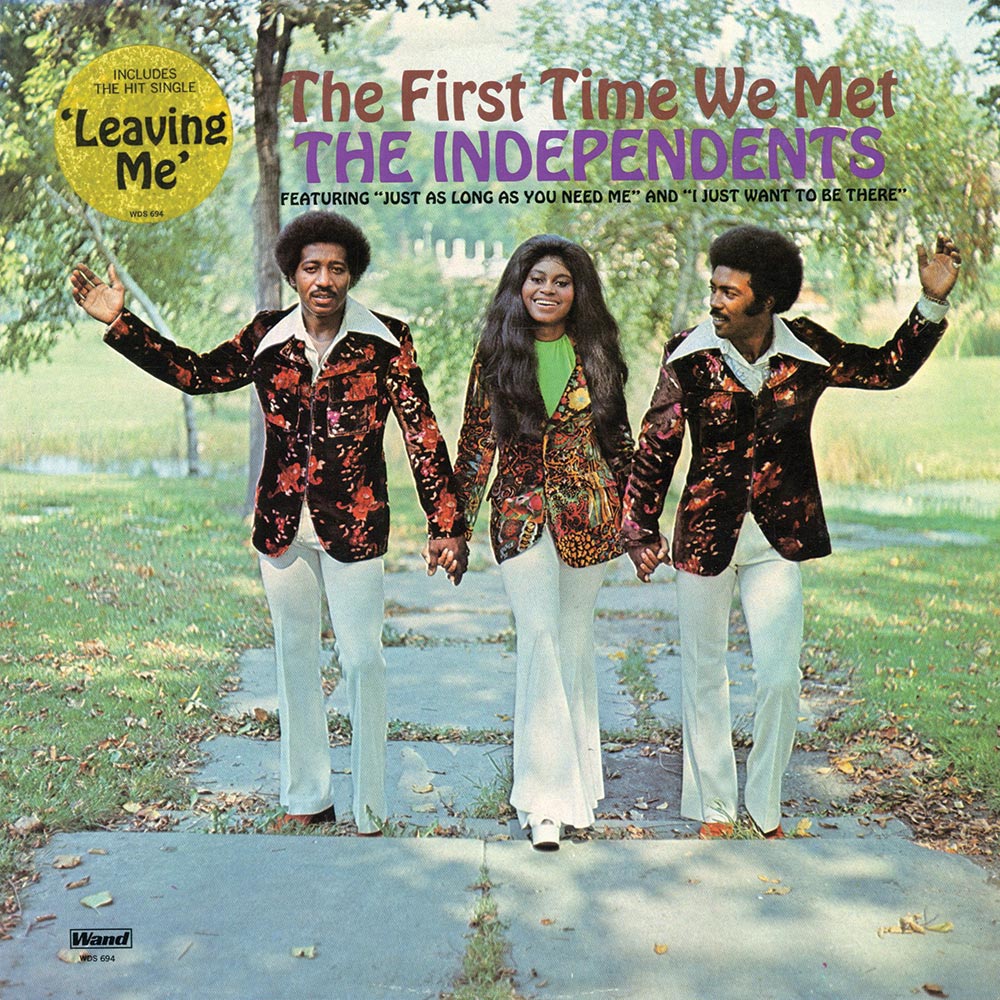
GARY BARTZ-JU JU MAN AND LOVE SONG.
GARY BARTZ-JU JU MAN AND LOVE SONG.
By 1976, saxophonist Gary Bartz’s reputation was on the rise.This came as no surprise to those within the jazz community. Already, Gary Bartz had played with some of the biggest names in jazz. Especially before he formed his own band in 1969.
Baltimore born Gary Bartz had started his career playing with Max Roach and Abbey Lincoln in 1964. This came about when Gary happened to meet Max Roach in Baltimore a few years earlier. The two men swapped numbers and kept in touch. Eventually, Gary decided to move to New York. Max Roach had given him his number, and told Gary to phone him when he arrived in New York.
Upon his arrival in the Big Apple, Gary Bartz phoned Max Roach. He took the young saxophonist under his wing, and even brought him into his band. For Gary Bartz, this opened doors that might have remained closed.
In 1965, Gary Bartz spread his wings and joined Art Blakeley’s Messengers. Gary who could play alto and soprano saxophone became the Messengers’ new alto saxophonist. He made his recording debut on Art Blakey’s 1966 album Hold On I’m Coming. This was the start of a prolific recording career.
Two years later, and Gary Bartz was back working with Max Roach. He played on his 1968 album Members, Don’t Git Weary. The same year, Gary played on Roy Ayers’ Stoned Soul Picnic, and on Helen Merill’s A Shade Of Difference. Gary also joined McCoy Tyner’s band and was a member from 1968 until 1976. However, the most significant release of 1968 was Gary’s debut as bandleader.
The Gary Bartz Quintet released their debut album Libra in 1968. It had been recorded on May 31st and June 15th 1967 at Plaza Sound Studios, New York. Libra was released in 1968 by Milestone Recordings. They would also release Gary’s next release, Another Earth in 1969. That was the year Gary release one of his most famous bands, Gary Bartz NTU Troop.
Over the five years, Gary Bartz NTU Troop would release six groundbreaking albums. That was no surprise, Gary was aided and abetted by all-star cast that included Andy Bey, Ron Carter, Stafford James and Woody Shaw. However, throughout the life of Gary Bartz NTU Troop, their lineup, just like the music would evolve. Gary Bartz NTU Troop’s debut album featured a sextet. It was released their debut album as the seventies dawned.
This was Home, which was released on Milestone Records in 1970. This was followed by the release of two of Gary Bartz NTU Troop’s finest albums during 1971, Harlem Bush Music-Uluru and Harlem Bush Music-Taifa. Both were innovative, genre-melting albums where elements of avant-garde were combined with free jazz, jazz funk and post bop. These two albums brought Gary Bartz NTU Troop to the attention of Prestige.
Gary Bartz NTU Troop signed to Prestige and released their fourth album Ju Ju Street Songs in 1972. It was another ambitious album. This time though, the music moved in the direction of fusion. It seemed that Gary Bartz NTU Troop were a musical chameleons, their music constantly changing to ensure it stayed relevant.
That was the case when they released Follow, The Medicine Man was released in 1973. Everything from jazz-funk and fusion to avant-garde and soul could be heard on Follow, The Medicine Man. Later in 1973, Gary Bartz NTU Troop returned with a double live album. I’ve Known Rivers and Other Bodies had been recorded Montreux Jazz Festival, in Switzerland on Saturday, July 7th 1973. By then, the lineup featured Gary, Howard King and Stafford James. Despite being reduced to a trio, the Gary Bartz NTU Troop produced a show-steeling performance, which is replicated on I’ve Known Rivers and Other Bodies. This proved to be their swan-song.
Although one further album was released, it didn’t bear the Gary Bartz NTU Troop name. Instead, when Singerella-A Ghetto Fairy Tale was released in 1974, it was credited to Ntu Gary Bartz. This was the only album that Ntu Gary Bartz released. After this, Gary Bartz returned to his solo career.
Accompanied by some top New York based session players, Gary Bartz bang work on sophomore album. This would become The Shadow Do. It was released on Prestige in 1975, and was the start of a new chapter in the career of Gary Bartz.
This continued in when Gary Bartz released Ju Ju Man in 1976 and Love Song in 1978. They’ve recently been released by Fresh Sounds Records on the one CD. Ju Ju Man and Love Songs feature Gary Bartz at the peak of his musical powers.
Ju Ju Man.
After the release of The Shadow Do, Gary Bartz began work on his third solo album. He wrote the title-track Ju Ju Man and Pisces Daddy Blue. The other three tracks were cover versions. This included Rogers and Hart’s My Funny Valentine, John Coltrane’s Straight Street and Billy Strayhorn’s Chelsea Street. These five tracks would become Ju Ju Man, which was recorded by some top session players.
Recording of Ju Ju Man took place at Sage and Sound Studio, Hollywood, Los Angeles during 1976. Accompanying Gary Bartz, were a rhythm section of drummer bassist Howard King and Curtis Robertson. He switched between acoustic and electric bass on Ju Ju Man. The other members of the band were pianist Charles Mims Jr, and vocalist Syreeta whose vocal features on My Funny Valentine. On Ju Ju Man, Gary Bartz showcased his versatility. The reedman played alto saxophone, soprano saxophone, clarinet, synths and added vocals. Taking care of production was Pat Britt. Once the five tracks that became Ju Ju Man were completed, the album was released later in 1976.
Before that, critics had their say on Ju Ju Man. They were won over by what was the strongest album of Gary Bartz’s solo career. It had a much more traditional jazz sound. There were neither diversions into avant-garde nor free jazz, like in the days of the Gary Bartz NTU Troop. This much more traditional sound, was the perfect showcase for Gary Bartz and his band.
That was the case from Ju Ju Man, where vocals pay homage to John Coltrane’s A Love Supreme. Just like the rest of Ju Ju Man, the rhythm section drive and power the arrangement along. Pianist Howard King plays a starring role. However, it’s Gary’s blistering, braying saxophone that steals the show. Soon, though it’s all changed.
My Funny Valentine has an understated and later sultry arrangement. It’s the perfect accompaniment for Syreeta’s soulful vocal. As she takes her bow, Straight Street unfolds, and showcases a much more tradition jazzy sound, Again, Gary is at the heart of the action, as he delivers one of finest best solos on Ju Ju Man. There’s no letup, as Gary and drummer Howard King take centre-stage on Pisces Daddy Blue. Soon, the rest of the band are playing their part. However, Howard King’s piano plays a starring role, as Gary plays with controlled power on what’s blues-tinged slice of straight ahead jazz. It’s another of the highlights of Ju Ju Man. It closes with Chelsea Bridge where Gary switches to alto saxophone. There’s a slow, sparse wistful sound for much of the track. Later, the tempo increases and Gary plays with intensity and passion on what’s a quite beautiful track.
Given the consistency and quality of Ju Ju Man, it was no surprise that critics hailed the album the finest of Gary Bartz’s career. This more traditional sound seemed to allow him to showcase his considerable talents. However, given that many regarded this as the sound jazz’s past, how popular would Ju Ju Man be?
Later in 1976, Prestige released Ju Ju Man. Despite the critical acclaim that had preceded the release of Ju Ju Man, the album failed to chart. It still found a small but loyal audience who had followed Gary Bartz’s career closely. They released that the majority of music fans had missed out on his finest solo album so far.
Music Is My Sanctuary.
That was until the release of Music Is My Sanctuary in 1977. This was the first album Gary Bartz released on Capitol Records. It was also a big budget recording.
For Music Is My Sanctuary, some of the top session players were brought onboard. So were one of the most successful production teams, the Mizell brothers. However, it would be a familiar face that played a starring role on Music Is My Sanctuary, Syreeta.
She added the vocal on the anthemic title-track. It would later become synonymous with Gary Bartz. Similarly, Music Is My Sanctuary is regarded as one of Gary’s finest hours.
It found him following in the footsteps of Donald Byrd, as he combined elements of funk, soul, jazz, fusion and even disco. This looked like being the album that brought Gary Bartz to the attention of the wider record buying public.
Music Is My Sanctuary won over the majority of critics. That was apart from jazz purists. They turned turned their back on Music Is My Sanctuary, disappointed and disapproving of the direction Gary Bartz’s music was heading.
Despite bring released to mostly critical acclaim, Music Is My Sanctuary failed to make much of an impression on the charts. The album had been released a year to early.
Later, though, Music Is My Sanctuary would be regarded as one of Gary Bartz’s finest hour, with the title-track becoming a classic, and a favourite of DJs and compilers. However, the followup to Music Is My Sanctuary, would be another accessible album that should’ve appealed to a wider audience, Love Song.
Love Song.
Despite the disappointing sales of Ju Ju Man and then Music Is My Sanctuary, Gary Bartz began work on his next solo album, Love Song, later in 1977. For his fourth solo album he penned two new songs Afterthoughts and Love Song, which lent its name to the album. They were joined by Earl Shuman and Leon Carr’s Prelude and Lonely Girl; Eddie Holman and James Solomon’s Interlude And Don’t Stop Now; Ivy Jo Hunter, Jack Alan Goga and Jeffrey Bowden’s You and George Cables’ Interlude And Just Suppose. These six songs would become Love Song, which was recorded in the familiar surroundings of Sage and Sound Studio in L.A.
When recording of began later in 1977, the same rhythm section accompanied Gary Bartz. Drummer Howard King and basset Curtis Robertson were joined by guitarist Carl McDaniels. They were joined by keyboardist George Cables and vocalist Rita Greene. She would feature on Love Song and Interlude And Just Suppose. Adding backing vocals, were Clydie King, Shirley Matthews and Billy Thedford. Meanwhile, Gary played alto saxophone, soprano saxophone and added vocals. He also decided to take charge of production on Love Song. The result was a very different album than Ju Ju Man.
Critics realised this when they received their gold stamped promo copies in 1978. Love Song wasn’t just a jazz album. Elements of soul, R&B and pop shawn through on an album that featured familiar tracks. That’s apart from Love Song a sultry, soulful and jazzy track. The soul came courtesy of Rita Green’s vocals, which were augmented by harmonies. So were the familiar strains of Prelude and Lonely Girl, where jazz meets soul. Gary’s alto sax and harmonies play leading roles as the rhythm section provide a slow, steady backdrop. Soon, though, the tempo rises.
What doesn’t change on Interlude and Don’t Stop Now is that soul meets jazz. There’s a tougher, slightly funkier sound as the tempo ebbs and flows. This allows the band to stretch their legs. You has a similar sound as the two preceding tracks. It’s jazz-tinge and soulful, as the backing vocalists and Gary’s saxophone play leading roles.
Then on Interlude and Just Suppose, the tempo drops as Rita Green returns. Before that, it’s just Gary accompanied by the keyboards. When Rita’s vocal enters, the track heads in the direction of jazz funk. Later, when her vocal drops out, futuristic synths and then keyboards take the track in the direction of fusion and then jazz funk. This nine minute epic finds Gary at his most inventive, as he embraces the role of producer. Afterthoughts which closes Love Song, is a short track penned by Gary. With the piano for company, Gary produces an understated, late night, jazzy sound. Its melancholy sound is a reminder of another of Gary’s albums, Ju Ju Man. It hadn’t found the audience it deserved. Would Love Song?
Critics found Love Song a very accessible and listenable album. It was also a much more eclectic album. There was much more than jazz on Love Song. Elements of soul, R&B, pop, funk, fusion and jazz funk can be heard. This soulful, funky, jazzy and dance-floor friendly album should’ve meant that Love Song appealed to a wider audience.
Sadly, it wasn’t to be. When Love Song was released later in 1978, the album failed to find the wider audience it deserved. Just like Ju Ju Man, it found an audience within the jazz, soul and R&B community. They welcomed this much more eclectic sounding album from Gary Bartz. However, it would only be later that Gary Bartz’s music was discovered by the wider record buying public.
Many people were introduced to Gary Bartz’s music through Music Is My Sanctuary, which later, became a favourite of compilers. This lead to record buyers digging deeper into Gary Bartz’s back-catalogue.
Many started at the beginning, with the Gary Bartz Quintet’s 1968 album Libra. After this, record buyers discovered Gary’s 1969 debut solo album Another Earth. This was just the start. There was still Gary Bartz NTU Troop and Ntu Gary Bartz’s back-catalogue to discover. Eventually, they made their way to Gary’s solo career. The Shadow Do was Gary’s long-awaited sophomore solo album. However, it was his next album Ju Ju Man, that was one of Gary Bartz’s finest albums.
Ju Ju Man was very different to previous albums, and was an album of straight ahead jazz. This many jazz fans thought was yesterday’s sound. However, Gary Bartz was perfectly suited to this sound. It was the perfect showcase for one of the most talented reedman of his generation. Whether he was playing alto saxophone, soprano saxophone or clarinet, Gary Bartz played with power, passion inventiveness and control. Time after time, he came into his own. This was the case on 1977s Music Is My Sanctuary, and its followup, Love Song.
Backed by a tight, talented and versatile band, backing vocalists and Rita Green, Gary Bartz showcases his versatility on Love Song. The music is funky, jazzy, soulful and dance-floor friendly. It should’ve won over dancers, DJs as well as anyone interested in soul, jazz and funk. Alas, it wasn’t to be, and Love Song remained one of the hidden gems in Gary Bartz’s back-catalogue.
Nowadays, Gary Bartz’s music has found a wider audience. Still, though, there are many people yet to discover Gary Bartz’s music. A good starting place is Ju Ju Man and Love Song. They’ve recently been released by Fresh Sounds Records on the one CD. This is the perfect place to start in a voyage of discovery through Gary Bartz’s back-catalogue. Ju Ju Man and Love Song feature Gary Bartz, one of finest reedman of his generation at the peak of his musical powers.
GARY BARTZ-JU JU MAN AND LOVE SONG.
LEE HAZLEWOOD-COWBOY IN SWEDEN.
LEE HAZLEWOOD-COWBOY IN SWEDEN.
By 1969, Lee Hazlewood’s career was no longer going to plan. The man who had been around since the birth of rock ‘n’ roll was suddenly regarded as yesterday’s man. Suddenly, he was no longer in demand as a producer. Especially by a new generation of up-and-coming musicians. A few that had worked with Lee Hazlewood, including Gram Parsons, but weren’t willing to repeat the experience. This made matters worse for Lee Hazlewood’s ailing record company LHI Records.
Five years had passed since LHI Records last enjoyed a hit single. Since then, commercial success eluded LHI Records, which couldn’t buy a hit single. To make matters worse, Lee Hazlewood had alienated the president of Bell Records, who used to distribute LHR Records’ releases. Lee Hazlewood was fast running out of friends in the music industry.
To make matters worse, Lee Hazlewood’s successful partnership with Nancy Sinatra ended in 1968. Lee Hazlewood tried to replicate his formula with Anne-Margaret. However, Lee but to no avail. This left Lee Hazlewood looking to forge new musical partnerships.
Some musical partners had only a short and unhappy experience with Lee Hazlewood. This included Gram Parsons, when he was a member of The International Submarine Band. Other up-and-coming musicians were put off working with Lee Hazlewood because of his jealousy, temper and possessiveness. Especically when it came to his partner Suzi Jane Hokom.
In 1968, Suzi Jane Hokom received an invitation to meet The Beatles while they were in New York. Lee Hazlewood was extremely possessive and controlling when it came to Suzi Jane Hokom. He decided to accompany her to the meeting with The Beatles, whose music he disliked. This didn’t stop Lee Hazlewood asking The Beatles to producing artists for their Apple label. When the answer was a firm no, Lee Hazlewood stormed out of the meeting.
A year later, music’s one-time golden boy was running out of friends in the American music industry. Lee Hazlewood’s record company was on its last legs. It seemed that Lee Hazlewood’s career had stalled in America. However, he still had a few friends overseas.
Although Lee Hazlewood’s star no longer shawn as bright in America, he was still a regarded as a celebrity elsewhere. This included in Russia, where Nancy Sinatra’s These Boots Are Made for Walkin’ had proved popular. So much so, that later in 1969, a Russian official contacted Lee Hazlewood to tell him that they wanted to present him with a wood cabin in honour of These Boots Are Made for Walkin’. Lee Hazlewood decided to head behind the Iron Curtain to receive his honour.
Meanwhile, Swedish film director Torbjörn Axelman contacted Lee Hazlewood about a possible project. This meant that en route to Russia, he would have to take a detour via Sweden.
Lee Hazlewood had been invited to appear as a guest on In Town Tonight. It was filmed in the Swedish capital Stockholm. That was where Lee Hazlewood met Torbjörn Axelman. The two men were introduced by Gunilla Nilars, who worked with Torbjörn Axelman. When the two men began talking, it soon became apparent that they had much in common. This was the start of a long friendship and working relationship.
One of the projects that Lee Hazlewood and Torbjörn Axelman worked on, was Cowboy In Sweden. Lee Hazlewood would provide the soundtrack for Cowboy In Sweden, which was recently reissued by Light In The Attic. Cowboy In Sweden marked the start of a new chapter in Lee Hazlewood. He decided to move to Sweden with Suzi Jane Hokom.
Moving to Sweden suited Lee Hazlewood for a number of reasons. His record company, LHI Records, was on its last legs, and would fold in 1970, after 305 releases. Lee Hazlewood also had unresolved tax problems. The other reason was his son who was a teenager, was almost old enough to be drafted to fight in the Vietnam War. For Lee Hazlewood this brought back memories. He had fought in the Korean War, and was keen that his son wouldn’t have to follow in his footsteps. Moving to Sweden ensured that his son avoided being drafted. This made the move to Sweden all the more appealing. So the Hazelwood family headed to Sweden.
Once his family had settled in Sweden, Lee Hazlewood began work on the film Cowboy In Sweden. He would costar with Swedish actress, Nina Lizell in what proved to a somewhat surreal film.
Just so the viewer doesn’t forget that he is the Cowboy In Sweden, Lee Hazlewood sports a black stetson and cowboy boots. He wanders through a series of dreamscape. They’re akin to a series of individual videos rather than part of a cohesive film. However, this adds to the surreal, lysergic nature of the film. So do the absurdist skits, and the sight of Lee Hazlewood sitting discussing both Swedish culture and weather between songs. Critics wondered if this was an ill-fated attempt at comedy? They also wondered why the music seemed to bear no relation to the scenes in Cowboy In Sweden?
Cowboy In Sweden.
There was a reason for this. Unlike most soundtracks, Lee Hazlewood didn’t record the music especially for Cowboy In Sweden. Instead, Lee Hazlewood chose ten tracks he had recorded the music over the past couple of years. During this period, Lee Hazlewood had travelled extensively and recorded songs in different European European and American cities.
Paris.
Lee Hazlewood’s musical adventure began in Paris, France in 1968. This was one of the country’s where Lee Hazlewood’s star still shawn bright. It was also where he recorded the hurt-filled ballad Forget Marie, at CBS Studios. Later in 1968, Forget Marie made its debut on Lee Hazlewood’s 1968 album Love and Other Crimes. Alas, when the album was released on LHI Records, commercial success eluded the album.
Two years later, in 1970, Lee Hazlewood decided to include Forget Marie on the soundtrack to Cowboy In Sweden. It joined songs that he had recorded in London in 1969.
London.
The following year, 1969, Lee Hazlewood travelled to London to work with American producer Mel Talmy. Both men shared the same lawyer and musically, had much in common. They both wrote and produced. Recently though, Mel Talmy was way ahead in the success stakes. He had produced hits for The Kinks and The Who. However, by 1969, was turning his attention to the new wave of British folk music.
Recently, Mel Talmy had been working with many of the British folk groups and artists, including Pentangle and Bert Jansch. However, despite concentrating on folk music, Mel Talmy was keen to produce an album with Lee Hazlewood.
The two men album began work on a new album for Lee Hazlewood’s LHI Records. Ten tracks were recorded, and became Forty, an album of pop, rock and balladry. It was released on LHI Records later in 1969, but failed commercially. Two of Forty’s highlights were the ballads, The Night Before and the string-drenched What’s More I Don’t Need Her. They would find their way onto Cowboy In Sweden. So would a number of songs recorded in Los Angeles.
Los Angeles.
Despite commercial success continuing to elude LHI Records’ releases, Lee Hazlewood was still in demand as a producer. He was hired to produce Waylon Jenning’s Singer Of Sad Songs and then Eddy Arnold’s Standing Alone. It was arranged by Clark Gassman, who would collaborate with Lee Hazlewood on his next round of recordings.
The songs that Lee Hazlewood recorded with Clark Gassman were Pray Them Bars Away, Cold Hard Times and Easy and Me. Although this trio of songs didn’t bring commercial success to Lee Hazlewood’s door, their inimitable wistful, orchestrated country sound would prove perfect for the soundtrack to Cowboy In Sweden.
So would two tracks Lee Hazlewood had recorded with two of the female singers he had worked with. This included Ann Margaret. Lee Hazlewood and Ann Margaret had recorded an album together, The Cowboy and The Lady. It was released on LHI Records in 1969, but failed to commercially. The other song Lee Hazlewood decided to include on Cowboy In Sweden, was by his partner Suzi Jane Hokom, For A Day Like Today. This proved to be the last song Lee Hazlewood and Suzi Jane Hokom recorded together. It was released as a single June 1970 and featured on Cowboy In Sweden. By then, Suzi Jane Hokom and Lee Hazlewood’s relationship was over.
She had agreed to star in Cowboy In Sweden. However, rather than travel to Sweden, it was decided that Suzi Jane Hokom should shoot her part in California. She dawned a long white dress as her part was filmed during a gloomy, smoggy day in San Bernardino. This was apt. Suzi Jane Hokom and Lee Hazlewood’s relationship was almost over. They had been through so much personally and professionally.
Whilst together, the pair had founded and run LHI Records. Suzi Jane Hokom and Lee Hazlewood both enjoyed solo careers and recorded together. Then in 1969, they both featured in Cowboy In Sweden. By the time it was released, their relationship was at an end. Before that, Lee Hazlewood had to complete the soundtrack to Cowboy In Sweden.
Stockholm.
Having chosen much of the soundtrack for Cowboy In Sweden, Lee Hazlewood for Cowboy In Sweden still required three tracks. He wrote and recorded these songs during his stay n Stockholm.
The first of these songs was the anti war protest song, No Train To Stockholm. During the same session, Lee Hazlewood recorded Hey Cowboy, with his costar Nina Lizell. The final song, was the traditional song Vem Kan Segla (I Can Sail Without The Wind). Lee Hazlewood wrote English lyrics to the song that would close Cowboy In Sweden. For songwriter Joe Cannon this was a disappointment,
Joe Cannon had written Me and The Wine and The City Lights. Lee Hazlewood had covered the song during a session at T.T.G. Studios, L.A. on the 16th of April 1970. It’s another ballad, which is produced by Lee Hazlewood and Larry Marks. It has a much more contemporary cinematic sound that shows a very different side to Lee Hazlewood. Alas, the song missed the cut and for Lee Hazlewood it was an opportunity lost. Thankfully, Me and The Wine and The City Lights features on Light In The Attic’s reissue of Cowboy In Sweden. So do alternate versions of Easy and Me and Pray Them Bars Away. However, back in 1970 the film and soundtrack to Cowboy In Sweden were about to be released.
Upon the release of Cowboy In Sweden, the film flopped. It found a small audience in Sweden, thanks to the popularity of Lee Hazlewood. The few reviews of Cowboy In Sweden that were published weren’t exactly complimentary. Words like surreal and trippy were used. Critics accused Cowboy In Sweden of lacking cohesion and narrative. Lee Hazlewood’s latest venture into film hadn’t been a success. Nor was the soundtrack to Cowboy In Sweden.
When Cowboy In Sweden was released in 1970, it was through Lee Hazlewood’s ailing LHI Records. The company was dying a death, and would fold later in 1970. Lacking the budget to promote Cowboy In Sweden properly, the album never stood a chance. Just like the film, the soundtrack to Cowboy In Sweden flopped. However, that wasn’t the end of the story.
Much later, there was a resurgence in popularity in Lee Hazlewood’s music. This included the soundtrack to Cowboy In Sweden. The only problem was that the album was something of a rarity. Copies of the original album were extremely difficult to find. If they became available, the prices were usually prohibitive to most record buyers. That was a great shame.
Cowboy In Sweden, which is essentially a compilation of Lee Hazlewood’s solo material and collaboration showcases a talented singer, songwriter and producer. Especially on the ballads, where Lee Hazlewood comes into his own. His voice is perfect for singing country, especially the melancholy string-drenched What’s More I Don’t Need Her and the hurt-filled Forget Marie. They part of what’s a truly underrated, hidden gem of an album. Sadly, it failed to find the audience it deserved.
By then, Lee Hazlewood’s career had stalled, and he was viewed by many as yesterday’s man. Many thought that his best years were behind him. He certainly didn’t replicate the success of the early part of his career. Music was changing, and changing fast. The problem was, Lee Hazlewood had kept up with the changes.
Many of the new generation of musicians wanted to write and produce their own music. The ones that musicians who wanted to work with a producer, chose not to work with Lee Hazlewood. They had heard the stories, about how he wasn’t the easiest person to work with. Sometimes, his temper of jealousy got the better of him. Especially when working with the new generation of up-and-coming artists. That was a great shame, as Lee Hazlewood had so much musical experience, and could’ve mentored these artists.
Later, though, the next generation of artists found inspiration in Lee Hazlewood’s music. By then, there had been a resurgence in popularity of his music. Lee Hazlewood’s music was starting to find a new audience. They appreciated the music that he wrote, recorded and produced during a forty-eight year career. This includes the music on Cowboy In Sweden.
The music on Cowboy In Sweden was recorded in four countries on two continents during a two year period. They’re a reminder of, and introduction to, Lee Hazlewood a truly talented singer, songwriter and producer who for a year, was a Cowboy In Sweden.
LEE HAZLEWOOD-COWBOY IN SWEDEN.


JÓHANN JÓHANNSSON-ORPHEE.
JÓHANN JÓHANNSSON-ORPHEE.
It was whilst studying languages and literature at university in Reykjavík, that Jóhann Jóhannsson’s musical career began. He was just eighteen when he joined his first indie rock band in 1987. Over the next few years, Jóhann Jóhannsson played with several indie rock bands in Reykjavík’s vibrant and thriving music scene. Little did Jóhann Jóhannsson realise that this was the start of a long and successful musical career.
Eventually, Jóhann Jóhannsson would become known worldwide as a composer, multi-instrumentalist and producer. This didn’t happen overnight.
Jóhann Jóhannsson was twenty-seven when he wrote the music to Kristín Ómarsdóttir’s play Margrét Mikla. This was a breakthrough for Jóhann Jóhannsson. He would go on to write the music for film, television, theatre and dance. This included the television program Corpus Camera in 1999. The same year, Jóhann Jóhannsson cofounded a think tank in 1999.
Thirty year old Jóhann Jóhannsson was one of the cofounders of the Kitchen Motors think tank. It was a both an arts organisation and record label. Kitchen Motors also encouraged artists from different disciplines to collaborate. This meant jazz and classical musicians could collaborate with electronic and even punk musicians. For Jóhann Jóhannsson these musical experiments would influence his future career.
As the new millennia dawned, Jóhann Jóhannsson’s career began to take. Between 2000 and 2002, he wrote eleven soundtracks. This included everything from feature films to television programs and plays to contemporary dance. It was one of the busiest periods of Jóhann Jóhannsson’s career. Despite this, he found time to release his debut album Englabörn in 2002.
This was the start of another chapter of Jóhann Jóhannsson’s career. He was working on a variety of different projects. One of the them, was writing and recording the soundtrack to Tim Shore’s short film Keepsake. It was released in Britain in 2003, and was the first project Jóhann Jóhannsson worked on outside of his native Iceland. For Jóhann Jóhannsson this was an important project.
Following Keepsake, Jóhann Jóhannsson managed to juggle his solo career while writing for film, television, theatre and dance. He released his sophomore album Virðulegu Forsetar in 2004. After this, Jóhann Jóhannsson began working on what was another first for him.
He had never before written and recorded a soundtrack album. Dís which was released in May 2005 was a first. This may have been the first, but wasn’t the last soundtrack album Jóhann Jóhannsson would write and record. Not when his star was in the ascendancy.
That was the case with Jóhann Jóhannsson’s solo career. After just two solo albums, he was signed to British independent label, 4AD. They released Jóhann Jóhannsson third album BM 1401, A User’s Manual in September 2006. It was lauded as an innovative album from what critics were calling a rising star of Icelandic music. Little did the critics realise that Jóhann Jóhannsson had spent seven years working long and hard to establish himself in his native Iceland. This was beginning to pay off as his music found an audience outside of Iceland.
Still though, the majority of the music Jóhann Jóhannsson was composing for film, television, theatre and dance was for being used within Iceland. That would change during 2008.
Jóhann Jóhannsson had written the score to Marc Craste’s short film Varmints. It was released in 2008, and was well received by critics and cultural commentators. So much so, that later in 2008, Varmints won the award for the Best Original Score at the Rhode International Film Festival and Sapporo Short Film International Film Festival. Buoyed by this success, Jóhann Jóhannsson scheduled the release of his new album for the autumn 2008.
On 31st October 2008, Jóhann Jóhannsson released Fordlandia. This was meant to be the second part in a trilogy about he technology and industrial archeology. Just like the first instalment, A User’s Manual, Fordlandia was released to critical acclaim. For Jóhann Jóhannsson this was the perfect way to round off what had been one of the most successful years of his career.
After the success of Fordlandia, Jóhann Jóhannsson decided to release an album of music that featured on the award winning short film Varmints. This became And In The Endless Pause There Came The Sound Of Bees. It was released on the 11th December 2009, and is captivating, beautiful and haunting fusion of electronics and orchestral music. For Jóhann Jóhannsson the Varmints would open doors to other soundtrack work.
Before that, Jóhann Jóhannsson returned with a new solo album, The Miners’ Hymns on the 15th September 2011. The album had been recorded in Durham Cathedral, England and accompanied American filmmaker Bill Morrison’s film The Miners’ Hymns. This wasn’t the only film Jóhann Jóhannsson was working on.
Jóhann Jóhannsson had been busy on a variety of projects. He continued to juggle a myriad of disparate projects. Many of them came to fruition during 2012, with one bringing another award the way of Jóhann Jóhannsson.
During 2012, several films featuring a soundtrack that was written, recorded and produced by Jóhann Jóhannsson were released. This included Free The Mind and Copenhagen Dreams. Jóhann Jóhannsson was responsible for the soundtrack to a quartet of feature films, including So Yong Kim’s For Ellen, Phie Ambo’s Free The Mind, Camilla Magid’s White Black Bo and Lou Ye’s Mystery. It was Mystery that won Jóhann Jóhannsson the award for the Best Original Score at Taipei Golden Horse Film Festival Awards. 2012 had been one of the most productive and successful years of Jóhann Jóhannsson’s career.
It wasn’t going to be easy to surpass the success of 2012. That was despite Jóhann Jóhannsson’s soundtrack to Prisoners receiving praise and plaudits during 2013. However, when Jóhann Jóhannsson was asked to write, record and produce the soundtrack to The Theory of Everything, that proved to be a game-changer.
Jóhann Jóhannsson’s soundtrack to The Theory of Everything was nominated for some of the most prestigious awards. This included an Academy Award for Best Original Score, BAFTA Award for Best Film Music and Grammy Award for Best Score Soundtrack for Visual Media. The other award The Theory of Everything was nominated for during 2014 was the Golden Globe Award for Best Original Score. That was the award that Jóhann Jóhannsson won. Suddenly, he his name was all over the televisions and press. Everyone seemed to know the name Jóhann Jóhannsson. It was a far cry from when he was playing in indie rock bands during his university days in Reykjavík.
After his success with the soundtrack to The Theory of Everything,Jóhann Jóhannsson returned in 2015 with another soundtrack. Sicario was released on the 18th September 2015 and soon, was being nominated for some of the most prestigious awards. This included the Academy Award for Best Original Score and the BAFTA Award for Best Film Music. Alas, this time, Jóhann Jóhannsson was out of luck. Despite this he released a new album later in 2015.
Jóhann Jóhannsson released his new album End of Summer in December 2015. It was a collaboration with Hildur Guðnadóttir and Robert Aiki Aubrey Lowe that documented Jóhann Jóhannsson’s journey to the Antarctic Peninsula. During that journey, he discovered tranquil scenery and watched how the landscape changed with the seasons. On his return home, Jóhann Jóhannsson sculpted an album of soundscapes that documented what had been a truly memorable and life affirming journey and experience. They became End Of Summer, the latest addition to his burgeoning discography.
The next addition was the soundtrack to the psychological science fiction film Arrival. It was premiered at the Vienna Film Festival on September the 1st 2016. Just over two months later, Arrival was released on the 11th of November 2016. Since then, it’s been nominated for a Golden Globe Award for Best Original Score. By then, Jóhann Jóhannsson had released a new solo album Orphée on Deutsche Grammophon.
On Orphée, Jóhann Jóhannsson’s attention turns to the beauty and the process of creation. Orphée features Jóhann Jóhannsson tracing a path from darkness into light. Inspiration for Orphée comes from the opéra bouffe Orphée aux enfers (Orpheus in the Underworld). It was written by Ludovic Halévy, and later, revised by Hector-Jonathan Crémieux. The score was written by Jacques Offenbach and became the first full length operetta. Its first performance came in 1858. Since then, this ancient and famous tale has been retold countess times.
Everyone from Ovid’s to Jean Cocteau have told the story of the legendary Greek musician, poet and prophet Orpheus. His story is one of death, rebirth, change and the transient nature of memory. For some, the story of Orpheus is also one about artistic creation, and the elusive nature of beauty. Especially beauty’s relationship with an artist. Another part of the story of Orpheus is when he’s about to leave the underworld, he turns back to rescue his wife Eurydice. This lead to the theory that art is created through transgression. That has been the case with many artists, including Jóhann Jóhannsson.
Throughout his long and illustrious career, Jóhann Jóhannsson has not been afraid to transgress musical rules and norms. This is something many musicians are afraid to do. Especially those without a formal musical education. They’re unsure when it’s possible to break musical rules. Jóhann Jóhannsson, who is a talented multi-instrumentalist does, and has been since releasing his debut album.
Ever since, Jóhann Jóhannsson has transgressed musical rules. This includes combining disparate musical genres, including some that aren’t natural bedfellows. A good example of this was BM 1401, A User’s Manual where Jóhann Jóhannsson combined a sixty-piece string quartet with electronics alongside the original tape recordings of IBM’s singing computer. The result was what was without doubt, a truly ambitious and groundbreaking album. Since then, Jóhann Jóhannsson has contemned to release ambitious albums. Orphée is no different.
Indeed, Jóhann Jóhannsson’s decision to put the story of Orpheus to music was an ambitious one. He was starting from square one, and had to compose the fifteen tracks that covered all the subjects examined within the story of Orpheus. Then Jóhann Jóhannsson had to find the right musicians to help him tell the story that became Orphée.
To do that, Jóhann Jóhannsson brought onboard the Theatre Of Voices choir, the American Contemporary Music Ensemble, The Lyndhurst Orchestra and cellist Hildur Guðnadóttir. Jóhann Jóhannsson played electric organ, piano, pipe organ and electronics. With the personnel in place, work began on Orphée.
Recording took place at several places. The Lyndhurst Orchestra recorded their parts at the Air Lyndhurst Hall in London. Other sessions took place at the Sct. Lukas Kirke, Copenhagen and Danmarks Radio Studios, where Jóhann Jóhannsson had recorded Arrival. Eventually, Orphée was completed and became the latest addition to Jóhann Jóhannsson’s burgeoning discography.
It was also one of the highlights of Orphée discography. The Icelandic composer had surpassed previous solo albums. It found Jóhann Jóhannsson at his most creative. Just like an artist, dug deep into his pallet. However, Jóhann Jóhannsson pallet includes an array of disparate sounds. Throughout Orphée, he deployed everything from a cello and choir to an array of strings. This ranged from a quartet to an orchestra. However, where Jóhann Jóhannsson differed from many of his contemporaries, is he used effectively a myriad of a electronics. They become part of a truly captivating album.
Throughout Orphée, Jóhann Jóhannsson showcases his inventiveness and ability to innovate. He constantly pushes musical boundaries, and occasionally moves beyond these boundaries. The result is an ambitious genre-melting album. Partly, that’s because of the way the album is structured. Harmonic and melodic elements appear, disappear and reappear. That is the case throughout Orphée. Despite this, each of the fifteen tracks has a timeless quality. They’re also all very different
Throughout Orphée, the music constantly changes. On Flight From The City, the music is thoughtful and ruminative, inviting introspection. It’s a similar case on Song For Europe, where Jóhann Jóhannsson’s inventiveness shines through. Buried amidst the swathes of mournful strings is a sample of speech. They work well together as the stings combine drama, sadness and beauty. This isn’t the last time that Jóhann Jóhannsson uses samples of sound effects.
A sample of water is effectively on The Drowned World. It’s just one of numerous layers of music that are combined to creature a mesmeric, melodic and cinematic soundscape. Then on A Deal With Chaos, a speech sample is combined with a cello and electronics. Remembering Miles Davis’ famous maxim, Jóhann Jóhannsson neither fears space nor silence. When all that’s left is a crackling electronics, it’s adds an element of drama. This less is more approach has been used effectively throughout Jóhann Jóhannsson’s solo career.
A Pile Of Dust has a dark, dramatic and cinematic sound as the arrangement builds and becomes ethereal and elegiac. Suddenly, the track is transformed and beauty shines through. There’s a similar beauty and sense of hope on A Sparrow Alighted Upon Our Shoulder as the strings sweep. This soon changes.
Fragment I which features a pipe organ, has a much more thoughtful and reflective sound on Fragment I. The mood changes again On By The Roes, And By The Hinds Of The Field. Strings and a piano combine, before Jóhann Jóhannsson deploys effects and electronics. Suddenly, it sounds as if the rain is tumbling down. Soon, the pastoral sound and ethereal beauty returns. However, things change.
The Radiant City is an emotional roller coaster. There’s a sense of sadness and melancholy as Jóhann Jóhannsson plays the piano. He adds to this what sounds like washes of synths and a couple of samples. Together, they add an atmospheric hue. It’s a similar case with Fragment II as the arrangement builds. So does the drama, as the track reaches a crescendo. Similarly, the arrangement to The Burning Mountain drones and builds before meandering melodically along. Sometimes, there’s a futuristic sound, which provides a contrast to the traditional sound of the pipe organ. Again, this is another example of Jóhann Jóhannsson’s inventiveness which is omnipresent throughout Orphée.
De Luce Et Umbra has a wonderfully wistful, string-drenched. They tug at the heartstrings add a sense of sadness. Despite this, beauty also shines through. Strings are to the fore on Good Morning, Midnight, which has a thoughtful, melancholy and slightly futuristic sound. This is a result of Jóhann Jóhannsson electronics. He never overuses them, Instead, they’re used sparingly which proves effective. The strings have been put to good use throughout Orphée. That’s the case on Good Night, Day where swathes of strings probe and create a wistful, ruminative backdrop. Not for the first time, it has a cinematic sound and invites reflection. However, Orphic Hymn which close Orphée, is very different to everything that’s gone before. Its ethereal sound is truly beautiful, and would be difficult to surpass.
Jóhann Jóhannsson ensures that Orphée ends on a high. However, it’s been an almost flawless album, where Jóhann Jóhannsson combines elements of classical and electronic music with ambient, avant-garde, Baroque and minimalism. Other influences includes the music of Bernard Hermann, Ennio Morricone and Michael Nyman. Then there’s the music of classical composers like Shostakovich and Prokofiev. All these influences can be heard throughout Orphée.
The music on Orphée ranges from melodic and mesmeric, to atmospheric, beautiful, ethereal and elegiac. Other times, there’s a degree of darkness and drama. Sometimes, there’s a sense of melancholia and sadness on Orphée. It’s an emotional roller coaster to cherish and treasure. That’s even for people with no interest in classical music. There’s much more to Orphée than classical music. Orphée is a genre-melting album that’s the finest album of his fourteen year solo career.
Indeed, Orphée is a career defining album from Jóhann Jóhannsson, as he makes his debut on Deutsche Grammophon. Maybe this is the start of a new and exciting chapter in Jóhann Jóhannsson’s career. He’s now one of Icelandic music’s most successful composers, musicians and producers. Jóhann Jóhannsson also creates music that’s ambitious, inventive and innovative. That’s the case throughout Orphée, which is a career defining album from Jóhann Jóhannsson.
JÓHANN JÓHANNSSON-ORPHEE.

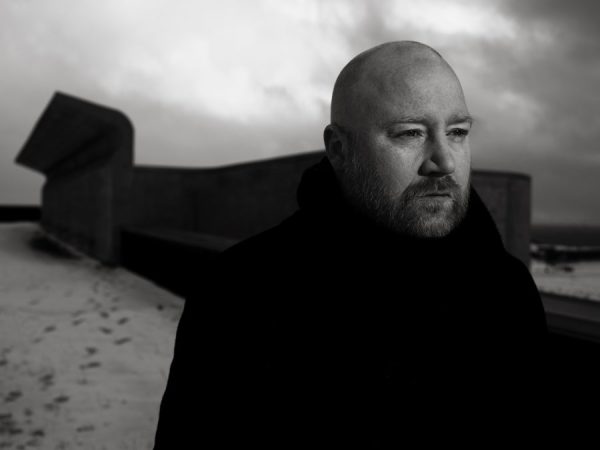
 dereksmusicblog
 dereksmusicblog