BEST NEW ALBUMS OF 2016-PART 1.
BEST NEW ALBUMS OF 2016-PART 1.
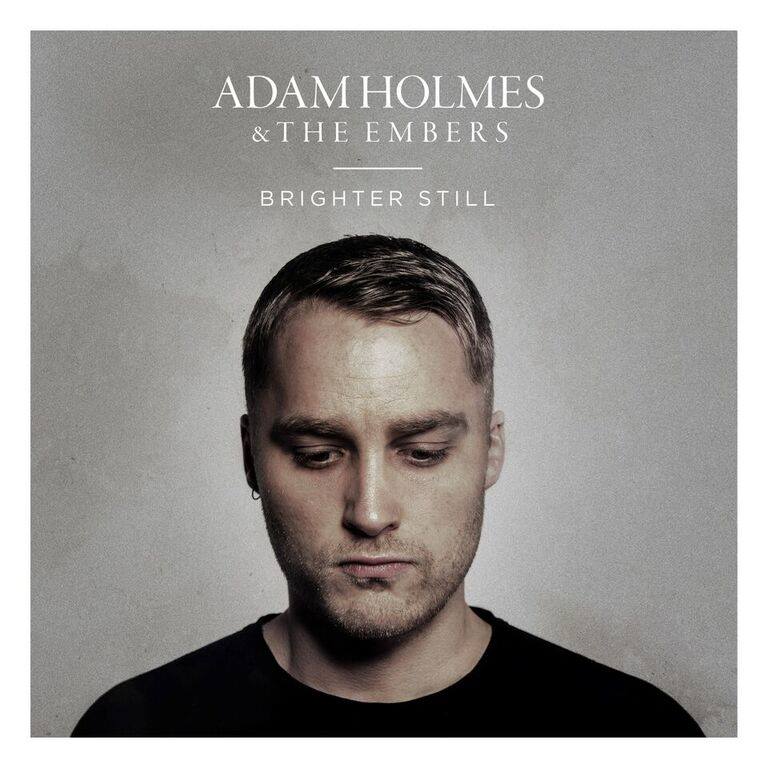
Adam Holmes and The Embers-Better Still.
Just two years after releasing his debut Heirs and Graces, Edinburgh based singer-songwriter returned with his much-anticipated sophomore album Better Still. This time around though, his backing band The Embers receive equal billing. They play an important in the sound and success of Better Still.
The Embers accompany Adam Holmes throughout the nine songs on Brighter Still. Each song oozes quality. It doesn’t matter whether Adam Holmes and The Embers are singing ballads, or Cutting Loose on the more uptempo tracks, they’re equally at home. These carefully crafted songs showcase Adam Holmes and The Embers considerable skills and their unique and irresistible take on Americana. Brighter Still is a potent, heady and irresistible musical brew to drink deep and savour.
Arbeit Schickert Schneide-A.S.S.
Berlin has produced many truly innovative musicians. Among them, are three talented, versatile and inventive guitarists, Günter Schickert, Jochen Arbeit and Dirk Dresselhaus. The three guitarists represent and celebrate three generations of making experimental music in Berlin. They collaborated on a new album. A.S.S., which was released by Bureau B,
Arbeit Schickert Schneider used an interesting and eclectic selection of instruments. They combined traditional instruments with electronic instruments and a myriad of effects. They’re put to good use on the multilayered soundscapes. They’ve been influenced not just by Arbeit Schickert Schneider’s musical past, but a variety of musical genres.
Elements of disparate musical genres shine through on A.S.S. Everything from avant-garde, Berlin School, experimental, free jazz, funk, industrial, nu-electronica, psychedelia and rock can be heard. So can Eastern sounds, Ash Ra, Kraftwerk and Cluster. The result is music that veers between dark and dramatic, to atmospheric and ethereal, to exotic, to cinematic, moody and mysterious. Sometimes, the music can be melodic and occasionally joyous. Often, there’s a hypnotic quality to some of the soundscapes. Always, the soundscapes are captivating, inventive and innovative, as three generations of master musicians pool over 100 years of experience on A.S.S., and create a groundbreaking, genre-melting album that celebrates Berlin’s rich musical past.

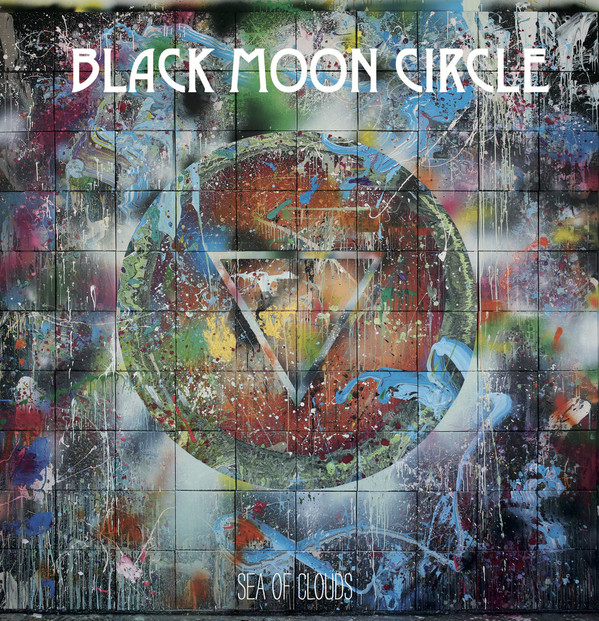
Black Moon Circle-Sea Of Clouds.
April 2016 saw Norwegian space rock pioneers Black Moon Circle make their debut at the prestigious Roadburn Festival. This was prefect timing. That day, Black Moon Circle released their fourth album Sea Of Clouds via Crispin Glover Records. It was a much anticipated release, that also featured bassist Øyvin Engman vocal debut. The result was a album of melodic and anthemic songs. They were also hard rocking.
This is what we’ve come to expect from Black Moon Circle. They revisit their hard rocking brand of psychedelic, space rock on Sea Of Clouds. It’s a fusion of heavy metal, Krautrock, avant-garde, free jazz and post rock. Black Moon Circle have also drawn inspiration from everyone from Black Sabbath, Can and Deep Purple to Led Zeppelin, Hawkwind and Motorpsycho. These disparate musical genres and influences were fused to create Sea Of Clouds.
It features music that’s dramatic, futuristic, moody, otherworldly and gloriously rocky. Sometimes, Sea Of Clouds features Black Moon Circle at their hard rocking best. Sea Of Clouds is also “intense.” There’s always been an intensity to Black Moon Circle’s music. It’s as much a part of Black Moon Circle’s music as the layers of fuzzy guitars, spacey, lysergic synths and futuristic sci-fi sounds. That’s the case throughout Sea Of Clouds, which shows another side to space rock pioneers Black Moon Circle. It’s their most accessible album and is a glorious assault on the sensory system from genre-melting innovators Black Moon Circle,
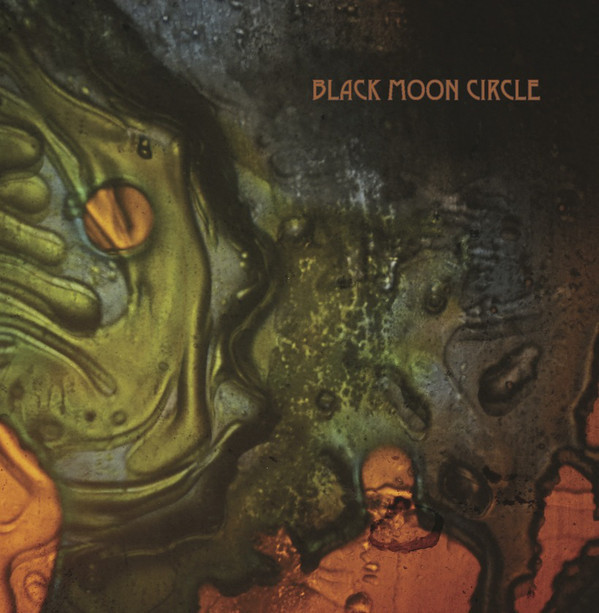
Black Moon Circle-The Studio Jams Volume 2.
In mid-November, Black Moon Circle released The Studio Jams Volume 2 via Crispin Glover Records. It’s the second in a trilogy of Studio Jams and Black Moon Circle’s second album of 2016. Just like the Trondheim based psychedelic space rock pioneers’ previous albums, they fuse musical genres as they push musical boundaries.
The basis for Black Moon Circle’s music is the classic rock of the sixties and seventies, psychedelia and space rock. To this, Black Moon Circle add elements of avant-garde, electronica, experimental, free jazz, Krautrock and post rock. Seamlessly, these disparate musical genres and influences merge into something new and innovative. It’s cinematic, dramatic, futuristic, moody, rocky and as Øyvin Engan says, “intense.” This intensity is deliberate. It comes courtesy of the four members of Black Moon Circle. They deploy layers of fuzzy guitars, spacey, lysergic, futuristic, sci-fi synths and a mesmeric rhythm section. They create two “lengthy jams” which features “heavy riffage and the extensive use of effects.” They’re used extensively and put to good use by Black Moon Circle.
They’re one of the most exciting, talented and innovative Norwegian groups. They remind me of their fellow countrymen, Motorpsycho and Moster! However, Elements of Can, Deep Purple, Led Zeppelin, Hawkwind, early Pink Floyd and Jimi Hendrix’s guitar playing shine through on The Studio Jams Volume 2 . This hard rocking opus, finds the Trondheim-based psychedelic space rockers Black Moon Circle, reaching new heights on The Studio Jams Volume 2.
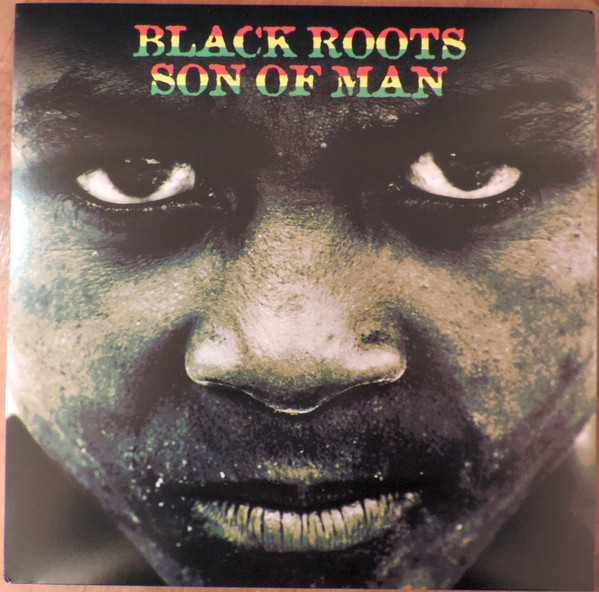
Black Roots-Son Of Man.
Thirty-seven years after Black Roots were formed in 1979, the elder statesmen of the British reggae scene, returned with a new album Son Of Man. It was released on Soulbeat Records and features powerful music full of social comment.
Black Roots highlight injustice, while speaking for those who can’t speak for themselves. They’re the people who have been let down and betrayed by successive governments. This includes the old and infirm, the disabled, unemployed and poor. None of these people have a voice. They’ve been forced to sit back whilst one government almost ruined Britain financially forever. However, the guilty parties don’t pay a price. Instead, its an voiceless underclass who can’t fight back. They don’t have a voice. On Son Of Man, Black Roots provide a voice for them on One Thing. Then on other tracks, they turn their attention to other matters.
This includes the refugees fleeing persecution in the Middle East and North Africa. Black Roots go to bat for them, and provide a voice for them. However, this is no surprise. Black Roots have been providing a voice for the poor, disenfranchised and dispossessed since they released their eponymous debut album in 1979. Thirty-seven years later, and nothing has changed. Still, Black Roots are highlighting injustice and speaking up for the poor, disenfranchised and dispossessed on Son Of Man, where they mix social comment with a health supply of hooks and melodies.
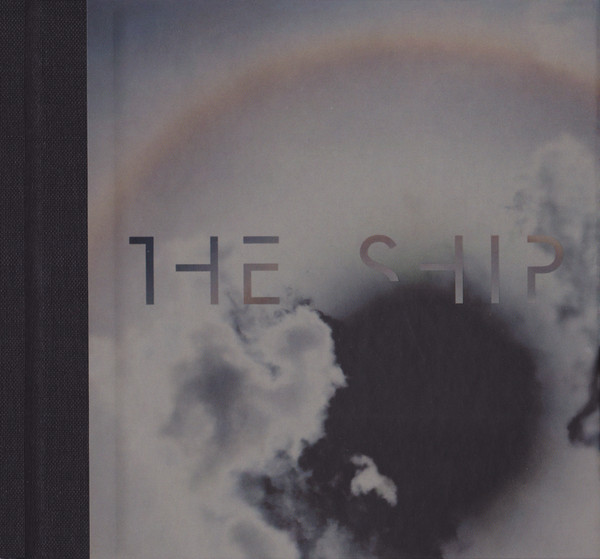
Brian Eno-The Ship.
Brian Eno released his debut album Here Come The Warm Jets in 1974. Forty-two years later he released The Ship on Warp Records. It finds Brian Eno continue to make music that’s still innovative, imaginative and relevant. Proof of that is The Ship
During The Ship, Brian Eno takes the listener on a journey. For four tracks lasting forty-seven minutes, he paints pictures in your mind’s. Sometimes he takes you places you neither expected nor wanted to go. This includes the battlefield, where people are hardened to the needless loss of life. However, The Ship is captivating piece, which the listener should embrace and let wash over them. As they do, it’s a case of letting their imagination run riot. if they do, they’ll be richly rewarded.
No wonder; The Ship is a musical journey that’s variously melancholy, wistful, challenging, beautiful, elegant and always, innovative. While many of Brian Eno’s counterparts cease to be relevant musically, Brian Eno is forever the innovator, and forever inventive, creative and open to experimentation musically. That’s been the case throughout a solo career that’s lasted forty-two years and over twenty albums. Brian Eno’s latest album, The Ship which is available as a collector’s edition and comes complete with a cloth bound cover and art cards. The Ship is a welcome addition to Brian Eno’s discography and is an album that’s a truly innovative, captivating, cinematic and cerebral album.
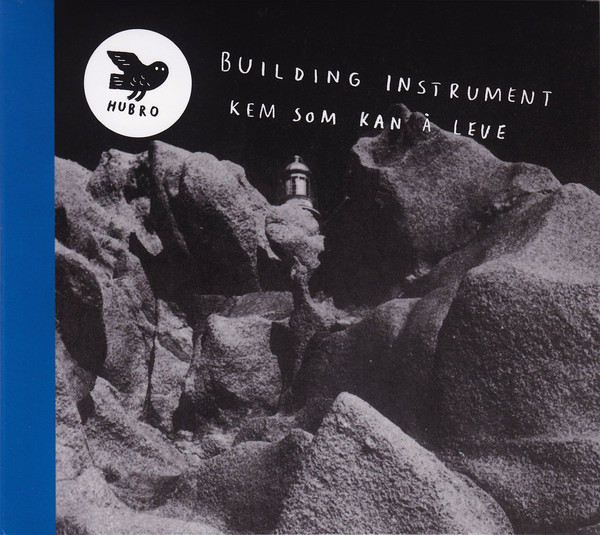
Building Instrument-Kem Som Kan Å Leve.
Just over two years have passed since Norwegian trio Building Instrument released their eponymous debut album in March 2014. The album was released to widespread critical acclaim, and great things were forecast for Building Instrument. Since then, Building Instrument have been working on their much anticipated sophomore album, Kem Som Kan Å Leve. After nearly two years, was released by Hubro Music, on the 2nd of September 2016. Kem Som Kan Å Leve marks a welcome return from the Nordic sonic explorers, Building Instrument.
They continue create inventive and innovate music, that’s ambitious and adventurous. That music is also beautiful, dreamy, ethereal, hypnotic and melodic. Partly, that is because of Mari Kvien Brunvoll’s vocal. She switches between the Molde dialect, and an invented language that only she can understand. That doesn’t matter. It plays an important part in On Kem Som Kan Å Leve, where Building Instrument followed in the footsteps of Kurt Schwitter.
Building Instrument: “go further in the direction of expanding or erasing the meaning of language, just as Schwitters did with his sound poetry.” This was an ambitious project, but the results are fascinating and captivating. They can be heard on Kem Som Kan Å Leve, which finds Norwegian sonic explorers at their inventive and innovative best. Kem Som Kan Å Leve is Building Instrument’s musical Magnus Opus, which features six soundscapes that are ambitious and adventurous, but also beautiful, dreamy, ethereal, hypnotic and melodic.
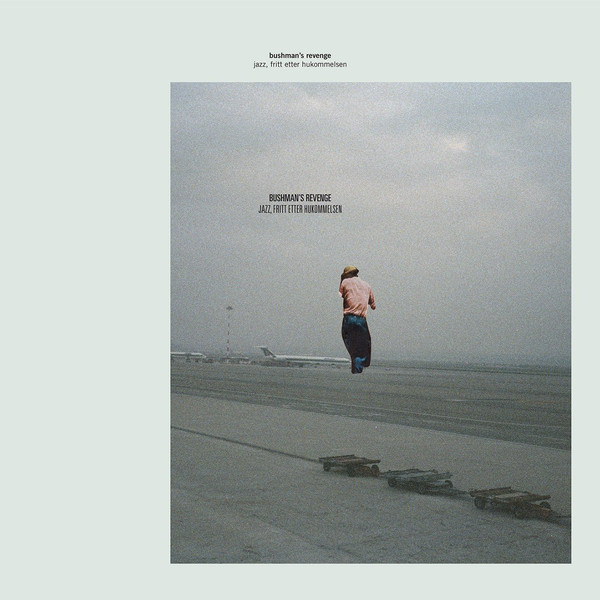
Bushman’s Revenge- Jazz, Fritt Etter Hukommelsen.
After spending twelve years touring and recording, Bushman’s Revenge decided to take a much needed break. After enjoying some downtime, Bushmen’s Revenge were raring to go. By then, they had decided to change direction musically. They felt that for the time being, they had taken their fusion of “jazz, progressive and rock as far as they can.” This opened up all sorts of new and exciting possibilities. Eventually, Bushmnan’s Revenge decided to record their “first proper jazz album,” Jazz, Fritt Etter Hukommelsen, which was released by Rune Grammofon.
It shows different sides to Bushman’s Revenge. Lola is a languid and wistful slice of late summer Scandinavian jazz. The listener is transported back in time to the sixties as Bushman’s Revenge became a jazz trio. Seamlessly, they adopt to the change of style, before the album heads in the direction of electric blues. Just like Jimi Hendrix, this is starting point for 0500, Bo Marius and Gamle Plata Til Arne. They heads in new and unexpected directions, combining electric blues with rock, psychedelia and jazz. There’s even diversions into avant-garde, blues rock and free jazz.
Mostly, electric blues, jazz and rock are to the fore as Bushman’s Revenge fuse disparate musical genres. They create ambitious, inventive and innovative music on Fritt Etter Hukommelsen, which isBushman’s Revenge’s “first proper jazz album.” Maybe this will be the start of a new chapter in the career of musical pioneers Bushman’s Revenge? Only time will tell.
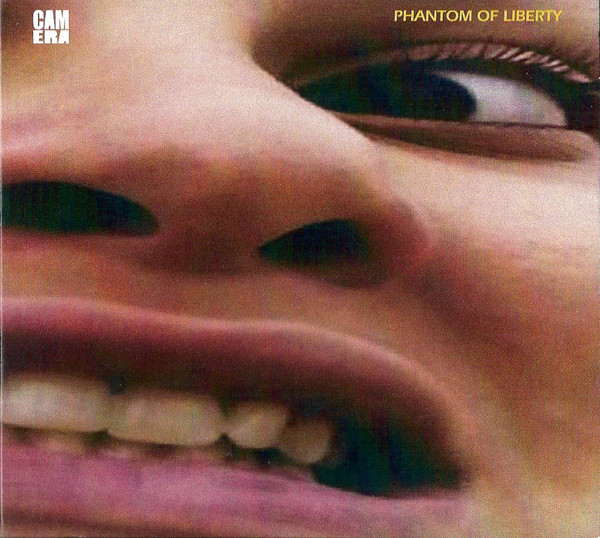
Camera-Phantom Of Liberty.
Nowadays,, Camera are regarded as one of the leading lights of the Neu-Krautrock scene. Camera’s 2012 debut album Radiate was released to critical acclaim. So too was their 2014 sophomore album Remember I Was Carbon Dioxide. It set the bar high for Camera’s third album Phantom Of Liberty on which was released pn Bureau B .
Camera take as their starting point Krautrock on Phantom Of Liberty, and add to that, elements of avant-garde, Berlin School, electronica, improv, progressive rock, psychedelia and rock. Seamlessly, Camera switch between, and fuse musical genres within the one track. Mostly, though, the hypnotic, relentless drums power the arrangement along. They’re reminiscent of Can, Neu and La Düsseldorf. Often, the drums sound as if they’ve been inspired by Klaus Dinger and occasionally, John Bonham of Led Zeppelin. Sometimes, the guitars are reminiscent of Michael Rother or Jimi Hendrix. Meanwhile, some of the keyboard sounds wouldn’t sound out of place on seventies progressive rock albums. They play an important part in the success and sound of Phantom Of Liberty.
The keyboards are part of Camera’s sonic pallet. It’s put to good use throughout the album. Often, the keyboards produce futuristic, space-age sounds. Other times, they produce ghostly, ethereal and elegiac sounds. This variety of sounds are part of Camera’s carefully constructed musical tapestry, Phantom Of Liberty which is a career-defining album.
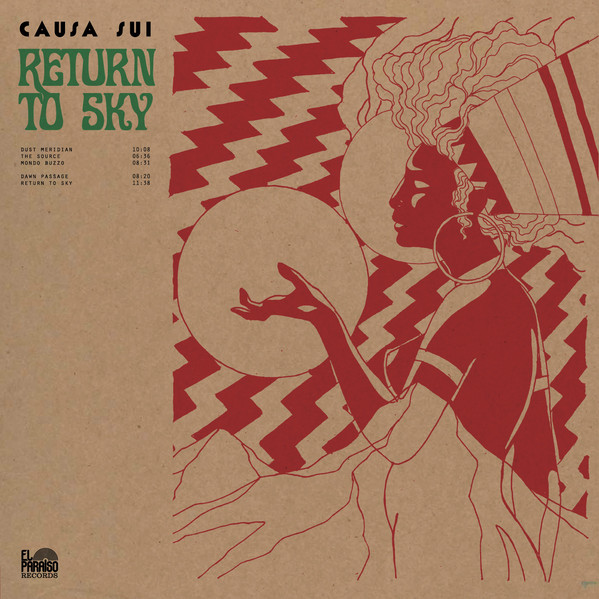
Caus Sui-Return To Sky.
Since forming Caus Sui in Odense, in Southern Denmark in 2005, the band has released eleven albums. Their latest was Return To Sky which was released on El Paraiso Records. Return To Sky references four decades of music. Elements of classic rock, Krautrock, psychedelia, progressive rock, stoner rock and space rock. Ambient and avant-garde have also influenced Causa Sui. So have Can, Jimi Hendrix, Led Zeppelin, Michael Rother and Pink Floyd. The result is a heady brew and musical genres and influences, Return To Sky.
It’s an album that veers between dark and dramatic and hard rocking to lysergic, dreamy and wistful to mesmeric and melodic. Return To Sky is all these things and more. It also features four hugely talented musicians as they reinvent their music yet again. This is a constant process that ensures that Causa Sui are one step ahead of the musical crowd.
Causa Sui are always one step ahead of the listener. They’ve always got a surprise in-store for the unwary listener. At any given moment, Causa Sui could throw a curveball that transforms the track. Suddenly, hard rock becomes lysergic and wistful. It’s a case of expect the unexpected throughout Return To Sky, where musical chameleons Causa Sui keep the listener on their toes during what’s a career defining album.
BEST NEW ALBUMS OF 2016-PART 2.
BEST NEW ALBUMS OF 2016-PART 2.
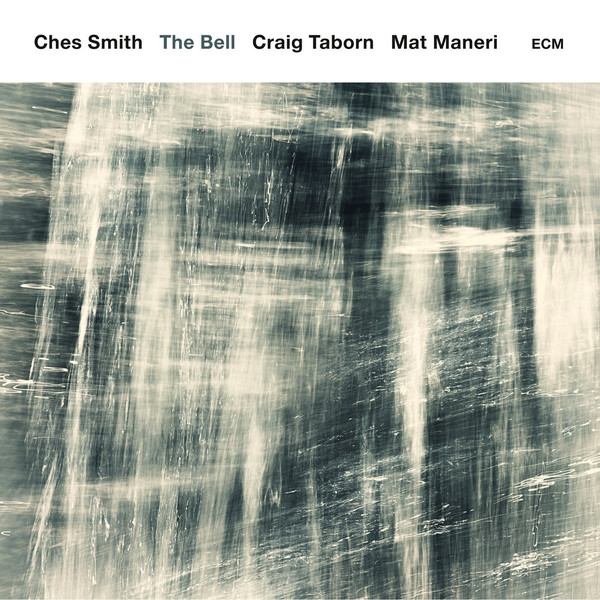
Ches Smith-The Bell.
Up until the New York Winter Jazzfest in 2014, Ches Smith had always been a sideman. That night, he led his own trio. Two years later, Ches Smith’s move from sideman to bandleader was complete when he released The Bell on ECM.
He assumes the role and responsibility with aplomb. Everything he’s done so far in his career, seems to have been leading up to this. Ches Smith and his handpicked trio create what’s an ambitious, captivating and innovative album, where chamber music combines with avant-garde, classical music and free jazz. This might seem like an unlikely combination, but it’s one that works. With the help of producer Manfred Eicher, seamlessly, Ches Smith, Craig Taborn and Mat Maneri combine musical genres on a captivating musical adventure.
It’s the result of three master musicians in perfect harmony. While Ches Smith is the bandleader, he’s not afraid to let Craig Taborn and Mat Maneri showcase their considerable skills. When this happens, Chess Smith is content to play a supporting role. He knows that they’re playing their part in a rich, multi-textured album, The Bell. It features music that’s variously cinematic, dramatic, elegiac, ethereal, rousing and stirring. Other times, it’s melancholy and wistful. Always, though, The Bell captivates. This makes the long wait for the release of Ches Smith’s debut album, The Bell well worthwhile.
Conrad Schnitzler and Schneider TM-Con-Struct.
Between May and July 2016 Schneider TM worked on the fourth instalment of the Con-Struct series. It was released by Bureau B with Conrad Schnitzler and Schneider TM receiving equal billing. The musical archive that Conrad Schnitzler had curated for four decades had inspired a new album of music five years after his death. Even in death, Conrad Schnitzler was capable of playing his part in ambitious and innovative music.
Each of the seven soundscapes on Con-Struct have a cinematic sound that’s sure to set the listener’s imagination racing. Sometimes, the music is minimalist and understated, while other times, it’s elegiac and ethereal or eerie and chilling. Then the next track can be futuristic with a myriad of otherworldly, sci-fi sounds. Just like the other Conrad Schnitzler that Bureau B released during 2016, Con-Struct sounds as it’s Musik For Films.
The sounds that Conrad Schnitzler collected and curated in his musical archive have been put to good use during the Con-Struct series. Especially, in the latest instalment in the Con-struct series, where Schneider TM dips into Conrad Schnitzler archives in search of sounds and inspiration. He found plenty of both. These sounds Conrad Schnitzler collected and curated over four decades. Schneider TM puts them to good use, in his collaboration with Conrad Schnitzler, as they construct the fourth and best instalment of the Con-Struct series,

Dalindèo-Slavic Souls
When composer and guitarist Valtteri Laurell Pöyhönen, decided to found Dalindèo in 2003, he decided to recruit some of Finland’s top jazz musicians. Since then, Dalindèo have released their four albums. Their latest album Slavic Souls was released by BBE. Slavic Souls was no ordinary album. Instead, it was described as a: “surf jazz Tango extravaganza.”
To create their: “surf jazz Tango extravaganza,” Dalindèo combined contemporary jazz is with traditional Finnish Tango music and even northern schlanger. There’s also a psychedelic sound to Slavic Souls. Sometimes, the darkness descends and music becomes moody, broody and gloomy. Other times, the music is atmospheric. Occasionally, there’s a sense of melancholia during Slavic Souls. However, Dalindèo’s cinematic sound shines through. It’s been part a key part of Dalindèo’s sound since 2003, and plays an important part in Slavic Souls. It’s an album that somehow, manages to be all things to all people. That however, isn’t surprising.
Dalindèo feature six of Finland’s top jazz musicians. They were joined by a trio of talented guest artists. Finland’s premier coloratura-soprano singer Anna-Kristiina Kaappola joined trombonist Heikki Tuhkanen and pedal steel player Olli Haavisto. They play their part in the sound and success of Slavic Souls, which is the best album of their twelve year career. Indeed, Slavic Souls, ’s “surf-jazz Tango extravaganza,” is a veritable musical feast, that’s fit for a King or Queen.

Dan Whitehouse-That’s Where I Belong.
Having released Introducing earlier in 2016, Dan Whitehouse released That’s Where I Belong on Reveal Records later in 2016. This was the much-anticipated sophomore album by the talented, Birmingham based singer-songwriter. He’s proves a talented storyteller That’s Where I Belong.
It features nine cinematic songs. Some of these stories aren’t Dan’s own. Instead, he provides a voice for those who have none. This includes on Close Up, where Dan tells the story of refugees, displaced from their homeland. Then on CCC and Little Left Unsaid, Dan deals with subjects like anxiety and mental health. Other times, Dan Whitehouse’s songs are reflective and poignant. He sings about subjects like family and love, and loss and compassion on That’s Where I Belong.
It features ballads and hook-laden anthems. The ballads include Close Up, The Places We Have Been and You Brought The Sunshine. Hook-laden anthems include Work, That’s Where I Belong, Nothing’s Gonna Change It. They’re songs that listeners will never tire of hearing. Dan Whitehouse it seems has come of age as a singer and songwriter. He’s been working towards this since 2007, when he embarked upon his solo career. Now Dan Whitehouse is in touching distance of commercial success and critical acclaim. One listen to That’s Where I Belong and you’ll realise why. With its mixture of beautiful ballads and hook-laden anthems, That’s Where I Belong is the perfect introduction to the newest troubadour in town, Dan Whitehorse

Die Krupps-Stahlwerkrequiem
Thirty-five years after Die Krupps releasing their genre classic Stahlwerksinfonie, Jürgen Engler decided to rerecord the album with an all-star band. The resultant album Stahlwerkrequiem, was released on Bureau B.
The result was Stahlwerkrequiem, a truly groundbreaking album of genre-melting music. It was recorded by Die Krupps who combine elements of avant-garde, experimental, free jazz, industrial Krautrock, post rock, psychedelia and space rock on Stahlwerkrequiem. It’s a truly captivating and inspirational album, where musical and genres and influences melt into one. Die Kupps take the listener on a journey though musical genres and influences. The music veers between dark and dramatic, to elegiac and melodic, to futuristic and otherworldly. Other times, the music is hypnotic and mesmeric. Sometimes, the metallic and industrial sounds take a strangely melodic sound as they ring out. Always, the industrial and rocky sounds that are omnipresent play a leading role in the album’s sound and success.
Stahlwerkrequiem was released thirty-five years after Die Krupps released their genre classic Stahlwerksinfonie. This was the album that many felt Die Krupps would never surpass. However, Die Krupps managed to do so. They recorded a truly groundbreaking , genre-melting Magnus Opus . It features Die Krupps doing what they’ve spent a lifetime doing, pushing musical boundaries to their limits and beyond.

Edwin Sanz-Overflow.
One of the most eagerly awaited Latin albums of 2016, was Edwin Sanz’s sophomore album. Overflow. It was released on Alex Wilson Records and features nine slices of glorious salsa. They feature Edwin Sanz and his multitalented, international band reinventing old songs and introducing the audience to new ones. To do that, they combine elements of Afro-Venezuelan, funk, gospel, hip hop, jazz, Latin, rock and soul. However, Edwin Sanz’s speciality is salsa, and Overflow is a modern salsa album. It’s salsa for the twenty-first century.
From the opening bars of We’re Blessed, right through to the closing notes of Yo Vengo De Venezuela, Overflow is an album that oozes quality. The music is variously beautiful, captivating, joyous and melodic. Edwin Sanz also creates music that’s dance-floor friendly and truly irresistible. Quite simply, it’s a magical musical mystery tour through genres and influences, with Edwin Sanz as the tour guide.
He’s one of the finest percussionists of his generation, and one of the rising stars of music. That’s apparent throughout Overflow, where We’re Blessed to hear Edwin Sanz’s beautiful, joyous and uplifting, genre-melting music. It’s guaranteed to get any party started, where everybody dances with Edwin Sanz. So take my advice, and grab a copy of Overflow, and let Edwin Sanz put a spell on you.

Electro Hafiz-Electro Hafiz.
After nineteen years with Fairuz Derin Bulut, Elektro Hafiz released his eponymous album on Pharaway Sounds. It found Elektro Hafiz experimenting and innovating. As a starting point, Elektro Hafiz used Anatolian psychedelia. To this he and his band added elements of dub, funk, jazz, reggae and rock. The result was an album new, progressive, genre-melting music full of subtleties, surprises and contrasts.
These contrasts come from the instruments used on Elektro Hafiz. He experimented with a myriad of traditional Eastern and Western instruments and scales. When Elektro Hafiz was laying down the rock guitar parts, he stayed true to his Anatolian roots, and used the Anatolian scale. This transformed the rock guitar. Each of these instruments added contrasting sounds, and became part of the bigger musical picture that became Elektro Hafiz. It’s the equivalent to a magical mystery tour.
During this magical mystery tour, Elektro Hafiz combines musical instruments, genres and influences. The result are nine tracks that are variously anthemic, beautiful, joyous and melodic. Other times, the music is dramatic, mesmeric and moody. Occasionally, Elektro Hafiz is tinged with humour. Sometimes, the music on Elektro Hafiz is cinematic and paints pictures. Always, though, the music on Elektro Hafiz is captivating, inventive and innovative, as Elektro Hafiz continues to pushed musical boundaries, and experiment.. It features Anatolian psychedelic pioneer Elektro Hafiz, as he embarks upon what’s a new and exciting musical adventure.

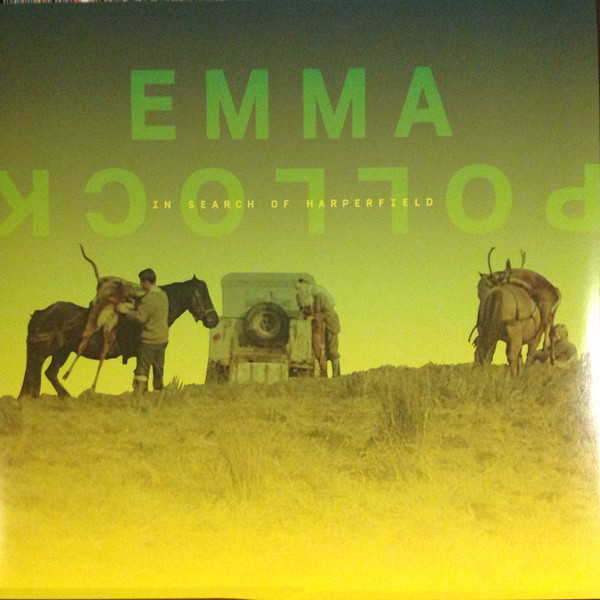
Emma Pollock-In Search Of Harperfield.
Back in late January, Emma Pollock released her long-awaited third solo album In Search Of Harperfield. It was released on the Chemikal Underground label, and was the followup to 2010s In Search Of Large Numbers. In Search Of Harperfield was also an early contender for best Scottish album of 2016.
No wonder. In Search Of Harperfield was an album of carefully crafted songs that show the different sides to Emma Pollock. In Search Of Harperfield was Emma’s most eclectic album, but was also a very personal, soul-baring and autobiographical album. Many of the songs are beautiful, moving and poignant. Especially Intermission and Old Ghosts, which is one of the most moving, emotive and beautiful songs I’ve heard in a long time. They’re two of the reasons why In Search Of Harperfield is one of my best Scottish albums of 2016.
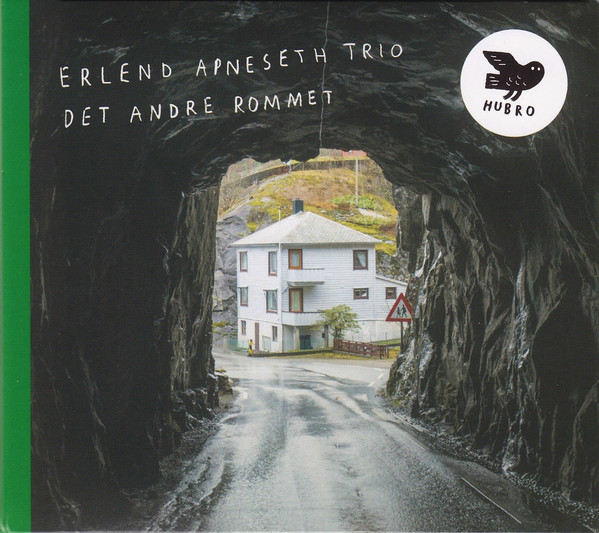
Erlend Apneseth Trio-Det Andre Rommet.
It was in 2013 that the members of the Erlend Apneseth Trio first met. Drummer Øyvind Hegg-Lunde and guitarist Stephan Meidell played on Sommarflukt, the final track on Erlend Apneset’s album Blikkspor. The three men hit it off, and decided to form Erlend Apneseth Trio, who released their debut album Det Andre Rommet on Hubro Music during 2016.
On Det Andre Rommet, the Erlend Apneseth Trio use folk as a starting point. From there, they add elements of avant-garde, improv, jazz, musique concrète and even rock. The result is music that veers between beautiful to cinematic, to dramatic and eerie. Other times, the music is elegiac, ethereal, elegiac, melancholy and melodic. Sometimes, the music is full of sadness and is heart-wrenching. Always, though, the music on Det Andre Rommet has the capacity to captivate and spring surprises, as the Erlend Apneseth Trio take the listener in a new and unexpected direction.
Every member of the Erlend Apneseth Trio plays their part in this musical magical mystery tour. Sometimes, it’s Erllend’s fiddle that takes the listener on this emotional roller coaster. It plays an important part on Det Andre Rommet, and in Erlend’s hands, proves a versatile instrument. One minute, he’s playing the fiddle in the same way as countless generations before him; the next, the maverick musician rewrites the rules, by unleashing a Hendrix-esque performance. In doing, he plays a part in what’s a groundbreaking, innovative album Det Andre Rommet.
Fanfare Ciocarlia-Onwards To Mars!
2016 found Fanfare Ciocarlia celebrating their twentieth anniversary. What better way for the world’s premier gypsy brass band to celebrate such an important anniversary, than with their first new album since 2013? Fanfare released Onwards to Mars! on Asphalt Tango Records. It was crammed full of Fanfare Ciocarlia’s trademark Balkan party sounds. Blues and Latin influenced tracks, are given a big band makeover by Fanfare Ciocarlia on Onwards To Mars!
This was Fanfare Ciocarlia’s first albums since Devil’s Tale in 2013. What better way for Fanfare Ciocarlia to celebrate their twentieth anniversary, that with a new album Onwards To Mars!? It’s a reminder of why Fanfare Ciocarlia are regarded as the world’s premier gypsy brass band. They’re a truly talented band who seamlessly combine, and flit between Balkan blues and cumbia to jazz and Latin on Onwards To Mars! It was without doubt the finest album of Fanfare Ciocarlia’s career.
No wonder. The music on Onwards To Mars! veers between melancholy, mournful and wistful to dramatic and theatrical to celebratory and joyous. It’s also beautiful and heart-wrenching. Other times, the music is dance-floor friendly and truly irresistible. This makes Onwards To Mars! the perfect introduction to newcomers to Fanfare Ciocarlia’s music. Quite simply, Onwards To Mars! is an emotional roller coaster, where Fanfare Ciocarlia takes the listener on a musical journey that they’ll never forget.

BEST NEW ALBUMS OF 2016-PART 3.
BEST NEW ALBUMS OF 2016-PART 3.
Fire!-She Sleeps, She Sleeps.
Back in Fenruary, Fire! released their fifth studio album She Sleeps, She Sleeps on Rune Grammofon. Just like previous albums by Fire! and the Fire! Orchestra the music on She Sleeps, She Sleeps was groundbreaking, influential and innovative. It was also captivating, progressive, genre-melting music.
The music on She Sleeps, She Sleeps veers between moody and broody, to dark and dramatic, through to hypnotic and mesmeric. Other times, the music is akin to a soul-baring confessional, where pain, hurt and heartache pours out of Mats Gustafson’s saxophone. Then his playing is akin to a musical equivalent of Primal Scream Therapy. Once he’s seemingly exercised of demons, it’s all change, and often, the music becomes beautiful and melodic. Always, though, Fire!’s potent and powerful musical cocktail continues to captivate, and proves to be just as progressive and innovative on their latest album She Sleeps, She Sleeps.
Key to the success of She Sleeps, She Sleeps is Fire!’s ability to seamlessly combine elements of avant-garde, experimental, free jazz, noise and psychedelic rock. Fire! are like a musical shaman, combining an eclectic and disparate selection of musical genres and influences. Playing a leading role in their potent musical potion, are mesomorphic rock rhythms and a braying free jazz saxophone. They compliment each other perfectly on She Sleeps, She Sleeps, which is Fire!’s finest hour.

Fire! Orchestra-Ritual.
For their fourth album Ritual, which was released by Rune Grammofon, the Fire! Orchestra “slimmed” their lineup down to just twenty-one members. The newly slimmed down lineup of the Fire! Orchestra . Still, The Fire! Orchestra features some of the most talented musicians Sweden, Norway, Denmark and France has to offer. This pan European supergroup recorded Ritual in just two days.
The result was an album that sounds as if everything the Fire! Orchestra has been leading up to Ritual, It Ritual features the five part Ritual suite. It’s a captivating album where the Fire! Orchestra combine avant-garde, experimental, free jazz, funk, jazz and rock. The music veers between restrained and understated to urgent and dramatic. Other times, the music is mesmeric and hypnotic, before becoming melodic and soulful. Occasionally, the music becomes moody, wistful and cinematic. Always, the music is ambitious, experimental and progressive.
Just like previous albums, Ritual is imaginative, inventive and innovative. It’s also joyous and uplifting, with the Fire! Orchestra playing with freedom and spontaneity, as they examine mysteries and rituals, not just in life, but in music. This five suite exploration is a musical tour de force from the Fire! Orchestra, Ritual which proves that when it comes to lineups, size isn’t everything.

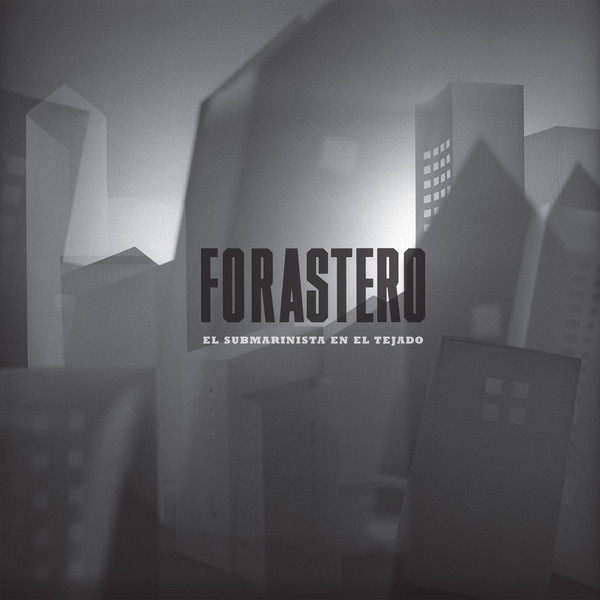
Forastero-El Submarinista En El Tejad.
For the last few years, Forastero have been familiar faces on Madrid’s underground jazz scene. It offers alternative venues to the ones that are regularly frequented by the city’s more conservative jazz fans. They may have changed their mind after hearing Forastero’s debut album, El Submarinista En El Tejad. It’s a captivating musical adventure.
During El Submarinista En El Tejad, Forastero take the listener on a the musical equivalent of a magical mystery tour. Forastero fuse elements of avant-garde, dub, electronica, free jazz, funk, rock, sixties soul, ska, soul jazz and surf rock. To this, Forastero add a variety of musical influences, including The Doors, Jimi Hendrix and Sonic Youth. So does Ennio Morricone’s Spaghetti Westerns and the music of Brandt Brauer Frick. They play their part in El Submarinista En El Tejado’s cinematic sound. All this influenced Forastero album El Submarinista En El Tejado which was released on Lovemonk Records.
It’s an accomplished, cinematic and genre-hopping album. No wonder. Forastero have spent the last few years honing and perfecting their sound. This has paid off. They’ve recorded a truly eclectic album, El Submarinista En El Tejado. It features the many sides of Forastero. El Submarinista En El Tejado and has the potential to introduce Forastero to a much wider audience, and in the process, launch the career of the Madrid based musical adventurers, Forastero.
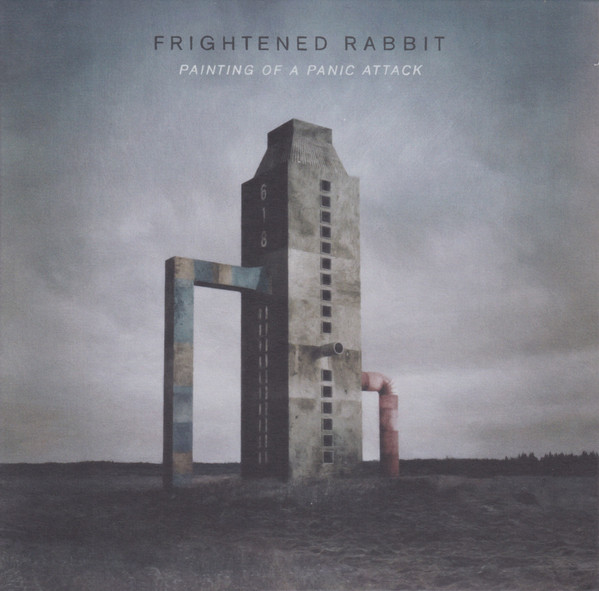
Frightened Rabbit-Painting Of A Panic Attack.
Three years after they released their previous album Pedestrian Verse, Glasgow based Frightened Rabbit returned recently with their fifth album Painting Of A Panic Attack. It was released on Atlantic Records, is a mixture of anthems and ballads. Mostly, though, anthems are to the fore on Painting Of A Panic Attack.
Just like the ballads on Painting Of A Panic Attack, they feature lyrics that are variously cerebral, cinematic, dark, insightful and wistful. Lead singer and songwriter Chris Hutchison, brings these lyrics to life. He’s a storyteller who breathes emotion and meaning into the lyrics. That’s the case whether it’s on the ballads or anthems. There’s hooks aplenty on the anthems, which will be favourites when Frightened Rabbit play live.
They’ve been doing a lot of that recently. That will continue to be the case. Frightened Rabbit are also well on their way to becoming one of the most successful current Scottish bands. They’ve also released one of the best albums of their thirteen year career. That album is Painting Of A Panic Attack, which is an assured and accomplished album from Frightened Rabbit who are equally comfortable delivering ballads as they are hook-laden anthems.
Hedvig Mollestad Trio-Black Stabat Mater
During July, the Hedvig Mollestad Trio released two albums on Rune Grammofon. This included their much anticipated fourth album Black Stabat Mater. It’s a glorious reminder of the golden age of rock. Indeed, it’s possible to imagine the Hedvig Mollestad Trio playing at the Whiskey A-Go-Go in Los Angeles or Fillmore East in New York. However, the similarities between some of the legends of music and the Hedvig Mollestad Trio is no coincidence.
Hedvig Mollestad Thomassen who founded the Hedvig Mollestad Trio in 2009, grew up listening to Led Zeppelin, Black Sabbath and Jimi Hendrix. Their influence can be heard throughout Black Stabat Mater. So can the influence of early Hawkwind, Cream, Santana and West, Bruce and Laing. Closer to home, maybe Moster! and Motorpsycho have influenced the Hedvig Mollestad Trio? These bands have a similar genre-melting sound to the Hedvig Mollestad Trio.
To create this genre-melting sound, the Hedvig Mollestad Trio fuse elements of rock, psychedelia and space rock with avant-garde, improv and jazz. Sometimes, the Hedvig Mollestad Trio seamlessly switch between musical genres mid track. Other times, these disparate genres melt into one on Black Stabat Mater. Occasionally, the Hedvig Mollestad Trio spring a series of surprises, and take the listener on a magical mystery tour. Mostly, though, Black Stabat Mater is an album of über hard rocking music which is finest album of the Hedvig Mollestad Trio’s career. They reach new heights on Black Stabat Mater.

Hedvig Mollestad Trio-Evil In Oslo.
In July 2016, the Hedvig Mollestad Trio released two albums. This includes the live album Evil In Oslo. It was released by Rune Grammofon and is the Hedvig Mollestad Trio’s first ever live album. Evil In Oslo is a tantalising taste of the Hedvig Mollestad Trio live.
Evil In Oslo was recorded in two Oslo clubs, John Dee and Buckley’s. Playing in front of a hometown audience seemed to bring out the best in the Hedvig Mollestad Trio, They prove to be confident and assured performers on Evil In Oslo. The Hedvig Mollestad Trio fuse elements of classic rock, psychedelia, progressive rock and space rock with avant-garde, blues, funk, improv and jazz. Sometimes, the Hedvig Mollestad Trio seamlessly switch between musical genres mid track. Other times, these disparate genres melt into one on the same track. However, for much of the time, the Hedvig Mollestad Trio showcase their hard rocking sound.
Lead by virtuoso guitarist Hedvig Mollestad Thomassen, the Hedvig Mollestad Trio are one of the new breed of hard rocking groups that have sprung up across Europe. However, Norwegian trailblazers the Hedvig Mollestad Trio, are without doubt one of the best of the new generation of hard rockling bands. Proof of that is Evil On Oslo, which is a tantalising taste of the hard rocking Hedvig Mollestad Trio at their very best.

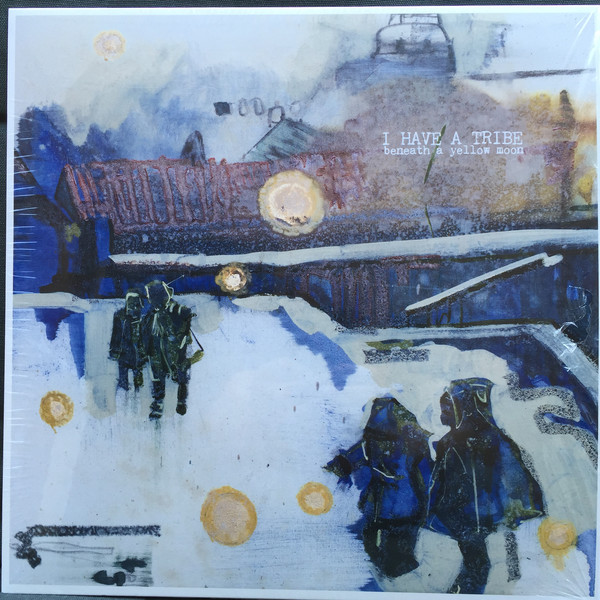
I Have A Tribe-Beneath A Yellow Moon.
Patrick O’Laoghaire had been working I Have A Tribe’s much anticipated debut album since 2015. It was recorded at Chem 19 studio, in Blantyre, Scotland with ex-Delgado Paul Savage. The resultant album Beneath A Yellow Moon was released on Grönland Records as summer dawned.
Beneath A Yellow Moon featured captivating songs that are beautiful, cerebral, cinematic, melancholy, poignant, thoughtful and touching. They’re framed by arrangements that are understated. They don’t get in the way of the vocal. Instead, the vocal is allowed to breath and becomes the focus of your attention. That’s as it should be. Patrick O’Laoghaire’s vocal veers between heartfelt, emotive and melancholy, to needy and hopeful. Other times, hurt and heartbreak shine through on Beneath A Yellow Moon. The result was an album that not only lives up people’s expectations, but surpasses them.
That’s no surprise. Patrick O’Laoghaire, the man behind I Have A Tribe is a talented singer, songwriter and musician, who doesn’t so much deliver songs, but lives and experiences them. That is the case throughout Beneath A Yellow Moon, but is especially the case on After We Meet, Kamala. and Casablanca. These tracks just might be “the beginning of a beautiful friendship” with Have A Tribe and their debut album Beneath A Yellow Moon.
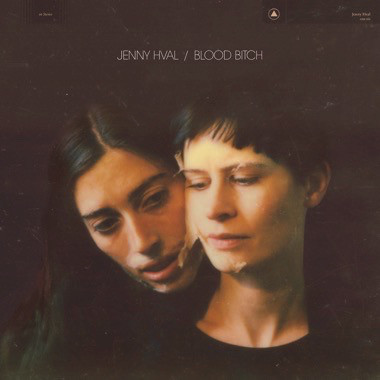
Jenny Hval-Blood Bitch.
Autumn 2016 saw Jenny Hval released her new album, Blood Bitch, via Sacred Bones. It was the followup to Apocalypse Girl. However, Blood Bitch was a very different album and one of the most experimental and focused album’s of Jenny Hval’s six album career.
Before its release, Jenny Hval described Blood Bitch as: “an investigation of… blood that is shed naturally…the purest and most powerful, yet most trivial, and most terrifying blood.” Blood Bitch found Jenny Hval drawing inspiration from everything from art and pop to vampire movies and artwork made of menstrual blood.
Jenny Hval also incorporated elements of poetry, prose and absurdist dialogue into Blood Bitch. She also deployed a myriad of instruments, effects, noise, samples and added vocals that convey a variety of emotions.
They’re framed by arrangements that are understated. They tinkle, shimmer, glisten and quiver. Other times, they’re atmospheric, fuzzy and spacious. Sometimes, they bristle and crackle. Occasionally, the arrangements are elegiac ooze ethereal beauty. Never do they overpower Jenny Hval’s vocal which is the focus of the listener’s attention. Meanwhile, elements of ambient, avant-garde, electronica, experimental and pop combine on Blood Bitch. It’s variously atmospheric, beautiful, challenging, cinematic, eerie, elegiac and ethereal. There’s also an intensity to Blood Bitch, which is a ruminative and thought-provoking album. However, one thing Blood Bitch drives home and remind listeners is that blood isn’t something is a life force, a reminder of creation and where men and women begin.
Jessica Sligter-A Sense Of Growth.
Although Jessica Sligter was born in Holland, Oslo is where she calls home. Despite that, her third album A Sense Of Growth, which was released by Hubro Music, was recorded in Seattle. It was the most ambitious and abstract album of her career. A Sense Of Growth was an album of abstract, genre-melting soundscapes which found Jessica: “deconstructing the format of song based music.”
Having done so, Jessica wrote captivating songs. She dawns the role of a storyteller, as she combines paeans, confessionals, and social comment with songs filled with hurt and pain. This includes the heart-wrenching title-track. Just like so many of the songs on A Sense Of Growth, it has a cinematic quality. Jessica dawns the role of director, and uses instruments and harmonies to help her tell these stories. This is hugely effective, and results in a truly compelling and innovative, genre-hopping album.
Everything from avant-garde, country, folk, pop, psych-folk and rock feature and are fused on A Sense Of Growth. Similarly, Jessica uses combinations of instruments that seem unlikely bedfellows. They work well and play their part in songs that are beautiful, cinematic, dramatic, emotive and moving. Other songs veer between elegiac and ethereal; to emotive and melancholy and sometimes, poignant and wistful. Every song is guaranteed to stir an emotion and make the listener think. That’s why A Sense Of Growth is a career defining album from sonic innovator and explorer Jessica Sligter.

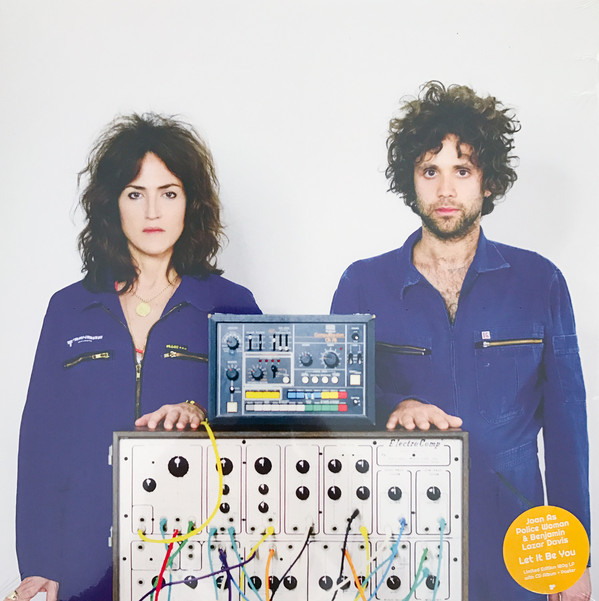
Joan As Police Woman and Benjamin Lazur Davies-Let It Be You.
Let It Be You was the much-anticipated collaboration between Joan As Police Woman and Benjamin Lazur Davies. It was released by Reveal Records and found Joan and Benjamin fusing elements of electronica, indie pop and indie rock are combined with ambient, avant-garde and experimental music. Then there’s the influence of African music. That’s no surprise.
Both Joan and Benjamin journeyed to Africa to study traditional music. When they returned, and happened to meet that they realised they both shared an interest in African music. This lead to them record the genre-melting Let It Be You. There’s an African influence throughout the album. Especially othe staccato bit-crushed guitar line that plays throughout Broke Me In Two. That sound reappears elsewhere on the album. However, care is taken not to overuse it. It’s a similar case with the various effects that are deployed.
Effects are used throughout to sculpt carefully craft Let It Be You. It lasts just thirty-seven minutes, but it’s thirty-seven memorable and melodic minutes. The music on Let It Be You is variously beautiful, dreamy, elegiac and ethereal, but also dark and dramatic. Other times, the music is hypnotic and mesmeric, before becoming catchy and truly irresistible. It’s a case of don’t spare the hooks, as Joan As Police Woman and Benjamin Lazur Davies weave their musical magic and continually captivate on Let It Be You.
BEST NEW ALBUMS OF 2016-PART 4.
BEST NEW ALBUMS OF 2016-PART 4.
Jóhann Jóhannsson-Ophee
On Orphée, Jóhann Jóhannsson’s turned his attention to the beauty and the process of creation. Orphée features Jóhann Jóhannsson tracing a path from darkness into light. Inspiration for Orphée comes from the opéra bouffe Orphée aux enfers (Orpheus in the Underworld). It was written by Ludovic Halévy, and later, revised by Hector-Jonathan Crémieux. The score was written by Jacques Offenbach and became the first full length operetta. Its first performance came in 1858. Since then, this ancient and famous tale has been retold countess times.
Orphéem which an almost flawless album, finds Jóhann Jóhannsson fusing elements of classical and electronic music with ambient, avant-garde, Baroque and minimalism. Other influences includes the music of Bernard Hermann, Ennio Morricone and Michael Nyman. Then there’s the music of classical composers like Shostakovich and Prokofiev. All these influences can be heard throughout Orphée.
The music on Orphée ranges from melodic and mesmeric, to atmospheric, beautiful, ethereal and elegiac. Other times, there’s a degree of darkness and drama. Sometimes, there’s a sense of melancholia and sadness on Orphée. It’s an emotional roller coaster to cherish and treasure. That’s even for people with no interest in classical music. Orphée is a genre-melting album and Jóhann Jóhannsson’s debut on Deutsche Grammophon. It’s also the finest album of his fourteen year solo career. Indeed, Orphée is a career defining album from Jóhann Jóhannsson and features ambitious, inventive and innovative music.

John Illsley-Long Shadows.
Eighteen months after the release of Testing The Water, John Illsley returned with Close To The Edge. It was released on Blue Barge Records and was one of his finest solo albums. The master storyteller works his way through eight songs that ebb and flow beautifully, as the listener is taken on a journey by John Illsley.
From the beautiful, melancholy Morning, the songs on Long Shadows are variously atmospheric, beautiful, cerebral, cinematic and melancholy. They’re also captivating and full of mystery, intrigue and social comment. John also introduces the listener to a cast of characters and tells their story. Other songs are full of social comment. However, two of the finest songs are the paeans, There’s Something About You and Lay Me Down. John it seems is capable of switching between styles and tempo.
That’s the case throughout Long Shadows. John Illsley showcases John’s versatility. Seamlessly, John combines elements of Americana, blues, boogie, country, folk and rock on Long Shadows. Sometimes, John and band sound not unlike Dire Straits. Then on Lay Me Down, John seems to draw inspiration from J.J. Cale. These musical genres and influences combine to create Long Shadows which is without doubt, one of the best albums of John Illsley’s solo career. Long Shadows is also proof that, the old ones are the best. That there is no doubt about.

Jon Balke-Warpe
When Norwegian pianist Jon Balke released Warp on ECM, it was his first album since 2009. However, it was well worth the wait. Warp features a series of carefully sculpted soundscapes. They veer between to beautiful dreamy and ethereal, to dark and dramatic, to moody and broody. Other times, the music is melancholy and wistful. Often, space is left within the arrangements, allowing listeners to reflect. Always though, the music on Warp has a minimalist, cinematic sound.
There’s a cinematic sound throughout Warp. The listener will find themselves inventing scenarios to each of the soundscapes. It’s almost unavoidable. Especially on tracks where Jon Balke has left space. However, Warp is also an album that listeners can wallow in. The music washes over the listener, enveloping and embracing them. Sometimes, it’s lysergic, while other times it soothes their weary soul. Other times, Warp’s slow, spacious and cinematic sound is perfect to reflect and ruminate to. Warp it seems, is all things to everyone.
That’s not surprising. Jon Balke has drawn inspiration from a variety of sources for Warp. Although he’s primarily a jazz musician, he combines elements of ambient, avant-garde, classical, free jazz and Krautrock can be heard. This genre-hopping album is without doubt, the finest album of Jon Balke’s finest solo career. Warp is a minimalist cinematic epic, where drama, melancholia and beauty are omnipresent during Jon Balke’s long-awaited comeback album.

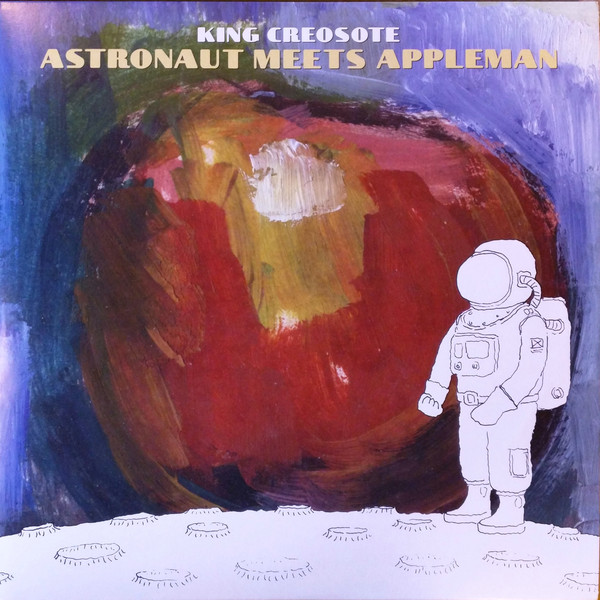
King Creosote-Astronaut Meets Appleman.
During his twenty-one year carer, King Creosote has been a one man music making machine. Despite that, each new album from Fife based singer-songwriter eagerly awaited. Especially an album as eclectic as Astronaut Meets Appleman.
It’s one of the most eclectic albums of King Creosote’s long and illustrious career. They combine elements of folk, indie rock, perfect pop and psychedelia on Astronaut Meets Appleman. It features balladry, paeans, rockers and hook-laden anthems. King Creosote are equally happy delivering ballads, as they’re heading into anthem territory. That’s no surprise. Kenny Anderson’s worldweary voice is perfect for the ballads on Astronaut Meets Appleman.
The result is an album that’s a fitting followup to From Scotland To Love, which was King Creosote’s previous release on Domino Records. It’s a welcome addition to King Creosote’s burgeoning back-catalogue. Astronaut Meets Appleman is also a tantalising taste of the inimitable King Creosote, who after twenty-one years and over forty albums, are belatedly receiving the critical acclaim and recognition that their music so richly deserves
Klaus Gesing, Björn Meyer, Samuel Rohrer-Amiira.
Over the years, Klaus Gesing, Björn Meyer, Samuel Rohrer’s paths had crossed and they became friends. They had much in common. Especially when it came to music. However, Klaus Gesing, Björn Meyer, Samuel Rohrer didn’t release an album until Amiira was released as part of Arjunamusic’s acoustic series last year.
Amiira features improvised soundscapes. They’re variously moving, elegiac and ethereal, to melodic, mesmeric, poignant and ruminative. Other times, the music is a plaintive cry, and a lament for lost love. Sometimes, the music is otherworldly, futuristic and robotic. Then on Fulminate, Klaus Gesing, Björn Meyer and Samuel Rohrer kick out the jams, and unite in a three man protest. In doing so, the listener hears a very different side to the pan European triumvirate of musical innovators.
This talented triumvirate of innovative musicians created cerebral and cinematic music. Amiira is proof of this. Klaus Gesing, Björn Meyer and Samuel Rohrer invite the listener to let their imagination run riot and lose themselves in this cinematic opus. It’s impossible not to accept their invitation to embrace what is a wonderfully cinematic and cerebral album, Amiira.

Konono Nº1 Meets Batida.
Konono Nº1 Meets Batida was the first album to be released since the death of founder member Mingiedi Mawangu. His son Augustin now leads Konono Nº1, and has done so, for several years. While he has a lot to live up to, Augustin played his part in what’s a captivating and memorable collaboration, Konono Nº1 Meets Batida which was released on Crammed Discs.
Describing Konono Nº1 Meets Batida in just a couple of words is impossible. The music veers between joyous and irresistible, to melodic, memorable and mesmeric as musical genres melt into one. Traditional Congolese and Angolan music is combined with electronic beats and elements of dub, gospel and soul. At the heart of Konono Nº1 Meets Batida’s success is an exotic array of percussive delights and vocals that are impassioned, heartfelt and joyful. The final piece of the jigsaw was a trio of truly talented guest artists.
This was the recipe for a successful and intoxicating musical collaboration…Konono Nº1 Meets Batida. It’s a fitting way to celebrate the memory of the man Mingiedi Mawangu, who founded Konono Nº1 fifty years ago, in 1966.

Kris Drever-If Wishes Were Horses.
Six years after releasing his critically acclaimed sophomore albium Mark The Hard Earth in 2010, Kris Drever returned with long-awaited solo album. The reason for the delay was the rise and rise of progressive folk band, Lau. This meant that Kris Drever had to put his solo career on hold. However, when Lau had some downtime, Kris Drever wrote and recorded If Wishes Were Horses which was released by Reveal Records.
With its understated, and sometimes sparse arrangements, Kris Drever’s vocal takes centre-stage. Other times, the understated arrangements showcase catchy, melodic and memorable tracks where hooks haven’t been rationed. Always, though, the arrangements allow the listener to concentrate on the lyrics. Kris tackles a variety of subjects, from education and social migration to politics, self-employment and Shetland where Kris Drever now lives. There’s also songs about love and sex. No subject is off-limits, on what’s a semi-autobiographical album from Kris Drever. He’s matured as singer and songwriter since his sophomore album Mark The Hard Earth.
That’s not surprising, as it’s six years since Mark The Hard Earth was released. However, If Wishes Were Horses has been well worth the wait. If Wishes Were Horses is a cerebral, career defining album from Orkney born troubadour Kris Drever. He ponders and philosophises on a variety of subjects on If Wishes Were Horses, and in the process, breathes life and meaning into his cerebral, insightful lyrics.

Krokofant-Krokofant II.
As 2016 dawned, Krokofant released their much anticipated much anticipated sophomore album Krokofant II on Hubro Music. It was a marriage of the Joycean progressive rock odysseys of King Crimson and Henry Cow and Peter Brötzmann’s free jazz ensembles. Add to that, the influence jazz-rock pioneers like The Mahavishnu Orchestra, Terje Rypdal and Ray Russell. The result was a unique and captivating fusion of musical genres and influences.
Seamlessly Korokofant flit between, and fuse disparate and eclectic musical genres.They combined everything from avant rock, free jazz, fusion and rock, to avant garde, progressive rock and post rock. There’s even hints of experimental and psychedelia as Krokofant weave their unique musical tapestry on a genre-melting musical journey.
As they do, each track on Krokofant II proves unique. They’re full of subtleties and nuances. Constantly, Krokofant throw curveballs and seamlessly change direction. Suddenly, the reveal another side to their music. That’s what you expect from musical pioneers, Krokofant who come of age musically on Krokofant II.
Laniakea-A Pot Of Powdered Nettles.
Ian Johnstone was happy to share his home with others. This included many people he had never met Ian Johnstone before. They had arrived in London, with hopes and dreams. Often these hopes and dreams hadn’t just been dashed, but left in tatters. For these people Ian Johnstone’s became a sanctuary. Sadly, he passed away in spring 2015. To celebrate Ian Johnstone’s life, his friends Daniel O’Sullivan and Massimo Pupillo recorded four cosmic hymns that became Laniakea’s debut album A Pot Of Powdered Nettles. It was released by the House Of Mythology label.
A Pot Of Powdered Nettles features cerebral, cinematic, dramatic, ethereal, melodic and mesmeric music. It’s a fusion of ambient, avant-garde, Berlin School, electronica, experimental, Krautrock and psychedelia. Similarly, Alice Coltrane, Godflesh, Kraftwerk, Pink Floyd and Hildegard von Bingen have all influenced Pot Of Powdered Nettles. It wasn’t an easy album to record.
Laniakea set out to create, evoke and replicate the sense of an eternal vibration that signifies the living spirit in perpetuity. They’ve managed to do so. This is the thread that runs through the album. Then as Calcite closes A Pot Of Powdered Nettles, the arrangement becomes understated. All that remains are what may sound like a series of disparate sounds. They’re not though. Instead, they signify death and rebirth, and the sprit continuing to live on. This is how A Pot Of Powdered Nettles, closes. It’s a truly innovative, powerful and thought-provoking album.

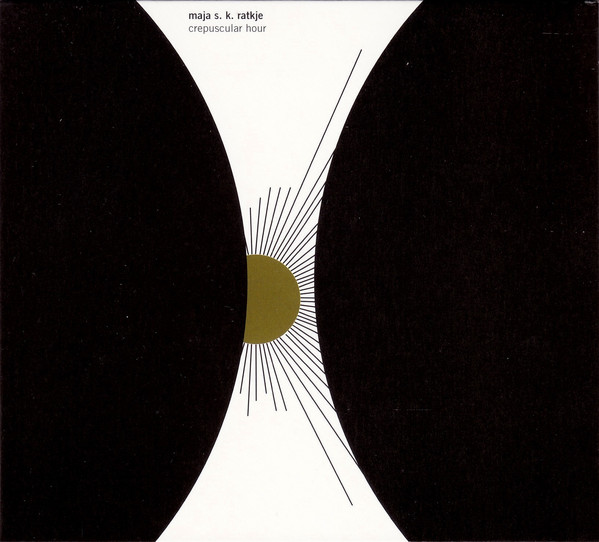
Maja S. K. Ratkje-Crepuscular Hour,
Crepuscular Hour which was released by Rune Grammofon, was one of the most ambitious projects that Maja S. K. Ratkje has been involved with. It was inspired by the phenomena of crepuscular rays, where rays of sunlight stream through gaps in clouds or any number of other obstacles. Having discovered and investigated the phenomena of crepuscular rays, Maja S. K. Ratkje set about writing Crepuscular Hour, which would be performed by a rather unorthodox lineup of three choirs, three pairs of noise musicians and a church organ.
They produce a soundtrack that veers between impressive, dramatic and intense to ruminative, mesmeric and hypnotic. The listener is drawn in, and soon, is spellbound by music that’s dramatic and intense. Sometimes, the music is ethereal and elegiac. Other times it takes on a spiritual quality. That’s no surprise. The texts used in the recording of Crepuscular Hour, were discovered in Egypt in 1945, and proved hugely important, resulting in scholars reexamining early Christian history. Sixty-nine years later, these texts played an important part in Crepuscular Hour.
As the performance of Crepuscular Hour unfolds, the listener reflects on music that’s thoughtful, cerebral and occasionally, challenging. Mostly, Crepuscular Hour has an inherent beauty. There’s a serenity to music that’s ethereal, elegiac and has a spiritual quality. Always though, Crepuscular Hour is captivating, ambitious and innovative as the choirs combine with the noise musicians who push musical boundaries. The result is a sonic and visual feast.
BEST NEW ALBUMS OF 2016-PART 5.
BEST NEW ALBUMS OF 2016-PART 5.
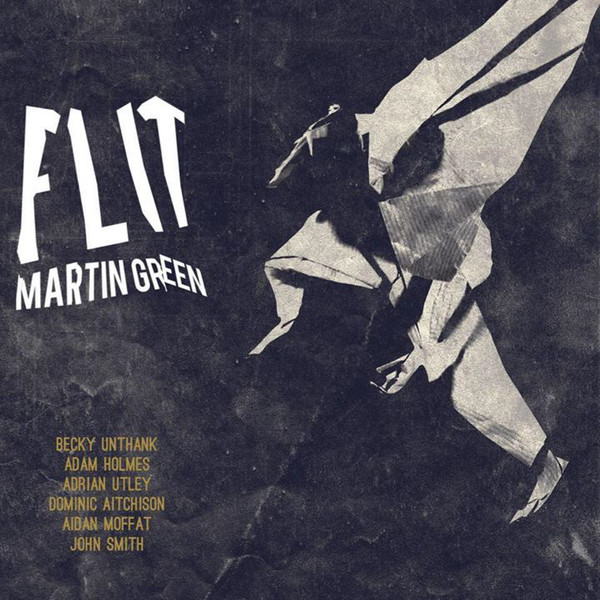
Martin Green-Flit
Last year, when Lau enjoying some downtime, accordionist and electronics guru Martin Green decided to release his sophomore album, Flit on Reveal Records. It was the followup to Crow’s Bones which was released in 2014 and found Martin accompanied by an-star cast of musicians.
They play their part in the sound and success of Flit. This included Karine Polwart who cowrote four songs and vocalist Betty Unthanks. She and Adam feature on most of the songs. They breath life, meaning, emotion and poignancy on songs that document “human movement around the world.” Some of the songs on Flit are tinged with sadness, despair and disappointment. Others document suffering and tragedy. Adam Holmes and Betty Unthanks. bring these songs to life. Sometimes, they sound as if they’ve lived and survived the lyrics. Other times, it’s as if Adam and Betty are determined to highlight other people’s plight and suffering. These vocals play an important part in the sound and success of Flit, a genre-melting album.
During Flit, Martin Green and his friends combine elements of traditional folk, with folk rock, electronica and rock. To this, elements of avant-garde, post rock and psychedelia. Sometimes, one genre is to the fore. Mostly, though, several genres melt into one musical genres on Flit, Martin Green’s much-anticipated sophomore album.
Meta Meta-MM3.
Although Metá Metá have been together since 2008, and have released two previous albums, MM3 is the best album of their career. Metá Metá and their musical friends have created what is without doubt, the best and most eclectic album of their career. They combine everything from Afrobeat and avant-garde, to folk, free jazz and funk through to jazz, Latin and rock. Seamlessly, Metá Metá switch between musical genres, and sometimes, even combine several different genres on the one track. The result is MM3, a potent and heady brew from one of the leading light’s of Sao Paulo’s new, vibrant and exciting music scene, Metá Metá.
That is no surprise, as Metá Metá feature three truly talented and versatile musicians. They’ve spent the last eight years making music together, and nowadays, are popular throughout America, Britain, Europe and South America. However, MM3 which was recently on the Jazz Village label is the album which should introduce Metá Metá to a new and wider audience.
No wonder. MM3 is a career defining album from Metá Metá. They come of age musically on MM3, an album of genre-melting music with an important social message. It finds the Três Amigos, Metá Metá reach new and untold musical heights on their latest and greatest album, MM3.

Miracle Glass Company-MG 1.
Edinburgh based power rock trio have been around for several years. They first came to prominence in May 2016, when they released their single Higher Than High. Straight away, it was obvious that Miracle Glass Company were a cut above the competition. They were a much tighter and more accomplished band who were capable of creating melodic psychedelic rock. Proof of this is their debut album MG 1.
During MG 1, Miracle Glass Company showcase their considerable talents. Seamlessly they switch between rocky anthems and ballads. Similarly, Miracle Glass Company flit effortlessly between disparate musical genres. Sometimes, they combine several genres within the same track. This proves a potent and heady brew. Especially as Miracle Glass Company power pop, psychedelia, rock and the West Coast sound. They also draw inspiration from a variety of musical influences.
The Doors, Big Star, The Beatles, The Who and Teenage Fanclub have all influenced Miracle Glass Company. This is apparent on their debut album MG1, which was released on VoxBox Records. MG 1 showcases a truly talented and versatile band. They’re rising stars of Scottish music whose star is in the ascendancy. 2017 promises to be a big year for Miracle Glass Company. MG 1 is just the first step in what’s a long and potentially perilous journey. However, Miracle Glass Company have the potential and talent. Proof of that is MG 1, which features a tantalising taste of the new kid in town, Miracle Glass Company.

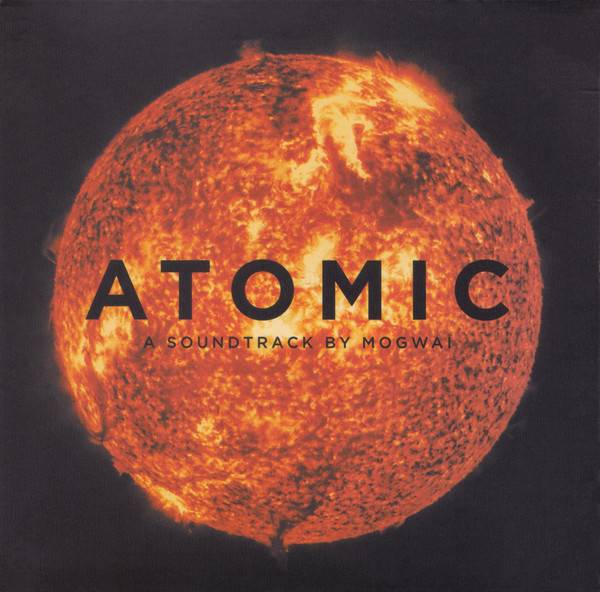
Mogwai-Atomic
When filmmaker Mark Cousins decided to make the documentary Atomic: Living In Dread and Promise, post rock pioneers Mogwai were commissioned to write the soundtrack. It was the perfect backdrop to Atomic: Living In Dread and Promise, which was a personal and poignant cinematic memoir. However, after the documentary was aired in the summer of 2015, Mogwai decided to rerecord the whole of the Atomic soundtrack. This might have seemed like a strange decision. However, when the rerecorded version of Atomic was released by Rock Action Records in April 2016, Mogwai’s decision to rerecord the album was vindicated.
Atomic was a mesmeric fusion that captivates and compels. The listener is taken on a musical journey, one that veers between dramatic and dreamy, to surreal and trippy, to beautiful, pensive and understated to melancholy and melodic. Other times the music is dramatic, moody and broody. One thing the music never is, is boring. Not at all. Certainly not with Mogwai providing the soundtrack to Atomic.
Subtleties and surprises are constantly sprung. Mogwai certainly aren’t afraid of changing direction. Using the musical equivalent of a handbrake turn, the Mogwai Young Team perform a volte face. That’s what makes Atomic such a captivating and groundbreaking soundtrack from Glasgow’s famous five…Mogwai.
Mop Mop-Lunar Love.
Three years have passed since Mop Mop released their fourth album Isle Of Magic. However, Mop Moop returned in 2016 with their long-awaited fifth album Lunar Love. It was released by Agogo Records. Mop Mop were joined by a cast of ten guest artists and an eclectic array of instruments. They’re responsible for Lunar Love’s genre-melting sound on Lunar Love.
Everything from dub, electronica and funk, to avant-garde, jazz and progressive rock rubs shoulders with Afro-beat, Caribbean, Latin, Lounge and soul on Lunar Love. Over the four parts of Lunar Love, Mop Mop take the listener on a musical journey. It’s variously beautiful, dark, dramatic, elegiac, hypnotic, melodic, mesmeric, moody and wistful. However, for much of Lunar Love the music is cinematic. Especially on the instrumentals, where the listener can let their imagination run riot. Other times, there’s an element of drama and theatre to the music on Lunar Love. The vocalists add to this drama and theatre. That’s no surprise.
Mop Mop were joined by a multitalented cast of guest artists. They add an exotic array of instruments to Lunar Love. From the myriad of percussion, to the vibes, marimba, glockenspiel balafo, steel drums and kalimba. This potpourri of disparate and eclectic instruments play their part in Lunar Love, which is without doubt the most accomplished and cohesive album of Mop Mop’s five album career.

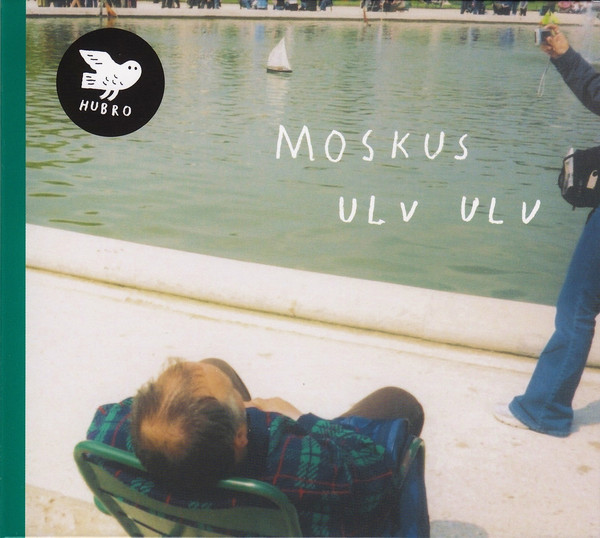
Moskus-Ulv Ulv.
Last year, Moskus released their much anticipated third album Ulv Ulv on Hubro Music. Ulv Ulv features the Norwegian jazz pioneers at their innovative best, as they play with a freedom, inventiveness and intuitiveness that most groups can only dream of. The result is music that’s inventive, innovative, ambitious, bold and challenging. This is what we’ve come to expect from Moskus.
Just like on their two previous albums, Moskus create music that continue to challenges musical norms on Ulv Ulv. Moskus continue to push musical boundaries to there limits, and beyond on Ulv Ulv. To do this, they combine elements of avant-garde, experimental, free jazz, improv and industrial. There’s also the influence of Ornette Coleman, Charles Mingus, Albert Ayler and Sun Ra on Ulv Ulv. The result is an album that’s variously atmospheric, beautiful, cinematic, dark, dramatic, elegiac, ethereal, haunting, hypnotic, melodic, mesmeric, otherworldly and ruminative. The result was Ulv Ulv, the finest album of Moskus’ career.
Incredibly, it took Moskus just three days to record Ulv Ulv. They eschewed a traditional recording studio, and recorded Ulv Ulv at the Haugesund Billedgalleri. With just three days to record Ulv Ulv, Moskus worked quickly and efficiently, and recorded what is a captivating, career defining album. Ulv Ulv finds Moskus one step closer to the musical Utopia that bands spent their career in search of.
Mull Historical Society-Satellite.
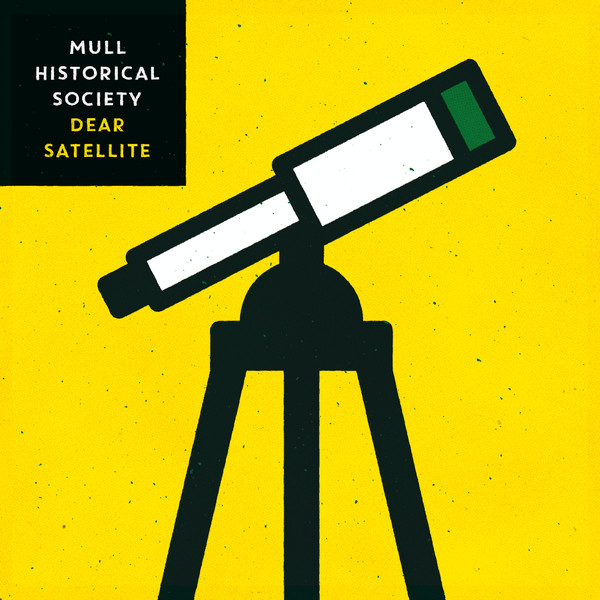
Ever since 2000, Mull Historical Society has been the musical vehicle of Scottish singer, song-writer, multi-instrumentalist and producer Colin MacIntyre. He released his seventh album Satellite on Xtramile Recordings during 2016. It was the second Mull Historical Society produced by Grammy Award-winning producer Dom Morley. This time, it’s resulted in a career-defining album.
Satellite was without doubt, the best album of Mull Historical Society’s career. It’s an almost flawless album that many commentators knew Mull Historical Society were capable of making.
By that, I mean an album of slick, polished perfect pop, with diversions into folk and rock. Hooks certainly haven’t been rationed on Satellite. It’s an album long on clever poppy hooks and anthems. Other songs are cinematic, and rich in imagery. So much so, that’s it’s possible to imagine the scenes unfolding before your eyes. Meanwhile, other songs on Satellite are variously moving, poignant, beautiful and uplifting; while others are irresistible and joyous. Satellite is the best album of Mull Historical Society’s career. It seems Mull Historical Society went in search of perfection on Satellite, and very nearly discovered it on what’s a career defining album.
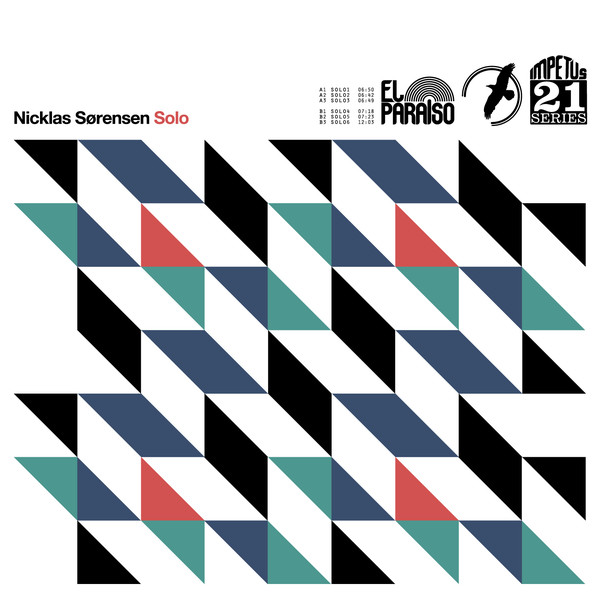
Nicklas Sørensen-Solo.
Ever since 2010, Copenhagen based instrumental rock trio Papir’s star has been in the ascendancy. One of the men behind Papir’s success was guitarist Nicklas Sørensen, who released his debut album Solo on El Paraiso Records. He set out to experiment on Solo. However, on other tracks, Nicklas Sørensen reminds the listener’s Papir’s trademark sound. For the listener, they enjoy the best of both worlds.
With a little help from his friends, Nicklas Sørensen takes the listener on a genre-melting journey. This includes the three genres that have influenced Papir, Krautrock, psychedelia and space rock. These influences can be heard on Solo. Krautrock has been a big influence on Nicklas Sørensen. Especially Can, Neu!, Cluster and Harmonia and Michael Rother. Sometimes, Nicklas Sørensen sounds uncannily like Michael Rother, during this genre-melting journey.
Nicklas Sørensen also combines elements of ambient, avant-garde, dub and rock. The result is Solo, an album that’s guaranteed to toy with the listener’s emotions. Solo veers between blissful, euphoric and joyous, to moody and broody, through to lysergic and dramatic. For much of Solo, the music is hypnotic and mesmeric. That’s down to Krautrock influence. Other times, the music is cinematic. Often, though, the Solos are beautiful and dreamy, as trails of glistening, shimmering music captivate, and makes the world seem a much better place. Sadly, all too soon, Solo is over. All that’s left are the memories of Nicklas Sørensen’s genre-melting, sonic adventure, Solo.
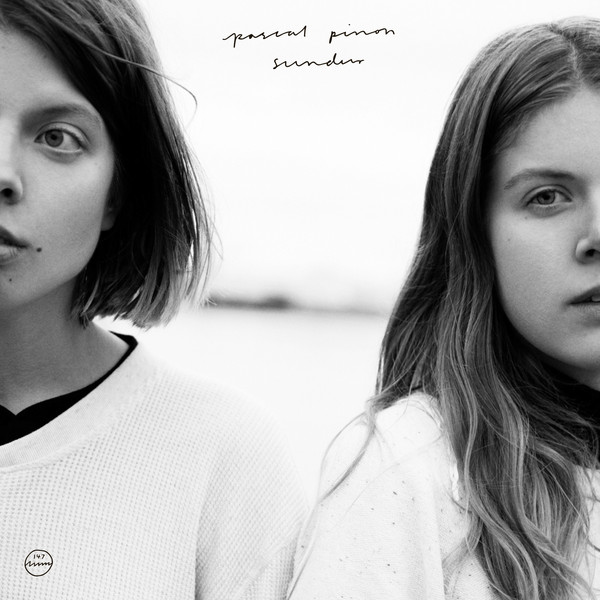
Pascal Pinon-Sundur.
After three years away, Pascal Pinon return with Sundur, which is a career defining album. Sundur is without doubt, the best album of Pascal Pinon’s career. It’s certainly their most eclectic album. Sometimes, Pascal Pinon sound as if they’ve been inspired by Astrid Williamson’s early albums, John Martyn and Kate Bush. There’s even a nod to Sandy Denny, on what’s a thoroughly modern album of folk music.
Sundur finds Pascal Pinon combining disparate genres. There’s elements of ambient and avant-garde, plus electronica and experimental, right though to folk, Neofolk and pop. Sometimes, several genres melt into one on the one multilayered song. Other times, the songs are minimalistic, with sparse, spartan arrangements. They often feature just guitars or a piano, which proves the perfect accompaniment to the vocal. There, less is more. Then on the two soundscapes, Pascal Pinon let their imagination run riot, and create captivating instrumentals. However, captivating is a word that perfectly describes Sundur, which was released Morr Music.
The music on Sundur can also be described as beautiful, cinematic, emotive and ethereal, but also dark, ruminative and wistful. Always though, the music on Sundur is captivating on what is without doubt, a career-defining album where Pascal Pinon come of age musically.
Phall Fatale-Moonlit Bang Bang.
Some things are well worth waiting for. Moonlit Bang Bang was one of these things. Music fans have waited three years for the followup to Charcoal From Fire. Their patience was rewarded when Moonlit Bang Bang was released on Slowfoot Records in mid-January 2016. It’s an album that shows how Phall Fatale had grown and matured as a band.
Phall Fatale never let their standards slip on Moonlit Bang Bang. It’s a captivating musical journey through what’s a disparate selection of genres. There’s everything from avant-garde, ambient and avant-pop to Caribbean and classical through to electronica and experimental via free jazz, industrial, musique concrète and rock. That’s not forgetting a hint of funk, reggae and soul, plus plenty of post punk stylings. Moonlit Bang Bang is a truly eclectic album; and one that takes the listener on a roller coaster ride through the music of the past fifty years
As a result, musical mavericks Phall Fatale, have produced an album that’s variously eclectic, inventive, melodic and sometimes, beautiful and poignan. Other times, the music has a fragility, and bristles with emotion. Then just as quickly, Phall Fatale kick out the jams and unleash a post punk powerhouse. That’s why, musically, Phall Fatale are something of an enigma, who are always capable of springing a surprise, and taking the listener in the most unexpected direction, on what’s a truly captivating musical adventure, Moonlit Bang Bang.
BEST NEW ALBUMS OF 2016-PART 6.
BEST NEW ALBUMS OF 2016-PART 6.
Qluster-Echtzei.
Forty-seven years after he first co-founded Kluster, Hans-Joachim Roedelius keeps the memory of Kluster and Cluster alive with Qluster. They released their sixth album Echtzeit on Bureau B during 2016.
Echtzeit marks a stylistic departure from Qluster. It’s much more ambient sounding album. Qluster combine elements of ambient, avant-garde and Berlin School with electronica and experimental music. The result is music that’s mostly understated, subtle and minimalist. It’s case of less is more. Occasionally, the music becomes dark, dramatic and briefly, menacing. This adds to the cinematic sound of Echtzeit. Mostly, the music on Echtzeit veers between beautiful, dreamy, ethereal and lysergic; to hypnotic and mesmeric and sometimes, melancholy, reflective, ruminative, thoughtful and wistful. Always though, Echtzeit is compelling, captivating and cinematic. Echtzeit is also melodic and harmonious, and is a fitting addition to the Kluster, Cluster and Qluster illustrious discography.
Echtzeit is also the most accessible album of Qluster’s career. It’s the perfect introduction to Qluster, and an album that should introduce Qluster to a new and much wider audience. Veterans of Kluster, Cluster and Harmonia will enjoy and embrace Qluster’s new album Echtzeit. It finds the grand old man of German music, Hans-Joachim Roedelius continuing the legacy of Kluster and Cluster with Qluster on Echtzeit.
RM Hubbert-Telling The Trees.
For Telling The Trees, RM Hubbert joined by a stellar cast of guest artists. This includes Karine Palwart, Kathryn Williams, Martha Ffion and Anneliese Mackintosh. These multitalented songwriters, musicians and vocalists join RM Hubbert in creating another album of collaborations. Hubby’s first album of collaborations, Thirteen Lost and Found, won Hubby the Scottish Album Of The Year Award. Telling The Trees had a lot to live up to.
It’s a captivating album of genre-melting music. Telling The Trees. features everything from folk, country, flamenco, indie pop and America. It features music that’s atmospheric, beautiful, cinematic, ethereal, hook-laden, melancholy, pensive, poignant and ruminative. The result is an enthralling album that hopefully, marks the start in a new chapter in RM Hubbert’s career.
Telling The Trees is the first album of the post-Ampersand years. The threads that ran through the Ampersand quartet were Hubby contending with the loss of both his parents and a five year battle with depression. Hopefully, Hubby is coming to terms with the loss of his parents, and has won his brave battle with depression. If he has, then Telling The Trees will be the start of a new chapter in his career. That would be fitting. Twenty-five years ago, in 1991, RM Hubbert took his first tentative steps into Glasgow’s vibrant musical scene. Nowadays, RM Hubbert is regarded as a veteran of the Scottish music scene, whose fifth album Telling The Trees was released to critically acclaim.

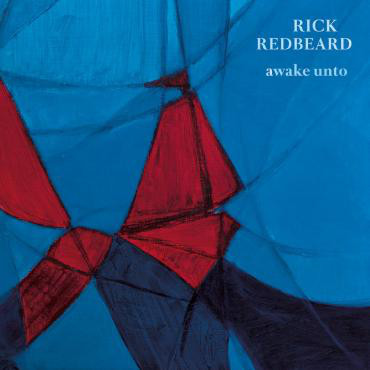
Rick Redbeard-Awake Unto.
Three years after the release of No Selfish Heart, Rick Redbeard released his sophomore album Awake Unto on Chemikal Underground Records. It’s an album where Rick Redbeard has come of age musically as a solo artist.
No wonder. Rick Redbeard spent three years carefully crafting the ten songs on Awake Unto. It was recorded with help of a few musical friends. The result was Awake Unto, which is a much stronger and more cohesive album than No Selfish Heart. Awake Unto also an album that oozes quality.
Many of the songs on Awake Unto have much in common. Not only are they beautiful, but they’ve a cinematic quality. Rick Redbeard paints pictures with his lyrics, and with his unique and unmistakable vocal, takes the listener on a musical adventure. They discover songs that are beautiful and cinematic. Others are poignant, atmospheric, and tinged with drama, melancholy, mystery and mysticism. Some are melodic and memorable, while The Golden Age is an anthem-in-waiting. Wild Young Country and Field Years are both heartfelt paeans from the pen of Rick Redbeard. He’s a talented songwriter, who has the ability to breath life, meaning and emotion into the lyrics. Proof of this is Awake Unto, where Rick Redbeard comes of age musically.
Skadedyr-Culturen.
Supergroup. That describes Skadedyr. Their lineup features twelve of the most inventive, innovative and influential musicians in Norway. Skadedyr are no ordinary supergroup. Instead, they describe themselves as an anarchist-democratic band. This makes Skadedyr standout from the crowd. So does the unique and eclectic selection of instruments that Skadedyr play. They put them to good use on Culturen which was released by Hubro Music. It marks the return of one of the most exciting bands in the Norwegian music scene, Skadedyr.
They don’t disappoint on Culturen. It’s captivating album where Skadedyr create a dazzling musical tapestry. They fuse a disparate selection of musical influences. Everything from avant-garde, electronica, experimental, folk, free jazz and post rock shine through. So does brass band, industrial, jazz, and musique concrète. These musical genres become Skadedyr’s musical palette, and are applied upon on Culturen’s six canvases.
These canvases veer between atmospheric, dark, dramatic and eerie, to ethereal, joyous and melodic. Other times, they’re minimalist and understated, but can quickly, become urgent, futuristic and otherworldly. Sometimes, the music becomes melancholy and wistful, but has an inherent beauty. Always, though, Skadedyr captivate with their unique brand of genre-melting music. It’s often cinematic, and allows the listener to paint pictures as they immerse themselves in the music on Culturen. It’s a career-defining album and tantalising introducing to one of most exciting and dynamic bands in Norwegian music, Skadedyr whose sophomore album Culture is their most accessible.

Sølyst-The Steam Age.
Five years after releasing their eponymous debut album, Sølyst released their third album The Steam Age on Bureau B. It’s an ambitious album where Sølyst turns his attention to the Industrial Revolution.
The Steam Age sounds like the soundtrack. Sølyst even manages to replicate the sound of a factory at work. It veers between dramatic, alluring and melodic, to mesmeric, reassuringly rhythmic and hypnotic. Sølyst’s factory at work provides a captivating soundtrack. Especially when the machines seem to dance with delight. Sølyst it seems , is providing the soundtrack of a factory at play. This conjures up visions of machines coming to life, like an industrial version of Toy Story.
Maybe, Sølyst has inadvertently provided the soundtrack to Disney Pixar’s next blockbuster? He certainly has created a cinematic epic. When listening to The Steam Age, it’s best to let your imagination run riot. As you listen to the music, scenarios will unfold before your eyes. Suddenly, the dark satanic mills seem very real. Especially their sounds and dangers, as sounds assail one’s senses. For forty-nine minutes, The Steam Age proves an enthralling and captivating listen. It’s the closest thing to time travel you’ll experience with without Doctor Who’s Tardis.

Splashgirl-Hibernation.
When doom jazz pioneers Splashgirl were formed, they decided to combine traditional instruments and technology. This was new, exciting and innovative. The members of Splashgirl were one part musician, to one part musical alchemist as they experimented with their arsenal of musical instruments and technology. They put that to good use over the years, including on their fifth album Hibernation which was released by Hubro Music. It found Splashgirl changing direction.
This was a huge risk. Splashgirl had found and honed their sound over four critically acclaimed albums. However, Splashgirl aren’t the type of group who could or would rerecord the same album. That’s for lesser bands, not musical mavericks and pioneers like Splashgirl. So when they made their way to Hljodriti Studio in Hafnarfjördur in September 2015, the decision was made. Splashgirl would make more use of synths, electronics and processing. They play a more important part in Hibernation, which features Splashgirl at their most inventive and innovative.
As Splashgirl innovate, the combine disparate musical genres. Elements of avant-garde, classical, drone, free jazz, post rock jazz and rock. All these genres play their part in Hibernation. It veers between cinematic, dramatic, melancholy and wistful, and sometimes, beautiful, elegiac and ethereal. Hibernation is an album to embrace and cherish, where musical alchemists Splashgirl create a cinematic Magnus Opus.
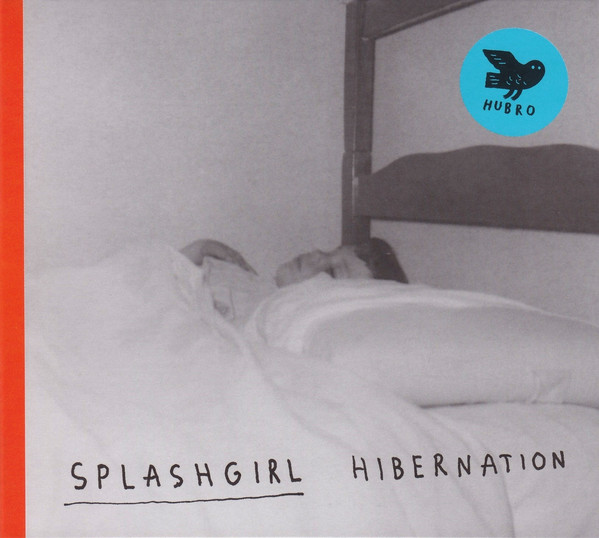
Starless-Starless.
One of the most anticipated Scottish albums of 2016 was Starless, a project that Paul McGeechan conceived over seven years ago. It was an ambitious project, and one that would take time, patience and persistence to realise. However, this he realised, was the time to make the Starless project reality. So having compassed music of the music on Starless, Paul enlisted a few friends.
Soon, Paul had a cast of some of the most talented singers in Scotland. This included The Blue Nile’s Paul Buchanan, Capercaillie’s Karen Matheson, Marie Clare Lee, Julie Fowlis and Andrew White. Pop and rock vocalists joined traditional singers in Starless. Joining them, were the Prague Philharmonic Orchestra. They provided an emotive backdrop throughout Starless. Not only did they sweep the arrangements along, but framed the vocals. What was unusual was that the strings dominated the arrangements on Starless. However, Starless was no ordinary album, and Starless were ordinary group.
Instead, Starless is more like a musical collective, where there is room for the lineup to evolve. However, on Starless ethereal beauty and troubled troubadours with worldweary vocals join lush strings in producing an almost flawless album. That album is Starless, which features stars aplenty.They shine bright and made Paul McGeechan’s Starless project a reality, and a resounding success.
Stein Urheim-Strandebarm.
After a two year absence, Bergen based, multi-instrumentalist Stein Urheim, returned with another album of ambitious and innovative music, Strandebarm. It was released on Hubro Music. Inspiration for Strandebarm, was French music of the early 1900s; American ragtime and standards of the twenties and thirties. They were a tonal departure point for Stein Urheim on Strandebarm. These he combines with both acoustic instruments and electronic elements. They’re both part of Stein Urheim’s musical arsendal, which he deploys to good effect as he recorded Strandebarm.
Stein Urheim put his musical arsenal to good use. Strandebarm is aheady brew. It’s best described as atmospheric, beautiful, ethereal, haunting, melancholy, mesmeric and wistful. Other times, the music is cinematic and dramatic. However, for much of Strandebarm, the music is ruminative and thoughtful. It allows time to reflect and consider, without being subdued or sombre. Far from it.
Instead, Strandebarm is another captivating album from one of the leading lights of Norway’s vibrant music scene, Stein Urheim. The Bergen based musical pioneer continues to innovate and take his music in new and unheralded directions. Other times, Stein Urheim springs a surprise, as he takes the listener on a musical adventure. By then, Stein Urheim is playing the role of a swashbuckling musical pioneer. Helped along by his collection of eclectic and exotic stringed instruments from the four corners of the world, Stein Urheim has created some of the most ambitious, exciting and innovative music of his career on Strandebarm.

Stian Westerhus-Amputation.
Nowadays, Stian Westerhus is one of the most accomplished and innovative abstract guitar players. Constantly, he’s busy working as a session player and collaborating with the great and good of Norwegian music. When he has time, he works on his solo albums. 2016 saw Stian Westerhus release his fourth solo alnbum, Amputation on the House Of Mythology label. It’s the most ambitious album of his career.
Amputation features music that’s cerebral, challenging and thought-provoking. Stian wants the listener to think; sometimes about subjects that will make will them uncomfortable. That’s the case on Amputation and Amputation Part II. Stian replicates the sounds heard in an operating theatre when an amputation is taking place. It’s a traumatic and life-changing event. Most musicians would shy away from even broaching such a controversial subject. Not Stian Westerhus. He brings the subject into the open, and faces the reality head on. For that he should be congratulated. However, the Amputation suite is just part of Amputation.
The music on Amputation is also beautiful, cinematic, ethereal and melodic. Other times, it’s dark, haunting and mournful. Sometimes, Stian lays bare his soul, delivering vocals that are akin to an outpouring of emotion. When this happens, there’s a cathartic quality to the vocals, as if Stian is cleansing his soul. He breathes life and meaning into the lyrics on Sinking Ships, How Long and Infectious Decay. Always, the music on Amputation is compelling and innovative on what’s Stian Westerhus’ finest hour.

Sula Bassana-Shipwrecked.
When Sula Bassana released Shipwrecked on Sulatron-Records, it was the twentieth album they had released since 2002. Shipwrecked is best described as an album of electronic Krautrock, albeit with a few detours.
On Shipwrecked, Dave Schmidt combines elements of avant-garde, Berlin School, experimental and psychedelia with electronic Krautrock. In doing so, Sula Bassana draws inspiration from, and pay homage to Can, Cluster, Kraftwerk, Michael Hoenig, Neu! and Rodion G.A. When this heady brew of musical genres and influences is combined, the result is Sula Bassana’s twentieth album, Shipwrecked.
It features music that veers between dramatic to broody and moody, to hypnotic and mesmeric right through to melancholy and wistful. Other times, the music on Shipwrecked ranges from lysergic to futuristic and even beautiful. Always though, Sula Bassana’s music on Shipwrecked is innovative, captivating and cinematic. Shipwrecked sounds like the soundtrack to a film that’s yet to made, but if it ever is, is sure to be a blockbuster.

BEST NEW ALBUMS OF 2016-PART 7.
BEST NEW ALBUMS OF 2016-PART 7.
Sunanna-Triangle.
Triangle is Susanna’s eleventh album and first for four years. It was released on Susanna’s own SusannaSonata label, and is no ordinary album. Not by a long chalk. Instead, Triangle is a twenty-two song cerebral epic, where Susanna muses and meditates on mortality and religion. It’s a powerful album, that invites reflection and introspection.
Triangle features understated, spartan arrangements. They come courtesy of Susanna’s arsenal of electronics, effects, samples and instruments. When they’re combined, they help hone the stark, understated and beautiful backdrops. Often, they’re a mixture of different musical genres and influences. This includes elements of ambient, avant-garde, chamber folk, drone, electronica, experimental, gospel and indie pop. The result is music that’s cerebral as Susanna muses and meditates on mortality and religion.
As she does, the music on Triangle is variously beautiful, cinematic, emotive, expressive, heartfelt and hopeful. Especially as Susanna’s vocals take centre-stage. She breathes life, meaning and emotion into the lyrics on Triangle. Susanna is at her best on the ballads as she delivers a series of vocal masterclasses. Other times, the music on Triangle changes, becoming dark, melancholy and wistful. This is part of what’s a captivating and cerebral album, Triangle. Its ruminative and invites reflection and introspection on Susanna musings on mortality and religion. The result of Susanna’s musings can be found on Triangle, and are what she describes as: “music for lost souls,” where “nothing is holy, nothing is sacred.”
Teenage Fanclub-Here.
After a six year absence, Glasgow’s very own Kings of jangle pop, Teenage Fanclub returned with their much anticipated tenth album, Here. It was the long awaited followup to 2010s Shadows. Since then, the members of Teenage Fanclub have been spending much of their time working on various side projects. Eventually, the call came, and everyone returned to the mothership, Teenage Fanclub. That has been home to the Bellshill boys since 1989. This homecoming was going to be special.
From the opening bars of I’m In Love, right through to the closing notes of Connected To Life, Teenage Fanclub never put a foot wrong. The songs are anthemic, beautiful, joyous, melodic and sometimes, even have a melancholy quality. Other times, the songs are dreamy, rocky and ruminative. Always, though, the songs on Here are memorable as Teenage Fanclub roll back the years.
So good is the music on Here, that it’s akin to a return to Teenage Fanclub’s golden years between 1991 and 1997. Back then, Teenage Fanclub could do no wrong. That’s the case on Here, which was released on Teenage Fanclub’s own PeMa label. It’s a welcome return to form, from Teenage Fanclub who are enjoying an Indian Summer in their twenty-seven year career. Here finds Teenage Fanclub combining balladry, perfect pop and jangle pop with rock and even a hint of country. It’s a flawless fusion where Teenage Fanclub back the years on what’s their best album in nearly twenty years, Here.
The Cosmic Dead-Rainbowhead.
Having formed in 2010, The Cosmic Dead didn’t waste time in recording and releasing their eponymous debut album. It was released in 2011, and was a fusion of space rock, Krautrock and psychedelia. The Cosmic Dead showcased a group who channelled the spirit of Hawkwind and Ash Ra Tempel. This won the approval of the record buying public. So have the other albums The Cosmic Dead have released. This includes Rainbowhead.
Every album that The Cosmic Dead have released, has been leading to Rainbowhead. It’s a fusion of heavy rock, Krautrock, psychedelia and space rock. This is the sound that The Cosmic Dead have been honing for the past six years on their five previous albums. However, Rainbowhead trumps everything that The Cosmic Dead have released and should introduce their music to a wider audience.
Rainbowhead features Glaswegian groove-meisters The Cosmic Dead at their hard rocking best. They kick loose from the opening bars of Human Sausage, and never let go until the closing notes of Rainbowhead. In between you’re treated a glorious assault on the sensory system that unleashes endorphins aplenty. This comes courtesy of those genre-melting innovators The Cosmic Dead, and their latest critically acclaimed album Rainbowhead. It’s a career defining album from The Cosmic Dead, and shows that they’re destined to join the elite of Scottish music.
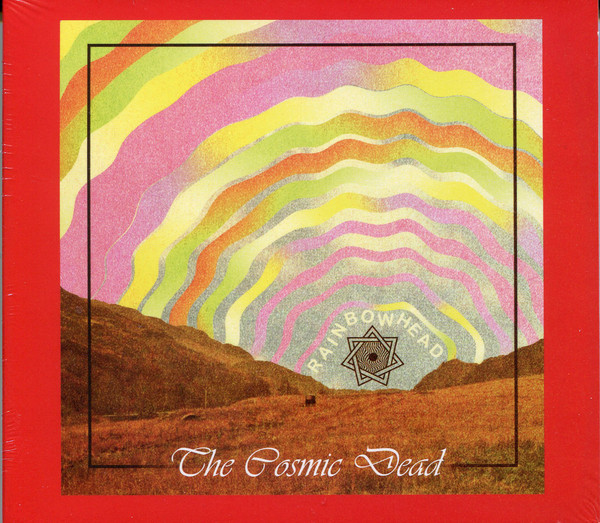
The Magnetic North-Prospect Of Skelmersdale.
Prospect Of Skelmersdale released their sophomore album Prospect Of Skelmersdale on Full Time Hobby last year. It wasn’t an easy album to write. After a false start, The Magnetic North retired to Eskdale, where Simon Tong had holidayed as a child. That was the start of a search for musical inspiration. The Magnetic North left no stone unturned. They studied old news stories; the town’s modern history; relied upon distant memories and even drew inspiration from road signs and graffiti. Gradually, Prospect Of Skelmersdale took shape. Its songs told the stories of the hope that imbued the new town’s arrivals, and the desperation of those who wanted to leave. That’s the case with Skelmerdale, and all of the other new towns that were created in 1961.
In a way, Prospect Of Skelmersdale tells their story too. It’s a powerful musical document, and one that The Magnetic North realise, will become a sonic time-capsule. It documents a time and place in a town’s history. This musical document, Prospect Of Skelmersdale was created by musicians turned historians, The Magnetic North.
They have created another carefully crafted album that’s variously beautiful, elegiac and ethereal and cerebral, cinematic and melodic. For those yet to discover the delights of The Magnetic North, then Prospect Of Skelmersdale is the perfect starting place and is a tantalising taste of what the talented trio are capable of.
The Pictish Trail-Future Echoes.
Four years after the release Secret Soundz Volume 2, in 2012, The Pictish Trail returned with the much-anticipated followup, Future Echoes. It was released on The Pictish Trail’s Lost Map Records, and is the first album The Pictish Trail has released since the demise of Fence Records. However, The Pictish Trail picks up where he left off on Secret Soundz Volume 2.
Future Echoes finds The Pictish Trail combining elements of disparate genres, and weaving them into a musical tapestry. To do this, The Pictish Trail fuses folk, indie pop, dance music and electronica. Other ingredients include indie rock and even psychedelia. They become Future Echoes, an album where ballads and uptempo songs side by side. Together, they create a potent and heady musical brew. It’s akin to a journey on an emotional roller coaster.
During that journey, the songs on Future Echoes are beautiful, catchy, joyous melodic and memorable. Others are cinematic, dark, dramatic and melancholy. Very occasionally the darkness descends, and on Far Gone (Don’t Leave) the lyrics make for uneasy listening. Sometimes, The Pictish Trail heads into anthem territory, and his hook-laden songs prove irresistible. Other times, he showcases his versatility on Future Echoes’ ballads. Transformed into a balladeer, The Pictish Trail breaths meaning and emotion into the lyrics. They’re a reminder that The Pictish Trail, whose one of Scottish music’s best kept secrets, is a versatile and talented singer who seems to mature with age.
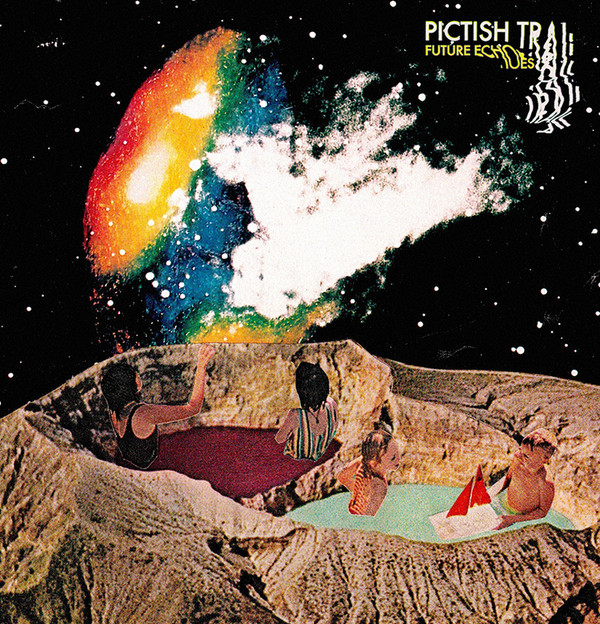
The Pyramids-We All Be Africans.
In 2011, The Pyramids reunited. Some of the original members of The Pyramids were augmented by new names. This mixture of the old and new, recorded and released The Pyramids’ album Otherworldly. It was released in 2011, to critical acclaim. Since then, The Pyramids have embarked on seven tours, but have yet to release a new album. That was until The Pyramids released We Be All Africans on Strut Records
From the opening bars of We All Be Africans, which is a truly irresistible and joyous track, Idris Ackamoor and The Pyramids have the listener spellbound. Over the next six tracks, they combine elements of Afrobeat, avant-garde, free jazz, funk, fusion, jazz and soul. This genre-melting album features music that’s celebratory, melancholy, mesmeric, reflective and uplifting. Other times, the music is beautiful, cinematic, heart-wrenching and sombre. Always, the music on We All Be Africans provokes an emotion, and is guaranteed to makes the listener think. Not many albums do that.
We All Be Africans is unlike most albums, and is reminder of the comeback kings Idris Ackamoor and The Pyramids. They’ve spent the last five years constantly touring, but still, have found the time to record a new album, We All Be Africans. Idris Ackamoor and The Pyramids’ much-anticipated and long awaited fifth album, We All Be Africans marks a welcome return to form from one of the hardest working bands in music.
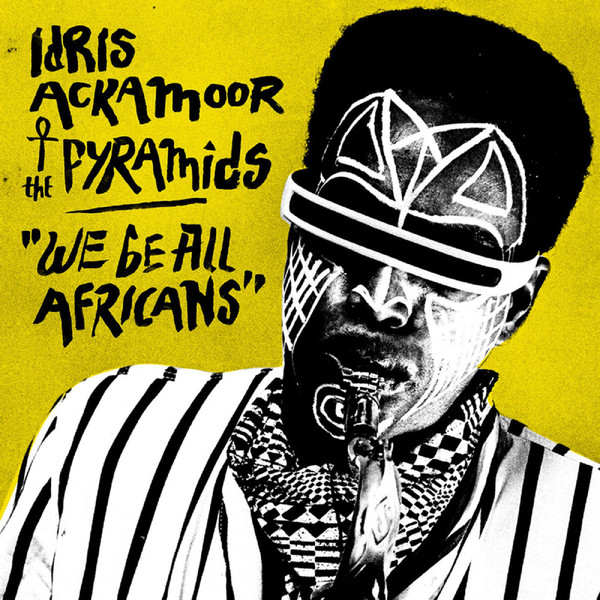
The Temperance Movement-White Bear.
Recording the followup to a successful album can be difficult. Many bands have suffered from second album syndrome. Not The Temperance Movement. Their sophomore album White Bear, which was released by Earache Records. It features The Temperance Movement at the peak of their powers.
They literally strut and swagger their way through White Bear, creating music that’s anthemic, hook-laden, melodic and nine times out of ten, always rocky and memorable. The Temperance Movement don’t ration hooks, as they follow in the footsteps of The Faces, Led Zeppelin, Rolling Stones and Black Crowes on what’s a career changing album, White Bear.
White Bear reached number one on the UK rock charts. It seems that The Temperance Movement are the real, deal and the future of rock ’n’ roll. The Temperance Movement’s sophomore album White Bear showcases an old fashioned rock ’n’ roll band at their swaggering best. Seamlessly, The Temperance Movement fused blistering, old-school rock ‘n’ roll with blues and country on White Bear. This is a heady and potent brew from a truly versatile group, The Temperance Movement.
The Trondheim Jazz Orchestra, Kim Myhr and Jenny Hval-In The End His Voice Will Be The Sound Of Paper.
The Trondheim Jazz Orchestra, Kim Myhr and Jenny Hval premiered In The End His Voice Will Be The Sound Of Paper was premiered at the 2012 Ultima Oslo Contemporary Music Festival. Four years later, In The End His Voice Will Be The Sound Of Paper was released by Hubro Music. It’s been well worth the wait.
The music is beautiful, ethereal, melodic and mesmeric, but also captivating, dramatic, melancholy and otherworldly. Always, the music is innovative, with surprises in store for the listener. Almost seamlessly, avant-garde, Feldmanian music, folk, free jazz, improvisational music and even elements of pop shine through.The Feldmanian, folk and pop influences come courtesy of one of Norway’s finest vocalists, Jenny Hval. Her voice is variously beautiful, despairing, elegiac, emotive, heartfelt and wistful. Sometimes, her vocal is transformed into what’s akin to a musical instrument. When this happens, Jenny joins The Trondheim Jazz Orchestra and Kim Myhr in creating a truly captivating album.
It’s also an album that’s full of subtleties, surprises and nuances. That’s why it’s an album that one will never tire of. Another is the music is innovative. The Trondheim Jazz Orchestra, Kim Myhr and Jenny Hval push musical boundaries to their limits, and continually combine musical genres in the pursuit of musical excellence throughout In The End His Voice Will Be The Sound Of Paper. They certainly succeed in doing so.
Trashcan Sinatra-Wild Pendulum.
Not many bands are still together after thirty years. Most bands split-up long before then. Not Irvine’s finest indie rockers, the Trashcan Sinatras. They’re survivors, who have lived through the bad times and survived to tell the tale. Trashcan Sinatras also released a new album during 2016, Wild Pendulum on Red River Entertainment.
Wild Pendulum features the reinvention of the Trashcan Sinatras. tweaked their sound, and given it a moderne makeover. Sonic scenery, samples, loops, horns and found sounds have been combined on Wild Pendulum. There’s even a dance-track on Wild Pendulum. That was a first. It sits side-by-side with anthems, beautiful ballads and perfect pop. Still, the Trashcan Sinatras were one of the finest purveyors of perfect pop extraordinaire. This the Trashcan Sinatras have been doing since 1986.
Thirty years later, and stll, the wider record buying public have yet to discover the delights of the Trashcan Sinatras, and their sixth album Wild Pendulum. It features Irvine’s finest purveyors of jangle pop at their pioneering best, as they reinvent themselves.. The result is Wild Pendulum, the Trashcan Sinatras finest album since their 1990 debut Cake, Sadly, Wild Pendulum has been overlooked by record buyers, who have missed out on an almost flawless album of jangle pop from one of Scotland’s most talented bands, the inimitable Trashcan Sinatras.
William Fitzsimmons-Charleroi: Pittsburgh Volume 2.
William Fitzsimmons heeded Mark Twain’s advice tp: “write about what you know” on Charleroi: Pittsburgh Volume 2, which was released by Gronland Records. It tells a truly poignant and moving story of how William’s grandmother took her son to the hospital, suffering from whooping cough. Although the baby recovered, his mother never returned and after seven months was adopted by a doctor in the hospital.
The story unfolds during six carefully crafted songs. They feature mostly subtle, sparse and understated arrangements. These arrangements frame William’s vocal, which quite rightly, takes centre-stage. William’s vocals are heartfelt, and full of emotion, sadness, regret and melancholy. So are his lyrics. They range from between beautiful, melancholy and poignant, to thoughtful and moving. It’s impossible not to be moved by the lyrics which have a cinematic quality.
So much so, that it’s almost possible to imagine the story unfolding before your eyes. The seventeen year old giving up her baby, and spending the rest of her life wondering what became of it? Similarly, one can image William’s father constantly wondering what happened to his mother? Eventually, it emerged that William’s grandmother died alone in a motel room just a few years before. Neither William, nor his father met Thelma. However, William decided to tell Thelma’s story on Charleroi: Pittsburgh Volume 2. It’s a personal, poignant and moving album from William Fitzsimmons, where he tells the story of the grandmother he never knew on Charleroi: Pittsburgh Volume 2.
Yuri Gagarin-At The Center Of All Infinity.
Swedish space rockers Yuri Gagarin were formed n Gothenburg, in early 2012. For the first few months of their career, the five members of Yuri Gagarin concentrated on honing their sound. By 2013, Yuri Gagarin were ready to release The Center Of All Infinity. Now three years later, they released their long-awaited sophomore album, At The Center Of All Infinity on Sulatron-Records. It marks a the welcome return of Yuri Gagarin.
From the opening bars of The New Order, to the closing notes of Oblivion, it’s an almost flawless performance from Yuri Gagarin. They combine elements of classic rock, heavy metal and psychedelia with Yuri Gagarin’s unique brand of space rock. It’s fast, frenetic and melodic, as five hugely talented musicians showcase their considerable skills and versatility. Stealing the show are Yuri Gagarin’s guitarists, Crille and Jon. They both play starring roles. However, it’s lead guitarist Crille who gets more opportunities to shine. When he does, he grabs them with both hands, and unleashes a series of blistering, scorching, searing solos. They play an important part in the sound and success of Yuri Gagarin’s career defining album, At The Center Of All Infinity.
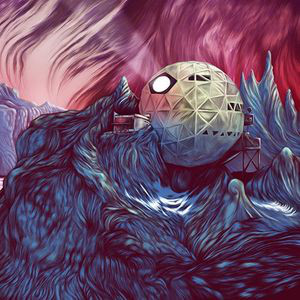
BEST NORDIC WAVE ALBUMS OF 2016-PART 1
BEST NORDIC WAVE ALBUMS OF 2016-PART 1
For years, I’ve been writing about the Nordic Wave scene, which is, without doubt, one of the most eclectic and vibrant in Europe. During that period, I’ve witnessed the rise and rise of the Nordic Wave. There’s no sign of the bubble bursting. Quite the opposite.
This latest wave of groundbreaking musicians continue to create ambitious, innovative and influential music in Norway, Sweden, Denmark, Finland and Iceland. This music ranges from ambient and avant-garde to folk, improv and jazz to psychedelia, progressive rock and space rock. The only problem was what to call the music made by this new wave of Nordic musicians?
What made this especially problematic was the sheer eclecticism of the music. There were musicians all types of music. Then one day when someone asked what I called this new musical movement, I came up with the name Nordic Wave. It was simplicity in itself. Here was music being made my a new wave of Nordic musicians. What better name than Nordic Wave? Since then, when I’ve complied my year end best of lists, there’s always been a best Nordic Wave albums.
Each year, that list has grown, more and more of this new wave of Nordic musicians create ambitious, groundbreaking, innovative and influential music. The following are the best Nordic Wave albums of 2016.
Black Moon Circle-Sea Of Clouds.
April 2016 saw Norwegian space rock pioneers Black Moon Circle make their debut at the prestigious Roadburn Festival. This was prefect timing. That day, Black Moon Circle released their fourth album Sea Of Clouds via Crispin Glover Records. It was a much anticipated release, that also featured bassist Øyvin Engman vocal debut. The result was a album of melodic and anthemic songs. They were also hard rocking.
This is what we’ve come to expect from Black Moon Circle. They revisit their hard rocking brand of psychedelic, space rock on Sea Of Clouds. It’s a fusion of heavy metal, Krautrock, avant-garde, free jazz and post rock. Black Moon Circle have also drawn inspiration from everyone from Black Sabbath, Can and Deep Purple to Led Zeppelin, Hawkwind and Motorpsycho. These disparate musical genres and influences were fused to create Sea Of Clouds.
It features music that’s dramatic, futuristic, moody, otherworldly and gloriously rocky. Sometimes, Sea Of Clouds features Black Moon Circle at their hard rocking best. Sea Of Clouds is also “intense.” There’s always been an intensity to Black Moon Circle’s music. It’s as much a part of Black Moon Circle’s music as the layers of fuzzy guitars, spacey, lysergic synths and futuristic sci-fi sounds. That’s the case throughout Sea Of Clouds, which shows another side to space rock pioneers Black Moon Circle. It’s their most accessible album and is a glorious assault on the sensory system from genre-melting innovators Black Moon Circle,
Black Moon Circle-The Studio Jams Volume 2.
In mid-November, Black Moon Circle released The Studio Jams Volume 2 via Crispin Glover Records. It’s the second in a trilogy of Studio Jams and Black Moon Circle’s second album of 2016. Just like the Trondheim based psychedelic space rock pioneers’ previous albums, they fuse musical genres as they push musical boundaries.
The basis for Black Moon Circle’s music is the classic rock of the sixties and seventies, psychedelia and space rock. To this, Black Moon Circle add elements of avant-garde, electronica, experimental, free jazz, Krautrock and post rock. Seamlessly, these disparate musical genres and influences merge into something new and innovative. It’s cinematic, dramatic, futuristic, moody, rocky and as Øyvin Engan says, “intense.” This intensity is deliberate. It comes courtesy of the four members of Black Moon Circle. They deploy layers of fuzzy guitars, spacey, lysergic, futuristic, sci-fi synths and a mesmeric rhythm section. They create two “lengthy jams” which features “heavy riffage and the extensive use of effects.” They’re used extensively and put to good use by Black Moon Circle.
They’re one of the most exciting, talented and innovative Norwegian groups. They remind me of their fellow countrymen, Motorpsycho and Moster! However, Elements of Can, Deep Purple, Led Zeppelin, Hawkwind, early Pink Floyd and Jimi Hendrix’s guitar playing shine through on The Studio Jams Volume 2 . This hard rocking opus, finds the Trondheim-based psychedelic space rockers Black Moon Circle, reaching new heights on The Studio Jams Volume 2.
Building Instrument-Kem Som Kan Å Leve.
Just over two years have passed since Norwegian trio Building Instrument released their eponymous debut album in March 2014. The album was released to widespread critical acclaim, and great things were forecast for Building Instrument. Since then, Building Instrument have been working on their much anticipated sophomore album, Kem Som Kan Å Leve. After nearly two years, was released
by Hubro Music, on the 2nd of September 2016. Kem Som Kan Å Leve marks a welcome return from the Nordic sonic explorers, Building Instrument.
They continue create inventive and innovate music, that’s ambitious and adventurous. That music is also beautiful, dreamy, ethereal, hypnotic and melodic. Partly, that is because of Mari Kvien Brunvoll’s vocal. She switches between the Molde dialect, and an invented language that only she can understand. That doesn’t matter. It plays an important part in On Kem Som Kan Å Leve, where Building Instrument followed in the footsteps of Kurt Schwitter.
Building Instrument: “go further in the direction of expanding or erasing the meaning of language, just as Schwitters did with his sound poetry.” This was an ambitious project, but the results are fascinating and captivating. They can be heard on Kem Som Kan Å Leve, which finds Norwegian sonic explorers at their inventive and innovative best. Kem Som Kan Å Leve is Building Instrument’s musical Magnus Opus, which features six soundscapes that are ambitious and adventurous, but also beautiful, dreamy, ethereal, hypnotic and melodic.
Bushman’s Revenge- Jazz, Fritt Etter Hukommelsen.
After spending twelve years touring and recording, Bushman’s Revenge decided to take a much needed break. After enjoying some downtime, Bushmen’s Revenge were raring to go. By then, they had decided to change direction musically. They felt that for the time being, they had taken their fusion of “jazz, progressive and rock as far as they can.” This opened up all sorts of new and exciting possibilities. Eventually, Bushmnan’s Revenge decided to record their “first proper jazz album,” Jazz, Fritt Etter Hukommelsen, which was released by Rune Grammofon.
It shows different sides to Bushman’s Revenge. Lola is a languid and wistful slice of late summer Scandinavian jazz. The listener is transported back in time to the sixties as Bushman’s Revenge became a jazz trio. Seamlessly, they adopt to the change of style, before the album heads in the direction of electric blues. Just like Jimi Hendrix, this is starting point for 0500, Bo Marius and Gamle Plata Til Arne. They heads in new and unexpected directions, combining electric blues with rock, psychedelia and jazz. There’s even diversions into avant-garde, blues rock and free jazz.
Mostly, electric blues, jazz and rock are to the fore as Bushman’s Revenge fuse disparate musical genres. They create ambitious, inventive and innovative music on Fritt Etter Hukommelsen, which isBushman’s Revenge’s “first proper jazz album.” Maybe this will be the start of a new chapter in the career of musical pioneers Bushman’s Revenge? Only time will tell.
Caus Sui-Return To Sky.
Since forming Caus Sui in Odense, in Southern Denmark in 2005, the band has released eleven albums. Their latest was Return To Sky which was released on El Paraiso Records. Return To Sky references four decades of music. Elements of classic rock, Krautrock, psychedelia, progressive rock, stoner rock and space rock. Ambient and avant-garde have also influenced Causa Sui. So have Can, Jimi Hendrix, Led Zeppelin, Michael Rother and Pink Floyd. The result is a heady brew and musical genres and influences, Return To Sky.
It’s an album that veers between dark and dramatic and hard rocking to lysergic, dreamy and wistful to mesmeric and melodic. Return To Sky is all these things and more. It also features four hugely talented musicians as they reinvent their music yet again. This is a constant process that ensures that Causa Sui are one step ahead of the musical crowd.
Causa Sui are always one step ahead of the listener. They’ve always got a surprise in-store for the unwary listener. At any given moment, Causa Sui could throw a curveball that transforms the track. Suddenly, hard rock becomes lysergic and wistful. It’s a case of expect the unexpected throughout Return To Sky, where musical chameleons Causa Sui keep the listener on their toes during what’s a career defining album.
Dalindèo-Slavic Souls
When composer and guitarist Valtteri Laurell Pöyhönen, decided to found Dalindèo in 2003, he decided to recruit some of Finland’s top jazz musicians. Since then, Dalindèo have released their four albums. Their latest album Slavic Souls was released by BBE. Slavic Souls was no ordinary album. Instead, it was described as a: “surf jazz Tango extravaganza.”
To create their: “surf jazz Tango extravaganza,” Dalindèo combined contemporary jazz is with traditional Finnish Tango music and even northern schlanger. There’s also a psychedelic sound to Slavic Souls. Sometimes, the darkness descends and music becomes moody, broody and gloomy. Other times, the music is atmospheric. Occasionally, there’s a sense of melancholia during Slavic Souls. However, Dalindèo’s cinematic sound shines through. It’s been part a key part of Dalindèo’s sound since 2003, and plays an important part in Slavic Souls. It’s an album that somehow, manages to be all things to all people. That however, isn’t surprising.
Dalindèo feature six of Finland’s top jazz musicians. They were joined by a trio of talented guest artists. Finland’s premier coloratura-soprano singer Anna-Kristiina Kaappola joined trombonist Heikki Tuhkanen and pedal steel player Olli Haavisto. They play their part in the sound and success of Slavic Souls, which is the best album of their twelve year career. Indeed, Slavic Souls, ’s “surf-jazz Tango extravaganza,” is a veritable musical feast, that’s fit for a King or Queen.
Erlend Apneseth Trio-Det Andre Rommet.
It was in 2013 that the members of the Erlend Apneseth Trio first met. Drummer Øyvind Hegg-Lunde and guitarist Stephan Meidell played on Sommarflukt, the final track on Erlend Apneset’s album Blikkspor. The three men hit it off, and decided to form Erlend Apneseth Trio, who released their debut album Det Andre Rommet on Hubro Music during 2016.
On Det Andre Rommet, the Erlend Apneseth Trio use folk as a starting point. From there, they add elements of avant-garde, improv, jazz, musique concrète and even rock. The result is music that veers between beautiful to cinematic, to dramatic and eerie. Other times, the music is elegiac, ethereal, elegiac, melancholy and melodic. Sometimes, the music is full of sadness and is heart-wrenching. Always, though, the music on Det Andre Rommet has the capacity to captivate and spring surprises, as the Erlend Apneseth Trio take the listener in a new and unexpected direction.
Every member of the Erlend Apneseth Trio plays their part in this musical magical mystery tour. Sometimes, it’s Erllend’s fiddle that takes the listener on this emotional roller coaster. It plays an important part on Det Andre Rommet, and in Erlend’s hands, proves a versatile instrument. One minute, he’s playing the fiddle in the same way as countless generations before him; the next, the maverick musician rewrites the rules, by unleashing a Hendrix-esque performance. In doing, he plays a part in what’s a groundbreaking, innovative album Det Andre Rommet.
Fire!-She Sleeps, She Sleeps.
Back in Fenruary, Fire! released their fifth studio album She Sleeps, She Sleeps on Rune Grammofon. Just like previous albums by Fire! and the Fire! Orchestra the music on She Sleeps, She Sleeps was groundbreaking, influential and innovative. It was also captivating, progressive, genre-melting music.
The music on She Sleeps, She Sleeps veers between moody and broody, to dark and dramatic, through to hypnotic and mesmeric. Other times, the music is akin to a soul-baring confessional, where pain, hurt and heartache pours out of Mats Gustafson’s saxophone. Then his playing is akin to a musical equivalent of Primal Scream Therapy. Once he’s seemingly exercised of demons, it’s all change, and often, the music becomes beautiful and melodic. Always, though, Fire!’s potent and powerful musical cocktail continues to captivate, and proves to be just as progressive and innovative on their latest album She Sleeps, She Sleeps.
Key to the success of She Sleeps, She Sleeps is Fire!’s ability to seamlessly combine elements of avant-garde, experimental, free jazz, noise and psychedelic rock. Fire! are like a musical shaman, combining an eclectic and disparate selection of musical genres and influences. Playing a leading role in their potent musical potion, are mesomorphic rock rhythms and a braying free jazz saxophone. They compliment each other perfectly on She Sleeps, She Sleeps, which is Fire!’s finest hour.
Fire! Orchestra-Ritual.
For their fourth album Ritual, which was released by Rune Grammofon, the Fire! Orchestra “slimmed” their lineup down to just twenty-one members. The newly slimmed down lineup of the Fire! Orchestra . Still, The Fire! Orchestra features some of the most talented musicians Sweden, Norway, Denmark and France has to offer. This pan European supergroup recorded Ritual in just two days.
The result was an album that sounds as if everything the Fire! Orchestra has been leading up to Ritual, It Ritual features the five part Ritual suite. It’s a captivating album where the Fire! Orchestra combine avant-garde, experimental, free jazz, funk, jazz and rock. The music veers between restrained and understated to urgent and dramatic. Other times, the music is mesmeric and hypnotic, before becoming melodic and soulful. Occasionally, the music becomes moody, wistful and cinematic. Always, the music is ambitious, experimental and progressive.
Just like previous albums, Ritual is imaginative, inventive and innovative. It’s also joyous and uplifting, with the Fire! Orchestra playing with freedom and spontaneity, as they examine mysteries and rituals, not just in life, but in music. This five suite exploration is a musical tour de force from the Fire! Orchestra, Ritual which proves that when it comes to lineups, size isn’t everything.
Hedvig Mollestad Trio-Black Stabat Mater
During July, the Hedvig Mollestad Trio released two albums on Rune Grammofon. This included their much anticipated fourth album Black Stabat Mater. It’s a glorious reminder of the golden age of rock. Indeed, it’s possible to imagine the Hedvig Mollestad Trio playing at the Whiskey A-Go-Go in Los Angeles or Fillmore East in New York. However, the similarities between some of the legends of music and the Hedvig Mollestad Trio is no coincidence.
Hedvig Mollestad Thomassen who founded the Hedvig Mollestad Trio in 2009, grew up listening to Led Zeppelin, Black Sabbath and Jimi Hendrix. Their influence can be heard throughout Black Stabat Mater. So can the influence of early Hawkwind, Cream, Santana and West, Bruce and Laing. Closer to home, maybe Moster! and Motorpsycho have influenced the Hedvig Mollestad Trio? These bands have a similar genre-melting sound to the Hedvig Mollestad Trio.
To create this genre-melting sound, the Hedvig Mollestad Trio fuse elements of rock, psychedelia and space rock with avant-garde, improv and jazz. Sometimes, the Hedvig Mollestad Trio seamlessly switch between musical genres mid track. Other times, these disparate genres melt into one on Black Stabat Mater. Occasionally, the Hedvig Mollestad Trio spring a series of surprises, and take the listener on a magical mystery tour. Mostly, though, Black Stabat Mater is an album of über hard rocking music which is finest album of the Hedvig Mollestad Trio’s career. They reach new heights on Black Stabat Mater.
BEST NORDIC WAVE ALBUMS OF 2016-PART 2.
BEST NORDIC WAVE ALBUMS OF 2016-PART 2.
Hedvig Mollestad Trio-Evil In Oslo.
In July 2016, the Hedvig Mollestad Trio released two albums. This includes the live album Evil In Oslo. It was released by Rune Grammofon and is the Hedvig Mollestad Trio’s first ever live album. Evil In Oslo is a tantalising taste of the Hedvig Mollestad Trio live.
Evil In Oslo was recorded in two Oslo clubs, John Dee and Buckley’s. Playing in front of a hometown audience seemed to bring out the best in the Hedvig Mollestad Trio, They prove to be confident and assured performers on Evil In Oslo. The Hedvig Mollestad Trio fuse elements of classic rock, psychedelia, progressive rock and space rock with avant-garde, blues, funk, improv and jazz. Sometimes, the Hedvig Mollestad Trio seamlessly switch between musical genres mid track. Other times, these disparate genres melt into one on the same track. However, for much of the time, the Hedvig Mollestad Trio showcase their hard rocking sound.
Lead by virtuoso guitarist Hedvig Mollestad Thomassen, the Hedvig Mollestad Trio are one of the new breed of hard rocking groups that have sprung up across Europe. However, Norwegian trailblazers the Hedvig Mollestad Trio, are without doubt one of the best of the new generation of hard rockling bands. Proof of that is Evil On Oslo, which is a tantalising taste of the hard rocking Hedvig Mollestad Trio at their very best.
Jenny Hval-Blood Bitch.
Autumn 2016 saw Jenny Hval released her new album, Blood Bitch, via Sacred Bones. It was the followup to Apocalypse Girl. However, Blood Bitch was a very different album and one of the most experimental and focused album’s of Jenny Hval’s six album career.
Before its release, Jenny Hval described Blood Bitch as: “an investigation of… blood that is shed naturally…the purest and most powerful, yet most trivial, and most terrifying blood.” Blood Bitch found Jenny Hval drawing inspiration from everything from art and pop to vampire movies and artwork made of menstrual blood.
Jenny Hval also incorporated elements of poetry, prose and absurdist dialogue into Blood Bitch. She also deployed a myriad of instruments, effects, noise, samples and added vocals that convey a variety of emotions.
They’re framed by arrangements that are understated. They tinkle, shimmer, glisten and quiver. Other times, they’re atmospheric, fuzzy and spacious. Sometimes, they bristle and crackle. Occasionally, the arrangements are elegiac ooze ethereal beauty. Never do they overpower Jenny Hval’s vocal which is the focus of the listener’s attention. Meanwhile, elements of ambient, avant-garde, electronica, experimental and pop combine on Blood Bitch. It’s variously atmospheric, beautiful, challenging, cinematic, eerie, elegiac and ethereal. There’s also an intensity to Blood Bitch, which is a ruminative and thought-provoking album. However, one thing Blood Bitch drives home and remind listeners is that blood isn’t something is a life force, a reminder of creation and where men and women begin.
Jessica Sligter-A Sense Of Growth.
Although Jessica Sligter was born in Holland, Oslo is where she calls home. Despite that, her third album A Sense Of Growth, which was released by Hubro Music, was recorded in Seattle. It was the most ambitious and abstract album of her career. A Sense Of Growth was an album of abstract, genre-melting soundscapes which found Jessica: “deconstructing the format of song based music.”
Having done so, Jessica wrote captivating songs. She dawns the role of a storyteller, as she combines paeans, confessionals, and social comment with songs filled with hurt and pain. This includes the heart-wrenching title-track. Just like so many of the songs on A Sense Of Growth, it has a cinematic quality. Jessica dawns the role of director, and uses instruments and harmonies to help her tell these stories. This is hugely effective, and results in a truly compelling and innovative, genre-hopping album.
Everything from avant-garde, country, folk, pop, psych-folk and rock feature and are fused on A Sense Of Growth. Similarly, Jessica uses combinations of instruments that seem unlikely bedfellows. They work well and play their part in songs that are beautiful, cinematic, dramatic, emotive and moving. Other songs veer between elegiac and ethereal; to emotive and melancholy and sometimes, poignant and wistful. Every song is guaranteed to stir an emotion and make the listener think. That’s why A Sense Of Growth is a career defining album from sonic innovator and explorer Jessica Sligter.
Jóhann Jóhannsson-Ophee
On Orphée, Jóhann Jóhannsson’s turned his attention to the beauty and the process of creation. Orphée features Jóhann Jóhannsson tracing a path from darkness into light. Inspiration for Orphée comes from the opéra bouffe Orphée aux enfers (Orpheus in the Underworld). It was written by Ludovic Halévy, and later, revised by Hector-Jonathan Crémieux. The score was written by Jacques Offenbach and became the first full length operetta. Its first performance came in 1858. Since then, this ancient and famous tale has been retold countess times.
Orphéem which an almost flawless album, finds Jóhann Jóhannsson fusing elements of classical and electronic music with ambient, avant-garde, Baroque and minimalism. Other influences includes the music of Bernard Hermann, Ennio Morricone and Michael Nyman. Then there’s the music of classical composers like Shostakovich and Prokofiev. All these influences can be heard throughout Orphée.
The music on Orphée ranges from melodic and mesmeric, to atmospheric, beautiful, ethereal and elegiac. Other times, there’s a degree of darkness and drama. Sometimes, there’s a sense of melancholia and sadness on Orphée. It’s an emotional roller coaster to cherish and treasure. That’s even for people with no interest in classical music. Orphée is a genre-melting album and Jóhann Jóhannsson’s debut on Deutsche Grammophon. It’s also the finest album of his fourteen year solo career. Indeed, Orphée is a career defining album from Jóhann Jóhannsson and features ambitious, inventive and innovative music.
Jon Balke-Warpe
When Norwegian pianist Jon Balke released Warp on ECM, it was his first album since 2009. However, it was well worth the wait. Warp features a series of carefully sculpted soundscapes. They veer between to beautiful dreamy and ethereal, to dark and dramatic, to moody and broody. Other times, the music is melancholy and wistful. Often, space is left within the arrangements, allowing listeners to reflect. Always though, the music on Warp has a minimalist, cinematic sound.
There’s a cinematic sound throughout Warp. The listener will find themselves inventing scenarios to each of the soundscapes. It’s almost unavoidable. Especially on tracks where Jon Balke has left space. However, Warp is also an album that listeners can wallow in. The music washes over the listener, enveloping and embracing them. Sometimes, it’s lysergic, while other times it soothes their weary soul. Other times, Warp’s slow, spacious and cinematic sound is perfect to reflect and ruminate to. Warp it seems, is all things to everyone.
That’s not surprising. Jon Balke has drawn inspiration from a variety of sources for Warp. Although he’s primarily a jazz musician, he combines elements of ambient, avant-garde, classical, free jazz and Krautrock can be heard. This genre-hopping album is without doubt, the finest album of Jon Balke’s finest solo career. Warp is a minimalist cinematic epic, where drama, melancholia and beauty are omnipresent during Jon Balke’s long-awaited comeback album.
Klaus Gesing, Björn Meyer, Samuel Rohrer-Amiira.
Over the years, Klaus Gesing, Björn Meyer, Samuel Rohrer’s paths had crossed and they became friends. They had much in common. Especially when it came to music. However, Klaus Gesing, Björn Meyer, Samuel Rohrer didn’t release an album until Amiira was released as part of Arjunamusic’s acoustic series last year.
Amiira features improvised soundscapes. They’re variously moving, elegiac and ethereal, to melodic, mesmeric, poignant and ruminative. Other times, the music is a plaintive cry, and a lament for lost love. Sometimes, the music is otherworldly, futuristic and robotic. Then on Fulminate, Klaus Gesing, Björn Meyer and Samuel Rohrer kick out the jams, and unite in a three man protest. In doing so, the listener hears a very different side to the pan European triumvirate of musical innovators.
This talented triumvirate of innovative musicians created cerebral and cinematic music. Amiira is proof of this. Klaus Gesing, Björn Meyer and Samuel Rohrer invite the listener to let their imagination run riot and lose themselves in this cinematic opus. It’s impossible not to accept their invitation to embrace what is a wonderfully cinematic and cerebral album, Amiira.
Krokofant-Krokofant II.
As 2016 dawned, Krokofant released their much anticipated much anticipated sophomore album Krokofant II on Hubro Music. It was a marriage of the Joycean progressive rock odysseys of King Crimson and Henry Cow and Peter Brötzmann’s free jazz ensembles. Add to that, the influence jazz-rock pioneers like The Mahavishnu Orchestra, Terje Rypdal and Ray Russell. The result was a unique and captivating fusion of musical genres and influences.
Seamlessly Korokofant flit between, and fuse disparate and eclectic musical genres.They combined everything from avant rock, free jazz, fusion and rock, to avant garde, progressive rock and post rock. There’s even hints of experimental and psychedelia as Krokofant weave their unique musical tapestry on a genre-melting musical journey.
As they do, each track on Krokofant II proves unique. They’re full of subtleties and nuances. Constantly, Krokofant throw curveballs and seamlessly change direction. Suddenly, the reveal another side to their music. That’s what you expect from musical pioneers, Krokofant who come of age musically on Krokofant II.
Maja S. K. Ratkje-Crepuscular Hour,
Crepuscular Hour which was released by Rune Grammofon, was one of the most ambitious projects that Maja S. K. Ratkje has been involved with. It was inspired by the phenomena of crepuscular rays, where rays of sunlight stream through gaps in clouds or any number of other obstacles. Having discovered and investigated the phenomena of crepuscular rays, Maja S. K. Ratkje set about writing Crepuscular Hour, which would be performed by a rather unorthodox lineup of three choirs, three pairs of noise musicians and a church organ.
They produce a soundtrack that veers between impressive, dramatic and intense to ruminative, mesmeric and hypnotic. The listener is drawn in, and soon, is spellbound by music that’s dramatic and intense. Sometimes, the music is ethereal and elegiac. Other times it takes on a spiritual quality. That’s no surprise. The texts used in the recording of Crepuscular Hour, were discovered in Egypt in 1945, and proved hugely important, resulting in scholars reexamining early Christian history. Sixty-nine years later, these texts played an important part in Crepuscular Hour.
As the performance of Crepuscular Hour unfolds, the listener reflects on music that’s thoughtful, cerebral and occasionally, challenging. Mostly, Crepuscular Hour has an inherent beauty. There’s a serenity to music that’s ethereal, elegiac and has a spiritual quality. Always though, Crepuscular Hour is captivating, ambitious and innovative as the choirs combine with the noise musicians who push musical boundaries. The result is a sonic and visual feast.
Moskus-Ulv Ulv.
Last year, Moskus released their much anticipated third album Ulv Ulv on Hubro Music. Ulv Ulv features the Norwegian jazz pioneers at their innovative best, as they play with a freedom, inventiveness and intuitiveness that most groups can only dream of. The result is music that’s inventive, innovative, ambitious, bold and challenging. This is what we’ve come to expect from Moskus.
Just like on their two previous albums, Moskus create music that continue to challenges musical norms on Ulv Ulv. Moskus continue to push musical boundaries to there limits, and beyond on Ulv Ulv. To do this, they combine elements of avant-garde, experimental, free jazz, improv and industrial. There’s also the influence of Ornette Coleman, Charles Mingus, Albert Ayler and Sun Ra on Ulv Ulv. The result is an album that’s variously atmospheric, beautiful, cinematic, dark, dramatic, elegiac, ethereal, haunting, hypnotic, melodic, mesmeric, otherworldly and ruminative. The result was Ulv Ulv, the finest album of Moskus’ career.
Incredibly, it took Moskus just three days to record Ulv Ulv. They eschewed a traditional recording studio, and recorded Ulv Ulv at the Haugesund Billedgalleri. With just three days to record Ulv Ulv, Moskus worked quickly and efficiently, and recorded what is a captivating, career defining album. Ulv Ulv finds Moskus one step closer to the musical Utopia that bands spent their career in search of.
Motorpsycho-Angels and Daemons At Play.
During a career that’s spanned twenty-seven years, Motorpsycho have won an Edvardprisen and four Spellemannprisen Awards. This included a Spellemannprisen awards for their 1997 double album Angels and Daemons At Play. It was a landmark album for Motorpsycho, and marked their coming of age musically. This makes Angels and Daemons At Play one of the most important albums in Motorpsycho’s back-catalogue. That’s why it recently became the fourth instalment in Rune Grammofon’s luxury box set reissue program.
Angels and Daemons was a groundbreaking, genre-melting, album, where Motorpsycho combined elements of alt rock, avant-garde, electronica and experimental music with Krautrock, post rock, psychedelia, space rock and stoner rock. All these genres can be heard on Angels and Daemons. Some are only glimpsed briefly, while others play a larger part in the sound and success of Angels and Daemons. It transformed Motorpsycho into one of Norway’s most successful bands.
Especially after Angels and Daemons reached number two in the Norwegian charts, and became the most successful album of Motorpsycho’s career. It also went on to win a Spellemannprisen awards in the hard rock category later in 1997. This was the third Spellemannprisen awards of Motorpsycho’s career so far. So it’s fitting that it was released as a lavish, luxurious and lovingly curated six CD box set. It’s a fitting way to celebrate Angels and Daemons which was Motorpsycho’s coming of age musically and nowadays, is regarded as one of their classic albums.
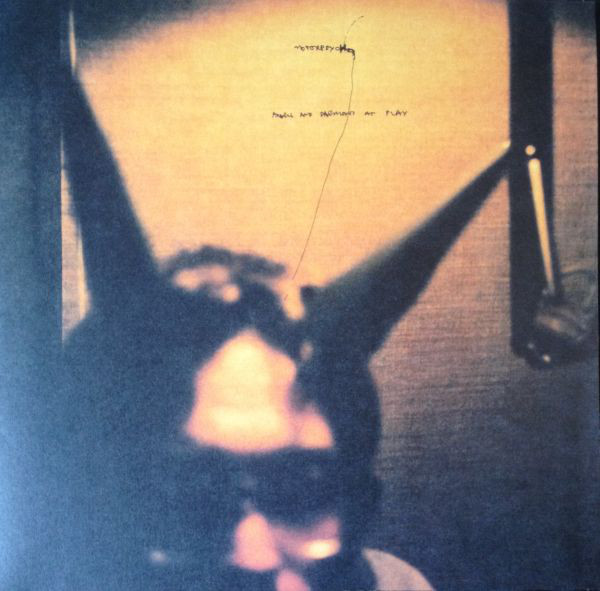
BEST NORDIC WAVE ALBUMS OF 2016-PART 3.
BEST NORDIC WAVE ALBUMS OF 2016-PART 3.
Nicklas Sørensen-Solo.
Ever since 2010, Copenhagen based instrumental rock trio Papir’s star has been in the ascendancy. One of the men behind Papir’s success was guitarist Nicklas Sørensen, who released his debut album Solo on El Paraiso Records. He set out to experiment on Solo. However, on other tracks, Nicklas Sørensen reminds the listener’s Papir’s trademark sound. For the listener, they enjoy the best of both worlds.
With a little help from his friends, Nicklas Sørensen takes the listener on a genre-melting journey. This includes the three genres that have influenced Papir, Krautrock, psychedelia and space rock. These influences can be heard on Solo. Krautrock has been a big influence on Nicklas Sørensen. Especially Can, Neu!, Cluster and Harmonia and Michael Rother. Sometimes, Nicklas Sørensen sounds uncannily like Michael Rother, during this genre-melting journey.
Nicklas Sørensen also combines elements of ambient, avant-garde, dub and rock. The result is Solo, an album that’s guaranteed to toy with the listener’s emotions. Solo veers between blissful, euphoric and joyous, to moody and broody, through to lysergic and dramatic. For much of Solo, the music is hypnotic and mesmeric. That’s down to Krautrock influence. Other times, the music is cinematic. Often, though, the Solos are beautiful and dreamy, as trails of glistening, shimmering music captivate, and makes the world seem a much better place. Sadly, all too soon, Solo is over. All that’s left are the memories of Nicklas Sørensen’s genre-melting, sonic adventure, Solo.
Pascal Pinon-Sundur.
After three years away, Pascal Pinon return with Sundur, which is a career defining album. Sundur is without doubt, the best album of Pascal Pinon’s career. It’s certainly their most eclectic album. Sometimes, Pascal Pinon sound as if they’ve been inspired by Astrid Williamson’s early albums, John Martyn and Kate Bush. There’s even a nod to Sandy Denny, on what’s a thoroughly modern album of folk music.
Sundur finds Pascal Pinon combining disparate genres. There’s elements of ambient and avant-garde, plus electronica and experimental, right though to folk, Neofolk and pop. Sometimes, several genres melt into one on the one multilayered song. Other times, the songs are minimalistic, with sparse, spartan arrangements. They often feature just guitars or a piano, which proves the perfect accompaniment to the vocal. There, less is more. Then on the two soundscapes, Pascal Pinon let their imagination run riot, and create captivating instrumentals. However, captivating is a word that perfectly describes Sundur, which was released Morr Music.
The music on Sundur can also be described as beautiful, cinematic, emotive and ethereal, but also dark, ruminative and wistful. Always though, the music on Sundur is captivating on what is without doubt, a career-defining album where Pascal Pinon come of age musically.
Skadedyr-Culturen.
Supergroup. That describes Skadedyr. Their lineup features twelve of the most inventive, innovative and influential musicians in Norway. Skadedyr are no ordinary supergroup. Instead, they describe themselves as an anarchist-democratic band. This makes Skadedyr standout from the crowd. So does the unique and eclectic selection of instruments that Skadedyr play. They put them to good use on Culturen which was released by Hubro Music. It marks the return of one of the most exciting bands in the Norwegian music scene, Skadedyr.
They don’t disappoint on Culturen. It’s captivating album where Skadedyr create a dazzling musical tapestry. They fuse a disparate selection of musical influences. Everything from avant-garde, electronica, experimental, folk, free jazz and post rock shine through. So does brass band, industrial, jazz, and musique concrète. These musical genres become Skadedyr’s musical palette, and are applied upon on Culturen’s six canvases.
These canvases veer between atmospheric, dark, dramatic and eerie, to ethereal, joyous and melodic. Other times, they’re minimalist and understated, but can quickly, become urgent, futuristic and otherworldly. Sometimes, the music becomes melancholy and wistful, but has an inherent beauty. Always, though, Skadedyr captivate with their unique brand of genre-melting music. It’s often cinematic, and allows the listener to paint pictures as they immerse themselves in the music on Culturen. It’s a career-defining album and tantalising introducing to one of most exciting and dynamic bands in Norwegian music, Skadedyr whose sophomore album Culture is their most accessible.
Splashgirl-Hibernation.
When doom jazz pioneers Splashgirl were formed, they decided to combine traditional instruments and technology. This was new, exciting and innovative. The members of Splashgirl were one part musician, to one part musical alchemist as they experimented with their arsenal of musical instruments and technology. They put that to good use over the years, including on their fifth album Hibernation which was released by Hubro Music. It found Splashgirl changing direction.
This was a huge risk. Splashgirl had found and honed their sound over four critically acclaimed albums. However, Splashgirl aren’t the type of group who could or would rerecord the same album. That’s for lesser bands, not musical mavericks and pioneers like Splashgirl. So when they made their way to Hljodriti Studio in Hafnarfjördur in September 2015, the decision was made. Splashgirl would make more use of synths, electronics and processing. They play a more important part in Hibernation, which features Splashgirl at their most inventive and innovative.
As Splashgirl innovate, the combine disparate musical genres. Elements of avant-garde, classical, drone, free jazz, post rock jazz and rock. All these genres play their part in Hibernation. It veers between cinematic, dramatic, melancholy and wistful, and sometimes, beautiful, elegiac and ethereal. Hibernation is an album to embrace and cherish, where musical alchemists Splashgirl create a cinematic Magnus Opus.
Stein Urheim-Strandebarm.
After a two year absence, Bergen based, multi-instrumentalist Stein Urheim, returned with another album of ambitious and innovative music, Strandebarm. It was released on Hubro Music. Inspiration for Strandebarm, was French music of the early 1900s; American ragtime and standards of the twenties and thirties. They were a tonal departure point for Stein Urheim on Strandebarm. These he combines with both acoustic instruments and electronic elements. They’re both part of Stein Urheim’s musical arsendal, which he deploys to good effect as he recorded Strandebarm.
Stein Urheim put his musical arsenal to good use. Strandebarm is aheady brew. It’s best described as atmospheric, beautiful, ethereal, haunting, melancholy, mesmeric and wistful. Other times, the music is cinematic and dramatic. However, for much of Strandebarm, the music is ruminative and thoughtful. It allows time to reflect and consider, without being subdued or sombre. Far from it.
Instead, Strandebarm is another captivating album from one of the leading lights of Norway’s vibrant music scene, Stein Urheim. The Bergen based musical pioneer continues to innovate and take his music in new and unheralded directions. Other times, Stein Urheim springs a surprise, as he takes the listener on a musical adventure. By then, Stein Urheim is playing the role of a swashbuckling musical pioneer. Helped along by his collection of eclectic and exotic stringed instruments from the four corners of the world, Stein Urheim has created some of the most ambitious, exciting and innovative music of his career on Strandebarm.
Stian Westerhus-Amputation.
Nowadays, Stian Westerhus is one of the most accomplished and innovative abstract guitar players. Constantly, he’s busy working as a session player and collaborating with the great and good of Norwegian music. When he has time, he works on his solo albums. 2016 saw Stian Westerhus release his fourth solo alnbum, Amputation on the House Of Mythology label. It’s the most ambitious album of his career.
Amputation features music that’s cerebral, challenging and thought-provoking. Stian wants the listener to think; sometimes about subjects that will make will them uncomfortable. That’s the case on Amputation and Amputation Part II. Stian replicates the sounds heard in an operating theatre when an amputation is taking place. It’s a traumatic and life-changing event. Most musicians would shy away from even broaching such a controversial subject. Not Stian Westerhus. He brings the subject into the open, and faces the reality head on. For that he should be congratulated. However, the Amputation suite is just part of Amputation.
The music on Amputation is also beautiful, cinematic, ethereal and melodic. Other times, it’s dark, haunting and mournful. Sometimes, Stian lays bare his soul, delivering vocals that are akin to an outpouring of emotion. When this happens, there’s a cathartic quality to the vocals, as if Stian is cleansing his soul. He breathes life and meaning into the lyrics on Sinking Ships, How Long and Infectious Decay. Always, the music on Amputation is compelling and innovative on what’s Stian Westerhus’ finest hour.
Sunanna-Triangle.
Triangle is Susanna’s eleventh album and first for four years. It was released on Susanna’s own SusannaSonata label, and is no ordinary album. Not by a long chalk. Instead, Triangle is a twenty-two song cerebral epic, where Susanna muses and meditates on mortality and religion. It’s a powerful album, that invites reflection and introspection.
Triangle features understated, spartan arrangements. They come courtesy of Susanna’s arsenal of electronics, effects, samples and instruments. When they’re combined, they help hone the stark, understated and beautiful backdrops. Often, they’re a mixture of different musical genres and influences. This includes elements of ambient, avant-garde, chamber folk, drone, electronica, experimental, gospel and indie pop. The result is music that’s cerebral as Susanna muses and meditates on mortality and religion.
As she does, the music on Triangle is variously beautiful, cinematic, emotive, expressive, heartfelt and hopeful. Especially as Susanna’s vocals take centre-stage. She breathes life, meaning and emotion into the lyrics on Triangle. Susanna is at her best on the ballads as she delivers a series of vocal masterclasses. Other times, the music on Triangle changes, becoming dark, melancholy and wistful. This is part of what’s a captivating and cerebral album, Triangle. Its ruminative and invites reflection and introspection on Susanna musings on mortality and religion. The result of Susanna’s musings can be found on Triangle, and are what she describes as: “music for lost souls,” where “nothing is holy, nothing is sacred.”
The Trondheim Jazz Orchestra, Kim Myhr and Jenny Hval-In The End His Voice Will Be The Sound Of Paper.
The Trondheim Jazz Orchestra, Kim Myhr and Jenny Hval premiered In The End His Voice Will Be The Sound Of Paper was premiered at the 2012 Ultima Oslo Contemporary Music Festival. Four years later, In The End His Voice Will Be The Sound Of Paper was released by Hubro Music. It’s been well worth the wait.
The music is beautiful, ethereal, melodic and mesmeric, but also captivating, dramatic, melancholy and otherworldly. Always, the music is innovative, with surprises in store for the listener. Almost seamlessly, avant-garde, Feldmanian music, folk, free jazz, improvisational music and even elements of pop shine through.The Feldmanian, folk and pop influences come courtesy of one of Norway’s finest vocalists, Jenny Hval. Her voice is variously beautiful, despairing, elegiac, emotive, heartfelt and wistful. Sometimes, her vocal is transformed into what’s akin to a musical instrument. When this happens, Jenny joins The Trondheim Jazz Orchestra and Kim Myhr in creating a truly captivating album.
It’s also an album that’s full of subtleties, surprises and nuances. That’s why it’s an album that one will never tire of. Another is the music is innovative. The Trondheim Jazz Orchestra, Kim Myhr and Jenny Hval push musical boundaries to their limits, and continually combine musical genres in the pursuit of musical excellence throughout In The End His Voice Will Be The Sound Of Paper. They certainly succeed in doing so.
Yuri Gagarin-At The Center Of All Infinity.
Swedish space rockers Yuri Gagarin were formed n Gothenburg, in early 2012. For the first few months of their career, the five members of Yuri Gagarin concentrated on honing their sound. By 2013, Yuri Gagarin were ready to release The Center Of All Infinity. Now three years later, they released their long-awaited sophomore album, At The Center Of All Infinity on Sulatron-Records. It marks a the welcome return of Yuri Gagarin.
From the opening bars of The New Order, to the closing notes of Oblivion, it’s an almost flawless performance from Yuri Gagarin. They combine elements of classic rock, heavy metal and psychedelia with Yuri Gagarin’s unique brand of space rock. It’s fast, frenetic and melodic, as five hugely talented musicians showcase their considerable skills and versatility. Stealing the show are Yuri Gagarin’s guitarists, Crille and Jon. They both play starring roles. However, it’s lead guitarist Crille who gets more opportunities to shine. When he does, he grabs them with both hands, and unleashes a series of blistering, scorching, searing solos. They play an important part in the sound and success of Yuri Gagarin’s career defining album, At The Center Of All Infinity.
That’s what I consider to be the best Nordic Wave albums of 2016. These albums were produced by groundbreaking musicians who continue to create ambitious, innovative and influential music in Norway, Sweden, Denmark, Finland and Iceland. This music ranges from ambient and avant-garde to folk, improv and jazz to psychedelia, progressive rock and space rock. Just like previous years, he list has grown, and there are many musicians creating ambitious, groundbreaking, innovative and influential music. However, 2016 has been the best year since I’ve been writing about Nordic Wave. Hopefully, through, 2017 will surpass it. Let’s hopes so.
BEST NORDIC WAVE ALBUMS OF 2016-PART 3.


BEST SCOTTISH ALBUMS OF 2016-PART 1.
BEST SCOTTISH ALBUMS OF 2016-PART 1.
It’s at this time of year I usually say that Scottish music is in rude health. This year, I’m not so sure. There seems to be a dearth of up-and-coming artists and bands making a breakthrough. The only newcomers to this year’s list are Starless, Adam Holmes and The Embers and Miracle Glass Company. Mostly, the list features familiar faces. However, 2016 was also the year of the comeback.
Many familiar faces made a welcome return during 2016 after lengthy breaks. This included Teenage Fanclub, The Trashcan Sinatras, Emma Pollock and The Pictish Trail. They all released successful and critically acclaimed albums. However, one band never even got that far.
They announced their comeback during 2016. There were big plans to reissue some of their back catalogue and release a new album. All this came to nothing. Talk indeed is cheap. The furthest they got was dipping their toe into the live scene. After a few mediocre shows, they seem to have disappeared. That is no loss to Scottish music. Best to leave it to the grown ups, including everyone on this list.
This includes some of familiar faces, old friends and new names. They produced the music that provided the soundtrack to 2016 in Scotland. What follows is a brief reminder of the full reviews of the album.
Adam Holmes and The Embers-Better Still.
Just two years after releasing his debut Heirs and Graces, Edinburgh based singer-songwriter returned with his much-anticipated sophomore album Better Still. This time around though, his backing band The Embers receive equal billing. They play an important in the sound and success of Better Still.
The Embers accompany Adam Holmes throughout the nine songs on Brighter Still. Each song oozes quality. It doesn’t matter whether Adam Holmes and The Embers are singing ballads, or Cutting Loose on the more uptempo tracks, they’re equally at home. These carefully crafted songs showcase Adam Holmes and The Embers considerable skills and their unique and irresistible take on Americana. Brighter Still is a potent, heady and irresistible musical brew to drink deep and savour.
Emma Pollock-In Search Of Harperfield.
Back in late January, Emma Pollock released her long-awaited third solo album In Search Of Harperfield. It was released on the Chemikal Underground label, and was the followup to 2010s In Search Of Large Numbers. In Search Of Harperfield was also an early contender for best Scottish album of 2016.
No wonder. In Search Of Harperfield was an album of carefully crafted songs that show the different sides to Emma Pollock. In Search Of Harperfield was Emma’s most eclectic album, but was also a very personal, soul-baring and autobiographical album. Many of the songs are beautiful, moving and poignant. Especially Intermission and Old Ghosts, which is one of the most moving, emotive and beautiful songs I’ve heard in a long time. They’re two of the reasons why In Search Of Harperfield is one of my best Scottish albums of 2016.
Frightened Rabbit-Painting Of A Panic Attack.
Three years after they released their previous album Pedestrian Verse, Glasgow based Frightened Rabbit returned recently with their fifth album Painting Of A Panic Attack. It was released on Atlantic Records, is a mixture of anthems and ballads. Mostly, though, anthems are to the fore on Painting Of A Panic Attack.
Just like the ballads on Painting Of A Panic Attack, they feature lyrics that are variously cerebral, cinematic, dark, insightful and wistful. Lead singer and songwriter Chris Hutchison, brings these lyrics to life. He’s a storyteller who breathes emotion and meaning into the lyrics. That’s the case whether it’s on the ballads or anthems. There’s hooks aplenty on the anthems, which will be favourites when Frightened Rabbit play live.
They’ve been doing a lot of that recently. That will continue to be the case. Frightened Rabbit are also well on their way to becoming one of the most successful current Scottish bands. They’ve also released one of the best albums of their thirteen year career. That album is Painting Of A Panic Attack, which is an assured and accomplished album from Frightened Rabbit who are equally comfortable delivering ballads as they are hook-laden anthems.
King Creosote-Astronaut Meets Appleman.
During his twenty-one year carer, King Creosote has been a one man music making machine. Despite that, each new album from Fife based singer-songwriter eagerly awaited. Especially an album as eclectic as Astronaut Meets Appleman.
It’s one of the most eclectic albums of King Creosote’s long and illustrious career. They combine elements of folk, indie rock, perfect pop and psychedelia on Astronaut Meets Appleman. It features balladry, paeans, rockers and hook-laden anthems. King Creosote are equally happy delivering ballads, as they’re heading into anthem territory. That’s no surprise. Kenny Anderson’s worldweary voice is perfect for the ballads on Astronaut Meets Appleman.
The result is an album that’s a fitting followup to From Scotland To Love, which was King Creosote’s previous release on Domino Records. It’s a welcome addition to King Creosote’s burgeoning back-catalogue. Astronaut Meets Appleman is also a tantalising taste of the inimitable King Creosote, who after twenty-one years and over forty albums, are belatedly receiving the critical acclaim and recognition that their music so richly deserves
Kris Drever-If Wishes Were Horses.
Six years after releasing his critically acclaimed sophomore albium Mark The Hard Earth in 2010, Kris Drever returned with long-awaited solo album. The reason for the delay was the rise and rise of progressive folk band, Lau. This meant that Kris Drever had to put his solo career on hold. However, when Lau had some downtime, Kris Drever wrote and recorded If Wishes Were Horses which was released by Reveal Records.
With its understated, and sometimes sparse arrangements, Kris Drever’s vocal takes centre-stage. Other times, the understated arrangements showcase catchy, melodic and memorable tracks where hooks haven’t been rationed. Always, though, the arrangements allow the listener to concentrate on the lyrics. Kris tackles a variety of subjects, from education and social migration to politics, self-employment and Shetland where Kris Drever now lives. There’s also songs about love and sex. No subject is off-limits, on what’s a semi-autobiographical album from Kris Drever. He’s matured as singer and songwriter since his sophomore album Mark The Hard Earth.
That’s not surprising, as it’s six years since Mark The Hard Earth was released. However, If Wishes Were Horses has been well worth the wait. If Wishes Were Horses is a cerebral, career defining album from Orkney born troubadour Kris Drever. He ponders and philosophises on a variety of subjects on If Wishes Were Horses, and in the process, breathes life and meaning into his cerebral, insightful lyrics.
Martin Green-Flit
Last year, when Lau enjoying some downtime, accordionist and electronics guru Martin Green decided to release his sophomore album Flit on Reveal Records. It was the followup of Crow’s Bones which was released in 2014 and found Martin accompanied by an-star cast of musicians.
They play their part in the sound and success of Flit. This included Karine Polwart who cowrote four songs and vocalist Betty Unthanks. She and Adam feature on most of the songs. They breath life, meaning, emotion and poignancy on songs that document “human movement around the world.” Some of the songs on Flit are tinged with sadness, despair and disappointment. Others document suffering and tragedy. Adam Holmes and Betty Unthanks. bring these songs to life. Sometimes, they sound as if they’ve lived and survived the lyrics. Other times, it’s as if Adam and Betty are determined to highlight other people’s plight and suffering. These vocals play an important part in the sound and success of Flit, a genre-melting album.
During Flit, Martin Green and his friends combine elements of traditional folk, with folk rock, electronica and rock. To this, elements of avant-garde, post rock and psychedelia. Sometimes, one genre is to the fore. Mostly, though, several genres melt into one musical genres on Flit, Martin Green’s much-anticipated sophomore album.
Miracle Glass Company-MG 1.
Edinburgh based power rock trio have been around for several years. They first came to prominence in May 2016, when they released their single Higher Than High. Straight away, it was obvious that Miracle Glass Company were a cut above the competition. They were a much tighter and more accomplished band who were capable of creating melodic psychedelic rock. Proof of this is their debut album MG 1.
During MG 1, Miracle Glass Company showcase their considerable talents. Seamlessly they switch between rocky anthems and ballads. Similarly, Miracle Glass Company flit effortlessly between disparate musical genres. Sometimes, they combine several genres within the same track. This proves a potent and heady brew. Especially as Miracle Glass Company power pop, psychedelia, rock and the West Coast sound. They also draw inspiration from a variety of musical influences.
The Doors, Big Star, The Beatles, The Who and Teenage Fanclub have all influenced Miracle Glass Company. This is apparent on their debut album MG1, which was released on VoxBox Records. MG 1 showcases a truly talented and versatile band. They’re rising stars of Scottish music whose star is in the ascendancy. 2017 promises to be a big year for Miracle Glass Company. MG 1 is just the first step in what’s a long and potentially perilous journey. However, Miracle Glass Company have the potential and talent. Proof of that is MG 1, which features a tantalising taste of the new kid in town, Miracle Glass Company.
Mogwai-Atomic
When filmmaker Mark Cousins decided to make the documentary Atomic: Living In Dread and Promise, post rock pioneers Mogwai were commissioned to write the soundtrack. It was the perfect backdrop to Atomic: Living In Dread and Promise, which was a personal and poignant cinematic memoir. However, after the documentary was aired in the summer of 2015, Mogwai decided to rerecord the whole of the Atomic soundtrack. This might have seemed like a strange decision. However, when the rerecorded version of Atomic was released by Rock Action Records in April 2016, Mogwai’s decision to rerecord the album was vindicated.
Atomic was a mesmeric fusion that captivates and compels. The listener is taken on a musical journey, one that veers between dramatic and dreamy, to surreal and trippy, to beautiful, pensive and understated to melancholy and melodic. Other times the music is dramatic, moody and broody. One thing the music never is, is boring. Not at all. Certainly not with Mogwai providing the soundtrack to Atomic.
Subtleties and surprises are constantly sprung. Mogwai certainly aren’t afraid of changing direction. Using the musical equivalent of a handbrake turn, the Mogwai Young Team perform a volte face. That’s what makes Atomic such a captivating and groundbreaking soundtrack from Glasgow’s famous five…Mogwai.
Mull Historical Society-Satellite.
Ever since 2000, Mull Historical Society has been the musical vehicle of Scottish singer, song-writer, multi-instrumentalist and producer Colin MacIntyre. He released his seventh album Satellite on Xtramile Recordings during 2016. It was the second Mull Historical Society produced by Grammy Award-winning producer Dom Morley. This time, it’s resulted in a career-defining album.
Satellite was without doubt, the best album of Mull Historical Society’s career. It’s an almost flawless album that many commentators knew Mull Historical Society were capable of making.
By that, I mean an album of slick, polished perfect pop, with diversions into folk and rock. Hooks certainly haven’t been rationed on Satellite. It’s an album long on clever poppy hooks and anthems. Other songs are cinematic, and rich in imagery. So much so, that’s it’s possible to imagine the scenes unfolding before your eyes. Meanwhile, other songs on Satellite are variously moving, poignant, beautiful and uplifting; while others are irresistible and joyous. Satellite is the best album of Mull Historical Society’s career. It seems Mull Historical Society went in search of perfection on Satellite, and very nearly discovered it on what’s a career defining album.
BEST SCOTTISH ALBUMS OF 2016-PART 2.
BEST SCOTTISH ALBUMS OF 2016-PART 2.
RM Hubbert-Telling The Trees.
For Telling The Trees, RM Hubbert joined by a stellar cast of guest artists. This includes Karine Palwart, Kathryn Williams, Martha Ffion and Anneliese Mackintosh. These multitalented songwriters, musicians and vocalists join RM Hubbert in creating another album of collaborations. Hubby’s first album of collaborations, Thirteen Lost and Found, won Hubby the Scottish Album Of The Year Award. Telling The Trees had a lot to live up to.
It’s a captivating album of genre-melting music. Telling The Trees. features everything from folk, country, flamenco, indie pop and America. It features music that’s atmospheric, beautiful, cinematic, ethereal, hook-laden, melancholy, pensive, poignant and ruminative. The result is an enthralling album that hopefully, marks the start in a new chapter in RM Hubbert’s career.
Telling The Trees is the first album of the post-Ampersand years. The threads that ran through the Ampersand quartet were Hubby contending with the loss of both his parents and a five year battle with depression. Hopefully, Hubby is coming to terms with the loss of his parents, and has won his brave battle with depression. If he has, then Telling The Trees will be the start of a new chapter in his career. That would be fitting. Twenty-five years ago, in 1991, RM Hubbert took his first tentative steps into Glasgow’s vibrant musical scene. Nowadays, RM Hubbert is regarded as a veteran of the Scottish music scene, whose fifth album Telling The Trees was released to critically acclaim.
Rick Redbeard-Awake Unto.
Three years after the release of No Selfish Heart, Rick Redbeard released his sophomore album Awake Unto on Chemikal Underground Records. It’s an album where Rick Redbeard has come of age musically as a solo artist.
No wonder. Rick Redbeard spent three years carefully crafting the ten songs on Awake Unto. It was recorded with help of a few musical friends. The result was Awake Unto, which is a much stronger and more cohesive album than No Selfish Heart. Awake Unto also an album that oozes quality.
Many of the songs on Awake Unto have much in common. Not only are they beautiful, but they’ve a cinematic quality. Rick Redbeard paints pictures with his lyrics, and with his unique and unmistakable vocal, takes the listener on a musical adventure. They discover songs that are beautiful and cinematic. Others are poignant, atmospheric, and tinged with drama, melancholy, mystery and mysticism. Some are melodic and memorable, while The Golden Age is an anthem-in-waiting. Wild Young Country and Field Years are both heartfelt paeans from the pen of Rick Redbeard. He’s a talented songwriter, who has the ability to breath life, meaning and emotion into the lyrics. Proof of this is Awake Unto, where Rick Redbeard comes of age musically.
Simple New Gold Dream (81–82–83–84)-Deluxe Edition.
When New Gold Dream (81–82–83–84) was released in 1982, it transformed the fortunes of Simple Minds. They were on their way to becoming one of the biggest Scottish bands of the eighties. Simple Minds were reborn as stadium rockers after the release of (81–82–83–84), which was released as a Deluxe Edition by Universal. It’s a reminder of one of Simple Minds’ finest hours.
After struggling for four albums, Simple Minds came of age musically on New Gold Dream (81–82–83–84). It feature anthems like Promised You A Miracle, Glittering Prize and Someone Somewhere In Summertime that helped transform Simple Minds from also rans to superstars.
Now, Simple Minds were well on their way to superstardom. There was no stopping them as they strutted and swaggered their ways through million selling albums of stadium rock. At last, Simple Minds were fulfilling their potential. They would enjoyed many a Glittering Prize, but one of the best was New Gold Dream (81–82–83–84) in 1982. It stood head and shoulders above the rest; and transformed Simple Minds’ career. They became stadium rockers and fully fledged colossi of planet rock.

Starless-Starless.
One of the most anticipated Scottish albums of 2016 was Starless, a project that Paul McGeechan conceived over seven years ago. It was an ambitious project, and one that would take time, patience and persistence to realise. However, this he realised, was the time to make the Starless project reality. So having compassed music of the music on Starless, Paul enlisted a few friends.
Soon, Paul had a cast of some of the most talented singers in Scotland. This included The Blue Nile’s Paul Buchanan, Capercaillie’s Karen Matheson, Marie Clare Lee, Julie Fowlis and Andrew White. Pop and rock vocalists joined traditional singers in Starless. Joining them, were the Prague Philharmonic Orchestra. They provided an emotive backdrop throughout Starless. Not only did they sweep the arrangements along, but framed the vocals. What was unusual was that the strings dominated the arrangements on Starless. However, Starless was no ordinary album, and Starless were ordinary group.
Instead, Starless is more like a musical collective, where there is room for the lineup to evolve. However, on Starless ethereal beauty and troubled troubadours with worldweary vocals join lush strings in producing an almost flawless album. That album is Starless, which features stars aplenty.They shine bright and made Paul McGeechan’s Starless project a reality, and a resounding success.
Teenage Fanclub-Here.
After a six year absence, Glasgow’s very own Kings of jangle pop, Teenage Fanclub returned with their much anticipated tenth album, Here. It was the long awaited followup to 2010s Shadows. Since then, the members of Teenage Fanclub have been spending much of their time working on various side projects. Eventually, the call came, and everyone returned to the mothership, Teenage Fanclub. That has been home to the Bellshill boys since 1989. This homecoming was going to be special.
From the opening bars of I’m In Love, right through to the closing notes of Connected To Life, Teenage Fanclub never put a foot wrong. The songs are anthemic, beautiful, joyous, melodic and sometimes, even have a melancholy quality. Other times, the songs are dreamy, rocky and ruminative. Always, though, the songs on Here are memorable as Teenage Fanclub roll back the years.
So good is the music on Here, that it’s akin to a return to Teenage Fanclub’s golden years between 1991 and 1997. Back then, Teenage Fanclub could do no wrong. That’s the case on Here, which was released on Teenage Fanclub’s own PeMa label. It’s a welcome return to form, from Teenage Fanclub who are enjoying an Indian Summer in their twenty-seven year career. Here finds Teenage Fanclub combining balladry, perfect pop and jangle pop with rock and even a hint of country. It’s a flawless fusion where Teenage Fanclub back the years on what’s their best album in nearly twenty years, Here.
The Cosmic Dead-Rainbowhead.
Having formed in 2010, The Cosmic Dead didn’t waste time in recording and releasing their eponymous debut album. It was released in 2011, and was a fusion of space rock, Krautrock and psychedelia. The Cosmic Dead showcased a group who channelled the spirit of Hawkwind and Ash Ra Tempel. This won the approval of the record buying public. So have the other albums The Cosmic Dead have released. This includes Rainbowhead.
Every album that The Cosmic Dead have released, has been leading to Rainbowhead. It’s a fusion of heavy rock, Krautrock, psychedelia and space rock. This is the sound that The Cosmic Dead have been honing for the past six years on their five previous albums. However, Rainbowhead trumps everything that The Cosmic Dead have released and should introduce their music to a wider audience.
Rainbowhead features Glaswegian groove-meisters The Cosmic Dead at their hard rocking best. They kick loose from the opening bars of Human Sausage, and never let go until the closing notes of Rainbowhead. In between you’re treated a glorious assault on the sensory system that unleashes endorphins aplenty. This comes courtesy of those genre-melting innovators The Cosmic Dead, and their latest critically acclaimed album Rainbowhead. It’s a career defining album from The Cosmic Dead, and shows that they’re destined to join the elite of Scottish music.
The Pictish Trail-Future Echoes.
Four years after the release Secret Soundz Volume 2, in 2012, The Pictish Trail returned with the much-anticipated followup, Future Echoes. It was released on The Pictish Trail’s Lost Map Records, and is the first album The Pictish Trail has released since the demise of Fence Records. However, The Pictish Trail picks up where he left off on Secret Soundz Volume 2.
Future Echoes finds The Pictish Trail combining elements of disparate genres, and weaving them into a musical tapestry. To do this, The Pictish Trail fuses folk, indie pop, dance music and electronica. Other ingredients include indie rock and even psychedelia. They become Future Echoes, an album where ballads and uptempo songs side by side. Together, they create a potent and heady musical brew. It’s akin to a journey on an emotional roller coaster.
During that journey, the songs on Future Echoes are beautiful, catchy, joyous melodic and memorable. Others are cinematic, dark, dramatic and melancholy. Very occasionally the darkness descends, and on Far Gone (Don’t Leave) the lyrics make for uneasy listening. Sometimes, The Pictish Trail heads into anthem territory, and his hook-laden songs prove irresistible. Other times, he showcases his versatility on Future Echoes’ ballads. Transformed into a balladeer, The Pictish Trail breaths meaning and emotion into the lyrics. They’re a reminder that The Pictish Trail, whose one of Scottish music’s best kept secrets, is a versatile and talented singer who seems to mature with age.
The Temperance Movement-White Bear.
Recording the followup to a successful album can be difficult. Many bands have suffered from second album syndrome. Not The Temperance Movement. Their sophomore album White Bear, which was released by Earache Records. It features The Temperance Movement at the peak of their powers.
They literally strut and swagger their way through White Bear, creating music that’s anthemic, hook-laden, melodic and nine times out of ten, always rocky and memorable. The Temperance Movement don’t ration hooks, as they follow in the footsteps of The Faces, Led Zeppelin, Rolling Stones and Black Crowes on what’s a career changing album, White Bear.
White Bear reached number one on the UK rock charts. It seems that The Temperance Movement are the real, deal and the future of rock ’n’ roll. The Temperance Movement’s sophomore album White Bear showcases an old fashioned rock ’n’ roll band at their swaggering best. Seamlessly, The Temperance Movement fused blistering, old-school rock ‘n’ roll with blues and country on White Bear. This is a heady and potent brew from a truly versatile group, The Temperance Movement.
Trashcan Sinatra-Wild Pendulum.
Not many bands are still together after thirty years. Most bands split-up long before then. Not Irvine’s finest indie rockers, the Trashcan Sinatras. They’re survivors, who have lived through the bad times and survived to tell the tale. Trashcan Sinatras also released a new album during 2016, Wild Pendulum on Red River Entertainment.
Wild Pendulum features the reinvention of the Trashcan Sinatras. tweaked their sound, and given it a moderne makeover. Sonic scenery, samples, loops, horns and found sounds have been combined on Wild Pendulum. There’s even a dance-track on Wild Pendulum. That was a first. It sits side-by-side with anthems, beautiful ballads and perfect pop. Still, the Trashcan Sinatras were one of the finest purveyors of perfect pop extraordinaire. This the Trashcan Sinatras have been doing since 1986.
Thirty years later, and stll, the wider record buying public have yet to discover the delights of the Trashcan Sinatras, and their sixth album Wild Pendulum. It features Irvine’s finest purveyors of jangle pop at their pioneering best, as they reinvent themselves.. The result is Wild Pendulum, the Trashcan Sinatras finest album since their 1990 debut Cake, Sadly, Wild Pendulum has been overlooked by record buyers, who have missed out on an almost flawless album of jangle pop from one of Scotland’s most talented bands, the inimitable Trashcan Sinatras.
Usually, when it comes to the time to look back at the previous year. I’m able to say that Scottish music is in rude health. This year, I’m not so sure. There doesn’t seem to be the same amount of up-and-coming bands threatening to make a breakthrough. Indeed, the only new bands on this year’s list were Starless, Adam Holmes and The Embers and Miracle Glass Company. Their debut album MG 1 introduces a truly talented band with a big future ahead of them. Hopefully, it’s a similar case with Starless. However, one of the most moving and beautiful albums on the list was Adam Holmes and The Embers’ Better Still. Mostly, it’s some old friends that can be found on the list of best Scottish albums of 2016.
This includes artists and bands on the comeback trail. Emma Pollock, Mull Historical Society, Teenage Fanclub, The Pictish Trail, Trashcan Sinatras all made a welcome return with new albums. They’ were without some of the best Scottish albums that were released during 2016.
Especially Scotland’s very own comeback Queen Emma Pollock. In Search Of Harperfield was one of best Scottish albums of 2016, So was Teenage Fanclub’s Here, which marked the returned of the Bellshill boys. Then there was the Trashcan Sinatras Wild Pendulum, which marked the return of Irvine’s indie rock kings. 2016 was certainly the year of the comeback.
Apart from comeback albums, Frightened Rabbit’s Painting Of A Panic Attack, Mogwai’s Atomic, King Creosote’s Astronaut Meets Appleman and The Pictish Trail’s Future Echoes all oozed quality. So do Kris Drever-If Wishes Were Horses and Martin Green’s Flit. Both are well worth adding to your collection.
That is the case with all the albums on the best Scottish albums of 2016. These albums represent the creme de la creme of Scottish music. Hopefully, these artists return with new albums and will feature on the list of the best Scottish albums of 2017. Maybe by then, bands there will be some new names on the list and Scottish music will be in rude health.
BEST SCOTTISH ALBUMS OF 2016-PART 2.

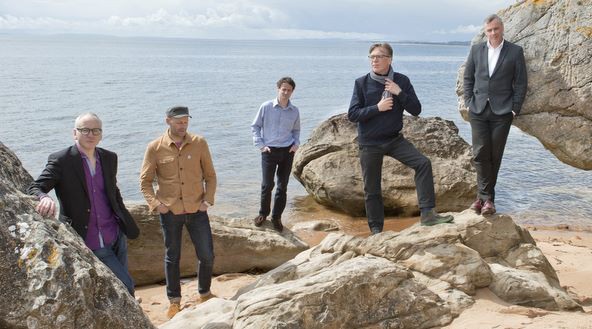

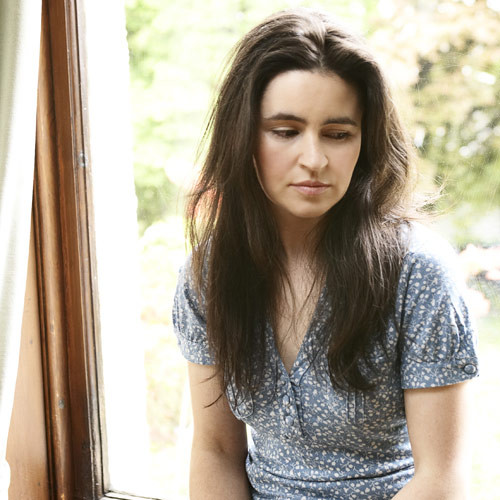
BEAT FUNKTION-GREEN MAN.
BEAT FUNKTION-GREEN MAN.
Originally, Beat Funktion were formed in 2007 to play a one-off concert at a Swedish nightclub. For the six musicians involved, they were looking no further than that one concert. Little did the members of the Beat Funktion realise, that they would still be together ten years later. A lot has happened during that period. This includes topping the jazz charts in America and Canada and releasing five critically acclaimed albums. Soon, five will become six when Beat Funktion release their much-anticipated sixth album, Green Man on Do Music Records on 27th January 2017. It’s the latest chapter in the story of Beat Funktion.
Their story began back in 2007. That was when six of Sweden’s top jazz musicians joined together to play what was meant to be a one-off gig in a nightclub. However, when Beat Funktion took to the stage, the improvisational sextet seemed to click.
Although they were ostensibly a jazz-funk group, Beat Funktion seamlessly combined elements of disparate musical genres. It was a potent and heady musical brew. Especially amongst the appreciative audience who had no idea that they were watching history being made. This was the debut by one of Swedish music’s most successful exports. Later, as Beat Funktion left the stage, they realised just how popular their heady musical brew had proven amongst the audience. Surely this wasn’t going to be a one-off?
It wasn’t. Realising the potential of Beat Funktion, the group continued. Pianist Daniel Lantz became Beat Funktion’s songwriter-in-chief, arranger and artistic leader. He has played an important part in the sound and success of Beat Funktion. This includes recruiting the creme de la creme of Swedish jazz.
Joining Daniel Lantz in Beat Funktion were a rhythm section of drummer Jon Eriksson, bassist Pal Johnson and guitarist Johan Öijen. They were joined by trumpeter Karl Olandersson and saxophonist Olle Thunström. This all-star band would spend the next three years establishing a reputation as one of rising stars of the jazz-funk scene.
By 2010, Beat Funktion’s star was already in the ascendancy. They had spent the last three years honing their sound and playing the live circuit. Beat Funktion had come a long way, and had already established a loyal fan-base. It had been won over Beat Funktion’s unique, but commercial sound.
Although Beat Funktion were ostensibly a jazz-funk band, they seamlessly incorporated elements of disparate musical genres. This included everything from Afro-beat, disco and fusion to pop, seventies funk and soul. Later, Beat Funktion’s music would move away from their core sound, they brought onboard percussionists and vocalists. In doing so, this showed different sides to Beat Funktion. This appealed to a much wider audience, and one that spanned the generations. That was still to come.
Given their popularity was rising, this seemed the perfect time for Beat Funktion to record and release their debut album. They had honed what was a slick, polished and commercial sound that appealed to music lovers of all ages. There was no better time to record their debut album. So Beat Funktion decided to take the plunge, and recorded their debut album The Plunge.
The Plunge.
Later in 2010, The Plunge was released to widespread critical acclaim. Critics in the jazz, funk and soul community heaped praise on Beat Funktion and forecast a big future for the Swedish sextet. This proved prescient.
Soon, Beat Funktion signed a management deal with Kansas based Musication Incorporated. They would later put the plans in place for Beat Funktion’s American tour. Beat Funktion had come a long way from when they made their debut in 2007.
Moon Town.
Still, the rise and rise of Beat Funktion continued. Three years after the release of The Plunge, Beat Funktion returned with their long-awaited sophomore album, Moon Town in 2013. It garnered praise and plaudits from critics and cultural commentators. That was just part of the story of Moon Town.
When Moon Town was released, the album proved hugely popular. The albums spent fifteen weeks in top ten of the US jazz radio charts during the summer of 2013. Meanwhile, Moon Town charted in the US Billboard 200 and the JazzWeek charts. Across the border in Canada, Moon Town reached the top five in the Canadian charts. Beat Funktion were going places.
Voodooland.
Watching the progress of Beat Funktion were executives at the Japanese funk label P-Vine. They had spotted the potential in Beat Funktion, and had been following their progress with interest. Following the success of Moon Town, P-Vine signed Beat Funktion and commissioned them to make their third album.
Just prior to the release of Voodooland, Beat Funktion signed to a new management company, the Las Vegas based Eggman Global Artists. Their latest signing were about to reach new heights.
In the spring of 2014, the much-anticipated Voodooland was released as a limited edition. It was released to widespread critical acclaim. Things were looking good for Beat Funktion. When Voodooland was released, it spent a total of sixteen weeks in the US jazz charts and spent three weeks at number one. Meanwhile, Voodooland spent eight weeks in Canadian charts. Voodooland was a game-changer for Beat Funktion.
Buoyed by the success of Voodooland, Beat Funktion’s thoughts turned to the release of their fourth album Mandy’s Secret. It featured ten new tracks were penned by songwriter-in-chief Daniel Lantz. He co-produced Mandy’s Secret with Mats Björke, the pianist in Swedish rock band Mando Diao. This resulted in one of the most polished albums of Beat Funktion’s career.
Mandy’s Secret was scheduled for release towards the end of September 2014. The album release was scheduled to coincide with Beat Funktion’s first ever American tour. They were going coast-to-coast in attempt to introduce Beat Funktion’s music, and especially Mandy’s Secret to a much wider audience.
This paid off, when Mandy’s Secret was released to plaudits and praise. Critics called Mandy’s Secret one of Beat Funktion’s best albums to date. Record buyers agreed. Beat Funktion watched as Mandy’s Secret began to climb the charts. Eventually, it reached number three on the American CMJ jazz charts. Across the border in Canada, Mandy’s Secret reached number one in the Canadian Earshot charts, and spent a total of twenty-one weeks in the charts. The rise and rise of Beat Funktion continued.
After the release of Mandy’s Secret, Beat Funktion’s American tour continued in in November. When the tour arrived in Los Angeles, Beat Funktion were due to play at the legendary Baked Potato. This was a venue that the great and good of fusion had once played. For Beat Funktion this showed just how far they had come.
So did their showcase session in Las Vegas. This was where they met rapper Damon Elliott, the son of Dionne Warwick. He had also produced Gwen Stefani, Pink and Beyoncé. Soon, Beat Funktion and Damon Elliott had formed a friendship with the rapper and producer. This lead to him agreeing to feature on Beat Funktion’s fifth album, Olympus.
Olympus.
Just like previous albums, Daniel Lantz wrote the fifteen songs that would eventually become Olympus. He would also arrange and co-produce Olympus with Mats Björke. This was a quite different from previous Beat Funktion albums.
It was the first time that Beat Funktion had been joined by guest artists. Rapper Damon Elliott was true to his word and features on King Minos. His rap compliments mid-tempo jazz-funk groove. Then South African soul singer delivers a soulful vocal tour de force on It’s About Time. Meanwhile, Beat Funktion fuse funk, soul and jazz combine seamlessly. The third and final guest artist is Swedish pop singer Rebecca Laakso. She plays a starring role on Where’s The Sunshine? It’s a glorious fusion of disco, funk, jazz and soul. Without doubt it’s one of the highlights of Olympus. However, there’s more to the album than three tracks.
Game Of The Gods features Beat Funktion doing what they do best…jazz funk. This smoking slice of jazz-funk brings back memories of the genre’s glory days. Chimera sees the tempo drop and the horns play a starring role. Very different is Waters of Thessaly which is a quite beautiful, pastoral sounding track. It shows a very different side to Beat Funktion.
They return to their jazz-funk sound on Viper Lady and deliver a musical masterclass. Fallen Hero finds Beat Funktion head in the direction of fusion, as they continue to showcases their considerable talent and versatility. Then on Swords and Sandals jazz-funk and fusion combine head on. It proves a potent combination. Closing Olympus is Mount Olympus, an eleven minute epic. Elements of disco, funk, jazz and soul combine. Disco strings, keyboards and a soulful, diva-esque vocal combine to create a dance-floor friendly track. It ensures Olympus ends on a high.
When critics heard Olympus, they called the album Beat Funktion’s finest hour. They had reached new heights on what was a truly eclectic album where Beat Funktion showcase their talent and versatility. There was something that would appeal to all musical tastes on Olympus.
It was no surprise that when Olympus was released in the summer of 2015, the album entered US jazz charts at number two. In Canada, Olympus gave Beat Funktion another number one album in the jazz charts. Olympus went on to spend a total of sixteen weeks in the top forty of the Canadian charts. This was a remarkable achievement. So was being nominated for four prestigious awards back home in Sweden.
When the nomination for Scandinavian soul awards were announced, Beat Funktion had been nominated for the Best Album, Best Band and Best Newcomer. This was ironic considering Olympus was Beat Funktion’s fifth album. Daniel Lantz and Mats Björk were also nominated for the Best Producer award. All this was recognition of just how far Beat Funktion had come. They had released five albums in the last five years.
Green Man.
Soon, though, Beat Funktion began work on their sixth album, Green Man. This time, Beat Funktion’s songwriter-in-chief wrote ten new tracks. They were recorded by Beat Funktion with a total of eight different vocalist.
This included Swedish-Russian jazz singer Viktoria Tolstoy; American jazz vocalist Alicia Olatuj; Swedish-Iranian pop diva Jasmine Kara and Swedish singer Matilda Gratte. They were joined by Swedish hip hop and soul singer Adée and rapper Damon Elliott, who had featured on Olympus. The other guest artists were Swedish jazz and blues legend Claes Janson and African drummer Deodato Siquir. With eight different vocalists, this was the most ambitious Beat Funktion album that Daniel Lantz and Mats Björk would produce.
They were joined in the studio by Beat Funktion and their ever increasing circle of musical friends. Recording began in January 2016. As usual, Beat Funktion’s rhythm section featured drummer Jon Eriksson, bassist Pal Johnson and guitarist Johan Öijen. Joining them were the usual horn section of trumpeter Karl Olandersson and saxophonist Olle Thunst. Meanwhile, Daniel Lantz played piano and co-produced Green Man with Mats Björk. Once the album was completed in May 2016, it was ready for release.
Green Man was released in Sweden in late 2016. Just like previous albums, critical acclaim accompanied the album. It was without doubt, Beat Funktion’s best and most eclectic album yet.
Opening Green Man is Steampunch. A wah-wah guitar and percussion usher in the rhythm and horn sections. They’re augmented by keyboards as the rhythm section lock down the groove. Meanwhile, the horns take centre-stage and look like playing a starring role. However, Johan Öijen’s wah-wah guitar and Daniel Lantz’s organ are waiting in the wings. Both will enjoy their moment in the sun. In Daniel’s case, he unleashes a fleet fingered organ solo at 1.16. Behind him, the rhythm and horn sections, wah-wah guitar and percussion provide a funky backdrop. Later, guitarist Johan Öijen steps forward and plays a searing, rocky guitar solo. Already it’s apparent that Beat Funktion are a truly talented band on this über funky track.
Tomorrow is a fourteen minute epic, which features the first of the special guests, Viktoria Tolstoy and Afro. Straight away, Beat Funktion drop the tempo, and the rhythm section provide an understated backdrop. They’re joined by a keyboards, sultry saxophone, wah-wah guitar and Viktoria’s heartfelt, soulful vocal. Quivering strings are the perfect addition as the arrangement builds. So are Afro’s gospel tinged harmonies. They answer Viktoria’s call as Beat Funktion fuse elements of jazz and funk. Adding a tougher funky sound is a clavinet. It sits well in the mix. Later, when the vocal drops out, braying horns, harmonies and keyboards are augmented by lush stings as the arrangement flows along. When Viktoria returns, she combines power and passion as she delivers a hopeful, soulful vocal. Afro’s harmonies compliment her vocal on what’s a soulful Magnus Opus that’s reminiscent of Incognito in their prime.
A chiming, funky guitar opens In Love In Vain. Soon, it’s joined by the rhythm section, keyboards and the soulful sound of Alicia Olatuja. Braying horns are added, but take care not to overpower what’s a beautiful, emotive vocal. The horns fill the gaps left by the vocal and blaze above the arrangement. Later, though, the horn section get the opportunity to stretch their legs as Beat Funktion jam. They’re joined by the rhythm section, guitar, keyboards and percussion and seamlessly combine funk and jazz. At one point, the arrangement dissipates, then rebuilds and reintroduces Alicia’s vocal. Harmonies accompany her vocal. It’s an emotion roller coaster, and is a mixture of hope, joy and despair. Alicia lays bare her soul before this genre-melting track reaches its crescendo.
Paper Girl features Adee. Keyboards are joined by the percussion, rhythm section and horns. They usher in Addee’s heartfelt vocal. She’s accompanied by lush strings and sashaying horns. Briefly the tempo ebbs and flows and continues to do so. Meanwhile, Adee’s vocal veers between tender and heartfelt to sultry. Later, it seamlessly becomes a sassy rap . When it drops out, a sultry saxophone takes centre-stage. On Adee’s return, the arrangement sashays as she delivers a tender, heartfelt vocal. The addition of strings and funky guitar prove the perfect foil for Adee on this slick, hook-laden, radio friendly track.
Rewind sees the tempo drop as the rhythm section and keyboards combine with lush strings. They’re joined by a braying horn and chiming guitar. Together, they provide the perfect backdrop for jazz and blues legend Claes Janson. His lived-in vocal is perfect for the lyrics. He sounds as if he’s lived and survived them. Behind him, a bubbling bass, subtle braying horn, keyboards and quivering strings are added as funk and jazz combine. Layer, when Claes’ vocal drops out, the sultry saxophone proves a perfect replacement as Beat Funktion provide mid-tempo funky backdrop. Soon, the tempo drops again as the wistful horn sets the scene for Claes’ hopeful vocal. Meanwhile, one of the best arrangement is unfolding. Its late night sound proves the perfect backdrop for Claes’ beautiful, soul-baring vocal.
Beat Funktion showcases their versatility on Over The Ocean. It’s an uptempo track where they fuse jazz-funk, soul and hip hop. Blazing horns combine with the rhythm section, percussion and keyboards. They’re joined by Swedish singer-songwriter Jasmine Kara and then rapper Damon Elliott. Both make a brief appearance before Jasmine adds a soulful, diva-esque vocal against a funky backdrop. When the tempo drops and the arrangement becomes understated Damon adds his rap. Soon, stabs of horns signal the return of Jasmine as she picks up where she left off. Behind her, Beat Funktion up the ante. Daniel adds a solo on his Hammond organ and Jasmine delivers a soulful vamps. She then answers Daniel Elliot’s call before unleashing a vocal powerhouse. In doing so, diva Jasmine Kara has stolen the show on Over The Ocean. She’s without doubt, one of the stars of Green Man.
With its weeping, atmospheric introduction, Lorelei briefly sounds like John Martyn’s Solid Air. Even the early part of saxophone solo sounds similar. Where Lorelei differs is there’s no vocal and Beat Funktion use a piano, electric bass and jazz-tinged guitar. However, both tracks have much in common. Just like Sold Air, Lorelei has a beautiful, late night sound that shows yet another side to Beat Funktion.
Shivering strings are joined by Daniel’s piano on We Are You. Suddenly, the tempo increases and the arrangement becomes funky. This is the signal for Matilda Gratte’s vocal to enter. She’s accompanied by stabs of horns, dancing strings and the funky rhythm section. Then as her vocal drops out, Daniel adds a futuristic synth solo, before Matilda scats. Soon, her vocal veers between tender and thoughtful to sassy. By then, Beat Funktion have combined funk, fusion, jazz and Philly Soul. There’s even a brief symphonic sound. Later, the guitar solo is reminiscent of Norman Harris of M.F.S.B. Meanwhile, Matilda vamps, the arrangement pauses and then rebuilds. Matilda vamps before unleashing her vocal while disco strings and braying horns combine with the funky arrangement. They play their part in this impressive, genre-melting, dance-floor friendly track.
Closing Green Man is the title-track. It features Deodato Siquir. His scatted vocal is accompanied by stabs of horns, the rhythm section and the tough, edgy sound of a clavinet. Taking centre-stage is the braying saxophone. It’s accompanied by sooting, soulful harmonies that soon, take on a spiritual sound. Then a stab of blazing horns signal the arrival of Deodato Siquir. His vocal has soulful quality that captivates. Especially when accompanied by the harmonies. Later, the vocal drops out Beat Funktion stretch their legs. As the guitar lays down a solo, harmonies augment it. Again, the horns signal the return of Deodato Siquir’s vocal. He’s joined by Beat Funktion and gospel-tinged harmonies.They prove the perfect foil for his vocal, and they drive each other to greater heights of soulfulness, This ensures that Green Man ends on a high.
After ten genre-melting tracks Beat Funktion’s much anticipated sixth album is over. It was recorded and mixed between January and May 2016. During that period, Beat Funktion were joined by some of their musical friends. They came from home and abroad to play their part on Green Man. It’s without doubt the best album of Beat Funktion’s ten year career. They’ve come a long way since that first gig in the Swedish nightclub. Nowadays, Beat Funktion are one of Sweden’s most successful musical exports. That’s no surprise.
Seamlessly the multi-talented and versatile sextet switch between and combine musical genres. Although ostensibly a jazz-funk band, Beat Funktion combined elements of Afro-beat, disco, funk, fusion, jazz, pop and rock. Aided and abetted by some of their musical fiends, Beat Funktion reach new musical heights on Green Man. It will be released by Do Music Records on 27th January 2017.
For newcomers to Beat Funktion, Olympus and Green Man are the perfect introduction to Beat Funktion’s irresistible, genre-melting sound. Especially Green Man, which is a career-defining album from Beat Funktion. Green Man is a delicious and moreish dish that once tasted, the listener will want to hear much more of.
BEAT FUNKTION-GREEN MAN.


A PROJECTION-FRAMEWORK.
A PROJECTION-FRAMEWORK.
Two years after releasing their critically acclaimed debut album Exit, Stockholm based A Projection recently returned with their much-anticipated sophomore album Framework. It was released by the Hamburg-based label Tapete Records. They were one of the record labels in the race to sign A Projection after hearing their eponymous debut EP. Eventually, Tapete Records won the signature of A Projection, because they were able to offer them total creative freedom. This was something many labels are reluctant to do. However, this paid off for Tapete Records as A Projection are one of the rising stars of European music.
The A Projection story began in Stockholm in 2013. That was when the five local musicians decided to have one last throw of the dice musically. They had all been involved in bands before, but had never made a breakthrough. It looked as if the dream of becoming a member of a successful band was over. So the future members of A Projection settled into careers away from music.
Gradually, the five musicians found themselves enjoying successful careers. They were all living comfortably but still, there was something missing from their lives…music. Deep down, they were still a yearning to make music. Eventually, they decided to have one last roll of the dice with A Projection.
This time, they were going to commit to the project 100%. There would be no regrets. Instead, the five members of A Projection were going to commit fully to the band. This meant turning their back on climbing the corporate ladder to follow their dream.
When the members of A Projection made this announcement, colleagues, friends and families must have questioned the wisdom of this decision. They were giving the security of a full time job to join a band. Surely this was a precarious existence? However, those sitting in judgement have never experienced the adrenaline rush of taking to the stage with a band and winning them over. Soon, A Projection would.
Having made the decision to turn their back on their career, A Projection was formed. It had been born out of desperation and a necessity to express themselves musically. To do this, A Projection began combining dark, eighties post punk with vibrant indie rock and electronic music as they honed their sound. Before long, A Projection were ready to make their debut in Stockholm’s vibrant underground music scene.
After making their live debut, it didn’t take long before A Projection had established a reputation as one of Stockholm’s up-and-coming live bands. No wonder. A Projection’s early performances were a combination of energy and enthusiasm with power and passion. Driven along by their rhythm section, A Projection combined stacks of synths with effects laden guitars and a vocal that bristled with emotion. Their genre-defying sound caught the attention of music fans. Soon, the word was out, A Projection were a band going places.
As A Projection continued to hone their sound, their concerts continued to be memorable. Night after night, they unleashed music that was variously atmospheric, dark, dense, powerful and sinister. This they played against a backdrop of evocative videos. It was a potent combination, and one that made A Projection standout from the crowd.
No wonder. The five members of A Projection were determined and desperate to make a success of the band. They had sacrificed so much.Freed from the corporate shackles, they were living the dream as they took to the stage each night.Sometimes, though there was an unpredictability and violence erupted in the audience. This veterans of the Stockholm music scene said this was the spirit of ’76, and what happened when the Sex Pistols played live. However, there was one major difference, A Projection were talented musicians.
This wasn’t going unnoticed. Some onlookers felt that A Projection would soon outgrow the local Stockholm music scene. They were definitely destined for bigger and better things. Especially after A Projection released their eponymous demo EP.
A Projection sent their newly recorded demo to various record company. They were impressed by A Projection’s demo EP. This resulted in several record companies chasing the signature of A Projection. For the five members of A Projection, their decision to turn their back on the corporate world had been vindicated. They were about to sign their first recording contract.
By then, A Projection had decided to sign a recording contract with the Hamburg-based label Tapete Records. They offered A Projection total creative freedom. This was something many record companies are reluctant to offer bands. However, Tapete Records realised that by doing so, A Projection would reward them with a very special album.
Exit.
That proved to be the case. Tapete Records were richly rewarded when A Projection returned with their genre-defying debut album Exit. Elements of indie rock, post punk and electronica were combined by A Projection on Exit which features gems like Exit, Reborn, Another Face and This Is Not Me.
When Exit was released in May 2015, it was to widespread critical acclaim. It was heartfelt, honest and to some extent a very personal album. Critics forecast that A Projection had a big future ahead of them. Comparisons were drawn also with The Editors, The Cure, The Swans, and Depeche Mode. A Projection’s star was definitely in the ascendancy as their music began to reach a much wider audience.
Since then, A Projection have been wining friends with their unique, genre-melting sound. However, A Projection have also been busy writing and recording their sophomore album Framework.
Framework.
After writing thirteen new songs, A Projection headed to Redmount Studios in Stockholm. That was where they recorded Framework with Niklas Berglöf. Once the album was complete, it was mixed by the award-winning mix engineer Magnus Lindberg. The next step was for A Projection to deliver Framework to Tapete Records.
They discovered an album where the classic post-punk sound is combined with modern indie rock. It’s a potent, pleasing and accessible album that still has a defiant sound. Given the post punk influence that’s no surprise. However, that’s just part of the story of A Projection’s much-anticipated sophomore album Framework.
Framework opens with Hands, where A Projection briefly toy with the listener. Soon, though, the arrangement explodes melodically into life. Guitars ring out, as they join with synths and the rhythm section in driving the arrangement along. The final piece of the jigsaw is a swaggering, spirit of ’76 vocal. It’s the perfect addition. Later, when the vocal drops out at 1.47, A Projection showcase their considerable talents. They’re a tight and talented band who sound as if they’ve been together longer than four years. When the vocal returns, drums crack as guitars ring out, and power the arrangement along. Backing vocals and later synths are added, as this irresistible genre-melting track heads towards a crescendo.
Guitars rings out as drums pound as Dark City unfolds. Soon, ethereal, glacial are added. They add a contrast. So does the lead emotive, heartfelt lead vocal. It’s accompanied by chugging guitars, the rhythm section and glacial synths that drift in and out. Again, hooks haven’t been spared in what’s a memorable and hopeful, eighties inspired anthem.
Straight away, it’s obvious that something special is unfolding on Transition. Drums crack while the arrangement to Transition pulsates. Jangling guitars are swathes of elegiac, pastoral synths. They sweep and glide along, their ethereal sound accompanying an urgent, impassioned and thoughtful vocal. It bristles with emotion as memories come flooding back. Later, a searing guitar is added and cuts through a multi-layered arrangement that manages to be dramatic and ethereal simultaneously. It plays its part in what’s a beautiful and poignant fusion of indie rock, post punk and electronica.
Dubby and deliberate describes the introduction to Sensible Ends. A glistening synth is joined by a drum that cracks and reverberates. Soon, the bass and guitar increase the tempo, and this is the signal for A Projection to kick loose. By the time they’re in full flight they’ve been joined by the vocal. Again, it sounds as if it has been influenced by any number of British bands of the eighties. Meanwhile, thunderous drums, layers of synths and chirping, searing guitar licks accompany the vocal as the arrangement gallops along. It’s an impressive and stirring sound, and one that’s sure to evoke memories of the eighties.
The same could be said of Scattered. Synths and guitars help the rhythm section power the arrangement. Soon, an urgent and emotive vocal enters. Meanwhile, the drums provide a 4/4 beat as the synths and jangling guitars play an important part in the sound and success of Scattered. When the vocal drops out at 1.48, a mesmeric bass, stabs of synths and drums that crack enjoy their moment in the sun. Before long, the vocal returns and the with rest of A Projection powers the arrangement to its memorable high.
I’m Not Here is very different to previous tracks. That’s apparent from opening notes, where a prowling bass synth combines with drums. They’re joined by a despairing vocal. Much later, washes of glacial synths are added to this soul-baring ballad where eighties electronica meets post punk.
No Light marks a return a much more familiar sound. A fleet fingered bass solo sets the scene for the rest of the band. Soon, A Projection are in full flight. The only thing that’s missing is the vocal. It enters after forty seconds. Suddenly, everything has fallen into place. With guitars, synths and the rhythm section for company, another anthemic eighties’ inspired track unfolds.
Machine gun licks open Next Time, before the thunderous rhythm section and synths drive the arrangement along. It’s a melodic and memorable combination. Especially when the urgent hurt-filled vocal enters. It assures that: “Next Time there won’t be a Next Time.” Hooks it seems, haven’t been spared. Meanwhile, the arrangement glides along effortlessly along. Jittery and later, glacial synths play a starring role. So do scorching and post punk guitar riffs. However, it’s the vocal that steals the show in this hook-laden fusion of electronica, indie rock, pop and post punk,
Bristling, jangling guitars open For Another Day, before the arrangement bursts into life. The rhythm section never miss a beat, as searing guitars accompany a hurt-filled, rueful vocal. Soon, elegiac synths are added, and glide across the arrangement. Later, backing vocals augment the vocal, before the vocal drops out at 1.56. This allows the rest of the band to stretch their legs. When the vocal return, A Projection reach new heights on this three minute indie rock anthem.
A Projection seem to specialise in three minute songs that tell a story. Betrayal is no different. The rhythm section provide a galloping backdrop as blistering guitars are unleashed. They set the scene for the vocal that’s been betrayed. It’s sometimes augmented by backing vocals that add to the post punk sound. Later, elegiac synths add a contrast. Mostly, though, it’s the rhythm section and guitars that provide the backdrop for a hurt-filled vocal still reeling from the Betrayal.
There’s a brief nod to Siouxsie and The Banshees in the introduction Hollow Eyes. This comes courtesy of the lone guitar that accompanies the deliberate vocal. It’s a mixture of despair and hurt. Meanwhile, the arrangement begins to unfold. Sweeping synths join the rhythm section and guitar in driving the eighties inspired arrangement along. It’s a melodic mixture of electronica, indie rock and post punk that features some of the most moving lyrics on Framework.
Not for the first time, A Projection sound like The Smiths on Briefly Breach. The rhythm have the foot to the floor, as bristling guitars and ethereal synths combine. They provide the backdrop for vocal. It’s briefly panned left, and is moved back in the mix, resulting in a distant sound. This is used throughout what’s one of the highlights of Framework. As the vocal drops out, a freewheeling A Projection lock into a groove and sometimes, are reminiscent of The Cult. Meanwhile, A Projection sound as if they’re enjoying themselves. The occasional whoop is a giveaway, as A Projection reach new heights.
Dark and dramatic describes Listen To The Dark which closes Framework. Drums reverberate before a dark, deliberate vocal enters. It’s joined by eerie backing vocals, lumbering synths and a scrabbled guitar. When they’re combined, this shows a very different and dark side to Framework.
Not for the first time, A Projection sound like The Smiths on Briefly Breach. The rhythm have the foot to the floor, as bristling guitars and ethereal synths combine. They provide the backdrop for vocal. It’s briefly panned left, and is moved back in the mix, resulting in a distant sound. This is used throughout what’s one of the highlights of Framework. As the vocal drops out, a freewheeling A Projection lock into a groove and sometimes, are reminiscent of The Cult. Meanwhile, A Projection sound as if they’re enjoying themselves. The occasional whoop is a giveaway, as A Projection reach new heights.
Dark and dramatic describes Listen To The Dark which closes Framework. Drums reverberate before a dark, deliberate vocal enters. It’s joined by eerie backing vocals, lumbering synths and a scrabbled guitar. When they’re combined, this shows a very different and dark side to Framework.
After nearly two years, A Projection return with their much-anticipated sophomore album Framework. It was recently released by Hamburg based Tapete Records, and features the triumphant return of Stockholm based A Projection.
They seamlessly combined elements of electronica with indie rock, pop, post punk and punk on Framework. It features thirteen tracks, including genre-melting, hook-laden anthems aplenty. This includes Dark City, No Light, Next Time and For Another Day, Other times, A Projection showcase their versatility and take Framework in different directions. This includes on I’m Not Here, where eighties electronica and post punk combine to create a soul-baring ballad. Then there’s the poignant, genre-melting Transition. It shows A Projection’s ability to seamlessly combine disparate musical genres. This they do throughout Framework.
Sometimes though, it’s possible to hear some of the music that has inspired and influenced A Projection. This includes Depeche Mode, New Order, Siouxsie and The Banshees, The Cult, The Cure, The Dditors, The Smiths and The Swans. However, the inspiration of these bands becomes part of something much bigger.
That is Framework, A Projection’s much-anticipated sophomore album. It marks the coming of age of A Projection, who were formed just four years ago. They’ve come a long a way since them, and look destined for much bigger things. Especially if A Projection continue to record albums like Framework, which features melodic and memorable music, where hook-laden anthems sit side-by-side with beautiful ballads and eighties inspired tracks.
A PROJECTION-FRAMEWORK.
KLAUS SCHULZE-THE DARK SIDE OF THE MOOG BOX SETS.
KLAUS SCHULZE-THE DARK SIDE OF THE MOOG BOX SETS.
By 1994, Berlin School pioneer Klaus Schulze was a veteran of German music. He had been making music for twenty-five years. His recording career began back in October 1969, when Klaus Schulze played on Tangerine Dream’s debut album Electronic Meditation.
Eight months later, Electronic Meditation was released by Ohr Records, in June 1970. It was an ambitious album of groundbreaking,≥ genre-melting music, that would later, be regarded as Berlin School classic. Despite this, Electronic Meditation initially failed to find an audience. For Tangerine Dream this was a huge disappointment. The group continued though, but without Klaus Schulze.
He left Tangerine Dream to cofound Ash Ra Temple with Hartmut Enke and Manuel Göttsching. The new group recorded their debut album on 11th March 1971. Three months later, and Ash Ra Temple was released by Ohr Records in June 1971. It was an innovative fusion of progressive rock and ambient music that later, would be regarded as a Krautrock classic. However, when Ash Ra Temple was released, it failed commercially. This resulted in Klaus Schulze embarking upon a solo career.
Just over a year later, in August 1972, Klaus Schulze released his debut album Irrlicht. Although it was a groundbreaking album, Irrlicht failed to find the audience it deserved. Despite that, Irrlicht is nowadays regarded as a Berlin School classic. So is the followup Cyborg, which was released in October 1973.
Alas, it was a familiar story. Cyborg was way ahead of its time and record buyers failed to understand the music, or recognise its importance. Nowadays, it’s regarded as an that helped shape and define the Berlin School of electronic music.
Although Klaus Schulze’s first two solo albums had failed to find an audience, he continued to release pioneering music. Gradually, Klaus Schulze’s music began to find a much wider and appreciative audience. That was the case throughout the rest of the seventies, eighties and right up until the early nineties. By then, Klaus Schulze was one of the most prolific German artists.
That had been the case throughout Klaus Schulze’s career. He often released two and sometimes three albums in a year. Then there were a myriad of collaborations and the albums Klaus Schulze released under his Richard Wahnfried moniker. However, one of the most productive years of Klaus Schulze’s career was 1993.
During 1993, Klaus Schulze released the live album The Dome Event and Silver Edition, a ten disc box set. Surely, this meant that Klaus Schulze was one of the most prolific European recording artists?
Despite his prolificacy, Klaus Schulze wasn’t about to rest on his laurels as 1994 dawned. He was already working on two solo album, two live albums, the Richard Wahnfried album Trancelation and was about to release a new collaboration with Pete Namlook, Dark Side Of The Moog.
Little did Klaus Schulze realise that the Dark Side Of The Moog project he was working on would become a long running and successful series. Eleven volumes of the Dark Side Of The Moog series were released between 1994 and 2008. They were recently reissued by MIG as three box sets. The first instalment in the series was The Dark Side Of The Moog Volume 1-4. It was followed by The Dark Side Of The Moog (Complete Version Volume 2) which covers volumes five to eight. Finally, The Dark Side Of The Moog (Complete Version Volume 3) was released covering volumes nine to eleven. Each box set comes complete with a bonus disc. It’s a welcome addition to this reminder of a project that nearly never happened.
Initially, Klaus Schulze was reluctant to collaborate with Peter Kuhlmann a.k.a. Pete Namlook when he first approached him about potentially working on a project. Back then, Klaus Schulze was constantly busy working on a variety of projects. He had embraced both digital technology and sampling and since then, had been putting the new technology to good use. This had resulted in albums like Beyond Recall; The Royal Festival Hall Recordings and The Dome Event. Digital technology and sampling had opened up a new world of opportunities for Klaus Schulze, and he was keen to utilise this on further projects.
Mostly likely, this would be solo albums, but could be a collaboration with another artist. It would have to be the right artists though. Klaus Schulze wasn’t sure that Pete Namlook was the right person for him to collaborate with.
That was despite Klaus Schulze being aware of Pete Namlook’s music and the Fax +49-69/450464 record label he founded in 1992. Pete Namlook regarded the label as a vehicle to release: his own recordings; his collaborations with other musicians and albums by like-minded musicians. Since its formation in 1992, Fax quickly established a reputation for releasing ambitious and inventive music. This included some of the music Pete Namlook had released.
Over the years, Pete Namlook released music using a myriad of aliases. This included Air, who would release the sophomore album Air II in 1994. It featured Travelling Without Moving which featured eleven trips. Pete Namlook took the album to let Klaus Schulze hear. When he heard the spacey sound of Travelling Without Moving, he was won over by Pete Namlook’s music. So much so, that Klaus Schulze suggested that he and Pete Namlook collaborate on a project. That project would become The Dark Side Of The Moog.
The Dark Side Of The Moog Volumes 1-4.
Part 1-Wish You Were There.
Now that the Klaus Schulze and Pete Namlook had agreed to collaborate on a project, they began working on what would be the as yet unnamed project’s debut album.
In later years, as musical technology improved, the men would exchange ideas for tracks via email. However, for what would be their debut album the men headed to the studio in September 1993. The two me wrote and recorded a total of ten tracks where laus Schulze and Pete Namlook put the latest in musical technology to good use. The result was a captaining album from the two musical pioneers.
The ten tracks which veered between understated, atmospheric and dreamy to pulsating, anthemic and dance-floor friendly. To create these tracks, Klaus Schulze and Pete Namlook had created elements of ambient, avant-garde, electronica and techno With the album complete, now Klaus Schulze and Pete Namlook had to think of a name for their new musical vehicle.
After some thought, they came up with Dark Side Of The Moog. This wasn’t a homage to Pink Floyd. Instead, it was a reference to the man who invented an instrument that played an important part on Dark Side Of The Moog, Bob Moog. He had the Moog synths. However, Pink Floyd would provide some inspiration for Dark Side Of The Moog.
With the album complete, Klaus Schulze and Pete Namlook began trying to think of a title for the ten tracks. The two men were struggling. It was a problem that Klaus Schulze had encountered before. This was solved when they hit on the idea of picking a Pink Floyd title and changing it to something that didn’t exist. So Pink Floyd’s classic album Wish You Were Here became Wish You Were There. This became a tradition after recording each volume of Dark Side Of The Moog.
The first instalment in the Dark Side Of The Moog series was released by the Fax label on 17th October 1994. It was a limited edition of just 1,000 CDs. So successful was the album, that it was reissued in 1995. By then, Volume 2 had been released.

Part 2-A Saucerful Of Ambience.
Just a month after recording the first volume in the Dark Side Of The Moog series, Klaus Schulze and Pete Namlook returned to Sonic Studio in October 1993. They recorded twelve tracks that would become A Saucerful Of Ambience.
Just like Wish You Were There, the music on A Saucerful Of Ambience started off with an understated, atmospheric and ambient sound. Sometimes, there’s a lysergic sound to the spacious soundscapes. This is a result of ambient, avant-garde and electronica are being combined However, by A Saucerful of Ambience, Pt. 8 the mesmeric drumbeats have made an appearance and the music changes. Soon, it takes on a pumping, pulsating sound as techno makes an appearance on A Saucerful of Ambience, Pt. 9. This is only briefly. By A Saucerful of Ambience, Pt. 10 takes on a ruminative, pastoral and wistful sound, and this continues throughout the rest of A Saucerful Of Ambience.
A mere five months after the release of The Dark Side Of The Moog, The Dark Side Of The Moog II was released by Fax on 20th March 1995. Again, it was initially a limited edition of 1,000 CDs. However, four months later The Dark Side Of The Moog II would be released by the Ambient World label.
By then, the first instalment was a favourite among DJs who were playing chill out sets. This introduced Klaus Schulze and Pete Namlook’s music to a wider audience, They would embrace The Dark Side Of The Moog II, which find its way into many a DJs’ box. So it was no surprise that a third volume in the The Dark Side Of The Moog was in the pipeline.
Part 3-Atom Heart Brother Part I=VI.
Following the success of the first two volumes of The Dark Side Of The Moog, Klaus Schulze and Pete Namlook returned to Sonic Studio, in Frankfurt in 1995. They wrote and recorded six further soundscapes. Drawing inspiration from Pink Floyd’s Atom Heart Mother, they became Atom Heart Brother Part I-VI.
Later in 1995, the six tracks were released as The Dark Side Of The Moog III. Record buyers discovered that Klaus Schulze and Pete Namlook had continued to reinvent their sound. While there were still elements of ambient, avant-garde and electronica, there was a move towards first abstract and then trance. This was a first. However, Klaus Schulze and Pete Namlook were determined that their music would never become predictable. Instead, it was a case of expect the unexpected as the Dark Side Of The Moog series continued.

Part 4-Three Pipers At The Gates Of Dawn.
What very few people expected was that Klaus Schulze and Pete Namlook would bring onboard a third musician to work on the Dark Side Of The Moog series. That was what they did.
The man in question was American bassist, songwriter and producer Bill Laswell. He was another prolific artist, who had worked on literally, hundreds of recordings with musicians from all over the globe. Klaus Schulze and Pete Namlook were the latest musicians he was about work with.
Bringing onboard Bill Laswell resulted in a change in the way the album was made. This time, the recording sessions took place three studios in two countries. Klaus Schulze and Pete Namlook recorded their parts at Klanglabor Frankfurt, Moldau Musik Studio, Hamburg. Meanwhile, Bill Laswell recorded his parts at Greenpoint Studio in Brooklyn. Gradually, the nine parts in the Three Pipers At The Gates Of Dawn suite.
While Klaus Schulze and Pete Namlook usually wrote every part of a suite, this time around, they only wrote four tracks. Bill Laswell contributed 1.1-13, 1.5 and 1.8. However, as usual, Pete Namlook took charge of producing what was a quite different album.
The nine parts of the Three Pipers At The Gates Of Dawn suite was a fusion of ambient, electronica, modern classical and techno. Just like previous instalments in the series, the music continued to evolve. It was an album that DJs would embrace and that would stand the test of time.
As 1996 dawned, The Dark Side Of The Moog IV was released by Fax on 12th February 1996 as a limited edition. Soon, The Dark Side Of The Moog IV had sold out. Four months later, The Dark Side Of The Moog IV released on CD by Ambient World on 10th June 1996. It continued the success story that was The Dark Side Of The Moog.
This was somewhat ironic, given Klaus Schulze’s reluctance to collaborate with Pete Namlook. Two years later, their project was enjoying critical and commercial success. Part of the success of The Dark Side Of The Moog series was how the music continued to evolve. The result was music that’s stood the test of time.
That is still the case twenty-two years after the first instalment in The Dark Side Of The Moog was released. The first four volumes were recently released as part of a five disc box set, The Dark Side Of The Moog Volume !-IV. As an added bonus, there’s a fifth disc entitled The Evolution Of The Dark Side Of The Moog. It includes excerpts from the first four volumes as well as forthcoming volumes in the series. This gives the listener a taste of what’s to come in The Dark Side Of The Moog series. They feature on two further box sets.


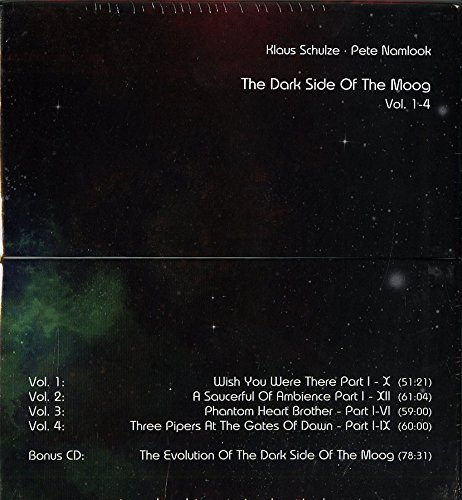
The Dark Side Of The Moog Volumes 5-9
Part 5-Psychedelic Brunch.
Following the success of the reissue of The Dark Side Of The Moog Volumes 1-4 box set, MIG released The Dark Side Of The Moog Volumes 5-8. It continued a story that began in 1994. However, work on the sixth instalment in The Dark Side Of The Moog began later in 1996.
Just like The Dark Side Of The Moog Volumes 5, the recording sessions took place three studios, Klanglabor Frankfurt, Moldau Musik Studio, Hamburg and Greenpoint Studio in Brooklyn. Gradually, the eight parts in the Psychedelic Brunch suite. Six of them were penned by Klaus Schulze and Pete Namlook. The exceptions were 1.3 and 1.7 which were written by Bill Laswell. He continued to make an important contribution to Dark Side Of The Moog series. So did the man who had inspired the name.
Having introduced the album, Bob Moog’s spoken vocal featured on 1.2. He played his part on what was another eclectic album. Everything from ambient, abstract and avant-garde rubbed shoulders with elements of the Berlin School, electronica, modern classical. It was a captivating combination and one of the finest instalments in the series.
The Dark Side Of The Moog V was released by Fax on the 9th of December 1996. It was now a much-anticipated series, that was a favourite of chill out DJs and record buyers. This would continue to be the case throughout The Dark Side Of The Moog series.

Part 6-The Final DAT.
Buyoed by the continuing success of The Dark Side Of The Moog series, the three members of The Dark Side Of The Moog began work on the next instalment in the series.
By then, technology had progressed sufficiently that Klaus Schulze, Pete Namlook and Bill Laswell were able to email each other parts that of tracks that they had been working on. No longer did each member of The Dark Side Of The Moog have to be in the same studio. They didn’t even have to be in the same country. Instead, the three members of The Dark Side Of The Moog used the same three studios as before.
Recording took place at Klanglabor Frankfurt, Moldau Musik Studio, Hamburg and Greenpoint Studio in Brooklyn. That was where The Final DAT was recorded. It was a six part genre-melting suite, Bill Laswell wrote Part I and Part IV. Klaus Schulze and Pete Namlook wrote the rest of The Dark Side Of The Moog VI. As usual, it was produced by and was ready for release in autumn 1997.
On The Dark Side Of The Moog VI, elements of abstract ambient and avant-garde were combined Berlin School, electronica and trance. It was a captivating, imaginative and cinematic and genre-melting album. The music was understated, beautiful, ethereal and mesmeric as it took the listener on a musical journey. Just like previous volumes in the series, the music had a timeless quality. The three members of The Dark Side Of The Moog had surpassed their previous efforts.
It was no surprise that when the The Dark Side Of The Moog VI was released by Fax as a limited edition of 2,000 on the 29th of September 1997, that the album sold out. DJs and record buyers went in search of what was one of the most sought after releases. Incredibly, considering the success of the album and indeed the series, The Dark Side Of The Moog VI wasn’t rereleased until 2003. By then, three further instalments The Dark Side Of The Moog would’ve been released.

Part 7-Obscured By Klaus.
The first of this trio of releases was The Dark Side Of The Moog VII. It was a fifty minute, seven part suite entitled Obscured By Klaus. This time though, Bill Laswell wrote just Part 3 of the suite and recorded his parts in New York during the first half of 1998.
Meanwhile, Klaus Schulze and Pete Namlook recorded their part at Klanglabor in Frankfurt, Moldau Musik Studio, Hamburg and at Traben-Trarbach. During the recording sessions, the three members of The Dark Side Of The Moog emailed each other their parts. Gradually, the album came together, and Obscured By Klaus was ready for release.
Obscured By Klaus was much more like the first three albums in The Dark Side Of The Moog series. Much of the album had an ambient sound, with the music veering between dreamy, ethereal and ruminative and understated. Later, the tempo increases as a pulsating bass synth plays a leading role as ambient and electronica meet techno. Soon, though, the ambient sound returns as The Dark Side Of The Moog revisit and reinvent their earlier elegiac sound. There’s even elements of modern classical music to what was The Dark Side Of The Moog’s finest hours.
The Dark Side Of The Moog VII was released on 23rd November 1998 by Fax. This time, Fax had released an extra 1,000 copies of the album making it a limited edition of 3,000. Still though, supply outstripped demand as DJs and record buyers sought copies of The Dark Side Of The Moog VII, which was Bill Laswell’s swan-song.
After recording four volumes in The Dark Side Of The Moog series, Bill Laswell decided to concentrate his efforts on other musical projects. This meant that The Dark Side Of The Moog returned to a due on The Dark Side Of The Moog VIII.

Part 8-Careful With The AKS, Peter.
After releasing four albums as a trio, The Dark Side Of The Moog returned to a duo for the The Dark Side Of The Moog VIII. It featured an eight part suite, Careful With The AKS, Peter. This was a very different recording.
Unlike the previous Dark Side Of The Moog albums, the eight part suite Careful With The AKS, Peter wasn’t recorded in the studio. Instead, it was recorded live at the 23rd Jazz Festival Hamburg on 23rd April 1999. After the recording, Pete Namlook
who had produced The Dark Side Of The Moog series, edited some parts of Careful With The AKS, Peter. Only then, was The Dark Side Of The Moog VII ready for release.
Later in 1999, Fax released The Dark Side Of The Moog VIII. It featured a performance that lasted nearly seventy-seven minutes. During that performance, The Dark Side Of The Moog switched between and combined elements of ambient with electronica and experimental with dub and drum ’n’ bass. The Dark Side Of The Moog VIII was an ambitious album. Especially since it had been recorded live. Despite using a myriad of complex equipment, The Dark Side Of The Moog VIII was a success critically and commercially.
After eight volumes of The Dark Side Of The Moog series, it was still going strong. Partly, that was because Klaus Schulze and Pete Namlook constantly sought to reinvent their music. That is apparent throughout The Dark Side Of The Moog Volumes 5-8 box set. This includes on the fifth disc. It’s a bonus disc that features three hidden gems, SQ 1, a chill mix of Voices In The Dark and SQ 4. They’re a welcome addition to the second five disc box set. This leaves just one box set, which covers volumes nine to eleven.


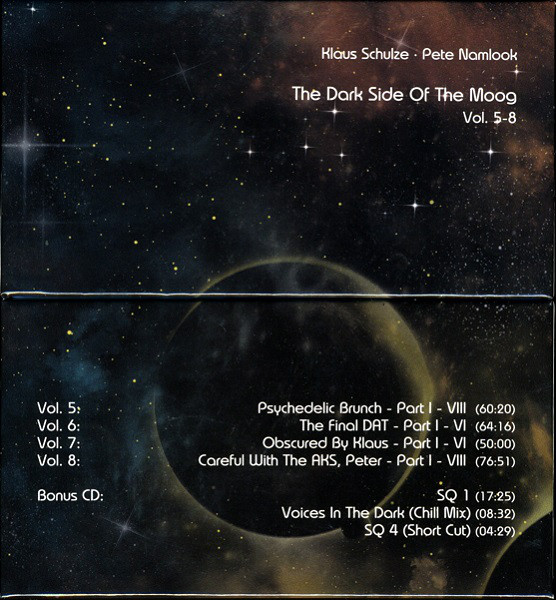
The Dark Side Of The Moog Volumes 9-11.
Part 9-Set The Controls For The Heart Of The Mother.
Three years passed before Klaus Schulze and Pete Namlook returned with the ninth instalment in the The Dark Side Of The Moog series. This was the longest gap between albums. However, The Dark Side Of The Moog returned in 2002, with Set The Controls For The Heart Of The Mother, a six part suite.
It had been written and recorded at Pete Namlook’s Klanglabor Hödeshof studio during early 2002. Later that year, The Dark Side Of The Moog IX was released by Fax on 10th May 2002. Again, the album was a limited edition of 3,000. Just like previous albums, it was a popular album amongst DJs and record buyers.
They were won over by The Dark Side Of The Moog IX’s genre-melting sound. Elements of ambient music and avant-garde were combined with electronica and experimental music. The music ebbs and flows as subtleties and surprises unfold. Mostly, though, the six part suite glides effortlessly along showcasing an understated, dreamy, ethereal and melancholy sound. Just like previous albums, The Dark Side Of The Moog IX has a truly timeless sound. Despite three years away, The Dark Side Of The Moog’s music was still relevant.

Part 10-Astro Know Me Domina.
Following the success of The Dark Side Of The Moog IX, nothing was heard of group until 2005. During that period, Klaus Schulze and Pete Namlook were both busy on other projects. Eventually, they found time to record an album in early 2005.
This became The Dark Side Of The Moog X, which featured Astro Know Me Domina, a six part suite lasting fifty minutes. It had been written and recorded at Pete Namlook’s studio Klanglabor Hödeshof. Once The Dark Side Of The Moog X was completed, it was released in spring of 2005.
The Dark Side Of The Moog X was released as a limited edition by Fax on 15th March 2005. This time, only 2,000 copies of were released of an album which took ambient music as its starting point. Elements of Berlin School and electronica are added to the mix as an album of atmospheric soundscapes begins to unfold. They’re variously dark, dreamy, elegiac, melancholy moody and ruminative. Sometimes, a pulsating bass synth is added, as the tempo rises slightly. Mostly though, it’s a ambient describes The Dark Side Of The Moog X. It marked the welcome return of what this long running collaboration. Sadly, it was almost at an end.
Part 11-Astro Know Me Domina.
Another three years passed before The Dark Side Of The Moog XI was released. It featured a seven part musical suite, The Heart Of Our Nearest Star. Just like previous albums, it had been written and recorded at Pete Namllok’s Klanglabor Hödeshof studio during early 2008.
In the spring of 2008, The Dark Side Of The Moog XI was released by Fax on 15th April 2008. Again, the album was a limited edition of 2,000. However, this time, the album was a double album. This wasn’t because the music wouldn’t fit on one album. Instead, Klaus Schulze and Pete Namlook wanted The Dark Side Of The Moog XI to release both stereo and surround sound versions of this album. Both versions feature in The Dark Side Of The Moog Volumes 9-11 box set.
Comparing and contrasting the two versions is an interesting experience. With the surround sound version of The Dark Side Of The Moog XI the listener is immersed in the music. It’s another genre-melting album. Elements of abstract and ambient combine with avant-garde, Berlin School and electronica as The Dark Side Of The Moog take the listener on their final journey.
For part of the journey, drums provide the heartbeat and add a hypnotic backdrop. Meanwhile, the music veers between atmospheric to futuristic and dark and mesmeric. Later a glistening ambient sound begins to unfold. It’s variously dreamy, elegiac, thoughtful and wistful as the arrangement glides along; Later, the earlier sound returns before The Dark Side Of The Moog take their bow.
The Dark Side Of The Moog XI proved to be the final instalment in what had been a long-running and successful series. Four years later Pete Namlook passed away four years on 8th November 2012. That day, German music lost a true pioneer.
Proof of that are the eleven instalments in The Dark Side Of The Moog series. These eleven albums were released over a fourteen year period. During that period, the music on The Dark Side Of The Moog continued to evolve and ensured that music stayed relevant. That had been the case since the first instalment in the series, right up until the three albums on the The Dark Side Of The Moog Volumes 9-11.
It’s the third five disc box set released by MIG Music. The Dark Side Of The Moog Volumes 9-11 features the three albums. They’re spread acros four albums. On the fifth disc, is Live In Hamburg which is original, unedited recording of The Dark Side Of The Moog at the 23rd Jazz Festival Hamburg on 23rd April 1999. This allows the listener to compare and contrast with the edition version on volume eight. It’s also a reminder that The Dark Side Of The Moog were much more than a studio band.
That is no surprise. The Dark Side Of The Moog featured two musical pioneers, Klaus Schulze and Pete Namlook. For three albums, they were joined by Bill Laswell, Mostly, though, The Dark Side Of The Moog series was the brainchild of two pioneering musicians, Klaus Schulze and Pete Namlook.
They recorded eleven genre-melting albums over a fourteen year period. Each of these albums have stood the test of time. That is because constantly, Klaus Schulze and Pete Namlook reinvented their music. While ambient music was usually the starting point, different ingredients were used throughout the series. This ranged from abstract and avant-garde to Berlin, electronica and experimental music. Other times, elements of drum ’n’ bass, psychedelia, rock and techno were added combined by Klaus Schulze and Pete Namlook as they continued to push musical boundaries, The result was music that’s not only innovative, but influential and truly timeless.
That’s despite the first volume in The Dark Side Of The Moog being released back in 1994. However, the music has stood the test of time. Twenty-two years later and it sounds as if it could’ve been released yesterday. It’s a similar case with the music of the music that can be found on each of the three Dark Side Of The Moog box sets.
These three box sets were released as part of the ongoing Klaus Schulze reissue program. The first box set contained The Dark Side Of The Moog Volumes 1-4, It was followed by The Dark Side Of The Moog 5-8. Finally, The Dark Side Of The Moog 9-11 was released. Each box set contains a bonus disc of previously unreleased material. This was an added bonus and makes the release of the three box sets a truly comprehensive retrospective of The Dark Side Of The Moog’s eleven album and fourteen year career. It’s a welcome reissue that allowed both The Dark Side Of The Moog’s old fans, and a new generation of music lovers to discover this series of ambitious, innovative, influential and timeless albums.
KLAUS SCHULZE-THE DARK SIDE OF THE MOOG BOX SETS.

FAREWELL WILLIAM ONYEAEBOR.
FAREWELL WILLIAM ONYEAEBOR.
Enigmatic. That was the perfect word to describe synth funk pioneer, William Onyeabor who died on January 16th 2017 aged just seventy. Nigerian music lost a musical pioneer. However, William Onyeabor was, without doubt, one of the most mysterious and elusive musicians in musical history. There’s a good reason for this, Much of William Onyeabor’s life was shrouded in mystery. After releasing eight albums between 1978 and 1985, William Onyeabor became a born-again Christian. He turned his back on music and refused to talk about his life or music. In some ways, this helped perpetuate the myths surrounding William Onyeabor.
With William Onyeabor refusing to discuss his past, numerous rumours surrounded his life after music. Rumours were rife about what happened next. Some believe William studied cinematography in the Soviet Union, then returned to Nigeria, where he founded his own film company, Wilfilms. Then there’s the rumour that William studied law in England, then became a lawyer in his native Nigeria. Others believe William became a businessman in Nigeria. According to other people, William worked for the Nigerian government. No-one can say with any degree of certainty. The only person who knew what happened next, was William Onyeabor.
William Onyeabor however, wasn’t for telling. Thirty-nine after William Onyeabor found religion, and turned his back on music, he’s still refusing to discuss his past. This means still, little is known about Nigerian music’s most enigmatic musicians, William Onyeabor. The effect this has, is to perpetuate the myth of William Onyeabor. He was a a musical riddle, wrapped in a mystery, inside an enigma. Sadly, the death of William Onyeabor means that this riddle will never be solved. There’s no clues in William Onyeabor’s biography.
Trying to write an accurate biography of William Onyeabor is almost impossible. Especially when William Onyeabor refused to talk about his past. There are some things we can say with a degree of certainty. The first is that growing up, William Onyeabor was a talented musician.
Prior to his death, nobody even knew William Onyeabor’s date of birth. Only William Onyeabor and he won’t say. It was speculated that he was born in 1944 However, it turned out that William Onyeabor was born on March 26th 1946. He was brought up Enugu, in the Nigerian provinces. Growing up, William Onyeabor showed an interest in music.
Soon, William was hooked. Music began to play a bigger part in his life. Before long, he realised listening to music was one thing. He wanted to make music. So he decided it was tine to learn how to play an instrument. It’s thought that the first instrument William learnt to play were keyboards. That was his musical weapon of choice. Before long, it became apparent that William Onyeabor was a talented musicians. Some people thought that when William Onyeabor left school, he would make a living out of music. They were in for a surprise.
When William was a teenager and ready to leave high school, it’s thought he was awarded a scholarship to study cinematography in the old Soviet Union. That may, however, be one of the myths surrounding William Onyeabor.
Anyone who has a copy of William Onyeabor’s 1977 debut album, Crashes in Love, will see he is described as an American and French trained filmmaker on the back cover. Crashes In Love is allegedly the soundtrack to the film of the same name. It’s meant to have been made by William’s own film company Winfilms. That however, is another of the controversies surrounding William Onyeabor.
On his return to his native Nigeria, William Onyeabor founded his own film company, Winfilms. Between 1977 and 1985, when William’s career was at its height, people speculated whether Winfilms released any films? It was known if Winfilms had even released a film? Since then, efforts have been made to trace whether Winfilms released any films. There has been no trace of Winfilms releasing any films. That includes Crashes in Love. It’s billed as “a tragedy of how an African princess rejects the love that money buys.” However, another company William Onyeabor founded was more active and successful.
Winfilms wasn’t the only company William Onyeabor founded. No. A subsidiary of Winfilms, Wilfims Records released William Onyeabor’s eight albums. They were recorded at Winfilms Recording Studio in Enugu, Nigeria. William Onyeabor’s debut album was 1978s Crashes In Love.
Crashes In Love.
Crashes In Love was released in 1978 on Wilfims Records. This was supposedly a soundtrack album. However, no trace of the film Crashes In Love has ever been traced. That’s not the only mystery surrounding William Onyeabor’s debut album Crashes In Love.
Seemingly, there are two versions of Crashes In Love in existence. There’s what’s known as the electronic version. It’s essentially a remix album. The four songs have added drumbeats. Then there’s the original version.
The original version of Crashes In Love has just five tracks. It opens with the ten minute spic Something You’ll Never Forget. After that, the music continues to be funky, soulful and dance-floor friendly. Especially Ride On Baby and Crashes In Love would showcase William Onyeabor’s trademark sound. However, with two version of Crashes In Love being released, it seems even mystery surrounds William Onyeabor’s debut album.

Atomic Bomb.
Following his debut album, William Onyeabor released his sophomore album Atomic Bomb in 1978. Featuring the Winfilms Resident Band, Atomic Bomb was groundbreaking, genre-sprawling album. Released on his own label, Wilfilms Records, William Onyeabor Atomic Bomb was a career defining album further established William’s reputation as a pioneering musician.
Atomic Bomb is one of those albums where there’s no weak tracks. It just oozes quality. From Beautiful Baby to the defiant, social comment of Better Change Your Mind and Atomic Bomb, William Onyeabor unleashes a series of musical tour de forces. They’re just three reasons why William Onyeabor would be hailed as one of the most innovative musicians with Nigeria in the late seventies. So is the understated, spacey lo-fi funk of Shame and I Need You All Life.
Tomorrow.
For the recording of his third album Tomorrow, William Onyeabor headed to the familiar surroundings of Wilfilms Studios Limited, Awakunanaw, Enugu. William had written another five tracks. They would feature what was his trademark sound.
Essentially, this was funk and soul fused with a pulsating Afro-beat beat. Sometimes, the female backing vocal took the music in the direction of gospel music. Especially when they sung call and response with William. The music was joyous and irresistible. What made William Onyeabor’s music stand out, were the banks of synthesisers. This was very different from most of the music coming out of Nigeria.
William it seemed, was determined to stand out musically. Tomorrow and Fantastic Man are proof of this. This is Why Go To War, one of many ant-war songs William recorded. His music had a social conscience. It was also evolving with each album. There was no chance of William Onyeabor standing still. That wasn’t his style. He was determined his music would continue to evolve. That would be the case as a new decade dawned.
Body and Soul.
For the cover of Body and Soul, William Onyeabor dawns a while suit and bow tie. This makes him resemble Lou Rawls. So when you drop the needle on The Way To Win Your Love, you’re expecting a slice of the smoothest soul. You’re in for a shock. It’s all beeps, squeaks from the music and sound-effects department of Wilfilms Ltd. Add to this stabs of horns and hissing hi-hats. After that, soul, funk and Afro-beat melt into one. This is the case right Poor Boy, Body and Soul and Believe In God, which provides a clue to William Onyeabor’s future.
Five years after the release of Body and Soul, William Onyeabor would become a born-again Christian. Was the release of Believe In God a hint of the direction William Onyeabor’s life was leading? He was certainly known for his anti-war songs and social conscience, but religion was apparently a new thing. Believe In God was just a hint that William Onyeabor was changing.
Great Lover.
Just like Body and Soul, the cover of Great Lover is akin to a homage to the album covers of giants of American soul. William Onyeabor dawns a tuxedo and top hat on Great Lover. Wearing a watch that’s the size of a dinner plate, William Onyeabor looks urban and debonair. This is very different to the younger version of William Onyeabor that headed to the former Soviet Union to study cinematography. The image William Onyeabor is also very different to the reality of his life.
By 1981, when he released Great Lover, William Onyeabor wasn’t exactly a giant of Nigerian music. He was enjoying a modicum of success. However, he wasn’t one of Nigerian’s most successful musical exports. So it’s no wonder rumours continued to surround this mystery man. However, one thing wasn’t in doubt, William Onyeabor’s talent.
That’s apparent on the genre-hopping Great Lover. Elements of Afro-beat, Afro-Cuban, funk and soul melt into one during this concept album. Just like his previous albums, William Onyeabor is determined to innovate. He manages to do that on an album that’s soulful, funky and tinged with the influences of three continents.
Hypertension.
In 1982, William Onyeabor was ready to release his sixth album, Hypertension. It marked a change of direction from the man they called a musical chameleon, William Onyeabor. He fused Afro-beat, funk, psychedelia, rock and even a hint of soul. This musical melange also so songs of praise and protest songs sit side-by-side. Hypertension was William Onyeabor his eclectic best.
From the opening bars of The Moon And The Sun, what was probably William Onyeabor’s most eclectic and ambitious album proved a musical mystery tour. After The Moon And The Sun gave way to Papa Na Mama and Hypertension, William’s social conscience shines through on Politicians. They’re far from William Onyeabor’s people. They’re to blame for Nigeria and the wider world’s problems. This impassioned track closes William Onyeabor’s most eclectic and innovative album Hypertension.

Good Name.
Little did anyone realise it, but 1983s Good Name would be the penultimate album William Onyeabor released. Good Name is a truly compelling album. Although it only features two tracks, where elements of Afro-beat, electronica and funk are fuses, these two tracks speak volumes.
On side one, William almost dawns the role of a preacher. The message he preaches is about Love. That he believes leads to peace, harmony and happiness. Then on side two, Williams sings about the importance of good name. It he believes is better than silver and gold. William reinforces this message by singing: “no money, no money, no money, Nn money can buy good Name.” Looking back, this could be seen as the beginning of a change in William Onyeabor. Maybe this was the start of William Onyeabor turning his back on music?
Anything You Sow.
If Good Name gave a hint of what was about to happen, Anything You Sow spelt it out in large letters. Given the title, Anything You Sow, it looks as if William was changing. Maybe he was on the verge of a spiritual awakening and was questioning the world around him? This would explain songs like When The Going Is Smooth and Good, This Kind Of World, Anything You Sow and Everyday?
A fusion of Afro-beat, funk and soul, the changes in William’s life didn’t affect the quality of music on Anything You Sow. William was continuing to push musical boundaries. He was determined, maybe even fearful of releasing music that didn’t evolve. There was no chance of that. Similarly, there was no hint of what was about to happen next.
Looking at the back cover to Anything You Sow, William Onyeabor continued to give an impression that Wilfilms Limited was an important, thriving company. It wasn’t a case of what Wilfilms Limited did, it was case of what they didn’t do.
Their services were listed as “recording and record manufacturing industry. Music, video and film producers.” They also had within their portfolio of business interests an office, factory and recording studios within the Wilfilms Complex. To the onlooker, it looked like William Onyeabor was on his way to building a business empire on the back of his recording career.
That’s what it’s claimed William Onyeabor had been doing. During the first half of the eighties, William Onyeabor opened a flour mill and food processing business. Both it’s claimed became flourishing businesses. Maybe the success of William Onyeabor’s business interests resulted in what happened next.
After the release of Anything You Sow in 1985, William Onyeabor turned his back on music. He became a born-again Christian. Since then, he has refused to discuss his music or his past. Both his musical career and his past are another country. Since then, rumours, myths and speculation have surrounded William Onyeabor.
After his death, it has been claimed that William Onyeabor being awarded West African Industrialist of the Year in 1987. It’s also been claimed that at that when William Onyeabor was at peak of his popularity, he was given the honorary title of Justice Of The Peace. Further claims include that he was president of Enugu’s branch of the Musician’s Union, and the chairman of Enugu Rangers his local football team. However, like other parts of William Onyeabor’s life it’s hard to substantiate fact from fiction.
Indeed, there were even rumours that William Onyeabor didn’t even exist and the music had been made by other people. William Onyeabor and all the myths and mystery were just part of a marketing strategy to sell records. This was just one of a myriad of rumours that surrounded William Onyeabor.
One of the most controversial parts of his life was where he studied.Which side of the Iron Curtain did William Onyeabor study? Originally, he claimed to have won a scholarship to study cinematography in the former Soviet Union. Then on his 1977 debut album Chains Of Love, which was the alleged soundtrack album, William Onyeabor claims to have studied cinematography in France and America. Just like the rest of his life, William Onyeabor refused to speak about this period of his life. So tight lipped was William Onyeabor, that he wouldn’t even confirm if he had ever made a film. As a result, allegations of the Russian connection in William Onyeabor’s life refuse to go away.
This is all part of the rumour, mystery and speculation that surrounds Nigerian synth funk pioneer, William Onyeabor who sadly, passed away on the 16th January 2017. Since then a few more details about William Onyeabor’s career have emerged since his death. Ironically, they have further fuelled the speculation surrounding William Onyeabor’s life after music. Alas, nobody will ever know exactly what happened to William Onyeabor after his sad and sudden retirement from music. Doubtless the speculation will continue. However, one thing that’s not in doubt is that William Onyeabor was a musical pioneer.
Over a seven-year period, William Onyeabor released eight innovative and inventive, groundbreaking, genre-melting albums. On each of these albums, was music that was way ahead of the musical curve. Everything from Afro-beat, cosmic funk, gospel, jazz, post-disco, proto-house, psychedelia, reggae, rock and soul was thrown into the melting pot by William Onyeabor. The music was the work of a musical visionary. That’s no exaggeration.
After all, how many people could successfully mix sci-fi synths with soul and jazz? William Onyeabor could, and does on Let’s Fall In Love. Then on Fantastic Man, William like a mystic, foresaw the changing of the musical guard. The ghost of disco passes the musical baton to Chicago house. This fusion of post-disco and proto-house demonstrates the versatility of William Onyeabor.
Indeed, William Onyeabor’s music evolves throughout the period between William released his 1978 debut album Crash In Love and 1983s Good Name. Whilst other artists were churning out albums of similar music, William was pushing musical boundaries. He wasn’t content to stand still. His nine albums are proof of this.
From 1980 onwards, his music evolved. It became much more reliant on synths, keyboards and drum machines. Sometimes, it’s best described as futuristic, with a sci-fi sound. An example of this is Let’s Fall In Love, from his 1983 album Good Name. Buzzing, sci-fi synths are key to the track’s futuristic sound. To this inventive track, somehow, William welds soul and jazz. It’s a combination that shouldn’t work, but does. In a way, it’s just one example of the genius of William Onyeabor, which was lost to music after his 1985 album Anything You Sow.
That William Onyeabor turned his back on music, is music’s loss. Who knows what heights of innovation and inventiveness William Onyeabor might have reached? Alas, we will never know. Sadly, William Onyeabor who was elusive and enigmatic musical visionary passed away on the 16th of January 2017. The death of William Onyeabor means that music has lost another pioneer. However, William Onyeabor leaves behind a rich a rich musical legacy for everyone to enjoy.
FAREWELL WILLIAM ONYEAEBOR.



STONEGROUND-FAMILY ALBUM.
STONEGROUND-FAMILY ALBUM.
By 1970, the San Francisco’s vibrant music scene was thriving. New bands were being formed all across the city. Many of these bands dreamed of being signed to record label and releasing an album. For most bands, this remained a dream. However, for Stoneground, this dream became reality in 1971. Stoneground released their eponymous debut album, which was the first of eight albums they released. This includes their sophomore album Family Album, which recently, was reissued by BGO Records. It was released in late 1971, just a year after the Stoneground story began.
When Stoneground were formed in 1970, the band was originally a trio. Its lineup featured guitarists Tim Barnes and Luther Billed and drummer Mike Mau. At first, Stoneground were happy playing as a trio. However, before long, Stoneground’s lineup began to expand.
This came about when Tom Donahue, a DJ and promoter who Stoneground’s manger, introduced the band to the two remaining members of The Beau Brummels. They had been one of the pioneers the country rock sound. However, in 1968, The Beau Brummels, who had once been signed to Tom Donahue’s Autumn Records, were reduced to a duo. Since then, the band failed to reach the same heady heights they once had. Maybe it was time for a new challenge?
So when Tom Donahue introduced Stoneground to The Beau Brummels’ vocalist Sal Valentino and guitarist and bassist John Blakely, the five musicians hit it off. They agreed to join forces as an expanded lineup of Stoneground. Soon though, five became nine.
Despite now being a five piece, Stoneground’s lineup was still not complete. Stoneground decided to add four female vocalists to the lineup. Annie Sampson, Lynne Hughes, Lydia Phillips, and Deirdre LaPorte were added to the lineup of Stoneground.
This newly expanded lineup of Stoneground began to hone their sound. At first, they played in San Francisco and in the Bay Area. Their popularity grew, and soon, Stoneground being booked to play further afield.
This resulted in Stoneground being booked to tour America and Europe. It was during that tour that Stoneground found the final piece of the musical jigsaw. This was keyboardist and bassist Pete Sears, who later, would join Jefferson Starship and Hot Tuna. He became the tenth and final member of Stoneground.
Having returned home from what had been the longest tour of their career, Stoneground returned to playing in San Francisco. That was where they were spotted by an A&R executive from Warner Bros. They signed Stoneground, and early in 1970, entered the studio to record what became their eponymous debut album.
Stoneground.
Now signed to Warner Bros, Stoneground began work on their eponymous debut album in London, at Trident Studios during a UK tour. However, when Warner Bros heard the tracks they weren’t happy with them. This resulted in Stoneground having to rerecord their debut album.
This time, Sal Valentino assumed the role of songwriter-in -chief. The former Bueau Brummel penned Looking for You, Added Attraction (Come and See Me), Dreaming Man, Stroke Stand and Colonel Chicken Fry. John Blakely and Tom Donauhue wrote Brand New Start. The rest of Stoneground was made up of cover versions.
One of them was Reverend Gary Davis’ Great Change Since I’ve Been Born. It was joined by Ray Davies’ Rainy Day in June and John D. Loudermilk’s Bad News. The other cover version was John Mayall and Sonny Thompson’s Don’t Waste My Time. These tracks would become Stoneground.
Recording of Stoneground took place at Sunwest Studios, Los Angeles during early 1971. By then, Stoneground were an eleven piece band. Keyboardist and percussionist Ron Nagle had been added to Stoneground. This expanded lineup began work on Stoneground.
The rhythm section included drummer Mike Mau, bassist and rhythm guitarist John Blakeley and bassist and keyboardist Pete Sears. Sal Valentino played electric and acoustic guitar while Luther Bildt played guitar and Tim Barnes added lead and bottleneck guitar. Keyboardist and percussionist Ron Nagle was joined by vocalists Annie Sampson, Lynne Hughes, Lydia Phillips, and Deirdre LaPorte. Taking charge of some of the lead vocals were Luther Bildt, Tim Barnes and Sal Valentino. He also co-produced Stoneground with the band’s manager Tom Donahue. Eventually, the album was complete and delivered to Warner Bros.
They had great hopes for Stoneground, and embarked upon an extensive promotional campaign. This made sense. By then, Stoneground were already a popular band with a loyal following. That is despite not releasing an album. However, Stoneground had spent much of their time playing live, and their lives shows were extremely popular. No wonder. Stoneground were a talented and versatile band who seamlessly switched between and combined genres. They continued to do this on their eponymous debut album.
When of Stoneground were sent out to critics by Warner Bros, the band had become the travelling house band for the Medicine Ball Caravan. This was seen by some as Warner Bros trying to jump on the success of the concert film genre. However, Stoneground could walk the walk. Their eponymous debut album was proof of that.
As critics played Stoneground, they heard a captivating fusion of blues pock, pop, psychedelia, rock and soul. Here was a tight, talented band who played with a fluidity that would be the envy of many bands. Stoneground’s potential shawn though on what was an accomplished and eclectic album. It was living up to Warner Bros heavy marketing campaign.
Despite the time and money spent on Stoneground, the album failed commercially. Although Stoneground were a popular live band, the album failed to trouble the US Billboard 200. For Stoneground and Warner Bros this was a huge disappointment. Soon, everyone’s thoughts turned to Stoneground’s sophomore album.
Family Album.
After the release of Stoneground, the band continued in their role as the travelling house band for the Medicine Ball Caravan. They would feature in the the Medicine Ball Caravan film. It documents a hippie caravan on an 8,000 mile road trip. A total of 154 buses, truck and groups like Stoneground made the journey. When the soundtrack was released that accompanied the film, it featured three songs by Stoneground. This introduced their music to a wider audience.
So they hoped would their sophomore album. However, by the time work began on what became Family Album, there had been several changes in Stoneground’s lineup.
Keyboardist and basset Pete Sears left to play on Rod Stewart’s album Every Picture Tells A Story. His replacement was keyboardist Cory Lerios. Two other departure were guitarist Luther Bildt and drummer Mike Mau. He was replaced by Stephen Price. This meant that Stoneground had been reduced to a ten piece band. The new lineup would make their recording debut with Stoneground on the 8th of August 1971.
This recording session wouldn’t take place in the one of San Francisco’s recording studios. Instead, it would take place in KSAN, a radio station in San Francisco, had booked Stoneground to play in what was a series of live broadcasts. Stoneground would take to the air on KSAN in San Francisco on Sunday the 8th of August 1971.
For Stoneground, this was a huge booking. Potentially, they were about to be heard by their largest audience. So before they took to the air, Stoneground began to hone a potential setlist.
When Stoneground arrived at KSAN in San Francisco on Sunday the 8th of August 1971, this was the first time the band had recorded as a ten piece. The rhythm section included drummer Stephen Price, bassist Brian Godual and John Blakeley on bass and rhythm guitarist Sal Valentino played electric guitar, acoustic guitar and percussion. Meanwhile Tim Barnes added lead guitar and Cory Lerios keyboards. This left just the vocalists. Annie Sampson, Lynne Hughes, Lydia Phillips, and Deirdre LaPorte were joined by vocalists Tim Barnes and Sal Valentino. Once the band was setup, they began to work their way through what was a truly eclectic set in front of a specially invited audience of 200 people.
Stoneground opened their set with Get Rhythm which gave to Passion Flower. It was followed by a reworking of the traditional song Corrina and Johnny Cash’s Big River. They would later find their way onto side one of Family Album.
Side two would later feature Won’t Be Long before Super Clown, was followed by Mississippi John Hurt’s Richland Woman, Queen Sweet Dreams and the spiritual sounding Precious Lord. Nine tracks into a set that combined elements of from Americana to blues rock, country, folk, gospel rock and rock ’n’ roll Stoneground had the audience captivated. The audience watched on as Stoneground showcased their versatility and fluidity.
They opened what became the third slide of Family Album with a cover of Bob Dylan’s It Takes A Lot To Laugh (It Takes A Train To Cry). It gave way to Hank Williams I Can’t Help It, and then No Doreen. However, with just three songs to go, Stoneground up the ante on It’s Not Easy and If You Got To Go. Stoneground unleash a riotous reworking of Jerry Williams’ Total Destruction To Your Mind. After what was a truly eclectic, fifteen song set, Stoneground take their leave.
Later a decision was made to release the set that Stoneground had recorded at KSAN as part of a double album. It would take up the first three sides. The fourth side featured five tracks Stoneground recorded at the Record Plant in Los Angeles.
This included Ron Nagle’s You Must Be One Of Us; Cory Lerios’ All My Life and Lynne Hughes’ Where Will I Find Love. It was followed by a cover of the joyous sounding Gonna Have A Good Time. Closing side four and Family Album was Jam It. It’s a near six minute jam penned by Stoneground where the ten piece band to showcase their considerable skills.
With Family Album completed, Warner Bros began promoting Stoneground’s sophomore album. Copies of Family Album were sent out to critics. They hailed what was a truly eclectic album as a captivating album. It found Stoneground switching between genres and playing with freedom, fluidity and spontaneity. Some critics called the album Stoneground’s finest hour. Later, Family Album was regarded by some critics as the band’s best recording. It showed very different sides to truly talented band.
On Family Album, Stoneground worked their way through a mixture of original songs and cover versions on an album that featured live tracks and songs recorded at the Record Plant. Family Album showed the two sides of Stoneground. They were a talented band who many felt came into their own in the live setting. However, in the studio, Stoneground were capable of crafting memorable music like All My Life, Where Will I Find Love, Gonna Have A Good Time and Jam It. Given Family Album showed the two different sides to Stoneground, Warner Bros had high hopes for the album.
Alas, it wasn’t to be. When Family Album was released late in 1971, the album followed in the footsteps of Stoneground and failed to chart. It was another disappointment for Stoneground. However, their career continued at Warner Bros.
Just like its predecessors, Stoneground 3 failed to make an impression commercially upon its release in 1972. Warner Bros dropped Stoneground. That was the final straw for Stoneground.
As 1973 dawned, the members of Stoneground had decided to call it a day. Stoneground’s swan-song took place at the Sacramento Memorial Auditorium. This was the last time the original lineup of Stoneground played together.
Although Stoneground would reunite and record further albums, the original lineup of Stoneground never played together again. Their finest moment was their sophomore album Family Album, which was remastered and rereleased by BGO as a two CD set. This reissue of Family Album is a welcome reminder of Stoneground, one of San Francisco’s great forgotten groups.
STONEGROUND-FAMILY ALBUM.
YES-TALES FROM TOPOGRAPHIC OCEANS-DELUXE EDITION BOX SET.
YES-TALES FROM TOPOGRAPHIC OCEANS-DELUXE EDITION BOX SET.
After a three month break, Yes’ 1972-1973 Close To The Edge Tour was due to resume on the 8th of March 1973. This was the fifth leg in what had been a gruelling world tour. The new lineup of Yes had criss-crossed the world, playing North America and then Europe. Then after a three day break between 12th and 15th of September 1972, Yes returned to North America. They played thirty-nine dates between the 15th of September and the 20th November 1972. After that, Yes had twenty-five days of rest and recuperation. Then the tour resumed again.
The fourth leg of Yes’ 1972-1973 Close To The Edge Tour fourth leg featured three dates in Europe. They took place in Manchester and London between the 15th and 17th of December 1972. After that, Yes had nearly three months off.
After a well deserved rest, Yes headed out on the Japanese leg of the 1972-1973 Close To The Edge Tour. It consisted of just six dates. The first three concerts were due to take place in Tokyo between the 8th and 10th of March 1973, with Yes taking to the stage at three different venues. So between the 8th and 10th of March 1973, Tokyo became a home away from home for Yes.
It was during that time in Tokyo, that Jon Anderson’s thoughts turned to the band’s next album. He was looking for a theme that would run through their sixth album. One of the ideas that he was contemplating was a large scale composition. Especially after he came across a footnote in the book he was reading, Paramahansa Yogananda’s Autobiography Of A Yogi.
It was when Jon Anderson came to page eighty-three of the tome, that he came across the a lengthy footnote. This described four bodies of Hindu texts, which collectively, were known as shastras. Soon, Jon Anderson was fascinated by what discovered were compressive treatises. They dealt with all aspect of religious and social life, plus subjects like law, medicine, architecture and art. Jon Anderson read how each shastra conveyed: “profound truths under a veil of detailed symbolism.” Having read about the four shastras, Jon Anderson began to contemplate a four part album based on the four shastras.
As the Japanese leg of the 1972-1973 Close To The Edge Tour continued, Jon Anderson continued to contemplate his idea for Yes’ sixth album. However, he wasn’t quite ready to discuss the idea with other band members. He needed time to think and work on the idea.
By the 14th of March 1973, the Japanese leg of the 1972-1973 Close To The Edge Tour was over. Next stop was Oceanic leg of the tour. Yes would play five concerts in Australia between the 17th and 26th of March 1973. After that, Yes returned to North America for the third time, on what was the seventh leg of the tour.
Yes were booked to play eighteen dates in North America between the 4th and 22nd April 1973. It was during that leg of the tour that Jon Anderson approached songwriter and arranger Steve Howe about a four part album based on the four shastras. Straight away, he was interested in the idea.
Soon, Jon Anderson and Steve Howe were spending their spare time working on the idea. After shows, they had candlelight songwriting sessions, where the two friends worked on ideas and motifs that fitted in with the album’s theme. Sometimes, it was trial and error, with someone playing a riff and the other rejecting it. Occasionally, an idea that had been rejected would later, be reused. That was the case with a guitar riff that later became part of The Ancient. Slowly, Jon Anderson and Steve Howe were making progress.
Things changed when Yes arrived in Savannah, Georgia on 20th April 1973. Yes played what was the sixteenth of eighteen concerts in the North American leg of the tour. It was the seventh and final leg of what had been an epic and successful tour. After the show in Savannah, Jon Anderson and Steve Howe retired to a hotel room for another songwriting session at 1am. This time, everything fell into place.
Over six hours, Jon Anderson and Steve Howe wrote the lyrics and outlined the vocals and instrumentation that would by used on the album. By 7am, Yes’ sixth album had taken shape. It was another concept album. However, this was no ordinary concept album. It was an ambitious double album, Tales From Topographic Oceans which recently was released by Panegyric as a two CD and two DVD box set. However, not everyone was enthusiastic about the album Jon Anderson and Steve Howe had written,
The next morning, Jon Anderson and Steve Howe were still elated and feeling exhilarated from the success of their marathon songwriting session. They had completed writing and planning what would be their sixth album in just six hours. This they couldn’t wait to share with the rest of Yes. However, when Jon Anderson and Steve Howe told the other members of Yes about their plan for a double concept album that featured just four lengthy tracks, not everyone share their enthusiasm.
The other members of Yes were going to take some convincing about the merits of the double concept album. Still though, Jon Anderson and Steve Howe were elated by what had been a truly magical night. Neither man had enjoyed such a fruitful songwriting session, and for the next few days felt ten feet tall. By then, Yes had completed their 1972-1973 Close To The Edge Tour.
Nearly nine months after the 1972-1973 Close To The Edge Tour began, it ended on 22nd April 1973. This wasn’t meant to be the final tour date, Instead, the tour was meant to end in Acapulco, Mexico on the 1st of May 1973. Alas, the concert was cancelled and Yes arrived home early.
Given the 1972-1973 Close To The Edge Tour had been a gruelling tour, the members of Yes were desperately needing some time off. Not for long though. Yes had an album to rehearse and record.
Refreshed after their break, the members of Yes reconvened at Emerson, Lake and Palmer’s Manticore Studios in Fulham, London. For one member of Yes, they were about to make their debut on a Yes album. This was Alan White, who had replaced Bill Bruford, who had resigned just before the 1972-1973 Close To The Edge Tour began. Having played on the tour, Alan White was now preparing to make his recording debut with Yes.
As the rehearsals began, Yes practised and honed the material. There were some dissenting voices about the material Jon Anderson and Steve Howe had written. Bassist Chris Squire was worried. He realised that there was: “a lot of substance” to the four tracks, but worried that sometimes, album was too eclectic. Keyboardist Rick Wakeman was worried by the move towards avant-garde and fusion. He was wondering if he anything to contribute to the album? It seemed not all the members of Yes shared Steve Howe and Jon Anderson’s enthusiasm for the album.
After a month of rehearsing, Jon Anderson decided to head to Marrakesh with his wife for short holiday. During his stay, he honed the lyrics for the forthcoming album. Meanwhile, back in London, Chris Squire spent sixteen or seventeen hours in the studio each day on pre-production. When Jon Anderson returned home, the lyrics had taken shape. Things were looking up form Yes.
Behind the scenes, things were very different. There had been arguments about where to record the album. Rick Wakeman and Jon Anderson wanted to record in the countryside. Jon Anderson took this further. He envisaged recording the album in a forest during the night. This was quickly vetoed. Steve Howe and Chris Squire wanted to record the album in London. New recruit Alan White decided discretion was the better part of valour, never voiced a preference. It was stalemate.
Meanwhile, engineer and co-producer was Eddy Offord was trying to convince Yes’ manager Brian Lane to record the album in the countryside. This he hoped, might reduce the tension and bad feeling the album had caused within the band. Alas, it was to no avail.
Eventually, Steve Howe and Chris Squire won the day. Brian Lane decided the album should be recorded in a London. The city had many top studios. One of the best, was Morgan Studios, London. It was equipped with some of the most advanced recording equipment, This included a twenty-four track Ampex reel-to-reel recorder. For a band about to record an ambitious and complex album, this was perfect. Morgan Studios was the perfect studio for Yes.
Yes arrived at Morgan Studios, in late summer of 1973. This time round, their rhythm section featured drummer and percussionist Alan White, bassist Chris Squire and guitarist Steve Howe. Keyboardist Rick Wakeman joined lead guitarist and vocalist Jon Anderson. He was augmented by backing vocals from the rest of Yes. They were about to co-produced one of the most ambitious albums of their career with Eddy Offord. Before that, Jon Anderson and Yes’ manager Brian Lane decided to decorate the studio.
Once Yes had settled into Morgan Studios, Jon Anderson and Brian Lane decided to decorate the studio like a farmyard. Jon Anderson stuck pictures of farmyard animals to the wall and put plant and flowers around the studio. A picket fence was even added, and at one point, keyboards and amplifiers rested on a bales of hay. This seemed to unite the once divided band.
Now Yes could begin work on what was a complex and ambitious double concept album. The four tracks, The Revealing Science Of God (Dance Of The Dawn), The Remembering (High The Memory), The Ancient (Giants Under the Sun) and Ritual (Nous Sommes Du Soleil) ranged between eighteen and twenty-two minutes. Given the length and complexity of the four tracks, recording took five months. During that period, keyboardist became disenchanted with the way Yes’ music was heading.
Granted Yes continued further down the road marked progressive rock, but added elements of avant-garde, folk-rock, jazz and psychedelia. During the four lengthy suites, Yes take the listener on a captivating adventure across complex, multilayered, genre-melting musical landscapes which feature a myriad of Eastern themes and sounds. The music is cerebral, ruminative and sometimes, atmospheric, beautiful and dramatic as the arrangements ebb and flow. Seamlessly, there’s changes in time signature as the one part of the suite gives way to the next. Constantly, nuances, subtitles and surprises unfold as the rich musical landscape changes. Alas, for Rick Wakeman, these changes were too much to take.
His fears came to fruition. Before the recording began, Rick Wakeman felt he had nothing to contribute. Despite this, he arrived each day and recorded his keyboard parts. For the rest of the time, Rick Wakeman headed to Morgan Studios’ bar, where passed the time drinking and playing darts. Gradually, his disenchantment grew.
Fortunately, Black Sabbath were recording Sabbath Bloody Sabbath in the other studio. Rick Wakeman began to spend time with Black Sabbath. Later, they were looking for someone to play a Minimoog part on the track Sabbra Cadabra. Rick Wakeman was happy to help out and headed to studio. Soon, he had recorded his part. Given he was helping friends, Rick Wakeman wouldn’t accept payment for playing on Sabbra Cadabra. So Black Sabbath decided to pay him in beer. It was one of the lighter moments of the recording session.
Midway through the recording Yes’ new album, all the plants had died and the picket fence and pictures had been covered in graffiti. The studio started to resemble a barn. This didn’t bother Yes. They embrace the organic nature of the surroundings. Everything was going to plan.
Apart from Jon Anderson’s request to create a bathroom sound effect on his vocals. Yes’ lightning engineer tried to build a wooden box which was then tilled. Soon, the tiles started to fall off the box. It failed to recreate the requested bathroom sound. That was a minor blip, as the album took shape. Eventually, after five months, the unnamed album was complete. However, very nearly, Yes’ five months of hard was almost lost.
With the album complete, Eddie Offord began mixing the album. He was within a couple of days of completing the album. However, after spending much of the night mixing the album, Eddie Offord and Jon Anderson headed home. As Eddie Offord left the studio with the master tapes, he was frantically searching his pockets for his car keys. When Eddie Offord reached his car, he sat the tapes on the car roof. Having found his keys, Eddie Offord drove off forgetting the tapes were still on the roof. Meanwhile, a horrified Jon Anderson looked on.
By the time he caught up with Eddie Offord, the tapes had fallen off the roof. When Jon Anderson saw them lying on the road, he managed to stop a bus just before it ran over the tapes. Disaster was diverted.
When mixing of the album was complete, Yes took the album to their record label Atlantic Records. By then, Jon Anderson was contemplating calling the album Tales From Tobographic Oceans. Tobographic was a word than Jon Anderson claimed to have invented. However, Jon Anderson’s plans changed after he had dinner Atlantic Records’ Nesuhi Ertegun.
He pointed out Tales From Tobographic Oceans sounded similar to Tales From Topographic Oceans. When this was pointed out to Jon Anderson, he decided that was a much better title for Yes’ sixth album.
Meanwhile, work began on the album cover. Roger Dean who had designed and illustrated previous Yes album covers was brought onboard. He surpassed his previous efforts with a classic and iconic album cover. The inspiration for the cover came from a conversation Jon Anderson and Roger Dean during a flight from London to Tokyo via Anchorage in 1973. Jon Anderson had told Roger Dean about a book he had reading which featured pictures of landscapes. With this conversation in mind, Roger Dean designed one of the greatest album covers of his career. Tales From Topographic Oceans was almost ready for release.
Before that, critics had their say on Yes’ much-anticipated sixth album, Tales From Topographic Oceans. Yes who were one of the most successful progressive rock bands, had established a reputation for producing ambitious, complex albums of multi-layered, genre-melting music. Tales From Topographic Oceans was no different. However, what was different was that it was a double concept album that was inspired by the footnotes on page eighty-three of Paramahansa Yogananda’s Autobiography Of A Yogi.
It detailed the four bodies of Hindu texts, which collectively, were known as shastras. They were compressive treatises that dealt with all aspect of religious and social life, plus subjects like law, medicine, architecture and art. Each of the four shastras inspired one of the lengthy suites on Tales From Topographic Oceans. This was very different album from the majority of the music that critics had heard during 1973.
When the critics heard Tales From Topographic Oceans, the reviews were mixed. Some critics didn’t seem to “get” Tales From Topographic Oceans. Words like beautiful, brilliant and sublime were used. Alas, so were disappointing, repetitive and self-indulgent. A few critics thought that album was way ahead of its time, and its importance would only be recognised later. They would be proved correct, and over the next forty-two years, history would be rewritten. Meanwhile, the jury was out on Tales From Topographic Oceans. Record buyers had the final say.
Tales From Topographic Oceans was due to be released on 7th December 1973. As the released day drew nearer, record burrs pre-ordered copies of Tales From Topographic Oceans on both sides of the Atlantic. So many copies were pre-ordered in the UK, that Tales From Topographic Oceans was certified gold before its release. When Tales From Topographic Oceans was released, it reached number one in the UK for two weeks. In America, the Tales From Topographic Oceans reached number six and was certified gold. Elsewhere, the album reached number four in Canada; nine in Japan and eight in Holland, Sweden and Norway. Against the odds, Tales From Topographic Oceans had been a commercial success. Alas, it came at a cost.
After the release of Tales From Topographic Oceans, Yes embarked upon another lengthy tour. When they returned home, a disenchanted Rick Wakeman left Yes. However, his swan-song was what’s now regarded as one of the greatest albums of the progressive rock era, Tales From Topographic Oceans. It’s a classic album, that as a few critics forecast would only be appreciated later. That proved to be case, and is why recently Tales From Topographic Oceans was released as a box set by Panegyric.
Disc One and Two.
The Deluxe Edition is no ordinary box set. Instead, it features two CDs and two DVDs. Discs one and two features Steven Wilson’s 2016 mix of Tales From Topographic Oceans. This is quite different from the original mix. Steven Wilson appears to have taken great care with the remastered remix. It’s certainly not over loud and has a punchiness. The remix seems slightly larger and wider. There’s also a slightly more open sound and the remix also benefits from a greater degree of separation. Some of the instruments sound much clearer. However, this remix won’t suit everyone. There will be purists that say a classic album should never be remixed. Probably, the best way to look at remixed albums as something to augment, not replace the original album.
Disc two also features an extended version of Dance Of The Dawn and single edits of each track from Tales From Topographic Oceans. Indeed, there’s two separate single edits of Ritual included. This will please collections.
DVD One and Two.
This leaves just DVD One and Two. They feature Tales From Topographic Oceans mixed in 5.1 Lossless Surround and extra track mixed from original multi-track sources. There’s also the new 2016 Album mix and a flat transfer of the original version of Tales From Topographic Oceans. Both mixes are in high resolution stereo. As an added bonus, there’s alternate version of Tales From Topographic Oceans, single edits and exclusive audio extras. Quite simply, this is one of the most comprehensive releases of Tales From Topographic Oceans.
The reissue of Tales From Topographic Oceans is a reminder of a true classic album.Tales From Topographic Oceans was a groundbreaking album that was way of ahead of its time. It was only later that people began to understand and cherish what was a ambitious, complex and innovative album.
Yes took as their starting point progressive rock, but added elements of avant-garde, folk-rock, jazz and psychedelia. This was the start of what was a captivating musical adventure.
It comprises four lengthy suites that are complex and multilayered. Genres melt into one during these musical soundscapes. They feature a myriad of Eastern themes and sounds. The music is cerebral, ruminative and sometimes, atmospheric, beautiful and dramatic as the arrangements ebb and flow. Seamlessly, there’s changes in time signature as the one part of the suite gives way to the next. Constantly, nuances, subtitles and surprises unfold as the rich musical landscape changes, and a classic album unfolds.
That classic album is Yes’ sixth album Tales From Topographic Oceans, which was released on December 7th 1973. Just over forty-three years later, Tales From Topographic Oceans is a timeless classic that’s testament to the vision and imagination of Jon Anderson and also Steve Howe.
Originally, it was Jon Anderson that came up with the concept of Tales From Topographic Oceans. Steve Howe came onboard at the planning stage and the with help of the other members of Yes, recorded what was a groundbreaking, timeless classic Tales From Topographic Oceans.
YES-TALES FROM TOPOGRAPHIC OCEANS-DELUXE EDITION BOX SET.
 \
\
ELECTRIC LIGHT ORCHESTRA THE STUDIO ALBUMS 1973-1977.
ELECTRIC LIGHT ORCHESTRA THE STUDIO ALBUMS 1973-1977.
In 1970, Birmingham based songwriters and multi-instrumentalists Jeff Lynne and Roy Wood decided to form a new band with drummer Bev Bevan. This new group they christened the Electric Light Orchestra.
At first, the Electric Light Orchestra was regarded as an offshoot of The Move, which Jeff Lynne, Roy Wood and Bev Bevan were all members of. However, over the years The Move’s lineup had been fluent.
By the time The Move recorded Message From The Country during 1970 and 1971, this was the fourth lineup of the band. When Message From The Country was released on 8th October 1971, there had been another change to the lineup. Bassist Rick Price deported and was replaced by Richard Tandy. This was his second spell with The Move. The other new addition Bill Hunt, who played horns and woodwind. His addition was a strategic move.
Message From The Country proved to be The Move’s swan-song. It was their way of saying goodbye to their fans after five years. By 1972, The Move were no more.
Electric Light Orchestra.
Seamlessly, the fifth and final lineup of The Move became the Electric Light Orchestra. They were joined by violinist Steve Woolam. The first lineup of the Electric Light Orchestra recorded an album that had ben written by Roy Wood and Jeff Lynne.
He wrote 10538 Overture, Nellie Takes Her, Mr. Radio, Manhattan Rumble (49th Street Massacre) and Queen Of The Hours. Roy Wood penned Look At Me Now, The Battle Of Marston Moor (July 2nd 1644), First Movement (Jumping Biz) and Whisper In The Night. These tracks would eventually become Electric Light Orchestra.
Recording of Electric Light Orchestra began in July 1970 at Philips Studios, London, and was completed in June 1971. During that eleven month period, Electric Light Orchestra fused pop, rock, progressive rock, and classical music. Woodwind, strings and horns were favoured instead of guitars. This resulted in a very different,and much more experimental symphonic sounding album from what other bands were doing. Critics remarked upon this.
With Electric Light Orchestra, complete the album was scheduled for release in December 1970. Before that, critics had their say on Electric Light Orchestra. With its experimental and symphonic fusion of pop, rock and classical music, Electric Light Orchestra’s innovative Baroque-and-roll sound won the approval of critics.
When Electric Light Orchestra was released on Harvest in December 1971, it reached thirty-two in the UK. 10538 Overture was released as the lead single and reached number nine in the UK. Meanwhile, Electric Light Orchestra reached fifty-four in Australia. However, Electric Light Orchestra wasn’t in America until early 1972.
Three months later, Electric Light Orchestra was released in March 1972 America as No Answer. This supposedly came about after someone from United Artists tried to contact Electric Light Orchestra about the album. When they couldn’t contact the person, they wrote down “no answer.” This was mistaken as the album the title. However, No Answer just reached 196 in the US Billboard 200. While this wasn’t a huge success, it was something to build on.
ELO 2.
Just two months after the release of No Answer, work began on Electric Light Orchestra’s sophomore album ELO 2. However, during the early recording sessions, Roy Wood announced he was leaving Electric Light Orchestra to join Wizard.
This meant that Jeff Lynne became Electric Light Orchestra’s leader and songwriter-in-chief. He wrote four of the five tracks. The other track was a cover of Chuck Berry’s Roll Over Beethoven. These songs were recorded at AIR Studios, in London.
For the recording sessions, the original members of Electric Light Orchestra, multi-instrumentalist Jeff Lynne, drummer and percussionist Bev Bevan and keyboardist and guitarist Richard Tandy were joined by some new faces. This included bassist Mike de Albuquerque, violinist Wilfred Gibson and cellists Mike Edwards and Colin Walker. Roy Wood had played bass and cello on In Old England Town (Boogie No. 2) and From the Sun to the World (Boogie No. 1). Taking sold charge of production on ELO 2
was Jeff Lynne. He oversaw the recording of ELO 2 from May 1972 until late 1972.
Once ELO 2 was complete, Harvest decided to release the album in UK in January 1973. The album would be released in February 1973 as Electric Light Orchestra II. This would be the final time an Electric Light Orchestra would be given a different title on both sides of the Atlantic.
Before the release of ELO 2, critics had their say on the album. Once again, they were won over by the slick, polished progressive and symphonic sound of the Electric Light Orchestra in full flight. They continued to combine elements of rock and pop with progressive rock and classical music. To this, they added the what was being described as symphonic rock. ELO 2 seemed to catch the imagination of critics. Especially, the Electric Light Orchestra’s cover of Chuck Berry’s Roll Over Beethoven. It was totally transformed and become something Chuck Berry could never have envisaged. Critics too marvelled at Roll Over Beethoven, which part of truly ambitious album.
When ELO 2 was released in January 1973, it reached just thirty-five in the UK. A month later, ELO 2 was released in February 1973 and eventually reached number sixty-two. Just like many British bands in the early seventies, it looked as if the Electric Light Orchestra were going to be more popular in the US than UK
That was until Roll Over Beethoven was released as the lead single. It reached number six in the UK, fifty-three in Australia and forty-two in the US Billboard 100. Things were looking up for the Electric Light Orchestra in UK.
So much so, that after the Electric Light Orchestra’s two album deal with Harvest ran out, they signed to Warner Bros. This was the start of a new chapter in the Electric Light Orchestra story. Part of this story is documented on a recently released box set Electric Light Orchestra The Studio Albums 1973-1977 released by Sony Music Group. It features five albums On the Third Day, Eldorado, Face The Music, A New World Record and Out Of The Blue. However, this new chapter in the Electric Light Orchestra story began with On the Third Day.
On the Third Day.
Having signed to Warner Bros, the Electric Light Orchestra wanted no time getting to work on their third album On The Third Day. This was the first album that Roy Wood would play no part in. He had played a minor part on ELO 2. However, this time, it was Jeff Lynne who took charge of the Electric Light Orchestra.
Jeff Lynne wrote seven of the eight tracks on On The Third Day. The exception was a cover of Edvard Grieg’s In The Hall Of The Mountain King. It was reinvented by Jeff Lynne and became a memorable example of symphonic rock.
Recording of On The Third took place during April and May of 1973 at De Lane Lea Studios, London and AIR Studios, London. Never before had the Electric Light Orchestra recorded an album so quickly. Their first two albums had taken much longer to record.
This time, the Electric Light Orchestra worked quickly. Multi-instrumentalist Jeff Lynne produced On the Third Day. He was joined by a rhythm section drummer and percussionist Bev Bevan, bassist Mike de Albuquerque and guitarist and keyboardist Richard Tandy. They were augmented by cellists Mike Edwards and Colin Walker plus violinists Wilfred Gibson and Mik Kaminski, who was the latest new recruit. Marc Bolan added guitar on Dreaming of 4000 and In The Hall Of The Mountain King. After two months of recording at two separate studios, On The Third Day was complete.
Warner Bros. scheduled the release for November 1973. This left plenty of time to promote On The Third Day. Later, critics received their copies of On The Third Day. Again, the music was a fusion of rock and pop with progressive rock and symphonic rock. What was different, was who the album was structured.
The four songs on side one of On The Third Day became a continuous suite. However, side two featured shorter songs. They had been recorded not long after the ELO 2 sessions. On The Third Day was the original album of two sides. It found the Electric Light Orchestra’s music evolving On The Third Day.
Alas, On The Third Day didn’t find favour with all the critics. The reviews were mixed. One publication took a real dislike to On The Third Day…the contrarian Rolling Stone magazine. The
Electric Light Orchestra were just the latest group British group that Rolling Stone disliked. Mostly,the reviews were mixed. That was despite tracks of the quality of Bluebird Is Dead, Oh No Not Susan, Ma-Ma-Ma Belle and In The Hall Of The Mountain King. For the Electric Light Orchestra the reviews of On The Third Day were disappointing.
Six months after the completion of On The Third Day, the album was released in the UK in November 1973. Incredibly, the album failed to chart. Eventually though, On The Third Day sold enough copies to be certified silver in the UK. Before that, Ma-Ma-Ma Belle was released as a single, it reached number twenty-two in the UK. However, Daybreaker failed to chart. For the Electric Light Orchestra, the performance of On The Third Day had been disappointing.
Meanwhile, On The Third Day reached number ten in Australia. Across the Atlantic, On The Third Day reached fifty-two in the US Billboard and became the Electric Light Orchestra’s most successful album. Things were looking good for the Electric Light Orchestra stateside.
Eldorado.
Work began on the Electric Light Orchestra’s fourth album, Eldorado in February 1974. Eldorado was the first complete concept album that Electric Light Orchestra would release.
Eldorado was a project that Jeff Lynne had been working on for some time. He came up with the storyline first. It documents a Walter Mitty character whose disillusioned, so travels into fantasy worlds in his daydreams. This allows him to escape from his mundane and boring life. Having come up with the storyline, Jeff Lynne penned ten tracks. They would become Eldorado.
Recording of Eldorado took place at De Lane Lea Studios, in London. Unlike On The Third Day which was recorded in two months, the Electric Light Orchestra took their time recording the album. The recording began in February 1974, with multi-instrumentalist Jeff Lynne producing Eldorado.
Jeff Lynne was joined by a rhythm section of drummer and percussionist Bev Bevan, bassist Mike de Albuquerque and guitarist and keyboardist Richard Tandy. He had just been made a permanent member of the Electric Light Orchestra. However, he had additional responsibilities on Eldorado. This included arranging the backing vocals, orchestral and choral arrangements. Meanwhile, the other members of the band were playing an increasingly important role.
The strings were more prominent on Eldorado. Some of the strings were provided by the Electric Light Orchestra’s string players: cellists Mike Edwards and Colin Walker plus violinists Wilfred Gibson and Mik Kaminski. They were augmented by an orchestra.
This came about after Jeff Lynne’s father remarked that the Electric Light Orchestra’s back-catalogue were tuneless. So rather that over-dubbing strings, Jeff Lynne brought onboard an orchestra to sweeten Eldorado. The strings were arranged by Jeff Lynne and Richard Tandy with Louis Clark. Eventually, after seven months of recording, Eldorado was completed in August 1974.
Just over a month later, Eldorado was released. Before that, critics had their say on Eldorado. It found the Electric Light Orchestra companioning art rock and pop with progressive rock and symphonic rock on what was the band’s most melodic album. What many critics were quick to notice, was The Beatles’ influence on Eldorado. Especially on Mister Kingdom, which seems to owe a debt of gratitude Across The Universe. Critics hailed Eldorado the Electric Light Orchestra’s album. Even the usually contrarian Rolling Stone gave Eldorado a favourable. That was progress.
When Eldorado was released in September 1974, the album failed to chart in the UK. Neither Can’t Get It Out of My Head nor Boy Blue charted when released as a single. However, Eldorado fared better elsewhere.
Eldorado reached number four in Holland and thirty in New Zealand. In America, Eldorado reached number sixteen in the US Billboard 200, and was certified gold not long after the album’s release. Across the border in Canada Eldorado was certified platinum. However, when Can’t Get It Out of My Head was released as a single, it reached number nine in the US Billboard 100. The rise and rise of the Electric Light Orchestra continued in America.
Face The Music.
Buoyed by the success of Eldorado in North America, the Electric Light Orchestra headed out to tour the album. It was a lengthy tour, and featured the debut of bassist and cellist Kelly Groucutt. He replaced Mike de Albuquerque who left during the recording of Eldorado. Once the tour was over, the Electric Light Orchestra’s thoughts turned to their fifth album.
This would eventually become Face The Music. Just like previous albums, Jeff Lynne penned the eight tracks. He would also produce Face The Music, which found the Electric Light Orchestra heading to Munich, in Germany.
The Electric Light Orchestra’s destination was Musicland Studios, which was owned by the Italian musician, songwriter and producer Giorgio Moroder. Musicland Studios was where Deep Purple, Led Zeppelin, the Rolling Stones and Marc Bolan and T Rex had recorded albums. Now the Electric Light Orchestra were about to make the journey to Musicland Studios.
When the Electric Light Orchestra arrived at Musicland Studios, in May 1975, there had been a couple of changes in the band’s lineup. Joining multi-instrumentalist and producer Jeff Lynne was a rhythm section of drummer and percussionist Bev Bevan and new bassist and cellist Kelly Groucutt. They were joined by keyboardist Richard Tandy, violinist Mik Kaminski and new cellists Hugh McDowell and Melvyn Gale. The three new additions joined the backing vocals and orchestra which was conducted by Louis Clark. He arranged the orchestral and choral arrangements with Jeff Lynne and Richard Tandy. By June 1975, Face The Music was complete. For the second time in their career, the Electric Light Orchestra had recorded an album in just two months.
They were hoping that Face The Music would fare better than On The Third Day. It had received mixed reviews from critics. However, Face The Music was a very different album. The Electric Light Orchestra’s classic sound was starting to take shape. It was slick, polished and melodic. Two songs stood out,
Evil Woman and Strange Magic, as they had a commercial, radio friendly sound. Art rock combined with pop and symphonic rock on Face The Music. Evil Woman even a disco influence. This was a first. However, Face The Music won the approval of critics who regarded it as a worthy successor to Eldorado. It surely would enjoy the same success?
Alas, not in the UK, where Face The Music failed to trouble the charts on its release in September 1975. This was disappointing, as Face The Music was the Electric Light Orchestra’s debut album for Don Arden’s Jet Records. However, the lead single Evil Woman reached number ten in the UK. The followup Nightrider failed to chart, while Strange Magic stalled at a lowly thirty-eight. Elsewhere, Face The Music proved popular.
Face The Music reached thirty in Australia, eleven in Holland and forty-one in Sweden. However, it was in Australia where Face The Music was most popular. It reached number eight in the US Billboard 200. This resulted in Electric Light Orchestra’s second gold disc in America and a gold disc in Canada. That however, wasn’t the end of the success in America.
Evil Woman reached number ten in the US Billboard 100. The followup Nightrider failed to chart, while Strange Magic reached fourteen in the US Billboard 100. The Electric Light Orchestra’s new sound looked as if it was a game-changer.
A New World Record.
After the release of Face The Music, the Electric Light Orchestra headed out on another lengthy tour. They had now settled into the routine of recording an album, and then touring it. However, the Face The Music tour was one of the Electric Light Orchestra most important tours.
They had changed direction on Face The Music, and were moving towards what would become known as their classic sound. When Face The Music was released, the new sound had proved popular in three continents. So the Electric Light Orchestra headed out on tour to showcased their new sound. When they returned they were determined to build on the success of Face The Music.
Jeff Lynne, who had settled into the role of songwriter-in-chief and producer wrote the eight tracks that would become A New World Record. Just like Face The Music, A New World Record was recorded at Musicland Studios in Munich.
The Electric Light Orchestra arrived at Musicland Studios in July 1976 to record A New World Record. It was the same lineup that had recorded Face The Music. Multi-instrumentalist and producer Jeff Lynne was joined by a rhythm section of drummer and percussionist Bev Bevan and bassist and cellist Kelly Groucutt. They were joined by keyboardist Richard Tandy, violinist Mik Kaminski and cellists Hugh McDowell and Melvyn Gale. Backing vocals and an orchestra which was arranged and conducted by Louis Clark augmented the Electric Light Orchestra
By late July 1976, A New World Record was complete. Having recorded A New World Record in the space of a month, the album was scheduled for release in September 1976. This was exactly a year after Face The Music. That was what the Electric Light Orchestra were about to do.
Critics had received their promotional copy of A New World Record, and were about to have their say. On A New World Record, the Electric Light Orchestra continued to combine art rock with pop, progressive rock and symphonic rock. Again, the album was slick, polished and melodic. Many of the songs were shorter and sweeter, and didn’t lack hooks. Just like Face The Music, they had a much more commercial and radio friendly sound. Especially songs like Telephone Line, Rockaria and Livin’ Thing. They had single written all over them. Jeff Lynne was coming into his own as songwriter. He had also produced what many critics called Electric Light Orchestra’s finest hour.
Even the forever contrarian and hard to please Rolling Stone magazine gave A New World Record a positive review. So did Robert Christgau, the self-styled dean of American rock critics. This was high praise indeed. Mostly, it was critical acclaim that accompanied the release of A New World Record.
When A New World Record was released in September 1976, it reached number six in the UK and was certified platinum. Belatedly, the Electric Light Orchestra had made a breakthrough in their home country. Elsewhere, A New World Record reached number one in Australia and Sweden. A New World Record reached number nine in Austria and Norway; seven in Germany; two in Holland and four in New Zealand. Across the Atlantic, A New World Record reached number five and was certified platinum. Meanwhile, A New World Record was certified double platinum in Canada and gold in Holland. For the Electric Light Orchestra, A New World Record had transformed their fortunes. However, the success continued.
In October 1976 Livin’ Thing was released as a single, reaching four in the UK and thirteen in the US Billboard 100. Rockaria! was released as the followup in February 1977, and released number nine in the UK. Meanwhile, Do Ya was released as a single in America, and reached number thirteen in the US Billboard 100. The final single from A New World Record was Telephone Line. It reached number eight in the UK and seven in the US Billboard 100. For the Electric Light Orchestra, A New World Record had been a game-changer. Their music found an audience in Britain, Europe, Australia, New Zealand and North America. How were they going to surpass A New World Record, which has sold over five-million copies?
Out Of The Blue.
The answer to that, was with their seventh studio album Out Of The Blue. This was the most ambitious album of the Electric Light Orchestra’s career. It was a seventeen song double album penned by Jeff Lynne. This Jeff Lynne wrote over a three-and-a-half week period he spent in the Swiss Alps. Recording Out Of The Blue took slightly longer.
To record Out Of The Blue, the Electric Light Orchestra returned to Musicland Studios, in Munich for a third time. Between May and August 1977, Electric Light Orchestra recorded the seventeen songs. By then, the band’s lineup had changed.
Multi-instrumentalist and producer Jeff Lynne was joined by a rhythm section of drummer and percussionist Bev Bevan and bassist and cellist Kelly Groucutt. They were joined by keyboardist and guitar Richard Tandy and violinist Mik Kaminski.
Cellist Hugh McDowell is credited but didn’t appear. Melvyn Gale is also credited, but his only role was a playing the jangling, tack piano on Wild West Hero. Augmenting the Electric Light Orchestra, were an orchestra conducted by Louis Clark. He joined with Jeff Lynne and Richard Tandy to arranged the orchestral and choral arrangements. After two months, Out Of The Blue was completed in August 1977.
When critics heard Out Of The Blue, they hailed the album the Electric Light Orchestra’s Magnus Opus. It was a glorious fusion of art rock, pop, progressive rock and symphonic rock. Just like the Electric Light Orchestra two previous albums, the music was slick, polished, melodic and hook-laden. The Electric Light Orchestra seemed to have been inspired by The Beatles and Beach Boys on this critically acclaimed and almost flawless album. Somehow, the Electric Light Orchestra had managed to fill four sides with a major musical faux pas. Songs like Turn Ti Stone, It’s Over, Sweet Talkin’ Woman, Steppin’ Out and Sweet Is The Night were among Out Of The Blue’s finest moments. So was side three.
For many critics, side three was captivating. It was subtitled Concerto For A Rainy Day, and was a four track musical suite based on the weather and how it affects people’s mood. Jeff Lynne deployed recordings of rain and thunder as the suite moved melodically along from Standin’ In The Rain to Big Wheel and Summer and Lightning. However, Electric Light Orchestra’s had saved the best to last, the joyous and hook-laden Mr. Blue Sky, which was a single-in-waiting.
Out Of The Blue was released on October 3rd 1977. By then, four million copies had been ordered before the release. When Out Of The Blue was released, it reached number four in the UK and was certified platinum. Elsewhere, Out Of The Blue reached number three in Australia, six in Germany and New Zealand; three in Holland and Norway and two in Sweden. Across the Atlantic, Out Of The Blue reached number five in the US Billboard 200 and was certified gold. Meanwhile, Out Of The Blue was certified platinum in Canada and gold in Germany and Holland. This wasn’t the end of the success.
Five singles were released from Out Of The Blue. Turn To Stone was released in October 1977, reaching eighteen in the UK and thirteen in the US Billboard 100. Mr. Blue Sky followed in January 1978, reaching number six in the UK and thirty-five in the US Billboard 100. Sweet Talkin’ Woman was then released in February 1978. It reached number six in the UK and seventeen in the US Billboard 100. Wild West Hero followed in May 1978, and also, reached number six. The final single fittingly, was It’s Over in October 1978. Alas, it only reached thirty-four in the UK. However, Out Of The Blue had been a the most successful album of Electric Light Orchestra’s career.
Eventually, when all the sales were counted, Out Of The Blue had sold over ten million albums worldwide. Forty years later, and Out Of The Blue is regarded as a classic album. It was the third album that the Electric Light Orchestra had recorded at Musicland Studios in Munich. That had coincided with a change in fortune for Electric Light Orchestra.
From Face The Music through A New World Record to Out Of The Blue, Electric Light Orchestra’s classic sound emerged. It was slick, polished, melodic and hook-laden. This was quite different to their early albums. Especially, the first two albums that Electric Light Orchestra released. Electric Light Orchestra and ELO 2 are very different from their next five albums. They feature in the Electric Light Orchestra Studio Albums 1973-1977 box set. It released by Legacy and documents the Electric Light Orchestra continued to evolve musically between 1973 and 1977.
During this period, It was certified platinum in Canada gold in America, the Electric Light Orchestra sold the best part of twenty million albums. This includes some of the best music of Electric Light Orchestra’s career. There’s the concept album Eldorado and the five million selling A New World Record. It features a slick, polished, melodic and hook-laden sound. This continues on the Electric Light Orchestra’s Magnus Opus, Out Of The Blue. Nothing else came close to the Electric Light Orchestra’s classic album.
Not even the followup to Out Of The Blue, Discovery. It may have outsold Out Of The Blue, but it doesn’t reach the same dizzy heights. Indeed, the Electric Light Orchestra never matched Out Of The Blue. That is despite releasing five further albums.
For many people, the Electric Light Orchestra released their finest music between 1973 and 1977. That’s the period that the Electric Light Orchestra The Studio Albums 1973-1977 covers. It was relaxed by Sony Music Group and includes five albums that are spread across six CDs. This is the perfection introduction, or reminder to, one of the greatest British bands of the seventies, Electric Light Orchestra at their creative zenith.
ELECTRIC LIGHT ORCHESTRA THE STUDIO ALBUMS 1973-1977.
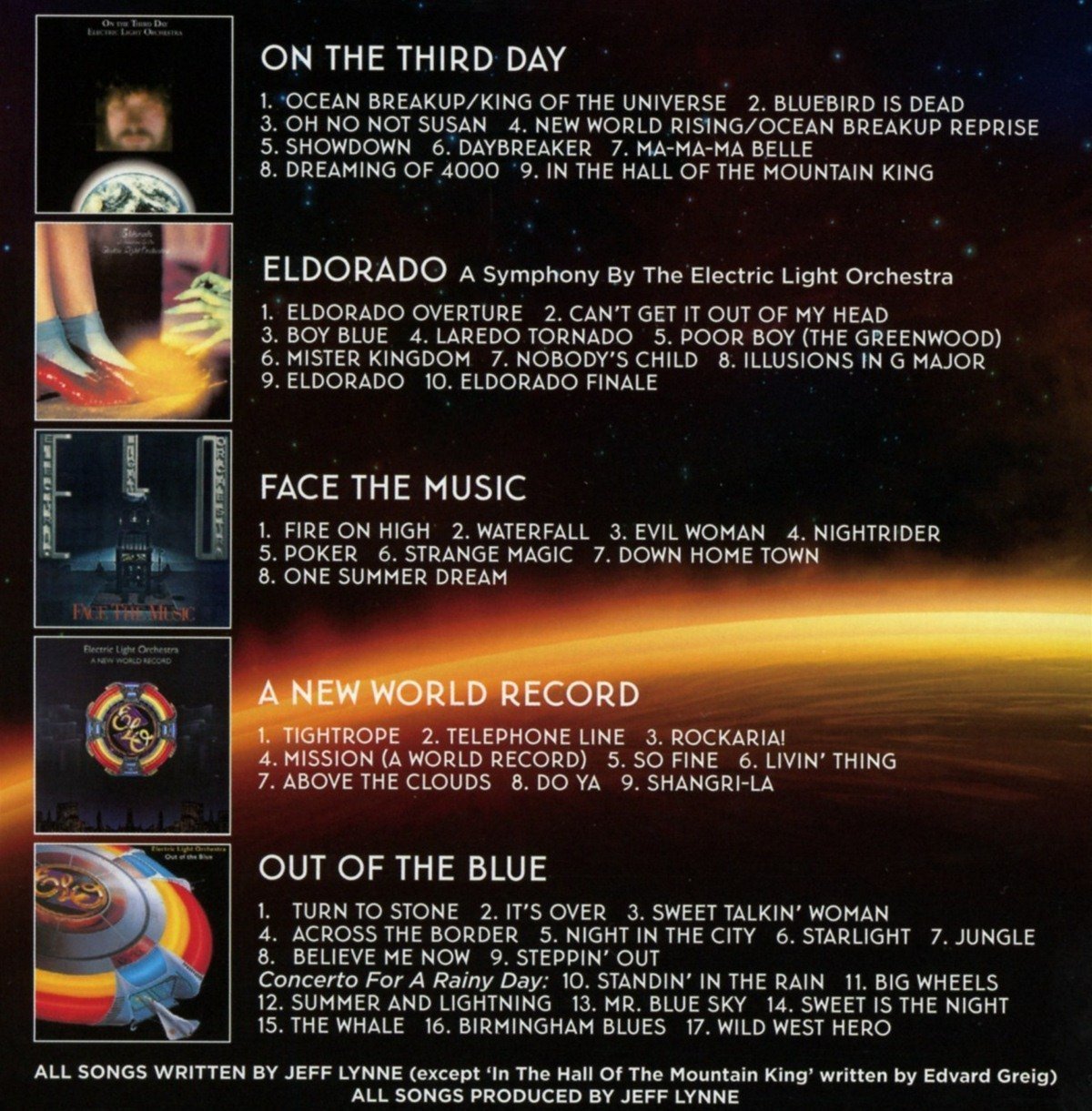
IMPULSE! 1961-1974 BOX SET.
IMPULSE! 1961-1974 BOX SET.
In 1955, the American Broadcasting Company decided the time was right to diversify into the record business. So on June 14th 1955 as Am-Par Record Corporation was incorporated. Samuel H. Clark became the Am-Par Record Corporation’s first president. He oversaw the birth of what would become one of the biggest record companies in America.
Soon, the nascent label was producing and releasing records, licensing masters from independent record producers and purchasing records that had been regionally. These were then distributed nationwide by Am-Par Record Corporation. Some of the singles and albums proved popular and indeed profitable for the new label.
Over the next five years, the Am-Par Record Corporation continued to expand. New artists joined their roster, as success began to come the Am-Par Record Corporation’s way. Soon, the label was looking at expanding. One genre they were particularly interested in, was jazz.
So in 1960, Am-Par Record Corporation decided to form their own jazz label. This they decided to call Impulse! Arranger and producer Creed Taylor was hired and became the nascent label’s A&R manager.
One of the earliest signings made by Creed Taylor was Ray Charles. Another of Impulse!’s early signings was Oliver Nelson. He released his post bop album The Blues and the Abstract Truth in February 1961. It sported Impulse!’s distinctive black, orange, and white livery. A month later, in March 1961, Ray Charles released His Genius + Soul = Jazz was released in March 1961, and gave the label it’s first successful album. The decision to appoint Creed Taylor as Impulse!’s A&R man had paid off.
Despite the success of Ray Charles’ His Genius + Soul = Jazz Creed Taylor decided to leave Impulse! in the summer of 1961. He had been approached to run Verve Records. Replacing Creed Taylor was the man who would be synonymous with Impulse!, Bob Thiele.
He would play a huge role in the rise and rise of Impulse! Bob Thiele ran Impulse! between 1961 and 1968. During that period, he produced many groundbreaking jazz albums. This includes many that feature in the Impulse 1961-1974 box set. It features twenty-five CDs including Art Blakey and The Jazz Messengers, Charles Mingus, McCoy Tyner, Chico Hamilton Quintet, Earl Hines, Keith Jarrett, John Coltrane Quartet, Shelly Manne, Charlie Haden and Tom Scott. There’s everything from big bands to trios, quartets and soloists. Similarly, a variety of sub-genres of jazz are represented on the Impulse 1961-1974 box set. It was recently released by Decca and celebrates the first thirteen years of the Impulse! story.
With Bob Thiele now in charge of Impulse!, he began to expand the label. He had two very different roles, A&R and production. Somehow, he was to juggle the two roles. This he managed to do successfully. Soon, Bob Thiele was adding some of the biggest names in jazz to Impulse!’s roster. Then he would produce their albums for Impulse!
Art Blakey and The Jazz Messengers-Jazz Messengers!!!!!
The first album Bob Theile produced at Impulse was Art Blakey and The Jazz Messengers’ album Jazz Messengers!!!!! This was a landmark recording, as it was the first time the group had recorded as a sextet.
The result was Jazz Messengers!!!!!, an impressive album of hard bop. Critics hailed Jazz Messengers!!!!! as one of Art Blakey and The Jazz Messengers best albums of recent years. This was the perfect way for Bob Thiele to open his account at Impulse!
Max Roach-Percussion Bitter Sweet.
Not long after producing Jazz Messengers!!!!!, Bob Thiele returned to the studio to produce Max Roach’s album Percussion Bitter Sweet. It was recorded over five days where Max Roach and his band fused Cuban rhythms with post bop and hard bop on what was a emotionally charged album with political themes. Playing a starring role was a trumpeter Booker Little.
Sadly, two months after the recording of Percussion Bitter Sweet, Booker Little passed away. He never lived to see Max Roach’s ambitious, genre-melting album released to critical acclaim in late 1961. This was the second successful album Bob Thiele had produced since his arrival at Impulse! S
The Gil Evans Orchestra-Into The Hot.
As 1962 dawned, Impulse! were preparing to release Into The Hot, the album The Gil Evans Orchestra had recorded in September and October 1961. This time, though, the album had been produced by Creed Taylor. He was responsible for producing an album tha featured the great and good of New York jazz.
The Gil Evans Orchestra featured some of the top New York jazz musicians. They featured on three of the tracks, while Cecil Taylor’s band featured on the other three tracks. Sometimes they played as a quintet, other times as a septet.
When Into The Hot was released in 1962, it found favour with critics. They had been won over The Gil Evans Orchestra switched between bop and a much more contemporary jazz sound on Into The Hot. However, it’s not the only orchestra album in the Impulse! 1961-1974 box set.
Quincey Jones and His Orchestra-The Quintessence.
While many artists spent a decade at Impulse!, Quincey Jones only released the one album for the label. This was Quincey Jones and His Orchestra’s 1962 album The Quintessence. It had been recorded in November and December 1962 and featured an offshoot of the band that were used on Free and Easy Broadway show. This includes some familiar faces, including Freddie Hubbard, Clark Terry, Oliver Nelson and Thad Jones.
Given the quality of the personnel that played on The Quintessence, and that it was produced by Bob Thiele, it was no surprise that album was well received by critics on its release in February 1962. They were impressed by what was an album of big band music and hard bop. This was interesting combination. However, one wonders if The Quintessence is worthy of its place in the Impulse! 1961-1974 box set? Surely, there are more worthy contenders?
Benny Carter and His Orchestra-Further Definitions.
When Benny Carter recorded Further Definitions in late 1961, was a veteran of jazz. He had been around since the twenties. However, by 1961 Benny Carter and His Orchestra had an all-star lineup. They got the chance to showcases their considerable talents on Further Definitions.
It’s a reminder of an another music age, Benny Carter and His Orchestra switch as big band music and swing. Despite seeming like a relic from jazz’s past, Further Definitions was well received upon its release in April 1962. It’s now regarded as a minor genre classic and a reminder of a jazz legend.
Shelly Manne-2,3,4.
Another of the artists Bob Thiele recruited to Impulse! was Shelly Manne, who had helped popularise West Coast jazz. However, Shelly Manne’s Impulse! debut was quite different to his previous albums.
Joining Shelly Manne were Coleman Hawkins and Thad Jones. They play their part on album where there’s a duets, two trio recordings and three performed by a quartet. That was how the title 2,3,4, came about. What was also unusual was that on Take A Train and Cherokee, the band played at two time signatures consecutively. Indeed, on Cherokee Shelly Manne plays at double time. The result was an album that surprised critics.
When 2,3,4, was released in August 1962, it was hailed as an ambitious album that was full of subtleties and surprises. With its move towards hard bop, from the cool school, this should’ve been a new chapter in the Shelly Manne story. Alas, he only released the one album for Impulse!
Roy Haynes Quartet-Out Of The Afternoon.
For too long, Roy Haynes has been one of most underrated jazz drummers. That is despite playing on countless albums. Recently, though, there’s been a resurgence in interest in his music. One of his oft-overlooked recording is Out Of The Afternoon, which the Roy Haynes Quartet recorded for Impulse! in 1962.
Out Of The Afternoon, which features Roland Kirk on tenor saxophone, was an ambitious and indeed, adventurous album where the Roy Haynes Quartet switched between bop and hard bop. When the Bob Thiele produced Out Of The Afternoon was released in August 1962, it was too critical acclaim. That is no surprise, as Out Of The Afternoon showcases a musical pioneer as he pushes musical boundaries to their limit.
Duke Ellington Meets Coleman Hawkins.
In May of 1962, Bob Thiele was privileged to produce a session that featured two legendary jazzmen, Duke Ellington and Coleman Hawkins. He had first met Duke Ellington twenty years previously, but had never recorded with him. Somewhat belatedly, Duke Ellington who was sixty-three, and fifty-nine year old Coleman Hawkins recorded Duke Ellington Meets Coleman Hawkins in August 1962.
Despite having never played together, the two men had recorded a classic album of swing. It was released in February 1963, and nowadays, Duke Ellington Meets Coleman Hawkins is now regarded as one of the finest albums either man recorded. It’s also regarded as one of the great jazz albums of the sixties. That’s reason enough to include Duke Ellington Meets Coleman Hawkins in the Impulse! 1961-1974 box set.
Freddie Hubbard-The Artistry Of Freddie Hubbard.
By 1963 twenty-four year old, Freddie Hubbard was on a hot streak. He had released two critically acclaimed albums for Blue Note during 1962, Hub-Tones and Ready For Freddie. Bob Thiele spotting the potential in Freddie Hubbard, signed him to Impulse! It had already established a reputation as a label that released ambitious and innovative music. What better place for Freddie Hubbard.
With Bob Thiele taking charge of production, Freddie Hubbard headed in Van Gelder Studio, on 2nd July 1962 to record his fifth album and Impulse! debut album. This was the aptly titled The Artistry Of Freddie Hubbard.
When it was released in February 1963, critics marvelled as rumpeter Freddie Hubbard delivered a musical masterclass on this album of hard bop. One of the highlights was a ten minute reinvention of the standard Summertime. It was a tantalising taste of what Freddie Hubbard was capable of.
Chico Hamilton-Passin’ Thru.
By September 1962, drummer Chico Hamilton was no stranger to the recording studio. His recording career began in 1955, Since then, he had released seventeen albums. However, the album Chico Hamilton was about to record, Passin’ Thru, would be his Impulse! debut.
Producing Passin’ Thru with Bob Thiele. He watched as Chico Hamilton’s all-star band worked their way though six tracks at Rudy Van Gelder Studio. Passin’ Thru started off as a hard bop album, but sometimes veered towards avant-garde. This was an ambitious and innovative recording.
Critics realised this when Passin’ Thru was released in March 1963. It was released to widespread critical acclaim and hailed as a groundbreaking release. Chico Hamilton has released one of the most ambitious and innovative albums of his career, Passin’ Thru.
John Coltrane-Ballads.
John Coltrane had consistently released groundbreaking albums, including Blue Train, Giant Steps, My Favourite Things and Ole! Olé Coltrane. However, over a series of sessions that took place between December 1961 and November 1962, John Coltrane’s quartet recorded Ballads. They took an unusual approach to recording the album.
The quartet had never played the songs before setting foot in true studio. Instead, they spent roughly thirty minutes rehearsing each song, before recording them each in one take. That was apart from All Or Nothing At All.
Despite this unusual approach to recording Ballads, where the quartet switch between the cool school and modal jazz proved a huge success. Ballads was released in February 1963, to critical acclaim. Once again, John Coltrane had recorded another classic album. It’s another welcome inclusion to Impulse! 1961-1974.
Sonny Stitt and Paul Gonsalves-Salt and Pepper.
On September the 5th 1963, tenor saxophonists Sonny Stitt and Paul Gonsalves headed to the Van Gelder Studio. With their band, they recorded five tracks, including Perdido and Stardust. These tracks would become Salt and Pepper.
Ten months later, Sonny Stitt and Paul Gonsalves’ album of post bop was released in July 1963. Salt and Pepper was well received by the critics. However, one track stood out; the cover of Stardust. Ironically, Sonny Stitt switches to alto sax on Stardust and plays a starring role on this beautiful track. Sadly, there was no followup to Salt and Pepper, which is an underrated album of post bop.
Charles Mingus-Mingus, Mingus, Mingus, Mingus, Mingus.
Although many people won’t recognise the titles on Mingus, Mingus, Mingus, Mingus, Mingus, it’s essentially a greatest hits album. What Charles Mingus did, was take some of best known songs and give them a new title. The only new track is Celia. It was recorded during a two sessions that took place in January and September 1963.
Mingus, Mingus, Mingus, Mingus, Mingus was released in 1964. It was hailed by critics as an essential collection of Charles Mingus’ finest moments during his post bop era.
McCoy Tyner-Today and Tomorrow.
McCoy Tyner’s career began at Impulse! in 1962, when he released his debut album Inception. Two years later, in October 1964, McCoy Tyner was about to release his fourth album Today and Tomorrow.
It had been recorded between June 1963 and February 1964. Unlike previous albums, Today and Tomorrow is much more eclectic as McCoy Tyner switched between post bop and modal jazz. This won over critics, who hailed Today and Tomorrow as one of the finest moments of his nascent career.
Oliver Nelson-More Blues And The Abstract Truth.
On the 10th and 11th November 1964, Oliver Nelson began recording More Blues And The Abstract Truth. This was the much-anticipated followup to The Blues And The Abstract Truth. It had been released to critical acclaim in 1961. Three years later, and arranger, bandleader, composer and conductor Oliver Nelson decided the time had come to record the followup to what had been one of his finest hours.
This time, Oliver Nelson was content to arrange and conduct More Blues And The Abstract Truth. Meanwhile, Bob Thiele produced the album. It featured a truly talented band, who pull out all the stops on what was a fitting followup to The Blues And The Abstract Truth.
More Blues And The Abstract Truth was released in February 1965. Critical acclaim accompanied an album where post bop and a much more contemporary jazz sound shine though. It’s an accomplished album, which oozes quality. However, the album’s highlight is Midnight Blue, which features a masterclass from saxophonist Ben Webster. This is one eight reasons why More Blues And The Abstract Truth deserves its place in the Impulse! 1961-1974 box set.
Shirley Scott-Queen Of The Organ.
By December, 1964, Philly born Shirley Scott was just thirty. However, she had established a reputation as one of the finest Hammond organ players. She was a prolific artist, had recorded over thirty albums by 1964. The album she would record at the Front Room, Newark, New Jersey, was Queen Of The Organ.
Joining her was tenor saxophonist Stanley Turrentine. He and Shirley Scott had married in 1960. Since then, the pair had formed a formidable partnership. They played on each other’s albums, and often were hired to play on albums by the great and good of jazz. However, Queen Of The Organ was another chance for Shirley Scott’s to shine.
One listen to Queen Of The Organ and critics realised this was no exaggeration. It was released in August 1965, to critical acclaim. Not only was Shirley Scott one of finest Hammond organ players, but one of the finest practitioners of the soul jazz. That would continue to be the case, and nowadays, Shirley Scott is remembered as the Queen Of The Organ.
Earl Hines-Once Upon A Time.
When Earl Hines began work on Once Upon A Time on the 10th and 11th of January 1966, he was sixty-four. Despite approaching veteran status, he hadn’t lost his touch. With many members of Duke Ellington’s Orchestra, accompanying him he leads them through a genre-melting album.
Earl Hines was content to play a supporting role. He stays in the background as this hugely talented band switch between swing and boogie. Sometimes, they’re transformed into a big band and produce an impressive and memorable sound. When Once Upon A Time. was released in July 1966, it won over critics. That’s despite being very different to the jazz that was being produced around this time. Instead, Once Upon A Time was a memorable reminder of jazz’s past.
Sonny Rollins and Oliver Nelson-Alfie.
When Sonny Rollins was asked to provide the soundtrack for Alfie, he brought Oliver Nelson onboard as arranger. This seemed like an unlikely partnership. However, when work began in January 1966, it soon became apparent that it was a partnership that was working.
By the time the soundtrack to Alfie was complete, Sonny Rollins and Oliver Nelson had achieved something that hardly ever happened. The soundtrack to Alfie worked as a recording in its own right. That hardly happens with soundtrack albums. However, Alfie was no ordinary soundtrack. It was an accomplished album of hard bop and post bop. When the Bob Thiele produced Alfie was released in October 1966, critics hailed the album one of the finest jazz soundtrack albums of recent years.
Stanley Turrentine-Let It Go.
Stanley Turrentine was, without doubt, one of the finest saxophonists of his generation. His career began in 1960, when he released Look Out on Blue Note. Seven years later, and Stanley Turrentine was about to record his debut album for Impulse!
This came about after Stanley Turrentine played on his wife Shirley Scott’s 1965 album Queen Of The Organ. A years later, in April 1966, Stanley Turrentine was about to record an album of cover versions and new songs. They became Let It Go.
Ten month later, Let It Go was released to critical acclaim in February 1967. By then, Stanley Turrentine was one of the finest practitioners of the soul jazz sound. That’s apparent on Let It Go, which was the latest in a series of successful albums Stanley Turrentine released during the mid to late sixties.
Dizzy Gillespie-Swing Low, Sweet Cadillac.
It’s not just studio albums that feature in the Impulse! 1961-1974 box set. Dizzy Gillespie’s live album Swing Low, Sweet Cadillac has been included. This may be a controversial inclusion, as live albums can be hit or miss affairs. There’s always the exception to the rule.
Swing Low, Sweet Cadillac was recorded at Memory Lane, Los Angeles on the 25th and 26th of May 1967. Five tracks from the two nights were chosen and became Swing Low, Sweet Cadillac.
They find Dizzy Gillespie’s music evolving to ensure it stays relevant. He switches between and sometimes, combines bop and Latin music. The highlight of the set is Kush, a near sixteen minute epic. Alas, when Swing Low, Sweet Cadillac was released in September 1967, the reviews of the album were mxied. Despite that, that the album sold reasonably well. Nowadays, Swing Low, Sweet Cadillac is regarded as something of a curiosity in Dizzy Gillespie’s back-catalogue. This makes Swing Low, Sweet Cadillac a strange inclusion in the Impulse! 1961-1974 box set. There are many more albums more worthy of inclusion.
Tom Scott-Rural Still Life.
In early 1968, nineteen year old jazz saxophonist Tom Scott was about to record his sophomore album Rural Still Life. Bob Thiele took charge of production as Tom Scott lead a quartet in what was an early attempt at fusion. It was still in its infancy, and Tom Scott was determined to pioneer this new sound.
Rural Still Life was released in November 1968, but wasn’t well received by critics. The musical genres didn’t combine seamlessly as they would in later fusion albums. As a result, Rural Still Life came across as a clumsy attempt at fusion. This makes the inclusion of Rural Still Life seem debatable. However, it’s an interesting musical artefact as fusion takes shape Fusion would eventually ride to rescue of jazz, and save it from irrelevance and obscurity.
Charlie Haden-Liberation Music Orchestra.
Although bassist Charlie Haden was a seasoned musician, he had yet to release a solo album. Many had moving from sideman to bandleader a step to far. Not Charlie Haden. His debut album Liberation Music Orchestra would become a genre classic.
Charlie Haden recorded Liberation Music Orchestra in Los Angles with producer Bob Thiele. He watched on as Charlie Haden and his band recorded an ambitious and innovative free jazz classic. Alas, by the time Liberation Music Orchestra was released, Bob Thiele had left Impulse!
After eight years, where he transformed Impulse! into one of jazz’s premier labels, Bob Thiele severed his ties with Impulse! He had grown disenchanted with life at Impulse! To make matter worse, an irate sales manager entered the studio when Bob Thiele was recording with Louis Armstrong. The sales manager didn’t like What A Wonderful World, and thought Louis Armstrong should record a more traditional jazz song. As a result, ABC failed to promote What A Wonderful World. Meanwhile, the sing;e was a huge hit in Britain. For Bob Thiele, this was the final straw. He left Impulse! and founded his own label, Flying Dutchman Productions.
By the time Liberation Music Orchestra was released in January 1970, Flying Dutchman Productions was releasing groundbreaking albums. This included album like Liberation Music Orchestra. Although it was well received by critics, it failed to find an audience. As a result, Charlie Haden left Impulse! shortly after its release. However, nowadays,Liberation Music Orchestra is a free jazz classic.
Alice Coltrane-Journey In Satchidananda.
After the death of her husband John Coltrane, harpist Alice Coltrane threw herself into her music. By February 1971, she was about to release her fourth album Journey In Satchidananda.
It had been recorded between July and November 1970. Most of the music on Journey In Satchidanandahad had been recorded in Alice Coltrane’s home studio during November 1970. That was apart from Isis And Osiris a near twelve minute epic. Just like the rest of the album, Alice Coltrane was accompanied by a multitalented band on Journey In Satchidanandahad. This included saxophonist Pharoah Sanders who had been part of John Coltrane’s band. He added his legendary and inimitable sheets of sound.
They played their part in what was a groundbreaking, genre-melting album. Avant-garde jazz was combined with post bop and modal jazz on Journey In Satchidananda.. It was an ambitious album, and one that found favour with the critics on its release in February 1971. Nowadays, Journey In Satchidananda is regarded as one Alice Coltrane’s finest albums, and a reminder of a true musical pioneer.
Gato Barbieri-Chapter One: Latin America.
Gato Barbieri had signed to Bob Thiele’s Flying Dutchman Productions in 1970, and later that year, released his sophomore album The Third World. This was the first of a quartet of albums Gato Barbieri released on Flying Dutchman Productions. However, in 1973, Gato Barbieri left Flying Dutchman Productions and signed to Impulse!, the label that Bob Thiele left four years earlier.
During April of 1973, Gato Barbieri recorded what would become Chapter One: Latin America. Most of the album was recorded in Buenos Aires, in Argentina. The exception was To Be Continued, which was recorded in Rio de Janeiro, Brazil. With the album complete, it was delivered to Impulse!
Six months later, Chapter One: Latin America was released in October 1973. Critical acclaim accompanied what was an ambitious album of Latin jazz. Sadly, Chapter One: Latin America wasn’t a commercial success and since then, has been a hidden gem in Impulse!’s back-catalogue. Its inclusion on the Impulse! 1961-1974 is to be welcomed.
Keith Jarrett-Death and The Flower.
The twenty-fifth and final album in the Impulse! 1961-1974 box set is Keith Jarrett’s fourth Death and The Flower. It was recorded on between the 9th and 10th of October 1974 at Generation Sound Studios, in New York.
Keith Jarrett lead a five piece band that featured bassist Charlie Haden. They recorded a trio Keith Jarrett compositions. This included Death and The Flowers, a twenty-three minute atmospheric epic where free jazz meets avant-garde. It opens the album and sets the bar high. However, Keith Jarrett never lets his standards drop on what’s a truly captivating and beautiful album. Alas, when Death and The Flower was released in February 1975, the reviews were mixed and the album failed to find the audience it deserved. Since then, Death and The Flower has been an oft-overlooked hidden gem. Thankfully, it makes a welcome return on the Impulse! 1961-1974 box set.
The Impulse! 1961-1974 is no ordinary box set. Instead, it’s a mammoth twenty-five disc box set. It features some giants of jazz, including Art Blakey and The Jazz Messengers, Charles Mingus, McCoy Tyner, Chico Hamilton Quintet, Earl Hines, Keith Jarrett, John Coltrane Quartet, Shelly Manne and Charlie Haden. There’s everything from big bands to trios, quartets, soloists, soundtracks and even a live album. Similarly, a variety of sub-genres of jazz are represented on the Impulse 1961-1974 box set, which was recently released buy Decca.
Everything from avant-garde to bop to the cool school, free jazz, fusion, hard bop, Latin and post bop makes an appearance on the Impulse! 1961-1974 box set. They’re the perfect introduction to one of jazz’s great labels, Impulse! It’s up there with Atlantic Records, Blue Note, Prestige and Verve Records,
That’s no surprise. Many of the giants of jazz spent time signed to Impulse! They seem to have been afforded creative freedom. There was nobody trying to tell artists what direction their music should head in. While this may not have resiled in music that was hugely successful commercially, much of the music Impulse! released was innovative, inventive and influential. Especially during the period Bob Thiele was at the hem of Impulse!
Nowadays, Bob Thiele’s name is synonymous with Impulse! He was at at the helm between 1961 and 1969. That was when Impulse! released some of its most important and influential music. Alas, when Bob Thiele left Impulse!, his replacement was thirty-five year old Ed Michel.
Suddenly, commentators wondered whether Impulse! would no longer the same label? Still, Impulse! continued to release important, innovative, inventive and influential. However, not as regularly as it once had. Some of the albums were hit or miss affairs. Impulse! continued to release albums regularly, but no longer was the label consistently releasing classic albums. They were in short supply.
Still, many of the artists signed to Impulse! after Bob Thiele’s departure were pioneers. They continued to released ambitious and groundbreaking music. Some of that music features in the Impulse! 1961-1974 box set. However, there’s much more that that could’ve featured in the Impulse! 1961-1974 box set. It’s a similar case with the music released between 1961 and 1969, when Bob Thiele was at Impulse!’s helm. So much so, that there’s enough for at least a second box set.
It’s been suggested that even a fifty disc box set wouldn’t do justice to the Impulse! back-catalogue. That is certainly the case. There’s enough for at least three twenty-five disc box sets. This would come close to doing justice to Impulse!’s illustrious back-catalogue. Meanwhile, the Impulse! 1961-1974 box set is the perfect introduction to one of jazz’s great labels, which was home to many of the giants and pioneers of jazz.
IMPULSE 1961-1974.

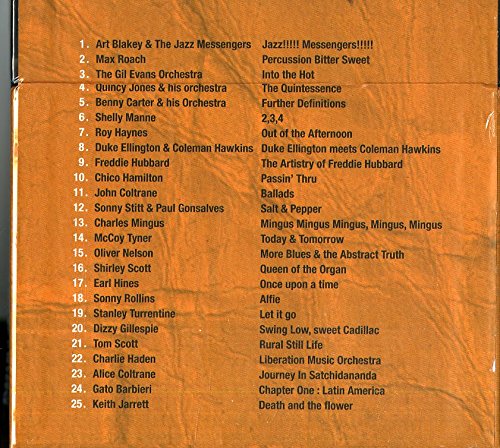
 dereksmusicblog
 dereksmusicblog